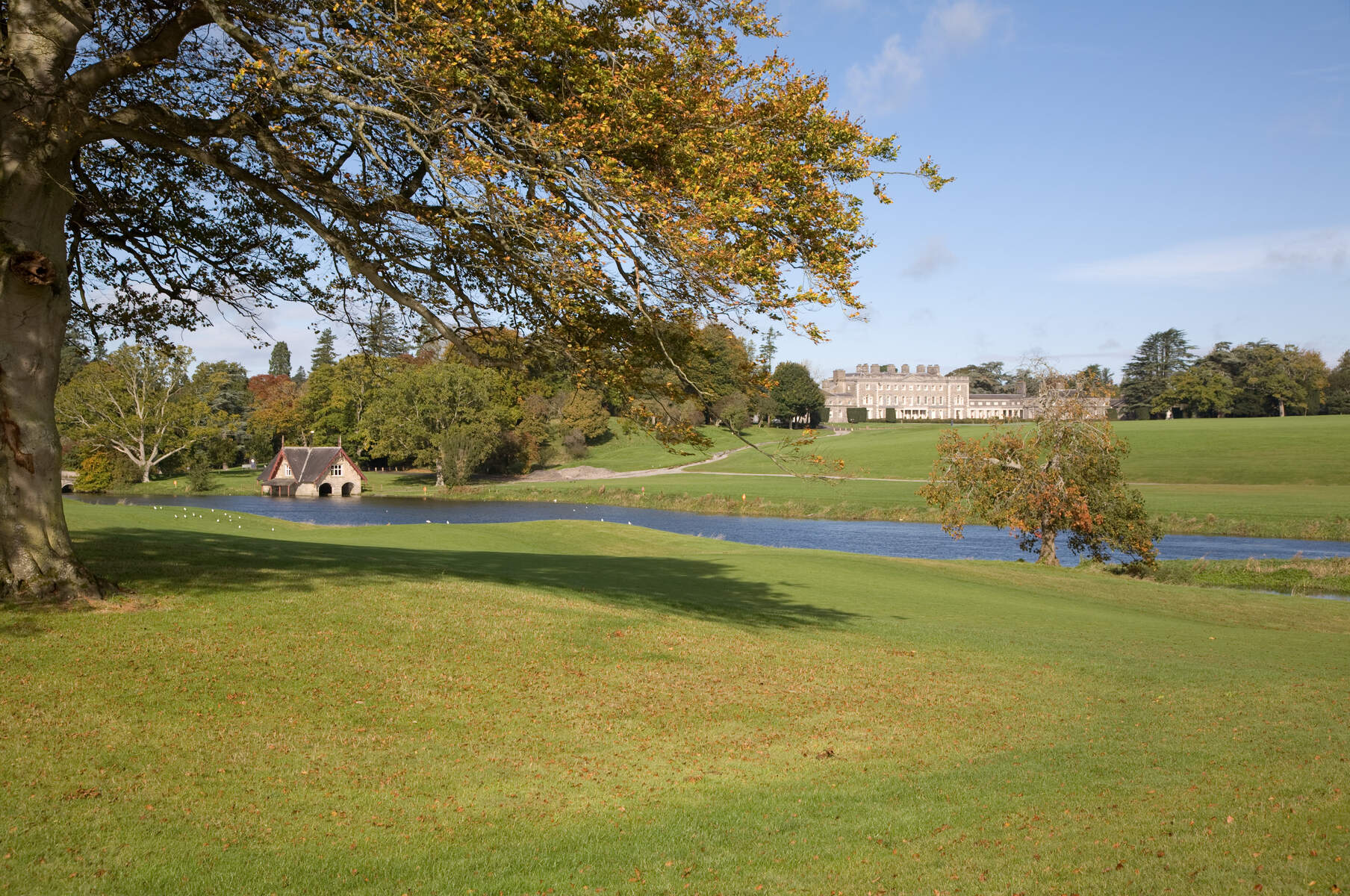
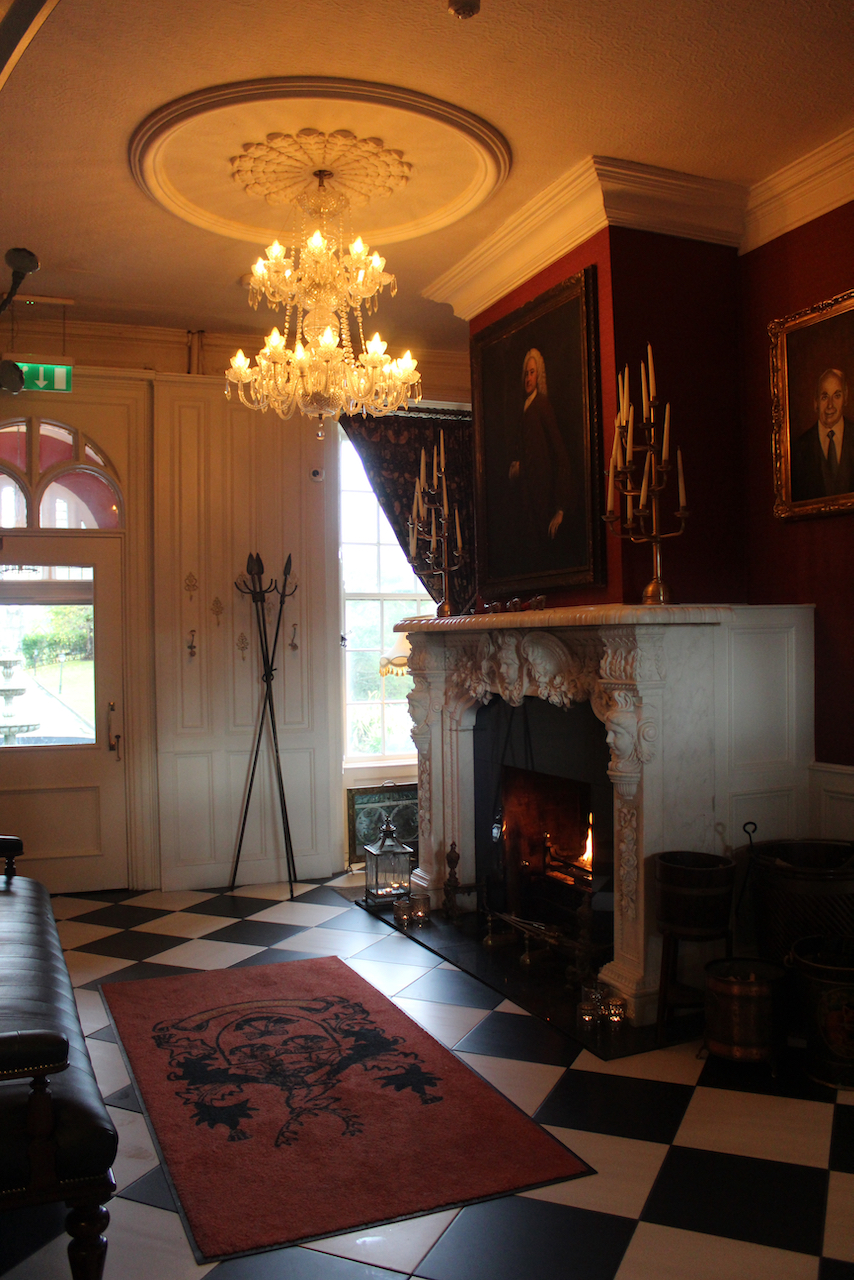
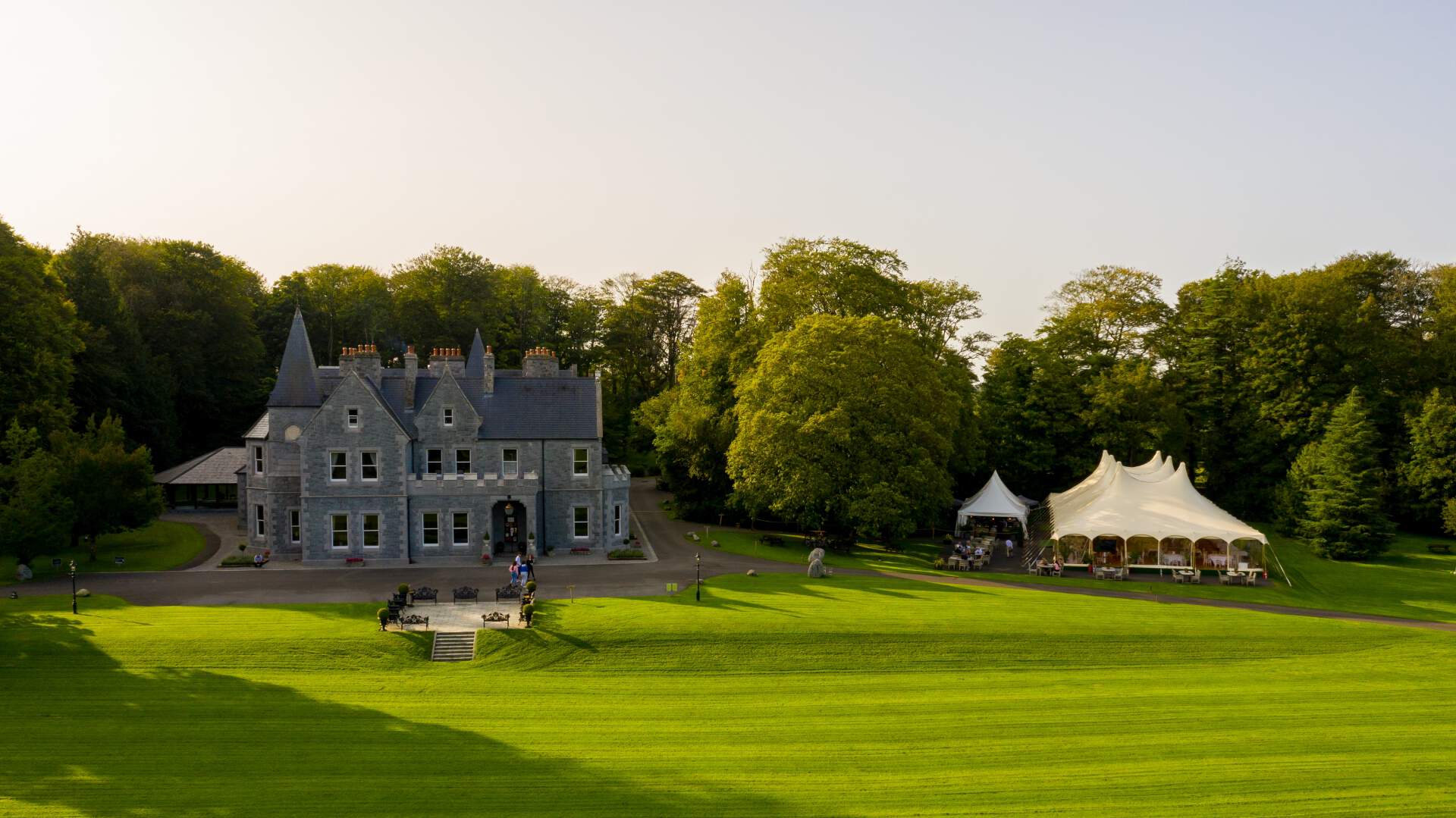
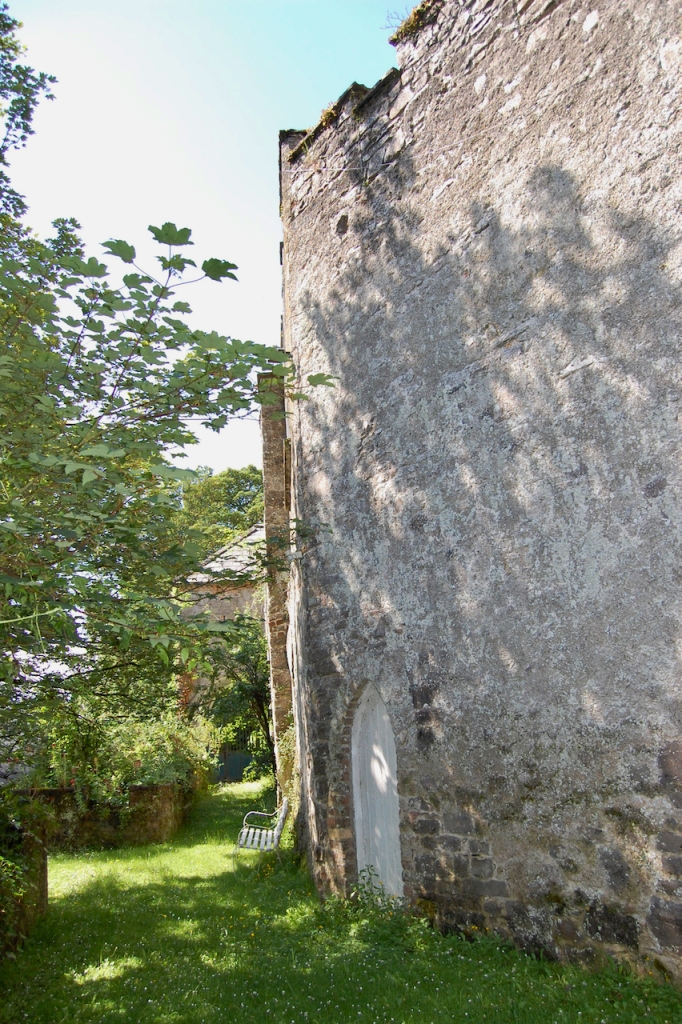
Event or wedding venues – spaces for 100 and more

Venues in County Antrim:

1. Larchfield Estate, Lisburn, Co Antrim, BT27 6XJ, Northern Ireland

https://www.larchfieldestate.co.uk/staying-over

The website tells us that Larchfield extends to 600 acres and includes peaceful forest and woodland alongside picturesque river banks. Steeped in history, Larchfield’s heritage dates back to the 1600’s with many remarkable ups and downs throughout its 350-year history.

See my entry www.irishhistorichouses.com/2022/03/21/places-to-visit-and-stay-in-ulster-county-antrim/

The current owners (Gavin and Sarah Mackie) were married themselves at Larchfield in 2007, and moved back to take on the estate from Gavin’s parents. The estate was opened up for weddings and events around this time and in 2010, as part of its renovation, the Stables was re-built and re-roofed for hire for ceremonies and smaller functions downstairs.

In 2012, Rose Cottage was the first of the onsite accommodation to be restored, leading to the development of accommodation for up to 37 guests. Late 2019 saw the completion of the redevelopment of an 1800s railway style building facing the Larchfield Estate cottages. Harkening back to its history as a piggery, The Old Piggery was officially launched in 2020 as a new offering for experiences, dining, special celebrations and corporate retreats. This project was kindly supported by the Rural Development Programme.

The website https://magheramorneestate.com/ tells us:

The stunning Magheramorne Estate, conveniently located just 23 miles from Belfast, is one of the most exclusive venues available for private hire in Northern Ireland. From weddings, family parties, corporate meetings and events to occasion meals, this coastal estate offers a variety of unique indoor and outdoor spaces to fulfil your dreams.

Built as a grand family home around 1880, the house has recently enjoyed sympathetic and elegant restoration in keeping with its Grade B1 listed status.

The Allen family have made significant investments to ensure the house meets modern expectations while carefully retaining the welcoming warmth of genuine domestic comfort.

Designed circa 1878 by Samuel P Close, it was built by James Henry for Sir James Hogg to mark his rise to the peerage of Baron Magheramorne in 1880. It replaced Ballylig House, an earlier and more modest residence originally constructed in 1817.

Venues in County Armagh:

1. Elmfield Estate, Craigavon, County Armagh

The website https://elmfieldestate.com/about/ tells us: 

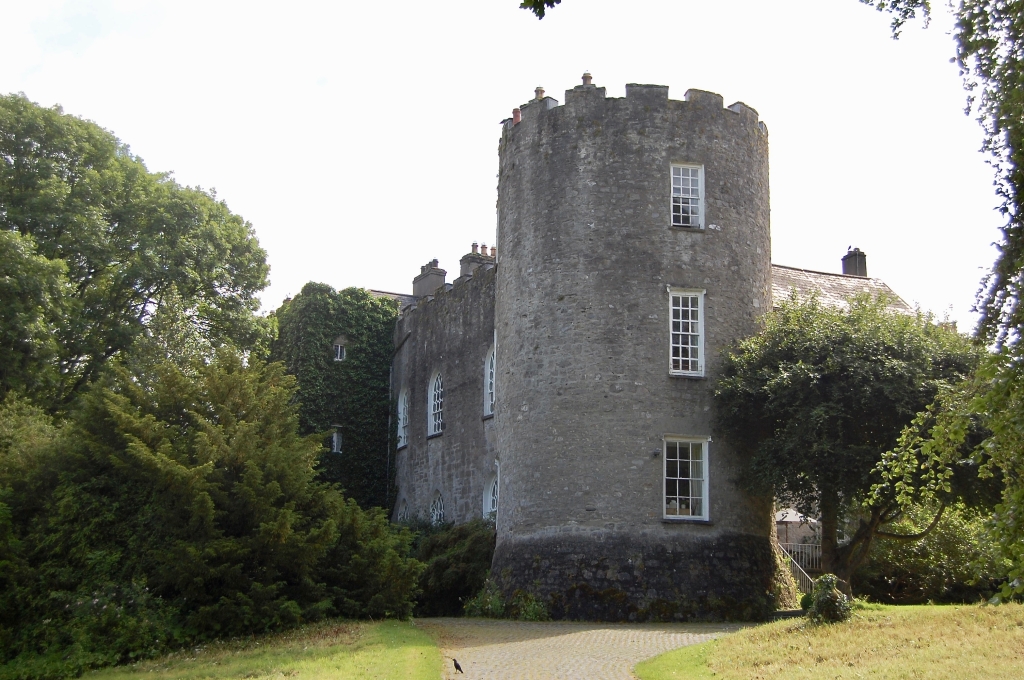
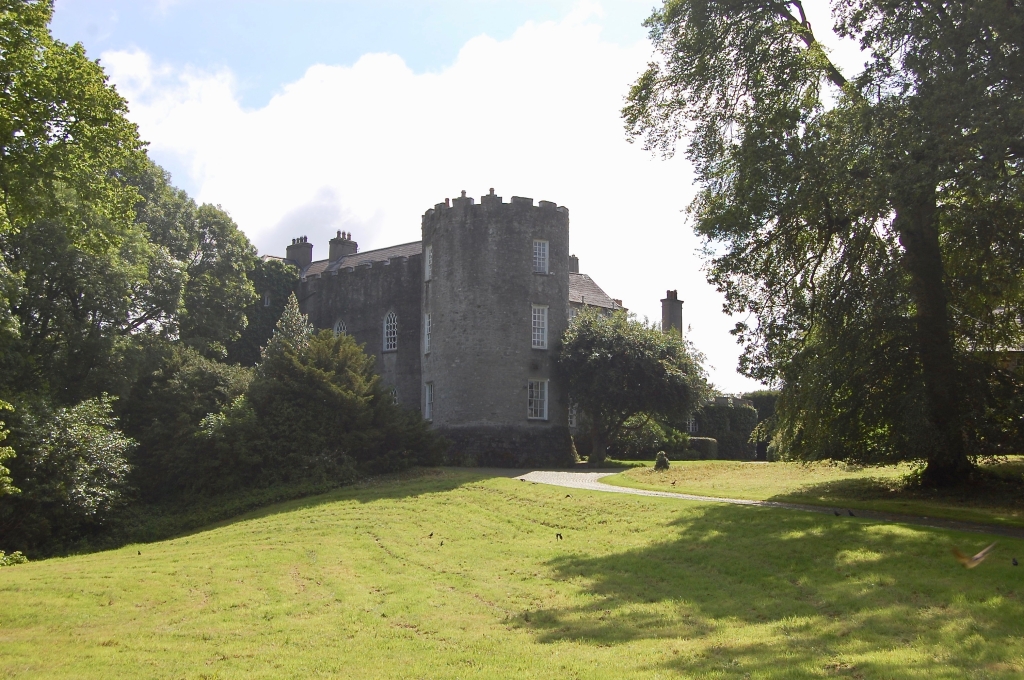
Elmfield Estate has been a family home for generations and of the Shaw family for the last 60 years. It has evolved through the years, from a modest dwelling house and stable yard in the 18c to an impressive Victorian Scottish baronial style house with turrets and ziggurat balustrades, built by the wealthy linen barons in the mid-1800s. The estate ran into disrepair after the second world war but was saved by the Shaws who have lovingly restored the house, farm, and gardens room by room lawn by lawn. Elmfield has certainly been a place of transformation and vision over the last 60 years. When Derek and Ann’s three children were little, they enjoyed the freedom and wildness that only a semi-derelict estate can offer. To turn that into what you see today is down to Derek’s vision.

2. Killeavy Castle, County Armagh

St. Patrick’s day Greening, Killeavy Castle Estate, Co Armagh, 2022 ©Killeavy Castle Estate, for Failte Ireland.

https://www.killeavycastle.com

The website tells us:

Killeavy Castle is a Grade A listed historical building originally designed in 1836 by architect George Papworth of Dublin. Formally known as Killeavy Lodge, the Foxall family had their home rebuilt in the style of the pre-Victorian Gosford Castle with towers, Tudor windows and a medieval-style door transforming the modest farmhouse into a home fit for a king.

Situated on the eastern base of Slieve Gullion, the original castle and surrounding grounds brought a new element to the beautiful landscape. The building contained a basement level with a kitchen, store rooms, servant’s quarters and an underground tunnel to allow servants to enter and exit the building unseen. Above was a parlour and wine cellar, with an adjoining drawing room, library and conservatory. On the top level were six bedrooms, four dressing rooms and bathrooms. There was a beautiful walled garden and an ornamental water wheel.

The Bell family took ownership of the property in 1881, but in recent years the building fell into disrepair. Fortunately, the facade remained intact and, surrounded by fir plantations and lush farmland, it has been returned to its former glory.

The Architect

George Papworth (1781-1855) was the younger brother of English architect John Buonarotti Papworth. He established himself in Ireland and designed many notable buildings including Sir Patrick Dun’s Hospital and the King’s Bridge in Dublin. His drawings of Killeavy were exhibited in the Royal Hibernian Academy in 1836.

County Carlow venues:

1. Huntington Castle, County Carlow

Huntington Castle and Gardens, by Daniel O’Connor 2021 for Tourism Ireland.

See my entry https://irishhistorichouses.com/2022/10/14/places-to-visit-and-stay-in-leinster-carlow/

2. Lisnavagh, County Carlow
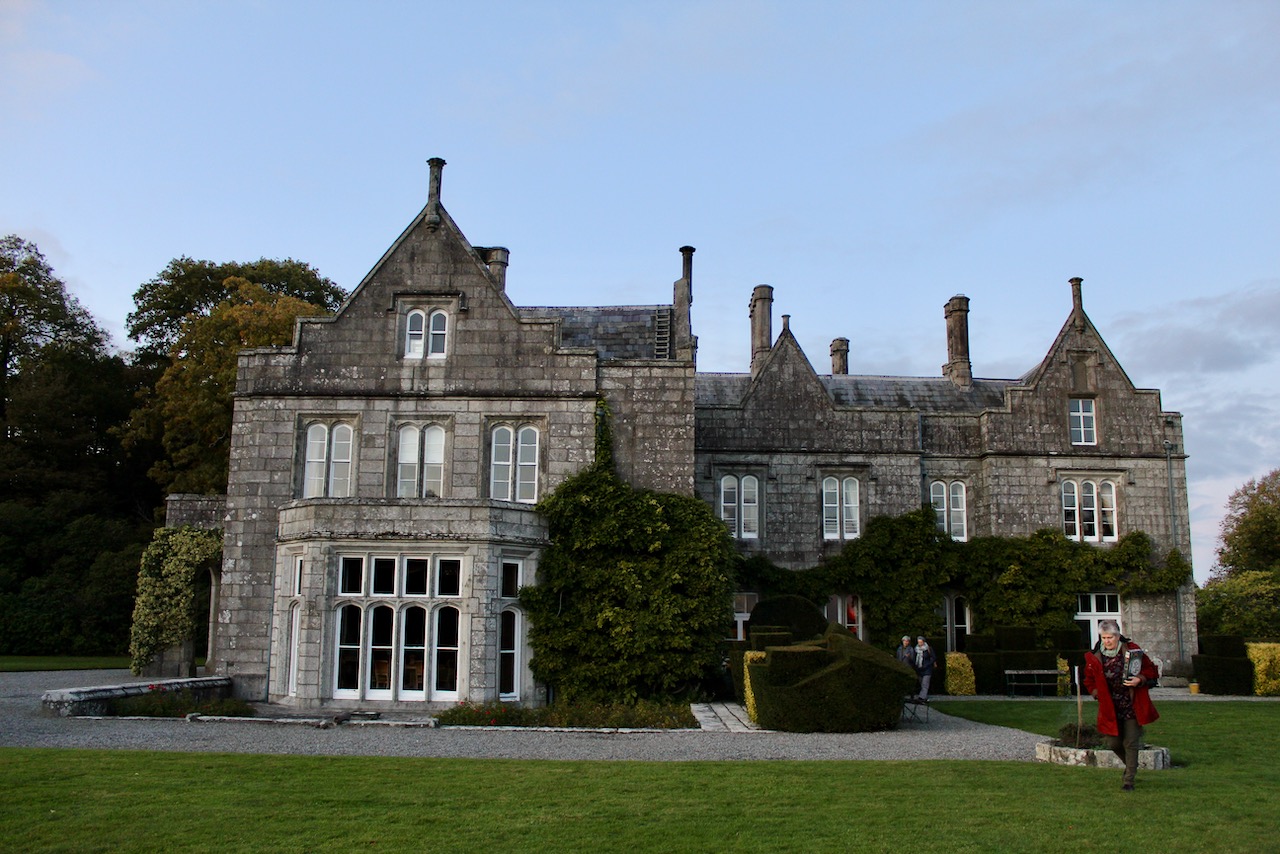
www.lisnavagh.com

Lisnavagh, County Carlow, photograph taken October 2019.

Lisnavagh is a wedding venue, and there are buildings with accommodation, including the farm house, converted courtyard stables, the groom’s cottage, schoolhouse, farm and blacksmiths cottages and the bothy.

The National Inventory tells us that it was designed around 1847 by Daniel Robertson. It was built for William McClintock-Bunbury (1800-1866). Around 1953, it was truncated and reordered, to make it more liveable, and this was designed by Alan Hope.

See my entry https://irishhistorichouses.com/2022/10/14/places-to-visit-and-stay-in-leinster-carlow/

3. Sandbrook, Tullow, Co Carlow  – wedding/retreat venue

https://sandbrook.ie

The website tells us that Sandbrook is a handsome period country house, originally built in the early 1700s in Queen Anne style [the National Inventory says 1750], and sits in 25 acres of mature parkland on the Wicklow/Carlow border in the heart of the Irish Countryside with views toward Mount Leinster and the Wicklow Mountains. The National Inventory further describes it:

five-bay two-storey over basement house with dormer attic, c. 1750, with pedimented central breakfront having granite lugged doorcase, granite dressings, two-bay lateral wings, Palladian style quadrant walls and pavilion blocks. Interior retains original features including timber panelled hall and timber staircase.

See my entry https://irishhistorichouses.com/2022/10/14/places-to-visit-and-stay-in-leinster-carlow/

Venues in County Cavan

See my entry https://irishhistorichouses.com/2020/07/03/county-cavan-historic-houses-to-see-and-stay/

1. Cabra Castle, on section 482 – hotel €€
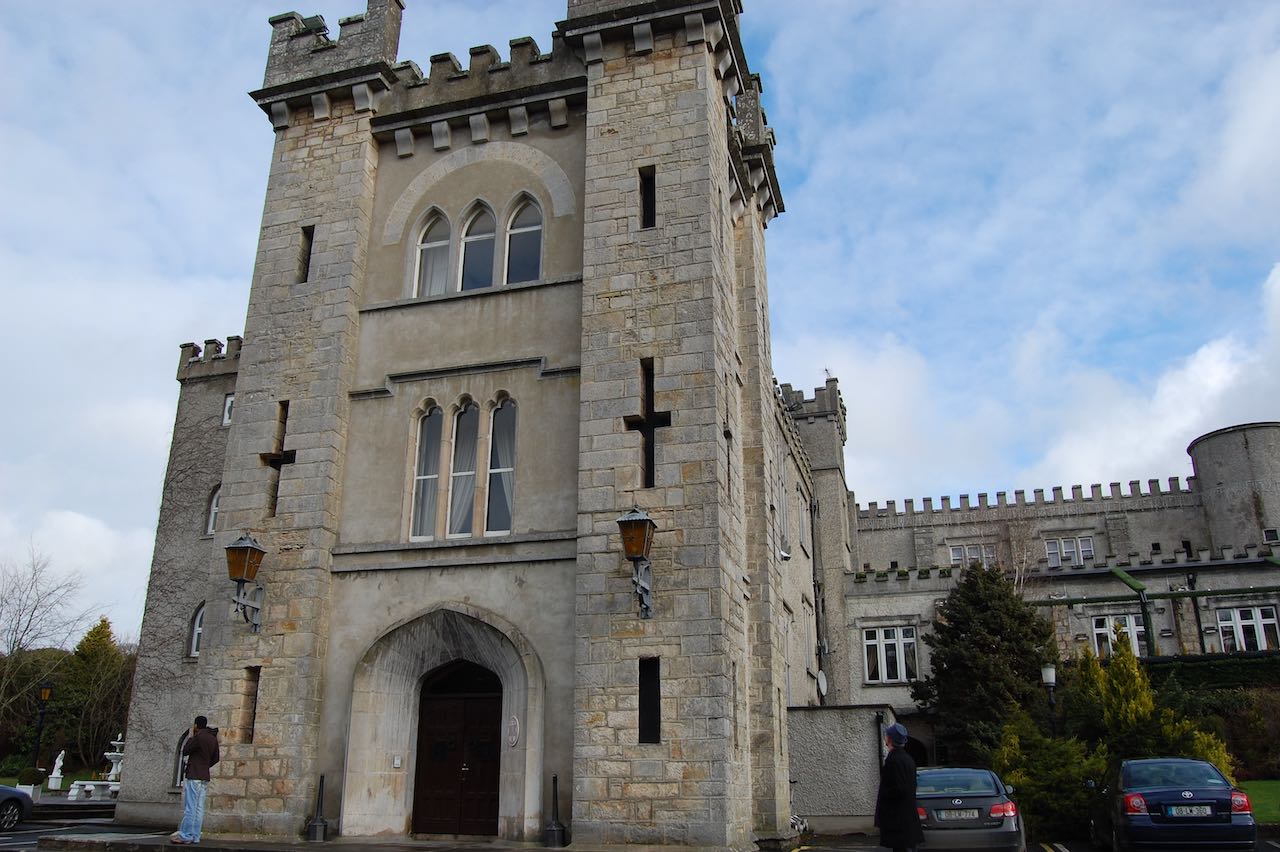
Cabra Castle, County Cavan.

www.cabracastle.com

2. Farnham Estate, Cavanhotel €€

Farnham Estate, County Cavan, photograph from the National Inventory of Architectural Heritage.

https://www.farnhamestate.ie

3. Virginia Park, Co Cavan – weddings only

https://www.irelands-blue-book.ie/houses.html?country=Cavan

This was formerly the hunting lodge of the Taylours, Marquess Headfort, who also owned Headfort House in County Meath. See my County Cavan entry https://irishhistorichouses.com/2020/07/03/county-cavan-historic-houses-to-see-and-stay/

Venues in County Clare:

1. Dromoland Castle, Newmarket-on-Fergus, Co. Clare – hotel €€€ 

www.dromoland.ie 

Dromoland Castle, County Clare, photo care of Dromoland Castle, for Tourism Ireland 2019, Ireland’s Content Pool.

See my entry https://irishhistorichouses.com/2023/01/20/places-to-visit-and-stay-in-county-clare/

Venues in County Cork:

1. Ballincurra House, County Cork

https://www.ballinacurra.com/

2. Ballymaloe, Cloyne, Co Cork – accommodation €€ 

https://www.ballymaloe.ie/

Croquet at Ballymaloe House.

See my entry www.irishhistorichouses.com/2022/05/17/places-to-visit-and-stay-munster-county-cork/

3. Ballynatray, Youghal, Co Cork, holiday cottages and whole house rentalhttps://www.ballynatray.com/private-estate-rental
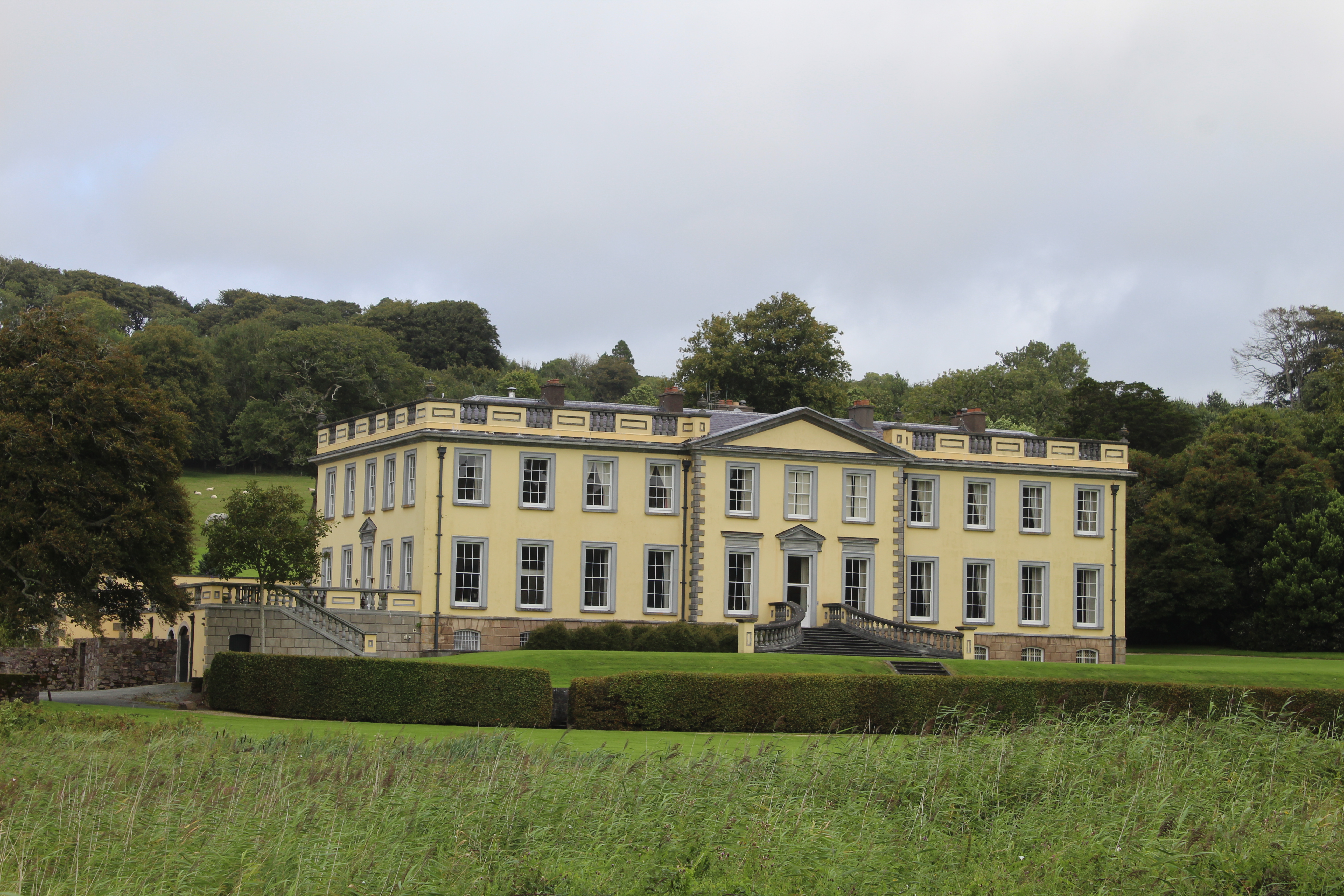
Ballynatray, County Waterford, August 2023. The house is not on the Section 482 listing, just the garden.

4. Ballyvolane, Castlelyons, Co Cork – Hidden Ireland accommodation €€€
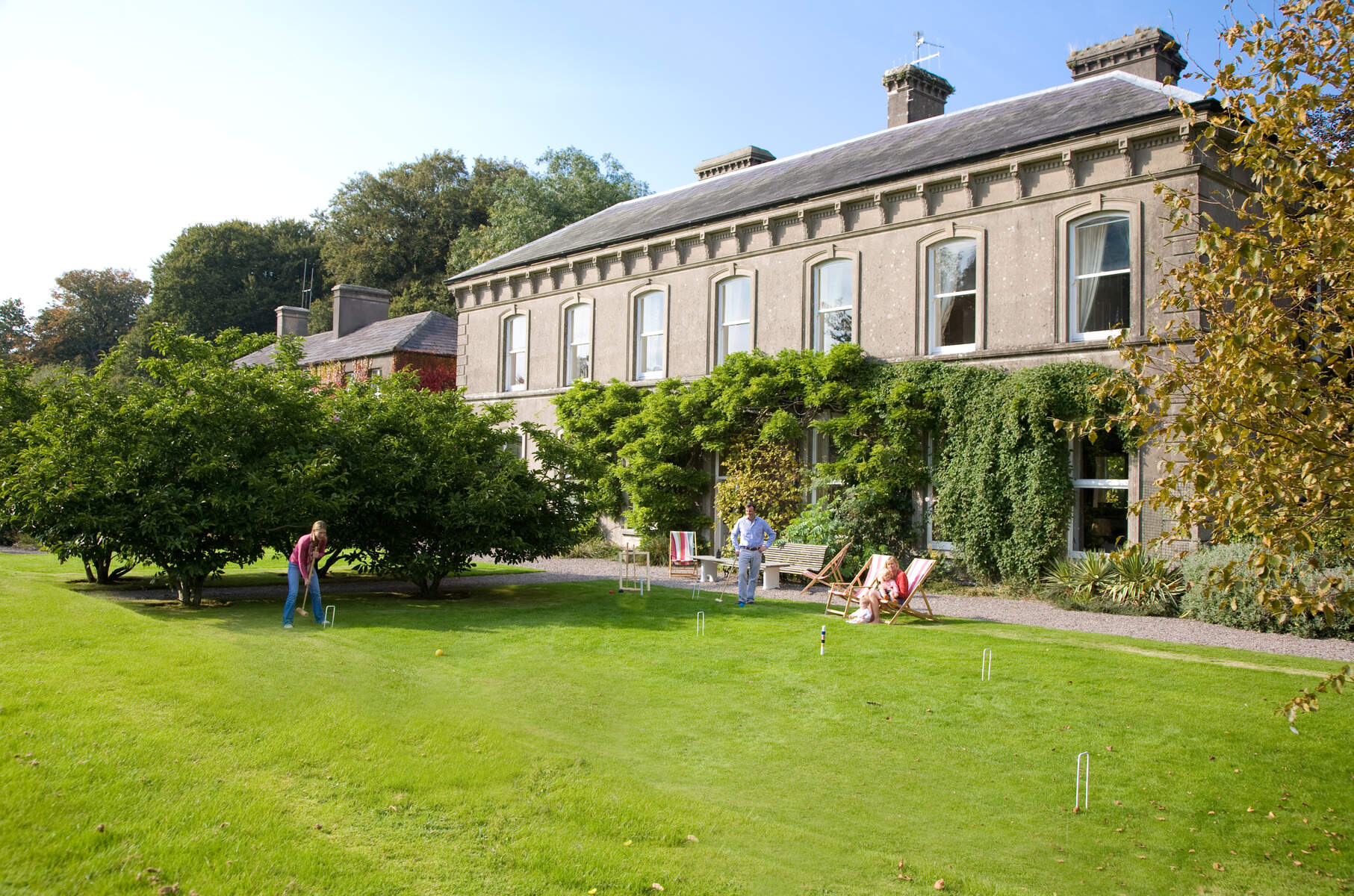
Ballyvolane, County Cork, photo taken 2014 for Tourism Ireland, Ireland’s Content Pool.

https://ballyvolanehouse.ie 

See my entry www.irishhistorichouses.com/2022/05/17/places-to-visit-and-stay-munster-county-cork/

5. Bantry House & Garden, Bantry, Co. Cork€€

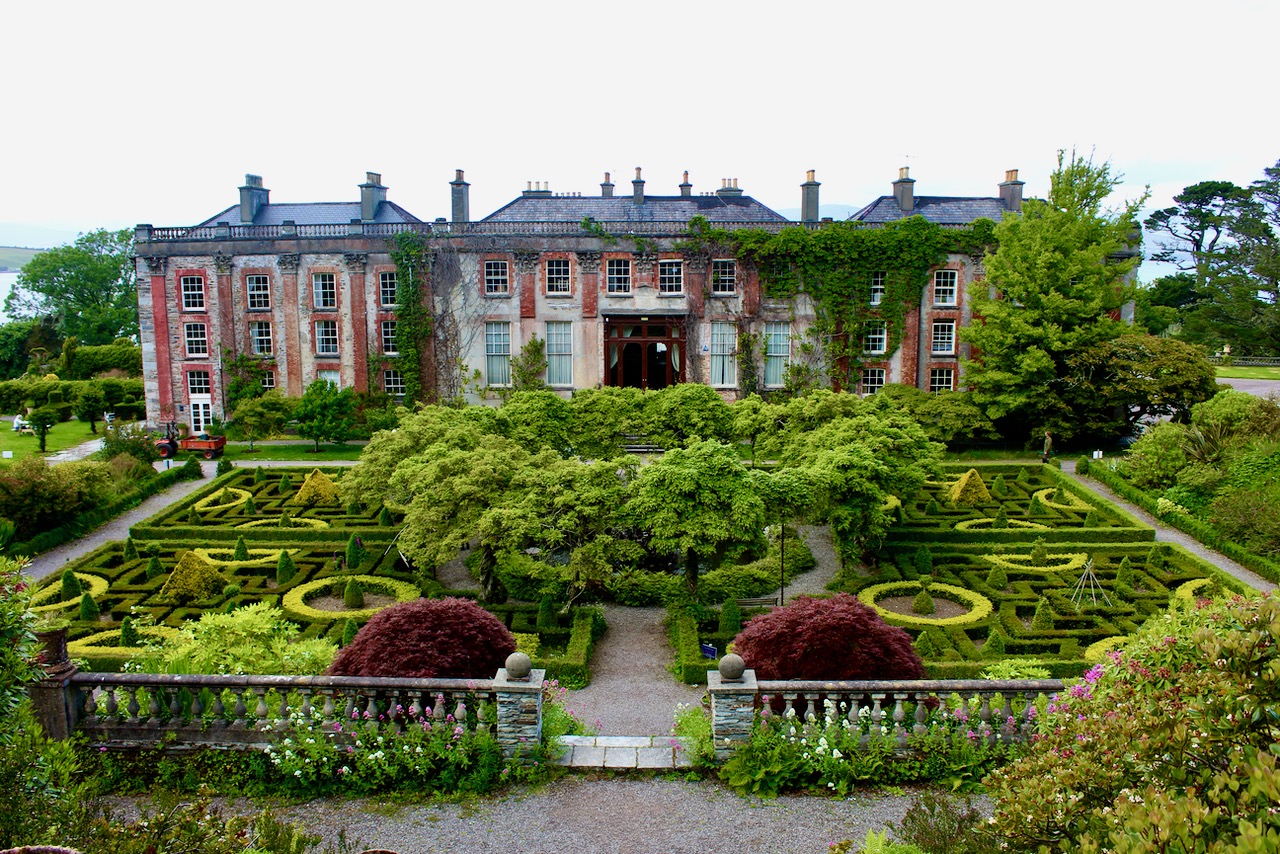
Bantry House, County Cork, a treasurehouse of culture.

See my entry www.irishhistorichouses.com/2022/05/17/places-to-visit-and-stay-munster-county-cork/

6. Barnabrow, Cloyne, Co Cork – whole house accommodation

https://www.barnabrowhouse.ie/

The website tells us: “Barnabrow Country House: in idyllic East Cork is discreet – it is like a secret garden that beckons. Visitors may happen upon it nestled in the rolling hills of East Cork with distant but tantalising glimpses of Ballycotton Bay. At first glance it appears contained – its banqueting hall, high on the hill, is not obvious, the twenty-two bedrooms are tucked away in various courtyards and the cottages are not apparent.

See my entry www.irishhistorichouses.com/2022/05/17/places-to-visit-and-stay-munster-county-cork/

7. Blackwater Castle (Castle Widenham, or Blackwater Valley Castle) Castletownroache, Co Cork – whole house 

https://www.blackwatercastle.com/

The website tells us:

A medieval Castle for rent in Ireland, the spectacular home of the former Viscount of Fermoy and Lords of the Barony of Fermoy, is a truly unique heritage site of international significance. Blackwater Castle, with a history extending back some 10,000 years to the Mesolithic period, is available to hire as a private Castle experience for exclusive Castle weddings, private parties, and family gatherings.

The Castle was first erected in the twelfth century on the site of the Bronze Age fortress of Dún Cruadha, an inland promontory fort which was established some 2,500 years ago or more on a rocky outcrop on the banks of the River Awbeg. Beautifully appointed suites, welcoming reception rooms, historical tours, and extensive activities from zip-lining to fly fishing are all on offer at one of Ireland’s more interesting and best preserved castles set on a 50 acre estate of mature native Irish trees with a private stretch of the River Awbeg.

See my entry www.irishhistorichouses.com/2022/05/17/places-to-visit-and-stay-munster-county-cork/

8. Castlemartyr, Co Cork – hotel  €€€

https://www.castlemartyrresort.ie/

Venues in County Derry

1. Beechill House, 32 Ardmore Road, Derry-Londonderry, Northern Ireland BT47 3QPweddings

https://www.beech-hill.com/

Beechill Country House Hotel, Courtesy of Tyrone and Sperrins destination, for Tourism Ireland.

2. Drenagh House, County Derrywhole house rental, 22 guests

https://www.drenagh.com

Nestled in beautiful parkland where you will find our grand Georgian Mansion House which is perfect for weddings, family get togethers, corporate events and much more.

See my entry https://irishhistorichouses.com/2023/05/20/places-to-visit-and-stay-in-counties-armagh-derry-and-down/

Venues in County Donegal

1. Drumhalla House, Rathmullen, County Donegal – whole house rental and wedding venue

https://drumhallahouse.ie

Steeped in history, the house was originally built in 1789 by Dr Knox of Lifford. The house and grounds have now been beautifully restored by the present owner and offer luxury accommodation as well as a unique, private location for a variety of functions including weddings and corporate events.

Drumhalla House offers superior 5 star accommodation and is a much sought after and unique wedding venue.

Panoramic views over Lough Swilly and the renowned Kinnegar beach provide the perfect backdrop for your wedding day. The beautifully maintained grounds and lawns at Drumhalla House make it perfect for your guests to enjoy and explore.

Allow our Country Manor House, complete with 5 star accommodation at Drumhalla to transform your wedding ideas into the fairytale you always dreamed of.

All of our bedrooms are individual and unique and everything one would expect in a much loved Manor House. The rooms are very comfortable and traditional in style and filled with carefully chosen furnishings. They are located on the 1st floor of the house and provide varied views over the gardens and beach.

2. Dunmore, Carrigans, Co Donegal – accommodation and weddings

https://www.dunmoregardens.ie/our-history/

3. Rockhill House, Letterkenny, Co Donegal – hotel €€€

https://www.rockhillhouse.ie

See my entry https://irishhistorichouses.com/2022/10/27/places-to-visit-and-stay-in-county-donegal-ulster/

Venues in County Down

See my entry https://irishhistorichouses.com/2023/05/20/places-to-visit-and-stay-in-counties-armagh-derry-and-down/

1. Culloden, County Down – hotel €€€

Culloden Estate and Spa, photograph courtesy of Hastings Hotel 2017, Ireland’s Content Pool.

See https://www.cullodenestateandspa.com

2. Narrow Water Castle, Newry Road, Warrenpoint, Down, Northern Ireland, BT34 3LE http://narrowwatercastle.co.uk

Narrow Water, photograph by Chris Hill 2005 for Tourism Ireland, Ireland’s Content Pool.

The website tells us:

Narrow Water Castle is the private home of the Hall family who have lived at Narrow Water since 1670, originally in the Old Narrow Water Keep situated on the shoreline of Carlingford Lough which is now a national monument.

As a private home the castle is not open for public admission. It does however occasionally open its doors for weddings and exclusive events.

In 1816 construction began on the new Castle by Thomas Duff, a well-known Newry architect who also designed the Cathedrals in Newry, Armagh and Dundalk. The Elizabethan revival style castle is made from local granite and built next to the existing house, Mount Hall (1680). It was completed in 1836.

Event Venues Dublin

1. Luttrellstown Castle, (known for a period as Woodlands), Clonsilla, Co Dublin

https://www.luttrellstowncastle.com
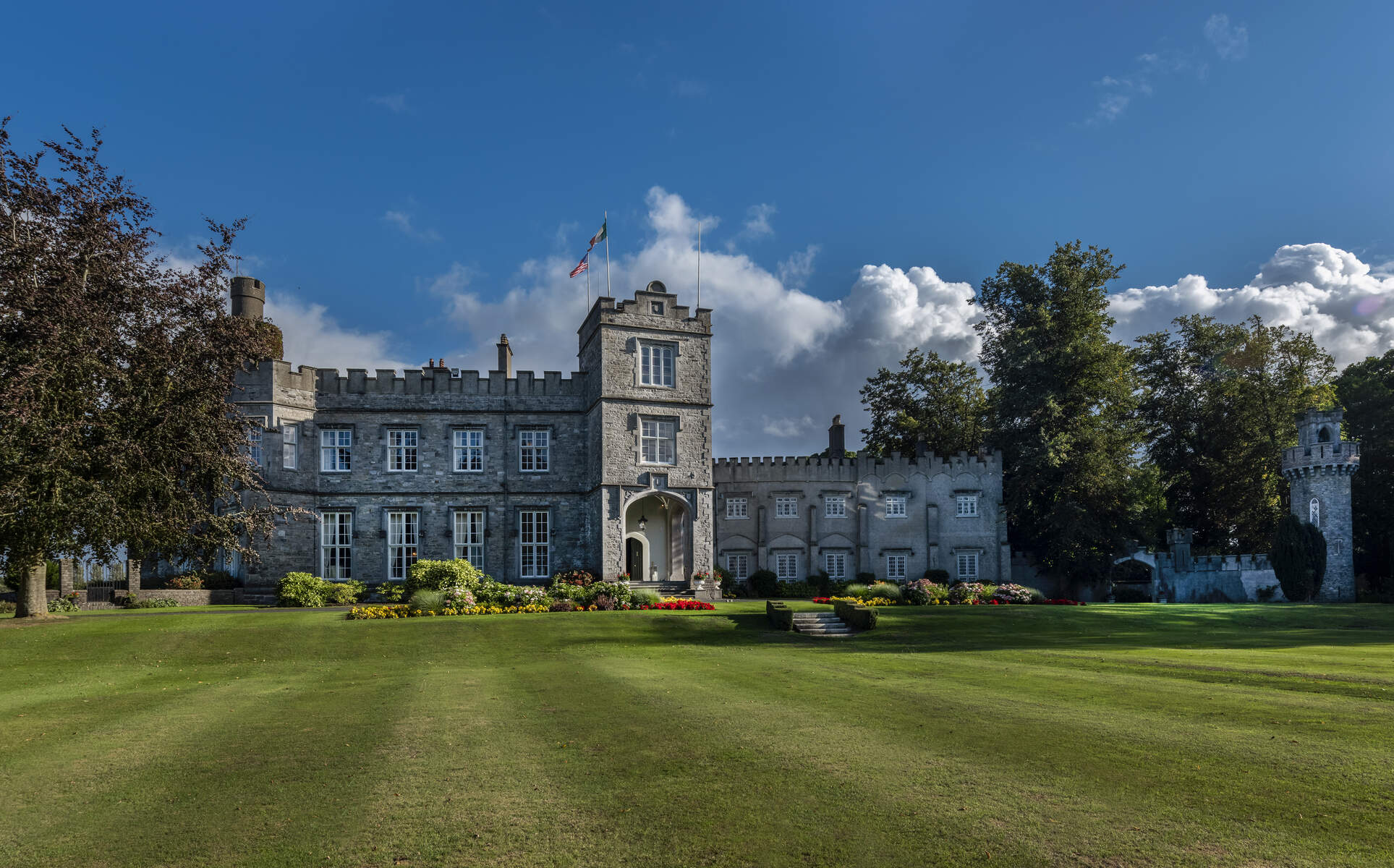
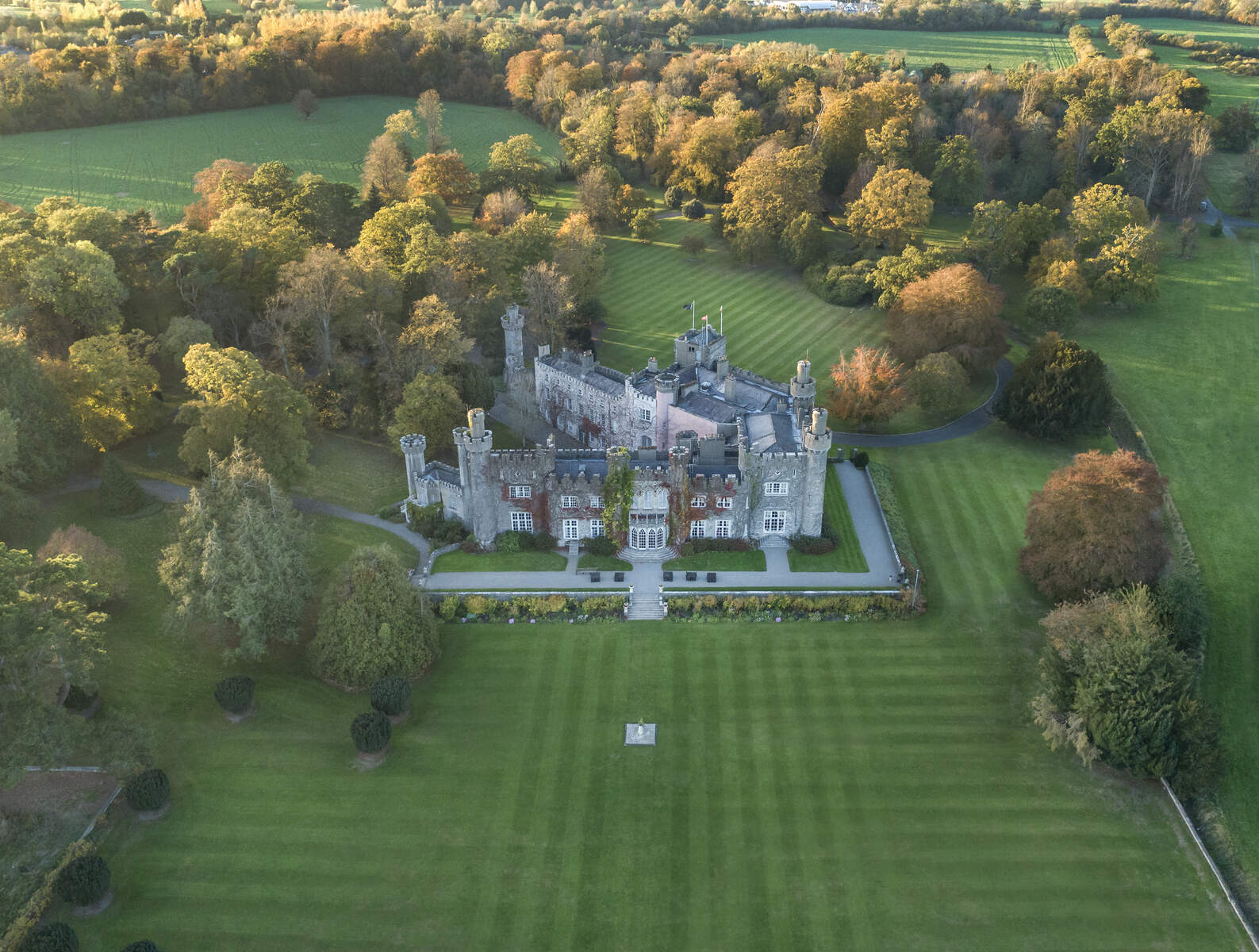
Luttrellstown Castle Resort, photograph by Colm Kerr 2018, Ireland’s Content Pool. The National Inventory describes it: “Detached seven-bay two-storey castle, incorporating fabric of earlier castle. Extended and remodelled c.1810, with battlements and turrets. Two wings to rear, with several later additions. Farmyard quadrangle mostly dating to c.1840. Demesne with lake, cascades, ice-house, gate lodges, obelisk, tower, bridges, rustic pavilion, and Doric temple. Now in use as hotel.”

See my entry https://irishhistorichouses.com/2023/05/26/places-to-visit-and-stay-in-dublin-city-and-county/

The castle dates from around 1420, according to Timothy William Ferrars.

Luttrellstown Castle, courtesy of Luttrellstown Castle Resort for Failte Ireland 2019, Ireland’s Content Pool.
Luttrellstown Castle, courtesy of Luttrellstown Castle Resort for Failte Ireland 2018, Ireland’s Content Pool.
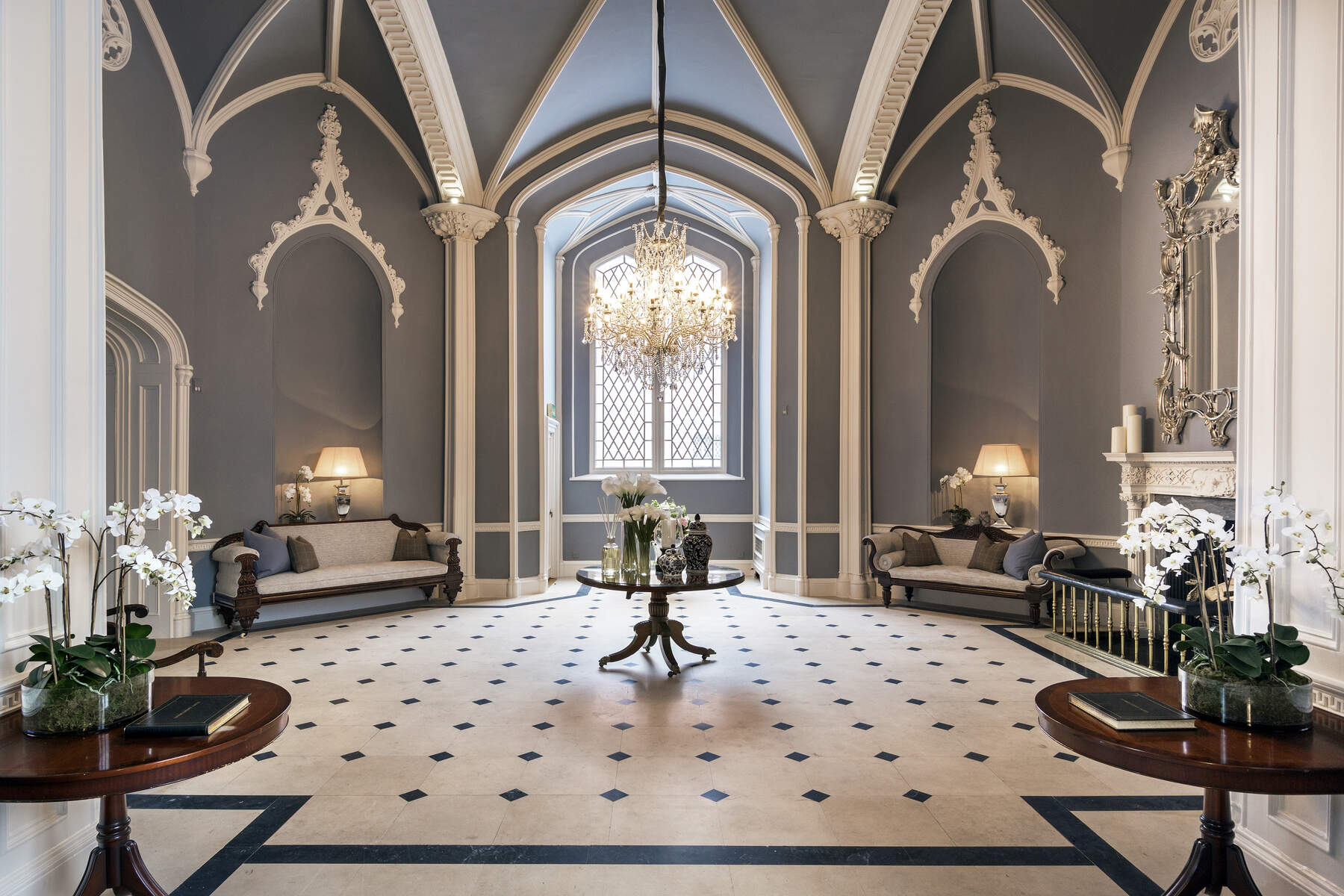
Gothic Hall, Luttrellstown Castle, courtesy of Luttrellstown Castle Resort for Failte Ireland 2018, Ireland’s Content Pool. The National inventory describes the interior: “Octagonal entrance hall; Gothic vaulting; ballroom with Adamesque plasterwork.”
Inner Hall: the staircase hall with a painted ceiling by Thornhill, Luttrellstown Castle, courtesy of Luttrellstown Castle Resort for Failte Ireland 2018, Ireland’s Content Pool.
Luttrellstown Castle Resort, Van Stry Ballroom, photograph by Colm Kerr 2018.
Luttrellstown Castle Resort, The Kentian Room: “birds and swags and foliage of stucco in high relief on the walls, and a painted ceiling by de Wit. The room was designed by Mr Felix Harbord, who also designed an Adamesque drawing room decorated with grisaille paintings by Peter de Gree fro Oirel Temple, and transformed the staircase hall with a painted ceiling by Thornhill”, photograph by Colm Kerr, 2019, Ireland’s Content Pool.

2. Orlagh House, Dublin – whole house, weddings

https://hiddenireland.com/house-pages/orlagh-house/

The Hidden Ireland website tells us:

A Georgian mansion built by Dublin snuff merchant Lundy Foot back in 1790. Frequent visitors to the house included the Great Emancipator Daniel O’Connell, Eoin Mac Neill, Padraig Pearse and William Smith O’Brian, among many other famous figures from Anglo-Irish history.

A truly unique house set on 45 acres in the foothills of the Dublin Mountains, with spectacular views over Dublin City and stretching out as far as the Irish Sea. We are only 25 minutes from Dublin Airport and from Dublin city centre. The house has been lovingly and tastefully restored in recent years, with large drawing and reception rooms and open fires. Our beautiful dining room sits 20 people at our regency table. There is a large games room in the basement of the house with table tennis, pool table, and a full-sized snooker table.

There is lots to do in the immediate area including numerous hiking trails both on the estate and in proximity including the Dublin Way and the Wicklow Way. We have an equestrian centre next door with reduced rates for guests and some of Dublin’s most infamous pubs are within 10 minutes of the house, with great local food, traditional music, and Irish dancing.

The house really is one-of-a-kind.

WEDDINGS

Orlagh house is the perfect location for couples who want something different from the norm, a unique and truly personal day to remember. Exclusively yours for your wedding day with a second day optional, we also have 14 bedrooms to offer your guests.

We have an in-house catering team who can create your perfect menu, from sit down formal dining to a more laid-back BBQ’. Choose from our indoor ballroom or numerous outside garden areas. Our wedding team are there to help you with everything you may need.

Whole House Accommodation and Weddings, County Galway:

1. Cloghan Castle, near Loughrea, County Galwaywhole castle accommodation and weddings, €€€ for two.

https://www.cloughancastle.ie/

The website describes it:

An air of historic grandeur and authenticity is the initial impression upon arrival at Cloughan Castle. Follow the long sweeping driveway surrounded with breath-taking countryside views, to the beautifully restored castle with its ornamental stonework & imposing four storey tower. Sitting within several acres of matured woodlands with striking panoramic countryside views, this lovingly restored 13th-century castle holds its historic past with a character that blends effortlessly with elegance and comfort.

Find yourself immersed in unrivalled castle comfort with the ultimate mix of homeliness & grandeur, the most appealing destination for those seeking exclusivity & privacy. A combination of seven magnificently appointed bedrooms, two versatile reception rooms, complete with an idyllic backdrop, ensures a truly memorable occasion to be long remembered. Cloughan Castle offers complete exclusivity for all occasions, from an intimate family getaway to a private party celebration, to a truly magical wedding location.

See my entry https://irishhistorichouses.com/2023/05/31/places-to-visit-and-stay-in-county-galway/

2. Glenlo Abbey, near Galway, Co Galway – accommodation €€

Glenlo Abbey Hotel & Estate, Co Galway Kelvin Gillmor Photography 2020, for Tourism Ireland, Ireland’s Content Pool.

https://www.glenloabbeyhotel.ie

See my entry https://irishhistorichouses.com/2023/05/31/places-to-visit-and-stay-in-county-galway/
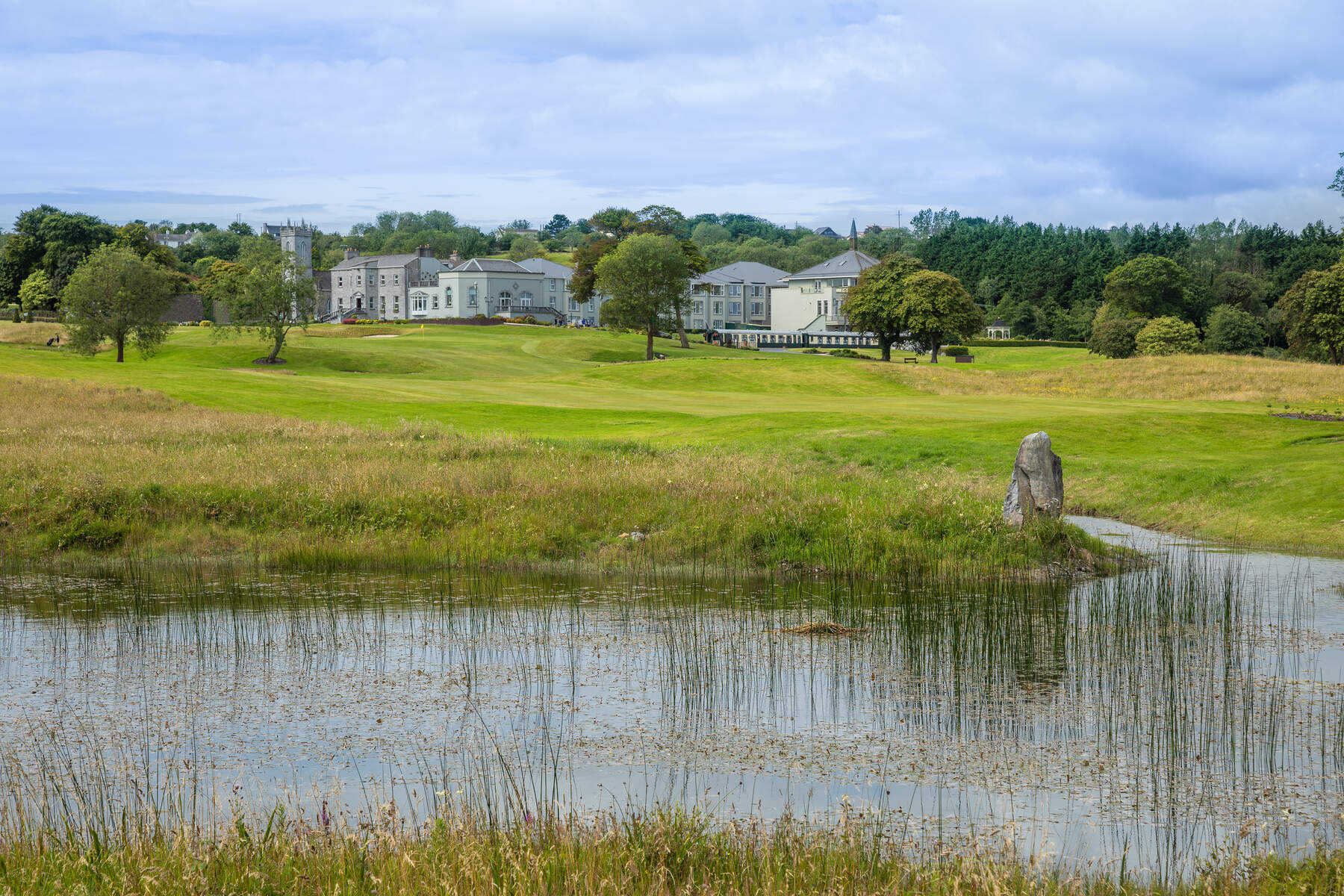
Glenlo Abbey Hotel & Estate, Co Galway Kelvin Gillmor Photography 2020, for Tourism Ireland, Ireland’s Content Pool.
Glenlo Abbey Hotel & Estate, Co Galway Courtesy Glenlo Abbey Hotel and Estate, Galway 2017, for Tourism Ireland, Ireland’s Content Pool.
Glenlo Abbey Hotel 2020 Courtesy Glenlo Abbey Hotel and Estate, Galway, for Tourism Ireland, Ireland’s Content Pool.
Palmer Bar, Glenlo Abbey Hotel & Estate, Courtesy Glenlo Abbey Hotel and Estate, Galway 2020, for Tourism Ireland, Ireland’s Content Pool.

3. Lough Cutra Castle, County Galway

info@loughcutra.com

https://www.loughcutra.com/

Nestled into the Northern corner of the courtyard, this beautifully appointed self catering cottage can sleep up to six guests – with private entrance and parking. Built during 1846 as part of a programme to provide famine relief during the Great Potato Famine of the time, it originally housed stabling for some of the many horses that were needed to run a large country estate such as Lough Cutra. In the 1920’s the Gough family, who were the then owners of the Estate, closed up the Castle and converted several areas of the courtyard including Cormorant into a large residence for themselves. They brought with them many original features from the Castle, such as wooden panelling and oak floorboards from the main Castle dining room and marble fireplaces from the bedrooms.

We have furnished and decorated the home to provide a luxuriously comfortable and private stay to our guests. Each unique courtyard home combines the history and heritage of the estate and buildings with modern conveniences.

4. Rosleague Manor, Galway – accommodation €€

 https://www.rosleague.com

The website tells us: “Resting on the quiet shores of Ballinakill Bay, and beautifully secluded within 30 acres of its own private woodland, Rosleague Manor in Connemara is one of Ireland’s finest regency hotels.

The National Inventory tells us: “Attached L-plan three-bay two-storey house, built c.1830, facing north-east and having gabled two-storey block to rear and multiple recent additions to rear built 1950-2000, now in use as hotel…This house is notable for its margined timber sash windows and timber porch. The various additions have been built in a sympathetic fashion with many features echoing the historic models present in the original house.”

Places to Stay, County Kerry: 

See my entry https://irishhistorichouses.com/2022/10/19/places-to-visit-and-stay-in-county-kerry-munster/

1. Ballyseede Castle/ Ballyseedy (Tralee Castle), Tralee, County Kerry – hotel €€ www.ballyseedecastle.com

We ate our breakfast here every day, Ballyseede Castle.

2. Cahernane (or Cahirnane) House, Killarney, Co Kerry – hotel

 https://www.cahernane.com

The website tells us:

Beautifully situated on a private estate on the edge of Killarney National Park, our luxury four-star hotel is located just twenty minutes’ walk from Killarney town centre. The entrance to the hotel is framed by a tunnel of greenery which unfurls to reveal the beauty of this imposing manor house, constructed in 1877 and formerly home to the Herbert Family.

Cahernane House Hotel exudes a sense of relaxation and peacefulness where you can retreat from the hectic pace of life into a cocoon of calmness and serenity. The only sounds you may hear are the lambs bleating or the birds singing.

Cahernane House was built as the family residence of Henry Herbert in 1877 at a cost of £5,992. The work was carried out by Collen Brothers Contractors. The original plans by architect James Franklin Fuller, whose portfolio included Ballyseedy Castle, Dromquinna Manor and the Parknasilla Hotel, was for a mansion three times the present size.

3. Carrig Country House, County Kerry €€€

https://carrighouse.com

The website tells us: “If you are looking for the perfect hideaway which offers peace, tranquility, plus a wonderful restaurant on the lake, Carrig House on the Ring of Kerry and Wild Atlantic Way is the place for you. The beautifully appointed bedrooms, drawing rooms and The Lakeside Restaurant, overlooking Caragh Lake and surrounded by Kerry’s Reeks District mountains, rivers and lakes create the perfect getaway.

Carrig House was built originally circa 1850 as a hunting lodge, it was part of the Blennerhassett Estate. It has been mainly owned and used by British Aristocracy who came here to hunt and fish during the different seasons.

The house was purchased by Senator Arthur Rose Vincent in the early 20th. Century. Vincent moved here after he and his wealthy Californian father in law Mr. Bowers Bourne gave Muckross House & Estate in Killarney to the Irish Government for a wonderful National Park.

Bourne had originally purchased Muckross House from the Guinness family and gave it to his daughter Maud as a present on her marriage to Arthur Rose Vincent. However, Maud died at a young age prompting Bourne and Vincent to donate the estate to the Irish State.

Vincent remarried a French lady and lived at Carrig for about 6 years, they then moved to the France. The country house history doesn’t end there, Carrig has had many other illustrious owners, such as Lady Cuffe , Sir Aubrey Metcalfe, who retired as the British Viceroy in India and Lord Brocket Snr, whose main residence was Brocket Hall in England.

Frank & Mary Slattery, the current owners purchased the house in 1996. They are the first Irish owners of Carrig since it was originally built and have renovated and meticulously restored the Victorian residence to its former glory.

For over two decades Frank & Mary have operated a very successful Country House & Restaurant and have won many rewards for their hospitality and their Lakeside Restaurant. They are members of Ireland’s prestigious Blue Book.

Carrig House has 17 bedrooms, each individually decorated in period style with antique furniture. Each room enjoys spectacular views of Caragh Lake and the surrounding mountains. All rooms are en suite with bath and shower. Those who like to indulge can enjoy the sumptuous comfort of the Presidential Suite with its own separate panoramic sitting room, male and female dressing rooms and bathroom with Jacuzzi bath.

The restaurant is wonderfully situated overlooking the lake. The atmosphere is friendly, warm and one of total relaxation. The menu covers a wide range of the freshest Irish cuisine.

Irish trout and salmon from the lake and succulent Kerry lamb feature alongside organic vegetables. Interesting selections of old and new world wines are offered to compliment dinner whilst aperitifs and after-dinner drinks are served in the airy drawing room beside open peat fires.

Within the house, chess, cards and board games are available in the games room.

4. Dromquinna Estate, Co Kerryaccommodation €€

https://www.dromquinnamanor.com

It was constructed for Sir John Columb around 1889-90. The website tells us:

There are many elements to Dromquinna Manor. Firstly it is a stunning waterside estate unlike anything else. Set on 40 acres of parkland planted in the 1800s, the Estate offers an abundance of activities and facilities.

The Manor, dating from the 1890s, is dedicated to catering for Weddings and events. The Oak Room is the heart of the Manor and is classical in every sense. Stylish beyond words with views of Kenmare Bay celebrations here are truly memorable. The Drawing Rooms and Terrace all make for a very special and memorable occasion for all. It is a real family and friends party as opposed to a hotel ballroom function.

Venues in County Kildare:

1. Barberstown Castle, Kildare – hotel 

www.barberstowncastle.ie

2. Carton House, Kildare – open to public, hotel 
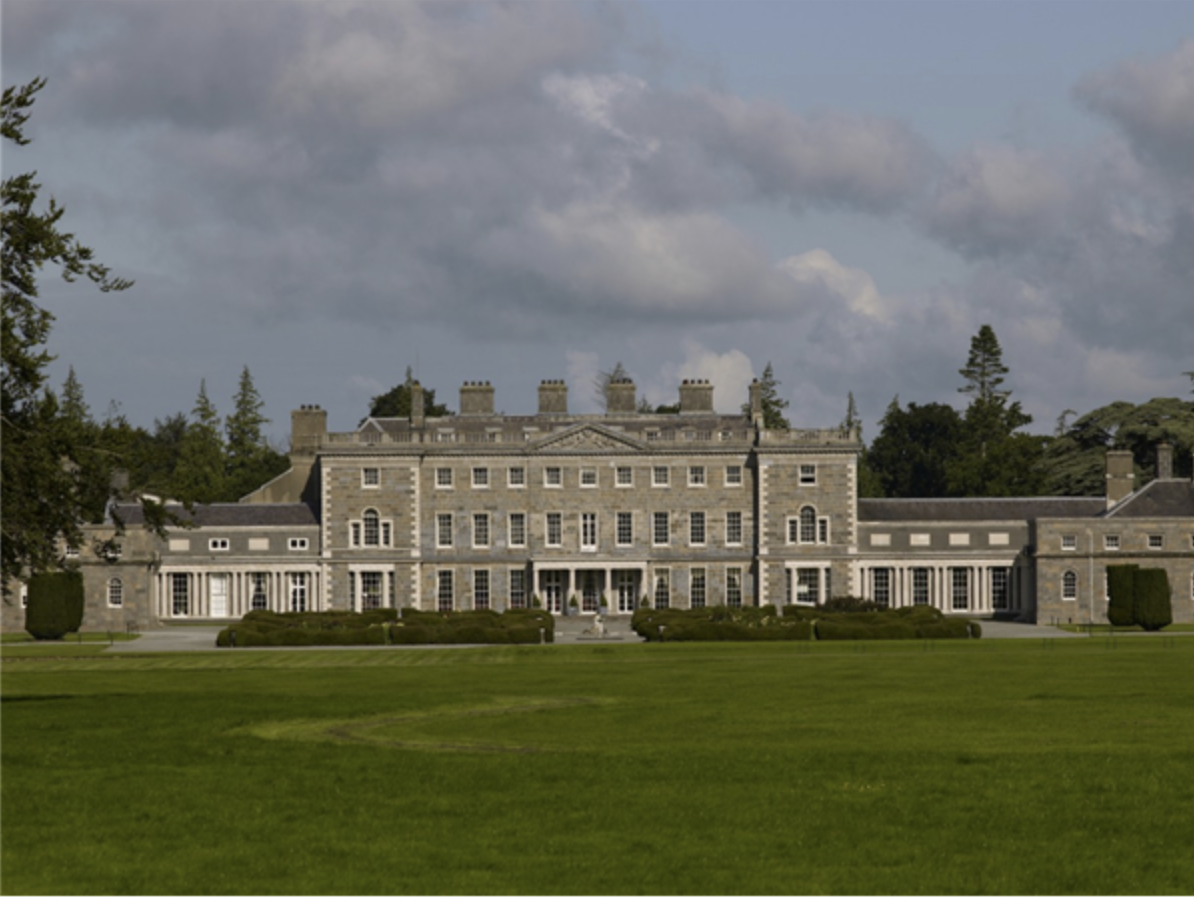
The garden front of Carton House. The house was built in 1739 to designs by Richard Castle and remodelled in 1815 by Richard Morrison. Not Used Country Life archives, 18/02/2009.  Photographer Paul Barker.
Carton House 2014, for Failte Ireland.

See my entry https://irishhistorichouses.com/2023/06/08/places-to-visit-and-stay-in-county-kildare/

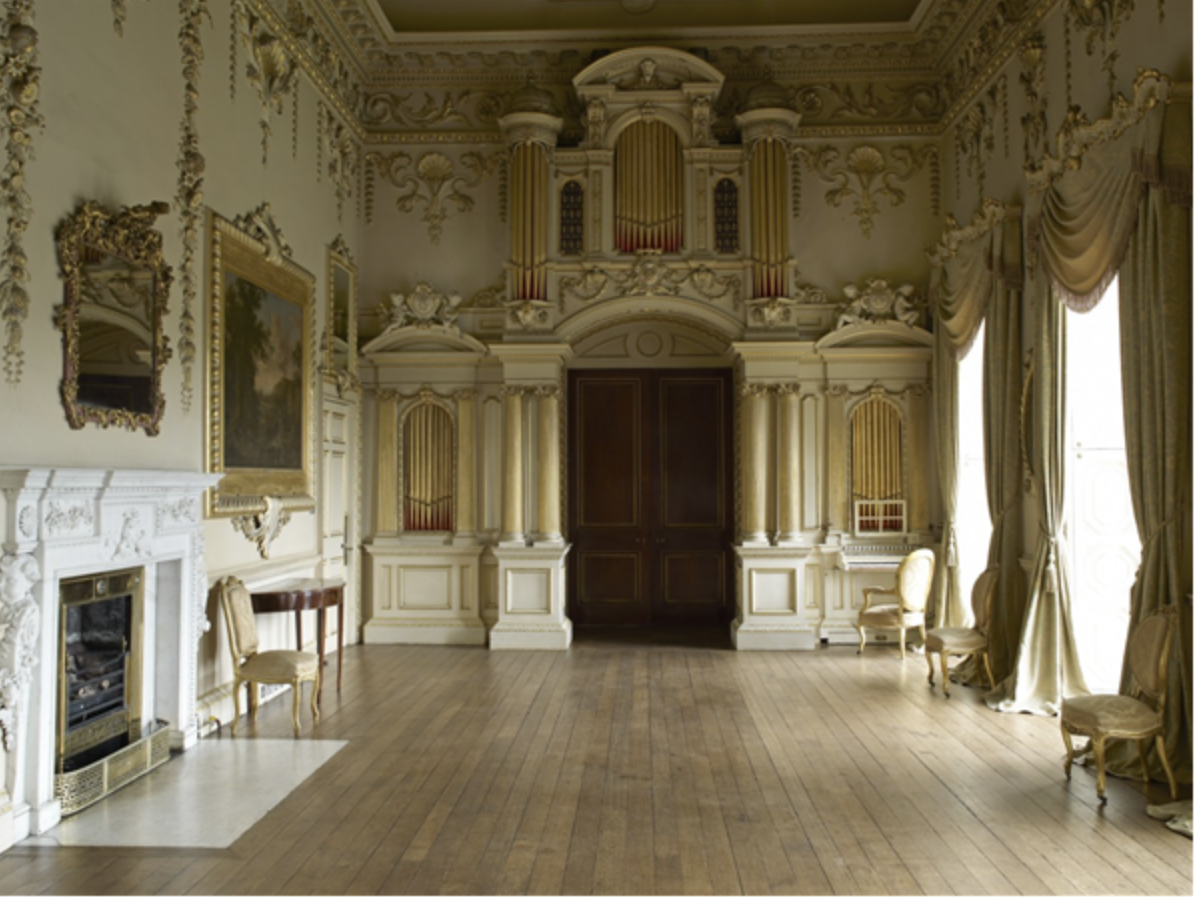
Carton, Image for Country Life, by Paul Barker.
The Gold Saloon at Carton House, which was originally known as the Eating Parlour. The organ case was designed by Lord Gerald FitzGerald in 1857. Not Used Country Life archives 18/02/2009,  Photographer Paul Barker.

3. The Cliff at Lyons, County Kildare

www.cliffatlyons.ie

Robert O’Byrne writes about the Cliff at Lyons:

The Village at Lyons, County Kildare is often described as a restoration but to be frank it is more a recreation. By the time the late Tony Ryan bought the estate in 1996, the buildings beside the Grand Canal, which had once included a forge, mill and dwelling houses, were in a state of almost total ruin. Therefore the work undertaken here in the years prior to his death in 2007 involved a great deal of architectural salvage, much of it brought from France, although some Irish elements were incorporated such as a mid-19th century conservatory designed by Richard Turner, originally constructed for Ballynegall, County Westmeath. Today the place primarily operates as a wedding venue, providing an alluring stage set for photographs but bearing little resemblance to what originally stood here.” [9]
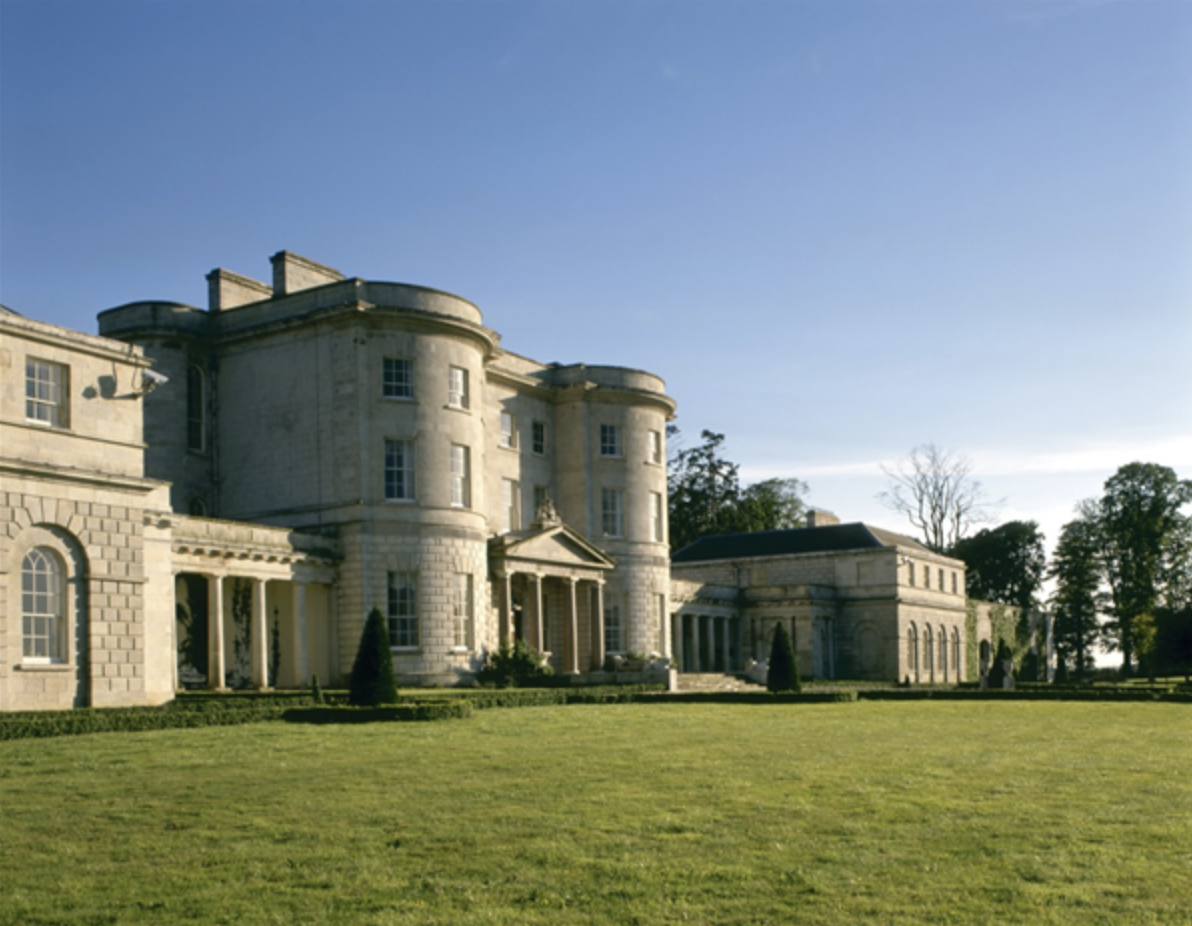
The entrance front of Lyons House, designed by Oliver Grave for Nicholas Lawless, 1st baron Cloncurry circa 1786 and remodelled by his son Richard Morrison in 1802-05. Pub Orig Country Life 16/01/2003, vol. CXCVII by Photographer Paul Barker. 

See my entry https://irishhistorichouses.com/2023/06/08/places-to-visit-and-stay-in-county-kildare/

The website https://www.firmounthouse.com/ tells us:

Firmount House is a unique and stunning venue just outside Clane in County Kildare, only 40minutes from Dublin city centre. Lovingly restored by the owners, the house is known for flexibility and creativity and is now open for weddings, private parties, film shoots, yoga retreats and corporate events. Enjoy visiting the Firmount website and see for yourself the lifelong journey these restoration warriors have taken to provide you with the perfect location in a wonderful, natural setting.

This fabulous house consists of a sitting room, breakfast room and dining room downstairs reached from a large hallway, alongside a commercial kitchen and butlers pantry. The first floor consists of seven large and sumptuous bedrooms – five doubles and two twin rooms with plenty of room for two travel cots which are also provided. There are also six bathrooms. Heated by oil fired radiators, there are also two stoves in the main entertaining space.

5. The K Club, Straffan House, County Kildare

See https://www.kclub.ie

6. Kilkea Castle, Castledermot, Kildare – hotel 

https://www.kilkeacastle.ie/

7. Leixlip Manor hotel (formerly St. Catherine’s Park) Leixlip, Co Kildare

Formerly Liffey Valley House hotel

http://www.leixlipmanorhotel.ie/about-us/the-manor-kildare

The house that stood before the current Manor House was taller and was tenanted by the Earl of Lanesborough. Then in 1792, it was occupied by David La Touche, of the Huguenot banking family. It shortly thereafter burned to the ground and in around 1798 a new house, also called St Catherine’s Park, was built in the same townland to the design of Francis Johnston; it is now Leixlip Manor Hotel & Gardens.

8. Moyvalley (formerly Balyna), Co Kildare – weddings, accommodation 

Now called Moyvalley Hotel. https://www.moyvalley.com/aboutus.html

The website tells us:

Balyna House lies to the south of Moyvalley Bridge over the Grand Canal, about half way between Enfield and Kinnegad on the old Dublin — Galway road. The house lies in the centre of the estates 500 acres. Balyna Estate was granted in 1574 by Queen Elizabeth I to the O’Moore family because they had lost their land in Laois and were reinstated in Balyna.

Balyna House consists of 10 luxurious ensuite bedrooms, 3 reception rooms to cater for up to 100 guests, Balyna Bar and Cellar Bar. The house is available exclusively for private events and weddings.

See https://www.palmerstownhouse.ie

Venues in County Kilkenny

See my entry https://irishhistorichouses.com/2022/10/28/places-to-visit-and-stay-in-county-kilkenny-leinster/

1. Ballyduff, Thomastown, Co Kilkenny – wedding venue, B&B 

http://ballyduffhouse.ie/booking-enquiries/ 

The website tells us:

Ballyduff House is a classic Georgian country house with a 14th century castle, steeped in Irish history and full of the warmest of welcomes.

The River Nore sparkles as it runs along Ballyduff’s riverbank while sheep and cattle graze the pasture either side.

Open fires, the book lined library and the comfortable bedrooms furnished with Irish antiques capture an early 18th century experience tempered by discreet 21st century comfort.

This is real Ireland – calm, green and beautiful, set alongside the picturesque village of Inistioge with Dublin only an hour away.

2. Butler House, Kilkenny, co Kilkenny – accommodation 

https://www.butler.ie

View to Butler House and Garden, Kilkenny Leo Byrne Photography 2015.

3. Lyrath House, near Kilkenny, County Kilkenny – hotel

 https://www.lyrath.com

4. Mount Juliet, Thomastown, County Kilkenny – hotel
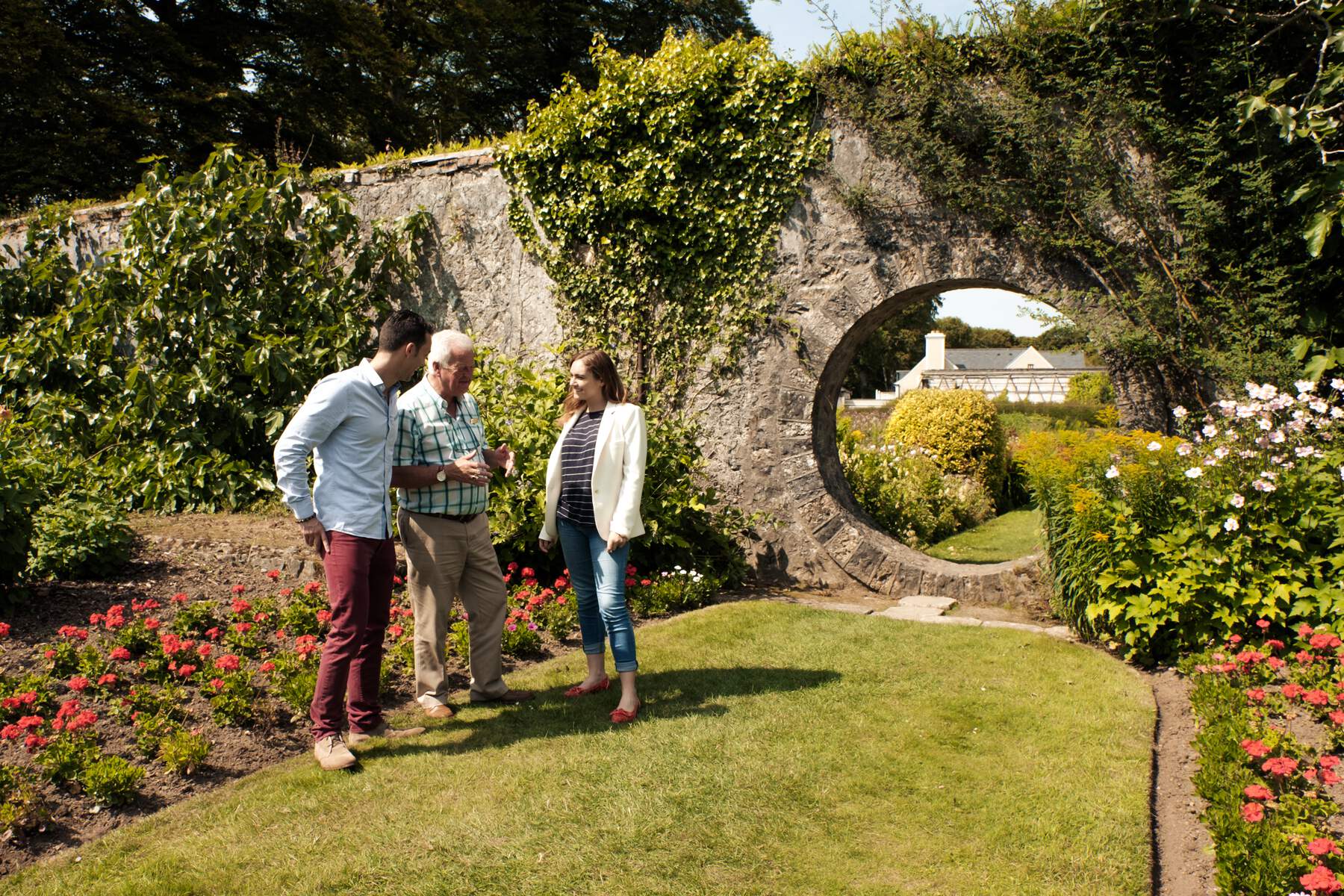
Mount Juliet Gardens, Thomastown, Co Kilkenny, photograph by Finn Richards 2015 for Tourism Ireland, Ireland’s Content Pool.

See https://www.mountjuliet.ie/ and my entry https://irishhistorichouses.com/2022/10/28/places-to-visit-and-stay-in-county-kilkenny-leinster/

Venues in County Laois:

See my entry https://irishhistorichouses.com/2022/10/27/places-to-visit-and-stay-in-county-laois-leinster/

1. Ballyfin House, Co. Laois – hotel €€€

https://ballyfin.com

2. Castle Durrow, Co Laoisa hotel 

https://www.castledurrow.com

3. Ballintubbert House, County Laois – whole house and weddings

https://www.ballintubbert.com/exclusive-hire/manor-house/

Ballintubbert is a five-bay two-storey over basement rectory, c. 1835. It was previously owned by actor John Hurt, and poet Cecil Day-Lewis.

The Manor House has five double bedrooms and the Garden Wing has four additional double bedrooms. A beautiful country style kitchen, two stunning living rooms and a dining room that sits twenty. The house has six bathrooms.

4. Preston House, Abbeyleix, County Laois – whole house rental

https://hiddenireland.com/house-pages/preston-house/

Hidden Ireland tells us:

We are delighted that you have found our beautifully restored 18th Century Georgian House, with a private courtyard and wooded garden, located on the Main Street of the picturesque Heritage Town of Abbeyleix.

Venues in County Leitrim

See my entry https://irishhistorichouses.com/2022/10/19/places-to-visit-and-stay-in-county-leitrim-connaught/

1. Bush Hotel, Carrick on Shannon, Co Leitrim € 

https://www.bushhotel.com/

“Our charming award-winning boutique heritage hotel is in the centre of Carrick on Shannon, County Leitrim.”

2. Lough Rynn Castle, Mohill, County Leitrim

https://www.loughrynn.ie/

Venues in County Limerick:

See my entry https://irishhistorichouses.com/2023/07/21/places-to-visit-and-stay-in-county-limerick/

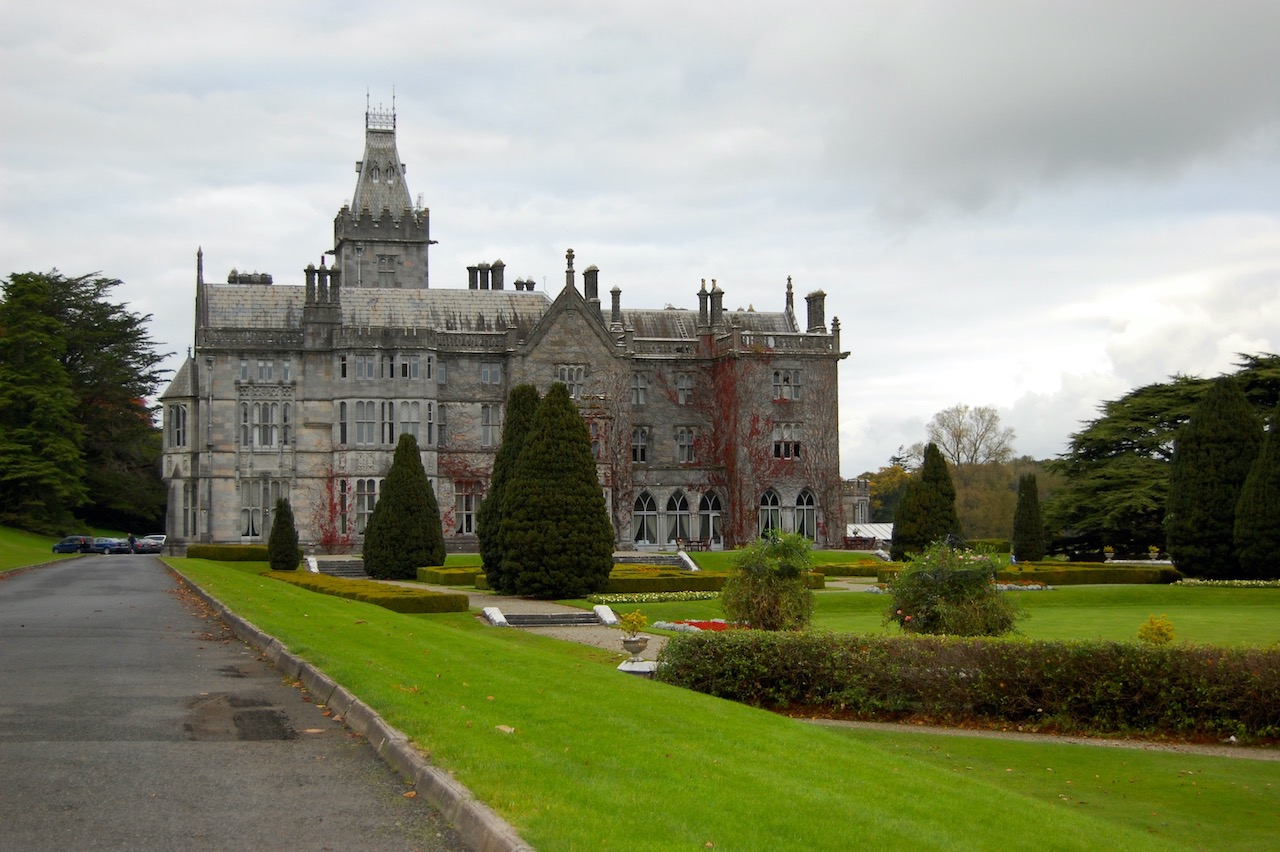
1. Adare Manor, Limerickhotel €€€

Adare Manor, Limerick, October 2012.

See my entry https://www.adaremanor.com

2. Glin Castle, whole house rental.

Glin Castle, County Limerick, photograph from National Inventory of Architectural Heritage.

https://www.glin-castle.com/

You can see lovely photographs of the castle, inside and out, on the website.

Venues in County Longford:

See my entry https://irishhistorichouses.com/2022/05/05/places-to-visit-and-stay-in-leinster-longford-louth-and-meath/

1. Newcastle House Hotel, Ballymahon, County Longford

https://www.newcastlehousehotel.ie

Newcastle House (now a hotel), County Longford, photograph from the National Inventory of Architectural Heritage.

Newcastle House is a 300-year-old manor house, set on the banks of the River Inny near Ballymahon, in Co. Longford.

The website tells us; “Standing on 44 acres of mature parkland and surrounded by 900 acres of forest, Newcastle House is only one and half hour’s drive from Dublin, making it an excellent base to see, explore and enjoy the natural wonders of Ireland. So whether you are looking for a peaceful place to stay (to get away from it all) or perhaps need a location to hold an event, or that most important wedding, give us a call.”

Newcastle House (now a hotel), County Longford, photograph from the National Inventory of Architectural Heritage.

Venues in County Louth:

See my entry https://irishhistorichouses.com/2022/10/28/places-to-visit-and-stay-in-county-louth-leinster/

1. Ballymascanlon House, Louth  – hotel

 https://www.ballymascanlon.com
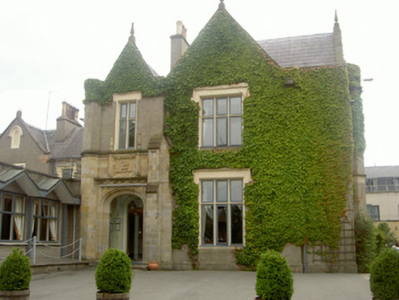
Ballymascanlon House, County Louth, photograph from National Inventory of Architectural Heritage.

The website tells us: “The Ballymascanlon House is set on 130 acres of beautiful parkland, this impressive Victorian House forms the heart of this Hotel. It is one of the most remarkable historical estates in Ireland dating back to 833 A.D. Steeped in history, Ballymascanlon estate is located in Ireland’s North East on the Cooley Peninsula in close proximity to the Irish Sea and Mourne Mountains. Less than 1 hour from Dublin and Belfast, and 20 minutes from the medieval town of Carlingford. We are delighted to welcome you to our beautiful luxurious venue, ideal for both Business and Leisure.”

2. Darver Castle, County Louth

https://www.darvercastle.ie/home/

3. Castle Bellingham, Co. Louth

Castle Bellingham, County Louth, 20th November 2022.

https://www.bellinghamcastle.ie

The website tells us:

At Bellingham Castle, the welcome is warm, the facilities luxurious and the memories, eternal. Nestled in the medieval village of Castlebellingham in County Louth along Ireland’s Ancient East, Bellingham Castle is an elegant and spacious 17th Century authentic Irish Castle available for exclusive hire, to allow you become King or Queen of your very own castle for a truly memorable experience. The Castle opens for overnight stays on select dates throughout the year, but is predominantly a venue for spectacular Weddings, conferences or events.

Castle Bellingham, County Louth, November 2022.

Places to stay, County Mayo:

See my entry https://irishhistorichouses.com/2022/05/15/places-to-stay-and-visit-in-connacht-leitrim-mayo-and-sligo/

1. Ashford Castle, Mayo/Galway – hotel €€€

Ashford Castle, photograph Courtesy Aervisions 2016 for Tourism Ireland, Ireland’s Content Pool.

https://ashfordcastle.com/

The website tells us: “Unrivalled service, warm Irish hospitality and five-star luxury await at Ashford Castle, part of The Red Carnation Hotel Collection. Situated in a spectacular 350-acre estate, discover sumptuous rooms and suites, splendid interiors brimming with antique furniture, fine fabrics and unique features at every turn.

It was built originally by the Norman De Burgo family around 1228.

See my entry www.irishhistorichouses.com/2022/05/15/places-to-stay-and-visit-in-connacht-leitrim-mayo-and-sligo/
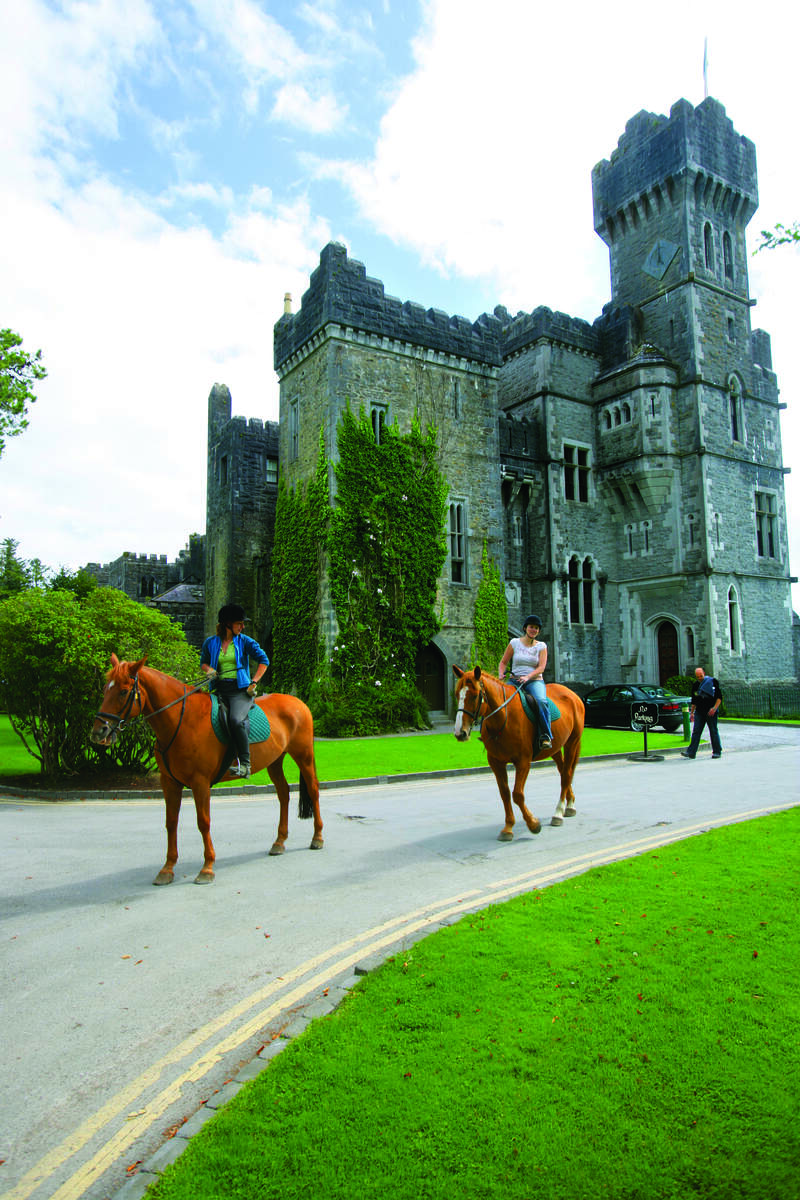
Ashford Castle, photograph by Brian Morrison 2015 for Tourism Ireland, Ireland’s Content Pool.
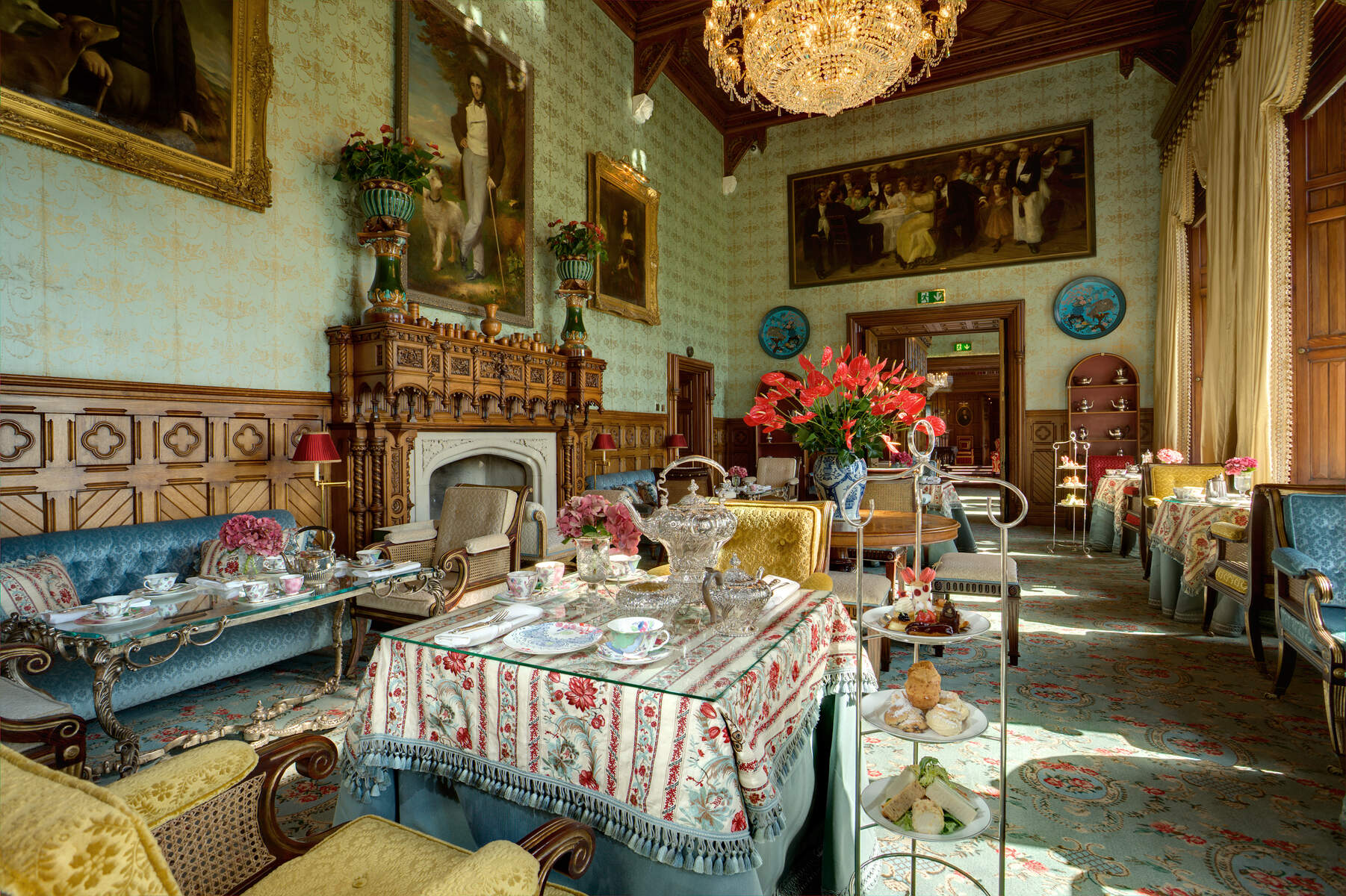
Afternoon tea, Ashford Castle, Co Mayo Courtesy Kelvin Gillmor 2014.
Ashford Castle, photograph by Brian Morrison 2015 for Tourism Ireland, Ireland’s Content Pool.

2. Belleek Castle and Ballina House, originally Belleek Castle, Ballina, Mayo – €€

See https://belleekcastle.com/

3. Knockranny House Hotel and Spa, County Mayo

https://www.knockrannyhousehotel.ie/

The website tells us: “Owned and run by Adrian & Geraldine Noonan, Knockranny House Hotel & Spa is one of Ireland’s finest 4 star hotels in Westport.

Set in secluded grounds on a hillside, this luxury hotel stands proudly overlooking the picturesque town of Westport and enjoys breathtaking views of Croagh Patrick and Clew Bay’s islands to the west and the Nephin Mountains to the north, one of the best Westport hotels locations.

The welcoming atmosphere at Knockranny House Hotel Westport begins with the open log fires in the reception hall, and is carried throughout the property with its antique furniture, excellent spa facilities, superb cuisine and friendly service, creating a genuine sense of relaxed warmth and hospitality. Previously voted as AA Irish hotel of the year.

4.  Mount Falcon, Ballina, County Mayo – hotel €€

https://www.mountfalcon.com/

Mount Falcon Estate, Co Mayo_by Mount Falcon 2020 for Tourism Ireland, Ireland’s Content Pool.

The website tells us:

Mount Falcon Estate is a luxury 32 bedroom 4-star deluxe hotel with 45 luxury lodges located on the west bank of the River Moy and is situated perfectly for exploring the 2500km of rugged Irish coastline called The Wild Atlantic Way. Mount Falcon hotel offers 100 acres of magical woodlands, between Foxford and Ballina, in North County Mayo, the most beautiful part of the West of Ireland. Situated in the heart of the Moy Valley (which encompasses Mayo North and Co. Sligo) this Victorian Gothic manor house (est. 1876) exudes understated elegance from a bygone era. Originally constructed as a wedding gift, Mount Falcon Estate has subsequently become known as the most romantic house in Ireland.

See my entry www.irishhistorichouses.com/2022/05/15/places-to-stay-and-visit-in-connacht-leitrim-mayo-and-sligo/

Places to stay, County Meath:

See my entry https://irishhistorichouses.com/2022/10/28/places-to-visit-and-stay-in-county-meath-leinster/

1. Bellinter House near Bective, County Meath – hotel and restaurant €€
www.bellinterhouse.com

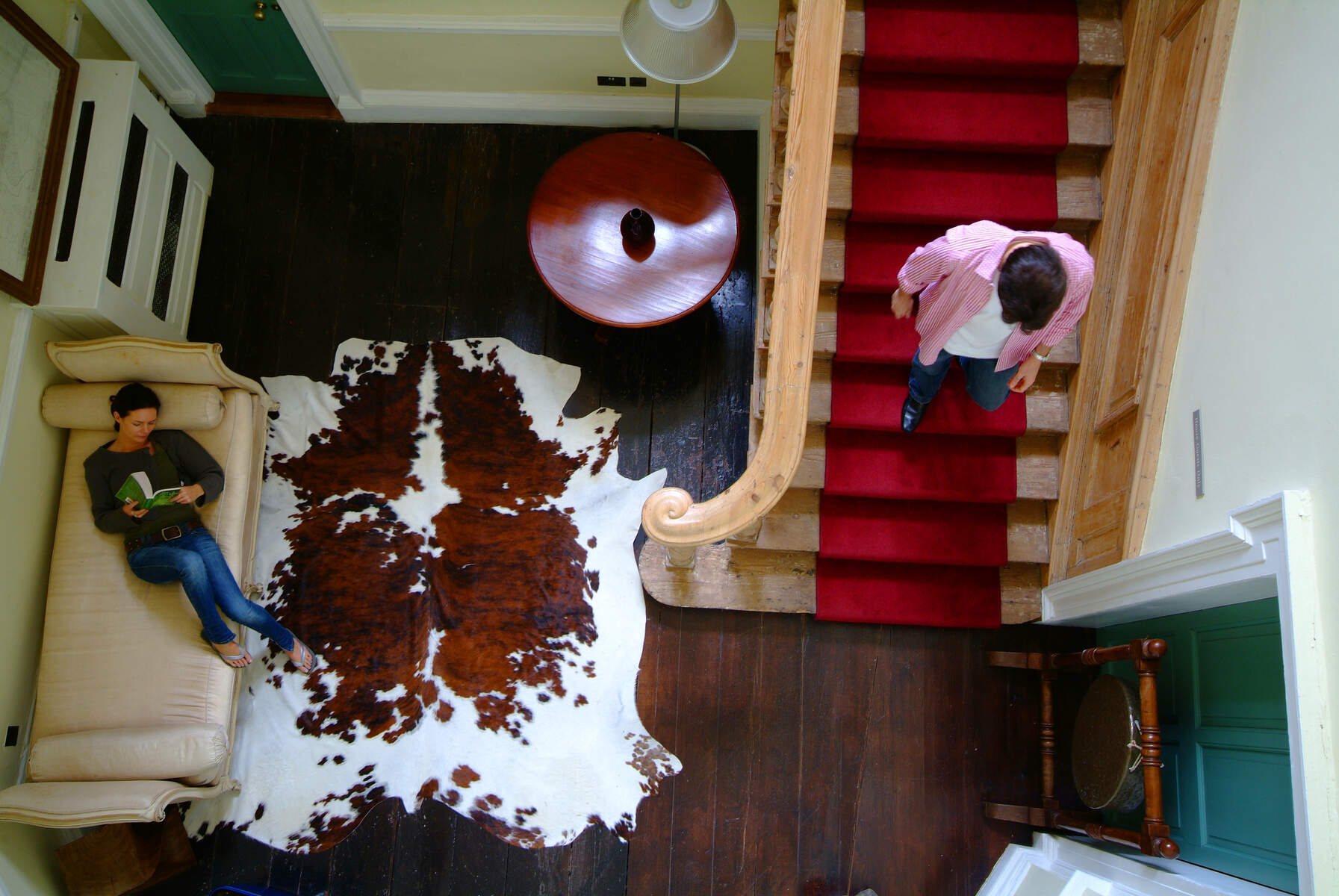
Bellinter House, photograph for Tourism Ireland, Ireland’s Content Pool.

The website tells us:

A magnificent 18th century Georgian house, located in the heart of the Boyne Valley, less than 5 minutes of the M3 and under 30 minutes from Dublin City centre and Dublin airport.

A property designed originally by Richard Castles for John Preston [1700-1755], this house was once used as a country retreat for the Preston Family, to abscond from the city for the summer months.

Following over 270 years of beautiful history the purpose of Bellinter House remains the same, a retreat from ones daily life.

On arriving, you will find yourself succumb to the peacefulness and serenity that is Bellinter House.

See my entry https://irishhistorichouses.com/2022/10/28/places-to-visit-and-stay-in-county-meath-leinster/

2. Johnstown Estate, Enfield, Co Meath – hotel

 https://thejohnstownestate.com

The website tells us:

The original manor – or The Johnstown House as it was known – is as storied as many other large country house in Ireland.  Luckily, the house itself has stood the test of time and is the beating heart of the hotel and all its facilities which together form The Johnstown Estate. 

Built in 1761, The Johnstown House (as it was then known) was the country residence of Colonel Francis Forde [1717-1769], his wife Margaret [Bowerbank] and their five daughters. Colonel Forde was the 7th son of Matthew Forde, MP, of Coolgraney, Seaforde County Down, and the family seat is still in existence in the pretty village of Seaforde, hosting Seaforde Gardens.

3. Tankardstown House, Rathkenny, Slane, Co. Meath – section 482
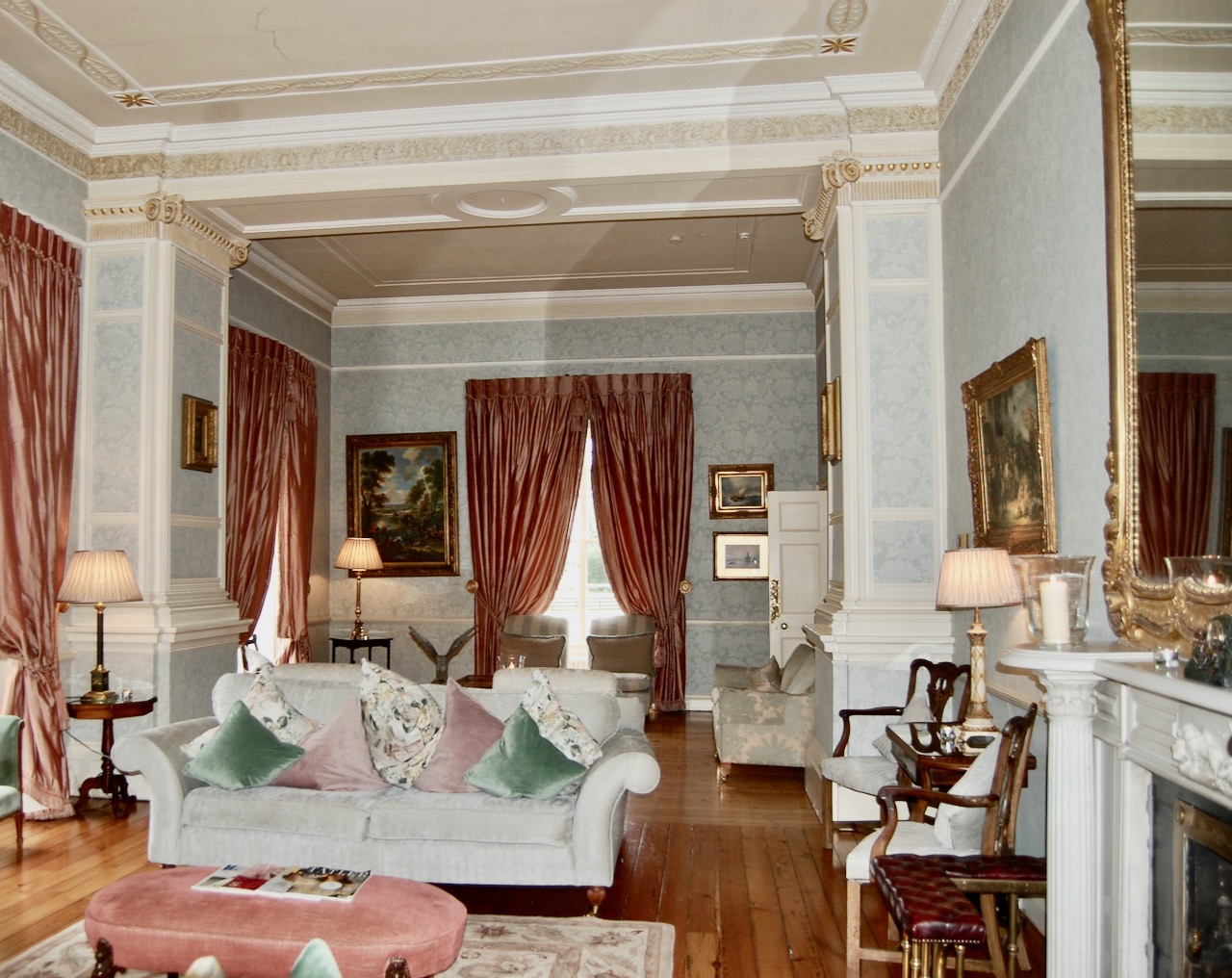
Tankardstown, County Meath, August 2019.

www.tankardstown.ie
See my entry.

4. Ballinlough Castle, County Meath

https://www.ballinloughcastle.ie/

5. Boyne Hill estate, Navan, County Meath – whole house rental

https://www.boynehillhouse.ie

Set in 38 acres of pretty gardens and parklands and just 35 minutes from Dublin, this stunning country house estate becomes your very own private residence for your special day.

6. Durhamstown Castle, Bohermeen, County Meath – whole house rental https://durhamstowncastle.com

Durhamstown Castle is 600 years old inhabited continuously since 1420. Its surrounded by meadows, dotted with mature trees. We take enormous pleasure in offering you our home and hospitality.

See my entry www.irishhistorichouses.com/2022/05/05/places-to-visit-and-stay-in-leinster-longford-louth-and-meath/

7. Loughcrew House, Loughcrew, Old Castle, Co. Meath – section 482
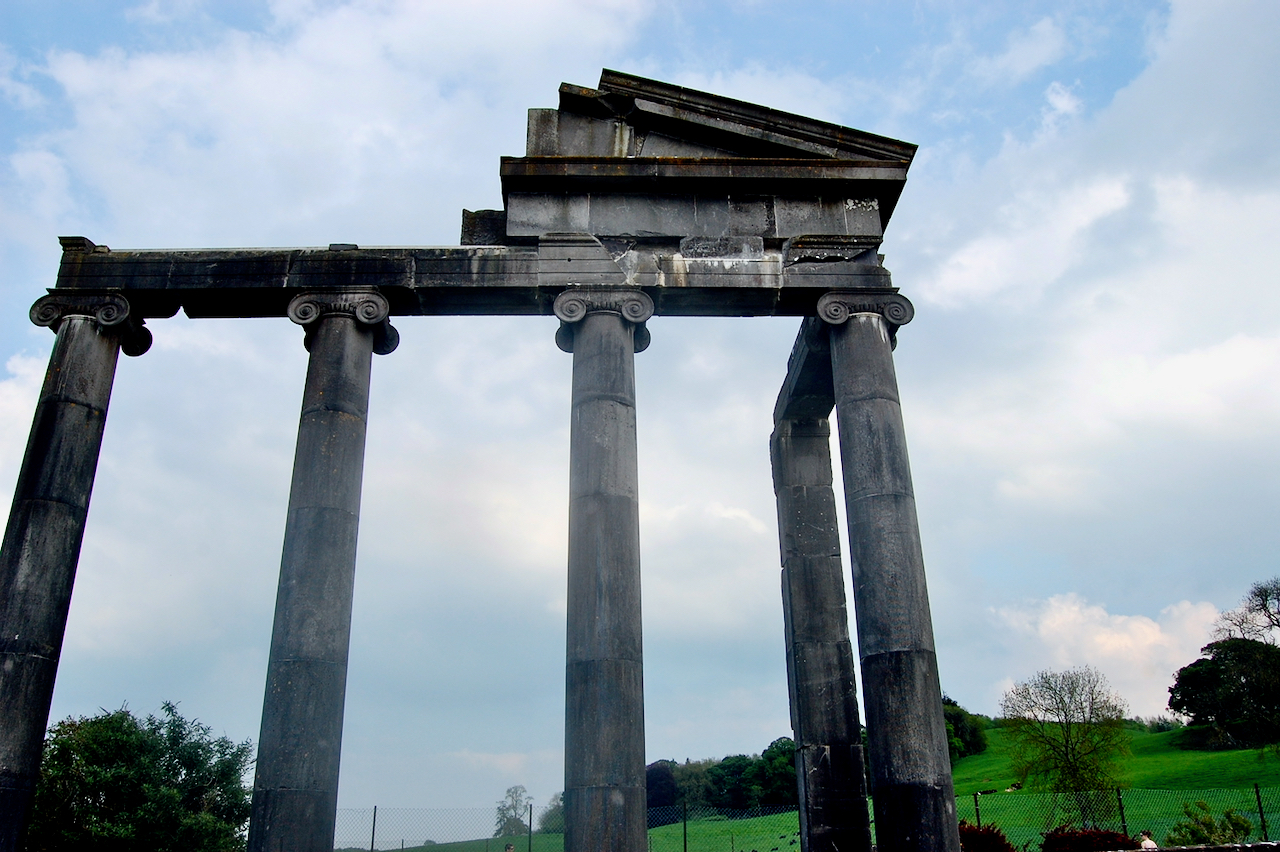
www.loughcrew.com

Remains of Loughcrew House, 22nd May 2010.
Loughcrew 22nd May 2010

8. Mill House, Slane – weddings

https://www.themillhouse.ie

The Mill House, Slane, March 2022.

The website tells us:

Built in 1766, The Millhouse and The Old Mill Slane, the weir and the millrace were once considered the largest and finest complex of its kind in Ireland. Originally a corn mill powered by two large water wheels, the harvest was hoisted into the upper floor granaries before being dried, sifted and ground.

Over time, the Old Mill became a specialised manufacturer of textiles turning raw cotton into luxury bed linen. Times have changed but this past remains part of our history, acknowledged and conserved.

​In 2006, The Millhouse was creatively rejuvenated, transformed into a hotel and wedding venue of unique character – a nod to the early 1900’s when it briefly served as a hotel-stop for passengers on pleasure steamer boats.”

Venues in County Monaghan

1. Castle Leslie, Glaslough, Co. Monaghan – section 482

www.castleleslie.com

See my entry:

https://irishhistorichouses.com/2020/08/07/castle-leslie-glaslough-county-monaghan/

2. Hilton Park House, Clones, Co. Monaghan – section 482
www.hiltonpark.ie

See my entry www.irishhistorichouses.com/2022/04/03/places-to-visit-and-stay-in-ulster-counties-fermanagh-monaghan-and-tyrone/

Places to stay, County Offaly

See my entry: https://irishhistorichouses.com/2022/10/27/places-to-visit-and-stay-in-county-offaly/

1. Gloster, County Offaly
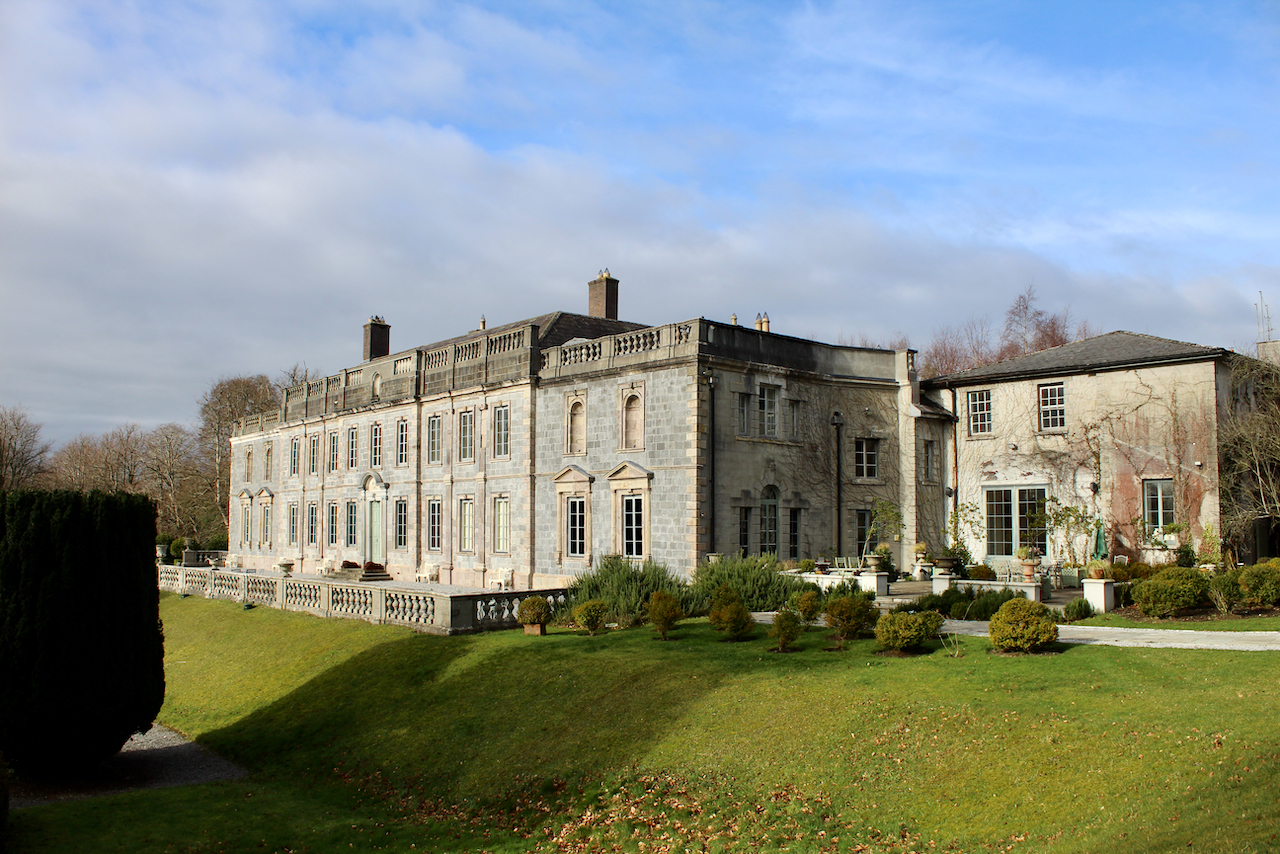
https://www.glosterhouse.ie/

Gloster, County Offaly, February 2023.

2. Kinnitty Castle (formerly Castle Bernard), Kinnity, Co Offaly

https://www.kinnittycastlehotel.com/index.html

Kinnitty Castle Hotel, 2014, photographer unknown, for Tourism Ireland, Ireland’s Content Pool.

Mark Bence-Jones writes in his 1988 book of Kinnitty Castle, formerly named Castle Bernard: p. 62. [Castle Bernard]: “[Bernard 1912; De la Poer Beresford, Decies] A Tudor-Revival castle of 1833 by James and George Pain [built for T. Bernard]. Impressive entrance front with gables, oriels and tracery windows and an octagonal corner tower with battlements and crockets; all in smooth ashlar. Subsequently the home of 6th Lord Decies [Arthur George Marcus Douglas De La Poer Beresford (1915-1992)], by whom it was sold ca. 1950. Now a forestry centre.” 

Kinnitty Castle Hotel, 2014, photographer unknown, for Tourism Ireland, Ireland’s Content Pool.

See my entry www.irishhistorichouses.com/2022/05/07/places-to-visit-and-stay-in-leinster-offaly-and-westmeath/
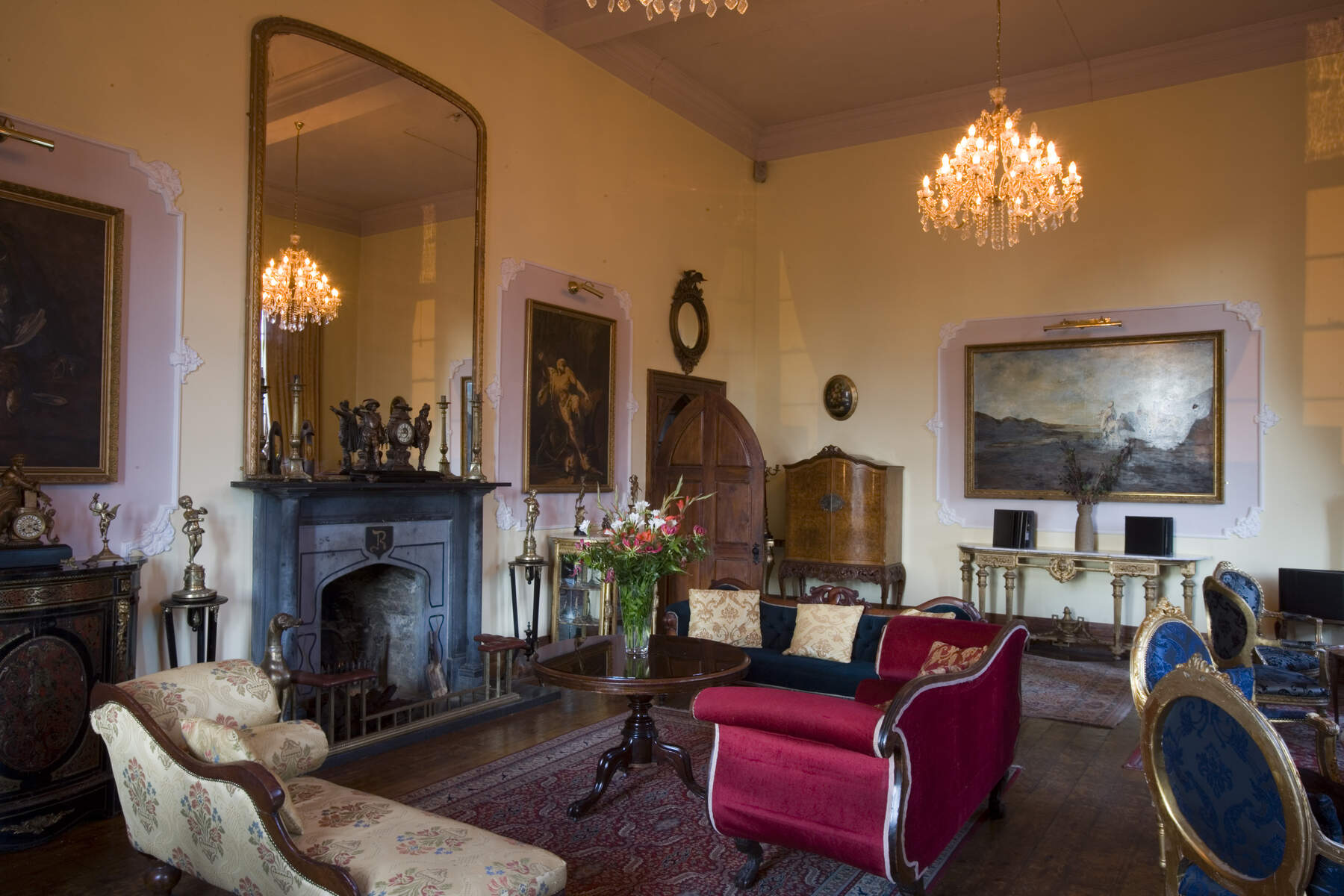
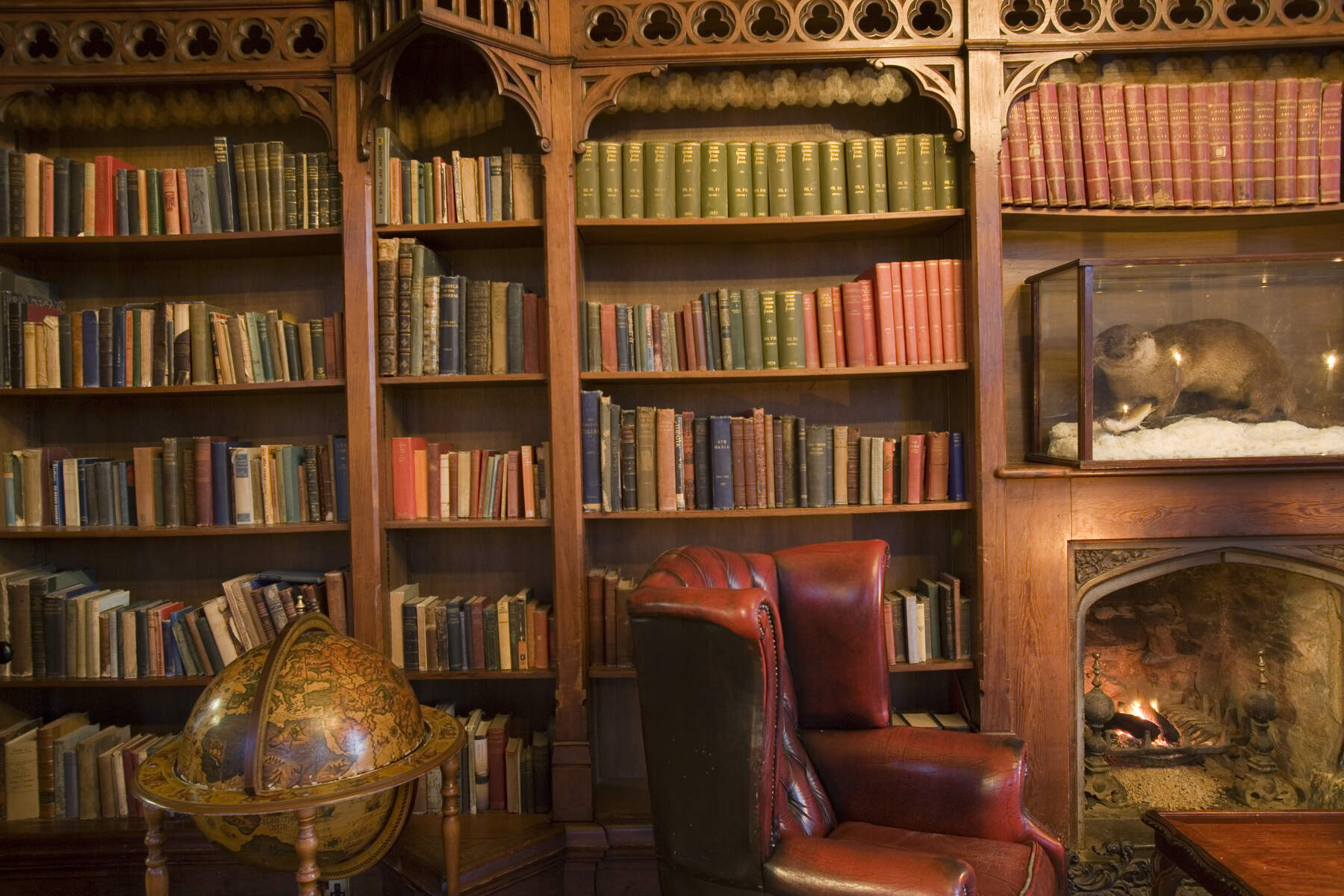
Kinnitty Castle Hotel, 2014, photographer unknown, for Tourism Ireland, Ireland’s Content Pool.

2. Loughton House, County Offaly

https://loughtonhouse.com

Loughton, County Offaly

Places to stay, County Roscommon:

See my entry https://irishhistorichouses.com/2022/10/26/places-to-visit-and-stay-in-county-roscommon-connaught/

1. Clonalis House, Castlerea, Co Roscommon – accommodation and 482 

www.clonalishouse.com

2.  Kilronan Castle (formerly Castle Tenison), Ballyfarnan, County Roscommon – hotel 

Amazingly, when this was photographed for the National Inventory, it was a ruin! It has now been completely renovated. https://www.kilronancastle.ie

The website tells us:

Kilronan Castle Estate & Spa should be on your list of castles to stay at in Ireland. The luxury 4 star castle hotel is situated in County Roscommon in a secluded corner of the idyllic West of Ireland. Built in the 18th century, the Kilronan Castle resort welcomes its guests through a set of magnificent medieval gates at the top of a meandering driveway through an ancient forest which is surrounded by fifty acres of lush green estate and next to a beautiful lough making the castle look like something straight out of a fairytale.

See my entry https://irishhistorichouses.com/2022/10/26/places-to-visit-and-stay-in-county-roscommon-connaught/

Places to stay, County Sligo:

See my entry https://irishhistorichouses.com/2022/10/19/places-to-visit-and-stay-in-county-sligo-connaught/

1. Castle Dargan Lodges, Ballygawley, Co. Sligo, Ireland

https://www.castledargan.com

The website tells us: “Welcome to Castle Dargan Estate, a magnificent, rambling country estate on 170 rolling acres in W.B. Yeats’ beloved County Sligo. The great poet was inspired to write of its charms in The King of The Great Clock Tower and a hundred years later we invite you to be enchanted by a timeless elegance and unique atmosphere that will stay with you forever.

Accommodation at Castle Dargan Estate offers guests a diverse range of 4-star hotel accommodation including luxury suites in the 18th century Castle Dargan House, one and two bed Walled Garden Suites which are perfect for family breaks, and self-catering lodges available for holiday rentals. With a rich history brought in to 21st century, Castle Dargan Estate offers more to our guests than hospitality and fantastic settings, it offers classic grandeur that remains timeless.

See my entry https://irishhistorichouses.com/2022/10/19/places-to-visit-and-stay-in-county-sligo-connaught/

2. Markree Castle, Collooney, Co Sligo – section 482
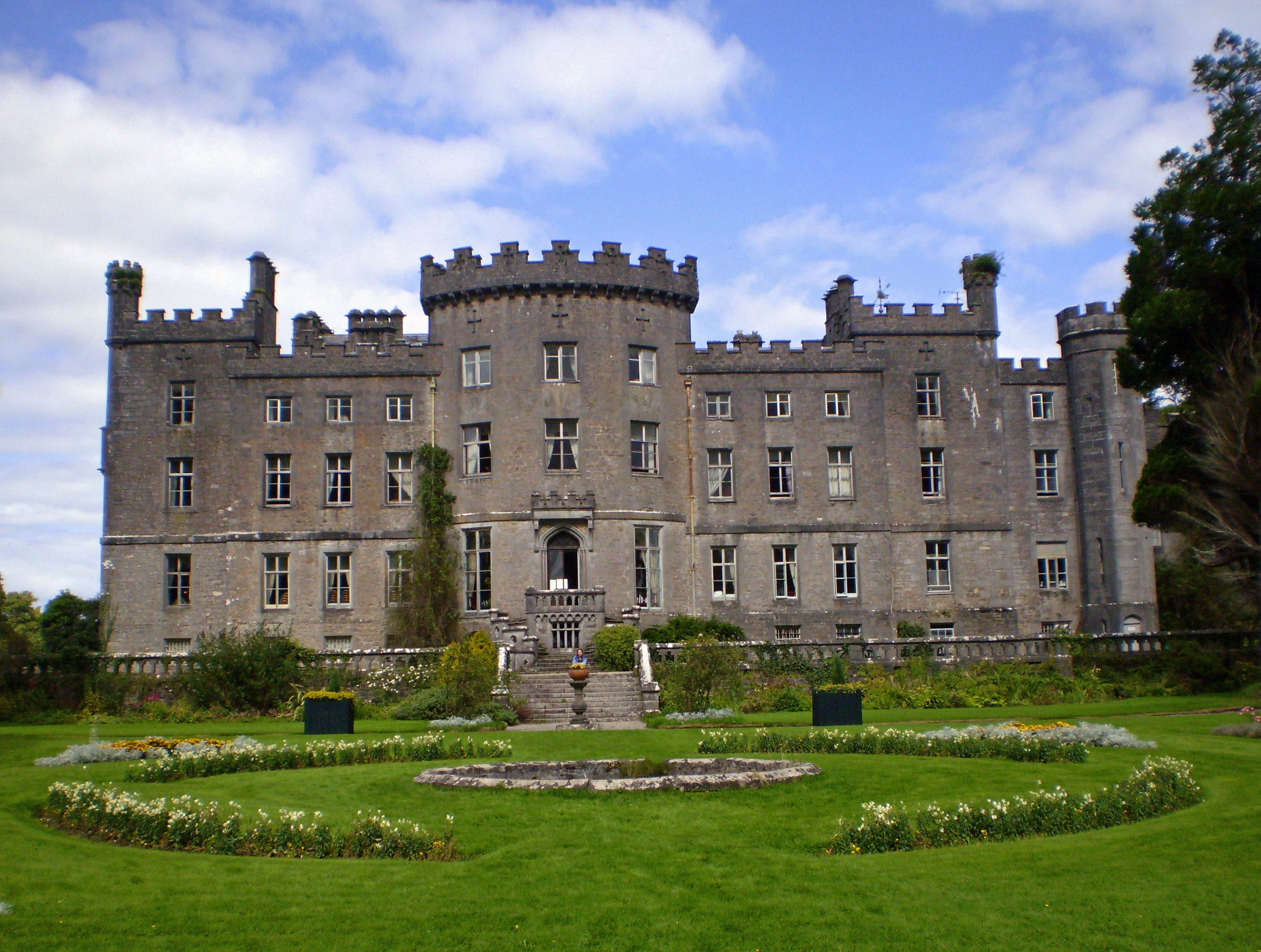
www.markreecastle.ie

Markree Castle by Tom Keenan, creative commons on flickr.

See my entry:

https://irishhistorichouses.com/2021/11/06/markree-castle-collooney-co-sligo/

3. Newpark House and Demesne, Newpark, Ballymote, Co. Sligo – section 482

See https://www.juniperbarn.ie/accommodation and my entry:

Newpark, County Sligo, 16th August 2021.

https://irishhistorichouses.com/2021/11/30/newpark-house-and-demesne-newpark-ballymote-co-sligo/

4. Temple House, Ballymote, Co. Sligo – section 482

www.templehouse.ie

Places to stay, County Tipperary

See my entry https://irishhistorichouses.com/2022/10/19/places-to-visit-and-stay-in-county-tipperary-munster/

1. Ashley Park, Nenagh, Co Tipperary – accommodation

 https://hiddenireland.com/stay/bed-breakfast-guesthouses/

Ashley Park, County Tipperary, December 2016.

The Hidden Ireland website tells us:

“Ashley Park House has a magical quality that is particularly appealing. The avenue winds along the shore, through deep woods of oak and beech, until–suddenly–you reach the Georgian house, surrounded by tall trees, with beautiful views over a private lake. Inside, the rooms are large, comfortable and well equipped so offering a truly relaxing break away from the busyness of modern life.
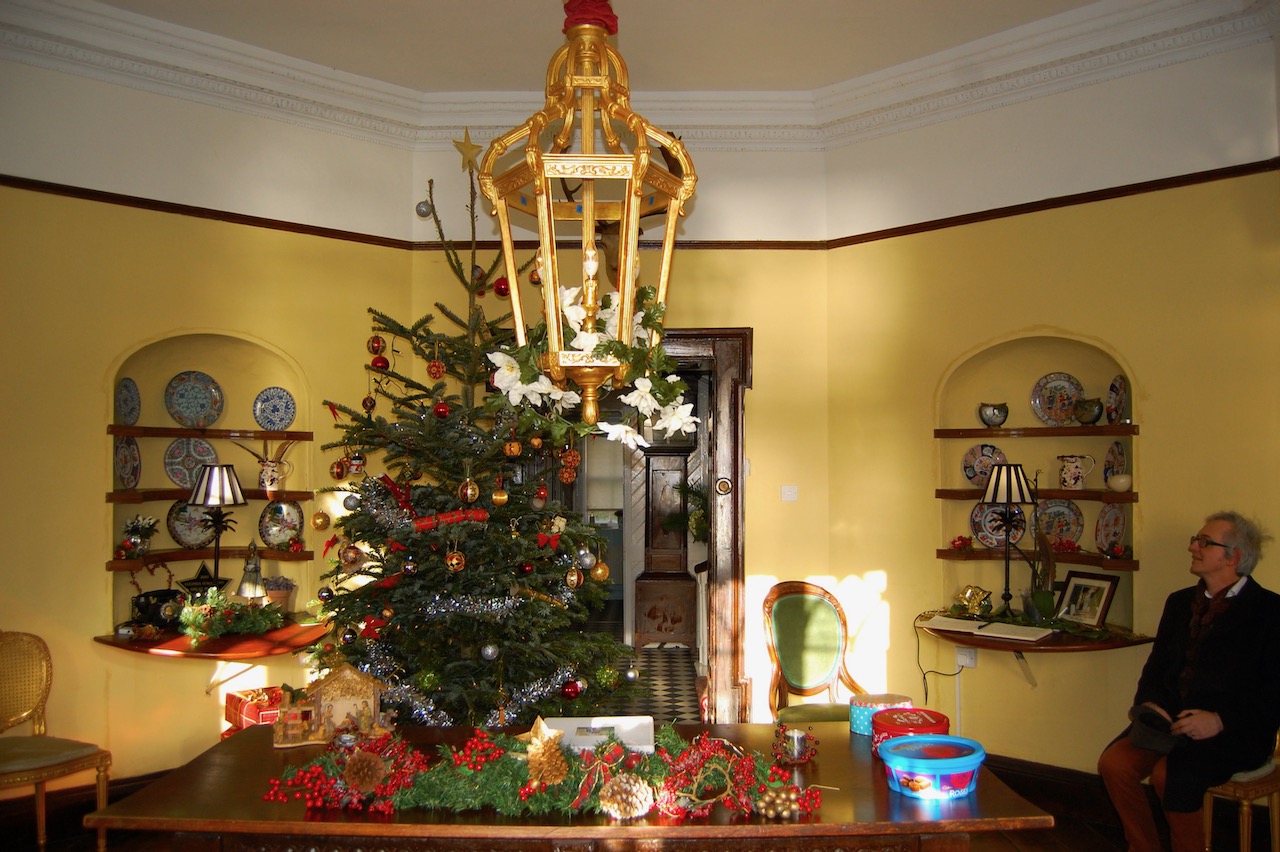
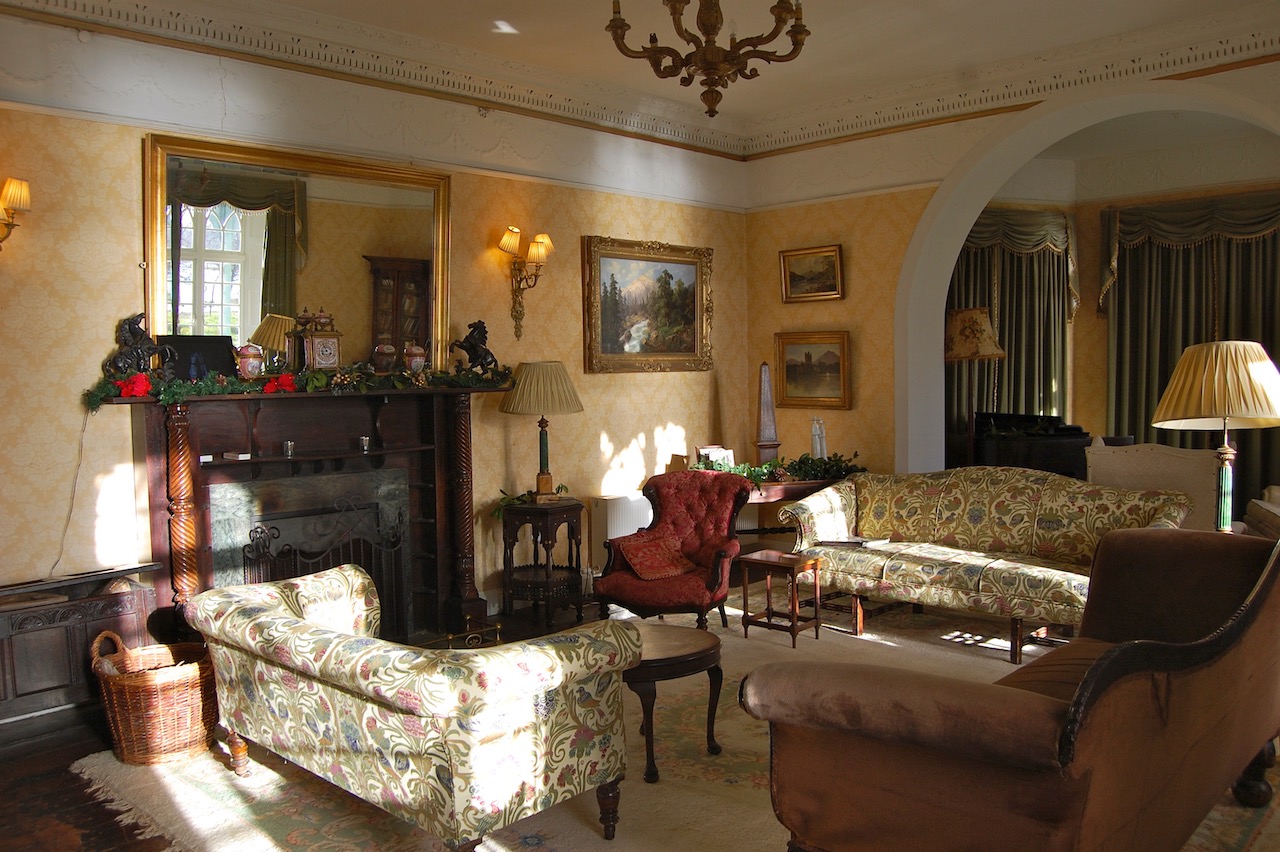
Ashley Park, County Tipperary, December 2016.

The owners, Margaret & David McKenzie  run their home in a relaxed and informal way in the style of the traditional Irish country house, ideal for family and friends taking a break to celebrate a special occasion. Guests like nothing more than losing themselves in the woods and gardens, or rowing around the lake and exploring the ruins of the ancient fort on the island.

2. Cashel Palace Hotel, Cashel, County Tipperary – €€€

https://www.cashelpalacehotel.ie

The website tells us it is: “A Palladian manor, in the heart of Ireland, Cashel Palace is a luxury hideaway, meticulously restored and exquisitely reimagined. Spectacularly located by the Rock of Cashel in picturesque Co. Tipperary, the hotel is enveloped in nature and overlooked by ancient history.

Cashel Palace hotel, County Tipperary, photograph by Brian Morrison 2014 for Tourism Ireland, Ireland’s Content Pool.

The website tells us of the history:

Built in 1732, as the home of Church of Ireland Archbishop Theophilus Bolton, Cashel Palace was designed by the eminent architect Sir Edward Lovett Pearce. Lovett Pearce was one of the most celebrated architects of the time, and would go on to design Dublin’s impressive Parliament House – now the Bank of Ireland in College Green.

3. Clonacody House, County Tipperary – whole house or B&B €

https://www.clonacodyhouse.com/home

Clonacody has six spacious bedrooms, all boasting genuine antique interiors. Expect the good-old fashioned hospitality of the bygone days, curious family history, artwork and photographs to pour over. Curl up on our squishy sofas with a good book while enjoying an open fire on our ground floor, or have a bath beside an open window taking in the glorious surrounding views of Co. Tipperary’s mountains for endless relaxation. All include quality bedlinen, towels and toiletries.

4. Cloughjordan House, Cloughjordan, Co. Tipperary – section 482
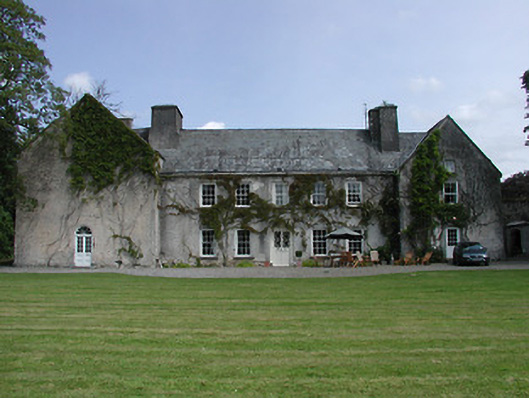
Cloughjordan House, County Tipperary, photograph from National Inventory of Architectural Heritage.

https://www.cloughjordanhouse.com/accommodation

5. Dundrum House, County Tipperary – €€

https://www.dundrumhousehotel.com

6. Lissanisky House, County Tipperary

https://www.lissaniskyhouse.com/

The website tells us:

Lissanisky House is a listed Irish Georgian country house just outside Nenagh in Tipperary, Ireland. Built in approx. 1770 on the site of the 12th century O’Meara castle, it boasts a pedimented breakfront, five bays and three storeys over the basement. It is also renowned for its glorious cobweb fanlight above the front door. It was once a huge estate, but this was carved up by the land commission and now retains 10 acres of the original grounds, including the Victorian walled garden. ​The trees planted in the walled garden are still producing the tastiest apples, pears, quinces, plums and hazelnuts. If you’re around at the right time, you’ll get to enjoy one of our scrumptious homemade apple and toffee puddings with fresh cream. Delicious!

The house itself is full of history, with some interesting previous owners, like Dr Barry O’Meara, Napoleon’s doctor in St Helena and author of the definitive book on Napoleon, ‘Napoleon in Exile’; The Hon Otway Fortescue Graham-Toler, son of the second Earl of Norbury and relation of John Toler, the infamous ‘hanging judge’ and R Smithwick who is believed to be of the Kilkenny brewing family. We also recently discovered that former owners, the Cleeve family, were related to a member of the Guinness brewing family via the matriarch Heath Otway Waller of Priory Park.

THE FUTURE

We fell in love with Lissanisky House and made it our joint life goal to ensure that it would be restored to its full potential and secure it for future generations. By staying with us in our bed and breakfast or celebrating your wedding here, you are helping to fund all future restoration work to the house and outbuildings, making a huge contribution to the preservation of such an important building.

7. Raheen House Hotel, Clonmel, County Tipperary €€

https://www.raheenhouse.ie/

Raheen House Hotel is one of the leading hotels in the vibrant town of Clonmel, County Tipperary. This captivating hotel, with a history dating back to the 17th century, offers visitors the opportunity to relax and luxuriate in exquisite surroundings.

The Hotel offers 15 elegant bedrooms within the tranquillity of its own 3.5 acre gardens. The refinement extends throughout the whole house; have a drink in front of the open fire in the bar, take afternoon tea in the sumptuous Drawing Room or enjoy a delicious formal dinner in our restaurant.”

8. Kilshane, Tipperary, Co Tipperary – whole house rental:
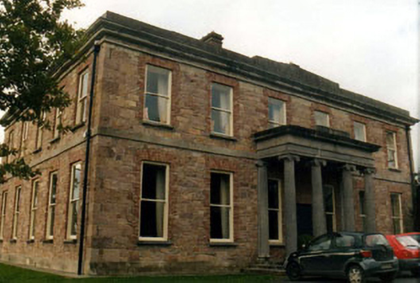
Kilshane, County Tipperary, photograph from the National Inventory of Architectural Heritage.

https://www.kilshanehouse.ie

The National Inventory tells us this impressive country house was built by the architect C.F. Anderson for John Lowe.

Kilshane, County Tipperary: the impressive conservatory – see the website for a better picture, photograph from the National Inventory of Architectural Heritage.

Venues in County Tyrone

See my entry https://irishhistorichouses.com/2022/04/03/places-to-visit-and-stay-in-ulster-counties-fermanagh-monaghan-and-tyrone/

1. Baronscourt Estate, Newtownstewart, Omagh, County Tyrone

https://barons-court.com

2. Blessingbourne, County Tyrone €€

https://www.blessingbourne.com/self-catering-accommodation/ 

3. Killymoon Castle Lodge, 302 Killymoon Road, BT80 8ZA

https://killymooncastle.com

Places to stay, County Waterford

See my entry https://irishhistorichouses.com/2022/05/26/places-to-visit-and-stay-in-munster-county-waterford/

1. Ballynatray Estate, Co. Waterford – section 482

www.ballynatray.com

2. Faithlegg House, Waterford, Co Waterford – hotel €€
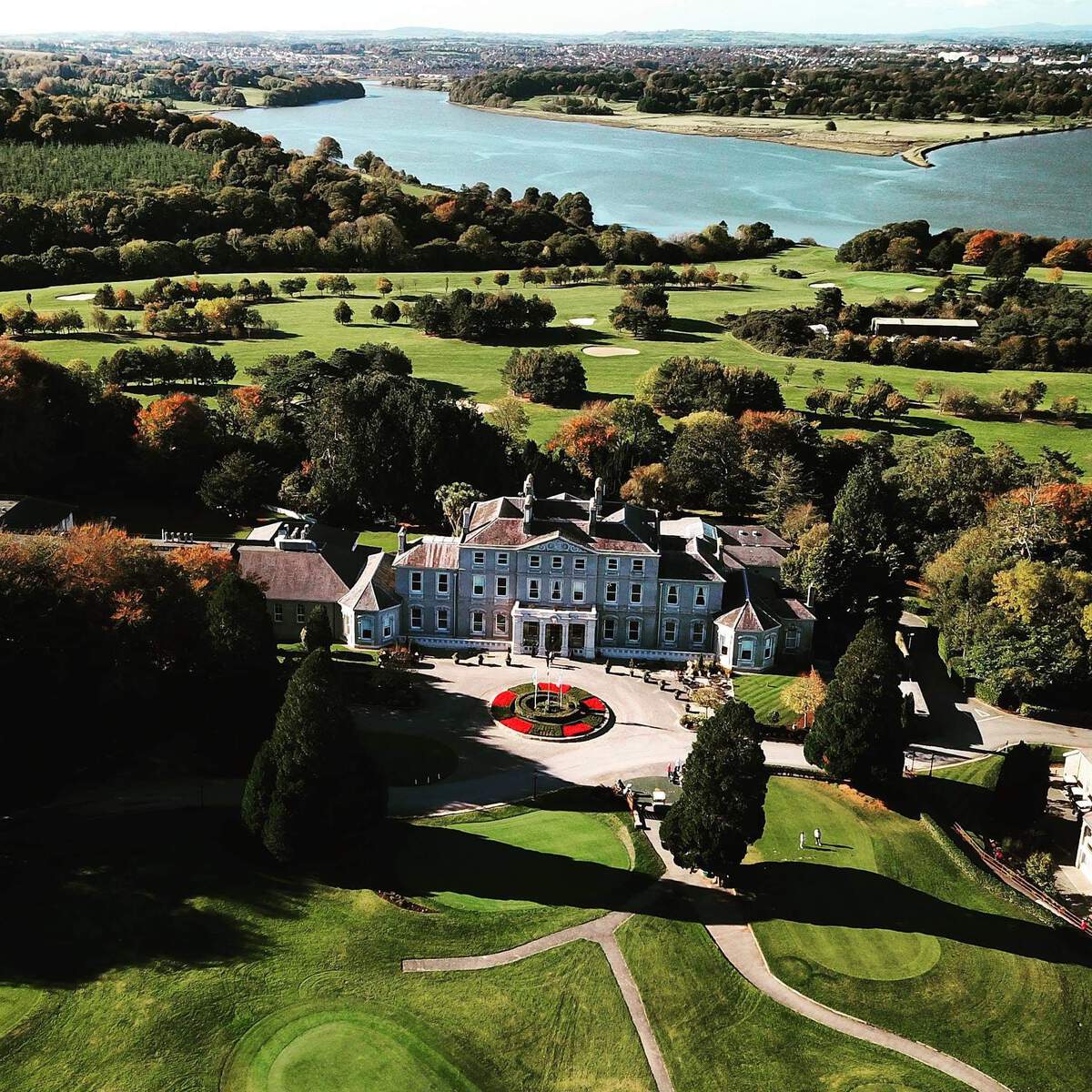
https://www.faithlegg.com

Faithlegg House Hotel, Co Waterford, Courtesy Colin Shanahan_ Faithlegg House Hotel 2021, for Tourism Ireland.

See my entry https://irishhistorichouses.com/2022/05/26/places-to-visit-and-stay-in-munster-county-waterford/

The Faithlegg website tells us that the house was probably built by John Roberts (1714-1796): “a gifted Waterford architect who designed the Waterford’s two Cathedrals, City Hall, Chamber of Commerce and Infirmary.  He leased land from Cornelius Bolton at Faithlegg here he built his own house which he called Roberts Mount. He built mansions for local gentry and was probably the builder of Faithlegg House in 1783.”

3. Waterford Castle, The Island, Co Waterford €€

https://www.waterfordcastleresort.com

Waterford Castle Hotel, photo by Shane O’Neill 2010 for Tourism Ireland.

The Archiseek website tells us that Waterford Castle is: “A small Norman keep that was extended and “restored” in the late 19th century. An initial restoration took place in 1849, but it was English architect W.H. Romaine-Walker who extended it and was responsible for its current appearance today. The original keep is central to the composition with two wings added, and the keep redesigned to complete the composition.

See my entry https://irishhistorichouses.com/2022/05/26/places-to-visit-and-stay-in-munster-county-waterford/
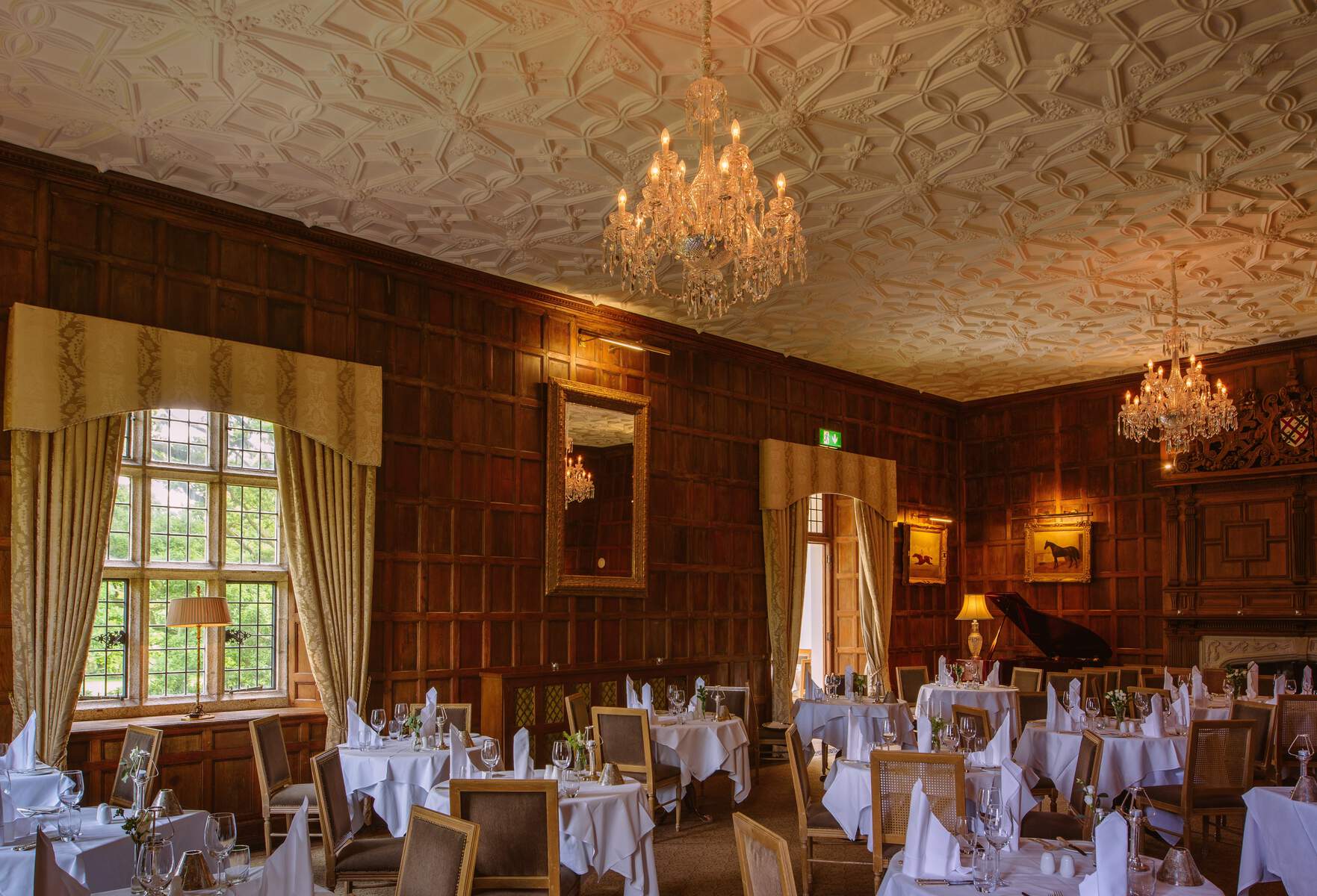
Waterford Castle Hotel and Golf Resort 2021 County Waterford, from Ireland’s Content Pool.
Photograph Courtesy of Waterford Castle Hotel and Golf Resort, 2021, Ireland’s Content Pool.
Waterford Castle Hotel, photo by Shane O’Neill 2016 for Tourism Ireland.

4. Lismore Castle, whole house rental

www.lismorecastlegardens.com

Places to stay, County Westmeath: 

See my entry https://irishhistorichouses.com/2022/05/07/places-to-visit-and-stay-in-leinster-offaly-and-westmeath/

1.  Middleton Park, Mullingar, County Westmeath – available to rent 

http://mph.ie

Middleton Park House featured in The Great House Revival on RTE, with presenter (and architect) Hugh Wallace. The website tells us:

Carolyn and Michael McDonnell, together with Carolyn’s brother Henry, joined together to purchase this expansive property in Castletown Geoghegan. Built during the famine, the property was last in use as a hotel but it had deteriorated at a surprisingly fast rate over its three unoccupied years.

Designed by renowned architect George Papworth, featuring a Turner-designed conservatory, Middleton Park House stands at a palatial 35,000sq. ft. and is steeped in history. Its sheer scale makes it an ambitious restoration.

The trio’s aim is to create a family home, first and foremost, which can host Henry’s children at the weekends and extended family all year-round. Due to its recent commercial use, the three will need to figure out how to change industrial-style aspects to make it a welcoming home that is economical to run.

Henry will be putting his skills as a contractor and a qualified chippy to use, and Michael will be wearing his qualified engineer’s hat to figure out an effective heating system. Carolyn will be using her love of interiors to work out the aesthetic of the house, and how to furnish a property the size of 35 semi-detached houses in Dublin.

The trio have now made the house available for accommodation and as a wedding venue.

County Wexford

1. Johnstown Castle, County Wexford

https://johnstowncastle.ie/weddings/

See my entry.

2. Marlfield, Gorey, Co Wexford – accommodation 

WWW.MARLFIELDHOUSE.COM

See my entry www.irishhistorichouses.com/2022/05/10/places-to-visit-and-stay-in-leinster-wexford-and-wicklow/

3. Monart, Enniscorthy, Co Wexford – 5* hotel 
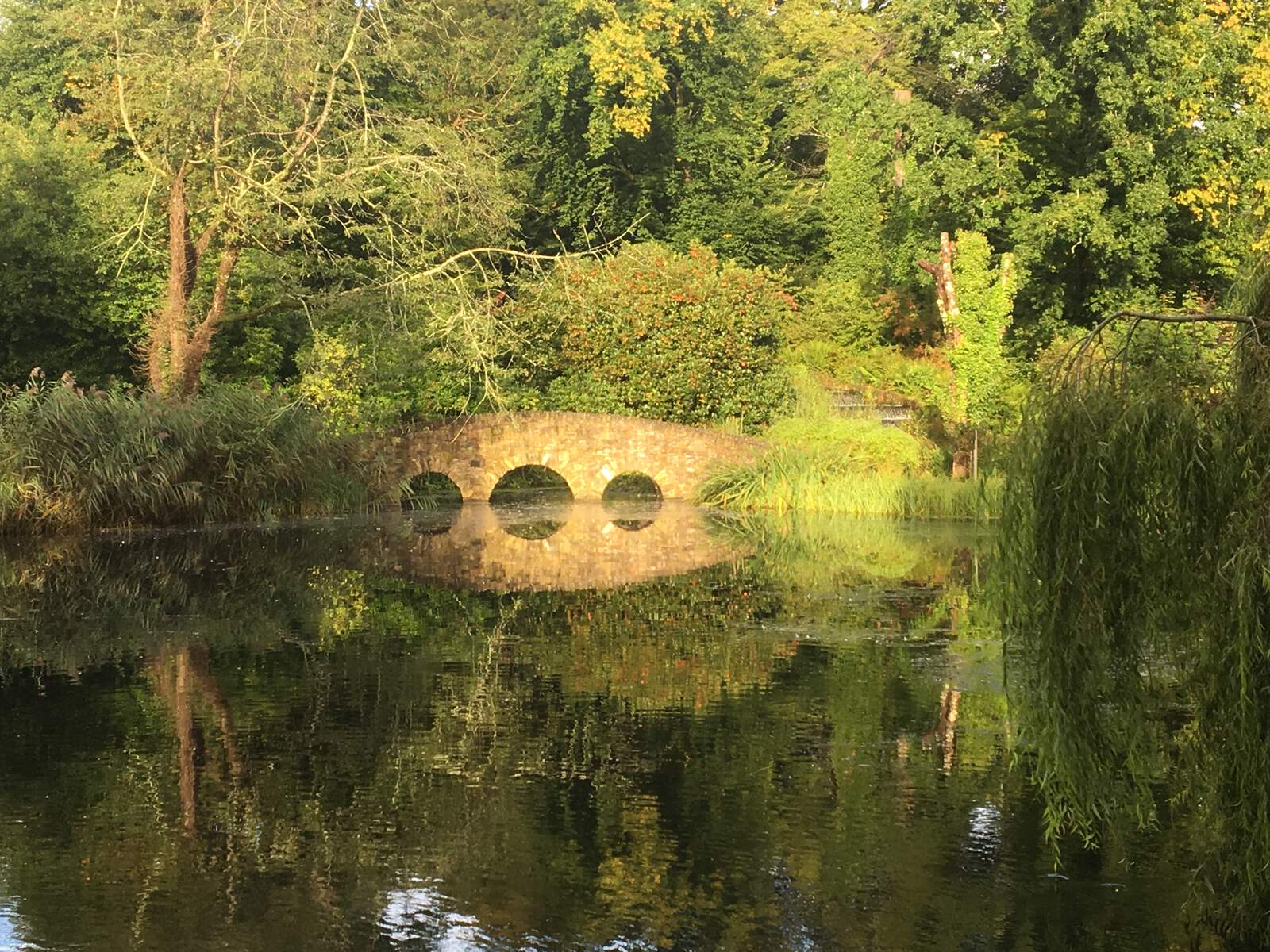
https://www.monart.ie/

Monart Spa Wexford Annica Jansson 2016, for Tourism Ireland, Ireland’s Content Pool.

Nestled in over 100 acres of lush countryside in County Wexford, Monart offers two types of accommodation, 68 deluxe bedrooms with lake or woodland views and two luxurious suites located in the 18th century Monart House.

See my entry www.irishhistorichouses.com/2022/05/10/places-to-visit-and-stay-in-leinster-wexford-and-wicklow/

4. Horetown House, County Wexford – weddings

 https://www.horetownhouse.ie/

The website tells us:

Horetown House is a private country house wedding venue in County Wexford in the South-East corner of Ireland. Situated among rolling hills in the heart of rural Wexford, Horetown House is the perfect venue for a stylish, laid back wedding.  Our charming country house is yours exclusively for the duration of your stay with us.

Family owned and run, we can take care of everything from delicious food, bedrooms and Shepherds huts, to a fully licensed pub in the cellar. Horetown House is perfect for couples looking for something a little bit different, your very own country house to create your dream wedding.

See my entry www.irishhistorichouses.com/2022/05/10/places-to-visit-and-stay-in-leinster-wexford-and-wicklow/

See https://wellshouse.ie/

Places to stay, County Wicklow:

See my entry https://irishhistorichouses.com/2022/10/20/places-to-visit-and-stay-in-county-wicklow-leinster/

1. Brook Lodge and Macreddin Village, County Wicklow

https://www.originalirishhotels.com/hotels/brooklodge-macreddin-village

The website tells us:

Relax and unwind at The Wells Spa, a designated ‘resort spa’. Dine at The Strawberry Tree, Ireland’s first certified Wild and Organic Restaurant, or La Taverna Armento, a Southern Italian style bistro. We also host Actons Country Pub, The Orchard Café, an Organic Bakery, a Smokehouse and a Wild Food Pantry and much more. Macreddin Golf Course designed by European Ryder Cup Captain Paul McGinley is a short stroll from BrookLodge.

Macreddin Village has twice won AA Hotel of the Year, Ireland’s Culinary Hotel of the Year and Ireland’s Luxury Eco-Friendly Hotel. Other recent awards for The Strawberry Tree Restaurant include titles such as Best Restaurant and Best Organic Restaurant.

2. Druid’s Glen hotel and golf club (formerly Woodstock), Newtownmountkennedy, Co Wicklow

https://www.druidsglenresort.com

3. Rathsallagh, co Wicklow – accommodation €€
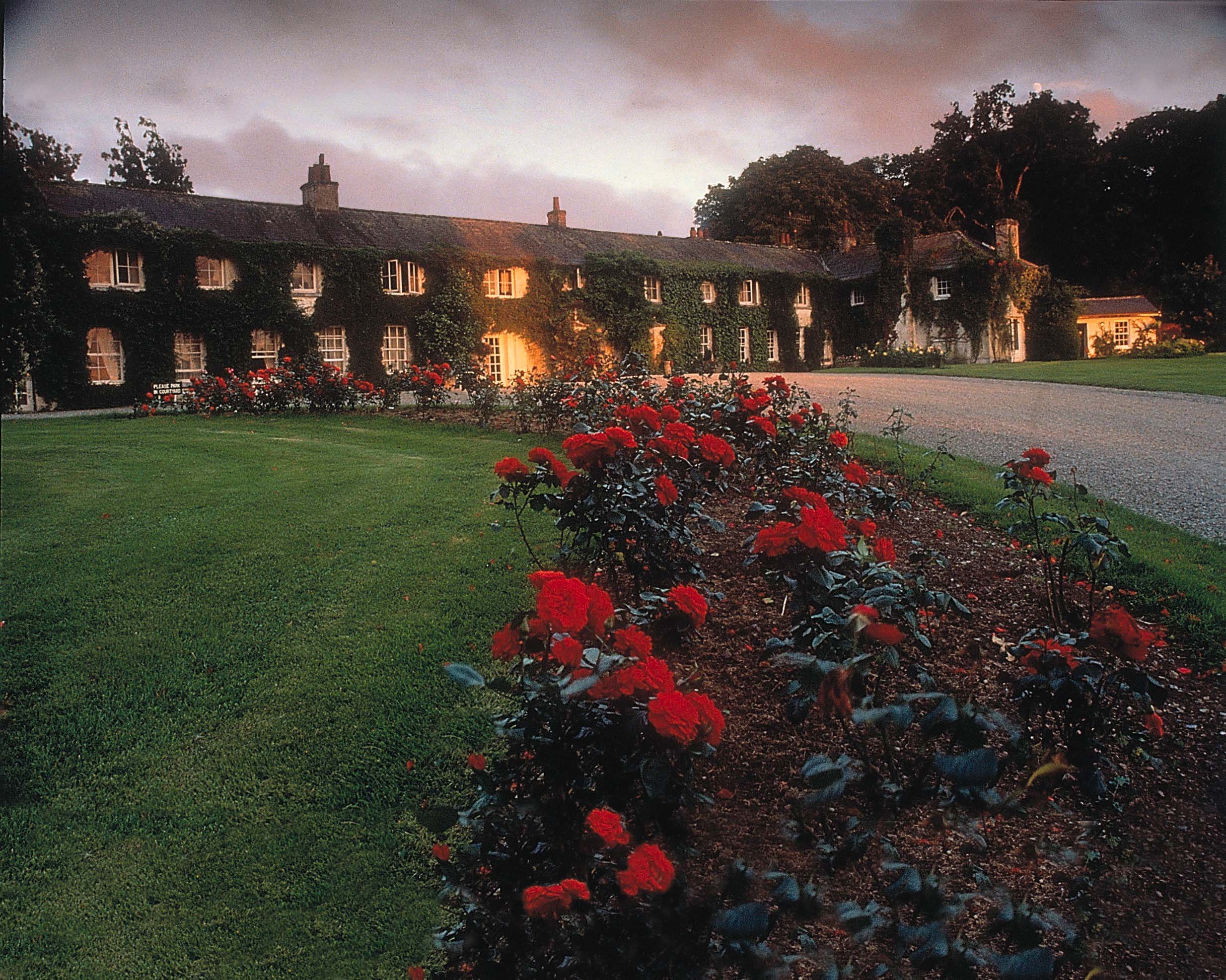
Rathsallagh, photograph courtesy of Rathsallagh House.

www.rathsallagh.com

It was built around 1750 as stables and converted in 1798. The range consists of four wings based around a large courtyard with the main wing to the front (west) having two-storey projections to its north and south ends.

The website tells us: “Rathsallagh House has been owned and run by the O’Flynn family for over 30 years, it has a happy and relaxed atmosphere with log and turf fires in the bar and drawing rooms. The food at Rathsallagh is country house cooking at its best, Game in season and fresh fish are specialities. Breakfast in Rathsallagh is an experience in itself and has won the National Breakfast Awards a record four times.

Rathsallagh also has conference and meeting rooms, Spa room, billiard room, and tennis court and is surrounded by the magnificant Rathsallagh Golf Club.

See my entry www.irishhistorichouses.com/2022/05/10/places-to-visit-and-stay-in-leinster-wexford-and-wicklow/

Rathsallagh House, County Wicklow, photograph courtesy of Rathsallagh House.

4. Summerhill House Hotel, County Wicklow

https://summerhillhousehotel.com

The website tells us: “Summerhill House Hotel is where glamour and the countryside blend in one of Ireland’s prettiest villages. Our location in the cosy village of Enniskerry is a gloriously refreshing antidote to city living or stressful lives. Reconnect with family and friends and let the kids run free. Lose track of time as you breathe in clean air, stride for miles through nature walks on your doorstep, stargaze under big skies, and, most importantly – relax, with a dose of the finest Wicklow hospitality.

5. Tinakilly House, Rathnew, Co Wicklow – country house hotel

https://tinakilly.ie

The website tells us:

Set in 14 acres of mature landscaped gardens overlooking the Irish Sea Tinakilly offers peace and tranquillity yet is only 45 minutes from Dublin. This stunning award winning Country House Hotel in Wicklow is steeped in history and oozes charm and sophistication.

See my entry www.irishhistorichouses.com/2022/05/10/places-to-visit-and-stay-in-leinster-wexford-and-wicklow/

6. Tulfarris, Blessington, Co Wicklow - hotel 

www.tulfarrishotel.com

The website tells us: “Tulfarris Hotel & Golf Resort is a luxury 4 star retreat situated in the garden of Ireland, County Wicklow. Perched on the banks of the Blessington Lakes against the backdrop of the Wicklow mountains, yet only 45 minutes drive from Dublin. Offering delicious food, relaxed bars and deluxe guest accommodation, the views are breathtaking and the golf course is immense. Step back in time as you enter the 18th century Manor House which stands imposingly at the heart of our 200 acre resort. Get married, get your colleagues together or get some rest and relaxation. Tulfarris Hotel in Wicklow is yours to enjoy.

See my entry www.irishhistorichouses.com/2022/05/10/places-to-visit-and-stay-in-leinster-wexford-and-wicklow/

Places to visit and stay in County Wicklow, Leinster

I have been dividing previous entries that were divided by Province into division by county as my entries were too long!

On the map above:

blue: places to visit that are not section 482

purple: section 482 properties

red: accommodation

yellow: less expensive accommodation for two

orange: “whole house rental” i.e. those properties that are only for large group accommodations or weddings, e.g. 10 or more people.

green: gardens to visit

grey: ruins

As well as places to visit, I have listed separately places to stay, because some of them are worth visiting – you may be able to visit for afternoon tea or a meal.

For places to stay, I have made a rough estimate of prices at time of publication:

€ = up to approximately €150 per night for two people sharing (in yellow on map);

€€ – up to approx €250 per night for two;

€€€ – over €250 per night for two.

For a full listing of accommodation in big houses in Ireland, see my accommodation page: https://irishhistorichouses.com/accommodation/

donation

Help me to pay the entrance fee to one of the houses on this website. This site is created purely out of love for the subject and I receive no payment so any donation is appreciated!

€15.00

Places to visit in County Wicklow:

1. Altidore Castle, Kilpeddar, Greystones, Co. Wicklow – section 482

2. Avondale House, County Wicklow

3. Castle Howard, Avoca, Co. Wicklow – section 482

4. Charleville, Enniskerry, Co. Wicklow – section 482

5. Corke Lodge, Co Wicklow – gardens open to visitors – section 482

6. Dower House, Rossanagh, Ashford, Co Wicklow – gardens open by appointment 

7. Greenan More, Rathdrum, Co Wicklow – section 482

8. Huntingbrook, County Wicklow – gardens open to public 

9. Killruddery House & Gardens, Southern Cross Road, Bray, Co. Wicklow – section 482

10. Kiltimon House, Newcastle, Co. Wicklow – section 482

11. Kingston House, Rathdrum, Co. Wicklow – section 482

13. Mount Usher Gardens, Ashford, Co. Wicklow – section 482, garden only

14. Powerscourt House & Gardens, Powerscourt Estate, Enniskerry, Co. Wicklow – section 482

15. Russborough, The Albert Beit Foundation, Blessington, Co. Wicklow – section 482

16. Tinode, Blessington, Co Wicklow – June Blake’s Garden, open from Springtime 2022 

Places to stay, County Wicklow:

1. Ballyknocken House, Ashford, County Wicklow

2. Bel Air Hotel (formerly Cronroe), Ashford, Co Wicklow

3. Brook Lodge and Macreddin Village, County Wicklow

4. Clone House, Count Wicklow

5. Croney Byrne, Rathdrum, Co Wicklow – courtyard accommodation

6. Druid’s Glen hotel and golf club (formerly Woodstock), Newtownmountkennedy, Co Wicklow

8. June Blake’s Garden, Turkey House and Cow House, Tinode, Blessington, Co Wicklow – June Blake’s Garden 

9. Rathsallagh, Co Wicklow – accommodation €€

10. Summerhill House Hotel, County Wicklow €€

11. Tinakilly House, Rathnew, Co Wicklow – country house hotel

12. Tulfarris, Blessington, Co Wicklow - hotel 

13. Wicklow Head Lighthouse, Dunbur Head, County Wicklow € for 4

14. Gate Lodge, Woodenbridge, Avoca, County Wicklow €€

Place to visit in County Wicklow:

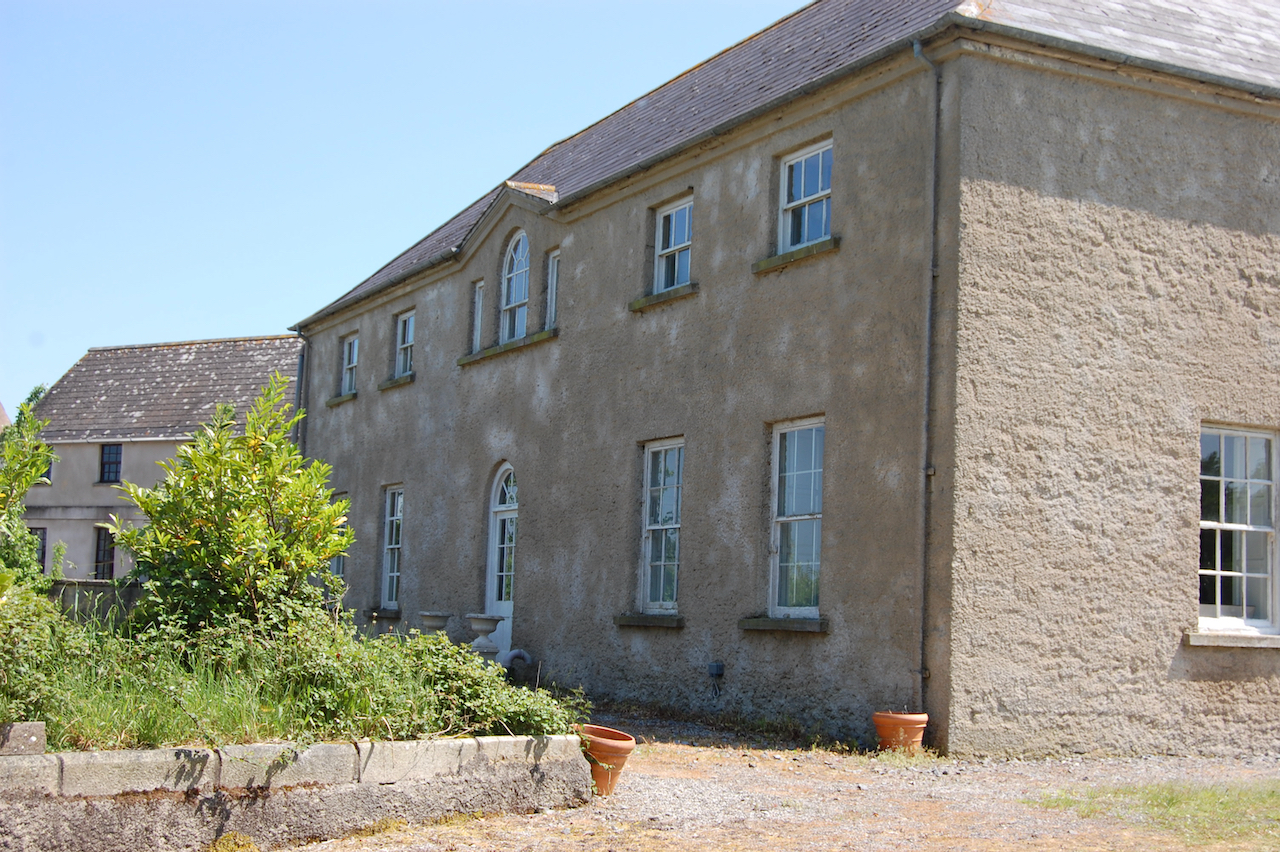
1. Altidore Castle, Kilpeddar, Greystones, Co. Wicklow A63 X227 – section 482

Altidore, County Wicklow, June 2019. Photograph © Jennifer Winder-Baggot, www.irishhistorichouses.com

see my write-up:

https://irishhistorichouses.com/2020/06/25/altidore-castle-kilpeddar-greystones-county-wicklow/
Open dates in 2025: Mar 10-30, May 1-31, June 1-5, 1pm-5pm, Aug 16-24, 2pm-6pm

Fee: adult €10, OAP/child/student €8

2. Avondale House, County Wicklow

We visited in March 2023. The house was built in 1779 for Samuel Hayes and may have been designed by James Wyatt, or by Samuel Hayes himself. Photograph © Jennifer Winder-Baggot, www.irishhistorichouses.com
Avondale, Rathdrum, Co Wicklow, photograph by Sonder Visuals, 2014, Courtesy Failte Ireland.

We visited in March 2023. The house was built in 1779 for Samuel Hayes and may have been designed by James Wyatt (1746-1813), or by Samuel Hayes himself. It then passed to the Parnell family and was the birthplace of the politician Charles Stewart Parnell. In 1904 the state purchased the Avondale Estate to develop modern day forestry in Ireland.

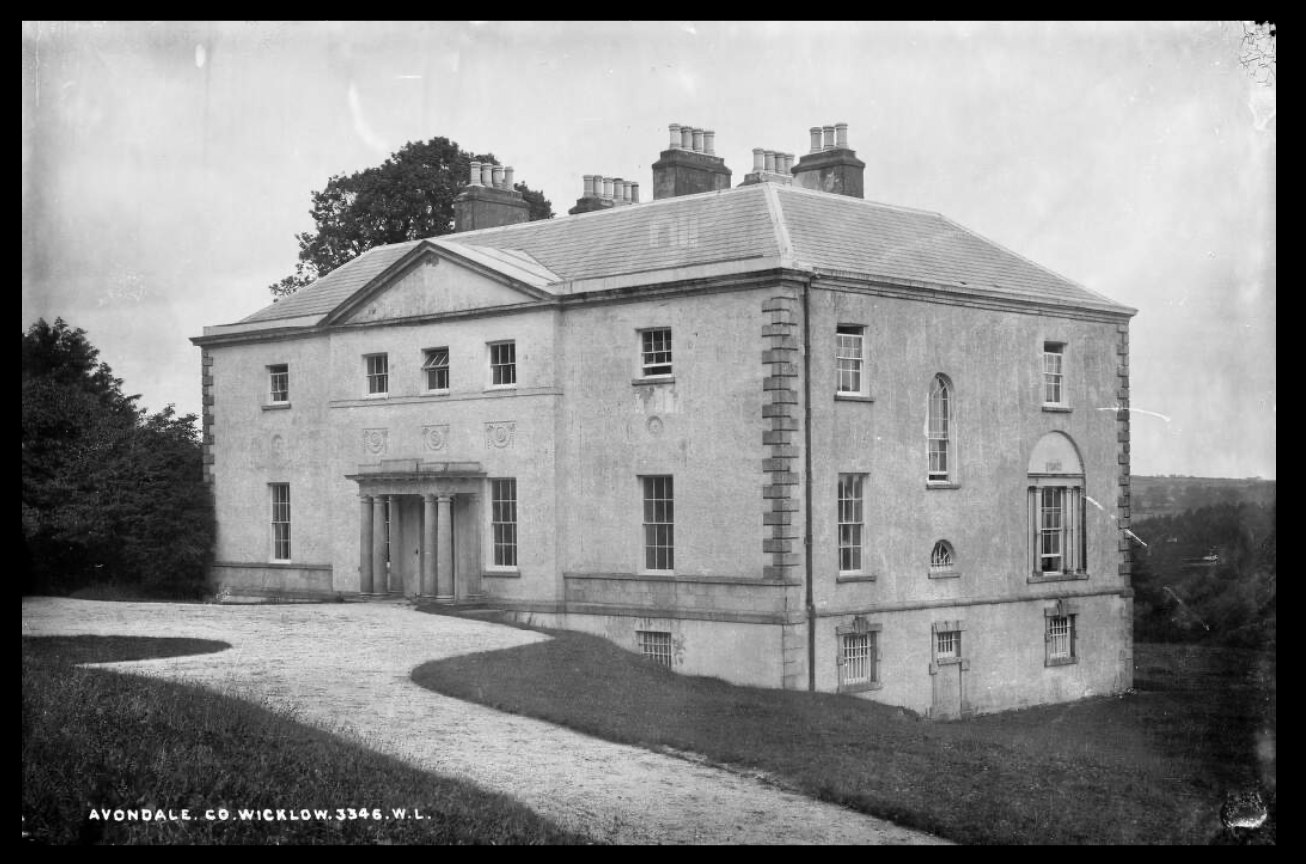
Avondale, County Wicklow, photograph by Robert French [between ca. 1865-1914], Lawrence Photographic Collection, National Library of Ireland.

Mark Bence-Jones writes in his  A Guide to Irish Country Houses (1988):

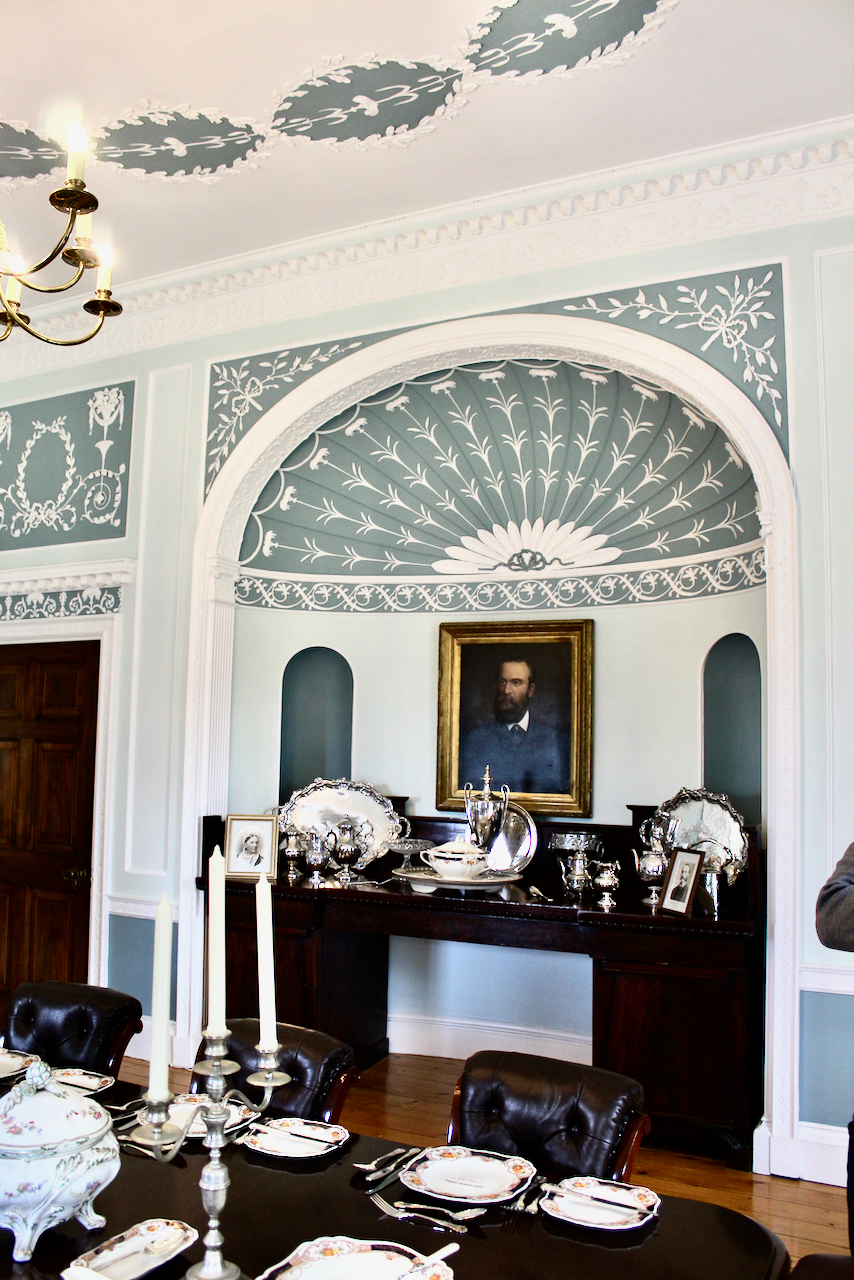
p. 15. “A square house of two storeys over basement, built 1779 for Samuel Hayes, a noted amateur architect who possibly designed it himself. Five bay entrance front, the three centre bays breaking forward under a pediment; small Doric porch with paired columns, Coade stone panels with swags and medallions between lower and upper windows. Garden front with central bow; the basement, which in the entrance front is concealed, is visible on this side with its windows have Gibbsian surrounds. Magnificent and lofty two storey hall with C18 Gothic plasterwork and gallery along inner wall. Bow room with beautiful Bossi chimneypiece. Dining room with elaborate neo-Classical plasterwork on walls and ceiling; the wall decorations incorporating oval mirrors and painted medallions. Passed to William Parnell-Hayes, brother of the 1st Baron Congleton, and grandfather of Charles Steward Parnell, who was born here and lived here all his life with his mother and elder brother. Now owned by the dept of Lands, Forestry Division, which maintains the splendid demesne as a forest park…The house has in recent years been restored by the Board of Works.” [1]

Avondale, 2023. Photograph © Jennifer Winder-Baggot, www.irishhistorichouses.com
Photograph © Jennifer Winder-Baggot, www.irishhistorichouses.com

Samuel Hayes who built the house also planted a forest. He was an expert on trees and wrote books and planted experimentally to see what trees grow best in Ireland. Hayes wrote A practical treatise on planting and the management of woods and coppices (1794). Intended to be a practical guide to the planting of trees and the managing of wood for timber, it was in fact Ireland’s first full-length book on trees. It is fitting that the property is now owned by Coillte, and that they also grow trees and ran the “Great Tree Experiment” here at Avondale. For several years after the house passed into the ownership of the state a forestry school was located in the property.

Avondale, County Wicklow, photograph by Robert French [between ca. 1865-1914], Lawrence Photographic Collection, National Library of Ireland.

The house contains Gothic features in the front hall, especially in the stuccowork. The front hall is double-height and has an overlooking balcony.


Charles Stewart Parnell was a very shy man, and so he used to practice his speeches from the balcony in the front hall of Avondale. For this reason, his family called him “the Blackbird.” Photograph © Jennifer Winder-Baggot, www.irishhistorichouses.com
Avondale, 2023. Photograph © Jennifer Winder-Baggot, www.irishhistorichouses.com
The door has Samuel Hayes’s initials, and the date which the house was completed. Photograph © Jennifer Winder-Baggot, www.irishhistorichouses.com
Photograph © Jennifer Winder-Baggot, www.irishhistorichouses.com

The first room we entered from the hall is dedicated to Samuel Hayes.

Avondale, 2023. Photograph © Jennifer Winder-Baggot, www.irishhistorichouses.com
Samuel Hayes (1743-1795), who built Avondale House. Photograph © Jennifer Winder-Baggot, www.irishhistorichouses.com
Avondale, 2023. Photograph © Jennifer Winder-Baggot, www.irishhistorichouses.com
As well as being an amateur architect, a politician and expert on trees, Samuel Hayes designed this bridge that was built over the Avondale River. Unfortunately it no longer exists.

Samuel Hayes was the great grandson of Thomas Parnell (1625-1686), the first of the Parnell family to come to Ireland, and from whom Charles Stewart Parnell was also descended. Thomas’s son John (1680-1727) became Judge of the Court of King’s Bench and built a house at Rathleague in County Laois. According to the family tree framed in the Drawing Room, John had a daughter Anne who married John Hayes and gave birth to the builder of Avondale, Samuel Hayes.

Photograph © Jennifer Winder-Baggot, www.irishhistorichouses.com

In 1766 Samuel Hayes married Alice Le Hunt, daughter of Thomas Le Hunt, MP and wide streets commissioner of Dublin, but he died childless. The estate was initially inherited by Sir John Parnell (1744–1801), 2nd baronet. John Parnell (1680-1727) married Mary Whitshed, daughter of Thomas, Member of Parliament (M.P.) for Carysfort, County Wicklow between 1692 and 1698. Their son John (d. 1782) became 1st Baronet Parnell, of Rathleague, Queen’s County in 1766, after being High Sheriff for County Laois and MP for Maryborough in Laois (now Portlaoise).

1st Baronet Parnell married Anne Ward from Castle Ward in County Down. They had a son John (1744–1801), 2nd Baronet. He married Laetitia Charlotte Brooke, daughter of Arthur, 1st Baronet Brooke, of Colebrooke, Co. Fermanagh.

Portrait of John Parnell, 2nd Baronet, by Pompeo Girolamo Batoni, from National Trust, Castle Ward.

By the terms of Hayes’s will, Avondale passed from the 2nd Baronet to his son William Parnell (1777–1821), writer, landlord, and MP. Hayes stipulated in his will that rather than being inherited by the eldest son of the family, the estate would be inherited by a younger son. William was the younger brother of John Augustus, 3rd Baronet, who was disabled and died childless, and of Henry Brooke Parnell, who became 4th Baronet Parnell and later, 1st Baron Congleton, of Congleton, Cheshire, which had been the birthplace of the original Thomas Parnell who emigrated to Ireland.

As a result of his inheritance of Avondale, William Parnell assumed the name ‘Parnell-Hayes.’ [2] William married Francis Howard, granddaughter of Ralph Howard, 1st Viscount Wicklow. They had a son John Henry, who was Charles Stewart Parnell’s father. Charles Stewart Parnell inherited Avondale as he also was not the oldest son, but the seventh of eleven children. It was an unusual stipulation that Samuel Hayes made.

The plasterwork in the dining room is lovely, as is the marble fireplace. Photograph © Jennifer Winder-Baggot, www.irishhistorichouses.com
Avondale, 2023. Photograph © Jennifer Winder-Baggot, www.irishhistorichouses.com
Charles Stewart Parnell’s mother Delia. She was an American, daughter of the famous “Old Ironsides,” Admiral Charles Stewart.
Photograph © Jennifer Winder-Baggot, www.irishhistorichouses.com

Delia was a member of the Plymouth Brethren, and converted a building on the property into house for worship. The 2nd Baron Congleton also converted to the Plymouth Brethren who met in Aungier Street in Dublin.

Avondale, 2023. Photograph © Jennifer Winder-Baggot, www.irishhistorichouses.com
The Cowshed. Photograph © Jennifer Winder-Baggot, www.irishhistorichouses.com
Avondale, 2023. Photograph © Jennifer Winder-Baggot, www.irishhistorichouses.com
The Drawing Room contains a beautiful Bossi fireplace. Photograph © Jennifer Winder-Baggot, www.irishhistorichouses.com
Photograph © Jennifer Winder-Baggot, www.irishhistorichouses.com

When Charles Stewart Parnell inherited Avondale estate, it was mired in debt. He sought to increase his income by mining the local area. He became a politician chiefly, our tour guide told us, to earn money to support the estate. The Dictionary of Irish Biography tells us:

Parnell invested heavily in mining and quarrying ventures in Wicklow, in particular stone quarrying at Big Rock, near Arklow, from which he supplied paving setts to Dublin corporation. He expended money and effort in seeking to revive the old lead mine and to relocate the lodes of iron and seams of copper that had formerly been worked in the vicinity of Avondale. Through the late 1880s his chief recreation was the quest for gold in Wicklow, assaying samples of ore in his workshops successively at Etham and Brighton.” [3]

Parnell assaying his gold. Photograph © Jennifer Winder-Baggot, www.irishhistorichouses.com
Photograph © Jennifer Winder-Baggot, www.irishhistorichouses.com

He may have been influenced in his politics by his mother’s Republican views, i.e. anti-monarchy. He sought home rule for Ireland and was President of the Land League, which sought to enable tenants to own the land on which they worked. He was arrested for this and put in rather luxurious quarters in Kilmainham Gaol, where he was incarcerated for six months.

Photograph © Jennifer Winder-Baggot, www.irishhistorichouses.com

By this time he was having an affair with Katherine O’Shea who was called “Kitty” in the press in order to belittle her. She was the wife of another MP who allowed the affair, presumably to maintain his position in parliament as Parnell commanded wide support. He fathered three children with Katherine and when her husband divorced her, they married, but she was unable to inherit Avondale, which passed to Parnell’s older brother.

The Irish turned against Parnell due to his affair, as discussed in James Joyces’s Portrait of the Artist as a Young Man where Stephen Daedalus’s father and aunt argue about Parnell and Stephen’s father laments “Ireland’s poor dead King.” There is a lengthy biography about him in the Dictionary of Irish Biography.

Parnell’s monument in Glasnevin Cemetery, Dublin. Photograph © Jennifer Winder-Baggot, www.irishhistorichouses.com

The Dictionary of Irish Biography tells us:

Katharine Parnell lived on in deteriorating circumstances and died in Littlehampton, Sussex, on 5 February 1921. After Claude Sophie, who died shortly after her birth, Parnell and Katharine had two further daughters, Clare (1883–1909) and Katharine (‘Katie’) (1884–1947). Clare, who bore a haunting resemblance to Parnell, died in labour. Her son Assheton Clare Bowyer-Lane Maunsell, a lieutenant in the Lancashire Fusiliers, died of enteric fever in India on 29 July 1934, aged 24. As Parnell’s biographer F. S. L. Lyons wrote, ‘the line of direct descent from Parnell therefore ends in a cemetery in Lahore.’ “

The wedding ring which Parnell gave Katherine is the one on the right. The other is made from gold mined on the Parnell property. Photograph © Jennifer Winder-Baggot, www.irishhistorichouses.com
This room is mostly dedicated to “Old Ironsides,” who gave the desk-cabinet to his son-in-law. Photograph © Jennifer Winder-Baggot, www.irishhistorichouses.com
Avondale, 2023. Photograph © Jennifer Winder-Baggot, www.irishhistorichouses.com
Photograph © Jennifer Winder-Baggot, www.irishhistorichouses.com

Like many old houses, Avondale had a tunnel for the servants, to the outbuildings.

Avondale, 2023. Photograph © Jennifer Winder-Baggot, www.irishhistorichouses.com
Different types of wood, labelled, in one of the rooms which was used as a Forestry School. Photograph © Jennifer Winder-Baggot, www.irishhistorichouses.com

The forest planted by Samuel Hayes mostly did not last, as we see from a photograph from 1900. However, the forestry school reinstated the forest, now owned by Coillte.

Photograph © Jennifer Winder-Baggot, www.irishhistorichouses.com

There are many walks on the estate, including a “tree top walk” and a viewing tower, which has a large enclosed screwshaped slide, which Stephen and I could not resist sliding down! Be prepared to lose all control to speed!

Avondale, 2023. Photograph © Jennifer Winder-Baggot, www.irishhistorichouses.com
Photograph © Jennifer Winder-Baggot, www.irishhistorichouses.com

[1] Bence-Jones, Mark. A Guide to Irish Country Houses (originally published as Burke’s Guide to Country Houses volume 1 Ireland by Burke’s Peerage Ltd. 1978); Revised edition 1988 Constable and Company Ltd, London.

[2] https://www.dib.ie/biography/hayes-samuel-a3878

[3] https://www.dib.ie/biography/parnell-charles-stewart-a7199

3. Castle Howard, Avoca, Co. Wicklow – section 482

Castle Howard, County Wicklow, September 2019. Photograph © Jennifer Winder-Baggot, www.irishhistorichouses.com

See my entry:

https://irishhistorichouses.com/2020/11/13/castle-howard-avoca-county-wicklow/
Open dates in 2025: Jan 6-8, Feb 10-14, Mar 3-5, 18-20, June 4-7, 9-11, 23-28, July 7-12, 21-24, Aug 16-24, Sept 1-6, 13, 20, 28-30, Oct 1, 6-8, 9am-1pm

Fee: adult €8.50, OAP/student €6.50, child €5

4. Charleville, Enniskerry, Co. Wicklow A98 V293 – section 482

Charleville, County Wicklow, August 2020. Photograph © Jennifer Winder-Baggot, www.irishhistorichouses.com

See my entry:

https://irishhistorichouses.com/2020/09/18/charleville-county-wicklow/
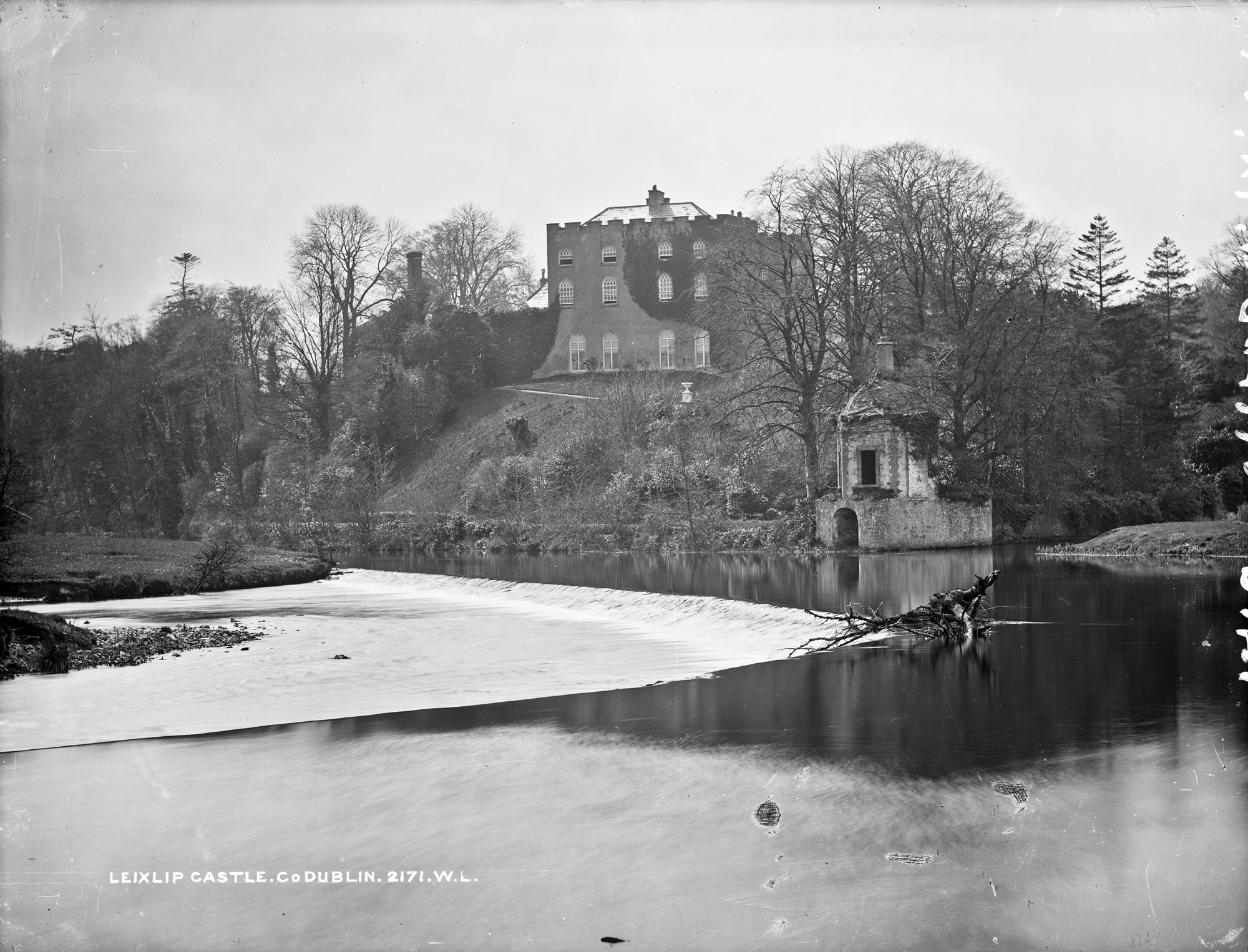
Open dates in 2025: Feb 4-7, 10-14, 17-21, 24-28, May 1-2, 6-30, June 3-6, 9, Aug 16-24, Mon-Fri, 1pm-5pm, May and Aug, Sat-Sun, 9am-1pm

Fee: house €10, gardens €6

5. Corke Lodge, Co Wicklow A98 X264 – gardens open to visitors 

www.corkelodge.com
Open dates in 2025: June 2-27, Mon-Fri, July 1-26, Tue-Sat, Aug 4-24, 10am-2pm

Fee: adult €10, entrance fee is a voluntary donation in honesty box at door

No pets allowed.

The website tells us:

The house was built on and incorporates the remains of an older structure, visible on the 1750 maps of Dublin. Situated on the lands owned by Hannagh Tilson Magan it was commissioned by her or by her son William Henry Magan between 1815 and 1820.

William Magan is known to have employed the Architect William Farrell to design a country house, Clonearl, in Co. Offaly in 1815. This house was destroyed by fire in the 1840’s but it is clear from the surviving plans that the distinctive pillastered design is mirrored in both Killyon manor, Co. Meath another Magan/Loftus house and in Corke Lodge. Unusual fenestration and similar door treatments also link the two surviving properties. Close by the church at Crinken, endowed by Hannagh Magan was also designed by Farrell. So it would not be unreasonable to assume that Corke Lodge, which has all the hallmarks of an architectural ‘capriccio’ is by the same hand. The main façade and the two front reception rooms are in the classical style. The rooms at the back and above have gothic detailing.

The last Magan owner of this property as well as the other huge Magan/Tilson/Loftus estates was Augusta. Her eccentricities and reclusive life are said to have inspired Charles Dickens, who visited Dublin, in his creation of Miss Haversham, in the Great Expectations. 

The most striking feature of the house is the bold architectural treatment of the classical facade, a miniature of the two great houses mentioned above. By contrast, the back elevations are in a flat gothic stile reflecting the romantic nature of the planted ‘wilderness’. The interiors retain all their original features in terms of marble mantle pieces, pillared architraves and plasterwork. Although the house originally would not have been used for more than a few days a year by the Magans when bathing in the nearby sea or visiting the family tombs at Crinken, it has been continuously inhabited since its incorporation into the Woodbrook estate By Sir Stanley Cochrane in 1906. Sir Stanley, heir to a mineral water fortune, was an accomplished athlete and opera singer who created on his estate championship cricket pitches a golf course and the Laurel Park Opera House, precursor of Glyndebourne, and where Dame Nellie Melba sang.

The house as it presents itself today was restored and furnished in 1980 by architect Alfred Cochrane. It pioneered the current trends in historicist restoration of country houses and was featured in a number of local and international publications.

6. Dower House, Rossanagh, Ashford, Co Wicklow – gardens open by appointment 

https://www.dublingardengroup.com/the-dower-house/

Opening (if Covid allows) April 2nd  to July 1st, 2022.
By appointment only.

The gardens surrounding this late eighteenth century house (c.1790) were laid out towards the end of the nineteenth century with plantings of many fine specimens including Rhododendron arboreum,  Magnolia soulangeana ‘Alba’, and Camellia japonica. Also included are a number of specimen mature trees, including a fine Chilean myrtle, Luma apiculata, planted c. 1880. When the Butler family acquired the property, a white garden in a sheltered enclosure behind the house was added together with a wild meadow which reaches its peak in mid June.

The indefatigable Mrs Delany, eighteenth century social commentator, diarist, artist and friend of Dean Jonathan Swift commenting on Rossanagh demesne on which Dower House was built wrote: ‘It is a very pretty place… neatly kept’. As early as 1733, A.C. Forbes noted that the largest tree in Ireland, a Spanish chestnut flourished in the demesne. It was under this tree that Methodist preacher, the Reverend John Wesley preached during one of his many visits in June, 1789. Rossanagh holds links to many well known ‘personalities’ of the day including musician/composer, Thomas Moore, artists, George Romney, Maria Spilsbury-Taylor, politicians, Henry Grattan and William Pitt, the Younger together with Patrick Bronte, father of distinguished English novelists, Charlotte, Emily and Anne. Described as one of ‘Wicklow’s finest gardens’ (Jane Powers), the gardens are open each year in aid of The Wicklow Hospice.

7. Greenan More, Rathdrum, Co Wicklow – section 482

www.greenanmore.ie
Open dates in 2025: May 31, June 1, 4-8, 11-15, 18-22, 25-29, July 2-6, 9-13, 16-20, 23-27, 30-31, Aug 1-3, 6-10, 13-24, 10am-3pm

Fee: adult €6, OAP €5, child €3, student free

8. Huntingbrook, County Wicklow – gardens open to public 

https://www.huntingbrookgardens.com

The Gardens open Wednesday 6th April until Saturday 24th September 2022

Hours
Wednesday – Saturday
11am–4pm

Designed to be a thoroughly immersive experience, the gardens are home to one of Ireland’s largest private collections of plants. A riot of colour, shape and texture, the gardens are always on the move with fresh surprises at every visit.” 

9. Killruddery House & Gardens, Southern Cross Road, Bray, Co. Wicklow – section 482

Killruddery, County Wicklow, April 2021. Photograph © Jennifer Winder-Baggot, www.irishhistorichouses.com

www.killruddery.com
Open dates in 2025: Apr 1-6, 8-13, 15-20, 22-27, 29-30, May 1-11, 13-18, 20-25, 27-31, June 1-8, 10-15, 17-22, 24-29, July 1-6, 8-13, 15-20, 22-27, 29-31, Aug 1-10, 12-24, 26-31, Sept 2-7, 9-14, 16-21, 23-28, 30, Oct 1-5, 7-12, 14-19, 21-31, Nov 1-2, Apr, Oct, Nov, 9.30- 5pm, May-Sept 9.30am-6pm

Fee: adult house and garden tour €15.50, garden €10.50, OAP/student house and garden tour €13, garden €9.50, house and garden child 4-12 years €13, garden €4, concession-members garden entry free and house tours €6

See my entry https://irishhistorichouses.com/2019/08/31/killruddery-southern-cross-road-bray-county-wicklow/
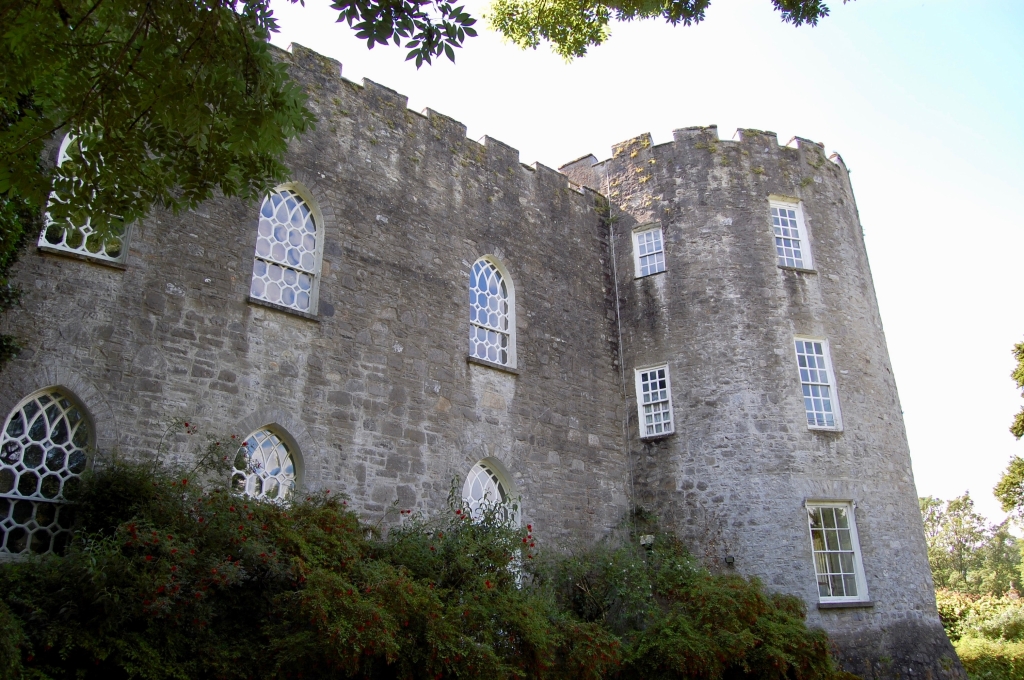
10. Kiltimon House, Newcastle, Co. Wicklow – section 482

Kiltimon House, County Wicklow, photograph courtesy of National Inventory of Architectural Heritage.

contact: Michelle O’Connor
Tel: 087-2505205
Open dates in 2025: Jan 6- 8, 10, 13-15, 17, 20-22, 24, 27-29, 31, Feb 4, 7, 11, 14, May 6, 9, 13, 16-17, 20, 23-24, 27, June 3, 6, 10, 13, 17, 20, 24, Aug 16-24, Sept 2, 5-6, 8-9, 12-13, 15, 19-20, 22-23, 26-27, 30, 9am-1pm, Jan 6, 8, 13, 15, 20, 22, 27, 29, Sept 8, 15, 22,

2pm-6pm

Fee: adult €10, OAP/student/child €5

11. Kingston House, Rathdrum, Co. Wicklow A67 DV25 – section 482

Open dates in 2025: Aug 1-31, Sept 1-30, 10am-2pm
Fee: adult €3, OAP/student/child €2, concession-locals are free of charge

Open dates in 2025: Apr 6-10, 13-17, 20-24, June 1-5, 8-12, 15-19, July 6-10, 13-17, 20-24, Aug 10-24, 9.30am-1.30pm

Fee: Free

Knockanree, County Wicklow.

13. Mount Usher Gardens, Ashford, Co. Wicklow A67 VW22 – section 482, garden only

Mount Usher, County Wicklow, June 2021. Photograph © Jennifer Winder-Baggot, www.irishhistorichouses.com

See my entry https://irishhistorichouses.com/2021/06/30/mount-usher-gardens-ashford-co-wicklow/
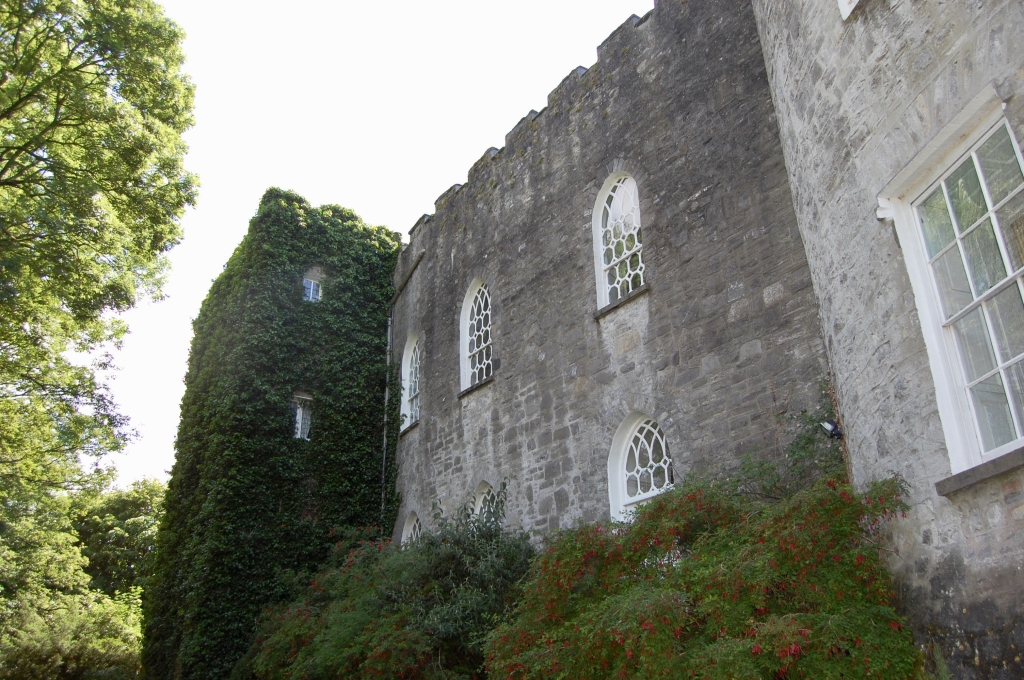
www.mountushergardens.ie

www.avoca.com/en
Open in 2025: all year, except Christmas Day and St. Stephen’s Day, Jan-Mar, Nov-Dec,

10am-5pm, Apr-Oct, 10am-5.30pm

Fee: adult €10, student/OAP €8, child over 4 years €5, under 4 years free, group rate (10 or more people) €8 per person

14. Powerscourt House & Gardens, Powerscourt Estate, Enniskerry, Co. Wicklow A98 W0D0 – section 482

Powerscourt House and Gardens, photograph by Chris Hill 2015, for Tourism Ireland, Ireland’s Content Pool. Photograph © Jennifer Winder-Baggot, www.irishhistorichouses.com

See my entry: https://irishhistorichouses.com/2020/04/26/powerscourt-house-gardens-enniskerry-county-wicklow/

www.powerscourt.ie
Open in 2025: Jan 1-Dec 24, 27-31, house and garden, 9.30am-5.30pm, ballroom and garden rooms, 9.30am-1.30pm

Fee: Jan-Oct, adult €14, OAP, €12, student €10.50, child €5.50, family €20, Nov-Dec, adult €10.50, OAP €9.50, student €9, child €5.50, Jan- Oct, concessions-family ticket 2 adults and 3 children under 18 years €33, concession-Nov-Dec family 2 adults and 3 children under 18 €25

15. Russborough, The Albert Beit Foundation, Blessington, Co. Wicklow W91 W284 – section 482

Russborough House, County Wicklow, photography by Chris Hill 2015 for Tourism Ireland, Ireland’s Content Pool. [2]

See my entry:

https://irishhistorichouses.com/2020/11/08/russborough-house-blessington-county-wicklow/
enc@russborough.ie
Open dates in 2025: Feb 1-Dec 23, 27-31, Feb, Nov, Dec 9am-5.30pm, Mar-Oct 9am-6pm

Fee: adult €14.50 OAP/student €12, child €6.50, group rates on request

http://www.russborough.ie

16. Tinode, Blessington, Co Wicklow – June Blake’s Garden, open from Springtime 2022 

http://www.juneblake.ie/cms/
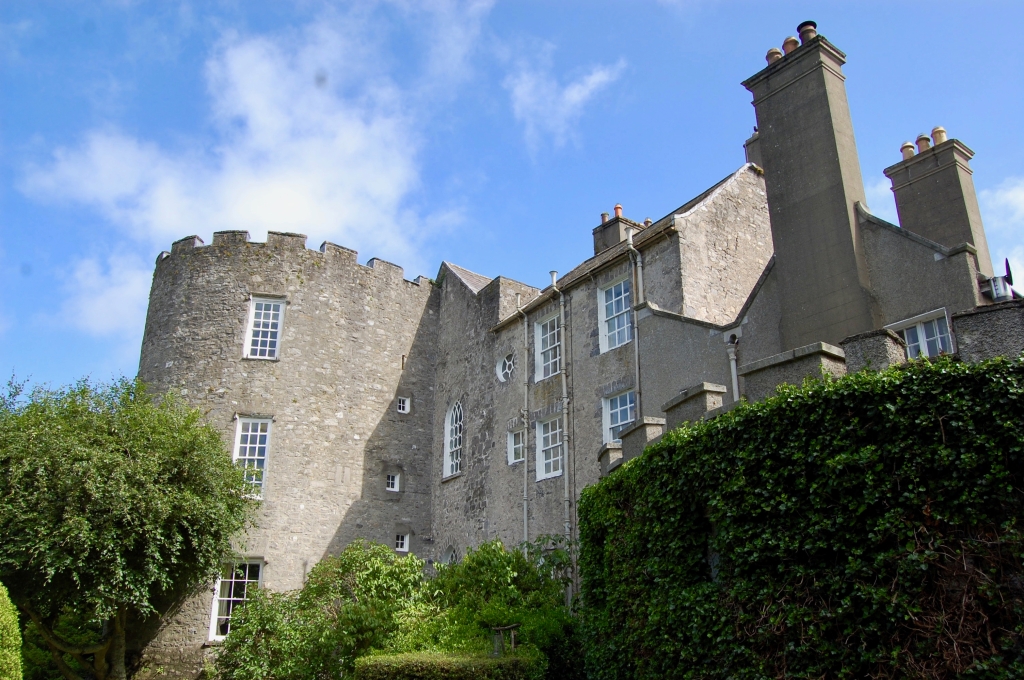
The very best gardens intrigue and restore us, and so it is with June Blake’s garden which is a rare fusion of inspired design and painterly planting. Situated in the townland of Tinode in west Wicklow, and spread over three rural acres, it wraps itself around June’s home, a handsome Victorian farm-steward’s cottage surrounded by a huddle of austerely beautiful, granite-stone farm buildingsone of which -the Cow House- has recently been the subject of an award-winning, modern architectural conversion. In a previous life, Blake was a gifted jewellery maker. Those same carefully honed skills- a razor sharp eye and keen attention to detail, an artist’s deep appreciation of colour, texture and form, as well as the ability to take a raw, unpolished material and expertly craft it into something aesthetically deeply satisfying- still shine through brightly in her excitingly contemporary country garden. Within it are many different areas of interest. These include intricately planted borders of gem-like beauty, swathes of naturalistic, prairie-style planting, sculptural landforms, a flower meadow that comes to life in spring with sprinkles of crimson red Tulip ‘Red Shine’, generous stretches of woodland intersected by curving cobble paths and filled with choice shade-lovers, and a formal, rectangular pool whose silver sliver of water is a mirror to the cloud-streaked Wicklow sky. Each one is so thoughtfully, imaginatively and expertly executed that it would be enough by itself to bring joy to the heart of any gardener. But it is when they are combined together as a whole that they form what is, without doubt, a truly remarkable garden.” Fionnuala Fallon.

The house was designed by William Caldbeck in 1864. Tinode House was burned to the ground in 1922 by the IRA, and has since been partially rebuilt.

Places to stay, County Wicklow:

1. Ballyknocken House, Ashford, County Wicklow

www.ballyknocken.ie

The website tells us:

Ballyknocken House, Farm and Cookery SchoolScenically located on 280 acres only 47 km south of Dublin City Centre in County Wicklow, Ireland. Our charming 4* Victorian style farm guesthouse offers 7 guest bedrooms plus a 3-bedroom Milking Parlour apartment, surrounded by scented kitchen gardens, offering a farm to fork experience. Home to celebrity chef and award-winning food writer, Catherine Fulvio, we pride ourselves on continuing the family tradition of providing B&B accommodation for over fifty years here in County Wicklow.

We offer an intimate, cosy, warm and friendly experience not only for individual guests for Foodie Short Breaks and for visiting Wicklow but we also welcome private parties, whether it’s a corporate, friend and family gathering or hen party. Ballyknocken can be booked exclusively for accommodation, cookery events and onsite activities for your company day out or your celebration.

2. Bel Air Hotel (formerly Cronroe), Ashford, Co Wicklow

www.belairhotelequestrian.com 

The website tells us:

Bel-Air is an old Manor House Hotel on 200 acres farm and parkland. The house and stable yard are in the middle of the estate, with the land surrounding it in all directions. There is wonderful parkland to the front of the house looking out to the coast, while the tillage land is behind the house. In the centre of the estate is old woodland, which has lovely jumping lanes. In the spring, bluebells and wild garlic bring colour and aroma to the tracks and trails. And the heady scent and sight of the vibrant yellow gorse makes your heart sing.

The stable yard is from ca 1750 and the current house was built in 1890. Both the house and the yard are listed for preservation and wherever you look you find evidence of the old days.

Even though we are less than an hour from Dublin, you feel like you are miles from anywhere and you also take a leap back in time. Bel-Air is not just a place – it’s a way of life!

3. Brook Lodge and Macreddin Village, County Wicklow

https://www.originalirishhotels.com/hotels/brooklodge-macreddin-village

The website tells us:

Relax and unwind at The Wells Spa, a designated ‘resort spa’. Dine at The Strawberry Tree, Ireland’s first certified Wild and Organic Restaurant, or La Taverna Armento, a Southern Italian style bistro. We also host Actons Country Pub, The Orchard Café, an Organic Bakery, a Smokehouse and a Wild Food Pantry and much more. Macreddin Golf Course designed by European Ryder Cup Captain Paul McGinley is a short stroll from BrookLodge.

Macreddin Village has twice won AA Hotel of the Year, Ireland’s Culinary Hotel of the Year and Ireland’s Luxury Eco-Friendly Hotel. Other recent awards for The Strawberry Tree Restaurant include titles such as Best Restaurant and Best Organic Restaurant.

4. Clone House, Count Wicklow

https://clonehouse.com

The website tells us:

Clone House, first built around 1650, is surrounded by five acres of private land and gardens.

Based in the heart of vibrant and beautiful County Wicklow, just an hour south of Dublin, Clone House offers a unique holiday experience and quality accommodation for up to 26 guests.

We cater for events such as family reunions, corporate events, hens & stags and small weddings.

Clone House was originally built by the O’Byrne family in the 1650’s. Back then it was the Manor House on a large estate stretching across Moneyteigue, Clone and Coolahullen. The house’s history is as grand and interesting as its demeanor. Clone House provided refuge to the famous Billy Byrne of Ballymanus, was burnt down in the 1798 Rebellion, restored around 1805 and nowadays functions as a beautiful guesthouse.

5. Croney Byrne, Rathdrum, Co Wicklow – courtyard accommodation

https://croneybyrne.ie

The website tells us:

Wicklow is a great holiday destination and you will love staying in our luxurious Self Catering Holiday Homes in one of the most beautiful locations in Irelands Ancient East. Croneybyrne Courtyard is a family friendly destination where children love our park with playground and collecting their eggs for breakfast from our hens and geese. See our accommodation page for more details.
A mere 1 hour drive from Dublin city it is a great escape with many acres of wilderness on our doorstep including Clara Vale Bird Sanctuary and Wildlife Reserve where you can spend hours exploring without seeing another soul or hearing the sound of modern distractions. There you will see Sika Deer as well as Badger, Fox, Rabbits and the occasional Hare, not to mention the myriad of Birds, including the spectacular Red Kite and Spotted Woodpecker.

There are forest and mountain walks, we are near the Avonmore Trails and within easy reach of the Wicklow Way and the beautiful Vartry Tracks and Trails. Or for the more adventurous, there are challenging Rock Climbing activities as well as hiking on the highest mountain in Wicklow Lugnaquilla or the many mountain tops in the area. If you are looking for a Walking Holiday in Wicklow see our Walking/Hiking pages for a list of our top walks in the area.

6. Druid’s Glen hotel and golf club (formerly Woodstock), Newtownmountkennedy, Co Wicklow

https://www.druidsglenresort.com

Druid’s Glen courtesy of website.

Mark Bence-Jones writes of Woodstock, which has now been converted to Druid’s Glen hotel:

p. 287. “(Tottenham, sub Ely, M/PB) A three storey five bay block of ca 1770, with  single-storey five bay block added ca 1840 by Rt Rev Lord Robert [Ponsonby] Tottenham [1773-1850], Bishop of Clogher [son of Charles Tottenham Loftus 1st Marquess of Ely], who bought the property after 1827; it had previously been rented for a period by the Lord Lieutenant, Marquess Wellesley. The centre block has a one bay breakfront and a die which was probably added by Bishop Tottenham at the same time as the single-storey Ionic portico, which is by Sir Richard Morrison. Giant blind arches in end pavilions; balustraded parapets on wings. Garden front with curved bow in central breakfront; now asymmetrical because of projecting C19 wing on one side and other additions. Hall running through the full depth of the house, divided by a screen of columns from the staircase, which is of fine solid C18 joinery; rococo plasterwork in the manner of Robert West in panels on the walls above the staircase, and curving round the apse at the back of the hall in the bow of the garden front; similar plasterwork on the ceiling of the staircase and landing. Dining room with rococo plasterwork in centre of ceiling. Large and lofty drawing room in right hand wing with frieze and cornice of elaborate C19 plasterwork, rather in the manner of Sir Richard Morrison. Handsome C19 room with bold cornice and ceiling medallion in wing flanking garden front. Sold 1947, afterwards the home of Mr and Mrs G. Van den Bergh. It is now the home of Mr and Mrs William Forwood, who have carried out a most sympathetic restoration of the house, with the help of Mr Jeremy Benson.” 

The National Inventory tells us:

Detached five-bay three-storey over basement former country house, built in 1770, now in use as a hotel / country club. The original house was probably to designs by Robert West the eminent Irish stuccodore. Two-storey wing additions added in c.1830 to designs by Sir Richard Morrison. There are later additions to the rear elevation. The walls are finished in painted lined render. A short flight of stone steps rises to the front door; it has a four-pane fanlight and is flat-headed. This is set within a projecting portico with Ionic columns. Window openings are flat-headed and have moulded surrounds; those to the piano nobile also have blocking courses and projecting cornice. The hipped roof is finished with natural slate and cast-iron rainwater goods. Chimneystacks are rendered with plain caps and clay pots. Much of the late Georgian interior has been retained; this includes rococo plaster work to the hallway, the original stair and fireplaces to principal rooms. The building is set within a large demesne which is now in use as a golf course.” [3]
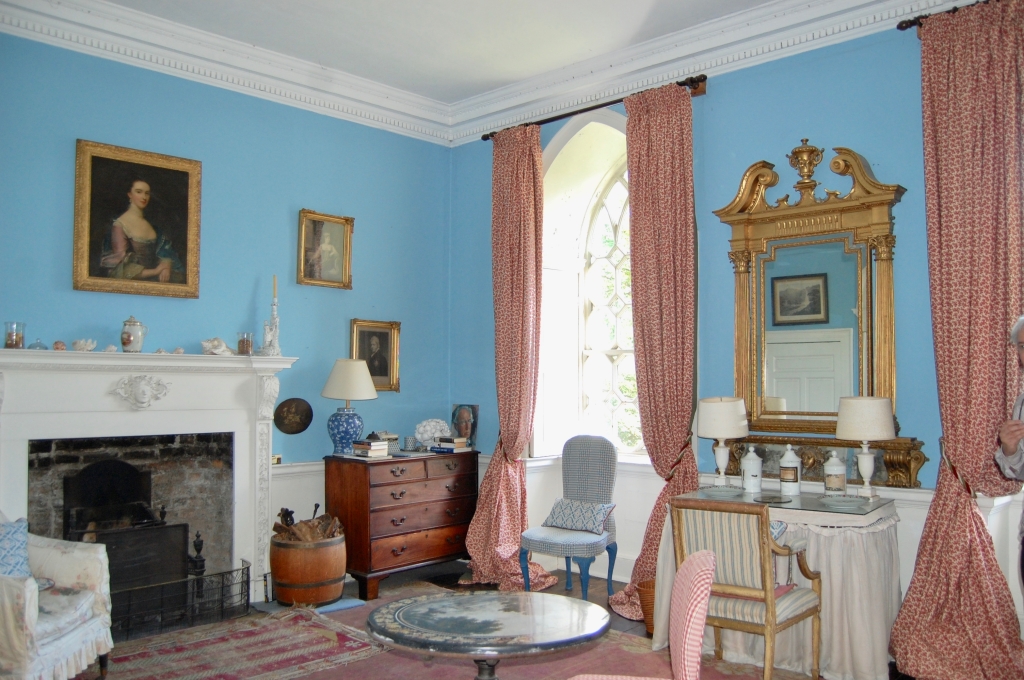
8. June Blake’s Garden, Turkey House and Cow House, Tinode, Blessington, Co Wicklow – June Blake’s Garden, see above 

http://www.juneblake.ie/cms/ 

9. Rathsallagh, County Wicklow – accommodation €€

Rathsallagh, photograph courtesy of Rathsallagh House.

www.rathsallagh.com

It was built around 1750 as stables and converted in 1798. The range consists of four wings based around a large courtyard with the main wing to the front (west) having two-storey projections to its north and south ends.

The website tells us: “Rathsallagh House has been owned and run by the O’Flynn family for over 30 years, it has a happy and relaxed atmosphere with log and turf fires in the bar and drawing rooms. The food at Rathsallagh is country house cooking at its best, Game in season and fresh fish are specialities. Breakfast in Rathsallagh is an experience in itself and has won the National Breakfast Awards a record four times.

Rathsallagh also has conference and meeting rooms, Spa room, billiard room, and tennis court and is surrounded by the magnificant Rathsallagh Golf Club.

Joanna and David at Rathsallagh, photograph courtesy of Rathsallagh House.
Rathsallagh House, County Wicklow, photograph courtesy of Rathsallagh House.
Rathsallagh, photograph courtesy of Rathsallagh House.
J Channing RS Rooms, Rathsallagh, photograph courtesy of Rathsallagh House.
Rathsallagh, photograph courtesy of Rathsallagh House.

10. Summerhill House Hotel, County Wicklow €€

https://summerhillhousehotel.com

The website tells us: “Summerhill House Hotel is where glamour and the countryside blend in one of Ireland’s prettiest villages. Our location in the cosy village of Enniskerry is a gloriously refreshing antidote to city living or stressful lives. Reconnect with family and friends and let the kids run free. Lose track of time as you breathe in clean air, stride for miles through nature walks on your doorstep, stargaze under big skies, and, most importantly – relax, with a dose of the finest Wicklow hospitality.

11. Tinakilly House, Rathnew, Co Wicklow – country house hotel

https://tinakilly.ie 

The website tells us:

Set in 14 acres of mature landscaped gardens overlooking the Irish Sea Tinakilly offers peace and tranquillity yet is only 45 minutes from Dublin. This stunning award winning Country House Hotel in Wicklow is steeped in history and oozes charm and sophistication.

Mark Bence-Jones writes (1988):

p. 304. “A house of 1870 by James Franklin Fuller, built for Commander Robert Charles Halpin, RN, who commended the steamship Great Eastern when she laid the first Atlantic cable. In vaguely Queen Anne revival style; entrance front with two bay centre between three sided bows; pedimented porch. Roof on bracket cornice with central dormer. Side elevation with central three sided bow. Very impressive central hall, an early example of the hall-cum-living room which was to become an almost obligatory feature of late Victorian and Edwardian country houses; with an imperial staircase rising to a bridge gallery which continues around two of the walls. The ceiling is elaborately coved and coffered; the soffits of the stairs and gallery are richly ornamented with plasterwork. The fireplace is surmounted by a triple window, so that the flue appears to vanish; a conceit which, like the “living hall” itself, became increasingly popular towards the turn of the century. Halpin died 1894; his widow was living at Tinakilly 1912.” 

The website gives us the history:

Tinakilly House was constructed for Captain Robert Halpin, who was born in Wicklow Town and who succeeded in becoming Commander of The Great Eastern when it laid most of the world’s transoceanic telegraph cables.  The cable connecting Europe to America was laid in 1866 from Valentia Bay in Ireland to Hearts Content in Canada.  A section of this cable and a fine colour print of The Great Eastern can be seen today in Tinakilly Country House Hotel & Gardens.  Most of Captain Halpin’s memorabilia is in the National Maritime Museum in Dun Laoghaire.

Halpin is reputed to have been given an open cheque by the British Government to build his new mansion in gratitude for his contribution to improving world communications and thereby world trade.  He recruited the then very fashionable Irish architect, James Franklin Fuller, to design the house. The timber, which is so evident and gives such character, was selected in London by Halpin. The doors on the ground floor are of Burmese mahogany with many panels of different woods, the best of which are in “birds eye” maple. The architraves window shutters and stairs are in American pitch pine. Fireplaces were imported from Italy with the exception of the drawing room where a fine Georgian one graces the room.

In 1870 the land extended to 400 acres, two Head Gardener’s were employed, one for inside the walled garden to grow fruit and vegetables and the other to supervise the seven acres of pleasure gardens. There are fine stands of beech eucalyptus and evergreen oak while two giant sequoias (American Redwood) are at either end of the old tennis court. The site chosen for the house is on elevated ground two miles north of Wicklow Town, overlooking Broadlough Bird Sanctuary and the Irish Sea.

Halpin married the daughter of a wealthy Canadian whaling merchant. They had three daughters, the youngest of whom, Belle, lived in Tinakilly until the early 1950’s. Captain Halpin died at the young age of 58 from blood poisoning after cutting his toe.

In 1949 the house and lands were purchased by Augustus Cullen, a Wicklow solicitor. The Trustee’s sold on condition that Belle Halpin retain the house for her lifetime, which she did until 1952. Rumour has it that her ghost continued to occupy the house as well as Miss Halpin’s housekeeper – hence the Cullen’s never took occupation. During the last six years of Mr Cullen’s ownership, the house was only used in the summer when it was rented by a group of Jesuit priests for summer retreats.  Any ghosts quickly departed.

In 1959 the house and lands were sold to Mr Gunther Smith whose nephew, Mr Heinrich Rolfe, inherited the property in 1962.  His wife ran the house as a guesthouse while Mr Rolfe concentrated on farming.  A colourful Frenchman called Jean Claude Thibaud then rented the house and ran it as a “Restaurant Francais”.  A thatched cottage bar was constructed in the hall while stucco plaster on the dining room walls appeared to give an effect of “waves by the sea”.  One day Jean Claude discovered his kitchen chimney was blocked by the home of a family of building crows.  Not wishing to climb out onto the roof to discover which of the 36 chimney pots needed freeing, he took a sledgehammer to a top floor bedroom and through the flue of a fireplace allowing the smoke into the bedroom.  He then opened the window and closed the door.  A French solution to an Irish problem.

In 1978 an Irish couple, Dermot & Anne Garland, who had experience in running the Pembroke Restaurant in Dublin, swapped with the Thibauds and completed a purchase agreement for Tinakilly House. The Garland’s redecorated Tinakilly and ran a successful restaurant. Dermot tragically died leaving Anne to struggle on with their two young sons.

In 1982 Tinakilly sold to William & Bee Power, who decided to develop a full hotel putting bathrooms ensuite and installing a modern fully equipped kitchen. Redecorating and furnishing of the hotel was undertaken by William & Bee to ensure the homely Victorian character so evident to the visitor today. Great care has been taken in all reconstruction work to maintain the nautical theme.  Bedrooms were named after ships. 

In 1991 the Power’s constructed 15 suites all overlooking the Irish Sea and Broadlough Bird Sanctuary.  Sunrise is a spectacle to behold.  The Victorian Halpin Suite was developed to cater for conferences and weddings.

In 1997 the East wing was extended northwards with the addition of 24 suites and a lift, bringing the total compliment of bedrooms to 51. Also in that year, a new dining room, the Brunel, was built to the west of the house. All of this work has been architect controlled to ensure the true character of Tinakilly is maintained. In January 2000, Tinakilly was taken over by William & Bee’s son and daughter-in-law, Raymond & Josephine.

In 2013 Tinakilly House changed hands again, the owners are passionate about this grand country manor, adding refreshing touches through out the house but always in keeping with the character. The Great Hall is alive again with chatty conservations over afternoon tea, the Brunel restaurant and menus are refreshing, wedding guest fill the house with laughter and joy.  So check back with us to see the old and new meld to give this beautiful Victorian manor a new chapter in history.

12. Tulfarris, Blessington, Co Wicklow - hotel 

www.tulfarrishotel.com

The website tells us: “Tulfarris Hotel & Golf Resort is a luxury 4 star retreat situated in the garden of Ireland, County Wicklow. Perched on the banks of the Blessington Lakes against the backdrop of the Wicklow mountains, yet only 45 minutes drive from Dublin. Offering delicious food, relaxed bars and deluxe guest accommodation, the views are breathtaking and the golf course is immense. Step back in time as you enter the 18th century Manor House which stands imposingly at the heart of our 200 acre resort. Get married, get your colleagues together or get some rest and relaxation. Tulfarris Hotel in Wicklow is yours to enjoy.

The website tells us of the history of the house:

Tulfarris House derives its name from the land it is situated on. Tulfarris comes from the Gaelic ‘Tulach Fherghuis’ meaning Fergus’ Hill.   

From a document known as the Faints, which contains legal judgements from the Tudor period, it is clear that the lands known as Tulfarris were included with the manor of Rathmore, Co. Kildare. This estate was in the possession of Gerald Fitzgerald (Garret Oge), 9th Earl of Kildare. Until 1534, the Fitzgerald dynasty dominated both the lands and events that occurred in much of Ireland. The rebellion of Gerald’s son Thomas, popularly known as Silken Thomas, resulted in the confiscation of the entire estate by the crown. In 1541, the crown to Walter Troot, Vicar of Rathmore, leased the manors of Rathmore, including Tulfarris.

Gerald Fitzgerald (1487-1534) 9th Earl of Kildare

Shortly afterwards in 1545, the lands were granted in full to Sir John Travers, a knight from Monkstown, Co. Dublin. Sir John Travers had an heir by his first marriage, Henry. Henry married Gennet Preston [d.1599], daughter of the third Viscount of Gormanstown [Jenico Preston, d. 1560]. Henry however, died young leaving two daughters, Mary & Catherine. John Travers died in 1562 and the lands were inherited by Henry’s daughters, Mary & Catherine.

Mary married James Eustace, 3rd Viscount of Baltinglass. After James played a leading role in the Desmond Rebellion of 1579, The Baltinglass estate including Mary’s share of Rathmore, were confiscated by the crown. Mary managed to have her share of the estate returned to her in her husband’s lifetime.

Her sister Catherine married John Cheevers of Macetown, Co. Meath. Catherine’s share of the Rathmore Estate included Tulfarris and was inherited by Catherine’s son Henry. Henry in turn married Catherine Fitzwilliam and their son Walter inherited the title to Tulfarris. Inquisitions dated 24th September 1640, detail the size of the estate at the time of Henry Cheever’s death. According to this document, Tulfarris contained one ruined Castle, 20 messuages, 70 acres of land and a manor.

Tulfarris’ turbulent history continued and in a list of outlaws intended for the House of Lords and dated 1641-1647, five entries for Tulfarris were found. During that time, the crown again confiscated Tulfarris.

Tulfarris and other properties were granted to Colonel Randall Clayton on 15th October 1667, in trust for the officers of the Cromwellian soldiers of 1649. Tulfarris was subsequently granted to Captain John Hunt of the Cromwellian soldiers of 1649. His son, Vere Hunt, later sold the land to John Borrowes of Ardenode, Co. Kildare. In 1713, Robert Graydon of Russellstown held Tulfarris. The means of transfer of ownership between Borrowes and Graydon is uncertain, however, Borrowe’ss niece and granddaughter both married Graydons.

Much of the house’s more recent history is associated with the Hornridge family who held the land from the early eighteenth century until the 1950’s. James Hornridge came to Ireland from Gloucester with Cromwell’s parliamentary Army in 1659 and settled in Colemanna in Co. Carlow.

The Historical information regarding how the Hornridge’s came to own Tulfarris is unclear. His son Richard Hornridge married Hester Hogshaw of Burgage, Blessington Co. Wicklow in 1699. It is most likely that Tulfarris came into the Hornridge’s possession through this marriage.”

13. Wicklow Head Lighthouse, Dunbur Head, County Wicklow € for 4

https://www.irishlandmark.com/property/wicklow-head-lighthouse/

14. Gate Lodge, Woodenbridge, Avoca, County Wicklow €€

Airbnb: https://www.airbnb.ie/rooms/32381149?adults=2&category_tag=Tag%3A8047&children=0&infants=0&search_mode=flex_destinations_search&check_in=2022-07-10&check_out=2022-07-15&federated_search_id=c0dd098c-52b4-4f57-8873-90347b40e6c0&source_impression_id=p3_1652453929_%2FOAm61MZ%2FV9wewli

Gatelodge, Woodenbridge, photograph courtesy of airbnb site.

Beautifully restored small Castle situated in the Vale of Avoca, within walking distance of the Golf Club. Only 4km from Arklow Town and only 3km from the stunning Avoca Village. The Castle is ideal for those who are looking for a relaxing break to take in the beautiful scenery, walk ways, fishing and golfing.

The space
If you choose to book the Gatelodge, you and your guests will have full use of the Small Castle.

[1] Bence-Jones, Mark. A Guide to Irish Country Houses (originally published as Burke’s Guide to Country Houses volume 1 Ireland by Burke’s Peerage Ltd. 1978); Revised edition 1988 Constable and Company Ltd, London.

[2] https://www.irelandscontentpool.com/en

[3] https://www.buildingsofireland.ie/buildings-search/building/16401304/druids-glen-golf-club-woodstock-demesne-co-wicklow

Text © Jennifer Winder-Baggot, www.irishhistorichouses.com

Leixlip Castle, County Kildare W23 N8X6: section 482, Desmond Guinness’s jewelbox of treasures

Leixlip Castle, June 2019. Photograph © Jennifer Winder-Baggot, www.irishhistorichouses.com

Open dates in 2025: Feb 17-21, 24-28, Mar 3-7, 10-14, May 12-23, June 9-20, Aug 16-24, Sept 1-7,

Fee: adult €8, OAP/student/child €4, no charge for local school visits/tours

donation

Help me to pay the entrance fee to one of the houses on this website. This site is created purely out of love for the subject and I receive no payment so any donation is appreciated!

€15.00

I am publishing my Leixlip Castle blog this week to honour Desmond Guinness who died last month. The Irish Aesthete Robert O’Byrne published a thoughtful tribute on his website. [1]

It was a beautiful sunny day on Saturday June 15th 2019 when we headed to Leixlip Castle. It is just outside of Leixlip, not far from Dublin on the N4, though confusing to find when one drives into Leixlip – don’t get it confused with the Manor! Keep going through the town and you’ll see it on your left as you are heading to veer right – so don’t veer right but turn left instead. You cannot see it in advance so I’m sure one could cause an accident if a car follows close behind!

A note on the gate listed tour times – I think they were every hour at quarter past the hour, on open days. We made it in time for the 11:15 tour. We were early, so had time to walk around the grounds. This is the place so far where I most want to live! It is so beautiful, especially the garden.

We passed a gate lodge on the way in – impressive itself!

The gate lodge. Photograph © Jennifer Winder-Baggot, www.irishhistorichouses.com
The Gate Lodge, Leixlip Castle. Photograph © Jennifer Winder-Baggot, www.irishhistorichouses.com
View of an interesting looking building toward the back of the gate lodge. Photograph © Jennifer Winder-Baggot, www.irishhistorichouses.com

Not sure where to park, I parked outside the gate lodge. We then walked up toward the house, along a cobbled driveway with wildflower meadow alongside and gorgeous sylvan landscape.

Leixlip Castle, June 2019. Photograph © Jennifer Winder-Baggot, www.irishhistorichouses.com

We approached the castle: impressive with a rounded tower immediately in view and castellated wall, with gothic mullioned windows, approached by a sweeping lawn:

Leixlip Castle, June 2019. Photograph © Jennifer Winder-Baggot, www.irishhistorichouses.com

The oldest part of the castle, the round tower, was built in 1172 – there is a stone noting that date [2] – by Adam de Hereford, an Anglo-Norman knight. A lovely coincidence is that when I looked up Adam de Hereford on Wikipedia, I have discovered that amongst the land bestowed by Strongbow on de Hereford, was “half the vill of Aghaboe.” My Grandfather purchased the house and farm at Aghaboe, which contains the Abbey of Aghaboe in County Laois! Unfortunately the Land Commission placed a compulsory purchase order on the land when my Grandfather, John Baggot, died in 1977. Our family was left the house and about ten acres. The family sold the remaining land and house in 1985, much to my disappointment.

Aghaboe Abbey, County Laois, 2018, founded by St. Canice in the 6th century. Photograph © Jennifer Winder-Baggot, www.irishhistorichouses.com
The house at Aghaboe, also from our 2018 trip. It has been restored by its current owner. Photograph © Jennifer Winder-Baggot, www.irishhistorichouses.com
The house at Aghaboe, 1981. Photograph © Jennifer Winder-Baggot, www.irishhistorichouses.com

John Colgan has complied a chronology of Leixlip, 1200-1499. [3] According to this, the grant from King John to Adam de Hereford is given in 1202. A website called “Curious Ireland” claims that soon after the castle was built, it was used as a hunting base by King John when he was Lord of Ireland in 1185. [4]

Photograph by Robert French from National Library of Ireland Lawrence Photographic Collection, flickr constant commons.
Leixlip Castle. Photograph © Jennifer Winder-Baggot, www.irishhistorichouses.com
This is the side which Mark Bence-Jones refers to as facing the river, with pointed windows that have Gothic astragals (a term used loosely to denote the glazing bars in the window). Photograph © Jennifer Winder-Baggot, www.irishhistorichouses.com

According to Mark Bence-Jones in his A Guide to Irish Country Houses, it later belonged to the Crown [more on this later], and was then granted in 1569 to Sir Nicholas Whyte, Master of the Rolls [again, we shall learn more about these details later]. In 1731, it was sold by John Whyte to Rt Hon William Conolly (1712-1754), nephew and heir of Speaker Conolly, the builder of nearby Castletown. William Conolly left Leixlip for Castletown after his aunt’s death in 1752, but it remained in the Conolly family until 1914, being let to a succession of tenants.

Bence-Jones writes that remodelling of the castle appears to date from when William Conolly lived in it, and also perhaps slightly later, during the tenancy of Primate George Stone, which was from 1752 onwards. The wing which forms a projection on the entrance front, balancing the old round tower, was more or less rebuilt at this period, and has a regular three storey four bay front towards the river. The windows on this projection are pointed and have Gothic astragals (a term used loosely to denote the glazing bars in the window). Similar windows, Bence-Jones adds, “were pierced in the thick old wall of the entrance front, and were glazed with diamond panes, in a delightful Batty Langley manner.” [5]

Archbishop George Stone (1708-1754), Primate of Ireland by Alan Ramsay.

Beyond the round tower in the other direction there are steps leading up to a small terrace:

Leixlip Castle, June 2019. Photograph © Jennifer Winder-Baggot, www.irishhistorichouses.com

Walking around a little further, we see more of the house, with multiple roof levels, and a squat round ivy-covered one storey crenellated wall:

Leixlip Castle. Photograph © Jennifer Winder-Baggot, www.irishhistorichouses.com
Leixlip Castle, June 2019. Photograph © Jennifer Winder-Baggot, www.irishhistorichouses.com

We can see more little windows, set into the round tower, another gothic arched window, and a round window also.

Walking further around, the back part of the jumble of a building leads to an archway built into the building:

Leixlip Castle, June 2019. Photograph © Jennifer Winder-Baggot, www.irishhistorichouses.com

The other side of the cobbled driveway leads to outbuildings with a path down to farmbuildings. Ahead of us, was a doorway in the wall, leading to the gardens.

According to the National Inventory of Architectural Heritage Buildings of Ireland website, the castle was completed in 1837. I find it hard to correlate the descriptions of the castle with the castle itself: the inventory describes:

Detached four-bay two-storey over part-raised basement rubble stone house, completed 1837, incorporating fabric of earlier castle, dated 1172, and subsequent reconstructions with two-bay two-storey advanced end bay to left (north-east), four-bay three-storey side elevation to north-east and single-bay three-storey corner tower to west on a circular plan having battlemented parapet.Set back from road in own extensive landscaped grounds. [6]

The Castle overlooks the River Liffey:

Leixlip Castle, June 2019. Photograph © Jennifer Winder-Baggot, www.irishhistorichouses.com

Leixlip Castle has been owned by Desmond Guinness, the founder of the Irish Georgian Society in 1958. The Georgian Society is dedicated to the conservation and research into eighteenth century Irish art and architecture. His wife Penny joined us in the front hall, before Jenny took us on a tour of the house. The tour guide, Jenny, a young Philipino woman who was hired to take care of Desmond’s parents, and has been with the family for seventeen years and at the time we visited, took care of Desmond. Before entering the house, however, we had to find where to enter!

There’s a front door to the front of the castle but moss growing on the steps indicated to me that that door is not used. We went around to the side, to the terrace. The door is small – the handle very low, so I imagined Sleepy, Doc or Grumpy opening the door! Jenny explained that the floor had to be raised and that they just cut the door to make it fit.

Leixlip Castle, June 2019. Photograph © Jennifer Winder-Baggot, www.irishhistorichouses.com

Jenny had us sign the book and started to tell us about the castle, when another couple arrived and joined us for the tour. There is an accompanying brochure written by Desmond Guinness about the house and its contents. Jenny told us we are allowed to take photos! I began eagerly to snap away, as well as to take notes.

Leixlip Castle, June 2019. Photograph © Jennifer Winder-Baggot, www.irishhistorichouses.com

History of Leixlip Castle

The pamphlet explains that the Irish name for Leixlip, Leim an Bhradain, means “leap of the salmon,” and that the name derives from the Danish Lax-Hlaup, as the village was first established by the Vikings.

The pamphlet says that the castle was built just after 1192, so this must be the part built on to the earlier 1172 tower. It was built where the Rye Water and the River Liffey meet.

From 1300, a family called Pypard lived in Leixlip. Sources online state that in 1302 Ralph Pypard “surrendered all his castles etc to the Crown, and in consequence Richard de Kakeputz, who was constable of Leixlip, was ordered to deliver it up to the king. [7] “Curious Ireland” adds that in 1316 the castle withstood a four day siege by Edward Bruce’s army. 

According to the leaflet written by Desmond Guinness, the Pypards occupied Leixlip until King Henry VII granted Leixlip to Gerald Fitzgerald 8th Earl of Kildare, upon his marriage to Dame Elizabeth Saint John, between 1485-1509. Known as “Garret the Great” (Gearóid Mór) or “The Great Earl”, he was Ireland’s premier peer. He served as Lord Deputy of Ireland from 1477 to 1494, and from 1496 onwards. His power was so great that he was called “the uncrowned King of Ireland”. A legend, retold by Nuala O’Faoláin, says that Fitzgerald was skilled in the black arts, and could shapeshift. However, he would never let his wife see him take on other forms, much to her chagrin. After much pleading, he yielded to her, and turned himself into a goldfinchbefore her very eyes. A sparrowhawk flew into the room, seized the “goldfinch”, and he was never seen again. [8]

Due to the rebellion of Silken Thomas Fitzgerald, 10th Earl of Kildare, in 1534, Leixlip Castle was taken back by the Crown. In 1569 the Manor and Castle were granted to Sir Nicholas Whyte, Master of the Rolls, and the house remained in the family for nearly 200 years.

Thomas FitzGerald, 10th Earl of Kildare, “Silken Thomas,” c. 1530 attributed to Anthony Van Dyck.

An article in The Journal of County Kildare, based on notes on Leixlip principally taken from a pamphlet called “Leixlip Castle,” written by the late Very Rev. James Canon O’Rourke, in 1885 (when Parish Priest of Maynooth), states: 

In 1538 the Manor and Castle of Leixlip were surrendered by Matthew King, of Dublin, on which John Alen, the Chancellor, obtained a lease of them for twenty-one years; in 1561 they passed to William Vernon, gent., for a like period; and in 1569 they were granted to Sir Nicholas Whyte, Master of the  Rolls, in whose family they remained till about the beginning  of the eighteenth century.” [9]

Nicholas Whyte, or White, c.1532 – 1592, was the son of a Steward for the Earl of Ormond. He served in the Irish Parliament and was Justice of the Peace in County Kilkenny. Master of the Rolls was a senior judicial office in Ireland. Due to political turmoil in his lifetime, he was incarcerated in the Tower of London later in life and died soon after.

Reverend O’Rourke continues: “Sir Nicholas Whyte’s successor at Leixlip was his fourth son, Charles, who had served in Spain, and in 1689 was Governor of the County Kildare; he died about the year 1697, was buried at Leixlip, and was succeeded by his son John, from whom, I believe, the Conollys of Castletown purchased Leixlip, which remains at present in the possession of that family.”

William James Conolly (died 1754), nephew, heir and namesake of Speaker (of the Irish House of Commons) William Conolly (1662-1729) of Castletown, County Kildare, purchased Leixlip Castle in 1731 and it remained the property of the family until 1914. It was frequently let during this period. Desmond Guinness purchased Castletown House in 1967 to preserve it from destruction, nearly ten years after purchasing Leixlip Castle!

The oval portrait is of Lady Anne Conolly (born Wentworth, daughter of Thomas Wentworth 1st Earl of Strafford), who lived in Leixlip Castle until the death of her husband’s aunt, the widow (Katherine Conyngham. Katherine was daughter of General Sir Albert Conyngham of Mountcharles, County Donegal – ancestors of the Conynghams of Slane Castle. Katherine was the widow of parliament speaker William Conolly of Castletown House. Lady Anne’s husband, another William Conolly, inherited Castletown in 1752. Photograph © Jennifer Winder-Baggot, www.irishhistorichouses.com
Lady Anne Conolly (née Wentworth) (1713-1797) Attributed to Anthony Lee, Irish, fl.1724-1767, photograph courtesy of National Gallery of Ireland.
Jenny told us that this portrait is of Thomas Conolly. He was the son and heir of William James Conolly (d.1754) of Castletown House, by his wife Lady Anne Wentworth. Thomas Conolly married Lady Louisa Lennox, a daughter of Charles Lennox, the 2nd Duke of Richmond. Thomas Connolly was an member of Parliament of Ireland. Photograph © Jennifer Winder-Baggot, www.irishhistorichouses.com

Mark Bence-Jones mentions two of the tenants of Leixlip Castle during this period: in the eighteenth century, Primate George Stone, Archbishop of Armagh, “the most powerful man in Ireland in his day,” and 4th Viscount (afterwards 1st Marquess) George Townshend (1724-1807), when he was Viceroy.

George Townshend, 1st Marquess Townshend (1724-1807) by George Romney.

O’Rourke tells us:

“Lewis, in his “ Topographical Dictionary of Ireland,” speaking of Leixlip Castle, says: — “ This venerable mansion was the favourite retreat of several of the viceroys, of whom Lord Townsend usually spent the summer here; it is at present (1837) the residence of the Hon. George Cavendish, by whom it has been modernized and greatly improved.”… 

George Cavendish (1766-1849), of Waterpark, County Cork, added “unobtrusive” battlements, according to Mark Bence-Jones. O’Rourke continues:

“In the autumn of 1856, John Michael Henry, Baron de Robeck, then a tenant of the Castle, was drowned in the Liffey during a great flood. He was High Sheriff for the County Kildare in 1834, for the County Dublin in 1838, and for the County Wicklow in 1839. His remains were deposited in the vault in the Maynooth Church tower.”… “In 1878 Captain the Honourable Cornwallis Maude, son and heir to the Earl of Montalt, took up his residence in the Castle after his marriage in this year. When the Boer war broke out, he volunteered for service, and was numbered with the dead after the disastrous Majuba Hill affair on the 27th February, 1881. The present resident in the Castle is William Mooney, Esq., j.p., who so kindly admitted the members of the County Kildare Archaeological Society into his demesne to visit the Salmon Leap, and showed them over the old Castle in 1896.”

John Michael Henry Fock 3rd Baron De Robeck (1790-1856) by unknown artist.

In 1914, John de La Poer Beresford, 5th Baron Decies, Chief Press Censor, purchased the property and added the kitchen wing. Bence-Jones tells us that he replaced some of the Georgian-Gothic windows with Tudor-style mullions, and panelled one or two rooms in oak. Unable to sell it in 1923, the castle was let to more tenants, and for a while served as residence for the French ambassador. In 1945 the castle was sold to William Kavanagh (see [4], and when I googled him, I found, interestingly, a painting for auction by Whytes in 2004 of the Salmon Weir, Leixlip, and it was owned by William Kavanagh, “Rathgar, a well known specialist in the work of O’Connor in the 1920s to 1940s” ). Finally, Desmond Guinness purchased the castle in 1958. His ancestor Richard Guinness had a brewery in Leixlip in the mid eighteenth century, before Richard’s son, Arthur, founded the Guinness brewery in Dublin!

The pamphlet we obtained in the hallway states that an electric dam was built in1947, completely submerging the salmon leap.

Jenny had us sign the Guest Book and then began to tell us of the contents of the grand hallway in which we stood.

The Castle Interior

Leixlip Castle, June 2019. Photograph © Jennifer Winder-Baggot, www.irishhistorichouses.com

Desmond Guinness’s pamphlet describes the contents also. The black Kilkenny marble mantel was originally made for Ardgillan Castle, Balbriggan, County Dublin, in 1744. The coat of arms featured over the fireplace belongs to the Gorges family of Ratoath, County Meath. The tapestry to the right of the fireplace was made in Florence in around 1730 and a manufactory by the name of Bennini, and it has the Medici arms, with the balls. When Stephen and I travelled to Florence for a holiday, we saw these balls on many buildings.

Medici coat of arms, from the Museo Bardini in Florence, my favourite, or second to the Victoria and Albert, museum in the world! Photograph © Jennifer Winder-Baggot, www.irishhistorichouses.com

To the right of the side door hangs a mirror from Clonfert Palace, County Galway (palace of the Church of Ireland bishops of Clonfert, unfortunately a ruin since 1950).

Leixlip Castle, June 2019. Photograph © Jennifer Winder-Baggot, www.irishhistorichouses.com

The dolls house is believed to have originated in County Cork:

Leixlip Castle. Photograph © Jennifer Winder-Baggot, www.irishhistorichouses.com
Leixlip Castle, June 2019. Photograph © Jennifer Winder-Baggot, www.irishhistorichouses.com

The wooden-headed antlers are probably of German origin and come from Powerscourt, County Wicklow. The tapestry is seventeenth century and depicts Theodotus offering the head of Pompey to Caesar. [10]

The dining room, with Bavarian tapestry. Photograph © Jennifer Winder-Baggot, www.irishhistorichouses.com

Desmond Guinness states that the dining room chairs are eighteenth century “Irish Chippendale,” and were purchased at the Malahide Castle sale in 1976, as were the two black side tables.

The tapestries, in the “Chinese taste,” were woven in Bavaria in around 1750. The picture over the fireplace is an early view of Leixlip Castle of unknown origin. The ornate frame came originally from the eighteenth century house that was replaced by the present Dromoland Castle in County Clare. There is also a picture of the Holy Family by Cambiasi, the leaflet tells us.

Leixlip Castle. Photograph © Jennifer Winder-Baggot, www.irishhistorichouses.com
The picture over the fireplace is an early view of Leixlip Castle of unknown origin. The ornate frame came originally from the eighteenth century house that was replaced by the present Dromoland Castle in County Clare.

As we read the pamphlet we can see Desmond Guinness’s love of antiques and history, which brought us the great treasure that is the Georgian Society. His generosity spills from the house, in the way he let us photograph, and he teaches us patiently through his leaflet.

Our tour guide, Jenny. She has been with the Guinness’s for 17 years. The cook has been with them for 30! They must be good employers. One can see the thickness of the walls by looking at the windows. The model of the obelisk at Stillorgan, County Dublin, on the table behind – a typically Irish hunt table, according to Desmond Guinness. The obelisk is a memorial designed in 1727 by Edward Lovett Pearce for his kinswoman Lady Allen, commissioned by Lord Joshua Allen, 2nd Viscount of Stillorgan (for more on Lovett Pearce, see my entry for Altidore Castle). Photograph © Jennifer Winder-Baggot, www.irishhistorichouses.com

We next entered the Library.

Leixlip Castle, June 2019. Photograph © Jennifer Winder-Baggot, www.irishhistorichouses.com

The pamphlet states that the plasterwork in the Library dates from the mid 18th Century. An Irish library cabinet stands between the windows. These windows, and the bookcases, are modern and were installed by the present owner, who also devised the print room decoration on the walls. The prints are laid out in a way similar to those of the Print Room in Castletown House, which were done by the Lennox sisters.

Print Room in Castletown House County Kildare. Desmond and his first wife, Mariga, purchased Castletown House in 1967 to preserve it from destruction. On his website in his recent entry about Desmond Guinness, Robert O’Byrne the Irish Aesthete tells us: “Today Castletown is owned by the Irish State and is rightly lauded as a splendid example of Irish design and craftsmanship. But if it had not been for Desmond’s brave initiative, and then the restoration work that he and Mariga oversaw on the house – helped by the many volunteers they inspired – Castletown would now be nothing more than a handful of old black and white photographs.” Photograph © Jennifer Winder-Baggot, www.irishhistorichouses.com

The prints in Leixlip Castle were put up by Nicola Windgate-Saul in 1976. The engravings, according to the pamphlet, relate to the decoration in the Galerie des Glaces in Versailles, executed in 1755 by Jean Baptiste Masse, based on the seventeeth century paintings of Charles le Brun (gardener to Louis XIV I believe – see my entry on Curraghmore).

Leixlip Castle, June 2019. Photograph © Jennifer Winder-Baggot, www.irishhistorichouses.com

The gilt mirror over the mantel was originally in a bedroom (Lady Kildare’s, Jenny told us) at Castletown, as well as the golden plasterwork, and was made in Dublin by the firm of Francis and John Booker in the mid-18th century.

We could not identify the origin of the death mask:

Leixlip Castle, June 2019. Photograph © Jennifer Winder-Baggot, www.irishhistorichouses.com

A card next to the death mask, however, identified the stuffed animal below the table, a mongoose:

Leixlip Castle, June 2019. Photograph © Jennifer Winder-Baggot, www.irishhistorichouses.com

There are a lot of mongooses (mongeese?) in Grenada in the West Indies, I remember. They supposedly harbour rabies. One rarely sees one, however. We did have an injured one come into our garden in Grenada, which we discovered due to our dog Minky barking madly from the safety of the patio. The poor mongoose, like the one above, died. Mongoose can kill snakes and snails. I need one for my allotment!

Leixlip Castle, June 2019. Photograph © Jennifer Winder-Baggot, www.irishhistorichouses.com

The chandelier is nineteenth century Venetian. It reminds me of the chandeliers in Castletown:

18th-century Murano Venetian coloured and plain glass 24-light chandeliers, decorated with flower heads and moulded finials, one of three in the Long Gallery of Castletown. It is believed that Lady Louisa ordered them from Venice between 1775 and 1778. Photograph © Jennifer Winder-Baggot, www.irishhistorichouses.com

A delightful detail in the library are the model cast iron stoves:

Model cast iron stoves. Photograph © Jennifer Winder-Baggot, www.irishhistorichouses.com

We moved from the library into the Drawing Room.

The painting over the mantelpiece is Carton, County Kildare, by Thomas Roberts. Stephen liked the globes on the mantelpiece. Photograph © Jennifer Winder-Baggot, www.irishhistorichouses.com
Carton, County Kildare by Thomas Roberts. Photograph © Jennifer Winder-Baggot, www.irishhistorichouses.com
Leixlip Castle. Photograph © Jennifer Winder-Baggot, www.irishhistorichouses.com
Leixlip Castle, June 2019. Photograph © Jennifer Winder-Baggot, www.irishhistorichouses.com

The pamphlet tells of the treat in the Drawing Room: the large 18th century Dolls House that originally came from Newbridge House. It was given to Desmond’s daughter Marina when she was ten years old (his children’s mother is his first wife, Mariga).

Leixlip Castle. Photograph © Jennifer Winder-Baggot, www.irishhistorichouses.com
A room inside the dolls house. Photograph © Jennifer Winder-Baggot, www.irishhistorichouses.com
Another dolls house room. Photograph © Jennifer Winder-Baggot, www.irishhistorichouses.com
Another room in the dolls’ house. Photograph © Jennifer Winder-Baggot, www.irishhistorichouses.com

The little plates in the dolls’ house are decorated with the initials “JG” for Desmond’s granddaughter Jasmine Guinness, now a model in London. The building blocks beside the dolls’ house were for the boys.

There are also drawings of the six Mitford sisters by William Acton. These sisters are the mother and aunts of Desmond Guinness.

Leixlip Castle, June 2019. Photograph © Jennifer Winder-Baggot, www.irishhistorichouses.com

The one on the top left is Nancy Mitford the writer. Diana Mitford, below her, is Desmond Guinness’s mother: she left his father, Bryan Walter Guinness, in order to be with Robert Mosley, the Nazi, and Hitler was the best man at their wedding, five years after she had married Bryan Guinness. Next to Nancy on top is Unity Mitford, a friend of Hitler, and below her, Deborah, who married Andrew Cavendish, 11th Duke of Devonshire, who inherited Lismore Castle in Waterford, a real fairytale-looking castle with gardens which are open to the public.

Another picture by William Acton is of Desmond’s mother in law, Teresa Jungman, Penny’s mother – it seems an amazing coincidence that he drew both of their parents!. Desmond married Penny Cuthbertson in 1984 (thirty years after he had married his first wife, Princess Henriette Marie-Gabrielle von Urach – a member of the royal house of Wurtemburg, Germany – known as Mariga). When Jenny came to the house seventeen years ago, Teresa and her sister lived with the Guinness’s, and the sister was 99 years old! Photograph © Jennifer Winder-Baggot, www.irishhistorichouses.com
Beneath the portrait above, under the cabinet with the deer, is a cabinet made in Killarney around 1880, which is inlaid with Irish views of ruined abbeys and round towers, and Irish wolfhounds, harps and shamrocks. Stephen gave me a box very similar for our “wooden” wedding anniversary! These Killarney items were popularised by Queen Victoria when she visited Killarney. Photograph © Jennifer Winder-Baggot, www.irishhistorichouses.com

We were lucky to be shown the “secret door”:

Jenny opens the secret door. Photograph © Jennifer Winder-Baggot, www.irishhistorichouses.com
Leixlip Castle. Photograph © Jennifer Winder-Baggot, www.irishhistorichouses.com
Leixlip Castle, June 2019. Photograph © Jennifer Winder-Baggot, www.irishhistorichouses.com

It led to a surprising outdoor area, which features mosaics on the walls!

Leixlip Castle. Photograph © Jennifer Winder-Baggot, www.irishhistorichouses.com
Leixlip Castle, June 2019. Photograph © Jennifer Winder-Baggot, www.irishhistorichouses.com

and a blocked up arched doorway:

Leixlip Castle, June 2019. Photograph © Jennifer Winder-Baggot, www.irishhistorichouses.com

On the way to the grand staircase we passed another painting of Desmond’s mother – one she was not so fond of, as you can imagine, as it’s a bit risque. It highlights the blue of her eyes, however, which are inherited by her son.

Leixlip Castle. Photograph © Jennifer Winder-Baggot, www.irishhistorichouses.com
A photograph of Desmond Guinness and his children Marina and Patrick. Photograph © Jennifer Winder-Baggot, www.irishhistorichouses.com

The woodwork of the staircase dates from the early 18th century or late 17th. The window is twentieth century and probably replaces a Venetian window, Guinness tells us in the pamphlet, in an attempt to make the interior look earlier than it is.

Mark Bence-Jones tells us that the staircase, of wood with pear-shaped balusters, appears to date from the early eighteenth century, and rises “impressively” in a separate hall behind the entrance hall. Photograph © Jennifer Winder-Baggot, www.irishhistorichouses.com

This (below) is just something that Desmond saw at a party that tickled his fancy, I believe:

Under the turn of the stairs: the portrait is, I believe, of Desmond’s great great grandfather, the 12th Earl of Buchan, Henry David Erskine (1783-1857). Photograph © Jennifer Winder-Baggot, www.irishhistorichouses.com
Leixlip Castle, June 2019. Photograph © Jennifer Winder-Baggot, www.irishhistorichouses.com

The carved wooden heads “supporting” the upstairs landing came from a shop front in Dawson Street, Dublin, where they were unrecognisable due to many layers of paint. They may be the work, Guinness tells us, of Edward Smyth who carved the Riverine heads on the facade of the Custom House in Dublin, besides much of the sculptural ornament on public buildings in Dublin.

The tapestry was woven in Brussels in the seventeenth century and depicts Caesar in a green toga, making the crossing to Brindisium, protected on the way by the goddess Fortuna, who hovers aloft. It was a present to Desmond from his mother, who brought it from France (somehow!).

A print of the 17th century tapestry. Photograph © Jennifer Winder-Baggot, www.irishhistorichouses.com
Leixlip Castle. Photograph © Jennifer Winder-Baggot, www.irishhistorichouses.com
The painting is a portrait by William Hogarth of the 1st Earl of Charlemont, James Caulfeild (1728-1799) aged 13, with his mother, Elizabeth Bernard (portrait painted in 1741). Photograph © Jennifer Winder-Baggot, www.irishhistorichouses.com
This wonderful chair is not mentioned in Desmond’s notes but Jenny told us is a copy of a Venetian chair. It sits under a French tapestry representing Plenty, Autumnm, Earth or Harvest. Photograph © Jennifer Winder-Baggot, www.irishhistorichouses.com

Next we went upstairs. There are 14 bedrooms, all still used when there are enough guests.

This was unusually situated at the top of the stairs. It had been stolen from the lower yard, then repurchased at an auction, and so was brought indoors! Photograph © Jennifer Winder-Baggot, www.irishhistorichouses.com
The upstairs hallway. Photograph © Jennifer Winder-Baggot, www.irishhistorichouses.com
Leixlip Castle, June 2019. Photograph © Jennifer Winder-Baggot, www.irishhistorichouses.com

The first room we entered is the “Yellow room” or the “plate room.” Notice that the plates are complemented with matching candles!

Leixlip Castle. Photograph © Jennifer Winder-Baggot, www.irishhistorichouses.com
Leixlip Castle, June 2019. Photograph © Jennifer Winder-Baggot, www.irishhistorichouses.com

The next room, the Blue Room, is one of the largest:

Leixlip Castle. Photograph © Jennifer Winder-Baggot, www.irishhistorichouses.com
Some sort of odd communication device on the wall. Photograph © Jennifer Winder-Baggot, www.irishhistorichouses.com
An old picture, above, of Leixlip Castle with the boat house and church – with a bit of artistic license. Photograph © Jennifer Winder-Baggot, www.irishhistorichouses.com
Jenny’s reaction to this painting was priceless. I asked her if she knows who it is or who it is by (I was thinking of that film, “Big Eyes” about painter Margaret Keane). Jenny exclaimed “What’s that doing there! How did that get there! Someone must have moved it!” She explained that it is normally on the wall in the bed alcove. Stephen suggested that someone must have found it too creepy to sleep beside! Jenny tried to remember who had stayed in the room most recently! Photograph © Jennifer Winder-Baggot, www.irishhistorichouses.com

The next room is NOT called the “pink room,” Jenny told us. I think it’s the Chinese or Oriental room.

Leixlip Castle. Photograph © Jennifer Winder-Baggot, www.irishhistorichouses.com
Leixlip Castle, June 2019. Photograph © Jennifer Winder-Baggot, www.irishhistorichouses.com

I believe Marina cut and pasted the prints in this hallway:

Leixlip Castle, June 2019. Photograph © Jennifer Winder-Baggot, www.irishhistorichouses.com

The next room is called the Chapel, so named, I believe, for the IHS above the doorway.

Jenny points out a model of the Casino in Marino. Photograph © Jennifer Winder-Baggot, www.irishhistorichouses.com
Leixlip Castle. Photograph © Jennifer Winder-Baggot, www.irishhistorichouses.com
I love these curtains. Photograph © Jennifer Winder-Baggot, www.irishhistorichouses.com
Leixlip Castle, June 2019. Photograph © Jennifer Winder-Baggot, www.irishhistorichouses.com

The next bedroom was the grandest, and is called King John’s bedroom as the story is that he slept there. There is a painted Venus on the ceiling.

Leixlip Castle. Photograph © Jennifer Winder-Baggot, www.irishhistorichouses.com
Leixlip Castle, June 2019. Photograph © Jennifer Winder-Baggot, www.irishhistorichouses.com

I love the enormous wardrobe with funny leonine feet with too many toes, and the still used copper bath.

Leixlip Castle. Photograph © Jennifer Winder-Baggot, www.irishhistorichouses.com
Jenny told us of the time Mick Jagger and his then-wife Jerry Hall stayed in this room, and she had her photograph taken in the bath. The picture somehow got out to magazines, and a copy of the picture was kept behind the shutters, but has disappeared! Photograph © Jennifer Winder-Baggot, www.irishhistorichouses.com

Our last room, the Tower Room, is not usually one shown to guests, I think, because it’s not always kept tidy, but Jenny found us such enthusiastic guests, along with the other couple, that we were privileged with a view of the room and even the toilet off it.

I loved these pictures, in the hall on the way to the stairs up to the attic. Photograph © Jennifer Winder-Baggot, www.irishhistorichouses.com
A framed map on the wall, featuring some structures with which Desmond Guinness was associated, including the Obelisk, also called the Conolly Folly, one of the structures which the Irish Georgian Society campaigned to have protected and restored – as well as the Hindu-Gothic gate at Dromana (see my Dromana entry), and Carton House, which Desmond and his wife Mariga rented when they returned to live in Ireland in 1955. Photograph © Jennifer Winder-Baggot, www.irishhistorichouses.com
The Tower Room. Mark Bence-Jones tells us that the walls have been decorated with panels of an early nineteenth century paper by Dufour, Vues d’Italie. Photograph © Jennifer Winder-Baggot, www.irishhistorichouses.com
Leixlip Castle. Photograph © Jennifer Winder-Baggot, www.irishhistorichouses.com
An odd figure in the carpet. Photograph © Jennifer Winder-Baggot, www.irishhistorichouses.com
Stephen in the Tower Room, outside the bathroom, admiring the painting. Photograph © Jennifer Winder-Baggot, www.irishhistorichouses.com
The bathroom off the Tower Room. The bath is even smaller than ours, I think! Photograph © Jennifer Winder-Baggot, www.irishhistorichouses.com
I loved the decoration on the bathroom walls. I think it was done by Desmond Guinness’s father, if I heard correctly. Photograph © Jennifer Winder-Baggot, www.irishhistorichouses.com
I love the way the pipe is incorporated to be a palm tree!
The stairs down from the tower room. Photograph © Jennifer Winder-Baggot, www.irishhistorichouses.com
Arthur Wellesley, the Duke of Wellington. Photograph © Jennifer Winder-Baggot, www.irishhistorichouses.com

We explored outside before we had our indoor tour.

Across the cobbled driveway from the castle, outbuildings with a path down to farmbuildings. Photograph © Jennifer Winder-Baggot, www.irishhistorichouses.com
The gate to the garden. For more on this gate, see the Irish Aesthete’s blog [11]. He tells us that Desmond Guinness says these were originally part of the Dublin city reservoir or basin developed in 1721-22 adjacent to where his family later developed the well-known brewery. When the basin was filled in during the 1970s, Desmond acquired the gates. Photograph © Jennifer Winder-Baggot, www.irishhistorichouses.com

This is the vision that met our eyes when we went through the gateway, a living arcadia:

Leixlip Castle. Photograph © Jennifer Winder-Baggot, www.irishhistorichouses.com
The swimming pool is within the castellated walls in the garden. Photograph © Jennifer Winder-Baggot, www.irishhistorichouses.com
The swimming pool, covered.
Leixlip Castle.
I asked Penny about this portico and statue. She said the portico stone was found, and they thought it looked like it came from a temple. I believe it was found in Summerhill, County Wicklow. The statue is a copy of a work by Canova. [12] Photograph © Jennifer Winder-Baggot, www.irishhistorichouses.com
Leixlip Castle.
Leixlip Castle. Photograph © Jennifer Winder-Baggot, www.irishhistorichouses.com
Leixlip Castle, June 2019. Photograph © Jennifer Winder-Baggot, www.irishhistorichouses.com

By the side of the conservatory, there is another gate, down to the farm buildings and stable, by a cottage, where Jenny and her family live.

Leixlip Castle. Photograph © Jennifer Winder-Baggot, www.irishhistorichouses.com
According to the National Inventory of Architectural Heritage, this is “rubble stone outbuilding with half-dormer attic, c.1830.” [13] Photograph © Jennifer Winder-Baggot, www.irishhistorichouses.com
Leixlip Castle.
Leixlip Castle. Photograph © Jennifer Winder-Baggot, www.irishhistorichouses.com
According to the National Inventory of Historic Architecture, this is: “Detached single-bay single-storey over raised base gable-fronted rubble stone dovecote, c.1780. [14]
The National Inventory tells us that this is: Attached eight-bay single-storey lean-to rubble stone outbuilding, c.1800, with four-bay single-storey lean-to lower advanced bay to right (south-west) and series of segmental-headed integral carriageways to left. Renovated, c.1950, with some integral carriageways remodelled. [15].
to the side of the castle, beyond the seat, you can see the archway, which we saw from the other side in a photograph in the beginning of this entry. Photograph © Jennifer Winder-Baggot, www.irishhistorichouses.com

What an amazing home!

[1] https://theirishaesthete.com/2020/08/24/a-pioneer/

[2] https://www.buildingsofireland.ie/buildings-search/building/11804045/leixlip-castle-leixlip-demesne-leixlip-co-kildare

[3] http://www.kildare.ie/ehistory/index.php/leixlip-chronology-1200-1499-ad/

[4] http://curiousireland.ie/leixlip-castle-leixlip-co-kildare-1172/

[5] p. 183. Bence-Jones, Mark. A Guide to Irish Country Houses (originally published as Burke’s Guide to Country Houses volume 1 Ireland by Burke’s Peerage Ltd. 1978); Revised edition 1988 Constable and Company Ltd, London.

[6] https://www.buildingsofireland.ie/buildings-search/building/11804045/leixlip-castle-leixlip-demesne-leixlip-co-kildare

[7] A “Pipard” also built the castle near Aghaboe, according to Wickipedia, but that castle is now gone. I wonder is this the same family as “Pypard”?

[8] https://en.wikipedia.org/wiki/Gerald_FitzGerald,_8th_Earl_of_Kildare

[9] This source continues:

“Sir Nicholas Whyte, Knt., was the son of James Whyte, of King’s Meadows, in the County Waterford. He was in 1564 Recorder of Waterford; in 1569 he was appointed Seneschal of the County of Wexford and Constable of the Castle of Wexford; and in 1572 he was made Master of the Rolls — an office which he held till his death on the 20th March, 1593. In 1569 he was granted the lands of St. Catherine’s, on the opposite bank of the Liffey, in the County Dublin, and in the following year he obtained a grant of the Manor of Leixlip, two castles, a water-mill, a salmon-weir, two fishing-places, called the Salmon Leap, on the river Analiffey, Priortown Meade, and other demesne lands of the manor, 6d. rent for licence to have a right  of way from Confey to Leixlip, the right of pasture on the great  common of Moncronock, and rents out of several townlands, to hold for ever in capite by the service of a fortieth part of a  knight’s fee, at a rent of £36 13s. 4d.Irish (or 1227 10s.sterling)….”


[10] https://www.discoverireland.ie/kildare/leixlip-castle

[11] https://theirishaesthete.com/2012/10/24/heavens-gate/

[12] https://www.buildingsofireland.ie/buildings-search/building/11804055/leixlip-castle-leixlip-demesne-leixlip-co-kildare

[13] https://www.buildingsofireland.ie/buildings-search/building/11804048/leixlip-castle-leixlip-demesne-leixlip-co-kildare

[14] https://www.buildingsofireland.ie/buildings-search/building/11804058/leixlip-castle-leixlip-demesne-leixlip-co-kildare

[15] https://www.buildingsofireland.ie/buildings-search/building/11804060/leixlip-castle-leixlip-demesne-leixlip-co-kildare

Text © Jennifer Winder-Baggot, www.irishhistorichouses.com

[16] And to finish off, if you have had the mammoth attention-span to get through this all in one go (and even if you have not!), we’ll end with a Ghost Story by Charles Robert Maturin (a favourite writer of Oscar Wilde’s):

http://www.ricorso.net/rx/library/authors/classic/Maturin_CR/Leixlip.htm

Bibliographical note: First published in The Literary Souvenir; or, Cabinet of Poetry and Romance (London: Hurst & Robinson 1825); rep. in The Grimoire and Other Supernatural Stories, collected by Montague Summers (Fortune Press 1936), pp.23-27.
Source: The Literary Souvenir, or Cabinet of Poetry and Romance (1825), at “The Literary Gothic Website” [online] – supplied by Dr. Dick Collins (Inchigeela, Co. Cork, Ireland) [accessed 30.11.2007.]

THE INCIDENTS of the following tale are not merely founded on fact, they are facts themselves, which occurred at no very distant period in my own family. The marriage of the parties, their sudden and mysterious separation, and their total alienation from each other until the last period of their mortal existence, are all facts. I cannot vouch for the truth of the supernatural solution given to all these mysteries; but I must still consider the story as a fine specimen of Gothic horrors, and can never forget the impression it made on me when I heard it related for the first time among many other thrilling traditions of the same description.

C.R.M.

The tranquillity of the Catholics of Ireland during the disturbed periods of 1715 and 1745, was most commendable, and somewhat extraordinary; to enter into an analysis of their probable motives, is not at all the object of the writer of this tale, as it is pleasanter to state the fact of their honour, than at this distance of time to assign dubious and unsatisfactory reasons for it. Many of them, however, showed a kind of secret disgust at the existing state of affairs, by quitting their family residences and wandering about like persons who were uncertain of their homes, or possibly expecting better from some near and fortunate contingency.


Among the rest was a Jacobite Baronet, who, sick of his uncongenial situation in a Whig neighbourhood, in the north – where he heard of nothing but the heroic defence of Londonderry; the barbarities of the French generals; and the resistless exhortations of the godly Mr Walker, a Presbyterian clergyman, to whom the citizens gave the title of ‘Evangelist’; – quitted his paternal residence, and about the year 1720 hired the Castle of Leixlip for three years (it was then the property of the Connollys, who let it to triennial tenants); and removed thither with his family, which consisted of three daughters – their mother having long been dead.


The Castle of Leixlip, at that period, possessed a character of romantic beauty and feudal grandeur, such as few buildings in Ireland can claim, and which is now, alas, totally effaced by the destruction of its noble woods; on the destroyers of which the writer would wish ‘a minstrel’s malison were said’. – Leixlip, though about seven miles from Dublin, has all the sequestered and picturesque character that imagination could ascribe to a landscape a hundred miles from, not only the metropolis but an inhabited town. After driving a dull mile (an Irish mile) [1] in passing from Lucan to Leixlip, the road – hedged up on one side of the high wall that bounds the demesne of the Veseys, and on the other by low enclosures, over whose rugged tops you have no view at all – at once opens on Leixlip Bridge, at almost a right angle, and displays a luxury of landscape on which the eye that has seen it even in childhood dwells with delighted recollection. – Leixlip Bridge, a rude but solid structure, projects from a high bank of the Liffey, and slopes rapidly to the opposite side, which there lies remarkably low. To the right the plantations of the Vesey’s demesne – no longer obscured by walls – almost mingle their dark woods in its stream, with the opposite ones of Marshfield and St Catherine’s. The river is scarcely visible, overshadowed as it is by the deep, rich and bending foliage of the trees. To the left it bursts out in all the brilliancy of light, washes the garden steps of the houses of Leixlip, wanders round the low walls of its churchyard, plays, with the pleasure-boat moored under the arches on which the summer-house of the Castle is raised, and then loses itself among the rich woods that once skirted those grounds to its very brink. The contrast on the other side, with the luxuriant walks, scattered shrubberies, temples seated on pinnacles, and thickets that conceal from you the sight of the river until you are on its banks, that mark the character of the grounds which are now the property of Colonel Marly, is peculiarly striking.


Visible above the highest roofs of the town, though a quarter of a mile distant from them, are the ruins of Confy Castle, a right good old predatory tower of the stirring times when blood was shed like water; and as you pass the bridge you catch a glimpse of the waterfall (or salmon-leap, as it is called) on whose noon-day lustre, or moon-light beauty, probably the rough livers of that age when Confy Castle was ‘a tower of strength’, never glanced an eye or cast a thought, as they clattered in their harness over Leixlip Bridge, or waded through the stream before that convenience was in existence.


Whether the solitude in which he lived contributed to tranquillize Sir Redmond Blaney’s feelings, or whether they had begun to rust from want of collision with those of others, it is impossible to say, but certain it is, that the good Baronet began gradually to lose his tenacity in political matters; and except when a Jacobite friend came to dine with him, and drink with many a significant ‘nod and beck and smile’, the King over the water – or the parish-priest (good man) spoke of the hopes of better times, and the final success of the right cause, and the old religion – or a Jacobite servant was heard in the solitude of the large mansion whistling ‘Charlie is my darling’, to which Sir Redmond involuntarily responded in a deep bass voice, somewhat the worse for wear, and marked with more emphasis than good discretion – except, as I have said, on such occasions, the Baronet’s politics, like his life, seemed passing away without notice or effort. Domestic calamities, too, pressed sorely on the old gentleman: of his three daughters the youngest, Jane, had disappeared in so extraordinary a manner in her childhood, that though it is but a wild, remote family tradition, I cannot help relating it:-


The girl was of uncommon beauty and intelligence, and was suffered to wander about the neighbourhood of the castle with the daughter of a servant, who was also called Jane, as a nom de caresse. One evening Jane Blaney and her young companion went far and deep into the woods; their absence created no uneasiness at the time, as these excursions were by no means unusual, till her playfellow returned home alone and weeping, at a very late hour. Her account was, that, in passing through a lane at some distance from the castle, an old woman, in the Fingallian dress (a red petticoat and a long green jacket), suddenly started out of a thicket, and took Jane Blaney by the arm: she had in her hand two rushes, one of which she threw over her shoulder, and giving the other to the child, motioned to her to do the same. Her young companion, terrified at what she saw, was running away, when Jane Blaney called after her – ‘Good-bye, good-bye, it is a long time before you will see me again.’ The girl said they then disappeared, and she found her way home as she could. An indefatigable search was immediately commenced – woods were traversed, thickets were explored, ponds were drained – all in vain. The pursuit and the hope were at length given up. Ten years afterwards, the housekeeper of Sir Redmond, having remembered that she left the key of a closet where sweetmeats were kept, on the kitchen table, returned to fetch it. As she approached the door, she heard a childish voice murmuring – ‘Cold – cold – cold how long it is since I have felt a fire!’ – She advanced, and saw, to her amazement, Jane Blaney, shrunk to half her usual size, and covered with rags, crouching over the embers of the fire. The housekeeper flew in terror from the spot, and roused the servants, but the vision had fled. The child was reported to have been seen several times afterwards, as diminutive in form, as though she had not grown an inch since she was ten years of age, and always crouching over a fire, whether in the turret-room or kitchen, complaining of cold and hunger, and apparently covered with rags. Her existence is still said to be protracted under these dismal circumstances, so unlike those of Lucy Gray in Wordsworth’s beautiful ballad:

Yet some will say, that to this day
She is a living child –
That they have met sweet Lucy Gray
Upon the lonely wild;
O’er rough and smooth she trips along,
And never looks behind;
And hums a solitary song
That whistles in the wind.

The fate of the eldest daughter was more melancholy, though less extraordinary; she was addressed by a gentleman of competent fortune and unexceptionable character: he was a Catholic, moreover; and Sir Redmond Blaney signed the marriage articles, in full satisfaction of the security of his daughter’s soul, as well as of her jointure. The marriage was celebrated at the Castle of Leixlip; and, after the bride and bridegroom had retired, the guests still remained drinking to their future happiness, when suddenly, to the great alarm of Sir Redmond and his friends, loud and piercing cries were heard to issue from the part of the castle in which the bridal chamber was situated.


Some of the more courageous hurried up stairs; it was too late – the wretched bridegroom had burst, on that fatal night, into a sudden and most horrible paroxysm of insanity. The mangled form of the unfortunate and expiring lady bore attestation to the mortal virulence with which the disease had operated on the wretched husband, who died a victim to it himself after the involuntary murder of his bride. The bodies were interred, as soon as decency would permit, and the story hushed up.


Sir Redmond’s hopes of Jane’s recovery were diminishing every day, though he still continued to listen to every wild tale told by the domestics; and all his care was supposed to be now directed towards his only surviving daughter. Anne, living in solitude, and partaking only of the very limited education of Irish females of that period, was left very much to the servants, among whom she increased her taste for superstitious and supernatural horrors, to a degree that had a most disastrous effect on her future life.


Among the numerous menials of the Castle, there was one withered crone, who had been nurse to the late Lady Blaney’s mother, and whose memory was a complete Thesaurus terrorum. The mysterious fate of Jane first encouraged her sister to listen to the wild tales of this hag, who avouched, that at one time she saw the fugitive standing before the portrait of her late mother in one of the apartments of the Castle, and muttering to herself – ‘Woe’s me, woe’s me! how little my mother thought her wee Jane would ever come to be what she is!’ But as Anne grew older she began more ‘seriously to incline’ to the hag’s promises that she could show her her future bridegroom, on the performance of certain ceremonies, which she at first revolted from as horrible and impious; but, finally, at the repeated instigation of the old woman, consented to act a part in. The period fixed upon for the performance of these unhallowed rites, was now approaching – it was near the 31st of October – the eventful night, when such ceremonies were, and still are supposed, in the North of Ireland, to be most potent in their effects. All day long the Crone took care to lower the mind of the young lady to the proper key of submissive and trembling credulity, by every horrible story she could relate; and she told them with frightful and supernatural energy. This woman was called Collogue by the family, a name equivalent to Gossip in England, or Cummer in Scotland (though her real name was Bridget Dease); and she verified the name, by the exercise of an unwearied loquacity, an indefatigable memory, and a rage for communicating, and inflicting terror, that spared no victim in the household, from the groom, whom she sent shivering to his rug, [2] to the Lady of the Castle, over whom she felt she held unbounded sway.
The 31st of October arrived – the Castle was perfectly quiet before eleven o’clock; half an hour afterwards, the Collogue and Anne Blaney were seen gliding along a passage that led to what is called King John’s Tower, where it is said that monarch received the homage of the Irish princes as Lord of Ireland and which was, at all events, the most ancient part of the structure. [3]


The Collogue opened a small door with a key which she had secreted, about her, and urged the young lady to hurry on. Anne advanced to the postern, and stood there irresolute and trembling like a timid swimmer on the bank of an unknown stream. It was a dark autumnal evening; a heavy wind sighed among the woods of the Castle, and bowed the branches of the lower trees almost to the waves of the Liffey, which, swelled by recent rains, struggled and roared amid the stones that obstructed its channel. The steep descent from the Castle lay before her, with its dark avenue of elms; a few lights still burned in the little village of Leixlip – but from the lateness of the hour it was probable they would soon be extinguished.
The lady lingered – ‘And must I go alone?’ said she, foreseeing that the terrors of her fearful journey could be aggravated by her more fearful purpose.
‘Ye must, or al

l will be spoiled,’ said the hag, shading the miserable light, that did not extend its influence above six inches on the path of the victim. ‘Ye must go alone – and I will watch for you here, dear, till you come back, and then see what will come to you at twelve o’clock.
The unfortunate girl paused. ‘Oh! Collogue, Collogue, if you would but come with me. Oh! Collogue, come with me, if it be but to the bottom of the castlehill.’


‘If I went with you, dear, we should never reach the top of it alive again, for there are them near that would tear us both in pieces.’


‘Oh! Collogue, Collogue – let me turn back then, and go to my own room – I have advanced too far, and I have done too much.’


‘And that’s what you have, dear, and so you must go further, and do more still, unless, when you return to your own room, you would see the likeness of some one instead of a handsome young bridegroom.’


The young lady looked about her for a moment, terror and wild hope trembling at her heart – then, with a sudden impulse of supernatural courage, she darted like a bird from the terrace of the Castle, the fluttering of her white garments was seen for a few moments, and then the hag who had been shading the flickering light with her hand, bolted the postern, and, placing the candle before a glazed loophole, sat down on a stone seat in the recess of the tower, to watch the event of the spell. It was an hour before the young lady returned; when her face was as pale, and her eyes as fixed, as those of a dead body, but she held in her grasp a dripping garment, a proof that her errand had been performed. She flung it into her companion’s hands, and then stood, panting and gazing wildly about her as if she knew not where she was. The hag herself grew terrified at the insane and breathless state of her victim, and hurried her to her chamber; but here the preparations for the terrible ceremonies of the night were the first objects that struck her, and, shivering at the sight, she covered her eyes with her hands, and stood immovably fixed in the middle of the room.
It needed all the hag’s persuasions (aided even by mysterious menaces), combined with the returning faculties and reviving curiosity of the poor girl, to prevail on her to go through the remaining business of the night. At length she said, as if in desperation, ‘I will go through with it: but be in the next room; and if what I dread should happen, I will ring my father’s little silver bell which I have secured for the night – and as you have a soul to be saved, Collogue, come to me at its first sound.’


The hag promised, gave her last instructions with eager and jealous minuteness, and then retired to her own room, which was adjacent to that of the young lady. Her candle had burned out, but she stirred up the embers of her turf fire, and sat, nodding over them, and smoothing the pallet from time to time, but resolved not to lie down while there was a chance of a sound from the lady’s room, for which she herself, withered as her feelings were, waited with a mingled feeling of anxiety and terror.


It was now long past midnight, and all was silent as the grave throughout the Castle. The hag dozed over the embers till her head touched her knees, then started up as the sound of the bell seemed to tinkle in her ears, then dozed again, and again started as the bell appeared to tinkle more distinctly – suddenly she was roused, not by the bell, but by the most piercing and horrible cries from the neighbouring chamber. The Cologue, aghast for the first time, at the possible consequences of the mischief she might have occasioned, hastened to the room. Anne was in convulsions, and the hag was compelled reluctantly to call up the housekeeper (removing meanwhile the implements of the ceremony), and assist in applying all the specifics known at that day, burnt feathers, etc., to restore her. When they had at length succeeded, the housekeeper was dismissed, the door was bolted, and the Collogue was left alone with Anne; the subject of their conference might have been guessed at, but was not known until many years afterwards; but Anne that night held in her hand, in the shape of a weapon with the use of which neither of them was acquainted, an evidence that her chamber had been visited by a being of no earthly form.


This evidence the hag importuned her to destroy, or to remove: but she persisted with fatal tenacity in keeping it. She locked it up, however, immediately, and seemed to think she had acquired a right, since she had grappled so fearfully with the mysteries of futurity, to know all the secrets of which that weapon might yet lead to the disclosure. But from that night it was observed that her character, her manner, and even her countenance, became altered. She grew stern and solitary, shrunk at the sight of her former associates, and imperatively forbade the slightest allusion to the circumstances which had occasioned this mysterious change.


It was a few days subsequent to this event that Anne, who after dinner had left the Chaplain reading the life of St Francis Xavier to Sir Redmond, and retired to her own room to work, and, perhaps, to muse, was surprised to hear the bell at the outer gate ring loudy and repeatedly – a sound she had never heard since her first residence in the Castle; for the few guests who resorted there came, and departed as noiselessly as humble visitors at the house of a great man generally do. Straightway there rode up the avenue of elms, which we have already mentioned, a stately gentleman, followed by four servants, all mounted, the two former having pistols in their holsters, and the two latter carrying saddle-bags before them: though it was the first week in November, the dinner hour being one o’clock, Anne had light enough to notice all these circumstances. The arrival of the stranger seemed to cause much, though not unwelcome tumult in the Castle; orders were loudly and hastily given for the accommodation of the servants and horses – steps were heard traversing the numerous passages for a full hour – then all was still; and it was said that Sir Redmond had locked with his own hand the door of the room where he and the stranger sat, and desired that no one should dare to approach it. About two hours afterwards, a female servant came with orders from her master, to have a plentiful supper ready by eight o’clock, at which he desired the presence of his daughter. The family establishment was on a handsome scale for an Irish house, and Anne had only to descend to the kitchen to order the roasted chickens to be well strewed with brown sugar according to the unrefined fashion of the day, to inspect the mixing of the bowl of sago with its allowance of a bottle of port wine and a large handful of the richest spices, and to order particularly that the pease pudding should have a huge lump of cold salt butter stuck in its centre; and then, her household cares being over, to retire to her room and array herself in a robe of white damask for the occasion.


At eight o’clock she was summoned to the supper-room. She came in, according to the fashion of the times, with the first dish; but as she passed through the ante-room, where the servants were holding lights and bearing the dishes, her sleeve was twitched, and the ghastly face of the Collogue pushed close to hers; while she muttered ‘Did not I say he would come for you, dear?’ Anne’s blood ran cold, but she advanced, saluted her father and the stranger with two low and distinct reverences, and then took her place at the table. Her feelings of awe and perhaps terror at the whisper of her associate, were not diminished by the appearance of the stranger; there was a singular and mute solemnity in his manner during the meal. He ate nothing. Sir Redmond appeared constrained, gloomy and thoughtful. At length, starting, he said (without naming the stranger’s name), ‘You will drink my daughter’s health?’ The stranger intimated his willingness to have that honour, but absently filled his glass with water; Anne put a few drops of wine into hers, and bowed towards him. At that moment, for the first time since they had met, she beheld his face – it was pale as that of a corpse. The deadly whiteness of his cheeks and lips, the hollow and distant sound of his voice, and the strange lustre of his large dark moveless eyes, strongly fixed on her, made her pause and even tremble as she raised the glass to her lips; she set it down, and then with another silent reverence retired to her chamber.


There she found Bridget Dease, busy in collecting the turf that burned on the hearth, for there was no grate in the apartment. ‘Why are you here?’ she said, impatiently.


The hag turned on her, with a ghastly grin of congratulation, ‘Did not I tell you that he would come for you?’


‘I believe he has,’ said the unfortunate girl, sinking into the huge wicker chair by her bedside; ‘for never did I see mortal with such a look.’
‘But is not he a fine stately gentleman?’ pursued the hag.


‘He looks as if he were not of this world,’ said Anne.


‘Of this world, or of the next,’ said the hag, raising her bony fore-finger, ‘mark my words – so sure as the – (here she repeated some of the horrible formularies of the 31st of October) – so sure he will be your bridegroom.’
‘Then I shall be the bride of a corpse,’ said Anne; ‘for he I saw tonight is no living man.’


A fortnight elapsed, and whether Anne became reconciled to the features she had thought so ghastly, by the discovery that they were the handsomest she had ever beheld – and that the voice, whose sound at first was so strange and unearthly, was subdued into a tone of plaintive softness when addressing her or whether it is impossible for two young persons with unoccupied hearts to meet in the country, and meet often, to gaze silently on the same stream, wander under the same trees, and listen together to the wind that waves the branches, without experiencing an assimilation of feeling rapidly succeeding an assimilation of taste; – or whether it was from all these causes combined, but in less than a month Anne heard the declaration of the stranger’s passion with many a blush, though without a sigh. He now avowed his name and rank. He stated himself to be a Scottish Baronet, of the name of Sir Richard Maxwell; family misfortunes had driven him from his country, and forever precluded the possibility of his return: he had transferred his property to Ireland, and purposed to fix his residence there for life. Such was his statement. The courtship of those days was brief and simple. Anne became the wife of Sir Richard, and, I believe, they resided with her father till his death, when they removed to their estate in the North. There they remained for several years, in tranquility and happiness, and had a numerous family. Sir Richard’s conduct was marked by but two peculiarities: he not only shunned the intercourse, but the sight of any of his countrymen, and, if he happened to hear that a Scotsman had arrived in the neighbouring town, he shut himself up till assured of the stranger’s departure. The other was his custom of retiring to his own chamber, and remaining invisible to his family on the anniversary of the 31st of October. The lady, who had her own associations connected with that period, only questioned him once on the subject of this seclusion, and was then solemnly and even sternly enjoined never to repeat her inquiry. Matters stood thus, somewhat mysteriously, but not unhappily, when on a sudden, without any cause assigned or assignable, Sir Richard and Lady Maxwell parted, and never more met in this world, nor was she ever permitted to see one of her children to her dying hour. He continued to live at the family mansion and she fixed her residence with a distant relative in a remote part of the country. So total was the disunion, that the name of either was never heard to pass the other’s lips, from the moment of separation until that of dissolution.


Lady Maxwell survived Sir Richard forty years, living to the great age of ninety-six; and, according to a promise, previously given, disclosed to a descendent with whom she had lived, the following extraordinary circumstances.


She said that on the night of the 31st of October, about seventy-five years before, at the instigation of her ill-advising attendant, she had washed one of her garments in a place where four streams met, and peformed other unhallowed ceremonies under the direction of the Collogue, in the expectation that her future husband would appear to her in her chamber at twelve o’clock that night. The critical moment arrived, but with it no lover-like form. A vision of indescribable horror approached her bed, and flinging at her an iron weapon of a shape and construction unknown to her, bade her ‘recognize her future husband by that.’ The terrors of this visit soon deprived her of her senses; but on her recovery, she persisted, as has been said, in keeping the fearful pledge of the reality of the vision, which, on examination, appeared to be incrusted with blood. It remained concealed in the inmost drawer of her cabinet till the morning of the separation. On that morning, Sir Richard Maxwell rose before daylight to join a hunting party – he wanted a knife for some accidental purpose, and, missing his own, called to Lady Maxwell, who was still in bed, to lend him one. The lady, who was half asleep, answered, that in such a drawer of her cabinet he would find one. He went, however, to another, and the next moment she was fully awakened by seeing her husband present the terrible weapon to her throat, and threaten her with instant death unless she disclosed how she came by it. She supplicated for life, and then, in an agony of horror and contrition, told the tale of that eventful night. He gazed at her for a moment with a countenance which rage, hatred, and despair converted, as she avowed, into a living likeness of the demon-visage she had once beheld (so singularly was the fated resemblance fulfilled), and then exclaiming, ‘You won me by the devil’s aid, but you shall not keep me long,’ left her – to meet no more in this world. Her husband’s secret was not unknown to the lady, though the means by which she became possessed of it were wholly unwarrantable. Her curiosity had been strongly excited by her husband’s aversion to his countrymen, and it was so – stimulated by the arrival of a Scottish gentleman in the neighbourhood some time before, who professed himself formerly acquainted with Sir Richard, and spoke mysteriously of the causes that drove him from his country – that she contrived to procure an interview with him under a feigned name, and obtained from him the knowledge of circumstances which embittered her after-life to its latest hour. His story was this:


Sir Richard Maxwell was at deadly feud with a younger brother; a family feast was proposed to reconcile them, and as the use of knives and forks was then unknown in the Highlands, the company met armed with their dirks for the purpose of carving. They drank deeply; the feast, instead of harmonizing, began to inflame their spirits; the topics of old strife were renewed; hands, that at first touched their weapons in defiance, drew them at last in fury, and in the fray, Sir Richard mortally wounded his brother. His life was with difficulty saved from the vengeance of the clan, and he was hurried towards the seacoast, near which the house stood, and concealed there till a vessel could be procured to convey him to Ireland. He embarked on the night of the 31st of October, and while he was traversing the deck in unutterable agony of spirit, his hand accidentally touched the dirk which he had unconsciously worn ever since the fatal night. He drew it, and, praying ‘that the guilt of his brother’s blood might be as far from his soul, as he could fling that weapon from his body,’ sent it with all his strength into the air. This instrument he found secreted in the lady’s cabinet, and whether he really believed her to have become possessed of it by supernatural means, or whether he feared his wife was a secret witness of his crime, has not been ascertained, but the result was what I have stated.


The separation took place on the discovery: – for the rest,

I know not how the truth may be,
I tell the Tale as ’twas told to me.

1. An Irish mile – a distance of undetermined length. In the West of Ireland, any distance up to about sixty kilometres may be expressed as ‘about a mile or so.’
2. His rug – the horse-rug under which he sleeps.
3. King John – king of England 1199-1216. Was Lord of Ireland for a brief period; having mortally insulted the Irish chieftains, he was hastily withdrawn by his father, the great Henry II (1154-1189). This is why he was called ‘John Lackland.’