Blackhall Castle, Calverstown, Kilcullen, County Kildare R56 CR68 – section 482

Open dates in 2026: May 1-31, Aug 15-23, Sept 1-15, Dec 1-20, 2pm-6pm

Fee: Free

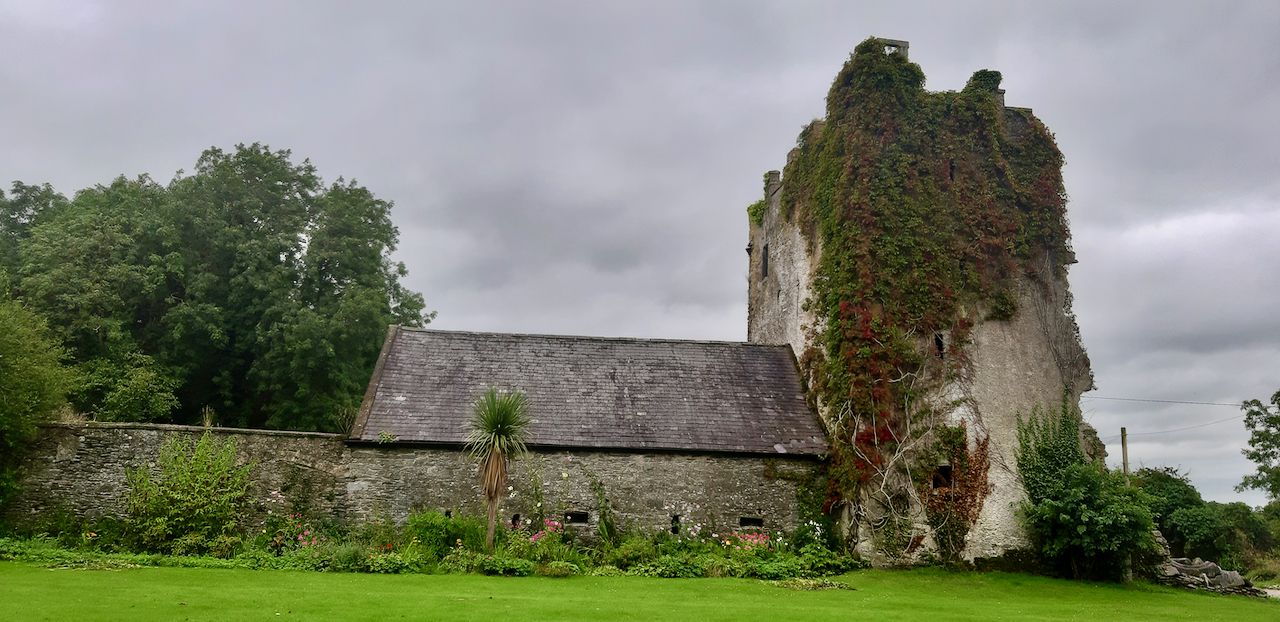
This is an impressive four storey sixteenth century tower-house ruin. We drove over to see it after visiting Harristown on Thursday 22nd August 2019, during Heritage Week.
20190822_134803
Blackhall Castle, County Kildare, August 2019. © Jennifer Winder-Baggot, www.irishhistorichouses.com

Blackhall Castle was constructed by the Eustace family. The Eustaces of Castlemartin, County Kildare, nearby, were a branch of the “old English” FitzEustace  family who held the title of Baron Baltinglass. In the online introduction to an article published in 1955, “The Eustace Family & Their Lands in County Kildare,” by Major-General Sir-Eustace F. Tickell with additions by Ronald F. Eustice [Tickell’s article as published in the Journal of the County Kildare Archaeological Society Volume XI1I, No. 6 (1955)], Ronald Eustice describes the Eustace family’s importance in Irish history:

“[The story of the Eustace family] is a story closely linked with Irish history since the fourteenth century, the story of the birth of a great family and of its gradual disappearance from the County in the storms that have passed through Ireland during the last five-hundred years. 

“This was a family often divided against itself by deeply- held religious differences and by divergent political loyalties, a family whose important members so often chose the losing side: It was for a time perhaps the most powerful in Kildare (except of course the FitzGeralds), with lands scattered from Confey in the north to beyond the county boundary in the south; from the Dublin and Wicklow mountains in the east to Athy and Newbridge in the west. The triangle containing Naas, Ballymore Eustace and Old Kilcullen was almost one large family estate:

“Criche-Eustace  or  Cry-Eustace  it was called. Their castles, especially those at  Ballymore Eustace, Harristown, Castlemartin and Clongowes Wood, guarded the Pale for several centuries, and only fell at last to the guns of Ormonde and Cromwell. It was rare for a jury of county gentlemen to contain no Eustace, and on at least one occasion they formed a majority upon a panel of twelve… The family produced two Lords Deputy, three Lords Chancellor, two Lords Treasurer and the High Sheriff of Kildare on forty-five occasions. With a few notable exceptions they have now almost disappeared from Kildare, and their name has become a rare one in Ireland itself.” [1]

20190822_134417
Blackhall Castle, County Kildare, August 2019. © Jennifer Winder-Baggot, www.irishhistorichouses.com

We drove up the wooded driveway to the castle, which has a later building attached, and is next to a beautiful old country house, now belonging to Jeffrey & Naomi White. The driveway passed the castle and entered a yard bordered by a fine stone wall. From here we were able to approach the back of the castle for a closer look.

20190822_135128
The farmhouse next to the castle, itself probably built in the 1700s! And the stone wall, built with stones that were originally part of the castle. © Jennifer Winder-Baggot, www.irishhistorichouses.com
20190822_134934
Blackhall Castle, County Kildare, August 2019. © Jennifer Winder-Baggot, www.irishhistorichouses.com

We were greeted by a pair of dogs, and Naomi emerged from the house after them. She was very kind and welcoming, and after telling us a little about the ruin, invited us in to her house to tell us a bit more!

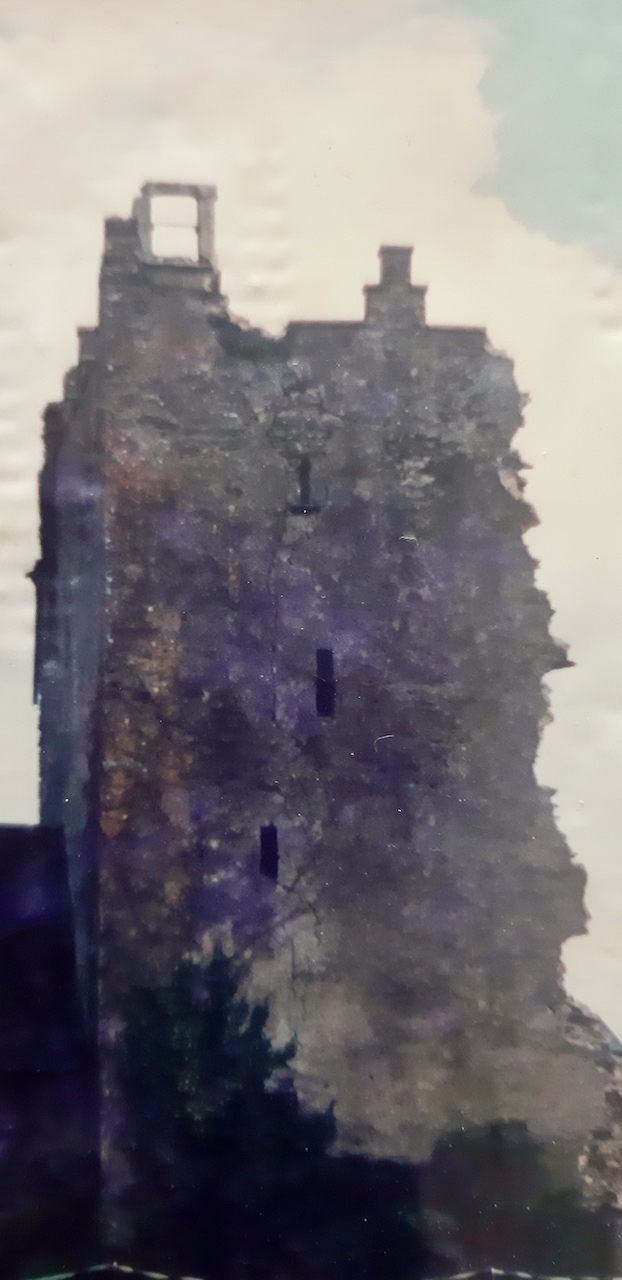
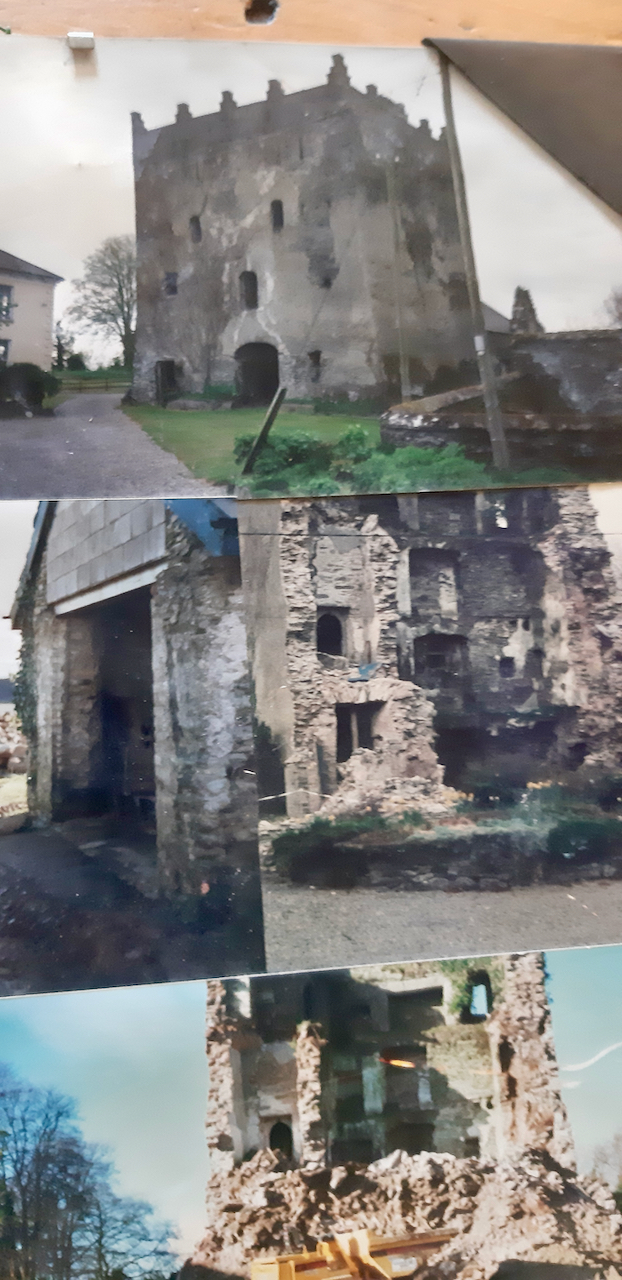
When Jeffrey and Naomi purchased the house, many years ago, the ruin still had its four walls. It was when they were away on a trip to Australia in 1999, leaving their property in the hands of a tenant who lived in the small cottage beside the ruin, that half of the castle came crashing to the ground. A severe storm caused a structural subsidence resulting in the complete collapse of the East section and parts of the North and South walls. [2] A deep loud rumble preceded the fall, and the dogs barked, as if they knew something momentous and disasterous was about to occur. Suddenly, nearly three sides of this huge ancient stone edifice tumbled to the ground, casting its giant rocks into the yard below. Fortunately nobody was injured and the cottage next door, sheltering the terrified tenant, remained unharmed, as did the centuries old farmhouse.

Naomi showed us pictures of the castle before the fall, as it stood when they first acquired the property – see the top photograph in Naomi’s collage:
20190822_140129
Old photographs of Blackhall Castle.
20190822_140125
Old photographs of Blackhall Castle.
20190822_140147
Old photographs of Blackhall Castle.

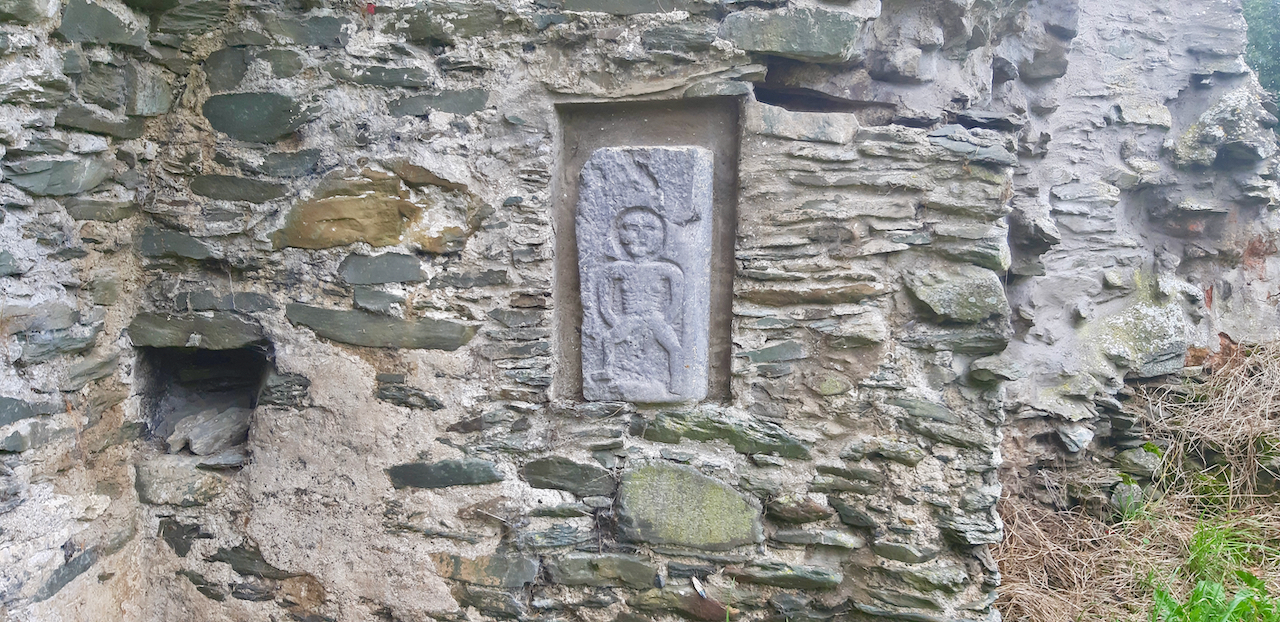
The castle now existed as a one-sided shell next to an enormous heap of stones and rubble. Fortunately, when the Whites began to clear the rubble, they found the Sheelagh-na-Gig, the ancient fertility symbol which appears lewd to our modern eyes, intact. The figure had been inserted originally above the door frame of the castle. It has now been attached back on to the remains of the castle.
20190822_135037
Blackhall Castle, County Kildare, August 2019. © Jennifer Winder-Baggot, www.irishhistorichouses.com

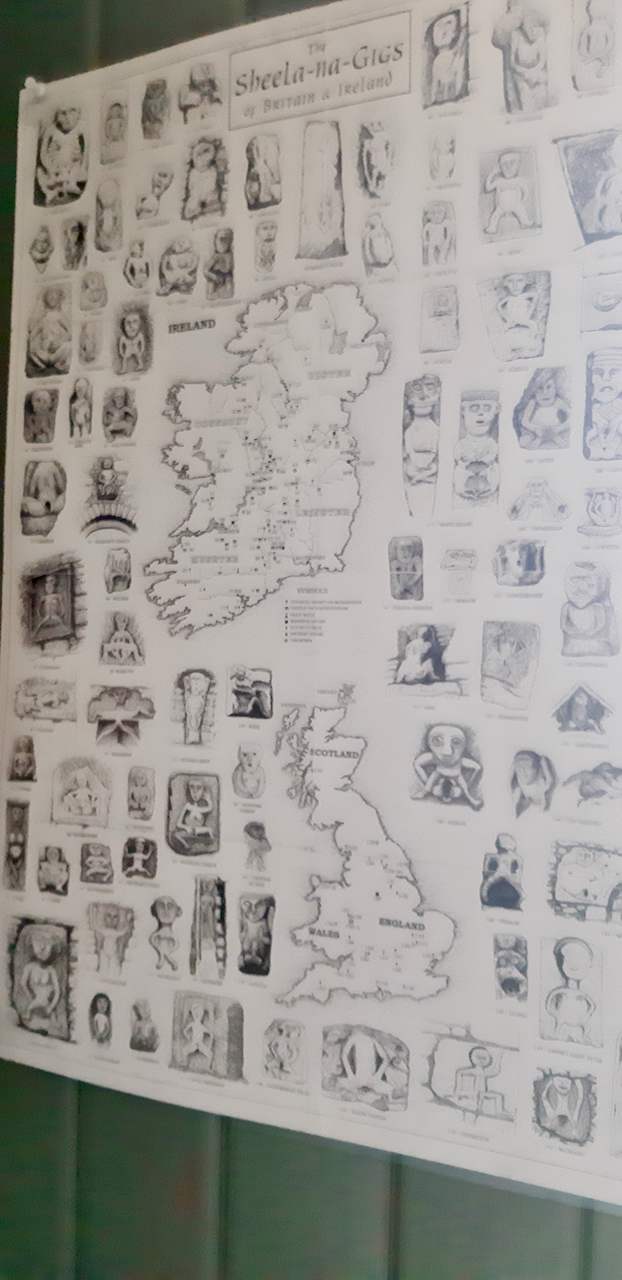
Naomi has an informative poster of Sheelagh-na-gigs in Britain and Ireland, which includes her Sheelagh-na-gig:
20190822_140457
Blackhall Castle, County Kildare, August 2019.

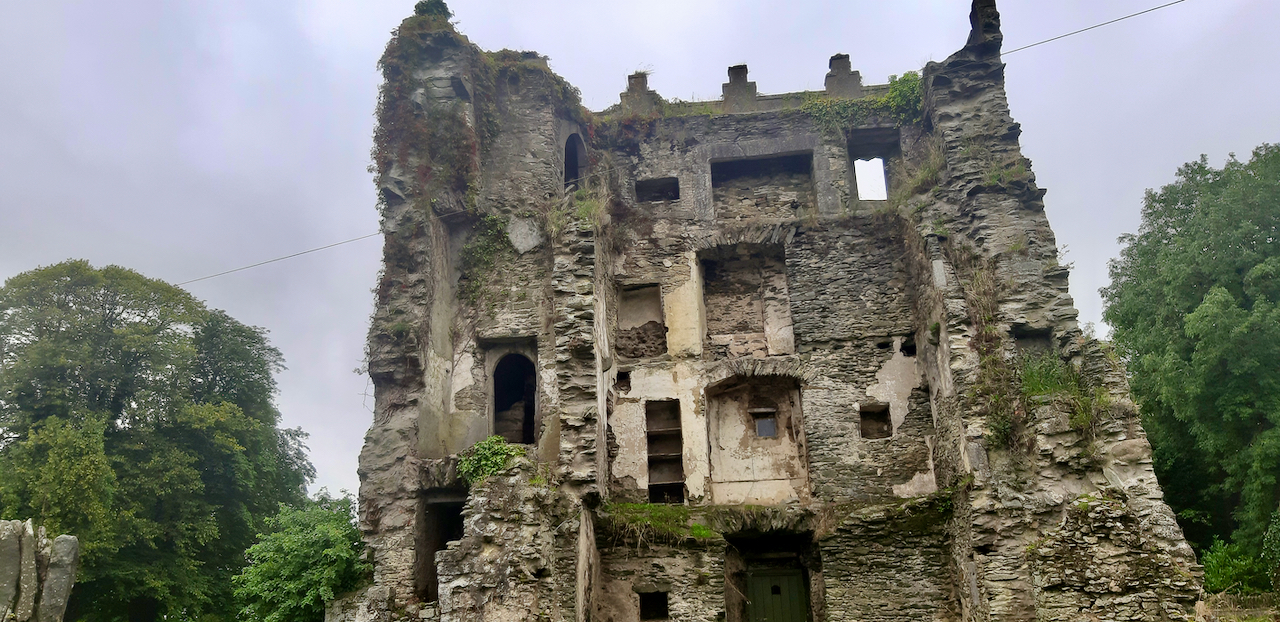
The remains of the castle have been made secure, which cost tens of thousands of euro, undertaken by the Whites with the help of a government grant. There is still much work to be done. Clearing the rubble was a massive task. The stone walls around the yard were built by an expert using some of the castle stones.
20190822_134928
Blackhall Castle, County Kildare, August 2019. © Jennifer Winder-Baggot, www.irishhistorichouses.com

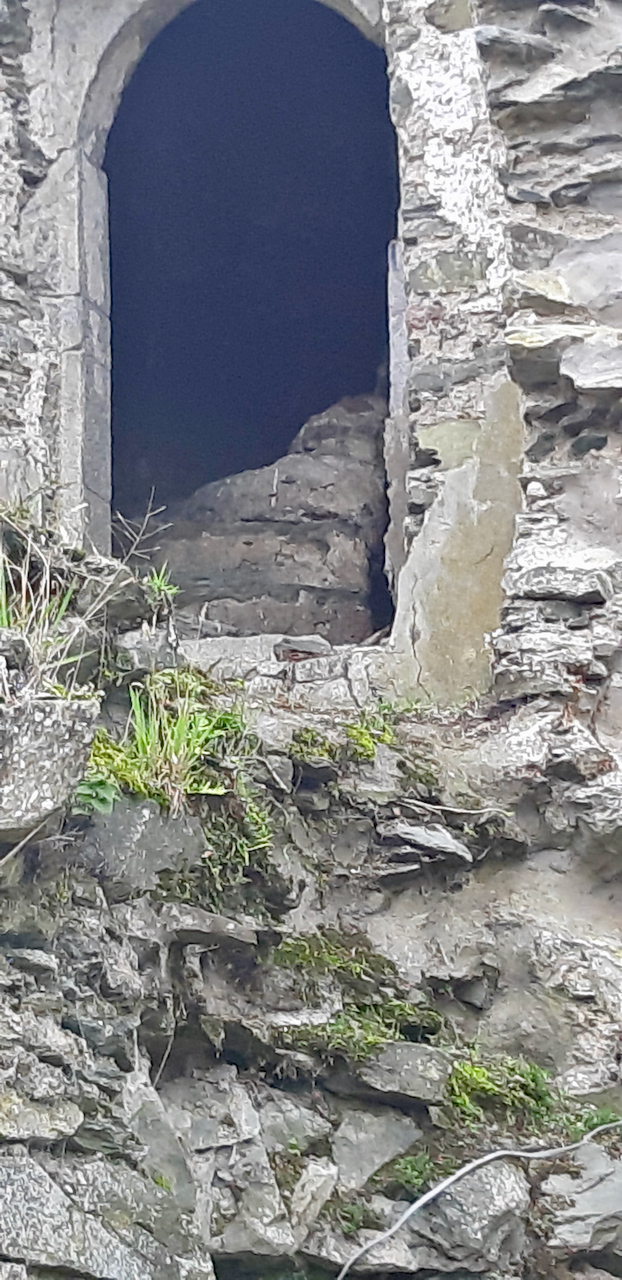
One can see where the floors of the castle were situated, the thickness of the walls, and the windows and fireplaces. I was particularly thrilled to see the intact round staircase, although we could not climb it, for safety reasons.
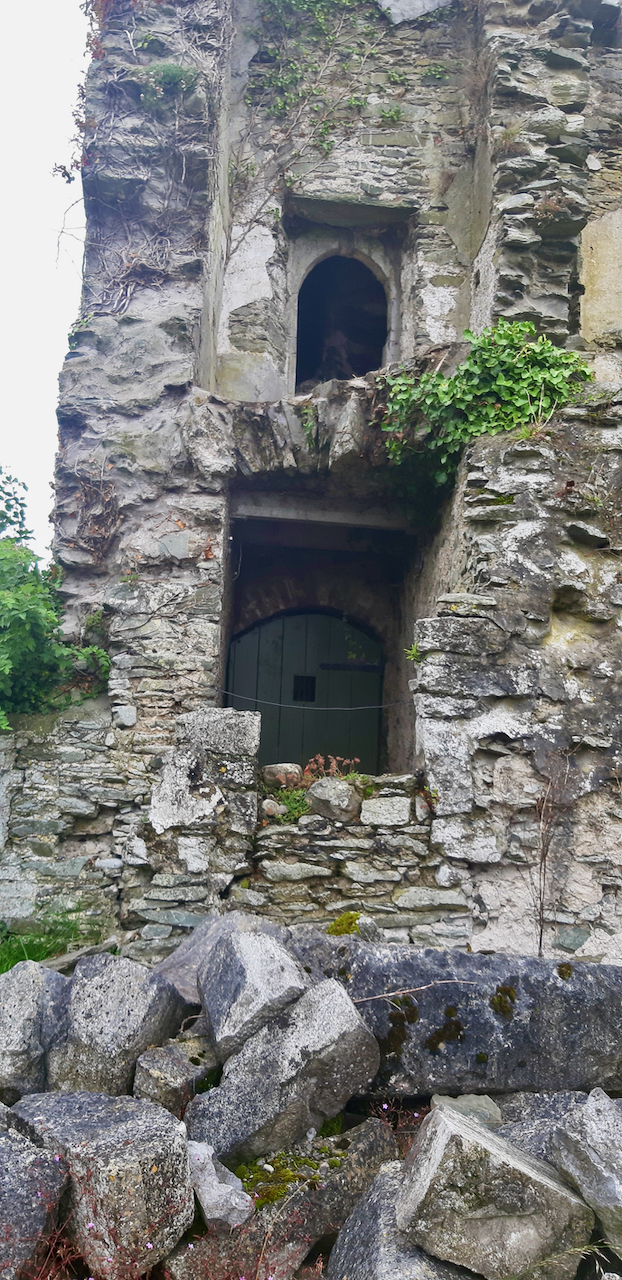
20190822_135201
Blackhall Castle. © Jennifer Winder-Baggot, www.irishhistorichouses.com
20190822_135144
Blackhall Castle. © Jennifer Winder-Baggot, www.irishhistorichouses.com
20190822_135151
Blackhall Castle, County Kildare, August 2019. © Jennifer Winder-Baggot, www.irishhistorichouses.com

The Eustace family, according to Ronald Eustice, were a junior branch of the Le Poer family, whom I came across in my trip to Waterford, in Curraghmore (and mention of them in Salterbridge, in relation to Powerscourt, another Section 482 property). Four brothers Le Poer, of Norman origin, landed in Ireland with Henry II in 1171, and were granted lands in Ossory (Waterford). The stag with the crucifix between its antlers that tops Curraghmore is related to Saint Eustachius, a Roman centurion of the first century who converted to Christianity when he saw a miraculous stag with a crucifix between its antlers. This saint, Eustace, was probably the Patron Saint of the Le Poers since their family crest is the St. Eustace stag. I did not realise that St. Eustace is also the patron saint of Newbridge College in Kildare, where my father attended school and where for some time in the 1980s and 90s my family attended mass!

IMG_0992
See the stag on the top of the crest on the top left, of this slip of paper I found in my father’s memorabilia from school. © Jennifer Winder-Baggot, www.irishhistorichouses.com

The Eustace line of the Le Poer family are descended from Eustace le Poer, Baron of Kells and a Justice Itinerant in 1285. I’m familiar with the term “Justice Itinerant” as a Robert Bagod, whom I hope is my ancestor, also served in this position in 1274. It was a judge who had to travel to courts in various parts of the country. Robert Bagod ended up living in Limerick. According to the article, Eustace le Poer’s son Arnold took the name FitzEustace, which changed to Eustace soon after the introduction of surnames in 1465. [see 1] Ronald Eustice writes of the move of the Eustace ancestors into County Kildare:

By 1317, Arnold FitzEustace Le Poer certainly owned Castlemartin and the neighbouring townlands of Kilcullen, Brannockstown and Nicholastown, all just south of the Liffey. We also know that a FitzEustace was settled at Castlemartin before 1330; perhaps he was the Robert FitzEustace who was Lord Treasurer of Ireland in l 327. 

We can thus assume with a fair degree of certainty that the Eustace estates in County Kildare originated at least as early as the start of the fourteenth century, (they had been granted lands near Naas in 1355) and were based upon the family stronghold of Castlemartin at the great bend in the Liffey, and that this had been built by a member of a junior branch of the powerful Le Poer family from Waterford, who had been granted or had seized lands in Kildare. One of these FitzEustaces founded the Dominican Priory at Naas in 1356, with its church dedicated to St. Eustachius.”

Ronald Eustice continues:

“Calverstown was occupied by the Eustaces at a very early date when they built their Blackhall Castle south of the present village. … In 1484 and again in 1493, a Richard Eustace of Kilgowan (just east of Calverstown) was High Sheriff.

Both Calverstown and Gormanstown were owned by the Viscounts Baltinglass, and Roland [c. 1505-1578], later the 2nd Viscount, lived at the latter while his father was alive and occupying Harristown. At this time Calverstown was leased to a William Eustace, a juror in 1536. Both Calverstown (which contained “two castles prostrate”) and Gormanstown were forfeited after the Baltinglass rebellion, but Calverstown was re-granted to John ([Eustace] son of William of Castlemartin), with Harristown and Rochestown, and this grant was confirmed to his son Maurice in 1627.”

20190822_134842
Blackhall Castle, County Kildare, August 2019. © Jennifer Winder-Baggot, www.irishhistorichouses.com

I like making the connection to Harristown, which we had visited earlier in the day! Ron Eustice tells us that Sir Maurice Eustace gave Calverstown to his daughter Mary (d. 1678), either at the time of her marriage to Sir Richard Dixon, or upon his death. Calverstown passed to their son, Robert Dixon, later Colonel, and M.P. for Harristown from 1703-1713. On his death in 1725 it passed to his sister Elizabeth, who had married Kildare Borrowes, 3rd Baronet of Giltown, M.P. for Harristown in the Irish House of Commons in 1721. Their property, which would have included Blackhall Castle, had to be sold in 1747, however, to pay debts. Eustice notes that nothing remains of the occupation of Eustaces in either of their estates except Blackhall Castle. Wikipedia states that Sir Kildare Borrowes lived in Barretstown Castle, which could be why he was able to sell Blackhall. I’m not sure who owned (and perhaps occupied) Blackhall after that, before the Whites.
Donation

Help me to fund my creation and update of this website. It is created purely out of love for the subject and I receive no payment so any donation is appreciated! For this entry I paid for petrol to drive to our destination from Dublin.

€10.00

[1] http://www.roneustice.com/Family%20History/IrishFamiliessub/Kildare.html

[2] http://irelandinruins.blogspot.com/2014/09/blackhall-castle-co-kildare.html

© Jennifer Winder-Baggot, www.irishhistorichouses.com
The Old Glebe, Newcastle-Lyons, County Dublin – section 482

Open dates in 2026: May 1-31, June 1-30, Mon-Sat, Aug 15-23, 10am-2pm

Fee: Free

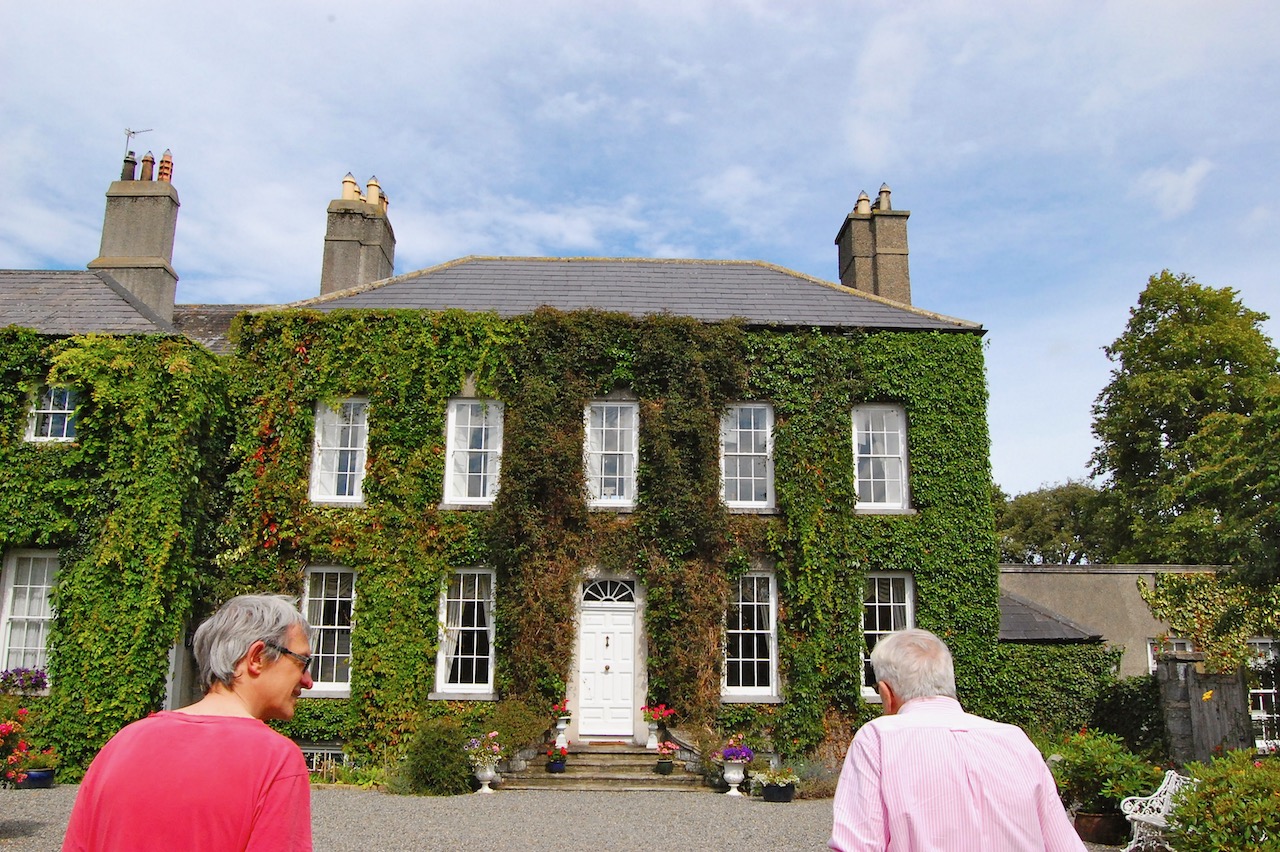
I visited this property in 2012 during Heritage Week with my husband Stephen and my Dad. We were welcomed by the owner, Frank Kerins. A glebe house is one on the grounds of a church providing accommodation for the clergy. This house is next to Saint Finian’s, an ancient church from the fifteenth century, but no longer houses its vicar and is in private ownership. St. Finian’s is now a Church of Ireland and still holds weekly services. There’s a beautiful view of the church from the back of the house, where one can see the restored Gothic “pointed-arched window with flowing tracery” [1] through another arch, and behind, the church tower.

“The Old Glebe,” Newcastle-Lyons, County Dublin. Photograph © Jennifer Winder-Baggot, www.irishhistorichouses.com
The older part of the house dates from around 1720, and is a five bay two storey block over basement [2].

[17/5/20: I have stumbled across a reference while looking up historic houses in Dublin, while googling Athgoe Castle. This reference gives a little detail about the Glebe House, which is referred to as the Rectory for St. Finian’s Church: The Archdeacon of Glendalough, Thomas Smyth, who became Archdeacon in 1722, built the rectory. The east window of the church bears his initials and the date 1724. [3] He was son of Thomas Smyth Bishop of Limerick.]

An addition from about 1820 has, according to the National Inventory of Architectural Heritage website, two-bay rere elevation, and single-storey extensions to east. [4]

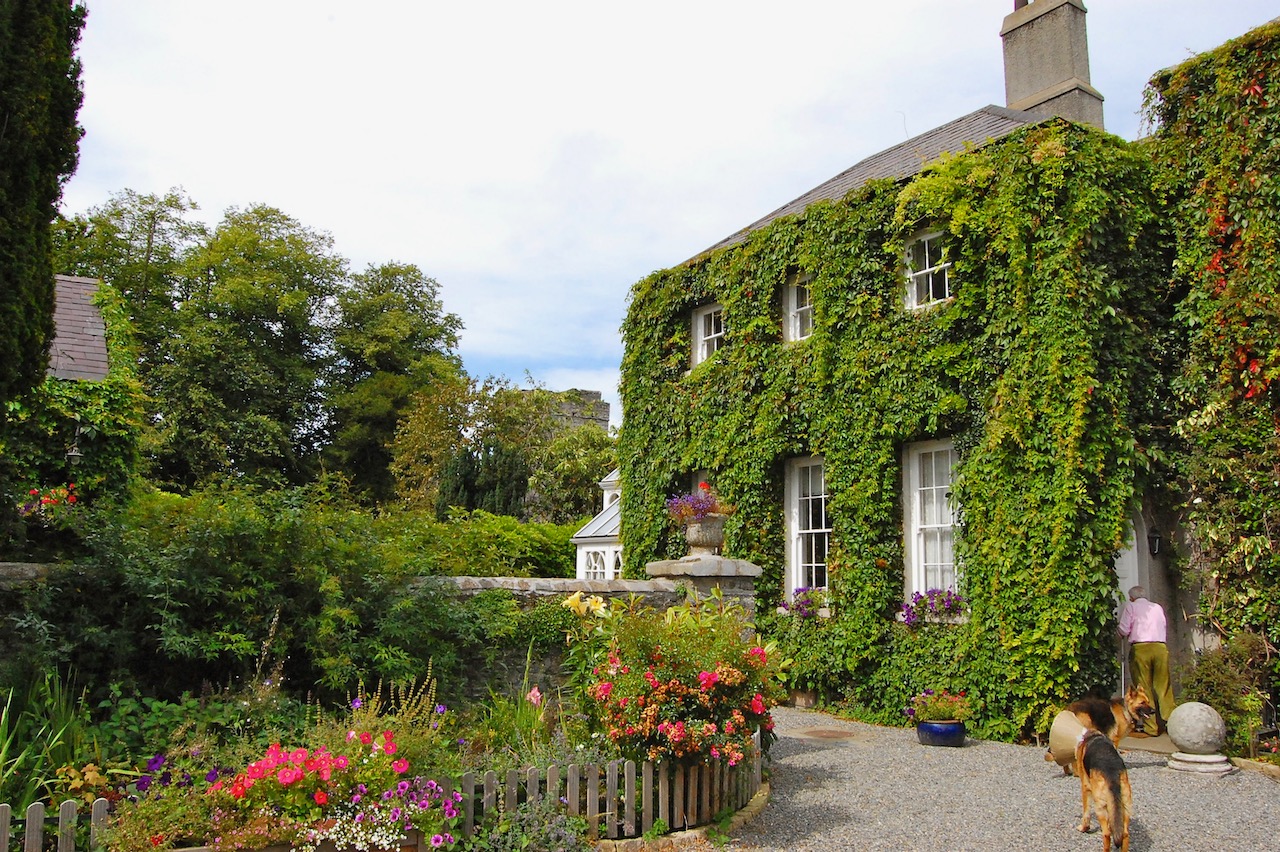
Continuation of the front of the house; the gardens were looking splendid on the August day on which we visited, the flowers in full array. Photograph © Jennifer Winder-Baggot, www.irishhistorichouses.com
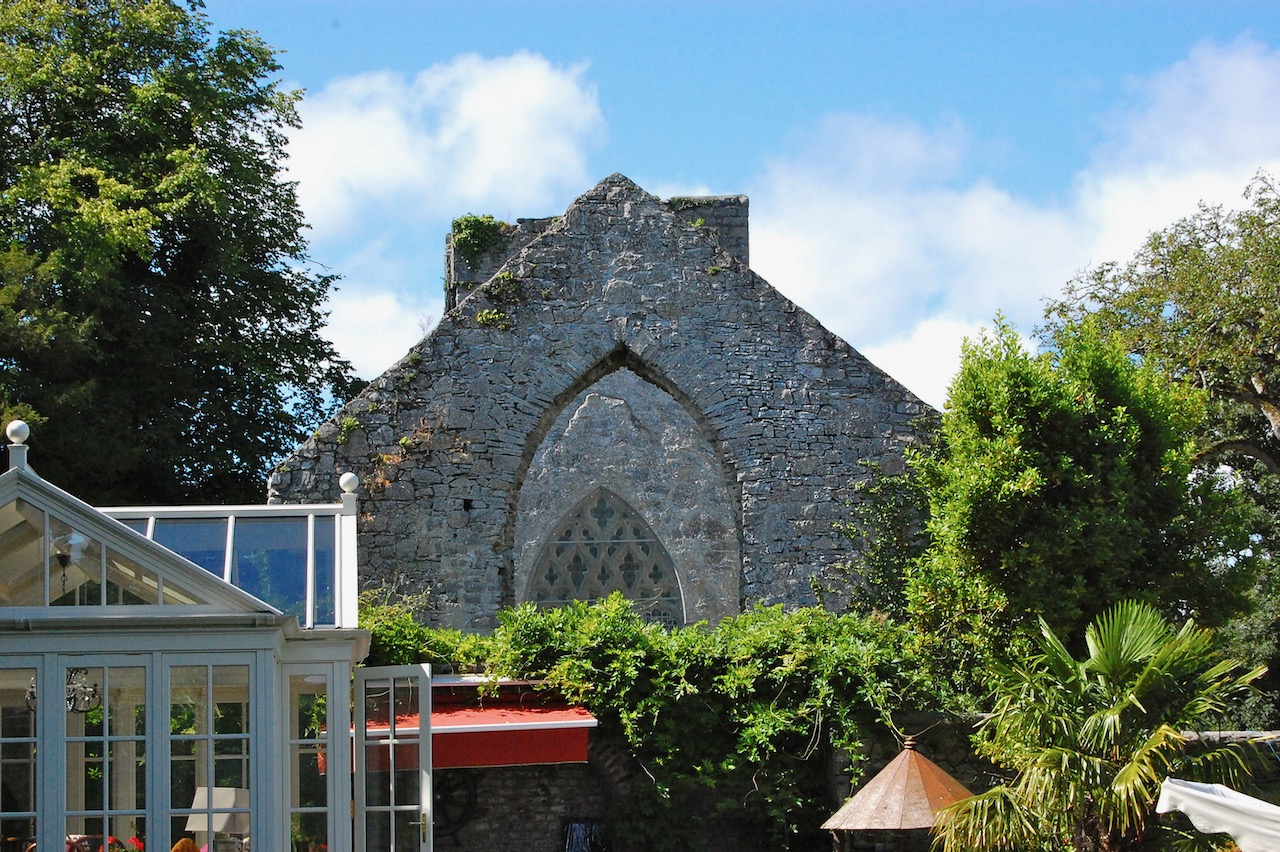
St Finian’s church, Newcastle Lyons (now Protestant). Photograph © Jennifer Winder-Baggot, www.irishhistorichouses.com
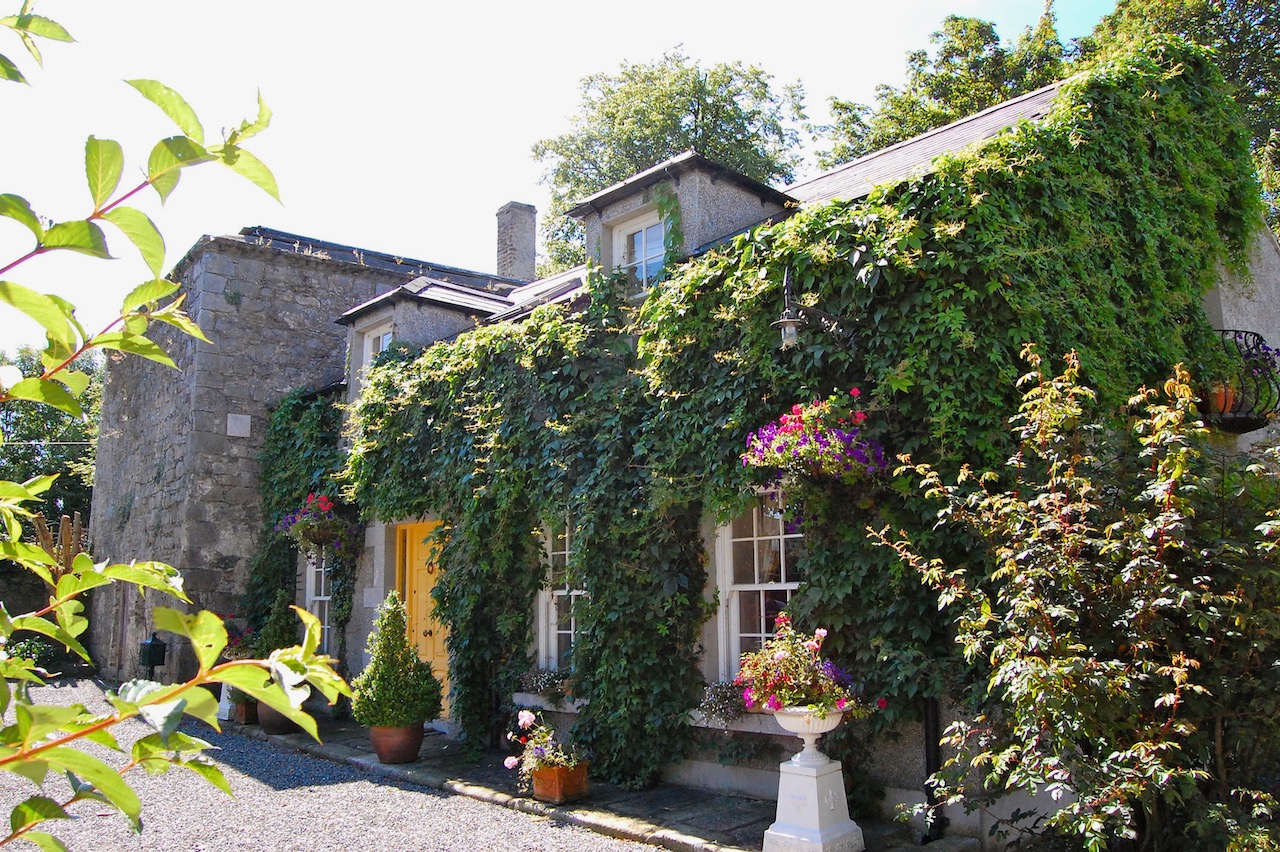
A second tower stands in front of the Glebe house, and I immediately fell in love with the attached 1727 Mews house. The Mews house contains accommodation and an artist’s studio. The deep yellow door, white painted divided pane sash windows, ivy and flowers won my heart.

The Old Glebe, Mews House. Photograph © Jennifer Winder-Baggot, www.irishhistorichouses.com
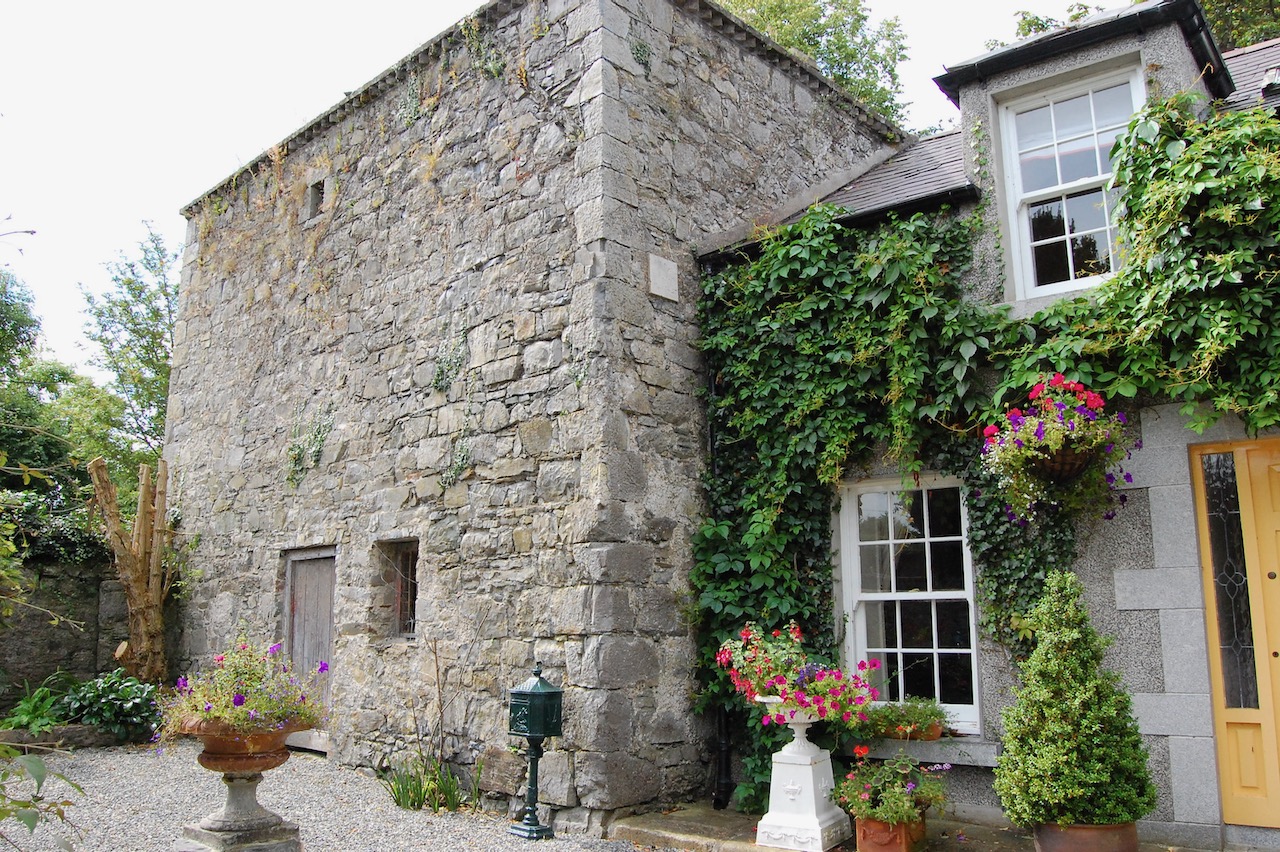
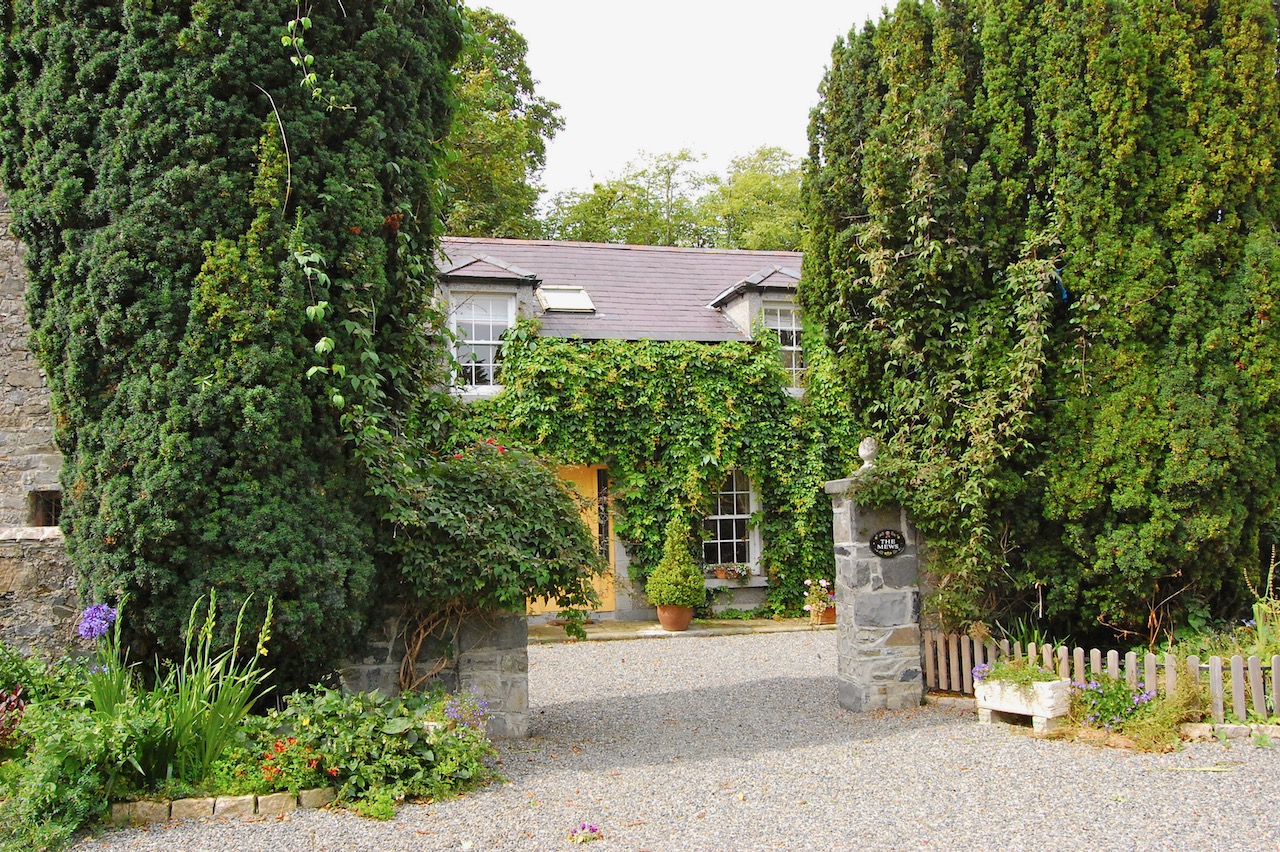
Mews house at the Old Glebe, Newcastle. Photograph © Jennifer Winder-Baggot, www.irishhistorichouses.com
“The Old Glebe,” Newcastle-Lyons, County Dublin. Photograph © Jennifer Winder-Baggot, www.irishhistorichouses.com
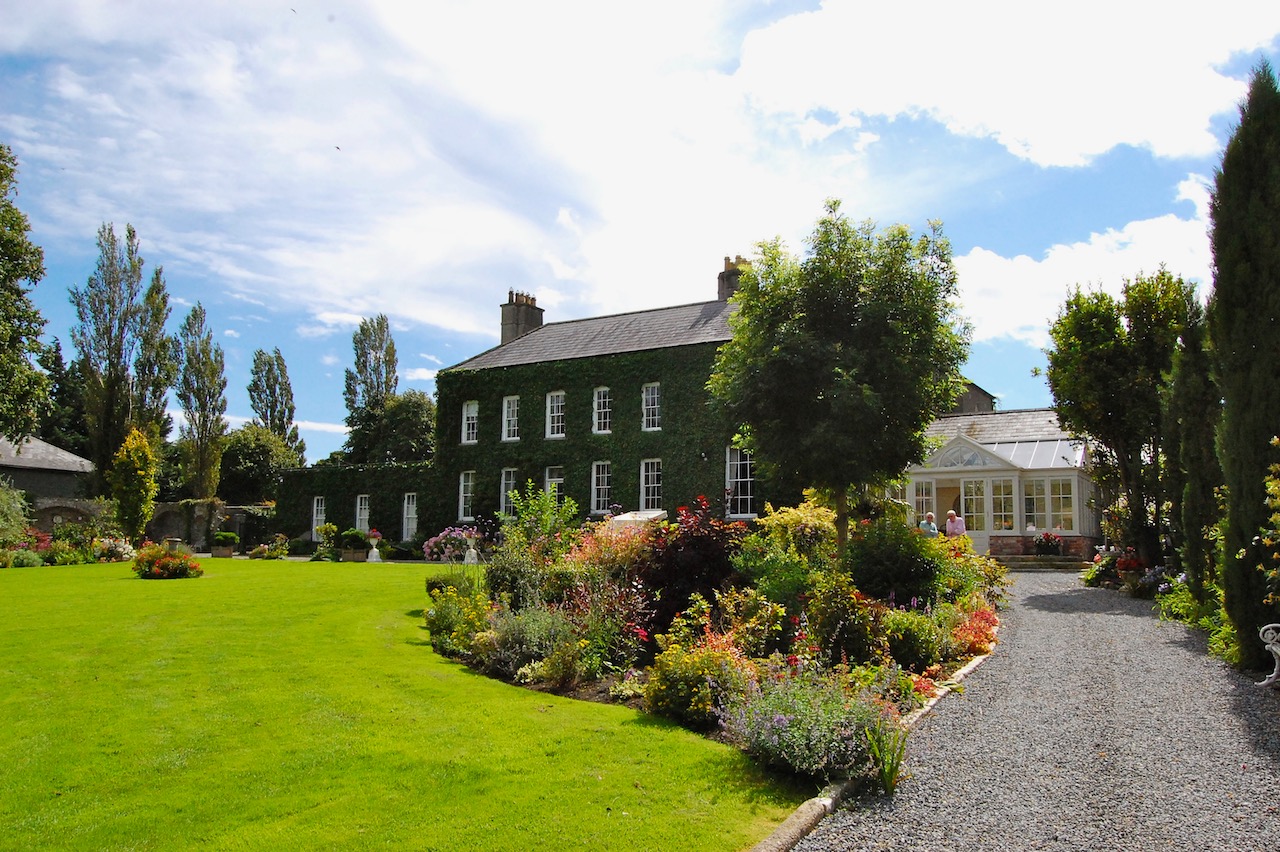
Mr. Kerins is enthusiastic about the house and is familiar with the history, as of that of the tower and adjoining church. He has written a book, published in 2017, called Some views of the Old Glebe House, Newcastle.

There is an article that was in the Irish Times when the house was for sale in 1999, by Orna Mulcahy. She overestimates, I believe, the age of the house. [5]:

One of the oldest houses in south Dublin, it was built by a vicar of Rathmichael, the Reverend Simon Swayne, in the mid-1600s. The original two-storey over basement house was extended in the 18th and 19th centuries and the current owners have made their own contribution in the form of a small conservatory overlooking the gardens. The property includes an old cut-stone mews house.

Maurice Craig in his Classic Irish Houses of the Middle Size, p. 66, pictures “Newcastle Rectory, Co. Dublin” and it looks like this Glebe House. He says it is built in 1727 by Archdeacon Smyth. Another article in the Irish Times claims that it was built in 1710. [6]

I was not allowed to take photographs inside the house, which is usual for the section 428 properties. Mr. Kerins gave us a tour. We entered the large front hall, impressively furnished and finished. This open into the long drawing room through a door with fanlight. Another door from the hall leads to a dining room. Through a hall, one steps into a lower level of the house and to the timber conservatory. My father and Mr. Kerins chatted about furniture, as my Dad’s father was an antiques dealer, while I envied the occupants of this beautiful, comfortable, elegant home. There is a beautiful wood-panelled sitting room.

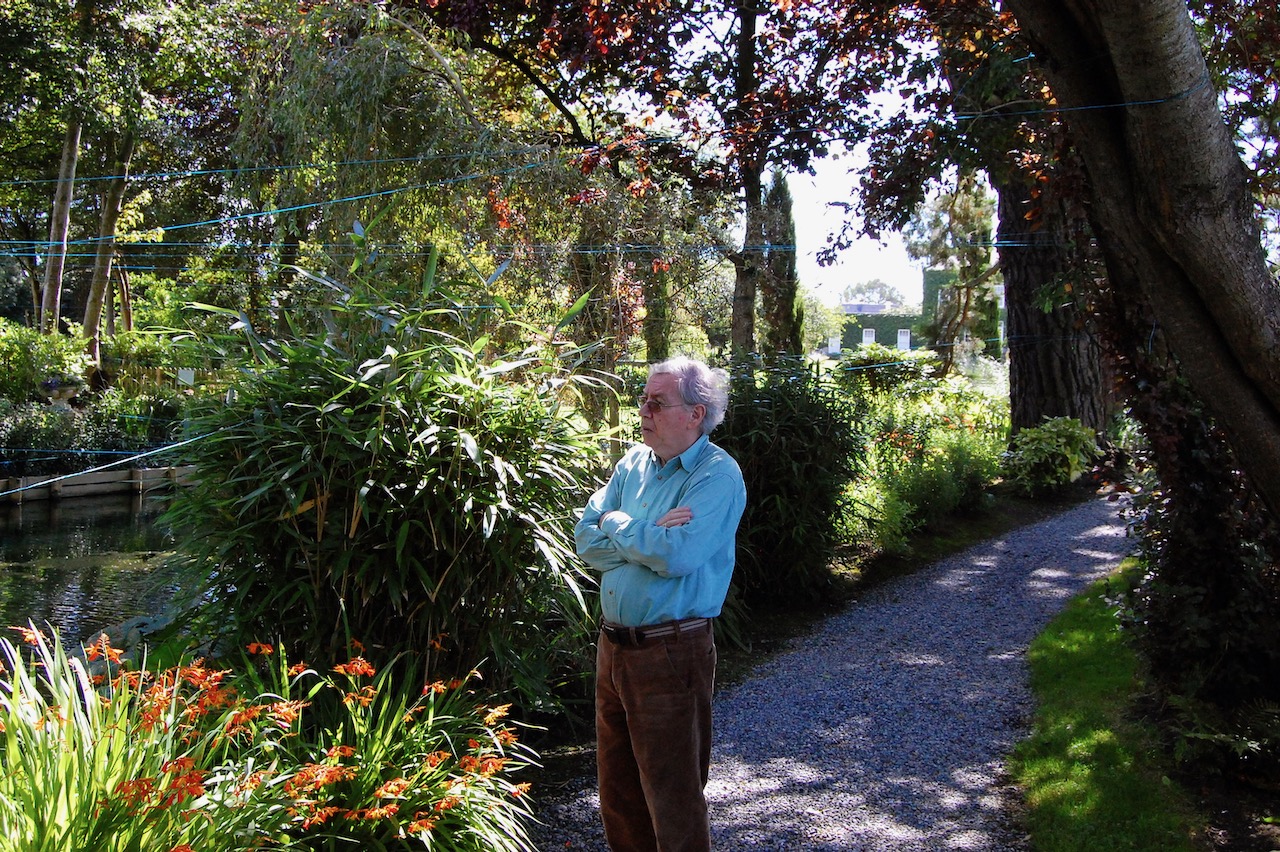
I did, however, take many photographs of the splendid garden at the back of the house, which leads down to a lake.

Back of “The Old Glebe” Newcastle, County Dublin. Photograph © Jennifer Winder-Baggot, www.irishhistorichouses.com
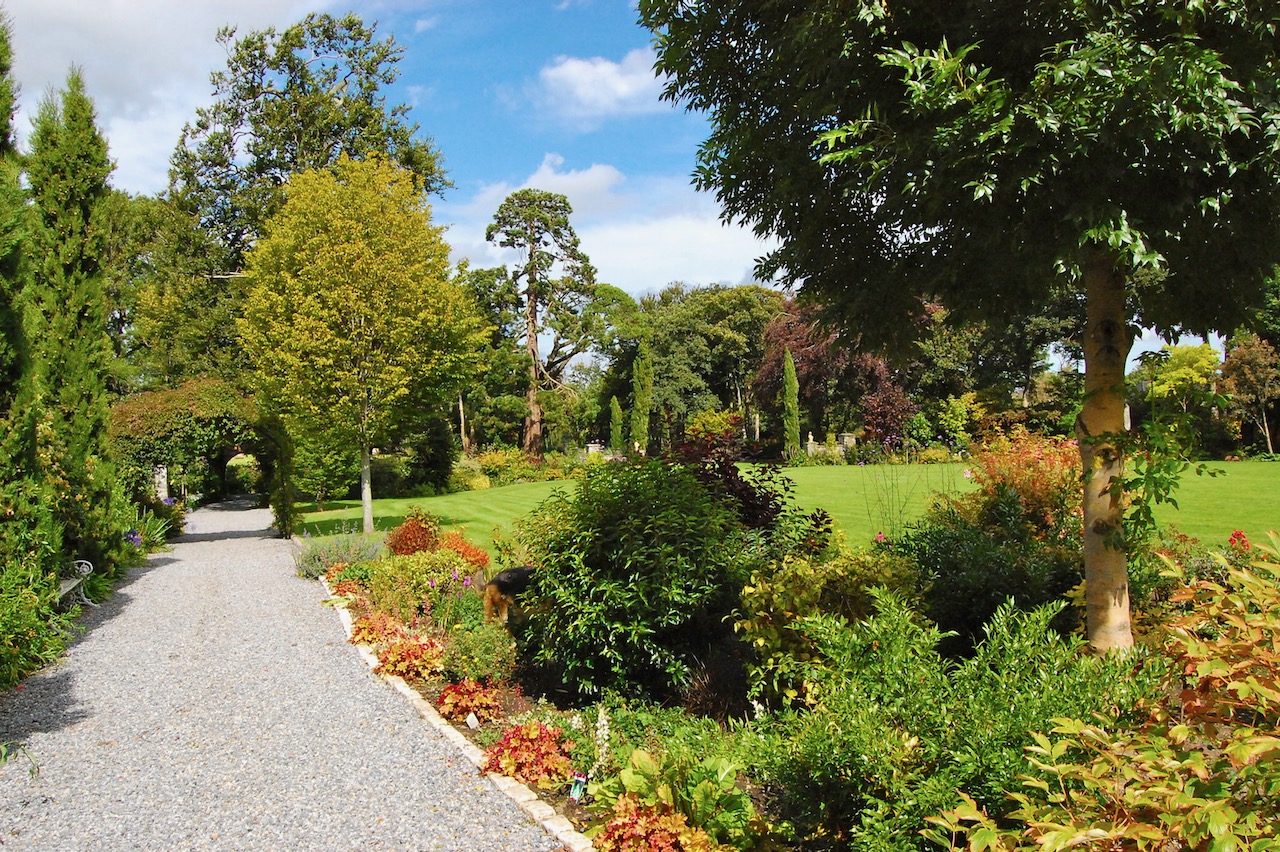
Looking down the garden from the back of the house. Photograph © Jennifer Winder-Baggot, www.irishhistorichouses.com
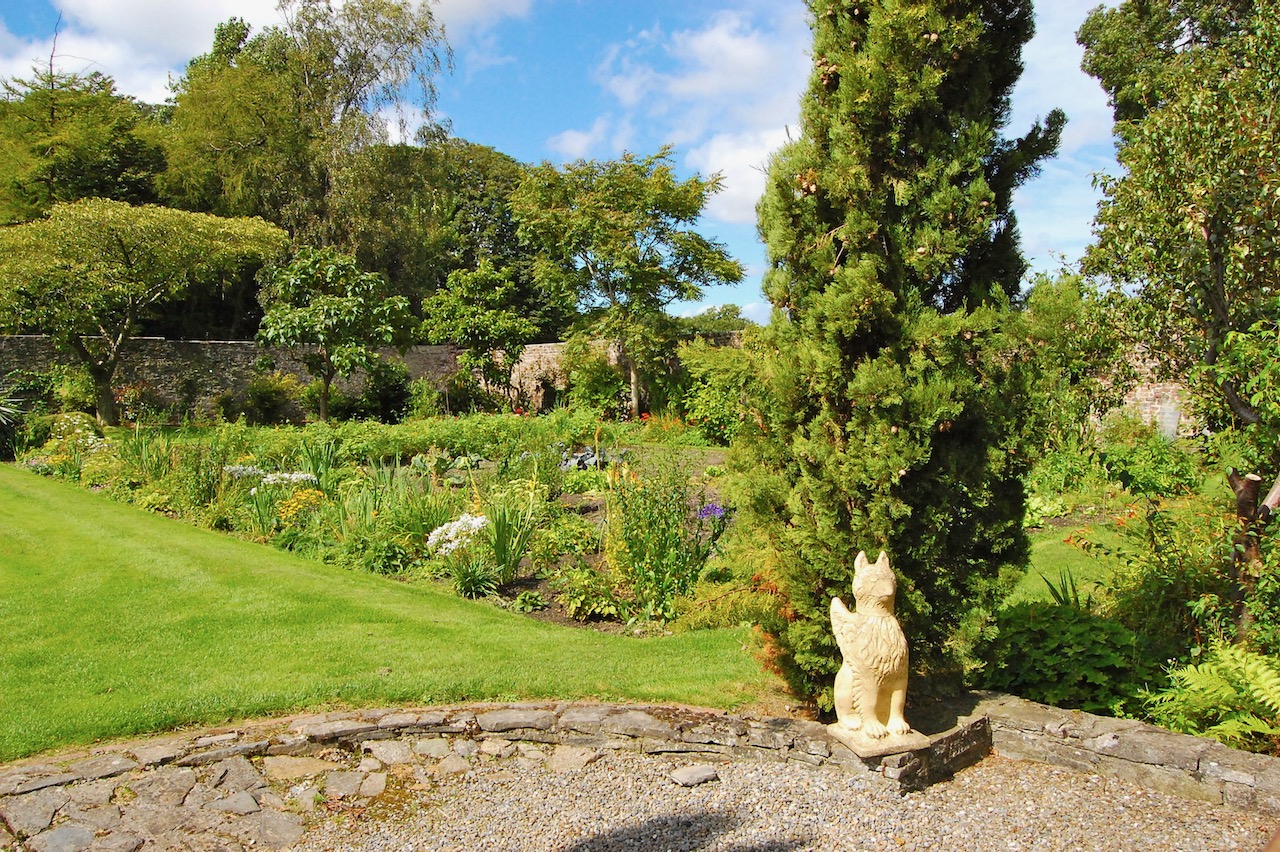
“The Old Glebe,” Newcastle-Lyons, County Dublin. Photograph © Jennifer Winder-Baggot, www.irishhistorichouses.com
The second article from the Irish Times continues:

The Old Glebe used to belong to the Church of Ireland. The church dates back to the 13th century but the present house was built in 1710. The current owner, Frank Kerins, bought it in 1989. In a corner of the garden (open to the public in summer) surrounded by benches, stands a wonderfully wide and healthy yew. Like any tree, its age is up for dispute. With a bulging girth of five metres, Fennell estimates it at 500 years plus. “Some of the branches have been lifted, but it’s probably Dublin’s oldest tree.” Kerins is adamant it is older. “ There are local references to it and to Jonathan Swift – it’s definitely over 700 years.”

Fennell is conservative when estimating age. “Yews are probably older than most people think. Some time in the future they will be able to nail it down with new technology and humble previous opinions.”

In the meantime, Kerins, like others before him, enjoys his tree. ‘We’ve restored the gardens and the house. The wildlife and shrubs have returned. We love to sit under the tree and take a glass of wine and imagine what Swift must have been thinking when he sat here 300 years ago. He wrote to his friends and he also had a girlfriend in the area, from Celbridge.’ ” [he must mean “Vanessa,” or Esther Vanhomrigh, who lived in Celbridge Abbey in County Kildare].

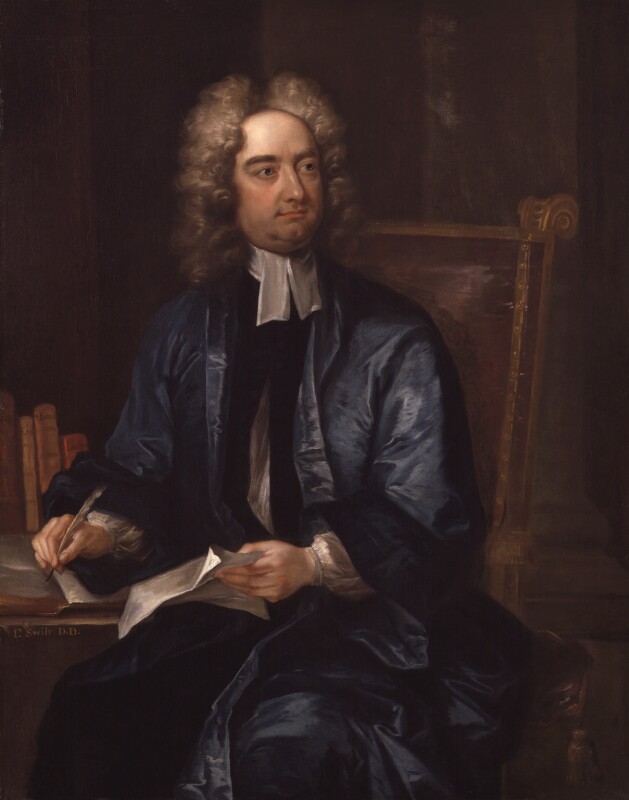
Jonathan Swift by Charles Jervas circa 1718, National Portrait Gallery 278.
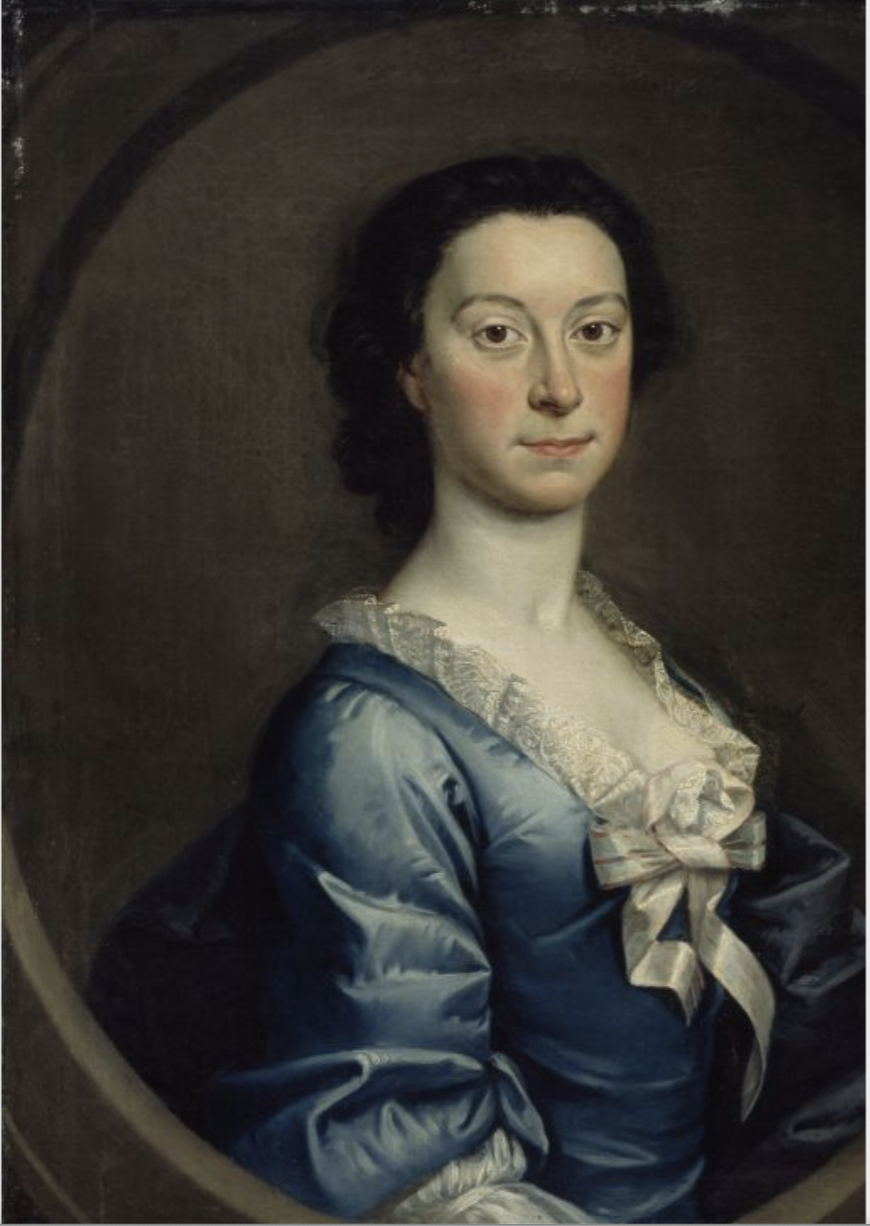
Possibly a portrait of Hester Van Homrigh (1690-1723), Jonathan Swift’s “Vanessa,” courtesy of National Gallery of Ireland.

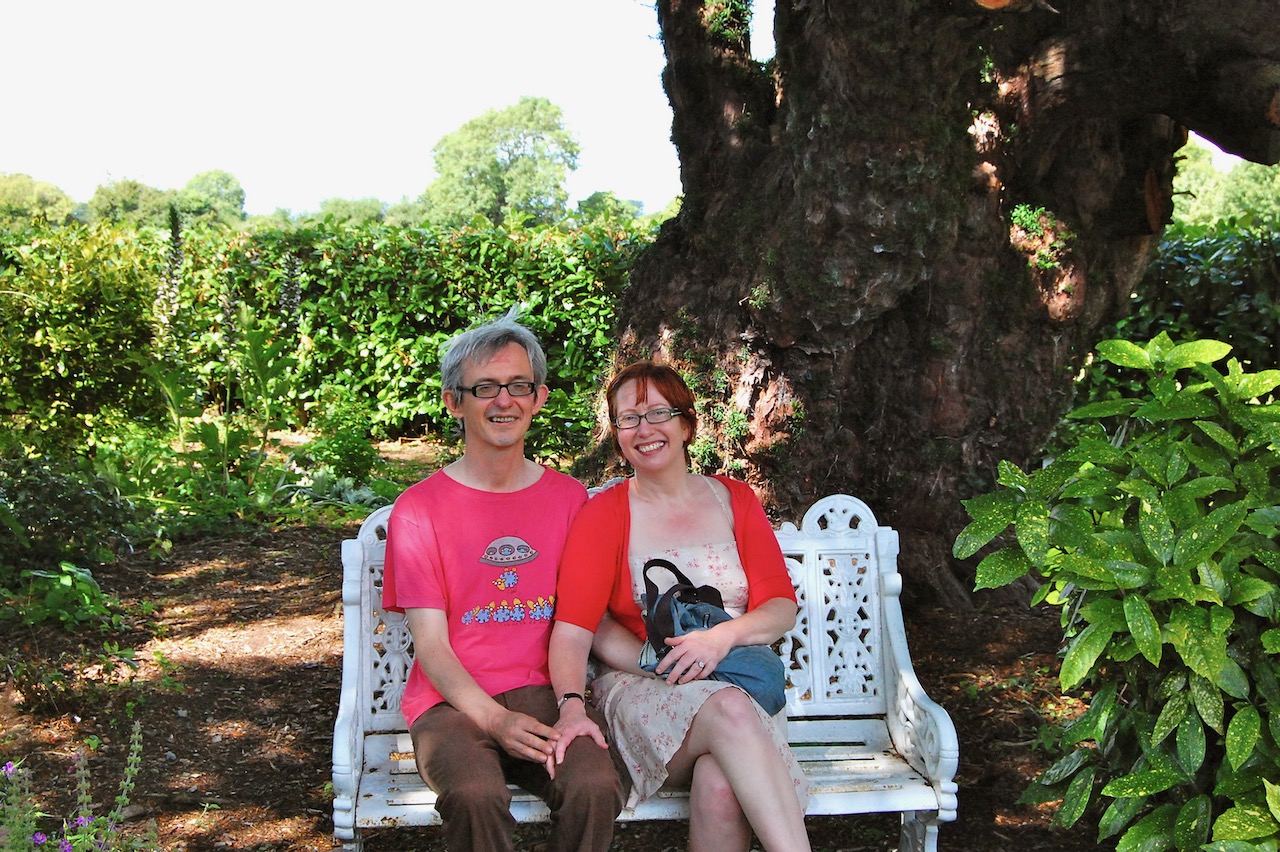
Stephen and I sat beneath this “Dean’s Tree”, under which Jonathan Swift, Dean of St. Patrick’s Cathedral, enjoyed writing before his death in 1745. Perhaps he sat here to write a letter to Stephen’s ancestor, the Reverend John Winder, who succeeded Jonathan Swift as Vicar of Kilroot, County Armagh.

Stephen and Jen at the “Dean’s Tree” (Jonathan Swift sat on that bench!). Photograph © Jennifer Winder-Baggot, www.irishhistorichouses.com
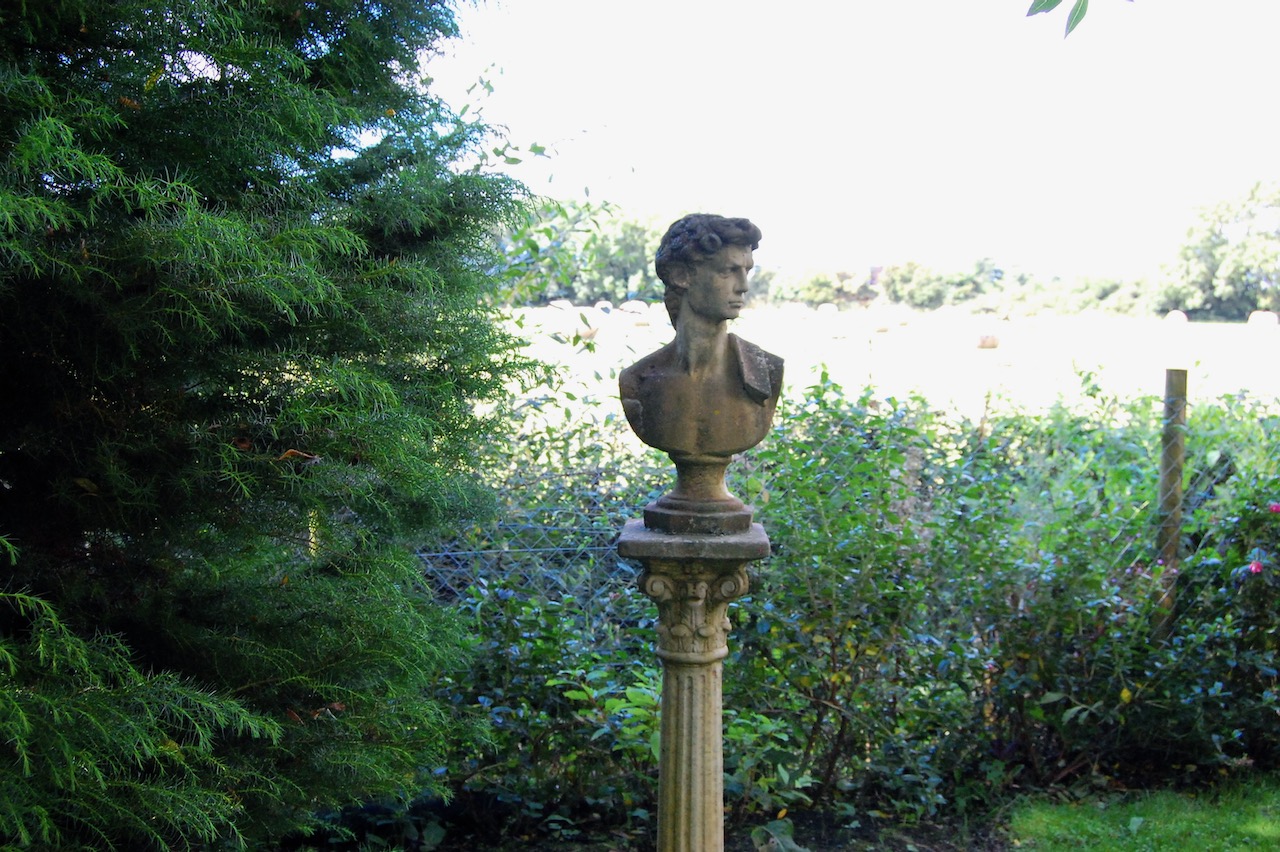
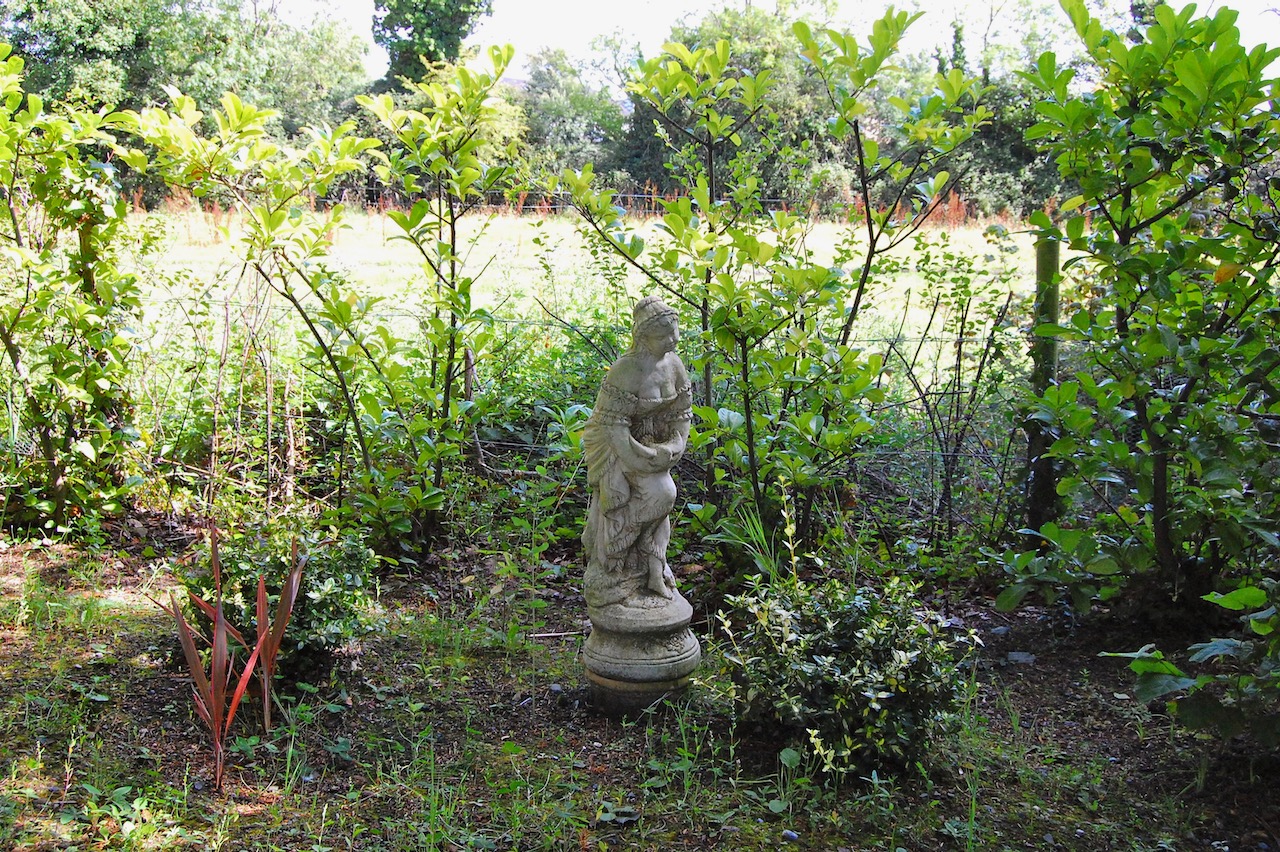
I loved the romantic statues placed in the garden.

At the Old Glebe. Photograph © Jennifer Winder-Baggot, www.irishhistorichouses.com
“The Old Glebe,” Newcastle-Lyons, County Dublin. Photograph © Jennifer Winder-Baggot, www.irishhistorichouses.com
The picturesque lake completes the beauty of the garden with its deep peace.

By the ornamental lake at The Old Glebe, Newcastle, County Dublin. Photograph © Jennifer Winder-Baggot, www.irishhistorichouses.com
My father observes the lake and its small fountain. Photograph © Jennifer Winder-Baggot, www.irishhistorichouses.com

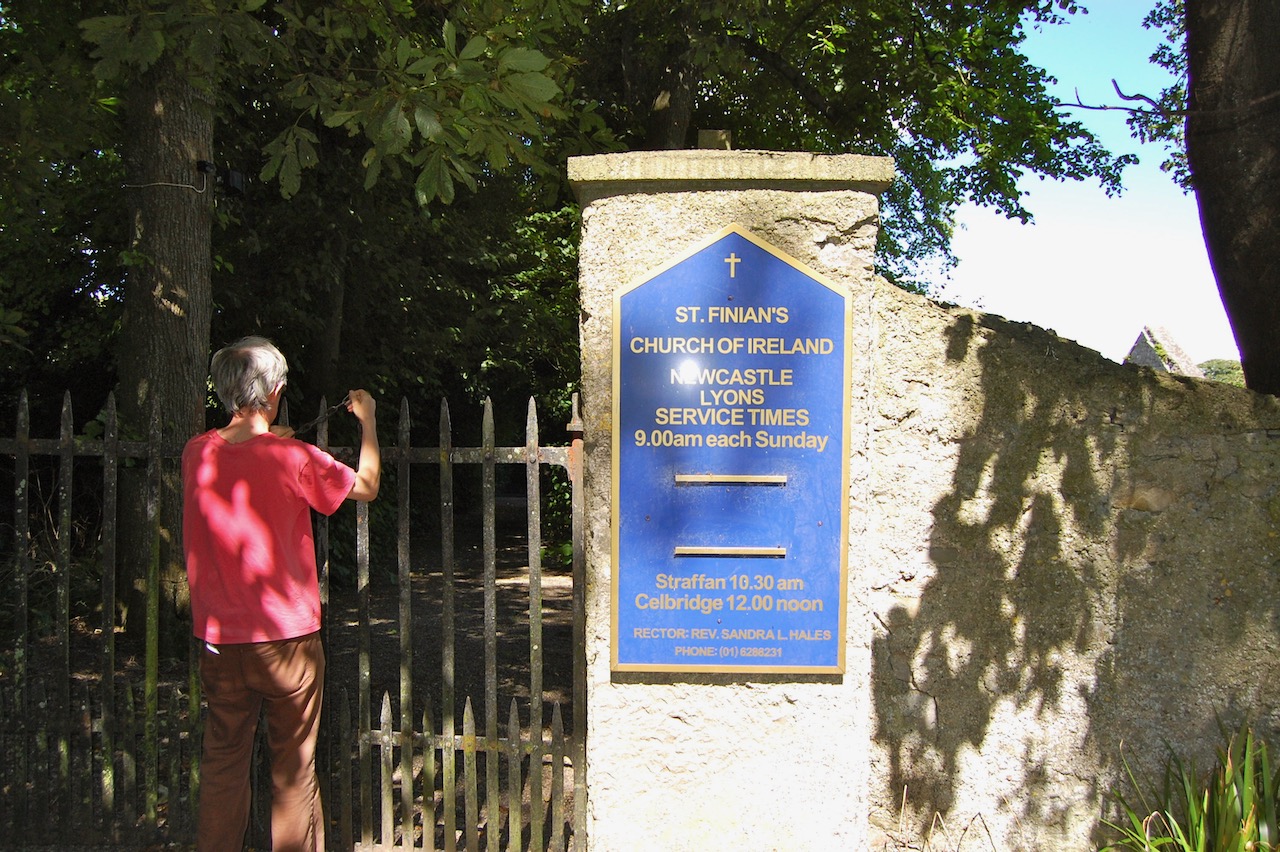
After we said goodbye to Mr. Kerins, we went to explore the church nextdoor. The National Inventory describes it [1]:

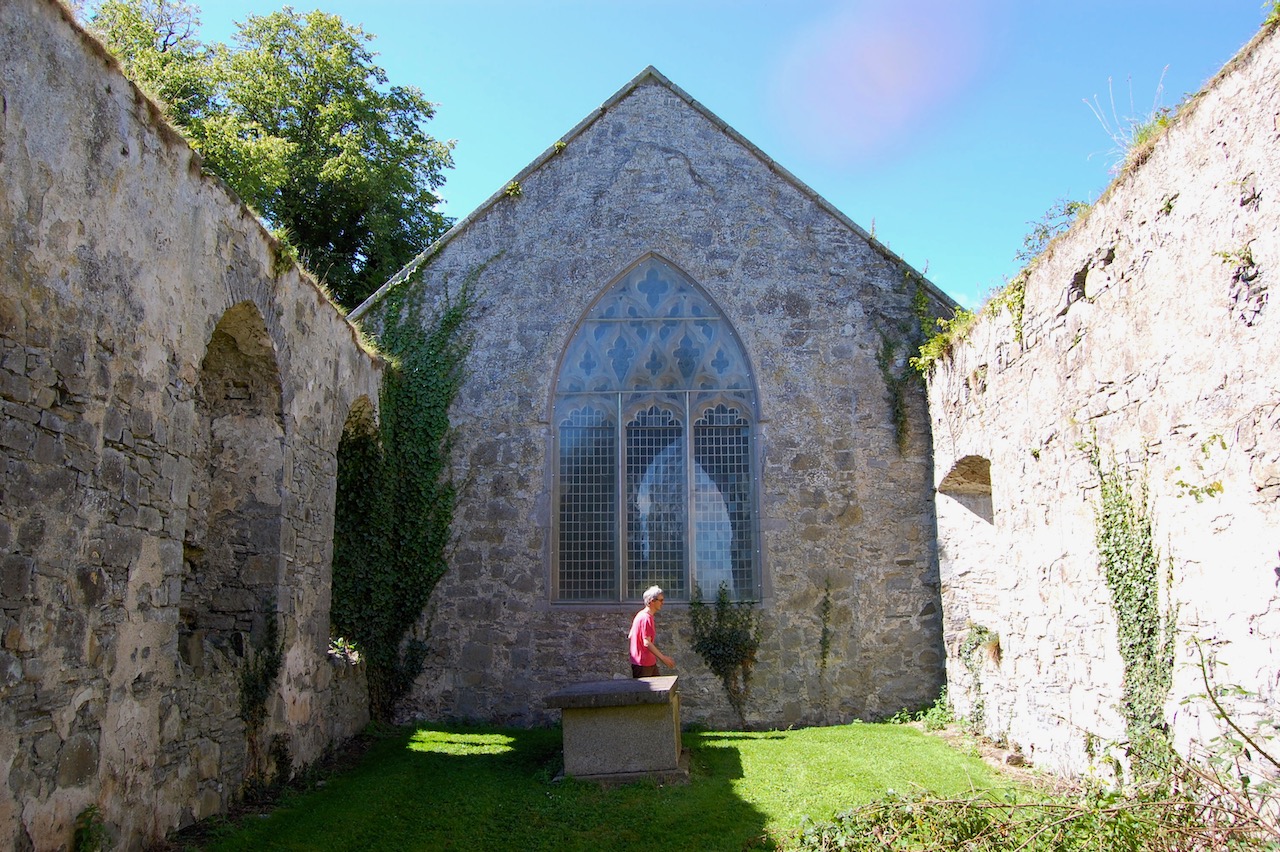
Detached single-cell church, c.1775, incorporating west tower and chancel of fifteenth-century church. Four-bay nave, with further three bays to east, now unroofed. Rubble stone walls. Paired cusp-headed windows with quatrefoil [2] over having smooth limestone surround to nave. Large pointed-arched window with flowing tracery to the east gable of nave. Pitched slate roof. Graveyard to grounds in use since medieval times. Some table graves, legible gravestones dating from the late 1760s, also including medieval cross. Rendered stone rubble boundary wall and gate piers to road.

“Appraisal
This church has been a major historical feature of Newcastle since the fifteenth century, once a Parish Church of the Royal Manor and is still in use. The site contains a variety of fine gravestones which further enhance the setting of this engaging building which possesses many attractive features, particularly its windows.

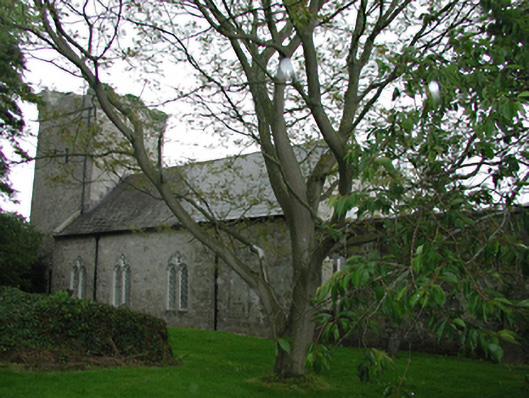
I found it difficult to take a photograph of the whole church, so here is one from the National Inventory website:

11212009_1
photograph from the National Inventory of Architectural Heritage.
Newcastle-Lyons, County Dublin. Photograph © Jennifer Winder-Baggot, www.irishhistorichouses.com
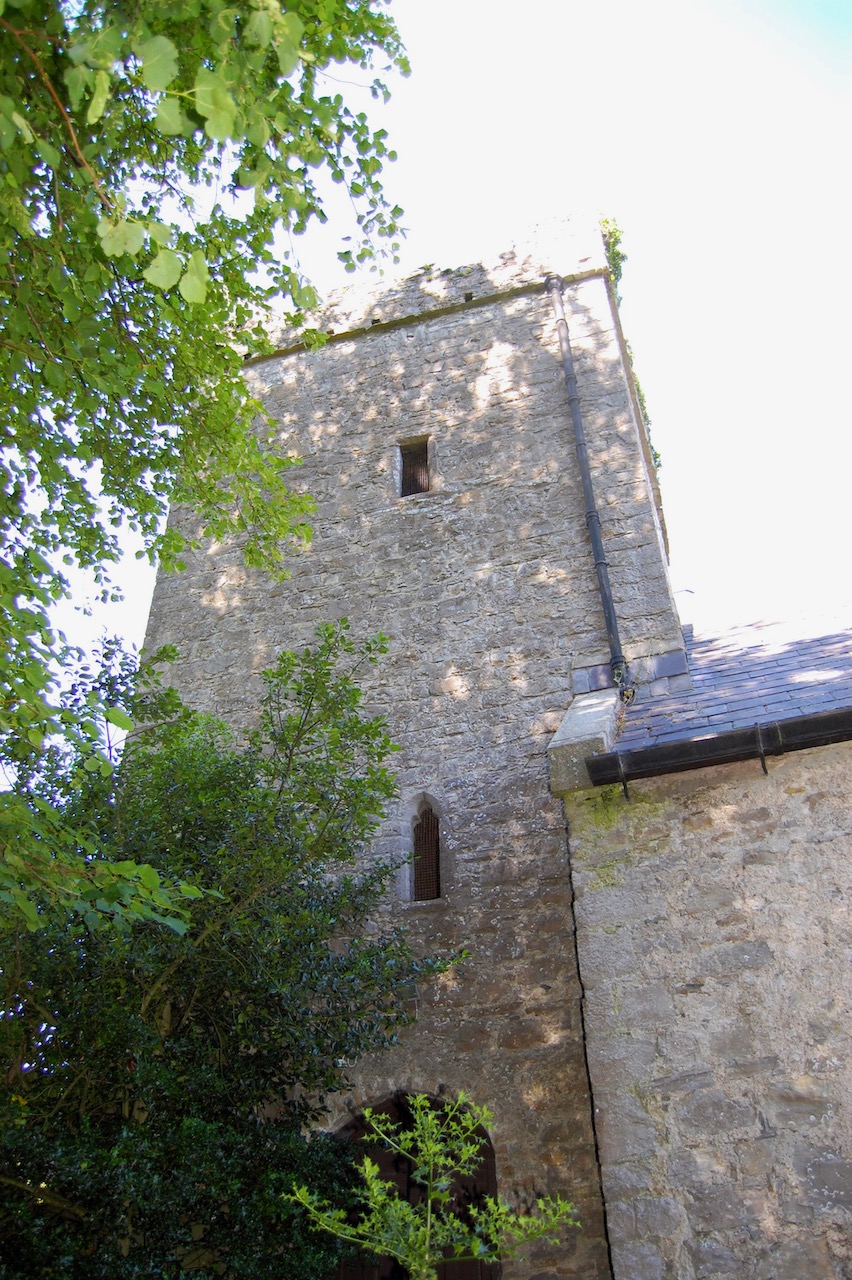
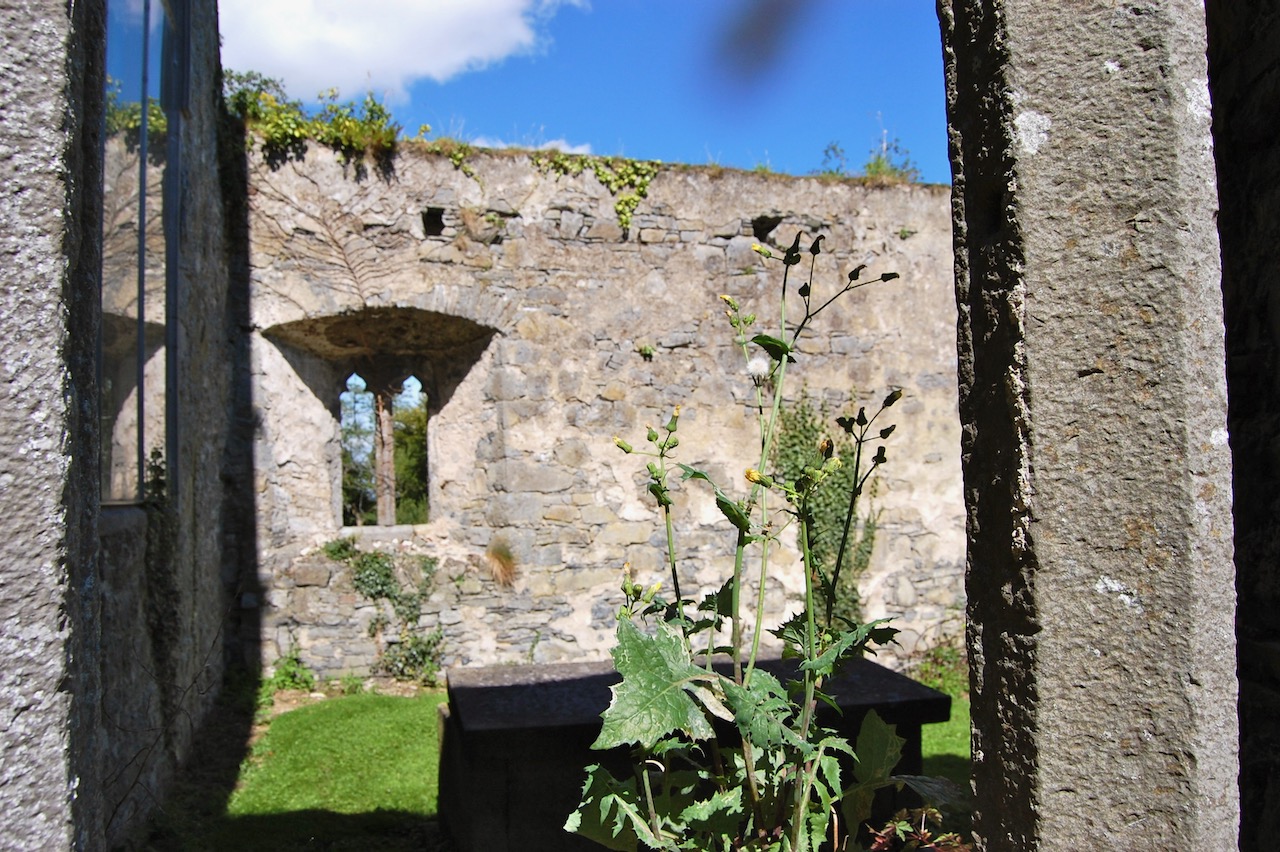
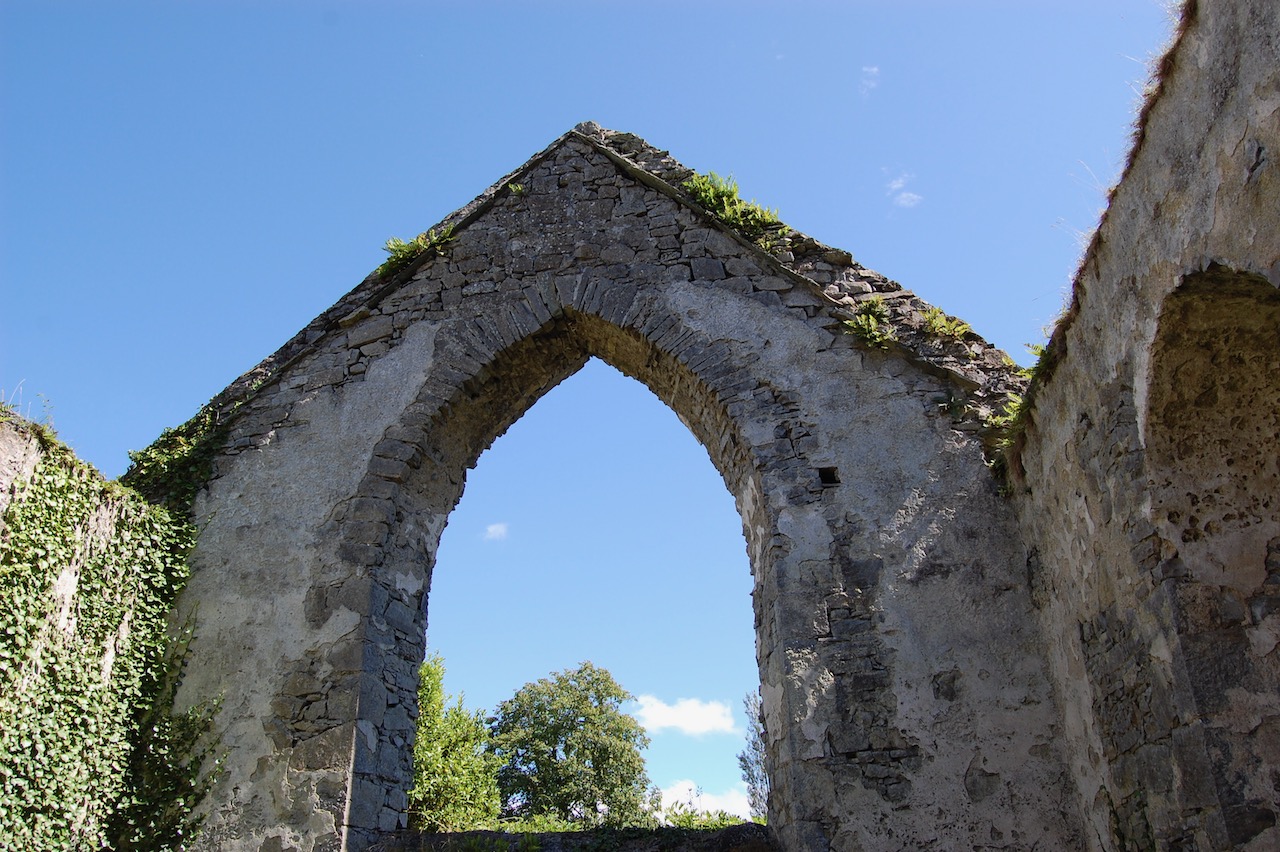
The church consists of three parts: the tower, built in the days of King John (1166-1216), the church section (built around 1775), and a roofless section.

St. Finian’s Church. The ivy covered grave is, I think, a Bagot grave. Photograph © Jennifer Winder-Baggot, www.irishhistorichouses.com
The impressive church tower, built during the era of King John, it is believed (1166-1216), through which one enters to go to the nave of the church. Photograph © Jennifer Winder-Baggot, www.irishhistorichouses.com
Windows looking into the functioning part of the church. Photograph © Jennifer Winder-Baggot, www.irishhistorichouses.com
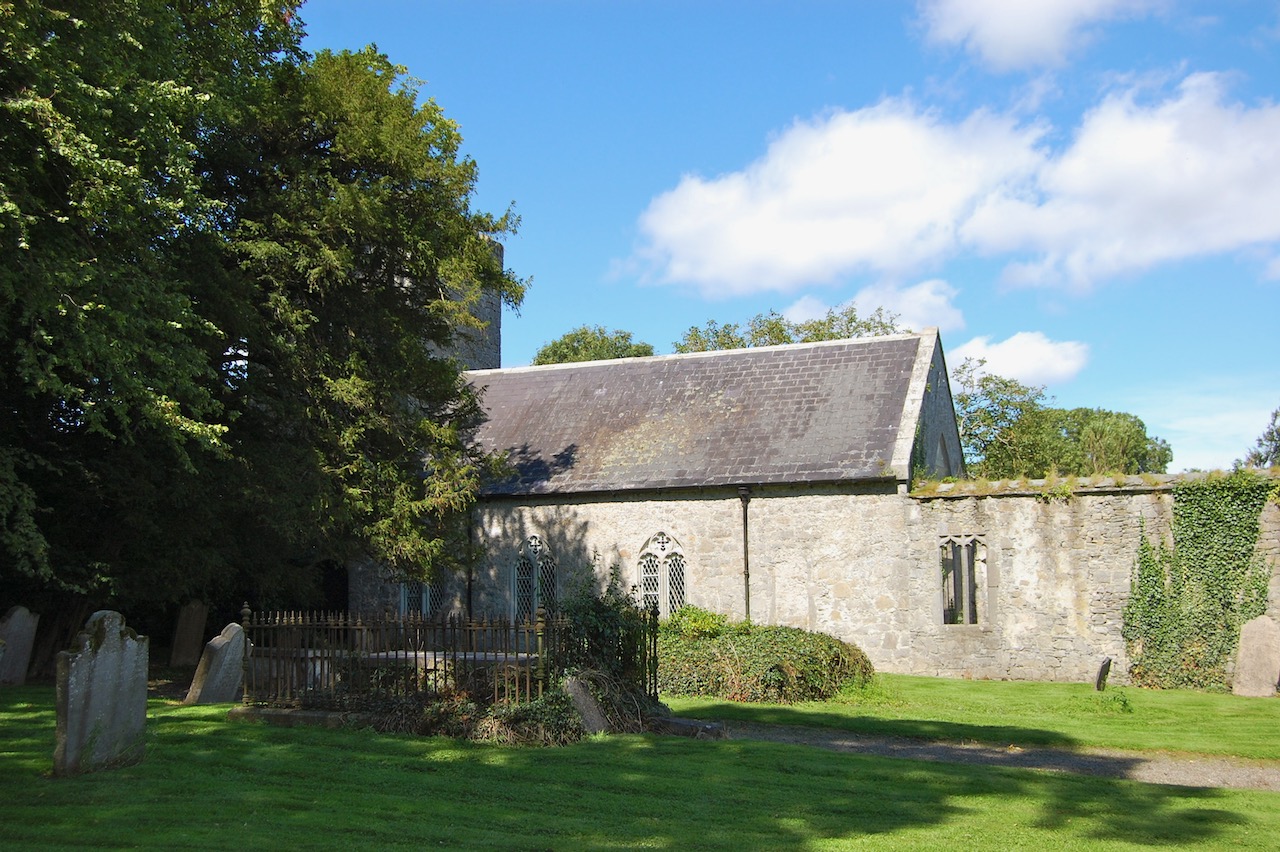
Stephen in the roofless section of the church. Photograph © Jennifer Winder-Baggot, www.irishhistorichouses.com
At the Old Glebe. Photograph © Jennifer Winder-Baggot, www.irishhistorichouses.com
Newcastle-Lyons, County Dublin. Photograph © Jennifer Winder-Baggot, www.irishhistorichouses.com
I was particularly interested in the graveyard as it contains some Bagots, whom I hope were my relatives, though I have not found the connection (it must be far back in the family tree, and we stem from a different branch, if connected at all). A website that describes graves lists James John Bagot and his wife Ellen Maria (nee O’Callaghan), who are interred in this cemetery [7]:

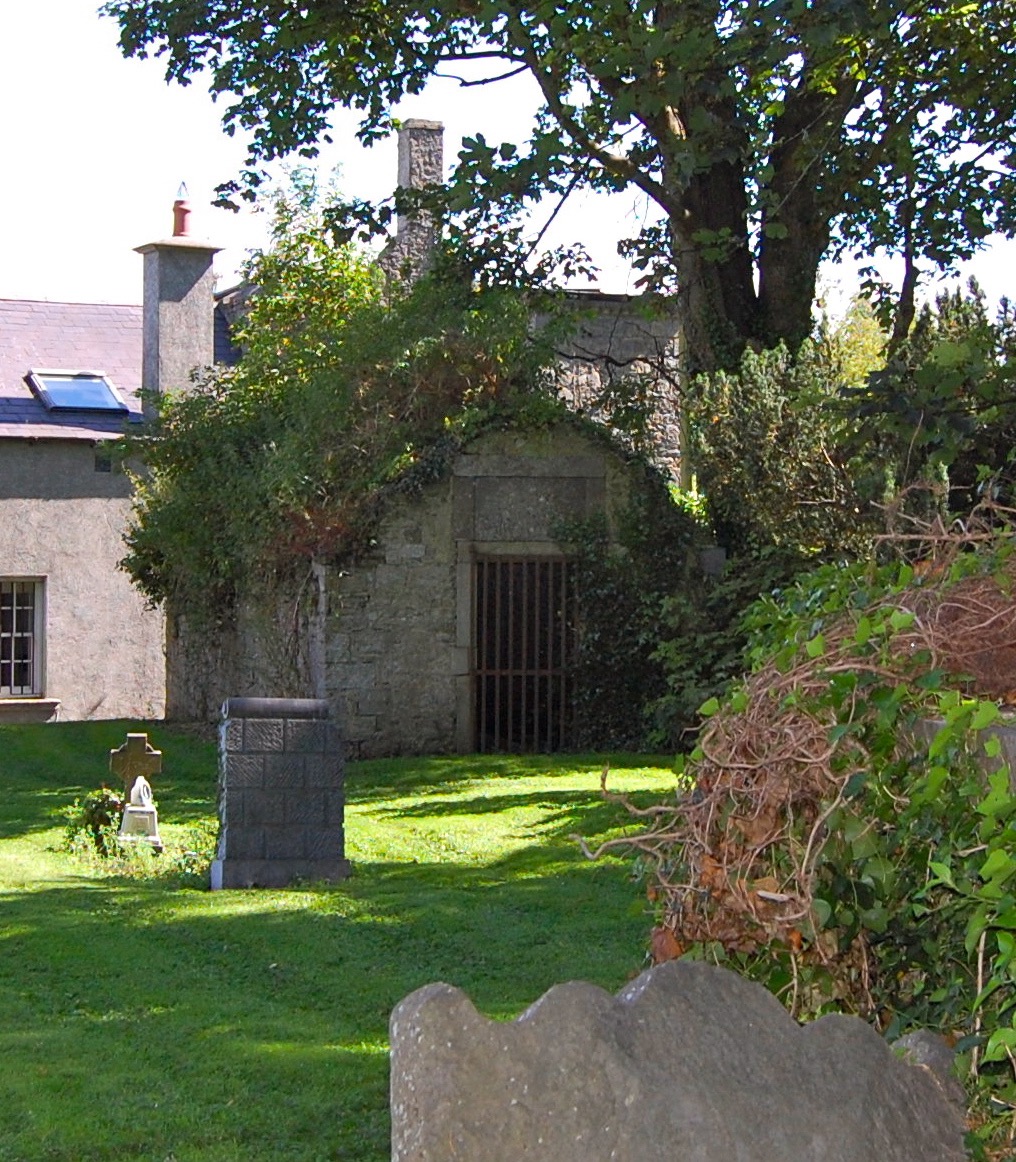
There is a large vault, grass-grown at top, with a cross-shaped loophole at east end,inscribed:-
Pray for the souls of | Those members of the BAGOT Family | who are interred herein | the last of whom | JAMES JOHN BAGOT ESQr | of Castle Bagot County Dublin | Died Aged 76 years | on the 9th of June 1860 | Pray also for the soul of |Ellen Maria BAGOT | his widow interred Herein | who died at Rathgar on 17th Sept 1871 | R.I. P.

Stephen and I returned in 2018 to have a closer look at the grave. In 2012, we thought the grave was the rather macabre vault containing half-open coffins:

At the Old Glebe. Photograph © Jennifer Winder-Baggot, www.irishhistorichouses.com
Iron vaults in graveyard at St Finian’s, Newcastle Lyons. Photograph © Jennifer Winder-Baggot, www.irishhistorichouses.com
Coincidentally, James John’s mother, Eleanor Dease, was probaby related to Colonel Gerald Dease who lived in Celbridge Abbey in 1901.

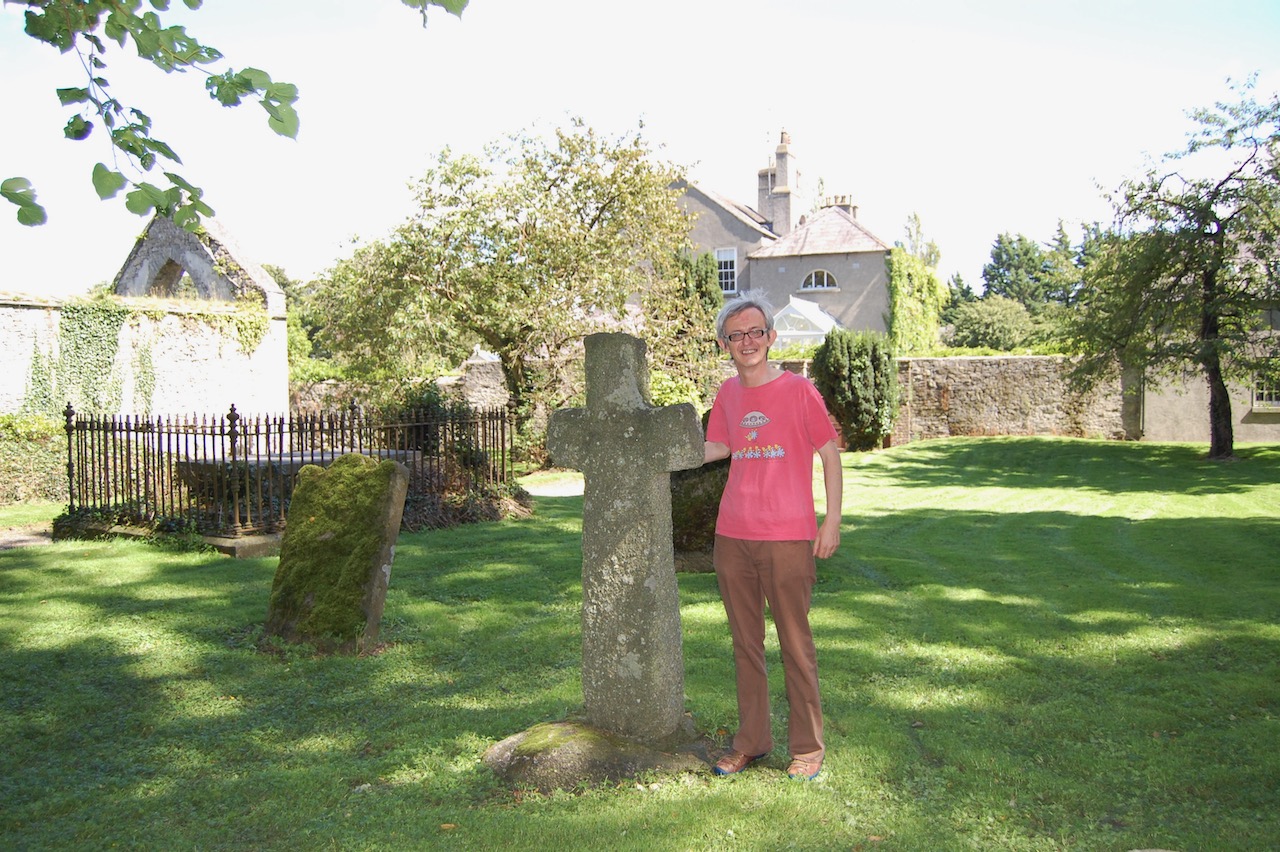
1000 year old cross in graveyard of St Finian’s, Newcastle Lyons. Photograph © Jennifer Winder-Baggot, www.irishhistorichouses.com
In August 2012, we also visited the Catholic church of St. Finian’s in nearby Kilamactalway, to see the baptismal font donated by Ellen Maria Bagot in memory of her husband James John, who died in 1860 and who had lived in Castle Bagot in Rathcoole/ Kilmactalway. I’m a little confused as to why James John and his wife were buried in the Protestant graveyard, since there is a graveyard at the Catholic church, which was built in 1813.

Catholic church of St. Finian’s in Kilmactalway. Photograph © Jennifer Winder-Baggot, www.irishhistorichouses.com
Castle Bagot, Rathcoole, 4th April 2011. Photograph © Jennifer Winder-Baggot, www.irishhistorichouses.com.

Donation

Help me to fund my creation and update of this website. It is created purely out of love for the subject and I receive no payment so any donation is appreciated! For this entry I paid for petrol. There was no entrance fee as we visited during Heritage Week.

€15.00


[1] http://www.buildingsofireland.ie/niah/search.jsp?type=record&county=SC&regno=11212009

[2] architectural definitions

“A bay is a vertical division of the exterior of a building marked by a single tier of windows in its centre. Thus the number of bays in a façade is usually the same as the number of windows in each storey. There are, however, facades in which some of the bays contain two or more narrow windows in each storey in place of a single window of whatever width is the norm.”

“Quatrefoil window: a window in the shape of a four leafed clover; found in Gothic and Gothic-Revival architecture.”

Mark Bence-Jones. A Guide to Irish Country Houses.[originally published as Burke’s Guide to Country Houses volume 1 Ireland by Burke’s Peerage Ltd. 1978; Revised edition 1988 Constable and Company Ltd, London.] pp. xxix-xxxi

[3] https://ardclough.wordpress.com/about/ardclough-history/xtras-hinterland-history-celbridge-straffan/newcastle-lyons-by-francis-ball-1905/

[4] http://www.buildingsofireland.ie/niah/search.jsp?type=record&county=SC&regno=11212007

[5] https://www.irishtimes.com/life-and-style/homes-and-property/900-000-plus-for-historic-family-home-on-1-3-acres-1.223027

[6] https://www.irishtimes.com/life-and-style/growing-old-gracefully-1.788481

[7] http://www.igp-web.com/IGPArchives/ire/dublin/cemeteries/st-finian.txt

Text © Jennifer Winder-Baggot, www.irishhistorichouses.com

Irish Historic Homes