The Castle, Castletownshend, Co Cork – accommodation

Donation

Help me to fund my creation and update of this website. It is my “full time job” and created purely out of love for the subject and I receive no payment so any donation is appreciated! My costs include travelling to our destinations from Dublin, accommodation if we need to stay somewhere nearby, and entrance fees. Your donation could also help with the cost of the occasional book I buy for research (though I mostly use the library – thank you Kevin Street library!). Your donation could also help with my Irish Georgian Society membership or attendance for talks and lectures, or the Historic Houses of Ireland annual conference in Maynooth.

€15.00

http://castle-townshend.com/

Castle Townshend, County Cork, June 2022. Photograph © Jennifer Winder-Baggot, www.irishhistorichouses.com

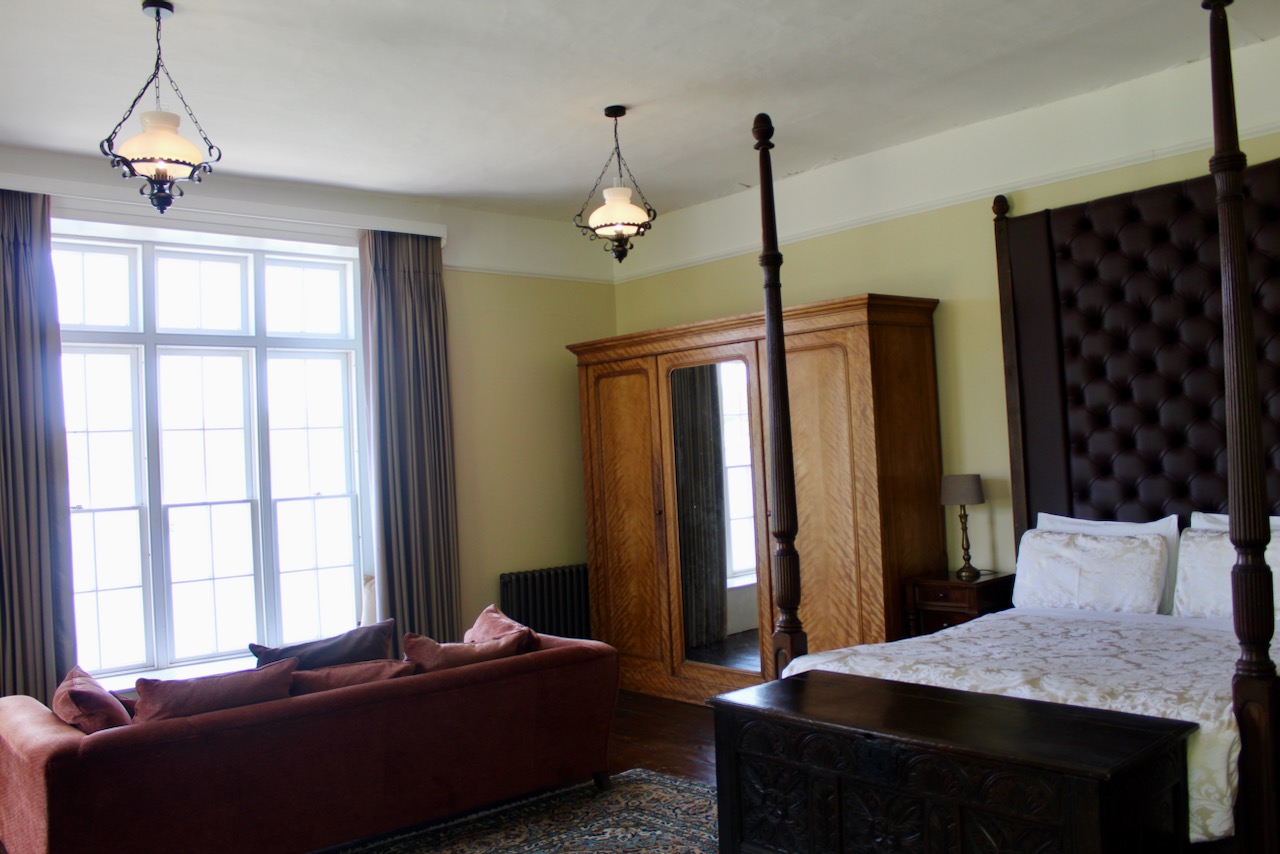
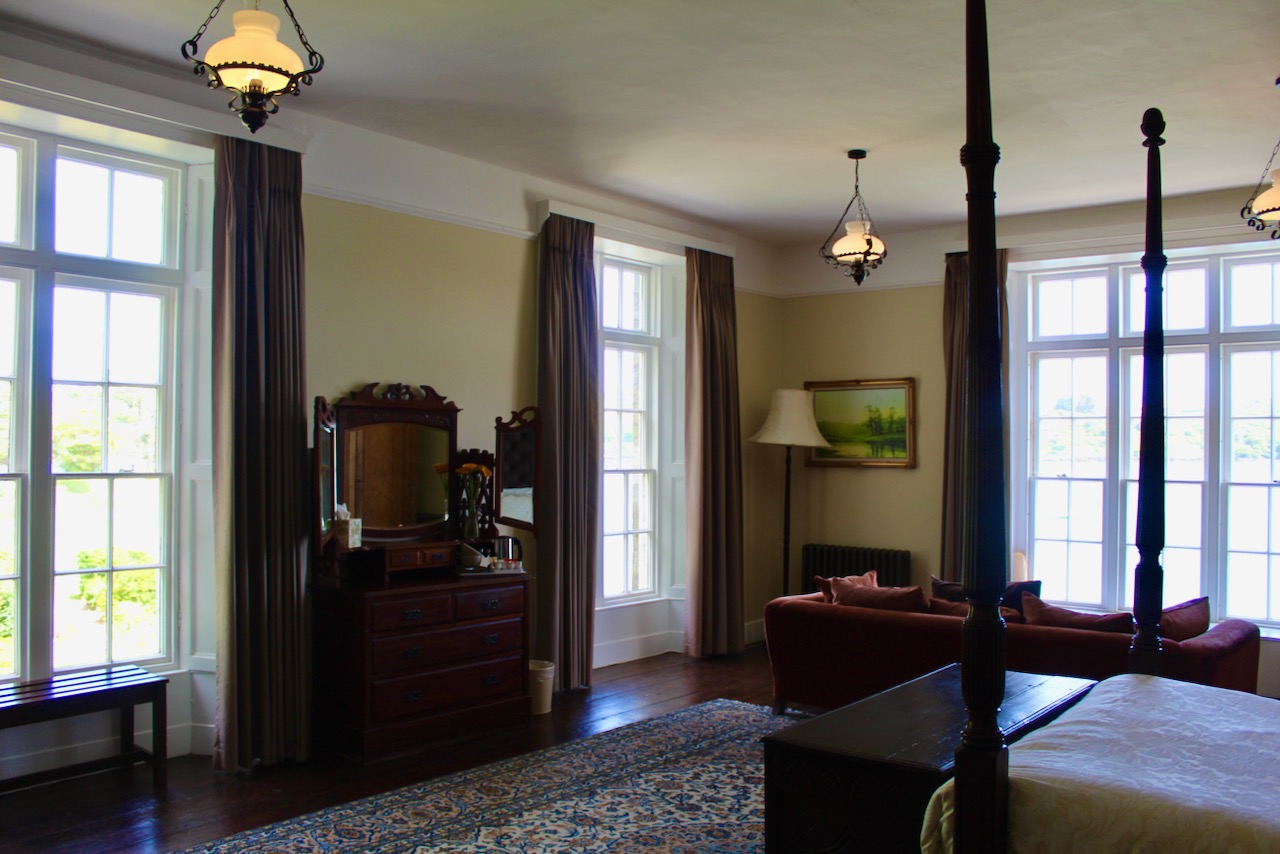
We visited the Castle of Castletownshend when on holidays in County Cork in June 2022. The Castle is a hidden gem, full of history. We definitely look forward to a return visit, to stay in the Castle, which provides B&B accommodation.

The castle remains in the ownership of the same family, the Townshends, who built it and who have lived here since the 1650s! We came upon the Townshend family of Castletownshed when we visited Drishane House. The Somervilles of Drishane intermarried with their cousins the Townshends who lived down the road. See my write-up:

https://irishhistorichouses.com/2021/03/07/drishane-house-castletownshend-co-cork/
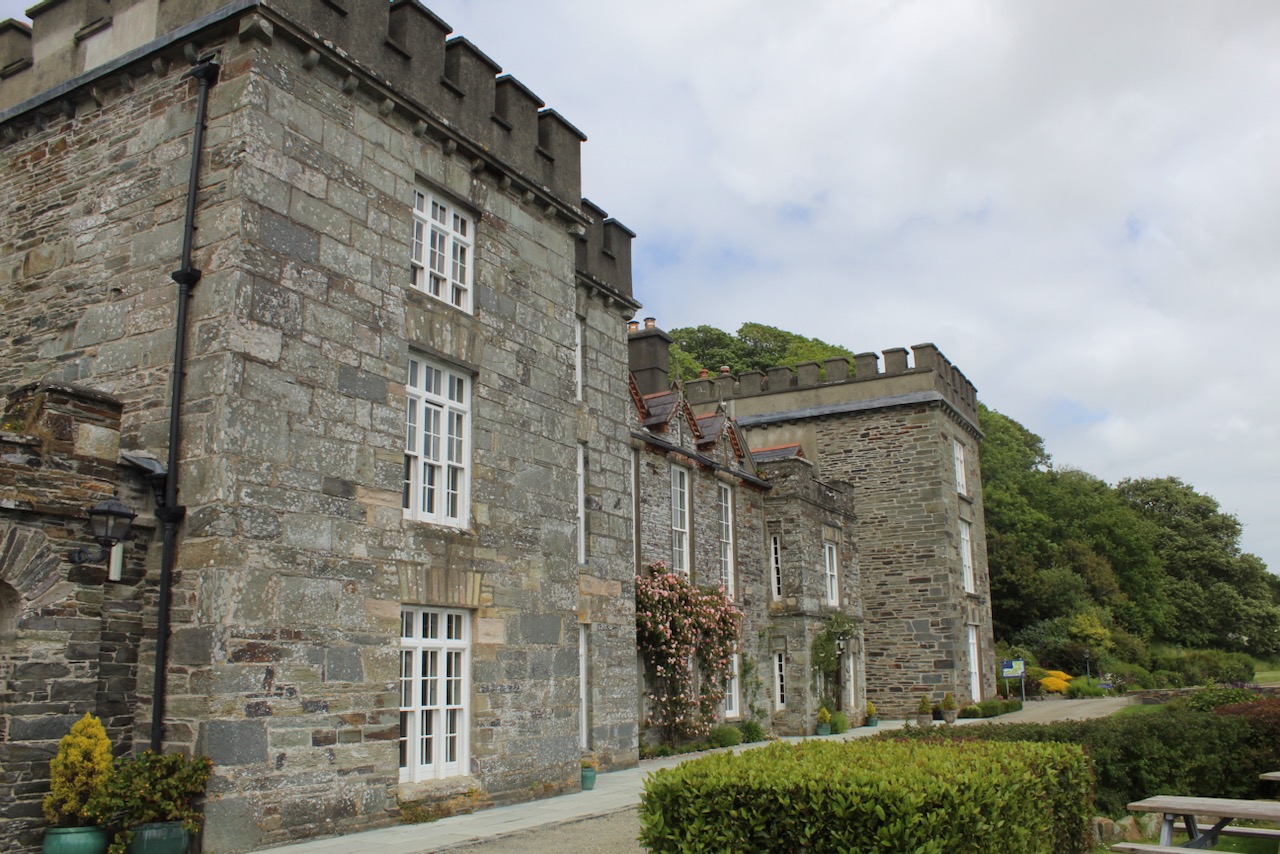
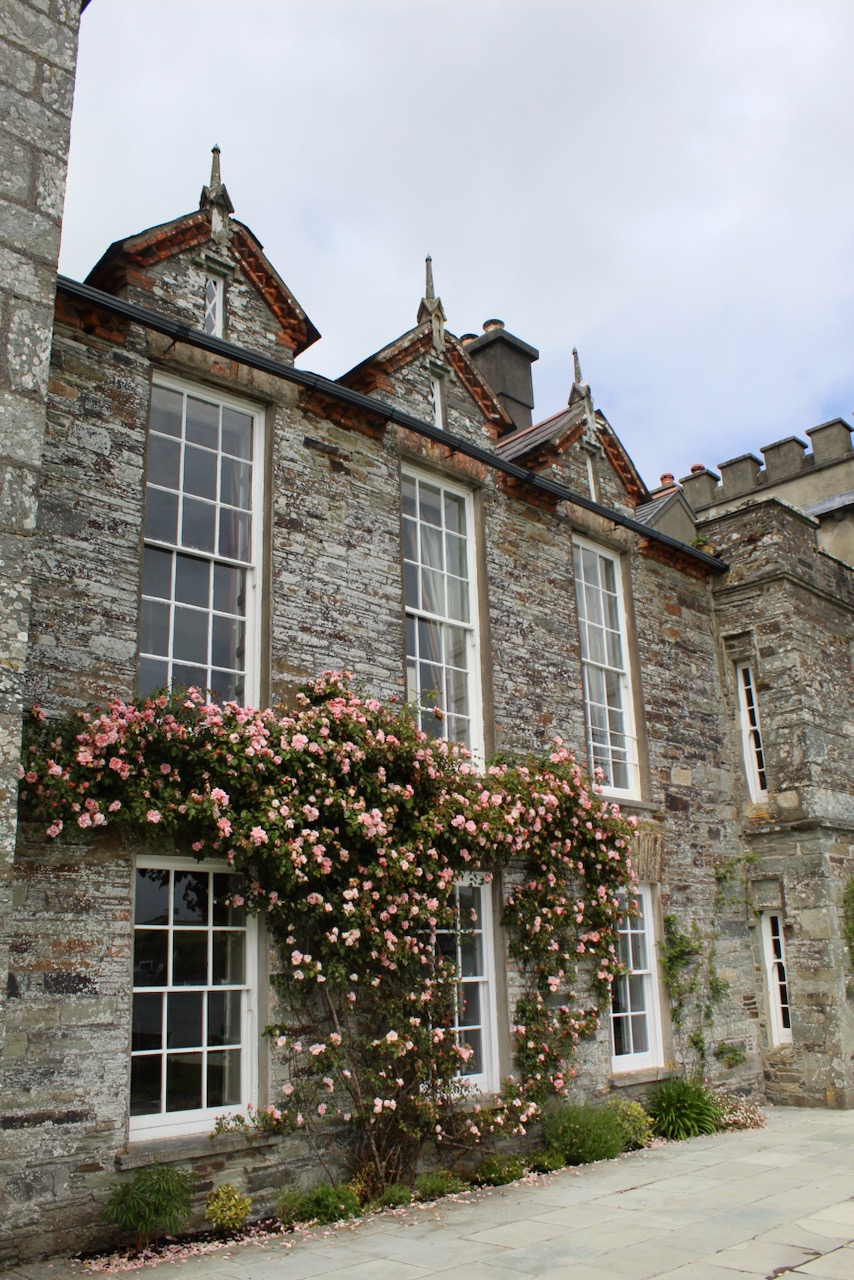
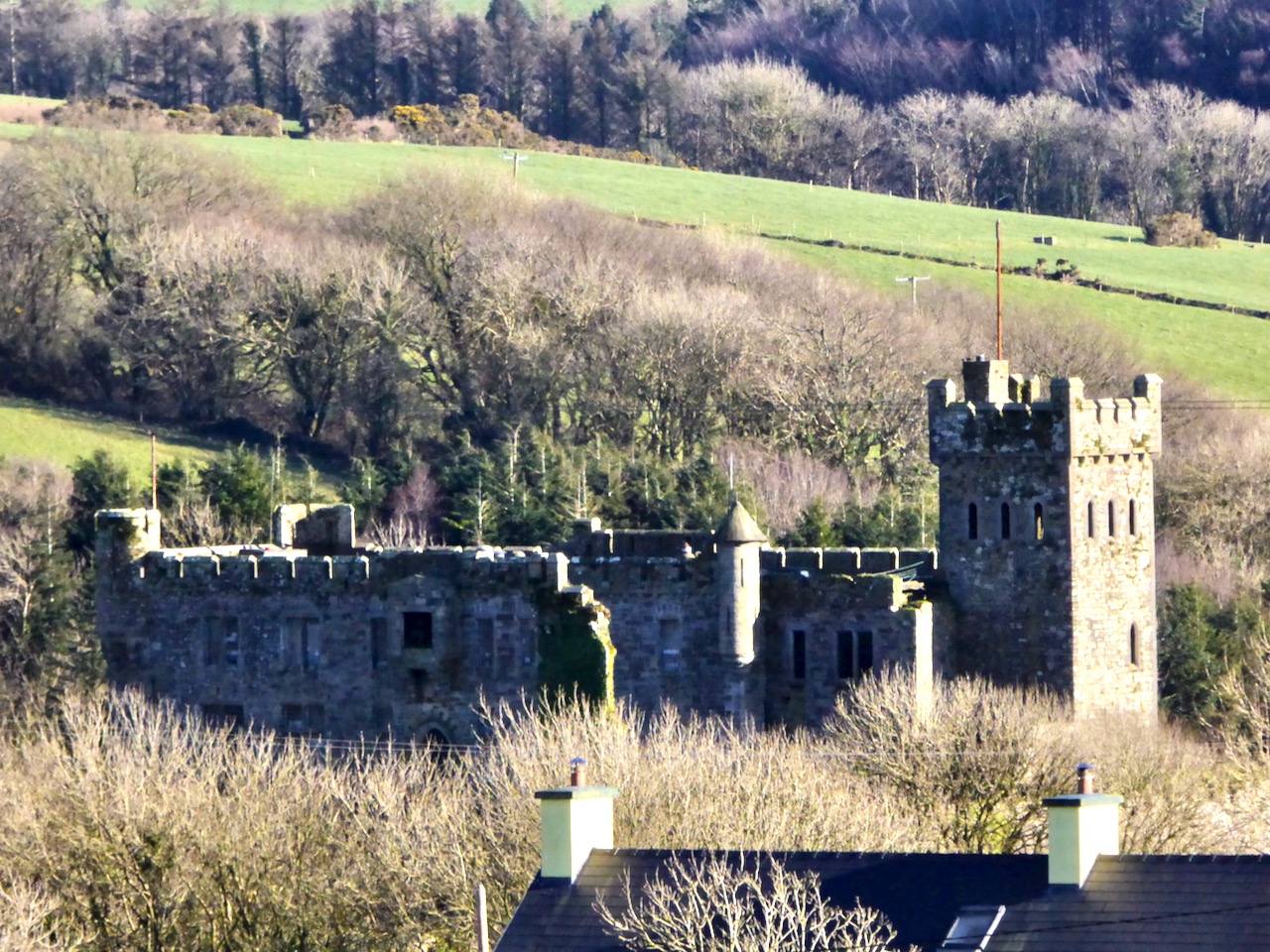
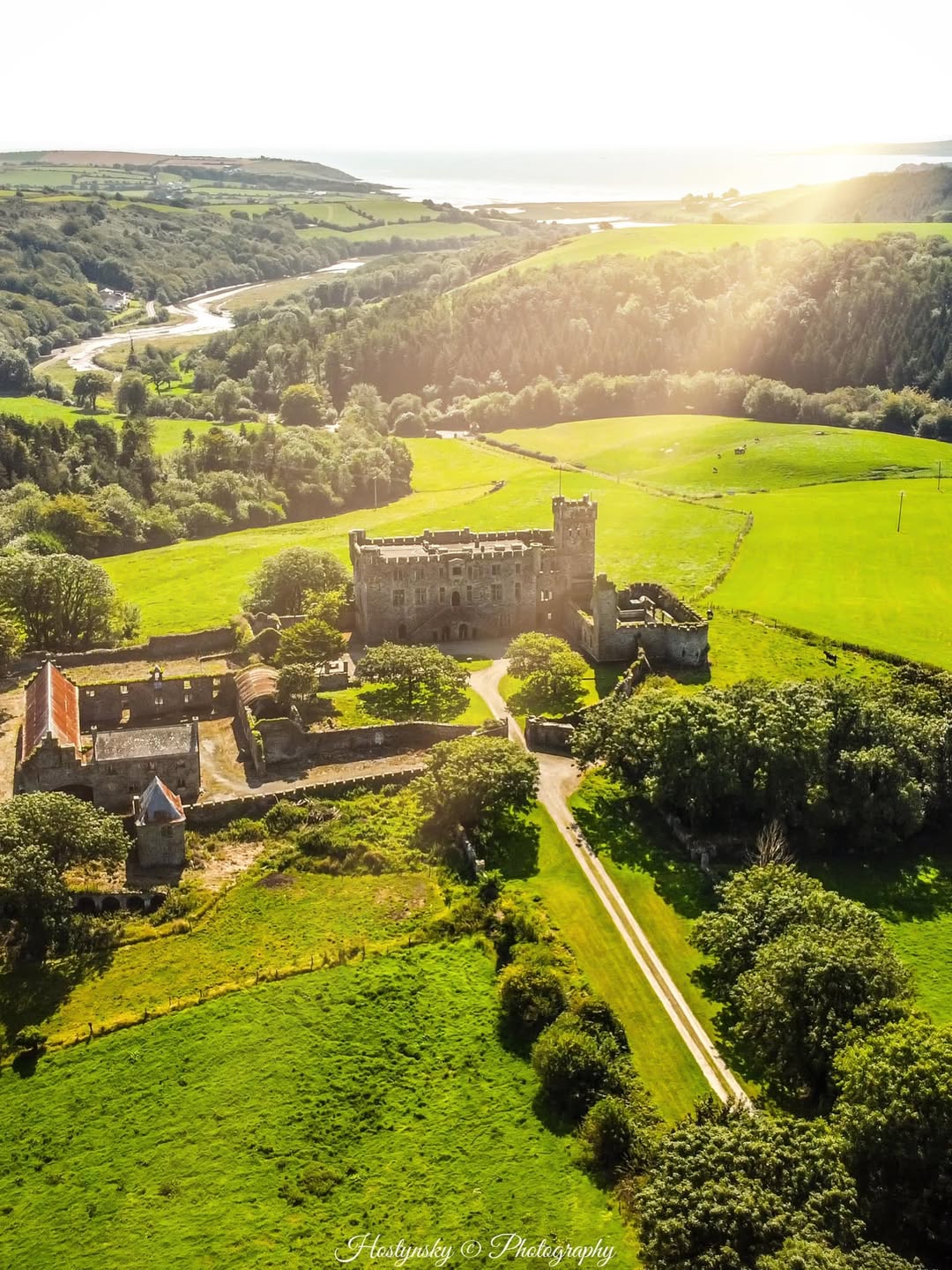
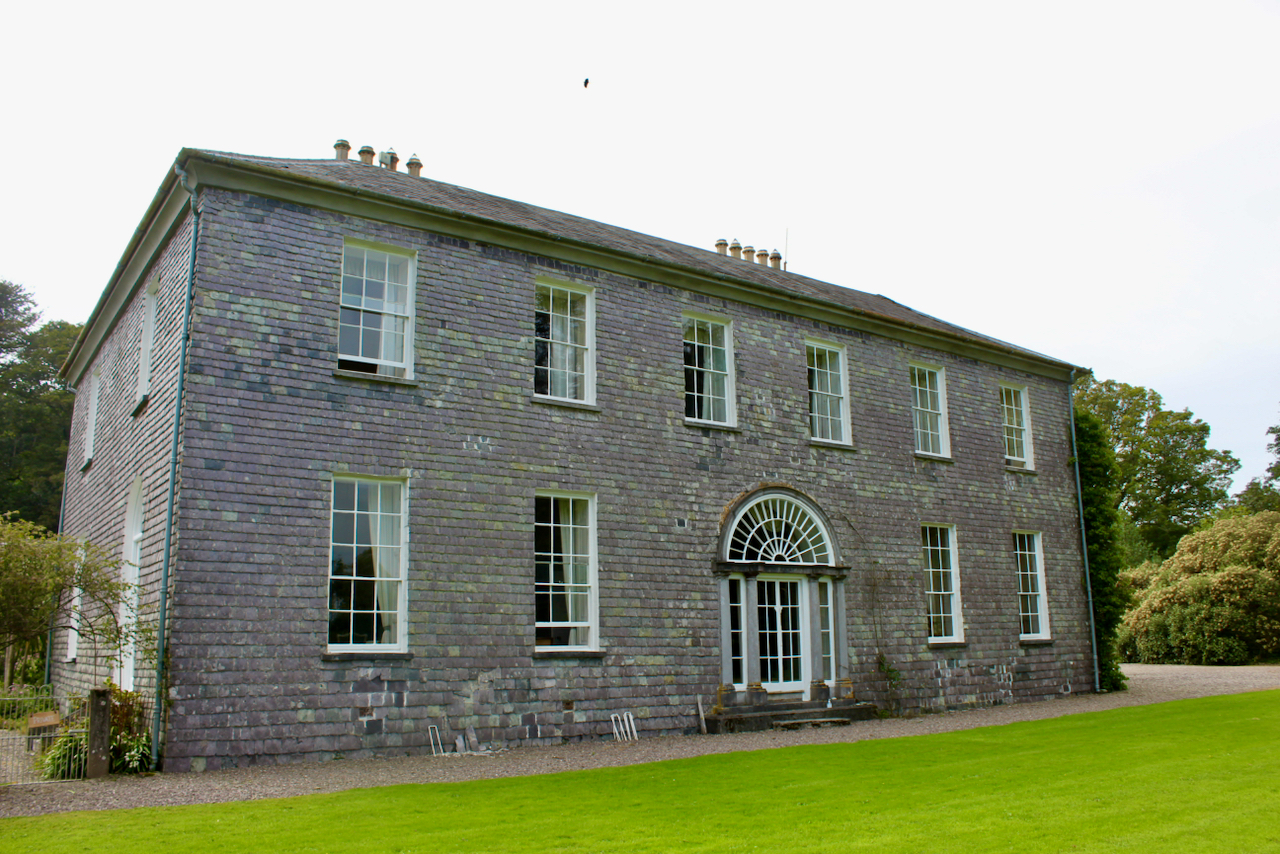
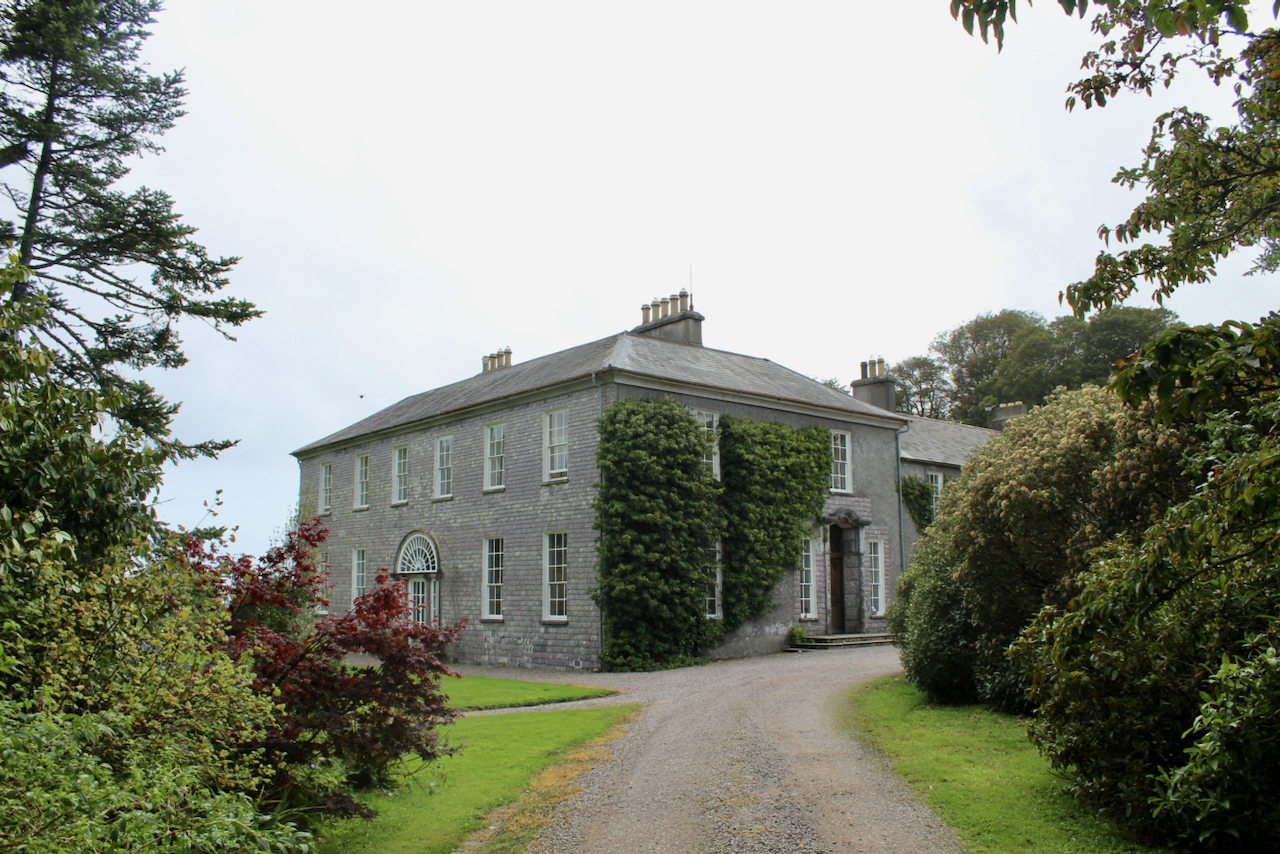
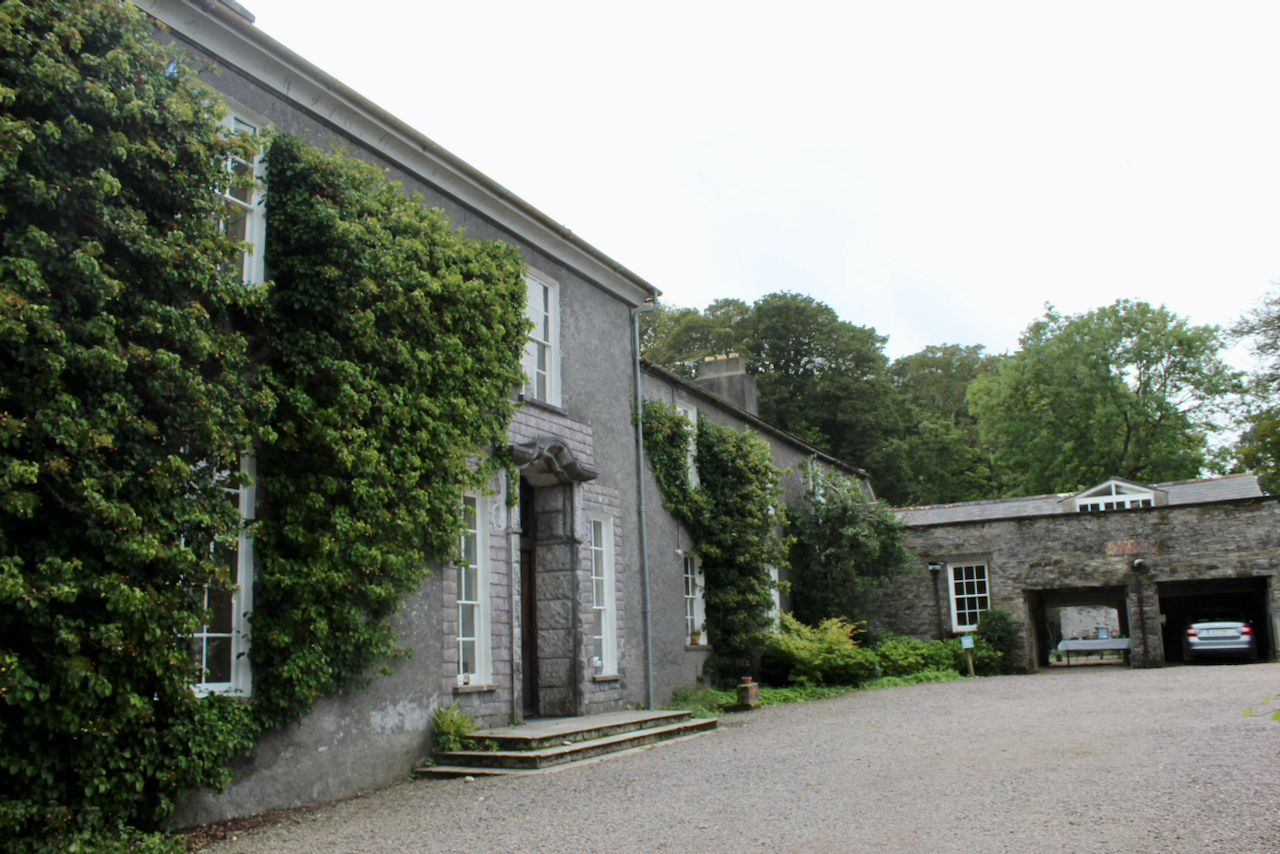
The Castle, Castletownshend: A castellated house, consisting of two battlemented towers joined by a range with dormer gables. Photograph © Jennifer Winder-Baggot, www.irishhistorichouses.com

The website tells us:

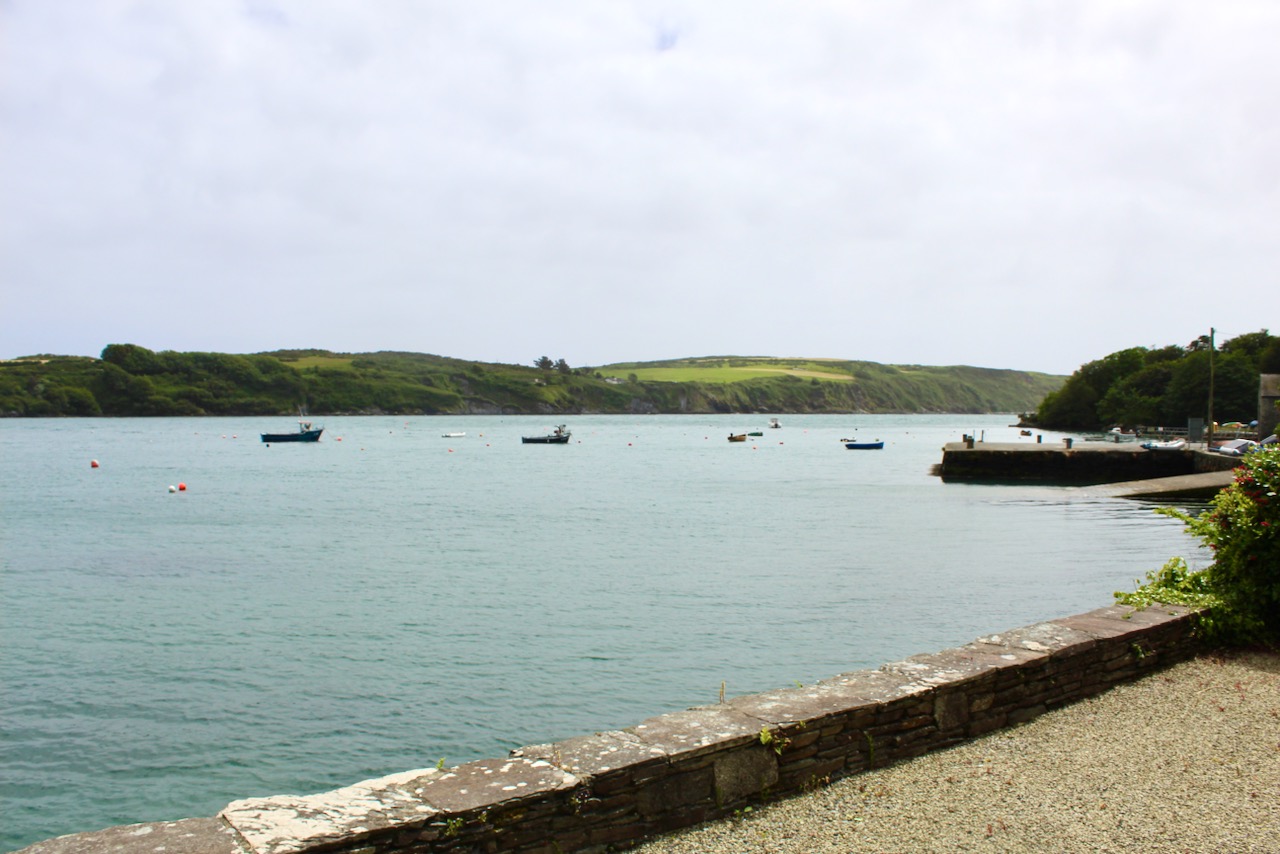
In the picturesque village of Castletownshend, past ‘The Two Trees’ at the bottom of the hill, you’ll find our family-run boutique B&B. Nestled at the edge of a scenic harbour and natural woodlands for you to explore, The Castle is a truly unique place to stay. It has the warm, homely feel of a traditional Irish B&B, but with a few extra special touches.

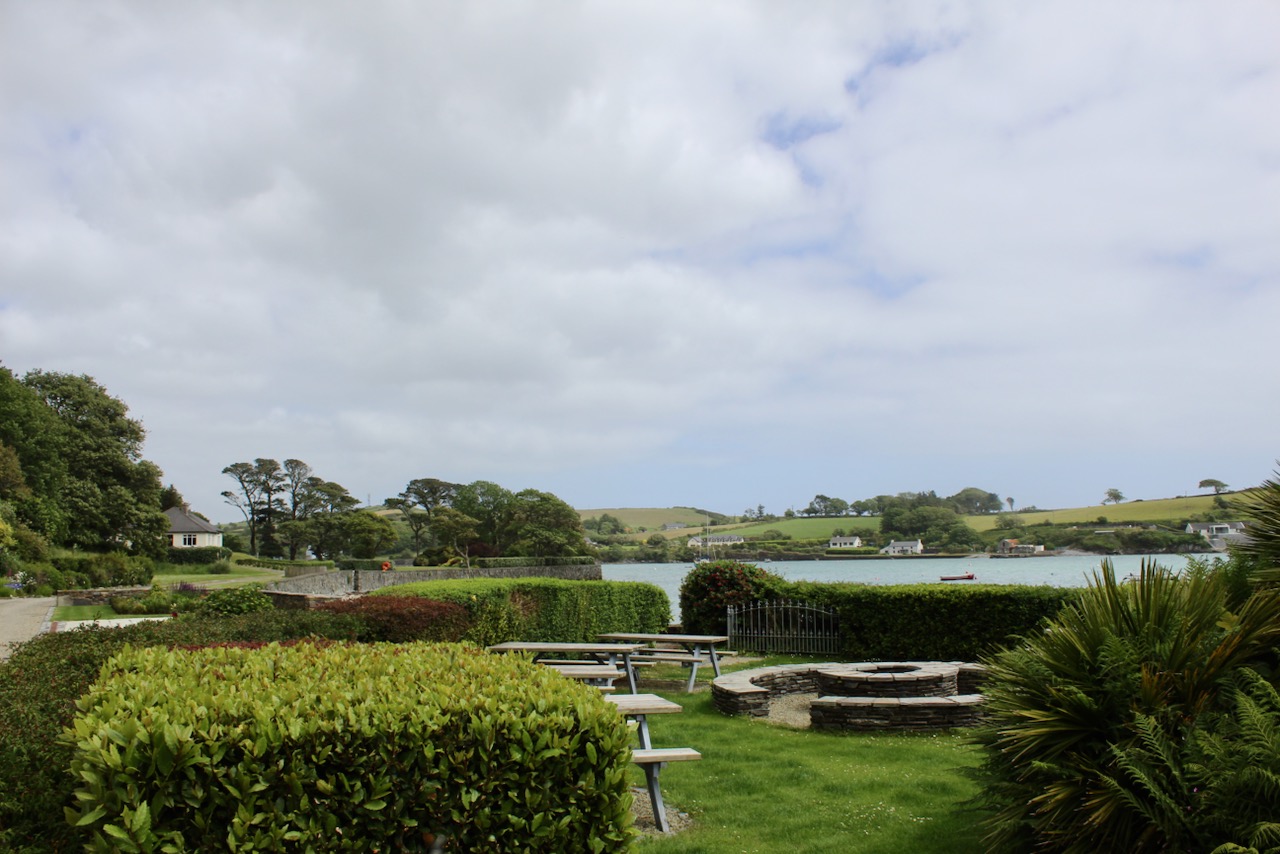
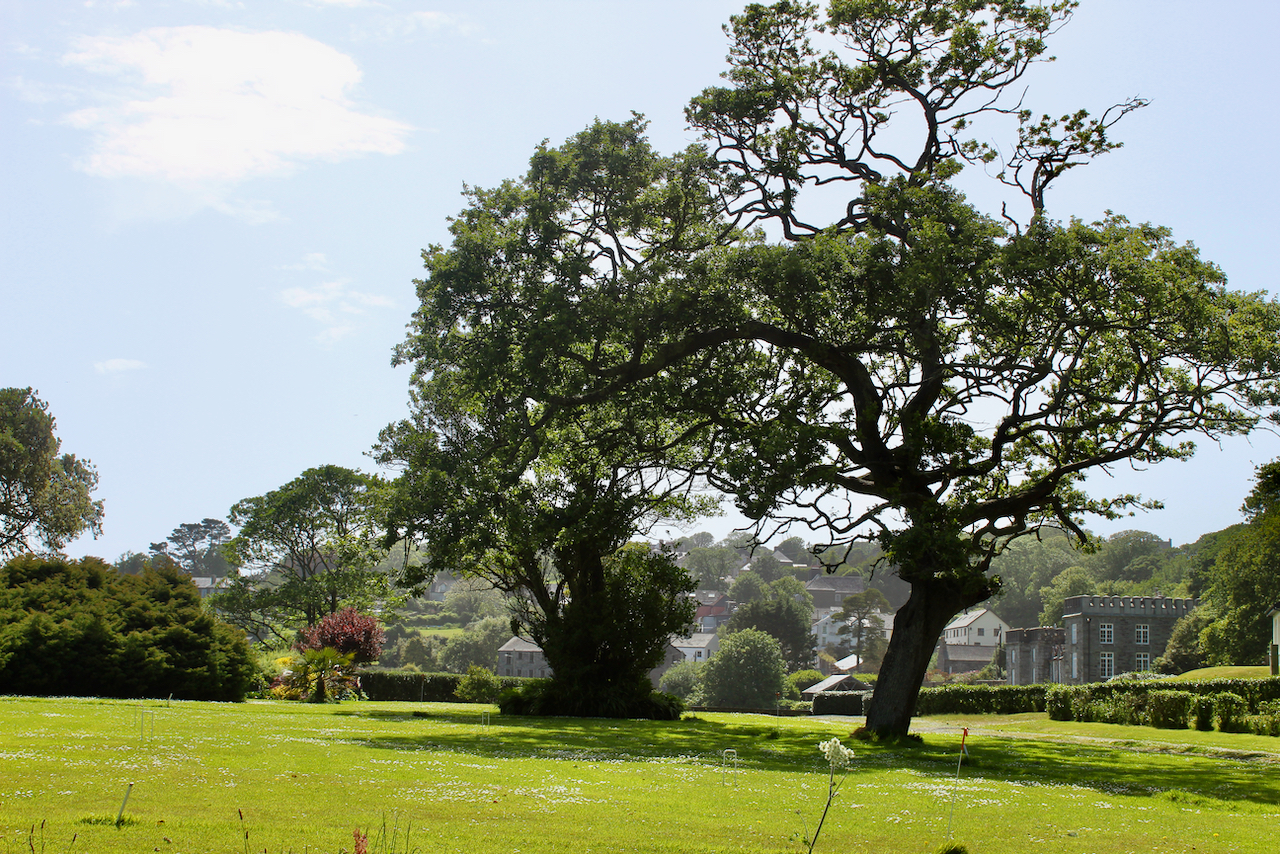
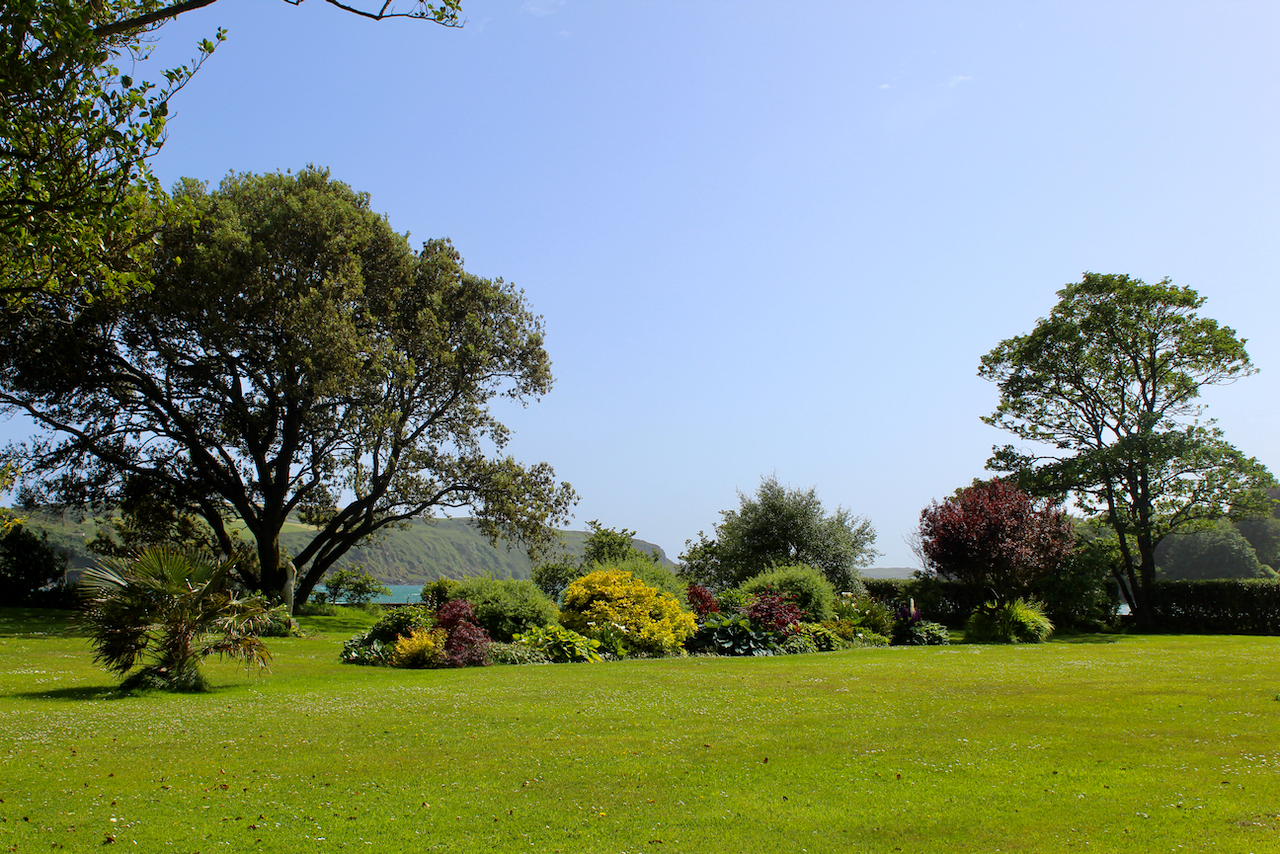
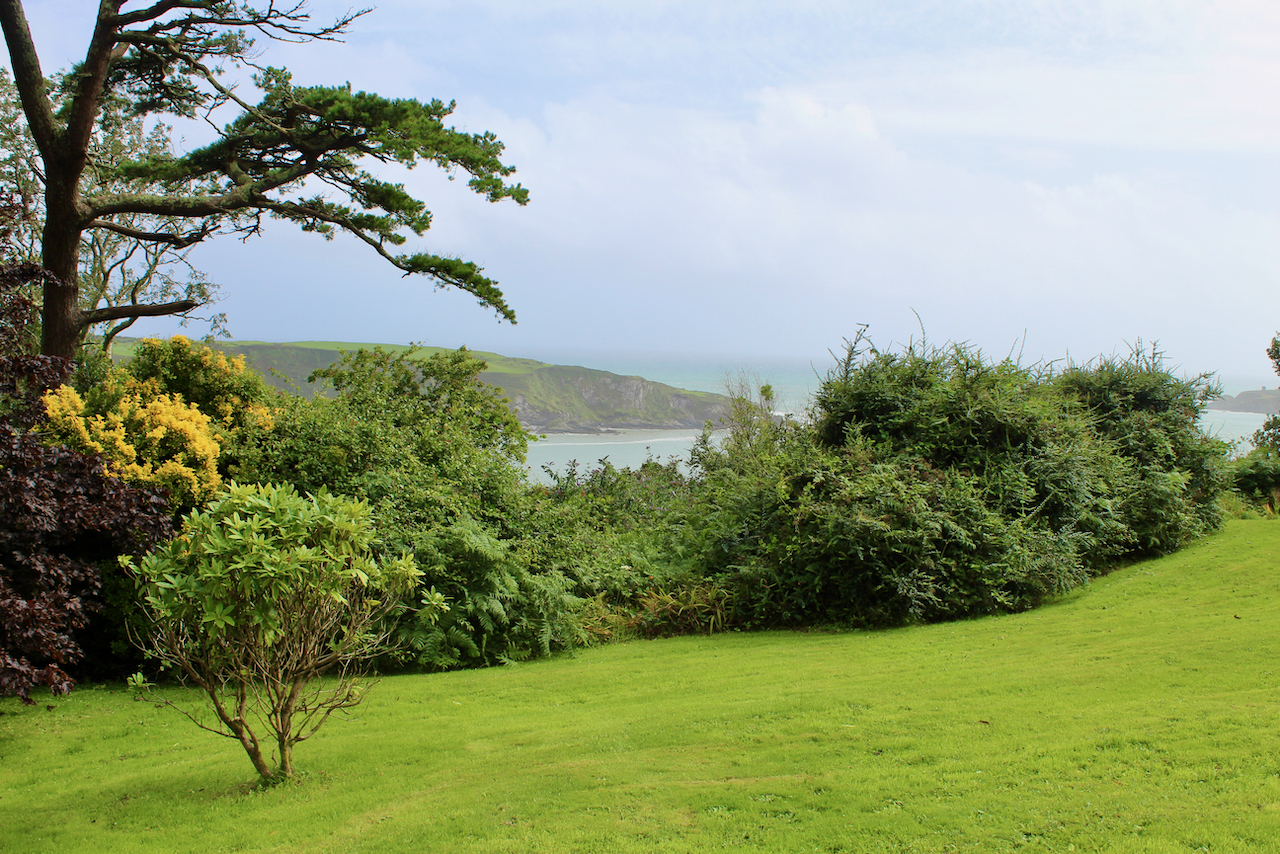
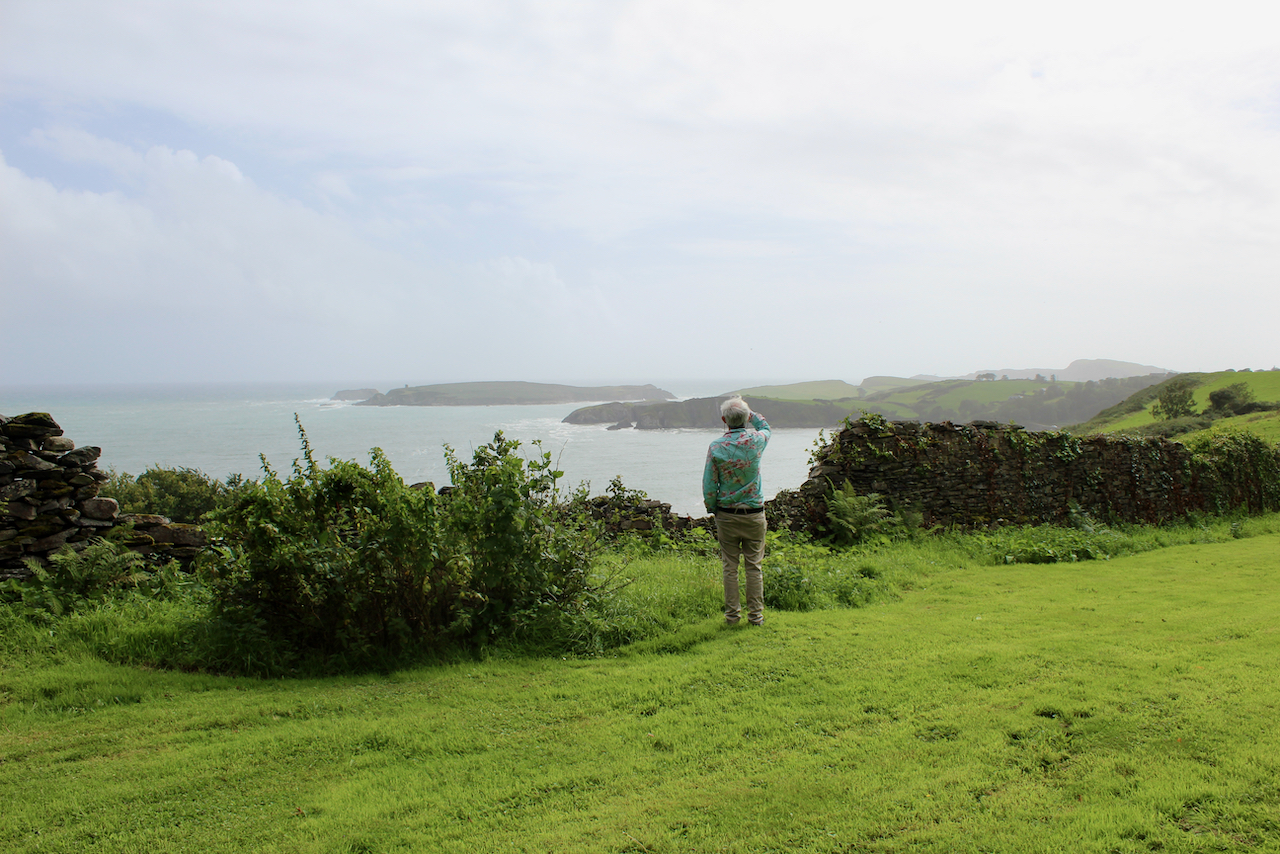
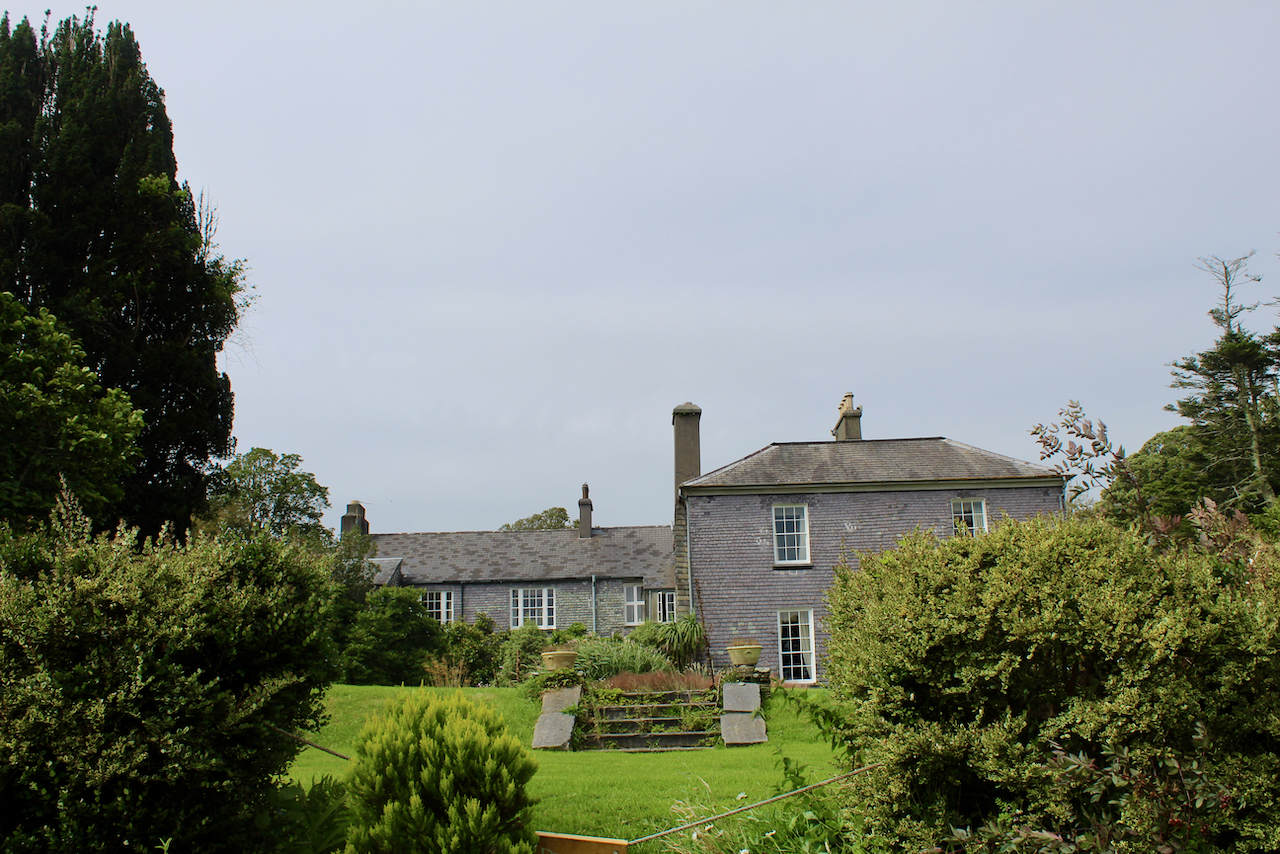
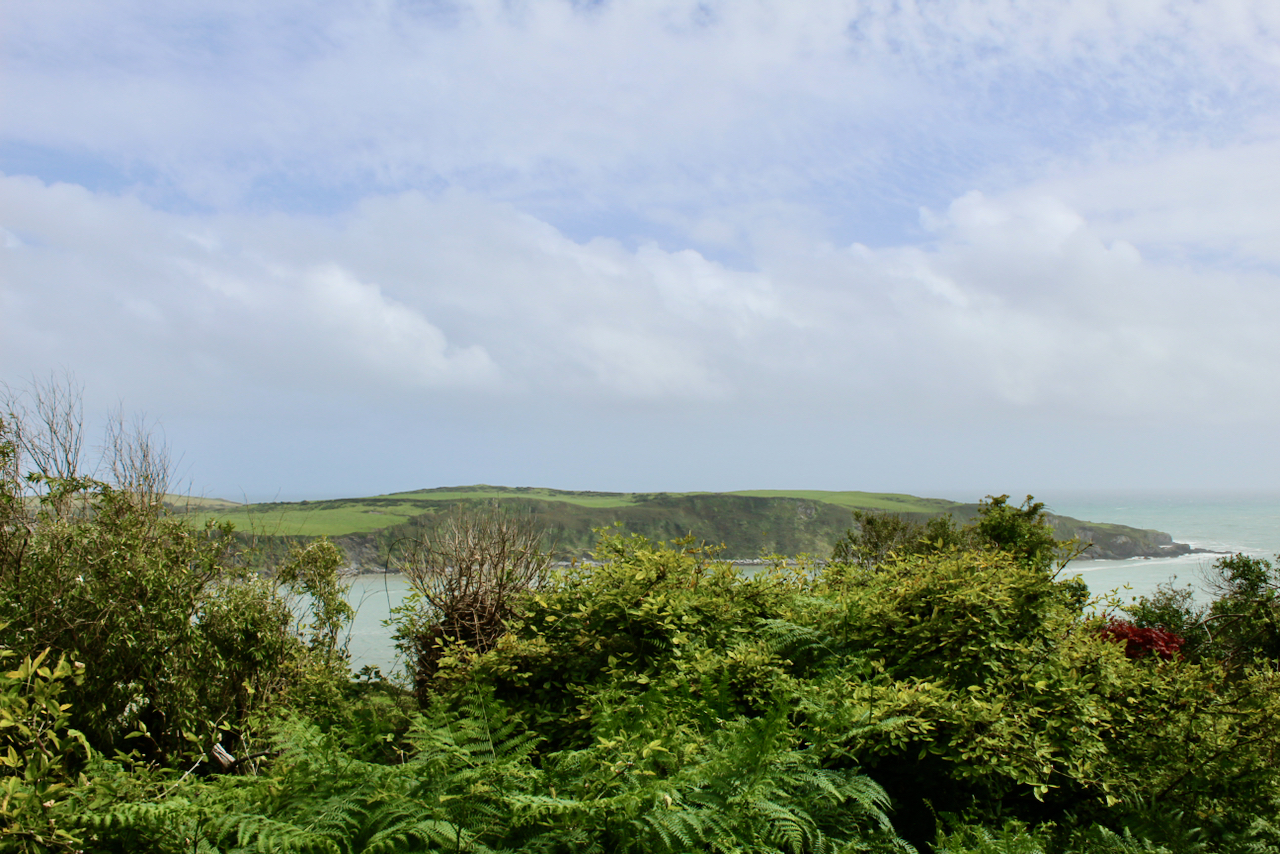
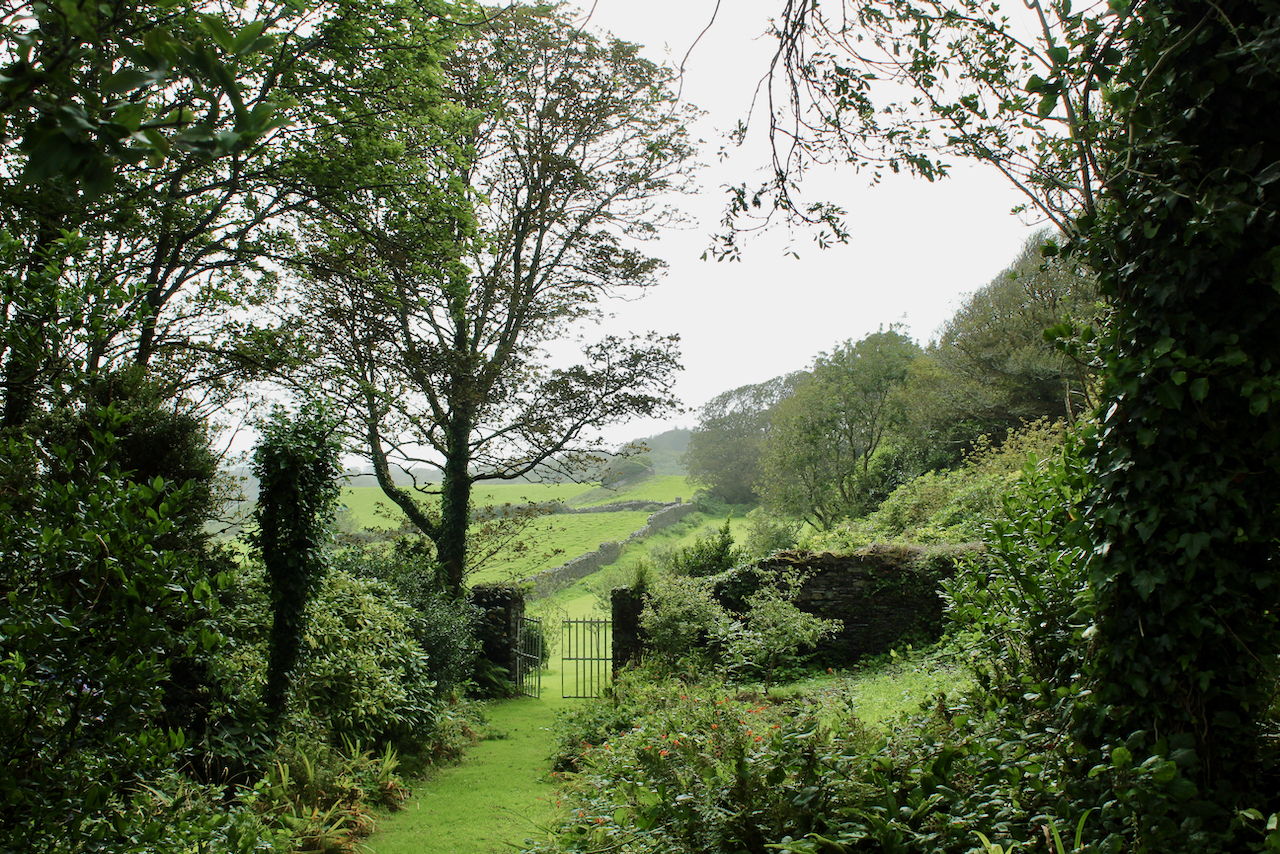
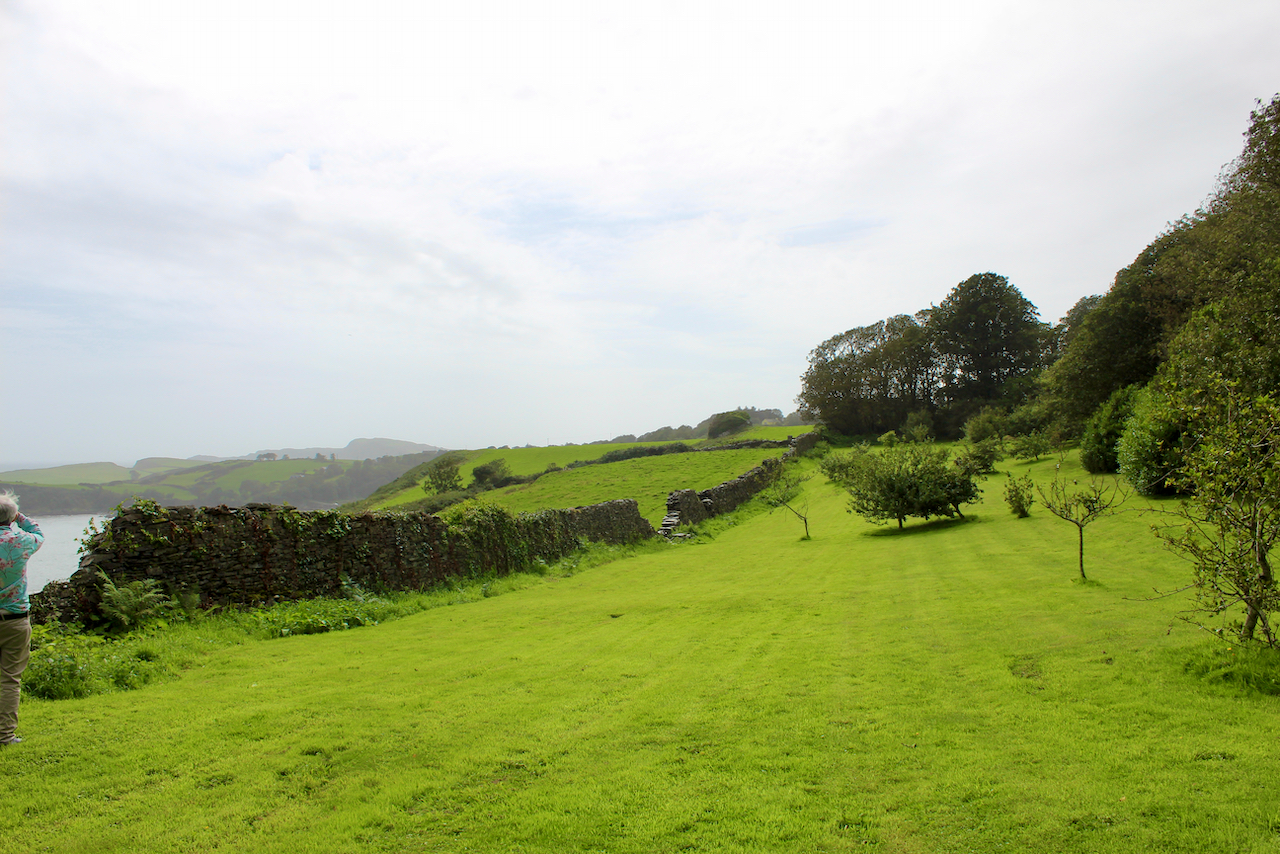
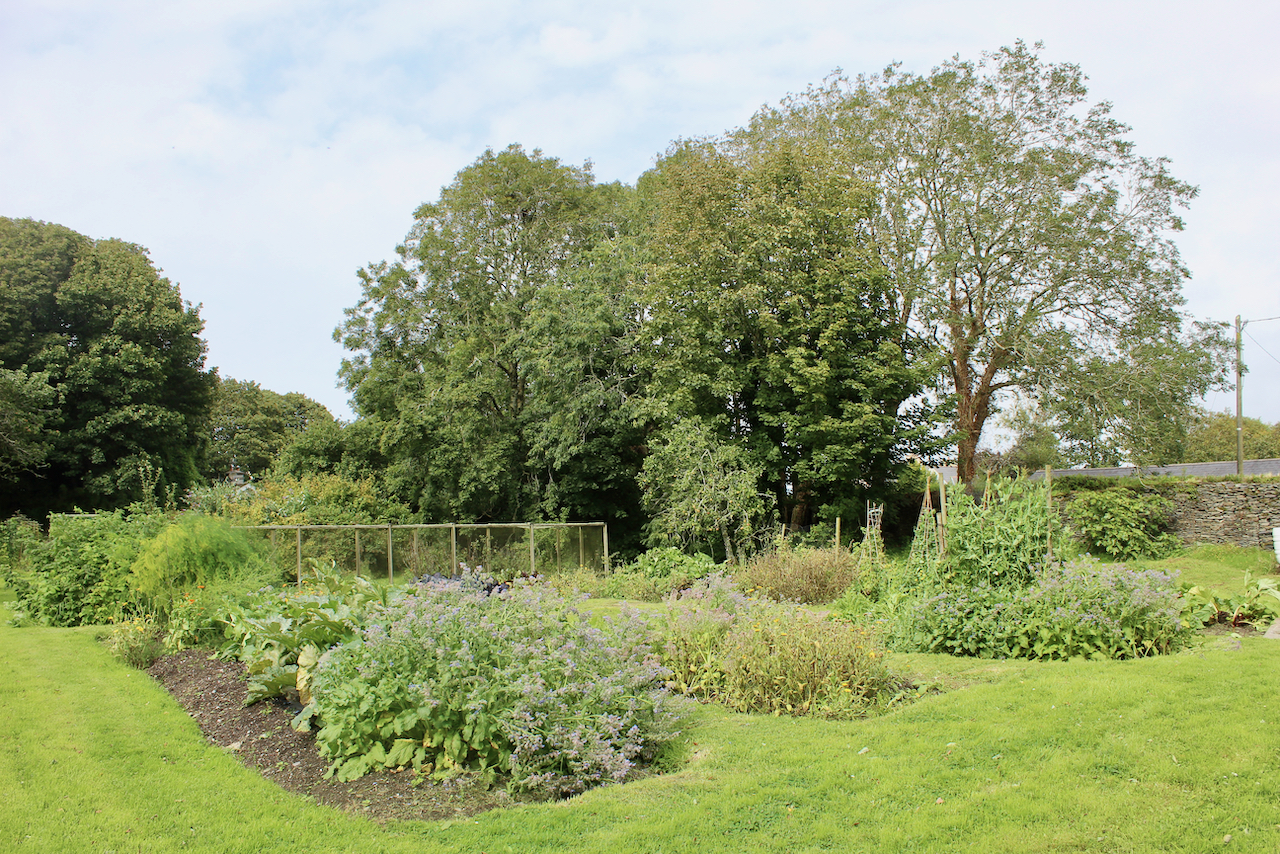
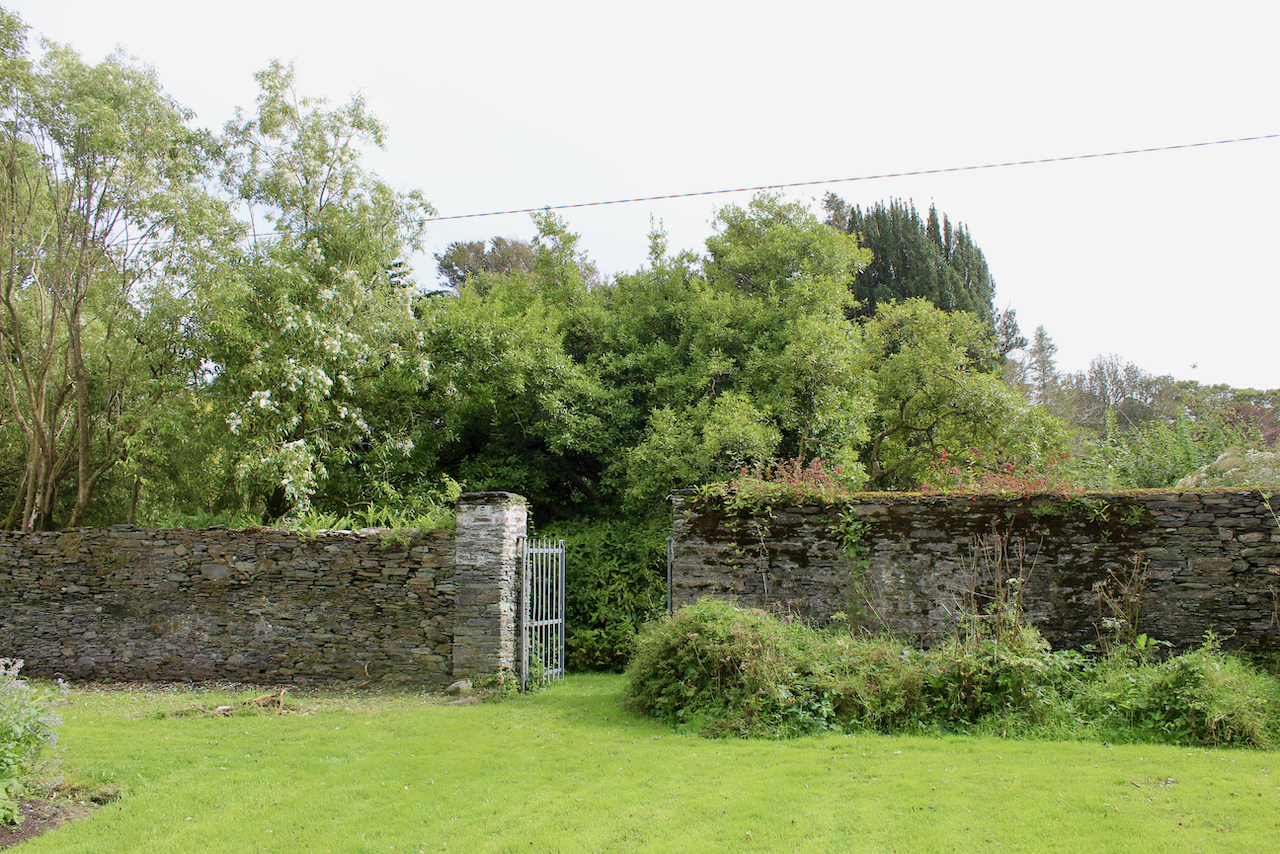
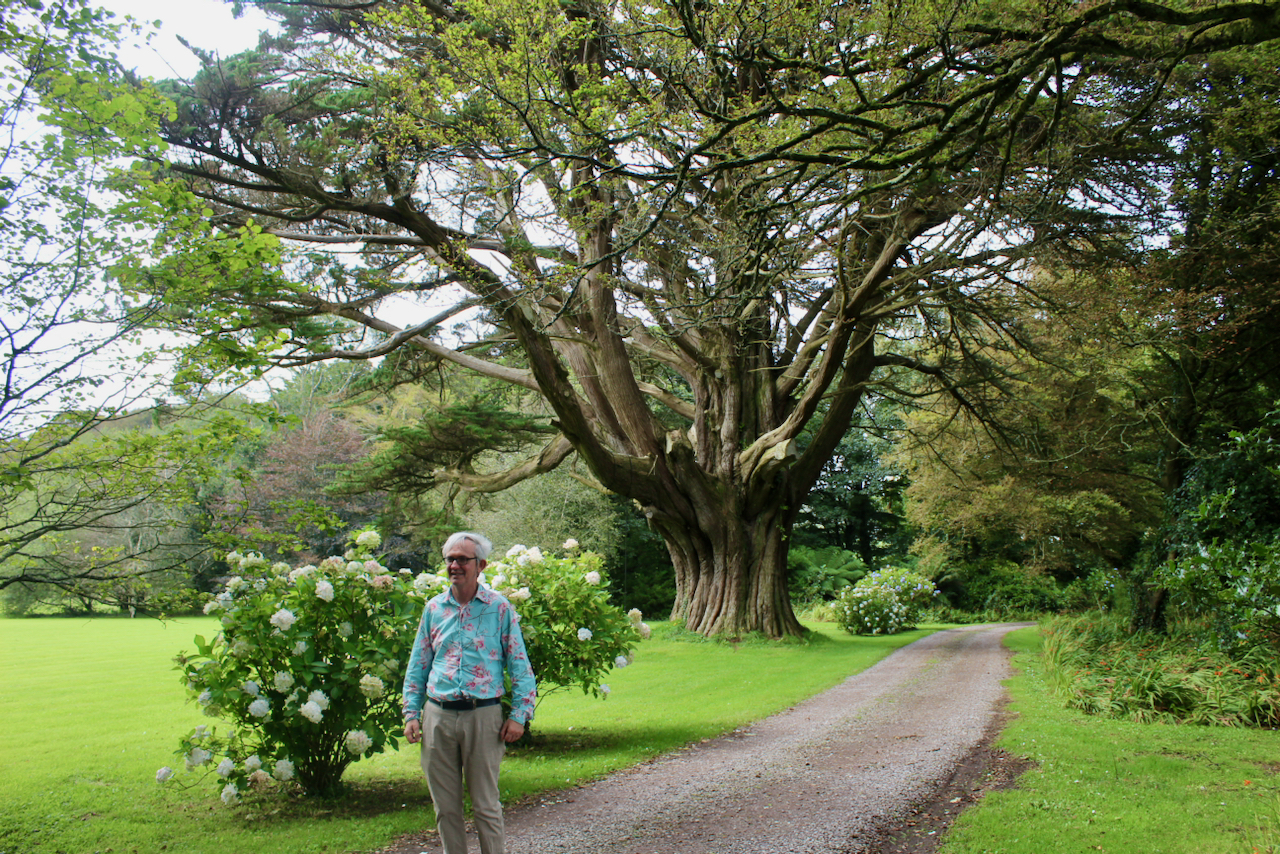
The gardens and view from Castletownshend. Photograph © Jennifer Winder-Baggot, www.irishhistorichouses.com
Photograph © Jennifer Winder-Baggot, www.irishhistorichouses.com
Castletownshend. Photograph © Jennifer Winder-Baggot, www.irishhistorichouses.com

The website continues: “Steeped in history, The Castle has been home to the Townshend family since the 1650s and has been receiving guests for over 60 years. Inside the old stone walls, you’ll find welcoming faces to greet you, roaring fires to warm you, and comfy beds to sink into. Each room has its own story to tell, with the oak-panelled hall and spacious dining room retaining most of their original features, furniture, and family portraits.

The website explains the family name: “The family name has undergone several changes over the years. The original spelling was Townesend, which later became Townsend. In 1870, the head of the family, Reverend Maurice Fitzgerald Townshend [1791-1872], consulted with the Townshends of Raynham, Norfolk. Following this, it was requested that the whole family add the ‘h’ into the name. However, some families were quite content with the current spelling and refused to adopt the new one. This resulted in various different spellings spread across the branches throughout the UK, Ireland, Australia and Canada.” [1]
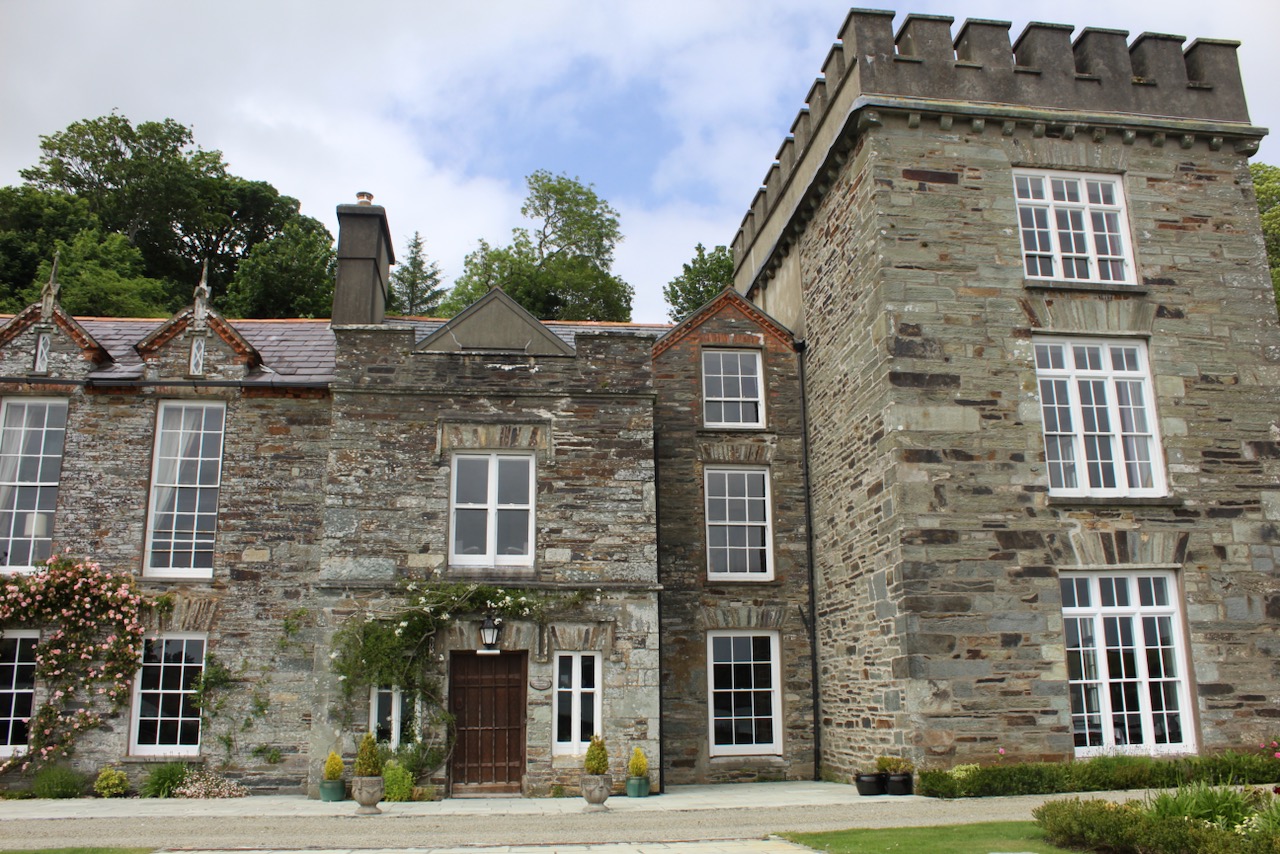
Castletownshend. Photograph © Jennifer Winder-Baggot, www.irishhistorichouses.com

The centre of the castle is the oldest part, and the two end towers are later additions.
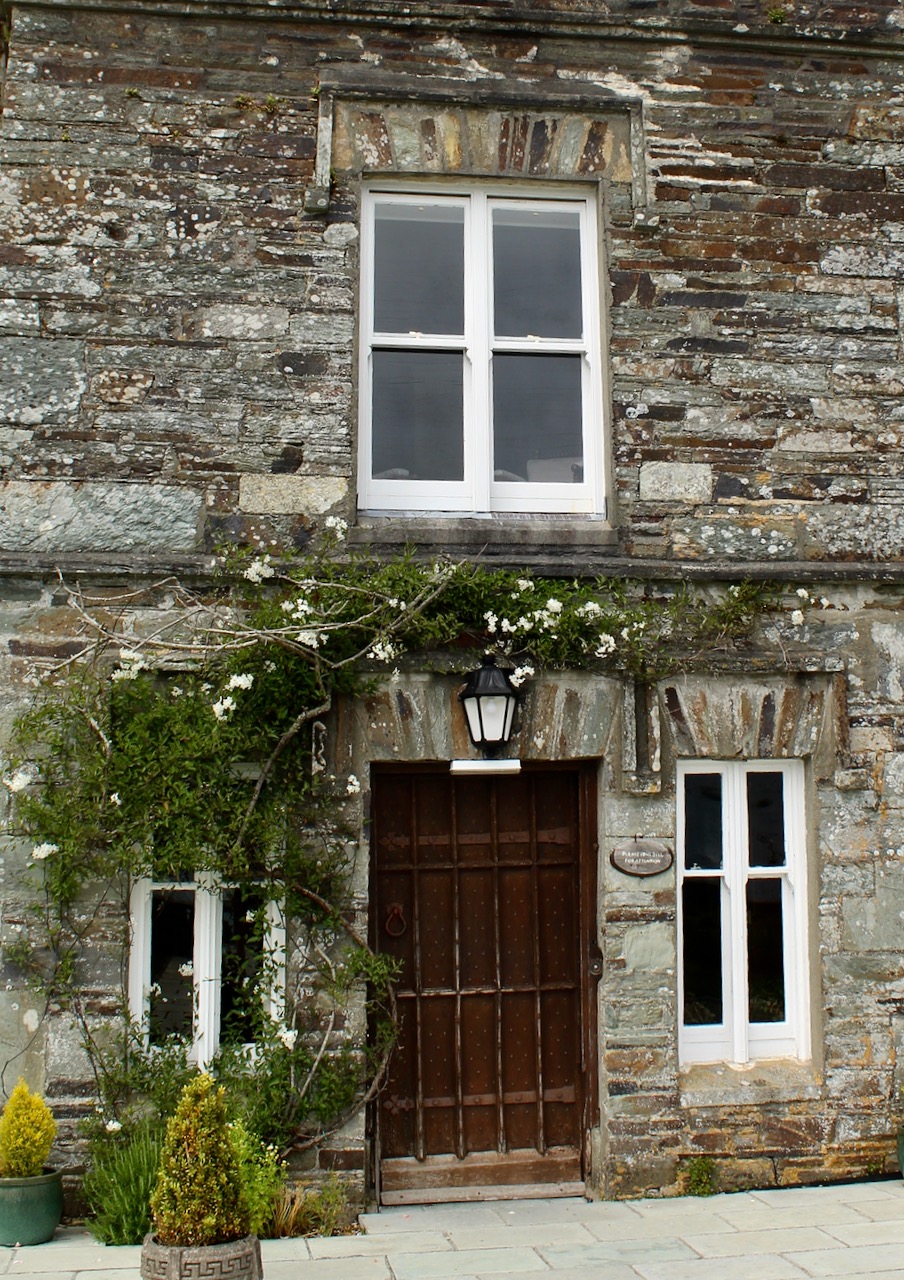
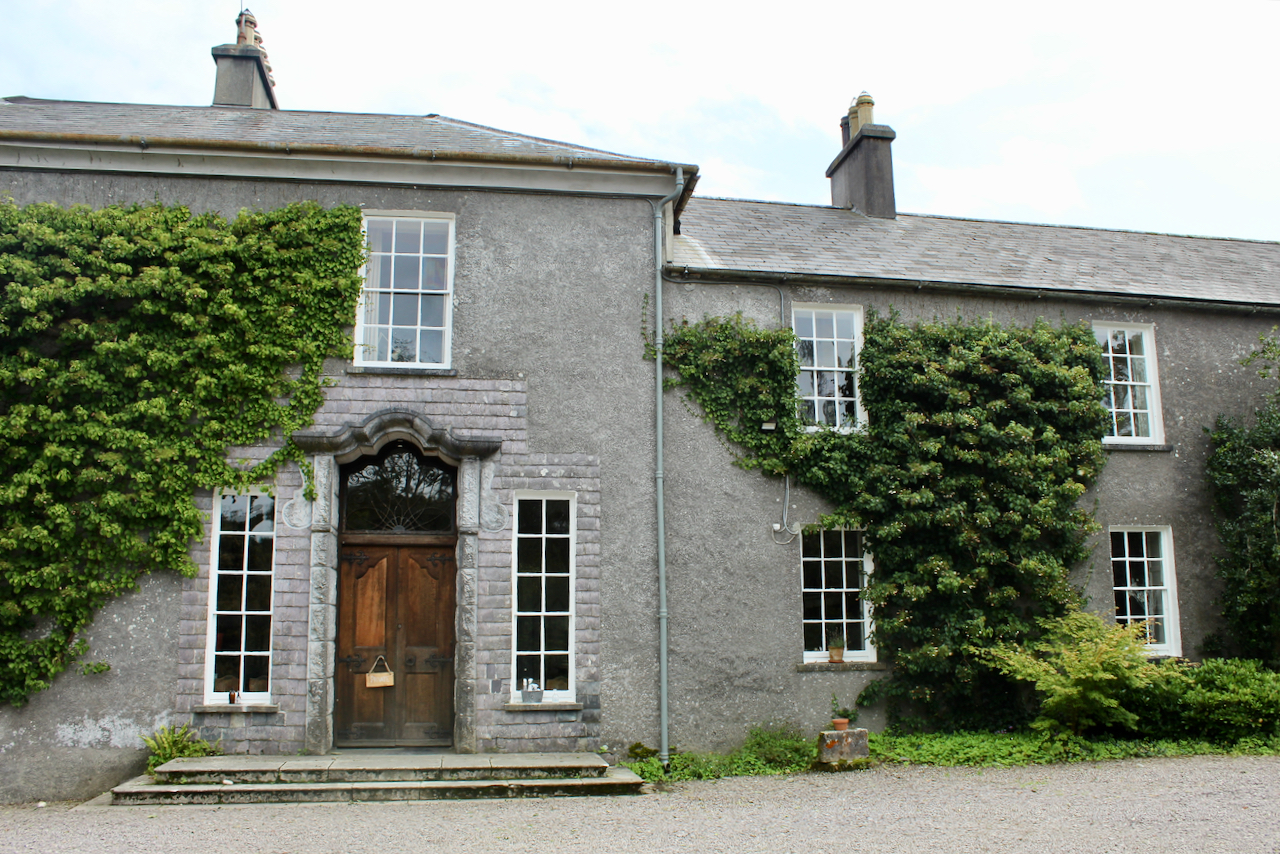
The National Inventory describes: “Square-headed door opening to porch with stone voussoirs, label moulding and timber door with cast-iron studs, strap hinges and door furniture.” Photograph © Jennifer Winder-Baggot, www.irishhistorichouses.com

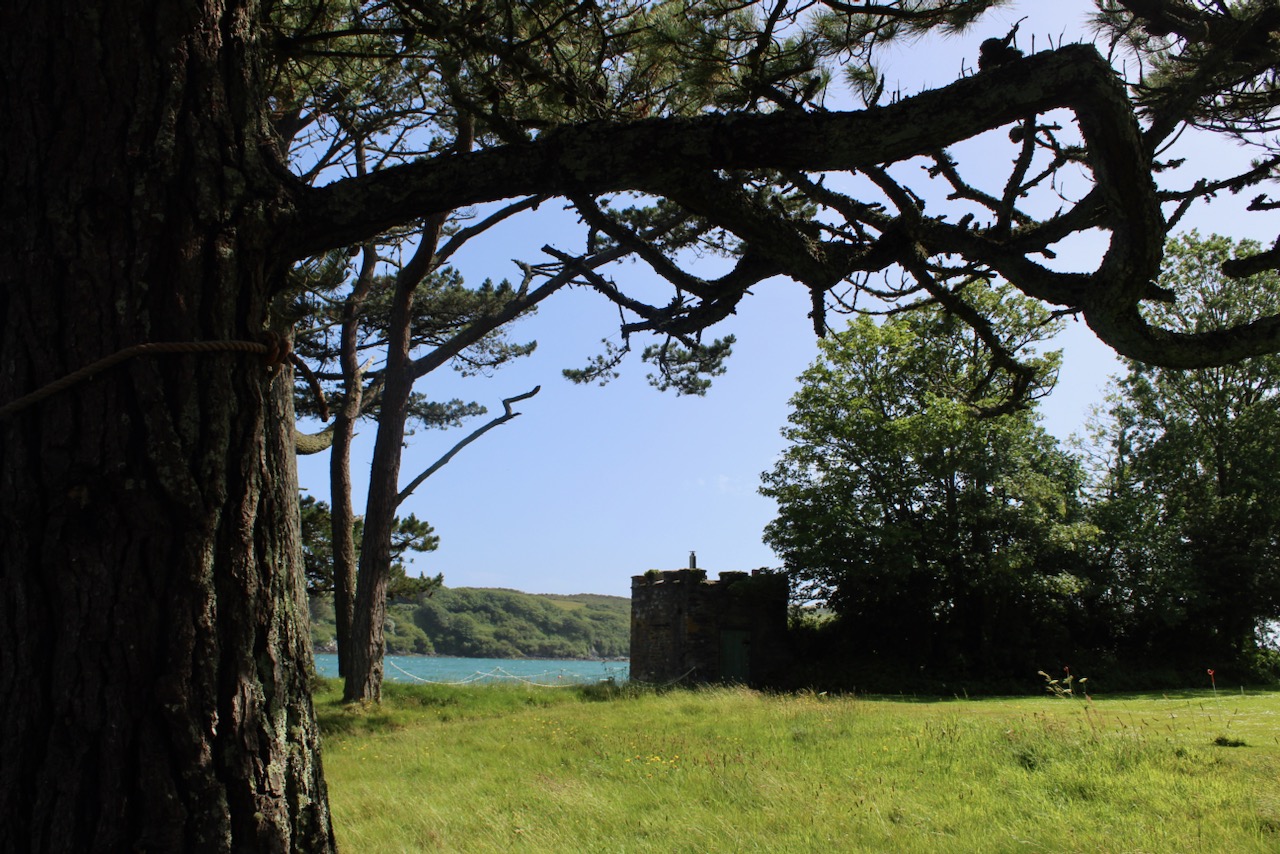
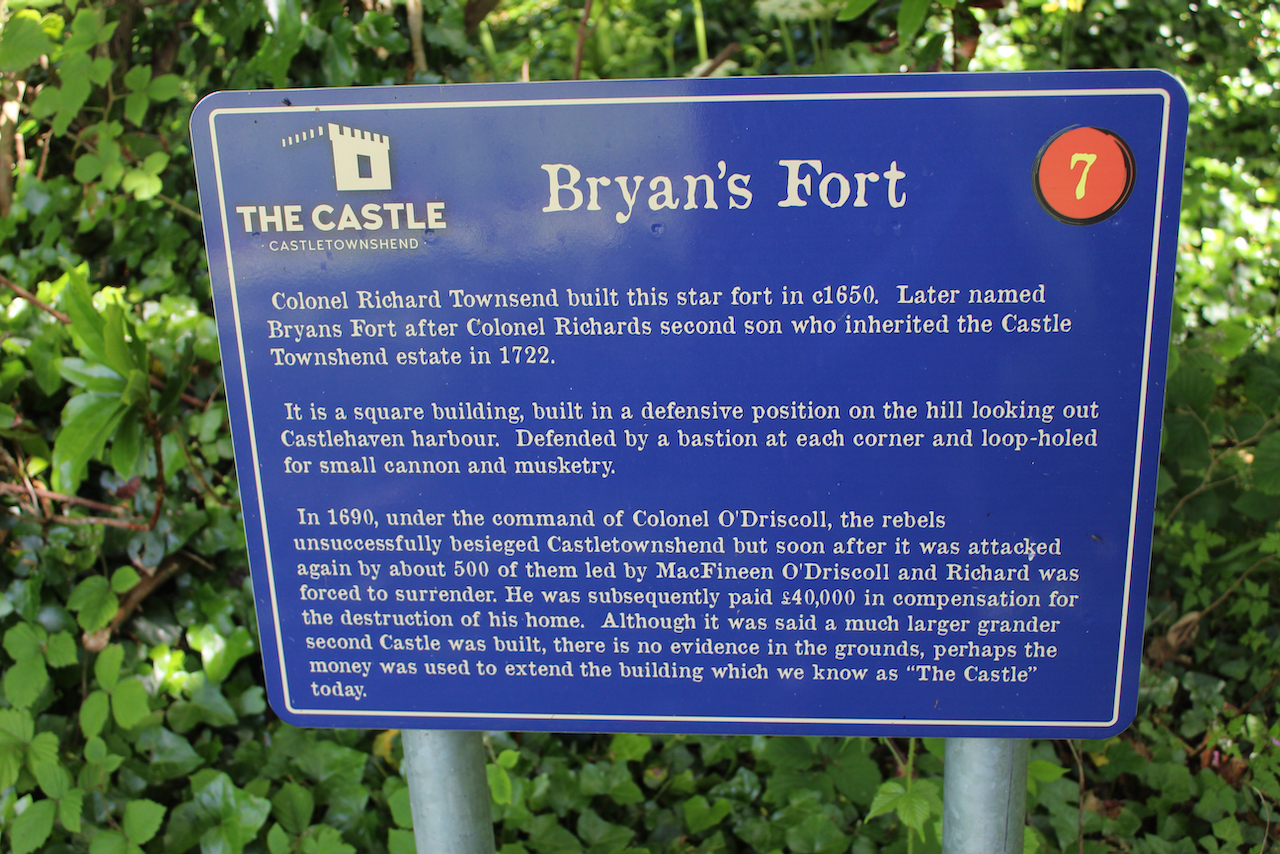
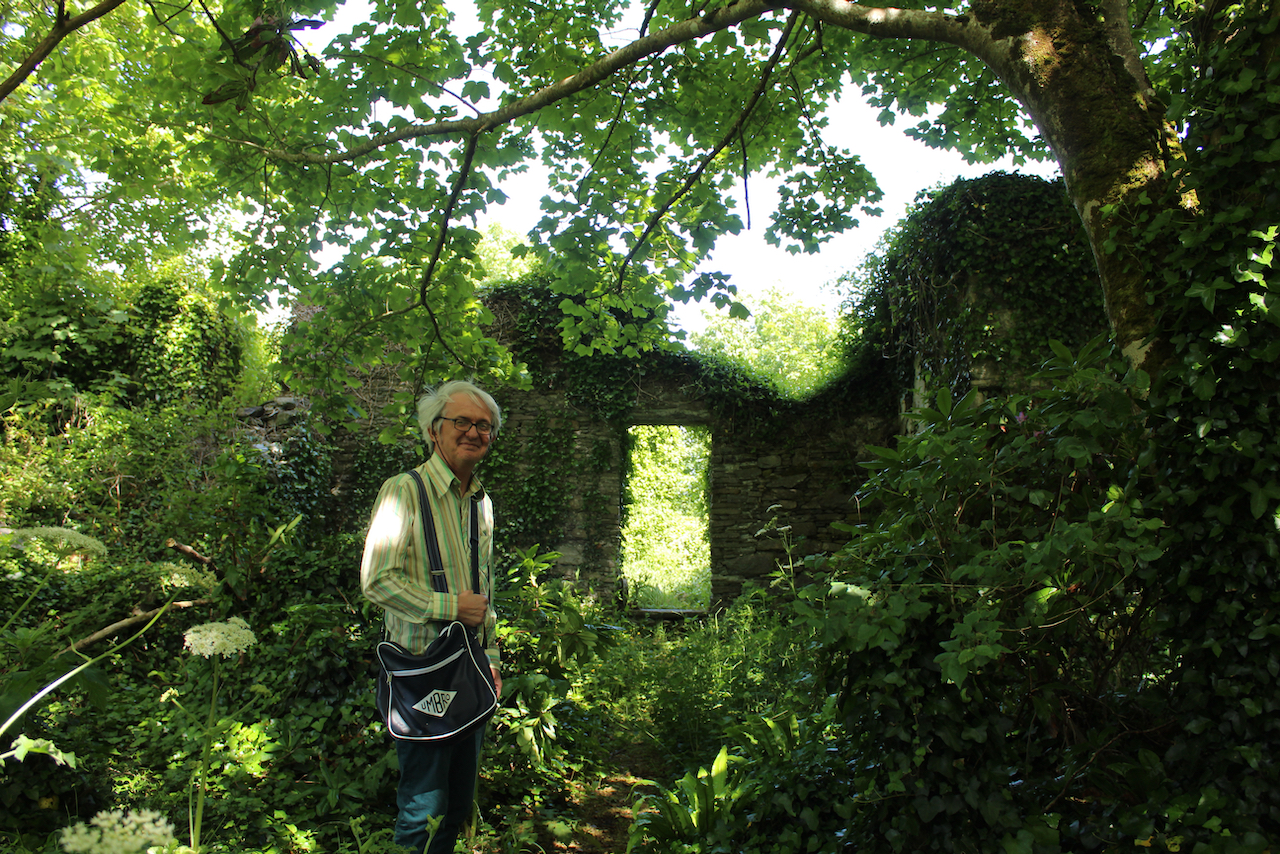
The website tells us: “The building is in fact a 17th century castellated house, not a defensive castle from earlier times. It was built by Colonel Richard Townesend [1618-1692] towards the end of the 17th century, starting off as a much smaller dwelling. The first castle, known as ‘Bryan’s Fort’ [named after his son Bryan (1648-1726)], was attacked and destroyed by the O’Driscolls in 1690, and its ruins remain in The Castle grounds to this day. Richard then built a second castle, which is thought to be where Swift’s Tower still stands.

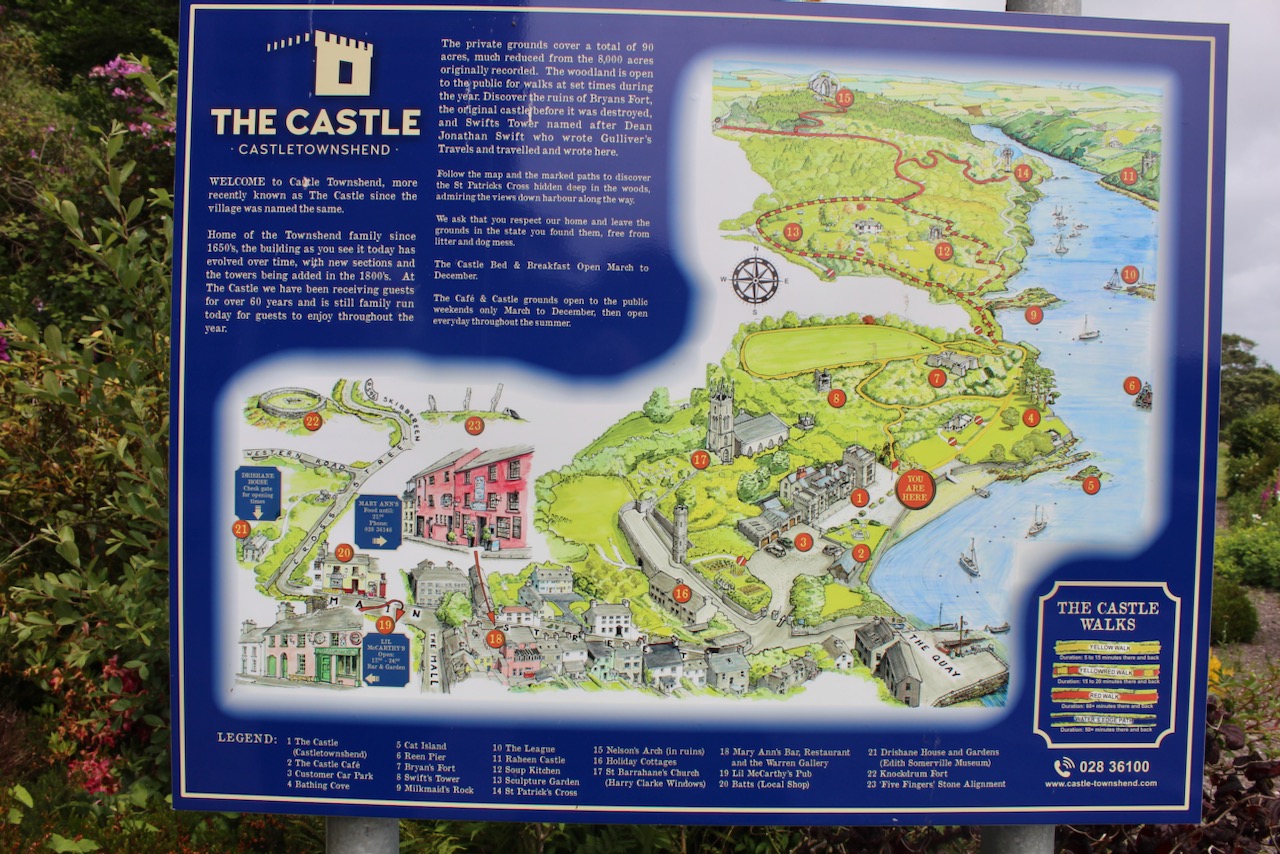
A map of the area of Castletownshend.
The map shows us 7. the fort which Colonel Richard Townshend built around 1650, which was probably the first castle of the area. It is now called Bryans Fort after the Colonel’s son Bryan who inherited the Castle Townshend estate in 1722. A second castle was then built, which now probably exists as the ruins called “Swift’s Tower” (8). The centre block of (1) was probably built around 1780, according to Frank Keohane.
“Swift’s Tower,” which may have been part of an earlier house. Jonathan Swift (1667-1745), author and cleric, travelled to the area and his poem “Carberiae Rupes” (Carbery Rocks) is believed to capture the view looking out from the West Cork coastline. One of the guest rooms in the Castle is named in memory of him, The Dean’s Room, as he was Dean of St. Patrick’s Cathedral in Dublin. Photograph © Jennifer Winder-Baggot, www.irishhistorichouses.com
Photograph © Jennifer Winder-Baggot, www.irishhistorichouses.com

The website continues “In 1805 the floors were lowered to make the ceilings higher, a decision that left The Castle in ruins. However, instead of rebuilding it, the stone was used to add castellated wings to the dwelling on the waterfront. This became The Castle as you see it today.

Castle Townshend, County Cork.

The inside is a real treat, with wonderful family portraits in the hall of oak and what looks like leather wall covering.

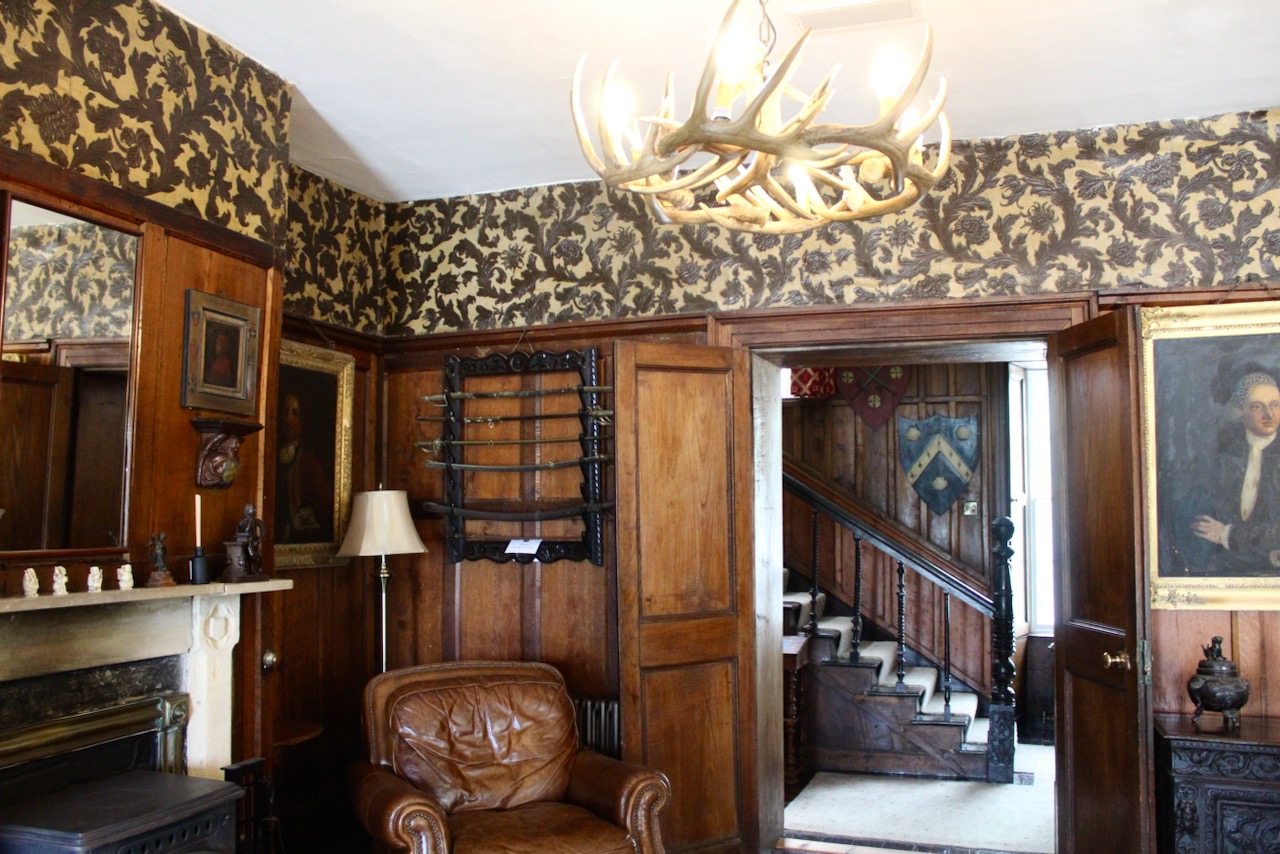
The wood-panelled hall of the Castle in Castletownshend. The portrait of the children is of the children of Reverend Maurice Fitzgerald Townshend (1791-1872): Geraldine, Alice and Henry John. Photograph © Jennifer Winder-Baggot, www.irishhistorichouses.com
Photograph © Jennifer Winder-Baggot, www.irishhistorichouses.com

Colonel Richard Townesend (1618-1692), who was born in England, gained the rank of Officer in the Parliamentary Army in the British Civil War. [2] The Parliament objected to the monarchy of the Stuarts, and they charged the king, Charles I, of treason against the state and ultimately beheaded him. Oliver Cromwell brought troops to Ireland to subdue those loyal to the monarchy. The opposing force to the royalist forces was called the Parliamentary army. Townesend fought in the Battle of Knocknanauss, County Cork in April 1648, where he commanded the main body of the Army under Murrough O’Brien (1614-1674) 1st Earl of Inchiquin. They fought the Irish Confederates, who supported King Charles I in the belief that in reward for their loyalty he would grant them greater self-governance. The Confederate forces were made up of Irish Catholics and “old English” Anglo-Normans who sought to protect their land holding and to end anti-Catholic legislation. The Parliamentarians overcame the Confederates in the battle, and around 3,000 Confederates died at Knocknanauss and up to 1,000 English Parliamentarians.

Murrough O’Brien (1614-1674) 1st Earl of Inchiquin by John Michael Wright courtesy of Manchester Art Gallery.

Richard Townesend’s loyalty to the Parliamentarians wavered after this battle and after the death of Charles I. He returned to Ireland, and he was arrested for being involved in a plot to overcome Lord Inchiquin. However, he may have been a “plant” to undermine the opposition. A mutiny in the garrison at Cork however led to his freedom and Cromwell praised him for being an “instrument in the return of Cork and Youghal to their obedience.” He retired from the military and settled in Castletownshend before 1654. [3]

He managed to hold on to his land after the Stuart monarchy was restored to Charles II. The Dictionary of National Biography suggests that this could be due connections between his wife Hildegardis Hyde and the Lord Chancellor of England, Edward Hyde 1st Earl of Clarendon. Richard held the office of Member of Parliament in the Irish Parliament for Baltimore, County Cork in 1661. He held the office of High Sheriff of County Cork in 1671.

In 1690, after the accession of King James II to the throne, Richard’s home in Castetownshend was unsuccessfully beseiged by 500 Irishmen led by the O’Driscolls, a family who had owned the land before Townesend [for more on the O’Driscolls, see my entry on Baltimore Castle, https://irishhistorichouses.com/2023/12/28/dun-na-sead-castle-baltimore-co-cork-981-x968/ ]Townesend died in 1692, leaving seven sons and four daughters. [see 3]
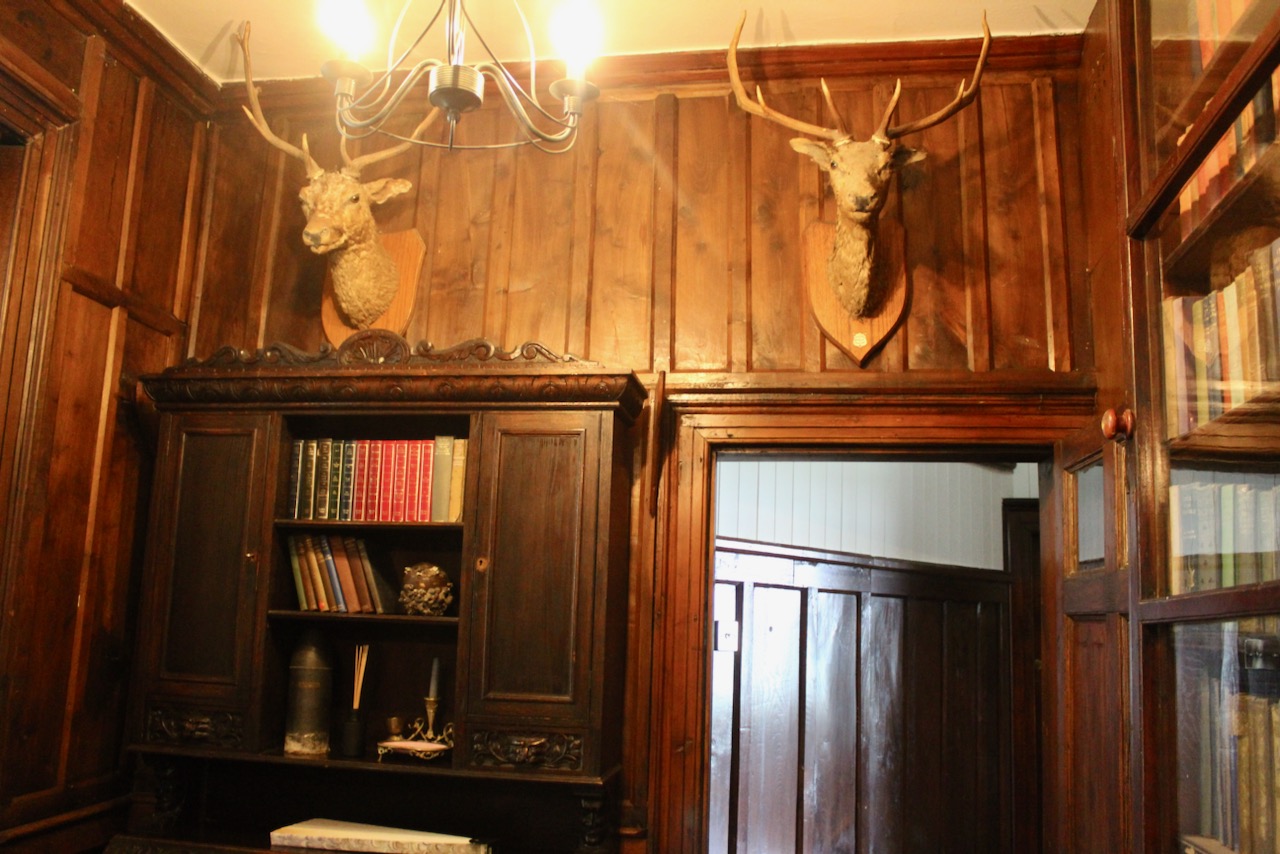
Castletownshend. Photograph © Jennifer Winder-Baggot, www.irishhistorichouses.com

Jane O’Hea O’Keeffe tells us of the Castle’s builder, in her Voices from the Great Houses: Cork and Kerry (Mercier Press, Cork, 2013): p. 83. “In the late 1600s Richard Townsend, an officer in the Cromwellian army, acquired lands at Castlehaven in west Cork originally owned by the O’Driscoll clan. Richard Townsend also owned other lands in County Cork totalling over 6,540 acres. It was he who built the castle at Castletownshend, the centre portion of which still remains. The two towers at each corner of the castle today were added in the eighteenth century.” [4]

Although she identifies the centre of the castle to be built by Richard in the 1600s, Frank Keohane describes Castle Townshend in his Buildings of Ireland: Cork City and County and suggests that this part was built in 1780. The castle Richard built is probably the ruin nearby. In fact, An Officer of the Long Parliament (1892) we are told that he lived for some time in Kilbrittan Castle nearby, “a splendid very pile overlooking Courtmacsherry Bay, which had been forfeited by the head of the McCarthies for his participation in the Rebellion of 1641.

Kilbrittain Castle, County Cork, photograph courtesy of Roaringwaterjournal.com A friend’s father, inventor Russell Winn (d. 1980), restored a wing. See also their facebook page https://www.facebook.com/p/Kilbrittain-Castle-in-Ireland-100090029232570/?_rdr
Kilbrittain Castle by Hostynsky Photography.

Richard Townesend’s early house at Castletownshend is described in An Officer of the Long Parliament (1892):

p. 107-08. “It seems to have consisted of a dwelling – house and small courtyard all comprised in a square enclosure with a bastion at each angle, pierced with loopholes for musketry and some embrasures for small cannon. It was built on a well- chosen site of some strength. The dwelling-house consisted of two stories, the upper one overlooking the harbour. The lower one must have been lighted from the court, on the outer side of which was a parapet for defending the wall. It seems to have been hastily built, as the stones are small and not well put together.A larger mansion appears to have been built before long, which was valued at £ 40,000 , when destroyed in the troubles of 1690.”

Richard Townesend’s son Horatio was in the navy and in 1690 carried the Duke of Schomberg, who fought in King William’s army, to Ireland on board his sloop. He married Elizabeth, daughter of the MP for Baltimore, Thomas Becher.

Death of Frederick Duke of Schomberg at the Battle of the Boyne by Benjamin West, National Trust Mount Stewart.

Another son, John, married Catherine Barry, daughter of Richard, 2nd Earl of Barrymore. Son Philip (1664-1735), became a Protestant clergyman and married Helen Galwey of Lota Lodge, Cork.

Colonel Richard Townsend’s son Bryan (1648-1726) was a Commander in the British navy and MP for Clonakilty. He married Mary Synge, daughter of Edward, Bishop of Cork, Cloyne and Ross in 1663 and they had many children. In The Long Parliament, we are told of a portrait of Bryan: “If the very handsome picture at Castletownshend which has always borne his name is truly the portrait of Bryan, it most probably was painted while he was a naval officer, as he wears his own hair and not the voluminous wig in which gentlemen on land used to enshroud themselves.” I must look for this portrait next time we visit! Although it may have been destroyed, along with many papers and letters described in The Long Parliament, by fires in the castle.

Bryan was well-regarded by his neighbours:

The laws made it almost impossible for any but a Protestant to hold land, so many of the Carbery Romanists, especially the O’Heas and O’Donovans, trusting in Bryan’s high character for integrity, gave their properties entirely into his hands, being obliged to do so without any written guarantee 1. At one time he had under his care upwards of £ 80,000 worth of property which he defended at considerable cost to himself, and when it was safe to restore it to the real owners he did so with all the arrears that had accrued while he held it. This fact was ascertained by the research of the late John Sealy Townshend .” [see 1]

Bryan and Mary’s son Richard (1684-1742) inherited Castletownshend , and was a Justice of the peace and high sheriff for County Cork. He married twice, first to another Mary Synge, daughter of Reverend Samuel, Dean of Kildare. His second wife was Elizabeth Becher from Skibbereen, County Cork.

The Townshends tell us in The Long Parliament about Jonathan Swift’s visit:

Richard Townshend, of Castle Townshend, was born July 15, 1684, and succeeded to the estates on the death of his father Bryan, 1727 . It was at this period (*1) that Dean Swift spent some time in West Carbery . He stayed at Myros , but is said to have written his poem Carberiae Rupes in a ruined tower at Castle Townshend , still known as Swift’s Tower . It is also said that letters from the great Dean are still preserved at Castle Townshend , and that he named one of the houses in the village Laputa.” (*2)

The footnotes refer to *1: G. Digby Daunt and *2: Now Glen Barrahane, the seat of Sir J. J. Coghill , Bart .
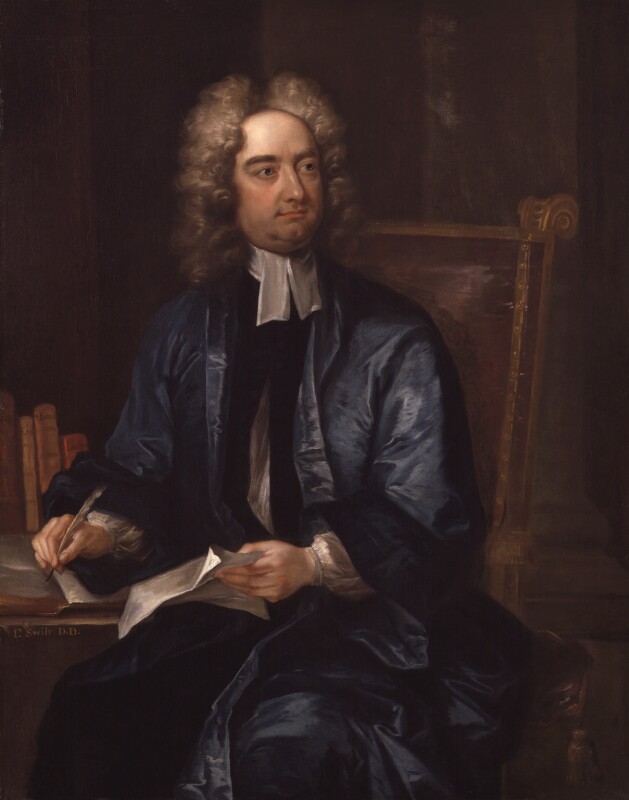
Jonathan Swift by Charles Jervas circa 1718, National Portrait Gallery 278.

Richard (1684-1742) and Elizabeth Becher’s son Richard (1725-1783) also served as MP and high sheriff. He married Elizabeth Fitzgerald, daughter of John Fitzgerald, the 15th Knight of Kerry (d. 1741). His father was Maurice Fitzgerald, the 14th Knight of Kerry, and Elizabeth’s brother was Maurice the 16th Knight of Kerry – there is a portrait of a Maurice Fitzgerald, Knight of Kerry, in the front hall, but I’m not sure which one is it. Richard’s portrait is in the dining room.

Maurice Fitzgerald, Knight of Kerry – I’m not sure whether it is the 14th or 16th and Countess of Desmond, Katherine Fitzgerald (abt. 1504-1604). Photograph © Jennifer Winder-Baggot, www.irishhistorichouses.com

Next to the Knight of Kerry in the hall there is also a portrait of the Countess of Desmond, Katherine Fitzgerald (abt. 1504-1604), who lived to be over one hundred years old (some say she lived to be 140) and went through three sets of teeth. We came across her also in Dromana in County Waterford.
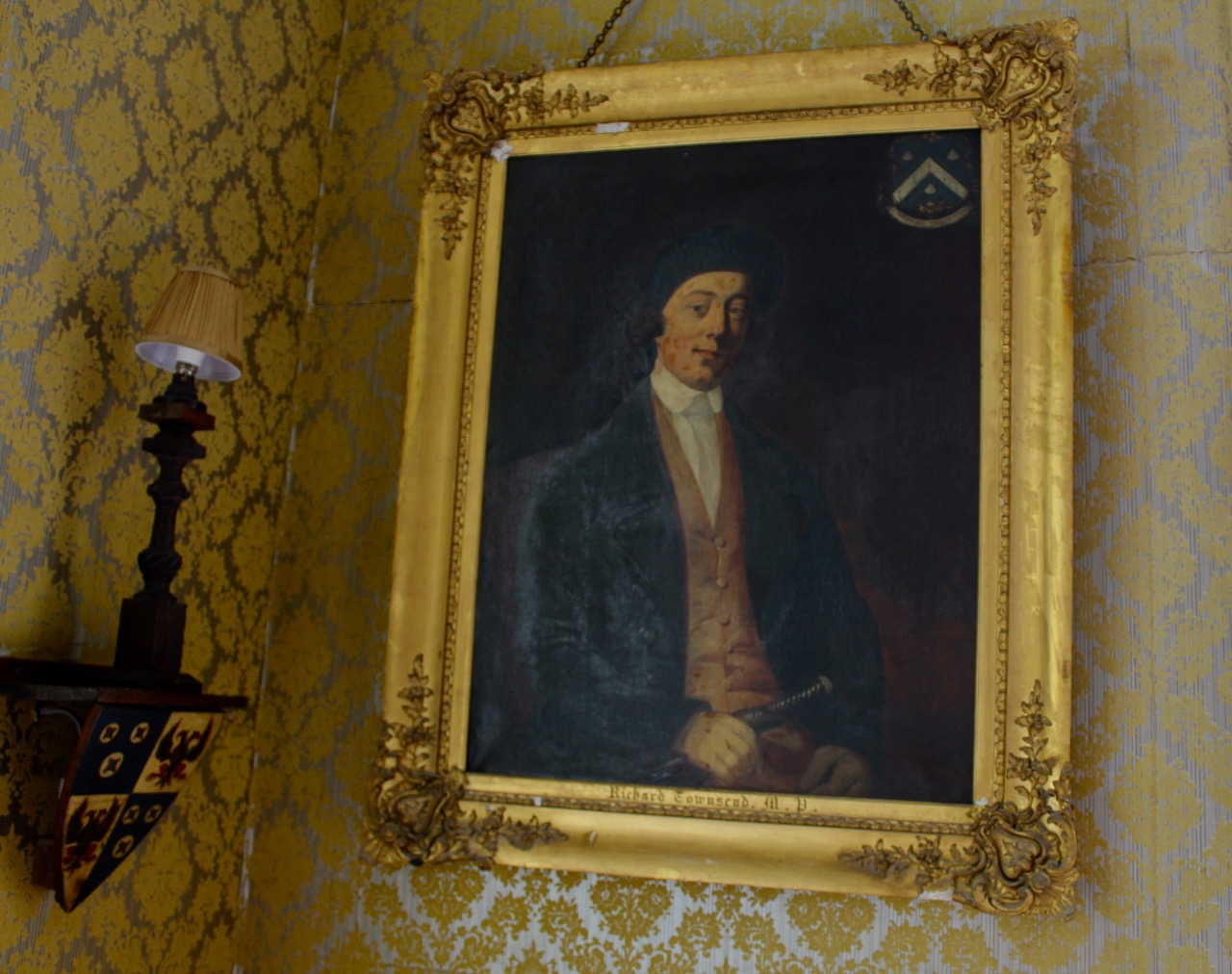
Richard Townsend (1725-1783), served as MP and high sheriff and lived at Castletownshend. He married Elizabeth Fitzgerald. Photograph © Jennifer Winder-Baggot, www.irishhistorichouses.com
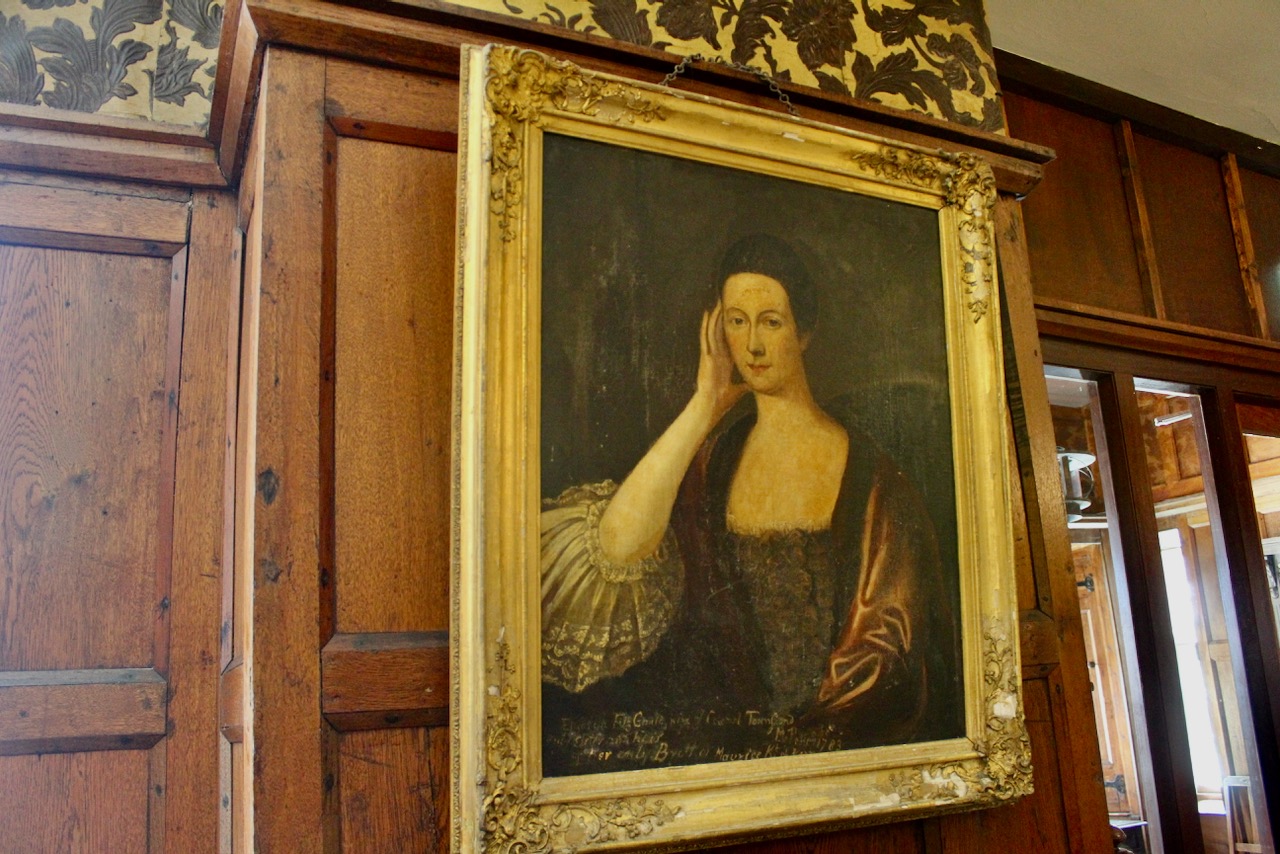
Elizabeth Fitzgerald, wife of Richard Townsend. Elizabeth Fitzgerald was daughter of John Fitzgerald (1706-1741), 15th Knight of Kerry, and married to Richard Townsend (1725-1783). Photograph © Jennifer Winder-Baggot, www.irishhistorichouses.com

The Long Parliament describes:

Richard Townshend married in 1752 Elizabeth , only daughter and heiress by survival of John FitzGerald, 15th Knight of Kerry, by whom he had one son and one daughter. Elizabeth FitzGerald’s only brother Maurice, 16th Knight of Kerry, had married his cousin Lady Anne Fitzmaurice, and died leaving no children, but even now he is remembered as ‘ the good Knight.’ He left all the Desmond estates in Kerry to the son of his sister Elizabeth Townshend.”

It may have been Richard Townsend (1725-1783) and his wife, the daughter of the 15th Knight of Kerry, who started to build the castle we see today. Keohane writes of the current castle at Castletownshend:

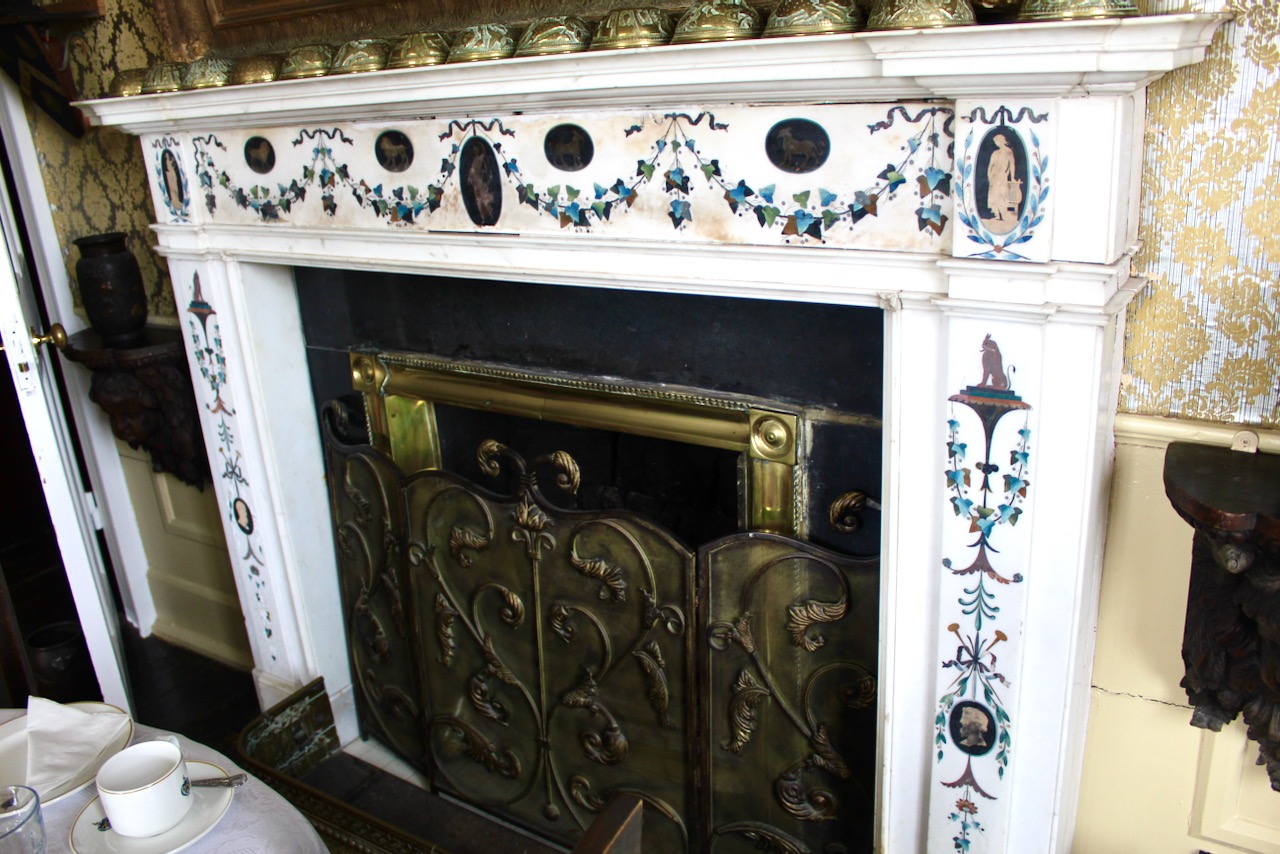
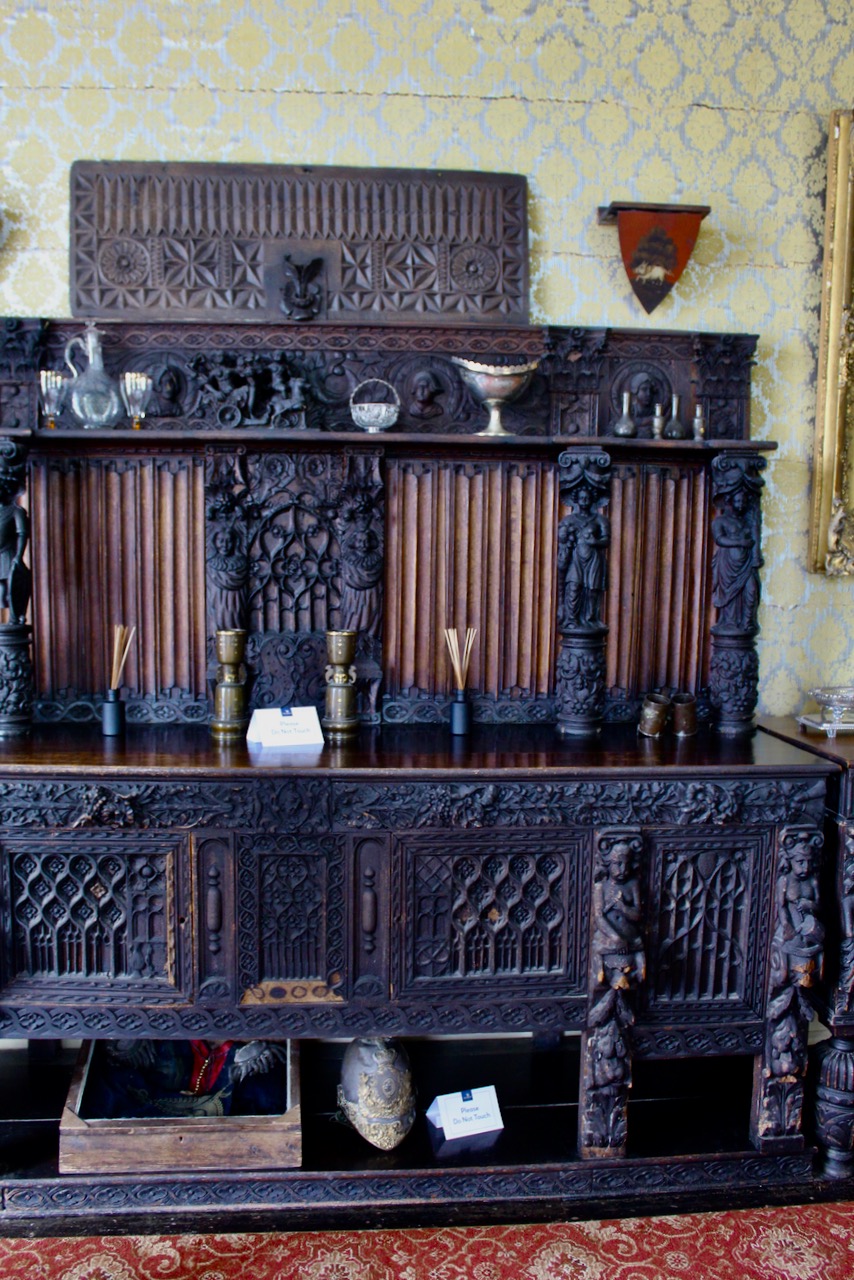
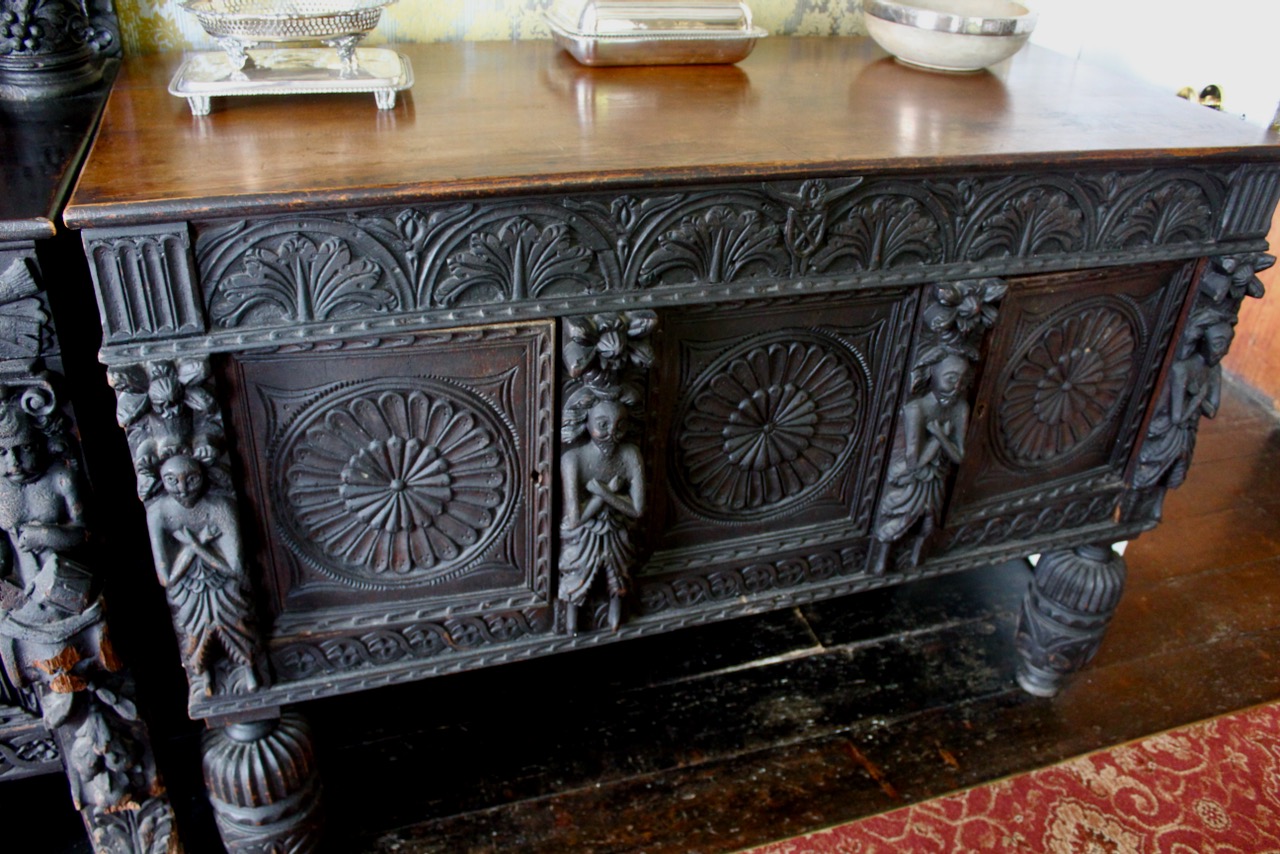
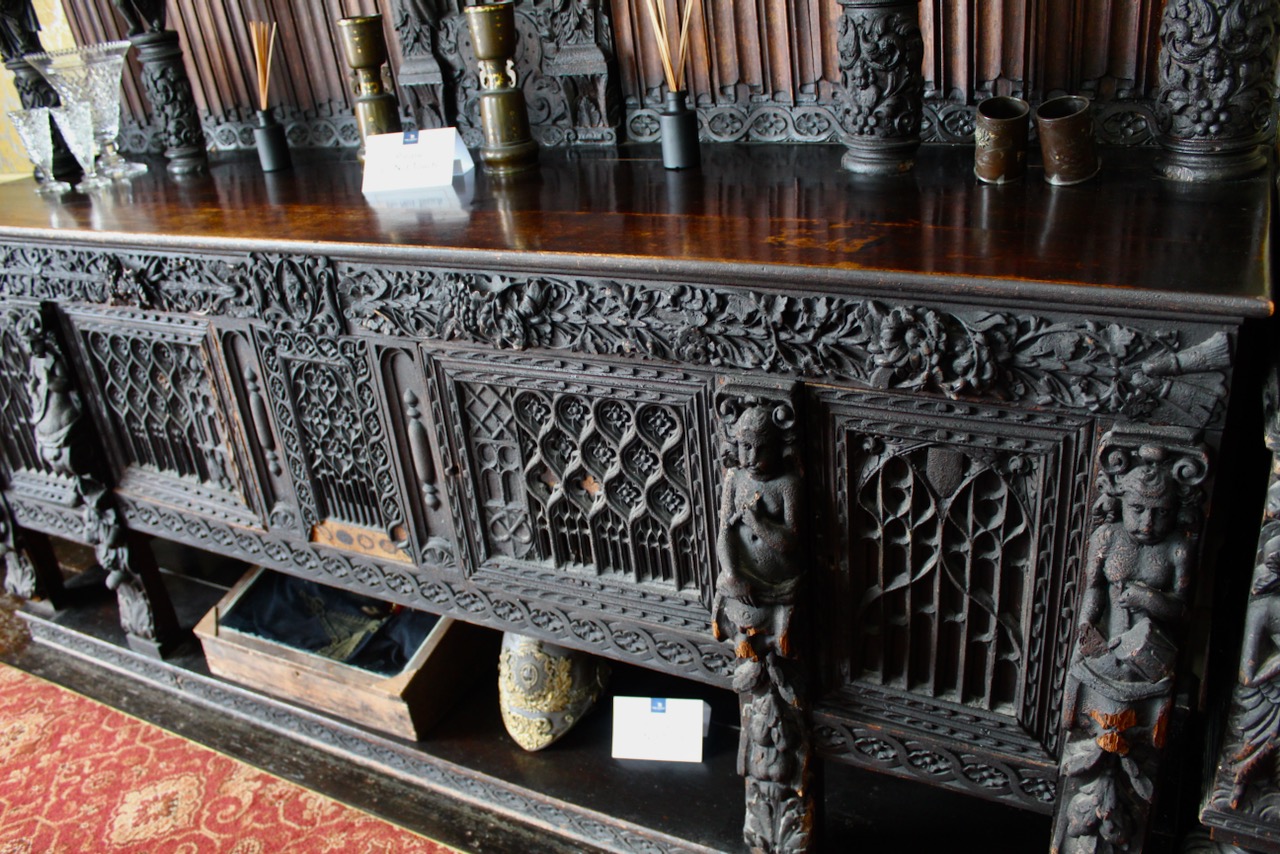
p. 314. “The Castle. A house of several parts, the seat of the Townshends. The earliest, described as ‘newly built’ in 1780 by the Complete Irish Traveller, is presumably the two-storey, five-bay rubble-stone centre block, with dormers over the upper windows and a two-storey rectilinear porch. Taller three-storey wings with battlements carried on corbelled cornices and twin- and triple-light timber-mullioned windows. The E. wing was perhaps built in the late 1820s; the W wing was added after a fire in 1852. Modest interior. Large low central hall with a beamed ceiling and walls lined with oak panelling and gilded embossed wallpaper. Taller dining room to the r., with a compartmented ceiling; a Neoclassical inlaid fireplace in the manner of Bossi, and a large Jacobean sideboard. C19 staircase with barley-twist type balusters. 

Octagonal three-stage battlemented tower, 60 m west of the castle.” [5]

The Jacobean sideboard in the Dining Room. Photograph © Jennifer Winder-Baggot, www.irishhistorichouses.com
Castletownshend. Photograph © Jennifer Winder-Baggot, www.irishhistorichouses.com
Neoclassical inlaid fireplace in the manner of Bossi. Photograph © Jennifer Winder-Baggot, www.irishhistorichouses.com
The Jacobean sideboard in the Dining Room. Photograph © Jennifer Winder-Baggot, www.irishhistorichouses.com
The carving on the sideboard is incredible. Photograph © Jennifer Winder-Baggot, www.irishhistorichouses.com
Castletownshend. Photograph © Jennifer Winder-Baggot, www.irishhistorichouses.com

Jane O’Hea O’Keeffe continues: “Over the following centuries, members of the Townsend family served as high sheriffs of County Cork. In 1753 Richard Townsend was the office-holder and in 1785 Richard Boyle Townsend [1756-1826] was appointed to the position. In the 1870s Richard M.F. Townsend owned over 7,000 acres near Dingle in County Kerry, inherited from the FitzGerald family, Knights of Kerry. At that time, the estate of the late Rev. Maurice Townshend extended to over 8,000 acres in County Cork...” [4]

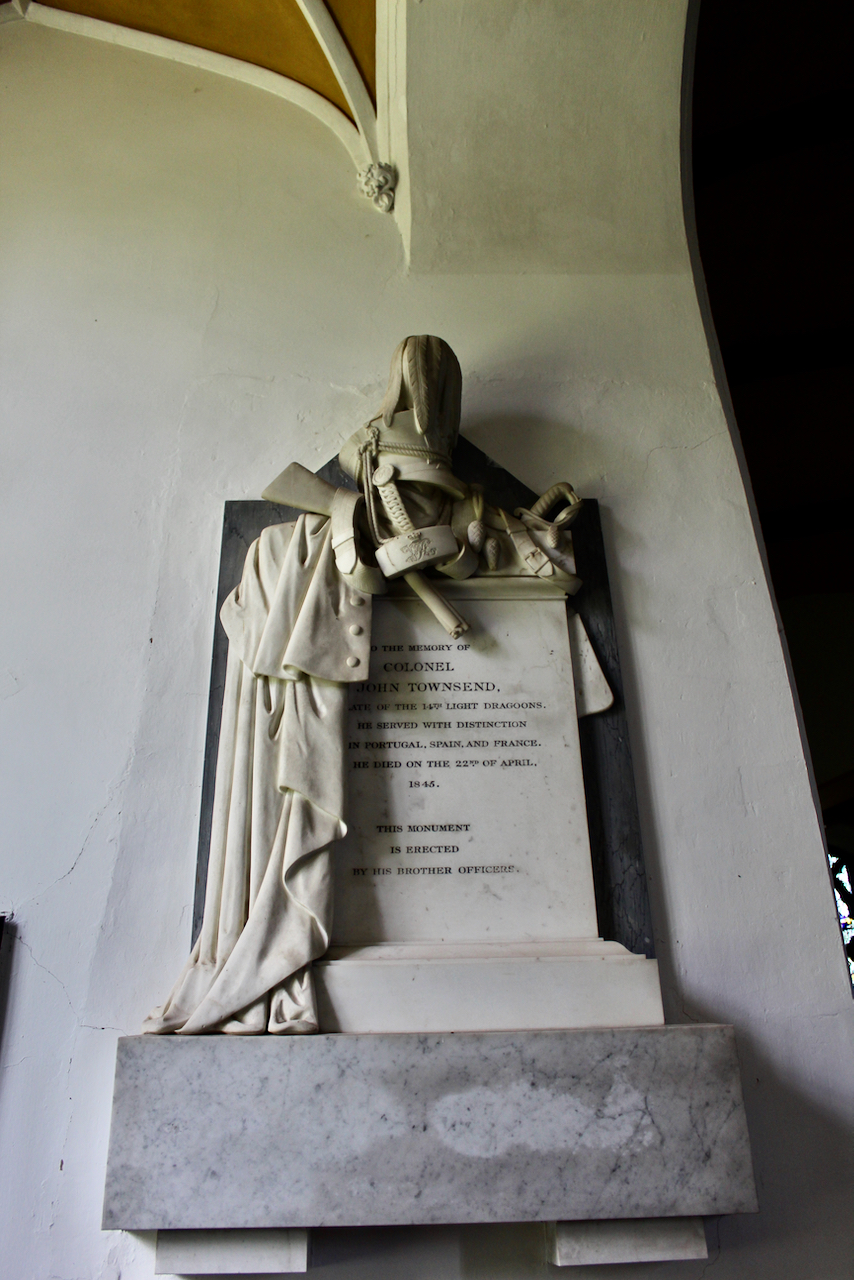
Richard Townsend and Elizabeth Fitzgerald’s son Richard Boyle Townsend (1753-1826) inherited Castletownshend. He was educated at Eton and Oxford. He married Henrietta Newenham. There is a fine portrait of their son Lieutenant-Colonel John Townsend, of the 14th Light Dragoons, who held the office of Aide-de-Camp to Queen Victoria.
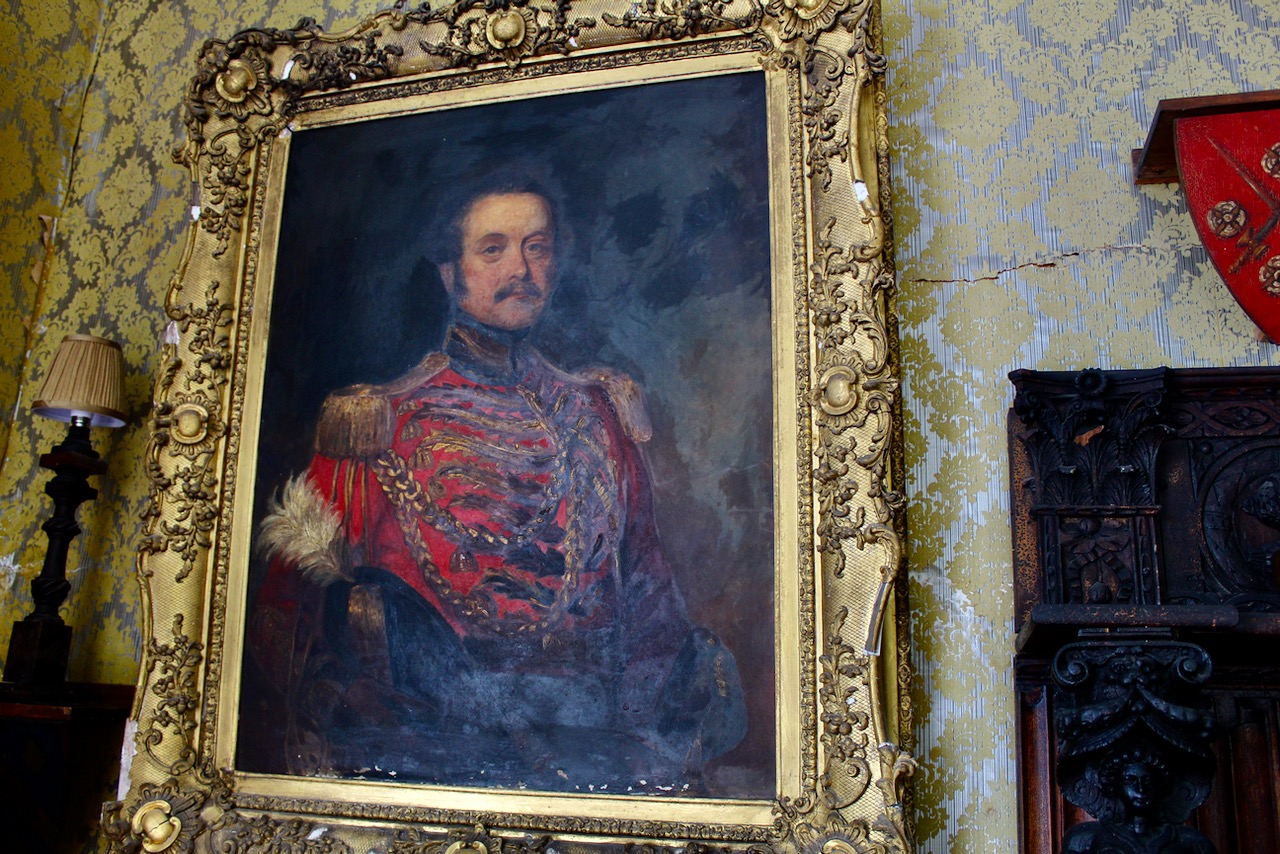
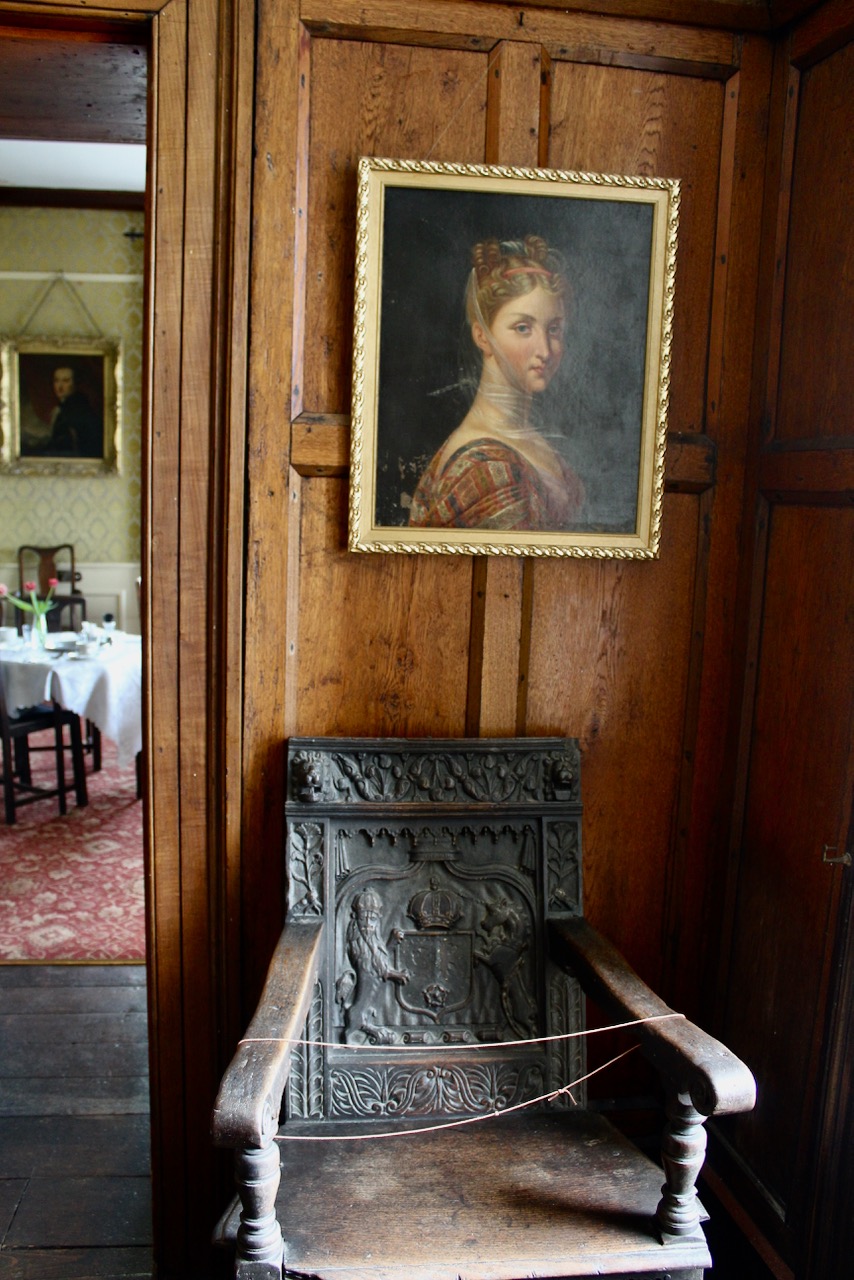
Lieutenant-Colonel John Townsend (1786-1845), of the 14th Light Dragoons, Aide de Camp to Queen Victoria. Photograph © Jennifer Winder-Baggot, www.irishhistorichouses.com
I think this is a portrait of Henrietta Newenham (1764-1848). Photograph © Jennifer Winder-Baggot, www.irishhistorichouses.com
Monument in nearby church, memorial to Colonel John Townsend.

Lt-Col John Townsend died in 1845, and the property passed to his brother, Reverend Maurice Townsend (d. 1872). Maurice married Alice Elizabeth Shute, heiress to Chevanage estate in Gloucestershire. Alice Elizabeth Shute was heiress by survival in her uncle Henry Stephens, and assumed his name. Maurice changed his name in 1870 to Maurice FitzGerald Stephens-Townshend (he was the one who added the ‘h’ in the name). She died at Castle Townshend aged only twenty-eight.

They had a son John Henry Townshend (1827-1869), who gained the rank of officer in the 2nd Life Guards. A fire occurred in 1852, during Reverend Maurice’s time in Castletownshend.

John Henry Townshend (1827-1869). Photograph © Jennifer Winder-Baggot, www.irishhistorichouses.com

The website tells us about the fire: “Disaster struck again in 1852 when the newly built East Wing went up in flames. The blaze was so fierce that the large quantity of silver stored at the top of the wing ran down in molten streams. The family sent a Bristol silversmith to search the ruins and value the silver by the pound, which he did and promptly disappeared to America with a large part of it! The family still have some of that silver, all misshapen from the fire. The East Wing was rebuilt soon after the fire and The Castle has remained unchanged in appearance ever since.

Reverend Maurice’s son predeceased him so Reverend Maurice’s grandson, Maurice Fitzgerald Stephens-Townshend (1865 – 1948) inherited Castletownshend in 1872 when he was still a minor. In the 1890s, the time of the Wyndham Act, 10,000 acres were put up for auction. The current owners still have the auction books. It was purchased by Charles Loftus Townsend (1861-1931).
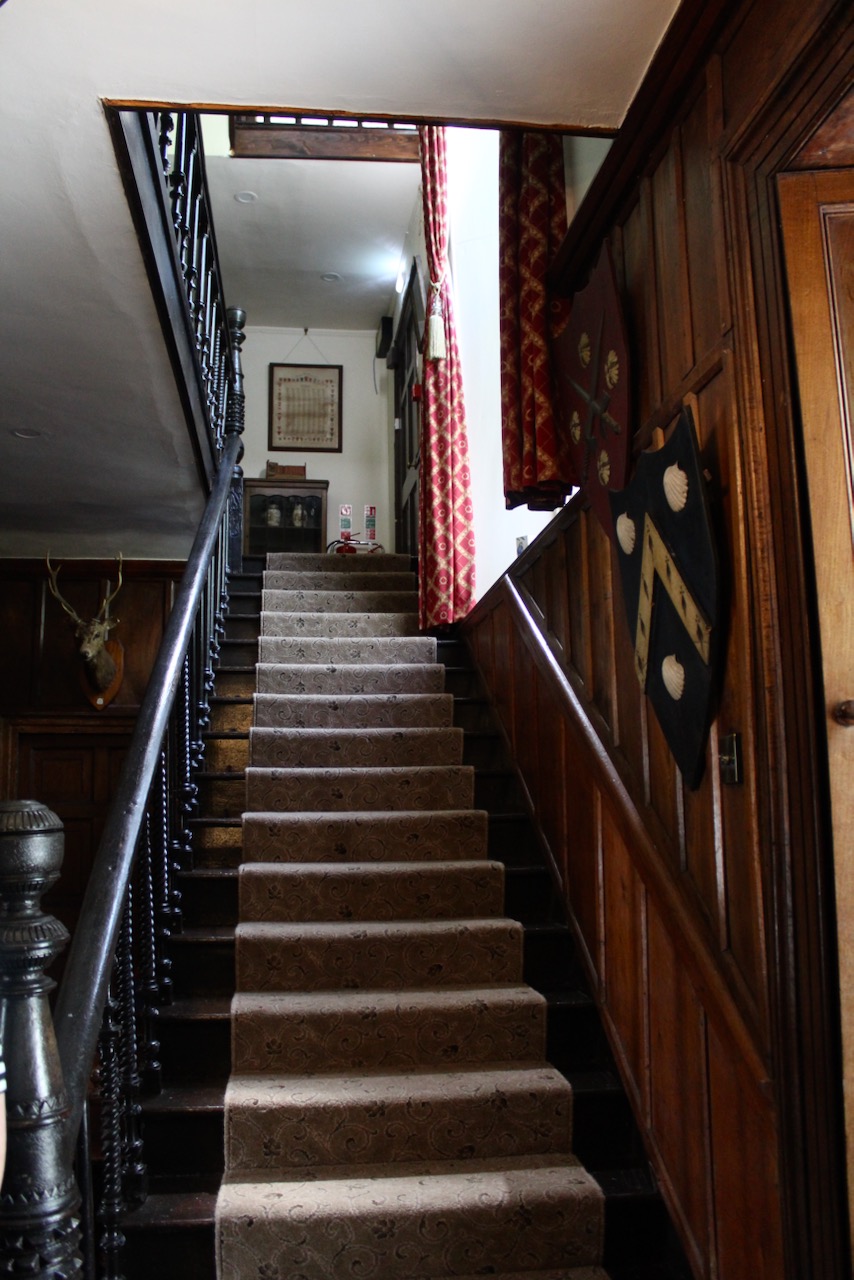
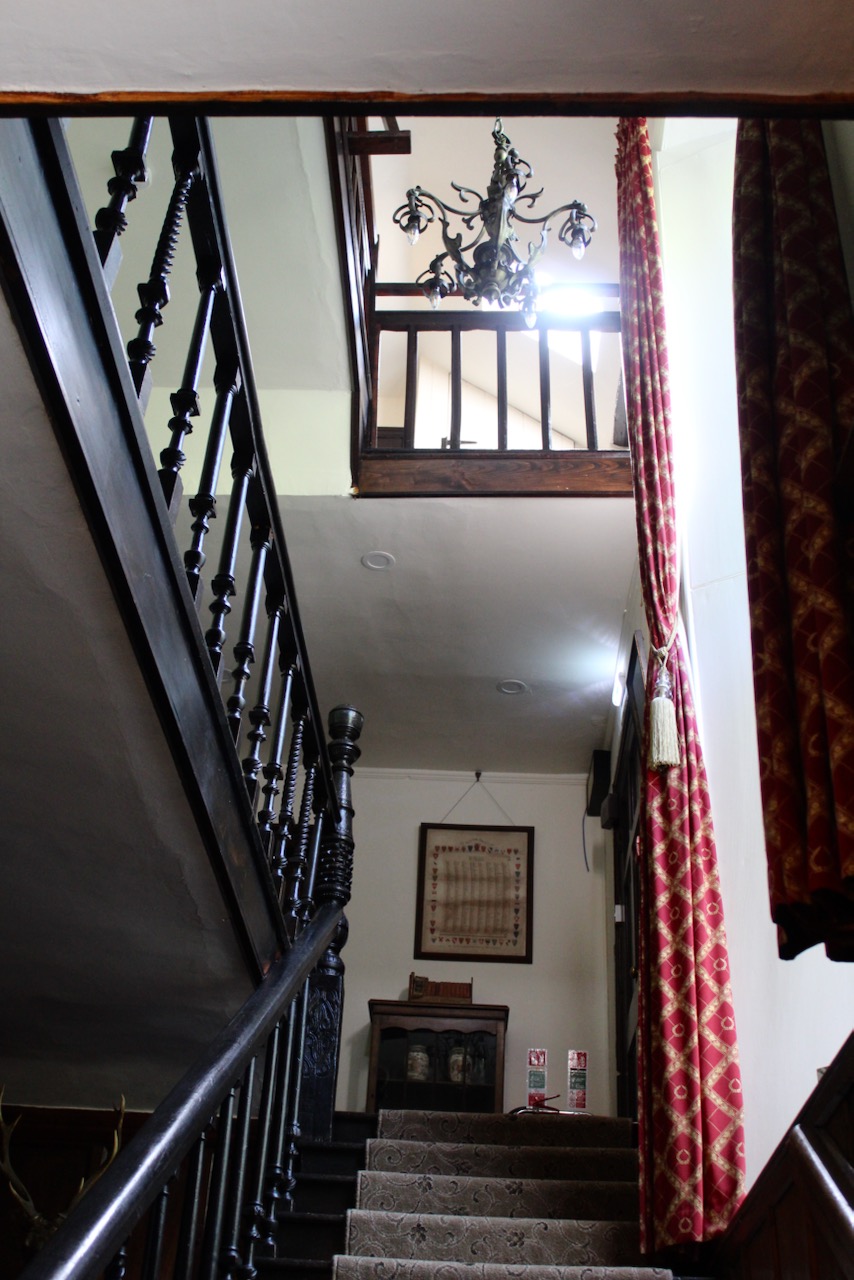
Nineteenth century staircase with barley-twist type balusters.  Photograph © Jennifer Winder-Baggot, www.irishhistorichouses.com
Photograph © Jennifer Winder-Baggot, www.irishhistorichouses.com

Young Maurice married Blanche Lillie Ffolliot. She was an only child and brought money with her marriage, and Maurice was able to buy back the castle. The castle passed to their daughter, Rosemarie Salter-Townshend. She began to rent out holiday homes in Castletownshend. Her husband, William Robert Salter, added Townshend to his surname. It was their daughter Anne who modernised the castle, putting in central heating etc.
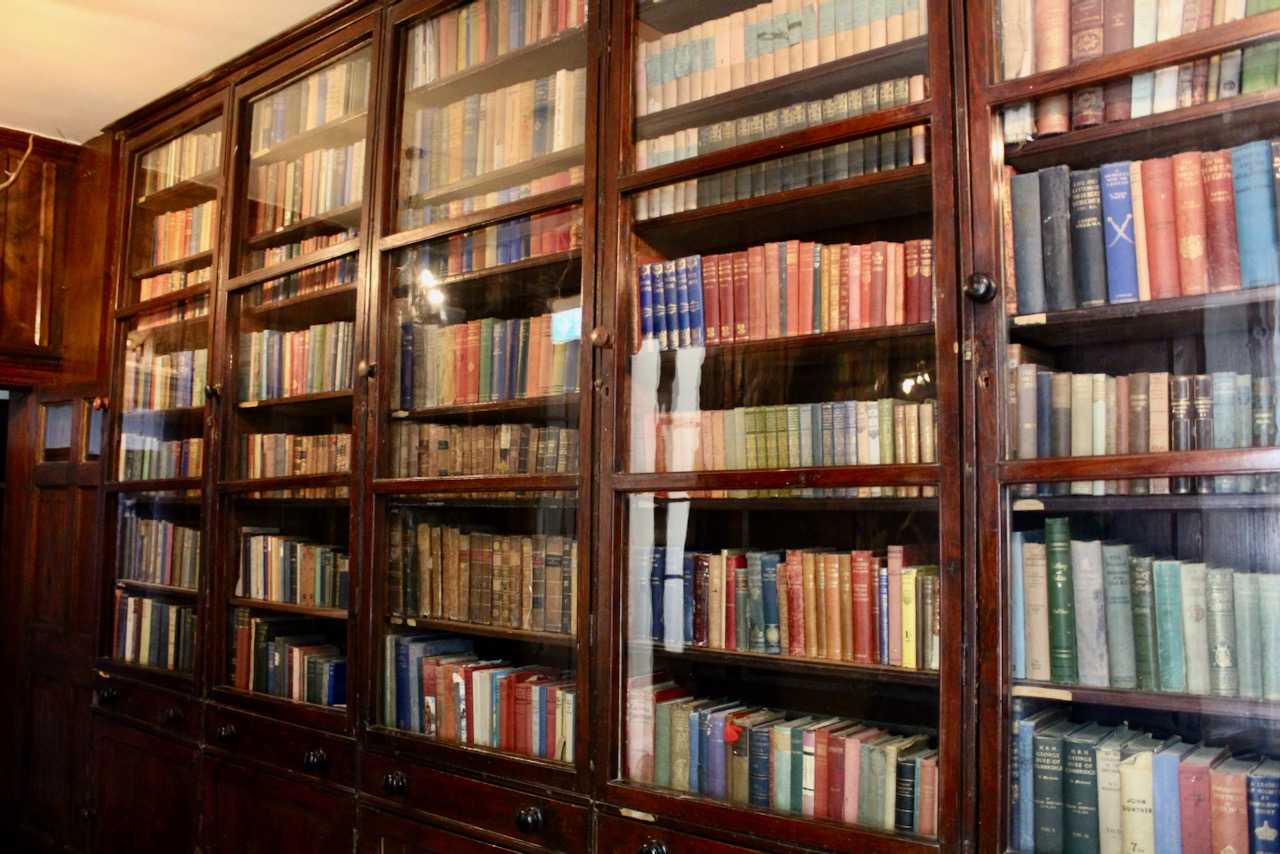
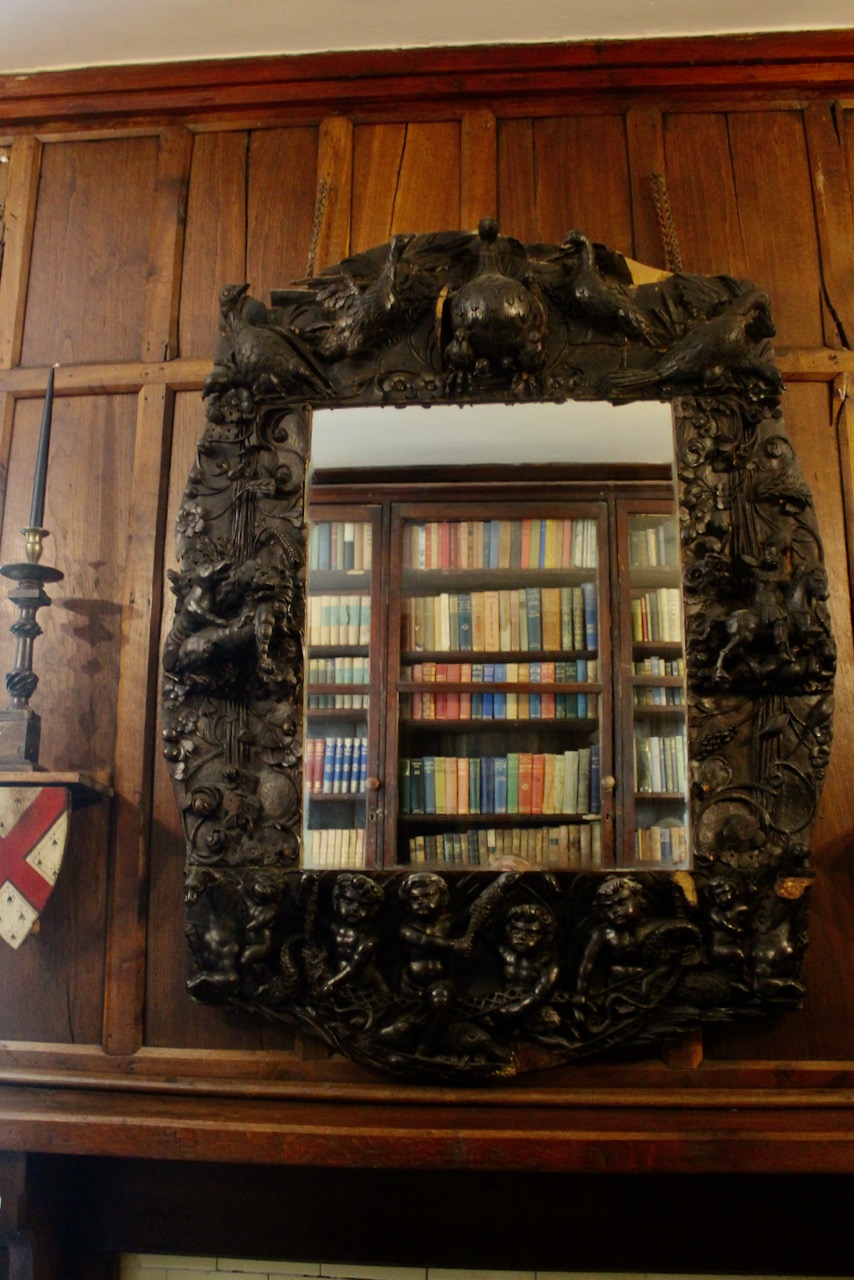
We’ll have to book ourselves in for at least a week to browse the books! Photograph © Jennifer Winder-Baggot, www.irishhistorichouses.com
Castletownshend. Photograph © Jennifer Winder-Baggot, www.irishhistorichouses.com

The website continues: “Full of character and old-world charm, The Castle offers a welcoming retreat from everyday life. There are lots of things to do in the local area, like whale-watching and kayaking. Or, you can simply rest and recharge your batteries in the unique surroundings. After enjoying a complimentary breakfast, stroll through the winding pathways of our historic grounds, discovering ivy-covered ruins and their stories along the way. Then, as the sun sets, sit out the front with a drink in your hand, watching the boats in the harbour sway gently back and forth.

While you are a guest in our family’s home, the only thing on your To Do list is to relax. We will look after the rest.

I can’t wait to stay here! Photograph © Jennifer Winder-Baggot, www.irishhistorichouses.com
Castletownshend. Photograph © Jennifer Winder-Baggot, www.irishhistorichouses.com
Photograph © Jennifer Winder-Baggot, www.irishhistorichouses.com

[1] The website adds that much has been written about the Townshend family and The Castle over the years, and this rich history is documented in great detail. An Officer of the Long Parliament, edited by Richard and Dorothea Townsend (London Henry Frowde, Oxford University Press Warehouse, Amen Corner, E.C.,1892) is an account of the life and times of Colonel Richard Townesend and a chronicle of his descendants.

[2] see Montgomery-Massingberd, Hugh. Burke’s Irish Family Records. London, U.K.: Burkes Peerage Ltd, 1976.

[3] p. 1035, volume 19, Stephen, Sir Leslie, ed. Dictionary of National Biography, 1921–1922Volumes 1–22. London, England: Oxford University Press.

[4] O’Hea O’Keeffe, Jane. Voices from the Great Houses: Cork and Kerry (Mercier Press, Cork, 2013).

[5] Keohane, Frank. The Buildings of Ireland: Cork City and County. Yale University Press: New Haven and London, 2020.

Drishane House, Castletownshend, Co. Cork – section 482

www.drishane.com
Open dates in 2025: May 1-31, Aug 16-24, Oct 4-23,11am-3pm

Fee: adult €12, OAP €10, student/child €8, child under 6 years free

e: info@drishane.com

2025 Diary of Irish Historic Houses (section 482 properties)

To purchase an A5 size 2025 Diary of Historic Houses (opening times and days are not listed so the calendar is for use for recording appointments and not as a reference for opening times) send your postal address to jennifer.baggot@gmail.com along with €20 via this payment button. The calendar of 84 pages includes space for writing your appointments as well as photographs of the historic houses. The price includes postage within Ireland. Postage to U.S. is a further €10 for the A5 size calendar, so I would appreciate a donation toward the postage – you can click on the donation link.

€20.00

donation

Help me to pay the entrance fee to one of the houses on this website. This site is created purely out of love for the subject and I receive no payment so any donation is appreciated!

€15.00

Drishane House, August 2020. Photograph © Jennifer Winder-Baggot, www.irishhistorichouses.com

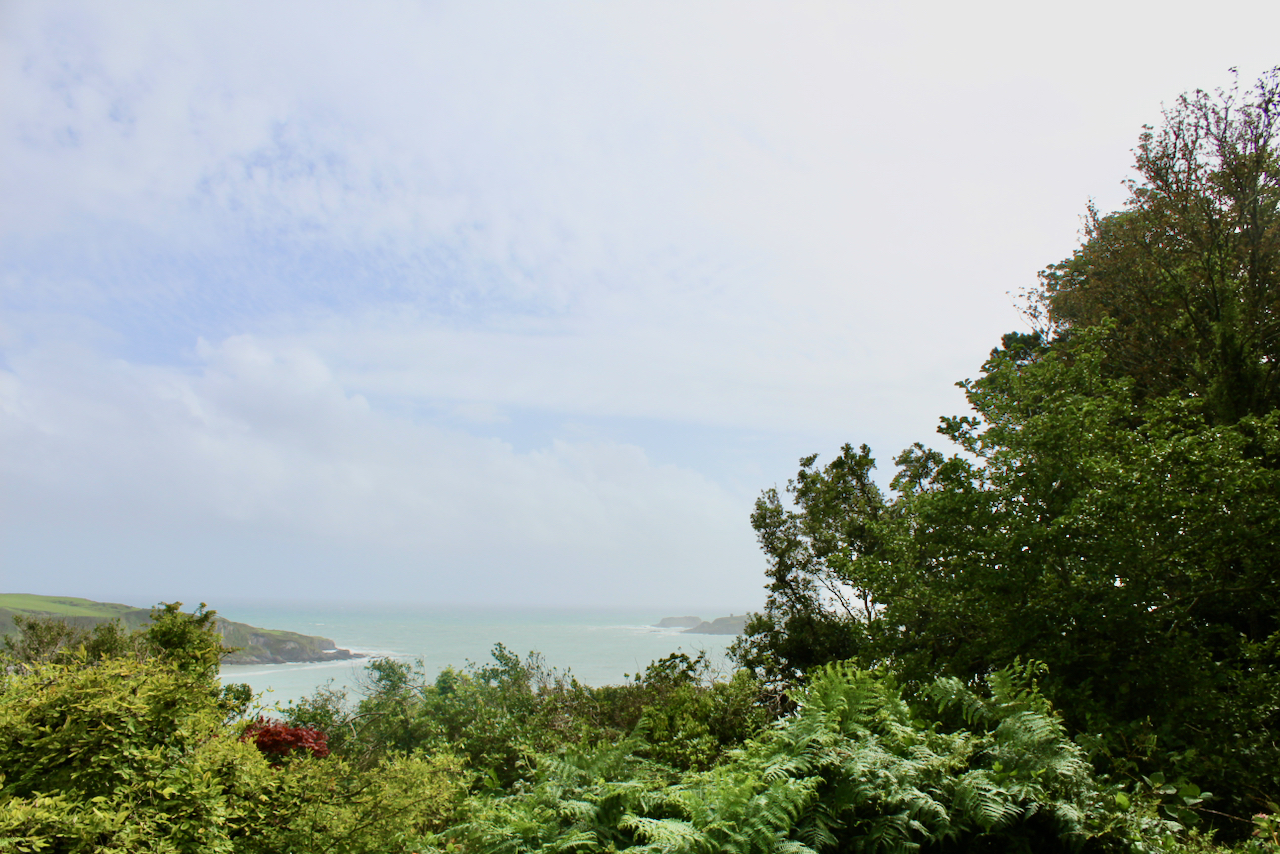
Edith Somerville, of Somerville and Ross Some Experiences of an Irish RM fame (which has been made into a television series), said “If I am ever allowed to return to earth it will be to Drishane that I shall come,” and I can see why. The estate is situated with a magnificent view over the Atlantic ocean.

At Drishane House. Photograph © Jennifer Winder-Baggot, www.irishhistorichouses.com

Edith’s ancestor Reverend William Somerville fled persecution in Scotland in the 1690s and moved to Ireland. [1] He was an Episcopalian Minister who feared for his life following the disestablishment of the Church of Scotland in 1690. The Drishane House website tells us that Reverend William rowed his family twenty miles across rough water to Ulster, where they found refuge with family connections. 

The Reverend’s younger son, Thomas, attended Trinity College Dublin and was ordained in the Church of Ireland. He married Anne Neville, of Furnace, County Kildare, a prosperous and well-connected family. Thomas obtained the position of Rector of Castlehaven and the family moved to Cork. He set up house in the old O’Driscoll castle next to the church at Castlehaven Strand. Both are now ruins. His portrait, his stick and his 1685 edition of Bedel’s Irish Bible remain in the possession of his descendants.

Stephen overlooking Castletown Bay from Drishane. Photograph © Jennifer Winder-Baggot, www.irishhistorichouses.com

Three of Reverend Thomas’s sons moved to America and prospered. The eldest son hoped to follow in his father’s footsteps as a clergyman but lost an eye in university, so instead became a successful shipping merchant. He’d send butter and salted provisions to the West Indies and bring back rum, sugar and timber. [2] He built his house at Drishane, on the edge of the village of Castletownshend, where he had a view of his ships in Castlehaven Bay. Among items he imported from the West Indies was the mahogany which was used to make the doors of the reception rooms in Drishane.

He married Mary Townsend, daughter of Captain Philip Townsend who lived in Derry, County Cork, great-granddaughter of Richard Townsend who was an officer in Cromwell’s army and who built the castle at nearby Castletownshend (it was only in 1860 that the family changed the spelling of their name from Townsend to Townshend [3]).

Castletownshend, County Cork. Photograph © Jennifer Winder-Baggot, www.irishhistorichouses.com

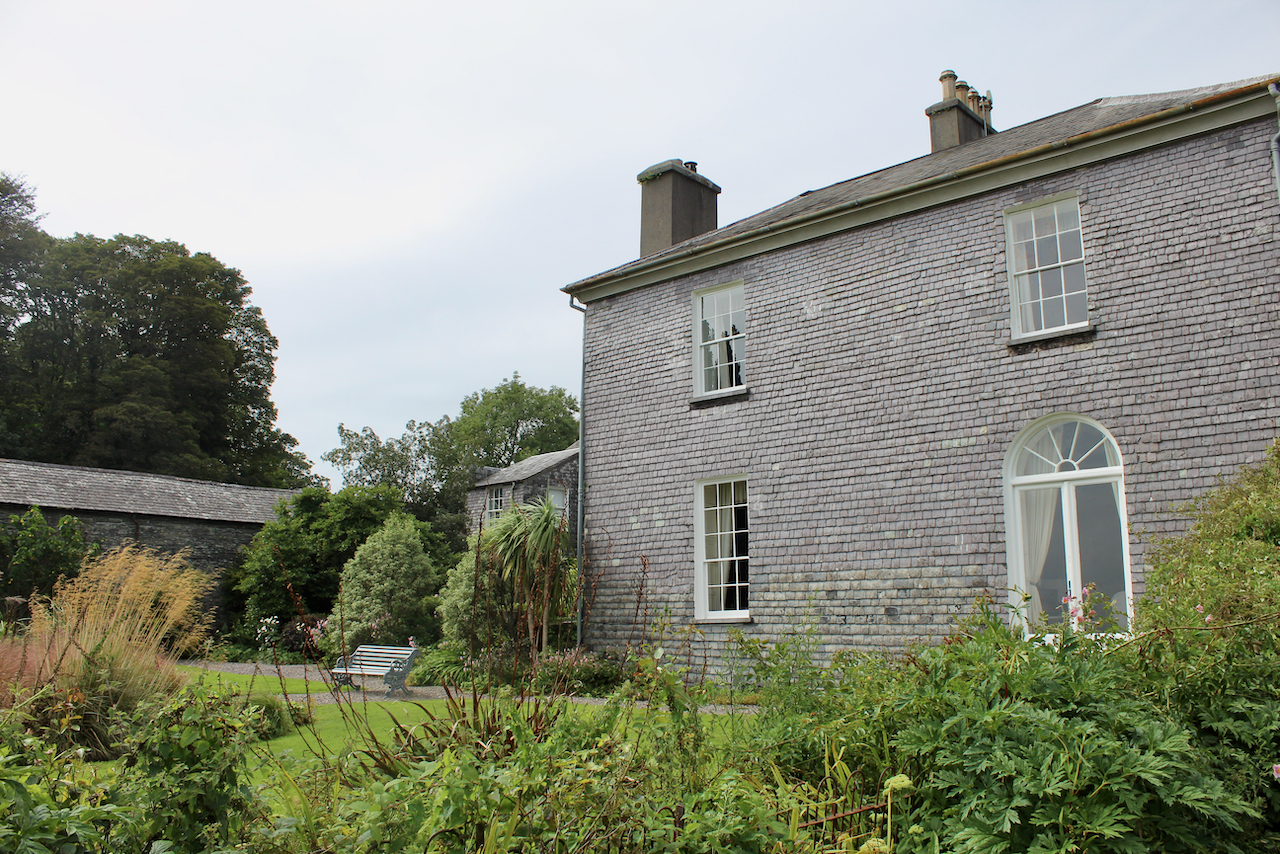
Drishane house is two storeys, six bays across, with a fanlighted doorway. This tripartite limestone doorcase, with Tuscan demi-columns, now serves as a garden entrance doorway. The newer entrance doorway, built in 1820, is on the more sheltered two bay end of the house, which is prolonged by a lower two storey wing.  The house is covered with purple Benduff weather-slating.

Drishane House. Photograph © Jennifer Winder-Baggot, www.irishhistorichouses.com
Drishane House, County Cork. Photograph © Jennifer Winder-Baggot, www.irishhistorichouses.com
The newer entrance door, with the lower two storey wing. Frank Keohane describes this new entryway: an unusual rock-faced limestone doorcase with a scrolled pediment of vaguely Chinese appearance.” [5] Photograph © Jennifer Winder-Baggot, www.irishhistorichouses.com

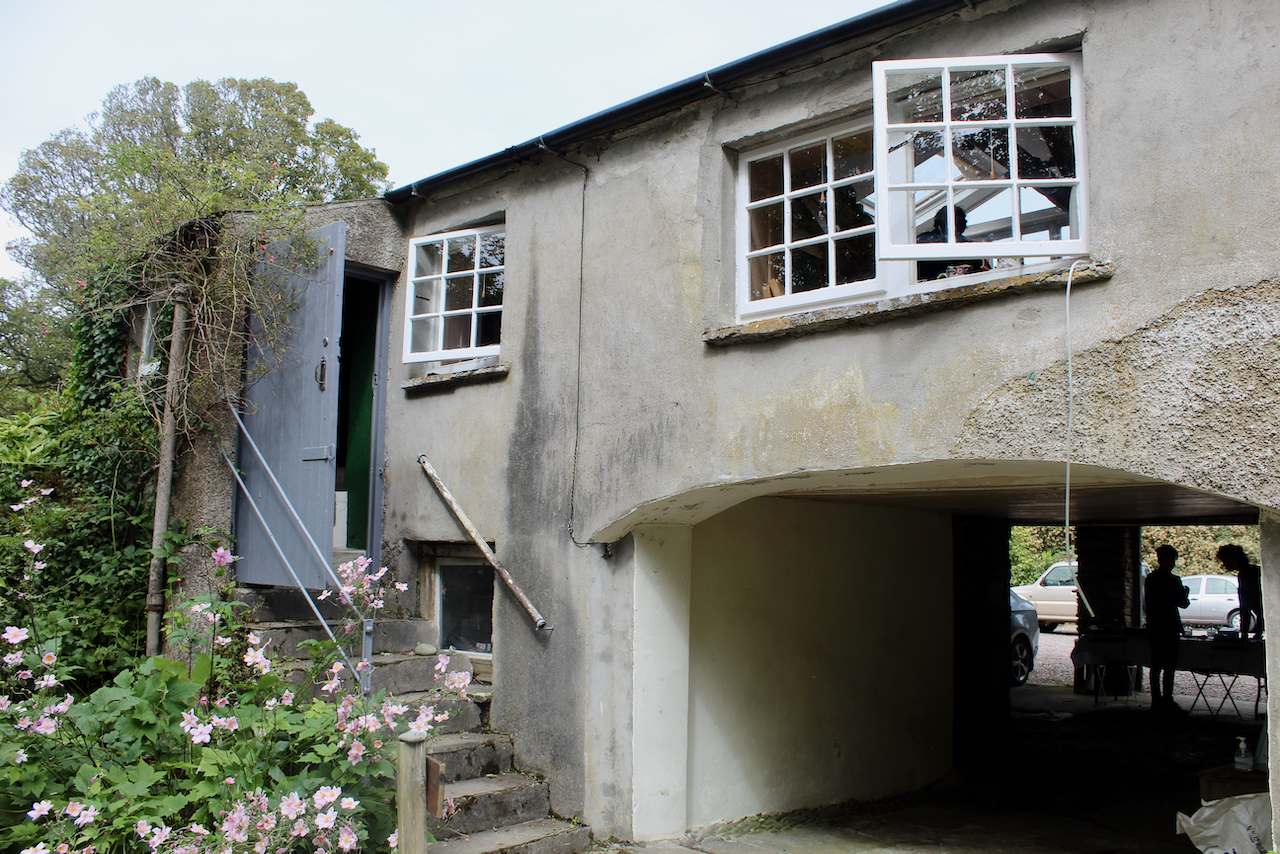
Stephen and I visited the house during Heritage Week in 2020. The current owner, another Thomas Somerville, welcomed us, and introduced us to his two sons, who gave us the tour of the house and the museum in the outbuilding which used to be Edith Somerville’s painting and writing studio. As there was already someone on a house tour, we visited the museum first.

At Drishane House. Photograph © Jennifer Winder-Baggot, www.irishhistorichouses.com
The grey door leads into the studio. Unfortunately we were not allowed to take photographs inside, but that is all the more reason for you to visit! Inside the door is a sign identifying the room as the studio, painted by Edith. Photograph © Jennifer Winder-Baggot, www.irishhistorichouses.com

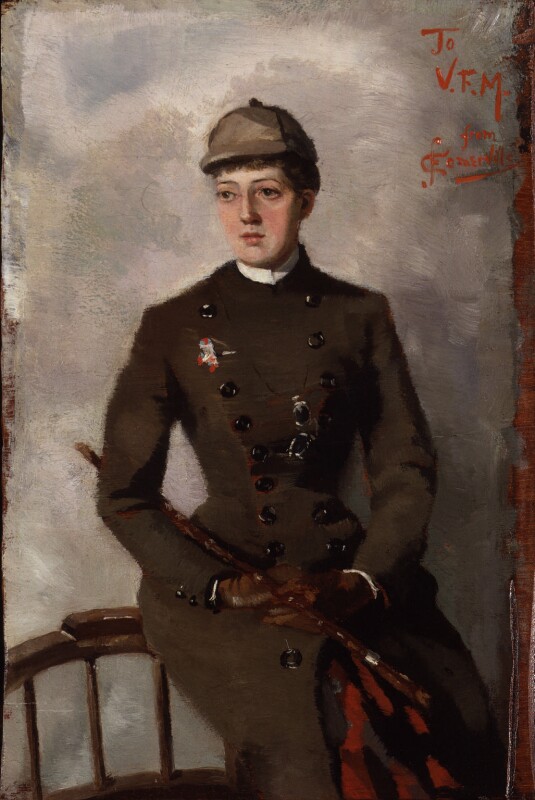
Edith Oenone Somerville (1858-1949) was given her unusual middle name because she was born in Corfu where her father was serving in the British military. She met her cousin Violet Martin (1862-1915) when they were both in their twenties, when Violet paid a visit to Drishane. They were both great-granddaughters of Lord Chief Justice Charles Kendal Bushe. Edith painted a portrait of Violet in 1886 during this visit, and the painting is now in the National Portrait Gallery in London. She painted the portrait in her studio, which at the time was inside the house – it was only later that she moved to the outbuilding. The chair in the painting is still in the studio. Violet’s first holiday at Drishane was a long one, as it was only after a month that Edith began her portrait. Violet brought the portrait with her back to Dublin when she left Drishane ten months later.

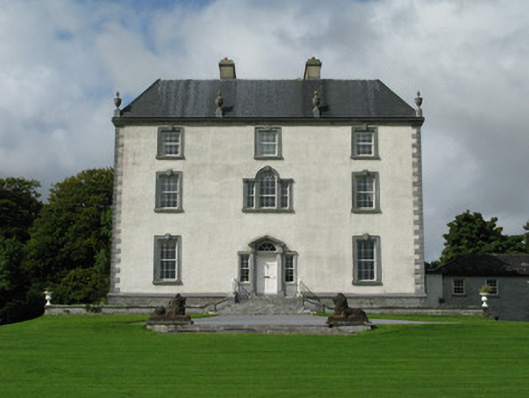
Violet’s family lived in County Galway in a three storey house called Ross House (now called Ross Castle). She was the youngest of eleven daughters. Her family had fallen into debt in the time of the Great Famine, due to the help they had given their tenants, and when her father died when she was just ten years old, her brother inherited the house and decided to let it out.

Ross House, or Castle, photograph care of National Inventory of Architectural Heritage.
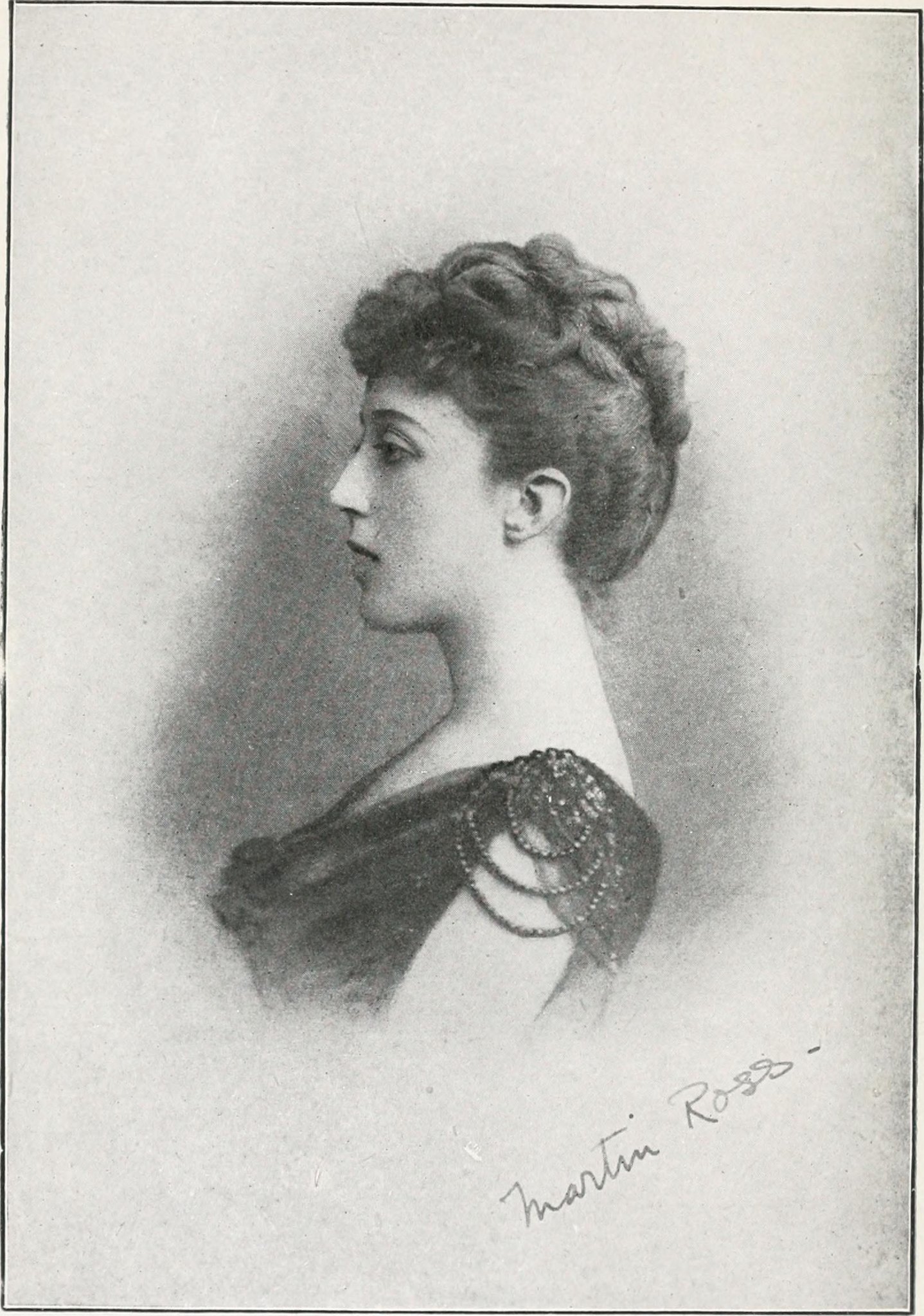
Photograph from Internet Archive Book Images. From the book Irish Memories by Edith Somerville, 1919. Publisher: New York, Longmans, Green & Co. It is interesting that the picture is signed a “Martin Ross,” rather than “Violet Martin.” A small silver case given as a gift to Edith from Violet is engraved “To Edith, Love Martin.”

She moved with her mother to Dublin and was educated at Alexandra College, where Edith also studied but as she was four years older than Violet, where they never met. Violet would have felt like a poor relation when she visited her cousins in Cork, but she was warmed by the generous welcome. Edith was surrounded by cousins: the Townshends and the Coghills lived nearby, and at first the quiet Violet must have been overwhelmed with the sociability of the house.

Violet had begun writing when she was in school and hoped to make a living by journalism. Edith studied art in London, Dusseldorf and Paris, and sold some paintings and drawings in order to finance her own art training and hoped to make a living in graphic art. When they first collaborated, Violet wrote the text which Edith illustrated, but soon they were writing the novels together. They did not want to publish under their own names, so chose “Somerville and Ross,” Violet taking the name of her home.

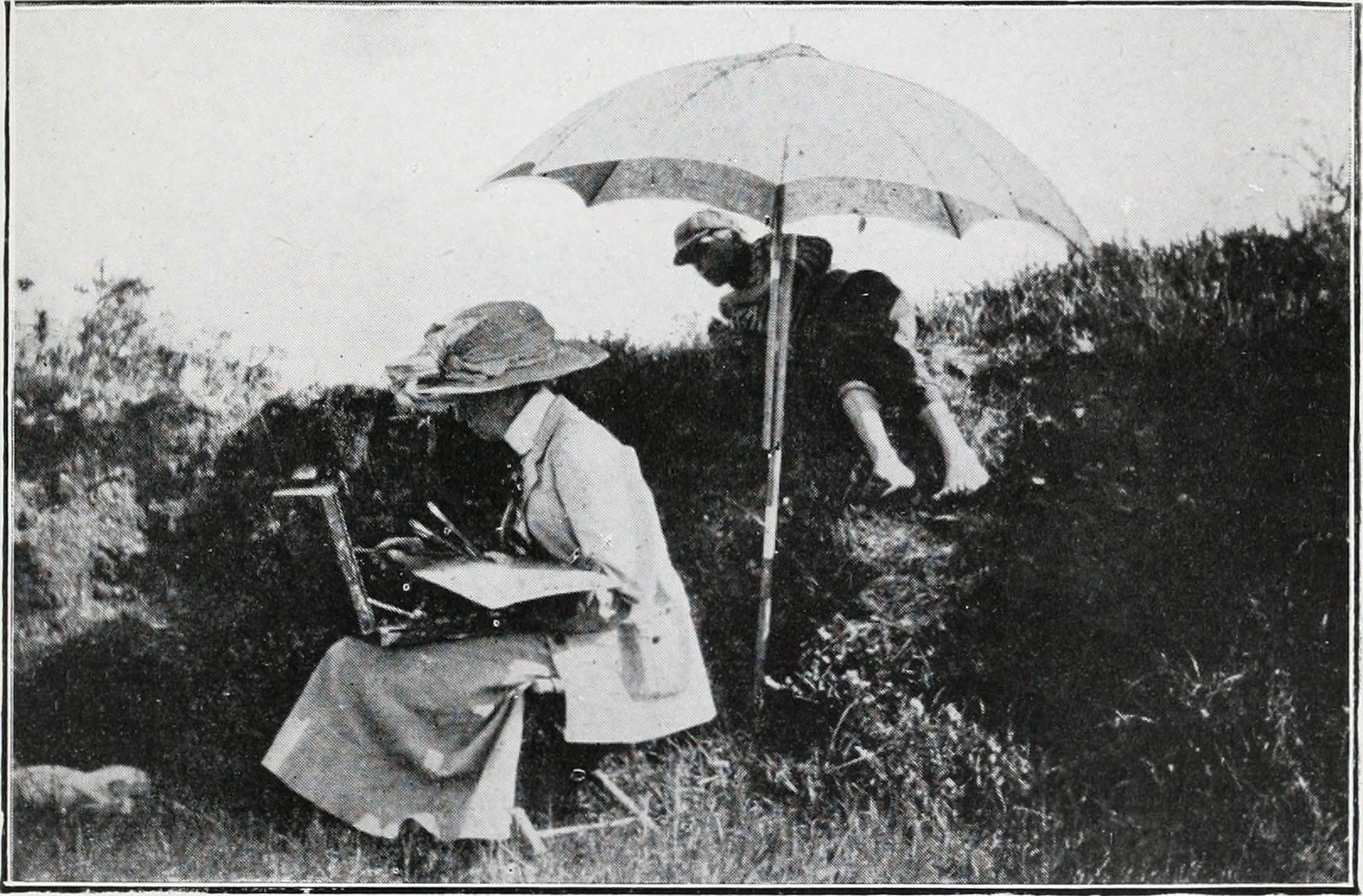
Image from page 164 of Irish Memories by Edith Somerville – I assume this is a photograph of Edith herself. Photograph care of Internet Archive Book Images.

Violet, a sister and her mother moved back to Ross House in 1888, and Violet set about trying to restore the house and gardens to their former glory. At the end of 1888, Violet and Edith received news that their first book, An Irish Cousin, was to be published. At first they had to correct proofs separately, until Edith visited Violet at Ross House. It is believed by the current owners of Ross Castle that the ladies worked on the book under the Venetian window on the first-floor landing, which now has a table and chair set up with some of their books. One can stay in the house: either whole house rental, or self-catering in cottages which are converted stables, carriage house and servants’ quarters. Drishane House is also available for whole house rental and also has holiday cottages). [6]

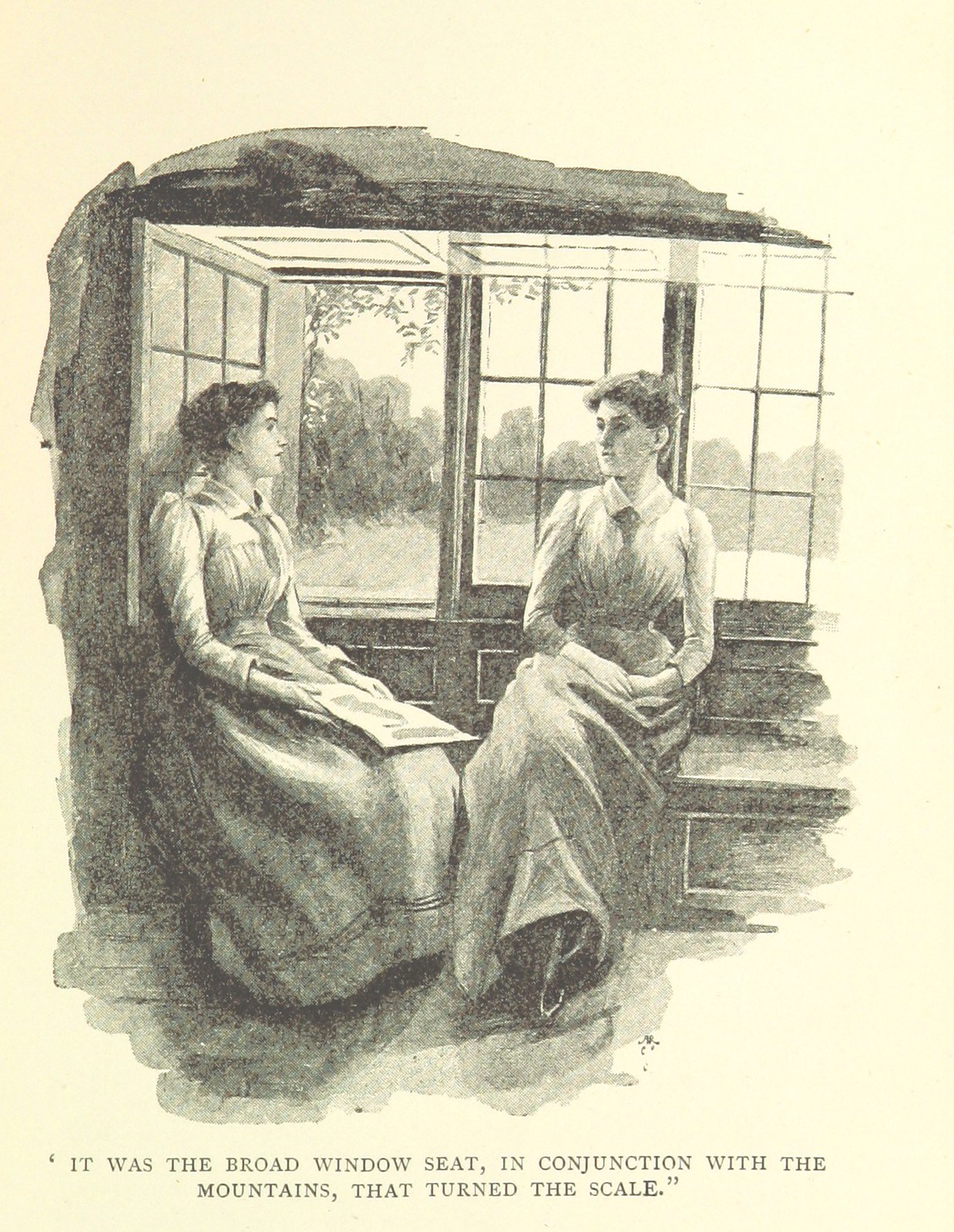
I imagine that Edith Somerville, when she illustrated their book, Through Connemara in a Governess Cart (published 1893), had herself and her cousin in mind when she drew this picture. Photograph care of the British Library.

The Museum contains copies of some of Edith’s paintings, as well as letters, drawings and photographs relating to her life. I was excited to see correspondence and music by the composer Ethel Smyth, who was a good friend of Edith and also of Virginia Woolf. Like Ethel and Virginia, Edith was also a feminist. Edith wrote: “It will be acknowledged that sport, Lawn Tennis, Bicycling, and Hunting played quite as large a part as education in the emancipation that has culminated in the Representation of the People Bill. The playing fields of Eton did not as surely win Waterloo as the hunting-fields and tennis grounds of the kingdom won the vote for women.” [quoted in the introduction by Gifford Lewis, 1999, of Somerville and Ross’s The Real Charlotte]. Edith was an enthusiast for hunting and became Master of her local hunt. She also became President of the Munster Women’s Franchise League. [7]

After Violet died, Edith wrote a further fourteen books, all published under their joint names. Edith felt that Violet continued to help to write the books after her death. Edith took to a sort of “automatic writing” to include Violet’s input. Examples of this are in the museum. Edith claimed that stormy weather made it more difficult for her to tune into Violet’s messages. [8]

There was another museum in Drishane before Edith’s studio, a collection of Indian items which Edith and her brother Jack called “Aunt Fanny’s Museum.” There is also another item which I forgot to ask about when visiting. Mark Bence-Jones tells the story of its origins:

Drishane’s most famous possession, the Fairy Shoe, was sent away to the bank for safe keeping and bad luck followed, it was wisely decided to bring the Shoe back and it has remained in the house ever since. The Shoe, which came to the Somervilles from the Coghills, was picked up on an Irish mountain early in the nineteenth century; it is exactly like the shoes worn by adults at that time and shows signs of wear, but it is only about two inches long. [9]

Edith had the French doors installed in 1901. Photograph © Jennifer Winder-Baggot, www.irishhistorichouses.com

Thomas the merchant’s son, also named Thomas (born about 1765), inherited Drishane from his father. Unfortunately he “was foolish enough to back a bill,” according to Mark Bence-Jones in Life in an Irish Country House, meaning he must have acted as guarantor for someone who was not able to pay their debt, and subsequently when Thomas died in 1811, the bailiffs came and stripped the house of its contents. [10] Thomas’s wife, Elizabeth Henrietta Becher Townsend, was in bed giving birth to their tenth child. According to the story, the children brought everything they could carry to their mother’s bedroom to hide it, as there was a law forbidding  bailiffs from entering the room of the lady of the house.

When we entered the house with young Hal, Tom Somerville’s son who was giving us the tour, he pointed out that there is no chandelier in the dining room, as it was taken by the bailiff, way back in 1811!

We entered through the garden door with the fanlight directly into what is now the library but was originally the entrance hall. It interlinks the staircase hall with its grand sweeping staircase and lovely striped wallpaper, dining room and drawing room. In the dining room we saw a portrait of Edith’s brother Cameron (1860-1942), along with other portraits. Hal also pointed out to us where Edith had scratched her initials into the glass of the dining room, “EOES.” Swags above the tall curtained windows date to the 1820s.

At Drishane House. Photograph © Jennifer Winder-Baggot, www.irishhistorichouses.com

David Hicks tells us more about Drishane from Edith’s time in his book Irish Country Houses, Portraits and Painters:

Drishane in the 19th century could not be described as homely: it was said to be cold, damp and infested with rats, which is in total contrast to the condition of the house today. When poison was put down to fend off unwanted visitors, they usually died under the floorboards. The resulting decomposition meant sometimes the drawing room could not be used for an extended period, such as in 1878, due to the smell. The drawing room also contained a large white marble fireplace that was brought from Italy by Edith’s great-grandfather. However, over the years it became the final resting place for a number of rodents and was christened the “Mouse-oleum.” This fireplace often had to be taken out for the dead mice to be removed and it became damaged. Edith’s brother Cameron was stationed in China from 1885 to 1889 and when he returned to Drishane he brought back a black marble fireplace complete with carved dragons and Chinese symbols, together with the Somerville crest and motto. This exotic-looking fireplace was installed in the drawing room to replace its damaged predecessor. [11]

Having read Hicks’s description I was excited to see the Chinese fireplace. It is indeed very unusual. 

The oldest of the children who had hidden things in their mother’s bedroom was another Thomas (1798-1882). Mark Bence-Jones tells a lovely story about him. He was very in love with his wife, Harriet Townsend, who was a cousin who had lived up the road in Castle Townshend. [12] Bence-Jones writes:

after her death [he] would sit up for hours by his bedroom fire thinking of Harriet and grieving for her and looking for consolation in his Bible by the light of a candle in her own special candlestick. He would burn two candles every night which Mrs Kerr, the housekeeper, would leave out for him. Then he started to complain, night after night, that he could not find the second candle. Mrs Kerr told his granddaughter Edith what she believed had happened. “My dear child, the candle was there! For I always put it on the table myself! It was Herself that took it, the way your Grandpapa should go to his bed and not be sitting there all night, breaking his heart.” [13]

This Thomas inherited Drishane and died in 1882, when the estate passed to his son, another Thomas. This Thomas (1824-1898) married Adelaide Eliza Coghill, and was the father of Edith, along with six other children who survived to adulthood.

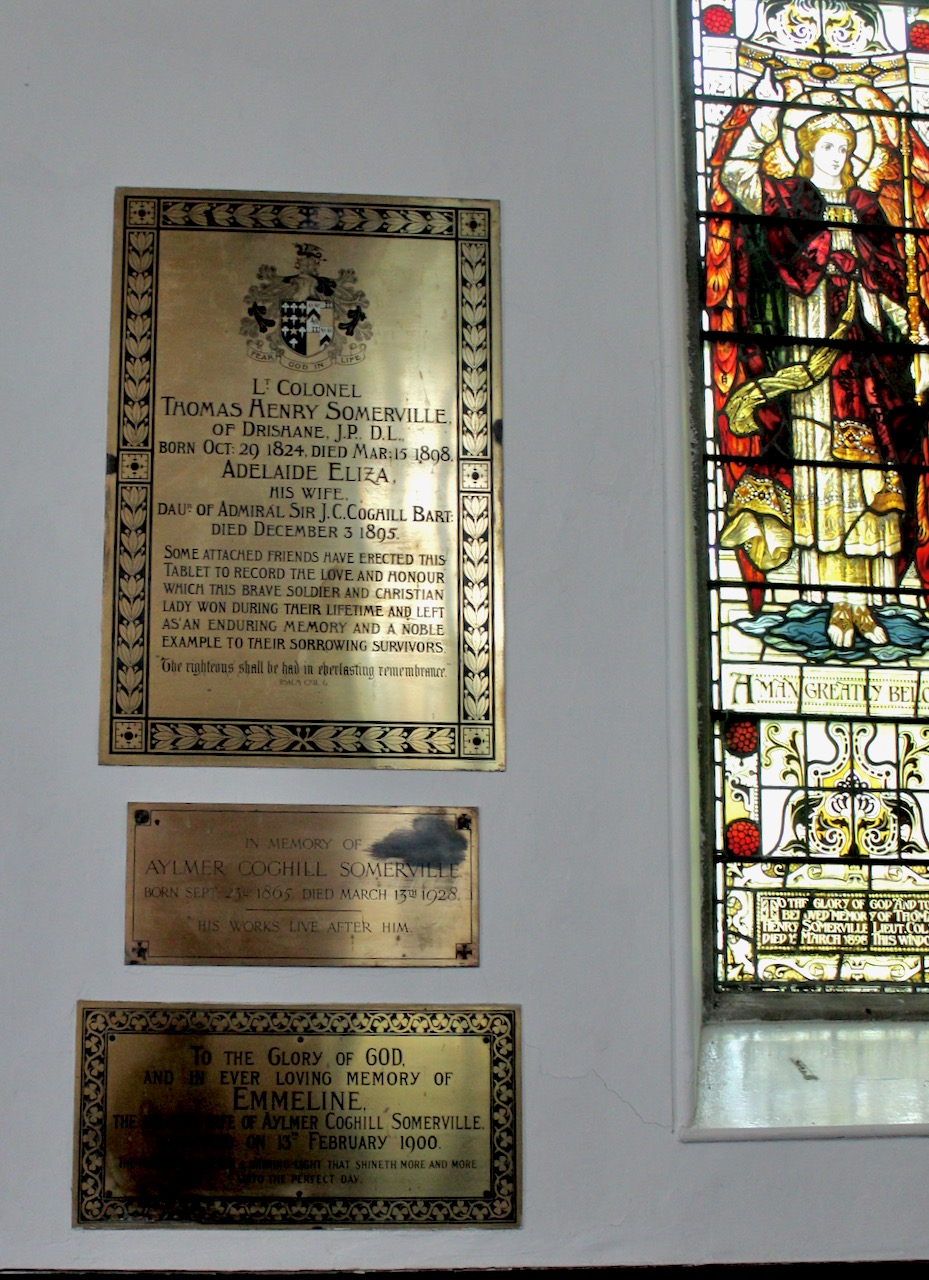
Memorial in St. Barrahane’s Church, Castletownshend, to Lt. Colonel Thomas Henry Somerville (1824-1898), who married Adelaide Eliza Coghill. Below that plaque is a memorial to his son Aylmer Coghill Somerville and Aylmer’s second wife, Emmeline Sophia Sykes. Photograph © Jennifer Winder-Baggot, www.irishhistorichouses.com
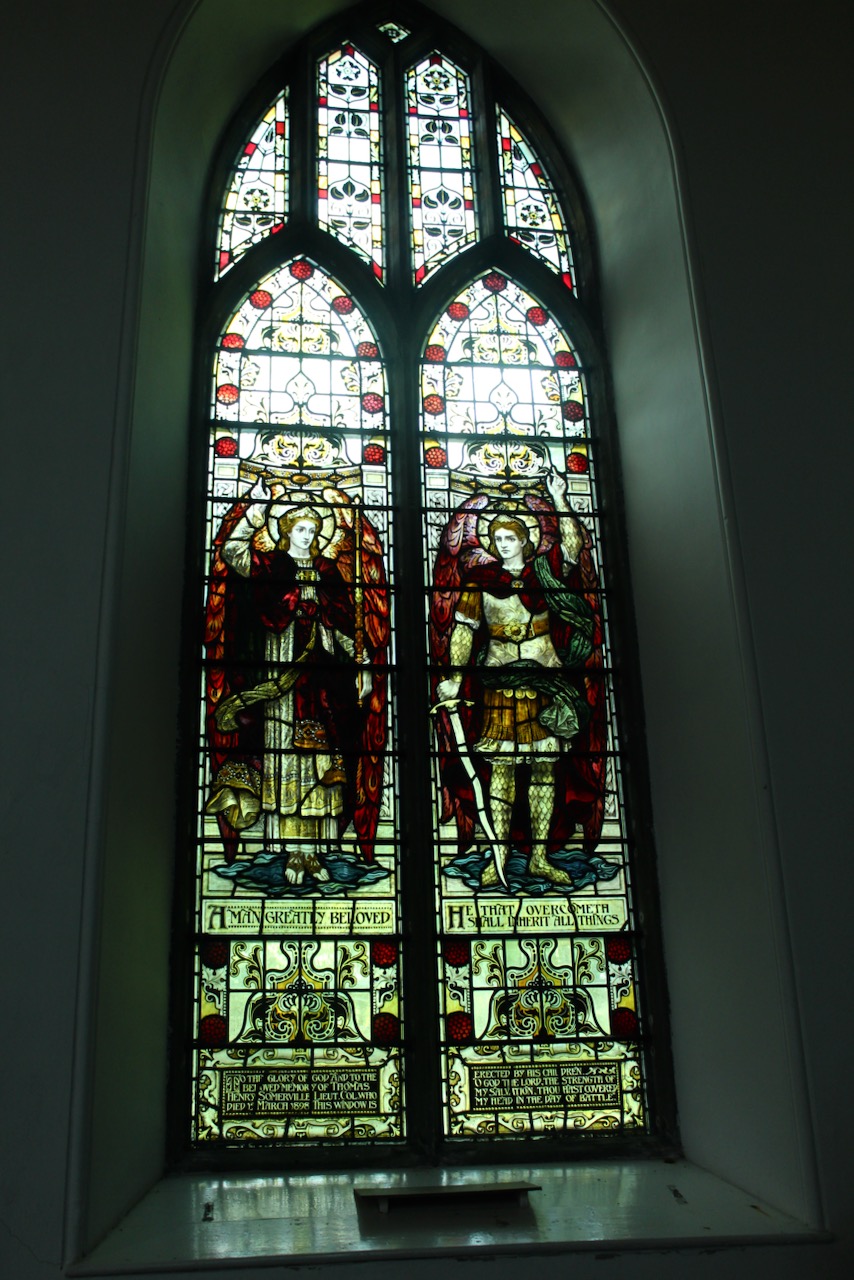
Window in St. Barrahane’s Church dedicated to Lt. Colonel Thomas Henry Somerville (1824-1898), by Harry Clarke. Photograph © Jennifer Winder-Baggot, www.irishhistorichouses.com
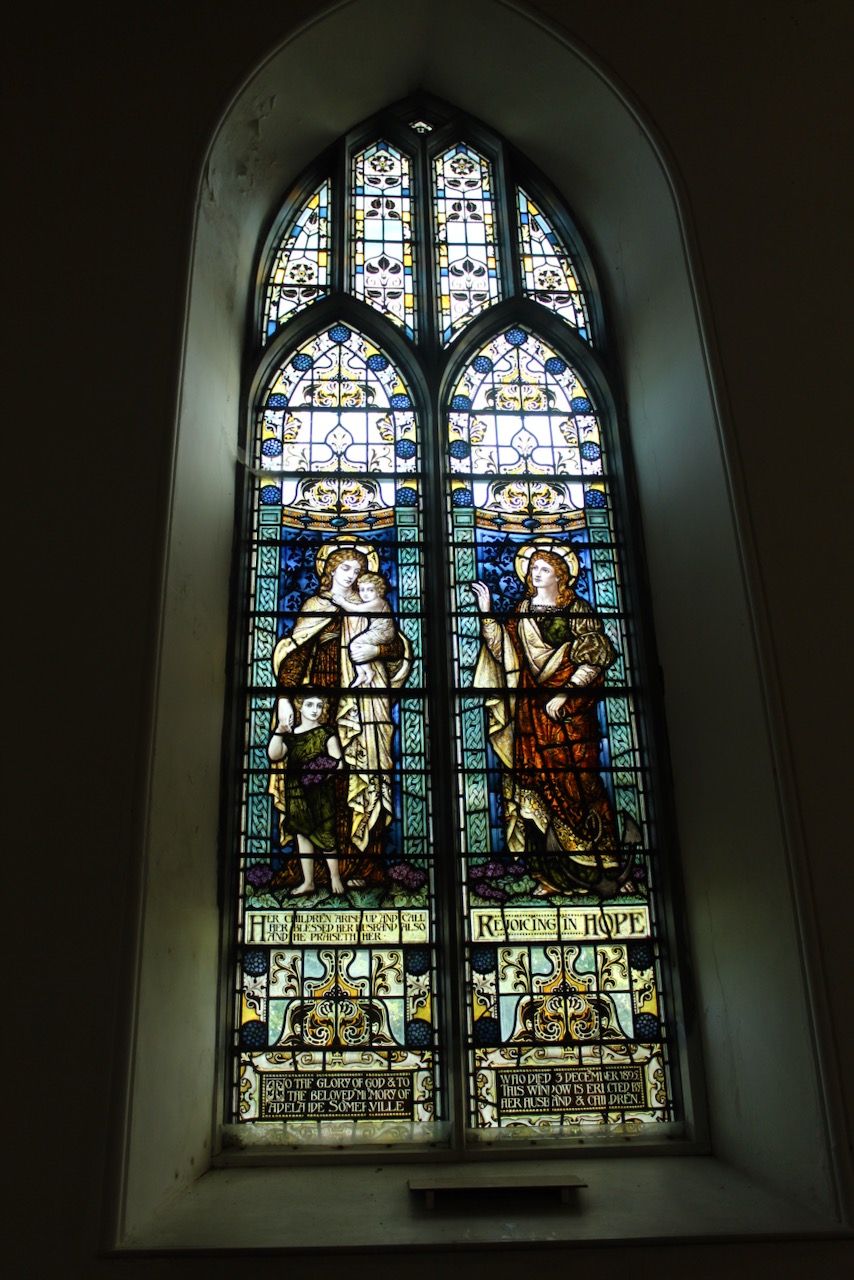
Window in St. Barrahane’s Church dedicated to the wife of Lt. Colonel Thomas Henry Somerville (1824-1898), Adelaide Eliza Coghill, by Harry Clarke. Photograph © Jennifer Winder-Baggot, www.irishhistorichouses.com
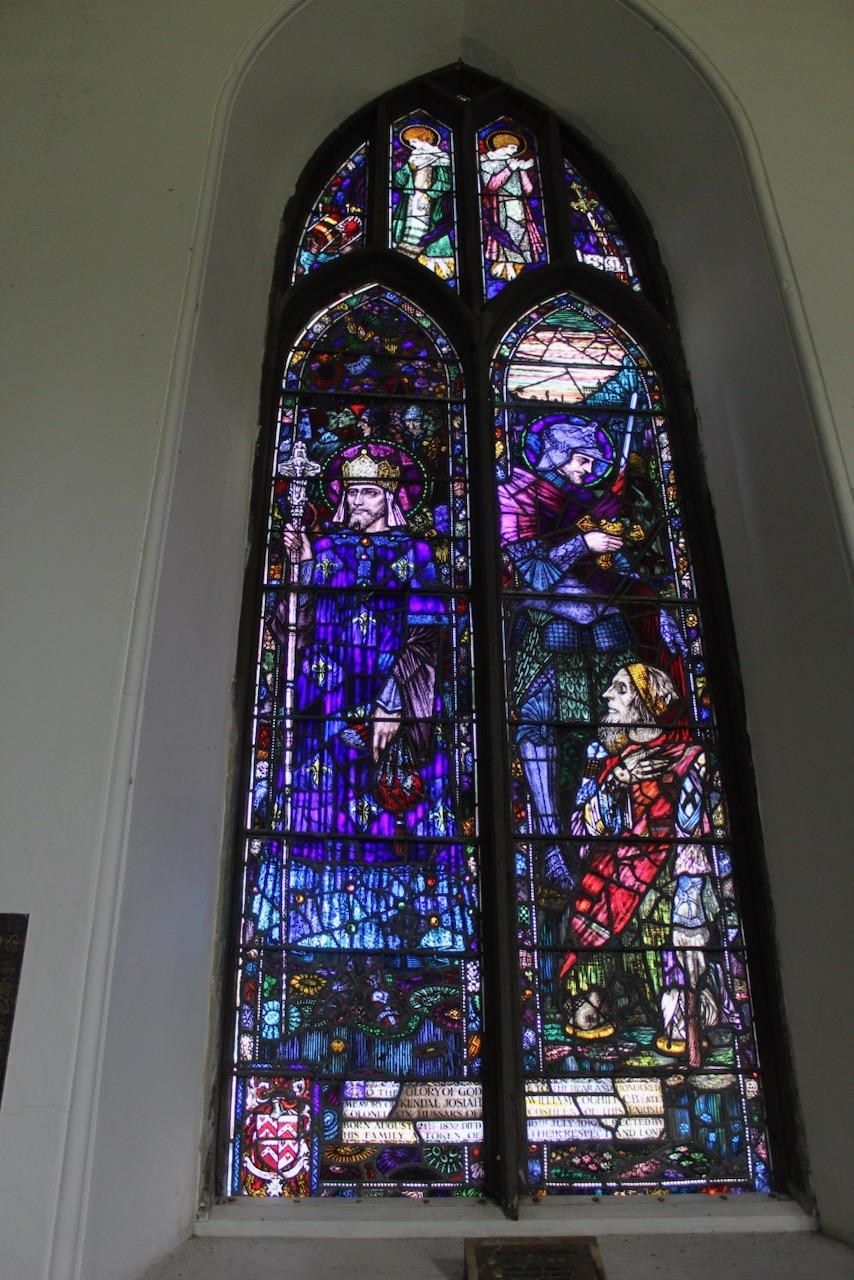
This Harry Clarke window in St. Barrahane’s Church of Ireland depicts French Saints Louis (who was Louis IX, King of Spain) and Martin and was commissioned in memory of Colonel Kendall Josiah Coghill in 1921. He was a brother of Adelaide Eliza Coghill. Photograph © Jennifer Winder-Baggot, www.irishhistorichouses.com
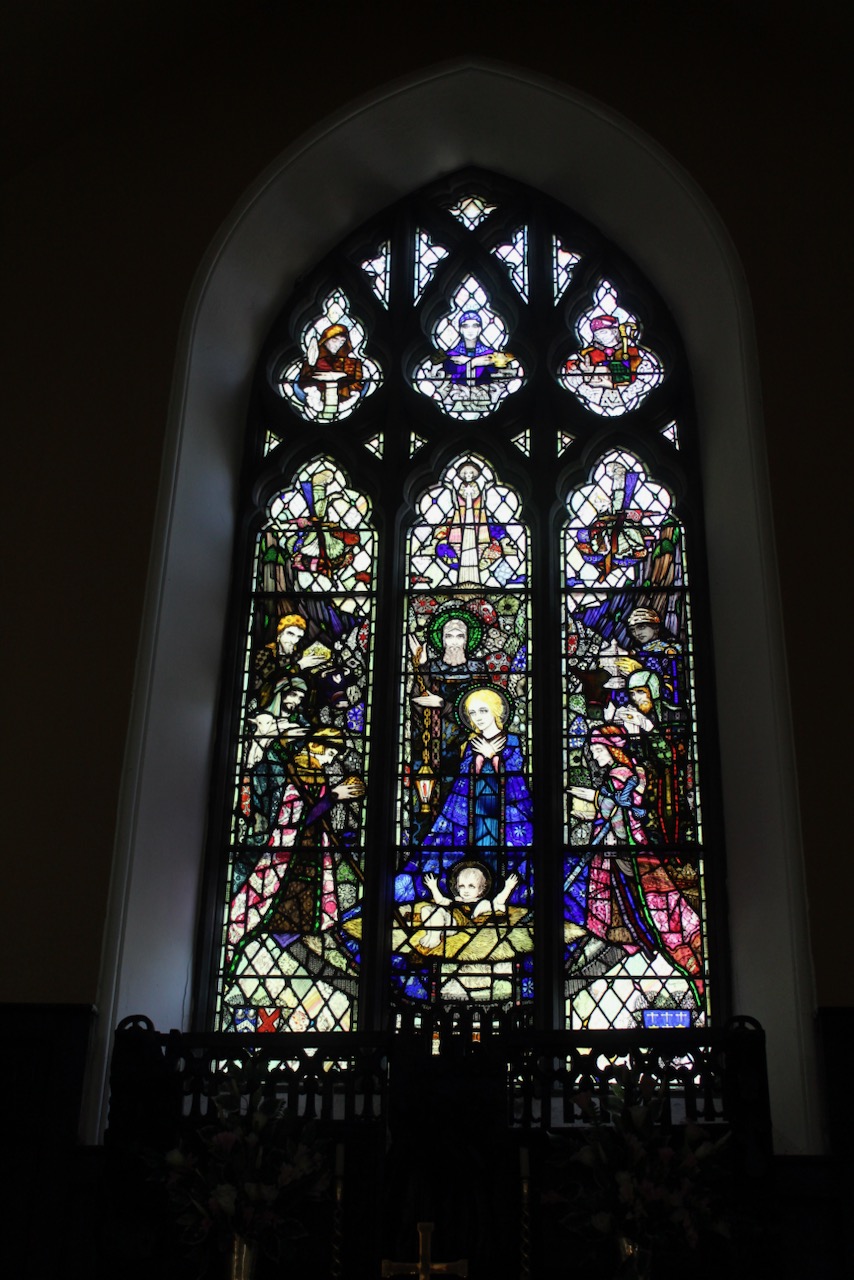
Another Harry Clarke window in St. Barrahane’s Church of Ireland in Castletownshend. Photograph © Jennifer Winder-Baggot, www.irishhistorichouses.com

Mark Bence-Jones tells us another good story, this one taken from Somerville and Ross’s book Wheel Tracks, which was published in London in 1923:

Tom Somerville [Edith’s father] was a magistrate and when the police brought cases to be summarily dealt with by him, he would swear the deponents on the Bradshaw’s Railway Guide as though it were a bible, partly through laziness [it lay on a nearby table] and partly from ‘a certain impishness of character and a love of playing on ignorance.’ [14]

Drishane House, August 2020. Photograph © Jennifer Winder-Baggot, www.irishhistorichouses.com

Edith had suitors, but her mother sent them packing. In any case, Edith seems to have cherished her freedom, taking full advantage of her time to paint, hunt, travel and socialise. When her mother died, she took over the management of the household for her father. When her father died, her brother Cameron inherited the estate, but he, like his brothers, served in the military, and he was mostly stationed abroad, so Edith continued to run the household. 

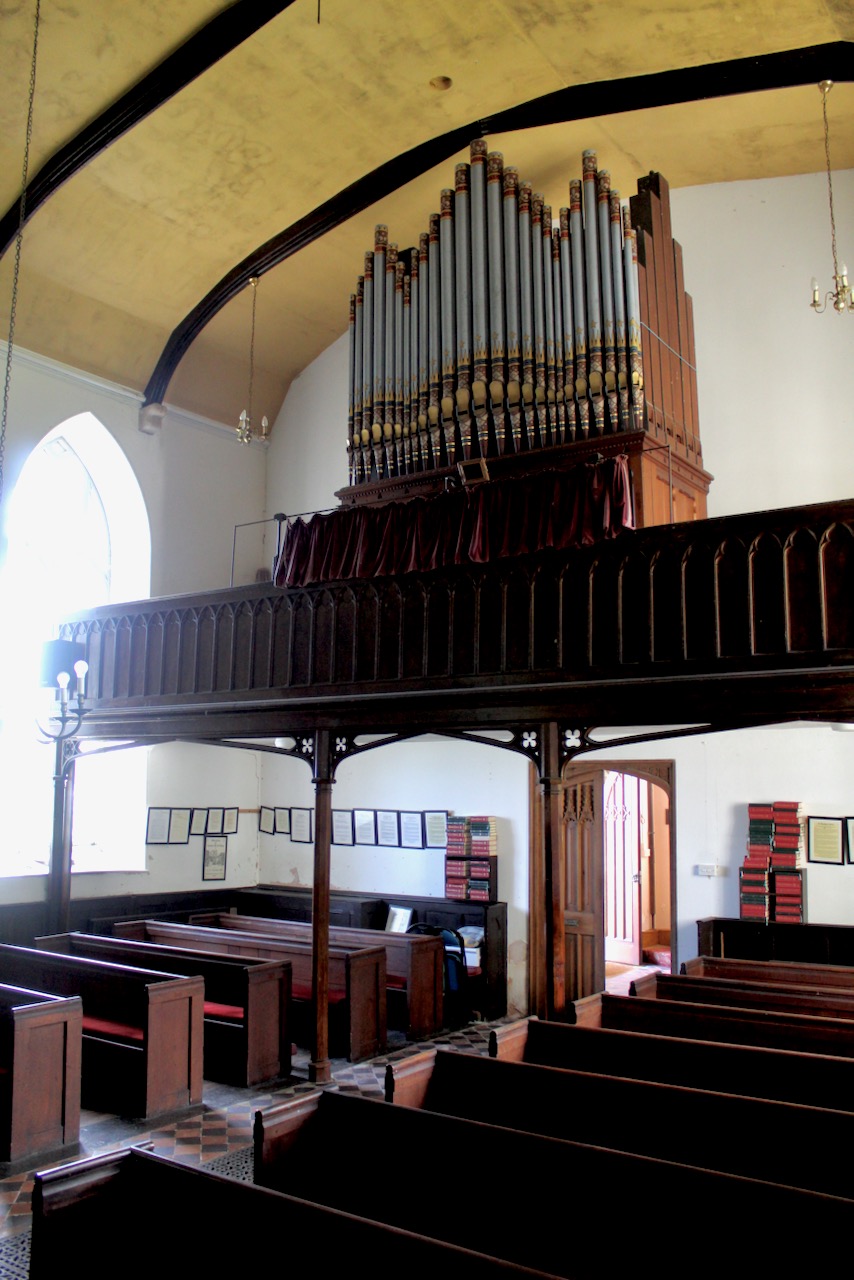
Another brother, Aylmer, and his wife, lived with Edith for a time, and helped to manage the farm which was part of the estate, and her only sister Hildegarde married their cousin Egerton Coghill, 5th Baronet Coghill, and settled nearby at Glen Barrahane house in Castletownshend [this no longer exists]. Egerton was also an artist and when he died Edith and Hildegarde commissioned Harry Clarke to create a stained glass window in their local Church of Ireland, St. Barrahane’s. The window depicts St. Luke, the Patron Saint of Painters. To the left of St. Luke’s shoulder is a depiction of St. Cecelia playing the organ, which is a tribute to Edith, as she played the organ in the church for seventy years. [15]

Among her many cousins was Charlotte Townsend, the wife of George Bernard Shaw, which visited Drishane.

Violet moved to Drishane to live with Edith permanently in 1906. In the 1901 and 1911 censuses Edith signed herself as Head of Household, and in 1911 listed her occupation as “artist, author and dairy farmer” and Violet as “author.” 

At Drishane House. Photograph © Jennifer Winder-Baggot, www.irishhistorichouses.com
Drishane House, August 2020. Photograph © Jennifer Winder-Baggot, www.irishhistorichouses.com

Edith struggled to have enough money for the upkeep of the house. She and Violet hoped to earn money from their publications but they sold the work before they became bestsellers. Desmond’s wife describes the shabbiness of the house, and yet traditions were upheld and up until the second world war, everyone “dressed for dinner.” [16] In the summer Edith would locate to a smaller house in the town and let out Drishane to earn some extra money.

Edith’s brother Boyle lived in a house nearby, called Point House. Boyle had been an admiral in the Navy, and if someone was interested in joining the Navy, they’d go to speak to Boyle. Unfortunately, the IRA saw this as recruitment for the British Army. Tom Somerville who now lives in Drishane tells the story in Jane O’Hea O’Keeffe’s book:

Below the village at Point House, overlooking the water, lived my great-great-uncle Boyle Somerville. He was a retired admiral, and local boys who were interested in joining the Royal Navy used to go to him to ask for a chit to say he knew them and that they were fit persons to join the navy. If that was what they wanted to do, he cheerfully signed the chit for them. This was interpreted by the IRA as recruiting, so on the night of 24 March 1936 they came to the front door of Point House. The admiral picked up the oil lamp from the table and went to answer their knock. They enquired, through the glass porch, if he was Mr Somerville. He answered, “I am Admiral Somerville,” whereupon they shot him through the glass, and killed him.” 

Tom continues: “of all the Somervilles, Boyle was the most nationalist. He took a great interest in the Irish language and had always been very pro-Home Rule. He made a study of all the local archaeological sites and is written up by Jack Roberts in his book Exploring West Cork. He was a remarkable man and perhaps the most talented and interesting of all the Somervilles of that generation, besides his sister Edith.” [17] 

Violet Florence Martin (1862-1915) by Edith Anna Oenone Somerville, oil on panel, 1886, courtesy of National Portrait Gallery London ref. 4655.

Cameron never married and when he died in 1942 the property passed to his nephew Desmond, the son of his brother Aylmer who had predeceased him. Desmond also served in the British Army.

Desmond and his wife Moira Burke Roche invited Edith to remain at Drishane. A memoir by Moira [Moira Somerville’s Edith OE Somerville. An Intimate Recollection. Typescript in Edith Oenone Somerville Archive] describes her first visit to Drishane, as Desmond’s fiancée, and her memory of Edith: “presiding over the tea things in the hall, her little dogs on her lap, the light of the oil lamp on her thistledown hair, her china-blue eyes, so like a child’s, fixed on my face. From that moment I loved her.” [18]

Violet had died just two years before this visit, in 1915. She and Edith had gone on a holiday to Kerry. David Hicks describes Violet’s last days:

Violet began to feel unwell and when her condition worsened she was transferred to the Glen Vera Hospital in Cork. Each day Edith sat by her bedside and wrote to her brother, Cameron. In one letter she wrote, “No one but she and I know what we were to each other.” She sketched her friend as she lay in her hospital bed for the final time before Violet died in Dec 1915. Edith wrote only one sentence in her diary that day: “Only goodnight, Beloved, not farewell.” [19]

Edith lived in the house until she was finally unable to climb the stairs. She then moved to a small house nearby in the town, Tally-Ho, to live with her sister. She died three years later, in 1949.

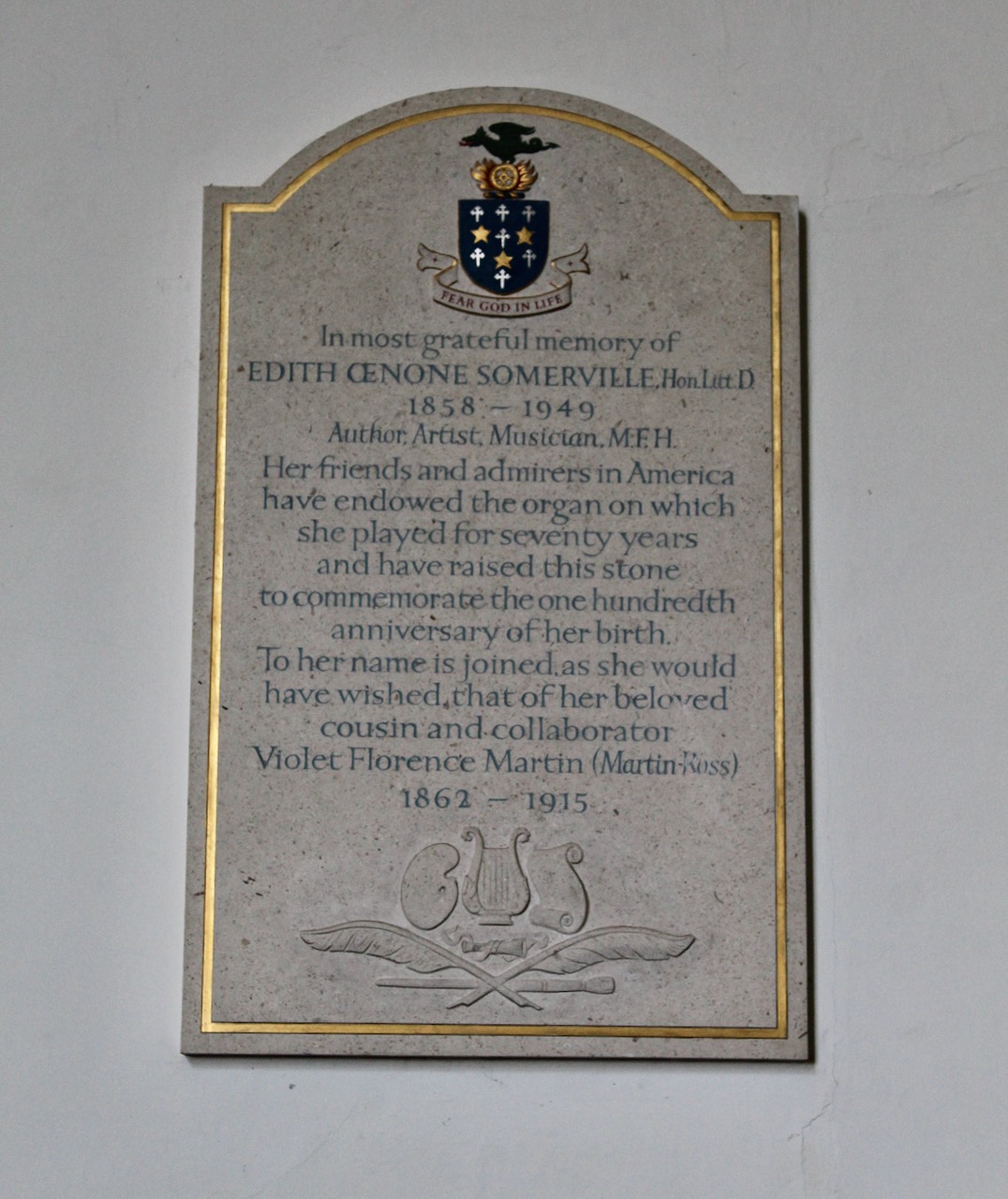
Plaque in St. Barrahane’s Church, Castletownshend. Photograph © Jennifer Winder-Baggot, www.irishhistorichouses.com
The organ on which Edith Somerville played for seventy years, in St. Barrahane’s Church, Castletownshend. Photograph © Jennifer Winder-Baggot, www.irishhistorichouses.com

When Desmond died in 1976, Drishane passed to his son Christopher (Dan) Somerville. In Jane O’Hea O’Keeffe’s book, Dan explains how he obtained the display cases for the museum:

We managed to get display cases which had become obsolete from the Bodleian Library in Oxford. We bought a trailer in England and loaded the cases on and brought them to Drishane. They are lovely cases, late Victorian or Edwardian. We couldn’t get them in the front door when we arrived, so we had to remove a window to install them. [20]

It is Dan’s son Thomas, and his wife and two sons, who now live in Drishane and who welcomed our visit. The house retains many of the original features and contents and paintings that date from Edith’s time. It also contains memorabilia from overseas and military engagements.

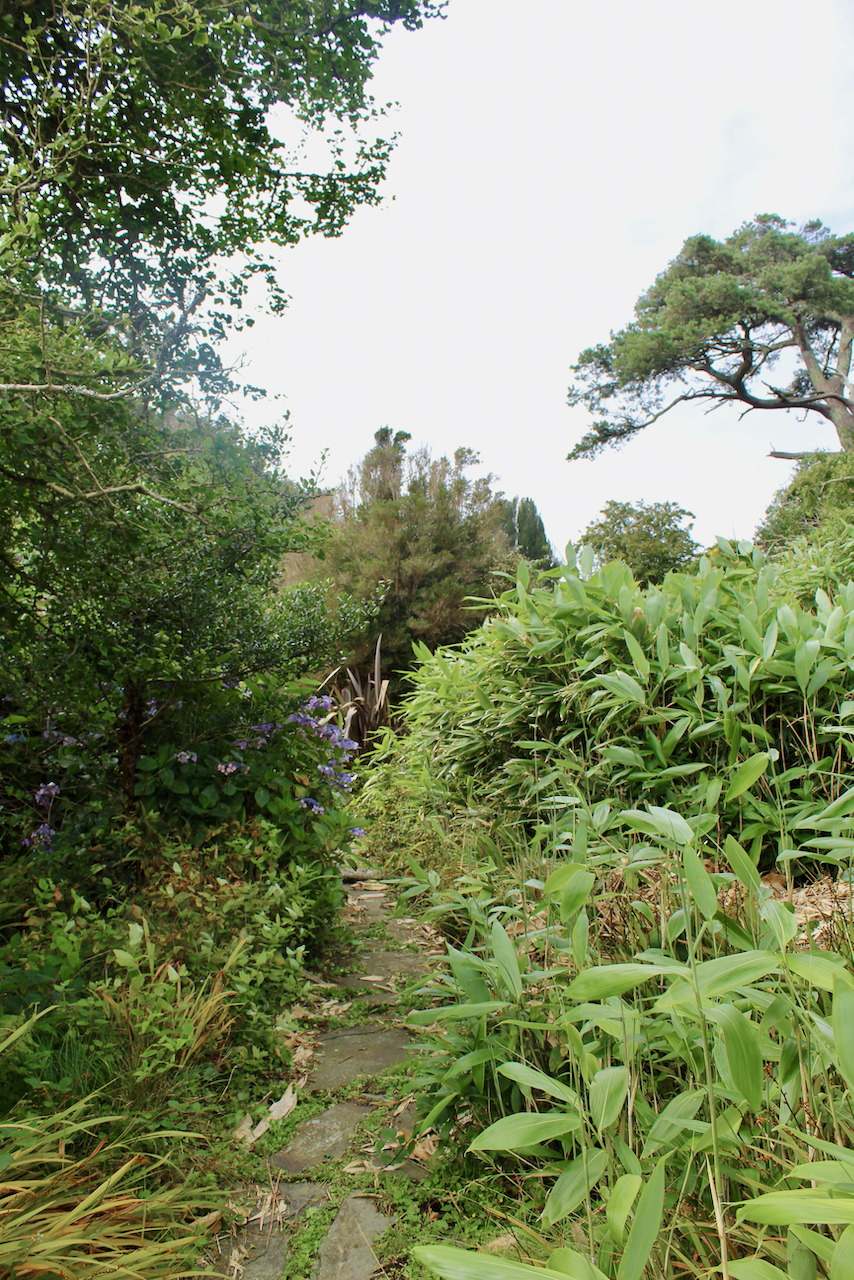
The house is set in eighteen acres of gardens and woodland. 

At Drishane House. Photograph © Jennifer Winder-Baggot, www.irishhistorichouses.com
At Drishane House.
At Drishane House. Photograph © Jennifer Winder-Baggot, www.irishhistorichouses.com
At Drishane House, August 2020. Photograph © Jennifer Winder-Baggot, www.irishhistorichouses.com

[1] p. 105. O’Hea O’Keeffe, Jane. Voices from the Great Houses: Cork and Kerry. Mercier Press, Cork, 2013.

[2] p. 121. Hicks, David. Irish Country Houses, Portraits and Painters. The Collins Press, Cork, 2014.

[3] p. 84, O’Hea O’Keeffe.

[4] https://www.buildingsofireland.ie/buildings-search/building/20836017/castle-townsend-castletownsend-castletownshend-co-cork

[5] Keohane, Frank. The Buildings of Ireland: Cork, City and County. Yale University Press, New Haven and London, 2020.
[6] https://www.rosscastle.com and www.drishane.com

[7] p. 105. Bence-Jones, Mark. Life in an Irish Country House. Constable, London. 1996. 

[8] from Moira Somerville’s Edith OE Somerville. An Intimate Recollection. Typescript in Edith Oenone Somerville Archive, referred to by Mark Bence-Jones, Life in an Irish Country House. Constable, London. 1996.

[9] p. 107. Bence-Jones, Mark. Life in an Irish Country House. Constable, London. 1996. 

[10] p. 100. Bence-Jones, Mark. Life in an Irish Country House. Constable, London. 1996. 

[11] p. 122-3, Hicks, David. Irish Country Houses, Portraits and Painters. The Collins Press, Cork, 2014.

[12] Yes indeed, another Somerville-Townshend marriage. The genealogy goes as follows:

Rev William Somerville (1641-1694) m. Agnes Agnew 

Drishane passed to his son, Rev Thomas Somerville (1689-1752), who married Anne Neville 

Drishane passed to their son Thomas Somerville (1725-1793), who married Mary Townsend, daughter of Philip Townsend and Elizabeth Hungerford; grand-daughter of Commander Bryan Townsend (1648-1726). 

Drishane passed to their son, Thomas Townsend Somerville (1725-1811). He married Elizabeth Henrietta Becher Townsend (1776-1832), daughter of John Townsend (1737-1810) [granddaughter of  Richard Townsend and Elizabeth Becher, great-granddaughter of Commander Bryan Townsend (1648-1726)] and Mary Morris.

Drishane passed to the son, Col Thomas Somerville (1798-1882). He married Henrietta Augusta Townshend, daughter of Richard Boyle Townsend (1756-1826), who is great-grandson of Commander Bryan Towsend (1648-1726). 

[ie. Richard Boyle Townsend (1756-1826) is son of Richard Townsend (1725-1783) and Elizabeth Fitzgerald, who is son of Richard Townsend (1684-1742) and Elizabeth Becher, who is son of Commander Bryan Townsend (1648-1726).] 

Drishane passed to son Lieut Col. Thomas Somerville (1824-1898), who married Adelaide Eliza Coghill. 

Drishane passed to their son, (Thomas) Cameron Somerville, the brother of Edith. He died, and Drishane passed via his younger brother Captain Aylmer Coghill Somerville to his son Desmond Somerville. 

[13] p. 100-01. Bence-Jones, Mark. Life in an Irish Country House. Constable, London. 1996.

[14] p. 102. Bence-Jones, Mark. Life in an Irish Country House. Constable, London. 1996. Stephen and I are fans of Michael Portillo’s travel shows, where he takes trains and follows his Bradshaw’s guide, so I like this detail!

[15] https://roaringwaterjournal.com/tag/church-of-st-barrahane/

[16] p. 108. Bence-Jones, Mark. Life in an Irish Country House. Constable, London. 1996. 

[17] p. 113. O’Hea O’Keeffe.

https://www.buildingsofireland.ie/buildings-search/building/20848098/point-house-point-road-crosshaven-crosshaven-co-cork

[18] p. 106. Bence-Jones, Mark. Life in an Irish Country House. Constable, London. 1996.

[19] p. 130. Hicks, David. Irish Country Houses, Portraits and Painters. The Collins Press, Cork, 2014.

[20] p. 109. O’Hea O’Keeffe.

Text © Jennifer Winder-Baggot, www.irishhistorichouses.com