Portraits W-X-Y-Z

W

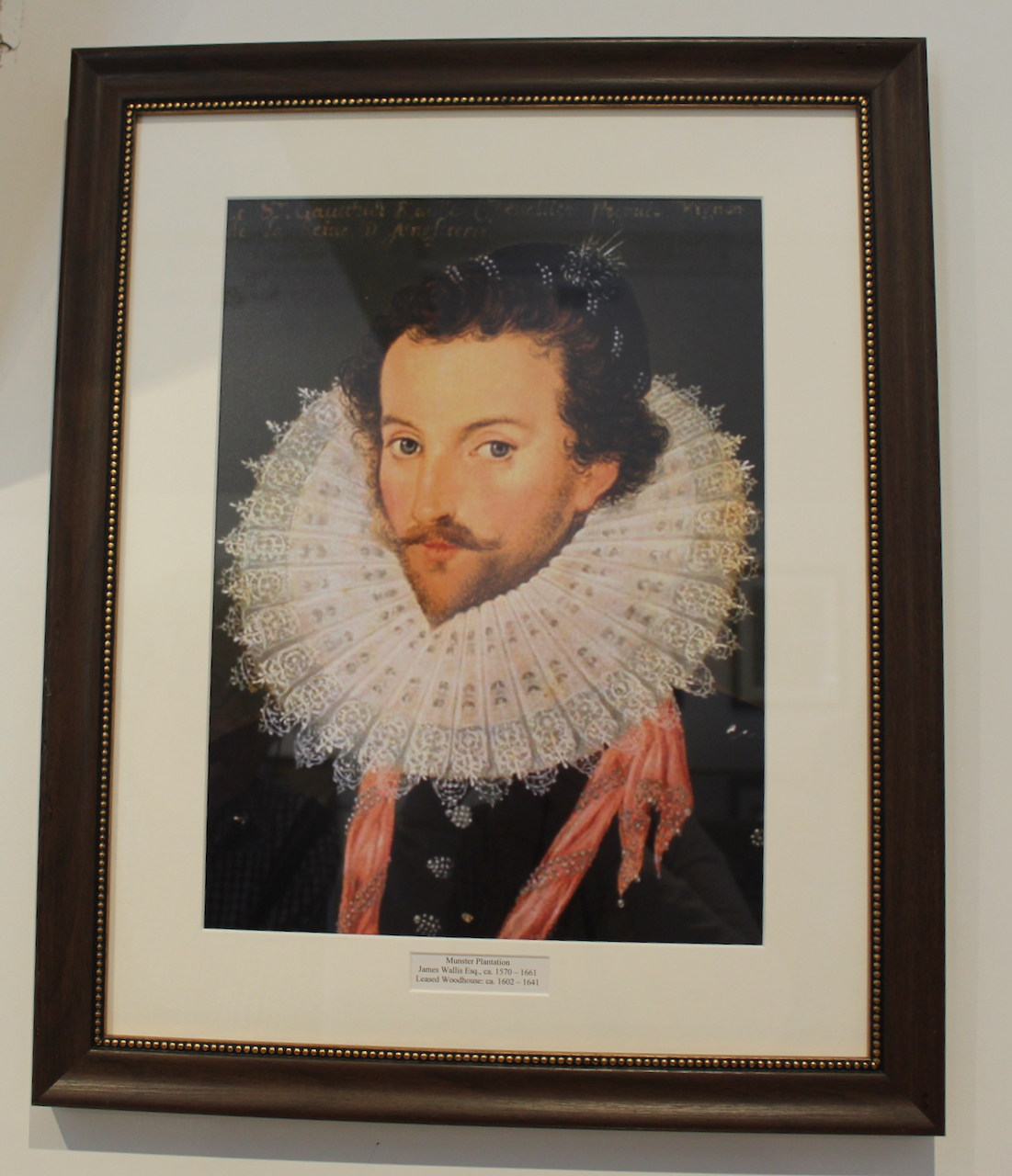
James Wallis (ca. 1570-1661). Photograph © Jennifer Winder-Baggot, www.irishhistorichouses.com
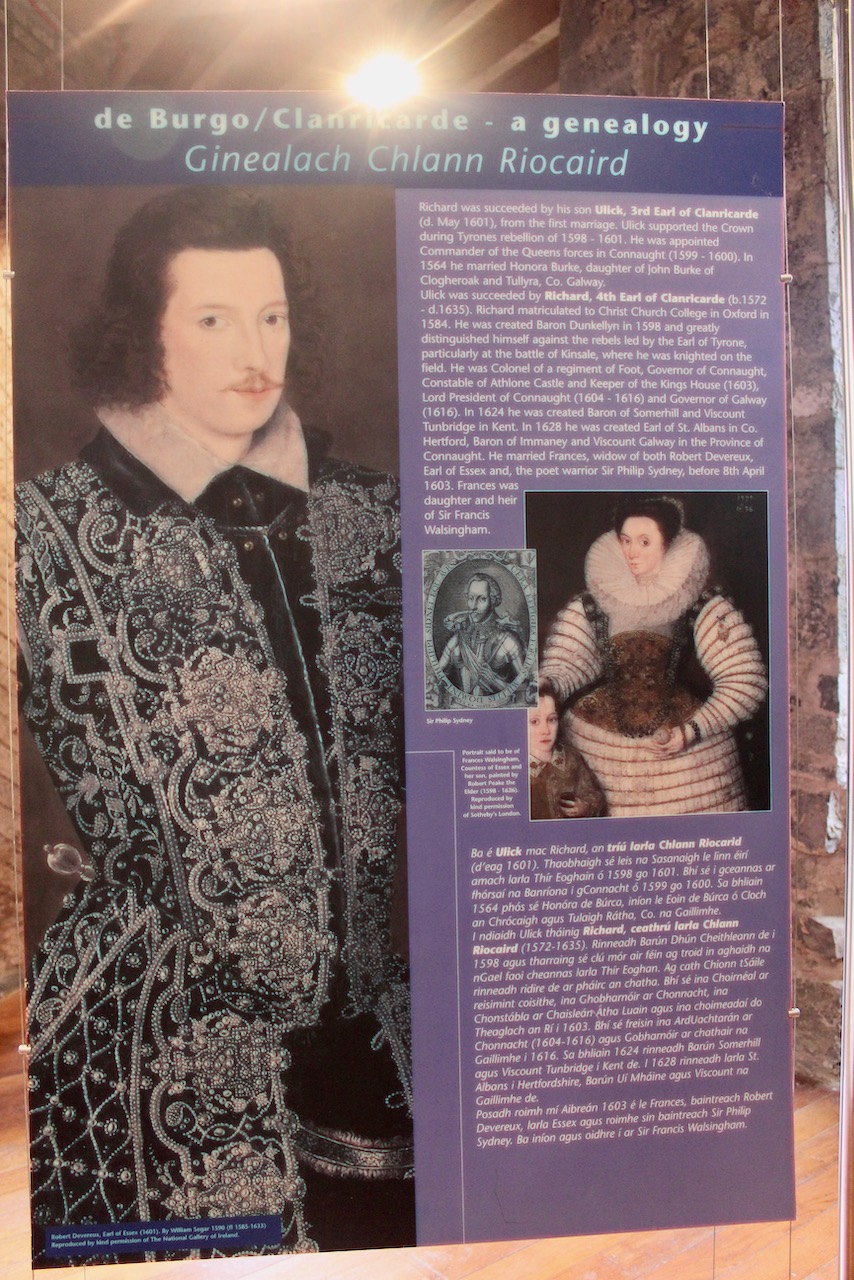
Portrait of Frances Walsingham (1567-1633), along with her husband Robert Devereux (1566-1601) 2nd Earl of Essex, and in the small picture, Sir Philip Sydney (1554-1586), her first husband. Her third husband was Richard Bourke (1572-1635) 4th Earl of Clanricarde.
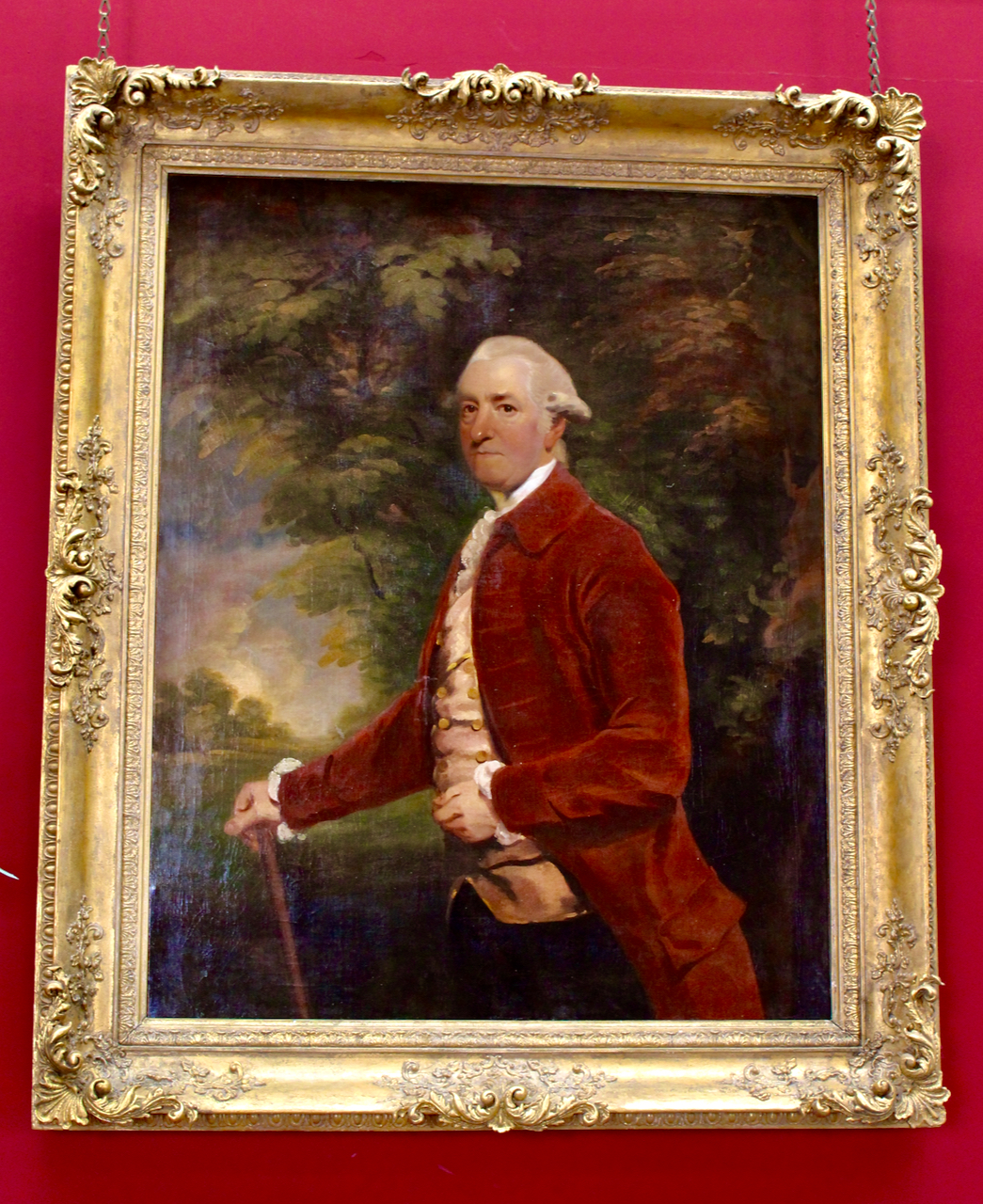
John Wandesford (1725-1784) 1st Earl of Wandesford and Viscount Castlecomer.
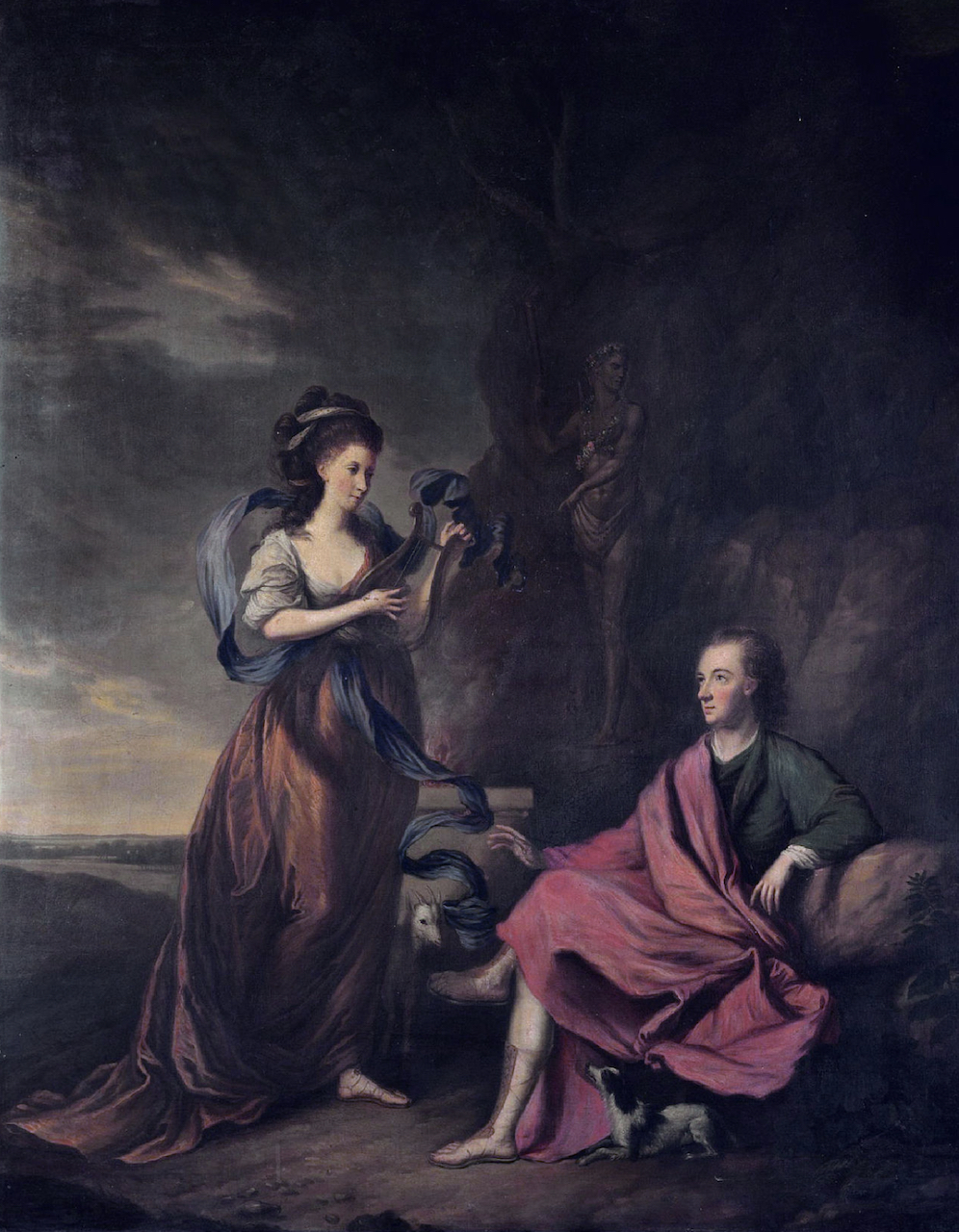
Susan Frances Elizabeth Wandesford (1754-1830) Duchess of Ormonde. She was the daughter of John Wandesford 1st and last Earl Wandesford and 5th Viscount Castlecomer, and wife of John Butler 17th Earl of Ormonde. Painting by Hugh Douglas Hamilton.
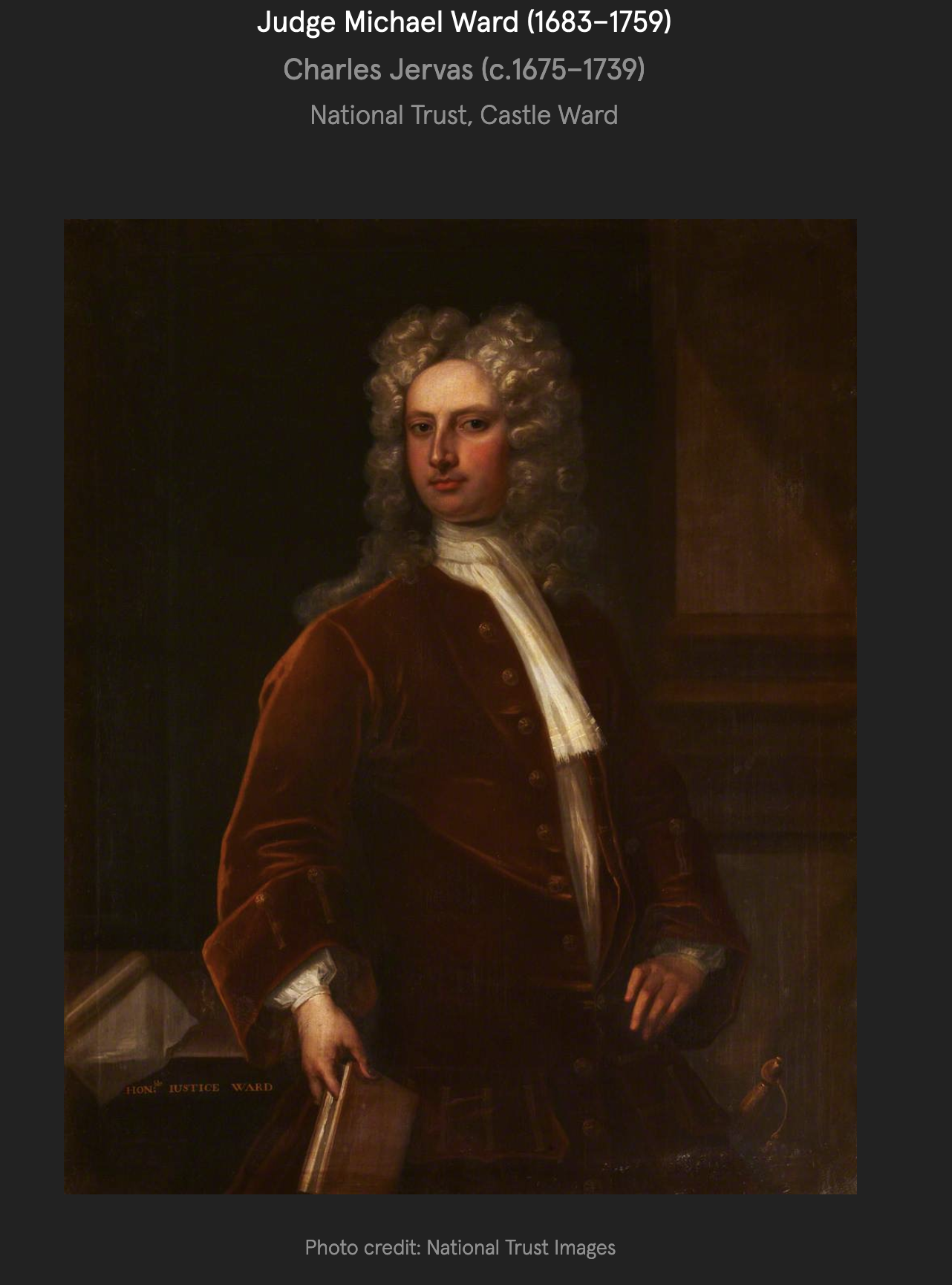
Michael Ward (1683-1759) by Charles Jervas, courtesy of National Trust, Castle Ward.
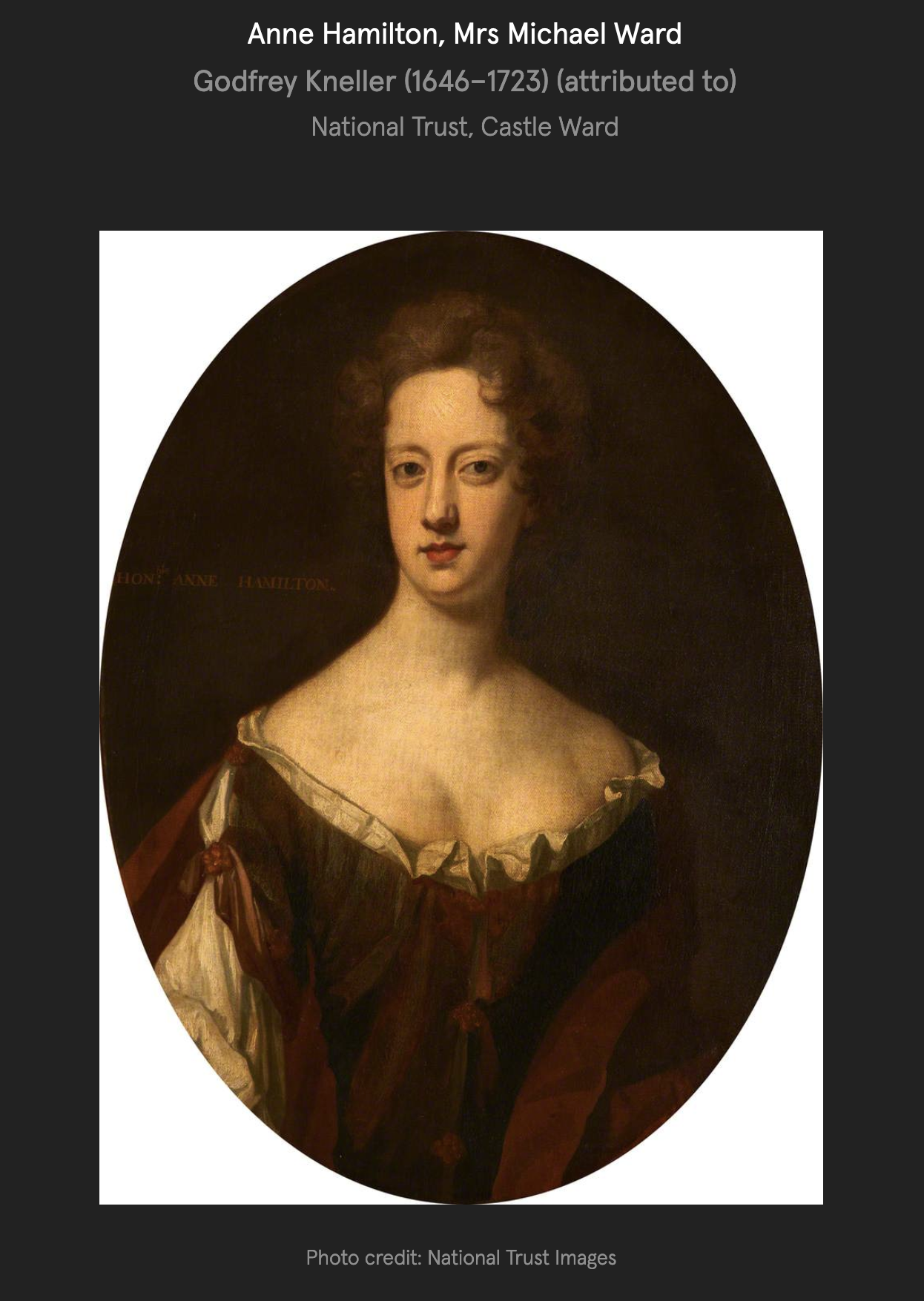
Anne Hamilton (1692-1760) who married Michael Ward (1683-1759), by Godrey Kneller, courtesy of National Trust, Castle Ward. She was the daughter of James Hamilton (1640-1707) of Bangor and Sophia née Mordaunt.
Anne Hamilton (1692-1760) who married Michael Ward by Charles Jervas, courtesy of National Trust, Castle Ward. She was the daughter of James Hamilton (1640-1707) of Bangor and Sophia née Mordaunt.
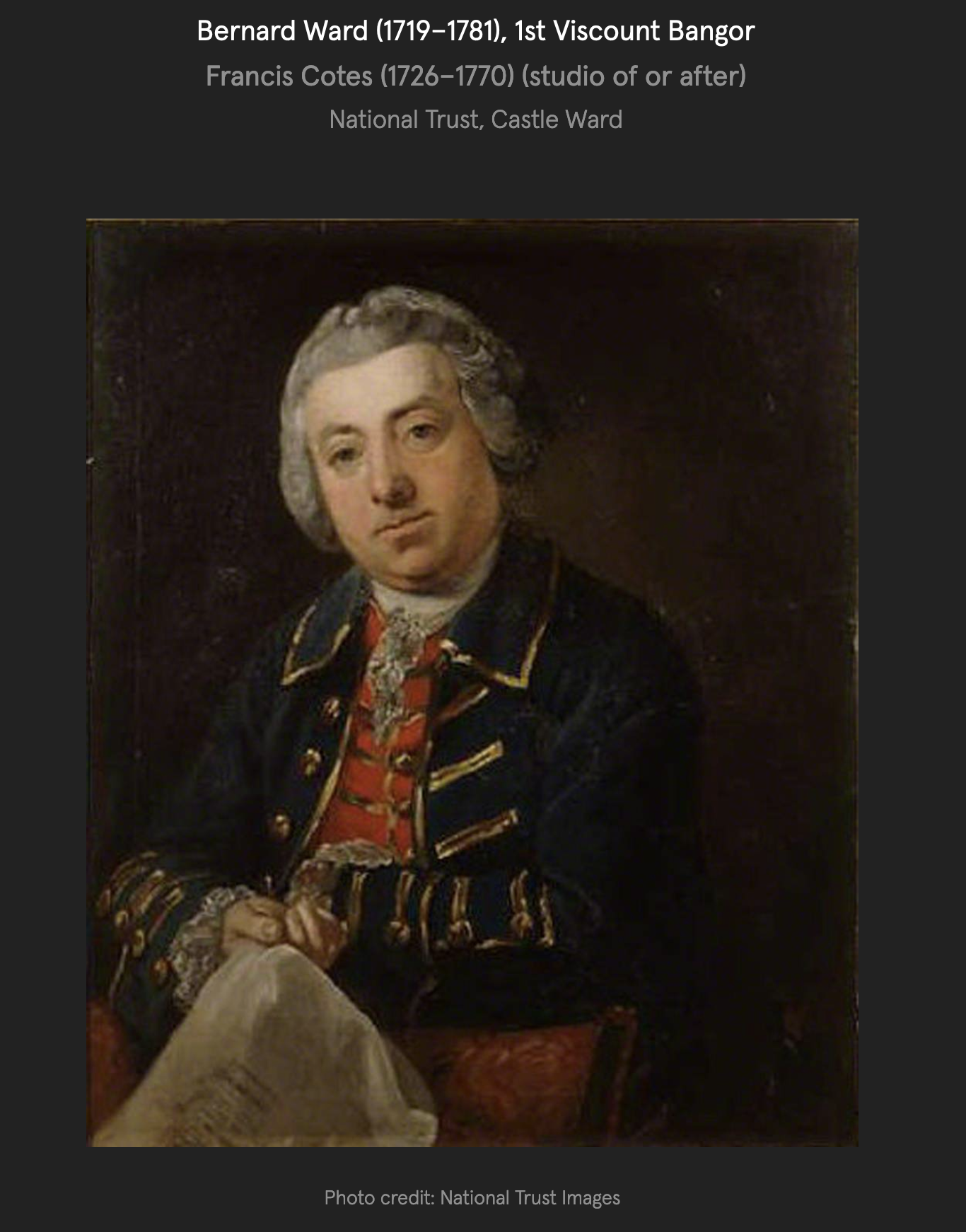
Bernard Ward (1719-1781) 1st Viscount Bangor by Francis Cotes, courtesy of National Trust, Castle Ward. He was the son of Michael Ward (1683-1759) and Anne Hamilton.
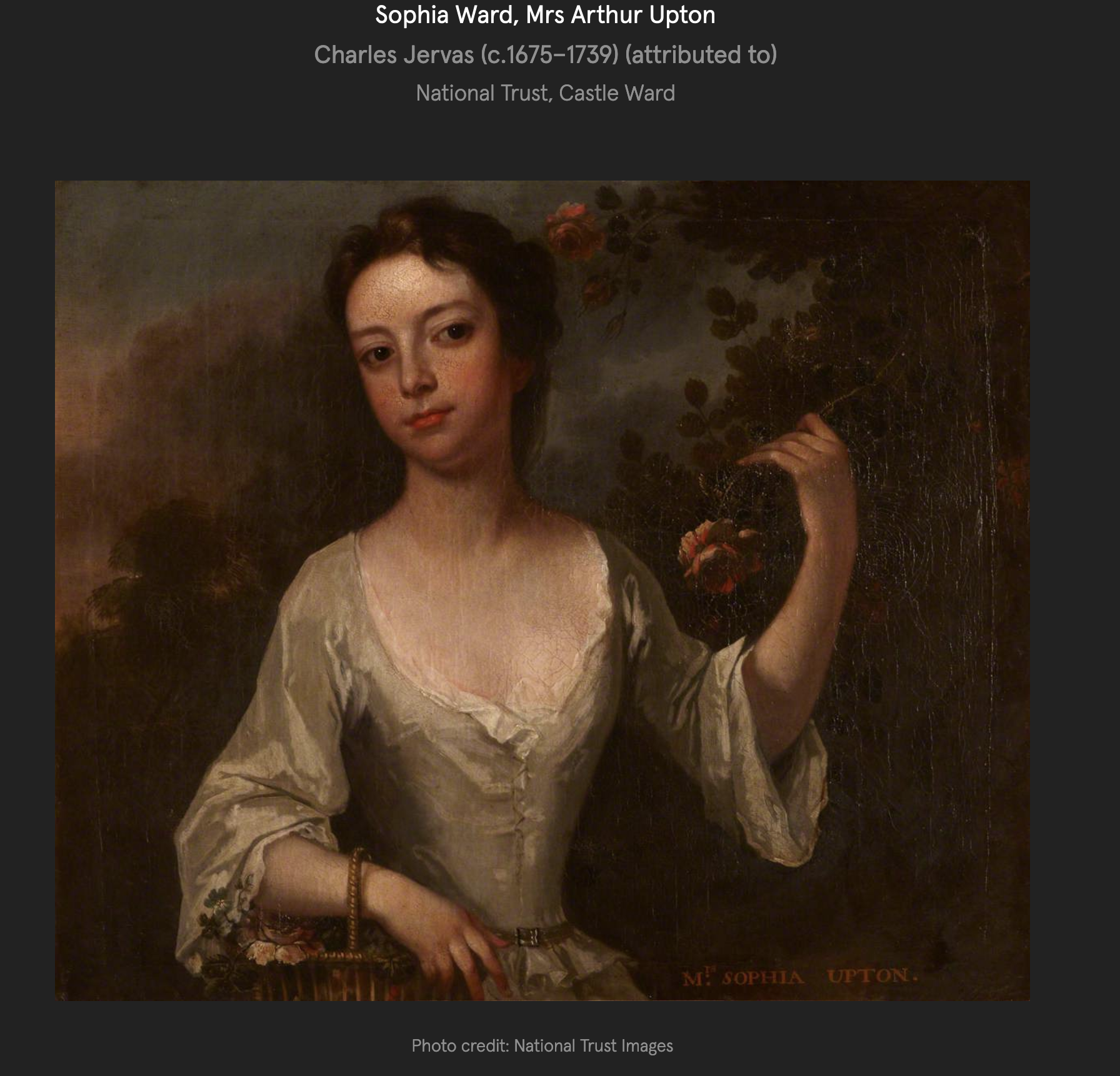
Sophia Ward (born 1715) who married Arthur Upton (1715-1768), by Charles Jervas, courtesy of National Trust, Castle Ward. She was the sister of Bernard Ward 1st Viscount Bangor.
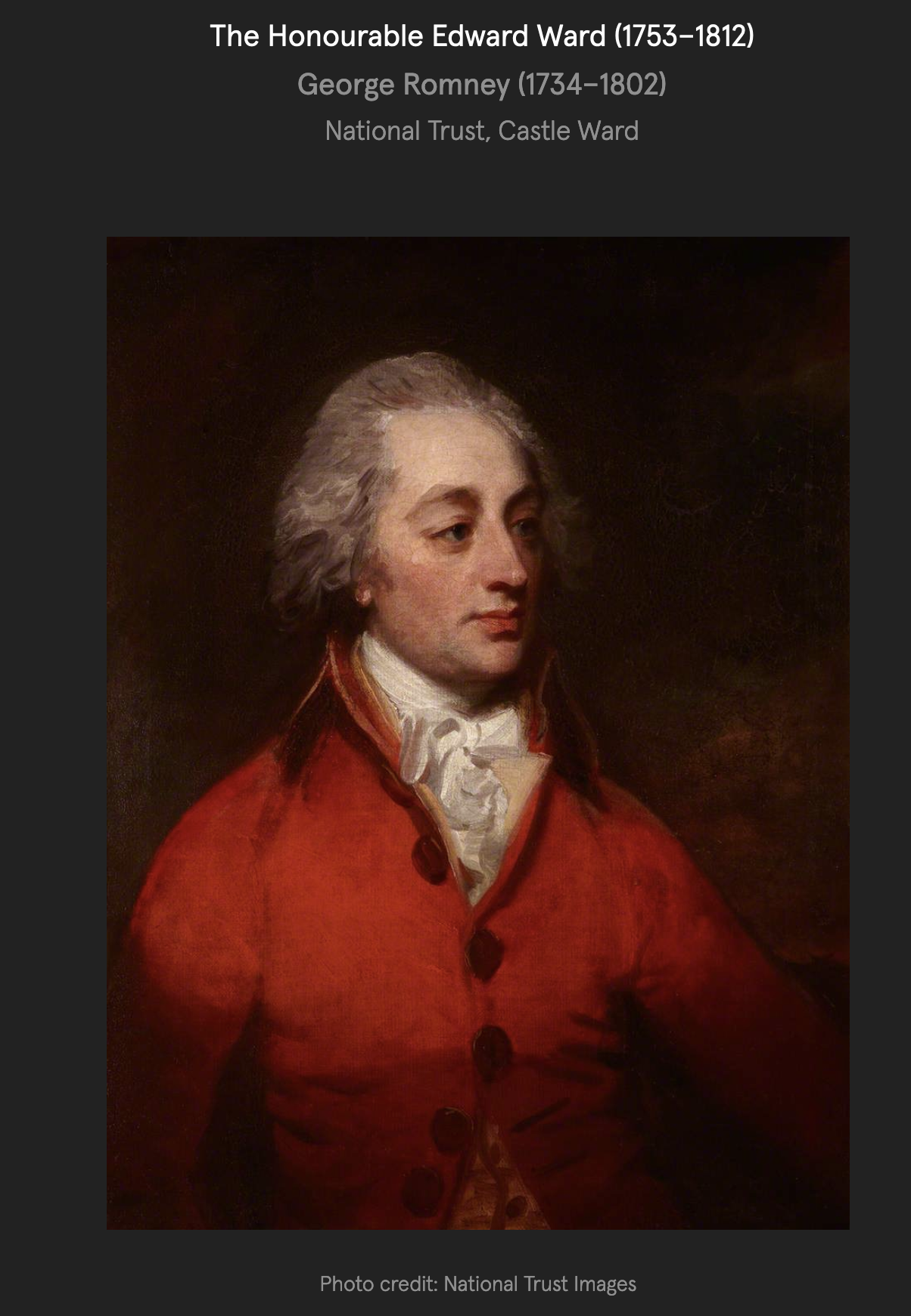
Edward Ward (1753-1812) by George Romney, courtesy of National Trust, Castle Ward. He was a son of Bernard Ward (1719-1781) 1st Viscount Bangor
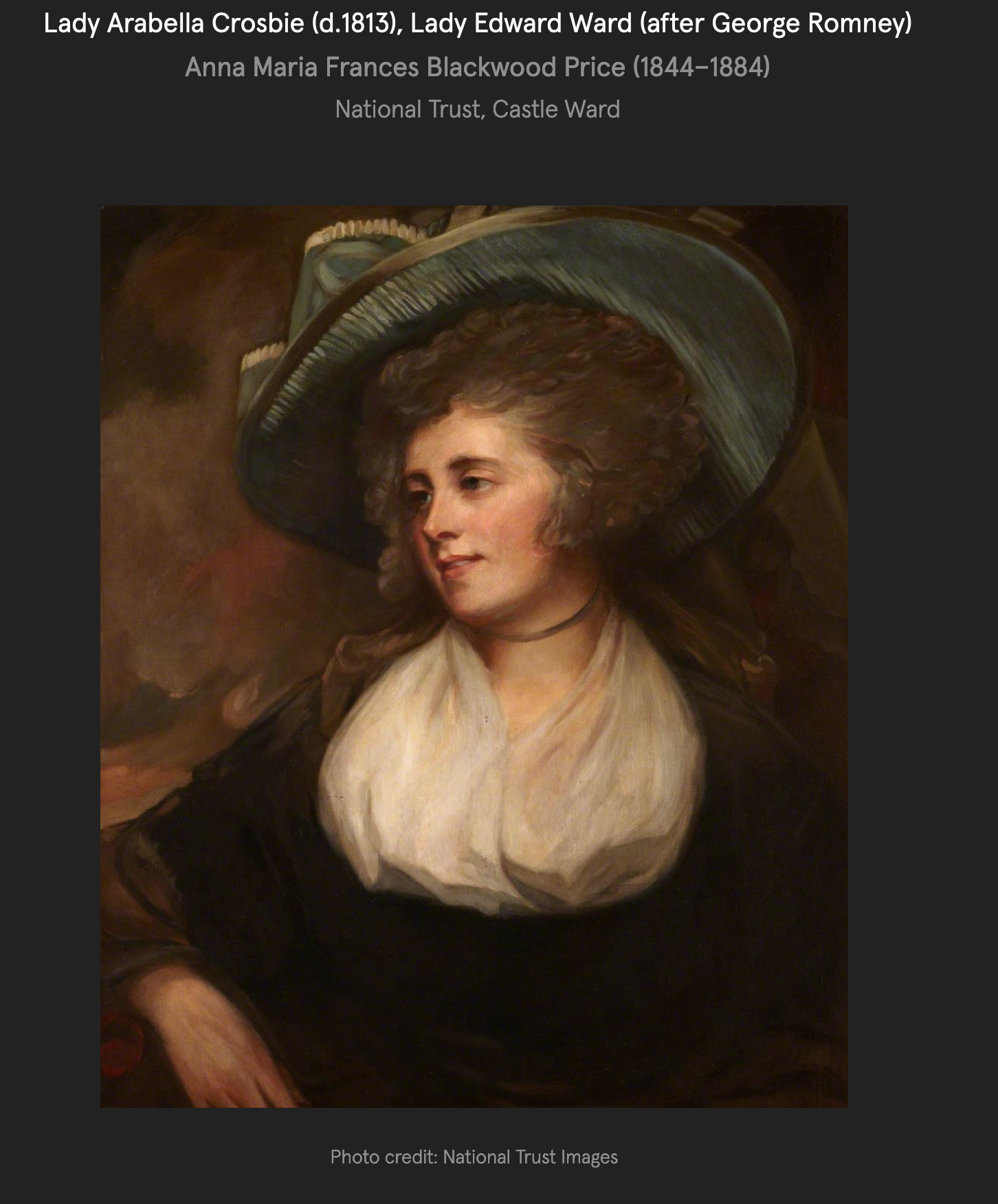
Arabella Crosbie (d. 1813) who married Edward Ward (1753-1812), by Anna Maria Frances Blackwood Price, courtesy of National Trust, Castle Ward, County Down. She was the daughter of William Crosbie 1st Earl of Glandore, County Cork.
Edward Ward (1790-1837) 3rd Viscount Bangor by Frederick Richard Say, courtesy of National Trust, Castle Ward.
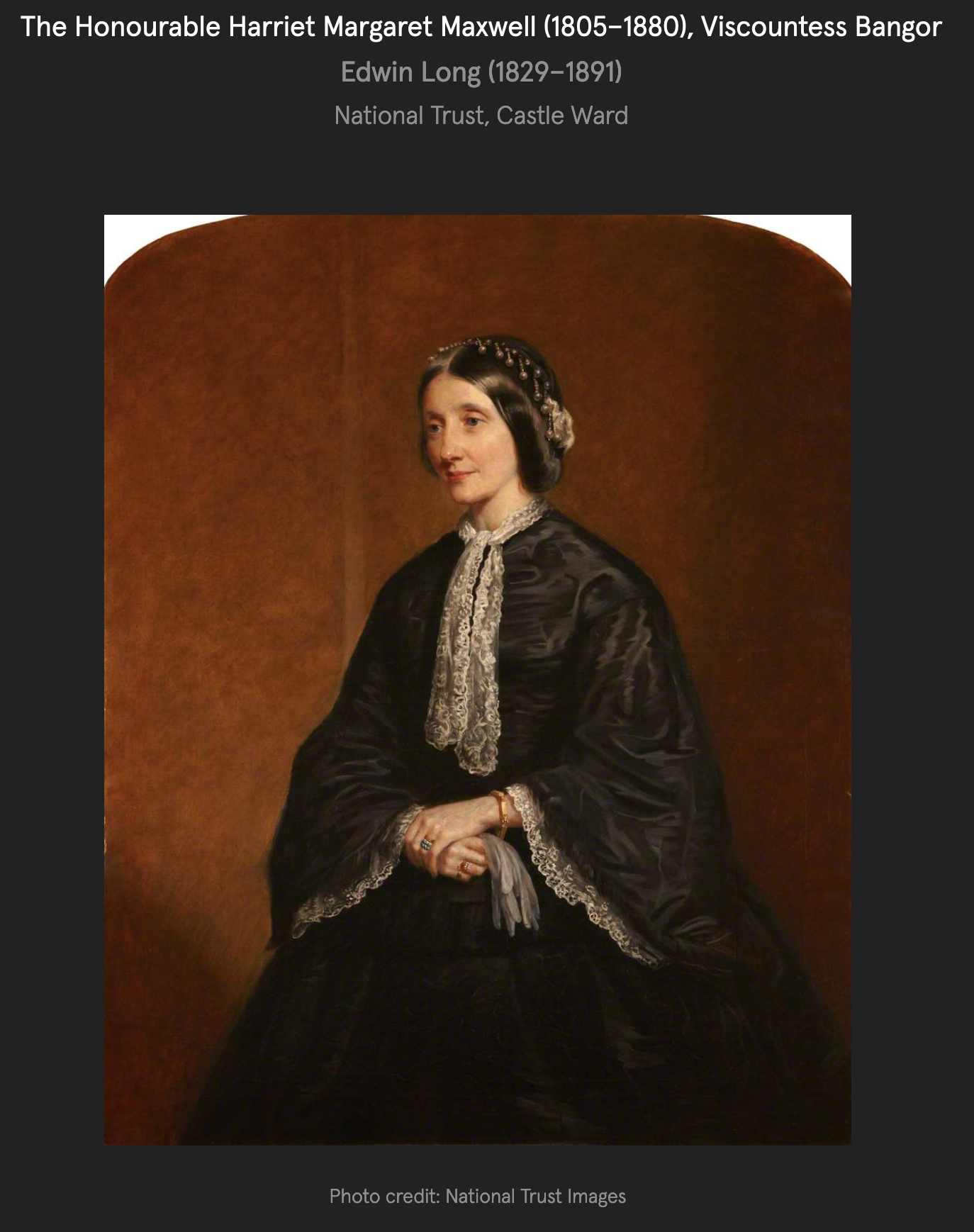
Harriet Margaret Maxwell (1805-1880) Viscountess Bangor, wife of Edward Southwell Ward (1790-1837) 3rd Viscount Bangor, daughter of Reverend Henry Maxwell, 6th Baron Farnham of Farnham Estate, County Cavan. Painting by Edwin Long, courtesy of National Trust, Castle Ward.
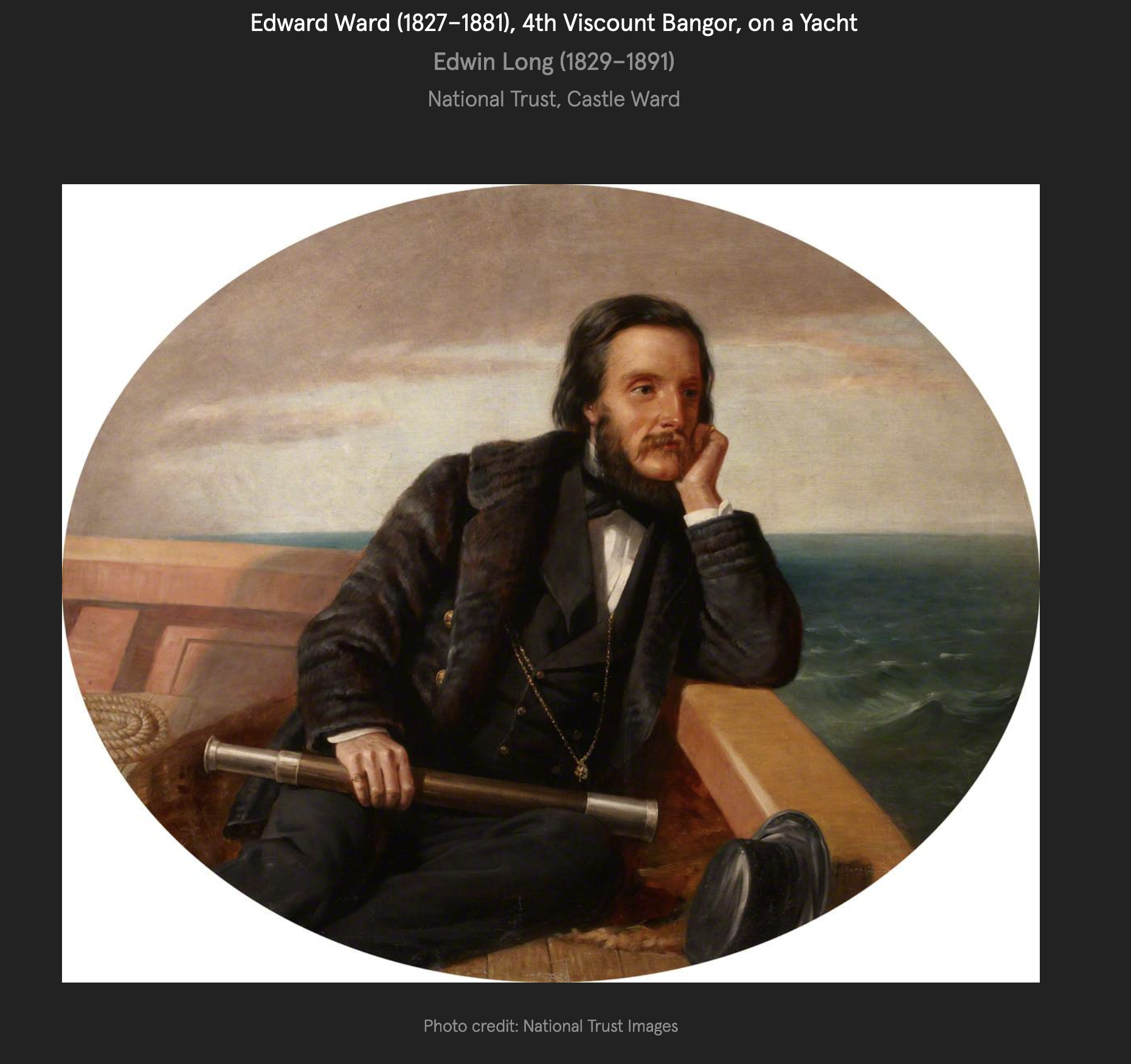
Edward Ward (1827-1881) 4th Viscount Bangor, by Edwin Long, courtesy of National Trust, Castle Ward.
A portrait of Alice Waterhouse (1700-1782), wife of Bishop Jemmett Browne (1703-1782), Bishop of Cork and Archbishop of Tuam. They lived at Riverstown, County Cork. Photograph © Jennifer Winder-Baggot, www.irishhistorichouses.com
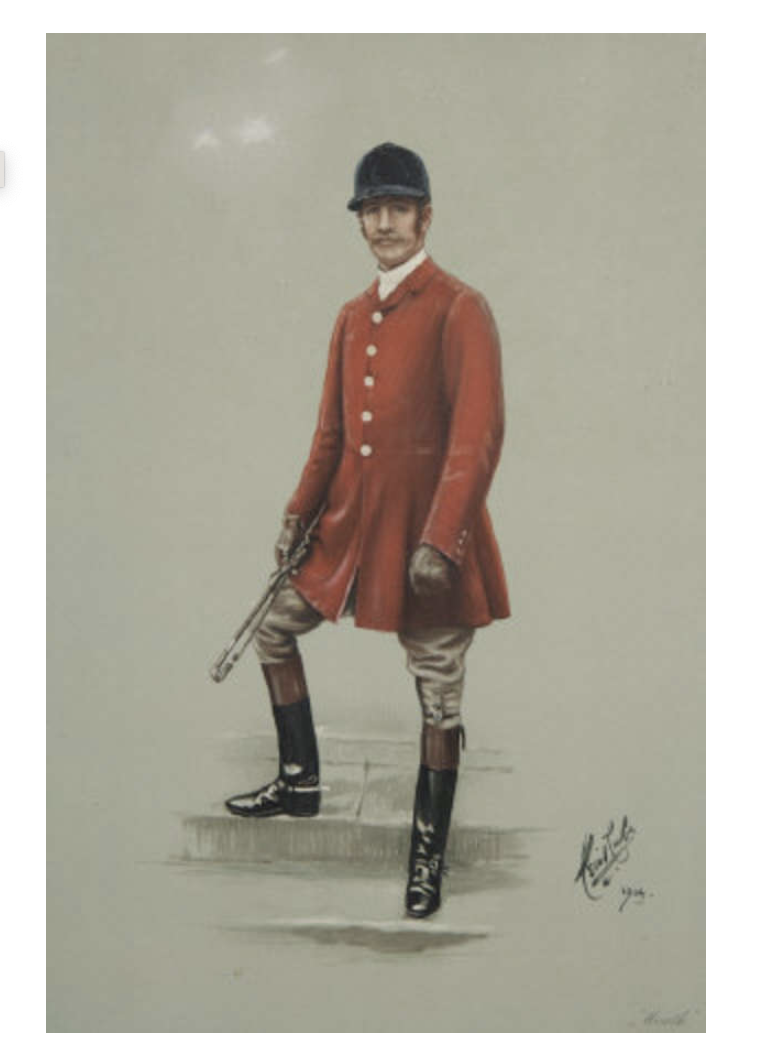
John Watson (Master of the Meaths) Print, by Cecil E. Cutler 49.5 x 33.5cm Signed and dated 1904 John Watson (1858-1908)…courtesy Adam’s 23 Oct 2007.
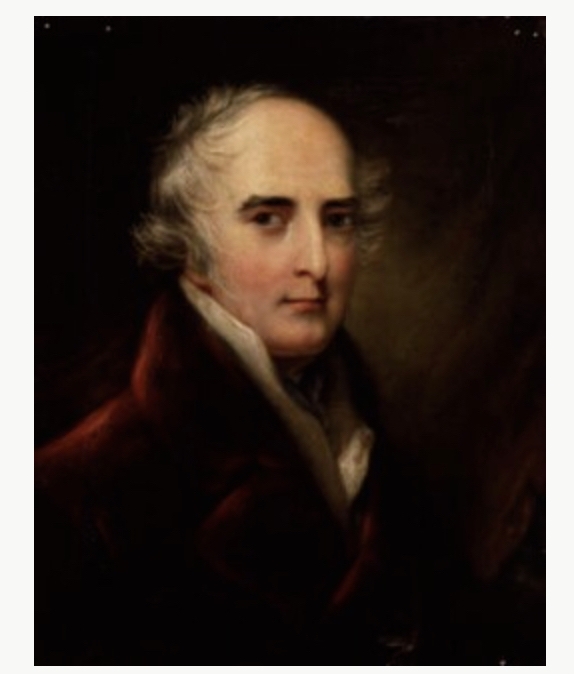
Richard Colley Wellesley (1760-1842), 2nd Earl of Mornington and 1st Marquess Wellesley by John Philip Davis courtesy of National Portrait Gallery in London NPG 846.
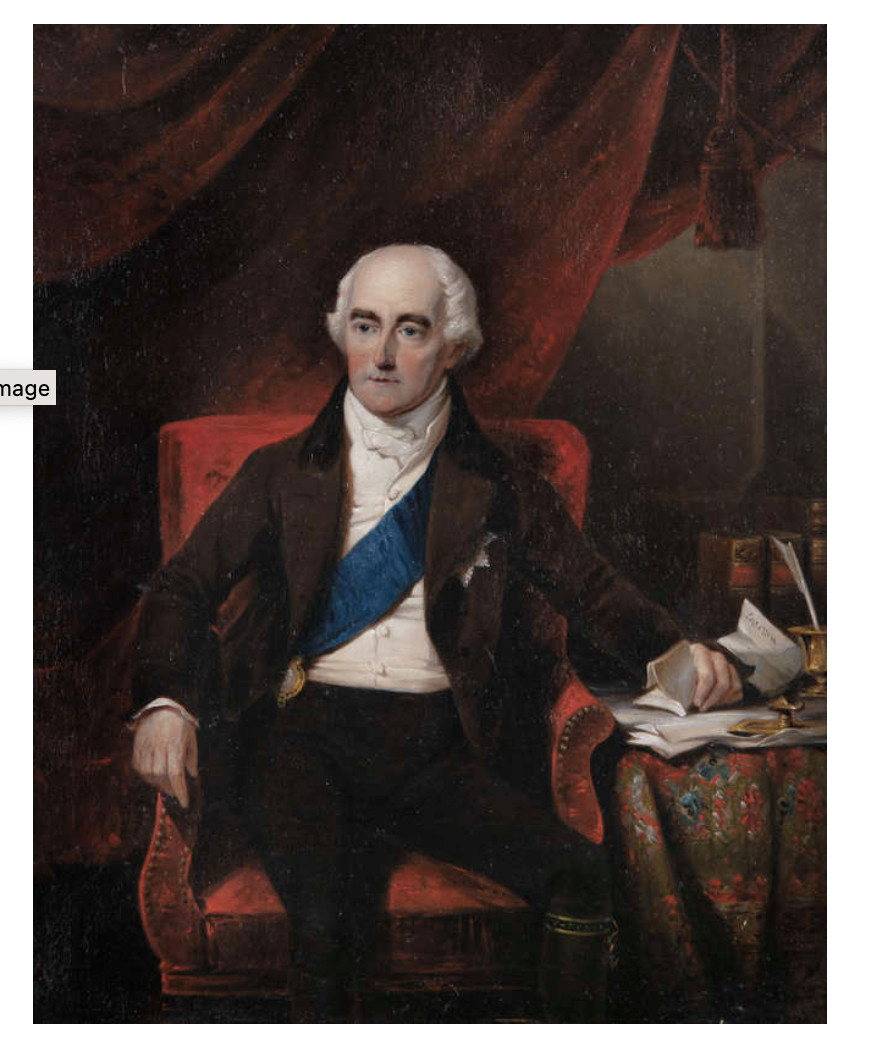
Richard Colley Wellesley, 1st Marquess Wellesley (1760-1842), Irish school 19C, Homan Potterton auction at Adam’s 7th Sept 2021.
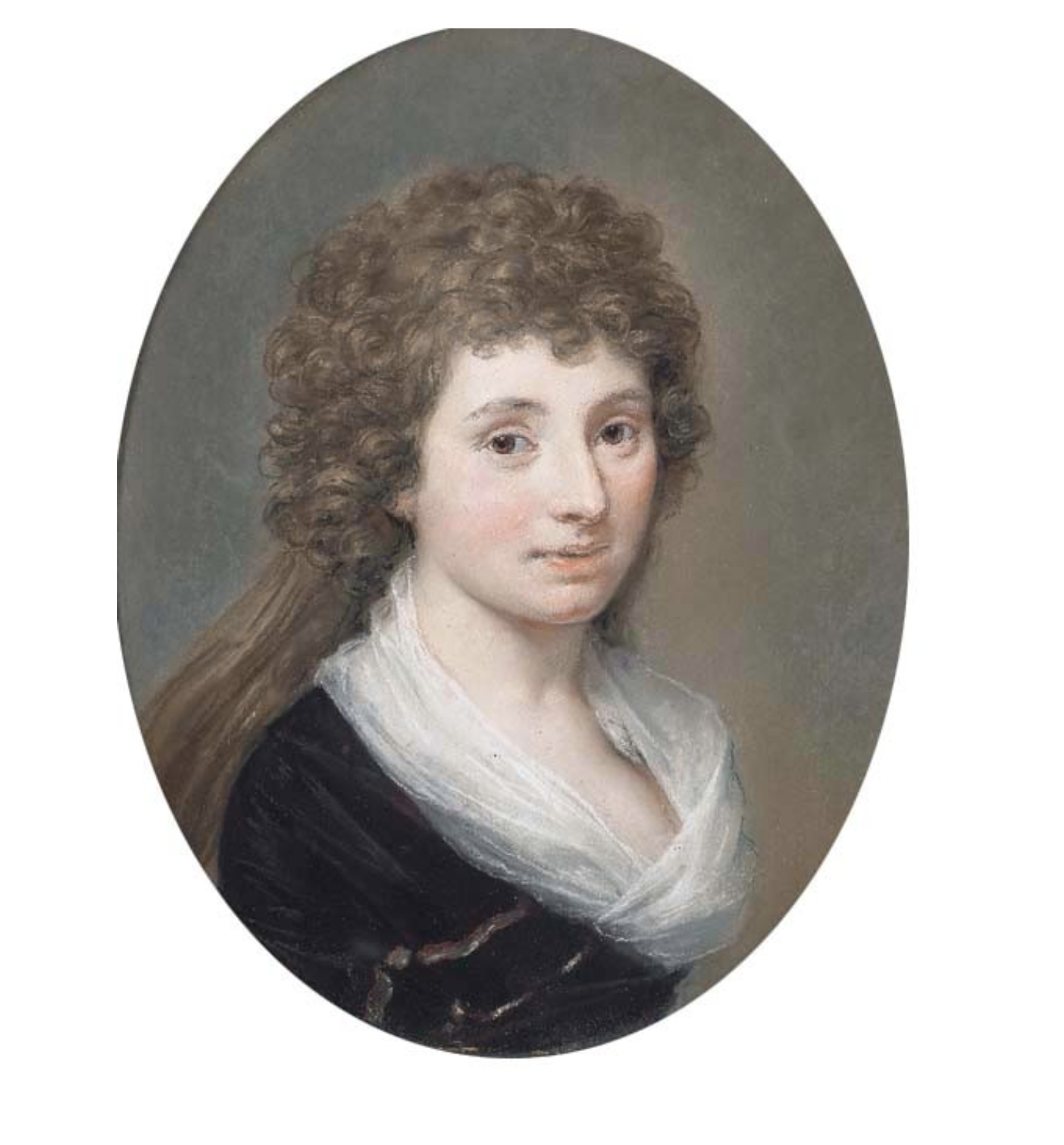
Hyacinthe Gabrielle Marchioness Wellesley, wife of Richard Colley Wellesley (1760-1842), 2nd Earl of Mornington and 1st Marquess Wellesley, by Hugh Douglas Hamilton courtesy of Christie’s 2006.
William Wellesley-Pole, later 1st Baron Maryborough and 3rd Earl of Mornington (1763-1845) by Thomas Lawrence courtesy of wikipedia and Bonhams.
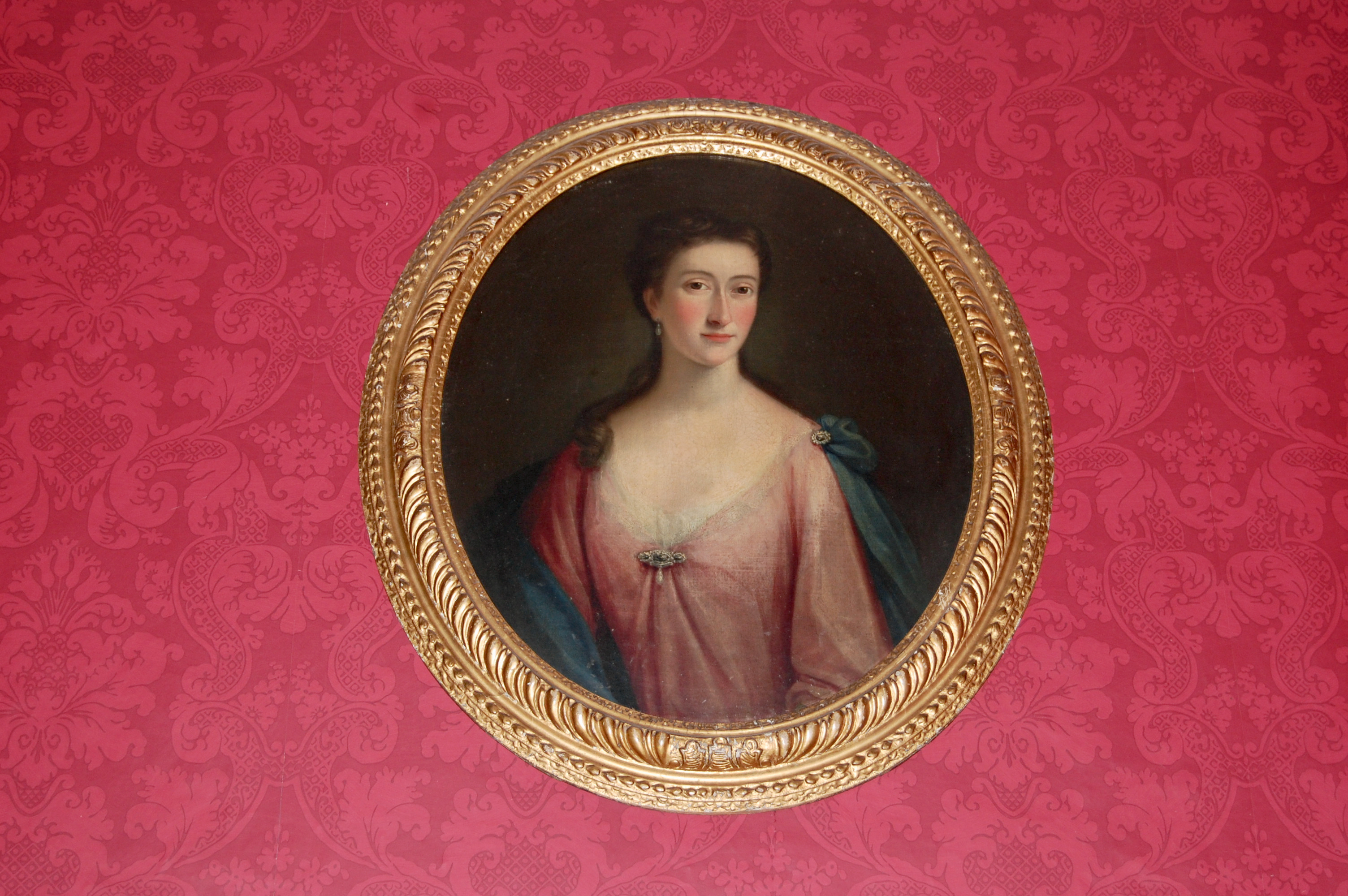
Lady Anne Conolly (born Wentworth (1712/1713-1797), daughter of Thomas Wentworth (1672-1739) 1st Earl of Strafford). She was married to William James Conolly (1712-1754), of Castletown, County Kildare. She was the mother of Thomas Conolly (1734-1803). Photograph © Jennifer Winder-Baggot, www.irishhistorichouses.com
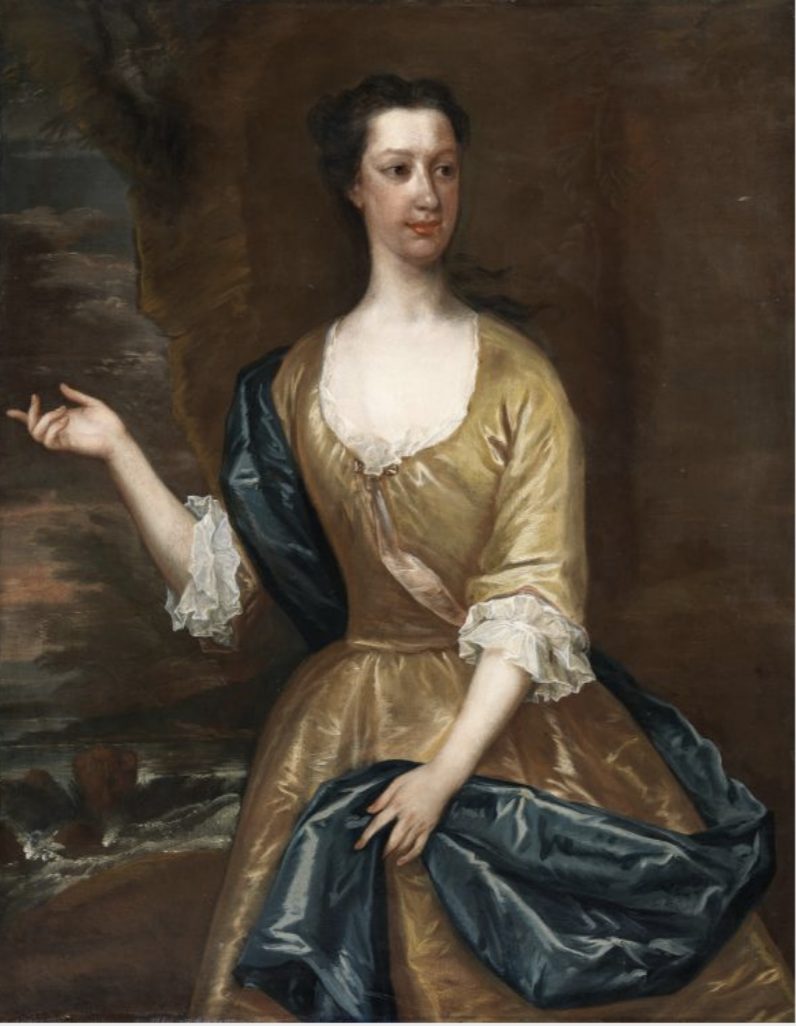
Lady Anne Conolly née Wentworth (1713-1797), daughter of Thomas Wentworth (1672-1739) 1st Earl of Strafford). She was married to William James Conolly (1712-1754), of Castletown, County Kildare. Painting attributed to Anthony Lee, courtesy of National Gallery of Ireland. She was the mother of Thomas Conolly (1734-1803).
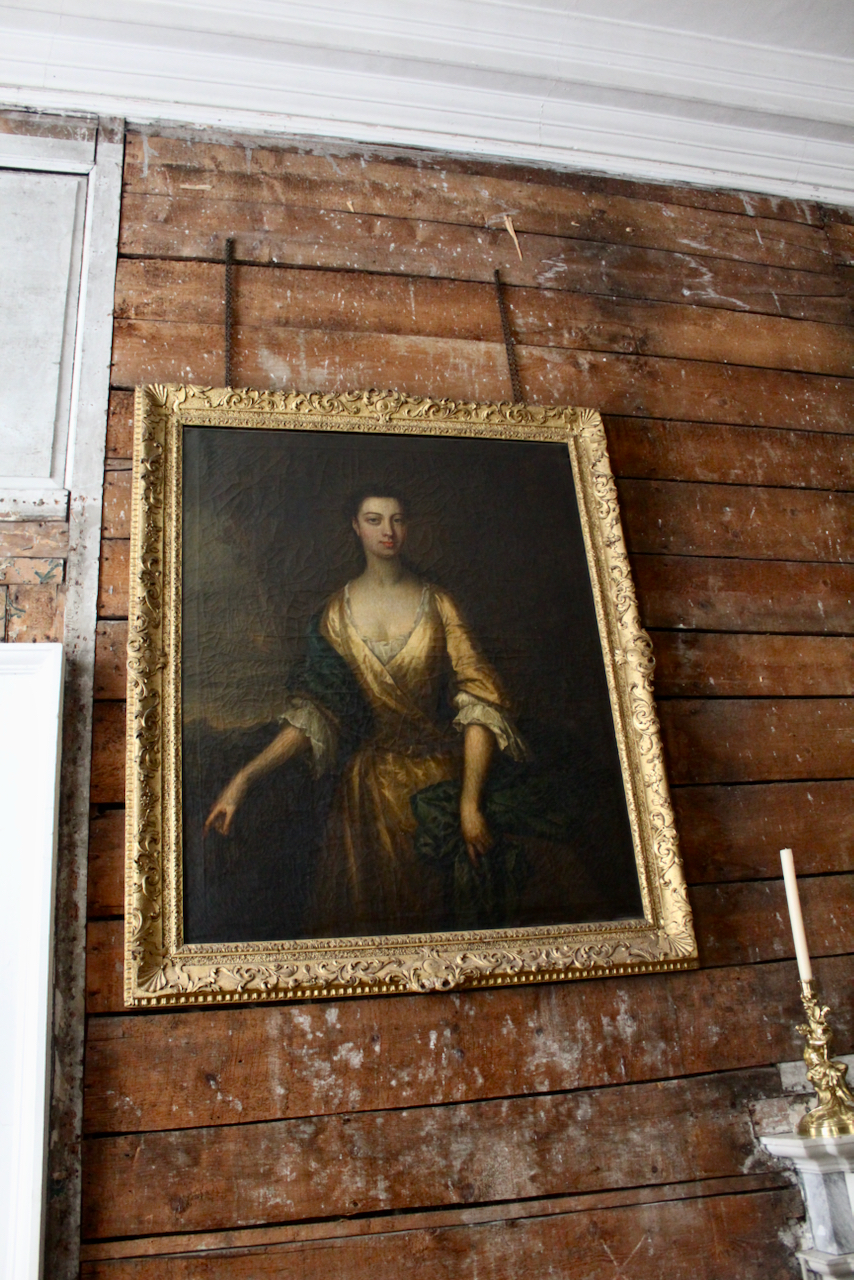
I have yet to identify this portrait. It looks remarkably similar to Lady Anne Conolly (née Wentworth) (1713-1797) Attributed to Anthony Lee, Irish, fl.1724-1767, and she is even wearing the same dress. Maybe the artist did two portraits. Photograph © Jennifer Winder-Baggot, www.irishhistorichouses.com
Thomas Wentworth, the 1st Earl of Strafford (1593-1641). Photograph © Jennifer Winder-Baggot, www.irishhistorichouses.com
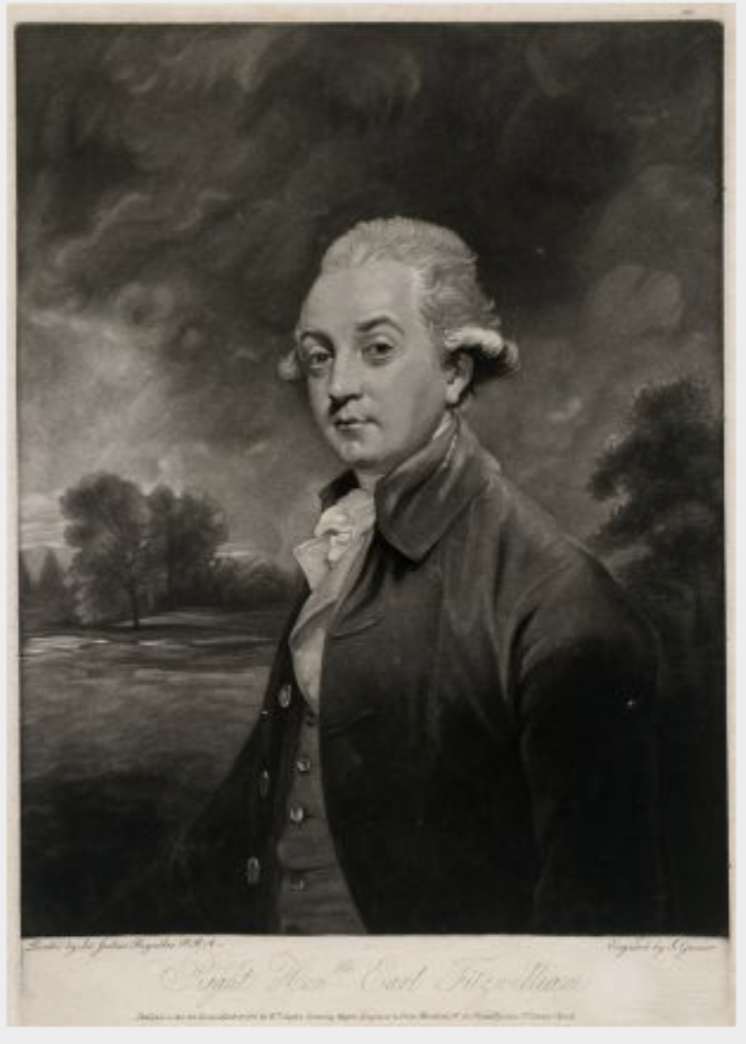
William Wentworth-Fitzwilliam, 4th Earl FitzWilliam (1748-1833), later Lord Lieutenant of Ireland by Engraver Joseph Grozer, British, fl.1784-1797 After Joshua Reynolds, English, 1723-1792courtesy of National Gallery of Ireland.
Garret Wesley 1st Earl of Mornington http://www.tcd.ie/library/manuscripts/blog/2014/02/appointment-of-tcds-first-professor-of-music-1764/©Stratfield Saye Preservation Trust.
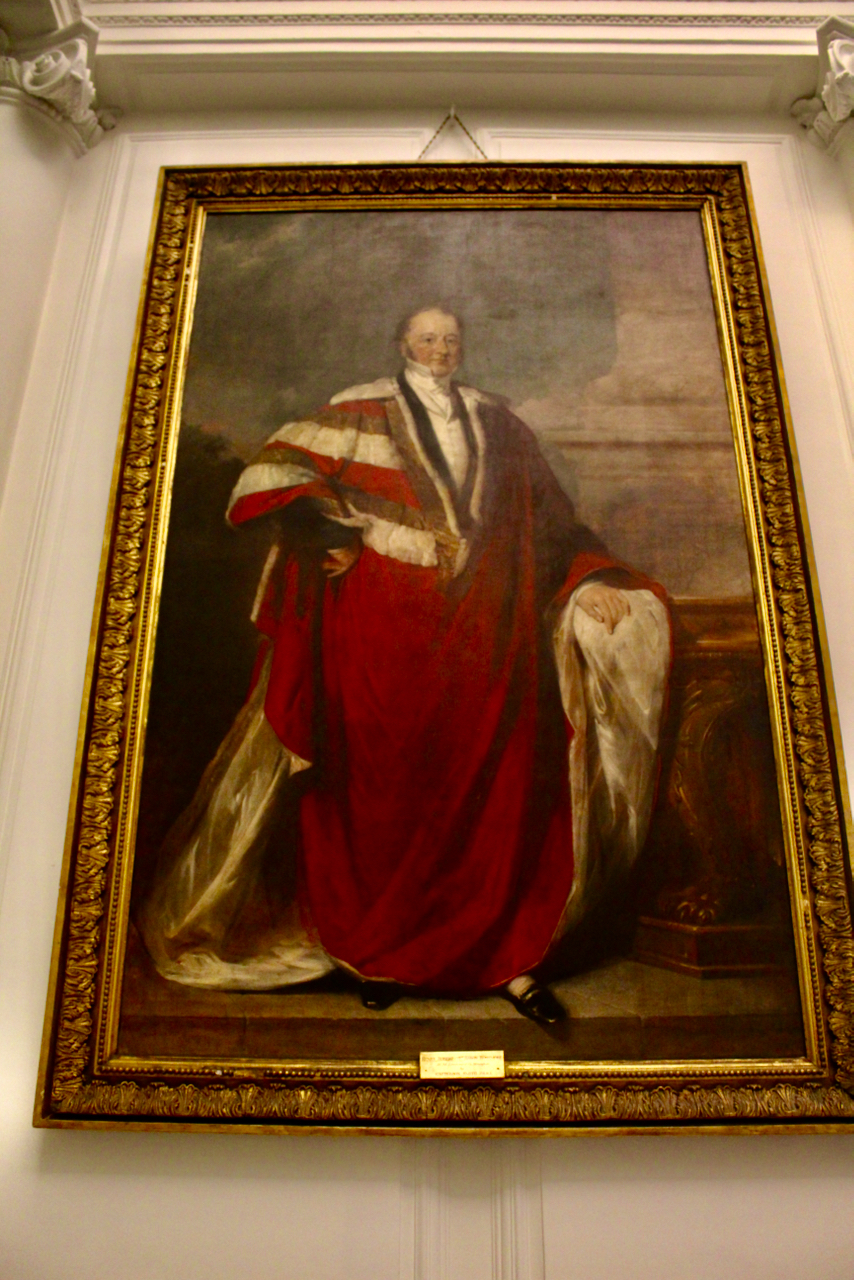
Henry Robert Westenra, 3rd Baron Rossmore. Photograph © Jennifer Winder-Baggot, www.irishhistorichouses.com
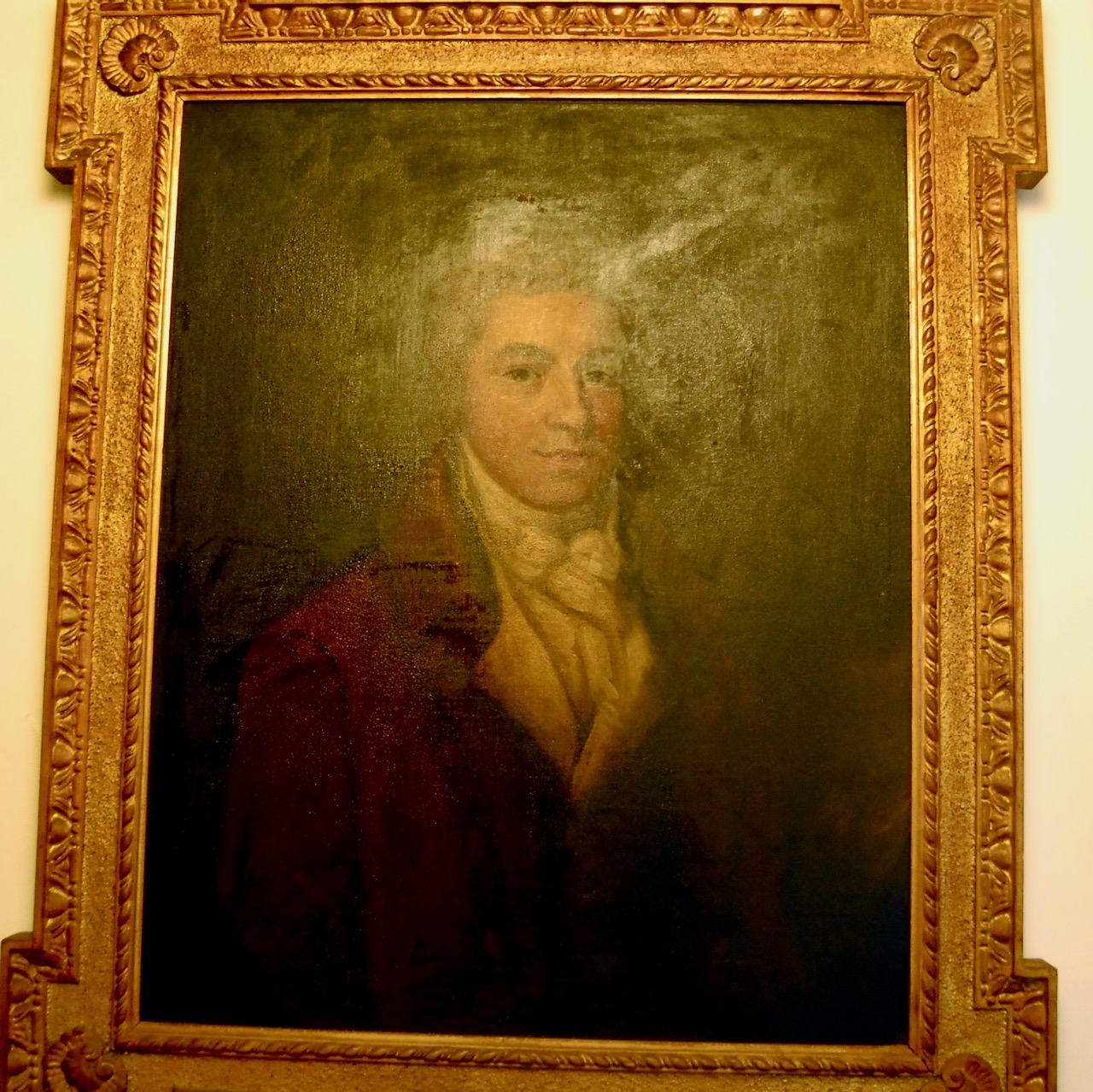
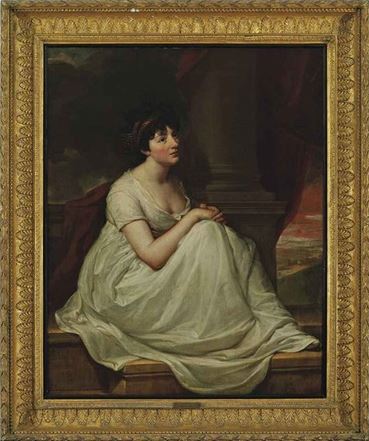
Harriet Murray (1742-1822) married Henry Westenra (1742-1809) of Rossmore Park, County Monaghan, and Hester Westenra: this could be her daughter, 1775-1858 who married Edward Wingfield (1772-1859), son of 3rd Viscount Powerscourt. Photograph © Jennifer Winder-Baggot, www.irishhistorichouses.com
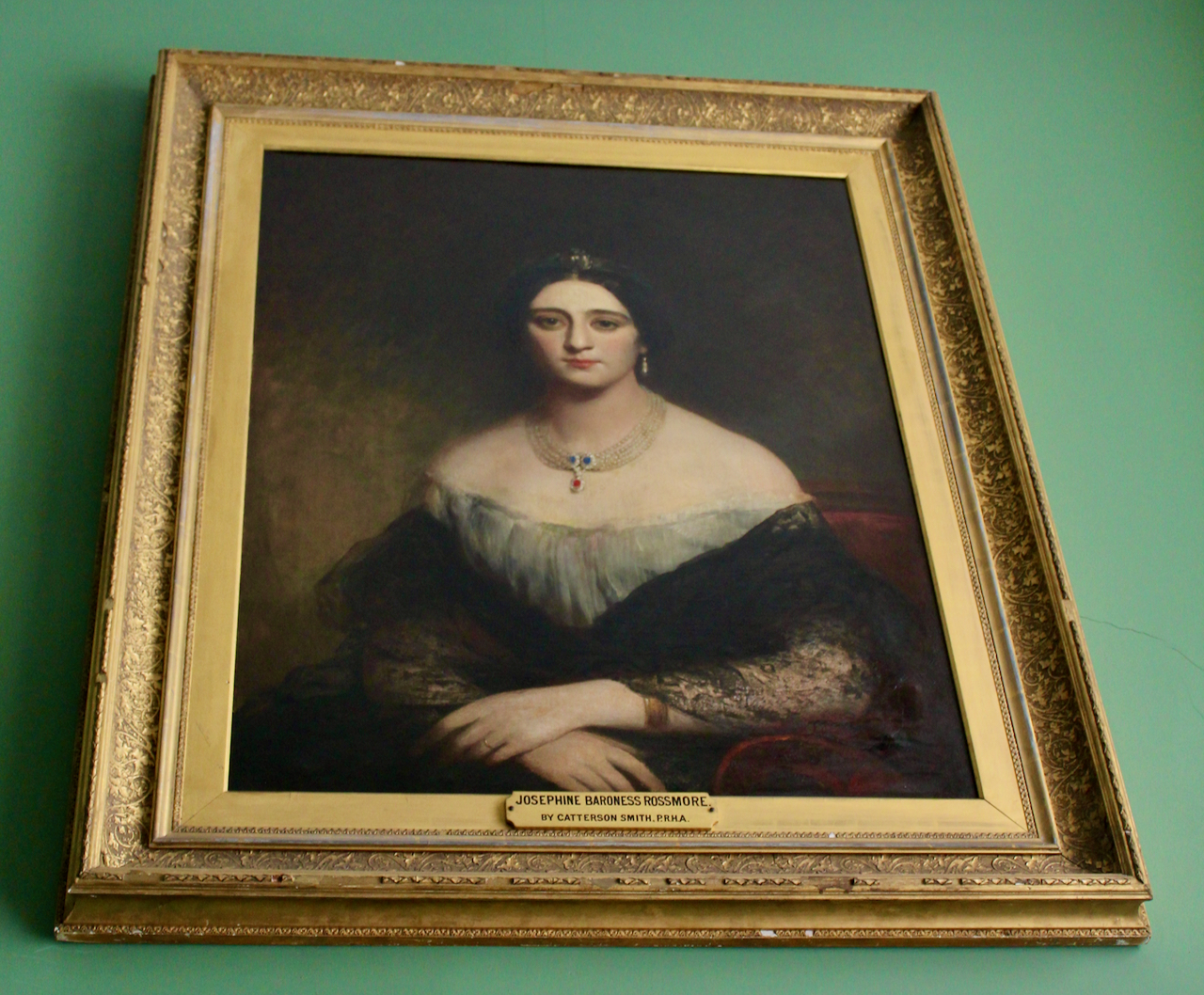
Josephine Lloyd (1827-1912) who married Henry Robert Westenra, 2nd (UK) and 3rd Baron (Ireland) Rossmore of Monaghan. Rossmore Castle was demolished in 1975. Photograph © Jennifer Winder-Baggot, www.irishhistorichouses.com
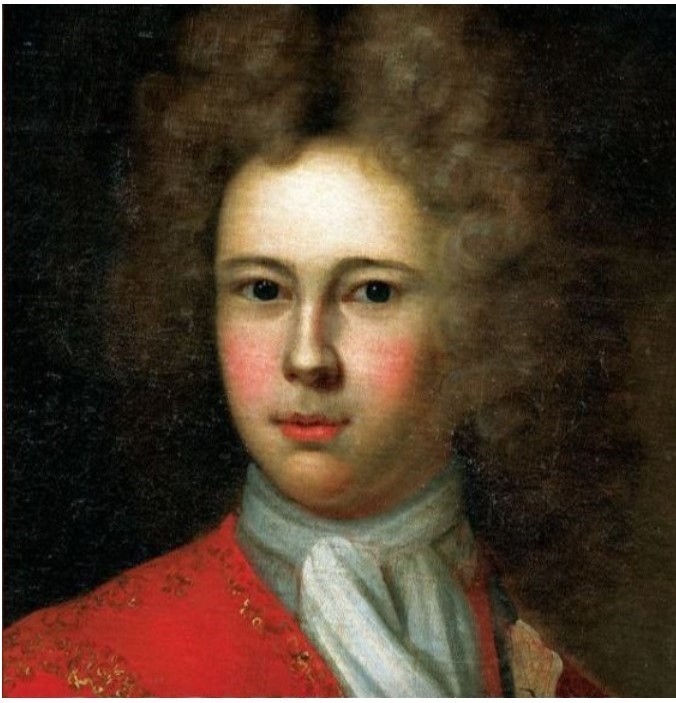
Thomas “Buck” Whaley (1766-1800), c. 1780.
The sitter’s maiden name was Maria Courtney but for some seven or eight years before her death in 1798 in Douglas, Isle of Man, she was known as Mrs. Whaley. She was the constant companion of a wealthy and dissolute young Irishman, Thomas, or Buck, Whaley, by whom she had four children: Thomas, Richard, Ann, and Sophia Isabella. They lived in a house Buck Whaley built on the Isle of Man, where this portrait may have hung in the dining room. Portrait is attributed to George Chinnery, c. 1795. Picture courtesy of The Met, New York.
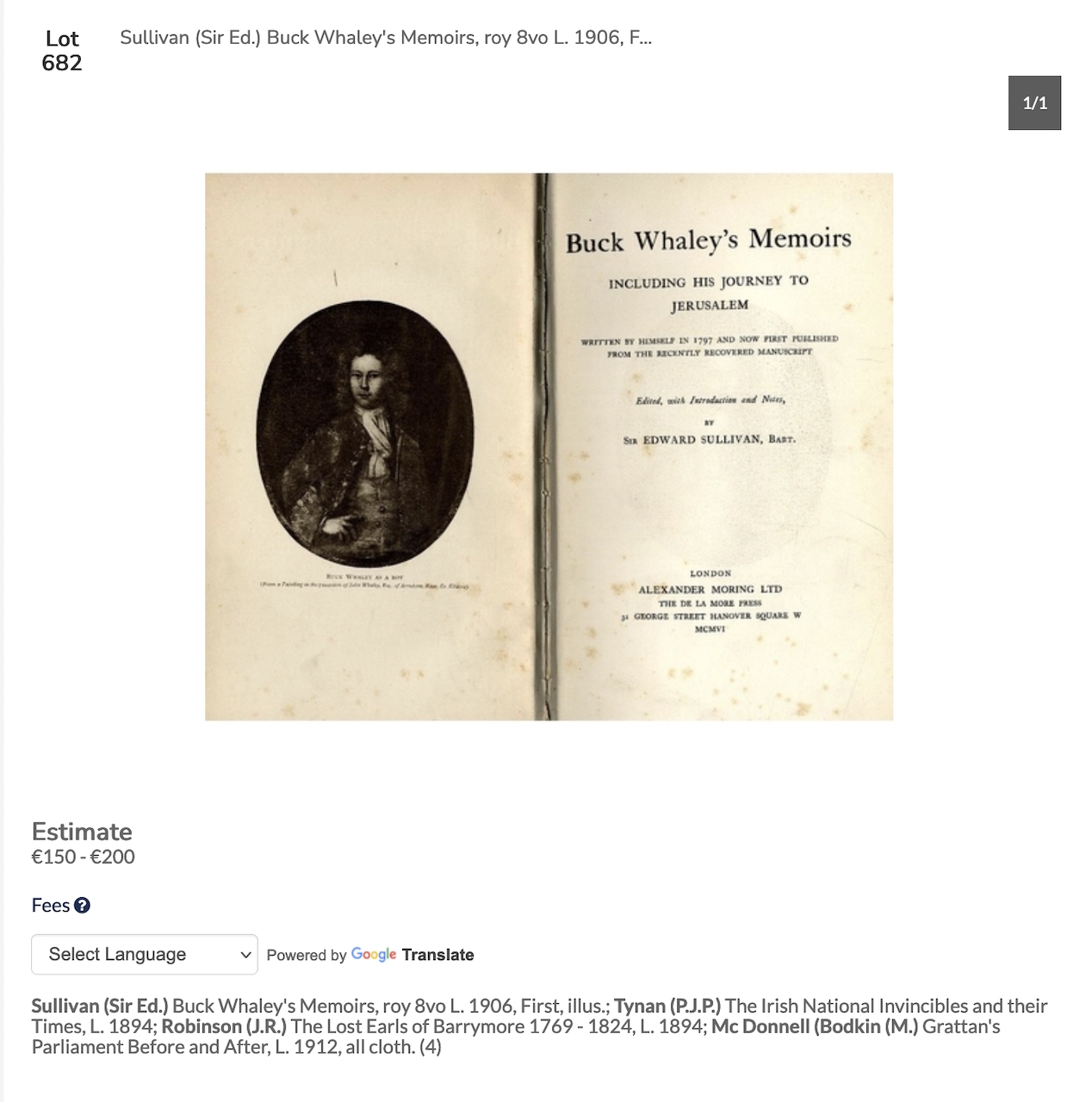
Buck Whaley’s Memoirs, courtesy of Fonsie Mealy auction.
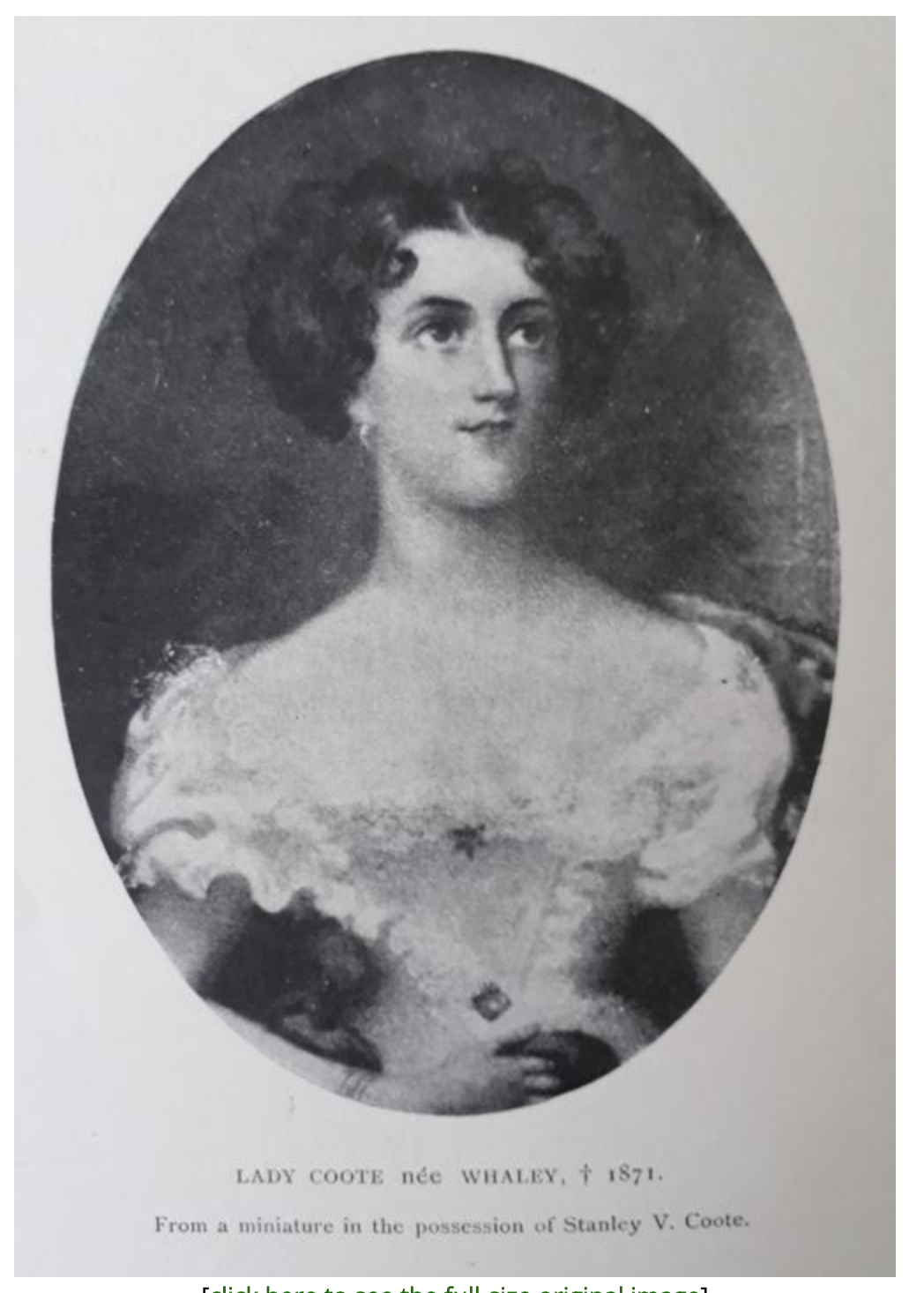
Caroline Elizabeth Coote née Whaley courtesy of wikitree, uploaded by Desmond William Kelly Lynch SD
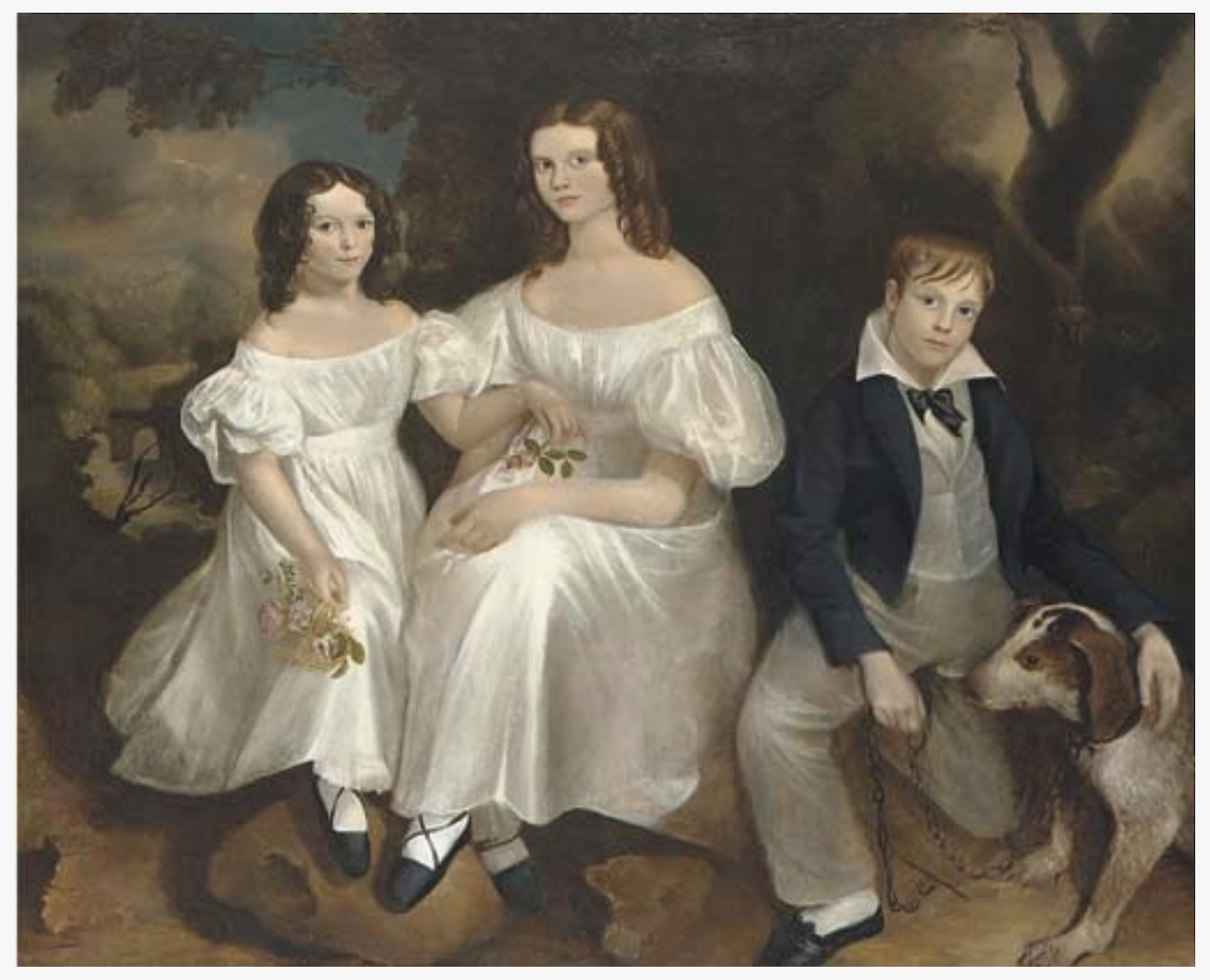
Lady Olivia-Charlotte White, Lady Elizabeth-Mary White and William, 4th Earl of Bantry, with a dog, Irish school c. 1860 courtesy Christies Irish Sale 2004. William Henry Hare Hedges-White (1801-1884) was the son of William Hedges-White, 3rd Earl of Bantry. His sister Olivia Charlotte Hedges-White married Arthur Edward Guinness (1840-1915), Baron Ardilaun, and they lived in Ashford Castle in County Mayo. Elizabeth Mary Gore Hedges-White, another sister, married Egerton Leigh.
Edward Winder (c.1775-1829). Photograph © Jennifer Winder-Baggot, www.irishhistorichouses.com
Jane Winder (b. 1773), married William Charles Monck Mason (1775-1859).
Caroline Windham of Dunraven Castle, Wales, who married Henry Windham Wyndham-Quin 2nd Earl of Dunraven, courtesy of The National Library of Wales.
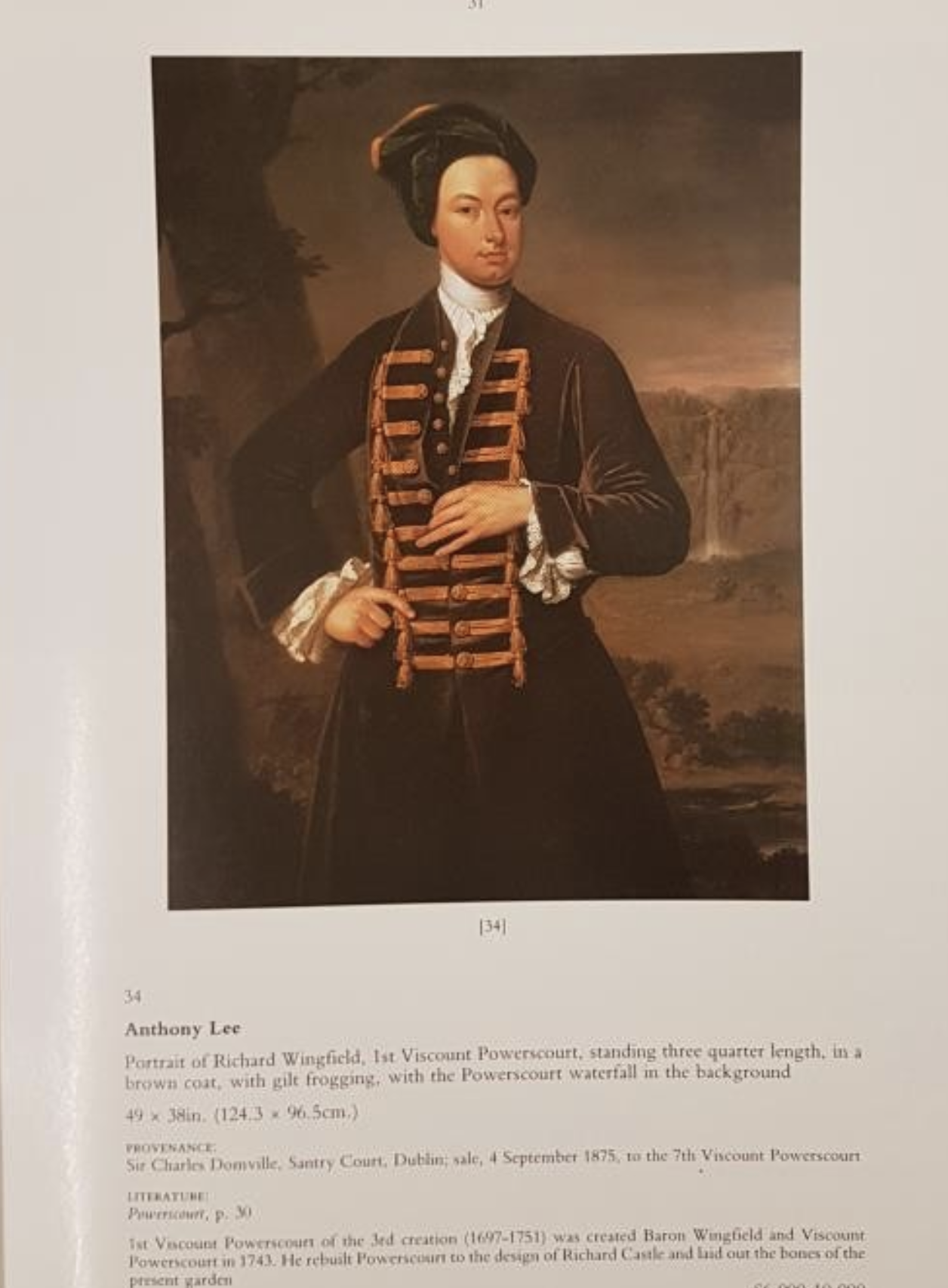
Richard Wingfield (1697-1751) 1st Viscount Powerscourt by Anthony Lee courtesy of Christie’s sale catalogue 1984. He was son of Edward Wingfield (died c. 1728) of Powerscourt and Eleanor daughter of Arthur Gore 1st Baronet of Newtown Gore, County Mayo.
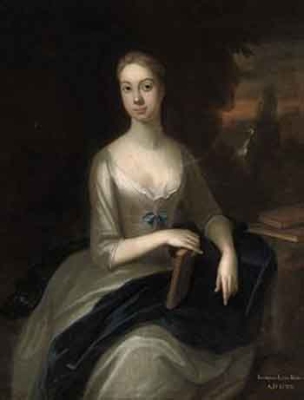
Isabella Wingfield (c. 1701-1764) by John Verelst, 1722, daughter of Edward Wingfield (died c. 1728) of Powerscourt and and Eleanor daughter of Arthur Gore 1st Baronet of Newtown Gore, County Mayo. She was wife of Henry King 3rd Baronet of Boyle Abbey, County Roscommon.
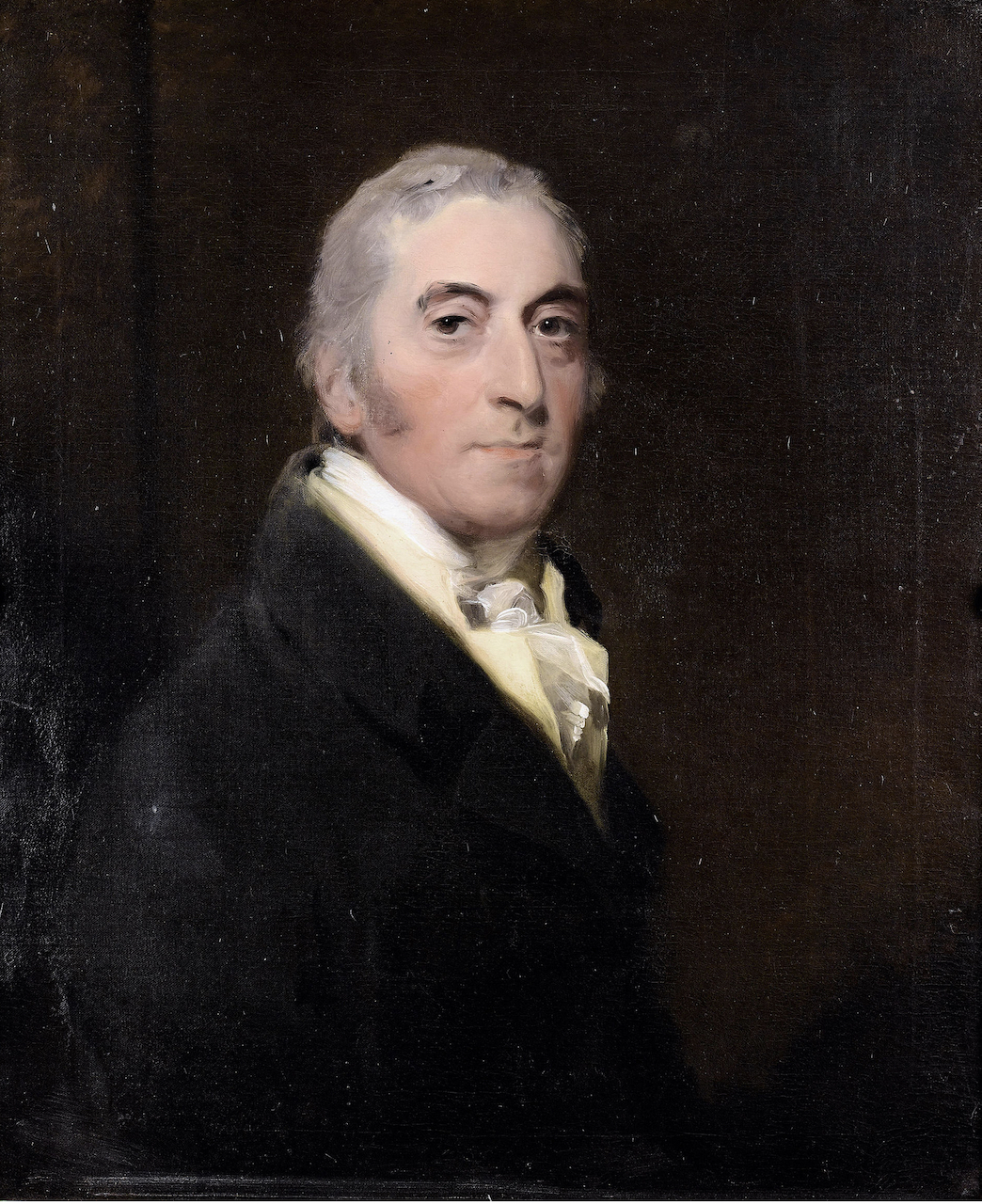
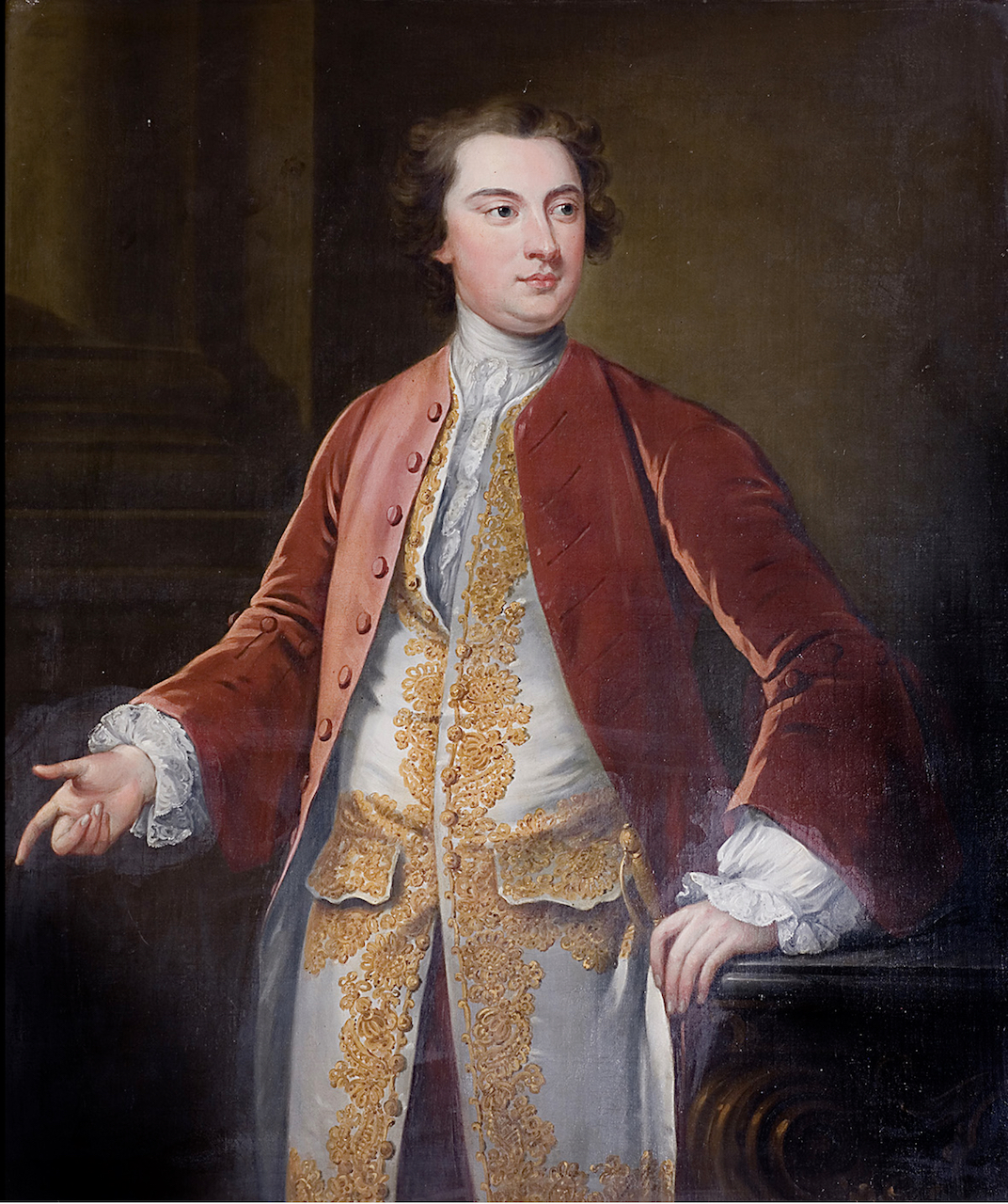
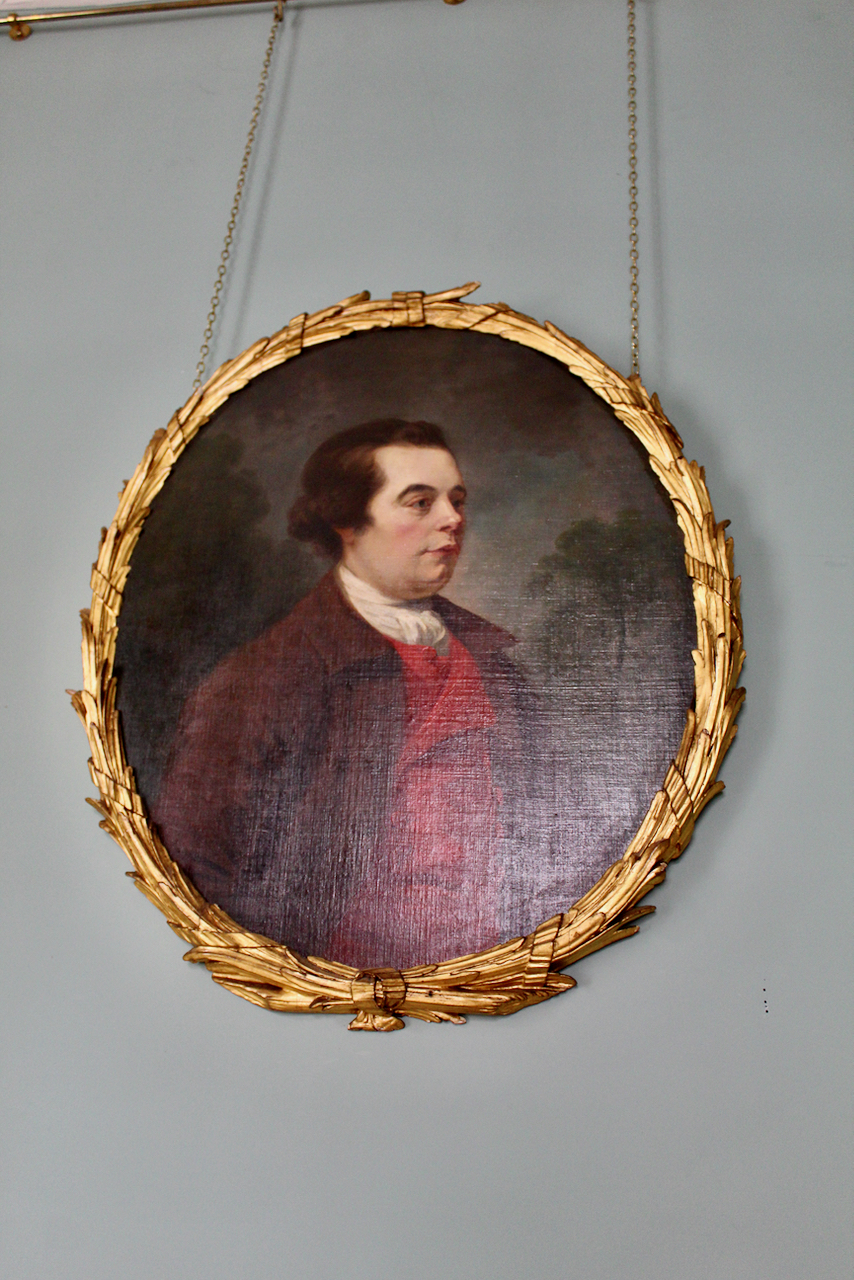
Portrait of a gentleman, traditionally identified as Edward Wingfield (1729-1764) 2nd Viscount Powerscourt, in a brown coat by circle of Francis Cotes, Hugh Douglas Hamilton.
Richard Wingfield (1730-1788) 3rd Viscount Powerscourt. Photograph © Jennifer Winder-Baggot, www.irishhistorichouses.com
Richard Wingfield (1815-1844) 6th Viscount Powerscourt. Photograph © Jennifer Winder-Baggot, www.irishhistorichouses.com
Richard Wingfield (1815-1844), 6th Viscount Powerscourt photograph courtesy of National Gallery of Ireland.
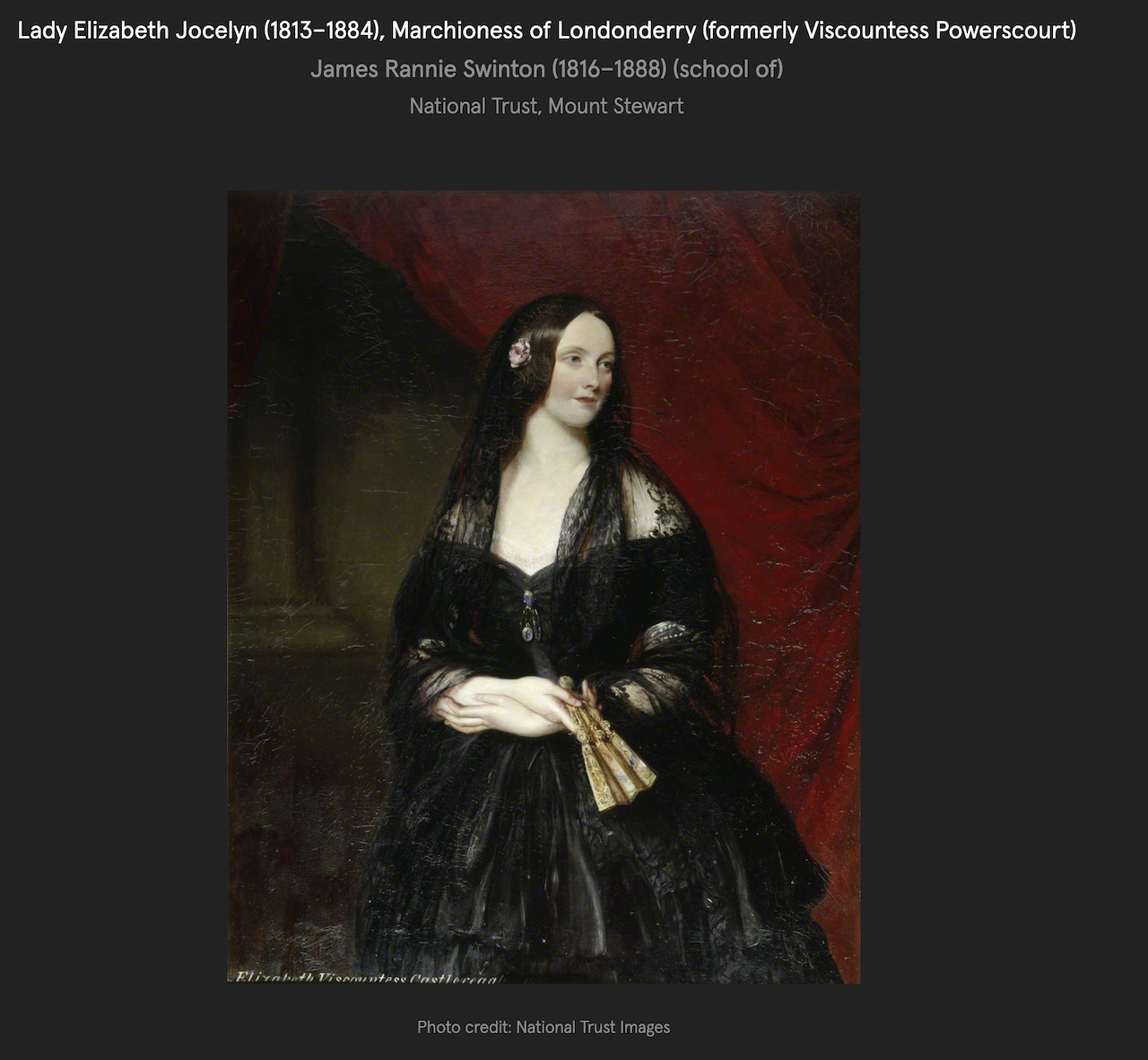
Elizabeth Jocelyn (1813-1884), Marchioness of Londonderry, formerly Viscountess Powerscourt, by James Rannie Swinton, courtesy of Mount Stewart National Trust. She was married to the 6th Viscount Powerscourt. She was the daughter of Robert Jocelyn 3rd Earl of Roden. After her husband’s death she married Frederick William Robert Stewart, 4th Marquess of Londonderry, of Mount Stewart, County Down.
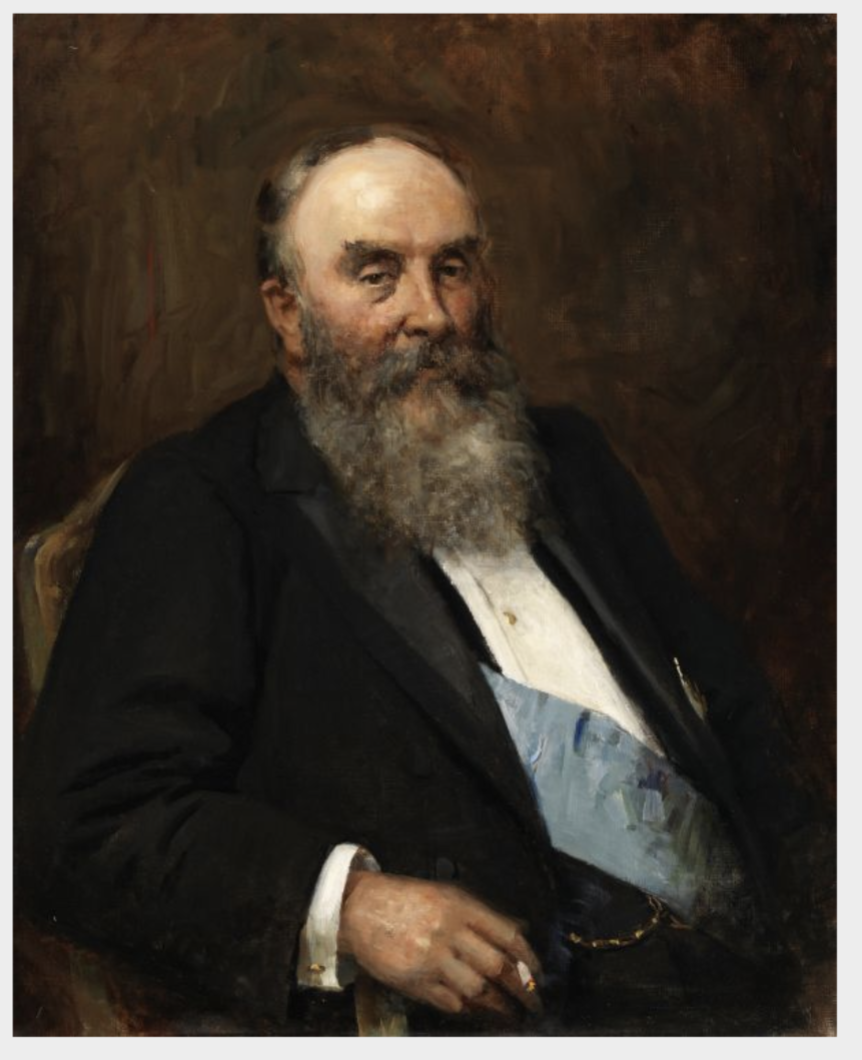
Mervyn Wingfield, 7th Viscount Powerscourt (1844-1904) by Sarah Henrietta Purser presented to National Gallery of Ireland by Lord Powerscourt in 1904, NGI 561.
Lady Mary Wortley Montagu (1718-1794), Wife of John Patrick Crichton Stuart 3rd Earl of Bute, print after Christian Friedrich Zincke, 1830s, courtesy of National Portrait Gallery of London, NPG D34619.
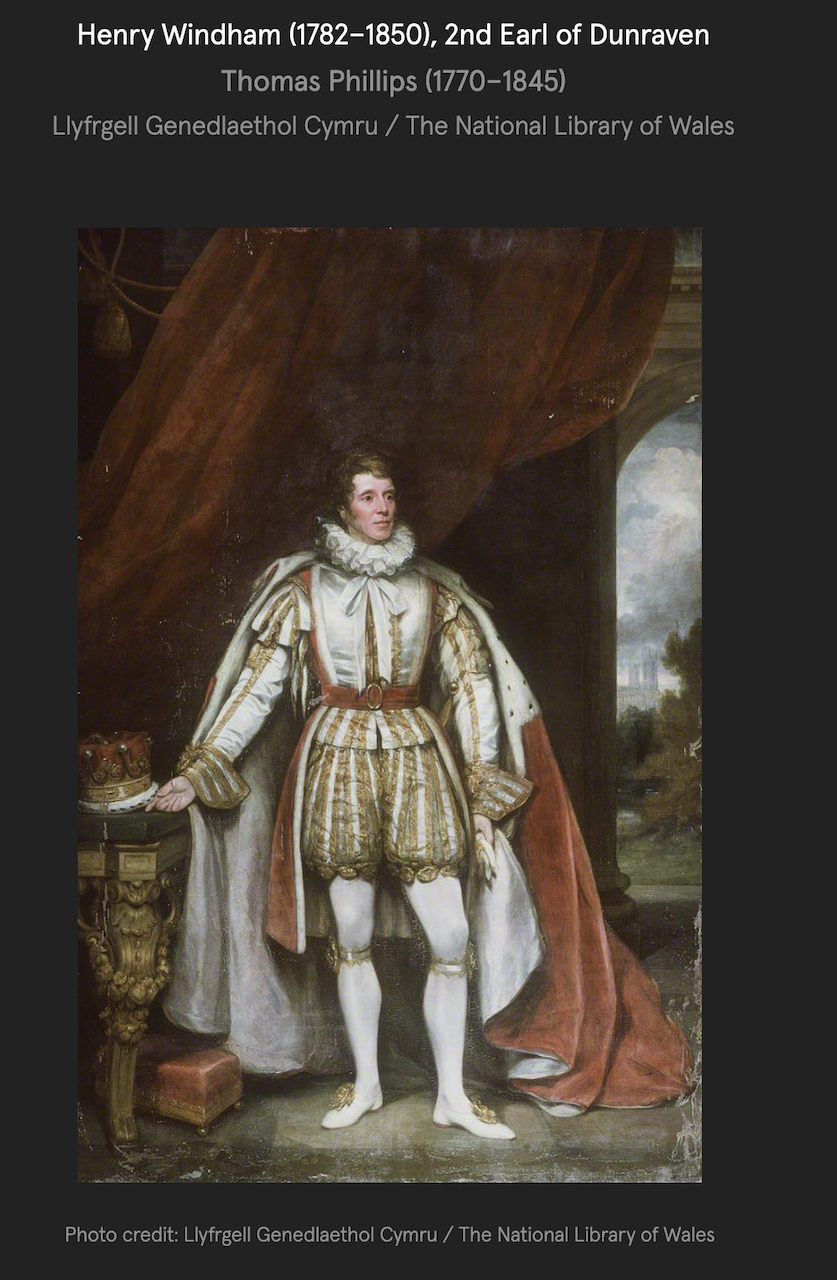
Henry Windham Wyndham-Quin (1782-1850) 2nd Earl of Dunravan by Thomas Phillips, courtesy of National Library of Wales
Caroline Windham of Dunraven Castle, Wales, who married Henry Windham Wyndham-Quin 2nd Earl of Dunraven, courtesy of The National Library of Wales.
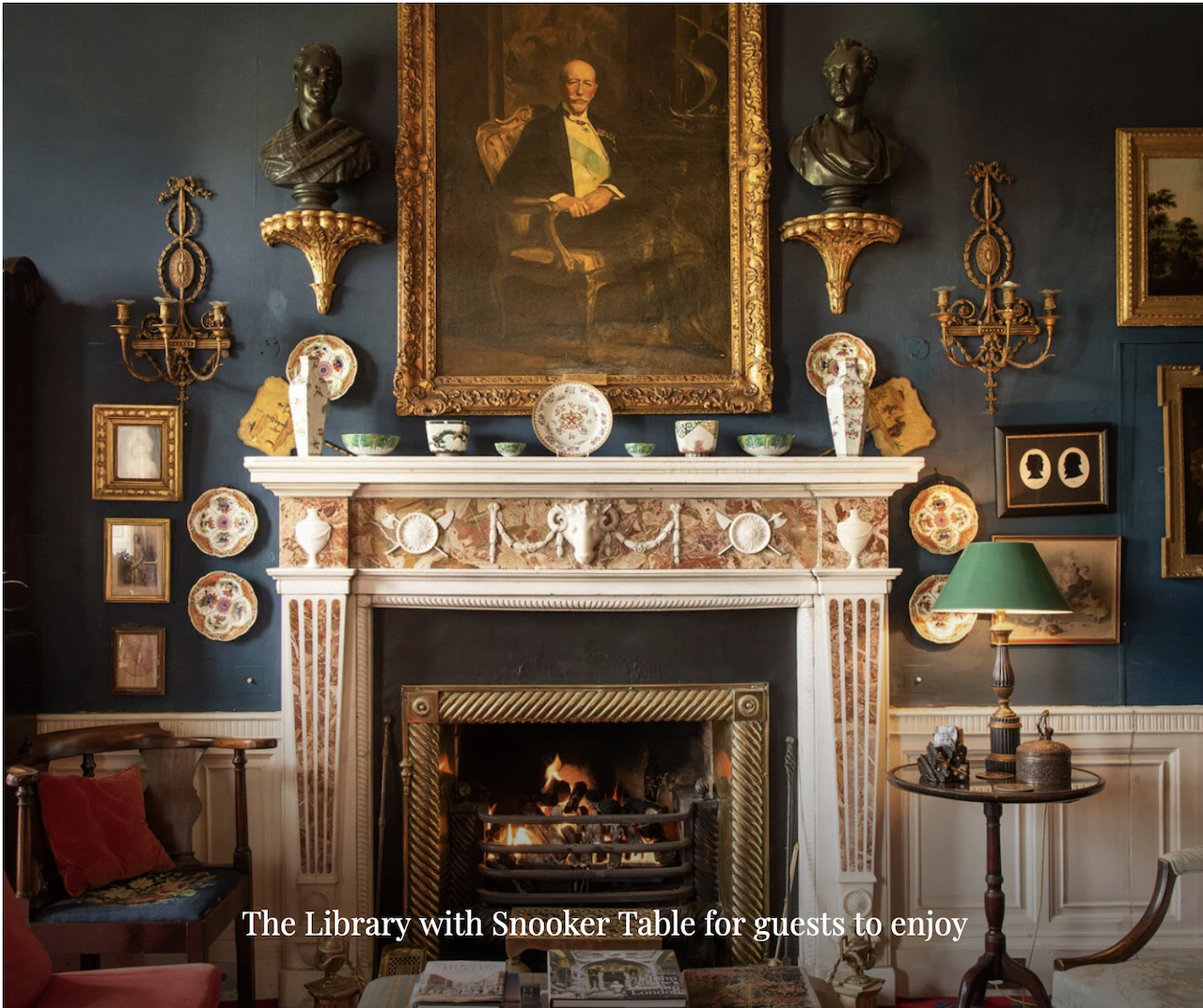
Photograph courtesy of Glin castle website: A portrait of Windham Thomas Wyndham-Quin the 4th Earl of Dunraven hangs above the marble mantelpiece in the library. His daughter Rachel Charlotte married the 27th Knight of Glin.
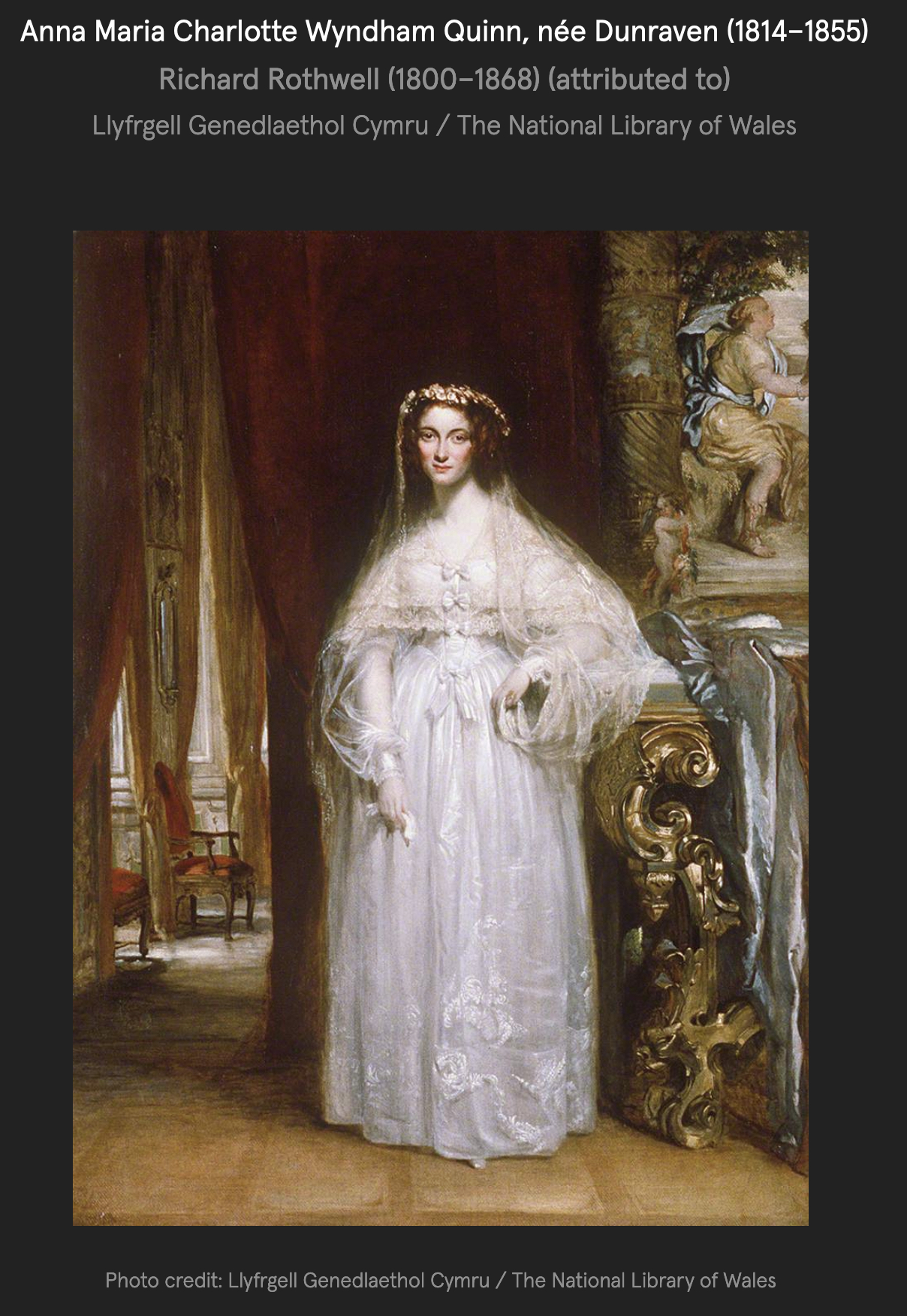
Anna Maria Charlotte Wyndham-Quinn, née Dunraven (1814-1855), courtesy of the National Library of Wales.
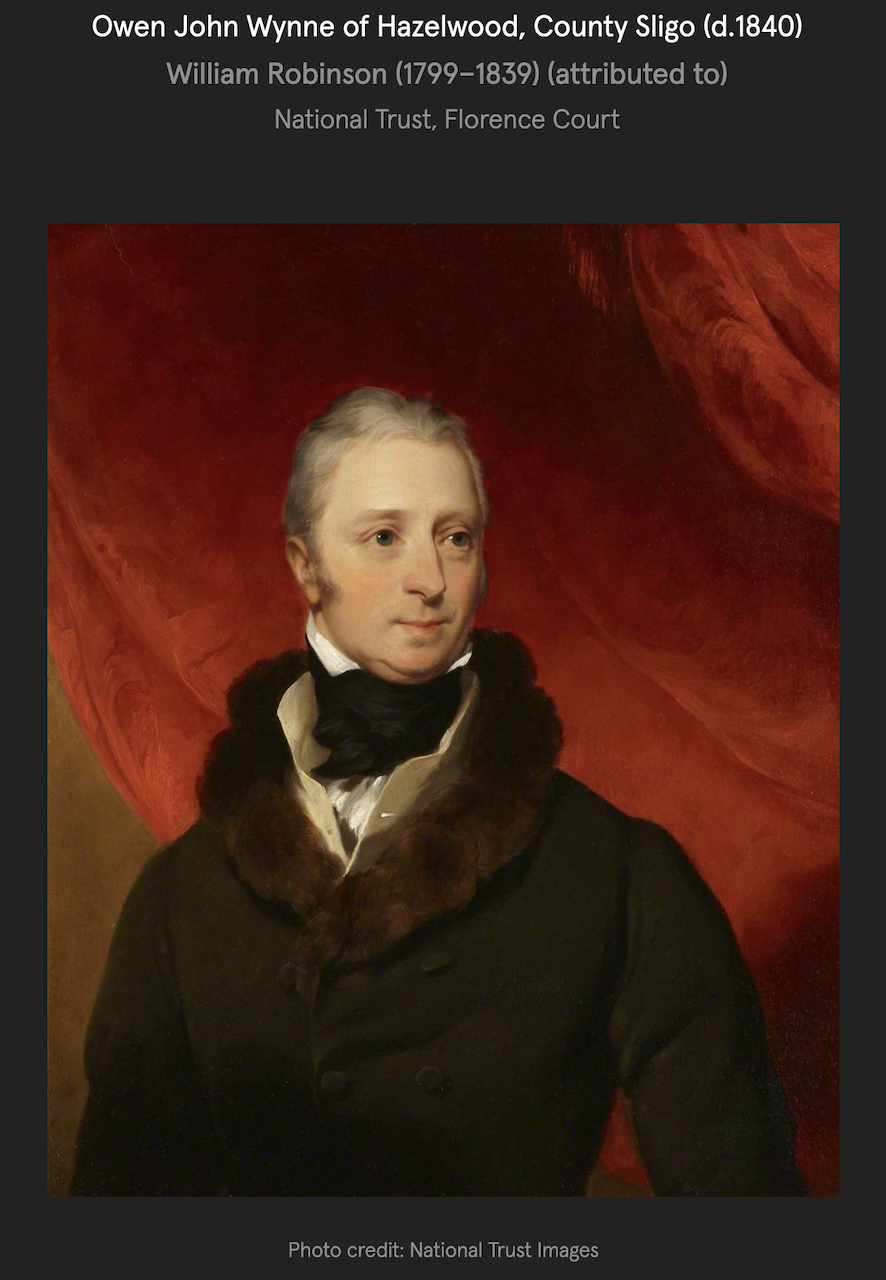
Owen John Wynn (d. 1840) of Hazelwood, County Sligo attributed to William Robinson courtesy of National Trust Florence Court.
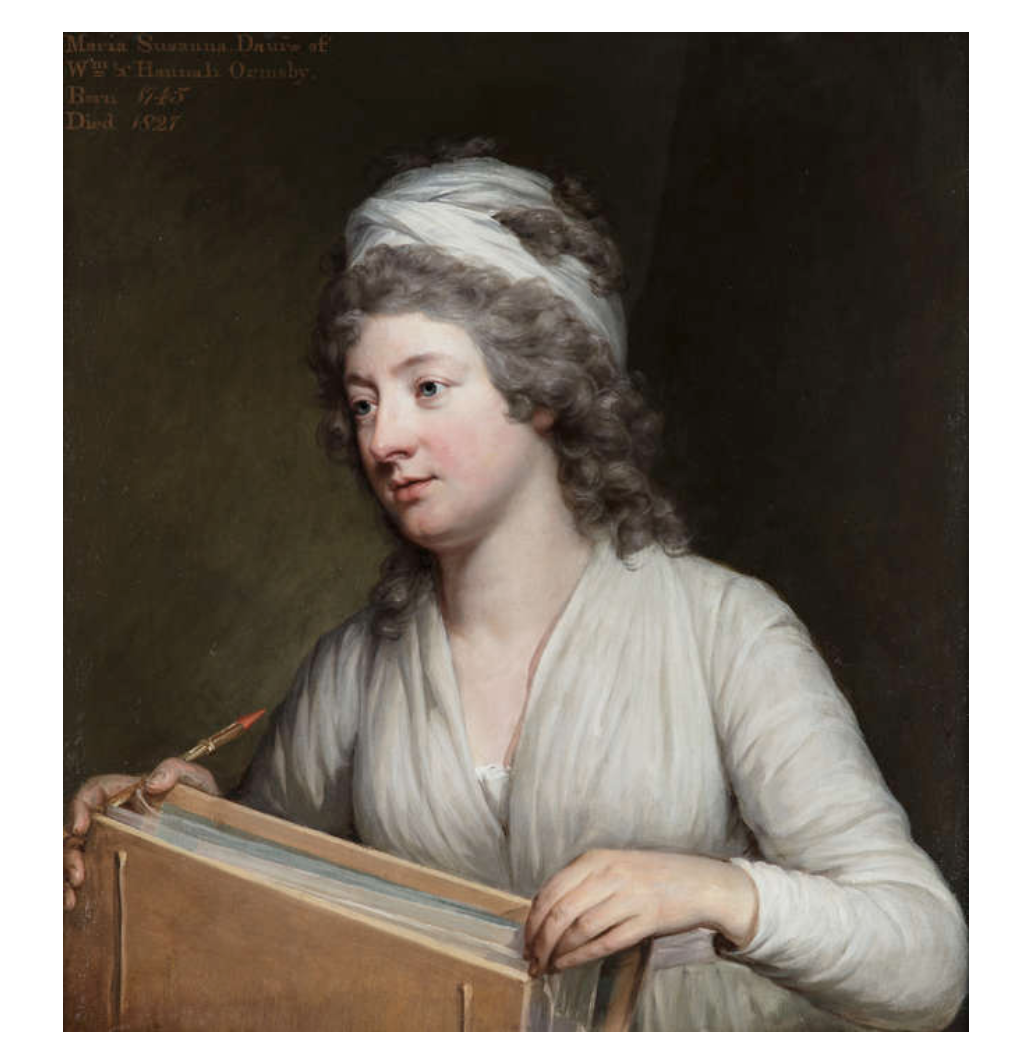
Maria Susanna Ormbsy by Hugh Douglas Hamilton, she was daughter of William Ormsby (1718-1781) and Hannah Wynne of Hazelwood, County Sligo courtesy of Adams auction 27 March 2018. This excellent portrait, painted after Hamiltons return to Dublin from Rome is not listed by Fintan Cullen. [Oil Paintings of Hugh Douglas Hamilton, Walpole Society Vol. 50 1984] and is a welcome addition to the inventory of Hamiltons extant portraits (1796). It re-emerged from the recent disposal of the Harlech Collection in Wales. The Ormsby-Gores, in spite of a Welsh title and seat, represent two families from the West of Ireland who flourished in the 18th century. The subject of the present lot, Maria Susannah Ormsby was the daughter of William Ormsby M.P for Sligo and Hannah Wynne of Haselwood, County Sligo, the lovely Palladian villa designed by Richard Castle. Her brother, Owen Ormsby married (1777) Margaret Owen who came into a great Welsh estate that had been swollen by the Godolphin inheritance. Their only child and heiress Mary Jane Ormsby married (1815)William Gore, M.P. for Leitrim from a family long influential in Counties Mayo, Sligo and Leitrim. Thereafter the family became Ormsby-Gore and were subsumed into English high society with a title from the Barony of Harlech. Our subject, Maria Susannah Ormsby, died unmarried so this portrait of a charming and artistic woman remained with the Ormsby-Gores. As an observation of mature character it confirms Hugh Douglas Hamiltons place in the top rank of European portraiture.Maria Susanna Ormbsy by Hugh Douglas Hamilton, she was daughter of William Ormsby (1718-1781) and Hannah Wynne of Hazelwood, County Sligo courtesy of Adams auction 27 March 2018. This excellent portrait, painted after Hamiltons return to Dublin from Rome is not listed by Fintan Cullen. [Oil Paintings of Hugh Douglas Hamilton, Walpole Society Vol. 50 1984] and is a welcome addition to the inventory of Hamiltons extant portraits (1796). It re-emerged from the recent disposal of the Harlech Collection in Wales. The Ormsby-Gores, in spite of a Welsh title and seat, represent two families from the West of Ireland who flourished in the 18th century. The subject of the present lot, Maria Susannah Ormsby was the daughter of William Ormsby M.P for Sligo and Hannah Wynne of Haselwood, County Sligo, the lovely Palladian villa designed by Richard Castle. Her brother, Owen Ormsby married (1777) Margaret Owen who came into a great Welsh estate that had been swollen by the Godolphin inheritance. Their only child and heiress Mary Jane Ormsby married (1815)William Gore, M.P. for Leitrim from a family long influential in Counties Mayo, Sligo and Leitrim. Thereafter the family became Ormsby-Gore and were subsumed into English high society with a title from the Barony of Harlech. Our subject, Maria Susannah Ormsby, died unmarried so this portrait of a charming and artistic woman remained with the Ormsby-Gores. As an observation of mature character it confirms Hugh Douglas Hamiltons place in the top rank of European portraiture.

Y
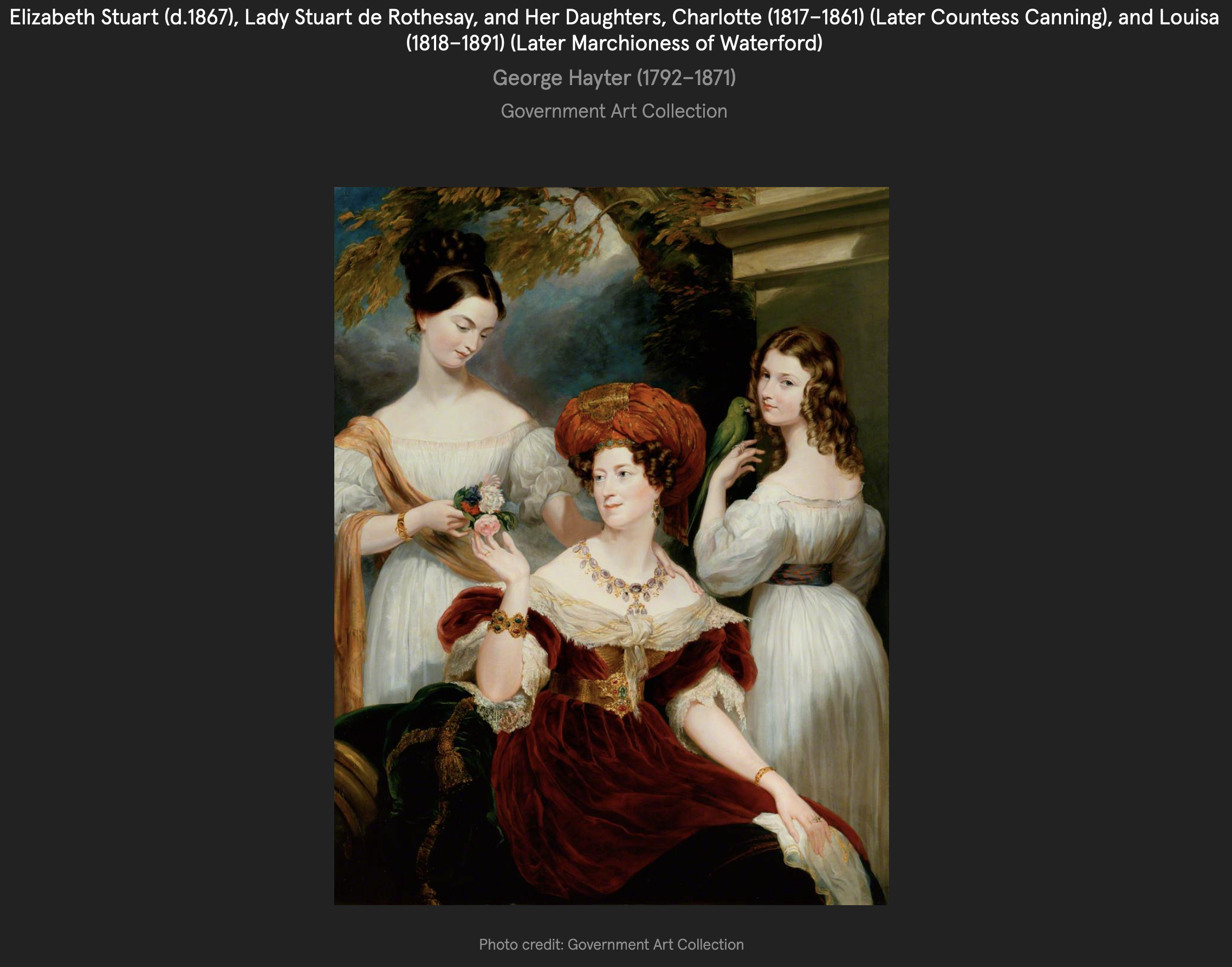
Elizabeth Stuart née Yorke (1789-1867). Lady Stuart de Rothesay, with her daughters Charlotte (1817-1861) and Louisa (1818-1891) by George Hayter, photograph courtesy of UK Government Art Collection. She was the daughter of Philip Yorke, 3rd Duke of Hardwicke, and wife of Charles Stuart 1st and last Baron Stuart de Rothesay. Charlotte married Charles John Canning 1st Viceroy of India, 2nd Viscount, 1st Earl Canning; Louisa married Henry de la Poer Beresford 3rd Marquis of Waterford.
Philip Yorke (1757-1834), 3rd Duke of Hardwicke, former Lord Lieutenant of Ireland, 1836 by engraver William Giller after Thomas Lawrence, courtesy of National Gallery of Ireland.

Rokeby Hall, Grangebellew, County Louth A92 HX52 – section 482

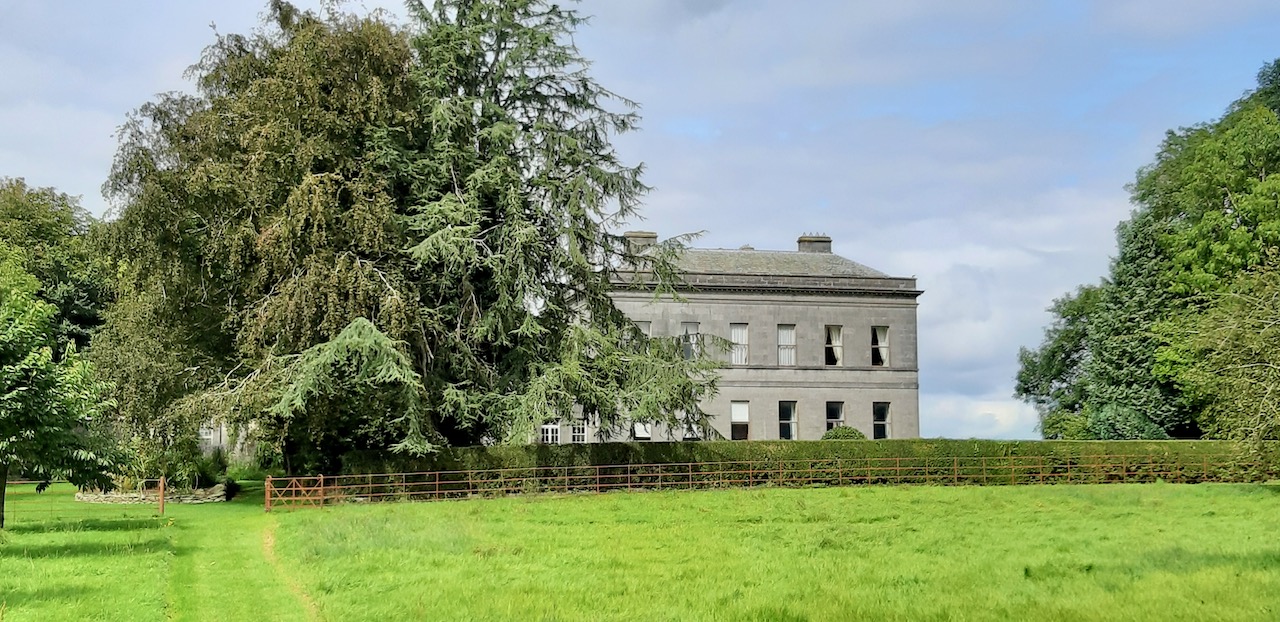
Rokeby Hall, County Louth, September 2019. Photograph © Jennifer Winder-Baggot, www.irishhistorichouses.com

www.rokeby.ie
Open dates in 2025: June 1-30, Aug 1-31, 10am-2pm

Fee: adult/OAP €10, child/student €5

donation

Help me to pay the entrance fee to one of the houses on this website. This site is created purely out of love for the subject and I receive no payment so any donation is appreciated!

€15.00
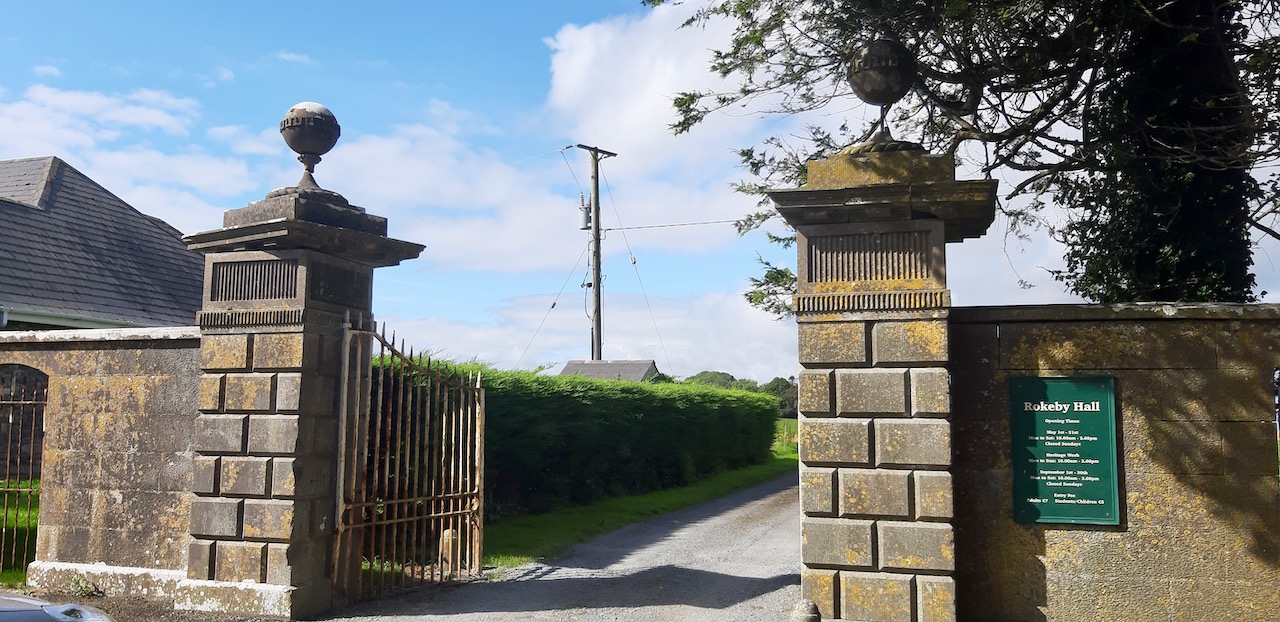
Rokeby, September 2019. Photograph © Jennifer Winder-Baggot, www.irishhistorichouses.com

Stephen and I visited Rokeby Hall in County Louth on Saturday September 7th, 2019. I texted ahead to alert Jean to our visit. We were lucky to have another beautifully sunny day!
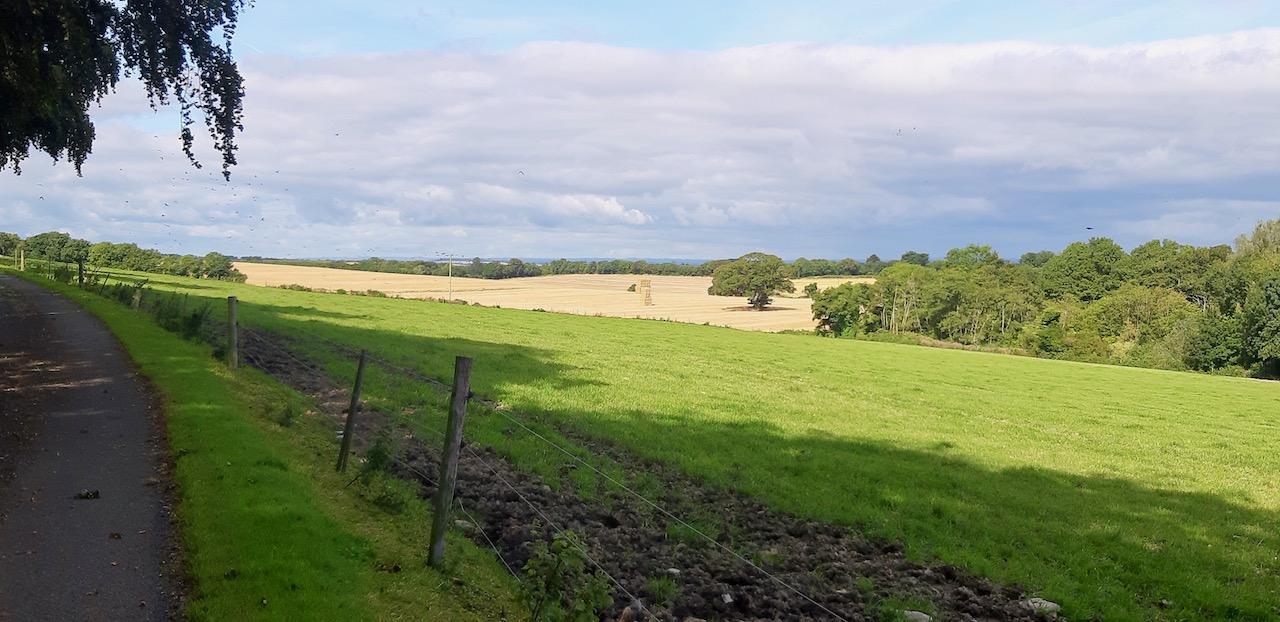
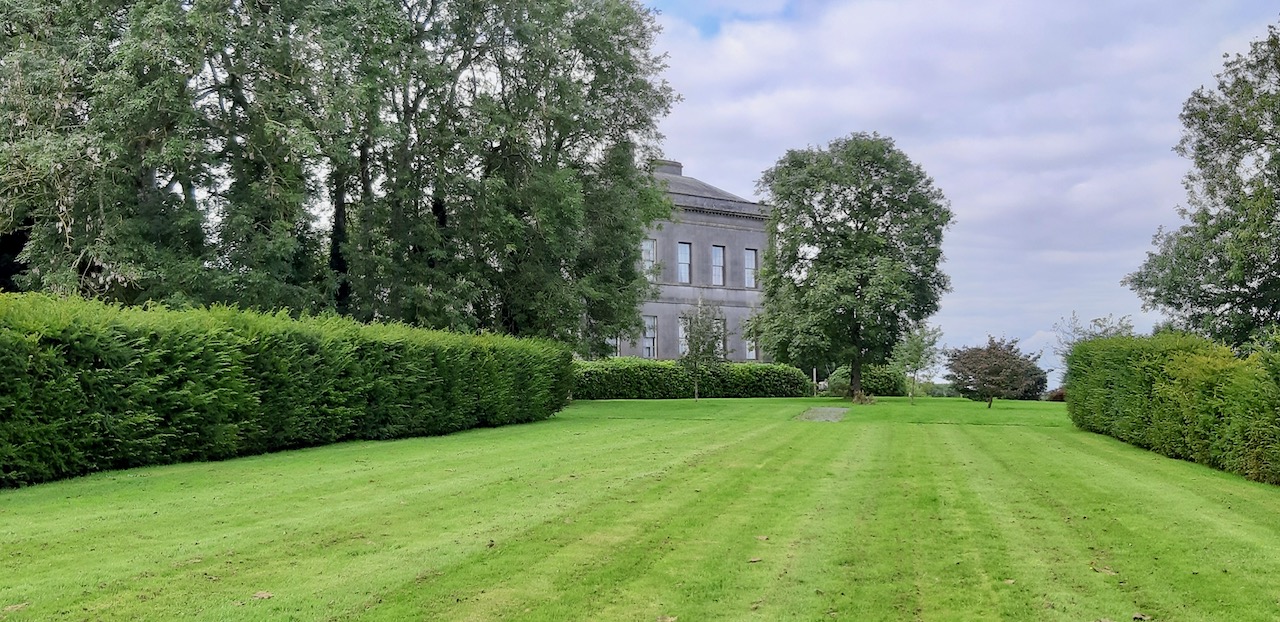
Rokeby, September 2019. Photograph © Jennifer Winder-Baggot, www.irishhistorichouses.com

We entered the gates and drove up the impressive drive, through lovely fields.

The Observatory at Rokeby. Photograph © Jennifer Winder-Baggot, www.irishhistorichouses.com

I paused as we approached the house to take a photograph of the observatory, and of the field near the house with the grazing cattle.

Rokeby, September 2019. Photograph © Jennifer Winder-Baggot, www.irishhistorichouses.com

There is an excellent website for Rokeby Hall which I read in advance so knew a little bit of information. [1]

“Rokeby Hall is a country house in the Neoclassical style built for Richard Robinson, Archbishop of Armagh.

Initially designed by Thomas Cooley and built c. 1785 by renowned Irish architect Francis Johnston, Rokeby is an elegant building with beautiful exterior and interior detailing which remains largely unchanged to this day.

The house is a testament to the architects and the skilled craftsmen of the Georgian era and is today considered to be one of the most significant historic country houses remaining in Co. Louth.”

Francis Johnston (1760-1829) is best known for building the General Post Office in Dublin, and is the son of another architect, William Johnston. Francis is from Armagh and first practised his architecture there, and then lived in Drogheda from 1786 before moving to Dublin about 1793. It was the archbishop of Armagh, Richard Robinson, who sent Johnston to Dublin to train under Thomas Cooley, having already worked with Cooley to design buildings.
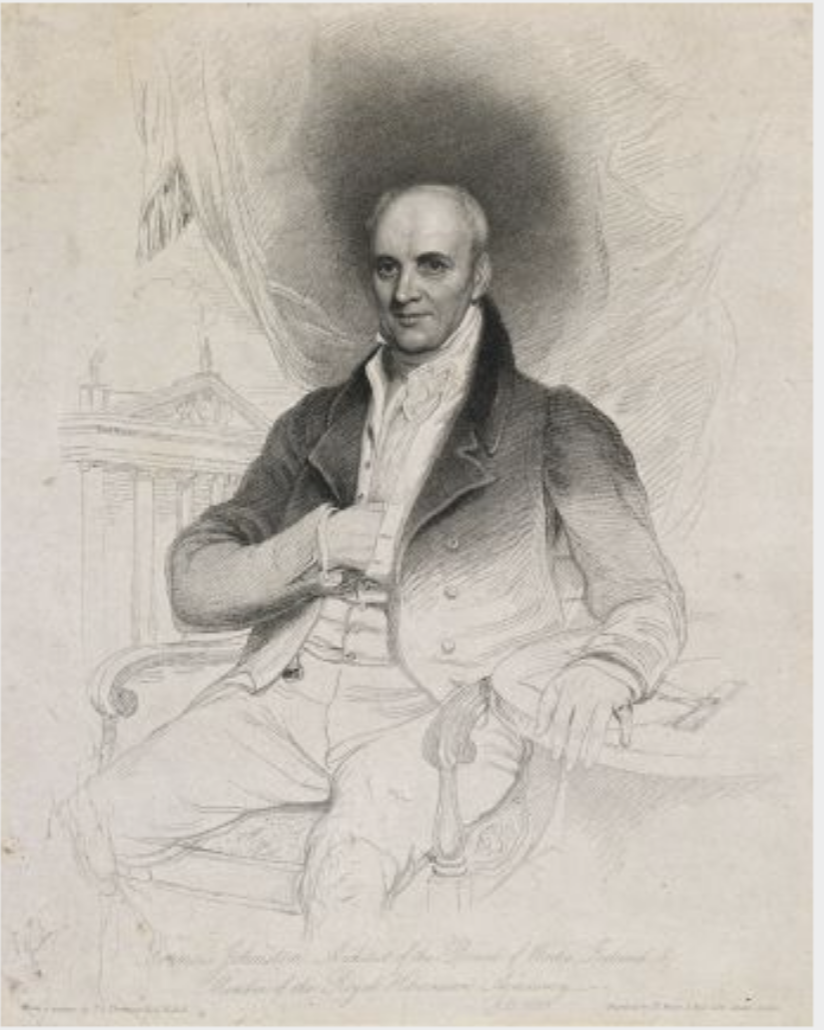
Francis Johnston (1761-1829), Architect, against the General Post Office, Dublin Date 1823 by Engraver Henry Hoppner Meyer, English, 1782-1847 After Thomas Clement Thompson, Northern Irish, c.1780-1857, photograph courtesy of National Gallery of Ireland.
Rokeby, September 2019. Photograph © Jennifer Winder-Baggot, www.irishhistorichouses.com

Thomas Cooley, who worked first as a carpenter then draughtsman in an architectural office, came from England to Ireland in 1768 when he won a competition to design a new Royal Exchange in Dublin, which is now the City Hall on Dame Street. He built several public buildings in Dublin in the neoclassical style. Together with James Gandon (1743–1823), Cooley was part of a small school of architects influenced by Sir William Chambers (1723–1796). Cooley died in 1784. He worked closely with the Archbishop Richard Robinson and designed many buildings in Armagh, including the Archbishop’s Palace (now the Town Hall) and the library. He also designed the Four Courts in Dublin, and Caledon in County Tyrone.

Cooley designed Rokeby Hall, and it fell to Francis Johnston to finish the project after Cooley’s death. Johnston continued to work with Archbishop Robinson, for whom he went on to build the Armagh Observatory and Armagh Courthouse, and other buildings in Armagh (I think that the observatory in Rokeby was built for the current owner, but I’m sure the Archbishop would have been delighted had he known, since he had the one in Armagh built in 1790 [2]!). Jean Young, the owner of Rokeby, recommended that we also visit another house in Louth designed and built by Francis Johnston, Townley Hall.

Johnston designed more buildings, including the beautiful Chapel Royal in Dublin Castle, and he converted Parliament House in College Green in Dublin into the Bank of Ireland. He also designed Charleville Forest Castle in Tullamore, County Offaly, and probably designed another Section 482 house, Turbotstown in County Westmeath (see my entry). He also helped in the 2nd Earl of Longford to convert Tullynally House into Tullynally Castle (see my entry), completing that work in 1803.

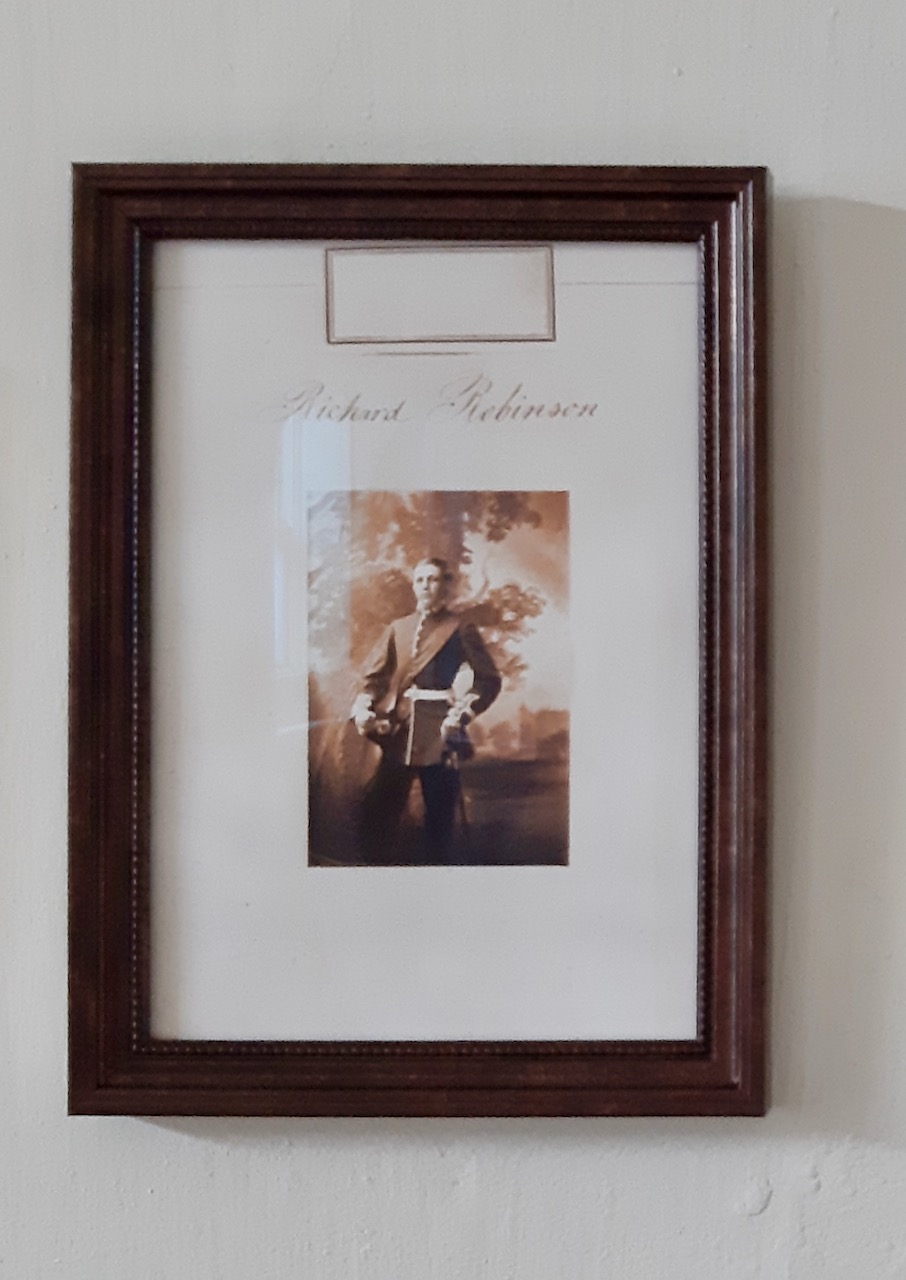
Jean greeted us and invited us inside. We paused in the capacious front hall to look at a portrait while she told us about the man responsible for having the house built, Archbishop Richard Robinson. Robinson named the building after his family home in Yorkshire, England, Rokeby Park.

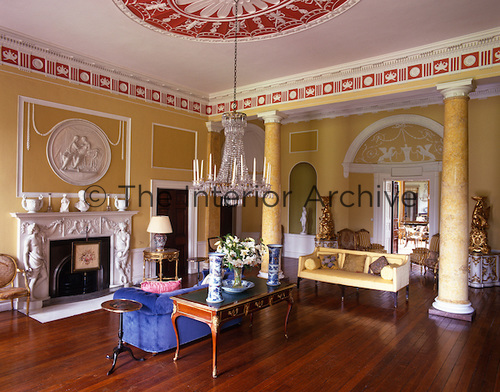
The columns reminded me of “scagliola” [3] but are actually painted. Photograph © Jennifer Winder-Baggot, www.irishhistorichouses.com
The Saloon in Caledon was designed in the neoclassical style by Thomas Cooley with columns of yellow scagliola; Copyright Christopher Simon Sykes, The Interior Archive Ltd, CS_GI7_09
Archbishop Richard Robinson (1708-1794) by Angelica Kauffmann or Joshua Reynolds, courtesy of Armagh Robinson Library.

The website tells us about Richard Robinson:

After coming to Ireland as chaplain to the Duke of Dorset in 1751, he eventually rose through the ranks of the church before becoming Archbishop of Armagh in 1765. Prior to Robinson’s appointment, most Archbishops had spent little time in Armagh which in 1759 had been described as ‘an ugly, scattered town’. Primate Robinson is credited with much of Armagh’s transformation to the beautiful Georgian city it is today. His many contributions to the city include the Armagh Robinson Library, the Armagh Observatory, the Gaol, the Armagh Infirmary and the Archbishop’s Palace, Chapel and Palace Stables.

He was created the 1st Baron Rokeby in 1777, choosing the title “Rokeby” as his elder brother Sir Thomas Robinson had by then sold the family estate of Rokeby Park. He purchased land at Marlay in Co. Louth from the Earl of Darby to create a new “Rokeby” estate. On his death, his titles passed to a cousin but he left the Rokeby estate in Louth to the son of his sister Grace. The Reverend John Freind changed his name to his maternal surname “Robinson” and moved from England to Rokeby Hall in 1794.”

Lord Rokeby’s coat of arms on the decorative Neoclassical pediment. Photograph © Jennifer Winder-Baggot, www.irishhistorichouses.com

I was surprised to hear that an archbishop was made a Baron, but Jean assured me that this was quite common.

Jean has studied the history of her home, completing a Masters degree in Maynooth, so we thoroughly enjoyed our discussion and she was able to explain the history of ownership of the house as well as architectural details. It is the details of the house which are special.
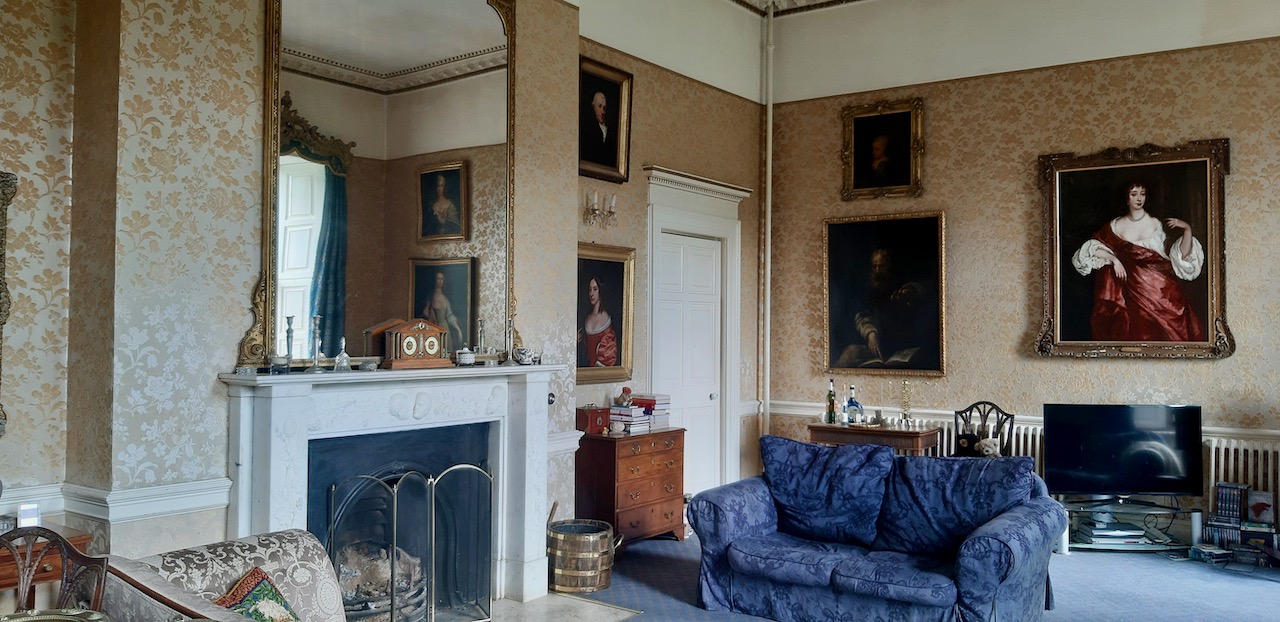
Rokeby, County Louth. Photograph © Jennifer Winder-Baggot, www.irishhistorichouses.com
Rokeby, September 2019. Photograph © Jennifer Winder-Baggot, www.irishhistorichouses.com

I also asked why Robinson lived here in Rokeby rather than in Armagh, since he was archbishop of Armagh. Jean explained that archbishops had much work to do in Dublin, including taking their place in Parliament, so it was suitable to live in a premises between Dublin and Armagh. The Irish Aesthete Robert O’Byrne has a delightful entry that tells us more about this Archbishop of Armagh, who, according to O’Byrne, “behaved more like a continental prince-bishop.” He extravagantly travelled in a carriage with six horses, attended by three footmen behind. [4]

In Classic Irish Houses of the Middle Size, Maurice Craig writes (p. 152):

The north (entrance) front of the house built for Richard Robinson, Archbishop of Armagh, in the years following 1785, probably by Thomas Cooley (1740-84) and certainly with the participation of Francis Johnston (1760-1829). Both in elevation and in plan it is related to Lucan House, and in plan also to Mount Kennedy. James Wyatt, Michael Stapleton, Richard Johnston and even Sir William Chambers are involved in a complex tale which may never be fully unravelled. Rokeby is more remarkable for the beauty of its detail than for its overall impression…”

The most noteable feature of the house, for me, is the round hallway upstairs, and the second one above that in what seems to be the nursery and children’s area – which we saw after a tour of the first floor rooms.
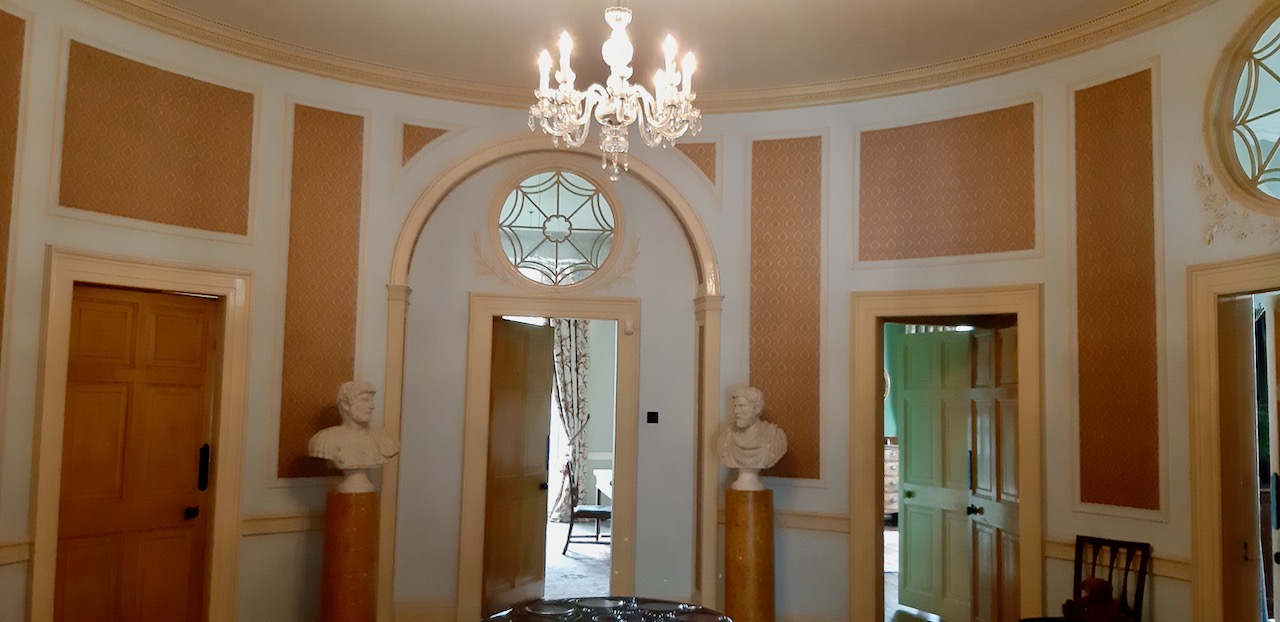
Rokeby, September 2019. Photograph © Jennifer Winder-Baggot, www.irishhistorichouses.com

This is the landing at the top of the staircase. It opens into many bedrooms, a bathroom, another small landing, and one door is purely decorative, to keep symmetry. Note the detailing of the windows, over every second door, which let in light to the hall – all original.

Jean and Jeff had to furnish the house entirely, as unfortunately it was empty when they purchased it and needed repairs. They have done so beautifully.
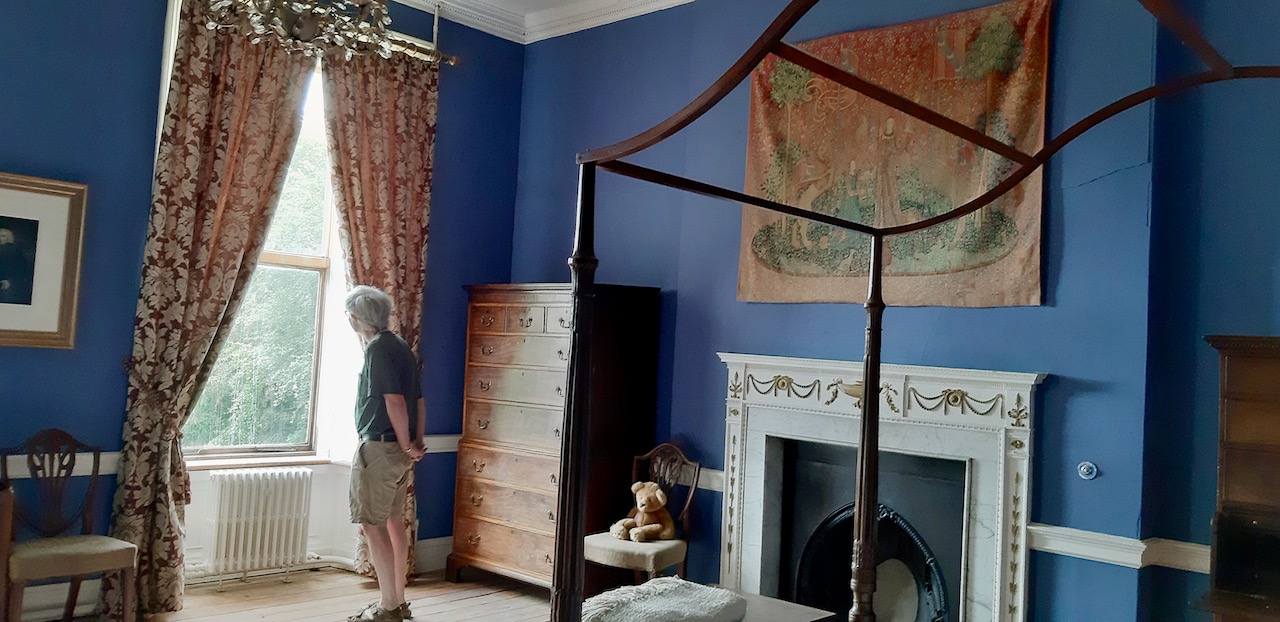
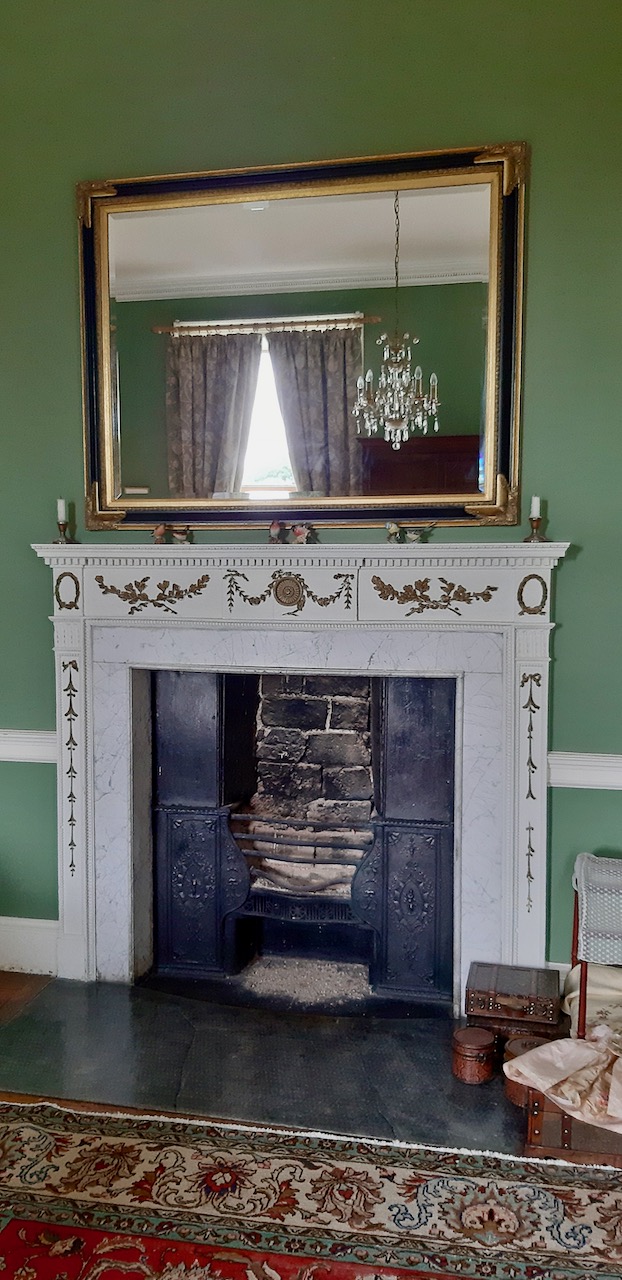
Rokeby, County Louth. Photograph © Jennifer Winder-Baggot, www.irishhistorichouses.com
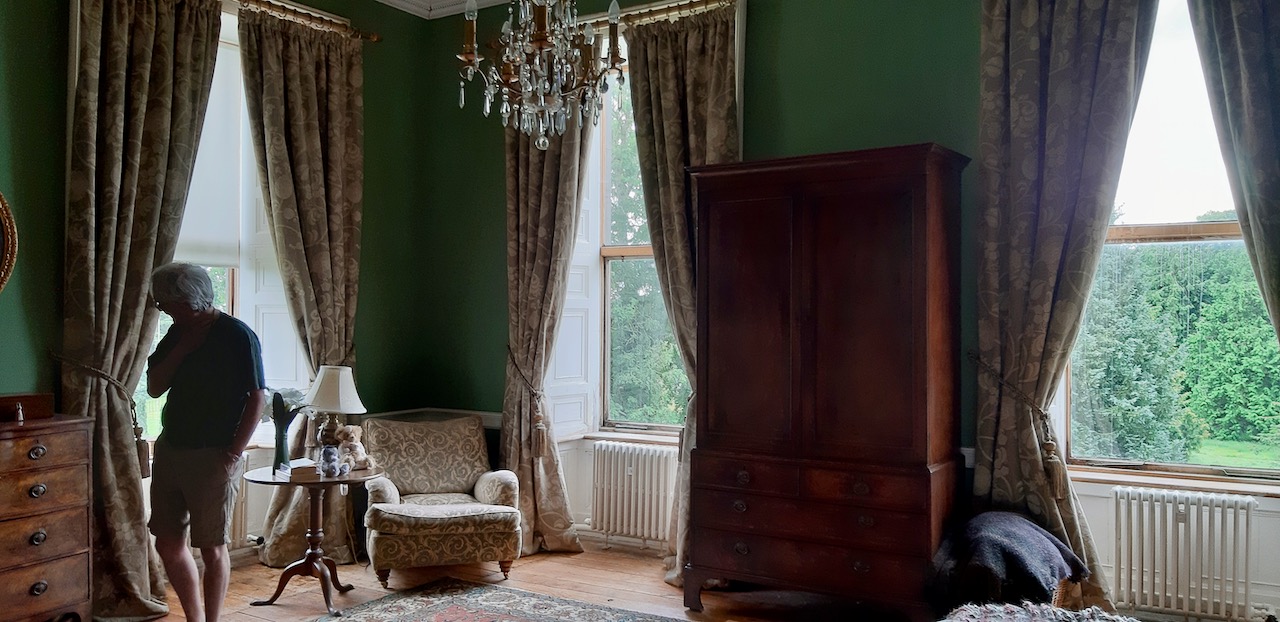
Rokeby, September 2019. Photograph © Jennifer Winder-Baggot, www.irishhistorichouses.com

These bedrooms contain their original chimneypieces. The Irish Aesthete writes that the upstairs chimneypieces are original to the house but that the downstairs ones are not and were installed later, along with some downstairs doors.

The Youngs have also restored the garden to its former splendour:
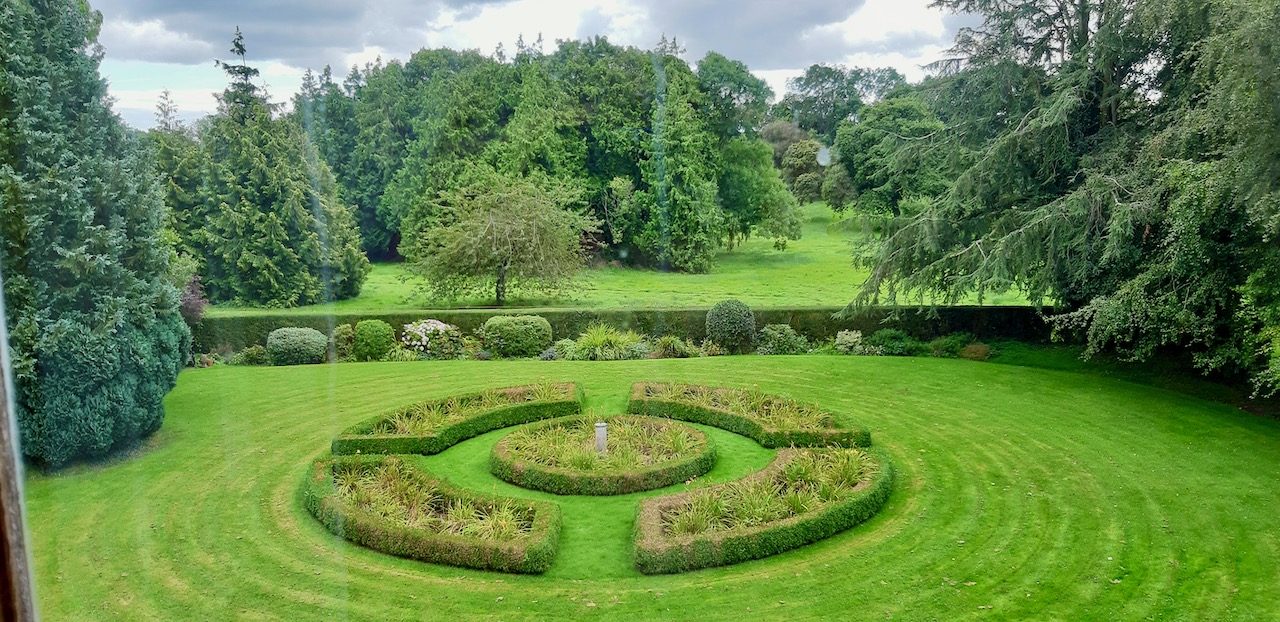
Jean and Jeff have done much work, such as planting this formal garden. Photograph © Jennifer Winder-Baggot, www.irishhistorichouses.com

Above the round hall at the top of the stairs, is another round hallway, you can see why I found it so surprising and delightful.

Rokeby, September 2019. Photograph © Jennifer Winder-Baggot, www.irishhistorichouses.com

One doesn’t expect such detail in an upper level. The rooms leading off on this level were of various sizes, some quite large.
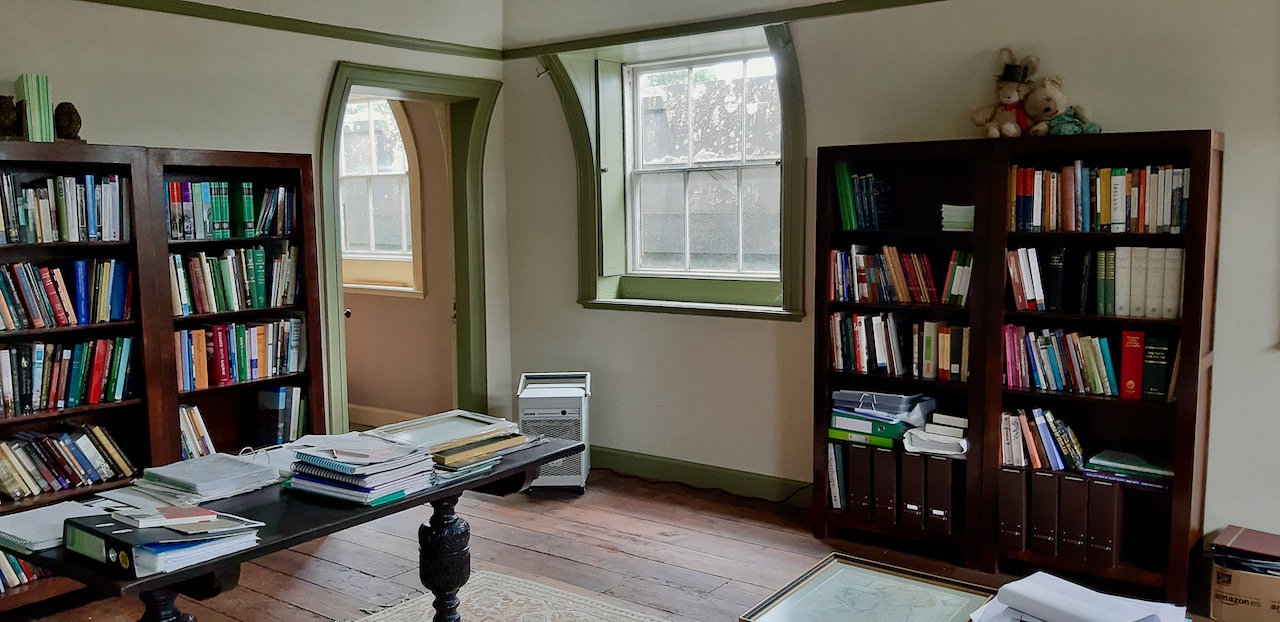
Rokeby, September 2019. Photograph © Jennifer Winder-Baggot, www.irishhistorichouses.com

The room, although in the attic, contains as much attention to detail as the reception rooms, with curving door and window frames. Outside is the parapet of the house, so the windows have to be set back to allow in maximum light. The Youngs still have work to do to restore the cupola roof. You can see the wear and tear of use on the original stone stairs:
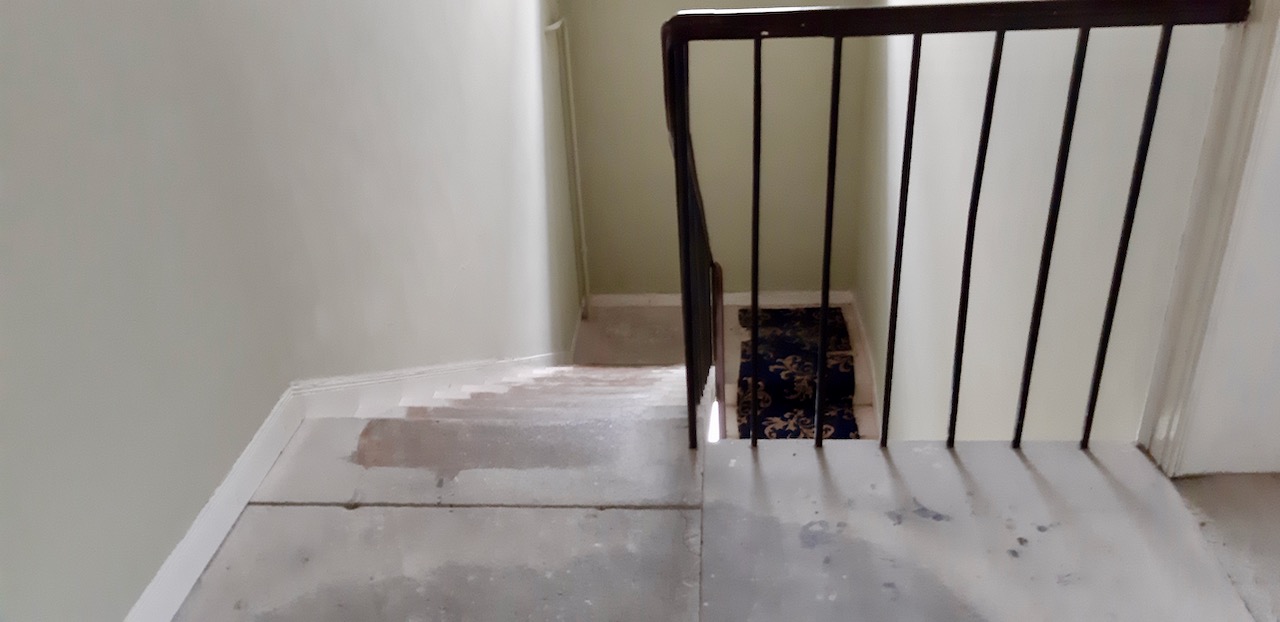
Rokeby, September 2019. Photograph © Jennifer Winder-Baggot, www.irishhistorichouses.com

The Irish Aesthete discusses Rokeby in his blog:

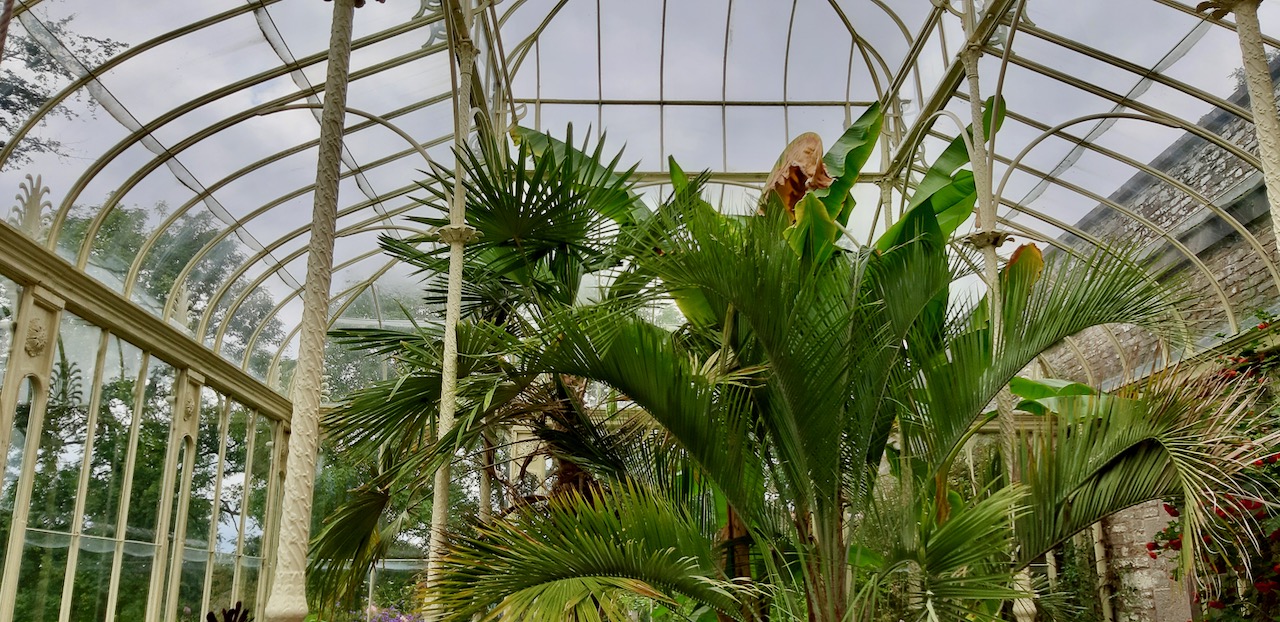
 “The house’s severe limestone façade hides a more inviting interior, of three storeys over basement, since Rokeby contains a particularly generous attic concealed behind the parapet, centred on a circular room lit by glazed dome. A similar circular landing on the first floor provides access to the main bedrooms.

Descendants of the Robinson family remained in possession, although not necessarily in occupation, of Rokeby until the middle of the last century. Thereafter the property passed through a variety of hands often with unfortunate consequences. When the present owners bought the place in 1995, for example, the library had been stripped of its bookcases and divided in two with one half used as a kitchen. Over the past twenty years, a process of reclamation has taken place, driven by the correct balance of enthusiasm, commitment and ongoing research into the house’s history. Most recently the present owners have impeccably restored Rokeby’s mid-19th century conservatory.” [5]

In the article from the Irish Times which originally inspired me to start visiting houses and to write this blog, “Open season: Grand Irish homes that welcome visitors – and get a tax break,” published Sat, Apr 13, 2019, Mary Leland writes that Jean and Jeff worked on the house for ten years, commuting back and forth to California to working in the software industry, before finally moving over in 2006. The tax break enabled them to restore the Richard Turner conservatory. [6]
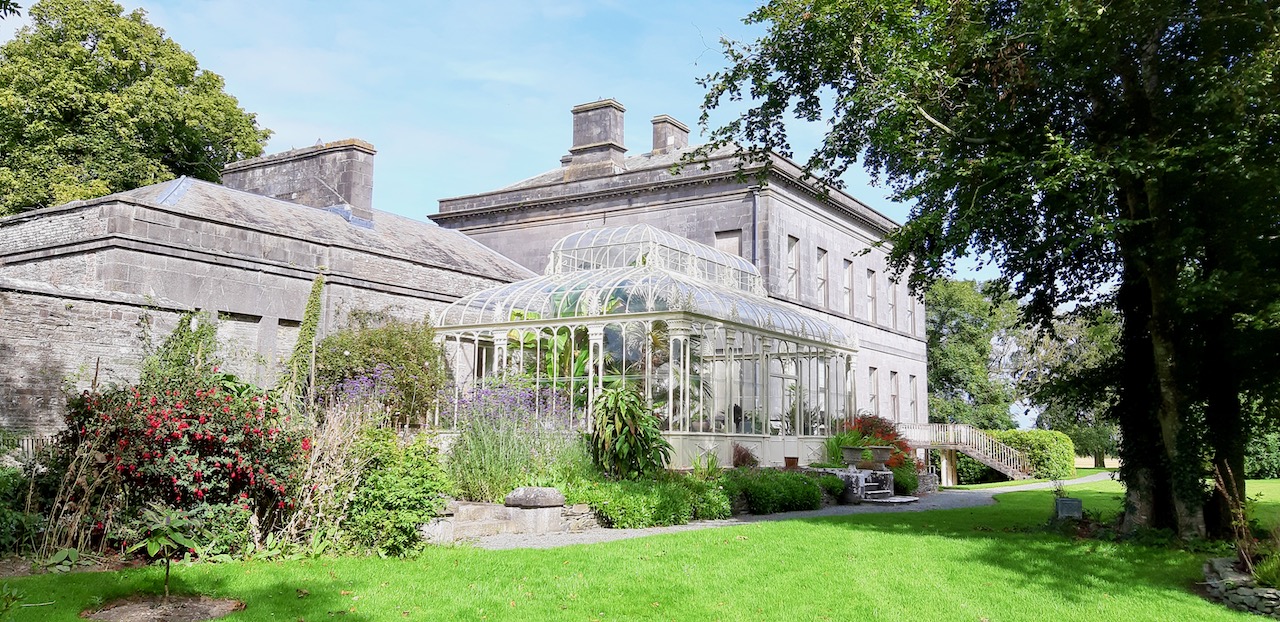
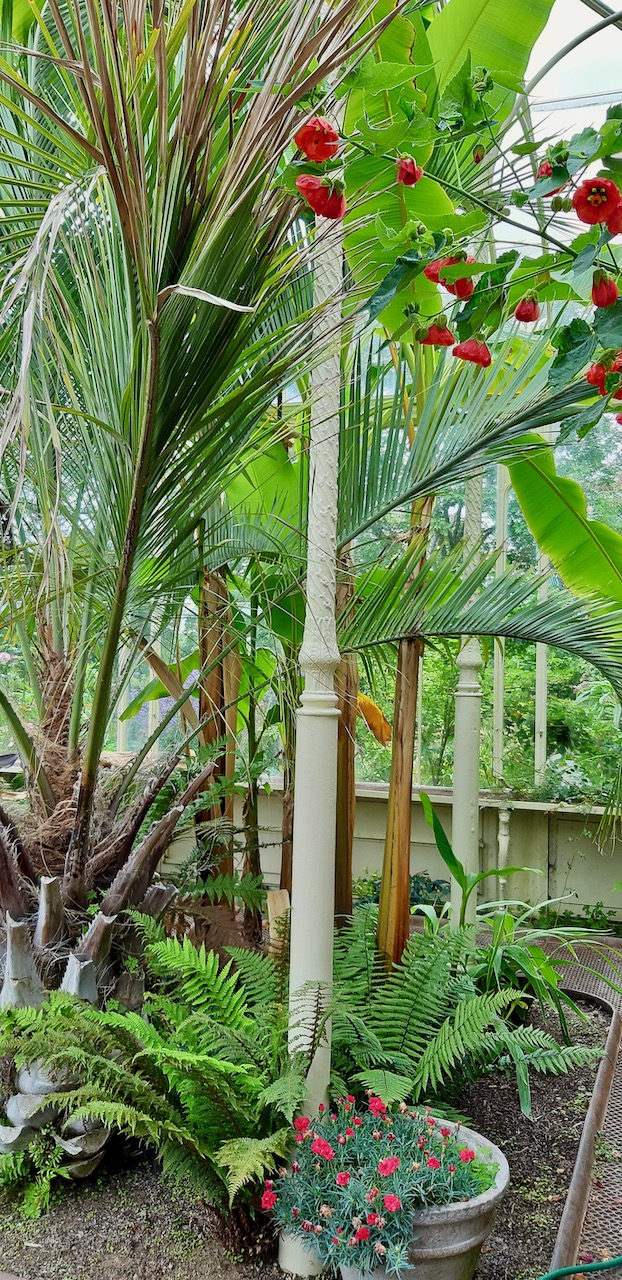
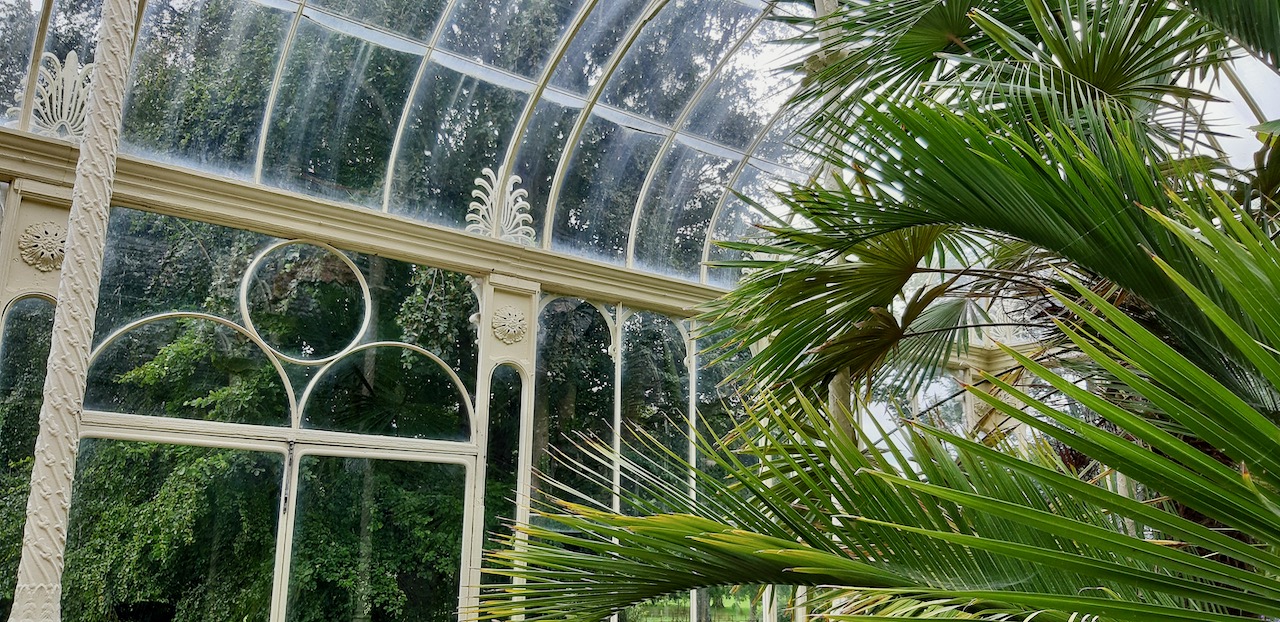
The conservatory by Richard Turner. Photograph © Jennifer Winder-Baggot, www.irishhistorichouses.com
Information board from “In Harmony with Nature, The Irish Country House Garden 1600-1900” in the Irish Georgian Society, July 2022, curated by Robert O’Byrne.
Rokeby, County Louth. Photograph © Jennifer Winder-Baggot, www.irishhistorichouses.com
Rokeby, September 2019. Photograph © Jennifer Winder-Baggot, www.irishhistorichouses.com

The complete restoration of this structure took about two years, 2012-2014. The restored conservatory received 1st prize of the Ellison Award for Meath An Taisce in 2014.  A fascinating full description of the restoration is on the Rokeby Hall website. There’s also discussion of the restoration of the Armorial window and the attics.
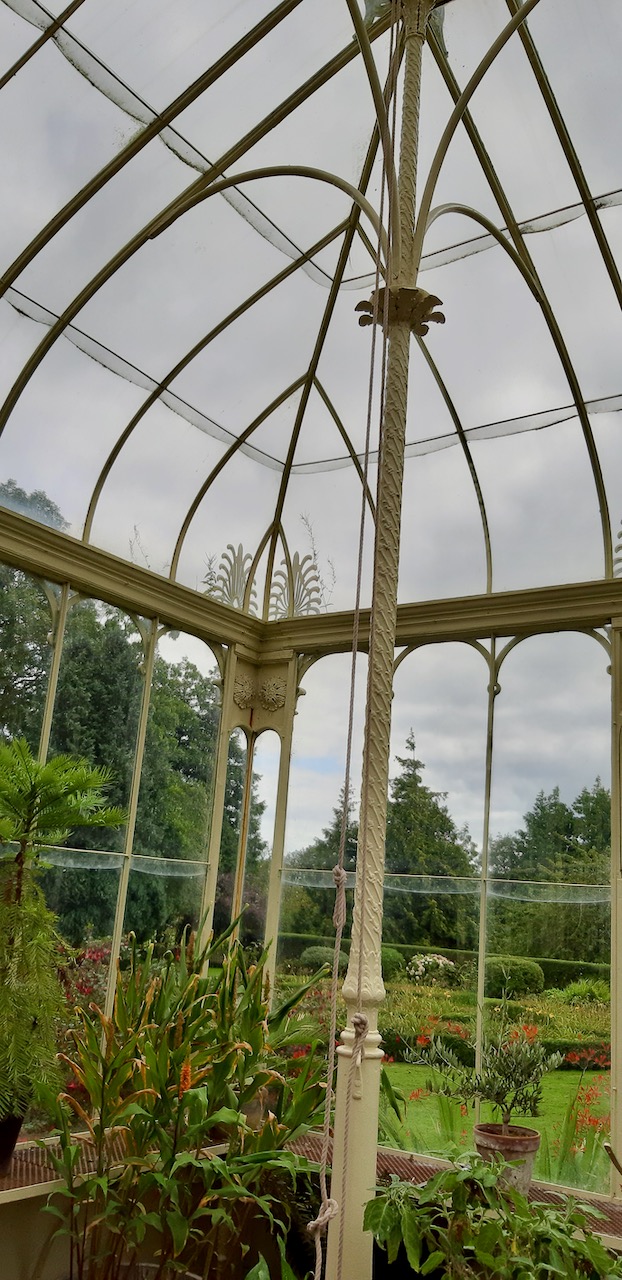
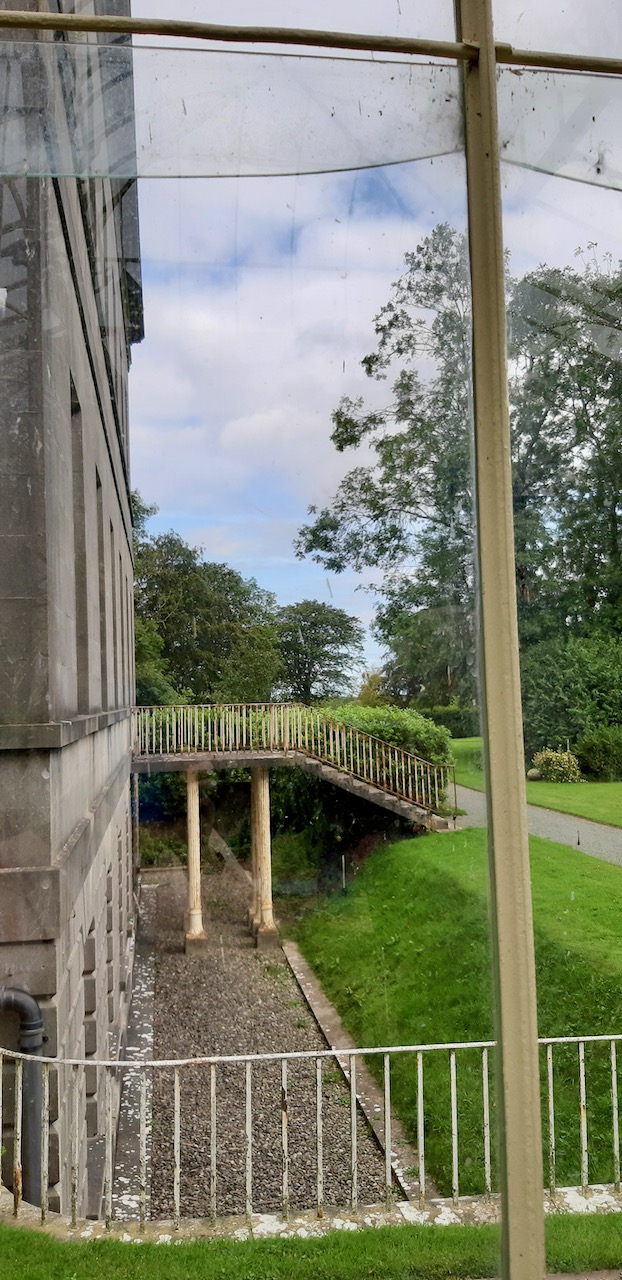
Rokeby, County Louth. Photograph © Jennifer Winder-Baggot, www.irishhistorichouses.com
Rokeby, September 2019. Photograph © Jennifer Winder-Baggot, www.irishhistorichouses.com

Jean noticed my puzzlement at the crescent dips in the glass at the top of the window, as you can see in the picture above. Her explanation shows just how authentic the restoration work was: in the 1850s, the size of panes of glass was  limited. Therefore glass was laid out in layers. The curved edge ensured that rainwater would move to the middle of the glass before dripping down, thus protecting the window frames.
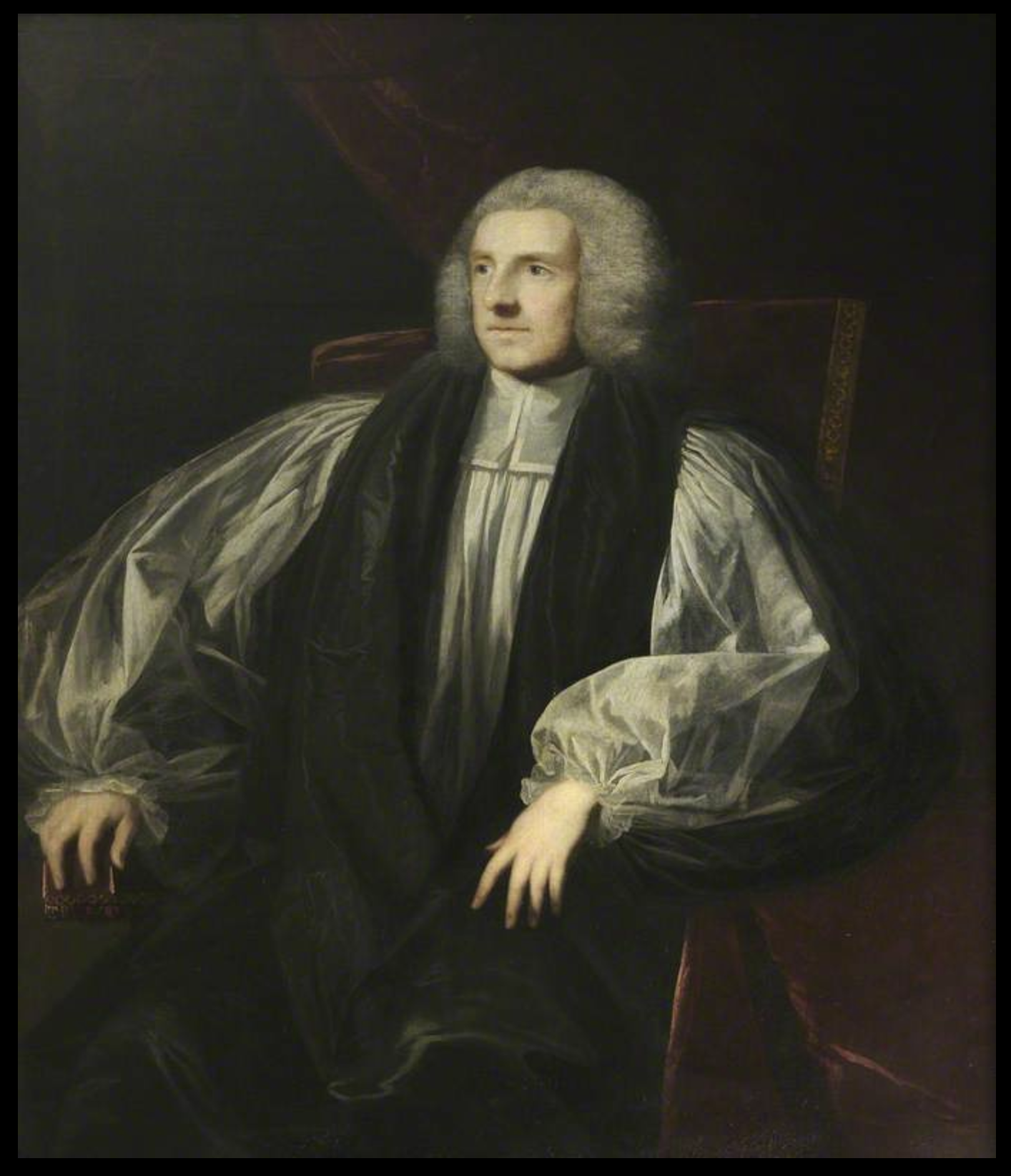
Richard Robinson, 1st Baron Rokeby (1709-1794), Archbishop of Armagh by Joshua Reynolds.

The archbishop left the house upon his death in 1794 to his sister Grace’s son. Grace Robinson had married the Dean of Canterbury, William Freind. Her son, the Reverend Archdeacon John Freind subsequently changed his surname to Robinson. Reverend John did not stay long in Ireland, however. When his father-in-law, Captain James Spencer of Rathangan House, County Kildare, was killed by rebels during the 1798 rebellion, he fled. Despite no longer living there, Reverend John Robinson was created 1st Baronet of Rokeby Hall in 1819.

The house was subsequently let to tenants, including Viscount Thomas Southwell; Count Jerome de Salis (leased from 29 April 1822 – he had been appointed High Sheriff of Armagh in 1810 – see [7]); and Henry Coddington, Esq (1734-1816). This is the same Henry Coddington whose daughter Elizabeth married Edward Winder (1775-1829), one of my husband Stephen’s ancestors! Henry himself probably did not live in Rokeby, but probably leased the land to farm, as he lived in Oldbridge nearby. The house was left to deteriorate. Robert O’Byrne quotes James Brewer’s The Beauties of Ireland published in 1826, who wrote that the house “is now, we believe, in the hands of a farmer, and the chief apartments are let furnished to casual inmates.”

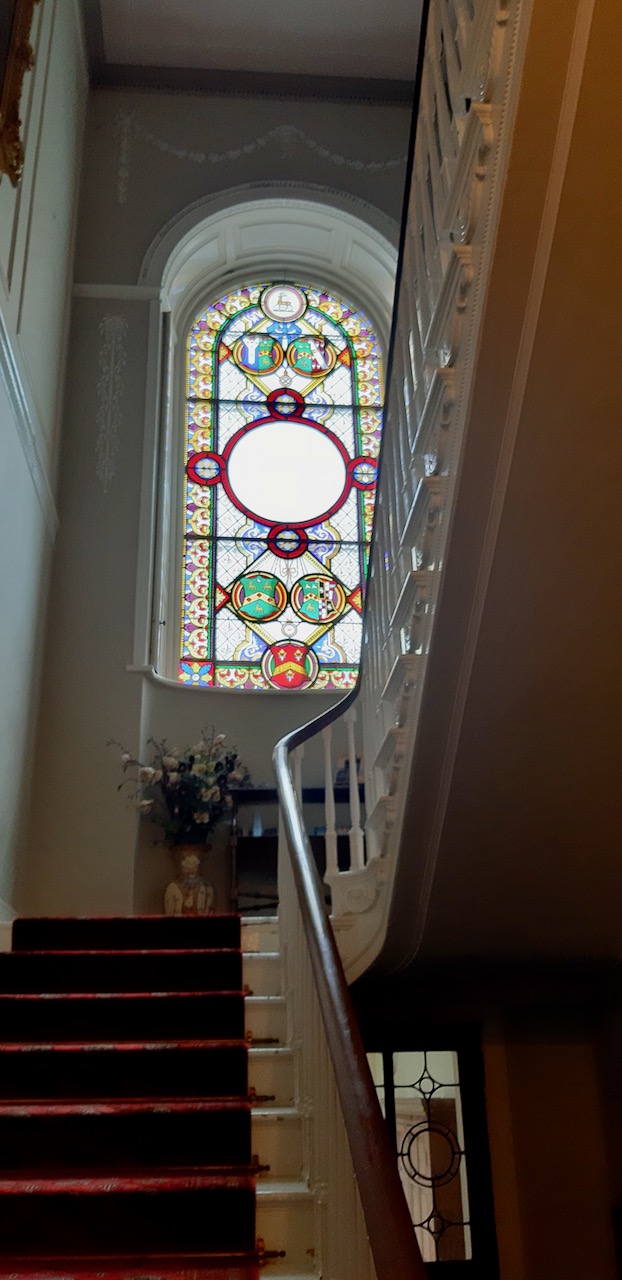
It was only after the death of John Robinson in 1832 that his son, Richard, returned to Rokeby in 1840. Richard, 2nd Baronet (1787-1847) had married, in 1813, the Lady Eleanor Helena Moore, daughter of Stephen, 2nd Earl Mount Cashell. He died in 1847 and was succeeded by his eldest son Sir John Stephen Robinson. Sir John and his wife were responsible for two significant additions to Rokeby Hall – the Turner conservatory, added in the 1850s, and the armorial window in the main stair hall showing the Robinson family history.

Richard Robinson (1787-1847), Baronet, English School (c.1847) with a depiction of his armorials and campaign medals issued to survivors of the Napoleonic Wars courtesy Adam’s auction 6 Oct 2009. This must be Richard Robinson 2nd Baronet of Rokeby Hall in County Louth. He was the son of John Freind, who married a sister of Richard Robinson Baron of Rokeby, and who took the name of Robinson when he inherited Rokeby.
The armorial window in the main stair hall showing the Robinson family history. Photograph © Jennifer Winder-Baggot, www.irishhistorichouses.com

Sir John, 3rd Baronet (1816-95), JP DL, High Sheriff of County Louth, 1849, married, in 1841, Sarah, only daughter of Anthony Denny, of Barham Wood, Hertfordshire, and granddaughter of Lord Collingwood, Admiral in the Royal Navy who served alongside Lord Nelson in the Napoleonic Wars. Due to his fame, Sarah’s eldest sons took the name Collingwood. [8]

The Rokeby Hall website continues the history of the Rokeby inhabitants:

Sir John died in 1895 and the estate passed to his son Sir Gerald [William Collingwood] Robinson (4th bart.) who died in 1903. The 5th baronet was Sir John’s younger brother Richard Harcourt Robinson. After his death in 1910 the estate eventually passed to Sir Gerald’s sister Maud who had earlier married Richard Montgomery, the owner of Beaulieu House in Co. Louth.

Richard Harcourt Robinson, died in 1910.

With the Robinsons no longer in residence, the estate was gradually broken up. The house and demesne lands were sold to the Clinton family in 1912. The remaining estate lands were also broken up and sold and the Robinson collection of furniture, art and books were eventually auctioned in 1943. The Clinton family remained at Rokeby until about 1950. Since then the ownership of the house has changed a number of times. The current owners purchased the house in 1995.”

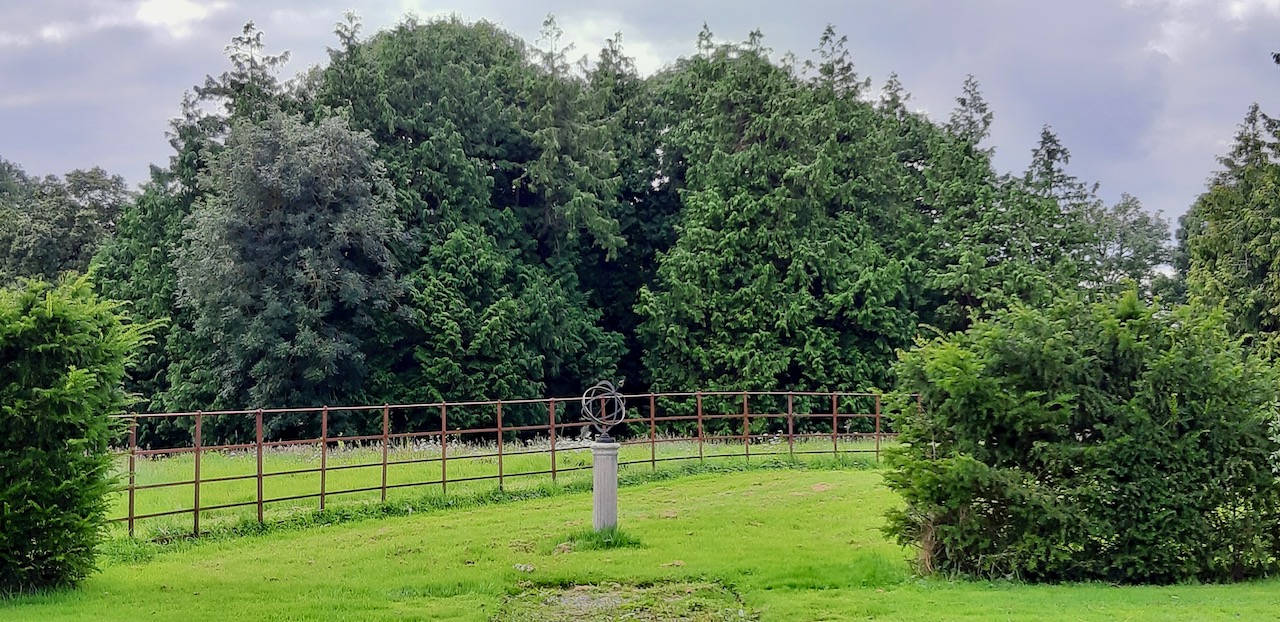
After the tour of the house, Stephen and I went out to explore the gardens.
Rokeby, County Louth. Photograph © Jennifer Winder-Baggot, www.irishhistorichouses.com
Rokeby, September 2019. Photograph © Jennifer Winder-Baggot, www.irishhistorichouses.com

[1] www.rokeby.ie

[2] https://armagh.space/heritage/

[3] Wikipedia defines scagliola: Scagliola (from the Italian scaglia, meaning “chips”) is a technique for producing stucco columns, sculptures and other architectural elements that resemble inlays in marble and semi-precious stones. The Scagliola technique came into fashion in 17th-century Tuscany as an effective substitute for costly marble inlays, the pietra dura works created for the Medici family in Florence.

Scagliola is a composite substance made from selenite, glue and natural pigments, imitating marble and other hard stones. The material may be veined with colours and applied to a core, or desired pattern may be carved into a previously prepared scagliola matrix. The pattern’s indentations are then filled with the coloured, plaster-like scagliola composite, and then polished with flax oil for brightness, and wax for protection. The combination of materials and technique provides a complex texture, and richness of colour not available in natural veined marbles.

architectural definitions

[4] https://theirishaesthete.com/2013/02/04/building-on-a-prelates-ambition/

[5] https://theirishaesthete.com/2015/09/21/take-three/

[6] https://www.irishtimes.com/life-and-style/homes-and-property/open-season-grand-irish-homes-that-welcome-visitors-and-get-a-tax-break-1.3855641

[7] https://en.wikipedia.org/wiki/Jerome,_4th_Count_de_Salis-Soglio

Jerome de Salis was born in Italy and inherited the title, Count de Salis, a Count of the Holy Roman Empire. He lived in England from the 1790s. He married three times – had one child by each of his first two wives, then after the first two wives’ deaths, married in 1810, Henrietta (or Harriet) Foster, daughter of Right Reverend William Foster, who was chaplain to the Irish House of Commons (1780–89), and then at different times, Bishop of Cork and Ross; Kilmore; and of Clogher. They had a further nine children.

[8] http://lordbelmontinnorthernireland.blogspot.com/search/label/County%20Louth%20Landowners

Text © Jennifer Winder-Baggot, www.irishhistorichouses.com