Archbishop’s Palace, County Armagh  

Archbishop’s Palace, County Armagh

Armagh Palace, County Armagh 

Archbishop’s Palace, Armagh, photograph by Eric Jones, Creative Commons Attribution Share-alike license 2.0.

Mark Bence-Jones. A Guide to Irish Country Houses (originally published as Burke’s Guide to Country Houses volume 1 Ireland by Burke’s Peerage Ltd. 1978); Revised edition 1988 Constable and Company Ltd, London.

p. 12. “The Palace of the (C. of I.) Archbishops of Armagh and Primates. A plain and dignified late C18 block, nine bays long and four bays deep, originally of two storeys over a high rusticated basement. Built 1770, to the design of Thomas Cooley, by Primate Richard Robinson, who added a third storey 1786, his architect then being Francis Johnston. Later, a large enclosed porch was added, with pairs of Ionic columns set at an angle to the front. Flanking the entrance front of the Palace is the Primate’s Chapel, a detached building in the form of an Ionic temple. The exterior, of 1781, is by Cooley; but the interior was carried out after Cooley’s death in 1784 by Francis Johnston, who succeeded him as architect to Primate Robinson. Johnston’s interior, a modification of Cooley’s design, is one of the most beautiful surviving C18 ecclesiastical interiors in Ireland; with a coffered barrel-vaulted ceiling, a delicate frieze, Corinthian pilasters, a gallery with a curved rear wall, and splendid panelling and pews. The Palace is surrounded by a well-wooded demesne, in which there is an obelisk, also by Johnston. The Church of Ireland is at present building a modern residence for the Primate on Cathedral Hill, so that the future of the Palace is uncertain.” 

Archbishop’s Palace Armagh, County Armagh, photograph by Robert French, (between ca. 1865-1914), Lawrence Photograph Collection, National Library of Ireland.

http://www.nihgt.org/resources/pdf/Register_of_Parks_Gardens_Demesnes-NOV20.pdf

THE PALACE (ARMAGH), County Armagh (AP ARMAGH, BANBRIDGE and CRAIGAVON 03) – 
A/029 
REGISTERED GRADE A 
The Archbishop’s Palace walled demesne occupies 348 acres (141ha) on the south perimeter of the City of Armagh, the grounds now belonging to the Armagh City, Banbridge and Craigavon Council who use the palace of 1768-75 and stable yard for office accommodation. The palace and 
its demesne owe their existence to Archbishop Richard Robinson (1708-1794), who, following his elevation to the Primacy of Armagh in 1765, demanded a residence in Armagh appropriate to his status; his predecessors had resided mainly in the palace in Drogheda, while the see house in English Street, had fallen into disrepair. Accordingly, in 1769 an Act of Parliament was passed for the enclosure of a demesne incorporating the townlands of Parkmore, Drumarg and part of 
Ballnaone, church property that fittingly included the remains of the Franciscan friary, founded in 1263, whose impressive ruins now lie at the entrance to the demesne (ARM 012:016). The building of the palace in the centre of the demesne on a height overlooking the city had already 
begun by 1768, if not earlier, for by February 1769 Robinson ‘hath already erected and covered in 
the shell of a house for himself and his successors’. The building (Listed HB 15/18/016), a chase 
but dignified classical block of nine bays and four bays deep, was originally of two-stories over a 
high rusticated basement, but it was subsequently raised in 1825 by Francis Johnson, who also Register of Parks, Gardens and Demesnes of Special Historic Interest (NI) – November 2020 
added a porch. The original palace building, completed in 1775 at a cost of £10,322 17s 9d was 
evidently the work of Dublin architect George Ensor, but the Sardinian architect, Davis Ducart may 
also have been involved. Lying on slightly higher ground 93 yards (85m) to the west is the cobbled 
stable yard – a two-storey Palladian quadrangle built at the same time as the palace (Listed HB 
15/18/018), probably also by Ensor; it was burnt in 1859 and rebuilt with a few additions by the 
Belfast architect W.J. Barre. Also in the 1770s an icehouse was built in the woods behind the yard 
(Listed HB 15/18/015), while between the house and yard a chapel for the Archbishop was 
erected in 1781 of ashlar limestone in the form of a classical Roman temple to a design by the 
English architect Thomas Cooley (Listed HB 15/18/017); the Primate’s Chapel was completed by 
Francis Johnston after Cooley’s death in March 1784 (chapel deconsecrated in 1977). The Clerk of 
Works for the construction of buildings ‘in and about the demesne’ at this time was Euclid Alfrey 
and William Johnston (father of Francis); in addition to the house, yards and chapel, their work 
will have included the 48m high eye-catcher Rokeby Obelisk (Listed HB 15/18/021), erected in 
1782-83 on a hill 0.6 miles (0.9km) south-east of the palace; designed by Thomas Cooley from a 
sketch by John Carr of York, this obelisk was built to commemorate the friendship between 
Archbishop Robinson, by then raised as the first Baron Rokeby and Hugh Percy, the first Duke of 
Northumberland (1714-1786), who as Lord Lieutenant of Ireland had appointed him to the 
Primacy. The Obelisk was originally set on the north side of a small woodland plantation atop the 
hill in a carefully designed parkscape laid out in the Reptonian Picturesque manner then popular. 
The landscape designer is not known, but he made skilled use of the undulating landscape by 
setting the palace in sweeping open meadows (‘lawns’) with isolated trees, clumps, belts and 
perimeter screens – all of which were judicially laid out so as to enjoy fine views of the city and its 
cathedral both from the palace and from a network of walks and drives which meandered their 
way through surrounding meadows and shelter belts. The planting in the park seems to have 
been nearly all undertaken in the 1770s; a report of 1775 says that young trees to the value of 
£283 6s 3d had then been planted in the demesne; the species were mostly beech and ask, but 
also included sycamore, chestnut, lime, ash and elm; remarkably, the woodland and screen 
boundaries then established remained unaltered into the mid-20th century. When Arthur Young 
visited in 1776 he admired the ‘large lawn’ around the palace, which ‘spreads on every side over 
the hills, and skirted by young plantations, in one of which is a terrace, which commands a most 
beautiful view of cultivated hill and dale.’ Inglis visited the park in 1834 and found it ‘… in 
excellent order … laid out with much taste’. At a slightly later date, probably in the 1780s, the 
main Newtownhamilton road was diverted westward to its present course (A29/B31) to expand 
the parkland; it notable that much of the parkland planting lies east of the old line of this road. 
Within this area lies the architecturally notable Palace Farm (Listed HB 15/19/013), erected in the 
1790s, probably to a design by Francis Johnson, 0.3 miles (0.5km) south-west of the palace. 
Enclosed by open parkland, with flanking tree screens each side, this yard comprises a large and 
pleasantly designed quadrangle fronted by twin farmhouses; it was admired by Sir Charles Coole 
in 1804, who remarked that ‘his grace’s farmyard, implements of husbandry and mode of culture, 
afford a bright example to the gentry’. Invariably, demesne farm buildings were located 
conveniently to the walled garden; however, here the walled garden, which was built for kitchen 
produce (vegetables, flowers, fruit) in the 1770s lay in the north of the demesne where it was 
characteristically carefully screened with trees from the parkland. It occupied a large rectangular 
stone walled area (440ft/121m x 440ft/134m) covering 4.25 acres (1.72ha), which was typically 
divided by paths into four quadrant sections with a circular pond in the centre. The walled slip 
gardens lay on its north and east sides; one of these areas, the frame yard, is known in 1863 to 
have included three ‘Green Houses’, two ‘Vine Pits’; a ‘Vinery’; ‘Fruit House’; ‘Mellon Pit’ and 
‘Mushroom Pit’ in addition to offices and a ‘cole pit’. One of the other walled slip enclosures was 
made into a pleasure garden, known as ‘Lady Anne’s Garden’, laid out in box-edged rose beds; it 
was entered via a fine wrought iron gate, c.1840 and named after a sister (died 1842) of Lord John 
George de la Poer Beresford, Primate from 1822 to 1862. All these slip gardens were removed in 

Register of Parks, Gardens and Demesnes of Special Historic Interest (NI) – November 2020 
the 1950s and are now covered by car parks, while the walled garden area itself has been used 
since the 1970s by Armagh Rugby Club; its enclosing walls were partly cleared at this time 
although much of the walling to the east and north has survived, along with a section to the 
south. North of the walled garden lies the old head gardener’s residence/aka Frazer House (Listed 
HB 15/18/014), a relatively large two-storey gables house built sometime around 1790; currently 
this is used to house the planning, and births marriages and deaths registry office. Significantly 
perhaps, the ruins of the adjacent friary were not incorporated into the landscaped parkland in 
the 1770s, but rather left obscured behind a wall and within an orchard (it may be noted that in 
1557 the friary then had its own orchard and garden). Indeed, stones from the friary were robbed 
to build walls in the demesne in the 1760s and 1770s and not until the early Victorian era that it 
became a romantic ruin in the park; by 1888 Bassett referred to ‘the picturesque effect of the 
immediate surroundings’ [of the friary] being ‘heightened by splendid Irish yews and stately forest 
trees’; some of these yews are still present in this area and there is a wall with a high arch 
opening onto the friary church at its west end. The present public entrance to the demesne lies a 
short distance from these ruins; this dates from the building of the ‘Friary Road’ by-pass in the 
early 1970s, which removed the northern perimeter tree belts of the park and resulted in the 
demolition of the main 18th century gate lodge and the movement of the Cooley-designed 
limestone entrance gates piers – effectively cutting the palace demesne off from the city. The 
damage was made worse by the later building of the large unsightly Armagh City Hotel (2006), 
which now dominates much of what used to be the north-east part of the parkland. Of the three 
former gate lodges into the park, only one is now extant, that on south of the demesne from the 
Newtownhamilton Road (not listed). The enclosing wall of the demesne, which unfortunately has 
been damaged, removed and lowered in a number of places, was largely built in the 1770s on the 
north, east and south sides, while the wall flanking the later section on the west was constructed 
between 1803-05 at a cost of £3,233 10s 8d, by Archbishop William Stuart. Unlike many large 
contemporary parks, no lake was made in the Primate’s Demesne, but below the palace 
meanders a stream north to south through the park; in the 19th century some small weirs were 
built on the stream to enliven its water and so add to its picturesque effect, while it was crossed 
by a number of small bridges, some relics of which still remain. There is no historic arboretum in 
the park, but from the mid-19th century a number of exotic trees, including sequoia, were planted 
around the palace and on its approaches; since the 1960s the council have added to this 
collection. South-west of the palace a small ornamental garden was made around the mid-19th 
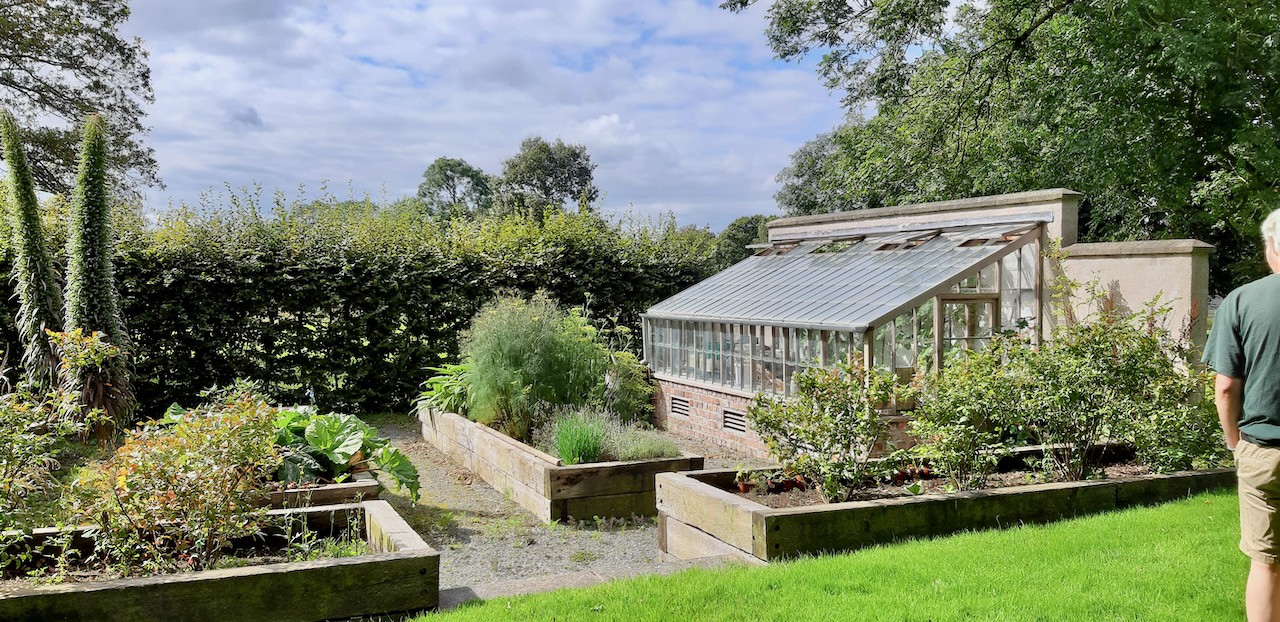
century, which is overlooked by a fine metal curvilinear lean-to glasshouse of c.1860 with heating 
pipes (Listed HB 15/18/020); in section it is quadrant shaped with recesses, possibly for pots, 
along the base of the wall. The building contained vines and shelving for pots and is now used to 
grow flowers for Armagh City and District Council. The associated garden has stone-edged paths, 
flowering shrubs, including magnolia, topiary and stone urns. Close by on the south side of the 
palace is a 20th century garden with stone sundial, clipped box hedges and a ‘Garden of the 
Senses’ created in the 1990s. The main house remained the archbishop’s palace until 1975 when 
a see house was built beside the cathedral. The palace and the core of the demesne were 
conveyed to Armagh City and District Council two years later and since 1981 the palace has been 
used as their offices with the service drive becoming the main entrance. The palace outbuildings 
have become a visitors’ centre—‘The Palace Stables’—with an adventure playground made beside 
the public car park to the west, all concealed in woodland, however the car park for the council 
office was less well concealed. In 2015 improvements were made to the front sweep of the 
palace, removing unsightly fencing and confining cars to a relatively discrete car park north-west 
of the house. Separate from council ownership is a golf course which occupies 126 acres (51ha) of 
the north-east section of the parkland. This had its origin in 1893-94 when a golf course was 
established here, but unfortunately in 1975 what had been previously a discretely laid out course 
was dramatically remodelled and extended to eighteen holes, resulting in the removal of much of 
the park’s 18th century south-eastern woodland belts but also saw the planting of extensive 

Register of Parks, Gardens and Demesnes of Special Historic Interest (NI) – November 2020 
fairway screens of fir, which are not only out of character with the original park scheme but block 
the historic vistas south; however, the golf course remains part of the registered area in the hope 
that this damage can be reversed at some stage in the future. SMR ARM 12:16 Franciscan Friary 
ruins, ARM 12:017 St Bridget’s Holy Well. Public access to part of the grounds. 
Portraits Q-R

Q

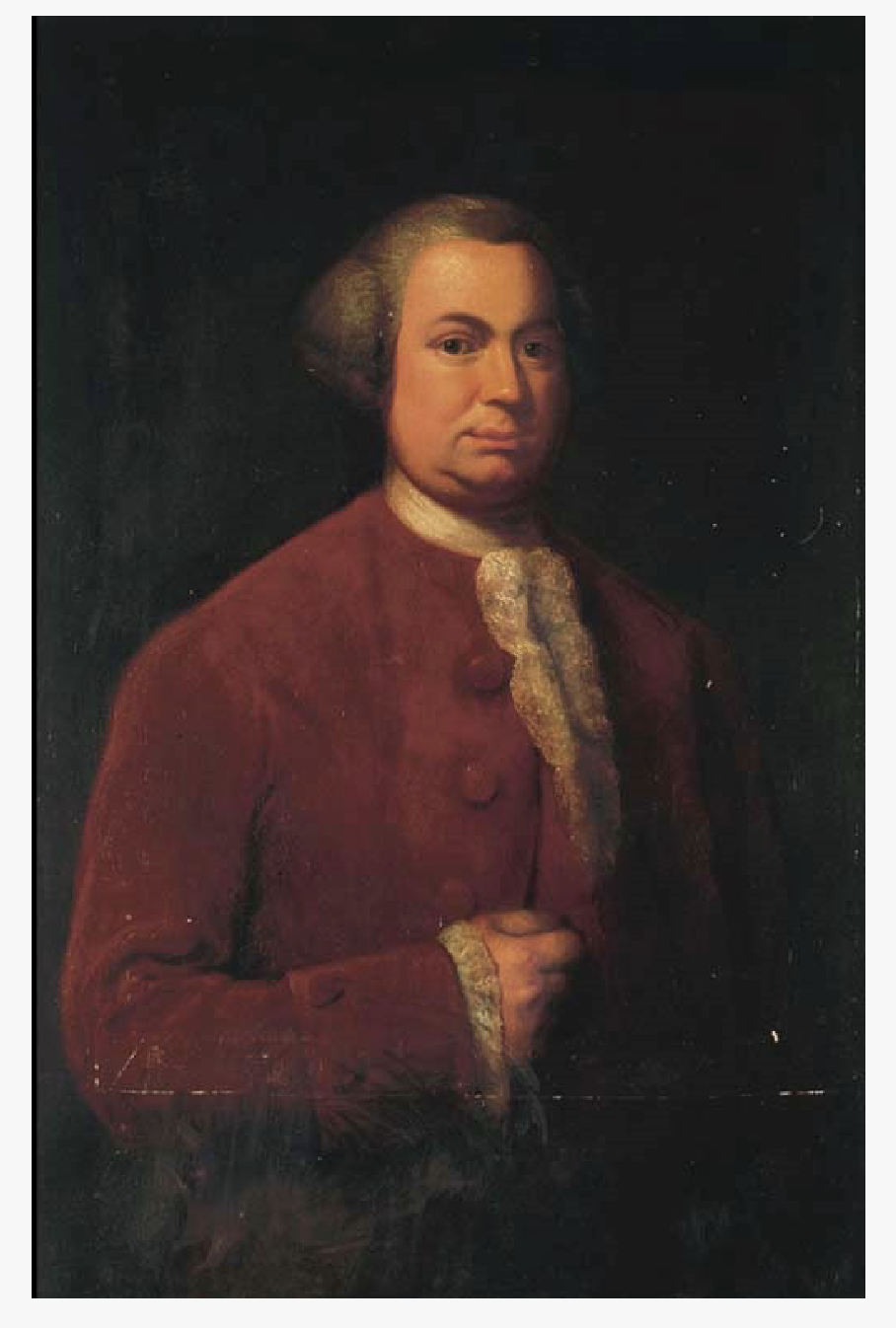
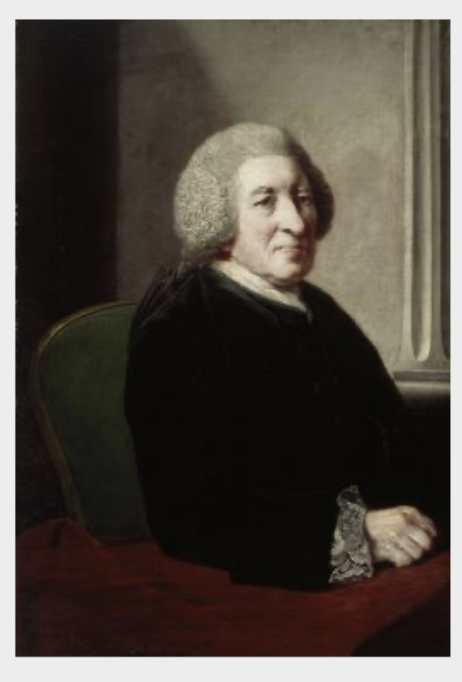
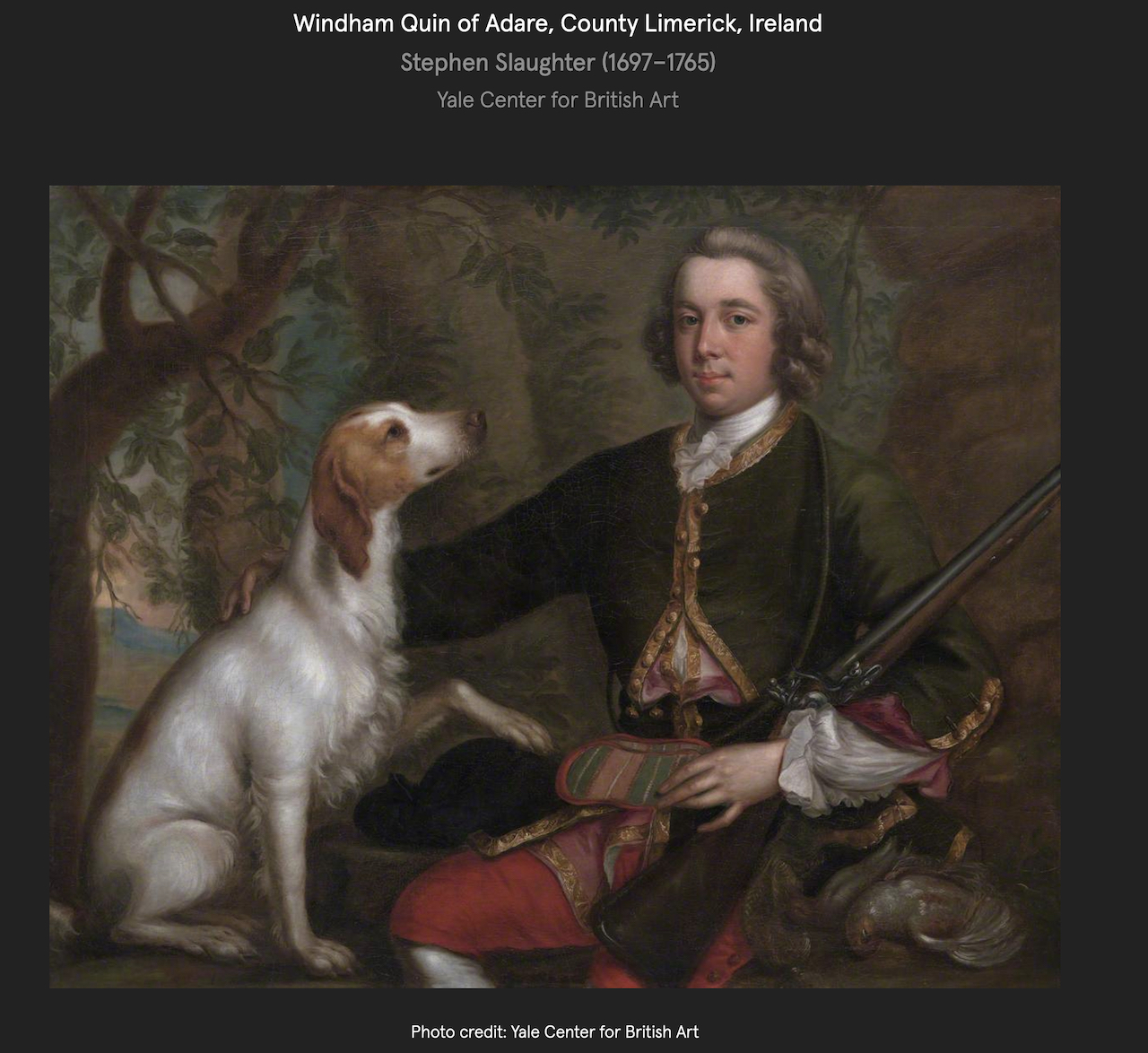
Windham Quin (1717-1789) of Adare, County Limerick by Stephen Slaughter, courtesy of Yale Center for British Art.
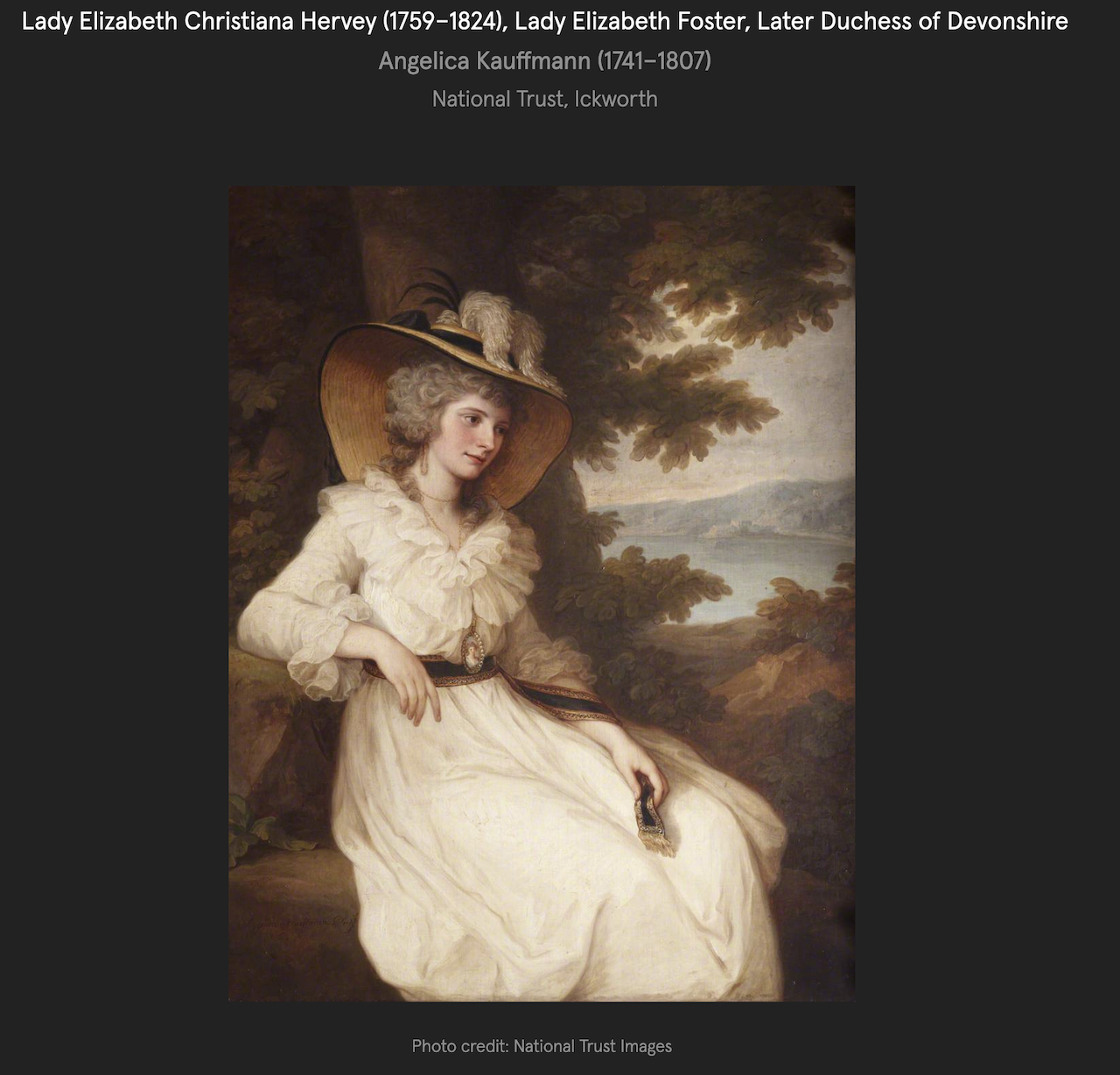
Elizabeth Christina Foster née Hervey (1759-1824) later Duchess of Devonshire by Angelica Kauffmann courtesy of National Trust Ickworth. She was the daughter of Frederick Augustus Hervey 4th Earl of Bristol, Bishop of Derry who built Downhill, Co Derry. She married John Thomas Foster MP (1747-1796) and later, William Boyle Cavendish 5th Duke of Devonshire. Last, she married Valentine Richard Quin 1st Earl of Dunraven and Mount Earl.

R

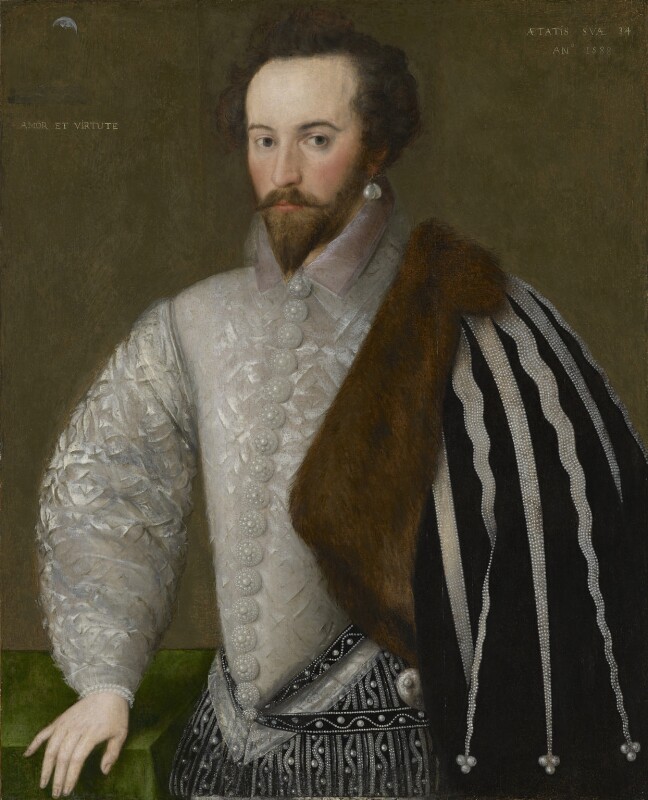
Walter Raleigh (1552-1618) by Unknown English artist 1588, National Portrait Gallery of London ref. 7.
JOHN RAWDON, 1ST EARL OF MOIRA (1719-1793),by a follower of Thomas Hudson, courtesy Christies Property from two ducal collections Wodburn Abbey Bedford.
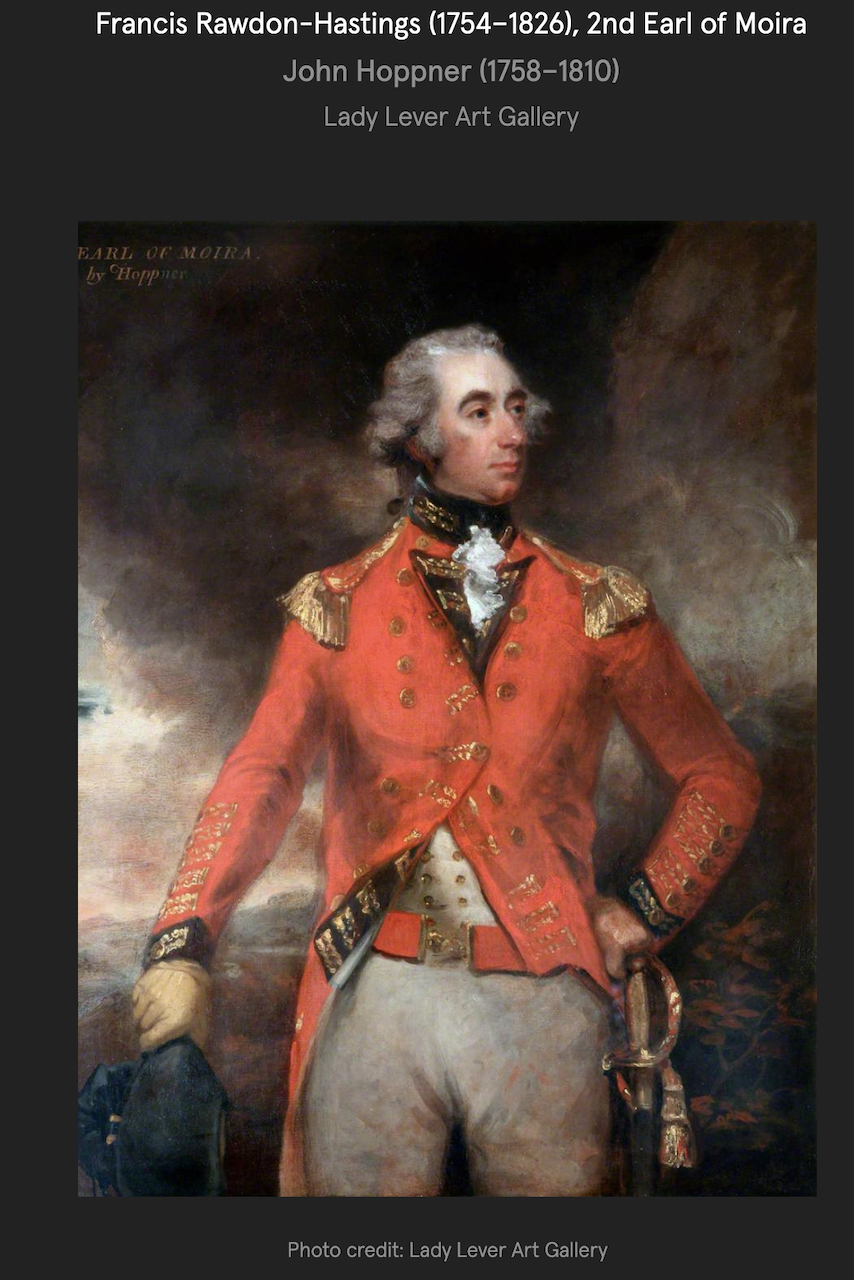
Francis Rawdon-Hastings (1754-1826) 2nd Earl of Moira by John Hoppner courtesy of Lady Lever Art Gallery.
John Redmond (1856-1918) by Harry Jones Thaddeus, 1901, National Gallery of Ireland NGI889.
Catherine Vigors (1794-1820) by Robert Lawrence (1794-1820). Catherine was the daughter of Soloman Richards of Solborough, Co Wexford. She married Nicholas Aylward Vigors of Old Leighlin and Belmont, Co Carlow, in 1781. Photograph © Jennifer Winder-Baggot, www.irishhistorichouses.com
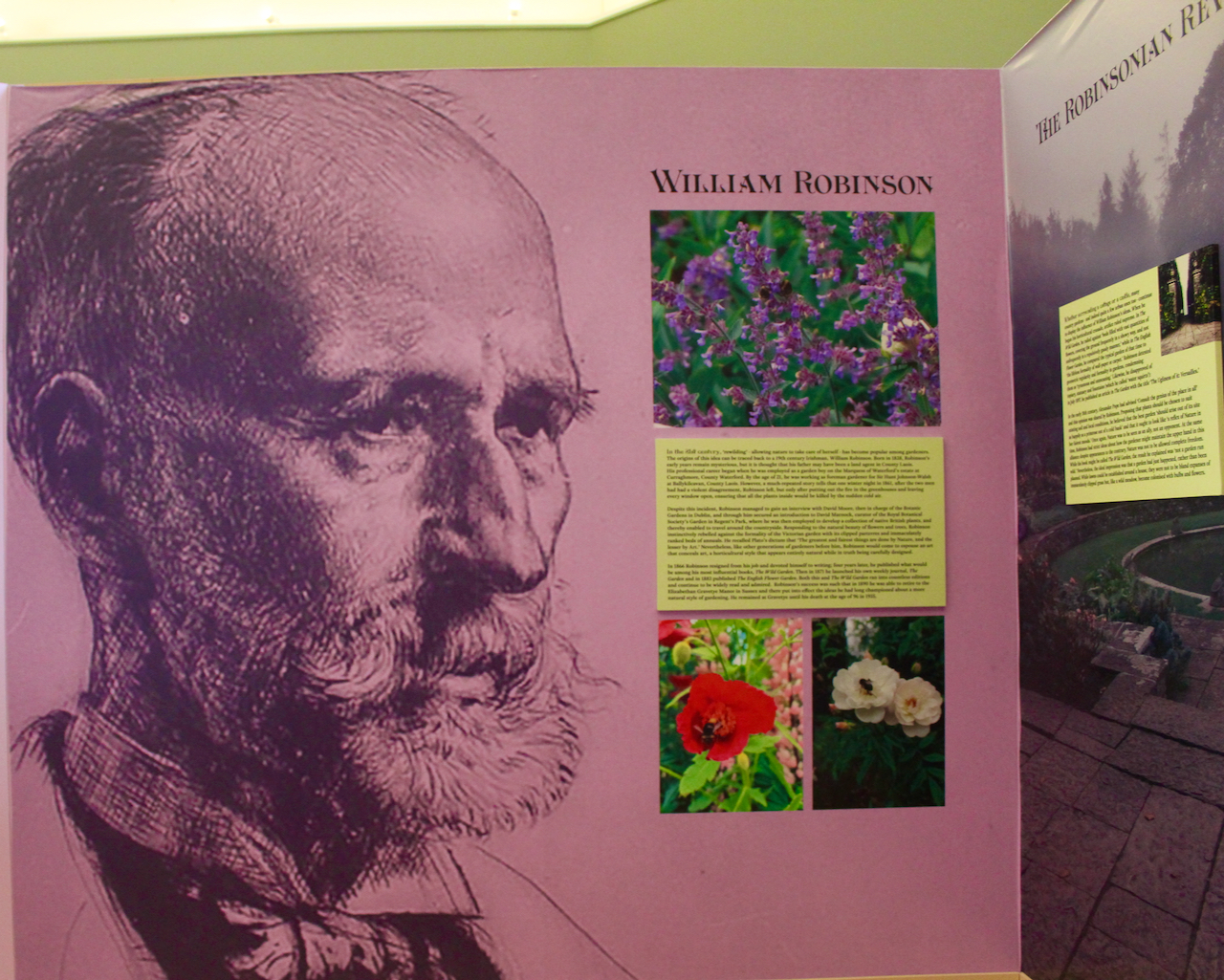
William Robinson, from “In Harmony with Nature, The Irish Country House Garden 1600-1900” in the Irish Georgian Society, July 2022, curated by Robert O’Byrne. Photograph © Jennifer Winder-Baggot, www.irishhistorichouses.com
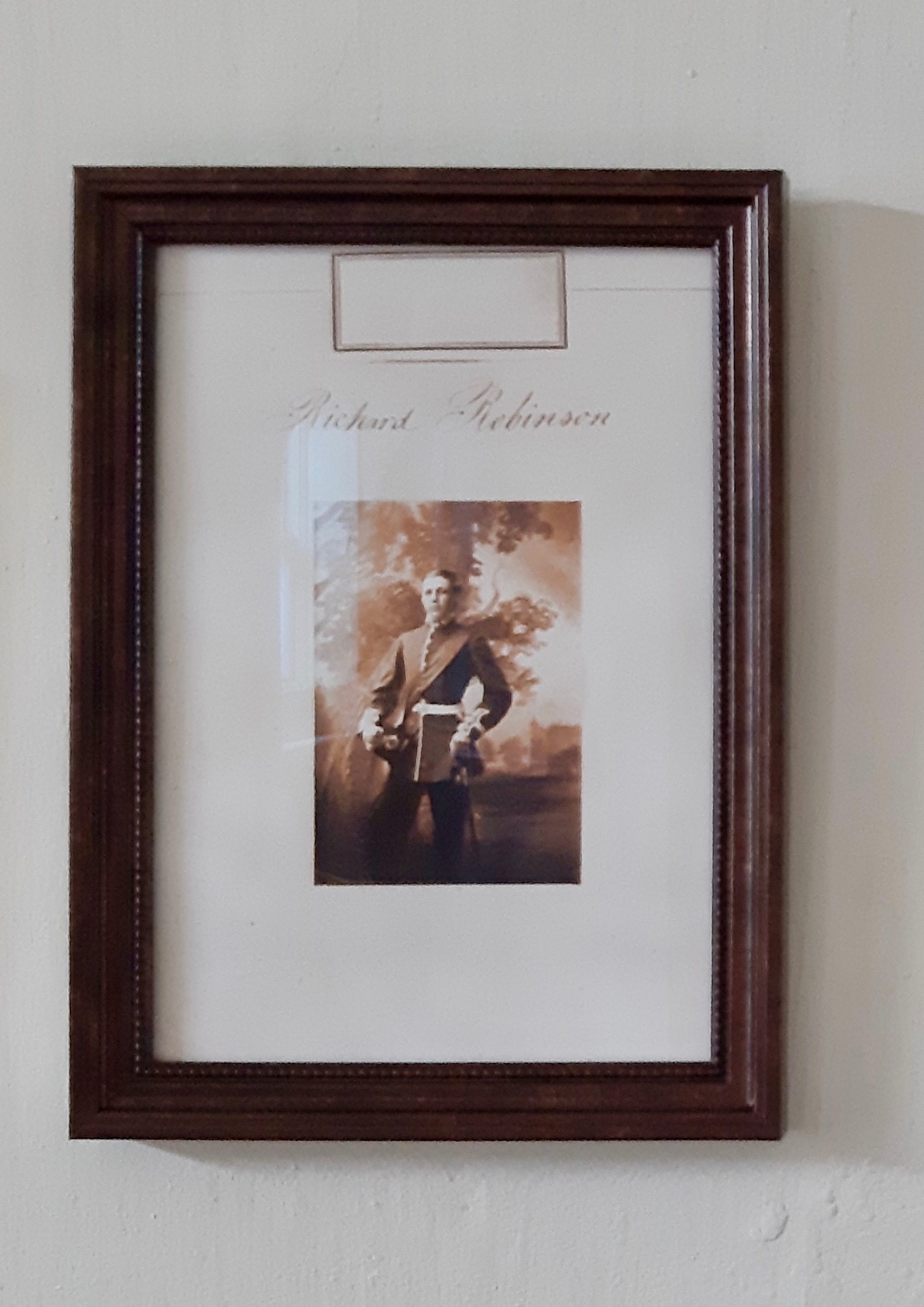
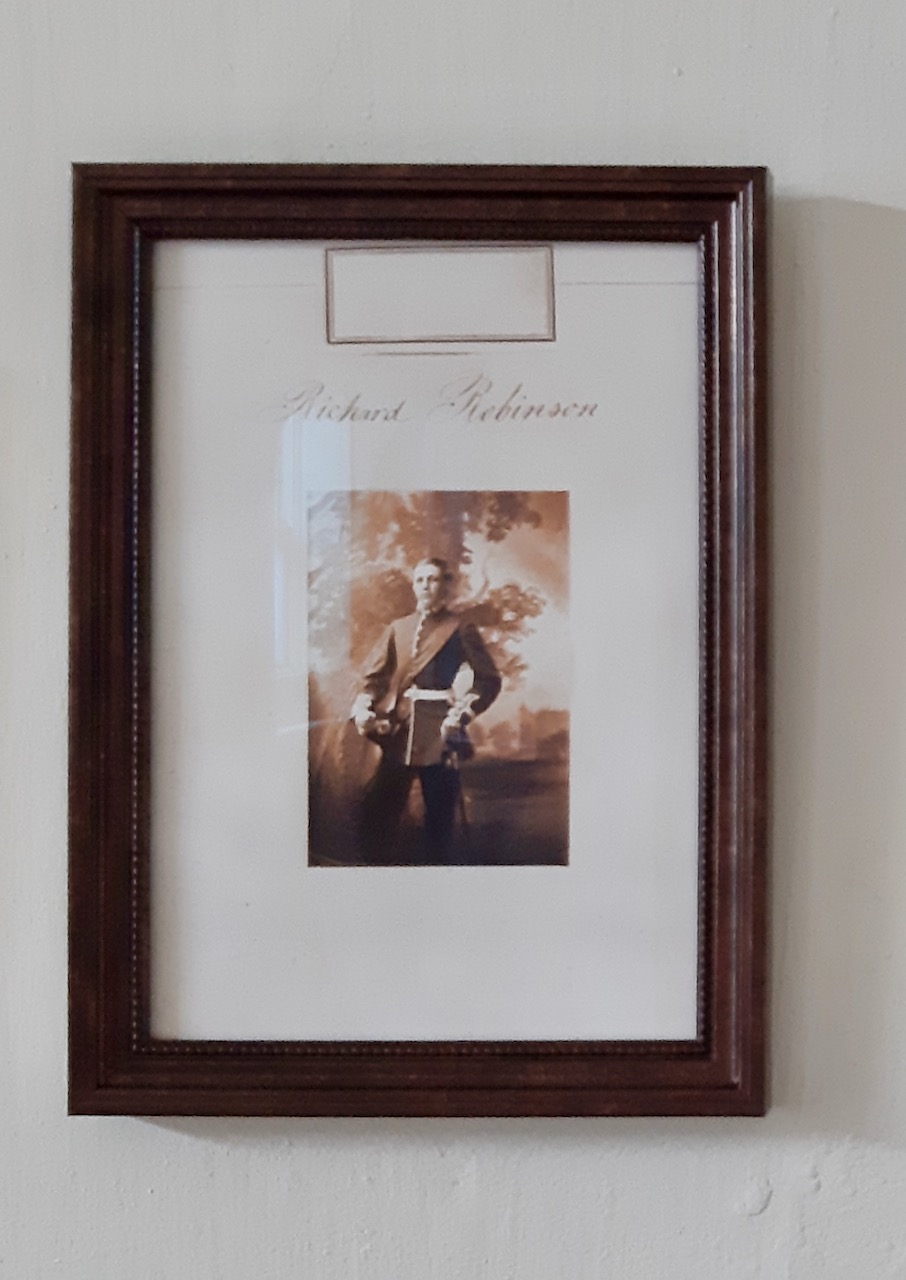
Richard Harcourt Robinson, died in 1910. Rokeby, County Louth
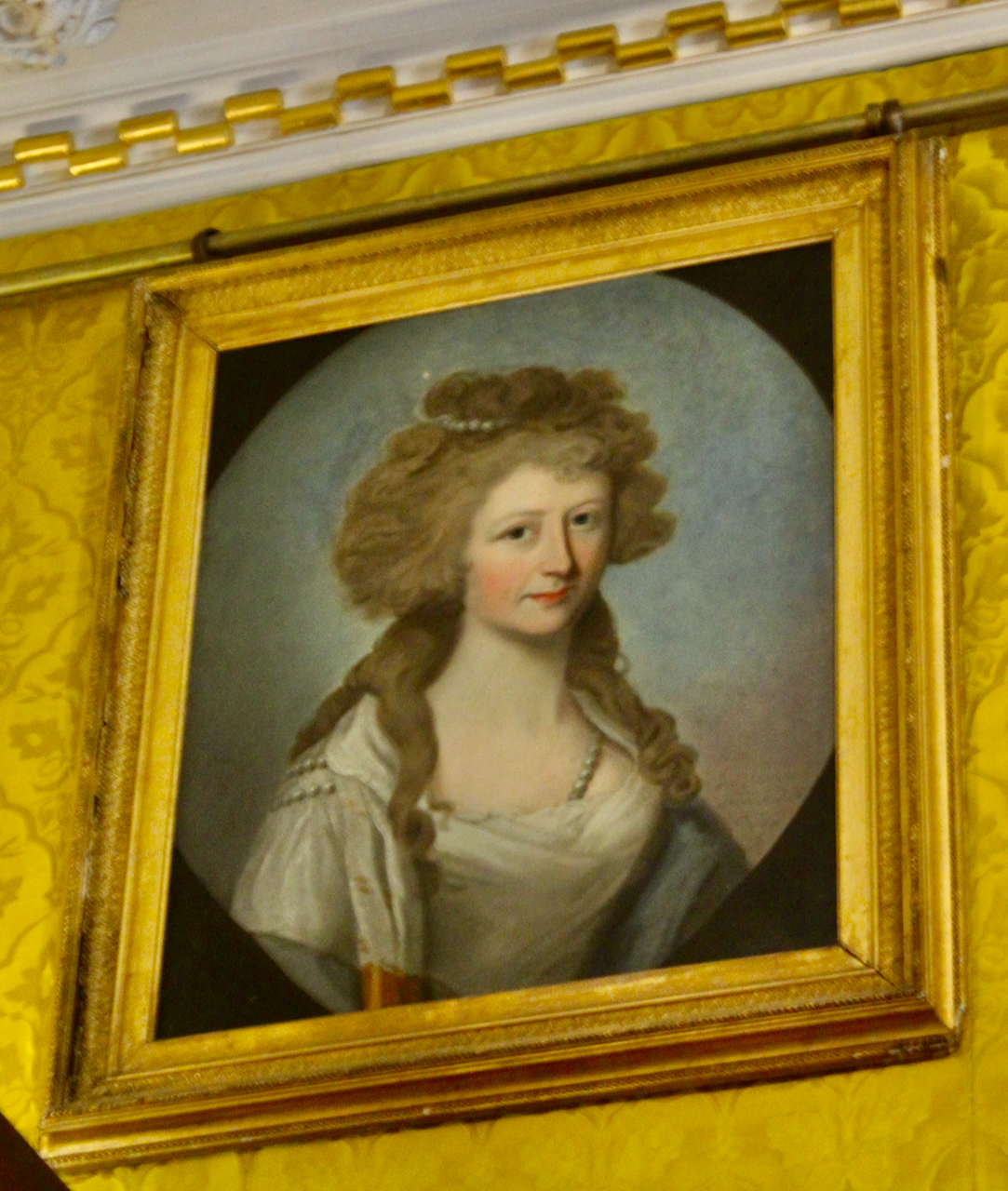
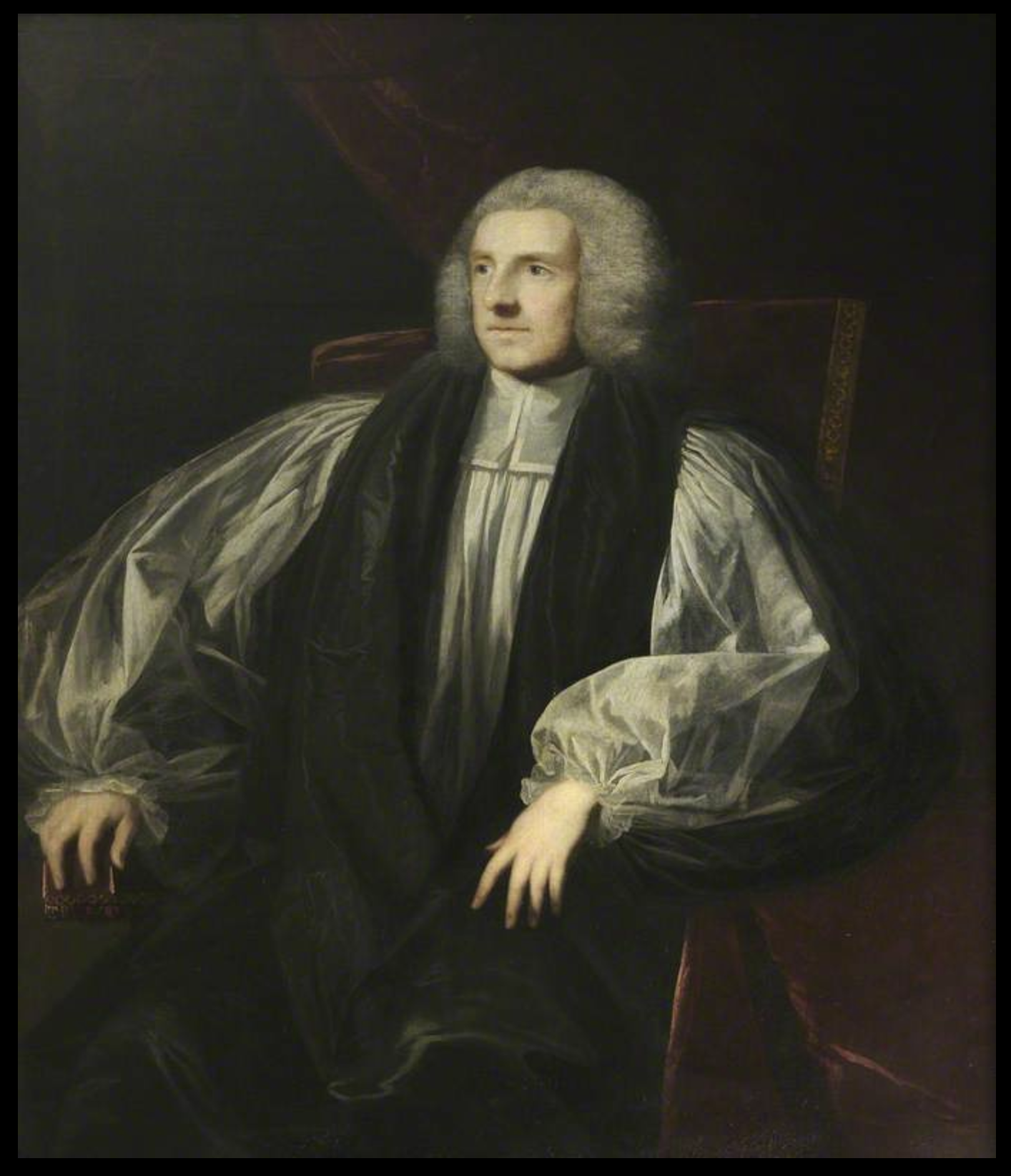
Archbishop Richard Robinson (1708-1794) by Angelica Kauffmann or Joshua Reynolds, courtesy of Armagh Robinson Library.
Richard Robinson (1787-1847), Baronet, English School (c.1847) with a depiction of his armorials and campaign medals issued to survivors of the Napoleonic Wars courtesy Adam’s auction 6 Oct 2009. This must be Richard Robinson 2nd Baronet of Rokeby Hall in County Louth. He was the son of John Freind, who married a sister of Richard Robinson Baron of Rokeby, and who took the name of Robinson when he inherted Rokeby.
John Loftus Robinson, architect of Dun Laoghaire County Hall. Dun Laoghaire County Hall. Photograph © Jennifer Winder-Baggot, www.irishhistorichouses.com
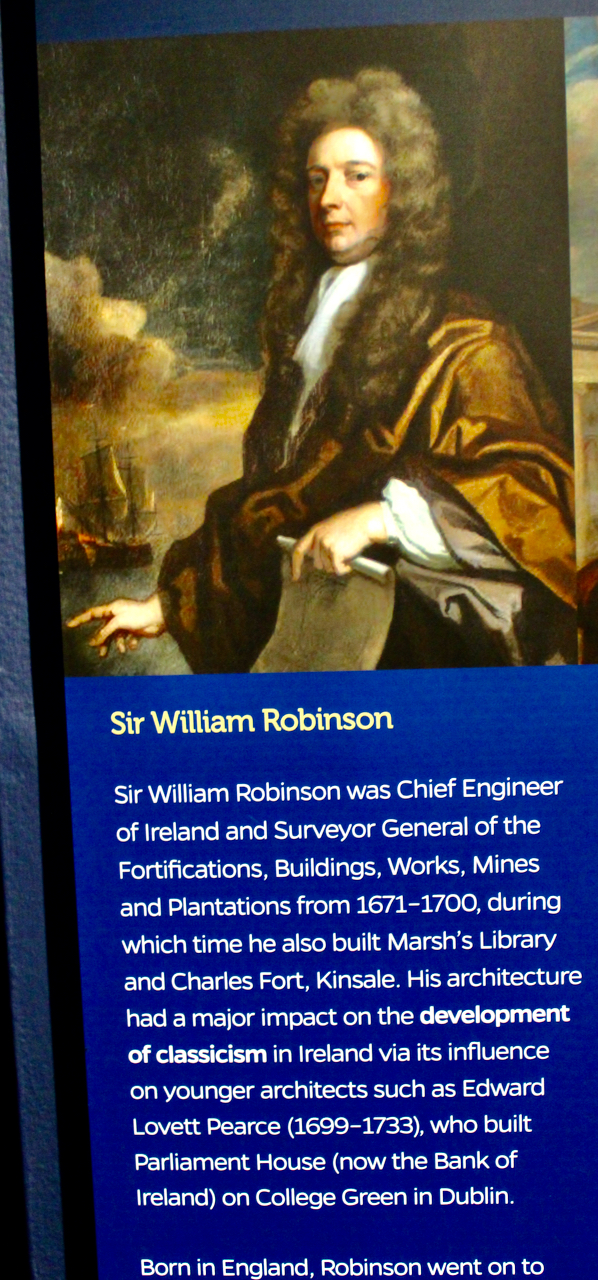
William Robinson (1644-1712) Royal Hospital Kilmainham, 15th October 2023.
William Robinson, Bt (1703-1777) by Matthew William Peters, 1777.
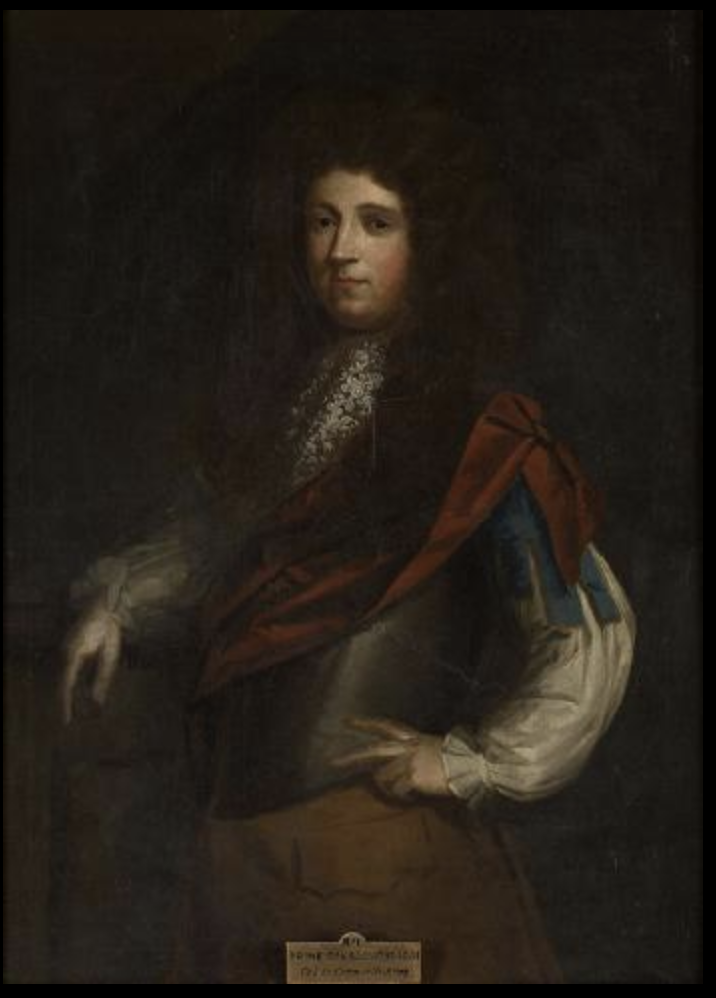
James Rochfort (executed in 1652 after killing someone in a duel) usually known by his nickname “Prime Iron,” by Garret Morphy. He married Thomasine Pigott of Dysart.

James Rochfort (“Prime Iron”) and Thomasine Pigott had several children including Charles who married Marbella, daughter of Theophilus Jones and Alice Ussher, and Robert (1652-1727), who became Speaker of the Irish House of Commons and Chief Baron of the Irish Exchequer. He married Hannah Hancock (d. 1733) of Twyford, County Westmeath.

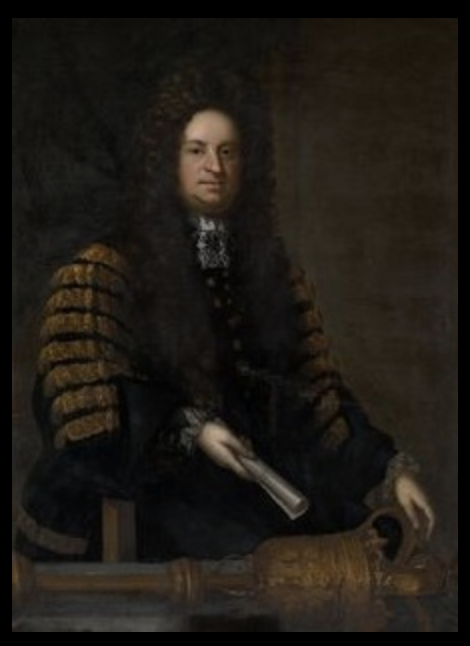
Robert Rochfort (1652-1727) as Speaker of the Irish House of Commons by an unknown artist, Photograph of a painting owned by Michael O’Reilly.

Robert Rochfort (1652-1727) and Hannah née Hancock had sons George Rochfort (1682-1730), later of Gaulstown, Co. Westmeath and John (1690-1771). George married Elizabeth, daughter of Henry Hamilton-Moore, 3rd Earl of Drogheda. John married, first, Deborah Staunton (d. 1737) then Emilia (d. 1770), daughter of John Eyre (1659-1709) of Eyre Court.

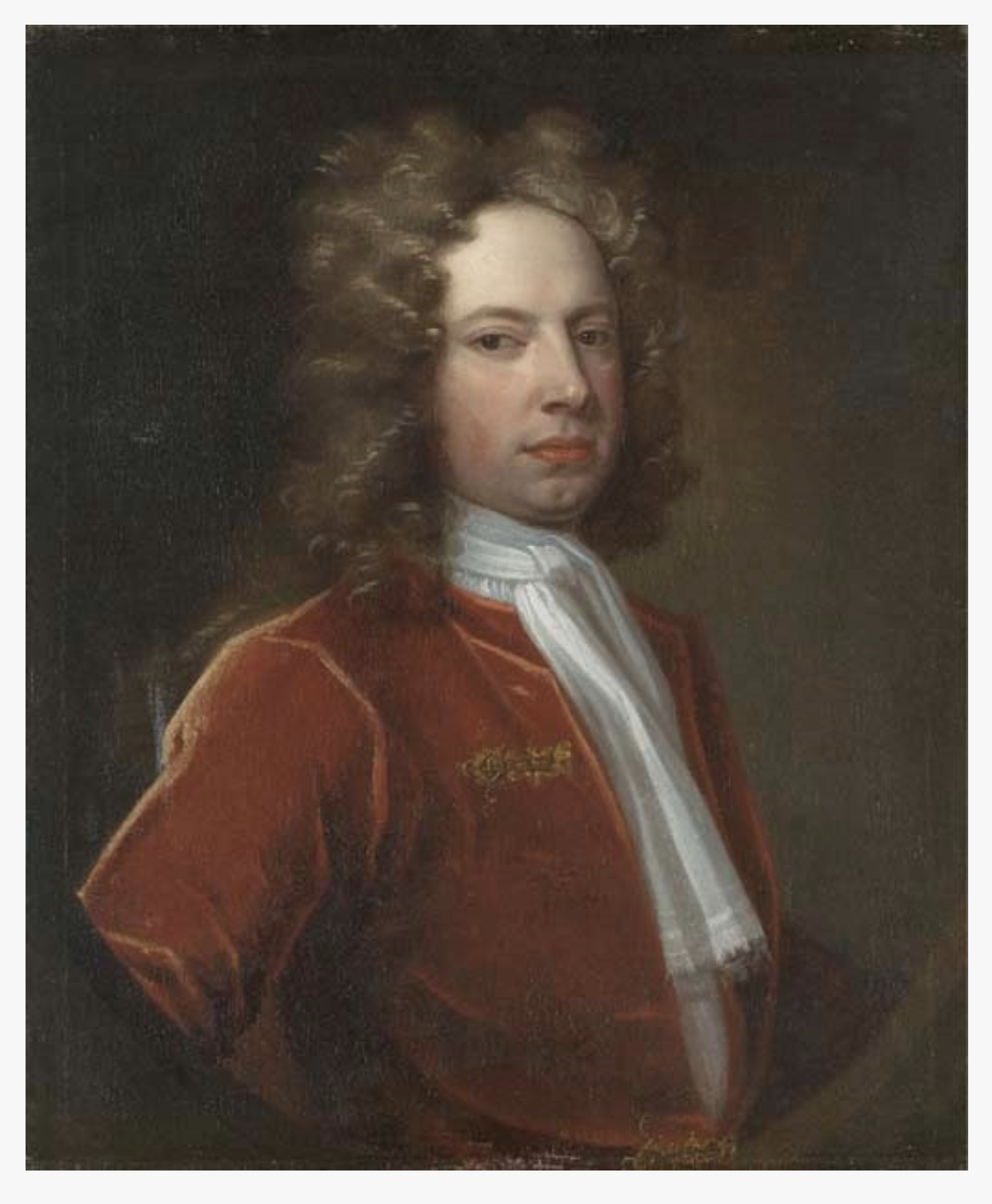
George Rochfort (1682-1730), of Gaulstown, Co. Westmeath, M.P. for Co. Westmeath by Charles Jervas courtesy of Christies Auction 2002

George and Elizabeth née Moore had lots of children. The heir was Robert (1708-1774) who was later created 1st Earl of Belvedere.

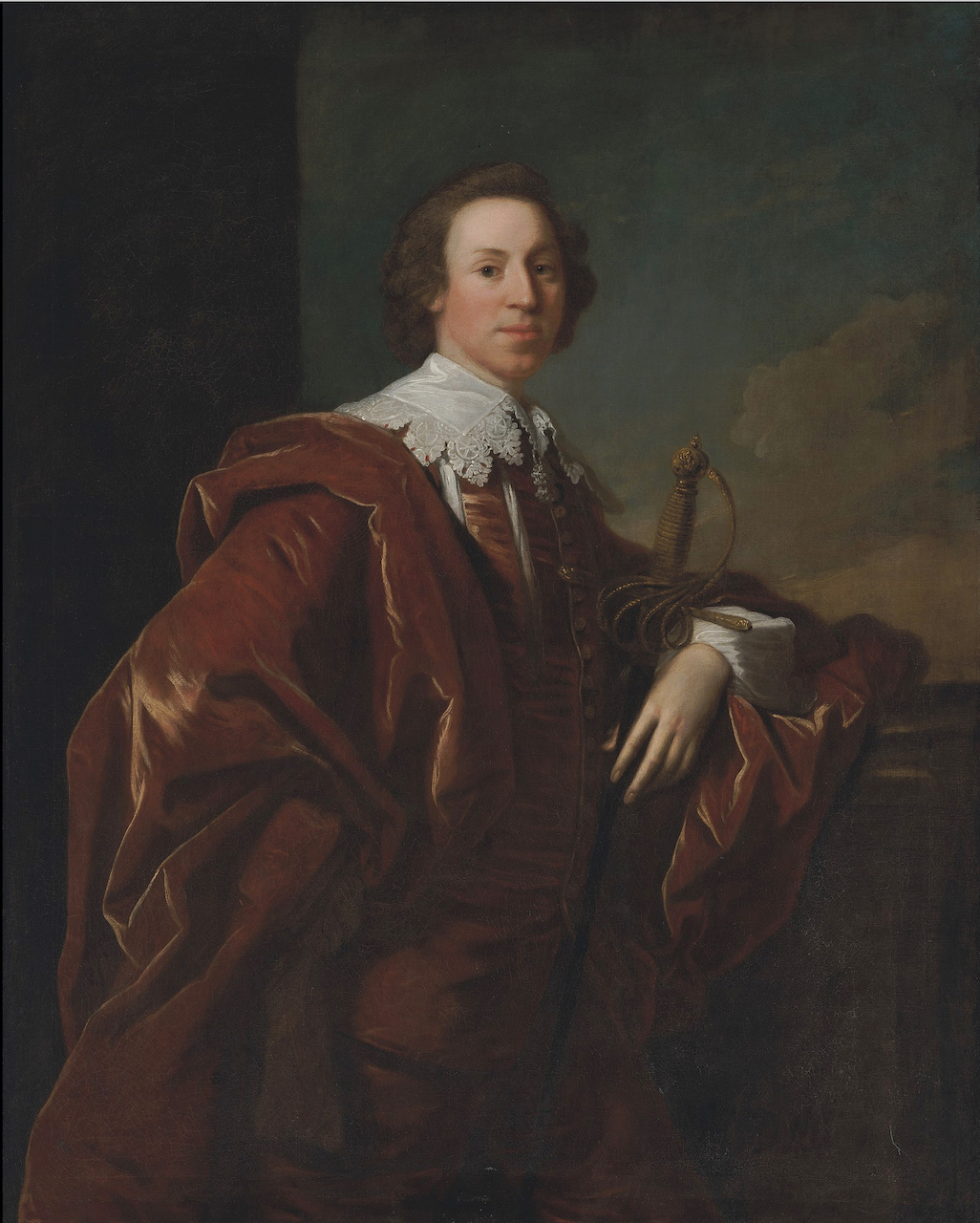
Robert Rochfort, 1st Earl of Belvedere (1708-1774), three-quarter-length, in van Dyck costume, by Robert Hunter It is possible that the present portrait was executed posthumously.

Other children included Mary (1705-1729) who married Henry Tuite, 6th Baronet. Alice (1710-1738) married Thomas Loftus (1701-1768). Thomasine, born 1716, married Gustavus Lambart of Beauparc, County Meath (a section 482 property, see my entry). Anne married Henry Lyons, High Sheriff for King’s County. William (1719-1772) married Henrietta Ramsay. Arthur married Sarah Singleton and became MP for County Westmeath. George (1713-1794) married Alice, daughter of Gustavus Hume, 3rd Baronet.

Jane Butler née Rochfort Countess of Lanesborough (1737-1828) Attributed to Thomas Pope Stevens courtesy Christies Irish Sale 2002. She was the daughter of Robert Rochfort, 1st Earl of Belvedere and married Brinsley Butler, 2nd Earl of Lanesborough.
Sarah Rochfort (nee Singleton) was the daughter of The Rev. Rowland Singleton (1696-1741) of Drogheda, later Vicar of Termonfeckin, County Louth, wife of Arthur Rochfort (1711-1774) of Bellfield House Co Westmeath, sold at Shepphards.

The first Earl of Belvedere is infamous for locking up his wife, Mary Molesworth, daughter of the 3rd Viscount of Swords (see my entry about Belvedere, County Westmeath). Their daughter Jane (d. 1828) married Brinsley Butler, 2nd Earl of Lanesborough. Robert 1st Earl’s son George (1738-1813) succeeded as 2nd Earl of Belvedere.

George Rochfort (1738-1815), later 2nd Earl of Belvedere by ROBERT HUNTER (C. 1715/20-1801), Adams auction 18 Oct 2022.
George Rochfort (12 October 1738 – 13 May 1814), 2nd Earl of Belvedere, and his second wife Jane née Mackay, by Robert Hunter, 1804 courtesy of Christies.
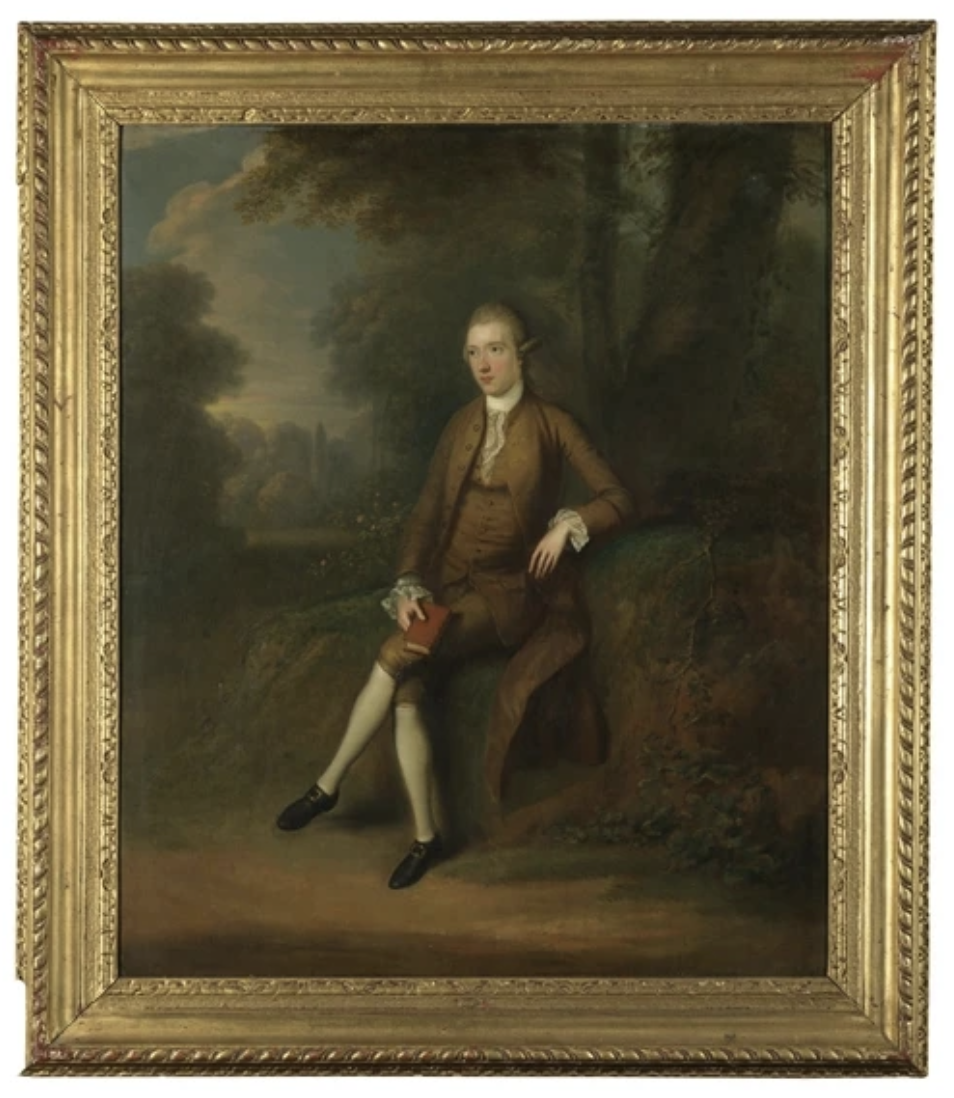
Portrait of a gentleman, likely George Rochfort, 2nd Earl of Belvedere, by Robert Hunter, sold Dec 2021 courtesy Christie’s.

Interestingly, the portrait of George Rochfort 2nd Earl of Belvedere by Robert Hunter is very similar to the portrait of Peter La Touche.

Peter La Touche of Bellevue (1733-1828) Date 1775 by Robert Hunter, Irish, 1715/1720-c.1803, photograph courtesy of National Gallery of Ireland.
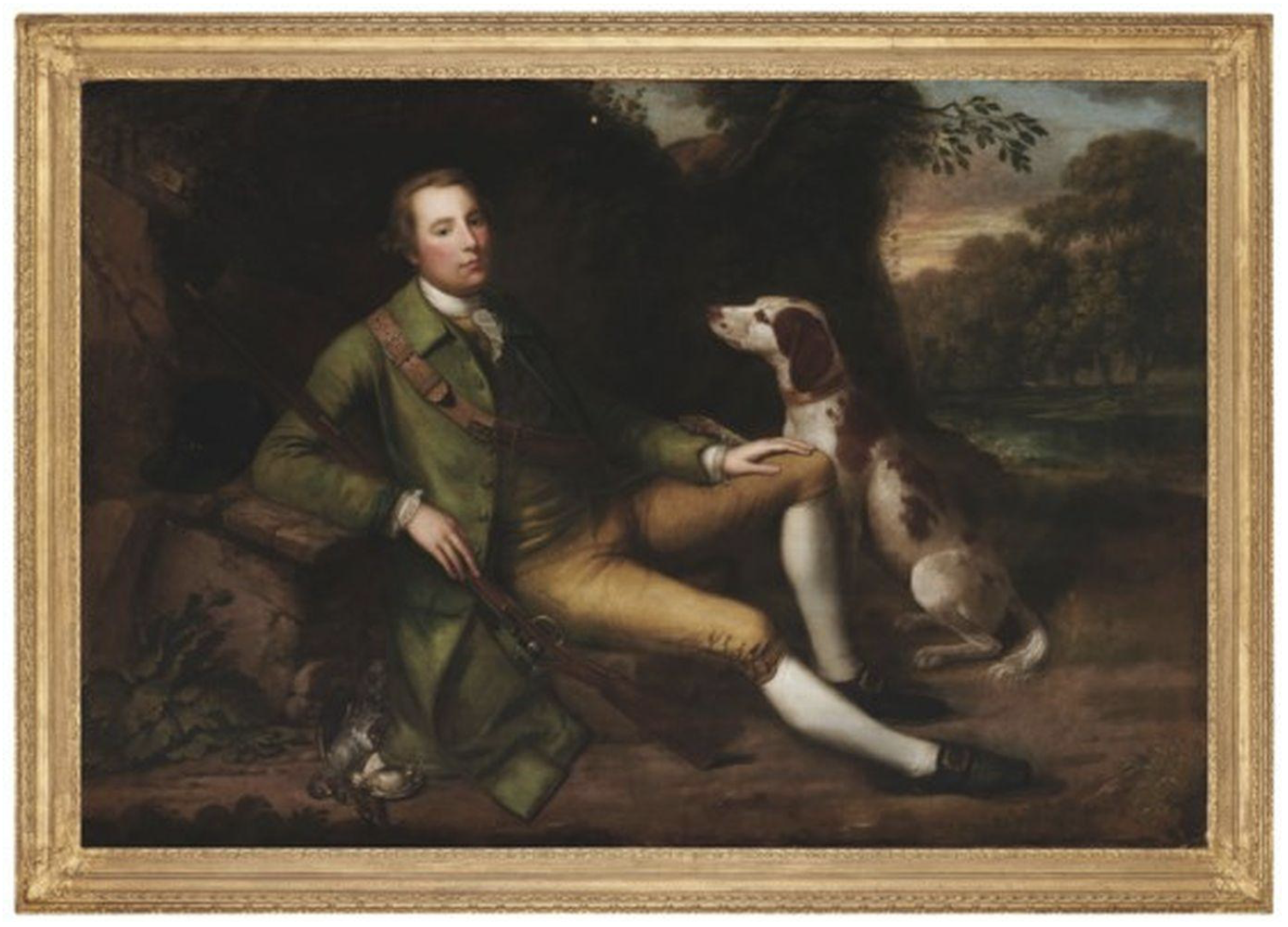
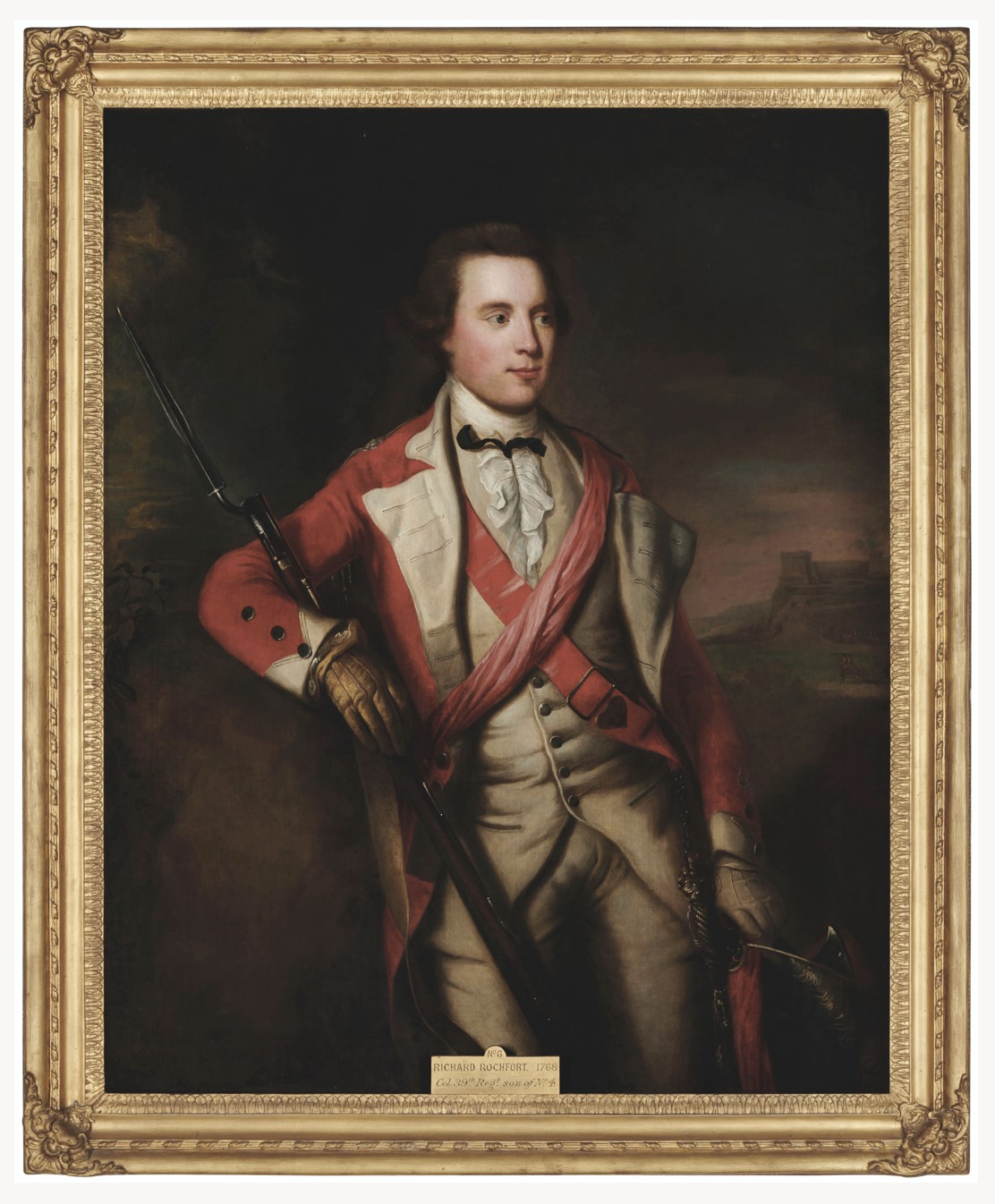
Richard Rochfort (1740-1776) by Robert Hunter courtesy Christies Old Master Paintings and Sculpture. He was another son of Robert Rochfort 1st Earl of Belvedere and Mary Molesworth.
John Rogerson (1676-1741), 1741 by Stephen Slaughter, courtesy of National Gallery of Ireland. Slaughter was an Englishman who paid many visits to Ireland.
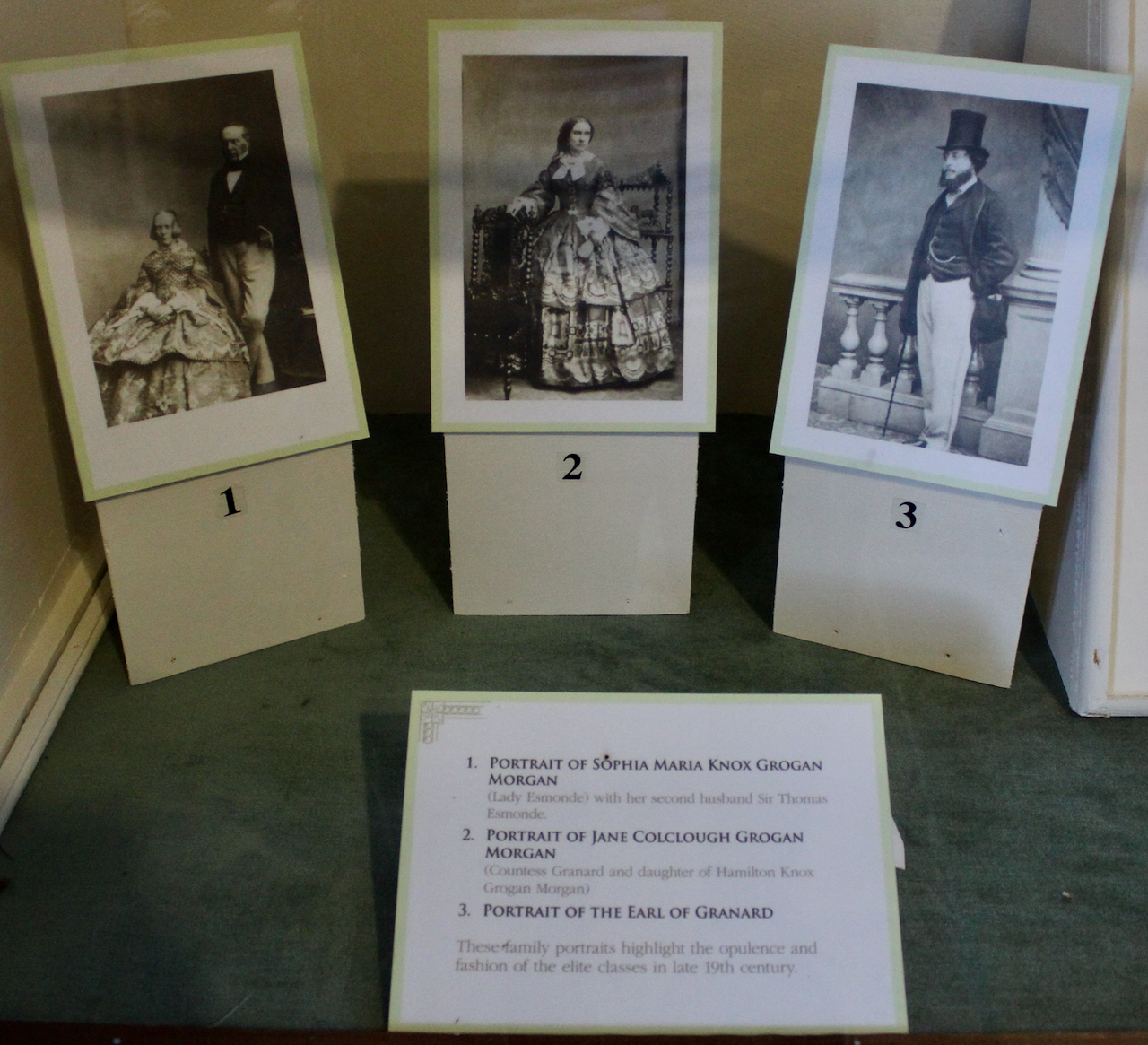
Sophia Maria Knox Grogan Morgan (1805-1867) née Rowe, with her second husband Thomas Esmonde 9th Baronet (1786-1868); Jane Colclough Grogan Morgan (1834-1872), she married George Arthur Forbes (1833-1889), 7th Earl of Granard, who is in the third portrait. Photograph © Jennifer Winder-Baggot, www.irishhistorichouses.com
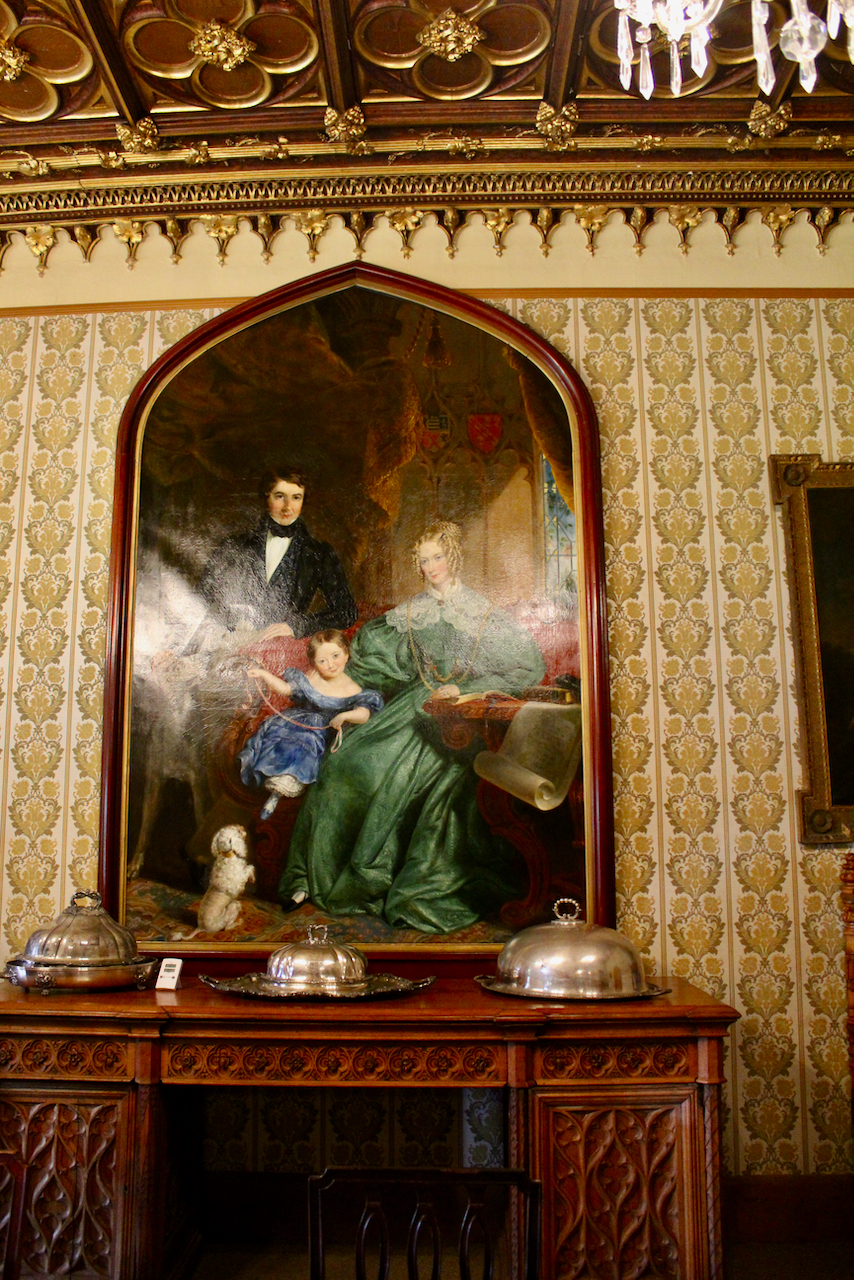
Hamilton Knox Grogan-Morgan (1807-1854) and his family of Johnstown Castle, County Wexford. His wife is Sophia Maria née Rowe (1805-1867). Her father was Ebenezer Radford Rowe of Ballyharty, County Wexford, whose mother was Elizabeth Grogan from Johnstown Castle! Her mother was Elizabeth Emily Irvine from Castle Irvine in County Fermanagh. Photograph © Jennifer Winder-Baggot, www.irishhistorichouses.com
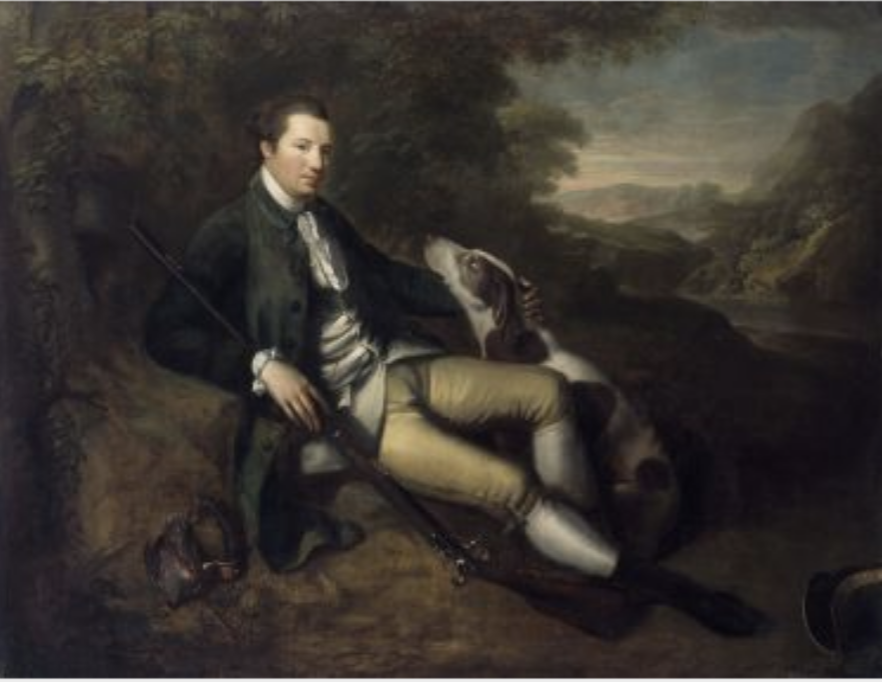
Hercules Rowley, 2nd Viscount Langford (1737-1796) by Robert Hunter for auction courtesy Sotheby’s May 2008. The auction catalogue tells us: “Provenance: By descent in the Longford family, Pakenham Hall until the 1960s. Notes: The sitter was the son and heir of Hercules Rowley and his wife Elizabeth Upton. His father served as M.P. for Londonderry between 1743 and 1760 and for County Meath 1761-1794. In 1766 his mother was created Baroness Summerhill and Viscountess Langford with patrimony to her male heirs by her husband and on her death in 1791 he succeeded to the viscountcy. He served as M.P. for County Antrim in two parliaments between 1783 and 1791. On his death without issue the peerage became extinct, but his cousin, Clotworthy Taylor, changed his name to Rowley and was created Baron Langford of Summerhill, County Leath. Early in his career Hunter painted a number of full lengths and exhibited eight such portraits at the Society of Artists. In the past these have been confused with the work of Arthur Devis, though as Anne Crookshank has pointed out they do not share Devis’s ‘doll-like manner’. Rowley’s sister Catherine married Edward Pakenham, 2υnd Baron Longford, who was also painted in a similar format by Hunter. Both portraits descended through the Longford family until the 1960s.
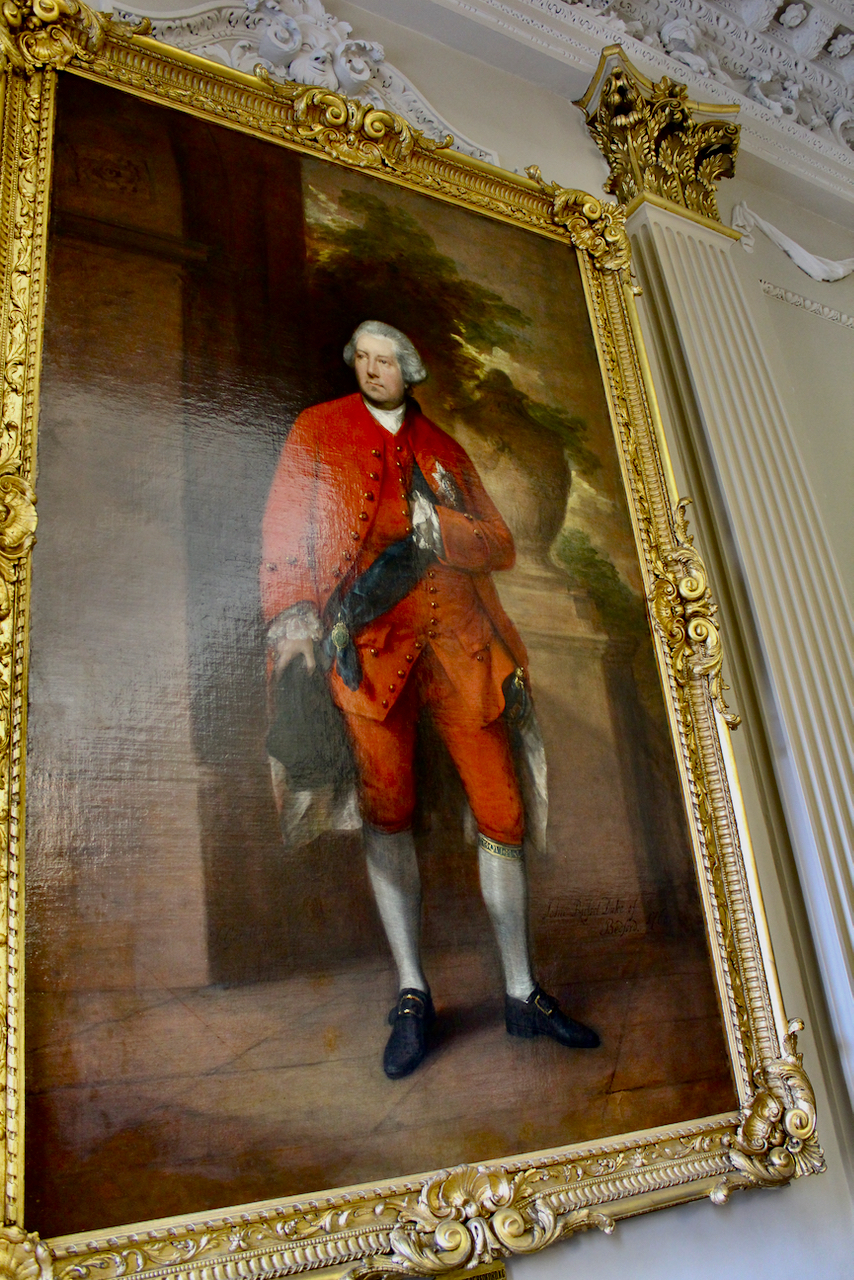
John Russell (1710-1771) 4th Duke of Bedford was Chancellor of the University 1765-1771. The portrait is by Thomas Gainsborough. Russell was Lord Lieutenant of Ireland in 1756 and resigned in 1761. Provost’s House, Trinity College Dublin. Photograph © Jennifer Winder-Baggot, www.irishhistorichouses.com
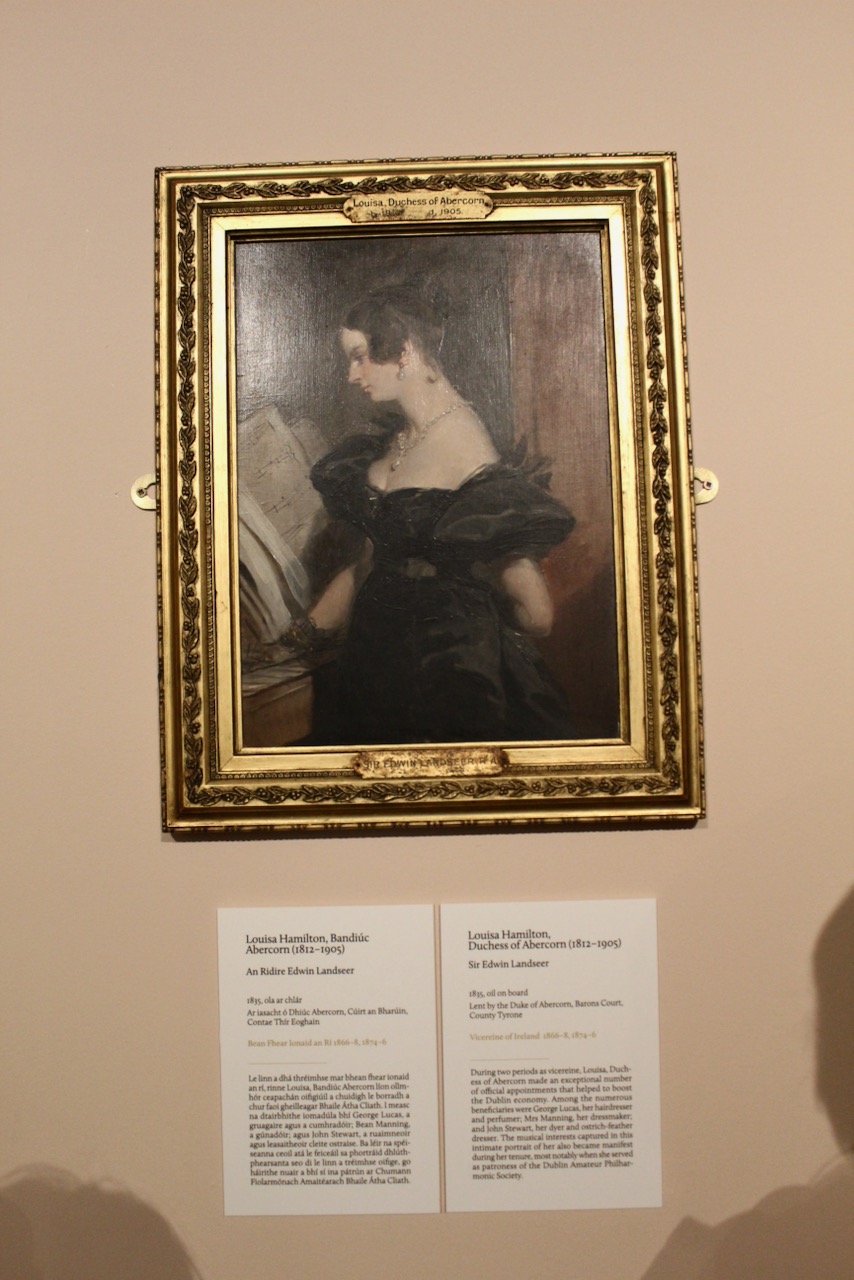
Louisa Hamilton née Russell Duchess of Abercorn, by Edwin Landseer (Vicereine 1866-68 and 1874-76), wife of James Hamilton (1811-1885) 1st Duke of Abercorn. Photograph © Jennifer Winder-Baggot, www.irishhistorichouses.com

Rokeby Hall, Grangebellew, County Louth A92 HX52 – section 482

Rokeby Hall, County Louth, September 2019. Photograph © Jennifer Winder-Baggot, www.irishhistorichouses.com

www.rokeby.ie

Open dates in 2026: June 1-30, Aug 1-31, 10am-2pm

Fee: adult/OAP €10, child/student €5

donation

Help me to pay the entrance fee to one of the houses on this website. This site is created purely out of love for the subject and I receive no payment so any donation is appreciated!

€15.00

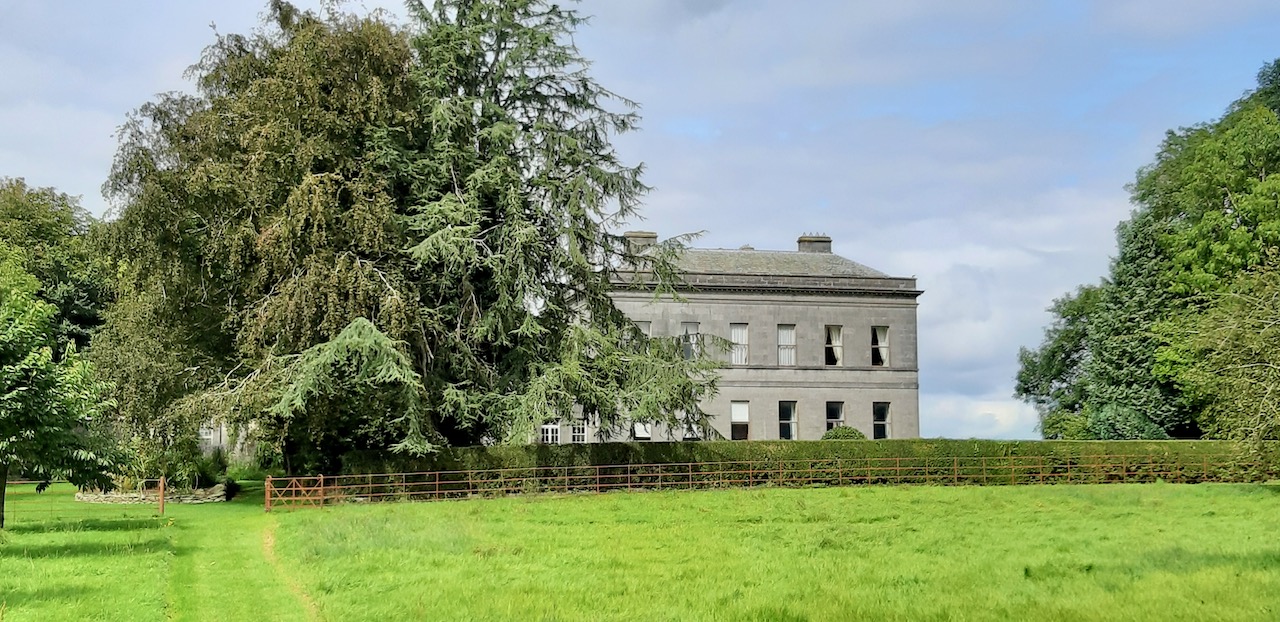
Rokeby, September 2019. Photograph © Jennifer Winder-Baggot, www.irishhistorichouses.com

Stephen and I visited Rokeby Hall in County Louth on Saturday September 7th, 2019. I texted ahead to alert Jean to our visit. We were lucky to have another beautifully sunny day!

Rokeby, September 2019. Photograph © Jennifer Winder-Baggot, www.irishhistorichouses.com

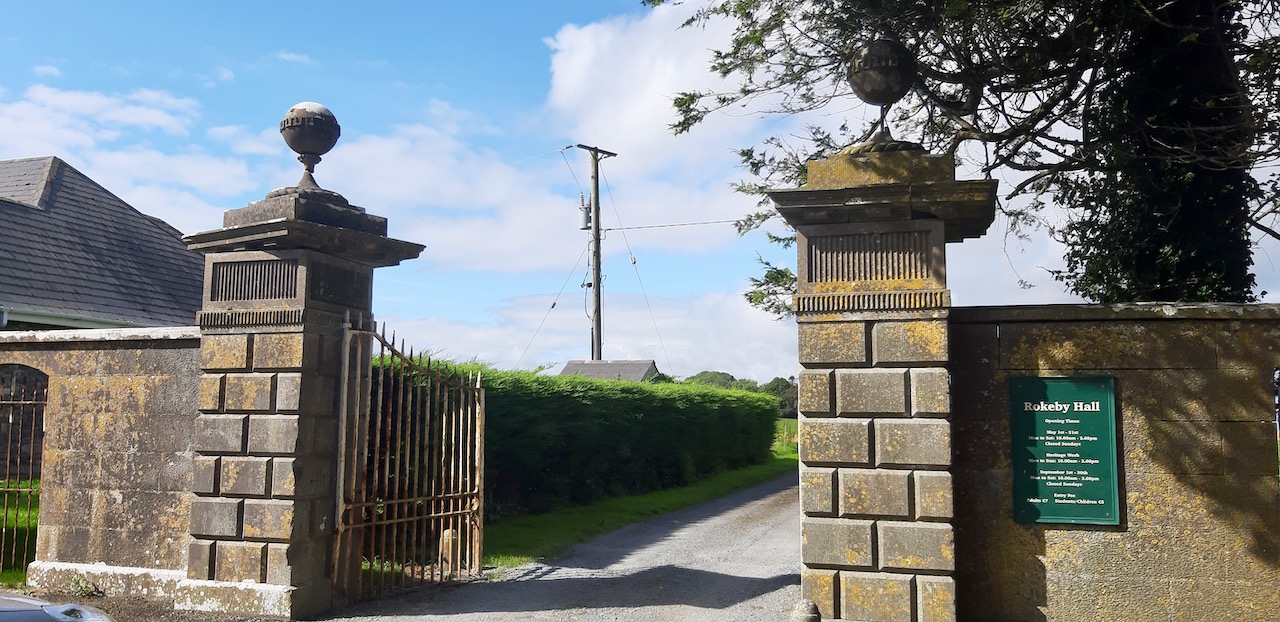
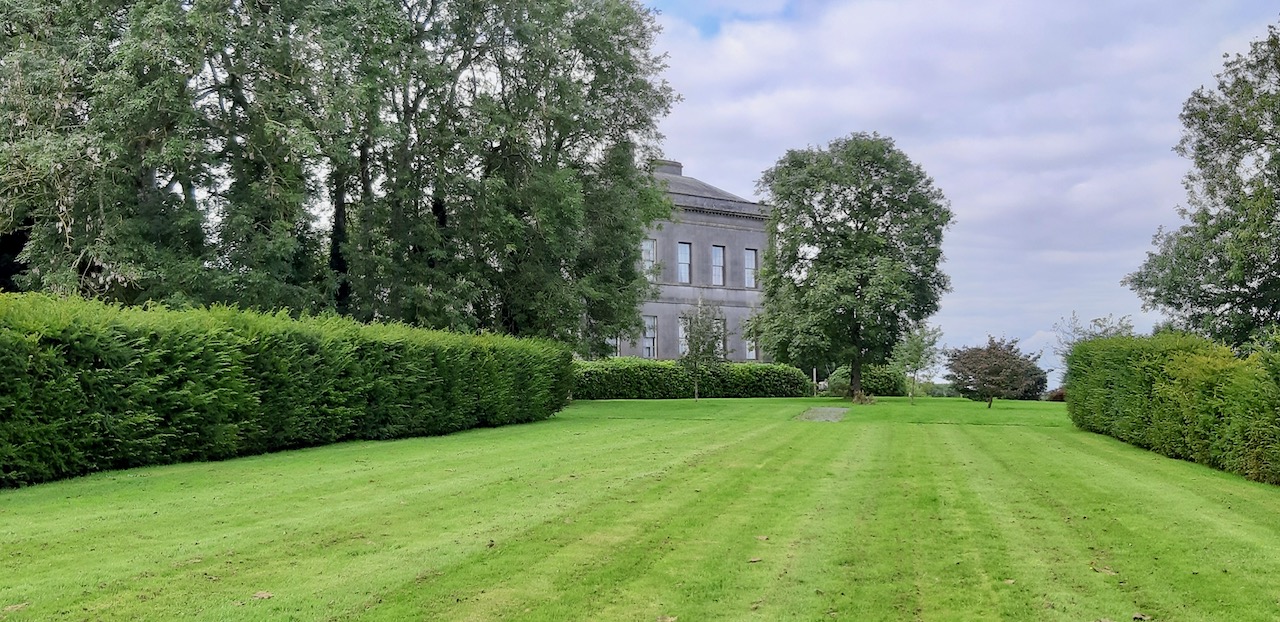
We entered the gates and drove up the impressive drive, through lovely fields.

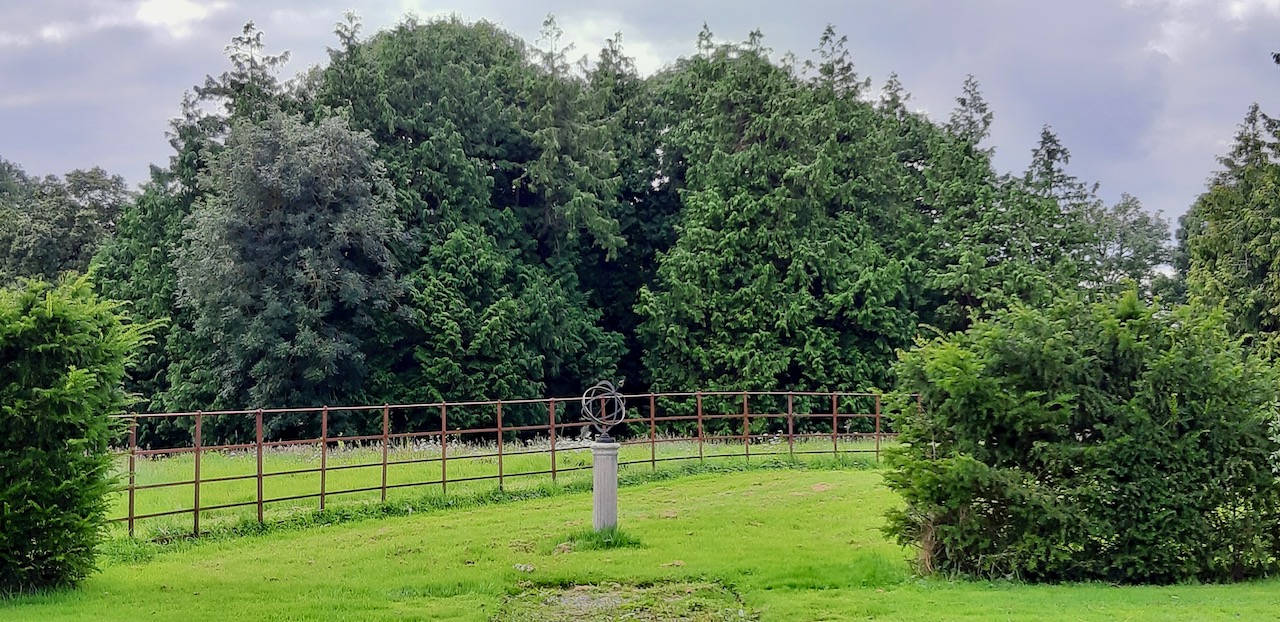
The Observatory at Rokeby. Photograph © Jennifer Winder-Baggot, www.irishhistorichouses.com

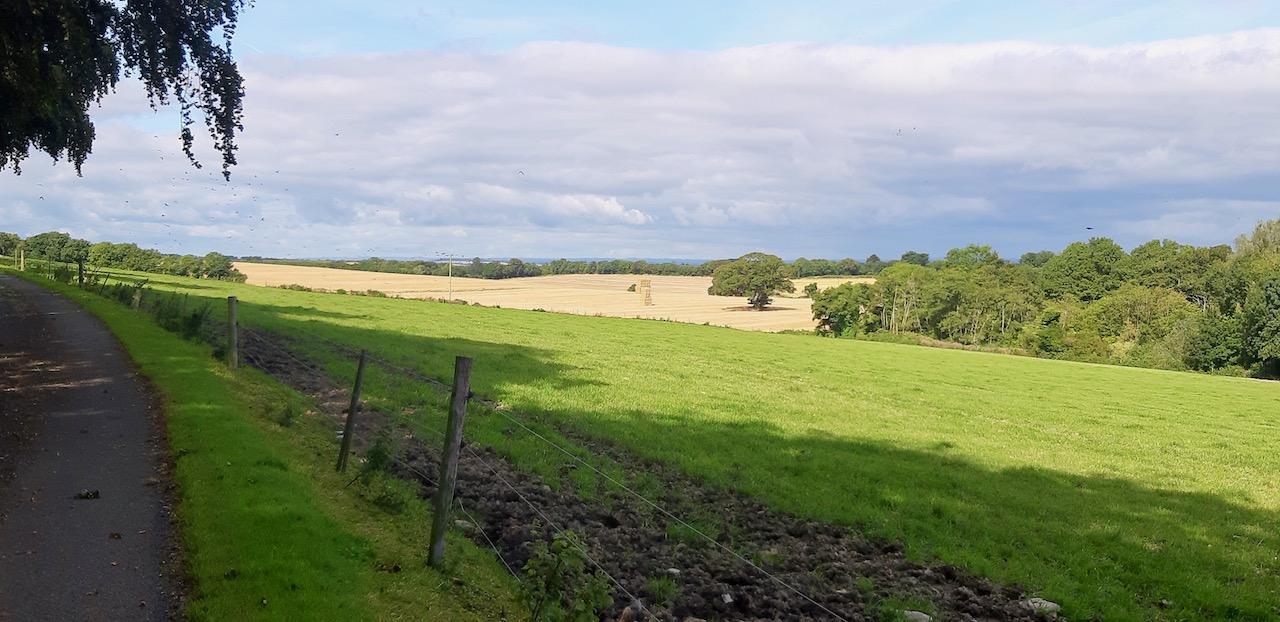
I paused as we approached the house to take a photograph of the observatory, and of the field near the house with the grazing cattle.

Rokeby, September 2019. Photograph © Jennifer Winder-Baggot, www.irishhistorichouses.com

There is an excellent website for Rokeby Hall which I read in advance so knew a little bit of information. [1]

“Rokeby Hall is a country house in the Neoclassical style built for Richard Robinson, Archbishop of Armagh.

Initially designed by Thomas Cooley and built c. 1785 by renowned Irish architect Francis Johnston, Rokeby is an elegant building with beautiful exterior and interior detailing which remains largely unchanged to this day.

The house is a testament to the architects and the skilled craftsmen of the Georgian era and is today considered to be one of the most significant historic country houses remaining in Co. Louth.”

Francis Johnston (1760-1829) is best known for building the General Post Office in Dublin, and is the son of another architect, William Johnston. Francis is from Armagh and first practised his architecture there, and then lived in Drogheda from 1786 before moving to Dublin about 1793. It was the archbishop of Armagh, Richard Robinson, who sent Johnston to Dublin to train under Thomas Cooley, having already worked with Cooley to design buildings.

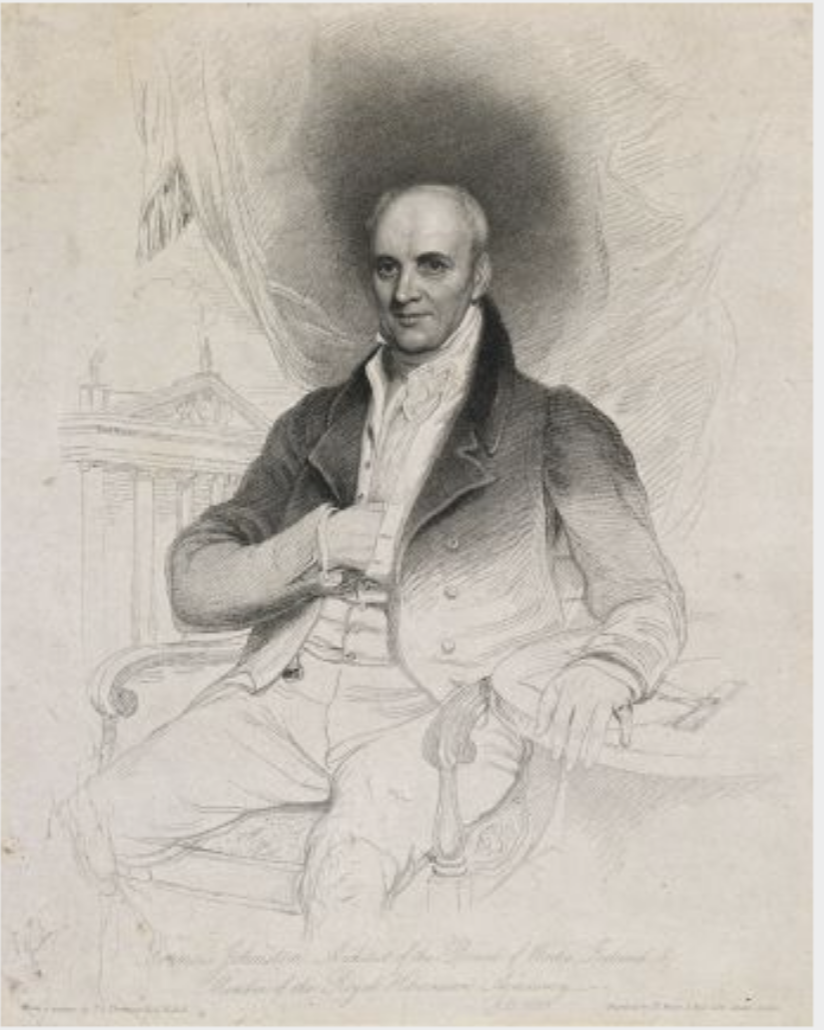
Francis Johnston (1761-1829), Architect, against the General Post Office, Dublin Date 1823 by Engraver Henry Hoppner Meyer, English, 1782-1847 After Thomas Clement Thompson, Northern Irish, c.1780-1857, photograph courtesy of National Gallery of Ireland.
Rokeby, September 2019. Photograph © Jennifer Winder-Baggot, www.irishhistorichouses.com

Thomas Cooley, who worked first as a carpenter then draughtsman in an architectural office, came from England to Ireland in 1768 when he won a competition to design a new Royal Exchange in Dublin, which is now the City Hall on Dame Street. He built several public buildings in Dublin in the neoclassical style. Together with James Gandon (1743–1823), Cooley was part of a small school of architects influenced by Sir William Chambers (1723–1796). Cooley died in 1784. He worked closely with the Archbishop Richard Robinson and designed many buildings in Armagh, including the Archbishop’s Palace (now the Town Hall) and the library. He also designed the Four Courts in Dublin, and Caledon in County Tyrone.

Cooley designed Rokeby Hall, and it fell to Francis Johnston to finish the project after Cooley’s death. Johnston continued to work with Archbishop Robinson, for whom he went on to build the Armagh Observatory and Armagh Courthouse, and other buildings in Armagh (I think that the observatory in Rokeby was built for the current owner, but I’m sure the Archbishop would have been delighted had he known, since he had the one in Armagh built in 1790 [2]!). Jean Young, the owner of Rokeby, recommended that we also visit another house in Louth designed and built by Francis Johnston, Townley Hall.

Johnston designed more buildings, including the beautiful Chapel Royal in Dublin Castle, and he converted Parliament House in College Green in Dublin into the Bank of Ireland. He also designed Charleville Forest Castle in Tullamore, County Offaly, and probably designed another Section 482 house, Turbotstown in County Westmeath (see my entry). He also helped in the 2nd Earl of Longford to convert Tullynally House into Tullynally Castle (see my entry), completing that work in 1803.

Jean greeted us and invited us inside. We paused in the capacious front hall to look at a portrait while she told us about the man responsible for having the house built, Archbishop Richard Robinson. Robinson named the building after his family home in Yorkshire, England, Rokeby Park.

The columns reminded me of “scagliola” [3] but are actually painted. Photograph © Jennifer Winder-Baggot, www.irishhistorichouses.com
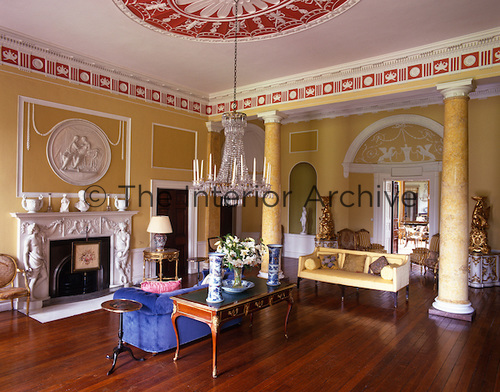
The Saloon in Caledon was designed in the neoclassical style by Thomas Cooley with columns of yellow scagliola; Copyright Christopher Simon Sykes, The Interior Archive Ltd, CS_GI7_09
Archbishop Richard Robinson (1708-1794) by Angelica Kauffmann or Joshua Reynolds, courtesy of Armagh Robinson Library.

The website tells us about Richard Robinson:

After coming to Ireland as chaplain to the Duke of Dorset in 1751, he eventually rose through the ranks of the church before becoming Archbishop of Armagh in 1765. Prior to Robinson’s appointment, most Archbishops had spent little time in Armagh which in 1759 had been described as ‘an ugly, scattered town’. Primate Robinson is credited with much of Armagh’s transformation to the beautiful Georgian city it is today. His many contributions to the city include the Armagh Robinson Library, the Armagh Observatory, the Gaol, the Armagh Infirmary and the Archbishop’s Palace, Chapel and Palace Stables.

He was created the 1st Baron Rokeby in 1777, choosing the title “Rokeby” as his elder brother Sir Thomas Robinson had by then sold the family estate of Rokeby Park. He purchased land at Marlay in Co. Louth from the Earl of Darby to create a new “Rokeby” estate. On his death, his titles passed to a cousin but he left the Rokeby estate in Louth to the son of his sister Grace. The Reverend John Freind changed his name to his maternal surname “Robinson” and moved from England to Rokeby Hall in 1794.”

Lord Rokeby’s coat of arms on the decorative Neoclassical pediment. Photograph © Jennifer Winder-Baggot, www.irishhistorichouses.com

I was surprised to hear that an archbishop was made a Baron, but Jean assured me that this was quite common.

Jean has studied the history of her home, completing a Masters degree in Maynooth, so we thoroughly enjoyed our discussion and she was able to explain the history of ownership of the house as well as architectural details. It is the details of the house which are special.

Rokeby, County Louth. Photograph © Jennifer Winder-Baggot, www.irishhistorichouses.com
Rokeby, September 2019. Photograph © Jennifer Winder-Baggot, www.irishhistorichouses.com

I also asked why Robinson lived here in Rokeby rather than in Armagh, since he was archbishop of Armagh. Jean explained that archbishops had much work to do in Dublin, including taking their place in Parliament, so it was suitable to live in a premises between Dublin and Armagh. The Irish Aesthete Robert O’Byrne has a delightful entry that tells us more about this Archbishop of Armagh, who, according to O’Byrne, “behaved more like a continental prince-bishop.” He extravagantly travelled in a carriage with six horses, attended by three footmen behind. [4]

In Classic Irish Houses of the Middle Size, Maurice Craig writes (p. 152):

The north (entrance) front of the house built for Richard Robinson, Archbishop of Armagh, in the years following 1785, probably by Thomas Cooley (1740-84) and certainly with the participation of Francis Johnston (1760-1829). Both in elevation and in plan it is related to Lucan House, and in plan also to Mount Kennedy. James Wyatt, Michael Stapleton, Richard Johnston and even Sir William Chambers are involved in a complex tale which may never be fully unravelled. Rokeby is more remarkable for the beauty of its detail than for its overall impression…”

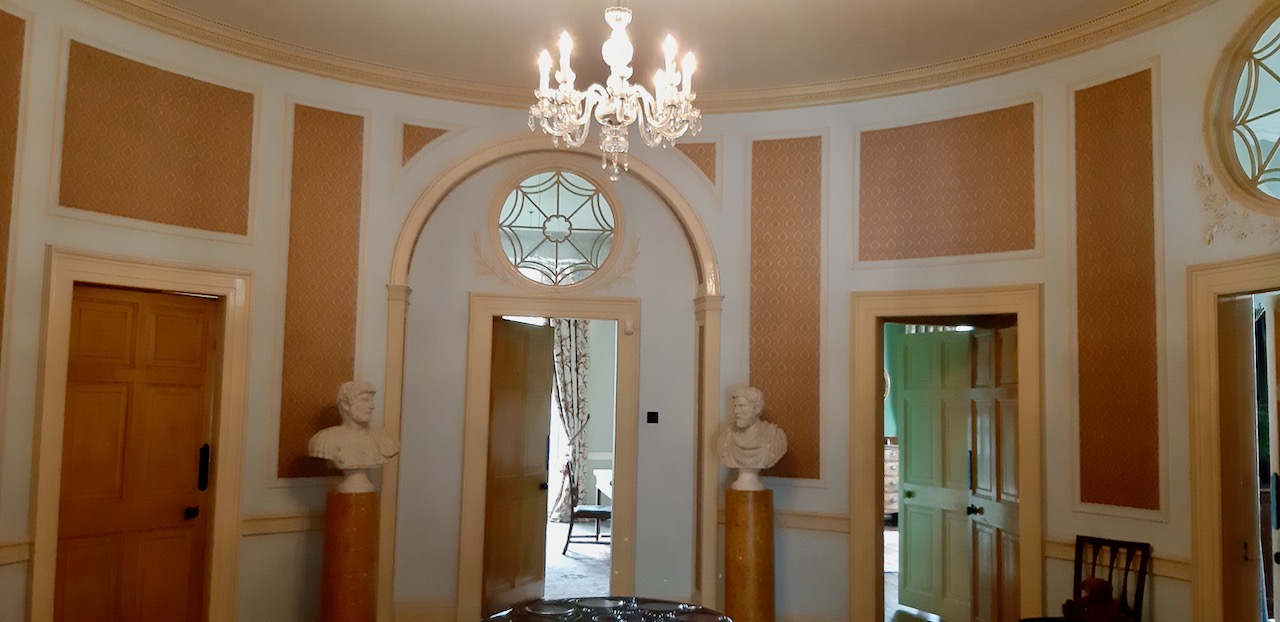
The most noteable feature of the house, for me, is the round hallway upstairs, and the second one above that in what seems to be the nursery and children’s area – which we saw after a tour of the first floor rooms.

Rokeby, September 2019. Photograph © Jennifer Winder-Baggot, www.irishhistorichouses.com

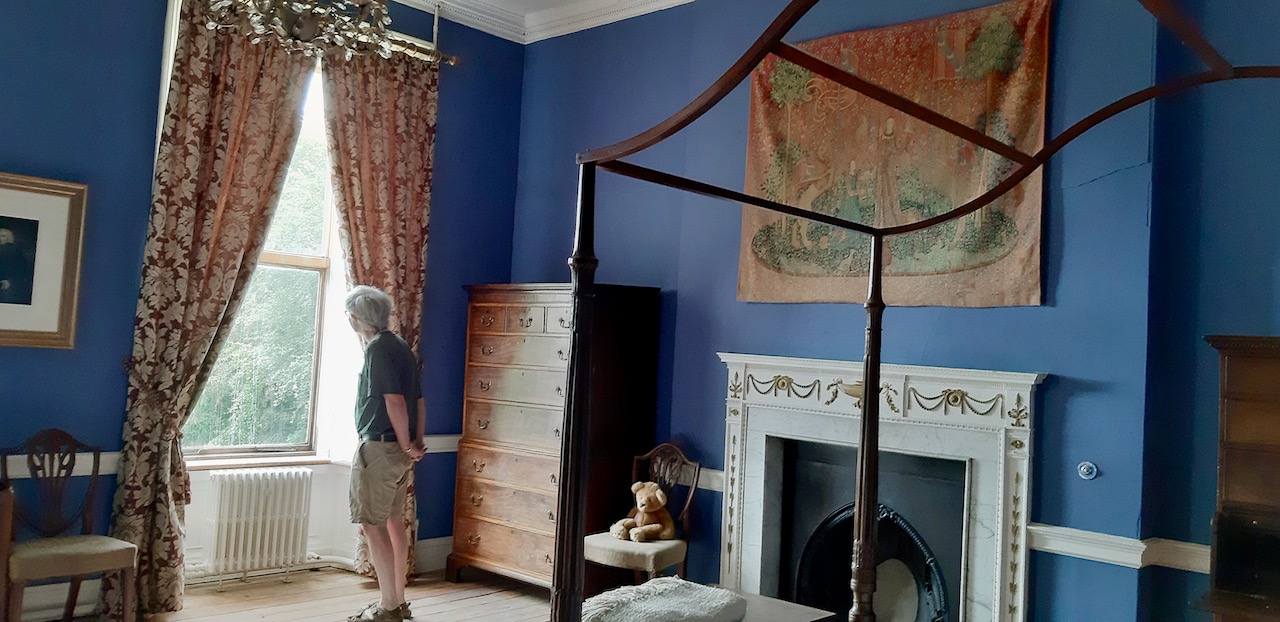
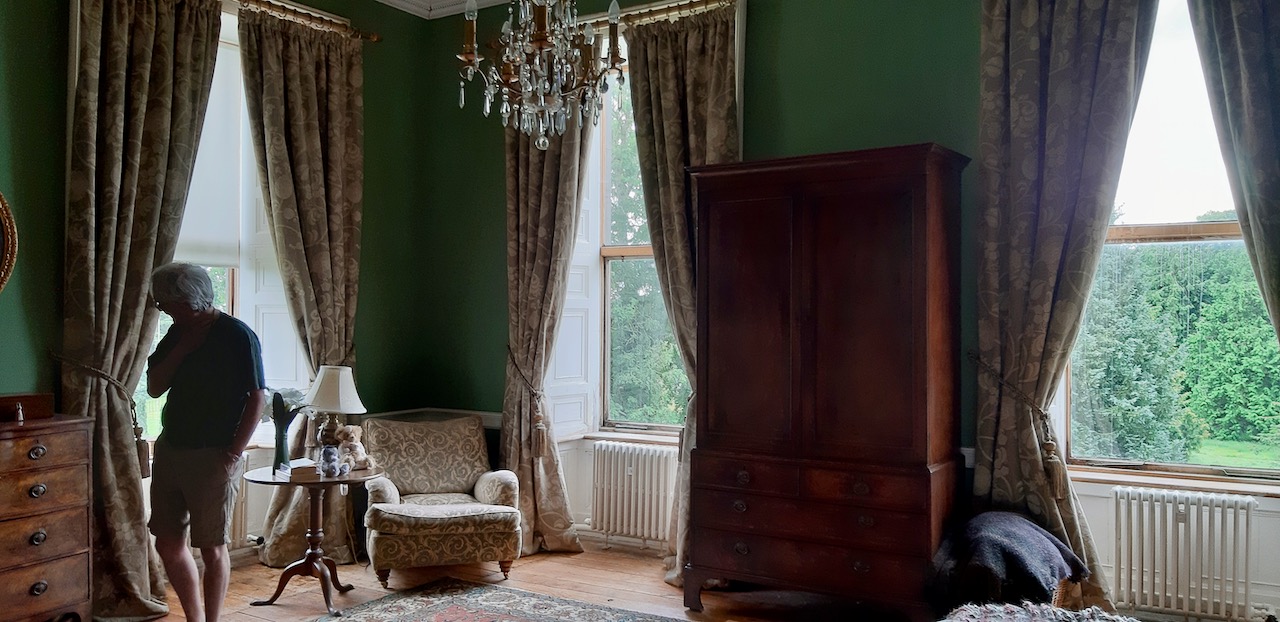
This is the landing at the top of the staircase. It opens into many bedrooms, a bathroom, another small landing, and one door is purely decorative, to keep symmetry. Note the detailing of the windows, over every second door, which let in light to the hall – all original.

Jean and Jeff had to furnish the house entirely, as unfortunately it was empty when they purchased it and needed repairs. They have done so beautifully.

Rokeby, County Louth. Photograph © Jennifer Winder-Baggot, www.irishhistorichouses.com
Rokeby, September 2019. Photograph © Jennifer Winder-Baggot, www.irishhistorichouses.com

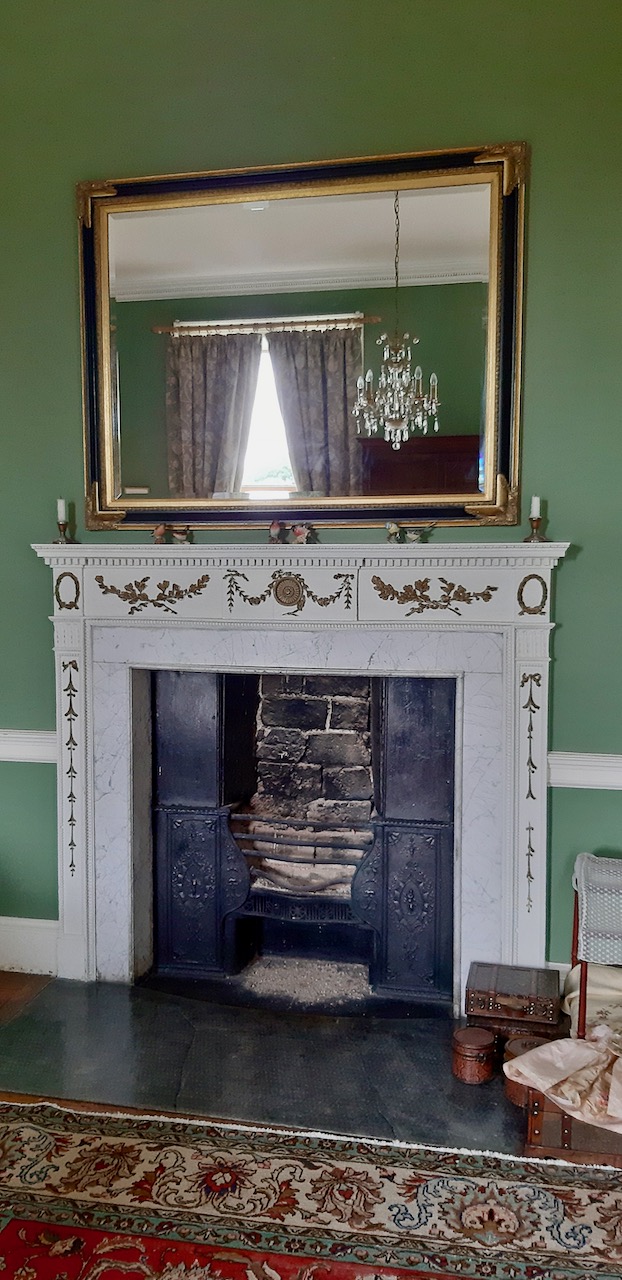
These bedrooms contain their original chimneypieces. The Irish Aesthete writes that the upstairs chimneypieces are original to the house but that the downstairs ones are not and were installed later, along with some downstairs doors.

The Youngs have also restored the garden to its former splendour:

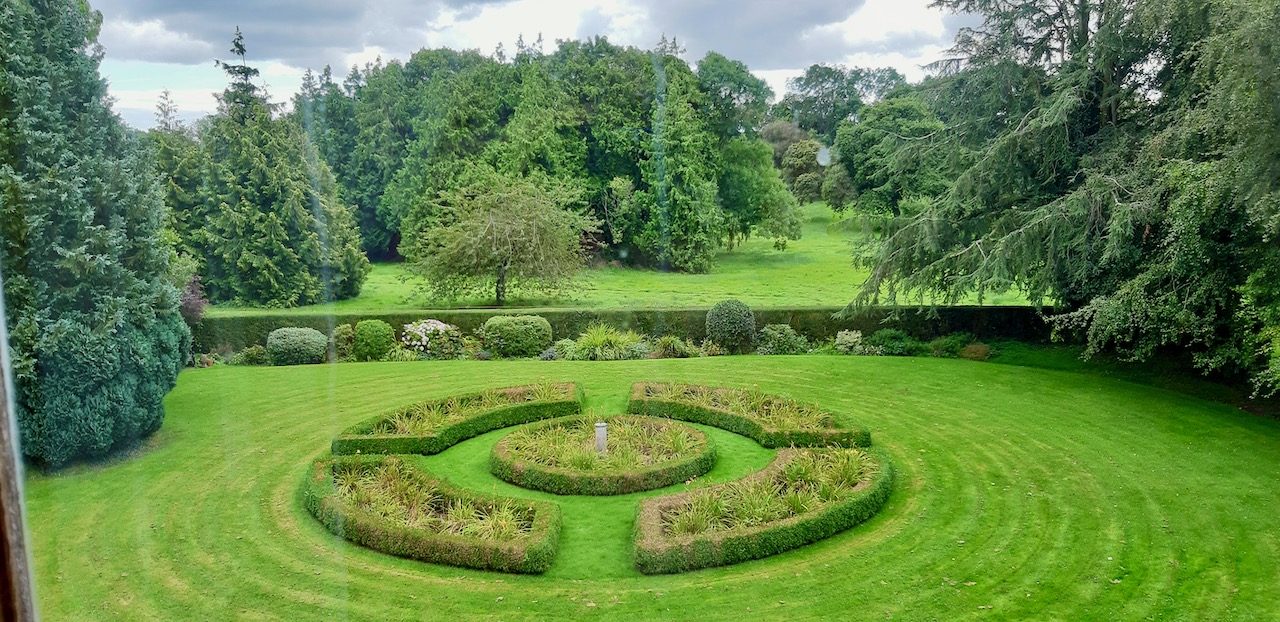
Jean and Jeff have done much work, such as planting this formal garden. Photograph © Jennifer Winder-Baggot, www.irishhistorichouses.com

Above the round hall at the top of the stairs, is another round hallway, you can see why I found it so surprising and delightful.

Rokeby, September 2019. Photograph © Jennifer Winder-Baggot, www.irishhistorichouses.com

One doesn’t expect such detail in an upper level. The rooms leading off on this level were of various sizes, some quite large.

Rokeby, September 2019. Photograph © Jennifer Winder-Baggot, www.irishhistorichouses.com

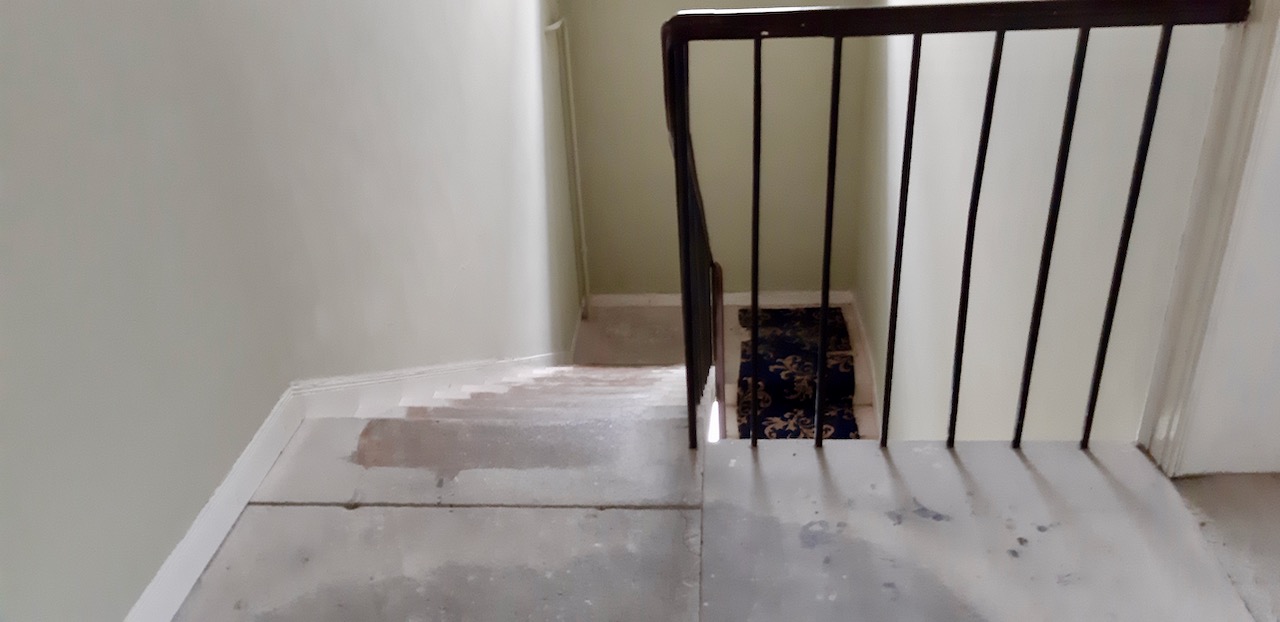
The room, although in the attic, contains as much attention to detail as the reception rooms, with curving door and window frames. Outside is the parapet of the house, so the windows have to be set back to allow in maximum light. The Youngs still have work to do to restore the cupola roof. You can see the wear and tear of use on the original stone stairs:

Rokeby, September 2019. Photograph © Jennifer Winder-Baggot, www.irishhistorichouses.com

The Irish Aesthete discusses Rokeby in his blog:

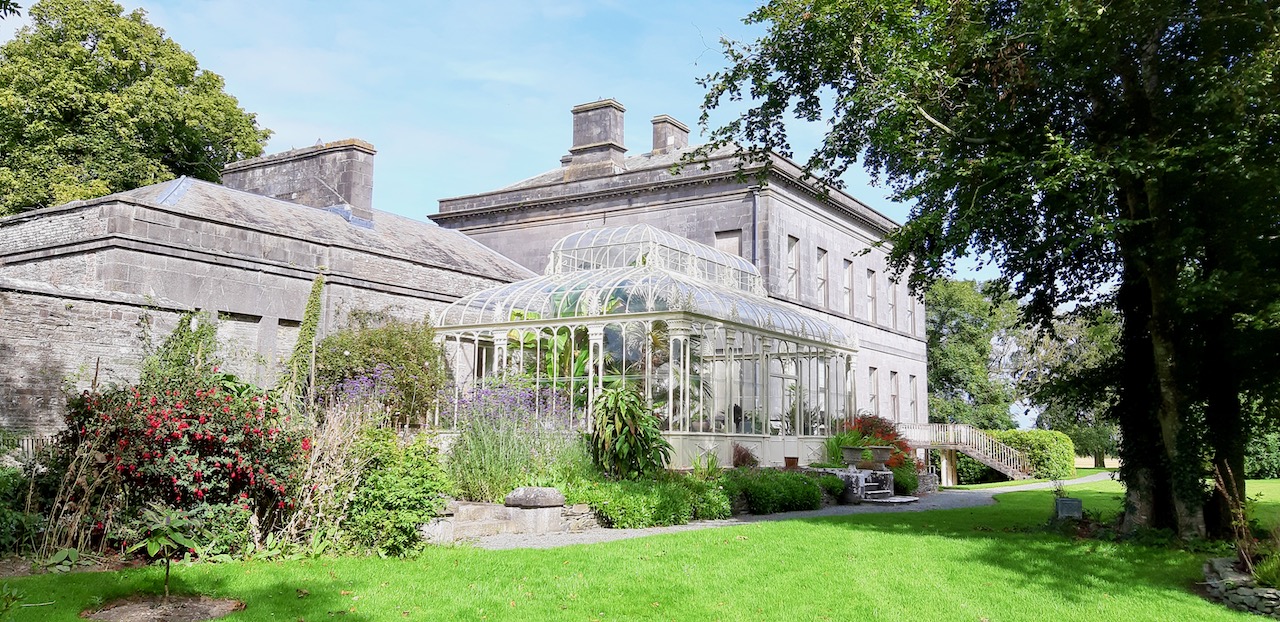
 “The house’s severe limestone façade hides a more inviting interior, of three storeys over basement, since Rokeby contains a particularly generous attic concealed behind the parapet, centred on a circular room lit by glazed dome. A similar circular landing on the first floor provides access to the main bedrooms.

Descendants of the Robinson family remained in possession, although not necessarily in occupation, of Rokeby until the middle of the last century. Thereafter the property passed through a variety of hands often with unfortunate consequences. When the present owners bought the place in 1995, for example, the library had been stripped of its bookcases and divided in two with one half used as a kitchen. Over the past twenty years, a process of reclamation has taken place, driven by the correct balance of enthusiasm, commitment and ongoing research into the house’s history. Most recently the present owners have impeccably restored Rokeby’s mid-19th century conservatory.” [5]

In the article from the Irish Times which originally inspired me to start visiting houses and to write this blog, “Open season: Grand Irish homes that welcome visitors – and get a tax break,” published Sat, Apr 13, 2019, Mary Leland writes that Jean and Jeff worked on the house for ten years, commuting back and forth to California to working in the software industry, before finally moving over in 2006. The tax break enabled them to restore the Richard Turner conservatory. [6]

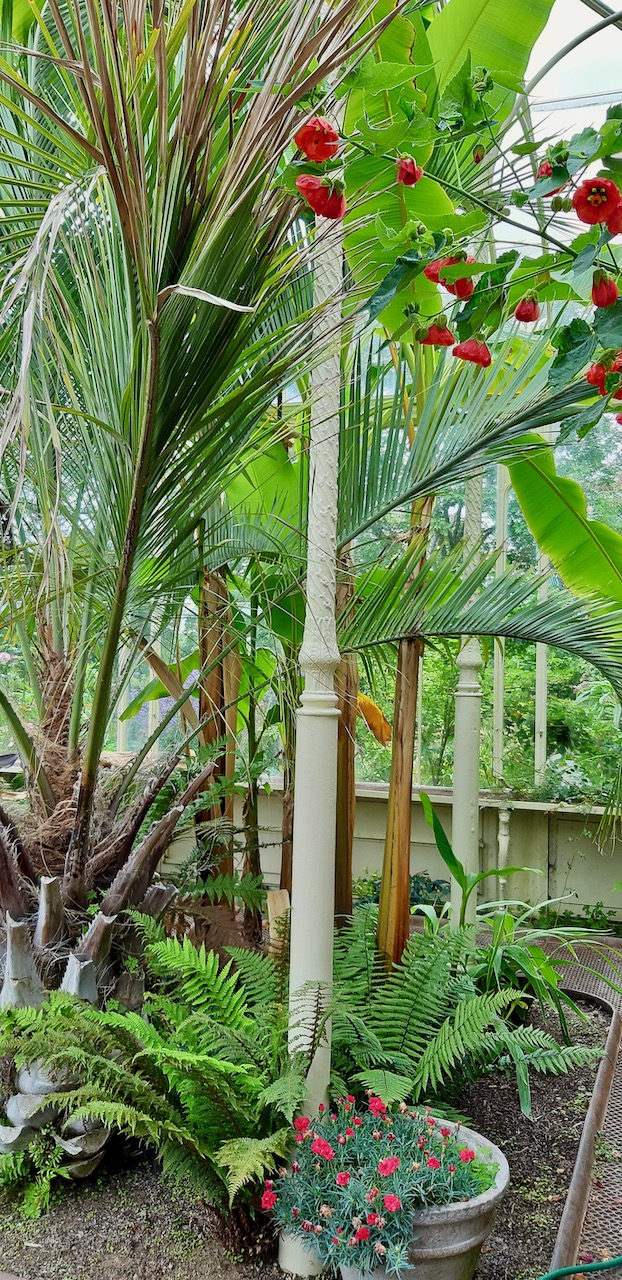
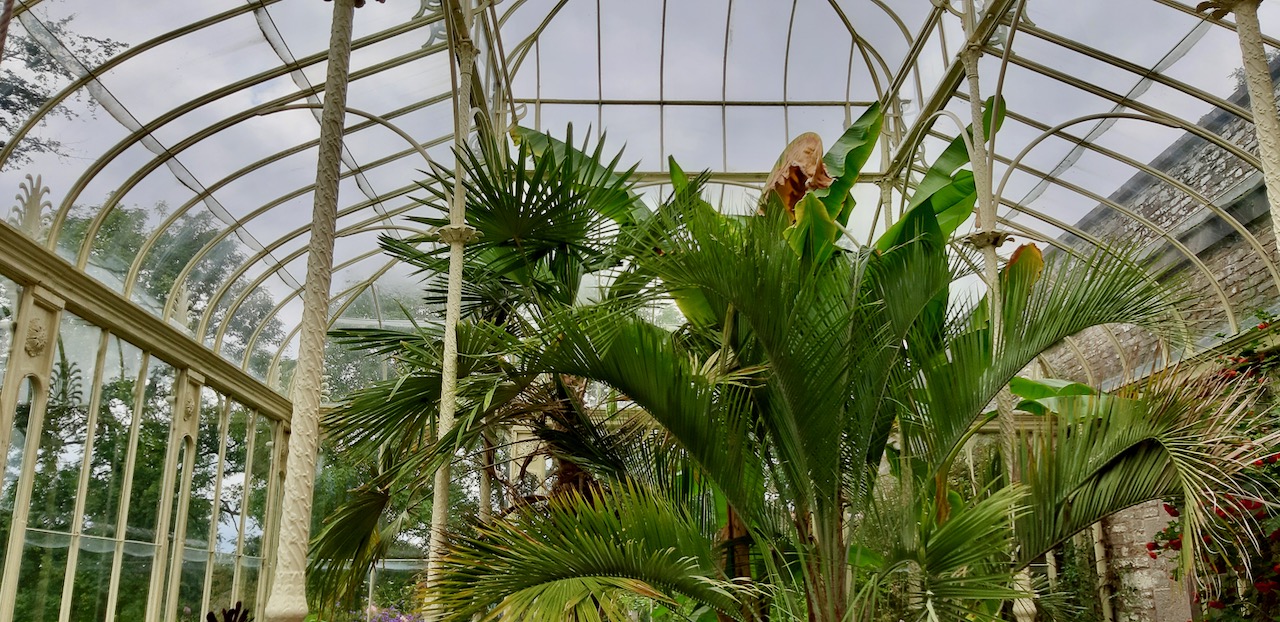
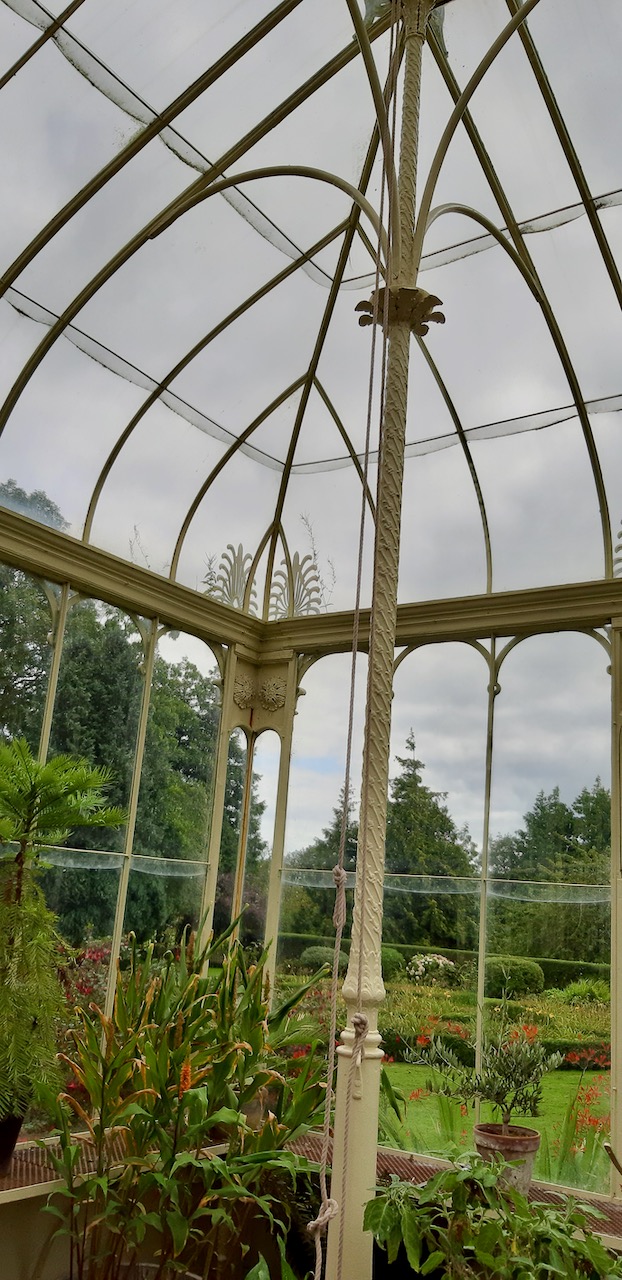
The conservatory by Richard Turner. Photograph © Jennifer Winder-Baggot, www.irishhistorichouses.com
Information board from “In Harmony with Nature, The Irish Country House Garden 1600-1900” in the Irish Georgian Society, July 2022, curated by Robert O’Byrne.
Rokeby, County Louth. Photograph © Jennifer Winder-Baggot, www.irishhistorichouses.com
Rokeby, September 2019. Photograph © Jennifer Winder-Baggot, www.irishhistorichouses.com

The complete restoration of this structure took about two years, 2012-2014. The restored conservatory received 1st prize of the Ellison Award for Meath An Taisce in 2014.  A fascinating full description of the restoration is on the Rokeby Hall website. There’s also discussion of the restoration of the Armorial window and the attics.

Rokeby, County Louth. Photograph © Jennifer Winder-Baggot, www.irishhistorichouses.com
Rokeby, September 2019. Photograph © Jennifer Winder-Baggot, www.irishhistorichouses.com

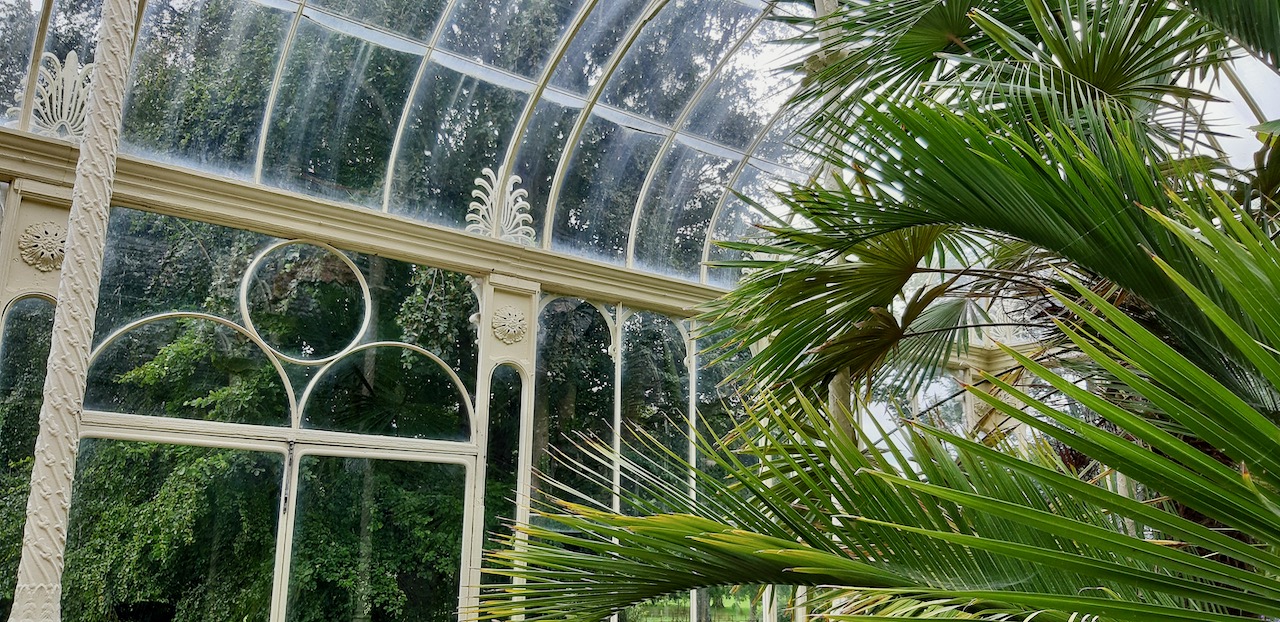
Jean noticed my puzzlement at the crescent dips in the glass at the top of the window, as you can see in the picture above. Her explanation shows just how authentic the restoration work was: in the 1850s, the size of panes of glass was  limited. Therefore glass was laid out in layers. The curved edge ensured that rainwater would move to the middle of the glass before dripping down, thus protecting the window frames.

Richard Robinson, 1st Baron Rokeby (1709-1794), Archbishop of Armagh by Joshua Reynolds.

The archbishop left the house upon his death in 1794 to his sister Grace’s son. Grace Robinson had married the Dean of Canterbury, William Freind. Her son, the Reverend Archdeacon John Freind subsequently changed his surname to Robinson. Reverend John did not stay long in Ireland, however. When his father-in-law, Captain James Spencer of Rathangan House, County Kildare, was killed by rebels during the 1798 rebellion, he fled. Despite no longer living there, Reverend John Robinson was created 1st Baronet of Rokeby Hall in 1819.

The house was subsequently let to tenants, including Viscount Thomas Southwell; Count Jerome de Salis (leased from 29 April 1822 – he had been appointed High Sheriff of Armagh in 1810 – see [7]); and Henry Coddington, Esq (1734-1816). This is the same Henry Coddington whose daughter Elizabeth married Edward Winder (1775-1829), one of my husband Stephen’s ancestors! Henry himself probably did not live in Rokeby, but probably leased the land to farm, as he lived in Oldbridge nearby. The house was left to deteriorate. Robert O’Byrne quotes James Brewer’s The Beauties of Ireland published in 1826, who wrote that the house “is now, we believe, in the hands of a farmer, and the chief apartments are let furnished to casual inmates.”

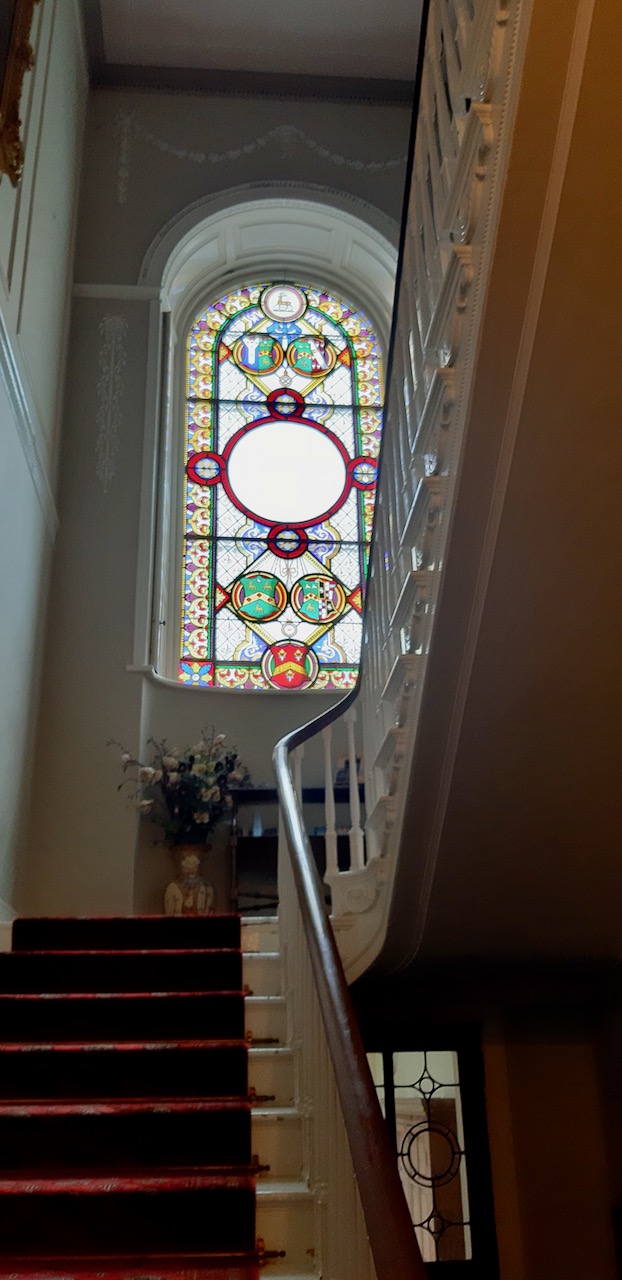
It was only after the death of John Robinson in 1832 that his son, Richard, returned to Rokeby in 1840. Richard, 2nd Baronet (1787-1847) had married, in 1813, the Lady Eleanor Helena Moore, daughter of Stephen, 2nd Earl Mount Cashell. He died in 1847 and was succeeded by his eldest son Sir John Stephen Robinson. Sir John and his wife were responsible for two significant additions to Rokeby Hall – the Turner conservatory, added in the 1850s, and the armorial window in the main stair hall showing the Robinson family history.

Richard Robinson (1787-1847), Baronet, English School (c.1847) with a depiction of his armorials and campaign medals issued to survivors of the Napoleonic Wars courtesy Adam’s auction 6 Oct 2009. This must be Richard Robinson 2nd Baronet of Rokeby Hall in County Louth. He was the son of John Freind, who married a sister of Richard Robinson Baron of Rokeby, and who took the name of Robinson when he inherited Rokeby.
The armorial window in the main stair hall showing the Robinson family history. Photograph © Jennifer Winder-Baggot, www.irishhistorichouses.com

Sir John, 3rd Baronet (1816-95), JP DL, High Sheriff of County Louth, 1849, married, in 1841, Sarah, only daughter of Anthony Denny, of Barham Wood, Hertfordshire, and granddaughter of Lord Collingwood, Admiral in the Royal Navy who served alongside Lord Nelson in the Napoleonic Wars. Due to his fame, Sarah’s eldest sons took the name Collingwood. [8]

The Rokeby Hall website continues the history of the Rokeby inhabitants:

Sir John died in 1895 and the estate passed to his son Sir Gerald [William Collingwood] Robinson (4th bart.) who died in 1903. The 5th baronet was Sir John’s younger brother Richard Harcourt Robinson. After his death in 1910 the estate eventually passed to Sir Gerald’s sister Maud who had earlier married Richard Montgomery, the owner of Beaulieu House in Co. Louth.

Richard Harcourt Robinson, died in 1910.

With the Robinsons no longer in residence, the estate was gradually broken up. The house and demesne lands were sold to the Clinton family in 1912. The remaining estate lands were also broken up and sold and the Robinson collection of furniture, art and books were eventually auctioned in 1943. The Clinton family remained at Rokeby until about 1950. Since then the ownership of the house has changed a number of times. The current owners purchased the house in 1995.”

After the tour of the house, Stephen and I went out to explore the gardens.

Rokeby, County Louth. Photograph © Jennifer Winder-Baggot, www.irishhistorichouses.com
Rokeby, September 2019. Photograph © Jennifer Winder-Baggot, www.irishhistorichouses.com

[1] www.rokeby.ie

[2] https://armagh.space/heritage/

[3] Wikipedia defines scagliola: Scagliola (from the Italian scaglia, meaning “chips”) is a technique for producing stucco columns, sculptures and other architectural elements that resemble inlays in marble and semi-precious stones. The Scagliola technique came into fashion in 17th-century Tuscany as an effective substitute for costly marble inlays, the pietra dura works created for the Medici family in Florence.

Scagliola is a composite substance made from selenite, glue and natural pigments, imitating marble and other hard stones. The material may be veined with colours and applied to a core, or desired pattern may be carved into a previously prepared scagliola matrix. The pattern’s indentations are then filled with the coloured, plaster-like scagliola composite, and then polished with flax oil for brightness, and wax for protection. The combination of materials and technique provides a complex texture, and richness of colour not available in natural veined marbles.

architectural definitions

[4] https://theirishaesthete.com/2013/02/04/building-on-a-prelates-ambition/

[5] https://theirishaesthete.com/2015/09/21/take-three/

[6] https://www.irishtimes.com/life-and-style/homes-and-property/open-season-grand-irish-homes-that-welcome-visitors-and-get-a-tax-break-1.3855641

[7] https://en.wikipedia.org/wiki/Jerome,_4th_Count_de_Salis-Soglio

Jerome de Salis was born in Italy and inherited the title, Count de Salis, a Count of the Holy Roman Empire. He lived in England from the 1790s. He married three times – had one child by each of his first two wives, then after the first two wives’ deaths, married in 1810, Henrietta (or Harriet) Foster, daughter of Right Reverend William Foster, who was chaplain to the Irish House of Commons (1780–89), and then at different times, Bishop of Cork and Ross; Kilmore; and of Clogher. They had a further nine children.

[8] http://lordbelmontinnorthernireland.blogspot.com/search/label/County%20Louth%20Landowners

Text © Jennifer Winder-Baggot, www.irishhistorichouses.com