www.39northgreatgeorgesstreet.com
Open dates in 2026: May 11-24, June 12-21, July 6-19, Aug 9-30, 1pm-5pm
Fee: adult €7, student/OAP €5, child free with adult, group €5 per person

donation
Help me to pay the entrance fee to one of the houses on this website. This site is created purely out of love for the subject and I receive no payment so any donation is appreciated!
€15.00

2026 Diary of Irish Historic Houses (section 482 properties)
To purchase an A5 size 2026 Diary of Historic Houses (opening times and days are not listed so the calendar is for use for recording appointments and not as a reference for opening times) send your postal address to jennifer.baggot@gmail.com along with €20 via this payment button. The calendar of 84 pages includes space for writing your appointments as well as photographs of the historic houses. The price includes postage within Ireland. Postage to U.S. is a further €10 for the A5 size calendar, so I would appreciate a donation toward the postage – you can click on the donation link.
€20.00


Number 39 North Great Georges Street, a three bay four storey over basement house, was built in 1790 by Henry Darley (1721-1798) on land leased from the Archdall family. Darley also built numbers 41 and 42, and may have built number 43 for Theophilus Clements. We visited the street before when we saw another Section 482 property, number 11 (see my entry).
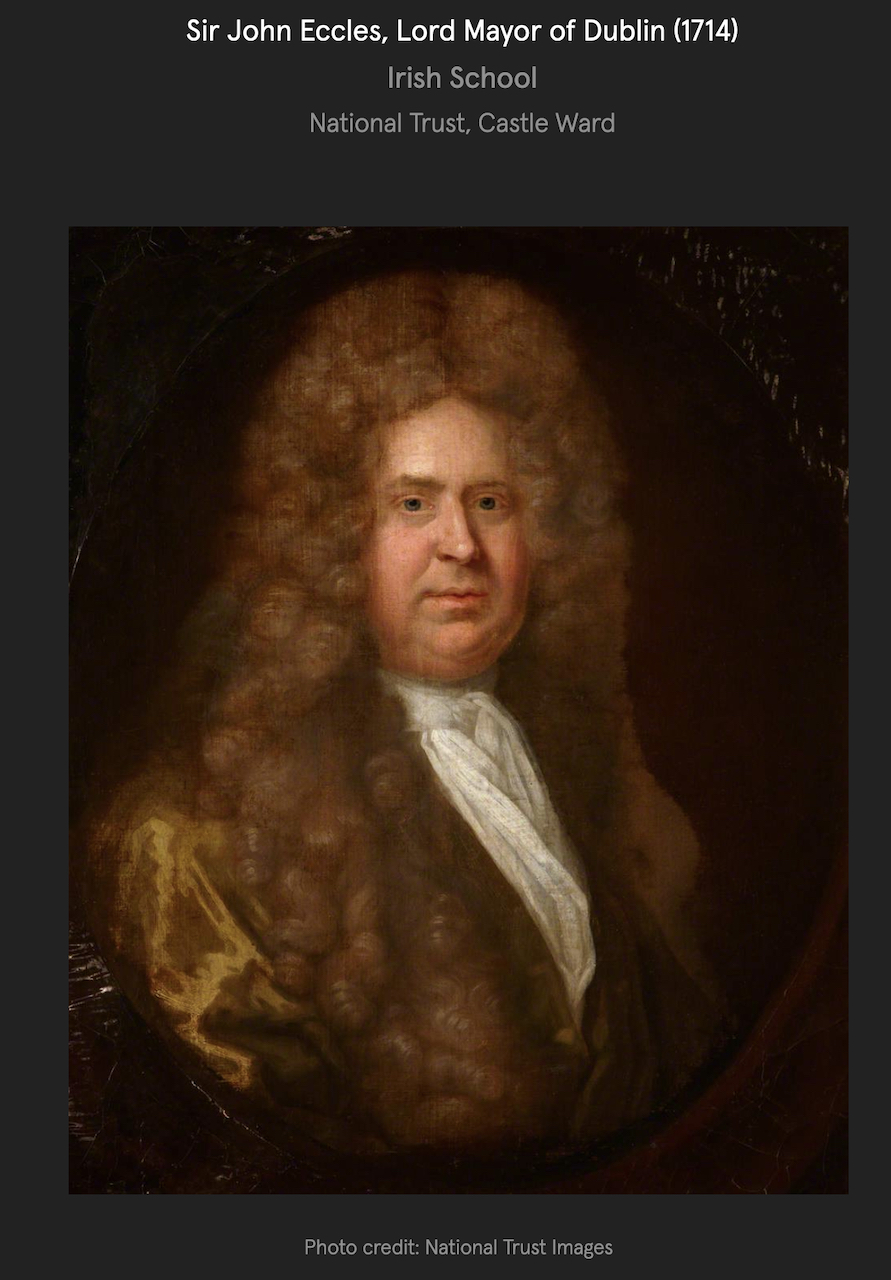
The land was owned at the beginning of the 18th century by John Eccles (1664-1727), Lord Mayor of Dublin in 1710, for whom Eccles Street was named, the street where Leopold Bloom lives in James Joyce’s Ulysses. The North Great Georges Street specially dedicated website with a history of the street written by Conor Lucey tells us that Eccles’ mansion of the same name survived into the first decades of the twentieth-century, and stood on the site now occupied by the diminutive two-storey building situated between the present Nos.43 and 46. [1]
The lease for the estate was purchased by Nicholas Archdall for a term of 999 years beginning on 1st August 1749. The North Great Georges Street website tells us:
“Nicholas Archdall, an MP for Co. Fermanagh and one of the first ‘Home Rulers’, had in fact been born Nicholas Montgomery, assuming the name of Archdall upon his marriage in 1728 to the heiress Angel Archdall, a descendant of one of the foremost County Fermanagh families since the days of the Ulster Plantation. Following Angel Archdall’s death in 1748, Nicholas married Sarah Spurling, originally of London, and by her had eight children, one of whom, Edward, would later become a property developer, involved in the building of Nos.19 and 20 North Great George’s Street in the late 1780s. Nicholas Archdall died at Mount Eccles in 1763, and some years later his widow petitioned Parliament for the heads of a bill to enable her ‘to grant long leases for building on the said Premises.’ This decision to set out the ground as a commercial venture may have been inspired by the eminently fashionable, and ever-expanding, Gardiner estate, and motivated in particular by the opening up of Gardiner’s Row (adjoining the north west side of the Mount Eccles estate) in 1765. Sarah Archdall’s formal request was presented to the House of Commons on 12 February 1766 and stated:
“That the said Grounds and Premises lie contiguous to the City of Dublin, and from their Situation will be taken by Persons in Lots for building upon, if Power to make Building Leases thereof can be obtained. That all the Petitioners…are Minors, and the youngest about six Years of Age, and until they all come of age no Building Leases can be granted, and it will greatly tend to the Benefit of the Petitioner Sarah, and her Children, to have Power to grant Building Leases.”
“The Journals of the House of Commons records that Royal Assent was granted on 7 June 1766 and the leasehold interest in the first building lots were advertised the following year, the notices highlighting both the advantage of the location and its proximity to established residential districts:
“To be Let in Lots for Building, the Lands of Mount Eccles, in Great Britain-street, opposite Marlborough-street, joining Palace-row and Cavendish-street, containing seven Acres, which for Situation, Air and Prospect, cannot be exceeded by any in or about Dublin, subject to no Manner of Tax, Hearth Money excepted. For further Particulars, enquire of Mrs. Archdale, at Mount Eccles, where a Plan of the whole may be seen.”

The North Great Georges Street website continues:
“While building at the southern end of North Great George’s Street began from the mid-1770s, including Nos.22–27 (all now demolished) and Nos.33–35 (of which only No.35 survives), the majority date from the mid-1780s, including Nos.12–21 and Nos.36–43. In many cases, these later houses were built by some of the leading figures from Dublin’s late eighteenth-century building and house-decorating community, among them the renowned stuccodor Charles Thorp (Nos. 37 and 38), and Henry Darley, from the celebrated family of stonecutters (Nos.39 and 41–42).“
Darley worked with James Gandon on the new Custom House in Dublin, from 1781-1791, before working on North Great Georges Street. The plasterwork inside may be by Charles Thorp (abt. 1772-1820), as he owned the house next door to number 39.


Conor Lucey describes the typical layout of the houses on the street:
“By far the most common plan type is the ‘two room’ plan, composed of an axially- aligned entrance hall and stair hall, and flanked by front and rear parlours, the latter typically serving as the formal dining room. The principal staircase, customarily of timber open-string construction, is situated at the back of the house and rises from the ground floor – by way of the piano nobile or ‘drawing room storey’ – to the ‘attic’ or bedroom storey, with admittance to the ‘garret’ alone acquired by a smaller, subordinate stair.“

The first occupant of the house was Thomas Taylour (1757-1829), later created 1st Marquess of Headfort, of Headfort House in County Meath, in 1800 at the time of the Act of Union.

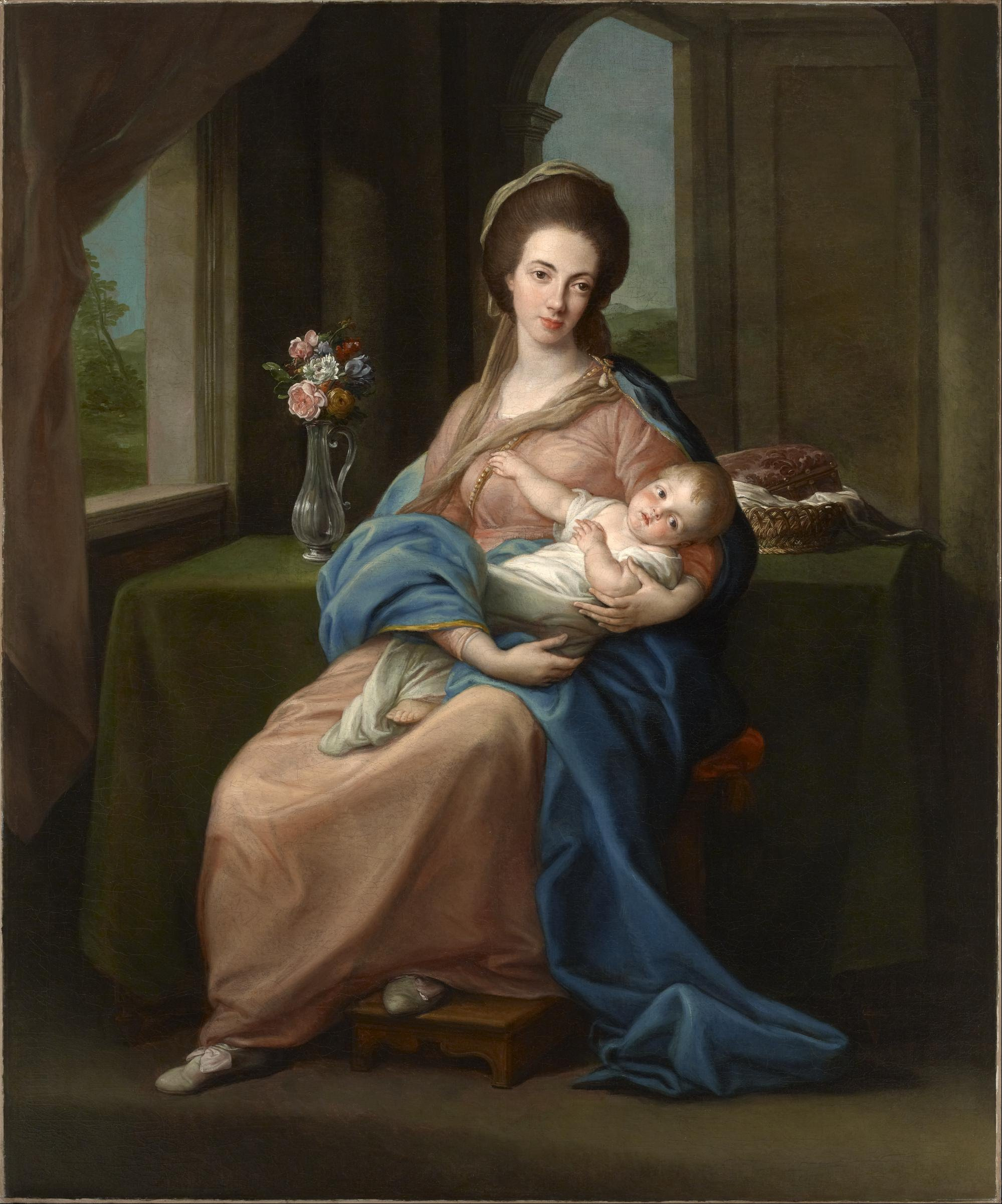
The front hall has an archway, built by Darley, and The Marquess of Headfort had him put in double doors and a fanlight.
The website for the house tells us that it was then occupied by Thomas Taylour’s first cousin, Stephen Moore of Barne Park, Clonmel, County Tipperary. [2] Thomas Taylour probably moved to Rutland Square (now Parnell Square), where his family had a townhouse which he inherited.
Thomas Taylour’s aunt Henrietta Taylour married Richard Moore (1714-1771) of Barne Park. They had a son Stephen (about 1748-1800), who married Salisbury Moore, and they had a son, Stephen Moore of Barne Park, who married Eleanor Westry. They had a son, Stephen Charles Moore (1808-1873). In 1833 Stephen Charles Moore of Barne married Anna, eldest daughter of Colonel Kingsmill Pennefather of Newpark, County Tipperary. Stephen Charles Moore was Justice of the Peace, High Sheriff and Deputy Lieutenant of County Tipperary. Mrs. Mary Moore of Barne Park is listed as living in the house in 1840.
Tom welcomed us to his home. He told us that the house was purchased by a Bishop who put it in trust for life. The house was continually let until the mid twentieth century. The house’s website tells us that:
“By 1850, the house, now held in trust, was let to a barrister, Patrick Owen Cogan and in 1909, was being run as a boarding house by a Mrs. Hill, who lived there with her husband and daughters. It was afterwards occupied by a rector of St. Georges Church, and later by a doctor from the Childrens Hospital in Temple Street. In the 18th.c. when this house was built, there was no plumbing or sanitary facilities and it was probably towards the end of the 19th.c. that it became fashionable to install a bathroom, usually by thrusting out an extension from the 2nd. half landing on the stairs, hence the name “thrust out.” Such a bathroom was installed in No.39. This would have been the height of sophistication in the Edwardian era.“
The National Inventory tells us it was run as a hotel called the “Windsor hotel” in the early 1900s, perhaps in the time of Mrs. Hill. The census in 1901 tells us it was divided in two parts, with the Hill family, Joseph and his wife Catherine, who are members of the Church of Ireland, and their daughters, in one part and boarders in the rest of the house – one of whom, Stephen Dawson, an engineering student, lists his religion as “free thinker”! In 1911 it was no longer occupied by the Hills, but by a family named Greer, a Rev. Fergus Greer who was rector of St. George’s church. He moved to no. 38, next door, after John Pentland Mahaffy vacated that house.

The website continues with the history of the house:
“In 1939 the trust let the house to a builder, giving him permission to let it out in rooms. This was the final stage in a downward spiral that almost ended in its demolition. It had probably not been well maintained throughout the 19th.c. but the intensive use it was now subjected to led to a rapid deterioration and it soon became an “open door tenement,” with no lock on the front door and the interior common areas open to all. In 1948, there were 11 families living in the house, mostly one family per room. Many of these were large families. There were no services in any of the rooms, and with only the single bathroom off the half landing and a second wc at the door to the back yard conditions were grim. A sink had been installed outside the bathroom and leakage from this caused extensive rot on the staircase. Leaking rainwater downpipes caused further rot, and the roof slating had failed and been replaced with a temporary covering of chipboard and green mineral felt. In 1966 the trust sold the house for £200. It again changed hands in 1973, to an owner interested in its preservation. He had the remaining tenants rehoused and upgraded the house as offices and flats.
The present owners bought the house in 1976.“
The present owners, the Kiernans, have done wonderful repairs to the house. They outline the repairs on the website. The roof was repaired and reslated, and the third floor bow wall in the back rebuilt. The owners had to contend with dry rot, and much work was done in the upper drawing room and the upper floors. They bought back the mews house, which had been sold previously, and they renovated that also. You can see photographs of various stages of the repair work on the website.
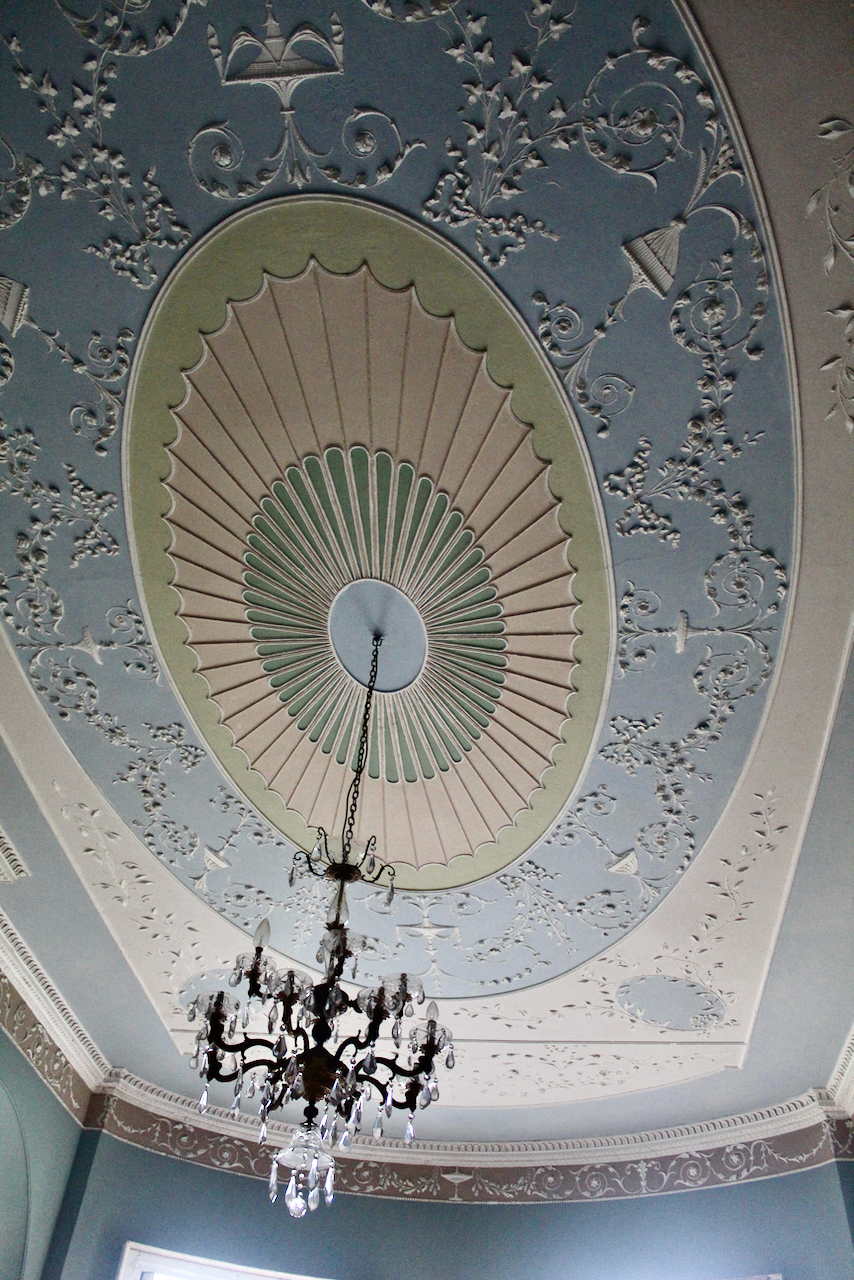
Tom Kiernan has been repairing the skirting, architraves and other woodwork, and also, I was delighted to learn, the plasterwork.




[1] https://northgreatgeorgesstreet.ie/history/
[2] Barne Park, County Tipperary, https://www.buildingsofireland.ie/buildings-search/building/22207612/barne-park-barn-demesne-innishlounaght-pr-co-tipperary-south
A house built c. 1730 but possibly incorporating a seventeenth-century house, it is very impressive. It was built for Stephen Moore (1689-1747).
The house went up for sale in 2023! Here are some photographs courtesy of myhome.ie:


Text © Jennifer Winder-Baggot, www.irishhistorichouses.com
 Irish Historic Houses
Dear sír. I lived in 39 from born in 1952 till 1958..second floor back room. My Mother an Father my brother born 1948 an sister born in 1955.my mother got a house in artane in 1958. I never ever remenber having any bad moments while living there. My sister an i visited the house on the 18 June. And I will be going back to visit in August to get more photos to show my gran children where I started my life.
LikeLike
Thank you for sharing that, Christopher, I am glad you were able to visit.
LikeLike