Powerscourt House & Gardens, Enniskerry, County Wicklow A98 W0D0 – section 482

www.powerscourt.ie

Open in 2026: Jan 1-Dec 24, 27-31, house and garden, 9.30am-5.30pm, ballroom and garden rooms, 9.30am-1.30pm

Fee: Mar-Oct, adult €14, OAP, €12, student €10.50, child €5.50, family (2 adults and 3 children under 18 years) €33, Jan, Feb, Nov, Dec, adult €10.50, OAP €9.50, student €9, child €5.50, family (2 adults and 3 children under 18 years) €25

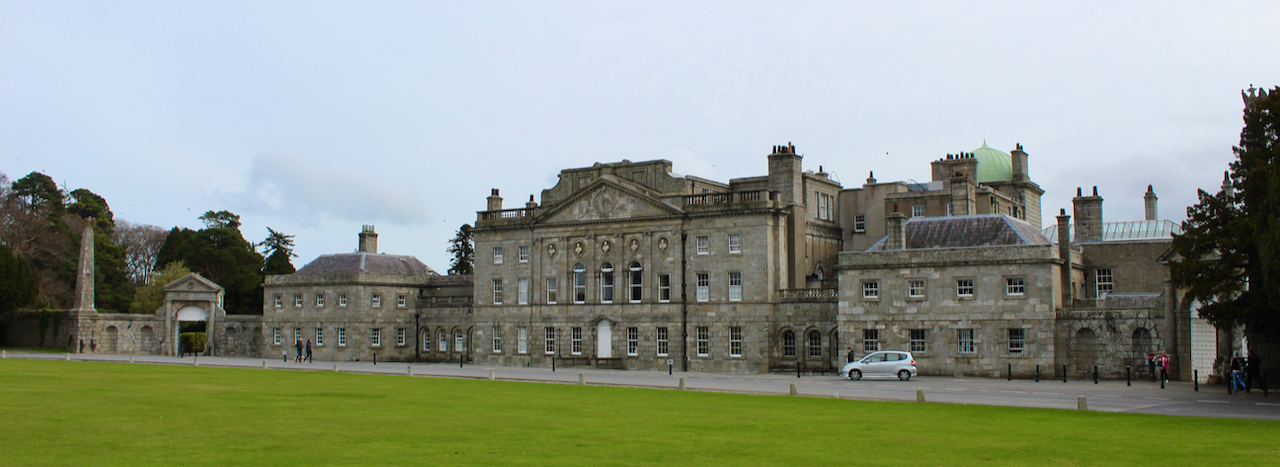
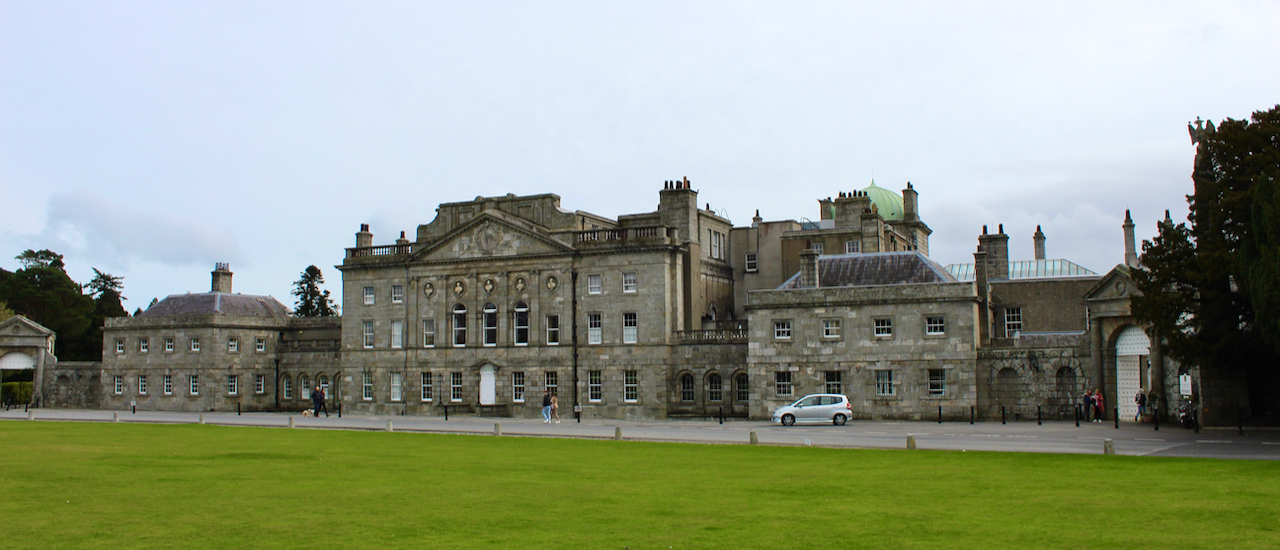
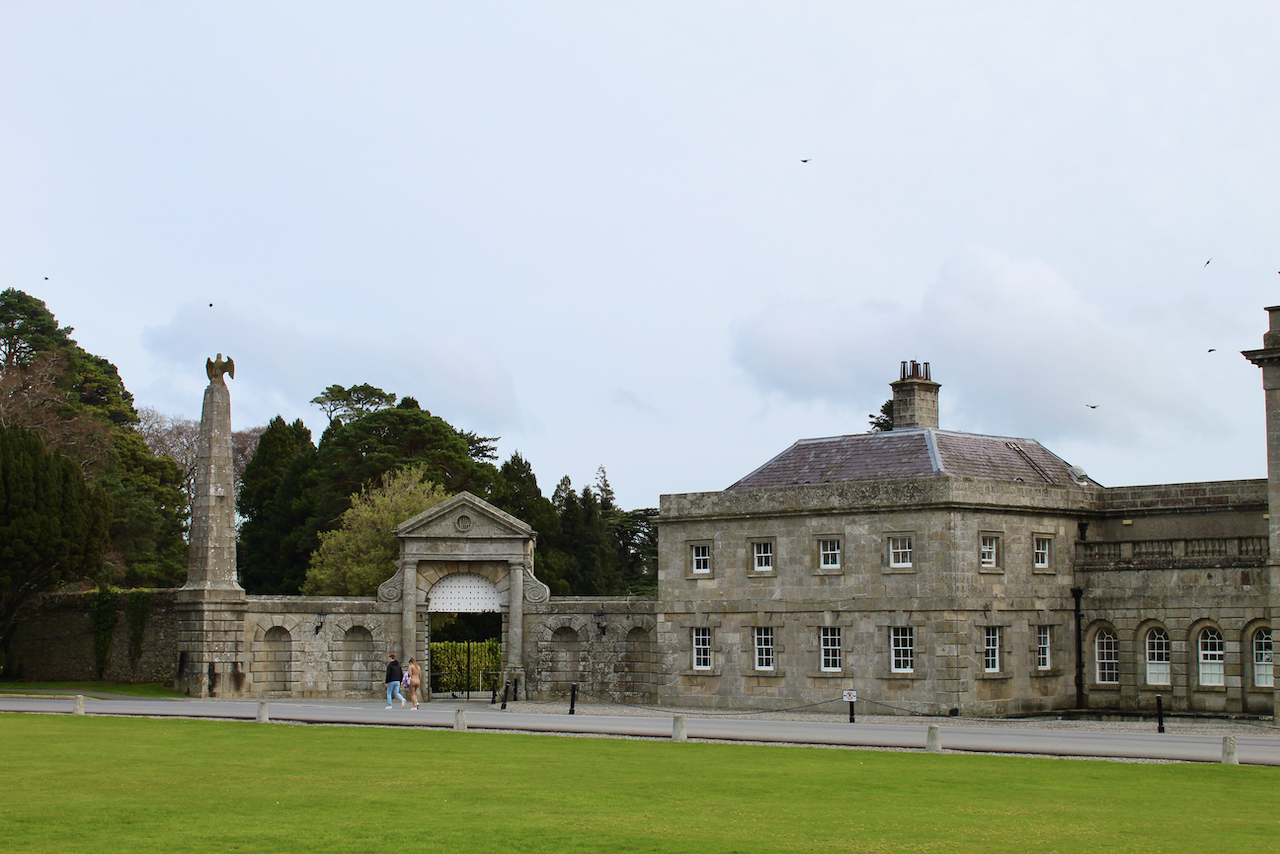
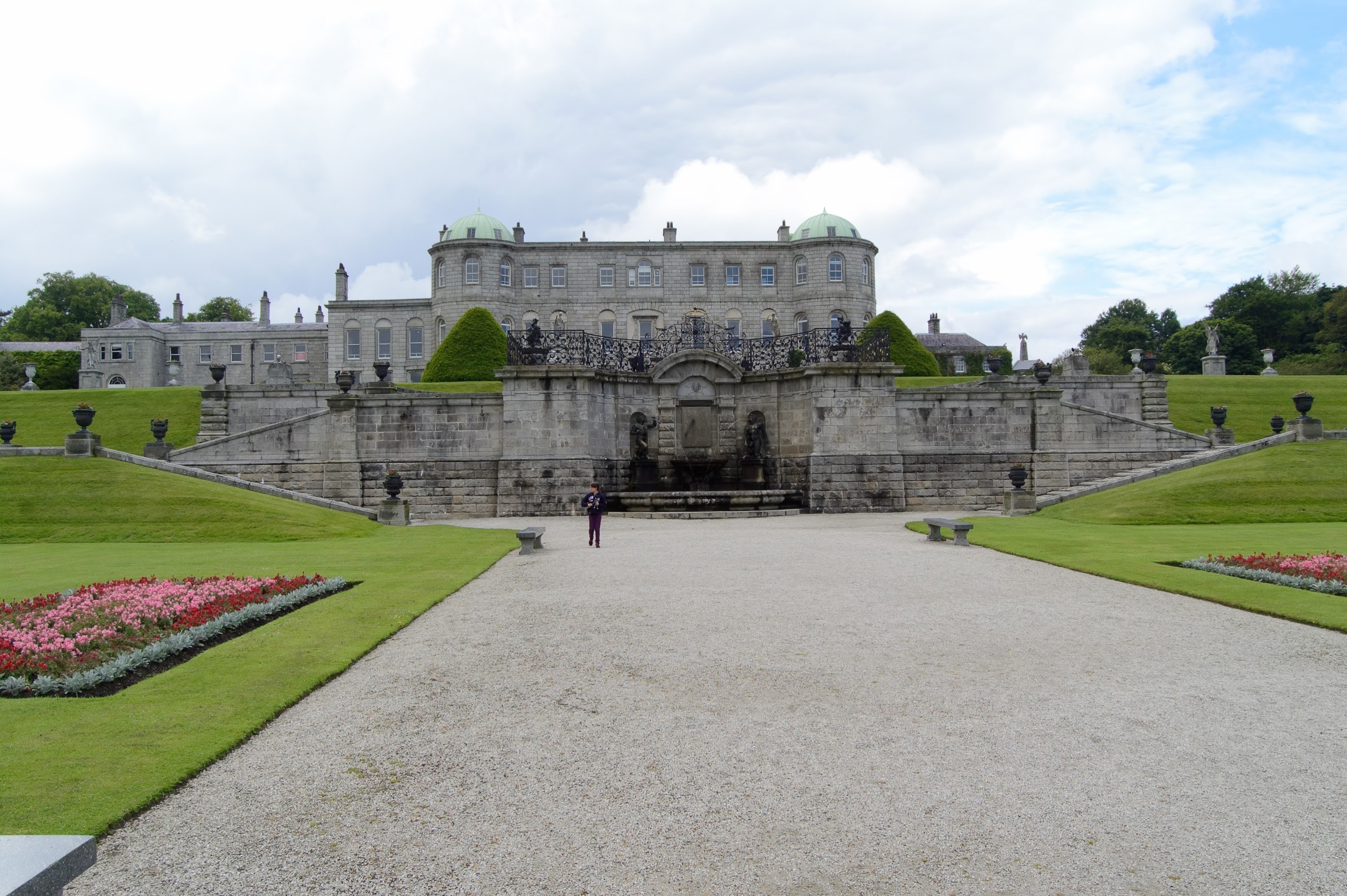
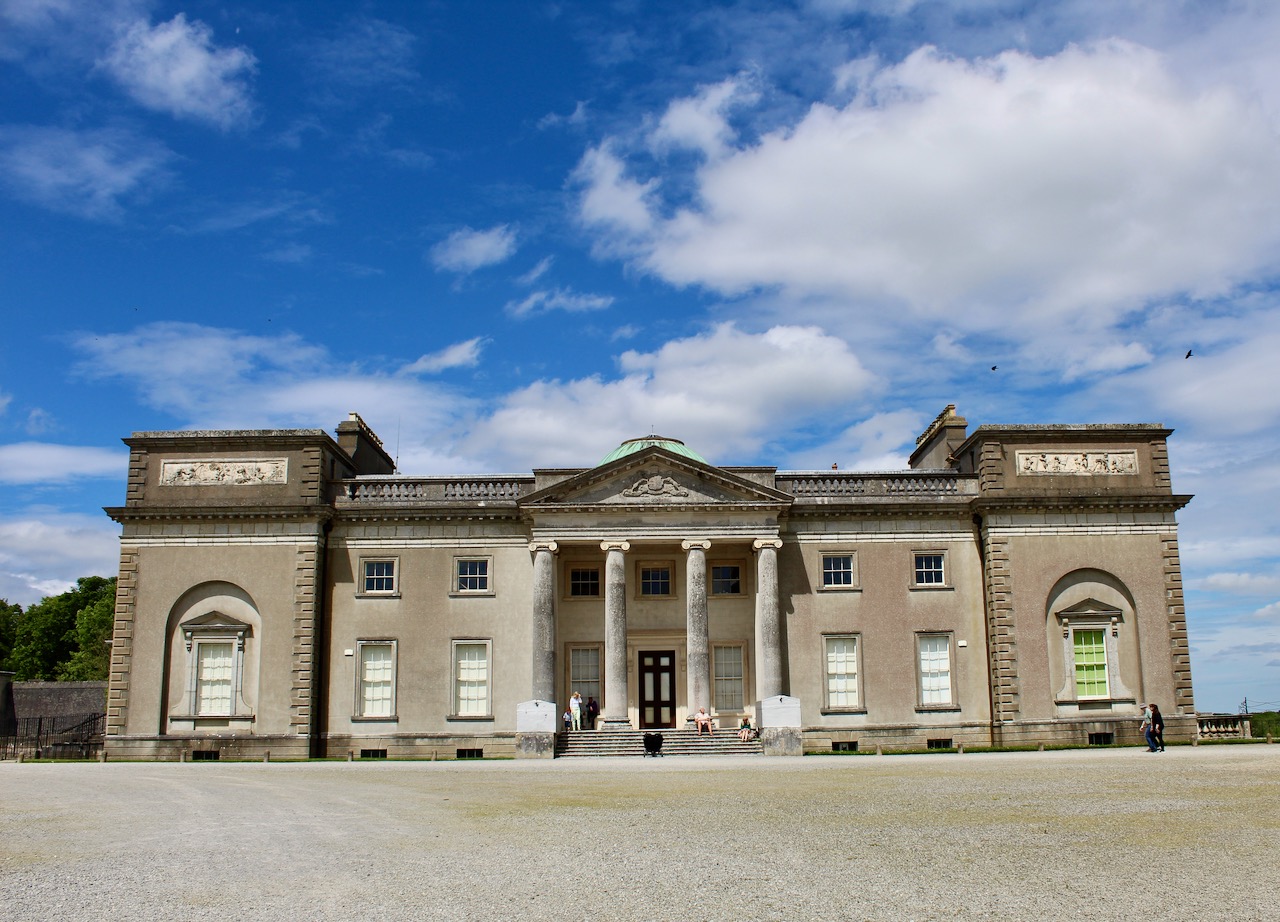
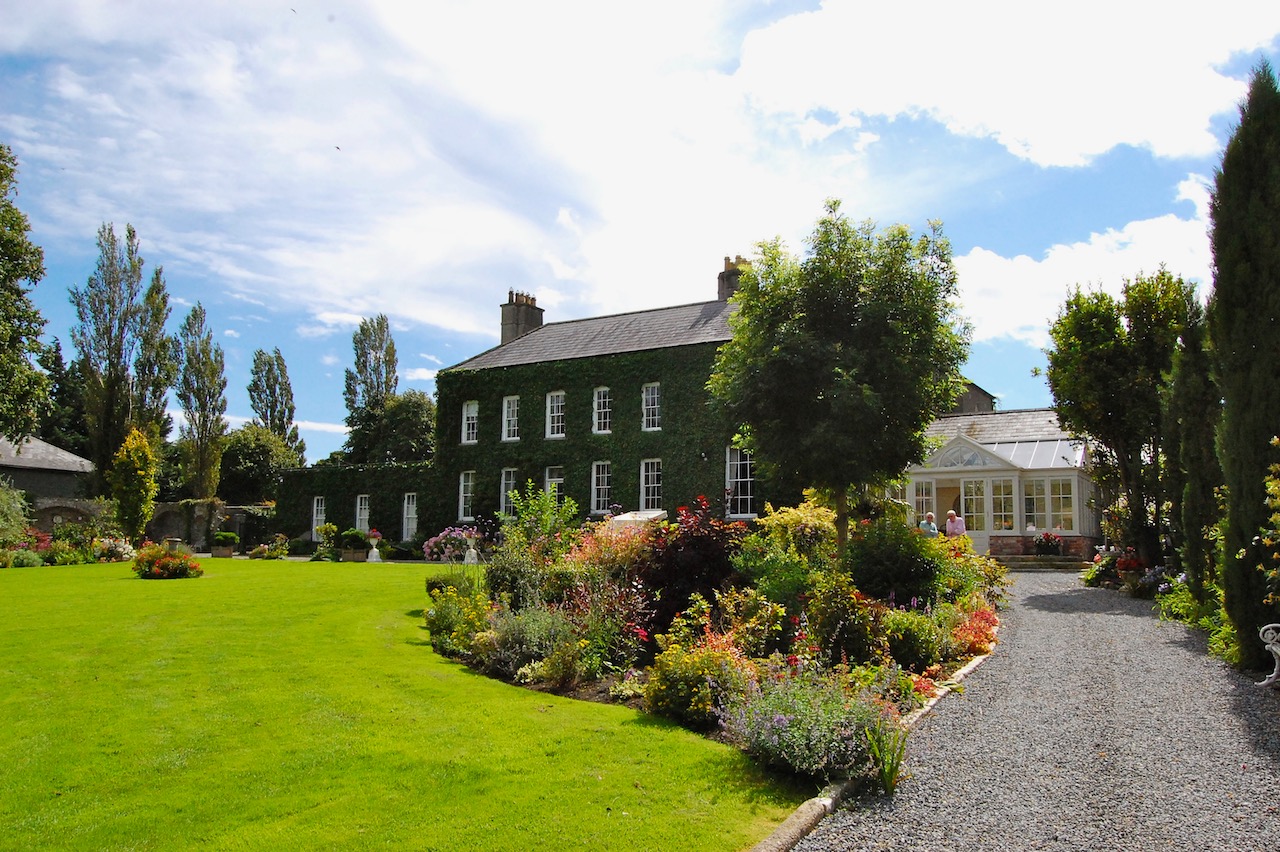
Powerscourt, March 2022. This photograph shows the entire front facade of Powerscourt, including the centre block, the two four bay wings, and the quadrant walls beyond each wing that prolong the length of the front, and end in an obelisk on either end topped by an eagle. The quadrant walls contain an arch. Photograph © Jennifer Winder-Baggot, www.irishhistorichouses.com
I haven’t revisited Powerscourt Estate this year but I have been there many times, and as the lockdown continues for Covid 19, I will write another entry from previous visits and research. I want to write about Powerscourt in continuation of our Wingfield run!

DSC_1230.JPG
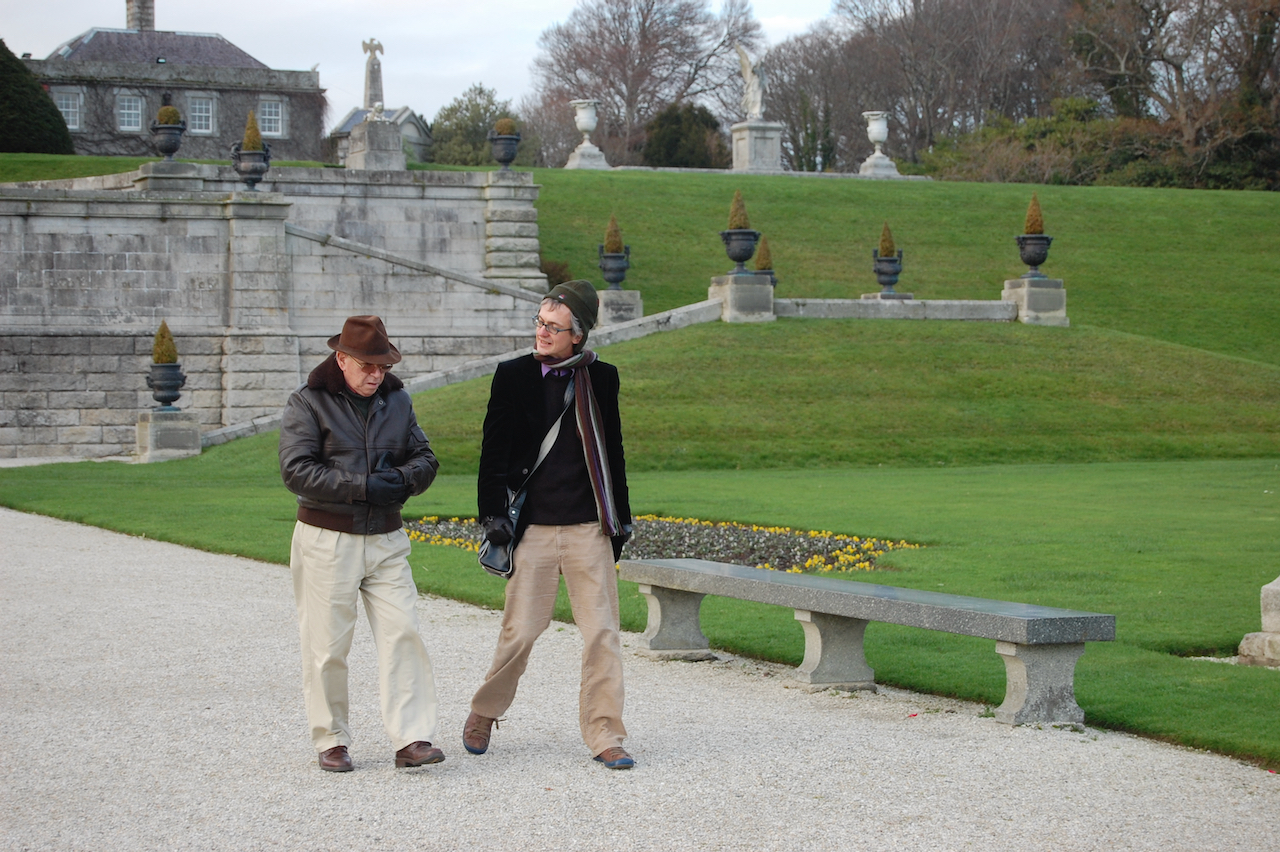
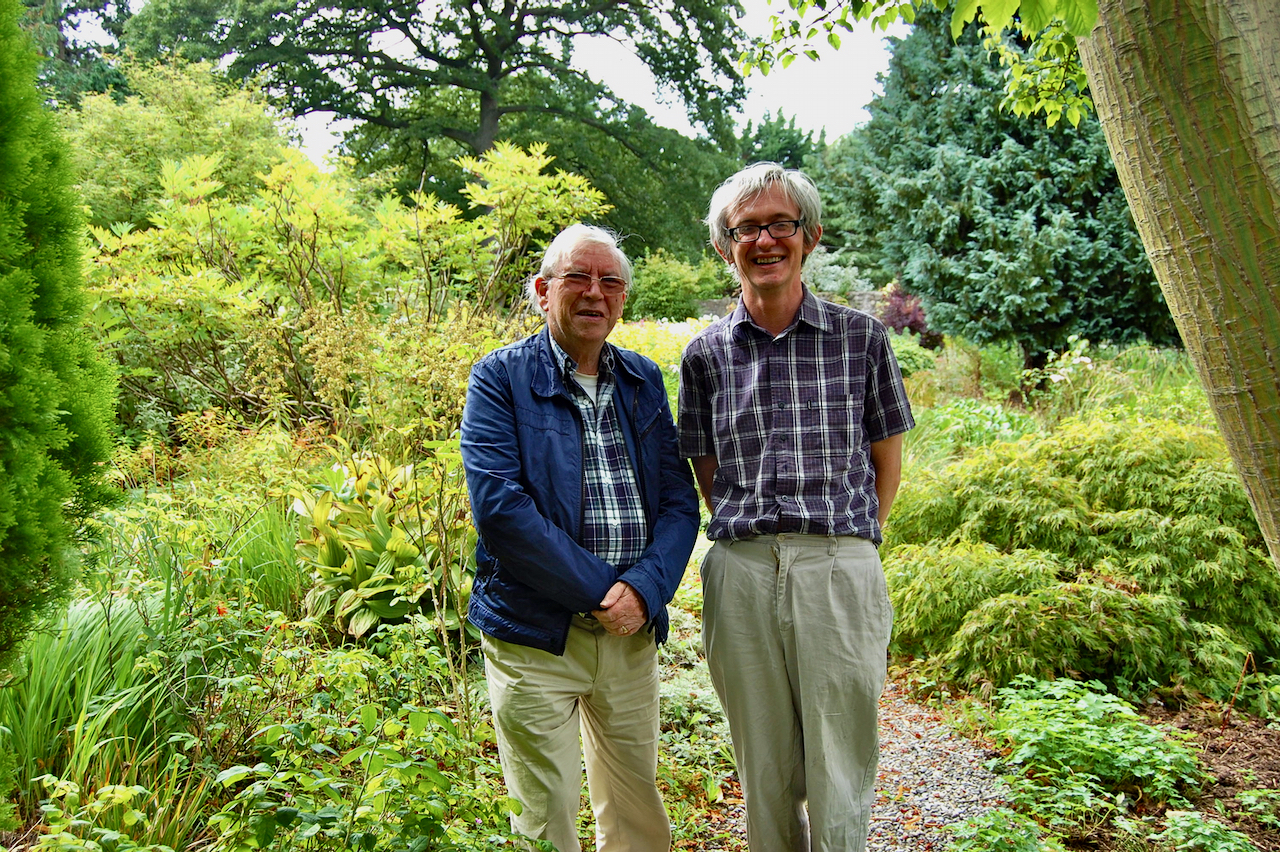
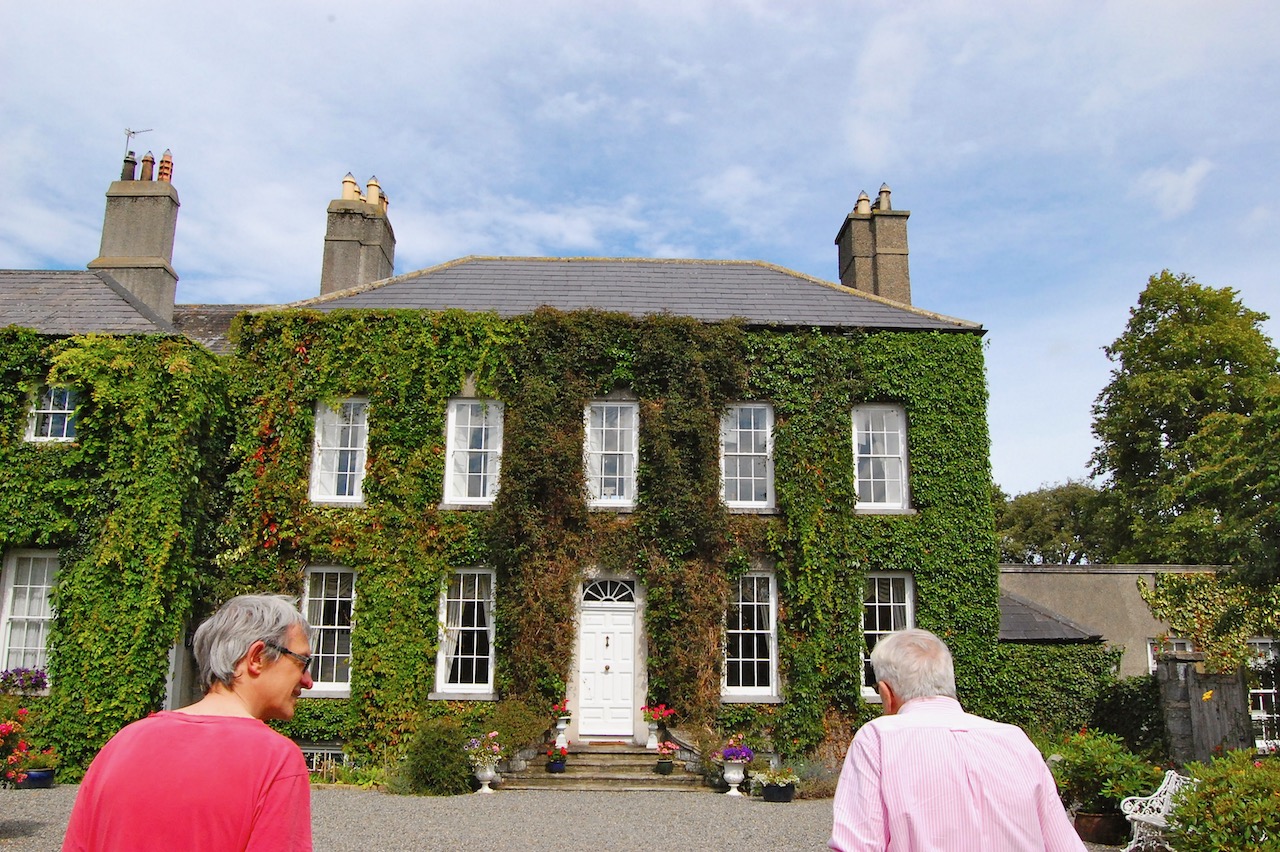
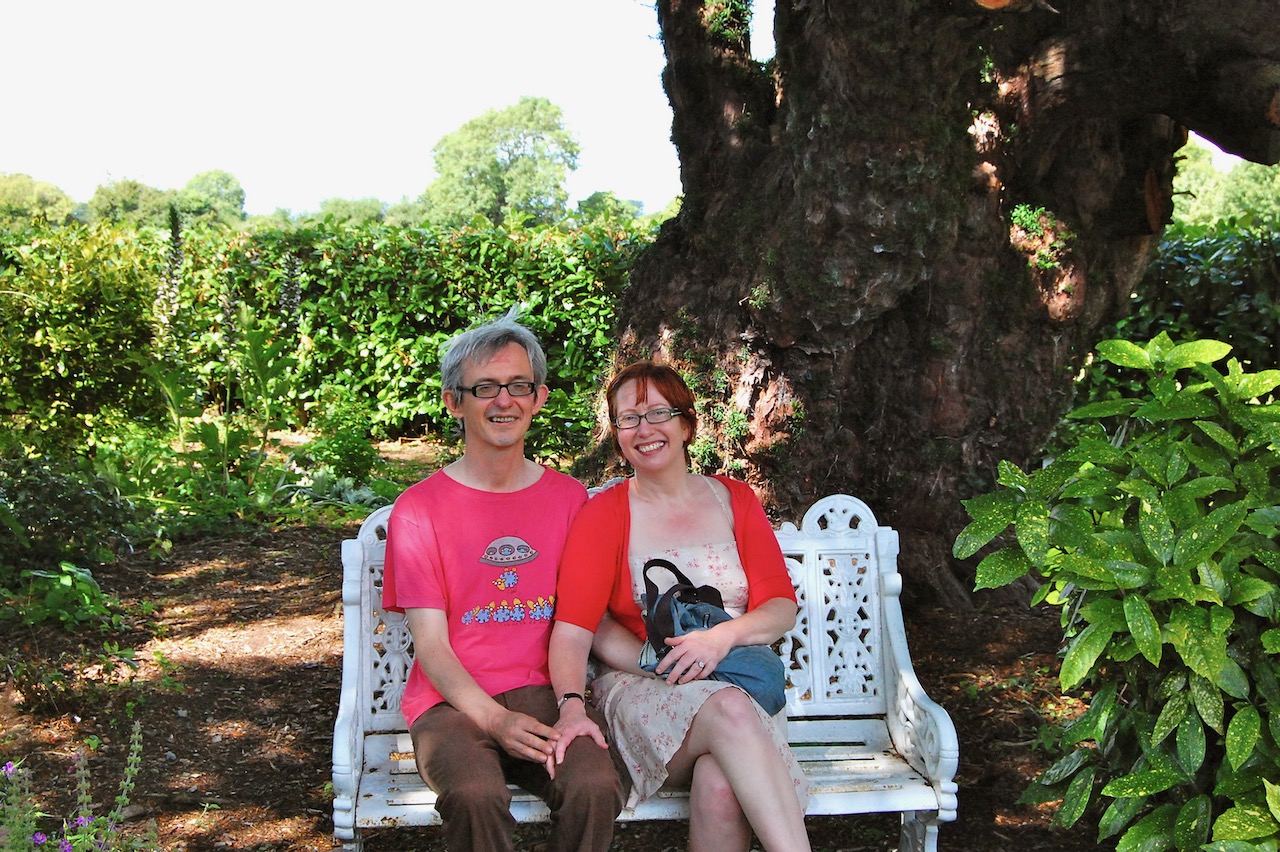
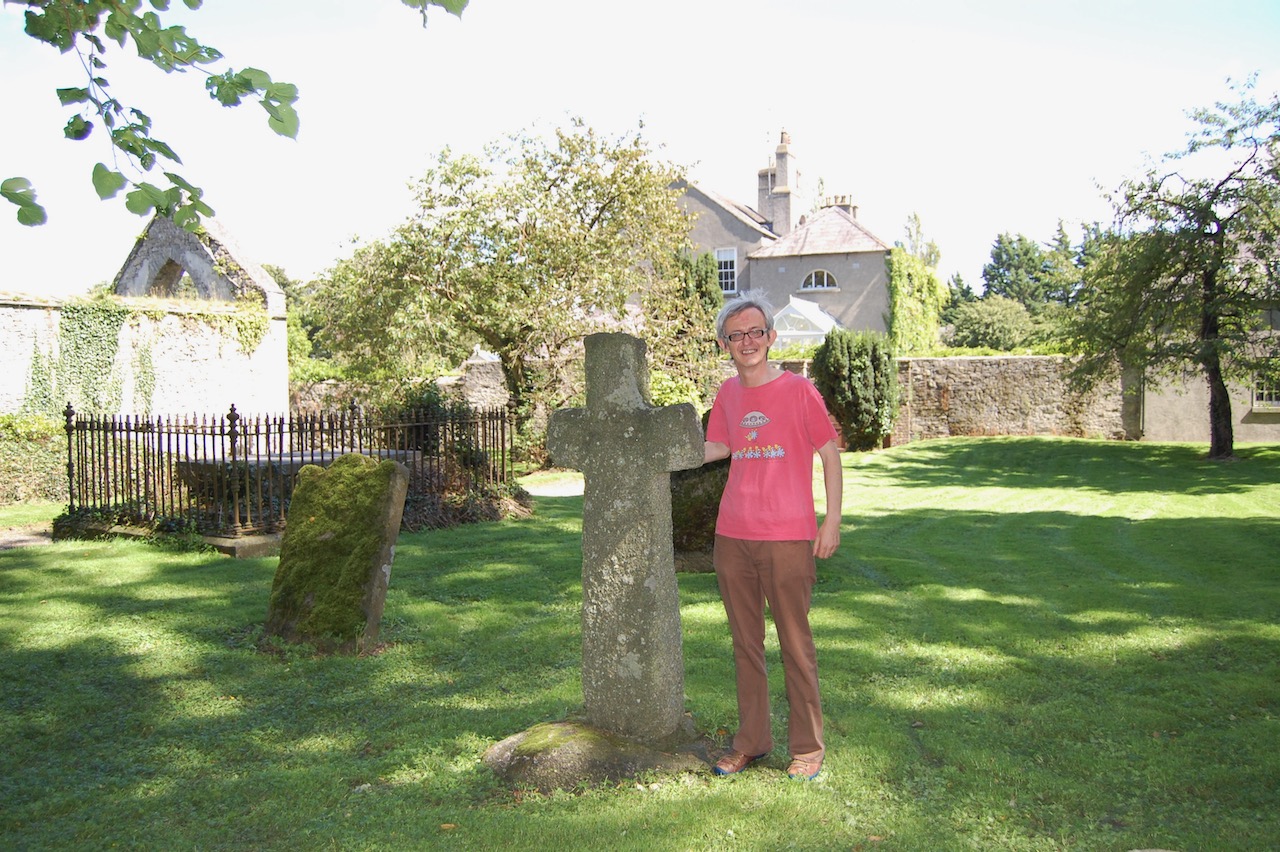
10th December 2009, my Dad and Stephen, when we went to Powerscourt to celebrate my birthday. Photograph © Jennifer Winder-Baggot, www.irishhistorichouses.com

It used to be that one went to the estate to see the 47 acres of landscaped gardens, since the house was gutted by fire in November, 1974, and remained closed for many years. The fire was probably due to a chimney fire that ignited. Since then, it has been gradually renovated. The Slazenger family, living in the house at the time of the fire, moved into a section of the wing that was not destroyed by the fire. Nowadays inside is a shopping mecca and lovely Avoca cafe, with a growing exhibition about Powerscourt estate itself. My family has been visiting Powerscourt estate since I was a child. The ultimate in romantic, with terraces, groves of trees, stone sculptures, nooks, the mossy labyrinth in the Japanese gardens, the “secret” boat house with its view onto the surface of the lake, and the Versailles-like Neptune fountain, the memory of its purple and grey dampness was an aesthetic touchstone for me when I lived in hot, dry, bright Perth and California.

DSC_1235.JPG
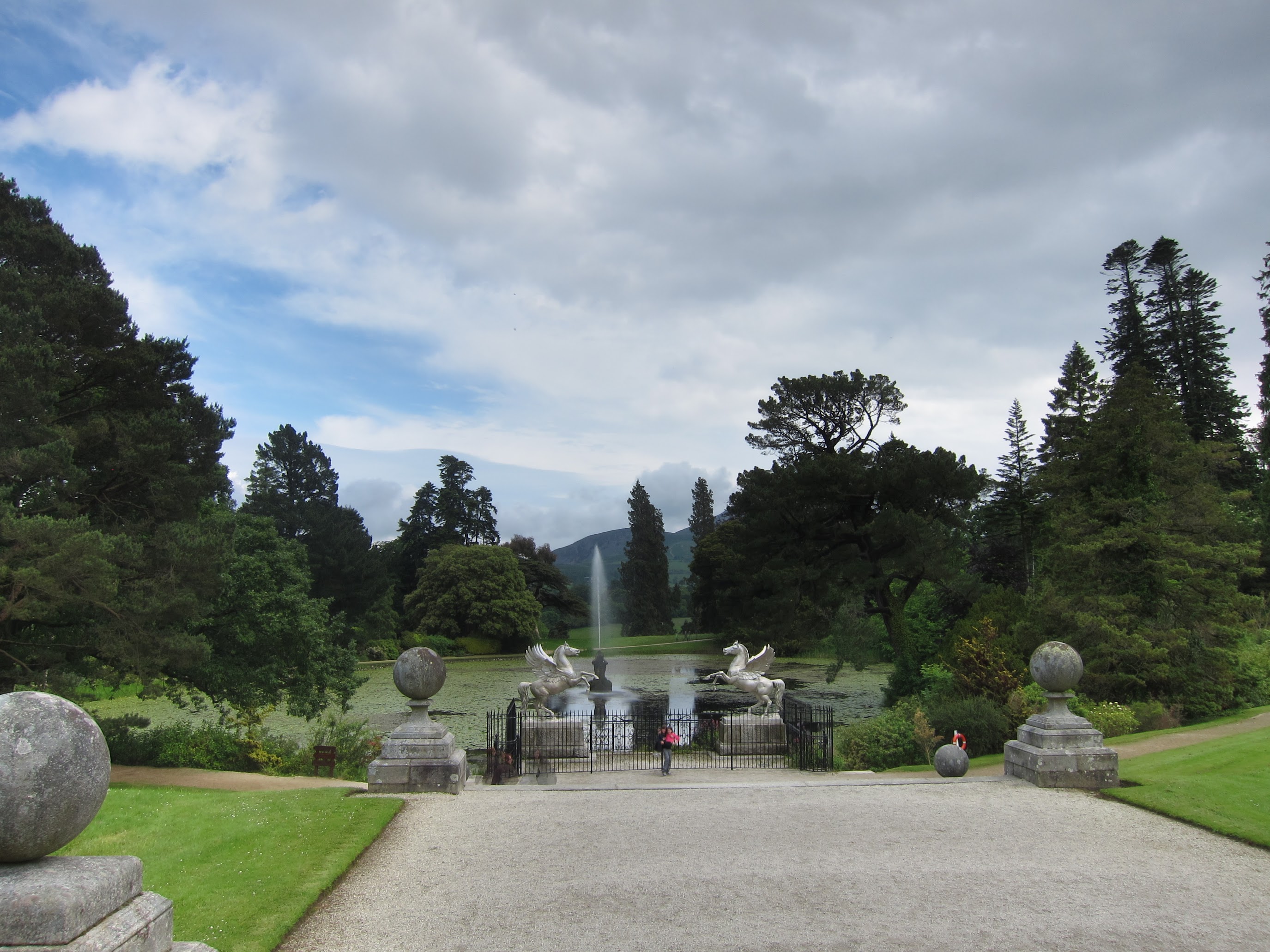
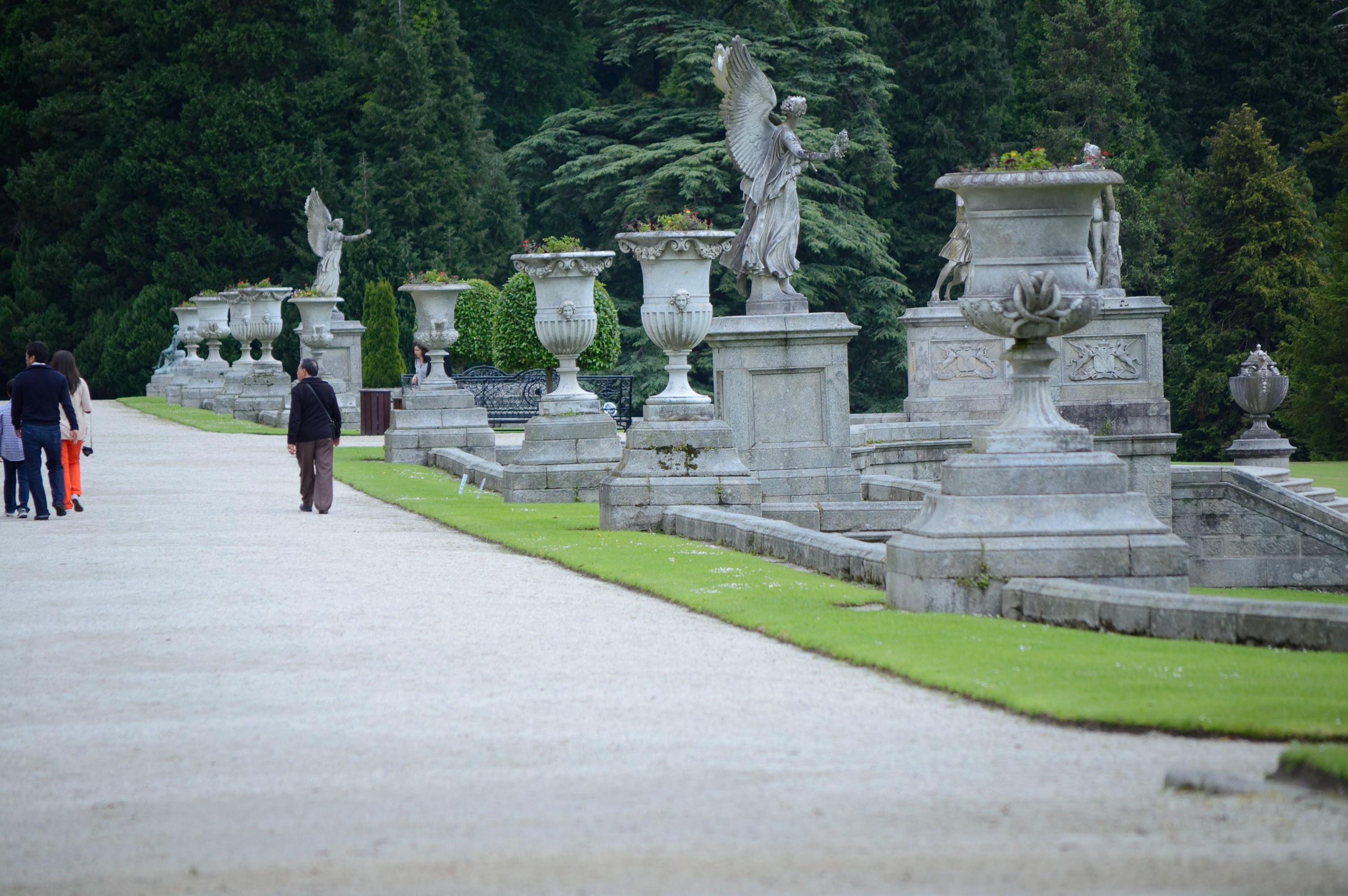
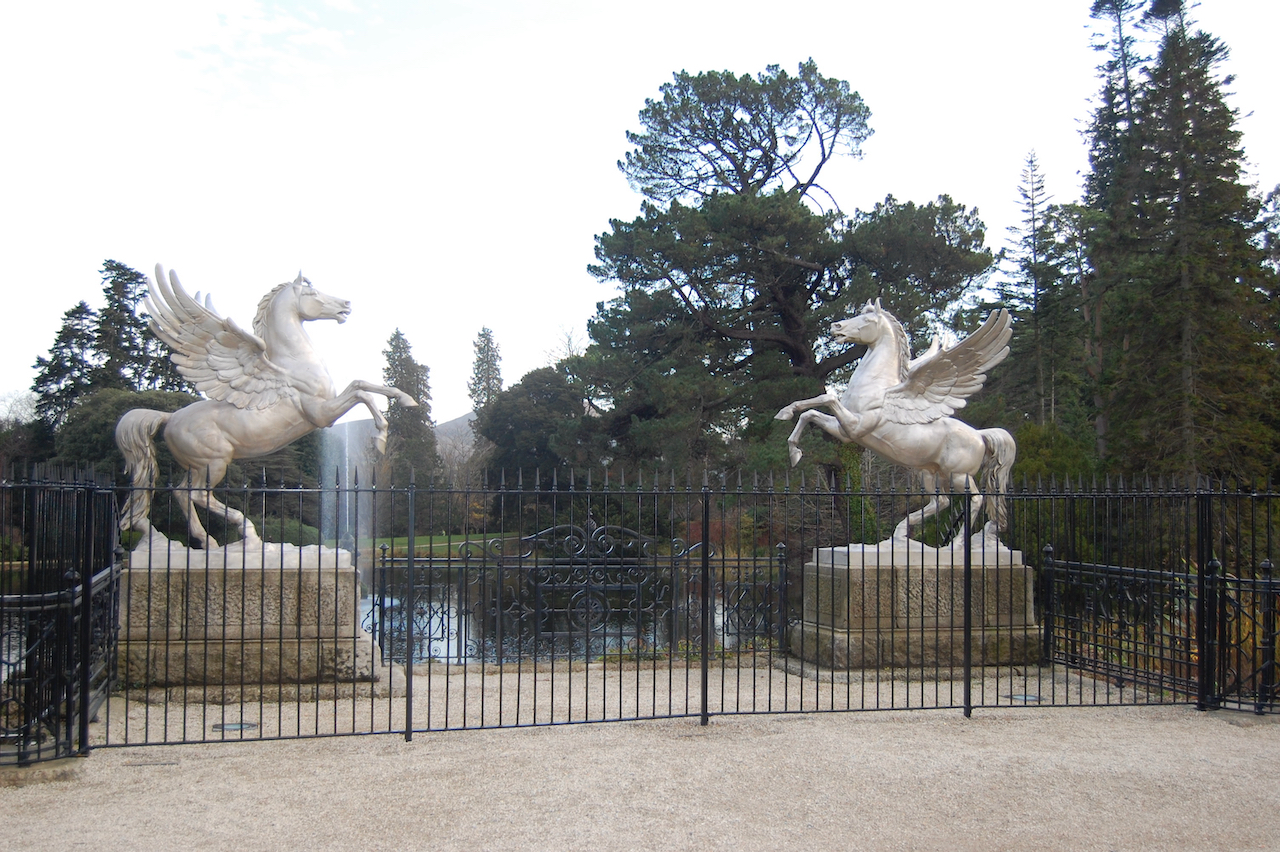
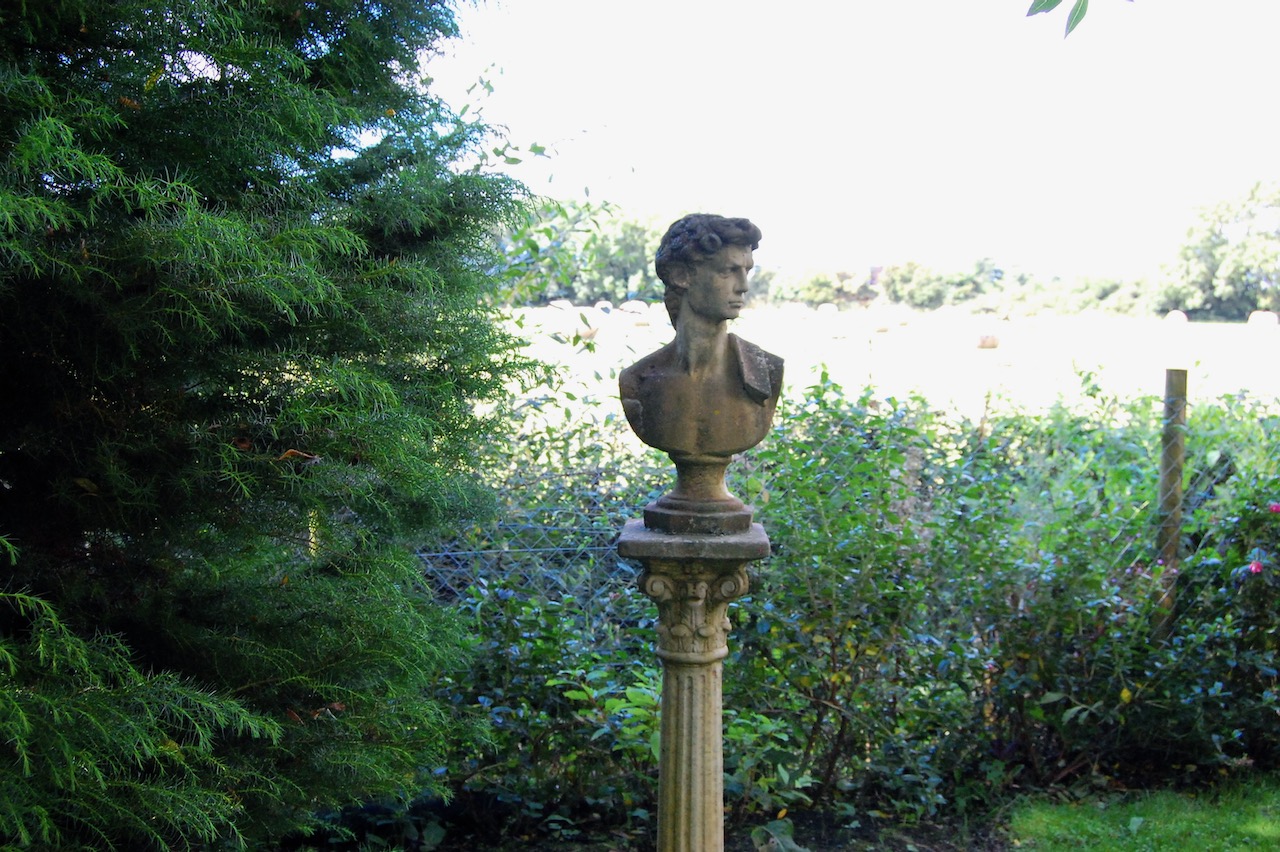
Powerscourt. Situated in The Italian Garden, these winged figures were created for the 7th Viscount in 1866 by Professor Hugo Hagen of Berlin from the design of the great German sculptor Rauch. Photograph © Jennifer Winder-Baggot, www.irishhistorichouses.com

In 1974, David Hicks tells us in his Irish Country Houses, a Chronicle of Change, only months before the fire, Stanley Kubrick filmed Barry Lyndon in the house, and the film shows the interiors of the house before they were destroyed.

Powerscourt by George Barret the Elder, courtesy of Yale Centre for British Art.

The estate is named after previous owners of the land, the Powers, or Le Poers. The site was a strategic military position for the Anglo-Normans in the 12th century, and by 1300 the Le Poers had built a castle there. In 1609 the land was granted to Richard Wingfield, Marshall of Ireland.

Richard (1697-1751) 1st Viscount Powerscourt (of 3rd creation) built Powerscourt, designed by Richard Castle (or Cassells) in 1728.

Powerscourt, Hall, County Wicklow, photograph by Robert French, Lawrence Photograph Collection, National Library of Ireland.
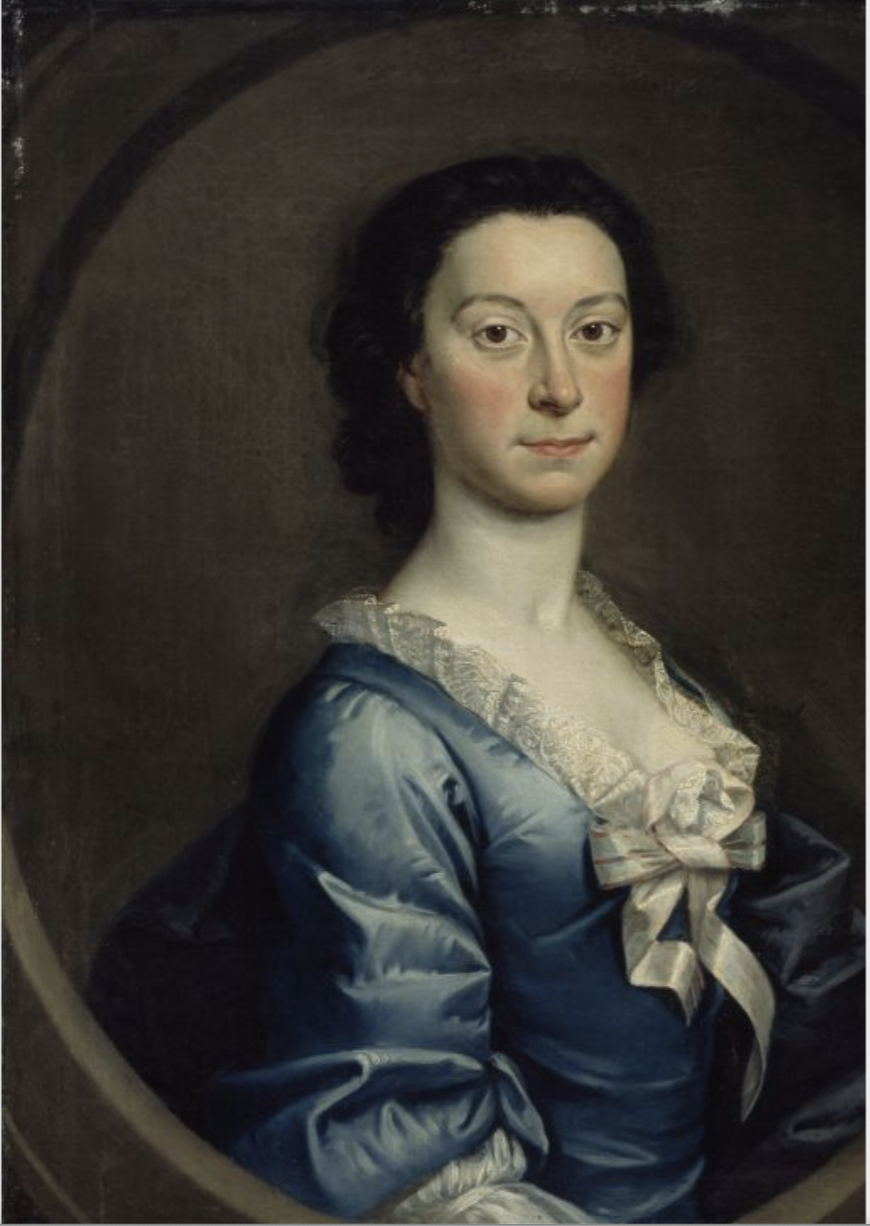
Isabella Wingfield by John Verelst, 1722, daughter of Edward Wingfield (1630-1728), sister of Richard 1st Viscount Powerscourt, wife of Henry King 3rd Baronet of Boyle Abbey.

In 1961 the estate was sold by the 9th Viscount, Mervyn Patrick Wingfield, to Mr. Ralph Slazenger, and the Slazenger family still own it. [1] The same family owned Durrow Abbey near Tullamore in County Offaly (which they purchased in 1950, but it now belongs to the OPW). [2][3]

According to the Dictionary of Irish Biography, Richard Wingfield (1551?–1634) 1st Viscount Powerscourt, a soldier, was eldest son of Sir Richard Wingfield, governor of Portsmouth, and his wife Christian Fitzwilliam of Milton. He was born into a family with a strong martial tradition: his brothers and uncles bore arms for the crown in the Low Countries, France, and Ireland. He came to Ireland c.1573 to serve as a soldier under his uncle Sir William Fitzwilliam (1526-1599) who was twice Lord Deputy of Ireland. Richard then returned to fight overseas but returned to Ireland, where he fought with the rebel forces of Hugh O’Neill, Earl of Tyrone.

On 27 January 1600 he was made marshal of the Irish army and was a member of the Irish privy council by 24 March. He played a key role in organising the royal army during the latter part of the Nine Years War.

He played a prominent role in both the siege and battle of Kinsale in late 1601. He was granted the lands of Rebane, Queen’s County, in March 1602. After the final suppression of the rebellion, he was granted in October 1603 a 21-year lease of the district of Ferncullen (formerly held by the O’Tooles) in north Co. Wicklow. He established his residence there at Powerscourt castle. [4]

Richard Wingfield appealed to James I for the land in order to secure the district from the incursions of native Irish lords and the families who had previously occupied the land, such as the O’Tooles. [5] In 1609 the King granted him full ownership.

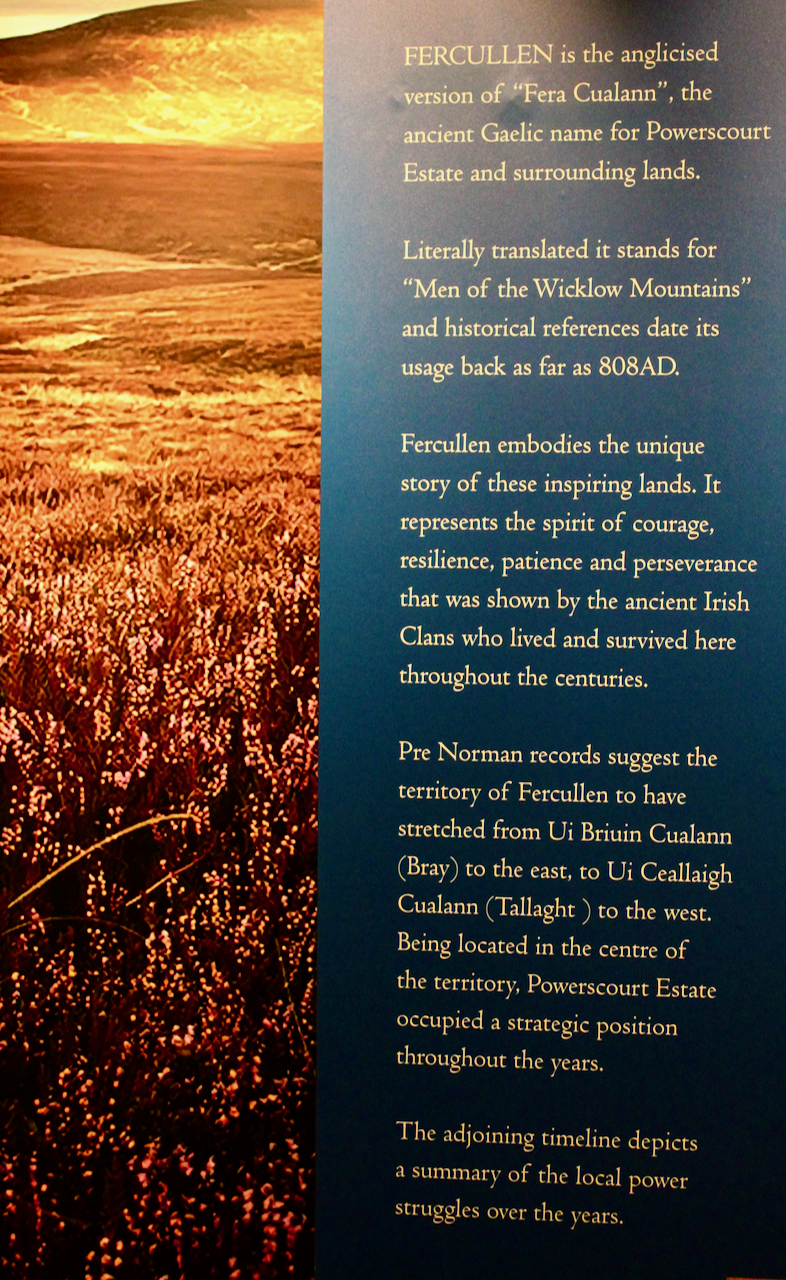
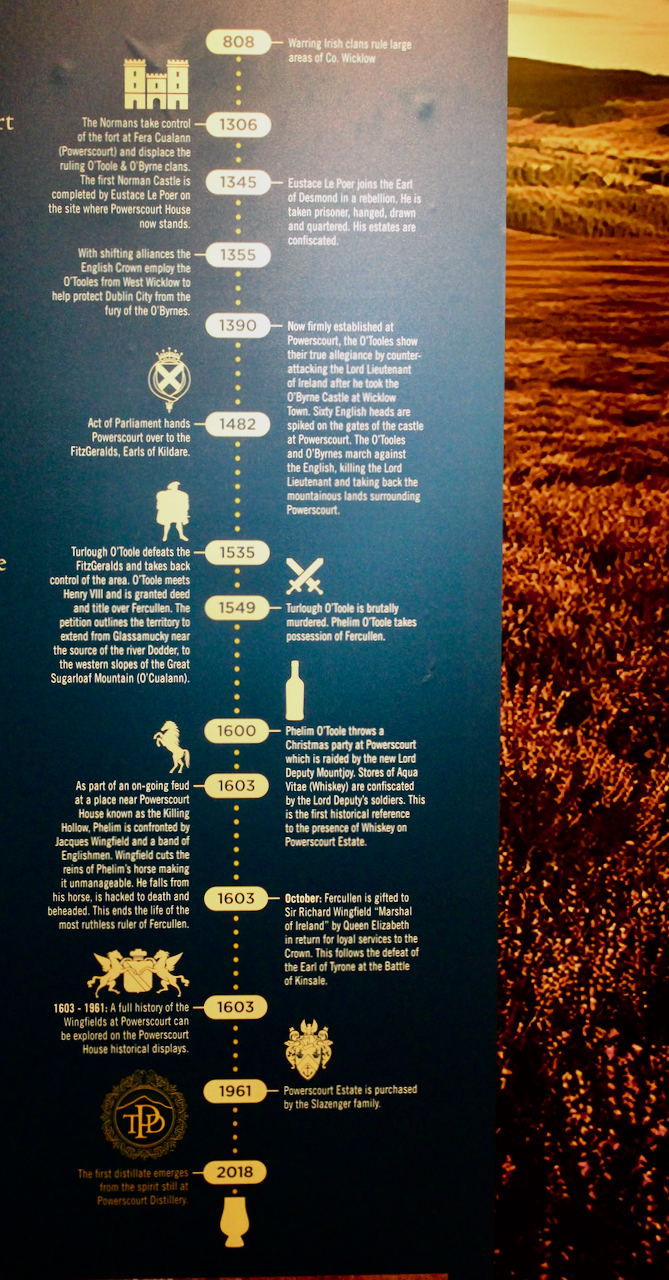
Information board.
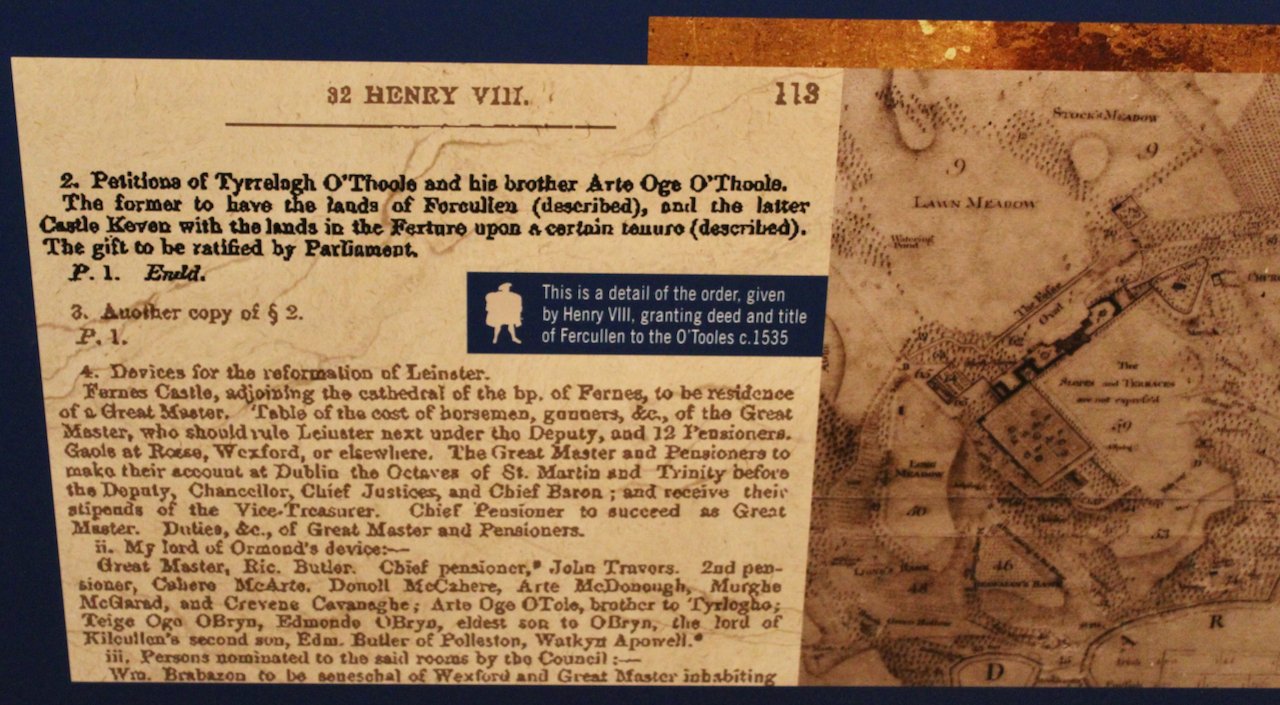
Detail of an order given by King Henry VIII granting deed and title of Ferncullen, which is the land of Powerscourt, to the O’Tooles in around 1535.
This chronology is on a board in the whiskey distillery, shop and cafe in the Millhouse on the grounds of Powerscourt.

He also received 1,000 acres at Ballnabarney as part of the Wexford plantation in November 1613. He sat as MP for Downpatrick in the 1613–15 parliament after being rejected by the largely Scottish electorate of Co. Down, acting as one of the chief government spokesmen in the house of commons. On 1 February 1619 he was created Viscount Powerscourt, having paid £2,000. He died on 9 September 1634. [see (4)]

He had no children so his cousin Edward Wingfield (d. 1638) succeeded him. Although they are both Wingfields they were actually cousins through the Cromwell line. Richard had married Frances Rugge, widow of 3rd Baron Cromwell. Edward Wingfield (d. 1638) married Anne Cromwell, daughter of the 3rd Baron Cromwell and Frances Rugge.

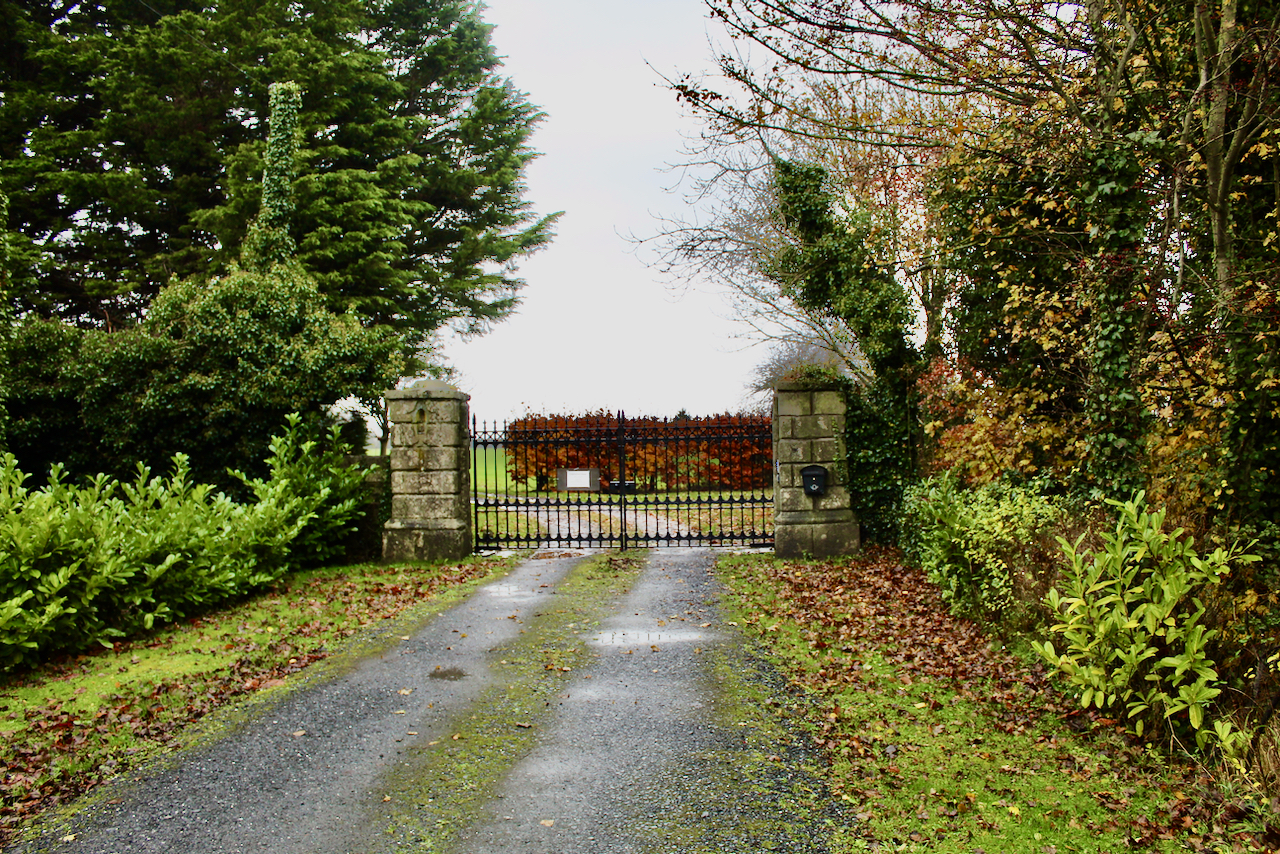
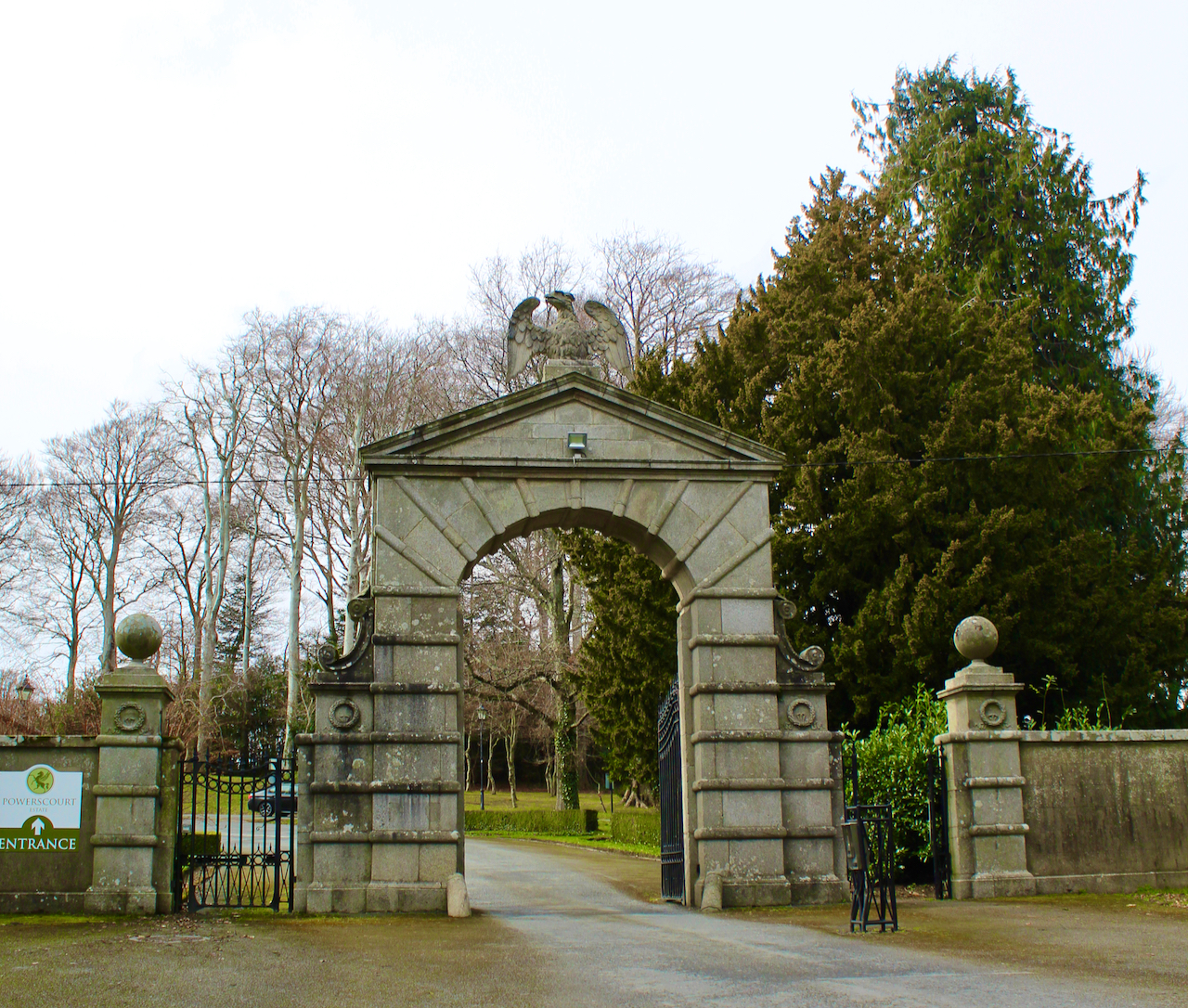
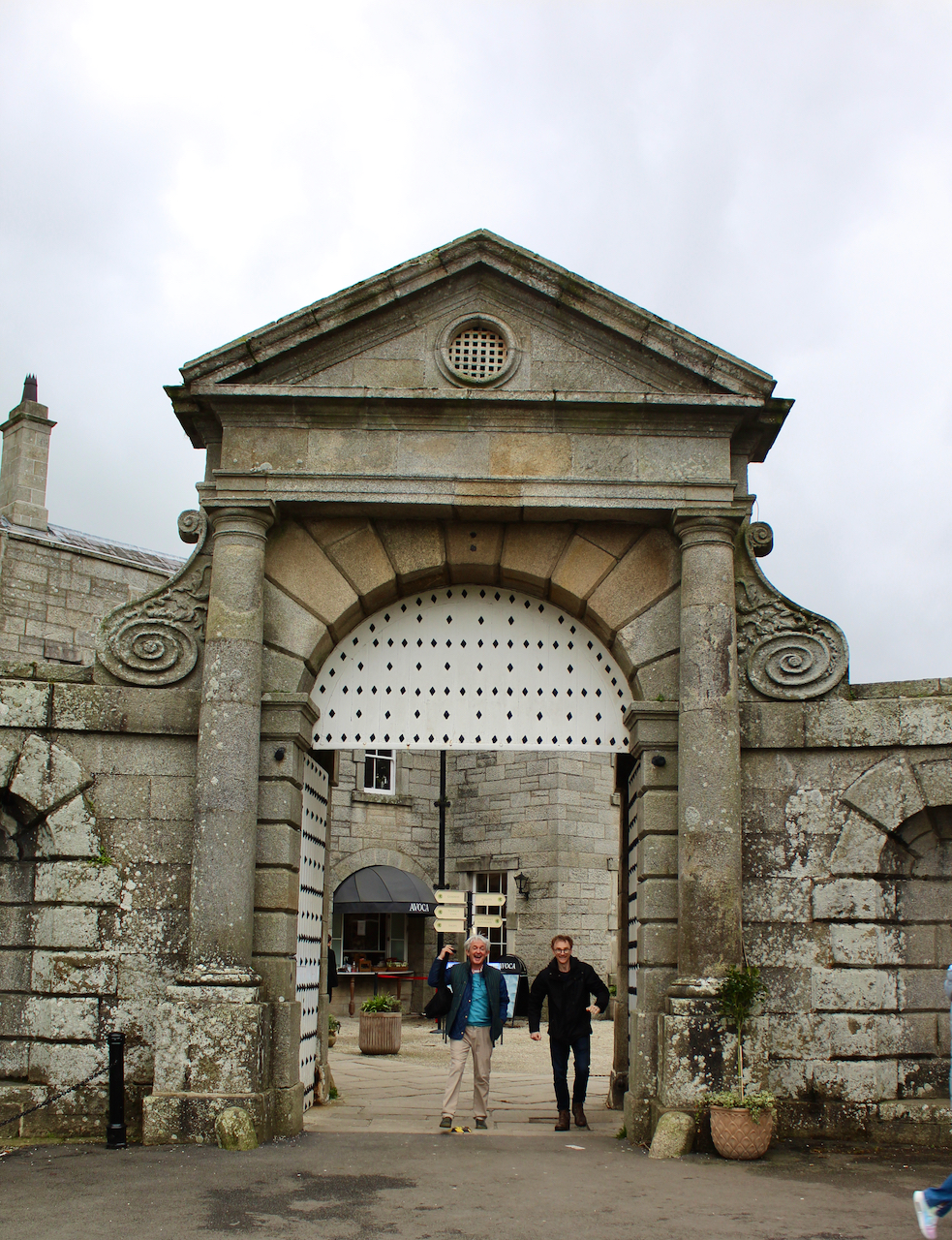
An entrance to the estate is topped with the Wingfield eagle. Photograph © Jennifer Winder-Baggot, www.irishhistorichouses.com

Edward Wingfield and Anne Cromwell had two sons: Lewis and Richard (d. 1644).

Richard (d. 1644), married Elizabeth Folliott daughter of Henry, 1st Lord Folliott, Baron of Ballyshannon, and they had a son Folliott Wingfield (1642-1717) who was created 1st Viscount Powerscourt in 1664/65. Folliott married Elizabeth, daughter of Roger Boyle, 1st Earl of Orrery. On his death, his title became extinct as they had no children.

The other son of Edward Wingfield and Anne Cromwell, Lewis, had a son Edward (d. 7 January 1728). Edward lived at Powerscourt, and was MP for County Wicklow. I suspect he moved to Powerscourt when Folliott Wingfield died. He married Eleanor Gore, daughter of Arthur, 1st Baronet Gore, of Newtown Gore, Co. Mayo. Their son Richard (1697-1751) was created 1st Viscount Powerscourt, of Powerscourt, Co. Wicklow in 1733/34. Their daughter Isabella married Henry King, 3rd Baronet of Boyle Abbey, County Roscommon [we will come across the King family when I write about King House in County Roscommon, a section 482 property.] Their daughter Sidney married Acheson Moore of County Tyrone. [6]

A ha ha runs along the parkland in front of the house, to stop grazing animals from approaching the house. Photograph © Jennifer Winder-Baggot, www.irishhistorichouses.com
Richard (1697-1751) 1st Viscount Powerscourt was MP for Boyle, County Roscommon between 1727 and 1744, and was created a Privy Counsellor in 1746. He married twice. His first wife was Dorothy Ussher, daughter of William Ussher of Ussher’s Quay in Dublin. She died childless in 1723, and then he married Dorothy Rowley, daughter of Hercules Rowley of Summerhill, County Meath.

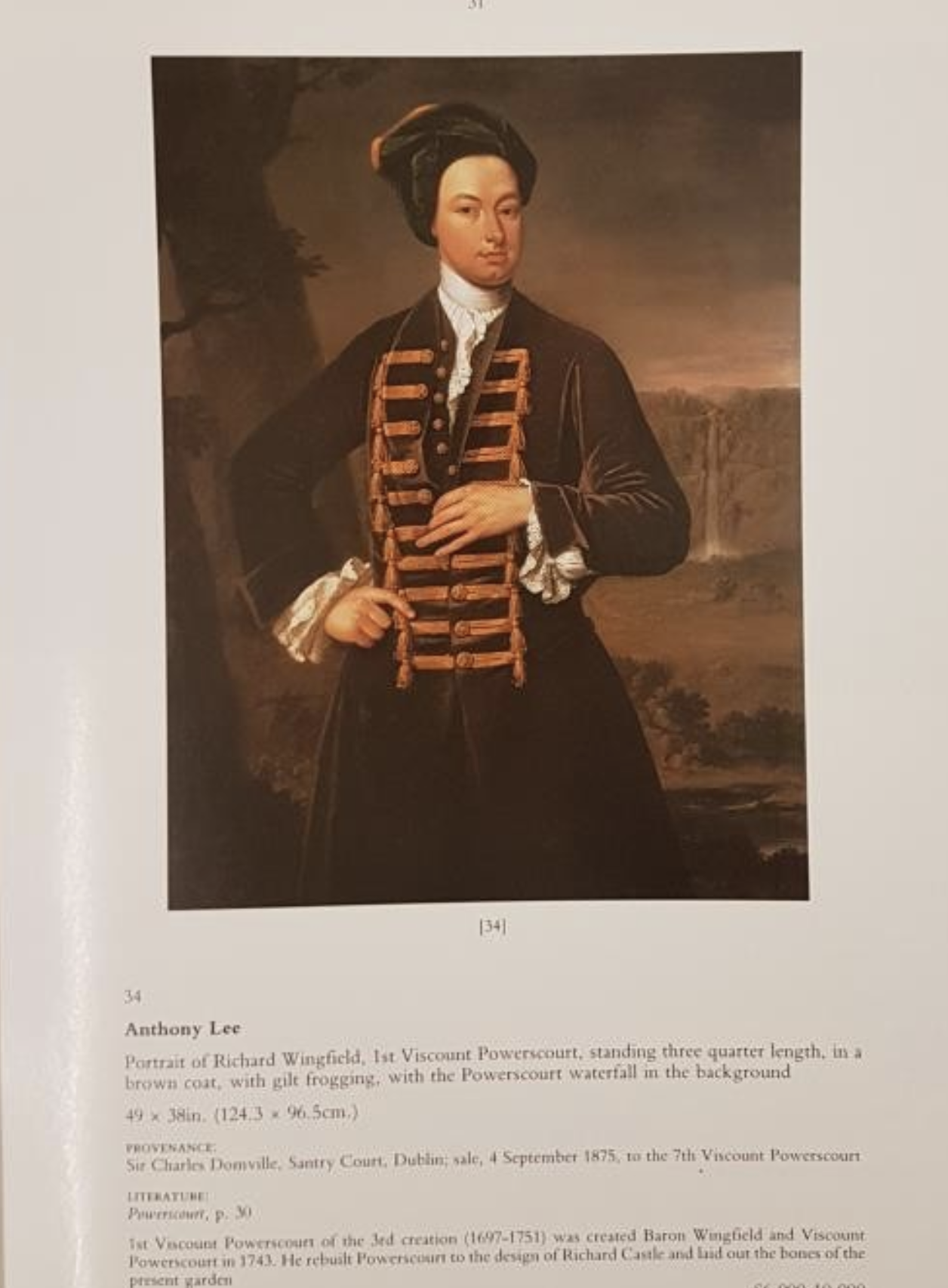
Richard Wingfield (1697-1751) 1st Viscount Powerscourt by Anthony Lee courtesy of Christie’s sale catalogue.

It was Richard 1st Viscount Powerscourt who built the Powerscourt house we see today. He incorporated some of the old building into a new residence he had built in 1728. According to Sean O’Reilly in Irish Houses and Gardens. From the Archives of Country Life, the 1974 fire exposed the fabric of the history of the house. He writes:

The original structure consisted of a low range incorporated in the two bays to the left of the entrance. This appears to have been a long, two-storey, rectangular block, raised to a third storey in later development, and retaining, in one corner, a cross-shaped angle-loop. The vaulted room on the ground floor in this range survived into later remodellings. This earliest block, which dates from no later than the fifteenth century, was extended by a connecting block now incorporated in the garden front and, finally, by a third rectangular range fronted by the two bays on the right of the entrance, creating a U-plan.” [2]

The Wicklow house built for Richard Wingfield was designed by Richard Castle (or Cassels), who had worked with Edward Lovett Pearce. Both Lovett Pearce and Cassels favoured the Palladian style, and Cassels took over all of Lovett Pearce’s commissions after his untimely death aged just 34. Cassels worked on Carton, designed Russborough House (another section 482 house https://irishhistorichouses.com/2020/11/08/russborough-house-blessington-county-wicklow/ ) and Leinster House.

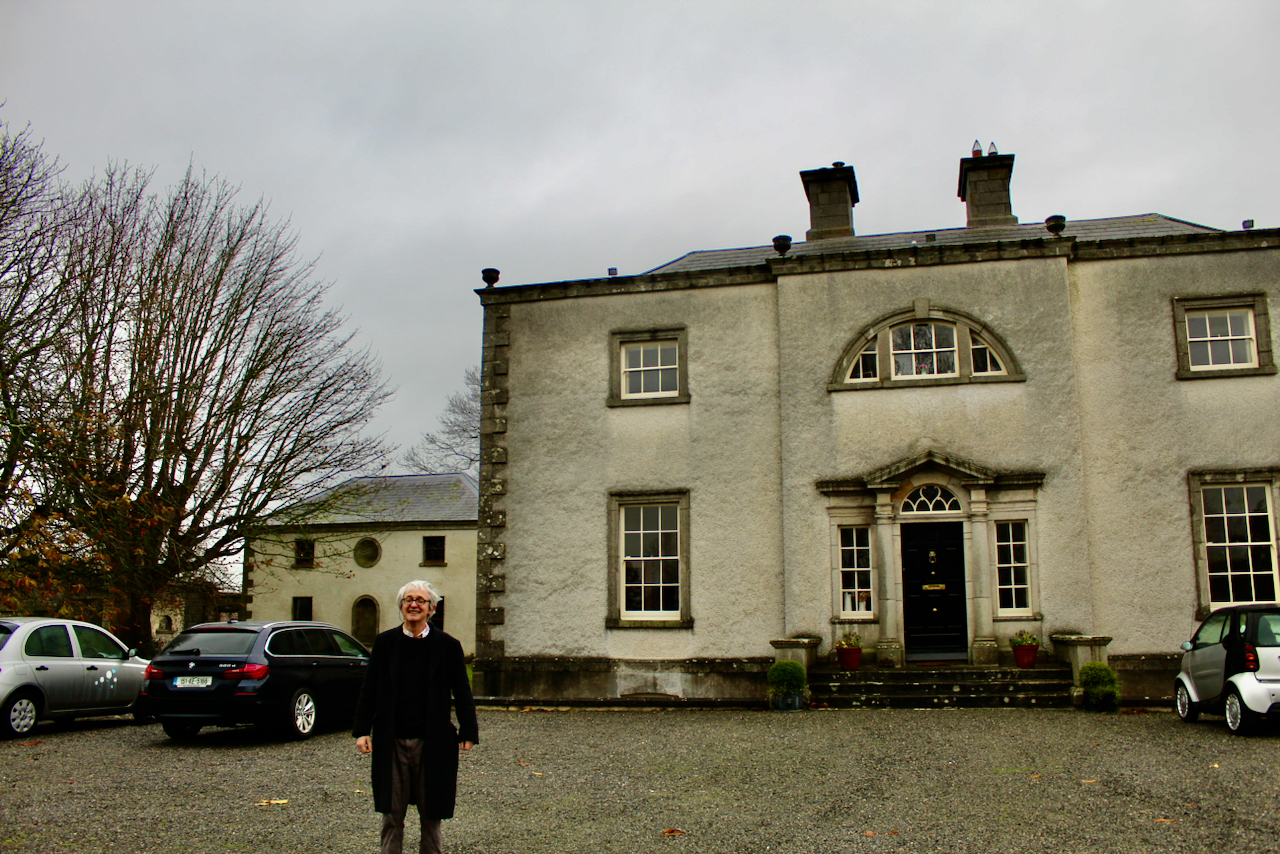
Powerscourt, March 2022. Photograph © Jennifer Winder-Baggot, www.irishhistorichouses.com

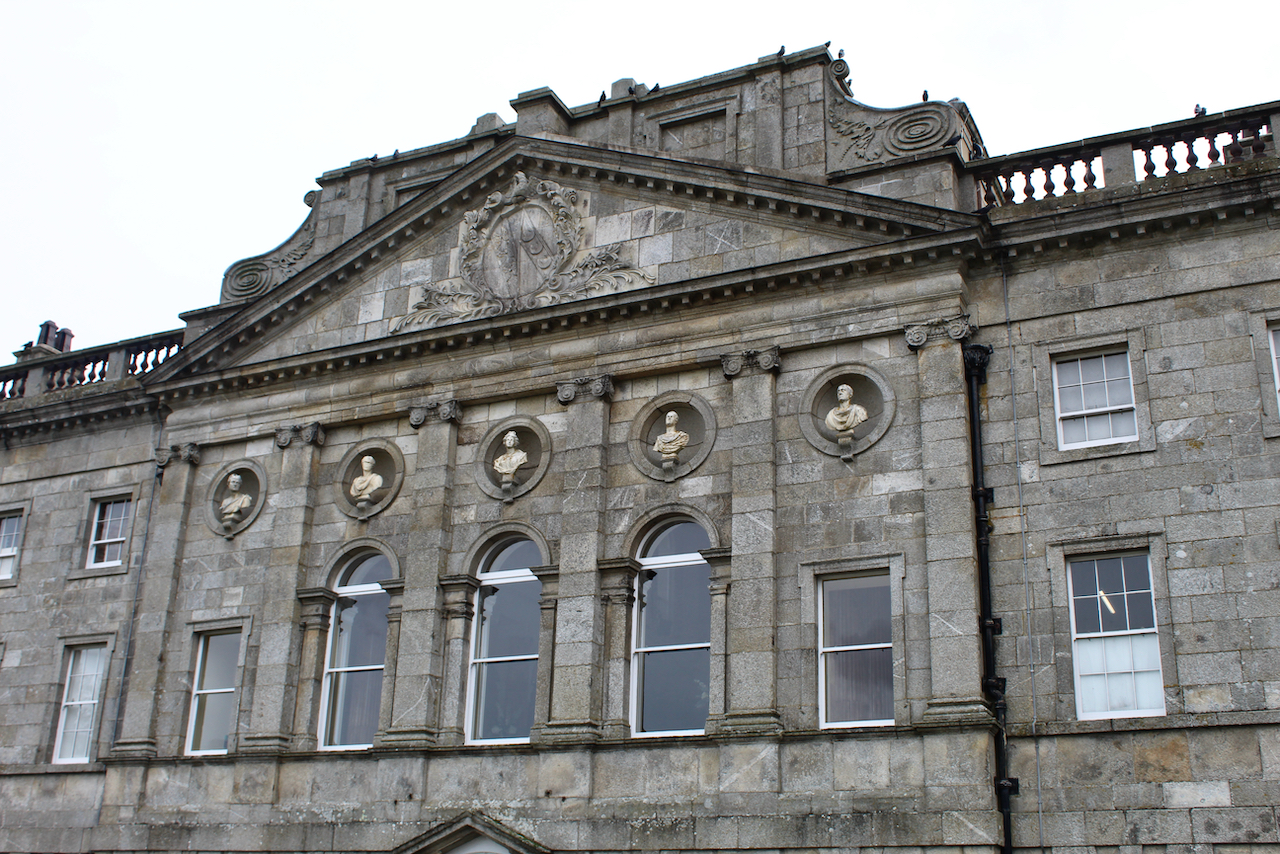
Powerscourt consists of a three storey centre block (see photograph above) joined by single-storey links to two storey wings, in the Palladian style. Borrowing from Mark Bence Jones’s description in his Irish Country Houses, the centre block has nine bays and the entrance front is made of granite. [6] There is a five bay breakfront in the centre of the middle block front facade, with a pediment of six Ionic pilasters (Ionic pillars have scrolls) standing on the bottom storey, which is, according to Bence-Jones, treated as a basement, and rusticated (rustication is the use of stone blocks with recessed joints and often with rough or specially treated faces, which is generally confined to the basement or lower part of a building). (see [6]) The pediment contains the arms of Richard Wingfield and his wife Dorothy Rowley.

There is a five bay breakfront in the centre of the middle block front facade, with a pediment of six Ionic pilasters standing on the bottom storey, which is treated as a basement, and rusticated. Photograph © Jennifer Winder-Baggot, www.irishhistorichouses.com
The pediment contains the arms of Richard Wingfield and his wife Dorothy Rowley. The 7th Viscount called the bust in the middle “Empress Julia” after his wife. He purchased the busts of Caesar in London. They came from Maidenhead, Buckinghamshire, and once belonged to the Duke of Sussex. Photograph © Jennifer Winder-Baggot, www.irishhistorichouses.com
Between the pilasters on the breakfront are rondels containing busts of Roman emperors, and a female in the centre rondel. The 7th Viscount called the bust in the middle “Empress Julia” after his wife. He purchased the busts of Caesar in London. They came from Maidenhead, Buckinghamshire, and once belonged to the Duke of Sussex.

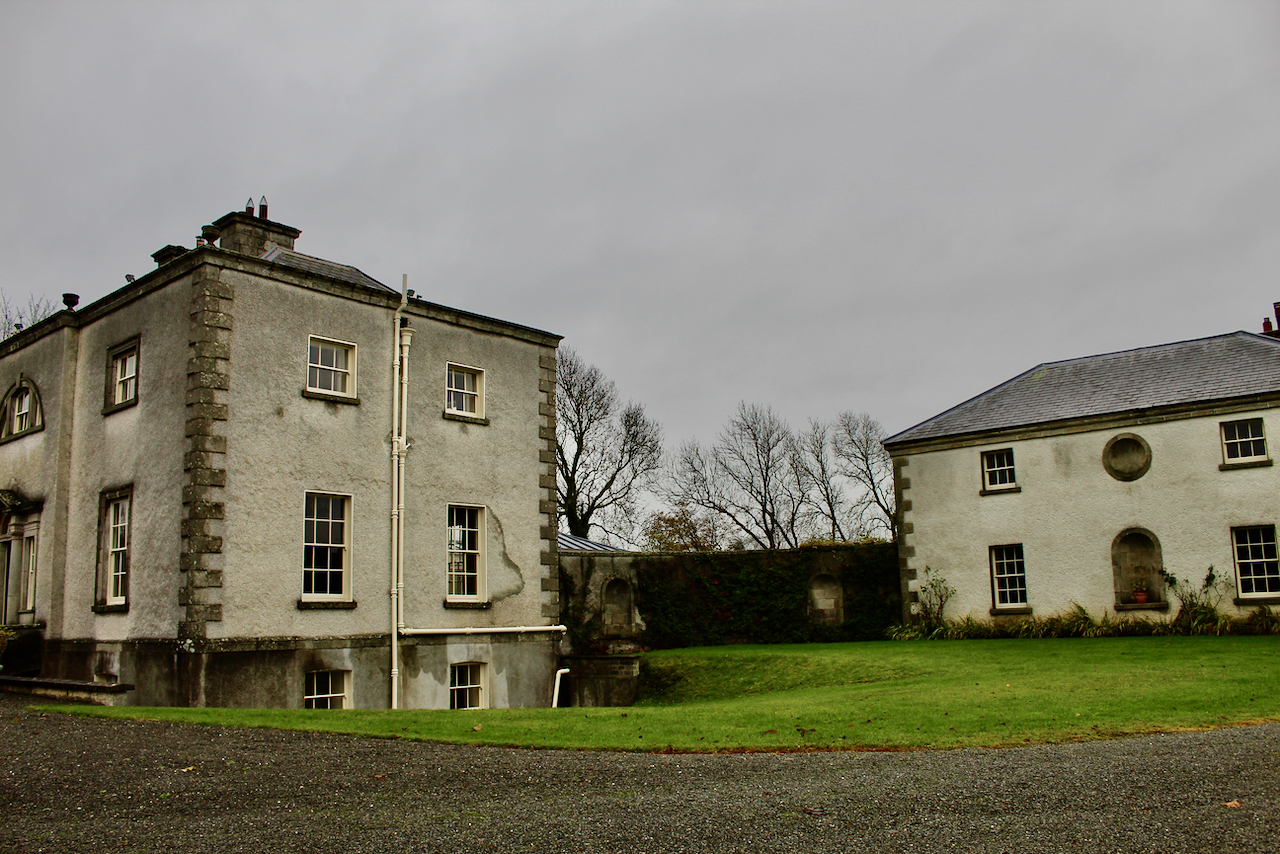
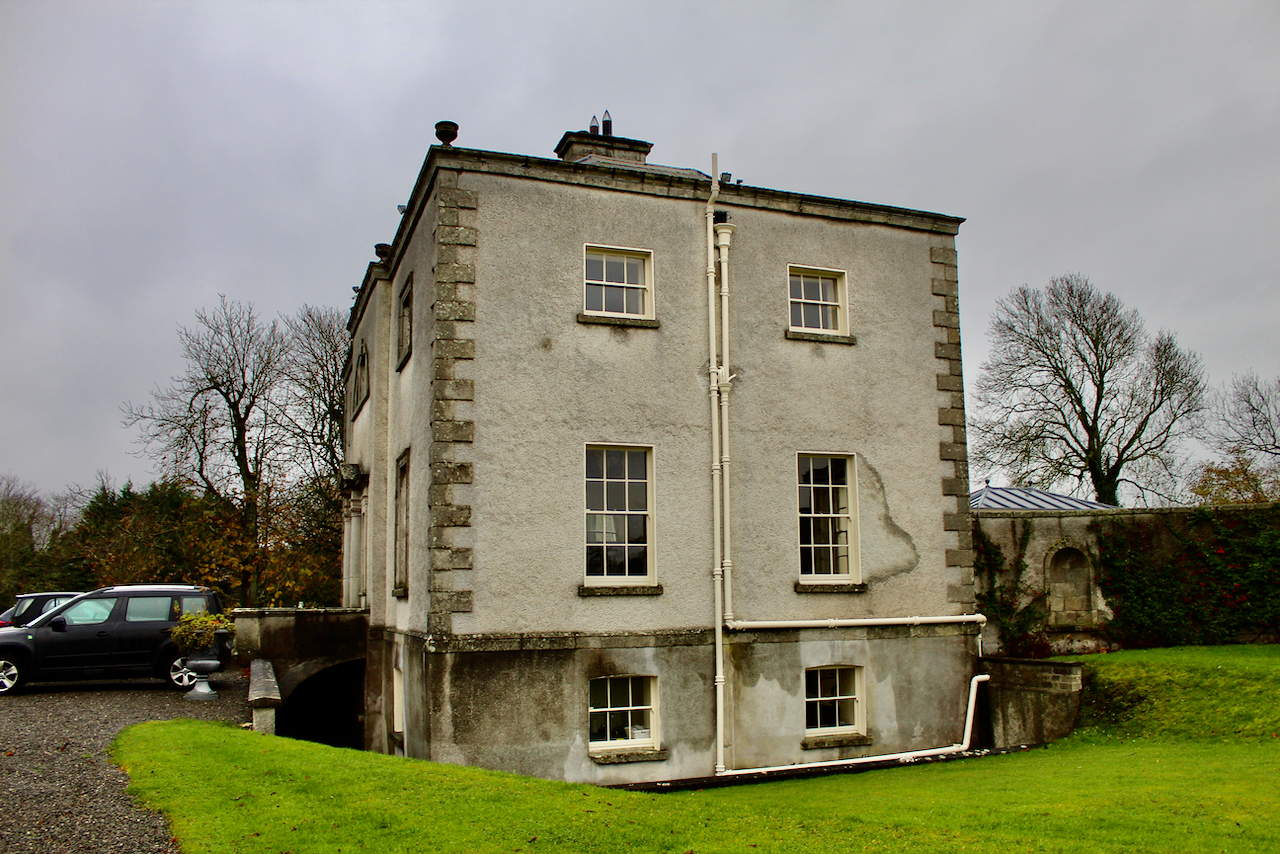
Powerscourt, March 2022. Photograph © Jennifer Winder-Baggot, www.irishhistorichouses.com
The four bay links as well as the central block have balustraded parapets. The wings have four bays, and the facade is prolonged beyond them by quadrant walls, each interrupted by a pedimented Doric arch and ending in an obelisk carrying an eagle, the Wingfield crest. [8]

The facade is prolonged on either side by quadrant walls, each interrupted by a pedimented Doric arch. Photograph © Jennifer Winder-Baggot, www.irishhistorichouses.com
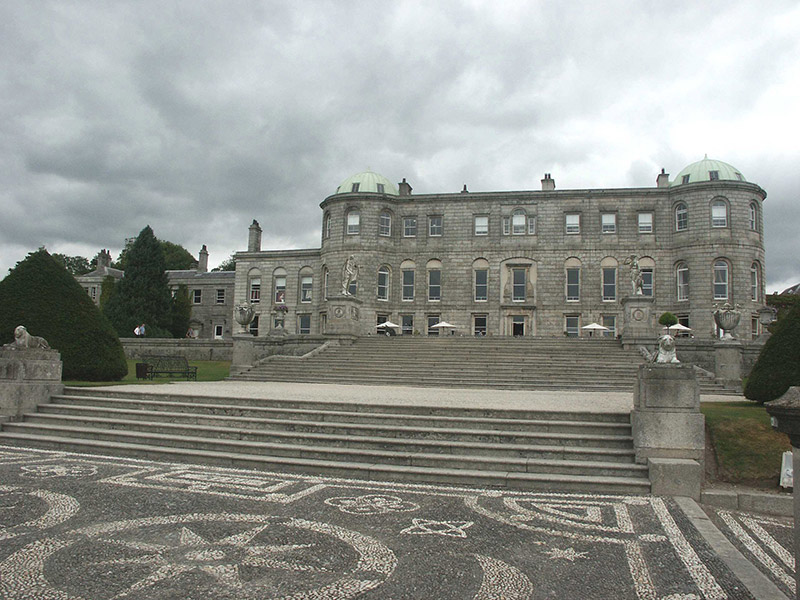
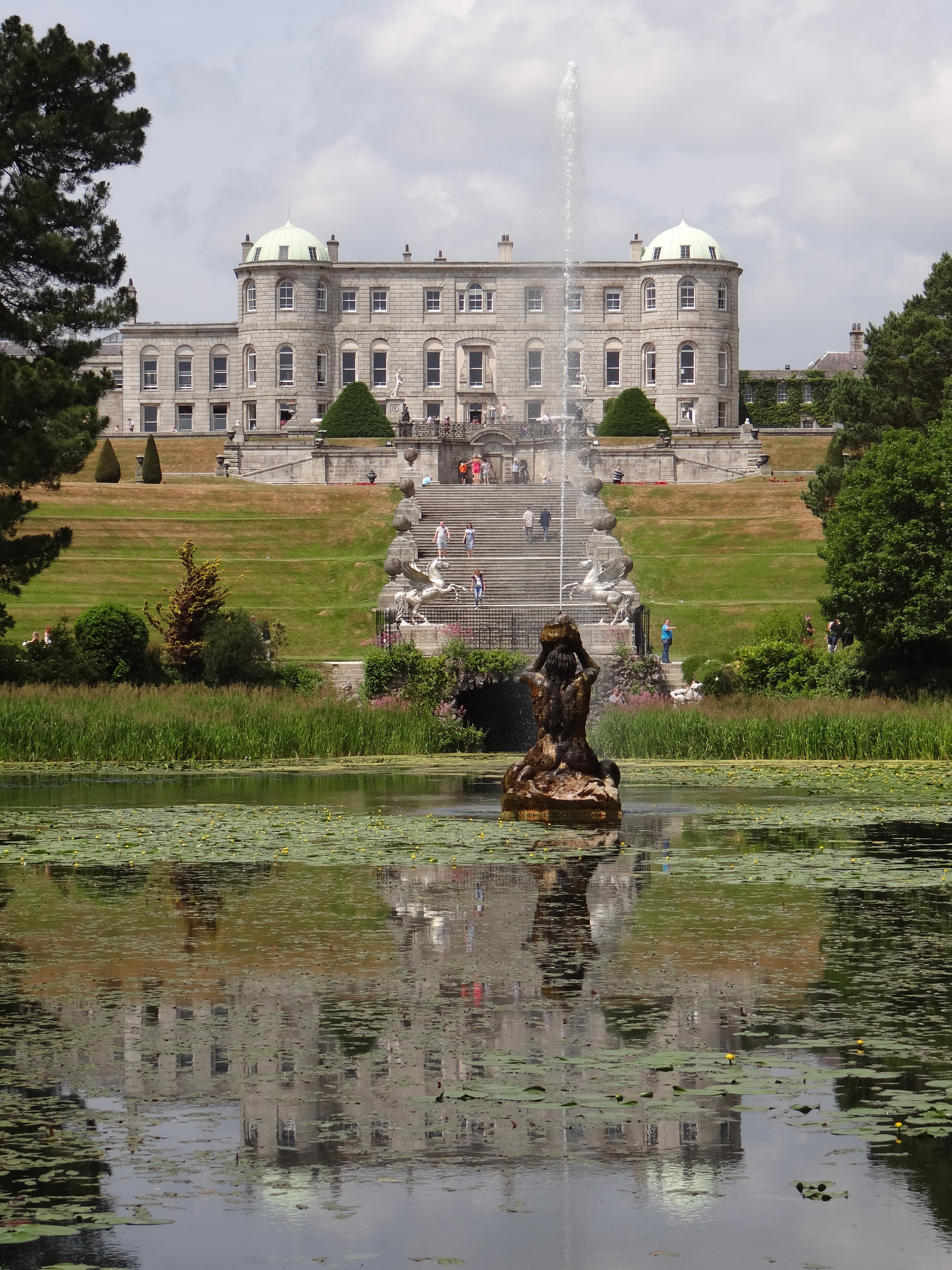
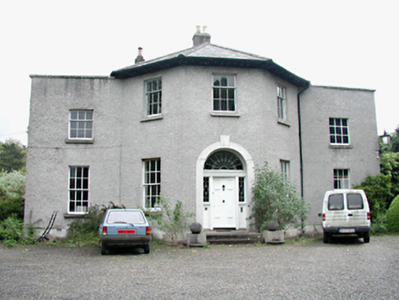
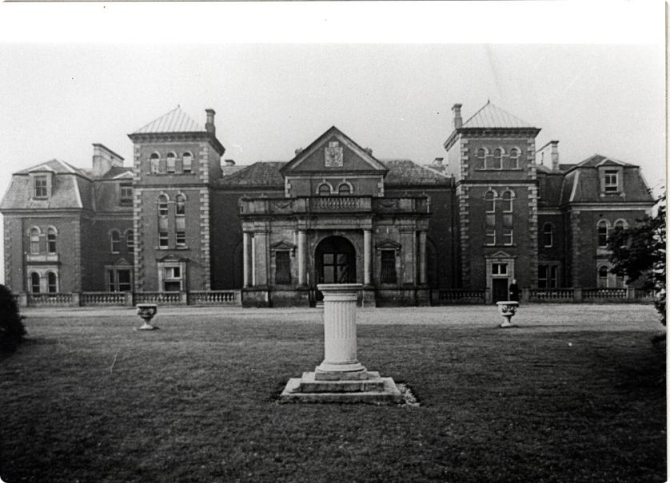
The garden front, photo from National Inventory of Architectural Heritage. There are round towers, or bows, on either corner surmounted by copper cupolas.

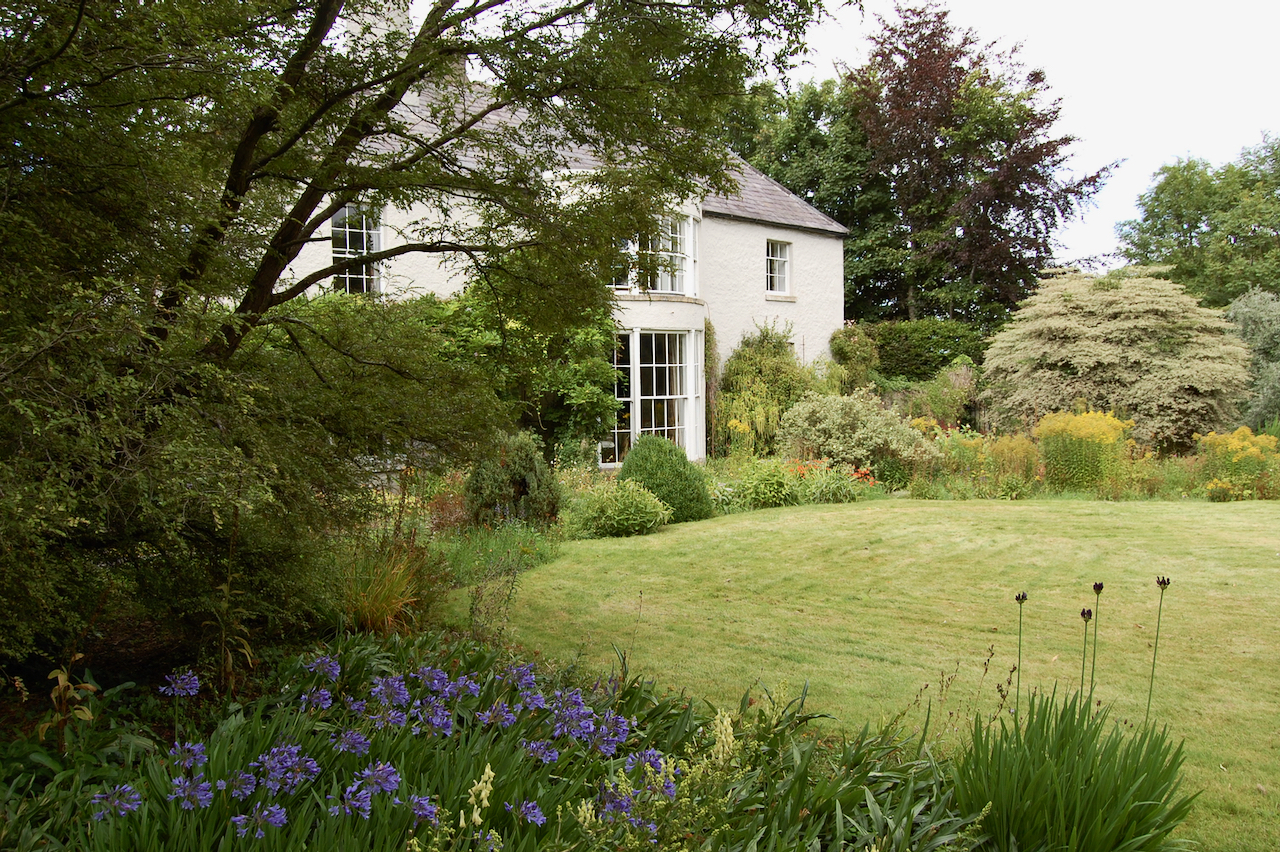
The garden front, pictured above, has seven bays between two bows on either end, and the bows are topped with copper domes. One side has a two storey wing. The garden  slopes down to a lake in a magnificent series of terraces. Powerscourt was built with sixty-eight rooms!

garden front of Powerscourt flickr commons by Francesco Severi July 14 2013
Garden front of Powerscourt, from flickr commons (photograph by Francesco Severi July 14 2013). The fountain in this lake is based on the fountain in the Piazza Barberini in Rome and completes the splendid vista from the house down to the lake.
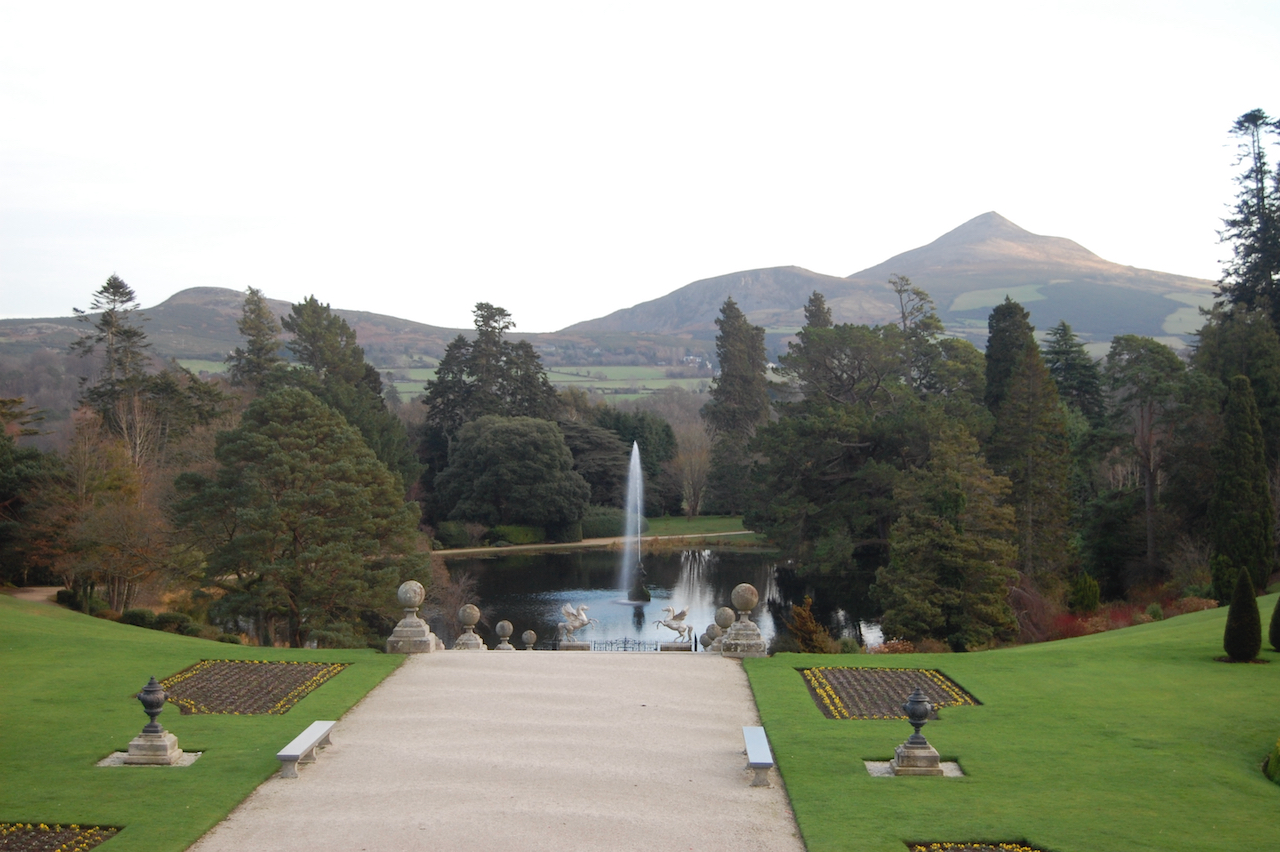
DSC_1225.JPG
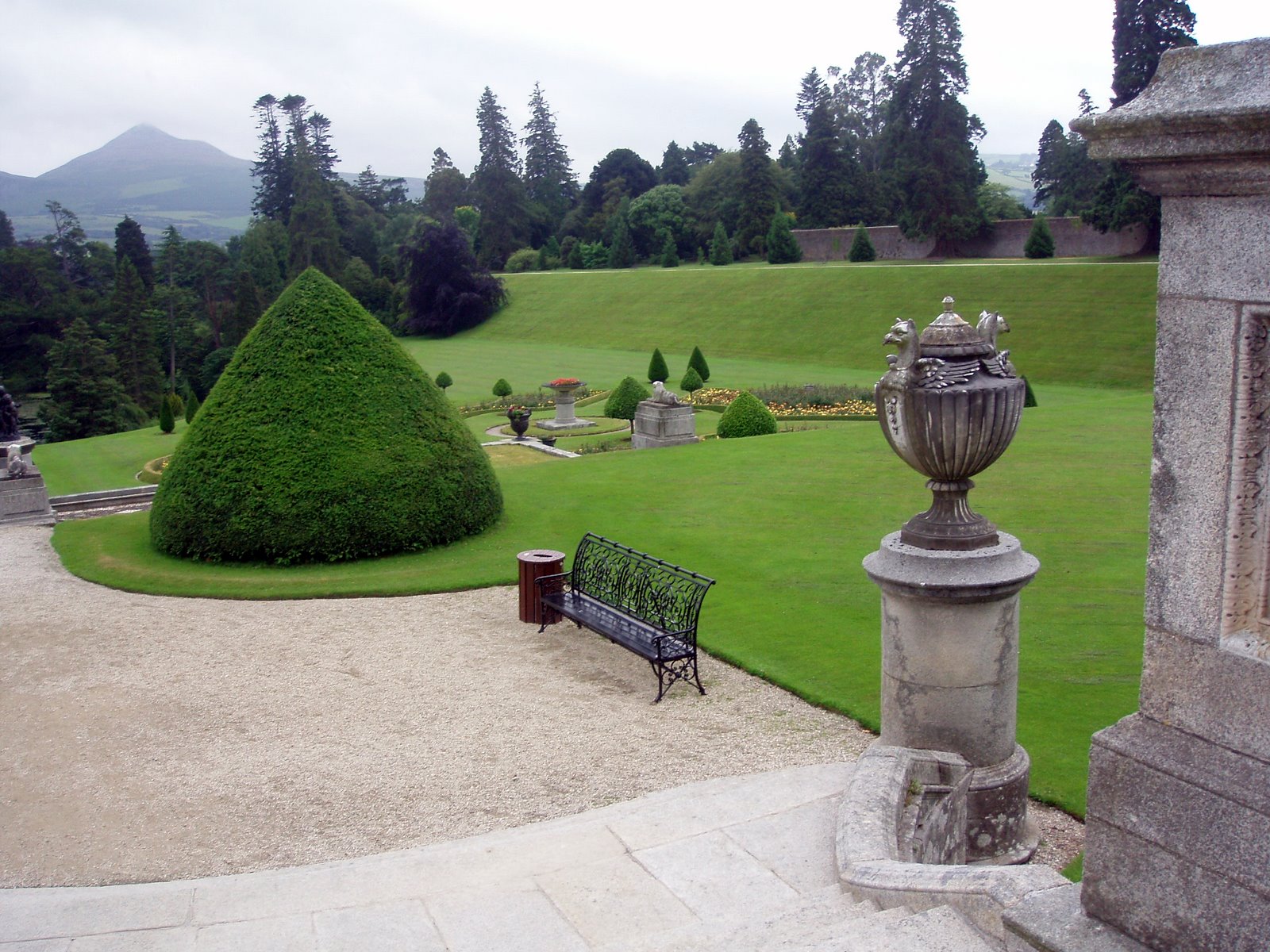
The view down the terraces to the lake, Sugarloaf Mountain in the background. Photograph © Jennifer Winder-Baggot, www.irishhistorichouses.com
Richard and Dorothy had two sons. The first, Edward, 2nd Viscount Powercourt, died childless, so his brother, Richard (1730-1788), became 3rd Viscount Powerscourt.

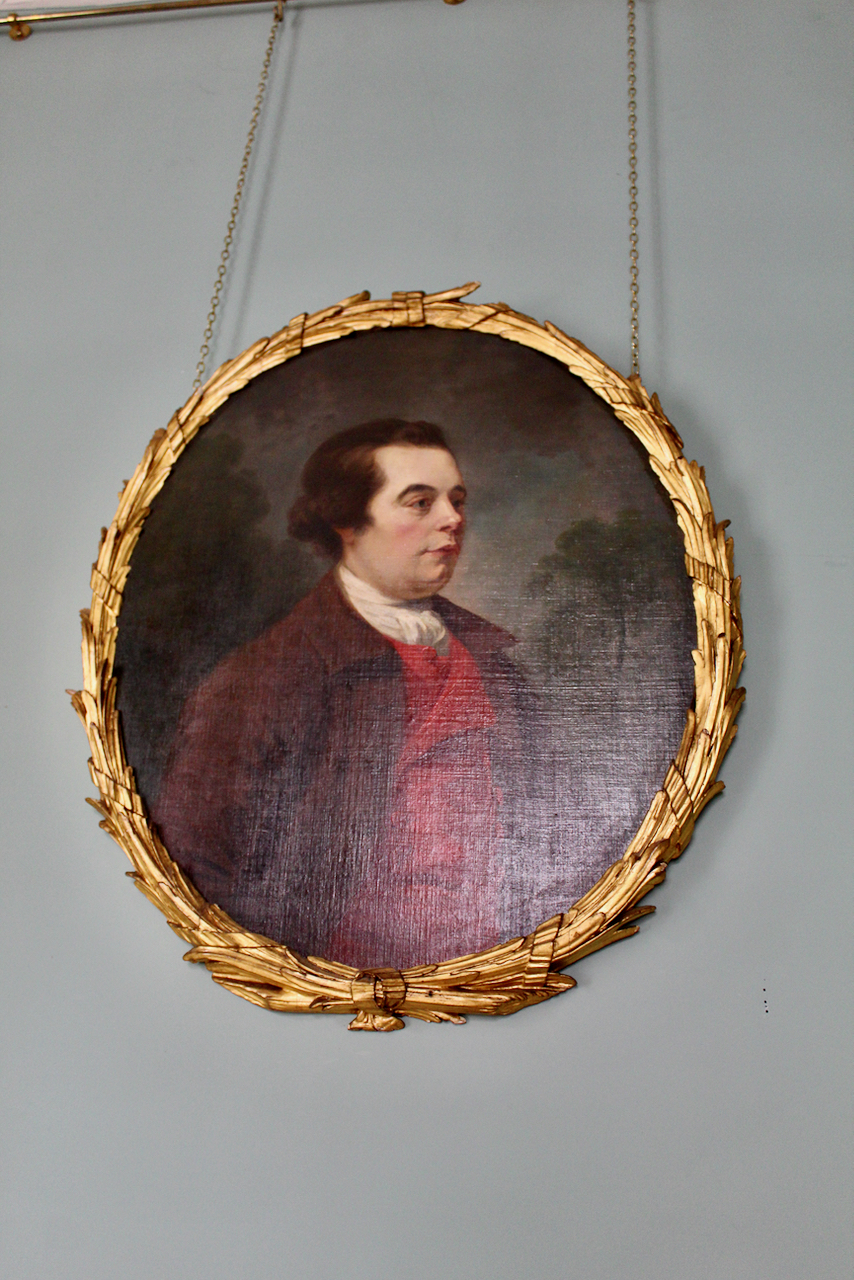
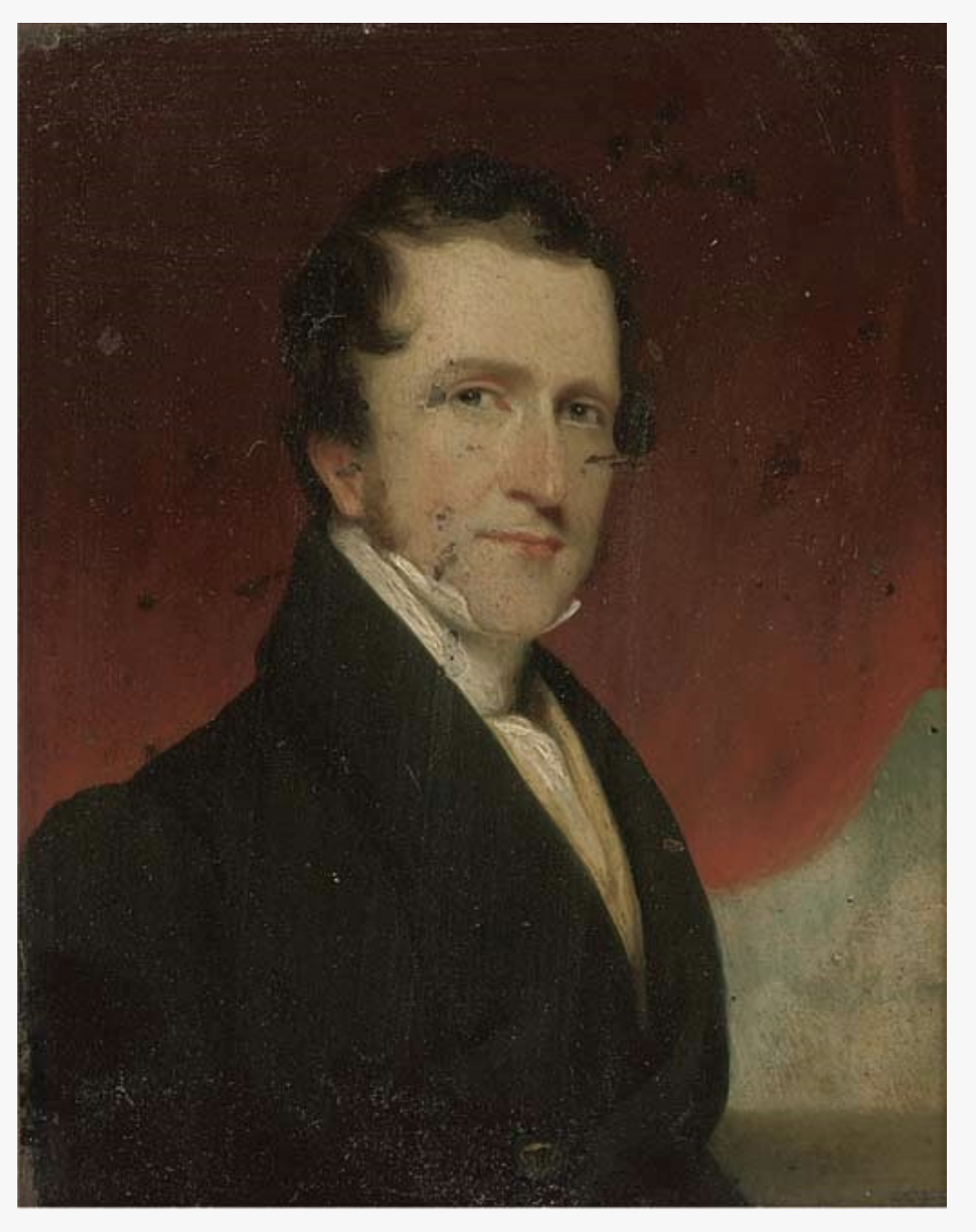
Portrait of a gentleman, traditionally identified as Edward 2nd Viscount Powerscourt, in a brown coat by circle of Francis Cotes, Hugh Douglas Hamilton.
Richard Wingfield (1730-1788) 3rd Viscount Powerscourt.

I wrote about the history of the Wingfield family briefly in my entry for Powerscourt Townhouse. [9] Seven years after inheriting the title, Richard 3rd Viscount began the building of Powerscourt Townhouse, so that he had a grand Palladian home in Dublin for residing and entertaining, when not living in his estate in Wicklow. He married Amelia Stratford, daughter of John Stratford, the 1st Earl of Aldborough. For the rest of the Wingfield successors, see [10] and also the Powerscourt website and see my entry about Powerscourt Townhouse https://irishhistorichouses.com/2020/04/02/powerscourt-townhouse-59-south-william-street-dublin-2/

Powerscourt House front hall, County Wicklow, photograph by Robert French, Lawrence Photograph Collection, National Library of Ireland.

Richard and Amelia’s son Richard 4th Viscount Powerscourt was brave enough to vote against the Act of Union in 1800, upsetting his neighbours. He married, firstly, Lady Catherine Meade, daughter of John Meade, 1st Earl of Clanwilliam County Tipperary, who gave birth to the heir and “two spares.” Catherine’s sister married the 10th Earl of Meath. After her death, he married Isabella Brownlow, daughter of William, MP for Armagh, and they several more children.

His son Richard (1790-1823) became the 5th Viscount and Richard’s son Richard (1815-1844), the 6th Viscount. The 5th Viscount married Frances Theodosia Jocelyn, daughter of the 2nd Earl of Roden, and the 6th Viscount married Elizabeth Frances Charlotte Jocelyn, daughter of the 3rd Earl of Roden.

Richard Wingfield (1815-1844) 6th Viscount Powerscourt, portrait on display at the Irish Georgian Society.
Richard Wingfield, 6th Viscount Powerscourt (1815-1844), photograph courtesy of National Gallery of Ireland.
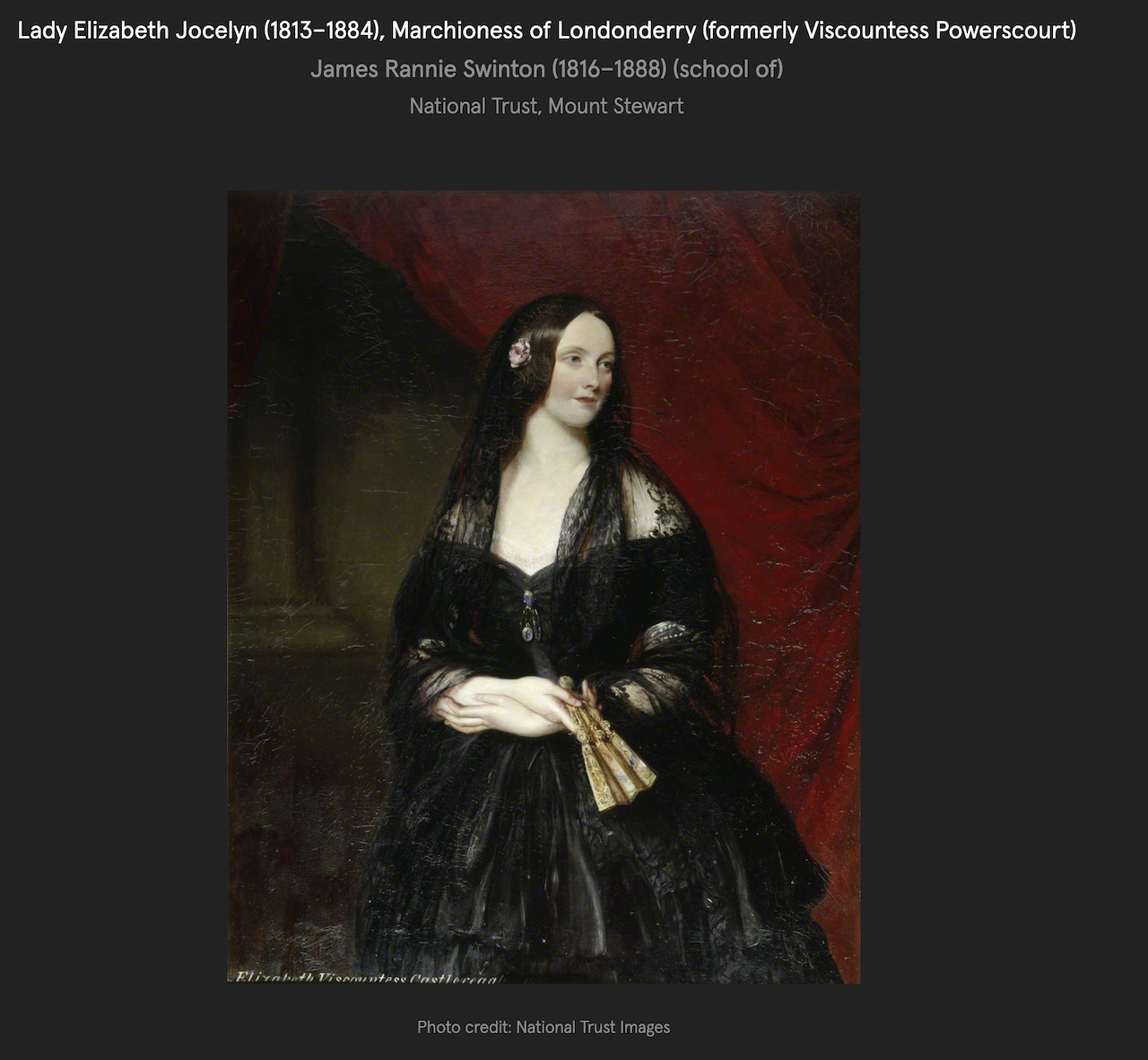
Elizabeth Jocelyn (1813-1884), Marchioness of Londonderry, formerly Viscountess Powerscourt, by James Rannie Swinton, courtesy of Mount Stewart National Trust. She was married to the 6th Viscount Powerscourt. She was the daughter of Robert Jocelyn 3rd Earl of Roden. After her husband’s death she married Frederick William Robert Stewart, 4th Marquess of Londonderry, of Mount Stewart, County Down (see my entry about Places to visit and stay in County Down https://irishhistorichouses.com/2023/10/06/places-to-visit-and-stay-in-county-down-northern-ireland/)

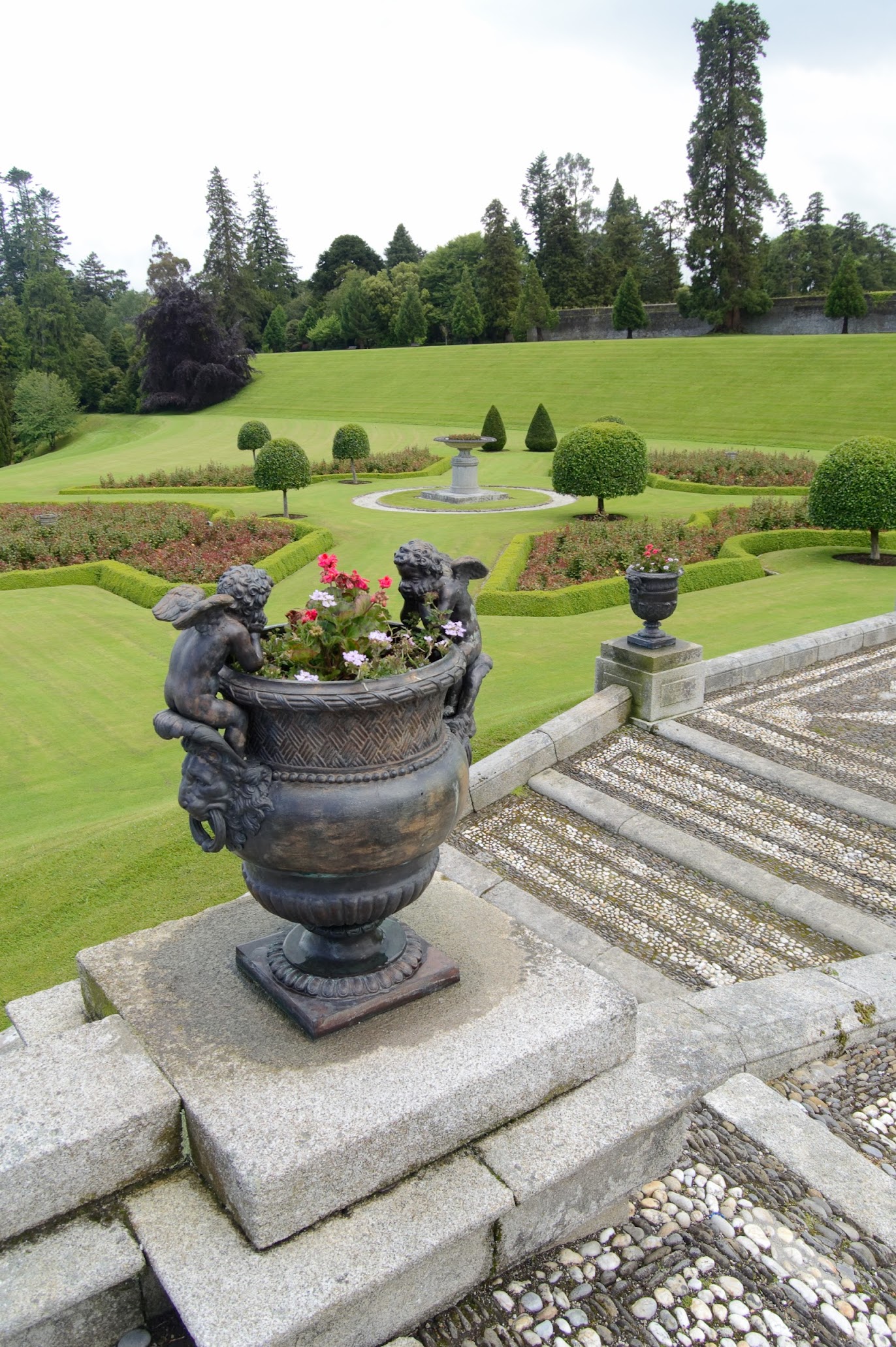
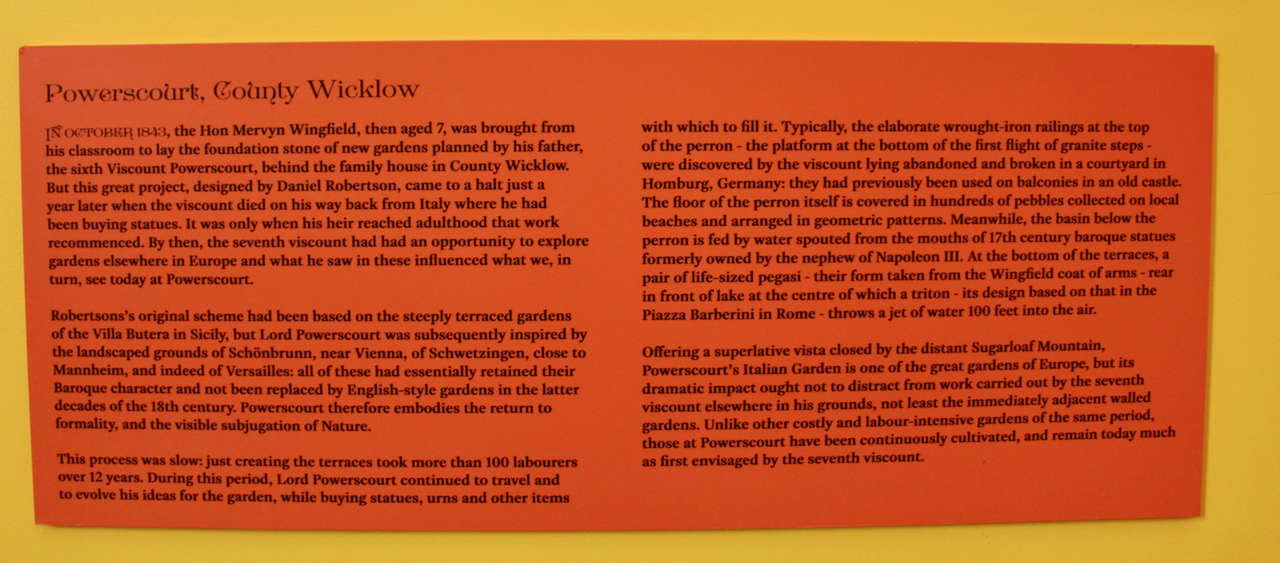
From 1842 onwards, the 6th Viscount of Powerscourt employed Daniel Robertson of Kilkenny to improve the gardens. Robertson created Italian gardens on the terraces, with broad steps and inlaid pavement, balustrades and statues. In the fountain below the “perron” of the main terrace, Mark Bence-Jones tells us, there is a pair of bronze figures of Eolus, “which came from the Palais Royale in Paris, having been sold by Prince Napolean 1872 to the 7th Viscount [Mervyn Edward Wingfield], who completed the garden.”

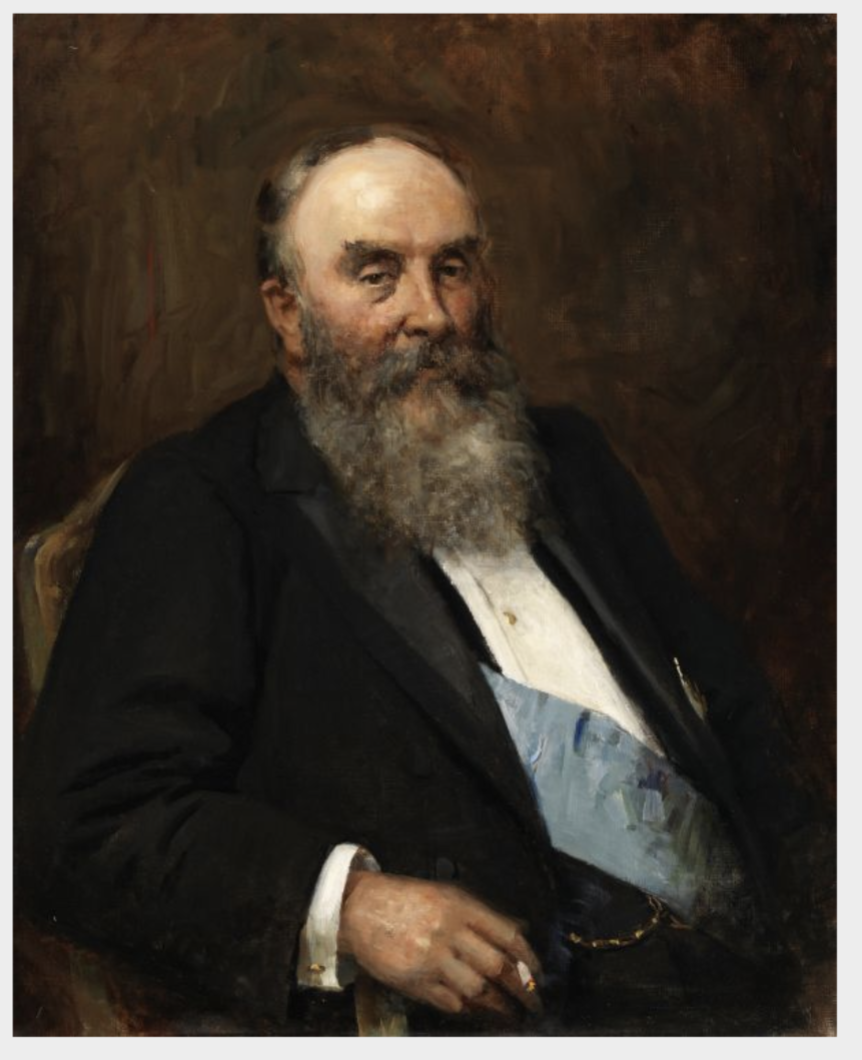
Mervyn Wingfield, 7th Viscount Powerscourt (1844-1904) by Sarah Henrietta Purser presented to National Gallery of Ireland by Lord Powerscourt in 1904, NGI 561.
DSC_1231.JPG
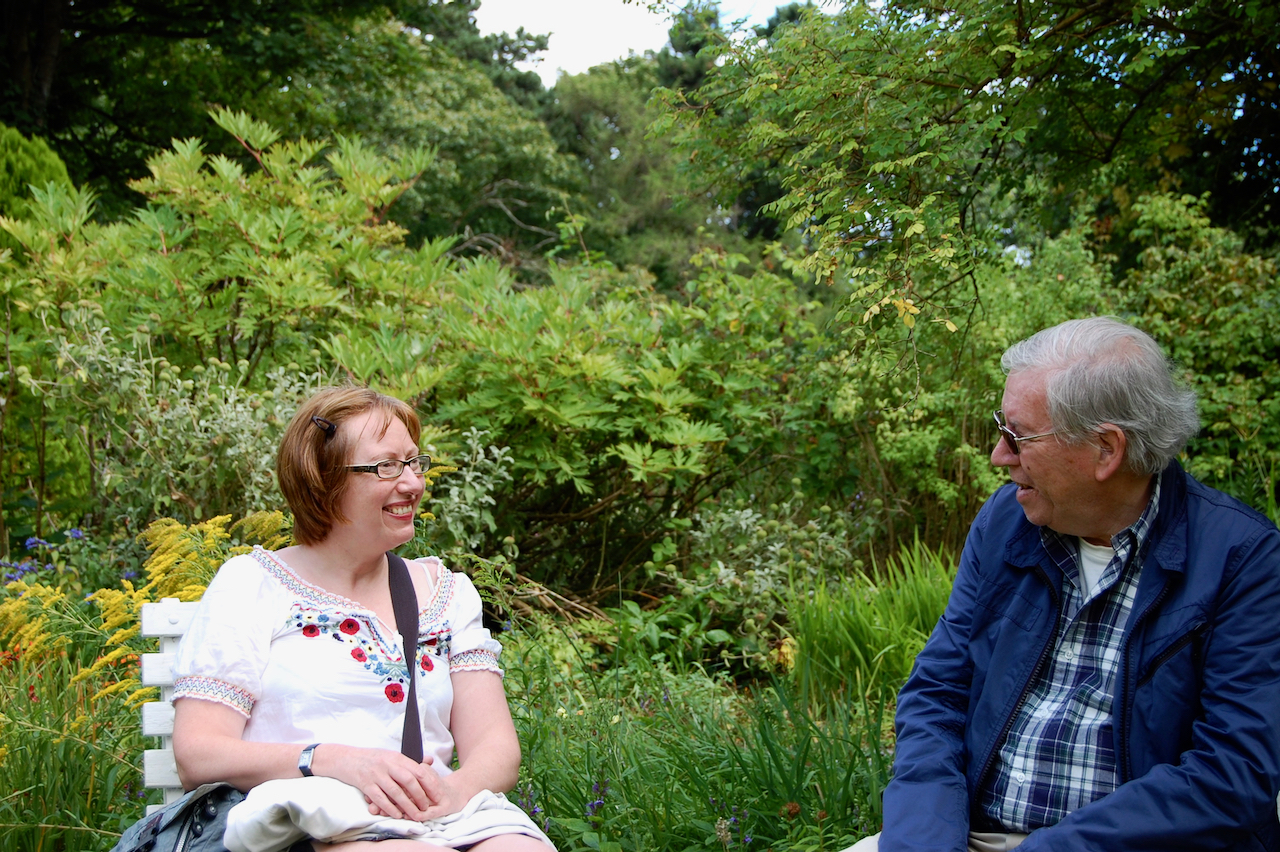
Stephen and my Dad, Desmond, 2009. Photograph © Jennifer Winder-Baggot, www.irishhistorichouses.com
DSC_1228.JPG
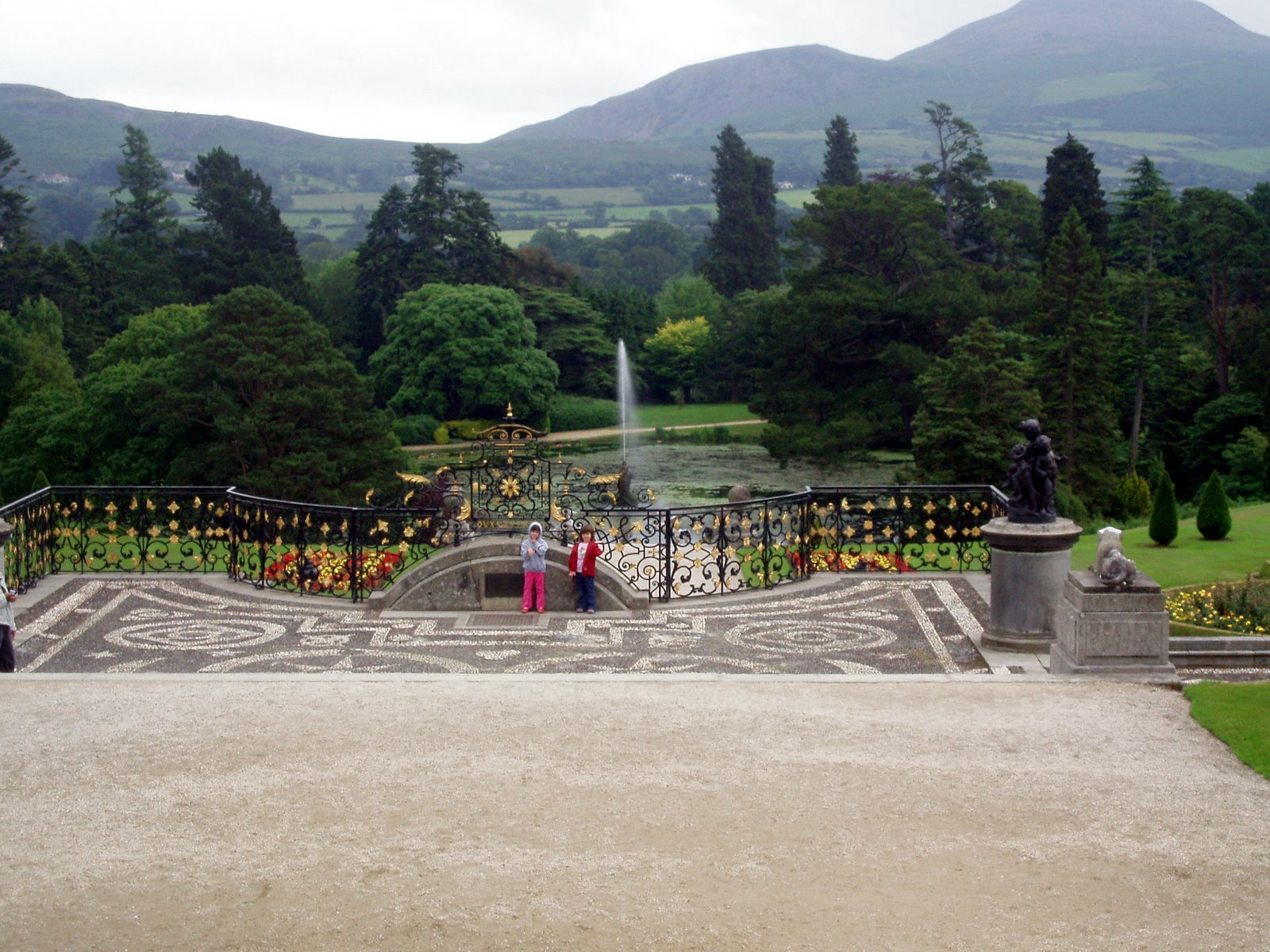
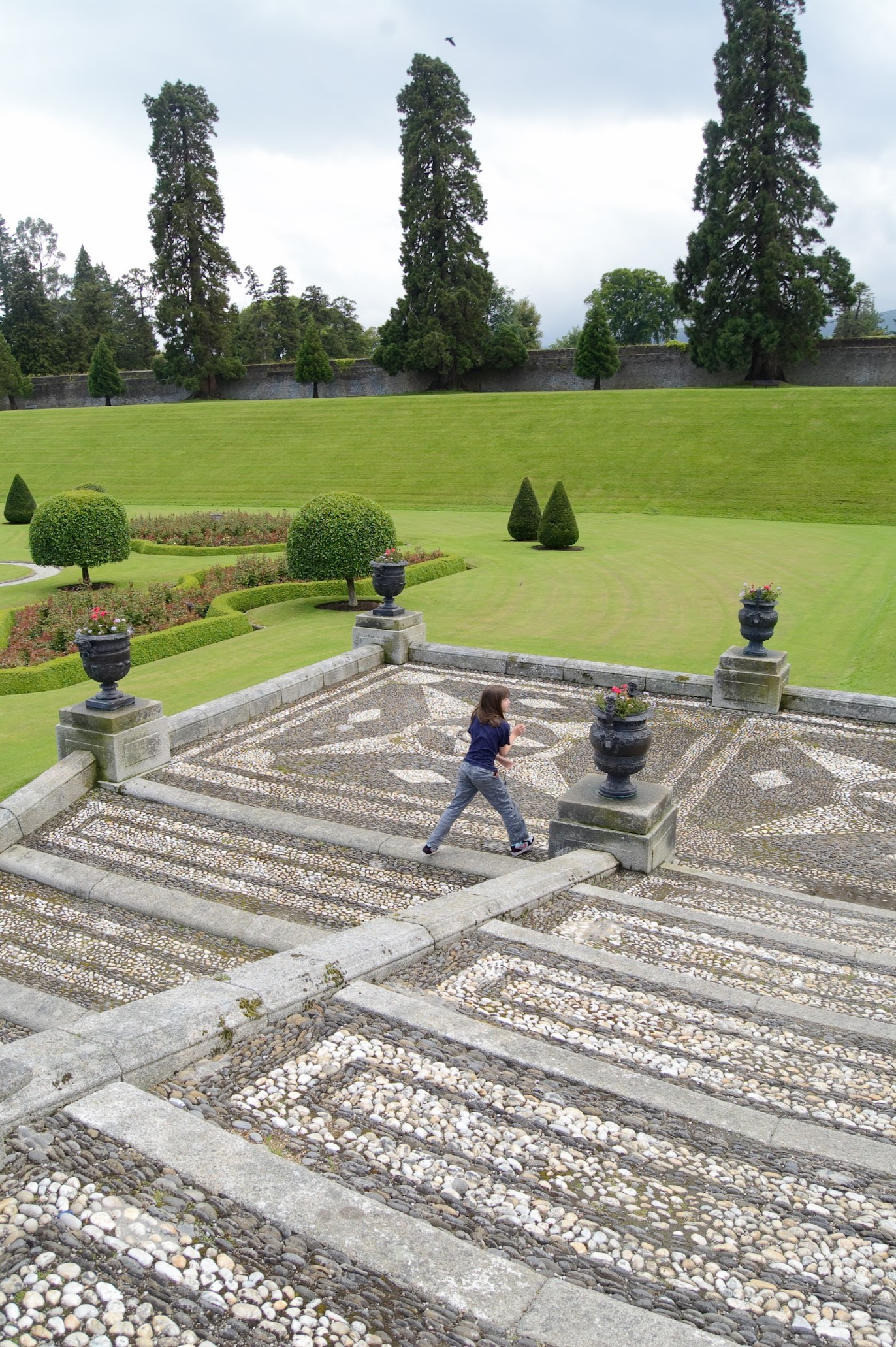
Italian terrace, created by Daniel Robertson around 1842. Photograph © Jennifer Winder-Baggot, www.irishhistorichouses.com
Robertson lived in Powerscourt while carrying out work for that estate.

Powerscourt County Wicklow, photograph by Jeremy Hylton.
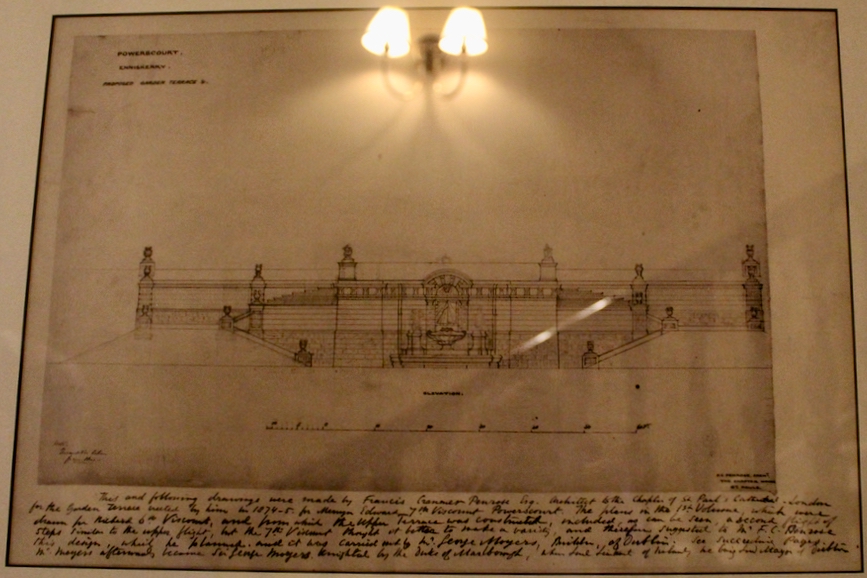
Plan of Powerscourt garden, from a sketch on display at Carton, County Kildare.
Powerscourt County Wicklow, photograph by Jeremy Hylton.
DSC_1229.JPG
Bronze figure of Eolus, from Palais Royale in Paris, sold by Prince Napoleon 1872 to 7th Viscount, Mervyn Edward Wingfield. Photograph © Jennifer Winder-Baggot, www.irishhistorichouses.com
DSC_1224.JPG
The statues of Apollo Belvedere and Diana on the upper terraces of The Italian Garden were bought in Rome by the 6th Viscount of Powerscourt. Photograph © Jennifer Winder-Baggot, www.irishhistorichouses.com

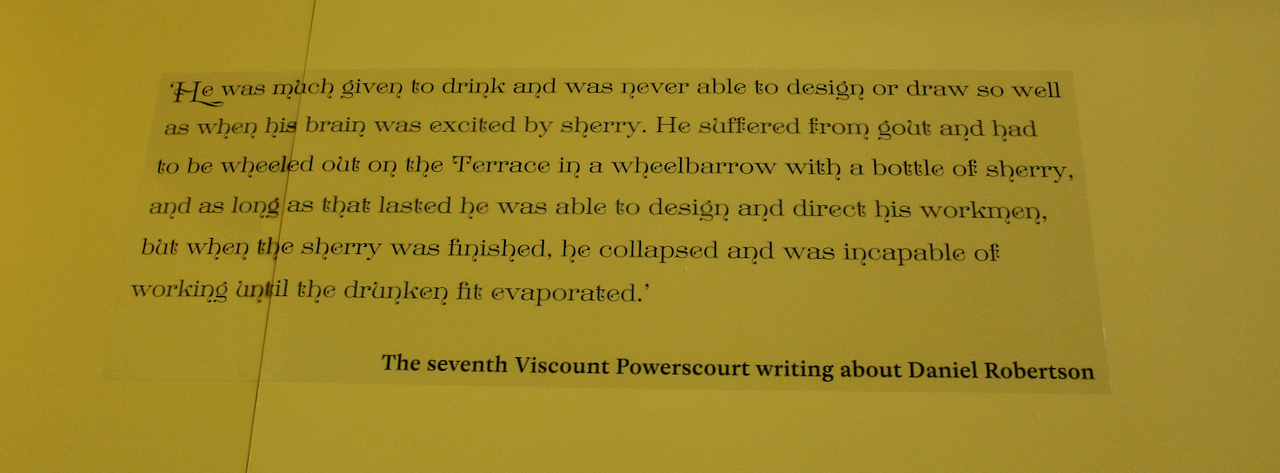
The garden work was continued by F.C. Penrose when Daniel Robertson died in 1849  while working on the gardens at Lisnavagh, County Carlow. Apparently Robertson was often the worse for wear during his work, as he was fond of the sherry. He took to directing from a wheelbarrow, as he had gout and difficulty walking – maybe not just due to the gout!

Quote above from “In Harmony with Nature, The Irish Country House Garden 1600-1900” in the Irish Georgian Society, July 2022, curated by Robert O’Byrne. See below also.

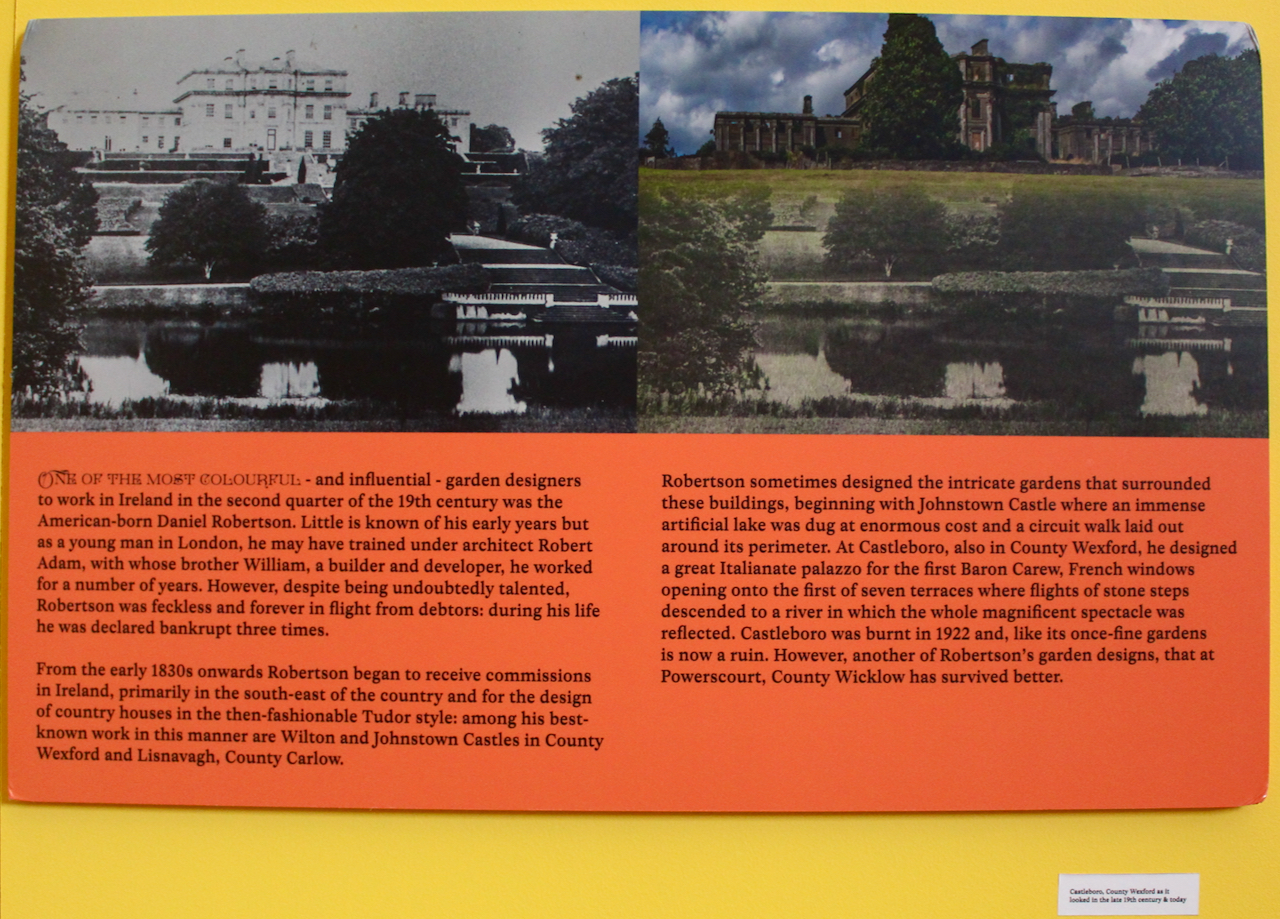
Robert O’Byrne tells us that Daniel Robertson was born in America, and that he was one of the most influential garden designers to work in Ireland in the second quarter of the 19th century.

From “In Harmony with Nature, The Irish Country House Garden 1600-1900” in the Irish Georgian Society, July 2022, curated by Robert O’Byrne.

Mervyn Wingfield, 7th Viscount Powerscourt sought to create gardens similar to those he had seen in the Schonbrunn Palace in Vienna and at the Palace of Versailles. His task took twenty years, completed in 1880. He enlisted the help of Alexander Robertson.

DSC_1234.JPG
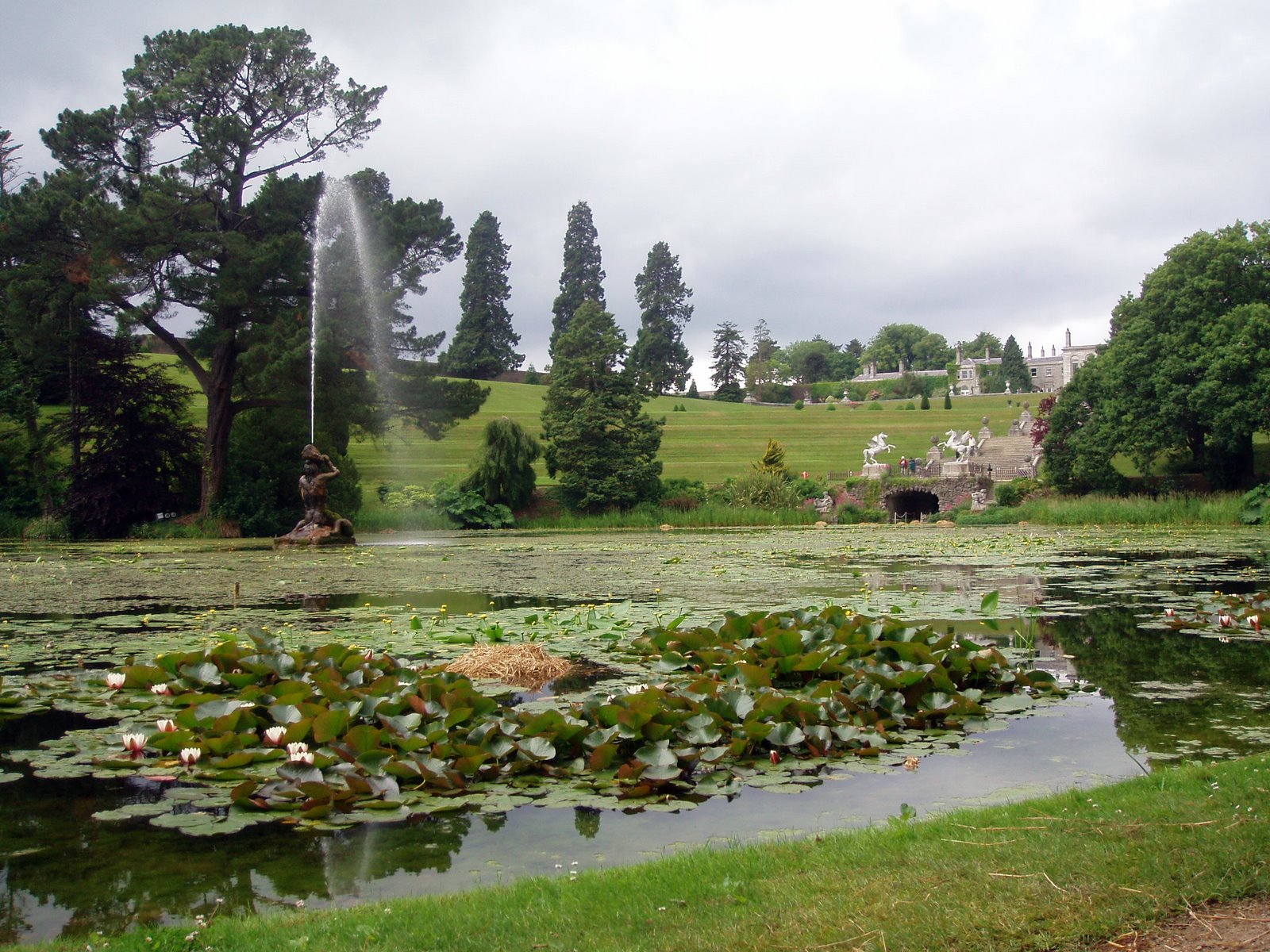
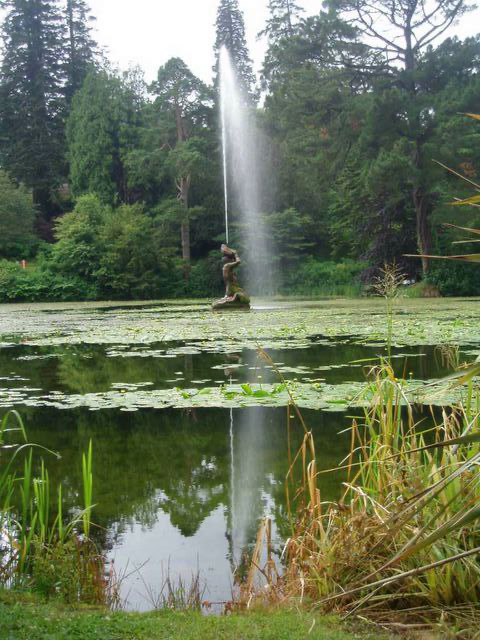
Triton Lake. The winged horses form part of the family coat of arms and were made by Professor Hugo Hagen in Berlin in 1869. Photograph © Jennifer Winder-Baggot, www.irishhistorichouses.com
powerscourt-lake by Jane Flanagan
View of Triton Lake from the boathouse. Photograph by Jane Flanagan.

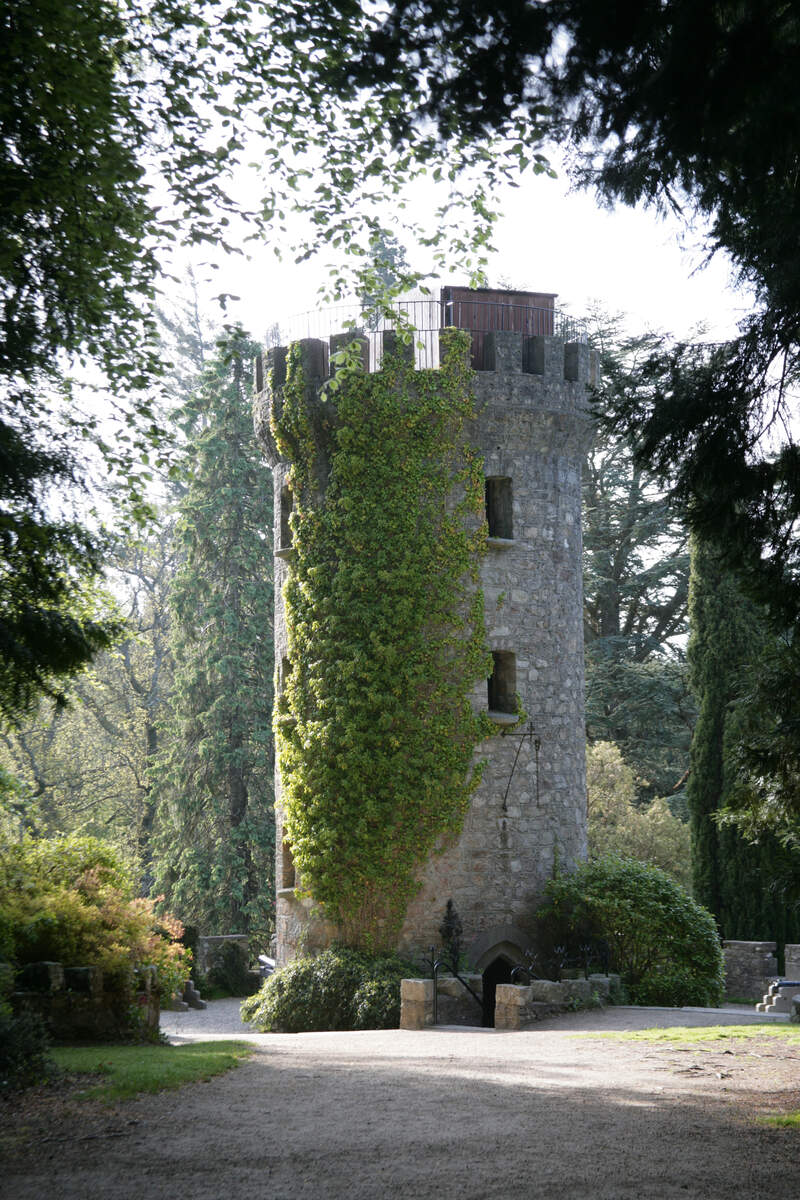
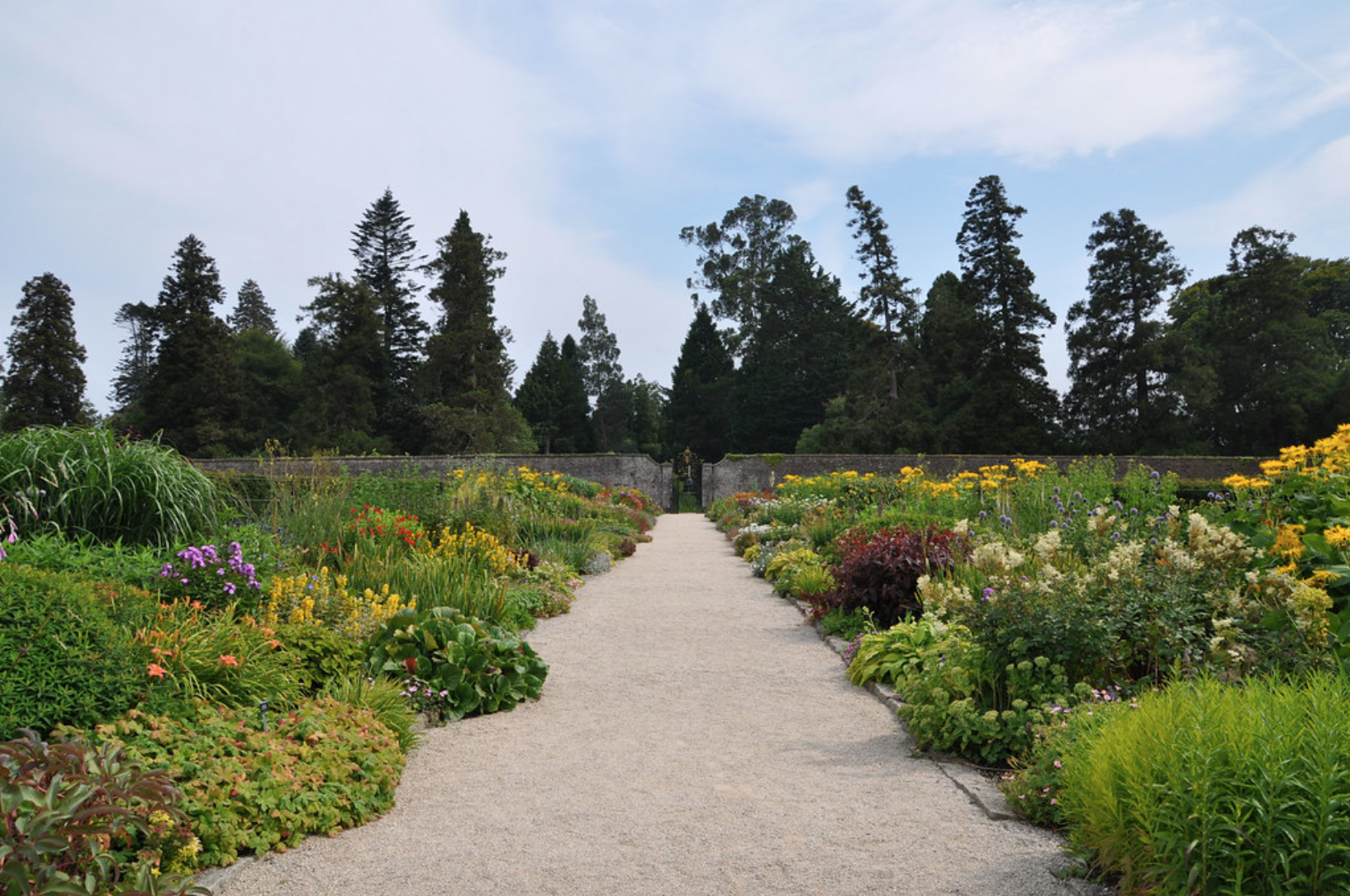
There are many more elements of the garden to explore, such as the Japanese gardens, the pet cemetery, the pepperpot tower, and the walled gardens. I only recently discovered the pepperpot tower! When I visited the gardens with my parents, we must have always been too tired as a family, after exploring the rest, to walk up from the Japanese gardens to the pepperpot tower!

powerscourt-fountainby Jane Flanagan
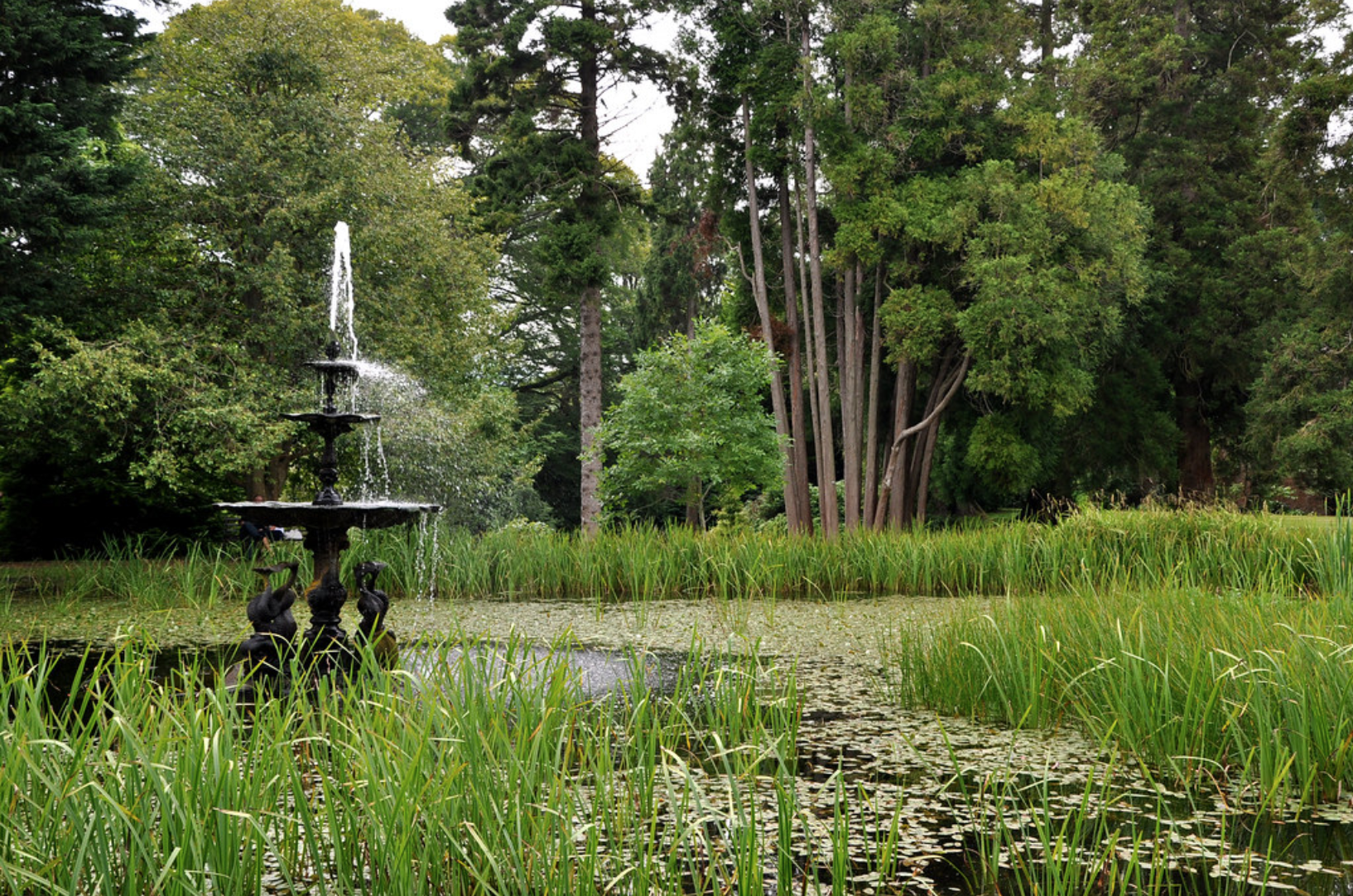
The dolphin pond, with fountain brought from Paris by the 7th Viscount (photograph by Jane Flanagan)
The Pepper Pot Tower. Photograph from Tourism Ireland, photographer unknown. [9]
powerscourt-walledgarden by Jane Flanagan
The walled garden (photograph by Jane Flanagan)

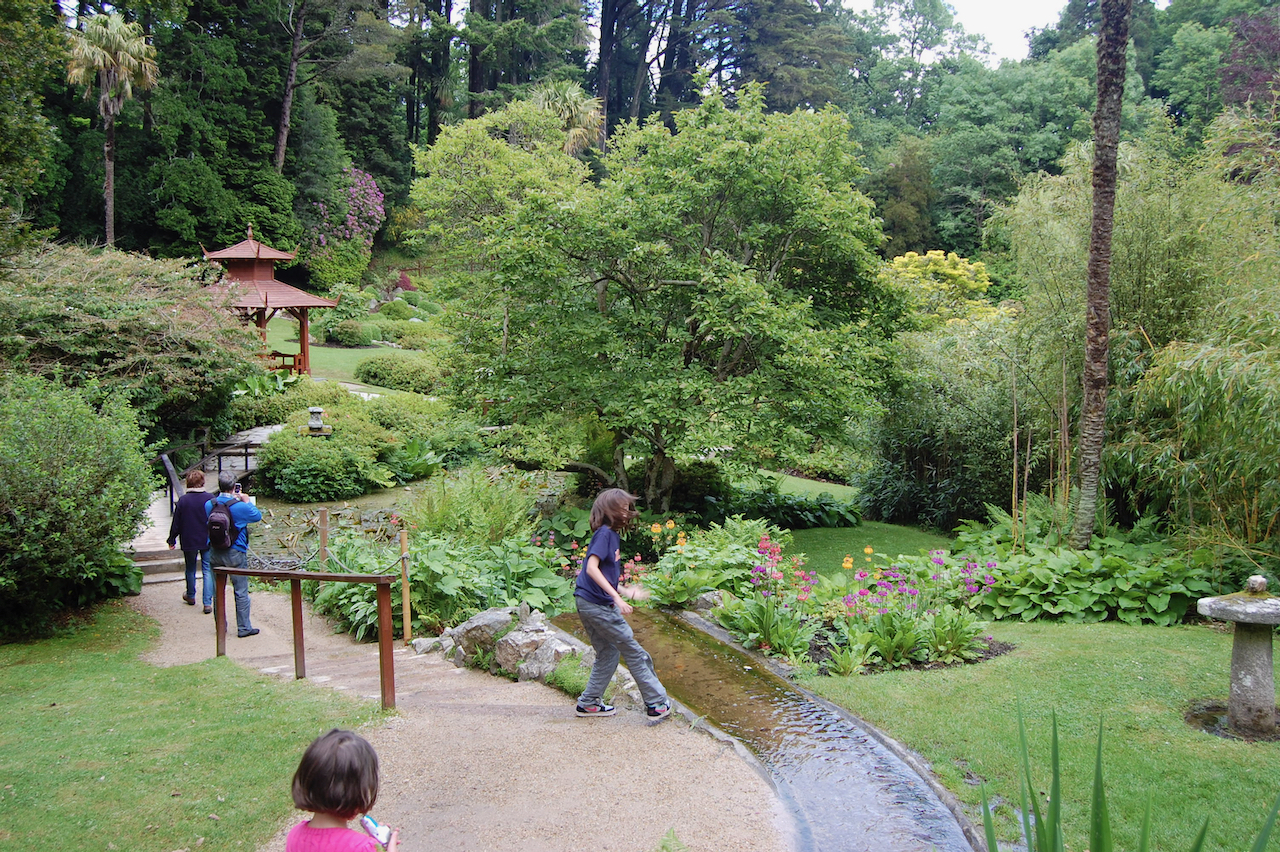
I have always loved the Japanese gardens, which remind me of the Japanese tea gardens in San Francisco’s Golden Gate Park. I have a lovely memory of having a cup of tea and a fortune cookie in San Francisco’s Japanese gardens, and the cookie contained the fortune I’d seen photographed earlier that day in a large photograph on display in a museum: “You will have many interesting and artistic people to your home.” It seemed too much to me at the time to be a coincidence – and it would be, I thought, at the age of about twenty, a dream come true. I sellotaped the fortune onto a small bookshelf on my desk, hoping it would come true. And indeed it has!

DSC_0952
Our friends Helen and Grace playing at the Japanese gardens in Powerscourt, in June 2012. The Japanese gardens were created by the 8th Viscount Powerscourt, Mervyn Wingfield, and his wife, in 1908. Photograph © Jennifer Winder-Baggot, www.irishhistorichouses.com
DSC_0951
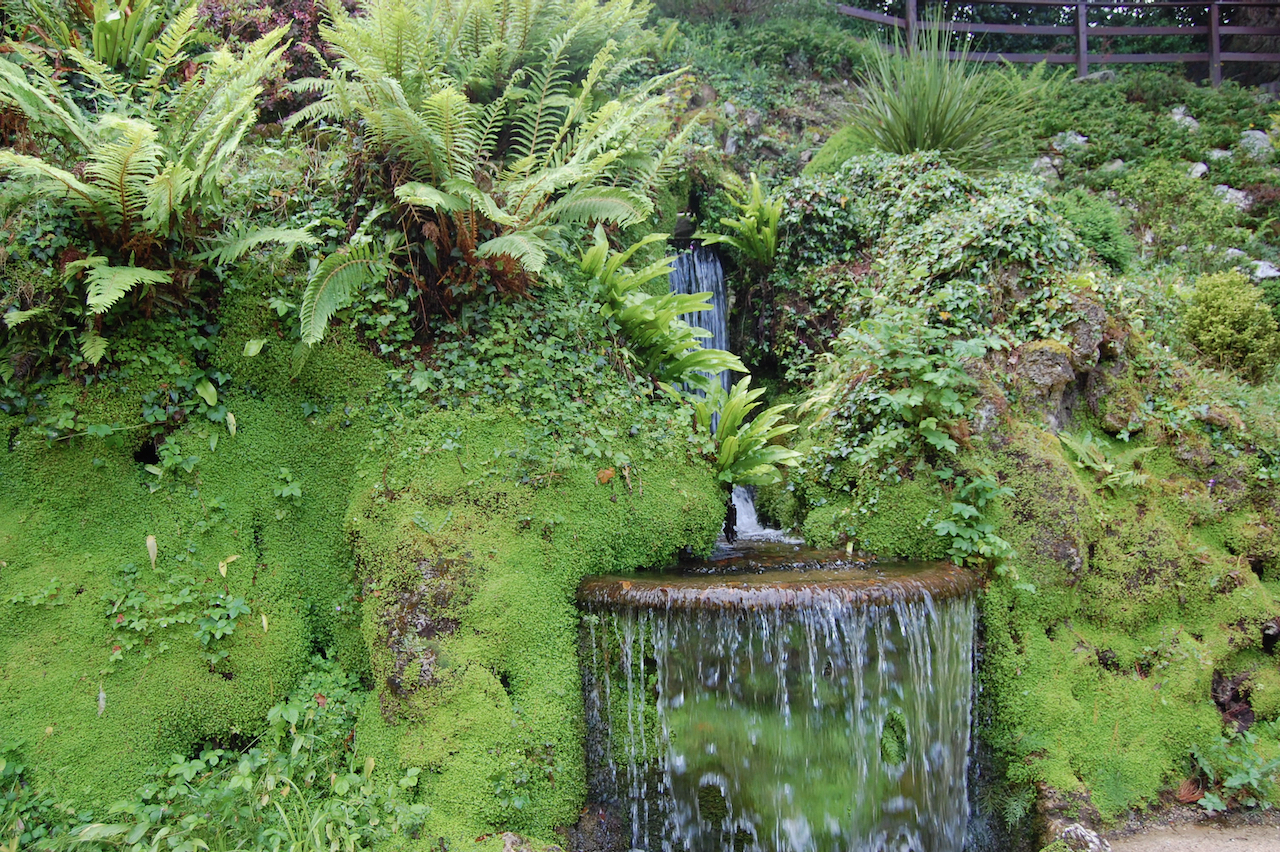
My favourite part of the garden, the Grotto. The Grotto is one of the oldest parts of the garden, and is next to the Japanese gardens. It was created in 1740 by the 1st Viscount, and is made of fossilized sphagnum moss, taken from the banks of the nearby river Dargle. Photograph © Jennifer Winder-Baggot, www.irishhistorichouses.com

Bence-Jones writes of an incident about Powerscourt Waterfall, which is further out on the estate:

the waterfall, the highest in the British Isles, which, when George IV came to Powerscourt 1821, was dammed up in order that the monarch might have an even more exciting spectacle; the idea being to open the sluice while the Royal party watched from a specially-constructed bridge. The King took too long over his dinner and never got to the waterfall, which was fortunate; for when eventually the water was released, the bridge was swept away.

Powerscourt Waterfall with Larry, May 2008
Powerscourt Waterfall. There is a separate entrance now to the waterfall than there is to the rest of the estate. Photograph © Jennifer Winder-Baggot, www.irishhistorichouses.com

The collection of statues, and the wrought iron gates, are beautiful.

Bamberg Gate in the Walled Garden, with its “vista” view of columns. Photograph by John Slazenger, 2014, from Tourism Ireland. [9]

The Irish Aesthete tells us that the Bamberg Gate:

was originally constructed in Vienna in 1770 and installed in Bamberg Cathedral, Northern Bavaria. Probably in the late 1820s, when all Baroque additions were stripped from the building, the gate was removed and sold: around 1870 Mervyn Wingfield, 7th Viscount Powerscourt bought it from a London dealer and placed it in the present position. On the opposite side of the walled garden is the so-called Chorus Gate, the design supposedly based on a 17th century original (although this has not been found) and likewise purchased in London. Its intricate ironwork features myriad winged seraphim blowing trumpets. Both gates have recently been cleaned and re-gilded.” [10]

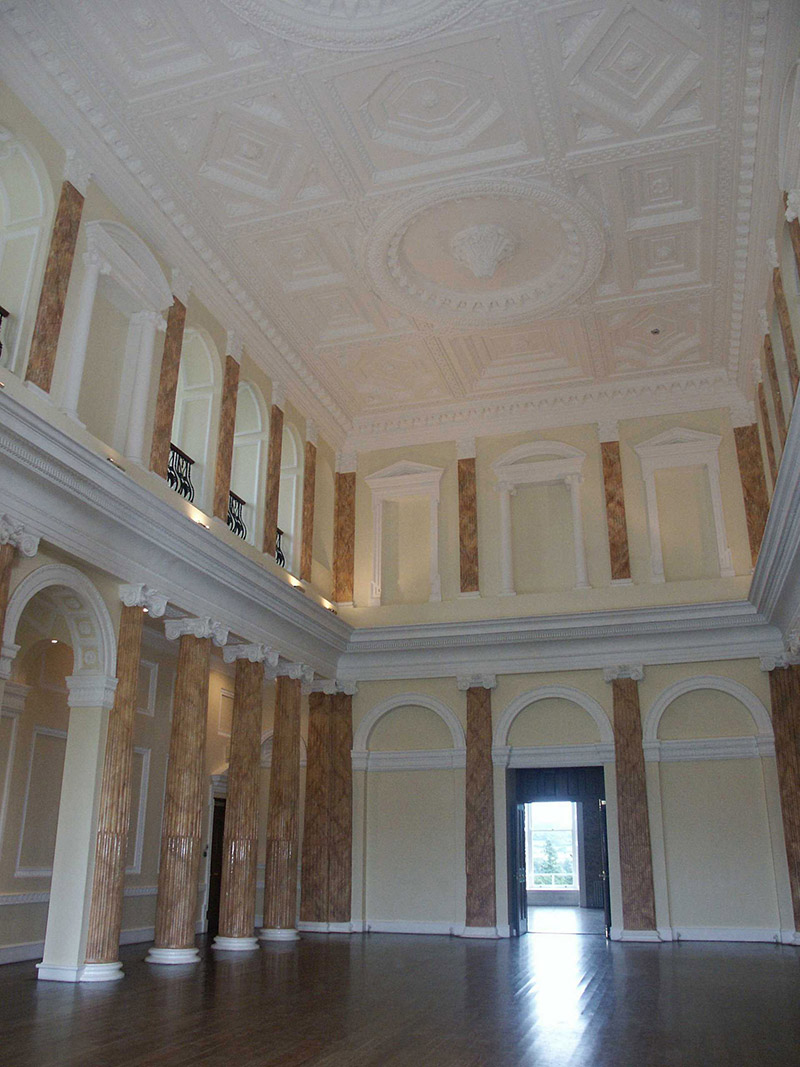
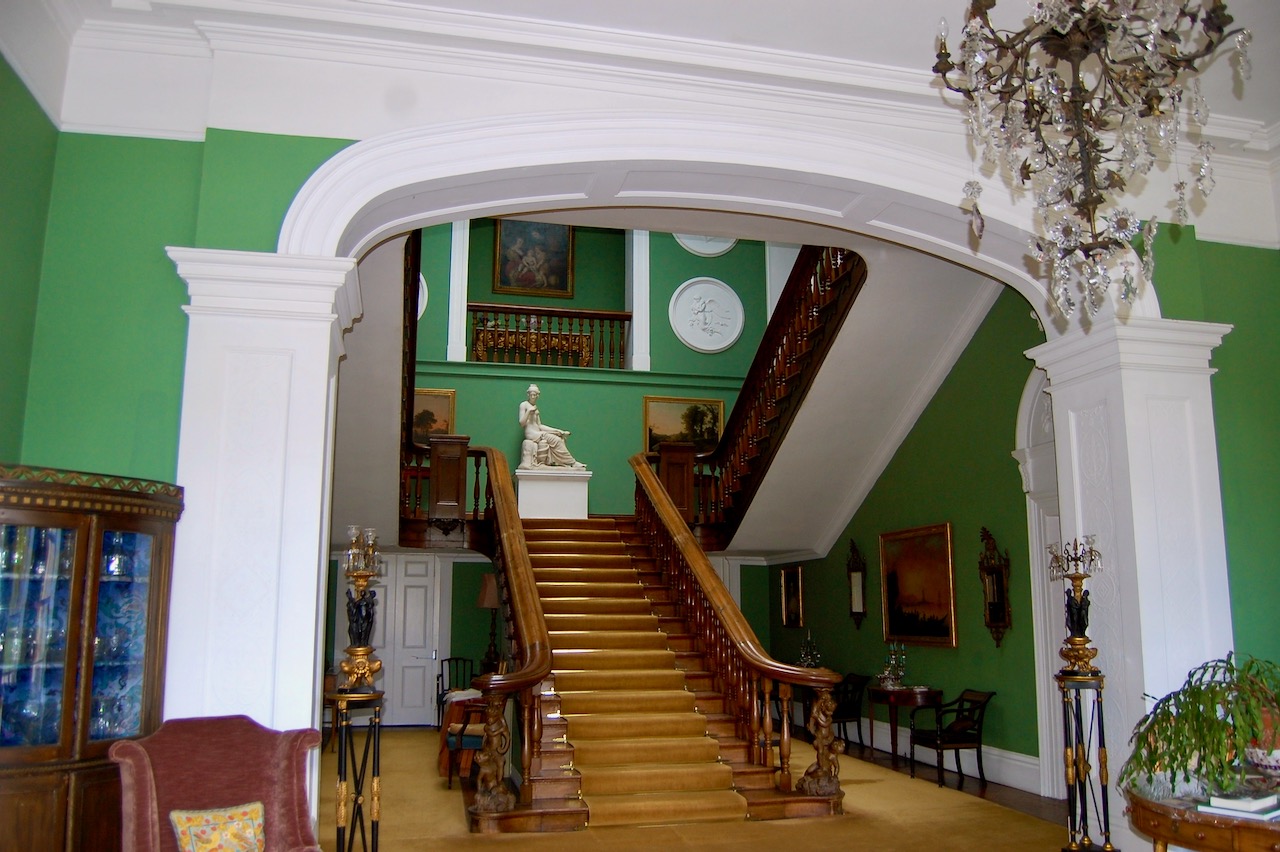
The National Inventory has two good pictures of the interior of the house, which is gradually being restored since the 1974 fire:

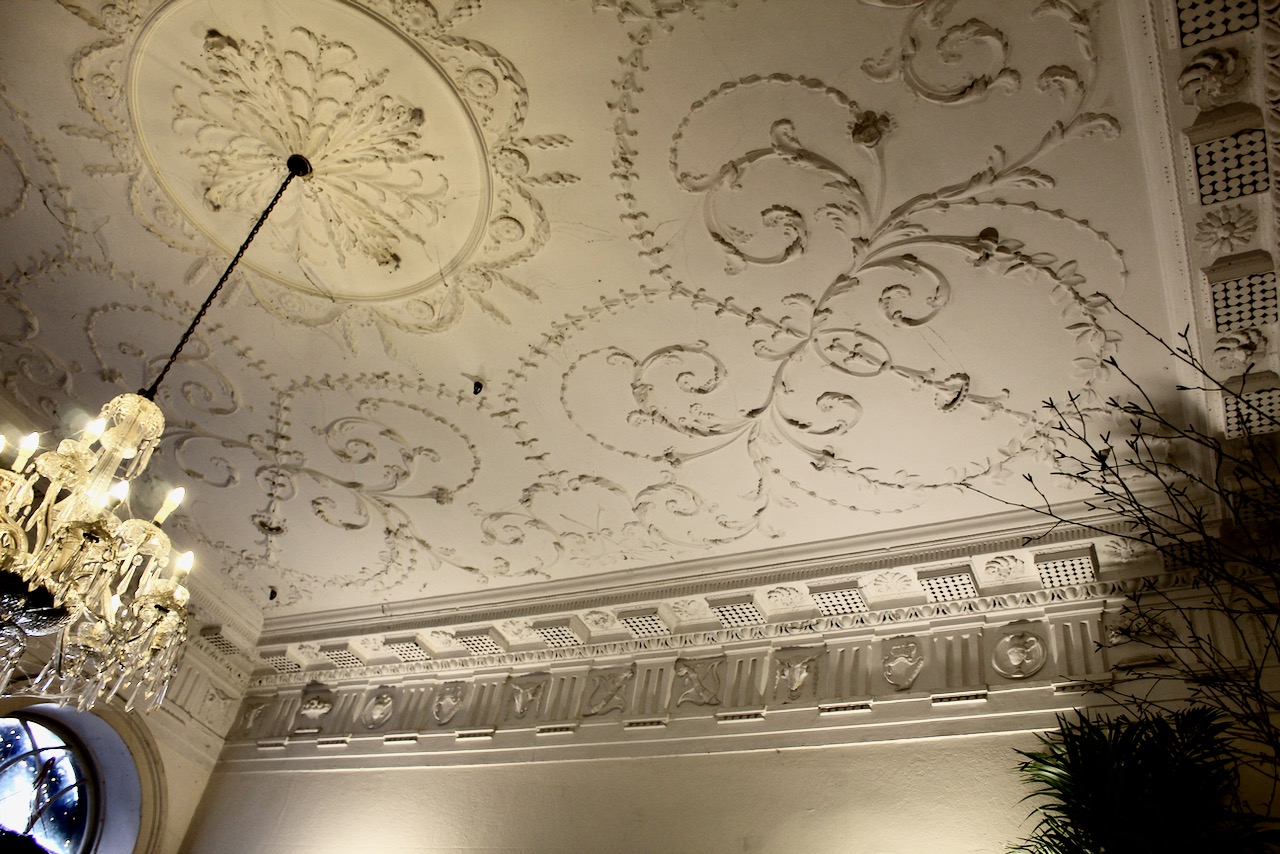
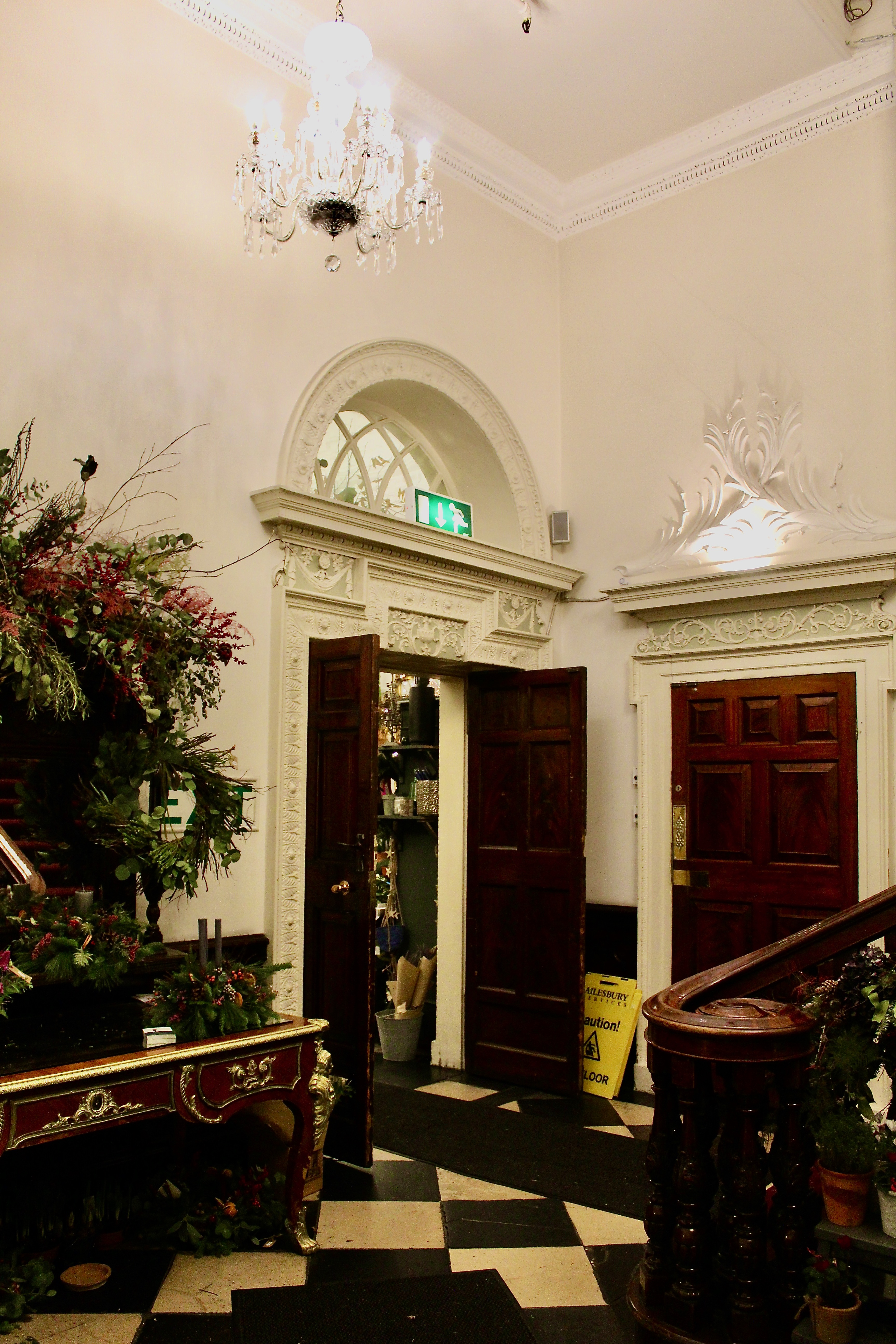
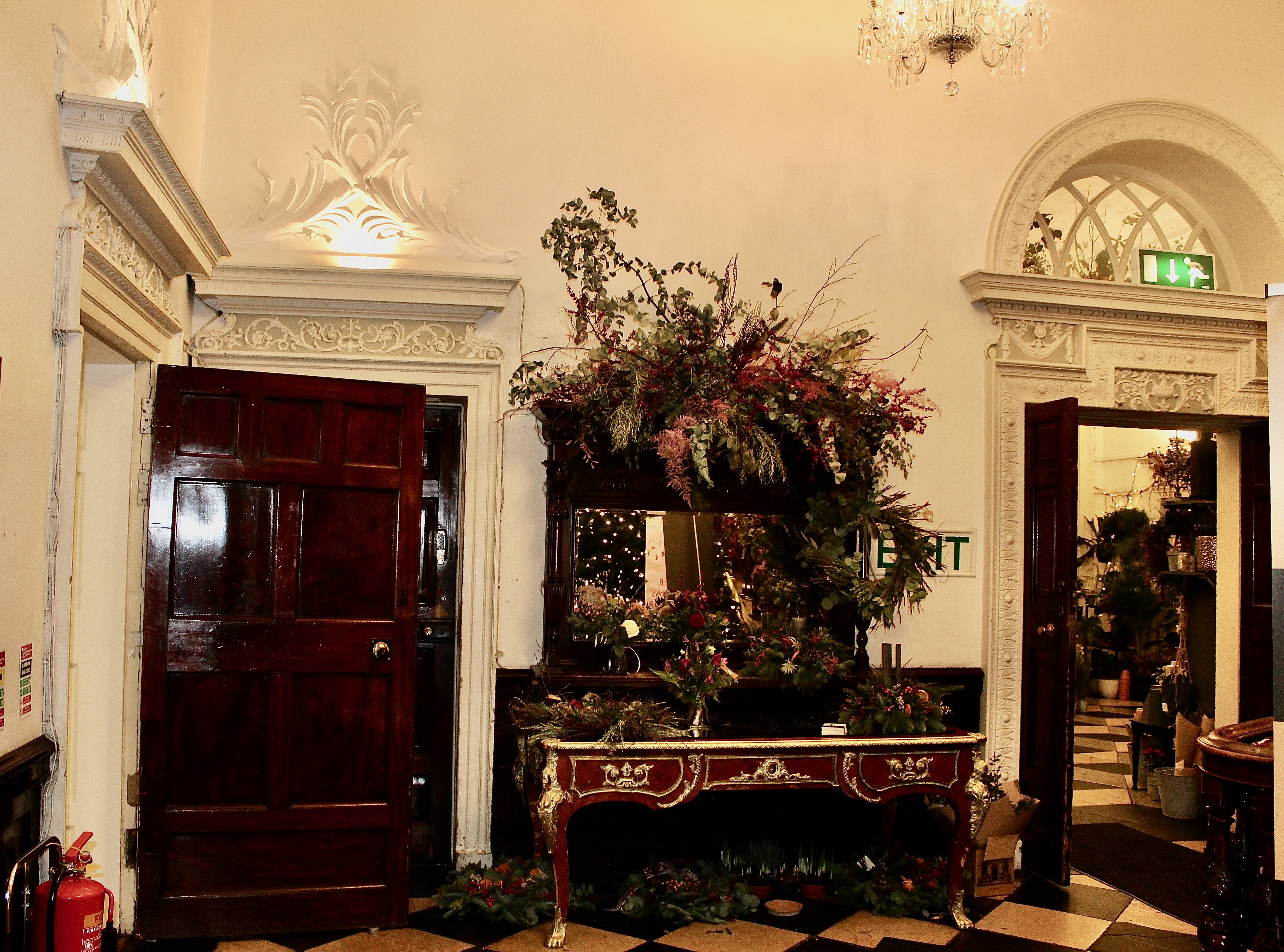
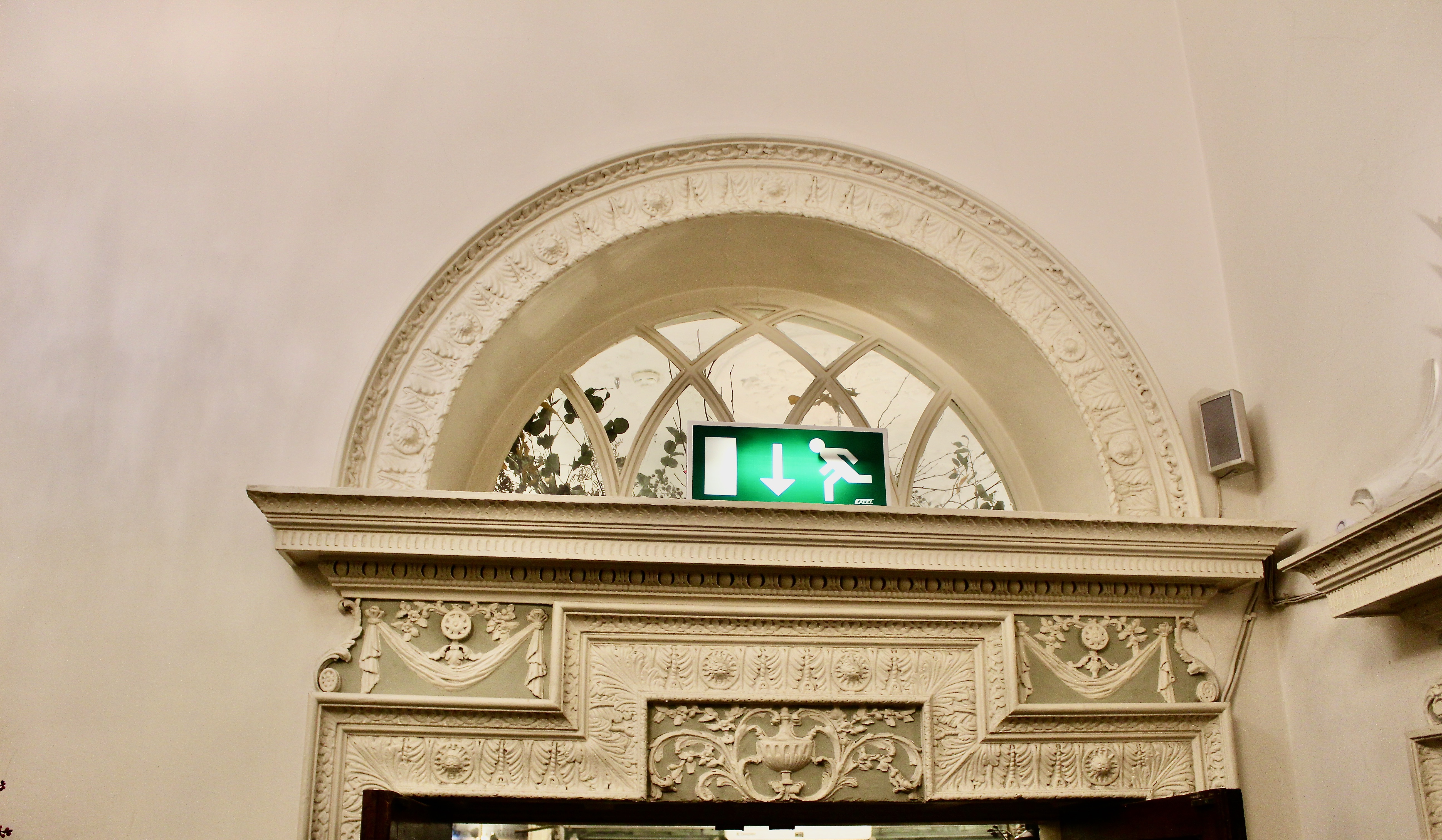
I cannot recall seeing this room. Is it because the house is now so full with everything going on, that I didn’t notice the decorative pillars and ceilng? That is quite possible! The columns and arches lead me to believe that this was the saloon, comparing it to archival photographs from before the fire, as seen in Sean O’Reilly’s book. Photograph from the National Inventory of Architectural Heritage, Buildings of Ireland.

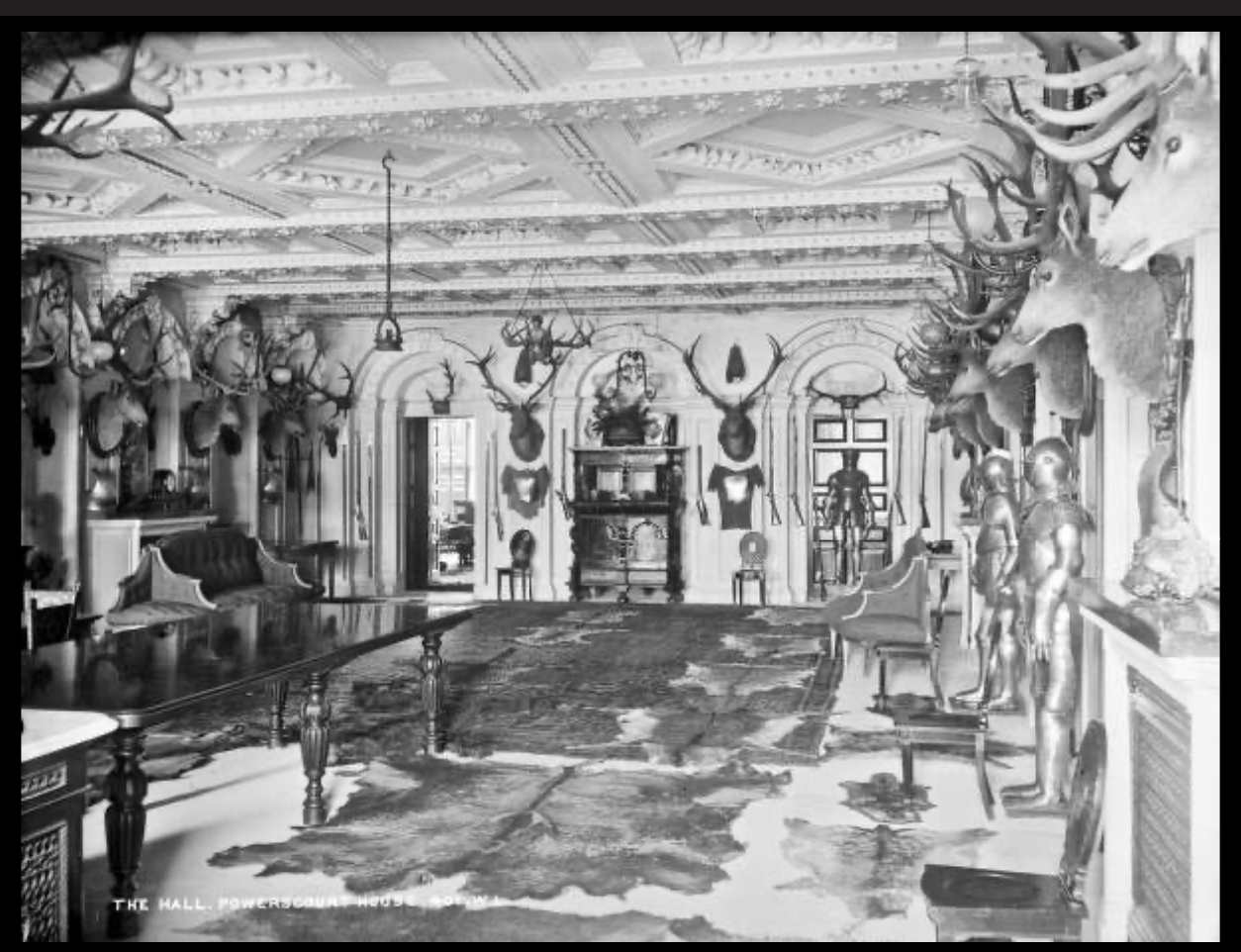
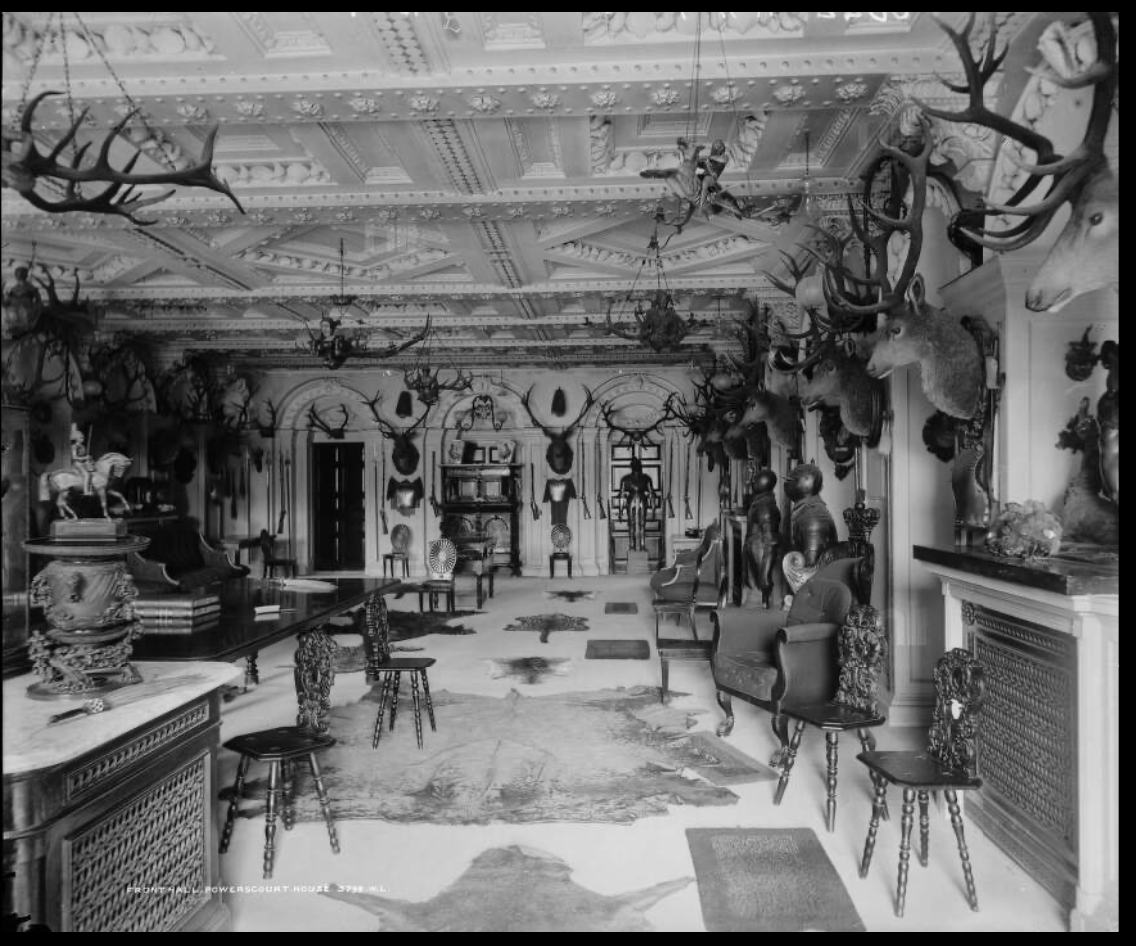
The interior of Powerscourt before the fire was magnificently sumptuous and slightly crazy! Fortunately photographs exist, and some are in the National Library archives:

powerscourt nli ref L_ROY_00401
The entrance hall of Powerscourt before the fire. Photograph from the National Library archives, on flickr commons.

I have never seen shells on a ceiling decoration such as these, although I know the famous letter writer Mary Delaney made similar decoration on a fireplace as well as filling an outdoor shell house, similar to the one at Curraghmore [see my entry about Curraghmore]. The Wingfields must have prided themselves on their military connection, with their display of armour and guns, and their hunting prowess, with all the deer head and antler trophies and the skin rugs. There is even an antler chandelier, which Sean O’Reilly tells us is called an Austrian “Lusterweiblen.” Some of the antlers were made of papier-mache! O’Reilly published other old photographs of the interior in Irish Houses and Gardens, including of the saloon, which he explains is more in the Roman Renaissance than Palladian style, which is reflected somewhat in the rest of the house. (see [1])

The house was occupied by the Slazenger family in 1974 when the fire broke out on the top floor, leaving the main building completely destroyed. They had purchased the house complete with all of its contents. Fortunately, nobody was injured. The house was left abandoned for twenty years, but they opened the gardens to the public. In 1996 the family started the renovation process with a new roof and restoration of the windows. [13] (Surely not) coincidentally, Ralph Slazenger’s daughter Wendy (Ann Pauline) Slazenger married Mervyn Niall Wingfield, the 10th Viscount Powerscourt, in 1962. They divorced, however, the same year as the fire, in 1974.

Christies held a sale of the rescued contents of Powerscourt in 1984. Many of the belongings were purchased by Ken Rohan, owner of nearby Charleville House. When I visited Charleville, another section 482 house, the tour guide pointed out the grand decorative curtain pelments purchased in the Powerscourt sale. [see my entry on Charleville House https://irishhistorichouses.com/2020/09/18/charleville-county-wicklow/

Finally, there is a Bagot connection to the Wingfields, albeit indirectly, and I haven’t found any connection (yet!) of my family with this Irish Bagot family. Christopher Neville Bagot (1821-1877) married Alice Emily Verner. When Christopher died, he left a large estate. His son was born less than nine months after he married, and his brother contested the will, claiming that the son, William Hugh Neville Bagot (1875-1960) was not really Christopher Bagot’s son. Alice Emily and her son won the trial to the extent that her son inherited Christopher’s money, but Christopher’s brother inherited the land. Alice Emily came from a well-connected family. Her mother was a Pakenham. Her grandmother was Harriet Wingfield (1801-1877), a daughter of Edward Wingfield (1772-1859), who was the son of Richard Wingfield, 3rd Viscount Powerscourt – the one who built Powerscourt Townhouse!

Donation

Help me to fund my creation and update of this website. It is created purely out of love for the subject and I receive no payment so any donation is appreciated! For this entry I paid for petrol and entrance fee for myself and Stephen.

€15.00

[1] http://lordbelmontinnorthernireland.blogspot.com/search/label/County%20Wicklow%20Landowners

[2] A Bagot married into the Herbert family, who owned Durrow Abbey before the Slazenger family. John Bagot married Mary Herbert, daughter of the 2nd Baronet of Durrow Abbey in 1728.

[3] For more on the ownership of Durrow Abbey, see the Irish Aesthete: https://theirishaesthete.com/2018/04/23/in-limbo-2/

[4] https://www.dib.ie/biography/wingfield-sir-richard-a9091

[5] O’Reilly, Sean. Irish Houses and Gardens. From the Archives of Country Life. Arurum Press Limited, London, published 1998, paperback edition 2008.

[6] page 3200, volume 2. Mosley, Charles, editor. Burke’s Peerage, Baronetage & Knightage, 107th edition, 3 volumes. Wilmington, Delaware, U.S.A.: Burke’s Peerage (Genealogical Books) Ltd, 2003. Quoted on http://www.thepeerage.com

[2] p. 111, O’Reilly, Sean.

[6] architectural definitions

[7] https://www.buildingsofireland.ie/buildings-search/building/16400717/powerscourt-house-powerscourt-demesne-enniskerry-co-wicklow

[8] Mark Bence-Jones. A Guide to Irish Country Houses.[originally published as Burke’s Guide to Country Houses volume 1 Ireland by Burke’s Peerage Ltd. 1978]; Revised edition 1988 Constable and Company Ltd, London.

[9] Powerscourt Townhouse, 59 South William Street, Dublin 2

[10] For the continuation of the Wingfield line who lived in Powerscourt, I refer to Burke’s Peerage, and to the website of Timothy William Ferres, otherwise known as Lord Belmont:

http://lordbelmontinnorthernireland.blogspot.com/search/label/County%20Wicklow%20Landowners

The Wingfields married well. The 3rd Viscount’s son inherited the title and estate: Richard Wingfield, 4th Viscount (1762-1809).

He married firstly, in 1789, Catherine, second daughter of John Meade, 1st Earl of Clanwilliam, by whom he had his successor, Richard.

RICHARD, 5th Viscount (1790-1823), married Frances Theodosia, eldest daughter of Robert Jocelyn, 2nd Earl of Roden, and their son, Richard, became his successor.

RICHARD, 6th Viscount (1815-44), who married, in 1836, his cousin, the Lady Elizabeth Frances Charlotte Jocelyn, daughter of Robert Jocelyn, 3rd Earl of Roden. He was succeeded by his son, Mervyn Edward Wingfield.

MERVYN EDWARD, 7th Viscount (1836-1904), KP, Privy Counsellor, who wedded, in 1864, the Lady Julia Coke, daughter of Thomas William Coke, 2nd Earl of Leicester (of the seventh creation!). According to Turtle Bunbury [14], Mervyn published two books: “Wingfield Memorials” (1894) and “A History of Powerscourt” (1903). He was elected president of the Royal Dublin Society and was also a member of the Royal Irish Academy of Science. He was made a Knight of the Order of St. Patrick in 1871. He was later appointed to the Privy Council of Ireland, acting as one of the Lord Justices of Ireland in 1902.

Mervyn Edward and Julia’s son, Mervyn Wingfield (1880-1947), become the 8th Viscount and succeeded to Powerscourt. The 8th Viscount was the last Lord-Lieutenant of County Wicklow, from 1910 until 1922. After Irish Independence, he was elected by W.T. Cosgrave to serve as a Senator in 1921. His son, Mervyn Patrick Wingfield (1905–73) became the 9th Viscount.

The 9th Viscount followed in the family’s military tradition and served in WWII and was captured and became a prisoner of war. According to wikipedia [15], he suffered from shell shock. His wife and children moved to Bermuda during the war and returned to Powerscourt afterwards but their marriage fell apart, and Mervyn Patrick sold Powerscourt.

According to Turtle Bunbury, Richard Wingfield 1st Viscount had a daughter, Isabella, who in 1722 married Sir Henry King, MP for Boyle and Roscommon, who built King House in County Roscommon, another section 482 property.

Turtle Bunbury also tells us that the 6th Viscount Powerscourt purchased Luggala, also in County Wicklow, in 1840, from the “financially challenged” La Touche family. We will come across the La Touch family when I write about Harristown, another Section 482 property.

[9] https://www.irelandscontentpool.com/en/media-assets/media/68565

https://www.irelandscontentpool.com/en/media-assets/media/132165

[10] https://theirishaesthete.com/2017/09/13/another-perspective/

[13] http://www.britainirelandcastles.com/Ireland/County-Wicklow/Powerscourt-House.html

[14] http://www.turtlebunbury.com/history/history_family/hist_family_powerscourt.html

[15] https://en.wikipedia.org/wiki/Mervyn_Patrick_Wingfield,_9th_Viscount_Powerscourt

Text © Jennifer Winder-Baggot, www.irishhistorichouses.com

Architectural definitions

I will add to this page as I go, when I use a new architectural term in a post. I have taken my definitions from Mark Bence-Jones [1], if not otherwise indicated.

acanthus – decoration based on the leaf of the acanthus plant, which forms part of the Corinthian capital.

acroteria – ornamental blocks of stone resting on an entablature or pediment; a characteristic of Grecian Revival architecture.

Adamesque – Neoclassical interior design like the work of Scottish architect William Adams and his sons, most famous of whom are Robert (1728–1792) and James (1732–1794).

aedicule – the framing of a window or other opening with columns and a pediment or entablature.

architrave: strictly speaking, the lowest member of the Classical entablature; used loosely to denote the moulded frame of a door or window opening. (B-J.) OR (1) A formalized lintel, the lowest memter of the classical entablature; (2) moulded frame of door or window. Also “lugged” or “shouldered architrave” whose top is prolonged into “lugs” ie. ears. [2]

ashlar: squared cut stone in regular courses.

astragal: strictly speaking, a narrow semi-circular moulding; used loosely to denote the glazing bars in a Georgian sash window.

astylar: term used to describe an elevation than has no columns or other distinguishing stylistic features. [2]

banded column: a column of which the shaft is interrupted with stone bands.

bargeboard: a wooden board, often ornamented, along the slope of the gable of an eaved roof, hiding the ends of the roof timbers.

Baroque: “The Baroque style used contrast, movement, exuberant detail, deep colour, grandeur and surprise to achieve a sense of awe. The style began at the start of the 17th century in Rome, then spread rapidly to France, northern Italy, Spain and Portugal, then to Austria, southern Germany and Russia…excess of ornamentation…The classical repertoire is crowded, dense, overlapping, loaded, in order to provoke shock effects.” wikipedia.

barrel vault: a curved vault, found in both Medieval and Classical architecture.

bartizan: a turret corbelled out from a wall.

baseless pediment: a pediment in which the base moulding is omitted.

Batty Langley Gothic – the earliest form of Georgian-Gothic, as popularized by the English architectural writer, Batty Langley (1696-1751).

bay: A bay is a vertical division of the exterior of a building marked by a single tier of windows in its centre. Thus the number of bays in a façade is usually the same as the number of windows in each storey. There are, however, facades in which some of the bays contain two or more narrow windows in each storey in place of a single window of whatever width is the norm…

Because of this use of the word bay to denote a division, the word is never used in this book to mean a bay window, which is always described as a bow, curved or three sided as the case may be. For simplicity’s sake, all polygonal bows are described as “three sided” including those which are, strictly speaking, five sides, which are sometimes known as “half-octagons.”

Belvedere – a loggia on the tower of a house.

blind window, arch: a window, arch or other opening which is filled in.

blocked column/pilaster: a column or pilaster of which the shaft is interrupted with square blocks.

blocking: the use of alternating large and small blocks of stone, or of intermittent large blocks, in a doorcase, window surround or similar feature. Also known as rustication. [see Gibbsian doorcase/ surround]

bolection moulding: a broad curved moulding characteristic of late C17 and early C18 interiors; used in chimneypieces and also on panelling. [“convex moulding covering the joint between two different planes and overlapping the higher as well as the lower one, especially on panelling and fireplace surrounds of the late seventeenth and early eighteenth centuries.” p. 539. Casey, Christine and Alistair Rowan, The Buildings of Ireland: North Leinster. The Counties of Longford, Louth, Meath and Westmeath. Penguin Books, London, 1993.]

Bossi chimneypiece: a late C18 marble chimneypiece by, or in the style of, the Italian craftsman, Pietro Bossi; characterised by delicate inlaid ornament in coloured marbles against white background.

breakfront: a slight projection in the centre of a façade, rising through its full height and usually extending for three bays, but sometimes for more bays or less.

broken pediment: a pediment with a gap in its centre.

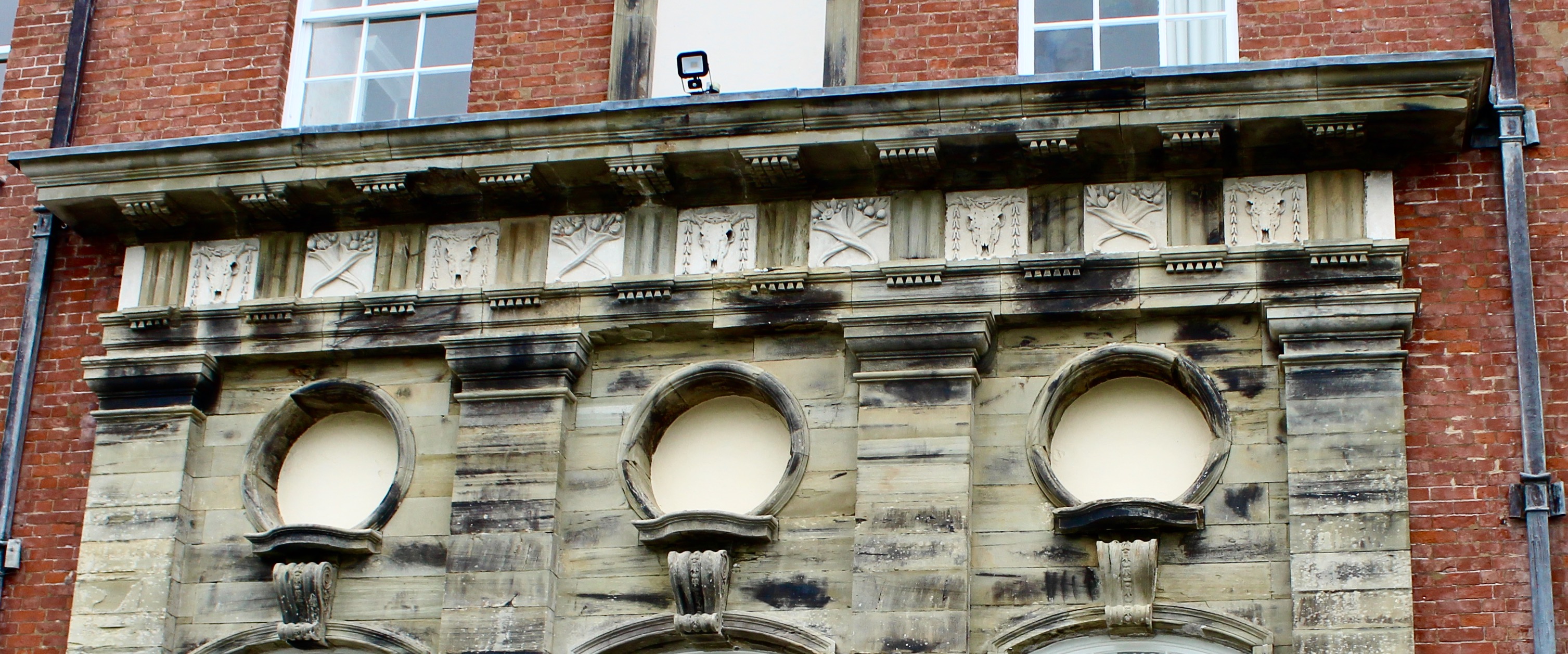
Bucrania: sculptured ox-skulls, used as ornaments in the metopes of a Doric frieze.

camber-headed window: a window of which the head is in the form of a shallow convex curve.

cantilevered staircase: a stone staircase in which the treads are monolithic and fixed at only one end.

Caryatid: a sculptured female figure used to support an entablature.

chamfered: an edge between two faces, usually at a 45 degree angle [wikipedia].

channelling: Decoration of the outside of a building with horizontal grooves; a treatment usually confined to the basement or lower part of a building [see rustication].

Claire-voie: a wrought iron screen.

clerestory: a row of windows in the upper part of a hall or other room which rises through several storeys.

Coade stone: an artificial cast stone of fine quality, invented in 1770 by Mrs Eleanor Coade and made by the Coade factory in London; widely used in the late-Georgian period for plaques, reliefs, capitals and other ornamentation.

coffering: recessed panels in a ceiling or dome.

composite order: an Order used originally by the Romans, having a capital which is partly Ionic and partly Corinthian.

console bracket: a scrolled bracket carrying an entablature, window surround or other member.

corbel: a block of stone projecting from a wall, supporting the beam of a roof or any other member; often ornamented.

Corinthian order: the third Order of Classical architecture.

cornice: strictly speaking, the crowning or upper projecting part of the Classical entablature; used to denote any projecting moulding along the top of a building, and in the angle between the walls and the ceiling of a room.

crocket: projecting carved foliage, used to decorate pinnacles and similar features in Gothic or Gothic-Revival architecture.

curved sweeps: the curving walls or corridors joining the centre block of a Palladian house to the wings or pavilions. Also known as quadrant walls.

Dado: the lower part of the walls of a room, when treated differently from the area above.

dentil cornice: a cornice with tooth-like ornamentation.

die: a raised rectangular block in the centre of the roof parapet of a house, or in the centre of the portico or porch.

Diocletian window: a semi-circular window divided vertically into three lights.

Doric Order: the first and simplest Order of Grecian architecture.

eaved roof: a roof of which the eaves overhang the walls of the house.

engaged columns: columns attached to, or partly sunk in, the wall of a building

entablature: a horizontal member, properly consisting of an architrave, frieze and cornice, supported on columns, or on a wall, with or without columns or pilasters.

fenestration: the arrangement of windows in a façade.

festoon: a carved ornament in the form of a garland of fruit and flowers; also known as a swag.

finial: the top of a pinnacle or similar feature.

floating pediment: a pediment which is based neither on a breakfront, nor on columns or pilasters.

fluting: vertical chanelling on the shaft of a column or pilaster.

fretted ceiling: a ceiling divided by criss-cross mouldings, a characteristic of Tudor or Tudor-Revival architecture.

framing bands: projecting bands, vertical or horizontal, framing a façade or certain bays of a façade.

frieze: strictly speaking, the middle part of an entablature in Classical architecture; used also to denote a band of ornament running round a room immediately below the ceiling.

gable: (1) peaked wall or other vertical surface, often triangular, at the end of a double-pitch roof; (2) the same, very often with a chimney at the apex, but also in a wider sense: end wall, of whatever shape. [2]

giant portico/columns/pilasters/order: a portico, columns or pilasters, rising through two or more storeys of a building

Gibbsian doorcase/surround: an eighteenth century treatment of door or window surround seen particularly in the work of the British architect, James Gibbs (1862-1754), characterised by alternating large and small blocks of stone or intermittent large blocks and a head composed of five voussoirs and a pediment or entablature.

herm: see ‘term’

hipped roof: all the sides of the roof slope downwards to the walls, as opposed to a “gabled” roof which is peaked with a vertical surface.

hood moulding: a projecting moulding over the heads of windows and doorways in Gothic, Tudor, Gothic-Revival and Tudor-Revival architecture. [see Borris House] Hood mouldings also occur in some plain late-Georgian Irish country houses.

imperial staircase: a bifurcating staircase – consisting of a single lower ramp, dividing into two upper ramps – on a grand scale.

Ionic Order: the second Order of Classical architecture. [Ionic columns have scrolls on top]

Irish battlements: stepped battlements, characteristic of Irish architecture from 15C onwards. Used also in C19 castellated buildings.

keyhole pattern: a geometrical pattern of vertical and horizontal straight lines, used in Classical decoration.

lancet window: a sharply pointed Gothic window.

lantern: a raised section of a roof, with windows all around, lighting a room below.

loggia: [Wikipedia] a covered exterior gallery or corridor, where the outer wall is open to the elements and is usually supported by a series of columns or arches. It is not meant for an entrance but as an out-of-door sitting room. They differ from a veranda in that they are more architectural in form and are part of the main edifice.

lunette: a semi-circular window, opening or recess.

machicolation: a corbelled gallery on the walls and towers of a castle, from which missiles, boiling oil, etc, could be thrown down. A feature frequently reproduced in C19 castles.

mansard roof: a steep roof with a double slope, named after the French architect Francois Mansart (1598-1666).

metopes: the spaces between the triglyphs in a Doric frieze; often ornamented with Classical reliefs

mezzanine: a low “half” storey between two higher ones.

modillion cornice: a cornice of the Corinthian order, made up of modillions, or ornamented brackets. Frequently used as the cornice of a ceiling.

mullioned window: a window divided into lights by vertical bards of stone or timber; found in Gothic or Tudor architecture. Also common in Gothic-Revival and Tudor-Revival architecture.

mutules: the projecting blocks in a Doric cornice.

oculus: a round window, also known as an oeuil-de-boeuf.

oeuil-de-boeuf – see oculus.

ogee: a window head or arch made up of convex and concave curves; found in Gothic and Gothic-Revival architecture.

oriel: a large projecting window in Gothic, Tudor, Gothic-Revival and Tudor-Revival architecture; sometimes rising through two or more storeys, sometimes in an upper storey only and carried on corbelling.

overlapping wings: wings projecting forward on either side of the centre block of a house, and overlapping it by the thickness of one wall which is common to both centre block and wing.

Palladian architecture is a style derived from the designs of the Venetian architect Andrea Palladio (1508-1580). Palladio’s work was strongly based on the symmetry, perspective, and values of the formal classical temple architecture of the ancient Greeks and Romans.

Parapet: [Wikipedia] a low protective wall along the edge of a roof, bridge, or balcony.

pediment: Originally the low-pitched triangular gable of the roof of a Classical temple, and of the roof of a portico; used as an ornamental feature, generally in the centre of a facade, without any structural purpose. A broken pediment has the top of the triangle with a gap, and an open pediment has a gap in the bottom of the triangle.

pendentives: the triangular curving surfaces below the domed ceiling of a rectangular room.

perpendicular window: a large tracery window derived from English Gothic architecture of C15 and C16.

Perron: a platform approached by outside steps in front of the entrance door of a house, when the entrance is raised on a high basement. [in the case of Powerscourt Estate, Bence-Jones refers to the perron at the garden front of the house].

Piano Nobile: [Wikipedia] is Italian for “noble floor” or “noble level”, also sometimes referred to by the corresponding French term, bel étage, and is the principal floor of a large house. This floor contains the principal reception and bedrooms of the house.

[Bence-Jones] The storey in which the principal reception rooms of a house are situated, when it is raised on a high basement or is at first floor level.

pier: a vertical supporting member, other than a column.

pilasters: a flat pillar projecting from a wall, usually with a capital of one of the principal Orders of architecture.

pinnacle: a small turret-like projection in Gothic, Tudor, Gothic-Revival and Tudor-revival architecture. Also the point of a buttress.

polychromy, structural: the use of different coloured stone, or stone and brick, for the various parts of the wall of a house; a favourite device with architects in the High Victorian period.

porch oriel: an oriel above the entrance door of a Tudor or Tudor-Revival house.

portico: an open porch consisting of a pediment or entablature carried on columns.

quadrant walls – see curved sweeps.

Quatrefoil window: a window in the shape of a four leafed clover; found in Gothic and Gothic-Revival architecture.

quoins: the slightly projecting dressed stones at the corners of a building, usually laid so as to have faces that are alternately large and small, and serving as an architectural feature. Used also to give emphasis to certain bays of a façade.

reeding – the decoration of a surface with narrow convex mouldings parallel and close together.

relieving arch – a blind arch above a window.

rendering – the covering of an external face of a building with cement, plaster, etc.

rinceau freize – This is a frieze of leafy scrolls branching alternately to left and right. p. 653. p. 598. Tierney, Andrew. The Buildings of Ireland: Central Leinster. Kildare, Laois and Offaly. Yale University Press, New Haven and London, 2019.

Rococo is the asymmetrical freely-modelled style of decoration originating in France and popular in Ireland from about 1750 to 1775. Craig, Maurice and Knight of Glin, Ireland Observed, A Handbook to the Buildings and Antiquities. Mercier Press, Dublin and Cork, 1970

rubble – rough unhewn stones used for building.

rustication – the use of stone blocks with recessed joints and often with rough or specially treated faces; a treatment generally confined to the basement or lower part of a building. (B-J) OR “Treatment of joints and/or faces of masonry to give an effect of strength. In the most usual kind the joints are recessed by V-section chamfering or square-section channelling. Banded rustication has only the horizontal joints emphasized in this way. The faces may be flat but there are many other forms, e.g. diamond-faced, like a shallow pyramid; vermiculated, with a stylized texture like worms or worm-holes, or glacial, like icicles or stalactites. Rusticated columns may have their joints and drums treated in any of these ways.” [2]

scagliola – an artificial marble made out of marble chips, cement and plaster.

screen – In Gothic or Tudor architecture, a partition of wood, often elaborately carved, at one end of a hall or chapel. In Classical architecture, two or more columns dividing one end of a room from the rest of it; usually reflected by a pilaster of the same Order on the wall at either side.

scroll pediment – a broken pediment in which the sloping members are shaped like scrolls.

segmental pediment – a pediment in the shape of a segment of circle.

shouldered architrave/doorcase – a door or window surround with projections at the upper and sometimes also the lower corners; characteristic of C18 houses.

Soanian – in the manner of the English architect, John Soane (1753-1837), who is noted for his retrained but highly original neo-Classicism and his spatial effects.

soffit – the underside of an arch or any other member.

spandrels – the triangular spaces on either side of an arch [see Castle Leslie]

sprocketed roof – a roof with a slight concave curve.

strapwork – ornamentation composed of curving interlacing bands, characteristic of Elizabethan and Jacobean architecture. Also common in Elizabethan-Revival and Jacobean-Revival architecture.

string course – a prominent horizontal band of masonry. [see Tourin, County Waterford]

strip pilaster – a plain pilaster, without a capital.

swag – see festoon.

term – a tapering pedestal supporting a bust, or merging into a sculpted figure, used ornamentally, particularly at the sides of chimneypieces. Roughly similar to a herm.

transom – a horizontal mullion in a window.

trefoil window or trefoil-headed window – a Gothic window shaped like, or with a head in the form of, a three leafed clover.

triglyphs – the channelled projections in a Doric frieze.

from Kilshannig: The pilasters suppport an entablature which the National Inventory describes: “with alternating bucrania and fruit and flowers metopes and triglyphs.” The metopes are the squares with the pictures of “bucrania” (cow or ox skulls, commonly used in Classical architecture, they represent ancient Greek and Roman ceremonies of sacrifice) and fruit and flowers, and the triglyphs are the three little pillars between each square picture (wikipedia describes: “In classical architecture, a metope (μετόπη) is a rectangular architectural element that fills the space between two triglyphs in a Doric frieze, which is a decorative band of alternating triglyphs and metopes above the architrave of a building of the Doric order.“)

tripod – a Classical tripod, used as ornament.

Tuscan Order: a simplified Doric Order.

tympanum – the triangular space within the mouldings of a pediment, often ornamented and containing armorial bearings.

Venetian doorway – a doorway based on a Venetian window.

Venetian window: [wikipedia] “the Venetian window consists of an arched central arched light symmetrically flanked by two shorter sidelights. Each sidelight is flanked by two columns or pilasters and topped by a small entablature”

[Bence-Jones]: “a window with three openings, that in the centre being round-headed and wider than those on either side; a very familiar feature of Palladian architecture.”

vermiculation – the treatment of stone blocks to give a worm-like texture.

volute: a scroll derived from the scroll in the Ionic capital.

voussoirs – the wedge-shaped blocks forming an arch; sometimes given prominence by being proud of the surrounding masonry, or by being of a different colour stone or brick.

weather slating – the covering of the external walls of a house with slates; a treatment often met with in the south and south-west of Ireland.

Wyatt window: a rectangular triple window very common in late-Georgian domestic architecture, named after the English architect, James Wyatt (1747-1813).

[1] Mark Bence-Jones. A Guide to Irish Country Houses [originally published as Burke’s Guide to Country Houses volume 1 Ireland by Burke’s Peerage Ltd. 1978]; Revised edition 1988 Constable and Company Ltd, London.] pp. xxix-xxxi

[2] Casey, Christine and Alistair Rowan. The Buildings of Ireland: North Leinster. The Counties of Longford, Louth, Meath and Westmeath. Editorial Advisor: John Newman. Penguin Books, London, England, 1993.

Powerscourt Townhouse, 59 South William Street, Dublin 2 – section 482

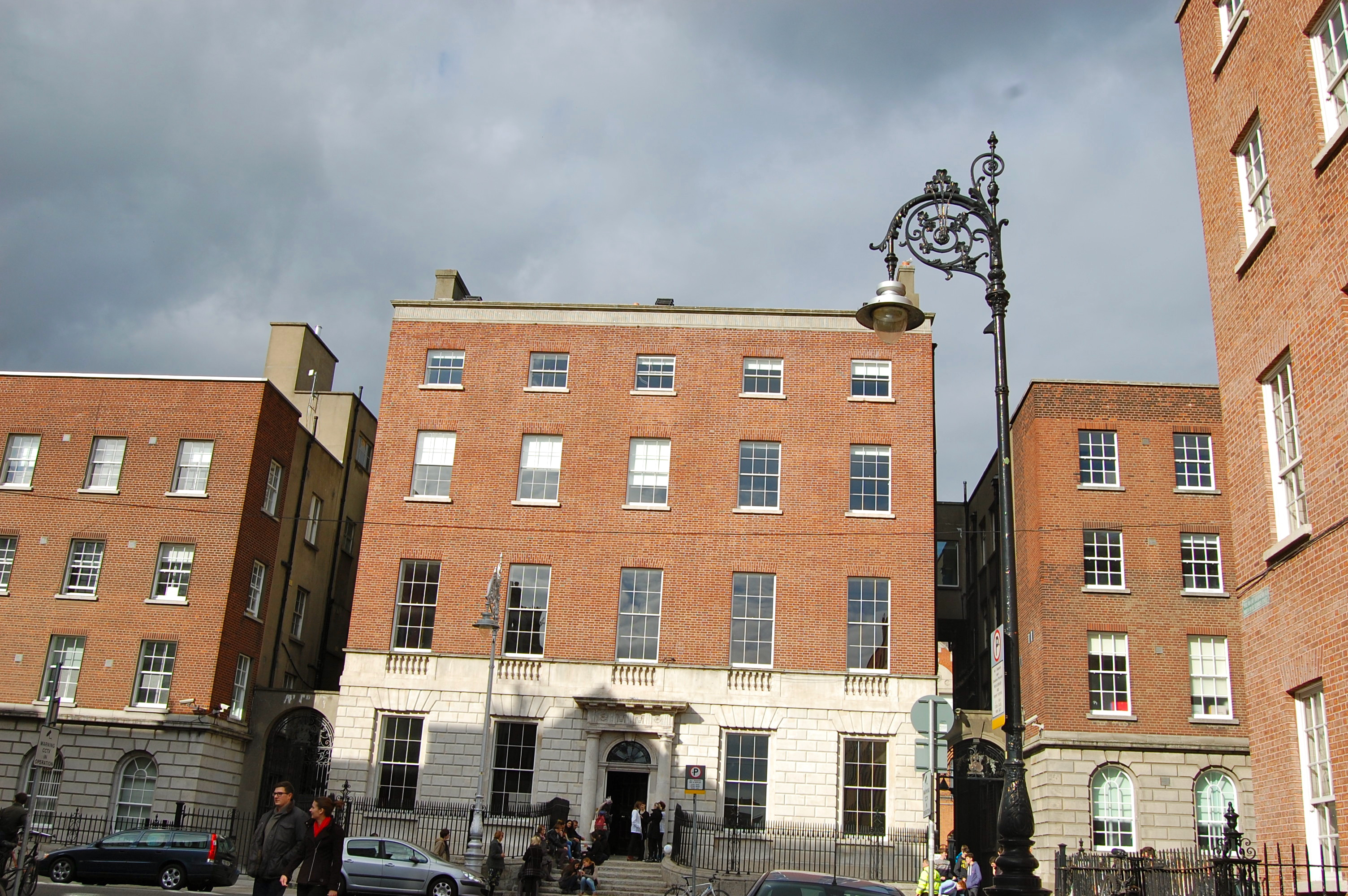
Powerscourt townhouse. Photograph © Jennifer Winder-Baggot, www.irishhistorichouses.com
https://www.powerscourtcentre.ie/

Open in 2026: all year, except New Year’s Day, Christmas Day, 10am-6pm

Fee: Free entry

This house was built for the 3rd Viscount Powerscourt, Richard Wingfield (1730-1788), in 1771, as his city residence. He already owned the Wicklow estate and grand house of Powerscourt in Enniskerry (see my entry for more about the Wingfield family and the Viscounts Powerscourt). I came across the Wingfield family first on my big house travels in 2019, when Stephen and I visited Salterbridge House in Cappoquin, County Waterford, which is owned by Philip and Susan Wingfield (Philip is the descendent of the 3rd Viscount Powerscourt, by seven generations! [1]).

Richard Wingfield (1730-1788) 3rd Viscount Powerscourt.

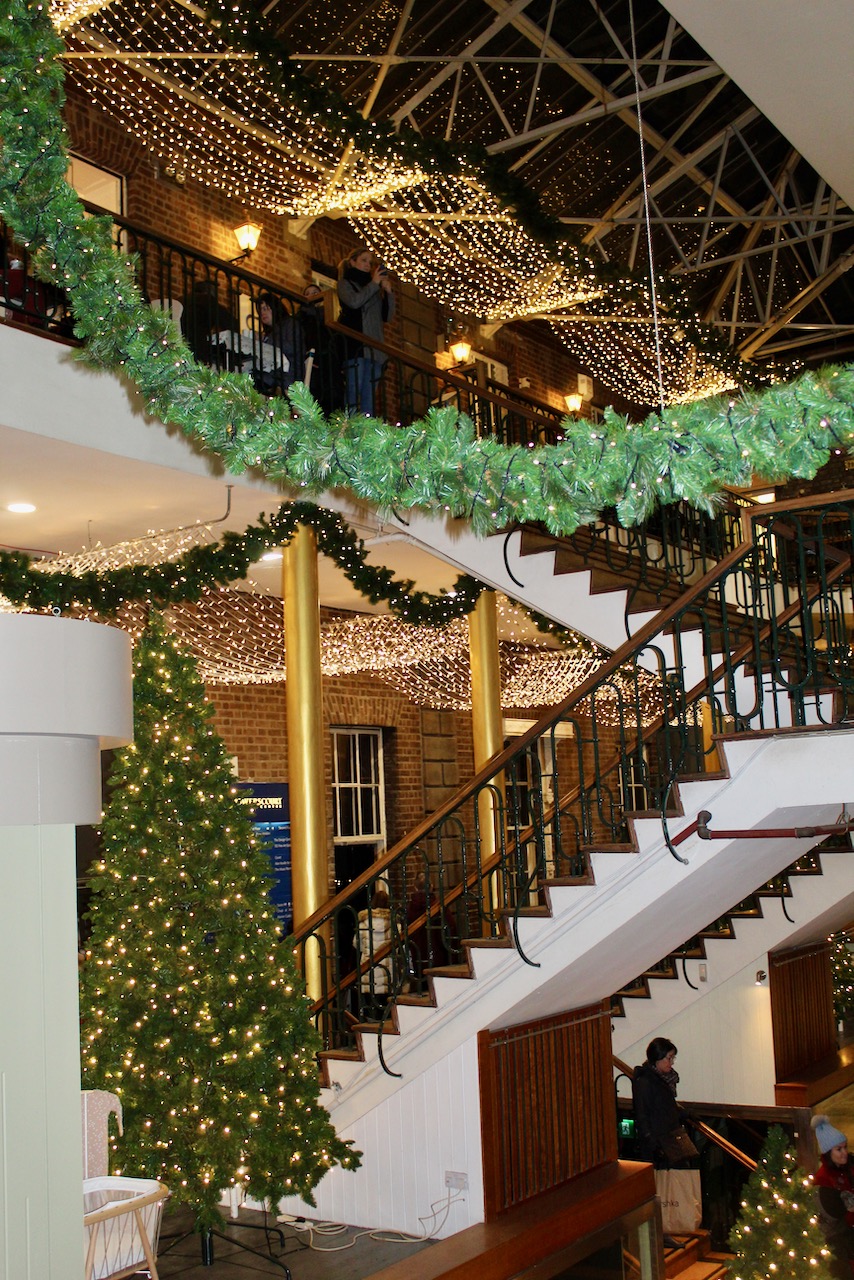
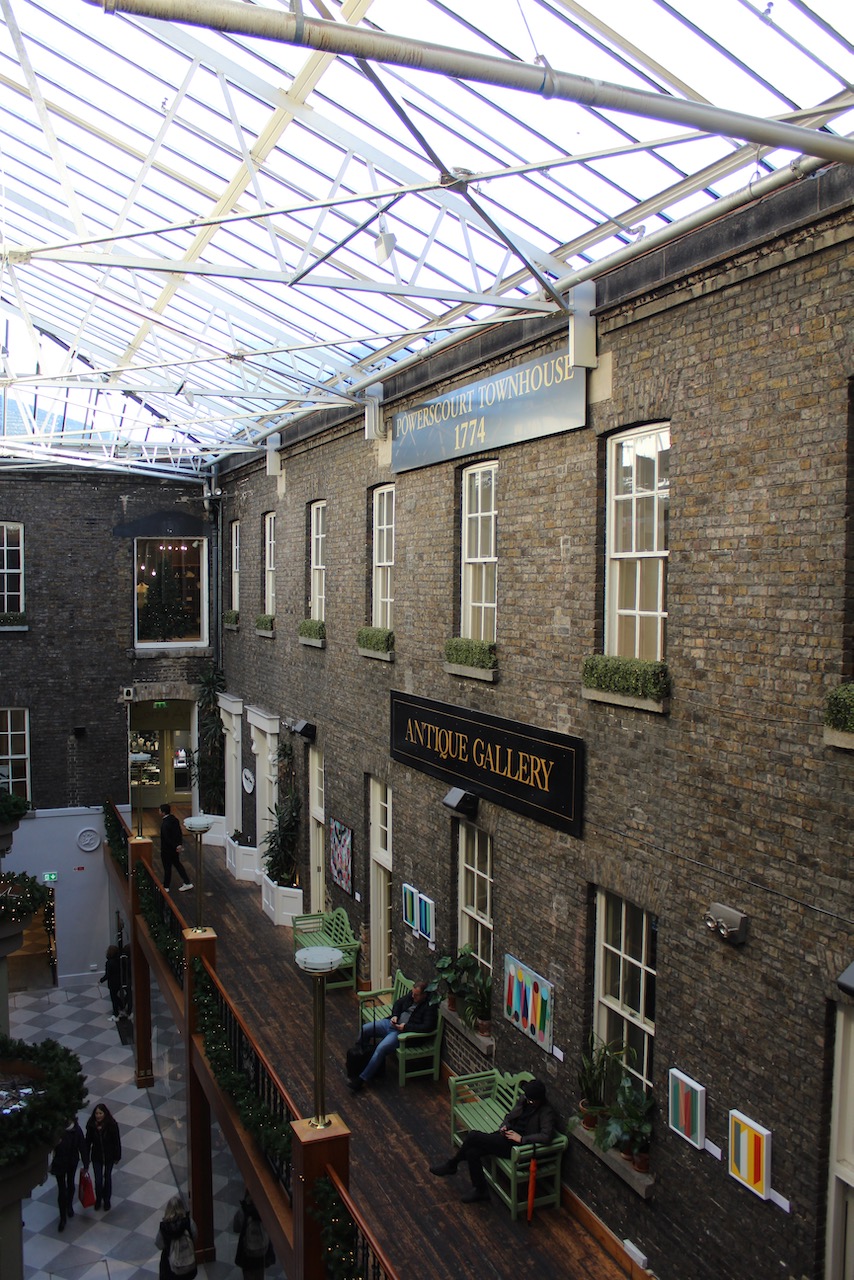
Kevin O’Connor writes in his Irish Historic Houses that “The palazzo was originally laid out around an open square. This has now been fitted (and covered) in to provide a centre specialising as a grand emporium for crafts, antiques, shopping and restaurants.”

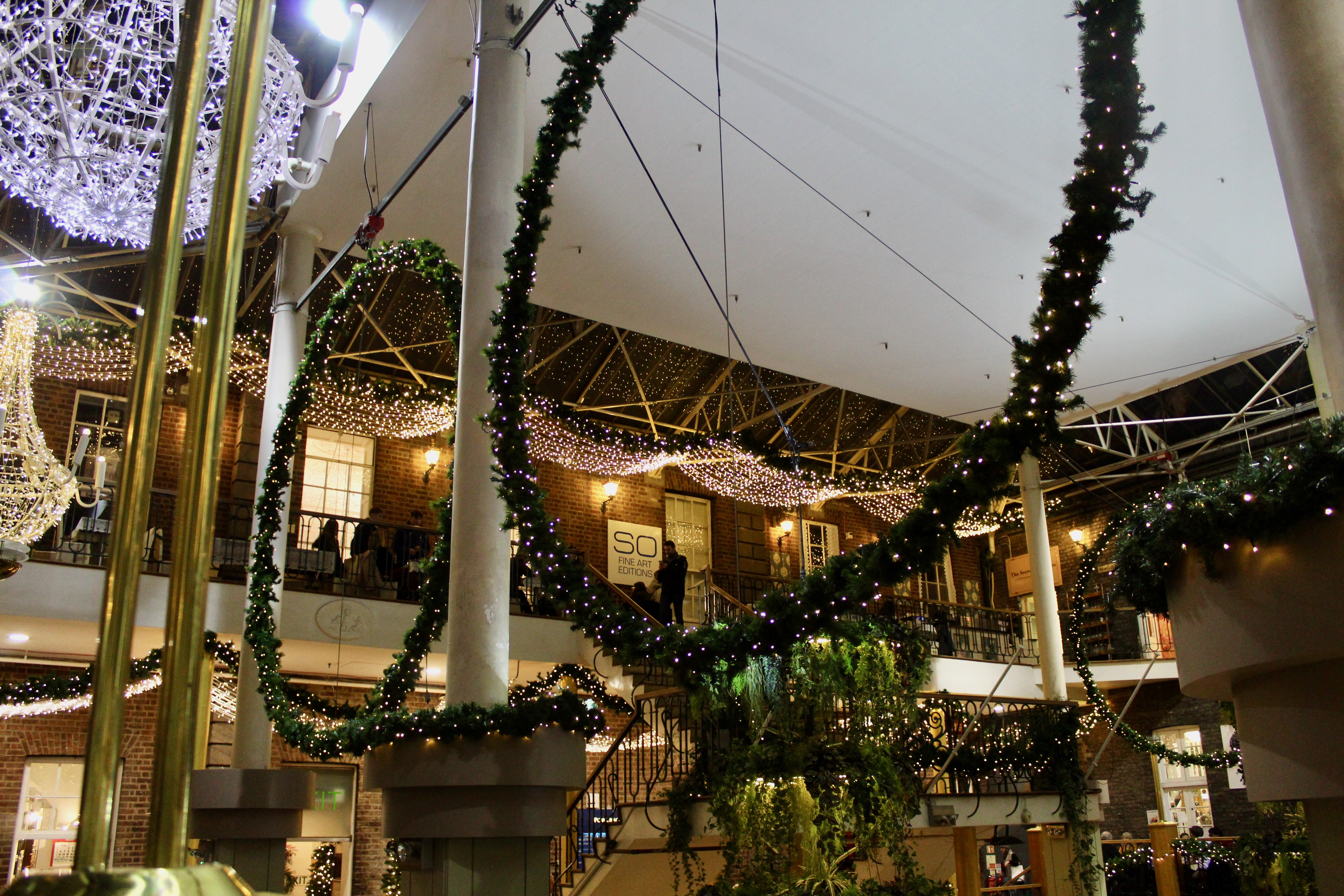
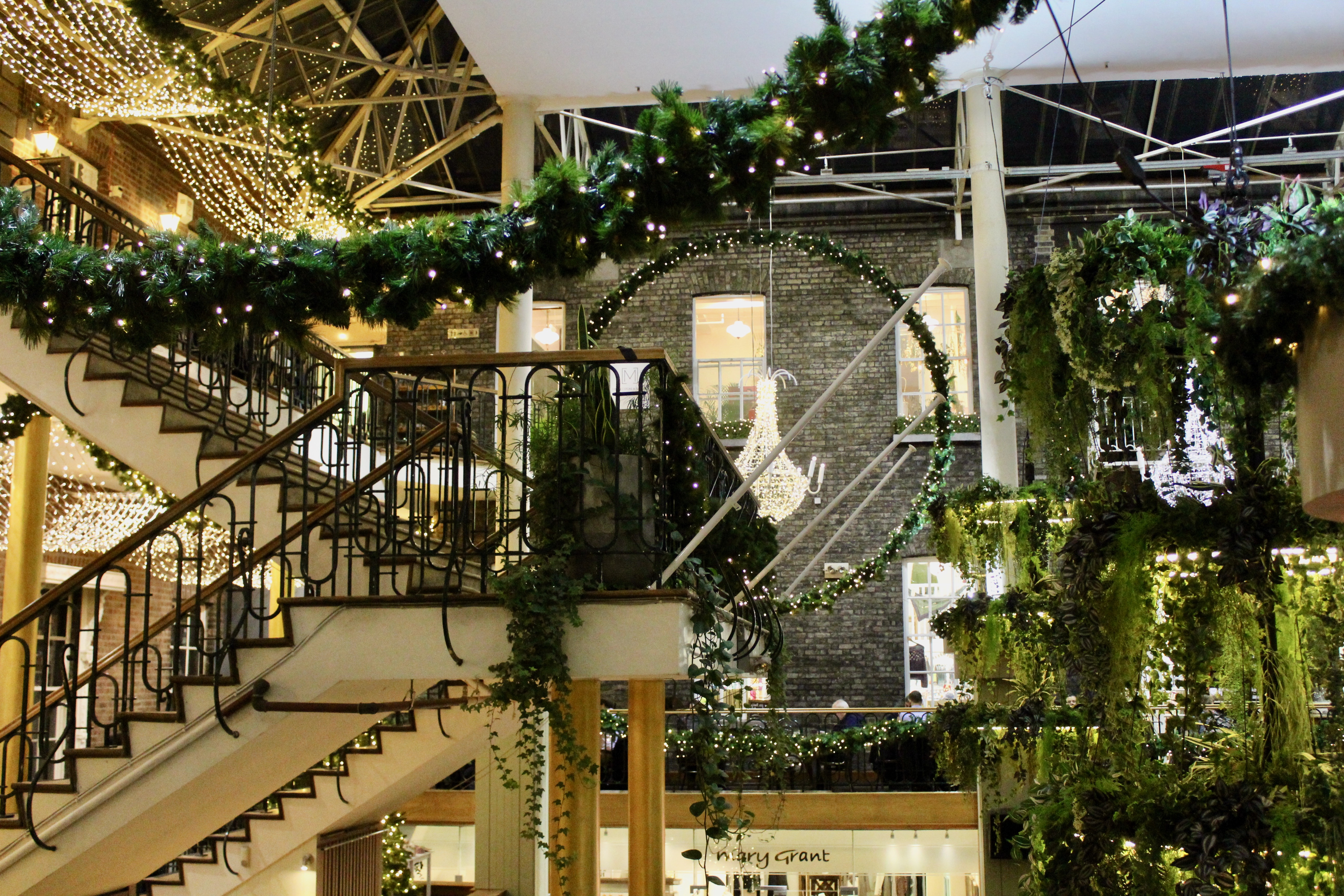
Inside Powerscourt townhouse, now full of shops. Photograph © Jennifer Winder-Baggot, www.irishhistorichouses.com

I am writing this blog during the Covid-19 lockdown in March 2020! I started to take pictures of Powerscourt townhouse last December, when it was in its full glory inside with Christmas decorations, knowing that it is listed in section 482. Today I will write about the history of this house and share my photographs, although I have not yet contacted Mary Larkin, who must manage the Townhouse Centre. Last week before the lockdown, when most of Ireland and the world were already self-isolating and most shops were closed, Stephen and I walked into town. It was a wonderful photographic opportunity as the streets were nearly empty.

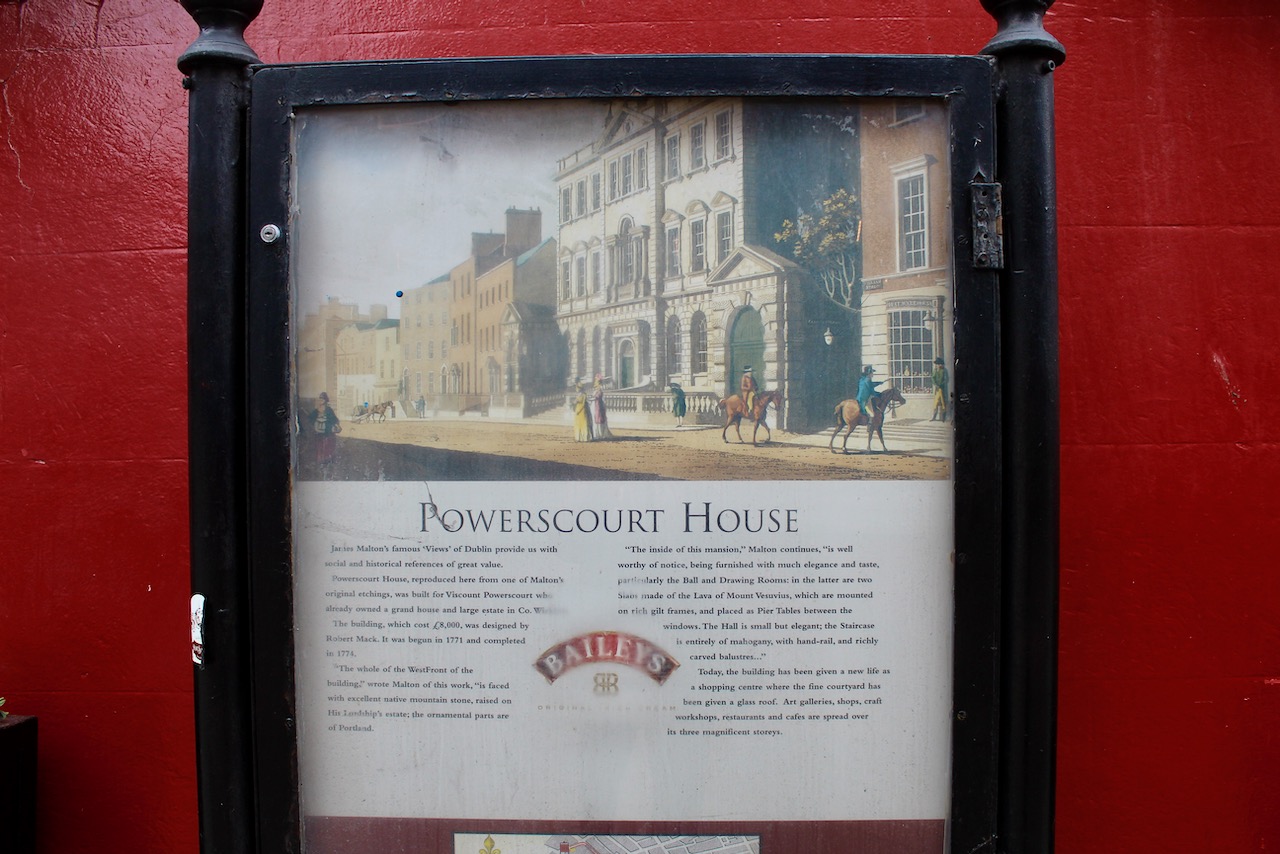
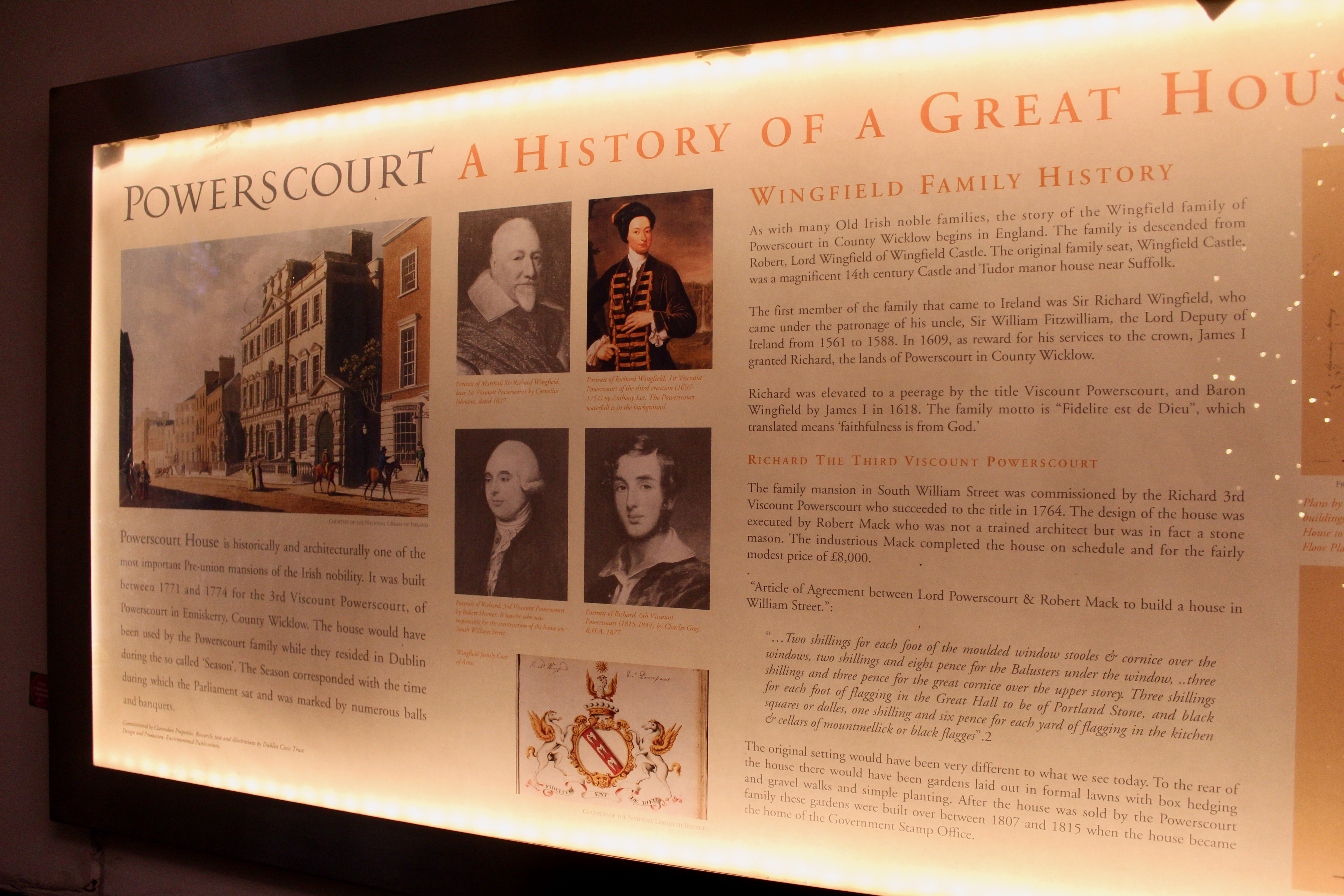
Above, by the wall of our favourite pub, Grogans, is the picture of the James Malton engraving (1795) of the neo-Palladian Powerscourt Townhouse. This sign tells us that the house was begun in 1771 and completed in 1774 and cost £8000.

Architectural historian Christine Casey describes Powerscourt Townhouse to be reminiscent of Richard Castle’s country-house practice, although she writes that it was designed by Robert Mack. [3] Mack was an amateur architect and stonemason. The west front of the house, Malton tells us, is faced with native stone from the Wicklow estate, with ornament of the more expensive Portland stone, from England.

Powerscourt Townhouse 1945, photograph from Dublin City Library and Archives. [2]

The house is historically and architecturally one of the most important pre-Union mansions of the Irish nobility. The Wingfields, Viscount Powerscourt and his wife Lady Amelia Stratford (daughter of John, Earl of Aldborough), would have stayed in their townhouse during the “Season,” when Parliament sat, which was in the nearby College Green in what is now a Bank of Ireland, and they would have attended the many balls and banquets held during the Season.

Richard was the younger son of the 1st Viscount Powerscourt, and he inherited the title after his older brother, Edward, died. He was educated in Trinity College, Dublin, and the Middle Temple in London. He served in the Irish House of Commons for Wicklow County from 1761-1764. In 1764 he became 3rd Viscount after the death of his brother, and assumed his seat in the Irish House of Lords.

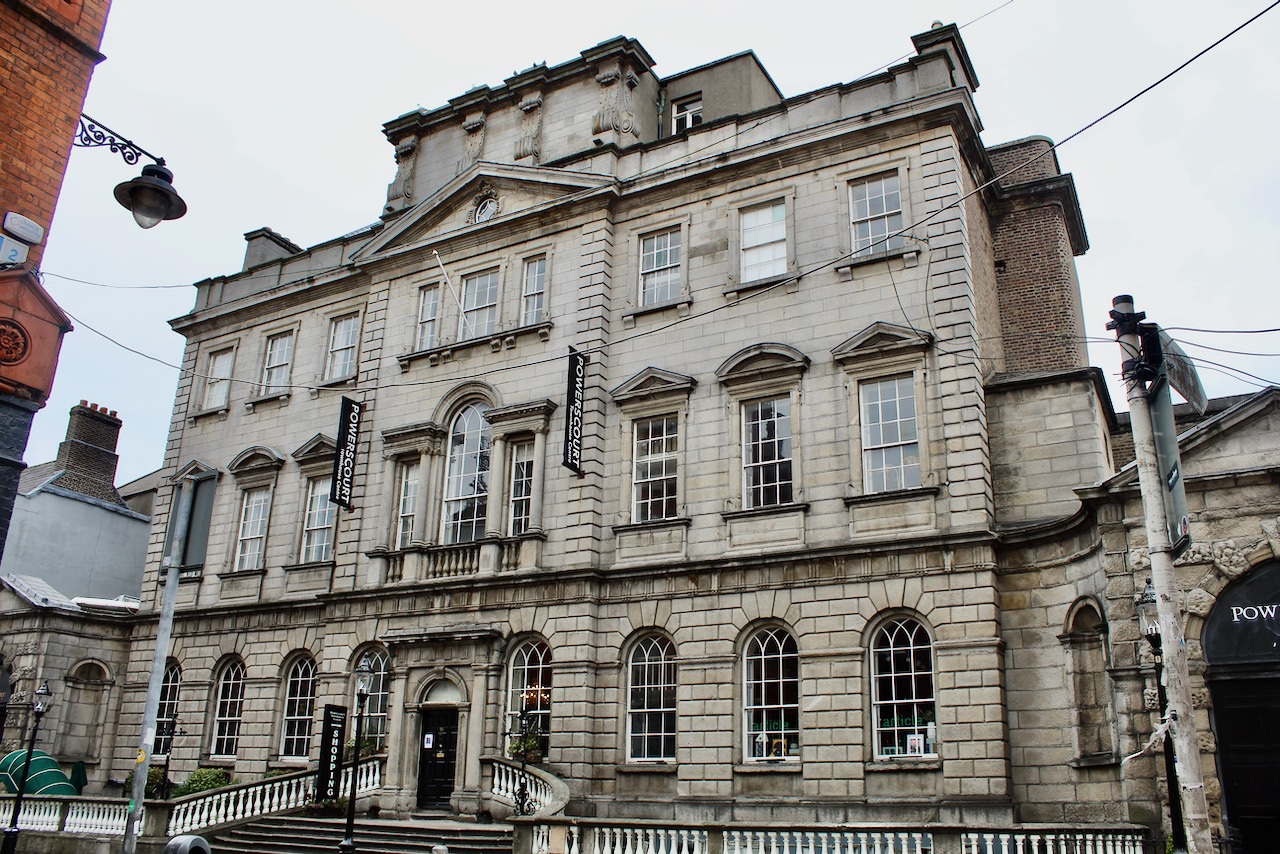
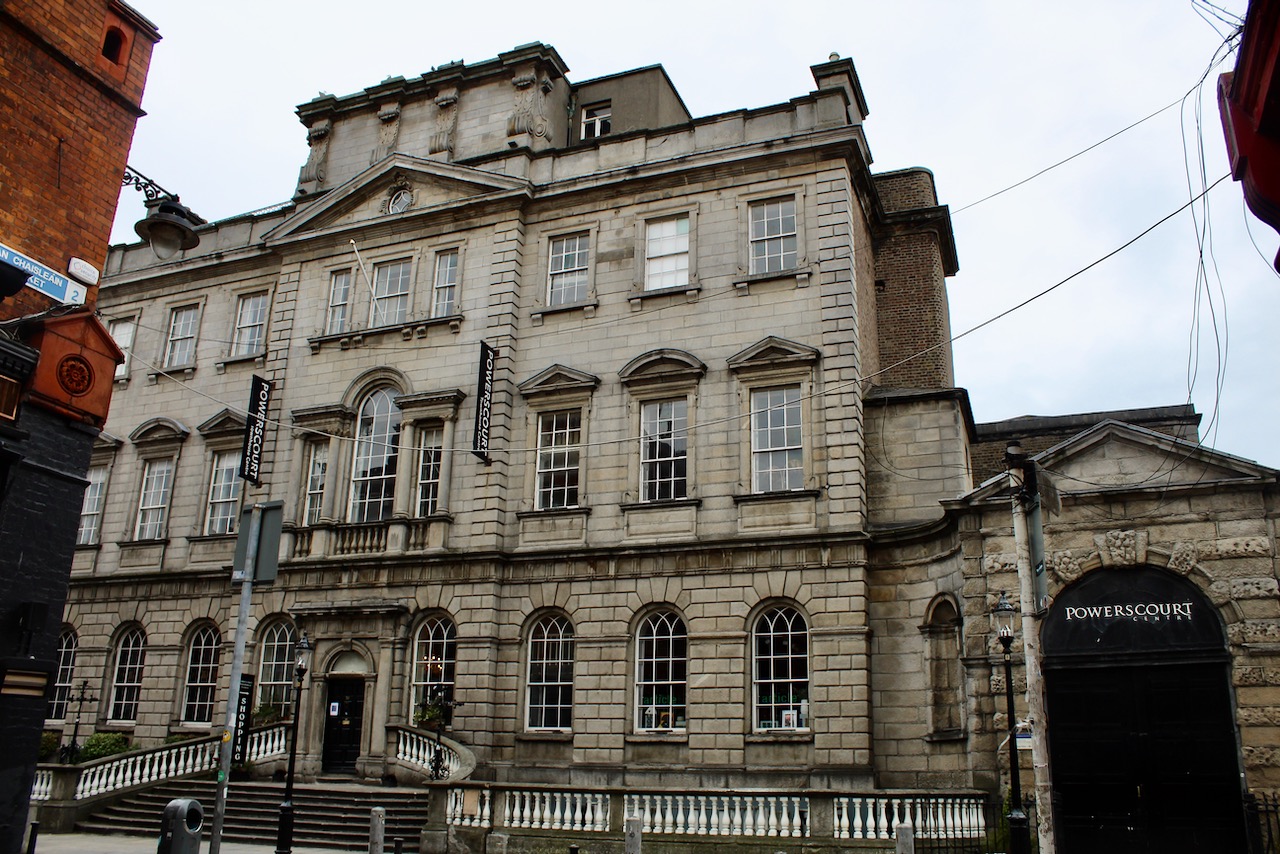
Powerscourt townhouse. Photograph © Jennifer Winder-Baggot, www.irishhistorichouses.com
The arch to the left of the house was a gateway leading to the kitchen and other offices and there is a similar gateway on the right, which led to the stables.

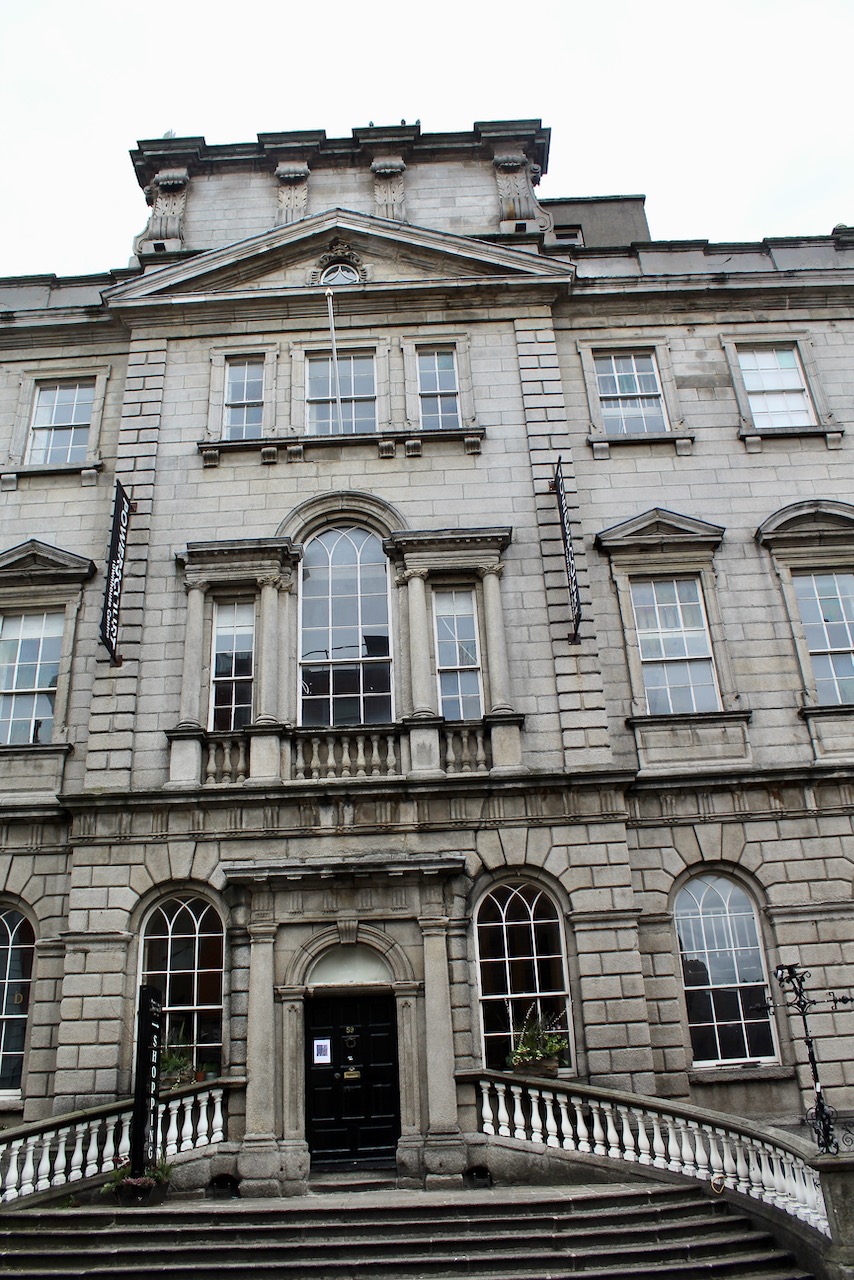
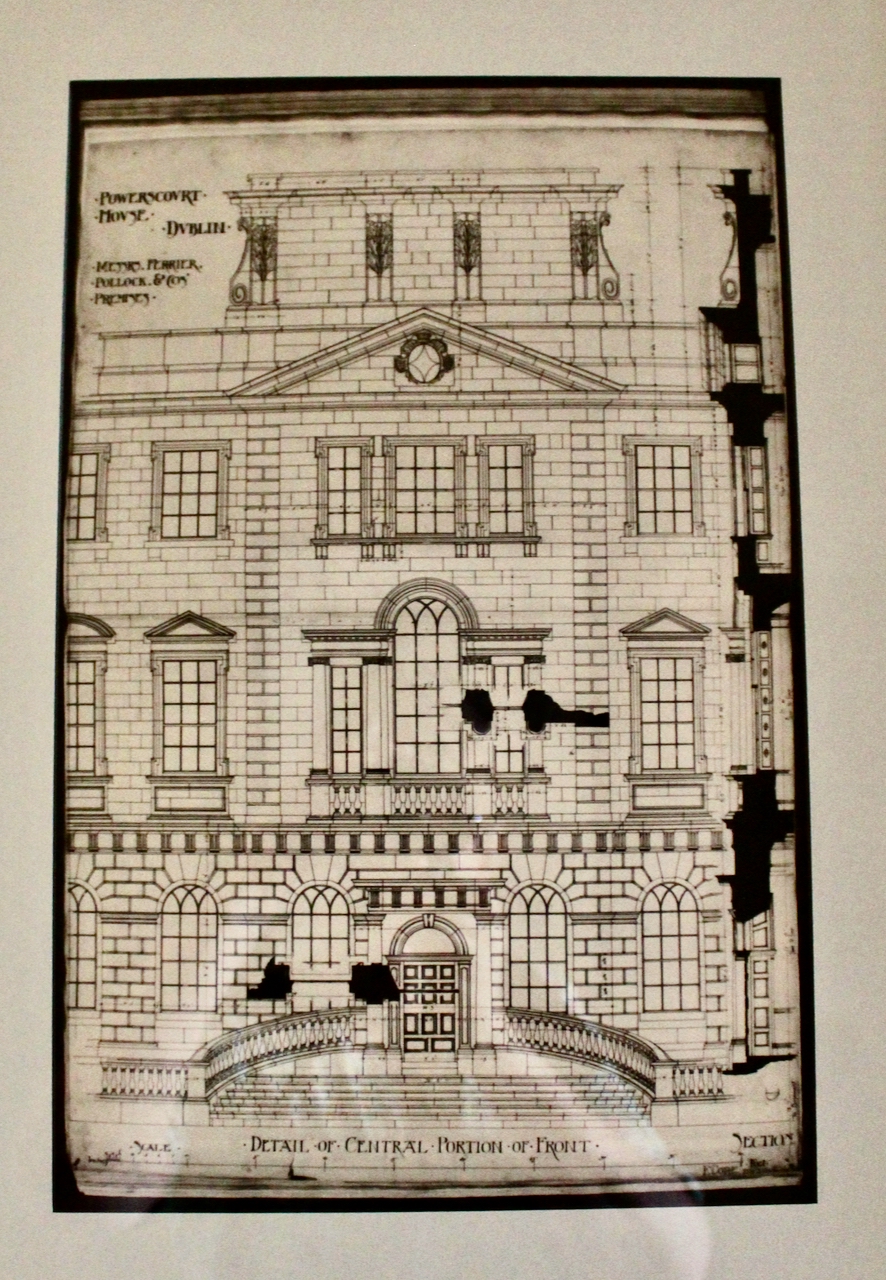
The house has four storey over basement frontage to South William Street, with “stunted and unequal niched quadrants” (see this in the photograph above, between the main block of the house, and the gateway) and pedimented rusticated arches. [4][5] Christine Casey describes the nine bay façade as faced with granite, and it has an advanced and pedimented centrepiece crowned by a solid attic storey with enormous volutes like that of Palladio’s Villa Malcontenta [5].

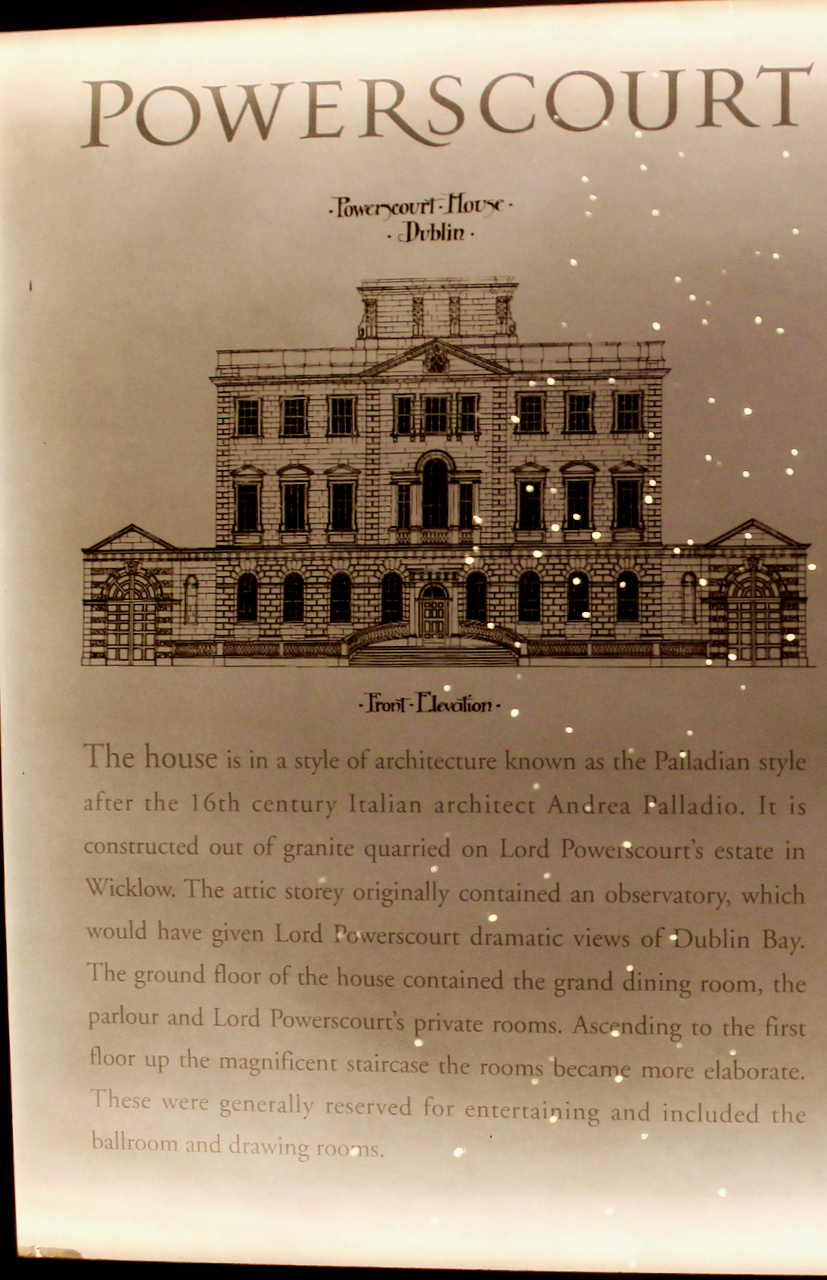
The attic storey housed an observatory. From this level, one could see Dublin Bay.

The ground floor has round-headed windows, while the piano nobile has alternating triangular and “segment-headed” pediments. A “Piano nobile” is Italian for “noble floor” or “noble level”, also sometimes referred to by the corresponding French term, bel étage, and is the principal floor of a large house. This floor contains the principal reception and bedrooms of the house. There is a Venetian window and tripartite window over the doorcase. Mark Bence-Jones tells us a Venetian window had three openings, that in the centre being round-headed and wider than those on either side; it is a very familiar feature of Palladian architecture.

Powerscourt Townhouse. Photograph © Jennifer Winder-Baggot, www.irishhistorichouses.com
Powerscourt townhouse.
Plan of front of Powerscourt Townhouse, from a sketch on display at Carton, County Kildare.

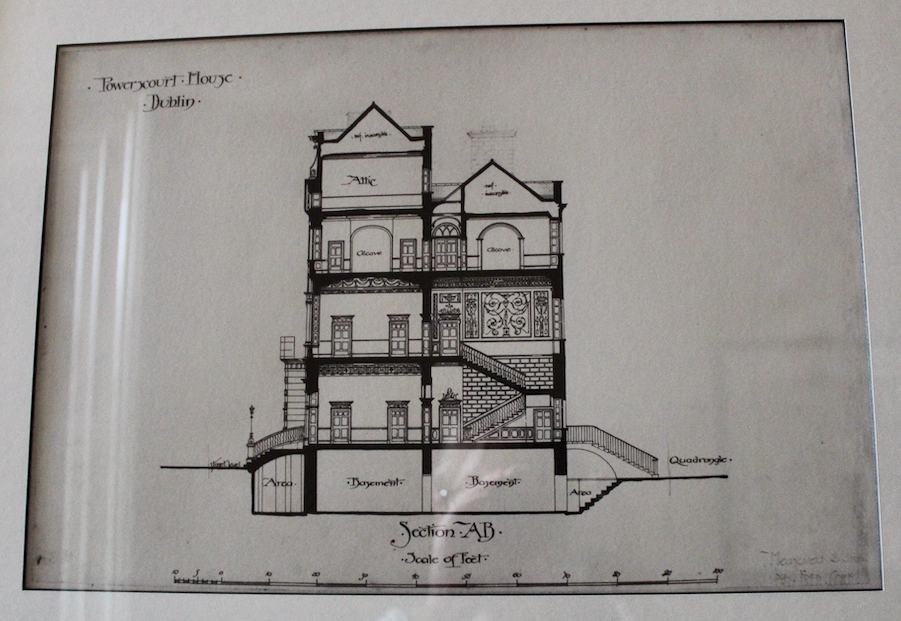
The ground floor contained the grand dining room, the parlour, and Lord Powerscourt’s private rooms. Ascending to the first floor up the magnificent mahogany staircase, one entered the rooms for entertaining: the ballroom and drawing room.

Plan of Powerscourt Townhouse, from a sketch on display at Carton, County Kildare.
Powerscourt townhouse.

An information board inside the house quotes the “Article of Agreement” between Lord Powerscourt and the stonemason Robert Mack:

Two shillings for each foot of the moulded window stooles and cornice over the windows, two shillings and eight pence for the Balusters under the windows… three shillings and three pence for the great cornice over the upper storey. Three shillings for each foot of flagging in the Great Hall to be of Portland Stone, and black squares or dolles, one shilling and six pence for each yard of flagging in the kitchen and cellars of mountmellick or black flagges.”

This information board also tells us that the original setting of the house would have been a garden to the rear of the house, laid out in formal lawns with box hedging and gravel walks.

IMG_1707
Powerscourt townhouse.

When one walks up the balustraded granite steps leading to the front door, through the hall and past the mahogany staircase, one enters what was the courtyard of the house.

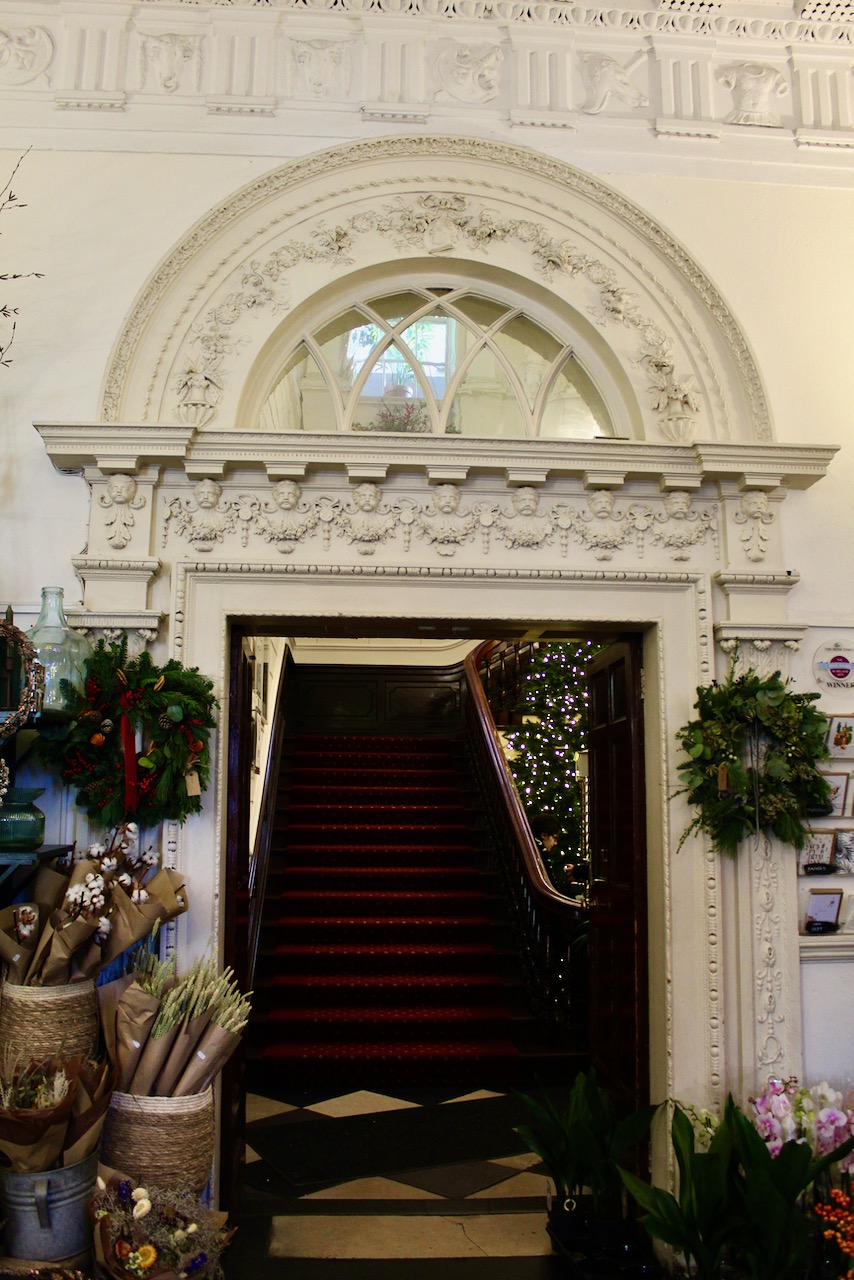
The entrance hall is now occupied by a flower shop. It has fine ceilings by James McCullagh. Photograph © Jennifer Winder-Baggot, www.irishhistorichouses.com
Powerscourt townhouse 1964, photograph from Dublin City Library and Archives. [see 2]
Information board about Powerscourt townhouse.
The staircase hall plan, Powerscourt Townhouse, from a sketch on display at Carton, County Kildare.
Plan of Powerscourt Townhouse, from a sketch on display at Carton, County Kildare.
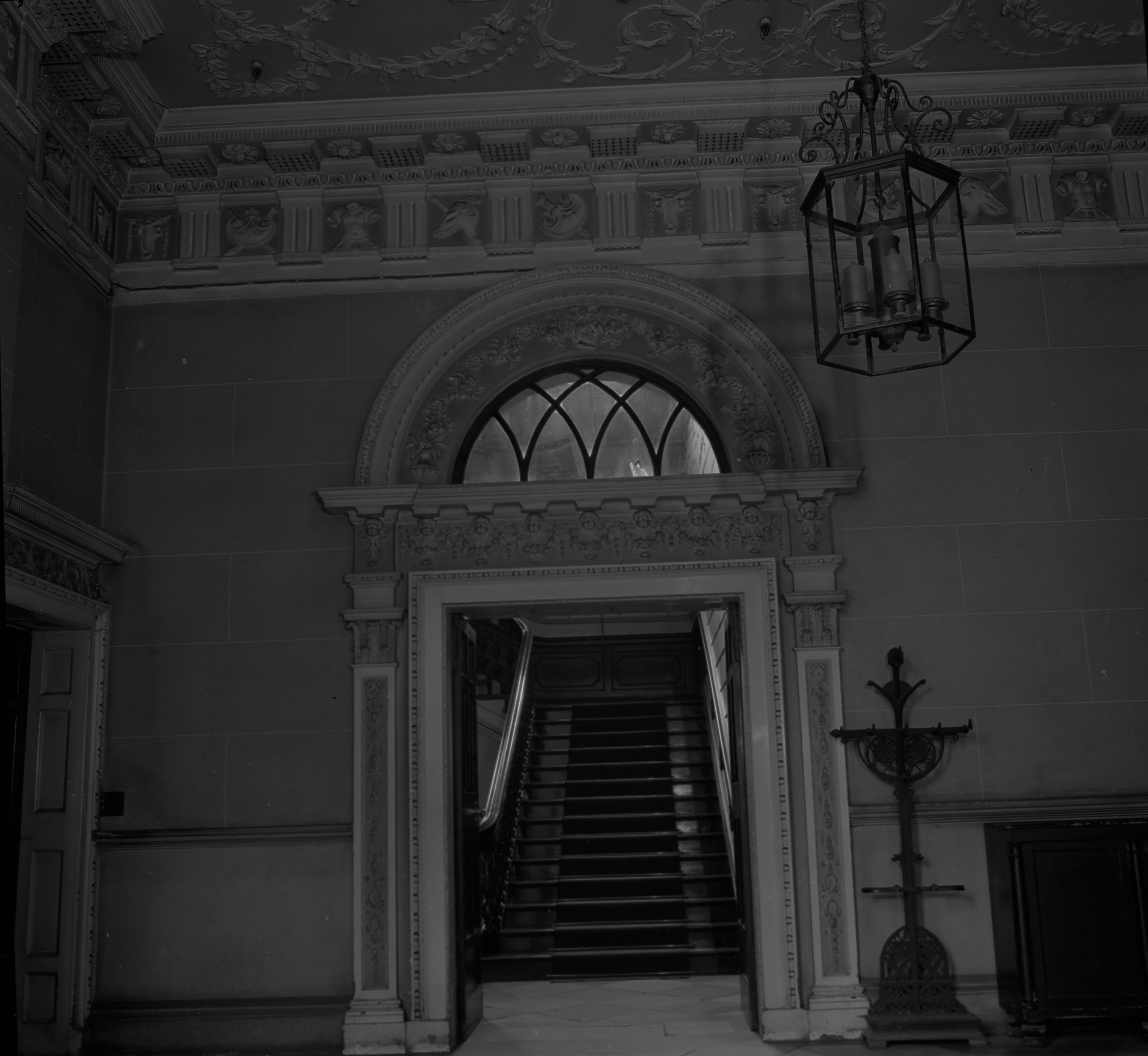
There are decorative heads along the top of the doorway leading from the entrance hall into the stair hall. Photograph © Jennifer Winder-Baggot, www.irishhistorichouses.com
Powerscourt townhouse, Dublin. Photograph © Jennifer Winder-Baggot, www.irishhistorichouses.com
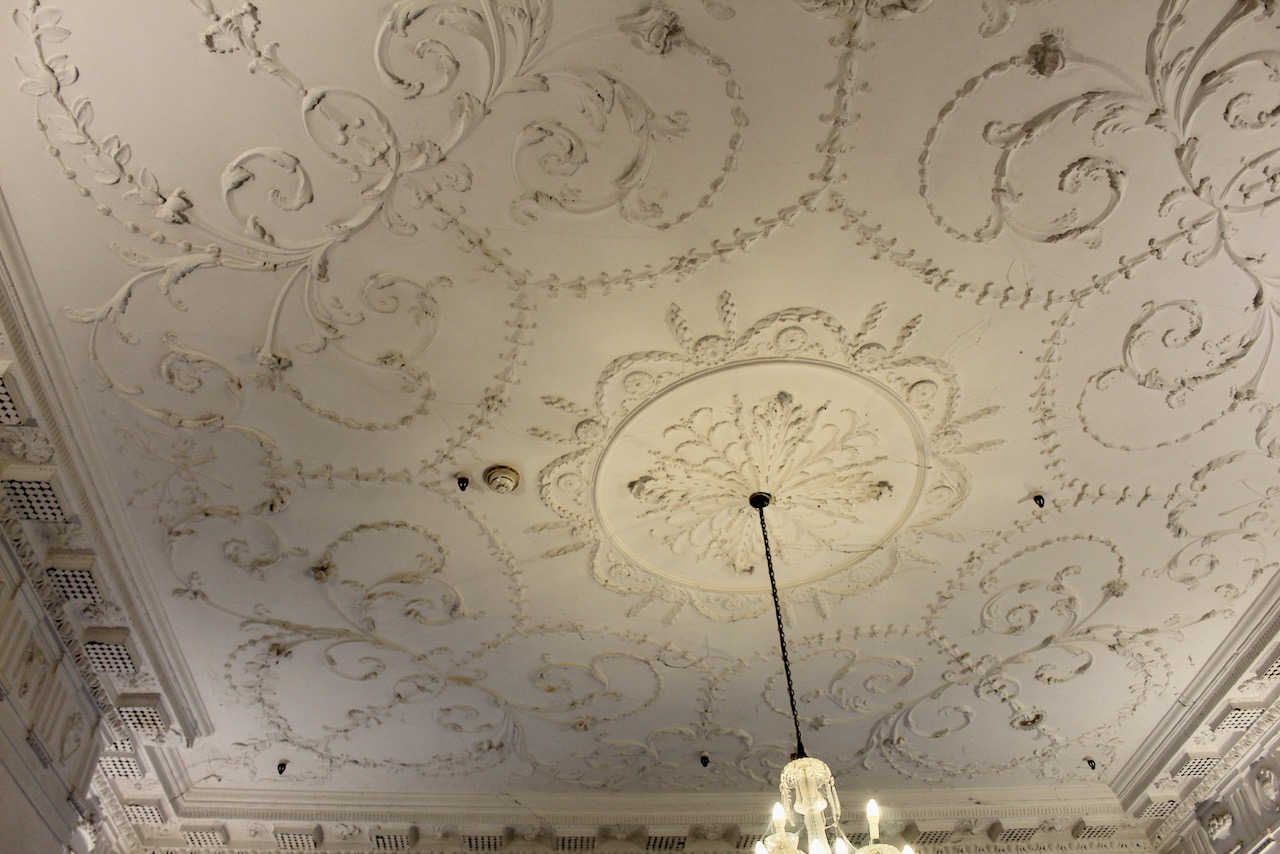
The entrance hall has fine ceilings by James McCullagh. Photograph © Jennifer Winder-Baggot, www.irishhistorichouses.com
The entrance hall has fine ceilings by James McCullagh. There are wonderful metopes and panels with urns, buncrania, bows and arrows and baskets of fruit. Photograph © Jennifer Winder-Baggot, www.irishhistorichouses.com
IMG_1716
See the “monkey tail” wooden volute at end of stairway. Photograph © Jennifer Winder-Baggot, www.irishhistorichouses.com

You can see the “trompe l’oeil” floor in the entrance hall in the photo below, made up of black Kilkenny marble, grey and white limestone.

IMG_1715
Powerscourt Townhouse, the stair hall. Photograph © Jennifer Winder-Baggot, www.irishhistorichouses.com
IMG_1724
Powerscourt townhouse. Photograph © Jennifer Winder-Baggot, www.irishhistorichouses.com

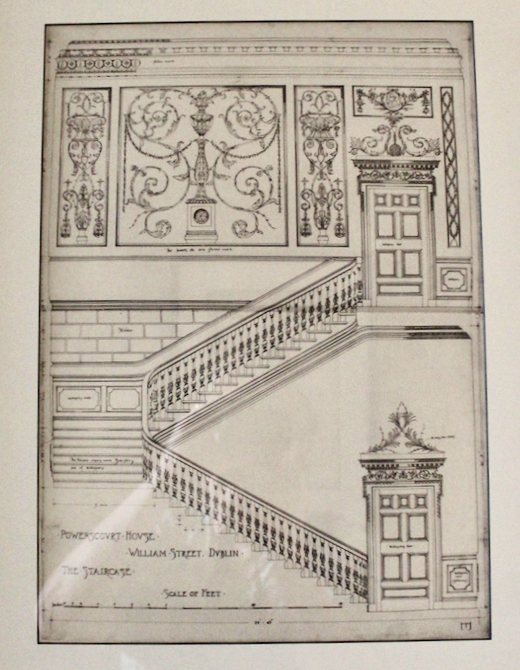
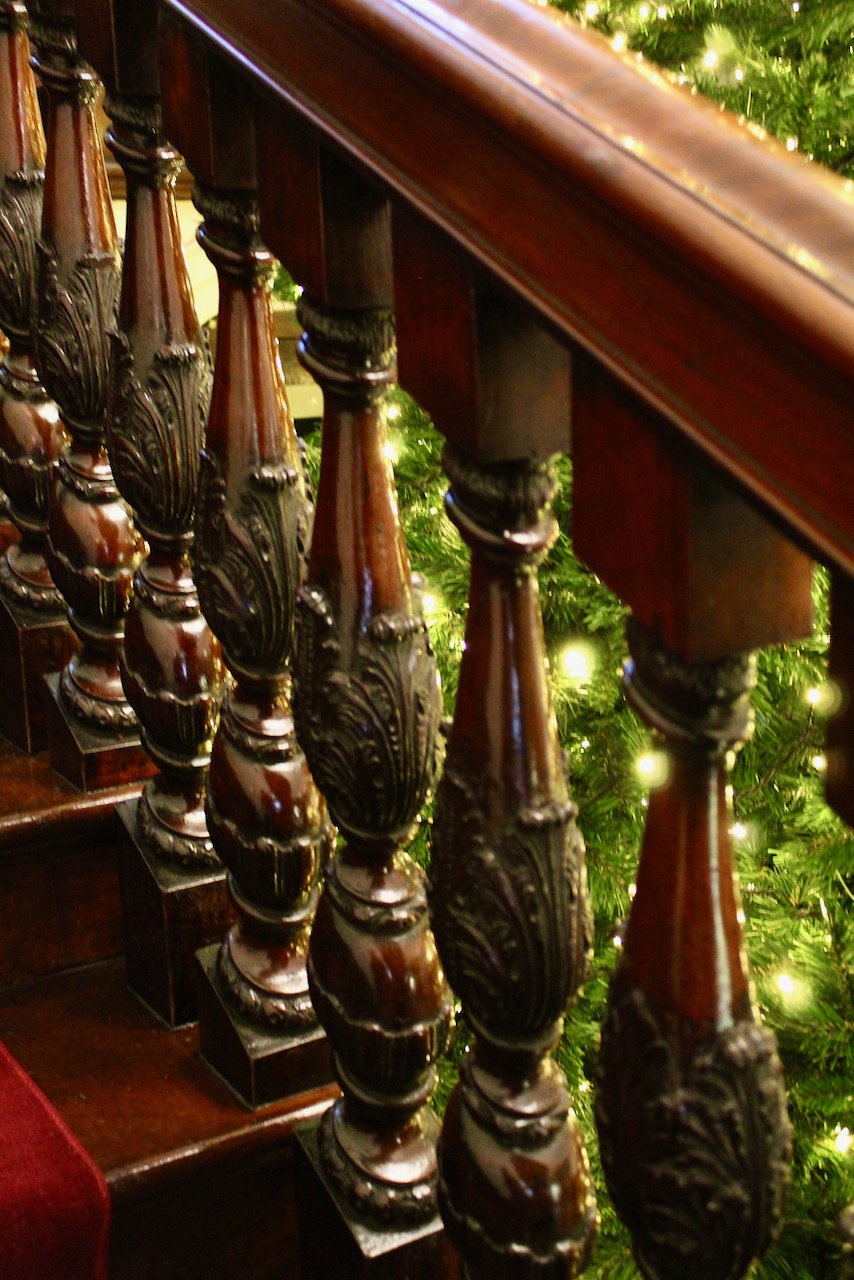
The mahogany staircase rises in three flights to the first floor. The balusters are probably the most elaborately carved in Ireland, and the handrail ends in a large volute or “monkey’s tail” at the base of the stairs. The woodwork carving is by Ignatius McDonagh. I need to go back to take a better picture of the balustrade. We saw an even larger “monkey tail” volute end of a staircase in Barmeath (another section 482 property, see my entry), more like a dragon’s tail than a monkey, it was so large!

The carved mahogany balusters by Ignatius McDonagh. Photograph © Jennifer Winder-Baggot, www.irishhistorichouses.com

The Wingfield family descended from Robert, Lord Wingfield of Wingfield Castle in England, near Suffolk. The first member of the family who came from England was Sir Richard Wingfield, who came under the patronage of his uncle, Sir William Fitzwilliam, the Lord Deputy of Ireland from 1561 to 1588. In 1609 King James I granted Richard Wingfield, in reward for his services to the Crown, the lands of Powerscourt in County Wicklow. Richard was a military adventurer, and fought against the Irish, and advanced to the office of Marshal of Ireland. In May 1608 he marched into Ulster during “O’Doherty’s Rebellion” against Sir Cahir O’Doherty, and killed him and dispersed O’Doherty’s followers. For this, he was granted Powerscourt Estate, in 1609. [7]

In 1618 James I raised Richard to the Peerage as Viscount Powerscourt, Baron Wingfield. The family motto is “Fidelite est de Dieu,” faithfulness is from God.

Richard the 3rd Viscount Powerscourt succeeded to the title in 1764. He was not a direct descendant of the 1st Viscount Powerscourt. Richard the 1st Viscount had no children, so the peerage ended with the death of the 1st Viscount.

The Powerscourt estate in Wicklow passed to his cousin, Sir Edward Wingfield, a distinguished soldier under the Earl of Essex (Robert Devereux, 2nd Earl of Essex), and a person of great influence in Ireland. [8] Essex came to Ireland to quell a rebellion that became the Nine Years’ War. Sir Edward Wingfield married Anne, the daughter of Edward, 3rd Baron Cromwell (descendent of Henry VIII’s Thomas Cromwell). [9]  It was this Edward Wingfield’s grandson Folliot (son of Richard Wingfield), who inherited the Powerscourt estates, for whom the Viscountcy was revived, the “second creation,” in 1665. [10]

However, once again the peerage expired as Folliot also had no offspring. Powerscourt Estate passed to his cousin, Edward Wingfield. Edward’s son Richard (1697-1751) of Powerscourt, MP for Boyle, was elevated to the peerage in 1743, by the titles of Baron Wingfield and Viscount Powerscourt (3rd Creation).

This Richard Wingfield was now the 1st Viscount (3rd creation). He married, first, Anne Usher, daughter of Christopher Usher of Usher’s Quay, but they had no children. He married secondly Dorothy, daughter of Hercules Rowley of Summerville, County Meath. Their son, Edward, became the 2nd Viscount. When he died in 1764, Richard, his brother, became 3rd Viscount. Seven years after inheriting the title, Richard 3rd Viscount began the building of Powerscourt Townhouse.

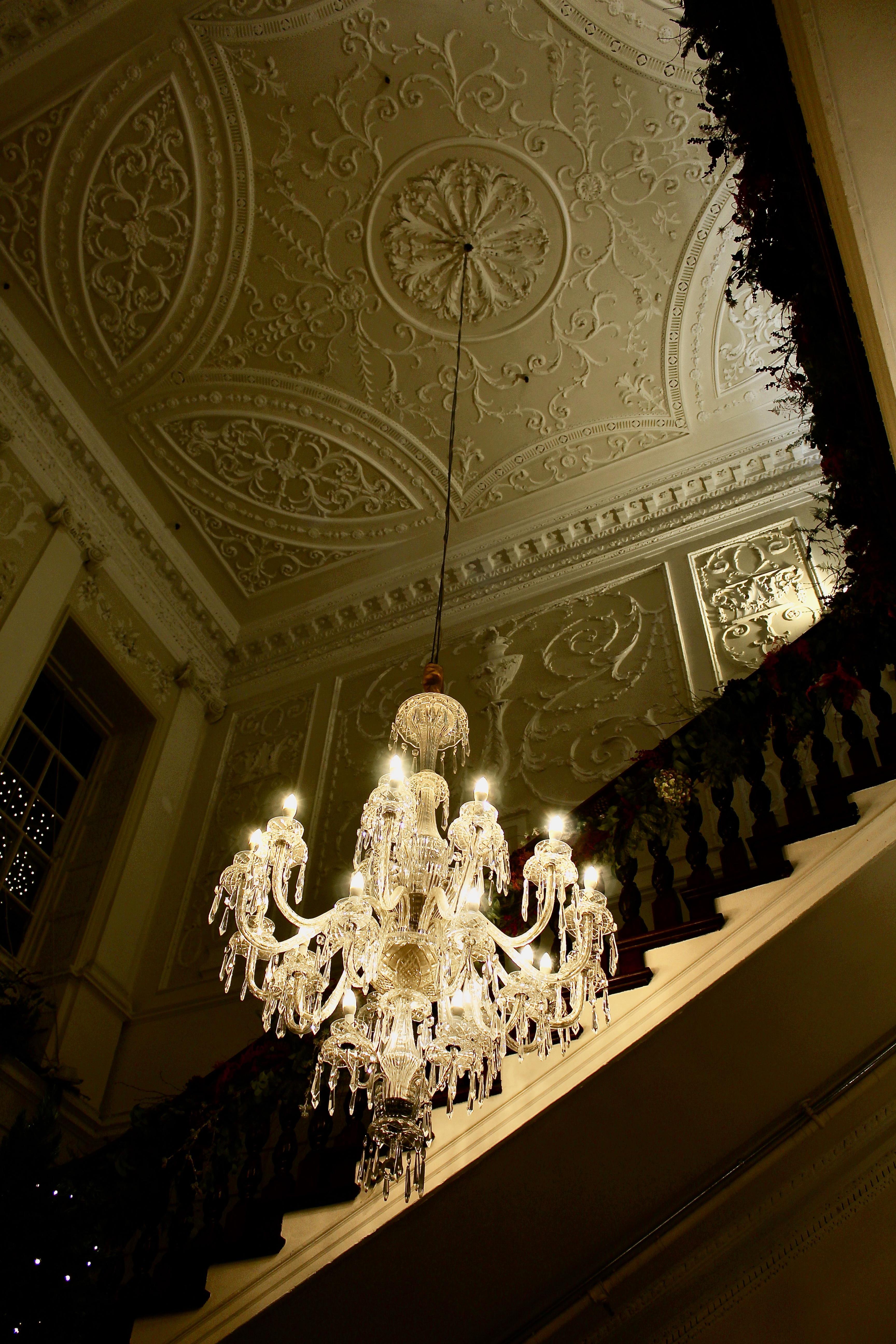
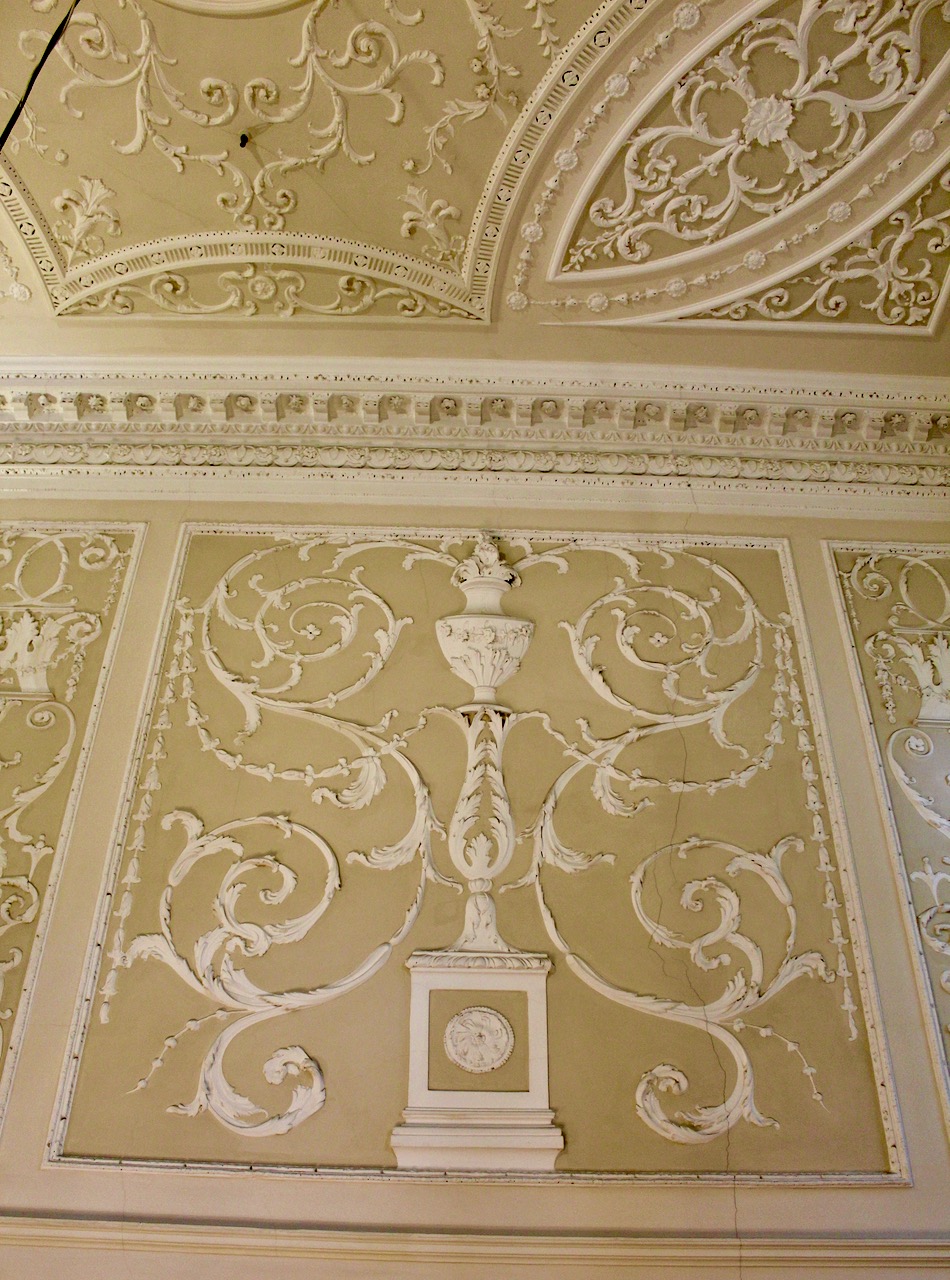
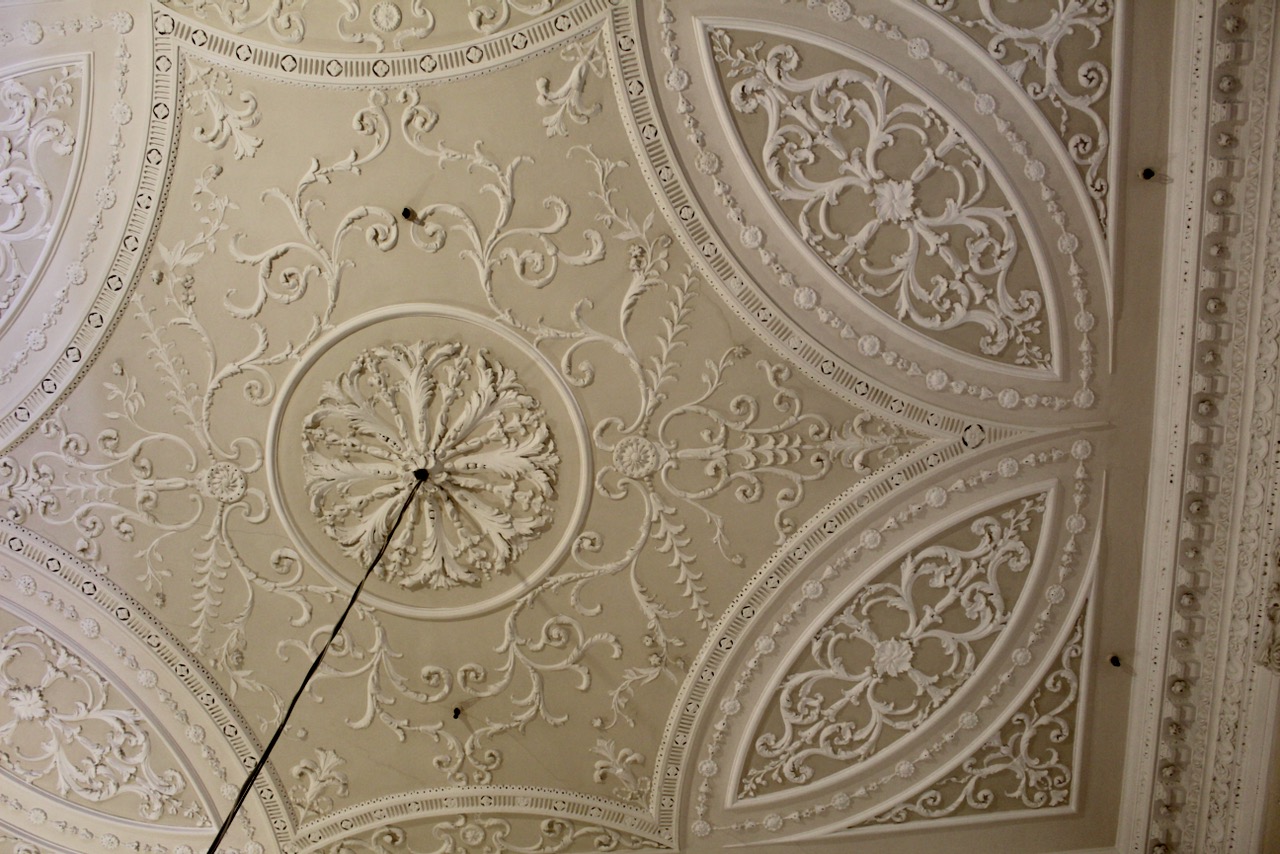
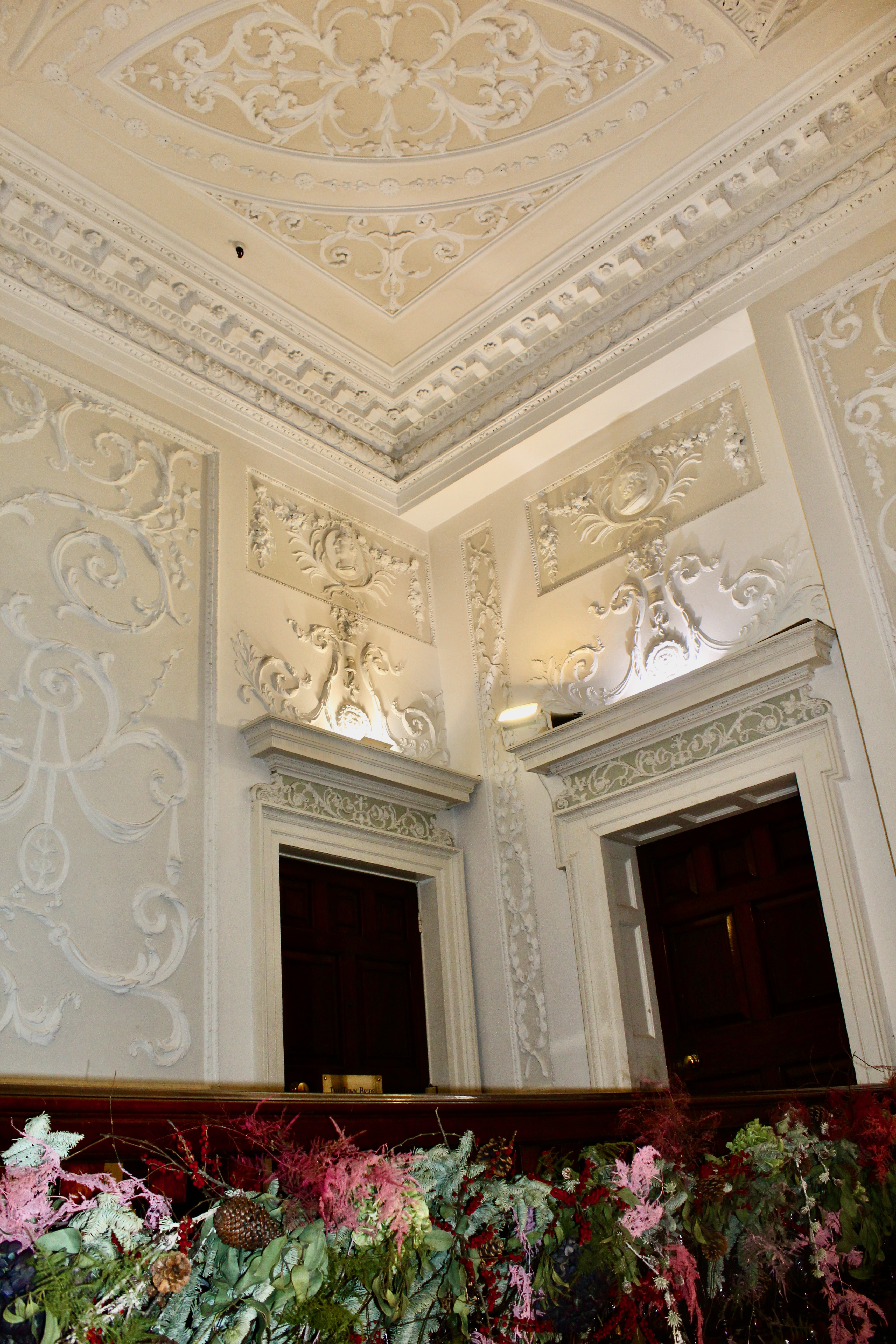
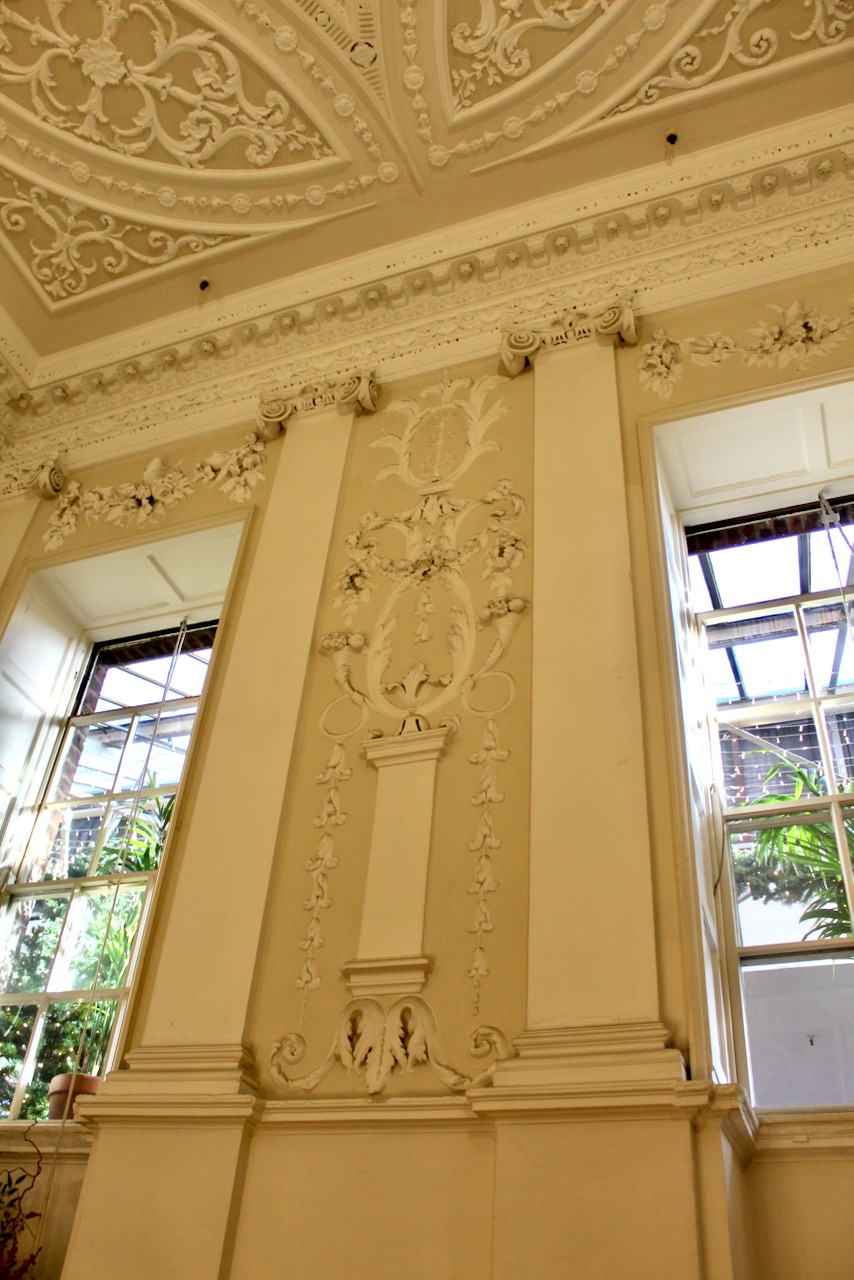
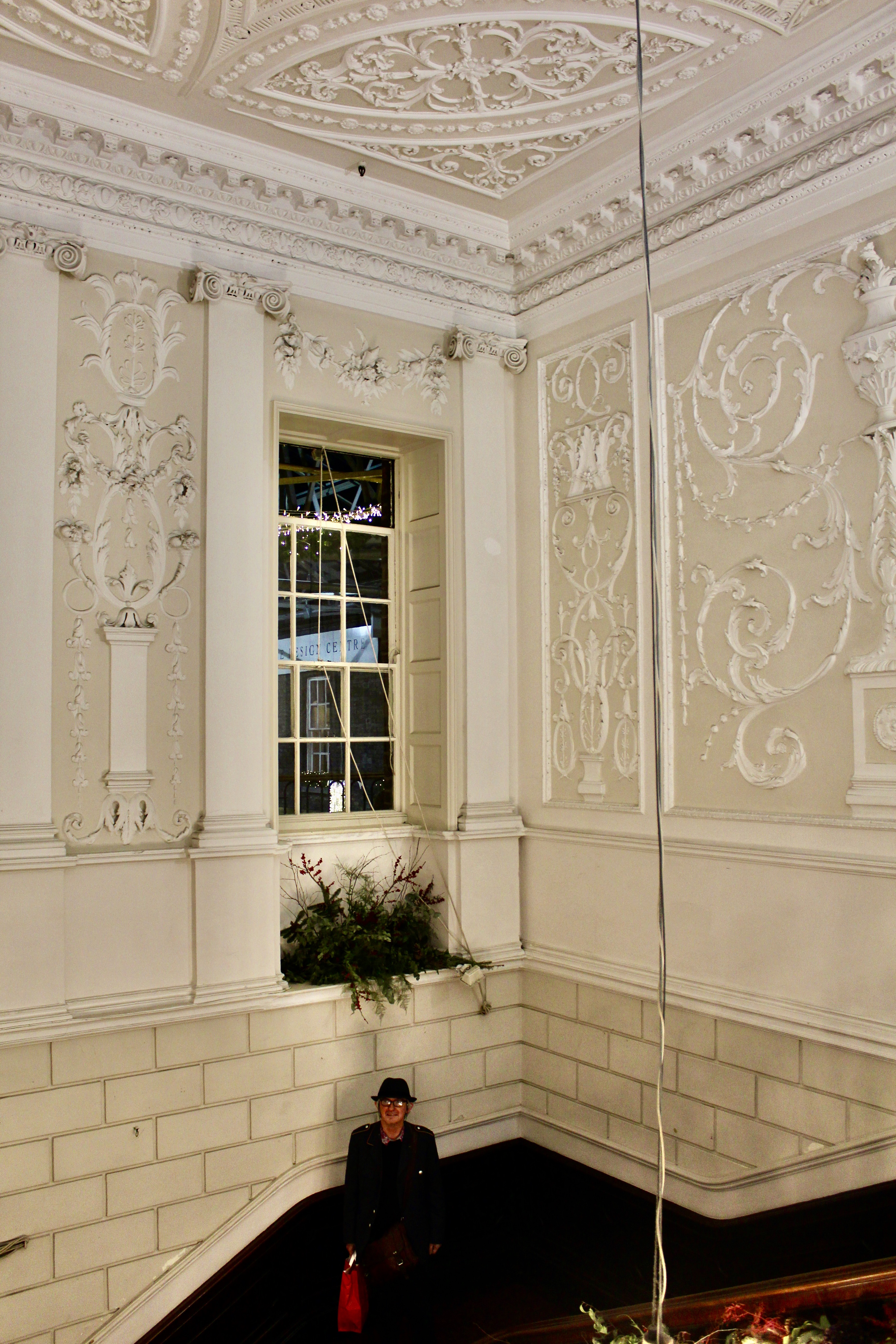
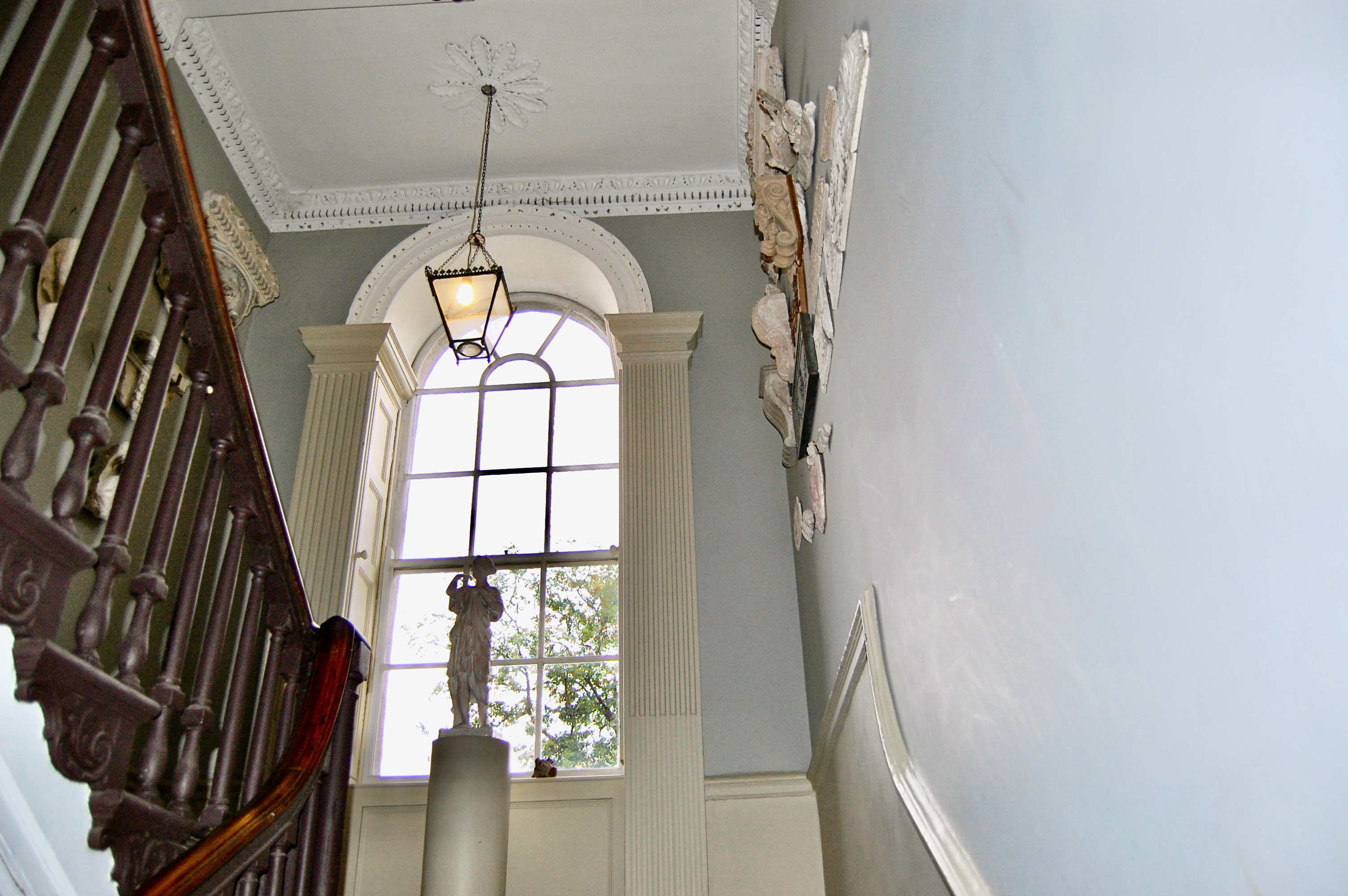
Inside just past the entrance hall, we can still climb the staircase and see the wonderful plasterwork by stuccodores James McCullagh assisted by Michael Reynolds.

The decoration on the upper walls consists of panels decorated with arabesque work interspersed with urns, acanthus scrolls [6], palms and portrait medallions. I haven’t discovered who is pictured in the portraits! Neither Christine Casey nor the Irish Aesthete tell us in their descriptions.

IMG_1717
Powerscourt Townhouse. Photograph © Jennifer Winder-Baggot, www.irishhistorichouses.com
Powerscourt Townhouse.
IMG_1719
Powerscourt Townhouse. Photograph © Jennifer Winder-Baggot, www.irishhistorichouses.com
IMG_1720
Powerscourt Townhouse. Photograph © Jennifer Winder-Baggot, www.irishhistorichouses.com
Detail of the stair hall. Photograph © Jennifer Winder-Baggot, www.irishhistorichouses.com
Detail of the drapery in the stuccowork. Photograph © Jennifer Winder-Baggot, www.irishhistorichouses.com
IMG_1721
Powerscourt Townhouse. Unfortunately the busts are not identified. Photograph © Jennifer Winder-Baggot, www.irishhistorichouses.com
One of the many busts in stucco medallions in the stair hall. Photograph © Jennifer Winder-Baggot, www.irishhistorichouses.com
Detail of the stair hall ceiling. Photograph © Jennifer Winder-Baggot, www.irishhistorichouses.com
IMG_1722
Powerscourt Townhouse. Photograph © Jennifer Winder-Baggot, www.irishhistorichouses.com
Ionic pilasters of the stair hall. Photograph © Jennifer Winder-Baggot, www.irishhistorichouses.com
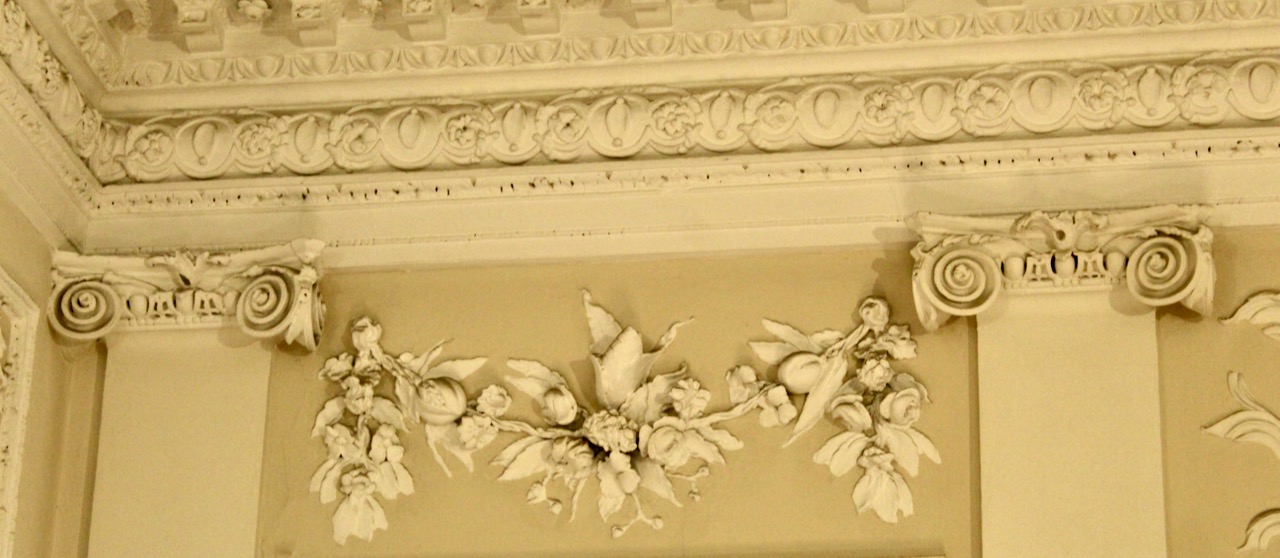
Detail of the floral swags in stucco. Photograph © Jennifer Winder-Baggot, www.irishhistorichouses.com
IMG_1723
Powerscourt townhouse. Photograph © Jennifer Winder-Baggot, www.irishhistorichouses.com

Ionic pilasters frame two windows high up in the east wall – we can see one in the photograph above. The lower walls are “rusticated in timber to resemble stone,” Casey tells us. I would have assumed that the brickwork was of stone, not of timber.

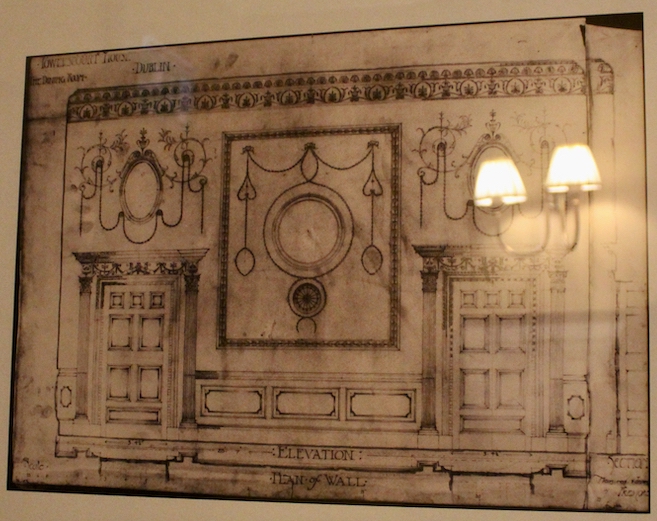
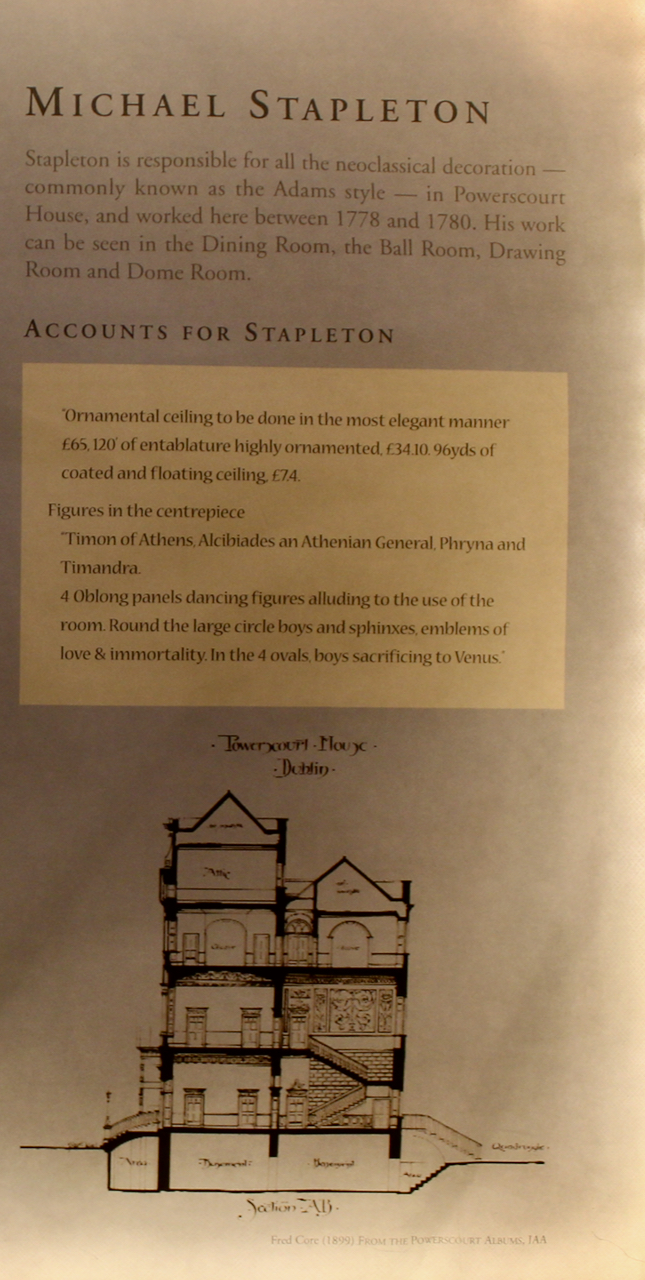
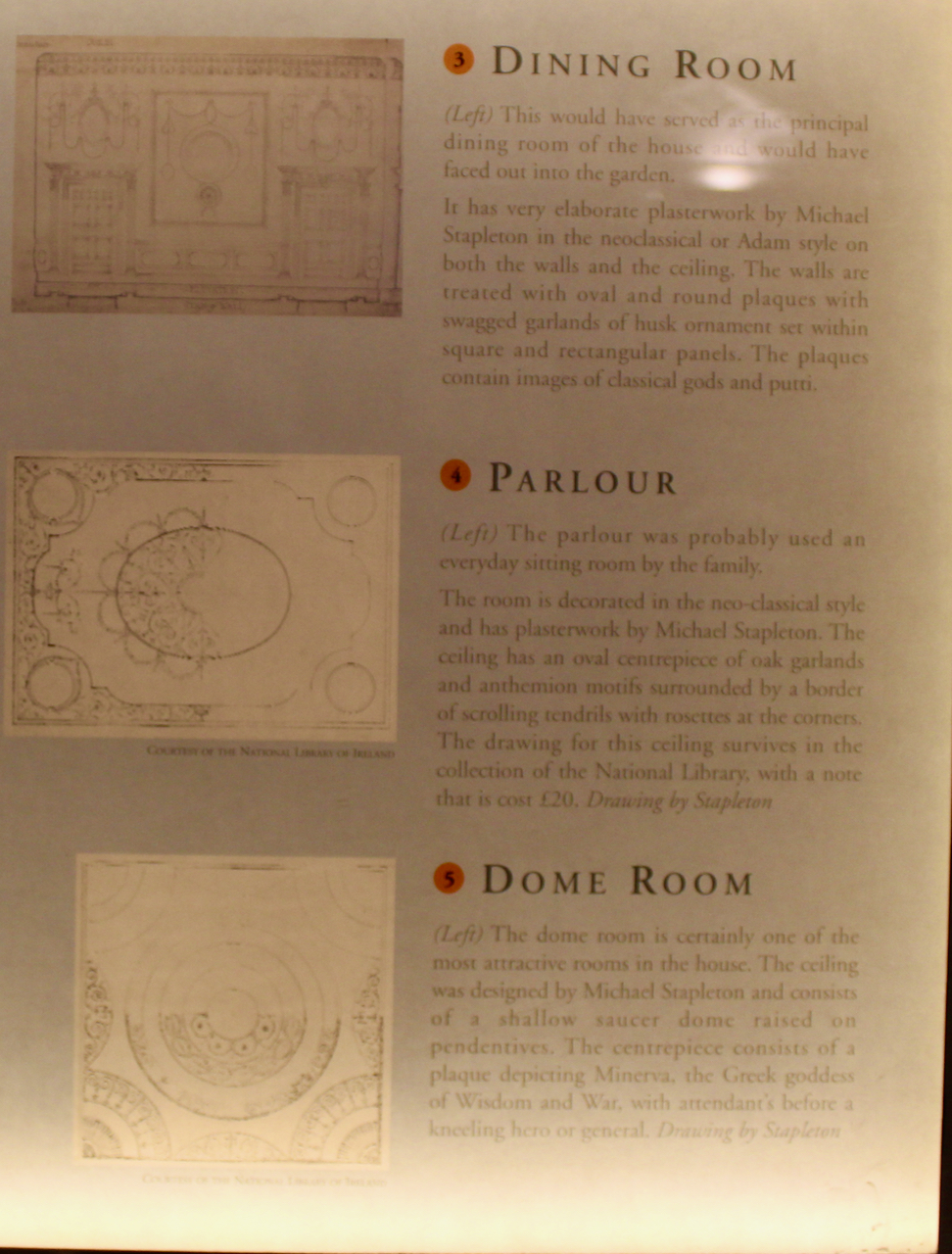
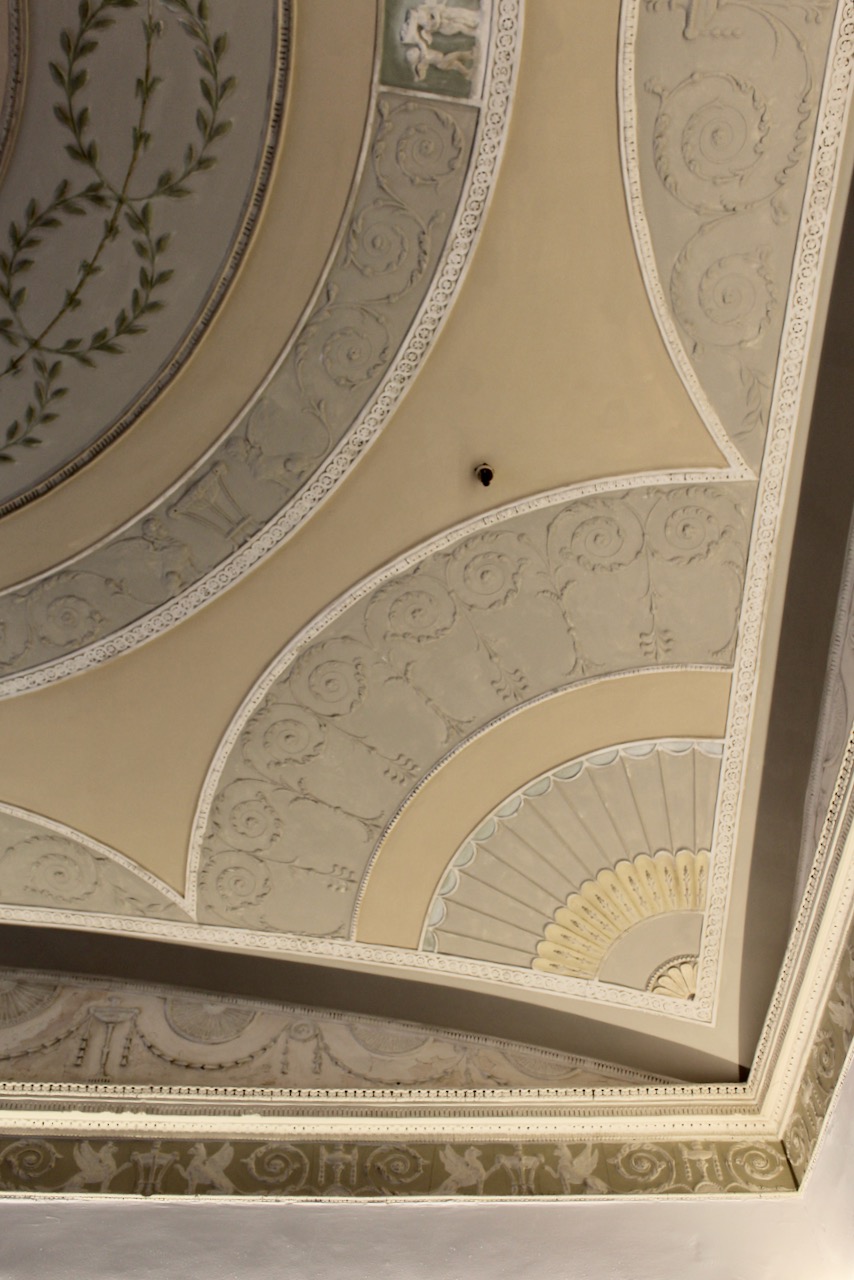
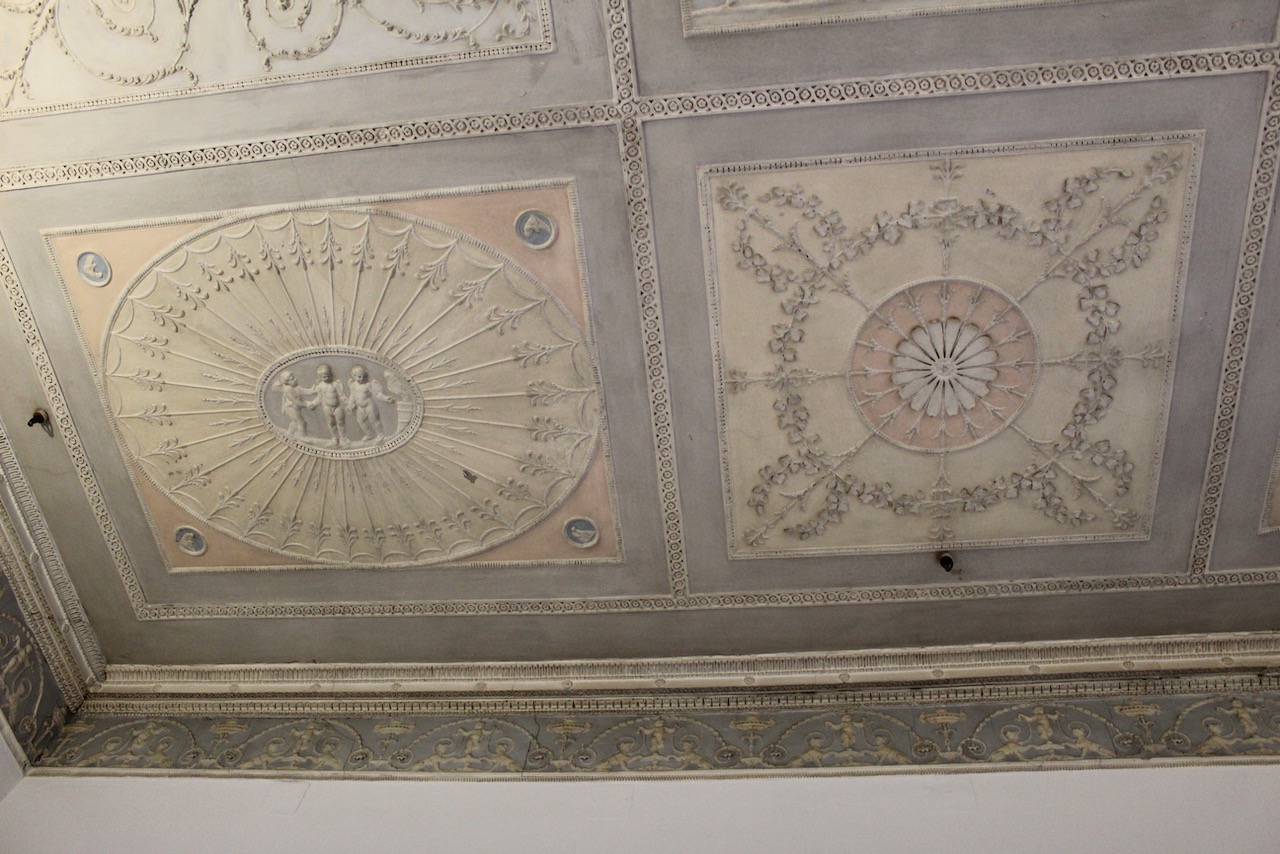
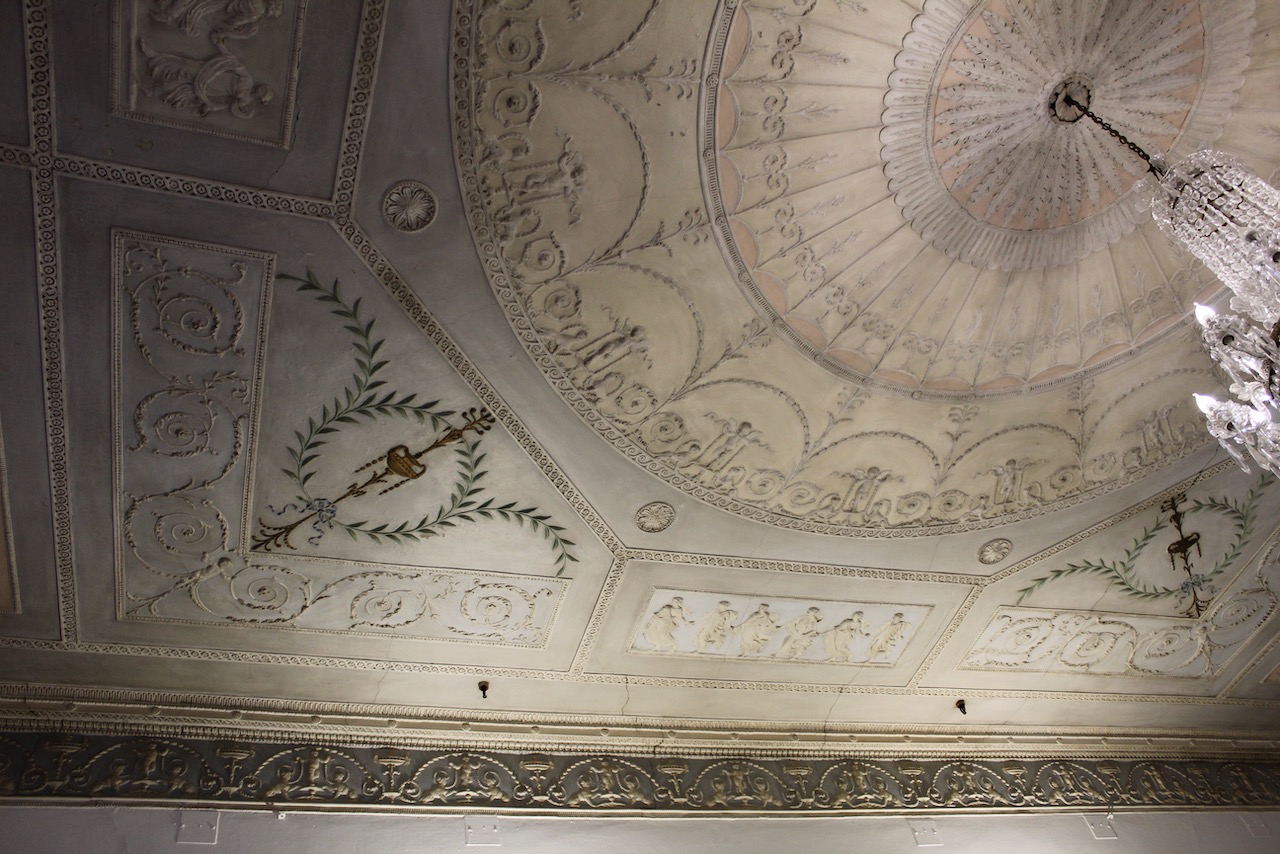
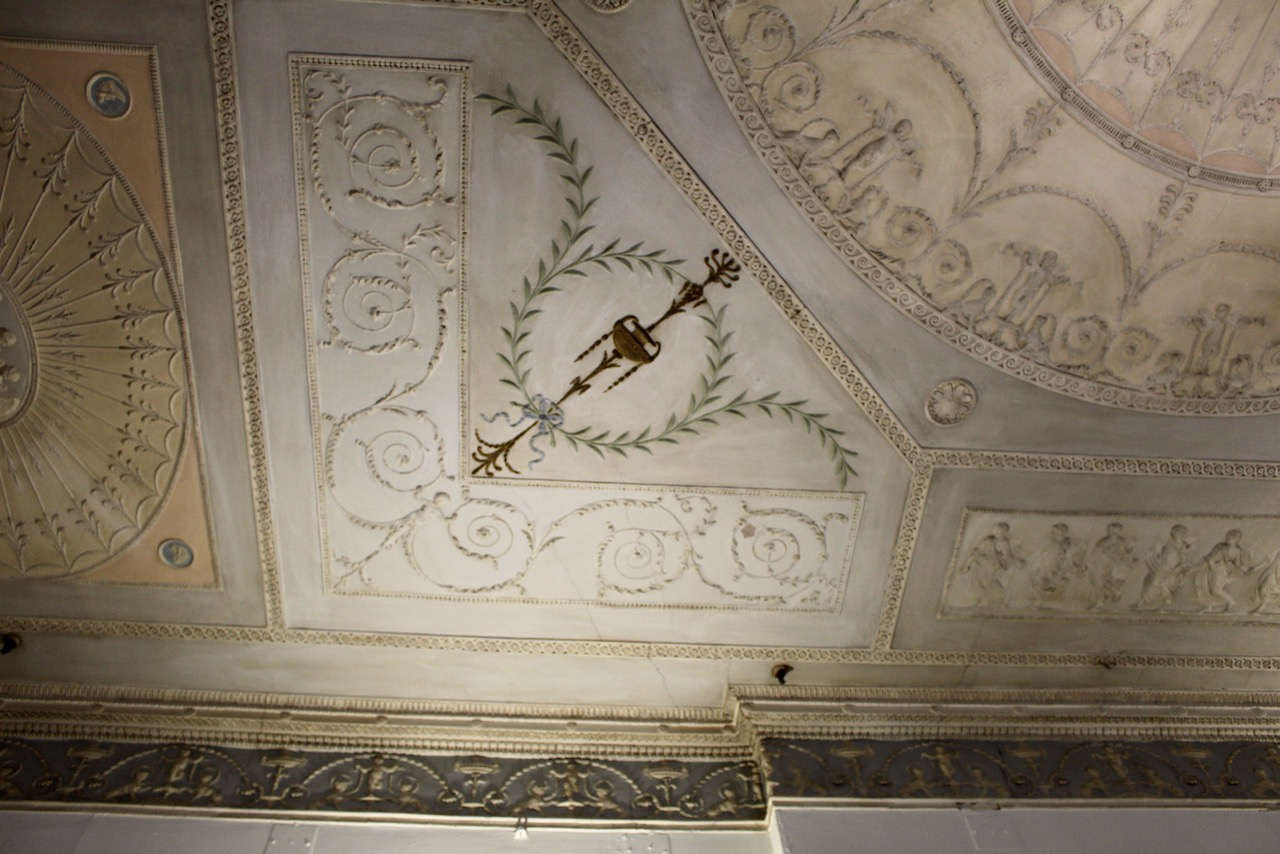
No expense was spared in furnishing the house. As well as the rococo plasterwork on the stairs there was neo-Classical work by stuccodore Michael Stapleton. According to the information board, much of the more sober neo-Classical work was cast using moulds, no longer created freehand the way the rococo plasterwork was done. The neo-Classical work was called the Adams style and in Powerscourt Townhouse, was created between 1778-1780. Stapleton’s work could have been seen in the Dining Room, Ballroom, Drawing room and Dome Room.

Powerscourt Townhouse.
Ceiling of the drawing room, by Michael Stapleton. Photograph © Jennifer Winder-Baggot, www.irishhistorichouses.com
The former drawing room, with its fine stucco work by Michael Stapleton, looking out onto what was the courtyard. Photograph © Jennifer Winder-Baggot, www.irishhistorichouses.com
Powerscourt townhouse.

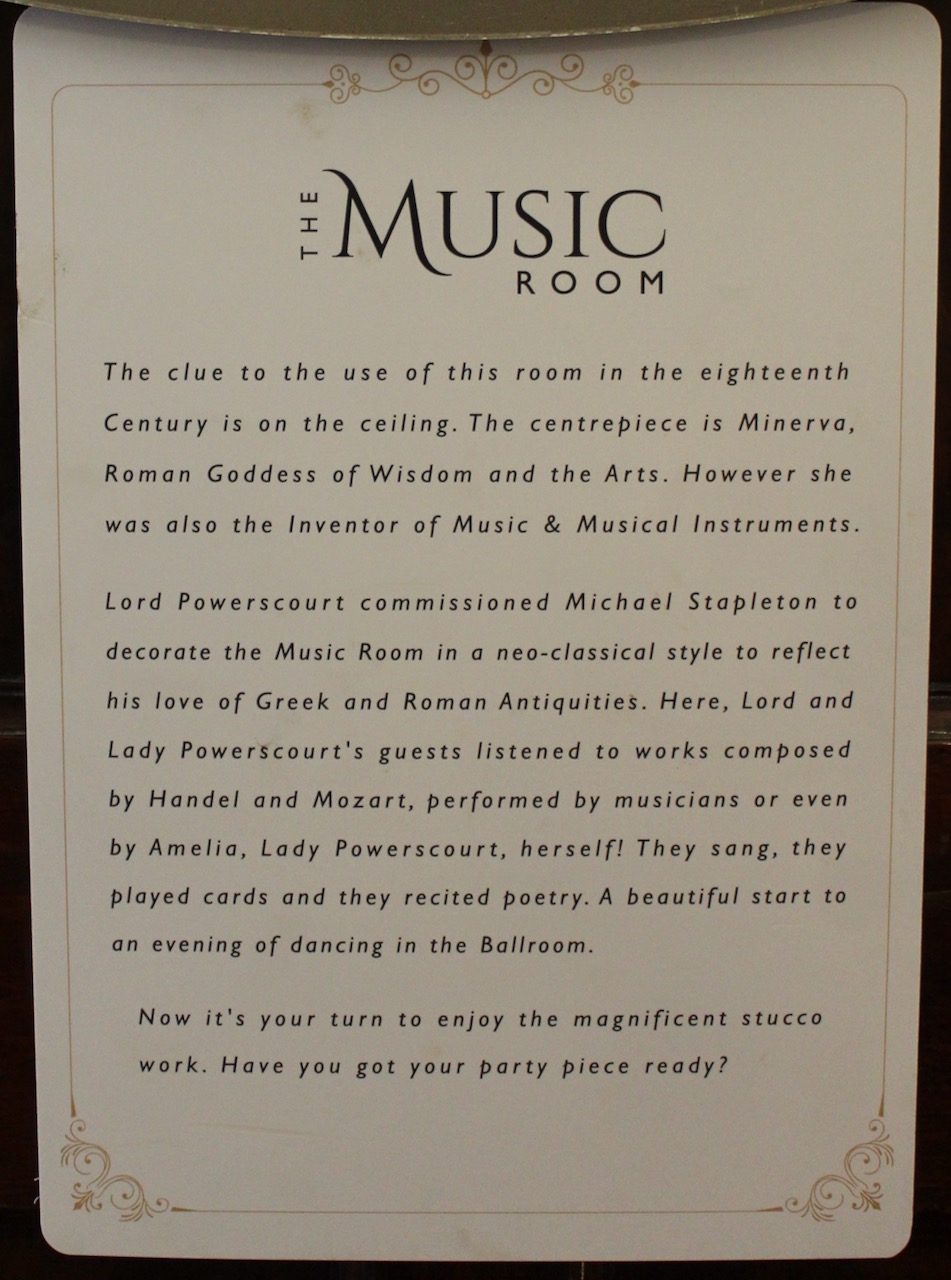
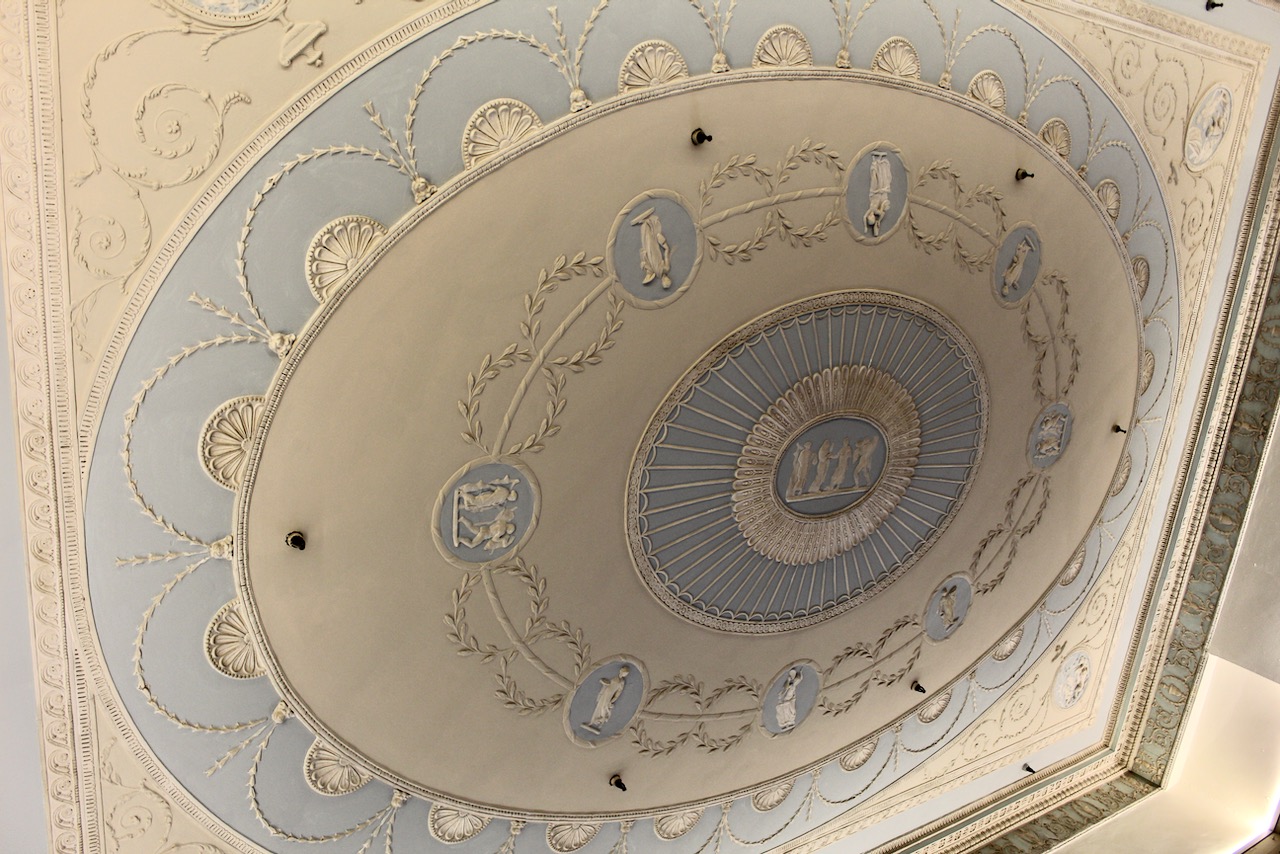
The ceiling in a room now occupied by The Town Bride, which was the original music room, and the ballroom, now occupied by the Powerscourt Gallery, contain Stapleton’s work.

Powerscourt townhouse, Dublin.
The ceiling of The Town Bride: Minerva, Roman Goddess of Music and the Arts, in the Music Room on the ceiling. Photograph © Jennifer Winder-Baggot, www.irishhistorichouses.com
The ceiling of what is now The Town Bride shop. Photograph © Jennifer Winder-Baggot, www.irishhistorichouses.com
I love the stucco work around the top of the walls also, of urns and cherubs and swags. Photograph © Jennifer Winder-Baggot, www.irishhistorichouses.com

The Dome Room is now behind glass.

Detail on the Dome Room ceiling. Photograph © Jennifer Winder-Baggot, www.irishhistorichouses.com
Detail of Dome Room ceiling and the top of the walls. Photograph © Jennifer Winder-Baggot, www.irishhistorichouses.com
The items in the dome room are behind glass so I could not get more detail in the photographs. Photograph © Jennifer Winder-Baggot, www.irishhistorichouses.com
The ceiling of another room on the second storey. Photograph © Jennifer Winder-Baggot, www.irishhistorichouses.com
This room is on the top floor and is magnificent! Photograph © Jennifer Winder-Baggot, www.irishhistorichouses.com
There are lots of frolicking putti on this ceiling and walls. Photograph © Jennifer Winder-Baggot, www.irishhistorichouses.com
Powerscourt townhouse, Dublin. Photograph © Jennifer Winder-Baggot, www.irishhistorichouses.com
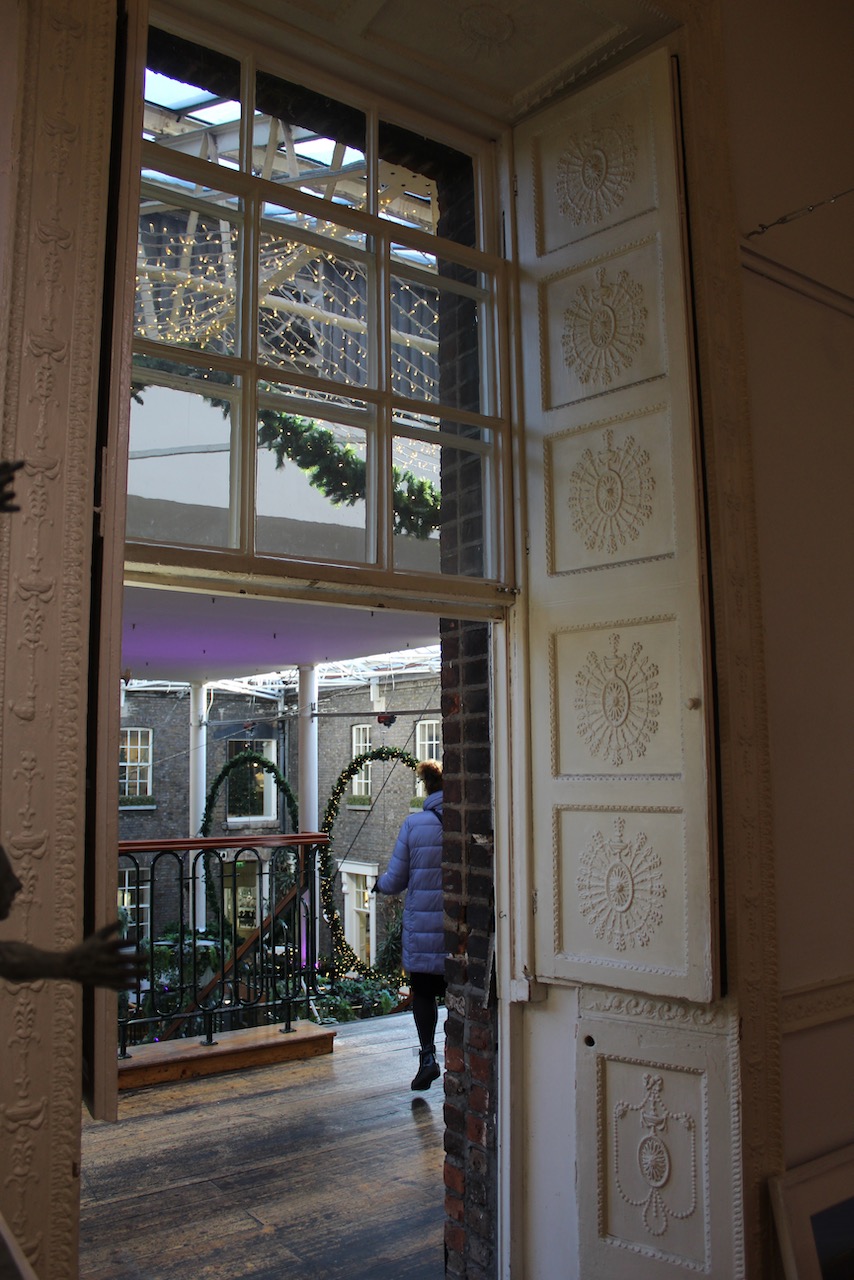
This room, appropriately, houses an art gallery. The window and door frames are magnificent also. Photograph © Jennifer Winder-Baggot, www.irishhistorichouses.com
Powerscourt townhouse, Dublin. Photograph © Jennifer Winder-Baggot, www.irishhistorichouses.com
This room also looks onto the converted courtyard. Photograph © Jennifer Winder-Baggot, www.irishhistorichouses.com
Looking down into the centre of the shopping area. Photograph © Jennifer Winder-Baggot, www.irishhistorichouses.com
Powerscourt townhouse, Dublin. Photograph © Jennifer Winder-Baggot, www.irishhistorichouses.com
Powerscourt townhouse. Photograph © Jennifer Winder-Baggot, www.irishhistorichouses.com

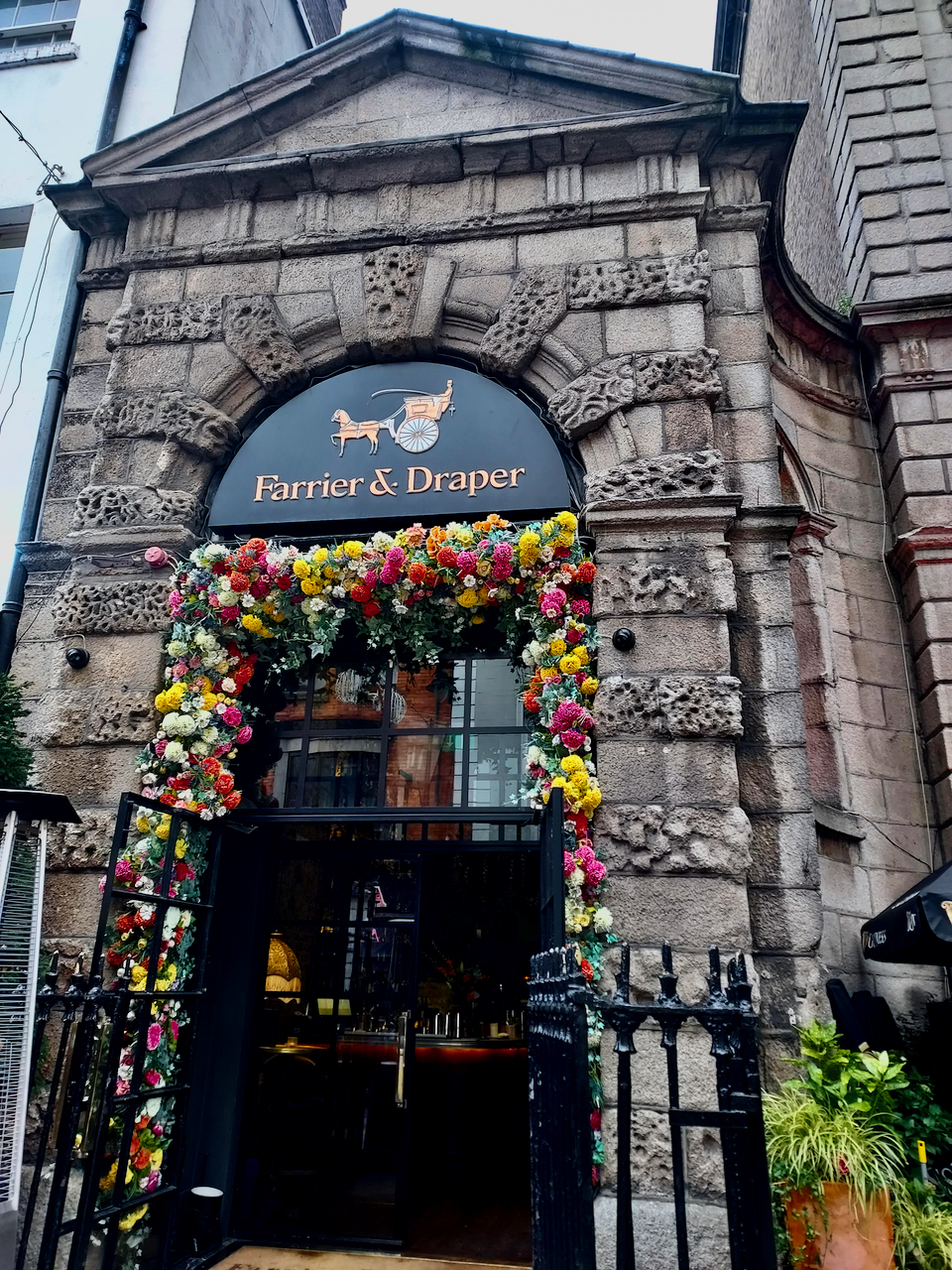
To see the Dining Room and Parlour, you must enter through one of the side carriage entrances, to the restaurant Farrier and Draper.

To see the Dining Room and Parlour, you must enter through one of the side carriage entrances, to the restaurant Farrier and Draper. Photograph © Jennifer Winder-Baggot, www.irishhistorichouses.com
Originally the Parlour, now part of Farrier and Draper, plasterwork by Michael Stapleton. Photograph © Jennifer Winder-Baggot, www.irishhistorichouses.com
Powerscourt Townhouse. Photograph © Jennifer Winder-Baggot, www.irishhistorichouses.com
The original Dining Room, with oval and round plaques with swagged garlands set within square and rectangular panels, now part of restaurant Farrier and Draper. Photograph © Jennifer Winder-Baggot, www.irishhistorichouses.com
Powerscourt townhouse. Photograph © Jennifer Winder-Baggot, www.irishhistorichouses.com

The townhouse website tells us that Richard Wingfield was known as the “French Earl” because he made the Grand Tour in Europe and returned wearing the latest Parisian fashions. He died in 1788 and was laid out in state for two days in his townhouse, where the public were admitted to view him! His son Richard inherited the title and estates.

The garden front is of seven bays rather than nine, and has a broader three-bay advanced centrepiece.

Powerscourt townhouse. Photograph © Jennifer Winder-Baggot, www.irishhistorichouses.com

After the house was sold by the Powerscourt family the gardens were built over between 1807 and 1815, when the house became the home of the Government Stamp Office. After the Act of Union, when the Irish Parliament was abolished and Ireland was ruled by Parliament in England, many Dublin mansions were sold. In July 1897 Richard 4th Lord Powerscourt petitioned Parliament to be allowed to sell his house to the Commissioner of Stamp Duties. The house was described as black from “floating films of soot” produced by the city’s coal fires. I can remember when Trinity was blackened by soot also before smoky coal was banned from Dublin, and extensive cleaning took place.

Powerscourt townhouse.

Several alterations were made to make the house suitable for its new purpose. This work was carried out by Francis Johnston, architect of the Board of Works, who designed the General Post Office on O’Connell Street. He designed additional buildings to form the courtyard of brown brick in Powerscourt townhouse, which served as offices. This consisted of three ranges of three storeys with sash windows. He also designed the clock tower and bell on Clarendon Street.

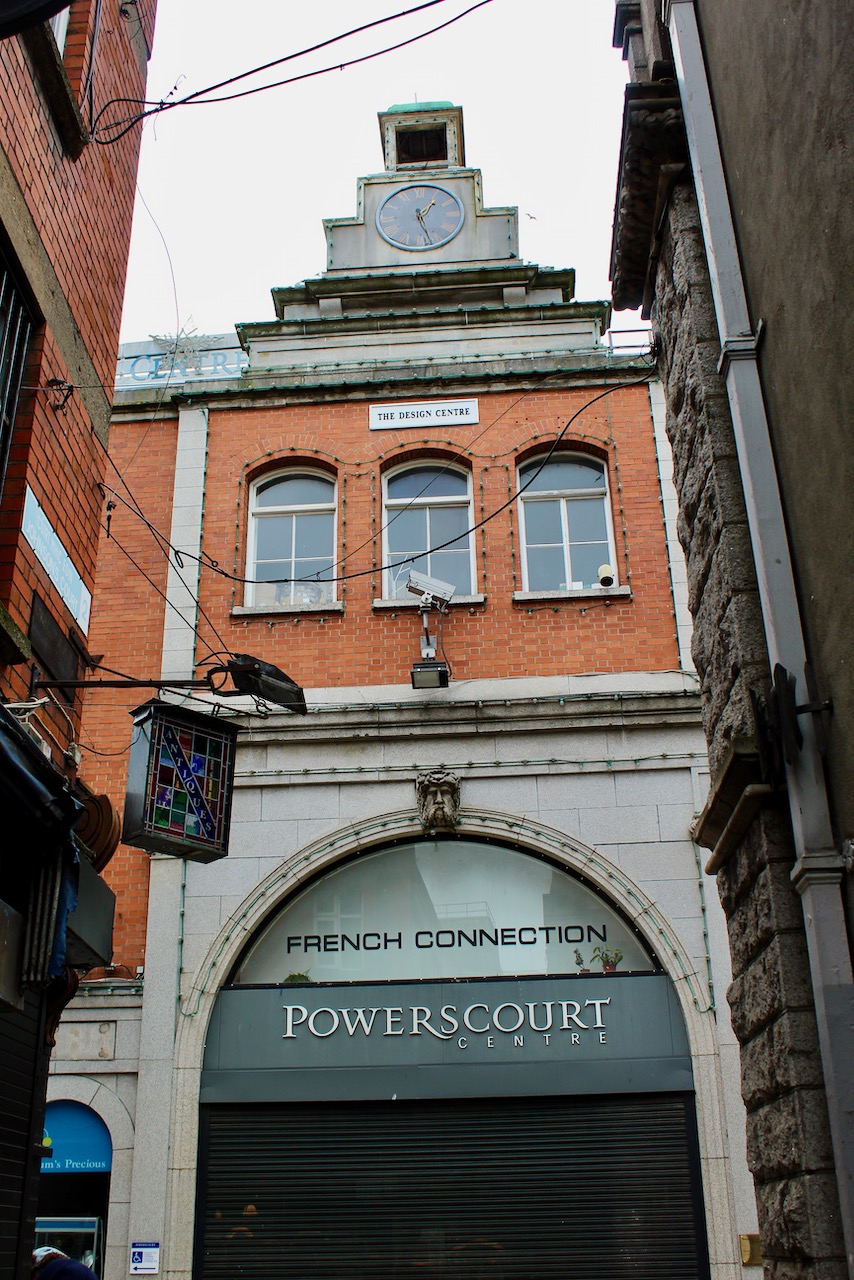
Francis Johnston designed the clock and bell tower on Clarendon Street. Photograph © Jennifer Winder-Baggot, www.irishhistorichouses.com

In 1835, the Government sold the property to Messrs Ferrier Pollock wholesale drapers, who occupied it for more than one hundred years. It was used as a warehouse. I’m sure the workers in the warehouse enjoyed going up and down the grand staircase!

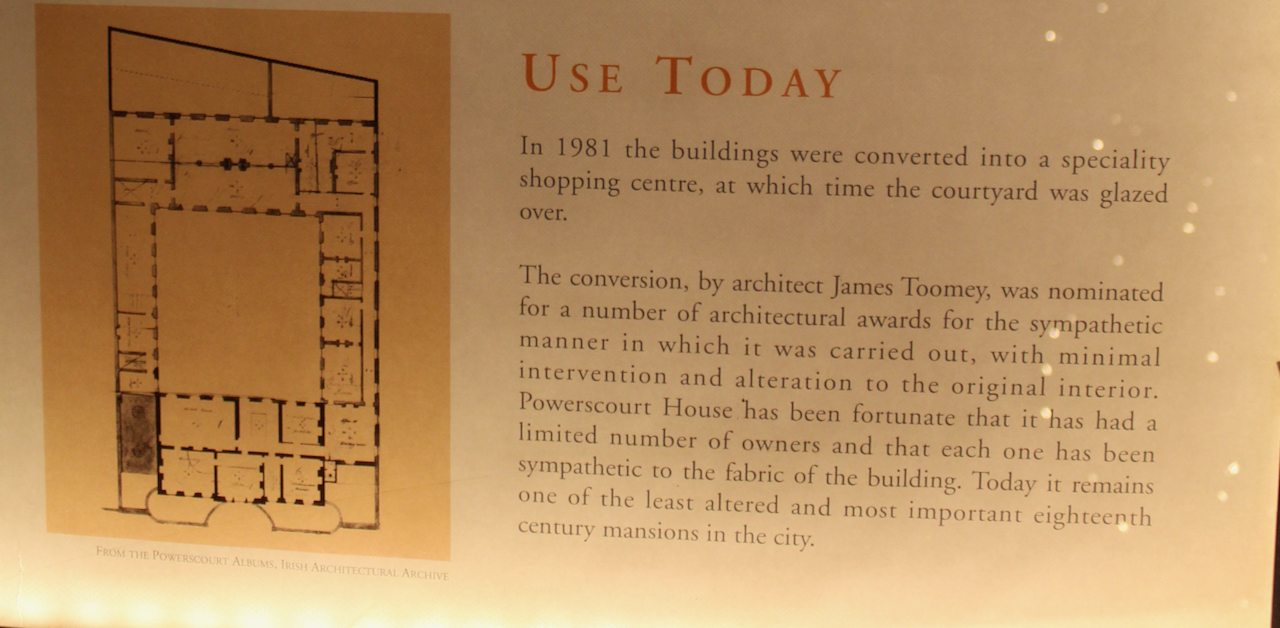
In 1981 the buildings were converted into a shopping centre, by architect James Toomey, for Power Securities. The courtyard was glazed over to make a roof.

Powerscourt Townhouse.
IMG_1701
Powerscourt Townhouse. Photograph © Jennifer Winder-Baggot, www.irishhistorichouses.com
IMG_1703
Powerscourt Townhouse. Photograph © Jennifer Winder-Baggot, www.irishhistorichouses.com
IMG_1704
Powerscourt townhouse. Photograph © Jennifer Winder-Baggot, www.irishhistorichouses.com

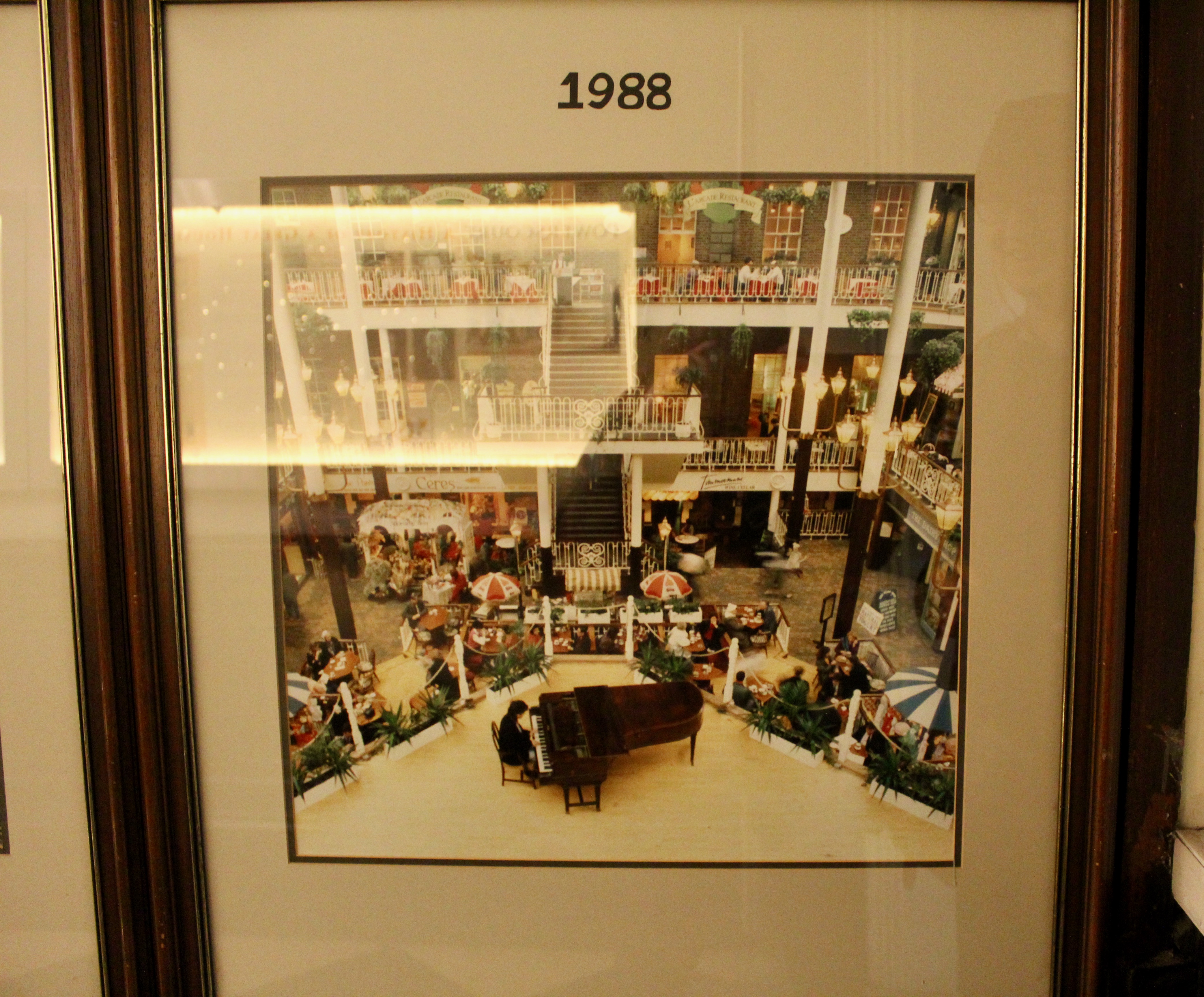
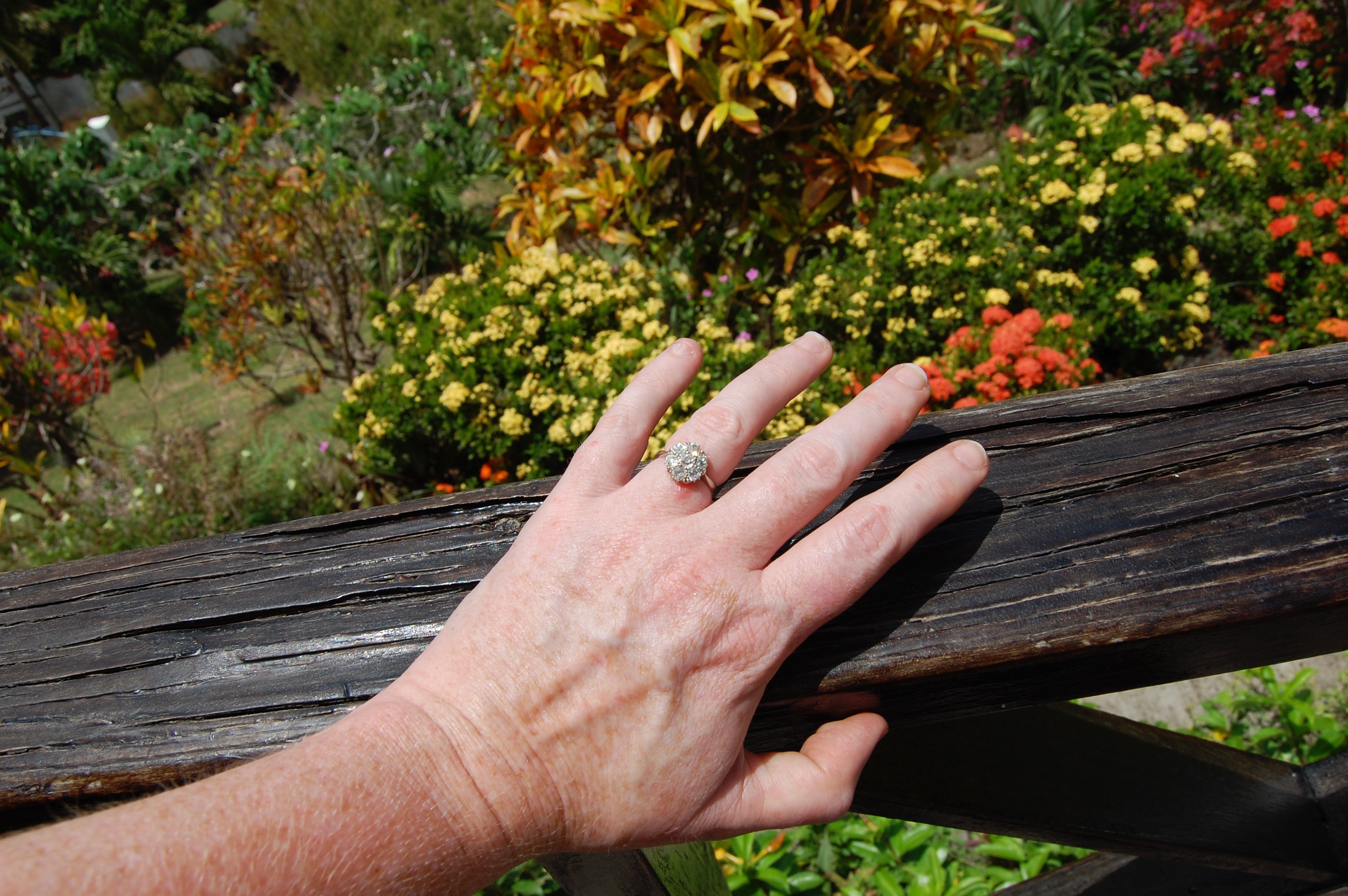
Powerscourt Townhouse was one of my haunts when I first moved to Dublin in 1986 (after leaving Dublin, where I was born, in 1969, at eight months old). I loved the antique stores with their small silver treasures and I bought an old pocket watch mounted on a strap and wore it as a watch for years. My sister, our friend Kerry and I would go to Hanky Pancakes at the back of the town centre, downstairs, for lemon and sugar coated thin pancakes, watching them cook on the large round griddle, being smoothed with a brush like that used to clean a windshield. For years, it was my favourite place in Dublin. Pictured below is the pianist, an old friend of Stephen’s, Maurice Culligan. My husband bought my engagement ring in one of the antique shops!

IMG_1710 (1)
Maurice Culligan playing piano in Powerscourt Townhouse.
DSC_1117.JPG
My engagement ring, purchased in Powerscourt Townhouse. Photograph © Jennifer Winder-Baggot, www.irishhistorichouses.com

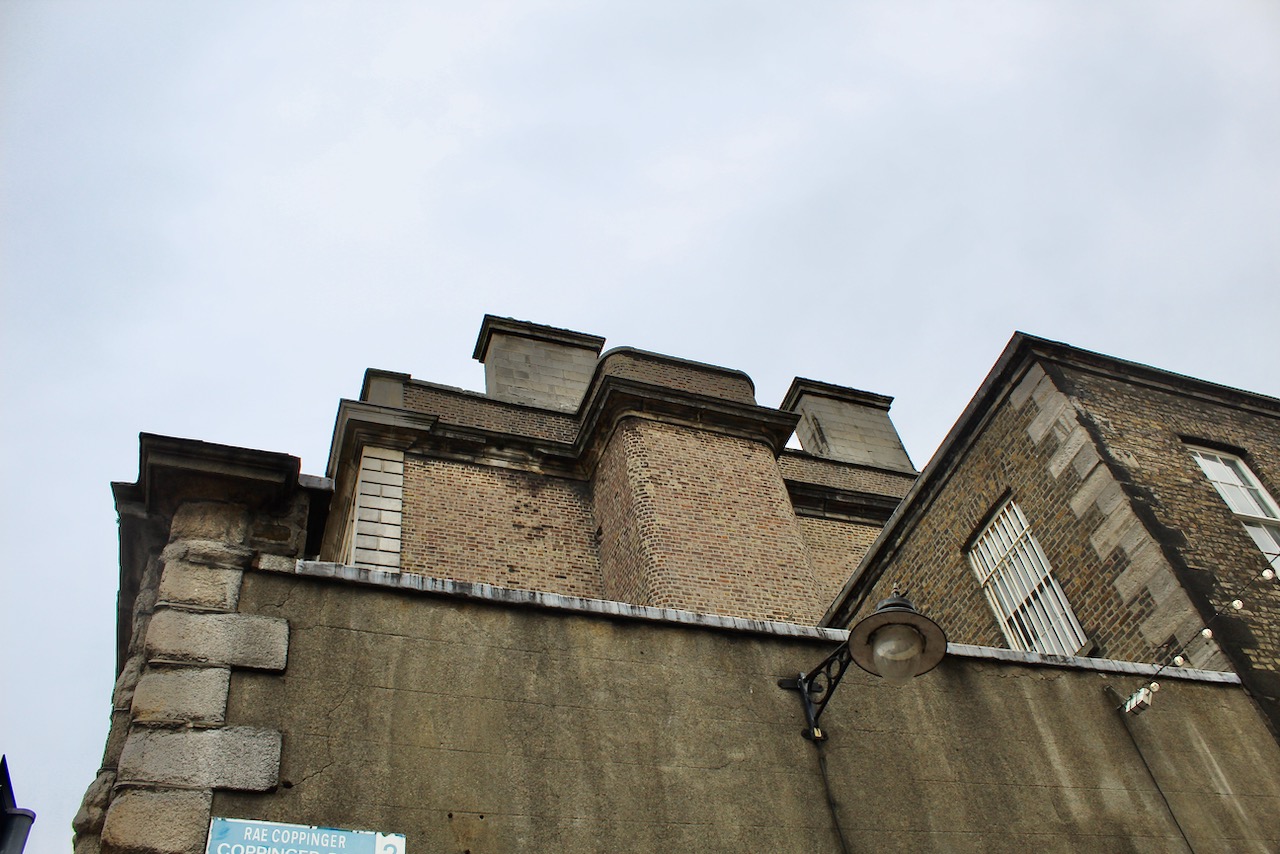
Despite the very helpful information boards, I find it impossible to imagine what the original house looked like. I took pictures walking around the outside of the shopping centre.

Powerscourt Townhouse. Photograph © Jennifer Winder-Baggot, www.irishhistorichouses.com
There’s an art deco feel to the curved middle projection on the upper storey at the side. Photograph © Jennifer Winder-Baggot, www.irishhistorichouses.com
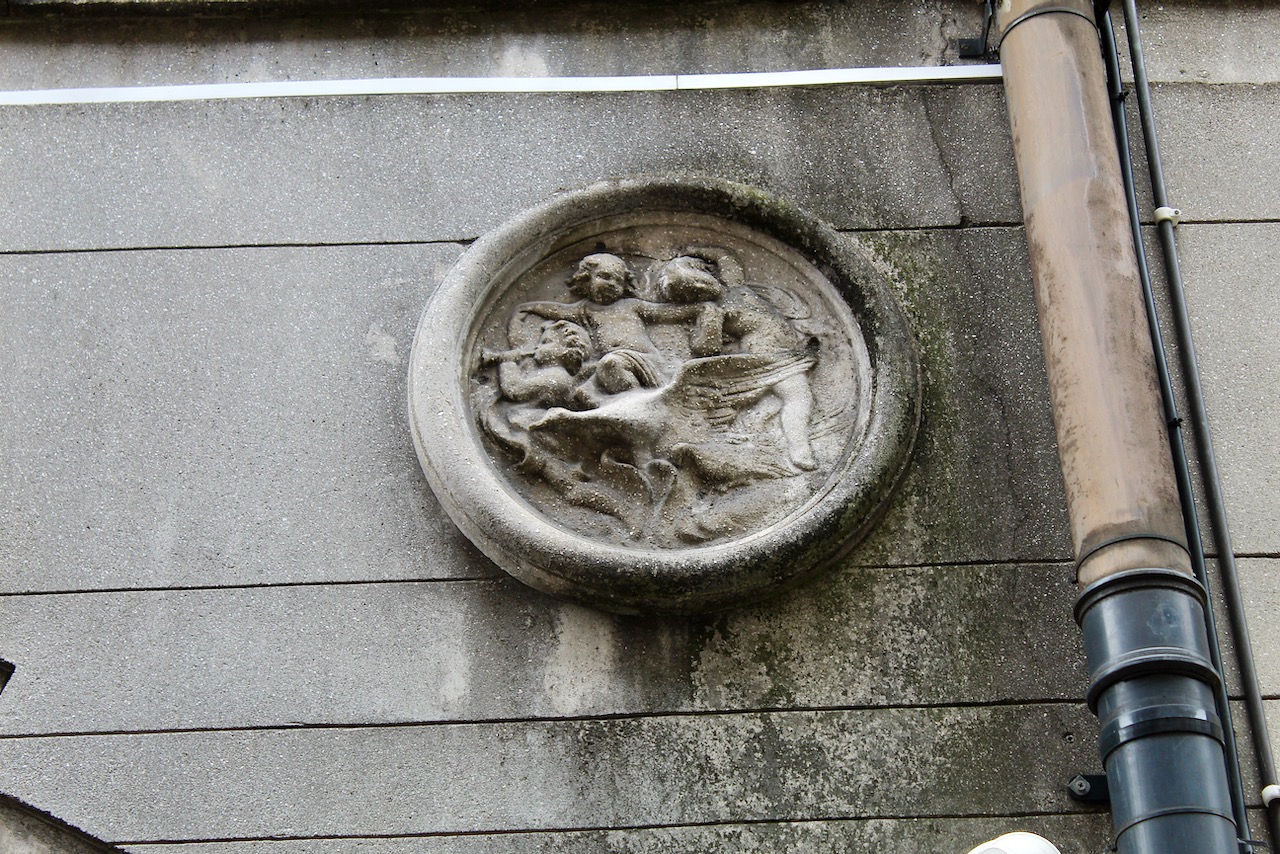
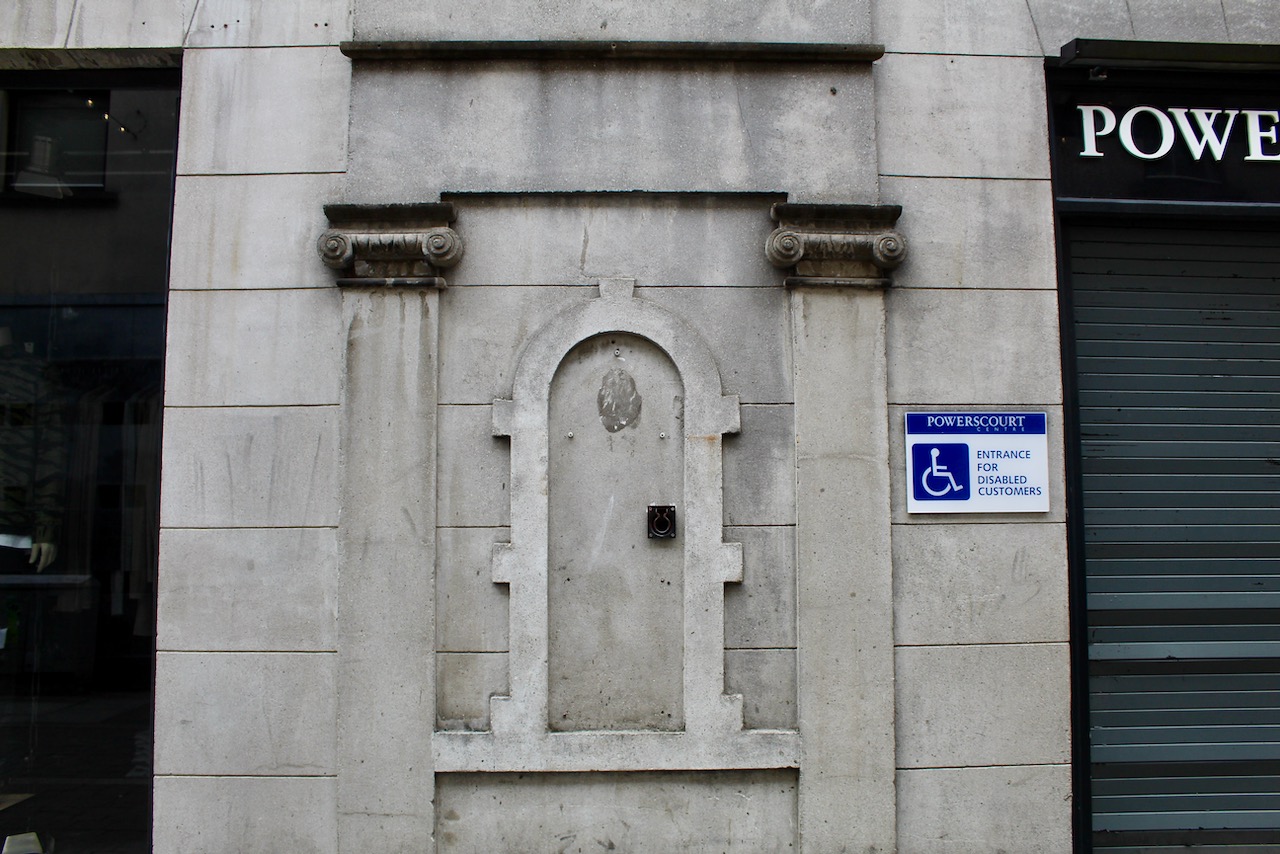
Perhaps the detailing to the sides – the inset pillars and medallions – of this side entrance to the shopping centre are by Francis Johnston (who trained under Thomas Cooley, creator of Rokeby Hall, also on Section 482). Photograph © Jennifer Winder-Baggot, www.irishhistorichouses.com
Powerscourt Townhouse. Photograph © Jennifer Winder-Baggot, www.irishhistorichouses.com
Powerscourt townhouse. Photograph © Jennifer Winder-Baggot, www.irishhistorichouses.com

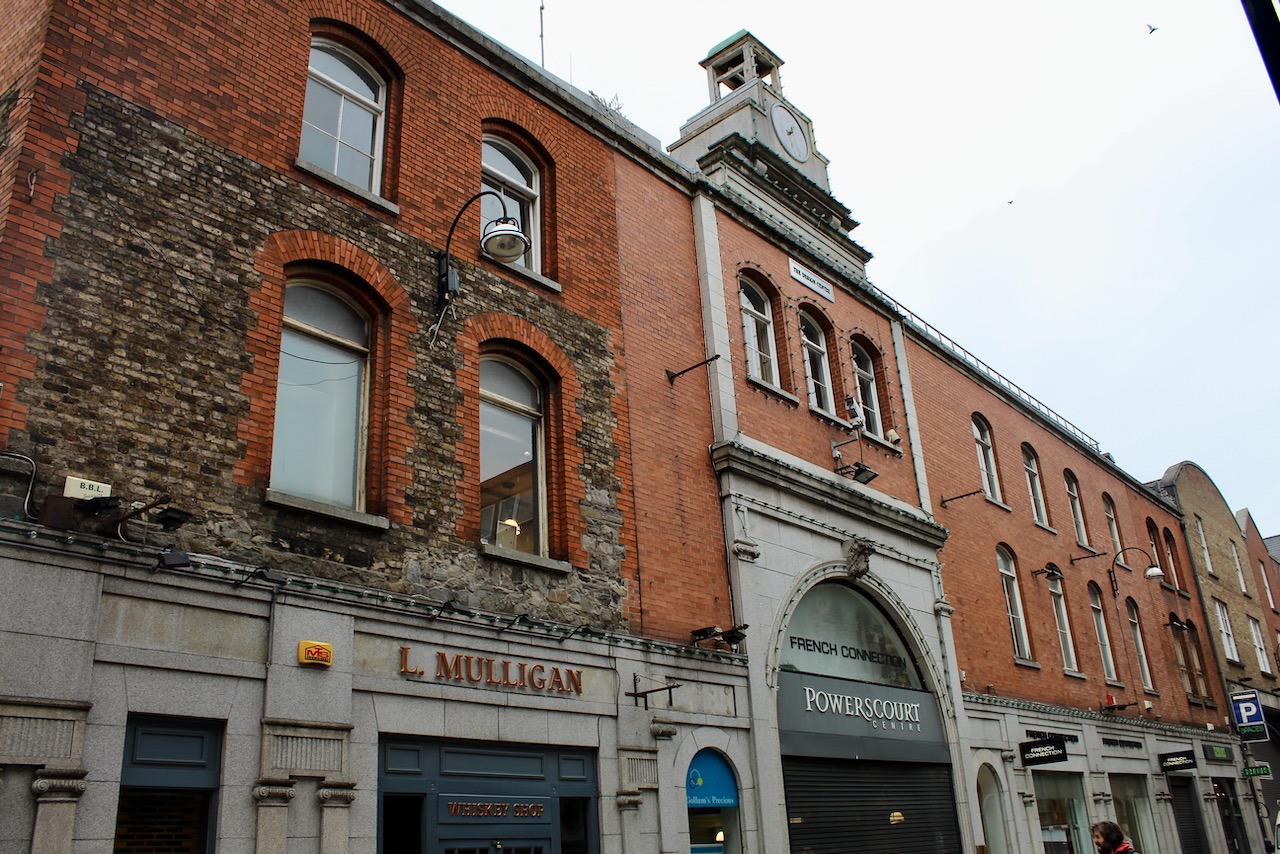
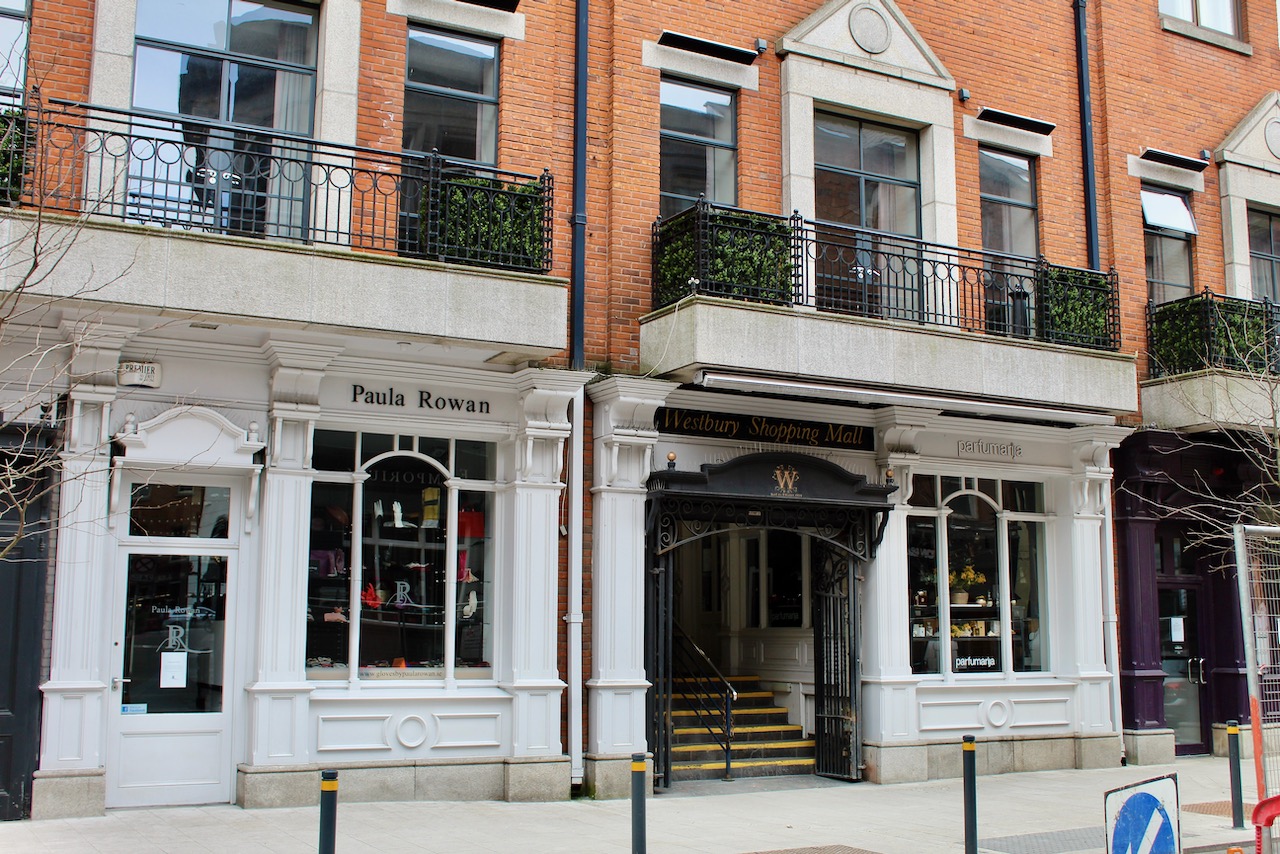
The French Connection entrance side is opposite the Westbury Mall.

Opposite Powerscourt townhouse. Photograph © Jennifer Winder-Baggot, www.irishhistorichouses.com

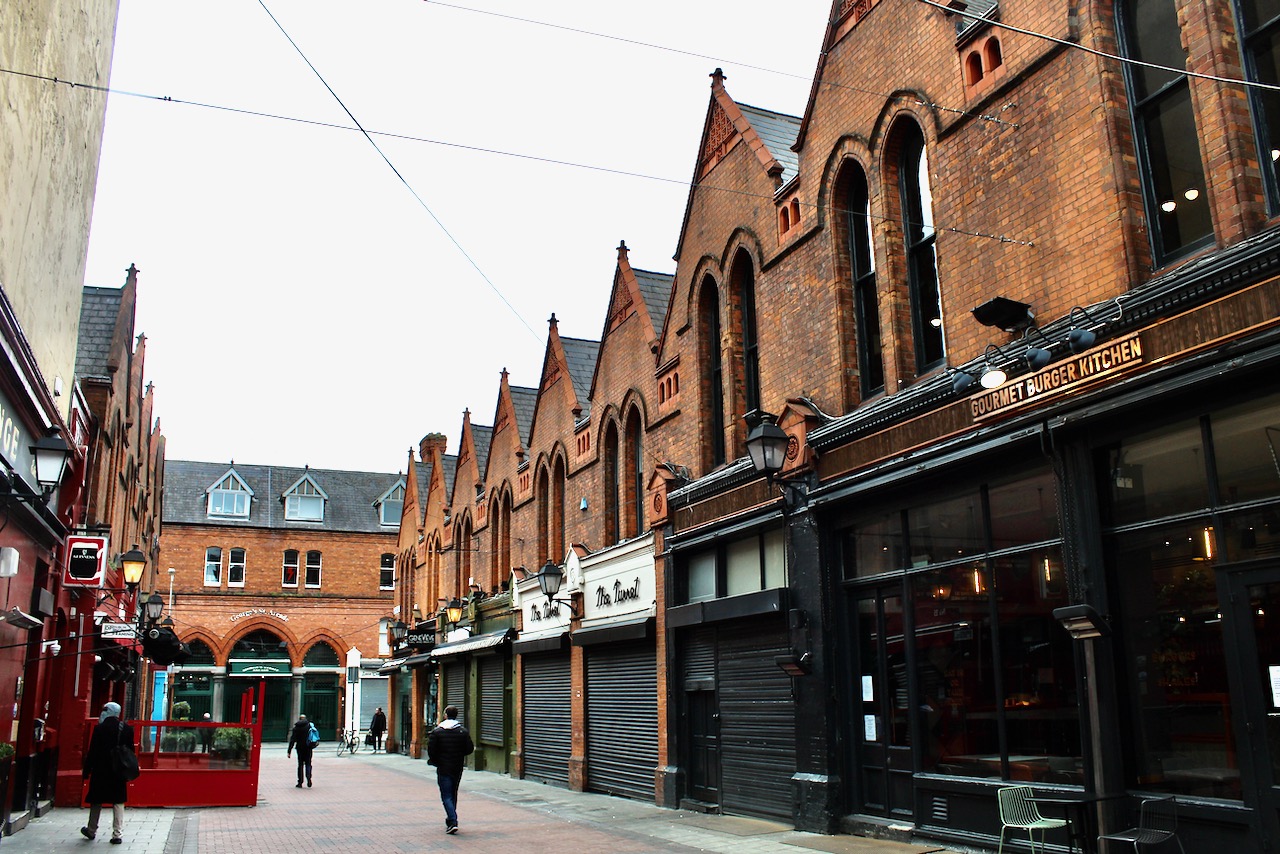
The grander side is opposite from Grogans, and next to the old Assembly House which is now the headquarters of the Irish Georgian Society. The walkway by Grogans leads down to the wonderful Victorian George’s Arcade buildings.

South City Markets. Photograph © Jennifer Winder-Baggot, www.irishhistorichouses.com
IMG_1975
South City Markets, by Lockwood & Mawson, 1878-81. Photograph © Jennifer Winder-Baggot, www.irishhistorichouses.com

Donation

Help me to fund my creation and update of this website. It is created purely out of love for the subject and I receive no payment so any donation is appreciated!

€15.00

[1] I traced the genealogy of the owner of Salterbridge, Philip Wingfield. I traced him back to the owners of Powerscourt Townhouse. Richard 4th Viscount Powerscourt (1762-1809) has a son, Reverend Edward Wingfield (his third son) (b. 1792). He marries Louise Joan Jocelyn (by the way, he is not the only Wingfield who marries into the Jocelyn family, the Earls of Roden). They have a son, Captain Edward Ffolliott Wingfield (1823-1865). He marries Frances Emily Rice-Trevor, and they have a son, Edward Rhys Wingfield (1848-1901). He marries Edith Caroline Wood, and they have a son, Captain Cecil John Talbot Rhys Wingfiend. He marries Violet Nita, Lady Paulett, and they have a son, Major Edward William Rhys Wingfield. It is he who buys Salterbridge, along with his wife, Norah Jellicoe. They are the parents of Philip Wingfield.

[2] https://repository.dri.ie/catalog?f%5Broot_collection_id_ssi%5D%5B%5D=pk02rr951&mode=objects&search_field=all_fields&view=grid

[3] Archiseek seems mistaken as identifying the architect to be Richard Castle/Cassells

http://archiseek.com/2010/1774-powerscourt-house-south-william-street-dublin/

[4] Casey, Christine. The Buildings of Ireland: Dublin. The City within the Grand and Royal Canals and the Circular Road with the Phoenix Park. Founding editors: Nikolaus Pevsner and Alistair Rowan. Yale University Press, New Haven and London, 2005.

[6] architectural definitions

pediment: “Originally the low-pitched triangular gable of the roof of a Classical temple, and of the roof of a portico; used as an ornamental feature, generally in the centre of a facade, without any structural purpose.”

portico: “an open porch consisting of a pediment or entablature carried on columns.”

entablature: “a horizontal member, properly consisting of an architrave, frieze and cornice, supported on columns, or on a wall, with or without columns or pilasters.”

architrave: “strictly speaking, the lowest member of the Classical entablature; used loosely to denote the moulded frame of a door or window opening.”

frieze: “strictly speaking, the middle part of an entablature in Classical architecture; used also to denote a band of ornament running round a room immediately below the ceiling.”

cornice: “strictly speaking, the crowning or upper projecting part of the Classical entablature; used to denote any projecting moulding along the top of a building, and in the angle between the walls and the ceiling of a room.”

pilasters: “a flat pillar projecting from a wall, usually with a capital of one of the principal Orders of architecture.”

volute: “a scroll derived from the scroll in the Ionic capital.”

Ionic Order: “the second Order of Classical architecture.”

Acanthus – decoration based on the leaf of the acanthus plant, which forms part of the Corinthian capital

[7]https://en.wikipedia.org/wiki/Richard_Wingfield,_1st_Viscount_Powerscourt_(first_creation)

[8]http://lordbelmontinnorthernireland.blogspot.com/search/label/County%20Wicklow%20Landowners

I did further research in Burke’s Peerage to discover the exact relationship of these cousins. https://ukga.org/cgi-bin/browse.cgi?action=ViewRec&DB=33&bookID=227&page=bp189401283

Lewis Wingfield of Southampton married a Ms. Noon. He had a son Richard who married Christiana Fitzwilliam, and a son George. Richard the 1st Viscount who moved to Ireland is the son of Richard and Christiana. Edward Wingfield, who inherited Powerscourt Estate from Richard 1st Viscount, was the grandson of George (son of Lewis of Southampton), son of Richard Wingfield of Robertstown, County Limerick, who married Honora O’Brien, daughter of Tadh O’Brien (second son of Muragh O’Brien, 1st Lord Inchiquin).

[9] There was much intermarrying between the Cromwells and the Wingfields at this time! 1st Viscount Richard Wingfield, of the first creation, married Frances Rugge (or Repps), daughter of William Rugge (or Repps) and Thomasine Townshend, who was the widow of Edward Cromwell, 3rd Baron Cromwell. Frances Rugge and Edward Cromwell had two daughters, Frances and Anne. Frances Cromwell married Sir John Wingfield of Tickencote, Rutland, and Anne Cromwell married Sir Edward Wingfield of Carnew, County Wicklow. Anne and Edward’s grandson Folliott became the 1st Viscount Powerscourt of the 2ndcreation.

[10] Wikipedia has a different genealogy from Lord Belmont’s blog. Folliott Wingfield, 1st Vt of 2nd creation (1642-1717), according to Wikipedia, is the son of Richard Wingfield and Elizabeth Folliott, rather than the son of Anne Cromwell and Edward Wingfield of Carnew, County Wicklow, as the Lord Belmont blog claims. Burke’s Peerage however, agrees that Folliott Wingfield, 1st Vt 2nd Creation is not the son of Edward Wingfield of Carnew.

According to Burke’s Peerage, Edward Wingfield of Carnew, who married Anne Cromwell, and who inherits Powerscourt Estate, dies in 1638. They have six sons:

I. Richard is his heir;

II. Francis

III. Lewis, of Scurmore, Co Sligo, who married Sidney, daughter of Paul Gore, 1st Bart of Manor Gore, and they have three sons: Edward*, Lewis and Thomas. This Edward inherits Powerscourt Estate.

IV. Anthony, of London

V.  Edward, of Newcastle, Co Wickow, d. 1706

Richard (d. 1644 or 1645), the heir, married Elizabeth Folliott, and is succeeded by his son Folliott Wingfield, who becomes 1st Vt, 2nd Creation. When he dies, the peerage ends again. However, his first cousin, Edward* inherits Powerscourt. Edward Wingfield Esq, of Powerscourt, Barrister-at-Law, marries first Eleanor Gore, daughter of Arthur Gore of Newtown Gore, County Mayo, and by her has a son, Richard. Richard inherited Powerscourt, became an MP and was elevated to the peerage in 1743, and became (1st) Viscount Powerscourt of the 3rd creation.

Text © Jennifer Winder-Baggot, www.irishhistorichouses.com

2020 list update

I have now updated my home page to publish the 2020 opening dates for the houses on section 482.

The list isn’t published until mid February in the year which is a bit of a “cod” as my Dad would have said, as some properties include January and early February dates in their open days, which nobody can know about or avail of before the list is published. Since the list seems very similar from one year to the next, however, one could probably anticipate open days in January or February and contact the property if one wants to visit early in the year.

Those familiar with my blog from last year [1] will see that so far I have been updating and publishing entries of places I already visited in 2019 or before. I will now be able to start visiting new places, since I have the new list! I will continue to blog every fortnight, adding 2019 entries to this site as well as new 2020 entries. I am updating the 2019 entries as I go, from further reading and research, so do give them another read if you get the chance since they contain new material.

Along with other material, I have been studying Mark Bence-Jones’s A Guide to Irish Country Houses, which was published in 1978 and revised in 1988 and 1990. I am creating a database of houses, to establish how many that are listed in Bence-Jones’s book (or which I learn of from other sources) are still extant, and which are in private hands or which open to the public, which are hotels or have accommodation. I will share this information with you as I continue my work. I am especially excited to find lovely accommodation and hope to avail of them on my travels to see houses on Section 482! Bence-Jones lists over 2000 houses in his book. A great resource is the National Inventory of Historic Architecture. [2] I also love the Irish Aesthete’s blog, which I often refer to in my posts [3] and I also use “Lord Belmont in Northern Ireland”s extremely informative blog [4]. I’m also indebted to my public library, and have all of the Big Houses books out that I am allowed at one time – the newish decision not to fine people for overdue books means I am not as conscientious as I should be about returning books in time, and often I have to ask the librarian to override the system where I have renewed the books the maximum number of times. I am working to get them all back now, however, as my guilt is acute and weighs on me. I do not need 12 Big Houses books out at once! I purchased a copy of one of my favourite books, Jane Ohlmeyer’s Making Ireland English: The Irish Aristocracy in the Seventeenth Century – rather, my husband Stephen bought it for me for Valentine’s Day! We are a seventeenth and eighteenth century obsessed couple!

I would like to blog about other places that I visit, I will have to work out a way to put them into a separate list or category, or an accompanying blog, as I want to keep this website streamlined.

For Christmas, Stephen gave me membership to the Irish Georgian Society [5]. That will reduce expenses somewhat, as some houses give a discount to Georgian Society members. I was a member previously but did not keep my membership active when I realised that one still has to pay full price to attend their lectures. However, since I like to visit properties not only on section 482, the discount members receive to many Office of Public Works sites makes the membership cost-effective for me. See their website to obtain this list of membership discounts.

Happy reading!

[1] https://openhousesireland2019.blogspot.com/

[2]https://www.buildingsofireland.ie/

[3] https://theirishaesthete.com/

[4] http://lordbelmontinnorthernireland.blogspot.com/

[5] https://www.igs.ie/

Irish Historic Homes

Primrose Hill, Primrose Lane, Lucan, County Dublin – section 482

donation

Help me to pay the entrance fee to one of the houses on this website. This site is created purely out of love for the subject and I receive no payment so any donation is appreciated!

€15.00

Very Top of Primrose Lane, Lucan, Co. Dublin, eircode K78C1W9

Open dates in 2026: Feb 1-28, June 1-30, July 1-7, Aug 15-23, 2pm-6pm

Fee: adult/OAP/student €6, child free

Primrose Hill, County Dublin, August 2013. Photograph © Jennifer Winder-Baggot, www.irishhistorichouses.com

The Revenue Section 482 list is still not published for 2025! However, Primrose Hill in Dublin, one of the properties that has been on the list in previous years is open to the public this month, February 2025, as I saw it mentioned in the Irish Times. Robin Hall, the owner, opens his gardens in February to share his snowdrop collection. Plants are also available for sale.

Stephen and I planned to visit yesterday, and Stephen took the day off work, but it was too cold and windy! We didn’t feel like braving the elements. But we visited this property during Heritage Week in 2013. I went with my husband Stephen and my late father Desmond.

Primrose Hill, County Dublin, August 2013. Photograph © Jennifer Winder-Baggot, www.irishhistorichouses.com

We were not allowed in to the house, but just the gardens. In recent years, the house should have been open to visitors as it was on the Section 482 list. Perhaps it will be on again this year, so we can visit later in the year.

The house was built some time around 1790. It is a five bay two-storey villa with a full-height three-sided bow front that contains the central three bays. It has two-storey bowed projections on north-east and south-east elevations. [1]

Primrose Hill, County Dublin, August 2013. Photograph © Jennifer Winder-Baggot, www.irishhistorichouses.com

The windows are timber sash windows with stone sills. The panelled door has a pretty leaded fanlight and side lights, set into a simple round-headed stone archway with prominet keystone.

Primrose Hill, courtesy National Inventory of Architectural Heritage.

To my surprise, the National Inventory tells us that several of the architectural features present have been attributed to James Gandon! The features include the front bay addition to the north-west with an original staircase. It may indeed be the case, as Gandon lived in Lucan after he moved to Dublin to build the new Custom House.

James Gandon (1743-1823), courtesy of National Gallery of Ireland.

James Gandon (1742-1823) was an English architect who had been apprenticed to William Chambers (who designed the Casino in Marino, Dublin). Gandon travelled to Ireland at the request of John Beresford and John Dawson, 2nd Viscount Carlow (afterwards Earl of Portarlington) to design a new Custom House (see my entry https://irishhistorichouses.com/2022/01/21/office-of-public-works-properties-dublin/ ).

Custom House photograph taken 1971, Dublin City Library archives.

Gandon brought his family and he remained in Ireland for the rest of his life apart from a brief absence during the troubled times of 1798-99, when he thought it safer to remove his household to London. The family first lived in a house on Mecklenburgh Street in Dublin, and later, he moved to Canonbrook in Lucan, outside the city of Dublin. [2]

Gandon also designed the Four Courts in Dublin. Like Edward Lovett Pearce, he favoured Palladian and neoclassical design. One of his most prestigious commissions, which came in 1785, was to extend Pearce’s Houses of Parliament. He built the curved screen wall which links his new Corinthian portico for the House of Lords facing College Street to Pearce’s original building.

Curved screen wall of the Bank of Ireland, formerly Parliament buildings, Dublin, September 2006. Photograph © Jennifer Winder-Baggot, www.irishhistorichouses.com
The Corinthian portico designed by William Gandon, now the Bank of Ireland, previously Parliament, photograph taken September 2006. Photograph © Jennifer Winder-Baggot, www.irishhistorichouses.com

Gandon worked for the Wide Street Commissioners and designed the facades for the shops at ground floor of D’Olier Street, Burgh Quay and some surrounding streets.

Gandon designed several private houses in Ireland, including Abbeville in County Dublin (later home to politician Charles Haughey), for John Beresford. In Dublin he designed Emsworth in Malahide in 1794 for James Woodmason, a London stationer who became involved in banking in Dublin, and Roslyn Park for the painter William Ashford.

Emsworth in Malahide, designed by James Gandon in 1794.
Abbeville, Malahide, County Dublin, courtesy of Sherry Fitzgerald and TheJournal.ie

In County Laois, he designed Heywood in 1771 for Michael Frederick Trench (since destroyed by fire although one can visit the Lutyens designed gardens) and Emo Court in 1790–96 for the Earl of Portarlington (see my entry https://irishhistorichouses.com/2024/10/22/emo-court-county-laois-office-of-public-works/ )

Heywood House after 1746, courtesy of Askaboutireland.ie
Emo, County Laois, designed by James Gandon (with later additions). Photograph © Jennifer Winder-Baggot, www.irishhistorichouses.com
Emo Park, County Laois, designed by James Gandon (with later additions). Photograph © Jennifer Winder-Baggot, www.irishhistorichouses.com

Primrose Hill was part of the Lucan House demesne. South Dublin City Council recently purchased Lucan House, which was formerly the residence of the Italian ambassador.

Lucan House, photograph courtesy of South Dublin City Council. Primrose Hill is part of its original demesne. Agmondisham Vesey acted as his own architect, while consulting with Sir William Chambers, and also James Wyatt and Michael Stapleton, with regard to the interior. 

In the early part of the last century, the house was known as The Manse, and was home to the local Presbyterian Minister, one notable tenant being Dr. James Irwin – a friend of DeValera’s, who had a considerable input in the Irish Constitution. [3]

Primrose Hill, County Dublin, August 2013. Photograph © Jennifer Winder-Baggot, www.irishhistorichouses.com

Kenneth and Cicely Hall purchased Primrose Hill in 1958, and it is now owned by their son Robin Hall. The Gardens of Ireland website tells us about Primrose Hill:

The 2.5 ha garden has been created by Robin Hall and the late Cicely Hall, and is more of a botanical garden with a strong sense of design and subtle colour schemes. The plant collection has been created from gardens past and present with an eye to growing plants with a challenge. There is also a spring garden with one of the finest collections of plants in Ireland, excluding trees and shrubs and is particularly recommended to see in the three months we are open which are February, June and July.

The gardens are flanked with fields with a developing arboretum and there is a very pretty driveway with mature trees leading to the house.

There have been four generations of keen gardeners in the family and some of the plants at Primrose Hill have been in the family for over 100 years.” [4]

Primrose Hill, County Dublin, August 2013. Photograph © Jennifer Winder-Baggot, www.irishhistorichouses.com

We had a lovely afternoon wandering in the gardens. An article in the Irish Times from 1997 by Jane Powers tells us more about the garden:

Robin’s interest in snowdrops was kindled by visits to Beech Park – the garden of the great plantsman, David Shackleton – when he was a boy. “It was during its heyday then and I became very excited when I saw the bulbs.” Later, in his early teens, a bout of middle ear trouble kept him out of school. “We sent him outside to recover,” remembers his mother. “Fresh air was the cure for everything in those days.”

And so in the fresh air, the young Robin began to amass his little flotillas of trembling white bells. The first of these, came, naturally, from David Shackleton. And from Straffan House on the banks of the Liffey in Kildare came the Irish hybrid “Straffan”, a remarkable plant which produces two flower stalks instead of the customary one.” [5]

Primrose Hill, County Dublin, August 2013. Photograph © Jennifer Winder-Baggot, www.irishhistorichouses.com

Jane Powers’s article concludes: “there is no more dramatic place to view [the snowdrops] than along the drive to the house where hundreds of the common snowdrop are naturalised in the grass under a canopy of beech trees.

Primrose Hill, County Dublin, August 2013. Photograph © Jennifer Winder-Baggot, www.irishhistorichouses.com

[1] https://www.buildingsofireland.ie/buildings-search/building/11204018/primrose-hill-house-primrose-lane-lucan-south-dublin-county

[2] https://www.dia.ie/architects/view/2086/GANDON-JAMES#tab_biography

[3] http://www.lucannewsletter.ie/localinterest/primrosehillgarden.html

[4] https://www.gardensofireland.org/directory/18/

[5] Irish Times Feb 22, 1997, Jane Powers: https://www.irishtimes.com/news/amid-the-petticoats-of-spring-1.45774

Primrose Hill, County Dublin, August 2013. Photograph © Jennifer Winder-Baggot, www.irishhistorichouses.com

11 North Great George’s Street, Dublin 1 – section 482

www.number11dublin.ie

Open dates in 2026: March 23-27, April 20-24, May 5-9, June 8-13, July 6-11, Aug 4-8, 15-23, Sept 1-10, 21-25, Oct 5-8, 12 noon-4 pm

Fee: adult €7, student/OAP €3, child free, all takings at door are donated to Merchants Quay Ireland

North Great George’s Street, Dublin, Courtesy Fionn Mc Cann for Fáilte Ireland, 2021.
39 North Great Georges Street, Dublin. Photograph © Jennifer Winder-Baggot, www.irishhistorichouses.com

I visited 11 North Great George’s Street in 2012 during Open House, run by the Irish Architectural Foundation. I went with my husband Stephen and my Dad, Desmond. There is a video of the day on the website and I am excited to see myself in it! [1]

We loved this house! It’s wonderfully decorated and we had a tour with owner John Aboud. The decor is very quirky and full of character. I loved the plaster decoration on the walls, “John Soane’s Museum” style. Like Peter Pearson, the occupant has rescued parts of old houses which are being discarded. How I’d love to come across such a skip!

DSC_0999
11 North Great George’s Street, 2012. Photograph © Jennifer Winder-Baggot, www.irishhistorichouses.com

According to the Buildings of Ireland website, this house was one of the first to be built on North Great George’s Street, a street of stepped terraces built after 1768 as a result of commercial leases granted on the avenue leading to the Mount Eccles Estate and in response to the expansion of the Gardiner Estate [2]. The houses were built as townhouses for the gentry. Number 11 was completed in 1774.

The street has its own North Great George’s Street Preservation Society, which has an excellent website with a history of the street written by Conor Lucey. [3] The Preservation Society began in 1979, according to its website, by a group of resident house-owners who had become concerned about the fate of the street, which had survived almost alone amid the surrounding dereliction of North Central Dublin. The Association was formed more recently to represent the views and interests of the many long-term residents in the street.

Sir John Eccles was Lord Mayor of Dublin in 1710. He owned an extensive private estate, which contained the area which is now North Great George’s Street. Unfortunately his mansion has gone and the site where it stood is now occupied by a small two-storey building situated between the present numbers 43 and 46 North Great George’s Street.

John Eccles Lord Mayor of Dublin (1714) courtesy of National Trust Castle Ward.
DSC_0994
11 North Great George’s Street, 2012. Photograph © Jennifer Winder-Baggot, www.irishhistorichouses.com

Conor Lucey tells us that Mount Eccles is clearly visible on John Rocque’s map of Dublin published in 1756, but it is labelled with the name of Nicholas Archdall Esq. Nicholas Archdall had purchased the lease for the Mount Eccles estate for 999 years, beginning 1st August 1749.

Nicholas Archdall was MP for County Fermanagh. His son, Edward Archdall, became a property developer. He built numbers 19 and 20 North Great George’s Street in the late 1780s. Nicholas Archdall’s widow Sarah (nee Spurling) petitioned the Irish Parliament in 1766 for permission to grant long leases on premises on her property. She may have been inspired by the new Gardiner estate and Gardiner’s Row. Permission was granted, and the advertisement read:

To be Let in Lots for Building, the Lands of Mount Eccles, in Great Britain-street, opposite Marlborough-street, joining Palace-row and Cavendish-street, containing seven Acres, which for Situation, Air and Prospect, cannot be exceeded by any in or about Dublin, subject to no Manner of Tax, Hearth Money excepted. For further Particulars, enquire of Mrs. Archdale, at Mount Eccles, where a Plan of the whole may be seen.

DSC_1000
11 North Great George’s Street, 2012. Photograph © Jennifer Winder-Baggot, www.irishhistorichouses.com

Lucey tells us that the leases for North Great George’s Street contain no covenants or specifications regarding the form of the house, except for the provision of an eight foot wide ‘area’ intended to be ‘in the front of the houses which is to be built on the said ground over and above the flagged passage which is to be 6 ft and 6 in wide’. Other developments, such as Merrion Square and Fitzwilliam square, had much more detailed specifications for the houses to be built.

Lucey describes the typical layout of the houses on the street:

By far the most common plan type is the ‘two room’ plan, composed of an axially- aligned entrance hall and stair hall, and flanked by front and rear parlours, the latter typically serving as the formal dining room. The principal staircase, customarily of timber open-string construction, is situated at the back of the house and rises from the ground floor – by way of the piano nobile or ‘drawing room storey’ – to the ‘attic’ or bedroom storey, with admittance to the ‘garret’ alone acquired by a smaller, subordinate stair. A distinctive decorative feature of the garret storey stair is the ‘Chinese Chippendale’ balustrade, popular from mid-century and exemplified by surviving examples at Nos.4, 11, 36 and 50.

DSC_1004
Chinese Chippendale balustrade on the way to the garret, with the owner’s display of masks. Photograph © Jennifer Winder-Baggot, www.irishhistorichouses.com

Other properties on the street were leased to Emilia, Dowager Viscountess Powerscourt (the widow of Richard Wingfield, 3rd Viscount Powerscourt, who built Powerscourt Townhouse in Dublin – see my entry on Powerscourt Townhouse) and Valentine Browne, 1st Earl of Kenmare.

The Act of Union of 1800, however, meant that there was no longer a Parliament in Dublin and many gentry left Ireland. The house’s website states:

Despite the drain from the city of power and money after the Act of Union in 1800, North Great George’s Street managed to hold onto some grandees till the very end of the 19th Century. In the case of no. 11, these included in 1821 a George Whitford, High Sheriff of Dublin, who was knighted in that year by George IV at the Mansion House. No doubt to celebrate his new status, he had the front doorcase re-modelled to accommodate a large new fanlight, and also had the Salon joinery replaced in the fashionable neo-classical style.

The No.11 website tells us more about former inhabitants.

Dr. Charles Orpen lived in the house in the 1830s. He played a significant part in the development of sign language, and in the education of deaf children, founding Ireland’s first school for deaf children, in 1816, in Brunswick Street (now Pearse Street). It became The Claremont Institution for the Deaf and Dumb when it moved to a large demesne called Claremont in Glasnevin. Dr. Orpen worked at the Workhouse at the House of Industry in Dublin, where he noticed that there were 21 deaf children. He took one of the children, Thomas Collins, home to educate him, and based on his learnings about the conditions of being deaf, he gave several popular lectures in the Rotunda, which led to a public interest in the condition and of education of deaf and dumb children. [4]

Another former inhabitant of number 11 in the 1850s was a barrister named Patrick Blake. He had Nationalist leanings, and the no.11 website tells us that it is believed that Michael Davitt, one of the leaders of the Irish Republican Brotherhood and the Land League, was hidden in the house for some time before his arrest and imprisonment in 1870. By this time, and for the rest of the century, the domestic quarters of the house had retreated to the top two floors, and the rest of the house was given over to office space for barristers and land agents.

DSC_1002
11 North Great George’s Street, 2012. Photograph © Jennifer Winder-Baggot, www.irishhistorichouses.com

As the wealthy left the city centre for houses in the suburbs, in 1910 a Mr. Kelly bought the house and turned it into a tenement. The No.11 website tells us that unlike many houses, the landlord lived on the premises and so the house survived many of the ravages that other houses suffered at this time. Between the 1930s and 1970s every room in the house was used as a family flat.

By the early 1980s the historic centre of Dublin had been all but abandoned. The house was largely derelict with a roof that was on the point of collapse. The website tells us that a great deal of the house was saturated and pigeons inhabited the upper floors. Despite this, the last tenant, Mrs. Margaret Howard, who had moved into the house in 1921, struggled to maintain an old fashioned gentility in her tenement rooms.

The National Inventory of Architectural Heritage Buildings of Ireland website describes number 11 as a terraced three-bay four-storey house over exposed basement. It’s made of handmade red bricks and granite window sills. The website describes:

Round-headed door opening with painted stone Doric doorcase. Original ten-panelled painted timber door flanked by engaged Doric columns on stone plinth blocks supporting deep cornice, and replacement peacock fanlight with moulded surrounds and scrolled keystone.

The website also mentions the original plaster walls and ceiling, as well as original timber joinery and flooring. The ceilings seemed overly colourful, but the owner assured us that this is how such a ceiling would have looked originally.

DSC_0995
11 North Great George’s Street, 2012. Photograph © Jennifer Winder-Baggot, www.irishhistorichouses.com

The Buildings of Ireland website describes:

Upper floors having large amounts of surviving late Rococo plasterwork with projecting birds, acanthus leaves and flower-baskets to rear rooms. First floor saloon having ceiling with flower vases, acanthus pendants and cartouches. Neo-classical over-doors and friezes with urns and festoons. Lugged architraves throughout and moulded joinery [“lugged” is a moulded frame with horizontal projections at the top, according to wikipedia]. Imposing fluted Doric architraves to round-headed windows at each half-landing. Chinese Chippendale stair to garret floor.” [5]

The Rococo plasterwork, the number 11 website tells us, “must be amongst the very last flings of the renowned Robert West School of Rococo plasterwork.” We came across Robert West plasterwork also in Colganstown [6].

DSC_0997
11 North Great George’s Street. Photograph © Jennifer Winder-Baggot, www.irishhistorichouses.com
DSC_1003
11 North Great George’s Street. Photograph © Jennifer Winder-Baggot, www.irishhistorichouses.com
DSC_1007
11 North Great George’s Street, 2012. Photograph © Jennifer Winder-Baggot, www.irishhistorichouses.com

The home owner is a collector, not only of architectural pieces and masks, but of dolls:

DSC_0996
11 North Great George’s Street, 2012. Photograph © Jennifer Winder-Baggot, www.irishhistorichouses.com

Some of the architectural pieces are from, I believe, a church that was demolished, St. Peter’s Church on Aungier Street. These banisters might have been altar rails:

DSC_0993
11 North Great George’s Street. Photograph © Jennifer Winder-Baggot, www.irishhistorichouses.com
DSC_0992
11 North Great George’s Street, 2012. Photograph © Jennifer Winder-Baggot, www.irishhistorichouses.com

The back garden is beautifully tranquil with an Oriental vibe, with a pond and a temple at the back with more architectural pieces and sculptures.

DSC_0988
11 North Great George’s Street. Photograph © Jennifer Winder-Baggot, www.irishhistorichouses.com
DSC_0990
11 North Great George’s Street. Photograph © Jennifer Winder-Baggot, www.irishhistorichouses.com
DSC_0989
11 North Great George’s Street, 2012. Photograph © Jennifer Winder-Baggot, www.irishhistorichouses.com

In its appraisal the National Inventory website states:

Largely dilapidated by the early 1980s, it was carefully conserved by the owner and is now a residence and venue for weddings and other events. The surviving early plasterwork is a fine example of the traditional ‘Dublin school’ Rococo style and its juxtaposition with the Neo-classical embodies the stylistic developments of the late eighteenth century. The oversailing lintel of c.1820 is one of few on the street and the restored light posts add a further element of interest in the public realm of the street. The retention of timber sash windows and of the granite and iron work to the entrance and basement enhances the architectural heritage quality of this house and of the street in general.

DSC_0991
11 North Great George’s Street, 2012. Photograph © Jennifer Winder-Baggot, www.irishhistorichouses.com

The website for number 11 has a link to airbnb accommodation available in the house.

At the top of North Great George’s Street, on Denmark Street, is Belvedere House, now part of Belvedere College, a boys’ secondary school. I visited this on another Open Day. Its splendid stucco work is of the Neoclassical or “Adam” style popular in Dublin in mid 1770s to 1800, designed by Michael Stapleton. Conor Lucey writes:

The neoclassical style is also well represented by Belvedere House. Built for George Augustus Rochfort, 2nd Earl of Belvedere, and completed by 1786, it is one of the finest city mansions built during the latter part of the century. The interiors of this house represent a text-book model of how Irish stuccodors invented freely within the Adamesque idiom, deriving their decorative vocabulary from architectural treatises, builder’s manuals and pattern books.

Open House, Belvedere House, Belvedere College, Dublin. Photograph © Jennifer Winder-Baggot, www.irishhistorichouses.com
Open House, Belvedere House, Belvedere College, Dublin
Belvedere House, 2015. The architect was Robert West. 86 St. Stephen’s Green has also been attributed to Robert West, which now houses MoLI, the new Museum of Literature of Ireland. The stucco work in no. 11 North Great George’s Street is of the Robert West school. Photograph © Jennifer Winder-Baggot, www.irishhistorichouses.com
George Rochfort (1738-1815), later 2nd Earl of Belvedere by Robert Hunter (C. 1715/20-1801), Adams auction 18 Oct 2022. He owned Belvedere House on North Great Georges Street.

Donation

Help me to fund my creation and update of this website. It is created purely out of love for the subject and I receive no payment so any donation is appreciated!

€15.00

[1] https://www.youtube.com/watch?time_continue=10&v=C3RdULJddO0&feature=emb_logo

[2] https://www.buildingsofireland.ie/buildings-search/building/50010998/north-great-georges-street-dublin-dublin-city

[3] https://northgreatgeorgesstreet.ie/

[4] https://en.wikipedia.org/wiki/Claremont_Institution

[5] According to Craig, Maurice and Knight of Glin, Ireland Observed, A Handbook to the Buildings and Antiquities. Mercier Press, Dublin and Cork, 1970, Rococo is the asymmetrical freely-modelled style of decoration originating in France and popular in Ireland from about 1750 to 1775. See also Architectural Definitions:

architectural definitions

[6] Colganstown House, Hazelhatch Road, Newcastle, County Dublin

Text © Jennifer Winder-Baggot, www.irishhistorichouses.com

The Old Glebe, Newcastle-Lyons, County Dublin – section 482

Open dates in 2026: May 1-31, June 1-30, Mon-Sat, Aug 15-23, 10am-2pm

Fee: Free

I visited this property in 2012 during Heritage Week with my husband Stephen and my Dad. We were welcomed by the owner, Frank Kerins. A glebe house is one on the grounds of a church providing accommodation for the clergy. This house is next to Saint Finian’s, an ancient church from the fifteenth century, but no longer houses its vicar and is in private ownership. St. Finian’s is now a Church of Ireland and still holds weekly services. There’s a beautiful view of the church from the back of the house, where one can see the restored Gothic “pointed-arched window with flowing tracery” [1] through another arch, and behind, the church tower.

“The Old Glebe,” Newcastle-Lyons, County Dublin. Photograph © Jennifer Winder-Baggot, www.irishhistorichouses.com

The older part of the house dates from around 1720, and is a five bay two storey block over basement [2].

[17/5/20: I have stumbled across a reference while looking up historic houses in Dublin, while googling Athgoe Castle. This reference gives a little detail about the Glebe House, which is referred to as the Rectory for St. Finian’s Church: The Archdeacon of Glendalough, Thomas Smyth, who became Archdeacon in 1722, built the rectory. The east window of the church bears his initials and the date 1724. [3] He was son of Thomas Smyth Bishop of Limerick.]

An addition from about 1820 has, according to the National Inventory of Architectural Heritage website, two-bay rere elevation, and single-storey extensions to east. [4]

Continuation of the front of the house; the gardens were looking splendid on the August day on which we visited, the flowers in full array. Photograph © Jennifer Winder-Baggot, www.irishhistorichouses.com
St Finian’s church, Newcastle Lyons (now Protestant). Photograph © Jennifer Winder-Baggot, www.irishhistorichouses.com

A second tower stands in front of the Glebe house, and I immediately fell in love with the attached 1727 Mews house. The Mews house contains accommodation and an artist’s studio. The deep yellow door, white painted divided pane sash windows, ivy and flowers won my heart.

The Old Glebe, Mews House. Photograph © Jennifer Winder-Baggot, www.irishhistorichouses.com
Mews house at the Old Glebe, Newcastle. Photograph © Jennifer Winder-Baggot, www.irishhistorichouses.com
“The Old Glebe,” Newcastle-Lyons, County Dublin. Photograph © Jennifer Winder-Baggot, www.irishhistorichouses.com

Mr. Kerins is enthusiastic about the house and is familiar with the history, as of that of the tower and adjoining church. He has written a book, published in 2017, called Some views of the Old Glebe House, Newcastle.

There is an article that was in the Irish Times when the house was for sale in 1999, by Orna Mulcahy. She overestimates, I believe, the age of the house. [5]:

One of the oldest houses in south Dublin, it was built by a vicar of Rathmichael, the Reverend Simon Swayne, in the mid-1600s. The original two-storey over basement house was extended in the 18th and 19th centuries and the current owners have made their own contribution in the form of a small conservatory overlooking the gardens. The property includes an old cut-stone mews house.

Maurice Craig in his Classic Irish Houses of the Middle Size, p. 66, pictures “Newcastle Rectory, Co. Dublin” and it looks like this Glebe House. He says it is built in 1727 by Archdeacon Smyth. Another article in the Irish Times claims that it was built in 1710. [6]

I was not allowed to take photographs inside the house, which is usual for the section 428 properties. Mr. Kerins gave us a tour. We entered the large front hall, impressively furnished and finished. This open into the long drawing room through a door with fanlight. Another door from the hall leads to a dining room. Through a hall, one steps into a lower level of the house and to the timber conservatory. My father and Mr. Kerins chatted about furniture, as my Dad’s father was an antiques dealer, while I envied the occupants of this beautiful, comfortable, elegant home. There is a beautiful wood-panelled sitting room.

I did, however, take many photographs of the splendid garden at the back of the house, which leads down to a lake.

Back of “The Old Glebe” Newcastle, County Dublin. Photograph © Jennifer Winder-Baggot, www.irishhistorichouses.com
Looking down the garden from the back of the house. Photograph © Jennifer Winder-Baggot, www.irishhistorichouses.com
“The Old Glebe,” Newcastle-Lyons, County Dublin. Photograph © Jennifer Winder-Baggot, www.irishhistorichouses.com

The second article from the Irish Times continues:

The Old Glebe used to belong to the Church of Ireland. The church dates back to the 13th century but the present house was built in 1710. The current owner, Frank Kerins, bought it in 1989. In a corner of the garden (open to the public in summer) surrounded by benches, stands a wonderfully wide and healthy yew. Like any tree, its age is up for dispute. With a bulging girth of five metres, Fennell estimates it at 500 years plus. “Some of the branches have been lifted, but it’s probably Dublin’s oldest tree.” Kerins is adamant it is older. “ There are local references to it and to Jonathan Swift – it’s definitely over 700 years.”

Fennell is conservative when estimating age. “Yews are probably older than most people think. Some time in the future they will be able to nail it down with new technology and humble previous opinions.”

In the meantime, Kerins, like others before him, enjoys his tree. ‘We’ve restored the gardens and the house. The wildlife and shrubs have returned. We love to sit under the tree and take a glass of wine and imagine what Swift must have been thinking when he sat here 300 years ago. He wrote to his friends and he also had a girlfriend in the area, from Celbridge.’ ” [he must mean “Vanessa,” or Esther Vanhomrigh, who lived in Celbridge Abbey in County Kildare].

Jonathan Swift by Charles Jervas circa 1718, National Portrait Gallery 278.
Possibly a portrait of Hester Van Homrigh (1690-1723), Jonathan Swift’s “Vanessa,” courtesy of National Gallery of Ireland.

Stephen and I sat beneath this “Dean’s Tree”, under which Jonathan Swift, Dean of St. Patrick’s Cathedral, enjoyed writing before his death in 1745. Perhaps he sat here to write a letter to Stephen’s ancestor, the Reverend John Winder, who succeeded Jonathan Swift as Vicar of Kilroot, County Armagh.

Stephen and Jen at the “Dean’s Tree” (Jonathan Swift sat on that bench!). Photograph © Jennifer Winder-Baggot, www.irishhistorichouses.com

I loved the romantic statues placed in the garden.

At the Old Glebe. Photograph © Jennifer Winder-Baggot, www.irishhistorichouses.com
“The Old Glebe,” Newcastle-Lyons, County Dublin. Photograph © Jennifer Winder-Baggot, www.irishhistorichouses.com

The picturesque lake completes the beauty of the garden with its deep peace.

By the ornamental lake at The Old Glebe, Newcastle, County Dublin. Photograph © Jennifer Winder-Baggot, www.irishhistorichouses.com
My father observes the lake and its small fountain. Photograph © Jennifer Winder-Baggot, www.irishhistorichouses.com

After we said goodbye to Mr. Kerins, we went to explore the church nextdoor. The National Inventory describes it [1]:

Detached single-cell church, c.1775, incorporating west tower and chancel of fifteenth-century church. Four-bay nave, with further three bays to east, now unroofed. Rubble stone walls. Paired cusp-headed windows with quatrefoil [2] over having smooth limestone surround to nave. Large pointed-arched window with flowing tracery to the east gable of nave. Pitched slate roof. Graveyard to grounds in use since medieval times. Some table graves, legible gravestones dating from the late 1760s, also including medieval cross. Rendered stone rubble boundary wall and gate piers to road.

“Appraisal
This church has been a major historical feature of Newcastle since the fifteenth century, once a Parish Church of the Royal Manor and is still in use. The site contains a variety of fine gravestones which further enhance the setting of this engaging building which possesses many attractive features, particularly its windows.

I found it difficult to take a photograph of the whole church, so here is one from the National Inventory website:

11212009_1
photograph from the National Inventory of Architectural Heritage.
Newcastle-Lyons, County Dublin. Photograph © Jennifer Winder-Baggot, www.irishhistorichouses.com

The church consists of three parts: the tower, built in the days of King John (1166-1216), the church section (built around 1775), and a roofless section.

St. Finian’s Church. The ivy covered grave is, I think, a Bagot grave. Photograph © Jennifer Winder-Baggot, www.irishhistorichouses.com
The impressive church tower, built during the era of King John, it is believed (1166-1216), through which one enters to go to the nave of the church. Photograph © Jennifer Winder-Baggot, www.irishhistorichouses.com
Windows looking into the functioning part of the church. Photograph © Jennifer Winder-Baggot, www.irishhistorichouses.com
Stephen in the roofless section of the church. Photograph © Jennifer Winder-Baggot, www.irishhistorichouses.com
At the Old Glebe. Photograph © Jennifer Winder-Baggot, www.irishhistorichouses.com
Newcastle-Lyons, County Dublin. Photograph © Jennifer Winder-Baggot, www.irishhistorichouses.com

I was particularly interested in the graveyard as it contains some Bagots, whom I hope were my relatives, though I have not found the connection (it must be far back in the family tree, and we stem from a different branch, if connected at all). A website that describes graves lists James John Bagot and his wife Ellen Maria (nee O’Callaghan), who are interred in this cemetery [7]:

There is a large vault, grass-grown at top, with a cross-shaped loophole at east end,inscribed:-
Pray for the souls of | Those members of the BAGOT Family | who are interred herein | the last of whom | JAMES JOHN BAGOT ESQr | of Castle Bagot County Dublin | Died Aged 76 years | on the 9th of June 1860 | Pray also for the soul of |Ellen Maria BAGOT | his widow interred Herein | who died at Rathgar on 17th Sept 1871 | R.I. P.

Stephen and I returned in 2018 to have a closer look at the grave. In 2012, we thought the grave was the rather macabre vault containing half-open coffins:

At the Old Glebe. Photograph © Jennifer Winder-Baggot, www.irishhistorichouses.com
Iron vaults in graveyard at St Finian’s, Newcastle Lyons. Photograph © Jennifer Winder-Baggot, www.irishhistorichouses.com

Coincidentally, James John’s mother, Eleanor Dease, was probaby related to Colonel Gerald Dease who lived in Celbridge Abbey in 1901.

1000 year old cross in graveyard of St Finian’s, Newcastle Lyons. Photograph © Jennifer Winder-Baggot, www.irishhistorichouses.com

In August 2012, we also visited the Catholic church of St. Finian’s in nearby Kilamactalway, to see the baptismal font donated by Ellen Maria Bagot in memory of her husband James John, who died in 1860 and who had lived in Castle Bagot in Rathcoole/ Kilmactalway. I’m a little confused as to why James John and his wife were buried in the Protestant graveyard, since there is a graveyard at the Catholic church, which was built in 1813.

Catholic church of St. Finian’s in Kilmactalway. Photograph © Jennifer Winder-Baggot, www.irishhistorichouses.com
Castle Bagot, Rathcoole, 4th April 2011. Photograph © Jennifer Winder-Baggot, www.irishhistorichouses.com.

Donation

Help me to fund my creation and update of this website. It is created purely out of love for the subject and I receive no payment so any donation is appreciated! For this entry I paid for petrol. There was no entrance fee as we visited during Heritage Week.

€15.00


[1] http://www.buildingsofireland.ie/niah/search.jsp?type=record&county=SC&regno=11212009

[2] architectural definitions

“A bay is a vertical division of the exterior of a building marked by a single tier of windows in its centre. Thus the number of bays in a façade is usually the same as the number of windows in each storey. There are, however, facades in which some of the bays contain two or more narrow windows in each storey in place of a single window of whatever width is the norm.”

“Quatrefoil window: a window in the shape of a four leafed clover; found in Gothic and Gothic-Revival architecture.”

Mark Bence-Jones. A Guide to Irish Country Houses.[originally published as Burke’s Guide to Country Houses volume 1 Ireland by Burke’s Peerage Ltd. 1978; Revised edition 1988 Constable and Company Ltd, London.] pp. xxix-xxxi

[3] https://ardclough.wordpress.com/about/ardclough-history/xtras-hinterland-history-celbridge-straffan/newcastle-lyons-by-francis-ball-1905/

[4] http://www.buildingsofireland.ie/niah/search.jsp?type=record&county=SC&regno=11212007

[5] https://www.irishtimes.com/life-and-style/homes-and-property/900-000-plus-for-historic-family-home-on-1-3-acres-1.223027

[6] https://www.irishtimes.com/life-and-style/growing-old-gracefully-1.788481

[7] http://www.igp-web.com/IGPArchives/ire/dublin/cemeteries/st-finian.txt

Text © Jennifer Winder-Baggot, www.irishhistorichouses.com

Irish Historic Homes

Killruddery, Southern Cross Road, Bray, County Wicklow – section 482

www.killruddery.com

Open dates in 2026: Mar 29-31, Apr 1-12, 14-19, 21-26, 28-30, May 1-10, 12-17, 19-24, 26-31, June 1-7, 9-14, 16-21, 23-28, 30, July 1-5, 7-12, 14-19, 21-26, 28-31, Aug 1-2, 3-9, 11-23, 25-30, Sept 1-6, 8-13, 15-20, 22-27, 29-30, Oct 1-4, 6-11, 13-18, 20-31, Nov 1, Mar, Apr, Oct, Nov, 9.30- 5pm, May-Sept 9.30am-6pm

Fee: adult house and garden tour €17.50, garden €10.50, OAP/student house and garden tour €15, garden €9.50, child 4-12 years house and garden €4, concession- youth 12-18 years house and garden €15, garden €9.50

donation

Help me to pay the entrance fee to one of the houses on this website. This site is created purely out of love for the subject and I receive no payment so any donation is appreciated!

€15.00

2026 Diary of Irish Historic Houses (section 482 properties)

To purchase an A5 size 2026 Diary of Historic Houses (opening times and days are not listed so the calendar is for use for recording appointments and not as a reference for opening times) send your postal address to jennifer.baggot@gmail.com along with €20 via this payment button. The calendar of 84 pages includes space for writing your appointments as well as photographs of the historic houses. The price includes postage within Ireland. Postage to U.S. is a further €10 for the A5 size calendar, so I would appreciate a donation toward the postage – you can click on the donation link.

€20.00

We have been to this estate several times, but were lucky enough to have a tour of the house when we went with IDFAS, Irish Decorating and Fine Art Society in June 2015. This was before tours were regularly held for visitors, as they are now. I returned in May 2023 for a second tour. The house is still occupied by the family who built it, and three generations occupy it: the current Lord Meath, who is a forester by trade, and his son Anthony who runs the farm and income generating businesses such as the café, markets, and events.

Killruddery House and Gardens, Bray, Co Wicklow, photograph by Sonder Visuals 2014 for Fáilte Ireland [1]
Killruddery House and Gardens, Bray, Co Wicklow, photograph by Sonder Visuals 2014 for Fáilte Ireland

The website describes Killruddery: “Killruddery is a living, working House, Gardens and Farm. It has been home to sixteen generations of the Brabazon family and over the centuries many other families have joined this special place as a home and in employment.”

“In 1534, Henry VIII sent Sir William Brabazon of Leicester to Ireland to serve as Vice-Treasurer. Later in 1539, Sir William secured ownership of the Abbey of St. Thomas, which stood between present day Thomas Street and the River Liffey in Dublin. Conflicting reports state that Killruddery was not granted to the Brabazon family until 1618 but it is surely of relevance that the monastic lands of St. Thomas’s included the lands of Kilrotheri (or Killruddery), being the Little Sugar Loaf, Bray Head and the valley running between them. “

Killruddery has a special place in my heart since we live in the Liberty of the Earl of Meath in Dublin, near the former location of the Abbey of St. Thomas. It is called a “liberty” as it lay outside the walls of the city of Dublin and had its own laws – initially, the laws were those of the abbeys and monasteries that owned the land. In 1538, King Henry VIII dissolved the monasteries, including the Abbey of St. Thomas in Dublin. At that time the abbey owned property also in Counties Meath, Louth, Wicklow and Kildare. The property was divided between William Brabazon and the Lord Deputy, Richard St. Leger. The property in County Wicklow, on which the monks had built a retreat, farm and burial ground, came with a small castle and its outbuildings. [2]

Sir William’s son Edward (d. 1625) was appointed Privy Counsellor of Ireland in 1584. He held the office of Member of Parliament for County Wicklow in 1585. In 1598 he purchased the estate of Nether Whitacre, Warwickshire, and he was High Sheriff of County Stafford from 1606 to 1607. This property was sold by the family in 1630. He was M.P. for Bangor between 1613 and 1615. He was created 1st Lord Brabazon, Baron of Ardee, County Louth in 1616.

View of the house from the Rockery, April 2021. Photograph © Jennifer Winder-Baggot, www.irishhistorichouses.com
The view from the house toward the rockery. Photograph © Jennifer Winder-Baggot, www.irishhistorichouses.com
Killruddery rockery, May 2013. Photograph © Jennifer Winder-Baggot, www.irishhistorichouses.com

His children married very well. His daughter Susannah married Lucas Plunkett, 1st Earl of Fingall, 10th Baron of Killeen. Ursula married James Hamilton, 1st Viscount Claneboy of County Down, and Elizabeth married three times, having a daughter by the Bishop of Meath George Montgomery, who married Nicholas St. Lawrence, 10th Baron Howth. Edward’s son Anthony lived in Tallanstown, County Louth, and his son William (d. 1651) was forty-five years old when he succeeded as 2nd Baron of Ardee. He was created 1st Earl of Meath in 1627, with a special remainder to his brother Anthony. When he was made Earl of Meath, henceforth the Liberty of St Thomas and Donore was called the Earl of Meath Liberties.

The Earl was sent to the Tower of London in 1644, as he fought against Cromwell’s Parliamentary forces. [3] He was exchanged seven months later for another prisoner.

His house in County Wicklow was burned down by Cromwell’s troops. He died in 1651 and his son Edward (1609-1675) became the 2nd Earl of Meath.

The Killruddery website tells us that:

The 2nd Earl of Meath built a house at Killruddery to replace one burned six years earlier. An illustration from about 1680 shows a building of five bays facing east. In 1666, the 2nd Earl increased the estate with the addition of “the section of Great Bray between Main Street and the sea and between the river and Main Street.”

He held the office of Member of Parliament (M.P.) for Athlone from 1634 to 1635. He had married Mary Chambré in 1632. She was from Carnew Castle in County Wicklow. He fought in the English Civil War as a Royalist, like his father. He was rewarded by King Charles II when the throne was restored to the Stuart family, and was appointed Privy Counsellor in Ireland between 1660 and 1669.

He died in 1675 as a passenger on the HMV ‘Mary’ which was shipwrecked off Beaumaurice in Anglesey during a voyage to England. His son, Edward, was rescued from the wreck.

His son William succeeded as 4th Lord Brabazon, Baron of Ardee, Co. Louth during his father’s lifetime in 1665 when he was about thirty years old. In 1671 he killed a man in a duel but was pardoned. He succeeded as the 3rd Earl of Meath when his father died in 1675. He had two daughters: Elizabeth married Philips Coote of “Mount Coote” County Limerick, which is now Ash Hill, another section 482 property, where we stayed during Heritage week in 2022, see my entry. She married a second time to the son of the Earl of Lindsay of England.

Elizabeth Brabazon née Lennard, Countess of Meath (1650-1701), Wife of the 3rd Earl of Meath, photograph courtesy of National Gallery of Ireland.

Since the 3rd Earl of Meath had no sons when he died in 1685, the title passed to his brother Edward. Edward (1635-1707) 4th Earl joined King William’s forces and commanded the garrison at Carrickfergus against James II. He fought in the Siege of Limerick and the Battle of the Boyne in 1690. He complained that that the “Glorious Revolution” had cost him £10,000 and, as a result, he sold a 35 year lease on the property at Killruddery to John Lovett, the uncle of Sir Edward Lovett Pearce. In 1702, the Earl took a house on the north side of St. Stephen’s Green in Dublin, where the family lived during the 18th century. [4] This house is now a school – before that, it was St. Vincent’s Hospital, set up by the nun Sister Aikenhead.

He married twice but had no children. He served as M.P. for County Wicklow in 1666 and Ranger of Phoenix Park in 1675. When he died, the title passed to another brother, Chambré.

It was Edward 4th Earl of Meath who is responsible for the gardens at Killruddery. He built a modest house on the grounds as a summer house, and he lived in the house at St. Thomas’s Abbey in Dublin. The gardens are one of the few remaining 17th century gardens in Ireland or the U.K. The Killruddery website tells us that the gardens were used for the entertainment of a large number of guests and therefore the scale is comparable to that of a park. Edward employed Monsieur Bonet, a French Landscape architect, a pupil of Le Notre, in 1682. André Le Nôtre (12 March 1613 – 15 September 1700) was a French landscape architect and the principal gardener of King Louis XIV. Most notably he designed the park of the Palace of Versailles. Monsieur Bonet created the surviving French-Baroque gardens, comprising the Angles (a patte d’oie), the Long Ponds, the Sylvan Theatre, Lime Walks and the Beech Hedge Pond. He had already worked in Ireland for twelve years for Sir William Petty before he moved to Killruddery.

Kilruddery House, May 2013
The Long Ponds, Killruddery. These would have been stocked with fish to provide food for the household. Photograph © Jennifer Winder-Baggot, www.irishhistorichouses.com
An 18th century view of Killruddery, photograph from “In Harmony with Nature” exhibition in the Irish Georgian Society, July 2022, curated by Robert O’Byrne. It shows the layout of the garden at Killruddery soon after it was created, which is still largely the structure of the garden as it is today. The canals and the formal bosquet lie to the left of the house. Beyond is Little Sugar Loaf mountain.
From “In Harmony with Nature” exhibition in the Irish Georgian Society, July 2022, curated by Robert O’Byrne.

In the gardens, The Angles are the middle section of the garden. They consist of a series of walks flanked by the hornbeam, lime or beech hedges which meet at two centre points. The design of the Angles, as seen from The Long Ponds are known as “patte d’oie” or goose feet.

DSC_1092
A view of the Angles. Photograph © Jennifer Winder-Baggot, www.irishhistorichouses.com

Beyond The Angles is an avenue of Ilex trees dating from the 17th century and steps leading to what was known as the bowling green.

The Reflecting Ponds, Kilruddery House
The Long Ponds, Killruddery. Photograph © Jennifer Winder-Baggot, www.irishhistorichouses.com

The Long Ponds are twin canals 187 metres long and known as ‘mirroirs d’eaux’ or reflecting ponds. They were stocked with carp and trench.

Kilruddery House, May 2013
Me and my Dad in 2013. Photograph © Jennifer Winder-Baggot, www.irishhistorichouses.com
The Sylvan Theatre, 2015, created by the 4th Earl of Meath, in around 1682. Photograph © Jennifer Winder-Baggot, www.irishhistorichouses.com
Gates of the Sylvan Theatre, with the Earl of Meath “M.” Photograph © Jennifer Winder-Baggot, www.irishhistorichouses.com
Gates leading to the Sylvan Theatre, April 2021. Photograph © Jennifer Winder-Baggot, www.irishhistorichouses.com
Killruddery Sylvan Theatre, May 2013. Photograph © Jennifer Winder-Baggot, www.irishhistorichouses.com
Sculpture that may have been found at Thomas’s Abbey in the Liberties, though I cannot confirm this, kept in amphitheatre in Killruddery House, County Wicklow. Photograph © Jennifer Winder-Baggot, www.irishhistorichouses.com
Killruddery House, May 2013, the Beech Hedge, that encircles the pond. Photograph © Jennifer Winder-Baggot, www.irishhistorichouses.com
Killruddery House, May 2013, the middle of the beech hedge that encircles the pond. The hedge has grown so huge that you can walk inside the middle of the hedge! Photograph © Jennifer Winder-Baggot, www.irishhistorichouses.com
Killruddery House, May 2013, the pond inside the beech hedge. The circular granite edged pond is 20 metres in diameter and the four Victorian cast iron statues at the entrances depict the four seasons of the year. Photograph © Jennifer Winder-Baggot, www.irishhistorichouses.com
The Beech Hedge Pond June 2015, a profusion of water lillies. Photograph © Jennifer Winder-Baggot, www.irishhistorichouses.com

The 4th Earl married twice but had no children, and when he died title and lands passed to his brother Chambré (c. 1645-1715). The 5th Earl of Meath served as a Privy Councillor in Ireland in 1710. He developed the Pleasure Garden and the Cherry Garden. He married Juliana Chaworth, daughter of Patrick Chaworth, 3rd Viscount Chaworth of Armagh. Their son, whom they named Chaworth, succeeded as 6th Earl, and served as MP for County Dublin and Lord Lieutenant for County Wicklow and for County Dublin. The Killruddery website tells us that the 6th Earl was a patron of the Meath Hospital, which was founded by four surgeons to care for the sick and poor of ‘the Liberties’ in Dublin. It was the 6th Earl of Meath who developed the garden “wilderness.” He married twice but had no children and when he died in 1763 he was succeeded by his brother Edward (1691-1772) who became the 7th Earl of Meath.

Opposite the Angles on the far side of the Long Ponds is a wooded area known as the Wilderness.

Edward Brabazon 7th Earl of Meath (1691-1772)

Edward the 7th Earl of Meath served as MP for County Dublin between 1715 and 1760. He too was a Patron for a hospital: originally called, “The Meath Hospital and County Dublin Infirmary,” it was renamed the Coombe Women’s Hospital in 1993. The story of the foundation of the Coombe is written on the remaining entrance portico to the hospital on the road called The Coombe in Dublin.

The original entrance to the Coombe hospital, in Dublin. Photograph © Jennifer Winder-Baggot, www.irishhistorichouses.com

The plaque tells us:

Towards the end of the year 1825 two women, whilst making a vain attempt to reach the Rotunda hospital [which was founded originally by Dr. Mosse, whose wife had died in childbirth], perished, together with their new born babies, in the snow. When this became known, a number of benevolent and well-disposed persons founded “The Coombe Lying-In Hospital” in the year 1826, for the relief of poor lying-in women. Leading this committee was a Mrs Margaret Boyle of Upper Baggot Street, Dublin. The portico surrounding this plaque formed the entrance until the year 1967 when the hospital moved to its new location in Dolphin’s Barn.

The original entrance to the Coombe hospital, in Dublin. Photograph © Jennifer Winder-Baggot, www.irishhistorichouses.com
Photograph © Jennifer Winder-Baggot, www.irishhistorichouses.com

He died in 1772 and was succeeded by his son Anthony as 8th Earl of Meath.

Anthony the 8th Earl served as MP for Wicklow from 1745-1760 and for Dublin in 1761-62. He married Grace Leigh from Rosegarland, County Wexford, in 1758.

Anthony Brabazon 8th Earl of Meath b. 1721

William 9th Earl of Meath died in a fatal duel with Captain Robert Gore of the Mount Kennedy Corps in 1797. He also had served as MP for County Dublin. His brother. John Chambré (1772-1851) succeeded him as the 10th Earl. He held the office of Lord-Lieutenant of County Dublin between 1831 and 1851. He was raised to the Peerage of the UK in 1831 as 1st Baron Chaworth of Eaton Hall, Co. Hereford. He was appointed Privy Councillor of Ireland in 1833. He married Melosina Adelaide Meade, daughter of the 1st Earl of Clanwilliam, County Tipperary.

John Chambé Brabazon 10th Earl of Meath (1772-1851)
Melosina Adelaide Meade 1780-1866, wife of 10th Earl.

In 1816-17 the 10th Earl and his wife took the Grand Tour and in Italy ordered marbles and chimneypieces, mostly with the help of Gaspare Gabrielli, a painter who had worked in Ireland decorating the drawing room of Lyons, County Kildare. When they returned to Ireland, the 10th Earl of Meath hired Richard Morrison to redesign the house. Sadly, their eldest son, Jacques, died while on tour, of diphtheria, and is buried in Naples.

William Vitruvius Morrison and his father Richard were Irish architectsin the early 1800s. They also designed Baronscourt in County Tyrone, Ballyfin in County Laois and Fota in Cork. William also designed Clontarf Castle in Dublin, Hollybrooke House in Bray and Mount Stewart in County Down. Montgomery-Massingberd and Sykes write that building work went on for nine years around the resident Lord and Lady Meath, and they moved from one part of the house to another to accommodate the construction. 

The Morrisons rebuilt the house in Neo-Tudor style. It has multiple gables, balustrades, pepper-pot chimneys and crenellations.

July 2020. Photograph © Jennifer Winder-Baggot, www.irishhistorichouses.com
The crenellated stretch to the right in the photograph used to house a covered walkway between the carriage house and the house. Photograph © Jennifer Winder-Baggot, www.irishhistorichouses.com
July 2020. Photograph © Jennifer Winder-Baggot, www.irishhistorichouses.com
One of the elaborate gables. Photograph © Jennifer Winder-Baggot, www.irishhistorichouses.com
Killruddery. Photograph © Jennifer Winder-Baggot, www.irishhistorichouses.com

The website tells us: “The 10th Earl carried out an extensive reconstruction of Killruddery House between 1820 and 1830. Architects Richard and William Vitruvius Morrison were instructed to build a Tudor Revival mansion, incorporating the original low-level 17th mansion. The new house took on the shape of an irregular quadrangle, enclosing a central courtyard. The interior still includes elaborate chimney-pieces by Giacinto Micali, crimson silk damask from Spitalfields, stained glass by John Milner, a domed ceiling by Henry Popje and the wonderful drawing room ceiling by Simon Gilligan who worked for Popje. Popje had received an apprenticeship in Stucco work from the Lafranchini brothers.” 

In 1852 the 10th Earl added the Conservatory, or Orangerie, to the design of William Burn. According to the website, the Orangerie was designed and built by William Burn after the fashion of the Crystal Palace in England. The design for the parapet is said to have been based on a tiara belonging to Lady Meath. The original glass dome was the work of Richard Turner who designed the curvilinear range at the National Botanic Gardens in Dublin and at Kew Gardens in London, and also the glass house conservatory which we saw in Rokeby Hall in Louth (another Section 482 property, see my entry). This glass dome has now been replaced as it became unsafe. The Orangery houses a collection of marble statues gathered in Italy in the 1830 – 1850 period by the 10th Earl of Meath. Classical sculptures include Ganymede giving water to Zeus disguised as an eagle; Cyparissus with his dying deer (it is because of Cyparissus who so famously mourned his deer that cypress trees are associated with graveyards); Cupid with Pysche and Venus. Other prominent busts include Homer,  Socrates, Napoleon, William Pitt and Wellington. The floor of the Orangerie is made of Italian, Carrera and Connemara marble, and has a Celtic Cross decoration inlay. Decorative iron grillwork around the edges of the floor let in warm steam for hothouse plants.

Kilruddery House, May 2013
Killruddery House, with its Orangerie. Photograph © Jennifer Winder-Baggot, www.irishhistorichouses.com
Kilruddery House. The Lady of the house sold a tiara to pay for the construction of the conservatory. She requested that the pattern of the tiara be built into the conservatory
The Orangerie, by William Burn, with its decoration based on Lady Meath’s tiara. Photograph © Jennifer Winder-Baggot, www.irishhistorichouses.com
Kilruddery House, May 2013
The Orangerie. Photograph © Jennifer Winder-Baggot, www.irishhistorichouses.com
Kilruddery House, May 2013
Killruddery. Photograph © Jennifer Winder-Baggot, www.irishhistorichouses.com
The floor of the Orangerie is made of Italian, Carrera and Connemara marble, and has a Celtic Cross decoration inlay. Photograph © Jennifer Winder-Baggot, www.irishhistorichouses.com
Killruddery. Photograph © Jennifer Winder-Baggot, www.irishhistorichouses.com

The 10th Earl hired Daniel Robertson to restore the gardens, and to create the parterre, in 1846. A neighbour, George Hodson, designed the ornamental dairy, in the fashionable picturesque style as popularised by Humphrey Repton. The dairy has marble for coolness and stained glass windows to protect from the hot sun.

Formal Gardens, the lower parterre, May 2023. The 10th Earl hired Daniel Robertson to restore the gardens, and to create the parterre. Photograph © Jennifer Winder-Baggot, www.irishhistorichouses.com
Killruddery formal gardens, May 2013. Photograph © Jennifer Winder-Baggot, www.irishhistorichouses.com
The Ornamental Dairy, designed by George Hodson. Photograph © Jennifer Winder-Baggot, www.irishhistorichouses.com
Sir George Hodson’s dairy, seen across the upper end of the Victorian formal rose and lavender garden at Killruddery. Photograph by Val Corbett, for Country Life, 10/02/2010.

The 10th Earl’s son William (1803-1887) succeeded as 11th Earl in 1851. He married Harriot Brooke, daughter of 6th Baronet Brooke, of Norton Priory, Co. Chester, England. Her portrait, with two of her children, hangs in the Main Staircase Hall of Killruddery, next to a large portrait of her husband. The 11th Earl held the office of Aide-de-Camp to HM Queen Victoria, and he gained the rank of Honorary Colonel in the 5th Battalion, Royal Dublin Fusiliers.

William, 11th Earl of Meath (1803-1887).

His son Reginald (1841-1929) became the 12th Earl of Meath. He served abroad in the British Foreign Office until he retired in 1877. The Dictionary of Irish Biography tells us that in addition to the Wicklow estate, which encompassed 14,717 acres in 1876, he owned 36 acres in the “dilapidated” Coombe district of Dublin city, as well as residences in London (83 Lancaster Gate), Surrey (Chaworth House, Ottershaw, Chertsey), and Co. Wicklow (The Coppice, Rathdrum). By 1921, however, Kilruddery’s expenses exceeded its owner’s entire Irish income and he was on the verge of bankruptcy. [5]

A committed unionist and leading member of the Irish Land Conference, Lord Meath sat in the house of lords as Baron Chaworth (UK). He was largely responsible for the construction in 1907 of the Boer War memorial arch in St Stephen’s Green. The Dictionary of Irish Biography tells us:

A staunch imperialist, Meath was chairman of the duty and discipline movement, which had more than 4,000 members in 1917. The objectives of the movement were to combat softness, slackness, indifference, and indiscipline in young people, and to give reasonable support to all legitimate authority. Meath’s encouragement of discipline and physical education meant that he was also a strong supporter of national service and Baden-Powell’s scout movement.Meath was the first president of the Dublin Philanthropic Reform Association, through which he initiated the police-aided clothing scheme to clothe the ‘ragged youth’ of Dublin, and was a founding member and honorary secretary of the Dublin Hospital Sunday movement, a hospital fund which raised about £200,000 between 1874 and 1922. He also founded the Hospital Saturday Fund in 1873 to help working people meet the real expenses of medical care.From 1898 he served as lieutenant for the county and city of Dublin, JP for the counties of Dublin and Wicklow, DL for the county of Wicklow, and honorary colonel of the 5th battalion, Royal Dublin Fusiliers.Meath wrote two volumes of reminiscences, Memories of the nineteenth century (1923) and Memories of the twentieth century (1924), as well as several works related to his social and philanthropic work. In 1868 he married Lady Mary Jane Maitland, with whom he had six children. More than half of his income was derived from his wife. He died in London after a week’s illness on 11 October 1929, and was succeeded as 13th earl by his eldest son, Reginald Le Normand Brabazon.

Due to his philanthropy, several streets in the Liberties in Dublin are named in of the 12th Earl: Reginald Street, Reginald Square and Brabazon Square. He set up a children’s playground in Pimlico, our guide told us, and it is thanks (or no thanks, in my case!) to him that physical education is now part of the school curriculum.

His wife Mary Jane Maitland was also a dedicated philanthropist, and she financed a number of initiatives including Dublin Artisans’ Dwellings. She also set up a trust for those who suffered epilepsy, because at that time, people who suffered epilepsy were often put into psychiatric asylums. This trust continues today, the Brabazon Trust.

Normand Brabazon 13th Earl of Meath (1869-1949)

The 13th Earl fought in the Boer War and in World War I. He married Aileen May Wyndham-Quin of Adare Manor in County Limerick. He studied the art of clocks, and created the water-run clock in the clock tower, which was originally the carriage entrance, and the clock that hangs in the staircase hall, charmingly created from a copper bedwarming pan, a copper lid from a ktichen dish, and bicycle chains. The face of the clock is an old table.

Forecourt with wrought-iron gates, flanked by gabled office range. The Clock Tower in the forecourt houses a water clock designed and constructed by Normand, 13th Earl of Meath. The pendulum is powered by a jet of water. Photograph © Jennifer Winder-Baggot, www.irishhistorichouses.com
The clock that hangs in the staircase hall, charmingly created from a copper bedwarming pan, a copper lid from a kitchen dish, and bicycle chains. The face of the clock is an old table. Photograph © Jennifer Winder-Baggot, www.irishhistorichouses.com

The 14th Earl of Meath, John Anthony Brabazon (b. 1941), joined the Grenadier Guards. It was in his time that the house was found to be full of dry rot, and he and his wife made the difficult decision to demolish part of the house, under the guidance of the architect Claude Phillimore. A third of the house was demolished and a new formal entrance was constructed. The same materials were used in the reconstruction – the material was numbered before demolition! Although in the 1950s the house was reduced in size, a great deal of Morrisons’ design remains.

Killruddery, from c.1890-1910, National Library of Ireland, Mason Photographic Collection NLI Ref: M22/44/5.
Killruddery in 1946, before the front was demolished. Photograph courtesy of Dublin City Library Archives.
Kilruddery House, May 2013
Before demolition, the house stretched as far as the crenellated gable at the right hand side of this photograph. The north and east wings of the house were demolished. The guide told us it took three years to move all of the Wicklow granite that had been part of the house and lay as rubble. Photograph © Jennifer Winder-Baggot, www.irishhistorichouses.com
The front of the house, April 2021. Photograph © Jennifer Winder-Baggot, www.irishhistorichouses.com
The front in 2023, after the demolition of the old front. Photograph © Jennifer Winder-Baggot, www.irishhistorichouses.com

Mark Bence-Jones describes the house reduction in more detail: “…by demolishing the entrance front and all of the adjoining front except for one of the gabled projections. A new and simplified entrance was built on the same axis as its predecessor, but standing further back; the entrance being by way of a vestibule with a curving stone stair directly into the staircase hall, where one of the upper ramps of the staircase was replaced by a gallery providing communication between 1st floor rooms on either side. The library, in the surviving projection of the adjoining front, which has handsome C18 bookcases recessed in alcoves, was given a new ceiling of Caroline style plasterwork. The smaller drawing room became the dining room, the original dining room, along with the entrance hall and great hall, being among the rooms demolished.” [6]

Here is Mark Bence-Jones’s description of Killruddery:

p. 171. “The most successful Elizabethan-Revival mansion in Ireland, and also one of the earliest, having been started 1820; built for 10th Earlof Meath to the design of Sir Richard Morrison; incorporating a C17 house with plain C18 additions. Three principal fronts, with pointed and curvilinear gables, pinnacles and oriels. Symmetrical entrance front with central polygonal battlemented tower; forecourt with wrought-iron gates, flanked by gabled office range...”

View of the house from the Rockery, April 2021. Photograph © Jennifer Winder-Baggot, www.irishhistorichouses.com
DSC_1073
Killruddery. Irregular garden front, with at one end an impressive domed conservatory added 1852 to the design of William Burn, now containing a collection of sculpture and known as the Statue Gallery.” Photograph © Jennifer Winder-Baggot, www.irishhistorichouses.com

Next Bence-Jones discusses the interior: “Entrance hall with segmental-pointed plaster barrel-vaulted ceiling; straight flight of oak stairs up to level of principal rooms.

The Killruddery website tells us that inside the door on the right hand wall is the coat of arms of Sir Edward Brabazon, dated 1586. Above the door is the coat of arms of the 4th Earl of Meath. This has a five point tiara, which symbolises the status of an Earl, and shamrocks indicate that it is an Irish title. The motto is Vota Vita Mea, meaning “My Life is Service.” The stairs lead to a small domed lobby, which has niches for the china that one of the daughters of the house, Kathleen (1850-1930), who never married, collected, and a huge decorative Roman candle sconce and gilded Viennese ceiling lamp. From there, one enters the impressive staircase hall. Originall the china was held in a specially designed China Room, but this was one of the demolished rooms.

The domed ceiling over the stairs, hall and gallery was designed by Henry Popje, a Bray craftsman. Popje received an apprenticeship in Stucco work from the Lafranchini brothers. In the centre of the white dome is a golden hawk, symbol of the Brabazons. The Killruddery Wyverns stand at the end of the stairs, holding the original Brabazon shield. A wyvern is half serpent, half dragon, and in Heraldry it symbolises bravery and loyalty.

Photograph courtesy of Killruddery website. The Drum is a Grenadier Guard Drum.
The Killruddery Wyverns stand at the end of the stairs, holding the original Brabazon shield. Photograph courtesy of Killruddery website. The martlet birds on the shield are said to never rest, so they symbolise tireless service.
The domed ceiling over the stairs, hall and gallery was designed by Henry Popje, a Bray craftsman. In the centre of the white dome is a golden hawk, symbol of the Brabazons. Photograph courtesy of Killruddery website.

Mark Bence-Jones continues: “Great hall 40 feet high with arches opening into corridor in upper storey; ceiling of carved beams and braces carried on corbels decorated with the Meath falcon, the spaces between the beams being filled with ornate plasterwork. Staircase hall, lit by stained glass window, with massive bifurcating staircase of oak.”

Photograph courtesy of Killruddery website. The window is a picture of the Battle of Hastings, 1066, and is by Henry Victor Milner, who also made the window in Yorkminster Cathedral.

The large stained glass window is by Henry Victor Milner and dates from 1853 and depicts William the Conquerer accepting surrender from the Saxons after his victory at Hastings in 1066. Jacques de Brabancon is on his right as standard-bearer. As a result of his loyalty, de Brabacon was given lands at Bletchley Castle and Leicestershire, our guide told us.

The staircase hall contains several portraits. One of Reginald, the 12th Earl of Meath, is a reproduction as the original is by William Orpen and hangs in the Portrait Gallery in London. In the portrait he wears his robes of the Order of St. Patrick, an order created by King George III, our guide told us.

Two enormous Himalayan bugles stand on either side of the hall door into the drawing room. These, our guide told us, are meant to sound like singing elephants. and the elephants are supposed to sing you into the air and into the womb.

Mark Bence-Jones continues his description: ” Large and small dining rooms en suite,  forming enfilade with Statue Gallery; both drawing rooms having Classical decoration. Large drawing room with ceiling of elaborated coved and coffered plasterwork, grey scagliola Ionic columns and panels on walls framed by scalloped gilt mouldings. Small drawing room with shallow domed ceiling of more delicate plasterwork in a pattern of foliage, flowers and trophies; plaster draperies in lunettes.

Photograph courtesy of Killruddery website. Carved gilt cornices over the windows are by James Delvechio of Dublin, 1828, as are the carved marble topped pier tables.
Photograph courtesy of Killruddery website. The drawing room has ceiling stucco work by Henry Popje. The scagliola columns look like marble but are actually hollow.
Photograph courtesy of Killruddery website. The drawing room features a marble chimneypiece bought from Italy by the 10th Earl of Meath following his Grand Tour in 1816-17. Decorations on the chimneypieces are reflected by the decoration on the stucco ceiling. There is also a fine gilt mirror over the fireplace that came from Dunraven Castle in Wales; the mirror came with the wife of the 13th Earl, a Wyndham-Quin and daughter of the 4th Earl of Dunraven.
Photograph courtesy of Killruddery website. The elaborate pelmets and the gilt pier tables in the room were made by James Del Vecchio in Dublin. They contain the shield with martlets, and the crown symbolising Earldom. The flooring is of Irish oak, and ebony.
Photograph courtesy of Killruddery website. The dining room. Before the 1950 renovation, it was a drawing room. It has a vaulted stucco ceiling, and family portraits on the walls. The original of the silk wall hangings were made in the Liberties. It has since been replaced by a replica.
DSC_1071 (1)
The dining room ceiling, taken with permission during IDFAS trip in 2015. The ceiling, by Popje, includes musical instruments and theatre masks, as well as lovebirds, which indicates the original activities that occurred in the room. There are portraits of Harriet Brooke, wife of the 11th Earl, and her father Richard Brooke, and of sons of the 7th Earl, William and Anthony. Photograph © Jennifer Winder-Baggot, www.irishhistorichouses.com
Photograph courtesy of Killruddery website. The dining room.

The library is the oldest room in the house, the website tells us. It overlooks the long ponds, the “mirrors of the sky.” The room has a fireplace carved in the manner of Grinling Gibbon, with a hawk on top. A painting of the current Earl’s mother, Elizabeth, hangs by the fireplace. She was called the “DIY woman” as she was very practical. There are also portraits of King James II and Charles II. The room was fire damaged during the making of a film, and when it was repaired, the Chippendale bookshelves were recessed into the walls.

Photograph courtesy of Killruddery website. The library, in the surviving projection of the front has handsome C18 bookcases recessed in alcoves and in 1950s was given a new ceiling of Caroline [ie. in the style of the era of King Charles II] style plasterwork.

Bence-Jones describes the entrance gates as similar to those at Ballyfin, Co Laois and Fota, Co Cork.

The forecourt at Killruddery. Photograph © Jennifer Winder-Baggot, www.irishhistorichouses.com
The gates that mark the final entrance to Killruddery. The “M” signifies the Earls of Meath. Photograph by Val Corbett, for Country Life, 10/02/2010.
Kilruddery House, May 2013
The clock tower. Photograph © Jennifer Winder-Baggot, www.irishhistorichouses.com
Kilruddery House, May 2013
A statue of Venus. Photograph © Jennifer Winder-Baggot, www.irishhistorichouses.com
DSC_1091
Killruddery. Photograph © Jennifer Winder-Baggot, www.irishhistorichouses.com
A pavilion in the garden at Killruddery, designed as a memorial to the late Lord Meath by the present Lord Meath’s niece, Naomi Jobson. It is made out of steel, lead and copper. Photograph © Jennifer Winder-Baggot, www.irishhistorichouses.com
Formal fountain at the end of the Long Ponds, April 2021. Photograph © Jennifer Winder-Baggot, www.irishhistorichouses.com
Killruddery. Photograph © Jennifer Winder-Baggot, www.irishhistorichouses.com
Venus statue. Photograph © Jennifer Winder-Baggot, www.irishhistorichouses.com

Anthony, son of the 15th Earl of Meath, runs the 750 acre farm of Kilruddery.

At Killruddery.
The farm at Killruddery. Photograph © Jennifer Winder-Baggot, www.irishhistorichouses.com
Kilruddery House, May 2013. Photograph © Jennifer Winder-Baggot, www.irishhistorichouses.com
Farm at Kilruddery House, May 2013. Photograph © Jennifer Winder-Baggot, www.irishhistorichouses.com

[1] https://www.irelandscontentpool.com/en

[2] p. 137, MacDonnell, Randal. The Lost Houses of Ireland. A chronicle of great houses and the families who lived in them. Weidenfeld and Nicolson. London, 2002 

[3] Great Houses of Ireland by Hugh Montgomery-Massingberd and Christopher Simon Sykes. Laurence King Publishing, 1999.

[4] MacDonnell, Randal. The Lost Houses of Ireland: A chronicle of great houses and the families who lived in them. Weidenfeld and Nicolson, 2002. 

[5] https://www.dib.ie/biography/brabazon-reginald-a0865

[6] Mark Bence-Jones. A Guide to Irish Country Houses (originally published as Burke’s Guide to Country Houses volume 1 Ireland by Burke’s Peerage Ltd. 1978); Revised edition 1988 Constable and Company Ltd, London.  

Text © Jennifer Winder-Baggot, www.irishhistorichouses.com

Slane Castle, County Meath C15 XP83 – section 482 tourist accommodation

www.slanecastle.ie

(Tourist Accommodation Facility)

Open in 2026: every day throughout Feb, May, June, Aug, Sept, Oct, Nov, Mar 1-11, Apr 10-30, July 1-12, 21-31, Dec 1-21

DSC_0503
The view of Slane Castle from just inside the gate, driving in. Photograph © Jennifer Winder-Baggot, www.irishhistorichouses.com

Today (Saturday 27th April 2019) my husband Stephen and I made our first official blog trip.  We started in the “ancient east,” going to Slane Castle in County Meath. The land around the Boyne River is beautiful, rolling and fertile. It took almost exactly one hour to drive from our home in Dublin, taking the M1 which I find easier than the M2 through the city’s north side, with which I’m less familiar. Our timing was perfect, we arrived at 2:10pm, in time for the 2:15 tour – there are tours every hour on the quarter hour. [1]

DSC_0504
Coming closer to Slane Castle. Photograph © Jennifer Winder-Baggot, www.irishhistorichouses.com
Slane Castle, County Meath, photograph by Robert French, (between ca. 1865-1914), Lawrence Photograph Collection, National Library of Ireland.

The castle is three storeys over basement, in the Gothic Revival style. There is a bow on the back side of the castle, facing the river, and the basement serves as the ground floor on this side due to the steep slope down to the River Boyne. The bow forms a round tower, but you cannot see it as you approach the castle as the river is behind.

Slane Castle, County Meath, photograph by Robert French, (between ca. 1865-1914), Lawrence Photograph Collection, National Library of Ireland.
DSC_0505
The view over the beautiful River Boyne. Photograph © Jennifer Winder-Baggot, www.irishhistorichouses.com
DSC_0507
Stephen in front of the Castle. Photograph © Jennifer Winder-Baggot, www.irishhistorichouses.com

Our guide Matthew told us that the castle was reconstructed and enlarged by William Burton Conyngham (1733-1796). It was built on the foundations of a medieval castle of the Fleming family, replacing an earlier house.

William Burton Conyngham was a classicist and the front hall features Greek columns and key patterns on the walls and many marble Greek sculptures, including a sculpture of King George IV of England, donated by the king himself.

William Burton Conyngham (1733–1796) by Anton Raphael Mengs c. 1754-58, courtesy of wikipedia.

William Burton Conyngham argued with his architects, Matthew told us, so ended up having three architects for his castle: James Gandon, James Wyatt and Francis Johnston. According to Mark Bence-Jones in A Guide to Irish Country Houses, Francis Johnston completed the house for the the second Lord Conyngham’s son, nephew of William Burton Conyngham, Henry (1766-1832), who later became the 1st Marquess Conyngham.

Other architects were consulted at various times, including James Gandon, who most famously designed the Custom House and the Four Courts in Dublin, and Emo in County Laois. Francis Johnston designed the General Post Office in Dublin, and Townley Hall, County Louth. Another architect consulted was a favourite of King George IV, the English Thomas Hopper.

William Burton Conyngham, (1733-1796), Teller of the Irish Exchequer and Treasurer of the Royal Irish Academy Date 1780 Engraver Valentine Green, English, 1739 – 1813 After Hugh Douglas Hamilton, Irish, 1740-1808.

In 1785 the castle was remodelled to the design of James Wyatt (1746 – 1813). Wyatt also designed another house on the section 482 list this year, Curraghmore in County Waterford, and a house not on the list, unfortunately, as I would love to see inside, Abbeyleix House (incidentally, my father grew up in Abbeyleix and we used to enjoy the gardens which used to be open and which were reknowned for the bluebells. Also, coincidentally, according to wikipedia, Wyatt spent six years in Italy, 1762–68, in company with Richard Bagot of Staffordshire, who was Secretary to the Earl of Northampton’s embassy to the Venetian Republic. My family is rumoured to be descended from the Staffordshire Bagots, although I have not found the connection!).

The Conyngham family have owned the castle since 1703.

Slane Castle, County Meath, photograph by Robert French, (between ca. 1865-1914), Lawrence Photograph Collection, National Library of Ireland.

The Flemings of Slane

The Conynghams bought the land in Slane after it was confiscated from the Flemings. In 1175, Richard Le Fleming built a castle at the western end of Slane hill and, three generations later, Simon Fleming was created Baron of Slane. [4]

The Conynghams did not acquire Slane directly after it was confiscated from the Flemings – Terry Trench of the Slane History and Archaeology Society writes that the estate changed hands, at least on paper, seven times between 1641 and 1703. The estate was taken from the Flemings in 1641, when William Fleming, the 14th Baron Slane, joined the Catholic Irish forces in rebellion against the British. He remained loyal to the king, but objected to the laws that the British parliament passed to make the Irish parliament subservient to the British parliament. The estate was restored to William’s son Randall under the Act of Settlement and Distribution of Charles II’s reign, by decree dated 27th March 1663. [5] Many estates that had been confiscated by Cromwell’s parliament were restored when Charles II was restored to the throne in 1660.

The Flemings had their land confiscated again as Christopher, 17th Baron Slane (1669-1726), backed James II in his battles against William of Orange. He served in the Irish Parliament of King James II in 1689, and as colonel in James’s army in Ireland 1689-91, fighting in both the Battle of the Boyne and in Aughrim, where he was taken prisoner by William’s forces. Released, he emigrated and fought in the French and Portuguese armies, as did many of James II’s followers who were attainted and lost their estates, as they needed to be able to earn a living. He was later reconciled with Queen Anne of England (daughter of James II) and returned to Ireland, to live in Anticur, County Antrim. In 1703, Henry Conyngham purchased the estate of Slane.

The Conynghams of Slane

The Conyngham motto, Over Fork Over, recounts the way Duncan hid from Macbeth (familiar to us from Shakespeare). Matthew told us that Duncan hid in straw in a barn, having it forked over him. After that, he managed to defeat Macbeth and to become king. So the Conynghams are descendants of a Scottish king!

DSC_0512
The Conyngham coat of arms, with its motto, Over Fork Over. Photograph © Jennifer Winder-Baggot, www.irishhistorichouses.com
At Slane, April 2019.

Alexander Conyngham moved from Scotland to Ireland when he was appointed in 1611 to be the first Protestant minister to Enver and Killymardin the diocese of Raphoe, County Donegal. [3] He was appointed dean of Raphoe in 1631.

The Bishop’s Palace at Raphoe, now a ruin. Photograph © Jennifer Winder-Baggot, www.irishhistorichouses.com

He settled at Mount Charles, County Donegal, on an estate he leased from John Murray, earl of Annandale, the owner of ‘a vast estate’ in Scotland. Conyngham subsequently acquired the Mount Charles property through his marriage to the earl’s grand-neice, Marian, daughter of John Murray of Broughton, in Scotland (see [3]).

Alexander’s son Albert lived at Mountcharles. [2] Albert had fought with William III’s troops in the Battle of the Boyne, against Fleming and James II’s troops.

Albert Cunningham (d. 1691) first colonel of the 6th (Inniskilling) Dragoons, by Willem Wissing c. 1690, courtesy of British Cavalry Regiments website and wikipedia.

Albert married Mary, daughter of the Right Reverend Robert Leslie, Bishop of Raphoe – this Bishop is the ancestor of the Leslie family of Castle Leslie in County Monaghan, another property on the Section 482 list that I will be visiting. Albert was killed by Irish Royalist rebels, and succeeded by his only surviving son, Henry (1664-1705). 

Henry, a military man who also served as MP for County Donegal, purchased the land in Slane in 1703.

He built himself a residence, which he called Conyngham Hall, on the foundations of an older castle formerly belonging to the Flemings.

DSC_0511
The intertwined “C” is the symbol of the Conyngham family. Photograph © Jennifer Winder-Baggot, www.irishhistorichouses.com
The Conyngham family tree, on the walls going to the public dining area.

Henry Conyngham (d. 1705) fought first in James II’s army, but then persuaded his regiment to transfer their loyalty to William III.

Henry’s son Henry (1705-1781) inherited the Slane estate. Henry became an Member of the Irish Parliament and was raised to the peerage in 1753 to the title of Baron Conyngham of Mount Charles, and later became Viscount and eventually, Earl. He died without a son so the Barony passed to his nephew, William Burton (his sister Mary had married Francis Burton).

William Burton (1733-1796) took the name of Conyngham upon inheriting the estate in 1781. It was he who rebuilt Slane Castle.

William Burton Conyngham, engraving After GILBERT STUART courtesy of Adams Country House Collections auction Oct 2023.

His brother Francis Pierpoint Burton also who then took the name of Conyngham in 1781 as he inherited the title to become 2nd Baron Conyngham of Mount Charles, Co. Donegal. He died six years later, in 1787. [see 3]. In 1750 he had married Elizabeth, the daughter of amateur architect Nathaniel Clements, whose work we will see later in other houses on the section 482 list of heritage properties. For himself, Nathaniel Clements built what is now the Áras an Uachtaráin, the residence of our President, Michael D. Higgins, in Phoenix Park in Dublin.  

The castle and estate passed to Francis 2nd Baron Conyngham’s son Henry (1766-1832). Henry succeeded as the 3rd Baron Conyngham of Mount Charles, Co. Donegal in 1787. He served as a politician and moved quickly up the ranks of the peerage and was Lord Steward of the Royal household between 1821-30. He married Elizabeth Denison in 1794.

Elizabeth née Denison, Marchioness Conyngham (1769-1861), wife of Henry 1st Marquess.

In 1821 King George IV visited Ireland, and he spent time in the Castle with his lover, Elizabeth, wife of Frances Pierpoint Burton Conyngham. “In return,” as our guide told us, the king made Conyngham a Marquess, although this isn’t quite true as he became Marquess in 1816. [6].

Elizabeth Conyngham (née Denison), Marchioness Conyngham (1769–1861) by George Chinnery, English, 1774-1852.
Elizabeth Conyngham née Denison, wife of Henry 1st Marquess by Thomas Lawrence 1821 courtesy of Calouste Gulbenkian Museum.
Maria Conyngham (died 1843), daughter of 1st Marquess of Slane by Sir Thomas Lawrence courtesy of Metropolitan museum.

One of the rooms of the castle, the Smoking Room, has two cartoons from the period mocking the King and his consort Elizabeth, drawing them as overweight. In one, she aids her son when he has to move from the Castle of Windsor where he was Royal Chamberlain. It was he who announced to Victoria that she was Queen, upon death of the previous monarch. He was let go from his position when he tried to move his lover into his rooms in Windsor. His mother came to fetch him, with several wheelbarrows, the story goes, and she took all the furniture from his rooms. Somehow she brought a grand piano back from Windsor to Slane Castle where it sat in a specially made arbor for music in the Smoking room, until it was destroyed by a fire in Slane Castle in the 1990’s. One of the Punch style cartoons is of Elizabeth with a wheelbarrow fetching her son from Windsor. I can’t quite remember the other – it had King George IV and herself in a carriage. The Irish were very annoyed that when he came to Ireland he spent his entire time at Slane Castle!

Cartoons at Slane Castle Tour, Slane, Co Meath, photograph by Nomos Productions, 2022, Courtesy Failte Ireland.
At Slane, April 2019. Photograph © Jennifer Winder-Baggot, www.irishhistorichouses.com

The Irish Aesthete writes of the visit:

Neither the king nor his inamorata were in the first flush of youth, and both were equally corpulent. These circumstances however did nothing to dampen their ardour. As was written of them at the time, ‘Tis pleasant at seasons to see how they sit/ First cracking their nuts, and then cracking their wit/ Then quaffing their claret – then mingling their lips/ Or tickling the fat about each other’s hips.’ And according to one contemporary observer, Lady Conyngham ‘lived exclusively with him during the whole time he was in Ireland at the Phoenix Park. When he went to Slane, she received him dressed out as for a drawing-room; he saluted her, and they then retired alone to her apartments.’” [7]

Our tour started with a video of Charles Conyngham, now known as Lord Mount Charles, telling of his childhood in the Castle, growing up in a very old-world upper class manner.  He did not join his parents at the dining table until he was twelve years old, dining until then in the Nursery. His nurse, Margaret Browne, came to the Castle at 16 years old, and he held her in such regard that he named his bar after her.

DSC_0516
The menu in Browne’s Bar, which gives an explanation of the name, telling of the housekeeper.

Lord Mount Charles described how he started out, when he had to take over the Castle, with a restaurant, which is now the Gandon Restaurant. To further fund the Castle maintenance, Lord Mount Charles started concerts at the venue, beginning with Thin Lizzy in 1981. To seal the deal, the next show was the Rolling Stones! With such august imprimateur, the Castle’s concerts became world-famous and featured many top performers including David Bowie, Bob Dylan, Neil Young and Queen.

DSC_0514
Lovely picture of Phil Lynnott of Thin Lizzy carrying a child at Slane.

Henry 1st Marquess Conyngham’s son, Francis Nathaniel Burton Conyngham (1797-1876) inherited the property and the title, to become 2nd Marquess Conyngham. His daughter Frances Caroline Maria married Gustavus William Lambart (1814-1886), who we will come across later as the owner of Beauparc in County Meath, another Section 482 property https://irishhistorichouses.com/2022/07/22/beauparc-house-beau-parc-navan-co-meath/ . The current owner of Slane inherited Beauparc from the Lambarts.

A son, George Henry (1825-1882) became 3rd Marquess Conyngham, and his son, Henry Francis the 4th Marquess. He married the daughter of the 4th Baron Mollens of Ventry, County Kerry. Their son the 5th Marquess died unmarried, so the title passed to his brother, Frederick William Burton, 6th Marquess. The current Marquess is the 8th, who is known as Lord Henry Mount Charles, but is officially 8th Marquess Conyngham since 2009.

A disasterous fire in the castle in 1991 destroyed the roof and one third of the castle.

DSC_0525
Newspaper clippings about the fire, in the entry to pub and restaurant.
DSC_0524
At Slane, April 2019.

The magnificent library with its intricate ceiling and impressive wooden chandelier was saved by two firemen fighting the fire from within the room, battling for nine hours. The smoke was so thick that one couldn’t see the ceiling. I think they deserve a plaque in the room to recognise their effort! Meanwhile the family saved as many priceless historic paintings and antiques as they could, including a huge portrait of King George IV that is now hanging again in the library, by cutting it from its giant gilt frame then taking the frame apart into four pieces in order to get it out through the doors. Lord Mount Charles now suffers with his lungs, probably partially as a result of long exposure to the flames and smoke. It took ten years to reconstruct the castle, but it has been done excellently so traces of the fire barely remain.

Portrait of George IV which was saved from the fire, Slane Castle Tour, Slane, Co Meath, photograph by Nomos Productions, 2022, Courtesy Failte Ireland.

We weren’t allowed to take pictures inside, as usual with these properties. There is a picture of the ornate roof in the library on the wonderful blog of the Irish Aesthete [8].

Mark Bence-Jones describes the room in his 1988 book (published before the fire, but this room remained intact!), A Guide to Irish Country Houses:

“…the great circular ballroom or library which rises through two storeys of the round tower and is undoubtedly the finest Gothic Revival room in Ireland; with a ceiling of Gothic plasterwork so delicate and elaborate that it looks like filigree. Yet this, too, is basically a Classical room; the Gothic ceiling is, in fact, a dome; the deep apses on either side of the fireplace are such as one finds in many of Wyatt’s Classical interiors, except that the arches leading into them are pointed; they are decorated with plasterwork that can be recognised as a very slightly Gothicized version of the familiar Adam and Wyatt fan pattern.

Slane Castle Tour, Slane, Co Meath, photograph by Nomos Productions, 2022, Courtesy Failte Ireland.
Slane Castle, Slane, Co Meath, photograph by Nomos Productions, 2022, Courtesy Failte Ireland

Of the tales on the tour, I especially enjoyed the story of the funeral of a soldier’s leg. Apparently it was quite the custom to have funerals for body parts – his leg had to be amputated on the field of battle and the soldier brought it back to be buried with a full-scale military funeral. It must have been to do with the fact that a person’s body is to be resurrected on the Last Day, so it’s good to know where all the parts are! Cremation used to be forbidden in the Catholic church, as somehow it would be too difficult for God to put the ashes back together – never mind a disintegrated body!

We had lunch in the bar after the tour.

DSC_0509
Outer entrance to the bar and Gandon Restaurant. Photograph © Jennifer Winder-Baggot, www.irishhistorichouses.com
DSC_0523
Entrance to the bar and Gandon Restaurant. Photograph © Jennifer Winder-Baggot, www.irishhistorichouses.com
DSC_0519
Browne’s Bar. Photograph © Jennifer Winder-Baggot, www.irishhistorichouses.com
DSC_0513
Album covers of musical performers at the Castle, in the bar: Van Morrison, Santana, Bruce Springstein, Neil Young, the Rolling Stones, Chris Rea, Bob Dylan, U2 and Bon Jovi.
DSC_0515
Memorabilia from music events: I think the guitar was signed by Phil Lynott (it was signed, anyway).
DSC_0517
Slane Castle.
DSC_0518
The music theme of Browne’s Bar is reflected in the gramophone horn lampshade. Photograph © Jennifer Winder-Baggot, www.irishhistorichouses.com

There is an adjoining distillery in what used to be the stables, and a tour of that can be purchased in combination if desired. Lord Charles’s mother bred horses before the stables were converted. The stables were designed by Capability Brown.

DSC_0543
The stables, designed by Capability Brown, now a whiskey distillery. Photograph © Jennifer Winder-Baggot, www.irishhistorichouses.com

According to the Irish Aesthete:

Henry Conyngham, grandson of General Henry Conyngham who purchased the property, around 1770 invited Capability Brown around 1770 to produce a design both for the landscaping of the parkland at Slane, and also for a new stable block. In the collection of the Irish Architectural Archive in Dublin a drawing survives of Brown’s proposal for the latter. It is not unlike the finished building, but more elaborate than what we see today.” [9]

DSC_0527
I noticed this on the wall on the lower level outside the Castle – I don’t know its origin or age. Photograph © Jennifer Winder-Baggot, www.irishhistorichouses.com

I found a blog by the Irish Aesthete on a portrait now in Slane, of Lady Elizabeth wife of the first Marqess’s daughter, Lady Maria Conyngham. Reportedly Lady Elizabeth looked very like her daughter – which one would not guess from the unflattering cartoons of her! [10]

Donation

Help me to fund my creation and update of this website. It is created purely out of love for the subject and I receive no payment so any donation is appreciated! For this entry I paid for petrol and entrance fee for myself and Stephen.

€15.00

[1] https://www.slanecastle.ie/tours/castle-tours/

[2] https://www.buildingsofireland.ie/buildings-search/building/40847025/the-hall-hall-demesne-mountcharles-co-donegal

[3] http://lordbelmontinnorthernireland.blogspot.com/2017/11/slane-castle.html

[4] https://www.culturenorthernireland.org/article/1323/the-flemings-barons-of-slane

[5] http://slanehistoryandarchaeologysociety.com/index.php/famous-people/13-the-flemings-and-the-conynghams

[6] https://en.wikipedia.org/wiki/Elizabeth_Conyngham,_Marchioness_Conyngham

“She probably became his [George IV’s] lover in 1819, when he was Prince Regent, but finally supplanted her predecessor, Isabella Seymour-Conway, Marchioness of Hertford, after he became king in 1820. He became besotted with her, constantly “kissing her hand with a look of most devoted submission.” While his wife Caroline of Brunswick was on trial in 1820 as part of efforts to divorce her, the king could not be seen with Lady Conyngham and was consequently “bored and lonely.” During his coronation, George was constantly seen “nodding and winking” at her.
“Lady Conyngham’s liaison with the king benefited her family. Her husband was raised to the rank of a marquess in the Peerage of the United Kingdom and sworn to the Privy Council, in the coronation honours of 1821. He was also given several other offices, including Lord Steward of the Household and the lieutenancy of Windsor Castle. Her second son was made Master of the Robes and First Groom of the Chamber.”

[7] https://theirishaesthete.com/2015/10/12/when-royalty-comes-to-call/

[8] https://theirishaesthete.com/2015/10/24/vaulting-ambition/

[9] https://theirishaesthete.com/2014/10/27/after-the-horses-have-bolted/

[10] https://theirishaesthete.com/2015/03/21/ireland-crossroads-of-art-and-design-vi/

Text © Jennifer Winder-Baggot, www.irishhistorichouses.com

Irish Historic Homes

Huntington Castle, County Carlow Y21 K237 – section 482

In the past, in August 2016, I visited Huntington Castle in Clonegal, County Carlow.
www.huntingtoncastle.com
Open dates in 2026, but check website as sometimes closed for special events:

Jan 31, Feb 1, 7-8, 14-15, 21-22, 28, Mar 1, 7-8, 14-15, 21-22, 28-31, Apr 1-6, 11-12, 18-19, 25-26, May 1-31, June 1-30, July 1-31, Aug 1-31, Sept 1-30, Oct 3-4, 10-11, 17-18, 24-31, Nov 1, 7-8, 14-15, 21-22, 28-29, Dec 5-6, 12-13, 19-20, 11am-5pm

Fee: house and garden, adult €13.95, garden only €6.95, OAP/student, house and garden €12.50, garden only €6, child, house and garden €6.50, garden €3.50, group and family discounts available

2026 Diary of Irish Historic Houses (section 482 properties)

To purchase an A5 size 2026 Diary of Historic Houses (opening times and days are not listed so the calendar is for use for recording appointments and not as a reference for opening times) send your postal address to jennifer.baggot@gmail.com along with €20 via this payment button. The calendar of 84 pages includes space for writing your appointments as well as photographs of the historic houses. The price includes postage within Ireland. Postage to U.S. is a further €10 for the A5 size calendar, so I would appreciate a donation toward the postage – you can click on the donation link.

€20.00

Donation

Help me to fund my creation and update of this website. It is created purely out of love for the subject and I receive no payment so any donation is appreciated!

€15.00

Huntington Castle, County Carlow, 2016. Photograph © Jennifer Winder-Baggot, www.irishhistorichouses.com

It’s magical! And note that you can stay at this castle – see their website! [1]

Huntington Castle stands in the valley of the River Derry, a tributary of the River Slaney, on the borders of Counties Carlow and Wexford, near the village of Clonegal. Built in 1625, it is the ancient seat of the Esmonde family, and is presently lived in by the Durdin-Robertsons. It passed into the Durdin family from the Esmonde family by marriage in the nineteenth century, so actually still belongs to the original family.

It was built as a garrison on the strategically important Dublin-Wexford route to protect a pass in the Blackstairs Mountains, on the site of a 14th century stronghold and abbey. It was also a coach stop on the Dublin travel route to Wexford. There was a brewery and a distillery in the area at the time. After fifty years, the soldiers moved out and the family began to convert it into a family home. [2]

The fourteenth century abbey at Huntington Castle. Photograph © Jennifer Winder-Baggot, www.irishhistorichouses.com
The Abbey, 2023. Photograph © Jennifer Winder-Baggot, www.irishhistorichouses.com

A History of the house and its residents

The castle website tells us that the Esmondes (note that I have found the name spelled as both ‘Esmond’ and ‘Edmonde’) moved to Ireland in 1192 and were involved in building other castles such as Duncannon Fort in Wexford and Johnstown Castle in Wexford (see my entry https://irishhistorichouses.com/2023/09/30/a-heritage-trust-property-johnstown-castle-county-wexford/).

There is a chapter on the Esmonds of Ballynastragh in The Wexford Gentry by Art Kavanagh and Rory Murphy. They tell us that it is believed that Geoffrey de Estmont was one of the thirty knights who accompanied Robert FitzStephen to Ireland in 1169 when the latter led the advance force that landed at Bannow that year.

Sir Geoffrey built a motte and baily at Lymbrick in the Barony of Forth in Wexford, and his son Sir Maurice built a castle on the same site. After Maurice’s death in 1225 the castle was abandoned and his son John built a castle on a new site which was called Johnstown Castle. John died in 1261. [3]

After the Cromwellian Confiscations, since the Johnstown Esmondes were Catholic, their lands were granted to Colonel Overstreet, and later came into the possession of the Grogan family. The Ballynastragh/Lymbrick lands were also confiscated and the Ballytramont property was granted to the Duke of Ablemarle (General Monck). The Esmondes later regained Ballynastragh.

The 12-14th century abbey at Huntington Castle, 2016. Photograph © Jennifer Winder-Baggot, www.irishhistorichouses.com
Inside the Abbey, on our visit in 2023. Photograph © Jennifer Winder-Baggot, www.irishhistorichouses.com

A descendant, Laurence Esmonde (about 1570-1645) converted to Anglicanism and served in the armies of British Queen Elizabeth I and then James I.

He fought in the Dutch Wars against Spain, and later, in 1599, he commanded 150 foot soldiers in the Nine Years War, the battle led by an Irish alliance led mainly by Hugh O’Neill 2nd Earl of Tyrone and Hugh Roe O’Donnell against the British rule in Ireland.

Hugh O’Neill (c. 1540-1616) 2nd Earl of Tyrone, courtesy of the Ulster Museum. He was one of the rebels in the Nine Years War, who fought against Laurence Esmonde (b. about 1570, d. 1645).

In 1602 Lawrence Esmonde built a castle and a church at Luimneach near the modern village of Killinerin and near Ballynastragh, which he named Lymbrick after the original Norman motte and bailey in the Barony of Forth. [see 3]

View of the castle from the Abbey, 2023. Photograph © Jennifer Winder-Baggot, www.irishhistorichouses.com
Abbey ruins at Huntington Castle. Photograph © Jennifer Winder-Baggot, www.irishhistorichouses.com

He governed the fort of Duncannon from 1606-1646. In reward for his services, he was raised to the peerage in 1622 as Baron of Lymbrick in County Wexford and it seems that a few years after receiving this honour he built the core of the present Huntington Castle on the site of an earlier military keep. He built a three-storey fortified tower house, which forms the front facing down the avenue, according to Mark Bence-Jones in A Guide to Irish Country Houses. [4]

1622 core of Huntington Castle. Photograph © Jennifer Winder-Baggot, www.irishhistorichouses.com
Huntington Castle, 2023. Photograph © Jennifer Winder-Baggot, www.irishhistorichouses.com
Note the Egyptian style decorative motif over the entrance door – it makes more sense once one discovers what is inside the basement of the castle. Photograph © Jennifer Winder-Baggot, www.irishhistorichouses.com

This original tower-house is made of rough-hewn granite. In her discussion of marriage in Making Ireland English, Jane Ohlmeyer writes that for the Irish, legitimacy of children didn’t determine inheritance, and so attitudes toward marriage, including cohabitation and desertion, were very different than in England. She writes that the first Baron Esmonde behaved in a way reminiscent of medieval Gaelic practices when he repudiated his first wife and remarried without a formal divorce. Laurence met Ailish, the sister of Morrough O’Flaherty (note that Turtle Bunbury tells us that she was a granddaughter of the pirate queen Grace O’Malley!) on one of his expeditions to Ulster, and married her. However, after the birth of their son, Thomas, she returned to her family, fearing that her son would be raised as a Protestant. [5]

Esmonde went on to marry Elizabeth Butler, a granddaughter of the ninth earl of Ormond (daughter of Walter Butler, and she was already twice widowed). He had no children by his second marriage and despite acknowledging Thomas to be his son, he did not admit that his first marriage was lawful and consequently had no official heir and his title Baron of Lymbrick became extinct after his death.

Baron Esmonde died after a siege of Duncannon fort by General Thomas Preston, 1st Viscount Tara, of the Confederates, who considered Esmonde a defender of the Parliamentarians (i.e. Oliver Cromwell’s men, the “roundheads”). Although his son did not inherit his title, he did inherit his property. [6]

After Lawrence’s death the Huntington estate and castle was occupied as a military station by Dudley Colclough from 1649-1674. [see 3]

Lawrence’s son Thomas Esmonde started his military career as an officer in the continental army of King Charles I. For his service at the siege of La Rochelle he was made a baronet of Ireland while his father still lived, and became 1st Baronet Esmonde of Ballynastragh, County Wexford, in 1629. He did not return to Ireland, however, until 1646 after his father’s death. He joined the rebels, the Confederate forces, who were fighting against the British forts which his father held. Taking after his mother, he was a resolute Catholic.

He married well, into other prominent Catholic families: first to a daughter of the Lord of Decies, Ellice Fitzgerald. She was the widow of another Catholic, Thomas Butler, 2nd Baron Caher, and with him had one daughter, Margaret, who had married Edmond Butler, 3rd/13th Baron Dunboyne a couple of years before her mother remarried in around 1629. Thomas and Ellice had two sons. Ellice died in 1644/45 and Thomas married secondly Joanne, a daughter of Walter Butler 11th Earl of Ormond. She too had been married before, to George Bagenal who built Dunleckney Manor in County Carlow. Her sons by Bagenal were also prominent Confederate Colonels. She was also the widow of Theobald Purcell of Loughmoe, County Tipperary. We came across the Purcells of Loughmoe on our visit to Ballysallagh in County Kilkenny (see my entry).

Thomas served as Member of Parliament for Enniscorthy, County Wexford from 1641 to 1642, during the reign of King James II.

His son Laurence succeeded as 2nd Baronet, and reoccupied Huntington Castle in 1682. [see 3]

Laurence made additions to Huntington Castle around 1680, and named it “Huntington” after the Esmonde’s “ancestral pile” in Lincolnshire, England [7]. He is probably responsible for some of the formal garden planting. The Irish Aesthete Robert O’Byrne discusses this garden in another blog entry [8]. He tells us that the yew walk, which stretches 130 yards, dates from the time of the Franciscan friary in the Middle Ages!

Huntington Castle, photograph by Daniel O’Connor, 2021 for Tourism Ireland, Ireland’s Content Pool. [9]
Huntington Castle, 2023. Photograph © Jennifer Winder-Baggot, www.irishhistorichouses.com
The over 500 year old yew walk. Photograph © Jennifer Winder-Baggot, www.irishhistorichouses.com
The formal gardens, 2023. Photograph © Jennifer Winder-Baggot, www.irishhistorichouses.com
The grounds of Huntington Castle. Photograph © Jennifer Winder-Baggot, www.irishhistorichouses.com

Laurence 2nd Baronet married Lucia Butler, daughter of another Colonel who fought in the 1641 uprising, Richard Butler (d. 1701) of Garryricken. Their daughter Frances married Morgan Kavanagh, “The MacMorrough” of the powerful Irish Kavanagh family.

The 3rd Baronet, another Laurence, served for a while in the French army.

A wing was constructed by yet another Sir Laurence, 4th Baronet, in 1720. The castle, as you can see, is very higgeldy piggedly, reflecting the history of its additions. The 4th Baronet had no heir so his brother John became the 5th Baronet. He had a daughter, Helen, who married Richard Durdin of Shanagarry, County Cork. The went out to the United States and founded Huntington, Pennsylvania. He had no sons, and died before his brother, Walter, who became the 6th Baronet. Walter married Joan Butler, daughter of Theobald, 4th Baron Caher. Walter and Joan also had no sons, only daughters.

Huntington Castle. Photograph © Jennifer Winder-Baggot, www.irishhistorichouses.com

In The Wexford Gentry we are told that the widow of the 6th Baronet was left in “straitened circumstances” after her husband Walter died in 1767, and sold the estate of Huntington to Sir James Leslie (1704-1770), the Church of Ireland Bishop of Limerick, in 1751. He was from the Tarbert House branch of the Leslie family in County Kerry. Huntington remained in his family until 1825 when it was leased to Alexander Durdin (1821-1892) and later bought by his descendants. [see 3, p. 106].

The line of inheritance looks very convoluted. I have consulted Burke’s Peerage. John Durdin migrated from England to Cork in around 1639. His descendant Alexander Durdin, born in 1712, of Shanagarry, County Cork, married four times! His second wife, Mary Duncan of Kilmoon House, County Meath, died shortly after giving birth to her son Richard, born in 1747. Alexander then married Anne née Vaux, widow of the grandson of William Penn the founder of Pennsylvania. Finally, he married Barbara St. Leger, with whom he had seven more sons and several daughters.

It was Alexander’s son Richard who married Helen Esmonde, daughter of the 4th Baronet, according to Burke’s Peerage. Richard then married Frances Esmonde, daughter of the 7th Baronet.

The 6th Baronet had only daughter so the title went to a cousin. This cousin was a descendant of Thomas Esmonde 1st Baronet of Ballynastragh, Thomas’s son James. James had a son Laurence (1670-1760), and it was his son, James (1701-1767) who became the 7th Baronet of Ballynastragh. It was his daughter Frances who married Richard Durdin of Huntington Pennsylvania, who had been previously married to Helen Esmonde.

Despite his two marriages, Richard had no son. His brother William Leader Durdin (1778-1849) married Mary Anne Drury of Ballinderry, County Wicklow and it was their son Alexander (1821-1892) who either inherited Huntington, or at least, according to The Wexford Gentry, leased and later purchased Huntington, the home of his ancestors.

Alexander also had only daughters. In 1880, his daughter Helen married Herbert Robertson, Baron Strathloch (a Scots feudal barony) and MP for a London borough. She inherited Huntington Castle when her father died. Together they made a number of late Victorian additions at the rear of the castle while their professional architect son, Manning Durdin-Robertson, an early devotee of concrete, carried out yet further alterations in the 1920s. Manning also created W. B. Yeats’s grave, and social housing in Dublin.

Huntington Castle, Clonegal, County Carlow, the view when one enters the courtyard from the avenue. Photograph © Jennifer Winder-Baggot, www.irishhistorichouses.com

There is an irregular two storey range with castellated battlements and a curved bow and battlemented gable in front of the earlier building, which rises above them. The front battlemented range was added in the mid 1890s.

The older part of the castle includes a full height semicircular tower. Inside, when one enters through the portico facing onto the stable yard, one can see the outside of this full height semicircular tower, curving into the room to one’s right hand side, where there is even a little stone window set in the curved wall, and the round tower bulges into the stairway hall, clad with timber and covered in armour.

Huntington Castle, 2023, facing into stable yard. Photograph © Jennifer Winder-Baggot, www.irishhistorichouses.com
Detail of Huntington Castle, 2023. Photograph © Jennifer Winder-Baggot, www.irishhistorichouses.com
The stable yard, 2023. Photograph © Jennifer Winder-Baggot, www.irishhistorichouses.com
Huntington Castle, 2023. Photograph © Jennifer Winder-Baggot, www.irishhistorichouses.com

We entered the castle through a door in the battlemented porticon next to the double height bow facing onto the stableyard and courtyard. Inside the portico are statues which may have been from the Abbey – I forgot to ask our tour guide, as there was just so much to see and learn about.

Huntington Castle, 2023. Photograph © Jennifer Winder-Baggot, www.irishhistorichouses.com

We were not allowed to take photos inside, except for in the basement, but you can see some pictures on the official website [1] and also on the wonderful blog of the Irish Aesthete [10].

Gary waits for the tour, at the entrance. Photograph © Jennifer Winder-Baggot, www.irishhistorichouses.com
The entrance to the tour is through the door under the battlemented portico. Photograph © Jennifer Winder-Baggot, www.irishhistorichouses.com
Huntington Castle, 2023. Photograph © Jennifer Winder-Baggot, www.irishhistorichouses.com
Huntington Castle, 2016. Photograph © Jennifer Winder-Baggot, www.irishhistorichouses.com
Huntington Castle, 2023. Photograph © Jennifer Winder-Baggot, www.irishhistorichouses.com

There were wonderful old treasures in the house including armour chest protections in the hallway along the stairs, which was one of the first things to catch my attention as we entered. Our guide let us hold it – it was terribly heavy, and so a soldier must have been weighed down by his armour – wearing chain mail underneath his shielding armour. The chest protection piece we held was made of cast iron! She showed us the “proof mark” on the inside. Cast iron could shatter, our guide told us, so a piece of armour would be tested, leaving a little hole, which proved that it would not shatter when worn and hit by a projectile or sword. This piece dates all the way back to Oliver Cromwell’s time!

To the right when one enters is a room full of animal heads and weapons. There is a huge bison head from India and a black buck, and a sawfish from the Caribbean. A gharial crocodile hanging on the wall was killed by Nora Parsons at the age of seventeen in India! There is also the shell of an armadillo. The room also has a lovely wooden chimneypiece and there is another in the hallway, which has a Tudor style stucco ceiling. We went up a narrow stairway lined as Bence-Jones describes “with wainscot or half-timbered studding.”

Manning Durdin-Robertson married Nora Kathleen Parsons, from Birr Castle. She wrote The Crowned Harp. Memories of the Last Years of the Crown in Ireland, an important memorial of the last years of English rule in Ireland [11]. I ordered a copy of the book from my local library! It’s a lovely book and an enjoyable rather “chatty” read. She writes a bit about her heritage, which you can see in my entry on another section 482 castle, Birr Castle. She tells us about life at the time, which seems to have been very sociable! She writes a great description of social rank:

The hierarchy of Irish social order was not defined, it did not need to be, it was deeply implicit. In England the nobility were fewer and markedly more important than over here and they were seated in the mansions considered appropriate….
The top social rows were then too well-known and accepted to be written down but, because a new generation may be interested and amused, I will have a shot at defining an order so unreal and preposterous as to be like theatricals in fancy dress. Although breeding was essential it still had to be buttressed by money.

Row A: peers who were Lord or Deputy Lieutenants, High Sheriffs and Knights of St. Patrick. If married adequately their entrenchment was secure and their sons joined the Guards, the 10th Hussars or the R.N. [Royal Navy, I assume]
Row B: Other peers with smaller seats, ditto baronets, solvent country gentry and young sons of Row A, (sons Green Jackets, Highland regiments, certain cavalry, gunners and R.N.).
Row A used them for marrying their younger children.
Row C: Less solvent country gentry, who could only allow their sons about £100 a year. These joined the Irish Regiments which were cheap; or transferred to the Indian army. They were recognised and respected by A and B and belonged to the Kildare Street Club.
Row D: Loyal professional people, gentlemen professional farmers, trade, large retail or small wholesale, they could often afford more expensive Regiments than Row C managed. Such rarely cohabited with Rows A and B but formed useful cannon fodder at Protestant Bazaars and could, if they were really liked, achieve Kildare Street.

Absurd and irritating as it may seem today, this social hierarchy dominated our acceptances.

I had the benefit of always meeting a social cross section by playing a good deal of match tennis…. The top Rows rarely joined clubs and their play suffered….There were perhaps a dozen (also very loyal) Roman Catholic families who qualified for the first two Rows; many more, equally loyal but less distinguished, moved freely with the last two.

Amongst these “Row A” Roman Catholics were the Kenmares, living in a long gracious house at Killarney. Like Bantry House, in an equally lovely situation.…”

There are some notable structures inside the building, as Robert O’Byrne notes. “The drawing room has 18th century classical plaster panelled walls beneath a 19th century Perpendicular-Gothic ceiling. Some passages on the ground floor retain their original oak panelling, a number of bedrooms above being panelled in painted pine. The dining room has an immense granite chimneypiece bearing the date 1625, while those in other rooms are clearly from a century later.” [10]

The dining room, the original hall of the castle, is hung with Bedouin tents, brought back from Tunisia in the 1870s by Herbert Robertson, Helen Durdin’s husband. The large stone fireplace has the date stone 1625, and a stained glass window traces out the Esmonde and Durdin genealogy. We know that the room is very old by the thickness of the walls. The room has an Elizabethan ceiling, and portraits of family members hang on the walls. You can see a photograph of the room on the Castle Tours page of the website. There is a portrait of Barbara St. Leger, from Doneraile in Cork, who married Alexander Durdin (1712-1807), the one who also married the two Esmonde daughters. It is said that Barbara wore a set of keys at her waist, and that sometimes ghostly jingling can be heard in the castle.

Next to the dining room is a ladies drawing room with white panelled walls and a stucco ceiling with Gothic drop decoration and compartments. I think it was in this room the guide told us that the panelling is made of plaster, created to look like wood panelling. You can see some photographs of these rooms on the castle’s facebook page. The ceiling may seem low for an elegant room but we must remember that it originally housed a barracks! This room also is part of the original structure – the doorway into the next room shows how thick the wall is – about the length of two arms.

Another drawing room is hung with tapestry, which would have kept the residents a bit warmer in winter. There are beautiful stuccoed ceilings, which you can see on the website, and a deep bay window with Gothic arches in the bars of the window.

The Tapestry Room, Huntington Castle, photograph courtesy of Huntington Castle website. The portrait over the fireplace is, I believe, Helen Durdin who married Herbert Robertson. I think this room was added to the castle in 1760.

Huntington was one of the first country houses in Ireland to have electricity, and in order to satisfy local interest a light was kept burning on the front lawn so that the curious could come up and inspect it.

The turbine house is at the end of this row of trees. Photograph © Jennifer Winder-Baggot, www.irishhistorichouses.com

I loved the light and plant filled conservatory area, with a childish drawing on one wall. The glass ceiling is draped in grape vines. The picture is of the estate, drawn by the four children of the house in 1928, Olivia Durdin-Robertson and her brother Derry and sister Barbara, children of Manning and Nora. I loved the pictures of the children themselves swimming in the river, wearing little swimming hats! The picture even has the telephone wires in it. The conservatory area is part of an addition on the back of the castle, added around 1860.

Huntington Castle, photograph courtesy of Huntington Castle website, with the vine that was taken in 1860 from Hampton Court in London.
Huntington Castle, 2023. Photograph © Jennifer Winder-Baggot, www.irishhistorichouses.com

The conservatory is in the brick and battlemented addition to one side of the castle. From the formal gardens to the side of the castle a different vantage shows more of the castle and one can see the original tower house, and the additions.

1960s addition to the castle. Photograph © Jennifer Winder-Baggot, www.irishhistorichouses.com
The Conservatory. Photograph © Jennifer Winder-Baggot, www.irishhistorichouses.com
The formal garden was probably laid out by Laurence Esmonde, 2nd Baronet of Ballynastragh, County Wexford, from the 1680s. Photograph © Jennifer Winder-Baggot, www.irishhistorichouses.com
This shows the addition which houses the light filled conservatory. Photograph © Jennifer Winder-Baggot, www.irishhistorichouses.com
Huntington Castle, 2023. Photograph © Jennifer Winder-Baggot, www.irishhistorichouses.com

The conservatory contains a vine that is a cutting taken in the 1860s of a great vine in Hampton Court.

Percy the Peacock had a seat on the balcony off the conservatory. Photograph © Jennifer Winder-Baggot, www.irishhistorichouses.com
Huntington Castle, 2023. Photograph © Jennifer Winder-Baggot, www.irishhistorichouses.com
A door under the conservatory which leads into the basement has another Egyptian plaque over the door. Photograph © Jennifer Winder-Baggot, www.irishhistorichouses.com

We were allowed to take photos in the basement, which used to house dungeons, and now holds the “Temple of Isis.” It also contains a well, which was the reason the castle was situated on this spot.

In the 1970s two of the four children of Manning Durdin-Robertson, the writer and mystic Olivia Durdin-Robertson, who was a friend of W.B. Yeats and A.E. Moore, and her brother Laurence (nicknamed Derry), and his wife Bobby, converted the undercroft into a temple to the Egyptian Goddess Isis, founding a new religion. In 1976 the temple became the foundation centre for the Fellowship of Isis [11]. I love the notion of a religion that celebrates the earthy aspects of womanhood, and I purchased a copy of Olivia Durdin-Robertson’s book in the coffee shop. The religion takes symbols from Egyptian religion, as you can see in my photos of this marvellous space:

Entrance to the basement. Photograph © Jennifer Winder-Baggot, www.irishhistorichouses.com
Temple of Isis in Huntington Castle. This room houses the well. Photograph © Jennifer Winder-Baggot, www.irishhistorichouses.com
Temple of Isis in Huntington Castle. Photograph © Jennifer Winder-Baggot, www.irishhistorichouses.com
You can see the old vaulted brick ceilings of the basement. Photograph © Jennifer Winder-Baggot, www.irishhistorichouses.com
Temple of Isis in Huntington Castle. Photograph © Jennifer Winder-Baggot, www.irishhistorichouses.com
The basement still has its wooden beam ceilings. Photograph © Jennifer Winder-Baggot, www.irishhistorichouses.com
Huntington Castle, Temple of Isis. Photograph © Jennifer Winder-Baggot, www.irishhistorichouses.com

Turtle Bunbury has a video of the Fellowship of Isis on his website [12]! You can get a flavour of what their rituals were like initially. Perhaps they are similar today. The religion celebrates the Divine Feminine.

Huntington Castle, 2023. Photograph © Jennifer Winder-Baggot, www.irishhistorichouses.com

After a tour of the castle, we then went to the back garden, coming out from the basement by a door under the stone balcony. According to its website:

The Gardens were mainly laid out in the 1680s by the Esmondes. They feature impressive formal plantings and layouts including the Italian style ‘Parterre’ or formal gardens, as well the French lime Avenue (planted in 1680). The world famous yew walk is a significant feature which is thought to date to over 500 years old and should not be missed.

Later plantings resulted in Huntington gaining a number of Champion trees including more than ten National Champions. The gardens also feature early water features such as stew ponds and an ornamental lake as well as plenty to see in the greenhouse and lots of unusual and exotic plants and shrubs.“”Later plantings resulted in Huntington gaining a number of Champion trees including more than ten National Champions. The gardens also feature early water features such as stew ponds and an ornamental lake as well as plenty to see in the greenhouse and lots of unusual and exotic plants and shrubs.

Huntington Castle, 2023. Photograph © Jennifer Winder-Baggot, www.irishhistorichouses.com
Huntington Castle, 2023.
One exits the stable yard through a small gate in the wall, to the garden, and the orchard and greenhouses are to the right. Photograph © Jennifer Winder-Baggot, www.irishhistorichouses.com
The orchard. Photograph © Jennifer Winder-Baggot, www.irishhistorichouses.com
Even the auxiliary buildings have stepped gables. Photograph © Jennifer Winder-Baggot, www.irishhistorichouses.com
The greenhouses were built by Manning Durdin-Robertson and are made of concrete. Photograph © Jennifer Winder-Baggot, www.irishhistorichouses.com
Huntington Castle, 2023. Photograph © Jennifer Winder-Baggot, www.irishhistorichouses.com
The Rose Walk and stream. Photograph © Jennifer Winder-Baggot, www.irishhistorichouses.com
The Bluebell woods. Photograph © Jennifer Winder-Baggot, www.irishhistorichouses.com
Our 2023 visit, Stephen and Gary. Photograph © Jennifer Winder-Baggot, www.irishhistorichouses.com
Huntington Castle, 2023. Photograph © Jennifer Winder-Baggot, www.irishhistorichouses.com

The “stew ponds” would have held fish that could be caught for dinner.

The Stew Ponds, 2023. Photograph © Jennifer Winder-Baggot, www.irishhistorichouses.com
The lake, 2023. Photograph © Jennifer Winder-Baggot, www.irishhistorichouses.com
DSC_1369
The lake, in 2016. Photograph © Jennifer Winder-Baggot, www.irishhistorichouses.com
The wilderness near the River. Photograph © Jennifer Winder-Baggot, www.irishhistorichouses.com
The river Derry, at the end of the property, and an old mill building beyond. Photograph © Jennifer Winder-Baggot, www.irishhistorichouses.com

After the garden, we needed a rest in the Cafe.

The tearoom has some built-in pigeon boxes. Photograph © Jennifer Winder-Baggot, www.irishhistorichouses.com
One of the auxiliary buildings in the stable yard has been renovated into a “Granny flat.” Photograph © Jennifer Winder-Baggot, www.irishhistorichouses.com
The garden side of the granny flat. Photograph © Jennifer Winder-Baggot, www.irishhistorichouses.com
The wall must be very old, with this enormously thick supporting buttress. Photograph © Jennifer Winder-Baggot, www.irishhistorichouses.com
Back of the “granny flat.” Photograph © Jennifer Winder-Baggot, www.irishhistorichouses.com
I loved the arrangement of plates on the walls of the cafe! Photograph © Jennifer Winder-Baggot, www.irishhistorichouses.com

I was also thrilled by the hens who roamed the yard and even tried to enter the cafe:

There is space next to the cafe that can be rented out for events:

A few plants were for sale in the yard. A shop off the cafe sells local made craft, pottery, and books. The stables and farmyard buildings are kept in good condition and buzzed with with the business of upkeep of the house and gardens.

Ancilliary building in the stable yard. Photograph © Jennifer Winder-Baggot, www.irishhistorichouses.com
The stable yard has a very handy mounting block, to get on to your horse. Photograph © Jennifer Winder-Baggot, www.irishhistorichouses.com
Last time we visited, I was amused by the hens wandering around the yard. This time, we were accompanied in our coffee and delicious coffee cake by an inquisitive peacock, and there were some more retiring peahens. Photograph © Jennifer Winder-Baggot, www.irishhistorichouses.com
The inquisitive – and acquisitive! – peacock. Photograph © Jennifer Winder-Baggot, www.irishhistorichouses.com
I’ll never tire of admiring the vibrant “art nouveau” colours of the peacock. Photograph © Jennifer Winder-Baggot, www.irishhistorichouses.com
The stables house art studios, I believe. Photograph © Jennifer Winder-Baggot, www.irishhistorichouses.com
what is this tall flower? Photograph © Jennifer Winder-Baggot, www.irishhistorichouses.com

[1] https://www.huntingtoncastle.com/

[2] The website http://www.ihh.ie/index.cfm/houses/house/name/Huntington%20Castle says it was built on the site of a 14th century stronghold and abbey, whereas the Irish Aesthete says it was built on the site of a 13th century Franciscan monastery.

[3] Kavanagh, Art and Rory Murphy, The Wexford Gentry. Published by Irish Family Names, Bunclody, Co Wexford, Ireland, 1994. 

[4]  Bence-Jones, Mark. A Guide to Irish Country Houses (originally published as Burke’s Guide to Country Houses volume 1 Ireland by Burke’s Peerage Ltd. 1978); Revised edition 1988 Constable and Company Ltd, London.

[5] p. 171, Ohlmeyer, Jane. Making Ireland English. The Irish Aristocracy in the Seventeenth Century. Yale University Press, New Haven and London, 2012. See also pages 43, 273, 444 and 451.

[6] Dunlop, Robert. ‘Edmonde, Laurence.’ Oxford Dictionary of National Biography, online edition volume 18, accessed February 2020. https://en.wikisource.org/wiki/Esmonde,_Laurence_(DNB00)

[7] http://www.turtlebunbury.com/history/history_houses/hist_hse_huntington.html

[8] https://theirishaesthete.com/2016/11/14/light-and-shade/

[9] https://www.irelandscontentpool.com/en

[10] https://theirishaesthete.com/2017/01/23/huntington/

[11] Robertson, Nora. The Crowned Harp. Memories of the Last Years of the Crown in Ireland. published by Allen Figgis & Co. Ltd., Dublin, 1960.

[12] http://www.turtlebunbury.com/history/history_houses/hist_hse_huntington.html

http://www.fellowshipofisis.com/

Irish Historic Homes

Text © Jennifer Winder-Baggot, www.irishhistorichouses.com

Donation

Help me to fund my creation and update of this website. It is created purely out of love for the subject and I receive no payment so any donation is appreciated!

€15.00