Mark Bence-Jones. A Guide to Irish Country Houses (originally published as Burke’s Guide to Country Houses volume 1 Ireland by Burke’s Peerage Ltd. 1978); Revised edition 1988 Constable and Company Ltd, London.
p. 237. “(Bomford/IFR; Fowler/IFR) An Italianate house of ca 1875, attributed stylistically to Sir Charles Lanyon. Three bay front, faced in Roman cement with sandstone dressings; pediments over windows, porch with engaged columns. Roof carried on bracket cornice. Bow windows at side with curved glass.”
THE FOWLERS WERE MAJOR LANDOWNERS IN COUNTY MEATH, WITH 8,026ACRESSTEPHEN FOWLER (younger son of Richard Fowler, by Margaret, daughter of Richard, 1st Baron Newport), wedded Elizabeth, daughter and heir of John Cock, of Skendleby Thorpe, Lincolnshire, and had issue.
His only surviving son,
GEORGE FOWLER, espoused Mary, daughter and co-heir of Robert Hurst, and had issue,
George, died unmarried; Hurst, left a daughter; ROBERT, of whom we treat; Mary.
His third son,
THE MOST REV AND RT HON ROBERT FOWLER (1724-1801), Lord Archbishop of Dublin, educated at Westminster School, and Trinity College, Cambridge, was one of the Chaplains to GEORGE II, and Prebendary at Westminster.
In 1771, he was consecrated Lord Bishop of Killaloe and Kilfenora in Ireland, and, 1773, was translated to the archiepiscopal see of Dublin.
His Grace was subsequently sworn of the Privy Council and became, at the institution of the Most Illustrious Order of St Patrick, 1783, its first Chancellor.
The Archbishop married Mildred, eldest daughter (and co-heir of her brother) of William Dealtry, of Gainsborough, Lincolnshire, and had a son, ROBERT; and two daughters:
Mildred, m 1793, Edmund, Earl of Kilkenny; Frances m 1795, the Hon and Rt Rev Richard Bourke.
The Prelate of the Order was ex officio the Lord Archbishop of Armagh; the Chancellor was ex officio the Lord Archbishop of Dublin.
The Chancellor’s Badge (above), part of the insignia of the Order, was a small, purse-shaped item, which was suspended by a broad ribbon from the neck.
The office of Chancellor became secular when the Church of Ireland was disestablished.
His Grace died in 1801, and was succeeded by his only son,
THE RT REV ROBERT FOWLER, educated at Westminster School, and Christ Church, Oxford, who was appointed Dean of St Patrick’s, became Archdeacon of Dublin, and was afterwards consecrated Lord Bishop of Ossory and Ferns.
He married, in 1796, the Hon Louisa Gardiner, eldest daughter of Luke, Viscount Mountjoy, and sister of Charles John, Earl of Blessington, and had issue,
ROBERT, of Rahinston House; Luke, of Wellbrook.
His lordship died in 1841, and was succeeded by his elder son,
ROBERT FOWLER JP DL (1797-1868), of Rahinston and Rathmolyon, County Meath, who wedded firstly, in 1820, Jane Anne, eldest daughter of the Hon John Crichton, and sister of John, 3rd Earl of Erne, and had issue,
ROBERT, of Rahinston; John Richard; Jane Margaret; Louisa Catherine.
Mr Fowler wedded secondly, in 1831, the Lady Harriet Eleanor Wandesforde-Butler, eldest daughter of James, 2nd Marquess of Ormonde, and had further issue,
James Haddington; Grace Louisa; Harriet Selina; Anne Mildred; Emily.
Mr Fowler was succeeded by his eldest son,
ROBERT FOWLER JP DL (1824-97), of Rahinston, High Sheriff of County Meath, 1871, called to the Irish Bar, 1850, who married, in 1856, Letitia Mabel, daughter of Henry Barry Coddington, of Oldbridge, and had issue,
ROBERT HENRY, his heir; John Sharman, DSO; George Hurst; Francis FitzHerbert; Louisa Marian; Florence Mary; Eleanor Katherine.
Mr Fowler was succeeded by his eldest son, ROBERT HENRY FOWLER JP DL (1857-1957), of Rahinston, and Rathmolyon, High Sheriff of County Meath, 1899, Captain, 85th King’s Light Infantry, who espoused, in 1890, Mabel, daughter and co-heir of the Hon St Leger R Glyn, and had issue,
ROBERT ST LEGER, his heir; George Glyn, b 1896.
Captain Fowler was succeeded by his elder son, ROBERT ST LEGER FOWLER MC (1891-1925), Captain, 17th Lancers, Military Cross, 1916, who died unmarried, when the family estate devolved upon his cousin,
BRIGADIER BRYAN JOHN FOWLER DSO MC (1898-1987), of Rahinston (son of George Hurst Fowler and Mabel Blakiston-Houston), who married, in 1944, Mary Olivia, daughter of Lieutenant-Colonel Cecil Patteson Nickalls.
Brigadier Fowler retired from the army in 1949.
His eldest son,
JOHN ROBERT HENRY FOWLER (1946-2008), of Rahinston, wedded, in 1971, the Lady Jennifer Chichester, daughter of the 7th Marquess of Donegall.
Her son Harry and his wife Lorna are committed to developing the stud farm at Rahinston.
RAHINSTON HOUSE, near Summerhill, County Meath, is an Italianate house of ca 1875, “attributed stylistically to Sir Charles Lanyon” [Bence-Jones].
It has a three-bay front, faced in Roman cement with sandstone dressings; pediments over the windows.
The roof is carried on a bracket cornice.
There is a bow window at the side with curved glass.
First published in October, 2012. Casey, Christine and Alistair Rowan. The Buildings of Ireland: North Leinster. Penguin Books, London, 1993. p. 494.
Record of Protected Structures: Rahinstown House, townland: Rahinstown. Town: Summerhill Detached three-bay three-storey over basement house, built c.1875, on the site of an earlier house of c.1695. attributed to either Sandham Symes or Sir Charles Lanyon
The Landed Gentry and Aristocracy: County Meath. Volume 1. Art Kavanagh, 2005. Fowler of Rahinston.
Rahinstown is located in south Meath close to Rathmolyon. The original Rahinstown House dated from the eighteenth century. A drawing of the houses in the 1830s shows a six bay house of three storeys over a basement. The front door was not centred but to the left, suggesting that the original house may have been added to. About 1870 the old house burned down and was replaced by a large Italianate house and farm buildings. Sandham Symes was the architect for the construction of the new buildings for Robert Fowler in 1871. The house has a three bay front in cement with sandstone dressings and bow windows with curved glass.
Rahinstown is the story of two families the Bomfords and the Fowlers. The Bomfords developed the estate in the eighteenth and early nineteenth century when it was taken over by the Fowler family who already had interests in the area.
Laurence Bomford of Clonmahon died in 1720 aged 103. Sir Arthur Langford of Summerhill let the lands of Baronstown and Rahinstown, 903 acres, to Thomas Bomford. Laurence’s eldest son, Thomas, settled at Rahinstown and was Secretary to the Court of Claims in the reign of Charles II. Thomas died in 1740 and left the estate to his brother, Stephen of Gallow. Stephen was succeeded by his son, also Stephen, in 1756. Stephen married Elizabeth Sibthorpe of Dunany, Co. Louth in 1745.
Stephen Bomford died in 1808. His second son, Robert, served as a captain in the Bengal Infantry in the East India Company before returning to Ireland to marry Maria Massy-Dawson in 1792. When his elder brother Thomas died Robert became heir to Rahinstown and succeeded to the estate of 2358 statute acres in 1808. Robert died nine years later in 1817 and was buried at Rathcore. When Robert died Maria his wife was aged 48 and all her seven children were under 21, the youngest being only 7. Maria Massy Bomford has a memorial in Saint Ann’s, Dawson Street, Dublin. She died in 1848 aged 79 years. The family regularly lived at No 7 Upper Merrion Street. The estate was taken over by their eldest son, Robert George Bomford when he came of age. Born in 1802 he served as High Sheriff of Meath in 1832. Robert George married Elizabeth Kennedy of Annadale, Co. Down in 1826. In 1836 Rahinstown Demesne the demesne was well planted with fir and other trees and the house was described as a very good one but the pleasure grounds appeared very much neglected. It was the residence of Mr. R.G. Bomford. He died without an heir in 1846 and his widow married Marcus Gervais Beresford, Archbishop of Armagh. After the death of Robert’s mother in 1848 the estate was sold and the proceeds divided among his sisters. Peter Bamford has a very extensive website devoted to the Bomford family.
The Fowlers came to Ireland from England. Robert Fowler was born in 1724 at Skendleby, Lincolnshire. Educated at Cambridge he was appointed chaplain to George II in 1756. Fowler was appointed bishop of Killaloe and Kilfenora in 1771 and in 1779 was translated to the archbishopric of Dublin. He resided at Tallaght while archbishop. He was the first chancellor of the Order of St Patrick in 1783.
In 1766 Fowler married Mildred Dealtry of Gainsborough, Lincolnshire. They had a son, Robert, who succeeded him, a daughter Mary (Countess of Kilkenny) and a daughter, Frances, who married Richard Bourke, Bishop of Waterford 1813 to 1833.
In 1789 Fowler voted with fourteen other peers against the Irish House of Lords calling for the Prince of Wales to be made regent during the illness of George III.
Fowler died suddenly on 10 October 1801 at Bassingbourn Hall, Cambridgeshire, where he had resided for two years for his health. He was buried in Takeley churchyard but there is no memorial to him.
Robert’s eldest son, Robert was Bishop of Ferns and Ossory 1813 to 1841. Born about 1767 Fowler was educated at Oxford. He married Louisa Gardiner, daughter of Luke Gardiner, Viscount Mountjoy in 1796. Gardiner was a property developer, laying out Mountjoy Square and Gardiner Street. In 1848 Louisa was buried in the family vault in St. Thomas’s Church, Dublin next to her husband.
Their eldest son Robert Fowler was born in 1797 and married twice. He settled at Rahinstown. He married Jane Anne Crichton in 1820 and secondly Lady Harriet Eleanor Wandesforde-Butler, daughter of John Butler, second Marquess of Ormonde. He died in 1863. He was succeeded by his eldest son, Robert, who was Deputy Lieutenant, Justice of the Peace and High Sheriff of Meath in 1871. He married Laetitia Mable Coddington of Oldbridge in 1856. He died in 1897.
John Sharman Fowler, the second son of Robert Fowler, joined the Royal Engineers in 1886. Serving on the frontiers of India, South Africa and Ireland Fowler became director of Army Signals. At the outbreak of the First World War, he became Director of Army Signals of the British Expeditionary Force, a position he held throughout the war. By the end of the war Fowler was commanding 70,000 men. Fowler remained in the army after the war, serving in the British Forces in China until 1925.
In the 1901 census Robert H. Fowler, retired Army Captain and Justice of the Peace, his wife, their two sons, two visitors and thirteen servants were in residence at Rahinstown. Robert Henry served as High Sheriff of Co. Meath in 1899. In 1908 a number of cattle drives took place on the estate of Captain Fowler of Rahinstown.
Robert Henry Fowler was the longest lived international cricketer, living to within a month of his hundredth birthday. Born in 1857, attended Sandhurst, joined the Army in 1878 and died in 1957. He married Mabel Glyn in 1890 and they had two sons. His son Robert St Leger Fowler, was also a highly regarded cricketer, being captain of the Eton team while at school there. Joining the army Robert St Leger served as a captain in World War 1, winning a Military Cross during the defence of Amiens against the last German offensive of 1918. He died from leukaemia at Rahinstown in 1925. George Glyn Fowler, the second son, was killed at the battle of Loos, 26 September 1915 aged 19. There are a number of memorials to this hero in Rathmolyon church including the wooden cross originally erected at Lapugnoy Military Cemetery.
The estate then passed to Bryan John Fowler, son of George Hurst Fowler, third son of Robert and Laetitia Mable Fowler.
Bryan John Fowler of Rahinstown served during World War I being awarded the Military Cross and also won a Distinguished Service Order for his efforts in World War II. Brigadier Fowler was at Fairyhouse Races on Easter Monday 1916 and was summoned away to maintain control in Drogheda. He later became instructor at the Army Equitation School in Weedon. He competed for Britain in polo in the 1936 Olympics in Berlin, winning a silver medal. On returning from England, the family lived for a while at Culmullen House before moving to the family estate at Rahinstown.
His son, John Fowler, was a well known horse trainer. He represented Ireland in the Mexico Olympics of 1968. In December 2008 John Fowler was killed in a tree-felling accident on his farm.
Creagh, County Mayo, photograph by Robert French, (between ca. 1865-1914), Lawrence Photograph Collection, National Library of Ireland.
Mark Bence-Jones. A Guide to Irish Country Houses (originally published as Burke’s Guide to Country Houses volume 1 Ireland by Burke’s Peerage Ltd. 1978); Revised edition 1988 Constable and Company Ltd, London.
p. 94. “[Knox] A house built 1875 for Capt C.H.C. Knox to the design of S.U. Roberts.”
The original house was situated beside the River Robe and was described in September 1836 by Robert Graham as a “nicely laid out cottage residence”. Earlier, in 1786, Wilson refers to it as the seat of Mr. Cuff. Mary Louisa Cuffe was leasing the property from Colonel Charles Knox at the time of Griffiths Valuation, when it was valued at £32. A new house was built by Colonel Charles Knox in 1875, which became a tuberculosis sanatorium and a centre for the Agricultural Institute in the 20th century. James Cuff (recorded as Duff), of Creagh, near Ballinrobe, is mentioned as the proprietor of townlands in the parish of Ballynacourty, barony of Dunkellin, county Galway, at the time of the first Ordnance Survey in the 1830s.
Creagh, Ballinrobe, Co. Mayo courtesy Archiseek.Creagh, Ballinrobe, Co. Mayo courtesy Archiseek.Creagh, Ballinrobe, Co. Mayo courtesy Archiseek.
Creagh House was built by Colonel Knox in 1875, ‘beautiful manor house to the right of the French chateau lately occupied by his predecessor’ when the footprint of the house extended over one third of an acre, Reduced in size in the 1930s by fire, when part of it was demolished, there still remains today a sizeable period house of around 6000 square feet. In the old photographs at top, the structure to the right of the central tower has been demolished. The property occupies grounds of just under 2 acres, looking toward Lough Mask. Still in use as a residence, it is in need of some repair.
Remains of country house, built 1874-6; extant 1894, including: Detached three-bay two-storey wing originally forming part of larger six-bay two-storey “Garden Front” centred on single-bay three-stage breakfront “tower” on a square plan. Occupied, 1901. In occasional use, 1911. For sale, 1921. Sold, 1927. Resold, 1928. Adapted to alternative use, 1929. Burnt, 1939. Truncated, 1940, producing present composition. Closed, 1954[?]. Adapted to alternative use, 1959. Vacant, 1991. For sale, 2011. Set in unkempt landscaped grounds with wrought iron “estate railings” to avenue.
Appraisal
The abbreviated “Garden Front” of a country house erected to a design by Samuel Ussher Roberts (1821-1900) of Burlington Road, Dublin (Irish Builder 1875, 5), representing an important component of the later nineteenth-century domestic built heritage of south County Mayo with the architectural value of the surviving portion, one succeeding a ‘nicely laid out cottage residence’ annotated as “Creagh [of] Cuff Esquire” by Taylor and Skinner (1778 pl. 213), confirmed by such attributes as the deliberate alignment maximising on scenic vistas overlooking a broad deer park with glimpses of Lough Mask and its mountainous backdrop in the distance; the multi-faceted rectilinear plan form originally centred on an imposing tower; and the slight diminishing in scale of the openings on each floor producing a feint graduated visual impression with the principal “apartments” defined by Classically-detailed bay windows. Although dramatically reduced in size following a calamitous fire (1939), and more recently the subject of a prolonged period of unoccupancy, the elementary form and massing survive intact together with substantial quantities of the original fabric, both to the exterior and to the interior where contemporary joinery; restrained chimneypieces; and sleek plasterwork refinements, all highlight the artistic potential of the composition. Furthermore, a nearby farmyard complex (see 31311709); a farm steward’s house (see 31311710); a walled garden (see 31311711); and distant gate lodges (see 31311801; 31311802), all continue to contribute positively to the group and setting values of a much diminished estate having historic connections with Captain Charles Howe Cuff Knox JP DL (1841-1921), one-time High Sheriff of County Mayo (fl. 1873).
Creagh, Ballinrobe, Co. Mayo courtesy National Inventory.Creagh, Ballinrobe, Co. Mayo courtesy National Inventory.Creagh, Ballinrobe, Co. Mayo courtesy National Inventory.Creagh, Ballinrobe, Co. Mayo courtesy National Inventory.Creagh, Ballinrobe, Co. Mayo courtesy National Inventory.
THE KNOXES WERE MAJOR LANDOWNERS IN COUNTY MAYO, WITH 24,374 ACRES
ALEXANDER KNOX (son of William Knox, who died intestate, son of Alexander Knox), said to have sold Silvyland, Renfrewshire, settled in County Donegal, and is said to have had issue, two sons,
William, of Ashmoyne; ALEXANDER, of Ballybofey.
The younger son,
ALEXANDER KNOX, of Ballybofey, County Donegal, whose will was proved in 1742, left issue by Mary his wife,
WILLIAM, of Cloghan; Alexander, of Ballybofey; Oliver; a daughter; Margaret; Mary.
The eldest son,
WILLIAM KNOX, of Cloghan, County Donegal, died ca 1760, and left issue, by Margaret his wife, a son,
JAMES KNOX, of Kilcaddan, County Donegal, who left, by Martha his wife,
WILLIAM, of Kilcaddan; Carncross, of Ballybofey; Robert; Margaret; Elizabeth; Martha.
The eldest son,
WILLIAM KNOX, of Kilcaddan, County Donegal, High Sheriff of County Donegal, 1776, married, in 1778, Elizabeth, only child of Charles Nesbitt, of Scurmore, County Sligo, and had issue, a son,
COLONEL CHARLES NESBITT KNOX (-1860), of Scurmore, County Sligo, and Castle Lacken, County Mayo, High Sheriff of County Sligo, 1810, Mayo, 1831, who married, in 1810, Jane Cuff, testamentary heiress of James, Lord Tyrawley, and had issue,
CHARLES, his heir; Sarah.
The only son,
CHARLES KNOX (1817-67), of Cranmore, Ballinrobe, County Mayo, High Sheriff of County Mayo, 1860, Colonel, North Mayo Militia, wedded, in 1839, the Lady Louisa Catherine Browne, daughter of Howe Peter, 2nd Marquess of Sligo, and had issue,
CHARLES HOWE CUFF, his heir; Howe James, Lieutenant-Colonel; Hubert; Philippa.
Colonel Knox was succeeded by his eldest son,
CHARLES HOWE CUFF KNOX JP DL (1840-1921), of Creagh, High Sheriff of County Mayo, 1873, Honorary Colonel, Connaught Rangers, who married, in 1869, Henrietta Elizabeth, daughter of the Rt Hon Sir William Gibson Craig Bt.
There is a stained-glass window “In memory of Charles Howe Cuff Knox who died 27th Dec. 1921 aged 81 years” in the parish church (now the Library) in County Mayo.
Colonel Knox had issue,
Charles William Cuffe, dvp 1910; HENRY HOWE, his heir; Gerald Vivian Cuffe, Commander RN; Louisa Gertrude.
The eldest surviving son,
HENRY HOWE KNOX (1871-1954), of Creagh House, wedded, in 1906, Ada, only child of Sidney Bryan, of Kenilworth, Port Elizabeth, and had issue, a daughter.
CREAGH HOUSE, near Ballinrobe, County Mayo, was built in 1875 for Captain Charles Howe Cuff Knox, to the design of S U Roberts.
Sadly diminished drastically in size in the 1930s by fire (it appears to have been halved), there still remains today a sizeable period house of around 6,000 square feet.
It is located in beautiful and secluded surroundings, habitable, and indeed inhabited, but needing further restoration.
The property today occupies grounds of just under two acres, looking toward Lough Mask.
The grounds are partially wooded with lawned areas around the house.
The front of the house has magnificent views over the Tourmakeady mountains and from some aspects, to the lake.
Mark Bence-Jones. A Guide to Irish Country Houses (originally published as Burke’s Guide to Country Houses volume 1 Ireland by Burke’s Peerage Ltd. 1978); Revised edition 1988 Constable and Company Ltd, London.
p. 189. (Redmond/LG1863; Loftus, Ely, M/PB) A gaunt, three-storey mansion of 1871, with rows of plate-glass windows and a balustraded parapet, incorporating parts of a previous house here, which was late 17th century or early C18, gable-ended and of two storeys and nine bays, with a dormered roof and a steep pedimented gable; it was fronted by a forecourt with tall piers surmounded by ball finials and had a haunted tapestry room. .
The house stands near the tip of Hook Head, and must have been one of the most wing-swept noblemen’s seats in the British Isles; “No tree will grow above the shelter of the walls,” Bishop Pococke observed of Loftus Hall in C18, and the same is true of the place today. The site was originally occupied by an old castle of the Redmonds, which was known in their day as The Hall; and of which a square turret remained near the old house, but was demolished when the present house was built. The present house, which was built soon after his coming-of-age by the 4th Marquess of Ely – who also planned to rebuild his other seat, Ely Lodge – contains an impressive staircase hall, with an oak stair in Jacobean style, richly decorated with carving and marquetry; the gallery being carried on fluted Corinthian columns of wood. The house is now a convent.”
Loftus Hall, County Wexford
Loftus Hall: Formerly named Redmond Hall, it is a three-storey mansion built in 1871, incorporating parts of a previous house here, which was late 17th century or early C18.
Henry Loftus of Dunguelph Castle moved to Redmond Hall. He was the father of Nicholas Loftus (d. 1763) who was created 1st Viscount of Ely.
Lord Belmont tells us:
NICHOLAS LOFTUS, MP for County Wexford, who was elevated to the peerage as Baron Loftus, of Loftus Hall, in 1751.
Nicholas Loftus, 1st Viscount Ely (1687-1763)
His lordship was sworn of the privy council in 1753; nominated Governor of County Wexford, and advanced to a viscountcy, as Viscount Loftus, of Ely, in 1756.
He married firstly Anne Ponsonby, 2nd daughter of William, Viscount Duncannon, by whom he had issue,
NICHOLAS (d. 1766), his successor;
HENRY (1709-1783), succeeded as 4th Viscount Loftus;
Mary; Anne; Elizabeth.
His lordship wedded secondly, Letitia, daughter of Sir John Rowley, knight, by whom he had no issue.
He died in 1763, and was succeeded by his elder son,
NICHOLAS, 2nd Viscount, who was advanced to the dignity of Earl of Ely in 1766.
Nicholas Hume Loftus, 1st Earl of Ely (1708-1766) by Jacob Ennis. These two portraits depict Nicholas, the so-called “Wicked Earl” at various stages of his life. Nicholas is much older in the Ennis portrait on the left. Lord Loftus allegedly mistrated his son (also Nicholas) leading to a protracted court case. That son would later bequeath Rathfarnham Castle and the estate to his uncle, Henry Loftus (1709-1783) who became the 1st Earl of Ely (of the second creation). Jacob Ennis was an Irish historical and portrait painter who spent some time studying in Italy. He was later a Master in the Dublin Society’s Drawing Schools.
He married Mary, eldest daughter and heir of Sir Gustavus Hume Bt, of Castle Hume, County Fermanagh; and dying in 1766, was succeeded by his only son,
NICHOLAS, 2nd Earl, who died unmarried, in 1769, when the earldom expired, and the viscountcy and barony reverted to his uncle,
THE HON HENRY LOFTUS, as 4th Viscount, born in 1709.
His lordship was advanced to an earldom, in 1771, as Earl of Ely; and installed a Knight Founder of the Most Illustrious of St Patrick, 1783.
Henry Loftus, 1st Earl of Ely of the 2nd Creation (1709-1783) by Angelica Kauffman.Henry Loftus (1709-1783) 1st Earl of Ely and wife Frances Monroe courtesy of National Trust.
Lord Loftus married twice, though died without issue, in 1783, when the titles became extinct; while the estates devolved upon his nephew,
THE RT HON CHARLES TOTTENHAM, who then assumed the surname and arms of LOFTUS, and was created, in two years afterwards, Baron Loftus, of Loftus Hall.
His lordship was advanced to a viscountcy, in 1789, as Viscount Loftus; and Earl of Ely in 1794.
He was further advanced, to the dignity of a marquessate, in 1800, as MARQUESS OF ELY.
His lordship was postmaster-general of Ireland in 1789; privy counsellor; Knight of St Patrick; governor of Wexford; governor of Fermanagh; colonel, the Wexford Militia.
Loftus Hall, County Wexford, for sale April 2025 photograph courtesy Colliers.Loftus Hall, County Wexford, for sale April 2025 photograph courtesy Colliers.Loftus Hall, County Wexford, for sale April 2025 photograph courtesy Colliers.Loftus Hall, County Wexford, for sale April 2025 photograph courtesy Colliers.Loftus Hall, County Wexford, for sale April 2025 photograph courtesy Colliers.
Adam’s son Dudley (1561-1616) sat in the Irish parliament for Newborough in County Wexford. He married Anne Bagenal of Newry Castle, County Down, daughter of Nicholas Henry Bagenal, Marshal of Ireland. The castle passed to their son, Adam Loftus (1590-1666), who married Jane Vaughan of Golden Grove, County Offaly.
Another son of Dudley and Anne Bagenal was Nicholas Loftus (1592-1666), the ancestor of Henry Loftus, the Earl of Ely. Nicholas’s second son Henry (1636-1716) lived in Loftus Hall in County Wexford.
Loftus Hall, County Wexford, for sale April 2025 courtesy Colliers.Formerly named Redmond Hall, it is a three-storey mansion built in 1871, incorporating parts of a previous house here, which was late 17th century or early C18. [3]
Let us backtrack now to look at the descendants of the first Adam Loftus. Adam’s grandson Nicholas lived in Fethard, County Wexford, in the precursor to Loftus Hall. His son Henry (1636-1716) of Loftus Hall was the father of Nicholas Loftus (1687-1763) who was created 1st Viscount Loftus of Ely.
Nicholas Loftus, 1st Viscount Ely (1687-1763). Painter unknown. This painting was completed in 1758 to mark the 70th birthday of Nicholas, father of both Nicholas (the 1st Earl of Ely) and Henry Loftus. He sits next to a book entitled The Present State of Ireland. This anonymous work was originally published in 1730 and contained criticism of the amount of money flowing out of Ireland to absentee landlords, no doubt reflecting Nicholas’s concern with the financial state of the kingdom. He is sometimes known as “the Extinguisher” because of his threat to extinguish the Hook lighthouse in Wexford unless the rent he received from it was increased.
Nicholas served as MP for Wexford, and married Anne Ponsonby, daughter of William Ponsonby, 1st Viscount Duncannon. He was first created Baron Loftus of Loftus Hall in 1751, and then assumed a seat in the House of Lords, and became Privy Counsellor of Ireland in 1753. He was created Viscount Loftus of Ely in County Wicklow in 1756.
After Anne died, around 1724, Nicholas Viscount Ely married Letitia Rowley (d. 1765) of Summerhill in County Meath. To make matters more confusing, she had been previously married to Arthur Loftus (1644-1725) 3rd Viscount of Ely!
Summerhill, County Meath, etnrance front, photograph: Maurice Craig, Vanishing Country Houses of Ireland by The Knight of Glin, David J. Griffin and Nicholas K. Robinson, published by The Irish Architectural Archive and The Irish Georgian Society, 1988.
Viscount Loftus is a title that has been created three times in the Peerage of Ireland for members of the Anglo-Irish Loftus family. The first creation was for Adam Loftus (1568-1643) on 10 May 1622, who served as Lord Chancellor of Ireland in 1619. He is not to be confused the our Adam Loftus (1533-1605) of Rathfarnham Castle. This title became extinct in 1725 upon the death of the third viscount, who had no male heir, despite having married three times.
Nicholas and Anne’s son Nicholas Loftus (1708-1766) became the 1st Earl of Ely, and added Hume to his surname after marrying Mary Hume, daughter of Gustavus Hume, 3rd Baronet of Castle Hume, County Fermanagh. As well as Loftus Hall in Wexford, they owned 13 Henrietta Street in Dublin. He became known as the “wicked earl” due to a court hearing about the supposed mental incapacity of his son, also named Nicholas. Young Nicholas’s uncle, George Rochfort (1713-1734), brother of the 1st Earl of Belvedere, sought to have young Nicholas declared incapable of succeeding to the title. George Rochfort was married to another daughter, Alice, of Gustavus Hume, 3rd Baronet of Castle Hume. Family members testified that young Nicholas was of normal intelligence, and that any eccentric behaviour should be blamed on his father’s ill-treatment. The trial lasted for nine years and was even brought to the House of Lords. Poor young Nicholas died before the trial was finished and Rochfort’s case was declared invalid.
Nicholas Hume Loftus, 1st Earl of Ely (1708-1766), unknown artist. It was after Nicholas Loftus (son of the Extinguisher) had married into the wealthy Hume family that the Ely earldom was created for the first time. This depicts Nicholas, the so-called “Wicked Earl” in the doctoral robes of Trinity College Dublin.Nicholas Hume Loftus, 1st Earl of Ely (1708-1766) by Jacob Ennis. These two portraits depict Nicholas, the so-called “Wicked Earl” at various stages of his life. Nicholas is much older in the Ennis portrait. Jacob Ennis was an Irish historical and portrait painter who spent some time studying in Italy. He was later a Master in the Dublin Society’s Drawing Schools.
Nicholas Loftus Hume officially succeeded as 2nd Earl of Ely (1738-1769). It was through him that Rathfarnham Castle returned to Loftus ownership. Nicholas bequeathed Rathfarnham Castle and the estate to his uncle, Henry Loftus (1709-1783) who became the 1st Earl of Ely of the second creation. Henry was the younger son of Nicholas Loftus (d. 1763) 1st Viscount Loftus and Anne née Ponsonby, brother to the earlier Nicholas Hume Loftus (d. 1766) 1st Earl of Ely, the Wicked Earl.
Henry Loftus, 1st Earl of Ely of the 2nd Creation (1709-1783) by Angelica Kauffman. Henry inherited Rathfarnham Castle and its demesne in 1769 upon the death of Nicholas, his nephew. Nicholas had been the subject of a long running legal case concerning the state of his mind and Henry had supported him throughout. The Swiss artist Angelica Kauffman is known to have spent several months in Dublin in 1771. As well as this portrait which was probably completed to mark Henry’s elevation to the earldom of Ely, this renowned painter also completed a group portrait of Henry and his family (now in the National Gallery) as well as a series of ceiling paintings for the long gallery on the first floor depicting scenes from Greek mythology.
Loftus Hall, Fethard-On-Sea, Co. Wexford, Y34YC93 courtesy Colliers, April 2025
€3,000,000
22 Bed
22 Bath
2460 m²
Loftus Hall is a large, partly re-furbished country house which was built on the site of the original Redmond Hall. The property boasts one of the most scenic locations in the southeast with views over Hook Peninsula and the world famous Hook Lighthouse, providing the most stunning landscape which is steeped in history and reputed by locals to have been haunted the property. The property was purchased by the Quigley family in 2011 and run as a tourist attraction with guided tours of the property and seasonal events. In 2021 the property was bought by its current owners who had a masterplan to refurbish the original building over two phases. The estate has already undergone extensive renovations, with Phase 1 nearing completion, set to transform the property into an exclusive 22-bedroom luxury hotel with high-end amenities, extensive food and beverage facilities, and beautifully landscaped gardens. The vision for Phase 2, included an additional 56 bedroom hotel block, a gym and spa, dedicated wedding facilities, 33 standalone garden cottages and 10 eco pods strategically placed along the perimeter of the property. Location Loftus Hall is located on the southern tip of Hook Peninsula, close to the famous Hook Lighthouse, one of the oldest operational lighthouses in the world. Loftus Hall offers an unparalleled location for exploring the beauty and history of County Wexford. Just 4km from the iconic Hook Lighthouse, 33km from the vibrant town of New Ross, 45km from Wexford and 51km from Waterford. The property is also in close proximity to several popular tourist destinations, including Passage East (17km) and Dunmore East (30km) and the charming nearby villages such as Hookless Village, Slade, and Fethard-On-Sea, all within easy access. The location is quite picturesque, making it a popular spot for visitors interested in history, architecture, and the paranormal. Main House Built originally between 1870 and 1871 on the site of Redmond Hall, which traces its history to 1350, Loftus Hall comprises a detached nine-bay, three storey house. The estate is situated on approximately 27.68 hectares (68 acres) with the house extending to a total gross internal area (GIA) of 2,460 sq.m (26,480 sq. ft). Loftus Hall is a protected structure under RPS Ref WCC0692 and under the NIAH Ref 15705401. The estate has already undergone extensive renovations, with Phase 1 nearing completion. The ground floor of the original building has been transformed to contain a large dining room, a cigar room and a number of guest lounge areas. When completed the restaurant will seat over 100 covers which will feature visibility of the chefs working with an open pass, an outside BBQ area and fire pit adjacent to the new restaurant area with the existing bar fully refurbished. The hotel bedrooms are finished to second fix over the first and second floors and are appointed with large ensuite bathrooms and with commanding and sweeping views out to sea. The vision for Phase 2 consists of the development of a permanent marquee erected on the grounds which will cater for up to 300 seated wedding guests, a gym & spa, a new hotel bedroom block which will contain up to 56 additional bedrooms, 33 standalone garden cottages, 10 eco pods wrapped around the perimeter of the property, a children’s playground, a herb and vegetable garden, over two hundred car park spaces in total between the front and rear of the development and a walkway that will allow guests to access the beach directly from the development. The Grounds The grounds are a feature of Loftus Hall and have been maintained to the highest standards throughout the refurbishment. The gardens at Loftus Hall, particularly the walled garden, were designed to thrive in the unique climate of the Hook Peninsula. The garden’s high walls provided a sheltered environment, allowing a variety of plants to flourish. Fruit trees were a significant feature, with mulberry trees being particularly successful. The sheltered environment also supported other fruit trees like apple and pear. Additionally, the garden likely included a variety of herbs and vegetables, which were essential for the estate’s kitchen. The garden’s design and plant selection reflect the practical needs and aesthetic preferences of the time, creating a space that was both beautiful and functional. Services • ESB – full upgrade of supply to the property with 80kVA allowance • Mains Water – two water supplies to the property • Gas – storage tank for supply to the building • Heating – plumbed for electric central heating system
Loftus Hall, County Wexford, courtesy National Inventory.
Detached nine-bay three-storey country house, built 1870-1, on an L-shaped plan centred on single-bay single-storey flat-roofed projecting porch to ground floor; seven-bay three-storey side (south) elevation centred on three-bay three-storey breakfront on a bowed plan. Occupied, 1901; 1911. In alternative use, 1916-35. In alternative use, 1937-83. In alternative use, 1983-91. For sale, 1991. Vacant, 2007. For sale, 2008. Roof not visible behind parapet with cast-iron rainwater goods retaining cast-iron downpipes. Roughcast walls on lichen-spotted chamfered cushion course on rendered plinth with lichen-spotted vermiculated-panelled quoins to corners supporting dentilated cornice on blind frieze below balustraded parapet. Square-headed central door opening in tripartite arrangement approached by flight of four steps with engaged columns on panelled pedestals supporting dentilated cornice on “triglyph”-detailed frieze on entablature framing glazed timber panelled double doors having sidelights. Square-headed window openings (ground floor) with lichen-spotted chamfered sill course, and rendered surrounds with bull nose-detailed pilasters supporting “Cyma Recta”- or “Cyma Reversa”-detailed hood mouldings on panelled consoles framing boarded-up one-over-one timber sash windows. Square-headed window openings (first floor) with thumbnail beaded sills, and rendered surrounds with bull nose-detailed pilasters on “Cavetto” consoles supporting “Cyma Recta”- or “Cyma Reversa”-detailed open bed pediments on panelled consoles framing boarded-up one-over-one timber sash windows. Square-headed window openings (top floor) with sills on “Cavetto” consoles, and rendered surrounds with bull nose-detailed pilasters supporting “Cyma Recta”- or “Cyma Reversa”-detailed hood mouldings on panelled consoles framing boarded-up one-over-one timber sash windows. Interior including (ground floor): vestibule; square-headed door opening into hall with carved timber surround having roundel-detailed panelled concave reveals framing glazed timber panelled door having overlight; hall retaining encaustic tiled floor carved timber Classical-style surrounds to door openings framing timber panelled doors centred on cut-veined marble Classical-style chimneypiece with carved timber surrounds to opposing window openings framing timber panelled shutters on panelled risers, and decorative plasterwork cornice to ceiling; top-lit double-height staircase hall (west) retaining inlaid timber parquet floor, timber panelled staircase on an Imperial plan with fluted timber balusters supporting carved timber banisters terminating in timber panelled newels, round-headed niche to half-landing with moulded plasterwork frame, carved timber Classical-style surrounds to door openings to landing framing timber panelled doors, and decorative plasterwork cornice to compartmentalised ceiling centred on stained glass lantern with “Acanthus” ceiling rose; reception room retaining carved timber Classical-style surround to door opening framing timber panelled double doors with carved timber surrounds to window openings framing timber panelled shutters on panelled risers, cut-veined black marble Classical-style chimneypiece with lugged frame centred on keystone, and decorative plasterwork cornice to ceiling centred on “Acanthus” ceiling rose; reception room retaining carved timber Classical-style surround to door opening framing timber panelled double doors with carved timber surrounds to window openings framing timber panelled shutters on panelled risers, cut-veined red marble Classical-style chimneypiece, and decorative plasterwork cornice to ceiling; reception room (south-east) retaining carved timber surround to door opening framing timber panelled door with carved timber surrounds to window openings framing timber panelled shutters on panelled risers, roundel-detailed cut-veined red marble Classical-style chimneypieces, and decorative plasterwork cornice to ceiling; bow-ended reception room (south) retaining carved timber Classical-style surround to door opening framing timber panelled double doors with carved timber surrounds to opposing window openings framing timber panelled shutters on panelled risers, and decorative plasterwork cornice to ceiling; chapel (south-west) retaining inlaid timber parquet floor, cut-veined black marble Classical-style chimneypiece with carved timber surrounds to opposing window openings framing timber panelled shutters on panelled risers, and timber boarded ceiling in carved timber frame on carved timber cornice; and (upper floors): carved timber surrounds to door openings framing timber panelled doors with carved timber surrounds to window openings framing timber panelled shutters on panelled risers. Set in unkempt grounds.
Appraisal
A country house erected for John Henry Wellington Graham Loftus (1849-89), fourth Marquess of Ely, representing an important component of the later nineteenth-century domestic built heritage of south County Wexford with the architectural value of the composition, one retaining at least the footings of a house (1680-4) illustrated in Volume IV of Philip Herbert Hore’s (1841-1931) “History of the Town and County of Wexford” (1901), confirmed by such attributes as the deliberate alignment maximising on panoramic vistas overlooking windswept grounds with Saint George’s Channel and Waterford Harbour as backdrops; the symmetrical frontage centred on a pillared porch demonstrating good quality workmanship; the diminishing in scale of the openings on each floor producing a graduated visual impression with those openings showing “stucco” refinements ‘designed to resemble a grand hotel’ (Williams 1994, 186); the definition of the principal “apartments” by Osborne House (1845-51)-like bows; and the balustraded roofline repurposing eagle finials shown in a sketch (1835-6) by Charles Newport Bolton (1816-84) of County Waterford (Hore 1901 IV, 381). A prolonged period of unoccupancy notwithstanding, the elementary form and massing survive intact together with substantial quantities of the original fabric, both to the exterior and to the interior where encaustic tile work; contemporary joinery; robust chimneypieces; plasterwork by James Hogan and Sons of Great Brunswick Street [Pearse Street], Dublin (The Irish Builder 15th May 1874, 148; Freeman’s Journal 6th November 1875); and ‘an impressive oak stair in the Jacobean style…richly decorated with carving and marquetry’ (Bence-Jones 1978, 189-90), all highlight the artistic potential of the composition. Furthermore, an adjacent coach house-cum-stable outbuilding (see 15705402); a walled garden (see 15705403); and a nearby gate lodge (see 15705405), all continue to contribute positively to the group and setting values of an estate having subsequent connections with John Henry Loftus (1851-1925), fifth Marquess of Ely. NOTE: Loftus Hall is the subject of two apocryphal legends with the first being the famous “Legend of Loftus Hall” (1765) and the second being that the country house was erected in anticipation of a royal visit from Queen Victoria (1819-1901; r. 1837-1901) by whom Jane Loftus (née Hope-Vere) (1821-90), Dowager Marchioness of Ely, was appointed to the office of Lady of the Bedchamber (1851).
Loftus Hall, County Wexford, courtesy National Inventory.Loftus Hall, County Wexford, courtesy National Inventory.Loftus Hall, County Wexford, courtesy National Inventory.Loftus Hall, County Wexford, courtesy National Inventory.Loftus Hall, County Wexford, courtesy National Inventory.Loftus Hall, County Wexford, courtesy National Inventory.Loftus Hall, County Wexford, courtesy National Inventory.Loftus Hall, County Wexford, courtesy National Inventory.Loftus Hall, County Wexford, courtesy National Inventory.
At Loftus Hall, County Wexford, courtesy National Inventory.
Farmyard complex, extant 1902, including: Detached three- or five-bay single-storey hipped gable-fronted coach house-cum-stable outbuilding with attic on a rectangular plan. Now in ruins. Hipped gable-fronted roof now missing, paired rendered central chimney stacks having stringcourses below “Cyma Recta”- or “Cyma Reversa”-detailed cornice capping, and no rainwater goods surviving on rendered eaves. Fine roughcast walls. Segmental-headed central carriageway with overgrown threshold, and cut-limestone block-and-start surround having bull nose-detailed reveals centred on keystone with no fittings surviving. Camber-headed window opening (half-attic) with cut-limestone sill, and limestone lugged surround having chamfered reveals with no fittings surviving. Paired square-headed window openings with cut-granite sills, and concealed red brick block-and-start surrounds with no fittings surviving. Interior in ruins. Set in unkempt grounds shared with Loftus Hall.
Appraisal
A farmyard complex contributing positively to the group and setting values of the Loftus Hall estate.
AtLoftus Hall, County Wexford, courtesy National Inventory.
Gateway, extant 1771, on a symmetrical plan comprising pair of tuck pointed limestone ashlar piers on moulded cushion courses on plinths having stringcourses below ball finial-topped “Cyma Recta”- or “Cyma Reversa”-detailed cornice capping. Now disused. Road fronted at entrance to grounds of Loftus Hall.
Appraisal
A gateway not only making a pleasing visual statement in a rural street scene at the entrance on to the grounds of the Loftus Hall estate, but also surviving as a repurposed relic of the seventeenth-century estate as evidenced by a sketch (1835-6) by Charles Newport Bolton (1816-84) of County Waterford (cf. 15705406).
Loftus Hall, County Wexford, courtesy National Inventory.
Loftus Hall is a gaunt, three-storey nine-bay mansion of 1871, with rows of plate-glass windows and a parapet. It incorporates parts of a previous, late 17th century house. The house stands near the tip of Hook Head, an extremely wind-swept spot bereft of trees and shelter, and was built after his coming-of-age by the 4th Marquess of Ely. It largely built on the foundations of the old. Only the circular foundation of one of the towers in the ‘Ringfield’ and an underground passage survive of the original building. The new Loftus Hall was built with no expense spared – the entrance and staircase halls being of particular note. The house was supplied throughout with lighting by gas which was made on the premises and all the rooms heated by hot air pipes.
In 1917 Loftus Hall was bought by the Sisters of Providence and turned into a convent and a school for young girls interested in joining the order. In 1983, it was purchased by Michael Deveraux who reopened it as “Loftus Hall Hotel”, which was subsequently closed again in the late 1990s.
Featured in The Wexford Gentry by Art Kavanagh and Rory Murphy. Published by Irish Family Names, Bunclody, Co Wexford, Ireland, 1994.
p. 194. Redmond of the Hall.
The Redmonds of the Hall (now Loftus Hall on the Hook peninsula) became famous for defending their castle during the Rebellion of 1641. The Catholic Redmonds were Confederates. They were attacked by a force of soldiers from Duncannon fort, under the command of Captain Ashton. The English soldiers did not expect any formidable opposition and they pounded the castle with cannon. However Alexander and his sons and some tenants, pressed into service, stoutly defended the hall. A small army of rebels were camped at a short distance away. Among them were William and Antony Hore of Harperstown. When they heard the shooting and commotion, realising what was happening, they rushed to the help of the bealeaguered defendants. As luck would have it, a sudden mist swept in from the sea and the soldiers were unable to charge their pieces. They were outnumbered two to one by the rebels and the outcome was inevitable. Captain Ashton was killed (by Anthony Hore, it’s said), and seventy of his fellow soldiers also fell.
Alexander Redmond continued to live in the Hall until his death in 1650. When Cromwell’s forces arrived at his gates in 1649, he surrendered the castle but he was allowed to live there because of his advanced years. His sons were dispossessed. The lands were granted to Sir Nicholas Loftus, a Protestant neighbour, the grandson of Adam Loftus the archbishop of Dublin.
p. 195. It is generally thought that the South Wexford Redmonds descended from Raymond le Gros, who was one of the original Norman invaders. He appears to have had a son Alexander who was given a grant of the lands of the Hook Peninsula. In 1232 there is mention of a Sir Robert Redmond…[A Robert Redmond] married Eleanor Esmonde of Johnstown, daughter of Sir William Esmonde. They had four sons, Sir Alexander killed in battle against the Welsh, Richard, also killed in Wales, John who was a soldier in King Edward’s army and his succesor and heir Sir Walter Redmond. Sir Robert also had a daughter who married her first cousin Sir William Esmonde of Johnstown. It was noted that Walter died in 1350. Either Walter or his father is credited with building the castle subsequently konwn as Redmond’s Hall. Over one hundred years later an Andrew FitzRedmond is mentioned… an in 1520 a Sir John Redmond of hte Hall achieve fame as a most hospitable and generous patron of the church…
In 1559 Alexander Redmond of the Hook, was a government appointed collectr of Revenue which was to be used for the protection of the Wexford Pale.
Nearly one hundred years later, in 1642, another Alexander Redmond as the owner of Redmond Hall.
He had at least two sons, Robert and Michael, and at least ond daughter, Ellen, who was married to Henry Laffan (a descendant of James Laffane Prebendary of Whitechurch in 1570). Henry Laffan appears to have died before 1642, because that year Robert, his brother in law, was the guardian of Ellen’s four year old son. Ellen and her son were living in Slade Castle, which was fortified for her protection during the Rebellion.
P 196. Robert was married to Eleanor the daughter of William Esmonde of Johnstown, whose brother Patrick appeared to be living in the Hall at that time. Interestingly, when Robert lost his property in 1653 following the Cromwellian Confiscations, it was noted that Eleanor Redmond occupied property in Fethard village, not far from the Hall. Follwing that dark episode of history the Redmonds seem to disappear for a time.
In Burke’s Irish Family Records, it is surmised that the family of Redmonds of Wexford of whom John Redmond the renowned politician was a famous scion, descended from the Redmonds of the Hall.
p. 197. …John Edward Redmond, the famous politician. Born in 1856 …he was an MP from 1881 to 1918. He was Parnell’s chief supporter on the split in 1890 [p. 198] and leader of the Parnellite group on the death of Parnell in 1891. He succeeded in reuniting the party, which he led until his death in 1918.
He urged all young Irishmen to fight for Britain in the first World War He was a strict parliamentarian and fought for a free Ireland within the British Empire. He was totally opposed to the 1916 Rising and because of his stance, his popularity declined in Wexford.
Loftus Hall is located on Hook Head in co.Wexford. This was originally the site of a castle built by a family called Redmonds in 1350. It later ‘fell into the hands’ of the Loftus family in the 1650’s as result of the Cromwellian confiscations. One of their descendants, the 4th Marquess of Ely, built this house with the finest materials in 1872. Over the following years there were reports of strange happenings. One infamous story happened on a stormy winter’s night as the family relaxed before a roaring log fire. A stranger arrived on horseback who knocked on the door and was invited to stay for the night. After refreshments, he participated in a game of cards and when one fell on the floor, Lady Anne bent down to retrieve it. She was shocked to discover that the stranger had a cloven foot and when she screamed in terror, the stranger vanished through the ceiling in a puff of smoke!! (scared yet?) Lady Anne then fainted but when she awoke, she was apparently mentally ill. This was an embarrassment for the family and so she was locked away in her out of sight until she died. More ghost stories followed including that presumed to be of Anne Tottenham who frequently ‘appeared’ in the in the Tapestry Room. An exorcism was even carried out on the house by Father Broaders who’s own epitaph reads..‘here lies the body of Thomas Broaders, who did good and prayed for all and banished the Devil from Loftus Hall.‘ Loftus Hall was re opened again on Friday 13th of July 2012 and the public can now do ‘The Loftus Hall Tour’…if they dare! A new movie is also being made about the house which will be the first Irish film to be released in 3D.
THE MARQUESSES OF ELY WERE MAJOR LANDOWNERS IN COUNTY WEXFORD, WITH 14,023 ACRES
The family of LOFTUS, or, as it was anciently spelt, Lofthouse, appears, from the archives of York Minster, to have flourished in Yorkshire as early as the reign of ALFRED THE GREAT.
Before the advent of the Normans, this family held the town and lands of Loftus, Yorkshire, by thaneage, and after the Conquest, by military tenure.
The same records show that Christopher Lofthouse was prior of Helagh, Yorkshire, in 1460.
EDWARD LOFTUS, of Swineshead, Yorkshire, whose descendants have been, in different branches, thrice elevated to the Irish peerage, had two sons, namely,
ROBERT;
ADAM.
The elder son, Robert, whose second son,
ADAM LOFTUS, an eminent lawyer, was appointed LORD CHANCELLOR OF IRELAND, 1619; and created, in 1622, Viscount Loftus, of Ely, a dignity which expired with his lordship’ grandson ARTHUR, 3rd Viscount.
The younger son,
THE MOST REV ADAM LOFTUS, accompanied, as private chaplain, the Viceroy, Thomas, Earl of Sussex, into Ireland, and was consecrated Lord Archbishop of Armagh, 1562-3.
In 1567, the Lord Primate was translated to the see of Dublin; and six years afterwards we find him Lord Keeper of the Great Seal.
In 1578, His Grace was constituted LORD CHANCELLOR OF IRELAND, and he continued to hold the seals until his death.
This esteemed divine having a principal share in the foundation of Trinity College, Dublin, was appointed by charter its first Provost, which office he resigned in 1594.
He married Jane, eldest daughter of Alan Purdon, of Lurgan Race, County Louth, and by her had twenty children, of whom seven died young.
The survivors were eight sons and five daughters.
The Archbishop died in 1605, and was succeeded by his eldest son,
SIR DUDLEY LOFTUS, of Rathfarnham, who wedded Anne, daughter of Sir Henry Bagenal, of Newry, and had, with other issue,
NICHOLAS, of Fethard, born in 1592, Joint Clerk of the Pells and of the Treasury in Ireland, wedded and was succeeded by his eldest surviving son,
SIR NICHOLAS LOFTUS, of Fethard, who married twice, and had several children, all of whom died issueless, when the estates descended to his brother,
HENRY LOFTUS, of Loftus Hall, who married twice and was succeeded, in 1716, by his elder son,
NICHOLAS LOFTUS, MP for County Wexford, who was elevated to the peerage as Baron Loftus, of Loftus Hall, in 1751.
His lordship was sworn of the privy council in 1753; nominated Governor of County Wexford, and advanced to a viscountcy, as Viscount Loftus, of Ely, in 1756.
He married firstly Anne, 2nd daughter of William, Viscount Duncannon, by whom he had issue,
NICHOLAS, his successor;
HENRY, succeeded as 4th Viscount Loftus;
Mary; Anne; Elizabeth.
His lordship wedded secondly, Letitia, daughter of Sir John Rowley, knight, by whom he had no issue.
He died in 1763, and was succeeded by his elder son,
NICHOLAS, 2nd Viscount, who was advanced to the dignity of Earl of Ely in 1766.
He married Mary, eldest daughter and heir of Sir Gustavus Hume Bt, of Castle Hume, County Fermanagh; and dying in 1766, was succeeded by his only son,
NICHOLAS, 2nd Earl, who died unmarried, in 1769, when the earldom expired, and the viscountcy and barony reverted to his uncle,
THE HON HENRY LOFTUS, as 4th Viscount, born in 1709.
His lordship was advanced to an earldom, in 1771, as Earl of Ely; and installed a Knight Founder of the Most Illustrious of St Patrick, 1783.
Lord Loftus married twice, though died without issue, in 1783, when the titles became extinct; while the estates devolved upon his nephew,
THE RT HON CHARLES TOTTENHAM, who then assumed the surname and arms of LOFTUS, and was created, in two years afterwards, Baron Loftus, of Loftus Hall.
His lordship was advanced to a viscountcy, in 1789, as Viscount Loftus; and Earl of Ely in 1794.
He was further advanced, to the dignity of a marquessate, in 1800, as MARQUESS OF ELY.
His lordship was postmaster-general of Ireland in 1789; privy counsellor; Knight of St Patrick; governor of Wexford; governor of Fermanagh; colonel, the Wexford Militia.
*****
GEORGE HENRY WELLINGTON, 7th Marquess (1903-69), styled Viscount Loftus between 1925-35, became known by the courtesy title Viscount Loftus when his father succeeded to the marquessate in 1925.
He was educated at Lancing College and served as a major in the North Irish Horse during the 2nd World War. He was also High Sheriff of Fermanagh in 1931. In 1935 he succeeded in the marquessate on the death of his father.
*****
CHARLES JOHN, 8th Marquess, who died in 2006 aged 92, was a Canadian prep school headmaster for some 40 years and a dogged, if silent, attender at the House of Lords for almost 30 years until his exclusion by Tony Blair’s reforms. He was appalled by the “constitutional vandalism” that cost him his seat.
His eldest son, John, who was born in 1943, succeeded to the titles as 9th Marquess.
LOFTUS HALL, near Fethard-on-Sea, County Wexford, is, according to Mark Bence-Jones, a gaunt, three-storey mansion of 1871, with rows of plate-glass windows and a parapet, incorporating parts of a previous, late 17th century house.
The house stands near the tip of Hook Head, an extremely wind-swept spot bereft of trees and shelter.
The present house was built after his coming-of-age by the 4th Marquess of Ely (who also had plans for Ely Lodge in County Fermanagh).
It contains an impressive staircase hall.
In 1917, Loftus Hall was bought by the Sisters of Providence and turned into a convent and a school for young girls interested in joining the order.
In 1983, it was purchased by Michael Deveraux, who re-opened it as “Loftus Hall Hotel”, which was subsequently closed again in the late 1990s.
It was privately owned by Deveraux’s surviving family until late 2008, when it was sold to an unnamed buyer, rumoured to be “Bono” of U2 fame.
While in need of repair at the time of writing, the nine-bay mansion comprises seven reception rooms, twenty-two bedrooms and a function room spread across three floors.
In the drawing rooms of many Irish country houses stories abound of the night the devil paid a visit. His usual route of escape, upon discovery of his true identity, was via the chimney as a puff of smoke leaving damaged chimney pieces in his wake as a reminder. Many stories have abounded about satanic damage to fireplaces that may owe their true origin to faulty foundations rather than supernatural occurrences. However there is one story that has endured regarding Loftus Hall in Co. Wexford, of course like any tale, it should be prefaced with the words ‘Based on a True Story’.
Loftus Hall in the early 1900s, Copyright The National Library of Ireland
A house existed previously on the site of the current incarnation of Loftus Hall on the Hook Head Peninsula. It was known as Redmond Hall and it was in this house that the story of the visit of a mysterious stranger emanates. The Tottenham family were in residence the early 1770’s where, as the result of a storm, a ship deposited a mysterious man on the beach near the house. Redmond Hall being the one of the few houses in this area, the visitor was drawn to the lights from the windows. He made his equiries at the door and was welcomed in by Charles Tottenham. The young man stayed a number of days and a romance seemed to blossom with Charles’s daughter Anne.
One evening the family and their guest sat down to play cards. During the game Anne dropped her playing cards and leant down to pick them up. She was amused to see that the young man had removed his shoes. However when she glanced at his feet, she was disgusted to see her suitor had hooves. The young man seen Anne’s ashen face as she arose from beneath the table, he knew his true identity had been discovered. Anne screamed and the man regained his true form as the devil and then disappeared up through the ceiling in a puff of smoke. Anne never recovered from the shock of her close encounter with Satan and as a result she had a mental breakdown. Her family confined her to the Tapestry Room and the house became a magnet for supernatural activity. Anne remained in the Tapestry Room for the rest of her life, sitting in a hunched position refused to leave the window for fear that she may miss the return of the stranger from the shore. As a result, by the time of her death in 1775, her bones had become fused in this position. A special coffin had to be made and she was buried in the same position in which she had remained in for most of her life. This fact was confirmed when the Tottenham crypt was opened in the 1940’s and Anne’s unusual shaped coffin was seen. Despite an exorcism, the house and its replacement continued to be plagued by unexplained occurrences. In later years another tragedy was to occur at Loftus Hall when the second Marquis of Ormonde died on the the beach near the house in sight of his family. He and his family had traveled from Kilkenny Castle to Loftus Hall which he was renting from the Marquess of Ely on the 25th September 1854.
The house that now stands on the Hook peninsula was built in 1870 on the ruins of Redmond Hall by John Henry Wellington Graham Loftus, fourth Marquess of Ely. Loftus Hall was built to celebrate his coming of age, having inherited the estate and the title at the age of eight. The Marquess had another house in Fermanagh called Ely Lodge which he had blown up, also to celebrate his coming of age. It was his intention to rebuild this house but he spent too much on the new house in Wexford that his project in Fermanagh was never realised. Another reason put forward for blowing up Ely Lodge was to prevent Queen Victoria from making a visit, which seems drastic action to take to avoid an unwanted guest. Loftus Hall in Wexford reputedly stands on the foundations of the earlier seventeenth century house and it is said that both houses had a comparable footprint. The current owners believe that the new house was actually a remodeling of the existing house and incorporates numerous features from Redmond Hall. At the time of the rebuilding the Tapestry Room from the old house now became a billiards-room which continued to plagued by ghostly goings on. In later years the house keeper complained about the ghost of Anne Tottenham, “Oh! Master George, don’t talk about her. Last night she made a horrid noise knocking the billiard balls about’. The design of the new house was influenced by Queen Victoria’s Osbourne House on the Isle of Wight, as John’s mother, Jane Loftus, the Dowager Marchioness of Ely, was a Lady of the Bedchamber to the Queen . The mansion is deliberately aligned on an axis to maximise the vista over looking the Hook Peninsula. The eagle finials on the roof line are said to be relics from the earlier house and the gateway to the house is said to have been designed by Robert Adam for the first Viscount Loftus of Ely.
John Henry Wellington Graham Loftus, 4th Marquess of Ely, who built Loftus Hall when he came of age. He is pictured here with his mother, Jane Loftus (née Hope-Vere), Marchioness of Ely who is said to have influenced the design of the house.Photographed by John & Charles Watkins, published by Mason & Co (Robert Hindry Mason), circa 1860. Copyright the National Portrait Gallery London.
After the death of the fourth Marquess in 1889 and his wife in 1917, Loftus Hall was used as a convent by two different orders of nuns until 1983. After the departure of the holy orders the mansion was successfully run as a country hotel by the Devereux family until 1991. The mansion stood empty for a number of years and was sold in October 2008 to a Galway based businessman for around €1.7 million. However owing to the owner’s personal circumstances, it was put back up for sale in 2011. The local Quigley family purchased the house, mainly for the surrounding agricultural land but soon discovered the true value of the asset at its core, Loftus Hall. While they do not intend to restore the house, they have secured the fabric of the building by sorting out the leaky roof. The current owners have chosen to embrace the house’s troubled past and now use it to its advantage. They now provide ghost tours of the house which have attracted crowds of people. However when some ghostly faces were recently pictured at the windows of Loftus Hall, it has now made the house a popular tourist attraction and gained international attention
The image of the ghostly residents pictured at Loftus Hall, Co. Wexford.
If you wish to visit Loftus Hall and its ghosts, you can find more details by going to the website below:
With properties at a premium and construction at a standstill it’s not a particularly good time to be buying a home. However, if your budget runs to seven figures and you don’t mind living in one of the country’s most haunted houses then your search may be at an end.
For the princely sum of €2,650,000 prospective owners can now purchase the famous Loftus Hall and its surrounding 63 acres.
The mansion on the Hook peninsula was bought by Aidan and Shane Quigley in 2011 and subsequently opened to the public for the first time in 20 years in 2012.
Paddy McKillen Jr has cut the asking price for Loftus Hall in Wexford from €4 million to €3 million as the first phase of an ambitious redevelopment plan to turn the property into a luxury hotel nears competition.
When McKillen Jr first bought Loftus Hall in 2022, his development company Oakmount reportedly paid €1.75 million for the manor-style house and 68 acres of land, subsequently paying millions more on its restoration.
A spokesperson for Colliers said the current price “is reflective of market demand for an asset which requires substantial refurbishment work.”
Loftus Hall, which encompasses 2460 sq m, has been attracting interest from international wellness resort operators. The three-storey sea-view property overlooks the Hook lighthouse and peninsula and comes with walled gardens.
As it nears the end of McKillen’s phase one plans, Loftus Hall – built on the historic site of the original Redmond Hall – now has 22 upstairs bedrooms, a restored roof, replastered façade and a new bar and restaurant.
It also, famously, has reputation among locals for being haunted, according to its listing on Daft.ie.
“The property was purchased by the Quigley family in 2011 and run as a tourist attraction with guided tours of the property and seasonal events. In 2021 the property was bought by its current owners who had a masterplan to refurbish the original building over two phases,” the listing reads.
“The estate has already undergone extensive renovations, with Phase 1 nearing completion, set to transform the property into an exclusive 22-bedroom luxury hotel with high-end amenities, extensive food and beverage facilities, and beautifully landscaped gardens.”
Phase two of the redevelopment included an additional 56 bedroom hotel block, a gym and spa, dedicated wedding facilities for up to 300 seated guests, 33 standalone garden cottages, 10 eco pods along its perimeter, a children’s playground and more than two hundred car park spaces.
One of Ireland’s most storied properties, Loftus Hall at Fethard-on-Sea in Co Wexford, officially came to market this week and is being sold through Colliers for a reported ask of €4 million.
Developer Paddy McKillen Jr spent millions on preparatory works to convert the period pile into a high-end 22-bedroom boutique hotel after purchasing it in 2022 for €1.75 million.
The 68 acre estate which has a remarkable past, overlooks Hook Peninsula and Hook Lighthouse, and offers a blend of heritage and development potential.
[captions: The house was built in 1870, as the private residence of John Henry Wellington Graham Loftus, 4th Marquess of Ely, on the site of the original 14th-century Redmond Hall estate. Paddy McKillen’s company Oakmount had begun extensive renovations on the house, a protected structure, as part of an initial phase of development. Its original owner fell into financial difficulty and was forced to sell the property. The house later served as a convent and a hotel]
The property was built in about 1870 on the site of the original Redmond Hall estate (which dated back to 1350) and boasts a total gross internal area (GIA) of 2,460.7 square metres across three floors.
The 19th-century residence was initially the private residence of John Henry Wellington Graham Loftus, 4th Marquess of Ely, who fell into financial difficulty and was forced to sell it. It was later operated as a convent by the Sisters of Providence (1917) and then as a hotel before closing in the late 1990s.
In a case of history eerily repeating, McKillen Jnr is now divesting from his property business, Oakmount.Before that process began last autumn, Oakmount had begun extensive renovations on Loftus Hall, a protected structure, as part of an initial phase of development.
A second phase was proposed which would have added an additional 56-bedroom hotel block, a gym and spa, dedicated wedding facilities, 33 standalone garden cottages, and 10 eco pods strategically placed along the perimeter of the property.
Loftus Hall could serve as a luxury hotel, a private estate, or a heritage attraction. With its striking location, rich history, and potential for further development, it could become a premier hospitality destination.
For further inquiries or to arrange a private viewing, contact Marcus Magnier or Gillian Earley of Colliers at 01-6333785 or 01-6333708 respectively.
Plassey House, County Limerick, courtesy National Inventory.
Mark Bence-Jones. A Guide to Irish Country Houses (originally published as Burke’s Guide to Country Houses volume 1 Ireland by Burke’s Peerage Ltd. 1978); Revised edition 1988 Constable and Company Ltd, London.
p. 232. “(Maunsell/IFR; Clive, sub Power, E/PB; Russell/IFR) A rambling two storey Victorian Italianate house built by the Russells, whose prosperous milling firm of J.N. Russell and Sons was centred on the nearby Plassey Mills. Pedimented three bay front at one end of the long façade, with two light window above single-storey portico supported by square Corinthian pillars. Aedicules with Corinthian pilasters framing ground floor windows, which are glazed in an unusual way, each with two rounded-headed lights. Pediments and entablatures on console brackets above first floor windows. Eaved roof on heavy bracket cornice. The house is said to incorporate a late C18 house of the Maunsell family. Earlier in C18, the estate, which was originally known as Ballykilty, was owned by the great Robert Clive, who renamed it Plassey after his famous victory. He was thus able to take the title of Baron Clive of Plassey, co Limerick when he was made an Irish peer, neatly commemorating the battle in the territorial designation of his peerage, which had to be a place in Ireland. Plassey House is now the National Institute for Higher Education.”
Italianate style villa now part of the buildings of the Univerity of Limerick and known to the students as the white house (because it contained the offices of the President of the University). Originally the estate was owned by Robert Clive who renamed it Plassey after his victory in India. He later became Lord Clive of Plassey.
The house has a columned porch to the west and is three stories in height, the third floor being artfully hidden in the roof level. The house was rebuilt by a local firm in 1875 – Joseph Fogerty & Son.
Detached L-plan multiple-bay two-storey country house, built c. 1770, comprising three-bay front block with pedimented shallow breakfront having single-storey portico. Rebuilt in the 1870s. Recessed two-bay three-storey block to west with two-bay two-storey extension. Recent extensions to rear. Hipped slate roofs with bracketed eaves course and rendered chimneystacks. Rendered walls having quoins and plinth courses. Square-headed openings to first floor with two-over-two pane timber sliding sash windows, render entablatures, sills and continuous sills course. Those to west block having pedimented architraves. Square-headed openings to ground floor having two-over-two pane timber sliding sash windows with flanking Corinthian style pilasters and render sills. Portico comprising Corinthian style columns supporting entablature with render cornice. Square-headed opening having glazed overlight over half-glazed double-leaf timber panelled doors with flanking sidelights. Ornate cornicing to interior.
Appraisal
Plassy House, a notable example of a Georgian villa style country house, was rebuilt in the Italianate style. Originally the estate was owned by Robert Clive who renamed it Plassey after his victory in India. He later became Lord Clive of Plassey. The Russell family extended it in the 1860s, the work was purportedly carried out by the architect William Fogarty. The Russells owned the nearby Plassey Mills. Prominently sited close to the River Shannon and within the campus of the University of Limerick, the house forms a pleasing focal point for the surrounding area.
Plassey House, County Limerick, courtesy National Inventory.Plassey House, County Limerick, courtesy National Inventory.Plassey House, County Limerick, courtesy National Inventory.Plassey House, County Limerick, courtesy National Inventory.Plassey House, County Limerick, courtesy National Inventory.Plassey House, County Limerick, courtesy National Inventory.Plassey House, County Limerick, courtesy National Inventory.
Pair of painted square-profile monolith limestone piers, built c. 1890. Comprising carved rounded caps with recessed panels, recessed panels to piers and acanthus-headed cast-iron railings terminating in carved limestone piers.
Appraisal
These imposing and ornate gates, formerly an entrance to Plassey House, are well designed and executed. The monolith piers are finely carved, forming a strong focal point, which is complimented by the ornate cast-iron gates with acanthus leaf motifs. They provide important context to the locality and form an attractive roadside feature.
Plassey House, County Limerick, courtesy National Inventory.Plassey House, County Limerick, courtesy National Inventory.
Built by Thomas Maunsell, founder of Maunsells’ bank, Limerick, and occupied by him in 1814. Inherited by his daughter Mrs Robert Hedges Eyre Maunsell. Occupied by Reuben Harvey in 1837 and at the time of Griffith’s Valuation. Harvey held the property from the trustees of Mrs Hedges Maunsell. The residence of Richard Russell in 1868. Home of John Norris Russell in the 1870s. Bence Jones writes that the present Plassey House is “a rambling two storey Victorian Italianate house built by the Russells”. This house is now part of the University of Limerick.
Cahermoyle, County Limerick, photograph by Robert French, [between ca. 1865-1914], Lawrence Photograph Collection, National Library of Ireland.
Mark Bence-Jones. A Guide to Irish Country Houses (originally published as Burke’s Guide to Country Houses volume 1 Ireland by Burke’s Peerage Ltd. 1978); Revised edition 1988 Constable and Company Ltd, London
p. 54. “(O’Brien, sub Inchiquin, B/PB) A two storey Victorian house of rough-hewn ashlar in the Celtic-Romanesque style, Built 1871 for Edward O’Brien, son of the Young Ireland leader William Smith O’Brien, to the design of J.J. McCarthy. The facades are decorated with a curved string course, the roof is carried on a cornice like a miniature corbelled arcade, and there is much structural polychromy; courses of pink stone interspersed with the general grey; grey and white voussoirs in the round window arches, which are supported on columns with pink marble shafts. There are similar arches, supported by paris of pink marble columns, on three sides of the large balustraded porte-cochere. At one end of the entrance front is a three storey pyramidal-roofed tower. The adjoining garden front has a three sided bow and a single-storey two bay rectangular balustraded projection. Two storey hall surrounded by arcades with polished marble columns; captials of columns with carvings of human figures, animals and foliage. Chimneypieces in reception rooms of stone inlaid with different coloured Irish marbles. The house now belongs to a religious order and has been sympathetically enlarged in the same style; as well as being restored after a recent fire.”
Cahirmoyle House or Cahermoyle, County Limerick, courtesy National Library of Ireland.
The present house was built in the early 1870s by Edward O’Brien, son of William Smith O’Brien replacing an earlier house which was the home of his grandmother the Dowager Lady O’Brien in the early 1850s. The Ordnance Survey Field Name Book states that Cahermoyle was held from Lord Southwell.
The house was valued at £81+ in 1906 and sold by the O’Briens in 1919. In 1988 Cahermoyle and 200 acres were offered for sale by the Oblate Fathers who had had a Novitate there since the early 20th century. The house is now a nursing home.
Cahermoyle House Nursing Home, CAHERMOYLE, County Limerick
Cahirmoyle House, County Limerick, courtesy National Inventory.
Detached four-bay two-storey former country house, dated 1871, formerly in use as a novitiate for the Oblate Fathers and now in use as nursing home. Having square-plan single-bay single-storey flat-roofed porch to east (front) elevation. Single-bay three-storey block to north elevation, full-height canted bay window and single-bay single-storey projecting bay with cut limestone balustrade to top to south elevation. Multiple-bay two-storey block to rear (west) elevation with single-storey projecting arcade having cut limestone balustrade to south elevation. Cruciform-plan one-and-half storey chapel adjoining south elevation comprising five-bay nave, single-bay chancel, and square-profile single-storey transepts to east and west elevations. Modern extensions to north elevation. Hipped slate roof having rusticated limestone chimneystacks, cast-iron rainwater goods, and render arcaded cornice. Pitched slate roof to chapel with limestone copings and carved limestone finials. Carved limestone balustrade and tooled limestone eaves course to top projecting bay and porch. Rusticated dressed limestone walls having cut limestone stringcourse and cut limestone plinth course. Cut sandstone impost course to first floor. Cut limestone walls with cut limestone quoins and plinth course to rear extension. Inscribed limestone date plaque to plinth course, east elevation. Rendered walls to chapel with render arcaded cornice and render plinth course. Raised render cross to south elevation of chancel. Rendered walls to extensions to north elevation. Round-headed openings to north, south and east elevations with cut stone voussoirs and decorative surrounds incorporating polychromatic rendered voussoirs supported on rendered columns with decorative capitals. Replacement windows. Round-headed openings to porch with cut stone voussoirs and decorative surrounds incorporating polychromatic rendered voussoirs supported on rendered columns with decorative capitals. Round headed opening within porch with cut stone voussoirs and decorative surround incorporating polychromatic rendered voussoirs supported on marble columns with decorative capitals. Double-leaf half-glazed timber panelled door and fanlight. Round-headed openings to arcade to south with decorative render surrounds, and rendered supporting columns with decorative capitals. Segmental-headed opening to south elevation within arcade with fluted marble pilasters supporting carved limestone capitals, double-leaf timber panelled door with flanking sidelights and cobweb fanlight. Segmental-headed openings to north elevation, rear extension, having replacement uPVC doors. Paired round-headed openings to west elevation of extension with shared render hoodmoulding, render surround, central column and half-glazed timber panelled doors and overlights. Round-headed openings to east and south elevations with cut limestone and sandstone voussoirs, rendered columns with decorative capitals and tooled limestone sills. One-over-one pane timber sliding sash windows to first floor, timber framed windows to ground floor. Paired round-headed openings to first and second floor of east elevation of tower extension, having cut limestone sills, rusticated sandstone and render voussoirs, and one-over-one pane timber sliding sash windows. Tooled limestone column between openings to first floor. Paired square-headed openings to ground floor with rusticated limestone voussoirs and shared sill, and one-over-one pane timber sliding sash windows. Segmental-headed openings to north and south elevations of rear block with concrete sills and replacement uPVC windows. Square-headed openings to west elevation having concrete sills and replacement uPVC windows. Square-headed opening to west elevation of main block, ground floor, with painted sill and two-over-two pane timber sliding sash window. Round-headed opening to west elevation of main block, ground floor, having painted sill and one-over-one pane timber sliding sash window. Round-headed openings in recessed panels to chapel with render surrounds, sills and stained glass windows. Openings to north and south elevations with shared render hoodmoulding. Oculi to east and west elevations of single-storey bays having render surrounds and stained glass windows. Entry to house through east elevation. Double-height lobby to interior, west of entrance comprising central square with ambulatory to ground and first floors, divided from lobby by rendered arcades with column capitals depicting different scenes, including cows and milkmaids, hunting dogs and boars. Rendered balustrade incorporating marble columns to first floor. Glazed panels to ceiling. Doors to reception room and library from ambulatory. Staircase beginning at west end of room, incorporated into section of arcade. Timber panelled doors to reception rooms. Ceiling to front reception room with timber battened panels and carved timber cornice. Ceiling to library having timber framework with decoratively painted render panels and stencilled timber cornice. Marble fireplace having gilded mirror to library. Basement housing pantry with inbuilt painted brick shelves. Fireplaces to rooms upstairs. Timber shutters to window interiors. Rear stairs to servants quarters in third stage of east-facing tower. Marble altar to front of chapel. Pair of round-headed arches dividing each side bay from altar. Gilded stringcourse overhead. Cast-iron safe to wall, interior of east bay. Chapel accessed through pair of round-headed openings. Single-leaf timber panelled doors having glazed panels and fanlights overhead, divided by marble column with render capital. Walled garden to north of house, having rubble stone walls and cut limestone quoins. Entrance to walled garden through square-headed opening to south elevation having limestone voussoirs and iron gate. Three-bay two-storey house with pitched slate roof having red brick chimneystack and red brick eaves course. Roughly-dressed stone walls with cut limestone quoins. Segmental-arched opening having red brick voussoirs and surrounds, timber battened door and four-part overlight. Segmental-arched openings with red brick voussoirs and surrounds, dressed limestone sills and two-over-two pane timber sliding sash windows to first floor. Outbuildings to west of house incorporating multiple-bay one-and-half storey carriage house. Pitched slate roof with red brick chimneystack, terracotta ridge tiles, cast-iron rainwater goods and rooflights. Roughcast rendered walls. Half-dormer window to east elevation having square-headed opening with one-over-one pane timber sliding sash window. Square-headed openings having timber battened doors and overlights. Square-headed openings with render sills and timber framed windows. Segmental-headed openings having double-leaf timber doors. Two-bay two-storey gable-fronted outbuilding with pitched slate roof, roughcast rendered walls. Blind oculi to gable. Square-headed opening having timber panelled door. Square-headed openings with painted sills and timber framed windows. Pair of square-profile cut limestone piers having limestone caps adjoining east elevation of outbuildings. Former graveyard to south-west of house, with rendered boundary wall having rendered copings and pebbledash panels. Square-profile piers to corners, pair of square-profile piers to east elevation flanking single-leaf cast-iron gate. Farm buildings to north-west of house, in disrepair. Pair of square-profile cut limestone piers having limestone caps and plinth course to south-east of house, flanking double-leaf cast-iron gate. Adjoining snecked dressed limestone walls terminating in second cut limestone square-profile piers. Inscribed limestone plinth to pier with bronze moulding of William Smith O’Brien. Stile to wall, south of gate.
Appraisal
Cahermoyle House is of considerable historical and architectural significance in the area, having once been the home of Edward Smith O’Brien, son of William Smith O’Brien a figure of historical and political significance nationally as well as locally. Built in a Venetian palazzo style by J.J. McCarthy, the emerging Irish Revival is significantly highlighted in the use of Irish limestone and indigenous craftsmanship. An inscription on one of the gate piers reads: ‘Cahermoyle home of William Smith O’Brien M.P. 1803-1864. Leader of the Young Ireland rising 1848. “That dear old brown house with its ivied keep haunted by ghosts and grim and dismal tales”‘. Through the O’Briens, Cahermoyle is connected to a number of other sites in the area, most notably Rathronan Church, where the family worshipped, and its adjacent graveyard where William Smith O’Brien is buried. When the O’Briens left, the house and its grounds were bought by the Oblate Fathers, in the 1920s, who used it as a seminary. The Oblate Fathers made a number of adjustments to the building, including the extensions to the west and north, and the addition of the chapel. There is a strong element of technical skill evident in the rough hewn masonry, as well as a clear decorative emphasis with the structural polycromy. Features such as balustrades, arches and columns are carried externally to internally, add to the building’s grandeur. Its site on mature grounds and the incorporation of associated features such as outbuildings and a walled garden add context to the site.
Cahirmoyle House, County Limerick, courtesy National Inventory.Cahirmoyle House, County Limerick, courtesy National Inventory.Cahirmoyle House, County Limerick, courtesy National Inventory.Cahirmoyle House, County Limerick, courtesy National Inventory.Cahirmoyle House, County Limerick, courtesy National Inventory.Cahirmoyle House, County Limerick, courtesy National Inventory.Cahirmoyle House, County Limerick, courtesy National Inventory.Cahirmoyle House, County Limerick, courtesy National Inventory.Cahirmoyle House, County Limerick, courtesy National Inventory.Cahirmoyle House, County Limerick, courtesy National Inventory.Cahirmoyle House, County Limerick, courtesy National Inventory.Cahirmoyle House, County Limerick, courtesy National Inventory.Cahirmoyle House, County Limerick, courtesy National Inventory.Cahirmoyle House, County Limerick, courtesy National Inventory.Cahirmoyle House, County Limerick, courtesy National Inventory.Cahirmoyle House, County Limerick, courtesy National Inventory.Cahirmoyle House, County Limerick, courtesy National Inventory.Cahirmoyle House, County Limerick, courtesy National Inventory.Cahirmoyle House, County Limerick, courtesy National Inventory.Cahirmoyle House, County Limerick, courtesy National Inventory.Cahirmoyle House, County Limerick, courtesy National Inventory.Cahirmoyle House, County Limerick, courtesy National Inventory.Cahirmoyle House, County Limerick, courtesy National Inventory.Cahirmoyle House, County Limerick, courtesy National Inventory.Cahirmoyle House, County Limerick, courtesy National Inventory.
The present house was built in the early 1870s by Edward O’Brien, son of William Smith O’Brien replacing an earlier house which was the home of his grandmother the Dowager Lady O’Brien in the early 1850s. The Ordnance Survey Field Name Book states that Cahermoyle was held from Lord Southwell. The house was valued at £81+ in 1906 and sold by the O’Briens in 1919. In 1988 Cahermoyle and 200 acres were offered for sale by the Oblate Fathers who had had a Novitate there since the early 20th century. The house is now a nursing home.
Mark Bence-Jones. A Guide to Irish Country Houses (originally published as Burke’s Guide to Country Houses volume 1 Ireland by Burke’s Peerage Ltd. 1978); Revised edition 1988 Constable and Company Ltd, London.
p. 181. “(O’Connell, Bt/PB) A two storey stucco faced C19 house with an Ionic porte-cochere.”
Detached four-bay two-storey over basement house, built c. 1870, comprising three-bay two-storey main block with single-storey prostyle diastyle Ionic porte cochere having clustered columns and single-bay two-storey projecting end bay to left with single-storey box bay window to ground floor. Five-bay two-storey side elevation with single-bay two-storey canted projecting bay to centre approached by flight of steps. Possibly in use as hotel in 1939, now in private residential use. Pitched and hipped slate roofs with clay ridge tiles, rendered chimneystacks, parapet walls with cornice and blocking course. Rendered walls. Timber one-over-one pane sliding sash windows with limestone sills and render architraves. Oriel window to advanced bay. Render brackets to sills. Glazed and panelled double-leaf door with side lights and tiled porch. Detached two-bay single-storey gate lodge, built c. 1870, to north with single-bay single-storey gabled advanced end bay to left and single-bay single-storey gabled advanced bay to north elevation. Gateway, built c. 1870, to north comprising four limestone ashlar piers with cast-iron gates and railings. Winding avenue flanked by beech trees and hedges.
At the time of Griffith’s Valuation, James O’Connell was leasing the property from the Herbert estate when it was valued at £13. Lewis calls the house Lakeville in 1837. Leet also mentions a house called Lakeville in 1814 which he refers to as the residence of Francis Russell. Bary states that the existing house was built by James O’Connell in 1870 after he was made a Baronet but that there was an earlier house here also. The latter is mentioned as the residence of Mr. O’Connell in the Ordnance Survey Name Books of the 1830s. It was built in 1740 and located in the southern end of the townland. In 1894 Slater refers to Lakeview as the residence of Sir Maurice J. O’Connell. The house is still extant.
In O’Hea O’Keeffe, Jane. Voices from the Great Houses: Cork and Kerry. Mercier Press, Cork, 2013.
p. 229. Maurice Hugh Ricardo Ross O’Connell lives beside the sea at Fenit, Co Kerry. Maurice is descended from the Lakeview, Killarney branch of the O’Connells. Sir James O’Connell of Lakeview, 1st Baronet (1786-1872) was the younger brother of ‘the Liberator’ Daniel O’Connell.
Maurice’s father Basil was the great-grandson of the 1st Baronet. James the 1st Baronet acted as his brother’s man of business, and also his political organiser in Kerry. He married Jane O’Donoghue of the great Gaelic family and genealogical heiress to The O’Donoghue of the Glens and the MacCarthy Mor. The couple’s elder son, [p. 230] Sir Maurice James O’Connell, married Emily Clunies Ross O’Connor and they had four sons and a daughter. Their daughter Ellen O’Connell was brought up in the Church of Ireland, as was her mother, and she married Lieut Gen. Charles Tucker…
p. 230. … My grandfather [ie. Of Maurice Hugh Ricardo Ross O’Connell], Morgan O’Connell, died in 1919…. He was employed by the Land Commission in Ireland… He had inherited Lakeview from his brother in 1907 and had come to live there with his family. His wife was Mary Pauline Hickie, sister of Major Gen Sir Wm Hickie…All my able-bodied male relatives served in the British armed forces during WWI, and their sons in WWII. The exception was my maternal uncle and godfather, Rickard Deasy, who joined the Irish Defense Forces and was later a high-profile president of the National Farmer’s Association during its agitation in the 1960s.
p. 231. Maurice’s father Basil applied for a position as a police cadet in the Malay States [now Malaysia].
p. 232. While in Malaysia, Basil O’Connell married Lucila Deasy, who was his first cousin
THE O’CONNELL BARONETS WERE MAJOR LANDOWNERS IN COUNTY KERRY, WITH 18,752 ACRES
The surname of O’CONNELL, according to authority of Irish writers, emanated from Conal Gabra, an ancient Prince of the royal line of HEBER, son of MILESIUS, from whom likewise the districts of Upper and Lower Connello, County Limerick, acquired their denomination.
From this district the O’Connells removed to Iveragh, in the western extremity of Kerry, and remained there for a considerable period, until the rebellion of 1641 transplanted them, with many other victims of that disastrous event, to County Clare.
DANIEL O’CONNELL, of Ahavore, in the barony of Iveragh, second son of Geoffrey O’Connell, Lord of Ballycarbery, who was High Sheriff of County Kerry, 1614, and died in 1635, having taken no part in the insurrection of 1641, preserved his estate.
He married Alice, daughter of Christopher Segrave, of Cabra, County Dublin, and had issue,
JOHN, of whom hereafter; Maurice, died in 1715.
The elder son and heir,
JOHN O’CONNELL, of Ahavore and Derrynane, raised a company of foot for the service of JAMES II, and embodied it in the regiment of his cousin, Colonel Maurice O’Connell.
He distinguished himself at the siege of Londonderry in 1689, as well as at the battles of the Boyne and Aughrim; and returning to Limerick with his shattered regiment, was included in the capitulation of that city.
Captain O’Connell wedded Elizabeth, daughter of Christopher Conway, of Clahane, County Kerry, and had issue,
Maurice; DANIEL, of whom we treat; Geoffrey Octave; Anne; Clare; Elizabeth; another daughter.
Mr O’Connell died ca 1740.
The second son,
DANIEL O’CONNELL (c1701-70), of Derrynane, espoused Mary, daughter of Duff O’Donoughue, of County Kerry, and had twenty-two children, of whom the following arrived at maturity,
MORGAN O’CONNELL (1739-1809), of Carhen, County Kerry, farmer, landlord, and general store proprietor, married Catherine, daughter of John O’Mullane, of Whitechurch, County Cork, and had issue,
Daniel, MP, known as The Liberator or The Emancipator; Maurice Morgan; John; JAMES, of whom we treat; Honoria; Bridget; Catherine; Mary; Ellen; Alicia.
The youngest son,
JAMES O’CONNELL (1786-1872), of Lakeview, County Kerry, wedded, in 1818, Jane, daughter of Charles O’Donoughue, of the Glens, and Chief of the name, and had issue,
MAURICE JAMES, his successor; Daniel James; Charles James; James; Morgan James.
Mr O’Connell was created a baronet in 1869, designated of Lakeview and Ballybeggan, County Kerry.
He was succeeded by his eldest son,
SIR MAURICE JAMES O’CONNELL, 2nd Baronet (1821-96), JP DL, High Sheriff of County Kerry, 1850, who espoused, in 1855, Emily Clunes, daughter of Rear-Admiral Sir Richard O’Conor, KCH, and had issue,
Maurice (1858-81); DANIEL ROSS, 3rd Baronet; MORGAN ROSS, 4th Baronet; James Ross.
Sir Maurice was succeeded by his eldest surviving son,
SIR DANIEL ROSS O’CONNELL, 3rd Baronet (1861-1905), JP DL, High Sheriff of County Kerry, 1891, who died unmarried, when the title devolved upon his brother,
SIR MORGAN ROSS O’CONNELL, 4th Baronet (1862-1919), JP DL, High Sheriff of County Kerry, 1907, who married, in 1884, Mary Pauline, daughter of Lieutenant-Colonel James Francis Hickie, and had issue,
MAURICE JAMES ARTHUR, his successor; Donal Bernard; Basil Morgan; Lucila Emily; another daughter.
Sir Morgan was succeeded by his eldest son,
SIR MAURICE JAMES ARTHUR O’CONNELL, 5th Baronet (1889-1949), MC, Captain, Royal Fusiliers, who wedded, in 1920, Margaret Mary, daughter of Matthew John Purcell, and had issue,
MORGAN DONEL CONAIL, his successor; Joan Mary Lucilla Margaret.
Sir Maurice was succeeded by his only son,
SIR MORGAN DONEL CONAIL O’CONNELL, 6th Baronet (1923-89), who espoused, in 1953, Elizabeth, daughter of Major John MacCarthy-O’Leary, and had issue,
MAURICE JAMES DONAGH MacCARTHY, his successor; John Morgan Ross MacCarthy; Frances Mary Margaret; Susan Jane Anne; Katherine Lucila Jean; Claire Helen Pauline.
Sir Morgan was succeeded by his eldest son,
SIR MAURICE JAMES DONAGH MacCARTHY O’CONNELL, 7th Baronet (1958-), who married, in 1993, Frances Susan, daughter of Clive Raleigh, and has issue,
MORGAN, born in 2003.
LAKEVIEW HOUSE, Killarney, County Kerry, is a two-storey, Italianate, stucco-faced house of 1869.
The house was built by Sir James O’Connell, 1st Baronet, shortly before he died.
Bence-Jones, Mark. A Guide to Irish Country Houses (originally published as Burke’s Guide to Country Houses volume 1 Ireland by Burke’s Peerage Ltd. 1978); Revised edition 1988 Constable and Company Ltd, London.
p. 203. “(Rowley, sub Langford, B/PB) A high roofed Victorian-Gothic house, with gables and dormer gables, and a tower with a truncated pyramidal roof. Post WWII, the home of Mr and Mrs Louis Edge.”
THE ROWLEYS WERE MAJOR LANDOWNERS IN COUNTY DUBLIN, WITH 3,659 ACRES
The noble family of ROWLEY is of Saxon origin, and was seated at Kermincham, Cheshire, in the reign of EDWARD II,in the person of RANDOLFE DE ROWLEY. This branch of the family settled in Ireland in the reign of JAMES I.
THE HON HERCULES LANGFORD BOYLE ROWLEY JP DL (1828-1904), of Marley Grange, County Dublin, younger son of Hercules, 2nd Baron Langford, High Sheriff of County Meath, 1859, Honorary Colonel, 5th Battalion, Prince of Wales’s Own Leinster Regiment, married, in 1857, Louisa Jane, sister of 1st Baron Blythswood, and had issue,
HERCULES DOUGLAS EDWARD, his heir; Arthur Sholto, 8th BARON LANGFORD; Armine Charlotte; Gladys Helen Louisa; Evelyn Augusta.
Colonel Rowley was succeeded by his eldest son,
HERCULES DOUGLAS EDWARD ROWLEY JP DL (1859-1945), of Marley Grange, Lieutenant, 5th Battalion, Leinster Regiment, who wedded, in 1884, Agnes Mary, only daughter of A Allen, of Devizes, Wiltshire, and had issue,
Ivy Mabel Armine Douglas, b 1889; Monica Evelyn Douglas, b 1893.
MARLEY GRANGE, near Rathfarnham, County Dublin, is an important cut-stone two storey high-roofed Victorian house built in the Gothic style ca 1850 in a woodland setting.
The house has gables, dormer gables, plus a tower with a truncated pyramidal roof.
There is a two-storey gate lodge located at the entrance.
Marley Grange is approached through an impressive entrance, via a long tree lined avenue, that leads to a large gravelled forecourt to the front of the house.
The extensive are interspersed with specimen trees, two ornamental ponds, trellis covered sunken pathway enclosing a semi-circular formal garden on the south gable of the house.
There is also a paddock and extensive woodland.
The property is bounded to the east by Three Rock Rovers hockey grounds; to the west by Grange Golf Club; and is beside Marley Park.
The house and estate were sold by the former owners, the McGrane family, in 2000, to the British Embassy in Dublin for £6.4 million.
It was intended to replace the ambassador’s residence at Glencairn House.
The house suffered a disastrous fire in 2010.
The estate agents Colliers apparently then agreed sale terms on the ten-bedroom house, which is acknowledged to be one of the few examples of late Victorian Gothic revival architecture in Ireland.
Colliers are understood to have settled for a price close to €2.5 million for the listed building and its 12.4 acres of woodland next to Marley Park, which are owned by the property developer and charity founder Niall Mellon.
The house was unoccupied and uninsured when it was set ablaze in July, 2010.
All that remain of the imposing cut-stone, two-storey, high-roofed structure dating from the 1870s are the walls.
However, because of its architectural and historical significance, the planners are anxious to have it restored to its former glory – a challenging project, which one expert says could cost anything from €1.5 million to €2 million.
Mellon bought Marley Grange from the British Embassy in 2008 after it dropped plans to use it as its ambassadorial residence.
The embassy had previously sold its long term residence Glencairn and its 34-acre grounds in Sandyford in 1999 for security reasons.
The entire property was acquired by Michael Cotter of Park Developments for €35.6 million.
The Foreign Office in London then wished to buy back Glencairn, without its substantial grounds.
Former town residence ~ 8 Cambridge Place, Kensington, London.
Bence-Jones, Mark. A Guide to Irish Country Houses (originally published as Burke’s Guide to Country Houses volume 1 Ireland by Burke’s Peerage Ltd. 1978); Revised edition 1988 Constable and Company Ltd, London.
p. 281. “(Crofts/IFR) A large High Victorian house of polychrome brick, built 1875 by Christopher Crofts; replacing an earlier house nearby, which remained intact. Triangular headed windows; roof on bracket cornice. The house was burnt 1895, and was left as a ruin, the family returning to the earlier house.”
Listed in Vanishing Country Houses of Ireland by The Knight of Glin, David J. Griffin and Nicholas K. Robinson, published by The Irish Architectural Archive and The Irish Georgian Society, 1988.
The Buildings of Ireland. Cork City and County. Frank Keohane. Yale University Press: New Haven and London. 2020.
p. 21. After the Williamite wars, landowners had the confidence to invest in their property and improve their estates, building new houses and offices, and creating enclosed landscaped demesnes. Of the minor gentry, most aspired to nothing more than a house that was solidly built, symmetrical and convenient. At first, middling houses were unsophisticated in their form and planning, often only one room deep but sometimes having a return containing a staircase or service rooms, thus forming an L-plan or T-plan. Steep gable-ended roofs were almost universal, hipped roofs and the use of parapets the exception. This arrangement continued throughout the 18th century for gentry houses, and well into the C19 for larger farmhouses. Early examples include Ballinterry (Rathcormac), Velvetstown (Buttevant), Rosehill at Ballynacorra (Midleton) and Aghadoe at Killeagh.
p. 45. Few significant country houses were built during the latter half of the C19. Most are of small to middling size, often with minimal Tudor or Italian trim. Unpretentious Italianate is found as Lissard (1854-5) near Skibbereen, Farran (1866) and Ballyvolane (1872) near Castlelyons. The finest of these Italianate houses is Montenotte House in Cork, with its double height top-lit cortile in the manner of Barry’s clubs in London. Lewis Villamy designed Lisselane (1851-3) near Clonakilty in a loose French-chateau idiom. Gothic houses are much rarer; exceptions include Dunboy (1866-70) near Castletownbere, a virtuoso Tudor Gothic house wiht mullioned-and-transomed windows mingled with Continental motifs in an assured and robust composition.
p. 46. With its Scots Baronial stepped gables and corbelled tourelles, Blarney Castle House (1871-5) by the Belfast architect John Lanyon, is unique in Cork. The influence of Ruskin in both detailing and materials can be seen in a number of houses designed by William Atkins: Velvetstown, Ardavilling, and Parknamore. Lettercollum (1872) near Timoleague, by William H. Hill, and Thorncliffe (1865) at Monkstown, by Thomas N. Deane, are in a similar vein. After the 1880s major houses are rare, but there are good late C19 Jacobean interiors at Fota and Lota Lodge (Glanmire).
The Edwardian Domestic Revival or Free Style, which favoured picturesque forms in brick and terracotta with gables, tall chimneys, tile-hanging, and mullioned and leaded windows, is generally confined to lodges, as at Castletownsend and Castle Mary (Cloyne), and to suburban houses in Cork city. Ashlin’s Clonmeen House (Banteer) is a rare country-house example. The Pavilion at Fitzgerald’s Park, Cork, is also Free Style and incorporates some Art Nouveau decorative elements. The last great country house to be built in Cork is Hollybrook Hall near Skibbereen, in a Free Style employing classical and rustic elements, with a wonderfully eclectic range of interiors. The garden buildings by Harold Peto at Ilnacullin were designed in a similar spirit.”
Bence-Jones, Mark. A Guide to Irish Country Houses (originally published as Burke’s Guide to Country Houses volume 1 Ireland by Burke’s Peerage Ltd. 1978); Revised edition 1988 Constable and Company Ltd, London.
p. 231. “A two storey High Victorian house with round-headed windows and a steep crested roof on a heavy bracket cornice. The home of the late Major W.J.Green and Mrs Green.”
The Buildings of Ireland. Cork City and County. Frank Keohane. Yale University Press: New Haven and London. 2020.
p. 45. Few significant country houses were built during the latter half of the C19. Most are of small to middling size, often with minimal Tudor or Italian trim. Unpretentious Italianate is found as Lissard (1854-5) near Skibbereen, Farran (1866) and Ballyvolane (1872) near Castlelyons. The finest of these Italianate houses is Montenotte House in Cork, with its double height top-lit cortile in the manner of Barry’s clubs in London. Lewis Villamy designed Lisselane (1851-3) near Clonakilty in a loose French-chateau idiom. Gothic houses are much rarer; exceptions include Dunboy (1866-70) near Castletownbere, a virtuoso Tudor Gothic house wiht mullioned-and-transomed windows mingled with Continental motifs in an assured and robust composition.
p. 46. With its Scots Baronial stepped gables and corbelled tourelles, Blarney Castle House (1871-5) by the Belfast architect John Lanyon, is unique in Cork. The influence of Ruskin in both detailing and materials can be seen in a number of houses designed by William Atkins: Velvetstown, Ardavilling, and Parknamore. Lettercollum (1872) near Timoleague, by William H. Hill, and Thorncliffe (1865) at Monkstown, by Thomas N. Deane, are in a similar vein. After the 1880s major houses are rare, but there are good late C19 Jacobean interiors at Fota and Lota Lodge (Glanmire).
The Edwardian Domestic Revival or Free Style, which favoured picturesque forms in brick and terracotta with gables, tall chimneys, tile-hanging, and mullioned and leaded windows, is generally confined to lodges, as at Castletownsend and Castle Mary (Cloyne), and to suburban houses in Cork city. Ashlin’s Clonmeen House (Banteer) is a rare country-house example. The Pavilion at Fitzgerald’s Park, Cork, is also Free Style and incorporates some Art Nouveau decorative elements. The last great country house to be built in Cork is Hollybrook Hall near Skibbereen, in a Free Style employing classical and rustic elements, with a wonderfully eclectic range of interiors. The garden buildings by Harold Peto at Ilnacullin were designed in a similar spirit.”
p. 226. High Victorian villa of abt 1870 attributed to William Atkins. Three-bay facade with one advanced end bay and a gabled porch. Tall hipped roof with bracketed eaves. Cement-rendered walls with red brick banding and arches. Round-arched windows with carved foliate impost capitals and plate-glass sashes.
Ardavilling, Cloyne, Co Cork – burned 2017, rebuilt
Ardavilling, County Cork, courtesy of National Inventory.
Mark Bence-Jones. A Guide to Irish Country Houses (originally published as Burke’s Guide to Country Houses volume 1 Ireland by Burke’s Peerage Ltd. 1978); Revised edition 1988 Constable and Company Ltd, London.
“Litton/LGI1912; Beckford, sub Nutting, Bt/PB) A mildly Tudor-Revival C19 house, gabled and with a mullioned bow. The seat of the Litton family; in the present century, of the Stacpoole famly. Owned for some years after WWII by Lt-Col and Mrs F.J. Beckford.”
[The Buildings of Ireland. Cork City and County. Frank Keohane. Yale University Press: New Haven and London. 2020.
p. 36. “Cork-born William Atkins was an early disciple of Pugin, designing in 1845 what is perhaps the earliest Irish church in the Puginian idiom, at Mount Jerome Cemetery in Dublin: ‘Middle Pointe’ with lower aisles and a pronounced chancel, a tall clerestory on arcades of octagonal columns and an open timber roof. In Cork City, Atkins continued to espouse Pugin’s principles with his work at Our Lady’s Asylum and the Convent of St Maries of the Isle, begun in 1847 and 1850 respectively…. During the 1860s William Atkins also adopted C13 French Gothic forms and a wilful Ruskinian palette, in his churches at East Ferry, Leighmoney, and Rooska (Sheep’s Head.). [He also designed Velvetstown (Buttevant) and Ardavillig (Cloyne).]
p. 45. Few significant country houses were built during the latter half of the C19. Most are of small to middling size, often with minimal Tudor or Italian trim. Unpretentious Italianate is found as Lissard (1854-5) near Skibbereen, Farran (1866) and Ballyvolane (1872) near Castlelyons. The finest of these Italianate houses is Montenotte House in Cork, with its double height top-lit cortile in the manner of Barry’s clubs in London. Lewis Villamy designed Lisselane (1851-3) near Clonakilty in a loose French-chateau idiom. Gothic houses are much rarer; exceptions include Dunboy (1866-70) near Castletownbere, a virtuoso Tudor Gothic house wiht mullioned-and-transomed windows mingled with Continental motifs in an assured and robust composition.
p. 46. With its Scots Baronial stepped gables and corbelled tourelles, Blarney Castle House (1871-5) by the Belfast architect John Lanyon, is unique in Cork. The influence of Ruskin in both detailing and materials can be seen in a number of houses designed by William Atkins: Velvetstown, Ardavilling, and Parknamore. Lettercollum (1872) near Timoleague, by William H. Hill, and Thorncliffe (1865) at Monkstown, by Thomas N. Deane, are in a similar vein. After the 1880s major houses are rare, but there are good late C19 Jacobean interiors at Fota and Lota Lodge (Glanmire).
The Edwardian Domestic Revival or Free Style, which favoured picturesque forms in brick and terracotta with gables, tall chimneys, tile-hanging, and mullioned and leaded windows, is generally confined to lodges, as at Castletownsend and Castle Mary (Cloyne), and to suburban houses in Cork city. Ashlin’s Clonmeen House (Banteer) is a rare country-house example. The Pavilion at Fitzgerald’s Park, Cork, is also Free Style and incorporates some Art Nouveau decorative elements. The last great country house to be built in Cork is Hollybrook Hall near Skibbereen, in a Free Style employing classical and rustic elements, with a wonderfully eclectic range of interiors. The garden buildings by Harold Peto at Ilnacullin were designed in a similar spirit.”
P. 338. Built in the 1870s for Judge John Litton, most likely to the design of William Atkins. Irregular one and a half storey house with dormered upper windows, many gables, and a lower service wing to the north. The porch has diagonal limestone buttresses and a doorway wiht a polychromatic outer arch and a trefoil-headed inner arch, its tympanum left uncarved. Windows with limestone mullions and transoms, big bay windows to the principal rooms. Gutted by fire in 2017, the house has recently been restored.
Ardavilling Cloyne. Associated names Litton; Beckford, sub Nutting. 19th century, the seat of the Litton family. The first registered owners were the Littons thought to have come from Littondale in Yorkshire, moving to Dublin in 1660. Thomas Litton (1657-1741) and his wife Gertrude Verdoen. Their son Thomas Litton and his wife Hannah Leland] were the next in line. One of their 12 children was Edward Litton served in the American War of Independence. He was wounded in the battle of Bunkers Hill in 1775. After returning he married Esther Letablere on the 23 June 1783 in St Anne’s cathedral, the Granddaughter and heiress to the rich family history of Rene de la Donesque who was lord of the Manor of Letablere in Lower Poitou an ancient family in France. They were a Huguenot family who left France in 1685 and at the age of 22 Rene served in the military in Holland and was involved in the Battle of Boyne after that he settled in Dublin. His son was Daniel Letablere that was Dean of Tuan. He was directly involved in the silk industry in Ireland. The 4th son, John Litton (1792-1877) inherited Ardavilling. He married Vescina Hamilton of co. Donegal. He gave the first water supply to the village of Cloyne. John died in Ardavilling at the age of 85 and had no male children. He left the property to his nephew - Edward Falconer Litton (1827-1890) who was educated at TCD were he studied law. He was called to the bar in 1847 and made a QC in 1874. He served in Cork and Wicklow circuit. He was also elected Liberal MP of Tyrone in 1880/1 and was Judge of the Supreme Court in 1890. 20th century seat of a branch of the Stacpoole family. Owned for a while by Lt.Col F J Beckford after WW2.
Detached four-bay two-storey country house, built c. 1860, having buttressed gabled breakfront, canted flat-roofed cut limestone bay window and gabled half-dormer windows to front (south) elevation, gabled breakfront, gabled dormer windows and cut limestone bay window to west elevation, gabled breakfront, gable and gabled dormer window to east elevation, gables to rear (north) elevation and lower two-bay two-storey return to east side of north elevation with lean-to extension to west elevation of return, flat-roofed single-bay single-storey extension to east side of rear elevation with water tank to roof, and flat-roofed single-bay single-storey porch extension to rear elevation. Pitched slate roofs with fish scale pattern slates, with paired square-profile red brick chimneystacks with string courses, decorative timber bargeboards and cast-iron rainwater goods. Rendered walls with cut limestone plinth course, chamfered cut limestone pilaster buttresses to breakfront to front elevation, rubble stone walls to water tank extension. Square-headed window openings throughout, single, paired and in threes, with chamfered cut limestone surrounds and sills to front, east and west elevations, and with timber sliding sash windows having one-over-one pane, paired four-over-four pane to first floor rear elevation and two-over-two panes to rear porch, and with steel casement window to water tank extension. Pointed arch carved limestone door surround with impost course, recessed archivolts, trefoil arched spandrel and square-headed door opening with timber panelled door. Square-headed door opening to interior porch having half-glazed timber panelled door with plain overlight. Square-headed openings to rear elevation with timber battened doors.
Appraisal
Number of porches, gables, and bay windows typical of Victorian architecture, as are steeply pitched roofs and decorative bargeboards. Retention of timber sash windows adding depth and texture to facades. Narrow windows and highly decorative front entrance with recessed archivolts and corner buttresses in cut limestone gives ecclesiastical tone. Demonstrative of highly skilled stonemasonry. Contextualised by, and forms interesting group with outbuildings, gate lodge, and gates. Built for the Litton Family.


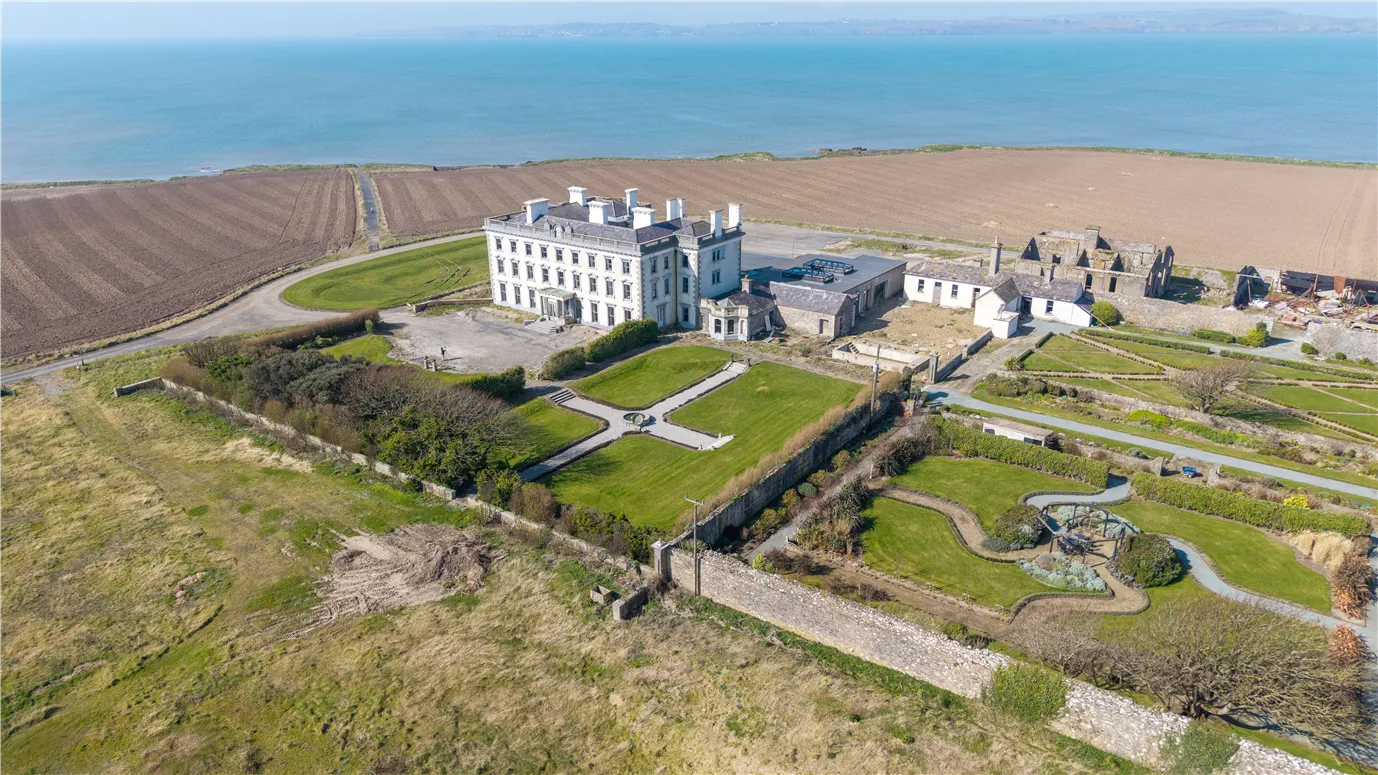
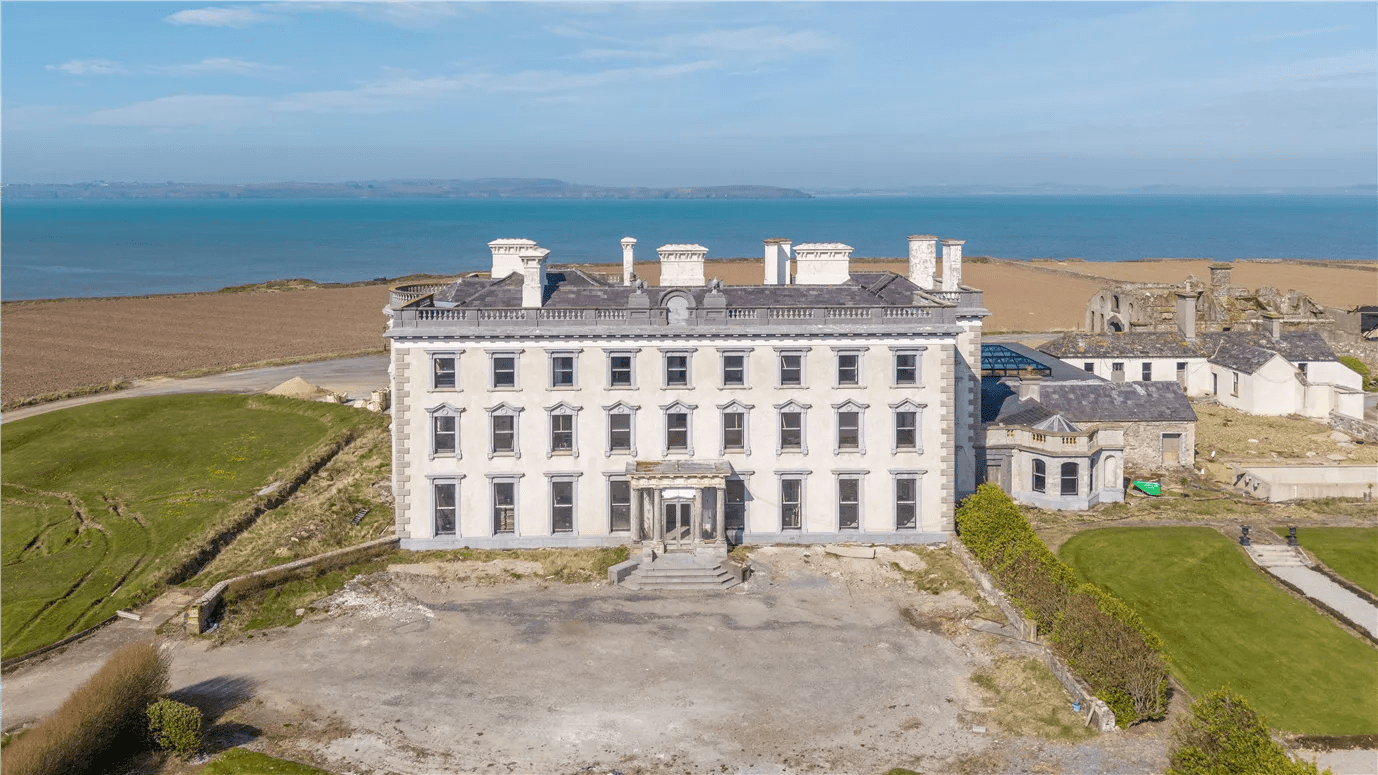
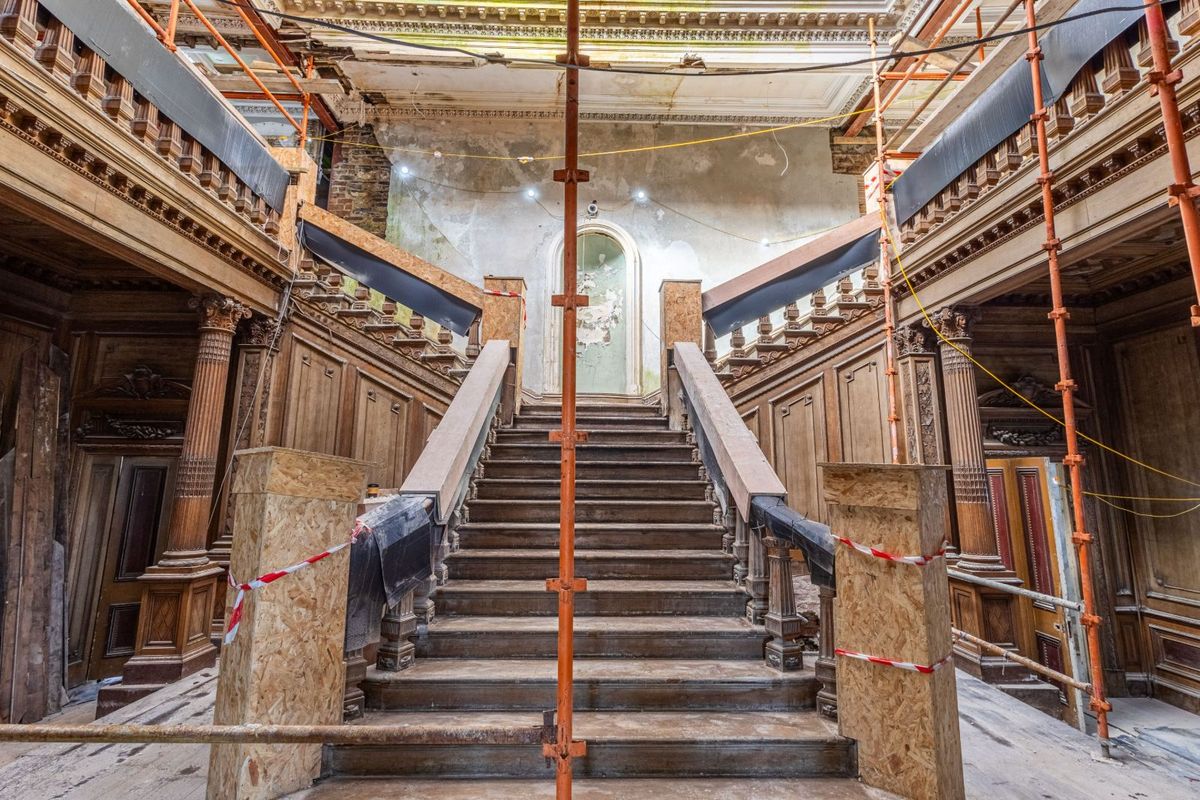
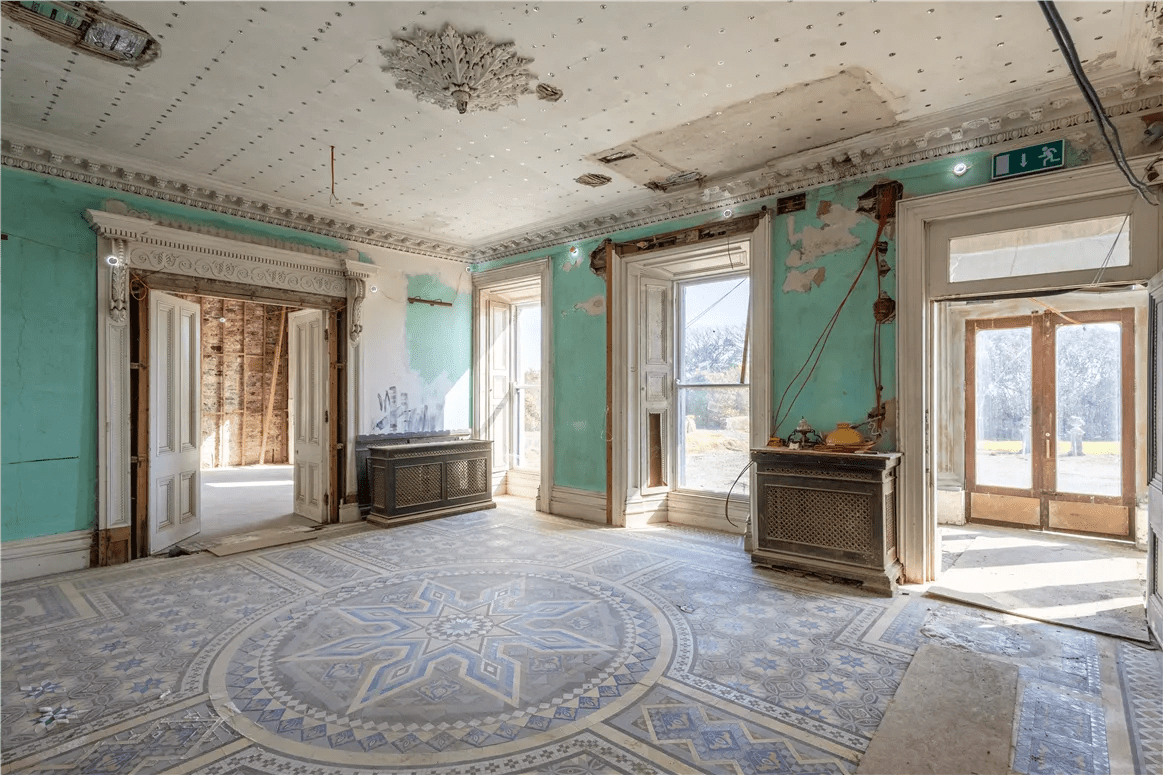
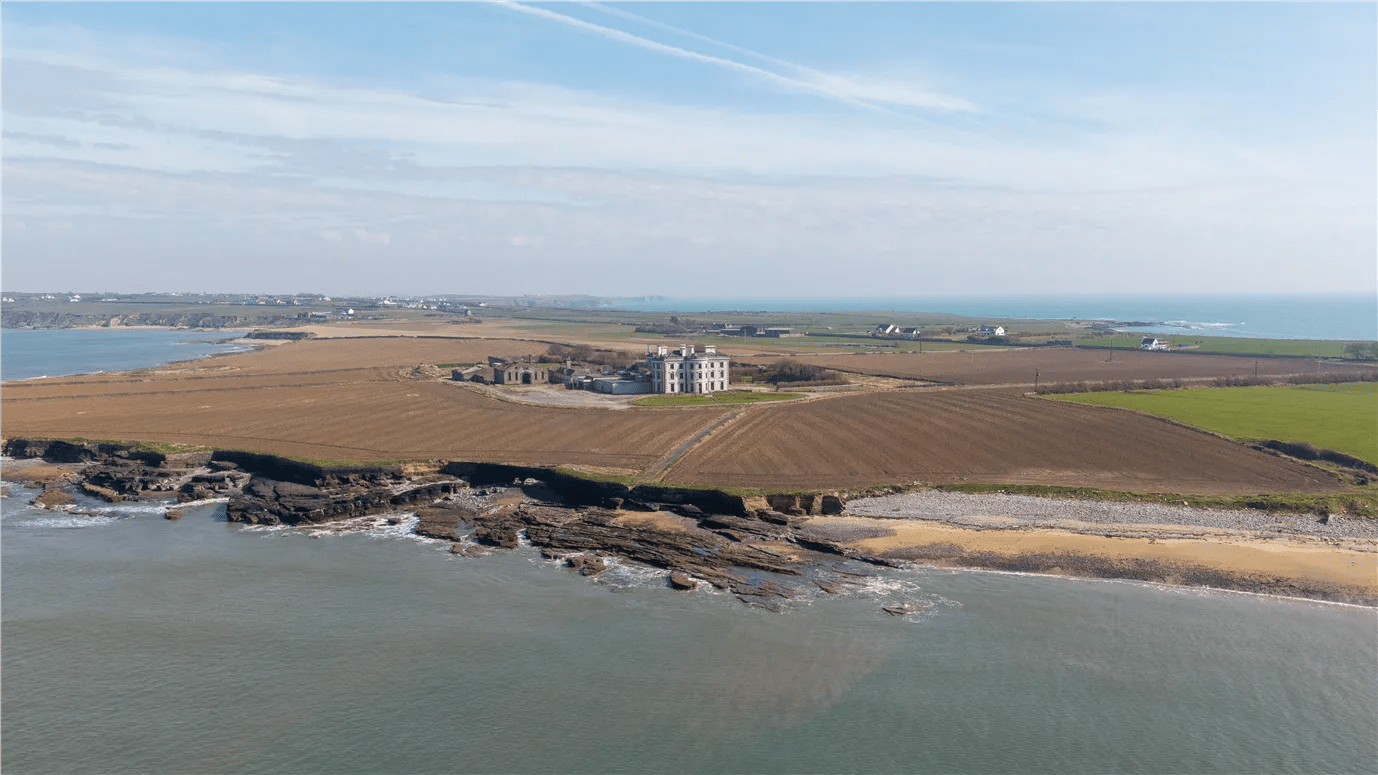
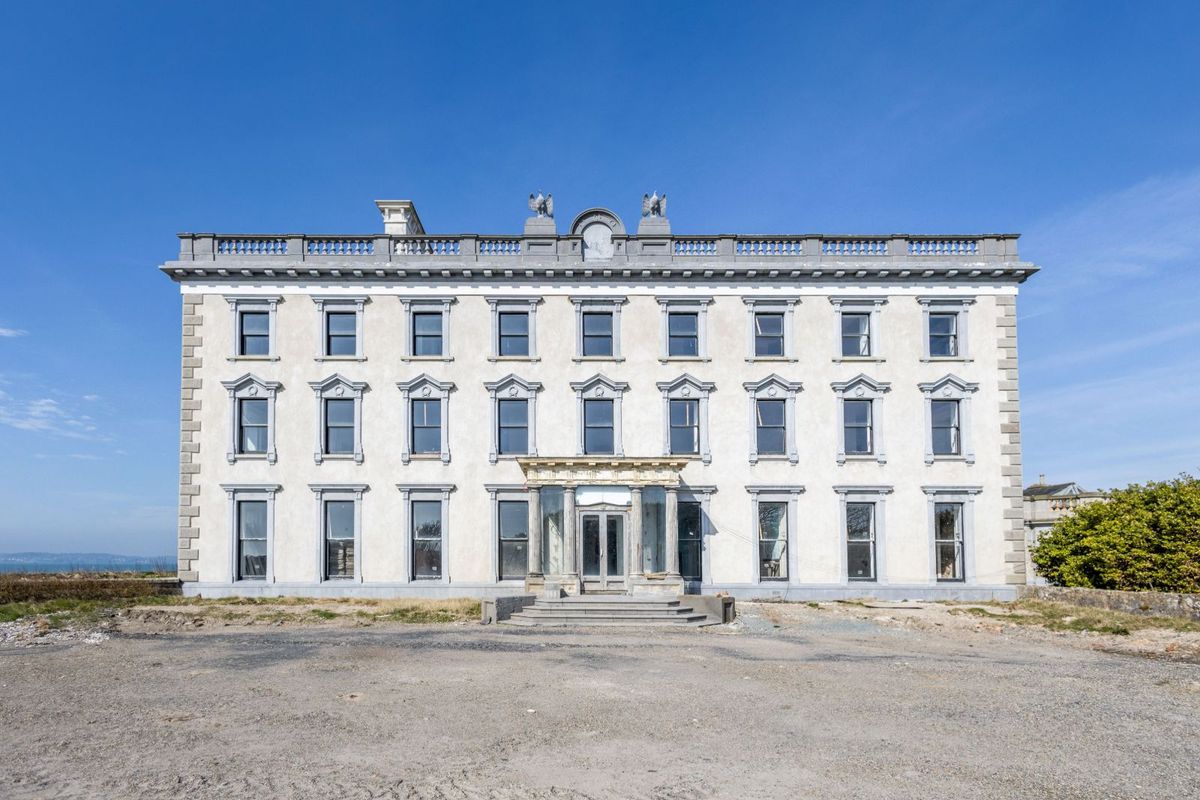
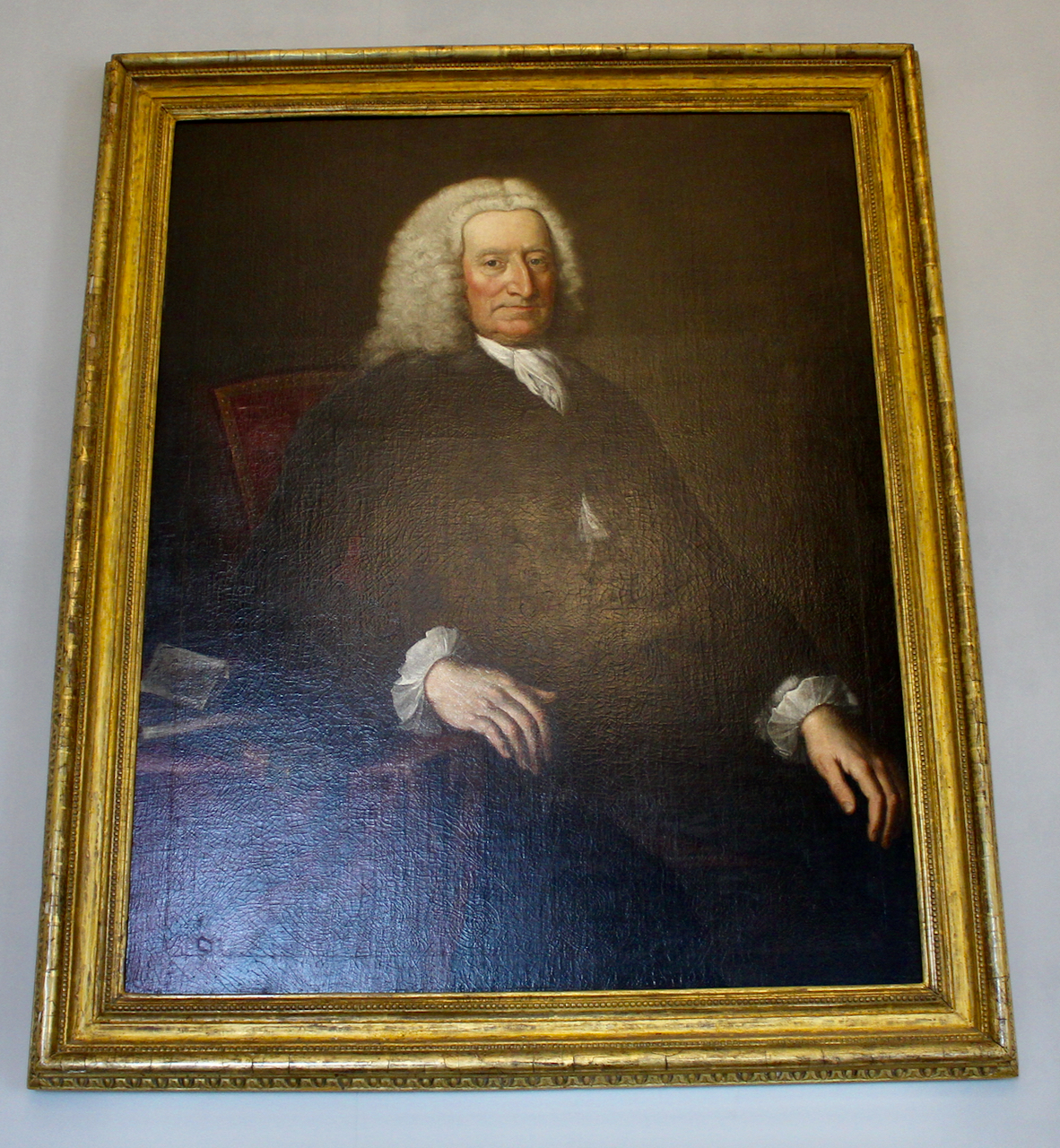

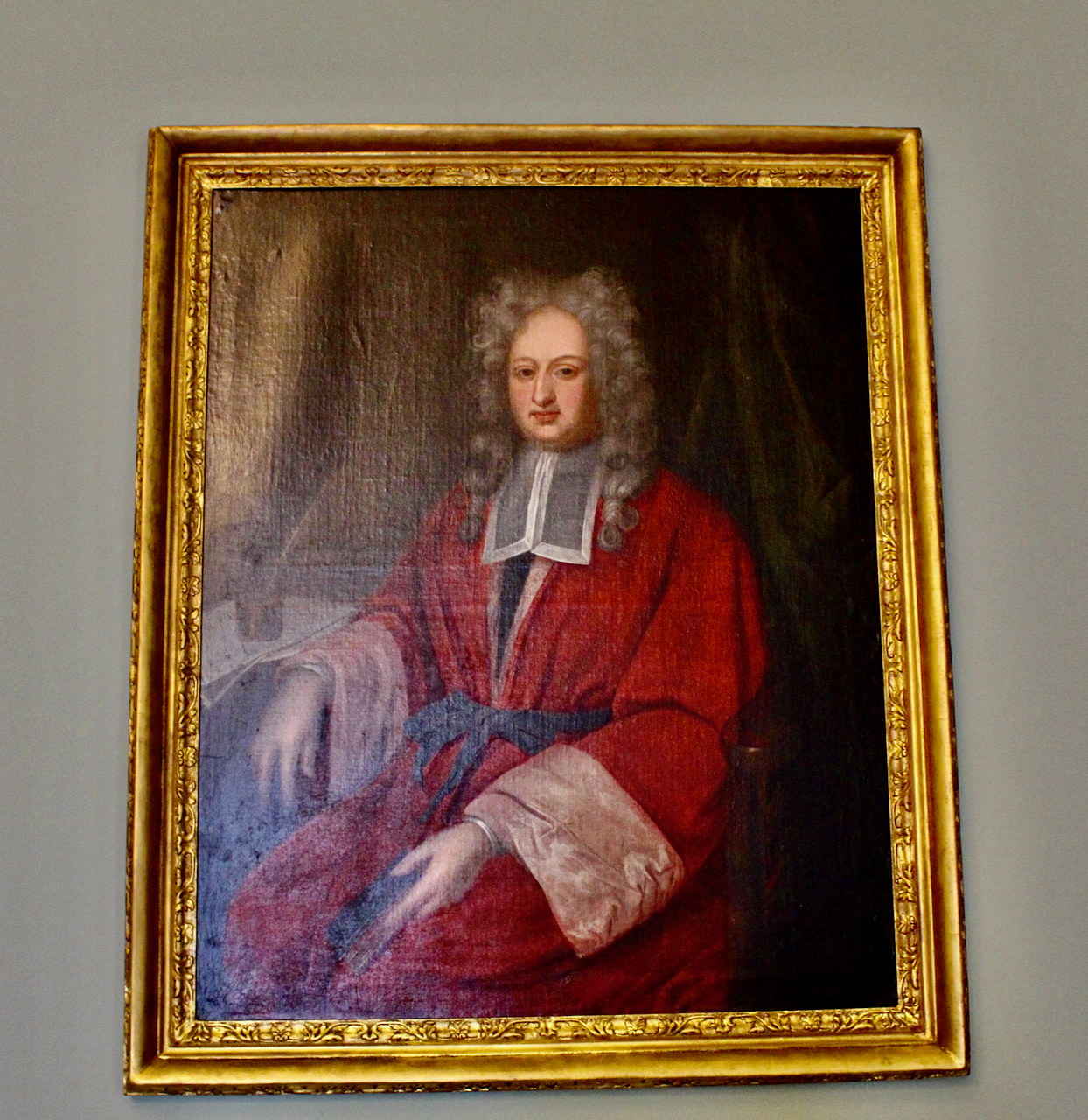
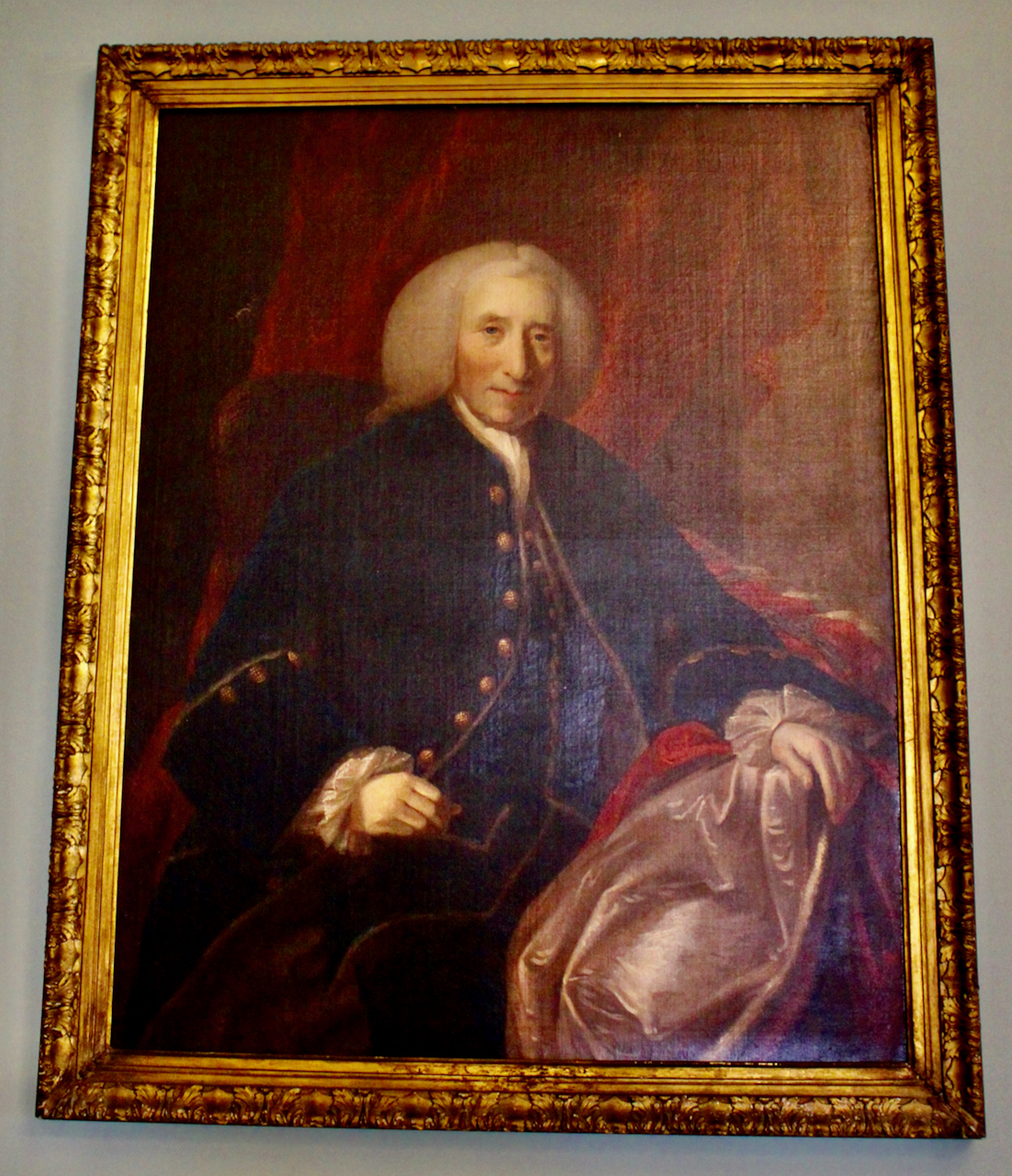
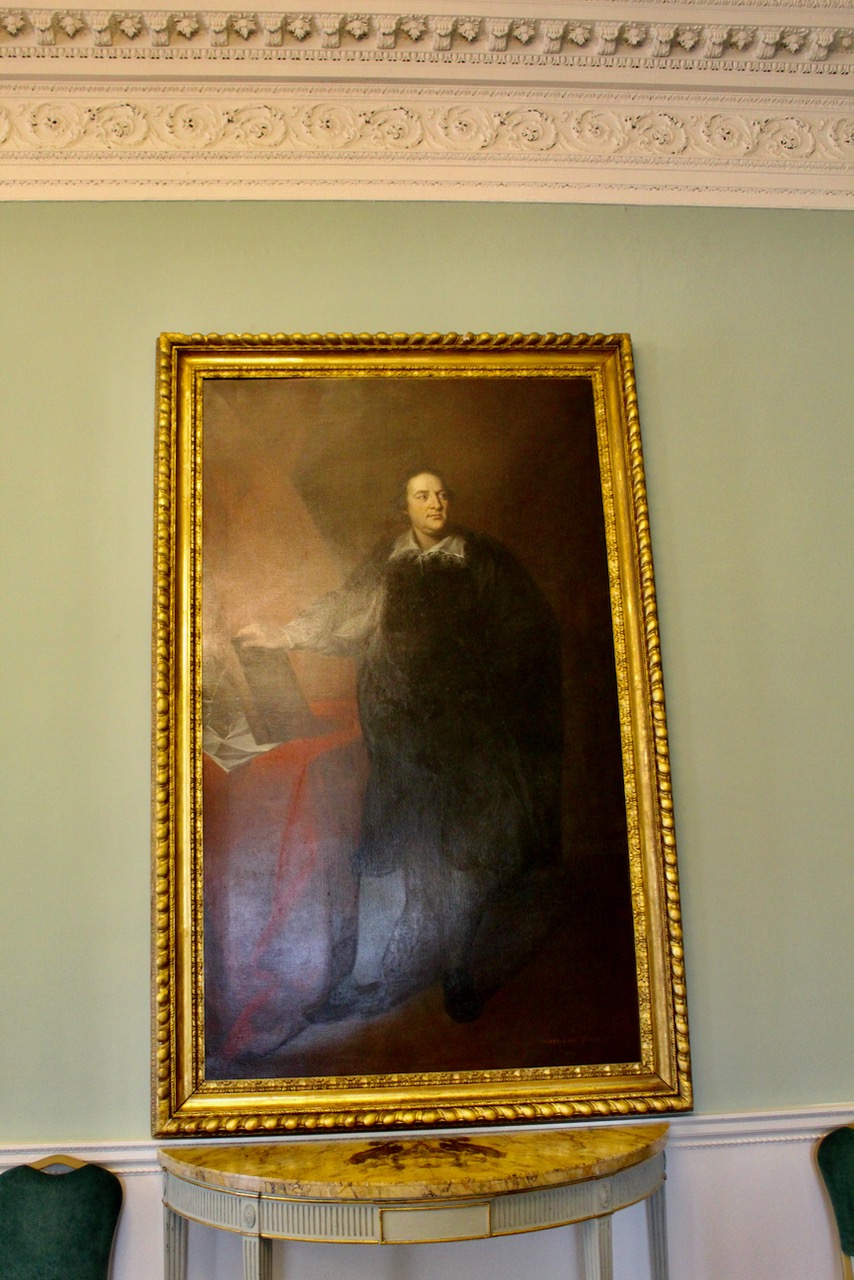


 Irish Historic Houses