Mark Bence-Jones. A Guide to Irish Country Houses (originally published as Burke’s Guide to Country Houses volume 1 Ireland by Burke’s Peerage Ltd. 1978); Revised edition 1988 Constable and Company Ltd, London.
p. 104. “(Meredyth, Bt, of Greenhills, PB1909; Somerville, Athlumney, B/PB 1920) A house grandly remodelled in red brick ca 1730 for Arthur Meredyth, probably by Richard Castle. Three storey over a high basement with a parapet-attic of blind windows above the cornice. Seven bay front, three bay breakfronted centre, with Castle’s favourite sequence of a blind oculus above a niche above the entrance doorway, which is pedimented and pillared. Two bay side elevation, with Venetian windows in both principal storeys, triple windows above and triple blind windows in the attic and also in the basement; which, instead of being brick faced with stone, is of stone faced with brick. The principal front is flanked by two tall pedimented pavilions. Passed by inheritance to the Somerville (Athlumney) family; occupied by a farmer as early as 1837. Now a ruin. – supplement: In 1920s, Dollardstown, somewhat decayed, was the home of Mrs Hannah Laffan, mother of Brandan Bracken (afterwards Viscount Bracken), who spoke of the house as ‘that old barracks.’”
Henry Meredyth (d. 1789) by Charles Jervas courtesy Dulwich Portrait Gallery, London.Henry Meredyth came from an old Irish family with estates in County Meath. His great grandfather was Richard Meredyth, Bishop of Ferns and Leighlin, who held the Deanery of St. Patrick’s Dublin. His father was Thomas Meredyth of Newton, County Meath who was M.P for Navan and who married Catherine daughter of John Baldwin of Corolanty, Kings County in 1704. Henry Meredyth was a barrister in Dublin and in 1748 married Frances daughter of Charles Patrick Plunket of Killonstown, County Louth.
Paddy Rossmore. Photographs. Edited by Robert O’Byrne. The Lilliput Press, Dublin 7, 2019.
“The name Dollardstown derives from Adam and Paganus Dullard who in 1175 were granted lands in this part of the country by the Anglo-Norman Hugh de Lacy, Lord of Meath. In the late seventeenth century, Dollardstown was acquired by Arthur Meredith, whose forbear the Welsh-born cleric Richard Meredyth in 1584 moved to Irelnd where he became Bishop of Leighlin and Dean of St Patrick’s, Dublin. It seems likely that the house at Dollardstown was at least in part of seventeenth-century origin, but after the estate was inherited by Arthur Meredith’s son (also called Arthur) in 1732 he rebuilt the property, apparently to the designs of Richard Castle. From the 1830s onwards, it seems that Dollardstown passed through various hands: in the last century, it was home to the mother of Financial Times founder and politician Brendan Bracken following her marriage to Patrick Laffan who then owned the house: she described it as “that old barracks.” Of seven bays and three storeys, the house had tall free-standing pavilions on either side: one of these still survives. An architectural curiosity was taht both side elevations had paired Venetian windows on ground and first floors. Inside, the main rooms had plaster panelling and there was a fine staircase. All remained in place as late as the 1950s when the house still had its roof…demolished in 1986…”
The Landed Gentry and Aristocracy: County Meath. Volume 1. Art Kavanagh, published by Irish Family Names, 11 Emerald Cottages, Grand Canal St, Dublin 4, 2005.
Aylmer of Balrath, p. 1. During the reign of Henry VI, Richard Aylmer of Lyons, a Keeper of the Peace for both Dublin and Kildare, was appointed Sovereign of the Borough of Tassagard, a position that put him in charge of protecting the settler community from attack by the neighbouring O’Toole and O’Byrne septs. Richard’s grandson Bartholomew served as High Sheriff of County Kildare in 1495 and married a daughter of the wealthy Meath magnate, Sir Christopher Chevers. The family subsequently rose to become one of the most prominent families in Meath and Kildare and, from 1530 onwards, key figures in the Dublin administration. By the close of Henry VIIIs reign, the Aylmer’s landholding extended from Kildare to Meath to Dublin. Before teh end of the 16th century they had established two independent branches at Donadea in north Kildare and at Dollardstown in Co Meath. The first Aylmer of real significance, in terms of land acquisition, was John Aylmer who married Helen Tyrell of Lyons, an heiress, at the end of teh 14th C and so the family acquired Lyons manor. He may have been a successful merchant and was descended from a family that had been prominent in the Lyons area since the Norman invasion.
p. 2. In the 13th and 14th centuries they intermarried not along with the Tyrell family of Westmeath but with three major Meath families – the Petits of Piercetown, the Bathes of Dollardstown and the Chevers of Macetown. In the 15th century, the Tews of Dublin, Suttons of Kepok, Luttrells of Luttrellstown and Dillons of Fingal came into the fold.
p. 3. Sir Gerald Aylmer [c. 1485-1560] was a shrewd and ambitious man. He studied law in his youth and catching the eye of Thomas Cromwell, was appointed Chief Justice of the Common Pleas. As a leading figure in the Dublin administration, Sir Gerald co-orchestrated the military campaign that defeated Silken Thomas. He personally commanded the force that burned Maynooth in 1534. When Silken thomas and his five captured uncles were sent to London, Sir Gerald went as their escort. Initially Gerald was a keen supporter of Lord Deputy Leonard Grey and assisted him during the campaign against the O’Neills of Ulster. In 1539, Grey knighted him on teh battlefield for his valour and granted him the manor and lordship of Dollardsotnw in County Meath, seized from Gerald’s great-uncle, Attorney General Bathe, who was implicated in the Kildare Rebellion. Gerald’s elder brother, Richard Aylmer of Lyons, chief sergeant of Kildare in 1535, also fared well in Lord Deputy Grey’s loyalty payout, receiving the lucrative manor house of Donadea.
Indeed Lrd Grey’s intimate circle divided the spoils so that the Earl of Ormond was granted Kildare’s manor at Kilkea, Sir Thomas Eustace secured Kilcock, Thomas Cusack secured Ardmulgham and Grey himself, Maynooth. Richard’s landholdings included 46 acres held by the glebe of Oughterard Rectory from the Abbot of Thomas Court Abbey in Dublin. He also held three gardens in Kill and the tithes of Fenaghes in the parish of Cloncurry. He was also in receipt of the tithes of Whitechurch and its glebe-land, the property of St John’s Hospital in Naas. With the dissolution of the monasteries, Richard as able to swiftly sweep these outlying properties into his own estate.
p. 4. However, he did not actually benefit from the breakup of the large Kildare churches save for the short-term purchase of the Dominican house in Naas, which he passed on to his brother-in-law Sir Thomas Luttrell within a few years.
p. 5. His son Bartholomew, who maried Elinor Warren of Navan, was appointed Clerk of the Peace for Counties Kildare and Meath in 1553 and given the post of Clerk of the Crown. He died soon afterwards and was succeeded by his eldest son James. James later married his second cousin Anne, daughter of Sir Richard Aylmer of Lyons and he inherited all the lands from his grandfather, Sir Gerald of Dollardstown who died in 1560….From him descended the Aylmers of Dollardstown.
Listed in Vanishing Country Houses of Ireland by The Knight of Glin, David J. Griffin and Nicholas K. Robinson, published by The Irish Architectural Archive and The Irish Georgian Society, 1988.
p. 113. “A superb house remodelled c. 1730 for Arthur Meredyth probably to the design of Richard Castle but incorporating a late 17C house. Very fine interior plasterwork and main staircase. The house was still roofed in the 1950s and having stood as a ruin for many years was demolished in 1986. The cut stone doorcase and other details were saved and are now in a private collection in County Cork.”
Dollardstown House stood near Beauparc, just off the road from Navan. Casey and Rowan described Dollardstown as a large and impressive stone and redbrick house designed in 1734 for Arthur Meredyth by Richard Castle, which stood as a derelict ivy grown shell until 1986 when it was completely demolished. Maurice Craig said Dollardstown was a remodelling in red brick, probably by Richard Castle of an earlier late seventeenth century house. On each side of the main house were tower-like wings. There is photo in Maurice Craig’s book. The three storey over high basement house had very fine interior plasterwork. The house was still roofed in the 1950s but demolished in 1986. The cut stone doorcase and other details were saved.
The local names of Dollardstown and Painestown derive from Adam Dullard and his relative Paganus Dullard who were given grants of land by Hugh de Lacy in 1175. Sir Gerald Aylmer was granted Dollardstown in the reign of Henry VIII.
Arthur Meredith held 382 acres of Dollardstown, barony of Duleek, and the 200 of Cristown, barony of Kells, from the Crown in 1683. Born in1639 Arthur was High Sheriff of Meath and M.P. for Navan from 1692 to 1713. He purchased 1070 acres in Co. Meath from the Commissioners for Sale of Forfeited Estates between 1702 and 1703. Dying on 1732 at age 93 years he was buried at St Patrick’s Cathedral, Dublin.
His son, Arthur Francis Meredith born about 1706, served as MP for Meath from 1751 to 1761. High Sheriff of Meath in 1736 he married Mary Waller and lived at Dollardstown.
Richard Jones M.P. for Killybegs 1761-8 and M.P. Newtown Limavady 1768-76 resided at Dollardstown.
Arthur’s daughter and heiress, Mary, married Sir Richard Gorges in 1775. Richard Gorges was the only son of Hamilton Gorges who was from the Kilbrew Gorges. He took the name, Meredith, and was created a Baronet in 1787, by the name of Richard Gorges Meredith. He received the third penny of tolls and customs of Navan and half toll of corn. Mary died in 1809. Sir Richard’s only daughter and heiress, Mary Anne Meredyth, married Sir Marcus Somerville in 1801. Sir Marcus was M.P. for Co. Meath in Irish Parliament in 1800 and in London Parliament 1801-31. Their son, William Meredyth Somerville, born about 1802 became 1st Baron Meredyth of Dollardstown and 1st Baron Athlumney. He lived at nearby Somerville House. In the 1830s Dollardstown House, described as a spacious mansion was occupied by a farmer.
Dollardstown was resided in by the O’Brien family and the Shields family. A copper mine operated at Dollardstown in the early twentieth century. The poet, Francis Ledwidge, was a miner there. After the O’Briens died out the house was lived in by the Laffin family. A native of Tipperary, Patrick Laffan acquired Dollardstown when it was being divided by the Land Commission. Patrick Laffin had married a widow, Hannah Brackan, the mother of Brendan Bracken. The house was somewhat dilapidated and Hannah Laffan described the house as ‘that old barracks.’ Brendan Bracken attended Mass at Yellow Furze while living at Dollardstown.
Brendan Bracken was born in Templemore, Co. Tipperary in 1901 to Joseph K. Bracken and Hannah Ryan. Joseph died when Brendan was three and his mother married Patrick Laffan. Bracken made a successful career from 1922 as a magazine publisher and newspaper editor in London. Bracken founded the modern Financial Times in 1945. He was an ardent opponent of the appeasement of Adolf Hitler and a supporter of Winston Churchill. Brendan Bracken, was Minister of Information under Winston Churchill during the Second World War. He was briefly First Lord of the Admirality in 1945. He was created Viscount Bracken in 1952, the title became extinct on his death in 1958.
Patrick Laffan was a member of the Farmer’s Party and was elected to Meath County Council in 1925. Patrick Laffan also represented Fianna Fail on Meath County Council. His second wife, Catherine Moran, was a native of Trim. A son, Pat Laffan, became a distinguished Abbey actor. Pat Laffan featured in “The Snapper” and Fr. Ted. Pat Laffan was director of the Peacock Theatre and also directed in the Gate Theatre. He has appeared in around 40 films.
After the death of Mr. Laffan in the 1950s, the property was purchased by Dan Connell. The house was then been demolished. A stone carving bearing an image of Our Lady and dating to the 16th century was uncovered in recent years in Dollardstown on the lands of the Connell family.
Mark Bence-Jones. A Guide to Irish Country Houses (originally published as Burke’s Guide to Country Houses volume 1 Ireland by Burke’s Peerage Ltd. 1978); Revised edition 1988 Constable and Company Ltd, London.
p. 35. “(Stratford, Aldborough, E/DEP) One of the largest of C18 gable-ended houses, built 1743 for John Stratford, MP, afterwards 1st Earl of Aldborough, to the design of Richard Castle in collaboration with the amateur architect, Francis Bindon…The house was still intanct and furnished 1837, but was afterwards abandoned by the family, who fell on evil days before the extinction of the earldom 1875. It has long been a ruin. The rotunda temple and two obelisks survive in nearby fields.”
Listed in Vanishing Country Houses of Ireland by The Knight of Glin, David J. Griffin and Nicholas K. Robinson, published by The Irish Architectural Archive and The Irish Georgian Society, 1988.
p. 85. A large three storey gable ended house designed by Richard Castle and Francis Bindon. Abandoned in the mid 19C. The ruins have been demolished. Superb stables and follies remain.
THE EARLS OF ALDBOROUGH OWNED 964 ACRES OF LAND IN COUNTY KILDARE
It is said that the family of STRATFORDcan be traced from the time of ALFRED THE GREAT; but our account shall commence in 1660 with ROBERT STRATFORD, a younger branch of the house of MEREVALE, and the first who settled in Ireland, one of the original burgesses in the charter constituting Baltinglass a borough. Robert Stratford, MP for County Wicklow, 1692-3, married, in 1662, a daughter of Oliver Walsh, of Ballykilcavan, Queen’s County, by whom he had issue,
EDWARD, his successor; Francis, Consul at Bordeaux, dsp; Grace; Mary; Elizabeth; Abigail; Jane; Anne; Catherine.
Mr Stratford died in 1699, and was succeeded by his elder son,
EDWARD STRATFORD (1664-1740), who purchased Great Belan, and other lands in County Kildare, from the Viscount Fitzhardinge.
This gentleman was a staunch supporter of the Revolution, and entertained WILLIAM III at Belan.
He married Elizabeth, daughter of Euseby Baisley, of Ricketstown, County Carlow, and had, with a daughter,
Robert; Eusebius; JOHN, of whom presently.
The youngest son,
JOHN STRATFORD (c1697-1777), MP for Baltinglass, 1721-59, during the reigns of the first three GEORGES, was raised to the peerage, in 1763, in the dignity of Baron Baltinglass.
He was advanced to a viscountcy, in 1776, as Viscount Aldborough.
His lordship was further advanced, in 1777, to the dignities of Viscount Amiens and EARL OF ALDBOROUGH.
He married Martha, daughter and co-heir of the Ven. Benjamin O’Neale, Archdeacon of Leighlin, by whom he had six sons and nine daughters.
His lordship was succeeded by his eldest son,
EDWARD, 2nd Earl (1736-1801), who espoused firstly, Barbara, daughter of the Hon Nicholas Herbert, of Great Glemham, in Suffolk; and secondly, in 1788, Elizabeth, only daughter 1st Baron Henniker, though the marriage was without issue.
His lordship was succeeded by his brother,
JOHN, 3rd Earl (1740-1823), MP for Baltinglass, 1763-75, who wedded, in 1777, Elizabeth, daughter of the Hon and Rev Frederick Hamilton, and great-granddaughter of William, 3rd Duke of Hamilton; by whom he had three daughters,
Louisa; Elizabeth; Emily.
His lordship died without male issue, and was succeeded by his brother,
BENJAMIN O’NEALE, 4th Earl (1746-1833), MP for Baltinglass, 1777, who married, in 1774, Martha, only child and heiress of John Burton, and niece and heiress of Mason Gerard, by whom he had issue,
MASON GERARD, his successor; Eliza; Sophia.
His lordship was succeeded by his only son,
MASON GERARD, 5th Earl (1784-1849), who wedded, in 1804 (divorced 1826) Cornelia Jane, a daughter of Charles Henry Tandy, of Waterford, by whom his lordship had an only child,
BENJAMIN O’NEALE, 6th Earl (1808-75), Captain, 15th Light Dragoons, who died unmarried, at Alicante, Spain, when the titles expired.
BELAN HOUSE, near Ballitore, County Kildare, was said to have been one of the biggest 18th century gable-ended houses in Ireland It was built in 1743 for the 1st Earl of Aldborough by Richard Castle, in collaboration with Francis Bindon.
Belan comprised three storeys; an eleven-bay front; three centre bays and the two outer bays breaking forward.
A central Venetian window was above the tripartite doorway.
The roof parapet had recessed panelling and urns.
There was also an elegant stable block; and a domed Doric rotunda in the park.
Belan House remained intact, though uninhabitable, until 1837, when the family left owing to impecunious circumstances.
During the lifetime of the 4th Earl, owing to his reckless gambling and extravagant mode of living, the property became heavily mortgaged.
After 1823, the estate became neglected.
During Lord Aldborough’s absence abroad, it is said that the family lawyer, a man named Lewis, illegally obtained a long lease of Belan and, together with a friend of his named Mercer, brought about the dismantlement of the house and demesne by gradually auctioning off every stick and stone they could move.
The cut-stone work of the parapet and other parts of the house were sold, and used in the erection of public buildings in Athy; the furniture and chimney pieces were parted with, and the statuary in the grounds suffered a similar fate; the doors and shutters are said to have been used for flooring the stable lofts at Newtown House, near Bolton Castle.
For miles around there is hardly a place which does not possess some fragments of Belan’s former grandeur.
At Bolton Castle, in the garden, is a block of composite, bearing the Aldborough crest.
The great iron gates within view of the hall door at Carton House originally hung at the Belan gate lodge.
The only trace now showing the extent of Belan demesne in former times are three stone obelisks.
STRATFORD HOUSE, Stratford Place, the family’s London residence, is now the premises of the Oriental Club.
The building was constructed in the 1770s for the 2nd Earl, who paid £4,000 for the site (formerly occupied by the Lord Mayor of London’s Banqueting House) along with the Robert Adam-inspired building.
The House was variously remoulded over the years with new plumbing and a second storey on the east and west wings in the 1890s.
However it was in 1908 when Lord Derby bought the lease that the most extensive alterations were set in motion.
He purchased additional property in Marylebone Lane, removed the stables and built a Banqueting Hall with a grand ballroom above (the last privately owned ballroom to be built in this country).
It was a spectacular room of Italian design which was converted when the house was acquired by the Oriental Club.
When Stratford House was purchased by the Oriental Club in 1960, it was necessary to make certain alterations, as the needs of a Club were different to those of a town house of the nobility.
The ballroom was converted into two floors of bedrooms, additional lifts were installed and alterations to the Banqueting Hall were made, which is now the Dining Room.
The recent addition of eight new bedrooms continues the Oriental Club’s tradition of providing a welcoming and comfortable home-from-home for its Members in the centre of London.
First published in August, 2013. Aldborough arms courtesy of European Heraldry.
In Blake, Tarquin. Abandoned Mansions of Ireland II: More Portraits of Forgotten Stately Homes. Collins Press, Cork, 2012.
Ballyhaise House, Ballyhaise, Co. Cavan – agricultural college
Ballyhaise House, County Cavan, photograph by Robert French, Lawrence Photograph Collection, National Library of Ireland.
Bence-Jones, Mark. A Guide to Irish Country Houses (originally published as Burke’s Guide to Country Houses volume 1 Ireland by Burke’s Peerage Ltd. 1978); Revised edition 1988, Constable and Company Ltd, London.
p. 22. “[Humphryes] An important house by Richard Castle, built ca 1733 for Brockhill Newburgh. Of 2 storeys over basement, and 7 bays, faced in brick, with ashlar dressings. Entrance front with pedimented central feature of 4 Ionic pilasters superimposed on a Doric entablature and 4 Doric pilasters. Garden front with central curved bow, which has round headed windows and a doorway under a consoled pediment. The bow contains an oval saloon which Dr. Craig considers may well be the earliest surviving oval room in the British Isles; it keeps its original plasterwork on the ceiling, which, surprisingly, is a brick vault; the groun dfloor as well as the basement being vaulted over, as in the King House in Boyle, Co Roscommon. The doors and chimneypiece in the saloon are all curved. Sold ca 1800 to William Humphreys, who extended the house by adding 2 storey wings of the same height as the original block and also of brick with stone facings; but with a neo-Classical flavour; the slightly projecting end bays on the entrance front being framed by broad corner strip pilasters, supporting entablatures with dies. The windows in these bays are tripartite, with entablatures over them on console brackets. Sold by the Humphrys family in the present century, now an agricultural college.”
Ballyhaise House was built for the Newburghs, a local landowning family, in the 1730s. Richard Cassels (1690-1751) was of German origin and also known as Richard Castle. He settled in Ireland around 1728 and worked with Edward Lovett Pearce on the Houses of Parliament before becoming the leading country house architect of his day in Ireland. Ballyhaise House has been used as an agricultural college since the beginning of the 20th century and has been much altered.
Detached eleven-bay two-storey over basement former country house, built c.1735, possibly with core of c.1700, comprising seven-bay central block having pedimented centre bays with superimposed orders and a three-bay semi-circular bow to rear elevation. Lower outer bays added c.1820 with recessed intermediate bays and advanced end bays having tripartite windows, southern bay forming end of four-bay side elevation. Now in use as college. Hipped and slated roofs with lead ridges and rendered chimneystacks of simplified Vanbrughesque design, having clay chimneypots with lotus-flower decoration. Parapet to central block as stone entablature with central pediment retaining trace of tympanum sculpture, similar entablature over bow to rear, lower stone cornices to outer bays and south wing. Red brick walls with architectural detailing of ashlar sandstone to front of main block and to later end wings, ashlar stone to centre three bays. Centre bays articulated with pilasters in superimposed Doric and Ionic orders, upper Ionic order having pulvinated frieze and cornice extending across higher central block. Doric order having blank metope frieze, cornice carried across central block and intermediate bays with plain ashlar band above and plain frieze below. Plain raised ashlar bands flanking end bays over both storeys carried round to the side elevations. Ruled-and-lined rendered walls to basement below string course at window head level and ashlar outer bays. Side elevation to south with simplified banding courses at mid height and a continuous string course under the upper storey sills. Side elevation to north of rubble stone with brick surrounds to openings and large quoins to the north-west corner. The rear elevation of roughcast render, smooth ruled-and-lined render to bow. Shouldered architraves to ground and first floor windows with ashlar sill course at ground floor and six-over-six timber sash windows. Tripartite windows to outer bays with ashlar mullions and cornice hoods on scrolled brackets, six-over-nine timber sash windows to centre section at ground floor windows. Segmental-headed windows to basement with plain architraves and six-over-six timber sashes. Square-headed door opening to central bay with recent glazed double-leaf entrance doors in shouldered architrave surround topped by a segmental pediment with shell motif over carved floral garland. Rear elevation with round-headed windows to basement and ground floors, segmental-headed to first floor, both types having plain reveals to bow and brick surrounds elsewhere. Square-headed door opening to bow with shouldered architrave surmounted by corbelled canopy with carved sandstone swag motif, round-headed blind door opening to main ground level above with Gibbs surround and open-bed pediment on scroll brackets. Entrance hall with plastered brick-vaulted ceiling with deep severies and coffered centre. Black and white stone floor tiles and tall Kilkenny limestone open-bed pedimented chimneypiece. Four main reception rooms off hall, Bishop’s Room having marble chimneypiece, running mould cornice and decorative centrepiece. Peacock Room having plastered brick-vaulted ceiling with elliptical-headed formerets, modillion cornice and heavy foliate centrepiece. Walls having hand-painted wallpaper with dado rail and deep skirting, panelled window joinery and panelled door with flanking pilaster architraves and plain entablature over-door and replacement marble fireplace. Oval Room in bow opens off hall to rear with compartmentalised oval ceiling having dentil cornice and foliate centrepiece, stucco panelled walls with dado rail and round-headed windows with panelled window joinery, curved Kilkenny limestone chimneypiece having central corbel with fish-scale design. Ballroom now in use as a lecture room with decorative modillion cornice and centrepiece with decorative feather motifs, dado rail and deep skirting boards, Carrara marble chimneypiece with fluted Corinthian columns supporting mantle having decorative Greek key and palmette motif to lintel. Panelled window shutters, soffits and window backs with fan detail to reveals, timber panelled doors with similar fan details to panels and overdoor with floral garlands. Stair hall off entrance hall to south with service stair beyond lobby room to the north. Dogleg stair from basement to first floor with sandstone steps from ground floor to basement. Turned balusters set on pears and blocks and scrolled tread ends with decorative fretwork detail. Door openings in stair hall have round-headed overdoors with decorative spider-web motif emulating fanlight and flanking pilaster architraves. Dining room in end bay now used as a boardroom with decorative cornice having palmette motifs, grey marble chimneypiece having flanking Ionic columns, timber panelled window and doors with fan details to panels and decorative floral garland to overdoor. Arched recess to west-end wall. Offices to basement all with brick vaulted ceilings, stone flags in parts with black and red quarry tiles to entrance hall, plain rendered window embrasures with simple historic timber shutters to some windows and some cast-iron fireplaces. Ground floor raised above surrounding area opening onto steps flanked by balustrade at raised level enclosing basement area across front and south elevation, further steps lead down to driveway. Situated within an extensive designed landscape on rising ground in a meander of Annalee River. Extensive stable and farmyard complex extends up hill to west, large south-facing walled garden to north-west, gates and lodge to south-east.
Ballyhaise House is architecturally one of the most significant houses in Cavan. A multiple phased building set in an early designed landscape, the core of house, vaulted over basement and ground floor, date from c.1705. A historic watercolour painted before 1730 depicts the earlier house with related buildings and bridge in the wider landscape setting. The house was remodelled after this date for Brockhill Newburgh MP, and the work has traditionally been attributed to Richard Castle (1690-1751), one of Ireland’s foremost Palladian architects. However, it is now thought to be the work of Sir Edward Lovett Pearce. The demesne landscape was described in Rev Henry’s ‘Upper Lough Erne’ in 1739. The advanced outer bays were added c.1820, possibly by the Dublin architect William Farrell (d. 1851), and are similar in detail to his work at nearby Rathkenny House and Kilmore See House. The interior is well preserved, the architectural detail reflecting the historic evolution of the house, with classical detailing added to earlier vaulted ceilings being a notable feature. The demesne constitutes an ensemble of structures and designed landscape features of high quality, including a largely intact stable yard, a walled garden, and entrance gates, and adds to its setting and context.
Built by Brockhill Newburgh and originally composed with wings in the classic Palladian manner (removed when the house was extended in the early nineteenth century), Ballyhaise was deemed by Jonathan Swift, ‘not only the best, but the only house he had seen in Ireland’.
Like Bellamont, the house at Ballyhaise is distinguished as a building predominantly built of brick with its classical detail perfectly mediated, cleanly and precisely, in contrasting stone trim. Instead of a freestanding portico, the idea of the temple front is addressed in the frontispiece, a pedimented breakfront formed with two tiers of pilasters – Ionic over Doric – which observed the strict hierarchy that applies to the classical orders. Ballyhaise was further innovative for its introduction to Irish domestic architecture of the central bowed projection, distinctive here in its accommodation of a complete oval form within the plan, a shape that derives from French baroque architecture of the seventeenth
century. Though difficult to conceive now, Ballyhaise was even more remarkable in that its original form had been conceived with the classic expanded Palladian layout, its central block set between curved wings in a manner that enjoyed an enduring popularity in Ireland, having begun with houses like Carton and Castletown in County Kildare. At Ballyhaise, this grand composition with its low arcaded wings terminating in polygonal pavilions, equal to the most ambitious of Palladio’s villa designs, was swept away when new wings were formed in the early nineteenth century. The massing of the central block at Ballyhaise between lower square subsidiary towers and a series of small pyramid roofs recurred at Lismore (fig.14), where the surviving wings rather more grandly reaffirm the Palladian idea of closely integrating the agricultural practicalities of the farm with the house.
Ballyhaise House As part of James I’s plantation of Ulster, in 1609 John Taylor of Cambridge received a grant of 1,500 acres in an area of County Cavan called Aghieduff. Here he established the town of Ballyhaise and, according to a mid-19th century report, ‘built a strong Bawn of lime and stone for his own residence, on the site of the present castle, which, from it position, commanded the ford over the river.’ John Taylor married Ann the daughter and heiress of Henry Brockhill of Allington, Kent – their elder son was Brockhill Taylor who served as Member of Parliament for the borough of Cavan in the 1630s. On his death he left no son but two daughters one of whom, Mary inherited the Cavan estate. She married Thomas Newburgh - their second son, Colonel Brockhill Newburgh, (c.1659 – 1741) was the next owner of Ballyhaise since his elder brother died in 1701 without heirs. During the Williamite Wars, Colonel Newburgh had raised a company of soldiers and participated in several battles in support of what would prove to be the winning side.
In 1704 he was appointed High Sheriff of Cavan and served as an M.P. from 1715 to 1727, as well as acting as chairman of the local linen board. Ballyhaise remained in the possession of the Newburgh family until around 1800 when it was sold to William Humphreys, a Dublin merchant who had made his fortune in the wood trade. In 1905 the state bought the property and has run it as an agricultural college every since.
‘It were also to be wished that even our gentlemen would in their country-seats imitate Colonel Newburgh, a great improver in the Co. of Cavan, who as well as several others, does not only use stucco work, instead of wainscot, but has arched his fine dwelling-house, and all his large office-houses, story over story, and even all their roofs in the most beautiful manner without any timber.’ Samuel Madden, Reflections and Resolutions Proper for the Gentlemen of Ireland, Etc.1738. ‘This seat, for beauty and magnificence, may vie with any in Ireland. There is an ascent to it by several terraces from the river, which are adorned with ponds, jets d’eau, fruit and flowers. The house is about 140 feet in front – it is made to last for ever – the roofs and all the apartments being vaulted, and curiously finished with stucco work; and yet scarce any house in Ireland has so brisk and lively an aspect – the just mixture of the brick and hewn stone, and the proportion of the parts adding life to one another; the large court and offices also behind it are all vaulted. It is not easy to pass by this fine seat without delaying at it, but to do justice to the house, its various apartments, gardens, vistas, avenues, circular walks, roads and plantations rising to the tops of all the hills around, would require a description that would draw me too far from my present design.’ Rev. William Henry, Upper Lough Erne, 1739. ‘The affairs of Ireland being sometime happily settled, the gentlemen of the country now began to quit their cottages, and build mansion houses, suitable to their estates and fortunes. The arts hitherto unknown in Ireland, architecture in particular, began to receive encouragement; of which no gentleman of private fortune gave juster and more useful specimens than Mr Newburgh. His dwelling house as well as offices being arched throughout, in the upper as well as lower stories are thereby of course, free from the danger and power of fire. The compliment that the late Dean Swift paid to Mr Newburgh on the planning such a singular but useful edifice, was as uncommon, as there is reason to believe it sincere, viz. That it was not only the best, but the only house he had seen in Ireland.’ Particulars relating to the Life and Character of the Late Brockhill Newburgh Esq. ,1761.
As part of James I’s plantation of Ulster, in 1609 John Taylor of Cambridge received a grant of 1,500 acres in an area of County Cavan called Aghieduff. Here he established the town of Ballyhaise and, according to a mid-19th century report, ‘built a strong Bawn of lime and stone for his own residence, on the site of the present castle, which, from it position, commanded the ford over the river.’ Further English and Scottish settlers were encouraged to move into the area and when Nicholas Pynner undertook his government-commissioned survey of the province’s plantation in 1618-19 he found eighteen such families living at Ballyhaise ‘and everything around the infant colony appeared in the most prosperous condition.’ The disturbances of the 1640s were a setback to the enterprise but by the time of Charles II’s restoration to the throne in 1660, Ballyhaise’s settlement was once more progressing. John Taylor had married the daughter and heiress of Henry Brockhill of Allington, Kent and their elder son was duly christened Brockhill Taylor; he served as Member of Parliament for the borough of Cavan in the 1630s. On his death he left no son but two daughters one of whom, Mary inherited the Cavan estate. She married Thomas Newburgh and the couple had several sons, the second of which, Colonel Brockhill Newburgh, was the next owner of Ballyhaise since his elder brother died in 1701 without heirs. During the Williamite Wars, Colonel Newburgh had raised a company of soldiers and participated in several battles in support of what would prove to be the winning side. In 1704 he was appointed High Sheriff of Cavan and served as an M.P. from 1715 to 1727, as well as acting as chairman of the local linen board. However it is for the building projects he undertook on his Ballyhaise estate that Colonel Newburgh is best remembered. In 1703 he and another local landowner rebuilt the bridge here as an eight-arched stone structure, and during the same period he also embarked on a grand scheme to lay out a new town, described after his death as being ‘in the form of a Circus, the houses all arched, with a large circular market house in the center; a building, in the opinion of some good judges, not unworthy the plan of Vitruvius or Palladio; and which (if we may be allowed to compare small things with great) bears no distant resemblance to the Pantheon at Rome, but with this difference, without the opening of the convex roof at the summit, contrived to give light to the latter.’ Unfortunately in 1736 the market house collapsed and had to be rebuilt; in 1837 it was reported to be ‘an arched edifice built of brick and of singular appearance.’ It has since gone and the present market house, with ill-considered uPVC windows, does little to improve what remains of Colonel Newburgh’s once-elegant and innovative programme of urban planning.
The near-contemporaneous accounts carried above give us an idea of Colonel Newburgh’s ambitious developments of his own house and grounds at Ballyhaise, and the impact these made on visitors to the area. The gardens, it is clear, were an elaborate baroque arrangement of ‘ponds, jets d’eau, fruit and flowers’ spread across a sequence of terraces that descended to the river before the land rose up once more on its far side. As for the house, its architect has long been the subject of speculation. It used to be attributed to Castle, but given that Colonel Newburgh is believed to have been born c.1659 (and died in 1741) and that certain elements of the building, not least the red brick used in its construction, are associated with Sir Edward Lovett Pearce, he now seems more likely to have been responsible. Ballyhaise was probably constructed on the site and incorporated parts of an earlier dwelling dating back a century to around the time of John Taylor’s arrival; one imagines this to have been defensive in character. Colonel Newburgh’s house, on the other hand, projects its owner’s assurance and the more tranquil character of the time. The core of the building was of two storeys over half-basement, and of seven bays. As already mentioned red brick was used except for the three centre bays which are of limestone with Ionic over Doric pilasters below a full entablature supporting a pediment. The narrow entrance is reached at the top of a flight of steps, a garland of carved flowers fitted beneath the door case’s segmental pediment containing a scallop shell. In 1746 the architect and designer Thomas Wright who was then visiting Ireland as a guest of Lord Limerick (see Do the Wright Thing, July 28th 2014) made a sketch of the front of Ballyhaise as it then was. This can be seen above and indicates the house was the centrepiece of a Palladian scheme extended on either side by quadrants before terminating in pavilion wings. None of this remains today and the interior has likewise undergone changes since first completed when it was vaulted throughout, allegedly as a precaution against fire. What remain largely unaltered are the entrance hall and rooms immediately on either side; one of these, the so-called Peacock Room, contains wall paper from the first half of the 19th century, covered in varnish at some later date but otherwise in good condition. To the rear of the entrance hall is the room which best evokes Colonel Newburgh’s house, a small oval saloon. Its walls covered in plaster panelling beneath a shallow coffered dome, the saloon contains a simple Kilkenny marble chimneypiece and two windows on either side of what surely must once have been an opening onto a balcony at the centre of the projecting bow.
Ballyhaise remained in the possession of the Newburgh family until around 1800 when it was sold to William Humphreys, a Dublin merchant who had made his fortune in the wood trade. By then the house must have looked very old-fashioned and it was therefore subjected to a complete overhaul. The quadrants and wings were demolished and the main block extended on either side to hold drawing and dining room respectively, both lit by generous tripartite windows. The contrast between these and the original early 18thcentury windows is only one of a number of incongruities, accentuated on the exterior by the unmistakable difference in tone of brick. Inside rather narrow passages provide access to the main reception rooms which are large and mostly plain although the overdoors carry floral friezes. The main staircase, squeezed into too tight a space, leads to the first floor former bedrooms which are also simple although some, such as that immediately above the oval saloon, retain their Georgian decoration and chimney piece. Mr Humprheys’ heirs enjoyed the advantages of his wealth for barely a century before it ran out and the house was once more sold, this time to the state which in 1905 bought the estate to run as an agricultural college. Ballyhaise has served this purpose every since, a mixed blessing for the place. Inevitably there have been losses, not least to the surrounding parkland where no evidence of Colonel Newburgh’s fantastical gardens survive; of course, these may well have been swept away when the property was modernised by Mr Humphreys. Recent additions to the building stock in the grounds are pedestrian in design, but the old stable blocks remain and have suffered relatively little compromise. And most importantly the house itself survives and has of late benefitted from remedial works, particularly to the roof. Not all is as was when Colonel Newburgh embarked on his improvements but the words of the Rev. William Henry written in 1739 still ring true: Ballyhaise appears to have been ‘made to last for ever.’
THE HUMPHRYS’ OWNED 5,146 ACRES OF LAND IN COUNTY CAVAN
WILLIAM HUMPHRYS, of Ballyhaise, County Cavan, younger brother of Christopher Humphrys, of Dromard, married Letitia Kennedy, and had issue,
Christopher, b 1786; WILLIAM, of whom we treat; John, 1809-18; Anne; Matilda; Letitia; Amelia; Caroline; Sophia.
Mr Humphrys, High Sheriff of County Cavan, 1822, was succeeded by his second son,
WILLIAM HUMPHRYS JP DL (1798-1872), of Ballyhaise House, High Sheriff of County Cavan, 1832, who wedded firstly, in 1826, Anna Maria, daughter of John Pratt Winter, of Agher, County Meath, and had issue,
WILLIAM, his heir; JOHN WINTER, succeeded his brother; Mervyn Archdall; Anne Elizabeth.
He espoused secondly, in 1838, Maria Clarissa, daughter of Hugh Moore, of Eglantine House, County Down, and had issue,
WILLIAM HUMPHRYS (1827-77), High Sheriff of County Cavan, 1877, who died unmarried, and was succeeded by his brother,
JOHN WINTER HUMPHRYS (1829-84), of Ballyhaise House, High Sheriff of County Cavan, 1879, who married, in 1854, Priscilla Cecilia, daughter of the Rev J P Garrett, of Killgaron, County Carlow, and had issue,
WILLIAM, his heir; John Mervyn; James Winter; Charles Vesey; Mervyn Archdall; Francis Edward; Arthur Armitage; Llewellyn Winter; Percy Raymond; Caroline Elizabeth; Priscilla Cecilia; Clara Christina; Anna Maria; Emily May.
Mr Humphrys was succeeded by his eldest son,
WILLIAM HUMPHRYS JP (1855-97), of Ballyhaise House, Lieutenant RN, who wedded, in 1879, Alice, daughter of James Stannard JP, of Bricketstown House, County Wexford, and had issue,
WILLIAM, his heir; NUGENT WINTER, succeeded his brother; Ethel Elizabeth; Evelyn Alice.
Mr Humphrys was succeeded by his eldest son,
WILLIAM HUMPHRYS (1883-1906), of Ballyhaise House, Lieutenant, 17th Lancers, who died unmarried, and was succeeded by his brother,
NUGENT WINTER HUMPHRYS (1885-1931), of Ballyhaise House, Lieutenant, Manchester Regiment, who espoused, in 1911, Blanche Ada de Vivefay, daughter of William Edward Wilson, of Daramona.
BALLYHAISE HOUSE, Ballyhaise, County Cavan, is one of the most notable mansions in County Cavan.
The house comprises two storeys over a basement, with seven bays; with ashlar dressings, faced in brick.
The entrance front has a pedimented feature with four Ionic pilasters.
The garden front has a central carved bow with round-headed windows.
The bow contains an oval saloon, which has been considered one of the earliest of its kind in the British Isles.
Ballyhaise was sold in 1800 to William Humphrys, who enlarged the house considerably by adding two storey wings of the same height as the original block.
The estate was sold by the Humprys family in 1906 and now serves as an agricultural college.
Ardbraccan House, Ardbraccan, Navan, County Meath, C15W8C0 for sale March 2025 courtesy Sherry FitzgeraldArdbraccan House, Ardbraccan, Navan, County Meath, C15W8C0 for sale March 2025 courtesy Sherry Fitzgerald
Mark Bence-Jones. A Guide to Irish Country Houses (originally published as Burke’s Guide to Country Houses volume 1 Ireland by Burke’s Peerage Ltd. 1978); Revised edition 1988 Constable and Company Ltd, London.
p. 7. “The Palace of the (C of I) Bishops of Meath, on the site of the old castle where the Bishops lived from C14. Bishop Evans left money for the building of a new house here early in C18; his successor, Bishop Henry Downes, came here with Dean Swift to lay out the ground; but it was not until the time of the next Bishop again, Arthur Price, that the house was begun ca 1734, to the design of Richard Castle. When the two 2 storey 5 bay wings of what was to be a Palladian mansion had been completed, Price was elevated to the Archdiocese of Cashel. For the next 30 years, the subsequent Bishops did nothing about building the central block, but lived in one of the wings, using the other for guests. It was not until early 1770s that Bishop Henry Maxwell, a younger son of 1st Lord Farnham, decided to complete the house; he is said to have boasted that he would build a palace so grand that no scholar or tutor would dare to live in it. He obtained designs from Thomas Cooley and also from one of his own clergy, Rv. Daniel Beaufort, Rector of Navan, who was a talented amateur architect. Both of them were, to a certain extent, under the influence of James Wyatt, who produced a sketch of the garden front. The centre block, which was eventually begun 1776 and took several years to build, is a simple and dignified grey stone house of 2 storeys and 7 bays, with an Ionic doorcase; it harmonises well with Castle’s wings, to which it is joined by curved sweeps with niches. The garden front, also of 7 bays, has a 3 bay central breakfront in which the ground floor windows are set in a blind arcade. The restrained neo-Classical interior plasterwork is said to have been designed by Wyatt, though Beaufort was asked by Bishop Maxwell to design a ceiling for the entrance vestibule 1780. This is a narrow room with a barrel-vaulted ceiling of shallow hexagonal coffering; a door under a large and elegant internal fanlight at its inner end opens into the main hall or saloon in the middle of the garden front, which has a cornice of mutules and elliptical panels above the doors. The principal and secondary stairs lie on either side of this saloon, which also communicates with the drawing room and dining room in the entrance front, on either side of the vestibule. Despite Bishop Maxwell’s hope that the grandeurs of Ardbraccan would discourage scholars and tutors from aspiring to the diocese, his successor was Thomas O’Beirne who had started life as a humble schoolmaster; but who none the less carried out improvements to the outbuildings, advised by Beaufort. The more aristocratic Bishop Nathaniel Alexander carried out grander improvements to the outbuildings in 1820s and 30s. The handsome farm and stable yards are joined by a tunnel under the garden terrace.”
George Montgomery, Bishop of Meath (c. 1566-1621), courtesy of Fonsie Mealy auction 2021.Ardbraccan House, Ardbraccan, Navan, County Meath, C15W8C0 for sale March 2025 courtesy Sherry FitzgeraldArdbraccan House, Ardbraccan, Navan, County Meath, C15W8C0 for sale March 2025 courtesy Sherry Fitzgerald
Ardbraccan House, Ardbraccan, Navan, County Meath, C15W8C0 for sale March 2025 courtesy Sherry Fitzgerald
€10,150,000
11 Bed
7 Bath
2150 m² for sale March 2025 courtesy Sherry Fitzgerald.
Ardbraccan House, Ardbraccan, Navan, County Meath, C15W8C0 for sale March 2025 courtesy Sherry Fitzgerald
Once home to the Lord Bishop of Meath, and with a history going back one thousand years, Ardbraccan House owes its design to one of the most significant architects working in Georgian Ireland. Thanks to award winning restoration works, this Palladian Mansion is presented in ideal condition, while the approx. 101ha (250 acres) of lands include pleasure grounds, gardens, pastures and farmlands and so comprise one of the county’s finest country estates.
Right Reverend Henry Maxwell (d. 1798) Bishop of Meath Irish school courtesy of National Trust Castle WardArdbraccan House, Ardbraccan, Navan, County Meath, C15W8C0 for sale March 2025 courtesy Sherry Fitzgerald
Mansion House, approximately 2,150 sq. m. (23,142 sq. ft.) 4-bedroom guest wing, 2 bedroom staff apartment, 4 guest lodges SPECIAL FEATURES • Approx. 101 Hectares (250 Acres) Country Estate with lands laid out in grazing paddocks and woodlands in the Boyne Valley • Walled garden, specimen trees, pleasure grounds, formal gardens and secluded walking trails • Historic 18th Century Georgian Mansion designed in the Palladian style by a team of architects including Richard Castle, architect of Leinster House • Beautiful and elegant original features throughout, with ideally proportioned reception and entertainment rooms • Full stables, stud farm and horse sport facilities Additional farmyards and coach houses and outbuildings • Excellent lands, ideally maintained and suitable for grazing, sporting pursuits or tillage • Eleven bedrooms in the central main house, four-bedroom guest wing, and two-bedroom staff apartment • Historic church and four additional lodges on site, including two apartments • Located just 5km from Navan • Approx 56km from Dublin International Airport • Approx 12km from Ballyboy Private Airfield • Excellent road network throughout the lands, including tunnels linking farmyards • Lands very well laid out with excellent secure fencing • Heritage award winning restoration of the Main Residence
Ardbraccan House, Ardbraccan, Navan, County Meath, C15W8C0 for sale March 2025 courtesy Sherry Fitzgerald
ARDBRACCAN HOUSE Ardbraccan House joins Castletown and Carton as one of Ireland’s most significant Palladian mansions, taking its design from the hey days of classical Georgian Architecture. Contributed to by many of Europe’s most significant architects and designers, craftspeople and creators, it has been refurbished to award-winning standards. The principal mansion sits at the heart of lands that have been equally well designed, tended and restored over the centuries. A significant two storey over basement centrepiece is flanked by curved linking enfilades leading to a pair of symmetrical guest wings, one of which also houses a set of palatial stables. Reached via a sweeping set of stone steps, Ardbraccan preserves the symmetry so loved by the Georgians by means of a rare and beautiful barrel-vaulted hall, leading through to the wider Great Hall beyond. This feature allows the principal Dining and Drawing rooms three windows apiece, with lavish views across the estate parklands. Both of these gracious rooms have particularly fine neo-Classical plasterwork. The Great Hall has a William Chambers chimney piece, elegant plasterwork and French windows to the garden terrace. It leads to the Library and Study. Adjacent to this, the main Stair Hall has plasterwork to designs by James Wyatt, who also worked on Slane Castle.
Ardbraccan House, Ardbraccan, Navan, County Meath, C15W8C0 for sale March 2025 courtesy Sherry FitzgeraldArdbraccan House, Ardbraccan, Navan, County Meath, C15W8C0 for sale March 2025 courtesy Sherry FitzgeraldArdbraccan House, Ardbraccan, Navan, County Meath, C15W8C0 for sale March 2025 courtesy Sherry FitzgeraldArdbraccan House, Ardbraccan, Navan, County Meath, C15W8C0 for sale March 2025 courtesy Sherry FitzgeraldArdbraccan House, Ardbraccan, Navan, County Meath, C15W8C0 for sale March 2025 courtesy Sherry FitzgeraldArdbraccan House, Ardbraccan, Navan, County Meath, C15W8C0 for sale March 2025 courtesy Sherry FitzgeraldArdbraccan House, Ardbraccan, Navan, County Meath, C15W8C0 for sale March 2025 courtesy Sherry FitzgeraldArdbraccan House, Ardbraccan, Navan, County Meath, C15W8C0 for sale March 2025 courtesy Sherry FitzgeraldArdbraccan House, Ardbraccan, Navan, County Meath, C15W8C0 for sale March 2025 courtesy Sherry Fitzgerald
Also at this level are a servery / kitchen, a pair of cloakrooms and a second staircase. At garden level there is a larger kitchen / breakfast room, gym, laundry room, playroom, pantry, stores, brickfloored beer cellar and wine cellar. The vaulted, country-style garden level kitchen is a particularly beautiful room. Light-filled it has an Aga, granite worktops, wooden-topped island unit, York flagstone floor, and solid timber cabinetry.
Ardbraccan House, Ardbraccan, Navan, County Meath, C15W8C0 for sale March 2025 courtesy Sherry FitzgeraldArdbraccan House, Ardbraccan, Navan, County Meath, C15W8C0 for sale March 2025 courtesy Sherry FitzgeraldArdbraccan House, Ardbraccan, Navan, County Meath, C15W8C0 for sale March 2025 courtesy Sherry FitzgeraldArdbraccan House, Ardbraccan, Navan, County Meath, C15W8C0 for sale March 2025 courtesy Sherry FitzgeraldArdbraccan House, Ardbraccan, Navan, County Meath, C15W8C0 for sale March 2025 courtesy Sherry FitzgeraldArdbraccan House, Ardbraccan, Navan, County Meath, C15W8C0 for sale March 2025 courtesy Sherry FitzgeraldArdbraccan House, Ardbraccan, Navan, County Meath, C15W8C0 for sale March 2025 courtesy Sherry FitzgeraldArdbraccan House, Ardbraccan, Navan, County Meath, C15W8C0 for sale March 2025 courtesy Sherry Fitzgerald
Upstairs are four generous bedroom suites, and two further bedrooms, and on the second floor, you will find a further five bedroom suites. All are beautifully proportioned with views across the gardens and parklands. A kitchenette on the top floor is a wise convenience for both nightcaps and morning coffees.
Ardbraccan House, Ardbraccan, Navan, County Meath, C15W8C0 for sale March 2025 courtesy Sherry FitzgeraldArdbraccan House, Ardbraccan, Navan, County Meath, C15W8C0 for sale March 2025 courtesy Sherry FitzgeraldArdbraccan House, Ardbraccan, Navan, County Meath, C15W8C0 for sale March 2025 courtesy Sherry FitzgeraldArdbraccan House, Ardbraccan, Navan, County Meath, C15W8C0 for sale March 2025 courtesy Sherry FitzgeraldArdbraccan House, Ardbraccan, Navan, County Meath, C15W8C0 for sale March 2025 courtesy Sherry FitzgeraldArdbraccan House, Ardbraccan, Navan, County Meath, C15W8C0 for sale March 2025 courtesy Sherry FitzgeraldArdbraccan House, Ardbraccan, Navan, County Meath, C15W8C0 for sale March 2025 courtesy Sherry FitzgeraldArdbraccan House, Ardbraccan, Navan, County Meath, C15W8C0 for sale March 2025 courtesy Sherry FitzgeraldArdbraccan House, Ardbraccan, Navan, County Meath, C15W8C0 for sale March 2025 courtesy Sherry FitzgeraldArdbraccan House, Ardbraccan, Navan, County Meath, C15W8C0 for sale March 2025 courtesy Sherry Fitzgerald
The two adjoining wings have been beautifully refurbished. To the left is a semi-separate wing with a kitchen, breakfast area, dining area, staff room and laundry room, with one bedroom at ground level, and three generous bedrooms above.
To the right, the ground floor houses stables, a tack room and boot room, while above is a kitchen, living room, two bedrooms and a loft.
Ardbraccan House, Ardbraccan, Navan, County Meath, C15W8C0 for sale March 2025 courtesy Sherry FitzgeraldArdbraccan House, Ardbraccan, Navan, County Meath, C15W8C0 for sale March 2025 courtesy Sherry FitzgeraldArdbraccan House, Ardbraccan, Navan, County Meath, C15W8C0 for sale March 2025 courtesy Sherry FitzgeraldArdbraccan House, Ardbraccan, Navan, County Meath, C15W8C0 for sale March 2025 courtesy Sherry FitzgeraldArdbraccan House, Ardbraccan, Navan, County Meath, C15W8C0 for sale March 2025 courtesy Sherry FitzgeraldArdbraccan House, Ardbraccan, Navan, County Meath, C15W8C0 for sale March 2025 courtesy Sherry FitzgeraldArdbraccan House, Ardbraccan, Navan, County Meath, C15W8C0 for sale March 2025 courtesy Sherry FitzgeraldArdbraccan House, Ardbraccan, Navan, County Meath, C15W8C0 for sale March 2025 courtesy Sherry FitzgeraldArdbraccan House, Ardbraccan, Navan, County Meath, C15W8C0 for sale March 2025 courtesy Sherry Fitzgerald
Guest and staff accommodation throughout the estate is also provided in four lodges altogether. At the main entrance, the Main Gate Lodge offers a one-bedroom residence, providing an elegant and welcoming setting as you enter the estate.
At the rear entrance, the Kells Gate Lodge features two bedrooms, along with its own private parking area and garden, ensuring privacy. Built in the late 1990s, this lodge was designed in a traditional period style to blend with the aesthetic of the estate. Additionally, at the entrance to St. Ultan’s Church, which has been de-consecrated in recent years, stand two beautifully refurbished cottages: The School House and Sexton’s Cottage. Both of these lodges feature two bedrooms and have been meticulously restored, including the refurbishment of original sash windows, and are finished to an very high standard throughout.
Ardbraccan House, Ardbraccan, Navan, County Meath, C15W8C0 for sale March 2025 courtesy Sherry FitzgeraldArdbraccan House, Ardbraccan, Navan, County Meath, C15W8C0 for sale March 2025 courtesy Sherry FitzgeraldArdbraccan House, Ardbraccan, Navan, County Meath, C15W8C0 for sale March 2025 courtesy Sherry FitzgeraldArdbraccan House, Ardbraccan, Navan, County Meath, C15W8C0 for sale March 2025 courtesy Sherry FitzgeraldArdbraccan House, Ardbraccan, Navan, County Meath, C15W8C0 for sale March 2025 courtesy Sherry FitzgeraldArdbraccan House, Ardbraccan, Navan, County Meath, C15W8C0 for sale March 2025 courtesy Sherry FitzgeraldArdbraccan House, Ardbraccan, Navan, County Meath, C15W8C0 for sale March 2025 courtesy Sherry Fitzgerald
RESTORING ARDBRACCAN, A PROJECT OF PASSION While the house and lands at Ardbraccan feel timeless, history marches on, and estates such as this thrive on the care of each succeeding generation. After lying vacant towards the end of the last century, previous owners lavished their attention on a painstaking restoration project. Working to conservation standards, specialist craftspeople used and revived traditional methods to bring the woodwork, plasterwork, stonework, roofs and windows back to their former glory. Where replacements were necessary, items were sourced and salvaged from sister properties in Ireland and the United Kingdom. Chimney pots were re-cast to match the originals, and the roofs were restored using the original slates, copper and leadwork. Specialist painters, stoneworkers and stuccadores congregated, some to apply and pass on their skills, and others to perfect their craft with the masters. Glass was handblown, and work extended right through to the inlay details in mother of pearl, as well as brass, pewter, marble and papier mache. At the same time, services were brought up to twenty first century standards. The project was renowned in Ireland, and in 2002 Ardbraccan was accoladed with An Taisce’s BestRestoration of a Private Building award. More recently, Ardbraccan’s owners have continued this legacy by restoring one of the wings, upgrading the behind-the-scenes services, sensitively revitalising the interiors, and refurbishing some of the lodges. LANDS AT ARDBRACCAN With approximately 101 Hectares (250 Acres) of excellent land, the immediate gardens at Ardbraccan are thought to have been originally designed by Ninian Nevin, who also designed the Iveagh Gardens in Dublin, and those at the home of the President of Ireland, Áras an Uachtaráin. Notable in the immediate vicinity of the main house are pleasure gardens with paths leading to informal gardens, shrubberies, small conservatories and a brick-lined walled garden. This was restored with the expertise of Daphne Shackleton, whose portfolio also includes gardens at Slane Castle, Virginia Park, the historic gardens at Loughcrew, and restorations at Ballintubbert and Baronscourt. These gardens speak of history and time: one Yew tree on the property is thought to be more than 500 years old. Stands of mature trees shelter the house and provide privacy, while opening up to reveal unspoilt views. The pastures and woodlands are separated by a pair of ha-has, adding to the sense of expansiveness. Beyond these are stud-railed paddocks and pastures. The parklands were extensively drained, fenced and replanted with specimen trees in the early 2000s, and the care has been on-going since then. Extensive yard and farm buildings include Palladian style yards, with stables, coach houses, a restored clock tower, lofted hay stores, a timber-panelled tack room, and horse walker. Two of these yards are linked by an underground tunnel. Further farm buildings are south, beyond a private sunken garden. These include a walled orchard, bell tower, grain lofts and a dovecote. A more-modern farmyard is screened within a former walled garden. There is also an historic church, now deconsecrated, on site. The estate is set within a single block, with the exclusion of a minor public road beyond the immediate core. Offering unparalleled privacy, and huge opportunity, the estate and lands at Ardbraccan give extraordinary scope for country and sporting pursuits, equestrian enterprises and farming. They also comprise an idyllic retreat in The Royal County, in a welcoming community, within easy reach of Ireland’s capital, and Dublin Airport, connecting you to the world, just half an hour away.
Ardbraccan House, Ardbraccan, Navan, County Meath, C15W8C0 for sale March 2025 courtesy Sherry FitzgeraldArdbraccan House, Ardbraccan, Navan, County Meath, C15W8C0 for sale March 2025 courtesy Sherry FitzgeraldArdbraccan House, Ardbraccan, Navan, County Meath, C15W8C0 for sale March 2025 courtesy Sherry FitzgeraldArdbraccan House, Ardbraccan, Navan, County Meath, C15W8C0 for sale March 2025 courtesy Sherry FitzgeraldArdbraccan House, Ardbraccan, Navan, County Meath, C15W8C0 for sale March 2025 courtesy Sherry FitzgeraldArdbraccan House, Ardbraccan, Navan, County Meath, C15W8C0 for sale March 2025 courtesy Sherry FitzgeraldArdbraccan House, Ardbraccan, Navan, County Meath, C15W8C0 for sale March 2025 courtesy Sherry FitzgeraldArdbraccan House, Ardbraccan, Navan, County Meath, C15W8C0 for sale March 2025 courtesy Sherry FitzgeraldArdbraccan House, Ardbraccan, Navan, County Meath, C15W8C0 for sale March 2025 courtesy Sherry FitzgeraldArdbraccan House, Ardbraccan, Navan, County Meath, C15W8C0 for sale March 2025 courtesy Sherry FitzgeraldArdbraccan House, Ardbraccan, Navan, County Meath, C15W8C0 for sale March 2025 courtesy Sherry FitzgeraldArdbraccan House, Ardbraccan, Navan, County Meath, C15W8C0 for sale March 2025 courtesy Sherry FitzgeraldArdbraccan House, Ardbraccan, Navan, County Meath, C15W8C0 for sale March 2025 courtesy Sherry FitzgeraldArdbraccan House, Ardbraccan, Navan, County Meath, C15W8C0 for sale March 2025 courtesy Sherry FitzgeraldArdbraccan House, Ardbraccan, Navan, County Meath, C15W8C0 for sale March 2025 courtesy Sherry FitzgeraldArdbraccan House, Ardbraccan, Navan, County Meath, C15W8C0 for sale March 2025 courtesy Sherry Fitzgerald
Detached double-pile seven-bay two-storey over raised basement central block, built c.1776, flanked by quadrant walls to five-bay two-storey kitchen and stable wings, built c.1735. Former residence of the Bishops of Meath, now in use as a private house. Hipped slate roof to main block with ashlar chimney stacks. Hipped slate roof to flanking blocks with central chimney stacks. Ashlar Ardbraccan limestone walls with string course and a carved limestone cornice. Rear elevation with central three bays advanced with full length square-headed window openings to central block with ashlar limestone reveals, tooled limestone sills and timber sash windows. Laundry house, granary, outbuildings, icehouse and walled gardens to rear.
Appraisal
Ardbraccan House and demesne occupy an historically important site as it has been the seat of the Bishops of Meath since the fourteenth century. It has archaeological sites within the demesne including a holy well and two mounds. Architecturally the house is significant as Richard Castle designed the kitchen and stable blocks while the central block appears to be a culmination of the designs of Thomas Cooley and James Wyatt, together with amateur architect the Rev. Daniel A. Beaufort. The house displays the finest construction materials, such as Ardbraccan limestone and high quality fixtures and fittings. The house is set in mature pasture land with formal gardens and walled gardens.
Ardbraccan, County Meath, courtesy National Inventory.Ardbraccan, County Meath, courtesy National Inventory.Ardbraccan, County Meath, courtesy National Inventory.Ardbraccan, County Meath, courtesy National Inventory.Ardbraccan, County Meath, courtesy National Inventory.Ardbraccan, County Meath, courtesy National Inventory.Ardbraccan, County Meath, courtesy National Inventory.
Casey, Christine and Alistair Rowan. The Buildings of Ireland: North Leinster. Penguin Books, London, 1993.
p. 113. “The house was begun in the 1730s for Bishop Arthur Price, to designs by Richard Castle, who clearly envisaged a typical Palladian house with a large central block joined by curved links to kitchen and stable wings. When Price was raised to the Archbishopric of Cashel, building activity ceased at Ardbraccan; only the wings had been completed, and they served as accommodation for successive, and presumably less worldly, bishops until the 1770s. They survive today as rectangular four-bay, two-storey blocks with hipped roofs and central chimneystacks. The architecture is simple: sash windows, twelve-pane below and six-above, with a continuous string-course between. The S kitchen wing, now remodelled internally, had originally two-storey kitchen with a gallery or walkway to facilitate efficient supervision. The N stable wing, similar to Castle’s work at Strokestown in Co Roscommon, and to other stable blocks by him, is groin-vaulted throughout, the vaults carried on Tuscan columns set on the deep round bases that are characteristic of Castle’s architecture and derive ultimately from the bases of the minor order of Palladio’s basilica at Vincenza.
“The decision to complete the house was made by Henry Maxwell, a younger son of the first Lord Farnham and Bishop of Meath for 32 years from 1766 to 1798. In 1773 he obtained a preliminary design for the central block from James Wyatt. This shows a simple seven-bay, two-storey block above a basement, astylar and studiously understated, with regular sash windows, embellished only by architraves at ground-floor level, an Ionic doorcase and string-courses. The existing house, a reticent seven-bay two-storey building of grey Ardbraccan limestone, although almost certainly not by Wyatt, differs little from his conception, and both Thomas Cooley and the Rev. Daniel A. Beaufort, the amateur architect who provided the later and more detailed designs for the house, were undoubtedly guided by it… [p. 114].Cooley’s plans are restrained and nearer to Wyatt’s than Beaufort’s, which are often fussily grandiose and old-fashioned. Wyatt left no model for the garden front, proposals for this elevation were less inhibited. What was built is a simple seven-bay façade – the three centre bays advanced and expressed as full-length windows on the ground floor, set in round-headed relieving arches, a design close to Cooley’s drawings of 1775, though they lack the rather gauche arches of the design as built.
“In one sense the plan of Ardbraccan follows the traditional double-pile layout: a hall flanked by public rooms, with the principal and service stairs in the middle on each side and three rooms at the rear. What is different is that the usual large square hall is here placed in the centre at the rear, behind a narrow vaulted vestibule, an arrangement which first appears in Cooley’s plans of 1773 and 1774 and permits the rooms on either side to be large rectangular spaces, each with three windows, instead of the more common near square plan.
“The ground plan for the unsigned and unexecuted Adamesque design was the most unusual and up-to-date of all the proposals: a rectangular hall, elliptical stairhall and circular saloon, all on a central axis flanked on each side by dining and drawing rooms, parlour and library.
“Internal features suggest the close involvement of Cooley: the square, ample proportions, the free yet restrained treatment of anthemion and foliate motifs to the joinery and plasterwork, particularly the bay-leaf garlands in the dining room and the simplified – and freely treated – mutule cornice in the stairhall. An elegant finishing touch is the curved inner edge of the mahogany doors throughout the ground floor, all of which operate on a swivel rather than a hinge, a measure of the absolute refinement of late C18 building. Ardbraccan is a sophisticated house, cool and reticent rather than graceful, and more elegant than endearing.”
Ardbraccan, County Meath, “This formal dining room features panels on the wall painted in a delicate acqua tone and a large dining table ” copyright Luke White/The Interior ArchiveLW_268_18
Ardbraccan County Meath copyright Luke White The Interior Archive, dining room LW_268_13
This formal living room is furnished with an Aubusson carpet and a formal arrangement of sofas and armchairs. Ardbraccan House, Copyright Luke White/The Interior Archive Ltd, LW_268_06
The comfortable library is decorated in warm shades of red. Ardbraccan, Copyright Luke White/The Interior Archive Ltd, LW_268_05
The gracious entrance hall features a drum table and walls painted a neo-classical grey, Ardbraccan, Copyright Luke White/The Interior Archive Ltd, LW_268_26
Ardbraccan County Meath, This landing is furnished with a mahogany period sideboard and a pair of matching table lamps and armchairs ,copyright Luke White The Interior ArchiveLW_268_15
The master bedroom is decorated with a formal portrait above the fireplace, Ardbraccan County Meath copyright Luke White The Interior Archive , the master bedroom LW_268_14
Record of Protected Structures:
Detached double-pile seven-bay two-storey over raised
basement central block, built c.1776, flanked by quadrant
walls to five-bay two-storey kitchen and stable wings, built
Ardbraccan House Liscarton. Bishop’s Palace. Historic house which served as the residence of the Church of Ireland Lord Bishop of Meath. residence of a bishop for over one thousand years, first of the Bishop of Ardbraccan and later following the merger of many small dioceses into the Diocese of Meath as the residence of the Bishop of Meath. By the Middle Ages a large Tudor house, containing its own church, known as St. Mary’s, stood on the site. 1734Bishop Arthur Price (1678-1752) decided to replace the decaying mansion with a new Georgian residence. Initially the two wings of the house were built, before the main four-bay two-storey block of the house was completed in the 1770s by Bishop Maxwell. It was partly designed by the acclaimed 18th-century German architect Richard Castle (also known as Richard Cassels) was the architect of many notable Irish buildings including Leinster House in Dublin.Ardbraccan House and demesne occupy an historically important site as it has been the seat of the Bishops of Meath since the fourteenth century. It has archaeological sites within the demesne including a holy well and two mounds. Architecturally the house is significant as Richard Castle designed the kitchen and stable blocks while the central block appears to be a culmination of the designs of Thomas Cooley and James Wyatt, together with amateur architect the Rev. Daniel A. Beaufort. The new bishop’s palace became famous for the quality of its architecture. Funded by government grants and locally paid tithes, the Church of Ireland bishop held court from the mansion, which was the centre of a large agricultural demesne. However the disestablishment of the Church of Ireland in 1871, following the previous scrapping of Roman Catholic-paid tithes, fatally weakened the economic survival of the bishop’s estate, which was left totally reliant on the small local Church of Ireland community, and in 1885 the bishop sold the estate and house, moving to a smaller mansion nearby (which Church of Ireland continued to live until 1958 and which was then sold to a Roman Catholic religious institute, the Holy Ghost Fathers). Ardbraccan House was bought by Hugh Law, the son of the Lord Chancellor of Ireland and remained in the ownership of his descendants until sold by Colonel Owen Foster in 1985 to Tara Mines who used it as a guest residence for visiting businessmen. In the late 1990s the house once again changed hands. The new owners invested large sums to completely restore the mansion. In 2002 the restoration of Ardbraccan House won the An Taisce Best Restoration of a Private Building award. It is now open to the public. In the early 2000s, the County Meath planning authority approved plans to build a major new motorway linking Clonee and Kells through part of the house’s historic demesne. The Irish Georgian Society and environmentalists criticised the proposal. The motorway would also pass through the pristine parkland of a religious seminary called Dalgan Park and close by the historic Hill of Tara, seat of the ancient Árd Rí na hÉireann (High King of Ireland). The motorway is currently (2008) being built.
Ardbraccan was the seat of the diocese of Ardbraccan founded by St. Breaccan and St. Ultan. In the middle ages Ardbraccan became the seat for the Protestant bishops of Meath and a large house was erected with a chapel dedicated to St. Mary. The bishops of Meath were interred in the churchyard at Ardbraccan. The house was replaced by a Georgian building in the eighteenth century. The kitchen and stable wings were completed first in the mid 1730s and then the central block was erected about 1776. The two wings were designed by Richard Castle, the pre-eminent architect working in Ireland at the time while the central block was an amalgam of the designs of Thomas Cooley and James Wyatt, together with amateur Navan architect, the Rev. Daniel A. Beaufort. The house was constructed with limestone from the nearby White Quarry. The house is set in mature pasture land with formal gardens and walled gardens. There is a courtyard of domestic and agricultural buildings to the north of the house. The farm and stables are joined to the house by a tunnel under the garden terrace. A dome-shaped icehouse, dating from about 1800, is located to the south of the outbuilding complex. A gable fronted gate lodge was constructed about 1776 when the main house was completed. Known as Ardbraccan House or Bishop‟s Palace the house was the residence of the bishops of Meath until 1885, after which it became a private residence.
In 1734 Bishop Arthur Price decided to replace the old Tudor house with a new residence and commissioned Richard Castle to prepare plans. Arthur Price had been vicar of Celbridge and resided at Oakley Park. Here his steward at Oakley Park was Richard Guinness, who was acclaimed for his brewing talents. Richard‟s son, Arthur, went on to establish the Guinness Brewery in Dublin in 1759. While the new house was in the process of construction Price was elevated to Archbishop of Cashel and construction came to a halt. The kitchen wing was used as the bishop‟s residence for more than thirty years until Bishop Henry Maxwell decided to complete the building. Bishop Maxwell was a younger son of the 1st Lord Farnham of Cavan. James Wyatt, Thomas Cooley and Rev. Daniel Beaufort of Navan drew up plans and it would appear that while Wyatt‟s plans were used but Beaufort and Cooley also influenced the final house. Beaufort attended the laying of the foundation stone but had to leave early due to a toothache. Beaufort described the house as being “in a style of superior elegance, and yet with such simplicity as does equal honour to his lordship’s taste and liberality.‟ Maxwell is said to have boasted that he would build a palace so grand that no scholar or tutor would dare live in it. Bishop Maxwell also constructed the nearby Ardbracan church about 1777. The Bishops of Meath resided at Ardbraccan during the late eighteenth and first half of the nineteenth centuries. Rev. James Singer became bishop in 1852 but resided mostly in Dublin and the house at Ardbraccan was shut up in the 1860s. In 1876 Rev. William Plunket became bishop of Meath and he resolved to sell Ardbraccan as the costs of upkeep were too large for a now disestablished Church of Ireland.
The bishops moved to a smaller house in the locality, Bishop’s court, now An Tobar. Bishop Plunkett sold the house in 1885 to Hugh Law, son of the Lord Chancellor of Ireland. At the time Fr. Kearney P.P. Bohermeen suggested purchasing the Bishop‟s Palace as a seminary but his bishop did not agree with the suggestion. The house remained in the Law family until it passed by marriage to the Foster family. In 1985 Colonel Owen Foster sold Ardbraccan House to Tara Mines who used it as an occasional guest residence for visiting businessmen. The Fosters moved to the old schoolhouse at the entrance to the churchyard and were noted for their great care of the grounds of the church. In the late 1990s the house was once again sold.
Copied from meath-roots.com”
The Irish Aesthete: Buildings of Ireland, Lost and Found. Robert O’Byrne. The Lilliput Press, Dublin, 2024.
Ardbraccan, County Meath. January 2021
“For many centuries, Ardbraccan was the seat of the Church of Ireland Bishop of Meath. In 1734, following his appointment to the diocese, Arthur Price embarked on building a new residence for which one of his predecessors, John Evans, had left the sum of £1,000. Designs for a Palladian house were provided by Richard Castle and work began on the project but then halted in 1744 when Price was transferred to the archdiocese of Cashel. By this date, the wings of the building had both been completed and one of these, intended to house the kitchen, was converted into a residence for Price’s successors. Only following Henry Maxwell’s appointment as Bishop of Meath in 1766 was it decided to finish work on the site. In the early 1770s new designs were sought from three architects, not least James Wyatt, based in London. Thomas Cooley, then also working for Richard Robinson, Archbishop of Armagh, likewise produced plans, as did local rector and amateur architect, the Rev. Daniel Beaufort. The finished house, in the then-fashionable cool neoclassical style, is an amalgam of all three men’s proposals. The garden front of the main block… is of seven bays with a three-bay central breakfront, the ground floor windows set in a blind arcade. Ardbraccan remained the seat of Maxwell’s ancestors until after the disestablishment of the Church of Ireland in 1869 and has been owned by a number of private individuals since that date.”
Right Reverend Henry Maxwell (d. 1798) Bishop of Meath Irish school courtesy of National Trust Castle Ward.
Palladian is a much-abused term in this country, frequently applied to buildings which visibly have no link with Palladio but which happen to be old. Rather than attempt to re-write an already admirable summary, I here quote from the Encyclopaedia Britannica: ‘Palladianism, style of architecture based on the writings and buildings of the humanist and theorist from Vicenza, Andrea Palladio (1508–80), perhaps the greatest architect of the latter 16th century and certainly the most influential. Palladio felt that architecture should be governed by reason and by the principles of classical antiquity as it was known in surviving buildings and in the writings of the 1st-century-bc architect and theorist Vitruvius. Palladianism bespeaks rationality in its clarity, order, and symmetry, while it also pays homage to antiquity in its use of classical forms and decorative motifs.’ Palladianism as we see it in Ireland emerged in the early 18th century, heavily influenced by English practitioners and theorists such as Colen Campbell whose Vitruvius Britannicus was published in 1715, and his patron Richard Boyle, 3rd Earl of Burlington (and also, let it not be forgotten, 4th Earl of Cork, since he was a large landowner in this country). The first indisputably Irish Palladian house is Castletown, County Kildare on which work began c.1722 with its facade designed by Florentine architect Alessandro Galilei (1691-1737), today best known for his work at the basilica of San Giovanni in Laterano in Rome.
One aspect of Palladianism often overlooked is its functionality: seduced by the beauty of the overall design we are inclined to forget these buildings were intended to serve a practical purpose. In the 16th century many of Palladio’s clients were wealthy Venetians who owned country estates on which they wished to spend the summer months. The estates were working farms, and the houses Palladio created at their centre reflect this reality. Because of his admiration for classical design and the importance of symmetry, rather than permit a variety of stand-alone farm buildings scattered across the site as had customarily been the case, he consolidated them into a single unit. Thus the archetypal Palladian villa is dominated by a central residence with a facade inspired by Roman temples (hence the frequency of pedimented porticos). On either side of this block run a series of lower wings symmetrical in appearance and practical in purpose. Behind their calm and orderly exteriors a quantity of different activities would take place, whether the preparation of meals or the storage of grain, the housing of livestock or the washing of clothes. There would be stables and dovecots, piggeries and chicken coops, all of them part of a single harmonious unit. The concept was both simple and yet sophisticated, rational yet handsome. In the late 19th century the American architect Louis Sullivan proclaimed ‘form ever follows function.’ Palladio’s villas demonstrate the truth of this maxim. As his influence spread beyond Italy, so too did his designs and the practical philosophy that underlay them. This approach found a particularly warm reception in Ireland where from the late 17th century onwards landowners sought to bring order to their estates and to create new residences at their core.
One such estate was Ardbraccan, County Meath. This had been the seat of a bishopric for over a thousand years and in the 16th century a large Tudor house called St Mary’s stood there. However by the early 18th century the old residence had become so dilapidated that a new house was deemed essential. In 1734 then-Bishop of Meath Arthur Price made a start on the project but within a few years he had been transferred to the Archbishopric of Cashel (where incidentally he was responsible for unroofing the old cathedral, seemingly because he found his carriage could not easily be driven to the top of the hill on which it stands). It would be another 30 years before the work initiated by Price was brought to completion, but the two wings of the building he commissioned were completed before his departure. The architect employed for this task was Richard Castle, whose personal history remains somewhat shrouded in mystery. He is believed to have grown up in Dresden, where his father, an English-born Jew named Joseph Riccardo, served as Director of Munitions and Mines to Friedrich Augustus, Elector of Saxony and King of Poland. By 1725 Castle, sometimes called Cassels, had come to England where he is likely to have encountered Lord Burlington and his circle of Palladians. Three years later he moved to Ireland, supposedly at the request of Sir Gustavus Hume, to design Castle Hume, County Fermanagh. Not long after Castle began working as a draughtsman for Sir Edward Lovett Pearce on the plans of the new Parliament House then being built in Dublin. Following Pearce’s death in 1733 Castle took over some of his unfinished commissions and also became the most notable designer of country houses in Ireland. He was, therefore, the obvious choice when Bishop Price sought an architect for the new residence at Ardbraccan.
Understandably visitors to Ardbraccan focus their attention on the main house, finished in the 1770s to the designs of no less than three architects: James Wyatt, Thomas Cooley and the Rev. Daniel Beaufort. As a result, the rest of the structure receives less notice, even though it offers one of the purest examples of Palladianism in Ireland. To north and south of the central block run arcaded quadrants that link to two-storey, five-bay wings, their entrances facing one another across the house’s forecourt. The facade presented to the world is one of order and equilibrium, harmony and proportion. In classic Palladian fashion Castle provided facilities for a wealth of complementary domestic and agricultural activities, all housed in splendidly constructed outbuildings that remain intact. These include stables and carriage houses, kitchens and laundry yard, pump yard and slaughter house, piggeries, granary, dovecotes, cattle sheds and fowl yards, accommodation for the large community of workers who engaged in diverse activities, and rising above them all a clock tower to ensure time was kept on the day’s tasks. One of the pleasures of these buildings is the quality of their finish, a tribute to Irish workmanship at the time. It is worth noting the way different sections interact; the mixture of cut and uncut stone within the stable block to the north, for example, is surprisingly successful. On this side of the house a Gibbsian door permitted the bishop to descend to the yard via a flight of handsome steps, and then climb another short sequence to the mounting block for his horse. Inside the wing itself look at the superlative groin vaulting in the stables, the vaults carried on solid Tuscan column. Elsewhere the interplay of curved wall and staircase is another delight. These were all practical spaces, intended to ensure the estate operated smoothly and would be almost self-sufficient. Nonetheless as much attention was paid to their design and construction as to the episcopal residence. Here are the tenets of Palladianism put into practice and showing their mettle.
Pastoral scene with country house as backdrop: Ardbraccan, County Meath. The central block dates from the 1770s when it was constructed for the then-Bishop of Meath, Henry Maxwell. Visiting the place two centuries ago, the English agronomist and politician John Christian Curwen wrote that Ardbraccan ‘is a modern edifice, erected by the former Bishop on a plan of the late Dr Beaufort; which unites much internal comfort with great external beauty and simple elegance, well designed and appropriated for the residence of so considerable a dignitary of the church. The grounds are laid out with great taste, and the luxuriant growth of the trees and shrubs affords incontestable evidence of the fertility of the soil.’
A moment when the Virginia Creeper perfectly matches the colour of the door: the façade of Ardbraccan, County Meath. Dating from the late 1760s the building has a complex history, since Henry Maxwell, Bishop of Meath commissioned designs from three architects: James Wyatt, Thomas Cooley and Daniel Beaufort, the last of these also being a local Anglican clergyman. In the end the façade reflects elements of all their proposals, although it is closest to that of Wyatt.
A detail of the plaster frieze running around the walls of the staircase hall at Ardbraccan, County Meath. We know that in 1773 James Wyatt produced drawings for the centre block of the house. These were commissioned by Henry Maxwell, Bishop of Meath whose brother Barry Maxwell, Earl of Farnham would likewise employ Wyatt to design a new house for him in County Cavan a few years later. In the event, the architect’s plans for Ardbraccan were modified to incorporate elements from schemes by both Thomas Cooley and Daniel Beaufort, the latter a gifted amateur who was also Rector of nearby Navan. However, the staircase hall’s plasterwork is distinctly Wyatt’esque and so it is surely not too fanciful to imagine that at least this part of his proposal was executed without intervention from other hands.
A businessman from Maryland is the latest American to buy an Irish country estate, in this case Ardbraccan, a Palladian pile partly designed by Richard Castle, the classical-style architect who also created Leinster House
for sale, bought 2013
9 May 2013 by Jack Fagan
A wealthy American businessman has availed of the sharp fall in the price of country estates here to buy one of Ireland’s finest Palladian mansions on the Ardbraccan Estate in Navan, Co Meath.
Charles Noell, who co-founded JMI Equity in Baltimore, Maryland, has paid close to the asking price of €4.9 million for the 18th century mansion and 120 acres of formal gardens, ancient woodlands and parkland about three miles outside Navan.
Noell was underbidder last February for the 420-acre Dowth Hall estate on the river Boyne between Slane and Drogheda which was bought by a local businessman for €5 million.
Noell is the latest American to invest in a large estate in Ireland following the purchase of Humewood Castle in Co Wicklow, and Woodhouse Estate in Co Waterford, in recent months by American businessmen.
Noell is best known as president of the family investment company of John J Moores, founder of BMC Software, who last year attracted international attention when he sold the San Diego Padres baseball team for €800 million.
George Windsor-Clive, an international equestrian property agent, who advised Noell, said his client enjoys an interest in bloodstock and racing, and he expects that he will breed horses at Ardbraccan.
The marketing campaign here was handled by Pat O’Hagan of Savills who said that when the “overseas buyer” indicated his interest in acquiring the Navan estate the deal was wrapped up in record time and the sale closed last Friday.
Ardbraccan was built in the mid-1700s as the palace of the bishops of Meath. It is now a vast home, extending to 2,150 sq m (23,142 sq ft), and includes a stunning range of reception rooms and 15 bedrooms, six of which are suites.
Like many other great mansions, Ardbraccan, partly designed by Richard Castle, conforms to the classical style of a central block joined to subordinate wings by curved linking walls inset with niches.
riginally housing butlers’ and housekeepers’ rooms and kitchens, the south wing now provides well-proportioned guest accommodation including three reception rooms and four bedrooms.
The north wing is mainly used for staff accommodation and a farm office.
The central block, built after the two wings, is a simple and dignified grey stone house of two storeys over basement and seven bays with an Ionic doorcase.
When the last owner, property investor David Maher, acquired Ardbraccan, the property had been unoccupied for almost 20 years and was in need of considerable attention. Over four years the house, yards, gardens and grounds were restored by specialist craftsmen using traditional methods and, where necessary, salvaged materials from Ireland and the UK.
Chimney pots were specially cast to match the originals and roofs recovered with original slates, and worked in copper and lead. Internal fittings were also restored and replaced and parklands were fenced and replanted with specimen trees.
One of the unusual features of the house is a narrow entrance vestibule with a barrel-vaulted ceiling. This allows the principal rooms on either side to be large rectangular spaces, each with three windows looking out on to the spectacular gardens.
rdbraccan differs from most layouts in that it has a large square hall at the rear of the house behind the entrance vestibule. The Great Hall has French doors leading to the rear garden. This also connects directly with the drawingroom and the diningroom. The principal and secondary stairs are on either side of the Great Hall.
Like the rest of the house, the basement has also been tastefully restored and includes a wide range of facilities including a kitchen, wine cellar, pantry, laundry room, playroom and billiard room. And of course a boot room. Where would you be without one?
SEVERAL small bishoprics gradually coalesced into one See, which received the name of Meath, at the end of the 12th century.
In 1568, the bishopric of Clonmacnoise was incorporated with it by act of parliament.
It extends from the sea to the River Shannon, over part of six counties, viz. Meath, Westmeath, King’s County (Offaly), Cavan, Longford, and Kildare.
From east to west it extends 80 miles; and in breadth, about 25 at a medium.
The Lord Bishop of Meath traditionally took precedence next to the four archbishops (Armagh, Dublin, Cashel, Tuam), and has been styled Most Reverend.
The other bishops, excepting only the Lord Bishop of Kildare, took precedence according to the date of their consecration.
Entrance Front
ARDBRACCAN HOUSE, near Navan, County Meath, is a large Palladian mansion house which served from the 1770s until 1885 as the seat of the Lord Bishop of Meath.
By the Middle Ages a large Tudor house, containing its own church, known as St. Mary’s, stood on the site.
Bishop Evans left money for the building of a new residence here early in the 18th century.
His successor, Bishop Downes, came here with Dean Swift to lay out the new ground; though it was not until 1734 that Bishop Price (1678-1752) decided to replace the decaying mansion with a new Georgian residence.
Initially the two wings of the house were built, before the main four-bay two-storey block of the house was completed in the 1770s by Bishop Maxwell.
It was partly designed by the acclaimed 18th-century German architect Richard Castle (also known as Richard Cassels).
Garden Front
When the two two-storey, five-bay wings had been completed, Bishop Price was translated to the archbishopric of Cashel.
For the following thirty years, succeeding bishops did nothing about building the centre block, but resided in one of the wings, using the other for guests.
It wasn’t till the early 1770s that Bishop Maxwell, a younger son of the 1st Baron Farnham, decided to complete the house.
This prelate boasted that he would erect a palace so grand that no scholar or tutor would dare inhabit it.
The centre block, which was eventually begun in 1776, took a number of years to complete.
It comprises two storeys and seven bays, with an Ionic doorcase.
This block complements the wings with curved sweeps and niches.
The garden front has a three-bay central breakfront.
The interior plasterwork is Neo-Classical in style.
Bishop Alexandercarried out more elaborate renovations to the outbuildings in the 1820s and 1830s.
THE disestablishment of the Church of Ireland in 1871 fatally weakened the economic survival of the bishops’ estate, which was left totally reliant on the small local Church of Ireland community.
In 1885, the Church of Ireland sold the estate and house.
The bishop moved to a smaller mansion nearby (until 1958, when it was sold to a Catholic religious institute, the Holy Ghost Fathers).
Ardbraccan House was bought by Hugh Law, the son of the Lord Chancellor of Ireland and remained in the ownership of his descendants until sold by Colonel Owen Foster in 1985 to Tara Mines who used it as a guest residence for visiting businessmen.
In the late 1990s, Ardbraccan once again changed hands.
The new owners invested large sums to restore the mansion house.
Ardbraccan was the seat of the diocese of Ardbraccan founded by St. Breaccan and St. Ultan. In the middle ages Ardbraccan became the seat for the Protestant bishops of Meath and a large house was erected with a chapel dedicated to St. Mary. The bishops of Meath were interred in the churchyard at Ardbraccan.
The house was replaced by a Georgian building in the eighteenth century. The kitchen and stable wings were completed first in the mid 1730s and then the central block was erected about 1776. The two wings were designed by Richard Castle, the pre-eminent architect working in Ireland at the time while the central block was an amalgam of the designs of Thomas Cooley and James Wyatt, together with amateur Navan architect, the Rev. Daniel A. Beaufort. The house was constructed with limestone from the nearby White Quarry. The house is set in mature pasture land with formal gardens and walled gardens. There is a courtyard of domestic and agricultural buildings to the north of the house. The farm and stables are joined to the house by a tunnel under the garden terrace. A dome-shaped icehouse, dating from about 1800, is located to the south of the outbuilding complex. A gable fronted gate lodge was constructed about 1776 when the main house was completed.
Known as Ardbraccan House or Bishop’s Palace the house was the residence of the bishops of Meath until 1885, after which it became a private residence.
In 1734 Bishop Arthur Price decided to replace the old Tudor house with a new residence and commissioned Richard Castle to prepare plans. Arthur Price had been vicar of Celbridge and resided at Oakley Park. Here his steward at Oakley Park was Richard Guinness, who was acclaimed for his brewing talents. Richard’s son, Arthur, went on to establish the Guinness Brewery in Dublin in 1759. While the new house was in the process of construction Price was elevated to Archbishop of Cashel and construction came to a halt. The kitchen wing was used as the bishop’s residence for more than thirty years until Bishop Henry Maxwell decided to complete the building. Bishop Maxwell was a younger son of the 1st Lord Farnham of Cavan. James Wyatt, Thomas Cooley and Rev. Daniel Beaufort of Navan drew up plans and it would appear that while Wyatt’s plans were used but Beaufort and Cooley also influenced the final house. Beaufort attended the laying of the foundation stone but had to leave early due to a toothache. Beaufort described the house as being ‘in a style of superior elegance, and yet with such simplicity as does equal honour to his lordship’s taste and liberality.’ Maxwell is said to have boasted that he would build a palace so grand that no scholar or tutor would dare live in it. Bishop Maxwell also constructed the nearby Ardbracan church about 1777.
The Bishops of Meath resided at Ardbraccan during the late eighteenth and first half of the nineteenth centuries.
Rev. James Singer became bishop in 1852 but resided mostly in Dublin and the house at Ardbraccan was shut up in the 1860s. In 1876 Rev. William Plunket became bishop of Meath and he resolved to sell Ardbraccan as the costs of upkeep were too large for a now disestablished Church of Ireland. The bishops moved to a smaller house in the locality, Bishop’s court, now An Tobar.
Bishop Plunkett sold the house in 1885 to Hugh Law, son of the Lord Chancellor of Ireland. At the time Fr. Kearney P.P. Bohermeen suggested purchasing the Bishop’s Palace as a seminary but his bishop did not agree with the suggestion.
The house remained in the Law family until it passed by marriage to the Foster family. In 1985 Colonel Owen Foster sold Ardbraccan House to Tara Mines who used it as an occasional guest residence for visiting businessmen. The Fosters moved to the old schoolhouse at the entrance to the churchyard and were noted for their great care of the grounds of the church.
Annaghlee, County Cavan, entrance front c. 1955. Photograph: Maurice Craig. Vanishing Country Houses of Ireland by The Knight of Glin, David J. Griffin and Nicholas K. Robinson, published by The Irish Architectural Archive and The Irish Georgian Society, 1988.
Mark Bence-Jones. A Guide to Irish Country Houses (originally published as Burke’s Guide to Country Houses volume 1 Ireland by Burke’s Peerage Ltd. 1978); Revised edition 1988 Constable and Company Ltd, London.
“A distinguished mid C-18 red-brick house attributed to Richard Castle…. In 1814, the residence of Michael Murphy. Now almost completely destroyed.”
Not in National inventory
Paddy Rossmore. Photographs. Edited by Robert O’Byrne. The Lilliput Press, Dublin 7, 2019.
“Since being photographed by Paddy, Annaghlee has disappeared despite being a charmging and entirely manageable-sized house. It is thought to have been built c. 1750, its design tentatively attributed by the Knight of Glin (in the Jan-March 1964 Bulletin of the Irish Georgian Society) to Richard Castle. Like a number of other houses from the same period in this part of the country, red brick was used for its construction…. Little seems to be known about its history...”
Listed in Vanishing Country Houses of Ireland by The Knight of Glin, David J. Griffin and Nicholas K. Robinson, published by The Irish Architectural Archive and The Irish Georgian Society, 1988.
p. 39. A very attractive and interesting small house with a good interior attributed to Richard Castle built c. 1750 for Robert Wills. Now almost completely ruined.
p. 60. “(Talbot de Malahide, B/PB; Fitzgerald, Leinster, D/PB; Nall-Cain, sub Brocket, P/BP) The lands of Carton always belonged to the Fitzgeralds, Earls of Kildare, whose chief castle was nearby, at Maynooth; in C17, however, they were leased to a junior branch of the Talbots of Malahide, who built the original house there.” [1]
The Carton website tells us that the lands of Carton first came into the ownership of the FitzGerald family shortly after Maurice FitzGerald (d. 1176) played an active role in the capture of Dublin by the Normans in 1170. He was rewarded by being appointed Lord of Maynooth, and given an area covering townlands which include what is now Carton. The website goes on to tell us:
“His son became Baron Offaly in 1205 and his descendant John FitzGerald [5th Baron Offaly, d. 1316], became Earl of Kildare in 1315. Under the eighth earl, [Gerald FitzGerald (1455-1513)] the FitzGerald family reached pre-eminence as the virtual rulers of Ireland between 1477 and 1513.“
Thomas FitzGerald, 10th Earl of Kildare, “Silken Thomas,” c. 1530 attributed to Anthony Van Dyck.
“However, the eighth earl’s grandson, the eloquently titled Silken Thomas [the 10th Earl of Kildare] was executed in 1537, with his five uncles, for leading an uprising against the English. Although the FitzGeralds subsequently regained their land and titles, they did not regain their position at the English Court until the 18th century when Robert, the 19th Earl of Kildare, became a noted statesman.“
It surprises me that after Silken Thomas’s rebellion that his brother was restored to the title and became the 11th Earl on 23 February 1568/69, restored by Act of Parliament, about thirty years after his brother was executed.
It was William Talbot, Recorder of the city of Dublin, who leased the lands from Gerald FitzGerald, 14th Earl of Kildare (1547-1612). William Talbot was created 1st Baronet Talbot, of Carton, Co. Kildare on 4 February 1622/23. He was MP for Kildare in 1613-1615. He built a house at Carton. His son Richard was created 1st Duke of Tyrconnell in 1689 by King James II, after he had been James’s Groom of the Bedchamber. He fought in the Battle of the Boyne and was loyal to the Stuarts, so was stripped of his honours when William of Orange (William III) came to power.
Richard Talbot, Duke of Tyrconnell (1630-1691), courtesy of National Gallery of Ireland.Frances Talbot (c.1670-1718) by Garret Morphy courtesy National Gallery of Ireland NGI 4150. She was the daughter of Robert Talbot, 2nd Baronet of Carton, County Kildare, who was a brother of the Duke of Tyrconnell, and wife of Richard Talbot (1638-1703) of Malahide.Tyrconnell Tower in grounds of Carton House, photograph 2014 for Tourism Ireland. [2]
Mark Bence-Jones continues: “After the attainder of Richard Talbot, Duke of Tyrconnell, James II’s Lord Deputy of Ireland, Carton was forfeited to the crown and sold 1703 to Major-Gen Richard Ingoldsby, Master-General of the Ordnance and a Lord Justice of Ireland; who added a two storey nine bay pedimented front to the old house, with wings joined to the main block by curved sweeps, in the Palladian manner. In 1739 Thomas Ingoldsby sold the reversion of the lease back to 19th Earl of Kildare [Robert FitzGerald (1675-1744)], who decided to make Carton his principal seat and employed Richard Castle to enlarge and improve the house.“
Richard Ingoldsby (c.1664/5–1712) was the son of George, who came to Ireland with the Cromwellian army in 1651 and became a prominent landowner in Limerick. Richard fought in the Williamite army. The Dictionary of Irish Biography tells us that Richard Ingoldsby purchased Carton House and demesne in Co. Kildare for £1,800 in 1703 from the Talbot family. He also owned a town house in Mary St., Dublin. He married Frances, daughter of Col. James Naper of Co. Meath; they had at least one son, Henry Ingoldsby (d. 1731). Henry lived the high life in London and Carton had to be sold to pay his debts in 1738, and he sold it back to Robert Fitzgerald the 19th Earl of Kildare.
Robert Fitzgerald (1675-1744) 19th Earl of Kildare, after Frederick Graves, courtesy of Adam’s auction 15th Oct 2019.
Robert FitzGerald the 19th Earl of Kildare married Mary O’Brien, daughter of William, 3rd Earl of Inchiquin.
The Archiseek website tells us:
“In 1739, the 19th Earl of Kildare employed Richard Castle to build the existing house replacing an earlier building. Castle (originally Cassels) was responsible for many of the great Irish houses, including Summerhill, Westport, Powerscourt House and in 1745, Leinster House, which he also built for the FitzGeralds.” [3]
Bence-Jones tells us about the rebuilding of Carton by Richard Castle: “Castle’s rebuilding obliterated all traces of the earlier house, except for a cornice on what is now the entrance front and the unusually thick interior walls. He added a storey, and lengthened the house by adding a projecting bay at either end; he also refaced it. He gave the entrance front a pediment, like its predecessor; but the general effect of the three storey 11 bay front, which has a Venetian window in the middle storey of each of its end bays, is one of massive plainness. As before, the house was joined to flanking office wings; but instead of simple curved sweeps, there were now curved colonnades.”
There is a projecting bay on either side of the garden front facade with a Venetian window in the middle storey of either projecting bay. According to Mark Bence-Jones, these were designed by Richard Castle. The flanking wings were joined initially by curved colonnades, later replaced by straight connecting links.
Mark Bence-Jones continues: “The work was completed after the death of 19th Earl for his son [James (1722-1773)], 20th Earl, who later became 1st Duke of Leinster and was the husband of the beautiful Emily, Duchess of Leinster [Emily Lennox, daughter of the 2nd Duke of Richmond] and the father of Lord Edward Fitzgerald, the United Irish Leader.”
James Fitzgerald, 20th Earl of Kildare, later 1st Duke of Leinster by Robert Hunter, Irish, 1715/1720-c.1803. Photograph courtesy of National Gallery of Ireland.Emilia Mary, Countess of Kildare (née Lennox) (1731-1814), Wife of the 20th Earl of Kildare and future 1st Duke of Leinster After Joshua Reynolds, English, 1723-1792, photograph courtesy of National Gallery of Ireland.Emily née Lennox (1731-1814) Countess of Kildare, wife of the 1st Duke of Leinster, by Allan Ramsay (1713-1784). Oil on canvas, painted 1765. Purchased 1951, No. 1356, Walker Art Gallery, Liverpool, UK, Photograph by Mike Peel (www.mikepeel.net)Emily Fitzgerald née Lennox (1731-1814) Duchess of Leinster 1770s by Joshua Reynolds.Margaretta Fitzgerald (d. 1766) Countess of Hillsborough, daughter of Robert Fitzgerald, 19th Earl of Kildare, attributed to Charles Jervas, courtesy of Fonsie Mealy auction. She married Wills Hill, 1st Earl of Hillsborough, Co. Down, 1st Marquess of Downshire.Edward Fitzgerald (1763-1798) by Hugh Douglas Hamilton – http://www.galleryofthemasters.com/h-folder/hamilton-hugh-douglas-lord-edward-fitzgerald.html, Public Domain, https://commons.wikimedia.org/w/index.php?curid=3835564
They certainly were a rebellious family! It is said that this saved the house from being burnt by Irish rebels in 1920s, as a portrait of Edward Fitzgerald the United Irishman was shown to the would-be arsonists. Emily Lennox’s sister, Louisa, married Thomas Conolly and lived across the parkland in Castletown House. Stella Tillyard writes of the life and times of the sisters, Emily and Louisa and it was made into a mini series for the BBC, entitled “The Aristocrats” which was filmed on site at Carton House. I’d love to read the book and see the movie! She also wrote about Edward FitzGerald.
Edward Fitzgerald (1763-1798), circa 1780, courtesy Whytes March 2025.
When the 1st Duke died, Emily married her children’s tutor and lived very happily with him. She had enjoyed spending time with him and the children at their house in Blackrock, Frascati, which no longer exists, and the children swam in the sea.
Frescati House, County Dublin, photograph by Robert French, Lawrence Photograph Collection, National Library of Ireland.
Emily and the 1st Duke’s heir was William Robert Fitzgerald (1749-1804) 2nd Duke of Leinster. He married Emilia Olivia née Usher St. George (1759-1798).
William Robert Fitzgerald (1749-1804) 2nd Duke of Leinster wearing Order of St. Patrick, by Gilbert Stuart, courtesy Christies.William Robert Fitzgerald, 2nd Duke of Leinster, (1749-1804) Date 1775 by Engraver John Dixon, Irish, c.1740-1811 After Joshua Reynolds, English, 1723-1792. Photograph courtesy of National Gallery of Ireland.William Robert Fitzgerald, 2nd Duke of Leinster, K.P. (1749-1804), circle of Joshua Reynolds courtesy of Christie’s Irish Sale 2002.William Robert FitzGerald, 2nd Duke of Leinster (1749-1804) in the uniform of the Dublin Volunteers by Hugh Douglas Hamilton courtesy of Sotheby’s, London, 18 May 2001.Hugh Douglas Hamilton portrait of Emilia Olivia née St. George, 2nd Duchess of Leinster courtesy of Bonhams Old Master Paintings 2018.Emily Margaret FitzGerald (1751-1818), daughter of 1st Duke of Leinster wife of Earl of Bellomont by H D Hamilton courtesy Fine Art Sale Cheffins 2014.Henry Fitzgerald 1761-1829, son of the 1st Duke of Leinster and Emily Lennox, attributed to John Hoppner, courtesy of Adam’s auction 13 Oct 2015.Henry FitzGerald (1761-1829) by Hugh Douglas Hamilton courtesy of Cheffins Fine Art sale 2013. He was a son of the 1st Duke of Leinster and Emily Lennox.Charlotte Boyle-Walsingham, Lady FitzGerald (1769–1831) by John Hoppner, R.A courtesy Sotheby’s Old Masters Day Auction.She was the wife Henry Fitzgerald (1761-1829), of a brother of the 2nd Duke of Leinster.
Mark Bence-Jones continues: “3rd Duke, Lord Edward’s nephew, [Augustus Frederick Fitzgerald (1791-1874)] employed Sir Richard Morrison to enlarge and remodel the house ca 1815, having sold Leinster House in Dublin. Morrison replaced the curved colonnades with straight connecting links containing additional rooms behind colonnades of coupled Doric columns, so as to form a longer enfilade along what was now the garden front; for he moved the entrance to the other front [the north side], which is also of 11 bays with projecting end bays, but has no pediment. The former music room on this side of the house became the hall; it is unassuming for the hall of so important a house, with plain Doric columns at each end. On one side is a staircase hall by Morrison, again very unassuming; indeed, with the exception of the great dining room, Morrison’s interiors at Carton lack his customary neo-Classical opulence.”
Augustus Frederick FitzGerald, 3rd Duke of Leinster, (1791-1874) engraver George Sanders, Scottish, 1810 – c.1876 after Stephen Catterson Smith, Irish, 1806-1872. Photograph courtesy of National Gallery of Ireland.Hermione Dunscombe – Duchess of Leinster,” O.O.B., signed lower left ‘Marian Nixon, 1878,” courtesy Fonsie Mealy auction July 2018.
Archiseek continues: “Carton remained in the control of the FitzGeralds until the early 1920s when the 7th Duke sold the estate and house to pay off gambling debts of £67,500. In 2000, Carton was redeveloped as a “premier golf resort and hotel”. A hotel was added to the main house, and the estate’s eighteenth-century grounds and landscaping were converted into two golf courses.” [3]
Mark Bence-Jones continues: “Beyond the staircase, on the ground floor, is the Chinese bedroom, where Queen Victoria slept when she stayed here; it remains as it was when decorated 1759, with Chinese paper and a Chinese Chippendale giltwood overmantel.” Unfortunately we didn’t get to see this room.
The Chinese Room at Carton House, decorated by Emily, Countess of Kildare in the mid 18th century. Above the chimneypiece is a Chippendale mirror erupting into a series of gilded branches, some of which are sconces. Pub. Orig Country Life 18/02/2009 vol CCIII.
Bence-Jones continues: “The other surviving mid-C18 interior is the saloon, originally the dining room, in the garden front, dating from 1739 and one of the most beautiful rooms in Ireland. It rises through two storeys and has a deeply coved ceiling of Baroque plasterwork by the Francini brothers representing “the Courtship of the Gods”; the plasterwork, like the decoration on the walls, being picked out in gilt. At one end of the room is an organ installed 1857, its elaborate Baroque case designed by Lord Gerald Fitzgerald [1821-1886], a son of the 3rd Duke.“
“The door at this end of the saloon leads, by way of an anteroom, to Morrison’s great dining room, which has a screen of Corinthian columns at each end and a barrel-vaulted ceiling covered in interlocking circles of oak leaves and vine leaves.
Bence-Jones tells us: “The demesne of Carton is a great C18 landscape park, largely created by 1st Duke and Emily Duchess; “Capability” Brown was consulted, but professed himself too busy to come to Ireland. By means of a series of dams, a stream has been widened into a lake and a broad serpentine river; there is a bridge by Thomas Ivory, built 1763, an ornamental dairy of ca 1770 and a shell house. Various improvements were carried out to the gardens toward the end of C19 by Hermione, wife of 5th Duke, who was as famous a beauty in her day as Emily Duchess was in hers; she was also the last Duchess of Leinster to reign at Carton, for her eldest son, 6th Duke, died young and unmarried, and her youngest son, 7th Duke, was unable to live here having, as a young man, signed away his expectations to the “50 Shilling Tailor” Sir Henry Mallaby-Deeley, in return for ready money and an annuity. As a result of this unhappy transaction, Carton had eventually to be sold. It was bought 1949 by 2nd Lord Brocket, and afterwards became the home of his younger son, Hon David Nall-Cain, who opened it to the public. It was sold once again in 1977.”
[1] Bence-Jones, Mark. A Guide to Irish Country Houses (originally published as Burke’s Guide to Country Houses volume 1 Ireland by Burke’s Peerage Ltd. 1978); Revised edition 1988 Constable and Company Ltd, London.
Mark Bence-Jones writes of Belvedere in his 1988 book:
p. 39. “(Rochfort, sub Belvedere, E/DEP Rochfort/LGI1912; Marlay/LGI1912; Howard-Bury, sub Suffolk and Berkshire, E/PB; and Bury/IFR) An exquisite villa of ca 1740 by Richard Castle, on the shores of Lough Ennell; built for Robert Rochfort, Lord Bellfield, afterwards 1st Earl of Belvedere, whose seat was at Gaulston, ca 5 miles away [Gaulston is no longer standing]. Of two storeys over basement, with a long front and curved end bows – it may well be the earliest bow-ended house in Ireland – but little more than one room deep.”
Bence-Jones continues: “The front has a three bay recessed centre between projecting end bays, each of which originally had a Venetian window below a Diocletian window. Rusticated doorcase and rusticated window surrounds on either side of it; high roof parapet. The house contains only a few rooms, but they are of fine proportions and those on the ground floor have rococo plasterwork ceilings of the greatest delicacy and gaiety, with cherubs and other figures emerging from clouds, by the same artist as the ceilings formerly are Mespil House, Dublin, one of which is now in Aras.”
When Robert Rochfort decided to use Belvedere as his principal residence he employed Barthelemij Cramillion, the French Stuccadore, to execute the principal ceilings. The Rococo plasterwork ceilings were completed circa 1760.
Robert Rochfort the 1st Earl of Belvedere was the son of George Rochfort (1682-1730) and Elizabeth, daughter of Henry Hamilton-Moore, 3rd Earl of Drogheda.
George Rochfort (1682-1730) of Gaulstown, Co. Westmeath, M.P. for Co. Westmeath by Charles Jervas courtesy of Christies Auction 2002.Robert Rochfort (1652-1727) as Speaker of the Irish House of Commons by an unknown artist, Photograph of a painting owned by Michael O’Reilly.He was the father of George Rochfort (1682-1730) of Gaulstown, Co. WestmeathJames Rochfort (executed in 1652 after killing someone in a duel) usually known by his nickname “Prime Iron,” by Garret Morphy.He was the father of Robert Rochfort (1652-1727).
Bence-Jones tells of the Rochforts: “Soon after the house was finished, Lord Bellfield’s beautiful wife [Mary Molesworth, daughter of Richard, 3rd Viscount Molesworth of Swords, Dublin] confessed to him that she had committed adultery with his brother; whereupon he incarcerated her at Gaulston, where she remained, forbidden to see anyone but servants, until his death nearly thirty years later; while he lived a bachelor’s life of great elegance and luxury at Belvedere.“
Belvedere, County Westmeath.
Mary Molesworth was Robert Rochfort’s second wife. His first wife, Elizabeth Tenison, died childless in 1732, from smallpox.
Mrs. Delaney writes of Robert and his second wife “he has discovered an intrigue, and they say he has come to England in search of him [the brother who committed adultery] to kill him wherever he meets him… He is very well-bred and very well in his person and manner; his wife is locked up in one of his houses in Ireland, with a strict guard over her, and they say he is so miserable as to love her even now; she is extremely handsome and has many personal accomplishments.“
It is said that Charlotte Bronte may have been inspired by Mary’s imprisonment to write the character of “the madwoman in the attic” in Jane Eyre.
Belvedere, County Westmeath.Sarah Rochfort (nee Singleton) was the daughter of The Rev. Rowland Singleton (1696-1741) of Drogheda, later Vicar of Termonfeckin, County Louth, wife of Arthur Rochfort (1711-1774) of Bellfield House Co Westmeath, sold at Shepphards.Her husband was imprisoned when he could not pay his legal damages for adultery.
Mark Bence-Jones continues: “Another of his brothers lived close to Belvedere at Rochfort (afterwards Tudenham Park); having quarrelled with him too, Lord Belvedere, as he had now become, built the largest Gothic sham ruin in Ireland to blot out the view of his brother’s house; it is popularly known as the Jealous Wall.”
Tudenham Park was built for Robert’s brother George Rochfort (1713-1794) around 1743. He married Alice, daughter of Gustavus Hume 3rd Baronet of County Fermanagh. Tudenham Park is now a ruin and was recently sold.
The jealous wall is rather disappointingly attached to the visitor centre of Belvedere at the entrance to the park. Robert went to great expense to construct the wall to resemble an artificial ruined abbey, hiring the celebrated Italian architect Barrodotte to work on the project.
The Earl of Belvedere managed to have children despite his antipathy toward his wife. His son George Rochfort (1738-1814), 2nd Earl of Belvedere inherited Belvedere and other estates when his father died in 1774. He also inherited debts, and sold Gaulston House, the house where his mother had been imprisoned by his father. Unfortunately Gaulston House was destroyed by fire in 1920. George Rochfort built an extension onto the rear of Belvedere but spent most of his time in his townhouse, Belvedere House in Great Denmark Street, Dublin.
George Rochfort (1738-1815), later 2nd Earl of Belvedere by Robert Hunter (c. 1715/20-1801), Adams auction 18 Oct 2022.Belvedere House, Belvedere College, Dublin.Inside Belvedere House, plasterwork by Michael Stapleton, Belvedere College, Dublin.Belvedere House, Belvedere College, Dublin.
Robert Rochfort 1st Earl and Mary née Molesworth had a daughter Jane whom it seems was not dissuaded from marriage despite treatment of her mother, and married Brinsley Butler, 2nd Earl of Lanesborough, MP for County Cavan.
George Rochfort (12 October 1738 – 13 May 1814), 2nd Earl of Belvedere, and his second wife Jane née Mackay, by Robert Hunter, 1804 courtesy of Christies.Richard Rochfort (1740-1776) by Robert Hunter courtesy Christies Old Master Paintings and Sculpture. He was another son of the 1st Earl.
The 2nd Earl of Belvedere married first Dorothea Bloomfield, and after she died, he married Jane Mackay. He had no surviving children after his death in 1814. His wife inherited his Dublin property but his sister Jane née Rochfrot inherited Belvedere. Jane married Brinsley Butler, 2nd Earl of Lanesborough. She inherited Belvedere when she was 77 years old! She had married a second time, to John King, and the income from the estate allowed herself and her second husband to live in fine style in Florence.
Jane née Rochfort Countess of Lanesborough (1737-1828) Attributed to Thomas Pope Stevens courtesy Christies Irish Sale 2002.She was the daughter of Robert Rochfort, 1st Earl of Belvedere and married Brinsley Butler, 2nd Earl of Lanesborough.
The male line of the Earls of Lanesborough died out after two more generations. Jane’s son Robert Henry Butler (1759-1806) 3rd Earl of Lanesborough married Elizabeth La Touche, daughter of David La Touche (1729-1817) and Elizabeth Marlay, whom we came across when we visited Harristown, County Kildare (see my entry) and Marlay Park in Rathfarnham, Dublin. The estate passed down to their son, Brinsley Butler, 4th Earl of Lanesborough, but he died unmarried. The estate then passed through the female line. The 3rd Earl of Lanesborough’s sister Catherine married George Marlay (1748-1829), the brother of Elizabeth who married David La Touche.
Elizabeth, Countess of Lanesborough (née La Touche), (1764-1788), wife of 3rd Earl of Lanesborough, Date 1791 Engraver Francesco Bartolozzi, Italian, 1725-1815 After Horace Hone, English, 1756-1825, photograph courtesy of National Gallery of Ireland.
Mark Bence-Jones continues: “In C19, the Diocletian windows in the front of the house were replaced with rectangular triple windows; and the slope from the front of the house down to the lough was elaborately terraced. Belvedere passed by inheritance to the Marlay family and then to late Lt-Col C.K. Howard-Bury, leader of the 1921 Mount Everest Expedition; who bequeathed it to Mr Rex Beaumont.” (see [3])
Catherine and George Marlay had a son, George (1791-1880), who married Catherine Tisdall, and the estate passed to his son, Charles Brinsley Marlay (1831-1912). Charles was only sixteen when he inherited Belvedere from his cousin the Earl of Lanesborough.
Charles Brinsley Marlay of Belvedere House County Westmeath, courtesy of The Fitzwilliam Museum.
It was Charles Brisley Marlay who built the terraces leading down to the lake, in the late 1880s. The twelve stone lions were added later. He spent many hours planning the 60 metre long rockery to the side of the terraces, and also built the walled garden. He was known as “the Darling Landlord” due to his kindness to tenants, and for bringing happiness and wealth back to Belvedere. He was cultured and amassed an important art collection, as well as improving the estate.
The inheritance of Belvedere continues to be even more complicated. It passed via Catherine Tisdall’s family. Her mother Catherine Dawson (1762-1821) had married twice. Catherine’s second husband was Charles William Bury (1764-1835), the 1st Earl of Charleville. We came across him earlier, as an owner of Charleville Forest, in Tullamore, County Offaly.
Charleville Forest Castle, County Offaly.
Belvedere passed to Charles William Bury (1764-1835) the 1st Earl of Charleville’s descendant, Lt. Col Charles Howard-Bury (1883-1963). The 3rd Earl of Charleville, Charles William George Bury (1822-1859) had several children but the house passed to the fourth child, Emily Alfreda Julia Bury (1856-1931), as all others had died before Charles Brinsley Marley died. It was therefore the son of Emily Alfreda Julia Bury and her husband Kenneth Howard, who added Bury to his surname, who inherited Belvedere. Their son was Charles Kenneth Howard-Bury (1883-1963).
Charles Howard-Bury left Belvedere to his friend, Rex Beaumont. Eventally financial difficulties caused Mr Beaumont to sell the property, and it was acquired by Westmeath County Council. Two years previously, in 1980, Mr Beaumont sold the contents of the house – I wonder where those things ended up?
The estate is a wonderful amenity for County Westmeath, with large parklands to explore with several follies, as well as the walled garden.
In Belvedere, dining was an opportunity to impress guests not only by the room but by the sumptuous meals, presented by immaculately dressed servants. The rococo ceiling of puffing cherubs and fruits and foliage is attributed to Barthelemji Cramillion, a French stuccodore.
Information boards tells us that the Drawing Room was the place for afternoon tea, after-dinner drinks, music and conversation. Belvedere’s last owners, Charles Howard-Bury and Rex Beaumont would have passed many happy hours relaxing and reminiscing about their wartime experiences and travels across the world, as well as planning trips to Tunisia and Jamaica.
1. Castlecor House, County Longford – accommodation
2. Newcastle House Hotel, Ballymahon, County Longford
3. Viewmount House, Longford – accommodation and weddings
donation
Help me to pay the entrance fee to one of the houses on this website. This site is created purely out of love for the subject and I receive no payment so any donation is appreciated!
€15.00
Places to visit in County Longford:
1. Castlecor House, County Longford, open by previous arrangement:
Castlecor House, County Longford, photograph from the National Inventory of Architectural Heritage [1]
I’ve been looking forward to staying in Castlecor house, after seeing a photograph of its incredible octagonal room.
Castlecor House, County Longford, photograph from the National Inventory of Architectural Heritage [1]
The website tells us:
“The construction of this magnificent residence, as it stands today, spanned 300 years, originally built in the mid 1700’s as a Hunting Lodge with additions in the 19th & 20th century.“
The website continues: “It was built by the Very Revd. Cutts Harman (1706 – 1784), son of the important Harman family of nearby Newcastle House [which offers accommodation]. He was Dean of Waterford cathedral from 1759 and was married to Bridget Gore (1723-1762) from Tashinny [Tennalick, now a ruin, which passed from the Sankey family to the Gore family by the marriage of Bridget’s mother Bridget Sankey to George Gore, son of Sir Arthur Gore, 1st Baronet of Newtown Gore, County Mayo] in c. 1740.“
The National Inventory of Architectural Heritage (www.buildingsofIreland.ie) gives the building an unusually long appraisal which explains the unusual building:
“It was originally built as a symmetrical two-storey block on octagonal-plan with short (single-room) projecting wings to four sides (in cross pattern on alternating sides), and with tall round-headed window openings between to the remaining four walls. The single wide room to the octagon at first floor level has an extraordinary central chimneypiece (on square-plan) with marble fireplaces to its four faces; which are framed by Corinthian columns that support richly-detailed marble entablatures over. The marble fireplaces themselves are delicately detailed with egg-and-dart mouldings and are probably original. This room must rank as one of the most unusual and interesting rooms built anywhere in Ireland during the eighteenth-century.“
Castlecor House, County Longford, photograph from the National Inventory of Architectural Heritage: “The single wide room to the octagon at first floor level has an extraordinary central chimneypiece (on square-plan) with marble fireplaces to its four faces; which are framed by Corinthian columns that support richly-detailed marble entablatures over. The marble fireplaces themselves are delicately detailed with egg-and-dart mouldings and are probably original.” [1]Castlecor House, County Longford, photograph from the National Inventory of Architectural Heritage: “The walls of the octagonal room are decorated with Neo-Egyptian artwork.” [1]Castlecor House, County Longford, photograph from the National Inventory of Architectural Heritage [1]
The National Inventory continues: “The walls of the octagonal room are decorated with Neo-Egyptian artwork, which may have been inspired by illustrations in Owen Jones’ book ‘Decoration’, published in 1856. The inspiration for this distinctive octagonal block is not known. Some sources suggest an Italian inspiration, such as the pattern books of the noted architect Sebastiano Serlio (1475 – 1554) [Mark Bence-Jones suggests this [2]], or that it was based on the designs of the much larger hunting lodge (Palazzina di caccia of Stupinigi) that was built for the Duke of Savoy, near Turin, between 1729 and c. 1731 (The later seems a highly fanciful idea but there are some similarities in plan, albeit on a much larger scale at Stupinigi); while Craig (1977, 15) suggests that the ‘inspiration is clearly the hunting lodge at Clemenswerth in Lower Saxony, Germany’, which was constructed between 1737 – 1747 to designs by Johann Conrad Schlaun for Prince Clemens August, a structure that Castlecor resembles in terms of scale and plan. However, it may be that the plan of this building was inspired by William Halfpenny (died 1755), an English Palladian architect who created a number of unexecuted designs for Waterford Church of Ireland cathedral and for an associated bishop’s palace from c. 1739. Interestingly, a number of these unexecuted plans for the bishop’s palace included a central octagonal block with projecting wings, while a number of the church plans included an unusual separate baptismal building attached to the nave, which is also on an octagonal-plan. The Very Revd. Cutts Harman may well have been aware of Halfpenny’s unexecuted designs, being Dean of the cathedral from 1759 and was probably associated with the diocese from an earlier date, and perhaps he used these as his inspiration for the designs of Castlecor. The central four-sided chimneypiece is reminiscent of the centerpiece of the Rotunda of Ranelagh Gardens, London, (built to designs by William Jones 1741 – 2; demolished c. 1803) albeit on a much reduced scale at Castlecor. The plan of Castlecor is also similar to a number of buildings (some not executed) in Scotland, including Hamilton Parish Church (built c. 1733 to designs by William Adam (1698 – 1748) and the designs for a small Neoclassical villa prepared by James Adam (1732 – 92), c. 1765, for Sir Thomas Kennedy. The exact construction date of Castlecor is not known, however the traditional building date is usual given as c. 1765. The architectural detailing to the interior of the original block, and perhaps the personal life of Very Revd. Cutts Harman (married in 1751 to a daughter of Lord Annaly of Tennalick 13402348; his duties at Waterford cathedral from 1759; Cutts Harmon leased out a number of plots of land in Longford from c. 1768) would suggest an earlier date of, perhaps, the 1740s. The architect is also unknown although it is possible that Harman designed the house himself (perhaps inspired by a pattern book or by Halfpenny’s unexecuted designs); while Craig (1977) suggest that the architect may have been Davis Ducart (Daviso de Arcort; died 1780/1), an Italian or French architect and engineer who worked extensively in Ireland (particularly the southern half of the island) during the 1760s and 1770s.” We saw Ducart’s work at Kilshannig in County Cork, another section 482 property, see my entry [3].
Castlecor House, County Longford, see the octagonal Great Hall in the centre of the house. photograph from the National Inventory of Architectural Heritage [1]. Castlecor House, County Longford, photograph from the National Inventory of Architectural Heritage [1]Castlecor House, County Longford, photograph from the National Inventory of Architectural Heritage [1]
The website tells us:”The Rev. Cutts Harman who had Castlecor built died without issue, it was inherited by his niece’s son [or was it his sister Anne’s son? If so, it was her son Lawrence Harman Parsons (1749-1807); she married Laurence Parsons, 3rd Baronet of Birr Castle. Her son added Harman to his surname when he inherited Castlecor from his uncle], Laurence Harman- Harman, later Lord Oxmantown, and finally Earl of Rosse. Peyton Johnston, the Earl’s nephew, rented the house during this time. Captain Thomas Hussey, Royal Marines; purchased Castlecor in c.I820. There is very little documentary evidence relative to Captain Hussey’s occupancy. He resided there from 1832/3 to 1856 and was High Sheriff of Longford.“
Mark Bence-Jones adds: “To make the house more habitable, a conventional two storey front was built onto it early in C19, either by Peyton Johnston, who rented the house after it had been inherited by the Earl of Rosse, or by Thomas Hussey, the subsequent tenant who bought the property ante 1825. This front joins two of the wings so that its ends and theirs form obtuse angles. In the space between it and the octagon is a top-lit stair. Early in the present century, a wider front of two storeys and three bays in C18 manner, with a tripartite pedimented doorway, was built onto the front of the early C19 front. Castlecor subsequently passed to a branch of the Bonds, and was eventually inherited by Mrs C. J. Clerk (nee Bond).”
Castlecor House, County Longford, photograph from the National Inventory of Architectural Heritage [1]
The National Inventory continues to tell us the history of the house: “The building was extended c. 1850 (the house appears on its original plan on the Ordnance Survey first edition six-inch map 1838) by the construction of a two-storey block to the northeast corner of the house, between two of the wings of the original structure. The earlier wing to the west may have been extended at this time also. The lion’s head motifs to the rainwater goods throughout the building (built around and before c. 1850) are very similar to those found at the gate lodge serving Castlecor to the northwest, built c. 1855, suggesting that the house was altered at this time, possibly as part of wider program of works at the estate.”
The lion’s head motifs to the rainwater goods throughout the building: Castlecor House, County Longford, photograph from the National Inventory of Architectural Heritage [1]
The National Inventory continues: “The projection to the south wing having the box bay window also looks of mid-to-late nineteenth century date and may also have been added at this time. The Castlecor estate was bought by the Hussey family during the late-eighteenth century following the death of Cutts Harman, and the first series of works may have been carried out when Capt. Thomas Hussey (1777 – 1866), High Sheriff of Longford from 1840 – 44, was in residence. However, the Castlecor estate was offered for sale by Commissioners of Incumbered Estates in 1855 when it was bought by a branch of the Bond family and, perhaps, the house was extended just after this date by the new owners. The Bonds were an important landed family in Longford at the time, and owned a number of estates to the centre of the county, to the north of Castlecor, and a branch also lived at adjacent Moygh/Moigh House (13402606) [still standing and in private hands] during the second half of the nineteenth century. Thomas Bond (1786 – 1869) [of Edgeworthstown] was probably the first Bond in residence at Castlecor. A John Bond, later of Castlecor, was High Sheriff of Longford in 1856. The last Bond owner/resident was probably a Mrs Clerk (nee Bond) [Emily Constance Smyth Bond] who was in residence in 1920. She married a Charles James Clerk (J.P. and High Sheriff of Longford in 1906) in 1901/2, and he was responsible for the three-bay two-storey block that now forms the main entrance, built c. 1913. This block was built to designs by A. G. C. Millar, an architect based on Kildare Street, Dublin. This block is built in a style that is reminiscent of a mid-eighteenth century house, having a central pedimented tripartite doorcase and a rigid symmetry to the front elevation. The house became a convent (Ladies of Mary) sometime after 1925 until c. 1980, and was later in use as a nursing home until c. 2007. This building, particularly the original block, is one of the more eccentric and interesting elements of the built heritage of Longford, and forms the centrepiece of a group of related structures.” [1]
The website tells us thatthe four wings adjoining the original octagonal hunting lodge align with the four cardinal compass points.
In 2009, the current owners Loretta Grogan and Brian Ginty set about purchasing the house, with the aspiration to restore Castlecor House, its grounds, native woodland and walled garden with pond and orchard to its former glory, opening it to the public by appointment and also welcoming guests.
2. Maria Edgeworth Visitor Centre, Longford, County Longford.
“The Maria Edgeworth Centre, in County Longford, is located in one of Ireland’s oldest school buildings that opened in 1841. Using a combination of audio, imagery and interactive displays, the centre tells the story of the Edgeworth family and the origins of the National School system. You will also learn about the role the family played in the educational, scientific, political and cultural life in Ireland. Maria Edgeworth was a notable pioneer of literature and education, a feminist and a social commentator of her time. Audios and displays are available in seven languages.”
Open dates in 2026: Aug 1-31, Sept 1-29, 9.30am-1.30pm Fee: adult/OAP/student/child €8
Moorhill House, photograph from the National Inventory of Architectural Heritage.[4]
The National Inventory describes it:
“Detached three-bay two-storey over basement house on L-shaped plan, built c. 1815, having two-storey-storey return to rear (northwest) with pitched slate roof. Two-storey extension attached to the northwest end of rear return. Recently renovated. Possibly incorporating fabric of earlier building/structure. …This appealing and well-proportioned middle-sized house, of early nineteenth-century appearance, retains its early form, character and fabric. Its form is typical of houses of its type and date in rural Ireland, with a three-bay two-storey main elevation, hipped natural slate roof with a pair of centralised chimneystacks, and central round-headed door opening with fanlight. The influence of classicism can be seen in the tall ground floor window openings and the rigid symmetry to the front facade. The simple doorcase with the delicate petal fanlight over provides a central focus and enlivens the plain front elevation. The return to the rear has unusually thick walls and a relative dearth of openings, possibly indicating that it contains earlier fabric. This house forms an interesting group with the entrance gates to the southeast, the outbuildings (13401509) and walled garden to the rear, and the highly ornate railings to the southwest side featuring a sinuous vine leaf motif. The quality of these railings is such that their appearance is equally fine from both sides, the vine leaves being cast in three dimensions. They are notable examples of their type and date, and add substantial to the setting of this fine composition, which is an important element of the built heritage of the local area. Moorhill was the home of a R. (Robert or Richard) Blackall, Esq. in 1837 (Lewis). The Blackalls were an important family in the locality and built nearby Coolamber Manor c. 1837 [built for Major Samuel Wesley Blackhall (1809 – 1871)…to designs by the eminent architect John Hargrave (c. 1788 – 1833). Hargrave worked extensively in County Longford during the 1820s and was responsible for the designs for the governor’s house at Longford Town Jail in 1824; works at Ardagh House in 1826; the rebuilding of St. Paul’s Church of Ireland church at Newtown-Forbes; the remodelling of Castle Forbes, nearby Farragh/Farraghroe House (demolished); Doory Hall now ruinous; St. Paul’s Church of Ireland church, Ballinalee; and possibly for the designs of St. Catherine’s Church of Ireland church at nearby Killoe. …and [Coolamber Manor] may have replaced an earlier house associated with the Blackall family at Coolamber (a Robert Blackall (1764 – 1855), father of the above, lived in Longford in the late-eighteenth century)].
Moorhill House “was possibly the home of Robert Blackall, the father of Samuel Wensley, who was responsible for the construction of Coolamber Manor and later served as M.P. (1847 – 51) for the county before serving as Governor of Queensland, Australia from 1868 until his death in 1871. Moorhill may have been the residence of a Francis Taylor in 1894 (Slater’s Directory).”
Newcastle House (now a hotel), County Longford, photograph from Newcastlehousehotel.iephotograph from the Newcastlehousehotel.ie
Newcastle House is a 300-year-old manor house, set on the banks of the River Inny near Ballymahon, in Co. Longford.
The website tells us; “Standing on 44 acres of mature parkland and surrounded by 900 acres of forest, Newcastle House is only one and half hour’s drive from Dublin, making it an excellent base to see, explore and enjoy the natural wonders of Ireland. So whether you are looking for a peaceful place to stay (to get away from it all) or perhaps need a location to hold an event, or that most important wedding, give us a call.”
Newcastle House (now a hotel), County Longford, photograph from the National Inventory of Architectural Heritage. [5]
The website previously included a brief history of the inhabitants of Newcastle:
“Newcastle Wood was once part of Newcastle Demesne, an estate of some 11,000 hectares run by the King- Harman family in the 1800’s. The beautiful, historic nearby Newcastle House was where the King- Harmans lived and there are many features and place names in the woodland which refer back to that time.“
We came across Lawrence Harman Parsons (1749-1807) who became the 1st Earl of Rosse, and who added Harman to his surname to become Lawrence Harman Parsons Harman, when he inherited Castlecor in County Longford. He married Jane King, daughter of Edward Thomas King, 1st Earl of Kingston, from Boyle, County Roscommon. They had a daughter, Frances Parsons-Harmon, who married Robert Edward King (1773-1854), 1st Viscount Lorton of Boyle, County Roscommon. Their second son, Lawrence Harman King assumed the additional name of Harman to become Lawrence Harman King-Harman (1816-1875). It was his family who lived at Newcastle Wood.
The old website continued: “The King- Harmans were generally regarded as good landlords by the local populace. They employed many local people in all sorts of trades. The last of the King- Harmans died in 1949. King- Harman sold lands to the Forestry Department in 1934 and over the following two years it was planted with a mixture of coniferous and broadleaf trees.“
Then National Inventory describes the house:
“Detached double-pile seven-bay three-storey over basement former country house, built c. 1730 and altered and extended at various dates throughout the eighteenth and nineteenth century, having curvilinear Dutch-type gable to the central bay and later gable-fronted single-bay single-storey entrance porch with matching curvilinear Dutch-type gable to the centre of the main block (southeast elevation), built c. 1820. Advanced three-bay single-storey over basement wing flanking main block to northeast, and advanced four-bay two-storey over basement wing flanking main block to southwest, both built c. 1785. Recessed single-bay single-storey over basement Tudor Gothic style addition attached to northeast elevation having gable-fronted rear elevation and chamfered corners at ground floor level having dressed ashlar limestone masonry , built c. 1850, and two-storey extension to southwest, built c. 1880. Possibly incorporating the fabric of earlier house(s) to site c. 1660. Later in use as a convent and now in use as a hotel…Round-headed door opening to front face of porch (southeast) having carved limestone surround with architrave, square-headed timber battened door with decorative cast-iron hinge motifs, wrought-iron overlight, and having moulded render label moulding over.…Painted stuccoed ceilings and ceiling cornices, some with a neoclassical character, a number of early panelled timber doors and marble fireplaces survive to interior...” [5]
Newcastle House, photograph from National Inventory of Architectural Heritage: “Round-headed door opening to front face of porch (southeast) having carved limestone surround with architrave, square-headed timber battened door with decorative cast-iron hinge motifs, wrought-iron overlight, and having moulded render label moulding over.” The Inventory tells us that the carved coat of arms is probably of the King family. [5]Newcastle House, photograph from Newcastlehousehotel.ie: “Painted stuccoed ceilings and ceiling cornices, some with a neoclassical character.” [5]photograph from the Newcastlehousehotel.ie
Before belonging to the King-Harman family, Newcastle belonged to the Sheppard family. It came to the King-Harman family through the marriage of Frances Sheppard (d. 1766) daughter of Anthony Sheppard of Newcastle to Wentworth Harman (d. 1714) of Moyle, County Longford.
The National Inventory adds:
“The lands and house at Newcastle were successively in the possession of the Chappoyne/Chappayne/Choppin, the Sheppard, the Harman and the King-Harman families. The earliest mention of the estate is references to an Anthony Chappoyne at Newcastle in 1660, although this may have been the site of an earlier ‘castle’ from as early as the fourteenth century (as the placename suggests). In 1680 a Robert Choppayne appears to have purchased/consolidated the lands of Newcastle from Gerald Fitzgerald, 17th Earl of Kildare. Dowdall (1682) describes the site as ‘..on the southside of the river is Newcastle, the antient Estate of the Earl of Kildare now the estate and habitation of Robert Choppin Esqr where he hath lately built a fair house and a wooden bridge over said river’. The estate passed into the ownership of Anthony Sheppard (born 1668 – 1738), heir (son?) of Robert Chappoyne, c. 1693, who served as High Sheriff of County Longford in 1698. His son, also Anthony, was M.P. for Longford in 1727. The estate later passed by marriage into the ownership into the Harman family at the very end of the seventeenth century. Robert Harman (1699 – 1765; M.P. for Longford c. 1760 -5) [son of Wentworth Harman and Frances Sheppard] was in possession of the estate of much of the middle of the eighteenth century and it is likely that he was responsible for much of the early work on the house. The Very Revd. Cutts Harman, who built the quirky hunting/fishing lodge at nearby Castlecor, inherited the house c. 1765 following the death of his brother Robert. The estate later passed into the ownership of Lawrence Parsons-Harman (1749 – 1807) in 1784 (M.P. for Longford 1776 – 1792; Baron Oxmantown in 1792; Viscount Oxmantown in 1795; Earl of Rosse 1806; sat was one of the original Irish Representative Peers in the British House of Lords) and he greatly increased the Newcastle estate, and by his death (1807) its size had doubled to approximately 31,000 acres in size. It is likely that he was responsible for the construction of the side wings to the main block and general improvements to the house from 1784. The estate passed into the ownership of his wife Jane, Countess of Rosse (who partially funded the construction of a number of Church of Ireland churches and funded a number of schools in County Longford during the first half of the nineteenth century), who left the estate to her grandson Laurence King-Harman (1816 – 1878) after falling out with her son.Laurence King-Harman has probably responsible for the vaguely Tudor Gothic extension to the northeast elevation. The brick chimneystacks also look of mid-nineteenth century date and may have been added around the same time this wing was constructed. The King family had extensive estates in Ireland during the nineteenth century, owning the magnificent Rockingham House (demolished) and King House [also a Section 482 property which I hope to visit later this year], Boyle, both in County Roscommon;as well as Mitchelstown Castle in County Cork, burnt in 1922 (memorial plaques and carved stone heads from Mitchelstown Castle were built into the northeast elevation of Newcastle House c. 1925, but have been removed and returned to Cork in recent years). The estate reached its largest extent in 1888, some 38,616 acres in size, when Wentworth Henry King-Harman was in residence. The estate was described in 1900 as ‘a master-piece of smooth and intricate organisation, with walled gardens and glasshouses, its diary, its laundry, its carpenters, masons and handymen of all estate crafts, the home farm, the gamekeepers and retrievers kennels, its saw-mill and paint shop and deer park for the provision of venison. The place is self supporting to a much greater degree than most country houses in England’. The estate went in to decline during the first decades of the twentieth century, and with dwindled in size to 800 acres by 1911. The house and estate remained in the ownership of the King-Harman family until c. 1951, when Capt. Robert Douglas King-Harman sold the house to an order of African Missionary nuns (house and contents sold for £11,000). It was later in use as a hotel from c. 1980.” [5]
Viewmount House, photograph from National Inventory of Architectural Heritage. [6]
The website tells us:
“Discover this boutique gem, a secret tucked away in the heart of Ireland. This magnificent 17th century manor is complemented by its incredible countryside surroundings, and by the four acres of meticulously-maintained garden that surround it. Within the manor you’ll find a place of character, with open fires, beautiful furniture, fresh flowers and Irish literature. The manor retains its stately, historic charm, and blends it with thoughtful renovation that incorporates modern comfort.
“Here, you will unwind into the exceptionally relaxing atmosphere, a restful world where all you hear is peace, quiet and birdsong.“
This house was advertised for sale in recent years. The National Inventory describes it:
“Detached three-bay three-storey house, built c. 1750 and remodeled c. 1860, having single-bay single-storey porch with flat roof to the centre of the front elevation (north). Renovated c. 1994. Formerly in use as a Church of Ireland charter school (c. 1753 – 1826)…This elegant mid-sized Georgian house is a fine example of the language of classical architecture reduced to its essential elements. It retains its early character and form despite recent alterations….Set in extensive mature grounds, this fine structure is a worthy addition to the architectural heritage of County Longford….This house was the home of the Cuffe family during the first half of the eighteenth century. It was later inherited by Thomas Pakenham (later [1st] Baron Longford [of Pakenham Hall, or Tullynally, County Westmeath, another section 482 property, see my entry]) following his marriage to Elizabeth Cuffe (1714-94) in 1739 or 1740. It is possible that Viewmount House was constructed shortly after this date and it may have replaced an earlier Cuffe family house on or close to the present site. The house was never lived in by the Pakenham family but it was used by their agent to administer the Longford estate, c. 1860. It was apparently in use as a charter school from 1753 until 1826, originally founded under the patronage of Thomas Pakenham. There is a ‘charter school’ indicated here (or close to here) on the Taylor and Skinner map (from Maps of the Roads of Ireland) of the area, dated between 1777 – 1783. A ‘free charter school’ at Knockahaw, Longford Town, with 32 boys, is mentioned in an Irish Education Board Report, dated 1826 – 7 (Ir. Educ. Rept 2, 692 – 3).” [6]
[2] p. 66. Bence-Jones, Mark. A Guide to Irish Country Houses (originally published as Burke’s Guide to Country Houses volume 1 Ireland by Burke’s Peerage Ltd. 1978); Revised edition 1988 Constable and Company Ltd, London.
I look forward to this and book it into my calendar every year. I published about it before but will republish about some of the places that are open again this year. It has returned to the high quality offerings of its earlier years.
1. Blackhall Place (formerly Blue Coat School) Dublin (we visited during Open House 2019)
2. Department of Enterprise Trade and Employment, 23 Kildare Street (2019)
3. Irish Architectural Archive, Merrion Square.
4. Iveagh House, 80 and 81 Merrion Square, Dublin (Department of Foreign Affairs) (Open House 2014)
5. Mansion House, Dublin (2015)
6. Marsh’s Library, Dublin (Heritage Week 2013)
7. Na Píobairí Uilleann, 15 Henrietta St, Dublin
8. Nellie’s Flat, Iveagh Trust, Patrick Street, Dublin (Open House 2014)
Archiseek tells us that the first Blue Coat School or King’s Hospital was erected in Oxmantown Green between 1669-1673. It was officially named the Hospital and Free School of King Charles II. Orphans were nominated to attend the school by the Alderman or the parish, with funding coming from voluntary donations and from ground rent of St. Stephen’s Green. This building was demolished to make way for the new building, pictured above. The current building was started in 1773. Ivory resigned in disgust before it was finished, due to lack of funds, and only a stub was built instead of his tower, and the stub was removed in 1894 and a dome constructed.
The description of the tour tells us:
“The last of Dublin’s Palladian public buildings, the granite and Portland stone Blue Coat School replaced earlier premises, which had been established by King Charles I in 1671 to care for the sons of impoverished citizens. Construction began in 1773 to designs by Thomas Ivory, however funding issues led to a reduced building programme and Ivory’s departure. In 1894, a copper-clad cupola designed by Robert Stirling was added. Today, the building is home to the Law Society of Ireland, which has taken great care to retain many fine interior features.“
The building now houses the Law Society. It was built as a traditional country house composition with a central block, two wings and connecting passages. The wings have decorations intended to mirror the central tower.
The architect was J. R. Boyd Barrett, who won a competition to built it in 1936. It has a stripped Classical design with an Art Deco entrance bay addition. The external relief sculptures are by Gabriel Hayes. The tall round-headed window passes up through the floors to a keystone of representing Eire, with “jazzy” interstitial panels [Archiseek]. On the Schoolhouse Lane side the keystone represents Brendan the Navigator. The main entrance has a heavy cast bronze gates, and the carved lintel of the doorway represents the Celtic god Lugh releasing aeroplanes into the air!
The interiors were also designed by Boyd Barrett and everything from the ashtrays, fireplaces and door handles were specially designed. The interiors feature polished woods and metals and patterned linoleum floors, and the ceilings are deeply coffered.
“Take a tour of the largest terraced house on Merrion Square, learn about its history, see the latest exhibitions and discover the work of the Irish Architectural Archive.
No. 45 Merrion Square, the home of the Irish Architectural Archive, is one of the great Georgian houses of Dublin. Built for the speculative developer Gustavus Hume [1732-1812] in the mid-1790s and situated directly across Merrion Square from Leinster House, this is the largest terraced house on the Square and is the centrepiece of its East Side. Founded in 1976, the house was restored to its original plan by the Office of Public Works in 2003-4, and update fro use as a best-practice archive facility.
Tours start on the hour and will operate on a first come basis, no need to book in advance.“
“No. 45 Merrion Square, the home of the Irish Architectural Archive, is one of the great Georgian houses of Dublin. Built for the speculative developer Gustavus Hume in the mid-1790s and situated directly across Merrion Square from Leinster House, this is the largest terraced house on the Square and is the centrepiece of its East Side.
Light-filled, spectacularly-proportioned, interconnected rooms on the piano nobile of this Georgian palazzo offer a range of venues and facilities: meeting rooms for up to 20 people; multimedia lecture facilities for up to 55, dining space for up to 80, and receptions for up to 250. Whether the event is a meeting, a conference with breakout sessions, or a private or corporate reception, the Irish Architectural Archive’s beautifully graceful spaces provide Georgian elegance in the heart of Dublin.”
“Standing four stories over basement, and five bays wide, No. 45 is the largest of the terraced houses on Merrion Square. The house was built circa 1794 for the property developer Gustavus Hume. The architect may have been Samuel Sproule who, in the early 1780s, was responsible for the laying out of much of Holles Street, of both Mount Streets and of the east side of Merrion Square. The first person to live in the house seems to have been Robert la Touche [of Harristown, County Kildare] who leased the building in 1795. In 1829 the house was sold to Sir Thomas Staples [9th Baronet Staples of Lissan, County Tyrone]. It had been built in an ambitious and optimistic age, but in the Dublin of the late 1820s its huge size was somewhat anachronistic and certainly uneconomical, so Sir Thomas had the building carefully divided into two separate houses. Sir Thomas died aged 90 in 1865, the last survivor of the Irish House of Commons.
On his death, both parts of the house passed to Sir John Banks, Regius Professor of Medicine in Trinity College, who, like his predecessor, leased the smaller portion of the divided building, by now numbered Nos. 10 and 11 Merrion Square East. Banks himself lived in No. 11, the larger part, which he maintained in high decorative order. Banks died in 1910, and both parts of the building fell vacant and remained so until 1915 when the whole property was used to accommodate the clerical offices of the National Health Insurance Company. With single occupancy restored, the division of the building, renumbered 44 – 45 Merrion Square, began to be reversed, a process carried on in fits and starts as successive Government departments and agencies moved in and out over the decades. The last to go was the Irish Patents Office, relocated to Kilkenny in 1996.
The house was assigned to Irish Architectural Archive by Ruairí Quinn TD, Minister for Finance, in his budget of 1996. The Office of Public Works carried out an extensive programme of works to the house from 2002 to 2004, including the refurbishment of the historic fabric and the construction of new state-of-the-art archival stores to the rear.“
“Iveagh House, the headquarters of the Department of Foreign Affairs, has many stories within its walls. Explore the nooks and crannies of its beautiful architecture and artwork on this guided tour.
You will be welcomed in to the Entrance Hall and onwards to the Secretary General’s Office where, under the political direction of the Tánaiste and Minister, the Secretary General manages the Department. From there you will be brought through the Inner Hall to The Secretary General’s Ante Room. When you exit the Ante room you will be meet with the houses’ spectacular double Staircase. Moving on, you will be guided to through the Tánaiste’s Dining Room, Ante Room and finally the Tánaiste’s Office. The tour will continue on to the Ballroom before ending in Lady Iveagh’s Boudoir.
This tour is pre-book only, booking opens 14 September.“
“Iveagh House is now the Department of Foreign Affairs as it was donated to the Irish State by the Guinness family in 1939. Originally two houses, nos 80/81 St Stephen’s Green, no 80 was originally designed by Richard Cassels [also spelled “Castle”] in 1736. After both houses were bought by Benjamin Guinness in 1862, he acted as his own architect and produced the current house.
“The Dublin Builder, February 1 1866: ‘In this number we give a sketch of the town mansion of Mr. Benjamin Lee Guinness, M.P , now in course of erection in Stephen’s Green, South, the grounds of which run down to those of the Winter Garden. As an illustration so very quiet and unpretending a front is less remarkable as a work of architectural importance than from the interest which the name of that well-known and respected owner gives it, and from whose own designs it is said to have been built. The interior of the mansion promises to be of a very important and costly character, and to this we hope to have the pleasure of returning on a future occasion when it is more fully advanced. The works, we believe, have been carried out by the Messrs. Murphy of St. Patrick’s Cathedral notoriety, under Mr. Guinness’s own immediate directions, without the intervention of any professional architect.’ “
The Buildings of Ireland website featured the Mansion House as one of its Buildings of the Month, and tells us that The Mansion House, Dawson Street, is the oldest freestanding house in the city and the only surviving mayoral residence in Ireland.
The Mansion House owes its origins to Joshua Dawson (1660-1725), a member of the Guild of Merchants and at the time the second-wealthiest man in Ireland, who in 1705 purchased a tract of poor marshy ground east of the medieval core of Dublin and within two years had laid out a new street which he named Dawson Street. Work on a suitable townhouse began in 1710 and it is clear that the house was intended as the centrepiece of the new street.
The house, a rare example of a Queen Anne-style house, was substantially refronted in 1851 when the original brick finish was plastered, the windows were given robust classical frames, and the parapet was remodelled about a central pediment carrying the Coat of Arms of the City. The elaborate cast-iron canopy (1886) was designed by Daniel J. Freeman (1856/7-1902), City Architect (fl. 1879-93).
The death of Queen Anne in 1714 abruptly disrupted Dawson’s ambitious plans. Fearing that her successor would not be so favourable toward him, Dawson agreed on the 18th of May, 1715, to sell the house to Dublin Corporation at a cost of £3,500 in addition to a yearly ground rent of forty shillings and a loaf of double-refined sugar weighing six pounds due each Christmas. As a condition of the sale, Dawson agreed to build an additional room which could be used for civic receptions: the now-famous Oak Room.
The Oak Room was the venue of the annual City Ball throughout the eighteenth century. On such occasions the Lord Mayor dispensed generous hospitality, aided in no small part by a yearly grant of twenty thousand oysters from the civic oyster beds. The Oak Room continues to play a central role in the life of the Mansion House today. [2] It contains portraits of Charles II, George II, Duke of Cumberland and the Duke of Richmond.
The extension of the property continued well into the nineteenth century and included the Round Room completed in just six weeks in 1821 for the reception of King George IV. Designed by John Semple (d.1840) in the “exotic” style, an apparent nod to the monarch’s Hindu-Gothic Brighton Pavilion, it was remodelled 1892 by J. G. Ashlin, and was the venue for the first sitting of Dáil Éireann in January 1919.
The improvement of the Mansion House continued into the early twentieth century when, in anticipation of a royal visit by Queen Victoria, new ceilings were installed in the entrance hall and drawing room to designs by Charles James McCarthy (c.1857-1947), City Architect (fl. 1893-1921). The stained glass window over the principal staircase dates from the same period and carries the signature of Joshua Clarke and Sons of North Frederick Street. The Dublin City coat-of-arms again features as the centrepiece in a frame including the shields of the four provinces of Ireland and the names of prominent supporters of Home Rule. Topped and tailed by a Garland of Peace and a Cornucopia of Prosperity, the window is today known as “The Peace Window”.
Marsh’s Library 1975, photograph from National Library and Archives. [3]
Marsh’s Library was built in 1701, designed by William Robinson who was surveyor general from 1670-1700, and who also designed the Royal Hospital Kilmainham. The Library was set up as the first public library in Ireland, by Archbishop Narcissus Marsh (1638-1713).
Unchanged for three centuries, this perfectly preserved library of the early Enlightenment, with its original oak bookcases, houses more than 25,000 rare and fascinating books. Narcissus Marsh was Church of Ireland Archbishop of Dublin, and formerly Provost of Trinity College, Dublin. In 1707 the library was established by an act of Parliament with the second gallery added shortly after under the supervision of Robinson’s successor as Surveyor General Thomas Burgh.
Built as the first public library in Ireland and still in use today by scholars and students, Marsh’s Library is one of the few buildings of its time in Dublin still being used for its original purpose. A small garden on the grounds provides a peaceful haven in the middle of the city.
Tours of the building will take place discussing the history of the building and how it was designed to preserve the books and the various alterations that have been made over the years since the Library first opened.
Meeting point: Front landing of Marsh’s Library
Tours will operate on a first come basis on the hour from 11am to 4pm with last tour starting at 4pm.
The interior of the library remains unchanged from when it was set up. It is no longer a public library, unfortunately, as the books are too delicate for general handling, but one can request to look up books in the catalogue, and it operates as a sort of museum open to the public for a fee. It contains dark oak bookcases topped with lettered gables and a mitre. The library contains the original reading cages – a reader would be locked in so that he or she could not steal the books.
“No. 15 Henrietta St. consists of the remaining two bays of an originally four bay, four storeys over basement townhouse, with a red brick façade, of the early 1740s. It is located on a cul-de-sac containing the finest early Georgian houses in the city. The street is of unique European significance, being the single remaining intact example of an early-18th century street of houses, which was at the forefront of what was to become the Georgian style.
“The building underwent significant restoration which was completed in 2007, and the 18th-century appearance of the interior, including much of the original joinery and plaster work, was restored. Perhaps the most important features of the house are the stucco ceilings on the ground and first floors which were restored in the 1980s.
“The building is now the headquarters of Na Píobairí Uilleann, an international organisation involved in promoting the playing, the making, and the teaching of the Irish uilleann pipes. They now plan to reinstate No. 16 Henrietta St. next door.
“Tours will include access to the ground floor formal reception rooms, including the rear reception room featuring a mid-18th century figured papier-mâché ceiling, depicting the Four Seasons and including busts of Shakespeare and Milton. Tours will continue up a staircase, belonging to the 1828 division of the house, to the Library and Archive of Na Píobairí Uilleann, the current occupants of the building.“
See also the wonderfully informative book, The Best Address in Town: Henrietta Street, Dublin and its First Residents 1720-80 by Melanie Hayes, published by Four Courts Press, Dublin 8, 2020.
The Iveagh Trust buildings were commissioned by Edward Cecil Guinness 1st Earl of Iveagh in 1901. He provided houses and amenities for working-class people with low incomes in Dublin. The architects were Joseph and Smithem, London architects. The centrepiece of the buildings, built to house people who lived in the slums about St. Patrick’s cathdral, was the Iveagh Baths.
The Open House website tells us that Flat 3B, Bull Alley Estate on Patrick Street is a cosy flat comprising a living room and two bedrooms. It was once home to the Molloy family and built by The Iveagh Trust.
The Iveagh Trust replaced some of the worst slum dwellings in Europe. And, at the time, these new flats were state of the art. Nellie, their daughter, was one of six children. She lived here in this flat from 1915 right up until to 2002. Today, flat 3B is a museum and remains unchanged since the trust first built Bull Alley Estate.
“The vast ruin of the former Pigeon House power station is the one of the most striking industrial architecture complexes in the city and is now one of the largest protected structures in Ireland. Built in three main phases (1902-03, 1911-1913 and 1933-40; decommissioned in the 1970s), the power station was constructed of red brick and steel, and later of reinforced concrete. These layers of exposed fabric show how the building was constantly modified to keep up with increasing electricity demand. Today, only one of the 12 chimneys remain and the ruins of the power station resemble the atmospheric drawings of classical ruins by the 18th century Italian artist Giovanni Battista Piranesi. The vast ruin of the former Pigeon House power station is the one of the most striking industrial architecture complexes in the city and is now one of the largest protected structures in Ireland. Built in three main phases (1902-03, 1911-1913 and 1933-40; decommissioned in the 1970s), the power station was constructed of red brick and steel, and later of reinforced concrete. These layers of exposed fabric show how the building was constantly modified to keep up with increasing electricity demand. Today, only one of the 12 chimneys remain and the ruins of the power station resemble the atmospheric drawings of classical ruins by the 18th century Italian artist Giovanni Battista Piranesi.“
Join to 30-40 minute tour. Exterior of building only. This tour is pre-book only and booking opens 14 September.
The Royal College of Surgeons was built in two phases, first by architect Edward Parke, who built what is now the last three bays on the south side and five bays deep on York Street. This was subsumed later by architect William Murray, who added four bays to the north and moved the pediment to the new centre of the building, on St. Stephen’s Green. The facade has large round-headed windows separated by freestanding columns. The pediment has the royal arms, and is topped with three statues: Athena (goddess of Wisdom and War), Asclepius (god of Medicine) and Hygiea (Goddess of Health), all by John Smyth [Archiseek]. It has a rusticated basement storey.
The interior, as listed in Lewis’s guide in 1837, contains a large board room, a library, an apartment for general meetings, an examination hall, several committee rooms and offices, lecture theatres and three museums, two of which have galleries.
There is a top-lit gallery with Adamesque plasterwork.
Tailor’s Hall was built in 1706 and is the only Guild Hall from the medieval guilds still in existence in Dublin. It is two storeys over basement and the hall inside is lit by tall round-headed windows on both sides, and has two floors of smaller rooms. It is now the headquarters for An Taisce. It was originally the meeting hall for the Guild of Merchant Tailors, from 1706-1841.
It was used in 1792 as the meeting place for the Catholic Committee during their campaign against Penal Law, and for this the building earned the nickname of “Back Lane Parliament.” Later still, it was used as a meeting place for the United Irishmen around 1798.
From Christine Casey, The Buildings of Ireland: Dublin, 2005, p. 367: “1703-1707, Richard Mills overseer. The Tailors’ Guild Hall is a tall shallow red brick building with a steep roof and dormer windows, a large gabled chimneystack and stair compartment projecting from the rear or N. wall. The entrance front is the long S elevation, reached by a stone arch and forecourt from Back Lane. In the 18th century the Hall was concealed behind houses on High Street and Back Lane and preceded only by the narrow arched pathway and a basement area. This unusual sequestered position is explained by the fact that the site was formerly occupied by a Jesuit chapel and college, endowed in 1629 by the Countess of Kildare. Seized by the Crown in 1630, it was subsequently repossessed by Lord and Lady Kildare and returned to the Jesuits who remained here for an unknown period prior to 1706…Tailors’ Hall is substantially early 18C. However, curiosities in the design and [p.368] structure suggest that it may incorporate something of the fabric of the 17C chapel.
The most striking feature of the facade is its asymmetry. Four tall narrow round-headed windows lighting the assembly hall fill almost two-thirds of the facade. To their right the facade is of two storeys and three bays with the entrance on the left next to the hall framed by an elegant rusticated limestone door surround of 1770. The basic arrangement reflects a pragmatic medieval-based system of hall and upper chamber, common in London livery halls of the late C17… A granite base-mould divides the brick masonry of the principal floor from the basement walling, which is largely of Calp with a band of brick forming the slightly cambered heads of the basement windows.”
2026 Diary of Irish Historic Houses (section 482 properties)
To purchase an A5 size 2026 Diary of Historic Houses (opening times and days are not listed so the calendar is for use for recording appointments and not as a reference for opening times) send your postal address to jennifer.baggot@gmail.com along with €20 via this payment button. The calendar of 84 pages includes space for writing your appointments as well as photographs of the historic houses. The price includes postage within Ireland. Postage to U.S. is a further €10 for the A5 size calendar, so I would appreciate a donation toward the postage – you can click on the donation link.
€20.00
donation
Help me to pay the entrance fee to one of the houses on this website. This site is created purely out of love for the subject and I receive no payment so any donation is appreciated!
€15.00
I have been working to save all my photographs on USB sticks so do not have a new property to post, although I have lots to write up. I am therefore reposting this entry.
On the map above:
blue: places to visit that are not section 482
purple: section 482 properties
red: accommodation
yellow: less expensive accommodation for two
orange: “whole house rental” i.e. those properties that are only for large group accommodations or weddings, e.g. 10 or more people.
Open dates in 2026: May 1-31, June 1-30, July 1-2, 8-9, 15-16, 22-23, August 15-23, 10am-1pm
Fee: adult €10, OAP/student/child €6
Burtown House and Gardens, Athy, Co Kildare, photograph by Sonder Visuals, 2022, Courtesy Failte Ireland.
The Historic Houses of Ireland website tells us:
“Ballytore, in County Kildare, was a stronghold of the Irish Quakers and the centre of a sizeable Quaker community. One of their members, Robert Power, built Burtown House as the hub of a two thousand acre farming enterprise in the 1720s. His Georgian villa, shown on early maps as “Power’s Grove,” was only one room deep so wings were added later in the century. These were subsequently removed, though their faint outlines can still be identified and Burtown was further extended in the early nineteenth century when a full height bow was added on the garden front.
“The new extension provided a bow ended room on the garden front, a large bedroom above and a grand staircase, lit by a tall round-headed window. Pretty plasterwork in the manner of James Wyatt was also introduced at the time, most notably in an arched alcove in the bow-ended room, which is likely to have been the original dining room. The alcove is filled with a shallow fan, and delightfully cursive sprays of vine leaves, and is flanked by a pair of classical vases on pilasters of foliage with naive Corinthian capitals.
“Burtown has never been sold in all its three hundred years. The house passed from the Power family to the Houghtons and thence to the Wakefields, who gave it a new roof with widely projecting eaves in the early nineteenth century. They also lengthened the sash windows, installed a new front door with a fanlight in a deep recess, and carried out a number of other alterations.
“When Mr. Wakefield was killed playing cricket Burtown passed to his sister, who had married a fellow Quaker from County Tipperary, William Fennell. Their son, William James was a keen horseman but “was asked to leave the Quaker congregation because of his fondness for driving a carriage with two uniformed flunkeys on the back”.
“Today Burtown is in the midst of two hundred acres of parkland, including ten acres of lush flower, vegetable and woodland gardens with many fine walks. The house has now been home to five generations of the Fennell family, and to the acclaimed botanical artist and illustrator, Wendy Walsh. Coincidentally, the leading Irish botanical artist of the early twentieth century, Lydia Shackleton, also came from the same small Quaker community.” [1]
“Donadea Forest Park includes Donadea Castle and estate, the former home of the Aylmer family up until 1935. There are many historical features including the remains of the castle and walled gardens, St. Peter’s church, an ice house and boat house. The Lime tree avenue planted in the 19th century formed the original entrance to the estate. Another feature of the park is the 9/11 Memorial, a scaled replica of the twin towers carved in limestone. The small lake is brimming with ducks, waterhens and has a beautiful display of water lilies in the summer. There is a café open throughout the year.“
In 1581 Gerald Aylmer, (1548-1634), Knight, of Donadea, son of George Aylmer, of Cloncurry, and grandson of Richard Aylmer, of Lyons, built a new tower in Donadea, not fully completed until 1624 and it is now the oldest part of the Castle. [2]
In 1626, he repaired the medieval Church in Donadea and built a new extension in which he established his family burial plot. In the extension he also constructed an Altar Tomb monument as a burial memorial for his family. Gerald was titled by the Crown and became the first Baronet of Donadea.
The Aylmers were connected with the various conflicts and rebellions over the next two centuries. During the wars of the 1640s, Sir Andrew, 2nd Baronet (c. 1610-c. 1671), supported the rebels and was imprisoned at the beginning of the war.
Although he was a brother-in-law of the Lord Lieutenant of Ireland, James Butler, 1st Duke of Ormond, there were no favours granted to him. The Aylmers rebuilt the castle after it was burned by James Butler’s troops.
In 1689, after the battle of the Boyne, Lady Helen Aylmer, widow of the 3rd Baronet, (born Plunkett, daughter of Luke Plunkett 3rd Earl of Fingall) was in charge of the Castle. She was outlawed due to her support for James II, but she managed to hold on to the Castle and lands under the terms of the Treaty of Limerick.
In 1736, Sir Gerald, 5th Baronet, died leaving an only son FitzGerald who became the 6th Baronet.
He was only one year old when his father died and was subsequently raised by his mother (Ellice or Ellen, daughter of Gerald Aylmer, 2nd Baronet of Balrath, County Meath) and her relatives who were members of the established church. FitzGerald subsequently conformed to the established religion. In 1773, he built a new house in front of the Castle and incorporated the Tower in his new residence.
Gerald, 8th Baronet, held the lands of Donadea between 1816 and 1878 and he is accredited with most of the construction work that is visible in Donadea demesne today. He began his building program in the 1820s by re-routing the roads away from the Castle and the construction of a high wall enclosing the demesne. Gate lodges were then built at all the entrances.
He also built a new grand entrance known as the Lime Avenue.
In 1827 he completely remodelled the front of the Castle which gave it an attractive bow shaped appearance. It has been suggested that he employed the renowned architect Richard Morrison to design this new structure.
The older cabin-type dwellings close to the castle were demolished and new estate houses built at the Range. To the west of the Castle he built an eight acre area of gardens and paddocks, surrounded and sub-divided by walls. In the Castle yard he built dwellings for staff and elaborative farm buildings. He also constructed the artificial lake and the Ice House. Large areas of the demesne were planted and, by the time of his death, Donadea demesne was listed as one of the finest parkland settings in the county.
Outside the demesne he was involved in numerous construction projects including the famous ‘Aylmer Folly’, viz. the Tower on the summit of the hill of Allen. (see [2]) Sir Gerald’s grandson Justin, 10th Baronet, died unmarried in 1885. His sister Caroline inherited the castle and much of the demesne, while the baronetcy passed to a cousin. Caroline Maria Aylmer, who was the daughter of Sir Gerald George Aylmer, 9th Baronet, was the last Aylmer to live at Donadea. She died in 1935, leaving the estate to the Church of Ireland who, in turn, passed it bequeathed to the Irish state.
The castle remained unoccupied and its roof was removed in the late 1950s.
For more on the Aylmer family, see The Landed Gentry & Aristocracy of County Kildare by Turtle Bunbury & Art Kavanagh (published by Irish Family Names, 2004).
Open dates in 2026: Feb 9-28, May 5-19, June 5-14, July 6-10, Aug 15-24, 2pm-6pm
Fee: adult €8, OAP/student €5, child free
The Historic Houses of Ireland website tells us:
“In 1685, the village of Ballitore on the river Griese in the southern corner of County Kildare became the first planned Quaker village in England and Ireland. The Shackleton family from Yorkshire settled here some decades later and besides establishing wool and corn mills, founded the famous village school in 1726. Thanks to an entry by Mary (née Shackleton) Leadbetter in her ‘Annals of Ballitore’, we know that the first stone of Griesemount House (also known as Ballitore Hill House) was laid on Midsummer Day in 1817. While the three-bay side elevation is symmetrical, the two-bay front façade with the front door under the left window is quite modest, as was often the case with Quaker houses. It was built by George Shackleton, who had grown up in Griesebank House beside the now-ruinous Ballitore Mills on the river just below. He married Hannah Fisher and they raised 13 children in the new house, including the noted botanical artist Lydia Shackleton, the first artist-in-residence at the Botanic Gardens in Dublin. One of her first recorded sketches is of the house. The family lived here until the early 20th century; the house then changed hands several times. It was briefly owned and restored by the mother of mezzosoprano Frederica von Stade, and has recently come into new ownership.” [3]
Open in 2026: May 17-31, Aug 12-31, Sept 7-16, Dec 17-31, 9am-1pm
Fee: adult €8, student/OAP/child €5
The Historic Houses of Ireland website tells us:
“The forebears of the Greenes of Millbrook House in the far south of County Kildare lived at Kilmanaghan Castle and Moorestown Castle [now a ruin] in County Tipperary. A great grandson of the family patriarch Captain Godfrey Greene moved up to settle near Carlow. William Nassau Greene (1714-1781) was a businessman and magistrate, and built a residence known as Kilkea Lodge (c. 1740) adjacent to the ancient Fitzgerald seat at Kilkea Castle, where his descendants are still resident. A younger son, John (1751-1819), who became High Sheriff of Kildare and Captain of the Castledermot Yeomanry, built a neighbouring house at Millbrook with the help of his father. It was completed in 1776 with its attendant mill and millrace off the River Griese, which had replaced an earlier mill in the nearby Kilkea Castle demesne. The house passed through generations of the family until finally the mill ceased operating under Thomas Greene (1843-1900), a poet and author who was made High Sheriff of Kildare in 1895. The house was left by inheritance to one of the cousins from Kilkea Lodge, father of the present owner. Throughout WWII, he had served as a frontline doctor in the 4th Indian Division in North Africa, Italy and Greece, and returned with his wife in 1950 to an utterly neglected house. Millbrook is still in the process of being restored to its former state.” [5]
Open dates in 2026: Jan 12-16, 19-23, 26-27, 29-31, Feb 3, 5-8, May 1-5, 7-13, 21, 23-34, 26-27, June 25-29, July 2, 20-21, 23-28, Aug 15-23, 8.30am -12.30pm
Fee: adult €6, OAP/student/child €3
16. Steam Museum Lodge Park Heritage Centre, Lodge Park, Straffan, Co. Kildare– section 482
Open dates in 2026: Apr 5-6, 12, 19, 26, May 3-4, 9-10, 16-17, 23-24, 30-31, June 1, 6-7, 12, 14, 20-21, 27-28, July 4-5,11 12, 18, 19, 25-26, Aug 1-3, 8-9, 15-23, 29-30, Sept 5-6, 12-13, 19-20, 26-27, Oct 4, 10, 18, 25-26, 1pm-5pm
Fee: Garden and Museum With steam adult €20, OAP €15, (Sun and Bank Holidays), No steam (Sat) adult €15, OAP €10, Museum only -with steam, adult €15, OAP €10 (Sun and Bank Holidays), No steam (Sat) adult €10, OAP €7, Garden only – adult/OAP €7, student/child free
Lodge Park, photograph courtesy of Historic Houses of Ireland.
The Historic Houses of Ireland website tells us about Lodge Park:
“Lodge Park, overlooking a fine stretch of the River Liffey, was built by Hugh Henry who had married his cousin, Lady Anne Leeson from Russborough [daughter of Joseph Leeson 1st Earl of Milltown]. Completed in about 1776, the centre block forms the core of an unusual composition with curved quadrants leading to a pair of two-storey wings, both attached to two further pavilions by curtain walls to form a unique elongated ensemble of five interconnected buildings, “perhaps the most extreme example of the Irish Palladian style.”
“Henry’s father was the merchant banker Hugh Henry, who had purchased the entire Straffan estate with 7,000 acres. Lodge Park was long thought to be the last building by Nathaniel Clements, who died in 1777, but has now been attributed to John Ensor. The hipped roof is surrounded by a granite-topped parapet, and the walls are finished in rough cast, with ashlar block quoins and granite window surrounds with detailing. It is Ireland’s best exampe of concatenation, having curtain walls attached to the main house, leading to two pavilions, attached by two gateways to two further buildings. Hugh’s son Arthur built the Victorian walled garden, now beautifully restored and open to the public, as well as the fine gate lodge. The house was bought by the Guinness family in 1948.
The walled garden has been beautifully restored while a disused Victorian church has been re-erected in the grounds to house a magnificent Steam Museum with early inventor’s models, scientific engineering models and historic works of mechanical art. The Power Hall displays six huge stationary steam engines, which are run on special occasions.” https://www.ihh.ie/index.cfm/houses/house/name/Lodge%20Park
“Balyna House lies to the south of Moyvalley Bridge over the Grand Canal, about half way between Enfield and Kinnegad on the old Dublin — Galway road. The house lies in the centre of the estates 500 acres. Balyna Estate was granted in 1574 by Queen Elizabeth I to the O’Moore family because they had lost their land in Laois and were reinstated in Balyna.
“Major Ambrose O’Ferrall married Letitia More in 1796. Their eldest son Richard More O’Ferrall was born in 1797. [ I don’t think this is correct. I believe that Letitia More married Richard O’Ferrall (1729-1790) and that their son was Ambrose More O’Ferrall who married Ann Baggot daughter of John Baggot of Castle Baggot, Rathcoole. Richard More O’Ferrall (1797-1880) was their son]. He is reputed for having been responsible for the erection of the Celtic cross which now stands to the rear of the house. It is said that this Cross, along with another was transported from Europe, the two being encased in wooden crates and towed behind the ship on a barge. Legend has it that one was lost at sea, but its twin survives to this day.“
p. 30. [More O’Ferrall] “The ancestral home of the O’More family, the land having been granted to them by Eliz I as a small compensation for their forfeited territories in Laois… A new house was built 1815, which was burnt 1878; this was replaced by the present house, built 1880s. It is slightly Italianate, with a Mansard roof carried on a bracket cornice; of 2 storeys with a dormered attic. Entrance front with two 3 sided bows and a single-storey Ionic portico, 5 by garden front with pediment, the windows on either side being larger than those in the centre. Imposing staircase with handrail of decorative ironwork; ceiling of staircase hall has modillion cornice. Chapel in garden. Sold 1960s, subsequently owned by Bewleys Oriental Cafe Ltd” [6]
The website continues: “The first real record of any house dates from 1815 when Ambrose built a large mansion. That Georgian house was burned down and replaced in the 1880’s by the present Italianate mansion.
“The estate was a refuge for bishops and priests for centuries and Dr. Forstall, Bishop of Kildare, ordained priests here in the year 1678 — 1680. For this loyalty, the family was granted Papal permission to build a private Chapel on the estate (located to the rear of the house) and up to approximately 1914 Sunday Mass was offered. It was only used intermittently after that, with the last occasion being in the summer of 1959.
“The estate remained in the More O’Ferrall family until May 1960 when it was sold to the Bewley family (of Café fame). The wonderful milk and cream in the Cafes came from the pedigree Jersey herd at Balyna. In 1984 the estate was sold to Justin Keating; it was sold again in 1990-1991 to George Grant. Moyvalley was developed into a Hotel & Golf Resort in 2007.
“Balyna House consists of 10 luxurious ensuite bedrooms, 3 reception rooms to cater for up to 100 guests, Balyna Bar and Cellar Bar. The house is available exclusively for private events and weddings.
“In 2014 the resort was purchased by the late Oliver Brady (well-known horse trainer from Co. Monaghan) with his business partner a well know entrepreneur Rita Shah owner of Shabra Recycling Plastic’s Group, Thai business woman Jane Tripipatkul and her son Mark McCarthy who are based in London.
“It is likely that several Irish and European military campaigns were discussed and argued over at Balyna, as apart from the fierce-some O’More’s and the well documented Irish battles in which they took part, several later generations saw service in European armies. All three sons of Richard and Letitia O’Ferrall saw service abroad. The eldest, Ambrose, and his youngest brother, Charles, rose to the rank of Major in the Royal Sardinian Army, while the middle brother, James attained the rank of Major General in the Austrian Hohenzollern Army.“
Incidentally, there was a Bagot family of “Castle Baggot” in Rathcoole, and neither son had children so all the Bagot property, which included land around Smithfield in Dublin and extensive property in County Carlow, passed to the daughter, Ann, who married the above-mentioned Ambrose More O’Ferrall.
“As a digression, it is worth noting that Rory O’ More’s eldest daughter, Anne, married Patrick Sarsfield, 1st Earl of Lucan and famous military leader. His father in law was the man behind the Irish Rebellion of 1641.
“King James had adopted the policy of remodelling the Irish army so as to turn it from a Protestant-led force to a Roman Catholic led one, and Sarsfield, whose family were Roman Catholics, was selected to assist in this reorganisation. Colonel Sarsfield went to Ireland with Richard Talbot, 1st Earl of Tyrconnell , who was appointed commander-in-chief by the king.“
Barberstown Castle, photograph courtesy of barberstowncastle.ie
Mark Bence-Jones writes (1988): p. 31. “A tower-house with a long plain 2 storey wing attached. In 1814, the residence of Jos Atkinson, in 1837, of Capt Robinson.”
The website gives a timeline:
“1288: Nicholas Barby built the original Castle towards the end of the 13th Century on the land which was originally owned by the Great Norman family the Fitzgerald’s.
“1310: The Castle was built as a fortress to protect the village and people of Barberstown from the attack of the rebellious Ui Faolain tribesmen who tried to burn the town (among others) in 1310. It has traditionally found itself in the middle of political struggle and local wars which generally resulted in change of ownership.
“Retaining Ownership: Some of its previous owners have gone to extreme lengths to retain ownership. Just how far some went is illustrated by the story of the body that is said to be interred in the tower of the Castle Keep (the original part of the Castle). His fate can be explained by reading the lease on the Castle at the time in which was written that the lease would expire when he was buried underground (ie. his death). The ending of a lease normally resulted in an increase in rent so after the man’s death he was buried in the tower above the earth which ensured the family continued to hold the lease to the Castle!
“The walls of the Castle Keep walls slope inwards so as to prevent an enemy getting out of range by closing up to the building. Ironically however the rooms on the upper floors of the Castle are larger than those on the ground level as their walls are somewhat thinner.
“Penal Times: The neighbouring village of Straffan is named after St. Straffan, one of the early sixth century missionaries. Its close linkages with the local town and people were proven when an underground tunnel from the Church in Straffan to the Castle was found in 1996 during renovations. A ‘Priest’s Hole’ can be also found in the Castle which was originally made to protect the priests of the town during Penal Times.
“1630: William Sutton of one of the most important families in the area owned the property. The population of Barberstown at the time was 36!
“1689: Lord Kingston [I’m not sure who they mean here – Robert King (d. 1693) was the 2nd Baron of Kingston at the time] had his ownership confiscated by Earl of Tyrconnell after the accession to power of James 11 of England. It was around this time that it fell into the less glamorous hands of the Commissioners of the Revenue who let it out to a Roger Kelly for £102 annual rent in the late 1600s.
“1703: It was purchased by Bartholomew Van Homreigh in 1703 for £1,033 the sixth owner in six years. At the time the property was 335 acres. Van Homreigh had been mayor of Dublin in 1697 and his greatest ‘claim to fame’ lies in the fact that he was the father of Vanessa of whom Swift wrote so passionately about. He sold it to the Henrys who were prone to excessive spending at the time….
“1830: The Henry’s had no option but to sell it to Mr. Hugh Barton [1766-1854] who completed the last wing of the house in the 1830s which added to the present day unique architectural status of Barberstown. He is also famed for constructing Straffan House known today at the K-Club.
“1900: As the property became too expensive to retain as a residence, the Huddlestons who owned Barberstown Castle in the 1900s sold it to Mrs. Norah Devlin who converted it into a hotel in 1971. Barberstown was one of the first great Irish country houses to display its splendour to the outside world when it opened as a hotel in 1971. It has maintained the elegance of design over the centuries by sympathetically blending its Victorian and Elizabethan extensions with the original Castle Keep.
“1979: The acclaimed Musician, Singer, Songwriter & Record Producer Mr. Eric Clapton CBE purchased the property in 1979 and lived in the property until 1987. Music sessions took place in the Green Room and original Castle Keep during the time Eric lived here with many famous Rockstars from all over the world coming here to stay.
“1987 to Present Day: Upon purchasing Barberstown Castle from Eric Clapton in 1987, this beautiful historic house has since been transformed from a 10-bedroom property with three bathrooms to a 55-bedroom Failte Ireland approved 4 Star Hotel. They are a proud member of Ireland’s Blue Book of properties and Historic Hotels of Europe.
“Since 1288 Barberstown has had 37 owners all of whom had the foresight to protect its heritage and character. Look out for the names of all the owners of Barberstown Castle painted on the bedroom doors of the hotel!“
One of the entrances to the Castletown demesne has a Gothic lodge, from a design published by Batty Langley (1696-1751) 1741. Batty Langley was an English garden designer who produced a number of engraved “Gothick” designs for garden buildings and seats. He was named “Batty” after his father’s patron, David Batty. He also published a wide range of architectural books.
“The Village at Lyons, County Kildare is often described as a restoration but to be frank it is more a recreation. By the time the late Tony Ryan bought the estate in 1996, the buildings beside the Grand Canal, which had once included a forge, mill and dwelling houses, were in a state of almost total ruin. Therefore the work undertaken here in the years prior to his death in 2007 involved a great deal of architectural salvage, much of it brought from France, although some Irish elements were incorporated such as a mid-19th century conservatory designed by Richard Turner, originally constructed for Ballynegall, County Westmeath. Today the place primarily operates as a wedding venue, providing an alluring stage set for photographs but bearing little resemblance to what originally stood here.”[9]
The entrance front of Lyons House, designed by Oliver Grave for Nicholas Lawless, 1st baron Cloncurry circa 1786 and remodelled by his son Richard Morrison in 1802-05. Pub Orig Country Life 16/01/2003, vol. CXCVII by Photographer Paul Barker. (see[7])
Mark Bence-Jones writes of Lyons:
p. 196. “(Alymer/IFR; Lawless, Cloncurry, B/PB1929; Winn, sub St. Oswalds, B/PB) Originally the seat of the Aylmer family. Sold 1796 by Michael Aylmer to Nicholas Lawless,the 1st Lord Cloncurry, son of a wealthy blanket manufacturer, who had a new house built in 1797, to the design of an architect named Grace.
“Three storey block with a curved bow on either side of its entrance front, joined to two-storey wings by curved sweeps. About 1801, shortly after his release from the Tower of London, where he had been imprisoned for two years on account of his advanced political views and friendship wiht some of the United Irishmen, the 2nd Lord Cloncurry hired Richard Morrison to undertake improvements and alterations to his father’s house, work continuing till 1805.
“During this period, Lord Cloncurry was in Italy, collecting antiques and modern sculpture for the house; he also acquired three antique columns of red Egyptian granite from the Golden House of Nero, afterwards at the Palazzo Farnese, which were used as three of the four columns in a single-storey portico at Lyons, with a triangular pediment surmounted by a free-standing coat-of-arms.The other notable alteration made to the exterior of the house at this time was the substitution of straight colonnades for the curved sweeps linking the main block to the winds, a change similar to that which Morrison made a few years later at Carton. Also the main block and wings were faced with rusticated ashlar up to the height of one storey on the entrnace front. The hall was given a frieze of ox-skulls and tripods based on the Temple of Fortuna Virilis in Rome, doorcases with fluted entablatures and overdoor panels with classical reliefs; a pair of free-standing antique marble Corinthian columns were set against one wall, and vaarous items from Lord Cloncurry’s collection fo sculpture disposed around the other walls. The walls of the dining room and music rom were painted with Irish waterfalls – and other enchanting decoration by Gaspare Gabrielli, an artist brought by Lord Cloncurry from Rome. The bow-ended dining room was also decorated with a wall painting, of Dublin Bay; and was adorned with reliefs of the story of Daedalus.”
The garden front of Lyons House, The new orangery and pool house are the single-storey buildings flanking the central block. Pub Orig Country Life 16/01/2003, vol. CXCVII by Photographer Paul Barker. (see [7])GASPARE GABRIELLI A Group of Five Mythological Landscapes a preparatory scheme for the murals at Lyons, County Kildare courtesy Adams Irish Old Masters 15 May 2025
Bence-Jones continues: “The seven-bay garden front was left fairly plain, but before it a vast formal garden was laid out, with abundant statuary and urns and an antique column supporting a statue of Venus half way along the broad central walk leading from the house to what is the largest artificial lake in Ireland. Beyond the lake rises the wooded Hill of Lyons.
“The Grand Canal passes along one side of the demesne, and there is a handsome Georgian range of buildings beside it which would have been Lord Cloncurry’s private canal station. A daughter of 3rd Lord Cloncurry was Emily Lawless, the poet, a prominent figure in the Irish Revival of the early yars of the present century. Her niece, Hon Kathleen Lawless, bequeathed the Lyons estate to a cousin, Mr G M V Winn, who sold it about 1962 to University College, Dublin, which has erected a handsome pedimented arch from Browne’s Hill, Co Carlow at one of the entrances to the demesne.”
Art Kavanagh’s book on the Landed Gentry and Aristocracy: Meath, volume 1, tells us more about the Aylmers of Balrath. During the reign of Henry VI, Richard Aylmer of Lyons was a Keeper of the Peace for both Dublin and Kildare. He was in charge of protecting the settler community from attack by the neighbouring O’Toole and O’Byrne septs. The family rose to become one of the most prominent families in Meath and Kildare and key figures in the Dublin administration. Before the end of the 16th century they had established two independent branches at Donadea in Kildare and Dollardstown in County Meath.
The first Aylmer of real significance, Art Kavanagh tells us, was John Aylmer (c. 1359 – c. 1415) who married Helen Tyrell of Lyons, an heiress, at the end of the 14th century, and so the family acquired Lyons. [p. 1, Kavanagh, published by Irish Family Names, Dublin 4, 2005]
Mary Aylmer, daughter of Richard Aylmer of Lyons by Hugh Douglas Hamilton courtesy of House Contents Auction by deVeres 2011.
9. The K Club, Straffan House, County Kildare – hotel
Straffan House, the K Club, courtesy of the K Club Resort, 2005.
The Straffan estate formed part of the original land grant bestowed upon Maurice Fitzgerald by Strongbow for his role in the Anglo-Norman invasion of 1169. In 1679, the property was purchased by Richard Talbot, the Duke of Tyrconnell who commanded the Jacobite army in Ireland during the war between James II and William of Orange. Tyrconnell’s estates were forfeited to the crown in the wake of the Williamite victory. In about 1710, the property was purchased by Hugh Henry, a prosperous merchant banker, who also owned Lodge Park. He married Anne Leeson, a sister of Joseph Leeson, 1st Earl of Milltown. Straffan passed to their son, Joseph, who travelled in Europe and collected art. In April 1764 he married Lady Catherine Rawdon, eldest daughter of the 1st Earl of Moira.
Joseph Henry of Straffan, Co. Kildare by Francis Hayman, R.A. (c. 1708-1776) courtesy of Christies Irish Sale 2001.
Their son John Joseph (1777-1846) married Lady Emily Fitzgerald, the 23-year-old daughter of the 2nd Duke of Leinster. He was an extravagant spender and had to sell Straffan in 1831.
Hugh Barton (1766-1854) acquired Straffan House from the Henry family in 1831 and his descendents remained there until the 1960s. The Barton family were part of the Barton & Guestier winemakers. Hugh soon commissioned Dublin architect, Frederick Darley, to build a new house, based on Madame Dubarry’s great Château at Louveciennes to the west of Paris. [10] The house passed through many hands subsequently.
Mark Bence-Jones writes of Straffan House (1988):
p. 266. “(Barton/IFR) An imposing C19 house in a style combining Italianate and French chateau. Main block of two storeys with an attic of pedimented dormers in a mansard roof; seven bay entrance front, the centre bay breking forward and having a tripartite window above a single-storey balustraded Corinthian portico. Entablatures on console brackets over ground-floor windows; triangular pediments over windows above and segmental pediment of central window. Decorated band between storeys; balustraded roof parapet; chimneystacks with recessed panels and tooth decoration. The main block prolonged at one side by a lower two storey wing, from which rises a tall and slender campanile tower, with two tiers of open belvederes. Formal garden with elaborate Victorian fountain. Capt F.B. Barton sold Straffan ca 1949 to John Ellis. It was subsequently the home of Kevin McClory, the film producer, and later owned by Mr Patrick Gallagher, who restored the main block to its original size.”
10. Kilkea Castle, Castledermot, Kildare – hotel
Kilkea Castle County Kildare by Elena on flickr constant commons 2005.
p. 167. “(Fitzgerald, Leinster, D/PB) A medieval castle of the FitzGeralds, Earls of Kildare, especially associated with C16 11th Earl of Kildare, the most famous “wizard Earl.” [Gerald (1525-1585)] After Carton became the family seat in C18, it was leased to a succession of tenants; one of them being the Dublin silk merchant, Thomas Reynolds, friend of Lord Edward Fitzgerald through whom he became a United Irishman, only to turn informer when he realised the full aims of the movement. His role as informer did not prevent the unhappy Reynolds from having the castle, which he had only recently done up in fine style, sacked by the military; who tored up the floorboards and tore down the panelling on the pretext of searching for arms. Subsequent tenants caused yet more damage and there was a serious fire 1849; after which the third Duke of Leinster resumed possession of the castle and restored and enlarged it as a dower-house for his family. The work was sympathetically done, so that the tall grey castle keeps its air of medieval strength with its bartizans and its massively battered stone walls; though its battlements and its rather too regularly placed trefoil headed windows are obviously C19. AT one side of the caslte a long, low, gabled office range was added, in a restrained Tudor Revival style. The interior is entirely of 1849, for the lofty top storey, where the principal rooms were originally situated, was divided to provide a storey extra. The ceilings are mostly beamed, with corbels bearing the Leinster saltire. In 1880s the beautiful Hermione, Duchess of Leinster (then Marchioness of Kildare) lived here with her amiable but not very inspiring husband [Gerald the 5th Duke of Leinster]; finding the life not much to her taste, she composed the couplet “Kilkea Castle and Lord Kildare/are more than any woman can bear.” After the sale of Carton 1949, Kilkea became the seat of the 8th and Present Duke of Leinster (then Marquess of Kildare), but it was sold ca 1960 and is now an hotel.”
entry in MacDonnell, Randal. The Lost Houses of Ireland. A chronicle of great houses and the families who lived in them. Weidenfeld and Nicolson. London, 2002
p. 117. “About 100 yards from the front of the castle on the right-hand side is the original motte of the castle that was mentioned by Giraldus Cambrensis in 1181. The motte is 40 feet high and is now covered with trees. High in the wall that overlooks the entrance is a carving known as the “Evil Eye” Stone. It is designed to attract the evil eye of anyone entering the building, thus preserving the inhabitants of the castle from evil – for anybody might possess it without knowing. … The stone table in the garden came from Maynooth and was the Council Table of the Earls of Kildare. It is inscribed in Latin with the name of Gerald Fitzgerald, 9th Earl of Kildare, the date 1533 and the family motto “crom-a-boo.”
Thomas FitzGerald, 10th Earl of Kildare, “Silken Thomas,” c. 1530 attributed to Anthony Van Dyck.
p. 118-119: “…legend has it that one day he [11th Earl, Gerald] was at his ease in a room on the ground floor of the castle, when his wife came in and asked him to demonstrate his powers as a great magician. He refused at first but then agreed to her request on the sole condition that she should not cry out in fear. If she did so, he warned her, he would vanish and she would never see him again. He gave her three tests. For the first he caused water to flood the room until it reached all the way to her mouth. Despite this, she held her tongue. He then caused a friend, recently deceased, to enter and shake her by the hand. Again, she kept silent. Finally he conjured up a giant snake to coil itself around her neck and lick her face. Even now, she did not utter a sound but, with the three tests finished, the earl decided on a fourth. He transformed himself into a small bird, which perched on her shoulder. A large black cat crept up behind her and pounced and at this the countess shrieked and fainted. When she came to, her husband had vanished and was never seen alive again.
…The 11th Earl is supposed to return to the scene once every seven years when, mounted on a white horse shod with silver shoes he rides across the country from the Rath of Mullaghmast to Kilkea Castle. He then rides up the stairs to the haunted room and is not seen again until another seven years has passed.”
p. 119. “During the rebellion of the 1640s, the Countess of Kildare leased the castle to the Jesuits. A manuscript from Clongowes Wood College tells us what happened next: ‘In the reign of Charles I, 1634, the good and ever to be honoured Countess of Kildare gave the Castle and all of its furniture to Father Robert Nugent, the Superior of the Jesuits of Kilkea. Father Nugent was a near relative of the Earl of Inchiquin of the noble House of Thomond. In the year 1646 Father Nugent entertained, for twenty days, the celebrated Rinnuccini, the Pope’s nuncio, and several companies of soldiers on their way to besiege Dublin. The nuncio wanting pecuniary means Father Nugent leant him four thousand pieces of gold which the nuncio never repaid; and, consequently, the Jesuit mission was much neglected as they had not sufficient means to support them.”
Elizabeth FitzGerald, née Holles (1638-1666), Countess of Kildare, 1660, by John Michael Wright, wife of Wentworth Fitzgerald 17th Earl of Kildare.
p. 119. “The Jesuits remained at Kilkea until 1646. As for Lady Kildare, she was implicated in the rebellion of 1641 and outlawed in 1642. After the destruction of Maynooth Castle in 1641, George, 14th Earl of Kildare, resided at Kilkea Castle from 1647-1660, and it continued as the family’s principal seat until Robert, the 19th Earl, made Carton House his home in 1738, after his marriage to Lady Anne O’Brien, the daughter of the 3rd Earl of Inchiquin. The 20th Earl of Kildare was made the 1st Duke of Leinster in 1766.
Elizabeth née Jones (d. 1758), Countess of Kildare wife of 18th Earl, daughter of Richard Jones 1st Earl of Ranelagh by Peter Lely.
John Fitzgerald (1661-1707) the 18th Earl had no surviving children and the title passed to his cousin, Robert Fitzgerald (1675-1744) 19th Earl of Kildare.
Robert Fitzgerald (1675-1744) 19th Earl of Kildare, after Frederick Graves, courtesy of Adam’s auction 15th Oct 2019. Robert FitzGerald was married to Mary O Brien, daughter of William O’Brien 3rd Earl of Inchiquin. They had 12 children but only 2 survived to majority. They had lived quietly at Kilkea Castle, near Athy, but in 1739 Robert bought back the lease of Carton, in Maynooth, for £8,000. He commissioned Richard Castle, the eminent architect, to reconstruct the existing house. In the pediment over the South front, previously the main entrance, is the coat of arms of Robert FitzGerald and his wife Mary O’Brien. Robert also employed the La Franchini brothers to construct the wonderful ceiling in the Gold Salon. The additions to Carton were not finished when Robert died in 1744 but he left instructions in his will to finish the restoration according to his plans. A monument dedicated to Robert FitzGerald is situated in Christ Church Cathedral, Dublin. (This portrait hung in Carton until 1949 when the Fitzgerald family sold the estate. It hung in Kilkea Castle until 1960. It was in the FitzGerald family collection in Oxfordshire until 2013.)
p. 120. “In 1787 Kilkea was redecorated and then leased to Thomas Reynolds, through the influence of his relation, Lord Edward Fitzgerald. Reynolds is supposed to have had some of the tall lancet windows put in at Kilkea. One of the most notorious informers in Irish history, Reynolds was born in Dublin in 1771, the son of a prosperous poplin manufacturer, and became the brother-in-law of Theobold Wolfe Tone, one of the founders of the Society of United Irishmen. The Society was founded on 14th October 1791 in Belfast to lobby for parliamentary reform, Catholic emancipation and, as Wolfe Tone said, ‘the unity of all the people – Catholic, Protestant and Dissenter – under the common name of Irishmen.’
In 1797, Reynolds joined the Society (he was to betray their plans for independence to the authorities in Dublin Castle for a large sum of money as early as March of that year); at about the same time he also obtained a lease on Kilkea Castle….[p. 121] Reynolds was in residence at Kilkea until 1798. Having been informed that Lord Edward Fitzgerald, who had escaped arrest after Reynold’s betrayal of the Society, was hiding at Kilkea, Col. Campbell, who commanded the military in the district, arrived there and ordered his men to find the fugitive patriot. The 9th Dragoons and a company of the Cork Militia proceeded to tear the place apart… but all to no avail, since Lord Edward was hiding in Dublin. Reynolds was arrested and held in custody until May On his release he surrendered the lease of the castle to the duke who then re-let it to a Mr. Daniel Caulfield in 1799. This family was to stay in Kilkea for half a century….
‘In 1849, following a fire, Augustus, the 3rd Duke, recovered possession of the castle and undertook a programme of restoration and refurbishment. The great solar on the top floor was divided in two to provide an extra room. The existing windows were enlarged and brought down, or up, so that the façade presented a more balanced and regular appearance, with rows of trefoil-headed windows….
Augustus Frederick FitzGerald, 3rd Duke of Leinster, (1791-1874) Engraver George Sanders, After Stephen Catterson Smith, photograph courtesy of National Gallery of Ireland.
Jeremy Williams has suggested that the architect of this remodelling may have been Frederick Darley, who had been engaged by the duke to build the Church of Ireland and the model schools in nearby Athy. In the course of the reconstruction, the great hall was divided to provide a new dining room below, with extra bedrooms above. The table that was in the dining room is the same one on which the Confederation of Kilkenny was signed and had been brought to Kilkea from Carton. The Irish battlements were extended from the former great hall to cover the whole edifice and, in the gardens, French style parterres were introduced.
“In the 19th century the castle was used as a dower house or as a residence for the Marquess of Kildare, the duke’s son and heir.
“Tragedy hit the family early in the 20th century. The 6th Duke was mentally ill and was detained until his death in a lunatic asylum in Scotland. His next brother, Lord Maurice Fitzgerald, died without a male heir and the youngest brother, Lord Gerald, eventually became the 7th Duke. The real problem with this scenario was that Lord Gerald had previously sold his birthright. He had contracted an unsuitable marriage to a Gaiety Girl, just as Lord Headfort had done; however, Gertie Miller was no Rosie Boote. The couple ran up debts and, in order to pay them, Lord Gerald sold his inheritance, should he ever become Duke, to Sir Malaby Deeley, the ’50-shilling tailor.’ Lord Gerald was to receive £1300 a year for life, while Sir Malaby would inherit Lord Gerald’s prospects, should he ever come into them. On the death of the 6th Duke in 1921, he did. Carton was seized by Deeley and subsequently sold to Lord Brockett. It is currently being destroyed as a country house hotel, with hideous and inappropriate new buildings, in the demesne are the usual gold course and chalets aplenty.
p. 122. “The new duke was apportioned Kilkea Castle in the subsequent settlement, but he never accommodated to his reduced state of affaris. He was bankrupted and later stated that the annuity of £1300 was his sole annual income. Gerald Fitzgerald, Premier Duke, Marquess and Earl of Ireland, committed suicide in 1973. His son, the Marquess of Kildare married, as his first wife, Joane Kavanagh, the daughter of the MacMurrough Kavanagh from Borris House in County Carlow. She was the chatelaine of the castle when these photographs were taken. In 1960, the castle with 100 acres was sold for £8000. It was reopened as a health farm, which must have proved financially unhealthy since it had to be closed quite soon afterwards. The castle was sold on and is now a successful luxury hotel.”
p. 222. “The Society of United Irishmen was founded on 14 Oct 1791 in Belfast, to lobby for parliamentary reform, Catholic Emancipation, and, as Wolfe Tone said, for the unity of all the people – Catholic, Protestant and Dissenter – under the common name of Irishmen. Although in 1793 the Government extended the franchise to Catholics with a minimum freehold of 40 shillings, and allowed them to hold minor military rank, the United Irishmen pressed for the full repeal of the Penal Laws, and by 1798 they had thrown in their lot with Revolutionary France from whom they expected military assistance. In March of that year, however, lmost the entire Leinster Directory of the Society was arrested, on the information of Thomas Reynolds, while planning a rising for 23 May. Their leader, Lord Edward Fitzgerald, was later taken and died of his wounds in gaol. Those members who had not been taken then decided to proceed with the rebellion, even if the French did not arrive. Their efforts failed, as they were unable to take Dubln, were defeated in Wicklow and Kildare, and received no assistance for the Northern Directoy, which failed to mobilize. In Co Wexford a ‘Wexford Republic’ was set up, but the atrocities perpetuated upon Protestant captives tarnished this part of the rebellion. The Wexford Republic was defeated at the Battle of Vinegar Hill on 21 June. Two weeks earlier, Henry Joy McCracken led a belated uprising in Ulster, but was defeated at Antrim, and six days later, Crown forces beat his colleague, Henry Munro, at the battle of Ballynahinch. After this, the Ulster part of the rebellion collapsed and McCracken and Munro were executed. Eight weeks later the French under General Humbert arrives on the west coast of Ireland with 1019 men. After an initial success at Castlebar, they were also defeated, so when another French army, with Wolf Tone in attendance, arrived on 12 Oct, the rebellion was all but over. The British captured the French flagship, La Hoche, and Tone was taken prisoner, sentenced to death, he committed suicide in prison. The Government reaction to the uprising was severe, several of the Society’s members were executed and hangings took place all over Ireland. The rebels in Co Wicklow under Michale Dwyer held out in the mountains until 1803, when Dwyer surrendered and was transported, but by then the government had arranged for the dissolution of the Irish Parliament and for the political Union of Great Britain and Ireland.”
11. Leixlip Manor hotel (formerly Liffey Valley House hotel, formerlySt. Catherine’s Park), Leixlip, Co Kildare
The house that stood before the current Manor House was taller and was tenanted by the Earl of Lanesborough. Then in 1792, it was occupied by David La Touche, of the Huguenot banking family. It shortly thereafter burned to the ground and in around 1798 a new house, also called St Catherine’s Park, was built in the same townland to the design of Francis Johnston; it is now Leixlip Manor Hotel & Gardens.
Rt. Hon. David La Touche of Marlay (1729-1817) Date c.1800 by Hugh Douglas Hamilton, Irish, 1740-1808, courtesy of National Gallery of Ireland.
12. Moone Abbey, County Kildare holiday cottages– see above
Whole house accommodation in County Kildare:
1. de Burgh Manor (or Bert), Kilberry, County Kildare– whole house accommodation
Bert House or De Burgh, photograph courtesy of National Inventory of Architectural Heritage.
“Beautiful self catering, Georgian Manor centrally located in the hearth of Kildare in a very private setting. De Burgh Manor comprises of 15 bedrooms all ensuite. The ground floor consists of a double reception room, drawing room, dining room, bar, library , breakfast room and kitchen. Situated on c. 6 acres of grounds overlooking the River Barrow.“
The website also tells us about the history:
“De Burgh Manor was built circa 1709 [the National Inventory says it was built around 1780] by Thomas Burgh [1670-1730] of Oldtown [built ca 1709 by Thomas Burgh (1670-1730), MP, Engineer and Surveyor-General for Ireland, to his own design. The centre block was burned 1950s. A house has now been made out of one of the wings. He also designed Kildrought house, a Section 482 property] for his brother William Burgh later known as Captain William De Burgh and who became Comptroller and Auditor General for Ireland. Thomas Burgh was Barracks Overseer for Ireland from 1701 and was also responsible for [building] – the Library at Trinity College Dublin, Collins Barracks Dublin – now a museum – and Dr Steeven Hospital Dublin.
“William De Burgh was born in 1667 and had a son, Thomas, and a daughter, Elisabeth. Thomas, born in 1696, eventually became a Member of Parliament for Lanesboro, Co. Longford. Freeman of Athy Borough and Sovereign of Athy, in 1755 he married Lady Ann Downes, daughter of the Bishop of Cork & Ross. Her mother was a sister to Robert Earl of Kildare. Her brother, Robert Downes, was the last MP for Kildare in 1749 and was Sovereign of Athy.
“Thomas had two sons, William and Ulysses [Ulysses was actually the grandson of Thomas, son of another Thomas]. William born in 1741 went on to represent Athy as an MP in Parliament between 1768 and 1776. A monument to his memory by Sculptor Sir Richard Westmacott, a statue of faith, which depicts him with a book in one hand and a scroll in the other and stands in York Minster. He wrote two books on religion and faith.
“Ulysses, born in 1788succeeded to the title of Lord Downes [2nd Baron Downes of Aghanville] on the death of his cousin William Downes who was made Lord Chief Justice in 1803 and created Lord Downes on his retirement in 1822. It was Ulysses De Burgh who presented the Town Hall Clock to Athy in 1846 and it was he who had the wings added to Bert House. [Mark Bence-Jones writes of Bert: “enlarged early in C19 by the addition of two storey Classical overlapping wings, of the same height as the centre block; which is of three storeys over basement with two seven bay fronts.”]
“Ulysses’ daughter Charlotte was the last of the De Burgh’s to call Bert House home with her husband Lt. General James Colbourne [2nd Baron Seaton of Seaton, co. Devon]. Charlotte and James came to Bert House in 1863 as Lord and Lady Seaton after the death of Lord Downes. It was sold by them in 1909 to Lady Geoghegan who then sold it onto her cousin, Major Quirke.“
2. Firmount, Clane, County Kildare – whole house or weddings
“Firmount House is a unique and stunning venue just outside Clane in County Kildare, only 40minutes from Dublin city centre. Lovingly restored by the owners, the house is known for flexibility and creativity and is now open for weddings, private parties, film shoots, yoga retreats and corporate events. Enjoy visiting the Firmount website and see for yourself the lifelong journey these restoration warriors have taken to provide you with the perfect location in a wonderful, natural setting.
“This fabulous house consists of a sitting room, breakfast room and dining room downstairs reached from a large hallway, alongside a commercial kitchen and butlers pantry. The first floor consists of seven large and sumptuous bedrooms – five doubles and two twin rooms with plenty of room for two travel cots which are also provided. There are also six bathrooms. Heated by oil fired radiators, there are also two stoves in the main entertaining space.
“Firmount House has a colourful history dating from the 13th century when there was reputed to be a fortified house on the current site. The Down Survey of 1655 seems to show a house on the land (then known as Keapock). In the 18th century the house was owned by the Warburtons and sat on extensive grounds. The story of the current house really begins in 1878 when Hugh Henry Snr having married his cousin Emily Henry (of Lodge Park, site of the current K-club) bought Firmount house and renovated it extensively. It seems he took what was a Georgian house, wrapped it in concrete (one of the first houses of it’s kind) and added a Victorian wing to the South.
“The estate consisted of 409 acres at that point. Hugh Henry’s son, imaginatively named Hugh Jr, inherited the house in 1888 and lived there until 1917. It is rumoured that his wife, Eileen, had nightmares of the house going down in flames – although given it was made of concrete, we think she would have been ok. The house became a WWI hospital in 1917 and 390 soldiers were treated there until 1919, with no deaths registered – thank goodness for that. However the next decades were not so lucky for the house. In 1929 the house was bought by Kildare County Council and turned into a TB sanatorium. It ran as such until 1961. There are local stories of movies being run in the ballroom for patients with the now Mayor of Clane, at the projector. And of patients sitting on the elevated banks at the very front of the house on the roadside, watching life on the road go by but being unable to participate. 1964 brought the purchase of the house by the Department of Defence who ran it as a Control Centre for Nuclear Tracking and named it Section Seven Regional Control.
“Here things get really interesting as the basement of the house was intended to house senior officials, media and communications personel in the event of nuclear fall out. It is rumoured the Taoiseach (Irish prime-minister) was supposed to have a bunker on site and the house can still be found on Russian nuclear maps! This picture shows one of the several signs found in the house. The downside of government and county council ownership is that many original period features were lost through ignorance, neglect and the reinforcement of windows, floors, porticos and doors with concrete.
“The current “madthings” bought the house in 2012 with the aim of slowly bringing Firmount house back to life, window by window and floor by floor aswell as bringing Firmount forward into a gathering place with a welcome for all.“
3. Griesemount House, County Kildare, whole house rentals– see above
4. Martinstown House, Kilcullen, Co Kildare – group accommodation and weddings
Martinstown House 2012, photograph courtesy of Martinstown House on flickr constant commons.
“Martinstown House is a stunning Strawberry Gothic-style cottage ornée in Kildare, Ireland that looks like it is right out of a fairy tale. With 130 acres of fields, gardens, and it’s own miniature parkland, Martinstown House is an exclusive venue nestled in a peaceful setting with old growth trees and a picturesque vista. From the moment you step over our threshold you will realise that we are not hotel, but rather a stylish private country residence where your every need is catered for. We specialise in bespoke wedding celebrations, corporate events, retreats, and group bookings.”
featured in Great Irish Houses. Forewards by Desmond FitzGerald, Desmond Guinness. IMAGE Publications, 2008.
p. 232. “Martinstown House is one of the finest cottage ornee style buildings in Ireland today. Originally part of the huge estates of the Dukes of Leinster, this fine house was commissioned by Robert Burrowes [d. 1850, son of Kildare Dixon Borrowes, 5th Baronet] and completed by the Burrowes family between 1832 and 1840, when decorative effects such as thatched roofs, undressed stonework and verandahs made of free growing branches were being incorporated into rural Irish dwellings. While experts feel the house was built in 1833, it may have been started years earlier, with many of the outbuildings including stables and also the walled gardens dating to some time between 1815 and 1820.” The book’s authors add that Decimus Burton was involved in the creation of this house.
[6] Bence-Jones, Mark. A Guide to Irish Country Houses (originally published as Burke’s Guide to Country Houses volume 1 Ireland by Burke’s Peerage Ltd. 1978); Revised edition 1988 Constable and Company Ltd, London.


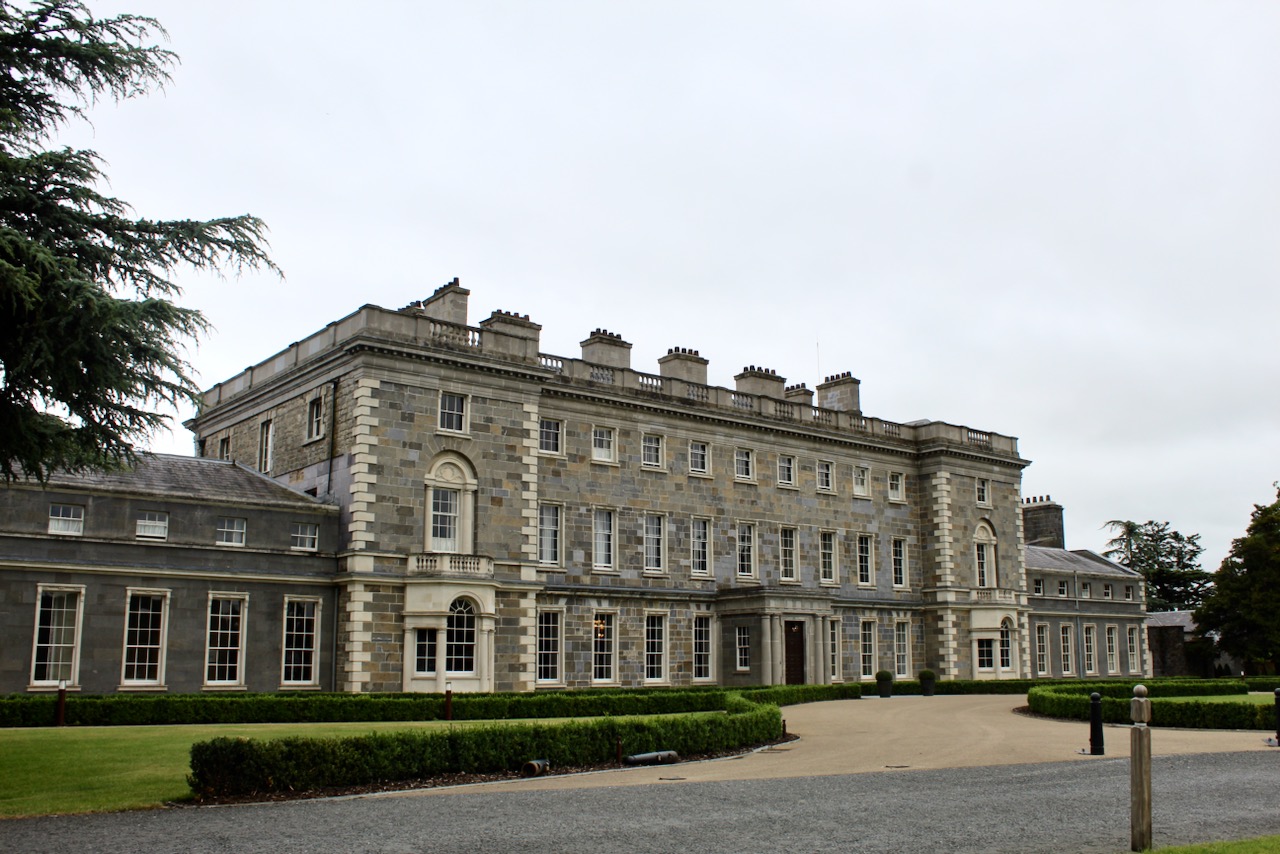
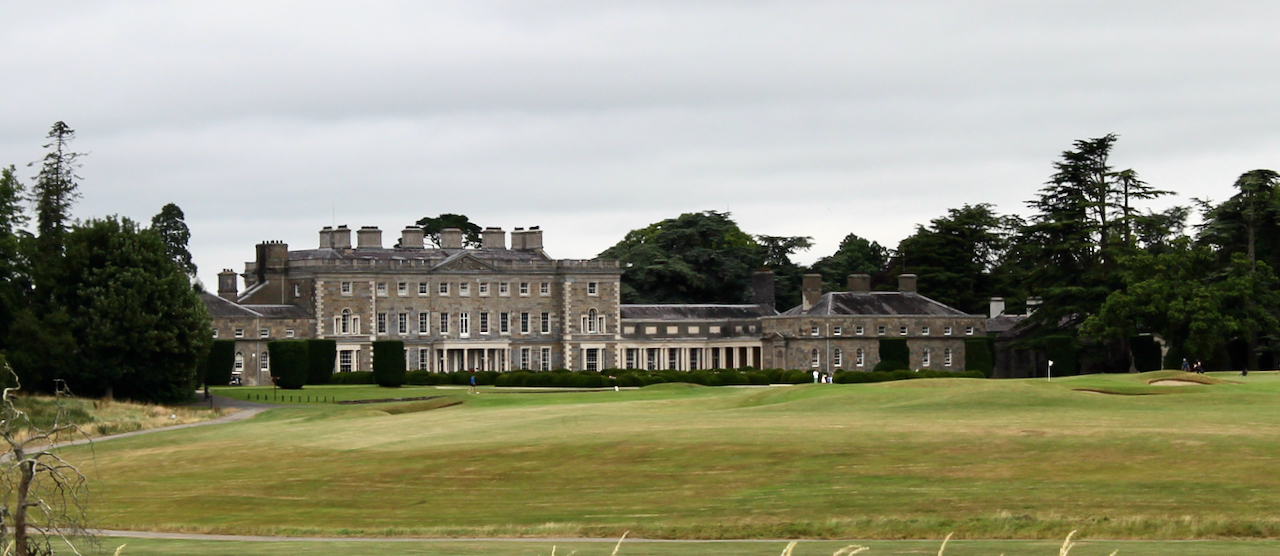
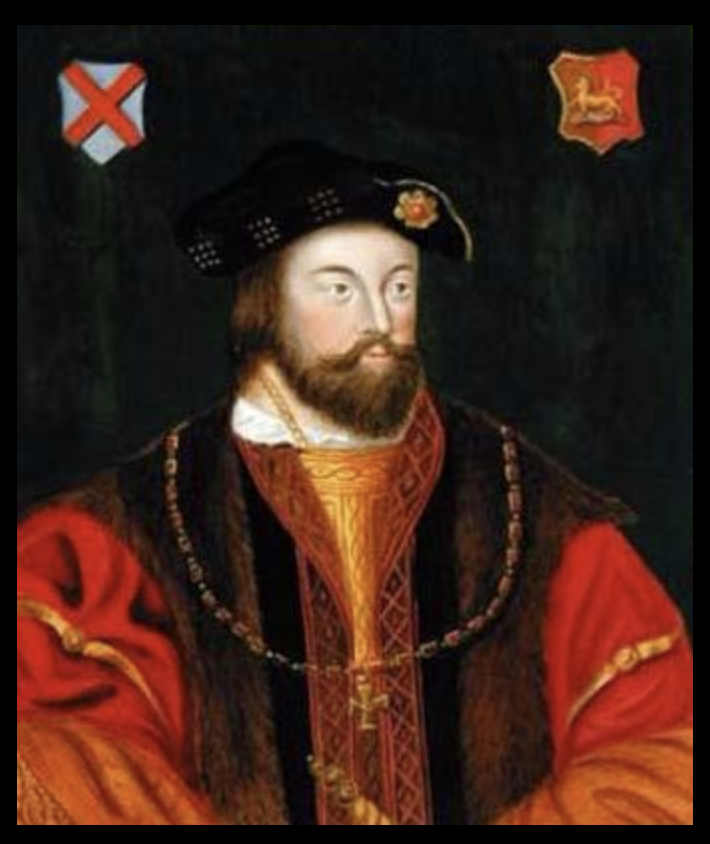
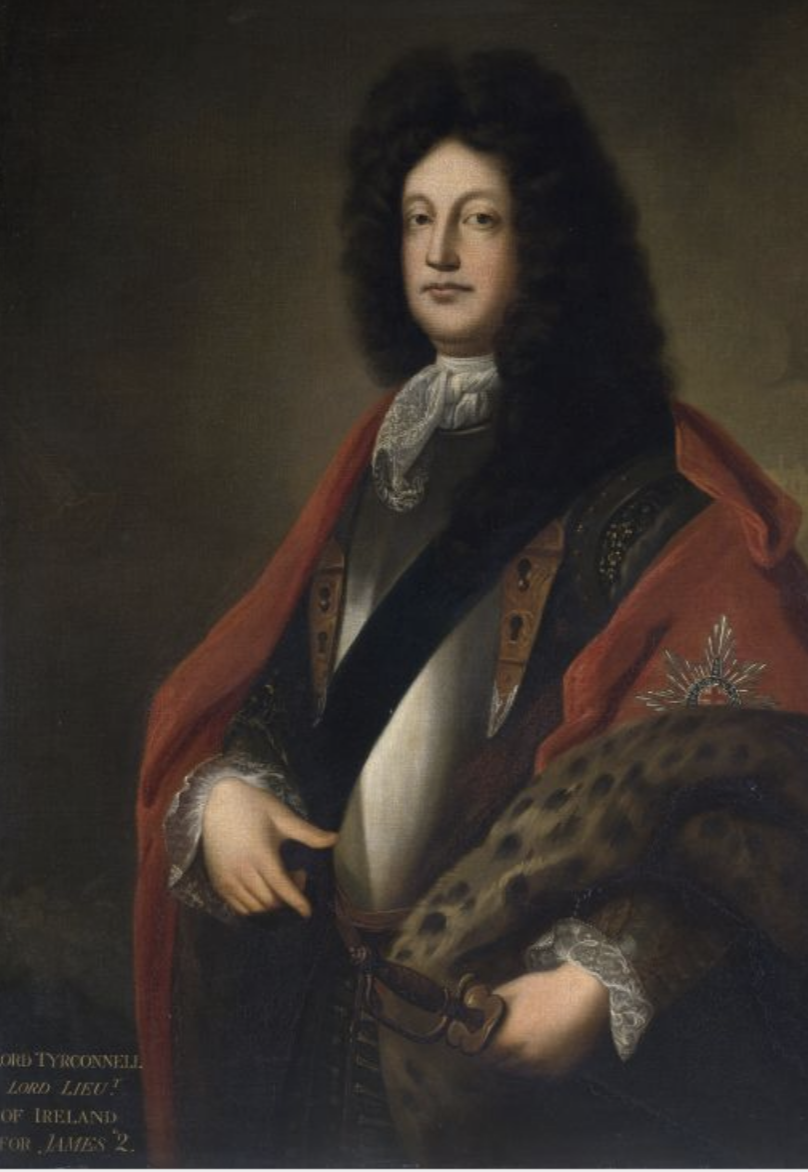
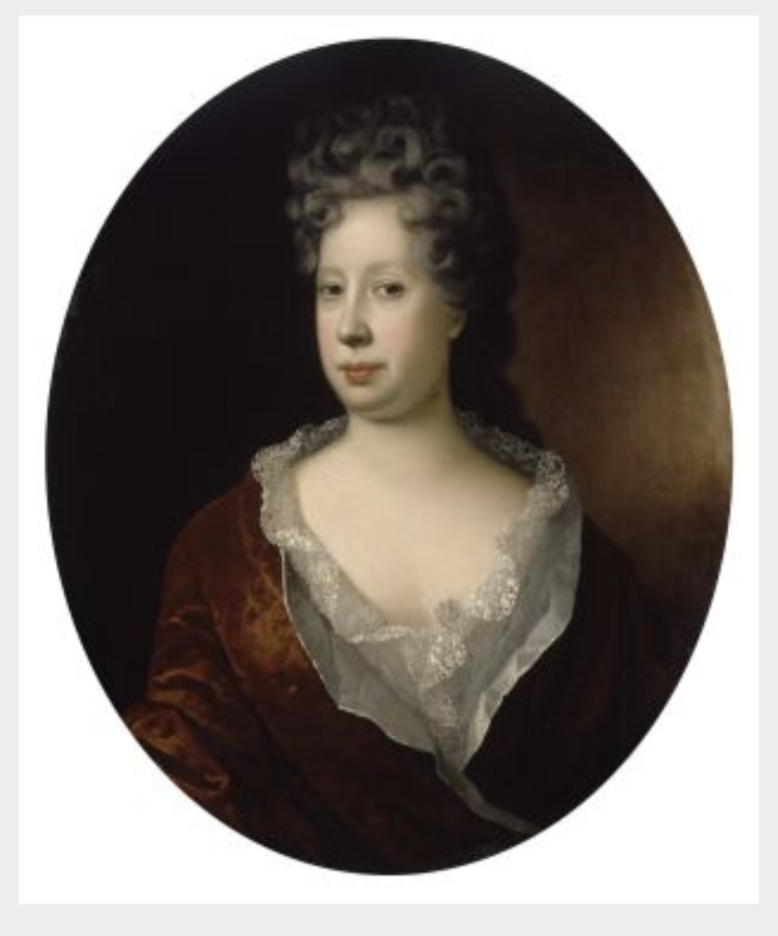


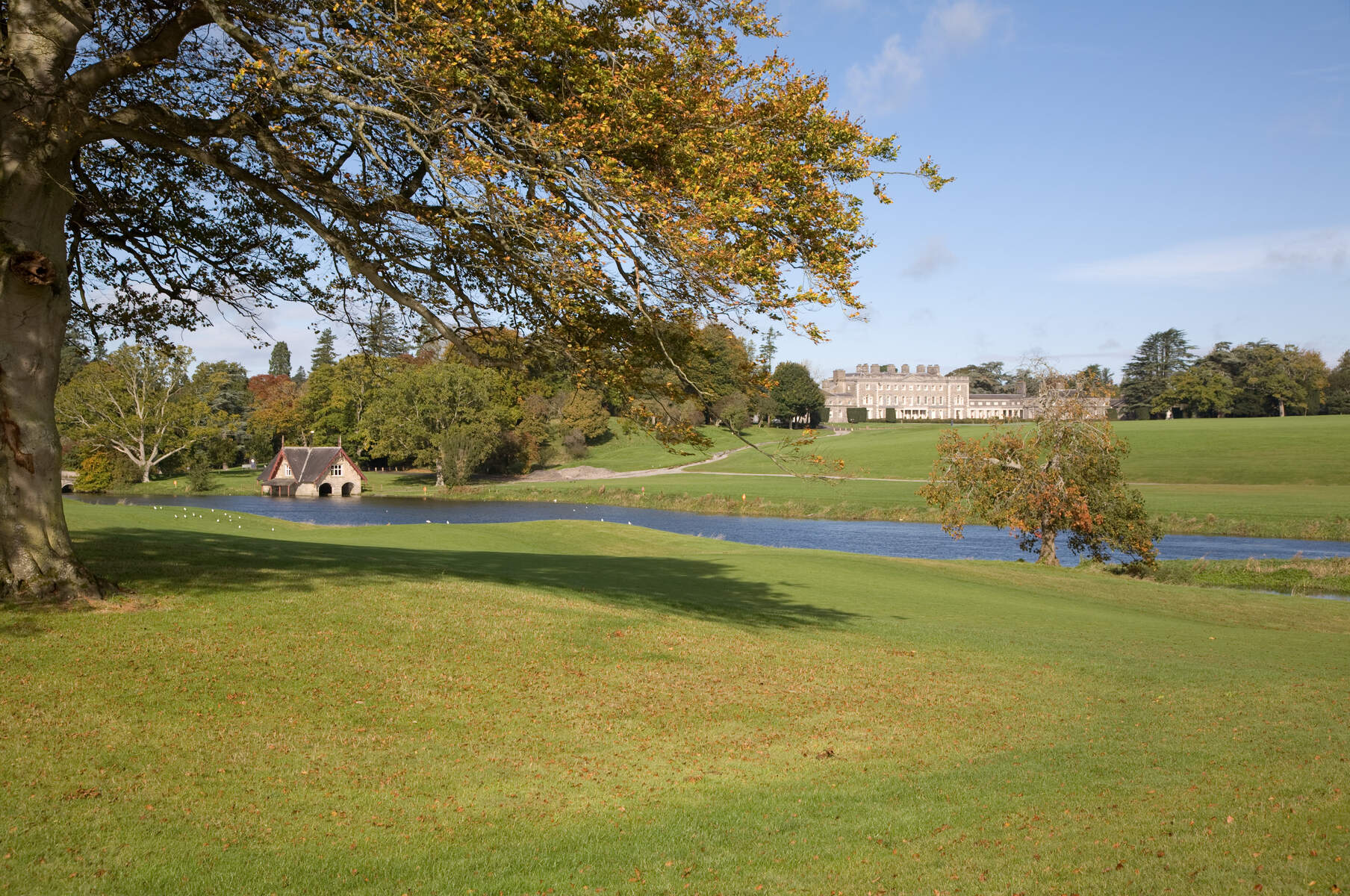
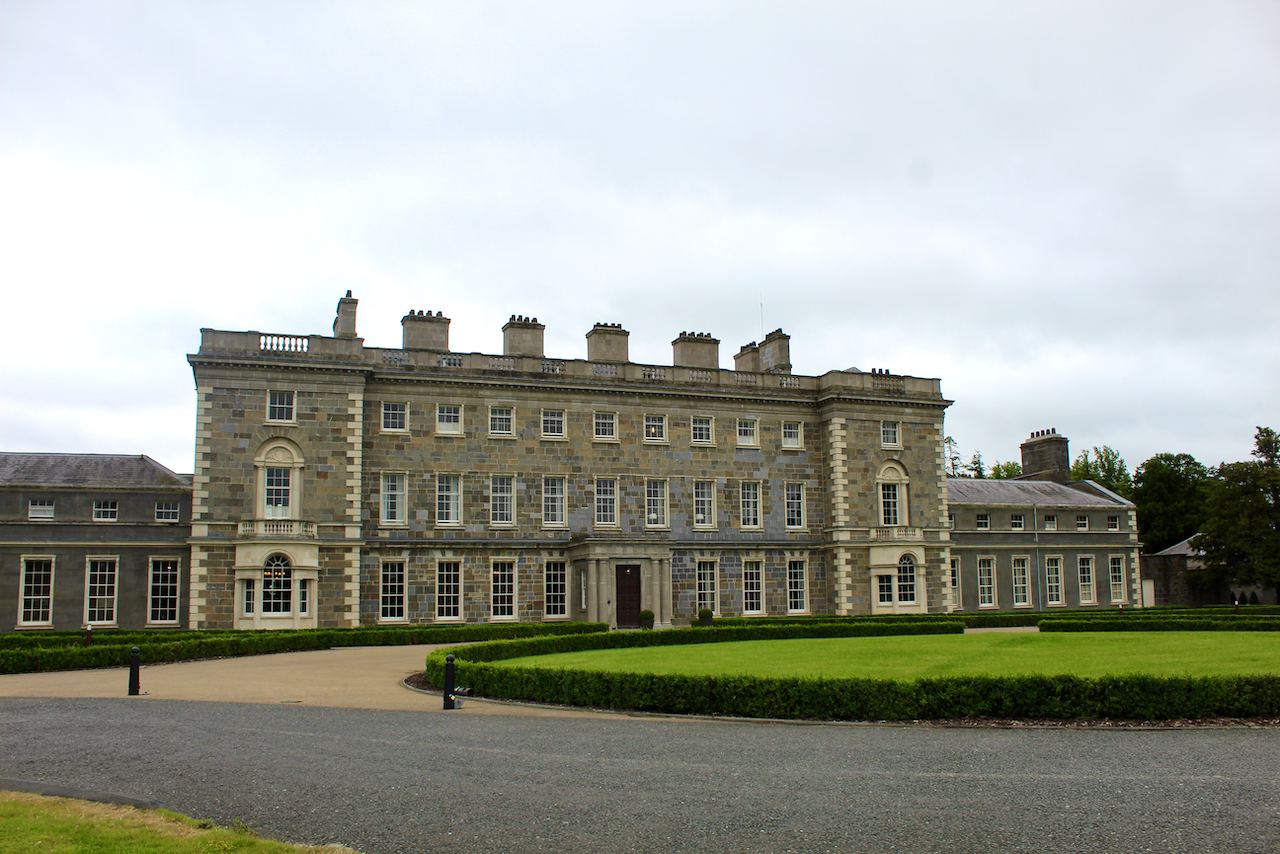
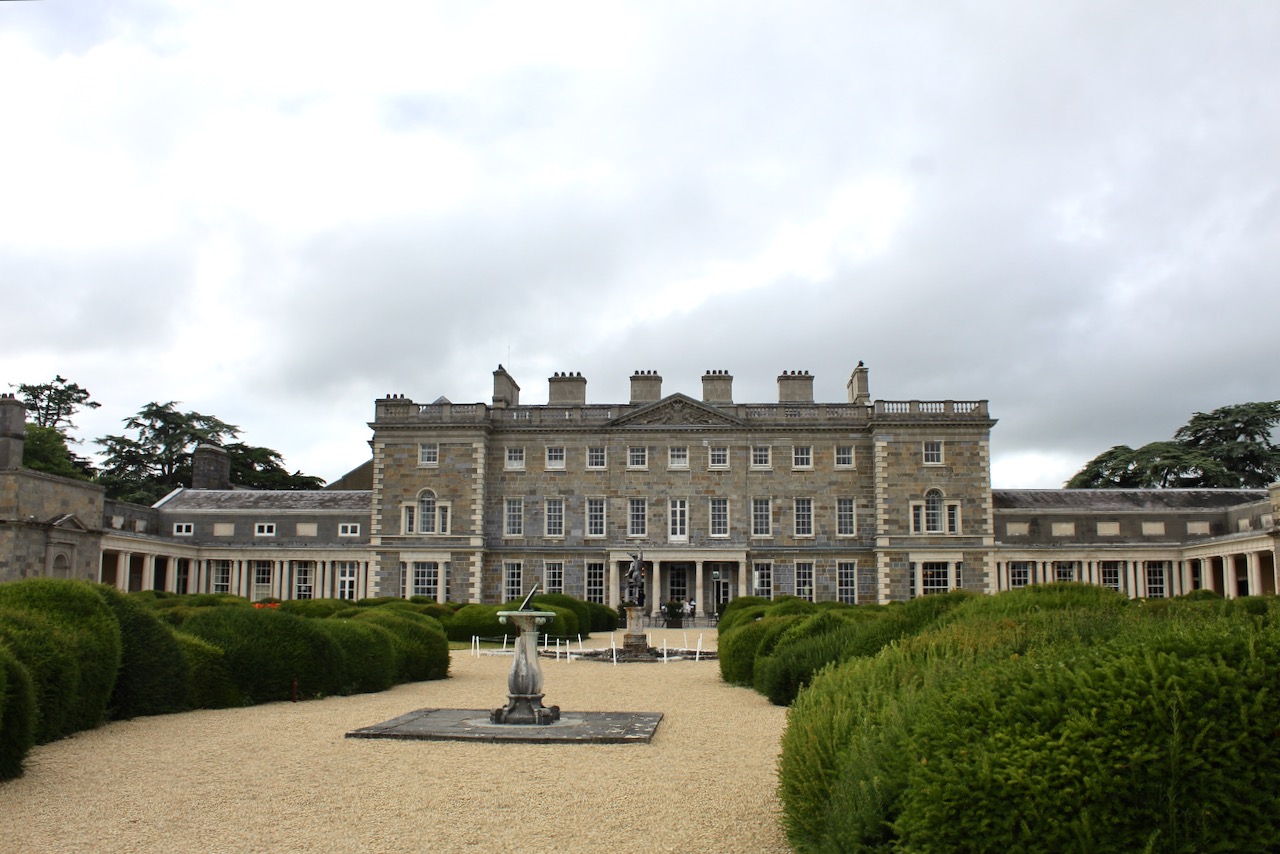
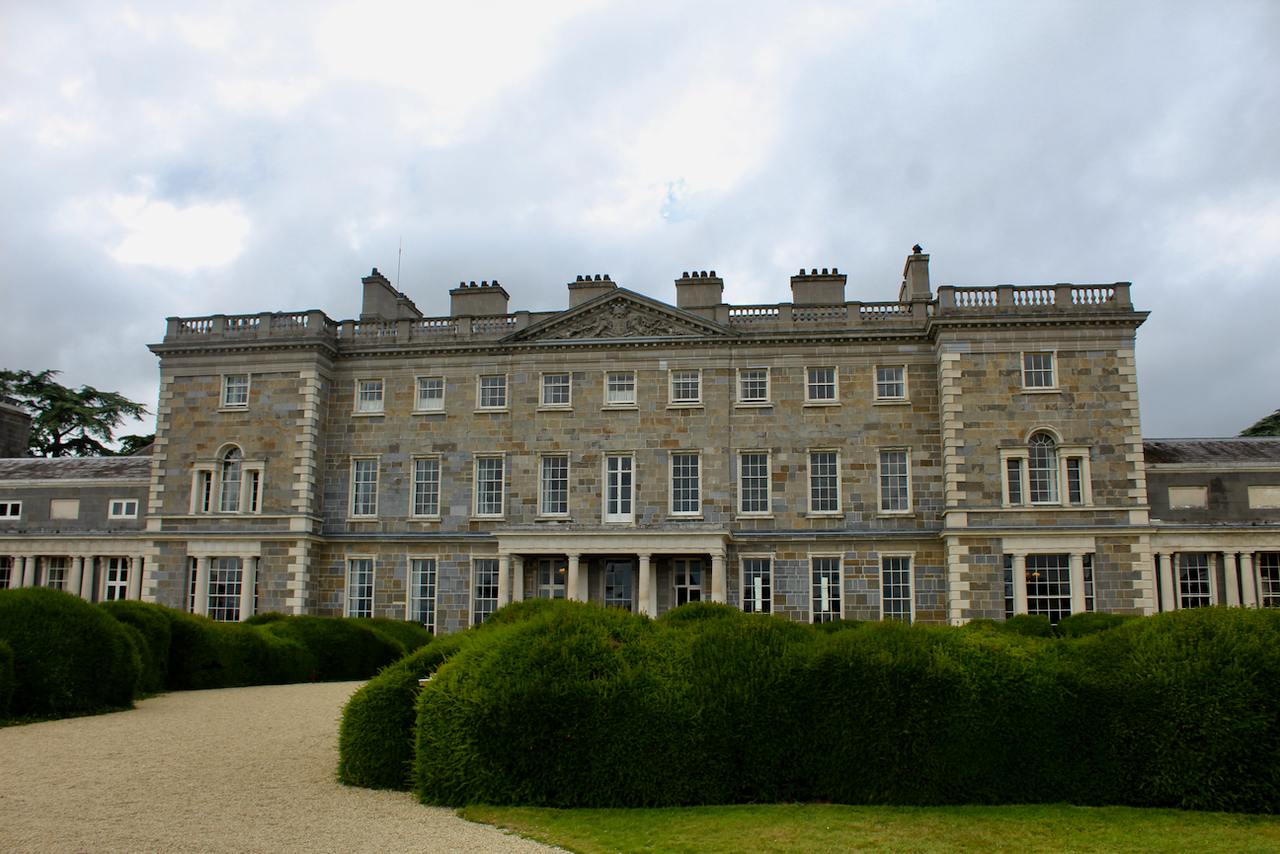
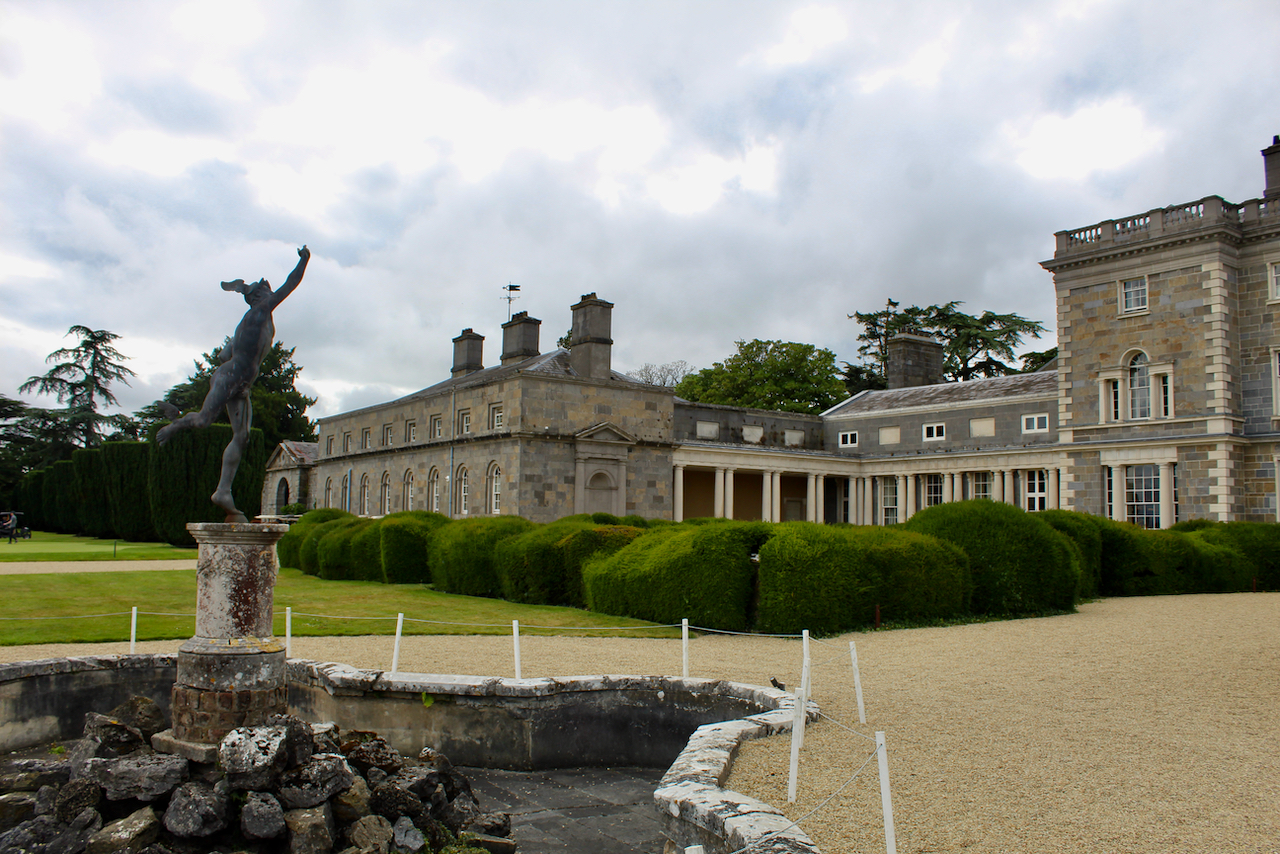


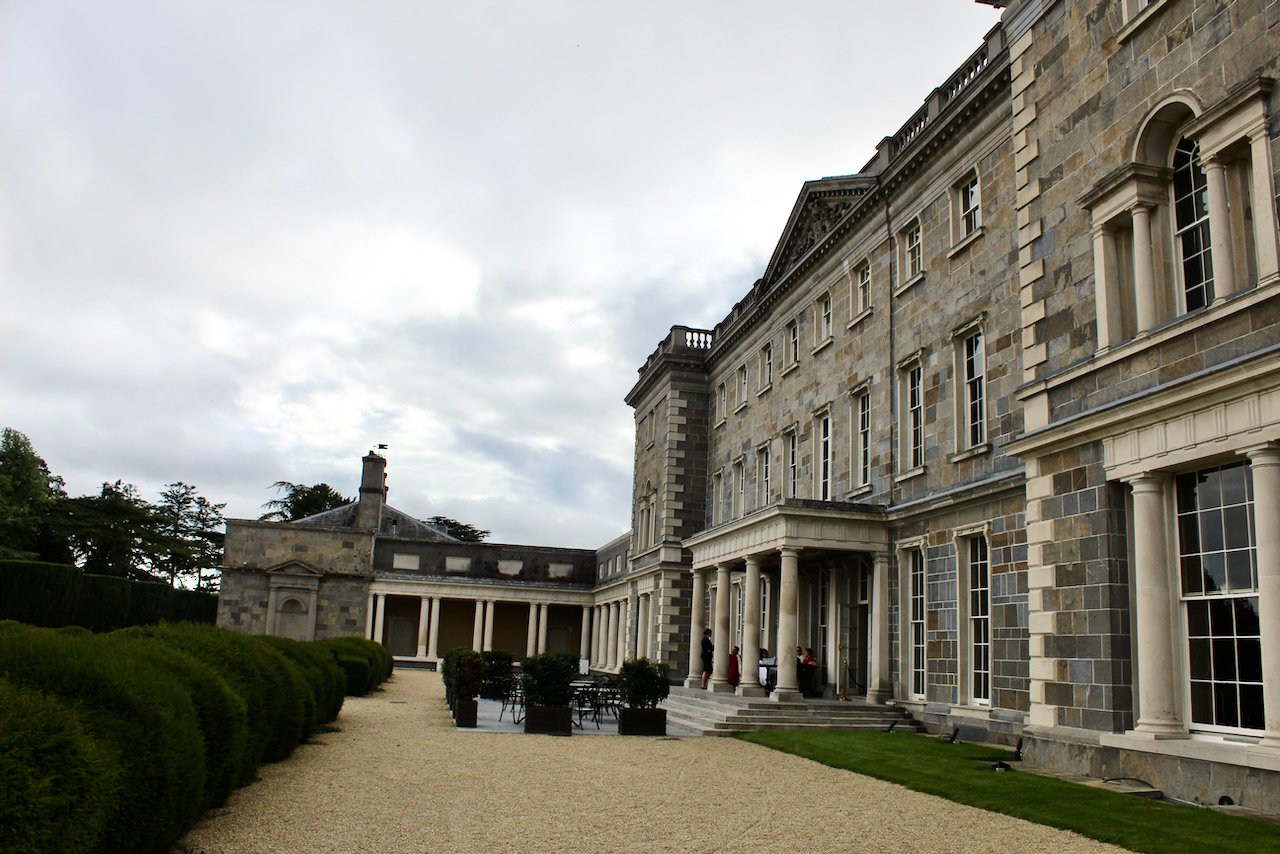
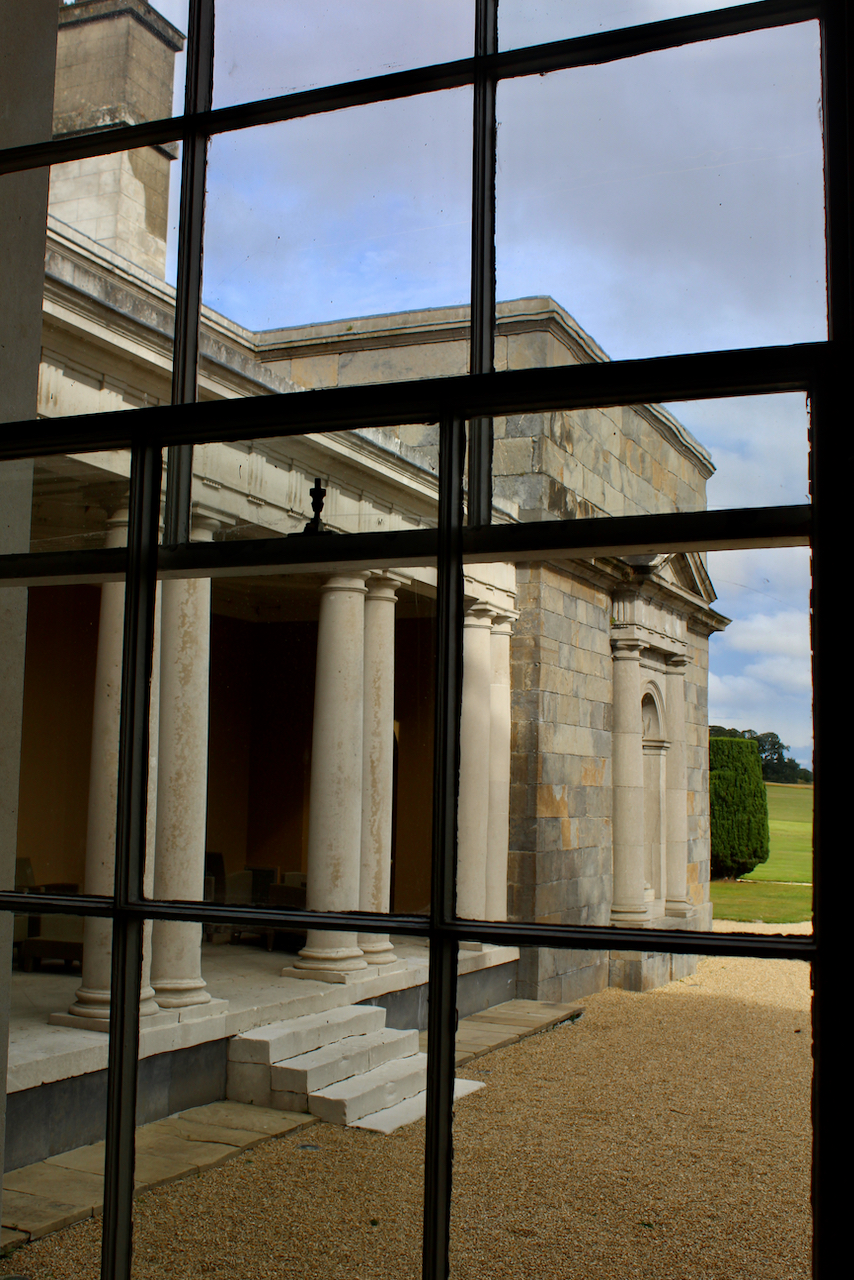

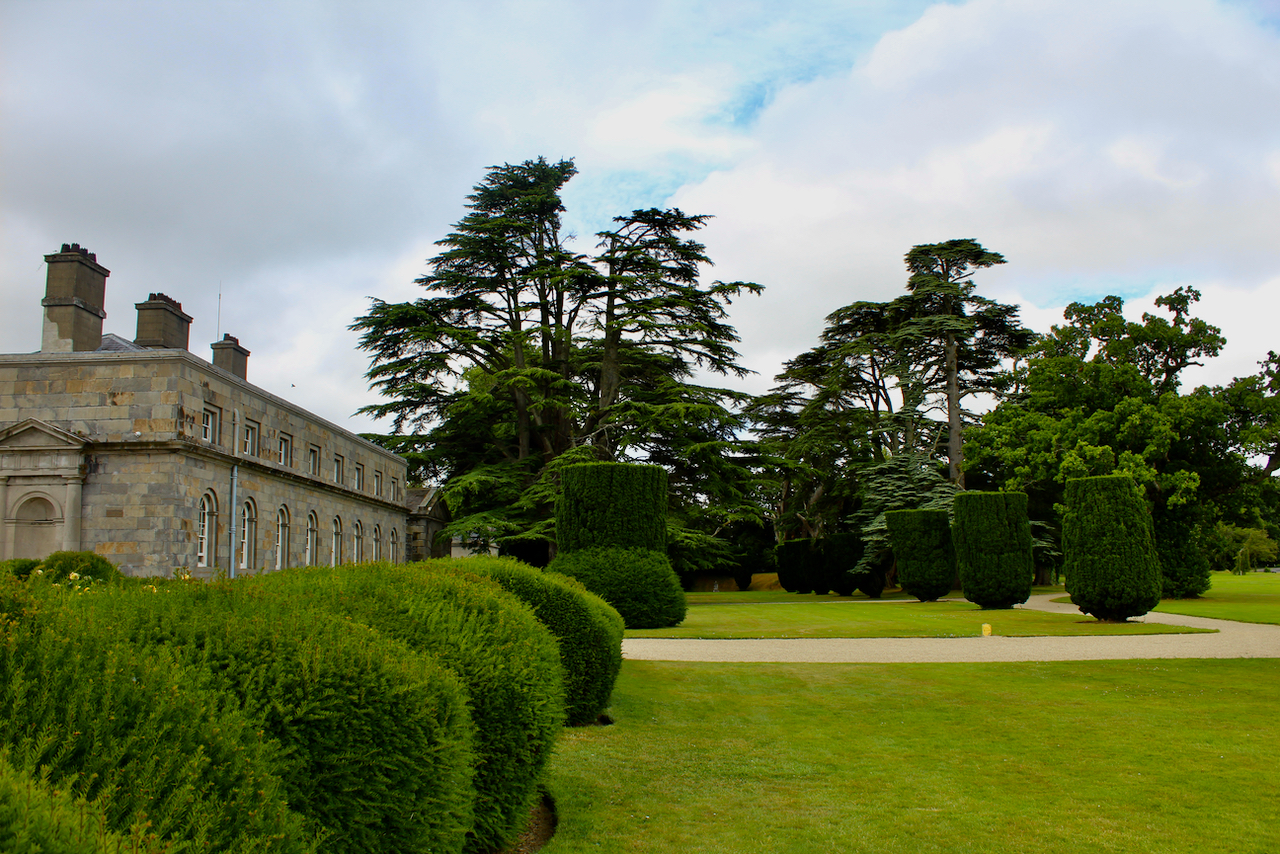
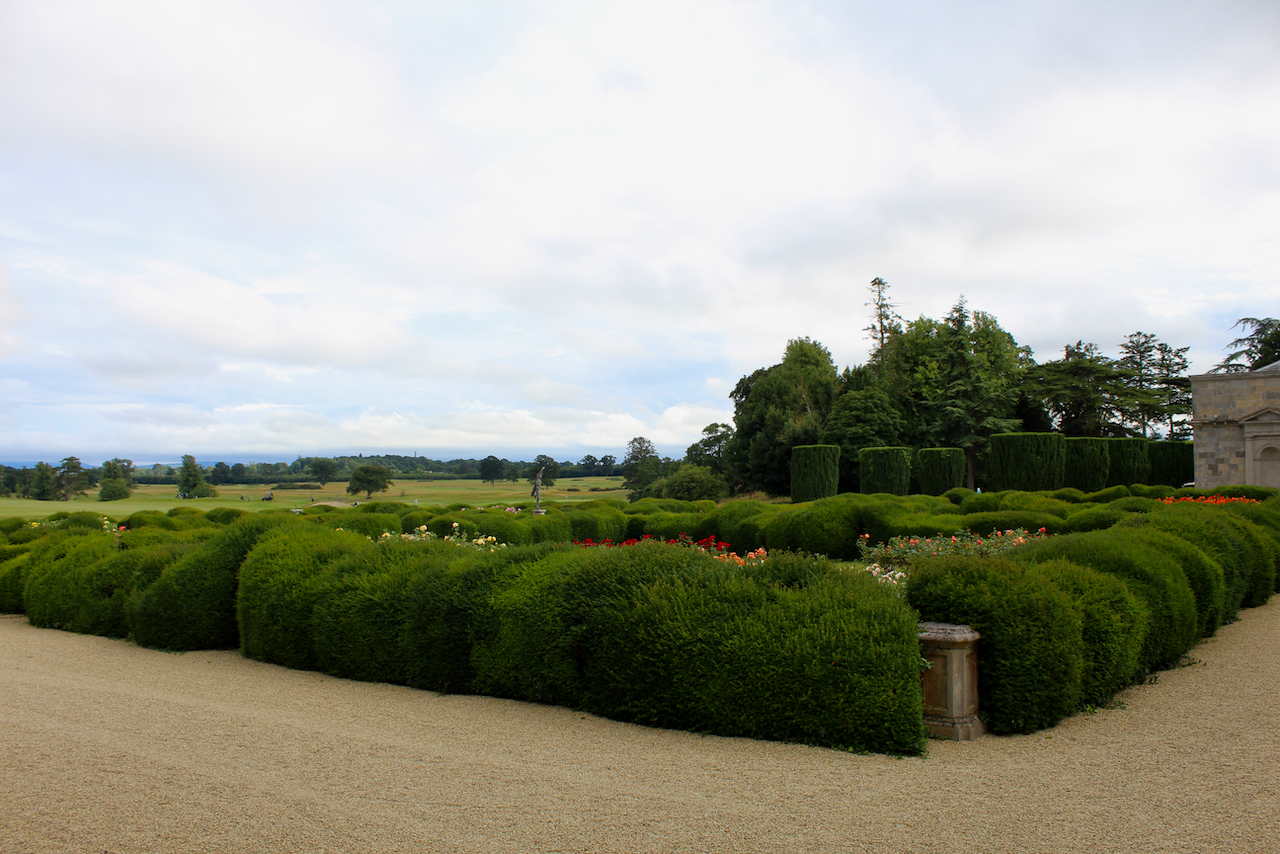
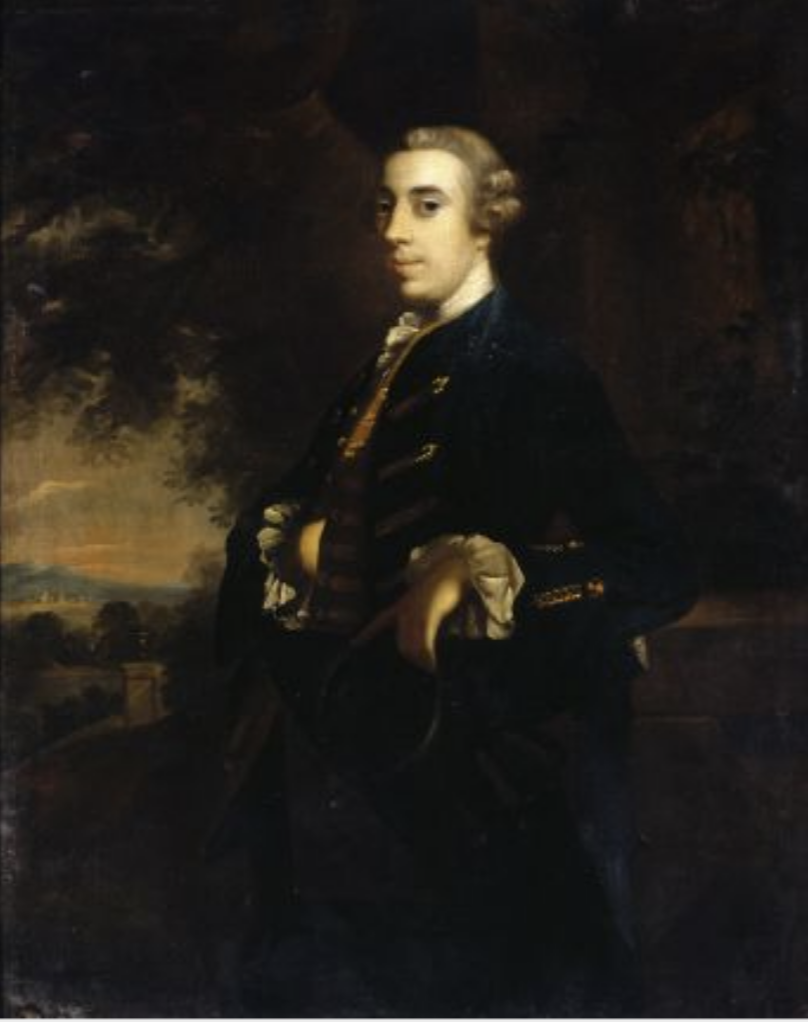
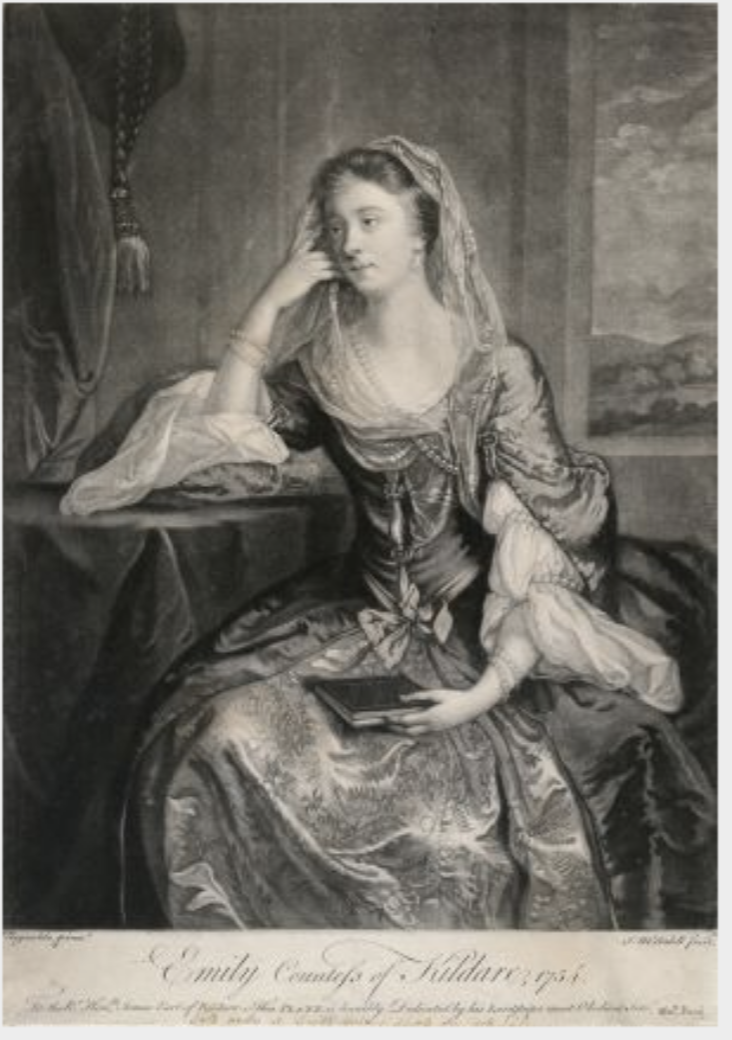

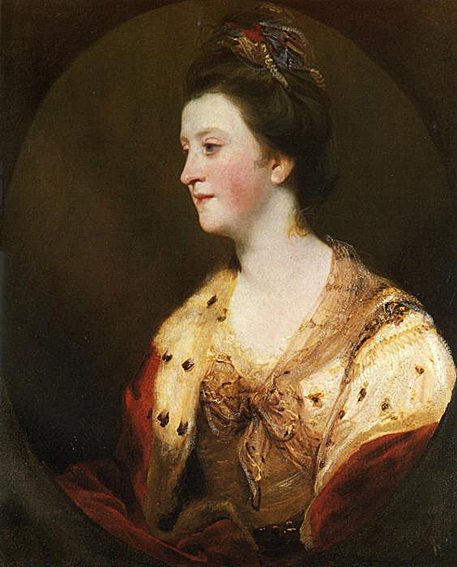

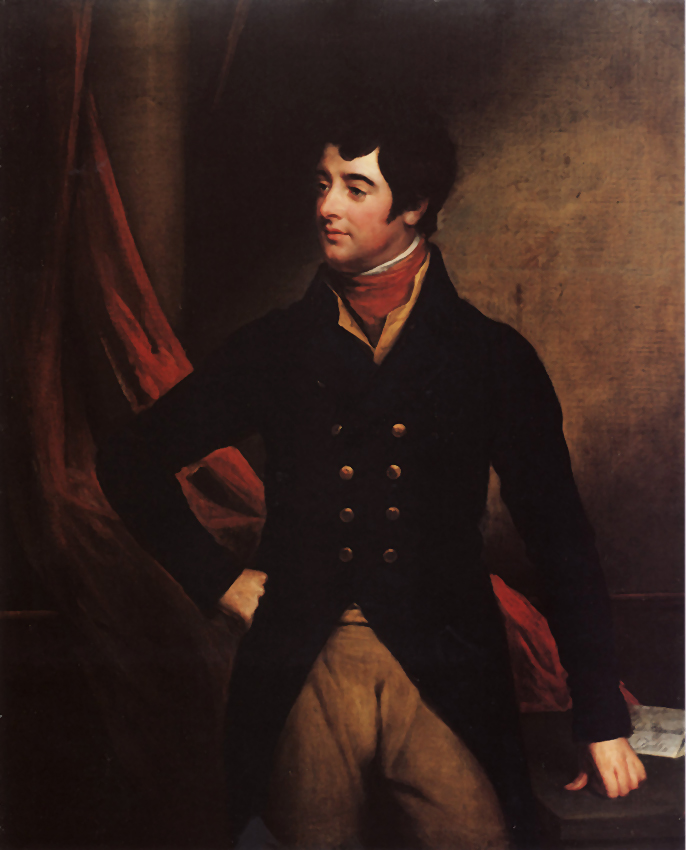
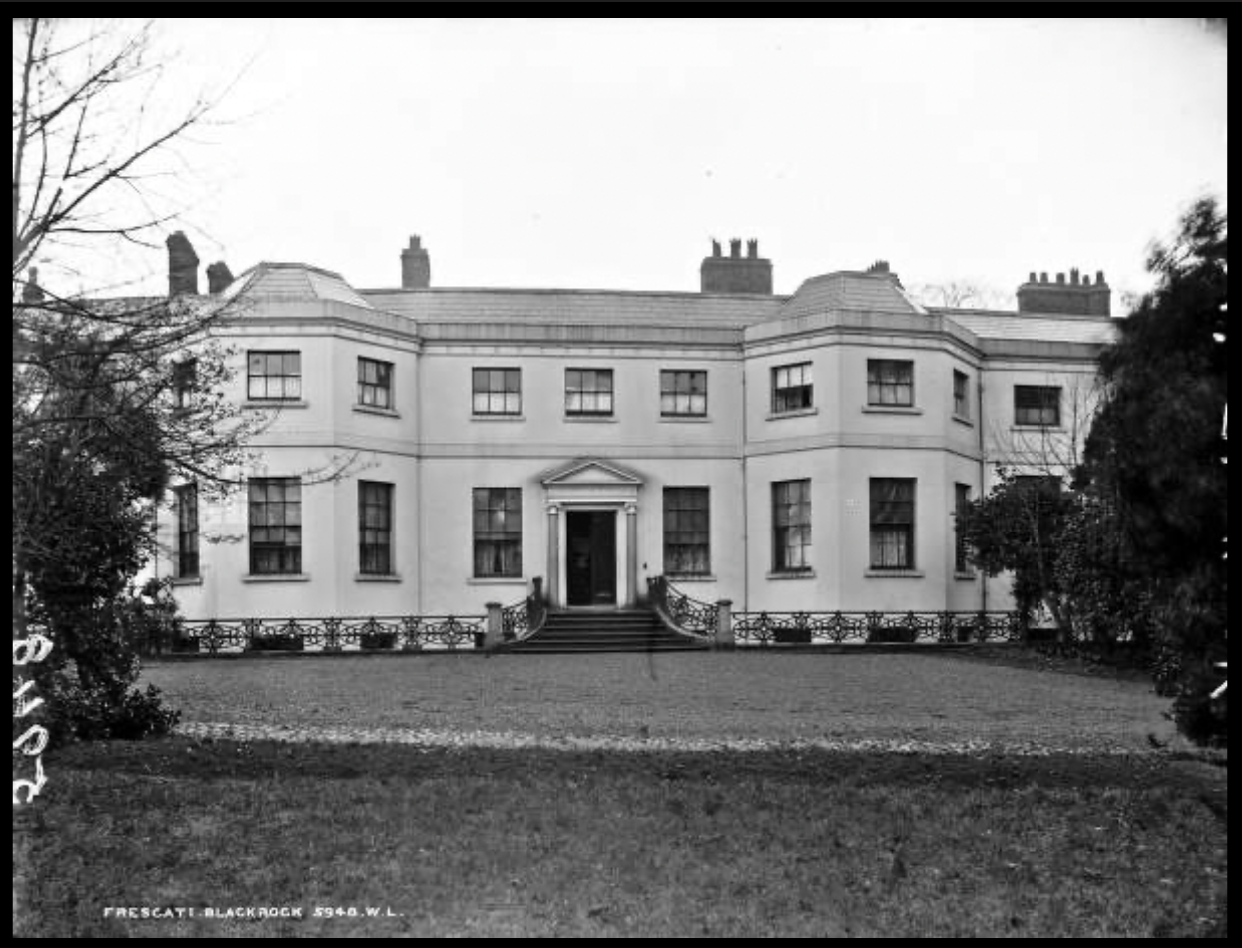
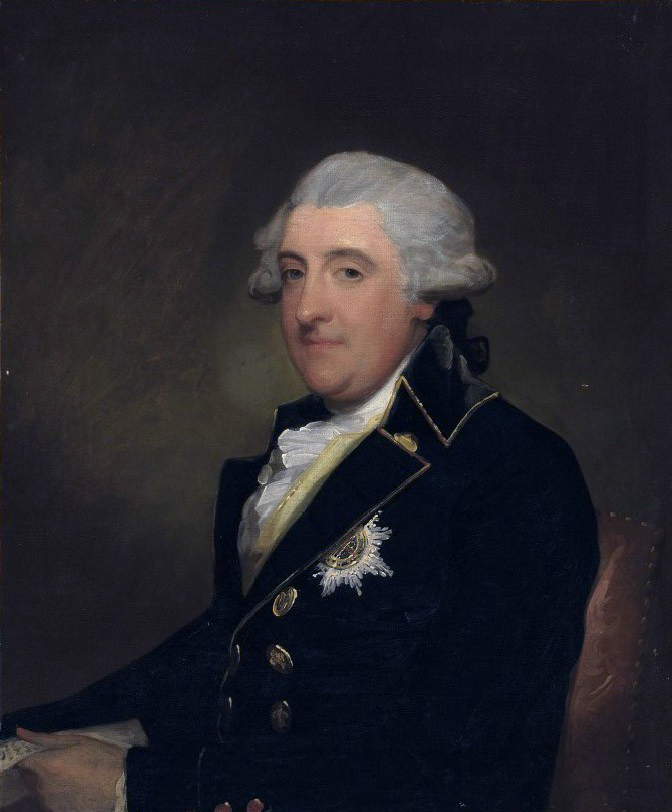
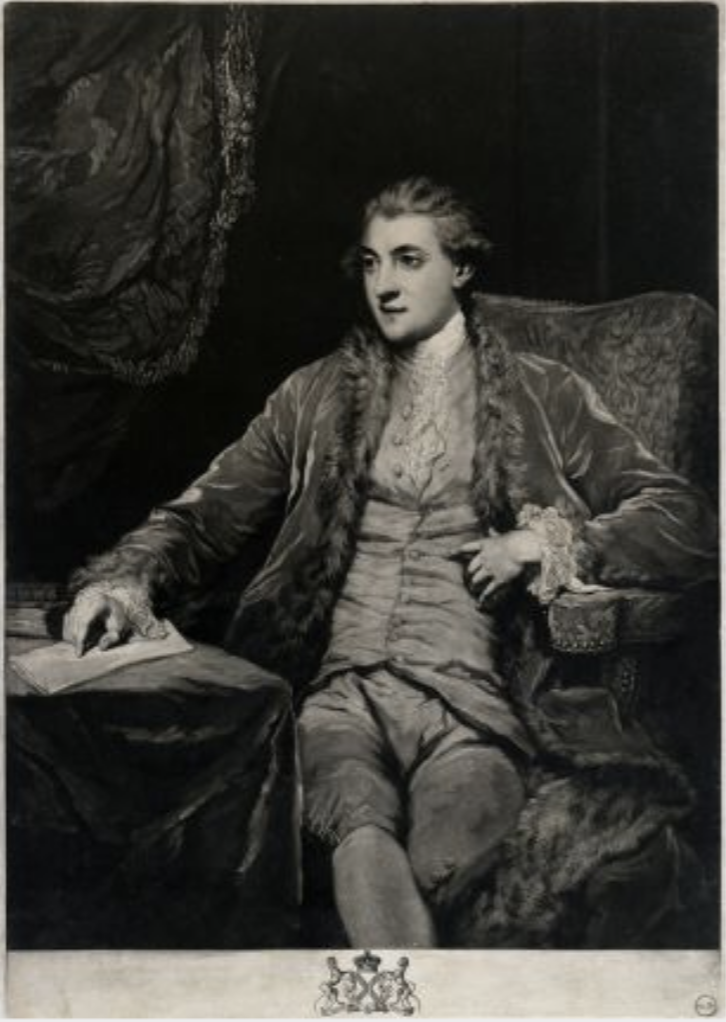
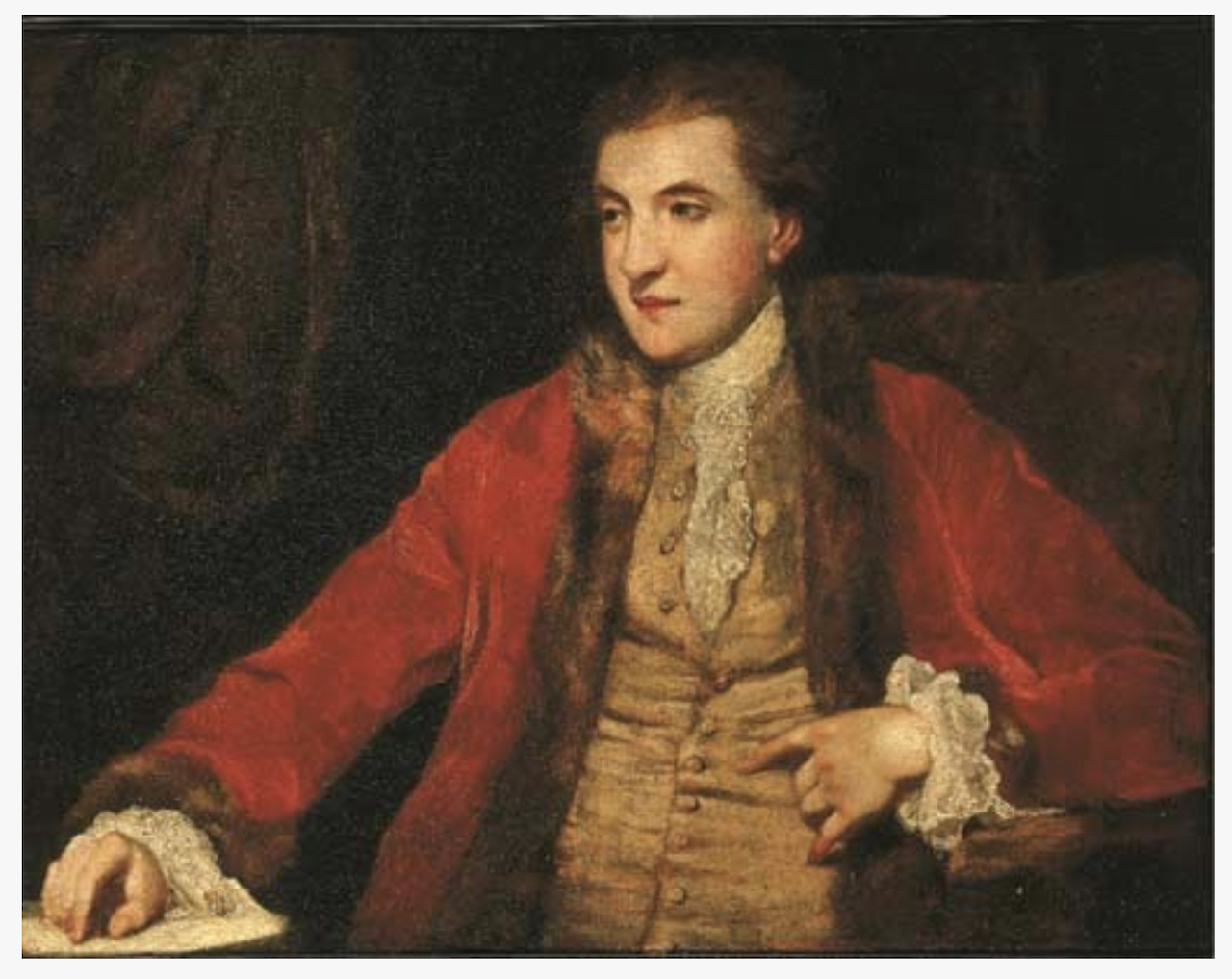
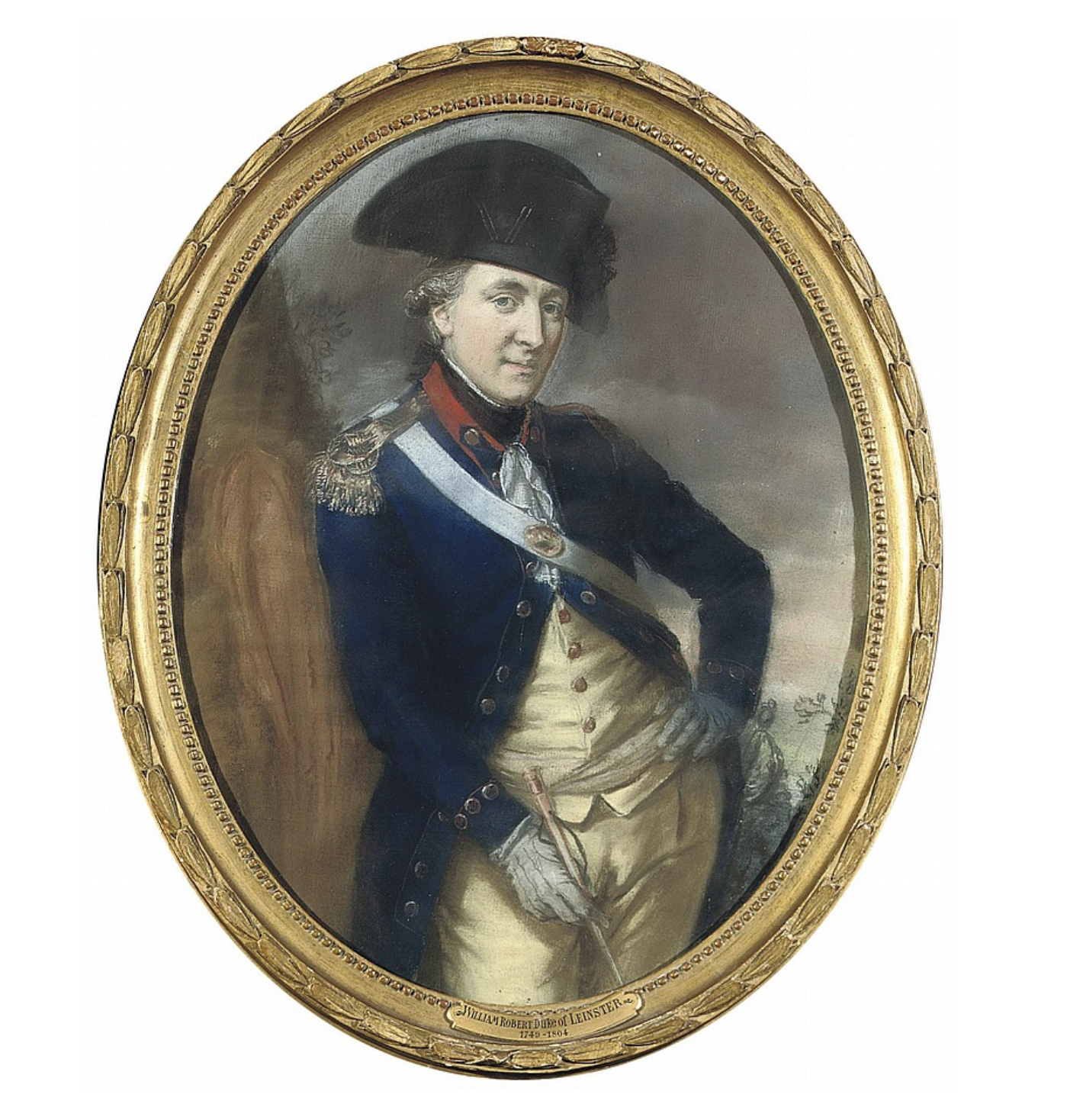

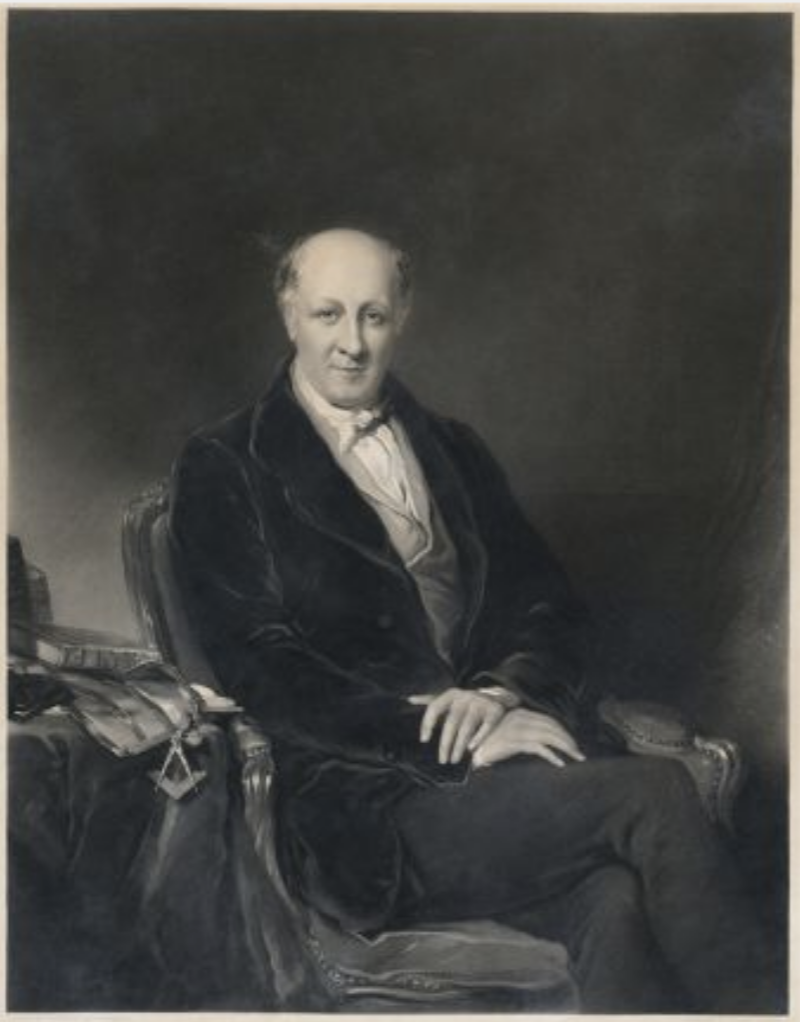

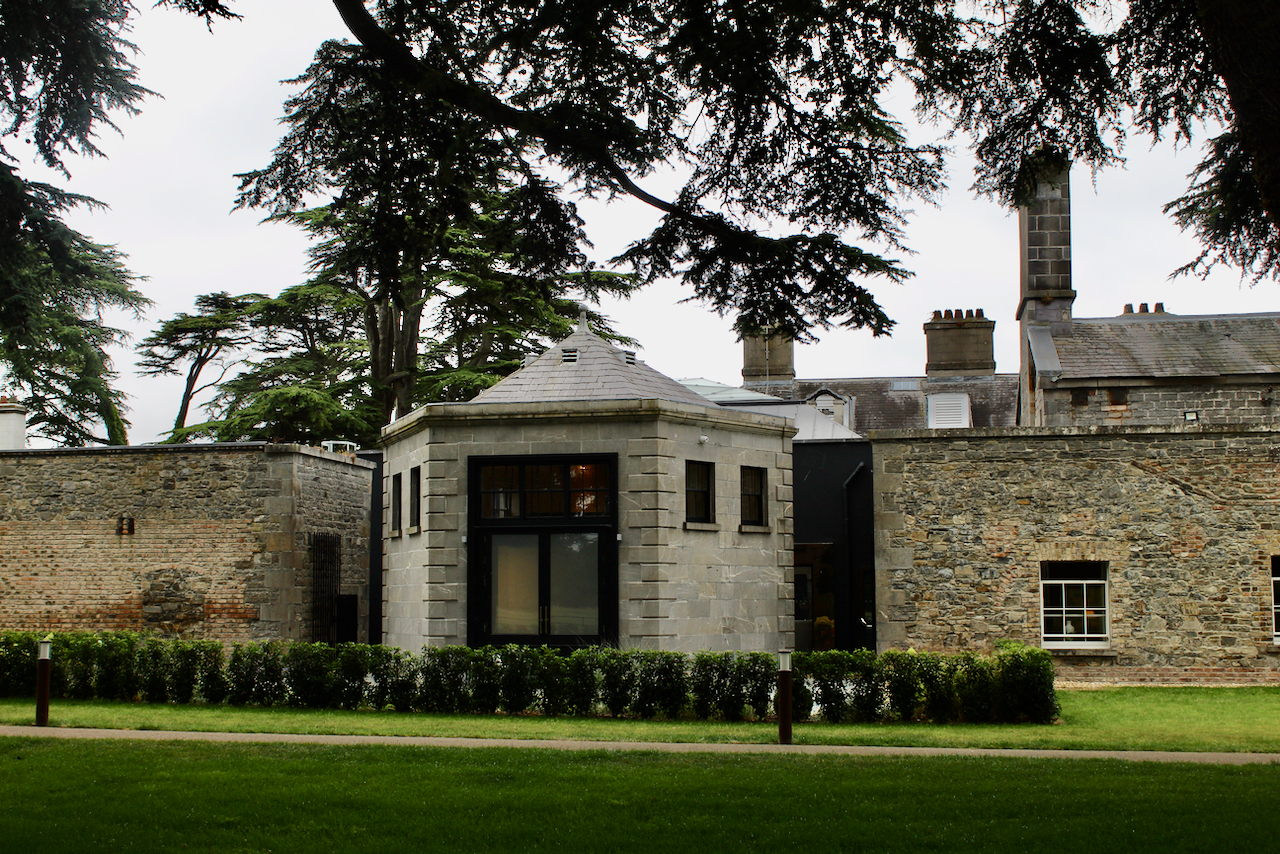
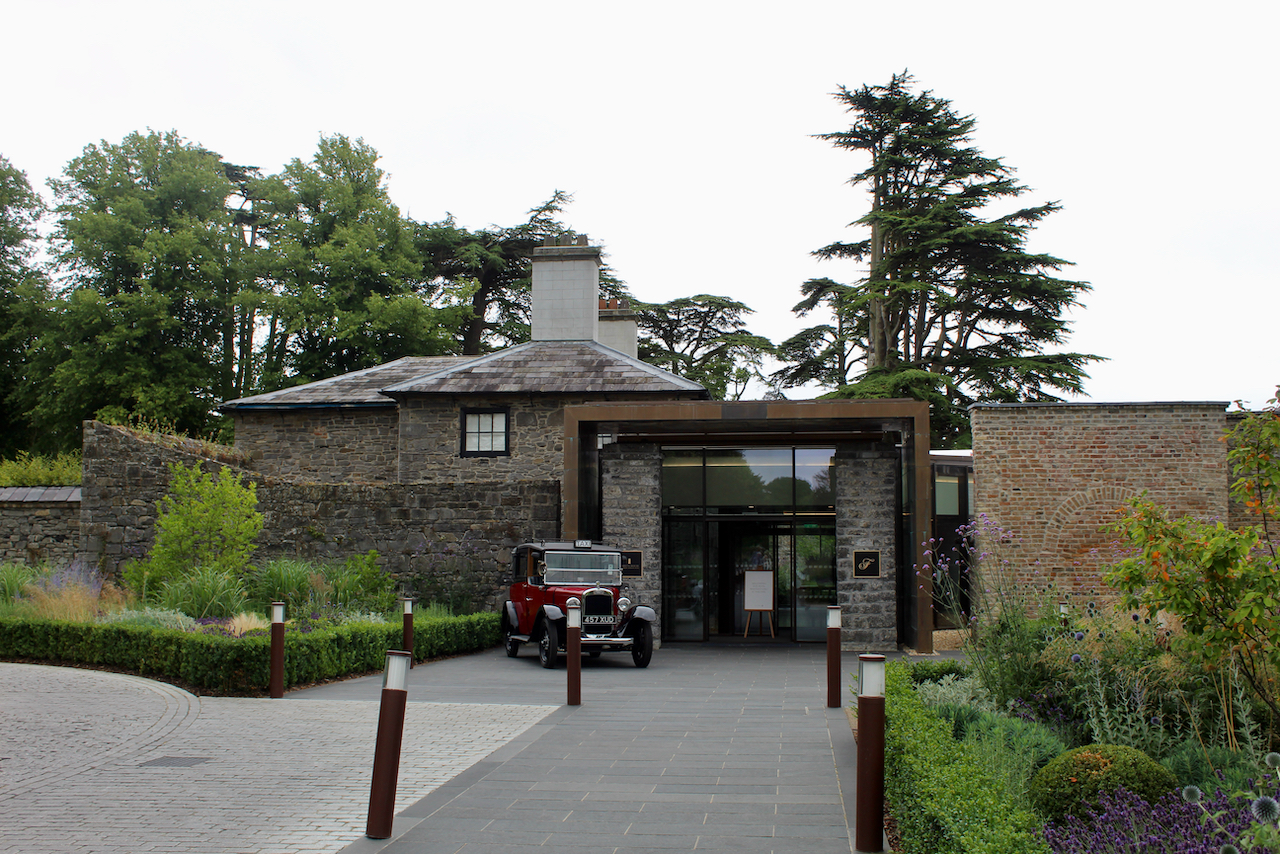

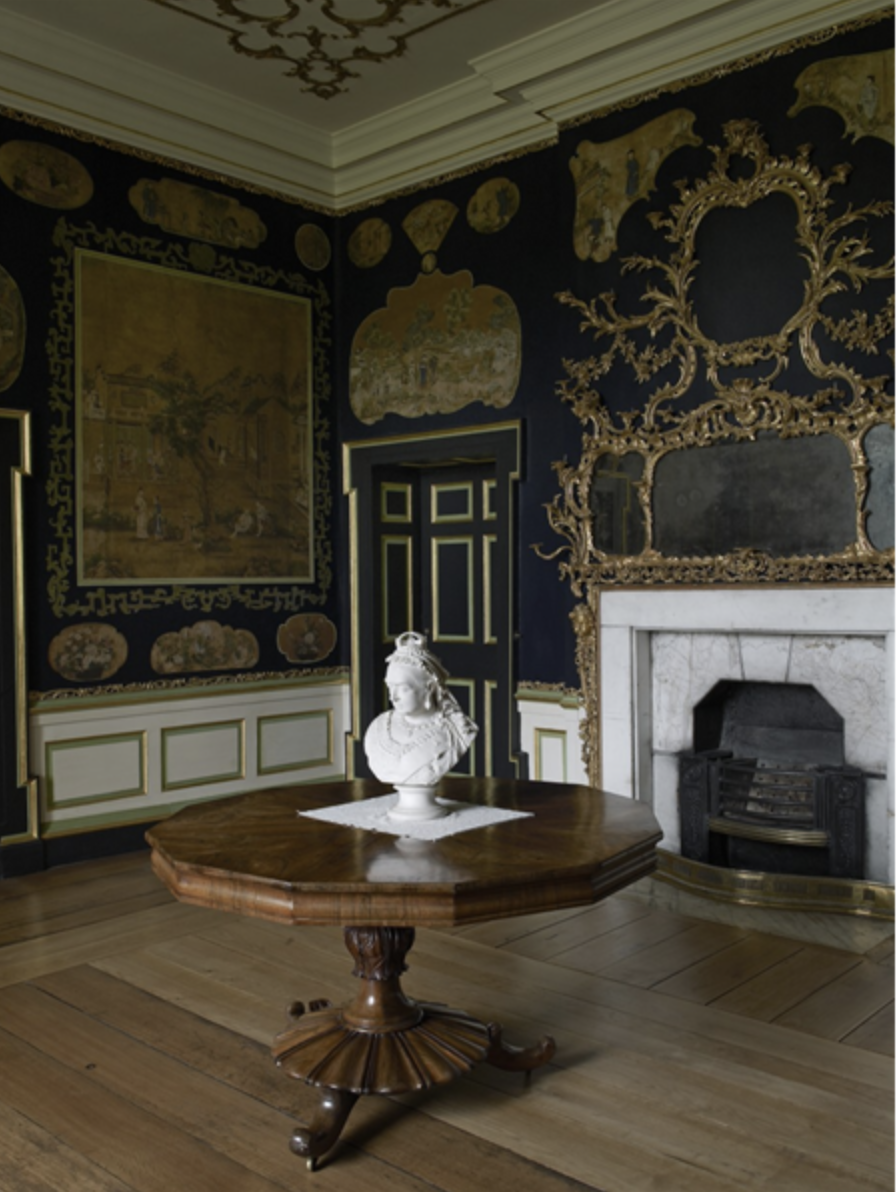
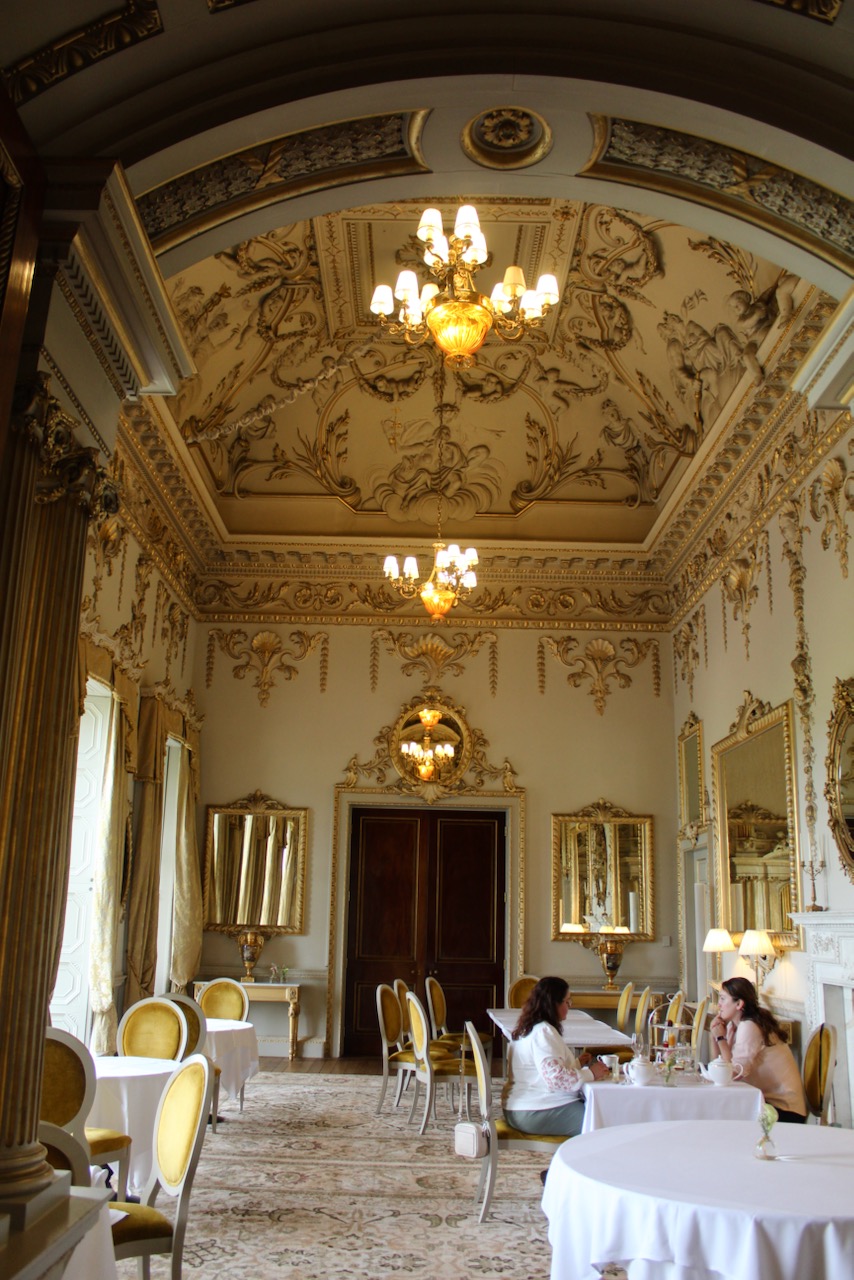
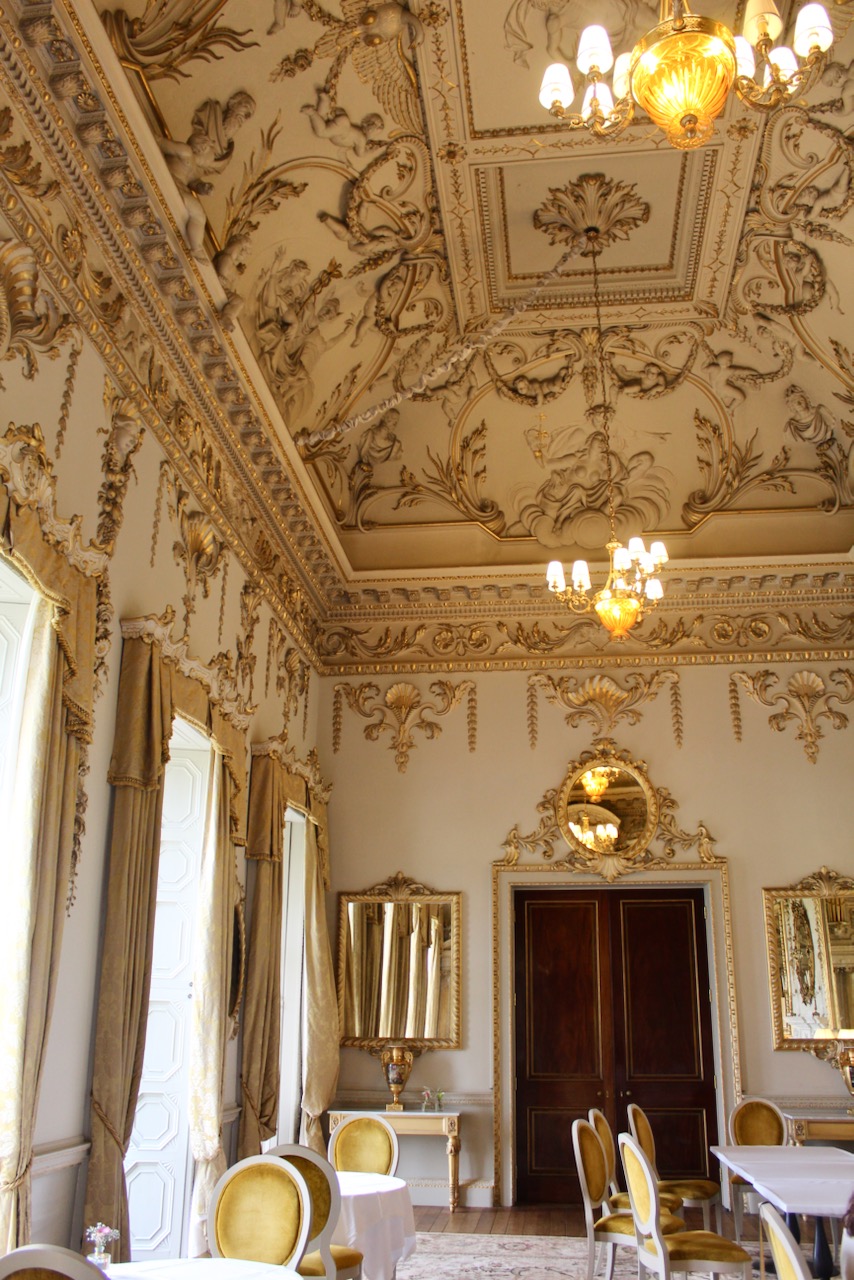

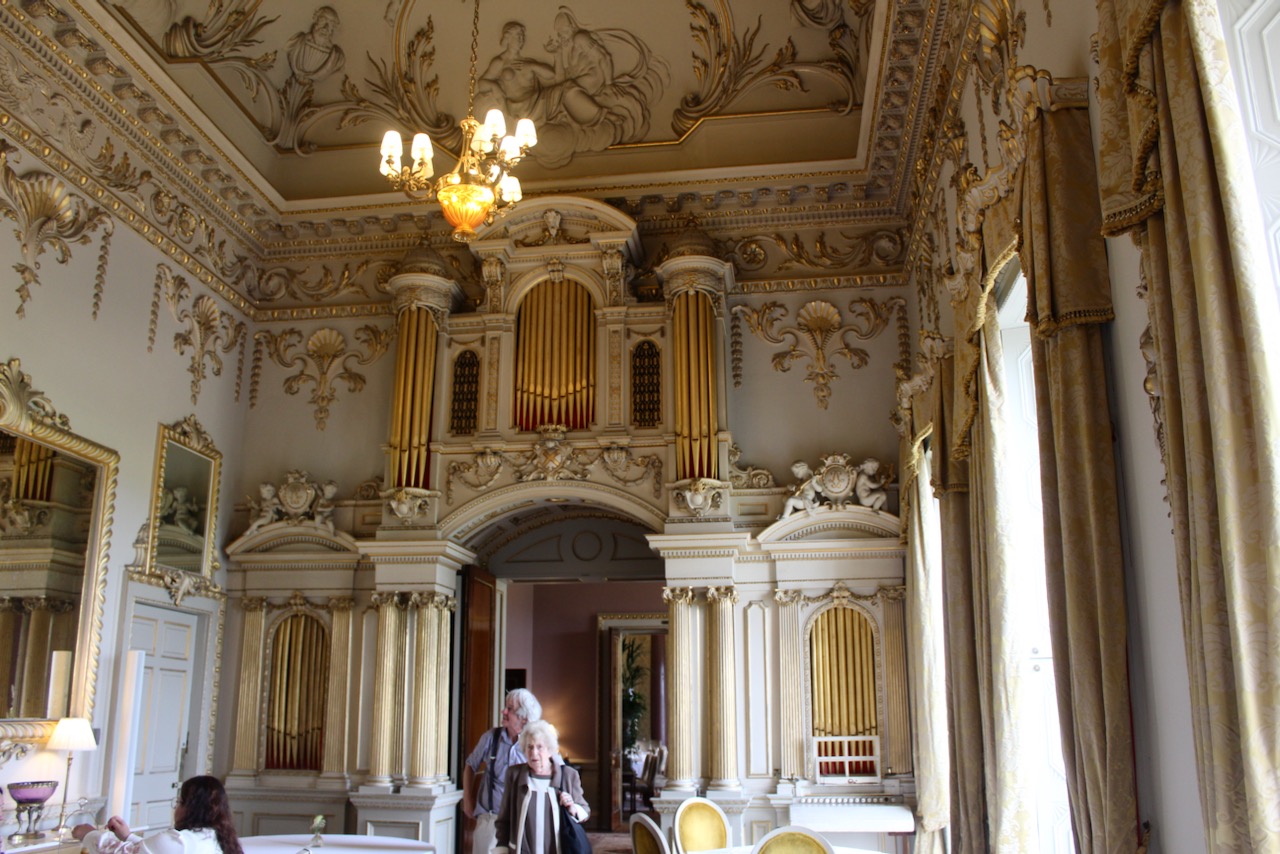

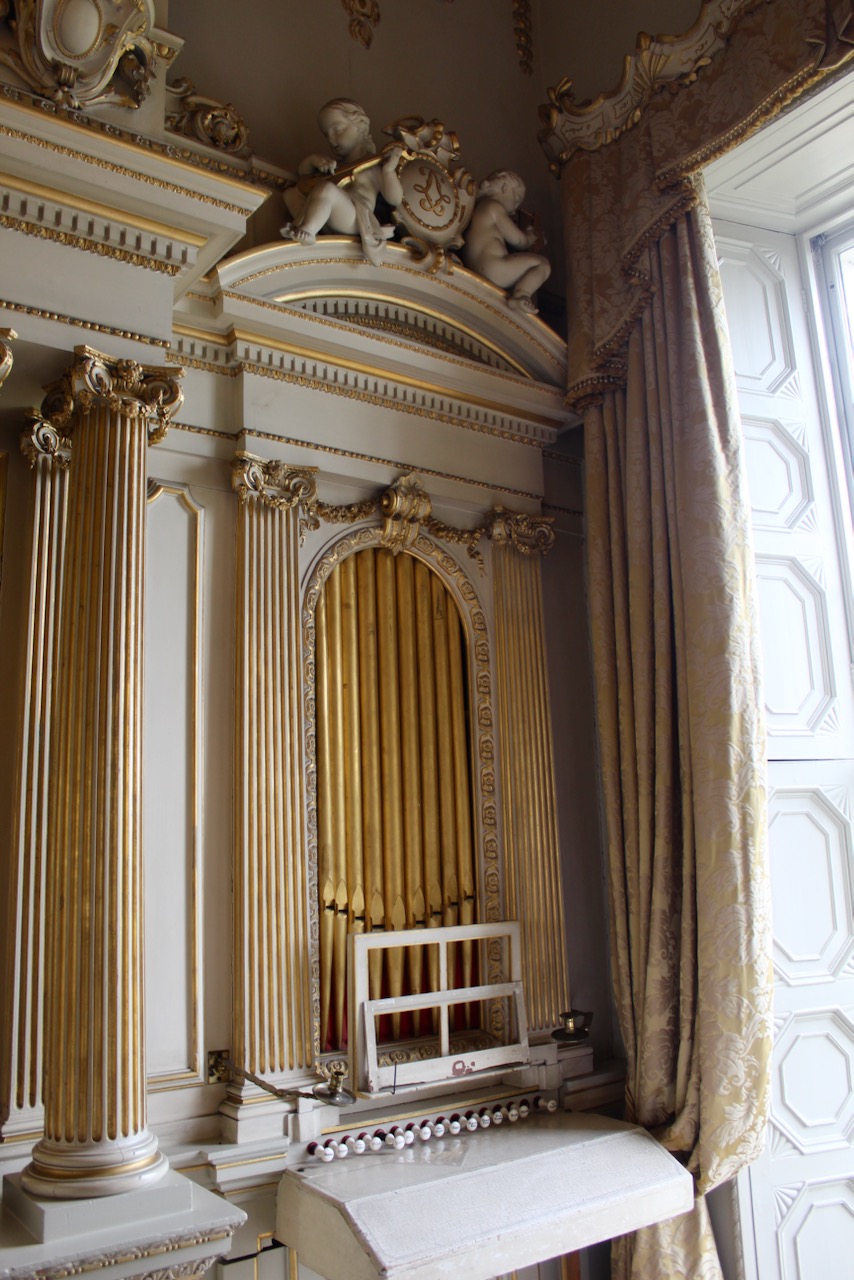


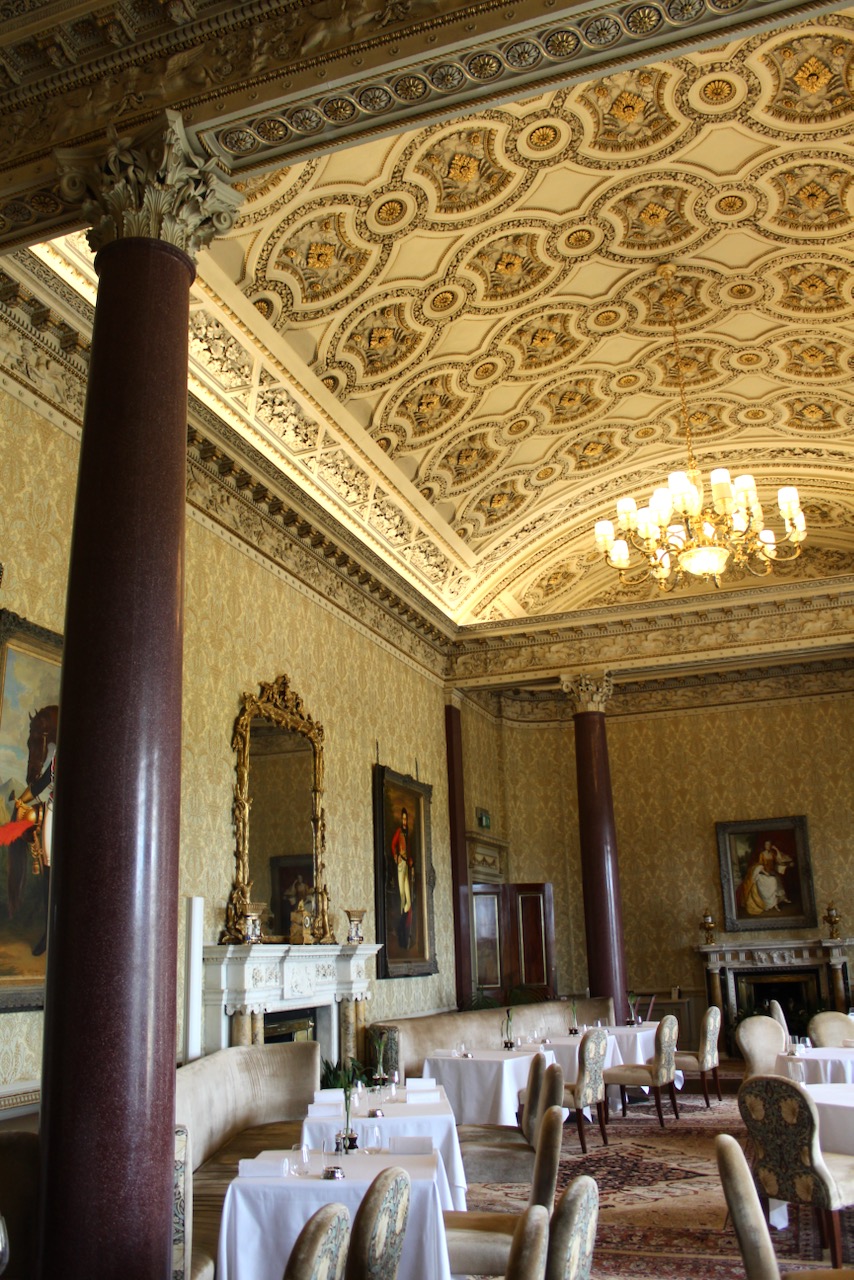
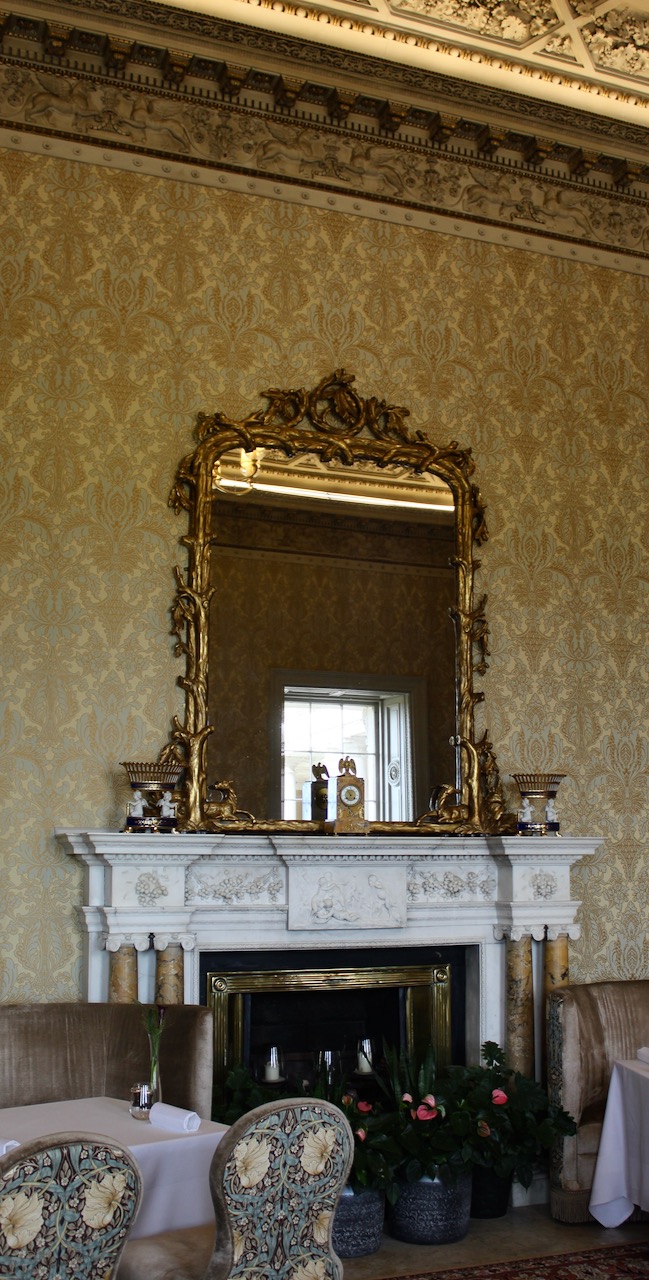
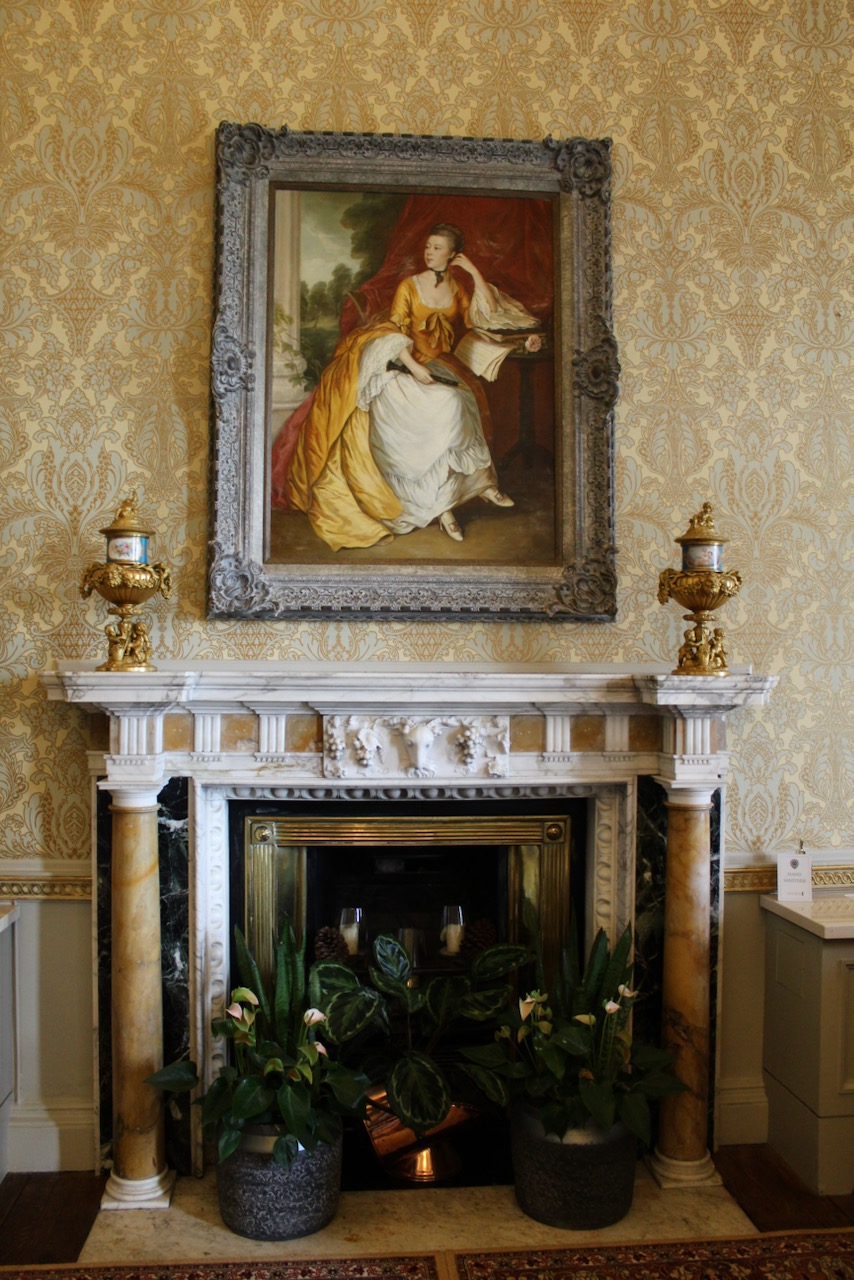
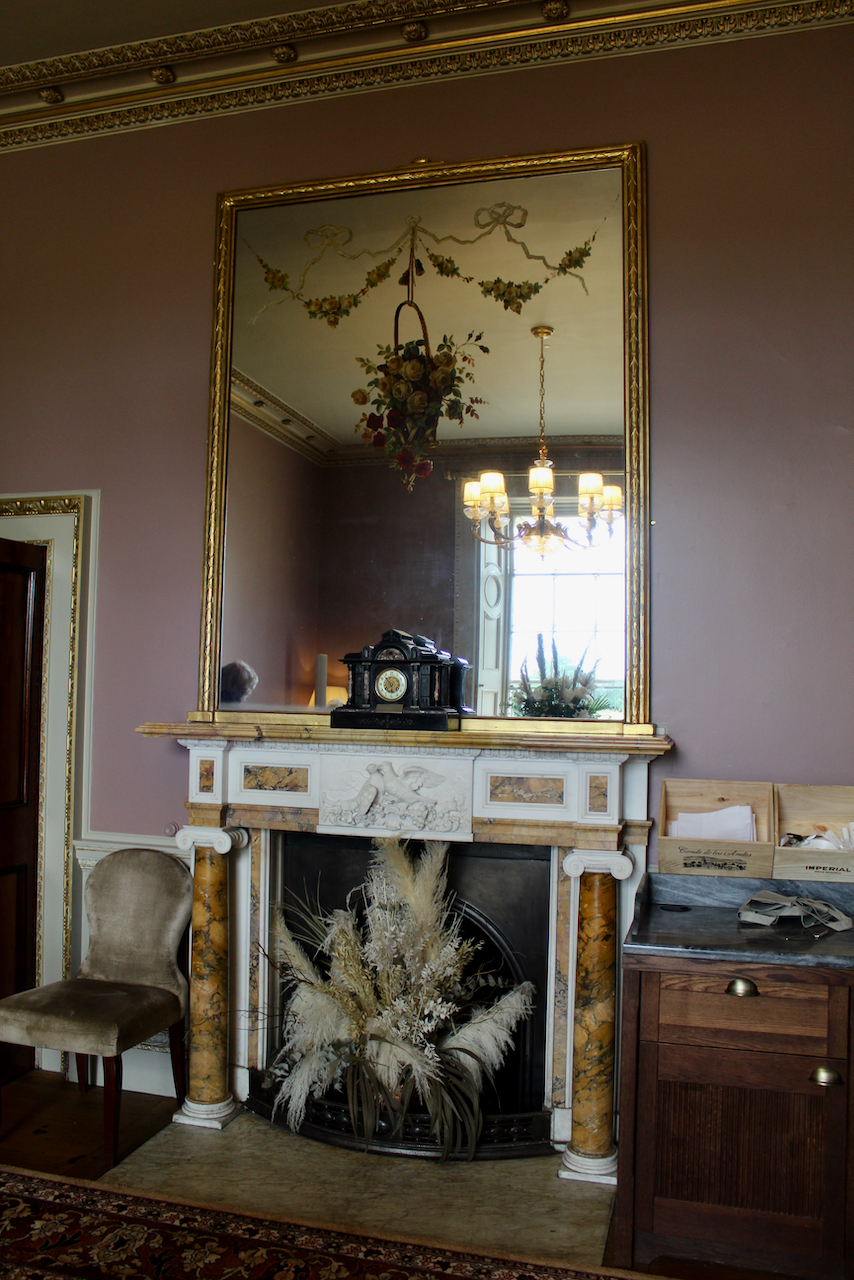

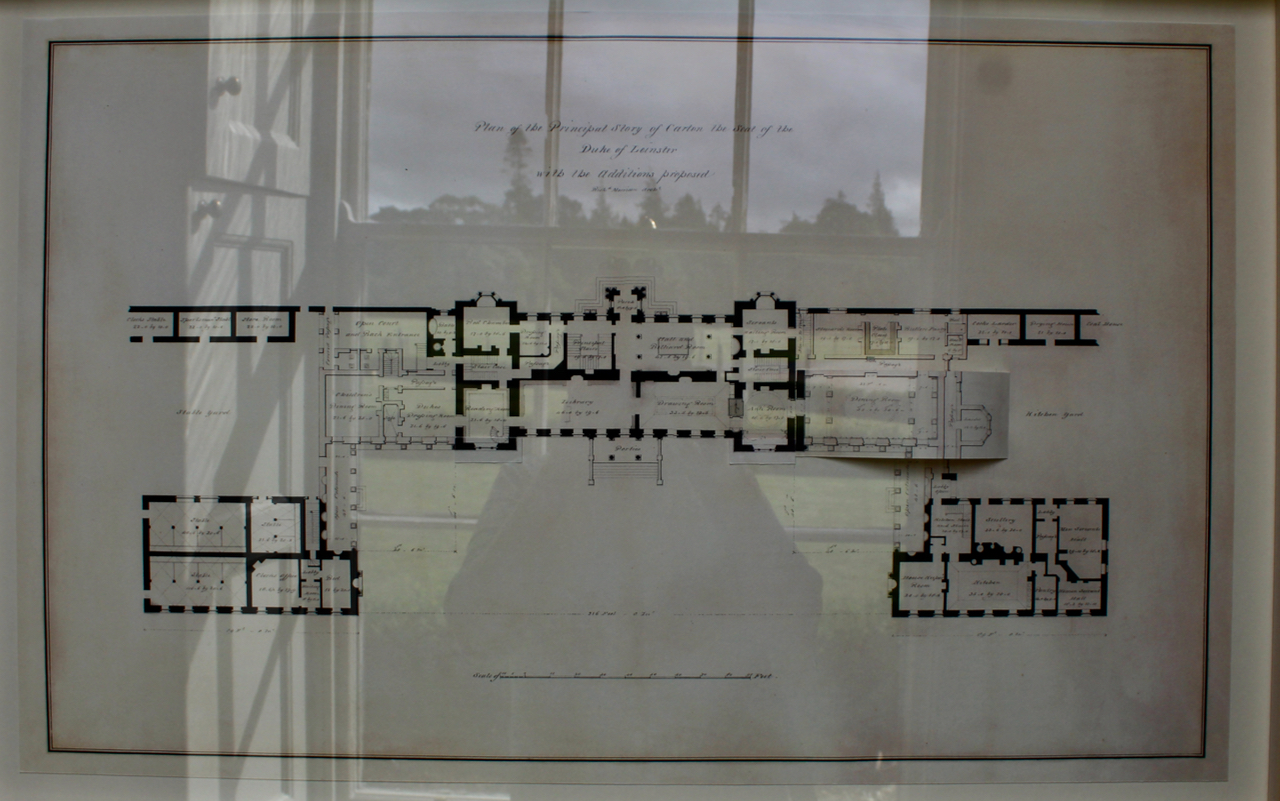
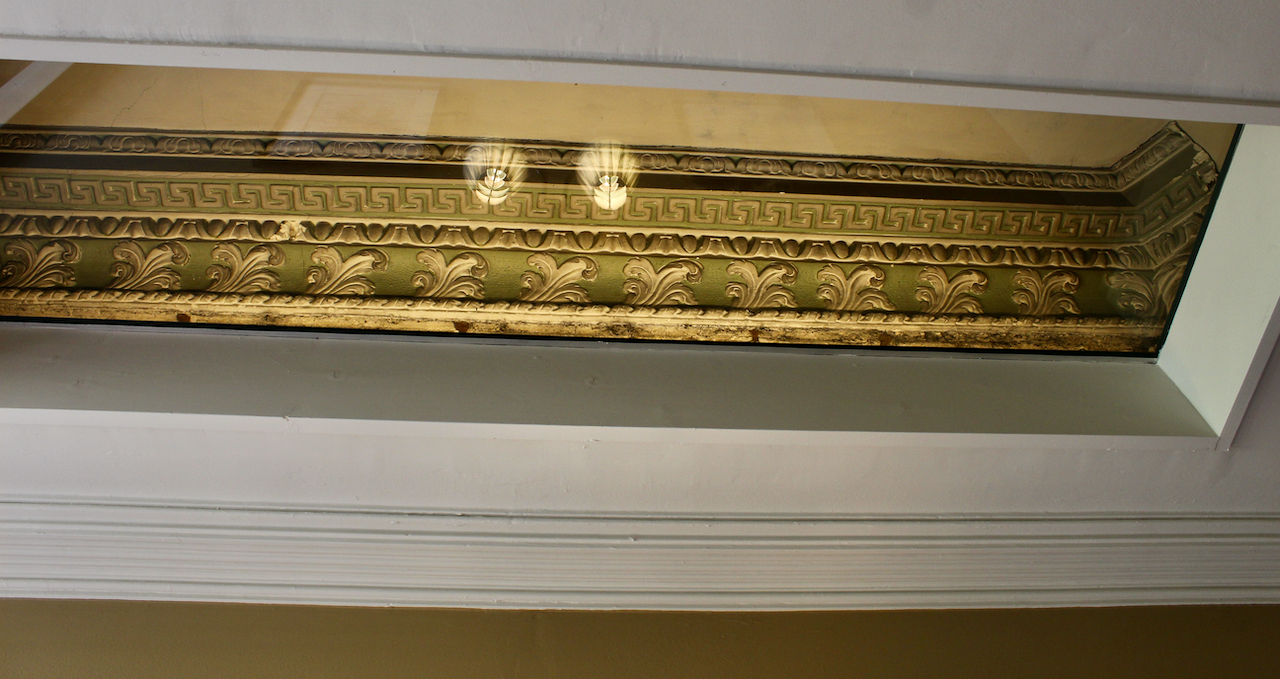

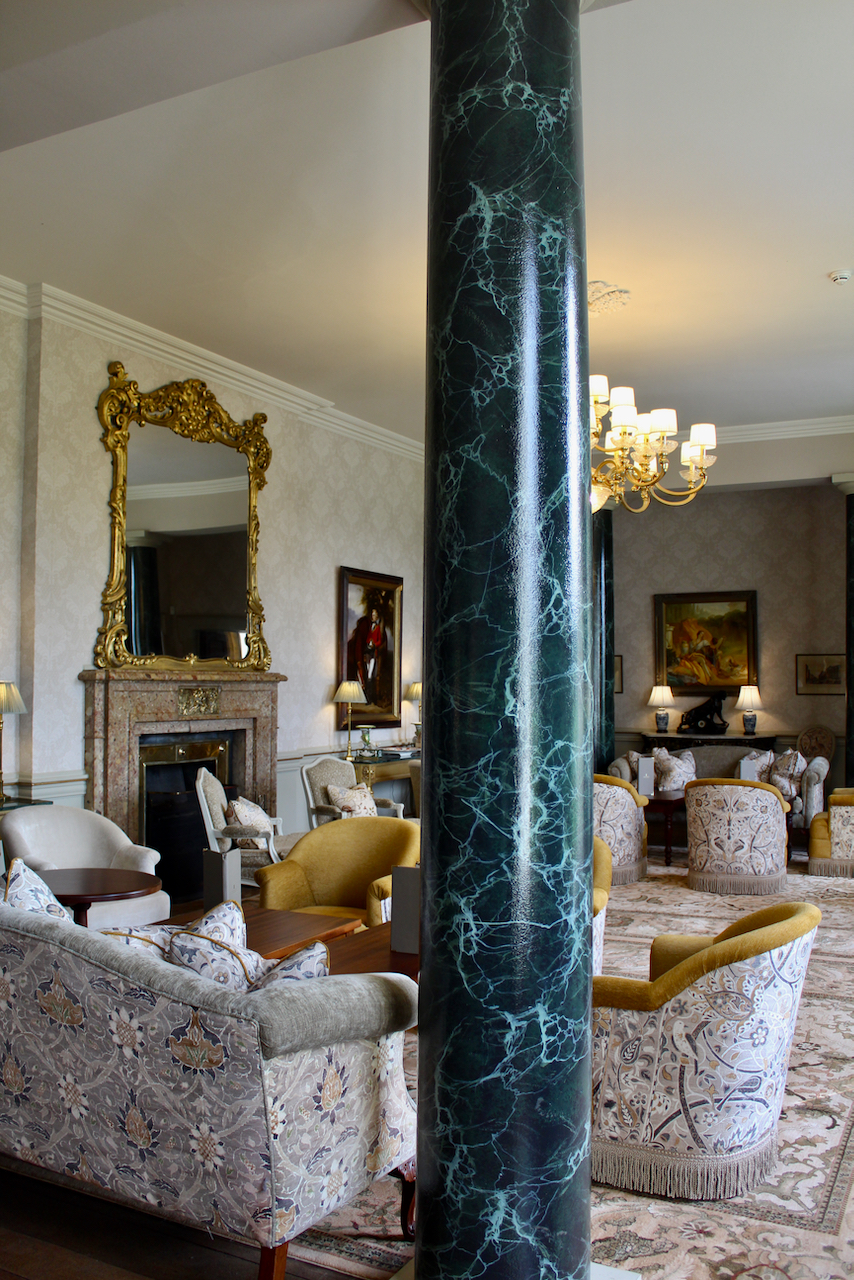
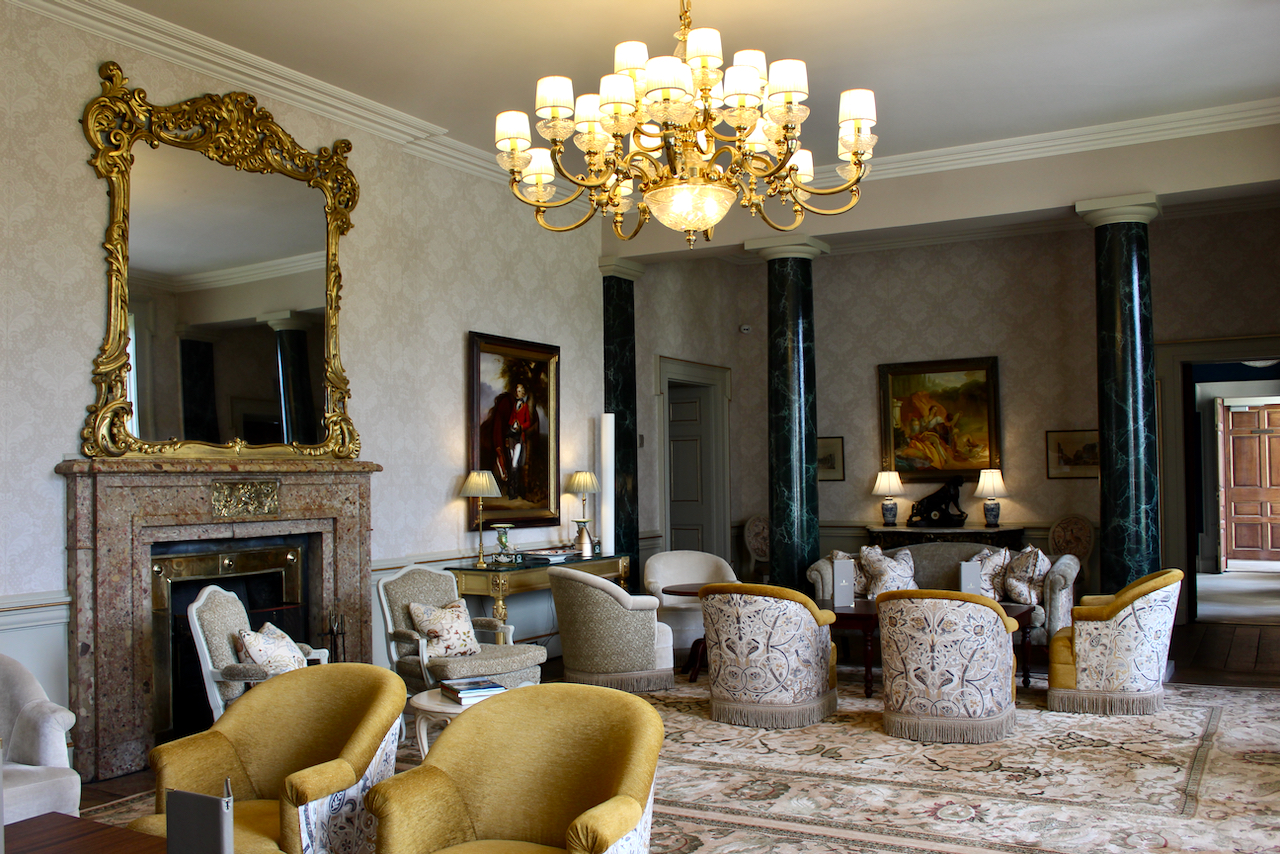
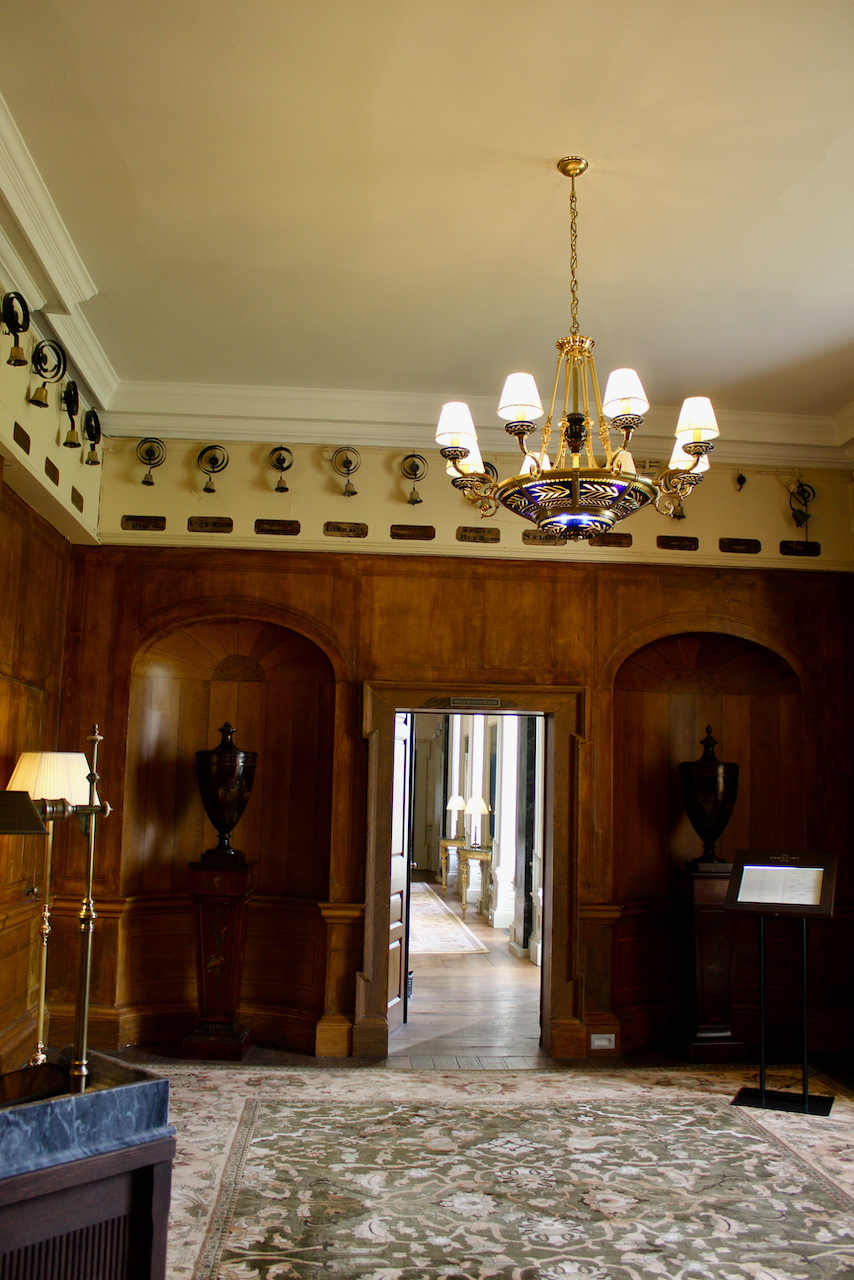
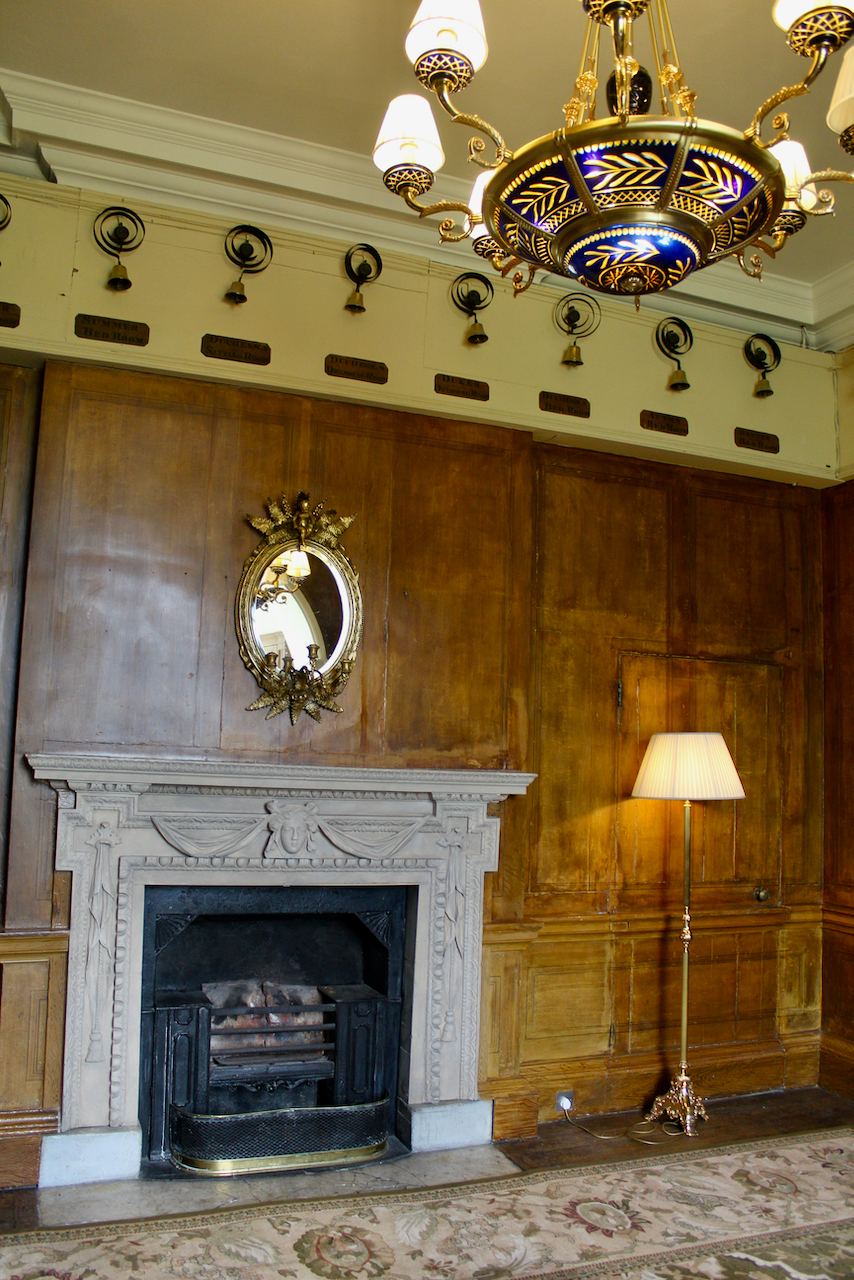

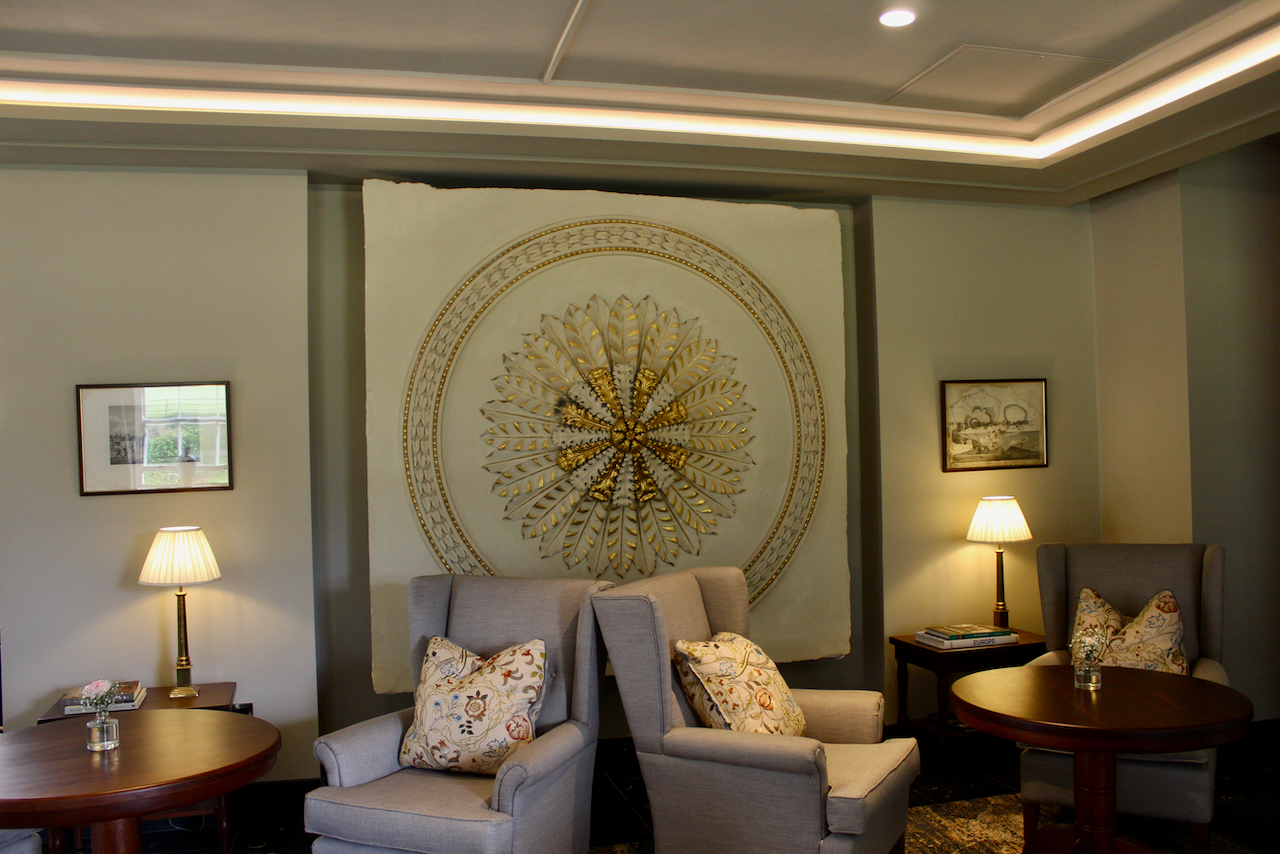
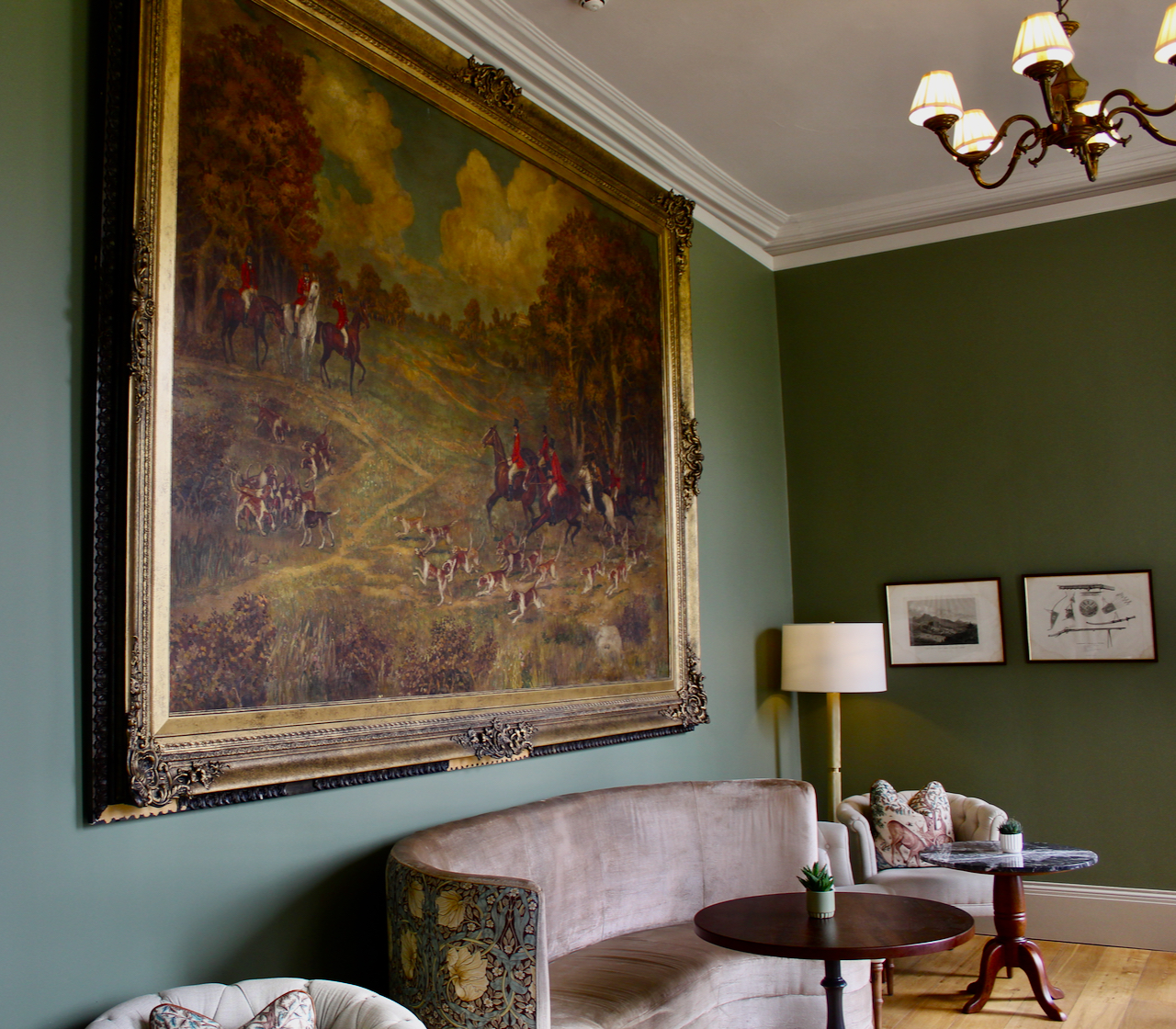
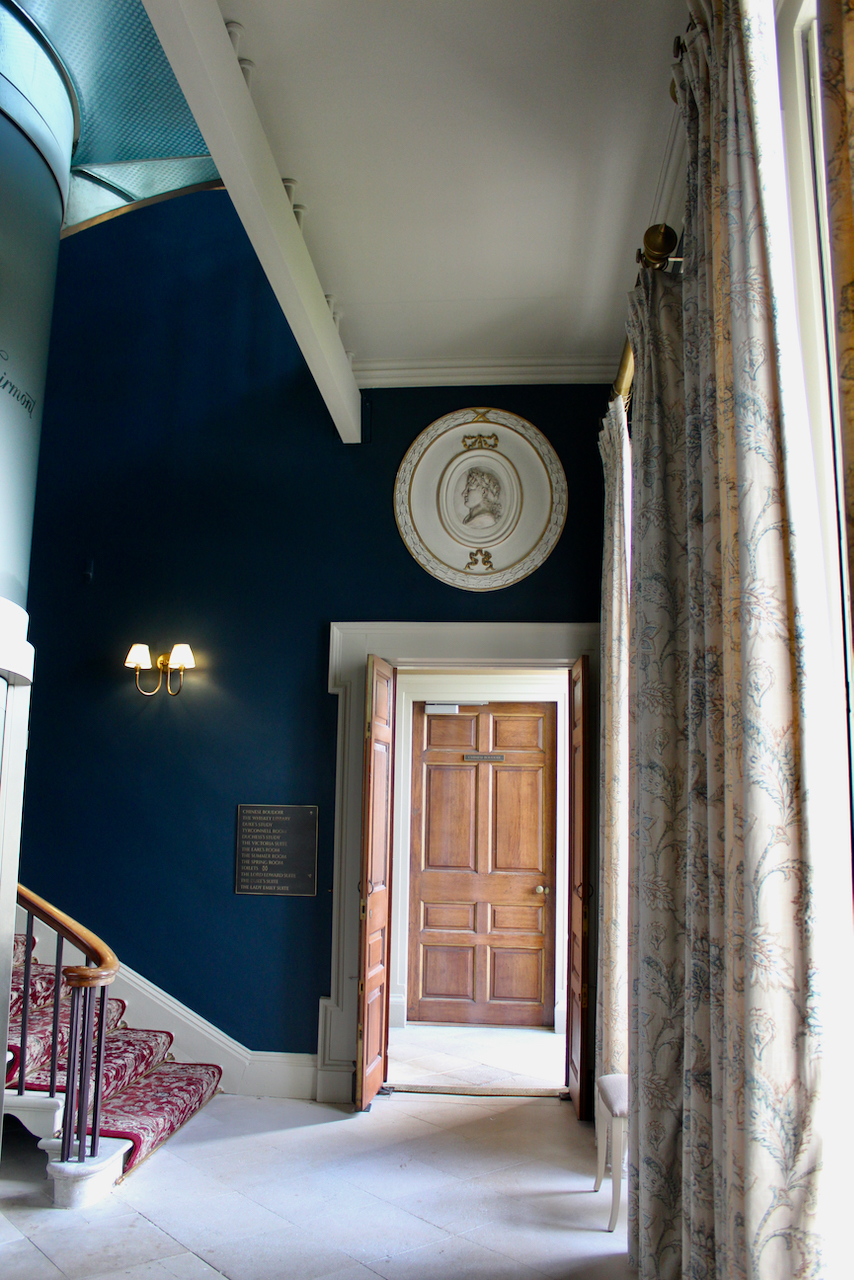
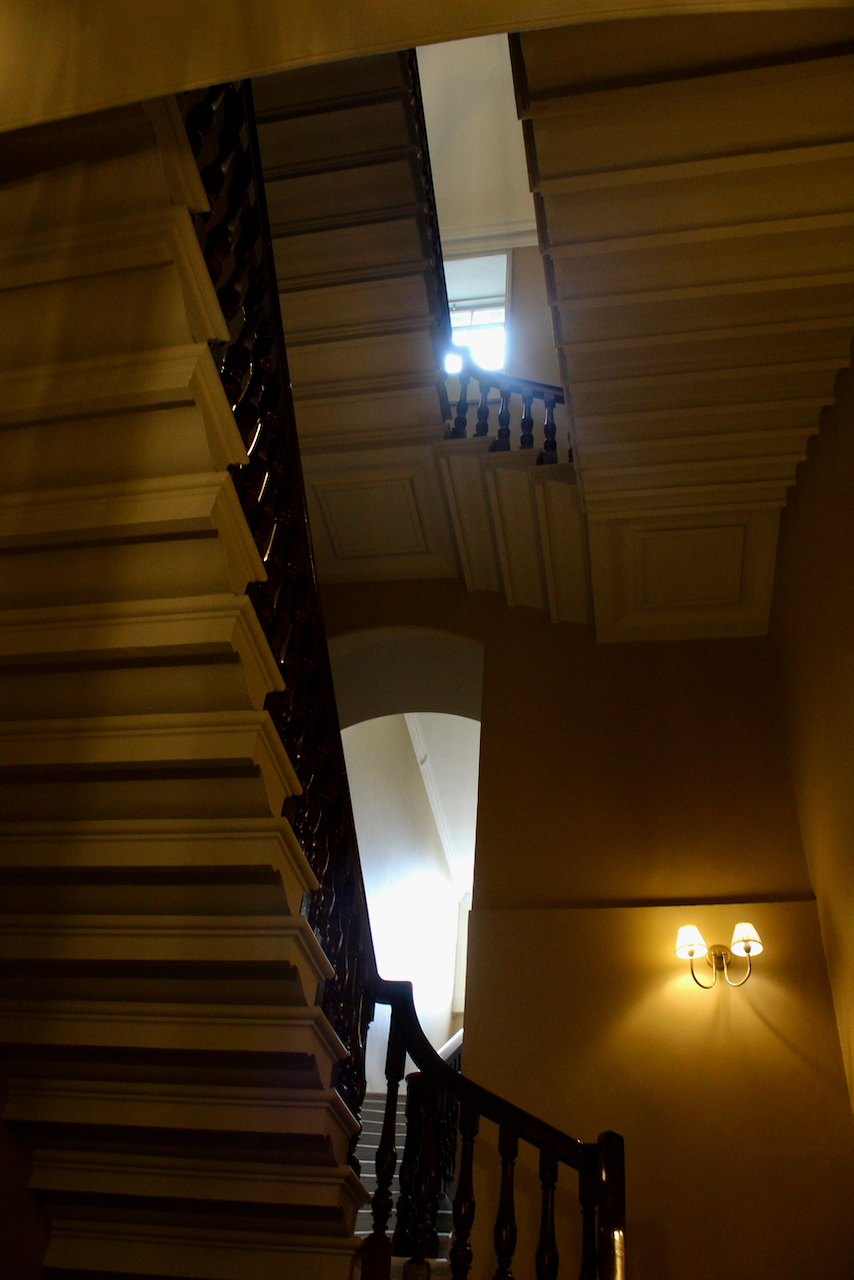
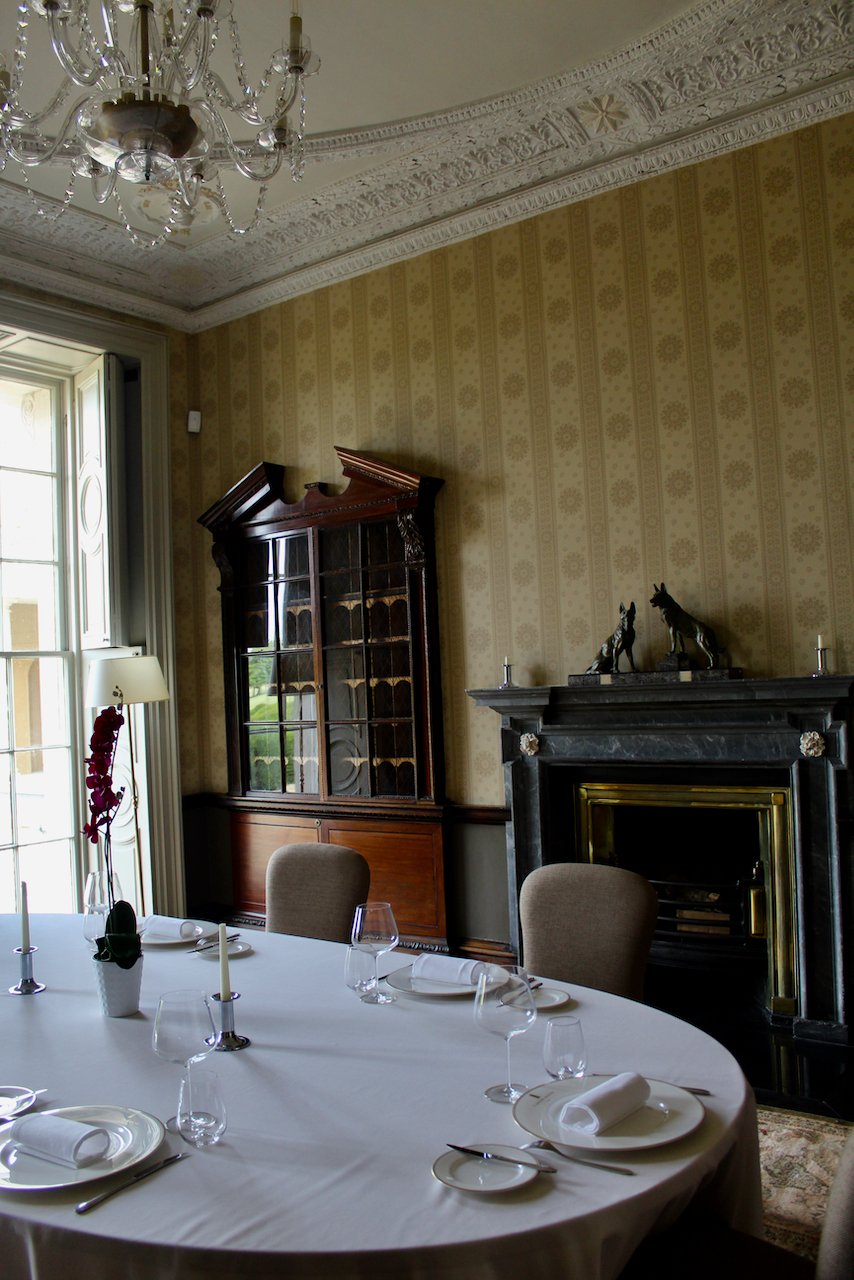

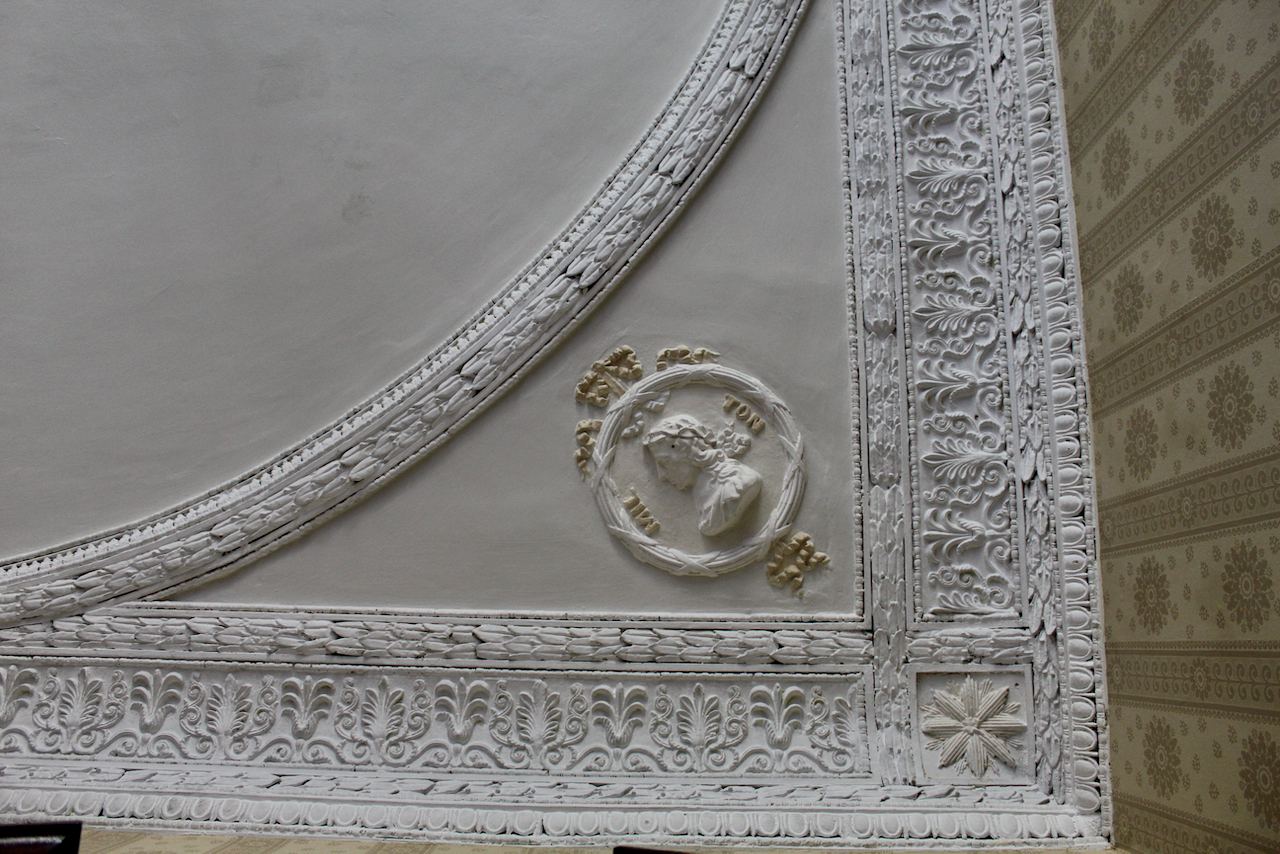
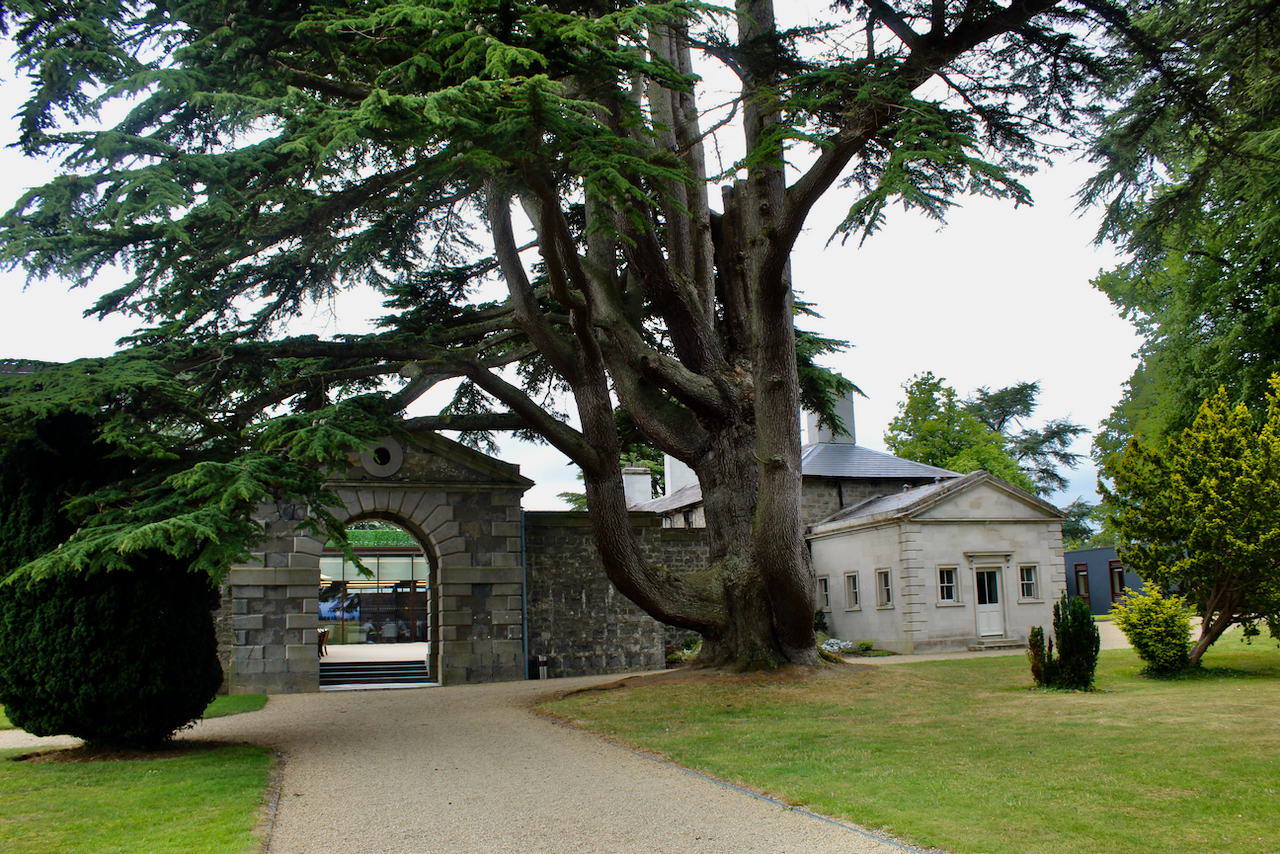

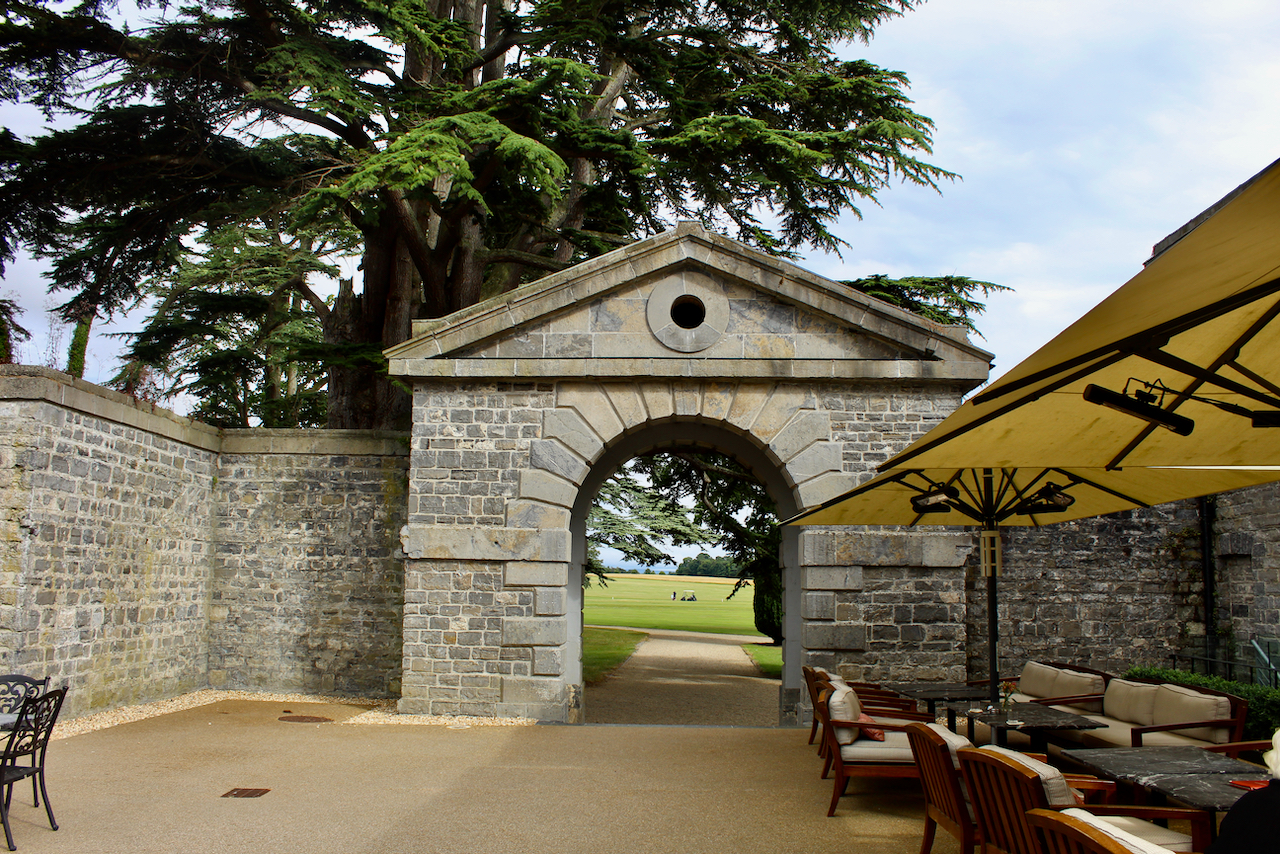
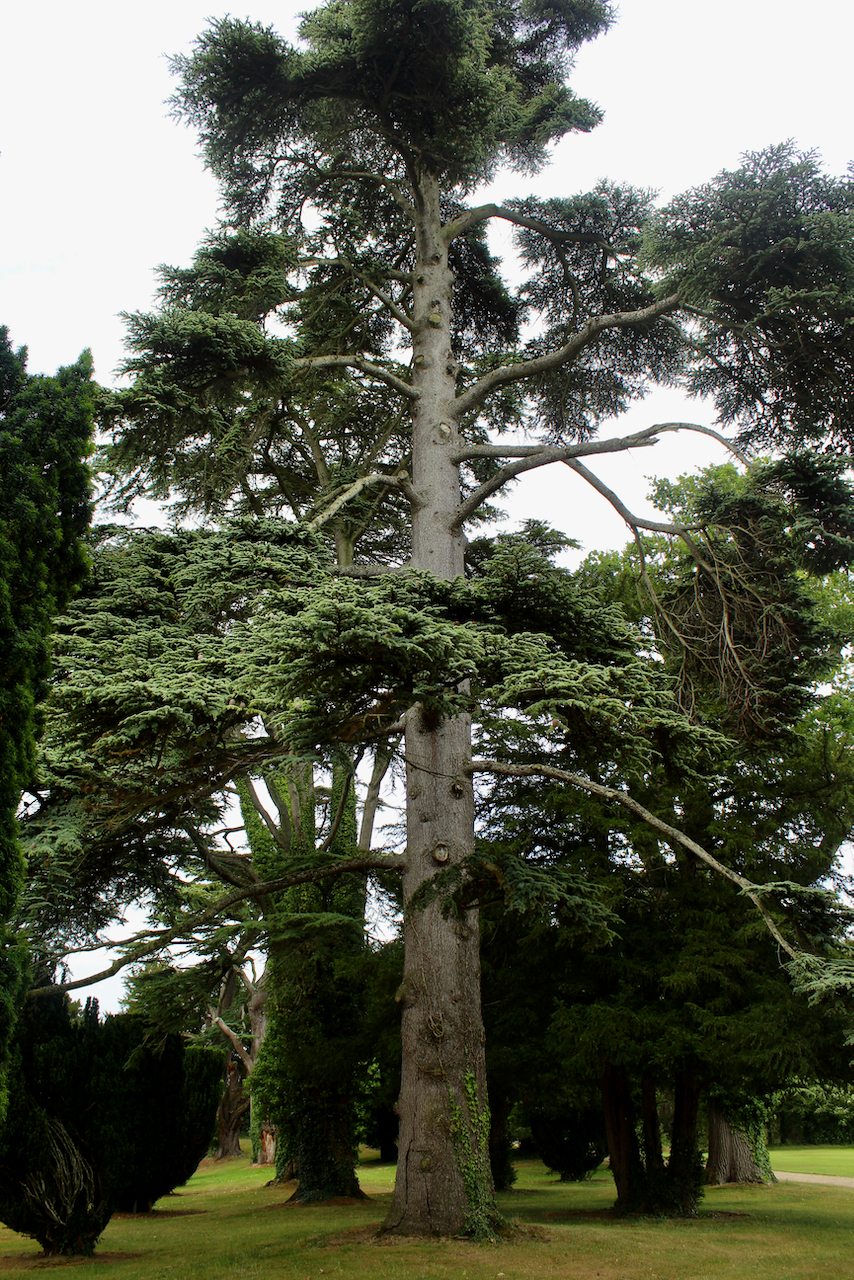
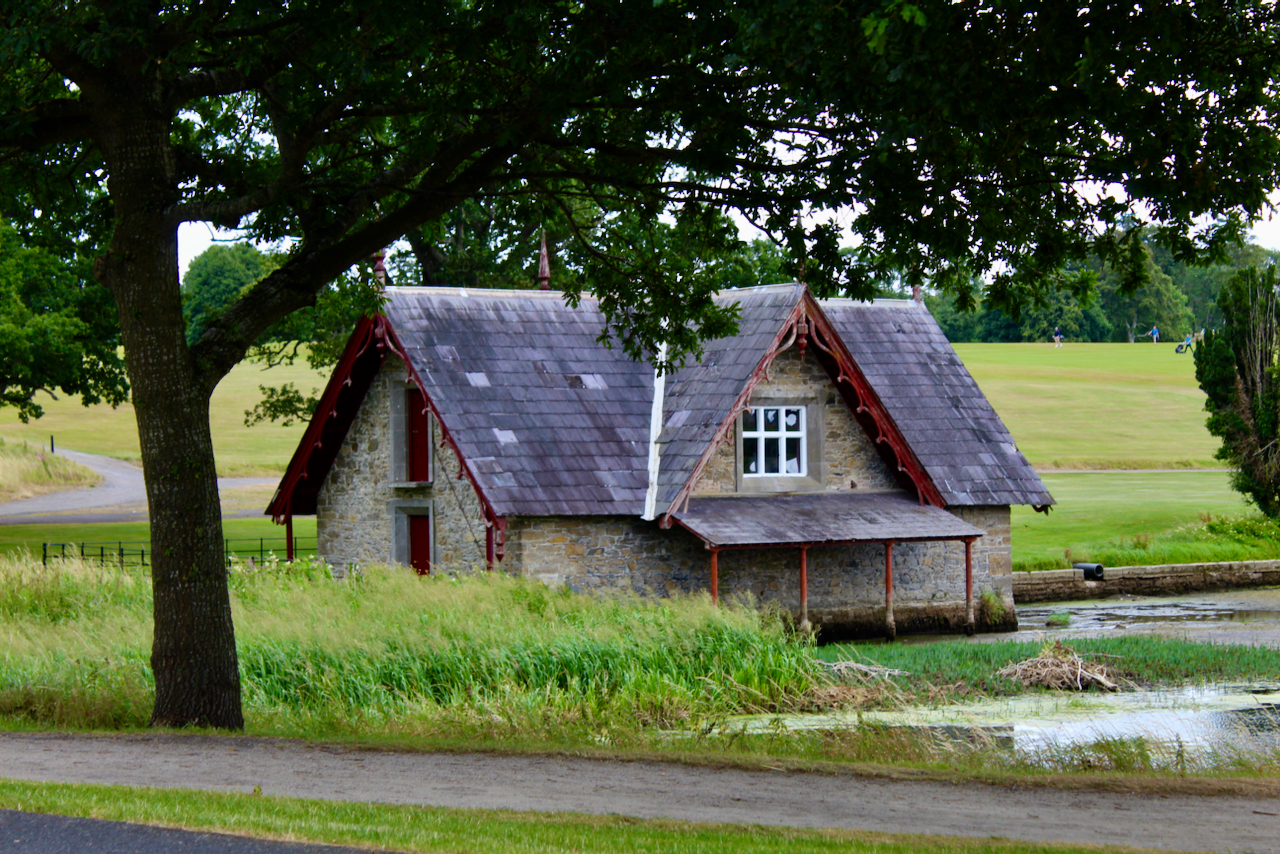
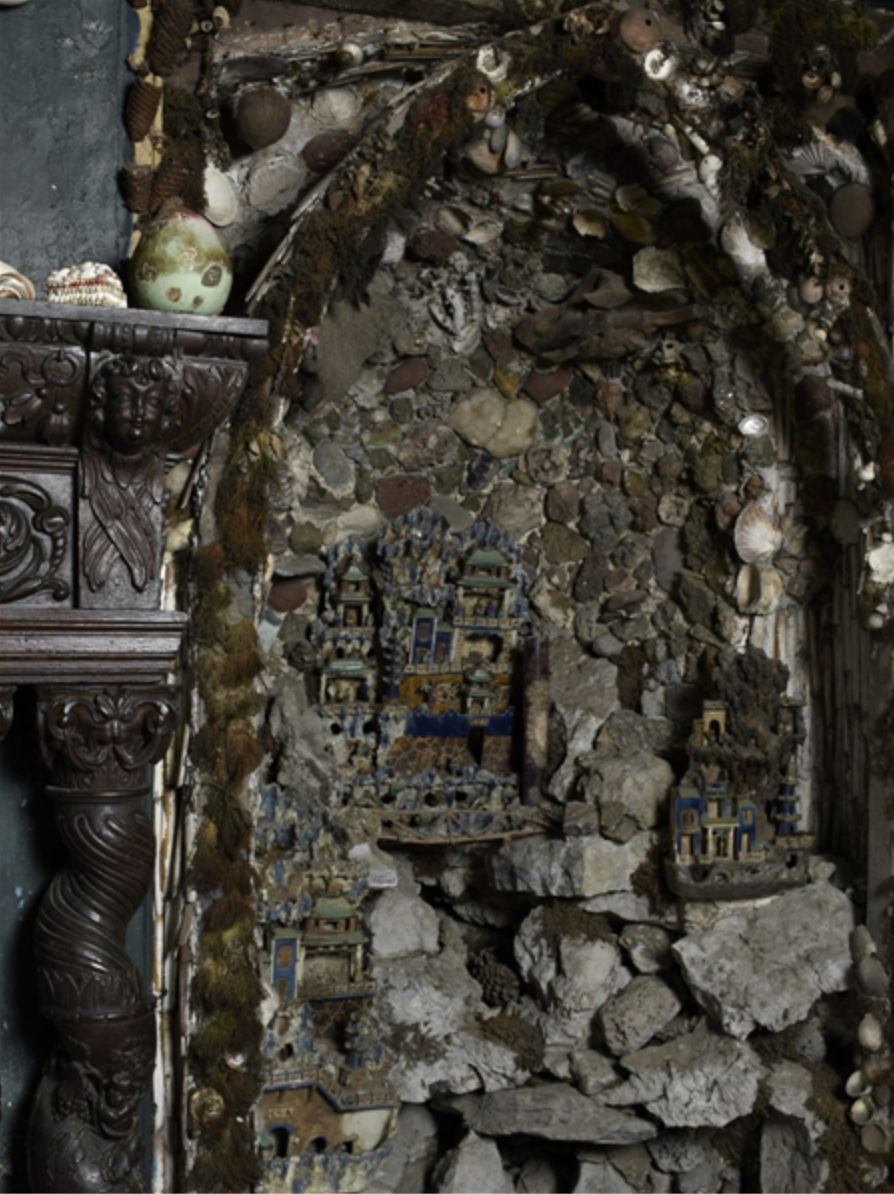

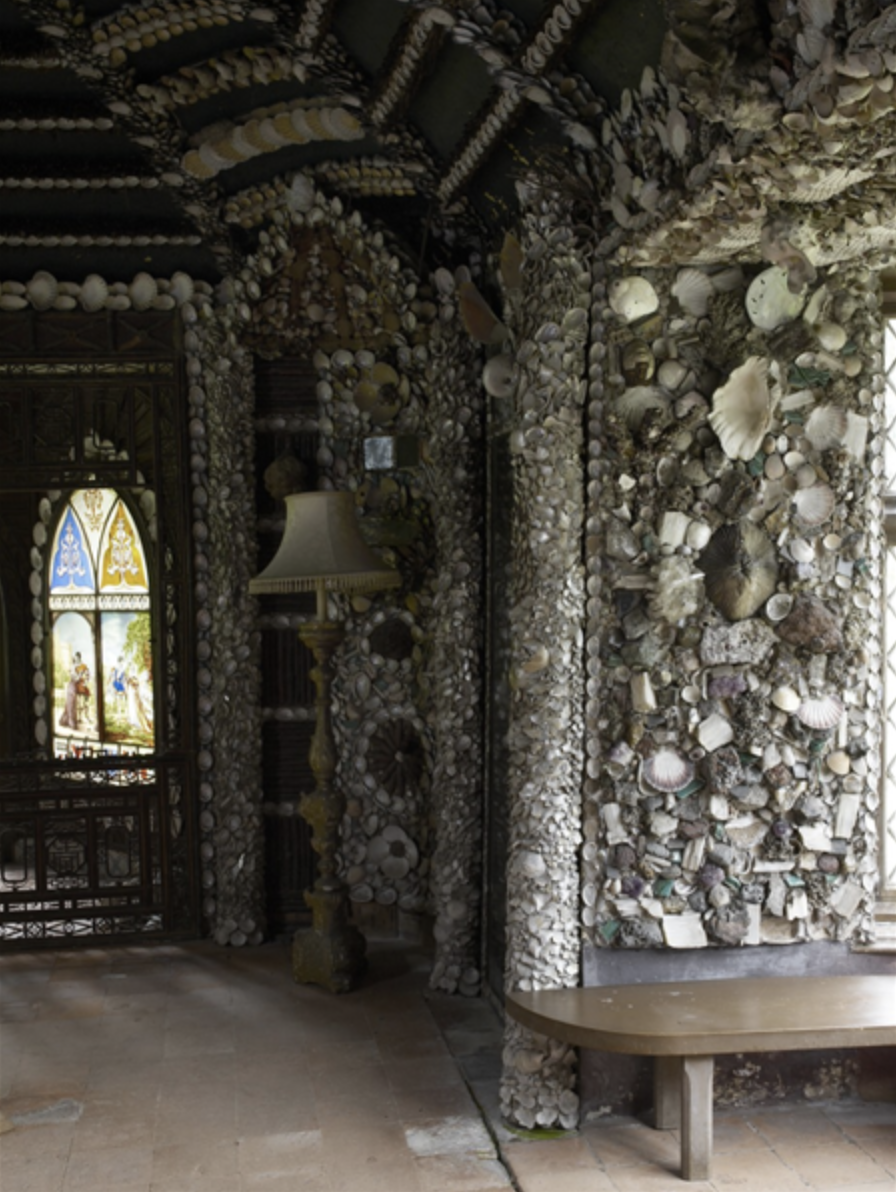
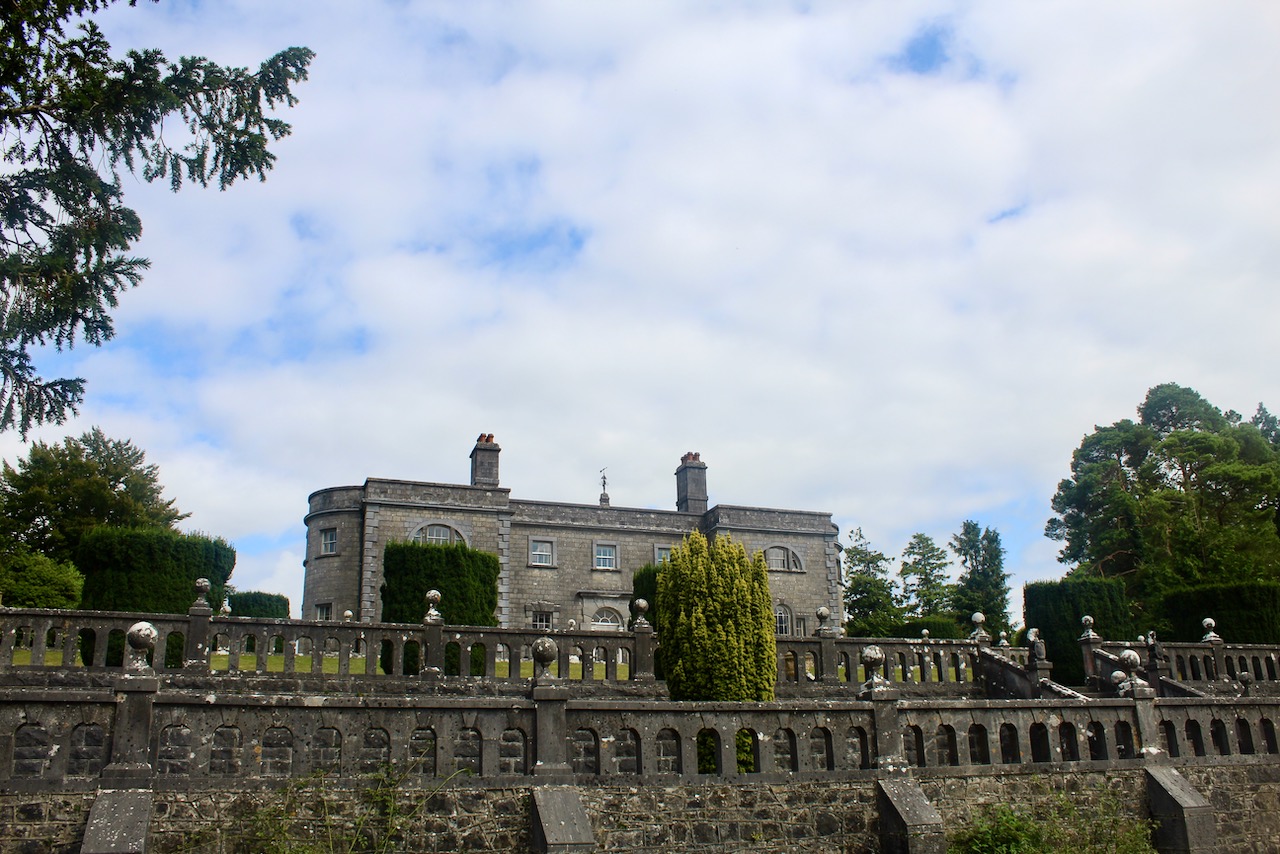
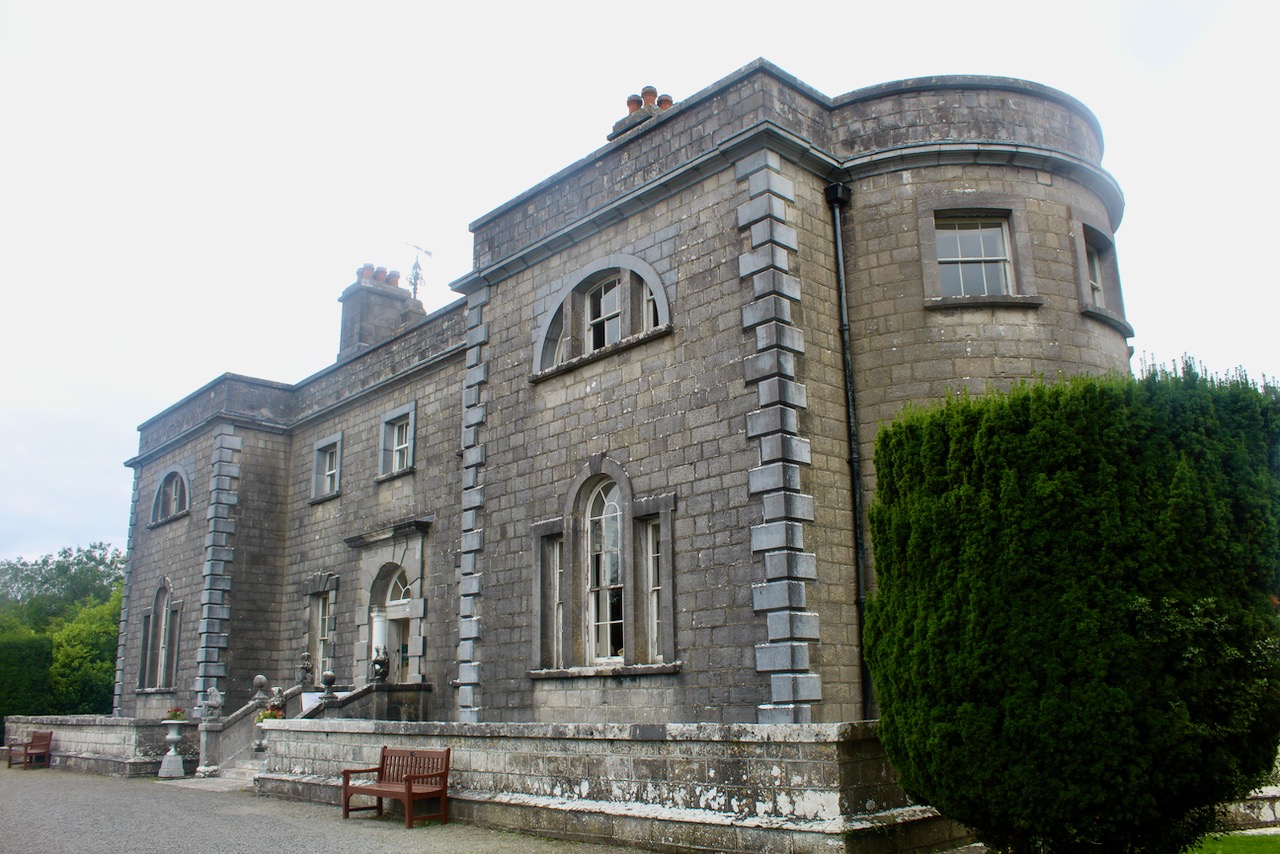
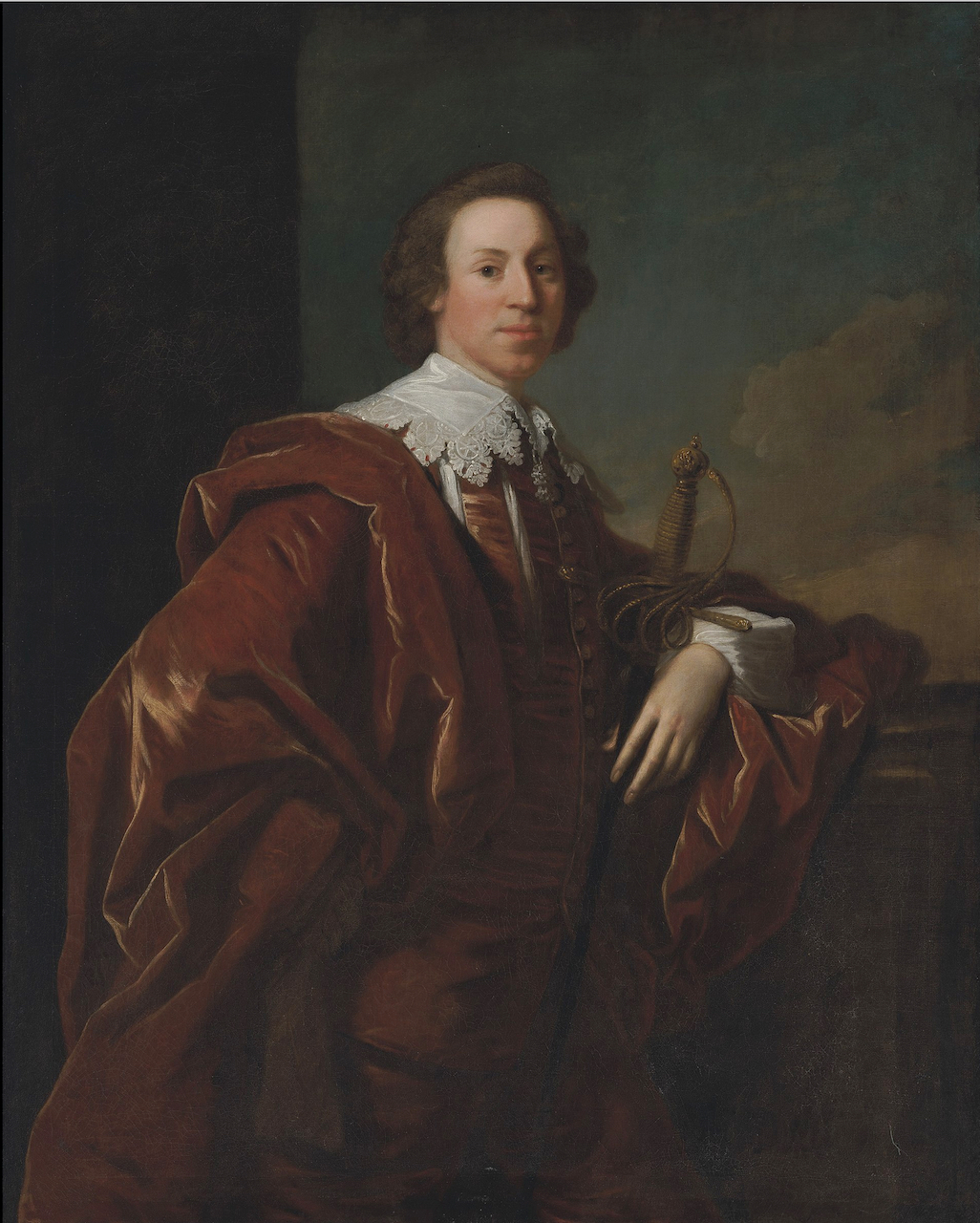
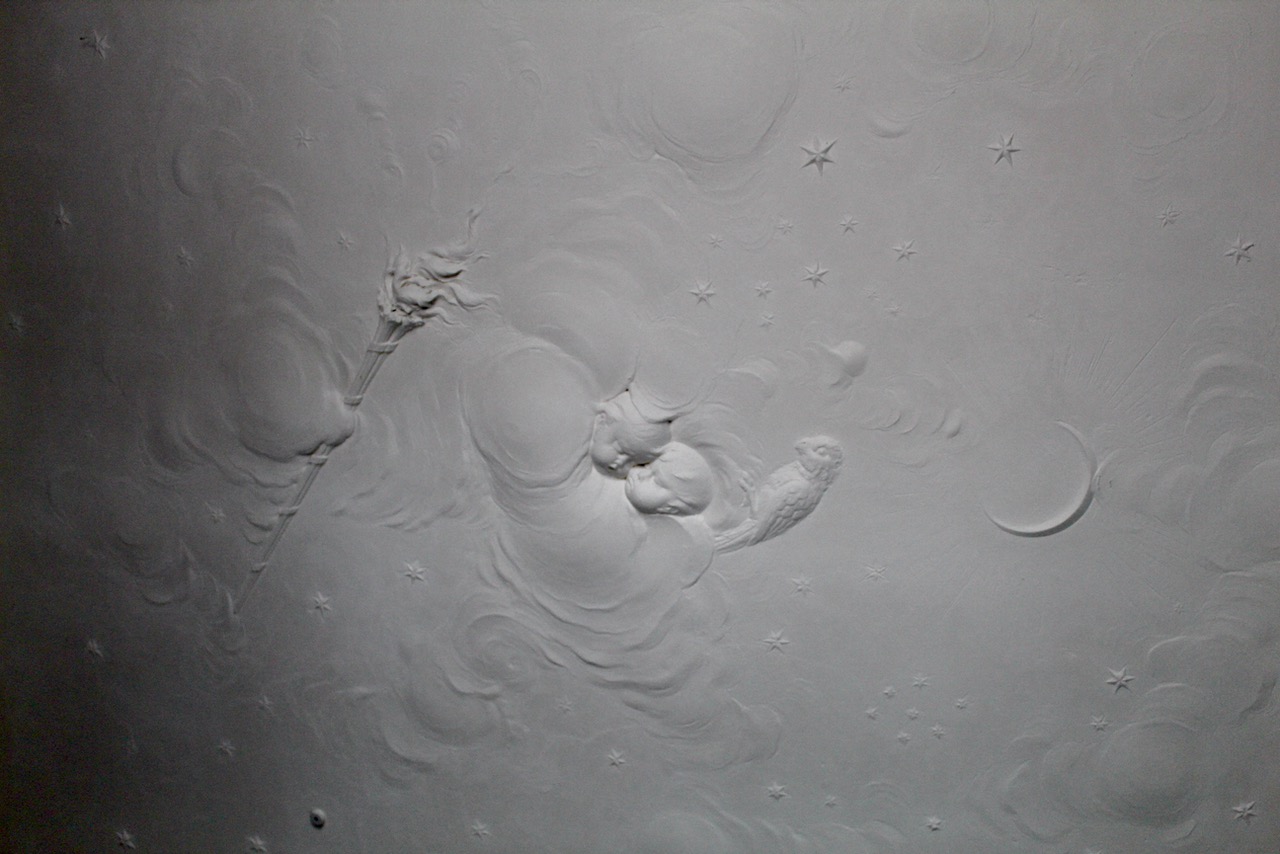
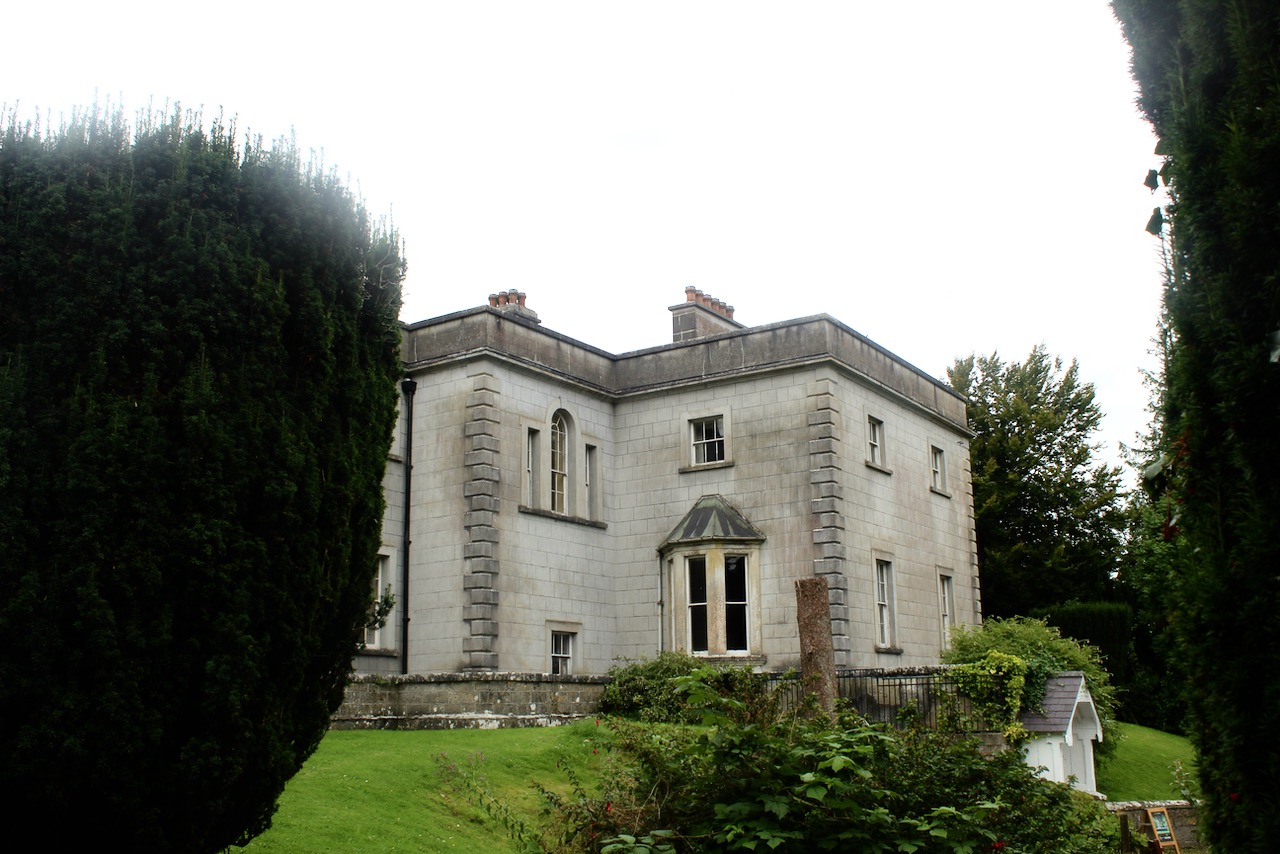

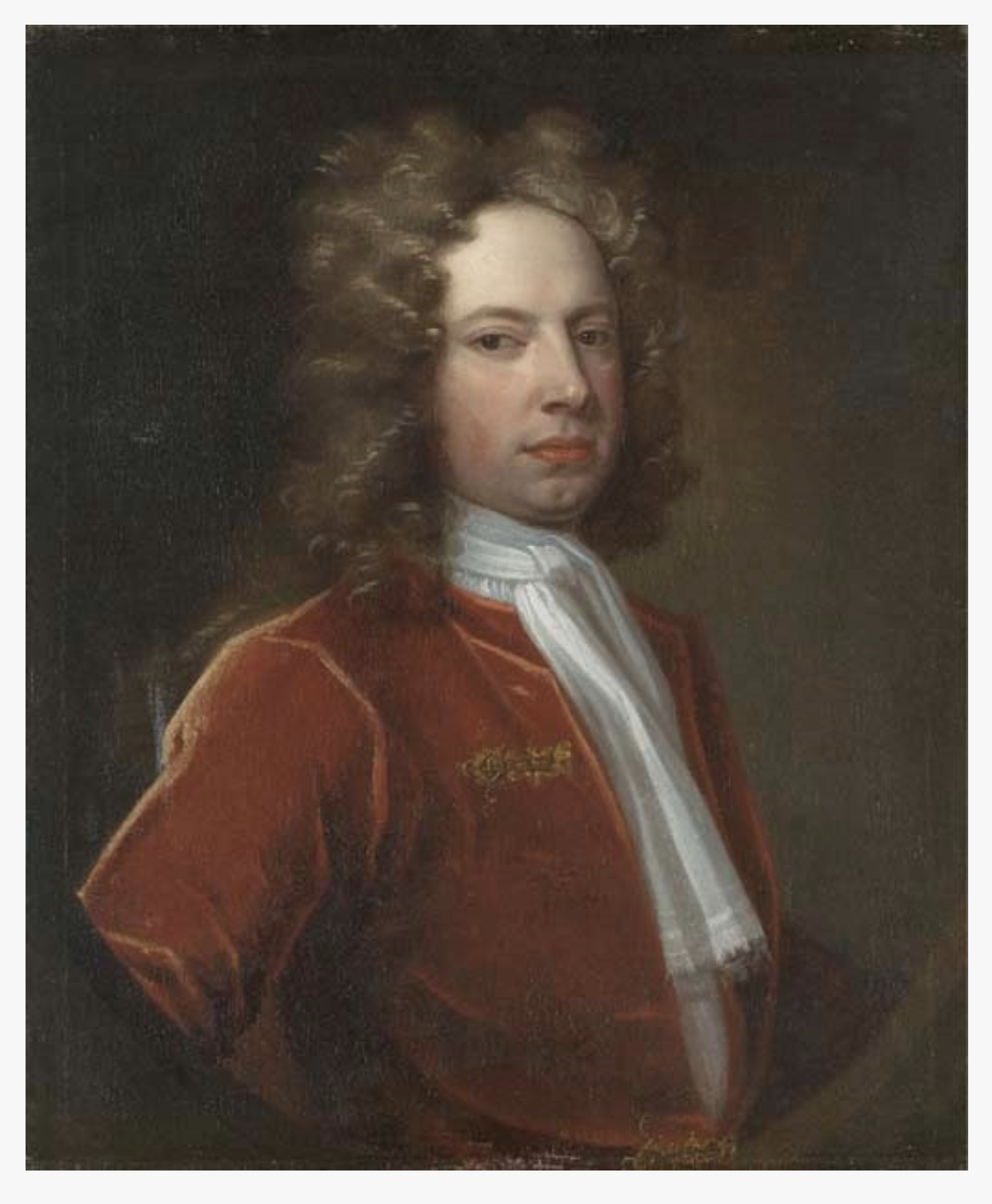
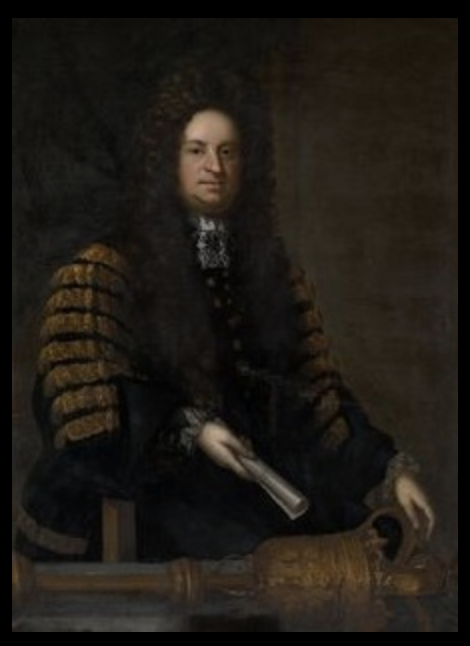
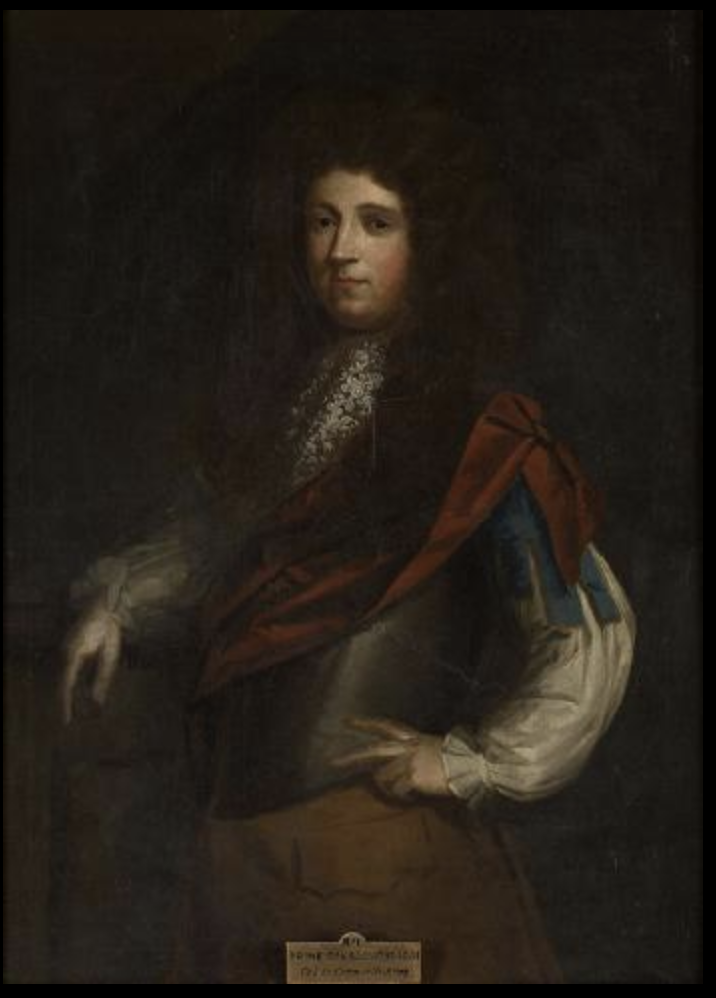


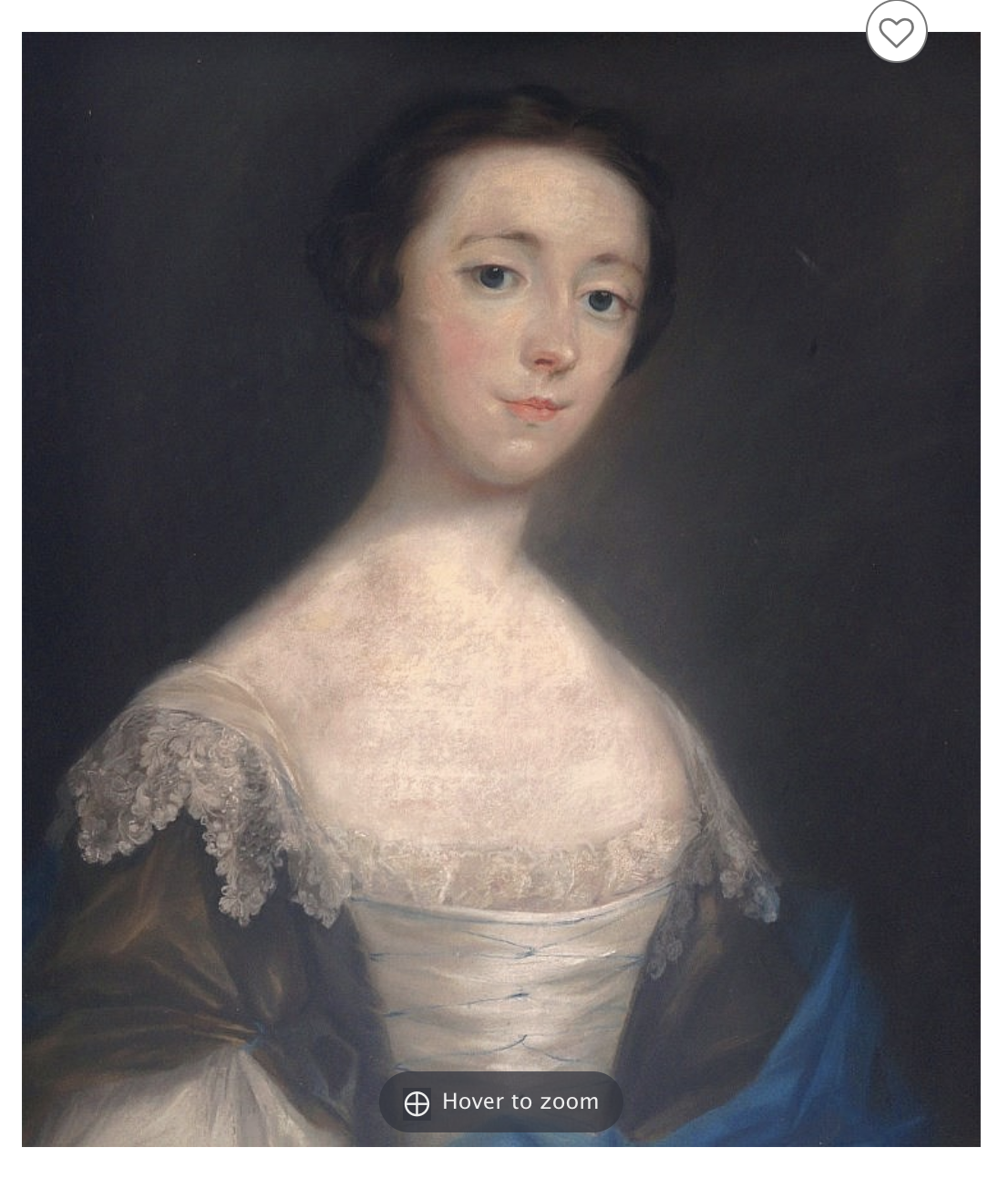


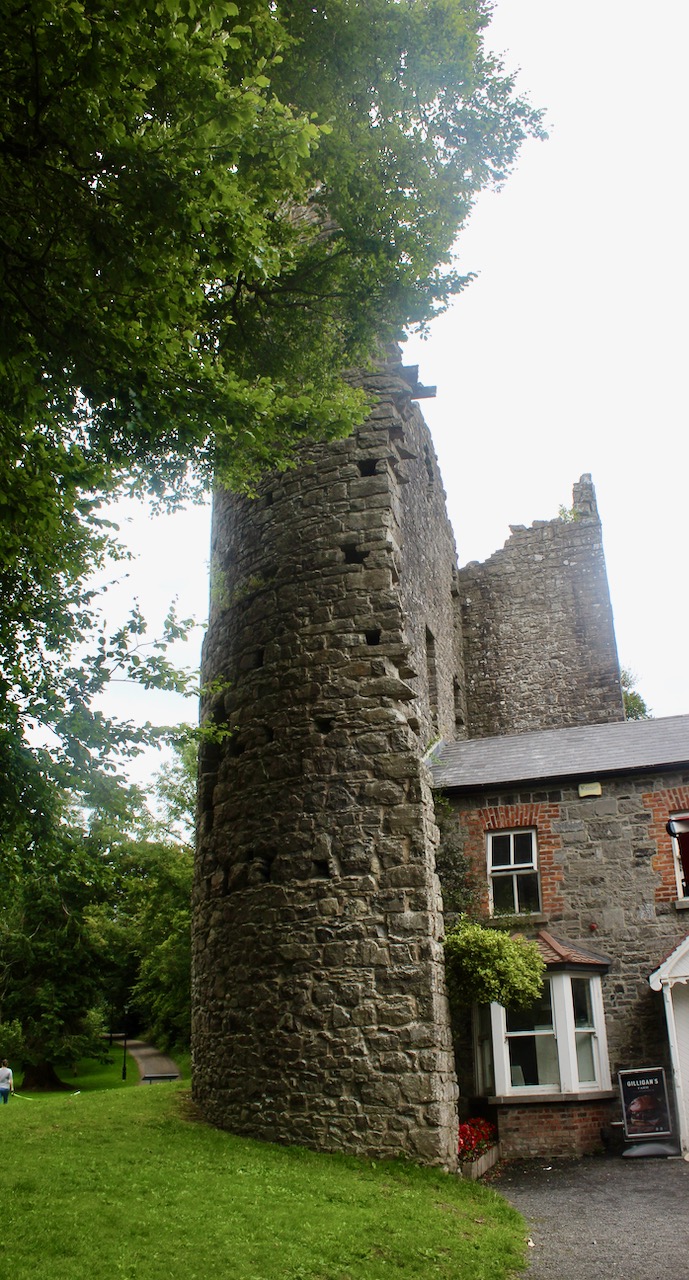

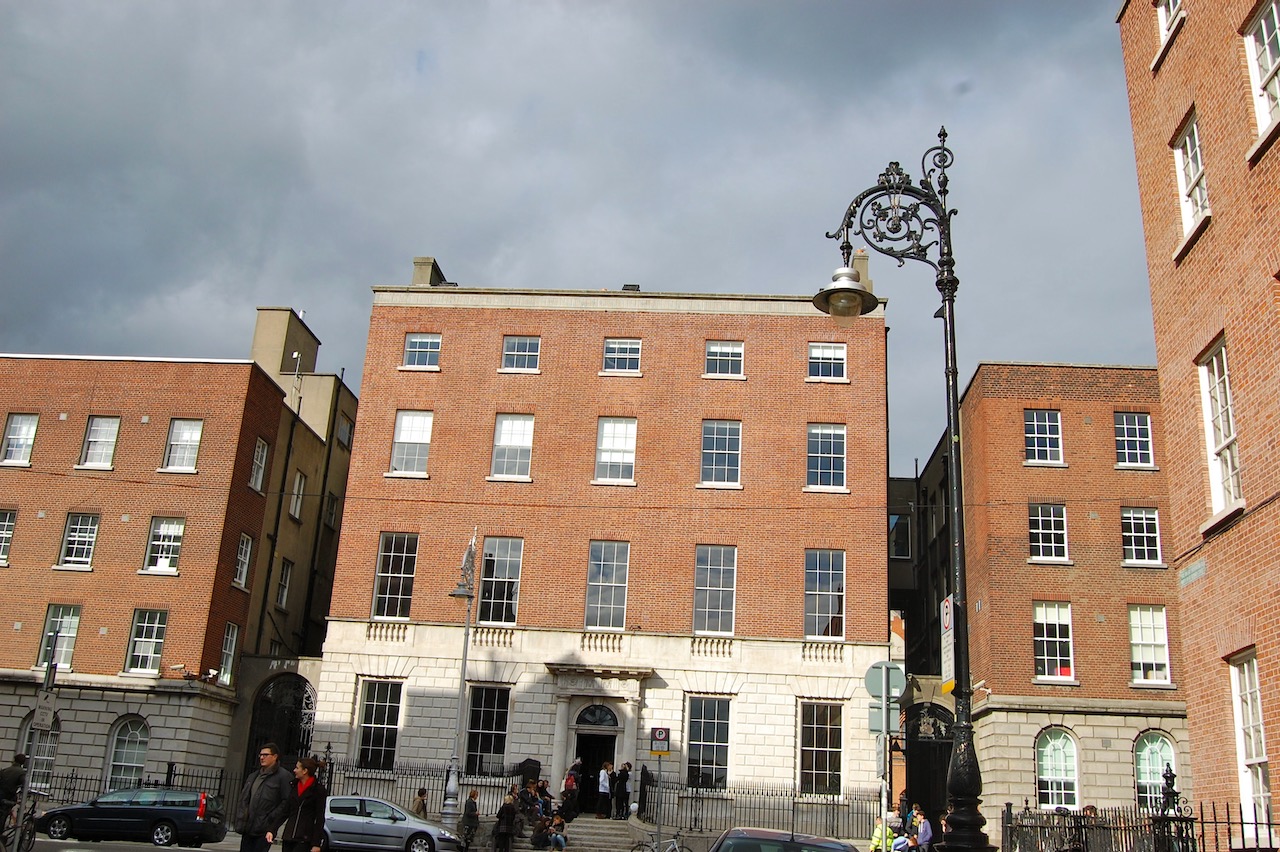


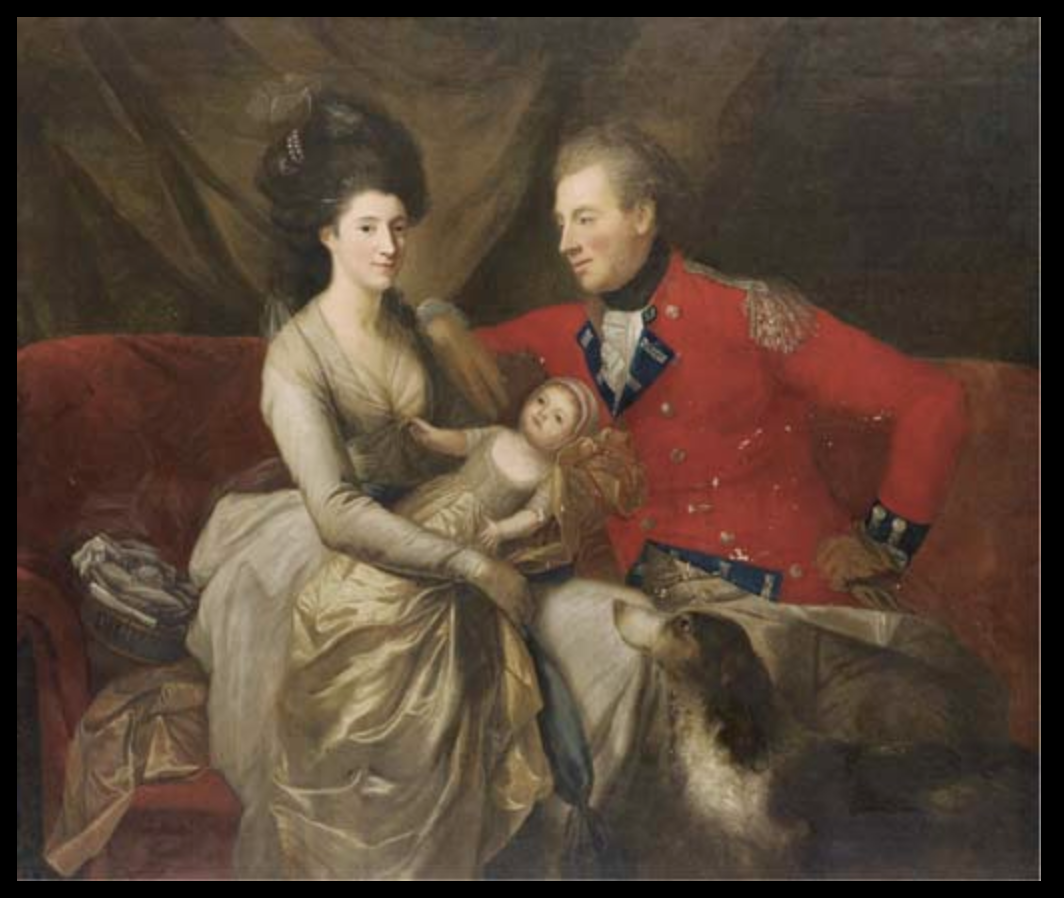
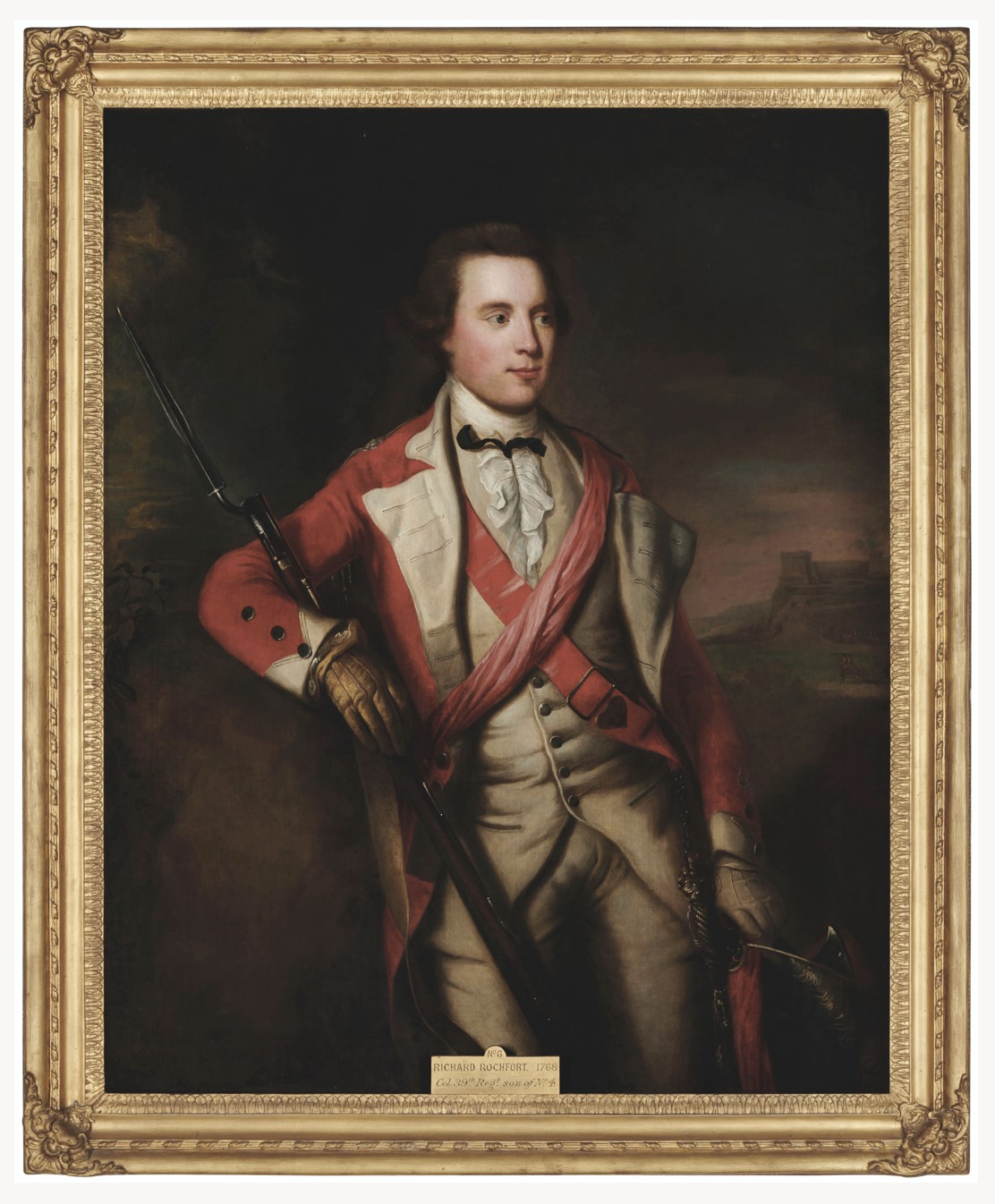
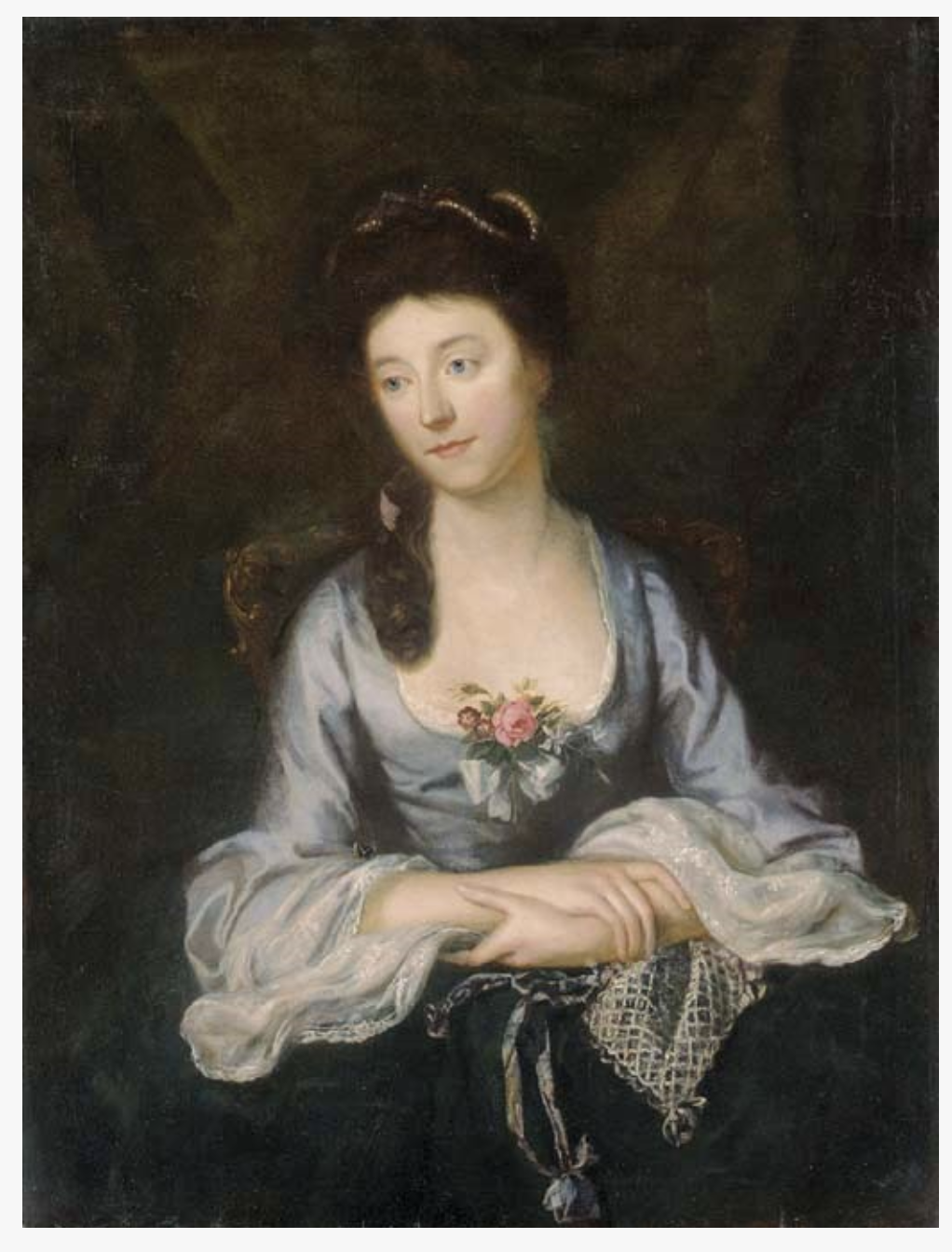


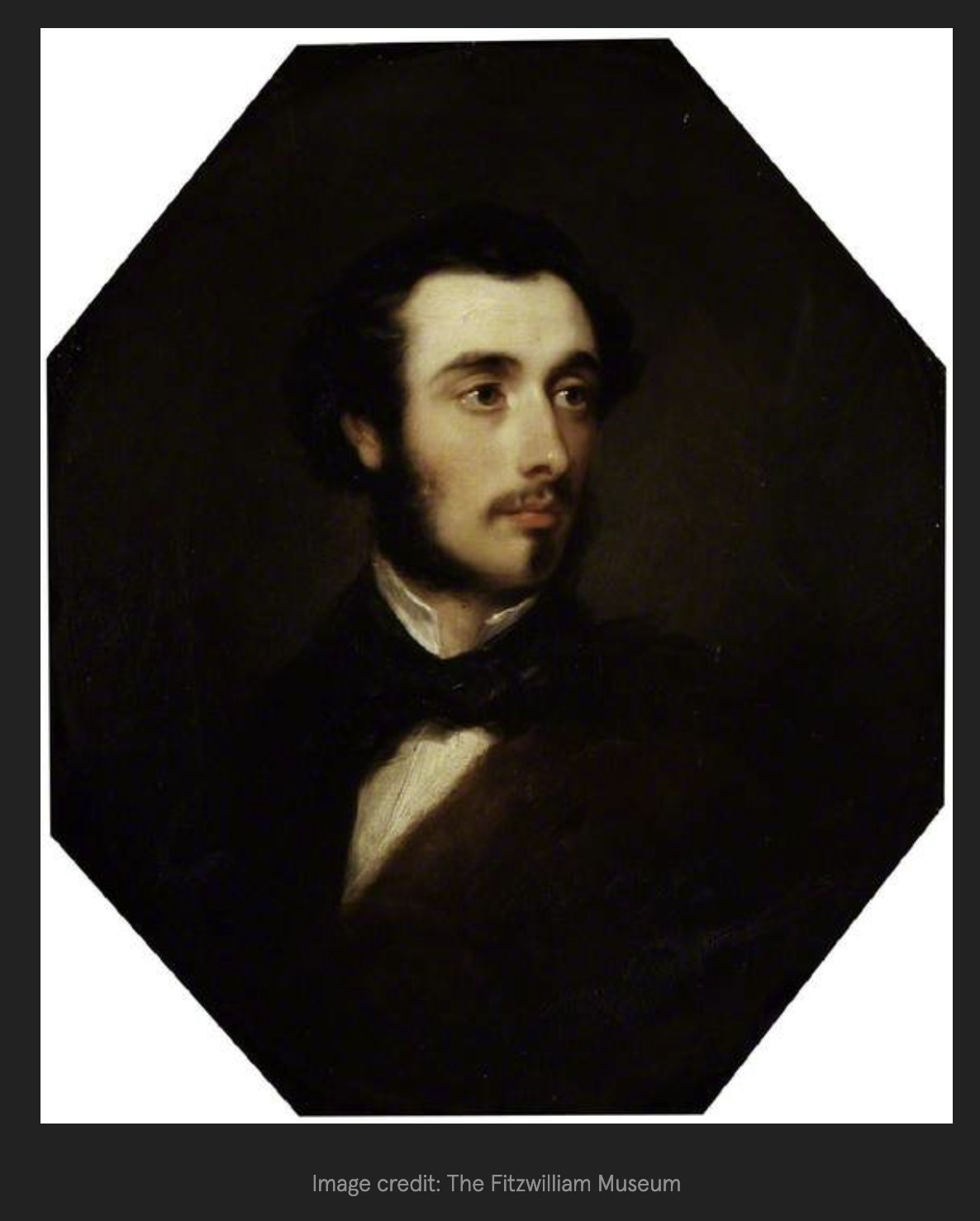


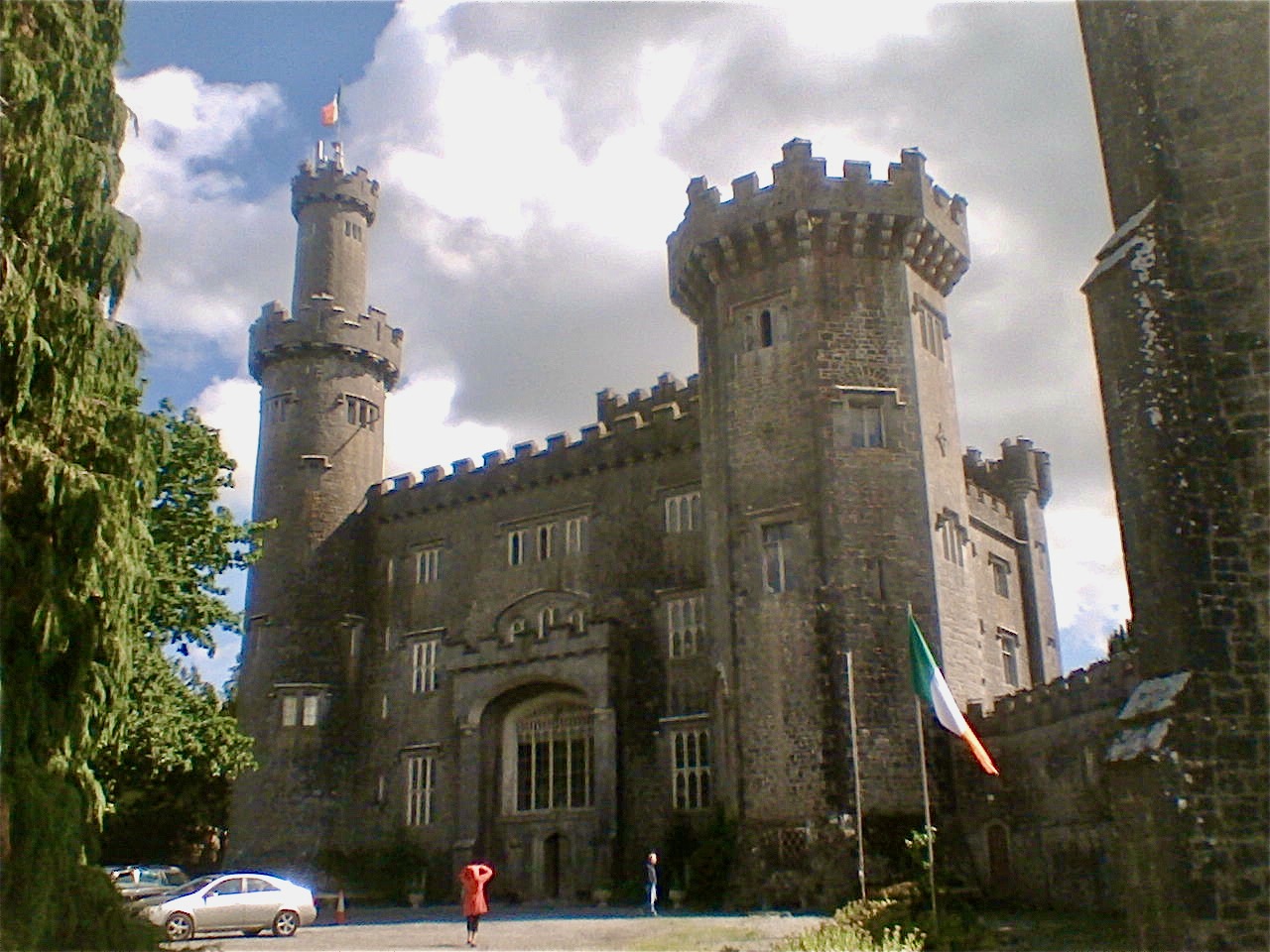

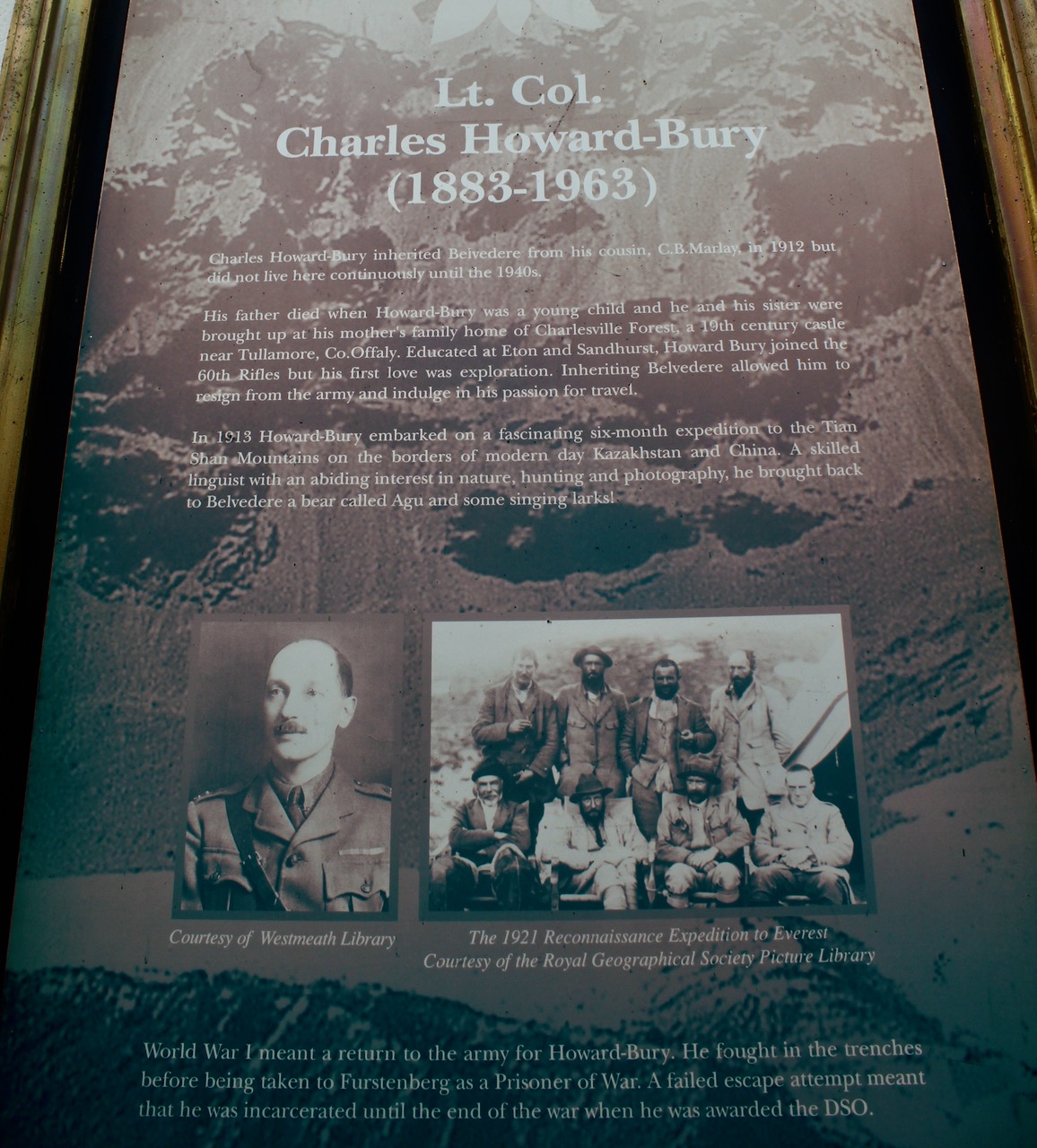
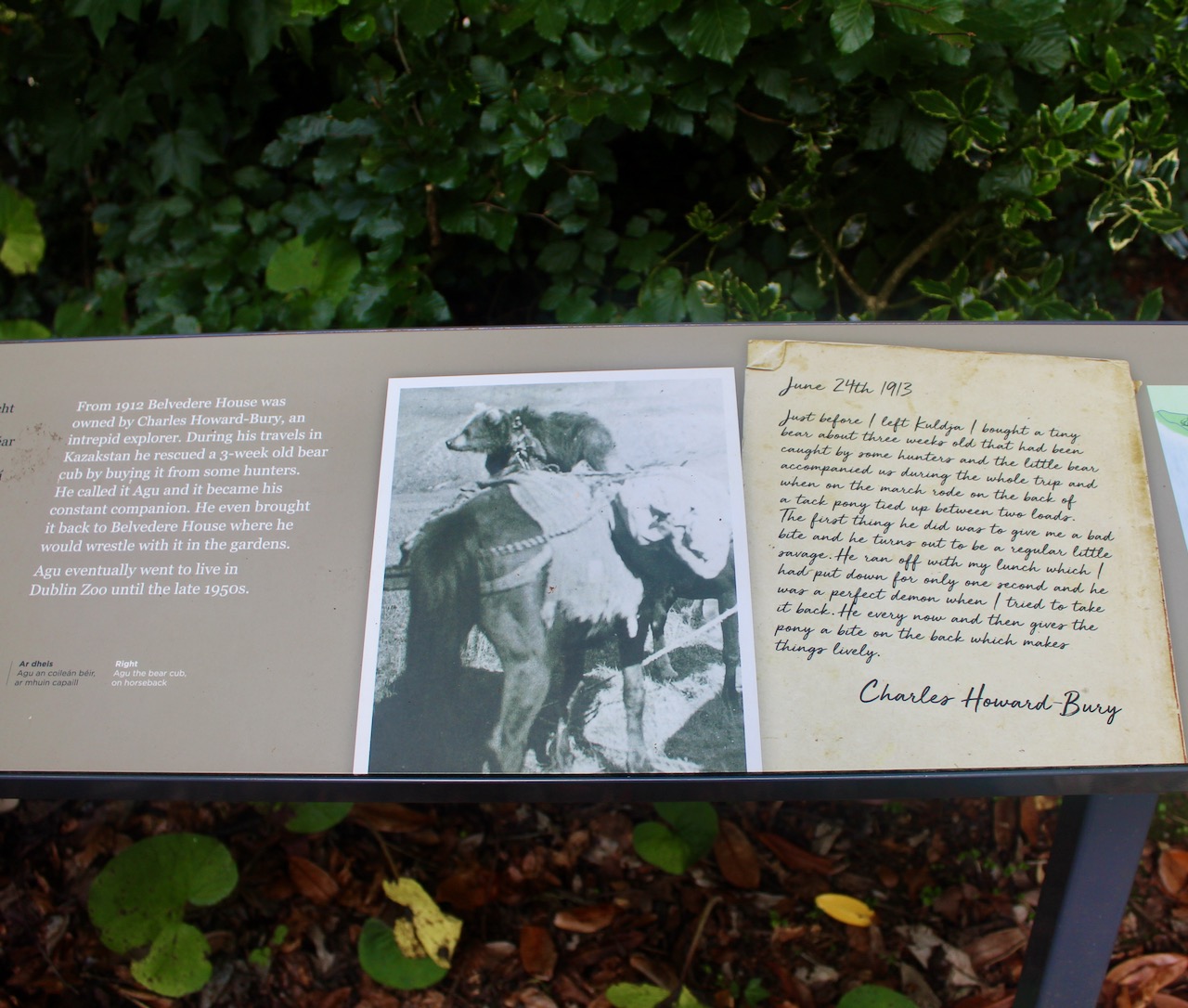


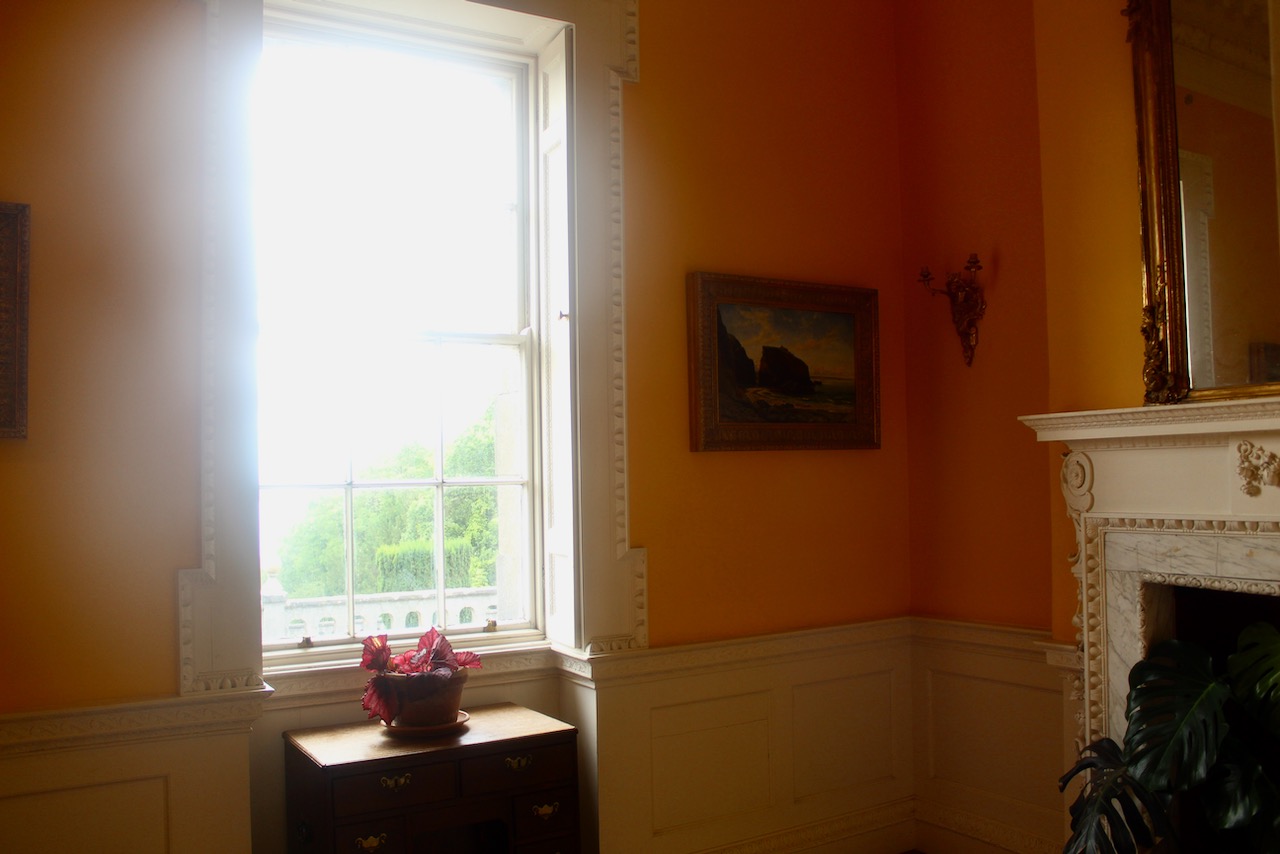
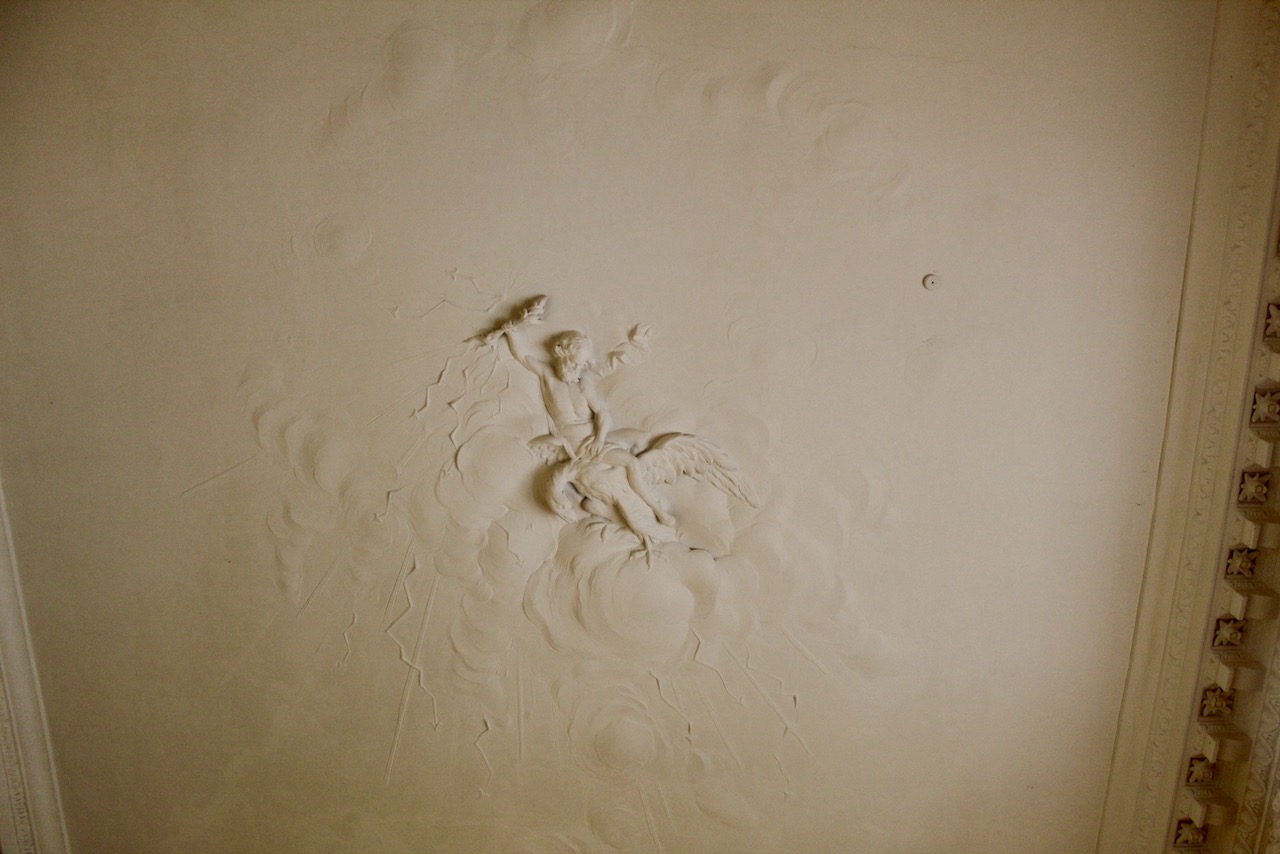

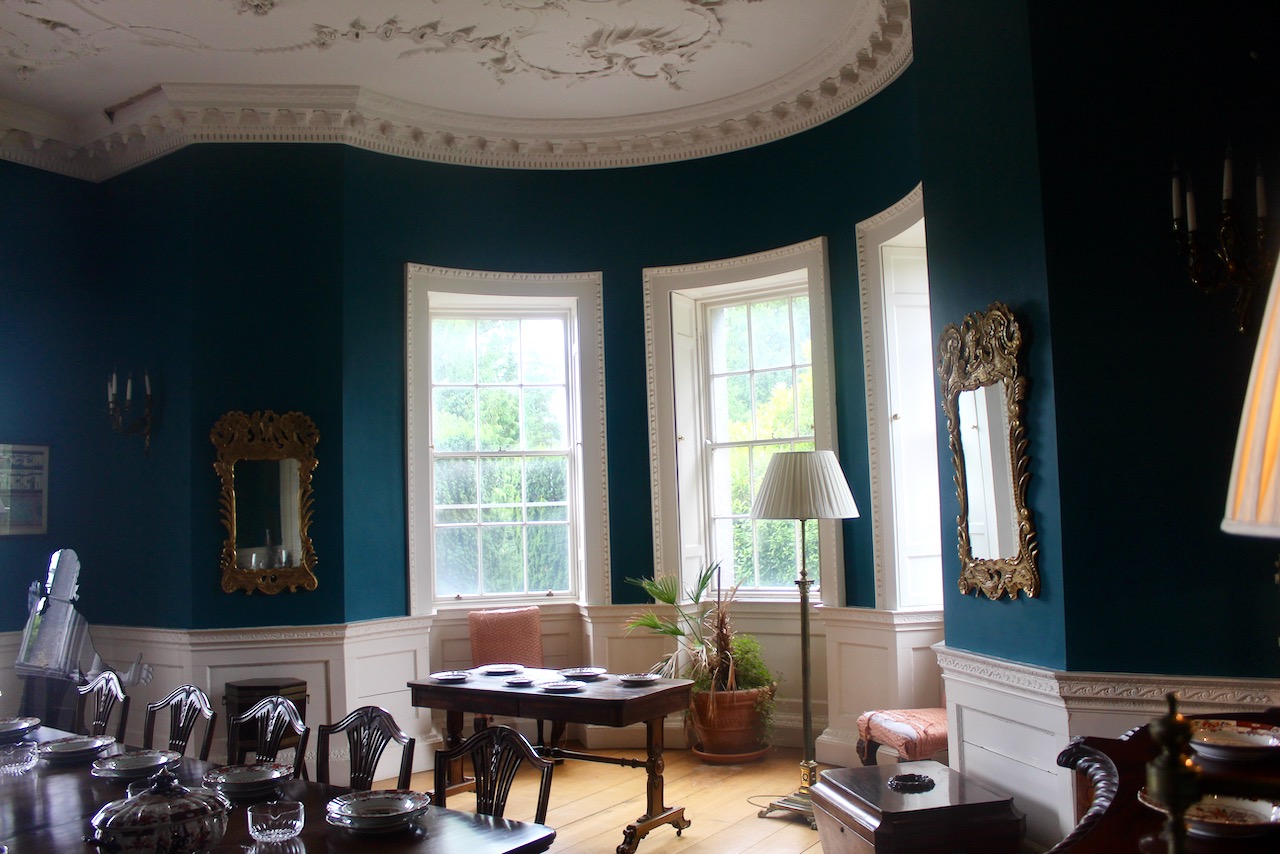


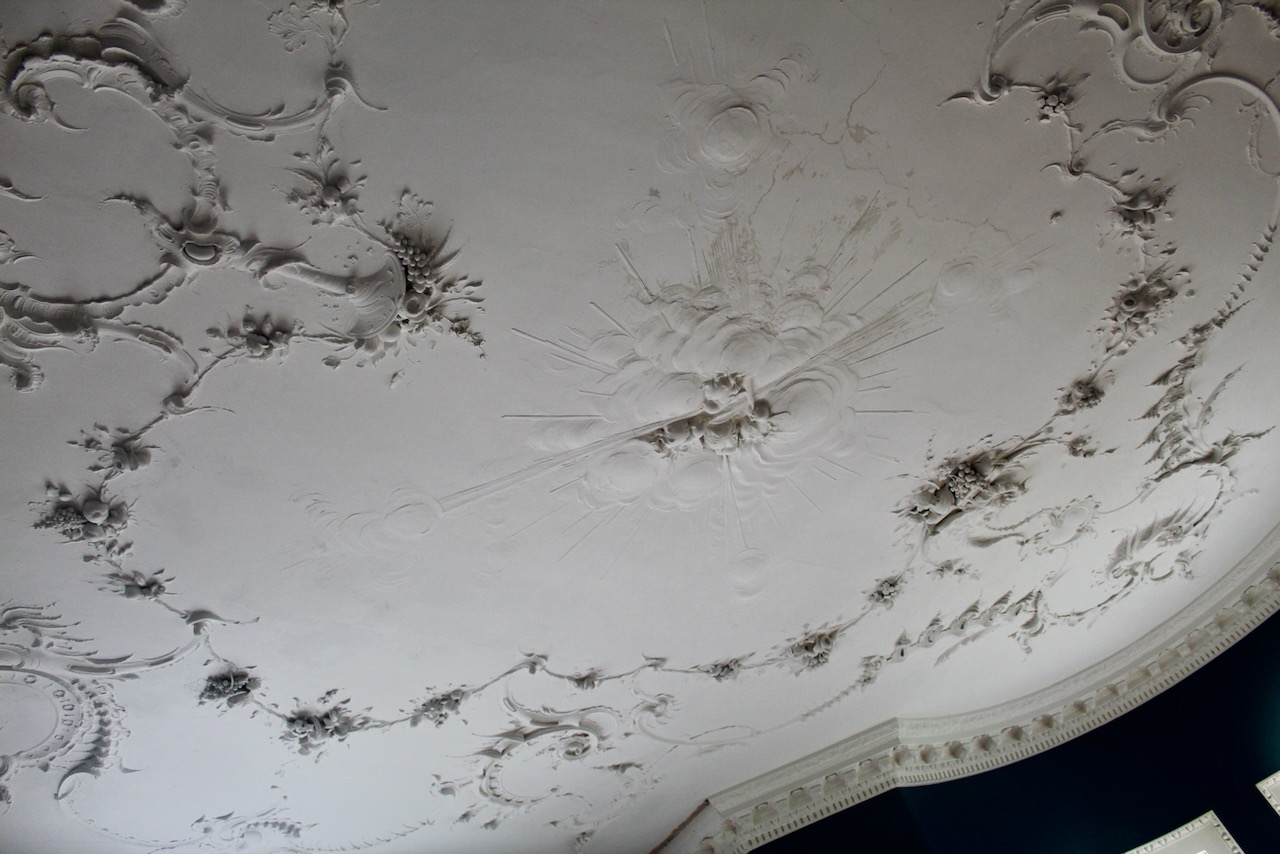
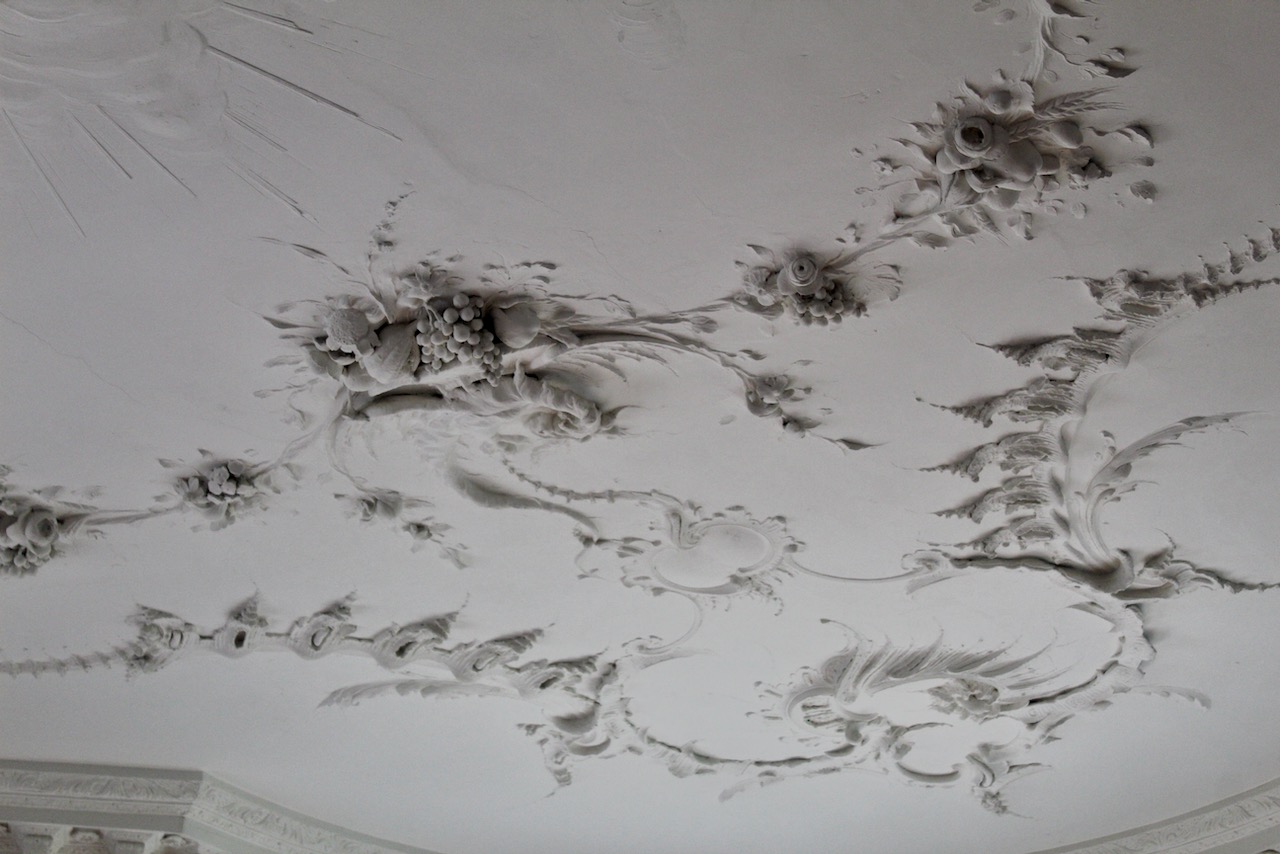
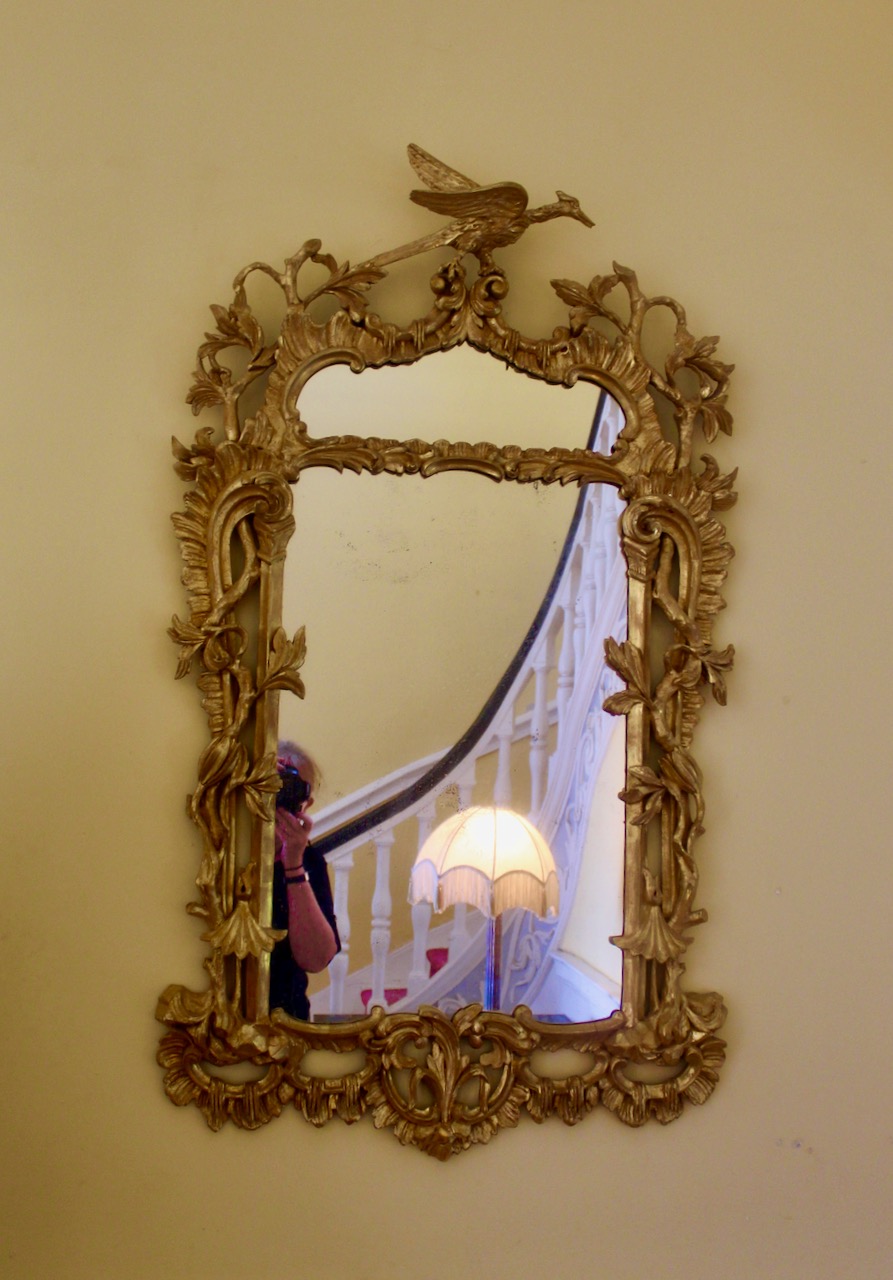
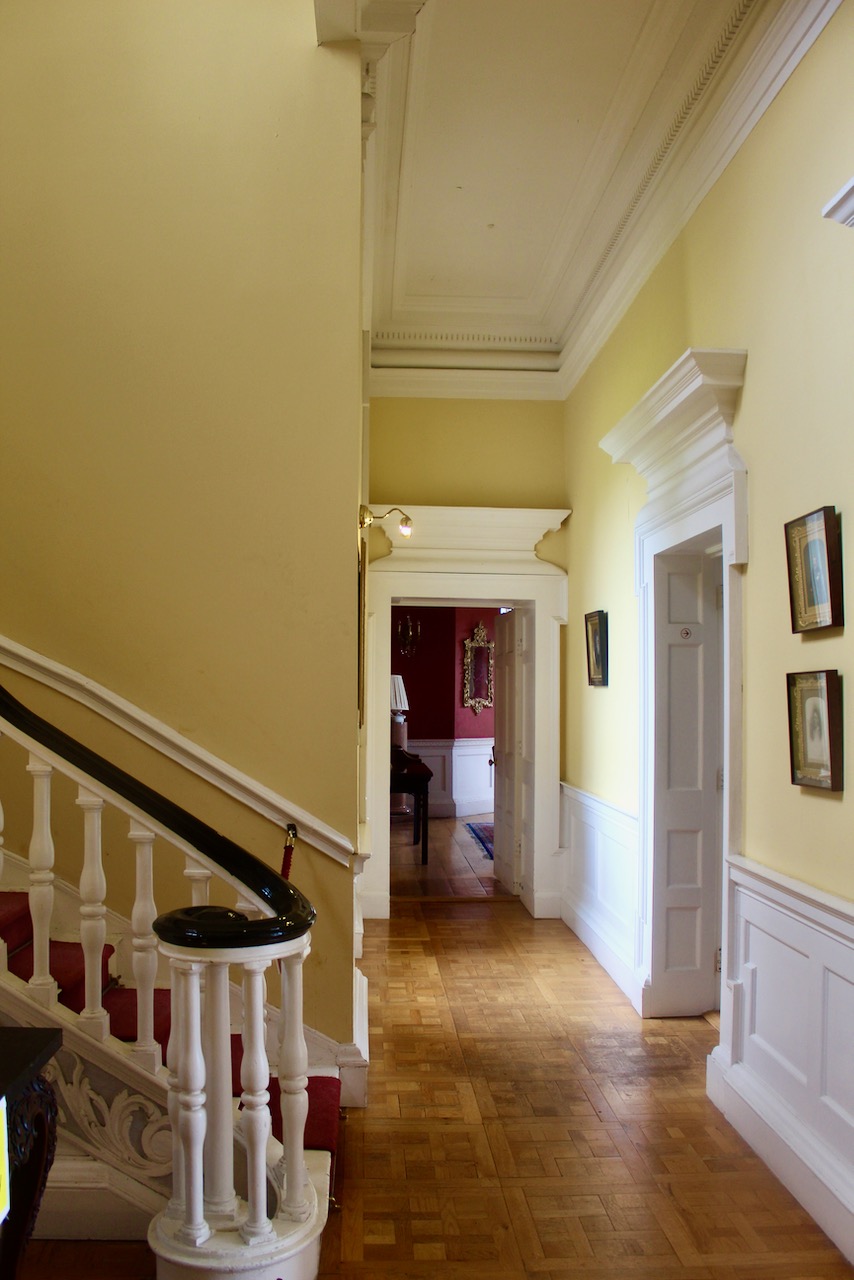


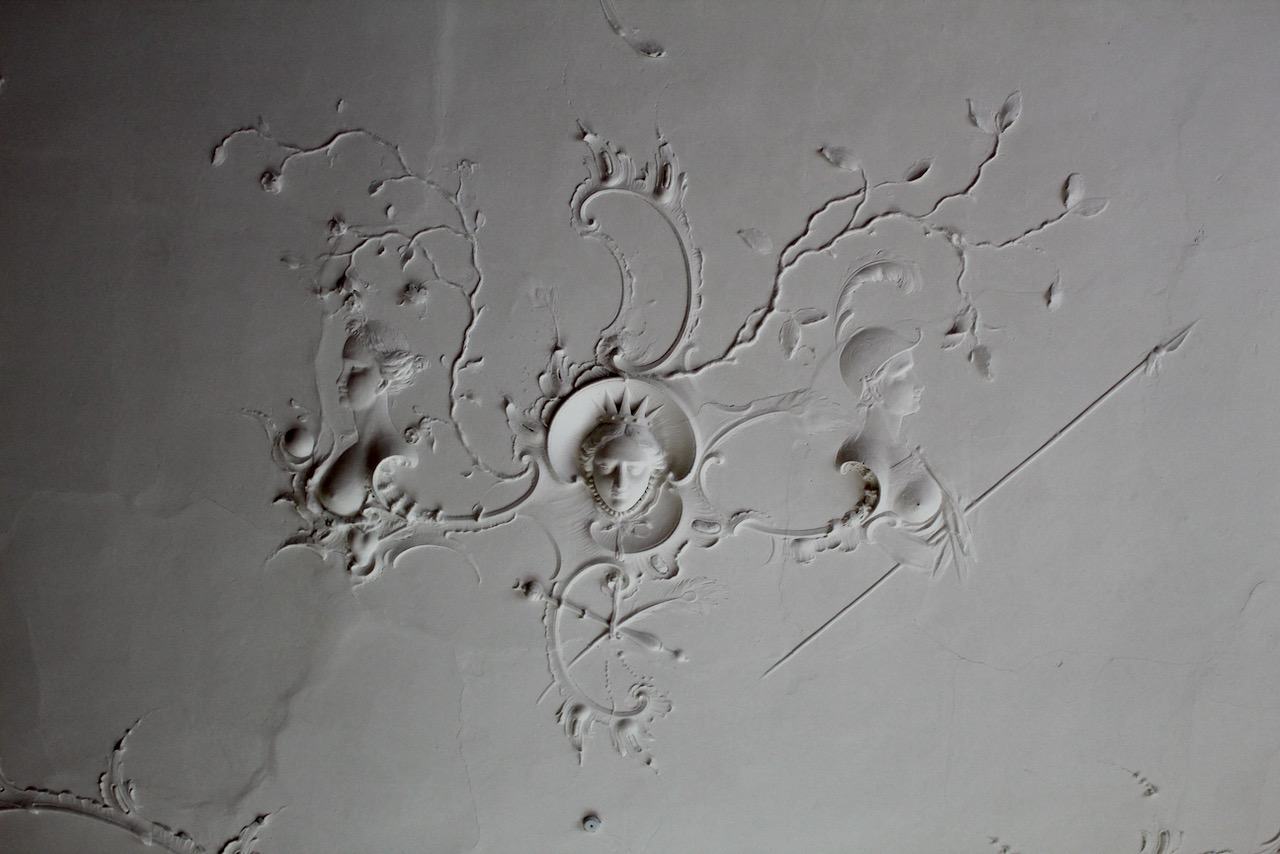
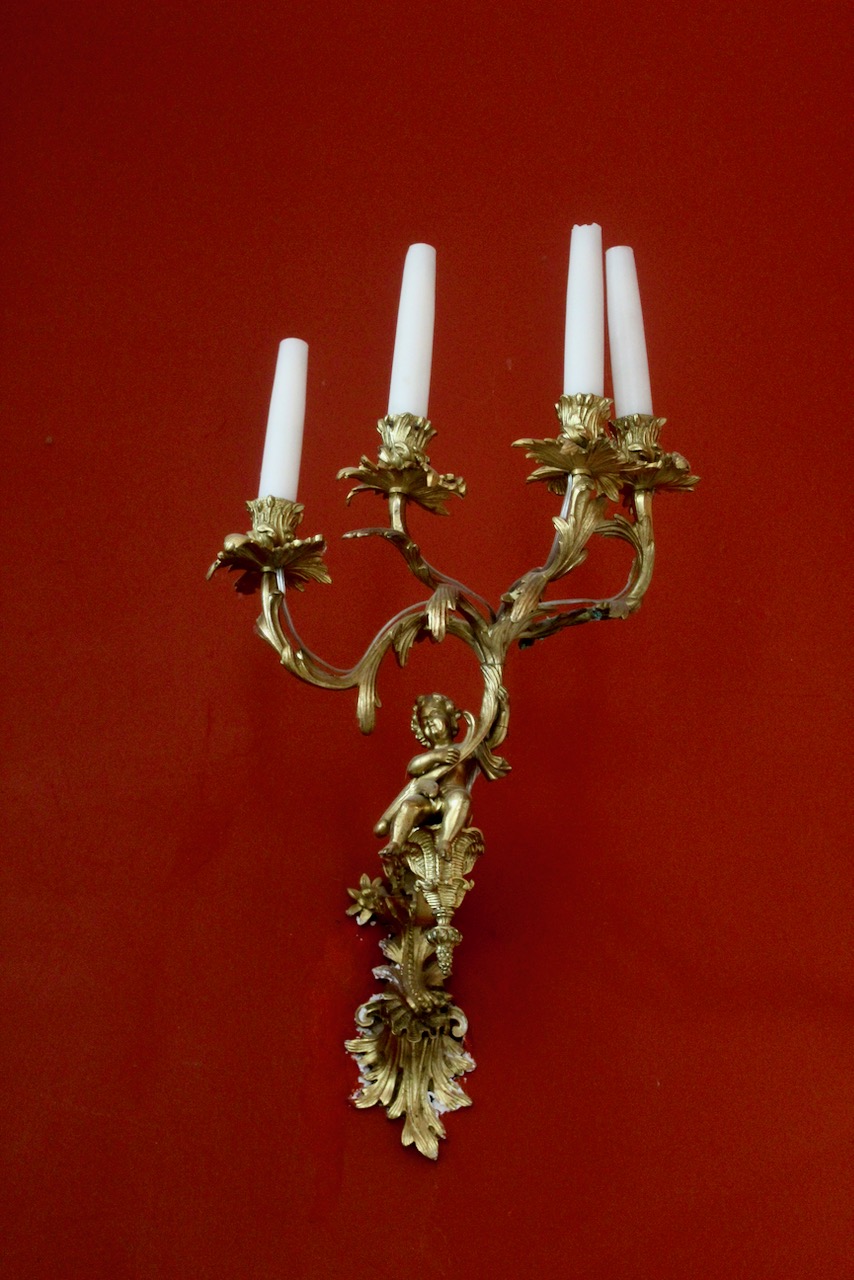
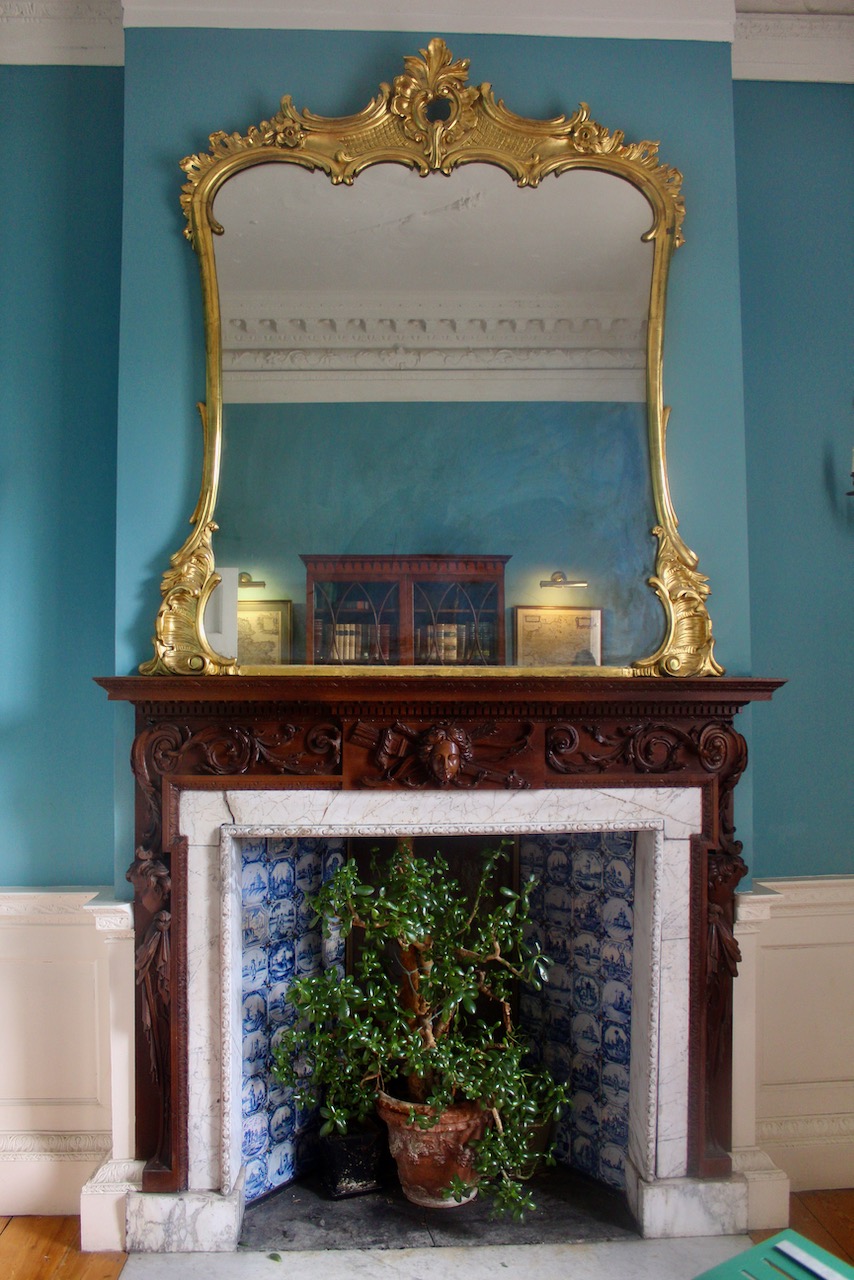


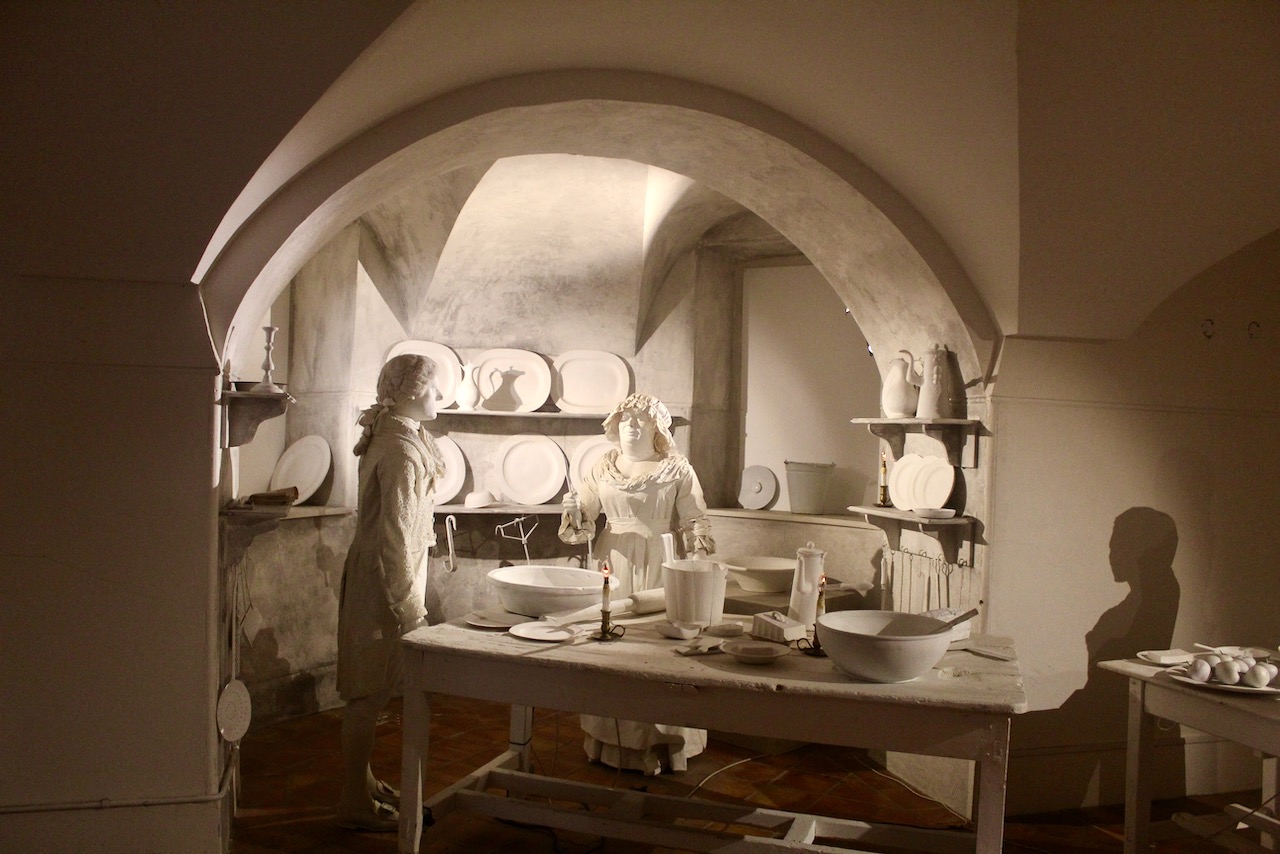

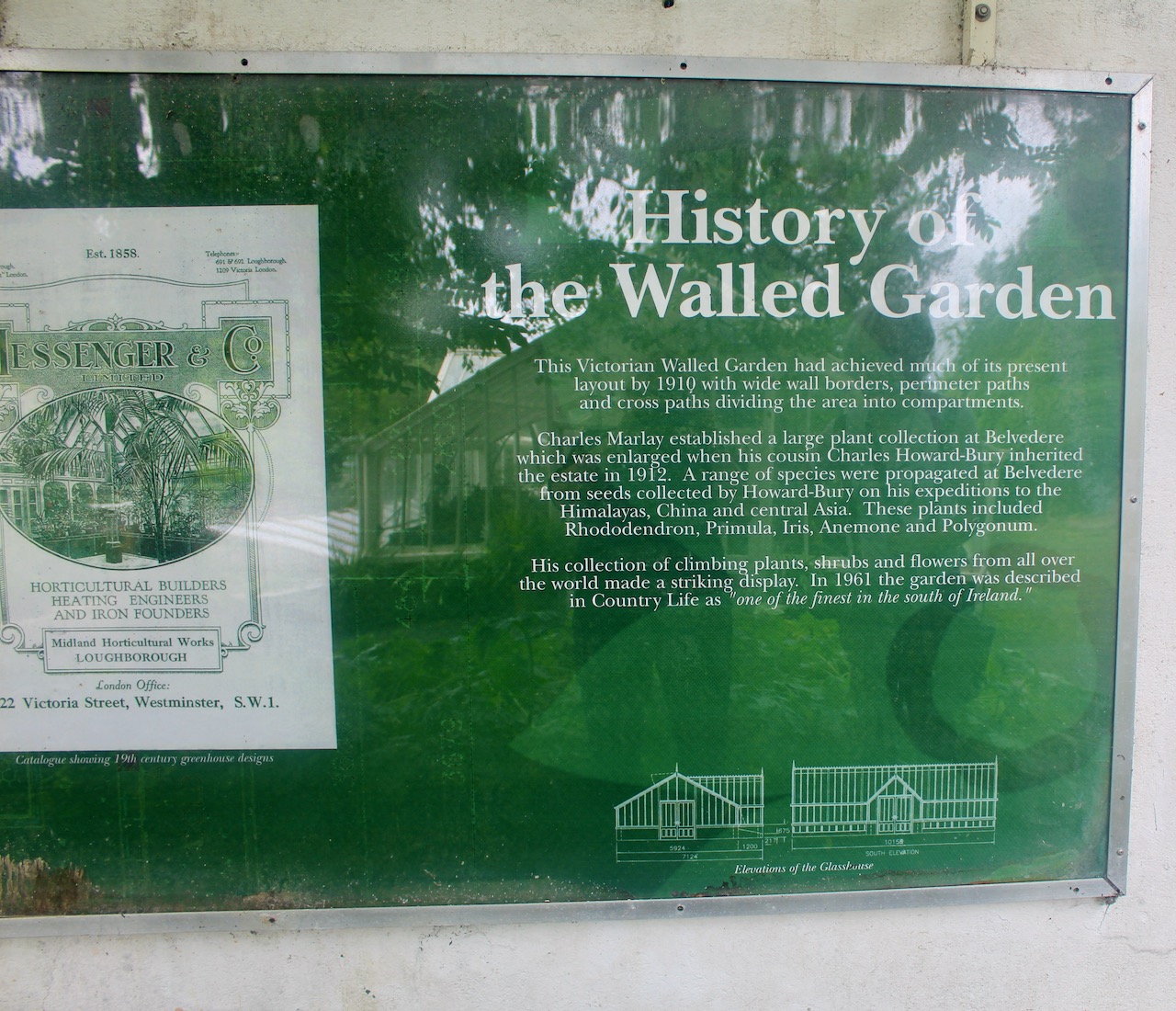
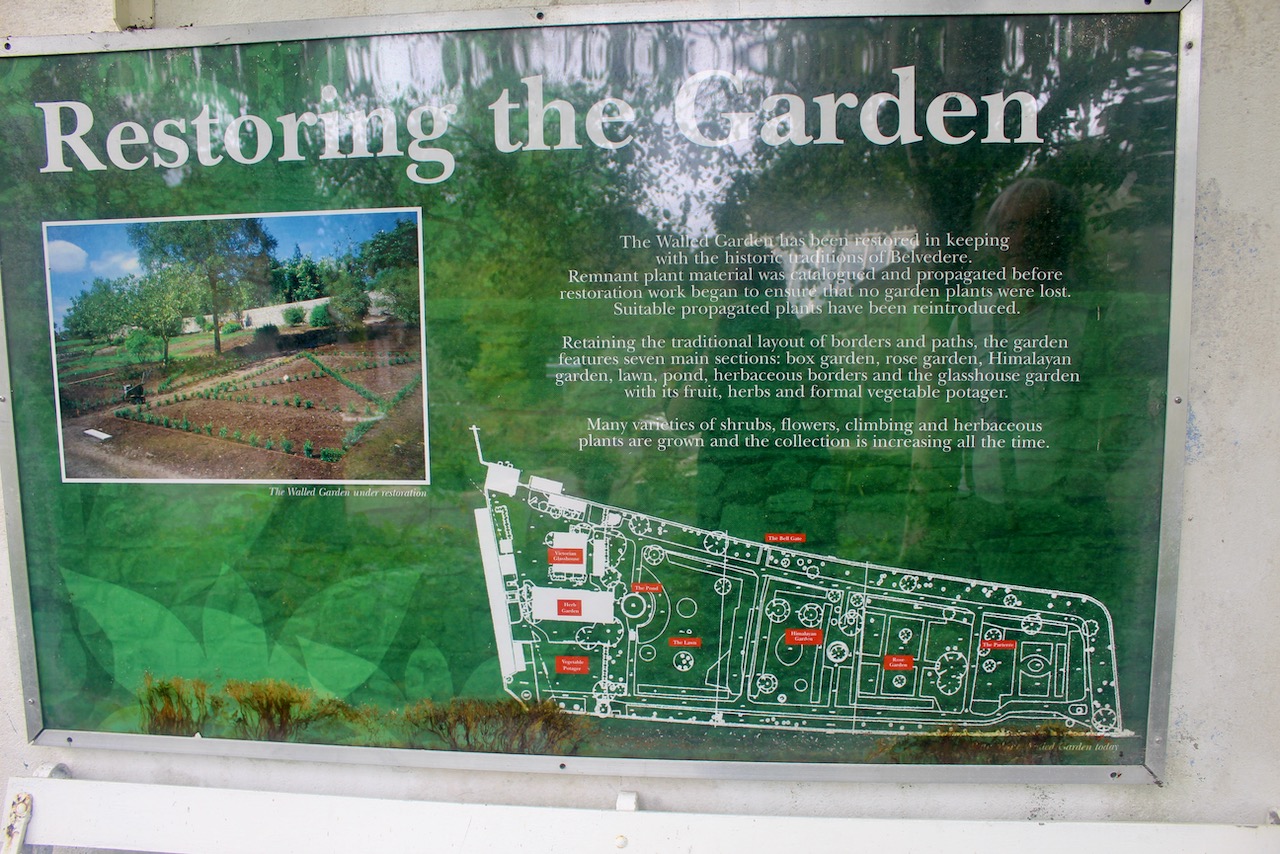

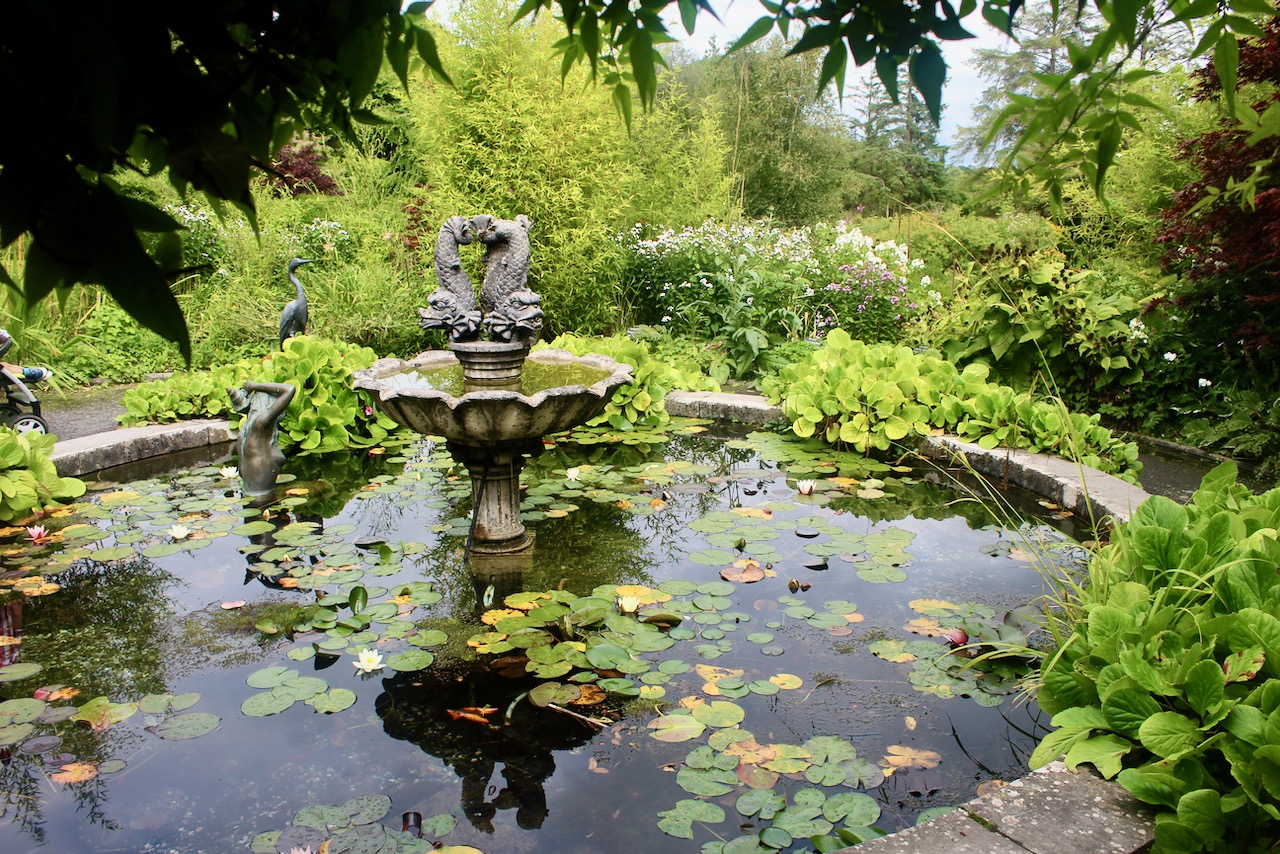
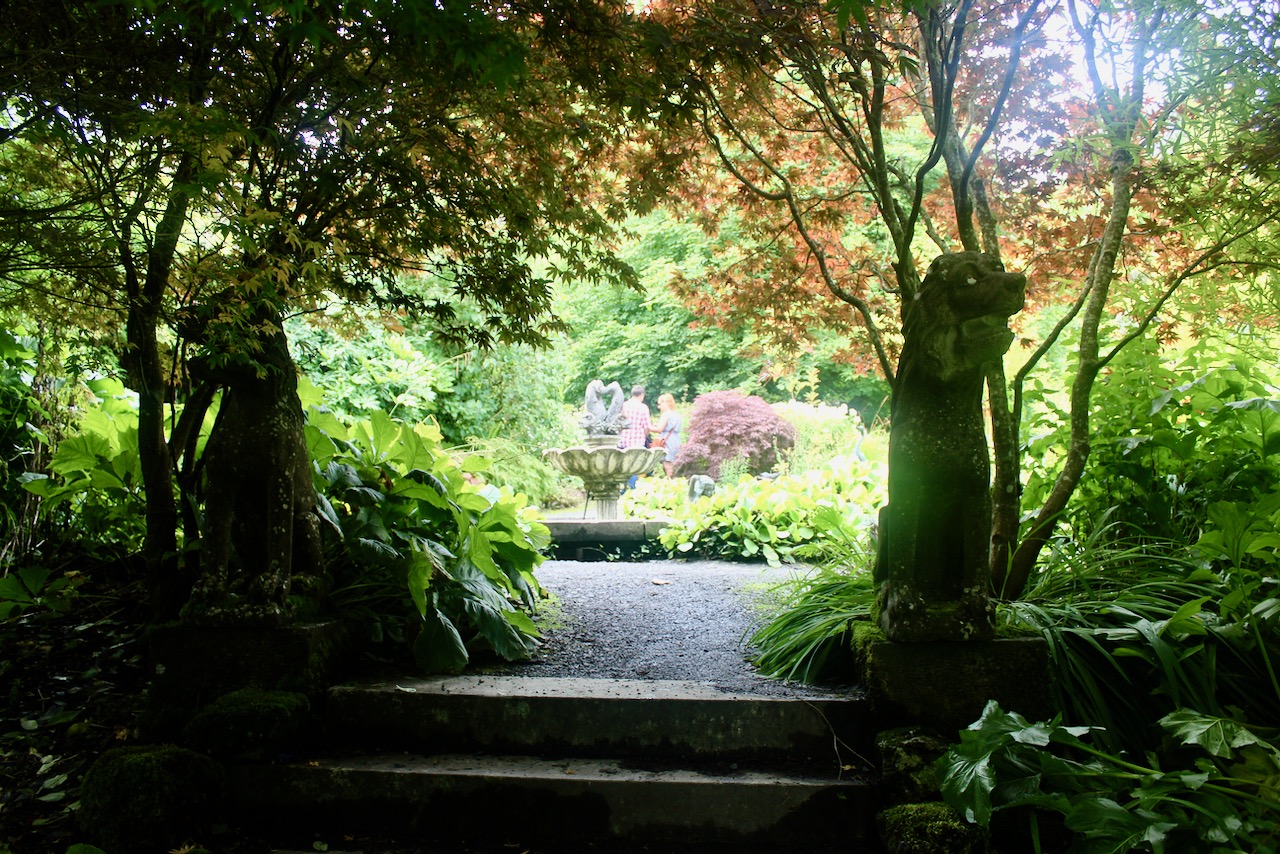


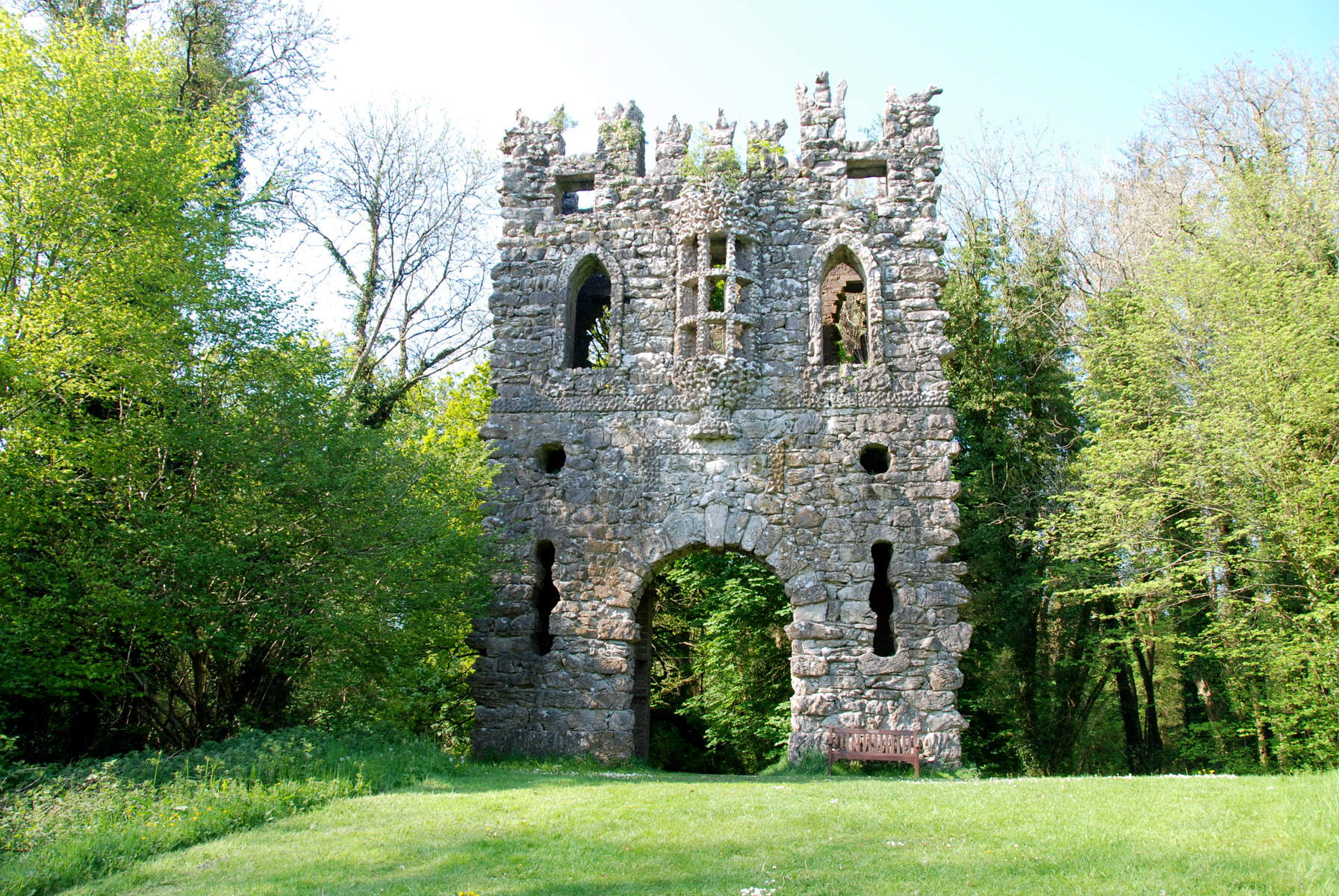

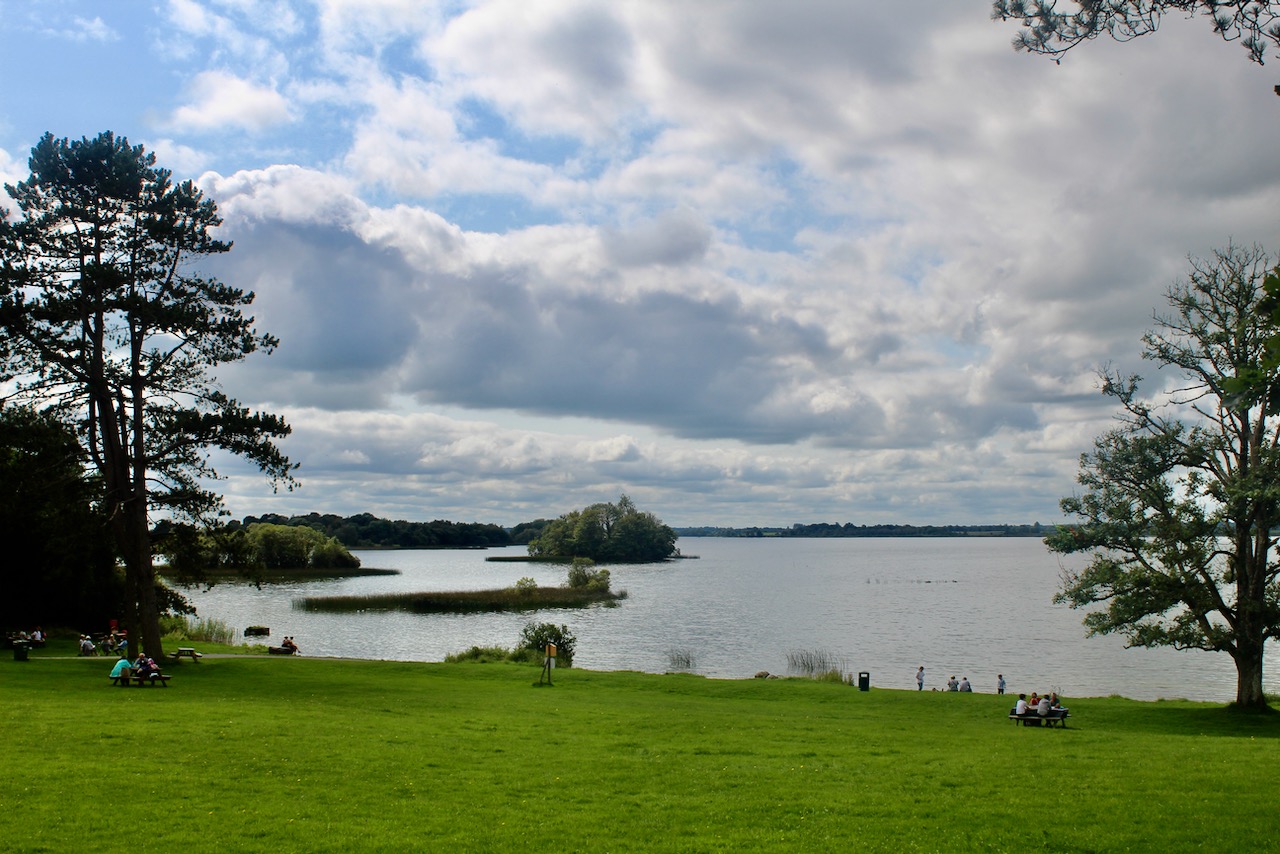

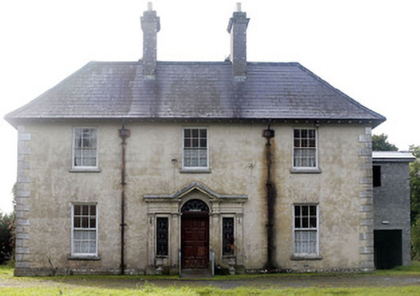
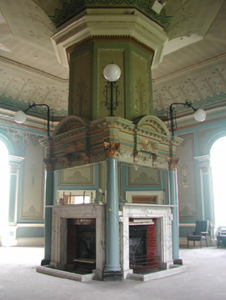


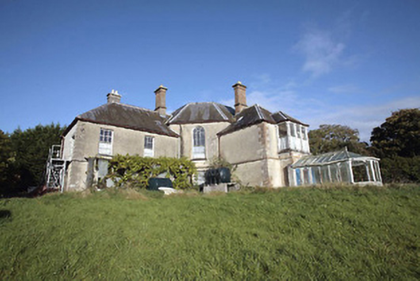


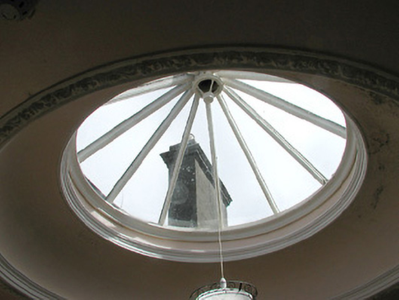
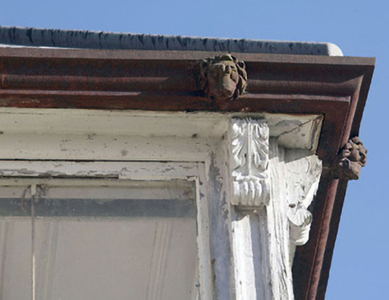
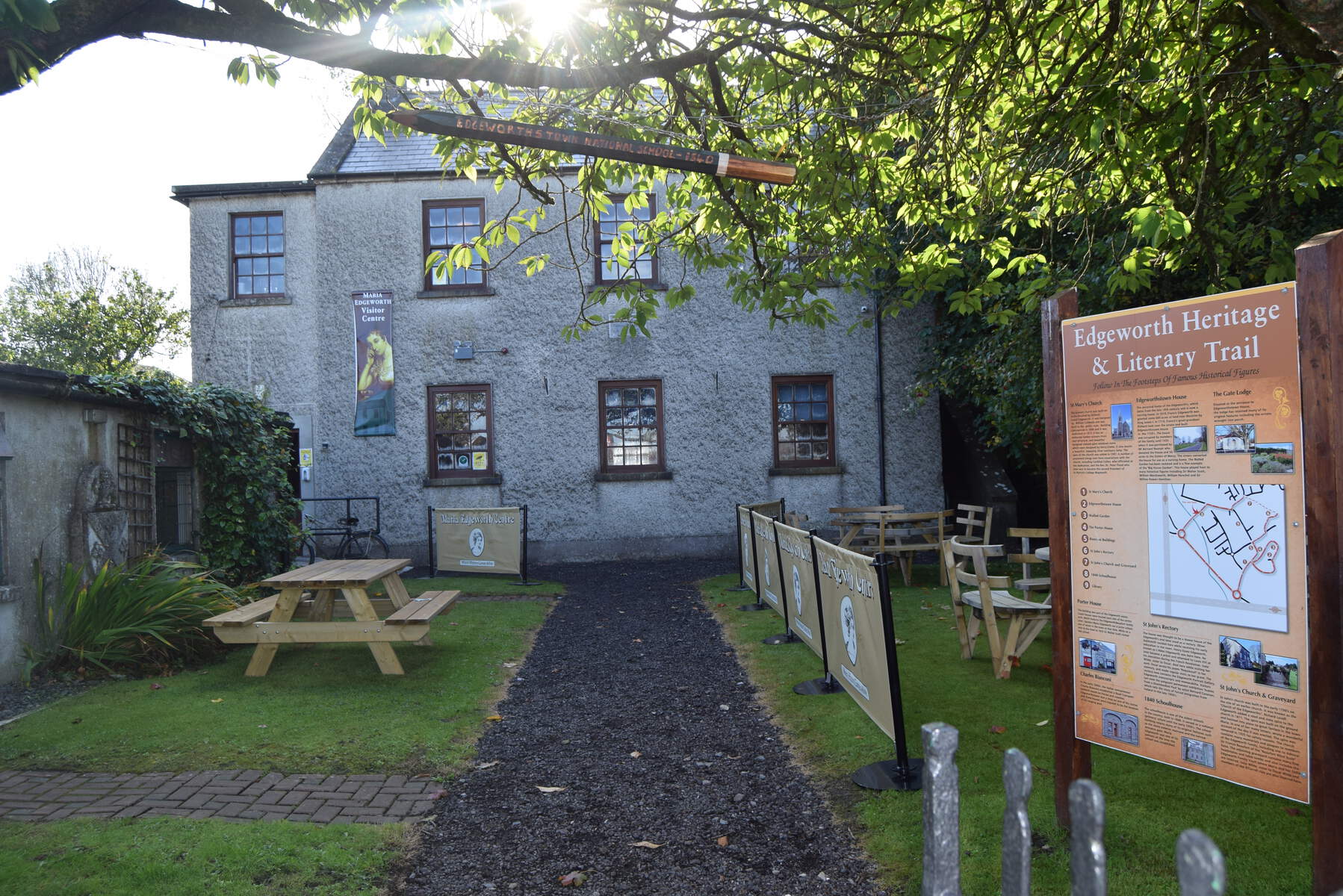


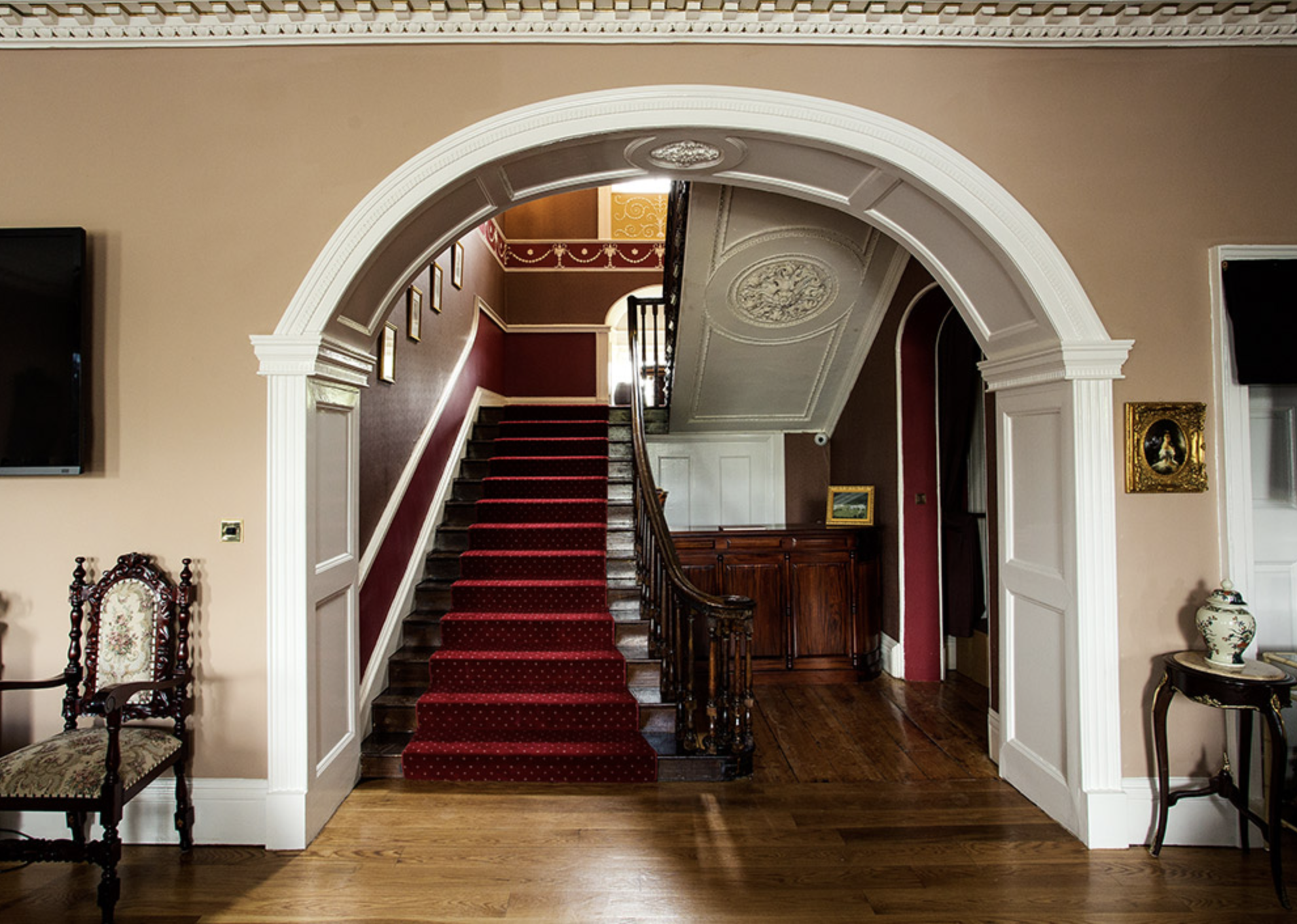


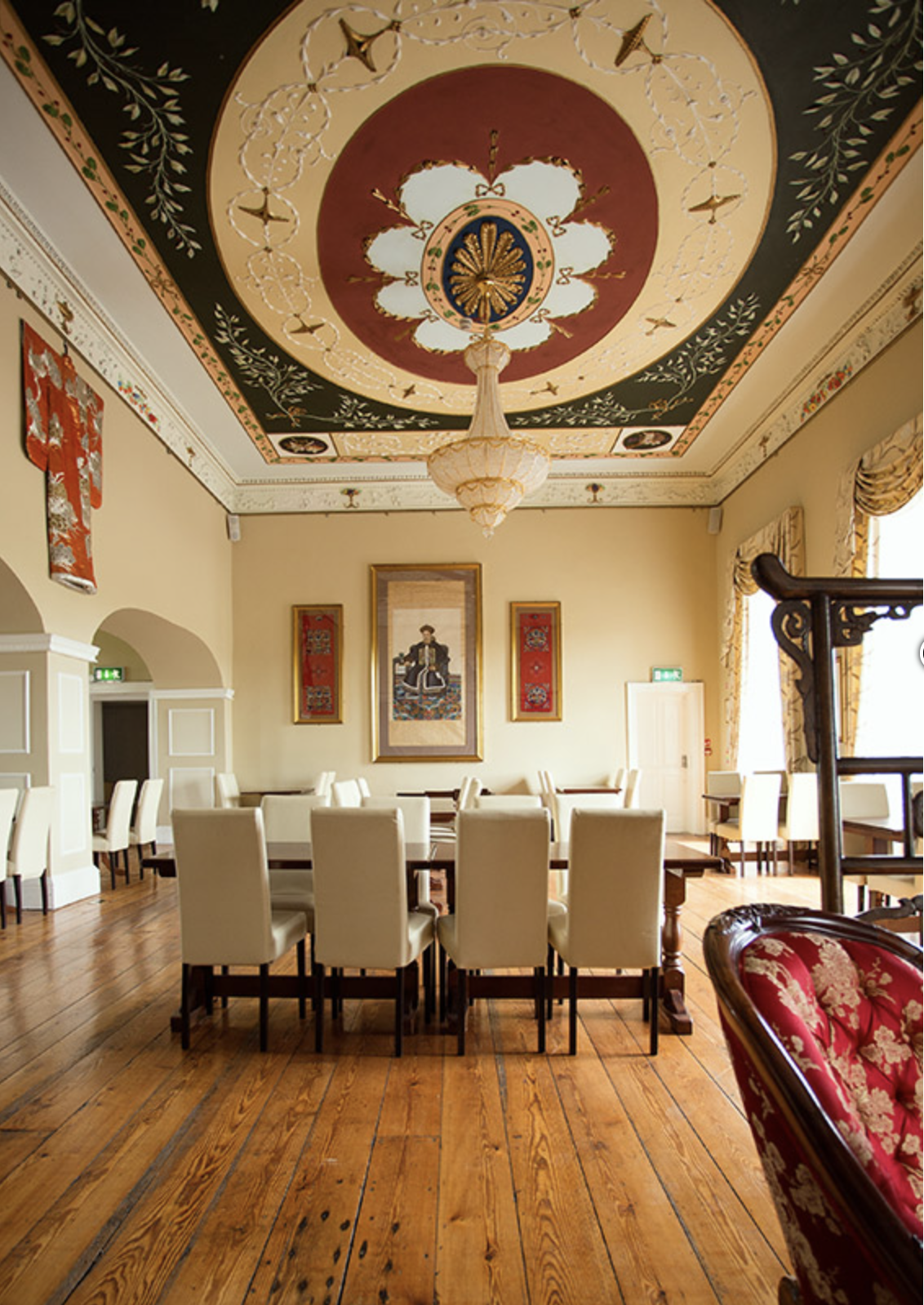


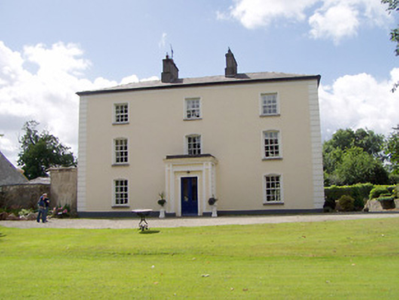
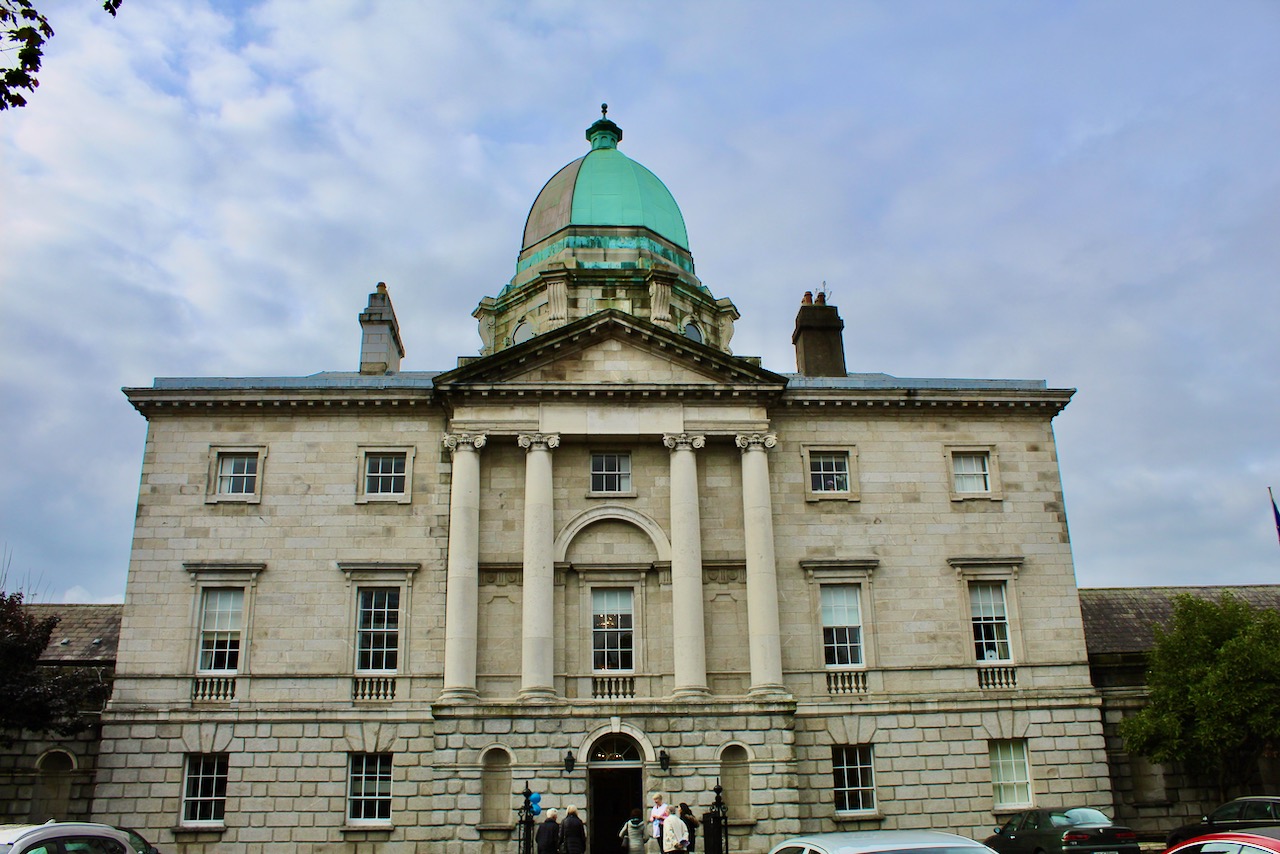
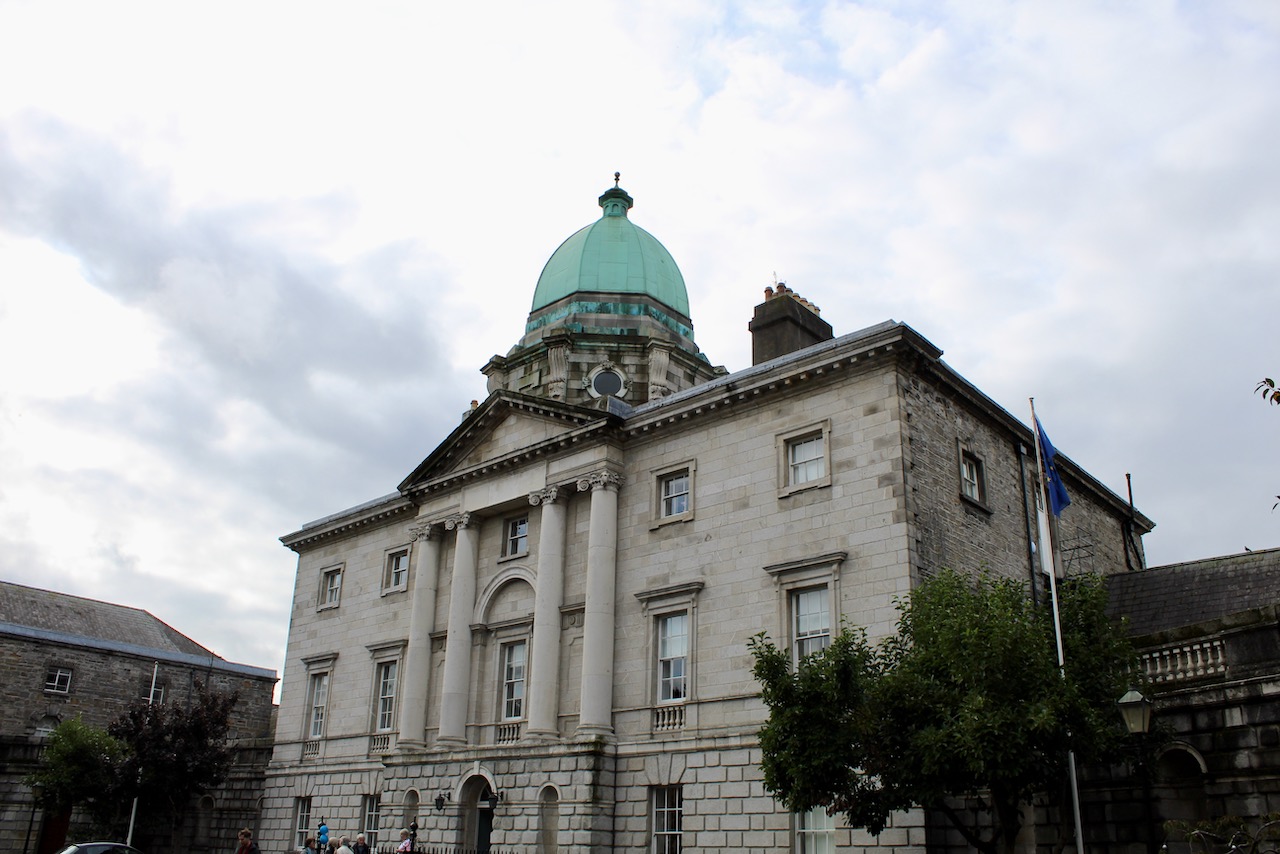
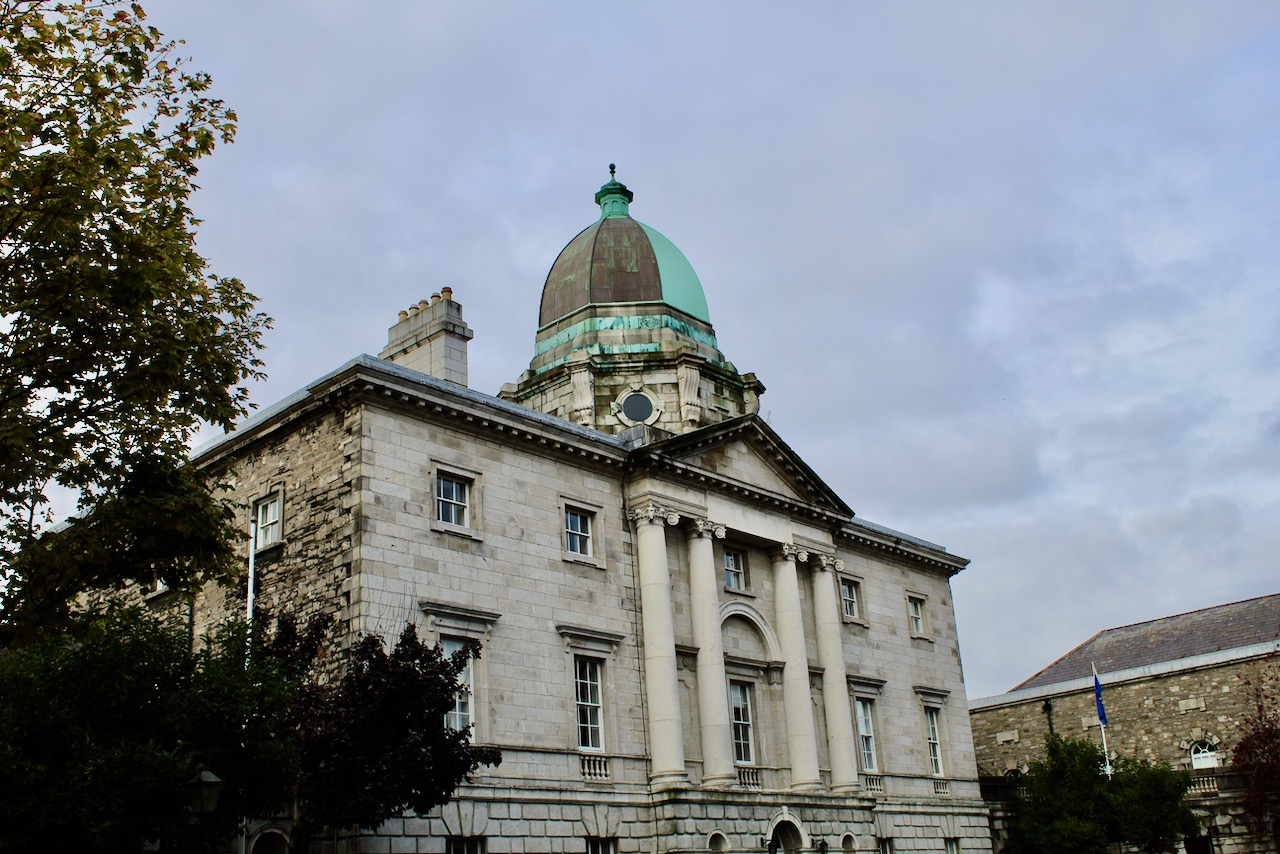
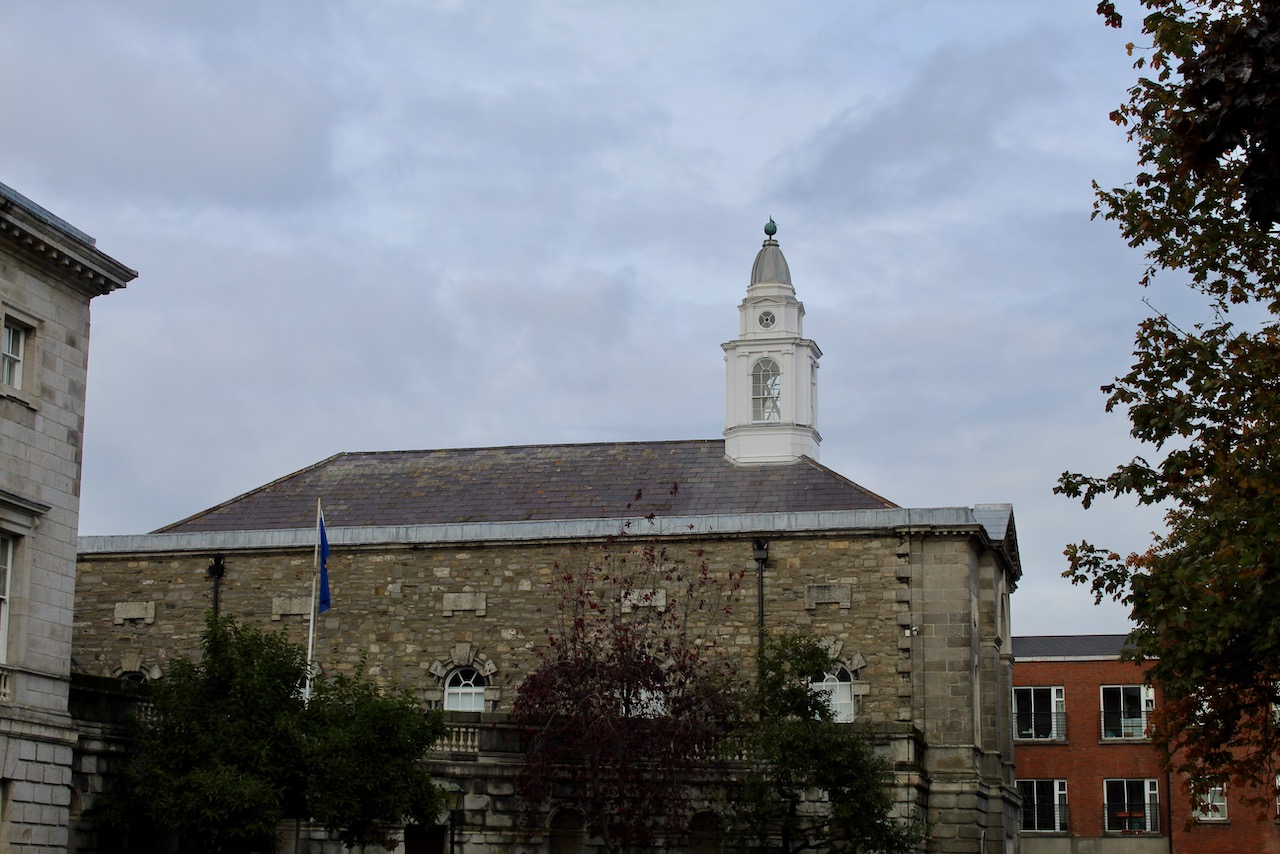
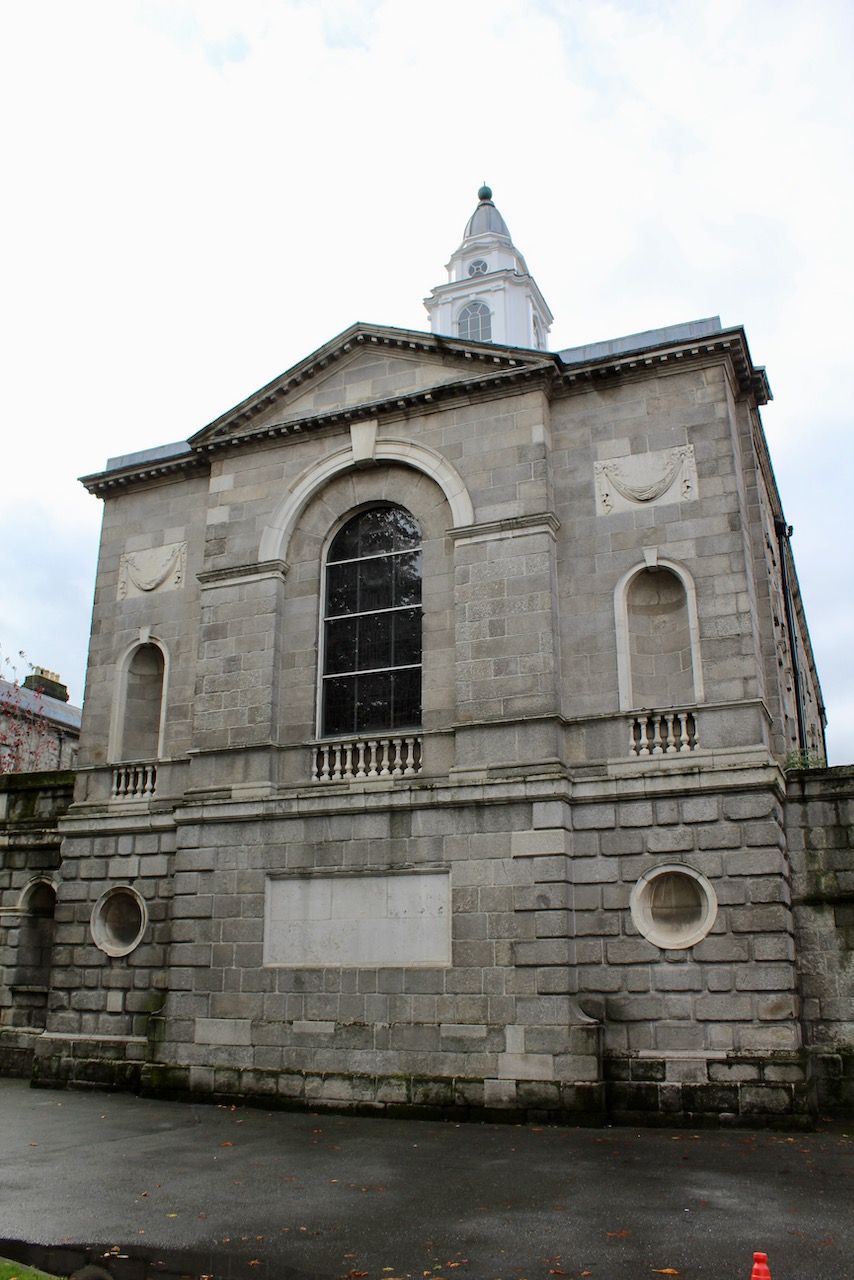
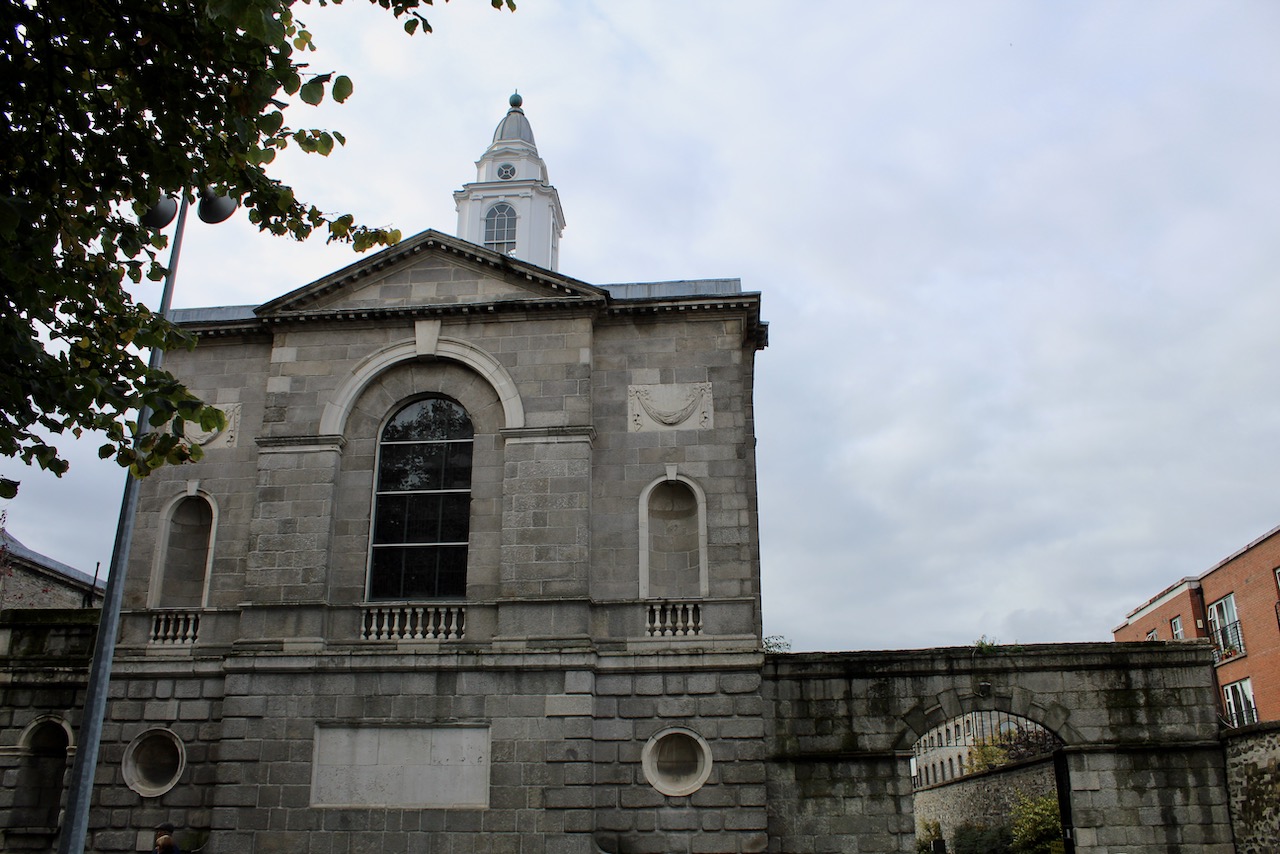
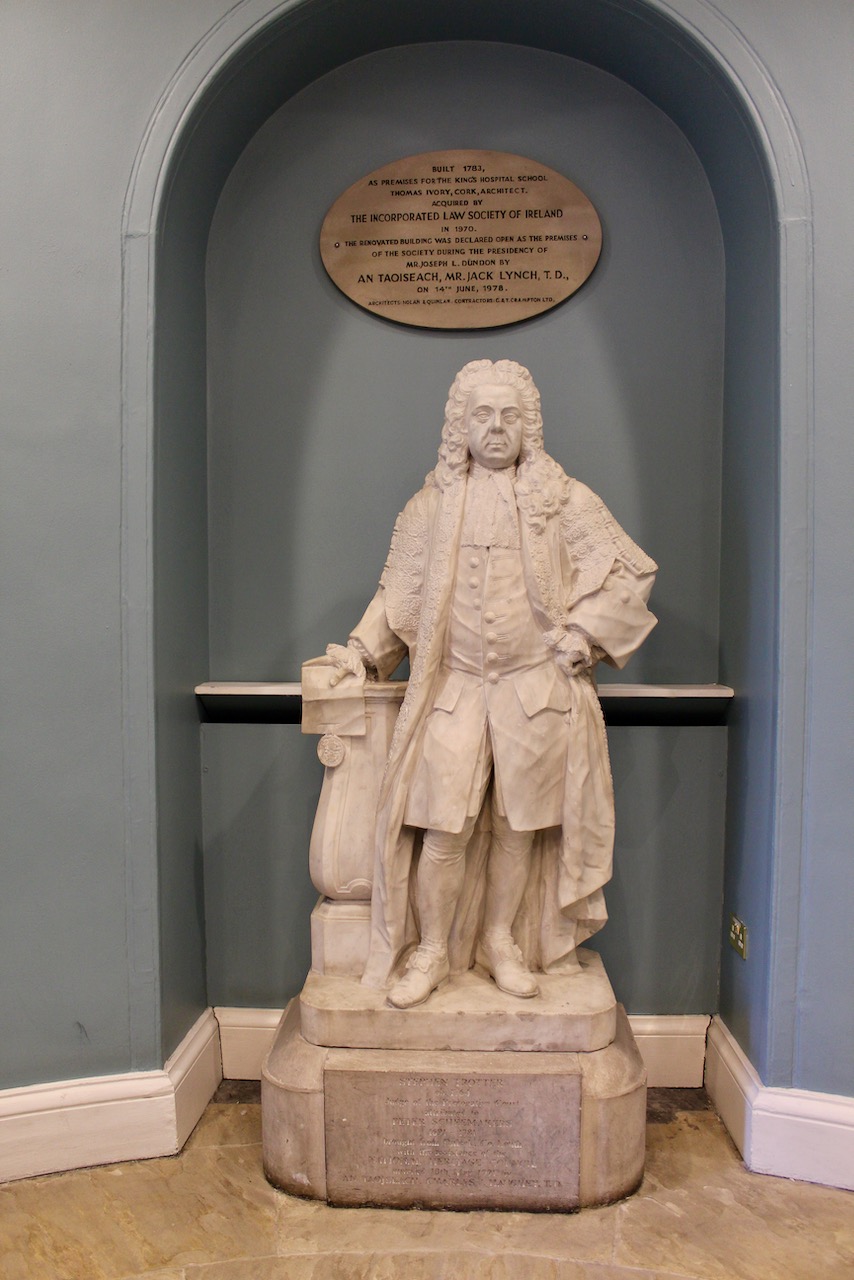
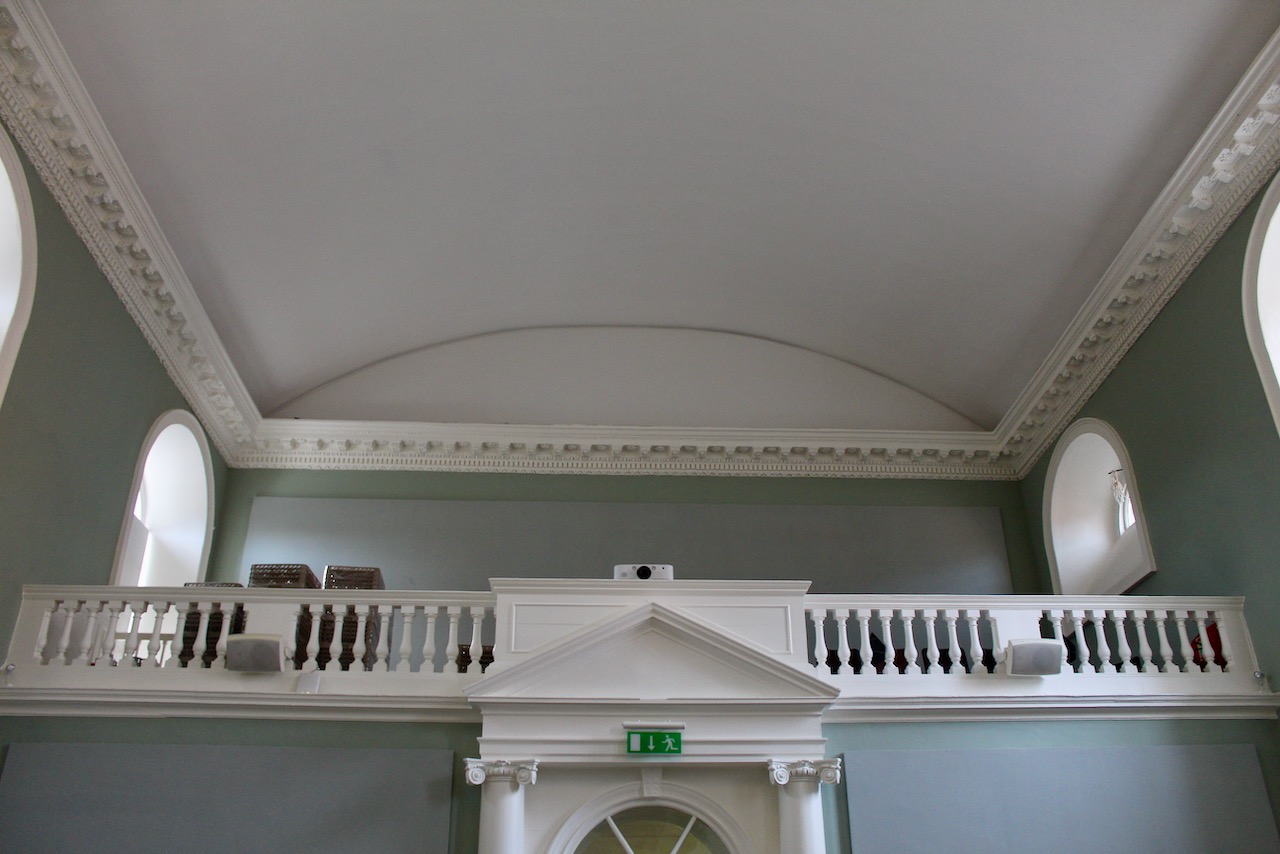


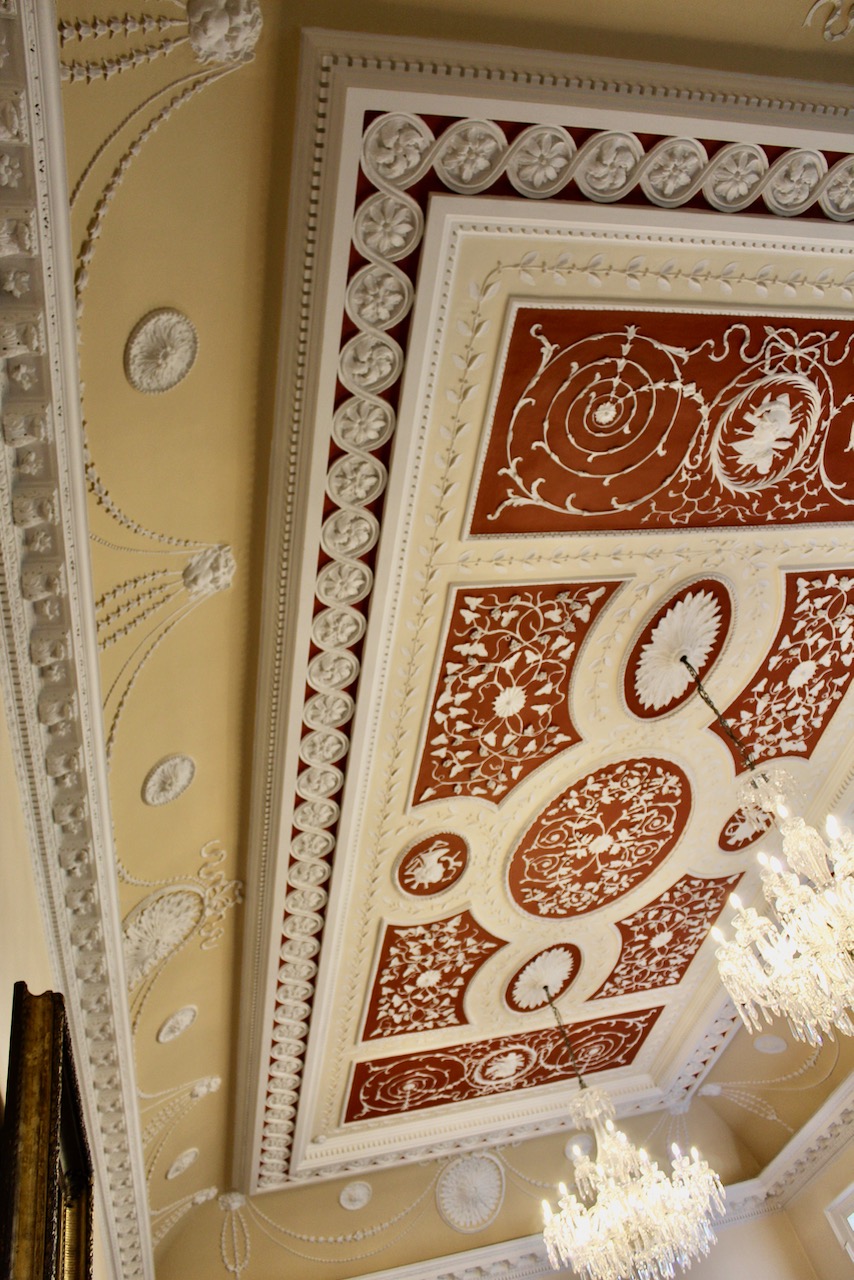
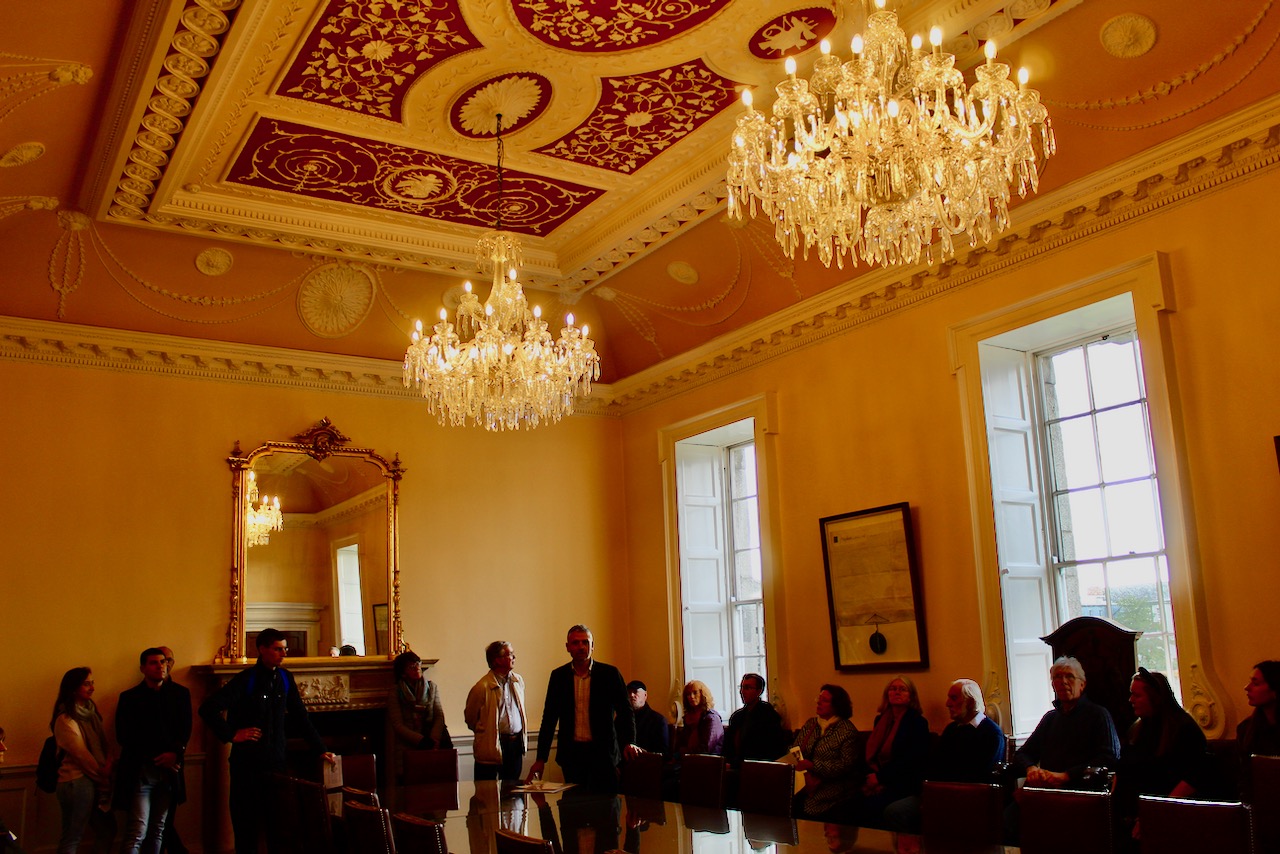

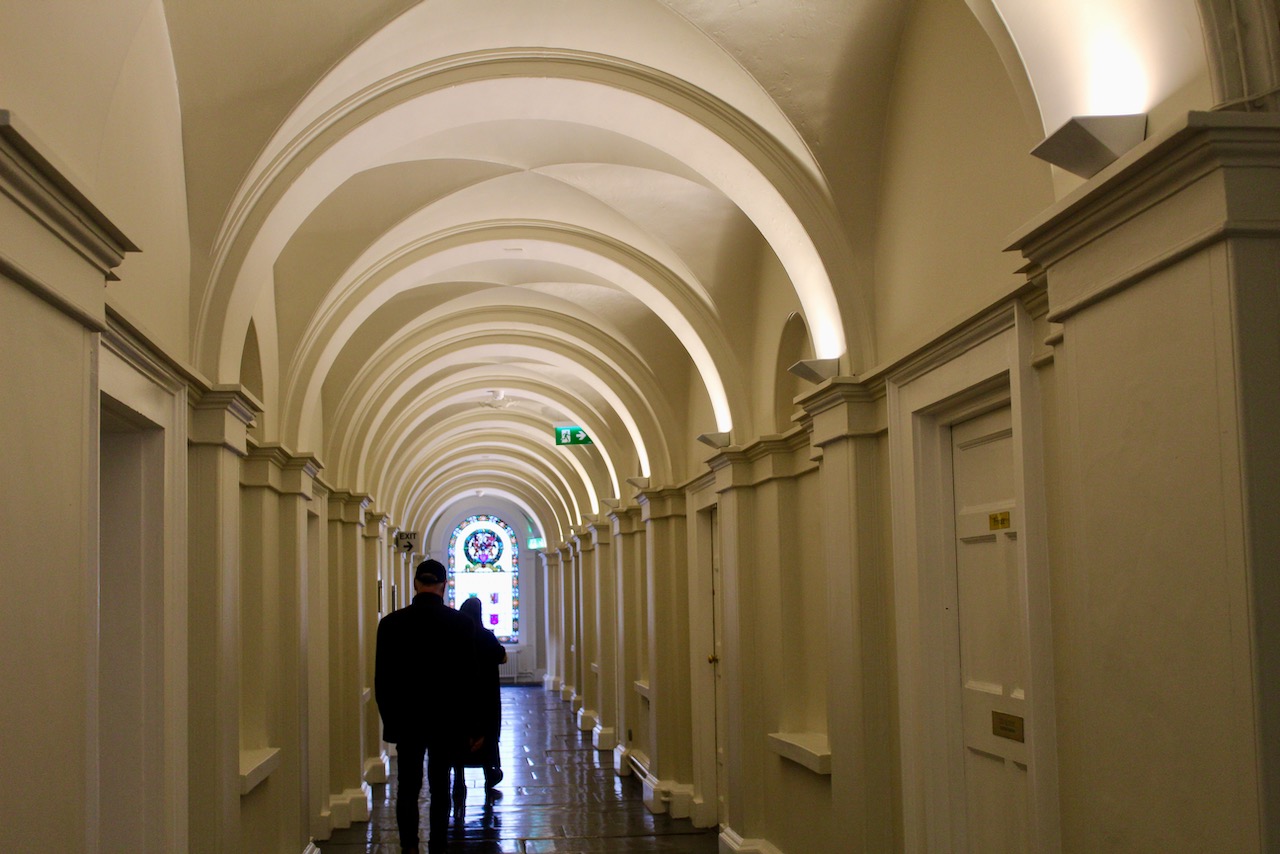







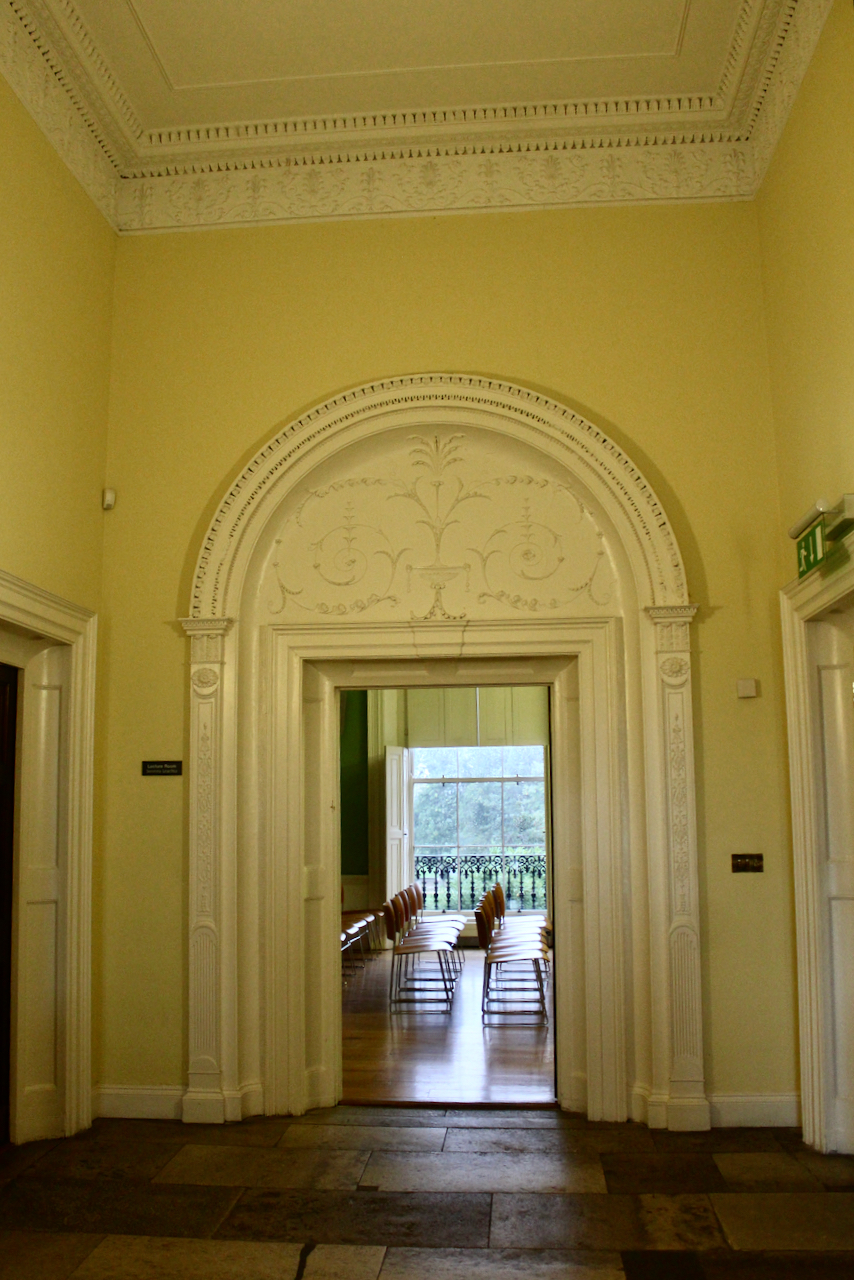
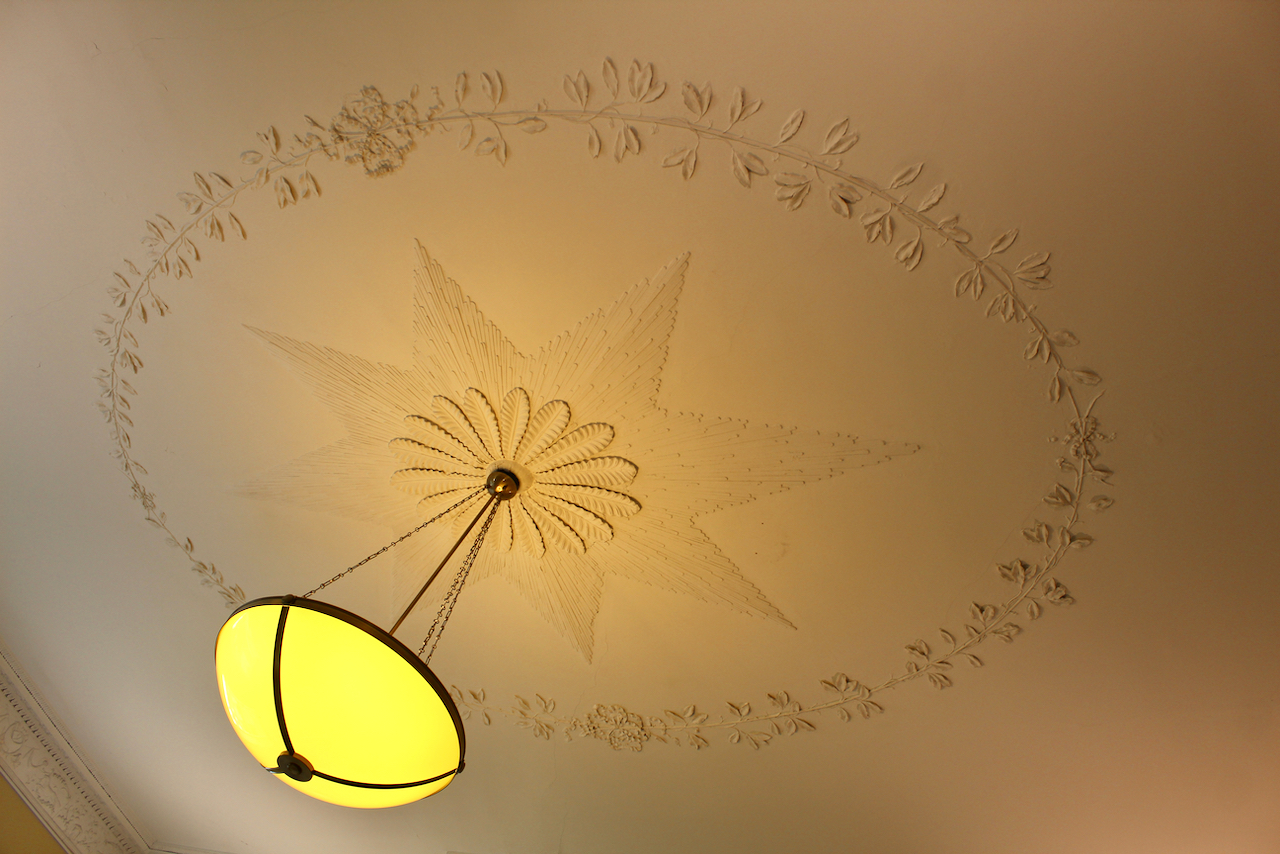
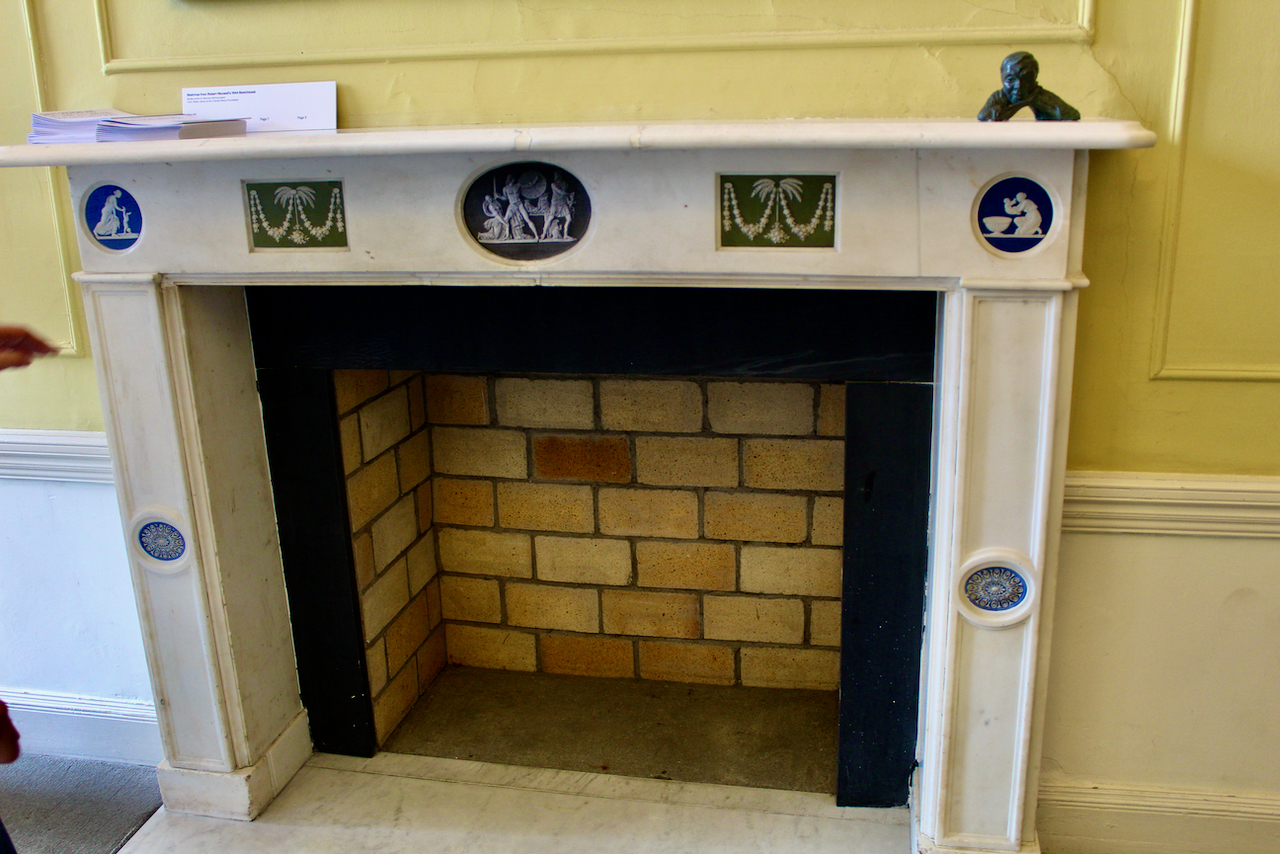
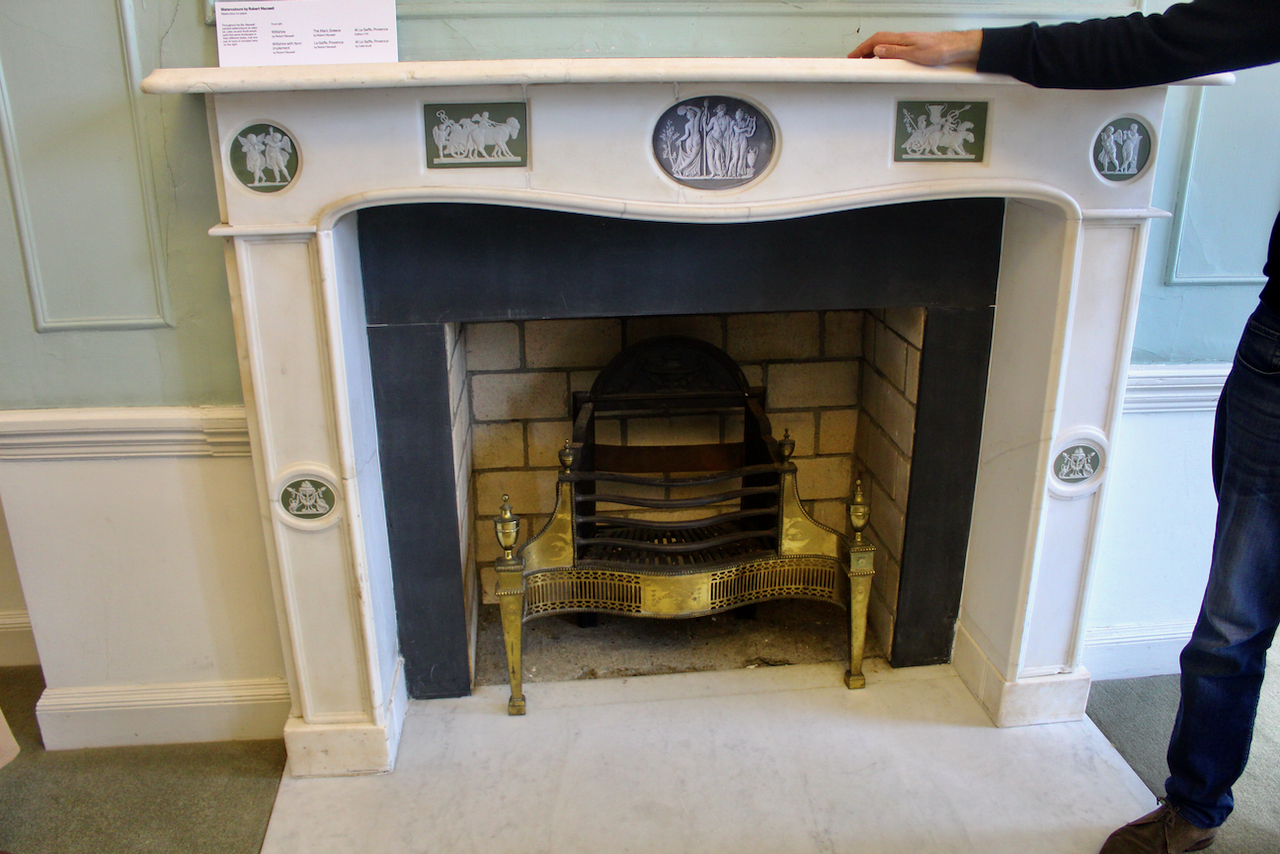
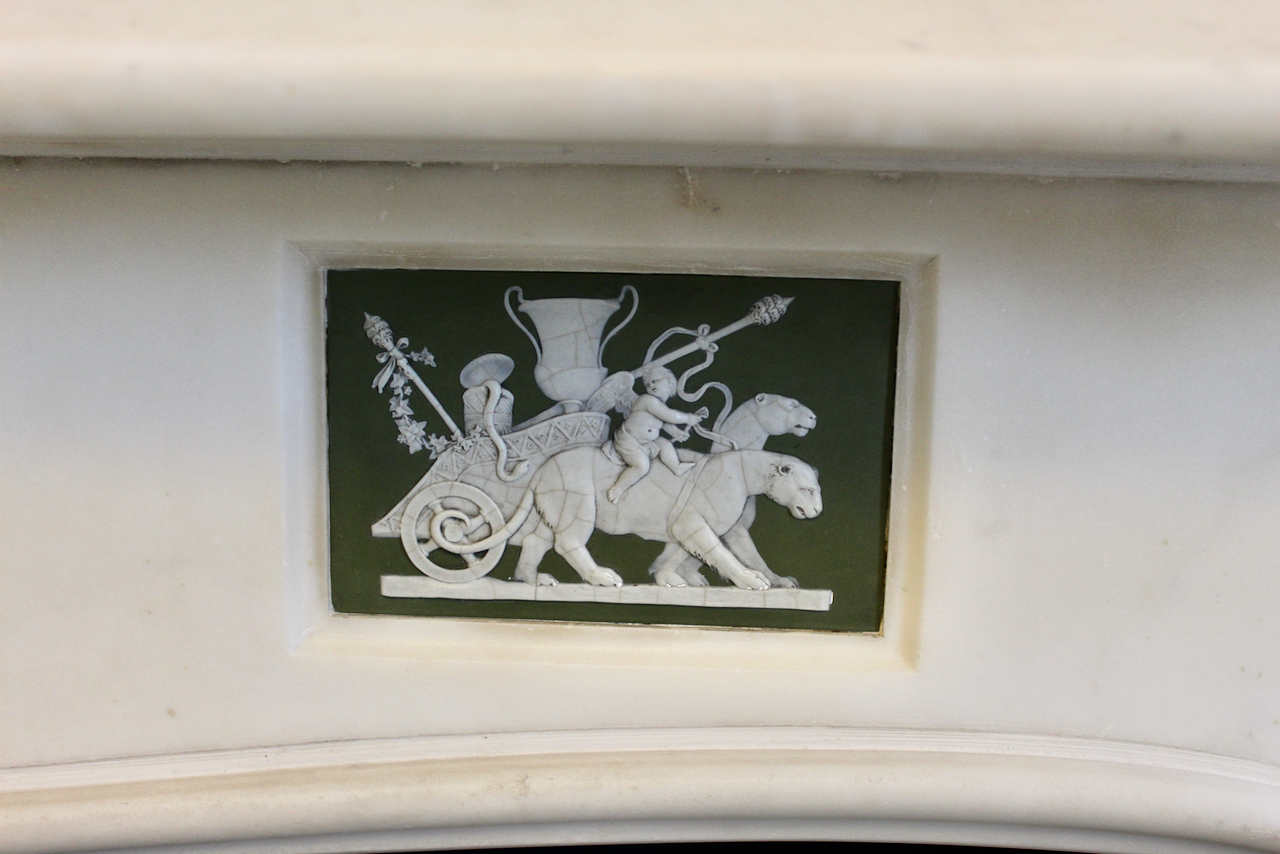

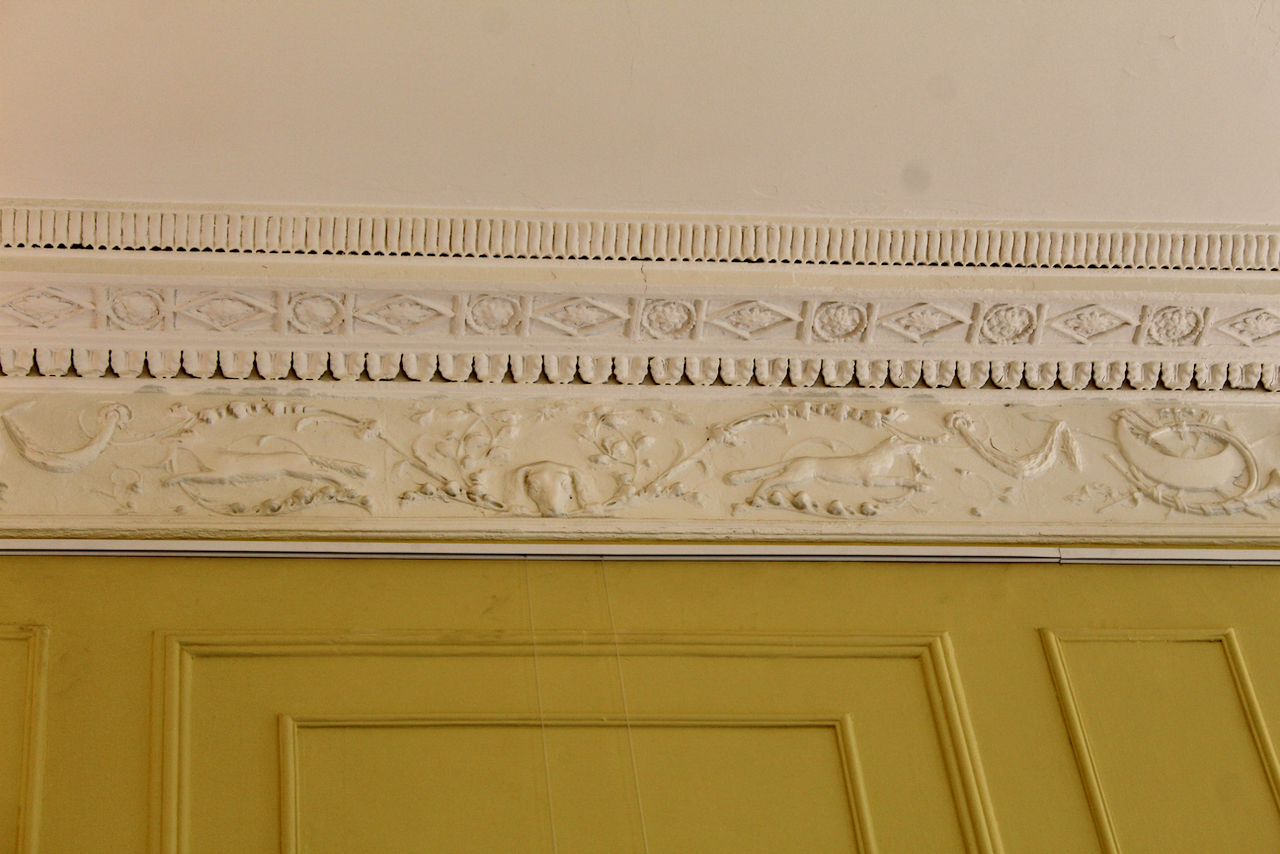

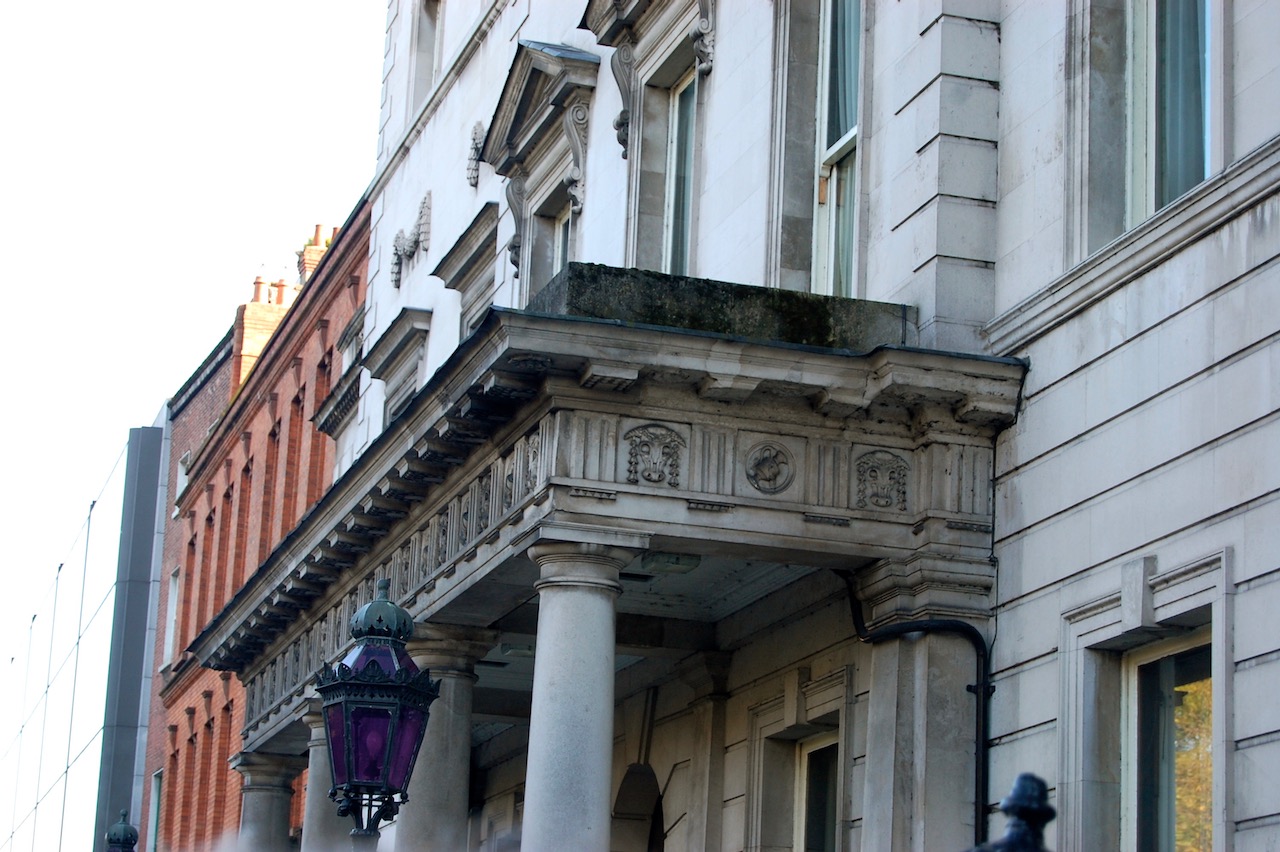

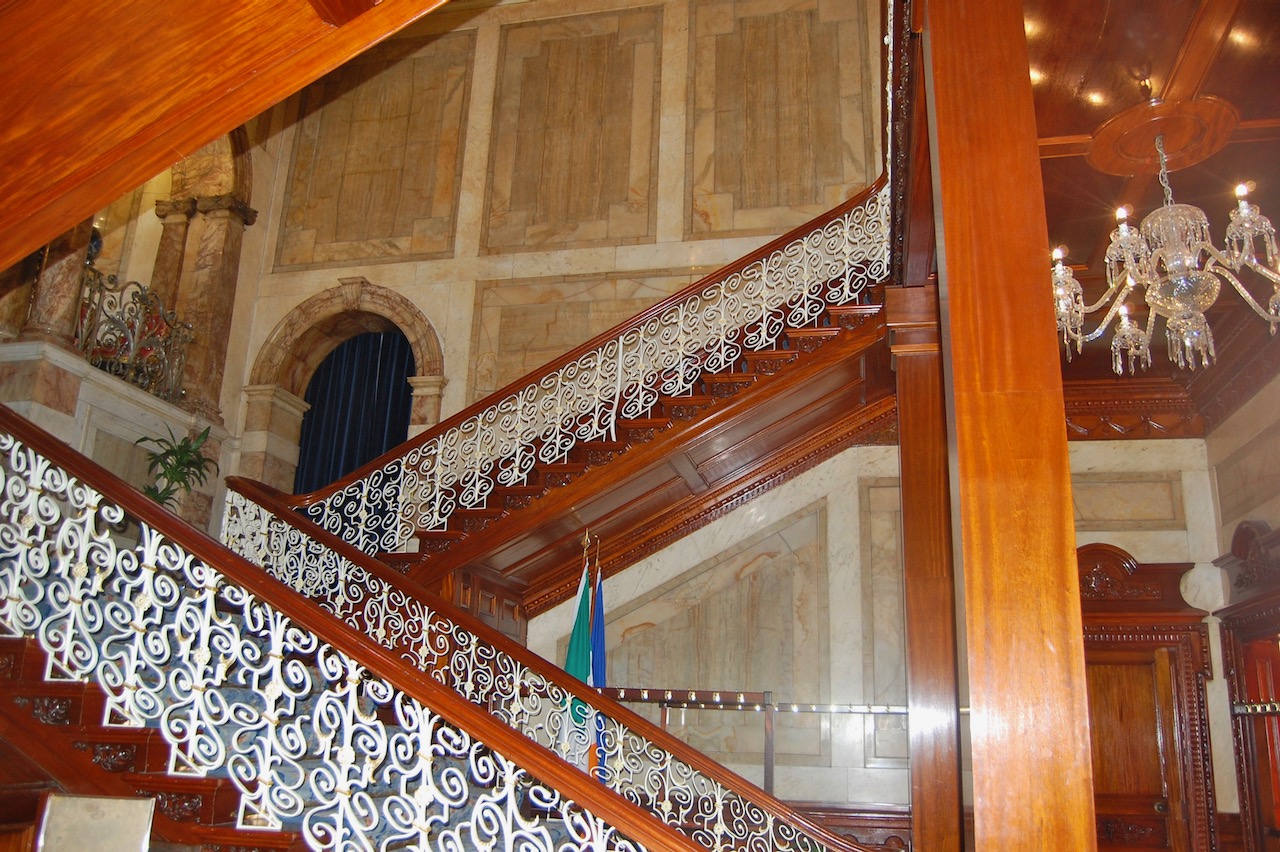

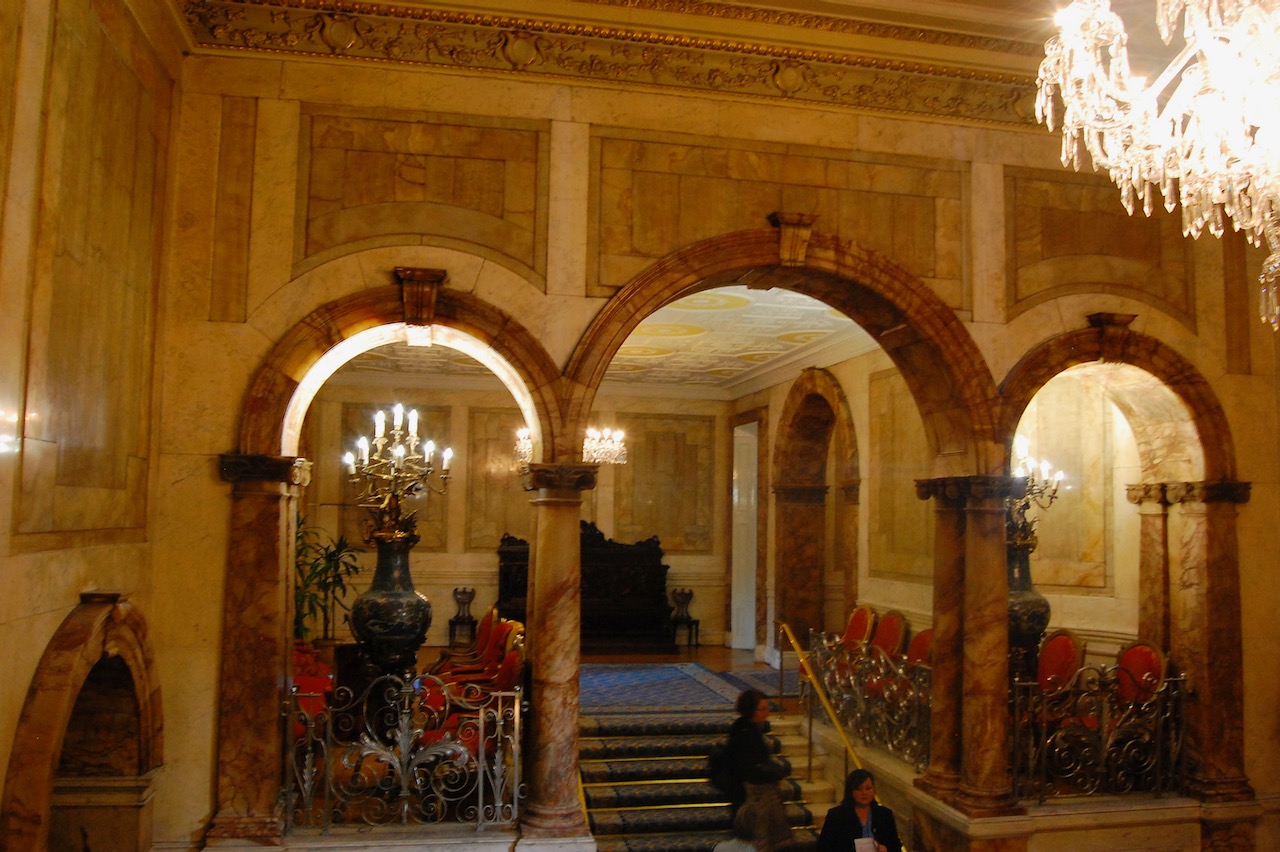
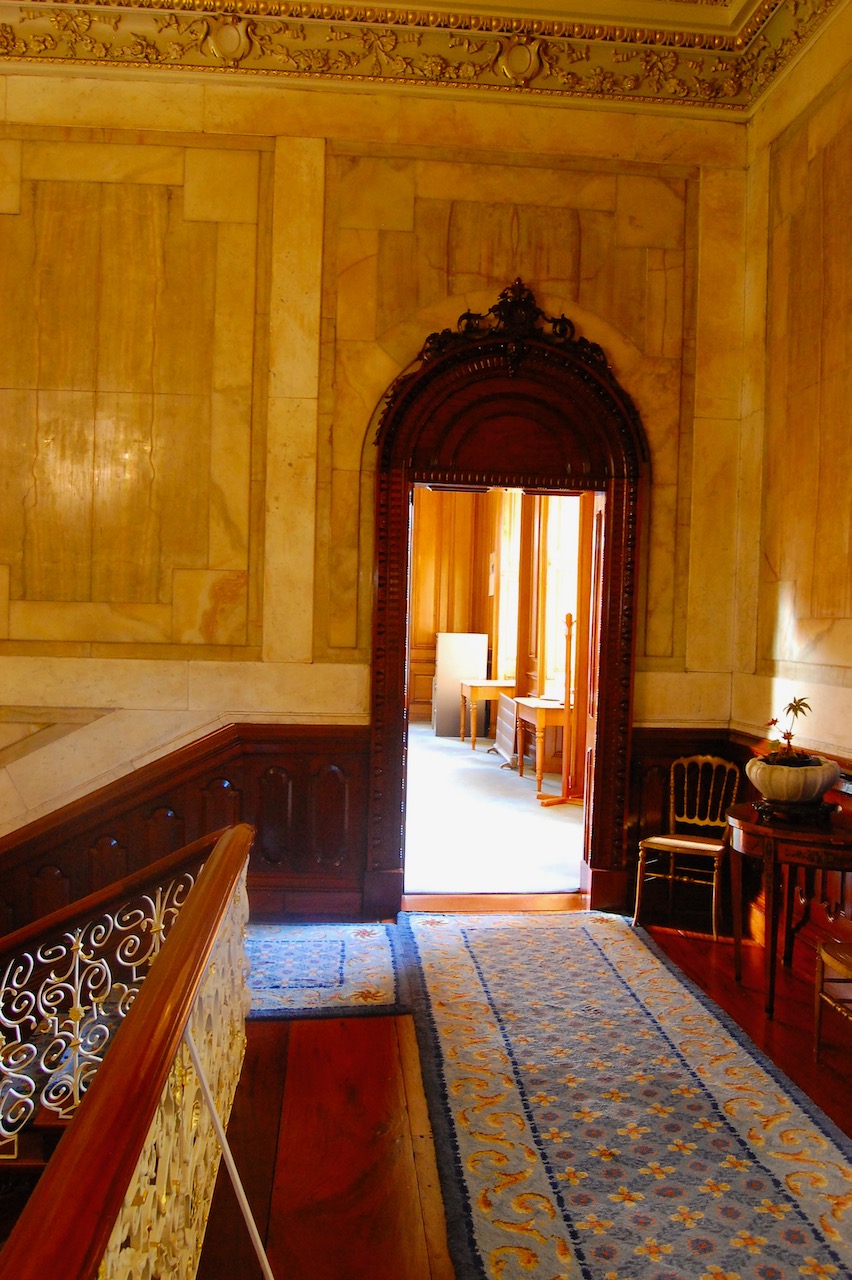

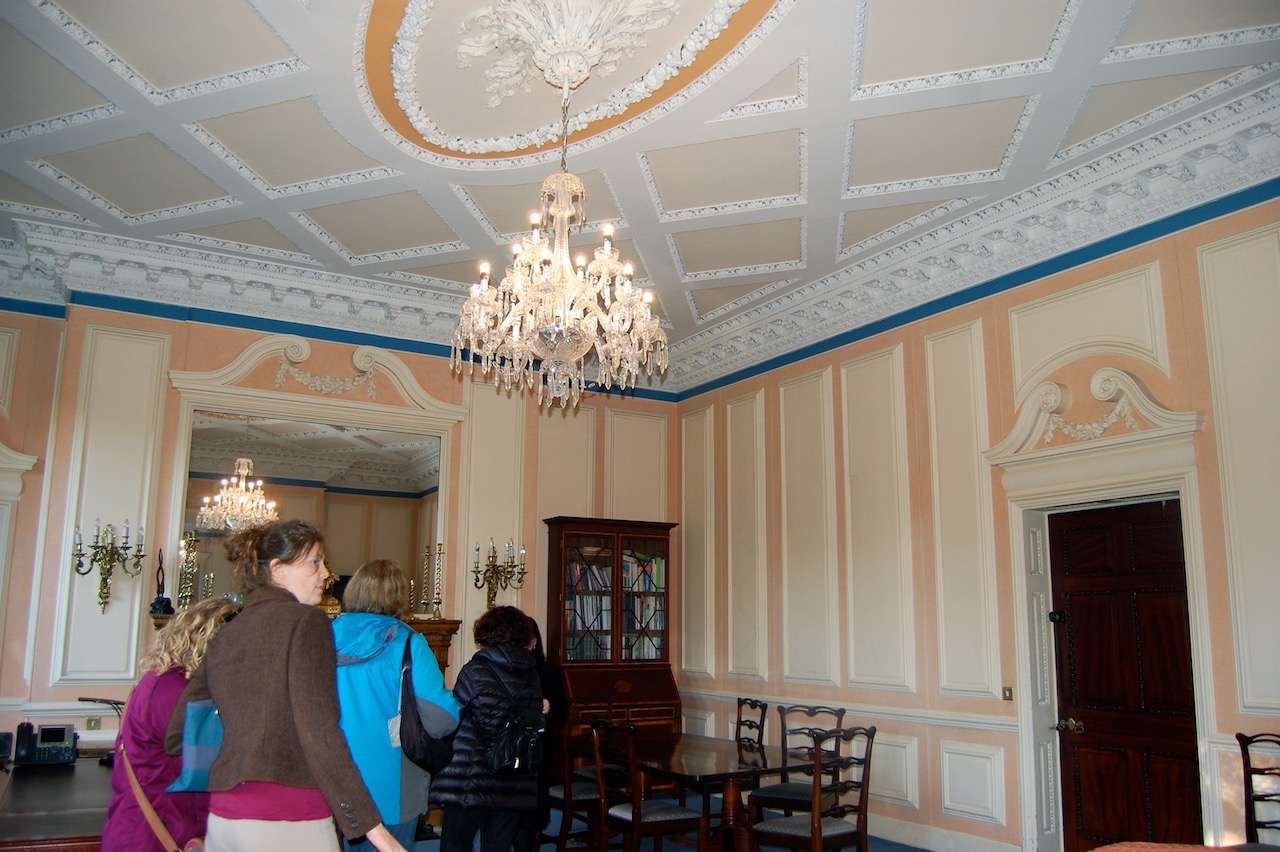
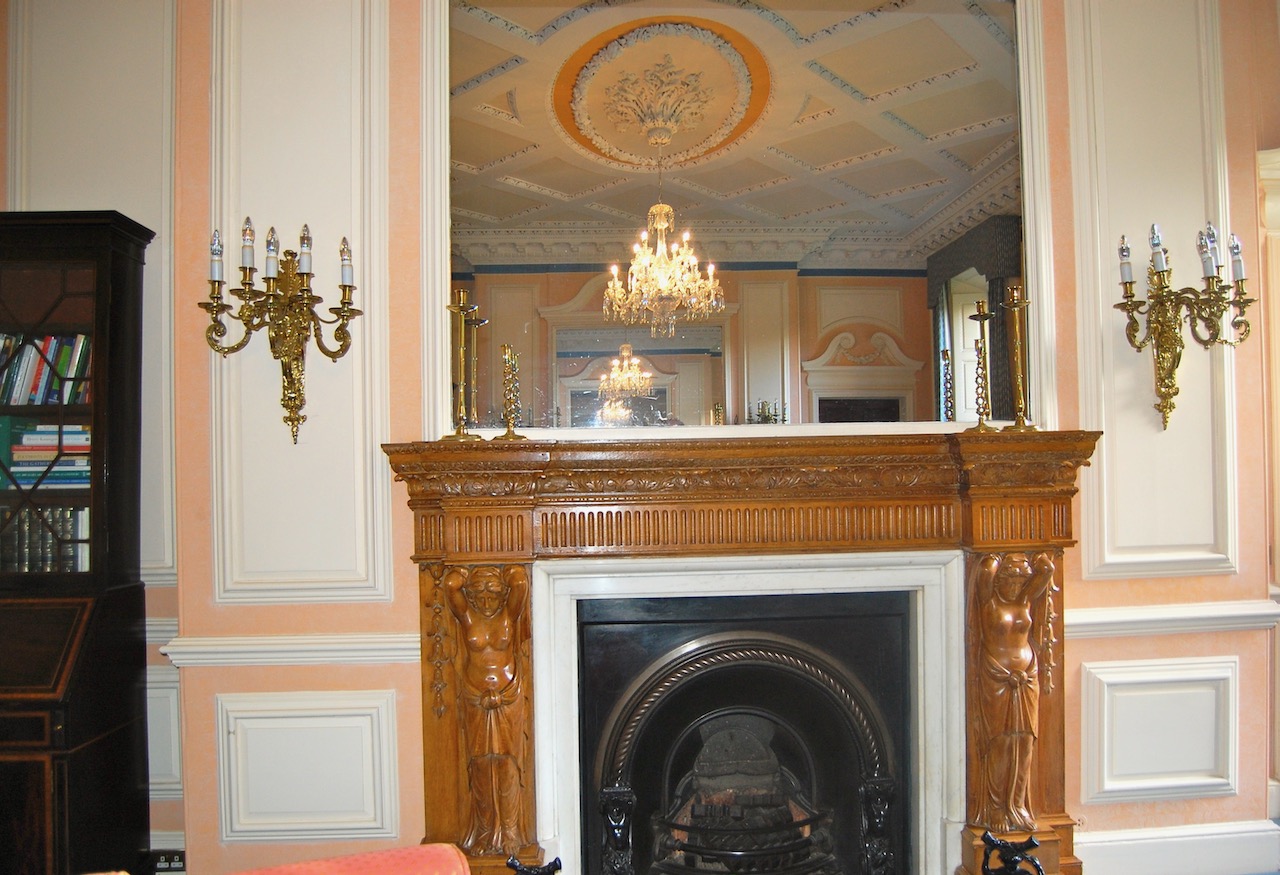
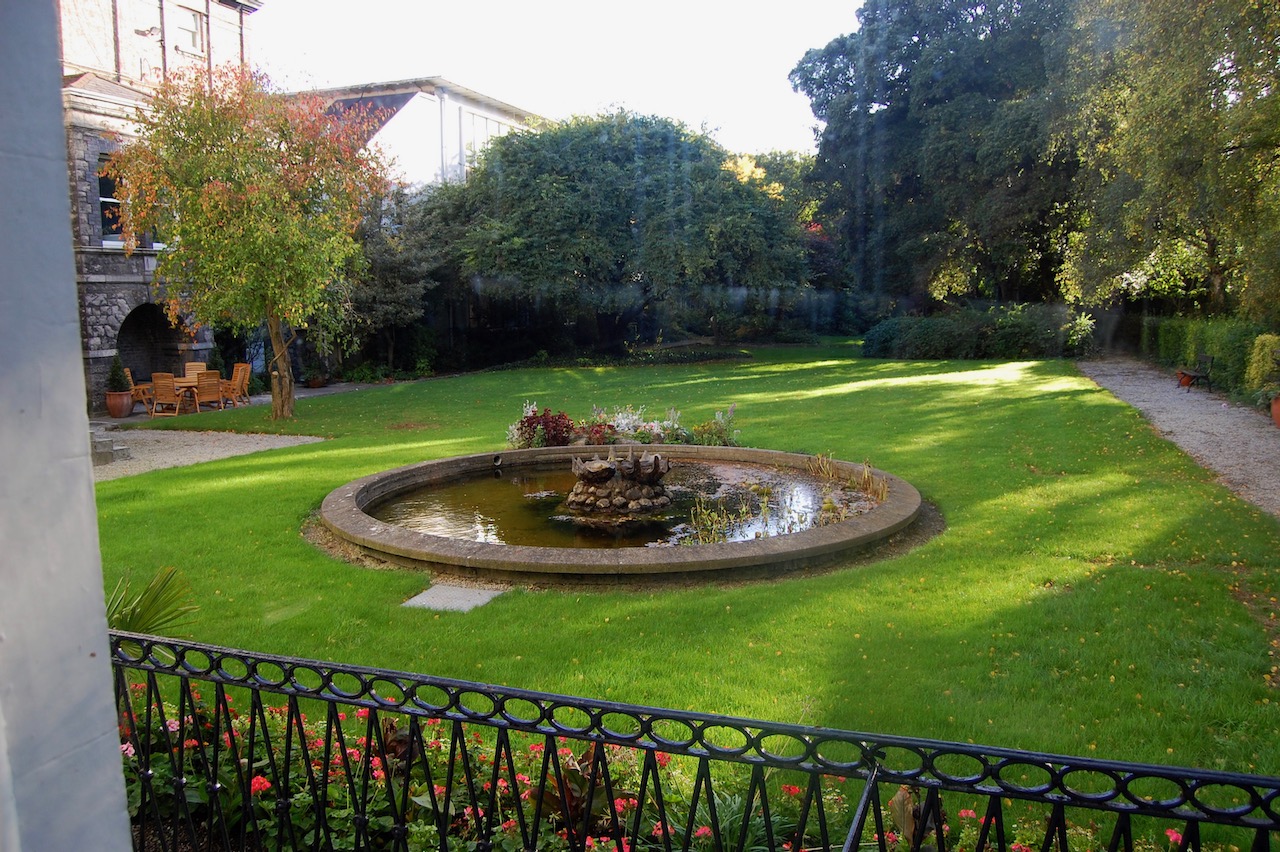
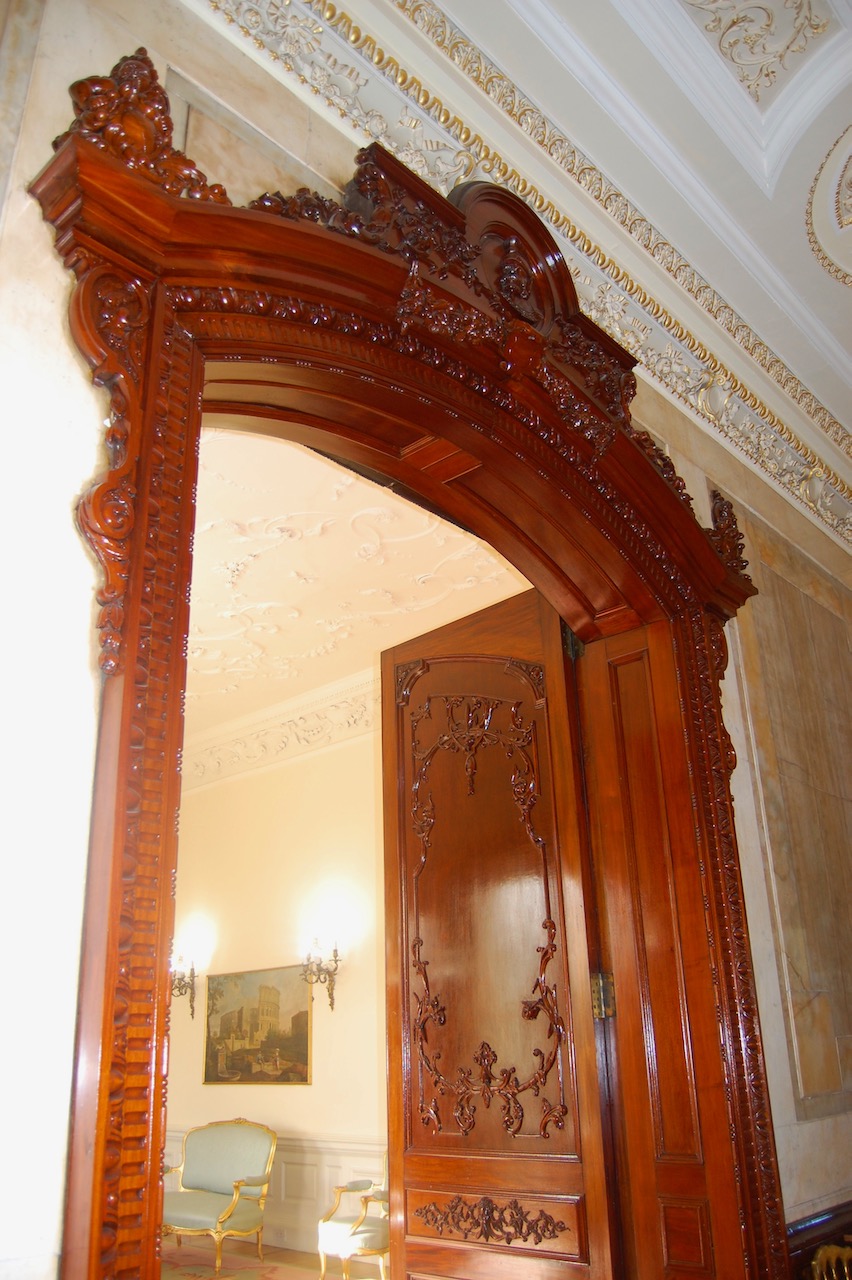
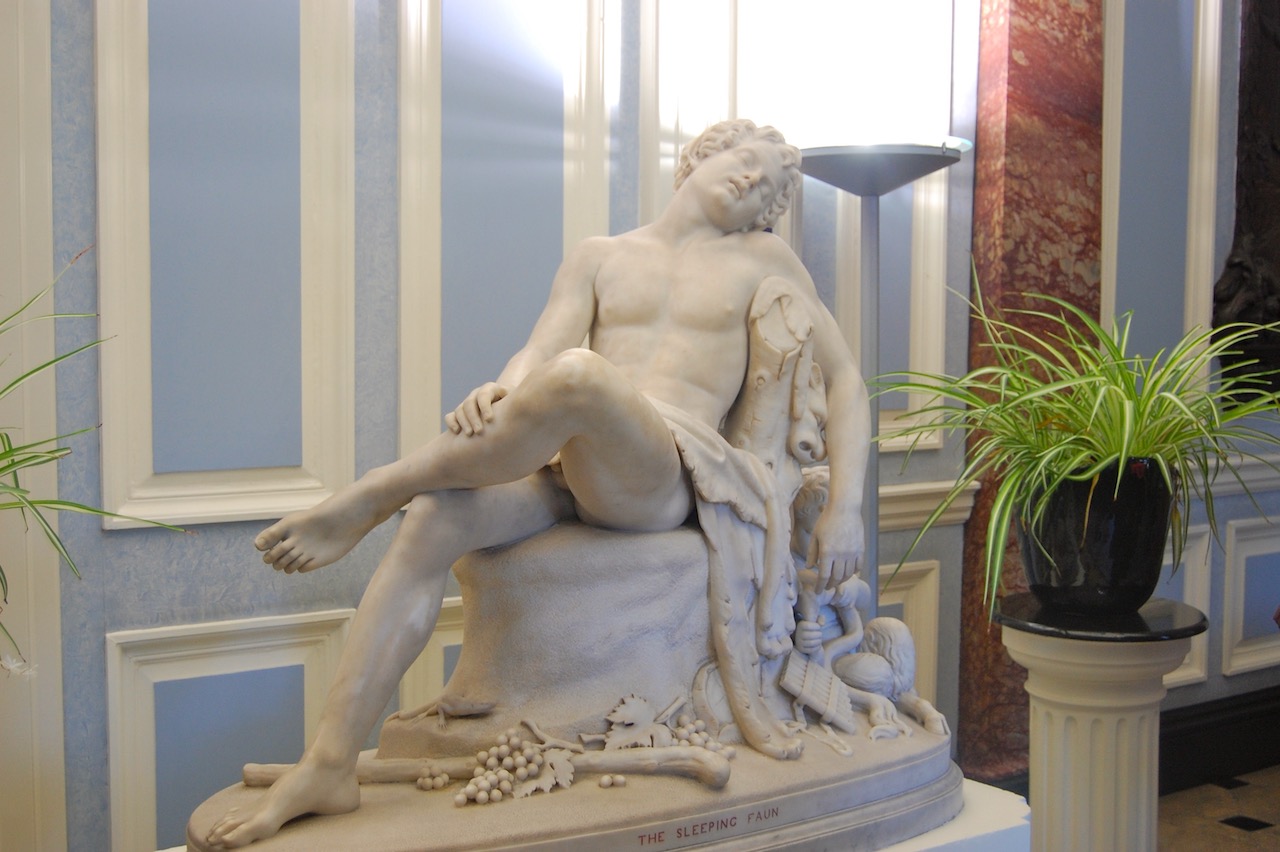

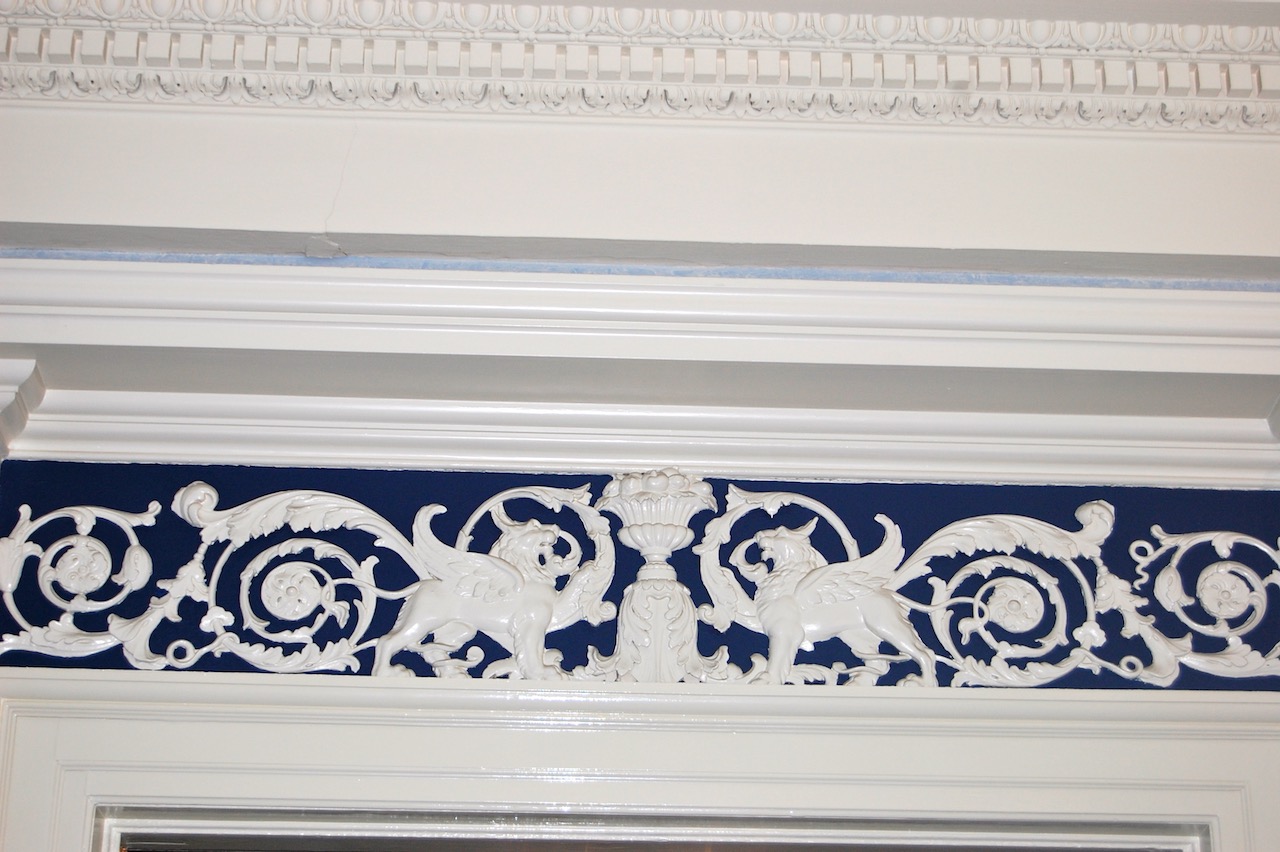
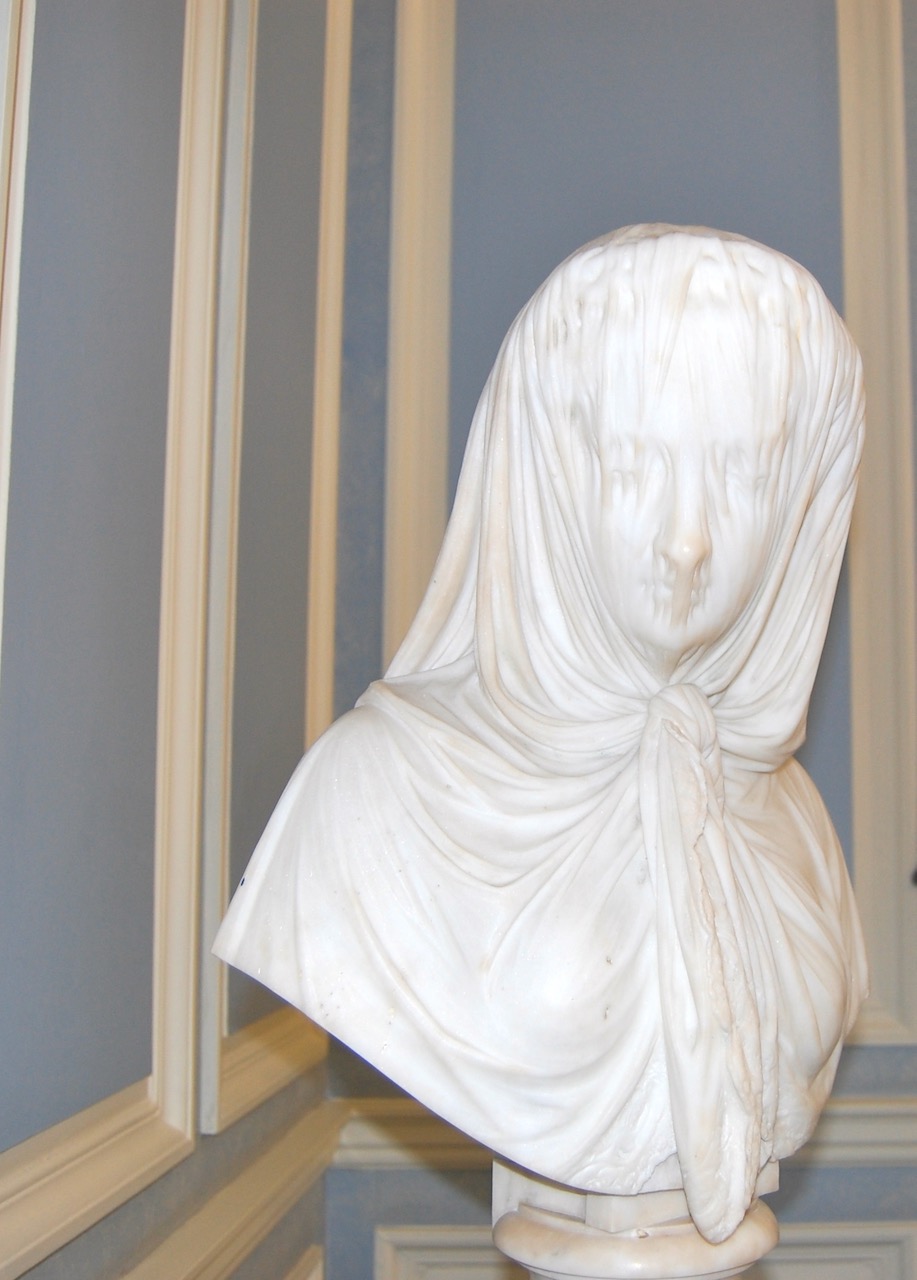


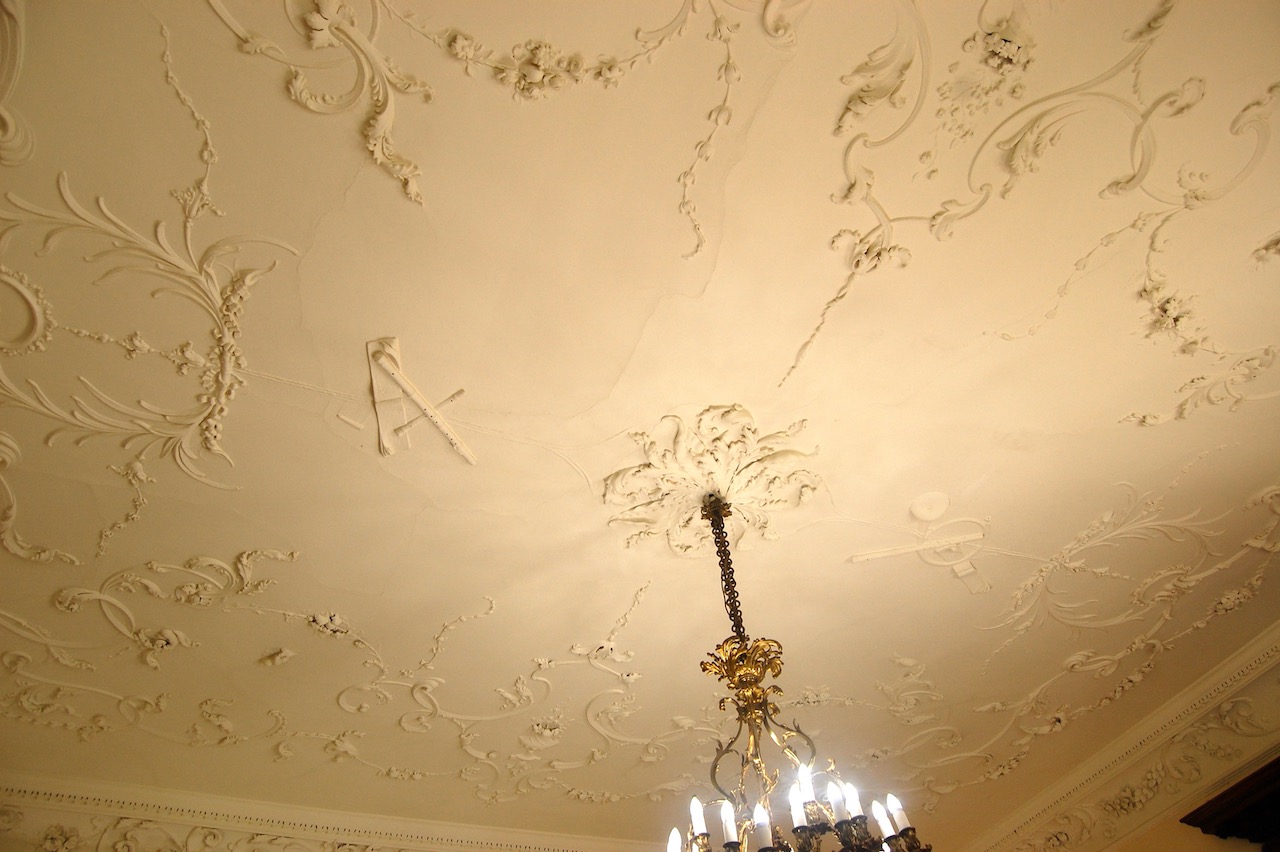

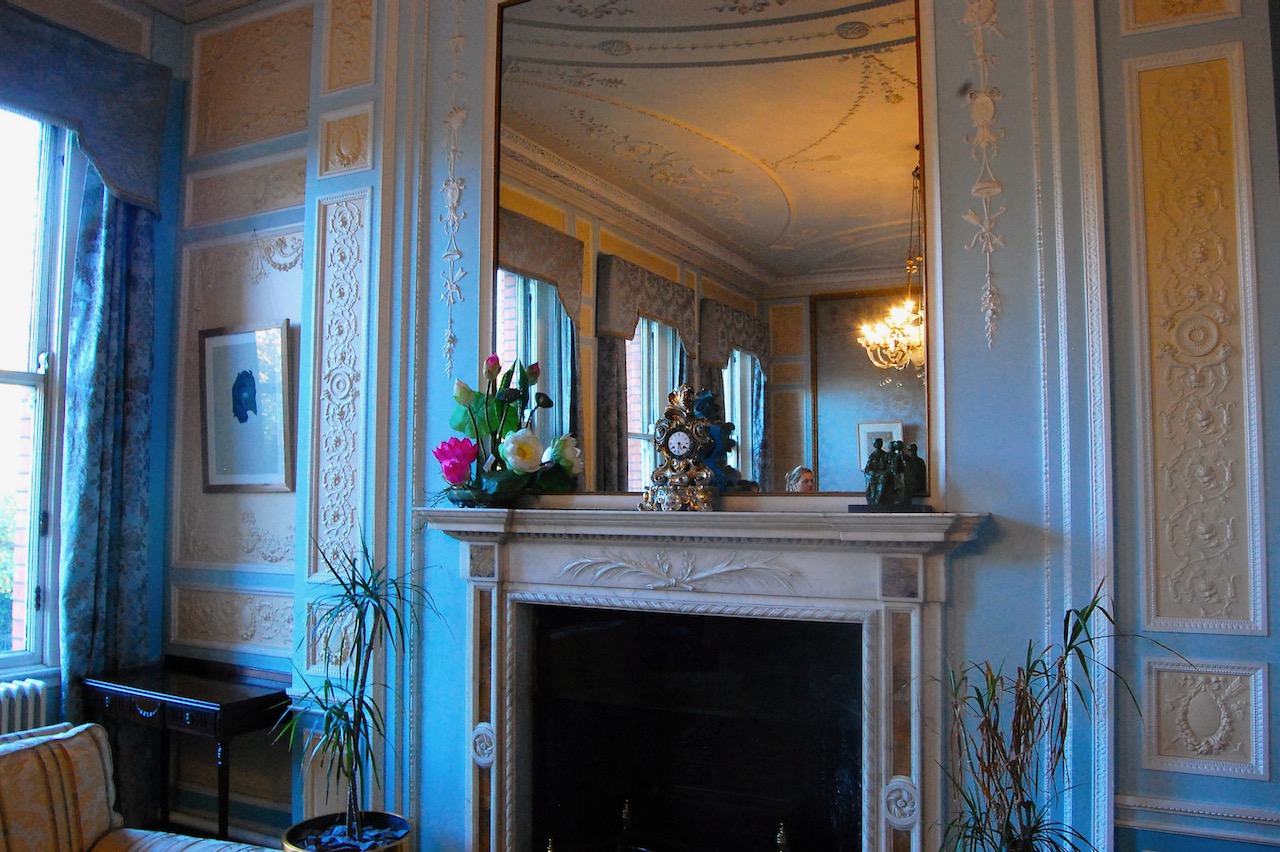
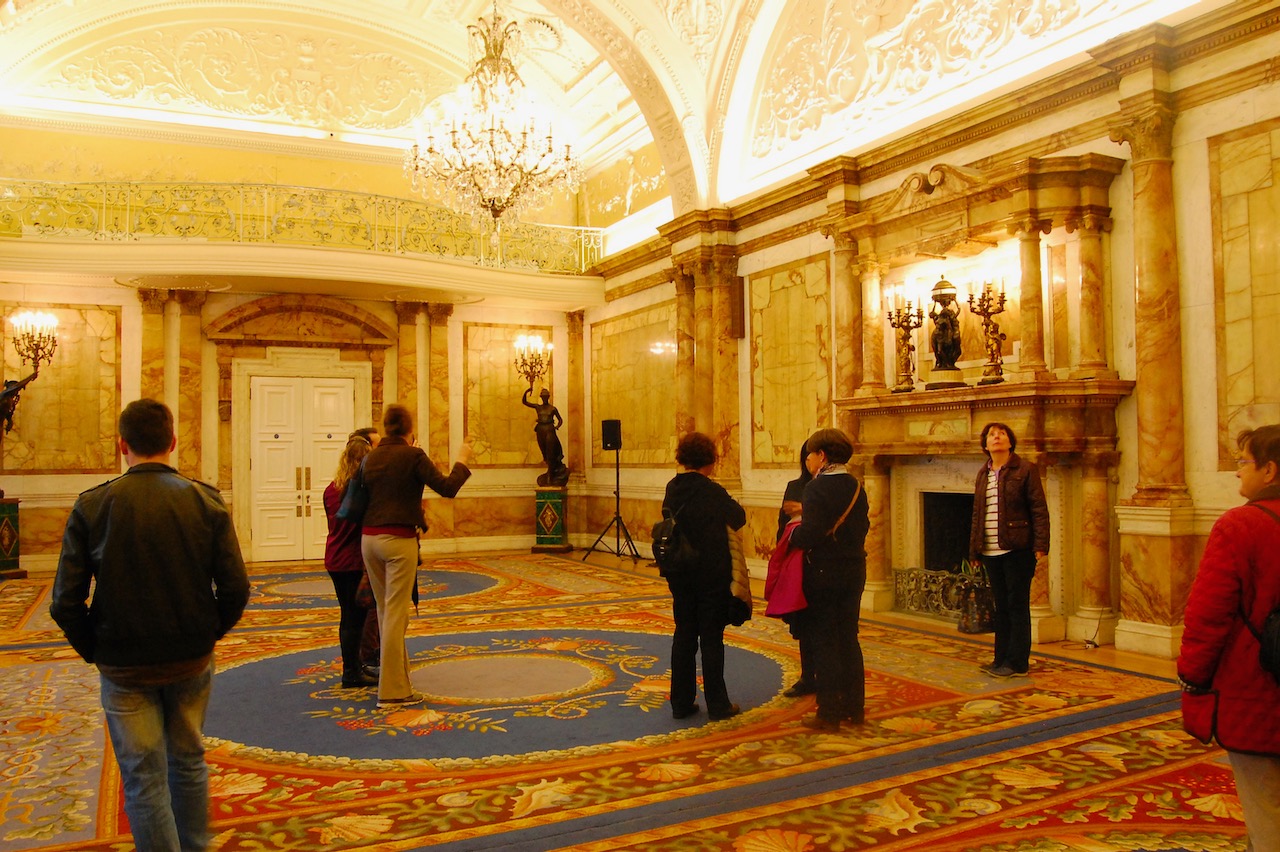
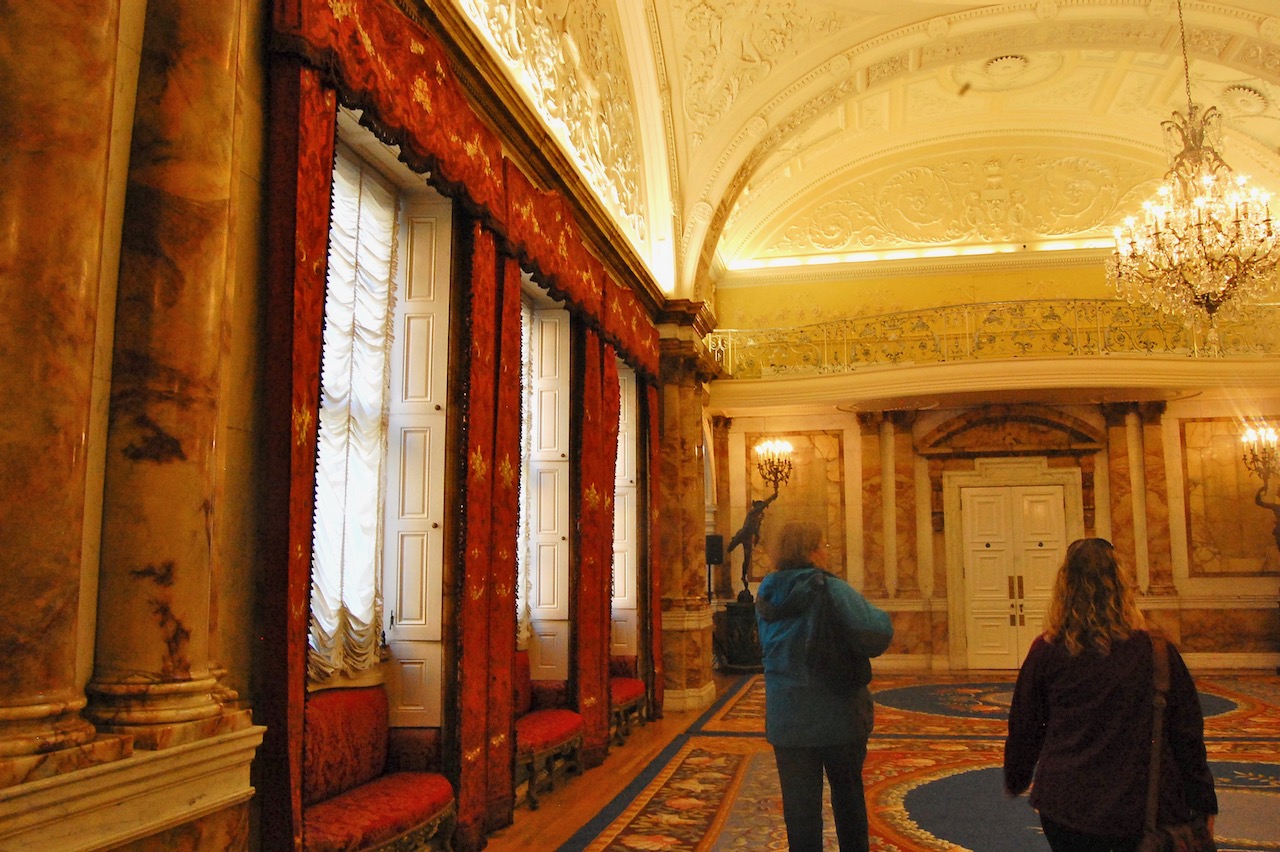

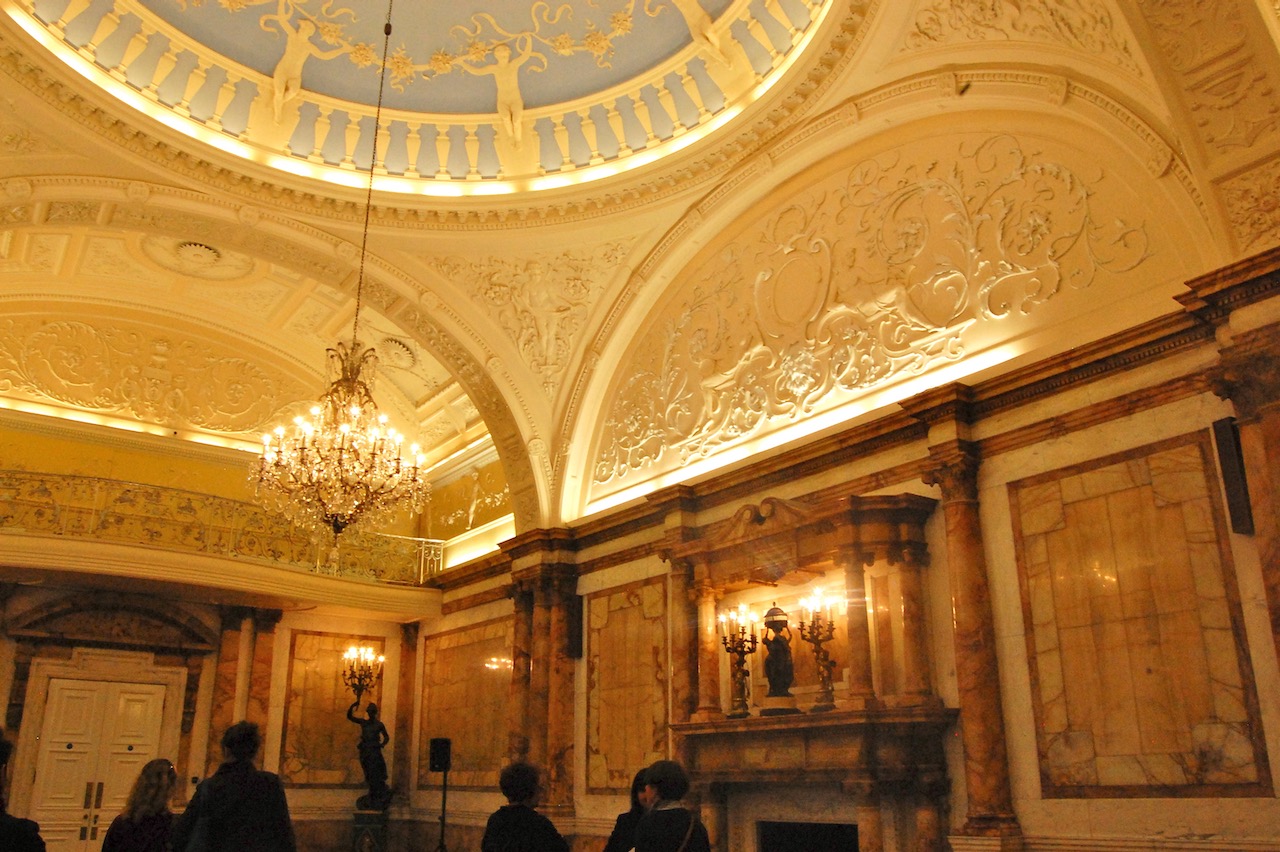
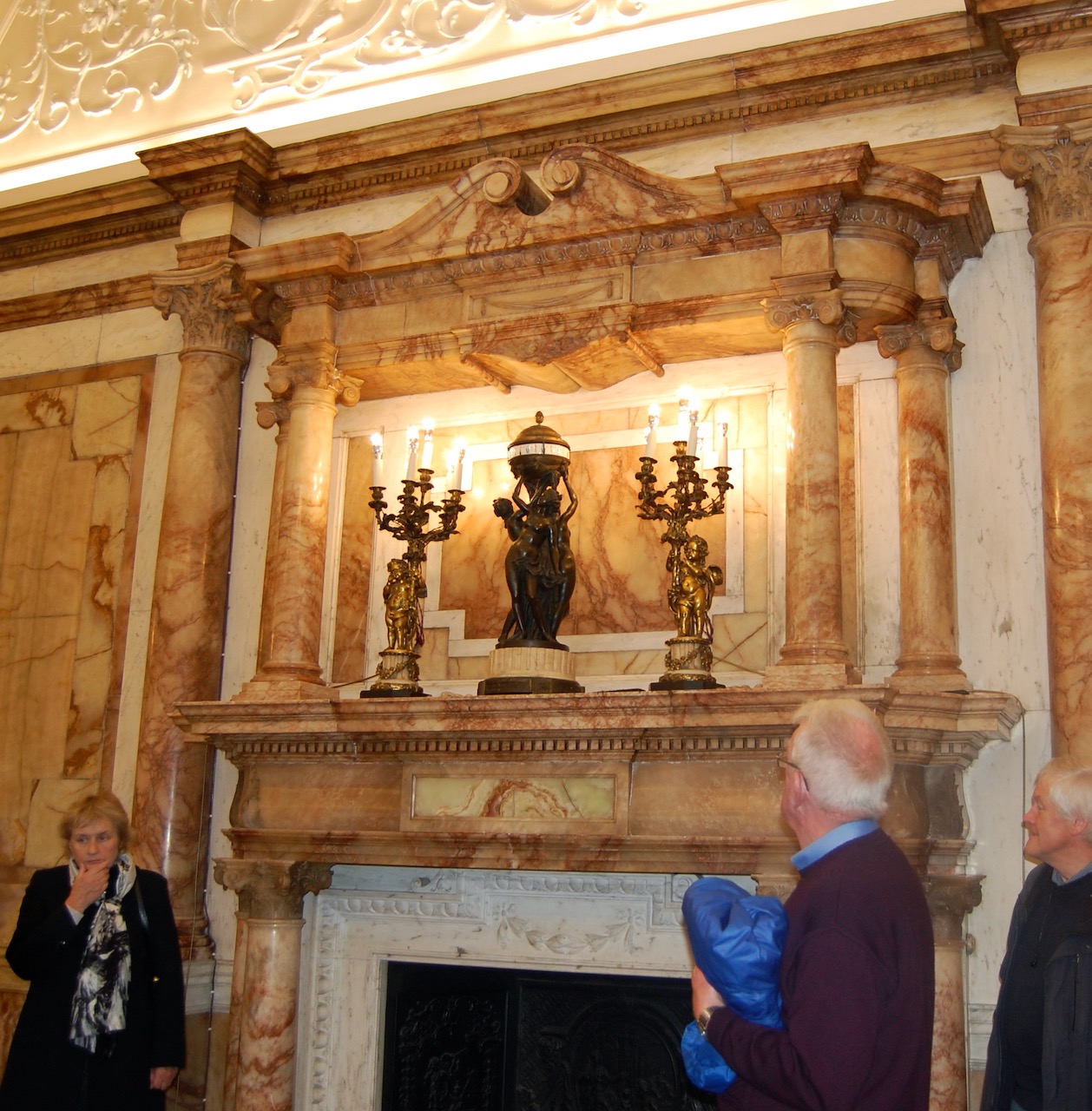
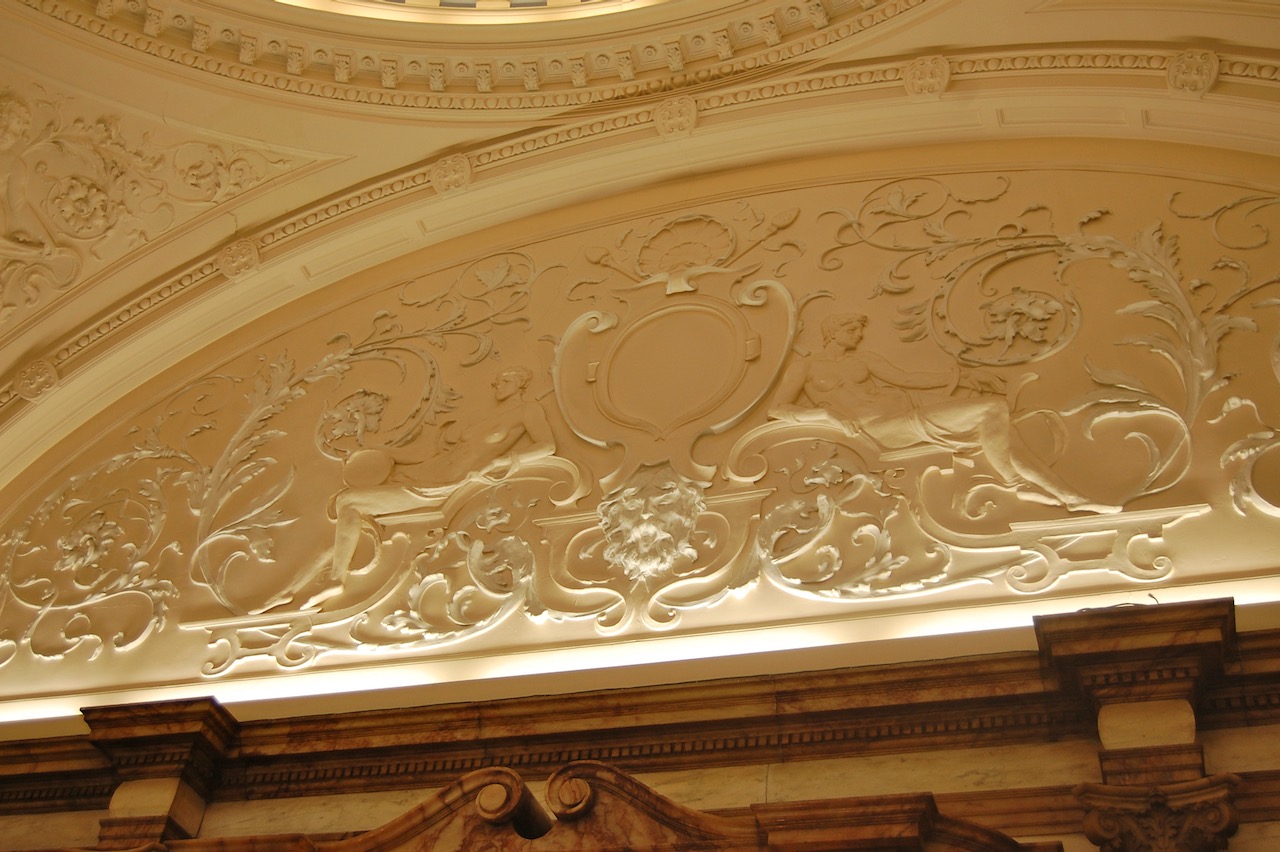
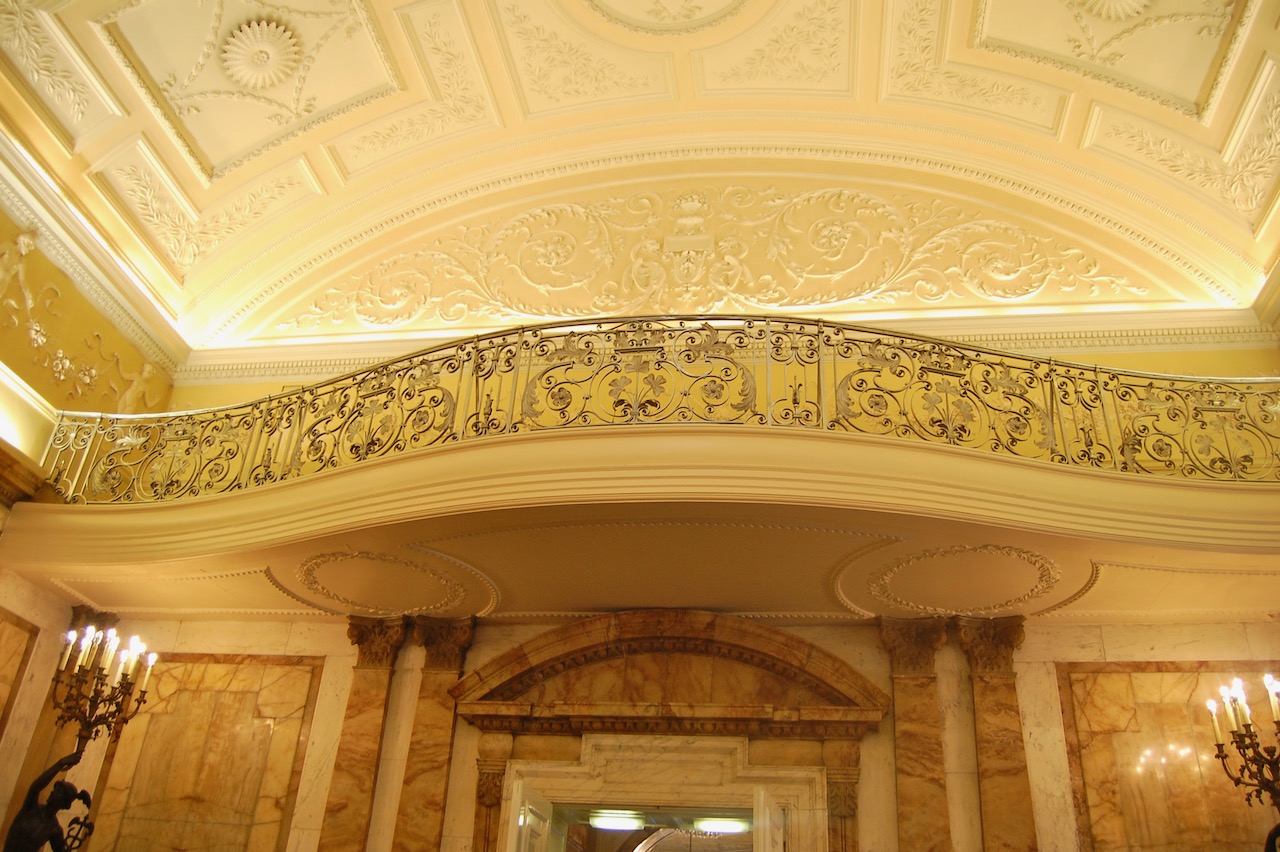


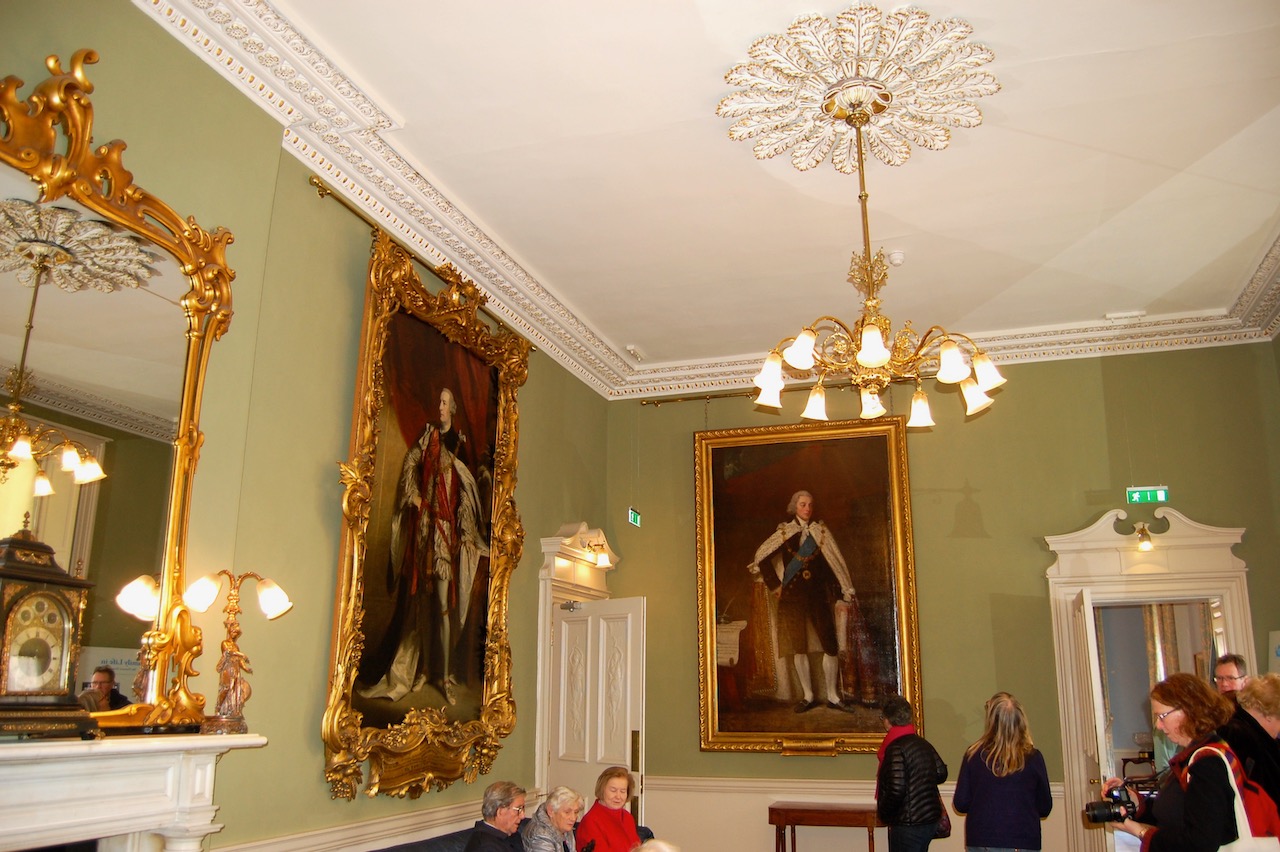
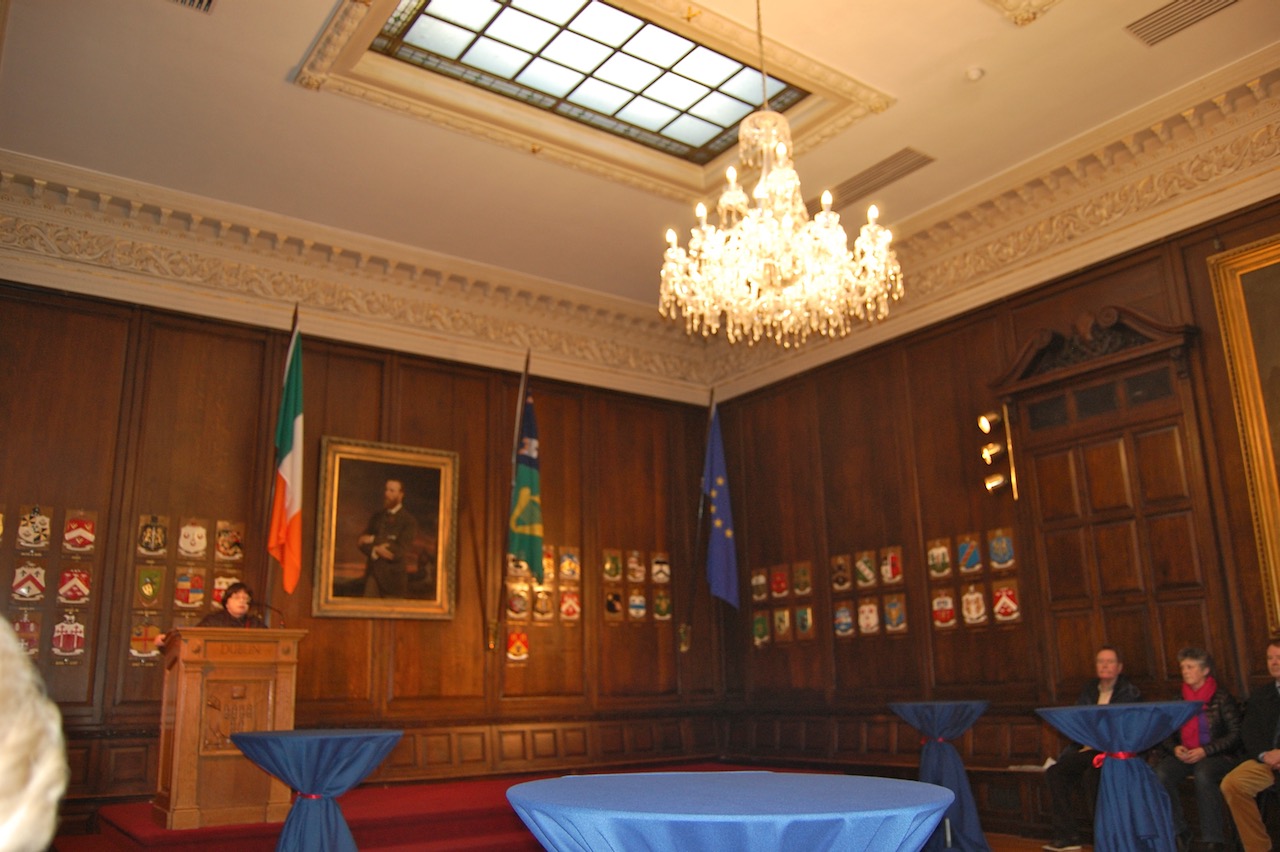


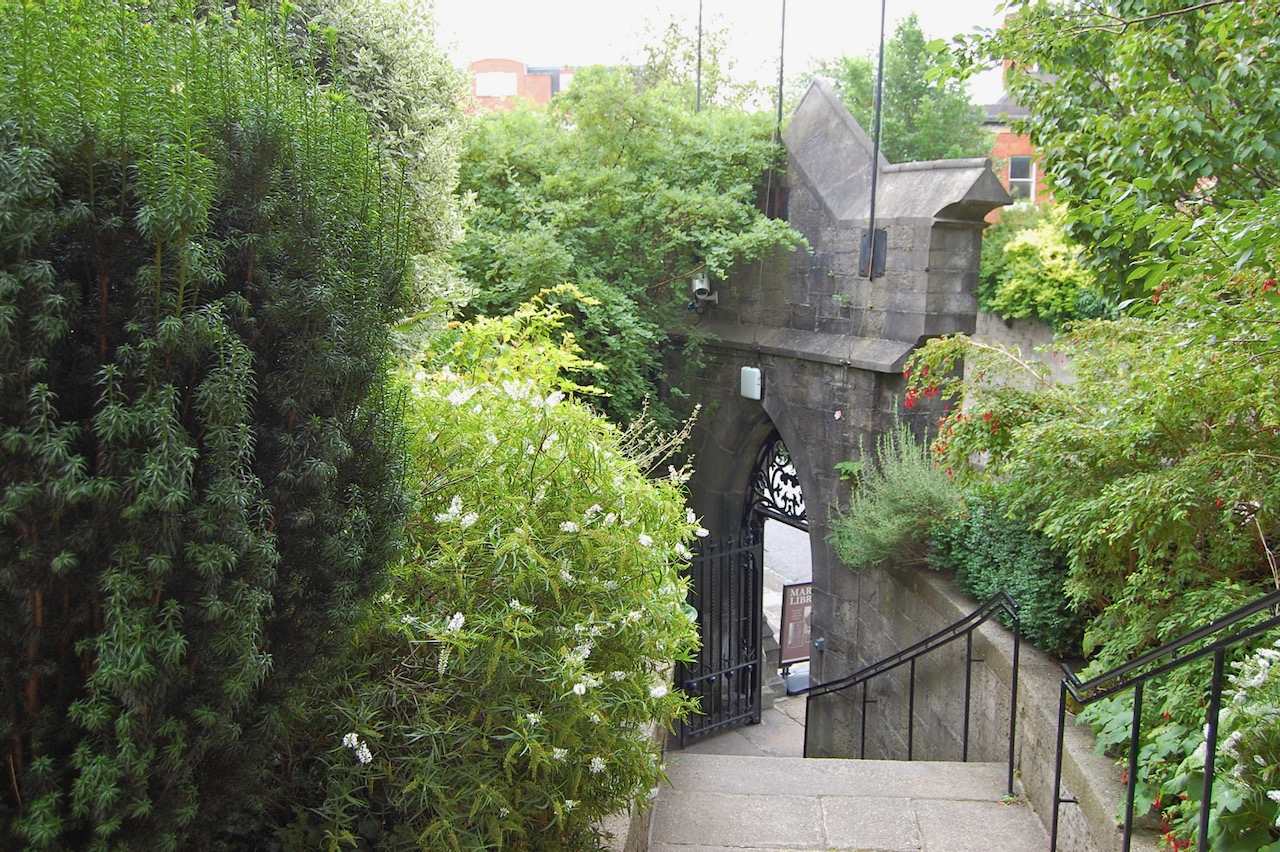
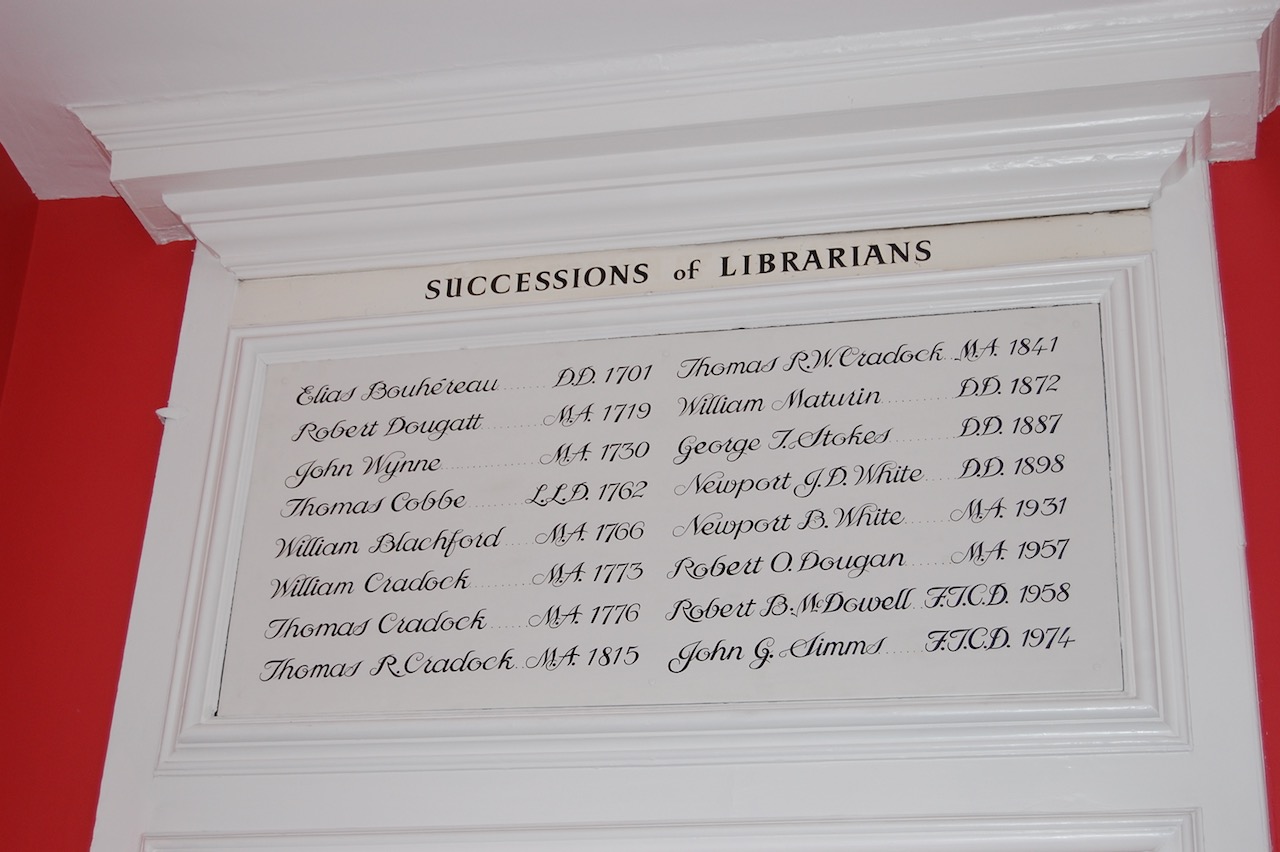



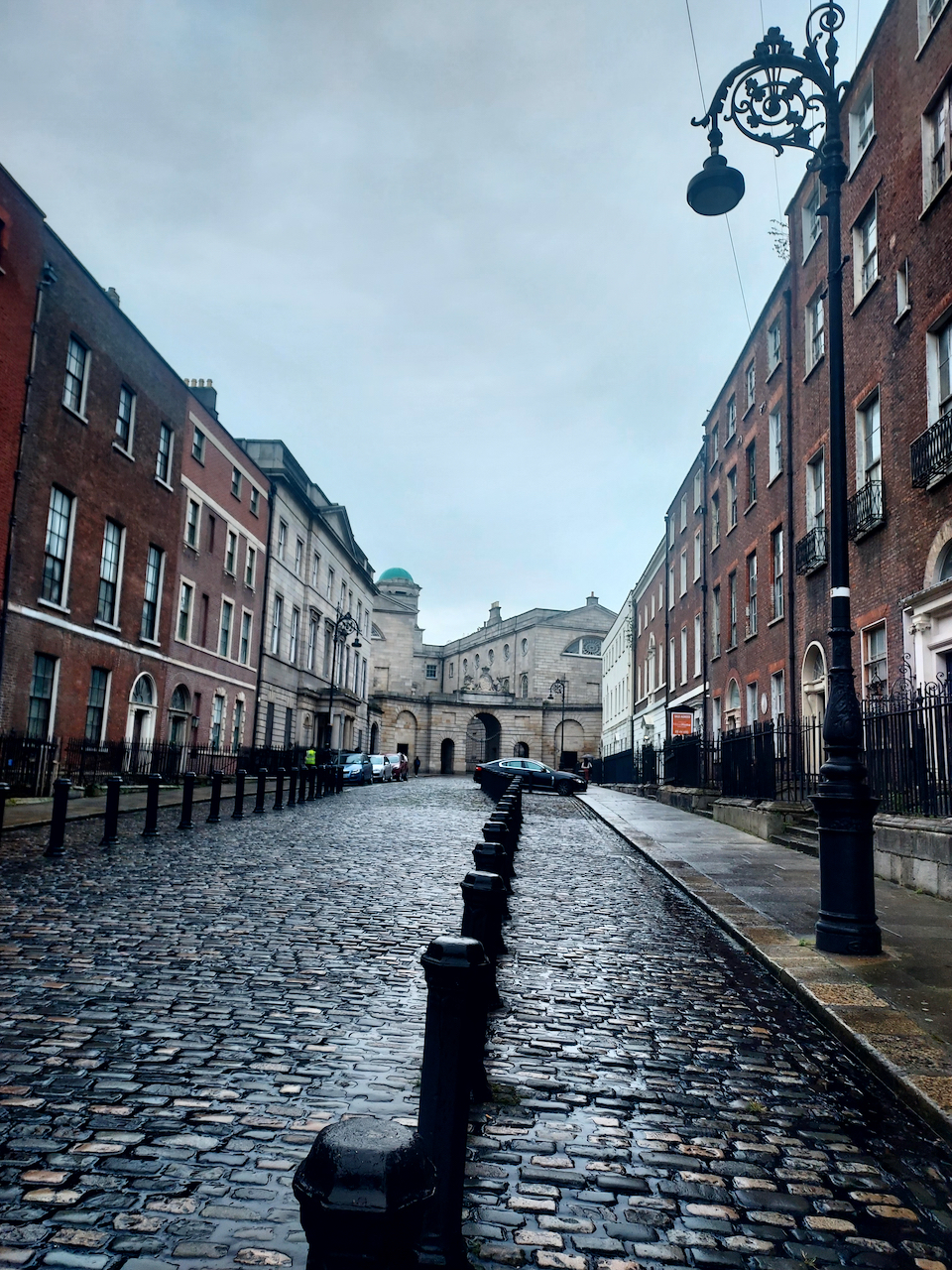
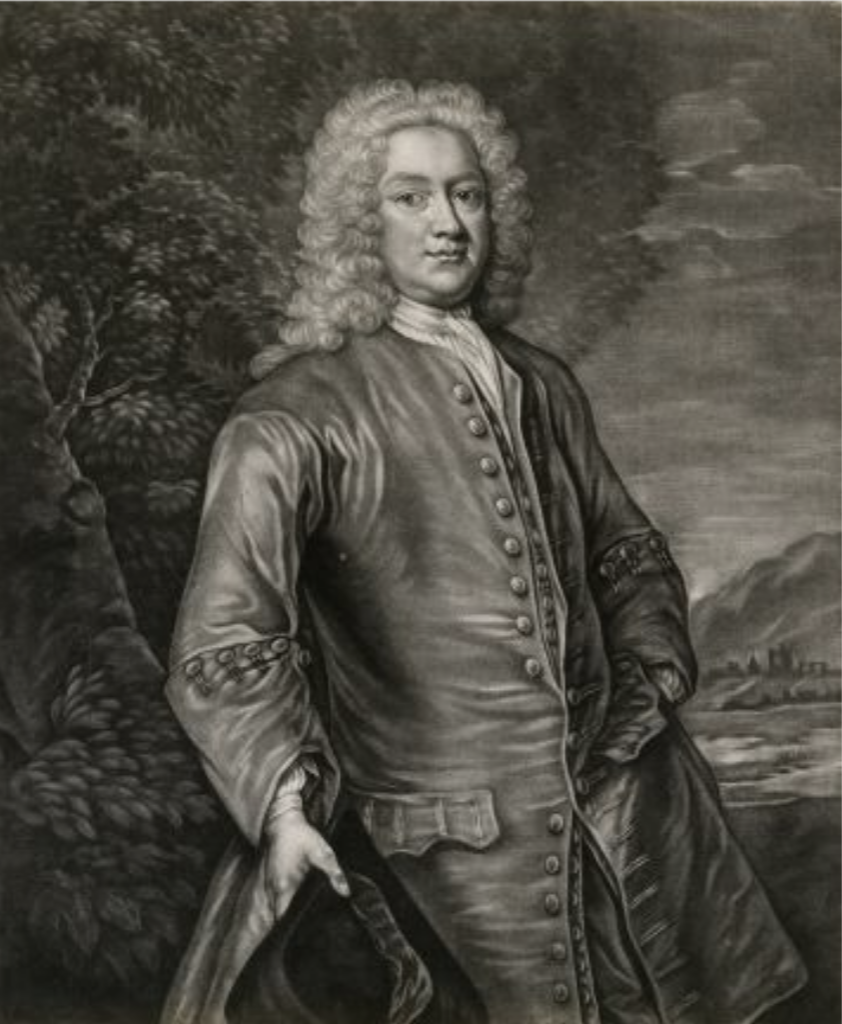
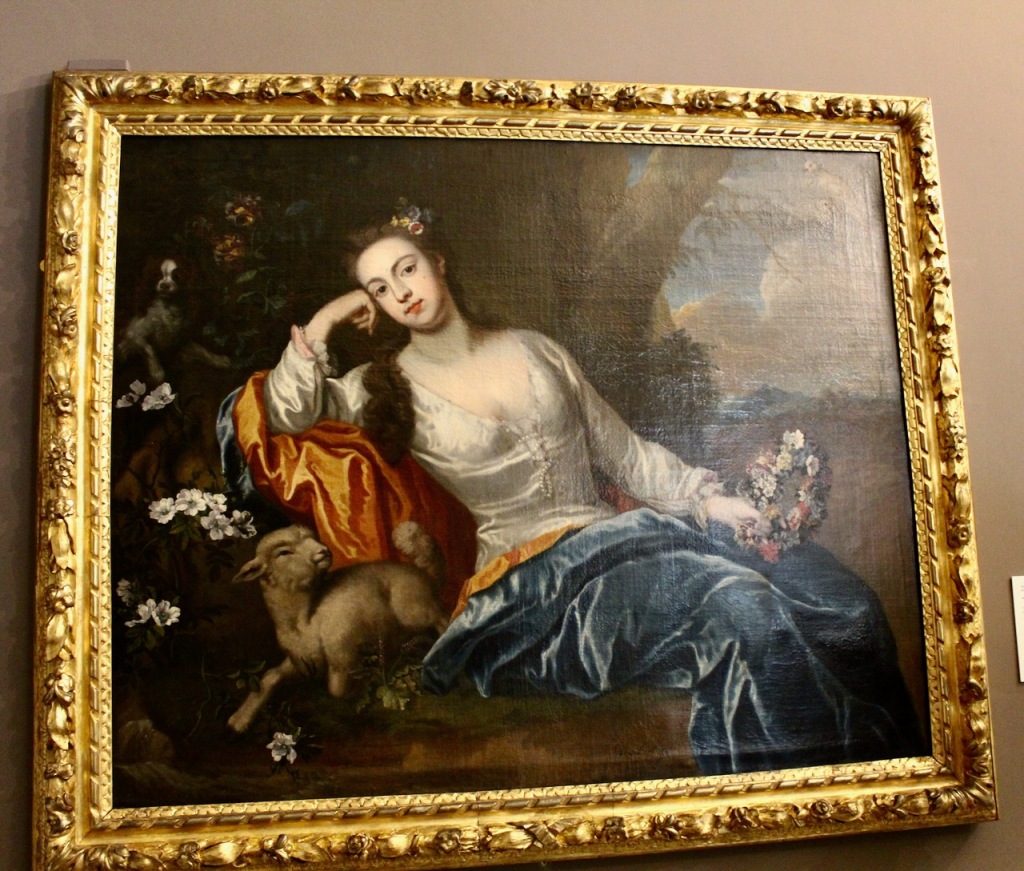
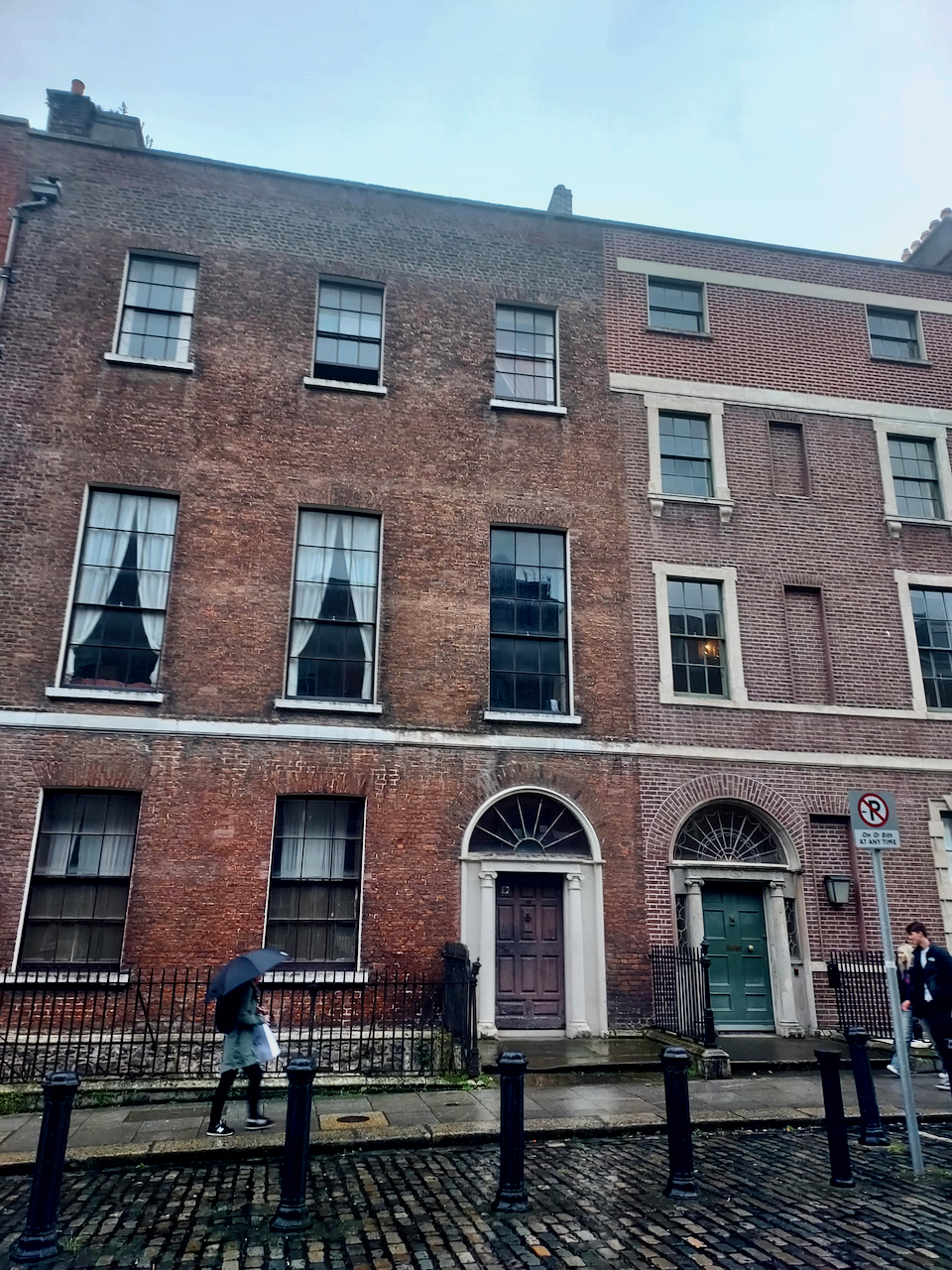





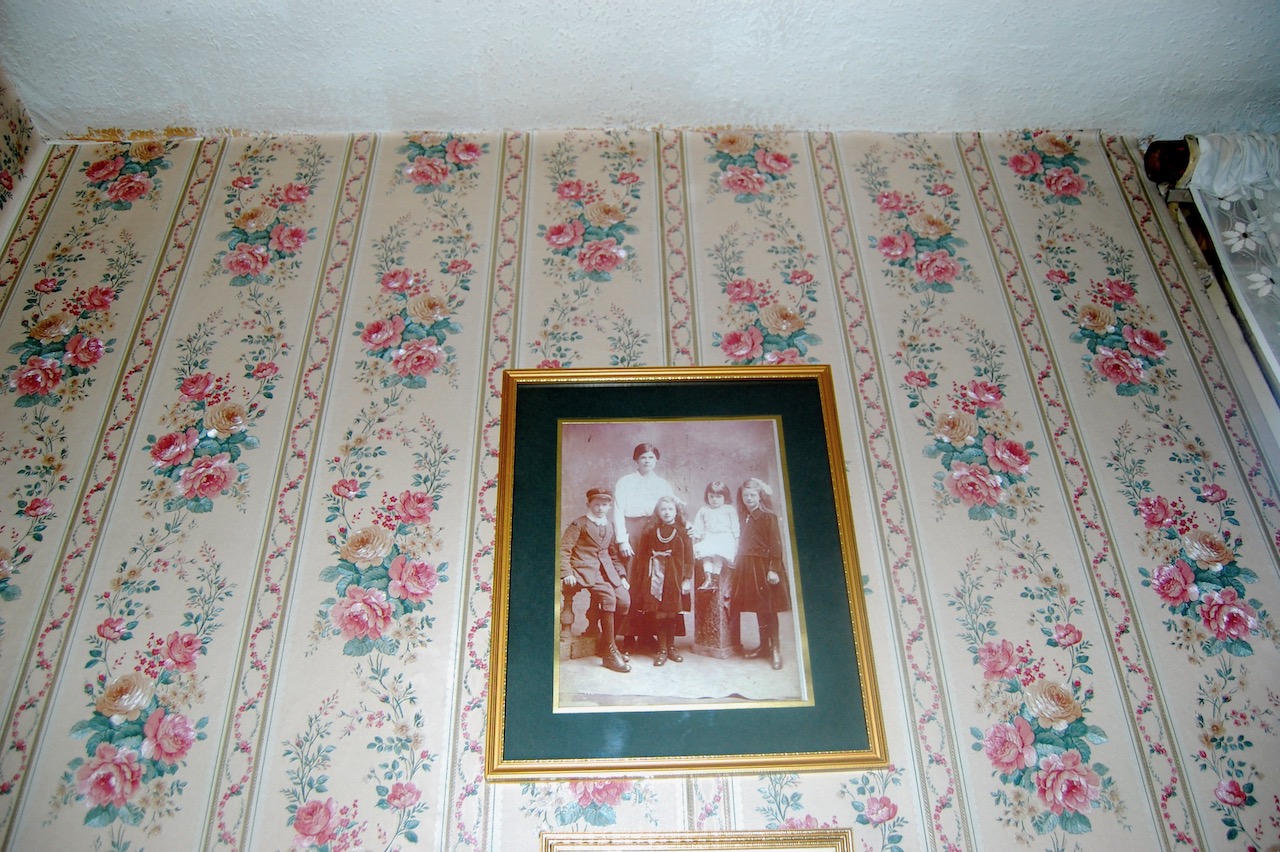
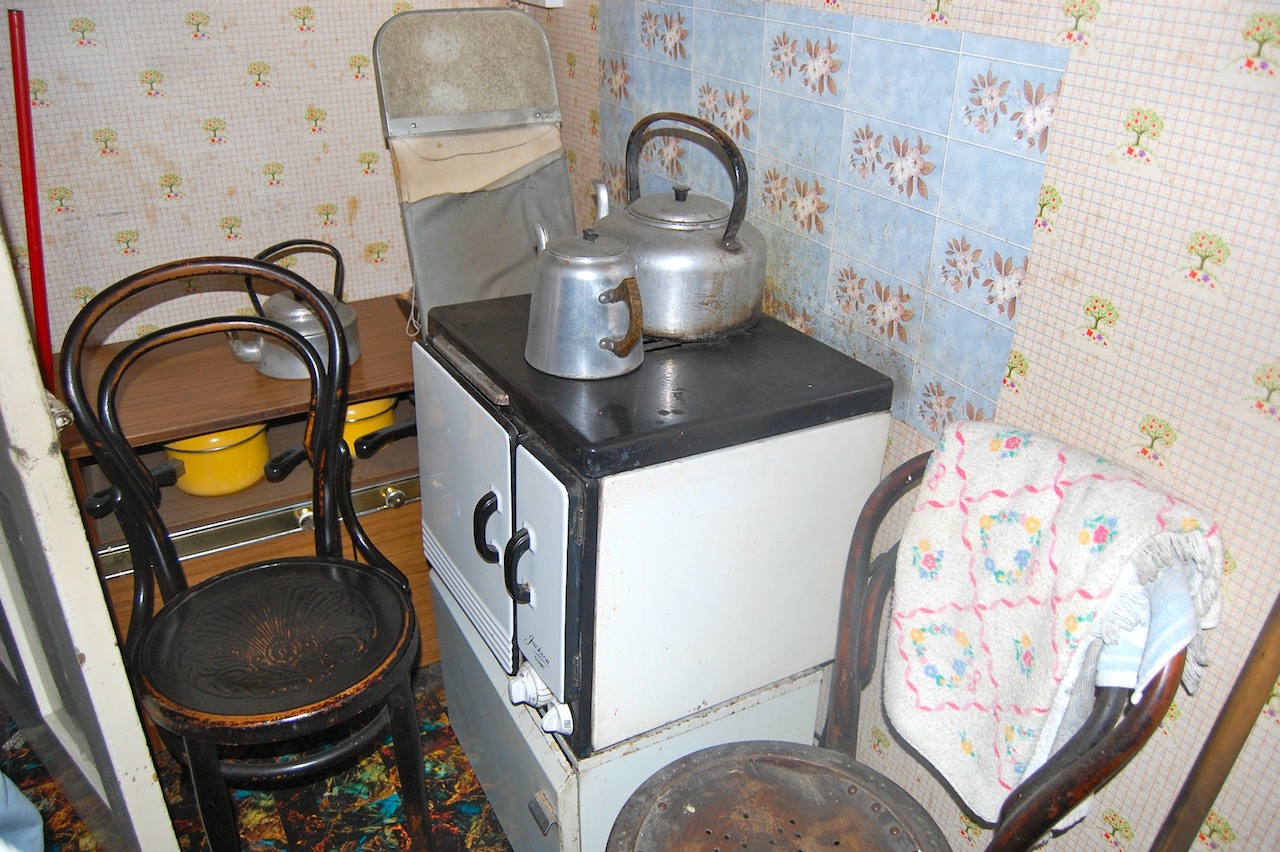


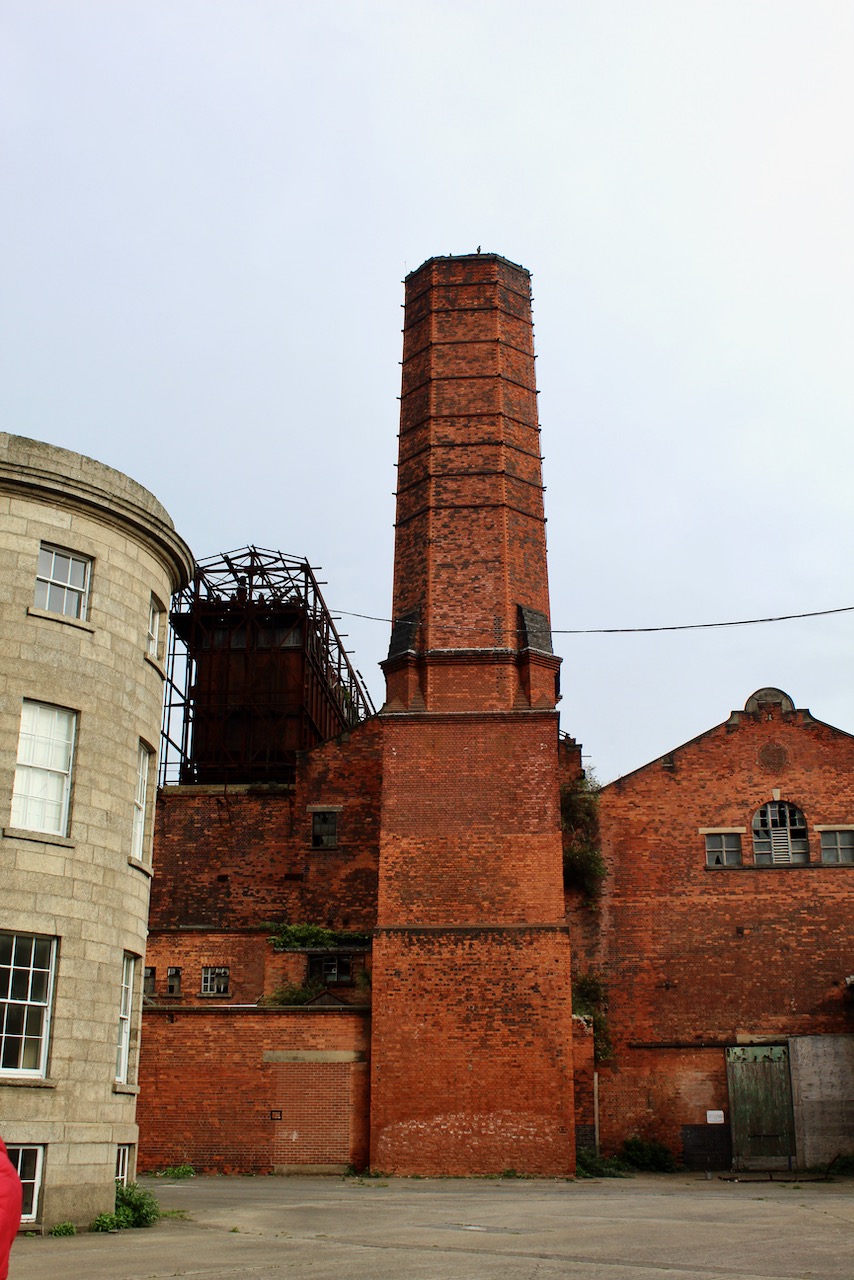

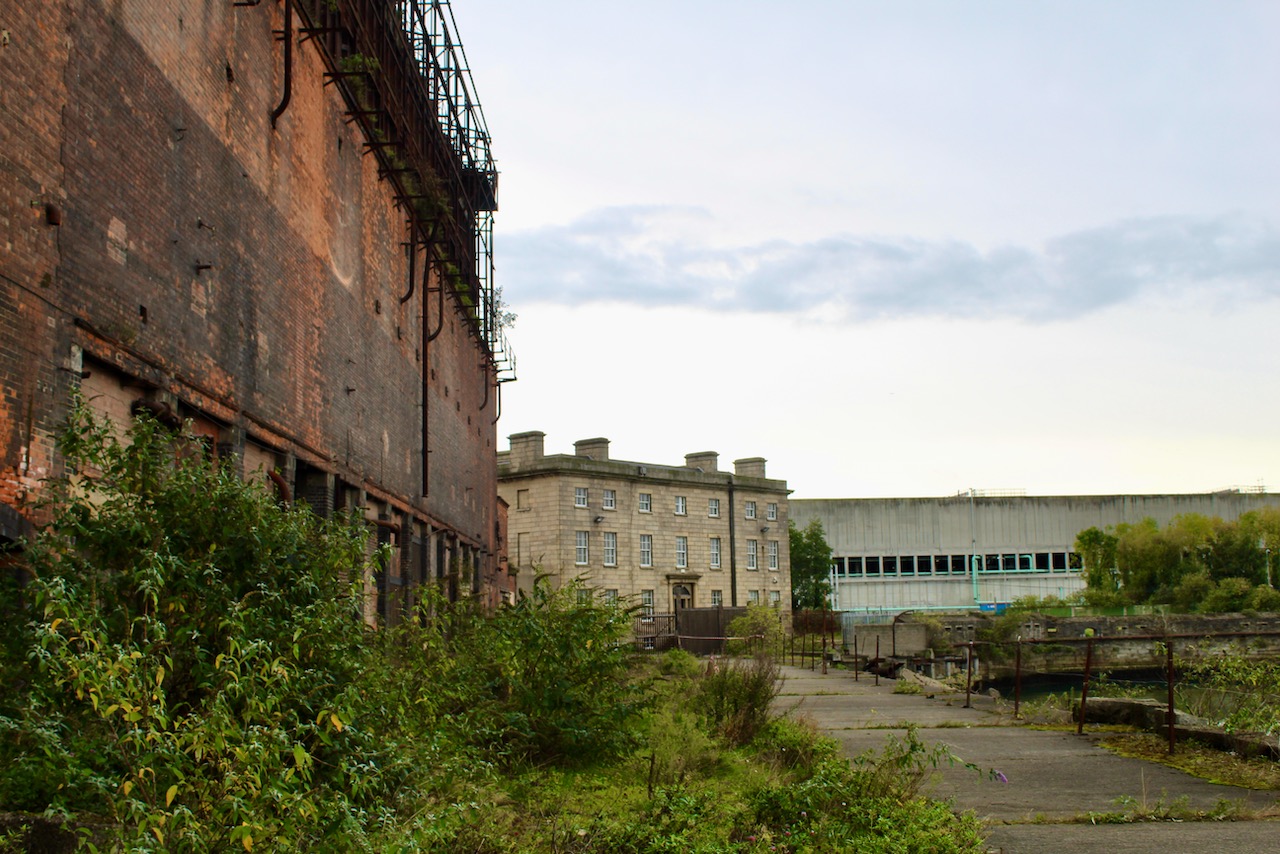



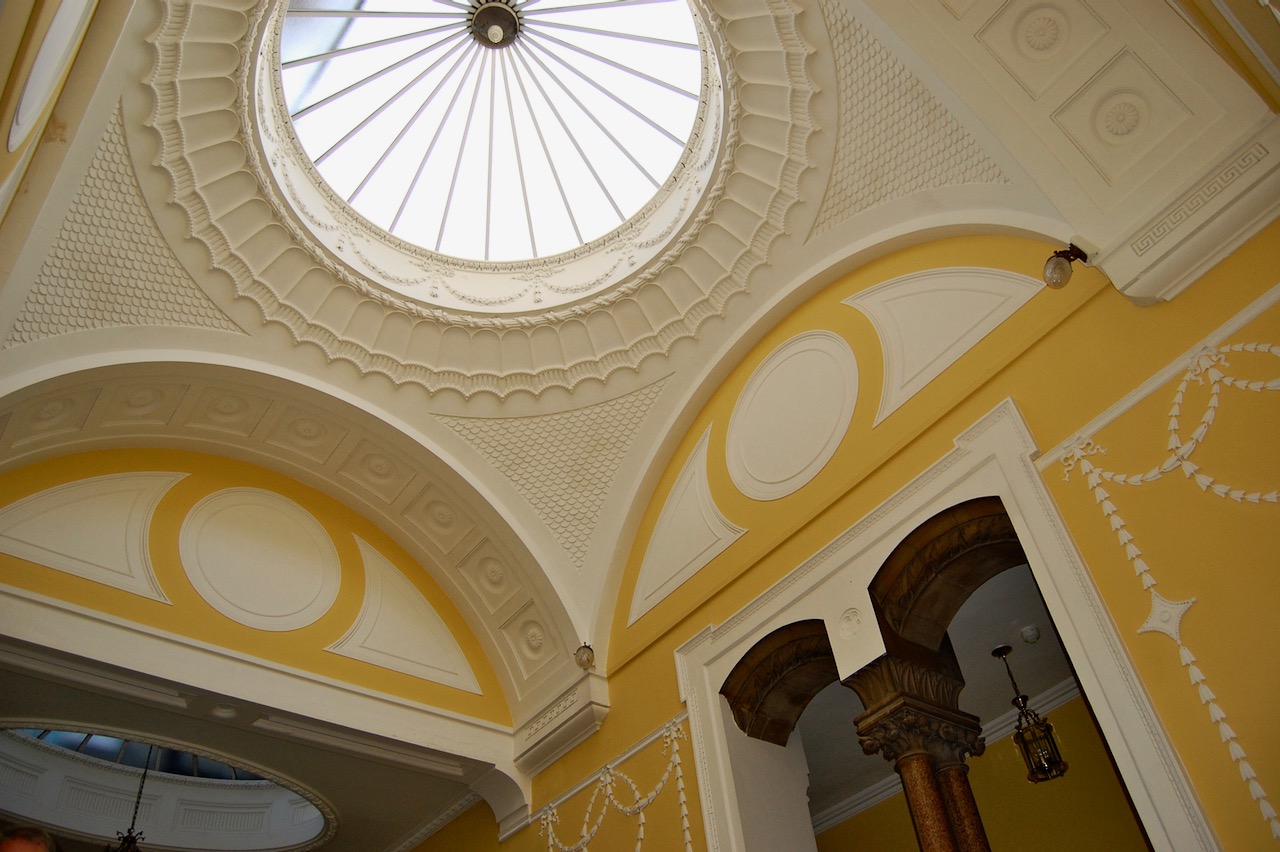

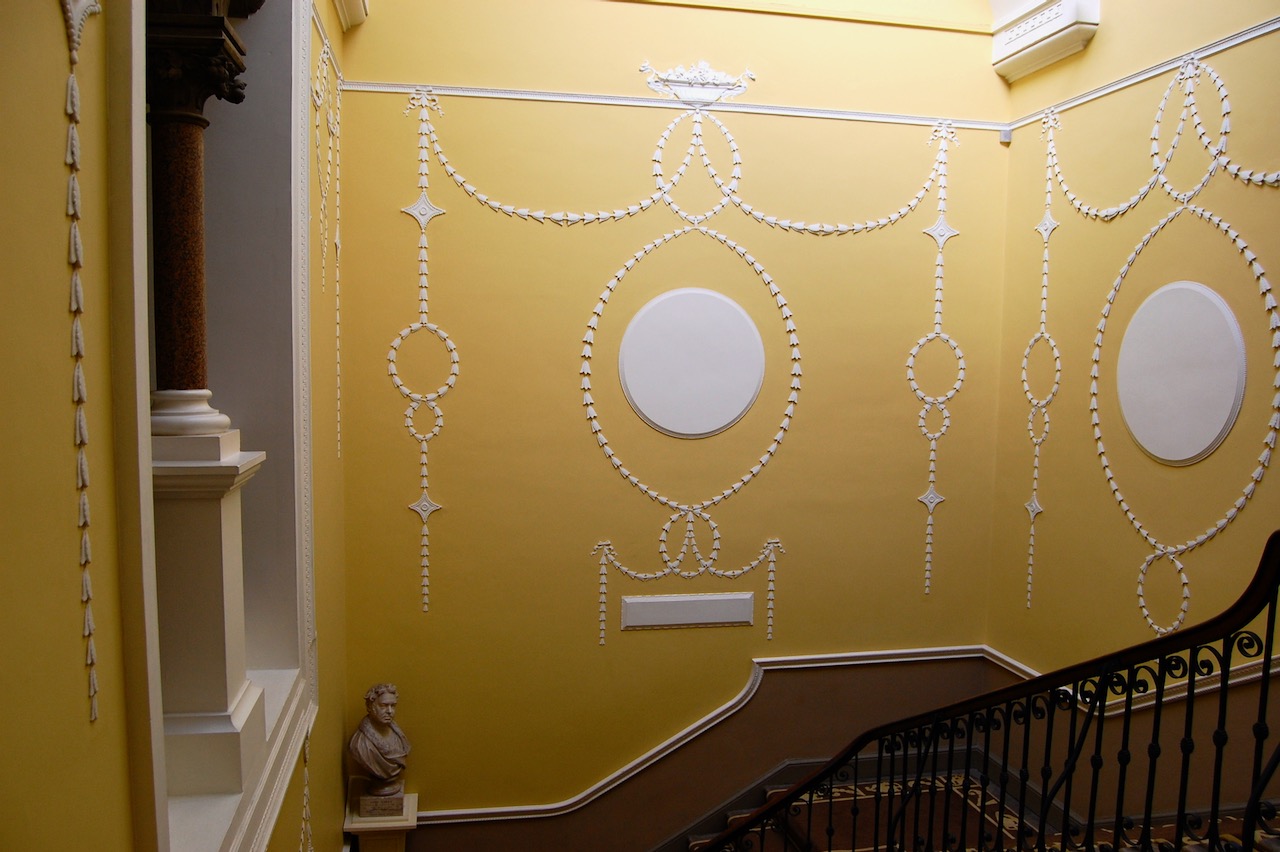

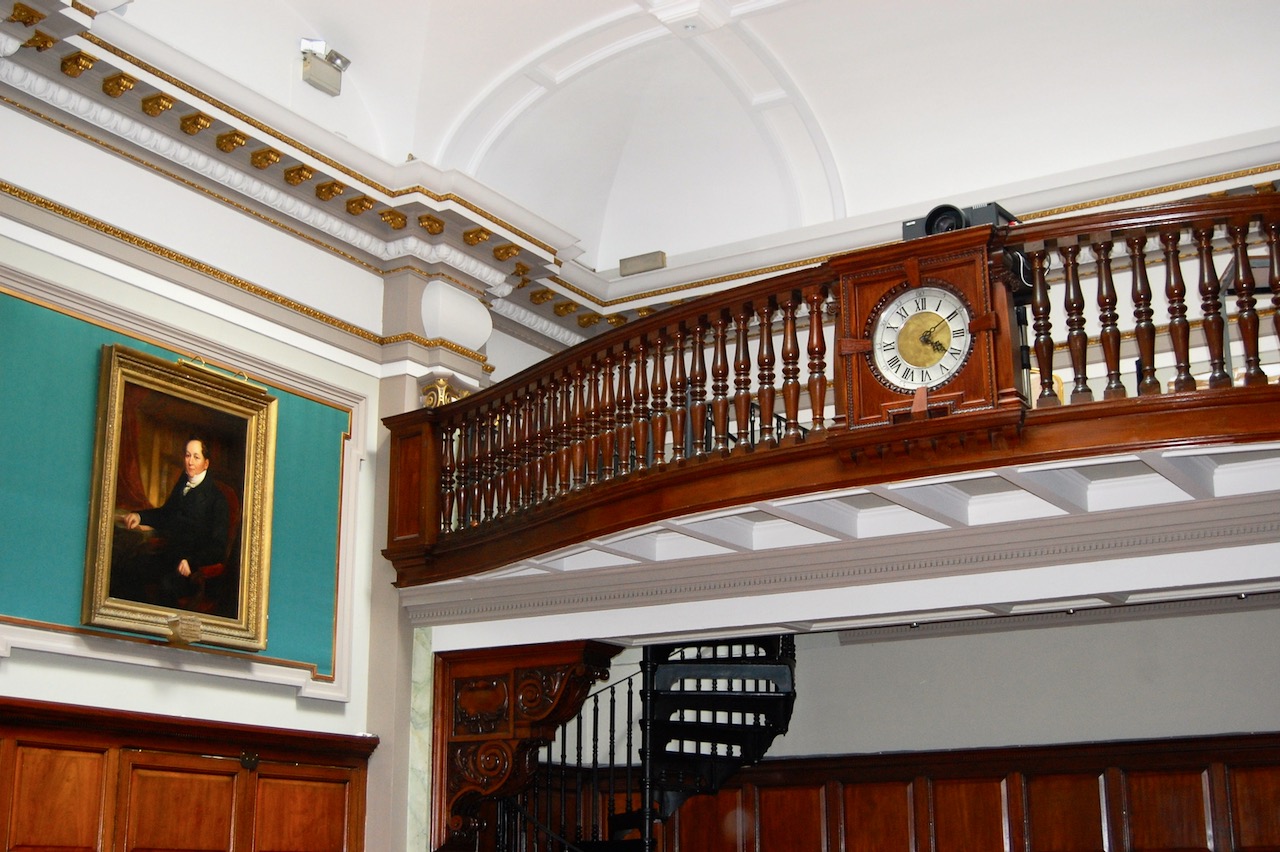

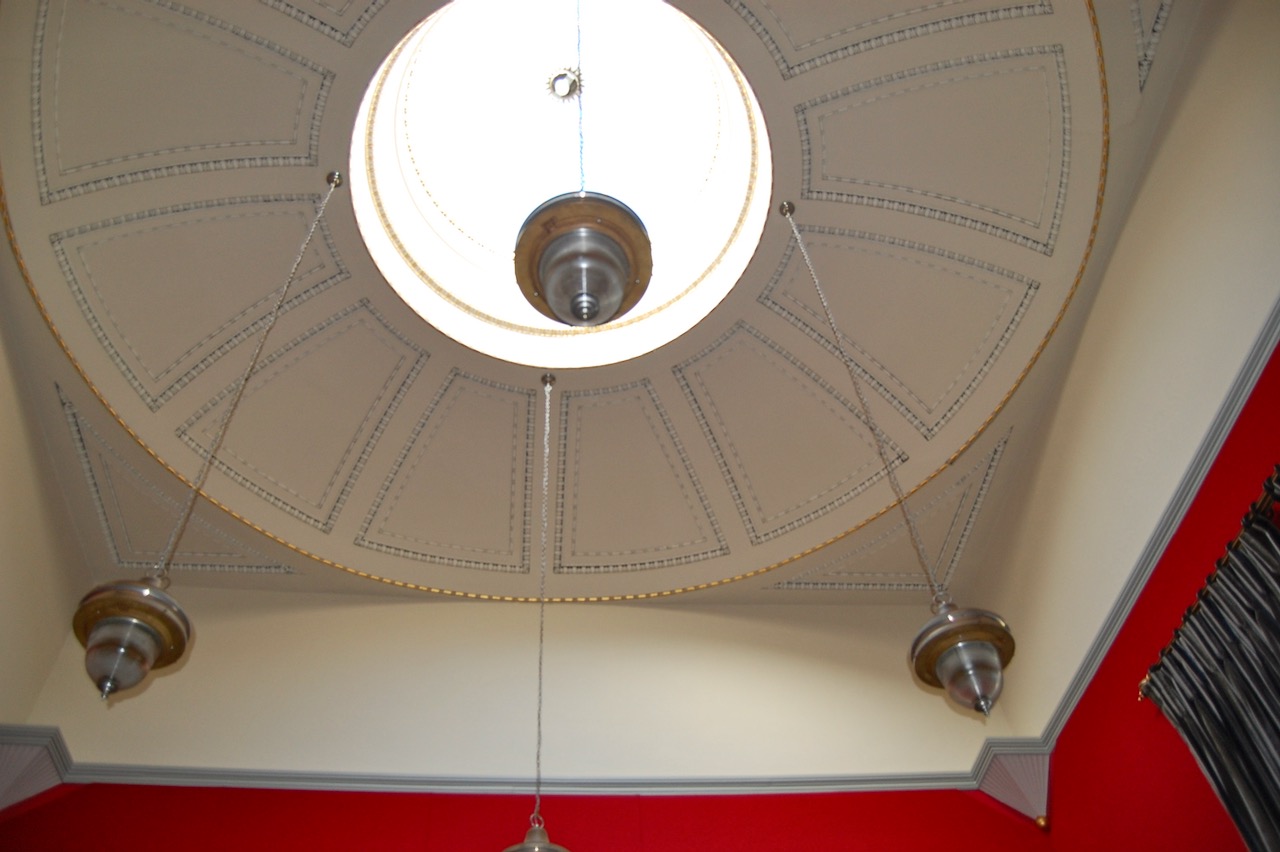
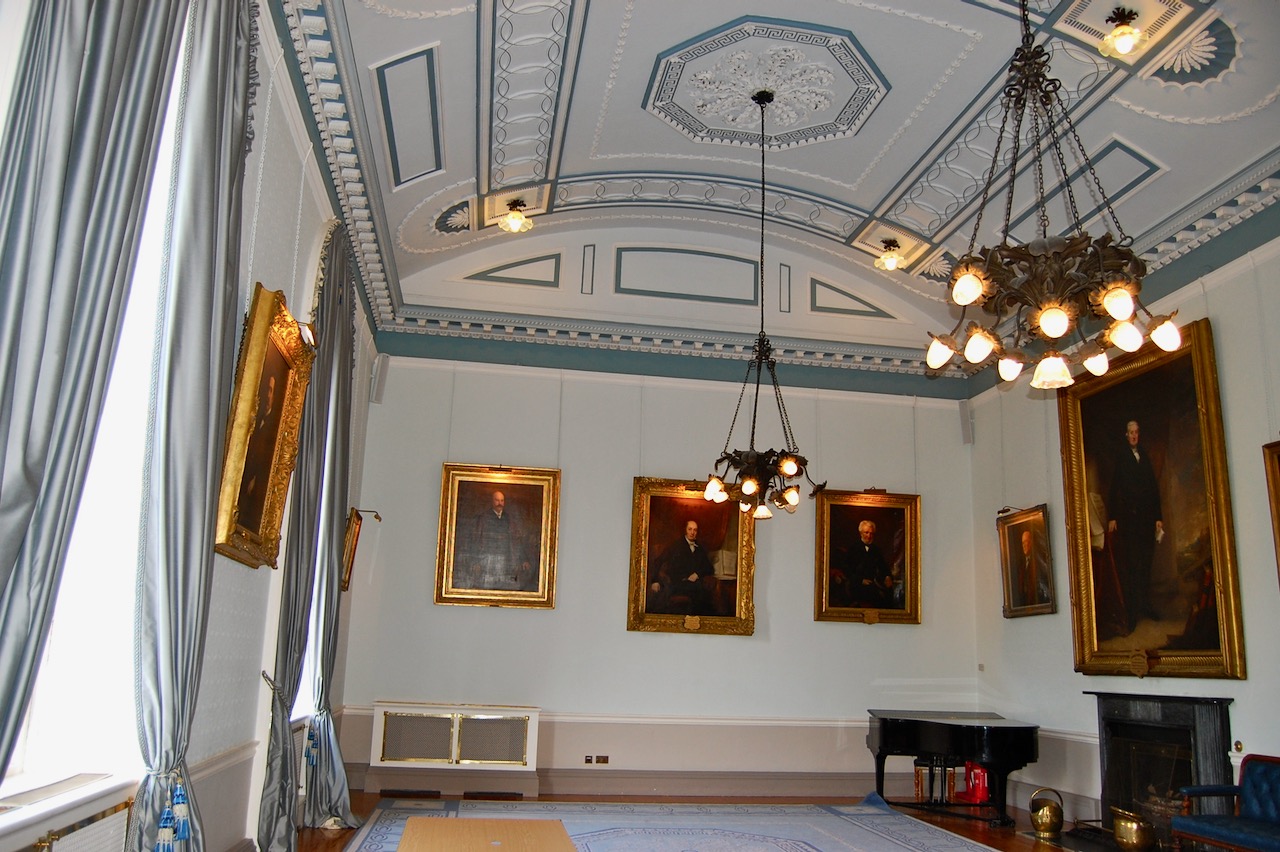
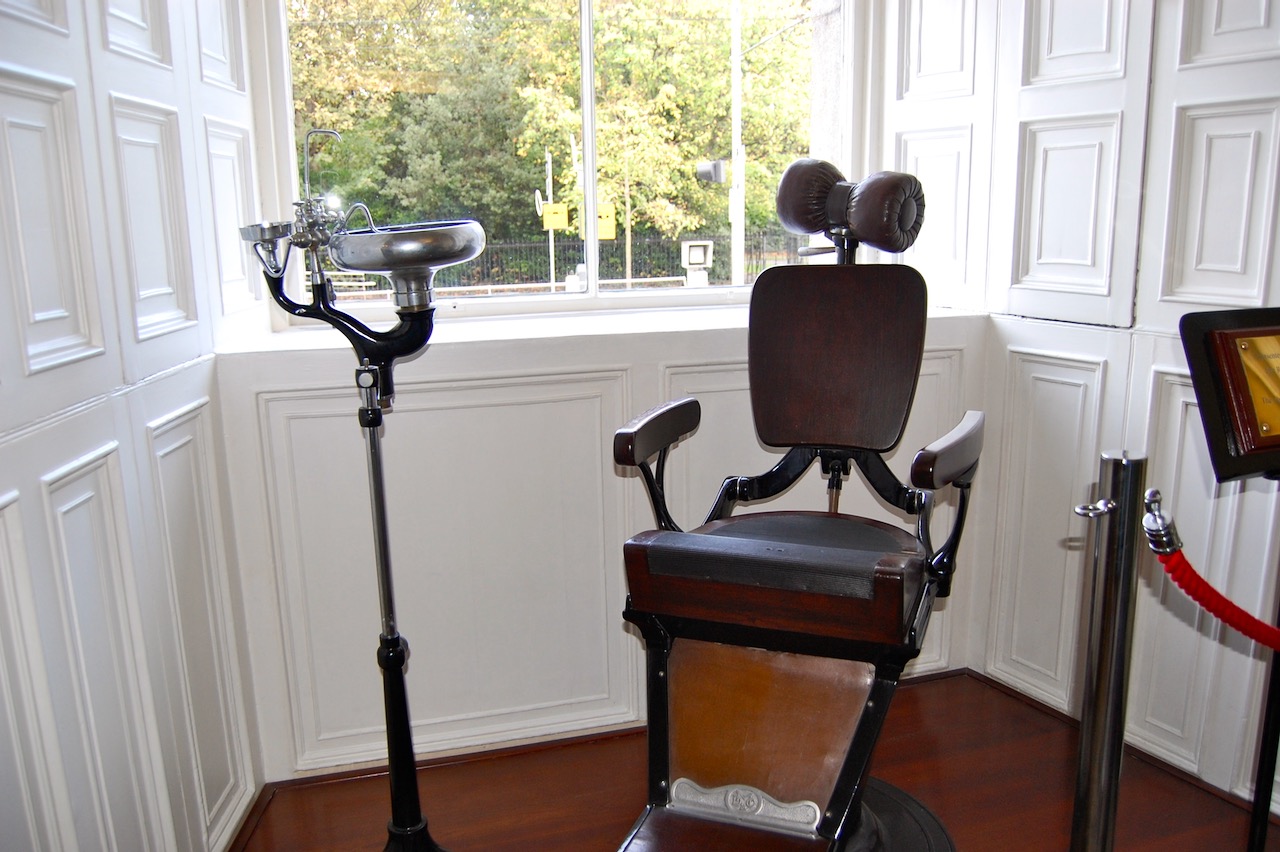

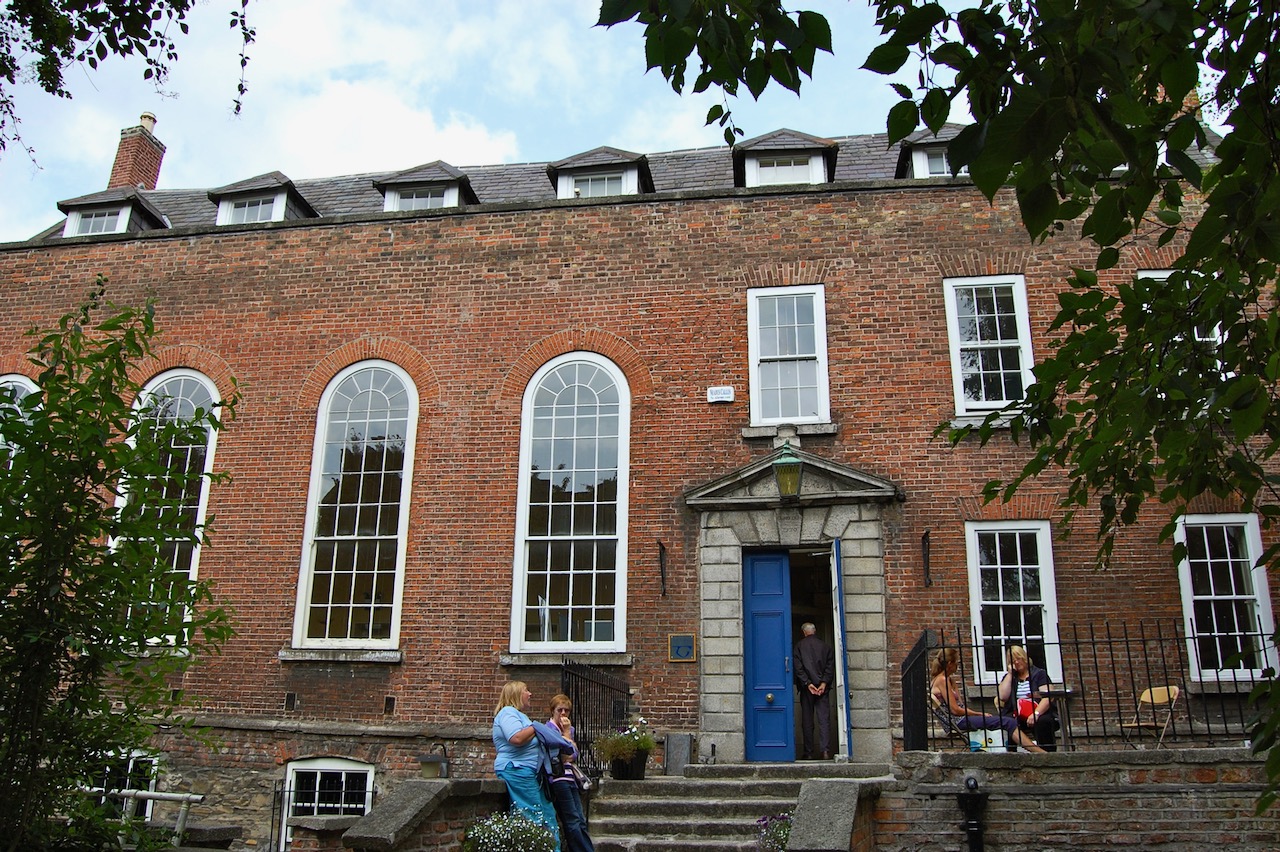


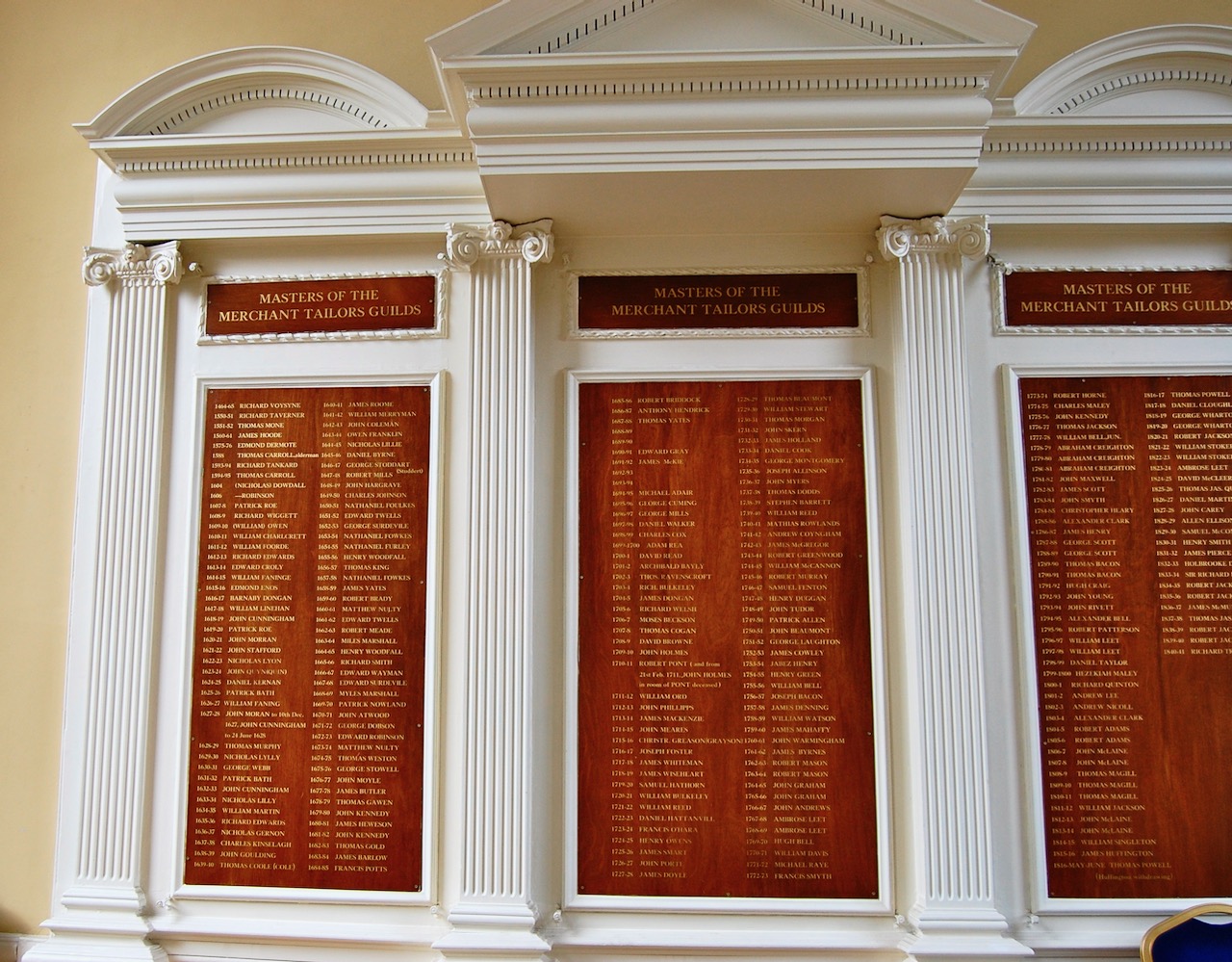

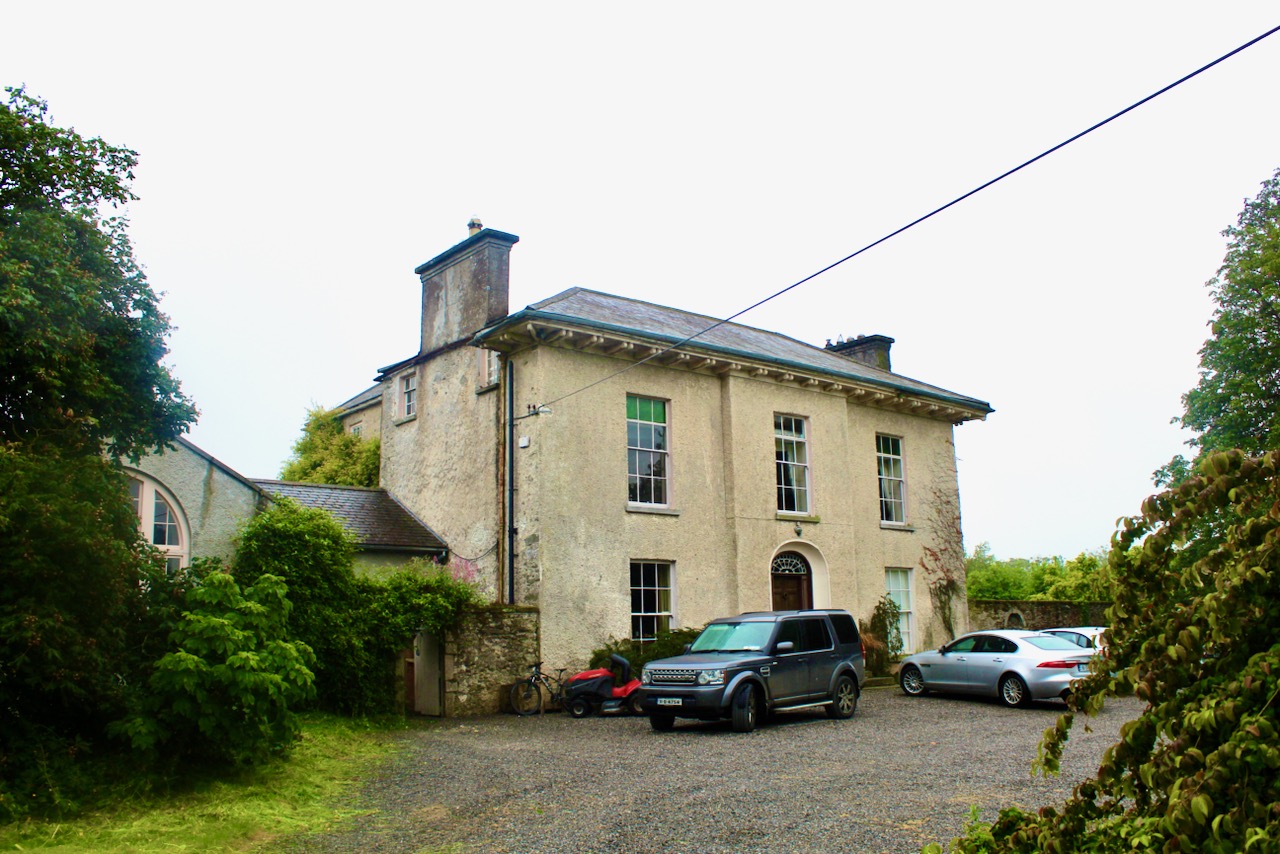
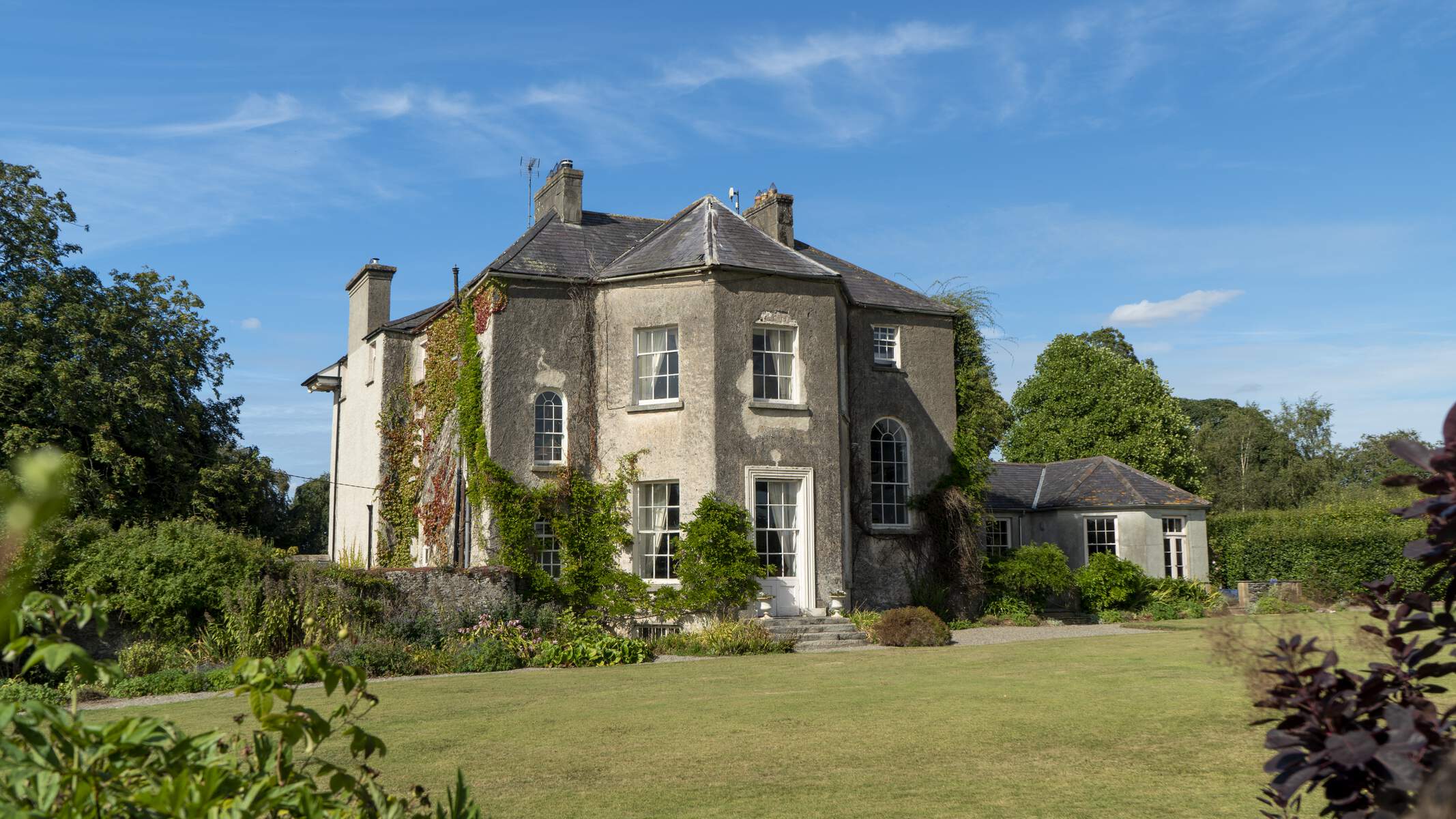
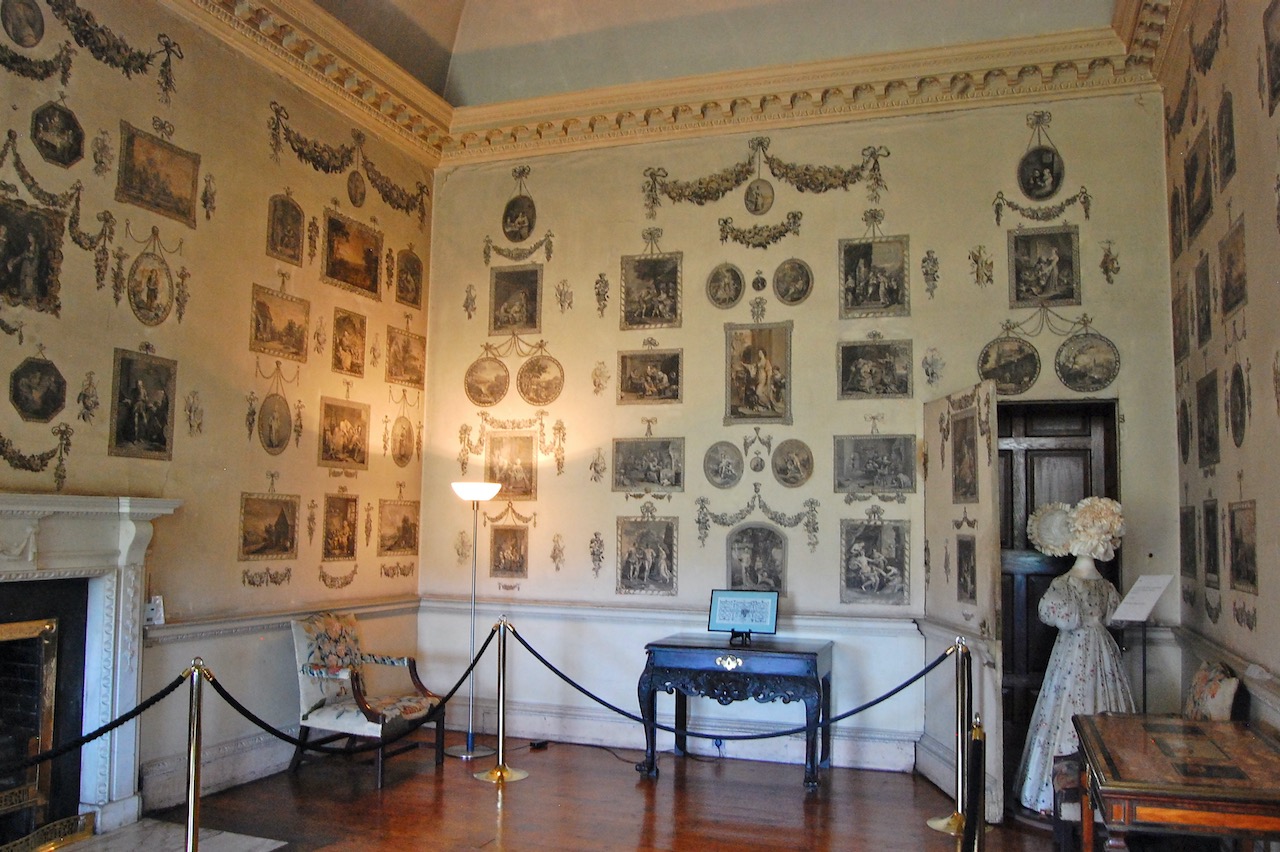
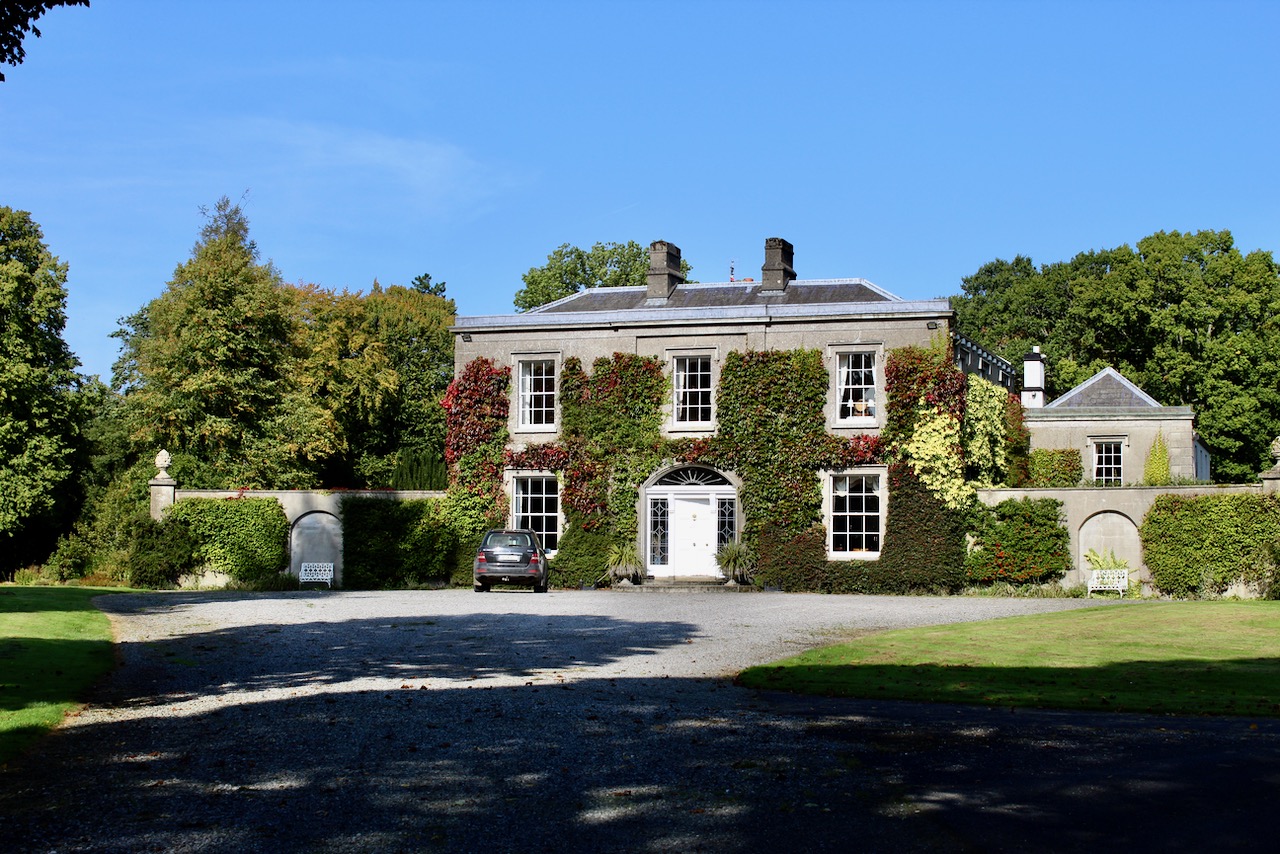

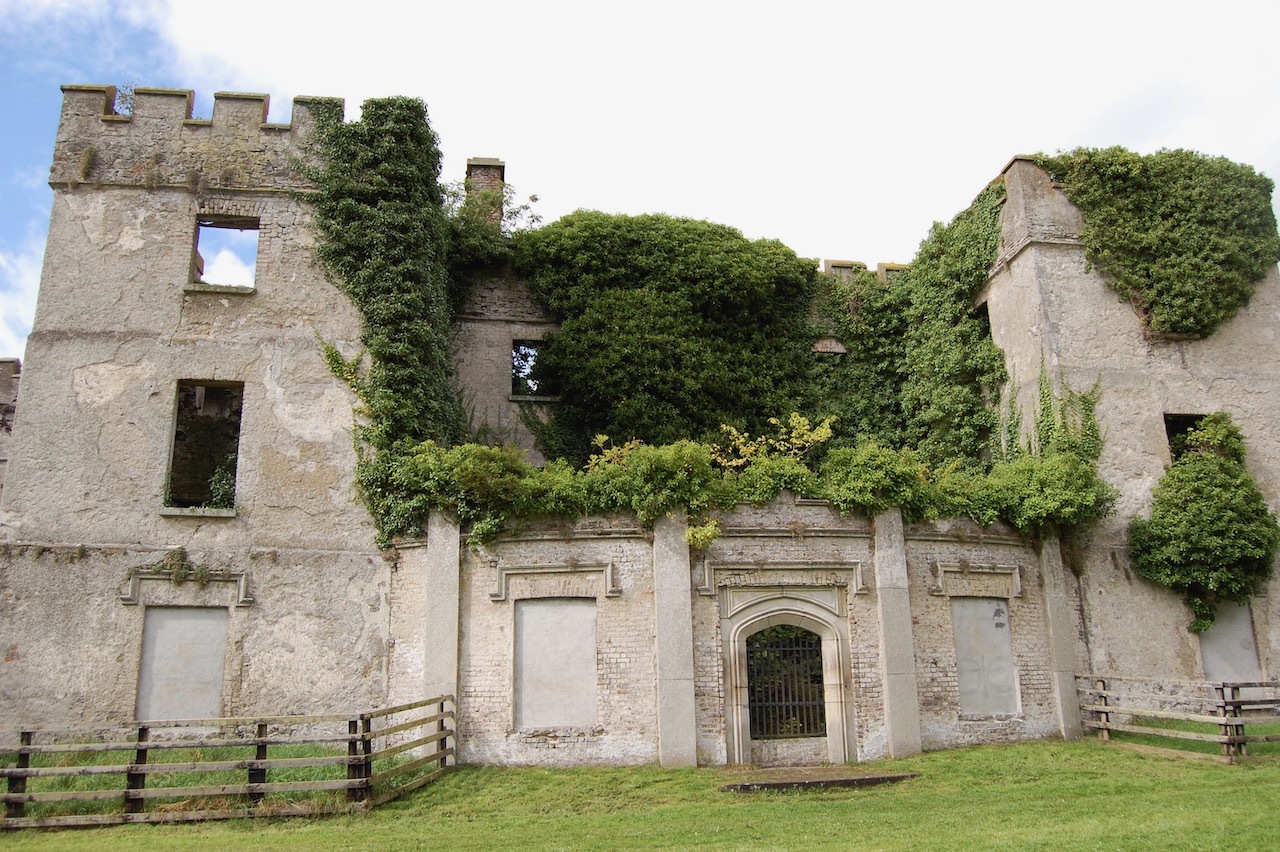
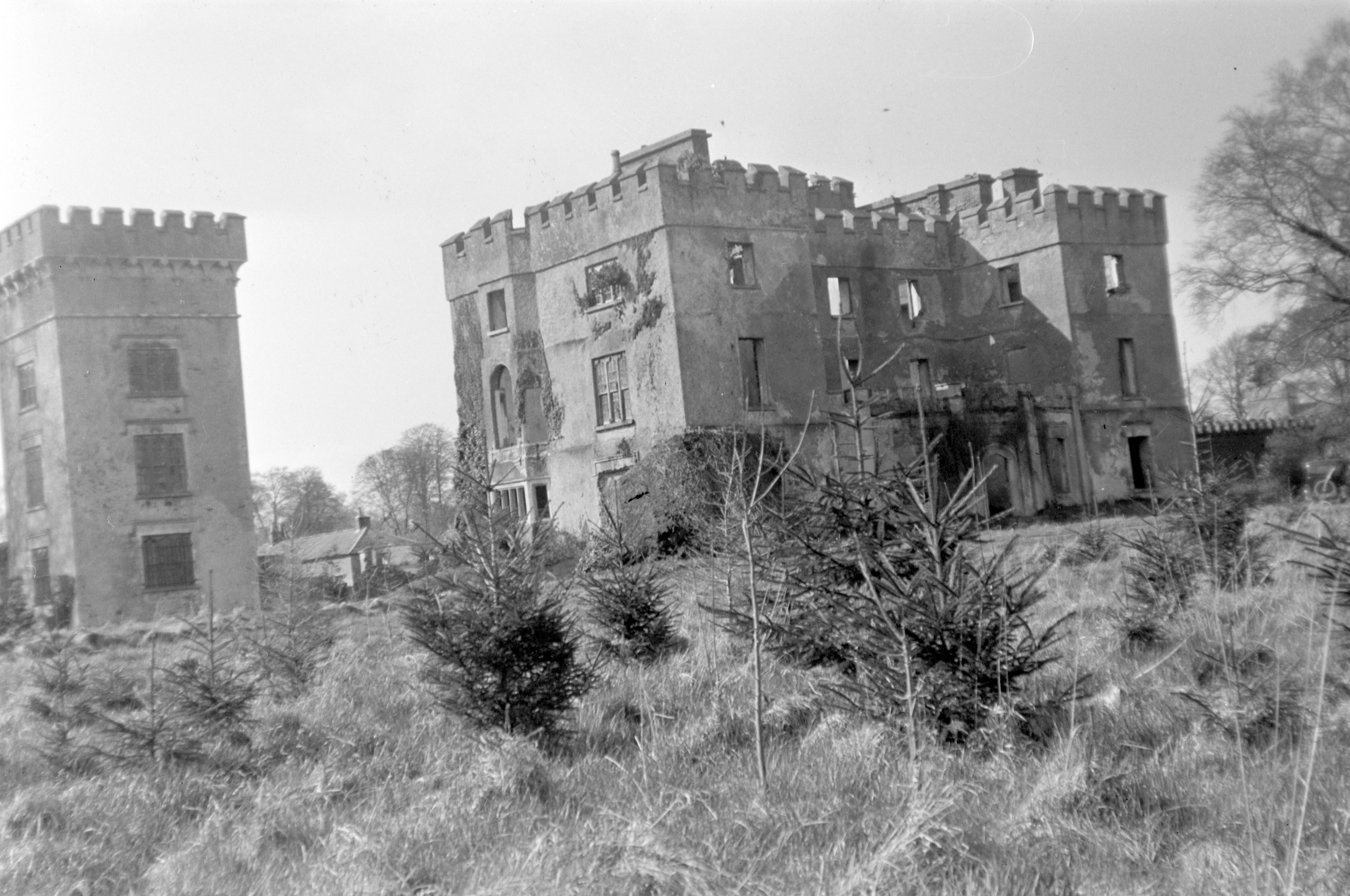
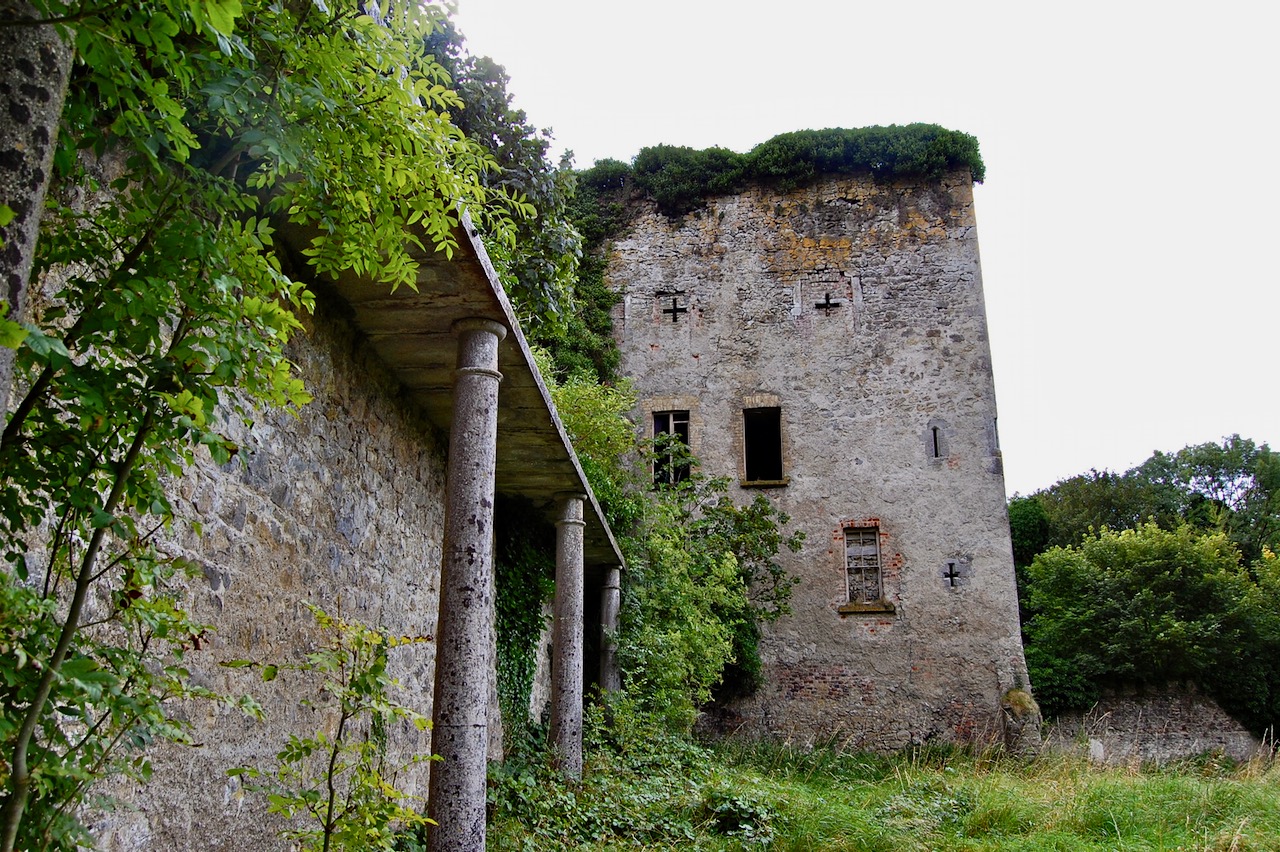
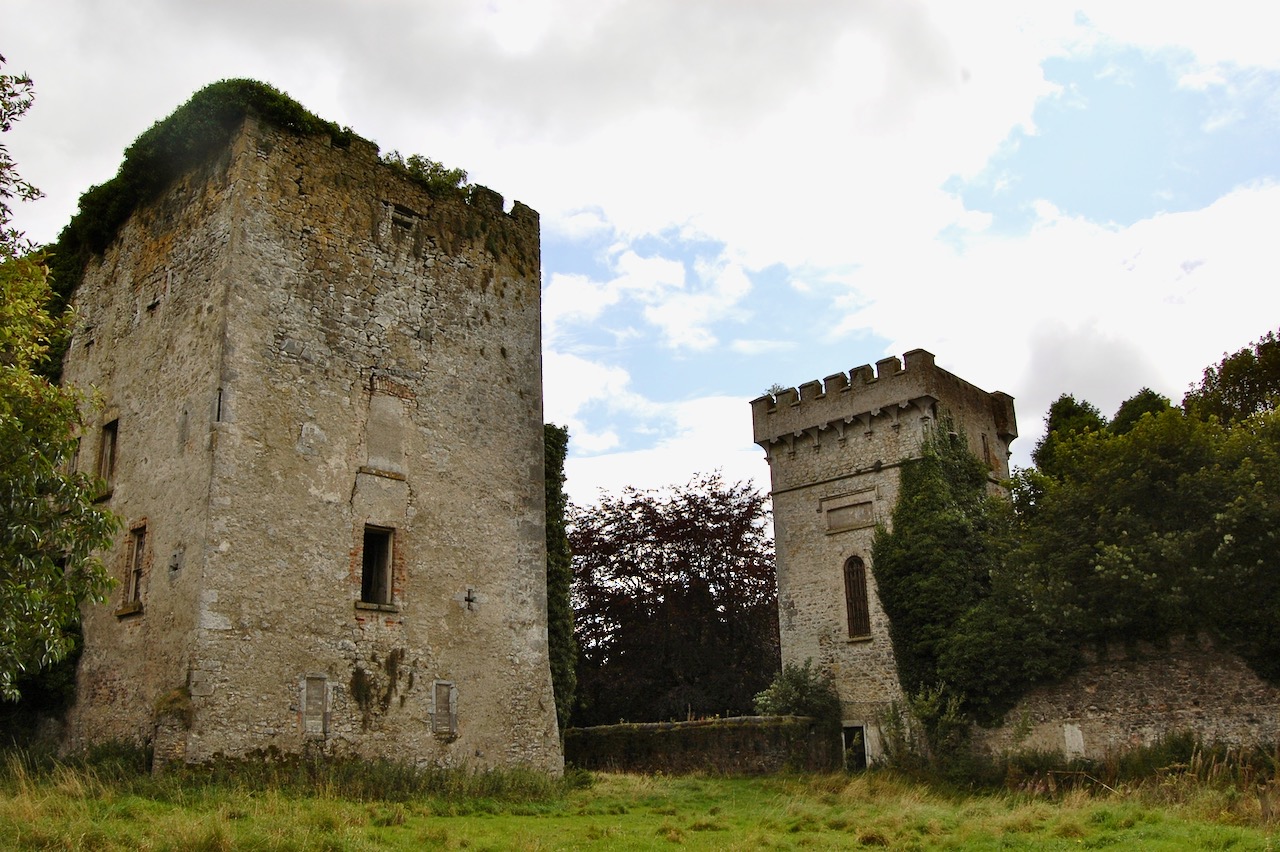
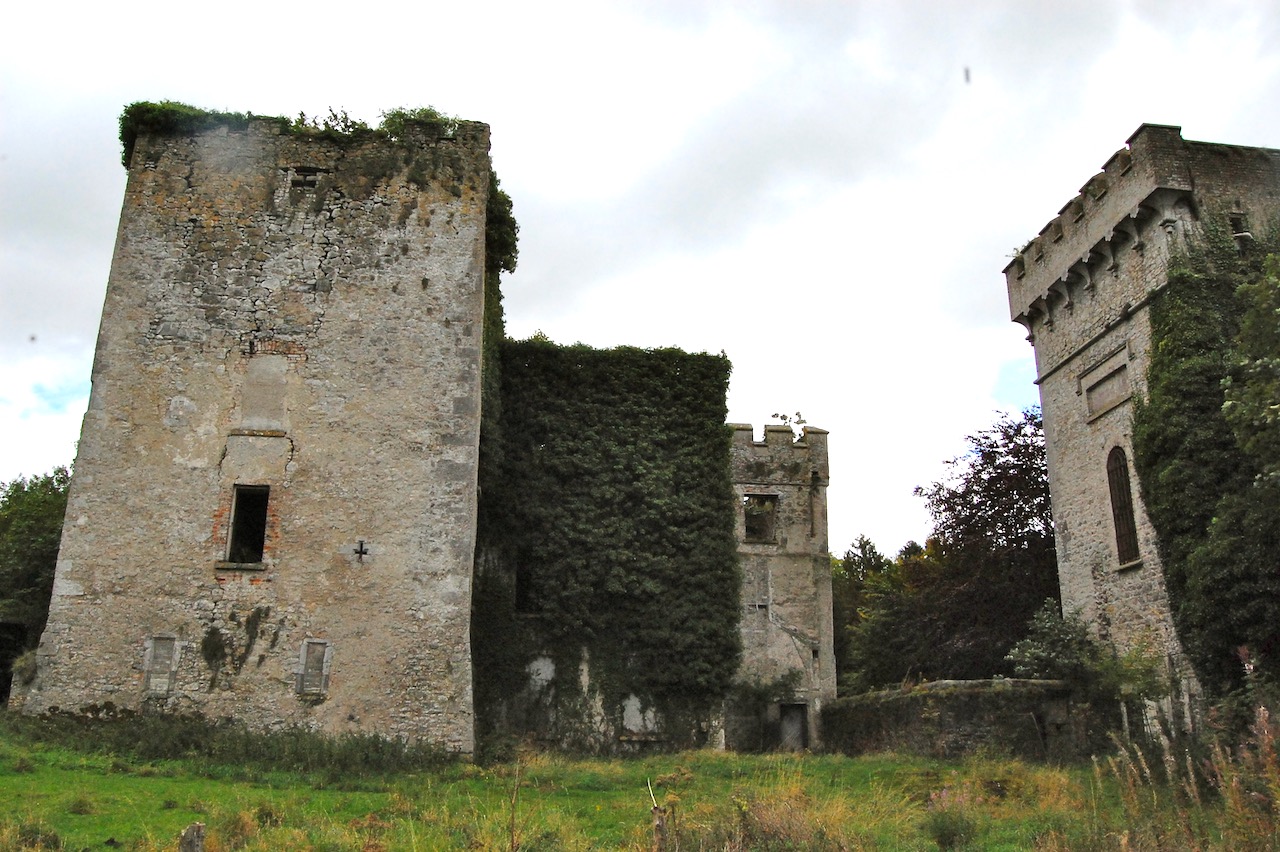

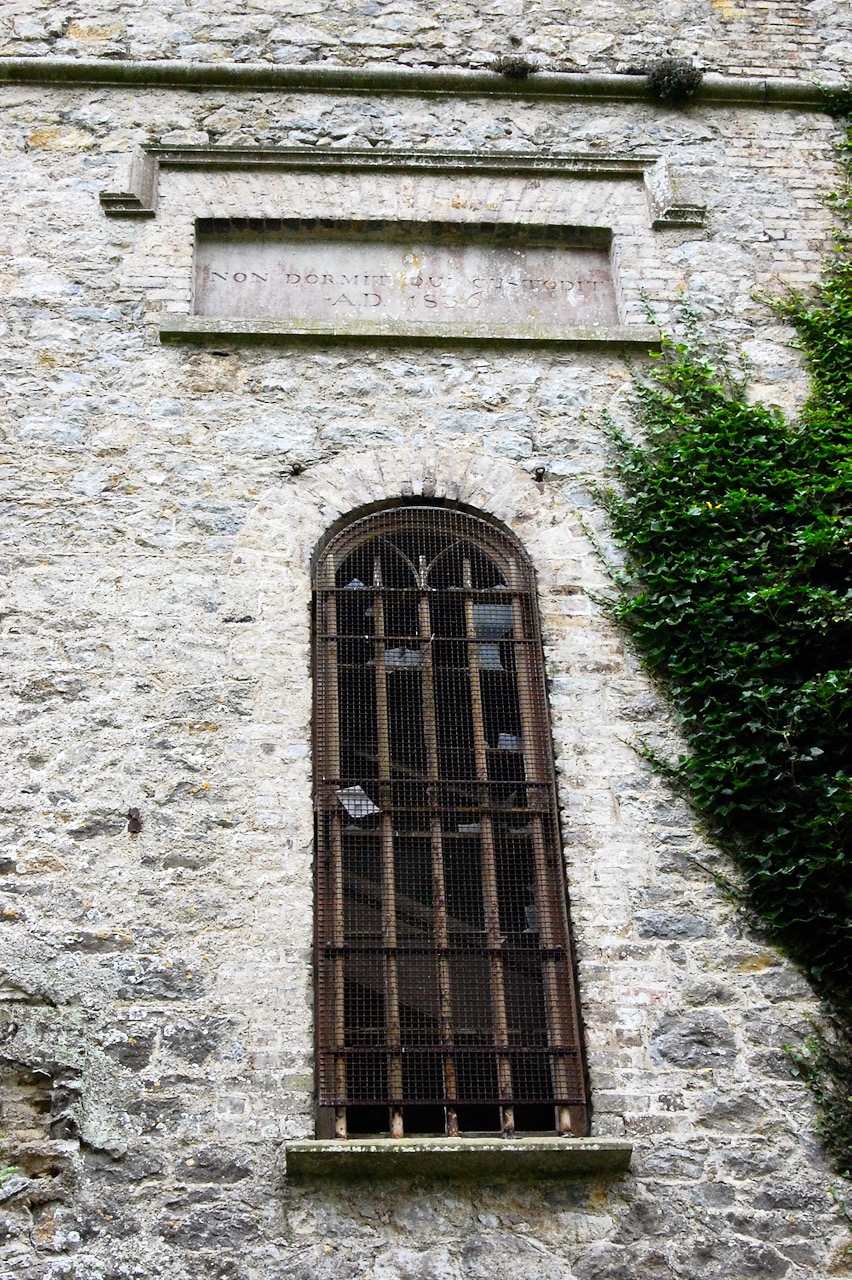
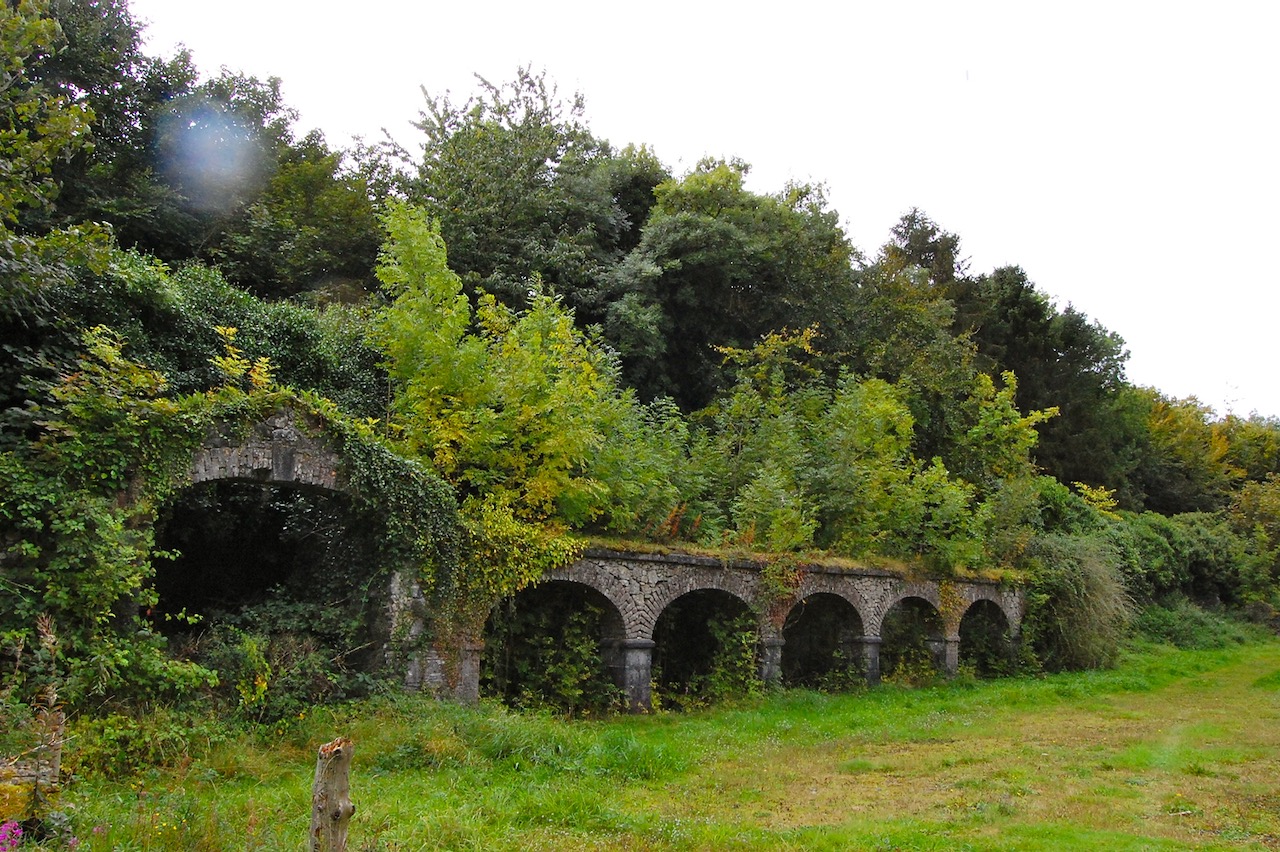
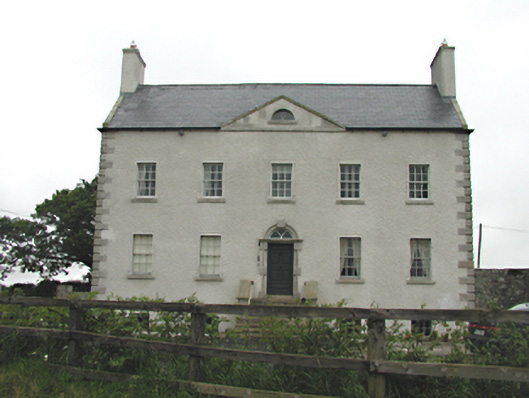
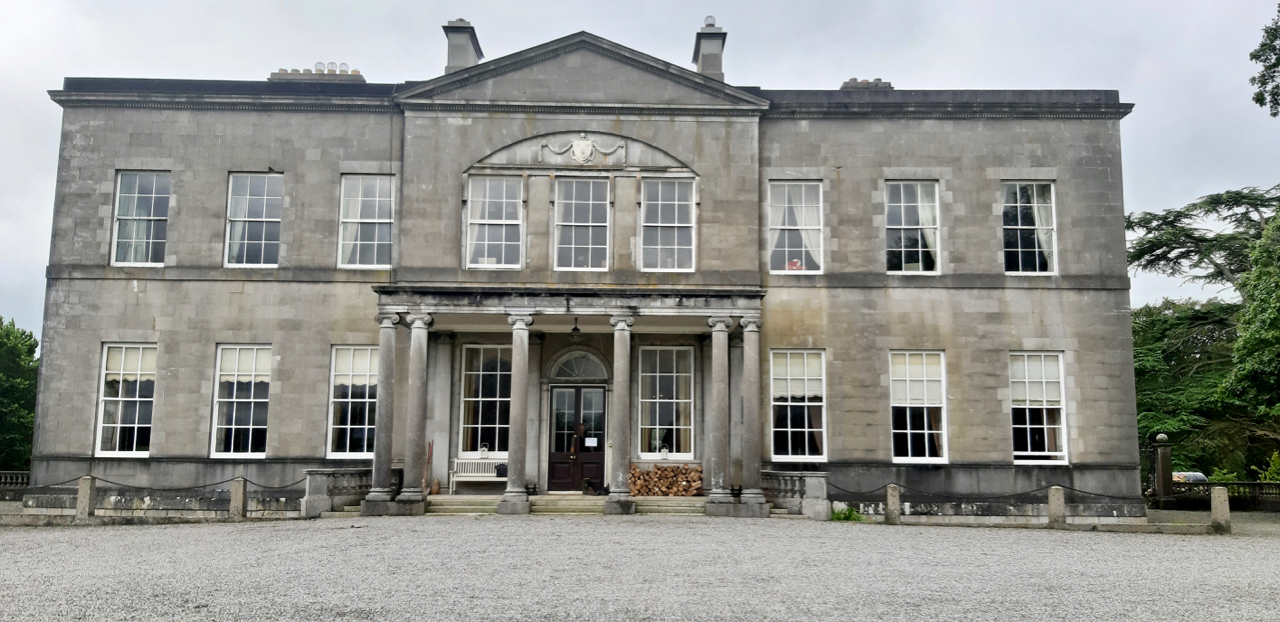


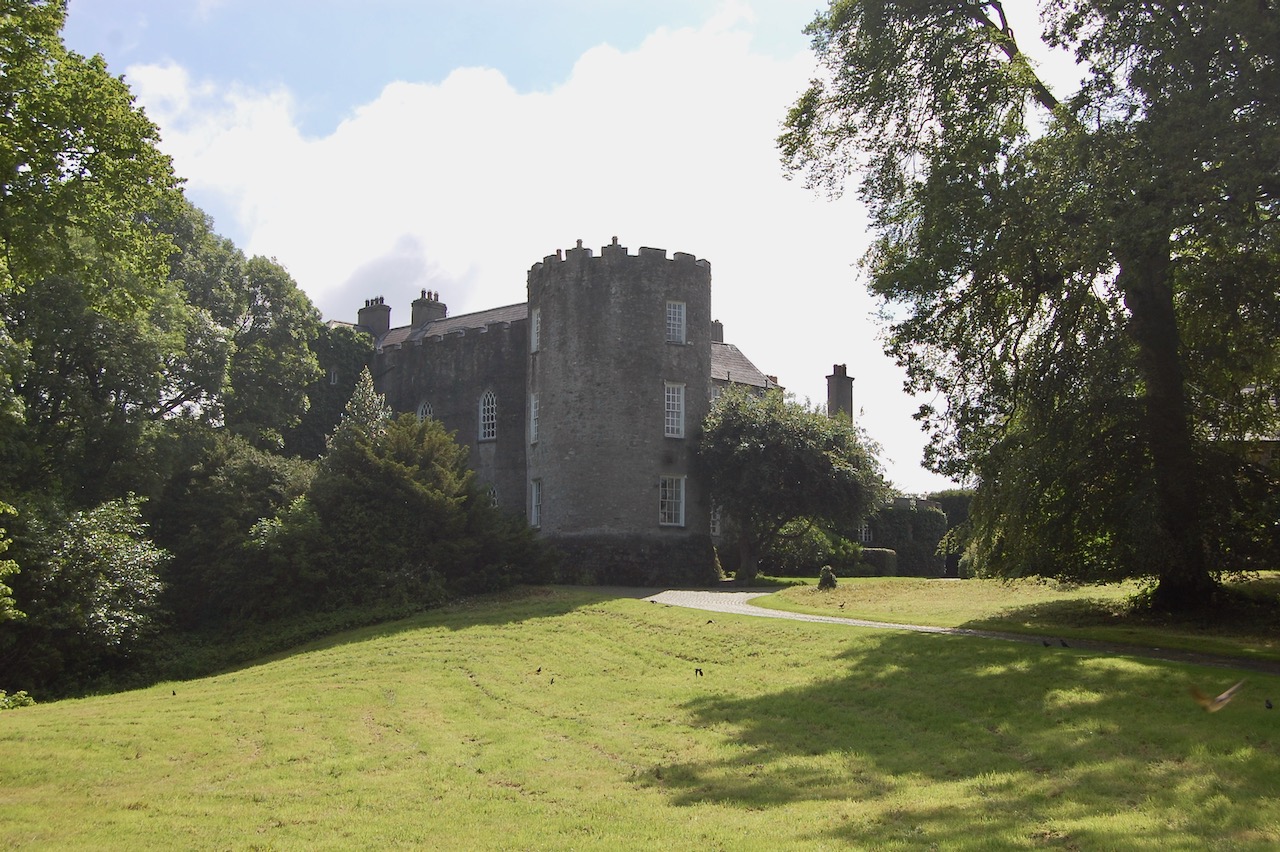

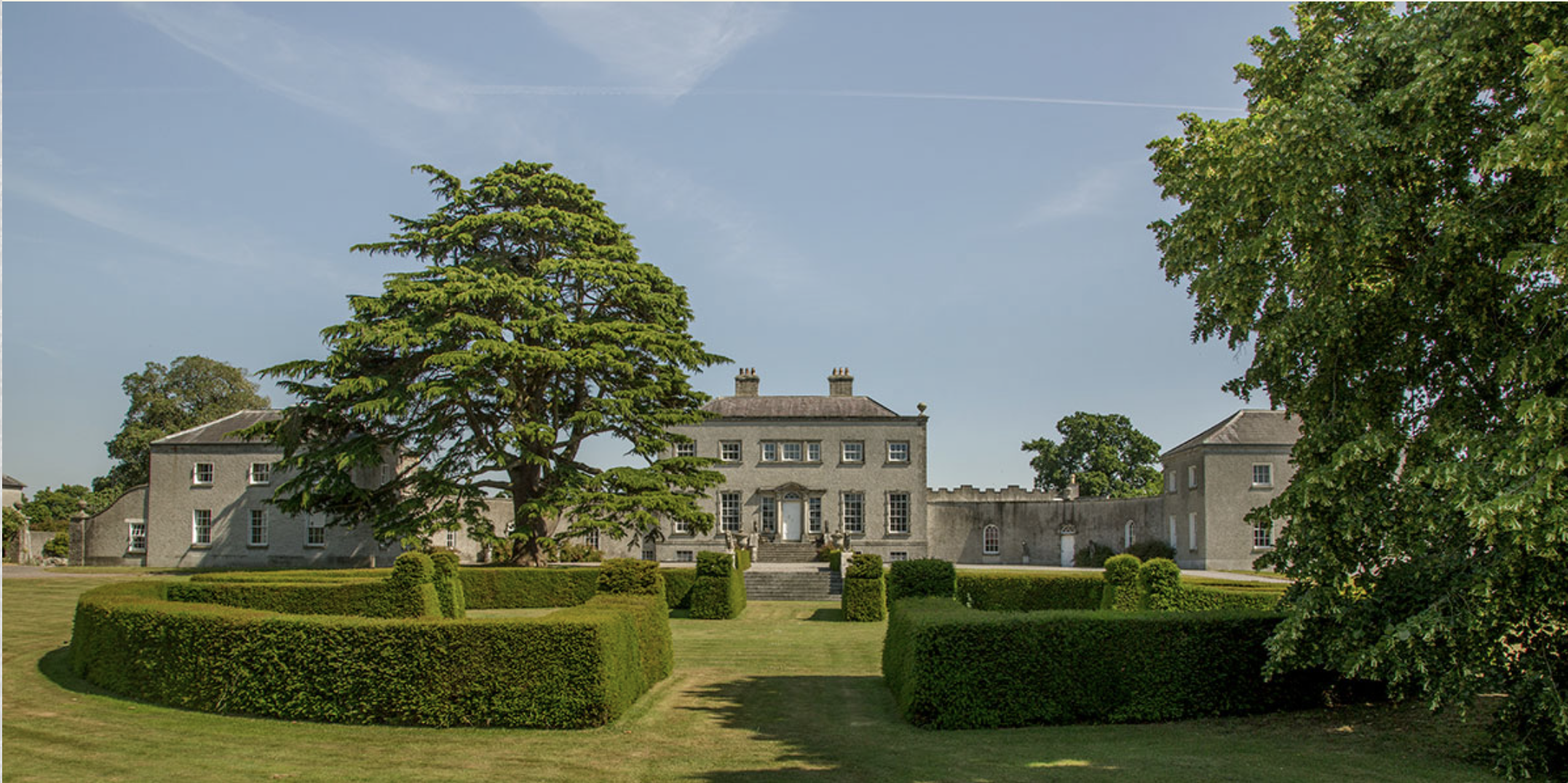
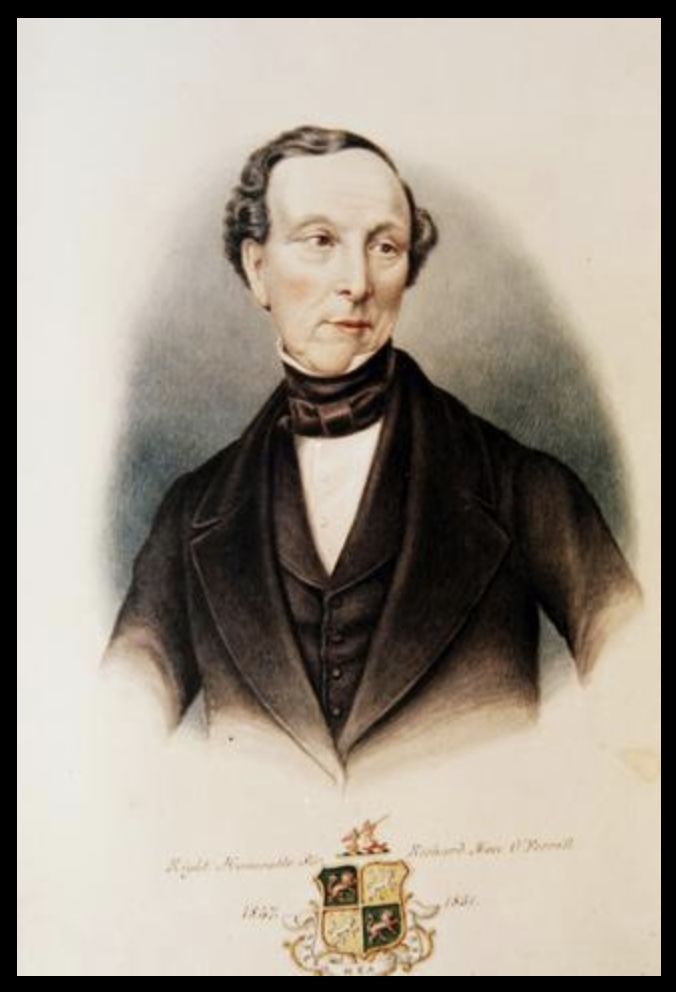
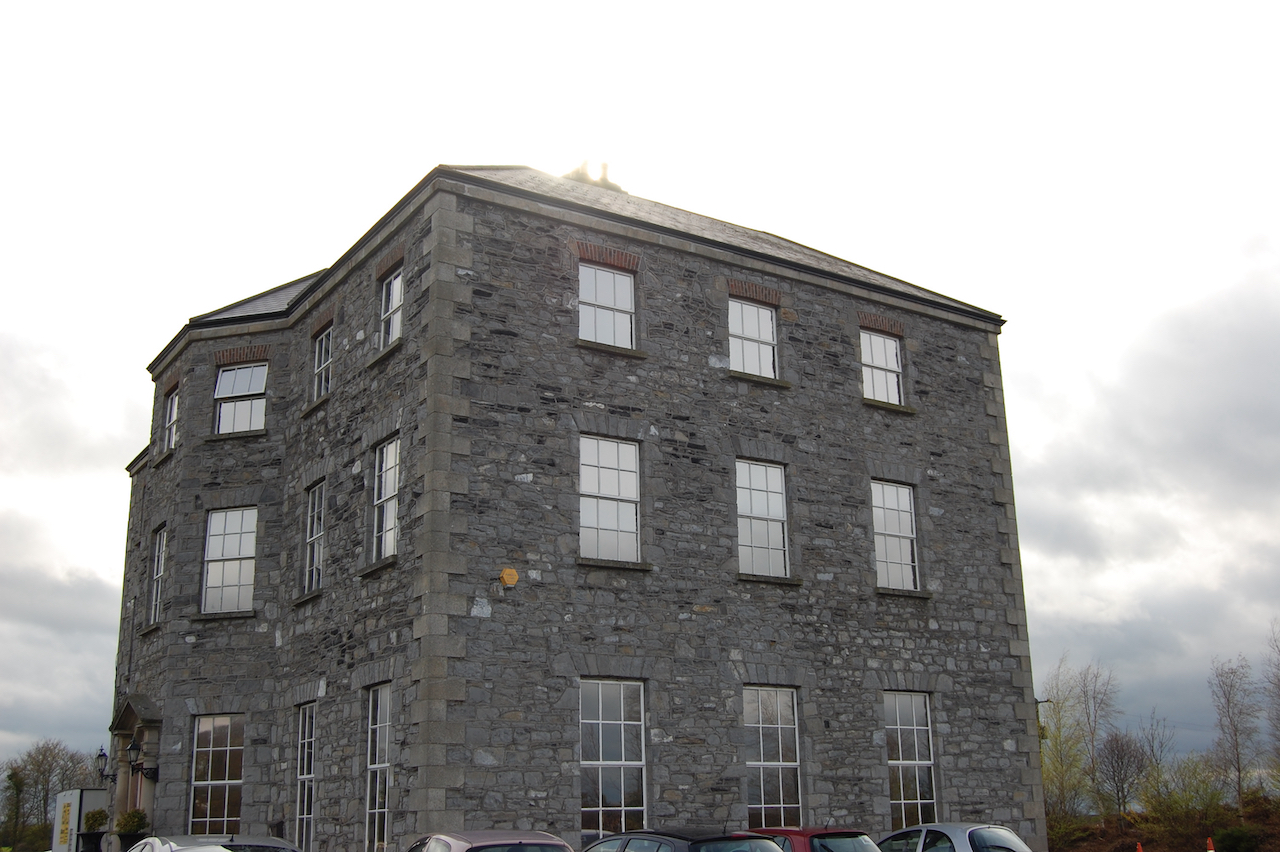

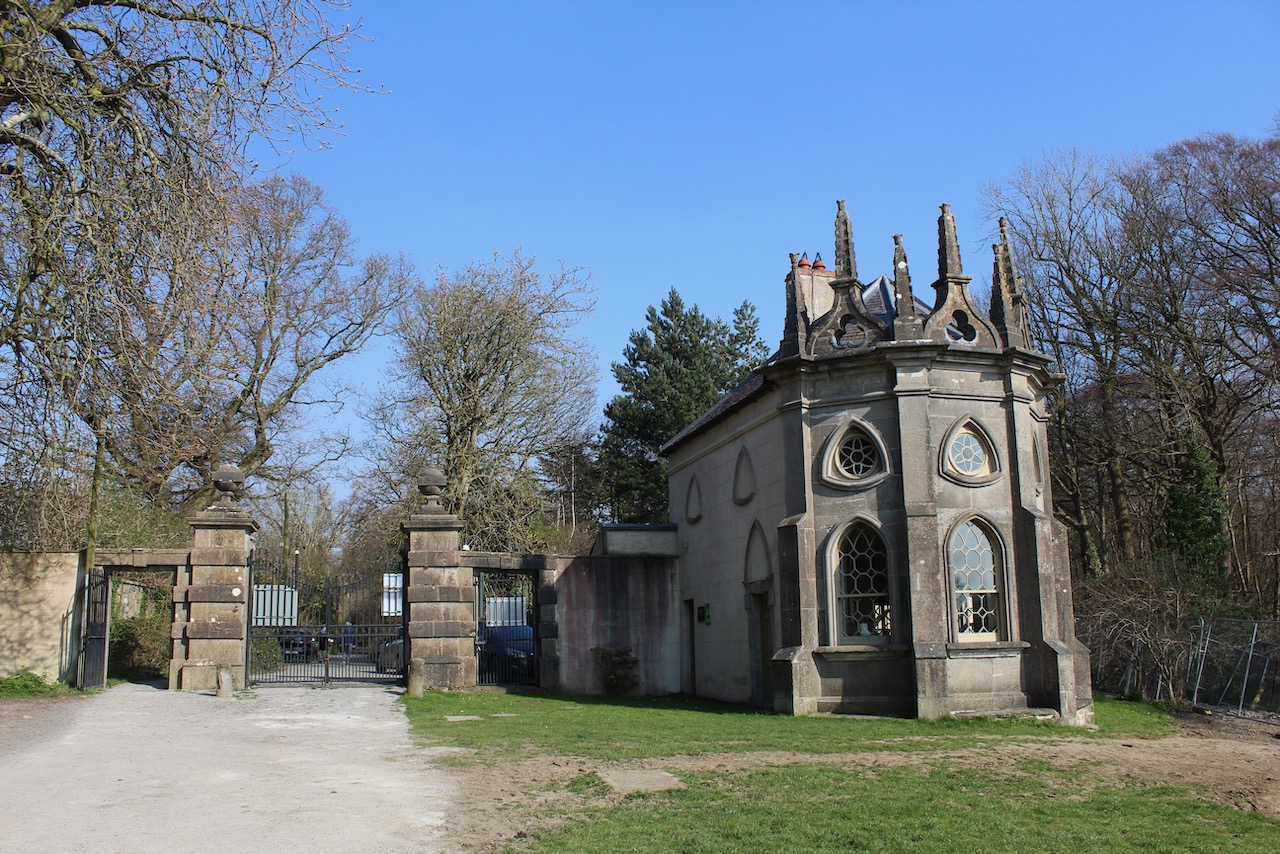

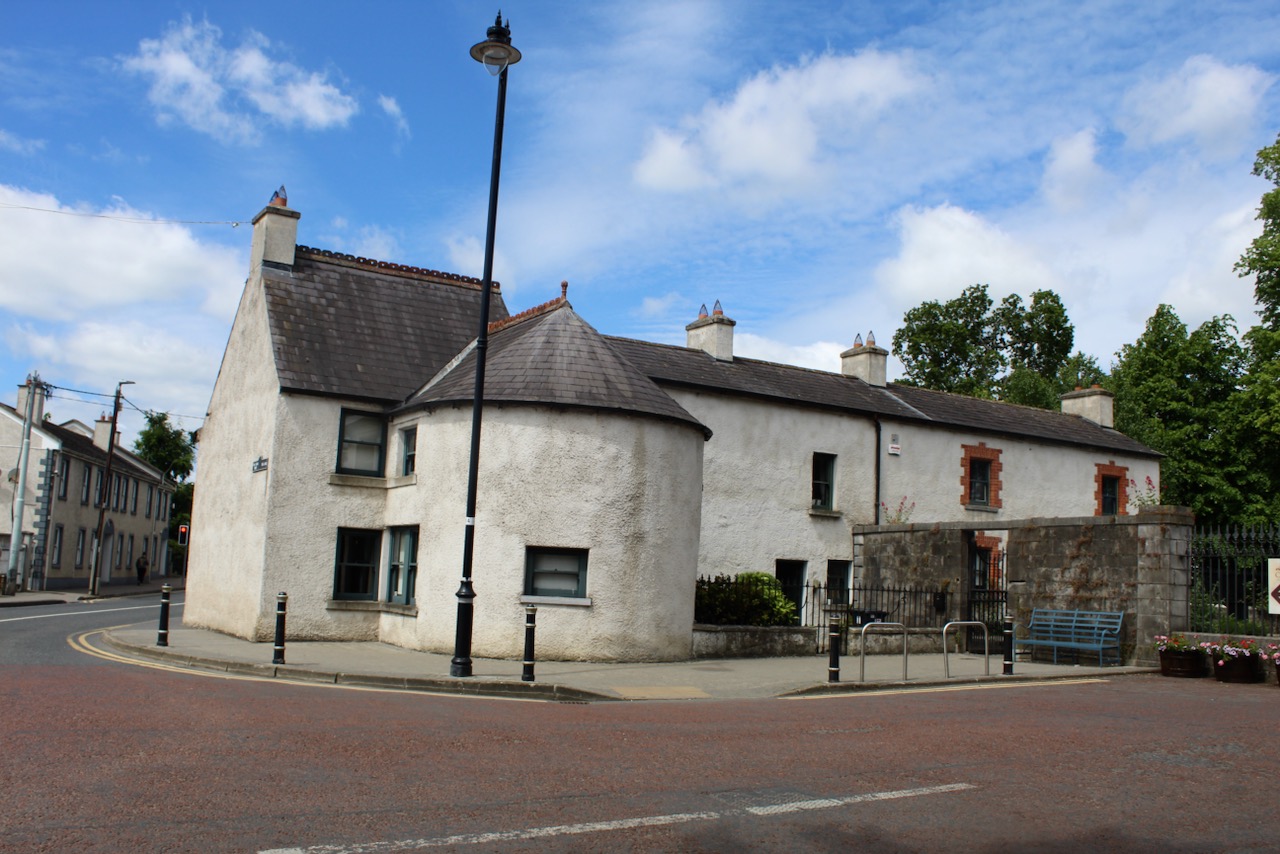
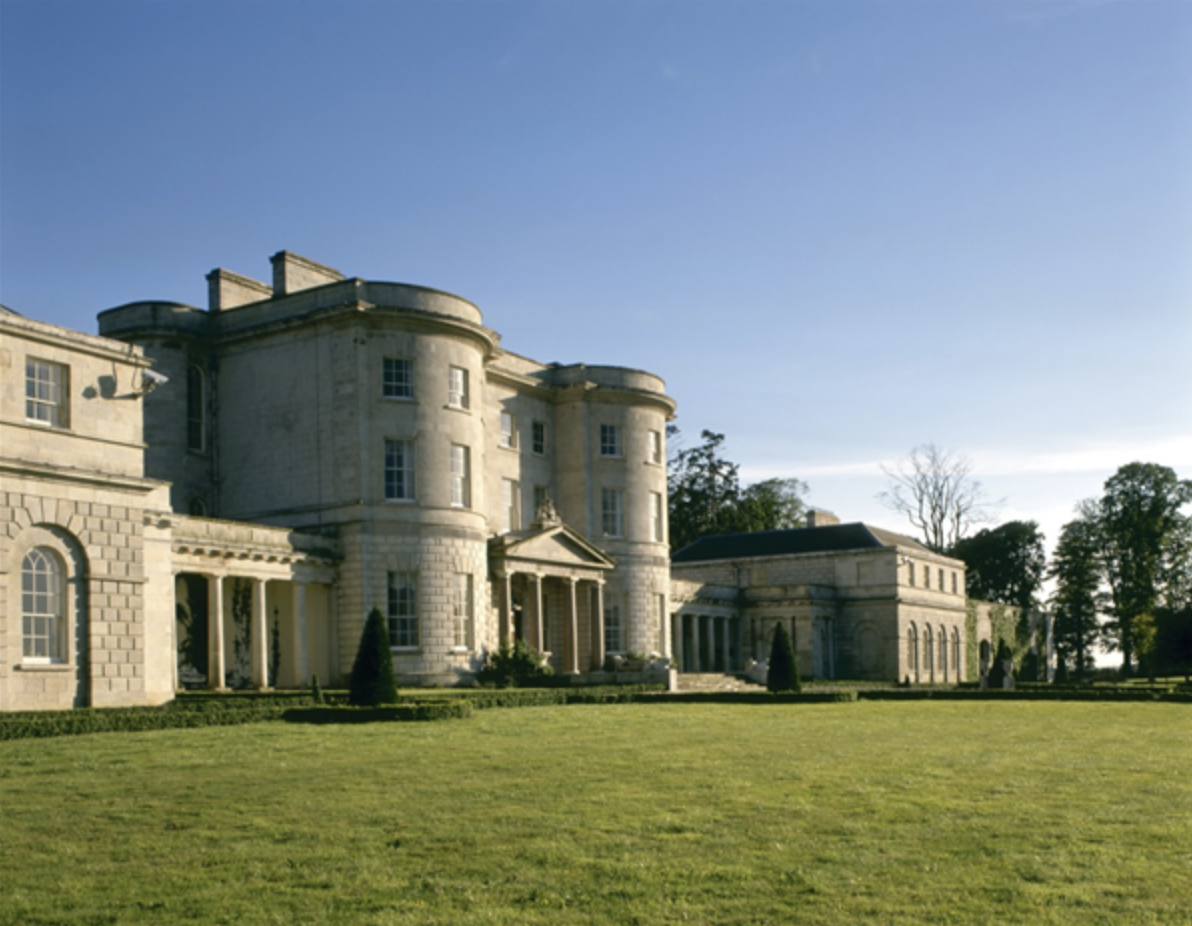
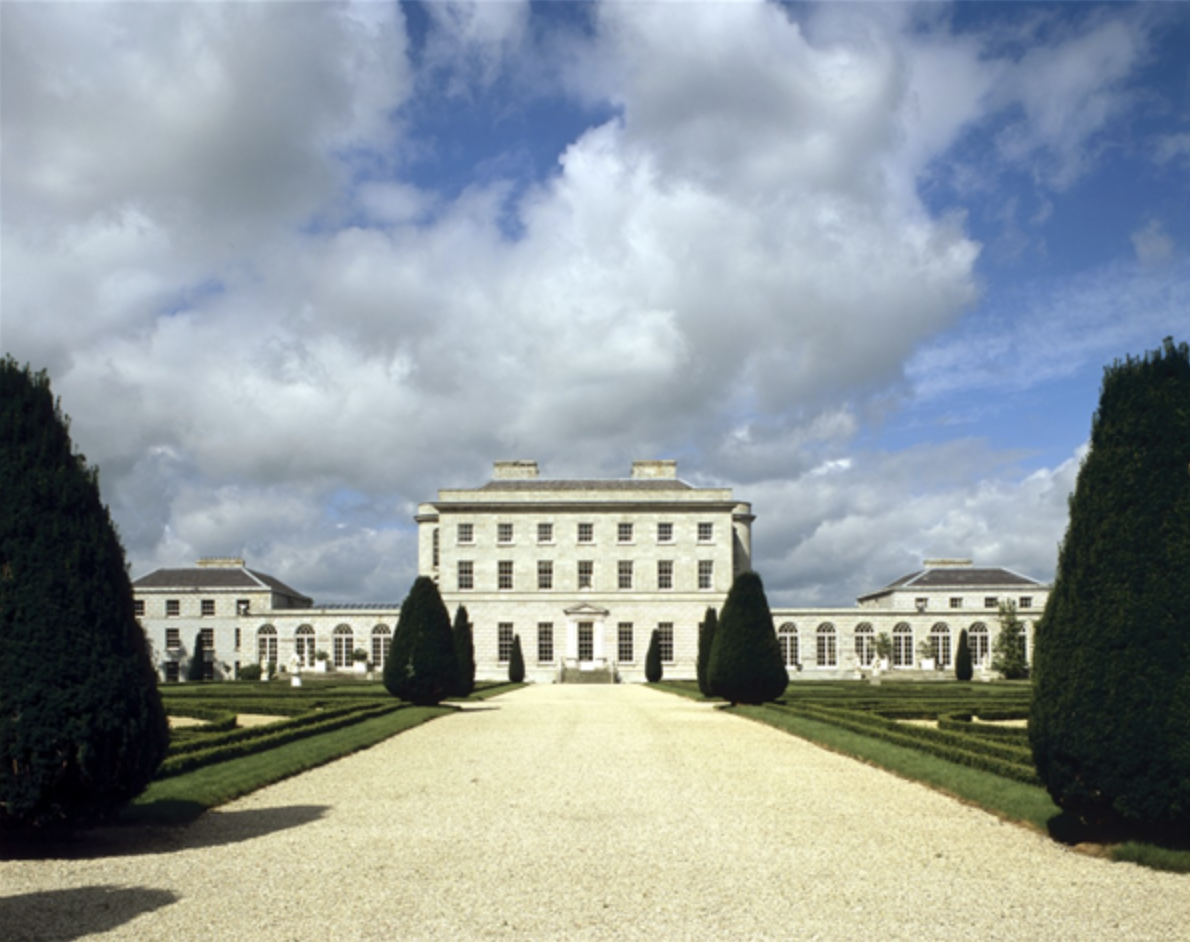
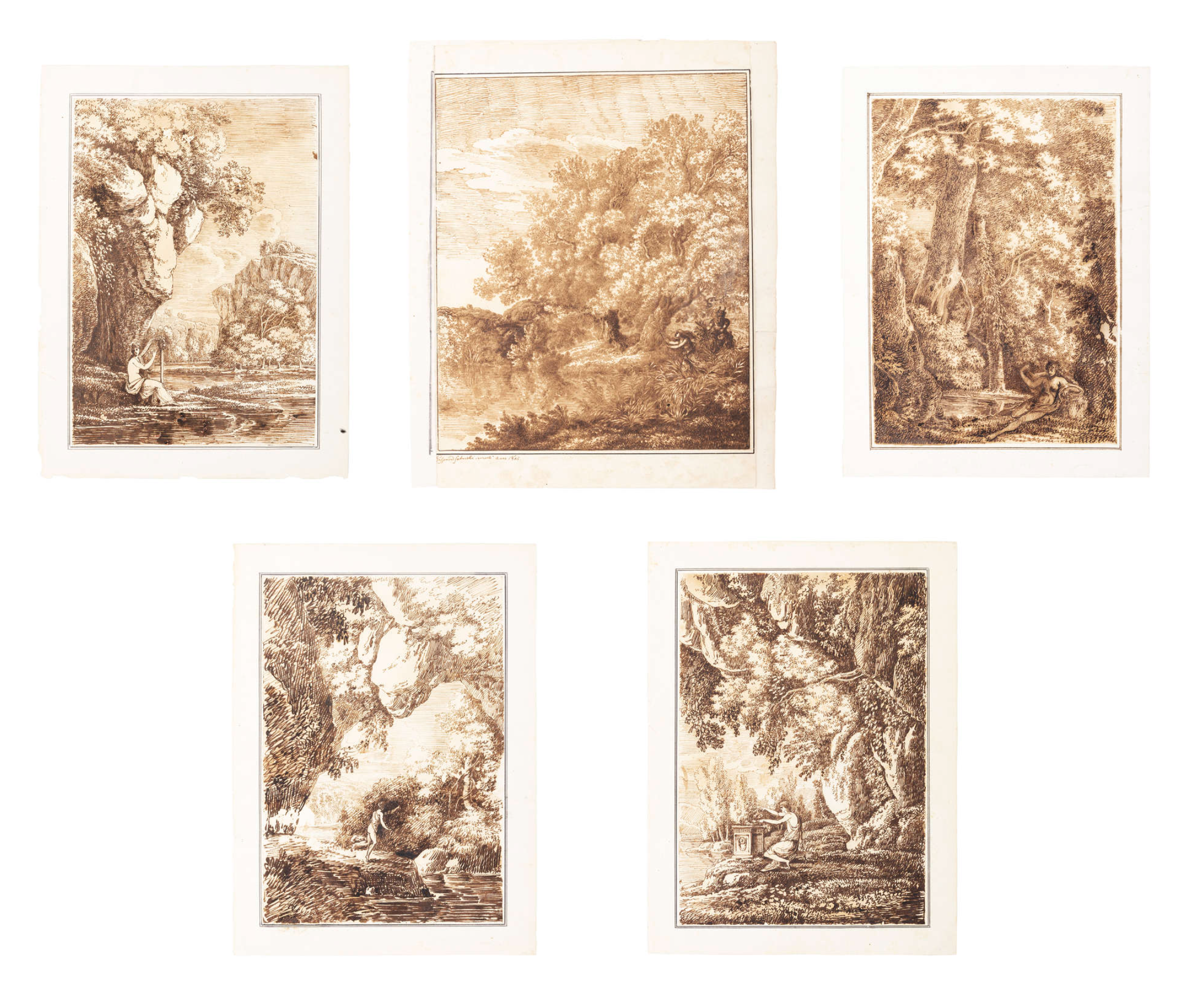
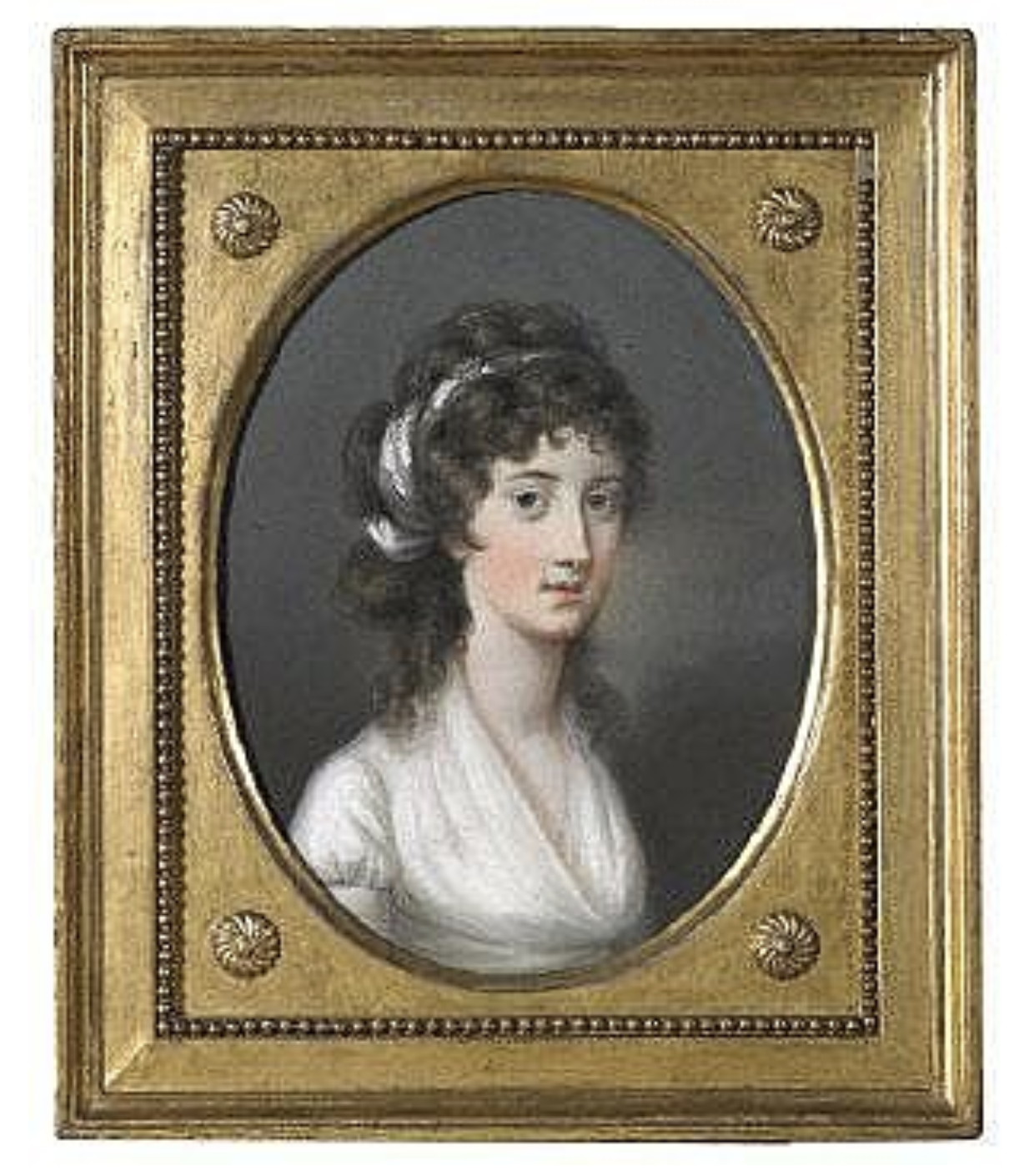
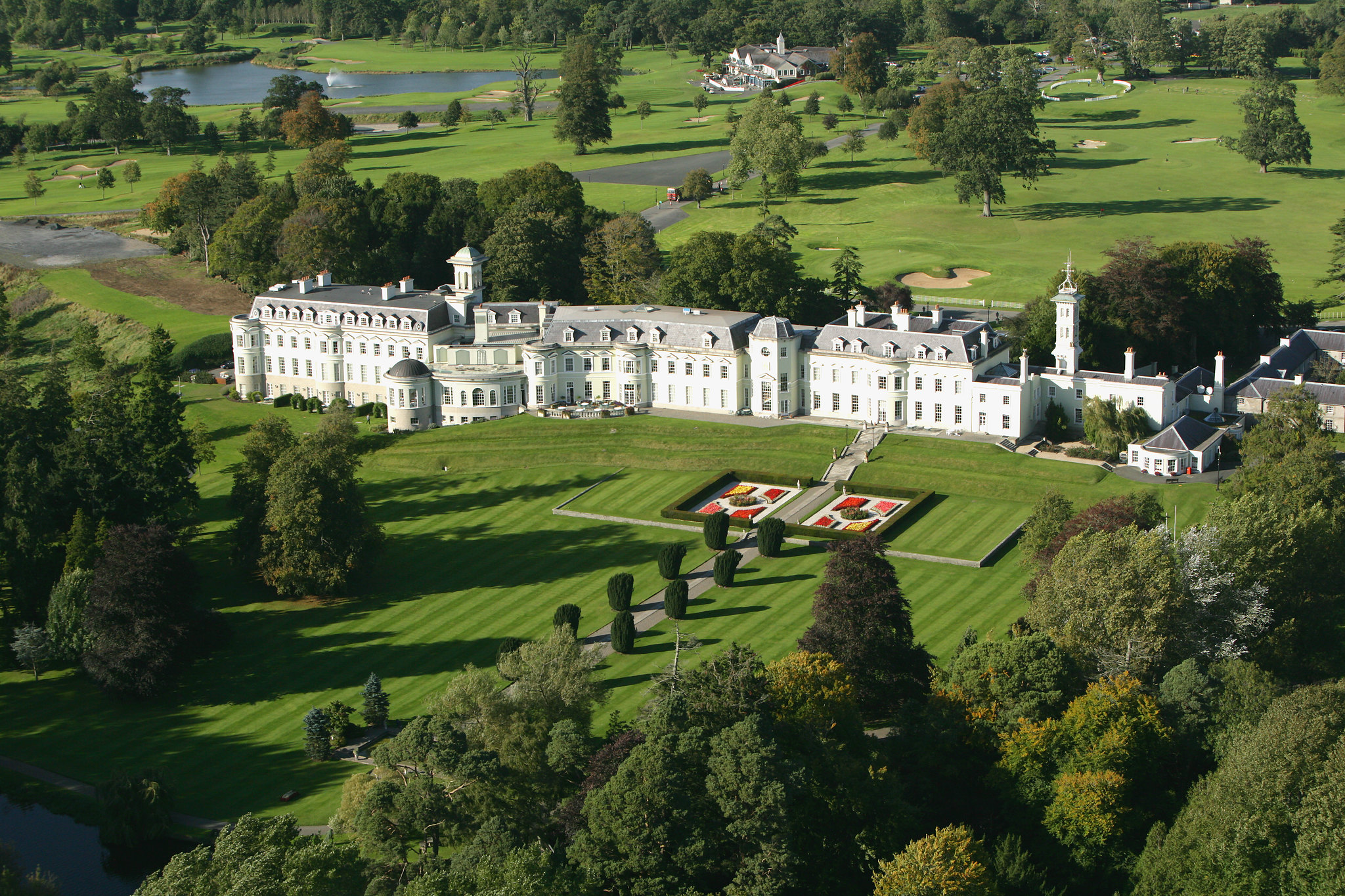
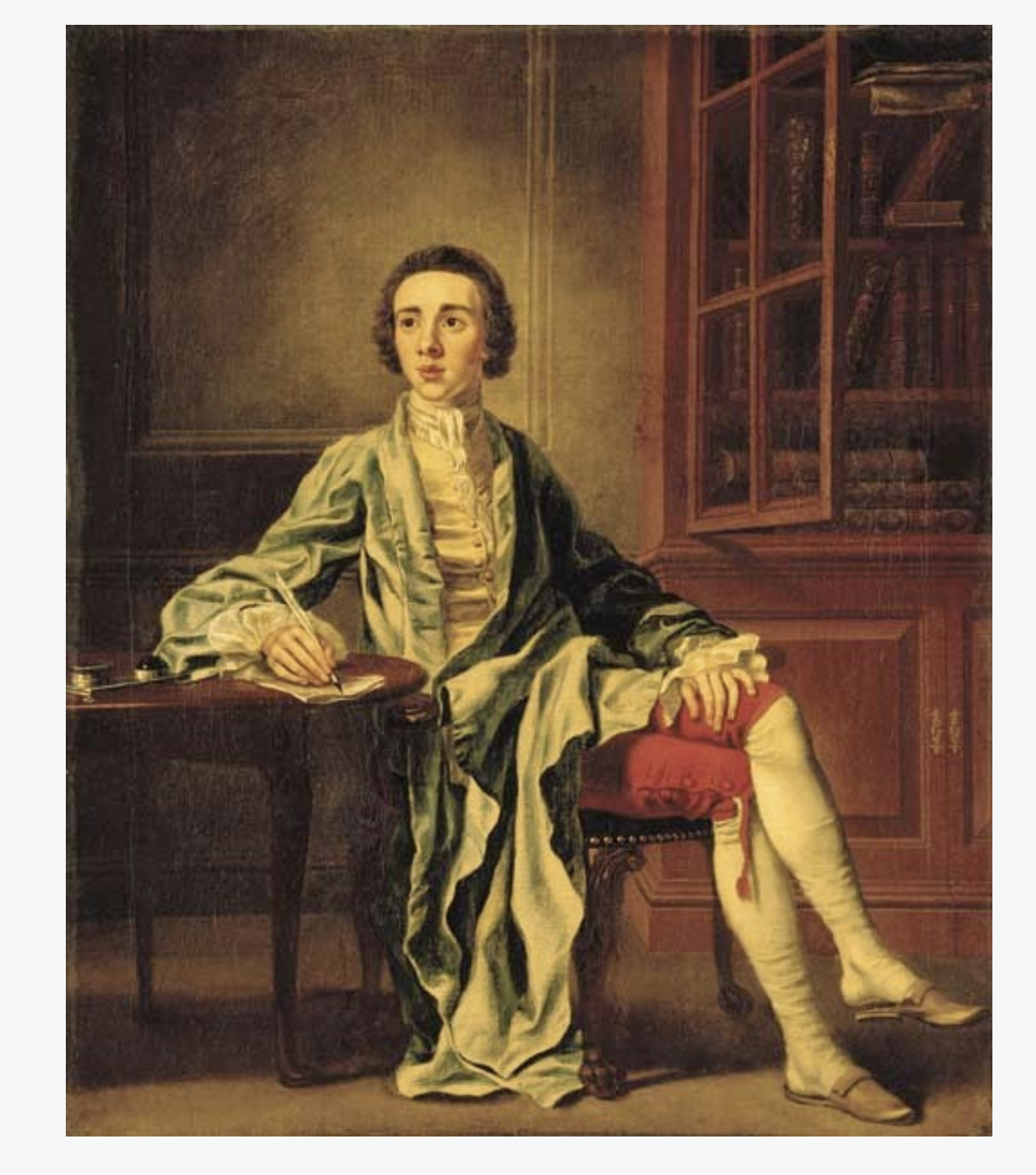
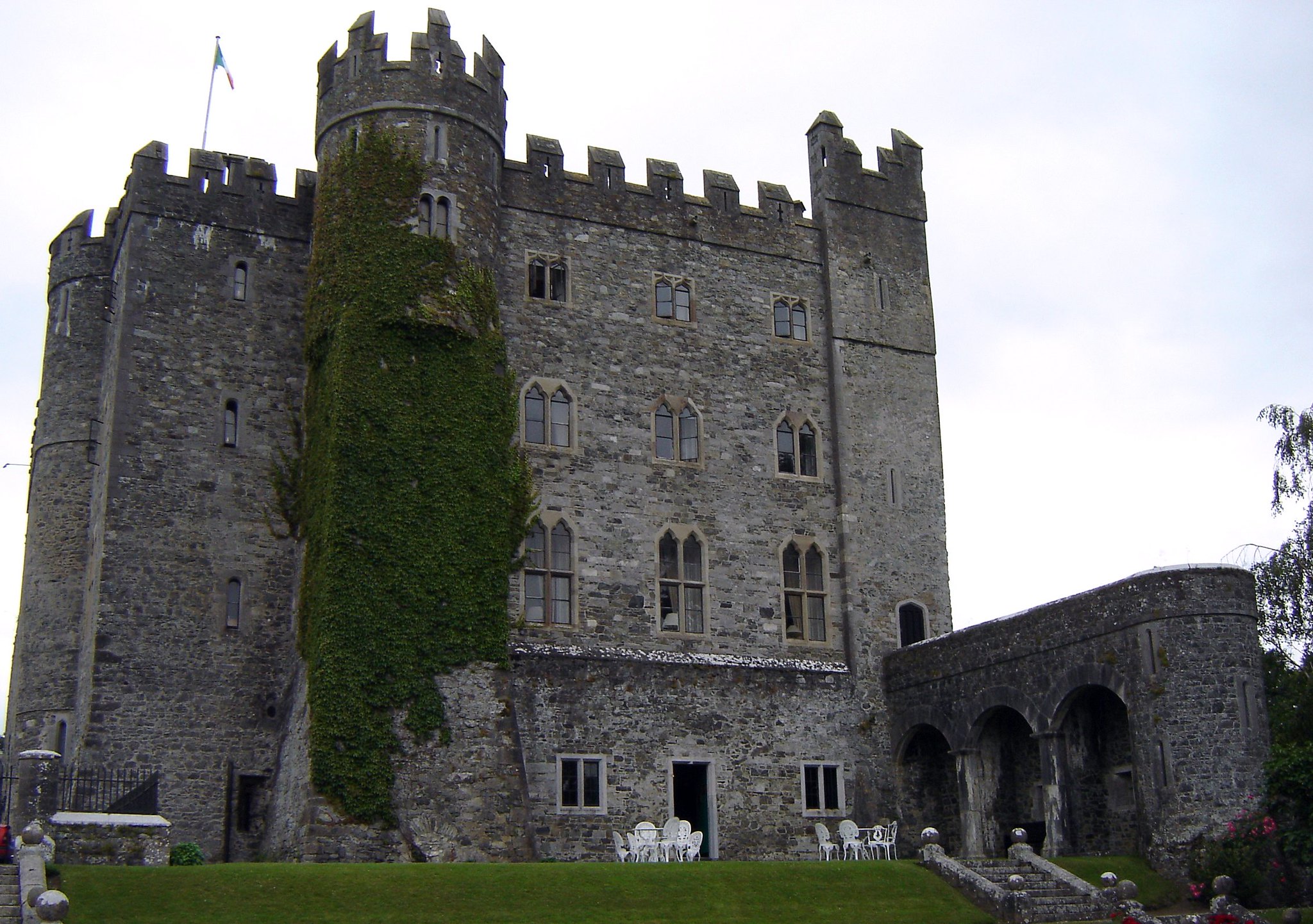


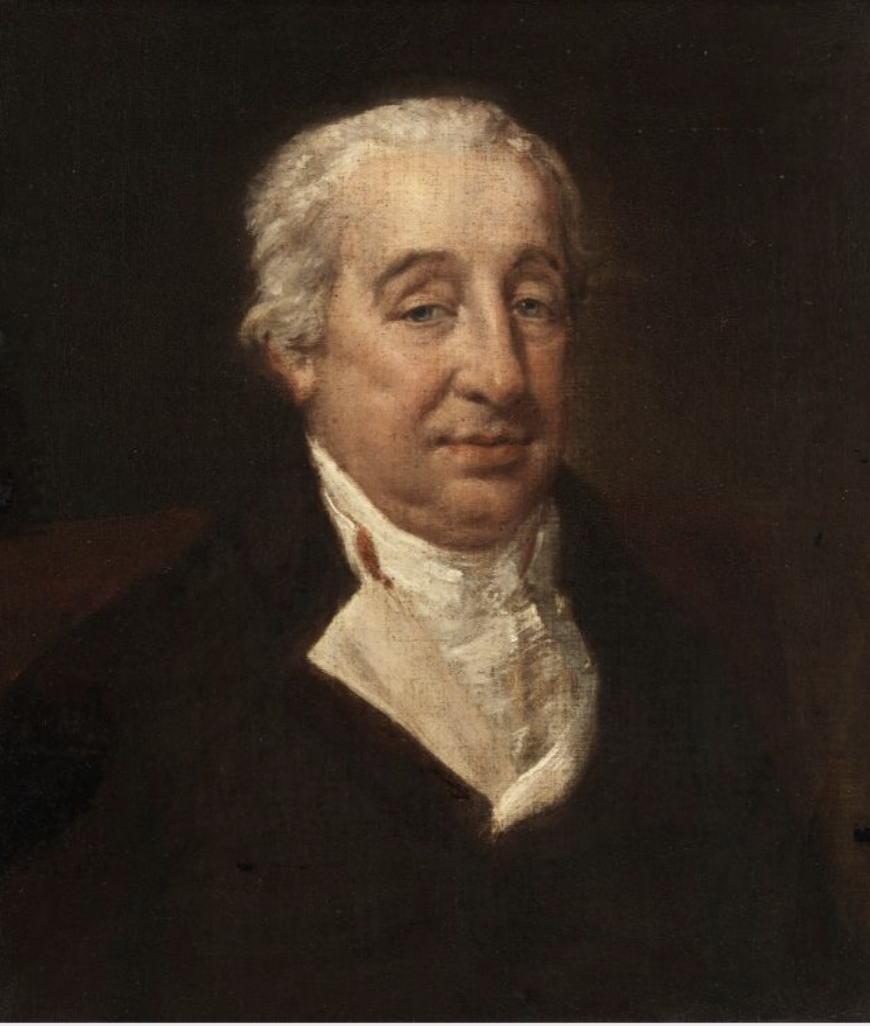
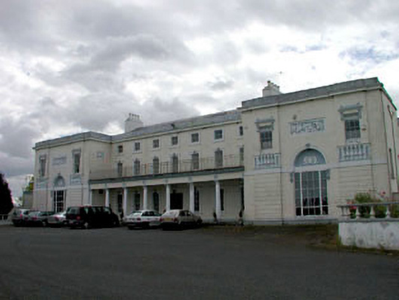
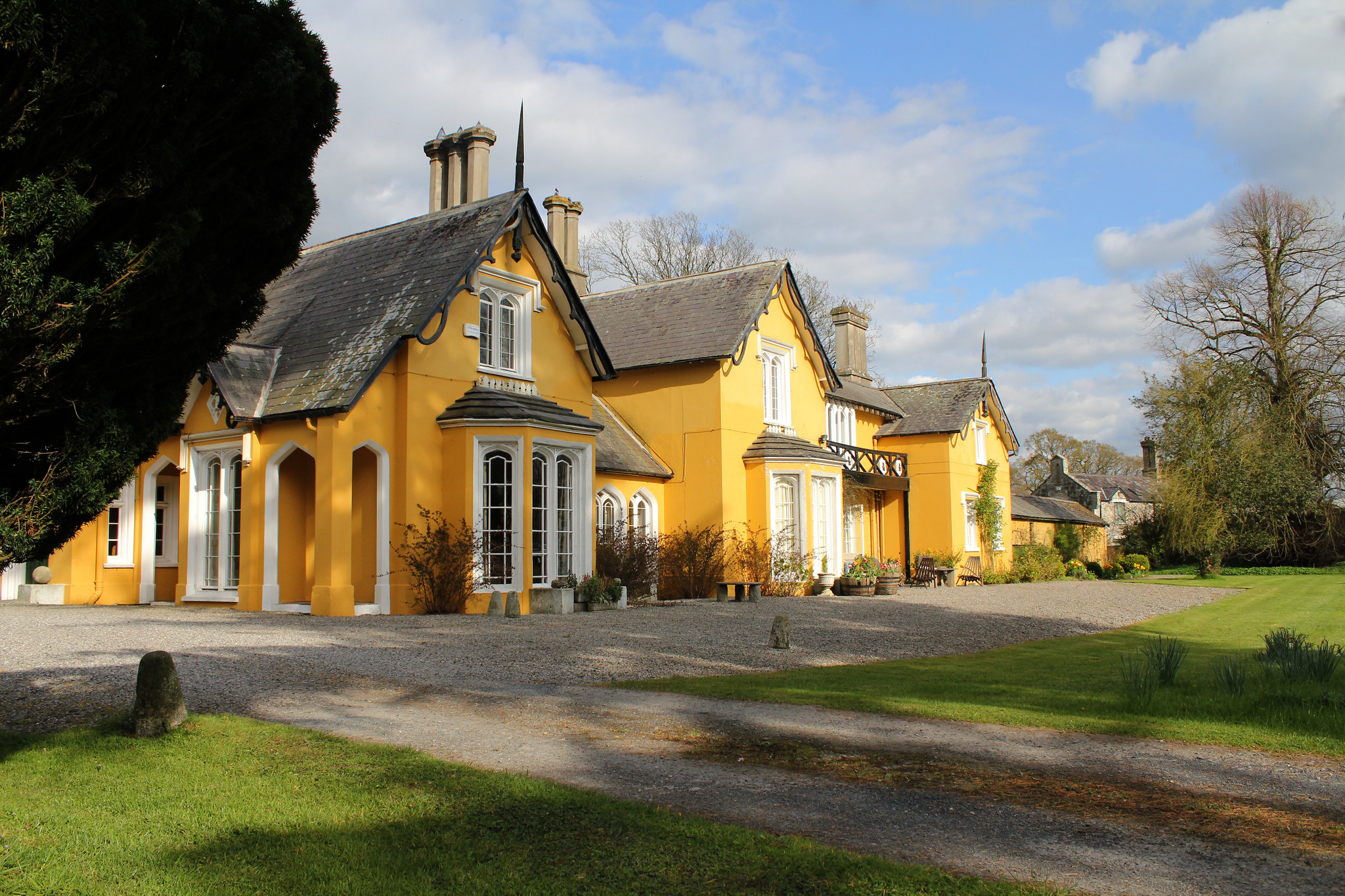
 Irish Historic Houses