Bence-Jones, Mark. A Guide to Irish Country Houses (originally published as Burke’s Guide to Country Houses volume 1 Ireland by Burke’s Peerage Ltd. 1978); Revised edition 1988 Constable and Company Ltd, London.
p. 13. “[Dobbs/IFR]A Victorian house with gables, pointed windows and a pointed befry; built 1861 for W.C.Dobbs, MP, Judge of Landed Estate Courts, to the design of Charles Lanyon and William Henry Lynn. In recent years, the residence of Most Rev. J.C. McQuaid, Catholic Archbishop of Dublin.”
Bence-Jones, Mark. A Guide to Irish Country Houses (originally published as Burke’s Guide to Country Houses volume 1 Ireland by Burke’s Peerage Ltd. 1978); Revised edition 1988 Constable and Company Ltd, London.
p. 13. “An imposing Victorian Italianate house consisting of three storey main block with single-storey wings. Both the main block and the wings have balustraded roof parapets; the main block has a central projection, with small segmental pediment, and a pilastered and balustraded enclosed porch. Small triangular pediment on each wing.”
Bence-Jones, Mark. A Guide to Irish Country Houses (originally published as Burke’s Guide to Country Houses volume 1 Ireland by Burke’s Peerage Ltd. 1978); Revised edition 1988 Constable and Company Ltd, London.
p. 12. “(Cusack-Smith, Bt/Pb; Denis-Tottenham, sub Tottenham/IFR) A Georgian house of two storeys over high basement. Three bay front; solid roof parapet with urns; C19 porch. Blind lunette windows in side elevation. The seat of Sir William Cusack-Smith, 2nd Bt Baron of the Court of Exchequer in Ireland 1801-36.”
Happy New Year! My best wishes for the year ahead. I hope it will bring many exciting house visits.
2026 Diary of Irish Historic Houses (section 482 properties)
To purchase an A5 size 2026 Diary of Historic Houses (opening times and days are not listed so the calendar is for use for recording appointments and not as a reference for opening times) send your postal address to jennifer.baggot@gmail.com along with €20 via this payment button. The calendar of 84 pages includes space for writing your appointments as well as photographs of the historic houses. The price includes postage within Ireland. Postage to U.S. is a further €10 for the A5 size calendar, so I would appreciate a donation toward the postage – you can click on the donation link.
€20.00
donation
Help me to pay the entrance fee to one of the houses on this website. This site is created purely out of love for the subject and I receive no payment so any donation is appreciated!
€15.00
A tour of Lambay Castle is expensive so I don’t think Stephen and I will be going any time soon, so I thought I would publish an entry about it today.
Lambay Island, photograph courtesy ofwww.visitdublin.comPortrane and Lambay Island, County Dublin 1844 after John Edward Jones.
The island is owned and protected today by the Revelstoke Trust and daily management lies in the hands of Alex Baring, 7th Baron Revelstoke, and his family.
The castle on Lambay Island is privately owned but can be rented for accommodation, and there is other accommodation on the island. One can also visit the island on a day trip but the castle is not open to visitors unless booked in advance on the website.
Open for accommodation: April 1- September 30 2026
The website tells us that it the largest island off the east coast of Ireland and the largest privately owned island in North-West Europe. The island is home to seals and puffins, with deer and wallabies that were originally imported. Nesting birds include Fulmars, Guillemots, Herring Gulls, Kittiwakes, Manx Shearwaters and Puffins, while Greylag Geese are common winter visitors.
The island’s farm produces organic meat from sheep, deer and wallabies. Energy on the island is provided by a wind turbine and solar panels, and water is from a natural spring.
The island has an ancient history. The website tells us:
“Its early history is obscure but, like many other small islands, it attracted saints, hermits and pirates. It is thought to be one of the first few places where Viking raiders landed and proofs of its prehistoric history and early modern settlement were found around the harbour which date from the 1st century AD. Excavations also revealed Iron-Age graves dating back to circa 500 BC.”
St. Columba may have established a monastery on the island as early as the sixth century.
In 1181 the island was granted by Prince John (later king) to the Archbishops of Dublin, who received rents and tithes from the island.
To prevent piracy or invasion of the mainland, a license was granted to build a fort in the early 1500s. The structure built may may have formed the core of the castle still surviving when Cecil Baring later purchased the land. John Challoner (d. 1581), who was the first Secretary of State for Ireland, appointed by Queen Elizabeth I in 1560, agreed to build a village, castle and harbour on the island. The website tells us that he set up mines for copper and silver on the island, though it is not clear how successful this was, and bred falcons.
The island passed by marriage to the Ussher family in 1611. James Ussher (1581-1656) is the cleric famous for calculating that the earth was created around 6 pm on 22 October 4004 BC.
James Ussher (1580-1656) Archbishop of Armagh aged 74 by Peter Lely, courtesy of National Trust Hatchlands.
Sean O’Reilly tells us in his Irish Houses and Gardens. From the Archives of Country Life (published by Aurum Press Ltd, London, 1998) that:
“Weaver’s first article on an Irish house already showed clearly his concern for disposing of unauthenticated traditions. Among those he corrected was the presumption, promulgated in Samuel Lewis’s Topographical Dictionary of 1837, that the island was granted by Queen Elizabeth to Archbishop James Ussher, a figure famous for dating the creation of the world to 4004 BC on the basis of a chronology of the Old Testament. Weaver pointed out that the island was in fact held by Ussher’s cousin, William. Despite many vicissitudes, Lambay Island remained in possession of the Usshers from 1551 to 1804, from which time no significant work was done on the castle until the arrival of Baring.” [1]
The website tells us that the island was used as a Prisoner of War camp for over 1,000 Irish soldiers during the Williamite war after the Battle of Aughrim.
In 1805 the island was inherited by William Wolseley and in 1814 it was acquired by the family of Richard Wogan Talbot, 2nd Baron Talbot of Malahide. They built a school and a Catholic chapel on the island. The chapel was later renovated by Lutyens to resemble a Doric temple and the school no longer exists.
James Considine sold Portrane House and purchased Lambay in 1888. Count Considine set about developing the island as a hunting estate and was the first man to introduce deer onto the island.
In 1904, Cecil Baring, later the 3rd Baron Revelstoke, and his wife Maude Lorillard bought the island. Baring was a classical scholar and naturalist as well as former director of his family’s New York office of Barings Bank. The website tells us:
”In early 1904, with Maude heavily pregnant, Cecil went to investigate Lambay; he found a small line of cottages occupied by coastguards, a chapel, a walled garden, a dilapidated old fort and a magnificent wealth of wildlife. It was an intoxicating mixture.
”The first task facing the Barings was the repair of the castle and they refitted a heavy lugger, the Shamrock, to carry the necessary materials to the island. The Shamrock (version 3.0) is still in use today as Lambay’s main cargo boat and is used to transport the sheep and cattle as well as bulkier materials and equipment for the off-grid energy system.“
Baring hired Edward Lutyens to renovate the property. The website tells us:
”Lutyens was utterly delighted by Lambay and the couple, and the visit sparked a warm friendship between the three of them that would last throughout their lives. Lutyens extended the Castle masterfully and by 1910 it was a beautiful refuge for Cecil and Maude, surrounded by an impressive circular wall, which Lutyens nicknamed “The Ramparts Against Uncharity“.
p. 30. “By the time of Lutyen’s arrival much original fabric had deteriorated, and he was required to rebuild in part, though he retained triumphantly the ancient mood. A new service range was necessary, discreetly located off a corner of the castle and set into the ground so as not to dominate the main castle. Lutyens also ensured the prominence of the medieval fabric by deciding not to repeat the leitmotif of the original – the stepped gables – in the new work. Instead he used steep sweeping tiled roofs broken by dormers, gables and stacks.” [1]
Lambay Castle,photograph courtesy ofwww.lambayisland.ieFrom “In Harmony with Nature, The Irish Country House Garden 1600-1900” in the Irish Georgian Society, July 2022, curated by Robert O’Byrne. Lambay Castle, Lambay Island. Photograph from Country Life published 4th May 1912.
The Historic Houses of Ireland website describes the residence:
“Today the three-bay centre of the north-west front, which faces a bastion gateway in the Rampart Wall, is flanked by two full-height projecting bays, each with crow-stepped gables and tall chimneys. Lutyens attached a wing to provide guest accommodation at the northeastern corner and regarded the “link between the two buildings as one of his most brilliant architectural coups” since the castle, which appears single storied on this front, continues to dominate the two-storey wing. The castle and the farm buildings, and the walls of the much enlarged gardens were built in grey-green Lambay stone, with grey pantile roofs, and form a sequence of courts, walled gardens and enclosed yards that give the impression of a small hamlet nestling for protection beneath the castle walls.” [2]
The castle and west forecourt of Lambay Castle, Lambay Island. Photograph from Country Life published 4th May 1912.Lambay Castle: ground and first floor plans, as altered by Lutyens, 1908-11, courtesy https://landedfamilies.blogspot.com
Sean O’Reilly describes Lutyen’s work in more detail:
“Lutyens did need to provide suitable facilities within the surviving ruins of the castle, the most basic of these being a staircase. Curiously, the original castle fabric did not possess internal access to the upper floor, so Lutyens inserted his in the space between the bastions at the rear of the building. He linked these two with a sequence of three cross windows broken by the arched doorway leading to the staircase. The new arrangement is a typically imaginative piece of intervention by Lutyens, as it performs a number of functions with appropriate efficiency. It gives access not only to the bedrooms on the upper floor, but also to the raised ground at the rear of the castle, and it connects to the underground service passage to the kitchen wing.
“Reception rooms also needed to be provided inside the ruins, and again it was to Lutyens’s credit that he succeeded in creating an imaginative variety of shapes and spaces without intruding on the individuality of the building. Perhaps most surprising is the provision of two entrance halls, one in each of the corner bastions of the entrance front, and each with its own door. The sitting room, reached only after passing through the central dining room and staircase hall behind, is in the corner adjoining the service wing.
“Due to the need for the reconstruction of this corner Lutyens was more free to open out the architecture, without actually intruding on surviving original fabric. Here he introduced a pointed stone arch linking the section of the room in the original bastion with that part set between the bastions. Lutyens topped this range with a hipped roof – an informal nod to the detailing of the service wing – and square battlements – a more formal bow to the stepping in the original gables, seen across the view of the north court.” [1]
The Historic Houses of Ireland website tells us that the castle is “constructed with small doors and small casements so that the inhabitants seem, on rough days, to be sheltering like monks.” [see 2]
The interior has vaulted ceilings, stone fireplaces and a curved stone staircase, while much of the furniture chosen by Lutyens is still arranged just as he intended.
Spiral arches,Lambay Castle,photograph courtesy ofwww.lambayisland.ieAt the head of the stone stair at Lambay Castle. Photograph from Country Life published 4th May 1912. The staircase landing at Lambay Castle.Photograph from Country Life published 4th May 1912. The eastern half of the sitting room at Lambay Castle. Photograph from Country Life published 4th May 1912. The kitchen in the guest accommodation in the castle,Lambay Castle,photograph courtesy ofwww.lambayisland.ieThe guest accommodation in the castle,Lambay Castle,photograph courtesy ofwww.lambayisland.ie
Lutyens also adapted and enlarged a number of other early structures and integrated them into an ingenious coordinated layout for the whole island, combining the farm, gardens and plantations as a single composition, in collaboration with the horticulturalist and garden designer Gertrude Jekyll.
Mark Bence-Jones describes the wall that surrounds the castle and gardens: this wall serves the practical purpose of a wind-break, enabling trees and plants to grow inside it which would not grow outside. [3] He also describes the approach to the castle:
“Lutyens also designed the approach from the harbour, with curved step-like terraces reminiscent of the now-vanished Ripetta in Rome; characteristically, having ascended these Baroque steps, one has to cross an open field to come to the curtain wall, the entrance gaeway not being at first visible; so that there is a wonderful sense of expectancy. Close the the harbour is the White House, a largely single-storey horseshoe-shaped house with high roofs and white harled walls, which Lutyens designed 1930s for Lord Revelstoke’s daughter, Hon Mrs (Arthur) Pollen. On a hill is an old Catholic chapel, with a portico of tapering stone columns and a barrel vaulted ceiling.” [see 3]
The walled kitchen garden pierces the Rampart Wall to the South and there is the mausoleum of the Revelstokes, designed by Lutyens in 1930, on the opposite side of the enclosure. The website tells us:
”Cecil and Maude had 12 blissful years together with their little family on Lambay but alas, in 1922, a still young Maude died of cancer, leaving Cecil with two daughters, Daphne and Calypso, and their little son Rupert. Her body was brought back from London to the island for burial. Lutyens, who was then busy with war memorials and the government buildings of New Delhi, designed a large monument for her grave, set in against the rampart walls and facing towards the Castle. The mausoleum is today one of the most pleasant and peaceful spots on the island. Prefacing Cecil’s epitaph, a beautiful poem about his wife, is the word ‘Quiet’, both an imperative to the reader and a description of the monument’s setting.“
Lutyens also designed the White House overlooking the harbour on the western shores of the island, as a holiday home for the couple’s two daughters and their families. This is now available as visitor accommodation.
The website tells us that Cecil convened a congress to examine the flora and fauna of the island, the findings of which were published in The Irish Naturalist (1907).
“He also tried to introduce new species, including mouflon sheep, chamois goats, kinkajous and rheas. Today, there is a large population of wallabies on Lambay, but these were brought here in the 1980s by Cecil’s son Rupert Revelstoke, who had enjoyed having two pet wallabies in the 1950s.“
[3] Bence-Jones, Mark. A Guide to Irish Country Houses (originally published as Burke’s Guide to Country Houses volume 1 Ireland by Burke’s Peerage Ltd. 1978); Revised edition 1988 Constable and Company Ltd, London.
“Slieverue” is a splendid Victorian seaside home occupying an elevated site on the peninsula’s favoured Strand Road in Sutton. This detached listed residence provides c.3,400 square feet of flexible accommodation over two storeys with breathtaking panoramic coastal views of Dublin Bay.
The sunny westerly aspect provides a spectacular seaside vantage point for evening sunsets, an idyllic setting in a truly remarkable location. This is a home full of character & charm. Situated on either side of the reception hall are the main drawing and dining rooms, spanning the full width of the property. Both spaces are generously proportioned with high ceilings and tall windows revealing the splendid views outside.
The less formal accommodation is located to the rear of these main reception rooms. First a cosy sitting room, a galley kitchen and pantry along with access to the rear courtyard and garden beyond. Another neat family room and a breakfast room with access to a utility and laundry area are off a rear hall.
Access to the garden is available through a glazed conservatory beside which is a cloak room and a wc.
A fine staircase leads to an oversized landing on the first floor. This bright airy space joins 4 large double bedrooms along with an additional nursery or study which in turn leads into a cute folly, a bow shaped room which reveals the finest view of the bay from Slieverue. The arresting views from the front and gable rooms are startling while the interior is filled with natural day light, due to its sunny orientation.
An additional dressing room off the landing is as large as a double bedroom and the main bedroom suite at the front has a shower room ensuite. The main bathroom is located at the rear of the landing. Slieverue’s accommodation comprises 12 principle rooms laid out over two floors with c.2000 square feet downstairs and c.1,400 square feet upstairs. There is ample parking in the driveway and rear courtyard. The rear garden is long and mature and offers some development potential on its own. Further development potential and merger value with neighbouring homes may be possible at a future date should the opportunity arise. The long garden is privately hedged on either side beyond the rear courtyard. The level garden is planted with mature trees and shrubs and is quite private. Slieverue is an endearing seaside home originally crafted as a holiday home in a bygone era. It’s fortunate new owner will relish the exciting opportunity to create a truly special home in this romantic seaside location within a short distance of all the wonderful amenities the Sutton and Howth peninsula has to offer. Viewing is available by appointment with Gallagher Quigley An idyllic seaside location with breath-taking sea views A short walk from Sutton dinghy club, a cherished club where children thrive in sailing fun Beside scenic coastal walks Obvious development potential Panoramic views of Dublin bay Detached period home with character and charm c.3.400 square feet Ample private parking Large gardens Close to Dart and all amenities Beside the seaside strand walks towards Martello tower BER exempt.
Mark Bence-Jones. A Guide to Irish Country Houses (originally published as Burke’s Guide to Country Houses volume 1 Ireland by Burke’s Peerage Ltd. 1978); Revised edition 1988 Constable and Company Ltd, London.
p. 4. “(Shackleton, B/PB) A Georgian mill-house by the side of the River Liffey, with a noted garden. The home of the Shackleton family, cousins of Sir Ernest Shackleton, the explorer.”
Anna Liffey House, Dublin, courtesy National Inventory.
Allenton, Tallaght, Co Dublin – Demolished in 1984
Allenton, County Dublin entrance front, Vanishing Country Houses of Ireland by The Knight of Glin, David J. Griffin and Nicholas K. Robinson, published by The Irish Architectural Archive and The Irish Georgian Society, 1988.
Mark Bence-Jones. A Guide to Irish Country Houses (originally published as Burke’s Guide to Country Houses volume 1 Ireland by Burke’s Peerage Ltd. 1978); Revised edition 1988 Constable and Company Ltd, London.
p. 3. “An attractive little two storey five bay early C18 house with a pedimented three bay breakfront and a fanlighted, pedimented and rusticated doorcase. Lunette window in pediment. Originally weather-slated. Given its present name after it was built by Sir Timothy Allen, who acquired it in ca mid-C18. In 1814 the residence of George F. Murphy; in 1837, of F.R. Cotton. Demolished in 1984.”
Listed in Vanishing Country Houses of Ireland by The Knight of Glin, David J. Griffin and Nicholas K. Robinson, published by The Irish Architectural Archive and The Irish Georgian Society, 1988.
General Enquiries: 01 493 9462, rathfarnhamcastle@opw.ie
Rathfarnham Castle is a wonderful property to visit and I suspect, much underappreciated! It is one of the oldest surviving residences in Ireland, and has a variety of impressive ceilings. It is also another property which was inhabited by the Jesuits at one time, as was Emo Court in County Laois. Although they no longer own either of these properties, they still run schools in the former Castle Browne in County Kildare (now Clongowes Wood College) and Belvedere House in Dublin. They certainly knew how to pick impressive properties! [1]
Rathfarnham Castle was built around 1583 for Adam Loftus (1533-1605), a clergyman originally from Yorkshire, who rose to the position of Archbishop of Dublin and Lord Chancellor of Ireland. Its position outside the city of Dublin made it vulnerable to attack, so it was built as a fortified house, with four flanker towers shaped to give maximum visibility of the surrounding landscape. The OPW website tells us:
“Loftus wanted the Castle to be a grand and impressive home which would reflect his high status in Irish society. He also needed it to be easily defended against attack from hostile Irish families such as the O’Byrnes based in the mountains to the south. The design was radically modern for the time and based on recent continental thinking about defensive architecture. The angled bastion towers located at each corner of the building were equipped with musket loops which allowed a garrison of soldiers to defend all approaches to the castle.”
Archbishop-Chancellor Adam Loftus (1533-1605). The portrait is in Trinity College Dublin, as he was the first Provost. He was also Keeper of the Great Seal of Ireland, and he is here holding the embroidered purse which held the seal.Adam Loftus (1533-1605), Lord Chancellor, 1619. Painting hangs in Malahide Castle, courtesy of National Museum of Ireland.This shows the special shape of Rathfarnham Castle’s flanker towers.
Loftus had previously lived in an archiepiscopal palace in Tallaght, and it had been sacked by the O’Byrnes and O’Tooles from the Wicklow mountains, which is why he ensured that his new house in Rathfarnham had strong defenses. The Bishop’s Palace in Raphoe, now a ruin, is similarly shaped.
Maurice Craig points out in his The Architecture of Ireland from the earliest times to 1880 that there are a group of similar buildings, built over a period of fifty years or more: Rathfarnham; Kanturk for MacDonagh MacCarthy, built before 1609; Portumna for the Earl of Clanrickarde, before 1618; Manorhamilton for Sir Frederick Hamilton, probably around 1634; Raphoe, for Bishop John Leslie (the “Fighting Bishop” – see my entry on Castle Leslie https://irishhistorichouses.com/2020/08/07/castle-leslie-glaslough-county-monaghan/) in 1636, and Burncourt for Sir Richard Everard before 1650. Manorhamilton is a section 482 ruin (see my entry https://irishhistorichouses.com/2025/02/20/manorhamilton-castle-castle-st-manorhamilton-co-leitrim/) and we visited Portumna in County Galway – see my entry https://irishhistorichouses.com/2022/02/14/office-of-public-works-properties-connacht/. The buildings resemble a fort, such as Mountjoy Fort in County Tyrone built 1600-1605. Killenure, County Tipperary, is similar but has cylindrical flankers, Craig tells us. This last was unroofed by 1793, and it is now (2025) a Section 482 property which I must visit!
Loftus attended Cambridge, where he took holy orders as a Catholic priest. Upon Queen Elizabeth’s accession to the throne in 1558, he declared himself Anglican. The Dictionary of Irish Biography tells us that a major turning point in Loftus’s life and career occurred in 1560, when he emigrated to Ireland as a chaplain to Thomas Radcliffe, 3rd Earl of Sussex, who had been granted a commission to serve as Lord Lieutenant of Ireland by Queen Elizabeth. On the recommendation of Sussex, Loftus was appointed Archbishop of Armagh, his consecration taking place on 2 March 1563. In January 1565, on account of the poverty of the archbishopric of Armagh, Queen Elizabeth granted Loftus the deanery of St Patrick’s cathedral in Dublin. In 1567 he was made Archbishop of Dublin.
It was Adam Loftus who had Reverend Dermot O’Hurley executed, whom I wrote about a couple of weeks ago in my entry about Doheny & Nesbitt.
The Dictionary of Irish Biography tells us:
He was “a strongly delineated establishment figure whose primary concerns were to serve the crown in Ireland, in whatever capacity the queen and her advisers thought fit; and to build up his own personal affinity, so that he would be in a position to execute the offices that came his way with a measure of genuine political and social authority. Thus, during the periods when the archbishop served as lord chancellor of Ireland (1581–1605), or as acting governor of the country during the periodic absences from Ireland of a serving viceroy (August 1582–June 1584, November 1597–April 1599, September 1599–February 1600), he was also careful to establish a network of connections throughout the country, particularly through the marriage of his children to leading families among the new English protestant elite. Among the families with which Loftus made these connections were the Bagenals of Co. Down, the Dukes of Castlejordan, the Hartpoles of Shrule, the Usshers of Dublin, the Colleys of Castle Carbury, the Berkeleys of Askeaton, and the Warrens of Warrenstown. The social ascent of Loftus and his family was also evident in the archbishop’s decision to proceed with the purchase of the estate of Rathfarnham, Co. Dublin (c.1589–90), on which he built a stately castle.” [2]
Adam Loftus married Jane Purdon. They had twenty children, not all of whom survived to adulthood, and those who did married very well.
Anne Loftus married, first, Henry Colley of Castle Carbury in County Kildare, and second, Edward Blayney, 1st Lord Blayney, Baron of Monaghan.
Martha Loftus (d. 1609) married Thomas Colclough (1564-1624) of Tintern Abbey in Wexford.
Isabelle Loftus (d. 1597) married William Ussher (1561-1659)
Thomas Loftus (d. 1635) married Helen Hartpole of Shrule.
Alice Loftus (d. 1608) married Henry Warren of Warrenstown, County Offaly.
Katherine Loftus married Francis Berkeley of Askeaton, County Limerick.
son Adam died unmarried in 1599.
Margaret Loftus married George Colley of Castle Carbury.
Edward Loftus (d. 1601) married Anne Duke of Castle Jordan, County Meath.
Dudley Loftus (1561-1616) married Anne Bagenal of Newry Castle, County Down, daughter of Nicholas Henry Bagenal, Marshal of Ireland.
Dorothy Loftus (d. 1633) married John Moore (d. 1633)
Adam Loftus was the first Provost of Trinity College Dublin.
The Dictionary of Irish Biography continues:
“Although by the early 1590s Loftus had largely reconciled himself to the reality that the task of converting the indigenous community to protestantism, and securing its allegiance to the state church, was beyond him, the queen and her advisers still expected him to discharge his religious duties and press ahead with reforming initiatives on behalf of the state church. To this end, and in the midst of a period of mounting political crisis that culminated in the outbreak of the Nine Years War, Loftus was the prime mover behind the foundation of TCD, which received its royal charter on 3 March 1592. The archbishop also served as the college’s first provost till June 1594.“
Adam Loftus died in the old Palace of St. Sepulchre beside St. Patrick’s Cathedral, which until recently was the Garda barracks on Kevin Street, now housed in a new building. I hope they will make something of the historic old archbishop’s palace now, which could be a great museum!
Adam’s son Dudley (1561-1616) sat in the Irish parliament for Newborough in County Wexford. He married Anne Bagenal of Newry Castle, County Down, daughter of Nicholas Henry Bagenal, Marshal of Ireland. The castle passed to their son, Adam Loftus (1590-1666), who married Jane Vaughan of Golden Grove, County Offaly.
Another son of Dudley and Anne Bagenal was Nicholas Loftus (1592-1666), the ancestor of Henry Loftus, the Earl of Ely. Nicholas’s second son Henry (1636-1716) lived in Loftus Hall in County Wexford.
Loftus Hall, County Wexford, for sale April 2025 courtesy Colliers.Formerly named Redmond Hall, it is a three-storey mansion built in 1871, incorporating parts of a previous house here, which was late 17th century or early C18. [3]
Adam Loftus (1590-1666) and Jane née Vaughan’s children also made good marriages. Their son Arthur Loftus (1616-1659) married Dorothy Boyle (1616-1668), daughter of Richard Boyle the 1st Earl of Cork. Arthur also served as MP for County Wexford, as well as Provost Marshall of Ulster.
The castle came under seige in 1641 and in 1642 the house was occupied by Cromwell’s Parliamentary troops. [4] In 1649 it was stormed and taken by Royalist troops under the Marquess of Ormond and all occupants were taken as prisoners. Ormond writes that nobody was killed. [5] Rathfarnham Castle was restored to Adam Loftus (1590-1666) when Charles II was crowned king.
Adam’s son Arthur predeceased him, so the castle passed to Arthur’s wife Dorothy née Boyle. In 1665 she obtained six firelock muskets from the Master of Ordinance to protect the castle.
Arthur Loftus and Dorothy née Boyle had a son Adam Loftus (1632-1691). Adam Loftus was Ranger of the Phoenix Park in Dublin and from 1685, a member of the Irish Privy Council. King James II created him Baron of Rathfarnham and Viscount Lisburne in the Peerage of Ireland. Adam married Lucy Brydges, daughter of George Brydges, 6th Baron Chandos of Sudeley, England.
Lucy Loftus née Brydges (1654-1681), by Peter Lely.She was a renowned Restoration beauty and the first wife of Viscount Adam Loftus. He died at the Siege of Limerick in 1691 and the cannon ball which reputedly killed him hangs in St Patrick’s Cathedral. Lucy is dressed in pseudo-antique clothing against an Arcadian landscape. The parrot in the background is an ambiguous symbol and can refer to a number of characteristics including eloquence, marital obedience or exoticism. Peter Lely was of Dutch origin but spent most of his career in England and became the most influential portrait painter at court following the death of Anthony van Dyck. He successfully navigated the turbulence of the 17th century to paint at the court of Charles I, the Cromwellian Commonwealth and Charles II following the Restoration. Lely was prolific, often only painting the sitter’s head while students and assistants at his studio completed the portraits.
After his wife Lucy died, Adam Loftus married Dorothy, the daughter of Patrick Allen or Alen, of St. Wolstan’s of Celbridge in County Kildare. Adam was a gallant at the court of King Charles II.
Despite earning his peerage from King James II, Adam Viscount Lisburn supported the cause of William III. He died at the Siege of Limerick in 1691 and the cannon ball which reputedly killed him hangs in St Patrick’s Cathedral.
The castle passed to Adam’s daughter Lucy, who married Thomas Wharton, 1st Marquess of Wharton in 1692, who in 1715 was created 1st Earl of Rathfarnham, 1st Marquess of Carlow and 1st Baron of Trim.
Lucy Loftus, Marchioness of Wharton (1670-1717) by Godfrey Kneller.
Lucy and the Marquess of Wharton had a son Philip, who became the Duke of Wharton. He was a Jacobite and supporter of the titular James III, and was subsequently granted many titles. The Peerage website lists the titles. As well as those he inherited from his father, he was created 1st Viscount Winchendon, Co. Buckingham [England] and 1st Marquess of Woodburn, Co. Buckingham [England], 1st Earl of Malmesbury, Co. Wilts [England] on 22 December 1716, Jacobite.
He was appointed Privy Counsellor (P.C.) in Ireland between 1717 and 1726. He was created 1st Duke of Wharton, Co. Westmorland [Great Britain] on 28 January 1717/18, in an attempt by the authorities to wean him from his Jacobitism and make him a good Whig like his father. Darryl Lundy of The Peerage website tells us that his Dukedom did at least make him for a while speak and vote with the Tories in the House of Lords, for instance in debates on the South Sea Bubble. He lost a fortune from participation in the South Sea Bubble. In June 1725 he left the country. He was Envoy to Vienna in August 1725, for the Jacobite King James III, and then Envoy to Madrid in March 1725/26.
Philip Wharton Duke of Wharton by Rosalba Carriera – Royal Collection, Public Domain.
Out of money, he took a position in the Jacobite forces and commanded a Spanish detachment at the Siege of Gibraltar in 1727, fighting against the English. On 3 April 1729 he was outlawed and his titles and such estates as he still held in Britain forfeited.
He had no surviving male issue when he died on 31 May 1731. On his death, all his titles, most forfeited by his treason, expired, except the Barony of Wharton, which was deemed by the House of Lords in 1915 to be descendible to his heirs.
He sold Rathfarnham Castle in 1724. It was purchased by Speaker William Conolly for £62,000. Speaker Conolly never lived in the Castle since he had built Castletown in County Kildare, and he leased Rathfarnham in 1742 to Dr. Hoadley, Archbishop of Armagh.
Dr. Hoadley was interested in building, and he had built an Episcopal mansion in Tallaght to replace a medieval castle. He then restored Rathfarnham Castle. It was famed for its excellent agriculture and fruit gardens. [see 5].
Dr. Hoadley’s daughter Sarah married Bellingham Boyle (1709-1772), and they inherited Rathfarnham Castle. Boyle also took an interest in farming and grew the first oats in Ireland. [see 5]. The Hoadley-Boyle tenancy lasted for twenty-five years, and Bellingham Boyle and his wife mixed in high society, entertaining two Lords Lieutenant in the castle: the Duke of Devonshire and the Earl of Harrington. Boyle may be be responsible for installing some of the delicate rococo ceilings in the castle.
“Bellingham Boyle (1709-1772). He inherited Rathfarnham Castle in 1746 from his father-in-law, Archbishop John Hoadley who leased the castle in 1742 by “indented lease renewable forever.” Bellingham Boyle served as an MP, first for Bandon then for Youghal in Cork and was later appointed a Commissioner for the Revenue. Prior to his marriage, Belingham travelled across Europe to Italy where he had his portrait painted by Giorgio Dupra.”
Interestingly, in Aug 1742, Bellingham Boyle was appointed to a commission to investigate the soundness of mind of Jonathan Swift, Dean of St. Patrick’s Cathedral in Dublin. The Writ “De Lunatico Inquirendo,” in the case of Jonathan Swift, D.D. was issued to investigate and ascertain whether the ailing Dean Swift was of unsound mind and memory to safely conduct his own business. Belllingham Boyle was one of 12 commissioned to perform the investigation. Dean Swift was found to be of unsound mind and memory and was placed under the protection of the Court of Chancery. [6]
Boyle’s daughter Anne married Robert Langrishe 2nd Baronet Langrishe, of Knocktopher, Co. Kilkenny.
Knocktopher Abbey, Knocktopher, Co. Kilkenny, for sale November 2024, photograph courtesy DNG Country Homes & Estates.
The castle returned to the ownership of the Loftus family in 1767, to Nicholas Hume Loftus, 2nd Earl of Ely, a descendant of the original owner Adam Loftus. Nicholas never married and on his death in 1769 the Castle passed to his uncle, Henry Loftus (created Earl of Ely in 1771). Henry continued the remodelling of the castle and the works were completed by the time of his death in 1783.
Let us backtrack now to look at the descendants of the first Adam Loftus. Adam’s grandson Nicholas lived in Fethard, County Wexford, in the precursor to Loftus Hall. His son Henry (1636-1716) of Loftus Hall was the father of Nicholas Loftus (1687-1763) who was created 1st Viscount Loftus of Ely.
Nicholas Loftus, 1st Viscount Ely (1687-1763). Painter unknown. This painting was completed in 1758 to mark the 70th birthday of Nicholas, father of both Nicholas (the 1st Earl of Ely) and Henry Loftus. He sits next to a book entitled The Present State of Ireland. This anonymous work was originally published in 1730 and contained criticism of the amount of money flowing out of Ireland to absentee landlords, no doubt reflecting Nicholas’s concern with the financial state of the kingdom. He is sometimes known as “the Extinguisher” because of his threat to extinguish the Hook lighthouse in Wexford unless the rent he received from it was increased.
Nicholas served as MP for Wexford, and married Anne Ponsonby, daughter of William Ponsonby, 1st Viscount Duncannon. He was first created Baron Loftus of Loftus Hall in 1751, and then assumed a seat in the House of Lords, and became Privy Counsellor of Ireland in 1753. He was created Viscount Loftus of Ely in County Wicklow in 1756.
After Anne died, around 1724, Nicholas Viscount Ely married Letitia Rowley (d. 1765) of Summerhill in County Meath. To make matters more confusing, she had been previously married to Arthur Loftus (1644-1725) 3rd Viscount of Ely!
Summerhill, County Meath, etnrance front, photograph: Maurice Craig, Vanishing Country Houses of Ireland by The Knight of Glin, David J. Griffin and Nicholas K. Robinson, published by The Irish Architectural Archive and The Irish Georgian Society, 1988.
Viscount Loftus is a title that has been created three times in the Peerage of Ireland for members of the Anglo-Irish Loftus family. The first creation was for Adam Loftus (1568-1643) on 10 May 1622, who served as Lord Chancellor of Ireland in 1619. He is not to be confused the our Adam Loftus (1533-1605) of Rathfarnham Castle. This title became extinct in 1725 upon the death of the third viscount, who had no male heir, despite having married three times.
Nicholas and Anne’s son Nicholas Loftus (1708-1766) became the 1st Earl of Ely, and added Hume to his surname after marrying Mary Hume, daughter of Gustavus Hume, 3rd Baronet of Castle Hume, County Fermanagh. As well as Loftus Hall in Wexford, they owned 13 Henrietta Street in Dublin. He became known as the “wicked earl” due to a court hearing about the supposed mental incapacity of his son, also named Nicholas. Young Nicholas’s uncle, George Rochfort (1713-1734), brother of the 1st Earl of Belvedere, sought to have young Nicholas declared incapable of succeeding to the title. George Rochfort was married to another daughter, Alice, of Gustavus Hume, 3rd Baronet of Castle Hume. Family members testified that young Nicholas was of normal intelligence, and that any eccentric behaviour should be blamed on his father’s ill-treatment. The trial lasted for nine years and was even brought to the House of Lords. Poor young Nicholas died before the trial was finished and Rochfort’s case was declared invalid.
Nicholas Hume Loftus, 1st Earl of Ely (1708-1766), unknown artist. It was after Nicholas Loftus (son of the Extinguisher) had married into the wealthy Hume family that the Ely earldom was created for the first time. This depicts Nicholas, the so-called “Wicked Earl” in the doctoral robes of Trinity College Dublin.Nicholas Hume Loftus, 1st Earl of Ely (1708-1766) by Jacob Ennis. These two portraits depict Nicholas, the so-called “Wicked Earl” at various stages of his life. Nicholas is much older in the Ennis portrait. Jacob Ennis was an Irish historical and portrait painter who spent some time studying in Italy. He was later a Master in the Dublin Society’s Drawing Schools.
Nicholas Loftus Hume officially succeeded as 2nd Earl of Ely (1738-1769). It was through him that Rathfarnham Castle returned to Loftus ownership. Nicholas bequeathed Rathfarnham Castle and the estate to his uncle, Henry Loftus (1709-1783) who became the 1st Earl of Ely of the second creation. Henry was the younger son of Nicholas Loftus (d. 1763) 1st Viscount Loftus and Anne née Ponsonby, brother to the earlier Nicholas Hume Loftus (d. 1766) 1st Earl of Ely, the Wicked Earl.
Henry Loftus, 1st Earl of Ely of the 2nd Creation (1709-1783) by Angelica Kauffman. Henry inherited Rathfarnham Castle and its demesne in 1769 upon the death of Nicholas, his nephew. Nicholas had been the subject of a long running legal case concerning the state of his mind and Henry had supported him throughout. The Swiss artist Angelica Kauffman is known to have spent several months in Dublin in 1771. As well as this portrait which was probably completed to mark Henry’s elevation to the earldom of Ely, this renowned painter also completed a group portrait of Henry and his family (now in the National Gallery) as well as a series of ceiling paintings for the long gallery on the first floor depicting scenes from Greek mythology.
Between 1769 and his death in 1783 Henry funded some of the most substantial 18th century changes to Rathfarnham Castle and the demesne.
He contracted Sir William Chambers to remodel several of the rooms including the Ballroom and Anteroom. Externally, the window openings were enlarged, and a new stone Tuscan entrance portico added, probably to the designs of William Chambers. The original battlements were removed and the new parapet was embellished with ball finials and urns some of which also serve as chimneys. On the south front new garden steps were added, while on the east front a three bay bow had been added by 1774.
“Loftus’s castle, with its four flanker towers, is an excellent example of the Elizabethan fortified house in Ireland. In the late eighteenth century, the house was remodelled on a splendid scale employing some of the finest architects of the day including Sir William Chambers and James ‘Athenian’ Stuart. The collection includes family portraits by Angelica Kauffman, Sir Peter Lely, and Hugh Douglas Hamilton.“
From an information panel in the entrance hall: “This room is believed to have been built to a design by the influential architect Sir William Chambers (1723-1796). Despite never visiting Ireland, Chambers left a significant mark on Dublin where he also designed the Casino at Marino, Charlemont House on Parnell Square, and much of Front Square in Trinity College. The floor and free standing Doric columns are in Portland stone. The painted glass panels featuring fruit and flowers are believed to be by the Dublin Huguenot artist Thomas Jervais (d. 1799). The marble relief busts on the walls depict well known figures from the Classical and Renaissance past, including the Egyptian queen Cleopatra and Italian poet Dante. These sculptures seem to have been acquired in Italy and would have been incorporated into the design of the Entrance Hall to signal the taste and refinement and learning of the Loftus family. The original eighteenth century marble fireplace was replaced with a painted timber one in around 1913. It was one of several of the original fireplaces which were removed and sold when the Blackburne family left the castle in 1911.“
Henry Loftus (1709-1783) is pictured below. He married first, Frances Monroe of Roe’s Hall, County Down, (pictured below), who died in 1774, then married secondly Anne Bonfoy. He purchased Ely House in Dublin (built 1770) from Sir Gustavus Hume, 3rd Baronet (now owned by the Knights of Columbanus).
Painting by Angelica Kauffman, who spent several months in Dublin in 1771. It shows Henry Loftus 1st Earl of Ely of the 2nd Creation (1709-1783) with his wife Frances, her nieces and an exotic trophy servant, a young Indian page in Oriental dress carrying a cushion with two coronets, symbolising the title the Earl had just received. The older niece, Dolly Monroe, was Classical costume. Her younger sister Frances plays a fashionable aria on the harpsichord.
As well as the ante room and ballroom and the entrance hall on the first floor, Chambers was responsible for the small drawing room ceiling, back staircase lobby, and the octagonal room in one of the towers.
There are also several rooms which are attributed to architect and designer James “Athenian” Stuart, whose best work in Ireland is the Temple of the Winds at Mount Stewart, County Down. Stuart was employed at Rathfarnham from at least 1769 and was responsible for the design of the ground floor gallery and two rooms above it. He was also involved in the decoration of some interiors at the family townhouse, Ely House, Dublin.
Henry Loftus was succeeded by his nephew Charles Tottenham (1738-1806), son of Henry’s sister Elizabeth (1720-1747) and her husband John Tottenham (1714-1786) 1st Baronet of Tottenham Green, County Wexford. Charles Tottenham’s name was changed to Charles Loftus in 1783 after the death of Henry Loftus 1st Earl of Ely of the 2nd Creation.
Charles held the office of Member of Parliament (M.P.) for New Ross between 1761 and 1768, M.P. for Bannow between 1768 and 1776, M.P. for New Fethard between 1776 and 1783. and M.P. for County Wexford between 1783 and 1785. He was created 1st Baron Loftus of Loftus Hall, Co. Wexford [Ireland] on 28 June 1785. He succeeded as the 2nd Baronet Tottenham [I., 1780] on 29 December 1786. He was created 1st Viscount Loftus of Ely [Ireland] on 28 December 1789 and 1st Earl of Ely [Ireland] on 2 March 1794. He was created 1st Marquess of Ely [Ireland] on 1 January 1801 and 1st Baron Loftus of Long Loftus, Co. York [U.K.] on 19 January 1801. He was also Privy Counsellor.
Charles Tottenham Loftus, Marquis of Ely by Hugh Douglas Hamilton. Charles was the nephew of Henry Loftus Earl of Ely and inherited Rathfarnham Castle and the demesne on his death in 1783. The painting shows Charles in the robes of the Irish House of Lords. He is also wearing a chain indicating his membership of the prestigious Order of St Patrick. He was elevated to a Marquis, given a baronetcy in England as well as £45,000 in return for his votes in favour of the Act of Union. Hugh Douglas Hamilton (1740-1808) was born and grew up in Dublin and attended the Dublin Society’s Drawing Schools. He had a long and successful career as an artist and worked in London and Rome as well as Dublin. He is perhaps best known for his work in pastels and left an extensive series of portraits of leading figures in Irish society.
At Rathfarnham, Charles did little beyond the erection in 1790 of the Gothic or Back Gate, now almost competely demolished to make way for a road.
He married Jane Myhill of Killarney, County Kerry. Her sister Hannah married Hercules Langrishe, 1st Baronet of Knocktopher, County Kilkenny.
The Dining Room. “This room remains unrestored which allows us to see the changes and alternations which were made to the building over the years. The door on the left-hand (northern) wall is typically eighteenth century in style and decoration. However to the left of it a trace of the original Elizabethan doorway is visible. It was blocked up during the 18th century refurbishments. The bow extension to the eastern side of the building is another change dating to that period which added space and brought more light into these rooms. The 18th century timber wall panelling and lining paper survives in this room. It is likely that the walls were covered with silk. Although designed as a dining room, in the 20th century the Jesuits used this room as a library.“
The Castle fell into disrepair. From the Parliamentary Gazetteer of Ireland 1846 (vol. iii): ‘Rathfarnham Castle, situated in a once noble demesne, at the south-east extremity of the village, was not long ago esteemed a magnificent building, and boasted a gorgeous picture-gallery, and superb series of garden and pleasure grounds, but it was allowed to fall into decay in consequence of the prolonged non-residence of its proprietor, the Marquis of Ely, and it now prosaically, though usefully, figures as a diary‘.
At this time, John Loftus (1770-1845) was 2nd Marquess of Ely, who inherited the Castle and lands from his father, Charles Tottenham Loftus. John Loftus rented out the house and surrounding lands, and between 1812 and 1852 the estate was leased to the Roper family. [from the castle’s Instagram page]
Oil painting on canvas, John Loftus, 2nd Marquess of Ely (1770-1845), attributed to Sir Thomas Lawrence (1769-1830). A three-quarter-length portrait, in a brown coat and blue sash. Peer’s robes to the right, red curtain to the background. A picture of the sitter’s wife by Lawrence is in the Art Institute of Chicago. By Studio of Thomas Lawrence – Sothebys, Public Domain, https://commons.wikimedia.org/w/index.php?curid=15266849
Rathfarnham Castle was sold in 1852 to Francis Blackburne (1782-1867), Lord Chancellor of Ireland.
Francis Blackburne (1782-1867), Lord Chancellor of Ireland, 1852 by engraver George Sanders, after Stephen Catterson Smith, courtesy of National Gallery of Ireland.
His family lived there until 1911. Coincidentally almost in the footsteps of Adam Loftus who built Rathfarnham Castle, Francis Blackburne became Vice-Chancellor of Trinity College.
The Society of Jesus then acquired the building and for much of the remainder of the 20th century it was used as a Retreat House for lay visitors as well as accommodation for seminarians attending college in the city. Following the departure of the Jesuits in 1985, the Castle came into the care of the state and a great deal of restoration work has been carried out. Most of the rooms have been restored to their 18th century state and several are furnished with a collection of fine eighteen and nineteenth century pieces from continental Europe, Britain and Ireland.
[3] Loftus Hall: Formerly named Redmond Hall, it is a three-storey mansion built in 1871, incorporating parts of a previous house here, which was late 17th century or early C18.
Loftus Hall, County Wexford, for sale April 2025 photograph courtesy Colliers.Loftus Hall, County Wexford, for sale April 2025 photograph courtesy Colliers.Loftus Hall, County Wexford, for sale April 2025 photograph courtesy Colliers.Loftus Hall, County Wexford, for sale April 2025 photograph courtesy Colliers.Loftus Hall, County Wexford, for sale April 2025 photograph courtesy Colliers.
General Enquiries: 01 493 9462, rathfarnhamcastle@opw.ie
From the OPW website:
“The castle at Rathfarnham dates back to the Elizabethan period. It was built [around 1583] for Adam Loftus, a Yorkshire clergyman and politician [1533-1605]. Loftus was ambitious and eventually rose to become Archbishop of Dublin and Lord Chancellor of Ireland.
“Loftus’s castle, with its four flanker towers, is an excellent example of the Elizabethan fortified house in Ireland. In the late eighteenth century, the house was remodelled on a splendid scale employing some of the finest architects of the day including Sir William Chambers and James ‘Athenian’ Stuart. The collection includes family portraits by Angelica Kauffman, Sir Peter Lely, and Hugh Douglas Hamilton.
Archbishop-Chancellor Adam Loftus (1533-1605). The portrait is in Trinity College Dublin, as he was the first Provost. He was also Keeper of the Great Seal of Ireland, and he is here holding the embroidered purse which held the seal.
“Loftus wanted the Castle to be a grand and impressive home which would reflect his high status in Irish society. He also needed it to be easily defended against attack from hostile Irish families such as the O’Byrnes based in the mountains to the south. The design was radically modern for the time and based on recent continental thinking about defensive architecture. The angled bastion towers located at each corner of the building were equipped with musket loops which allowed a garrison of soldiers to defend all approaches to the castle.” He married Jane Purdon. He was also the Provost of Trinity College Dublin, and Lord Chancellor of Ireland. They had many children, who married very well. [He died while he was Archbishop of Dublin, in the old Palace of St. Sepulchre beside St. Patrick’s Cathedral, which until recently was the Garda barracks on Kevin Street, now housed in a new building. I hope they will make something of the historic old archbishop’s palace now, which could be a great museum!]
Loftus had previously lived in an archiepiscopal palace in Tallaght, and it had been sacked by the O’Byrnes and O’Tooles from the Wicklow mountains, which is why he ensured that his new house in Rathfarnham had strong defenses. The Bishop’s Palace in Raphoe, now a ruin, is similarly shaped.
Maurice Craig points out in his The Architecture of Ireland from the earliest times to 1880 that there are a group of similar buildings, built over a period of fifty years or more: Rathfarnham; Kanturk for MacDonagh MacCarthy, before 1609; Portumna for the Earl of Clanrickarde, before 1618; Manorhamilton for Sir Frederick Hamilton, probably around 1634; Raphoe, for Bishop John Leslie (the “Fighting Bishop” – see my entry on Castle Leslie https://irishhistorichouses.com/2020/08/07/castle-leslie-glaslough-county-monaghan/) in 1636, and Burntcourt for Sir Richard Everard before 1650. Manorhamilton is a section 482 ruin which I will be writing about, and we visited Portumna in County Galway – see my entry https://irishhistorichouses.com/2022/02/14/office-of-public-works-properties-connacht/. The buildings resemble a fort, such as Mountjoy Fort in County Tyrone built 1600-1605. Killenure, County Tipperary, is similar but has cylindrical flankers, Craig tells us. This last was unroofed by 1793.
The Rathfarnham website continues: “[Adam Loftus’s] son Dudley (1561-1616) married Anne Bagenal, daughter of Nicholas Henry Bagenal, Marshal of Ireland. The castle passed to his son, Adam Loftus (1590-1666), who married Jane Vaughan of Golden Grove, County Offaly. Their son Arthur Loftus (1616-1659) married Dorothy Boyle, daughter of Richard Boyle the 1st Earl of Cork. They had a son, Adam Loftus (1632-1691) who became the 1st and last Viscount Lisburne. His only son died in infancy. Viscount Loftus was killed at the Seige of Limerick.
Lucy Loftus nee Brydges (1654-1681), by Peter Lely. She was a renowned Restoration beauty and the first wife of Viscount Adam Loftus. He died at the Siege of Limerick in 1691 and the cannon ball which reputedly killed him hangs in St Patrick’s Cathedral. Lucy is dressed in pseudo-antique clothing against an Arcadian landscape. The parrot in the background is an ambiguous symbol and can refer to a number of characteristics including eloquence, marital obedience or exoticism. Peter Lely was of Dutch origin but spent most of his career in England and became the most influential portrait painter at court following the death of Anthony van Dyck. He successfully navigated the turbulence of the 17th century to paint at the court of Charles I, the Cromwellian Commonwealth and Charles II following the Restoration. Lely was prolific, often only painting the sitter’s head while students and assistants at his studio completed the portraits.
Another son of Dudley and Anne Bagenal was Nicholas Loftus (1592-1666), the ancestor of Henry Loftus, the Earl of Ely. Nicholas’s second son Henry (1636-1716) lived in Loftus Hall in County Wexford, and was the father of Nicholas Loftus, 1st Viscount Loftus of Ely. He married Anne Ponsonby, daughter of William Ponsonby, 1st Viscount Duncannon, and they had, first, the son Nicholas Loftus (1708-1766), who became the 1st Earl of Ely, and who added Hume to his surname after marrying Mary Hume, daughter of Gustavus Hume, 3rd Baronet of Castle Hume, County Fermanagh.
Nicholas Loftus, 1st Viscount Ely (1687-1763). Painter unknown. This painting was completed in 1758 to mark the 70th birthday of Nicholas, father of both Nicholas (the 1st Earl of Ely) and Henry Loftus. He sits next to a book entitled The Present State of Ireland. This anonymous work was originally published in 1730 and contained criticism of the amount of money flowing out of Ireland to absentee landlords, no doubt reflecting Nicholas’s concern with the financial state of the kingdom. He is sometimes known as “the Extinguisher” because of his threat to extinguish the Hook lighthouse in Wexford unless the rent he received from it was increased.
Nicholas Loftus 1st Earl of Ely and his wife Mary Hume gave birth to Nicholas Loftus Hume, 2nd Earl of Ely (1738-1769).
Nicholas Hume Loftus, 1st Earl of Ely (1708-1766), unknown artist. It was after Nicholas Loftus (son of the Extinguisher) had married into the wealthy Hume family that the Ely earldom was created for the first time. This depicts Nicholas, the so-called “Wicked Earl” in the doctoral robes of Trinity College Dublin. Nicholas Hume Loftus, 1st Earl of Ely (1708-1766) by Jacob Ennis. These two portraits depict Nicholas, the so-called “Wicked Earl” at various stages of his life. Nicholas is much older in the Ennis portrait on the left. Lord Loftus allegedly mistrated his son (also Nicholas) leading to a protracted court case. That son would later bequeath Rathfarnham Castle and the estate to his uncle, Henry Loftus (1709-1783) who became the 1st Earl of Ely (of the second creation). Jacob Ennis was an Irish historical and portrait painter who spent some time studying in Italy. He was later a Master in the Dublin Society’s Drawing Schools.Henry Loftus, 1st Earl of Ely of the 2nd Creation (1709-1783) by Angelica Kauffman. Henry inherited Rathfarnham Castle and its demesne in 1769 upon the death of Nicholas, his nephew. Nicholas had been the subject of a long running legal case concerning the state of his mind and Henry had suppported him throughout. Between 1769 and his death in 1783 Henry funded some of the most substantial 18th century changes to Rathfarnham Castle and the demesne. He contracted Sir William Chambers to remodel several of the rooms including the Ballroom and Anteroom. The Swiss artist Angelica Kauffman is known to have spent several months in Dublin in 1771. As well as this portrait which was probably completed to mark Henry’s elevation to the earldom of Ely, this renowned painter also completed a group portrait of Henry and his family (now in the National Gallery) as well as a series of ceiling paintings for the long gallery on the first floor depicting scenes from Greek mythology.
Henry Loftus (1709-1783) pictured below. He married first, Frances Monroe of Roe’s Hall, County Down, (pictured below), who died in 1774, then married secondly Anne Bonfoy. He purchased Ely House in Dublin (built 1770) from Sir Gustavus Hume, 3rd Baronet.
Painting by Angelica Kauffman, who spent several months in Dublin in 1771. It shows Henry Loftus with his wife Frances, her nieces and an exotic trophy servant, a young Indian page in Oriental dress carrying a cushion with two coronets, symbolising the title the Earl had just received. The older niece, Dolly Monroe, was Classical costume. Her younger sister Frances plays a fashionable aria on the harpsichord.
Rathfarnham Castle remained in the hands of the Loftus family and their heirs until it was purchased in 1723 by Speaker William Conolly of Castletown, Co Kildare, for £62,000. It returned to ownership of the Loftus family in 1767 when it was purchased by Nicholas Hume-Loftus.
Speaker Conolly never resided at Rathfarnham, leasing it instead to Joan Hoady, Archbishop of Dublin, from 1730-1742, who began the series of alterations that were to transform the castle into a modern country residence. He gave it to his son-in-law Bellingham Boyle.
“Bellingham Boyle (1709-1772). He inherited Rathfarnham Castle in 1746 from his father-in-law, Archbishop John Hoadley who leased the castle in 1742 by “indented lease renewable forever.” Bellingham Boyle served as an MP, first for Bandon then for Youghal in Cork and was later appointed a Commissioner for the Revenue. Prior to his marriage, Belingham travelled across Europe to Italy where he had his portrait painted by Giorgio Dupra.”
The castle returned to the ownership of the Loftus family in 1767 when it was purchased by Nicholas Hume-Loftus. Nicholas never married and on his death in 1769 the Castle passed to his uncle, Henry Loftus (created Earl of Ely in 1771). Henry continued the remodelling of the castle and the works were completed by the time of his death in 1783.
Henry Loftus (1709-1783) commissioned Sir William Chambers to remodel and redecorate Rathfarnham Castle. There are also several rooms which are attributed to architect and designer James “Athenian” Stuart. Much of the neo-classical design of the Castle today can be attributed to these two architects. Externally, the window openings were enlarged, and a new stone Tuscan entrance portico added, probably to the designs of William Chambers. The original battlements were removed and the new parapet was embellished with ball finials and urns some of which also serve as chimneys. On the south front new garden steps were added, while on the east front a three bay bow had been added by 1774. Most of the main interiors can now be attributed with certainty to James Stuart, whose best work in Ireland is the Temple of the Winds at Mount Stewart, County Down, and Sir William Chambers. Stuart was employed at Rathfarnham from at least 1769 and was responsible for the design of the ground floor gallery and two rooms above it. He was also involved in the decoration of some interiors at the family townhouse, Ely House, Dublin. Chambers was responsible for the small drawing room ceiling, back staircase lobby, the ante room and ballroom above, the entrance hall on the first floor, and the octagonal room in one of the towers.
Henry Loftus was succeeded by his nephew Charles Tottenham who did little beyond the erection in 1790 of the Gothic or Back Gate, now almost competely demolished to make way for a road.
Charles Tottenham Loftus, 1st Marquess of Ely by Hugh Douglas Hamilton. Charles was the nephew of Henry Loftus Earl of Ely and inherited Rathfarnham CAstle and the demesne on his death in 1783. The painting shows Charles in the robes of the Irish House of Lords. He is also wearing a chain indicating his membership of the prestigious Order of St Patrick. He was elevated to a Marquis, given a baronetcy in England as well as £45,000 in return for his votes in favour of the Act of Union. Hugh Douglas Hamilton (1740-1808) was born and grew up in Dublin and attended the Dublin Society’s Drawing Schools. He had a long and successful career as an artist and worked in London and Rome as well as Dublin. He is perhaps best known for his work in pastels and left an extensive series of portraits of leading figures in Irish society.Jane Tottenham-Loftus (nee Myhill), 1740-1807, Marchioness of Ely. After Angelica Kauffman. She was married to Charles Tottenham Loftus, 1st Marquis of Ely, whose portrait hangs in the Ballroom. He was the son of John Tottenham, 1st Baron Tottenham of Ireland, and of Elizabeth Loftus, daughter of Nicholas Loftus, 1st Viscount Loftus of Ely.
“The Loftus family left Rathfarnham Castle in the 19th century and it was ultimately sold to the Blackburne family in 1852 (Francis Blackburne 1782-1867) who lived there until 1911. Coincidentally almost in the footsteps of Adam Loftus who built Rathfarnham Castle, Francis Blackburne became Vice-Chancellor of Trinity College. The Society of Jesus then acquired the building and for much of the remainder of the 20th century it was used as a Retreat House for lay visitors as well as accommodation for seminarians attending college in the city. Following the departure of the Jesuits in 1985, the Castle came into the care of the state and a great deal of restoration work has been carried out. Most of the rooms have been restored to their 18th century state and several are furnished with a collection of fine eighteen and nineteenth century pieces from continental Europe, Britain and Ireland.”
“This room is believed to have been built to a design by the influential architect Sir William Chambers (1723-1796). Despite never visiting Ireland, Chambers left a significant mark on Dublin where he also designed the Casino at Marino, Charlemont House on Parnell Square, and much of Front Square in Trinity College. The floor and free standing Doric columns are in Portland stone. The painted glass panels featuring fruit and flowers are believed to be by the Dublin Huguenot artist Thomas Jervais (d. 1799). The marble relief busts on the walls depict well known figures from the Classical and Renaissance past, including the Egyptian queen Cleopatra and Italian poet Dante. These sculptures seem to have been acquired in Italy and would have been incorporated into the design of the Entrance Hall to signal the taste and refinement and learning of the Loftus family. The original eighteenth century marble fireplace was replaced with a painted timber one in around 1913. It was one of several of the original fireplaces which were removed and sold when the Blackburne family left the castle in 1911.“
The Dining Room. “This room remains unrestored which allows us to see the changes and alternations which were made to the building over the years. The door on the left-hand (northern) wall is typically eighteenth century in style and decoration. However to the left of it a trace of the original Elizabethan doorway is visible. It was blocked up during the 18th century refurbishments. The bow extension to the eastern side of the building is another change dating to that period which added space and brought more light into these rooms. The 18th century timber wall panelling and lining paper survives in this room. It is likely that the walls were covered with silk. Although designed as a dining room, in the 20th century the Jesuits used this room as a library.“
Bence-Jones, Mark. A Guide to Irish Country Houses (originally published as Burke’s Guide to Country Houses volume 1 Ireland by Burke’s Peerage Ltd. 1978); Revised edition 1988 Constable and Company Ltd, London.
p. 239. “(Loftus, Ely, M/PB; Blackburne/LGI1958) A C16 castle with square corner towers, refaced C18 and given regular elevations, of three storeys over a basement, with Georgian sash windows; also given a straight roof parapet with urns. Entrance front of three bays between the towers, which are of one bay each; the three centre windows in the middle storey being round-headed and that over the doorway, which is now obscured by a later pillared porch, Venetian. Adjoining elevation with central bowed projection; garden front with curving perron ascending to door in centre. Interior of 1770-1, designed by James Stewart for Henry Loftus, 1st (and last) Earl of Ely of 2nd creation. Low-ceilinged hall with Doric columns and entablature, cornice of mutules and pedimented Doric doorcases; formerly adorned with busts on marble pedestals. Principal reception rooms on floor above, which is treated as a piano nobile. The gallery or drawing room has a ceiling with a central compartment of circles and semi-circles, surrounded by a border of plaster reliefs which formerly incorporated painted panels, possibly by Cipriani. Another room has a ceiling of painted medallions and delicate plasterwork in square, rectangular and circular compartments. Roman triumphal arch at one entrance to demesne, Gothic gateway at another. By 1837, the castle had been emptied of its furniture and pictures; and then its owner, 2nd Marquess of Ely, was planning to demolish it “and to divide the demesne into a number of small plots for the erection of villas.” It was, however, spared, and became the seat of Bt Hon Francis Blackburne, Lord Chancellor of Ireland. Subsequently owned by the Society of Jesus.”
Thornhill, Cherrygarth, Mount Merrion, Co. Dublin, A94W7C5 courtesy Lisney Sotheby’s, November 2024
Thornhill, Cherrygarth, Mount Merrion, Co. Dublin, photograph courtesy Lisney Sotheby’s, November 2024.Thornhill, Cherrygarth, Mount Merrion, Co. Dublin, photograph courtesy Lisney Sotheby’s, November 2024.Thornhill, Cherrygarth, Mount Merrion, Co. Dublin, photograph courtesy Lisney Sotheby’s, November 2024.
€1,800,000
4 Bed
4 Bath
493 m²
Thornhill, Cherrygarth, Mount Merrion, Co. Dublin, photograph courtesy Lisney Sotheby’s, November 2024.Thornhill, Cherrygarth, Mount Merrion, Co. Dublin, photograph courtesy Lisney Sotheby’s, November 2024.
Thornhill House is a substantial two storey over basement Georgian property which was originally built in 1820. The house is a protected structure due to its historical and architectural significance. It is the former family home of PV Doyle.
Thornhill, Cherrygarth, Mount Merrion, Co. Dublin, photograph courtesy Lisney Sotheby’s, November 2024.
This property remains in a presentable condition with the interiors in reasonable condition, however it is in need of refurbishment. The property benefits from a planning grant (ref D21A/016) which permits a number of upgrades to Thornhill House, to include conservation works and interventions to the kitchen, bathrooms, doors & windows, external architectural enhancements, and new soft and hard landscaping to the south and west.
Thornhill House enjoys an extremely spacious interior with approximately 493 Sq.M of living space. There are four bedrooms and four large reception rooms, with a large number of bathrooms and storage areas on each floor.
Thornhill, Cherrygarth, Mount Merrion, Co. Dublin, photograph courtesy Lisney Sotheby’s, November 2024.Thornhill, Cherrygarth, Mount Merrion, Co. Dublin, photograph courtesy Lisney Sotheby’s, November 2024.Thornhill, Cherrygarth, Mount Merrion, Co. Dublin, photograph courtesy Lisney Sotheby’s, November 2024.Thornhill, Cherrygarth, Mount Merrion, Co. Dublin, photograph courtesy Lisney Sotheby’s, November 2024.Thornhill, Cherrygarth, Mount Merrion, Co. Dublin, photograph courtesy Lisney Sotheby’s, November 2024.Thornhill, Cherrygarth, Mount Merrion, Co. Dublin, photograph courtesy Lisney Sotheby’s, November 2024.Thornhill, Cherrygarth, Mount Merrion, Co. Dublin, photograph courtesy Lisney Sotheby’s, November 2024.Thornhill, Cherrygarth, Mount Merrion, Co. Dublin, photograph courtesy Lisney Sotheby’s, November 2024.Thornhill, Cherrygarth, Mount Merrion, Co. Dublin, photograph courtesy Lisney Sotheby’s, November 2024.Thornhill, Cherrygarth, Mount Merrion, Co. Dublin, photograph courtesy Lisney Sotheby’s, November 2024.Thornhill, Cherrygarth, Mount Merrion, Co. Dublin, photograph courtesy Lisney Sotheby’s, November 2024.
There is a large private garden to the side and front of the house, which measures approximately 900 Sq.M. The property will have a private gated entrance and driveway, with parking available for up to 6 vehicles. Mount Merrion is one of South County Dublin’s most sought-after locations within a vibrant self-contained community with primary, secondary schools, churches, community centre, scouts hall, shops and services. Stillorgan is easily accessible with its wide range of shops, restaurants and sporting facilities including Kilmacud Crokes. Cherrygarth is situated off Trees Road and is a five minute walk from the delightful Deer Park with football pitches, tennis clubs, woodland walks and commanding views over Dublin City and beyond. Cherrygarth is a known for its tight unit community and neighbourhood feel. Residents are very proud of their environment and The Residents Association (MMRA) initiatives such as “Clean Up Day” and the “Tidy Roads” competition are actively supported. Shops on the The Rise which are a focal point of Mount Merrion are close at hand as is the UCD Belfield campus and QBC is on the N11 provides ease of access to and from the city centre
Thornhill, Cherrygarth, Mount Merrion, Co. Dublin, photograph courtesy Lisney Sotheby’s, November 2024.
Property Features
Thornhill house is a substantial 4 bedroom Georgian house (protected structure)
Unique two storey over basement period home, built circa 1820
Four spacious reception rooms with impressive ceiling height
Attractive period features and architectural details throughout
Large private garden (approx. 900 Sq.M) with extensive landscaping
Private gated entrance with parking for multiple vehicles
Planning permission in place for upgrades and alterations
AREA LOCATION STILLORGAN, entrance to the house is through Cherrygarth Estate on Trees Road, Mount Merrion.
MAP LOCATION OSI maps of 1838-1845 and 1898-1913 place it in the townland of Stillorgan North and it is annotated as Thorn Hill on both maps and it also appears on 1816 and 1821 maps.
GENERAL An ivy-clad Georgian plain 3-bay mansion, two storey over basement with Ionic portico, the fanlight may be Edwardian but the glass is pure Georgian, secreted away on a substantial site off Trees Road, it was the long-time family home of hotelier PV Doyle and his wife Margaret. PV Doyle purchased the period house in 1960 when the house stood on 13 acres. Originally it had two gate lodges - one on the lower Kilmacud Road (close to South Avenue and no longer extant) and one on the old Dublin Road which survives beside Oatlands College along with part of the old entrance avenue, sadly overgrown.
The house has gone though a number of unsympathetic additions in the 1900’s and a lack of maintenance in the 21st century but a substantial amount of the original building survives including the stables. The house still has its original granite quoins although the façade has been dashed. Sash windows with original Georgian glass, Portland stone flagstones, curved door joinery and some of the ceilings also seem to be original to the house, as do two fireplaces and some over-door panelling. Of major architectural significance to the area as the other large houses in Stillorgan North (Beaufield, Oatlands, The Priory and Mount Merrion House) have all been demolished and it is now the sole survivor.
Carysfort maps from 1860 show the house as being bordered on two sides by the Mount Merrion Demesne wall, whether these are the original or have been rebuilt would be pure speculation as the site is now private. The Land was held by Robert Emmet and then in 1799 was in the possession of Thomas Addis Emmet who leased it to William Fleming for 95 years. Lease for 50 years from Earl of Carysfort of Glenart Co Wicklow to Thomas Talbot Power of Inverusk, Ballybrack, County Dublin for 50 years, included is 16 acres and two gate lodges. In 1926 Sir Thomas Talbot Power of the Irish Distillers Group gifts Thornhill House to William Ryan. 1959 see Veronica Ryan running a school from the house.
Ashtown Castle is in the Phoenix Park. The Office of Public Works are currently running one tour per day. [1] The tower house had been incorporated into a house in the late 1700s, and the Office of Public Works demolished the house, which had become very dilapidated, to restore the tower house.
Hugh Tyrrell (d. 1199), later 1st Baron of Castleknock, came to Ireland with Strongbow, Richard de Clare, 2nd Earl of Pembroke. Tyrrell, a second cousin of Strongbow, became right hand man to Hugh de Lacy, Lord of Meath. De Lacy conferred the feudal barony of Castleknock to Tyrrell.
The land at Ashtown, now part of the Phoenix Park, was granted by Hugh Tyrrell to the Hospital of St. John the Baptist in the 12th century. The Hospital belonged to the “Crutched Friars” (brothers of the cross) and was one of the earliest city charities.
When the monasteries were dissolved in 1540, Walter Foster was leasing the land, which he in turn sublet to two tenants.
It is not known when the tower house was built but a fragment of a wooden roof truss, found in the wall during the restoration project, has been dated by dendrochronology to the early seventeenth century. The OPW website tells us that it could date further back, as early as the fifteenth century.
In 1429 a statute was passed by King Henry IV to grant £10 to every man within the Pale who would build a castle of certain minimal dimentions in the following ten years. Ashtown may have been built in this period.
On the tour, our tour guide told us the castle was built for a General Lambert in the early 1600s. I am not sure if this is conjecture or fact! General John Lambert (7 September 1619 – 1 March 1684) was an English army officer and politician and he fought in Cromwell’s army for the Parliamentarians. He was also Deputy Lord Lieutenant of Ireland.
Major-General John Lambert, (1619-1683), Parliamentarian, Deputy Lord Lieutenant of Ireland, courtesy of National Gallery of Ireland.
From the OPW website:
“For years it was completely hidden within the walls of a Georgian mansion once occupied by the under-secretary for Ireland. When that house was demolished in the late 1980s, the castle was rediscovered. It has since been fully restored and now welcomes visitors.”
Ashtown Castle, Dublin, courtesy of Phoenix Park website. The arrangement of the growing hedges outline where the house was, before it was demolished.
Outside, the hedges to one side of the castle form the shape of the house that used to stand there, attached to the old castle.
“The castle was dated to the early seventeenth century on the basis of surviving fragments of a roof truss found in the wall during the restoration project in the early 1990s. There is in the stonework some suggestion of a further wing to the north, but no archaeological evidence was found, leaving this section unresolved. The builder is unknown, but in 1641 the estate was in the ownership of John Connell, a distant ancestor of Daniel O’Connell. Curiously the Civil Survey, 1654, lists him as a Protestant. Stone from a quarry at Pelletstown owned by Connell was used in the building of the original wall of the Park.”
When James Butler 12th Earl of Ormond (who later became 1st Duke of Ormond) was created Lord Lieutenant of Ireland in 1662, he purchased the tower house and lands around it to create a deer park for King Charles II.
In 1668 Marcus Trevor, Viscount Dungannon, was appointed Ranger of the Park. Along with two Keepers, he was responsible for overseeing the Fallow deer imported from England.
The tower house became the official residence of second Keeper of the Park, William Flower, but he assigned it to a subordinate.
In the late eighteenth century the tower house was extended to become the Under Secretary’s residence, and was called Ashtown Lodge.
After Irish Independence, the house served as the residence of the Papal Nuncio. In 1978 the Papal Nuncio moved to a different residence.
The guide showed us what the house used to look like, that had been attached to the castle. For some more photographs, you can visit the Irish Tower House website. [2]
Restoration started in Autumn 1989. Corbels that carried the floor levels were uncovered, and also portions of fireplaces on the first and second floors and a piece of window jamb on the first floor.
Restoration work including new stonework, insertion of oak floors and roof was carried out by craftsmen attached to the National Monuments depot in the Phoenix Park.
Ashtown Castle is in the Phoenix Park. The OPW are currently running one tour per day. From the OPW website:
“Ashtown Castle is a tower house that probably dates from the seventeenth century, but may be as early as the fifteenth.
“For years it was completely hidden within the walls of a Georgian mansion once occupied by the under-secretary for Ireland. When that house was demolished in the late 1980s, the castle was rediscovered. It has since been fully restored and now welcomes visitors.”
The National Inventory tells us:
“The castle was dated to the early seventeenth century on the basis of surviving fragments of a roof truss found in the wall during the restoration project in the early 1990s. There is in the stonework some suggestion of a further wing to the north, but no archaeological evidence was found, leaving this section unresolved. The builder is unknown, but in 1641 the estate was in the ownership of John Connell, a distant ancestor of Daniel O’Connell. Curiously the Civil Survey, 1654, lists him as a Protestant. Stone from a quarry at Pelletstown owned by Connell was used in the building of the original wall of the Park. The castle and its lands were purchased for the crown by the Duke of Ormonde in 1663 and it became the official residence of the second Keeper of the Park, Sir William Flower, who assigned it to a subordinate. The building was extended to become the Under Secretary’s residence in the late eighteenth century. After Independence it served as the residence of the Papal Nuncio. The later extension was demolished in the 1980s and the site was briefly considered for an official Taoiseach’s residence, the brief requiring the restoration of the castle. Although heavily restored, it is a rare surviving example of a fortified tower house close to the capital city.“
Ashtown Castle, Phoenix Park, County Dublin visited in May 1987. Ashtown tower house was incorporated into the 18th century Ashtown Lodge. It was forgotten about until the house was being demolished, because of a severe outbreak of dry rot.
1987 was an interesting period in its history, as the tower house started to reveal itself, while the vestiges of the old Lodge acted as a veneer covering up the details.
The Lodge had been the residence of the Under Secretary and later on that of the Papal Nuncio


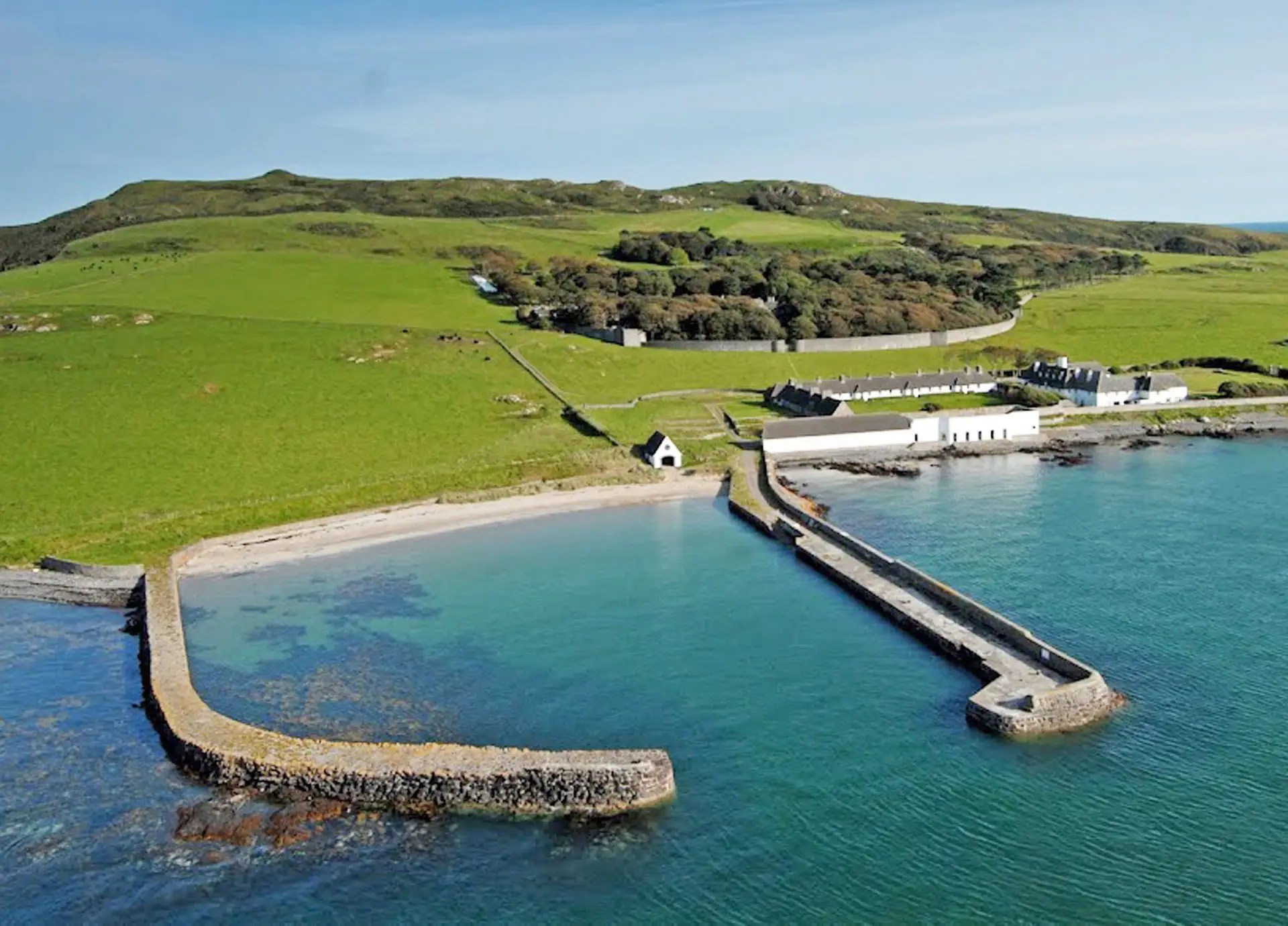
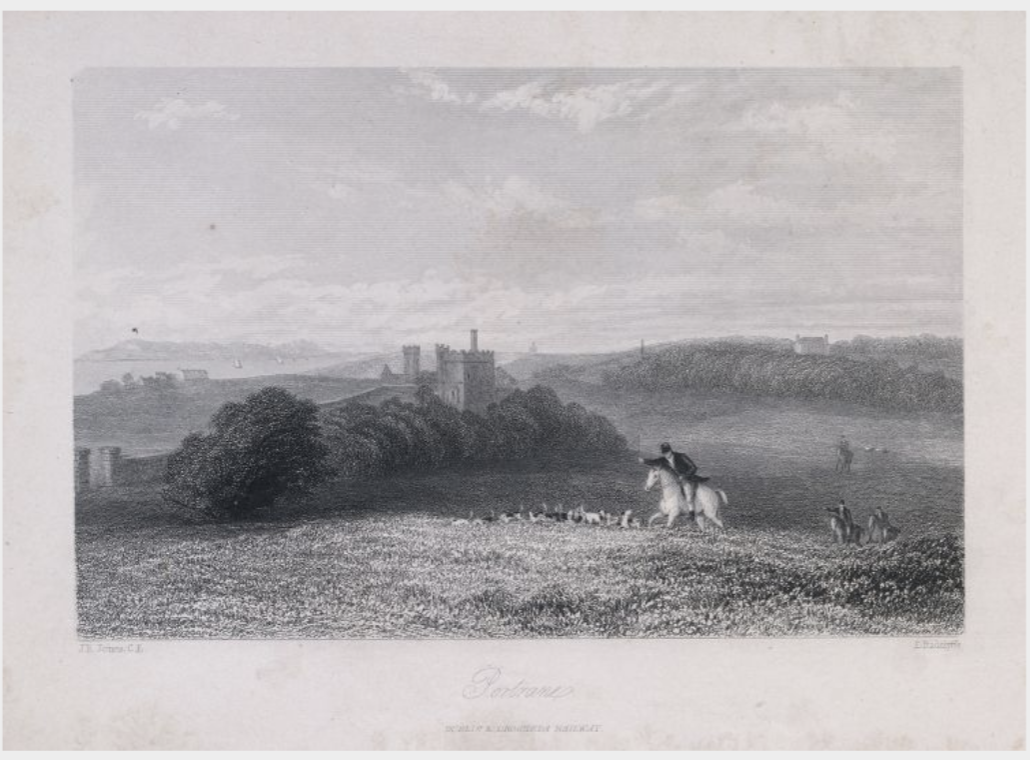
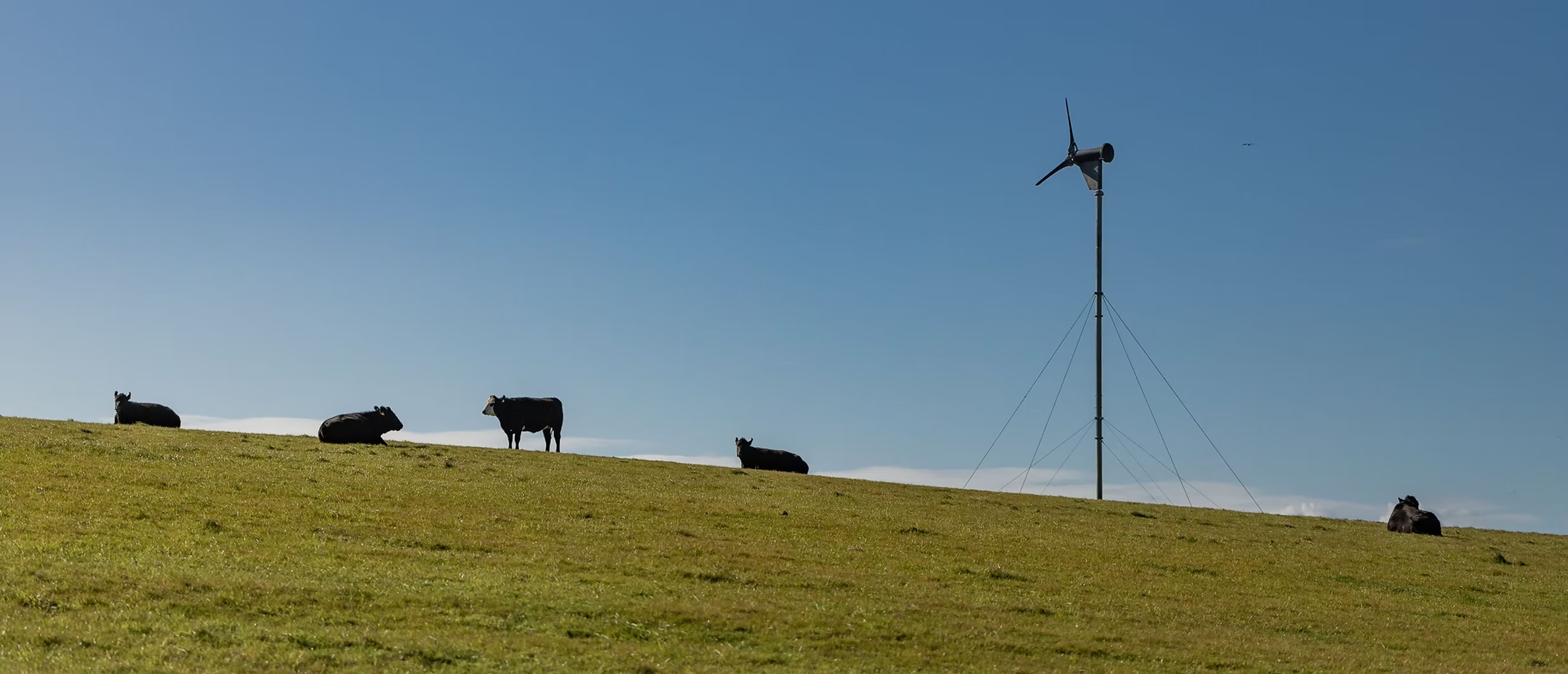

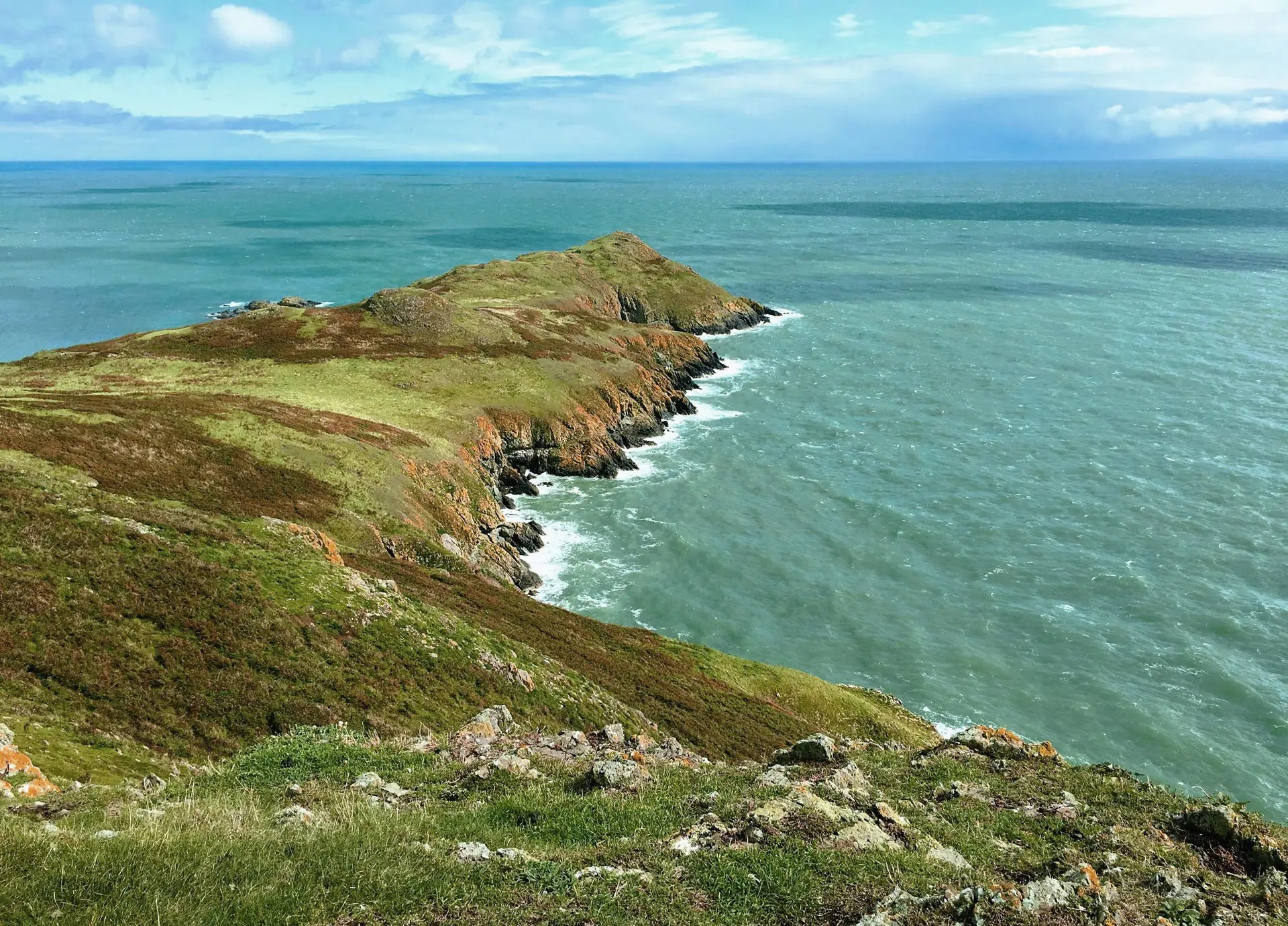
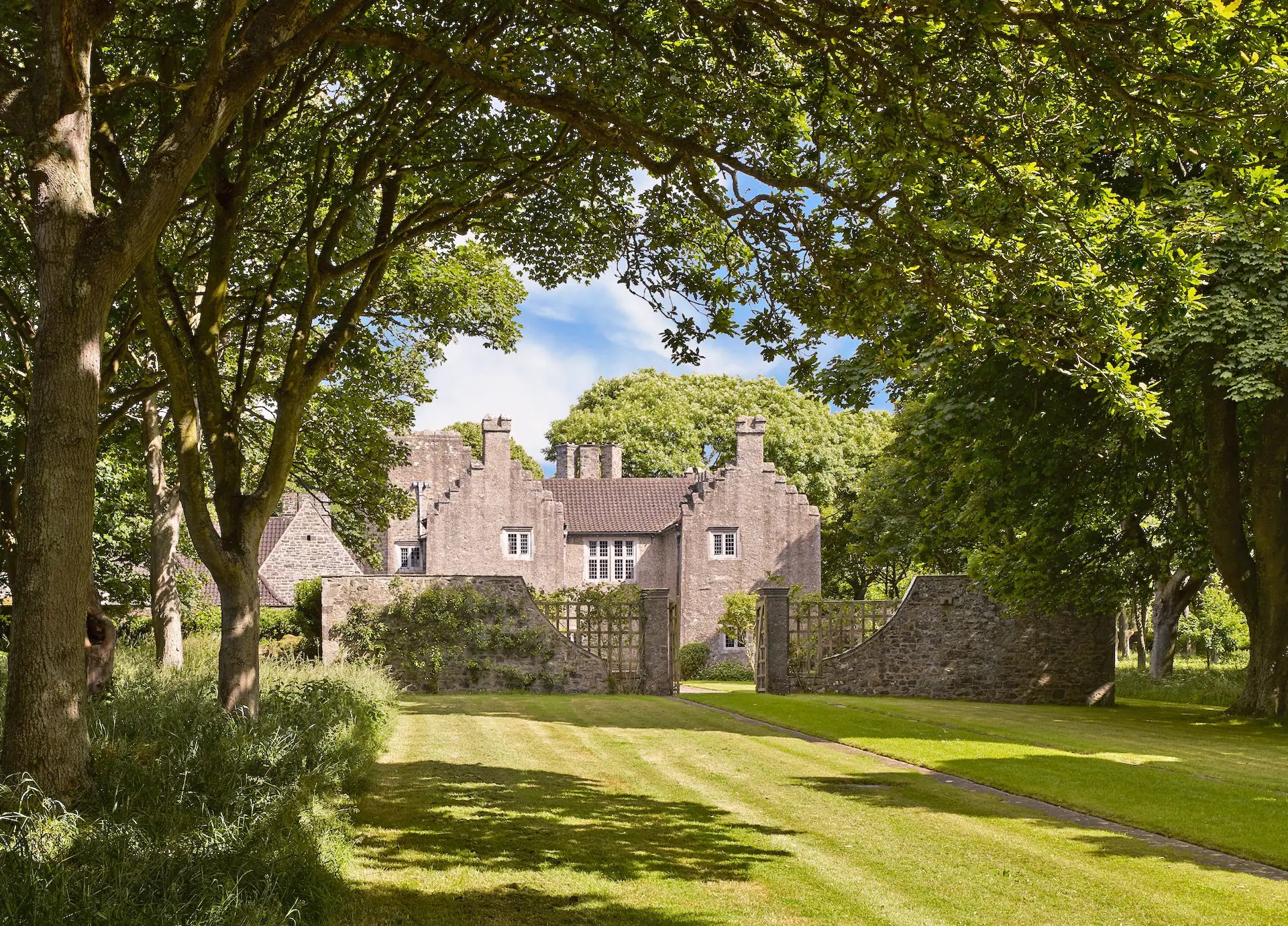
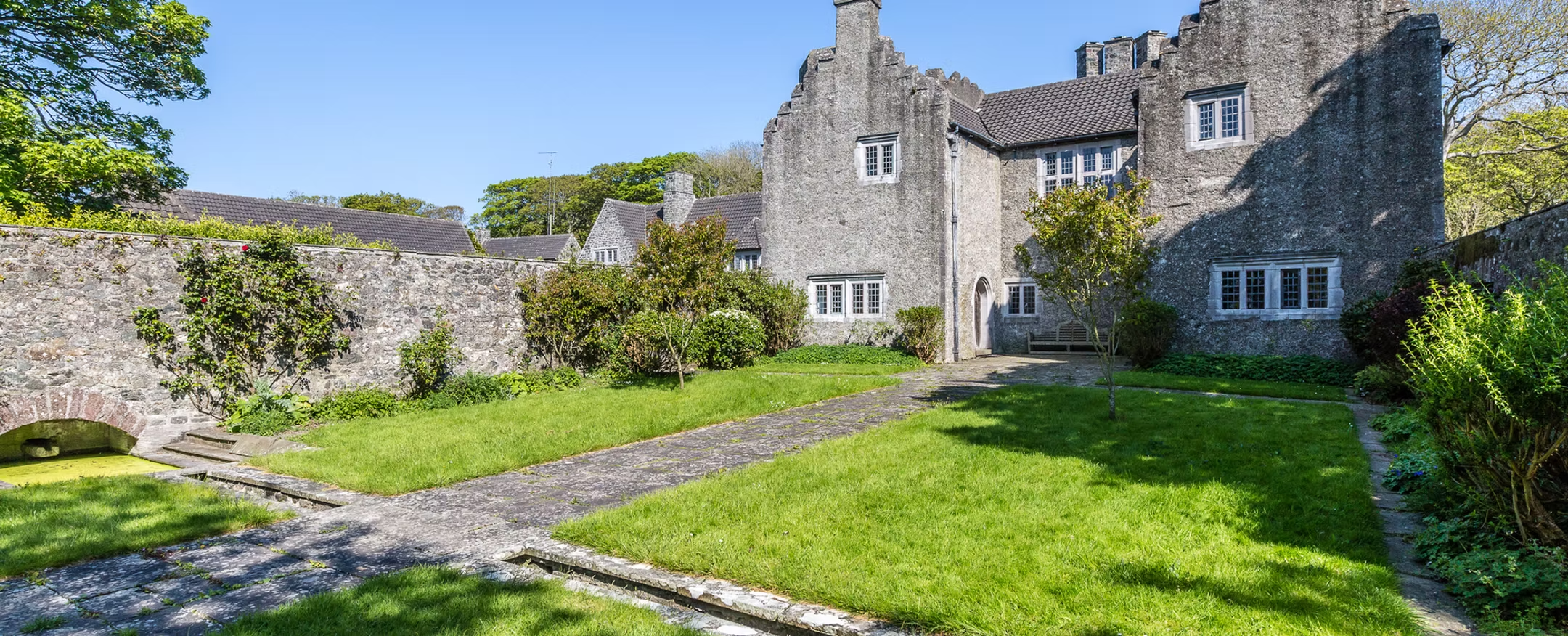
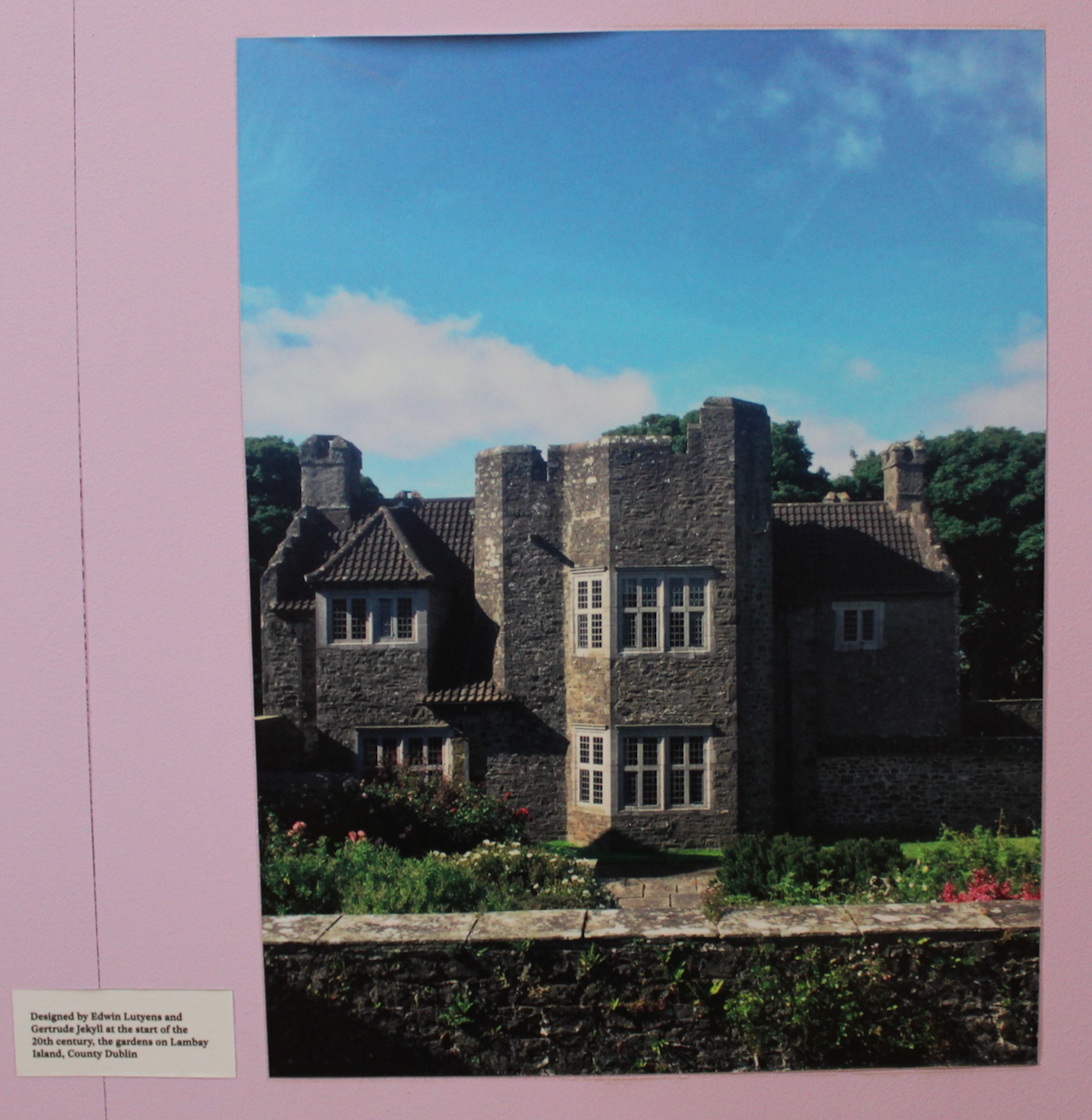
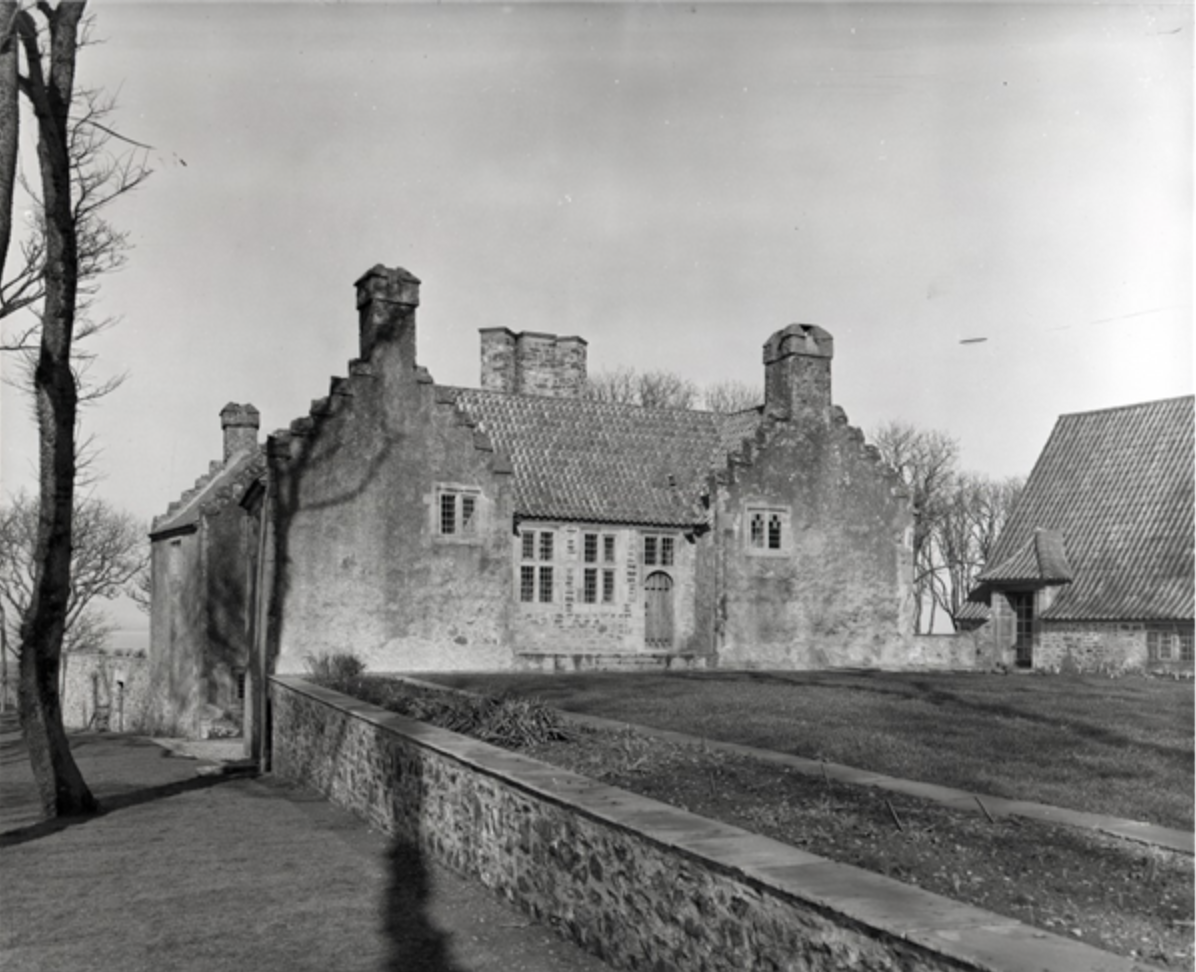
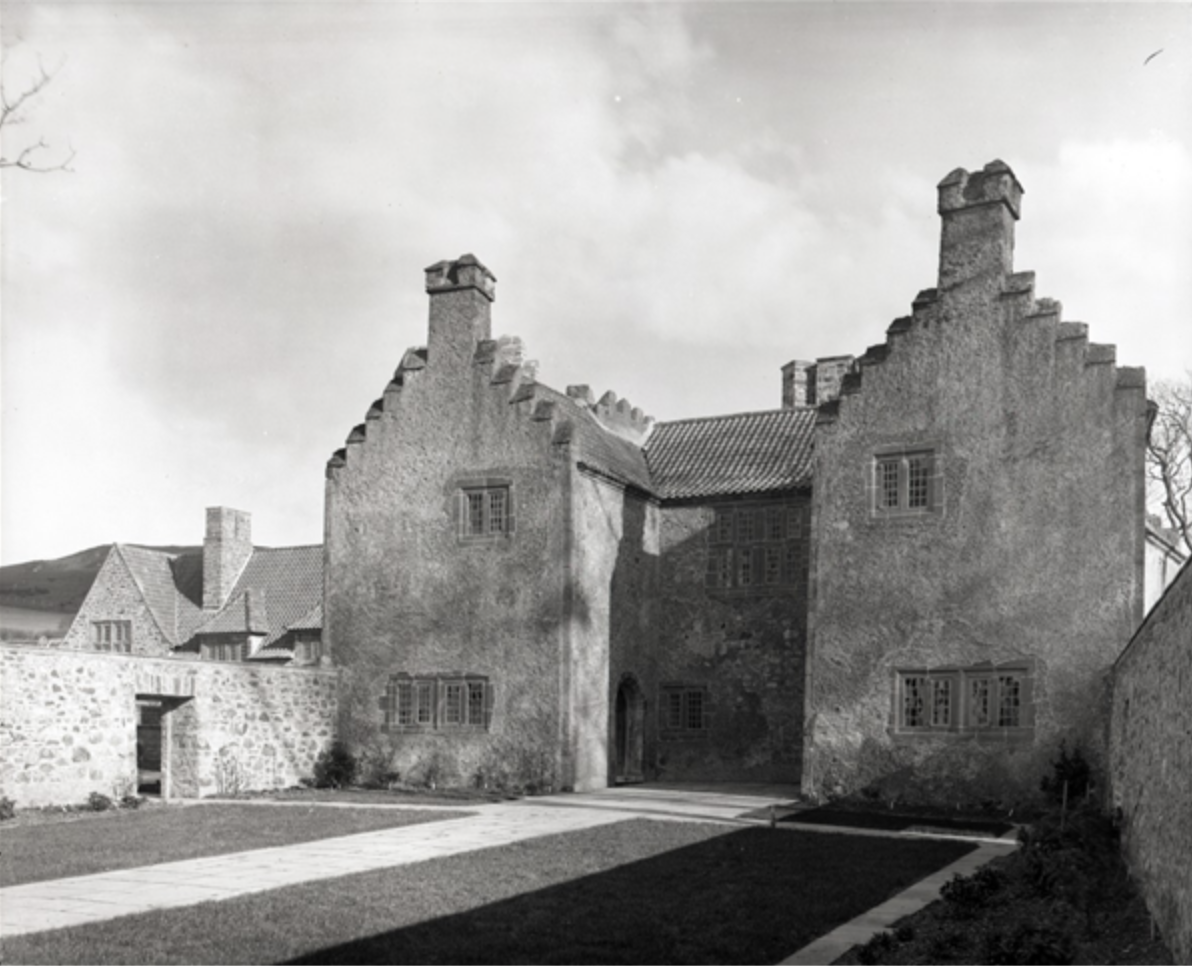
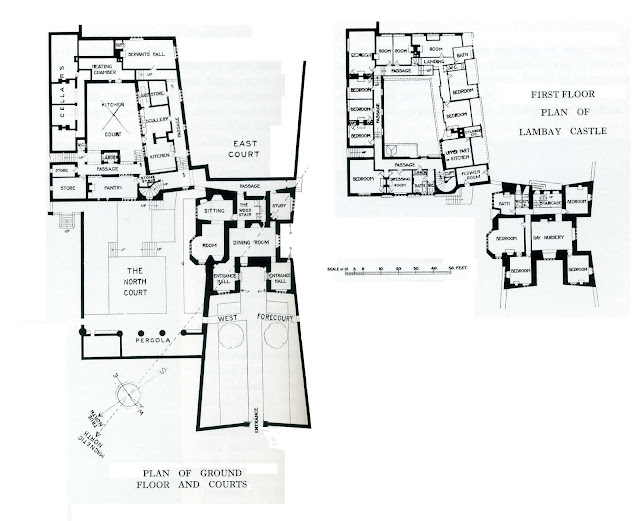
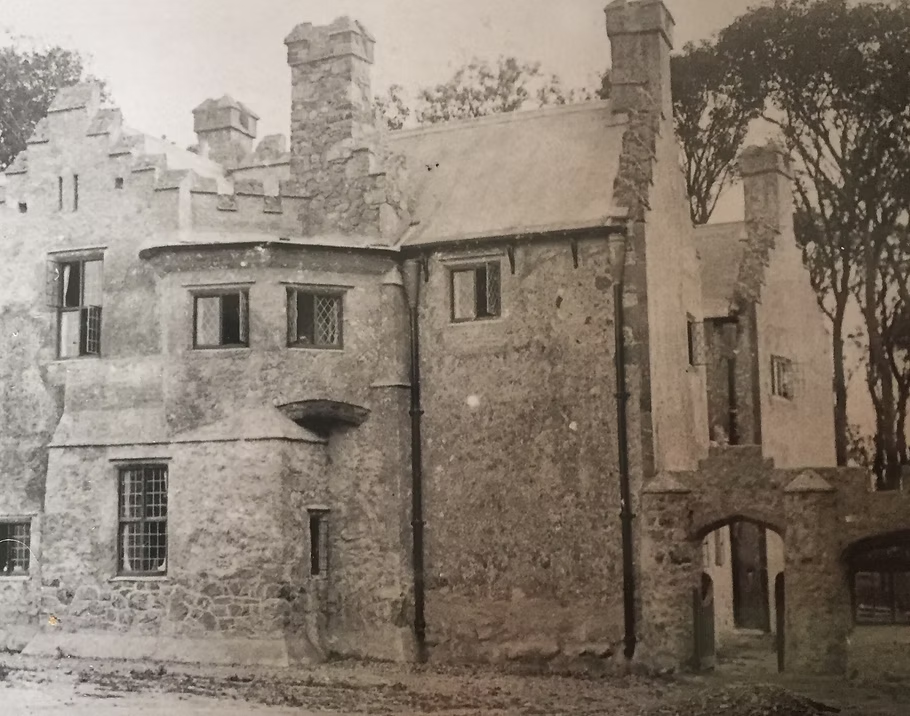
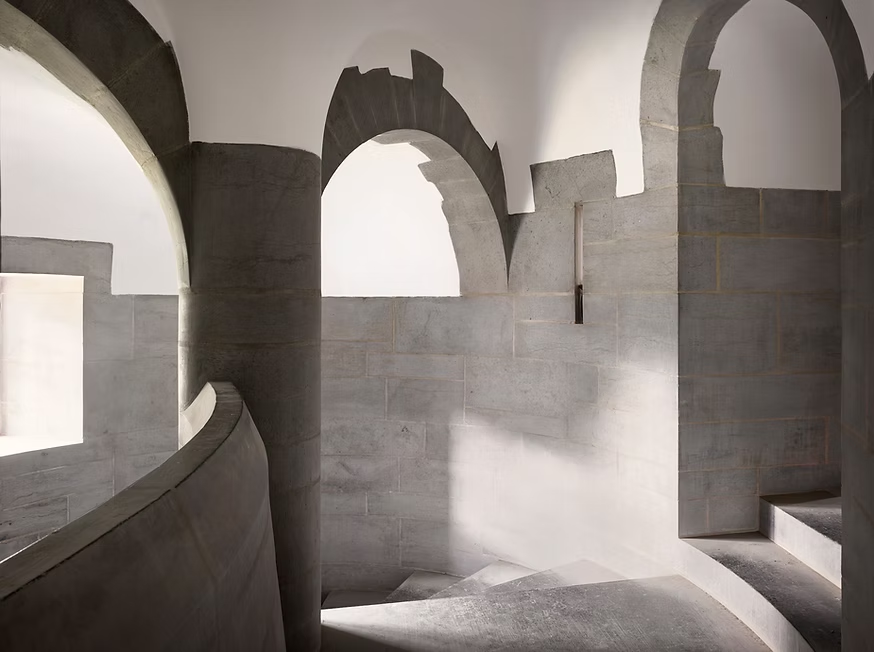
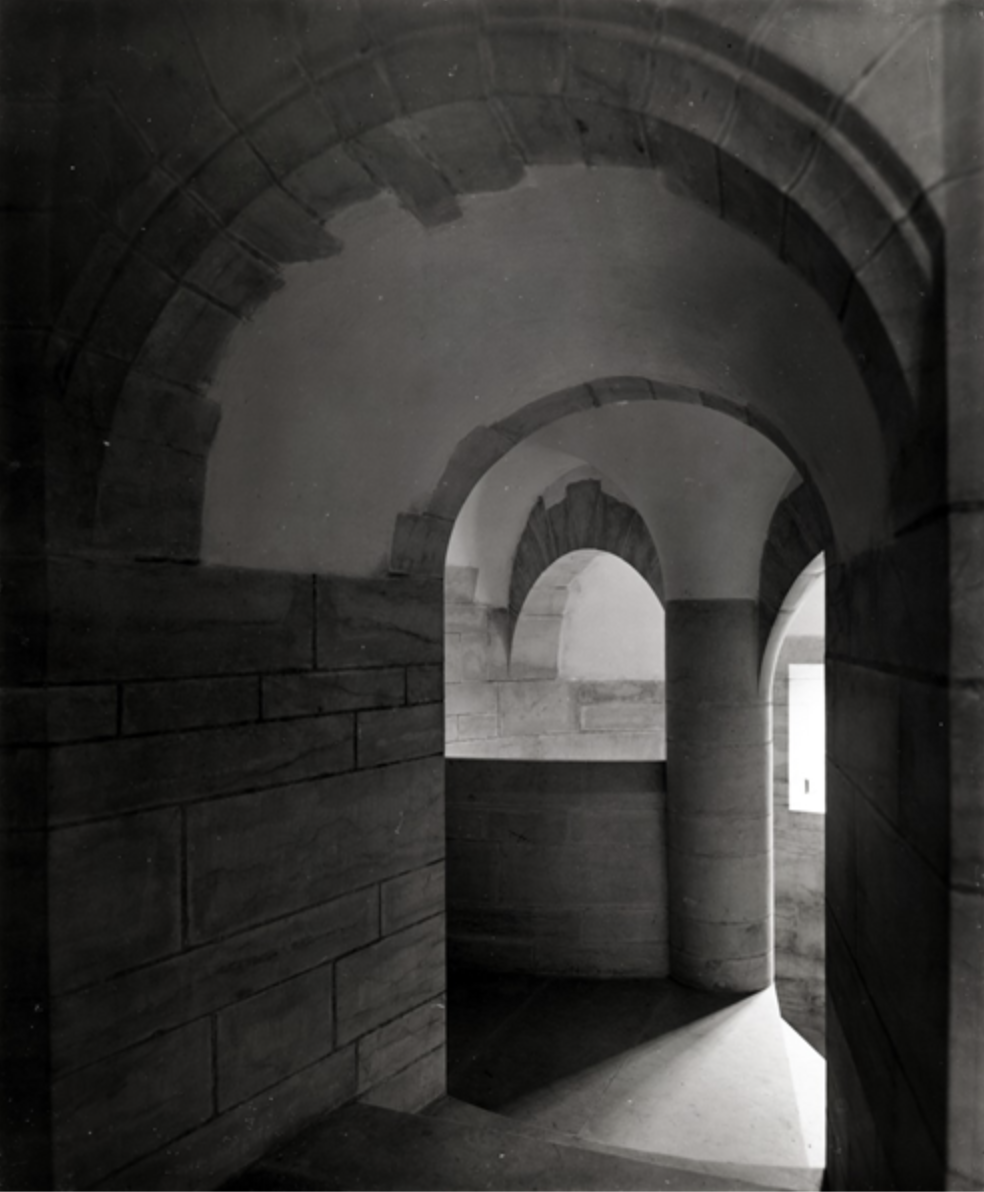
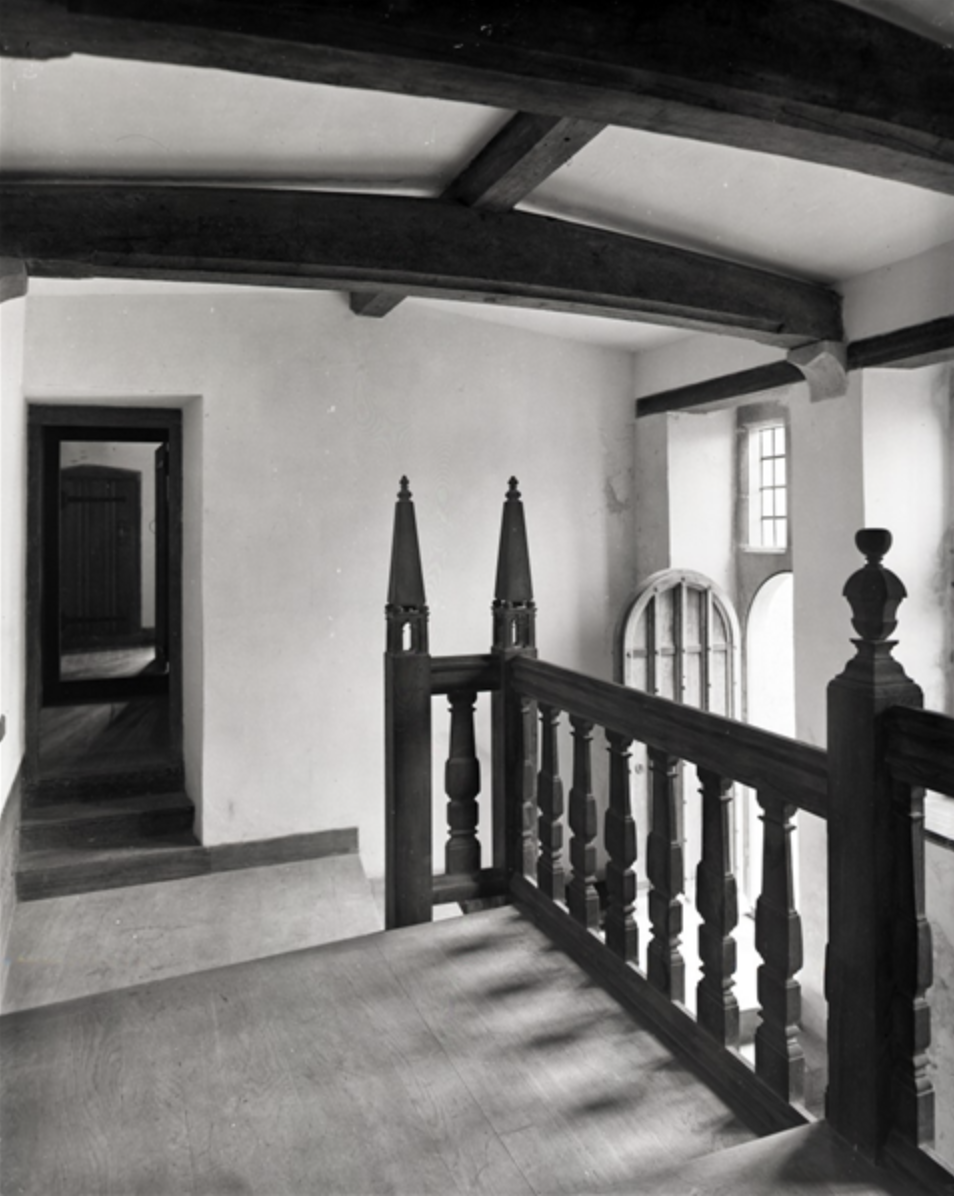
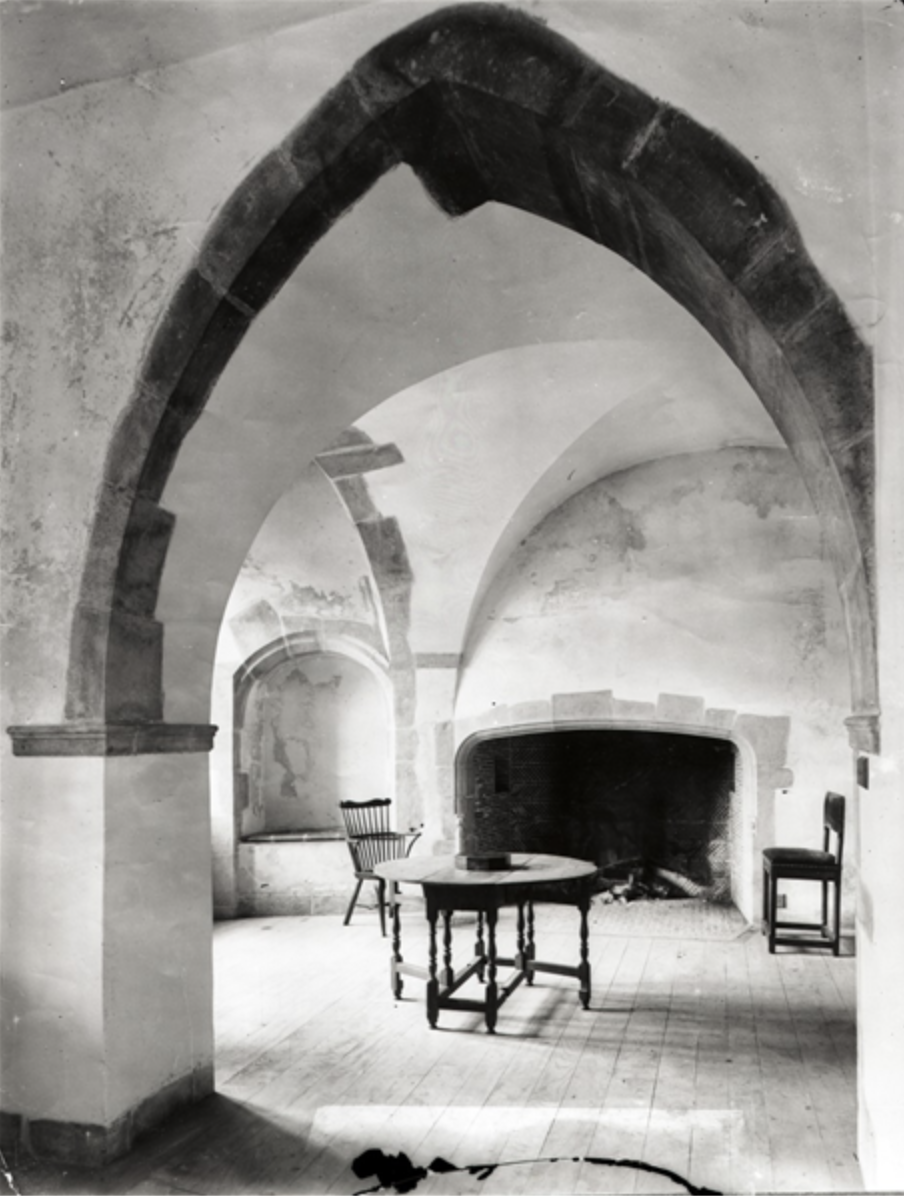
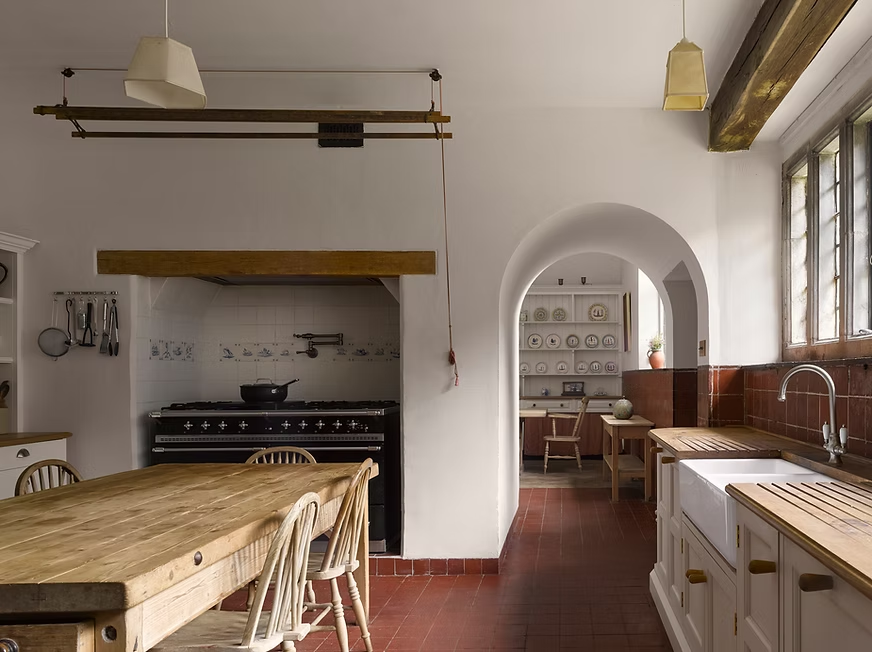
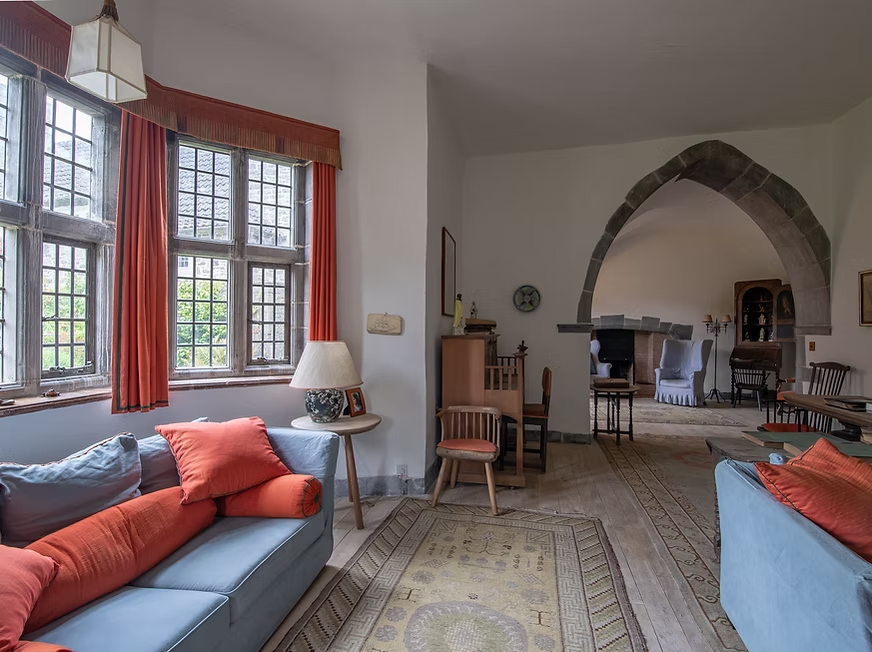
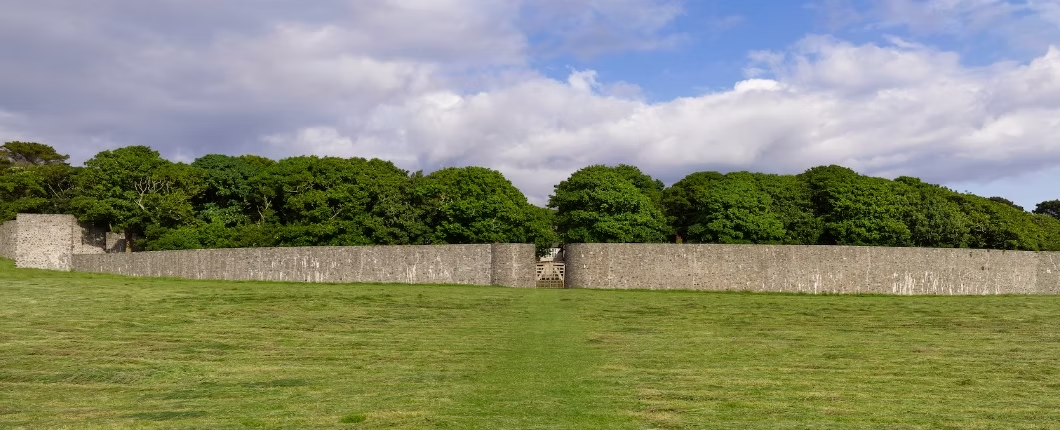
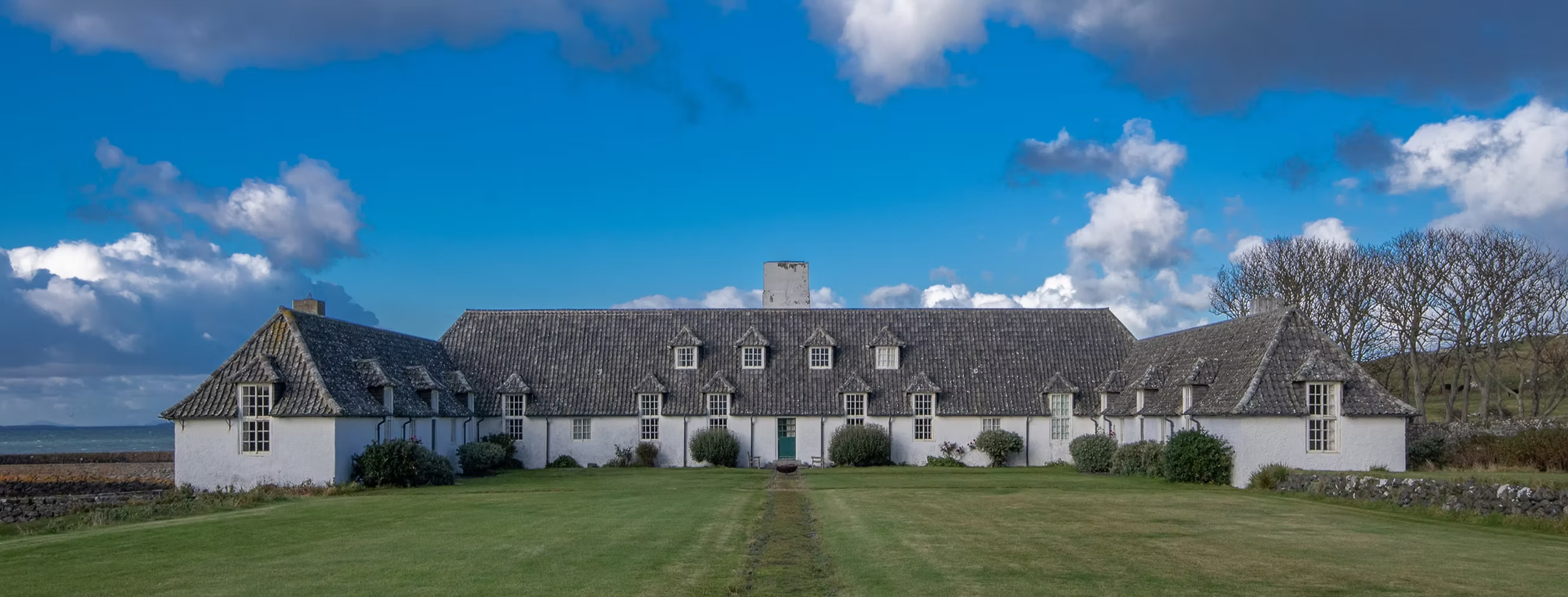
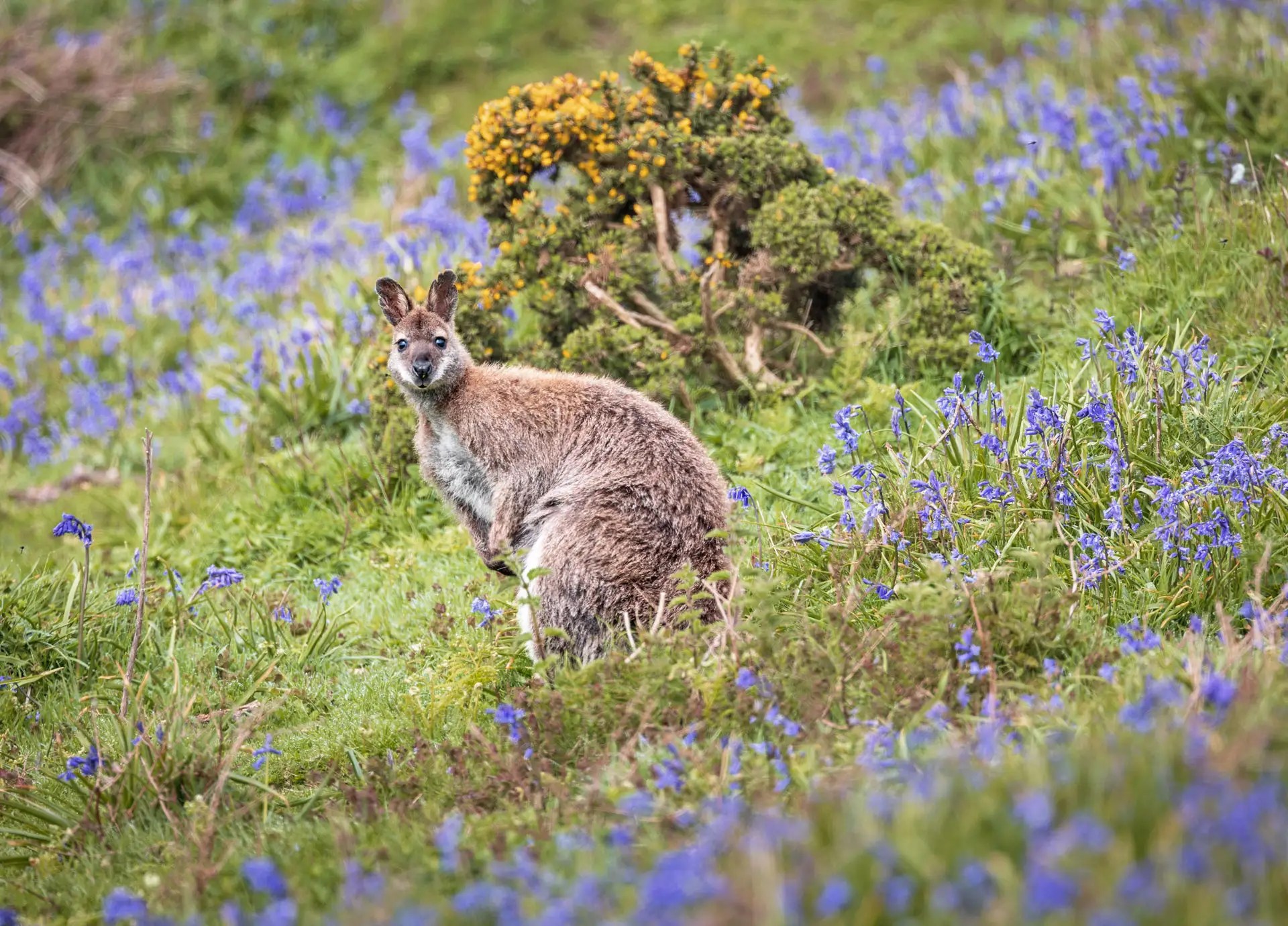


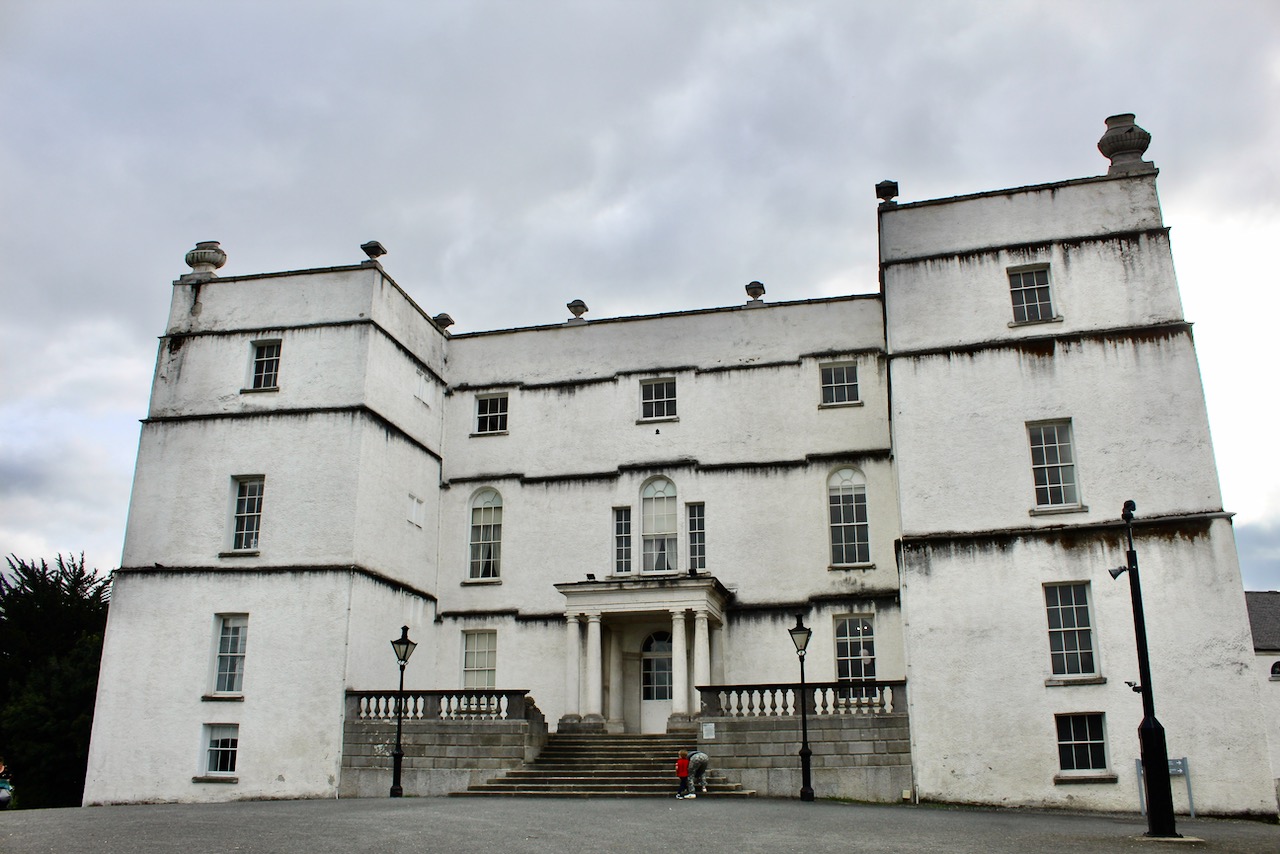

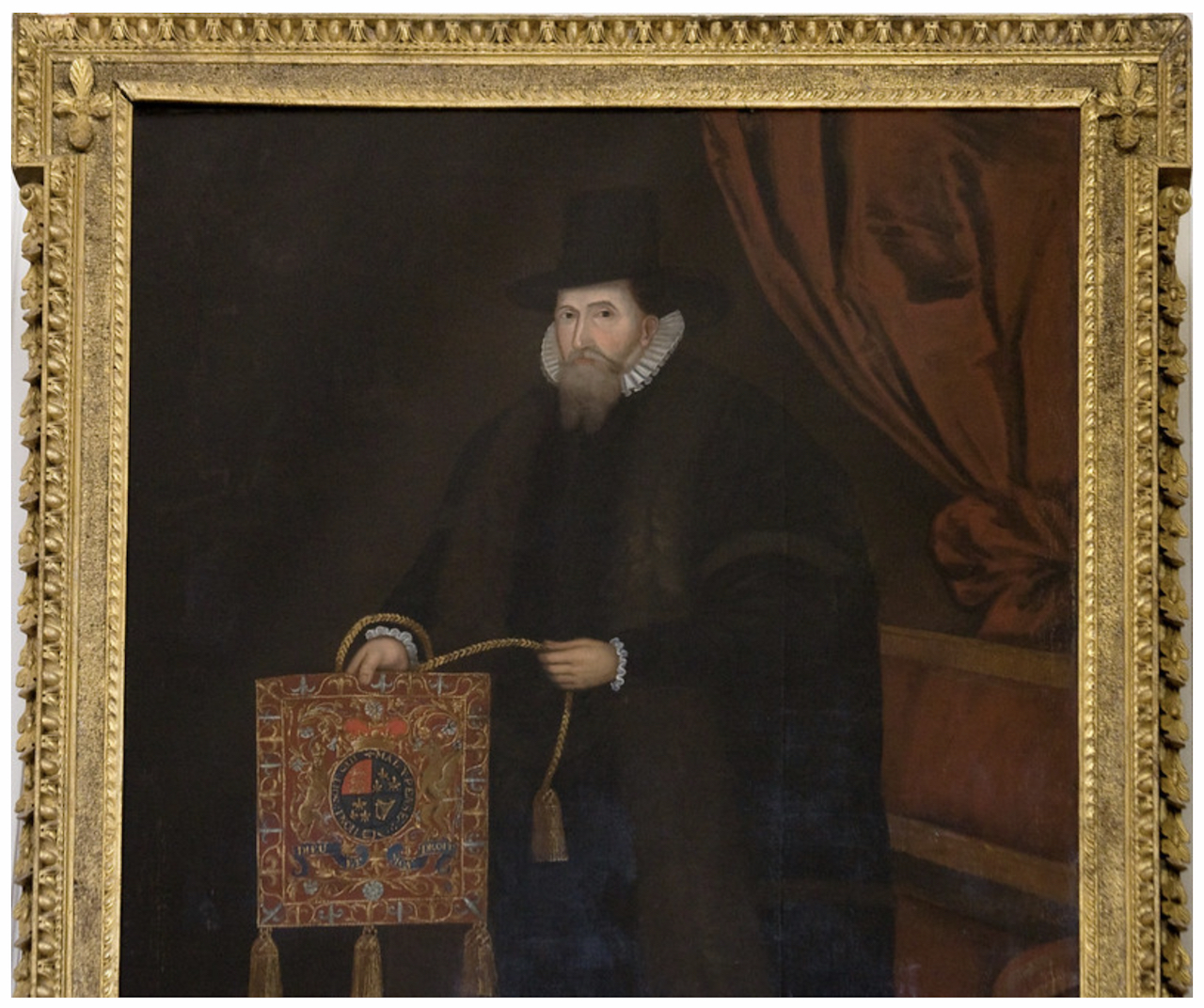
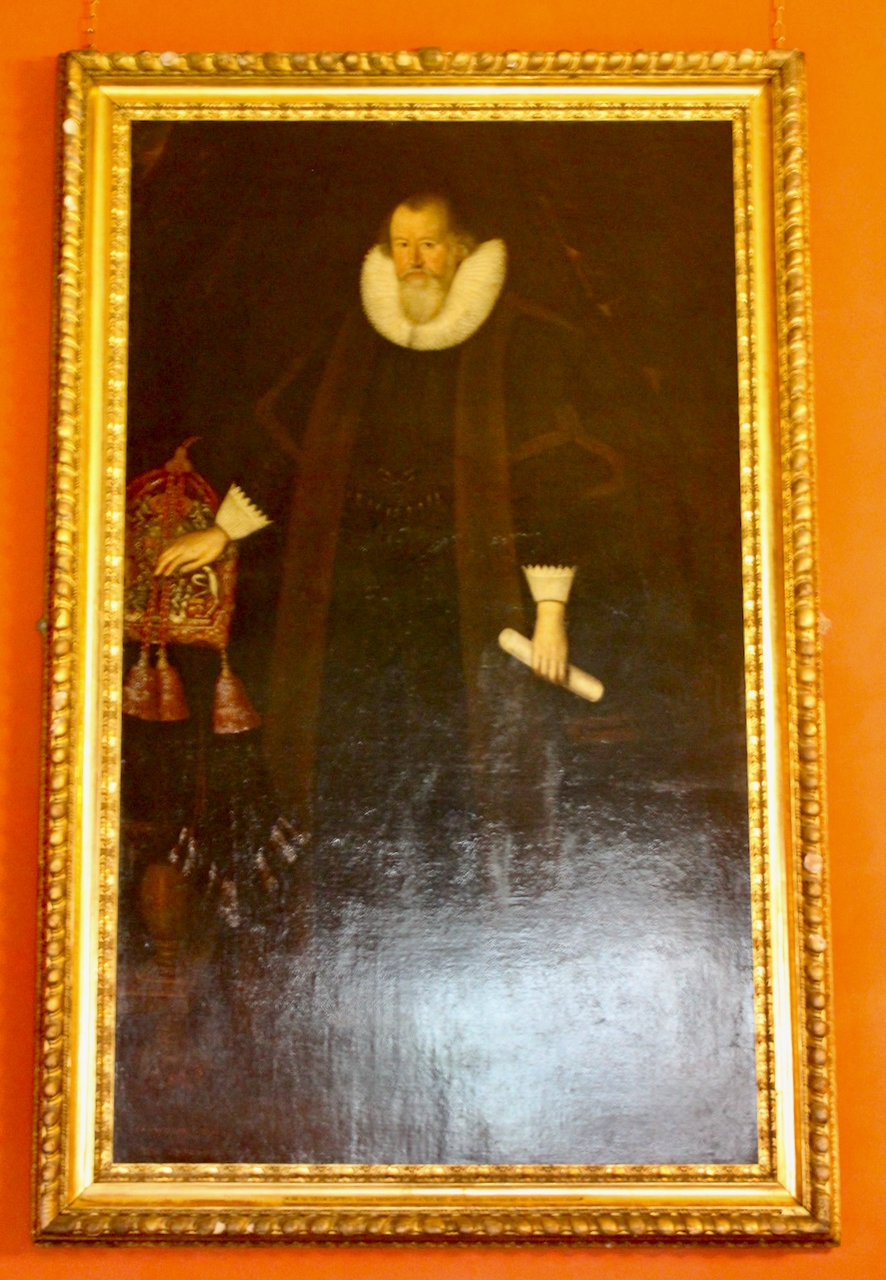
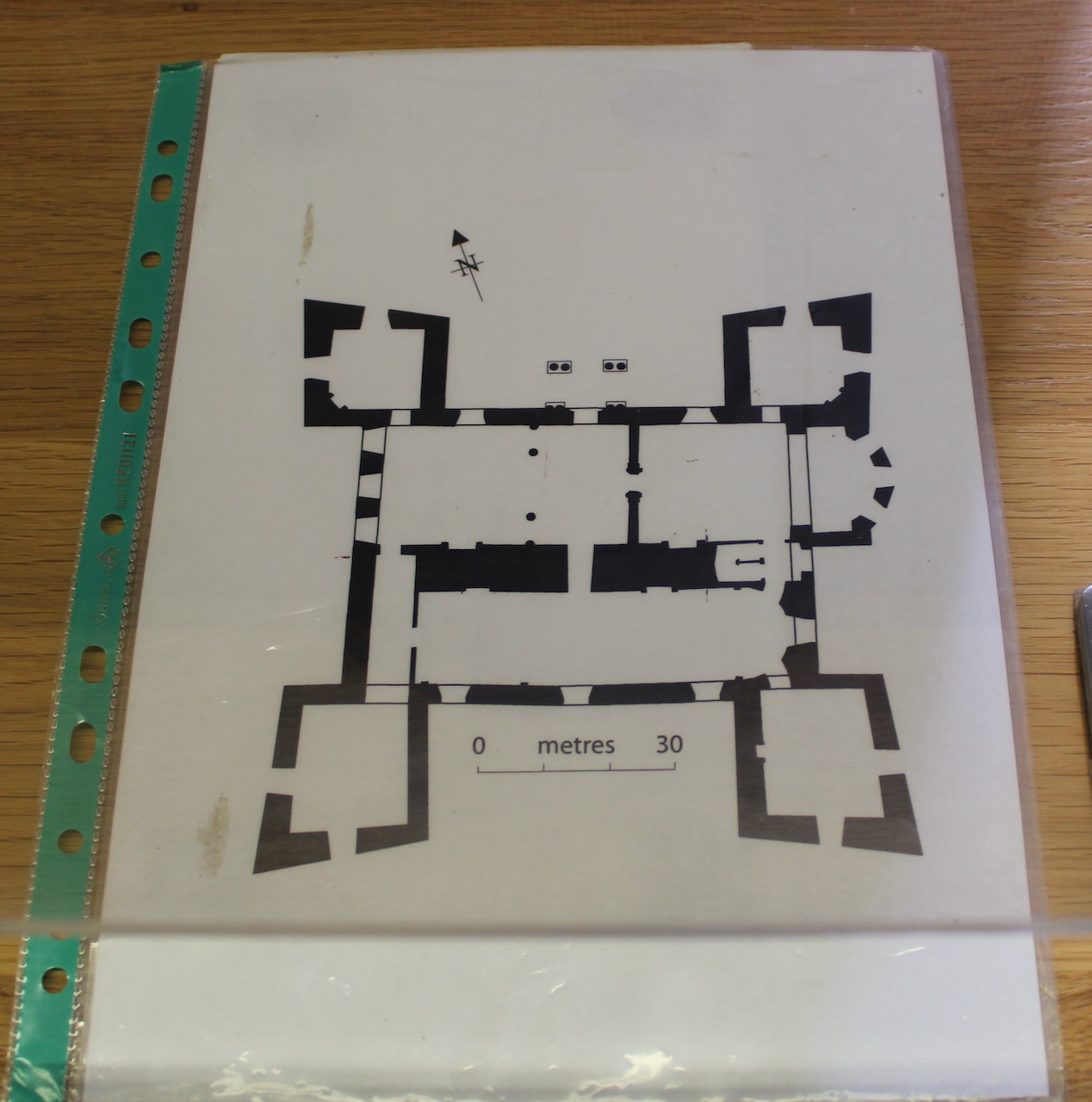
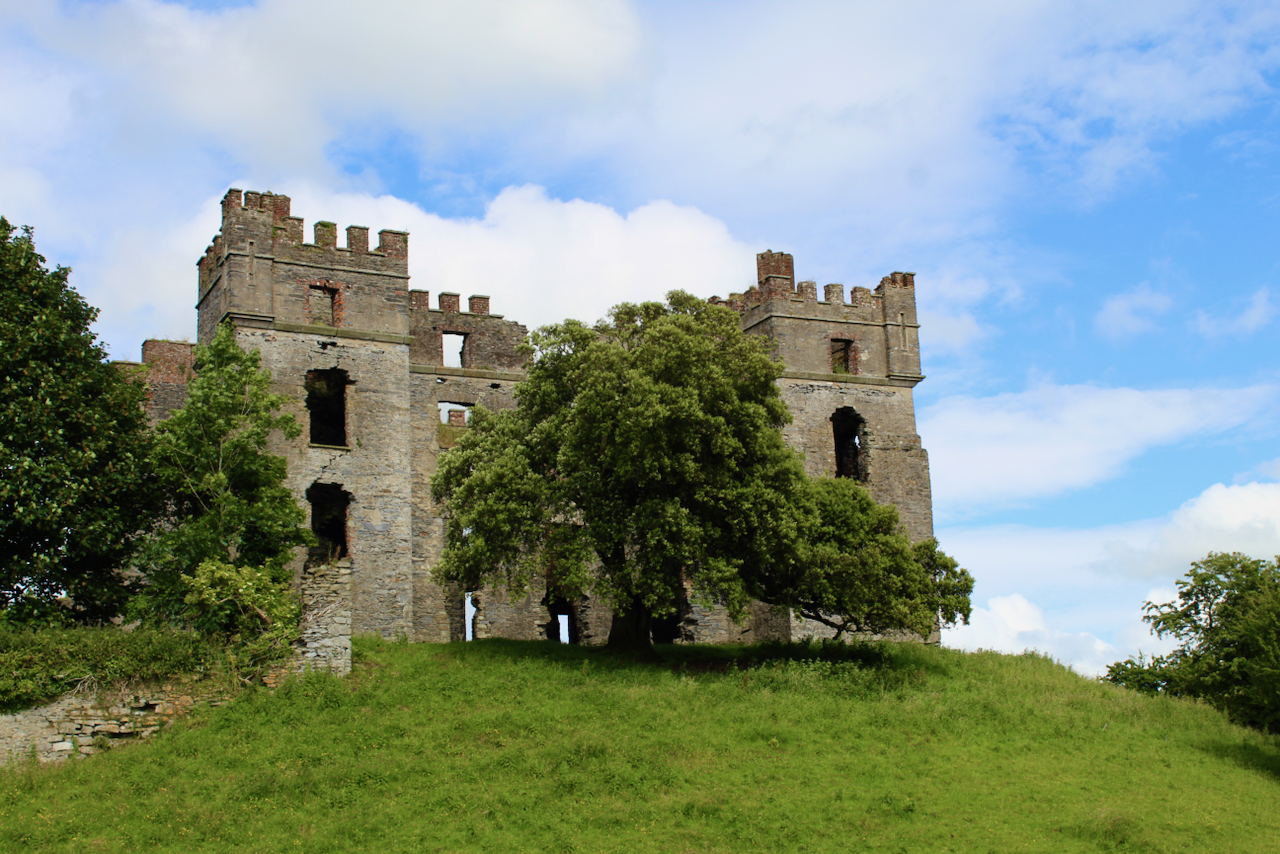
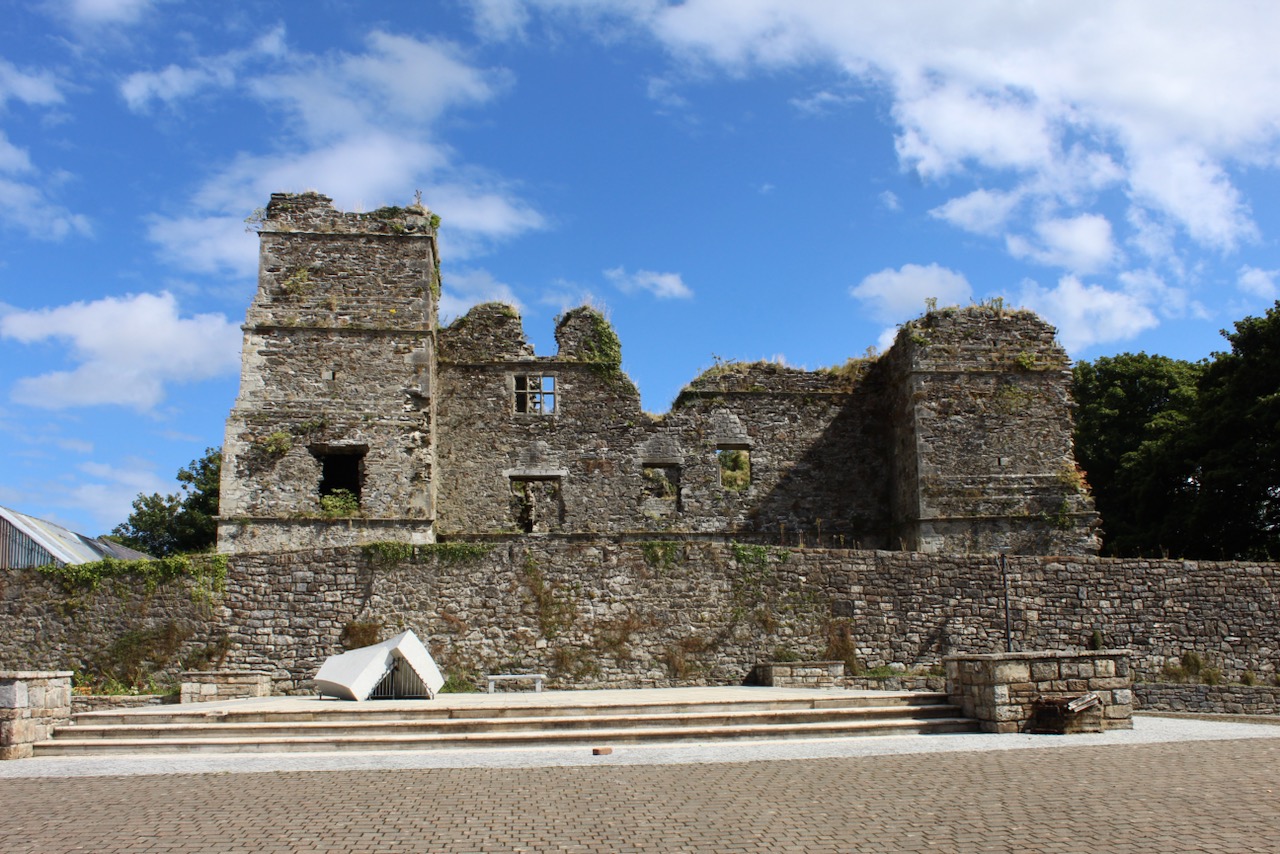
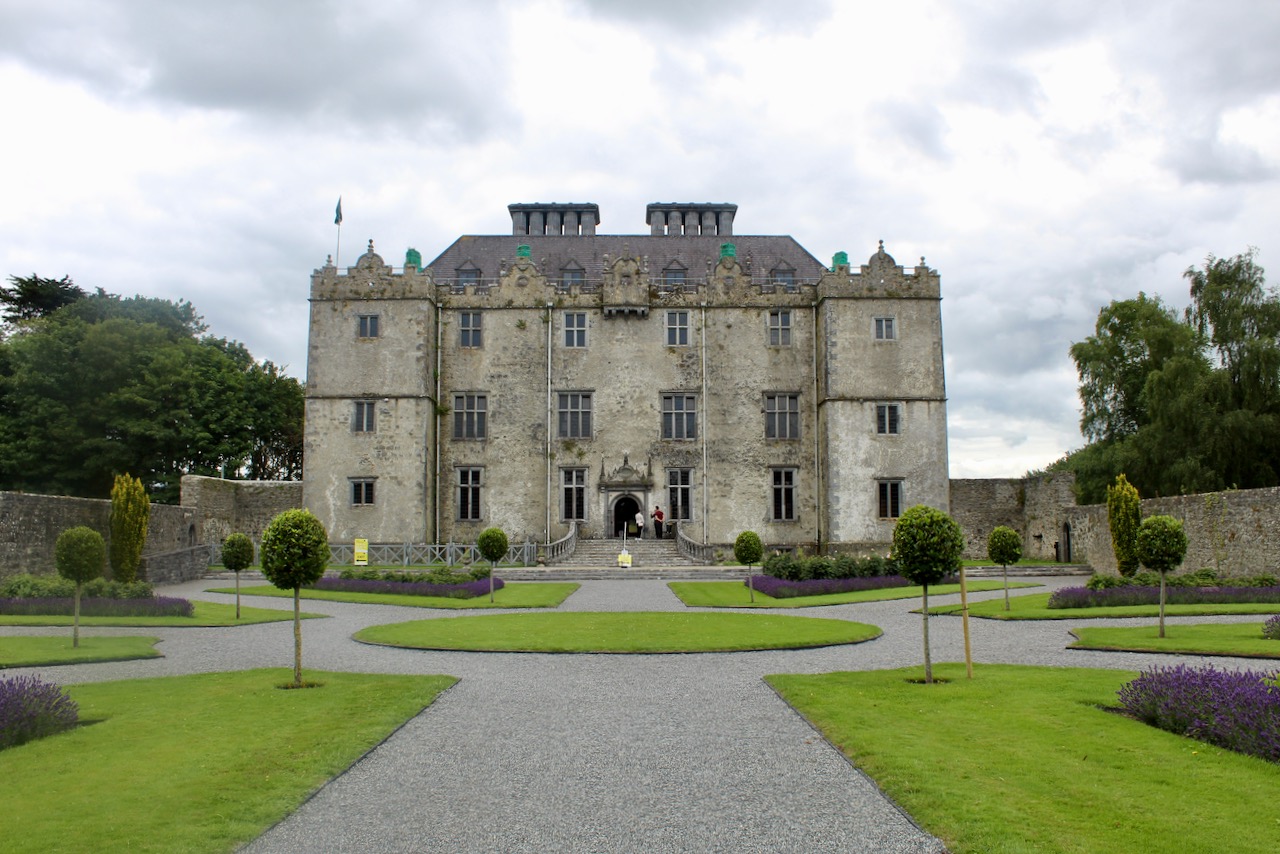
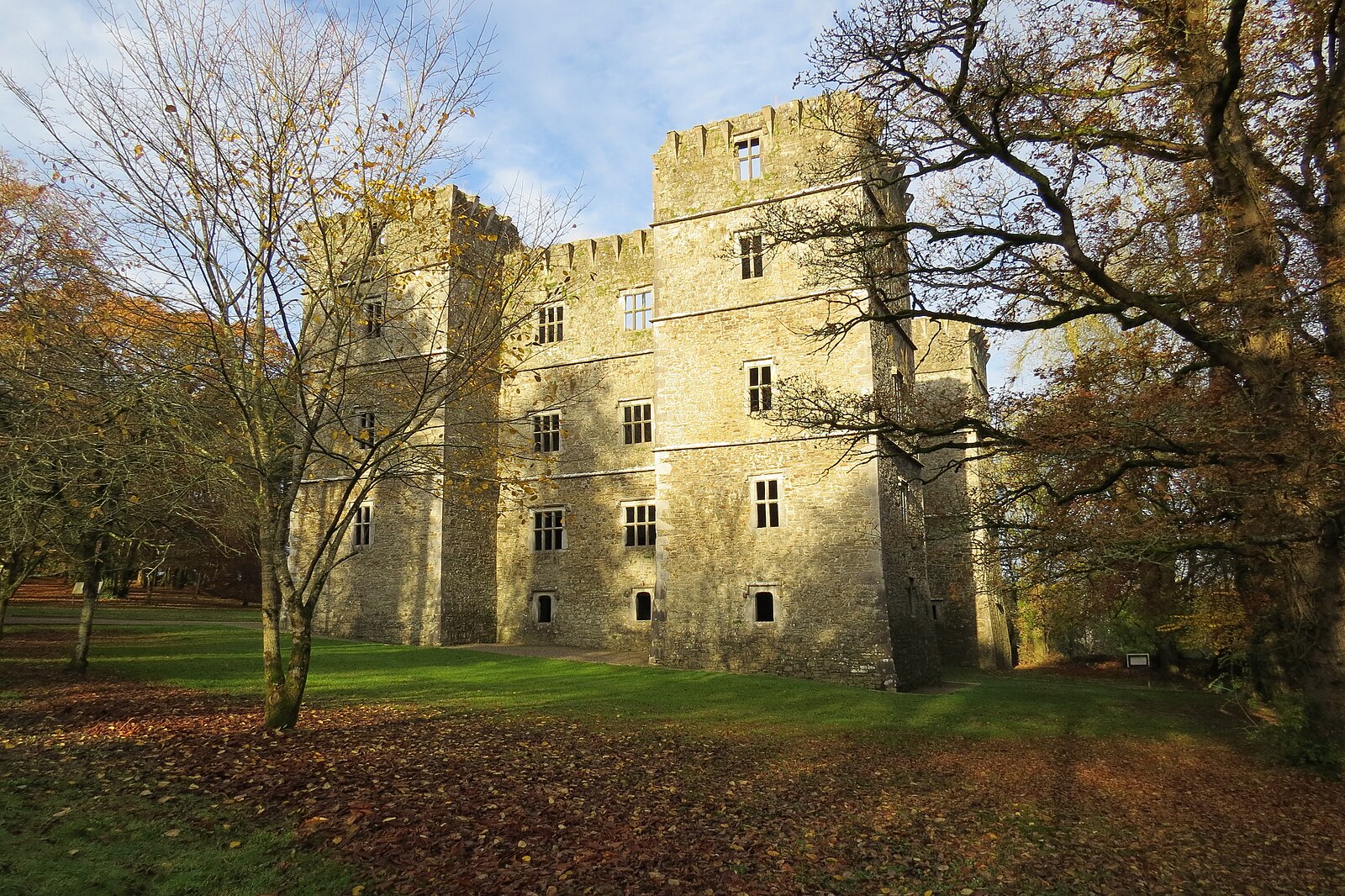
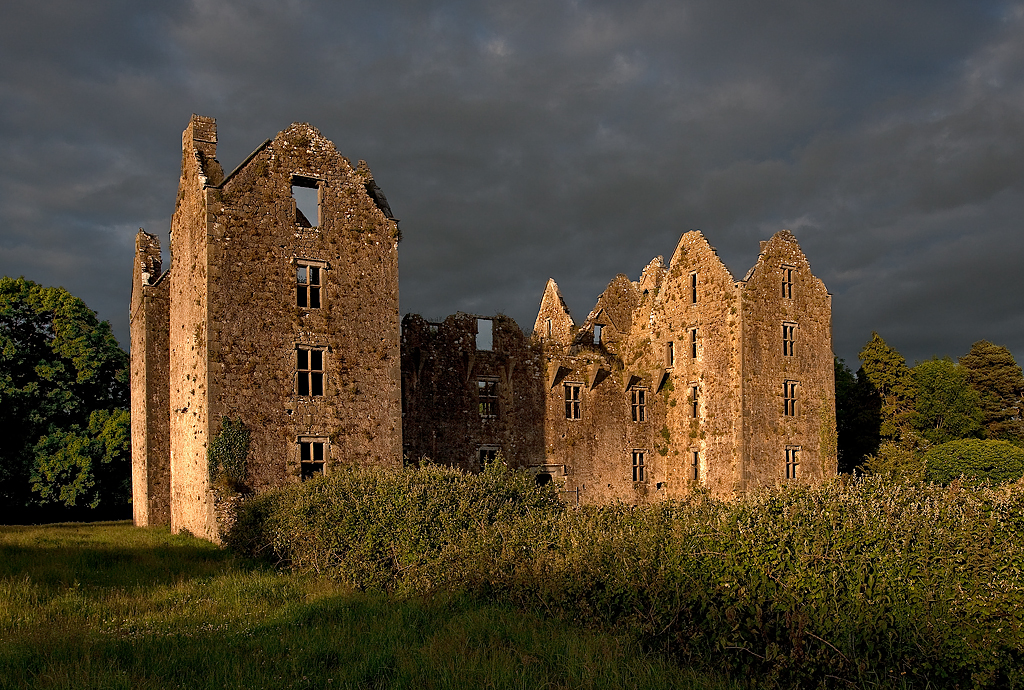
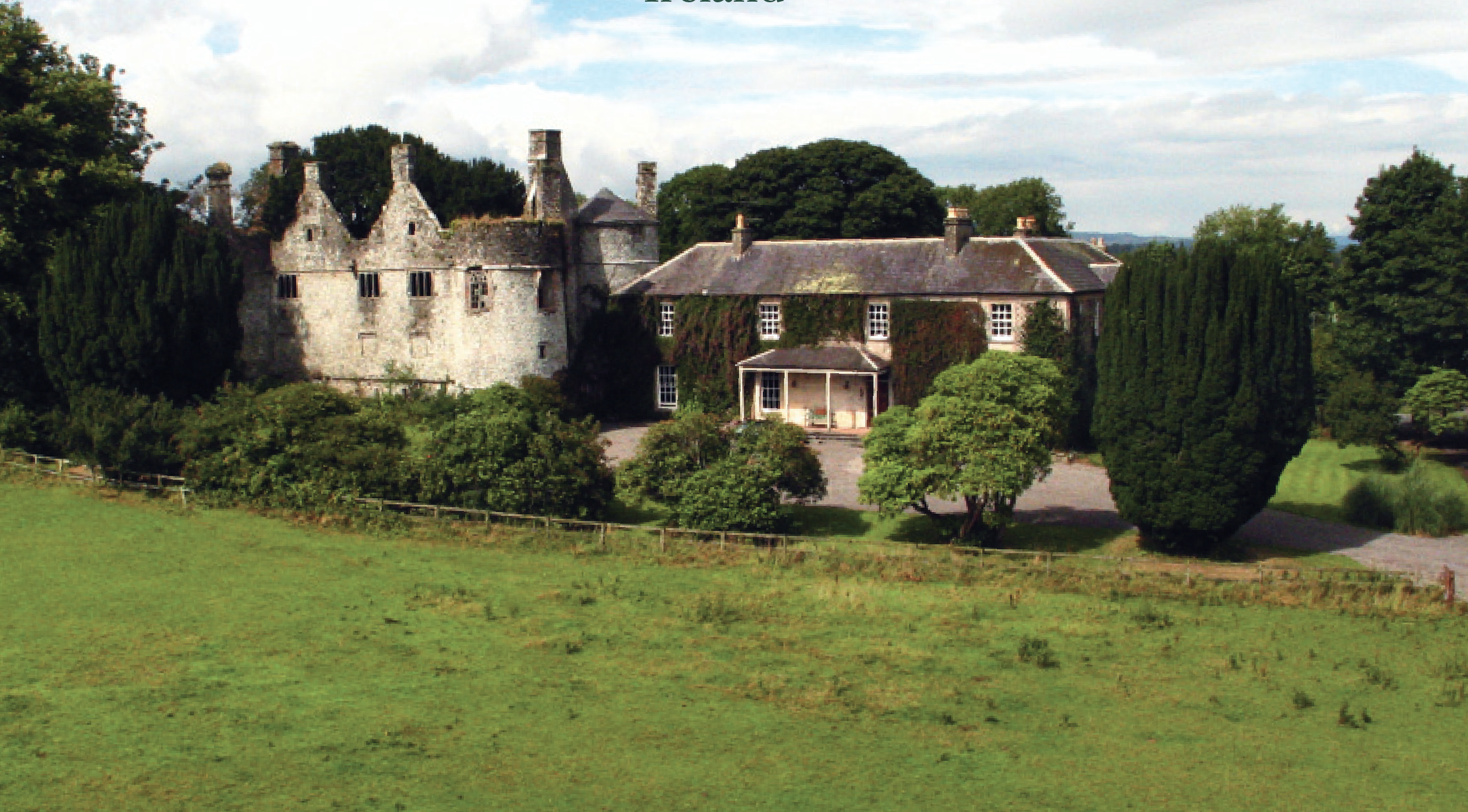
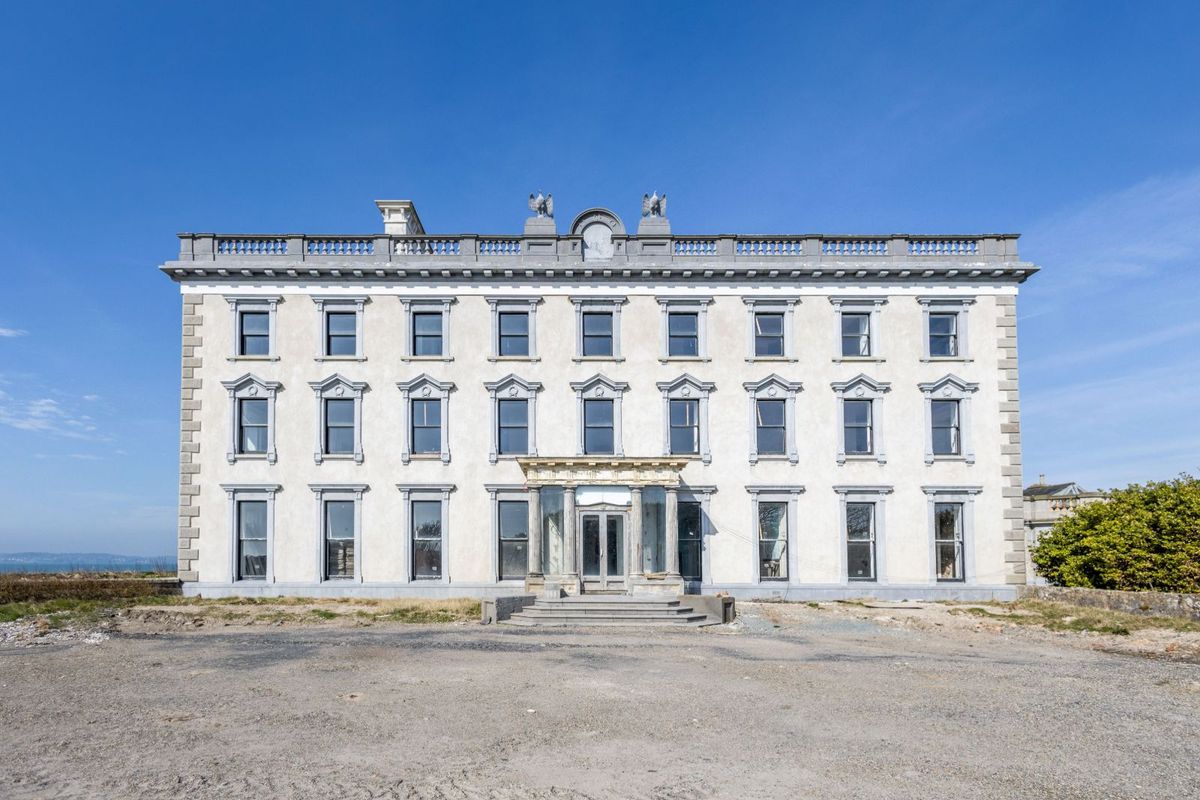
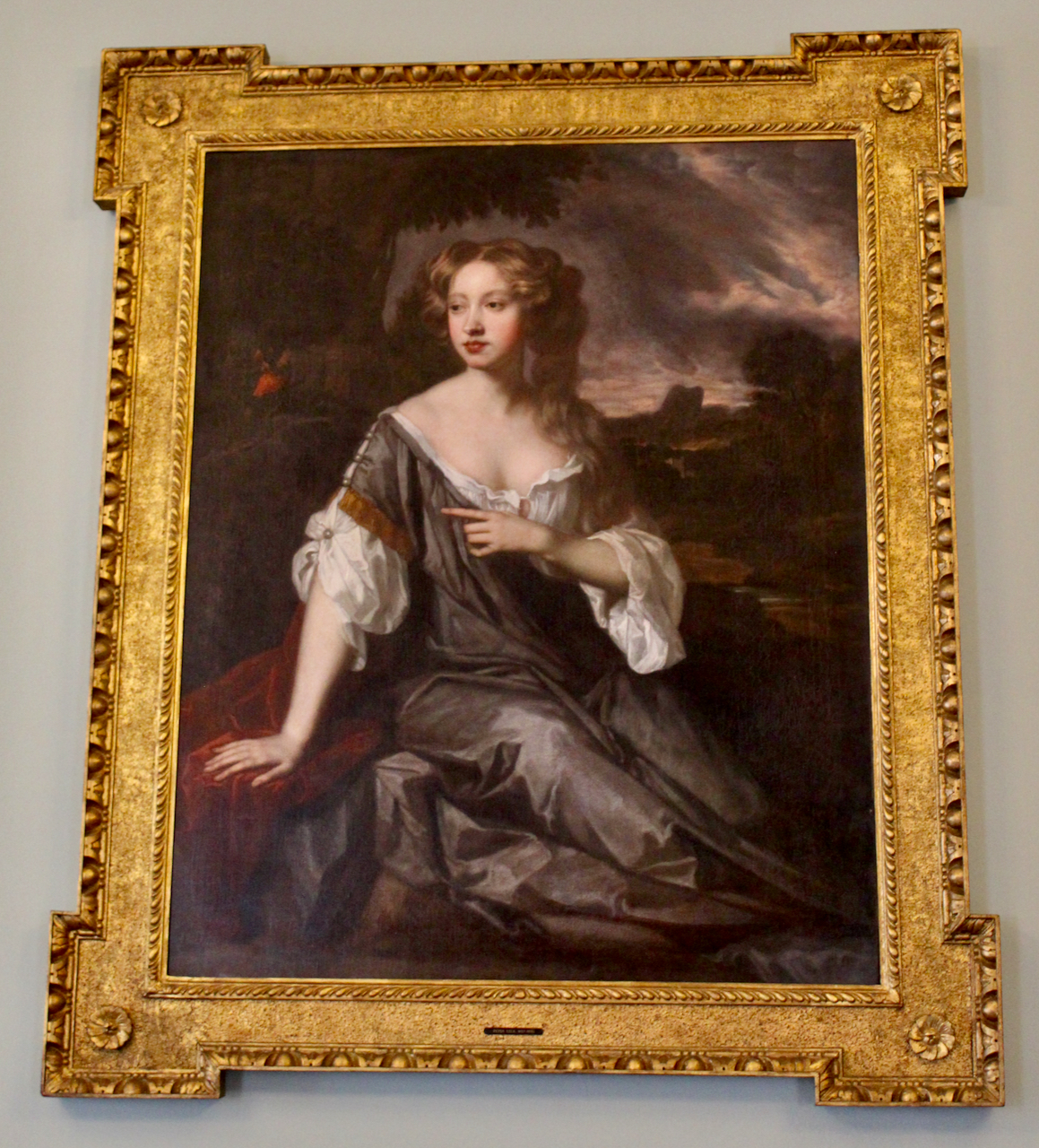
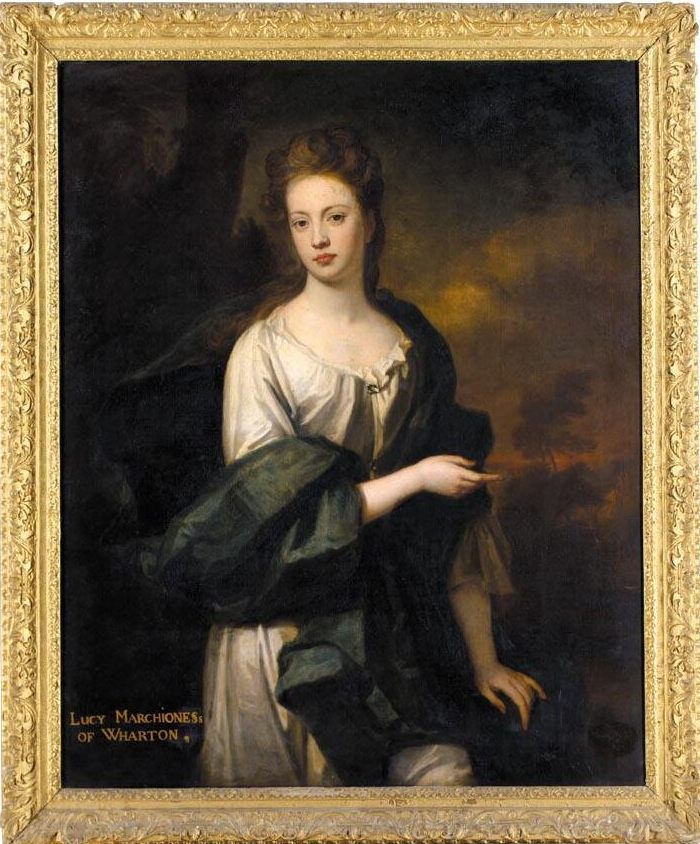
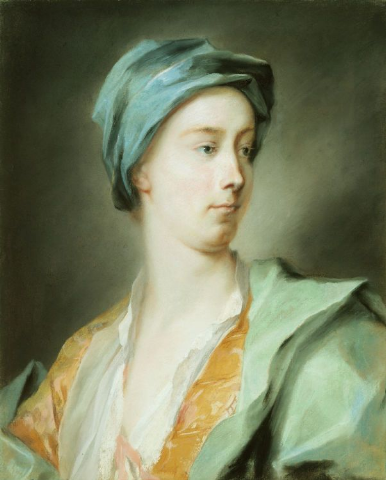
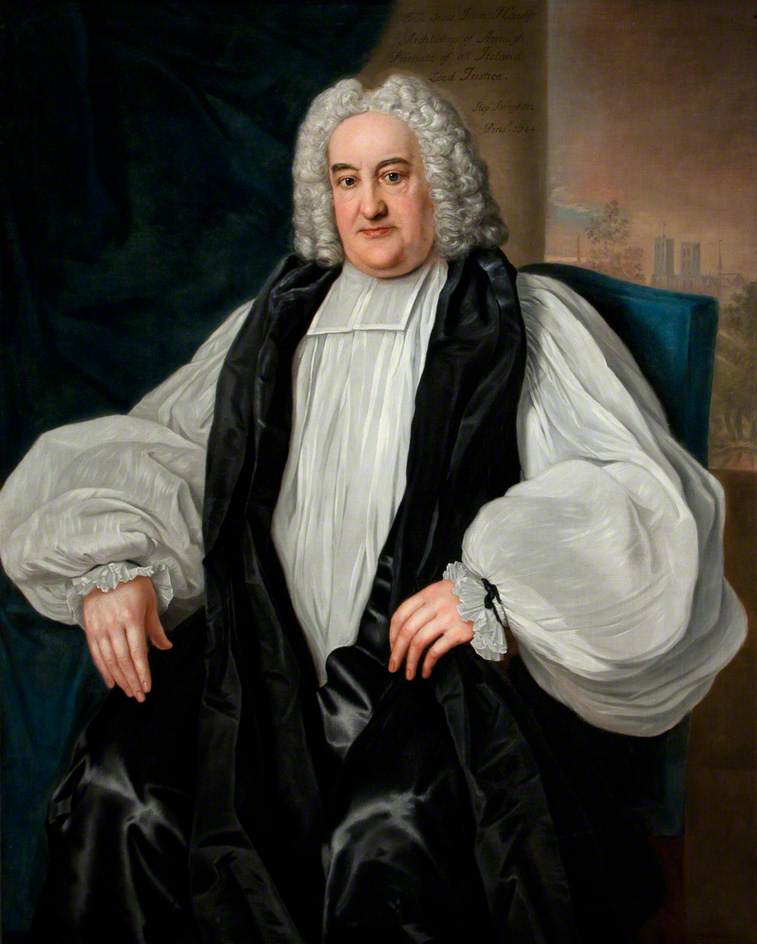
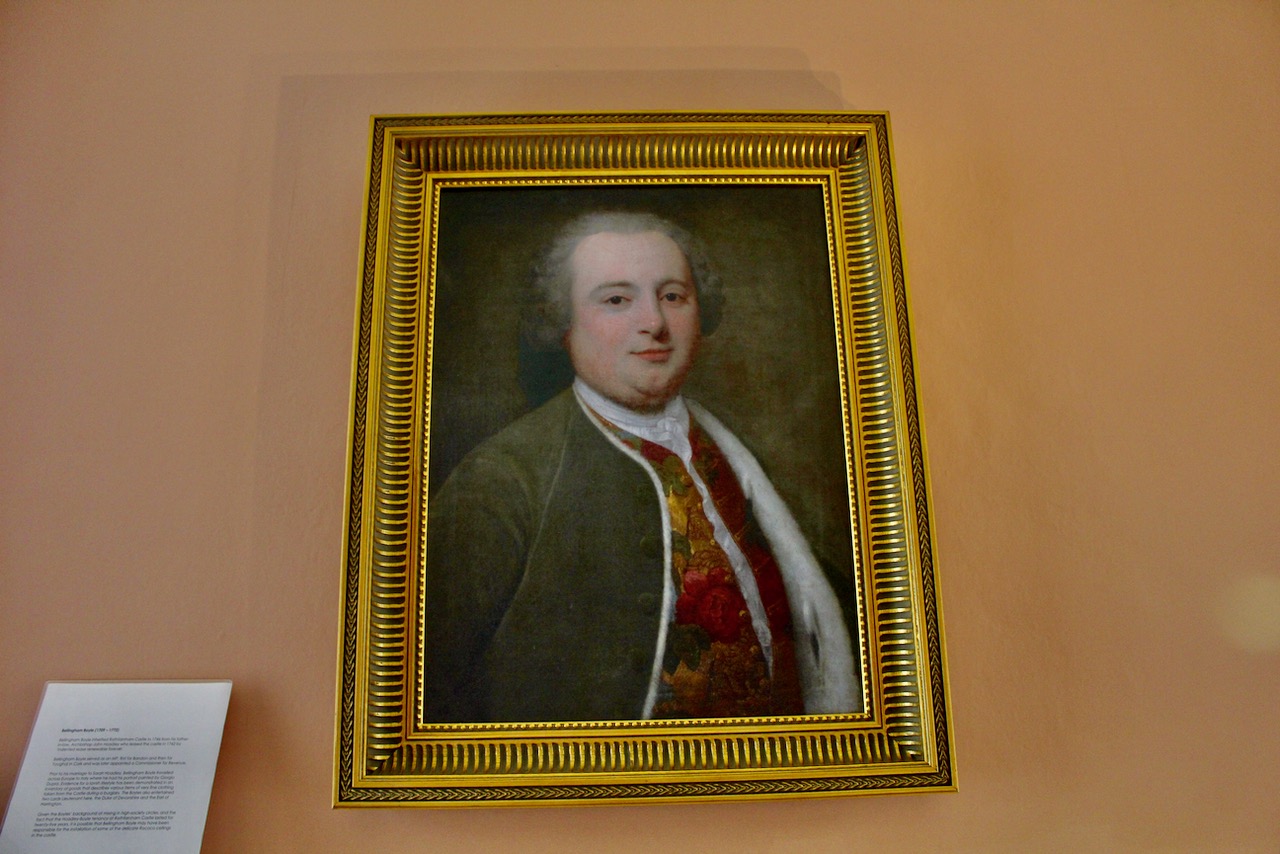

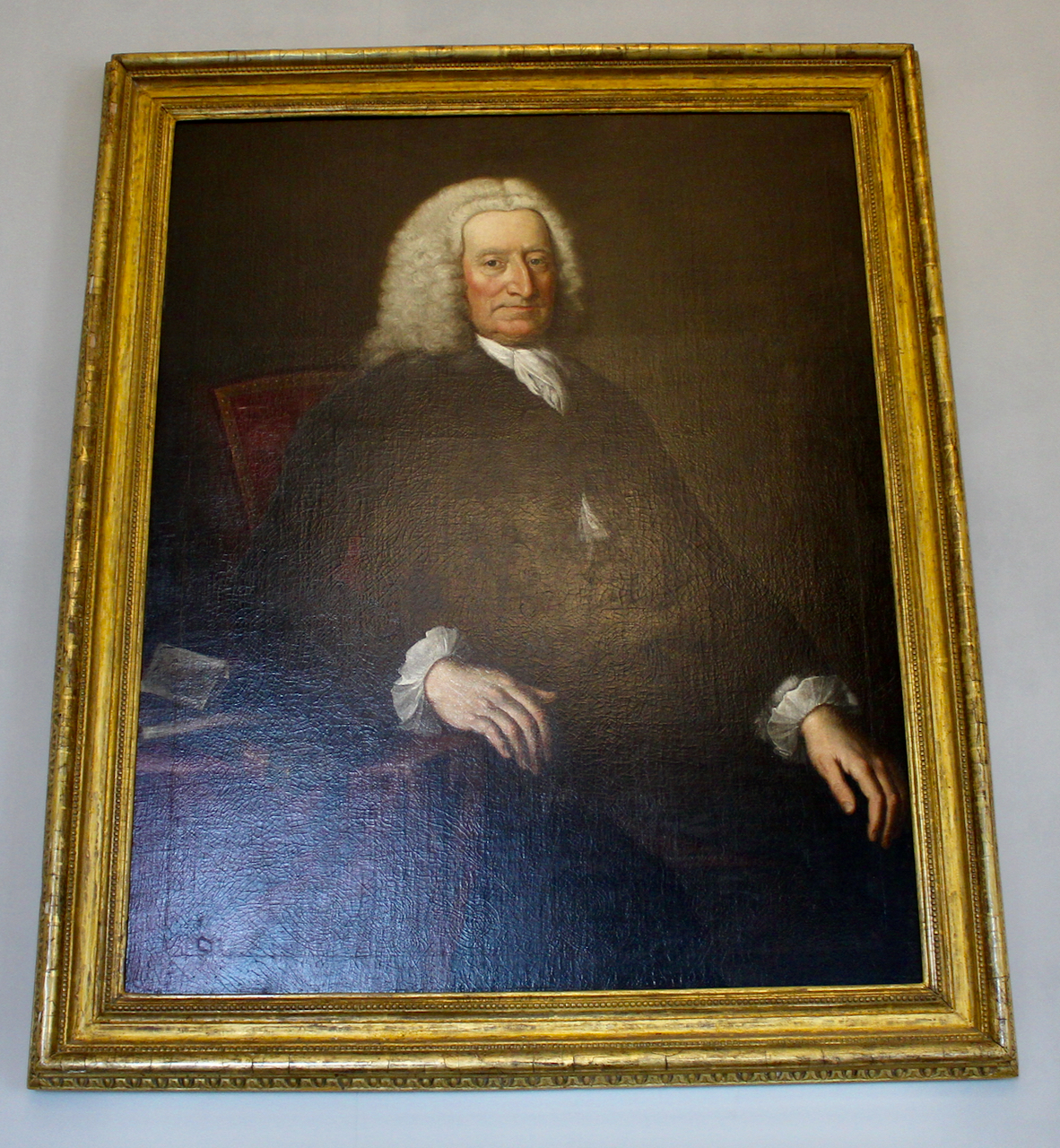

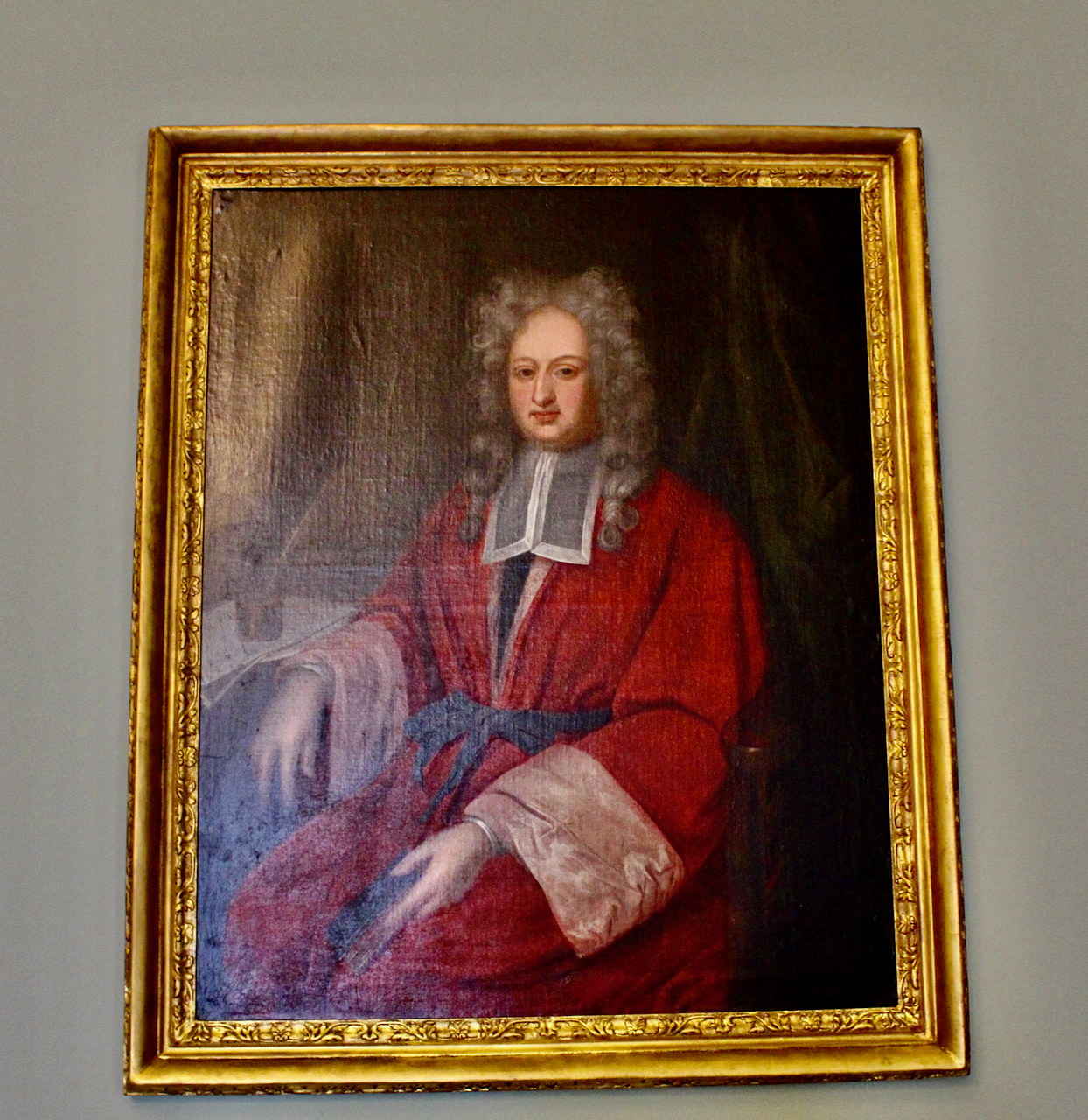
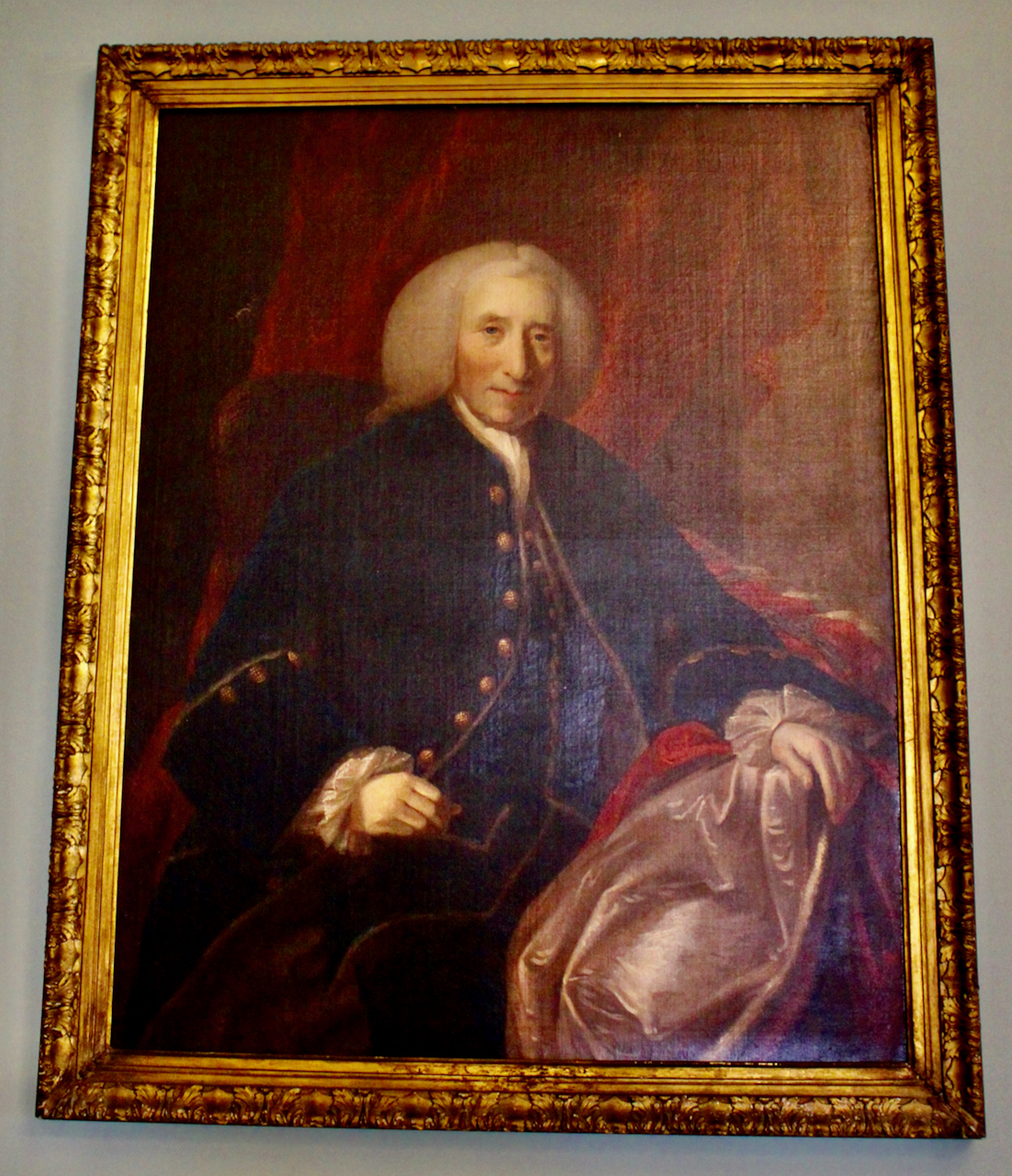
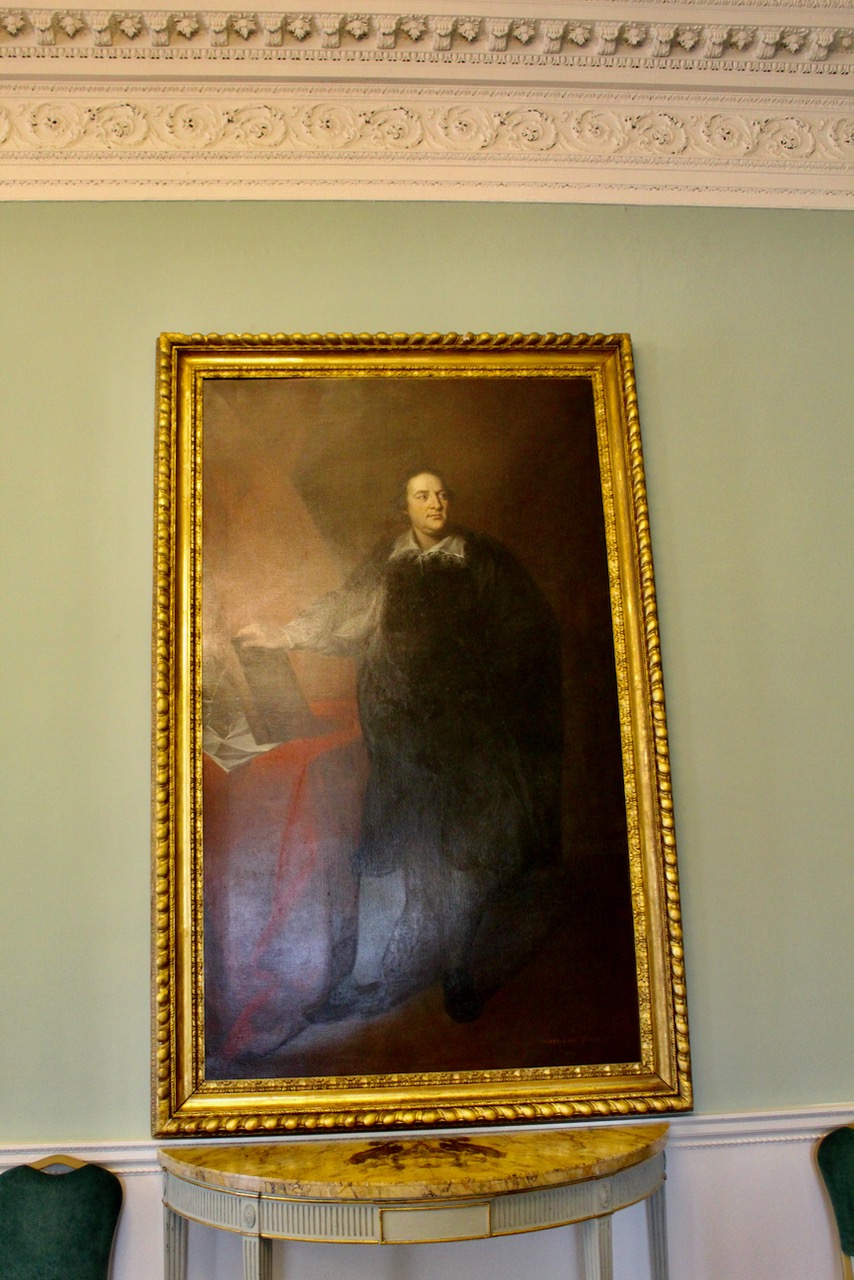
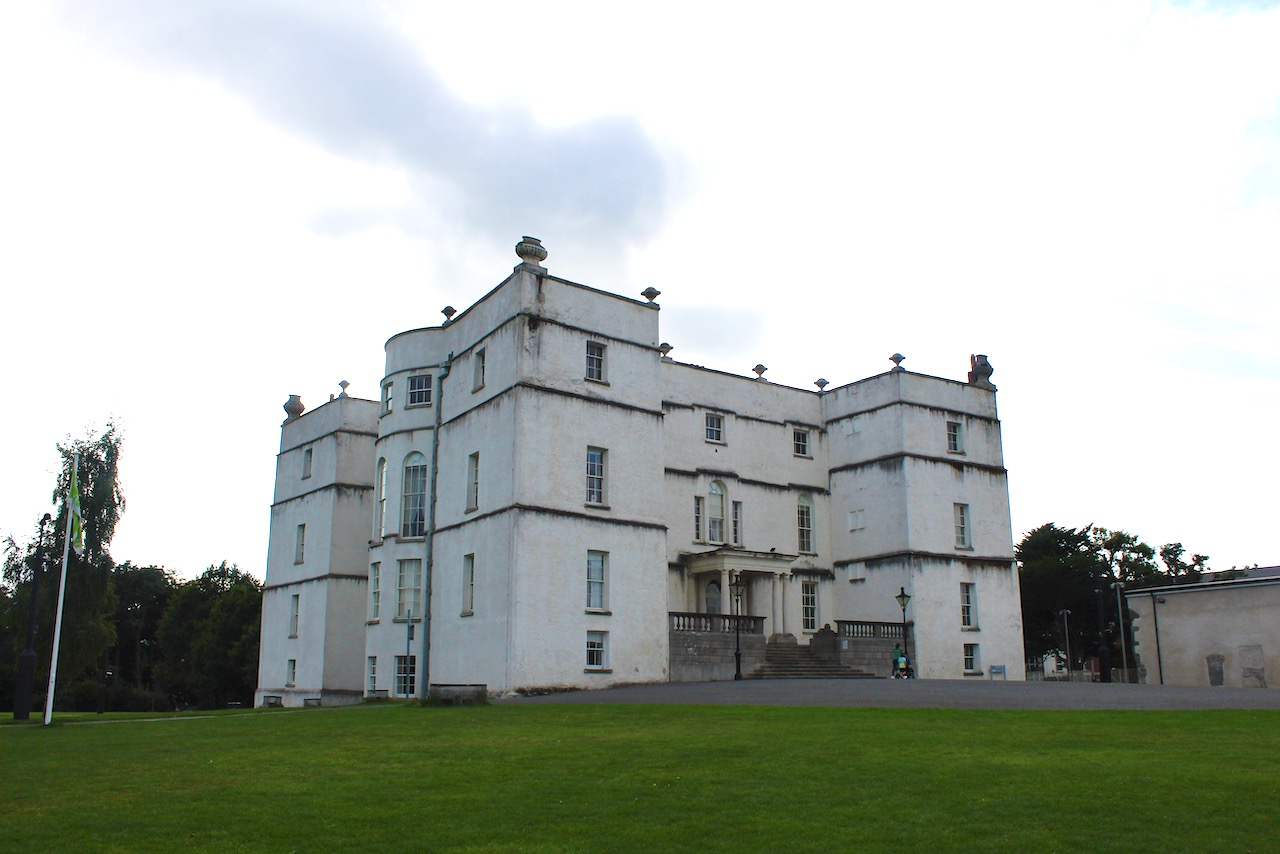
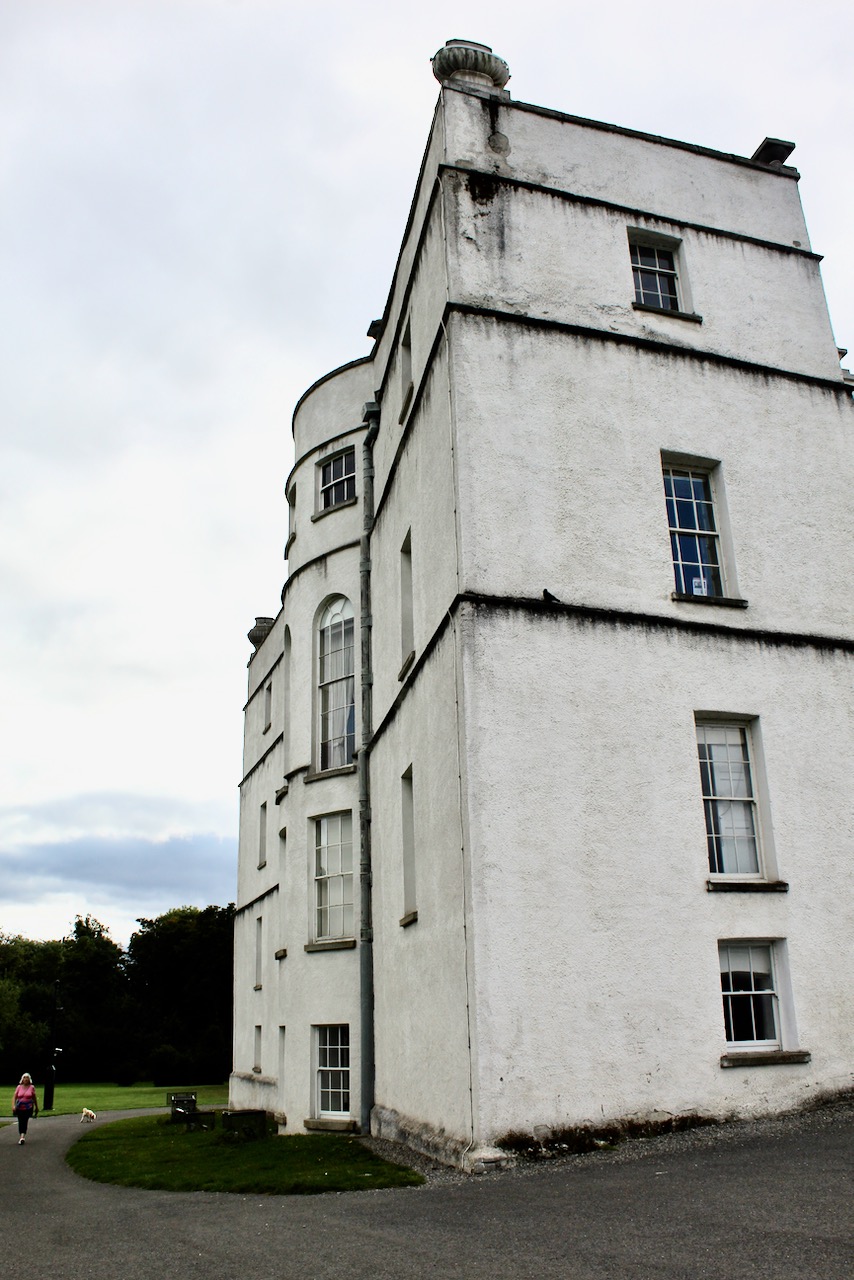
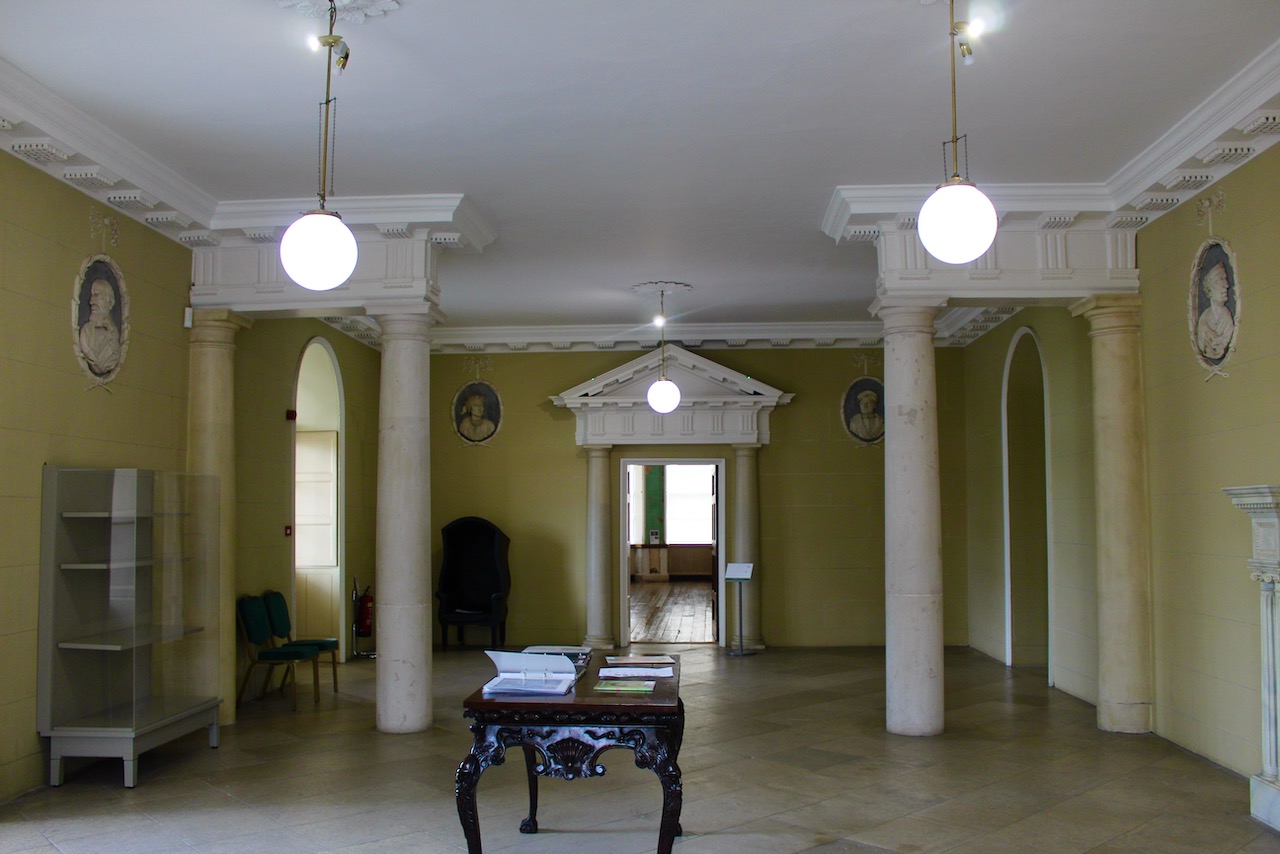
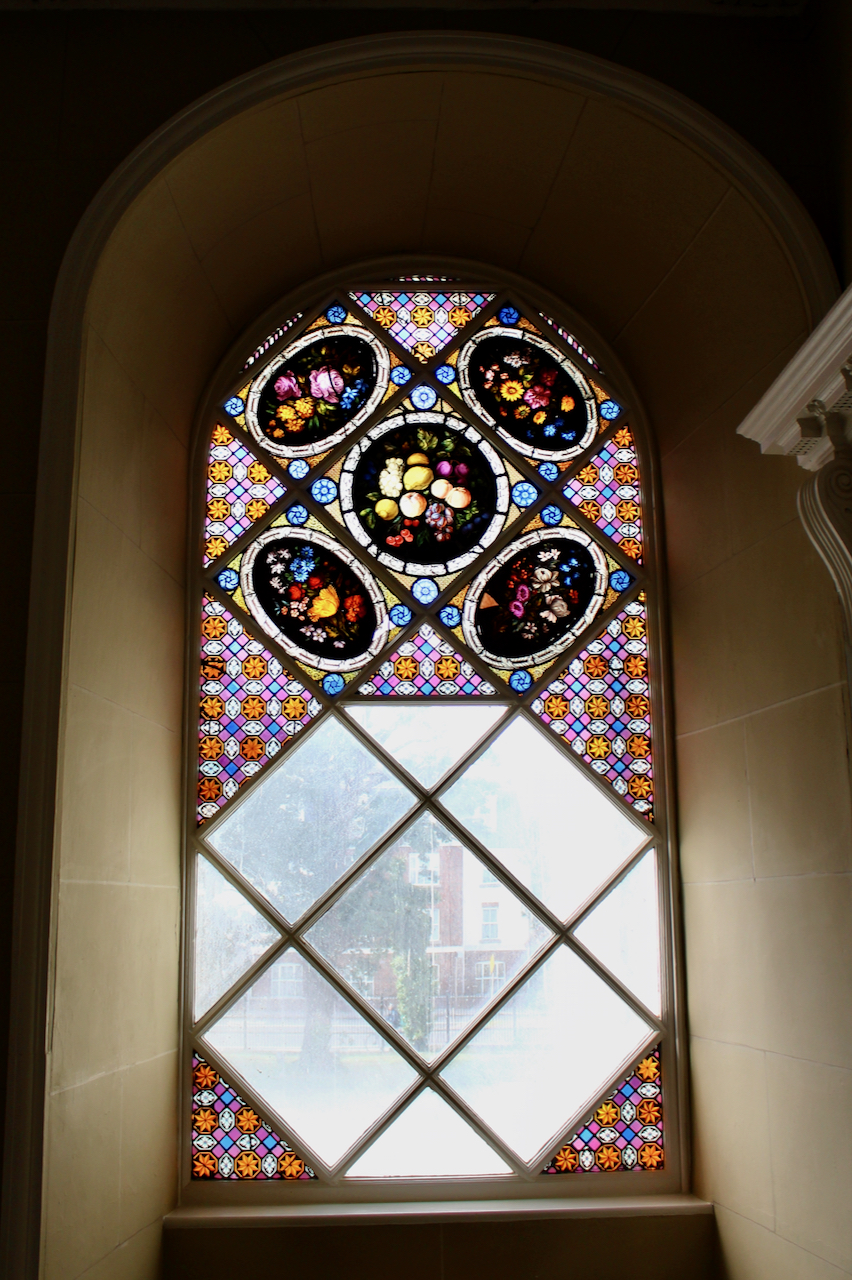
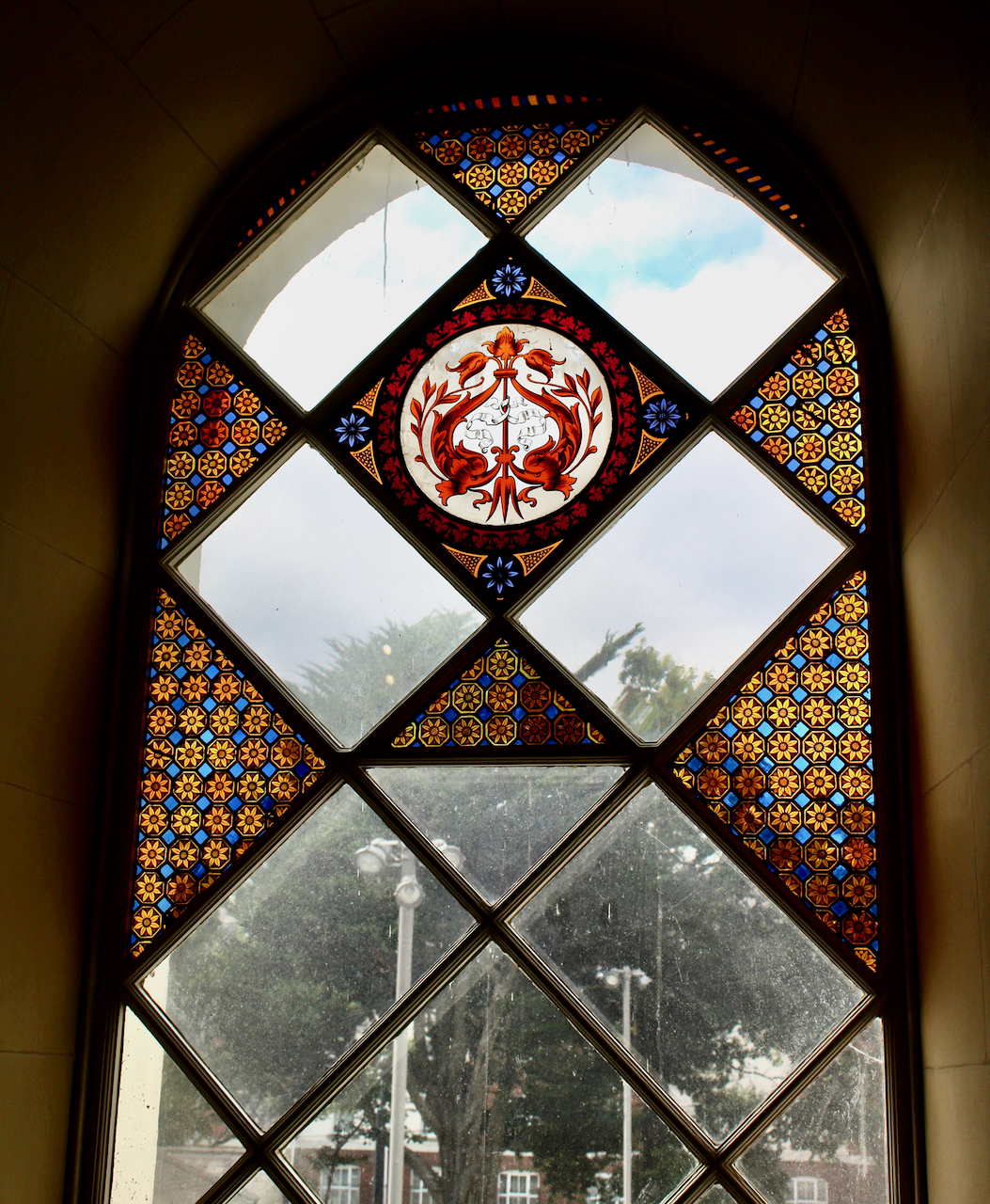
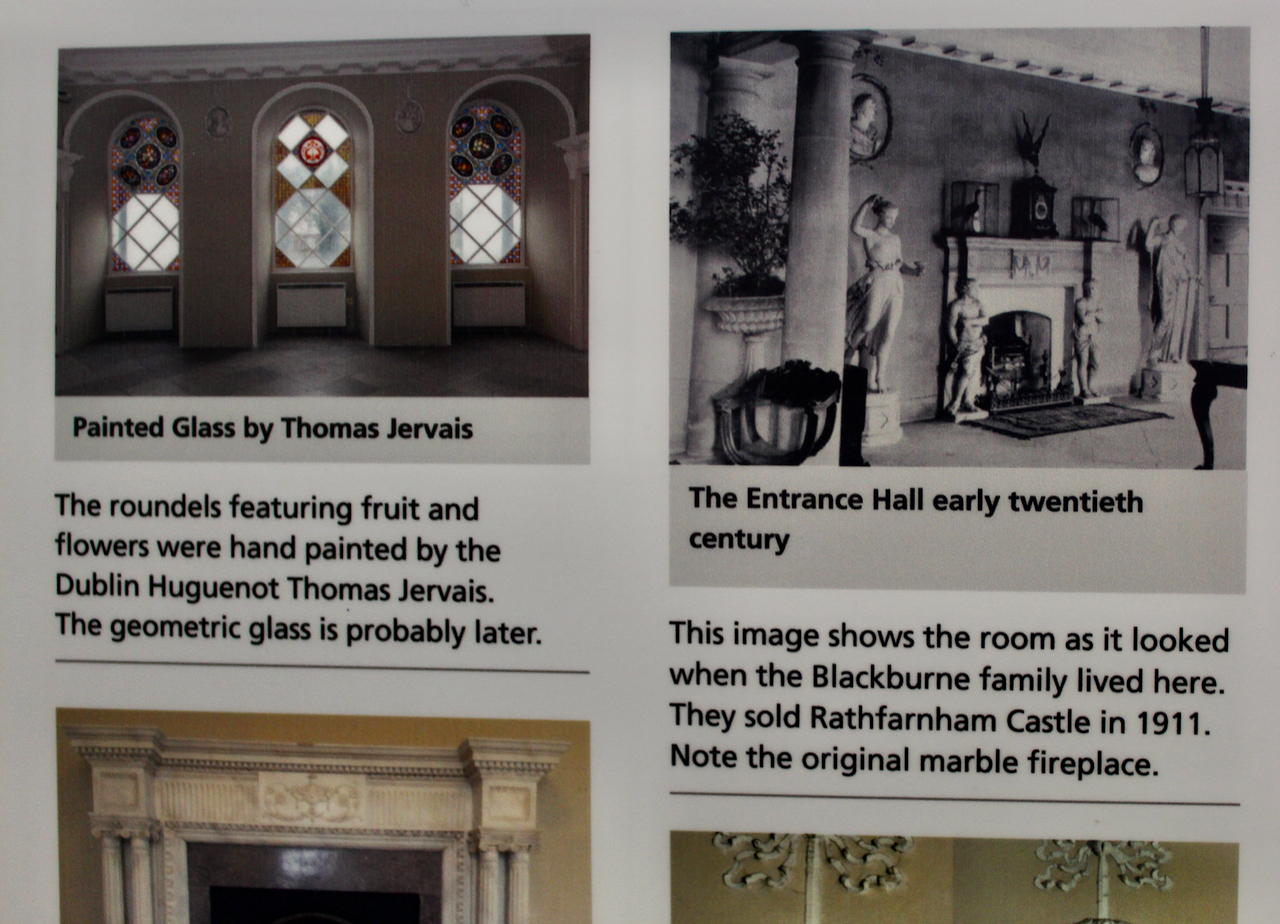
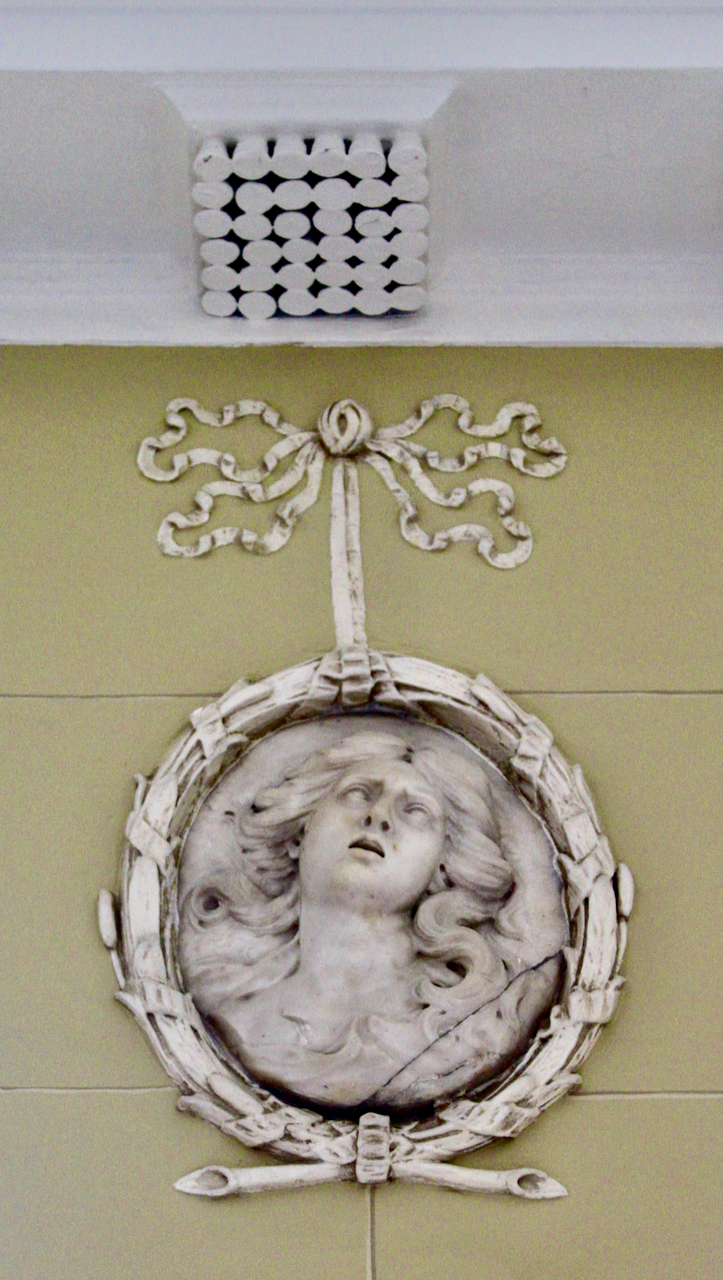

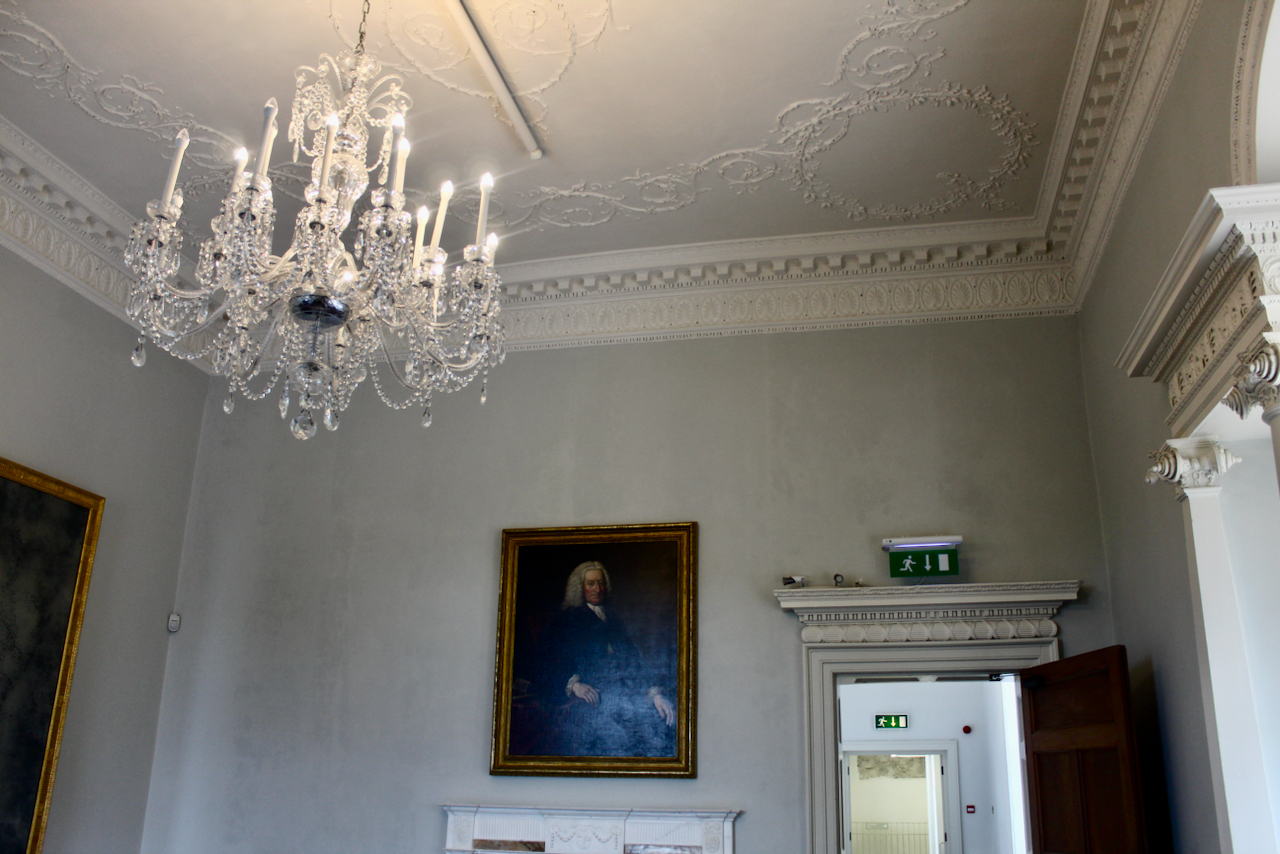

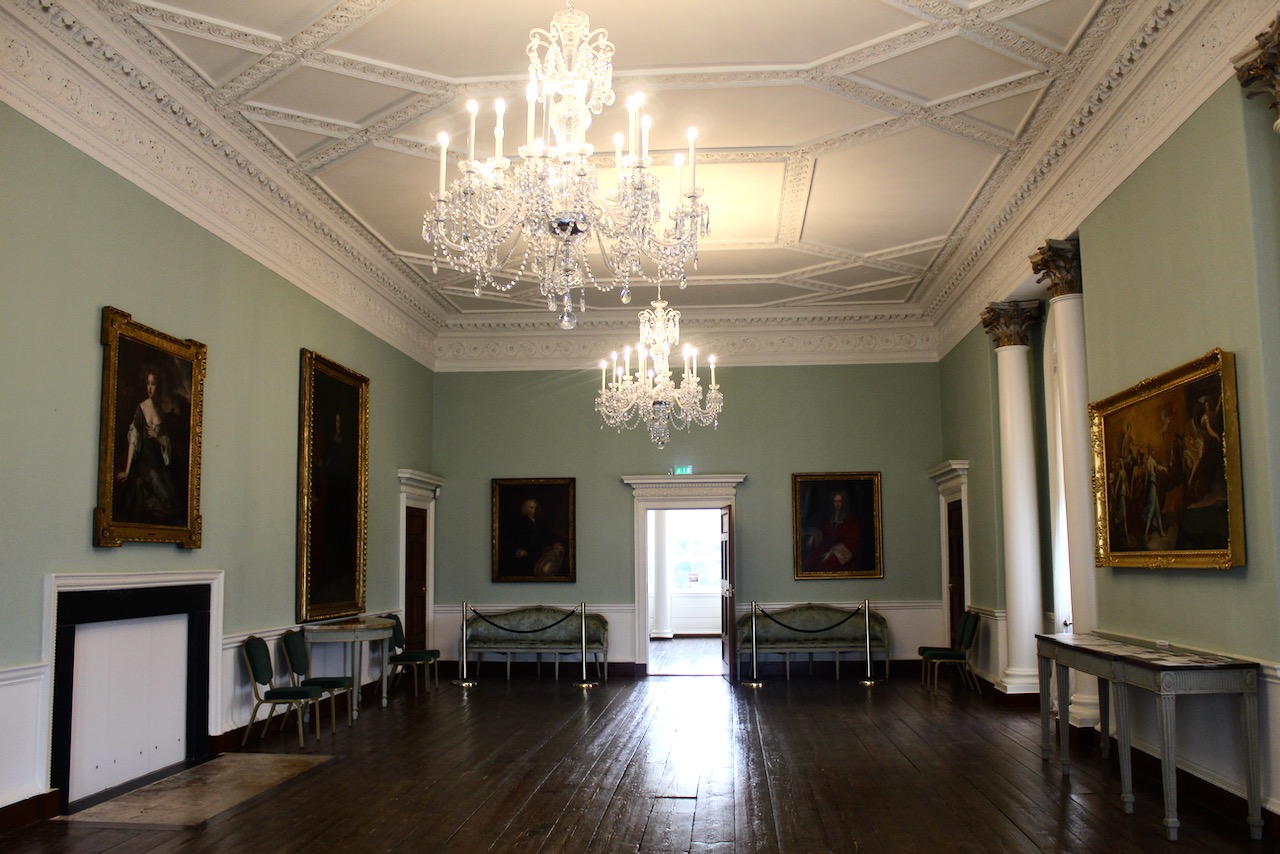
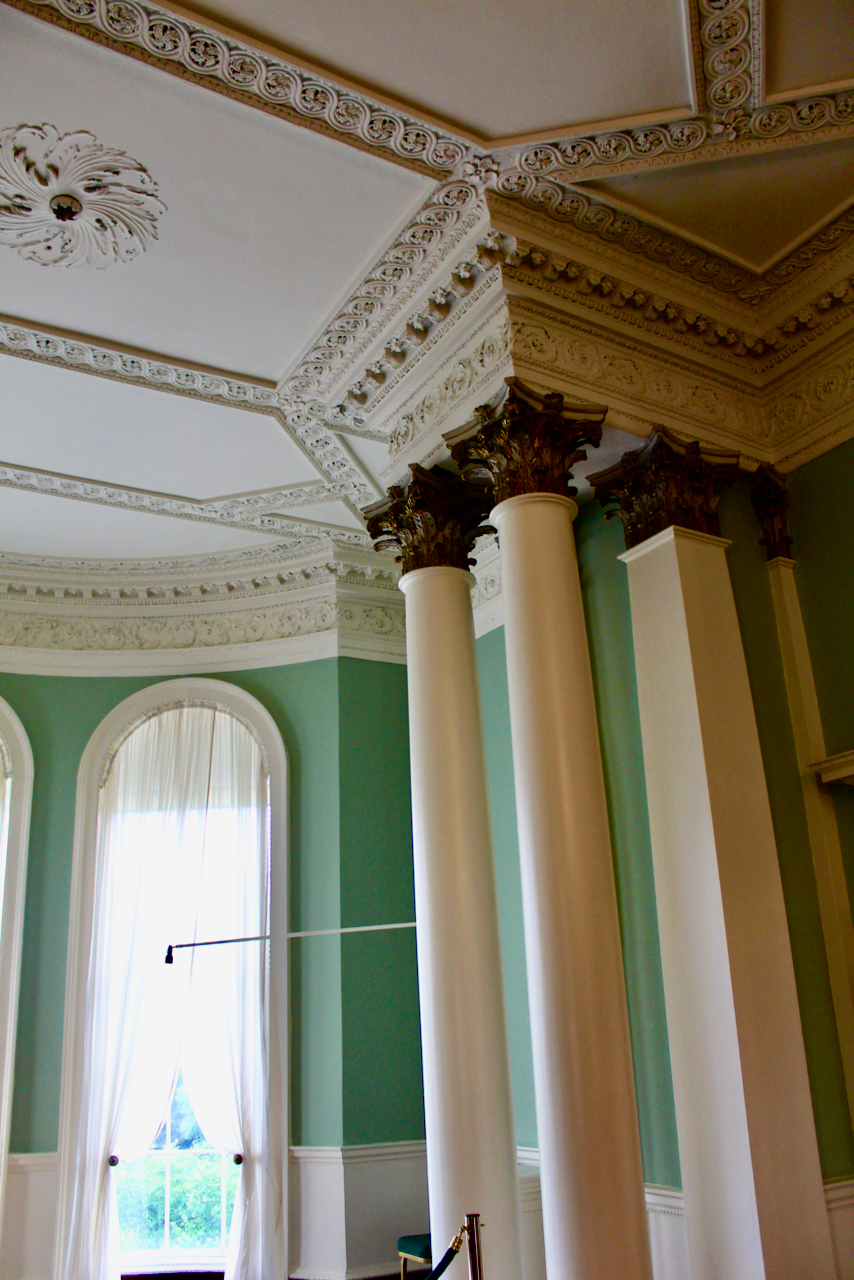
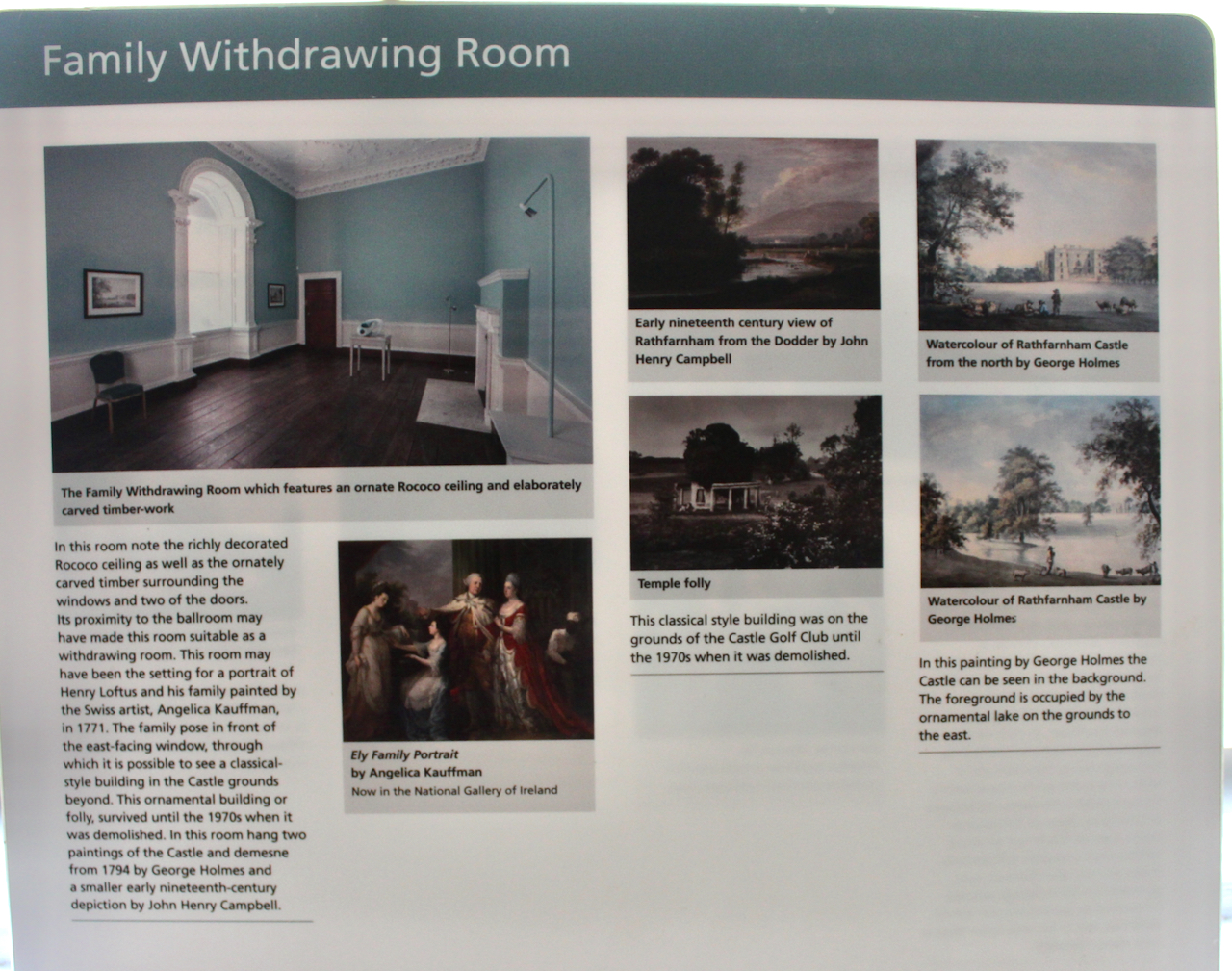
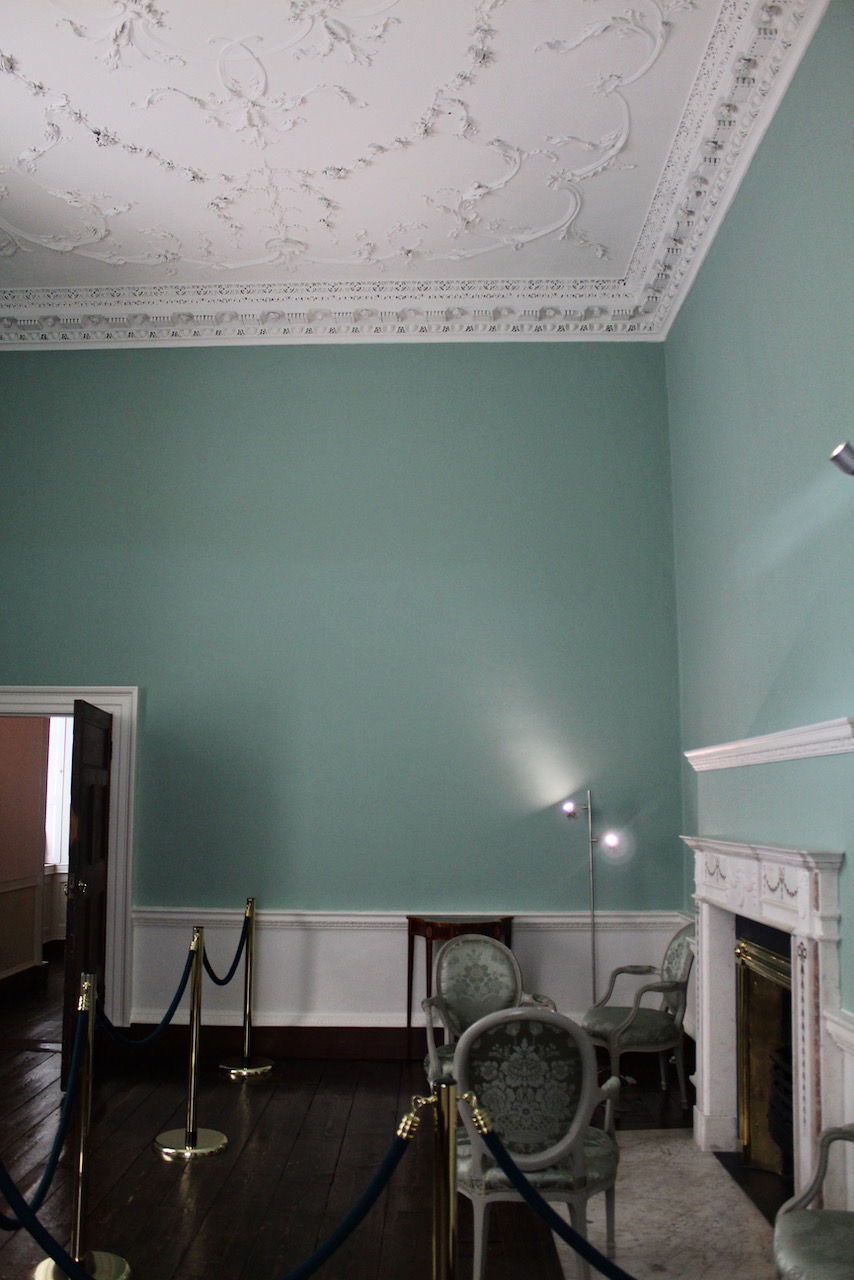
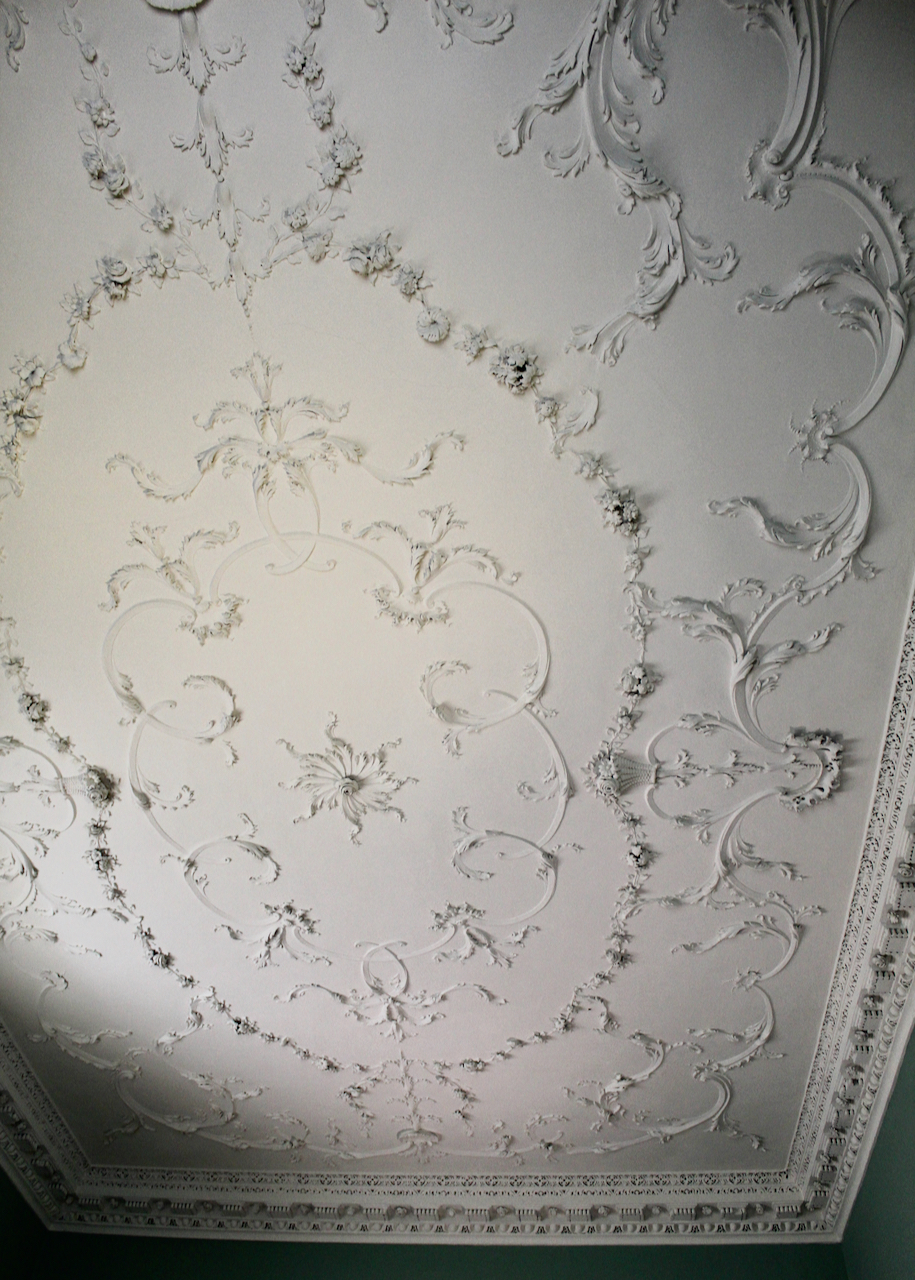
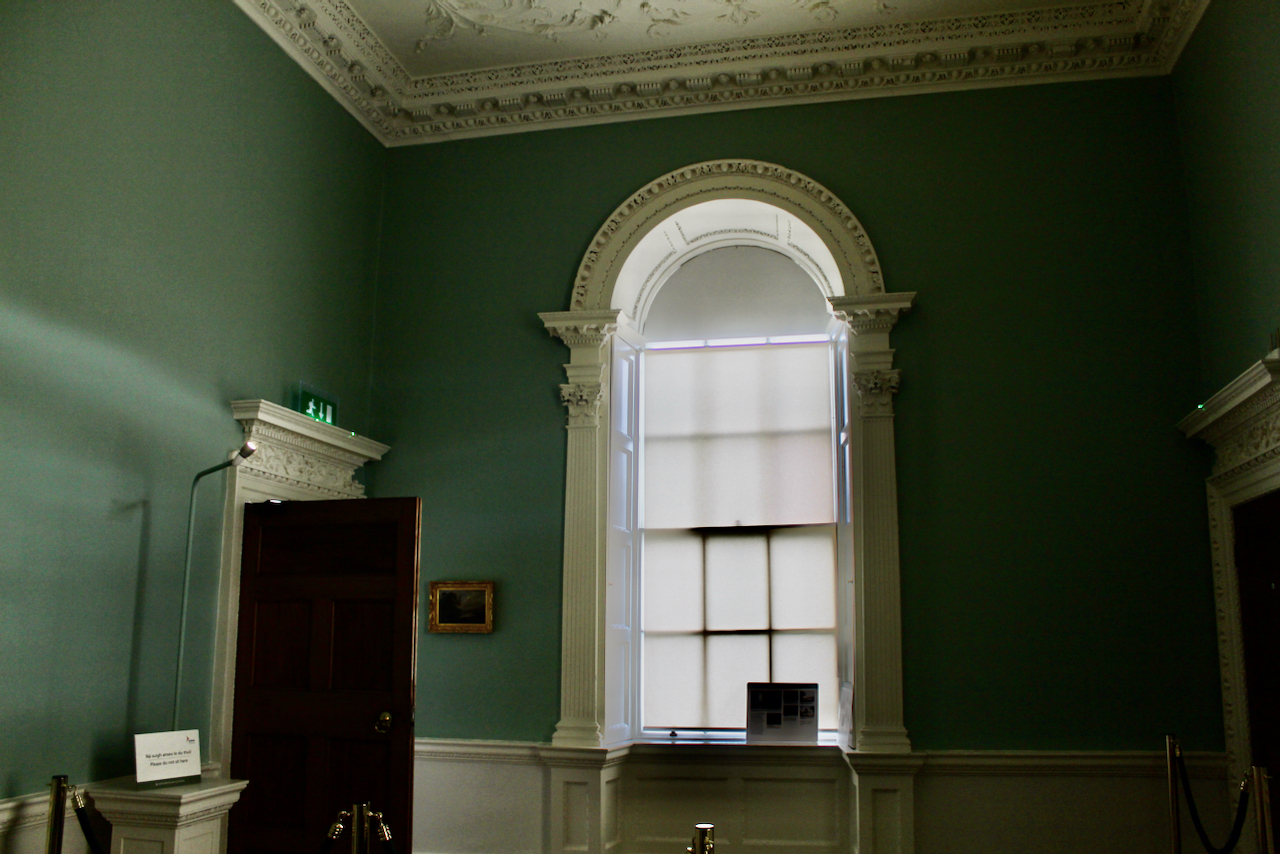
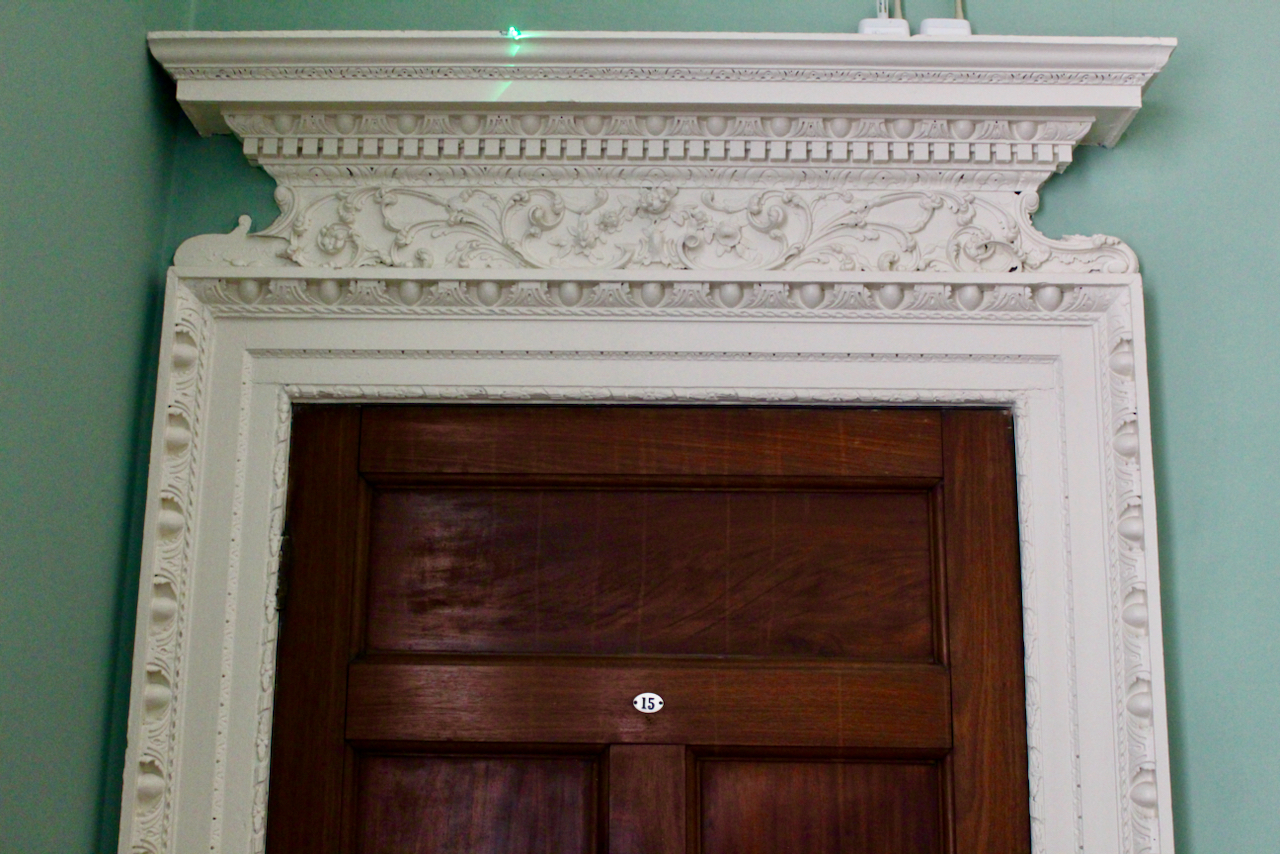
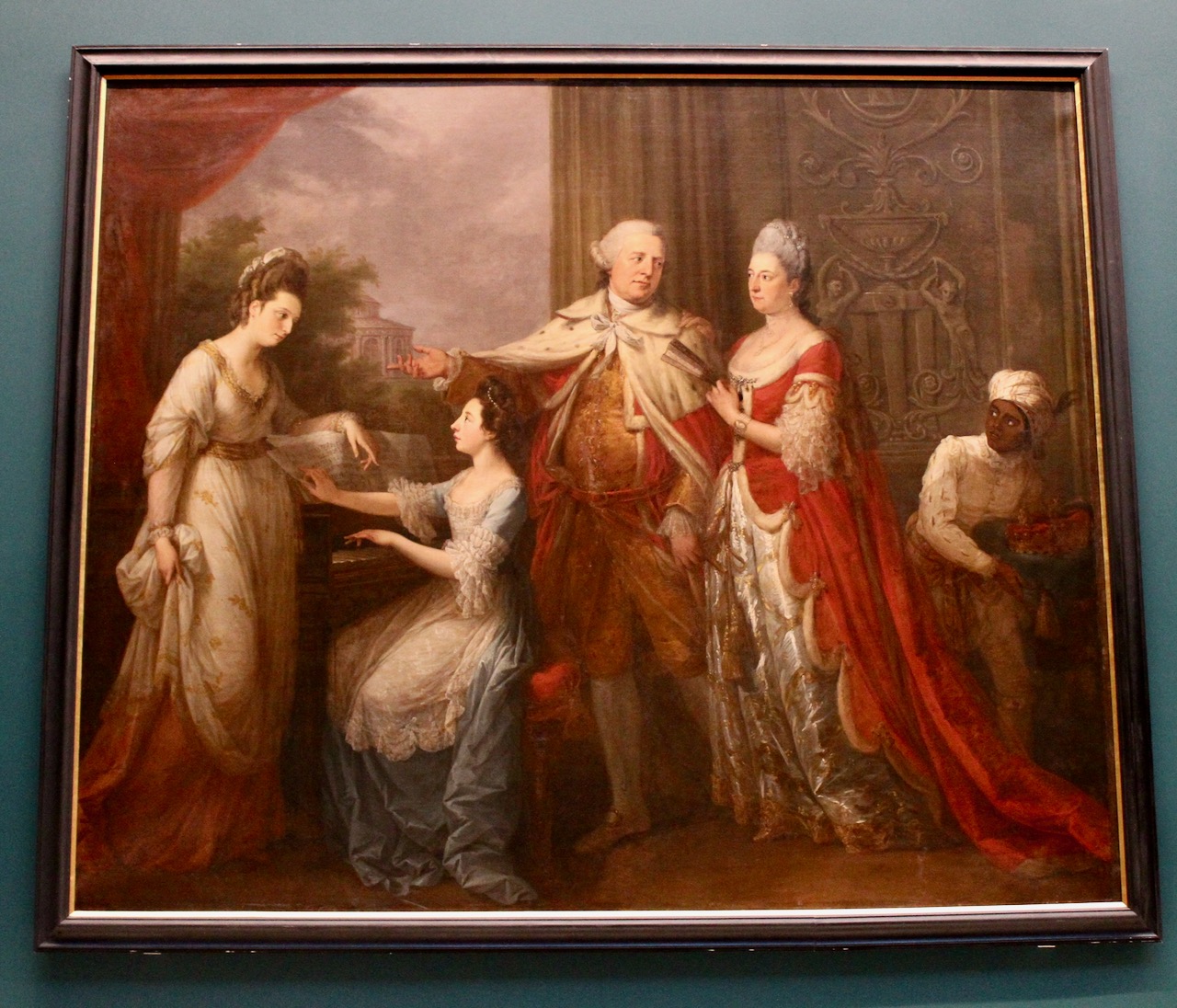
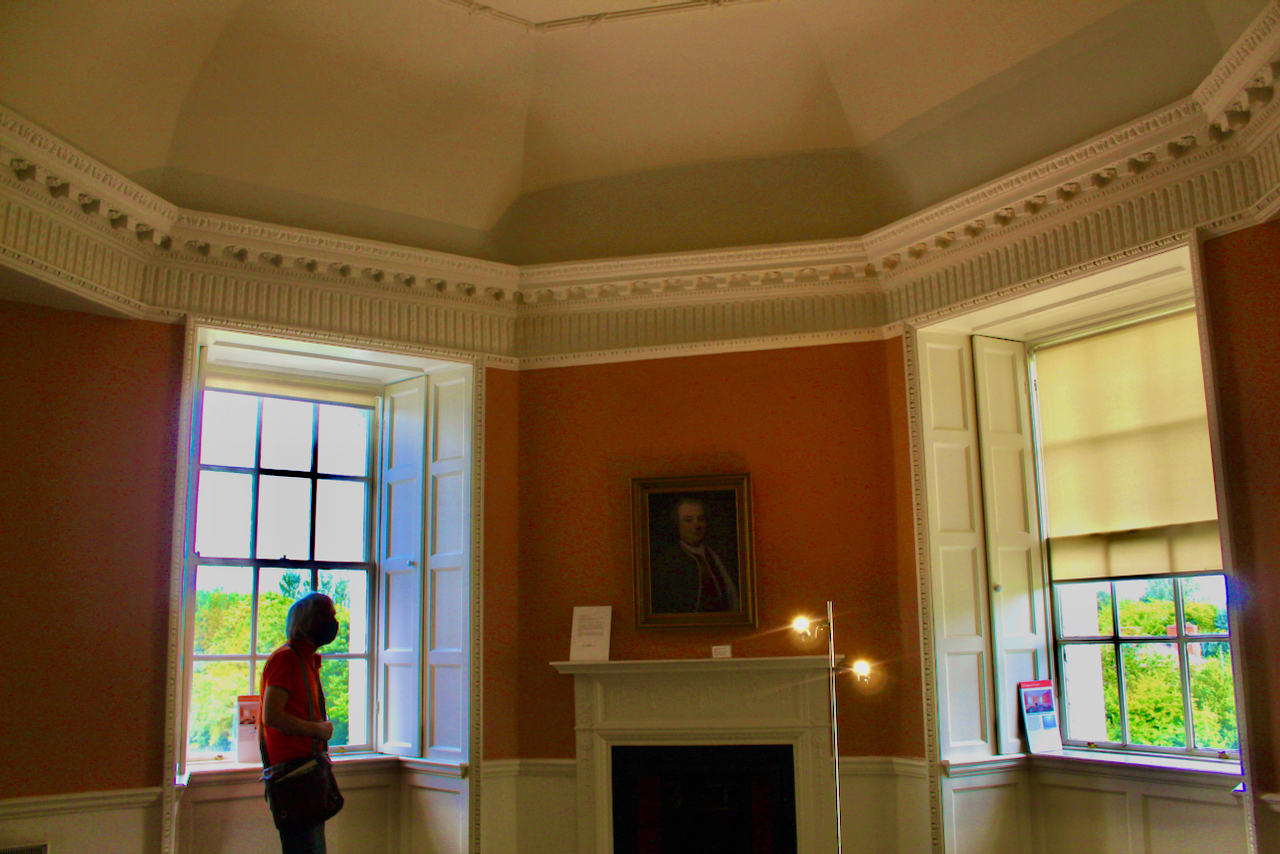
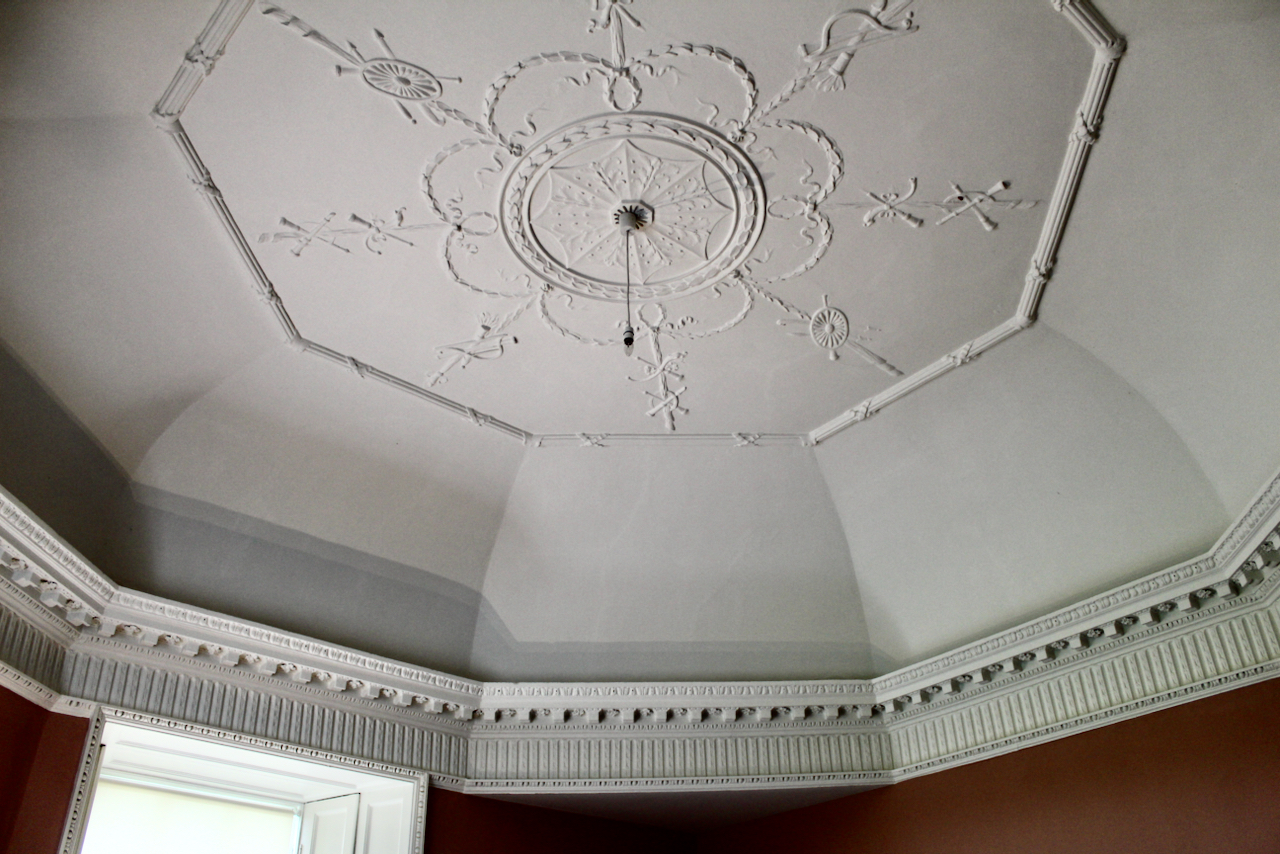
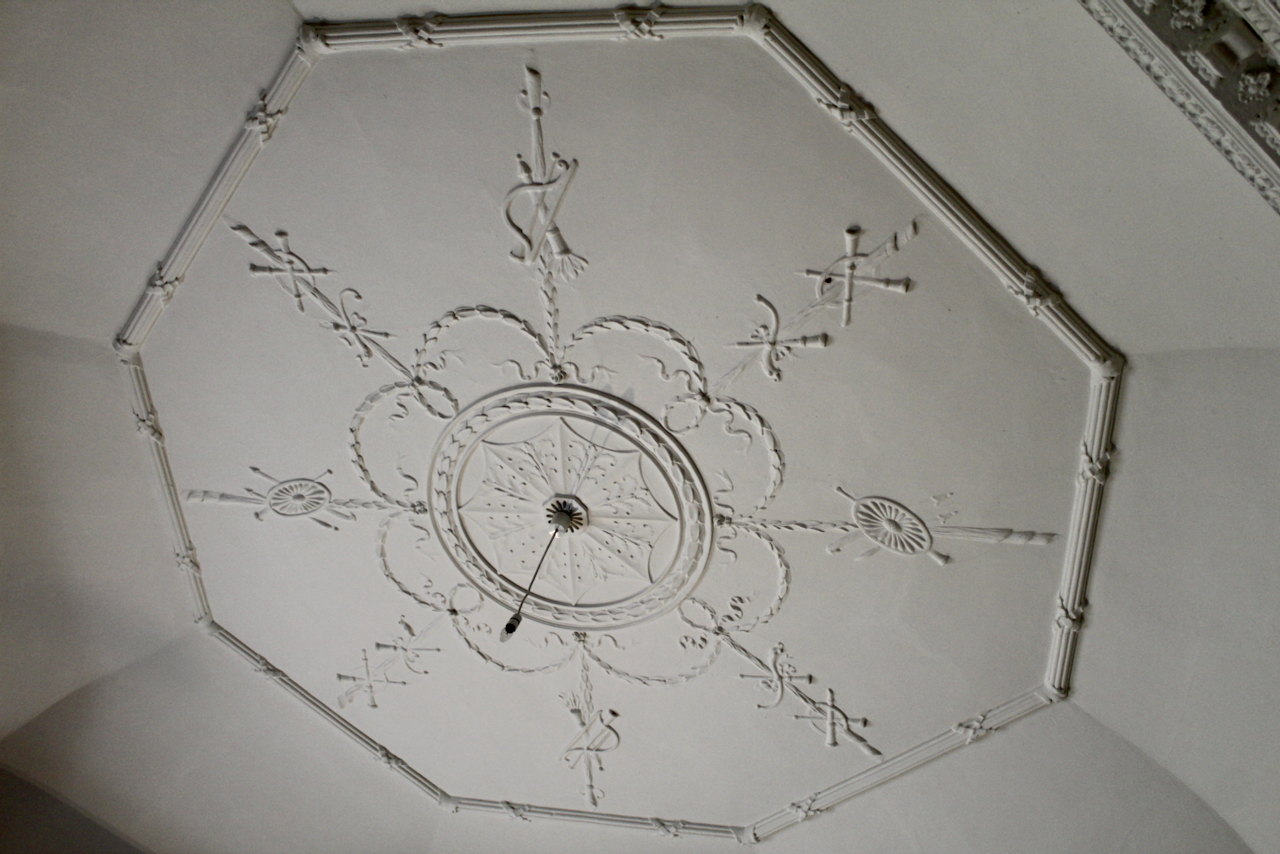
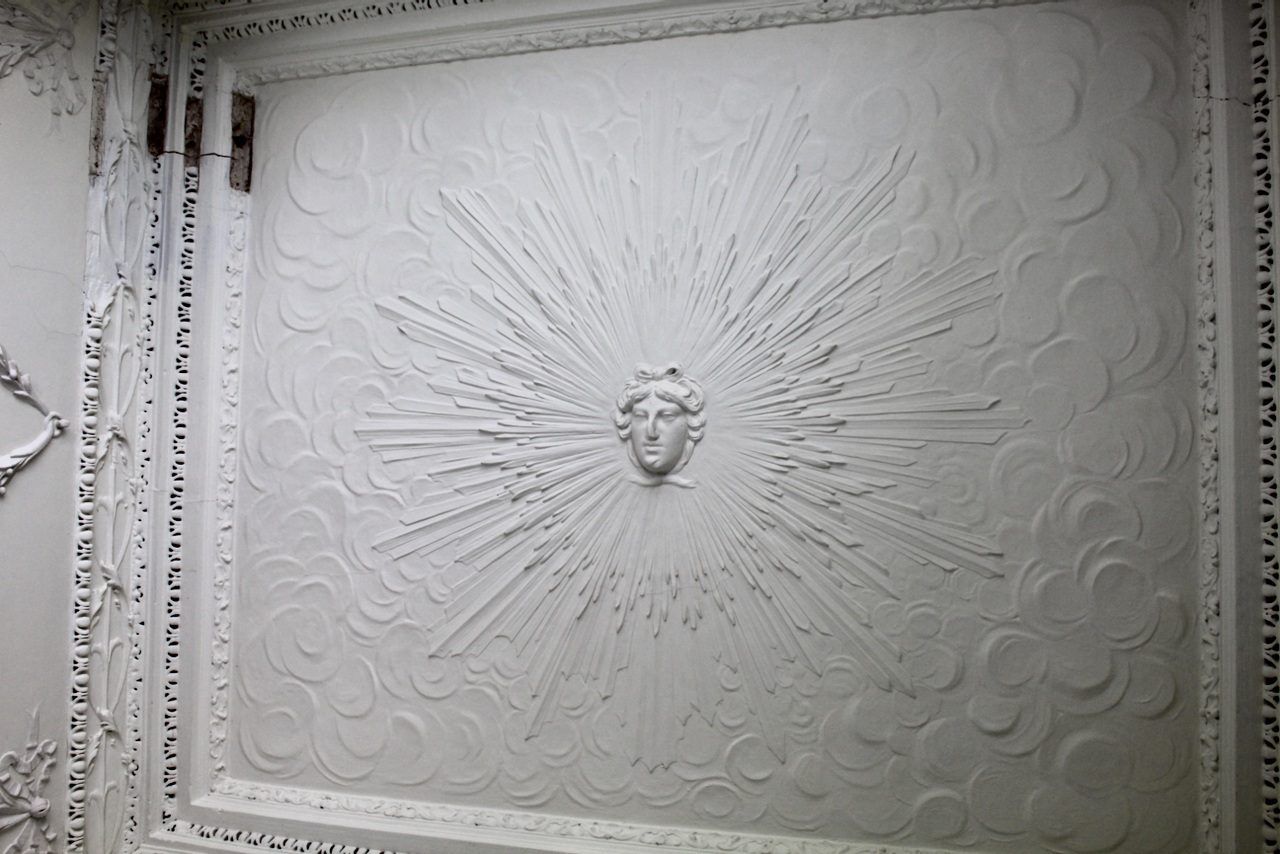
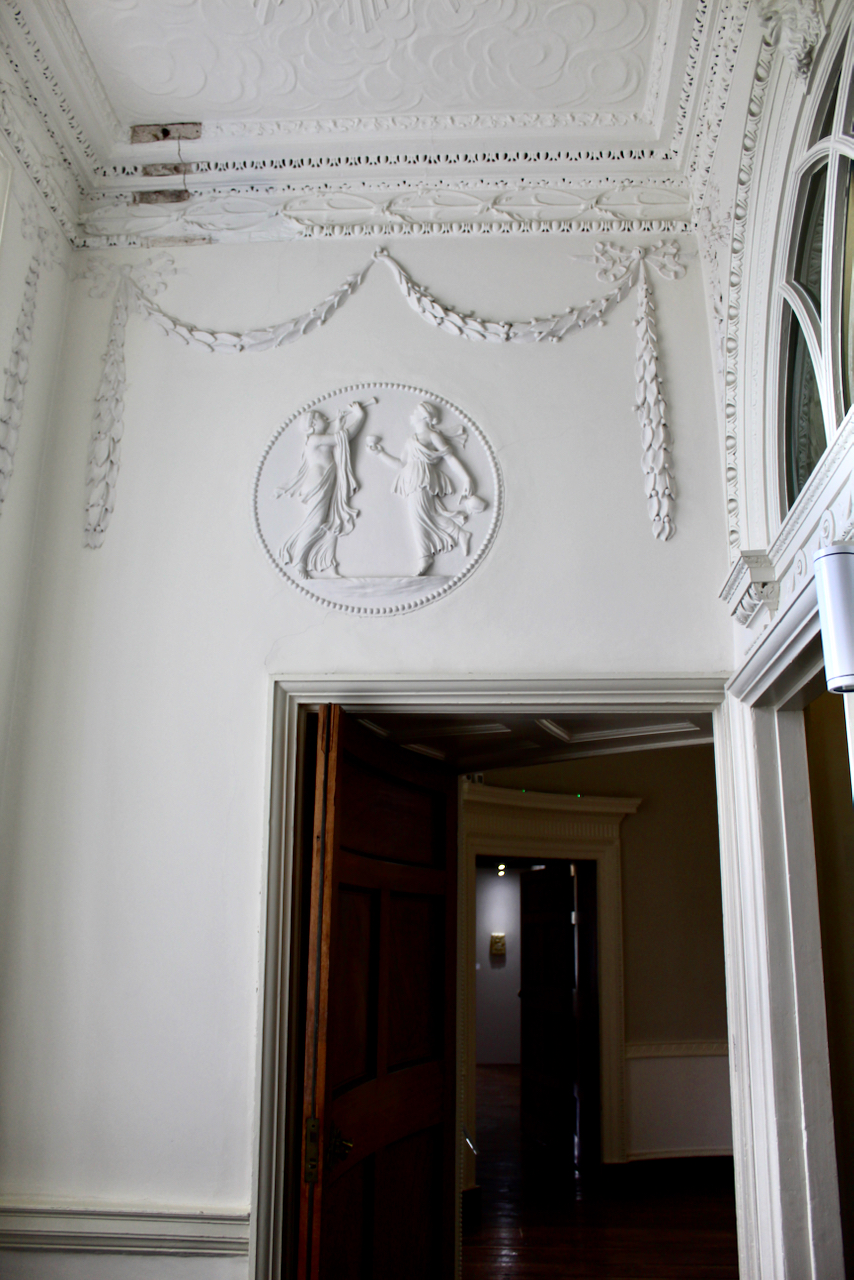
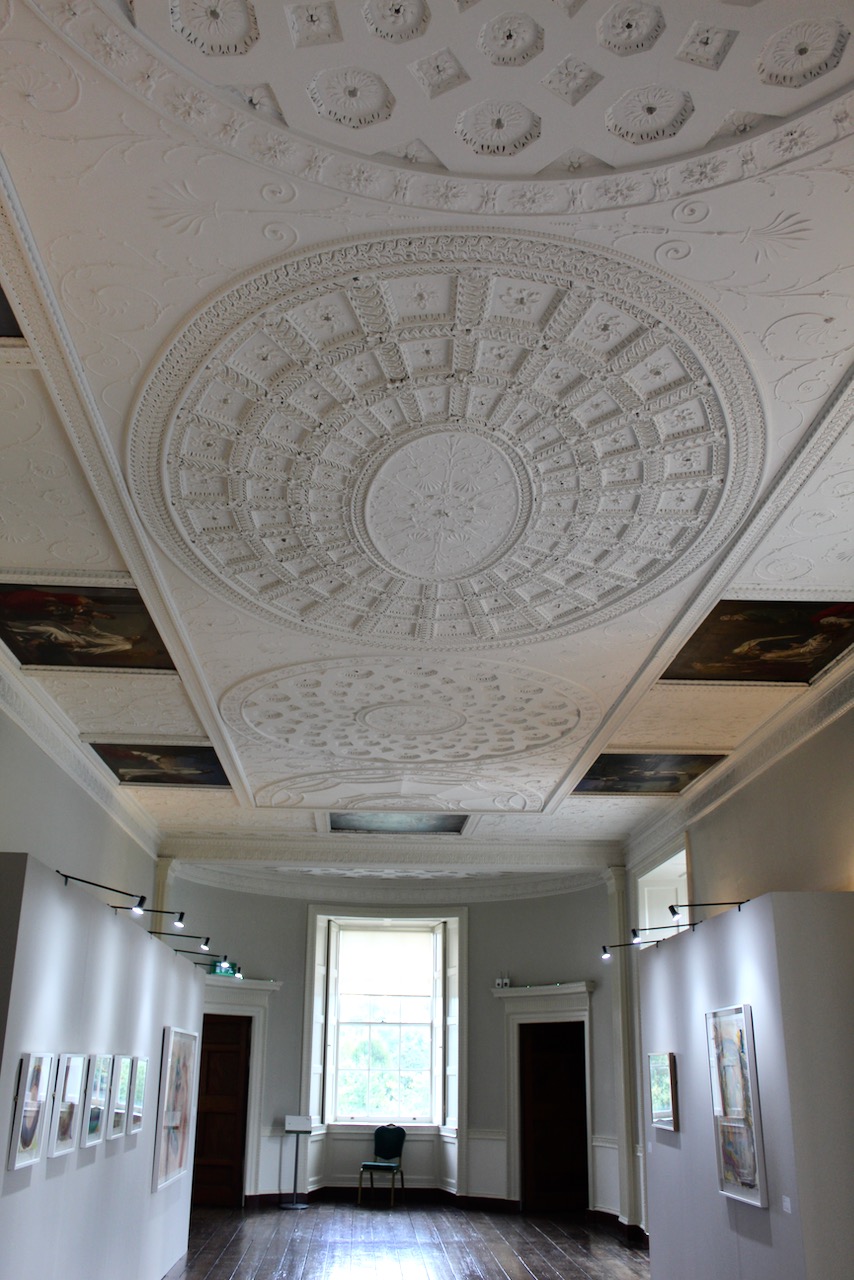
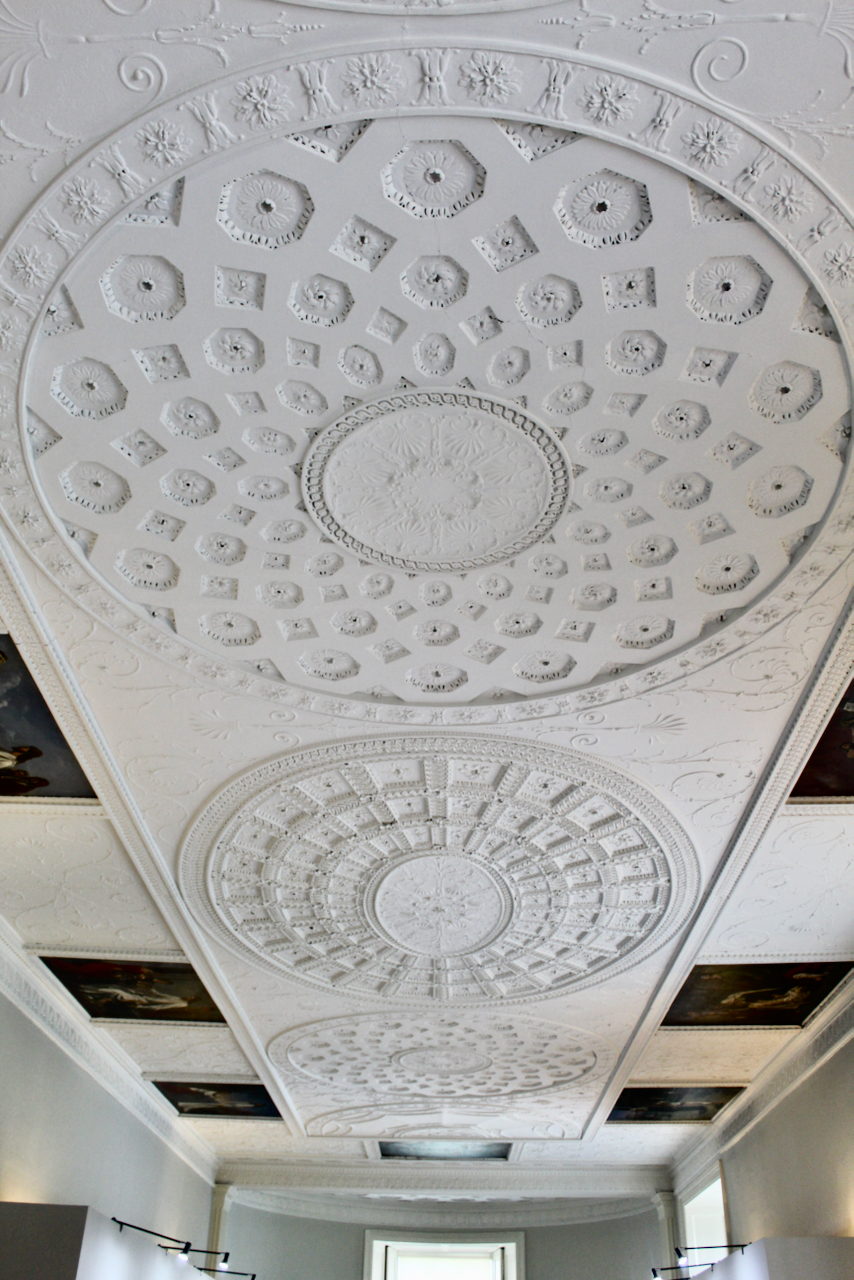
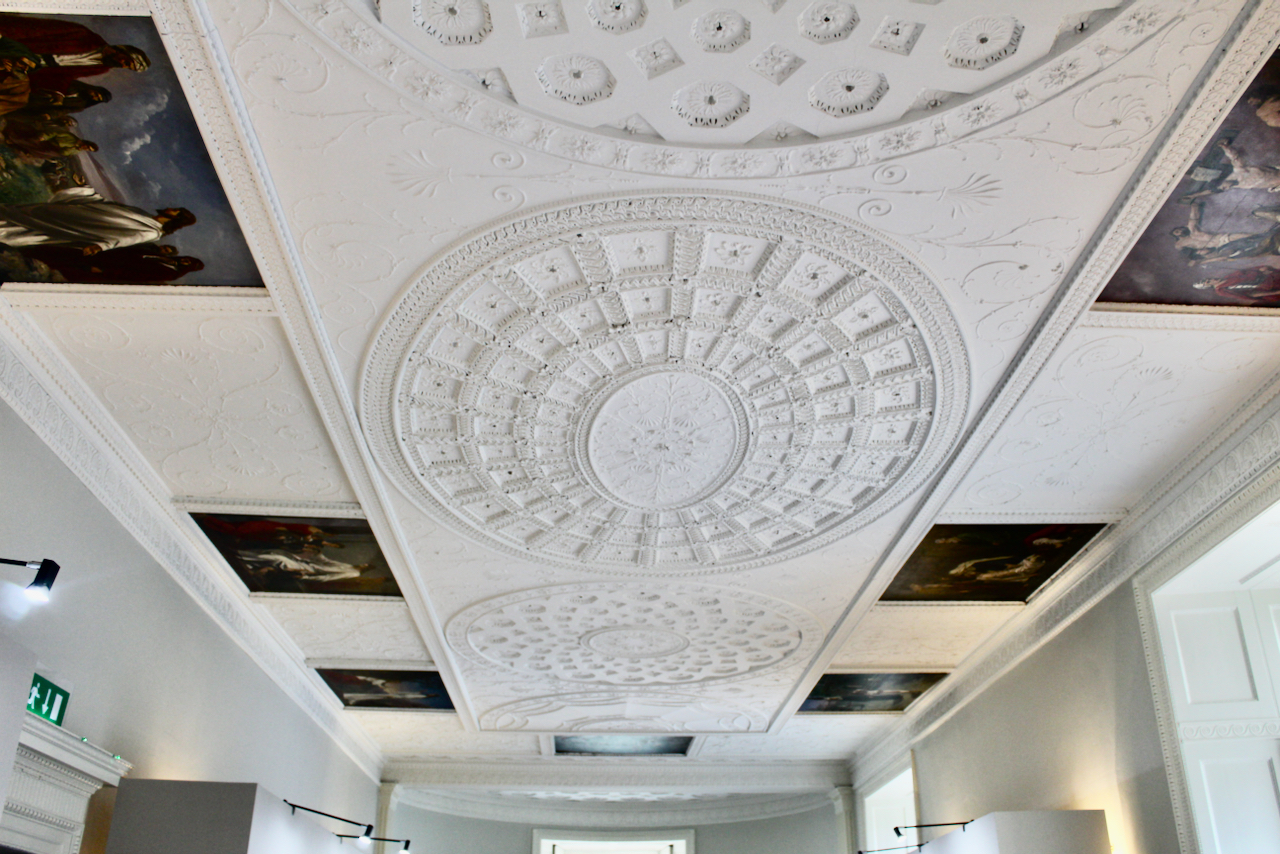
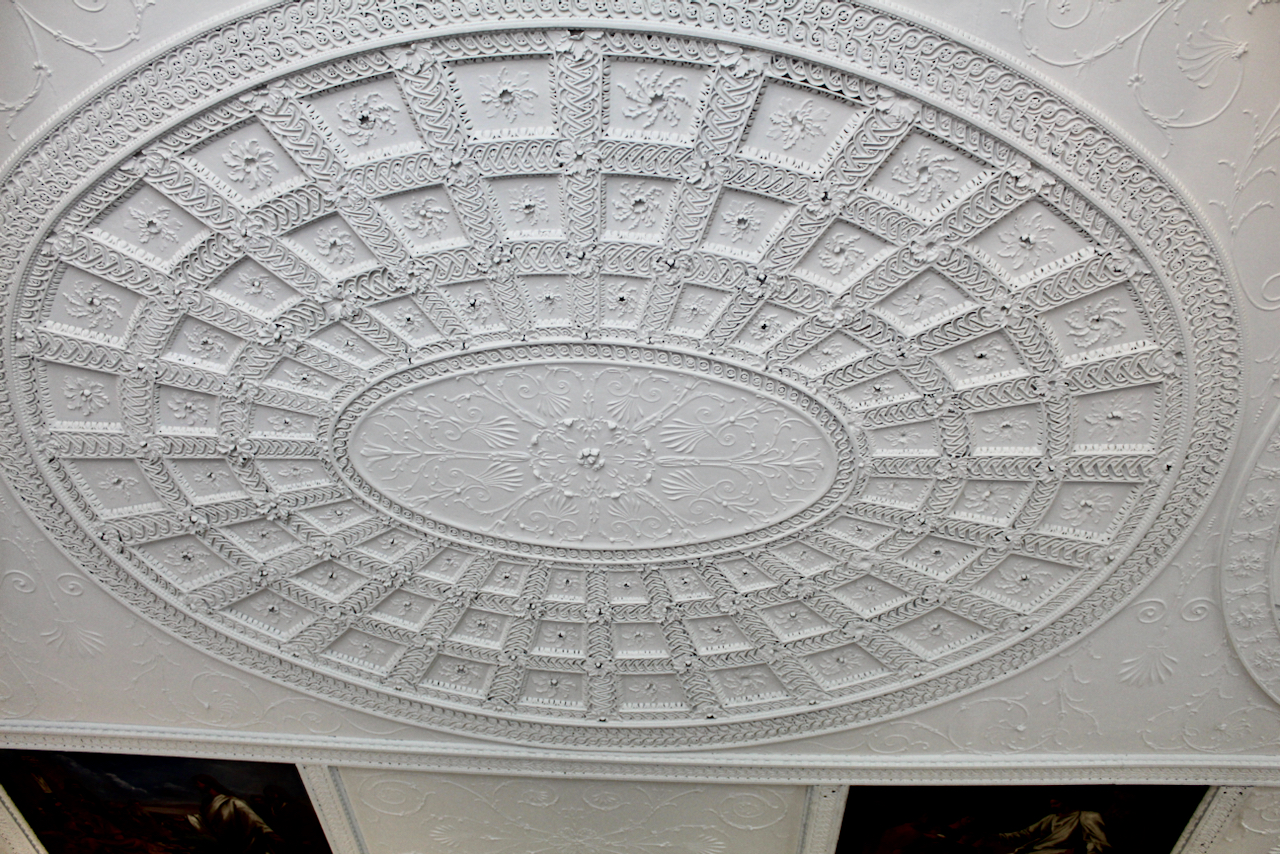
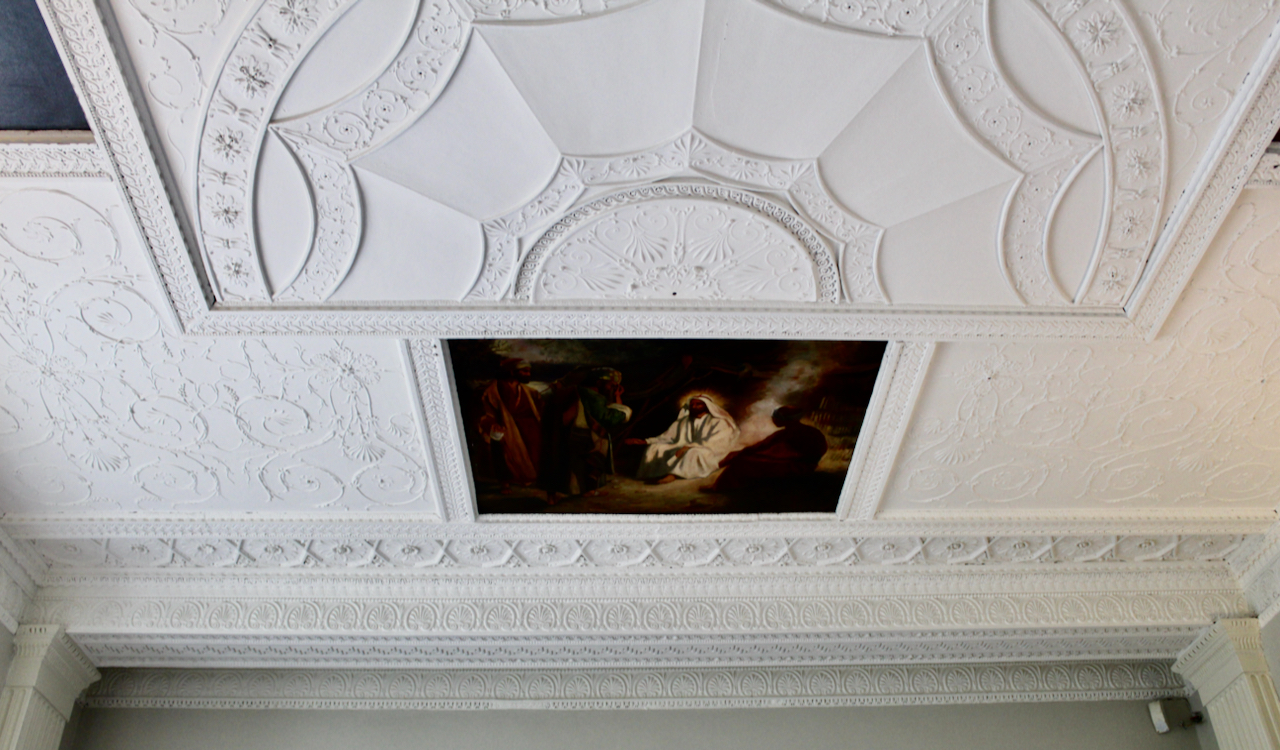
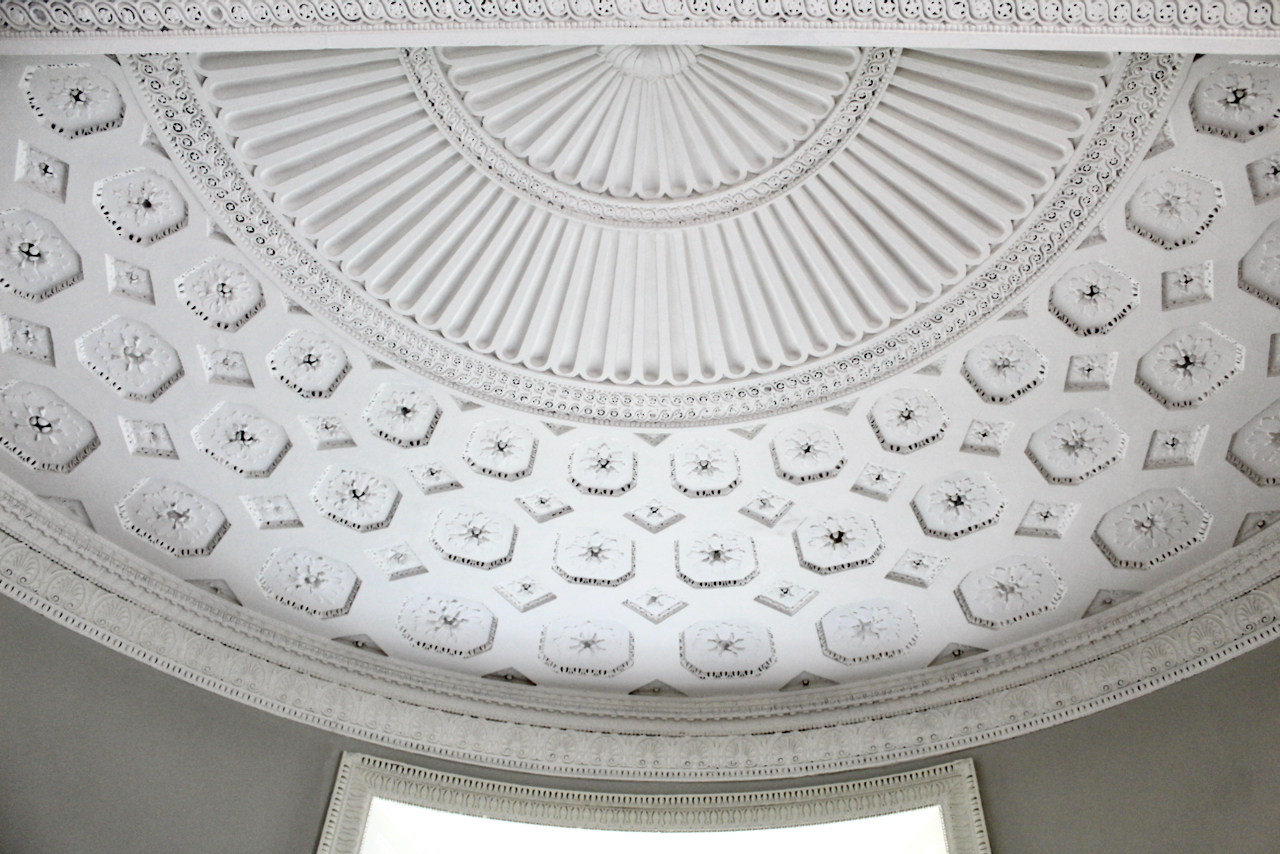

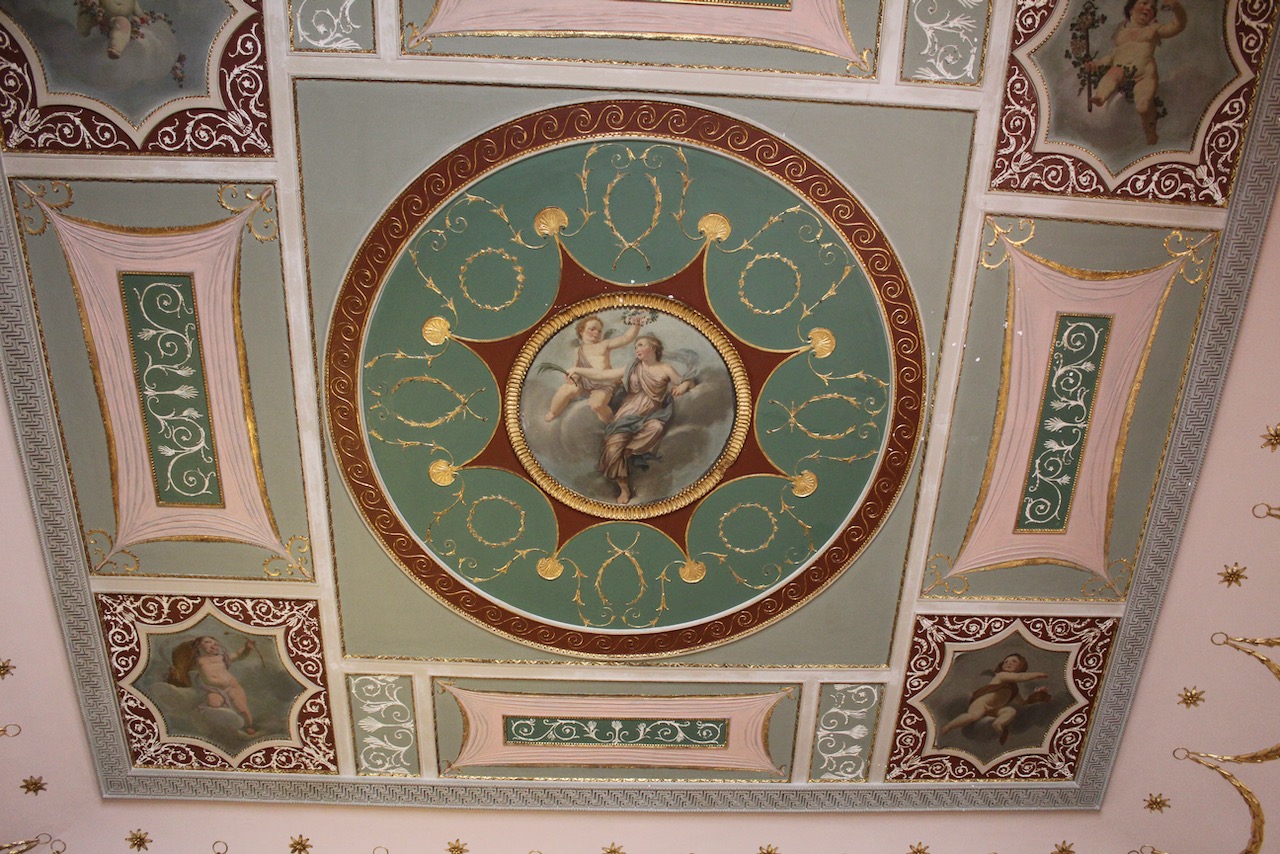
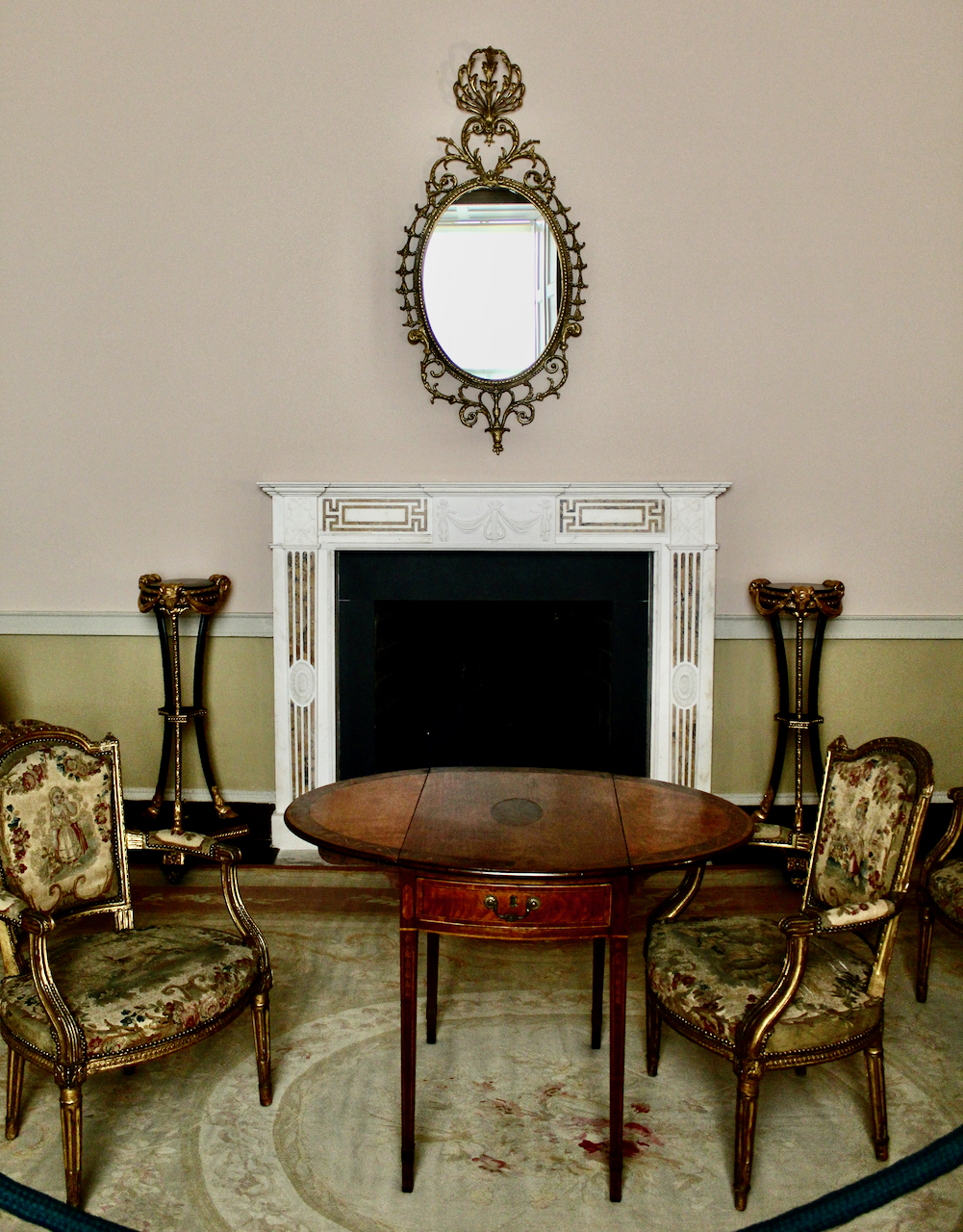
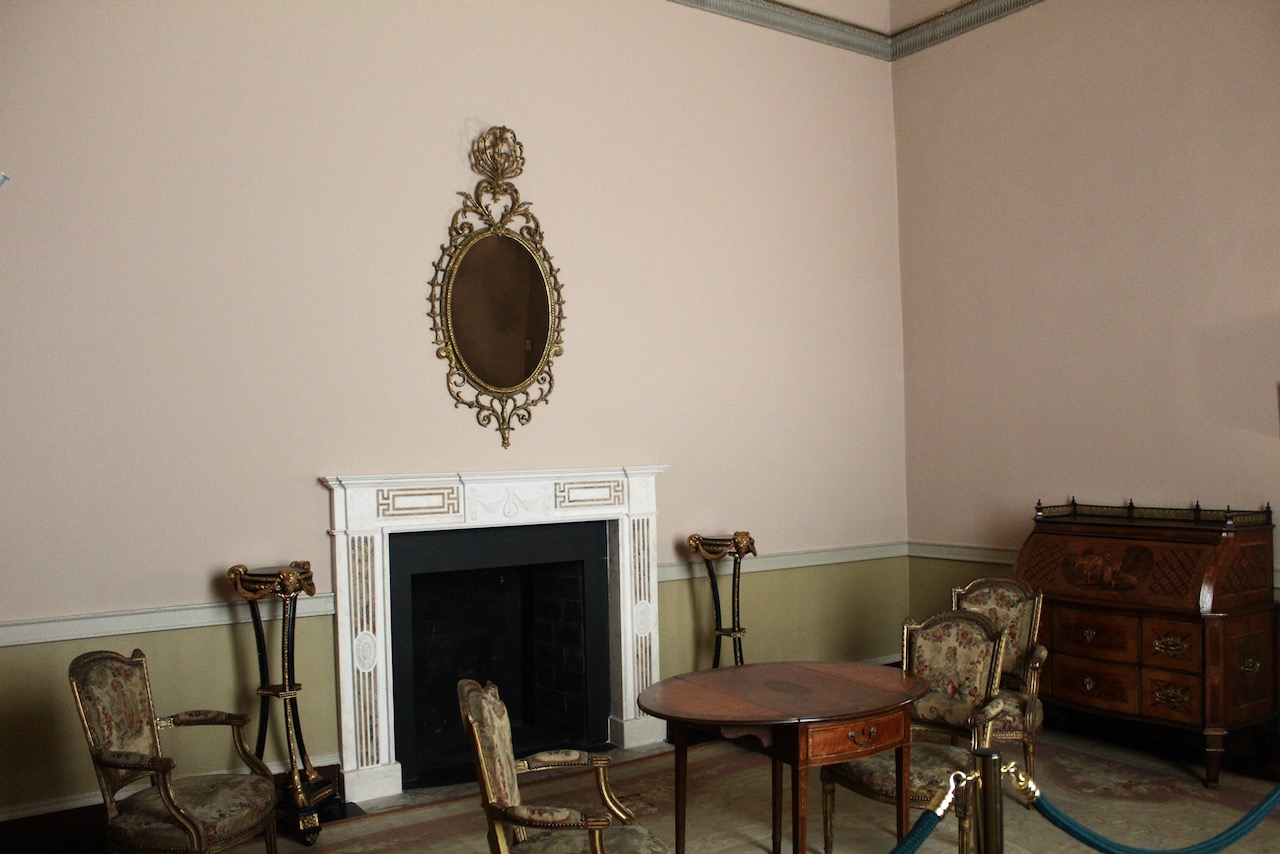
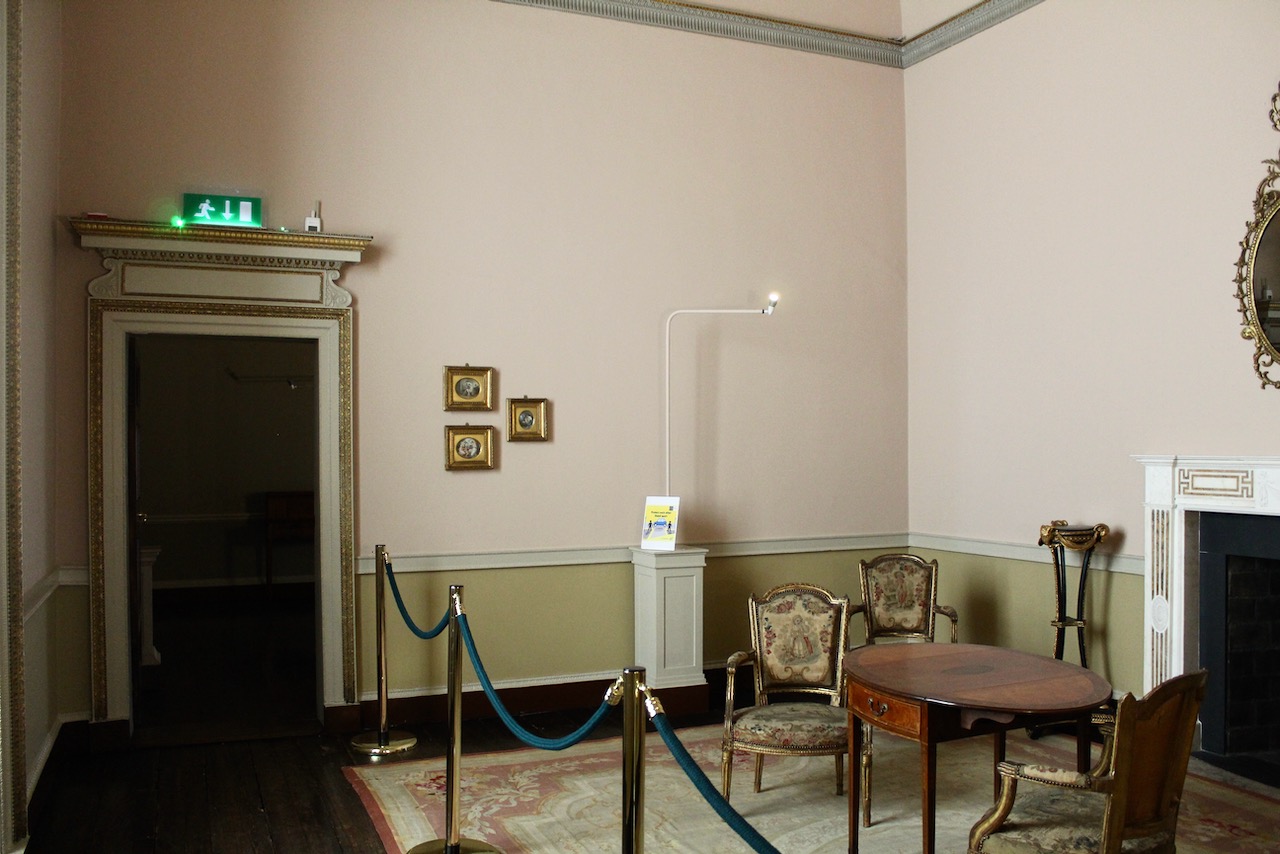

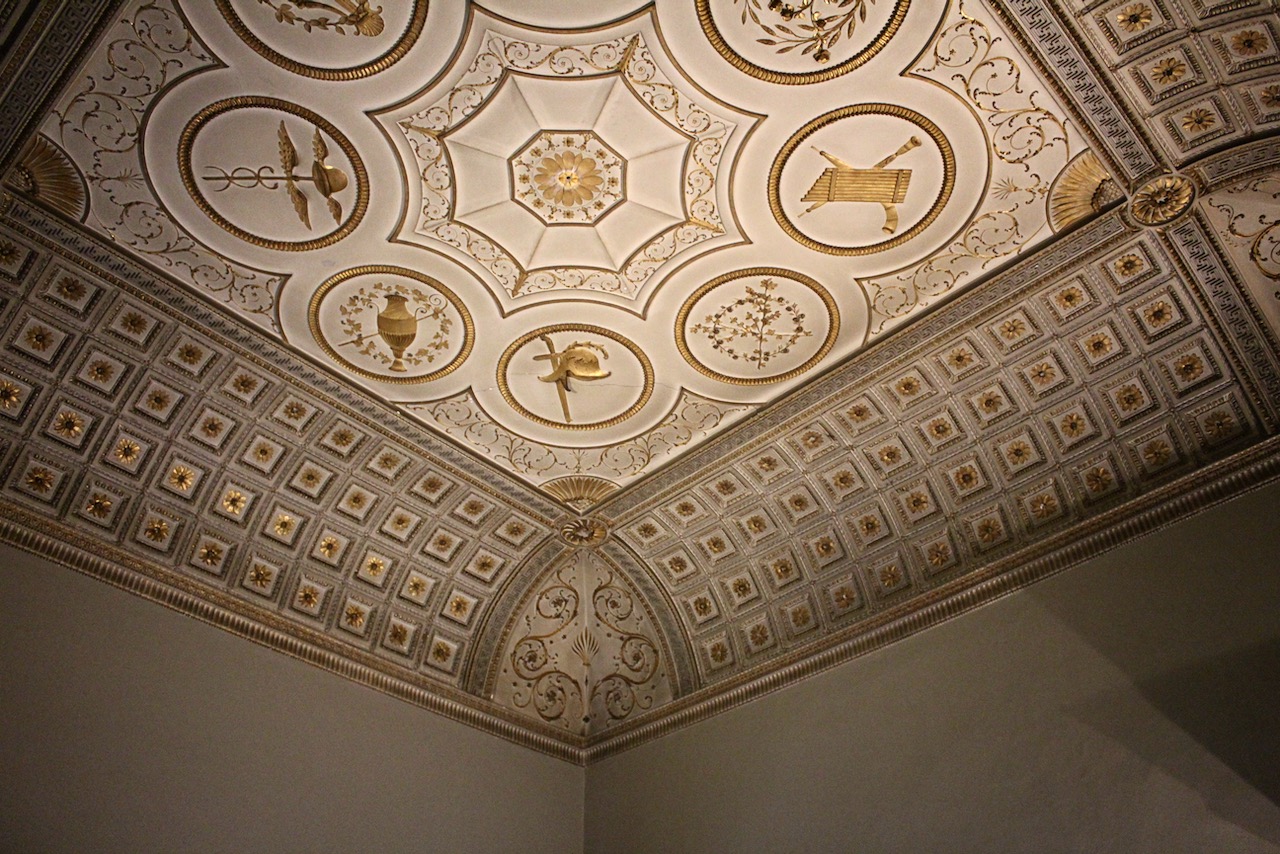
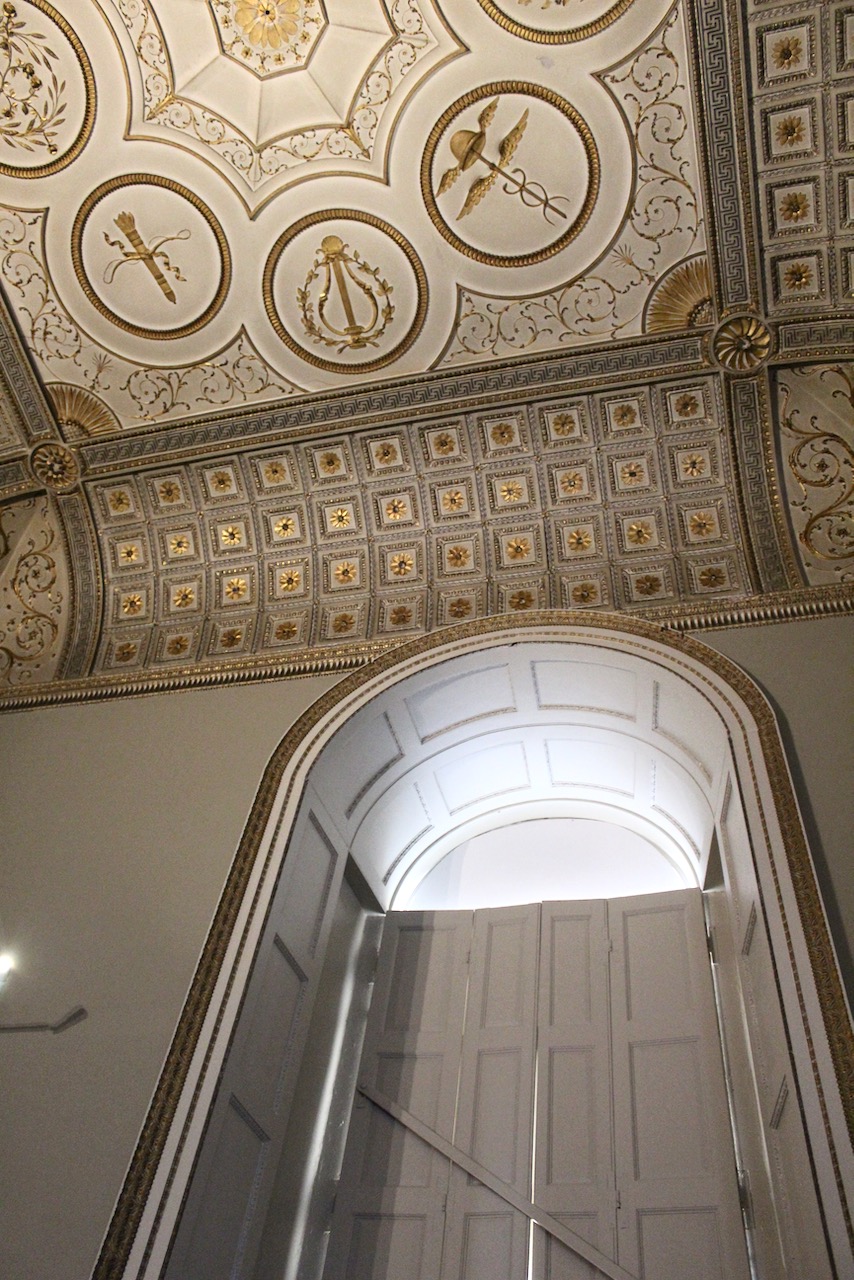
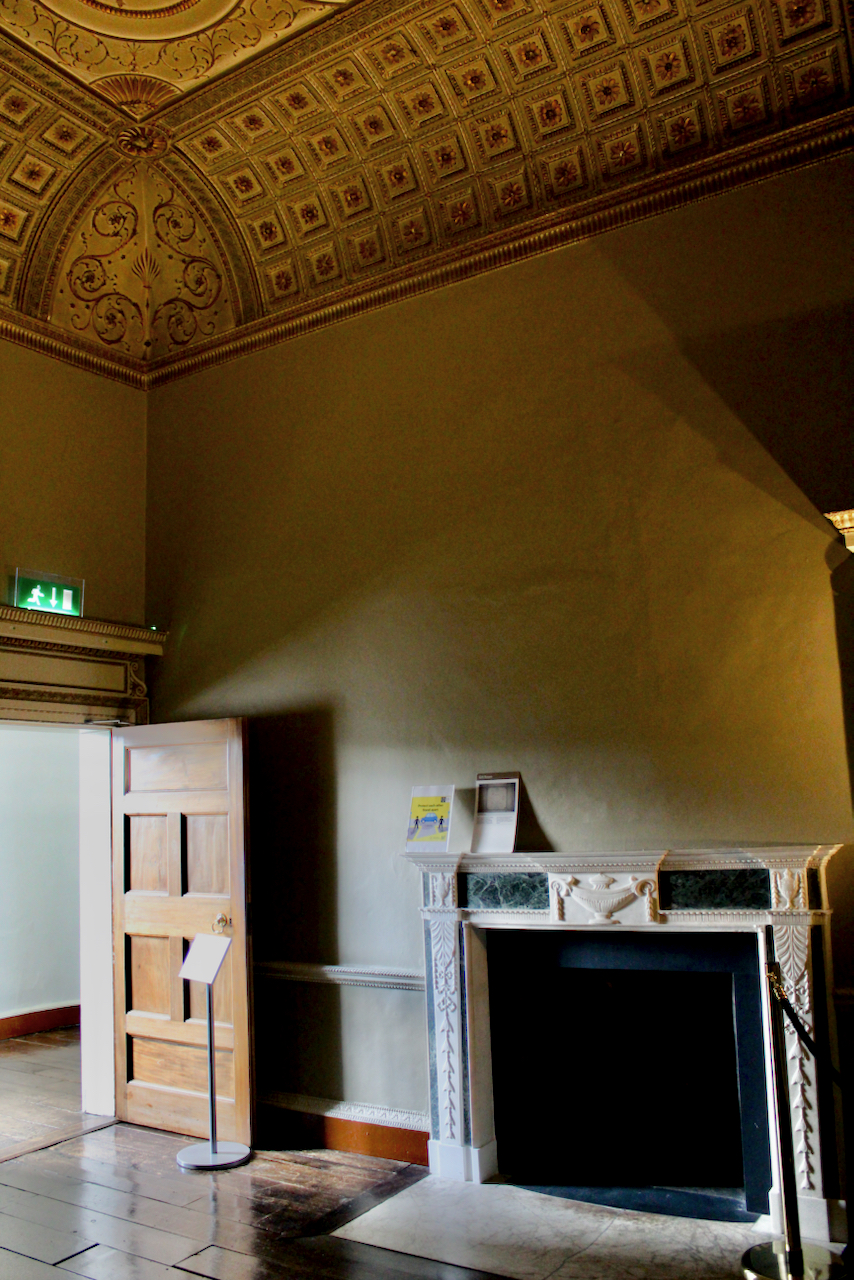
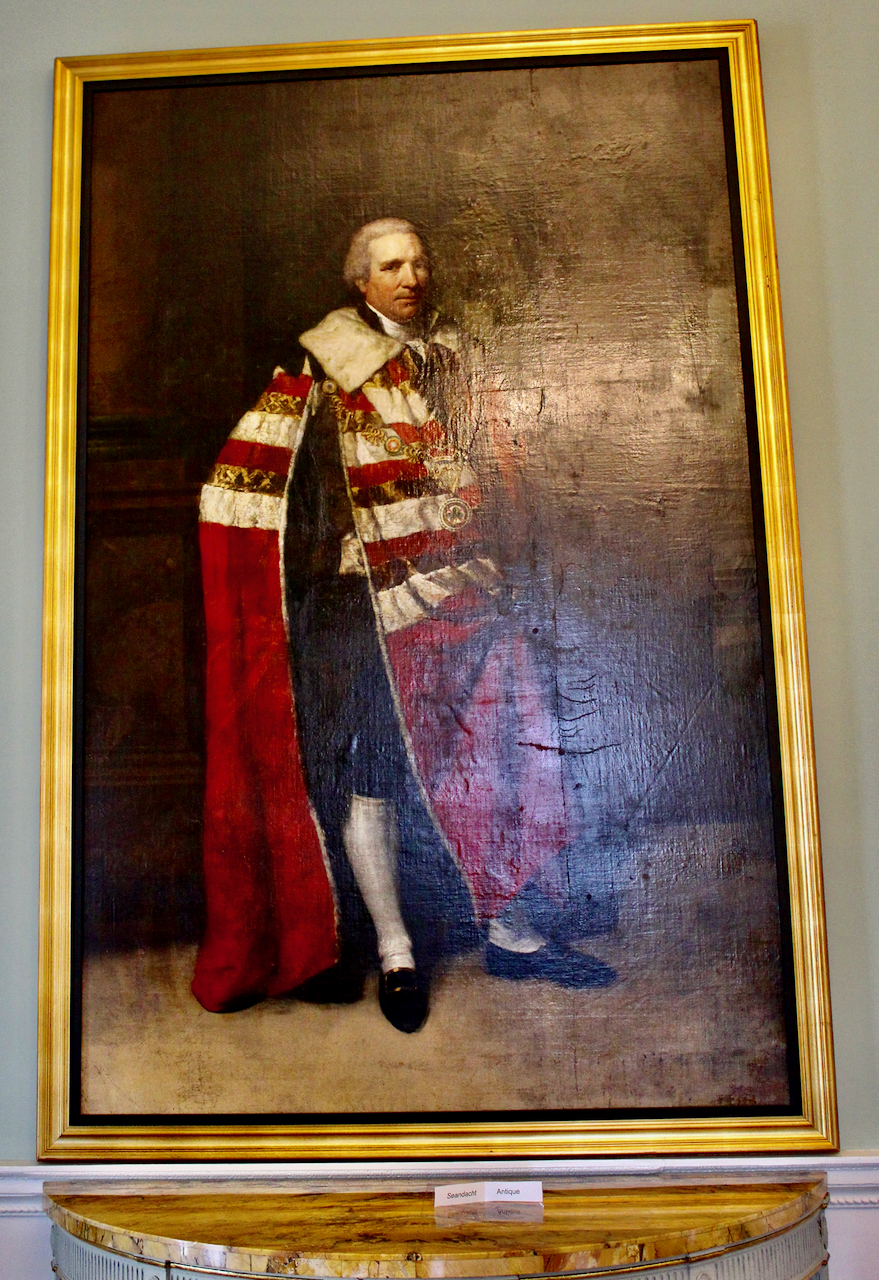
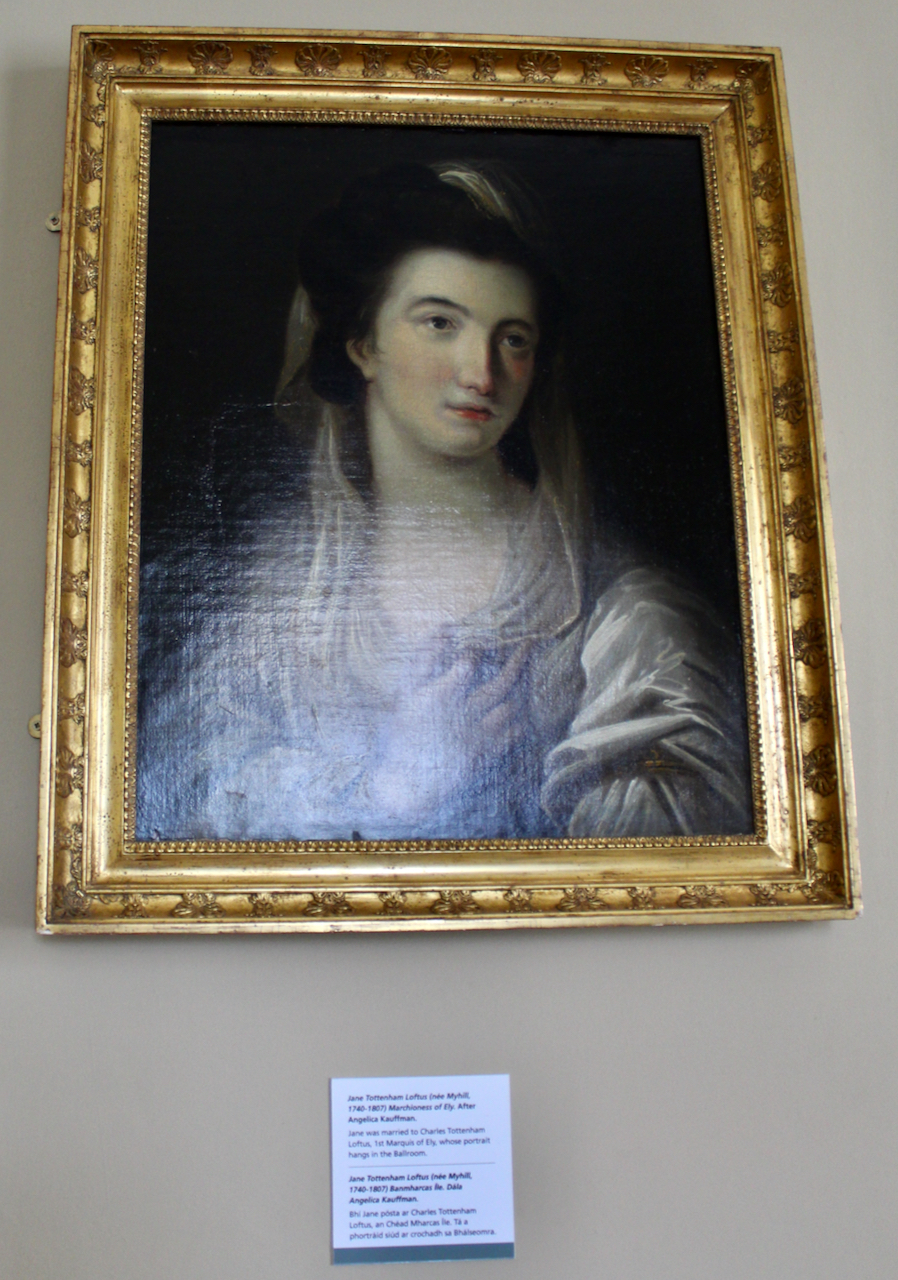

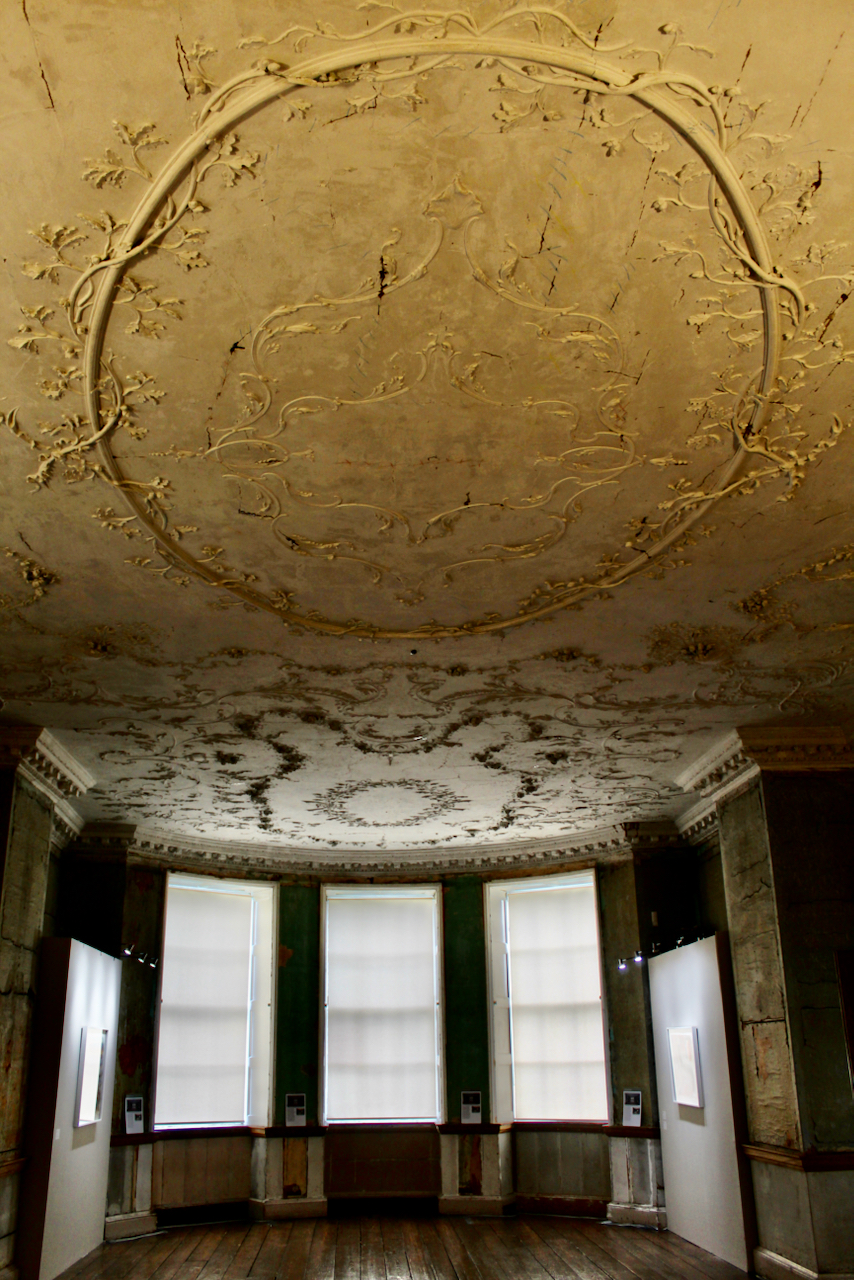
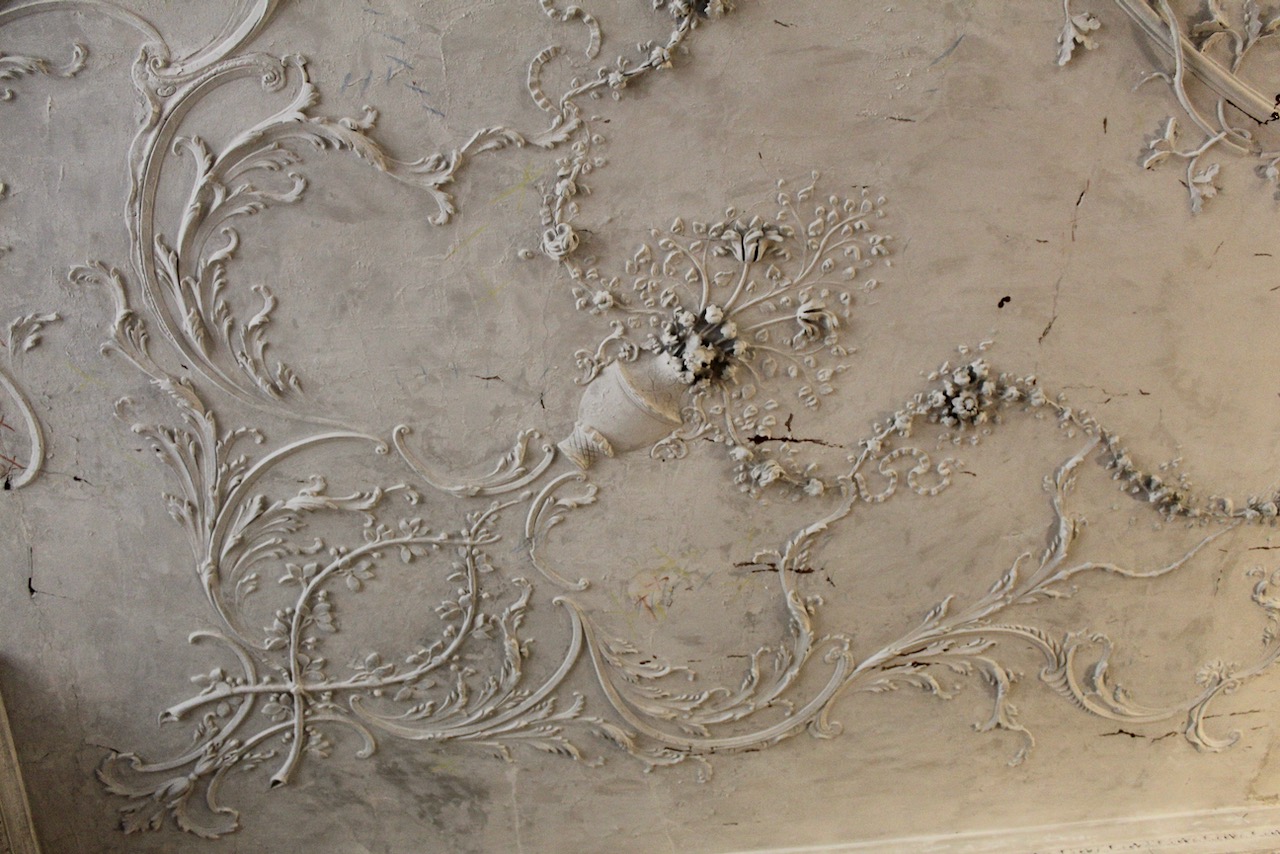
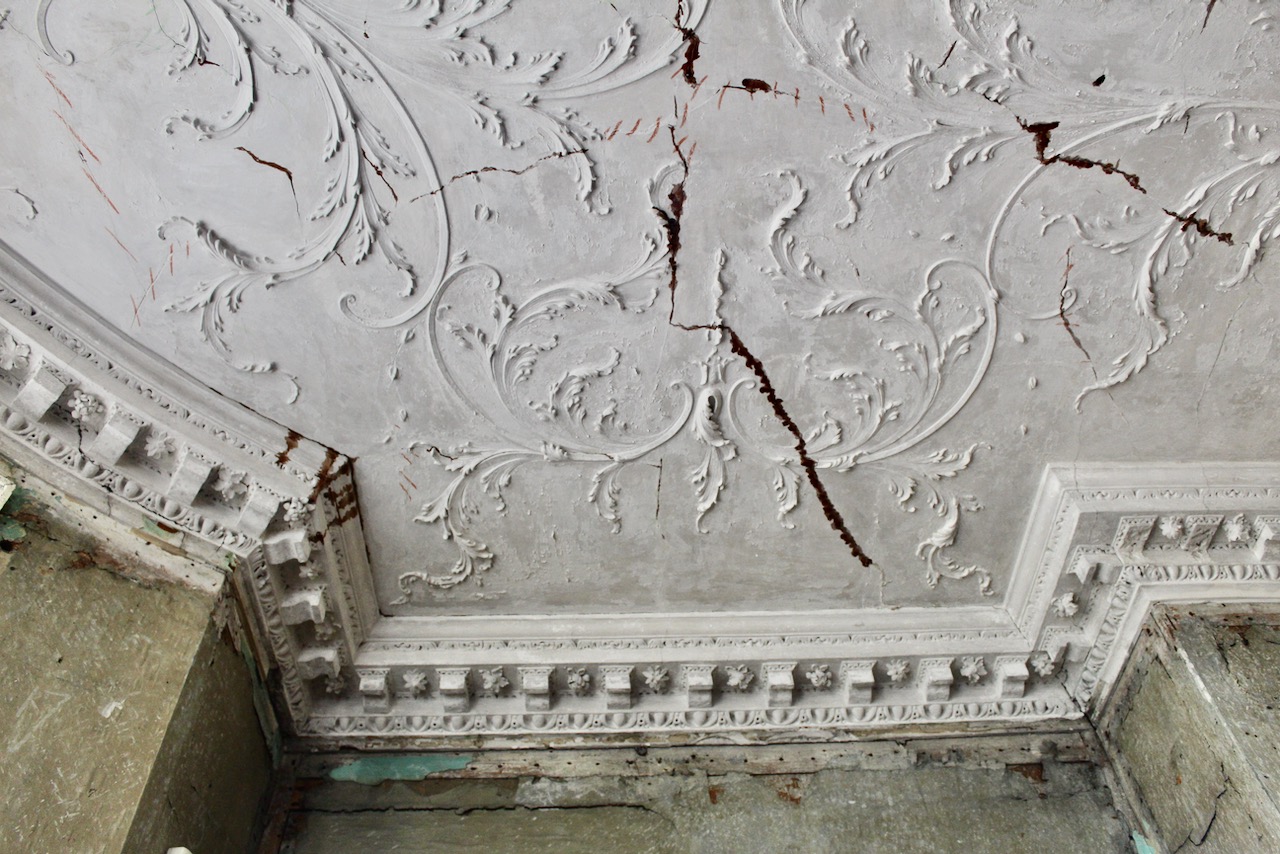
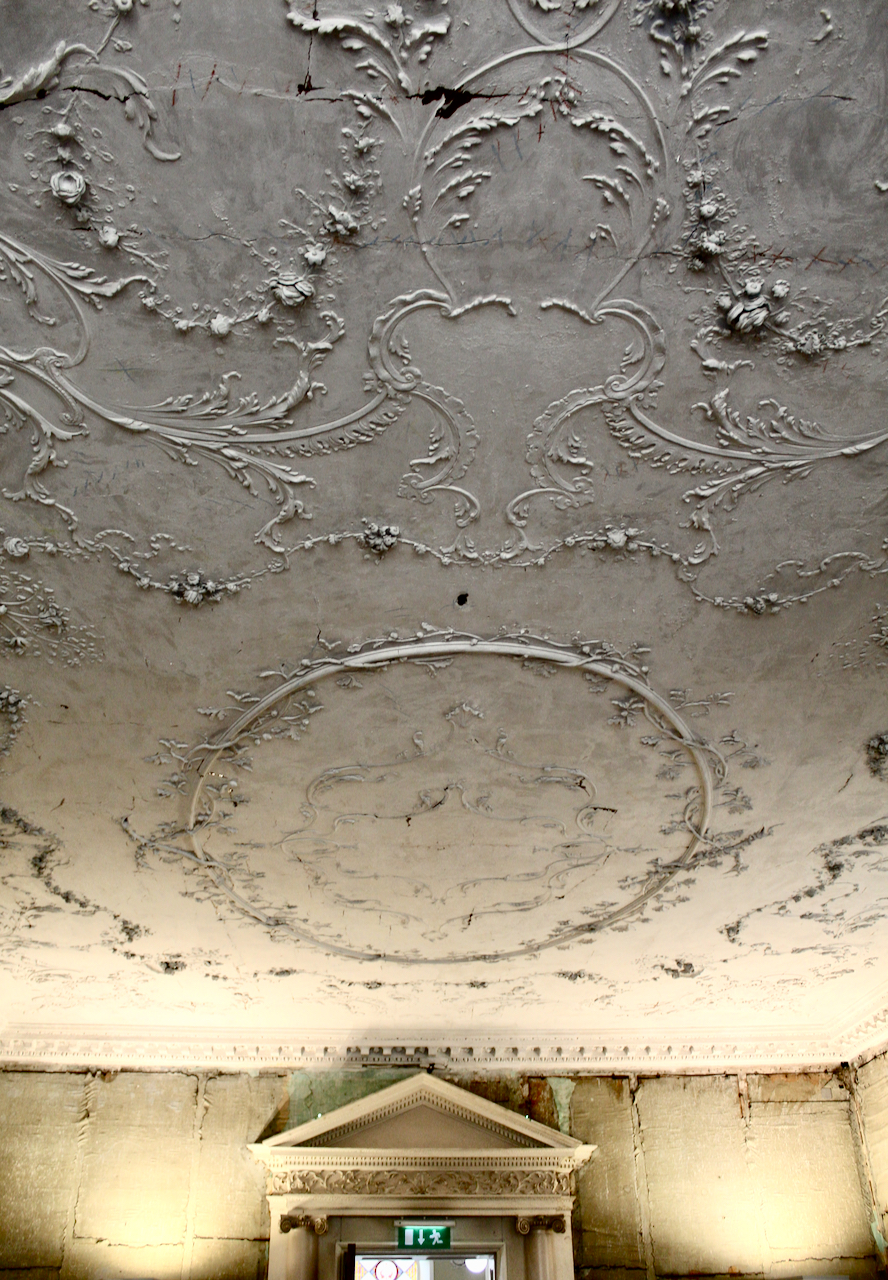
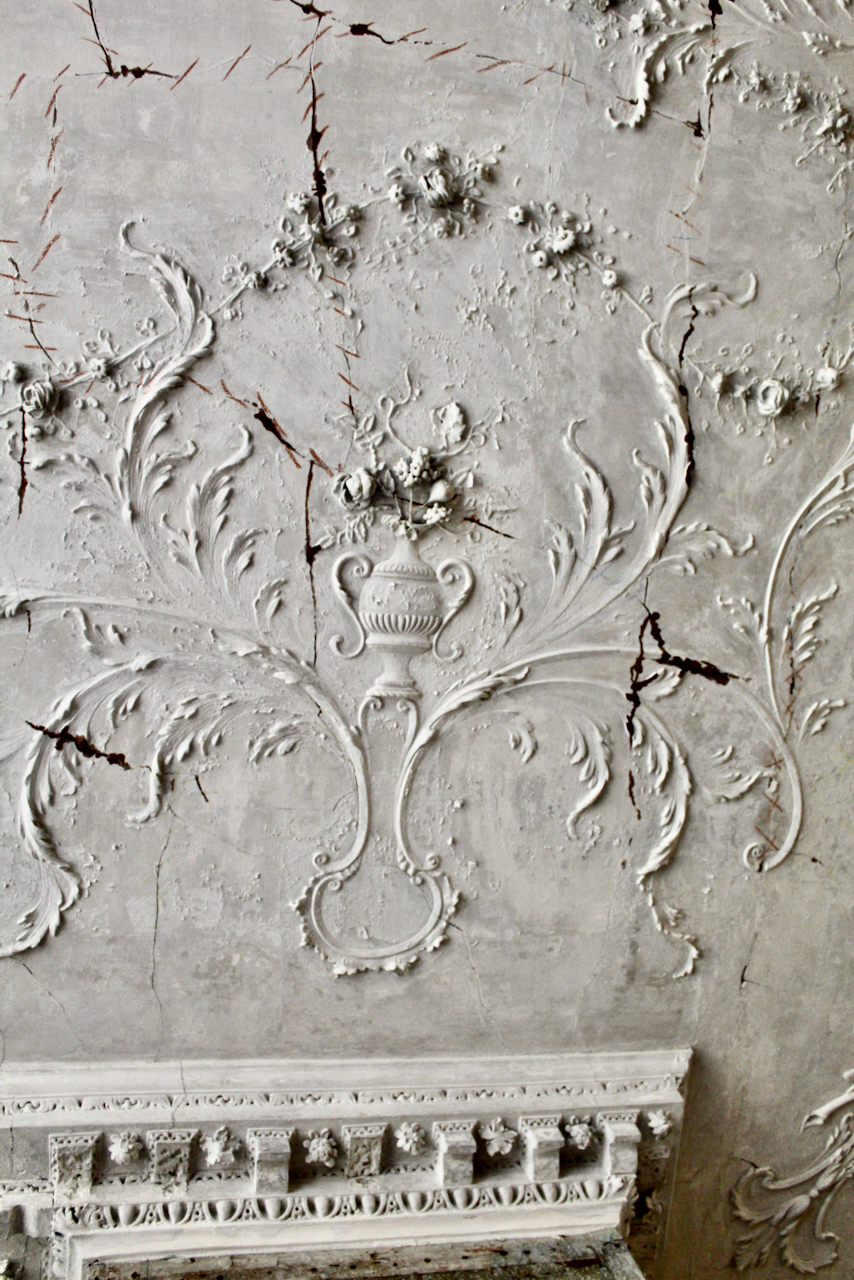
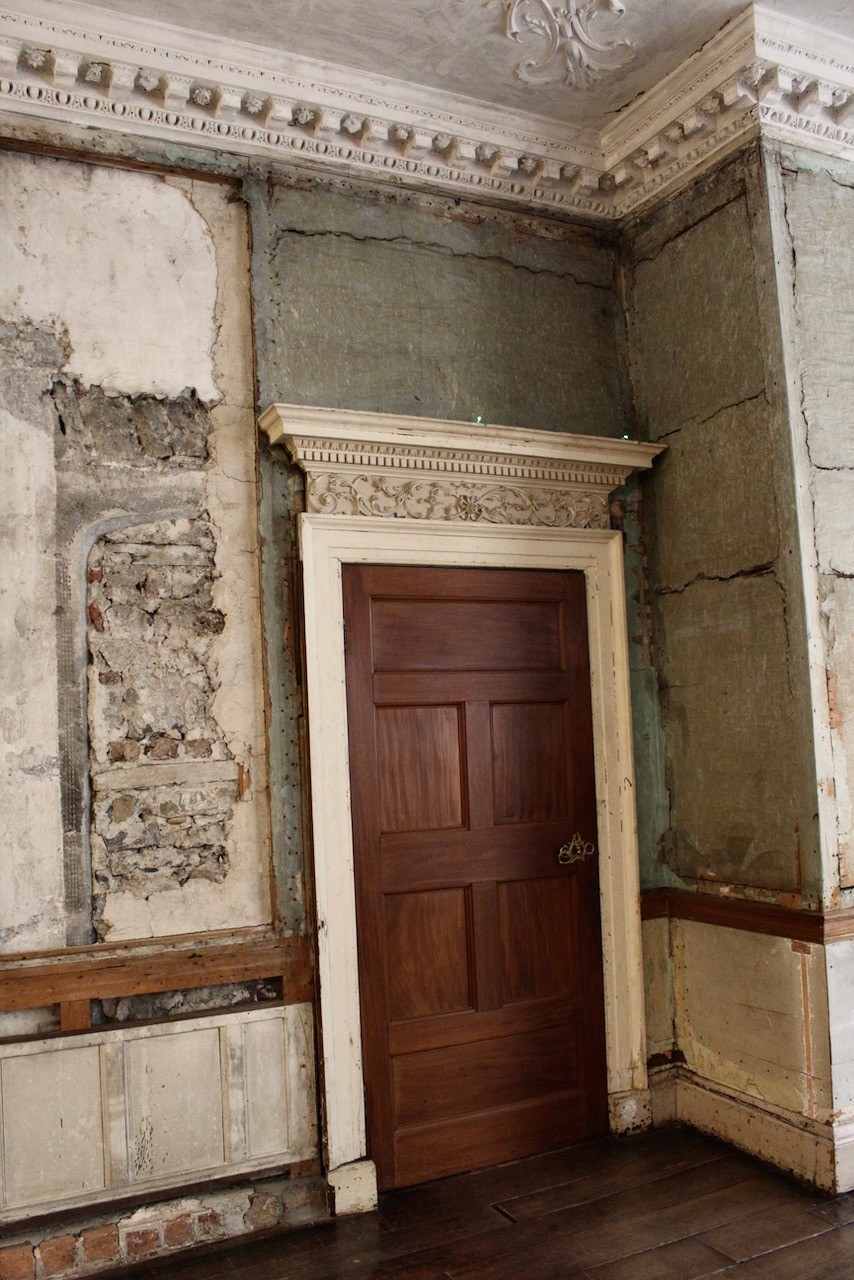


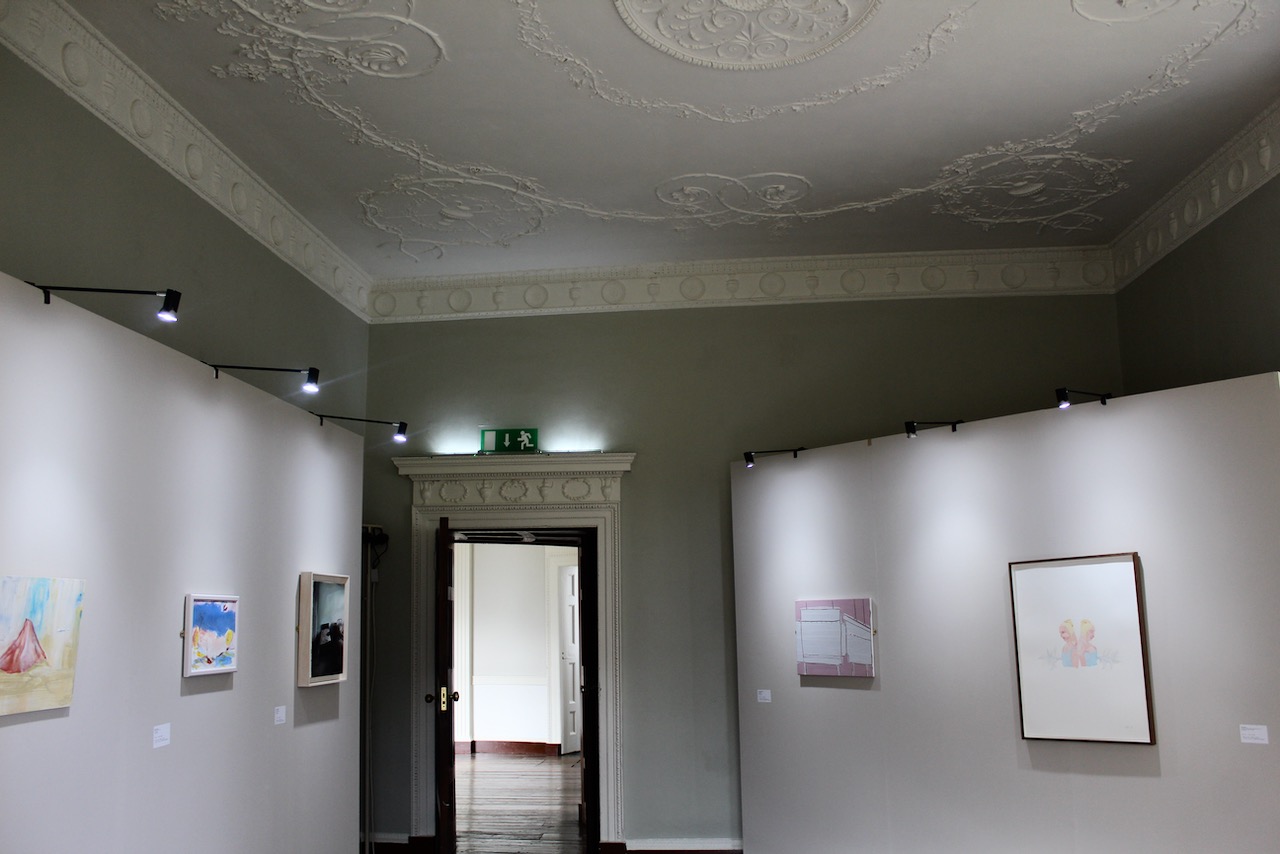
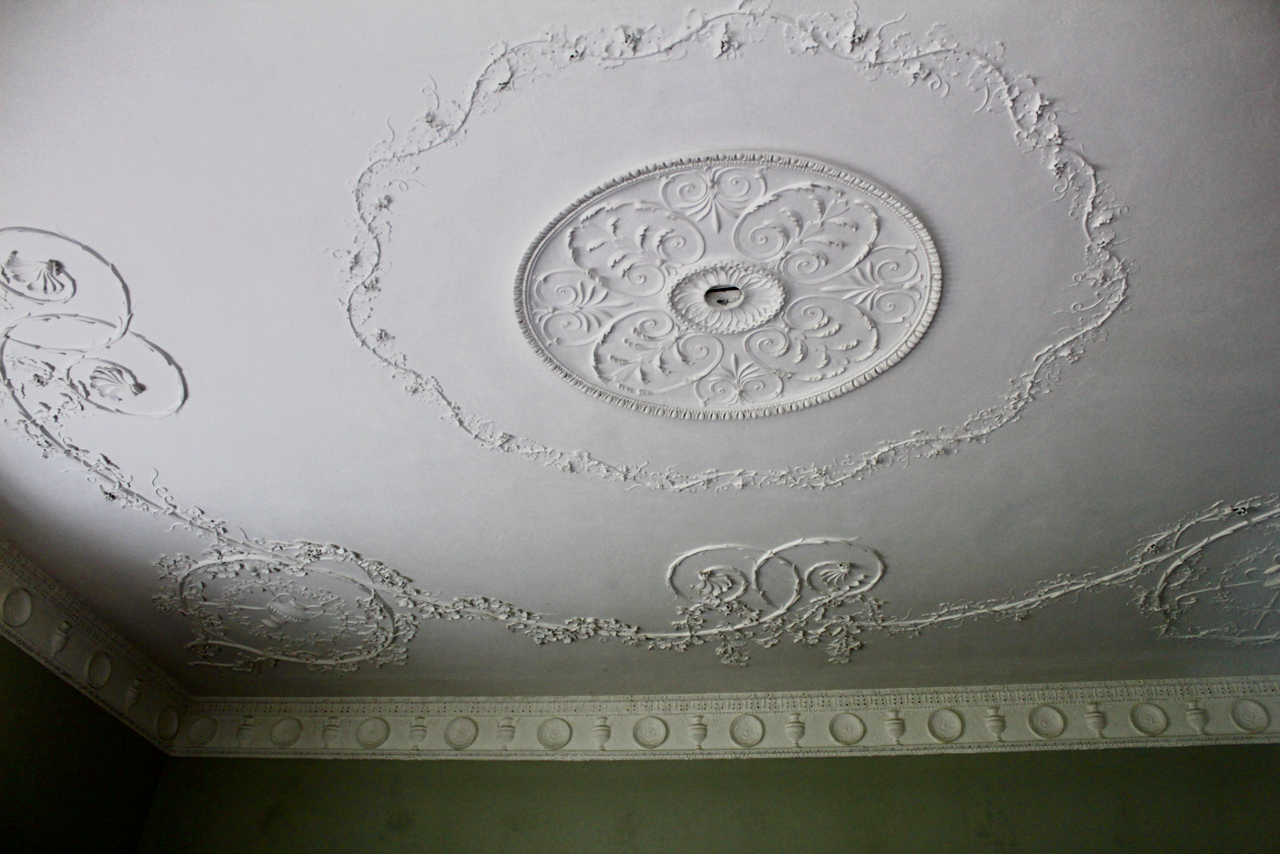
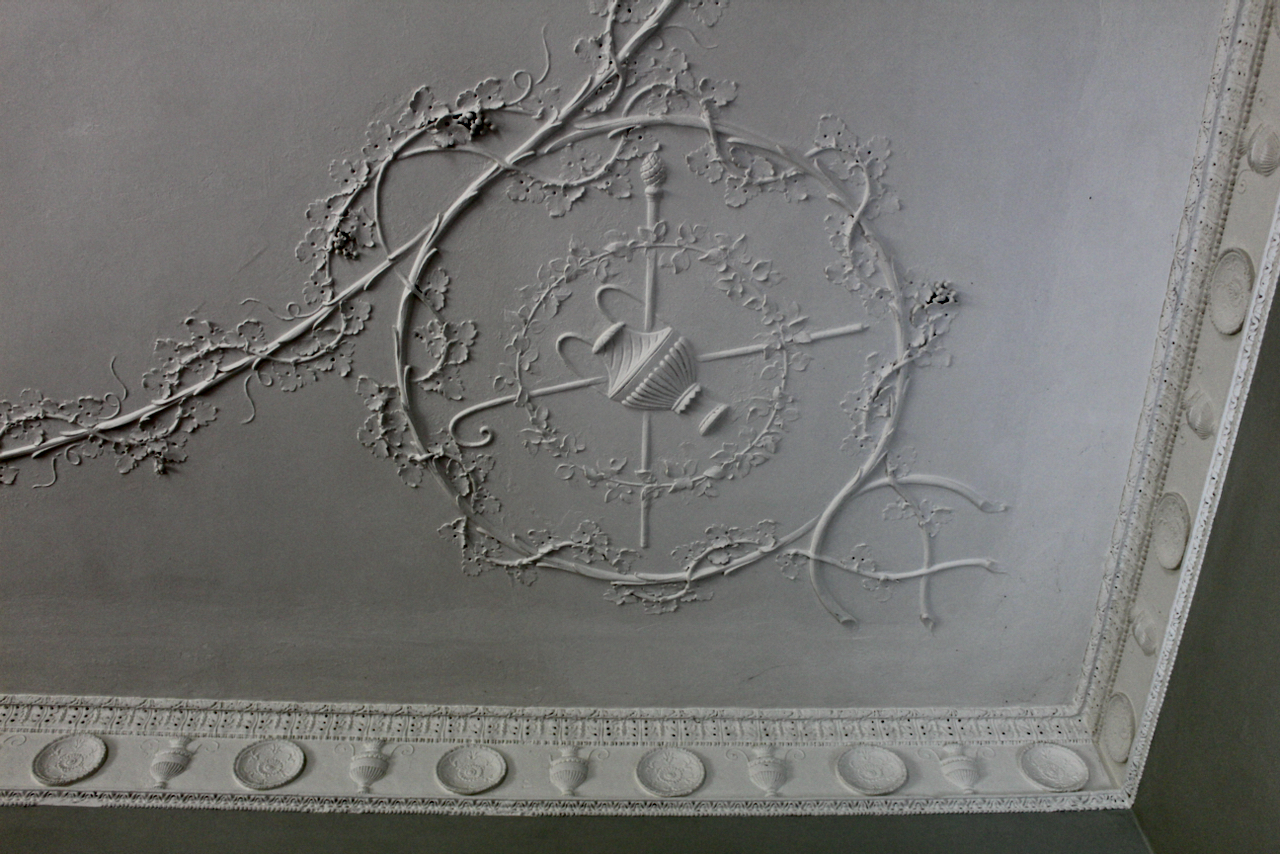
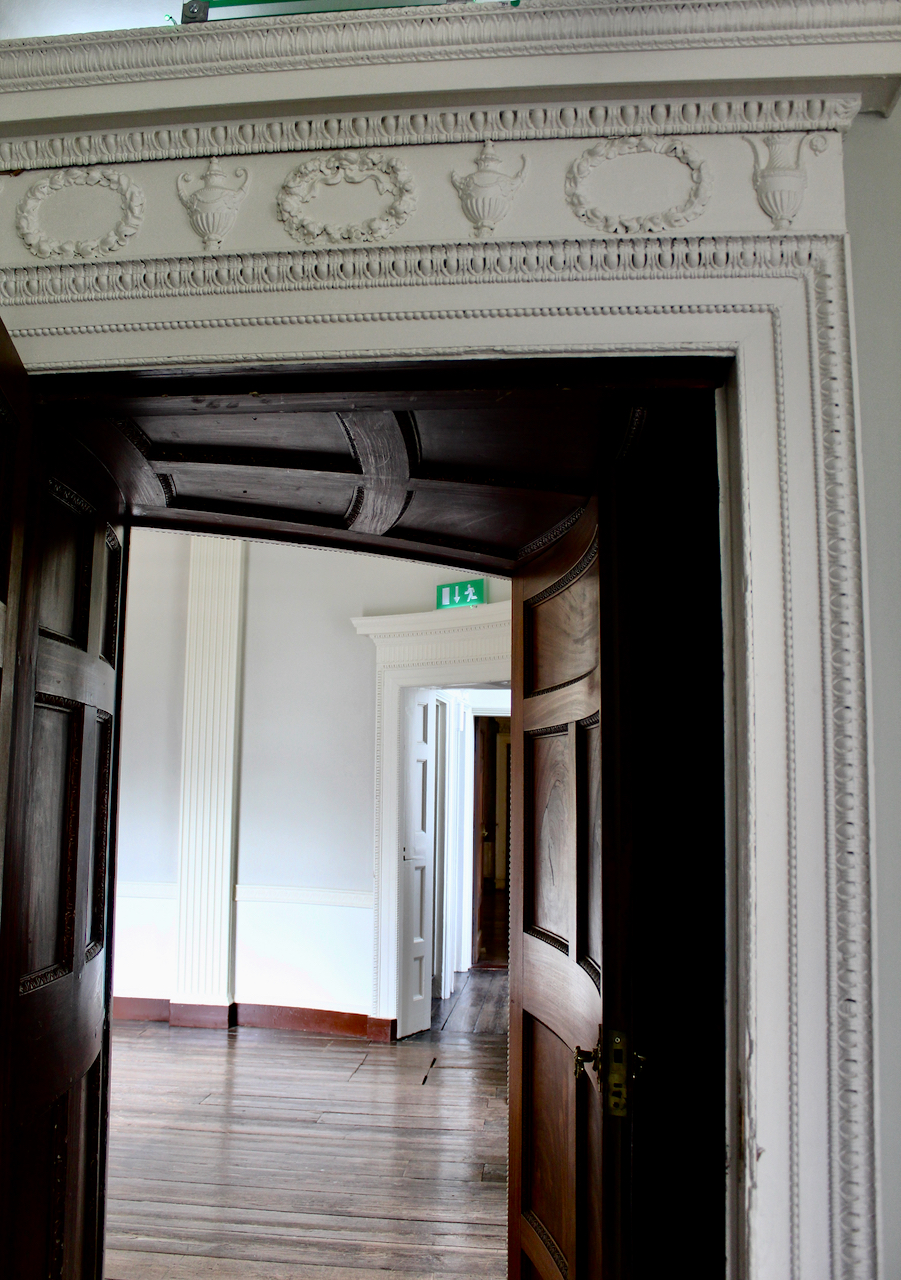
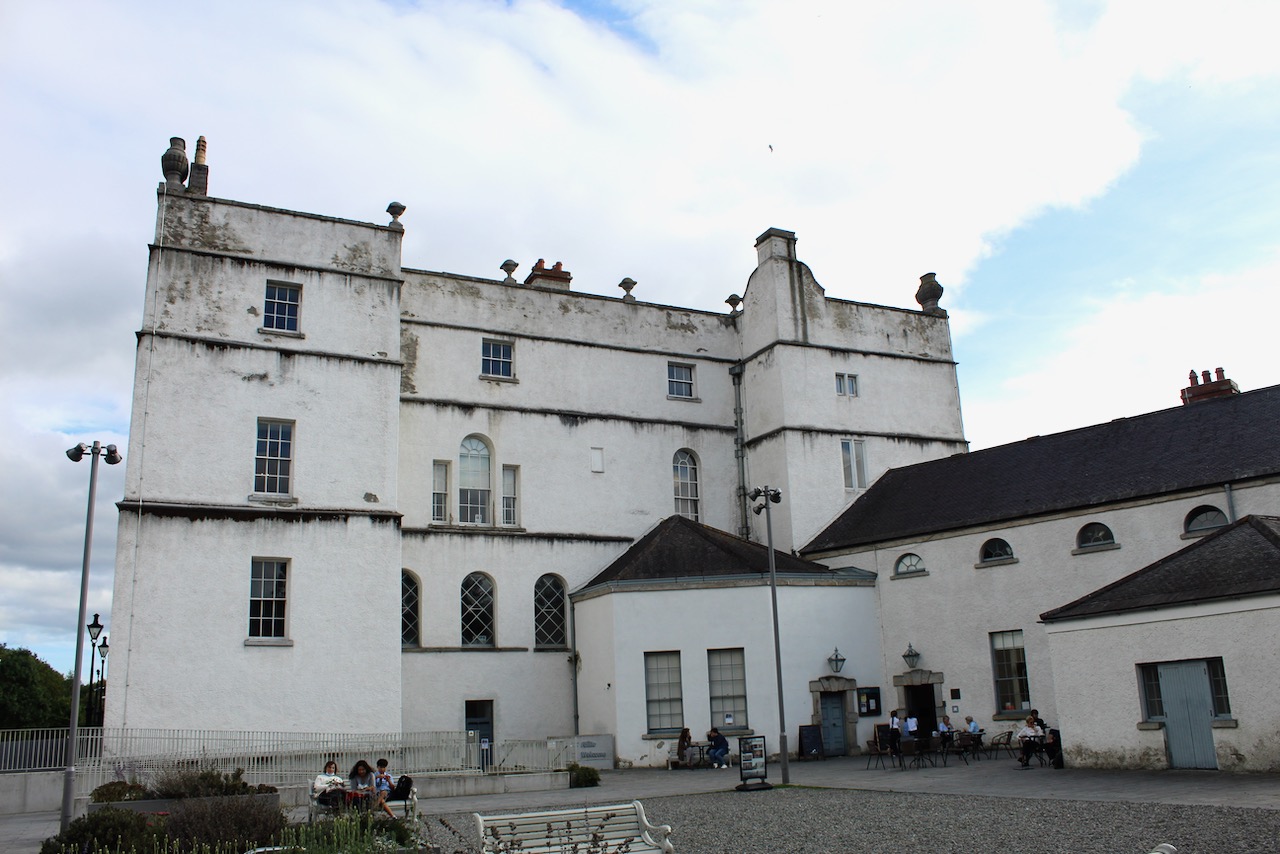

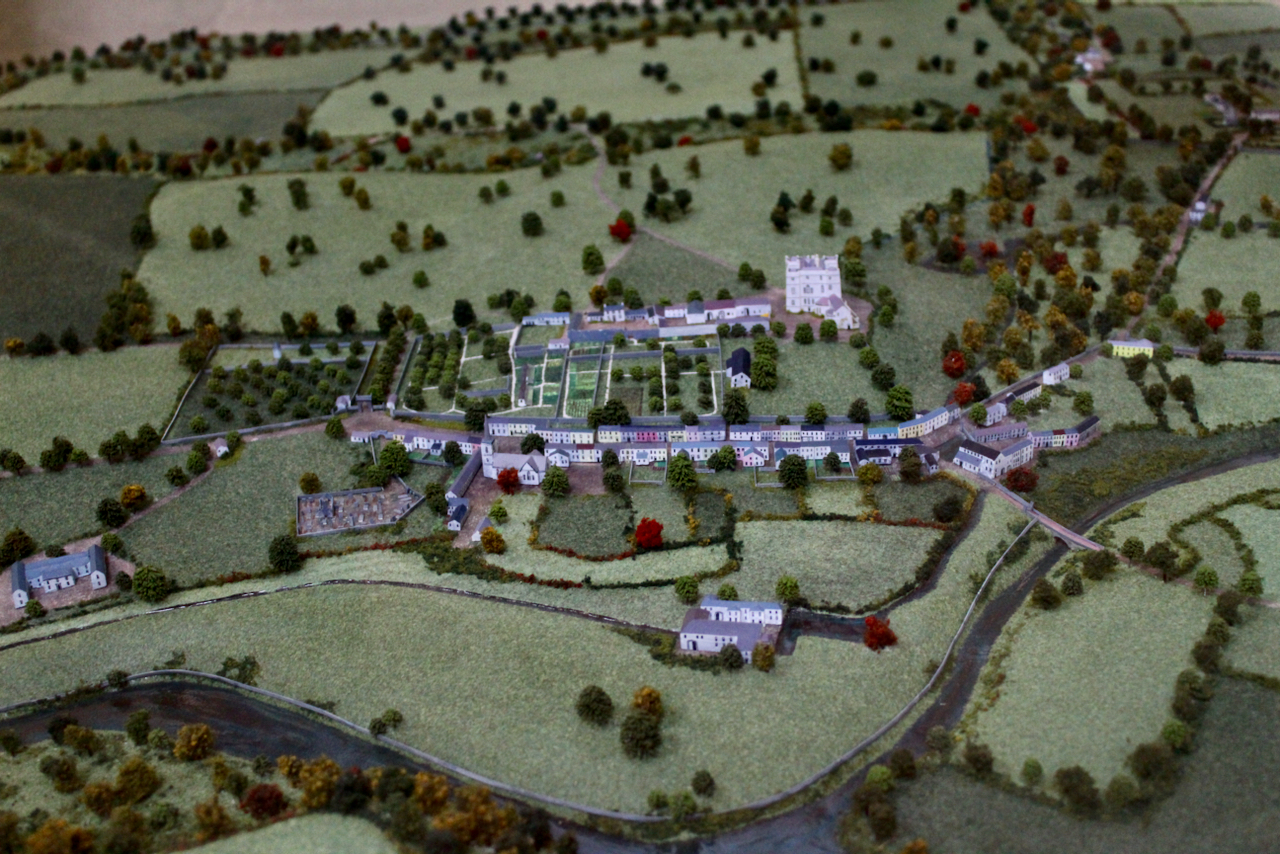
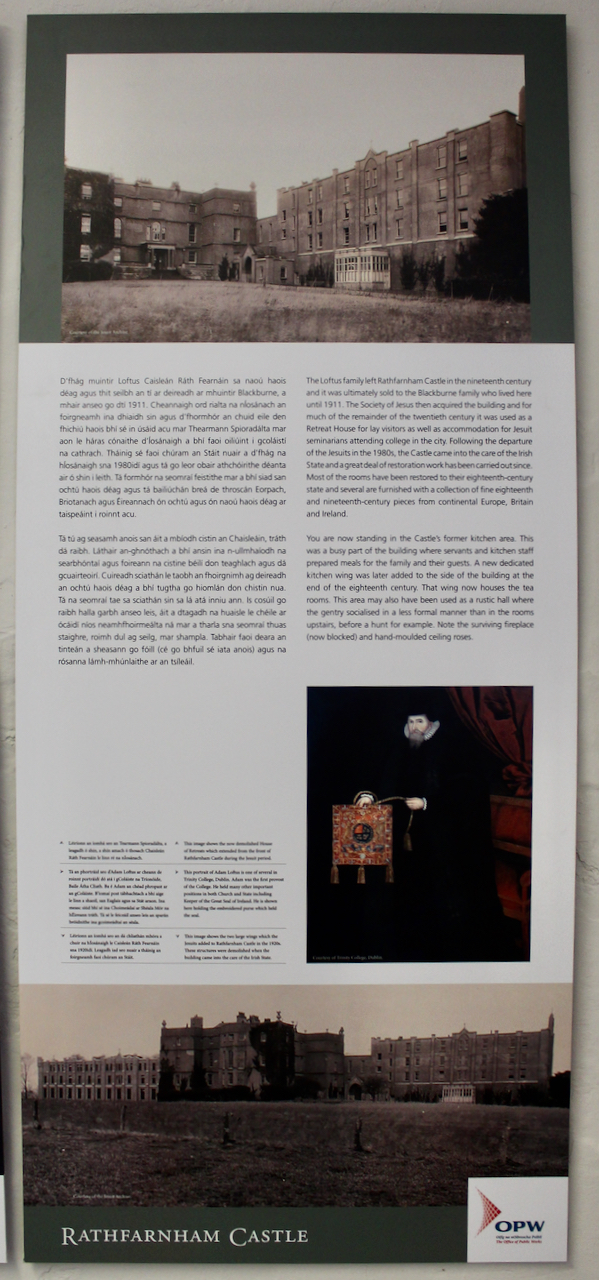
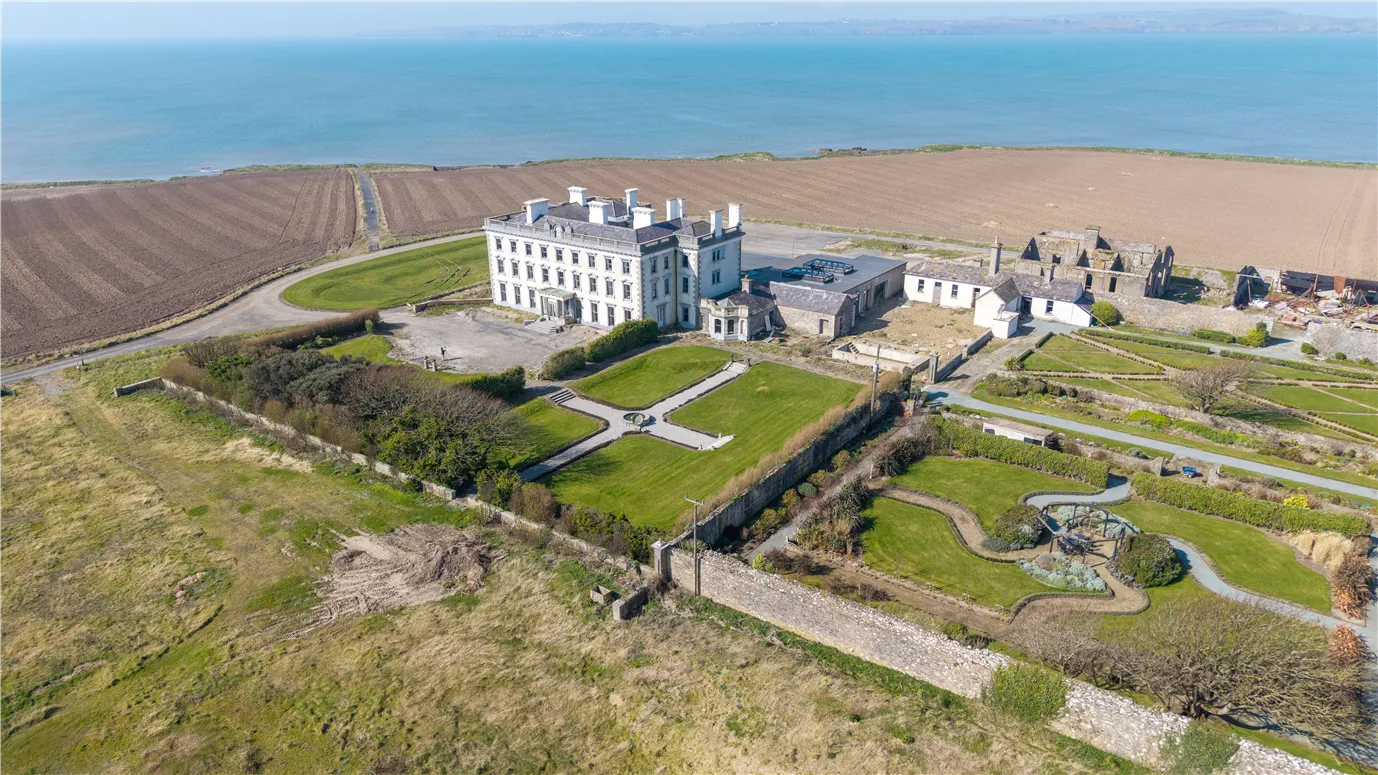
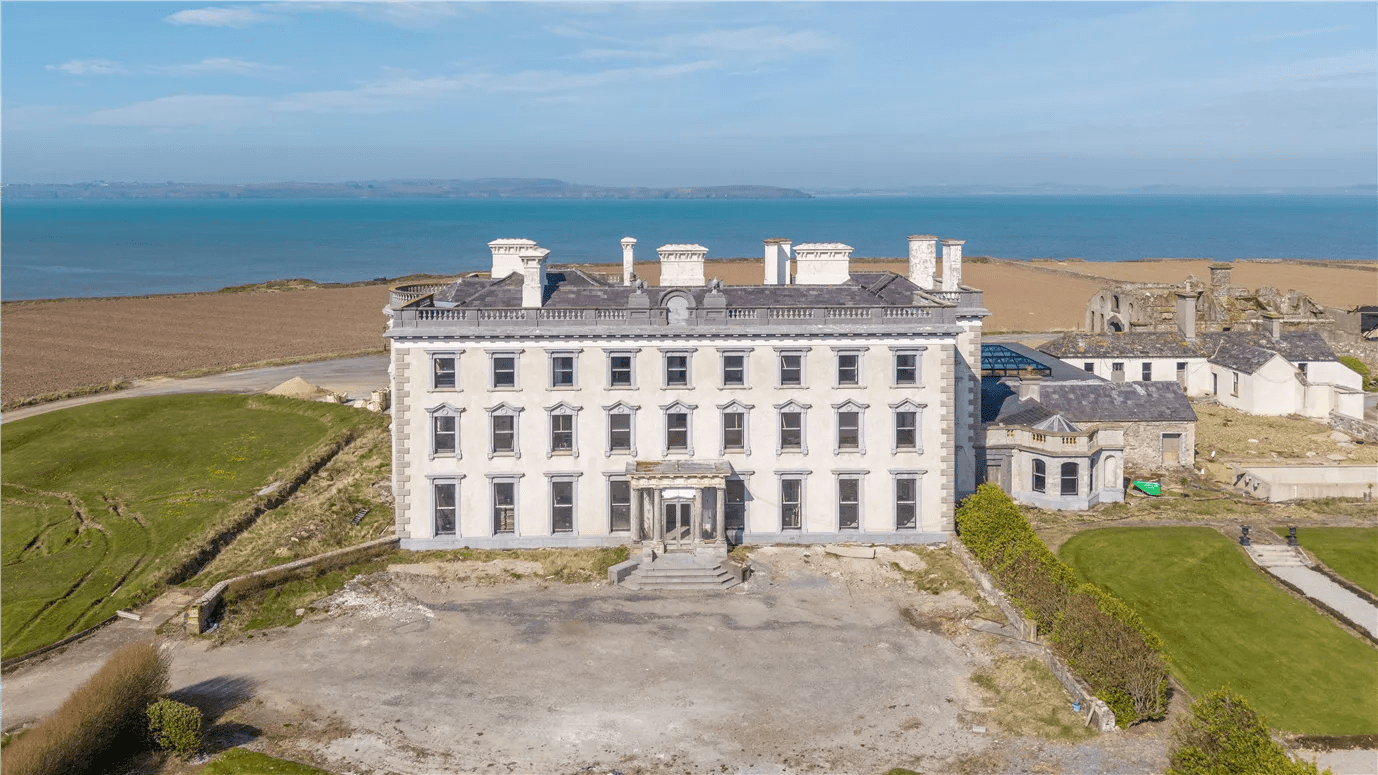
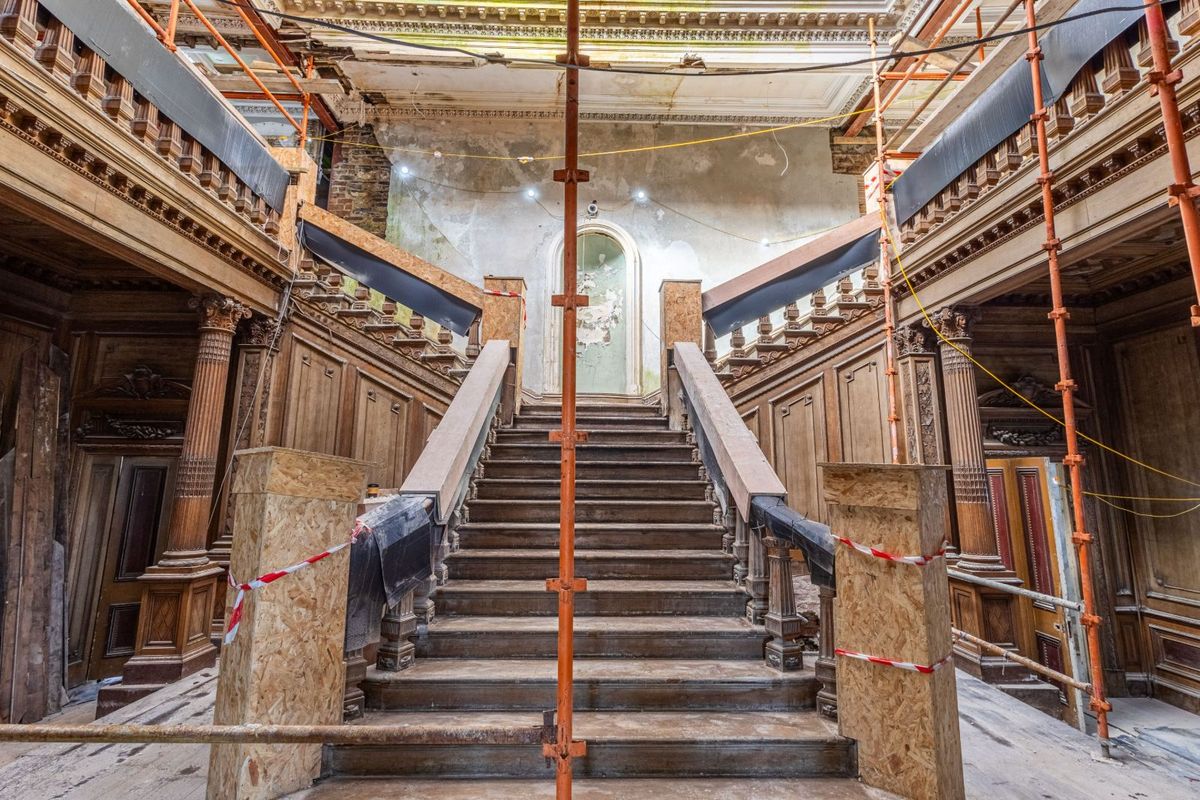
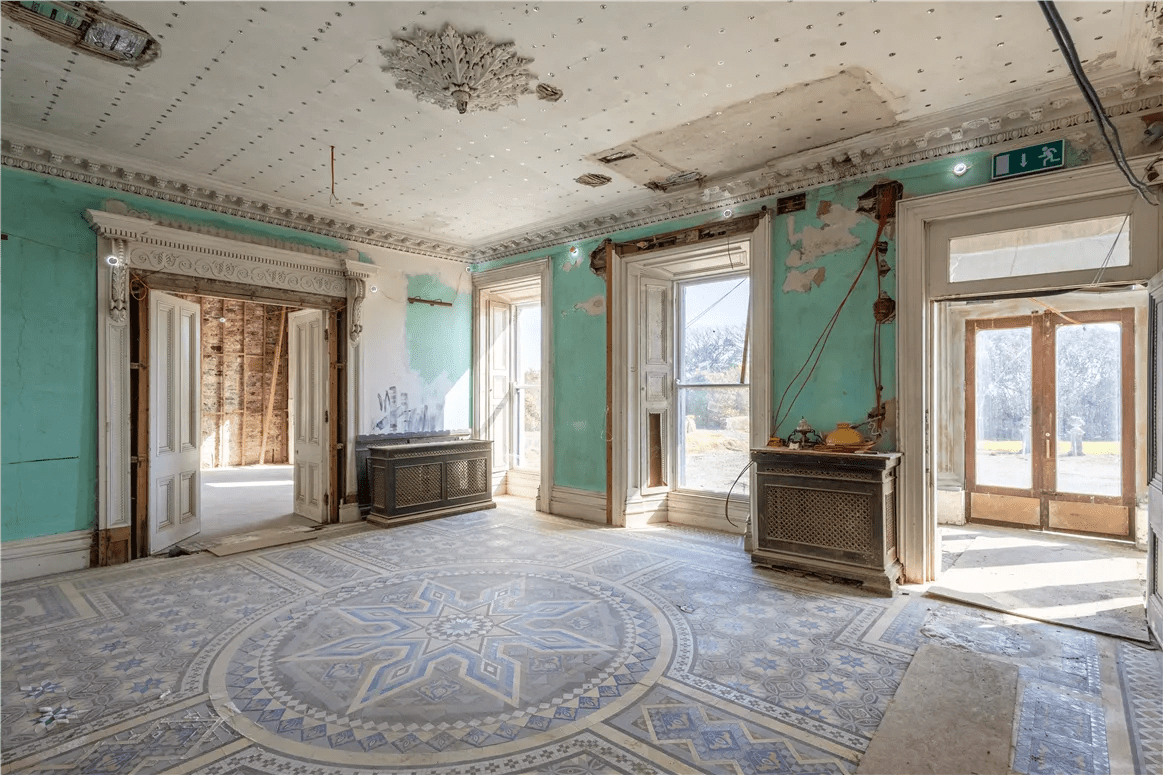
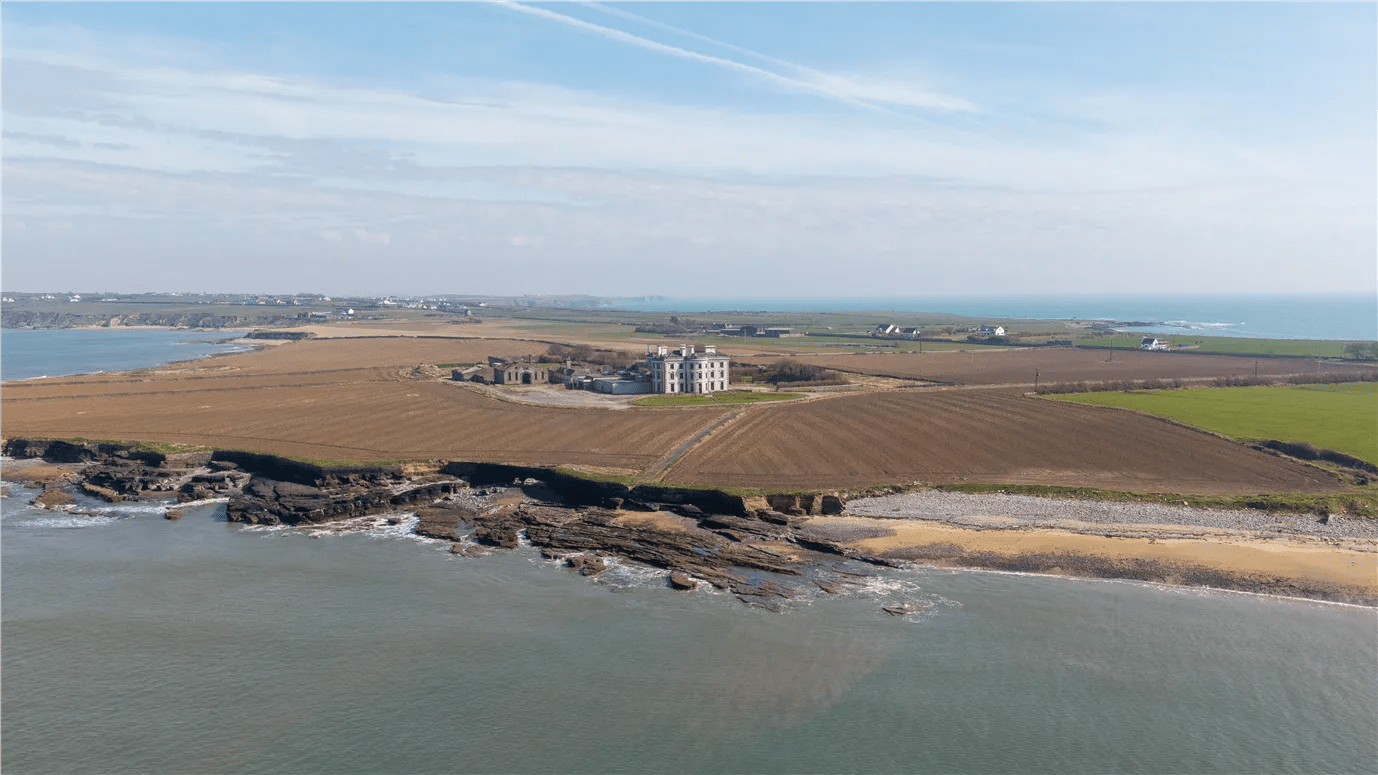


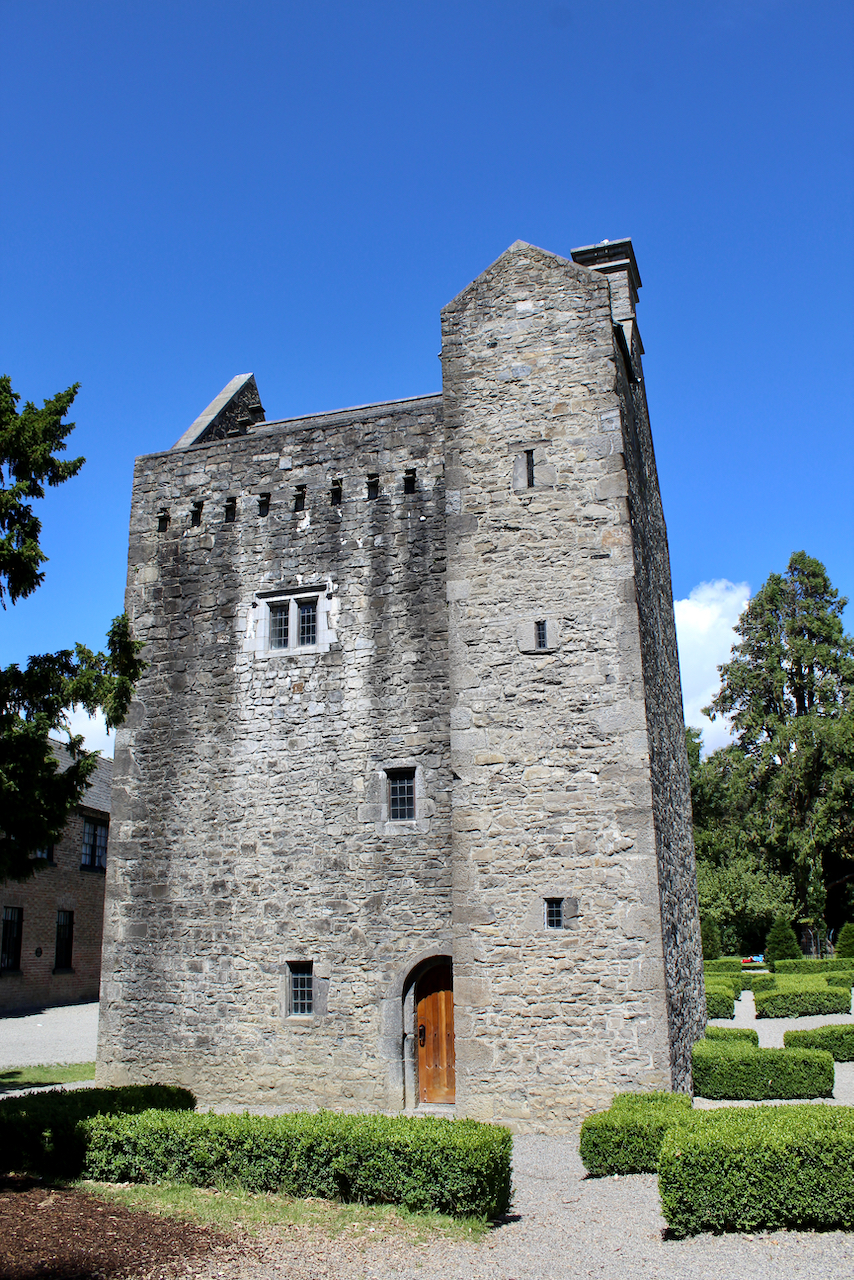
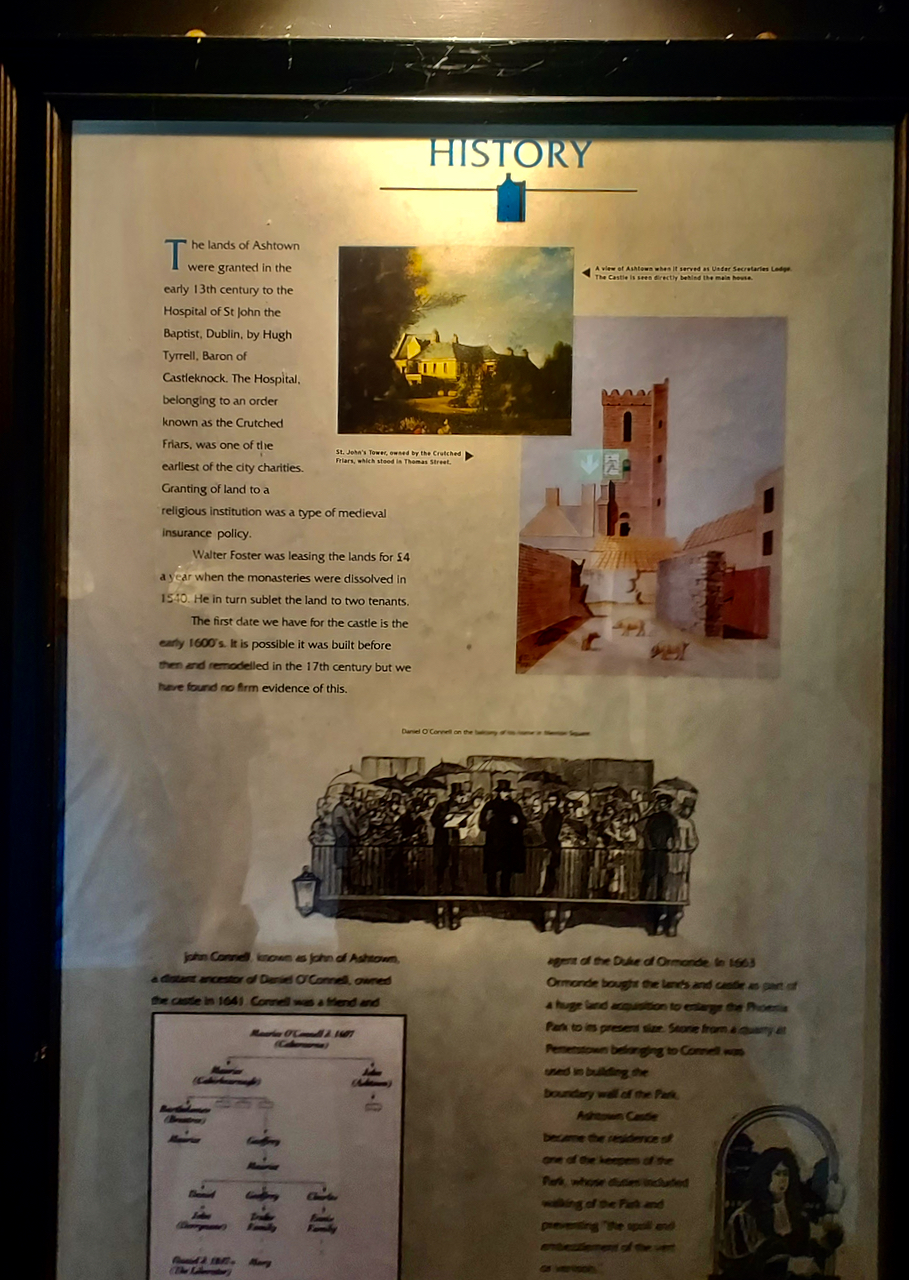
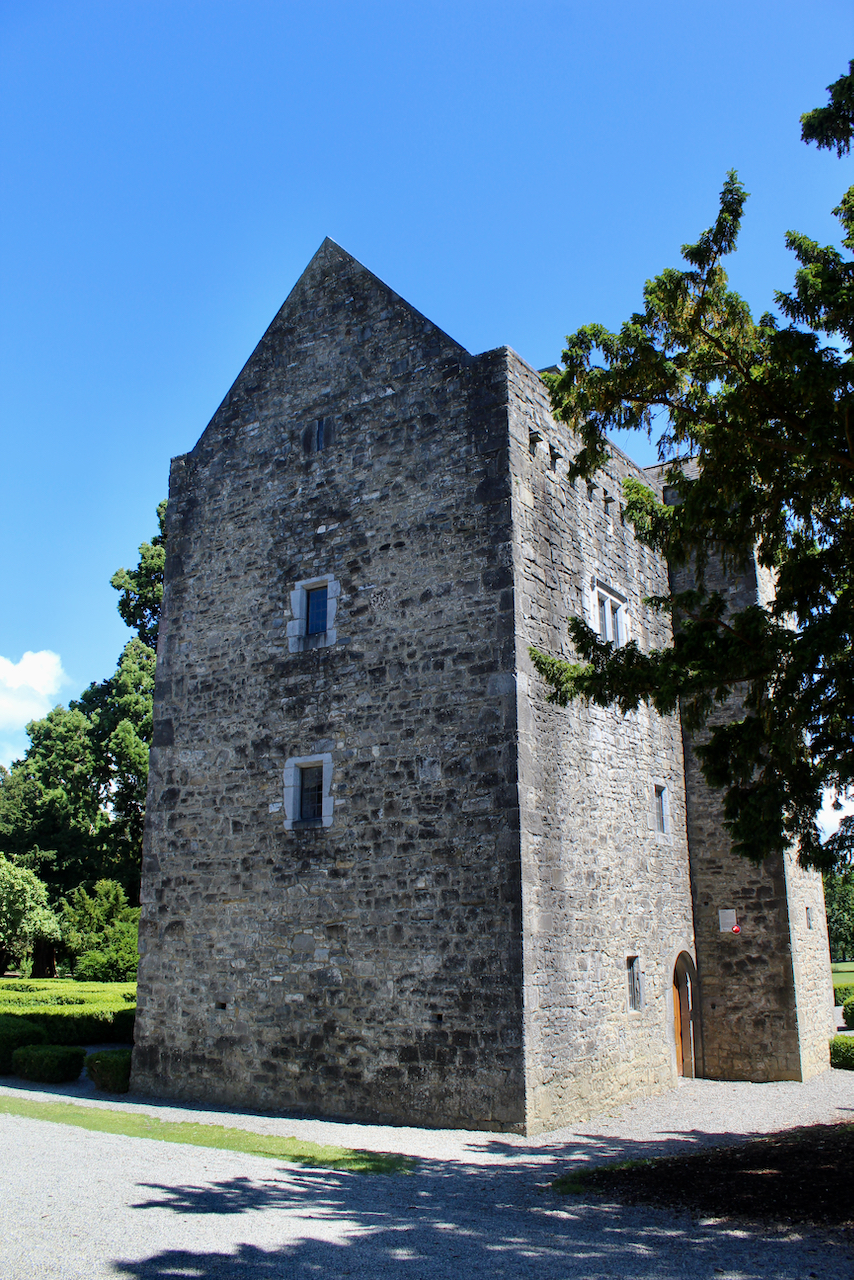
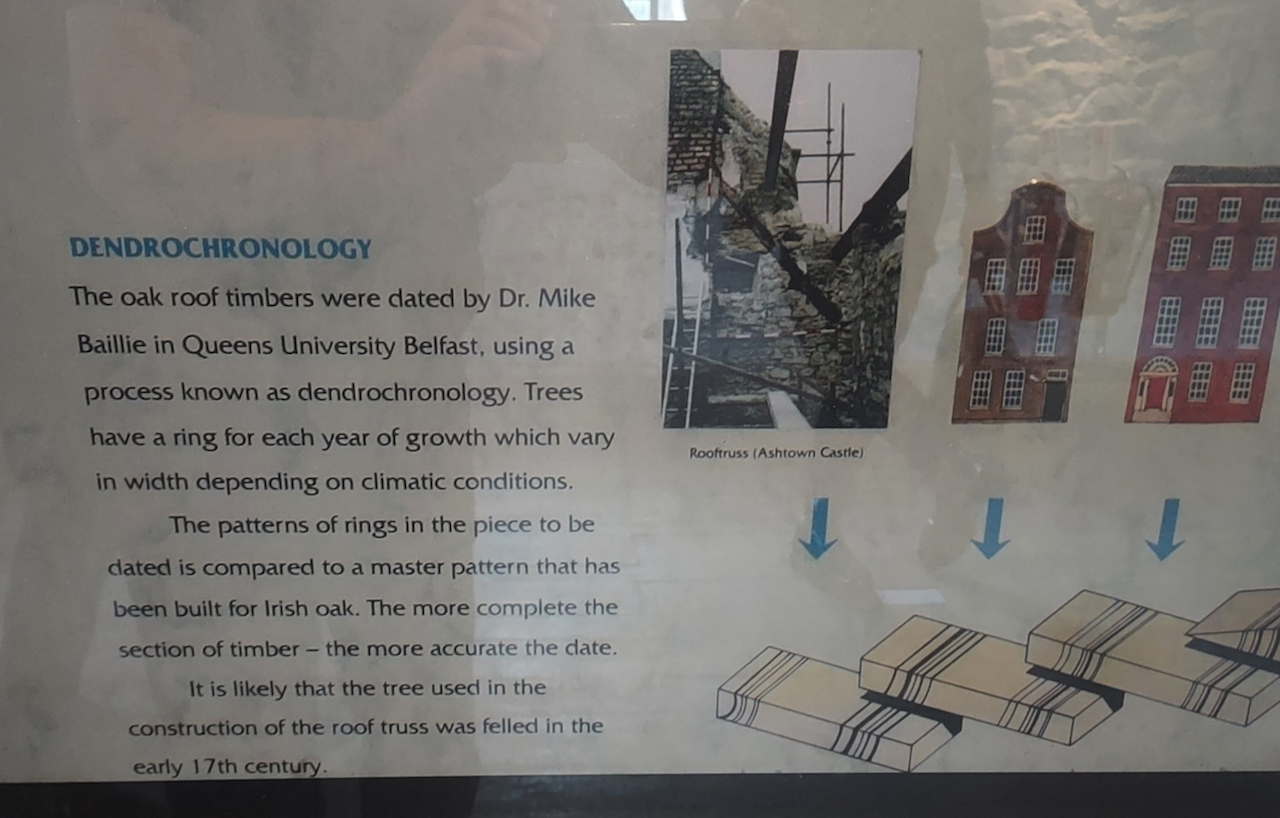
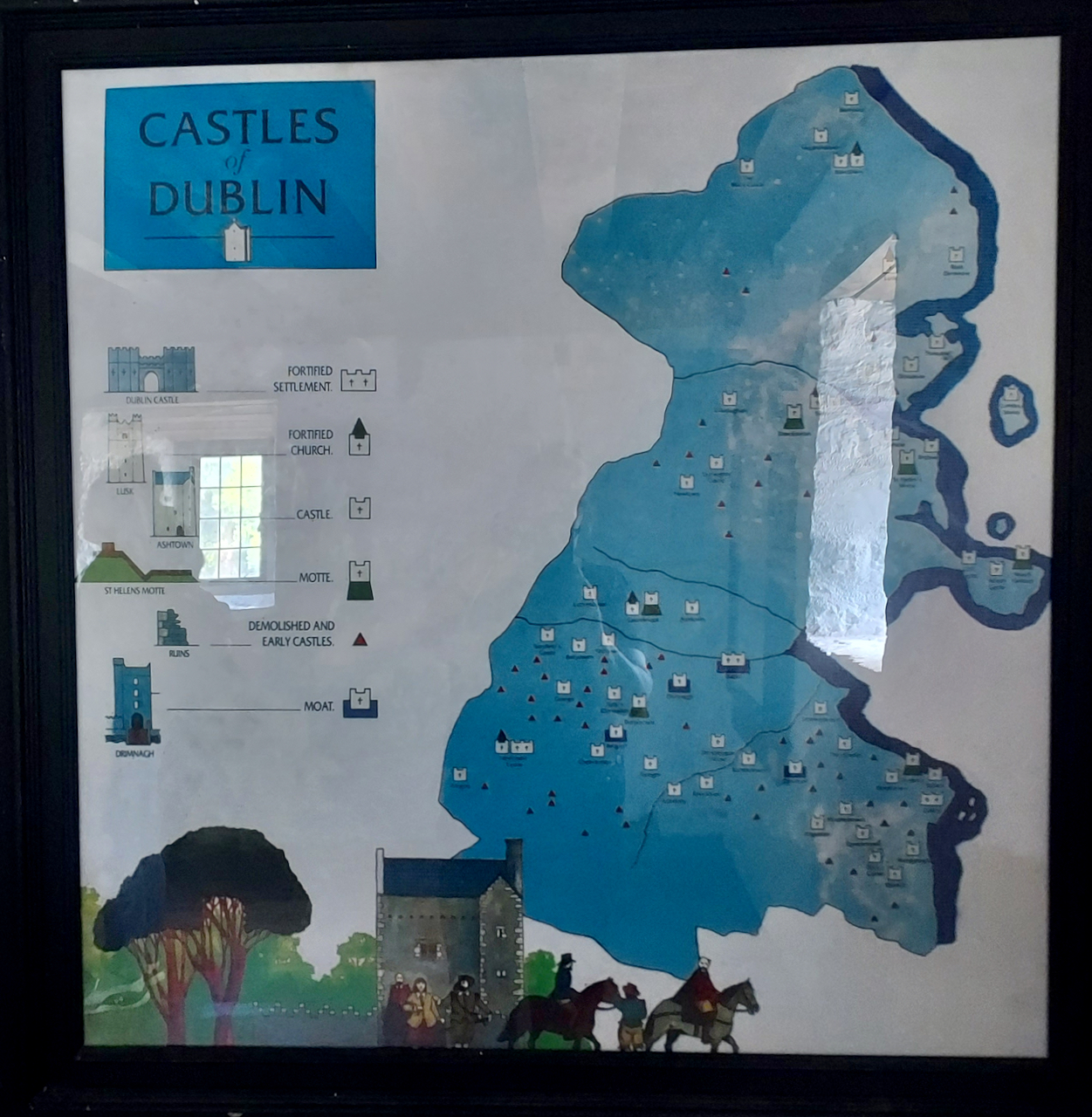
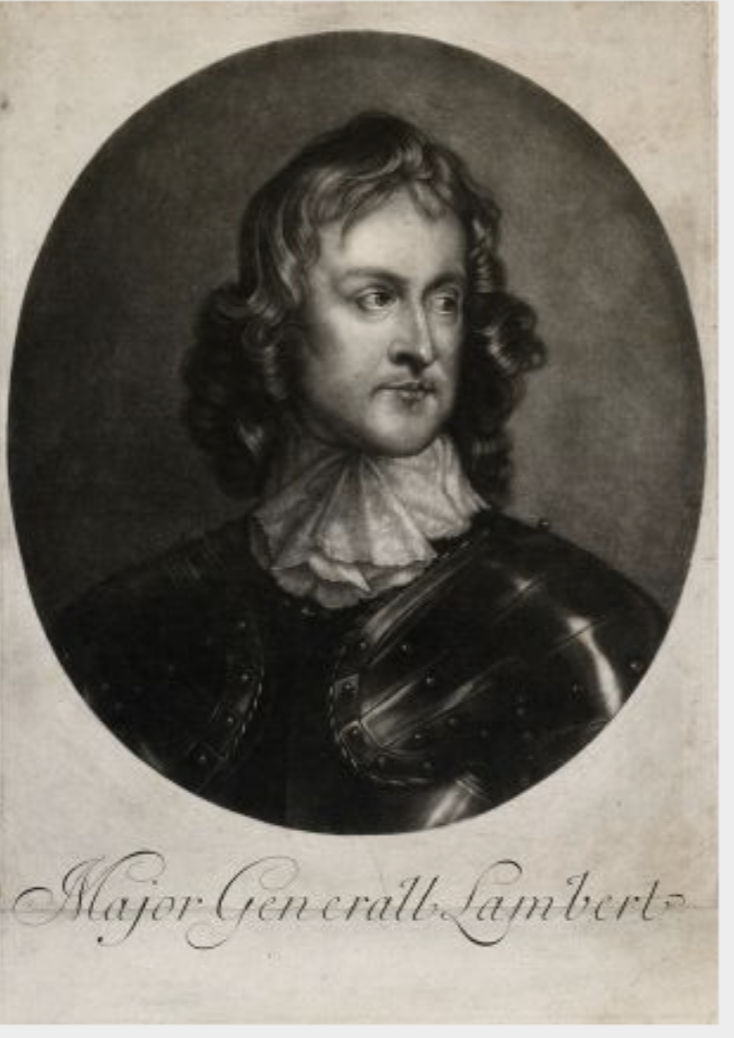
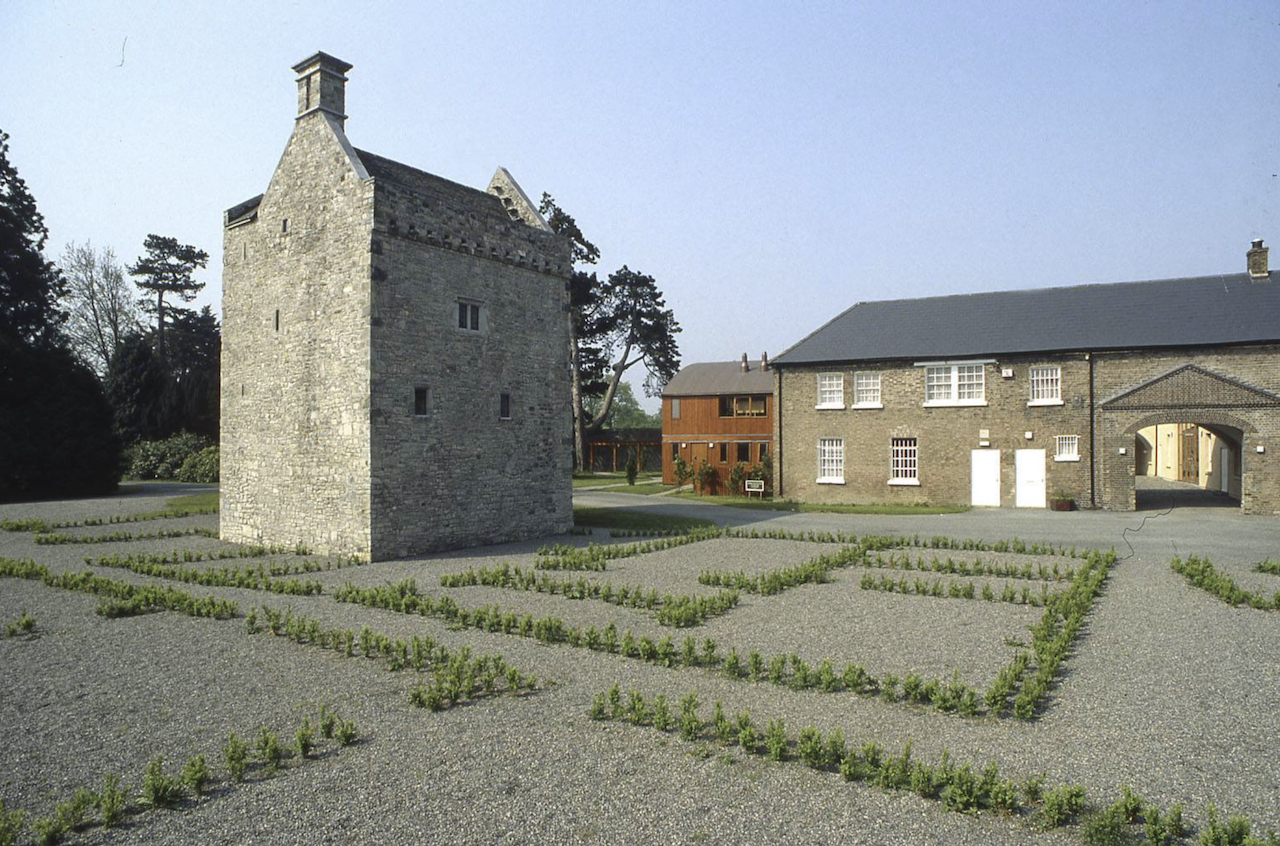
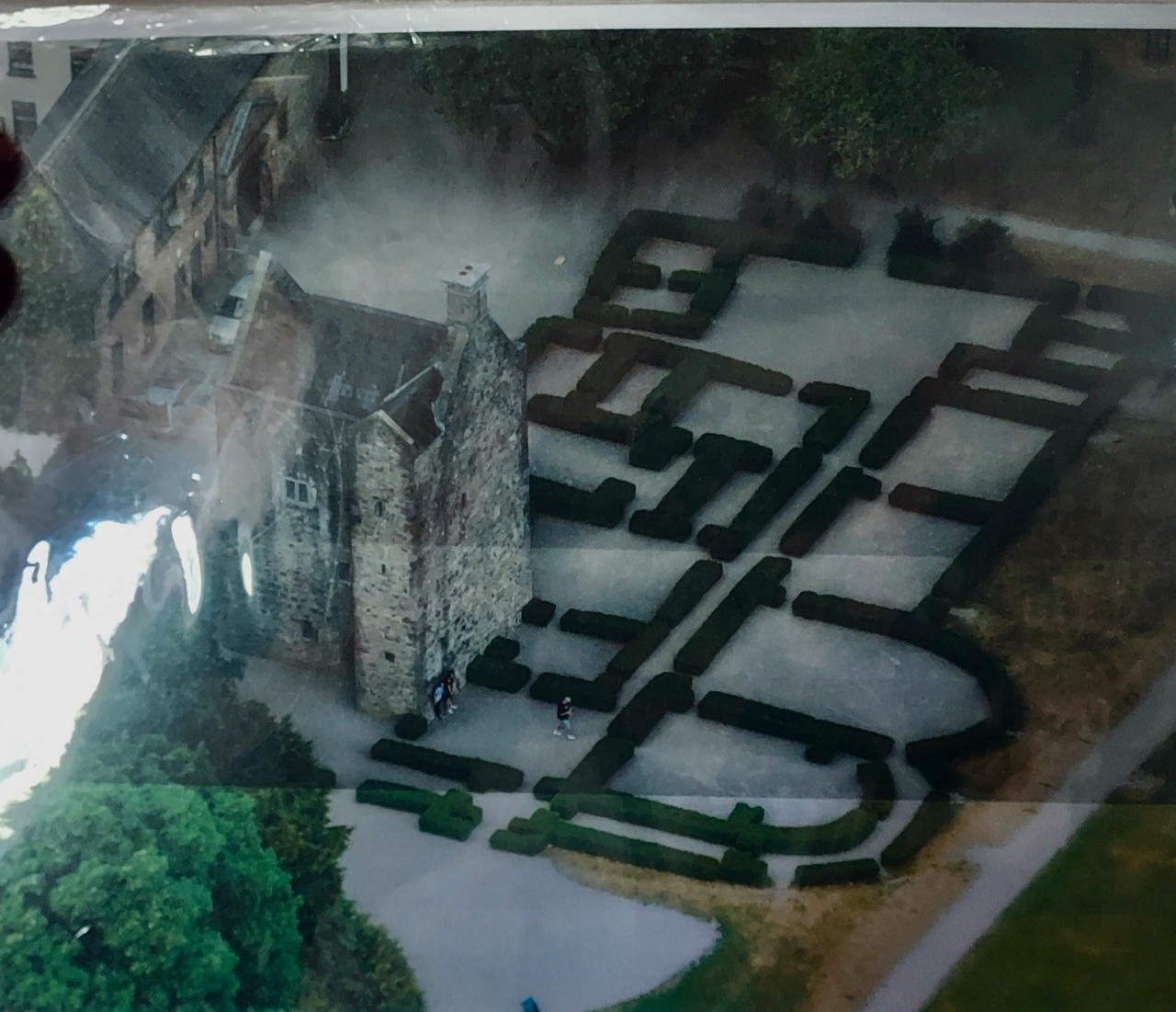
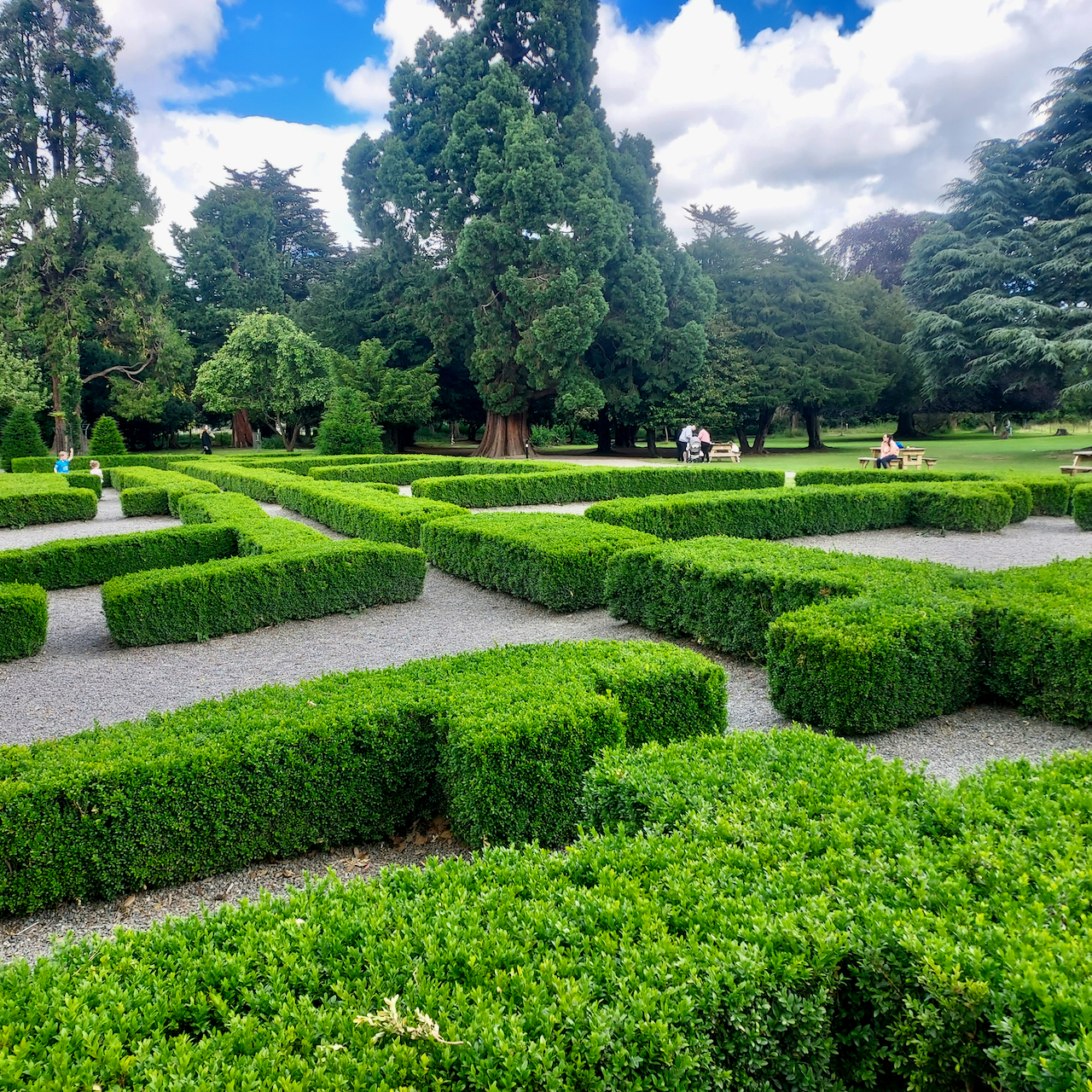
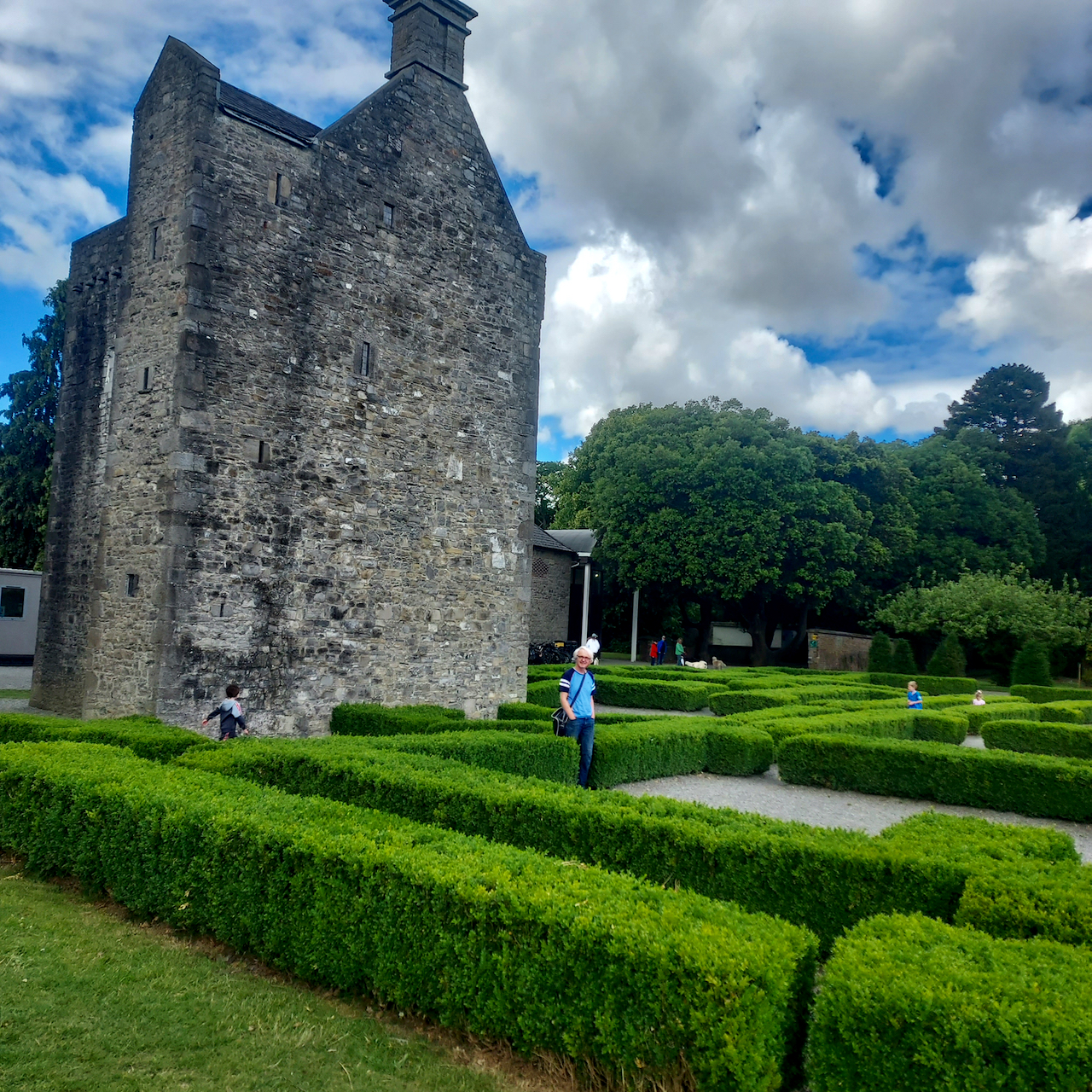
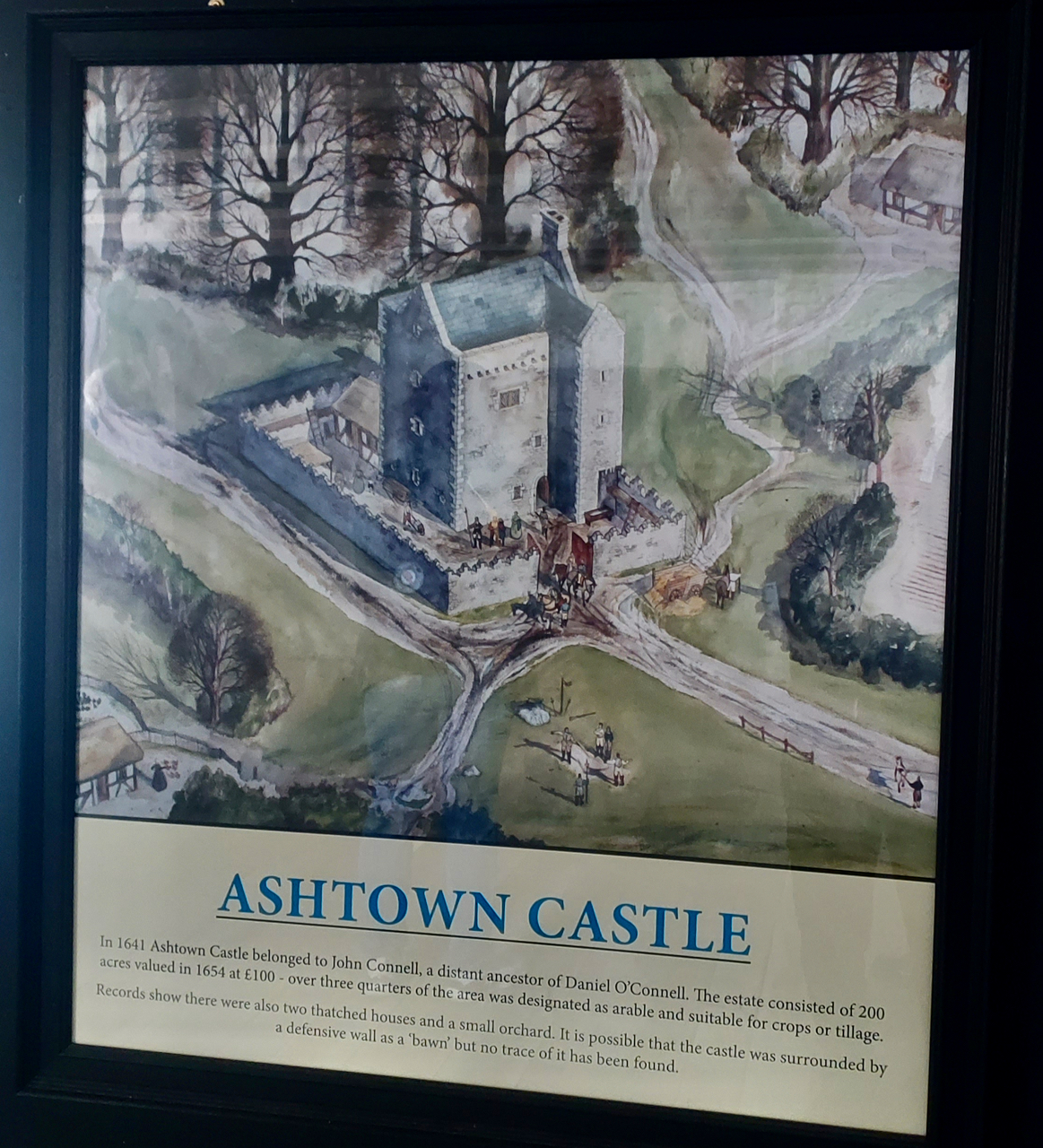
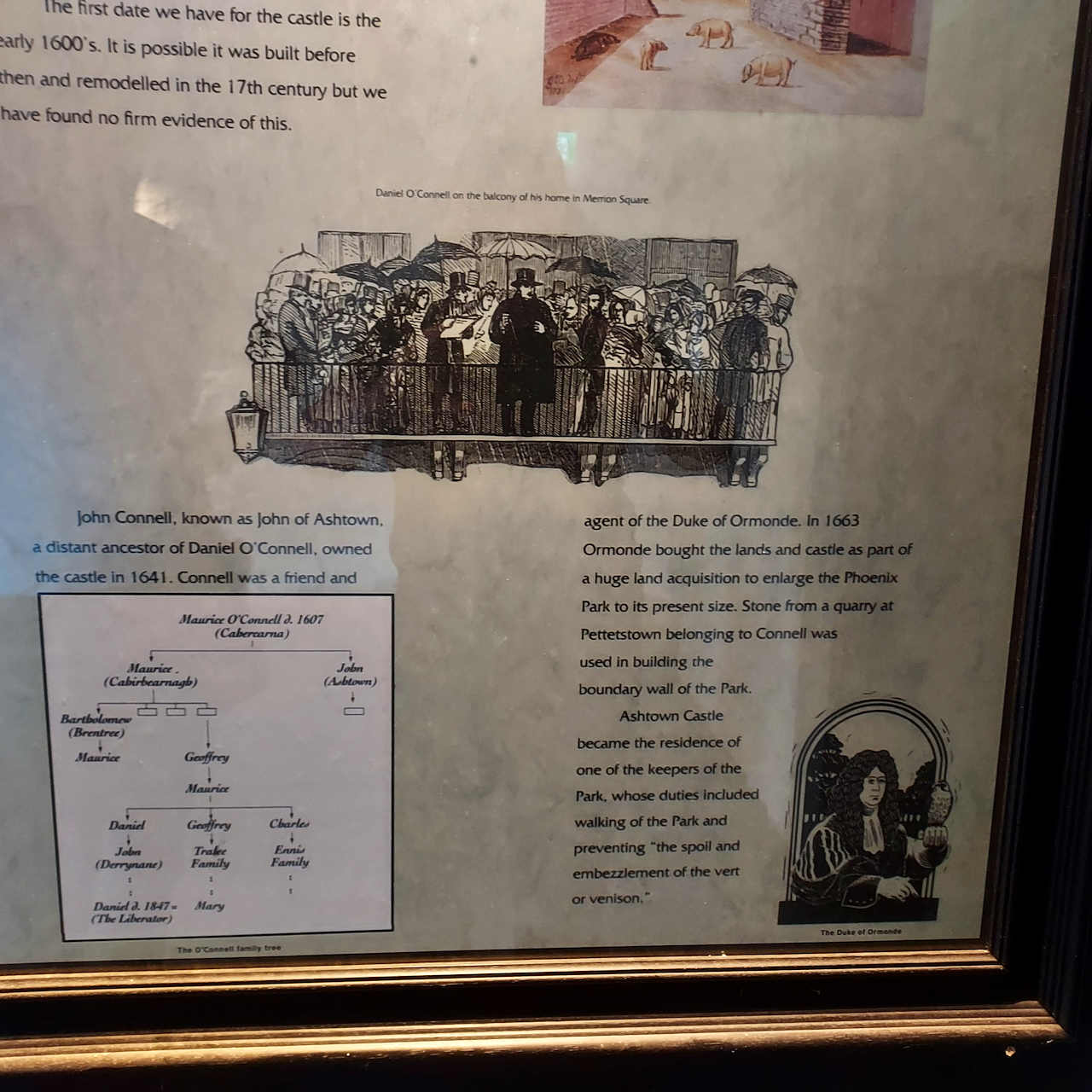
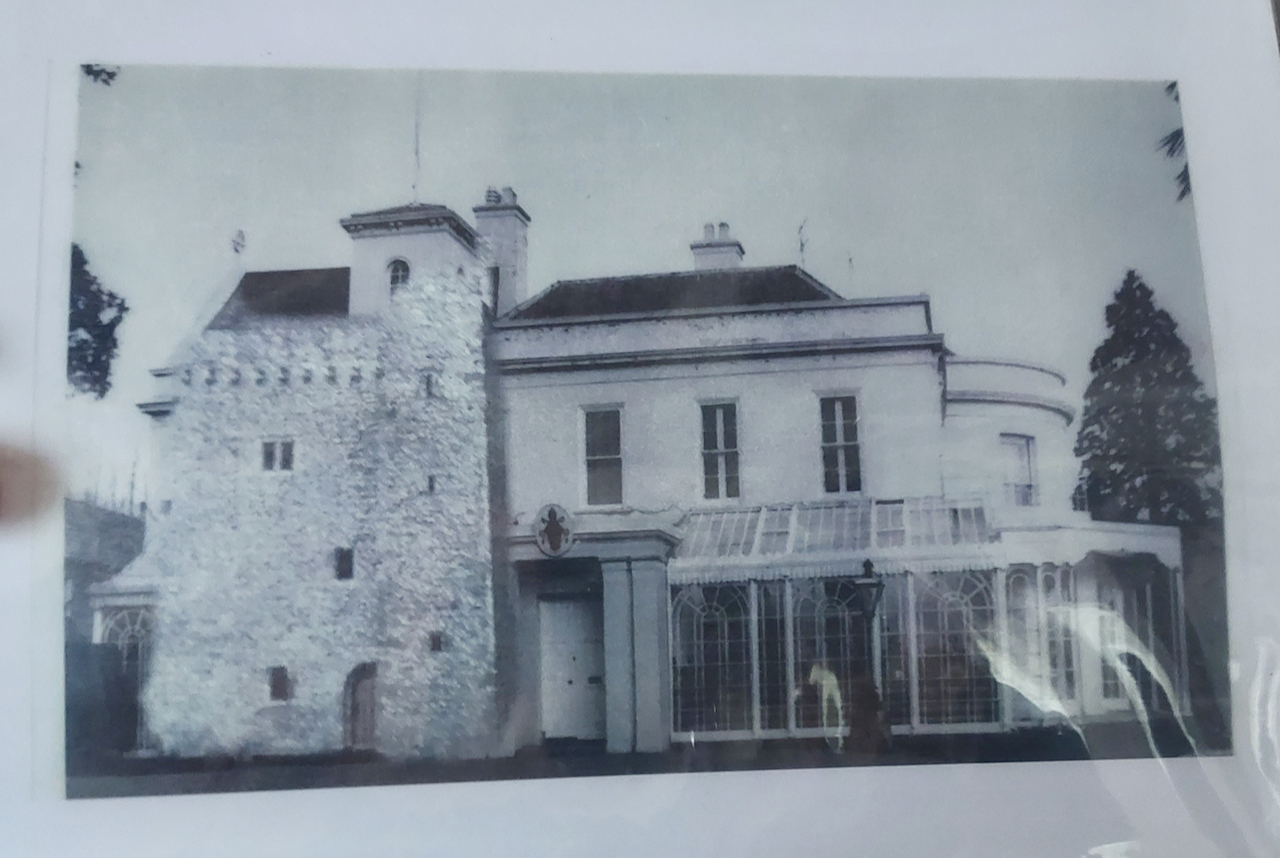
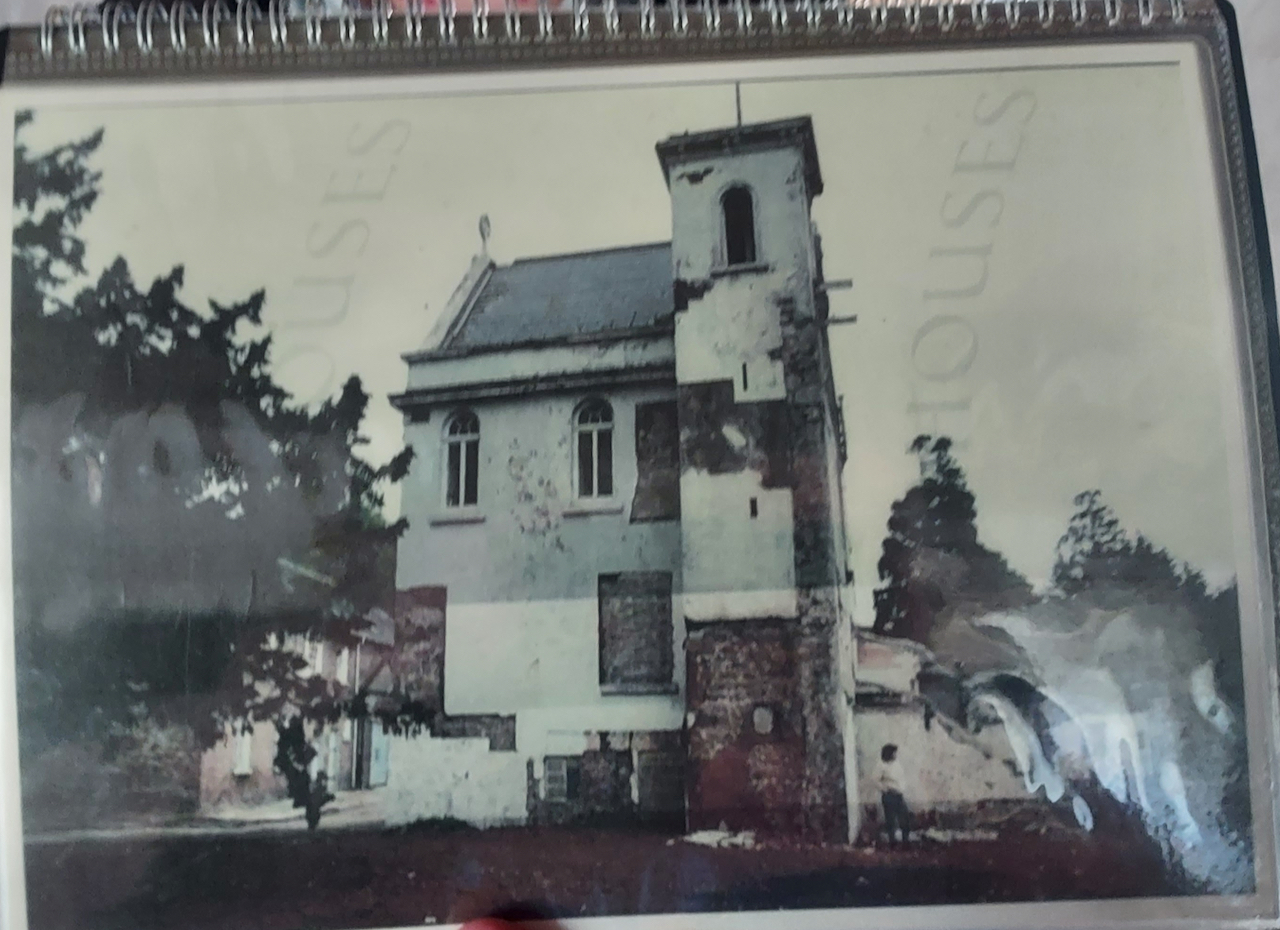
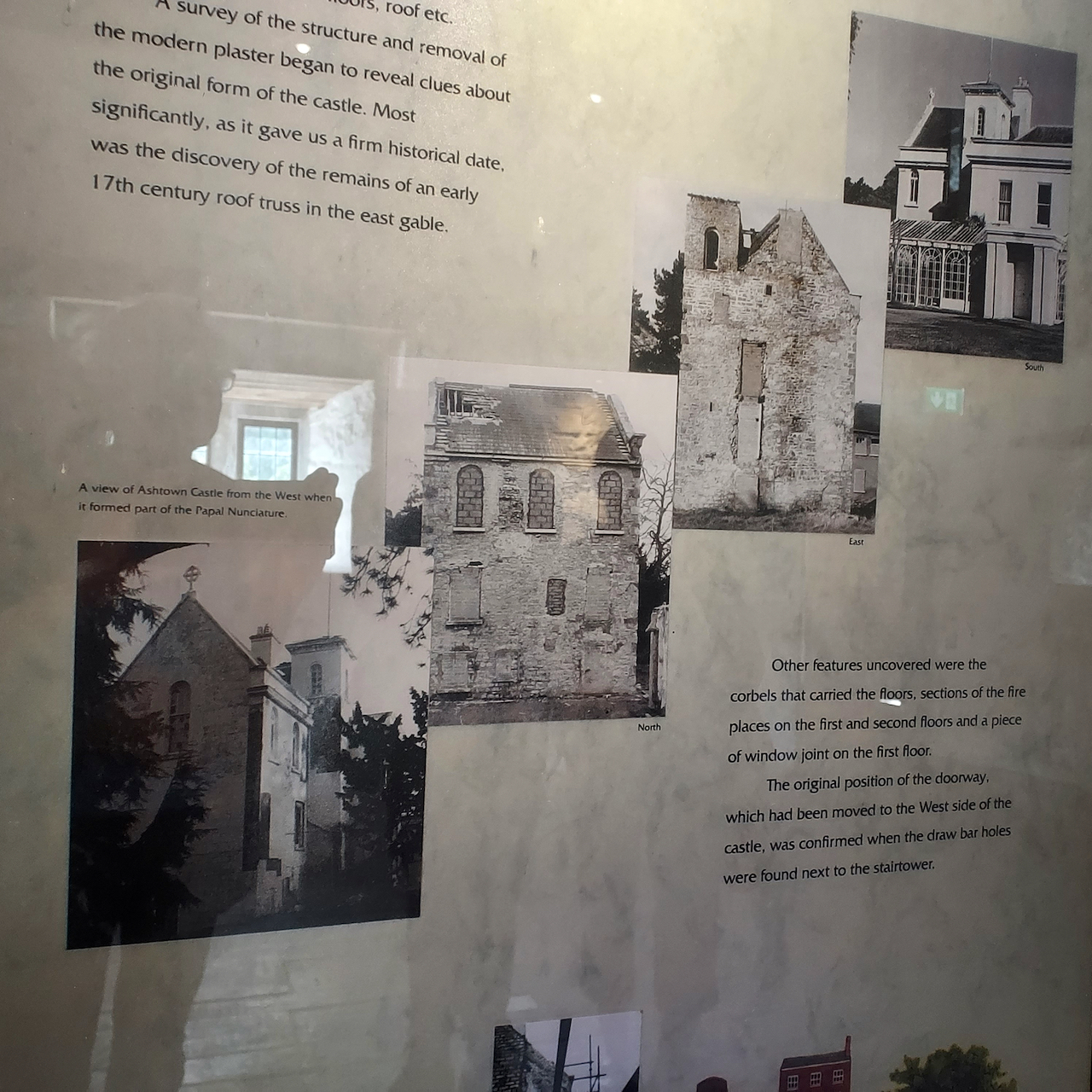
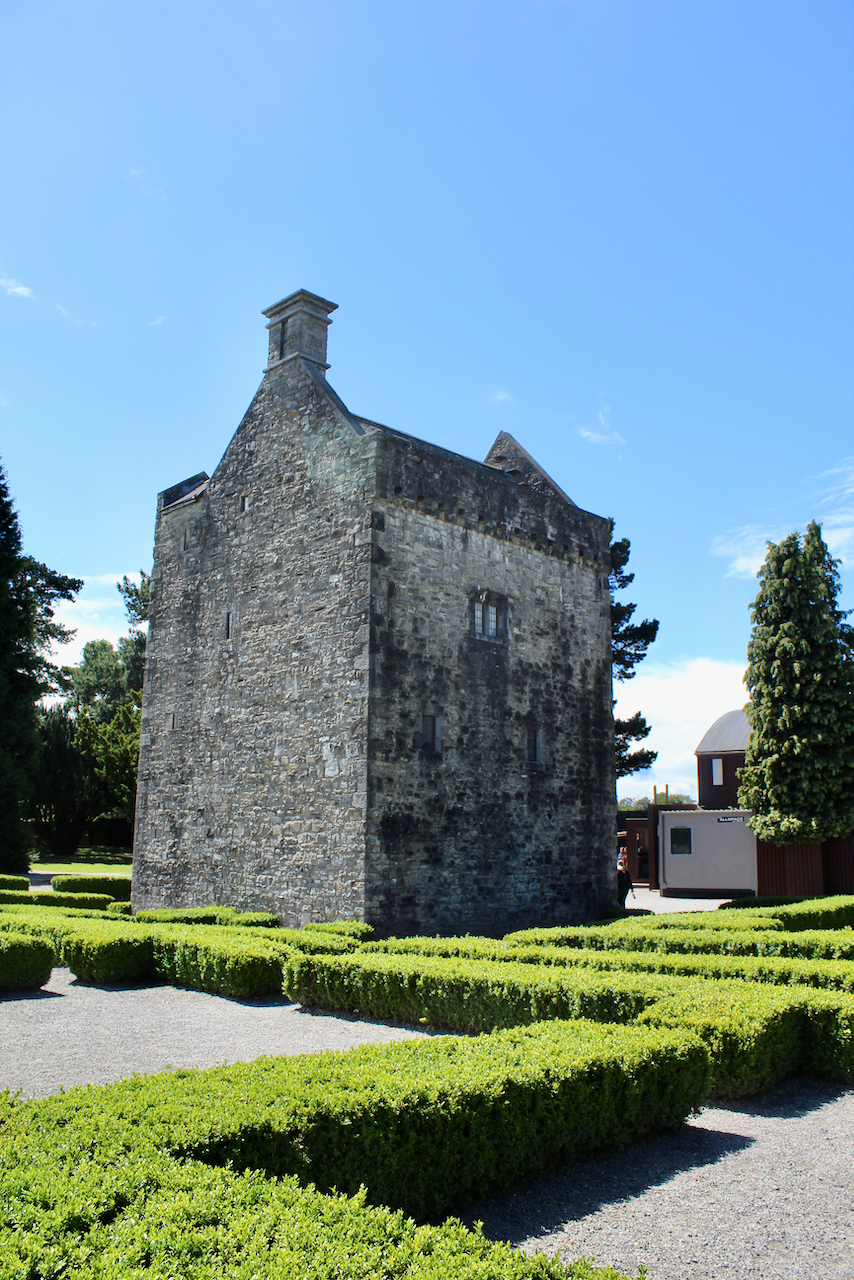
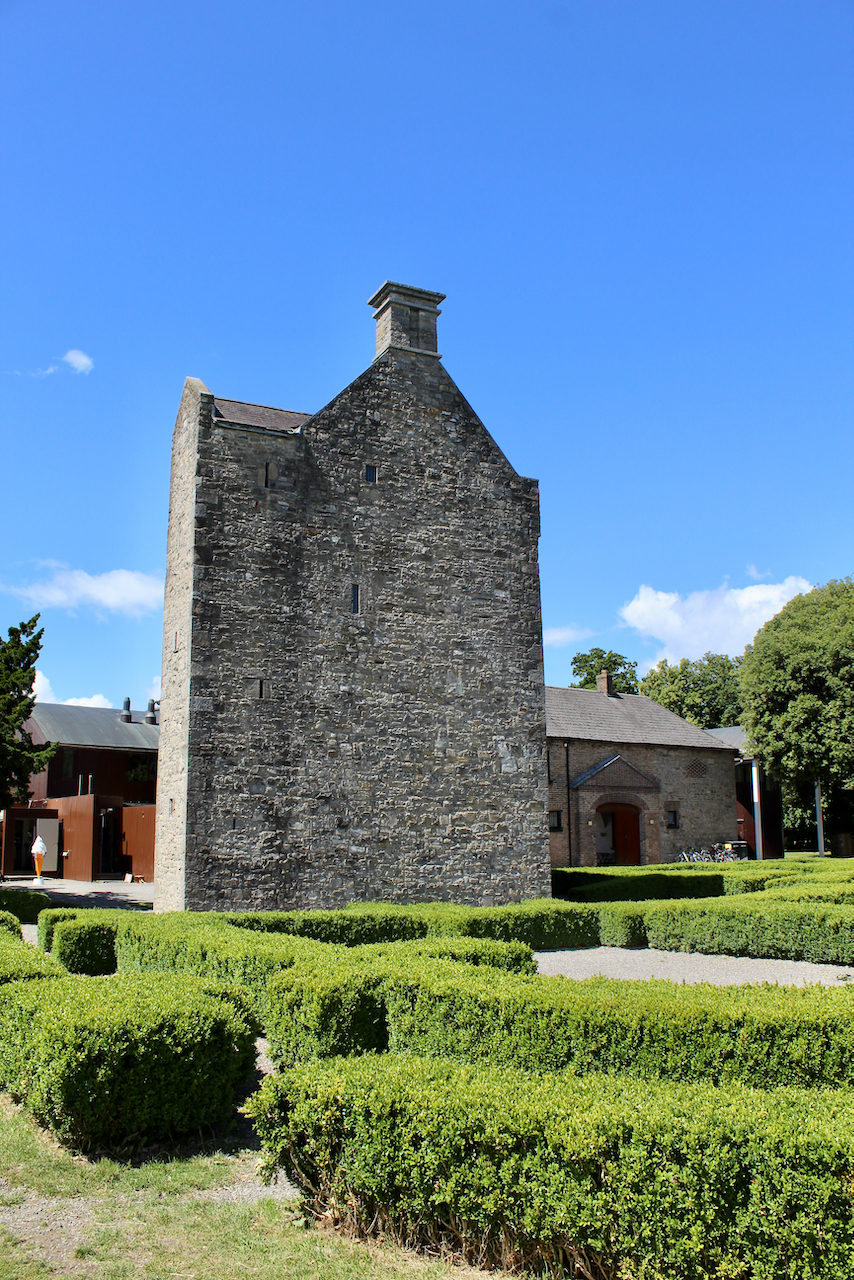
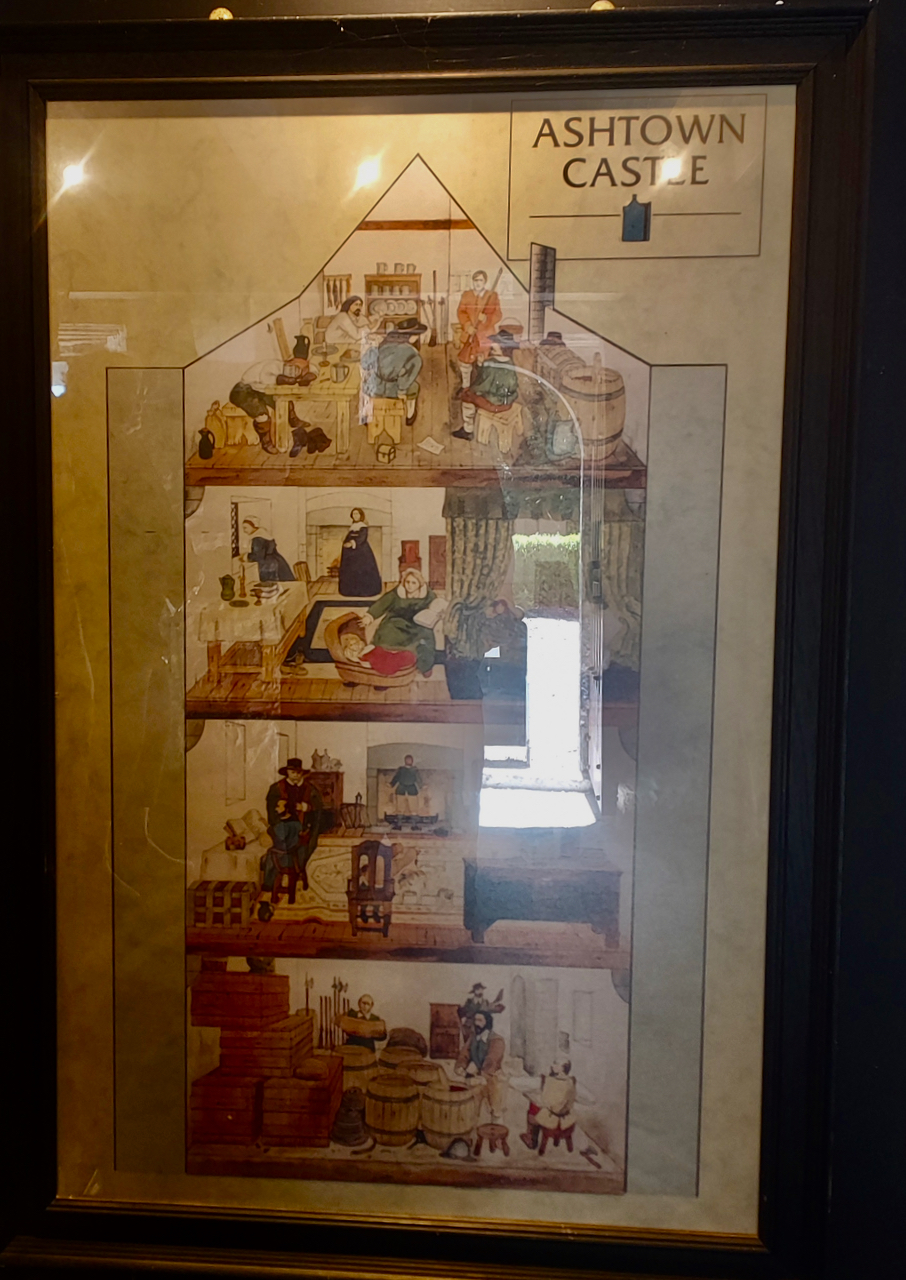
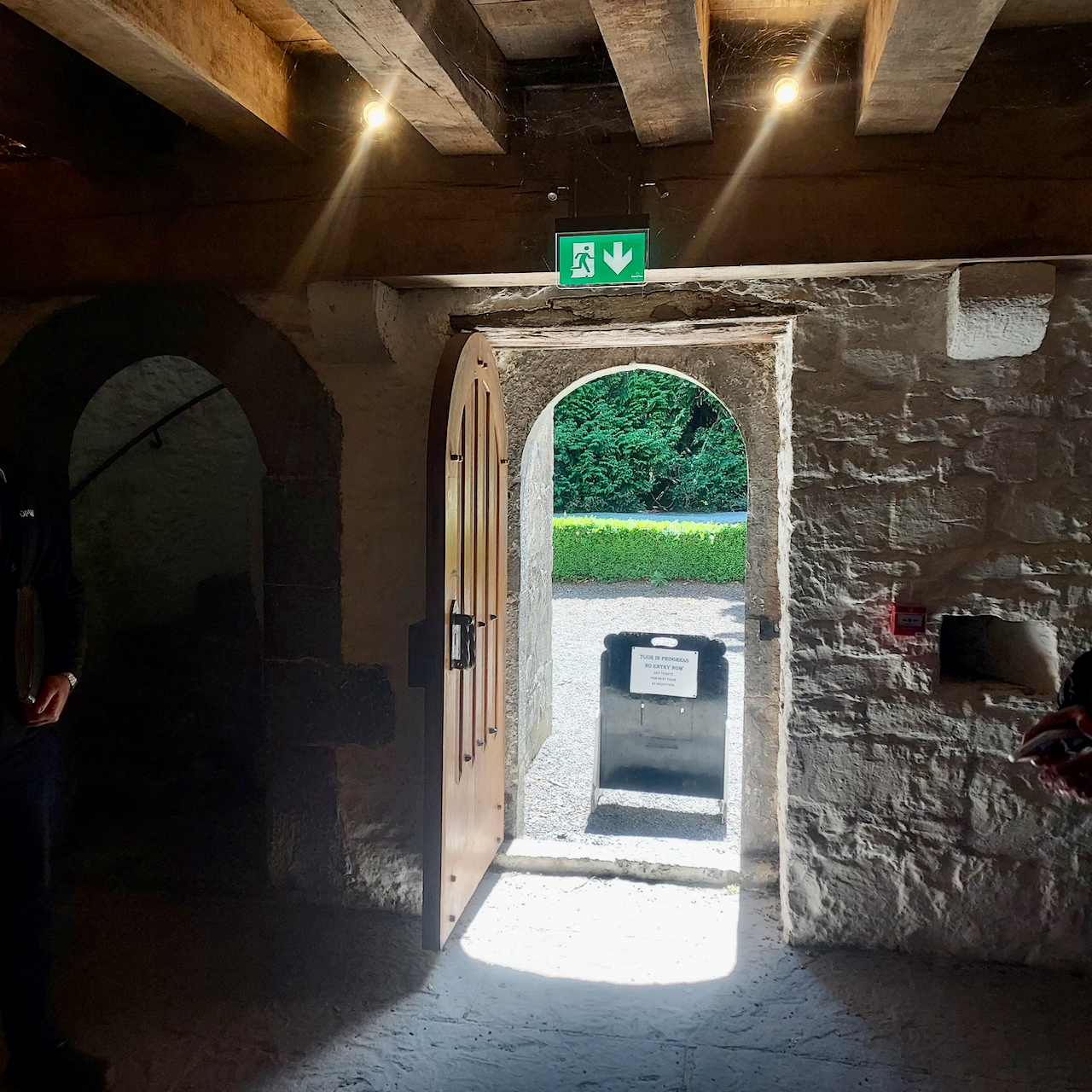
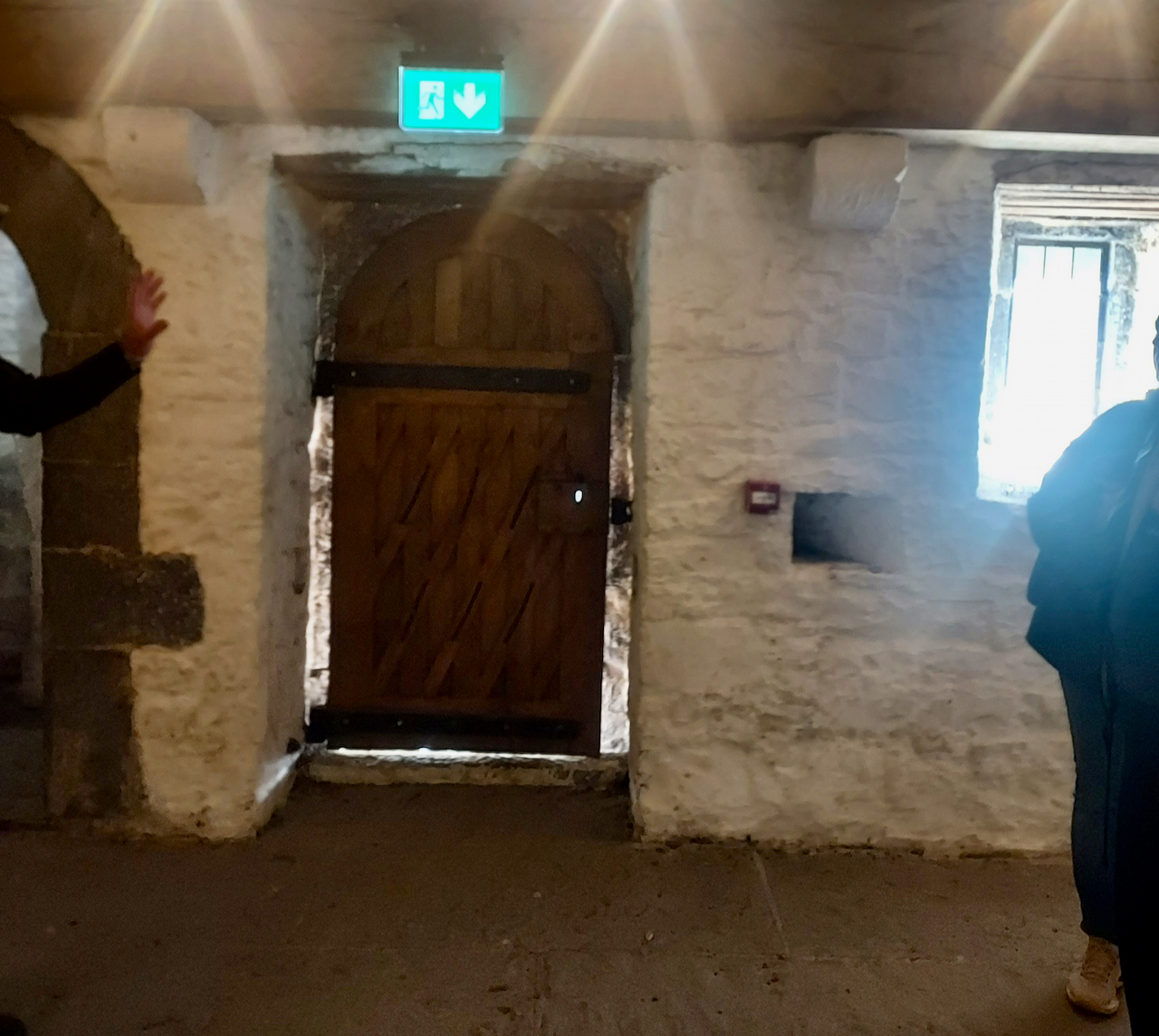
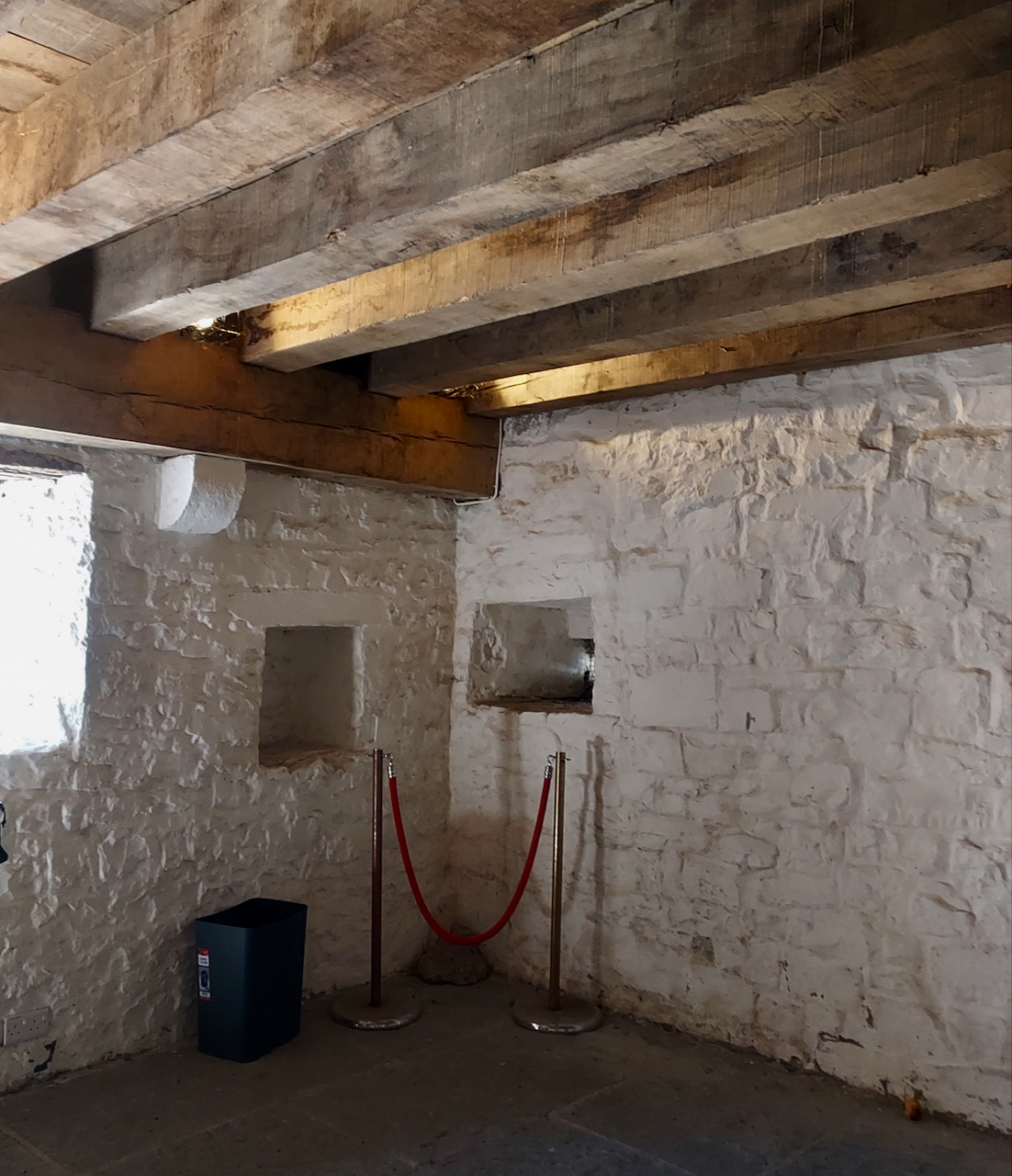
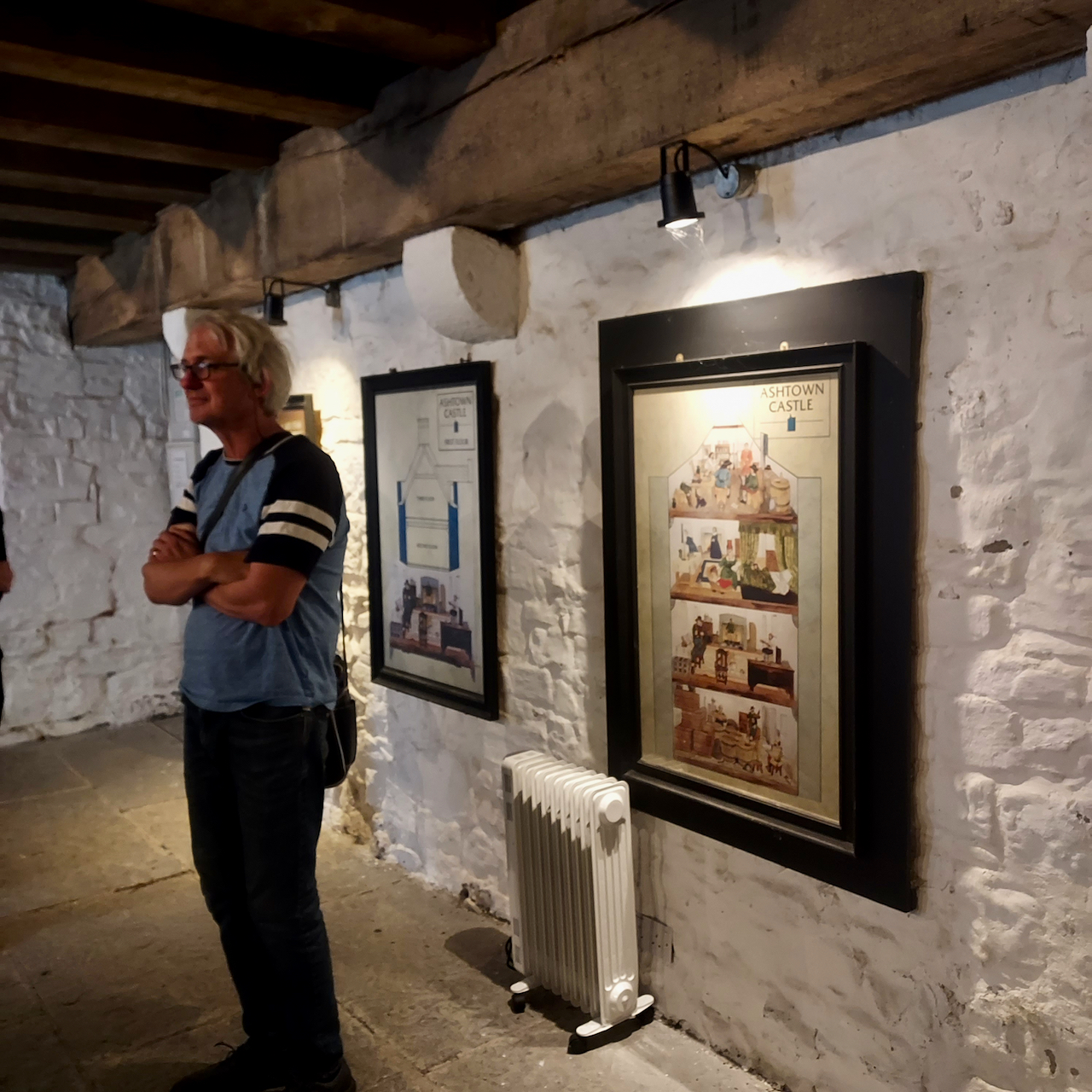
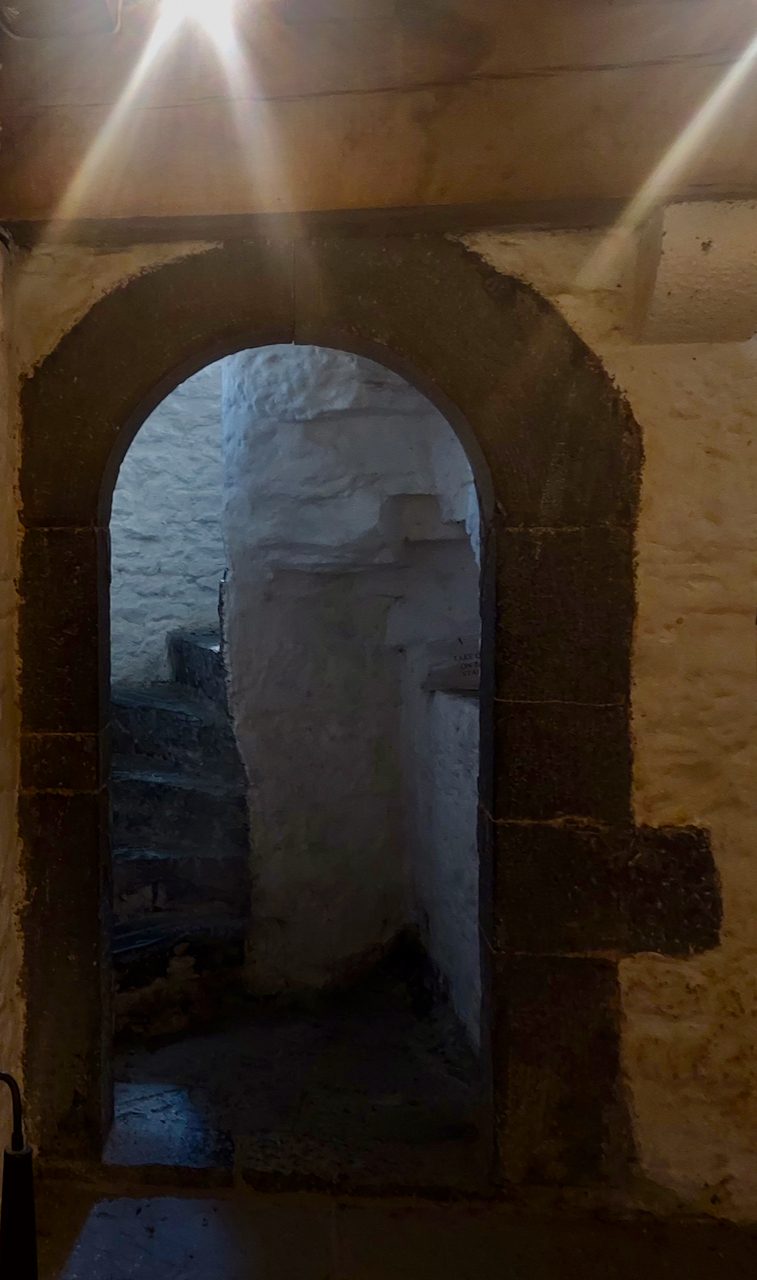
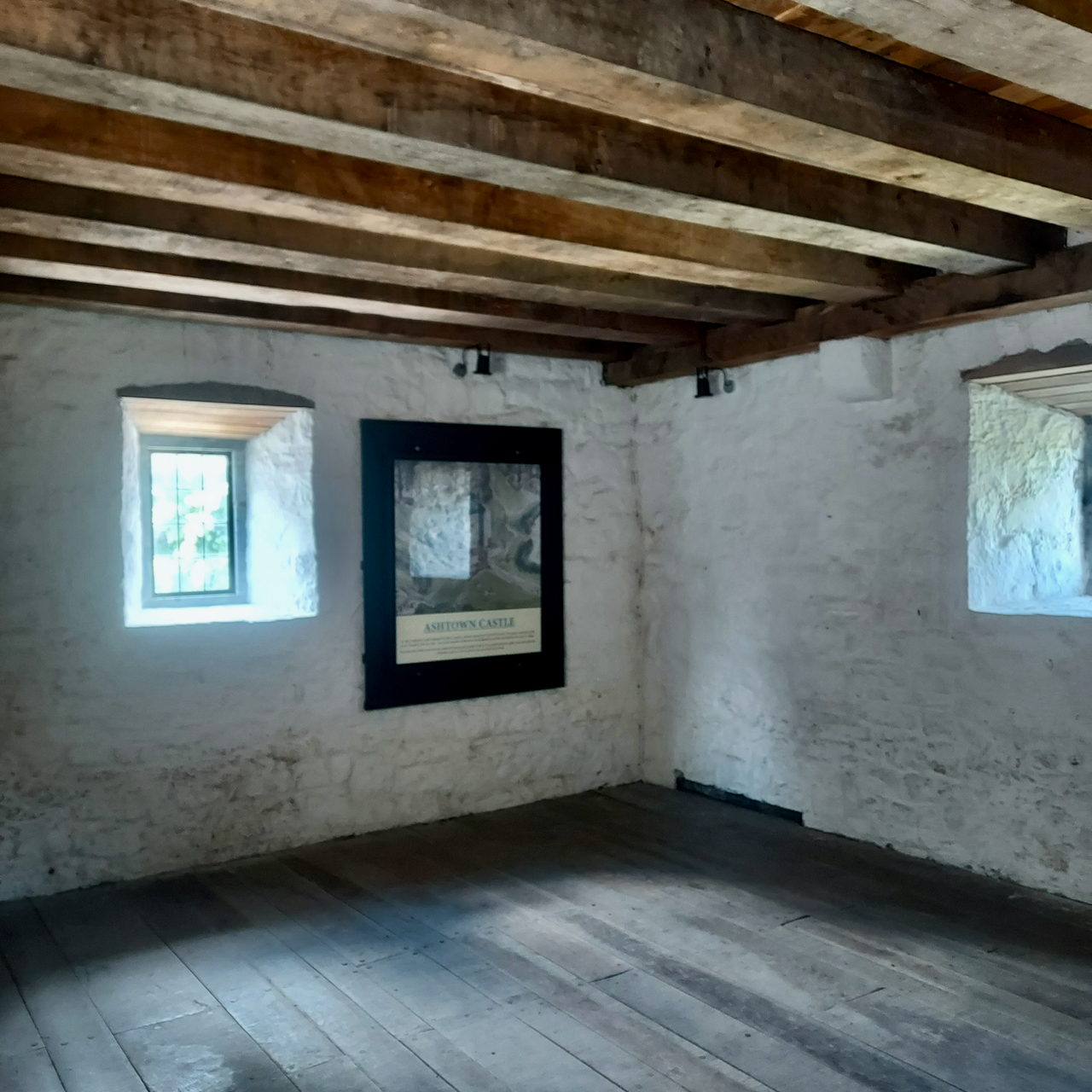
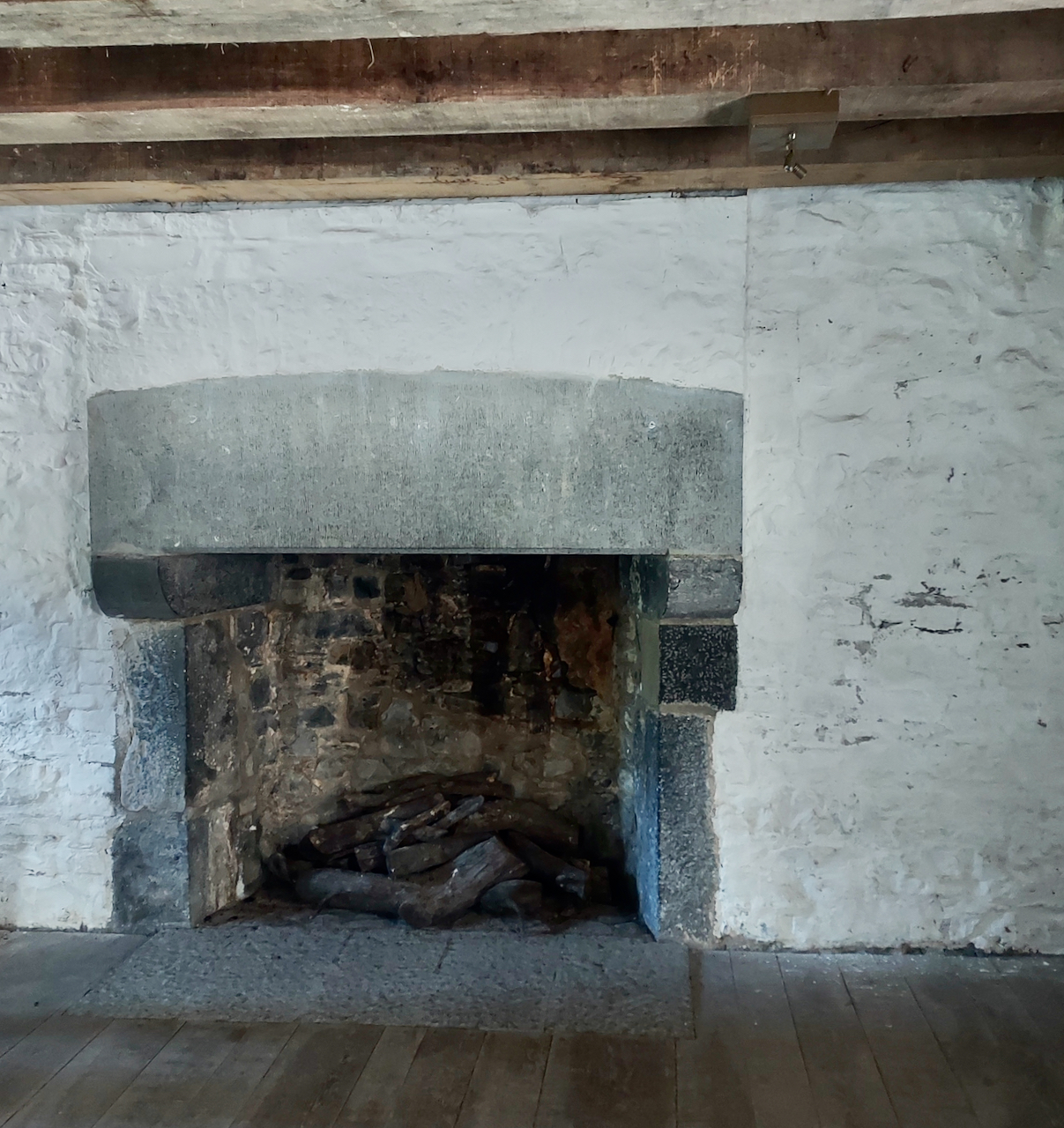
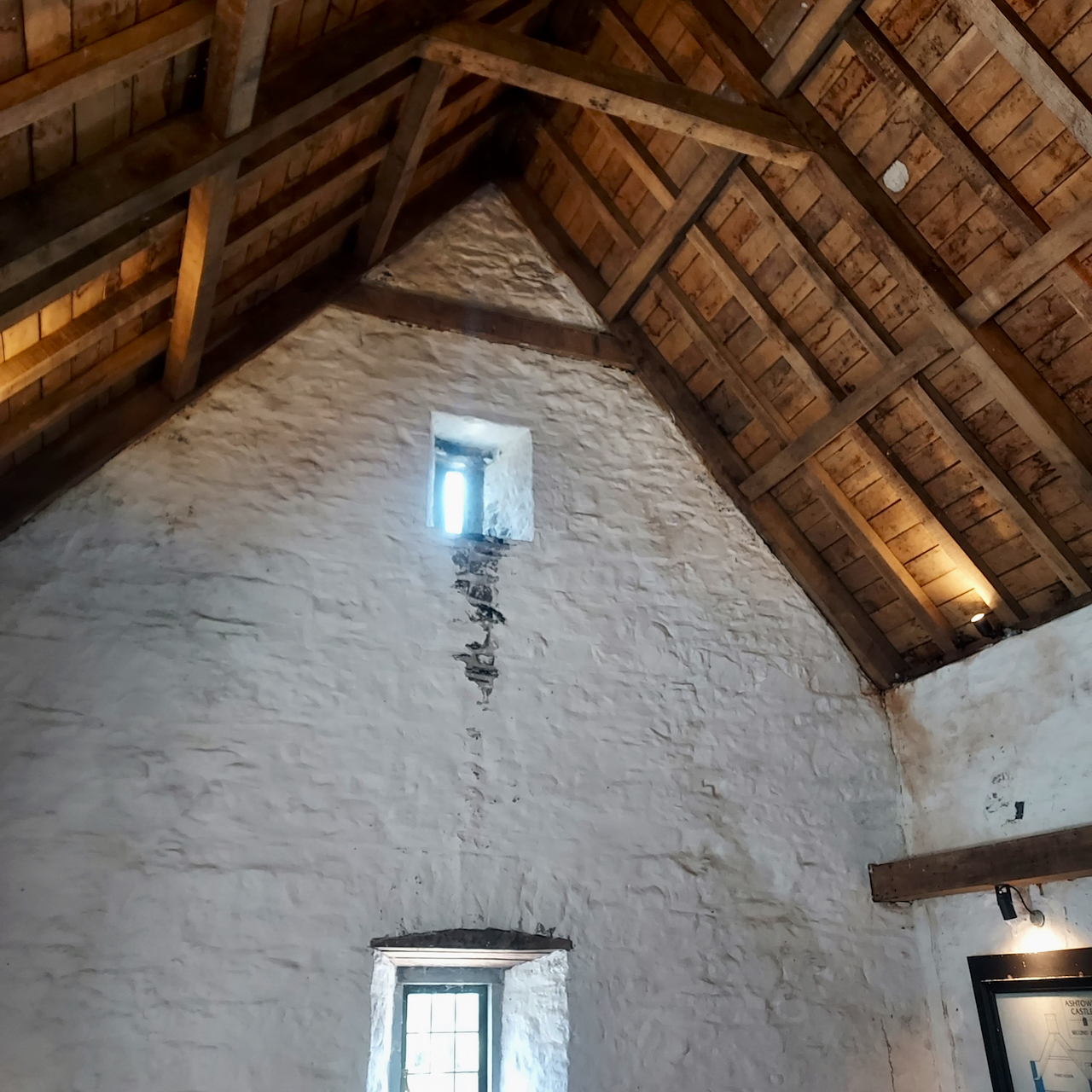
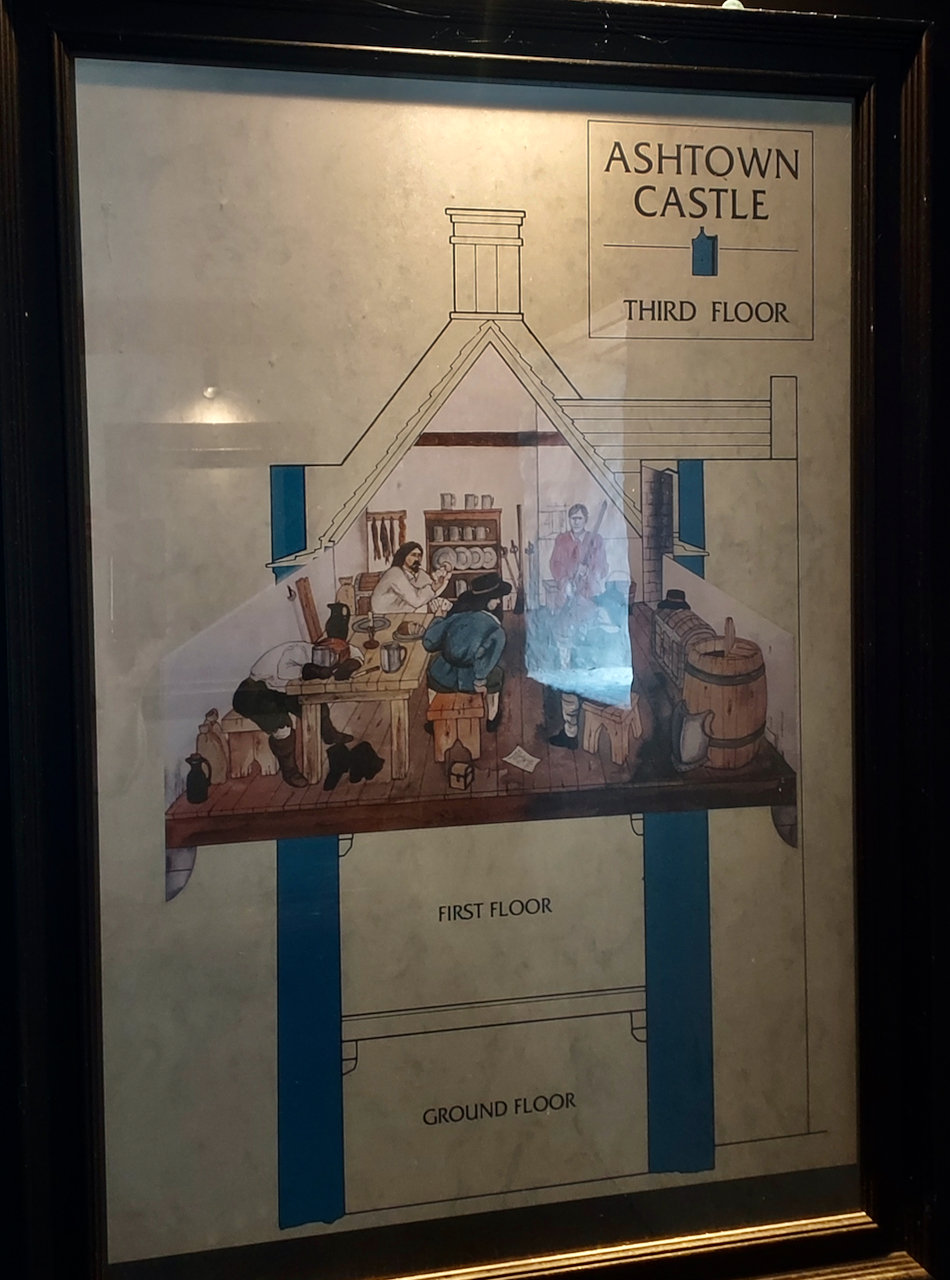
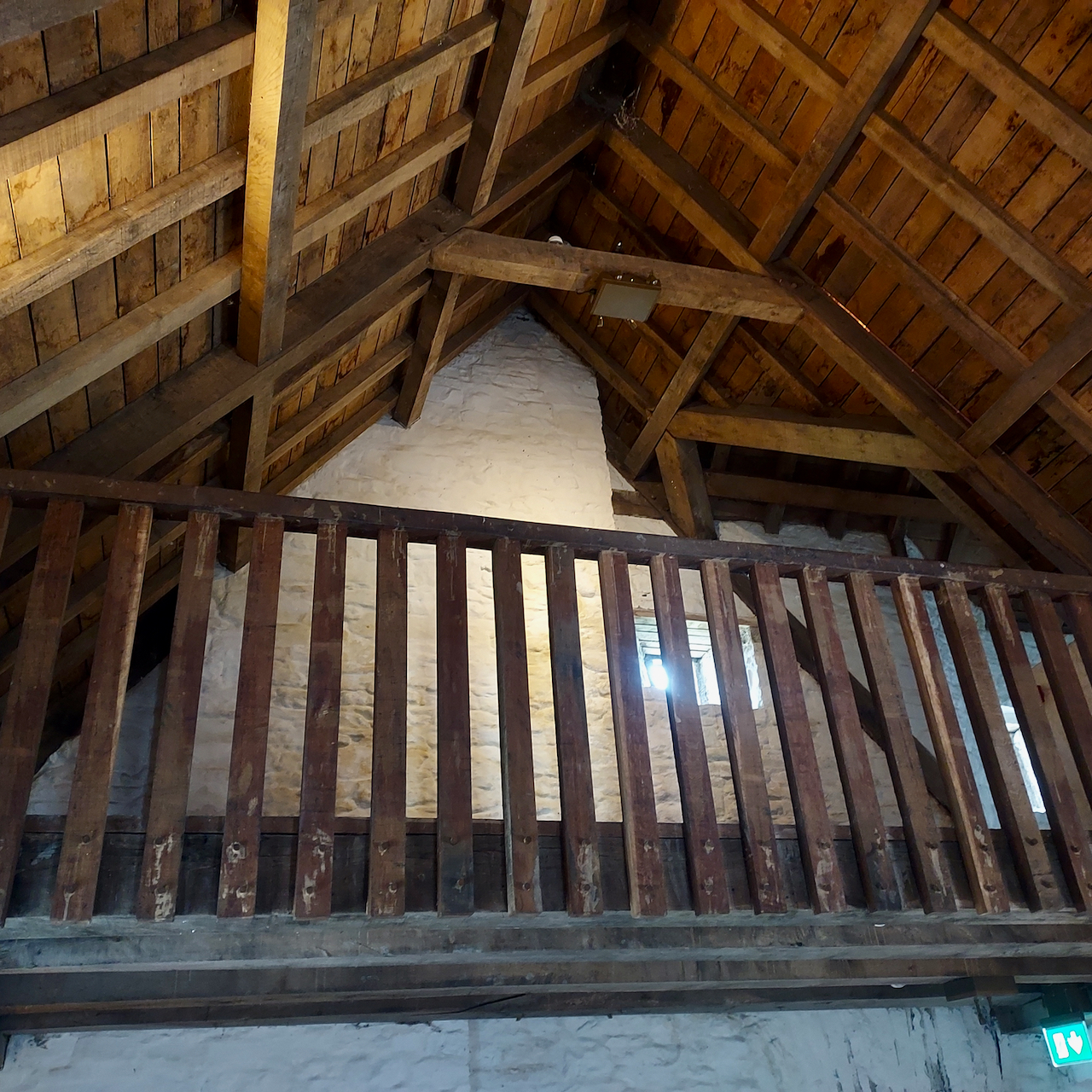
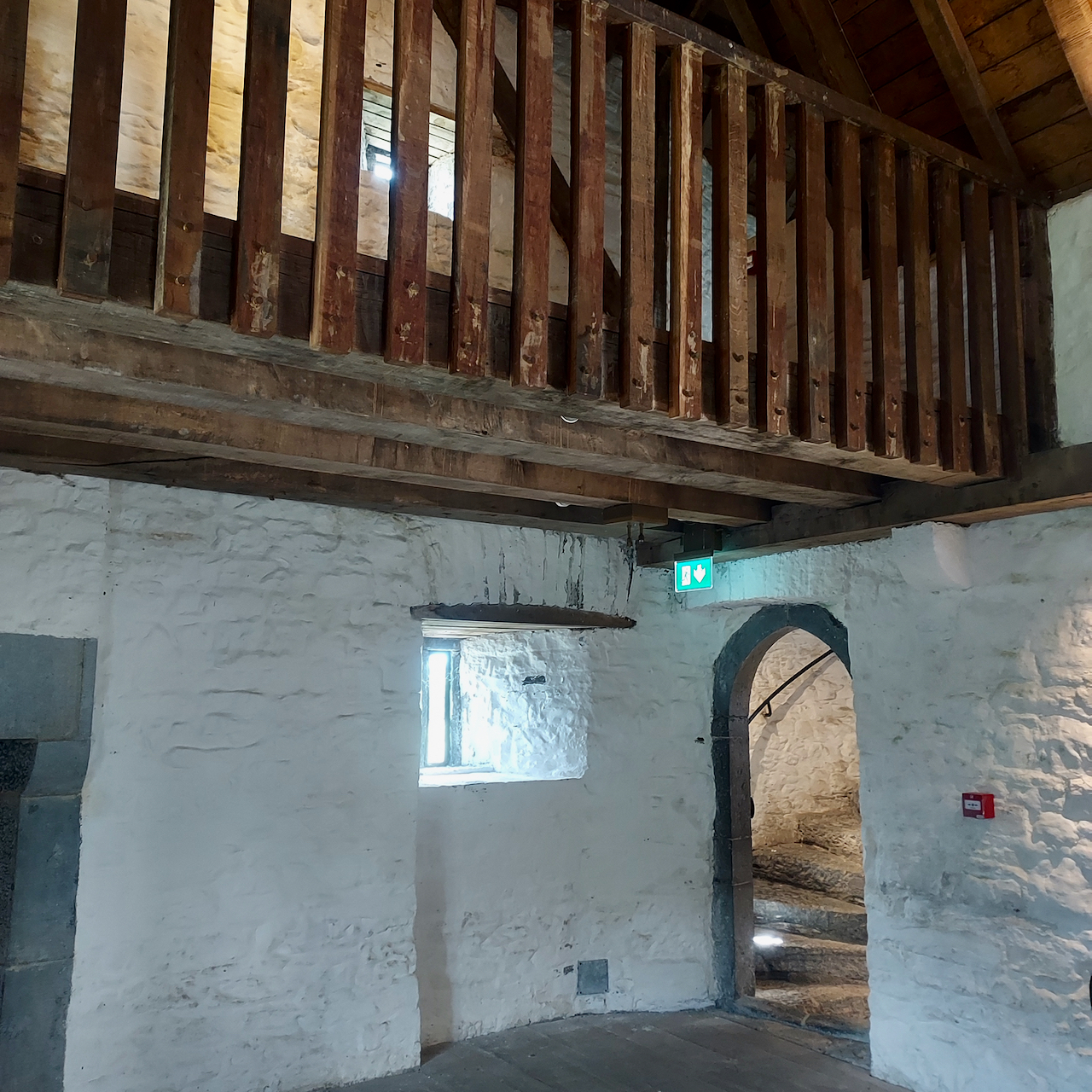
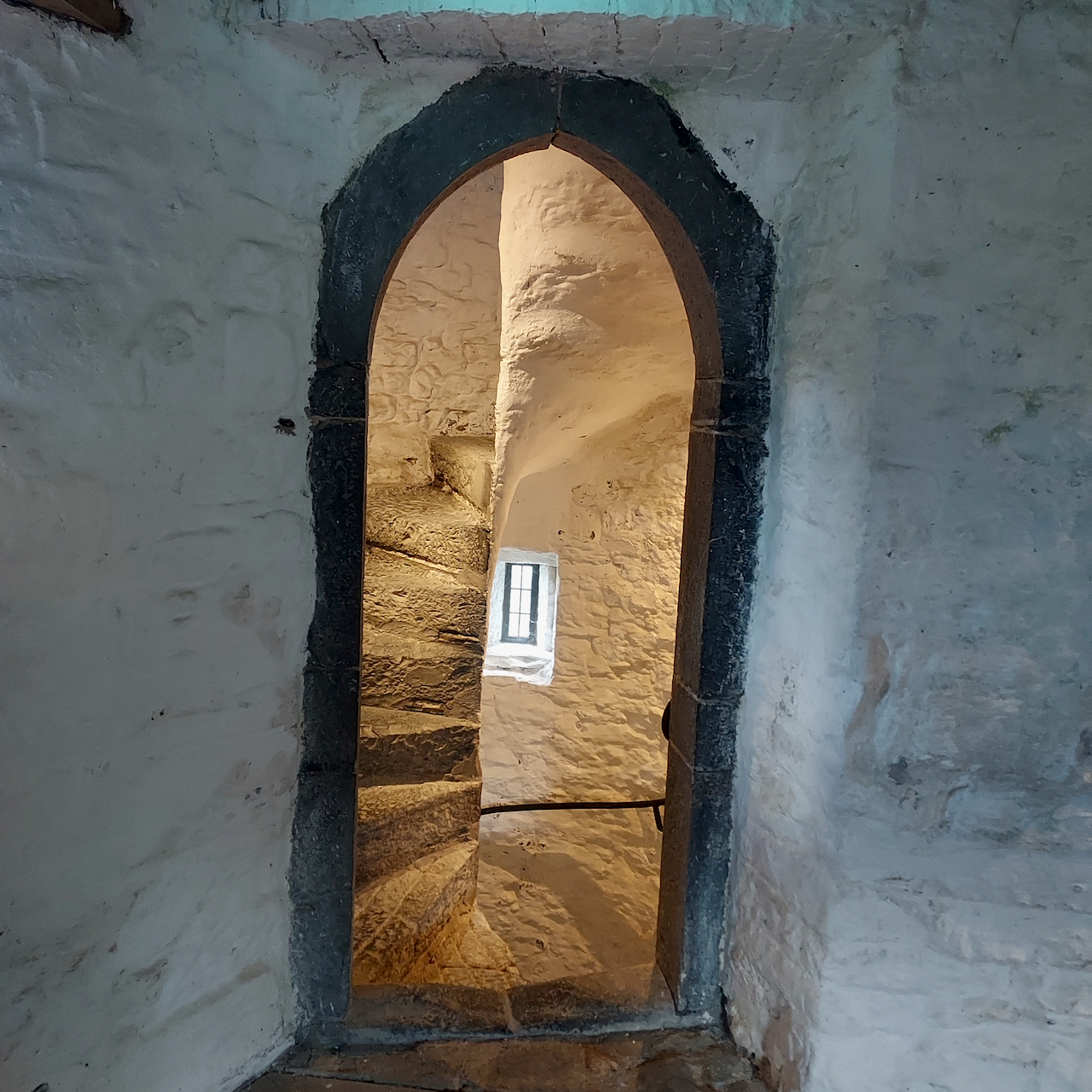
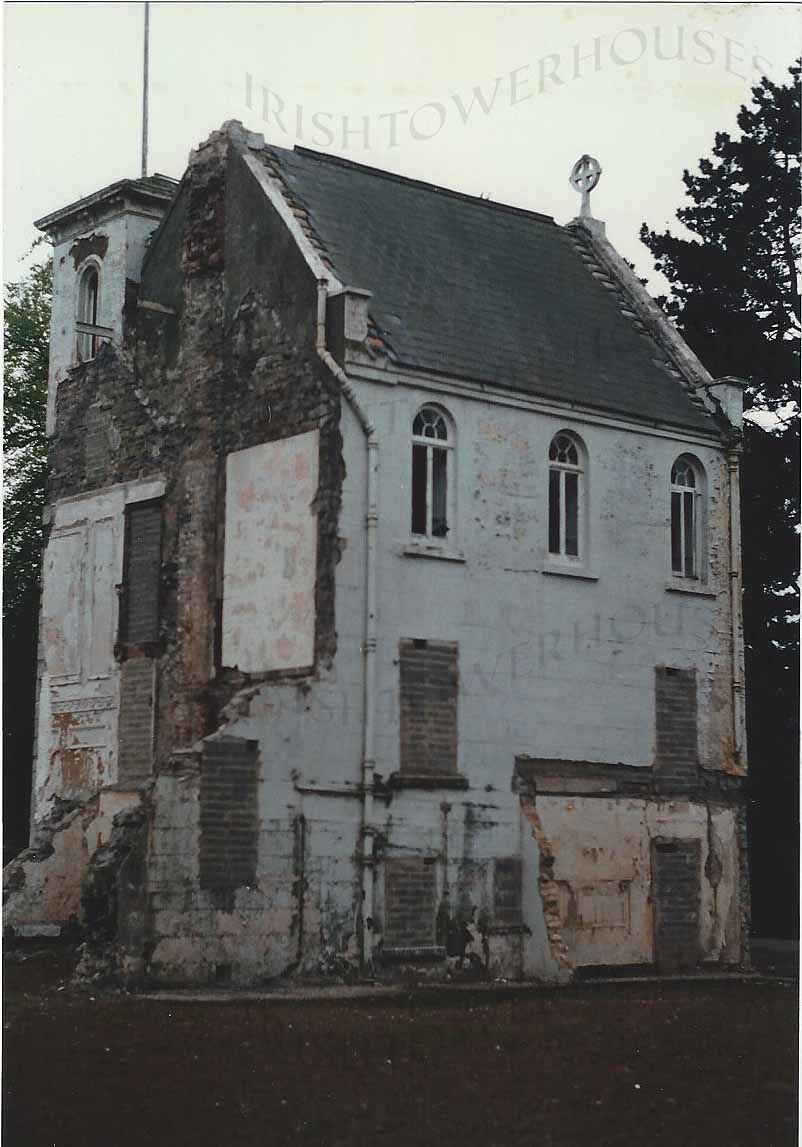
 Irish Historic Houses