Morristown Lattin, Naas, Co Kildare

Mark Bence-Jones. A Guide to Irish Country Houses (originally published as Burke’s Guide to Country Houses volume 1 Ireland by Burke’s Peerage Ltd. 1978); Revised edition 1988 Constable and Company Ltd, London.
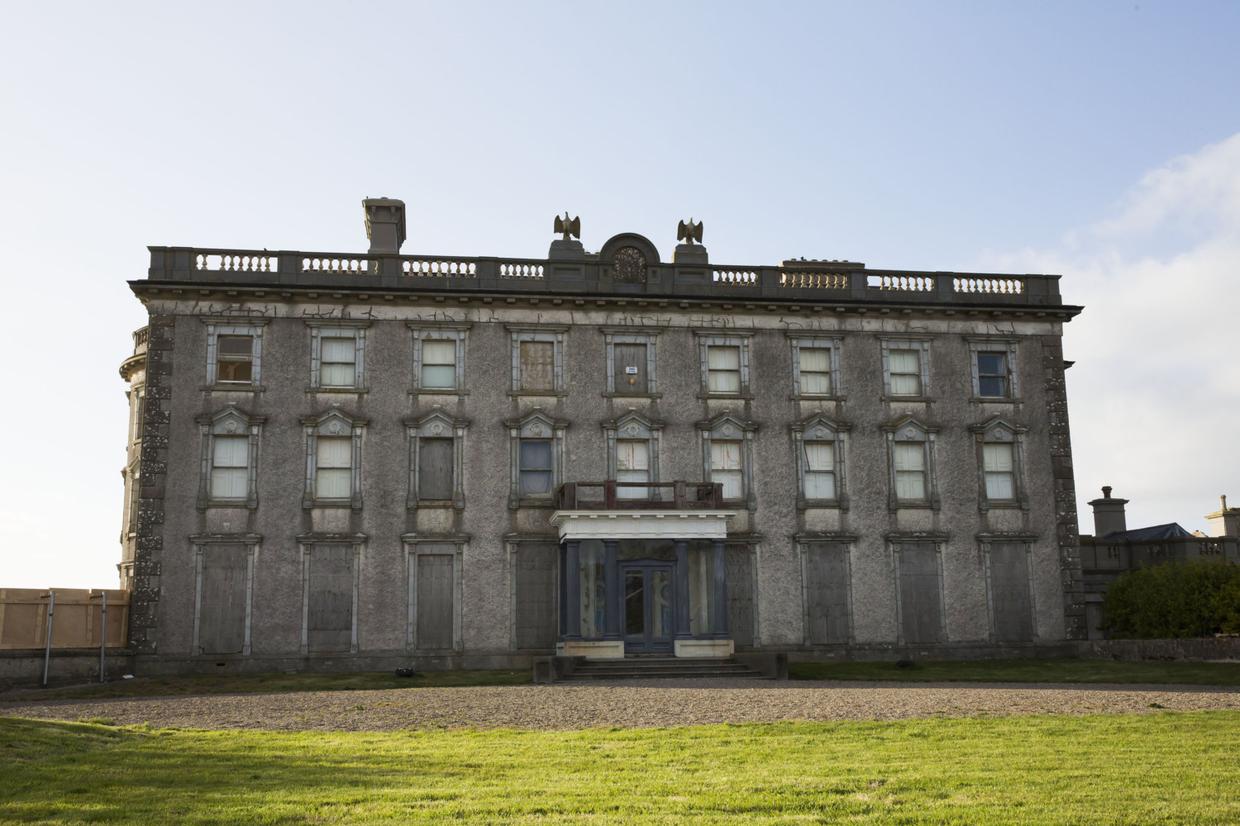
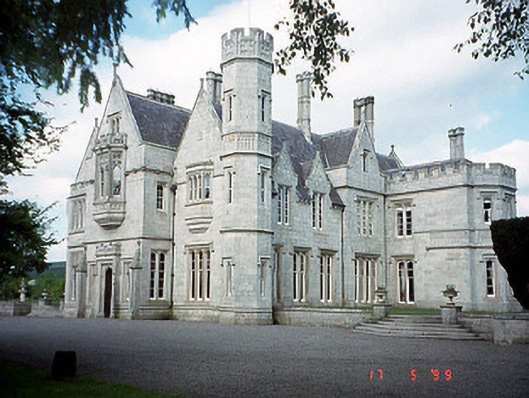
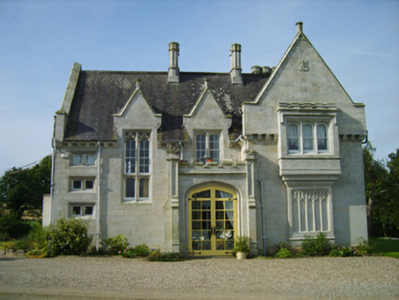
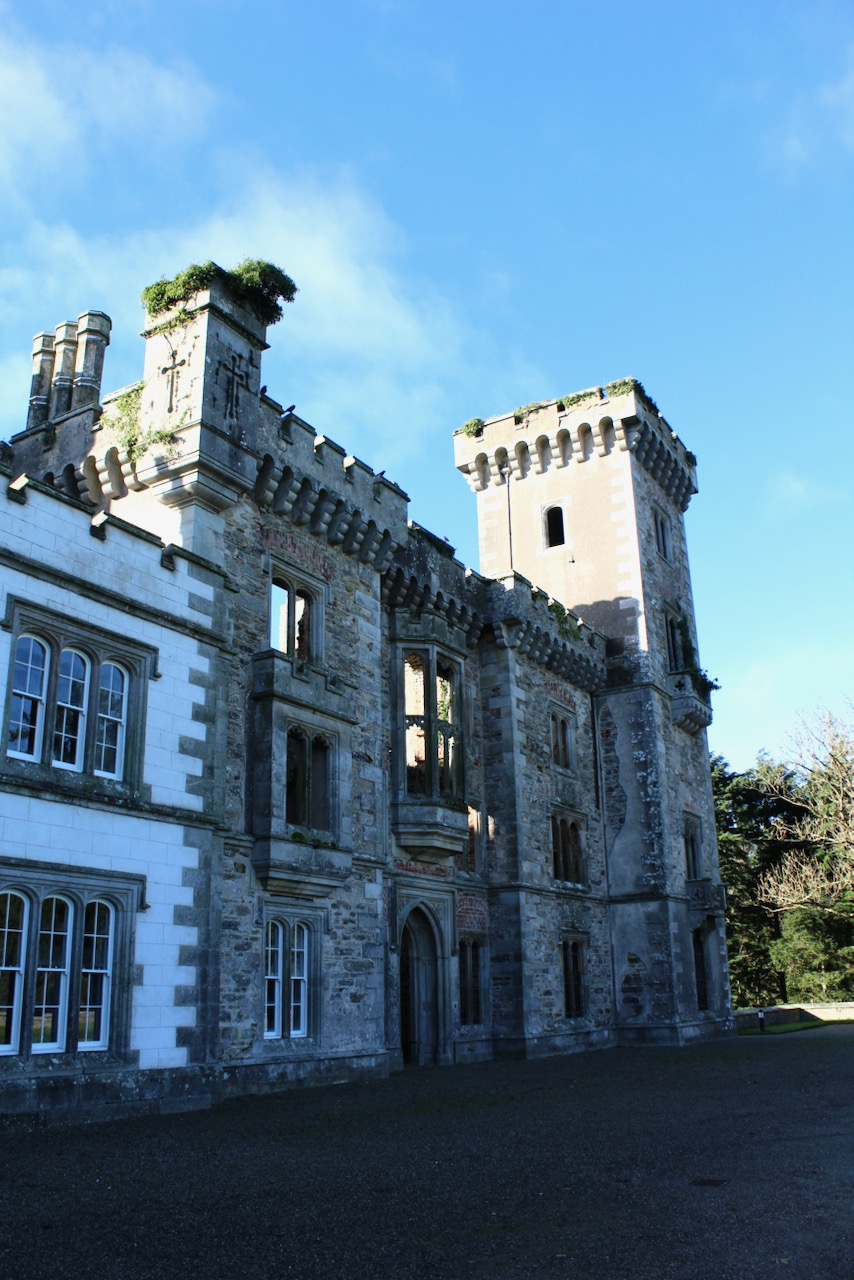
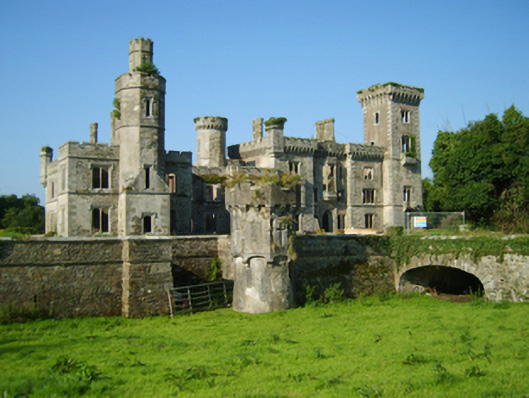
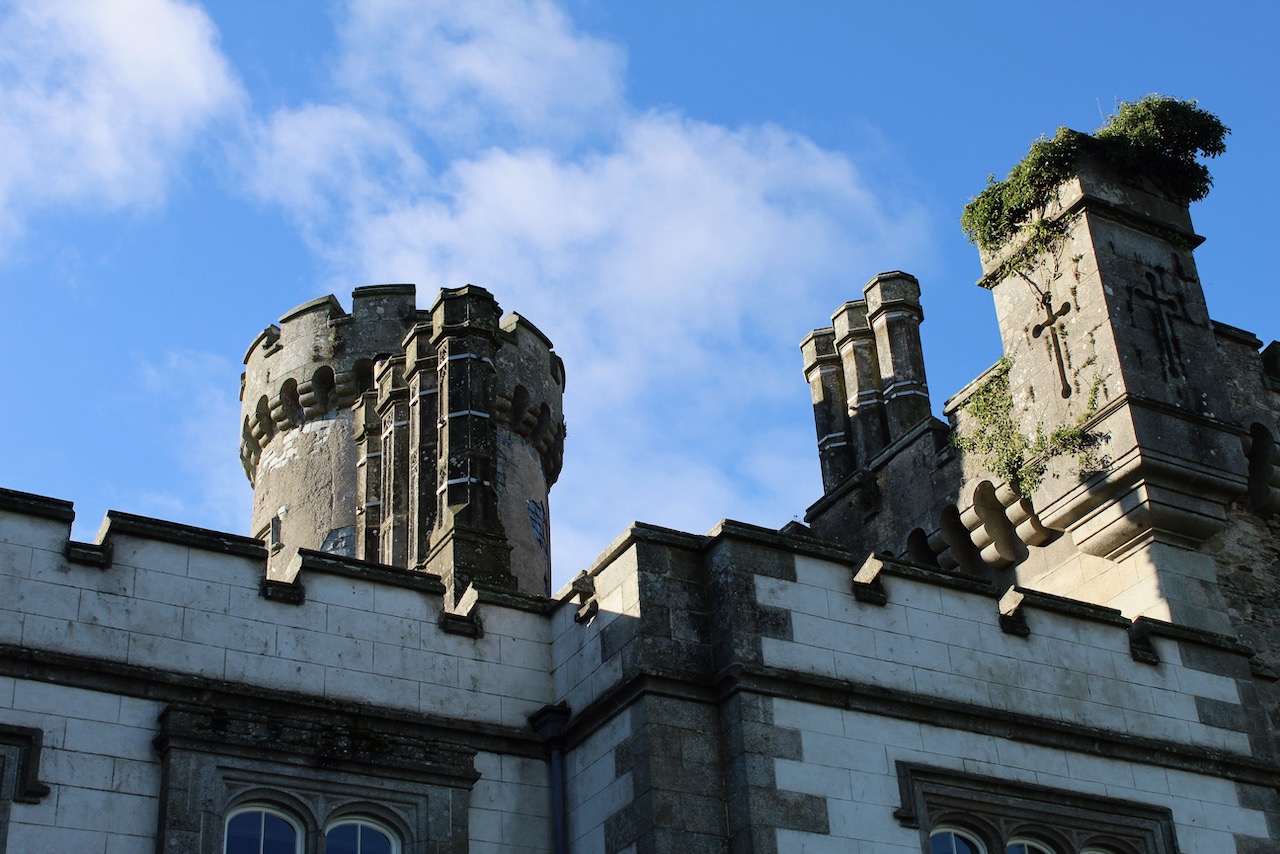
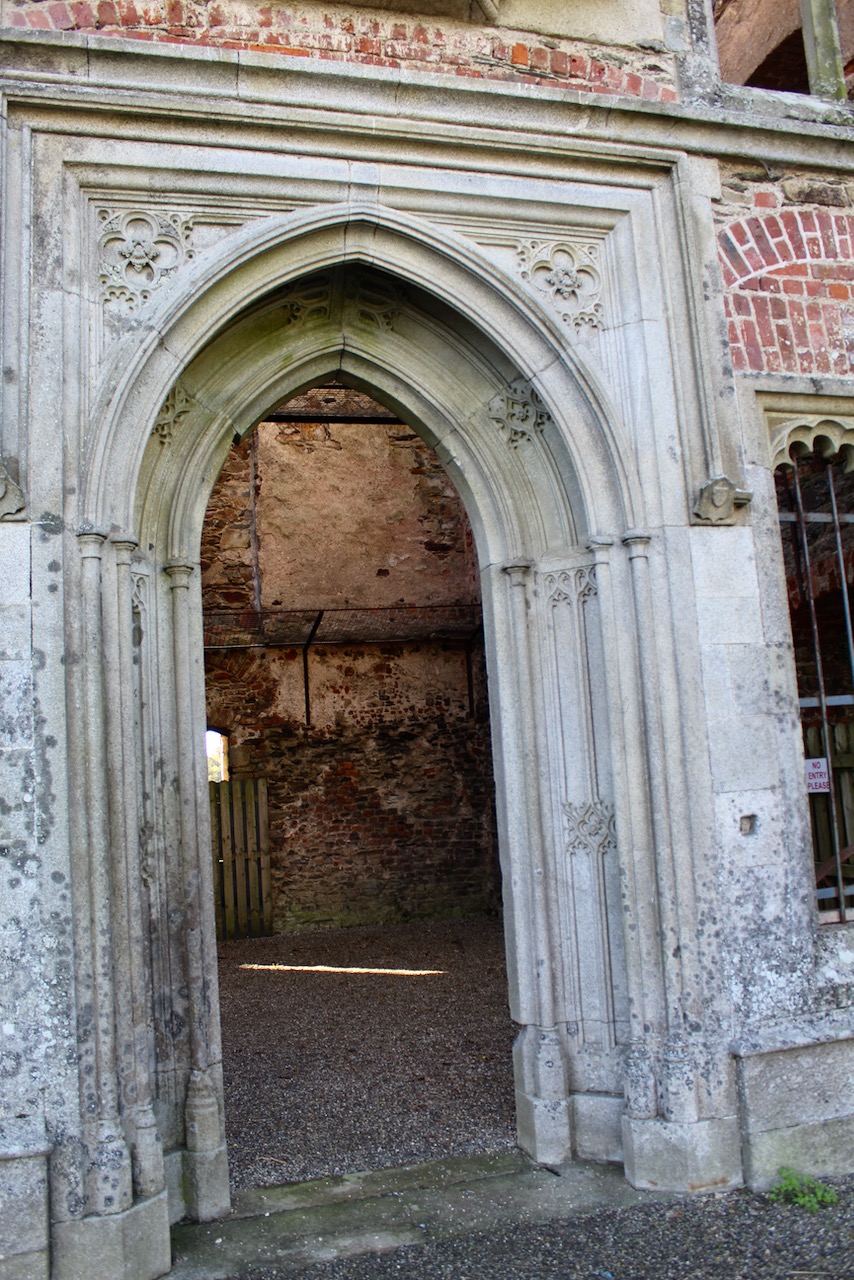
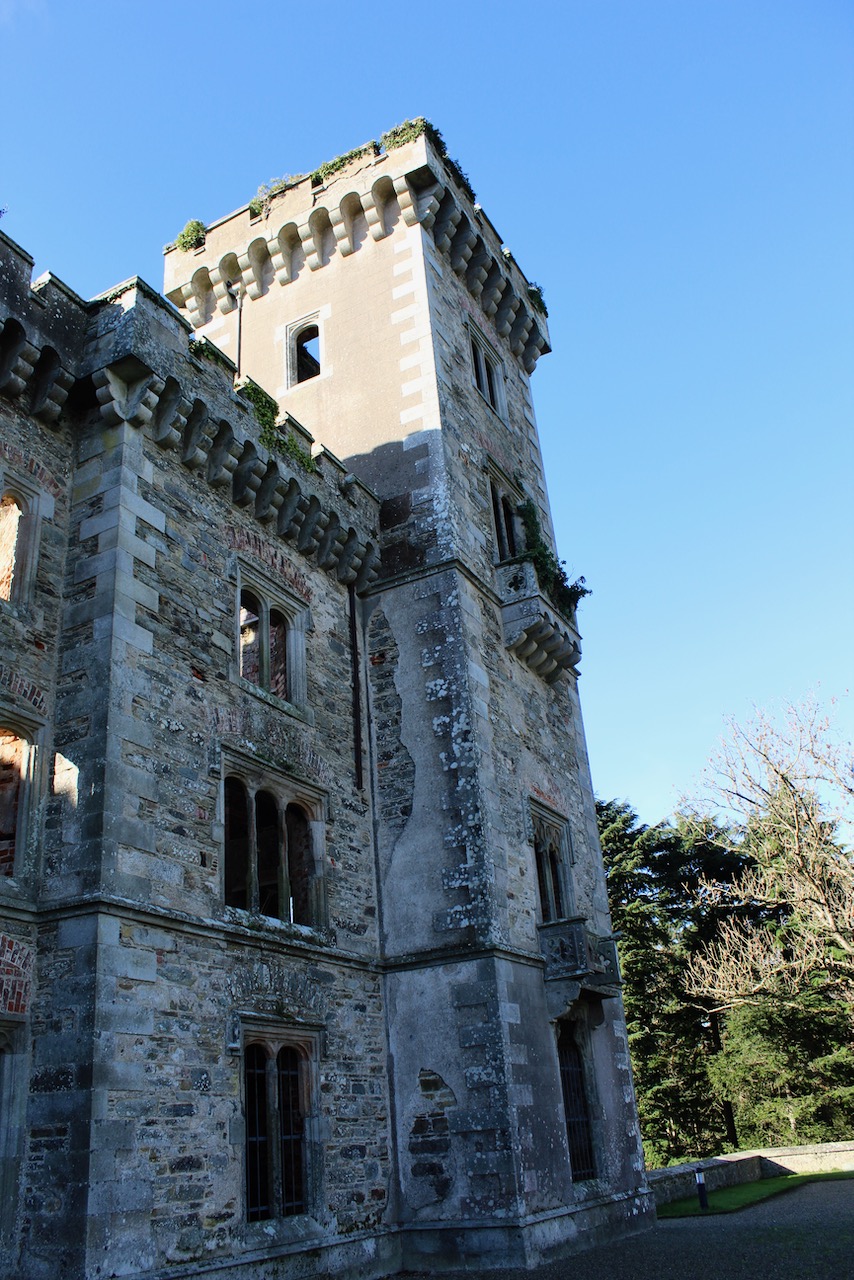
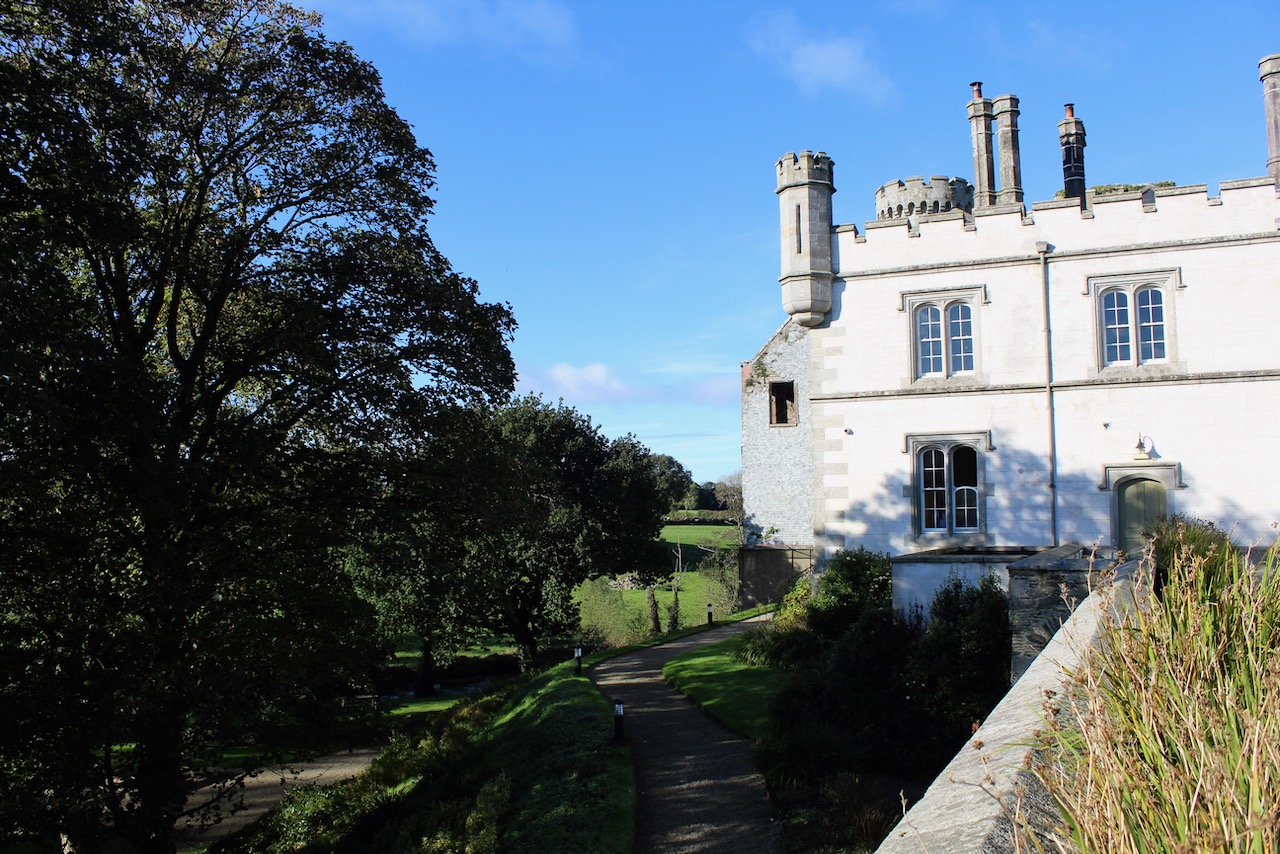
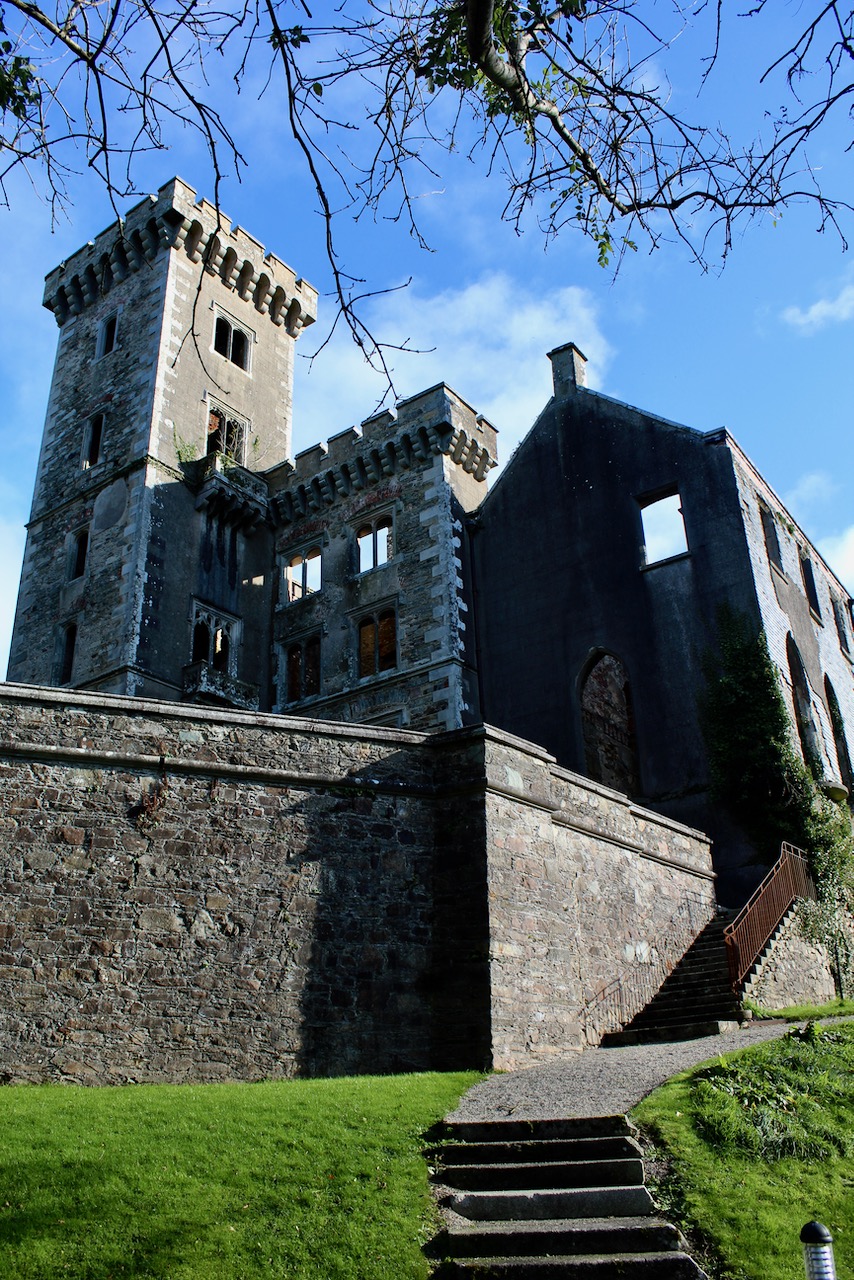
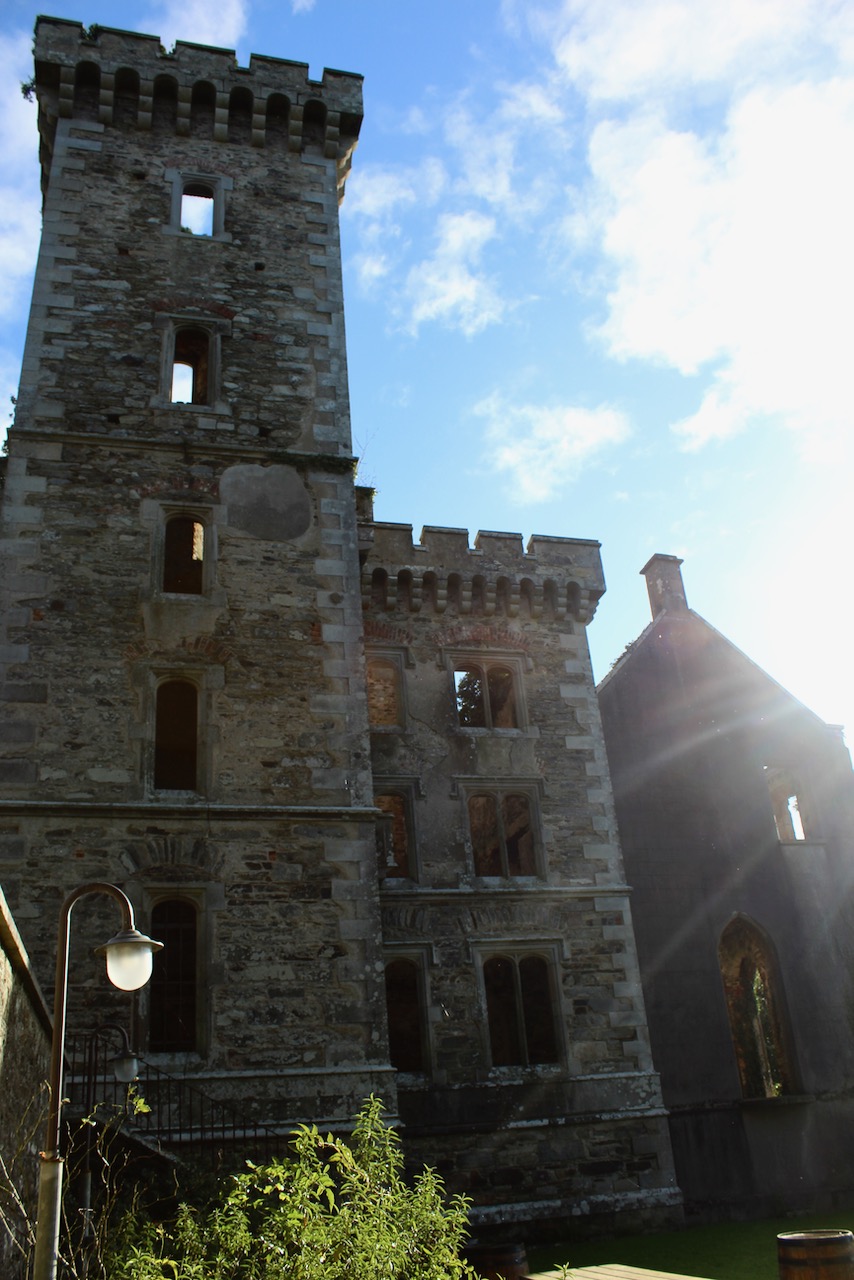
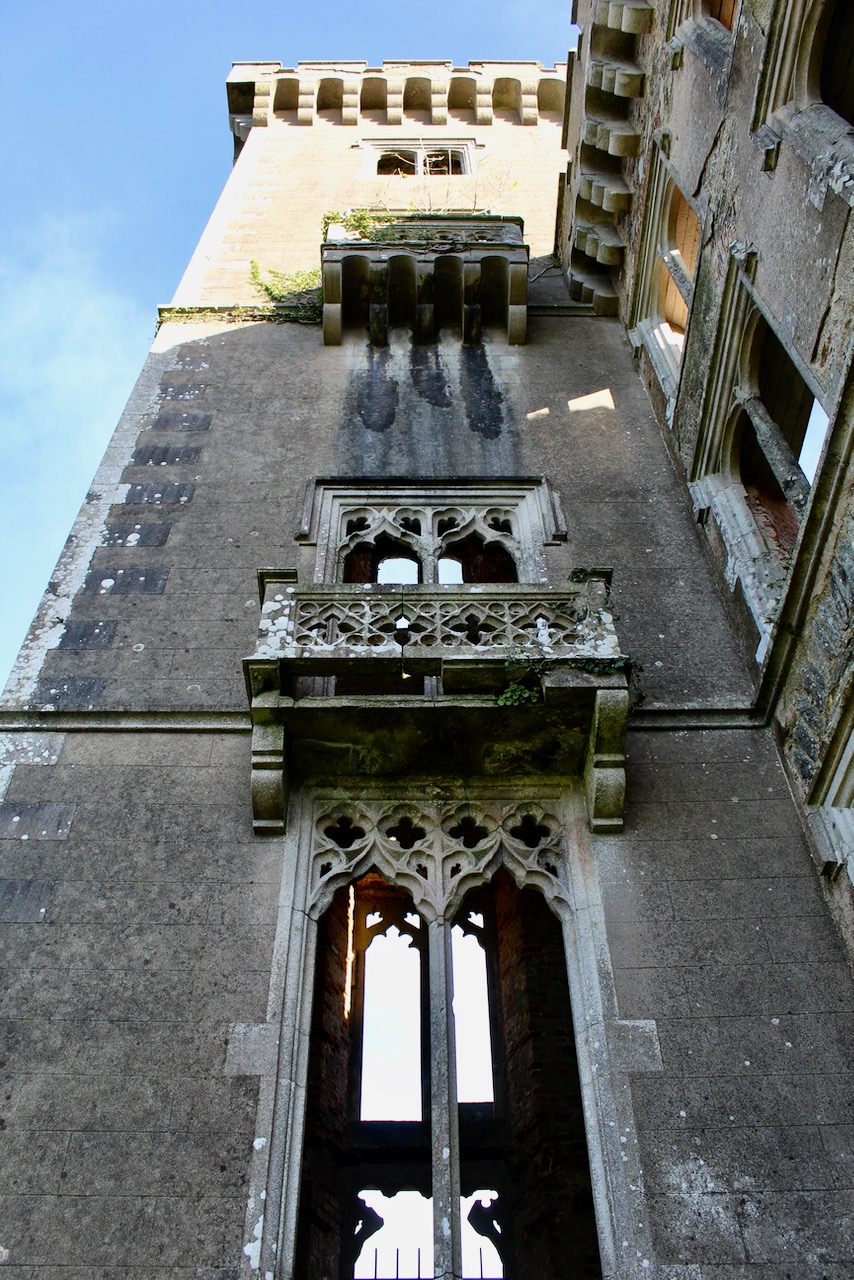
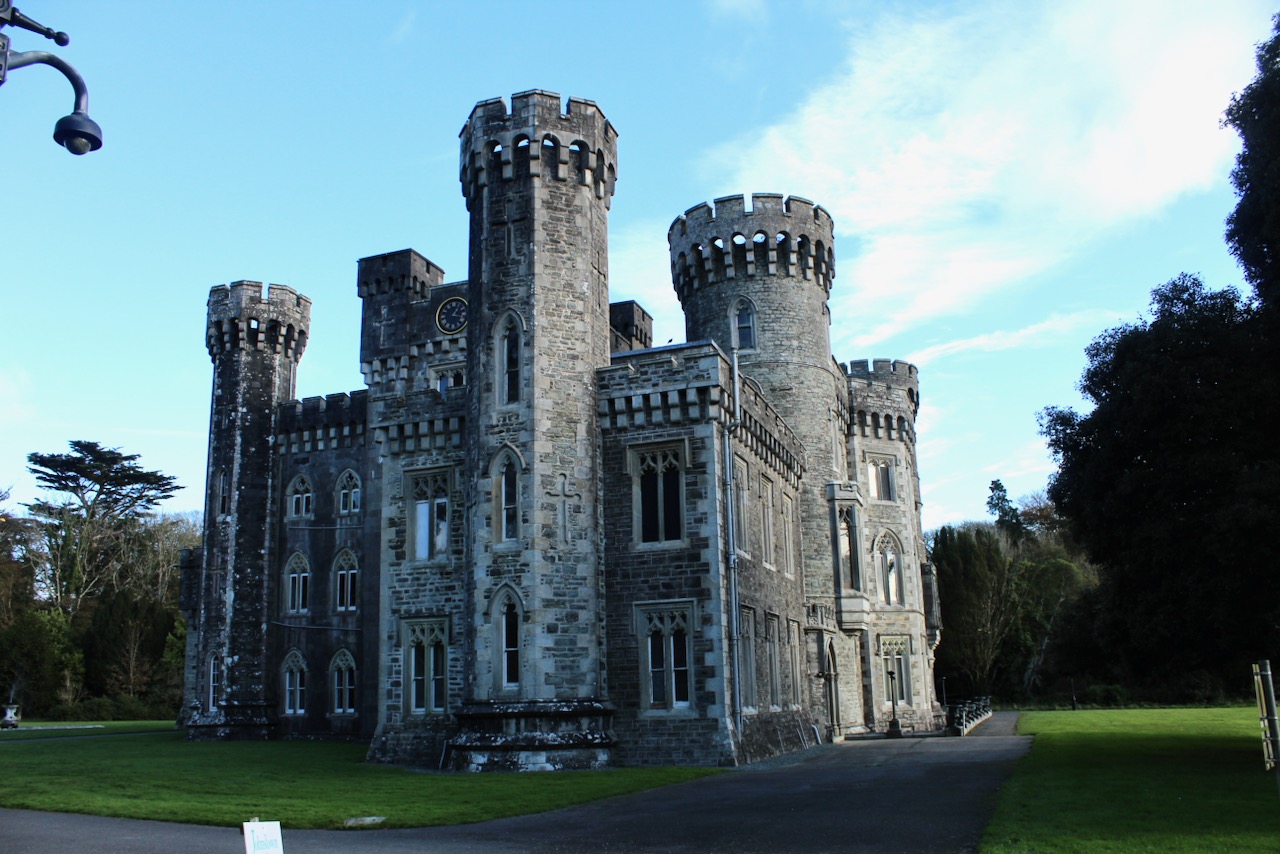
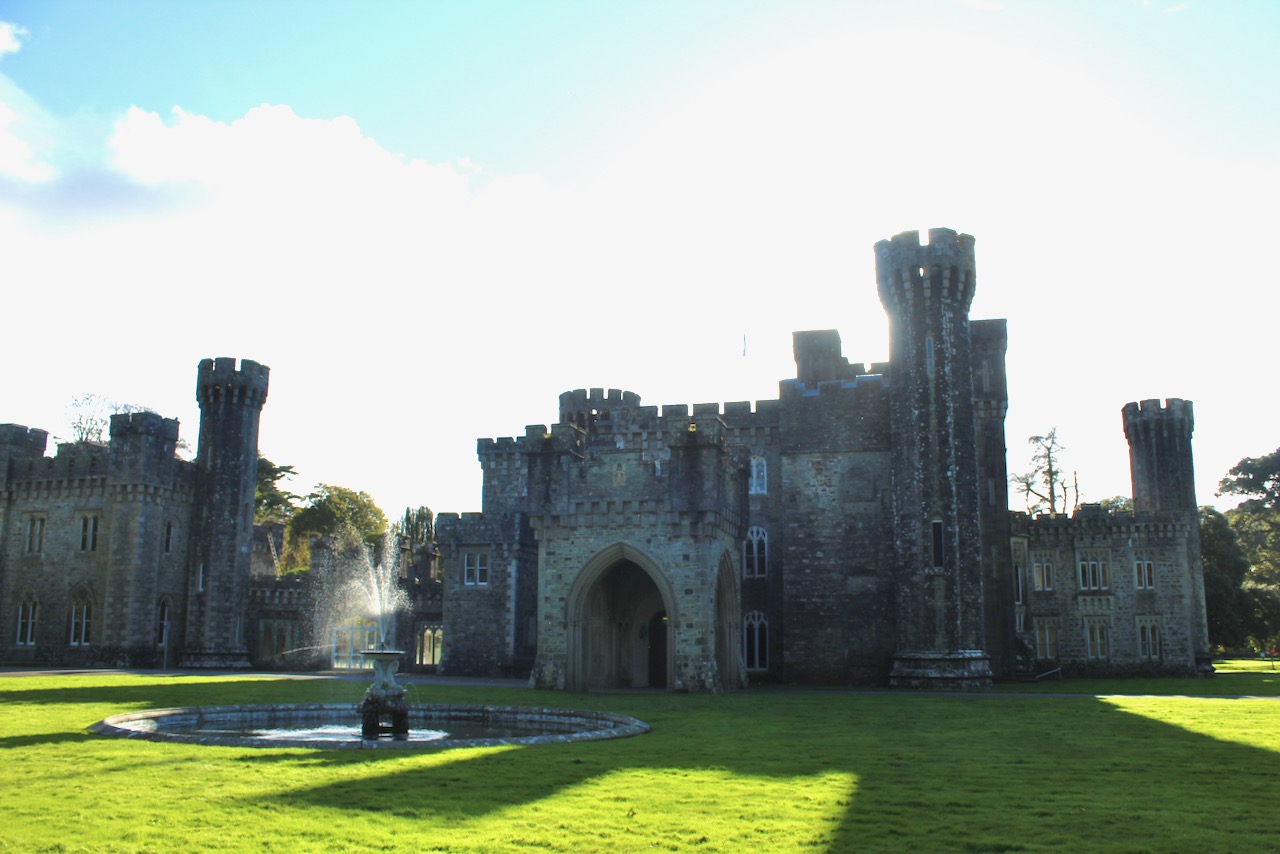
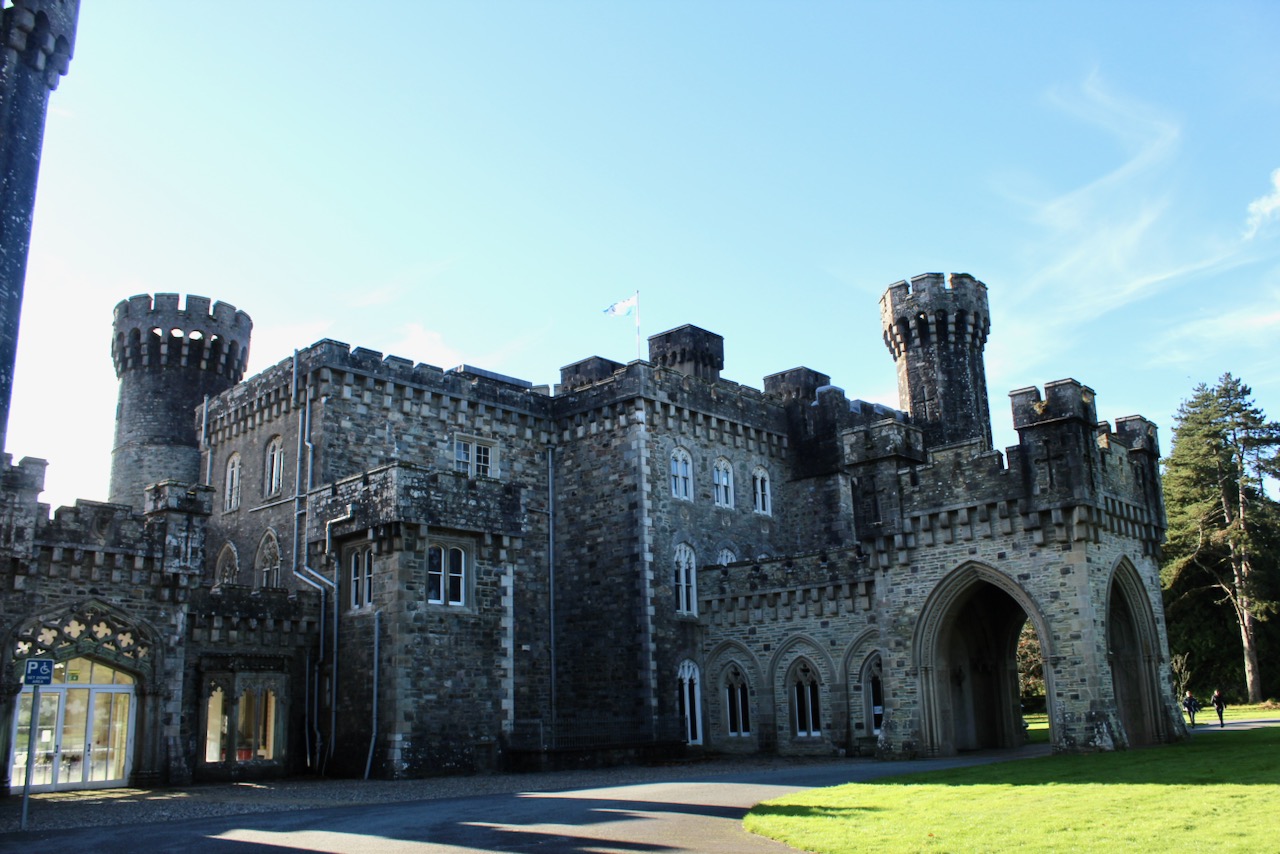
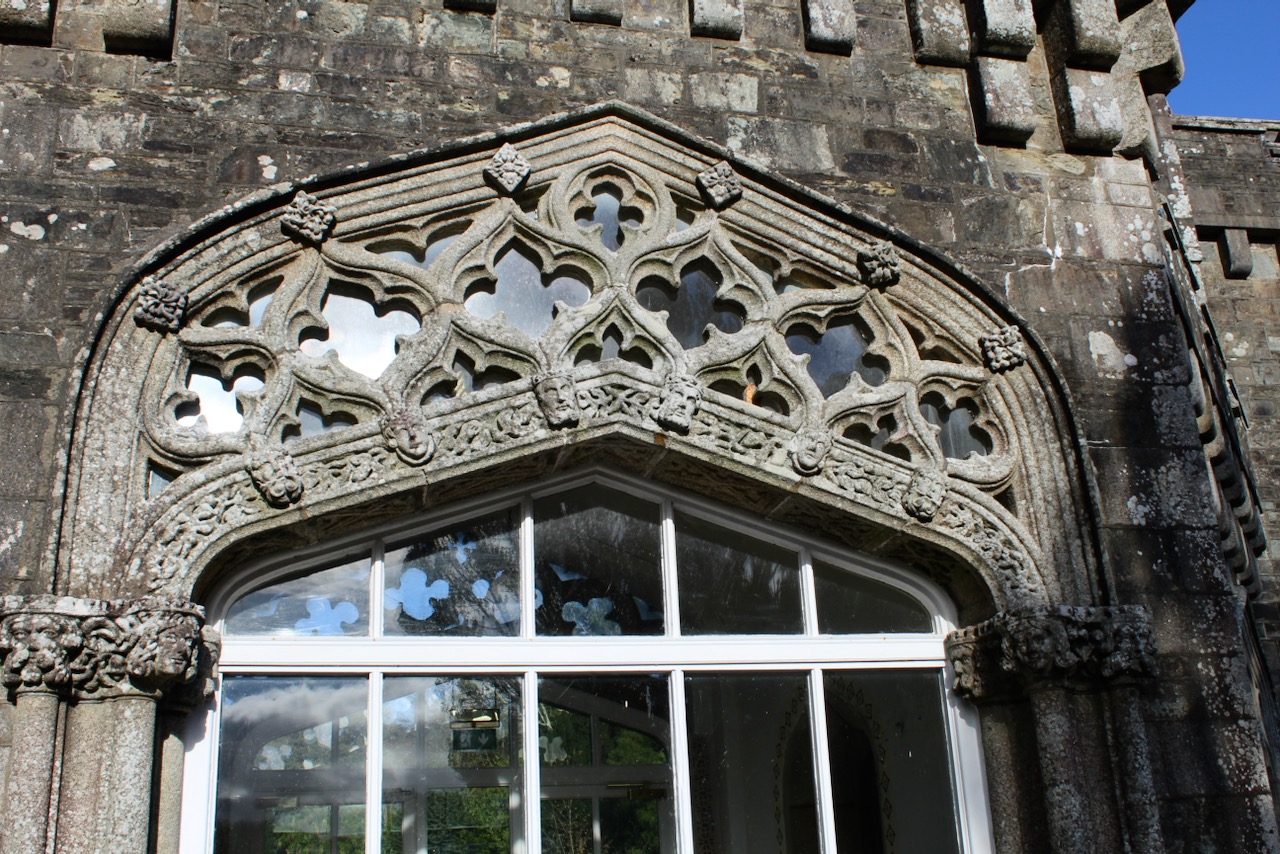
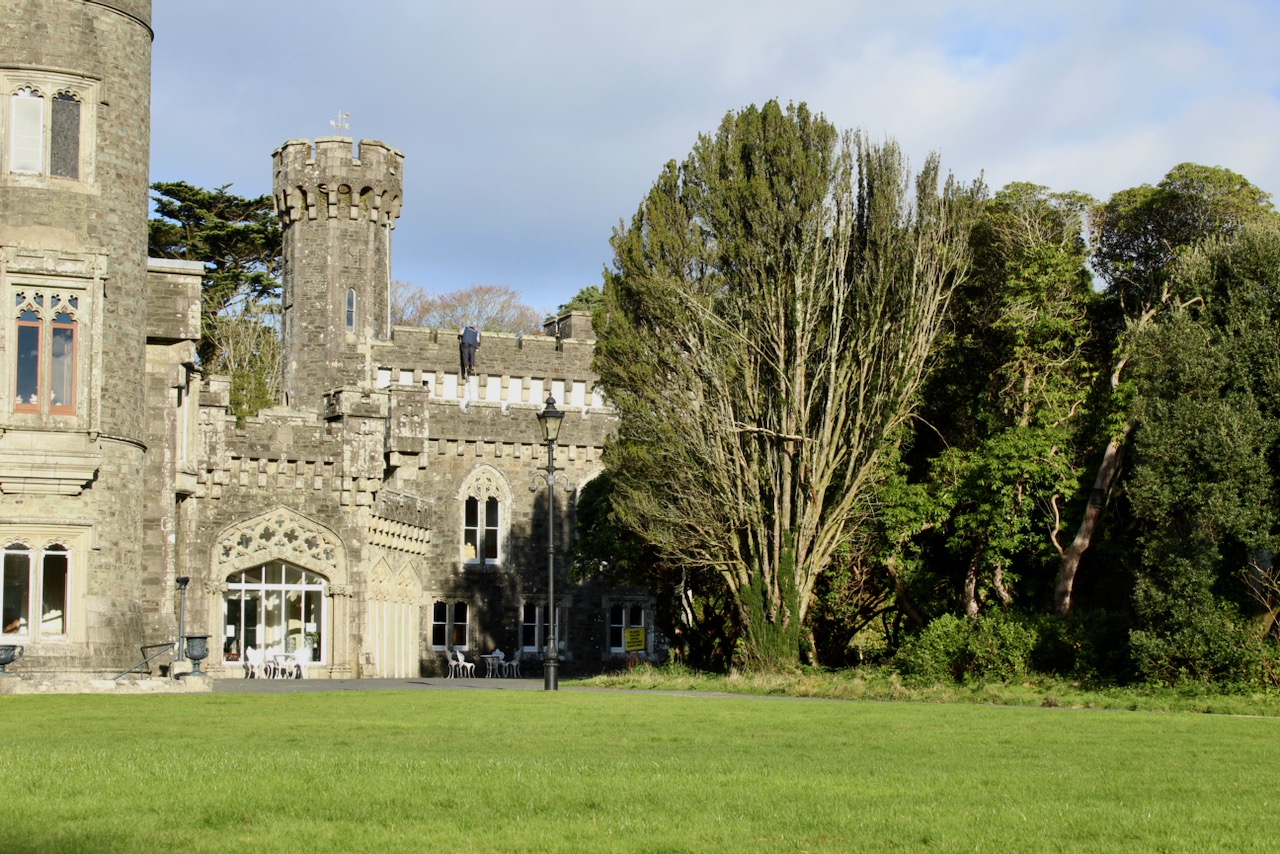
p. 211. “(Mansfield/IFR) A house originally built 1692 by the Lattin family, of two storeys and a dormered attic, and with a deep one bay projection at either end of its front. By the beginning of C19, the house had undergone various alterations which gave it a somewhat freakish appearance. A four storey tower, crowned with a coat of arms, rose from the middle of th front, in a manner reminiscent of the towers at Gola and Anketill’s Grove, Co. Monaghan; the projections were joined by a single-storey balustraded corridor with Wyatt windows in the centre which was a porch or frontispiece of fluted Doric columns. In 1845, G.P.L. Mansfield, whose mother was the heiress of the Lattins, remodelled the house in Tudor-Revival style, to the design of an architect named Butler. A new front was added, which, at the ends, is no more than a façade, but which fills the space betweenthe two projections; with a symmetrical row of three stepply pointed and pinnacled gables, oriels and a Tudor-style porch. At the same time, the roof was raised; but it was still carried on the old walls; the new front serves no structural purpose, but is secured to the main building with metal ties running through to the back of the house. A tower was also built at one end of the front, and bow windows, with balconies over them, were added at the back. Tall Tudor-style chimenys. Library divided with columns. The house faces along a straight avenue of trees, which continues on the far side of the road. Sold ca 1980, afterwards badly damaged by fire.”


Listed in Vanishing Country Houses of Ireland by The Knight of Glin, David J. Griffin and Nicholas K. Robinson, published by The Irish Architectural Archive and The Irish Georgian Society, 1988.
… architect William Deane Butler….
http://www.turtlebunbury.com/history/history_family/hist_family_mansfield.html
p. 139. The Lattin family were prominent merchants in Kildare during the 16th and 17th centuries, well known and respected for their patronage of Catholicism. Like their cousins, the More O’Ferralls, they dispatched many sons to fight on the Continent during the late 18th century, losing one in battle in 1789. Patrick Lattin served in the Irish brigade and was a close colleague of Lord Cloncurry. His uncle Jack became the subject of a popular country dance tune, “Jockey Lattin”, following his premature death in 1731. Morristown Lattin was originally built in 1692 and passed by marriage to the Mansfield family in 1836. It featured in the TV series of The Irish RM as the home of Flurry Knox’s mother.
The Lattin family were initially granted lands in Kildare in the reign of King John (1199 – 1216). By the late 16th century they had established themselves as merchants in the area. In 1621 Richard Lattin stood as MP for Naas and founded an asylum in Naas for the support of “four poor women”, according to Burke’s Irish Family Records, which can’t have made that much impact on 17th century Ireland, but good on them anyway. In 1641 the Lattin estate comprised a fairly modest 660 acres around Naas, a house and tenements in the town itself, as well as three castles elsewhere in the area.[1]
p. 140. Like several Pale families, the Lattins remained Roman Catholic during the troubles of the ensuing centuries but somehow retained their lands. Indeed, their poise was so assured that in 1692 they built a new house at Morristown Lattin. The original building featured two storeys with a dormered attic and a deep bay projection at either end of it’s front.[2] In the final decade of the 17th century, they also acquired a Dublin residence in the parish of St Michan’s, Lattin Court (now part of Greek Street).[3]
Richard Lattin’s descendent George (d. 1773) married Catherine Ferrall, a daughter of Ambrose Ferrall. Her brother Richard married Letitia, only daughter of James Moore of Balyna, and so became ancestor of the More O’Ferralls of Balyna (qv). George and Catherine’s younger son Ambrose Lattin died fighting for the Austrian army in Germany in 1789. It seems likely he was fighting alongside his first cousin Major General James O’Ferrall who was also in the Austrian Service and served in the Revolutionary Wars in Turkey and Italy.
Their eldest son Patrick Lattin was a close friend and aide-de-camp to Count Arthur Dillon, founder of the Dillon Regiment of the Irish Brigade. When Dillon was “dragged out of his cabriolet and murdered by the French soldiers” for his Royalist sympathies in 1794, Lattin, who was in Dillon’s carriage at the time, immediately resigned his commission and returned to live at Morristown. He later returned to Paris and died at his home in the Rue Trudon in 1836.
Morristown Lattin passed to Patrick’s daughter, Pauline, and her husband Alexander Mansfield. Their descendents would retain the property until the 1980s.
Lord Cloncurry recalled Patrick Lattin in his Memoirs thus:
p. 140. “When he quitted the Irish Brigade, after the murder of le beau Dillon, [Lattin] settled at his house of Morristown-Lattin, and was thenceforward, to the close of his life, almost constantly a near neighbour and a frequent guest of mine at Lyons. He was one of a race now, I believe, extinct. A genuine Irishman in heart and person, his service in France, as an officer of the Irish Brigade, had added to his natural gaiety and warmth of feeling the polish and gallantry of a French gentleman, while his manly figure was set off in full perfection by the air and habits of a soldier of the old school. Light-hearted and joyous, the brilliancy of his wit was never clouded, nor his enjoyment of present mirth ever damped by thoughts of the morrow. When his purse was full he drew upon it without scruple, to gratify his taste for pleasure, or to help a friend; when it was empty, I have known him to sit down, and, in three months’ work, to complete a translation of the Henriade, in order that he might relieve the necessities of an émigré friend with the proceeds of its publication. In the one case and in the other, he was equally blithe, and victorious over care.
What a sparkling collision of wit marked the meetings of Lattin and Curran; and yet his amusing powers seemed still more striking when, at his own house in Paris (where I met him in 1805), he told his tales and launched his repartees alternately in French and English, to the mixed audiences which he used there to assemble round him. No thing, and no person, capable of being made the subject of pleasantry, ever escaped; and yet when a blow was given, it was with a skill and lightness that rendered it harmless to the object. Upon one of those occasions, I recollect a M. de Montmorency, whose Christian name was Anne, making his appearance, and announcing that he was enabled to return to France, in consequence of the First Consul having scratched out his name on the list of émigrés. “A present done,” observed Lattin, “mon cher Anne, tu es un zebre — un ane rayée.”
In one of his hours of industrial activity, Lattin wrote a pamphlet in support of the Catholic claims, which brought him into collision with the notorious Dr. Patrick Duigenan. That zealous partisan replied to Lattin’s brochure with so much of his wonted brutal ferocity, as to place himself within the reach of the law as a libeller. Lattin brought an action against him in Westminster Hall, and was awarded damages to the amount (I think) of £500, by an English jury. This result was the basis of a standing joke between Lattin and me. When he had written the original pamphlet, and shown it to me, he had said he was not then in funds to publish it, which I undertook to do, jestingly conditioning my outlay with a claim for half the profits. I used, accordingly, to demand from him a moiety of the damages, as being part of the proceeds of the venture. Lattin died in Paris about 10 years since”.
At this juncture it is worth taking a short detour into the life of Patrick’s uncle Jack Lattin (1710–1731). Normally the death of a man aged 21 in the 18th century would attract little attention but Sean Donnelly of the County Kildare Archaeological Society has lately unearthed that “the demise of Jack Lattin was far from usual, and the memory of his going remained alive in local and family tradition for nearly two centuries”. Jack Lattin was a gentleman musician during the days of Jonathan Swift. His Catholic family, having survived the 17th century intact, were now facing utter bankruptcy in the face of the Penal Laws. [4]
p. 142. There are various versions of the story. One runs as follows. Jack was raised in Paris with his father, the eloquent wit and raconteur Patrick Lattin. He regularly returned home to see his relatives in Ireland. In his bizarre novel, The Life of John Buncle Esq (1756–1766), the notoriously eccentric author, Thomas Amory, makes reference to a knees up in a Dublin pub called The Conniving House where he encountered “dear Jack Lattin, matchless on the fiddle, and the most agreeable of companions; … and many other delightful fellows; who went in the days of their youth to the shades of eternity”. One summer’s day in 1731, Jack danced his way along some 8 miles of road between Morristown Lattin and Castle Browne (now Clongowes), only to drop dead of exhaustion when he arrived.[5] Exactly why – or indeed if – Jack headed off on his fatal marathon dance is unknown.[6] Many say it was a wager that went wrong. Jack’s name was however enshrined in the title of a popular country dance tune, “Jockey Lattin”, that arose shortly after his death and earned him a nod in James Joyce’s Ulysses. (The dance was going strong from at least as early as 1749.)
p. 143.
Jack Lattin dressed in satin
Broke his heart of dancing
He danced from Castle Browne
To Morristown.
Footnotes
[1] The principal holding was Morristown Moynagh (400 acres), later renamed Morristown Lattin. The name survives in the present townlands of Morristown and Lattinsbog.
[2] It was subsequently extended in the early Georgian period to include a four-storey tower, crowned with a coat-of-arms, which rose from the middle of the front, like the towers at Gola and Ancketill’s Grove, Co. Monaghan. The projections were joined by a single-storey balustraded corridor with Wyatt windows and a porch of fluted Doric columns.
[3] They retained this house until 1737, by which time they also had other property in nearby Capel Street.
[4] “ The Strange Fate of John Lattin of Morristown Lattin” (1731), Sean Donnelly, Journal of County Kildare Archaeological Society xviii, 4 (1998-9), 565-88
[5] Castle Browne was the original name for Clongowes Wood Boarding School. The old castle was owned by the Browne family from 1667 until General Michael Wogan Browne sold it to the Society of Jesus to in 1813.
[6] Traditionally, a long distance dance in Ireland – or rince fada – is danced on May Eve or May Day to welcome summer. Often this involved young women carrying large garlands of flowers by way of a greeting to important persons, such as the return of a landlord after a long absence.
Mansfield of Morristown Lattin
p. 139FROM ‘THE LANDED GENTRY & ARISTOCRACY OF CO. KILDARE’ BY TURTLE BUNBURY & ART KAVANAGH (IRISH FAMILY NAMES, 2004).
The Mansfield family have been in Ireland at least since the 12th century when they made their presence known in Co. Waterford. Penalized for their Catholicism in the 17th century, fortune returned when they married the sole heiresses of the Eustaces of Yeomanstown House and the Lattins of Morristown Lattin. During the 1840s they acquired a curious attachment to the Danish colony of St. Croix in the Virgin Islands. Latter day characters closely associated with the family include the parachuter Major Richard Mansfield, children’s author Brownie Downing, Fine Gael politician Gerard Sweetman. Morristown Lattin was sold in 1982 and is now owned by Constance Cassidy and Eddie Walsh.
The de Mandeville family – “de Magna Villa” in Latin – was one of the families that accompanied William the Conqueror from Normandy to England in the late 11th century. From 1210, when Martin de Maundeville was a witness to Ratoath Charter, the name is found in the medieval records of Co. Meath. A branch of the family later settled in Waterford and Tipperary and adopted the name Mansfield. In the reign of Queen Elizabeth, Edmund Mansfield of Killingford, County Waterford, secured for a bride one of Ireland’s more lucrative daughters in the shape of Catherine Fitzgerald, daughter of John FitzGerald of Dromana, Lord of the Decies, and granddaughter of Maurice Fitzgibbon, The White Knight. The couple do not appear to have had a son and were thus succeeded by their daughter, Mrs. Margaret Mansfield. In 1599, she married her cousin, Walter Mansfield, with whom she settled on part of Sir Walter Raleigh’s Waterford estate at Ballinamultina.
p. 140. As Catholics, the Mansfields of Ballinamultina kept a low profile for much of the 17th century but Mrs. Mansfield’s grandson and ultimate heir, Walter Mansfield, was listed as one of the “Forty Nine Officers” (or Commissioned Officers) who fought against Cromwell in the Confederate Wars of the 1640s. In 1649, Walter’s property was confiscated and he was transplanted to Connaught. Upon the Restoration, Walter’s son Richard recovered a portion of the family estate. He married Dorothea Hore of Shandon, Co. Waterford; her family had also been transplanted to Connaught during the Cromwellian era.
The Kildare connection begins with the marriage of Richard and Dorothea’s eldest son John Mansfield to Jane, daughter and sole heiress of James Eustace of Yeomanstown House at Carragh outside Naas in Co. Kildare. A prominent Catholic dynasty in the early Tudor period, the Eustaces had fallen from grace in the 1580s when the head of the family, Viscount Baltinglass, led an ill-fated revolt against Queen Elizabeth.[1]
In about 1780, John and Jane Mansfield’s grandson John succeeded to the Eustaces property at Yeomanstown and relocated the principal branch of the Mansfield family to Kildare. He married Elizabeth Woulfe, daughter of Walter Woulfe of Rathgormack, Co. Waterford. In 1817, their eldest son Alexander Mansfield (1786- 1842) married Paulina Lattin, only child and sole heiress of the Irish Patriot, Patrick Lattin of Morristown Lattin. Lattin’s wife Elizabeth was daughter and heiress of Robert Snow of Drumdowny, Co. Kilkenny.[2]
Alexander and Pauline Mansfield had five sons and a daughter. One of the younger sons Alexander (1825 – 1901) was a barrister in England and married Maria Howley, eldest daughter of Sir John Howley, the Queen’s Prime Serjeant in Ireland.[3] When Sir John was laid to rest in Glasnevin Cemetery in 1866, his epitaph bore the words “a sound lawyer and an honest man”. A passer by enquired of a friend, “I wonder why two men were buried together.”
Another son Captain William Mansfield died fighting for the British in the battle of Sebastopol in June 1855. The younger sons Richard (1829 – 1893) and Edmund (1833 – 1914) remained bachelors and served as Majors of the Kildare and Dublin Militia respectively. The daughter Eliza (1819 – 1877) was married in 1837 to George Thunder, fourth son of Patrick Thunder of Lagore, co. Meath.[4]
The eldest of Alexander and Pauline Mansfield sons was George PL Mansfield (1820–1889), sometime Deputy Lieutenant and High Sheriff (1851) for County Kildare. On 30th November 1843, he married Mary O’Kelly, youngest daughter and co-heiress of George Bourke O’Kelly (1760 – 1843), a wealthy sugar planter based on the Danish island of St. Croix in the present day Virgin Islands.[5] Mary’s mother was Mary de Pentheneny, a descendent of an old Anglo-Norman family settled in Louth and Meath. There may be a connection between George Kelly and the charismatic Marquess of Sligo who was dispatched as Governor of Jamaica to oversee the abolition of slavery in 1834. Known as “The Emancipator of Slavery”, the Marquess acquired several sugar plantations in the West Indies from his grandmother, the heiress Elizabeth Kelly.
Mary Mansfield’s brother Edmund de Penthheny O’Kelly succeeded to Barretstown, Co. Kildare, and married a niece of the 9th Baron Arundell, a prominent Catholic Englishman. Her sisters Adelaide and Eleanor married Oscar and Harold Oxholm, two brothers from a distinguished Danish family also involved with St Croix. Their grandfather Peter Lotharius Oxholm was sent to the West Indies by the Danish government in 1778 with orders to map all fortifications in the islands and recommend improvements should the American War of Independence spread. Oxholm subsequently married into a prominent St. Croix family and settled down as a sugar planter. The British seized the island during the Napoleonic Wars but, on its return to Denmark in November 1815, Oxholm was installed as Governor General. His son Frederick was Governor of the neighbouring islands of St John and St Thomas from 1834–1836 and 1848–1852. He also served as Governor of St Croix from July – November 1848.
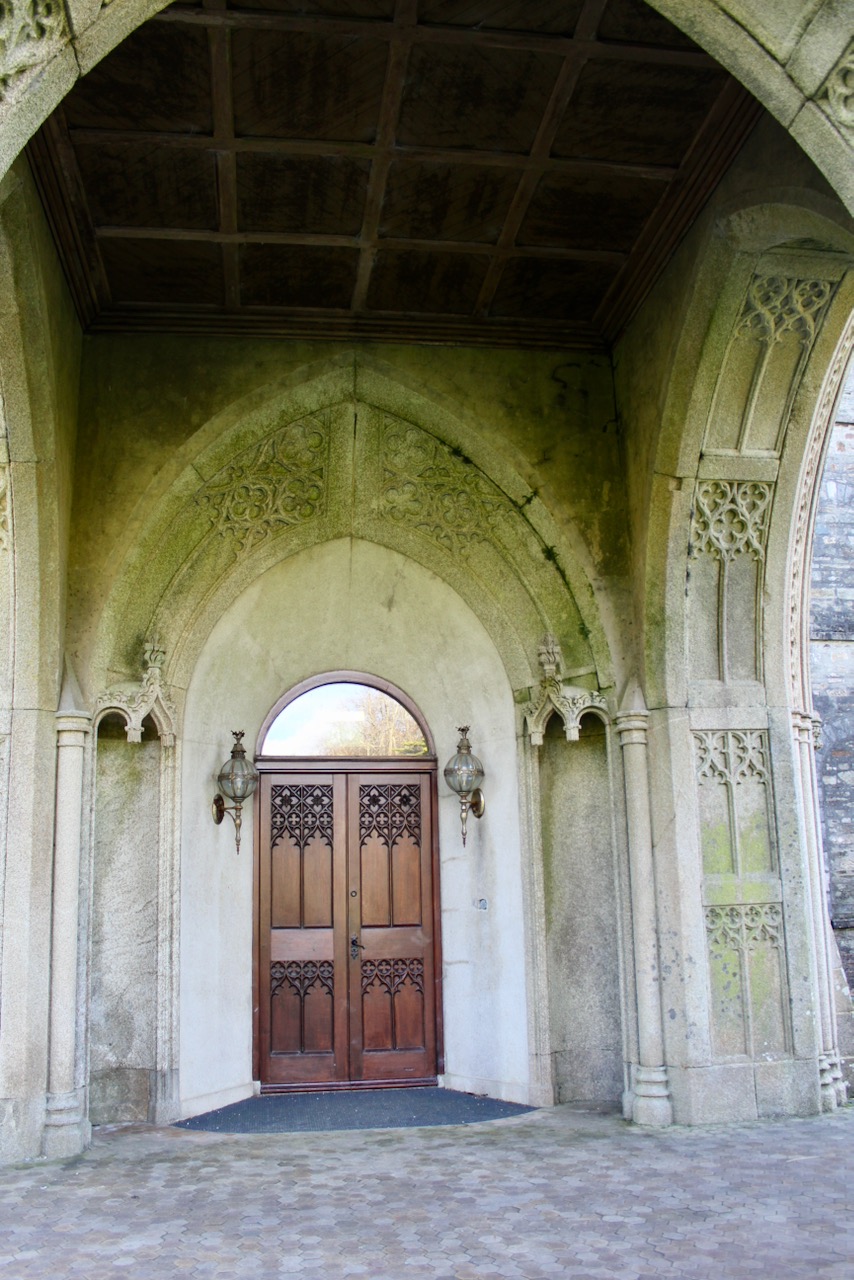
In 1845, two years after his marriage, George began to substantially renovate and extend Morristown Lattin to its present proportions. The house was remodelled in Tudor-Revival style to the design of an architect named Butler. The new house boasted tall Tudor-style chimneys, bow windows, a library divided by columns and a fine Tudor porch.[6] It faced onto a straight avenue of trees more than a mile long, a fitting entrance to what was now one of the largest estates in Ireland. For afficionados of ‘The Irish RM’, this is the house used as Mrs. Knox’s pile “Assolas“. (Thanks James Grogan). It is also, as Peter Sweetman observed in 2014, astonishingly similar to Lisnavagh House, the Bunbury’s casa in County Carlow.
On the eve of the Great Famine, George owned more than 5,000 acres of land in Co. Kildare and was the second largest landowner in the county after Lord Mayo’s 6,000 acres. This included the home farm of Barrettstown and substantial acreages of surrounding bogland. These lands were re-granted to local farmers in conjunction with the Land Reform Acts in the late 19th and early 20th century.
On 12th February 1845, Mary gave birth to a son, George. Two daughters, Pauline and Maude followed. In June 1853, Mary died, leaving her 33-year-old husband an eight year old boy and two small girls. Pauline died aged seven the following January. Young George was educated at Stonyhurst, a Catholic boarding school in Lancashire. On 2nd August 1877 he married Alice Adele eldest daughter of Baron d’Audebard de Ferussac of Paris. The Baron was a scientist of considerable repute so no doubt young George’s time spent star-gazing in the famous Stonyhursy Observatory stood him in good repute when it came to courting the young Parisian lady. Maude (1850 – 1921) never married but lived at Dublin’s Earlsfort Terrace and it was she who was able to explain the origin of the “Jack Lattin” dance.
Like his father, George served as both High Sheriff (1874) and Deputy Lieutenant for County Kildare. He was serving in the latter capacity when the Great War broke out in 1914. The following year he and Sir Anthony Weldon, Lord Lieutenant for the county, expressed their absolute opposition to British plans to enforce conscription in Ireland. They set up a committee to raise sufficient numbers so that “no question can arise as to the loyalty of the County Kildare” with regard to those willing to “join their brethren at the front”. George died on 5th Jan 1929; his French widow survived him until 12th March 1934.
George and Alice had four sons, Eustace, Henry, Alexander and Tirso, and two daughters, Mary and Marguerite.[7] The eldest son Captain Eustace Mansfield was born on 5th November 1879 and, like his father, educated at Stoneyhurst. On 26th Jan 1911 he married Mabel Paget, third daughter of Thomas Guy Paget of Ibstock and Humberstone, Leicester. He served with the Royal Dublin Fusiliers during the Great War. He died on 14th April 1945; Mabel on 20th May 1949. They left a son George PL Mansfield and two daughters, Rosalind and Elizabeth.
Captain Mansfield’s second brother Henry (1881 – 1948) won an OBE in 1918 and rose to become a Lieutenant Colonel in the Royal Artillery. He was also a Knight of Malta. On 9th Jan 1913 he married Alice, eldest daughter of Daniel Cronin-Coltsmann of Glenflesk Castle, Killareny, Co. Kerry.[8] They lived at Barrettstown House outside Newbridge, which later passed to his nephew, John Lattin Mansfield. The third brother Alexander Lattin Mansfield married Alice More-O’Ferrall, youngest daughter of Ambrose More O’Ferrall of Balyna (qv), but died of pneumonia at Hainault, Foxrock, Co. Dublin, aged 33 on 14th July 1915.[9]
On 26th June 1918, the youngest brother Tirso Mansfield (1888–1962) married Helen Farrell, fifth daughter of Joseph Farrell, DL, JP of Moynalty House, Kells, Co. Meath. Their son Major Richard Mansfield served with the Royal Army Service Corps and Parachute Regiment in World War Two. Another of Tirso’s sons, John Lattin Mansfield, now resident in the south of France, married the beautiful Australian author-artist Brownie Downing (1824–1995). She was probably best known for the children’s story, “Tinka and His Friends”, which sold 60,000 copies in the 1950s and won The Daily Telegraph Children’s Book of the Year Award. In 1963, John and Brownie went to live at Barrettstown House where they remained until 1970, when they relocated to a yacht in Majorca. They had two sons, Tim Mansfield (who sadly passed away in Australia on 19 August 2019, aged 64) and Beau Mansfield. Tim had some amusing recollections of his time here written in his diary when he was 15.
Tuesday 9th June 1970
Had a very bad thunderstorm today at 4 p.m., the drawing room was
Flooded (due to the hole in the ceiling which John never fixed), the tower was hit 6 times by lightning. Found Mary (the maid) under a table in the dark with a fag in her mouth saying her Hail Mary’s.
Wednesday 12th August
Charles (my brother) leaving for Australia on Friday. Flight booked and all. Bags packed. Pat Cullen and Daphne were here and we had a booze-up in Charles’ honour. John got pretty drunk. Charles and John got swords down off the walls in the main hall and had a mock swordfight which turned almost real and resulted in Charles knocking one of John’s teeth out with the hilt of his sword (John was delighted as he said it was rotten anyway and saves him going to the dentist), otherwise it was a good night. John gave Charles a Georgian silver cigarette case and Mansfield crested brandy bottle also silver.
Captain Eustace Mansfield’s eldest son, Patrick Lattin Mansfield, was born on 1st February 1921 and educated at Eton and Trinity College Cambridge. He served in World War Two as a lieutenant in the Royal Artillery, before returning to Cambridge to complete his Masters degree. On 16th May 1972 he married Elizabeth Kean, daughter of Douglas James Kean of Summerfield, Beaconsfield, Bucks. They now live in Scotland with their son, Alexander, born 29th May 1974, and two daughters.
Patrick’s eldest sister Rosalind was born on 28th April 1915. On 17th April 1941 she married the Fine Gael politician Gerard Sweetman, Minister for Finance between 1954 and 1957. Gerard, who lived at Longtown House in Sallins, Co. Kildare, was killed in a motor crash in January 1970. Mrs. Sweetman was also killed in a car accident in Spain some years later. Her younger sister Elizabeth was born on 7th Sept 1924 and, in 1953, married Robert William McKeever of Kildemcok, Ardee, co. Louth.
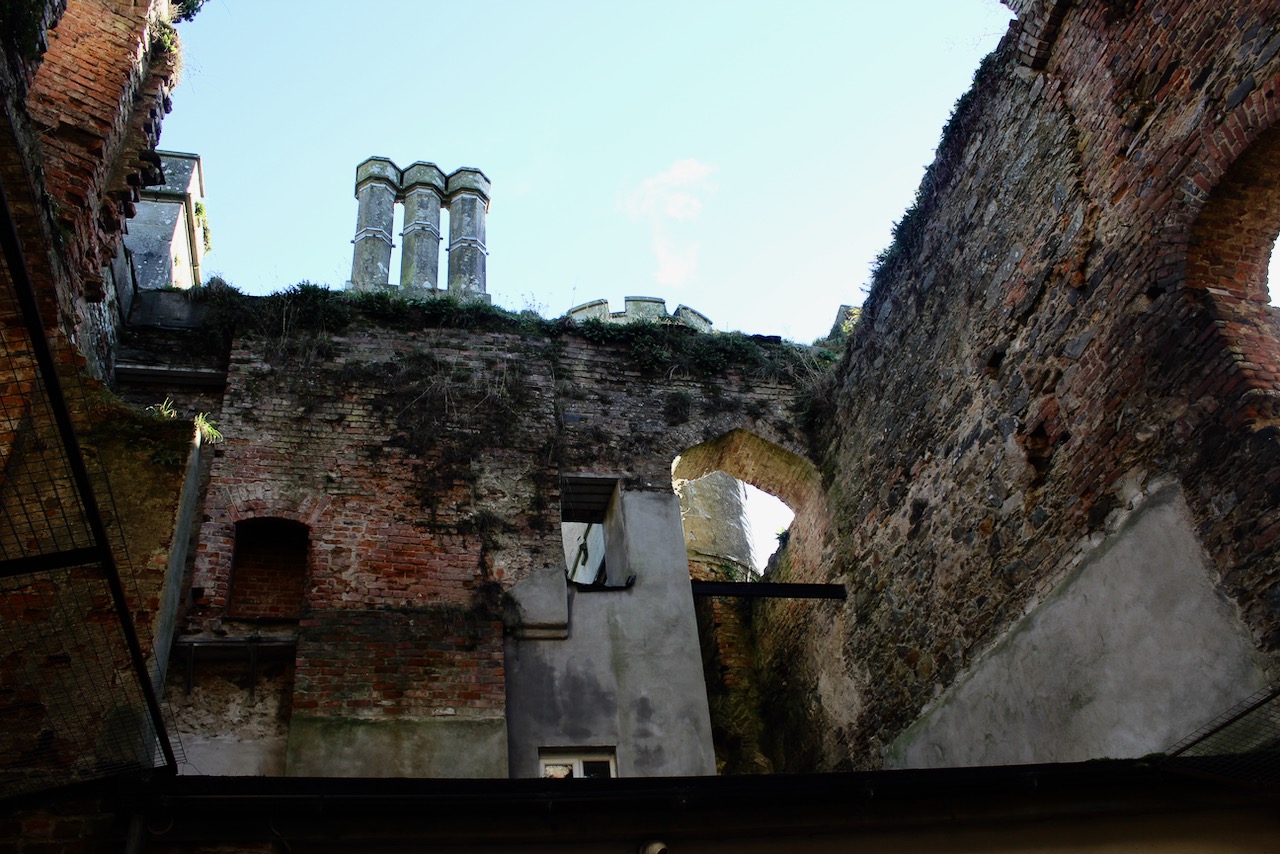
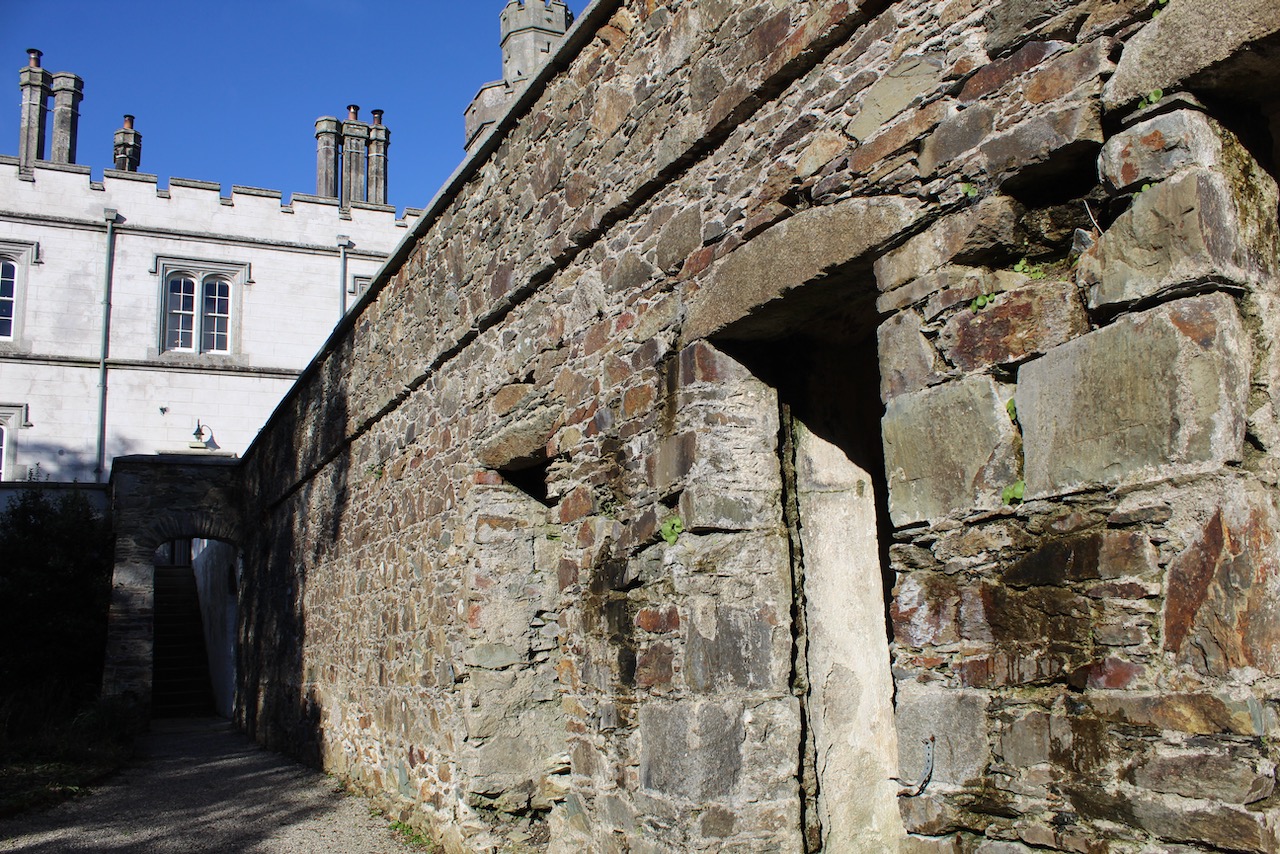
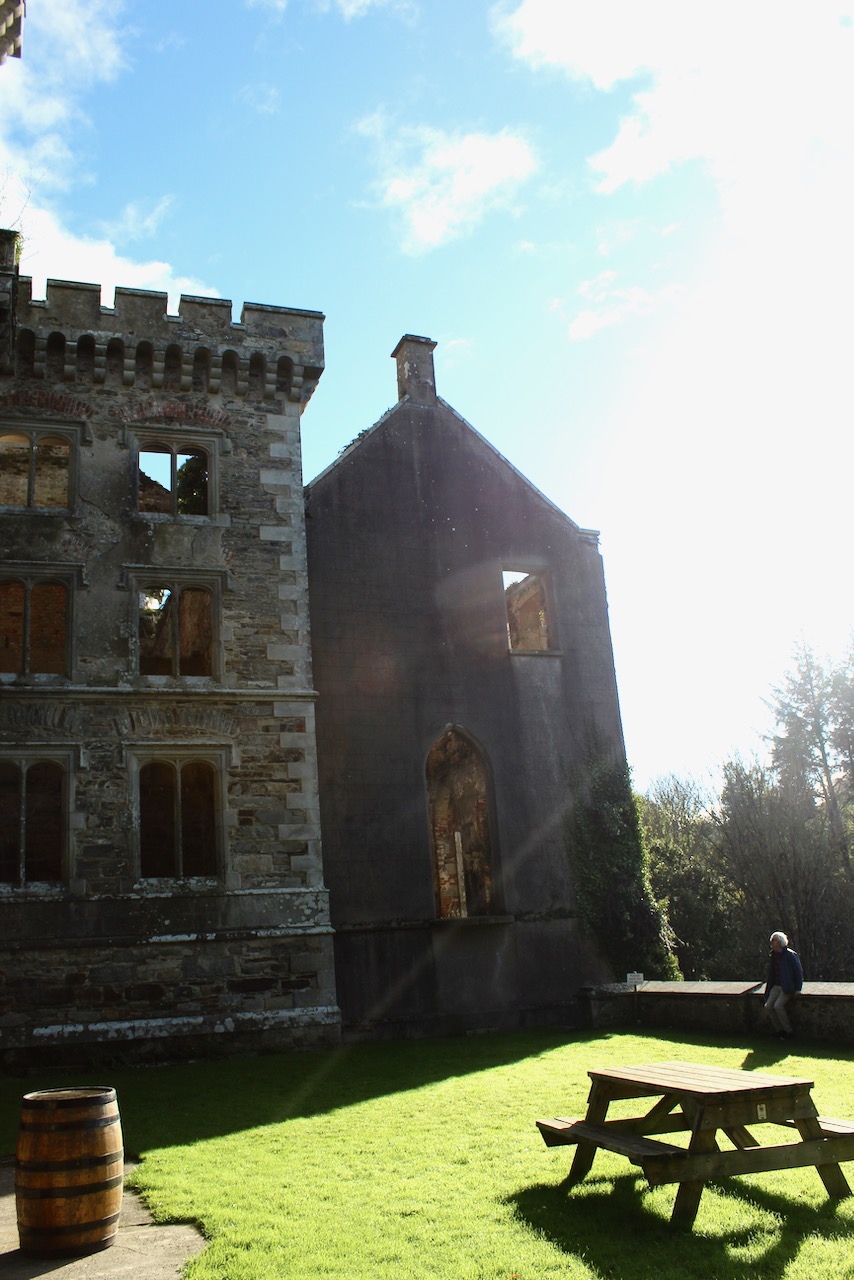
Morristown Lattin was sold to Dublin businessman Oliver Caffrey in 1982. An electrical fault shortly afterwards caused the entire left wing of Morristown Lattin to burn down. Tim Mansfield recalls that “not a lot was lost as it was already damp and unused but there was at least one valuable French wall tapestry destroyed, that I remember”. In 1992 the house was purchased by the barristers Eddie Walsh and Constance Cassidy, who gained much media attention in September 2003 when they purchased the Gore-Booth family home of Lissadell, Co. Sligo.
FOOTNOTES
[1] The Eustaces remained Catholic throughout the Penal times. Even as late as 1731, there is evidence of the family building a House of Refuge on their lands at Yeomanstown.
[2] Alexander’s younger brother Walter (d. 1849) succeeded to both Yeomanstown and the Woulfe’s family home at Rathgormack. In 1813, he married Frances, daughter of Owen MacDermott of Great Denmark Street in Dublin. They had six sons and three daughters. Yeomanstown was later sold to the Gill family. Jane Gill married Andrew Moore and sold the main house to Gay O’Callaghan. The Moores then lived at Yeomanstown Lodge, now home to their eldest daughter Gillian.
[3] Sir John presided as Chairman of Quarter Sessions for Tipperary between 1835 to 1865. A contemporary described him as “a most estimable and philanthropic person”.
[4] Their son Lattin Thunder (1838 – 1900) served as JP for County Meath.
[5] George Bourke O’Kelly also resided at Acton House on London’s Horn Lane. Built for the Cromwellian General, Philip Skippen in the 1640s, Acton House was acquired by the Catholic building magnate Nicholas Selby in the late 18th century. He leased it to the O’Kellys – or Kellys, as they were called at this time – until their move to St Croix shortly after Selby’s death in 1834. In 1881, Acton house belonged to Colonel Ross.
Chancery Records for the West Indies refer to an Edmond Kelly Sr. and his wife Ursula being at St. Croix on 23rd February 1778.
[6] “A new front was added, which at the ends, is no more than a facade; but which fills the space between the two projections; with a symmetrical row of three steeply pointed and pinnacled gables, oriels and a Tudor-style porch. At the same time, the roof was raised, but it was still carried on the old wall. The new front served no structural purpose but was secured to the main building with metal ties running through to the back of the house. A tower was also built at one end of the front, and bow windows, with balconies over them, were added at the back. The house boasted a Library divided by columns”. A Guide to Irish Country Houses, Mark Bence-Jones.
[7] On 30th December 1913, the eldest daughter Mary married Thomas Esmonde. Her husband’s father, Lieutenant Colonel Thomas Esmonde, Royal Irish Regiment, won a Victoria Cross at Sebastopol, the same battle in which her great uncle William Mansfield perished. The younger Thomas Esmonde was lost at sea on 10th October 1918. Mary lived on until 10th March 1963.
The younger daughter Marguerite (1883 – 1939) was married twice. Her first husband (1905) was Richard Morton Wood, 6th Inniskilling Dragoons, eldest son of Colonel George Wilding Wood of Docklands, Ingatestone, in Essex. He died without male heir on 6th January 1908. In 1911, she married Edward Nettlefold of Brightwell Park, Wallington, Surrey. He was seriously wounded in the war but survived to become a Lieutenant Colonel of the 5th Dragoons.
[8] Alice Mansfield (nee Cronin-Coltsmann) died on 2nd December 1965.[9] Alice Mansfield (nee More O’Ferral) died on 31st March 1962, leaving a son and a daughter.



























 Irish Historic Houses

