Castle Bernard (formerly Castle Mahon), Bandon, Co Cork – ruin  

Castle Bernard (formerly Castle Mahon), Bandon, Co Cork – ruin  

Castle Bernard, County Cork, by Robert French, Lawrence Collection, Vanishing Country Houses of Ireland by The Knight of Glin, David J. Griffin and Nicholas K. Robinson, published by The Irish Architectural Archive and The Irish Georgian Society, 1988.

Bence-Jones, Mark. A Guide to Irish Country Houses (originally published as Burke’s Guide to Country Houses volume 1 Ireland by Burke’s Peerage Ltd. 1978); Revised edition 1988 Constable and Company Ltd, London. 

p. 62. “(Bernard, Bandon, E/PB) The old castle of the O’Mahonys, formerly known as Castle Mahon, was acquired by the Bernards early in C17 and was eventually changed to Castle Bernard.  During 1st half of C18, two new fronts were added to the castle, by Francis Bernard, Solicitor-General of Ireland, Prime Serjeant of Judge of the Court of Common Pleas, and by his son, Francis Bernard, MP.  They were of brick, with Corinthian pilasters and other enrichments of Portland stone, and were surrounded by formal gardens with statues, fountains, cascades and jets d’eau. In 1798 Francis Bernard, 1st Viscount Bandon, pulled down the two early C18 fronts and began building a new house alongside the old castle, to which it was joined by a corridor. It was of two storeys, with a nine bay entrance front overlooking the Bandon River and a garden front of three bays on either side of a deep curved central bow. Prominent roof with parapet and dentil cornice; bold quoins. In the early 19C – probably in 1815 – 1st Earl of Bandon gave the house a Gothic coating that was literally skin-deep; a facade of battlements and two slender turrets on the entrance front, which continued around the side for part of the way then stopped; the garden front being left as it was, except for the insertion of Gothic tracery in its windows, similar to that in the windows of the entrance front and sides; and the addition of hood mouldings. The old castle, an adjoining range and the connecting corridor also had C19 battlements. The interior of the house was spacious, with a straightforward plan. A square entrance hall with Ionic pilasters and columns opened into a wide central corridor running the whole length of the main block with a curving staircase at one end. On the opposite side of this corridor to the hall was a large oval room, extending into the garden front bow. Castle Bernard was burnt ca 1921; it is now a ruin smothered in climbing roses that forms an object in the garden of the modern house nearby, which was built in 1960s by 5th and last Earl of Bandon.” 

Castle Bernard, Bandon in County Cork, photograph by Robert French, [between ca. 1865-1914], Lawrence Photograph Collection, National Library of Ireland.

Francis Bernard was created 1st Earl of Bandon, and he married Catherine Henrietta Boyle, daughter of Richard Boyle, 2nd Earl of Shannon.

Listed in Vanishing Country Houses of Ireland by The Knight of Glin, David J. Griffin and Nicholas K. Robinson, published by The Irish Architectural Archive and The Irish Georgian Society, 1988.

A large two storey classical house built 1798 for Francis Bernard, 1st Viscount Bandon. Joined to a twoer house by a single storey corridor. The house had a good interior which included an entrance hall with a series of columns at one end, and a cantilevered stone staircase. Gothic tracery was inserted in the windows in the mid Victorian period. Destroyed by fire in 1921. Now a ruin.

The Buildings of Ireland. Cork City and County. Frank Keohane. Yale University Press: New Haven and London. 2020. 

p. 25. The first prominent exponent of Neoclassicism in Cork was a native, Michael Shanahan. He appears to have been a stonecutter, and probably came to the attention of the ‘Earl-Bishop’ Frederick Hervey while the latter was Bishop of Cloyne in 1767-8. Hervey took Shanahan on a Continental tour in 1770-2, a very rare thing for an Irish architect, during which Shanahan made measured drawings, particularly of bridges, as Hervey was proposing to build a bridge at Londonderry. On his return to Ireland, he became Hervey’s agent and oversaw the construction of James Wyatt’s Downhill in Derry, as well as designing churches and glebe houses in that diocese. Shanahan returned to Cork in the early 1780s, establishing a marble and stone works in White Street which specialized in chimneypieces, geometrical stone staircases and porticos. His first significant commission was St Patrick’s Bridge, in 1788-91. Shanahan’s houses tend to be reticent in the extreme. Castle Freke (1780s) and Castle Bernard [p. 26] (1790s) are big astylar blocks, bare except for rusticated quoins and thin cornices. Castle Bernard in particular appears to owe a debt to Wyatt’s Castle Coole in the axial arrangement of a hall with columnar screen, and the elliptical saloon projecting into the bow on the garden front.  

Also in David Hicks, Irish Country Houses, a Chronicle of Change. P.1 The architect in 1715 was John Coltsman, oversaw construction of new wings. The surrounding gardens were enhanced by a hydraulic engineer called Francis Fennell.  

https://archiseek.com/2015/1800-castle-bernard-bandon-co-cork/

1800 – Castle Bernard, Bandon, Co. Cork 

Castle Bernard, County Cork, courtesy Archiseek.

In 1788 Francis Bernard, the 1st Earl of Bandon demolished much of the old O’Mahony castle that previously stood on this site, and built a castellated mansion. It was of two storeys with a nine-bay entrance front overlooking the River Bandon; and a garden front of three bays on either side of a deep curved central bow. It was altered and enlarged in Gothic style in the mid-19th century. Now ruined, after being destroyed by arson on 21 June 1921.  

In O’Hea O’Keeffe, Jane. Voices from the Great Houses: Cork and Kerry. Mercier Press, Cork, 2013. 

p. 73. The Bernard family has been associated with the Bandon settlement since the plantation of Munster in the late 1500s. Francis Bernard, third son of Sir Henry Bernard of Acornbank in Westmoreland, accompanied the Lord Lieutenant of Ireland, Robert Devereux, Earl of Essex, and 17,000 men to Ireland in 1599, during the Nine Years’ War. At the time the O’Mahony clan was in possession of Castle Mahon, which was acquired by the descendants of Francis Bernard in 1639 and renamed Castle Bernard. 

p. 75. Early on the morning of 21 June 1921, the Bandon Battalion of the IRA, under the command of Sean Hales, burned Castle Bernard, having ordered Lord and Lady Bandon and their servants to leave the house. They stood and watched as the castle and its contents burned. The IRA then kidnapped Lord Bandon, who was 74 years old. Three weeks later, he was released at the gates of Castle Bernard, having been, by all accounts, reasonably well treated. Lady Bandon had spent part of the period of his captivity at the gardener’s cottage on the castle grounds, later. moving to Cork to stay with friends. Immediately on his release, her husband joined her, and they left for England shortly thereafter. 

The 4th Earl died in 1924 and was succeeded by his cousin, Air Chief Marshal Percy Bernard, (1904-79), 5th Earl of Bandon. Lady Frances Carter, daughter of the late Percy Bernard, now lives in a house on the Castle Bernard estate, which today stretches to around 500 acres. She reflects on those troubled days: 

“He must have been very sad indeed. He loved his Bandon home, and had lived there nearly all his life. He died just three years after he left for England. Today, not a lot survives from the castle… James Francis Bernard, 4th Earl of Bandon, was my father Percy Bernard’s first cousin twice removed, and my father inherited the title on his cousin’s death in England in 1924.” 

Lady Frances and her older sister Jennifer were born and reared in England. 

p. 76. “We were brought up by our mother, Betty, as a consequence of the split between my parents just before I was born in 1943. I first came her to Bandon in 1956, when I was 13, to stay with my father. We stayed in a most uncomfortable house near the castle, which my grandmother had created from several existing cottages so that she and my father could have somewhere to stay on their visits to Bandon. [he remarried, to Betty Playfair] 

p. 78. “When my father inherited, Bandon obviously became a big part of his life. He was always determined to make something of the estate and to live here eventually. He was an absentee in that he was in the Air Force, but he always knew he would eventually live here. This was essentially his home, and he farmed it and kept it going. He was undoubtedly very attached to it.” 

p. 79. Lady Frances and Paul Carter married in England in 1967, and just two years ago they moved into the new house they had built on the grounds at Castle Bernard.  

p. 80. The Castle Bernard estate now stretches to about 500 acres and is home to Bandon Golf Club. The Carters have also leased the farming land. 

p. 81. The records of the Bernard family of Bandon are stored at the Cork Archives at Blackpool, where over 300 boxes of unsorted material await attention. Luckily, when the castl was burned in 1921, the agent in Bandon town had these boxes and estate books in his possession.

https://theirishaesthete.com/2019/05/06/bandon/

Like many Irish houses, Castle Bernard, County Cork has a long and complex architectural history, some aspects of which are still not clear. The place takes its name from the Bernard family, the first of whom – christened Francis like many of his successors – came here during the Plantation of Munster in the late 16th century. He acquired lands which had formerly been owned by the O’Mahonys and was centred around a great square tower house called Castle Mahon to the immediate south of the river Bandon. This became the Bernards’ residence, its name at some date changed to Castle Bernard, until c.1715, Francis Bernard, great-grandson of the original settler, and Solicitor-General of Ireland, Prime Serjeant and Judge of the Court of Common Pleas initiated work on a new building, seemingly to the designs of John Coltsman of Cork. This involved adding wings to the old tower house, the whole encased in brick with Corinthian pilasters and other ornamentations in Portland stone. A decade later the surrounding demesne was transformed into a formal garden with terraces, cascades, jets d’eau and statuary. This arrangement lasted until the end of the 18th century when Castle Bernard underwent a further transformation. 

In 1794 the Cork architect Michael Shanahan, best-known work commissioned in Ulster by his patron Frederick Hervey, Earl-Bishop of Derry, prepared designs for a new house at Castle Bernard. (For more on Shanahan and the Earl-Bishop, see It’s Downhill All the Way, October 28th 2013 and Let the Door be Instantly Open, For There is Much Wealth Within, March 31st 2014). This involved pulling down the additions to the original tower house, and instead erecting a structure to its immediate east, a linking corridor running between the two. In 1800 another Corkman, William Deane, prepared estimates of £522.4s.4d. for work in finishing the house. In both instances, the client was Francis Bernard who from 1793 gradually scaled the hierarchy of the peerage until 1800 when created first Earl of Bandon. The house he commissioned was classical in style, of two storeys over basement and with a nine-bay entrance front. The garden front was similar but broken by a substantial full-height bow occupying the three centre bays. Just fifteen years later, Lord Bandon undertook further work, this time by an unknown architect, in order to give it the – largely superficial – appearance of a gothic castle, and thereby provide better links both to the old tower house and to the Bernard family’s ancient pedigree. While the garden front experienced little other than the insertion of gothic tracery in its windows, battlements and turrets were added to the façade, and the Bernard coat of arms carved in stone above the main entrance. No great changes were made to the interior, which despite the gothic fenestration otherwise retained its classical decoration. On the ground floor, an entrance hall with Ionic pilasters and columns gave access to a wide corridor which ran like a spine down the centre of the house. Among the reception rooms, the most notable was an oval drawing room overlooking the garden: one sees in its design the abiding influence of the Earl-Bishop on Shanahan. 

The Bernard family remained in residence at Castle Bernard until June 1921 when the 70-year old fourth earl and his wife were woken in the early hours of the morning by a group of IRA members and ordered out of the house, which was then set on fire. Lord Bandon was then taken into captivity by the men and held for the next three weeks, constantly moved from house to house before being released at the gates of the now-ruined Castle Bernard after three weeks: during this time he had lost a stone in weight and never recovered from the experience, dying less than three years later. He and his wife had no children, so the title passed to a first cousin twice-removed, Air Chief Marshal Percy Bernard, widely known as ‘Paddy’ Bandon. But he inherited not a lot else and so, although some compensation was received by the family, Castle Bernard was not rebuilt (the fifth earl constructed a modest bungalow behind the ruin). Since he in turn had no son, the earldom became extinct. Although his descendants still live on the estate, the land in front of Castle Bernard is now a golf course.” http://lordbelmontinnorthernireland.blogspot.com/2013/07/castle-bernard.html

THE EARLS OF BANDON WERE THE SECOND LARGEST LANDOWNERS IN COUNTY CORK, WITH 40,941 ACRES 


The house of BERNARD, Earls of Bandon, derives, according to Thomas Hawley, Norroy King of Arms, from SIR THEOPHILUS, a valiant knight of German descent who, in 1066, accompanied WILLIAM THE CONQUEROR into England. 
 
This Theophilus was son of Sir Egerette, and father of 

SIR DORBARD BERNARD, the first of his family surnamed BERNARD. 
 
His descendants settled at Acornbank in Westmorland, and in the counties of Yorkshire and Northamptonshire. 
 
Among these we find Robert FitzBernard, who accompanied HENRY II to Ireland, and who, on the King’s departure, had Wexford and Waterford committed to his custody. 
 
SIR FRANCIS BERNARD, of Acornbank (the lineal descendant of Sir Dorbard), married Hannah, daughter of Sir John Pilkington, and was grandfather of 
 
SIR HENRY BERNARD, Knight, who married Anne, daughter of Sir John Dawson, of Westmorland, and had four sons, ROBERT, William, Francis, and Charles. 
 
FRANCIS BERNARD, the third son, removed to Ireland during ELIZABETH I’s reign and purchased considerable estates. 
 
He died leaving issue, besides two daughters, a son,  
 
FRANCIS BERNARD, Lord of the manor of Castle Bernard, who married Elizabeth, daughter of Arthur Freke, of Rathbarry Castle (ancestor of Lord Carbery). 
 
Mr Bernard was killed while defending his castle from an attack of the rebel forces, and left issue (with four daughters, all married), two sons, 

FRANCIS, his heir
Arthur, born in 1666. 

The elder son, 
 
FRANCIS BERNARD (1663-1731), was attainted by JAMES II’sparliament, but was restored to his estates by WILLIAM and MARY. 
 
He was appointed Solicitor-General for Ireland by QUEEN ANNE, Prime Sergeant, and Judge of the Court of Common Pleas. 
 
Mr Bernard represented Bandon and Clonakilty in parliament. 
 
He wedded, in 1697, Alice, daughter of Stephen Ludlow, ancestor of the Earls Ludlow, and grandson of Sir Henry Ludlow, of Maiden Bradley, Wiltshire (whose eldest son was the famous General Ludlow), by whom he left at his decease, 

FRANCIS, his heir
Stephen, of Prospect Hall
North Ludlow, father of JAMES BERNARD; 
Arthur; 
William; 
John; 
Elizabeth, m 3rd Viscount Charlemont. 

The eldest son, 
 
FRANCIS BERNARD (1698-1783), of Castle Bernard, and Bassingbourne Hall, Essex, MP for Clonakilty, 1725-60, Bandonbridge, 1766-76,  espoused, in 1722, the Lady Anne Petty, only daughter of Henry, Earl of Shelburne; but died without surviving issue, when he was succeeded by his nephew, 
 
JAMES BERNARD (1729-90), of Castle Bernard, son of North Ludlow Bernard, MP for County Cork, 1781-90, who married, in 1752, Esther, daughter of Percy Smyth, and heiress of her brother, William Smyth, of Headborough, and widow of Robert Gookin, and had issue, 

FRANCIS, his heir
Rose; Esther; Mary; Charlotte; Elizabeth. 

The only son, 
 
FRANCIS BERNARD (1755-1830), MP for Ennis, 1778-83, Bandonbridge, 1783-90, was elevated to the peerage, in 1793, in the dignity of Baron Bandon; and advanced to a viscountcy, in 1795, as Viscount Bandon. 
 
His lordship was further advanced, in 1800, to the dignities of Viscount Bernard and EARL OF BANDON. 
 
He wedded, in 1784, Catherine Henrietta, only daughter of Richard, 2nd Earl of Shannon, and had issue, 

JAMES, his successor
Richard Boyle (Very Rev), Dean of Leighlin; 
Francis; 
William Smyth; 
Henry Boyle; 
Charles Ludlow; 
Catherine Henrietta; Charlotte Esther; Louisa Anne. 

His lordship was succeeded by his eldest son, 
 
JAMES, 2nd Earl (1785-1856), who married, in 1809, Mary Susan Albinia, eldest daughter of the Hon and Most Rev Dr Charles Brodrick, Lord Archbishop of Cashel, and had issue, 

FRANCIS, his successor
Charles Brodrick; 
Henry Boyle; 
Catherine Henrietta. 

The 4th Earl was the last Lord-Lieutenant of County Cork, from 1877 until 1922. 

 
CASTLE BERNARD, near Bandon, County Cork, was re-modelled by Francis Bernard, 1st Viscount Bandon and afterwards 1st Earl of Bandon. 
 
He pulled down the two early 18th century fronts in 1798 and began building a new house alongside the old O’Mahony castle, which was joined by a corridor. 
 
It was of two storeys with a nine-bay entrance front overlooking the River Bandon; and a garden front of three bays on either side of a deep curved central bow.   
 
It was altered and enlarged in Gothic style in the mid-19th century. 

 
Castle Bernard became known as one of the most hospitable houses in Ireland and the house parties held by the 4th Earl and Countess were said to have been legendary. 

 
In an early morning raid on the 21st June, 1921, an IRA gang, under Sean Hales, called at the Castle. 
 
They intended to kidnap Lord Bandon, but “Buckshot” Bandon and his staff had taken refuge in the cellars. 

Apparently disappointed in the first object of their call, the IRA decided to burn the house. 

Hales was heard to say,“well the bird has flown, so we’ll burn the nest”. 
 
At that, Lord Bandon and his party appeared from the cellars but it was too late, the fire had started.  
 
Ironically the IRA carefully took out all the furniture and piled it on the lawn before setting the building on fire. 
 
Lady Bandon had to sit and watch the flames for some hours. 
 

When the flames were at their height, she suddenly stood up in her nightgown and sang God Save the King as loudly as possible, which disconcerted the incendiaries, but while they may not have stood to attention, they let her have her say and did nothing about it. 
 
Lord Bandon was then kidnapped by a local IRA gang and held hostage for three weeks, being released on 12th July. 
 
The IRA threatened to have him executed if the authorities went ahead with executing IRA prisoners of war. 
 
During his captivity, Bandon coolly played cards with his captors, who treated him well. 
 
Tom Barry later stated he believed the kidnapping helped move HM Government towards the Anglo-Irish Treaty of 1921 and the cessation of hostilities. 
 
The elderly Lord Bandon never recovered from the experience and died in 1924. 
 
Some years later, when the last of the IRA burning party died, the 4th Earl was asked to go to the funeral, which he did – in full funeral attire of top hat and morning coat. 
 
Castle Bernard continued to be the home of the 5th Earl and Countess: they built a small house within the Castle boundary walls. 
 
The 5th Earl died in 1979 and, as he had no heir, the titles became extinct. 
 
Lady Bandon died in 1999, aged 102.  
 
Lady Jennifer Bernard, who inherited the property, lived on the grounds of the castle until she died in 2010. 
 
A modern house was built a short distance from the ruin by the 5th Earl in the 1960s and the uncontrolled growth of trees and ivy gives the building its romantic character.  
 
There is a huge high window in the curved stairwell which would have been a magnificent feature in its day. 
 
Above the grand doorway and grass covered steps are a fine carved crest and standards.  
 
Several of the attractive stone window frames are still more or less intact which adds to the appeal of this splendid ruin. 
 
Percy, 5th Earl, GBE CB CVO DSO, Air Chief Marshal, was one of the most senior officers in the RAF.   
 
In his retirement the 5th Earl discovered the pleasures of fishing, particularly in the River Bandon which was well stocked with salmon, and in shooting, snipe and woodcock found in large numbers near Castle Bernard. 
 
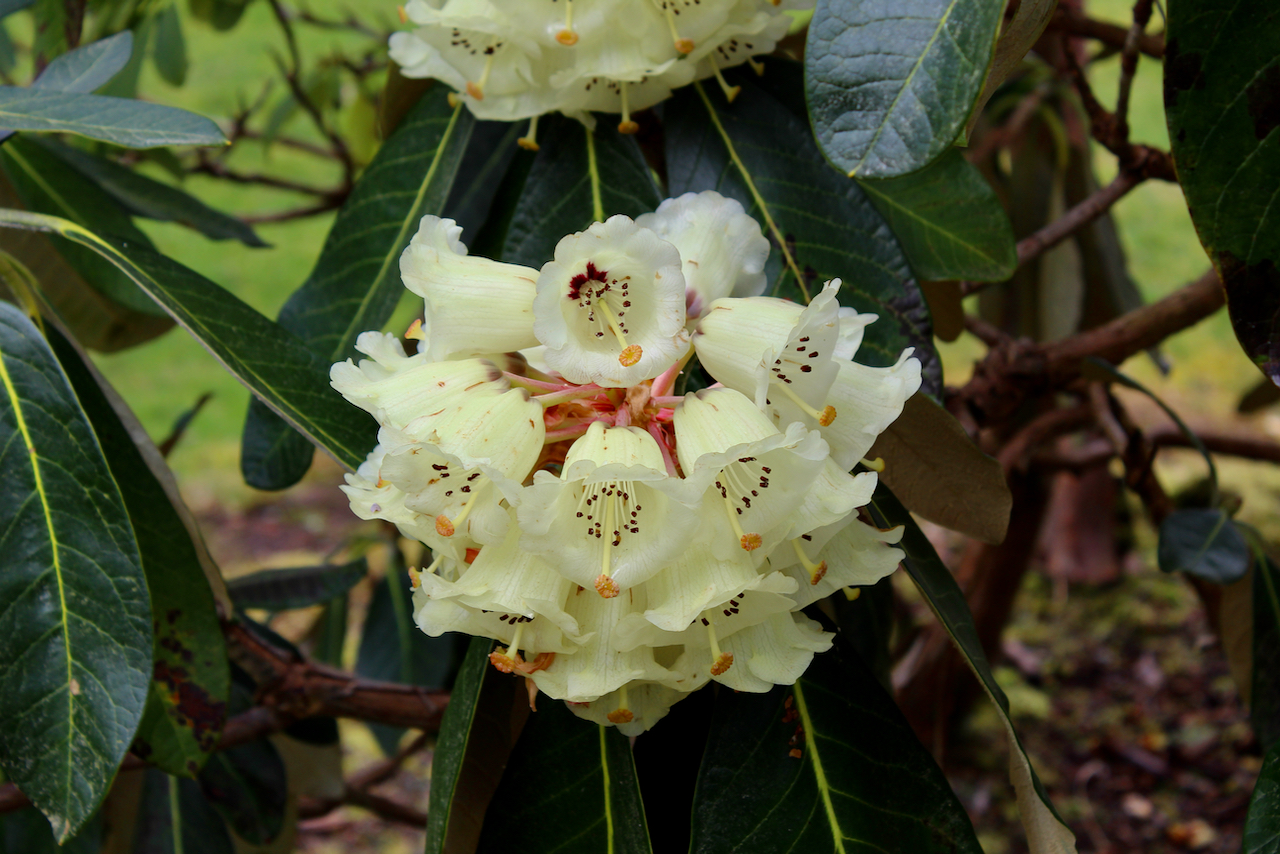
He was also developing an enthusiastic skill as a gardener with a particular knowledge of rhododendrons. 
 
The 5th Earl died on 8 February 1979 at Bon Secours Hospital in County Cork aged 74 and without male issue. 
 
Consequently on his death all the titles became extinct. 
 
He was survived by Lois, Lady Bandon and the two daughters from his first marriage, Lady Jennifer Jane Bernard, of Castle Bernard (b 1935) and Lady Frances Elizabeth Bernard (b 1943). 
 
A portrait in oils (painted 1969) of Lord Bandon, in his uniform as an Air Chief Marshal together with his robes as a peer of the realm, hangs in the main dining hall at the Royal Air Force College, Cranwell. 

 
First published in August, 2011.  Bandon arms courtesy of European Heraldry. 

Derreen Gardens, Lauragh, Tuosist, Kenmare, Co. Kerry, V93 D792 – section 482

https://www.derreengarden.com/

Open dates in 2026: all year, 10am-6pm

Fee: adult €12, child €6, family ticket €45 (2 adults & all accompanying children under18) season tickets from €40
Concession discounts available for large groups

2026 Diary of Irish Historic Houses (section 482 properties)

To purchase an A5 size 2026 Diary of Historic Houses (opening times and days are not listed so the calendar is for use for recording appointments and not as a reference for opening times) send your postal address to jennifer.baggot@gmail.com along with €20 via this payment button. The calendar of 84 pages includes space for writing your appointments as well as photographs of the historic houses. The price includes postage within Ireland. Postage to U.S. is a further €10 for the A5 size calendar, so I would appreciate a donation toward the postage – you can click on the donation link.

€20.00

Donation

Help me to fund my creation and update of this website. It is created purely out of love for the subject and I receive no payment so any donation is appreciated! For this entry, I paid for petrol and the entrance fee for myself and Stephen.

€10.00

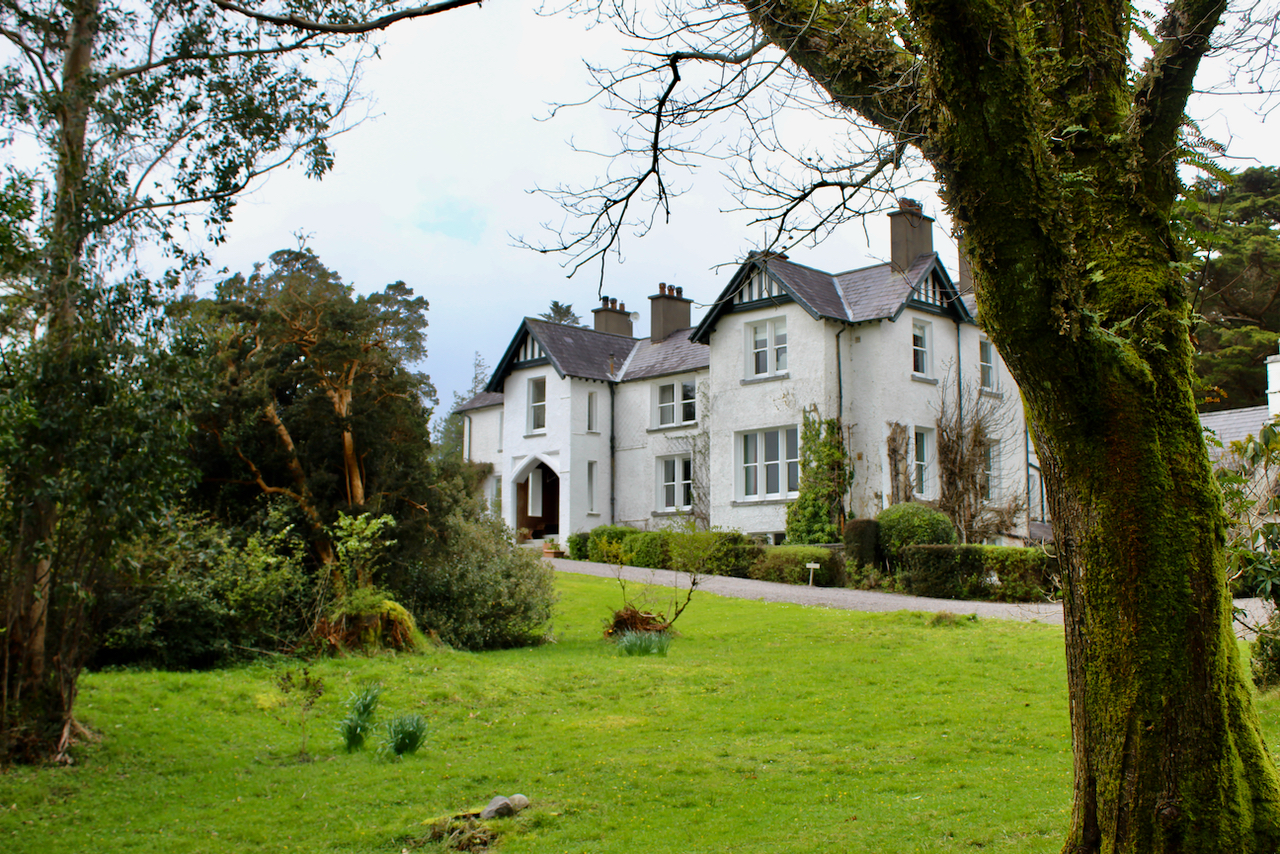
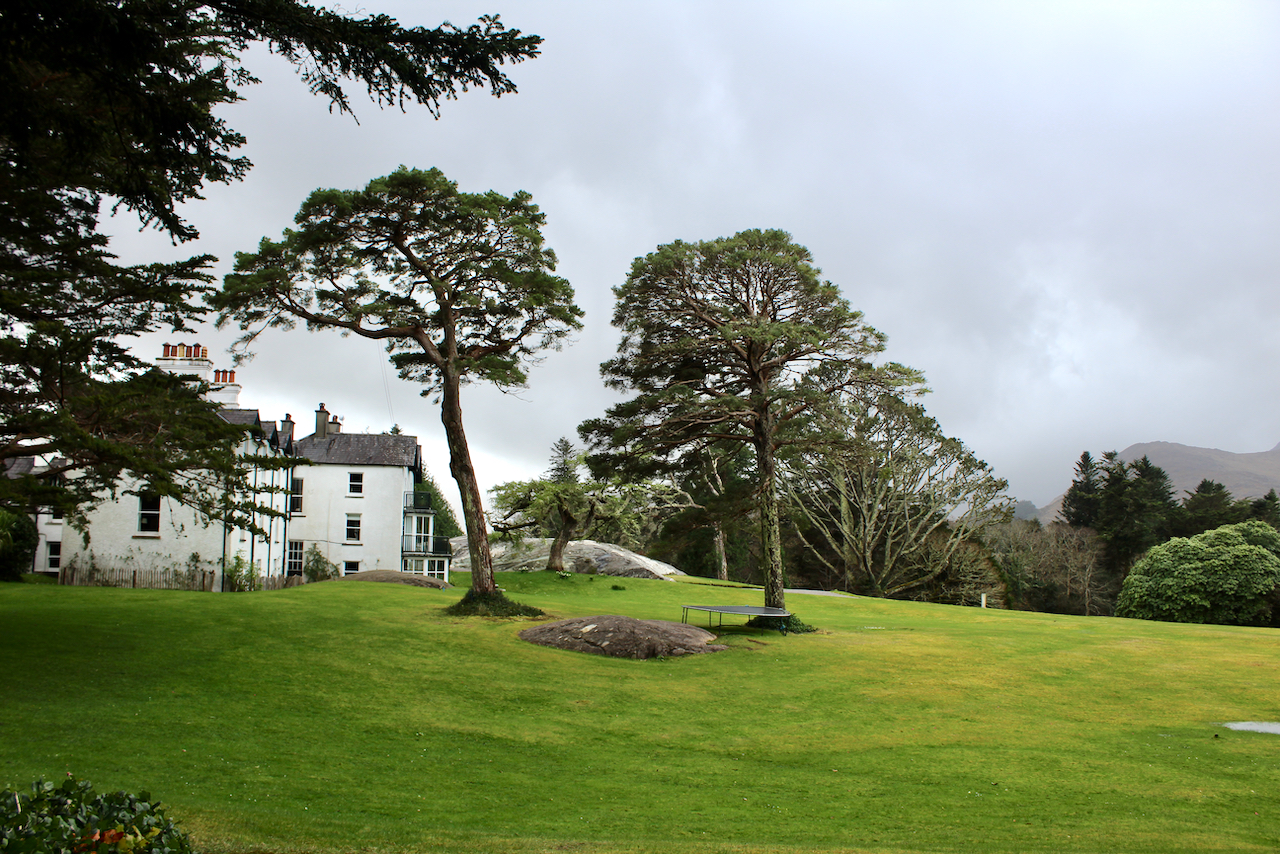
Derreen House, March 2023. It was designed by James Franklin Fuller, burnt in the early 1920s but rebuilt in the same style. It is not open to the public. Photograph © Jennifer Winder-Baggot, www.irishhistorichouses.com

We visited County Kerry at the end of March 2023, when few other Revenue Section 482 properties are open. I didn’t stop to think, however, that it might not be the best time to see the gardens of Kerry in their best state! However, some trees were in bloom, while others had dropped their blossoms.

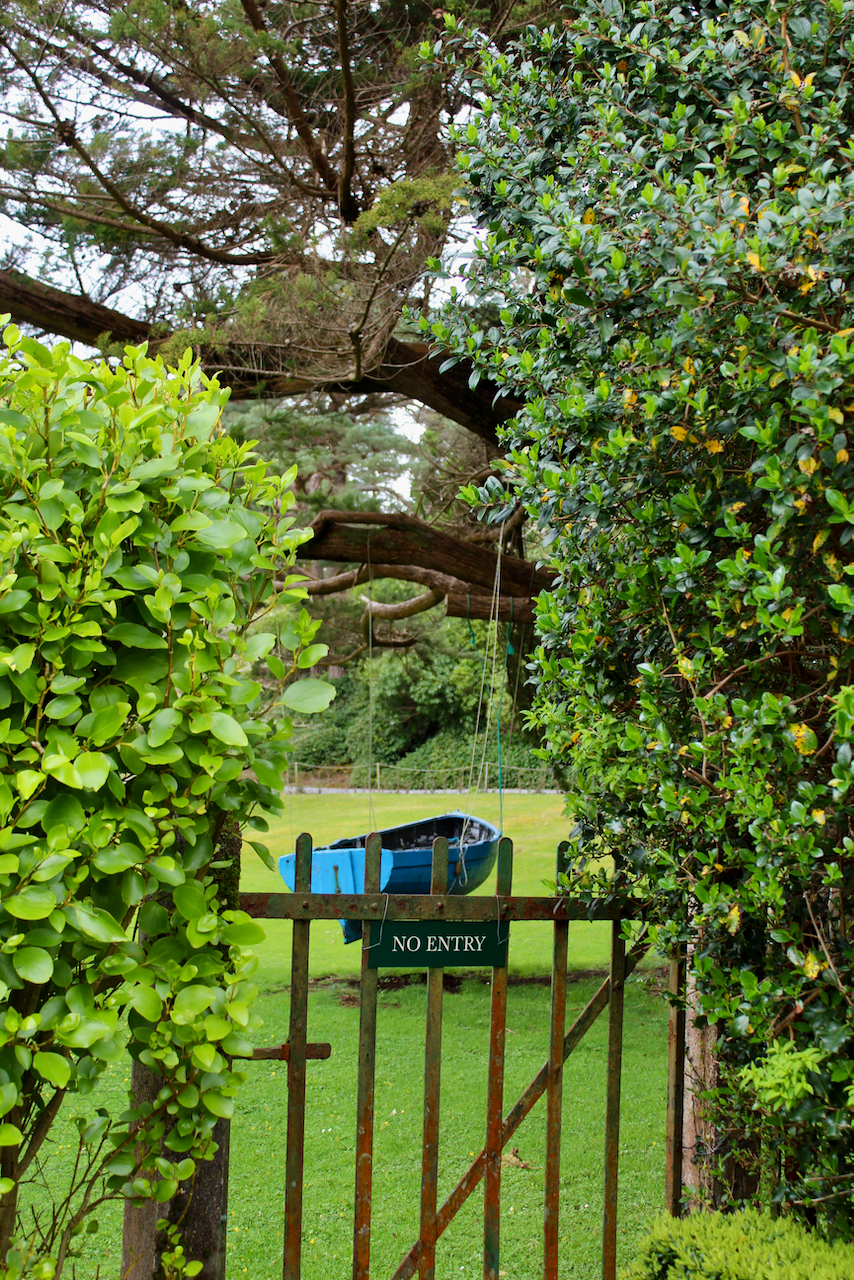
Derreen Gardens, 29th March 2023. Photograph © Jennifer Winder-Baggot, www.irishhistorichouses.com

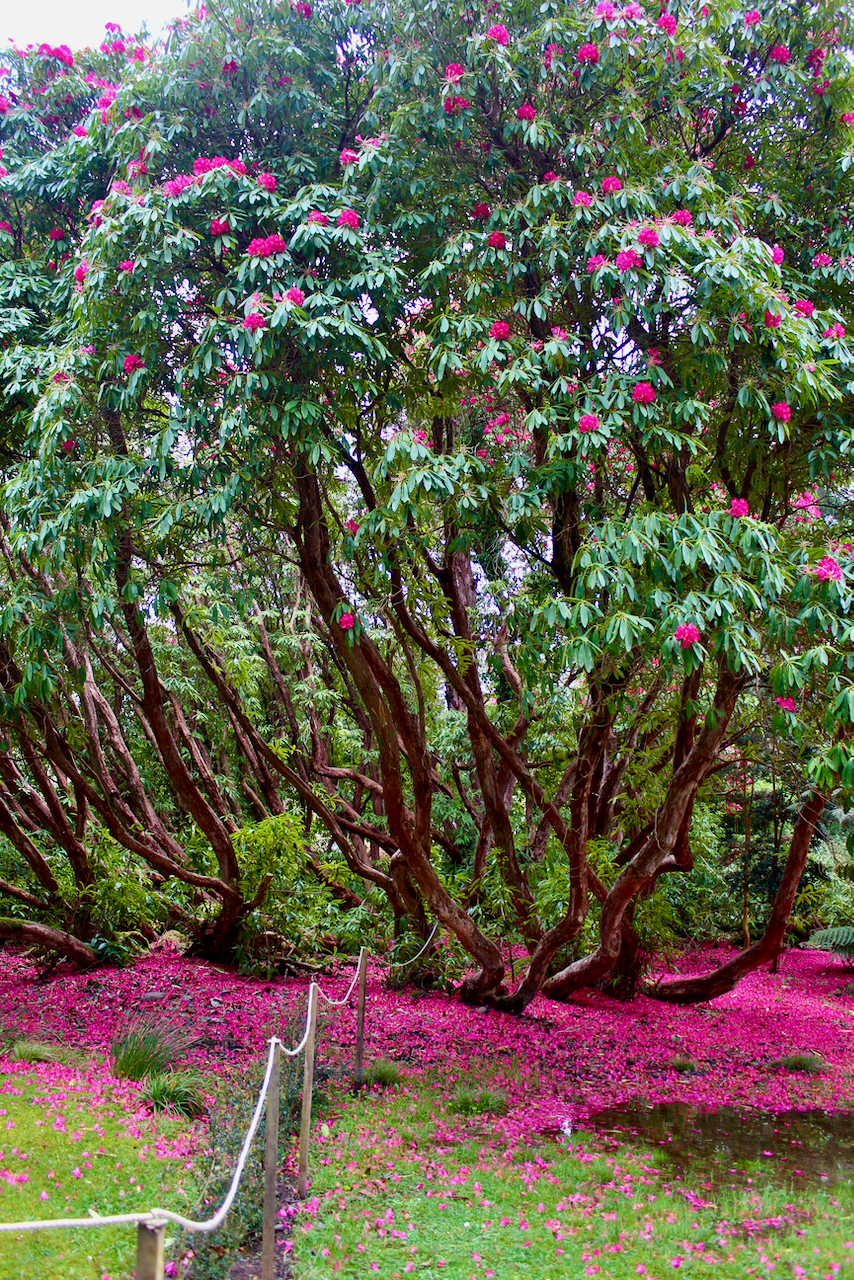
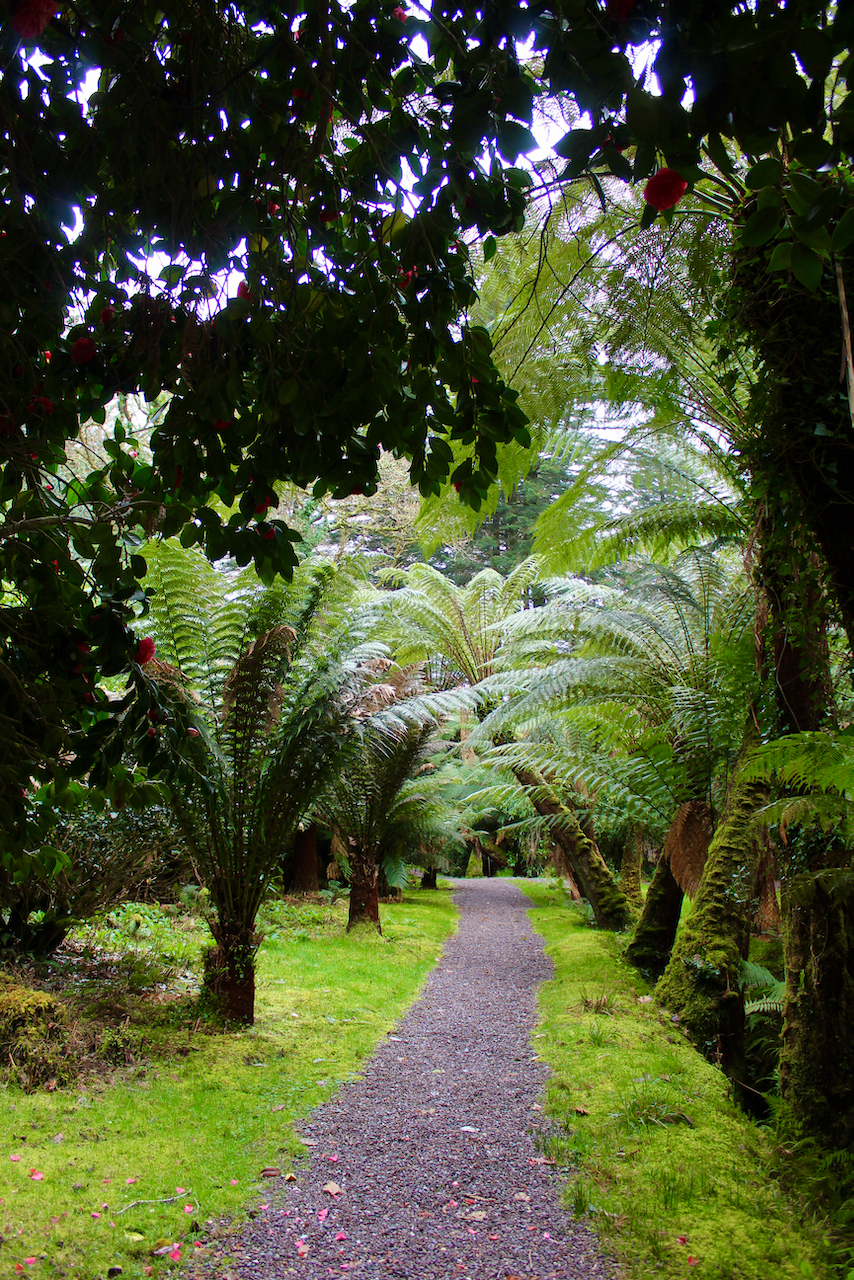
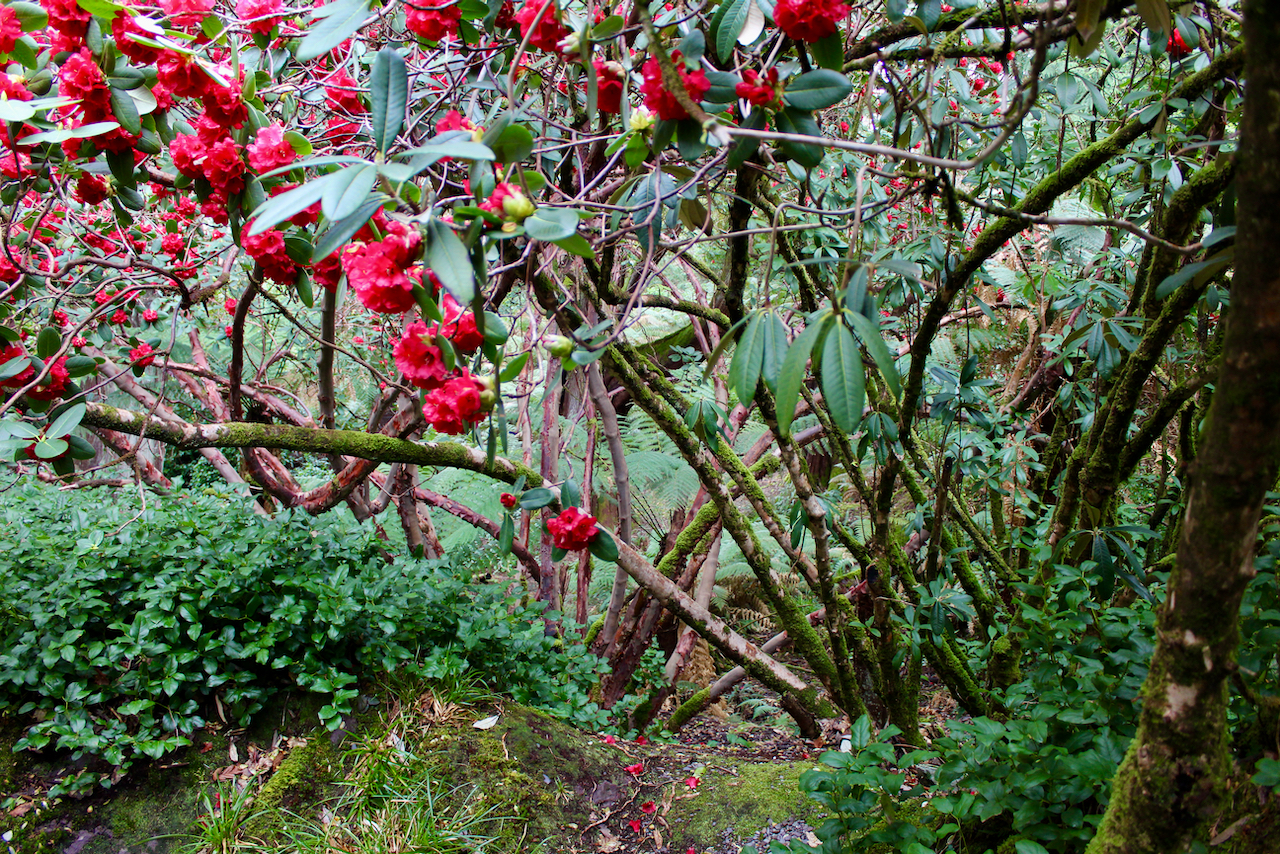
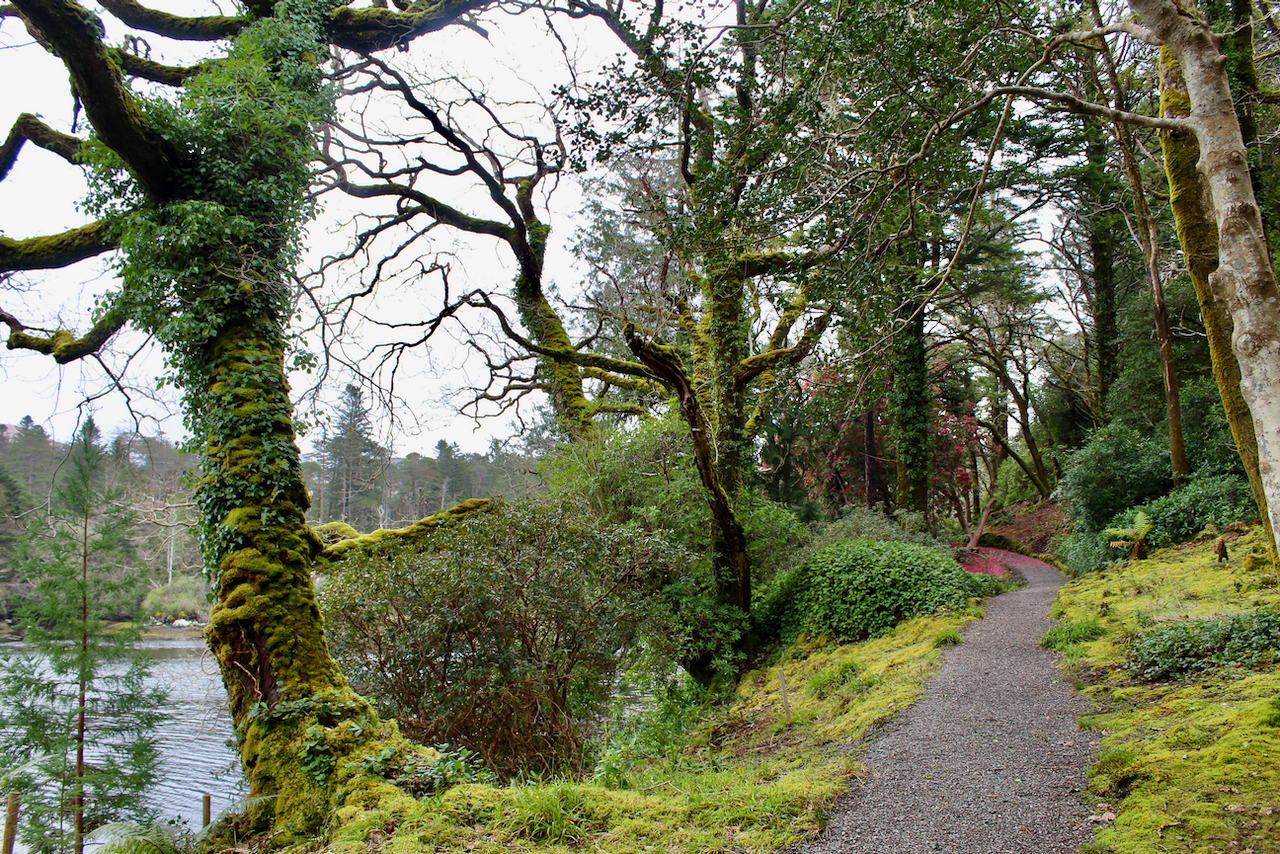
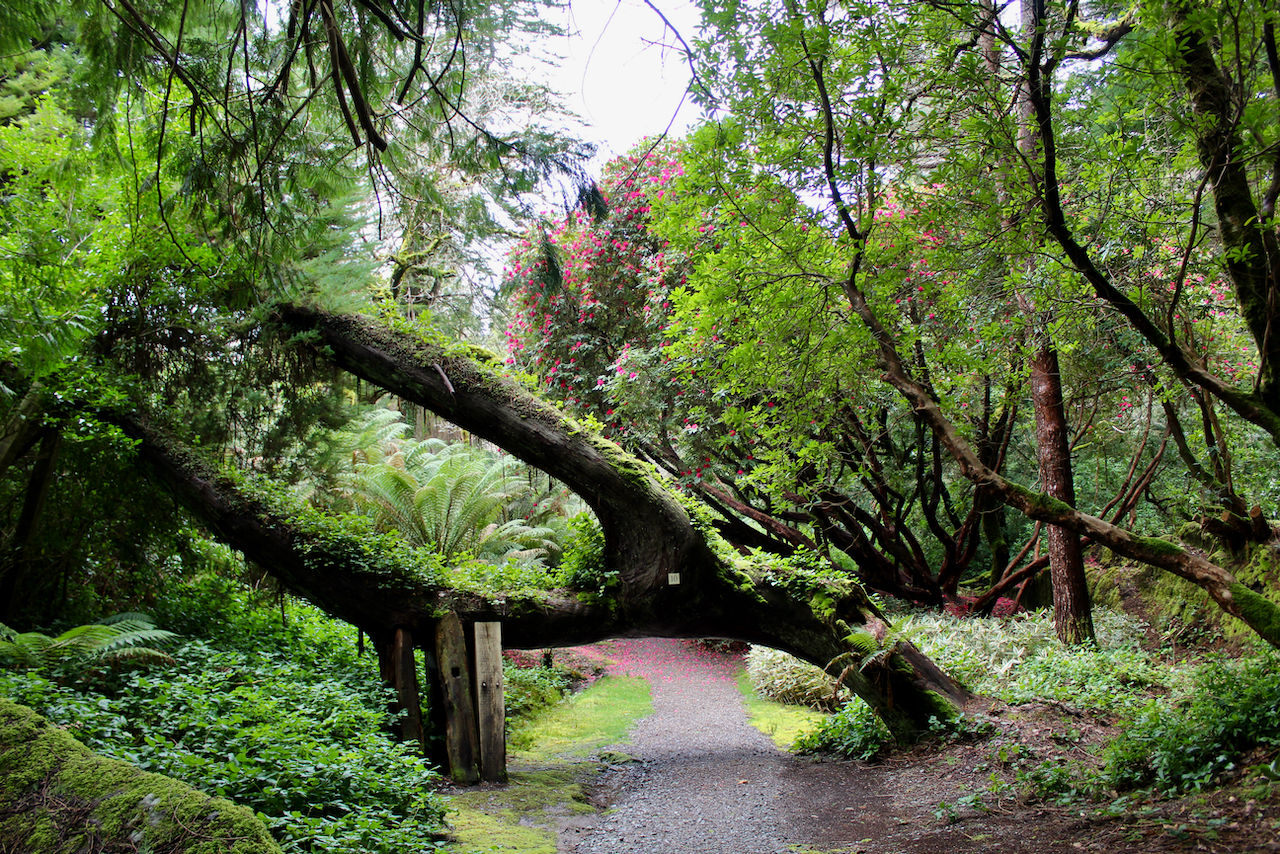
Derreen is famous for its collection of rhododendrons and some of the Arboretum rhododendrons planted in the 1870s by the 5th Marquess of Lansdowne have grown to a size rarely seen elsewhere.

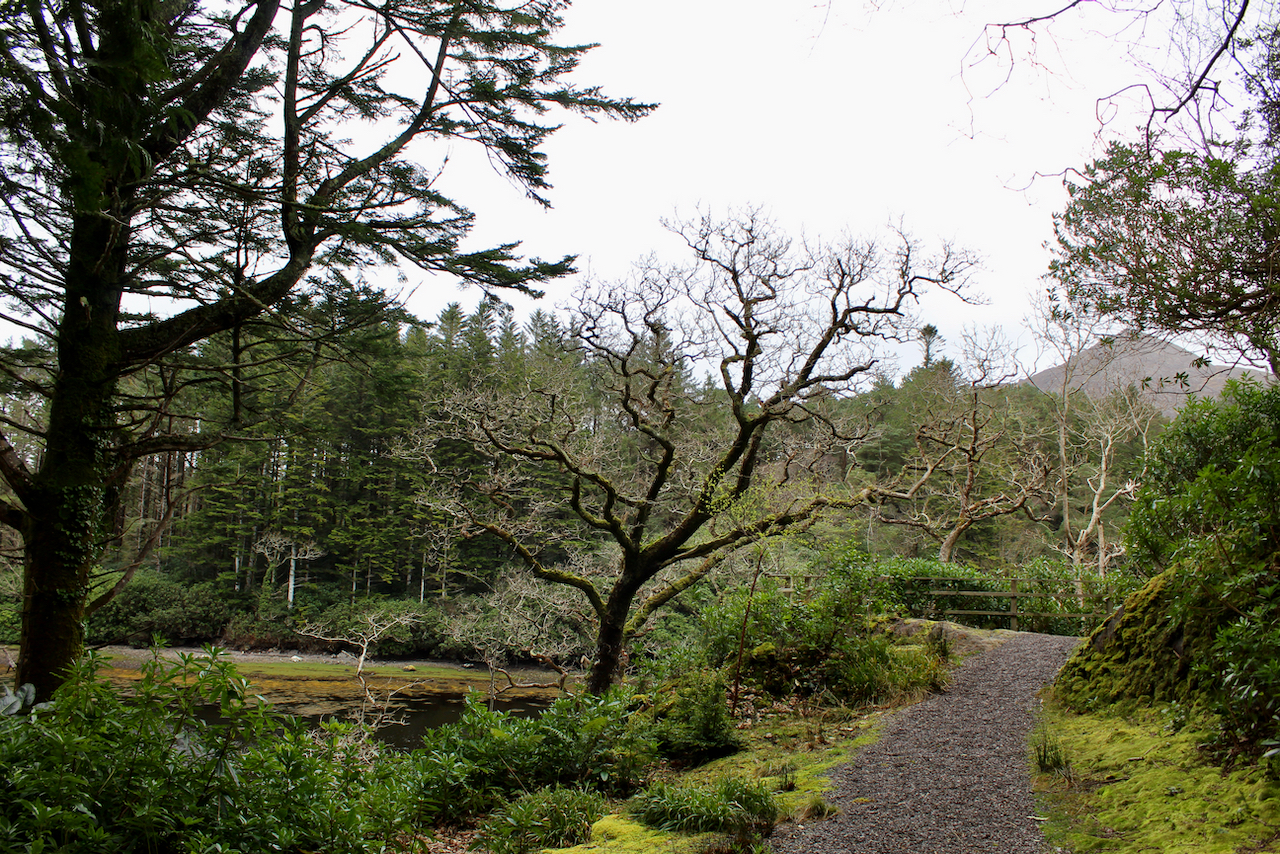
The house at Derreen is not on the Section 482 scheme, just the surrounding gardens. Derreen takes its name from the woods around it, as it means “little oak wood” in Gaelic. The gardens cover an area of 60 acres and include nearly eight miles of paths, which wind through mature and varied woodland, a garden laid out 150 years ago with subtropical plants from around the world and views of the sea and mountains.

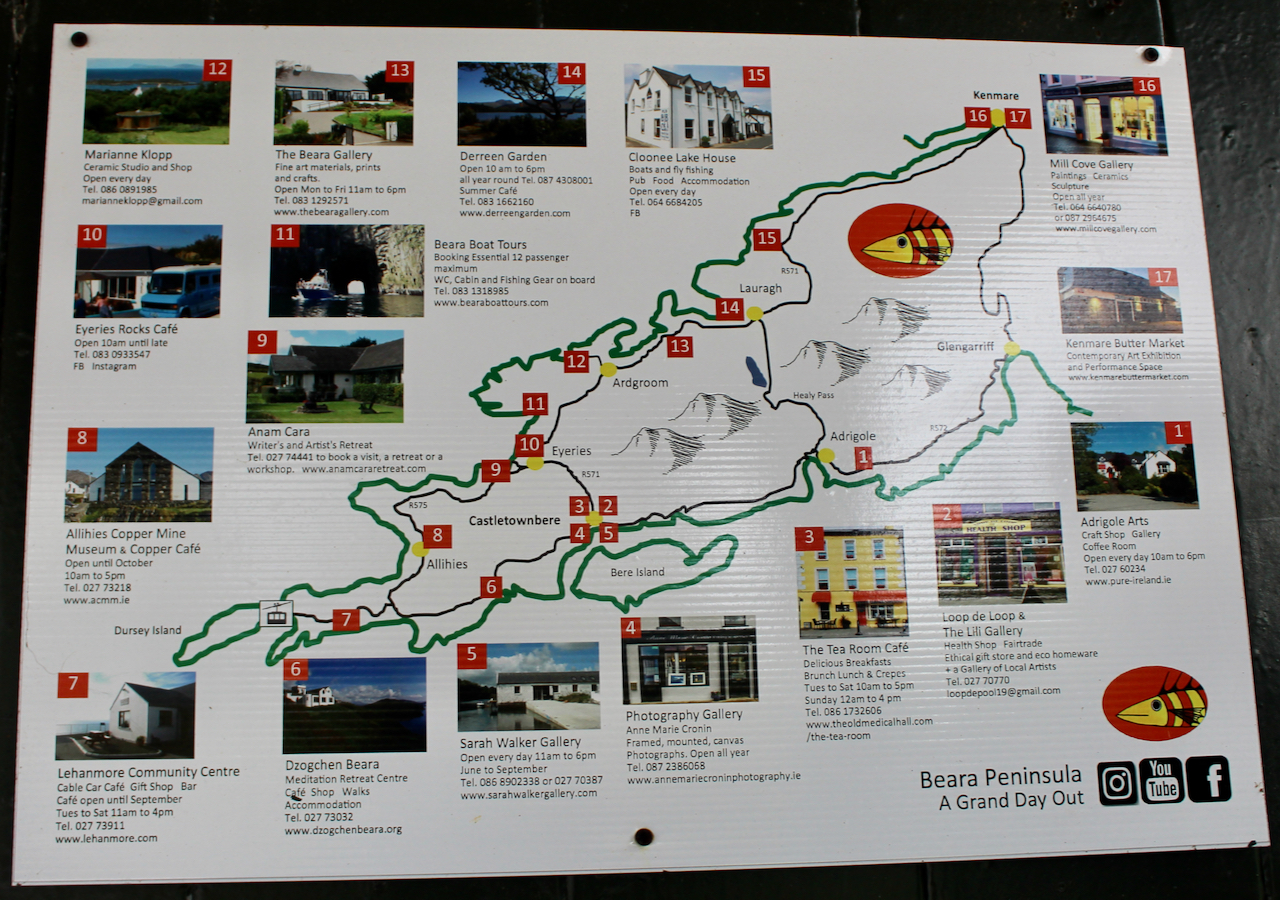
Derreen Gardens is number 14 on this map of the Beara Peninsula.
Derreen Gardens, March 2023. Photograph © Jennifer Winder-Baggot, www.irishhistorichouses.com
Derreen Gardens, 29th March 2023. Photograph © Jennifer Winder-Baggot, www.irishhistorichouses.com

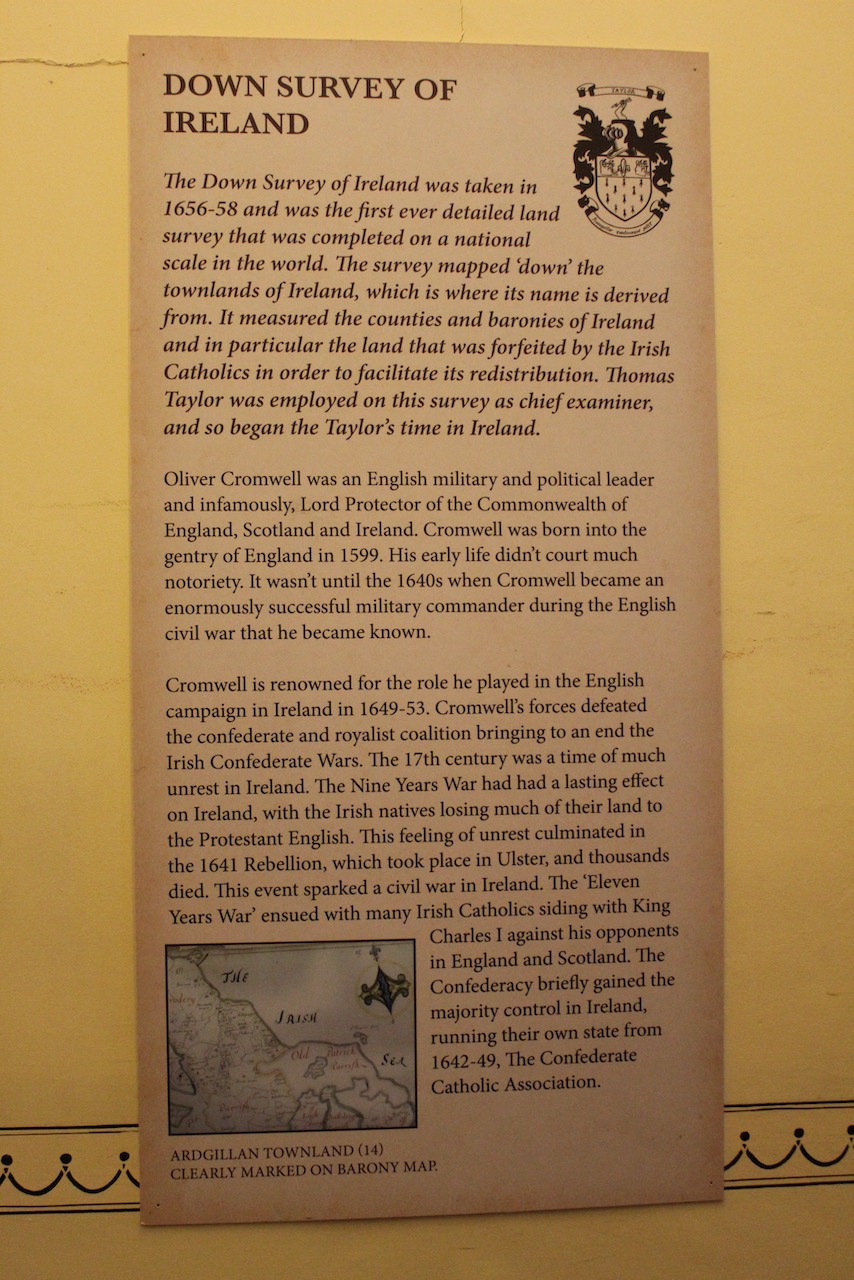
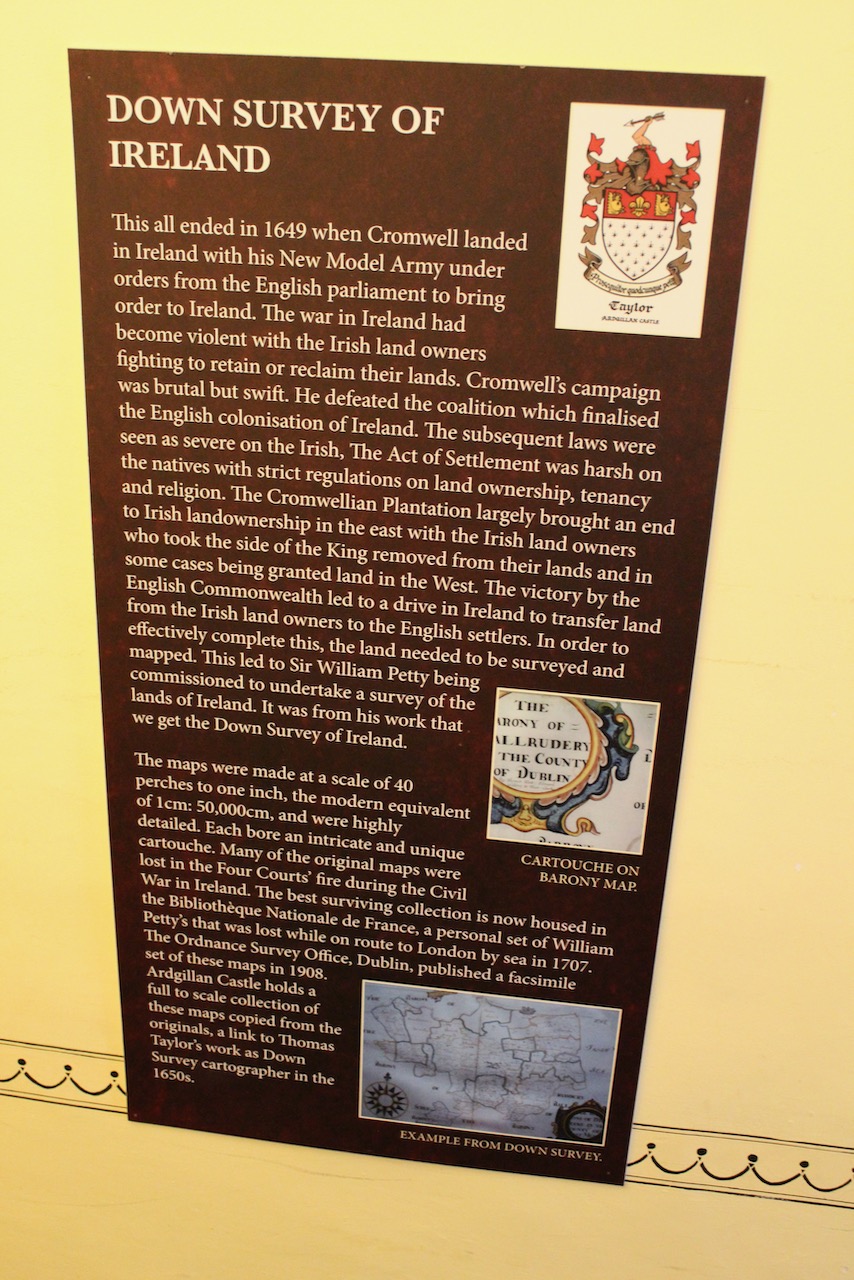
In 1657 the area was granted to William Petty (1623-1687), physician of Oliver Cromwell. In 1664, Petty undertook the survey of Ireland and by 1666 he had completed the measurement of 2,008,000 acres of forfeited land, for which, by contract, he was to receive one penny per acre. He also acquired an estate of £6,000 a year. [1] He received the baronies of Iveragh, Glanarought and Dunkerron in County Kerry as well as land in Counties Meath, Cork, Limerick and Offaly. These Kerry lands contained resources such as pearls in the river, silver in the mountains, and forest. He experimented, unsuccessfully, with iron making. There was already an iron-work in nearby Kenmare.

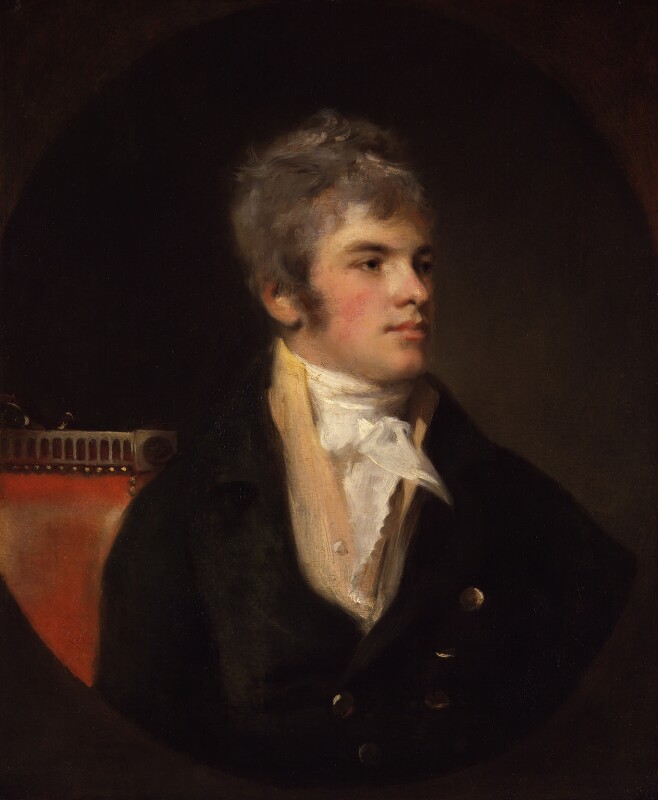
William Petty (1623-1687) by Isaac Fuller circa 1651, National Portrait Gallery of London ref. 2924.
Down Survey of Ireland information board in Ardgillan Castle, Dublin.

He married Elizabeth Waller (1636-1708), who had been previously married to Michael Fenton of Mitchellstown in County Cork.

The Dictionary of Irish Biography tells us that from 1659 Petty divided his time between London and Dublin and that, despite some London properties, Ireland supplied the bulk of his wealth.

In 1684 the Dublin Philosophical Society was founded and Petty was elected as its first president.

William Petty died of gangrene in his foot in 1687. He had refused a peerage, but after he died, Elizabeth née Waller was created Baroness Shelburne in her own right by King James II, in 1688. On the same day her eldest son by William Petty, Charles Petty (1672-1696), became Baron Shelburne.

Derreen Gardens, March 2023. Photograph © Jennifer Winder-Baggot, www.irishhistorichouses.com

Charles Baron Shelburne married Mary Williams (d.1710) but they had no children. After he died, she married Lt.-Gen. Henry Conyngham (d. 1705/6) of Mountcharles County Donegal and of Slane Castle in County Meath (another Section 482 property and the first one we visited when I undertook this project! See my entry).

William Petty and Elizabeth née Waller’s second son, Henry (1675-1751) was created Viscount Dunkerrin and Earl of Shelburne in the Irish Peerage. He married Arabella Boyle (d. 1740) daughter of Charles Boyle, 2nd Baron Clifford of Lanesborough, County York in England and 3rd Viscount Dungarvan, County Waterford. They had no sons but a daughter, Anne Fitzmaurice Petty. She married Francis Bernard (1698-1793) of Castle Bernard, County Cork (now an impressive ruin).

Castle Bernard ruins in County Cork, photograph courtesy of National Inventory of Architectural Heritage.

Since Henry Petty 1st Earl of Shelburne had a daughter but no sons his estates passed to his nephew John Fitzmaurice who changed his surname to Petty. The earldom of Shelburne was revived for John in 1753.

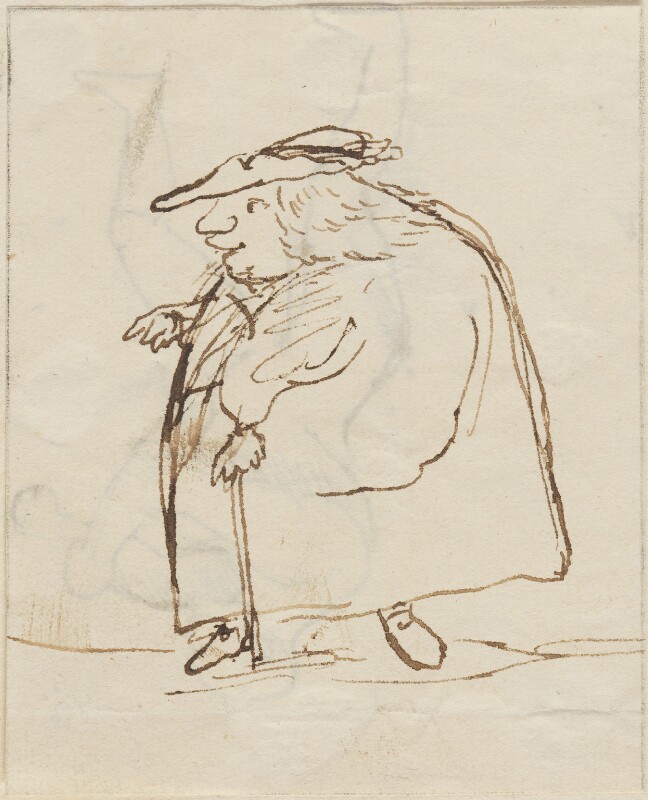
A sketch of Henry Petty (1675-1751) Earl of Shelburne by George Townshend, 4th Viscount and 1st Marquess Townshend National Portrait Gallery of London ref. 4855(15)

William Petty and Elizabeth née Waller’s daughter Anne (1671-1737) married Thomas Fitzmaurice (1668-1741), 21st Baron of Kerry, who became 1st Earl of Kerry. He was MP for County Kerry and a Privy Counsellor in Ireland. At the same time as being created Earl of Kerry in January 1722/23, he was created 1st Viscount Clanmaurice.

His grandson, the Marquess of Lansdowne, wrote of him, “my grandfather did not want the manners of the country nor the habits of his family to make him a tyrant. He was so by nature. He was the most severe character which can be imagined, obstinate and inflexible; he had not much understanding, but strong nerves and great perseverance, and no education, except what he had in the army, where he served in his youth, with a good degree of reputation for personal bravery and activity. He was a handsome man and, luckily for me and mine, married a very ugly woman, who brought into his family whatever degree of sense may have appeared in it, or whatever wealth is likely to remain in it, the daughter of Sir William Petty… With all this he had high principles of honour and a strict love of justice, which made him govern the country better than he did his own family… His children did not love him, but dreaded him; his servants the same.” [2]

By Derreen House, March 2023. Photograph © Jennifer Winder-Baggot, www.irishhistorichouses.com

The Landed Estates Database tells us the 1st Earl of Kerry had two younger brothers, William of Gallane, County Kerry, ancestor of the Fitzmaurices of Springfield Castle, County Limerick and John who had an only child Anne who married her cousin of Springfield Castle (you can rent the castle, see my Places to Visit and Stay in County Limerick entry. [3]

The property passed through the family of the Marquesses of Lansdowne. Timothy William Ferres tells us that the Marquesses of Lansdowne owned the greatest amount of land in Kerry, more than any other landowners in Kerry, with 94,983 acres. [see 1]

Derreen Gardens, March 2023. Photograph © Jennifer Winder-Baggot, www.irishhistorichouses.com

The 1st Earl’s daughter Elizabeth Anne (d. 1757) married Maurice Crosbie, 1st Baron Branden (circa 1689-1762). His daughter Arabella married Colonel Arthur Denny (d. 1742), MP and High Sheriff of County Kerry. Another daughter, Charlotte (d. 1774), married John Conway Colthurst (1722-1775) 1st Bt. of Ardrum, County Cork.

The 1st Earl’s eldest son, William Fitzmaurice (1694-1747) held the offices of Lord-Lieutenant of County Kerry and Custos Rotulorum of County Kerry, Governor for the county and Privy Counsellor. He married Elizabeth Moss but they had no children and she died and he subsequently married Gertrude Lambart in 1738, daughter of Richard Lambart (d. 1741) 4th Earl of County Cavan and 4th Viscount Kilcoursie, in the King’s County.

Their daughter Anna Maria FitzMaurice (d. 1808) married Maurice Fitzgerald (d. 1780) 16th Knight of Kerry.

William and Gertrude’s son Francis Thomas FitzMaurice became 3rd Earl of Kerry after his father died in 1747. Horace Walpole described him as “a simple young Irish Peer, who had married an elderly Irishwoman that had been divorced on his account, and had wasted a vast estate in the idlest ostentation.” [see 2] This elderly Irishwoman was Anastasia Daly (d. 1799 and buried in Westminster Abbey!), she was daughter of Peter Daly and had been married to Charles Daly of County Galway and she obtained a divorce from him in 1768 by an Act of Parliament.

Derreen Gardens, March 2023. Photograph © Jennifer Winder-Baggot, www.irishhistorichouses.com

The Marquess of Lansdowne wrote that “the present Lord Kerry, after being educated under the direction of the Chancellor of Ireland, and being left a good deal to himself, fell in love with a married lady twenty years older than himself, the daughter of an eminent Roman Catholic lawyer, and, obtaining a divorce, married her—an extraordinary vain woman. Having their way to fight up to get into good company, and having no posterity, they sold every acre of land which had been in our family since Henry the Second’s time.” [see 1]

The Landed Estates Database tells us:

Francis, the 3rd Earl of Kerry was mostly an absentee landlord, his estates being administered by agents including Christopher Julian. Dickson writes that he sold much of his Kerry estates to Richard Hare in the 1780s. With his death in 1818 the connection between the Earls of Kerry and Lixnaw came to an end. The title was inherited by the Marquis of Lansdowne of Derreen, county Kerry who owned 1,526 acres in county Limerick in the 1870s.”

The 3rd Earl of Kerry and his wife had no son. The 1st Earl of Kerry and his wife Anne née Petty had a second son, John (1706-1761). It was this son who is mentioned above, who became the heir of his uncle Henry Petty 1st Earl of Shelburne, and he changed his surname to Petty in 1751. That year, he was created 1st Baron Dunkeron and 1st Viscount FitzMaurice. He held the office of Sheriff of County Kerry in 1732 and was a Whig MP for County Kerry from 1743-1751. He was created 1st Earl of Shelburne, County Wexford in 1753. He was Governor of County Kerry and a Privy Counsellor. Between 1754 and 1760 he was MP in England for Chipping Wycombe, County Buckinghamshire and in 1760 he was created was created 1st Lord Wycombe, Baron of Chipping Wycombe [Great Britain].

Derreen Gardens, March 2023. Photograph © Jennifer Winder-Baggot, www.irishhistorichouses.com
Derreen Gardens, 29th March 2023. Photograph © Jennifer Winder-Baggot, www.irishhistorichouses.com

In 1734 he married his first cousin Mary Fitzmaurice, granddaughter of William Fitzmaurice, 18th Baron of Kerry and Lixnaw, daughter of William of Gullane, a brother of the 1st Earl of Kerry.

John Petty and his wife Mary née Fitzmaurice had two sons. The eldest, William (1737-1805), was born under his father’s original surname of Fitzmaurice but changed his name to Petty when his father changed his name. He rose to the position of Prime Minister of England.

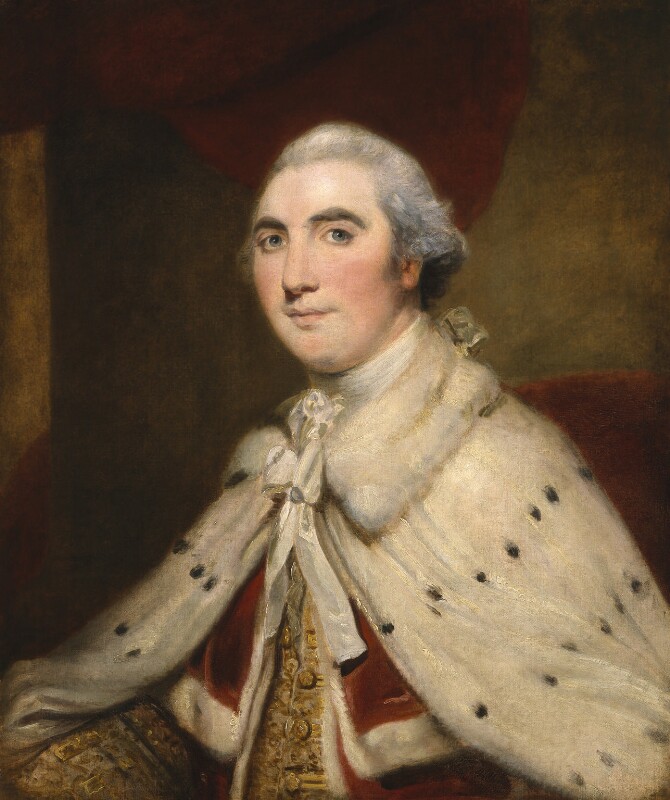
William Petty (1737-1805) 1st Marquess of Lansdowne, Lord Shelburne, Prime Minister, after Sir Joshua Reynolds based on a work of 1766, National Portrait Gallery of London ref. 43.

William was called Viscount FitzMaurice between 1753 and 1761. He served in the British army and then had an illustrious political career. He held the office of First Lord of Trade April-December 1763 and like his forebears, served as a Privy Counsellor. He held the office of “Secretary of State for the South” between July 1766 and October 1768, and was Foreign Secretary March-July 1782 and was made Knight, Order of the Garter.

He held the office of Prime Minister and First Lord of the Treasury between 13 July 1782 and 5 April 1783. He was nominated Prime Minister in 1782 after the death of the Marquess of Rockingham, under whom he had been Secretary of State for Foreign Affairs. He was created 1st Marquess of Lansdowne, County Somerset [Great Britain] on 6 December 1784.

The Shelbourne hotel in Dubiln is named after him.

First William Petty married Sophia Carteret, daughter of John Carteret, 2nd Earl Granville of England. Their son John Henry Petty (1765-1809), succeeded as 2nd Marquess of Lansdowne. He married but had no children.

John Henry Petty (1765-1809) 2nd Marquess of Lansdowne National Portrait Gallery of London ref. D37171.

After his wife Sophia died in 1771, William married Louisa Fitzpatrick (1755-1789) in 1779, daughter of John Fitzpatrick, 1st Earl of Upper Ossory. Their son Henry (1778-1863) succeeded his brother as 3rd Marquess of Lansdowne in 1809.

Henry Petty-Fitzmaurice (1780-1863) 3rd Marquess of Lansdowne, Trustee of the National Portrait Gallery, by Henry Walton circa 1805 courtesy of National Portrait Gallery of London, NPG 178

In 1808 Henry (afterwards 3rd Marquess Lansdowne) married Louisa Emma Fox-Strangways (1785-1851), daughter of Henry Thomas Fox-Strangways, 2nd Earl of Ilchester. She held the office of Lady of the Bedchamber for Queen Victoria between August 1837 and September 1838.

In 1818 Henry changed his surname from Petty to Petty-Fitzmaurice, when he succeeded as 4th Earl of Kerry, after the death of Francis Thomas Fitzmaurice, 3rd Earl of Kerry (the one who had married “elderly” Anastasia). Henry followed in the footsteps of his forebears as MP and Privy Counsellor, and he also served as a Cabinet Minister and was appointed Knight, Order of the Garter in 1836.

Henry and Louisa had several children. Their daughter Louisa (d. 1906) married James Kenneth Howard, son of the 16th Earl of Suffolk. Henry 3rd Marquess’s oldest son, William Thomas Petty-FitzMaurice, who was called Earl of Kerry from 1818, predeceased him. William Thomas had married Augusta Lavinia Priscilla Ponsonby, daughter of John William Ponsonby, 4th Earl of Bessborough, and they had a daughter Mary Caroline Louisa Thomas Petty-FitzMaurice who married the son of the 2nd Earl of Powis. After the young Earl of Kerry died in 1836 at the age of just 25, his widow remarried, this time to Charles Alexander Gore (1811-1897).

It was therefore the next son of Henry and Louisa, Henry (1816-1866) who became the 4th Marquess of Lansdowne. The youngest son, Bentinck Yelverton Petty-FitzMaurice, died in 1892.

Henry Thomas Petty-Fitzmaurice (1816-1866) 4th Marquess of Lansdowne, Politician and railway company chairman, photograph by by John & Charles Watkins circa early 1860s, courtesy of National Portrait Gallery of London NPG Ax16422.
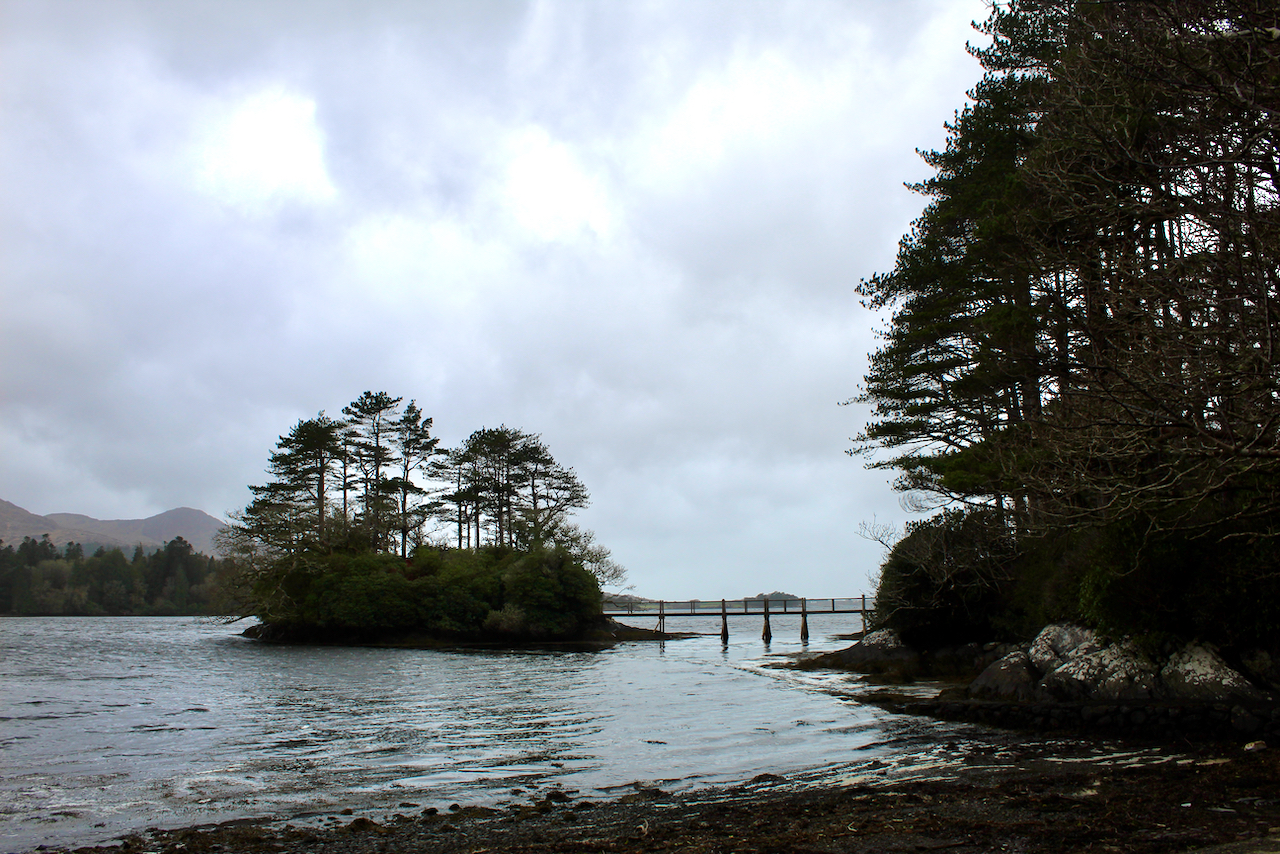
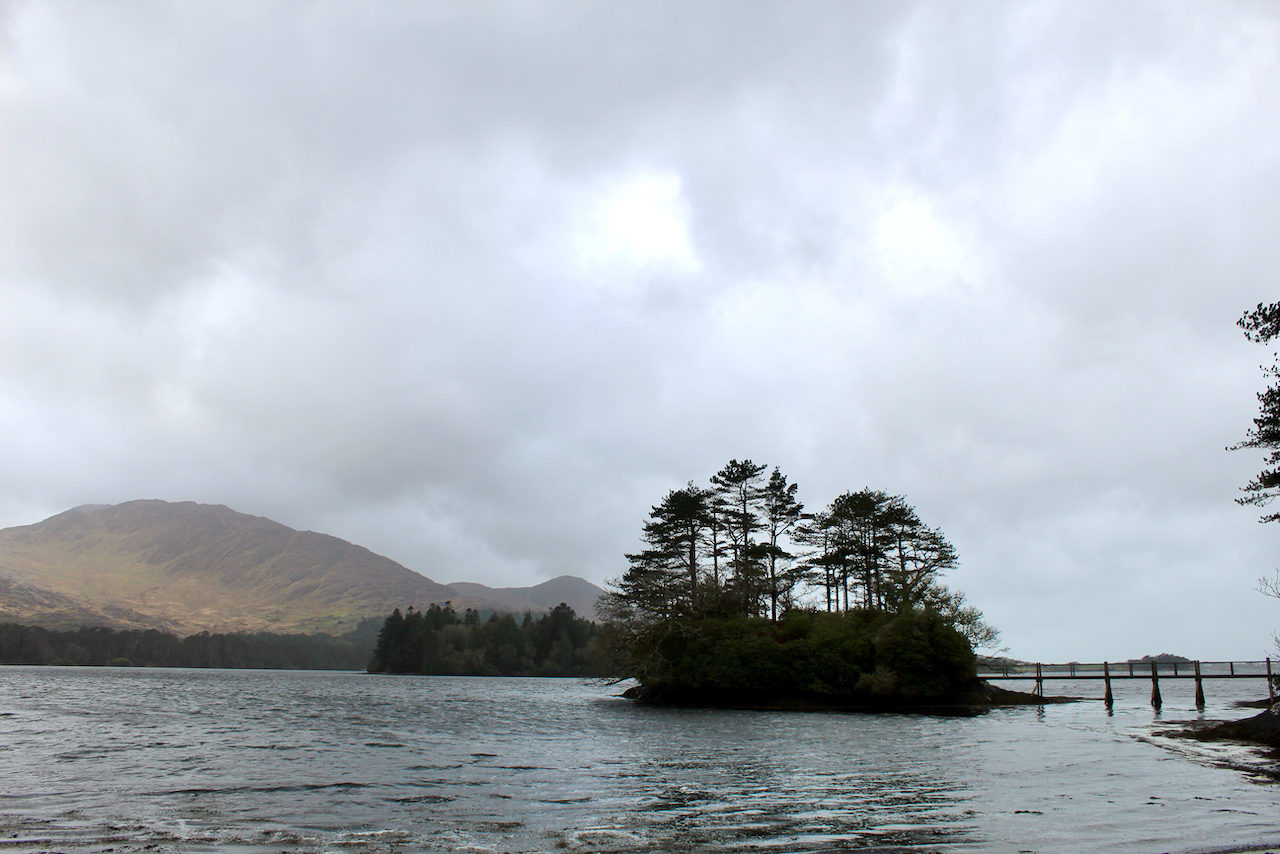
There’s a bridge across to a little island. Photograph © Jennifer Winder-Baggot, www.irishhistorichouses.com
Derreen Gardens, 29th March 2023. Photograph © Jennifer Winder-Baggot, www.irishhistorichouses.com

Henry (1816-1866) was styled as Earl of Shelburne from August 1836 until January 1863 when his father died. He was a Liberal MP for Calne in England between 1837 and 1856, and held the office of Under-Secretary for Foreign Affairs between 1856 and 1858. He was appointed Knight, Order of the Garter in 1864.

Derreen Gardens, 29th March 2023. Photograph © Jennifer Winder-Baggot, www.irishhistorichouses.com

The Landed Estates database tells us that before the Petty-Fitzmaurices built the house, at the time of Griffith’s Valuation the property was leased from the Lansdowne estate by Peter McSweeney. Griffith’s Valuation was the first full-scale valuation of property in Ireland and details of property with valuations were published between 1847 and 1864.

Derreen Gardens, 29th March 2023. Photograph © Jennifer Winder-Baggot, www.irishhistorichouses.com

The Landed Estates database adds that Derreen House was originally built by a branch of the O’Sullivans, from whom the lease passed to Peter McSweeney, who was married to a member of the O’Sullivan family.

Mark Bence-Jones tells us in his A Guide to Irish Country Houses (1988) that Henry Thomas Petty-Fitzmaurice 4th Marquess enlarged the house at Derreen between 1863 and 1866. [4] The National Inventory tells us that the version of the house built c. 1865 was designed by James Franklin Fuller. [5]

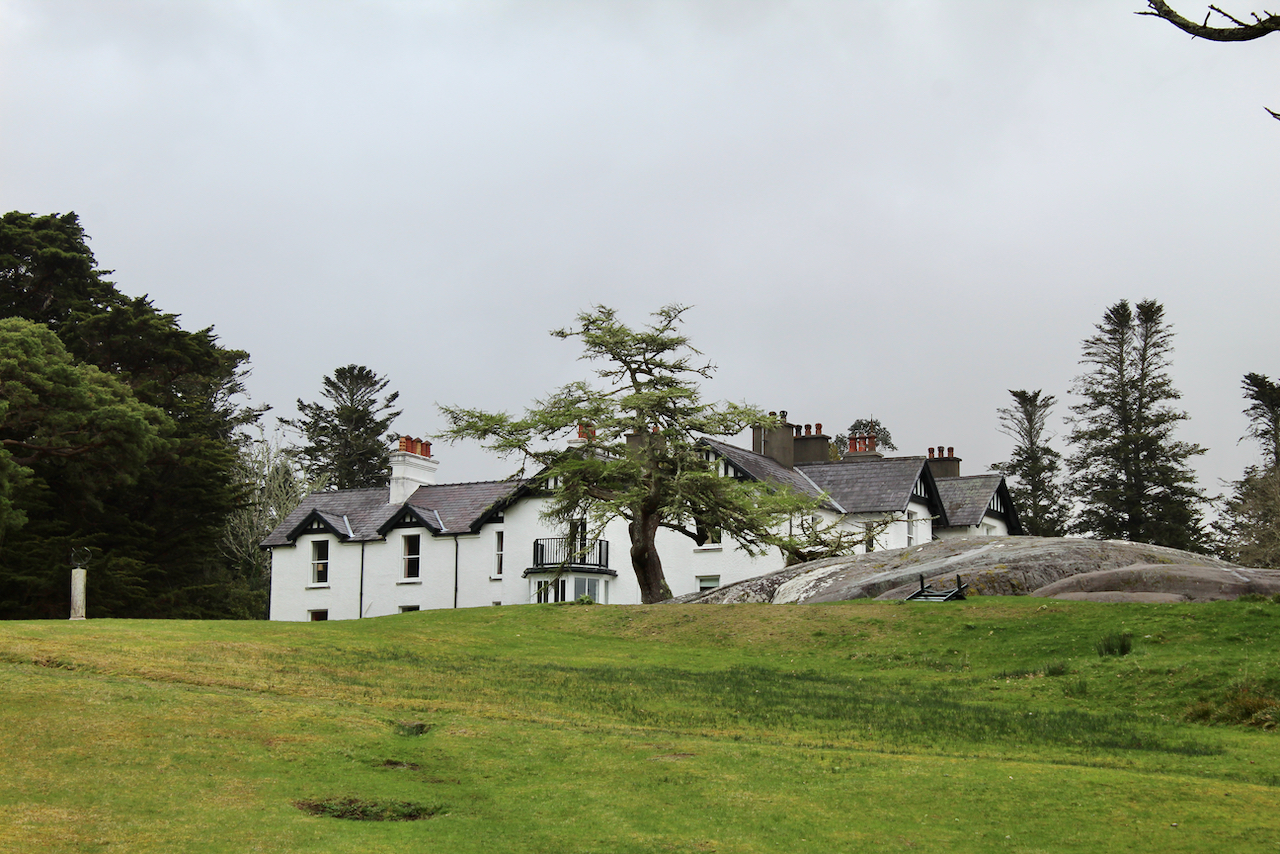
The house at Derreen Gardens. Only the gardens are Section 482 so the house is not open to the public. Photograph © Jennifer Winder-Baggot, www.irishhistorichouses.com

Henry the 4th Marquess married Georgina Herbert (1817-1841), daughter of General George Augustus Herbert, 11th Earl of Pembroke in 1840, but she died the following year. He then married the grandly named Emily Jane Mercer-Elphinstone-de Flahault (1819-1895), daughter of French army genearl Auguste Charles Joseph de Flahault, Comte de Flahault de la Billardrie and of Margaret Mercer Elphinstone, 2nd Baroness Keith and 7th Lady Nairne (a Scottish barony). They married in 1843 at the British Embassy in Vienna. Emily Jane succeeded her mother as 8th Lady Nairne in 1874.

The view from Derreen Gardens, March 2023. Photograph © Jennifer Winder-Baggot, www.irishhistorichouses.com
Derreen Gardens, 29th March 2023. Photograph © Jennifer Winder-Baggot, www.irishhistorichouses.com

Henry and Emily Jane had several children. Their daughter Emily Louisa Anne married Everard Charles Digby (1852-1915), son of 9th Baron Digby of Dorset.

Henry’s son Henry Charles Keith Petty-Fitzmaurice (1845-1927) succeeded as the 5th Marquess when his father died in 1866. A younger son, Edmond George Petty Petty-FitzMaurice, was created 1st (and last) Baron FitzMaurice of Leigh, Co. Wiltshire, England in 1906 and also played a role in Foreign Affairs of state.

Henry Charles Keith Petty-Fitzmaurice (1845-1927) married Maud Evelyn Hamilton (1850-1932), daughter of James Hamilton (1811-1885), 1st Duke of Abercorn and Louisa Jane née Russell. Henry Charles Keither was styled as Earl Clanmaurice between 1845 and 1863 and Earl of Kerry between 1863 and 1866, and in 1866 he succeeded to the many other titles passed down through his family.

Henry Charles Keith Petty-Fitzmaurice.

The 5th Marquess held the office of Lord of the Treasury between 1868 and 1872 and Under-Secretary for War between 1872 and 1874. He was Under-Secretary for India between April and July 1880, Governor-General of Canada between 1883 and 1888, and Viceroy of India between 1888 and 1893. He held the office of Secretary of State for War between 1895 and 1900. He succeeded as the 9th Lord Nairne in 1895 when his mother died. He held the office of Lord-Lieutenant of Wiltshire between 1896 and 1920, and Secretary of State for Foreign Affairs between 1900 and 1905.

The 5th Marquess’s wife held the office of Lady of the Bedchamber to Queen Alexandria between 1905 and 1909 and “Extra” Lady of the Bedchamber between 1910 and 1925.

Derreen Gardens, March 2023. Photograph © Jennifer Winder-Baggot, www.irishhistorichouses.com

The Marquesses of Lansdowne made Derreen their summer residence. The garden was originally planted by the 5th Marquess. The website tells us that in 1870 Lord Lansdowne began an ambitious project to transform the countryside around the house from bare rock and scrub oak into a luxurious woodland garden. He planted 400 acres of woodland to shelter a collection of shrubs and specimen trees which were then being brought back from plant hunting expeditions in the Himalayas and elsewhere.

Robert O’Byrne quotes from Extracts from Glanerought and the Petty-FitzMaurices by the sixth Marquis of Lansdowne (1937):

The year 1903 was made memorable at Derreen by a visit from King Edward VII and Queen Alexandra. Their Majesties made in that summer a tour of Ireland, partly in the Royal Yacht and partly overland. The original intention had been that they should come to Derreen by water from County Clare, but weather conditions made this inadvisable, and the journey was eventually made by motor-car. They arrived on the afternoon of July 31. A Union Jack had been floated on the top of Knockatee and a triumphal arch was erected outside the Derryconnery Gate, where an address of welcome was presented by the assembled tenantry. On the lawn in front of the house the children of Lauragh school had been marshalled and they presented a bouquet to the Queen. Then there was a walk around the gardens where two commemorative bamboos were duly planted in the glade now called “the King’s Oozy”. After tea in the new dining room, which had been added to the house that year, the party went down to the pier, where Queen Alexandra was initiated into the mysteries of prawn fishing. The ground had been lavishly baited in advance and the fishing was such a success, that in spite of the obvious impatience of His Majesty, she could scarcely be persuaded to relinquish her net when the hour came for departure.’

Robert O’Byrne tells us that during the 5th Marquess’s absence in India (1888-1893), Derreen was let to the Duke of Leeds. [6]

The house at Derreen was burnt and plundered in 1922 and rebuilt by 5th Marquess in a similar style 1924; it underwent further reconstruction, having been attacked by dry-rot, 1925-26.

The view from Derreen Gardens. Photograph © Jennifer Winder-Baggot, www.irishhistorichouses.com
Derreen Gardens, 29th March 2023. Photograph © Jennifer Winder-Baggot, www.irishhistorichouses.com

The 5th Marquess and his wife Maud Evelyn had several children. Their daughter Evelyn Emily Mary Petty-FitzMaurice (1870-1960) married Victor Christian William Cavendish (1868-1938) 9th Duke of Devonshire.

Their younger daughter Beatrix Frances Petty-FitzMaurice (1877-1953) married first Henry de la Poer Beresford (1875-1911) 6th Marquess of Waterford of Curraghmore (see my entry about Curraghmore). He died at the young age of 36, and after having six children with her first husband, Beatrix married Osbourne de Vere Beauclerk, 12th Duke of Saint Albans.

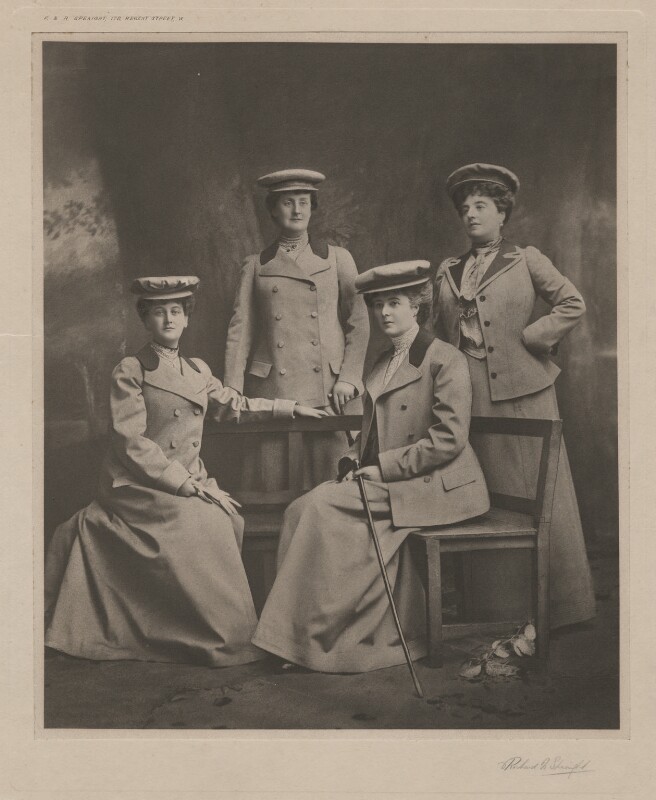
Beatrix Frances Duchess of St Albans [(1877-1953), Daughter of 5th Marquess of Lansdowne; former wife of 6th Marquess of Waterford, and later wife of 12th Duke of St Albans], Maud Evelyn Petty-Fitzmaurice, Marchioness of Lansdowne [mother of Beatrix, née Hamilton], Theresa Susey Helen Vane-Tempest-Stewart, Marchioness of Londonderry and Evelyn Emily Mary Cavendish, Duchess of Devonshire [(1870-1960), sister of Beatrix] by Frederick & Richard Speaight, National Portrait Gallery of London ref. x76669

Their younger son, Charles George Francis (1874-1914) added Mercer Nairne to his surname in 1914 to become the mouthful “Mercer Nairne Petty-FitzMaurice.” His wife’s surname was equally impressive, as he married Violet Mary Elliot-Murray-Kynynmound, daughter of the Earl of Minto, County Roxborough in England.

The elder son, Henry William Edmund Petty-Fitzmaurice (1872-1936), became 6th Marquess of Lansdowne. He married Elizabeth Caroline Hope, whose mother was Constance Christina Leslie, daughter of John Leslie, 1st Baronet of Glaslough, County Monaghan, of Castle Leslie, another Section 482 property (see my entry).

Mark Bence-Jones describes the property in his A Guide to Irish Country Houses (1988):

Derreen is famous for its garden, which extends over the greater part of the peninsula on which the house is built. It was originally planted by 5th Marquess; but the collection of trees and shrubs has been constantly added to by his successors. In the moist and mild climate, tender and exotic species flourish; while the older trees have grown to an incredible height and girth. The garden is particularly noted for its rhododendrons and tree ferns. As a foil to the luxuriant plantings, there are great natural outcrops of rock. After WWII, Derreen passed to Lady Nairne, now Viscountess Mersey, sister of 7th Marquess, who was killed in action 1944. It is now the property of her son, Honourable David Bigham; the garden is open to the public.” [see 4]

The 6th Marquess’s sons all died young, tragically, so the estate passed to their sister, Katherine Evelyn Constance Petty-FitzMaurice (1912-1995), who succeeded as the 12th Lady Nairne in 1944. She married Edward Clive Bigham, later 3rd Viscount Mersey, in 1933. They have several children.

There is a chapter about the family in Jane O’Hea O’Keeffe’s Voices from the Great Houses: Cork and Kerry (Mercier Press, Cork, 2013).

Derreen Gardens, 29th March 2023. Photograph © Jennifer Winder-Baggot, www.irishhistorichouses.com

[1] http://lordbelmontinnorthernireland.blogspot.com/2013/07/derreen-house.html

[2] G.E. Cokayne; with Vicary Gibbs, H.A. Doubleday, Geoffrey H. White, Duncan Warrand and Lord Howard de Walden, editors, The Complete Peerage of England, Scotland, Ireland, Great Britain and the United Kingdom, Extant, Extinct or Dormant, new ed., 13 volumes in 14 (1910-1959; reprint in 6 volumes, Gloucester, U.K.: Alan Sutton Publishing, 2000), volume VII, page 213.

[3] https://www.springfieldcastle.com 

http://landedestates.nuigalway.ie/LandedEstates/jsp/property-list.jsp?letter=D

[4] Bence-Jones, Mark. A Guide to Irish Country Houses (originally published as Burke’s Guide to Country Houses volume 1 Ireland by Burke’s Peerage Ltd. 1978); Revised edition 1988, Constable and Company Ltd, London.

[5] https://www.buildingsofireland.ie/buildings-search/building/21310805/derreen-house-derreen-wood-derreen-ma-by-co-kerry

[6] https://theirishaesthete.com/2018/06/25/luxuriance-of-growth/

Text © Jennifer Winder-Baggot, www.irishhistorichouses.com