Templemore Abbey, County Tipperary entrance and garden fronts c. 1880, photograph: collection Sir John Carden, Vanishing Country Houses of Ireland by The Knight of Glin, David J. Griffin and Nicholas K. Robinson, published by The Irish Architectural Archive and The Irish Georgian Society, 1988.
Mark Bence-Jones. A Guide to Irish Country Houses (originally published as Burke’s Guide to Country Houses volume 1 Ireland by Burke’s Peerage Ltd. 1978); Revised edition 1988 Constable and Company Ltd, London.
p. 271. “(Carden, Bt, of Templemore/PB) Templemore Castle, the original seat of the Carden family, was detroyed by fire towards mid-C18; after which a handsome nine bay house was built elsewhere on the demesne. This house was demolished early C19 and a new house built on a more elevated site in demesne adjoining the original park to the west; it was originally known as Templemore Priory, but afterwards called Templemore Abbey. In 1819, this house was no more than a single-stoey Gothic cottage with a very tall round tower and a crocketed square tower but it was subsequently greatly enlarged by William Vitruvius Morrison, in the Tudor-Gothic style….it was burnt 1922.”
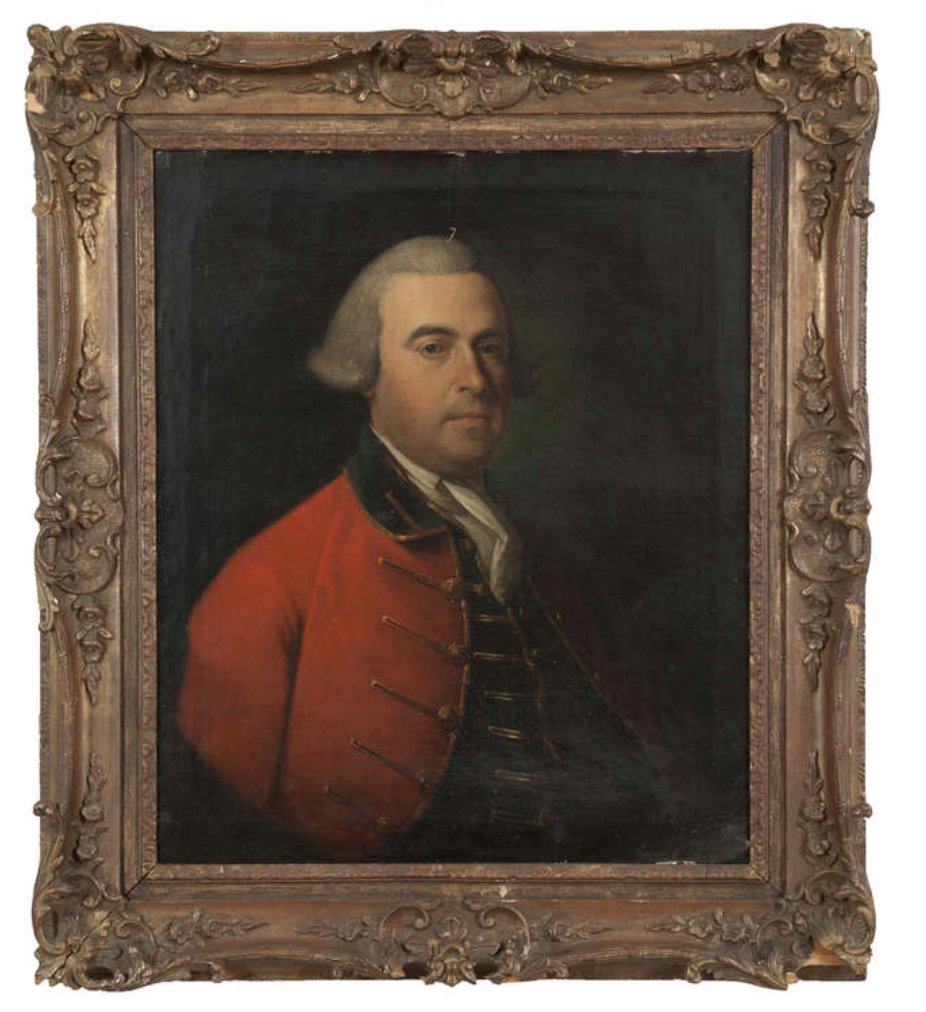
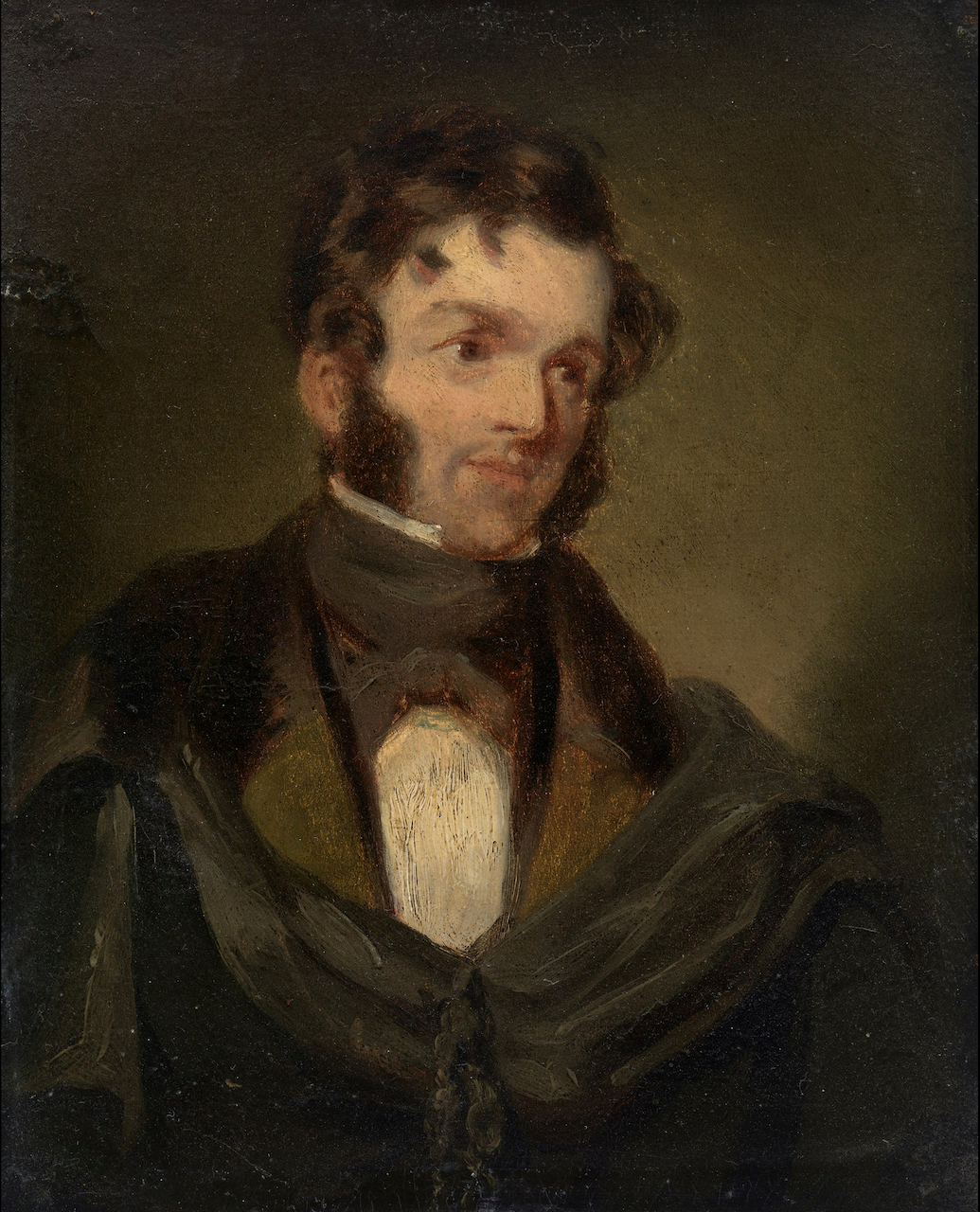
Templemore Abbey, County Tipperary, dining room c. 1880 photograph: collection Sir John Carden, Vanishing Country Houses of Ireland by The Knight of Glin, David J. Griffin and Nicholas K. Robinson, published by The Irish Architectural Archive and The Irish Georgian Society, 1988.John Craven Carden, 1st Baronet by Robert Hunter courtesy of Adam’s auction 13 Oct 2015. This portrait of John Craven Carden is in the uniform of the Templemore Light Dragoons, a volunteer regiment raised in response to the withdrawal of regular troops required for the American War but which rapidly acquired political leverage. Carden had inherited large estates in Tipperary acquired in the Cromwellian settlement of the 17th Century. Although without parliamentry influence, Carden represented landed interests which the Castle administration were keen to control. Bribes were measured and Carden was made a baronet in 1787. He proved to be a sound man in the 1798 rebellion and by fortifying the Market House in Templemore denied the town to the rebels. He also leased the land for a barracks (now the Garda Training College) and donated the site of the Catholic Church in 1810.
Listed in Vanishing Country Houses of Ireland by The Knight of Glin, David J. Griffin and Nicholas K. Robinson, published by The Irish Architectural Archive and The Irish Georgian Society, 1988.
Constructed on the site of an earlier house, Templemore Abbey was a vast neo-Gothic mansion designed by one of the masters of the genre in Ireland, William Vitruvius Morrison. The building contains elements of much of Morrison’s best work in the style, Elizabethan gables, battlements and turrets.
Sadly the building was torched during the War of Independence after it had been used by British forces as a base for B Company of the Auxiliaries. After they left the building in May 1921, it was destroyed in an arson attack.
THE CARDEN BARONETS OWNED 6,680 ACRES OF LAND IN COUNTY TIPPERARY
This family, which is of antiquity, removed from Lincolnshire into Ireland about the middle of the 17th century.
The name is local, being derived from the township of Cawarden, or Carden, which lies about eleven miles south-south-east from Chester, which manor was the original inheritance of the family; but the elder branch terminating in co-heiresses, the manor of Over-Carden was carried by marriage into the family of Felton, about the end of the 16th century.
A branch of the family had been settled in Kent, where it appears that it had been for several generations possessed of the manor of Hodford; but that estate was alienated during the reign of ELIZABETH I, by John Carden, to the family of Cobbe, when there is reason to believe that the Cardens of Kent removed into Lincolnshire, and that from them diverged the Irish branch, springing from
JOHN CARDEN (c1623-1728), who settled at Templemore, County Tipperary, about 1650, and married Priscilla, daughter of John Kent, of County Kilkenny, by whom he had issue,
Jonathan, ancestor of CARDEN OF BARNANE; JOHN, of whom we treat; William; Margery; Anne; Abigail; Margaret; two other daughters.
Mr Carden died at the extraordinary age of 105. His second son,
JOHN CARDEN, of Templemore, wedded, in 1717, Rebecca, daughter of Humphrey Minchin, of Ballynakill, and had issue,
JOHN, his heir; Minchin; Paul.
The eldest son,
JOHN CARDEN (1720-74), of Templemore, espoused, in 1747, Elizabeth, daughter and heir of the Rev Robert Craven, and had (with other issue),
JOHN CRAVEN, his heir; Christiana.
The eldest son,
JOHN CRAVEN CARDEN (c1758-1820), of Templemore, married firstly, in 1776, Mary, daughter of Arthur, 1st Viscount Harberton, and had issue,
John (1777-1811); ARTHUR, his heir; another son.
He wedded secondly, in 1781, Sarah, daughter of John Moore, and had issue,
Annesley; Gertrude; another daughter.
Mr Carden espoused thirdly, in 1788, Mary Frances, daughter of Henry Westenra, and sister of Warner William, 2nd Baron Rossmore, and had further issue,
HENRY ROBERT, 2nd Baronet; Harriet Amelia; Frances.
He married fourthly, Anne, widow of the Viscount Monck.
Mr Carden was created a baronet in 1787, denominated of Templemore, County Tipperary.
He raised and commanded the 30th Regiment of Light Dragoons, which, with many other regiments, was reduced at the peace of Amiens.
Sir John was succeeded by his eldest son,
SIR ARTHUR CARDEN, 2nd Baronet (1778-1822), High Sheriff of County Tipperary, 1820, who wedded Mary, daughter of Thomas Kemmis, of Shaen, Queen’s County; but dying without issue, the title devolved upon his half-brother,
SIR HENRY ROBERT CARDEN (1789-1847), of Templemore, High Sheriff of County Tipperary, 1824, who espoused, in 1818, Louisa, daughter of Frederick Thompson, of Dublin, and had issue,
JOHN CRAVEN, his successor; Frederick; Henry Daniel; Arthur (Rev); Elizabeth Caroline; Sarah Sophia; Frances Mary.
Sir Henry was succeeded by his eldest son,
SIR JOHN CRAVEN CARDEN, 4th Baronet (1819-79), DL, High Sheriff of County Tipperary, 1849, who married firstly, in 1844, Caroline Elizabeth Mary, daughter of Sir William Mordaunt Sturt Milner Bt, and had issue,
Beatrice Georgina; three other daughters.
He wedded secondly, in 1852, Julia Isabella, daughter of Admiral Charles Gepp Robinson, and had further issue,
JOHN CRAVEN, his successor; Henry Charles; Frederick Richard; Coldstream James; Derrick Alfred, ancestor of the 8th Baronet; Julia Ellen Beatrice; Norah Irene; Eileen Olive.
Sir John was succeeded by his eldest son,
SIR JOHN CRAVEN CARDEN, 5th Baronet (1854-1931), JP DL, High Sheriff of County Tipperary, 1882, who espoused, in 1891, Sybil Martha, daughter of General Valentine Baker, and had issue,
JOHN VALENTINE, his successor; Audrey.
Sir John, the last of the family to live at Templemore Abbey, was succeeded by his son and heir,
SIR JOHN VALENTINE CARDEN, 6th Baronet (1892-1935), MBE, Captain, Royal Army Service Corps, who married firstly, in 1915, Vera Madeleine, daughter of William Henry Hervet-d’Egville; and secondly, in 1925, Dorothy Mary, daughter of Charles Luckraft McKinnon, by whom he had issue, an only child,
SIR JOHN CRAVEN CARDEN, 7th Baronet (1926-2008), of Jersey, Channel Islands, who wedded, in 1947, Isabel Georgette, daughter de Hart, and had issue, an only child, ISABEL MARY.
Sir John died without male issue, when the title passed to his distant cousin,
TEMPLEMORE ABBEY, County Tipperary, replaced an earlier castle which was destroyed by a fire in the mid-18th century.
In its place another house was erected, though it, too, was demolished in the early 1800s and a new residence was constructed on an elevated location some distance from the original building.
It was called Templemore Priory, though its name was changed subsequently to Templemore Abbey.
This residence was relatively modest, similar to a single-storey Gothic cottage; it was, however, considerably increased in size, ca 1865, by the architect William Vitruvius Morrison in the Tudor-Gothic style.
This was said to have cost £36,000 (£4.3 million in today’s money).
The completed mansion afforded a two-storey entrance front, with finials, oriels, gables, and a castellated parapet.
There was also a long, irregular side elevation.
The Abbey was burnt to the ground in 1922 by the IRA.
Open dates in 2026: May 1-31 closed Sundays, Aug 15-23, Sept 1-30, closed Sundays, 2pm-6pm,
Tours: booking essential for National Heritage Week
Fee: adult €20, OAP €10, child €10 over 12 years and under 18 years
donation
Help me to pay the entrance fee to one of the houses on this website. This site is created purely out of love for the subject and I receive no payment so any donation is appreciated!
Historic Family Home Tours is a company which brings visitors to three historic houses: twelfth century Castlegarde in County Limerick with its 1820s extension by the Pain brothers, Grenane House, and Lismacue in County Tipperary, https://www.hfhtours.ie/
Unfortunately the tours are for groups, but I’d love to see the other two houses as well some time. However, you can visit Grenane house separately as it is listed on Revenue Section 482.
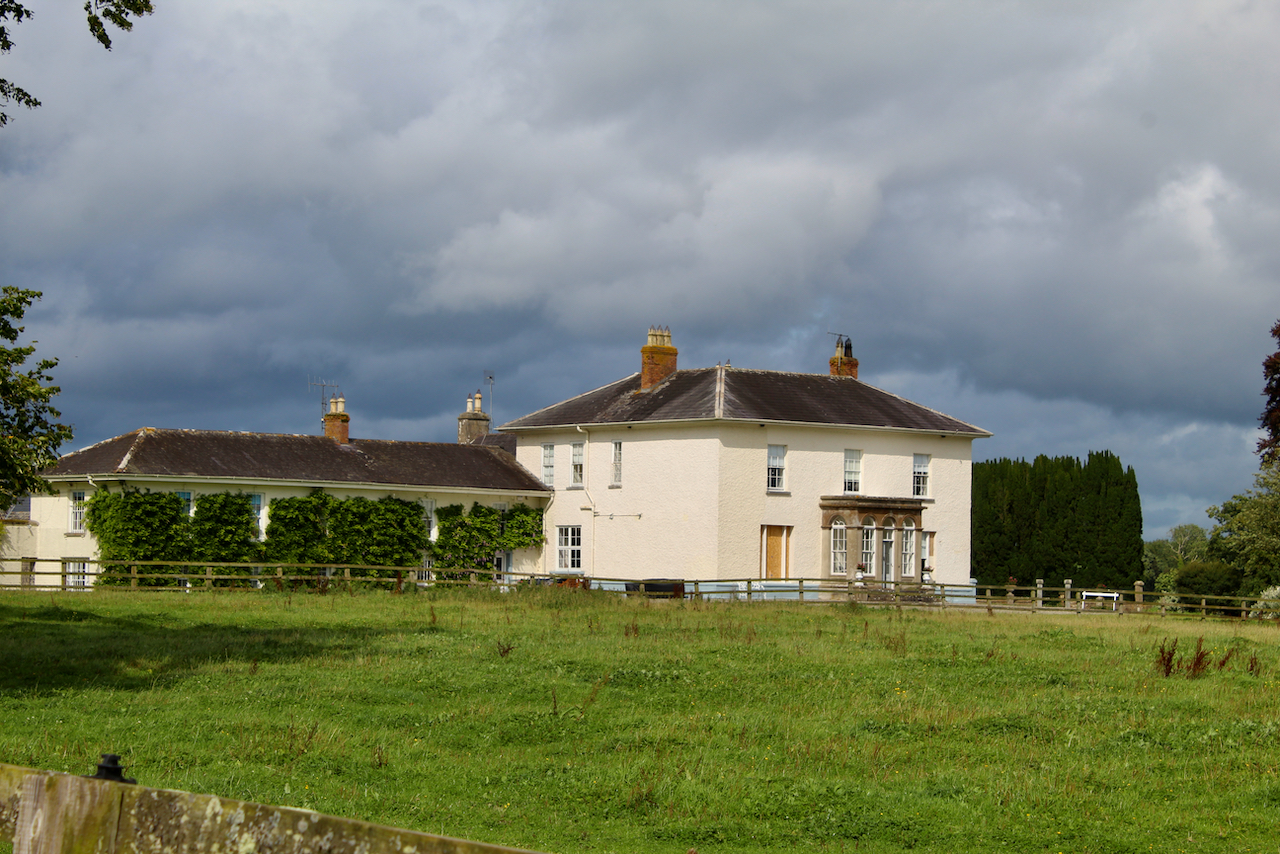
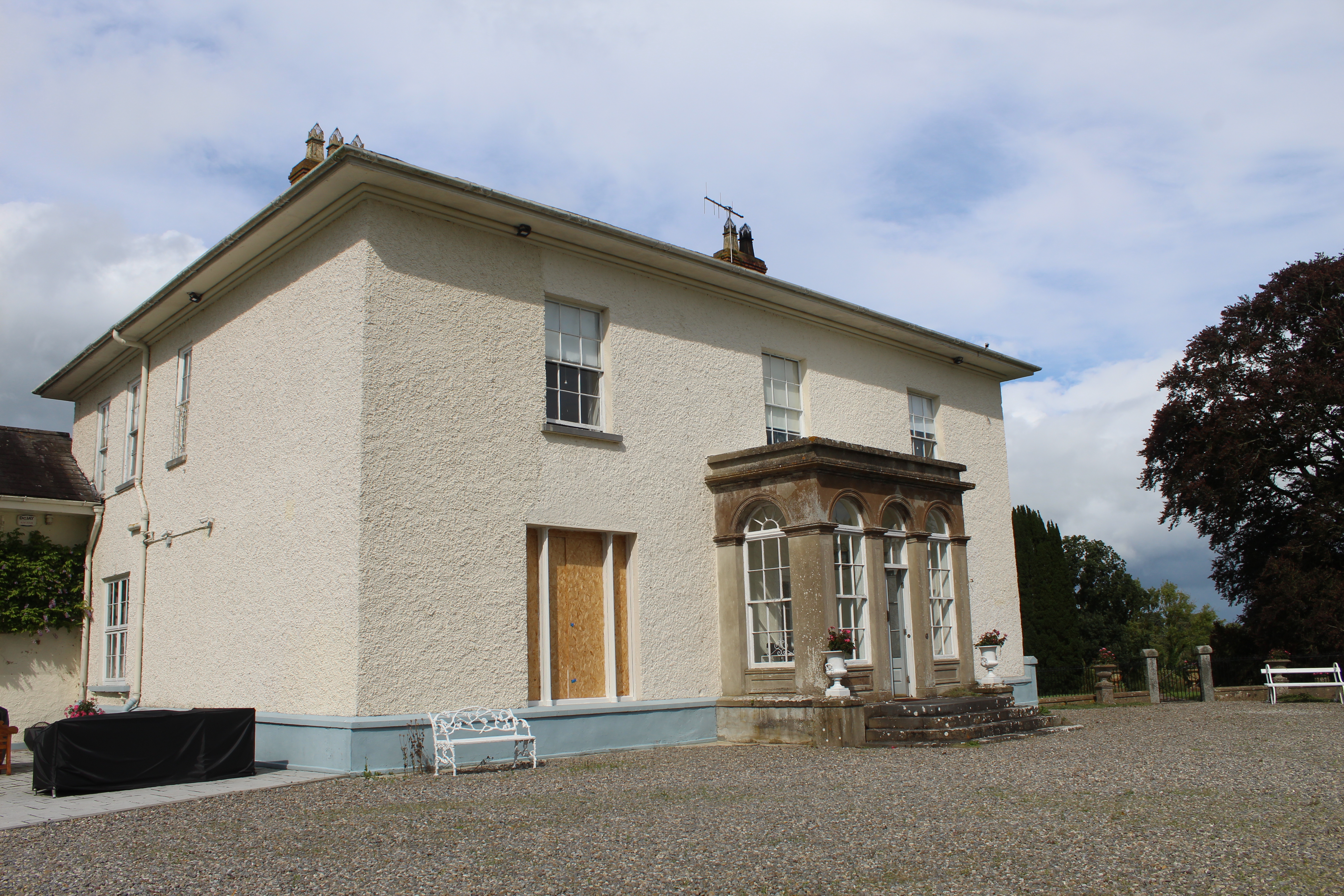
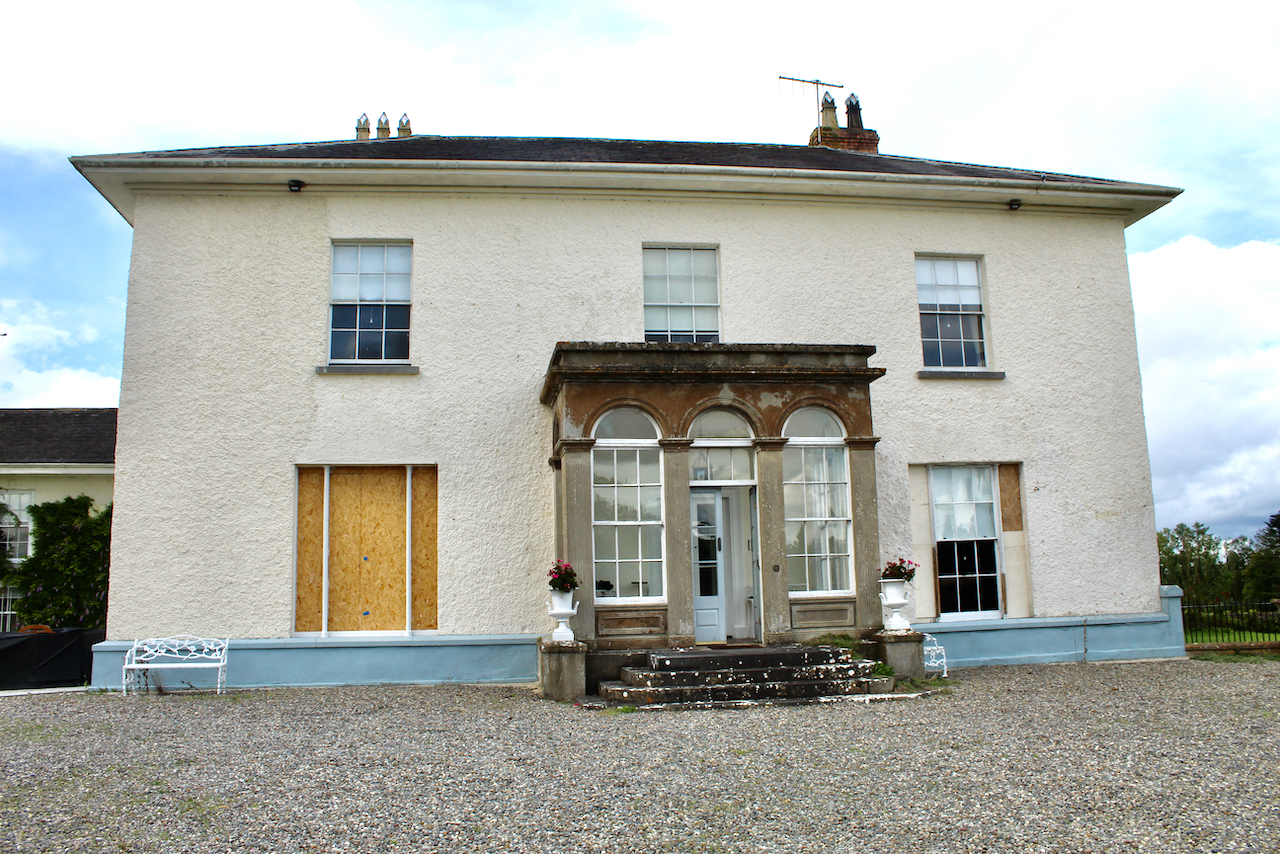
The house at Grenane in County Tipperary was built by and is still owned by members of the Mansergh family. It was lovely to meet the current owner, Philippa, who is very knowledgeable about the history of the house and her family.
Before the house was built there was a castle on the property. The Civil Survey of 1654 mentions the Grenane property in the parish of Templenoe, recorded as consisting of “the castle and town of Grenane and Ballyhosty” (Ballyhusty) and 660 plantation acres. The castle is described as a garrisoned castle, with thirty thatched cabins and houses nearby, forming the “town.” [1] There is a still a field which is called the “castle field” but the castle was pulled down to build the new house.
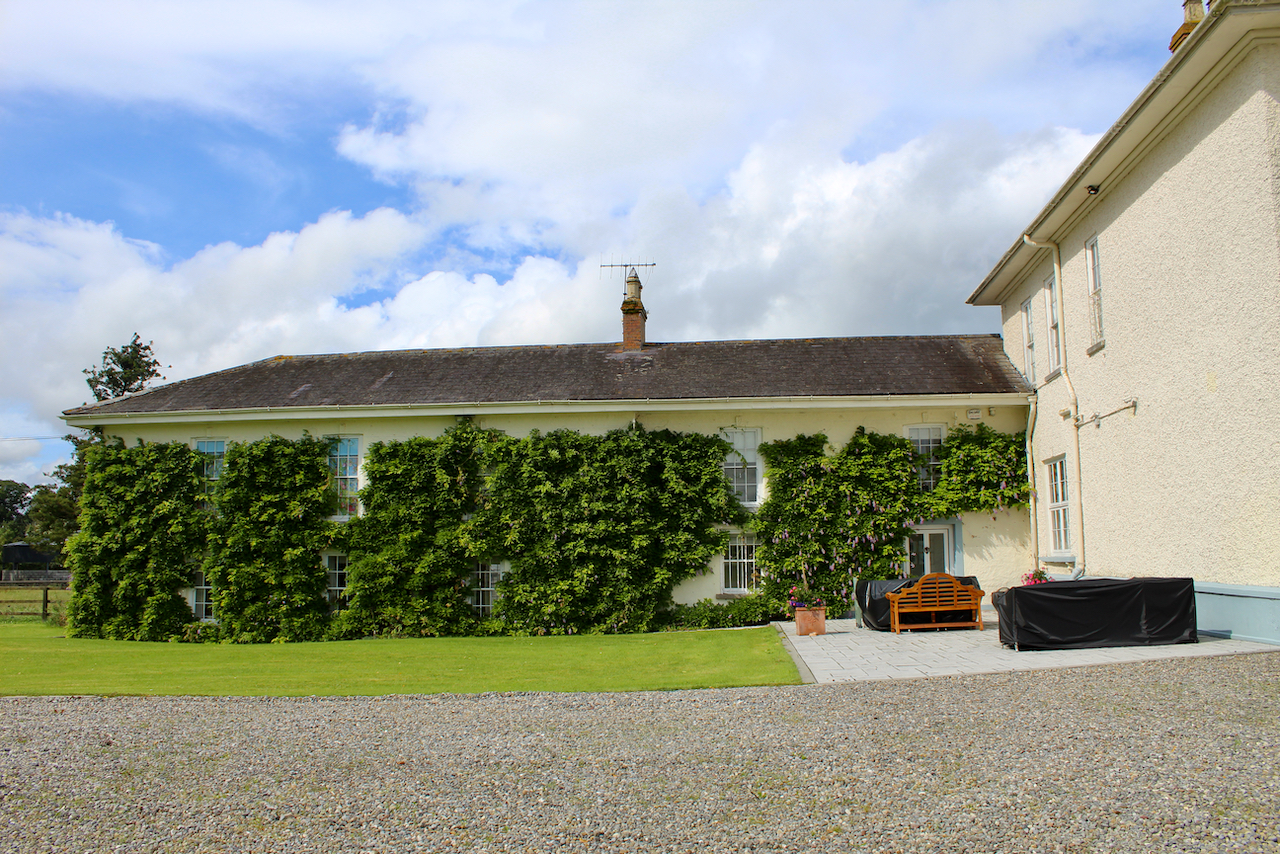
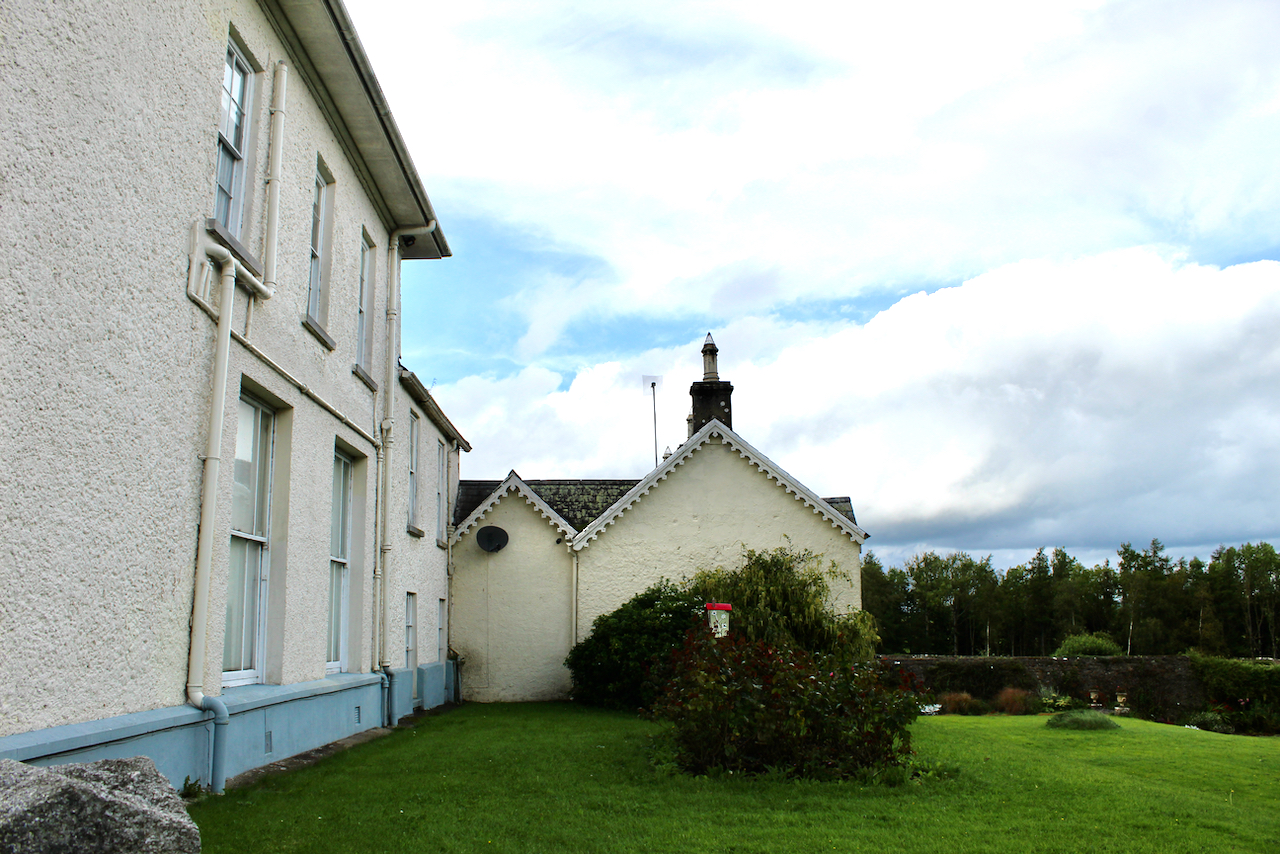
The house was probably built between 1700-1710, in time of Daniel and Mary Mansergh, from the stones of the castle. The main house, a three-bay Georgian house of middle size, dates from around 1730. [2] Philippa told us that the house had three storeys originally but the third was removed when the west wing was built, around 1740.
Art Kavanagh and William Hayes tell us that three brothers, Brian, James and Robert Mansergh, came to Ireland from Westmoreland in northwest England, with their uncle Daniel Redman, around 1650. [3]
They became involved in the Cromwellian campaign. However, in 1659, after Cromwell’s death, Daniel Redman entered into secret negotiations with the restored Charles II and was formally pardoned for his support of Cromwell. By 1688, Kavanagh and Hayes tell us, Redman was owner of nearly 13,000 acres in Kilkenny. In the land settlement of 1661, James Mansergh received a grant of Macrony Castle in County Cork. This is still occupied today. Brian and Robert Mansergh settled near their uncle in Kilkenny. Brian acquired Ballybur Castle in County Kilkenny, which is now also a Section 482 property, which we have yet to visit. Redman’s daughter Eleanor married James Butler, 3rd Viscount Ikerrin, and his daughter Elizabeth married John Meade, 1st Baronet of Ballintubber, County Cork. [4]
Brian served as High Sheriff and Justice of the Peace for County Kilkenny. He had a son, Daniel (1664-1735). It was through Daniel’s marriage that Grenane came into the ownership of the Mansergh family. Daniel also inherited Macrony Castle from his uncle Colonel James Mansergh, as James’s son George had no children.
Colonel James’s daughter Eleanor married into the Grenane lands in 1684 when she married Nicholas Southcote. Her daughter and heiress Mary Southcote married Daniel Mansergh and brought with her the Grenane property. It was probably in Daniel and Mary’s time that the current house at Grenane was built.
In The Tipperary Gentry, Kavanagh and Hayes tell us the interesting history of the area. Before coming into Mansergh ownership, the land at Grenane was leased to Hardress Waller (1604-1666). He was from a wealthy family from Kent in England, but moved to Ireland after he married an heiress to Irish property, Elizabeth, daughter and coheir of John Dowdall of Kilfinny, Co. Limerick. [5] He served as MP for Askeaton, County Limerick, in the Irish Parliament. At first he supported the Catholic “Old English” who did not want plantation of Protestant settlers in Munster.
However, with the outbreak of the Catholic rebellion in 1641, Waller turned against the “Confederates.” The Confederates were mostly Catholic and many were “Old English” who had settled in Ireland, who wanted to retain their lands despite retaining their Catholic faith. They asserted their loyalty to the King along with their right to keep their faith and their land. The Duke of Ormond James Butler tried to navigate a peaceful means for them to obtain their rights while maintaining loyalty to King Charles I.
The Catholic church became involved in the person of Cardinal Rinuccini, acting on behalf of Pope Innocent X. He came to Ireland in 1645 and brought with him arms and ammunition. The Confederate cause was split, with the emphasis upon the Catholic faith trumping the interest of the Old English who wanted to keep their land and maintain loyalty to the Crown and to King Charles I.
It was a complicated time politically. The Dictionary of Irish Biography tells us that during the summer of 1643 Waller became increasingly critical of the king.
In the spring of 1645 Hardress Waller was serving in the west of Ireland in the Parliamentarian army, possibly under his cousin, William Waller. By April he had taken the solemn league and covenant, and was then appointed as a colonel in the recently formed New Model Army. The Dictionary of Irish Biography continues, telling us that in January 1649 Waller was chosen as a commissioner for the high court of justice to try the king. He attended the trial proceedings as many times as Cromwell, and, on 29 January, signed the king’s death warrant – the only Irish Protestant to do so. After the reinstatement of the Stuart monarchy with King Charles II, Waller was sentenced to death, but the sentence was commuted to life imprisonment on the island of Jersey, where he died.
Waller’s daughter, Elizabeth, married William Petty, author of the Civil Survey of 1654. Another daughter married Nicholas Southcote, a Royalist from Devon.
Nicholas Southcote and Elizabeth had a son, also named Nicholas, who in 1684 married Eleanor Mansergh, daughter of Captain James Mansergh of Macrony Castle, County Cork. The name “Southcote” has been used as an added Christian name in later Mansergh generations.
It was Nicholas and Eleanor Southcote’s daughter and heiress Mary who married her cousin Daniel Mansergh (1664-1735) of Macrony Castle.
Philippa brought us inside and we were shown into the library and sitting room. The drawing room has a Wedgewood frieze around the room and a Bossi fireplace.
The second son of Daniel and Mary, Nicholas Southcote Mansergh (d. 1768), inherited Grenane in 1735, Kavanagh and Hayes tell us. His elder brother James (d. 1774) inherited Macrony Castle. James married Mary St. George and his son Richard inherited the St. George estates and added St. George to his surname.
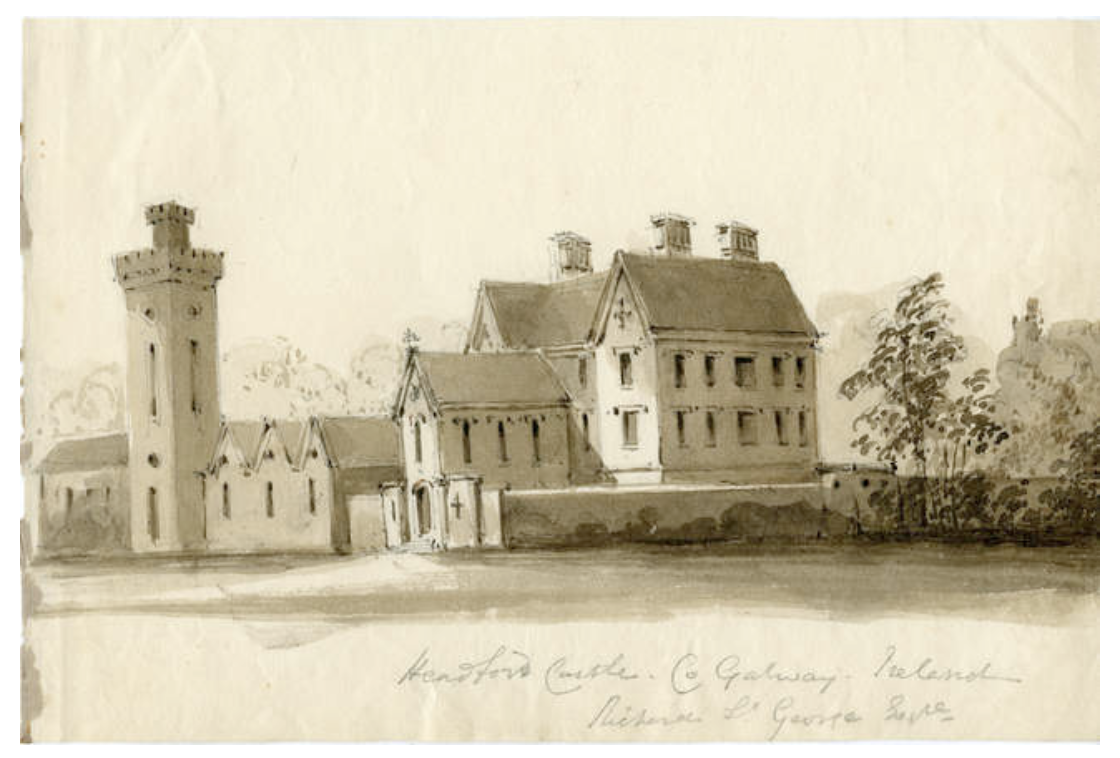
Richard Mansergh St. George (1756/9-1798) at his wife’s tomb by Hugh Douglas Hamilton courtesy of National Gallery of Ireland ID 8757.The portrait is misleading as it shows him with a full head of hair, whereas in reality he fought in the British army during the American War of Independence and was shot in the head. Miraculously he survived and part of his skull was replaced by a silver plate, and from then on, he wore a cap to cover his head.He is also interesting as he was a friend of artist Henry Fuseli, who was beloved of Mary Wollestonecraft.He inherited the Headfort estate in County Galway, and was murdered by rebels in 1798.Richard Mansergh St. George’s wife Anne St. George née Stepney of Durrow Abbey County Offaly, and Child, 1971, by George Romney courtesy of August Heckscher Collection 1959.147English School c.1828 Headford Castle, Co. Galway (now a ruin), Watercolour, inscribed in pencil, Headford Castle, Co. Galway, Ireland Richard St George Esq. courtesy of The History Sale Adams April 2018.
Nicholas Southcote Mansergh owned Grenane for 33 years. He married Elizabeth, daughter of Richard Lockwood of Castle Leake (Castlelake), Cashel, in 1750. His two eldest sons, Nicholas Southcote (d. 1818) and Daniel (d. 1823) continued the Tipperary branches of the family.
In 1770 Nicholas married Elizabeth, daughter of John Carden of Templemore, County Tipperary and sister of John Craven Carden, 1st Baronet of Templemore. It was during their time in Grenane House that the top storey was removed and the south wing, a long two-storey structure, was built.
John Craven Carden, 1st Baronet of Templemore, County Tipperary, by Robert Hunter courtesy of Country House Collections at Slane Castle 13th October 2015.
Nicholas Mansergh the second owned Grenane for around fifty years, outliving his eldest son John Southcote, JP, who died in 1817. John had married Mary, daughter of Richard Martin of Clifford, Co Cork. The Christian name Martin came to be used subsequently in the Mansergh family.
Grenane passed to their son, Richard Martin Southcote Mansergh (1800-1876). A younger son, Charles Carden Mansergh, married Elizabeth Bland, daughter of Captain Loftus Otway Bland. Charles Mansergh and Elizabeth Bland’s daughter Georgiana Constance Antoinette Mansergh married Robert St. John Cole Bowen, of Bowen’s Court in County Cork, and was the grandmother of the writer Elizabeth Bowen – whose short stories I am currently reading!
Richard Martin Southcote inherited Grenane at the age of 18. He married Jane Rosetta, daughter of Robert Bomford and Maria Massy-Dawson of Rahinston, County Meath. He owned Grenane House and estate for about 60 years. He served as a local magistrate.
Richard Mansergh was chairman of the jury in the trial of William Smith O’Brien (1803-1864), a Young Irelander, in 1848. William Smith O’Brien was a politician and served as a member of parliament. Young Irelanders sought Irish independence. O’Brien was arrested at Thurles railway station shortly after his abortive Young Ireland rising which fizzled out at the Widow McCormack’s farmhouse at Ballingarry in July 1848. At the subsequent trial before a jury, O’Brien was found guilty of high treason. Richard Mansergh as chairman of the jury had to announce the verdict. In association with the jury he made a plea for O’Brien’s life in the following terms: “We earnestly recommend the prisoner to the merciful consideration of the government, being unanimous of the opinion that, for many reasons, his life should be spared.”
William Smith O’Brien (1803-1864) by George Francis Mulvaney, courtesy of National Gallery of Ireland P1934.
The jury also included Southcote Mansergh of Grallagh Castle, County Tipperary, a former property of a junior branch of the Butlers. Smith O’Brien, whom Mansergh regarded as a good friend, was transported to Tasmania, and pardoned six years later.
In The Tipperary Gentry, we are told: “Richard Mansergh was a member of the Select Vestry of Tipperary Church of Ireland parish, which approved of the building of the new parish church in the town in 1829. He paid £300 for the family box pew. He always drove by himself to church, and according to family tradition, after going into his family pew he spread a handkerchief over his face and went to sleep. On other outings as magistrate he drove in a coach and four with two postillions dressed in the family livery of buff with scarlet edging.
“He did not employ a land agent. On the occasions on the Spring and Autumn gale days, the days on which the rents were due, it was his custom to sit at a table under a lime tree at the corner of the avenue, receiving the rent from his seventy or so tenants, listening to whatever complaints they were brave enough to voice, and “dispensing justice as he thought fit.” His eldest son and heir, John Southcote [1823-1899], popularly called Colonel Johnny, stood beside him, “and sometimes helped to soften the decision.”
Philippa told us that during the Famine, nobody at Grenane died nor emigrated. The walled garden was built and trees were planted, as ways of providing employment and pay. Kavanagh and Hayes tell us that:
“During the years of the Great Famine, Colonel Johnny was chairman of the Tipperary Town Relief Committee, the function of which was to submit orders for Indian meal, raise subscriptions, apply for matching government grants and supervise public works. The main works undertaken were whitewashing the poorer houses, putting in sewers and footpaths to try to reduce the risk of fever, and leveling and draining number of roads leading out of the town.”
Colonel Johnny also gave practical help by allowing a sewing project for women on the estate in the late 1840s.
He married Sissy Wyatt of Flintstone, but only about six months after his father’s death in 1876 he and Sissy moved to London where they continued to live until their death. It was at that stage that Grenane became heavily mortgaged and was let.
Johnny had a brother, Richard St. George Mansergh (1832-1897). The house passed eventually to his son, Philip St. George Mansergh (1863-1928).
Philip’s elder brother, Richard Southcote Mansergh who had succeeded to Grenane, went to live in Friarsfield House, built by the family as a dower house around 1860. [6] This is now occupied by former senator Martin Mansergh, a cousin of the current owner of Grenane, Philippa Mansergh-Wallace. They are both grandchildren of Philip St. George Mansergh.
Philip St. George Mansergh (1863-1928) had been sent to Australia at the age of 18 with only £40 in his pocket and his passage. He had trained as an engineer. Kavanagh and Hayes tell us that he was involved with construction of railway lines in Queensland, Australia, in New Zealand and in Africa on the “Cape to Cairo” railway. His descendant Philippa, current resident of Grenane, has wonderful photographs from this period. Philip married his cousin Ethel Marguerite Otway Louise Mansergh. They had two sons.
Philip returned from his railway engineering career in Africa in 1906, by which time the estate was reduced to its demesne lands. [7] Much land was dispersed in the Land Purchase Acts.
Martin Mansergh’s father (Philip) Nicholas Seton Mansergh (1910–91) was a historian who wrote many books about Ireland including The Irish Free State: its government and politics (1934), The government of Northern Ireland: a study in devolution (1936) and Ireland in the age of reform and revolution, published in 1940 (and in a revised edition as The Irish question, 1840–1921 in 1975). The unresolved question: the Anglo-Irish settlement and its undoing, 1912–72 (1991) was published after his death, as were two volumes of essays, edited by his widow, Diana: Nationalism and independence: selected Irish papers (1997), and Independence years: the selected Indian and commonwealth papers of Nicholas Mansergh (1999). [7]
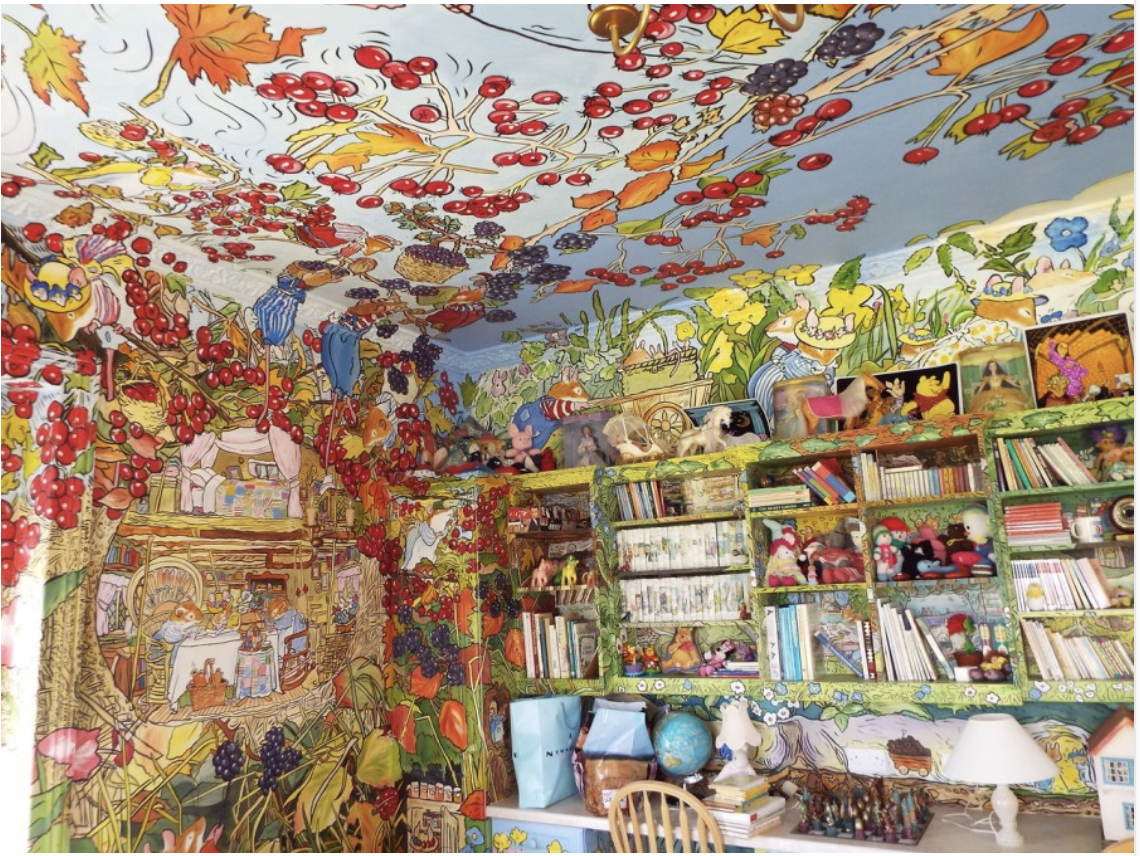
There is a charming playroom in Grenane house which has every surface covered by gorgeous painting by Marion McDonnell of Tipperary depicting “The Mice of Brambley Hedge.” This took two years to paint. I could have looked at it for hours, it is so detailed and wonderful.
The playroom completely hand painted by Marion McDonnell of Tipperary depicting “The Mice of Brambley Hedge,” courtesy of Grenane House website.
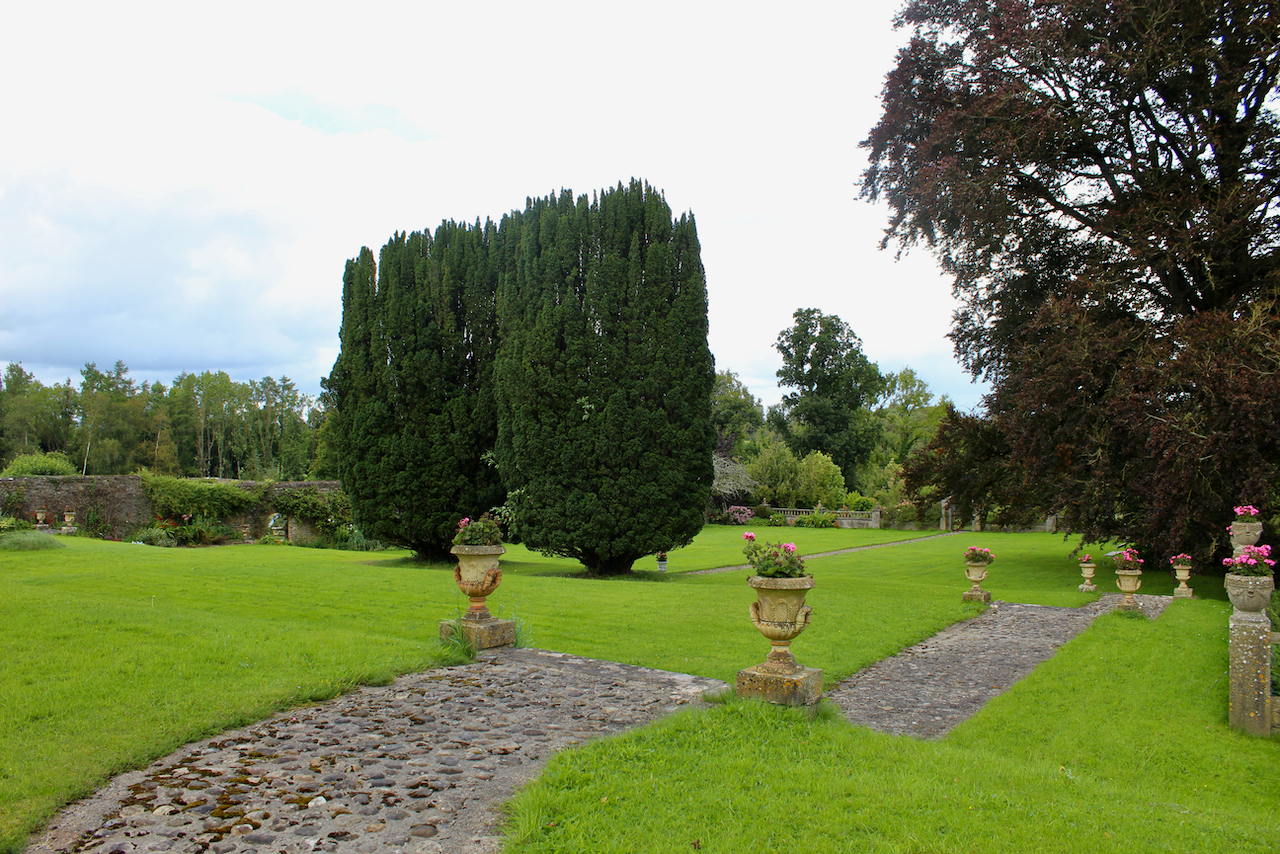
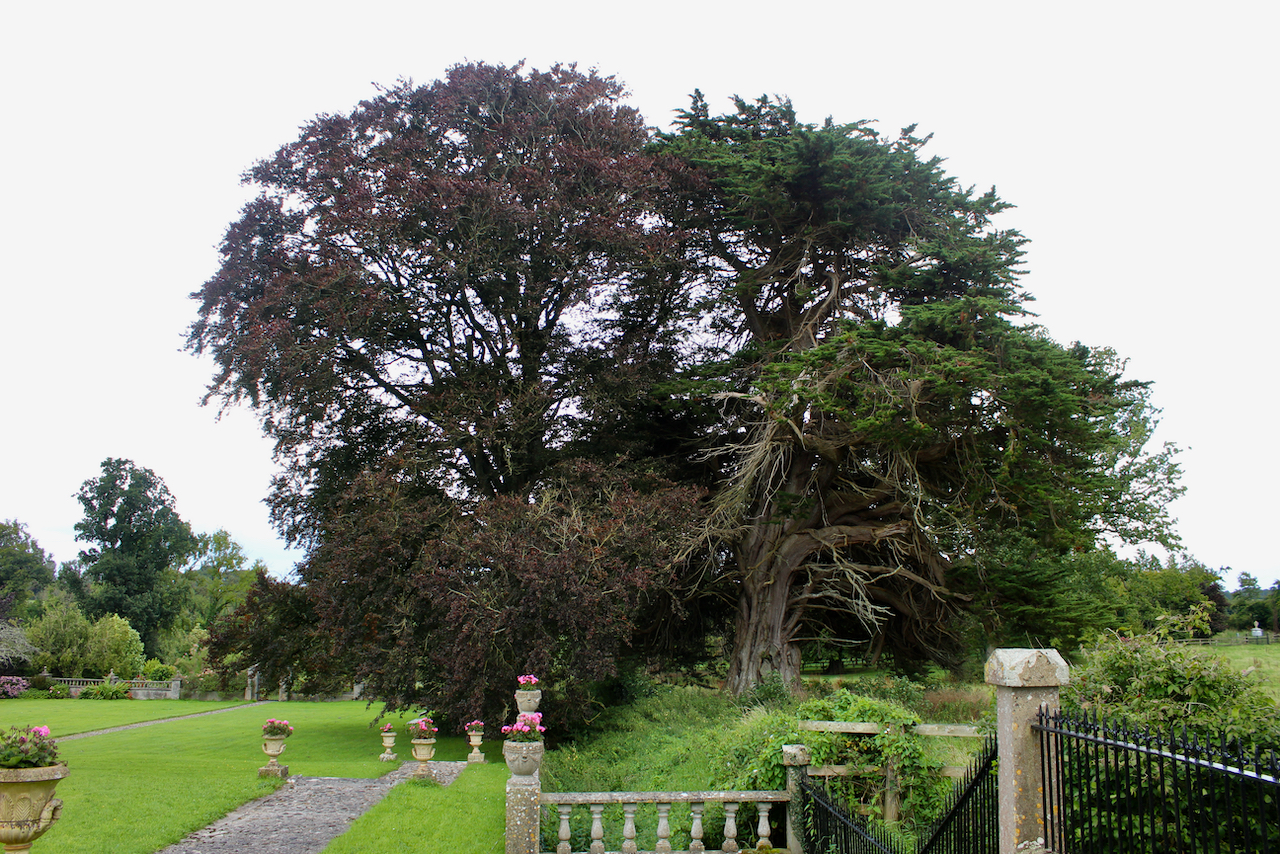
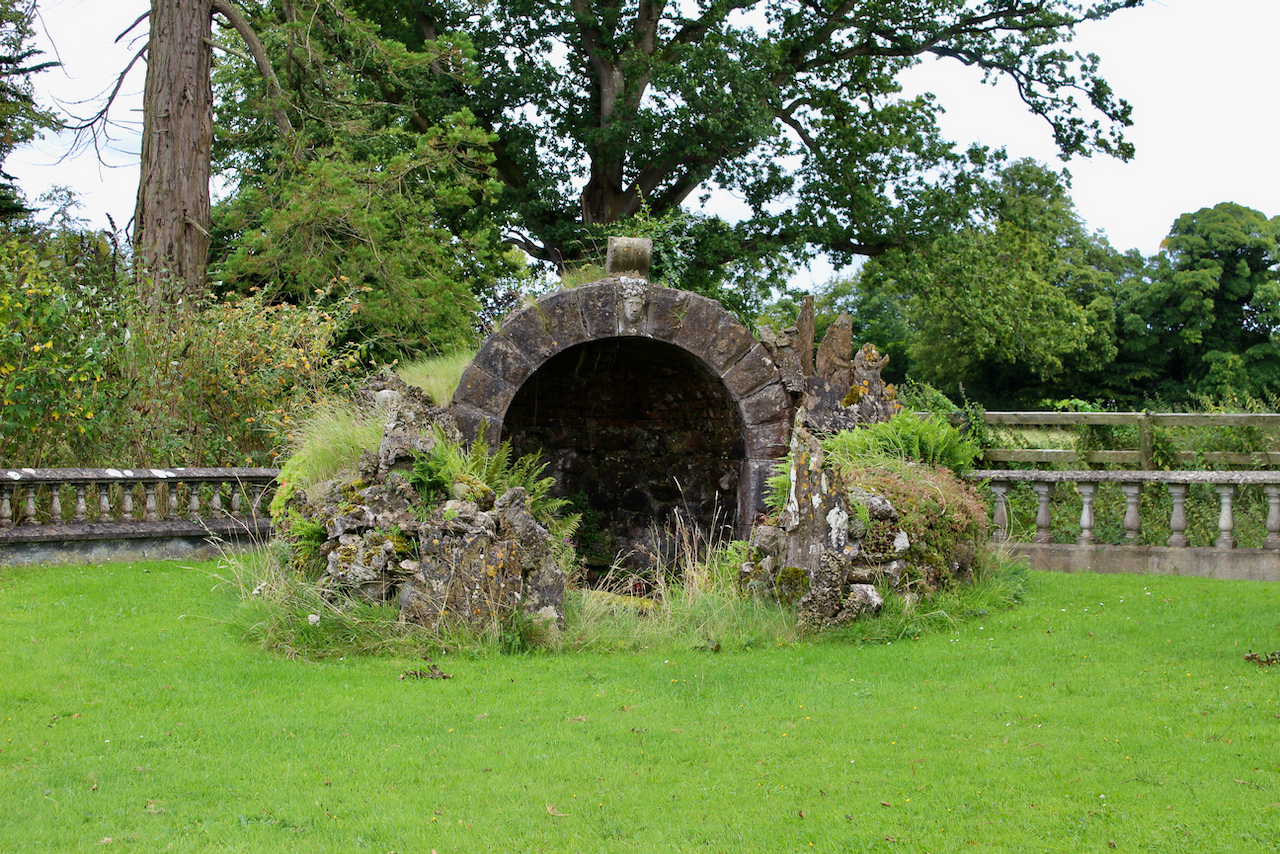
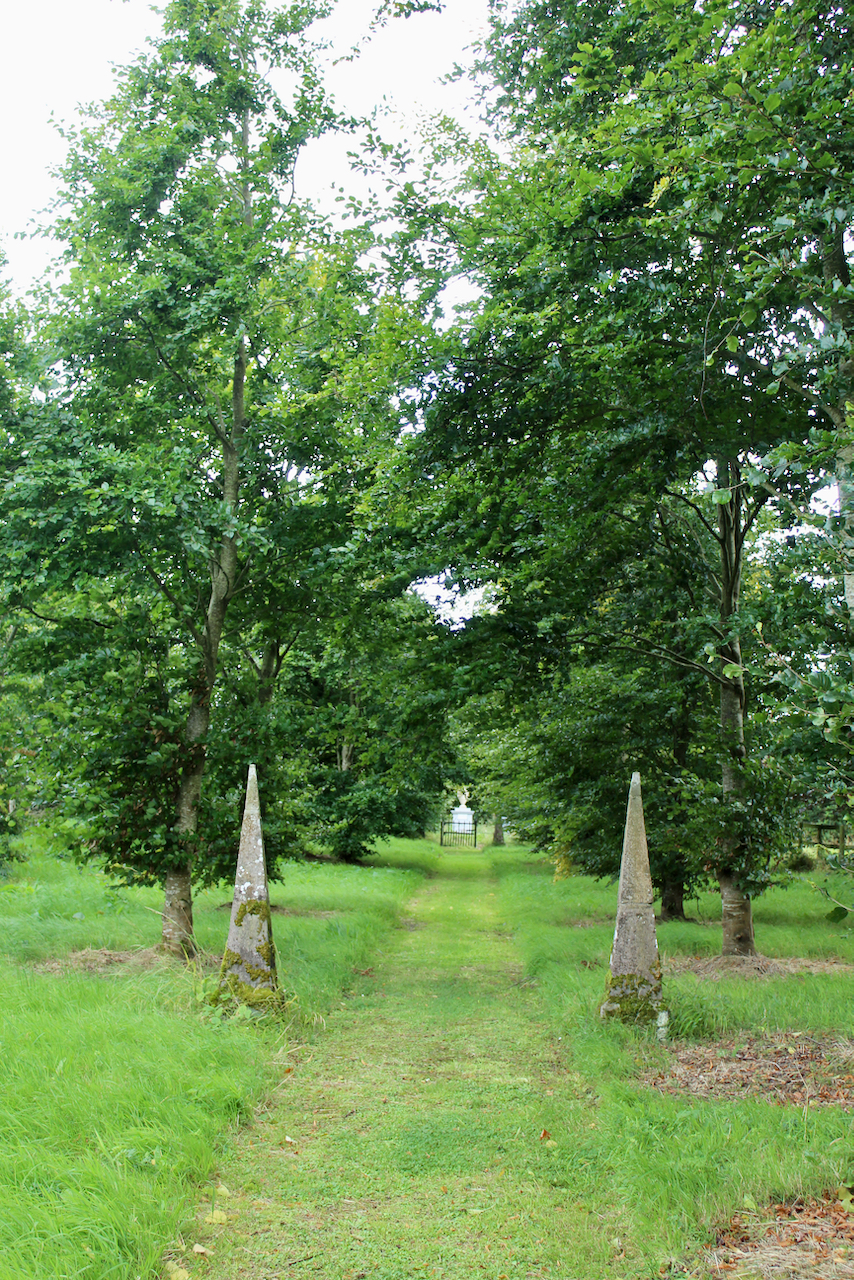
Philippa then brought us outside to see the garden. These feature a hazelnut walk, the only one in Ireland. There is a summerhouse in the shape of an old 50 pence. The terraces were laid out around 1860 by a great aunt, Charlotte Mansergh. Philippa has planted a forest of trees. Unfortunately it was starting to rain so we didn’t linger as long as we would have liked. It was a lovely visit.
[1] p. 127. Kavanagh, Art and William Hayes. The Tipperary Gentry. By William Hayes and Art Kavanagh. Published by Irish Family Names, c/o Eneclann, Unit 1, The Trinity Enterprise Centre, Pearse St, Dublin 2, 11 Emerald Cottages, Grand Canal St, Dublin 4 and Market Square, Bunclody, Co Wexford, Ireland. 2003.
p. 127 refers to R.S. Simington, ed. Civil Survey of Ireland, Co Tipperary, Vol. 2, p. 42, 1934.











 Irish Historic Houses