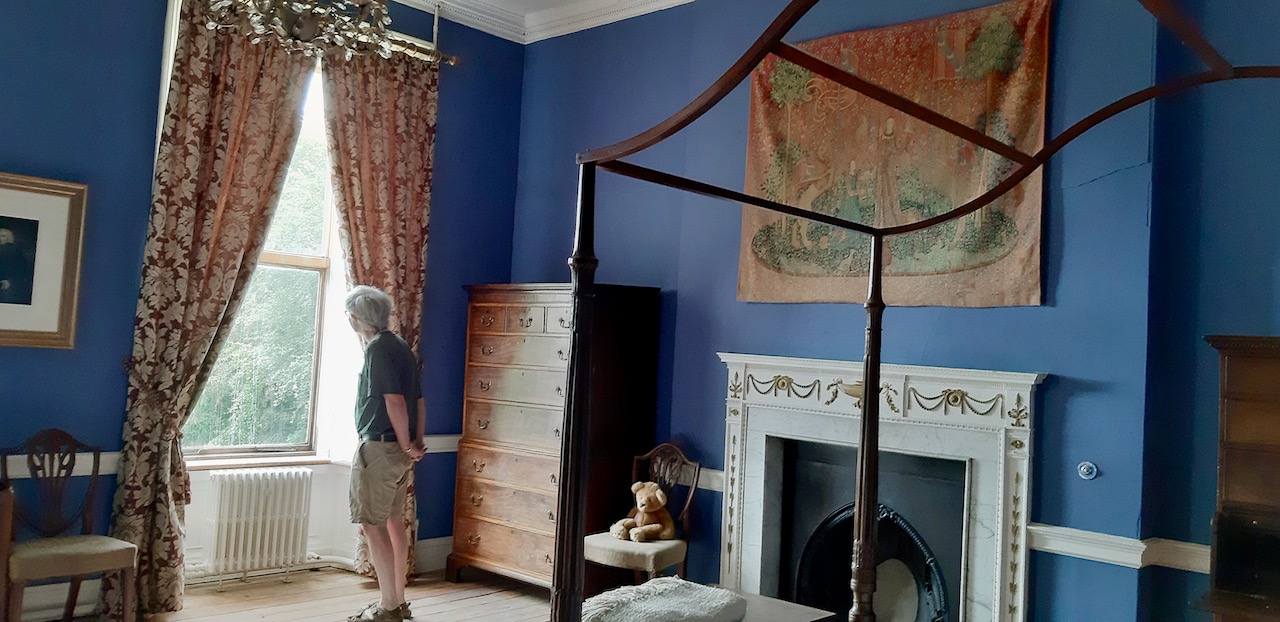
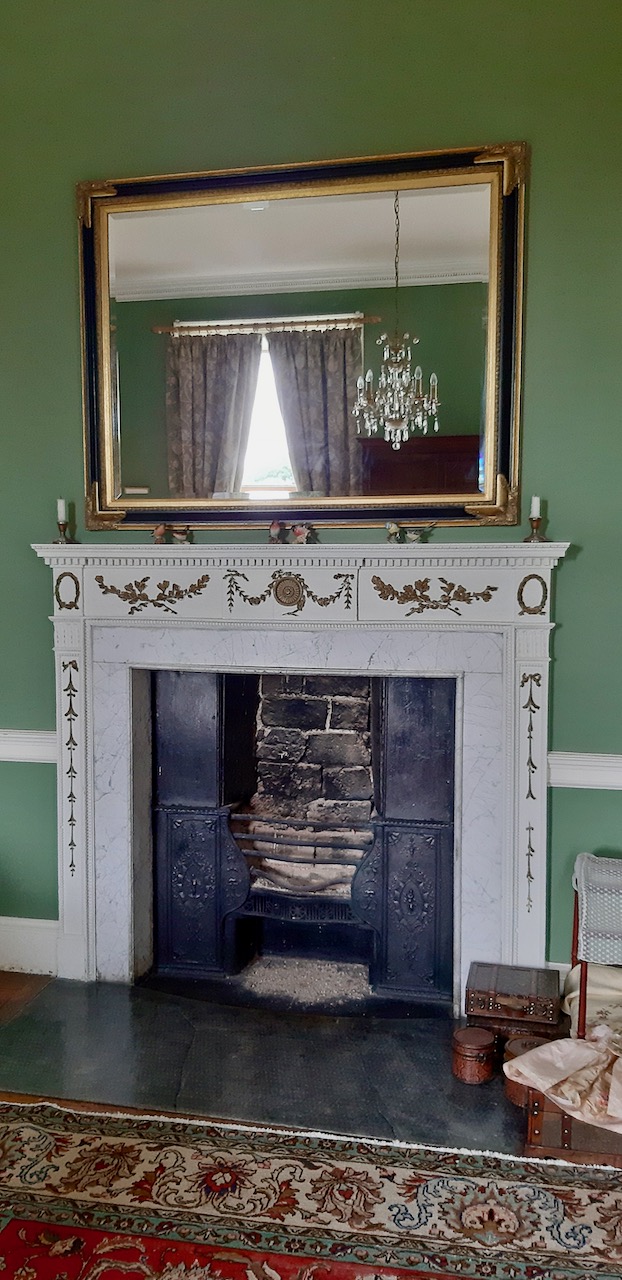
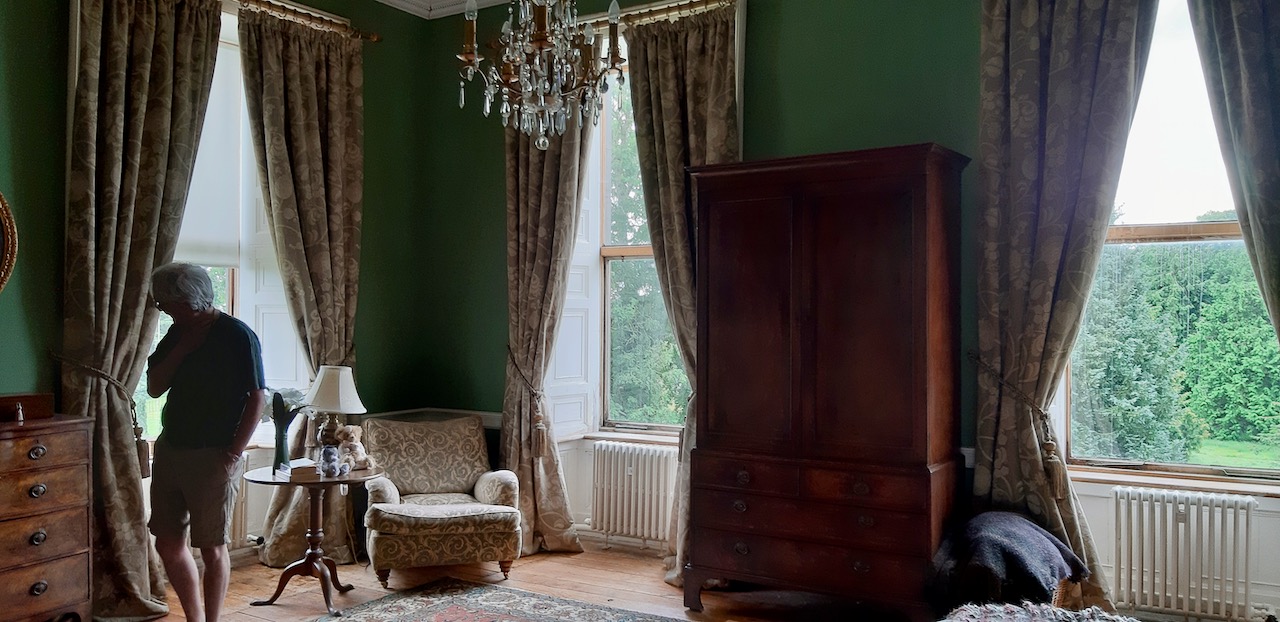
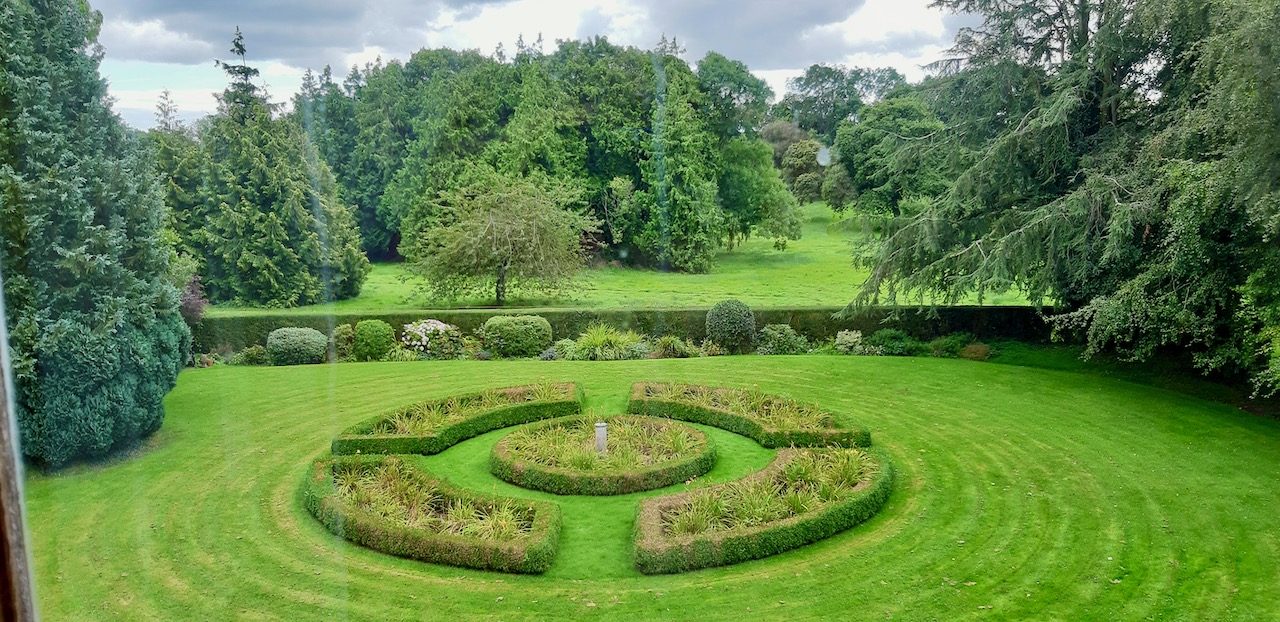
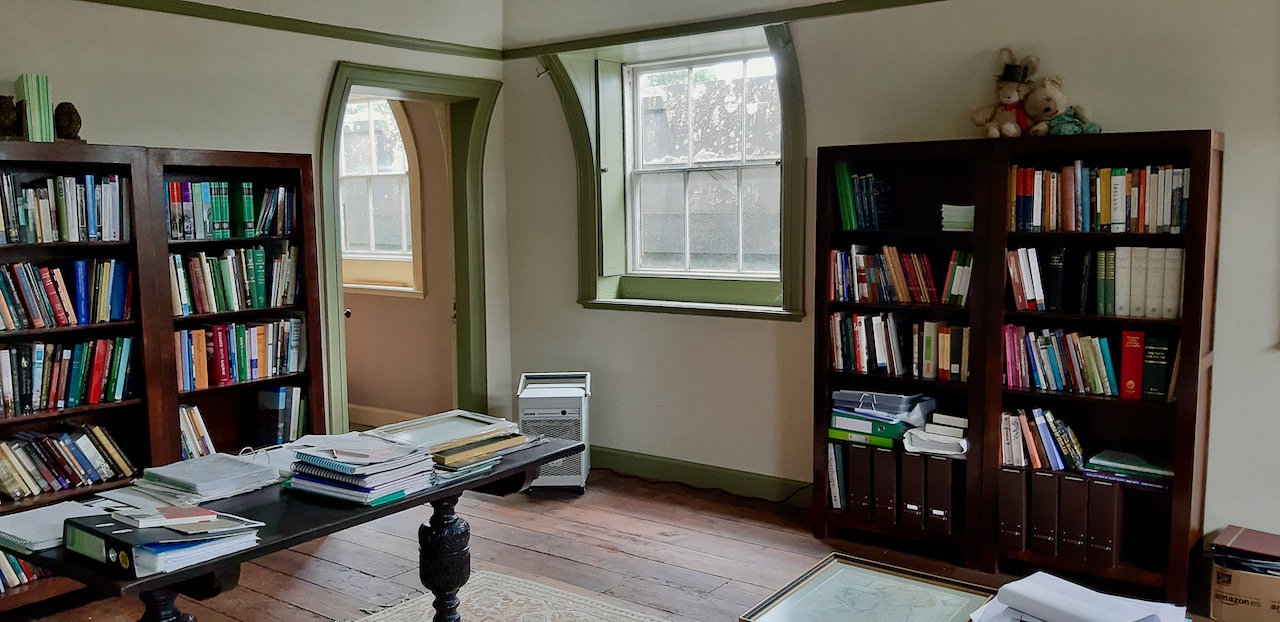
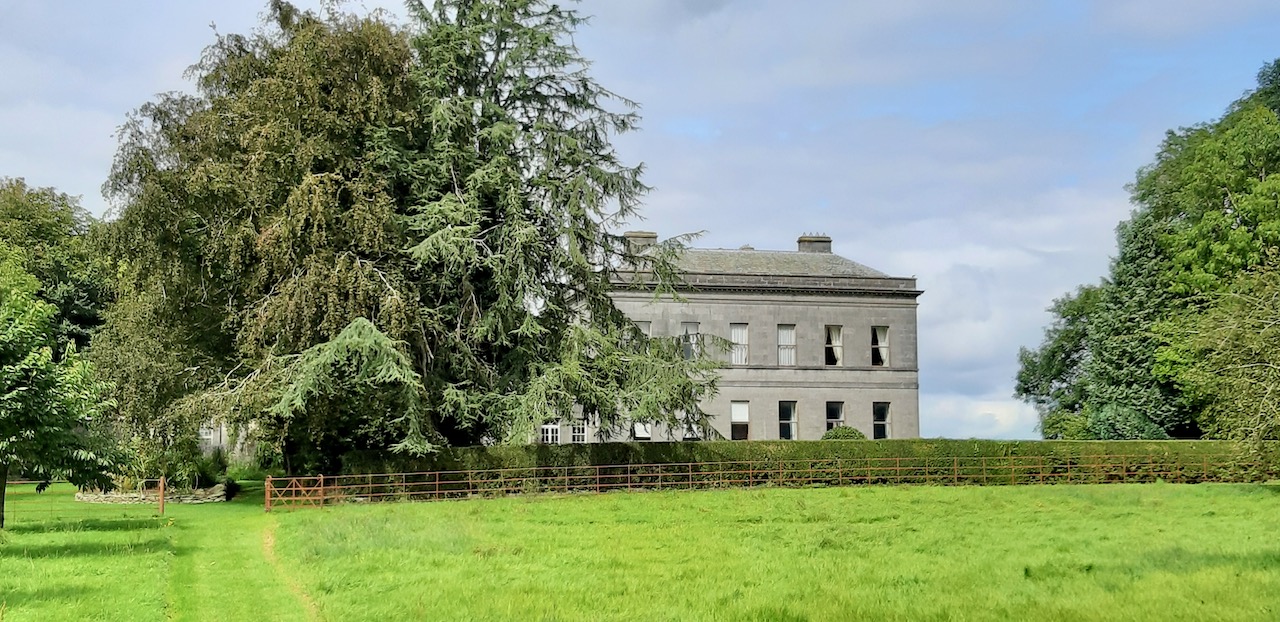
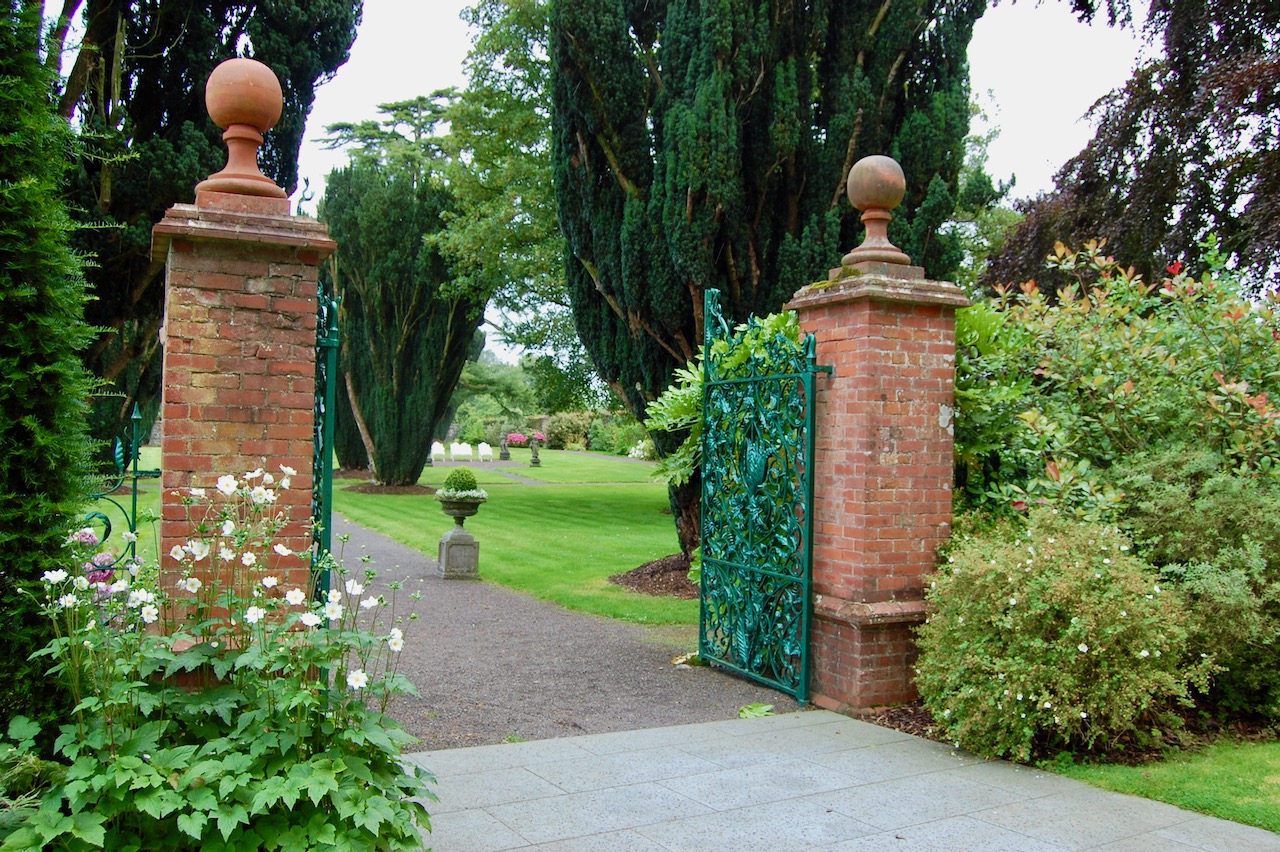
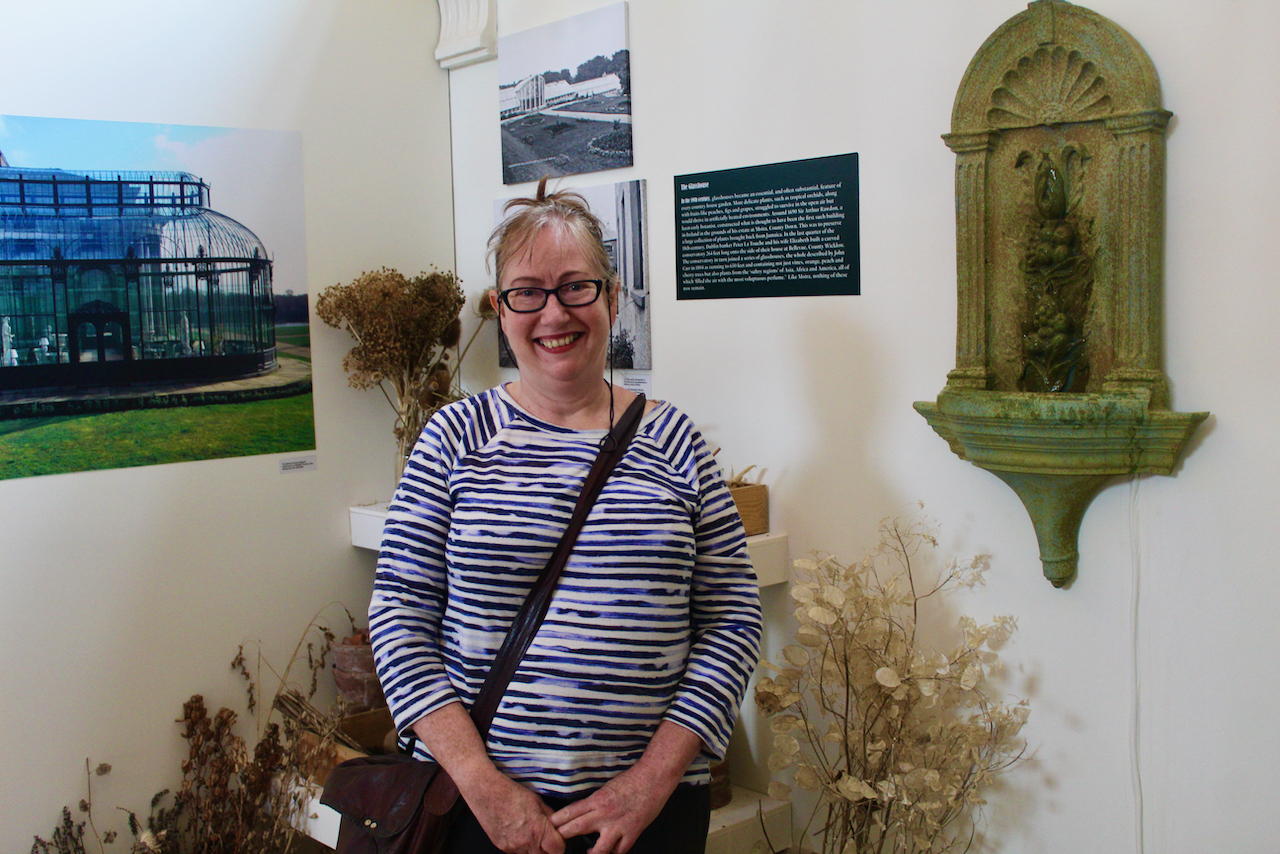
Oldbridge Hall, County Meath, site of the Battle of the Boyne Visitor centre

Battle of the Boyne site and visitor centre, Oldbridge Hall, County Meath.
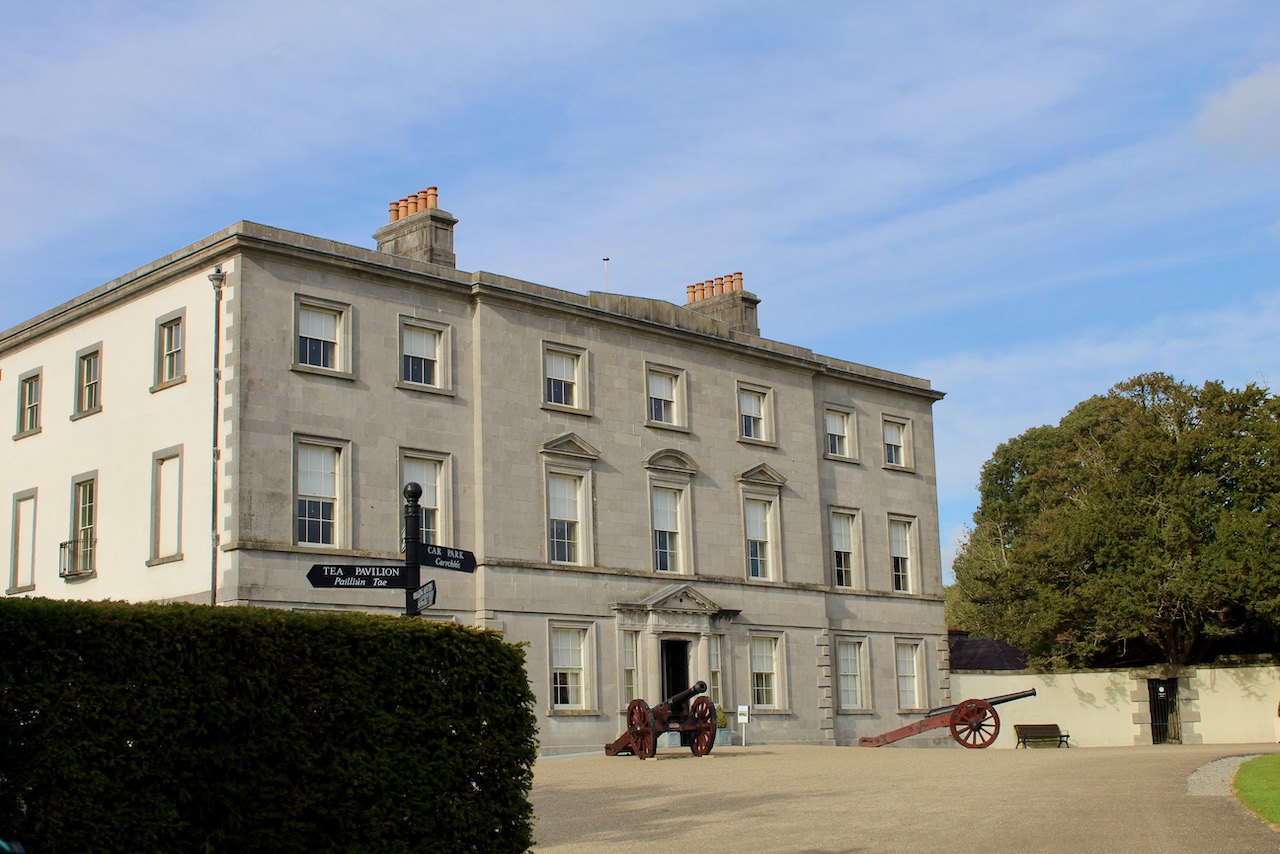
Oldbridge Hall, County Meath, October 2019. Photograph © Jennifer Winder-Baggot, www.irishhistorichouses.com

The Battle of the Boyne museum is housed in Oldbridge Hall, which is built on the site where the battle of the took place. The house is maintained by the Office of Public Works.

https://heritageireland.ie/places-to-visit/battle-of-the-boyne-visitor-centre-oldbridge-estate/

Stephen and I have a personal connection, as Oldbridge was built by the Coddington family, and a daughter from the house, Elizabeth Coddington (1774-1857), married Stephen’s great great grandfather Edward Winder (1775-1829).

Battle of the Boyne painted by Jan Wyck, in the National Gallery of Ireland. The point of view is that of the Williamites who were based on high ground north of the River Boyne, looking southwards towards Donore Hill where James II and his troops were based.

The Battle of the Boyne, 1st July 1690, was just one of several battles that took place in Ireland when the rule of King James II was challenged by his son-in-law, a Dutch Protestant Prince, William of Orange. James II was Catholic, and he attempted to introduce freedom of religion, but this threatened families who had made gains under the reformed Protestant church. When James’s wife gave birth to a male heir in 1688, many feared a permanent return to Catholic monarchy and government. In November 1688, seven English lords invited William of Orange to challenge the monarchy of James II. William landed in England at the head of an army and King James feld to France and then to Ireland. William followed him over to Ireland in June 1690.

There were 36,000 men on the Williamite side and 25,000 on the side of King James, the Jacobites. William’s army included English, Scottish, Dutch, Danes and Huguenots (French Protestants). Jacobites were mainly Irish Catholics, reinforced by 6,500 French troops sent by King Louis XIV. Approximately 1,500 soldiers were killed at the battle.

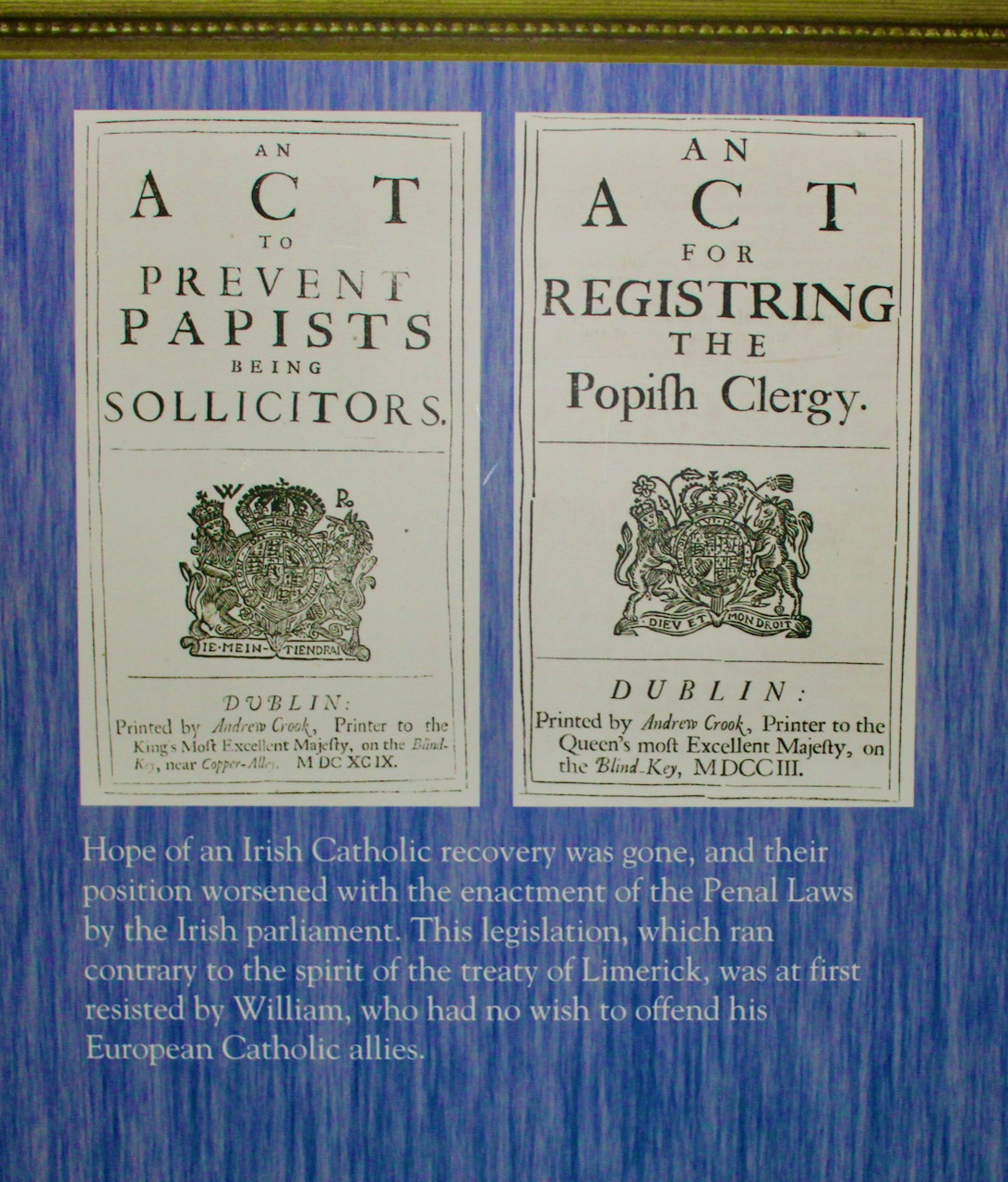
After winning the battle, William gained control of Dublin and the east of Ireland. However, the war continued until the Battle of Aughrim in July 1691, which led to the surrender at Limerick the following autumn. The surrender terms promised limited guarantees to Irish Catholics and allowed the soldiers to return home or to go to France. The Irish Parliament however then enacted the Penal Laws, which ran contrary to the treaty of Limerick and which William first resisted, as he had no wish to offend his European Catholic allies.
Oldbridge House, County Meath.
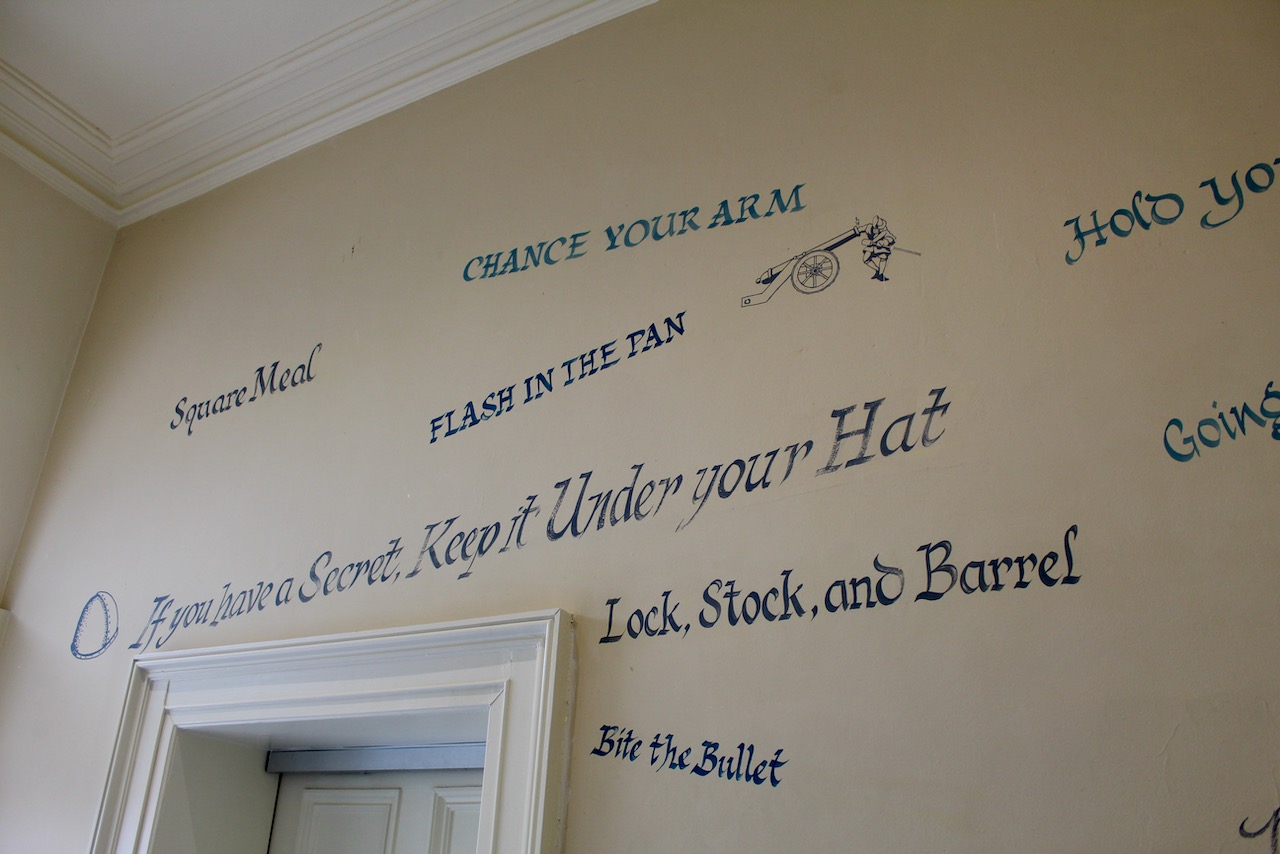
Many phrases can be traced back to the Battle of the Boyne, such as those written on the wall in the museum. Photograph © Jennifer Winder-Baggot, www.irishhistorichouses.com

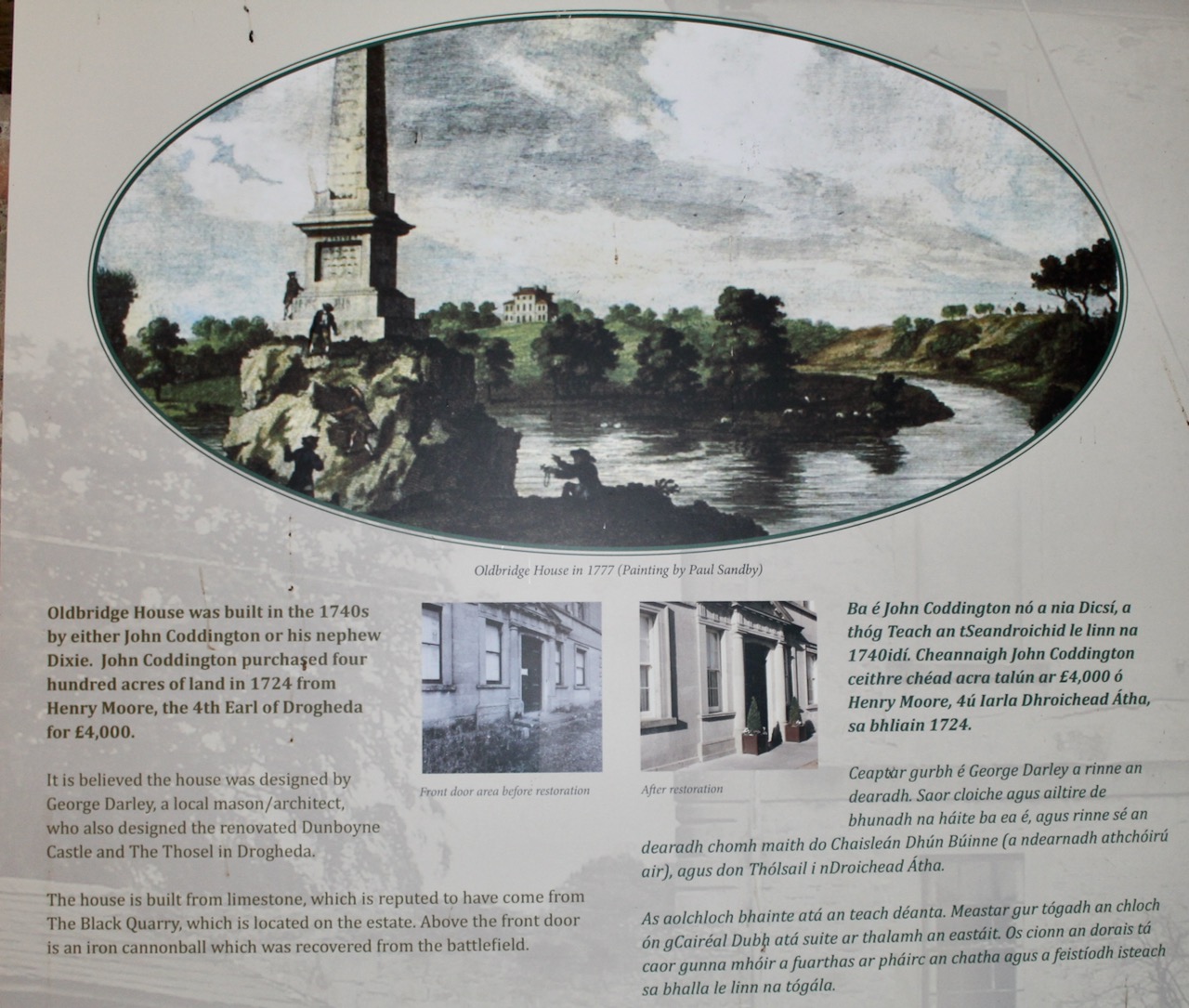
John Coddington (1691-1740) purchased the land in 1729 from Henry Moore the 4th Earl of Drogheda. John’s father Dixie (1665-1728) fought in the Battle of the Boyne in 1690 on the side of King William III. The unusual name “Dixie” comes from the maternal side, as Dixie’s father Captain Nicholas Coddington of Holm Patrick (now Skerries) in Dublin married as his second wife Anne Dixie, possibly a daughter of Sir Wolstan Dixie, 1st Baronet (1602-1682).

John married Frances Osbourne in 1710, and with the marriage came property in County Meath including Tankardstown. Tankardstown House is a boutique hotel and a section 482 property (see my entry https://irishhistorichouses.com/2020/07/11/tankardstown-estate-demesne-rathkenny-slane-co-meath/ ). John Coddington served as High Sheriff of County Meath in 1725, before he acquired the property at Oldbridge.

John’s son, also named John, predeceased him, tragically drowning in the Boyne. In the Meath History Hub Noel French recounts a story about how a young woman refused to marry John because she dreamed that he would die, as he did, before the age of twentyone. [1] I have obtained most of my information in today’s entry from the wonderfully informative Meath History Hub website.

Noel French tells us that the office of High Sheriff had judicial, electoral, ceremonial and administrative functions and executed high court writs. The usual procedure for appointing the sheriff from 1660 onwards was that three persons were nominated at the beginning of each year from the county and the Lord Lieutenant then appointed his choice as High Sheriff for the remainder of the year. Often the other nominees were appointed as under-sheriffs. Members of the Coddington family held the position in 1725, 1754, 1785, 1798, 1843, 1848 and 1922. [see 1]

After John’s death in 1740 the house at Oldbridge was advertised for lease, described as the house, gardens and demesne, so the house must have been built by this time. [see 1] The property passed to John’s brother Nicholas’s son, Dixie Coddington (1725-1794).

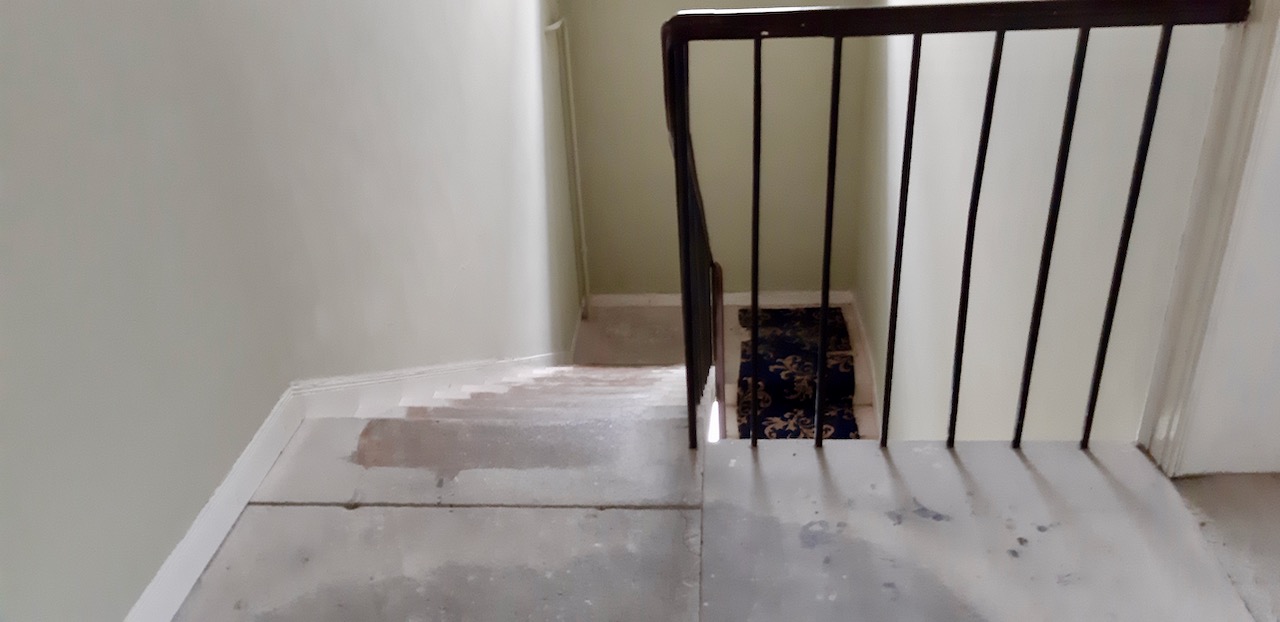
I am confused about the date of construction. According to the notice for lease, a house stood at the site in 1740. Evidence that the current house was built around 1750 however was found in an inscription on piece of baseboard of a stair removed during repairs carried out in 1960s that reads: ‘ December  1836  Patrick Kelly of the City of Dublin / Put up these Staircases. / I worked at this building from April  / till now. / 86 years from the first / Building of this house/ till now as we see by a stick like this  found.’

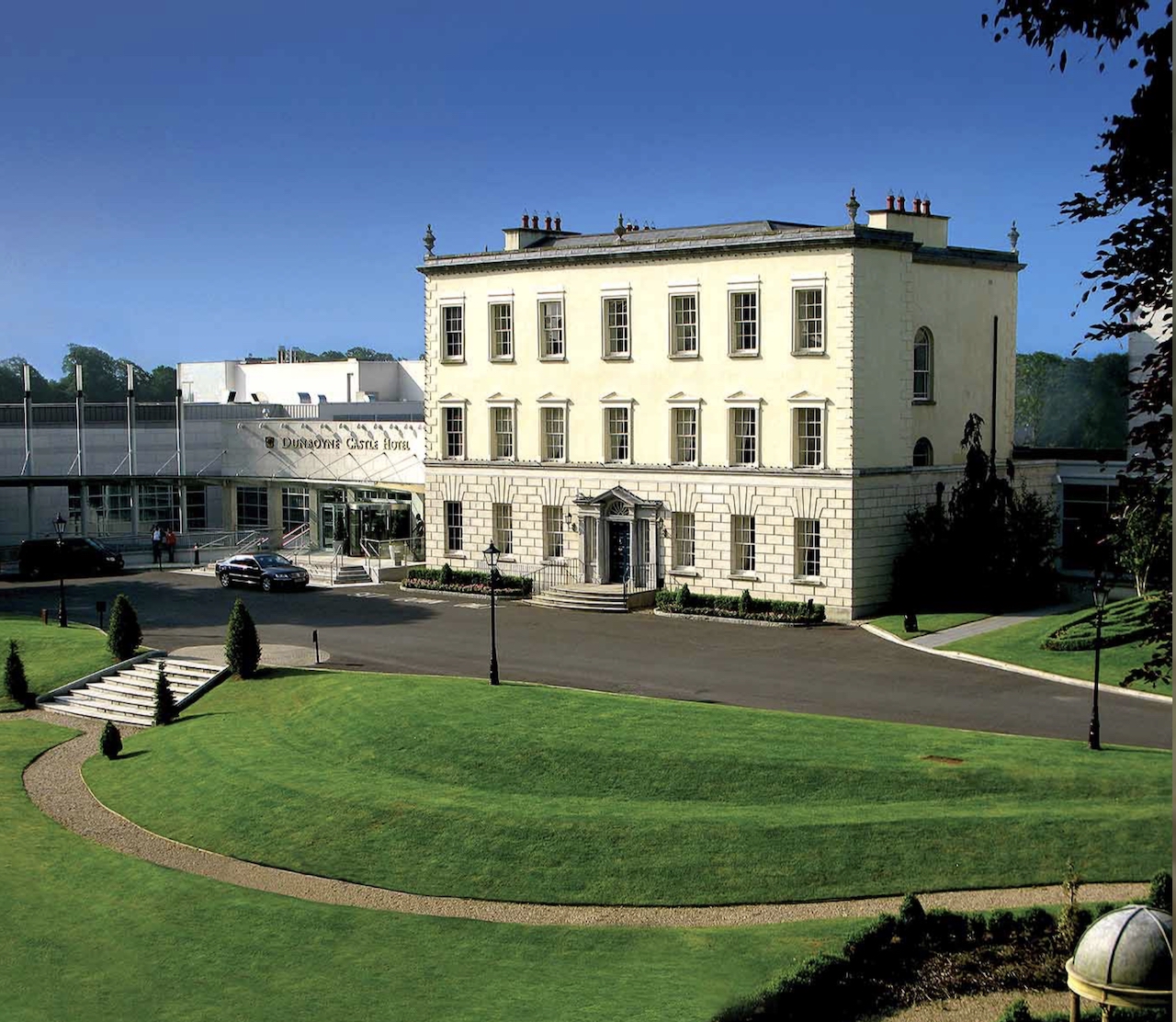
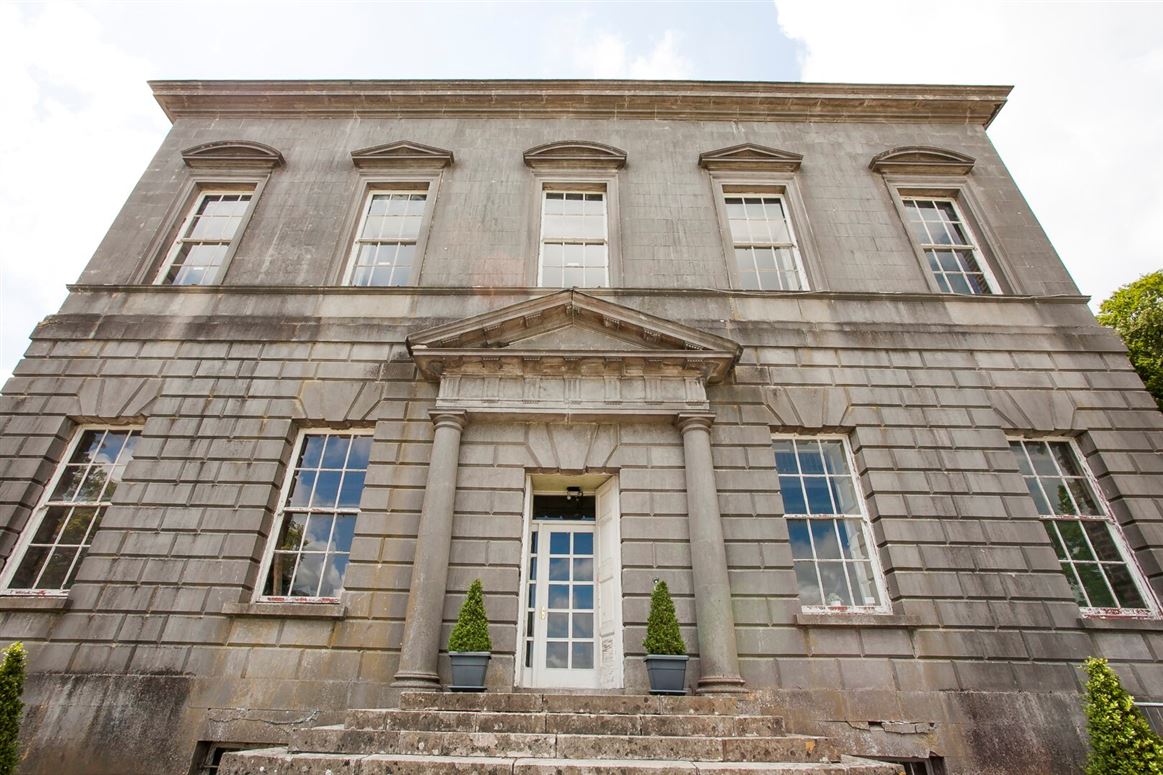
In The Buildings of Ireland: North Leinster, The Counties of Longford, Louth, Meath and Westmeath (published in 1993), Casey and Rowan accept that the house was built around 1750. They suggest that it may have been designed by George Darley (1730-1817), due to affinities with Dowth Hall nearby and to Dunboyne Castle.
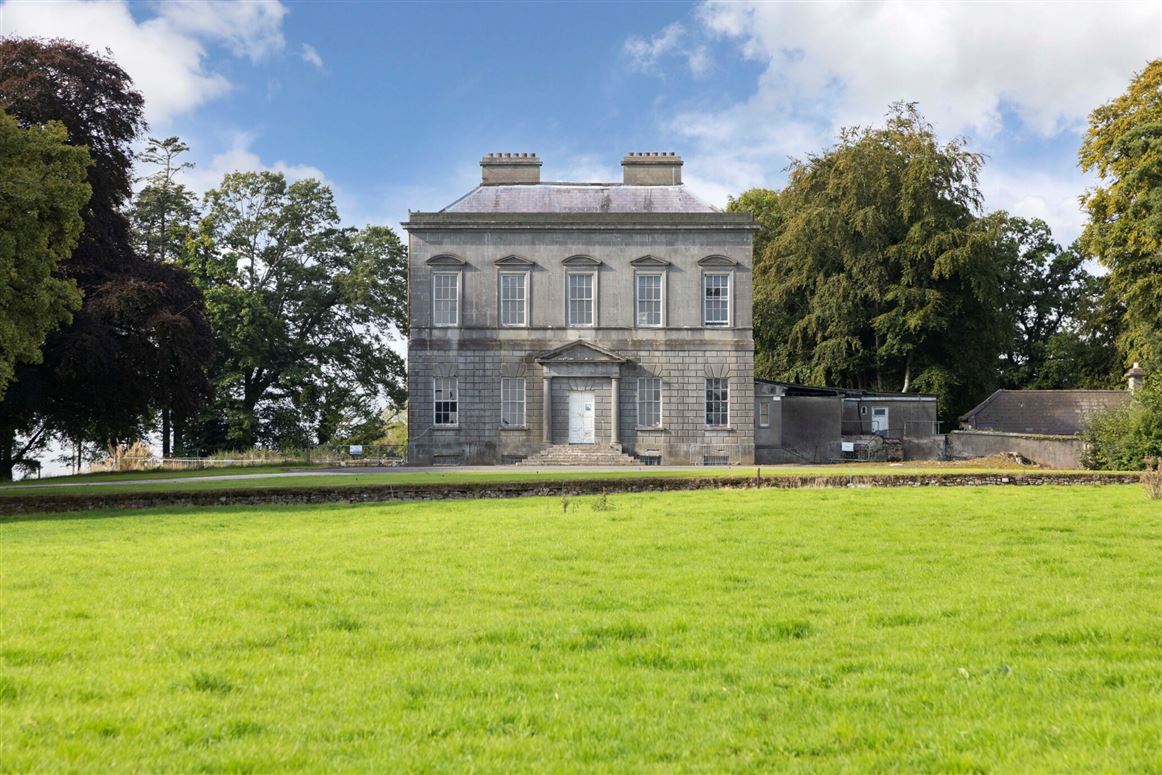
Dowth Hall, County Meath, photograph courtesy Sherry Fitzgerald.
Dunboyne Castle, County Meath, now a hotel, photograph courtesy of hotel website.
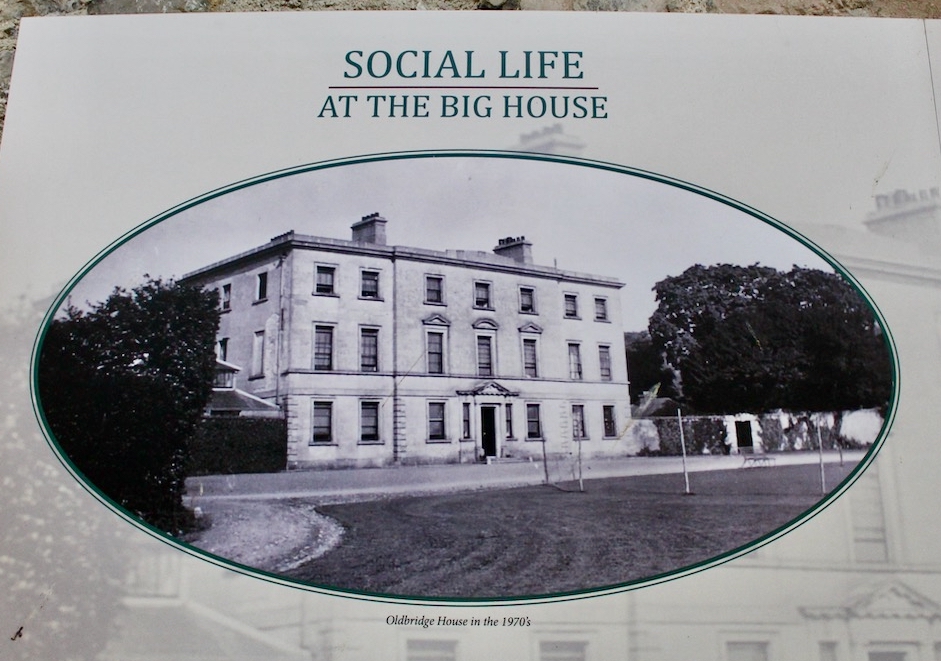
Signage at Oldbridge House, County Meath, including an old photograph of the house.

The house is three storey with a plain ashlar frontage of seven bays, with the centre three slightly advanced. Christine Casey and Alistair Rowan tell us in The Buildings of Ireland: North Leinster, The Counties of Longford, Louth, Meath and Westmeath (published in 1993) that the house was originally designed as a three bay three storey block with low single-storey wings, and the upper stories of the wings were added later. [2]

In the early nineteenth century two floors were added to each wing. Casey and Rowan tell us that this was apparently carried out by Frederick Darley (1798-1872).

Quadrant walls link the house to its park, with rusticated doors.
Photograph © Jennifer Winder-Baggot, www.irishhistorichouses.com

It has a centrally located tripartite doorcase with pilasters surmounted by a closed pediment, which holds a canonball from the fields of the Battle of the Boyne. It has a string course between ground and first floors and sill course to first floor, and three central windows on first floor with stone architraves. [3]
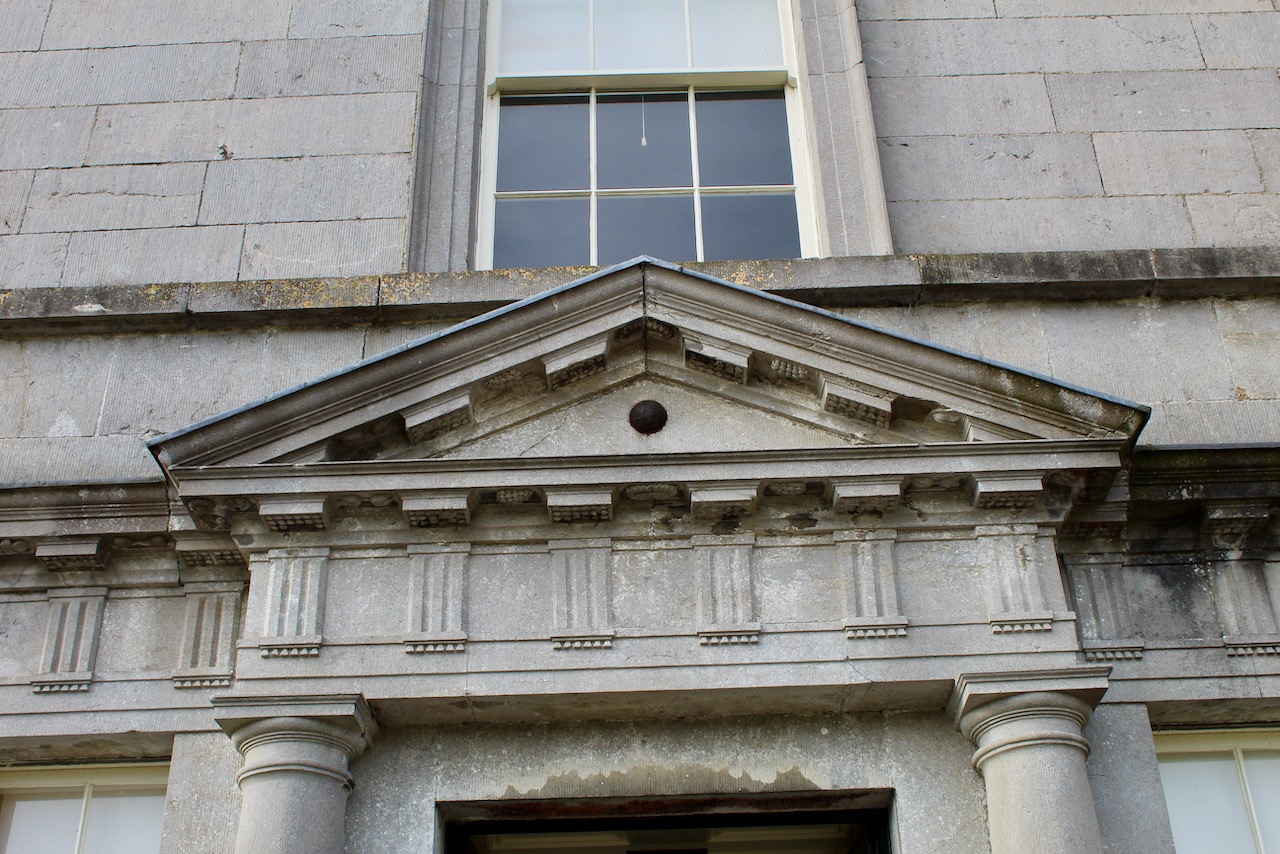
Oldbridge House, County Meath, October 2019. The inset canonball was recovered from the field from the Battle of the Boyne. Photograph © Jennifer Winder-Baggot, www.irishhistorichouses.com

Dixie Coddington (1725-1794) married Catherine Burgh, daughter of Thomas Burgh (1696-1754) of Burgh (or Bert) house in County Kildare. Burgh Quay in Dublin is named after a sister of Thomas Burgh’s, Elizabeth, who was the wife of the Speaker of the House in Ireland, Anthony Foster. Thomas Burgh’s uncle, another Thomas Burgh (1670-1730), was Surveyor General and architect.

On 13 April 1757 Dixie Coddington of Oldbridge sold Tankardstown. [see 1]

Dixie Coddington served as MP for Dunleer, County Louth. He and his wife had several daughters who all died in infancy, and no son, so Oldbridge passed to his brother, Henry Coddington (1728-1816). Dixie had previously leased Oldbridge to his brother, and has spent most of his life living in Dublin on Raglan Road. [see 1]

Henry Coddington (1728-1816) was father to Stephen’s ancestor Elizabeth. Henry was a barrister, and served as MP for Dunleer, County Louth, and he married Elizabeth Blacker from Ratheskar, County Louth. He served as High Sheriff for County Louth, then for County Meath, and was Deputy Serjeant-at-Arms between 1791 and 1800. He served as Justice of the Peace also for Counties Louth and Meath.

Henry and Elizabeth’s son Nicholas (1765-1837) followed in his father’s footsteps, and served as MP for Dunleer before the Act of Union in 1800, and also served as high sheriff for counties Louth and Meath. Nicholas and his son, Henry Barry, carried out a number of improvements on the estate. The house was re-modelled in the 1830s to the drawing of Frederick Darley. [see 1]

The Oldbridge Estate then passed to Henry-Barry Coddington, son of Nicholas. Henry-Barry Coddington was born on May 22nd in the year 1802; he was the eldest surviving son of Nicholas Coddington and Laetitia Barry. Henry Barry took a Grand Tour of Europe and kept a diary. He married Maria Crawford, eldest daughter of William Crawford of Bangor Co. Down in 1827.

Noel French tells us of Maria Crawford’s father and his role in tenant land rights:

William Sharman Crawford, was the owner of 5,748 acres in County Down … as well as 754 acres at Stalleen in County Meath. William Sharman Crawford took an active interest in politics. He is best known for his advocacy of Tenant Right – the Ulster Custom which gave a tenant greater security through the three “f”s: fair rent, fixity of tenure and free sale of goodwill. Crawford called this “The darling object of my heart”. This idea was not popular with other landlords, but Crawford remained a strong advocate of it for the rest of his life. In 1843 Crawford managed to persuade Sir Robert Peel, the Conservative prime minister, to establish the Devon Commission to investigate the Irish land question. Tenant right, the subject of eight successive bills drafted by Sharman Crawford, was eventually conceded in the Land Acts of 1870 and 1881.”

Despite the admirable work of his father-in-law, Henry-Barry Coddington was a slave owner. He inherited an estate in Jamaica from his great uncle, Fitzherbert Richards. The estate, Creighton Hall in the parish of St. Davids in Jamaica, had previously belonged to Fitzherbert’s brother Robert Richards. The estate was 1165 acres. 399 acres was planted with sugar cane in 1790. The plantation produced sugar, rum, molasses, cotton, ginger, coffee, cocoa and pimento. [see 1]

In A Parliamentary Return of 1837-38, which listed names of those who claimed a loss of “property” after slavery was abolished in 1834, Henry-Barry Coddington was recorded as the `Master` to 235 enslaved individuals. It seems, however, that Coddington was unsuccessful in his claim for compensation.

The property at Oldbridge passed to a son, John Nicholas Coddington (1828-1917) and then to his son Arthur Francis by his first wife, Lelia Jane Naper (d. 1879) of nearby Loughcrew House, a Section 482 property (see my entry https://irishhistorichouses.com/2023/09/21/loughcrew-house-loughcrew-old-castle-co-meath/ ).

Oldbridge House was occupied by the National Army in July 1922. In 1923 Arthur F. Coddington of Oldbridge brought a claim against the government for damages done by the National Army forces when they occupied Oldbridge House. The repairs included slates, plumbing, painting and six trees felled.[see 1]
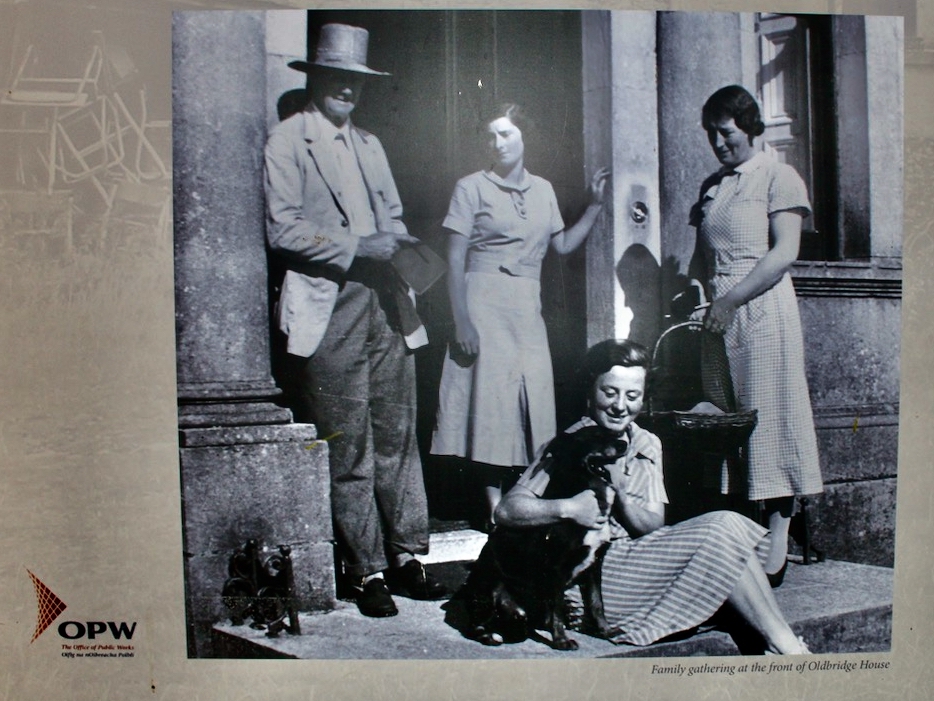
Captain Arthur Coddington, his daughter Diana with the dog, Arthur’s wife Dorothea née Osborne from Smithstown, Julianstown in County Meath, and possibly Denise another daughter.

Arthur’s son Dixie fought in World War II then returned to live in Oldbridge, where he began a commercial market gardening business, and where he trained young people in horticulture.

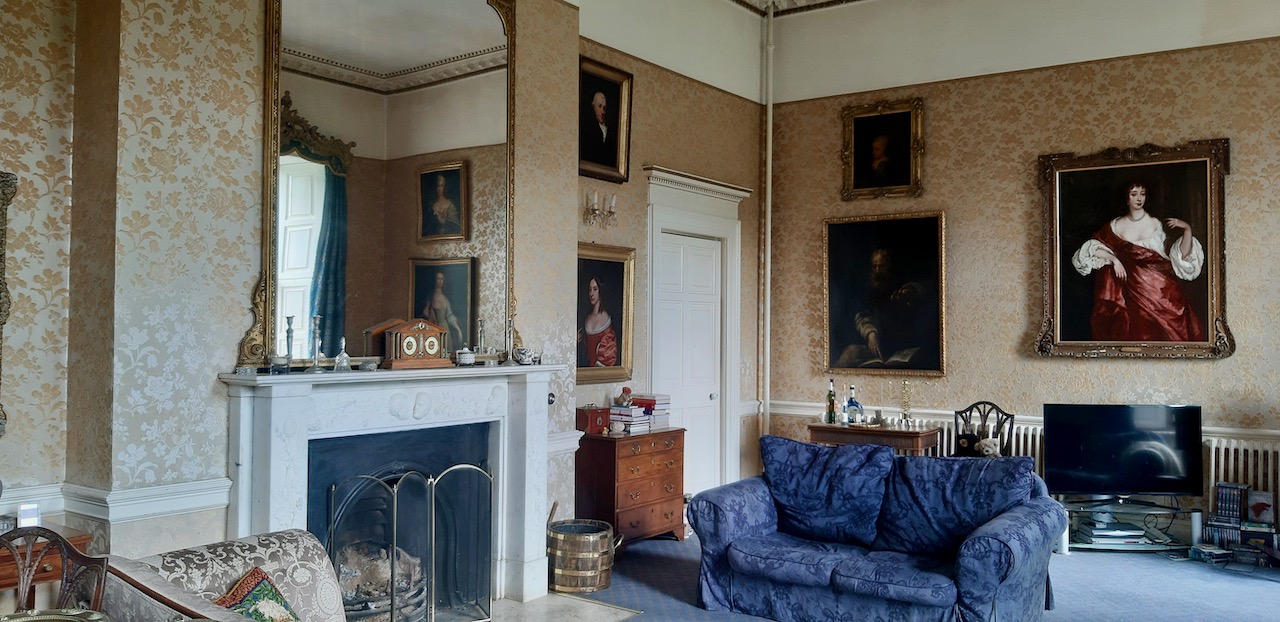
The Meath History hub tells us that in 1982 a gang broke into Oldbridge House and stole £600,00 in antiques. Two years later, Dixie’s son Nicholas and his wife were held at gunpoint for eleven terrifying hours in their house. Among the items stolen was an eight-foot picture of King William III, dating back to 1700, a number of landscape paintings and a number of family portraits. The haul included items that had been recovered from the robbery two years previously. In 1984 Nicholas Coddington put the house and contents up for sale.

Oldbridge House was purchased by the state in 2000 as part of the Good Friday Peace Agreement, and renovation began.
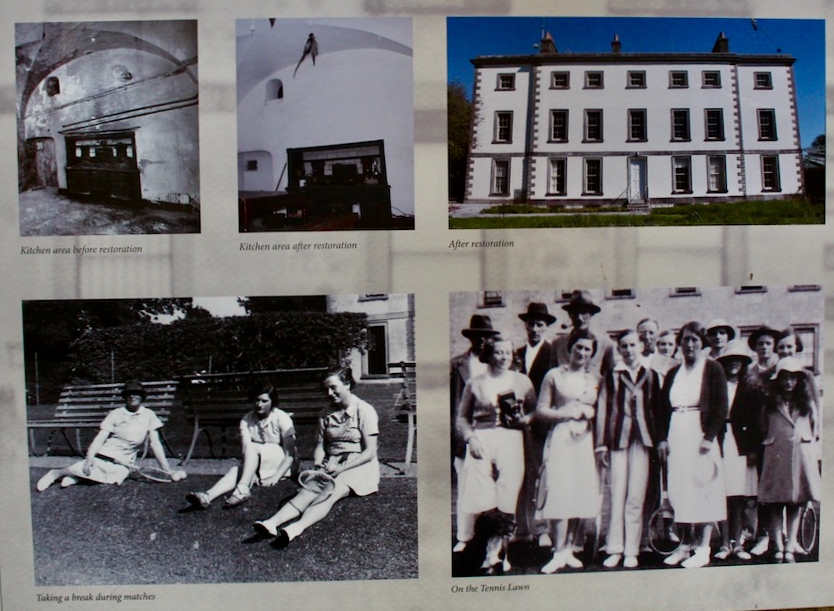
Oldbridge House, County Meath. Coddington photographs of a tennis match at the house.

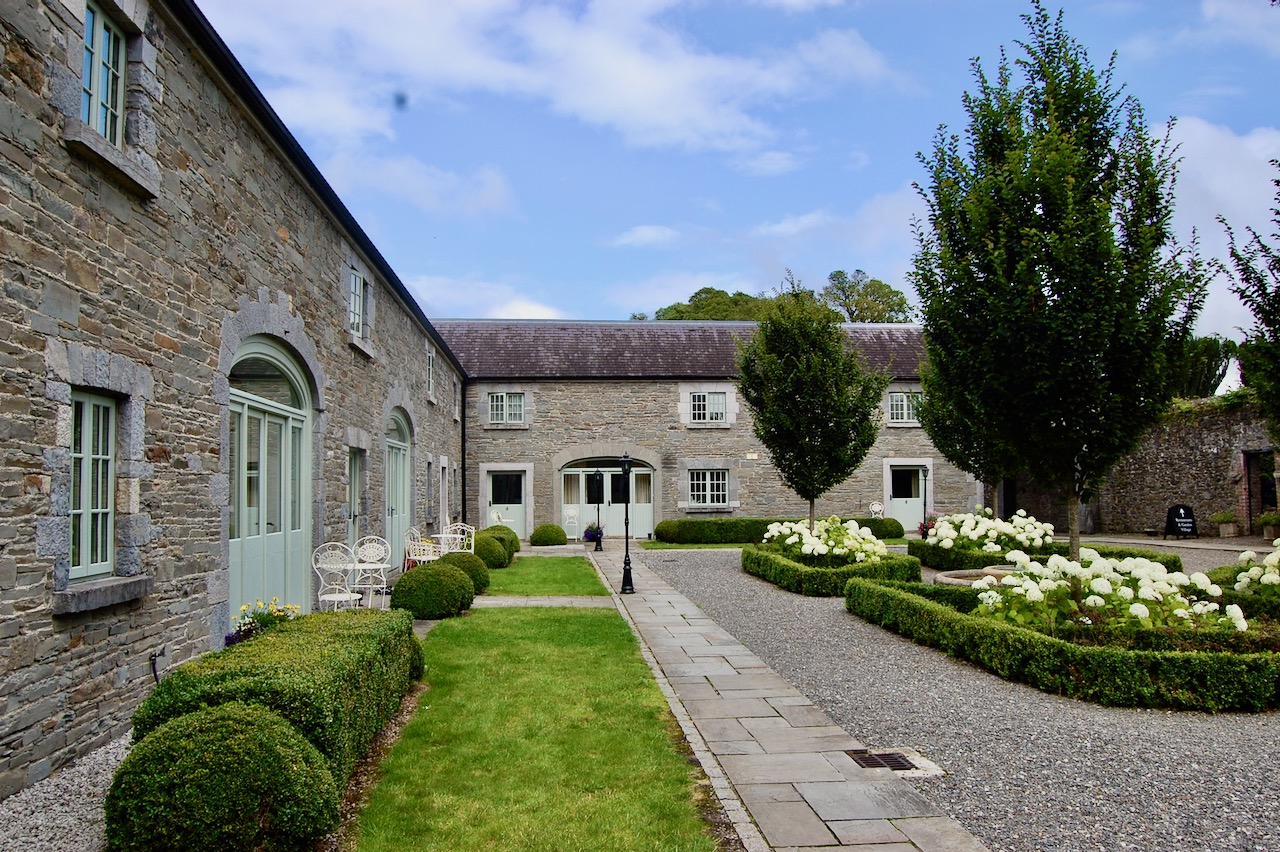
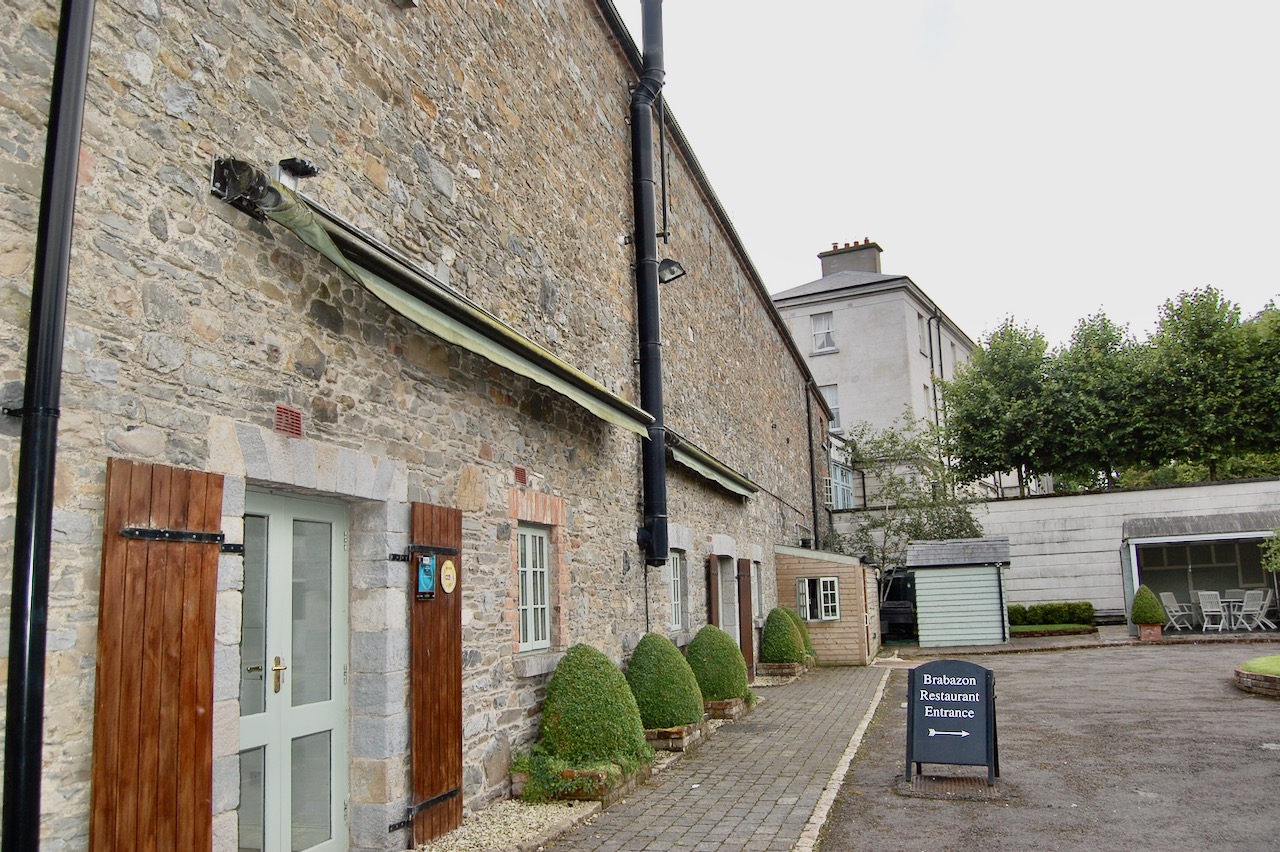
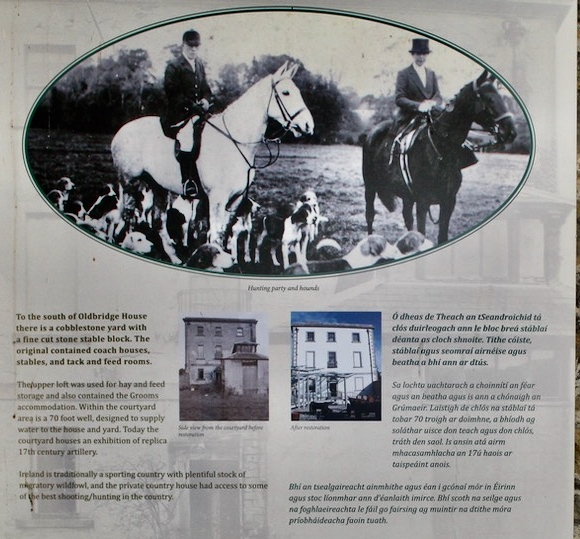
To the left of the house there is a cobble stone stable yard with fine cut stable block. This originally contained coach houses, stables, tack and feed rooms.

To the right of the house is a small enclosed courtyard which contains the former butler’s house.
Oldbridge House, County Meath.
Oldbridge, County Meath, October 2019. Photograph © Jennifer Winder-Baggot, www.irishhistorichouses.com

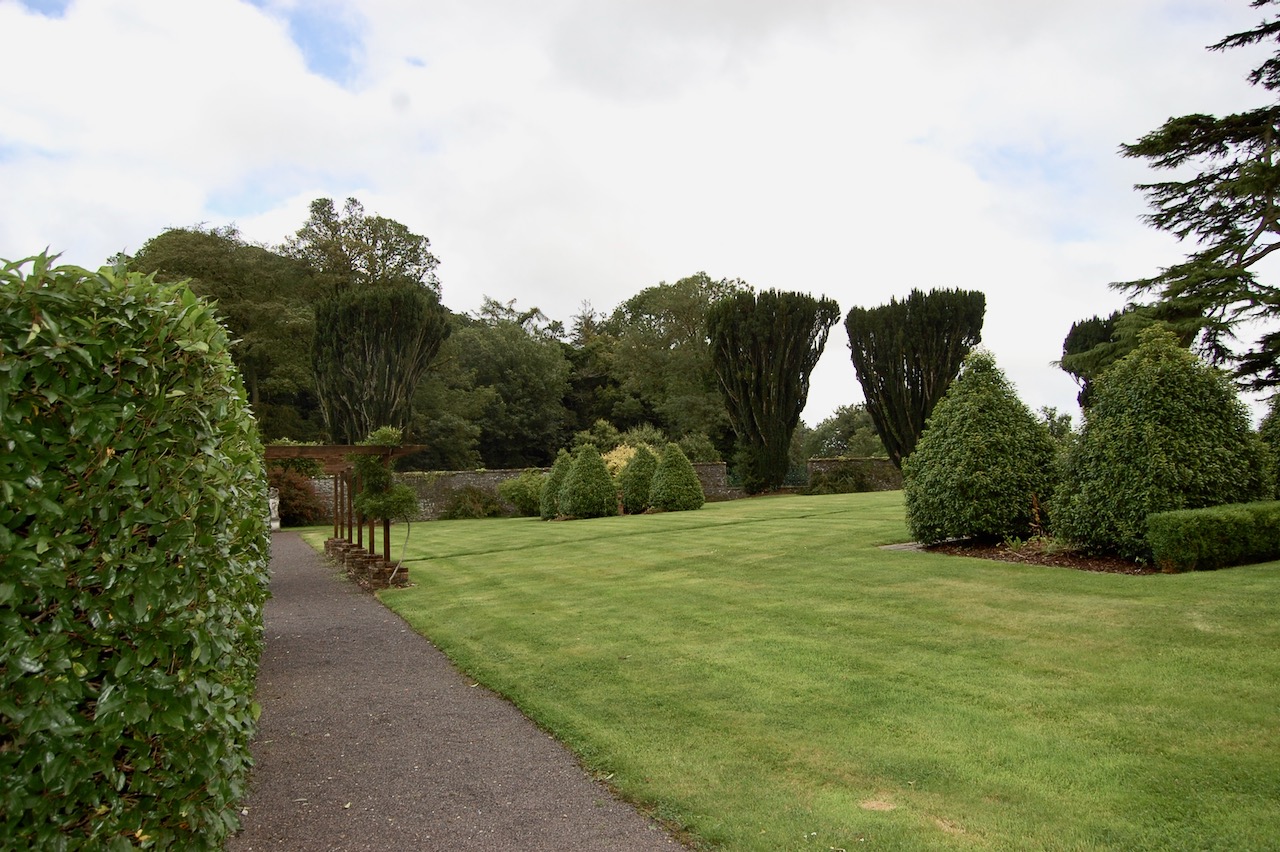
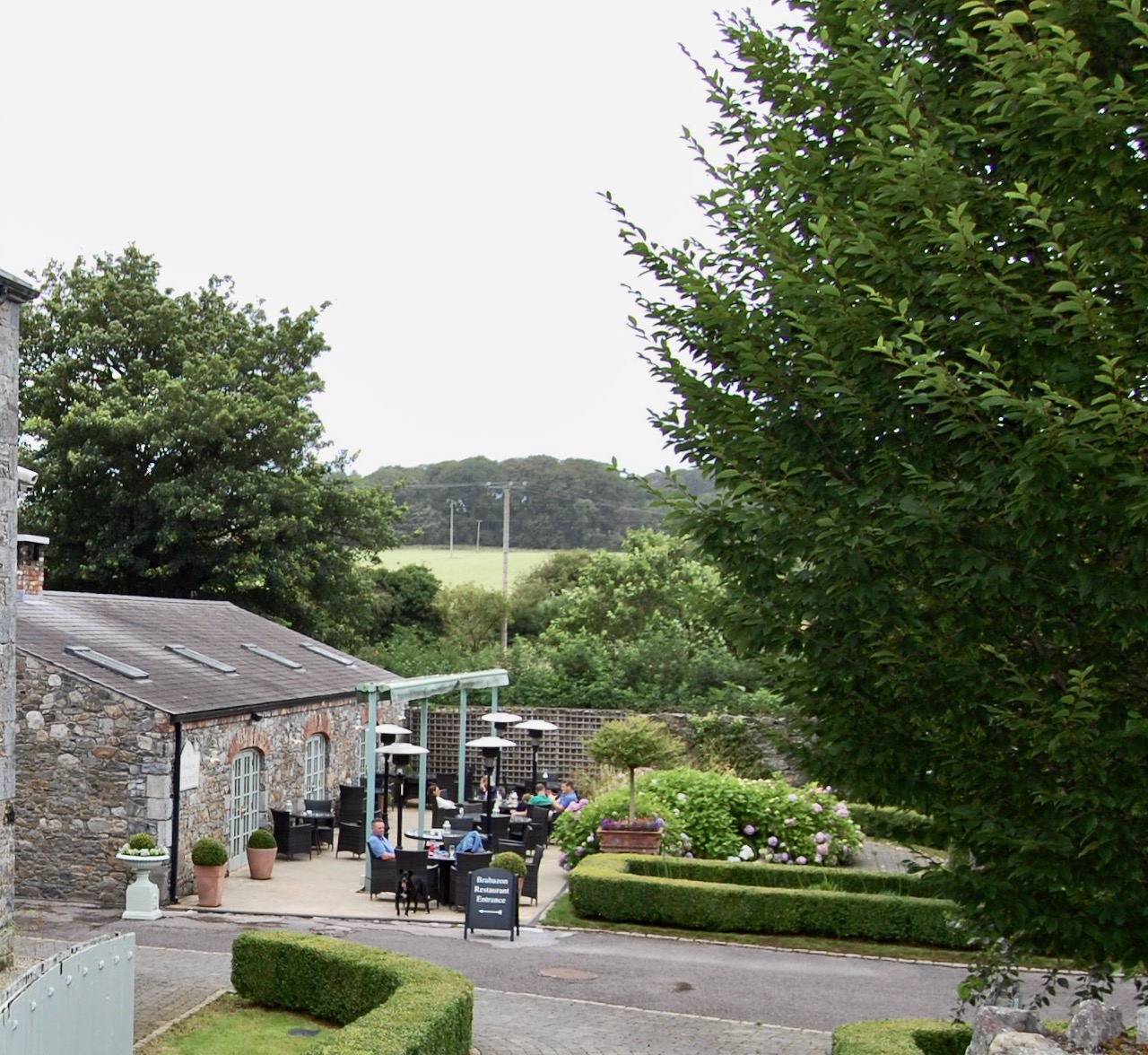
The gardens of Oldbridge House have been restored, with an unusual sunken octagonal garden, peach house, orchard and herbaceous borders, with a tearoom in the old stable block. Throughout the year outdoor theatre, workshops and events such a cavalry displays and musket demonstrations help to recreate a sense of what it might have been like on that day in July 1690.

Oldbridge, County Meath, October 2019. Photograph © Jennifer Winder-Baggot, www.irishhistorichouses.com

[1] https://meathhistoryhub.ie/coddingtons-of-old-bridge/

[2] p. 446. Casey, Christine and Alistair Rowan, The Buildings of Ireland: North Leinster, The Counties of Longford, Louth, Meath and Westmeath. Penguin Books, UK, 1993.

[3] https://www.buildingsofireland.ie/buildings-search/building/14402016/oldbridge-house-oldbridge-sheephouse-co-meath

Rokeby Hall, Grangebellew, County Louth A92 HX52 – section 482

Rokeby Hall, County Louth, September 2019. Photograph © Jennifer Winder-Baggot, www.irishhistorichouses.com

www.rokeby.ie
Open dates in 2025: June 1-30, Aug 1-31, 10am-2pm

Fee: adult/OAP €10, child/student €5

donation

Help me to pay the entrance fee to one of the houses on this website. This site is created purely out of love for the subject and I receive no payment so any donation is appreciated!

€15.00

Rokeby, September 2019. Photograph © Jennifer Winder-Baggot, www.irishhistorichouses.com

Stephen and I visited Rokeby Hall in County Louth on Saturday September 7th, 2019. I texted ahead to alert Jean to our visit. We were lucky to have another beautifully sunny day!

Rokeby, September 2019. Photograph © Jennifer Winder-Baggot, www.irishhistorichouses.com

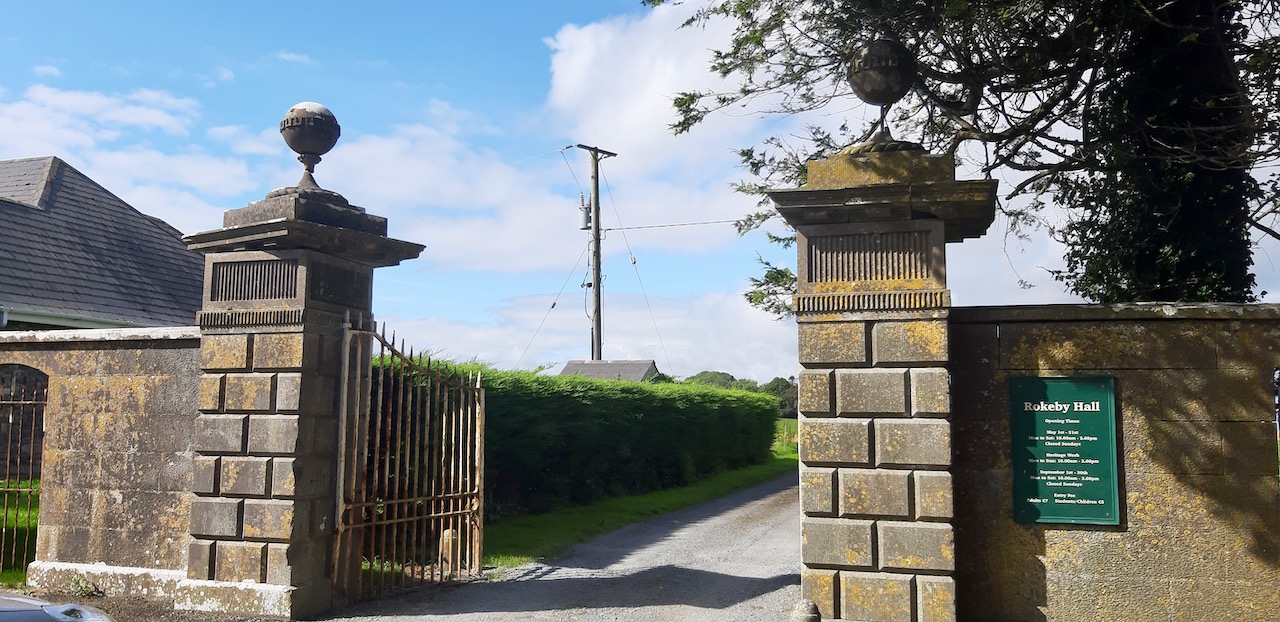
We entered the gates and drove up the impressive drive, through lovely fields.

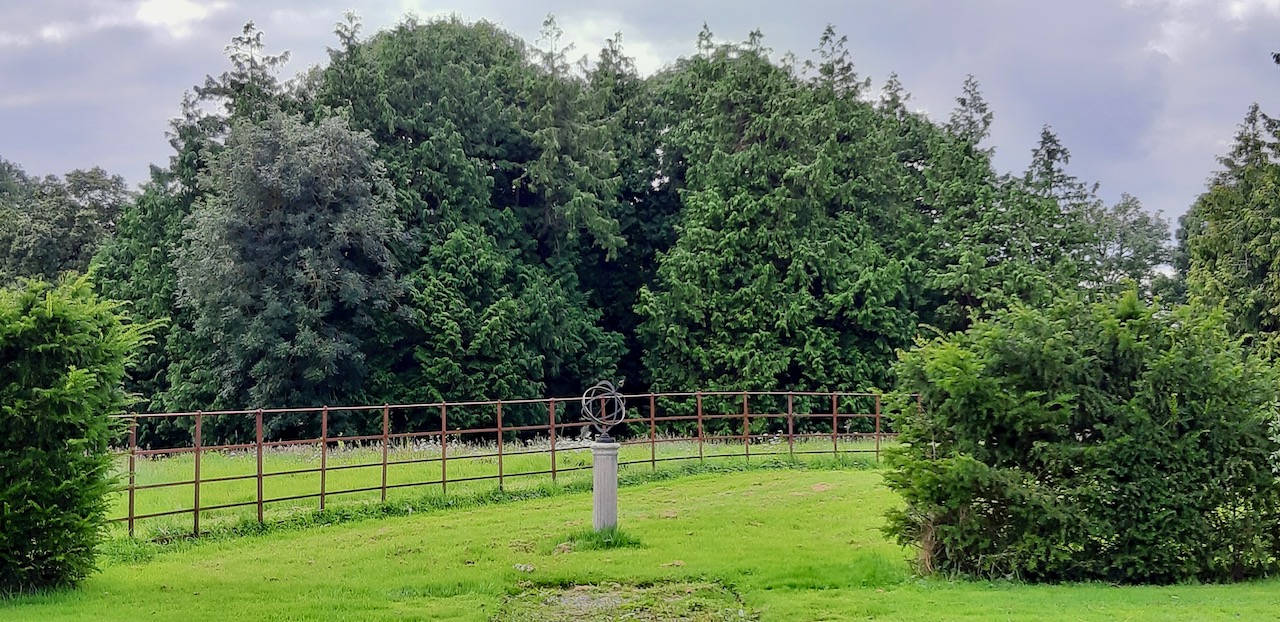
The Observatory at Rokeby. Photograph © Jennifer Winder-Baggot, www.irishhistorichouses.com

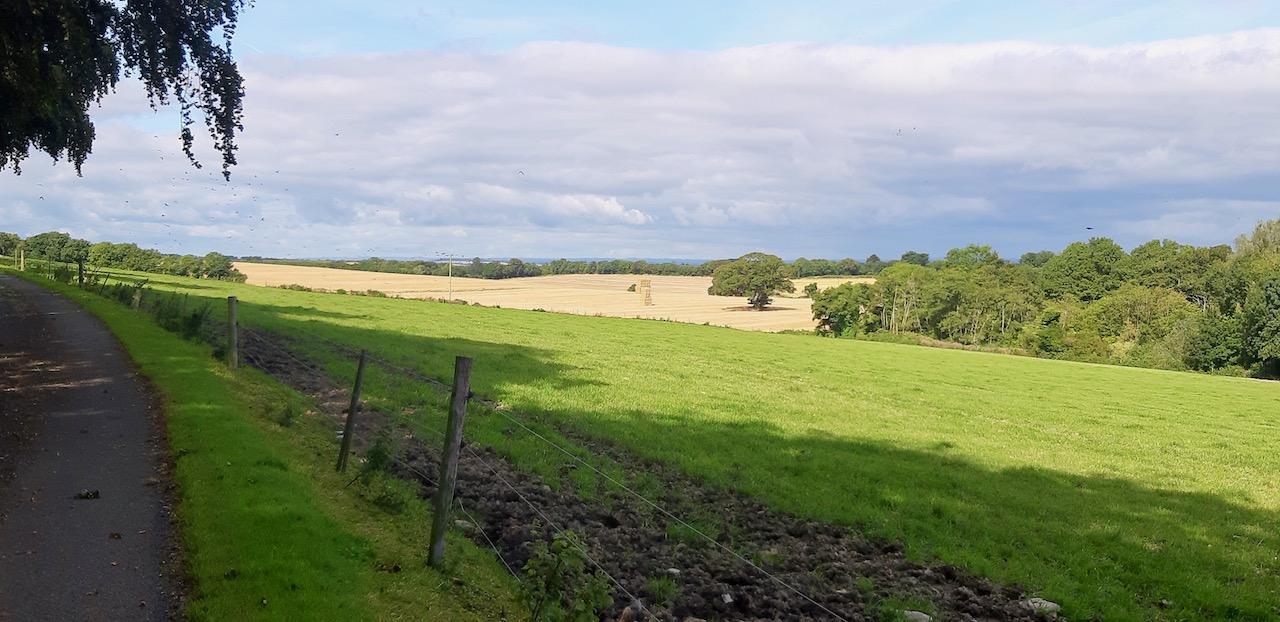
I paused as we approached the house to take a photograph of the observatory, and of the field near the house with the grazing cattle.

Rokeby, September 2019. Photograph © Jennifer Winder-Baggot, www.irishhistorichouses.com

There is an excellent website for Rokeby Hall which I read in advance so knew a little bit of information. [1]

“Rokeby Hall is a country house in the Neoclassical style built for Richard Robinson, Archbishop of Armagh.

Initially designed by Thomas Cooley and built c. 1785 by renowned Irish architect Francis Johnston, Rokeby is an elegant building with beautiful exterior and interior detailing which remains largely unchanged to this day.

The house is a testament to the architects and the skilled craftsmen of the Georgian era and is today considered to be one of the most significant historic country houses remaining in Co. Louth.”

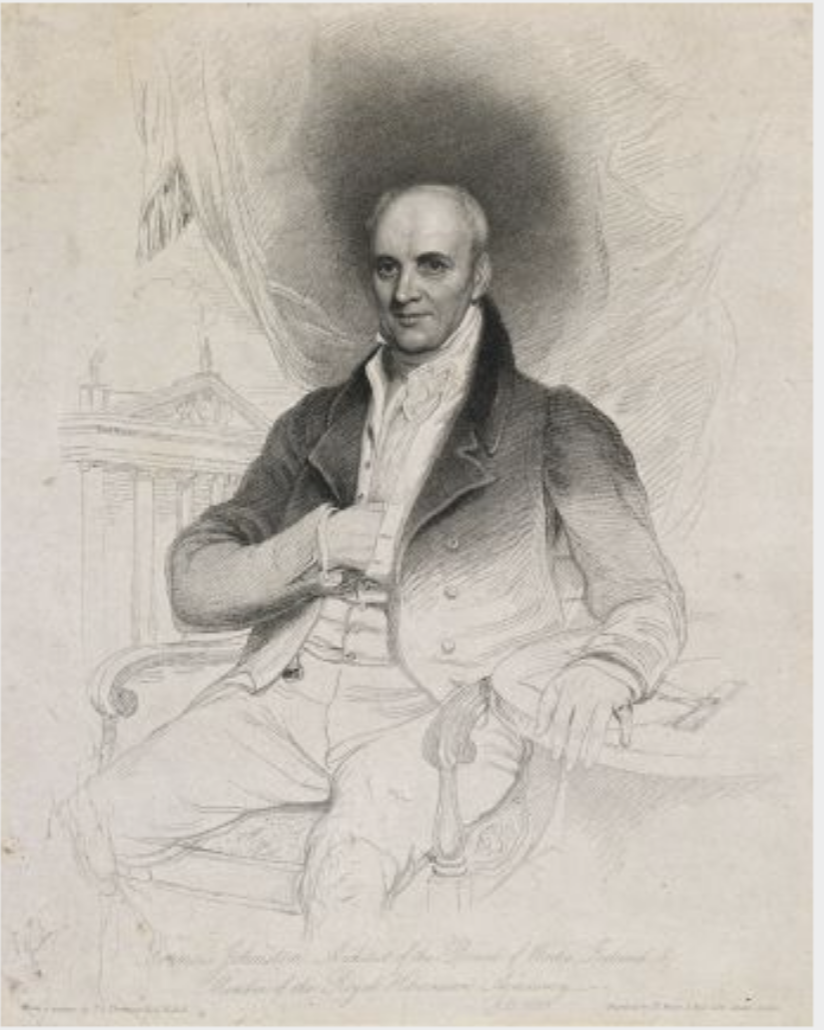
Francis Johnston (1760-1829) is best known for building the General Post Office in Dublin, and is the son of another architect, William Johnston. Francis is from Armagh and first practised his architecture there, and then lived in Drogheda from 1786 before moving to Dublin about 1793. It was the archbishop of Armagh, Richard Robinson, who sent Johnston to Dublin to train under Thomas Cooley, having already worked with Cooley to design buildings.
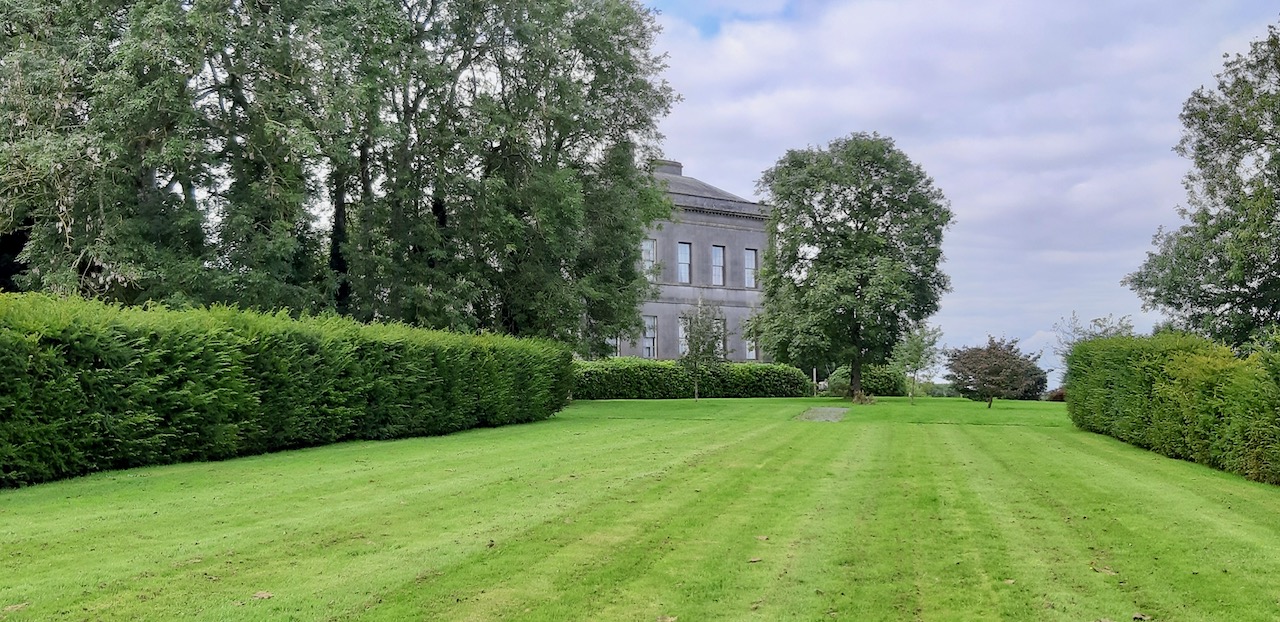
Francis Johnston (1761-1829), Architect, against the General Post Office, Dublin Date 1823 by Engraver Henry Hoppner Meyer, English, 1782-1847 After Thomas Clement Thompson, Northern Irish, c.1780-1857, photograph courtesy of National Gallery of Ireland.
Rokeby, September 2019. Photograph © Jennifer Winder-Baggot, www.irishhistorichouses.com

Thomas Cooley, who worked first as a carpenter then draughtsman in an architectural office, came from England to Ireland in 1768 when he won a competition to design a new Royal Exchange in Dublin, which is now the City Hall on Dame Street. He built several public buildings in Dublin in the neoclassical style. Together with James Gandon (1743–1823), Cooley was part of a small school of architects influenced by Sir William Chambers (1723–1796). Cooley died in 1784. He worked closely with the Archbishop Richard Robinson and designed many buildings in Armagh, including the Archbishop’s Palace (now the Town Hall) and the library. He also designed the Four Courts in Dublin, and Caledon in County Tyrone.

Cooley designed Rokeby Hall, and it fell to Francis Johnston to finish the project after Cooley’s death. Johnston continued to work with Archbishop Robinson, for whom he went on to build the Armagh Observatory and Armagh Courthouse, and other buildings in Armagh (I think that the observatory in Rokeby was built for the current owner, but I’m sure the Archbishop would have been delighted had he known, since he had the one in Armagh built in 1790 [2]!). Jean Young, the owner of Rokeby, recommended that we also visit another house in Louth designed and built by Francis Johnston, Townley Hall.

Johnston designed more buildings, including the beautiful Chapel Royal in Dublin Castle, and he converted Parliament House in College Green in Dublin into the Bank of Ireland. He also designed Charleville Forest Castle in Tullamore, County Offaly, and probably designed another Section 482 house, Turbotstown in County Westmeath (see my entry). He also helped in the 2nd Earl of Longford to convert Tullynally House into Tullynally Castle (see my entry), completing that work in 1803.
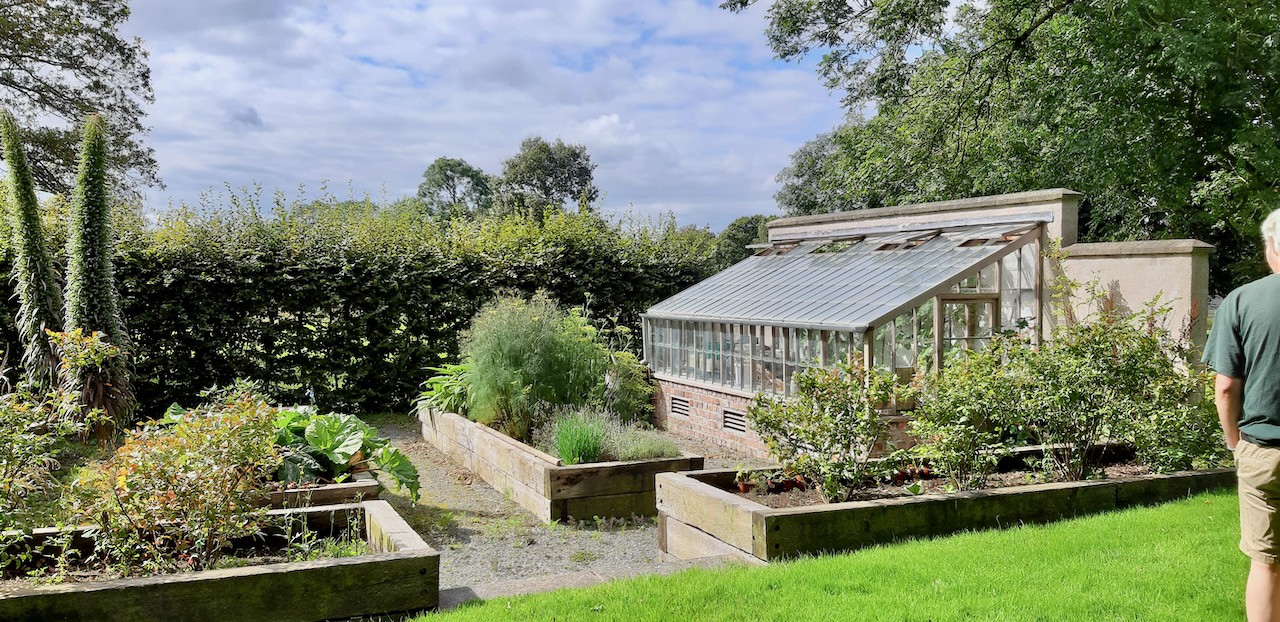
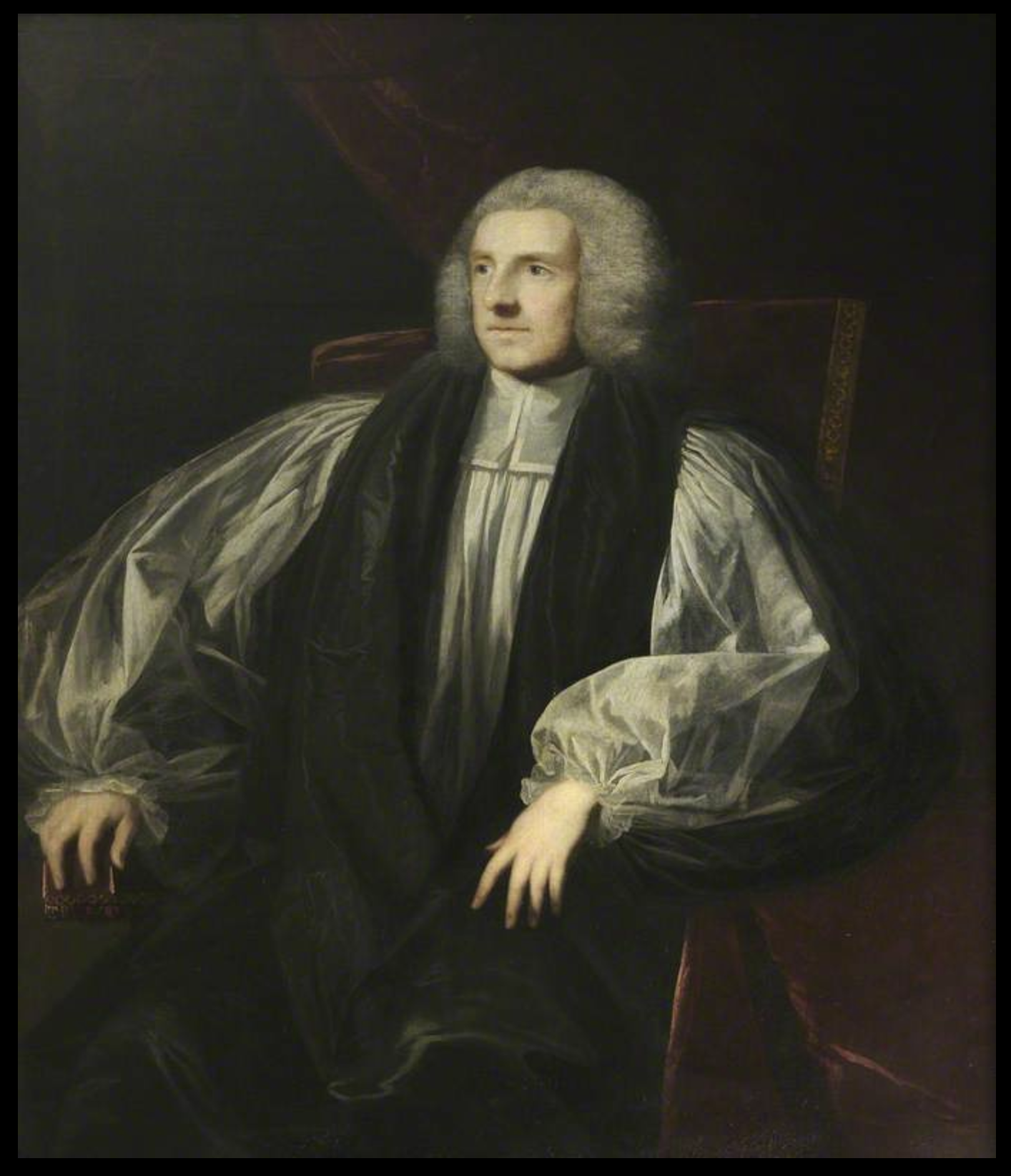
Jean greeted us and invited us inside. We paused in the capacious front hall to look at a portrait while she told us about the man responsible for having the house built, Archbishop Richard Robinson. Robinson named the building after his family home in Yorkshire, England, Rokeby Park.
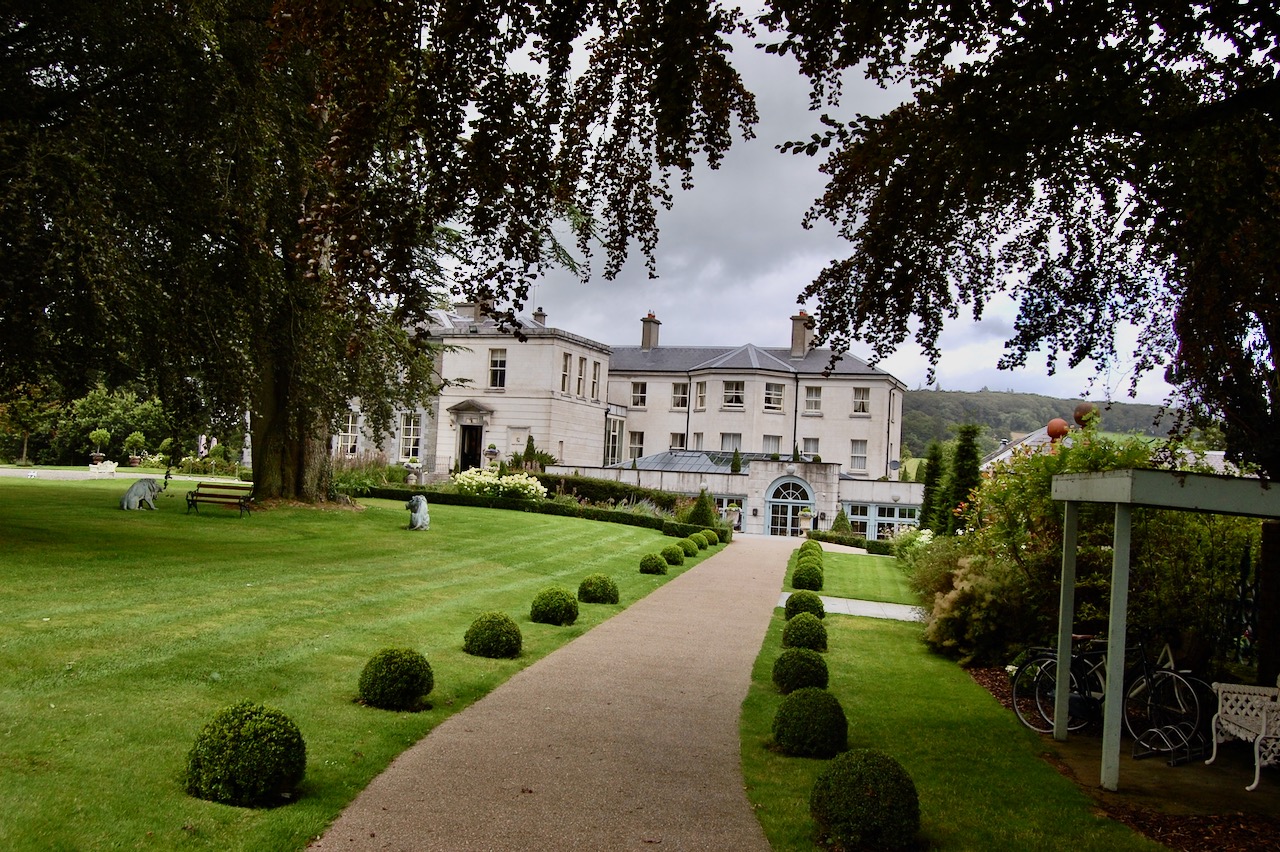
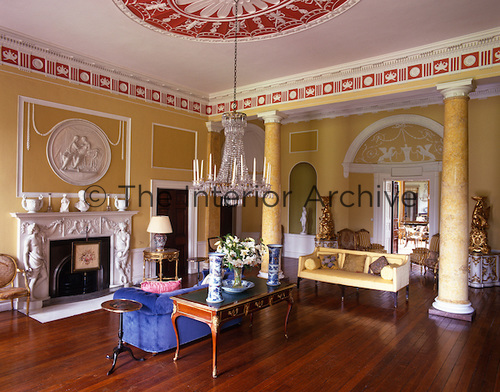
The columns reminded me of “scagliola” [3] but are actually painted. Photograph © Jennifer Winder-Baggot, www.irishhistorichouses.com
The Saloon in Caledon was designed in the neoclassical style by Thomas Cooley with columns of yellow scagliola; Copyright Christopher Simon Sykes, The Interior Archive Ltd, CS_GI7_09
Archbishop Richard Robinson (1708-1794) by Angelica Kauffmann or Joshua Reynolds, courtesy of Armagh Robinson Library.

The website tells us about Richard Robinson:

After coming to Ireland as chaplain to the Duke of Dorset in 1751, he eventually rose through the ranks of the church before becoming Archbishop of Armagh in 1765. Prior to Robinson’s appointment, most Archbishops had spent little time in Armagh which in 1759 had been described as ‘an ugly, scattered town’. Primate Robinson is credited with much of Armagh’s transformation to the beautiful Georgian city it is today. His many contributions to the city include the Armagh Robinson Library, the Armagh Observatory, the Gaol, the Armagh Infirmary and the Archbishop’s Palace, Chapel and Palace Stables.

He was created the 1st Baron Rokeby in 1777, choosing the title “Rokeby” as his elder brother Sir Thomas Robinson had by then sold the family estate of Rokeby Park. He purchased land at Marlay in Co. Louth from the Earl of Darby to create a new “Rokeby” estate. On his death, his titles passed to a cousin but he left the Rokeby estate in Louth to the son of his sister Grace. The Reverend John Freind changed his name to his maternal surname “Robinson” and moved from England to Rokeby Hall in 1794.”

Lord Rokeby’s coat of arms on the decorative Neoclassical pediment. Photograph © Jennifer Winder-Baggot, www.irishhistorichouses.com

I was surprised to hear that an archbishop was made a Baron, but Jean assured me that this was quite common.

Jean has studied the history of her home, completing a Masters degree in Maynooth, so we thoroughly enjoyed our discussion and she was able to explain the history of ownership of the house as well as architectural details. It is the details of the house which are special.

Rokeby, County Louth. Photograph © Jennifer Winder-Baggot, www.irishhistorichouses.com
Rokeby, September 2019. Photograph © Jennifer Winder-Baggot, www.irishhistorichouses.com

I also asked why Robinson lived here in Rokeby rather than in Armagh, since he was archbishop of Armagh. Jean explained that archbishops had much work to do in Dublin, including taking their place in Parliament, so it was suitable to live in a premises between Dublin and Armagh. The Irish Aesthete Robert O’Byrne has a delightful entry that tells us more about this Archbishop of Armagh, who, according to O’Byrne, “behaved more like a continental prince-bishop.” He extravagantly travelled in a carriage with six horses, attended by three footmen behind. [4]

In Classic Irish Houses of the Middle Size, Maurice Craig writes (p. 152):

The north (entrance) front of the house built for Richard Robinson, Archbishop of Armagh, in the years following 1785, probably by Thomas Cooley (1740-84) and certainly with the participation of Francis Johnston (1760-1829). Both in elevation and in plan it is related to Lucan House, and in plan also to Mount Kennedy. James Wyatt, Michael Stapleton, Richard Johnston and even Sir William Chambers are involved in a complex tale which may never be fully unravelled. Rokeby is more remarkable for the beauty of its detail than for its overall impression…”

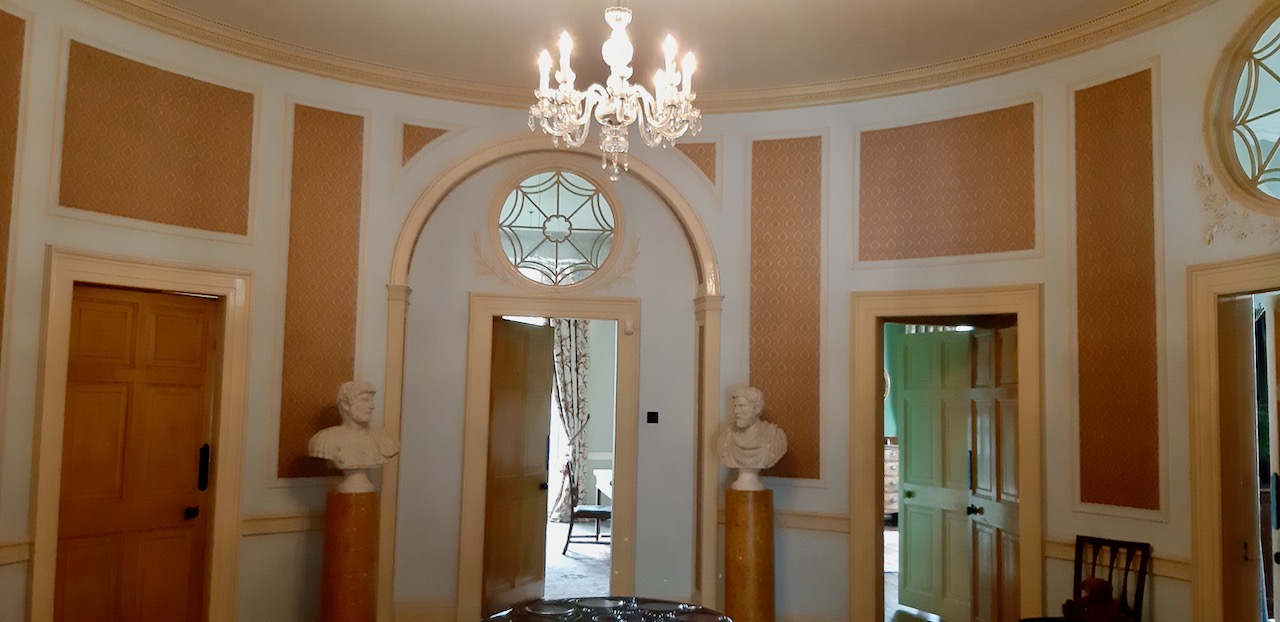
The most noteable feature of the house, for me, is the round hallway upstairs, and the second one above that in what seems to be the nursery and children’s area – which we saw after a tour of the first floor rooms.

Rokeby, September 2019. Photograph © Jennifer Winder-Baggot, www.irishhistorichouses.com

This is the landing at the top of the staircase. It opens into many bedrooms, a bathroom, another small landing, and one door is purely decorative, to keep symmetry. Note the detailing of the windows, over every second door, which let in light to the hall – all original.

Jean and Jeff had to furnish the house entirely, as unfortunately it was empty when they purchased it and needed repairs. They have done so beautifully.

Rokeby, County Louth. Photograph © Jennifer Winder-Baggot, www.irishhistorichouses.com
Rokeby, September 2019. Photograph © Jennifer Winder-Baggot, www.irishhistorichouses.com

These bedrooms contain their original chimneypieces. The Irish Aesthete writes that the upstairs chimneypieces are original to the house but that the downstairs ones are not and were installed later, along with some downstairs doors.

The Youngs have also restored the garden to its former splendour:

Jean and Jeff have done much work, such as planting this formal garden. Photograph © Jennifer Winder-Baggot, www.irishhistorichouses.com

Above the round hall at the top of the stairs, is another round hallway, you can see why I found it so surprising and delightful.

Rokeby, September 2019. Photograph © Jennifer Winder-Baggot, www.irishhistorichouses.com

One doesn’t expect such detail in an upper level. The rooms leading off on this level were of various sizes, some quite large.

Rokeby, September 2019. Photograph © Jennifer Winder-Baggot, www.irishhistorichouses.com

The room, although in the attic, contains as much attention to detail as the reception rooms, with curving door and window frames. Outside is the parapet of the house, so the windows have to be set back to allow in maximum light. The Youngs still have work to do to restore the cupola roof. You can see the wear and tear of use on the original stone stairs:

Rokeby, September 2019. Photograph © Jennifer Winder-Baggot, www.irishhistorichouses.com

The Irish Aesthete discusses Rokeby in his blog:

 “The house’s severe limestone façade hides a more inviting interior, of three storeys over basement, since Rokeby contains a particularly generous attic concealed behind the parapet, centred on a circular room lit by glazed dome. A similar circular landing on the first floor provides access to the main bedrooms.

Descendants of the Robinson family remained in possession, although not necessarily in occupation, of Rokeby until the middle of the last century. Thereafter the property passed through a variety of hands often with unfortunate consequences. When the present owners bought the place in 1995, for example, the library had been stripped of its bookcases and divided in two with one half used as a kitchen. Over the past twenty years, a process of reclamation has taken place, driven by the correct balance of enthusiasm, commitment and ongoing research into the house’s history. Most recently the present owners have impeccably restored Rokeby’s mid-19th century conservatory.” [5]

In the article from the Irish Times which originally inspired me to start visiting houses and to write this blog, “Open season: Grand Irish homes that welcome visitors – and get a tax break,” published Sat, Apr 13, 2019, Mary Leland writes that Jean and Jeff worked on the house for ten years, commuting back and forth to California to working in the software industry, before finally moving over in 2006. The tax break enabled them to restore the Richard Turner conservatory. [6]

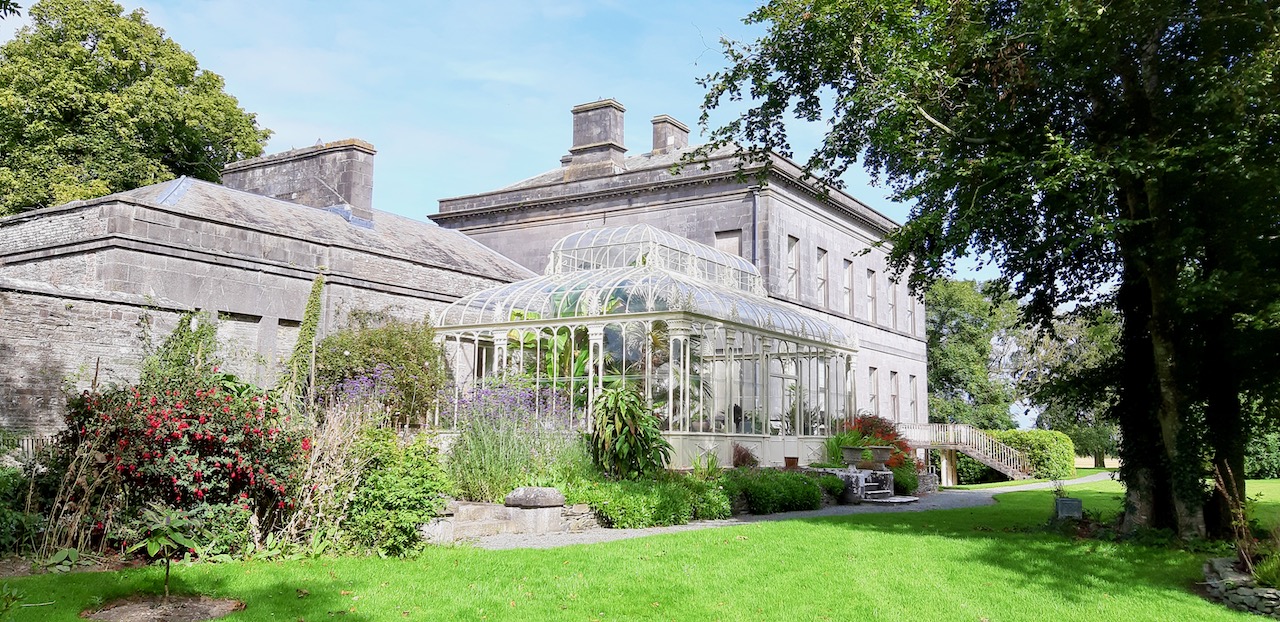
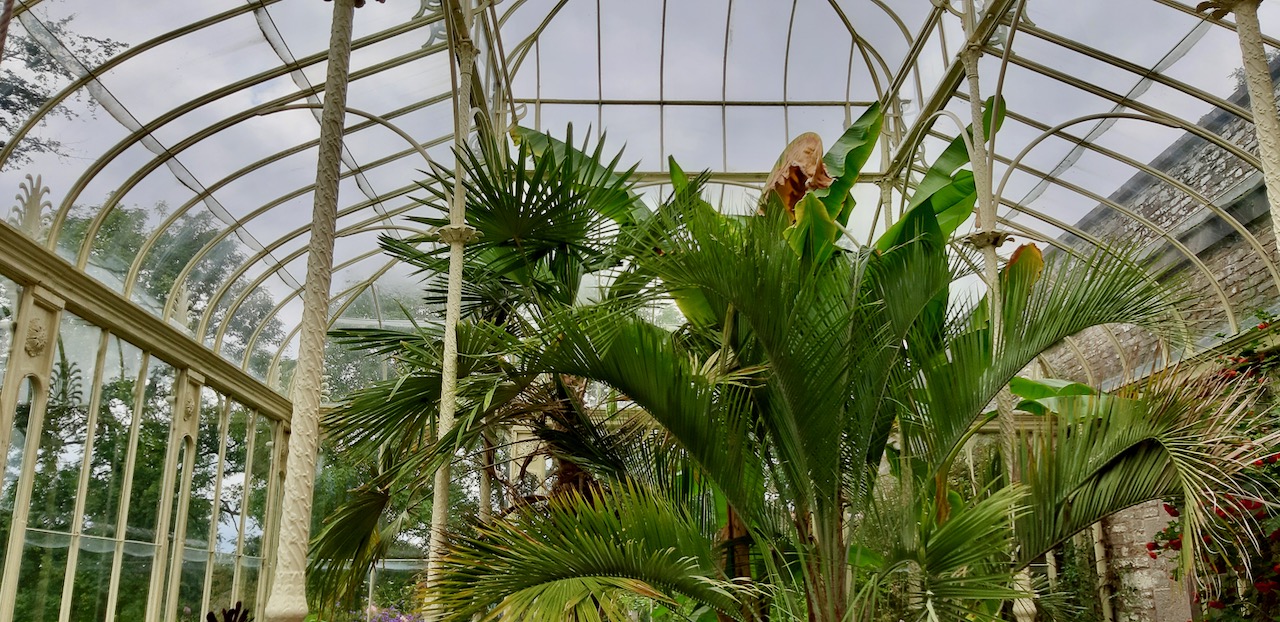
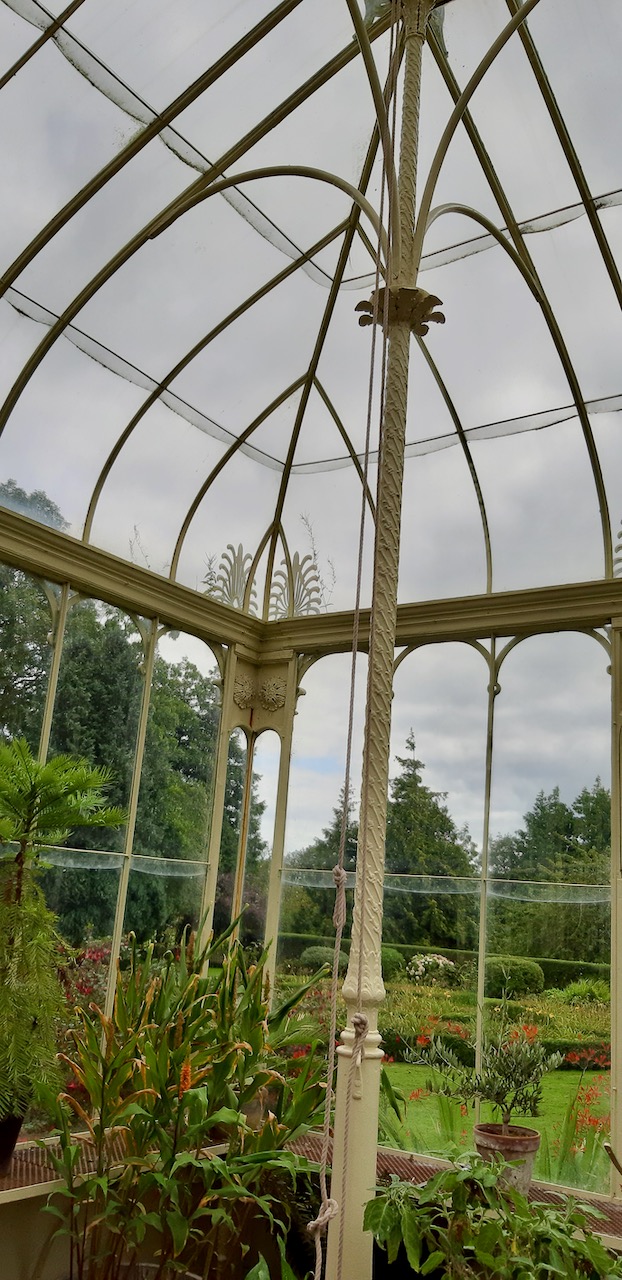
The conservatory by Richard Turner. Photograph © Jennifer Winder-Baggot, www.irishhistorichouses.com
Information board from “In Harmony with Nature, The Irish Country House Garden 1600-1900” in the Irish Georgian Society, July 2022, curated by Robert O’Byrne.
Rokeby, County Louth. Photograph © Jennifer Winder-Baggot, www.irishhistorichouses.com
Rokeby, September 2019. Photograph © Jennifer Winder-Baggot, www.irishhistorichouses.com

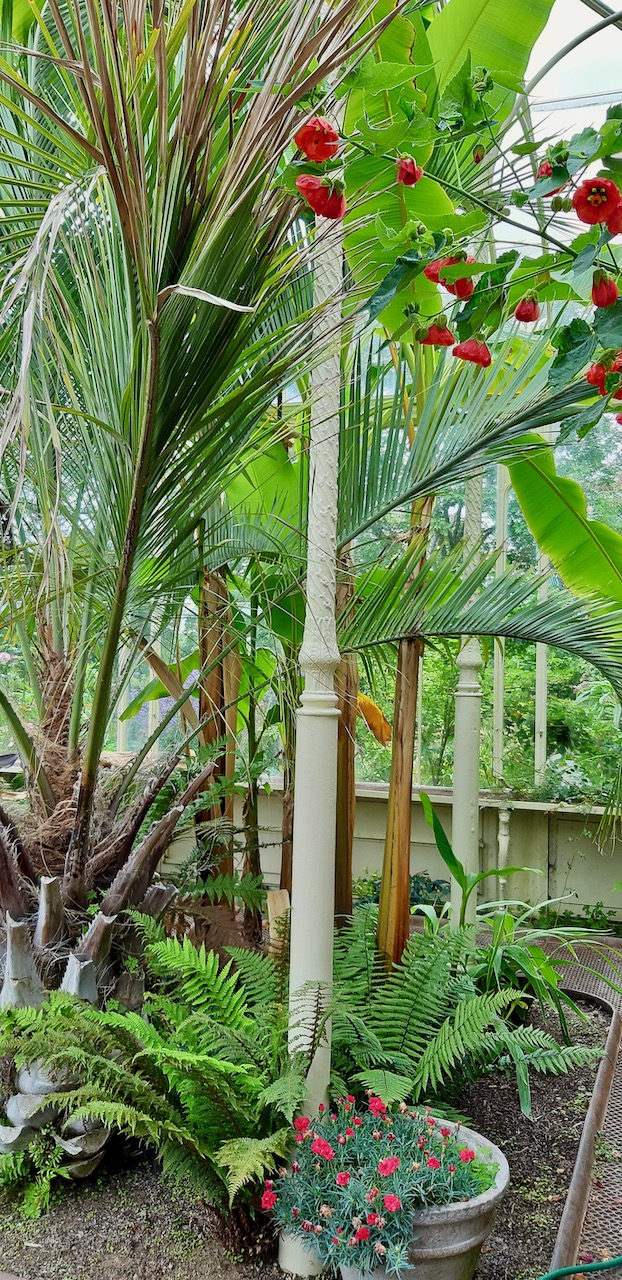
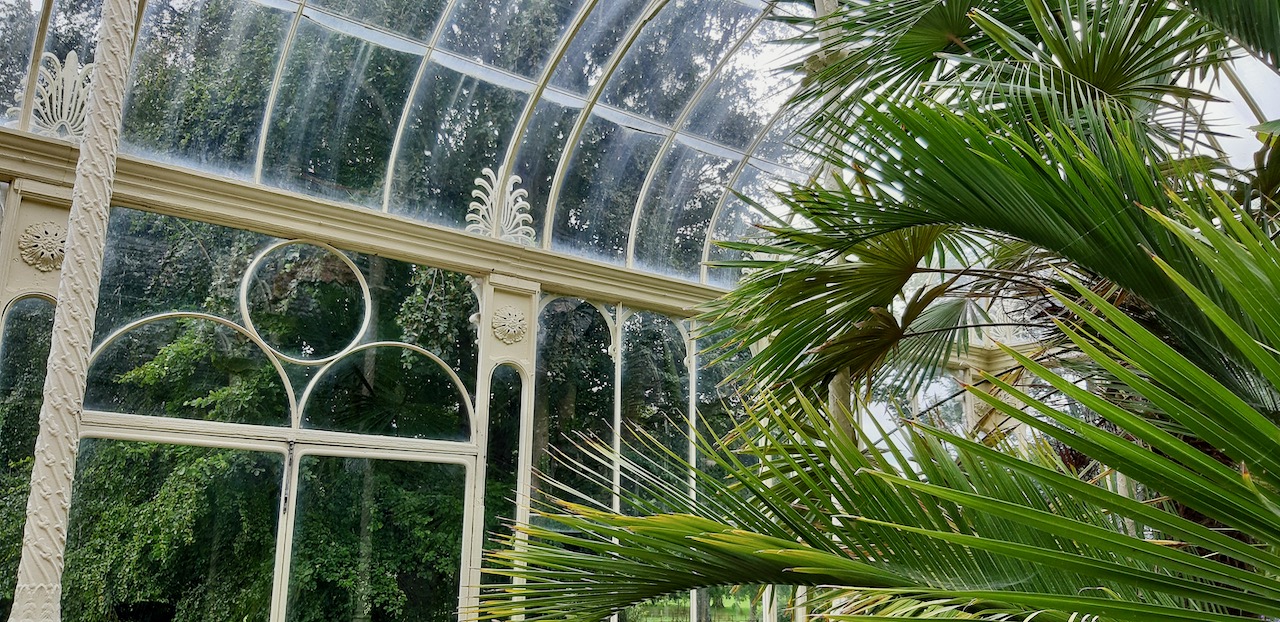
The complete restoration of this structure took about two years, 2012-2014. The restored conservatory received 1st prize of the Ellison Award for Meath An Taisce in 2014.  A fascinating full description of the restoration is on the Rokeby Hall website. There’s also discussion of the restoration of the Armorial window and the attics.

Rokeby, County Louth. Photograph © Jennifer Winder-Baggot, www.irishhistorichouses.com
Rokeby, September 2019. Photograph © Jennifer Winder-Baggot, www.irishhistorichouses.com

Jean noticed my puzzlement at the crescent dips in the glass at the top of the window, as you can see in the picture above. Her explanation shows just how authentic the restoration work was: in the 1850s, the size of panes of glass was  limited. Therefore glass was laid out in layers. The curved edge ensured that rainwater would move to the middle of the glass before dripping down, thus protecting the window frames.

Richard Robinson, 1st Baron Rokeby (1709-1794), Archbishop of Armagh by Joshua Reynolds.

The archbishop left the house upon his death in 1794 to his sister Grace’s son. Grace Robinson had married the Dean of Canterbury, William Freind. Her son, the Reverend Archdeacon John Freind subsequently changed his surname to Robinson. Reverend John did not stay long in Ireland, however. When his father-in-law, Captain James Spencer of Rathangan House, County Kildare, was killed by rebels during the 1798 rebellion, he fled. Despite no longer living there, Reverend John Robinson was created 1st Baronet of Rokeby Hall in 1819.

The house was subsequently let to tenants, including Viscount Thomas Southwell; Count Jerome de Salis (leased from 29 April 1822 – he had been appointed High Sheriff of Armagh in 1810 – see [7]); and Henry Coddington, Esq (1734-1816). This is the same Henry Coddington whose daughter Elizabeth married Edward Winder (1775-1829), one of my husband Stephen’s ancestors! Henry himself probably did not live in Rokeby, but probably leased the land to farm, as he lived in Oldbridge nearby. The house was left to deteriorate. Robert O’Byrne quotes James Brewer’s The Beauties of Ireland published in 1826, who wrote that the house “is now, we believe, in the hands of a farmer, and the chief apartments are let furnished to casual inmates.”

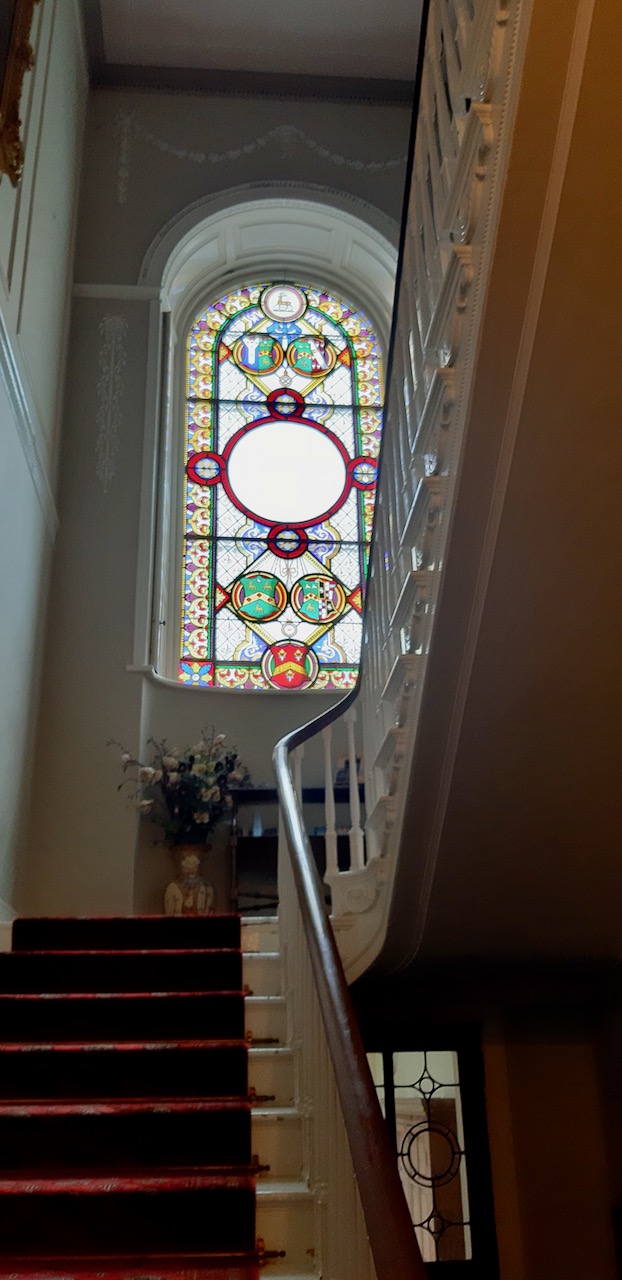
It was only after the death of John Robinson in 1832 that his son, Richard, returned to Rokeby in 1840. Richard, 2nd Baronet (1787-1847) had married, in 1813, the Lady Eleanor Helena Moore, daughter of Stephen, 2nd Earl Mount Cashell. He died in 1847 and was succeeded by his eldest son Sir John Stephen Robinson. Sir John and his wife were responsible for two significant additions to Rokeby Hall – the Turner conservatory, added in the 1850s, and the armorial window in the main stair hall showing the Robinson family history.

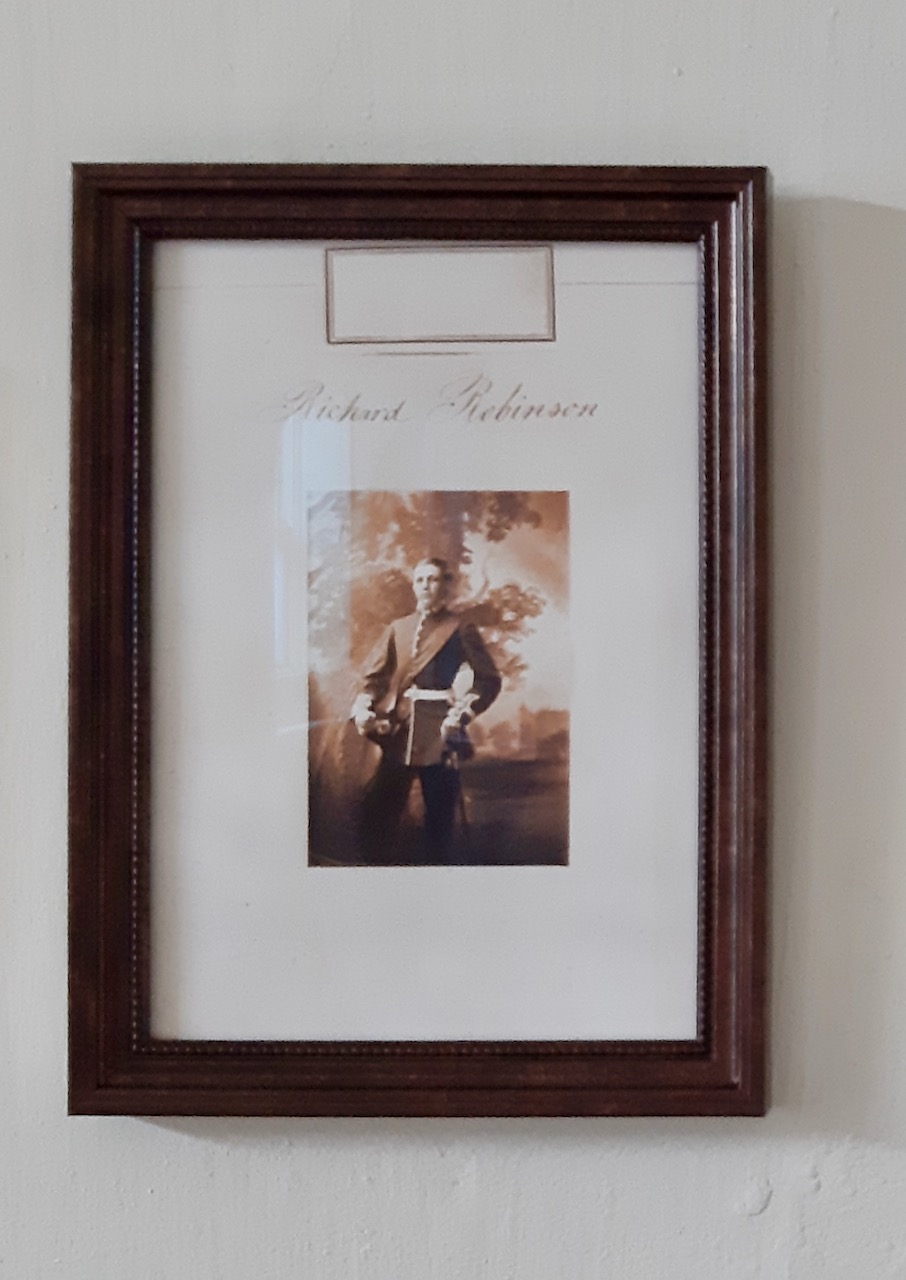
Richard Robinson (1787-1847), Baronet, English School (c.1847) with a depiction of his armorials and campaign medals issued to survivors of the Napoleonic Wars courtesy Adam’s auction 6 Oct 2009. This must be Richard Robinson 2nd Baronet of Rokeby Hall in County Louth. He was the son of John Freind, who married a sister of Richard Robinson Baron of Rokeby, and who took the name of Robinson when he inherited Rokeby.
The armorial window in the main stair hall showing the Robinson family history. Photograph © Jennifer Winder-Baggot, www.irishhistorichouses.com

Sir John, 3rd Baronet (1816-95), JP DL, High Sheriff of County Louth, 1849, married, in 1841, Sarah, only daughter of Anthony Denny, of Barham Wood, Hertfordshire, and granddaughter of Lord Collingwood, Admiral in the Royal Navy who served alongside Lord Nelson in the Napoleonic Wars. Due to his fame, Sarah’s eldest sons took the name Collingwood. [8]

The Rokeby Hall website continues the history of the Rokeby inhabitants:

Sir John died in 1895 and the estate passed to his son Sir Gerald [William Collingwood] Robinson (4th bart.) who died in 1903. The 5th baronet was Sir John’s younger brother Richard Harcourt Robinson. After his death in 1910 the estate eventually passed to Sir Gerald’s sister Maud who had earlier married Richard Montgomery, the owner of Beaulieu House in Co. Louth.

Richard Harcourt Robinson, died in 1910.

With the Robinsons no longer in residence, the estate was gradually broken up. The house and demesne lands were sold to the Clinton family in 1912. The remaining estate lands were also broken up and sold and the Robinson collection of furniture, art and books were eventually auctioned in 1943. The Clinton family remained at Rokeby until about 1950. Since then the ownership of the house has changed a number of times. The current owners purchased the house in 1995.”

After the tour of the house, Stephen and I went out to explore the gardens.

Rokeby, County Louth. Photograph © Jennifer Winder-Baggot, www.irishhistorichouses.com
Rokeby, September 2019. Photograph © Jennifer Winder-Baggot, www.irishhistorichouses.com

[1] www.rokeby.ie

[2] https://armagh.space/heritage/

[3] Wikipedia defines scagliola: Scagliola (from the Italian scaglia, meaning “chips”) is a technique for producing stucco columns, sculptures and other architectural elements that resemble inlays in marble and semi-precious stones. The Scagliola technique came into fashion in 17th-century Tuscany as an effective substitute for costly marble inlays, the pietra dura works created for the Medici family in Florence.

Scagliola is a composite substance made from selenite, glue and natural pigments, imitating marble and other hard stones. The material may be veined with colours and applied to a core, or desired pattern may be carved into a previously prepared scagliola matrix. The pattern’s indentations are then filled with the coloured, plaster-like scagliola composite, and then polished with flax oil for brightness, and wax for protection. The combination of materials and technique provides a complex texture, and richness of colour not available in natural veined marbles.

architectural definitions

[4] https://theirishaesthete.com/2013/02/04/building-on-a-prelates-ambition/

[5] https://theirishaesthete.com/2015/09/21/take-three/

[6] https://www.irishtimes.com/life-and-style/homes-and-property/open-season-grand-irish-homes-that-welcome-visitors-and-get-a-tax-break-1.3855641

[7] https://en.wikipedia.org/wiki/Jerome,_4th_Count_de_Salis-Soglio

Jerome de Salis was born in Italy and inherited the title, Count de Salis, a Count of the Holy Roman Empire. He lived in England from the 1790s. He married three times – had one child by each of his first two wives, then after the first two wives’ deaths, married in 1810, Henrietta (or Harriet) Foster, daughter of Right Reverend William Foster, who was chaplain to the Irish House of Commons (1780–89), and then at different times, Bishop of Cork and Ross; Kilmore; and of Clogher. They had a further nine children.

[8] http://lordbelmontinnorthernireland.blogspot.com/search/label/County%20Louth%20Landowners

Text © Jennifer Winder-Baggot, www.irishhistorichouses.com

Tankardstown Estate & Demesne, Rathkenny, Slane, Co. Meath C15 D535 (hotel) – section 482

www.tankardstown.ie
Open in 2025: all year, National Heritage Week, Aug 16-24, 9am-1pm

Fee: Free for a visit.

Tankardstown, 2019. Photograph © Jennifer Winder-Baggot, www.irishhistorichouses.com

Stephen and I went to Tankardstown on the way to Monaghan in 2019, where we were staying a night on our drive to Donegal to visit his Mum.

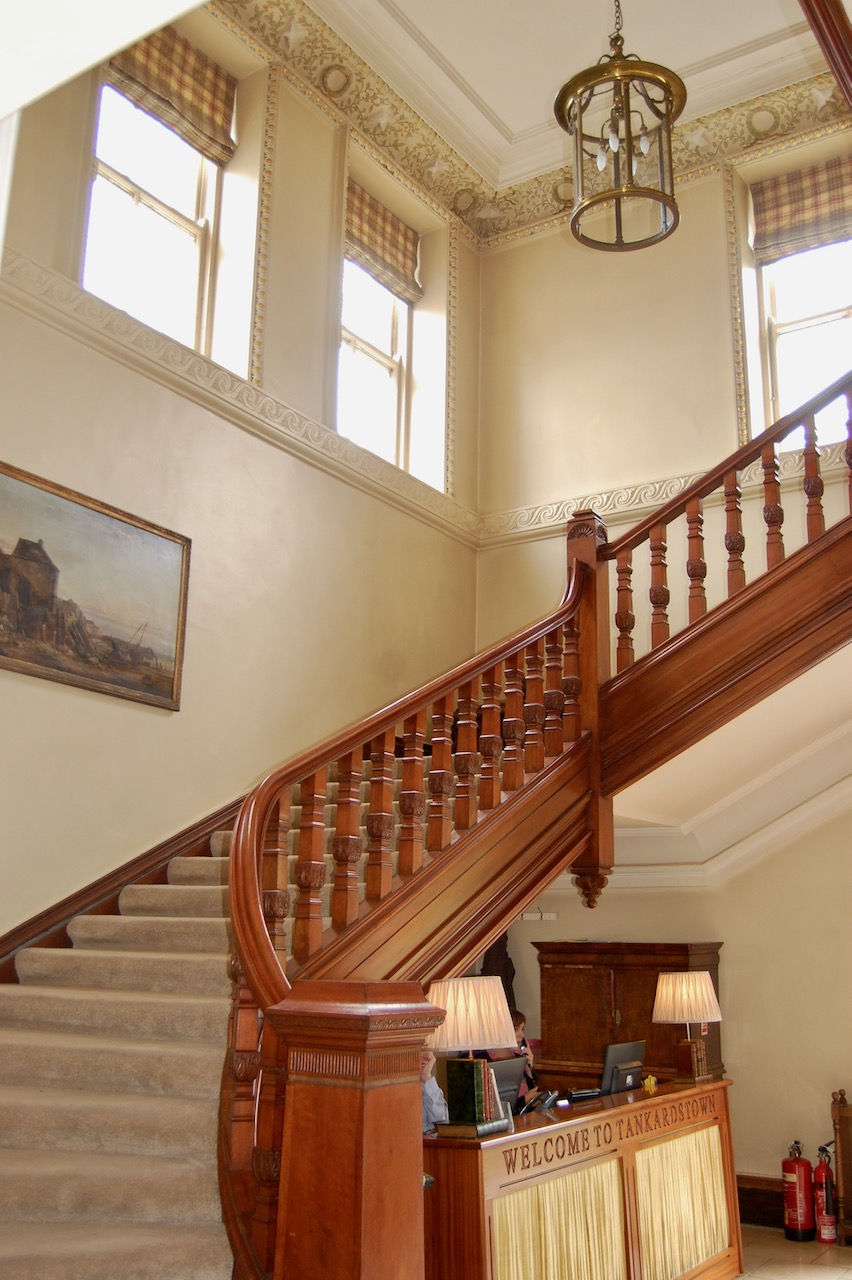
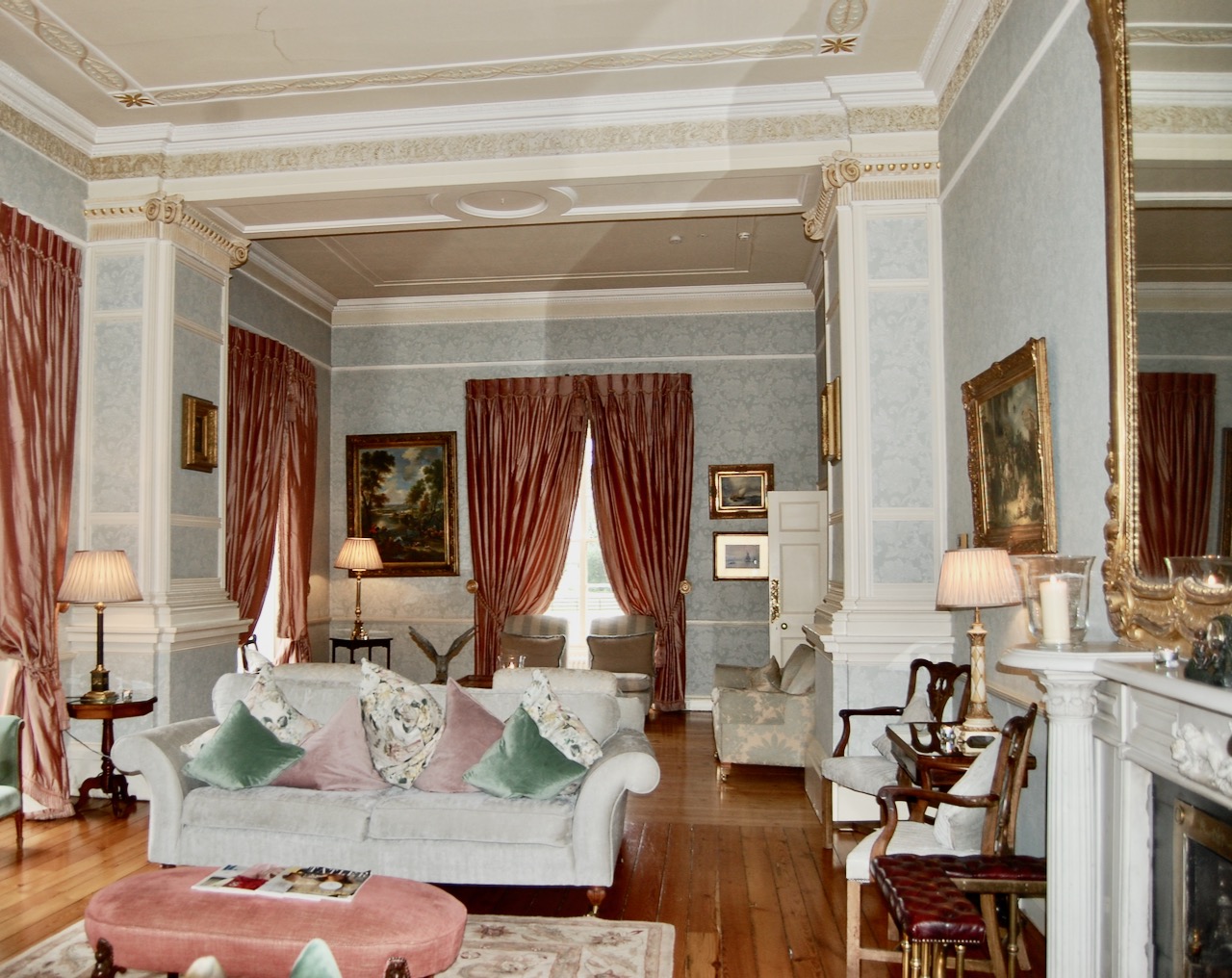
Tankardstown is now a boutique hotel, although the manager Tadhg who showed us around prefers it not to be called a hotel, as it is more like an opulent modernized seventeenth century home. Unfortunately we were not staying the night!

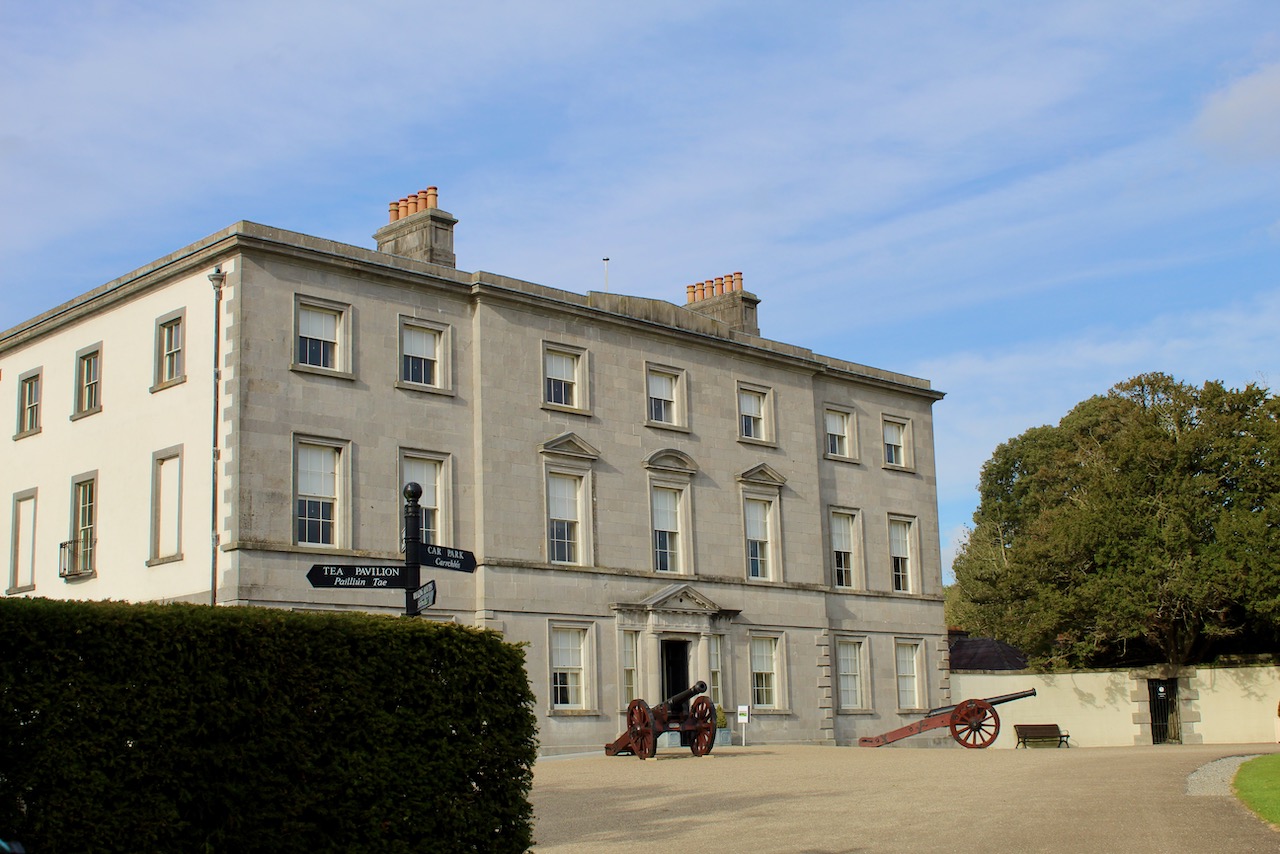
In his Guide to Irish Country Houses (1988) Mark Bence-Jones describes Tankardstown as a two storey late-Georgian house. According to wickipedia, the Georgian period is 1740-1837.

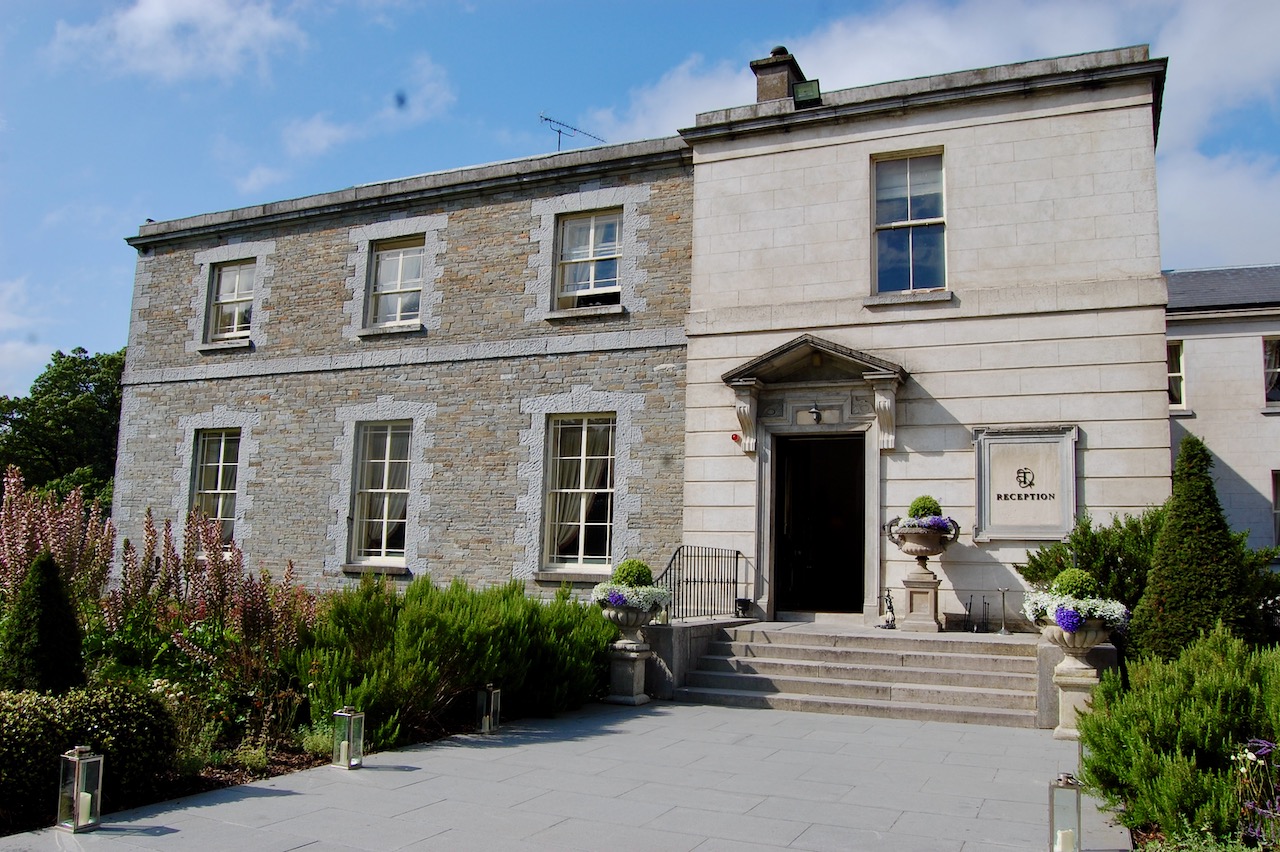
Tankardstown, 2019. Photograph © Jennifer Winder-Baggot, www.irishhistorichouses.com

He writes that the entrance front consists of three bays and an end bay breaking forward, as you can see in the photograph above. The entrance doorway has a pediment on consoles, not in line with the window above. [1] There are steps up to the front door.

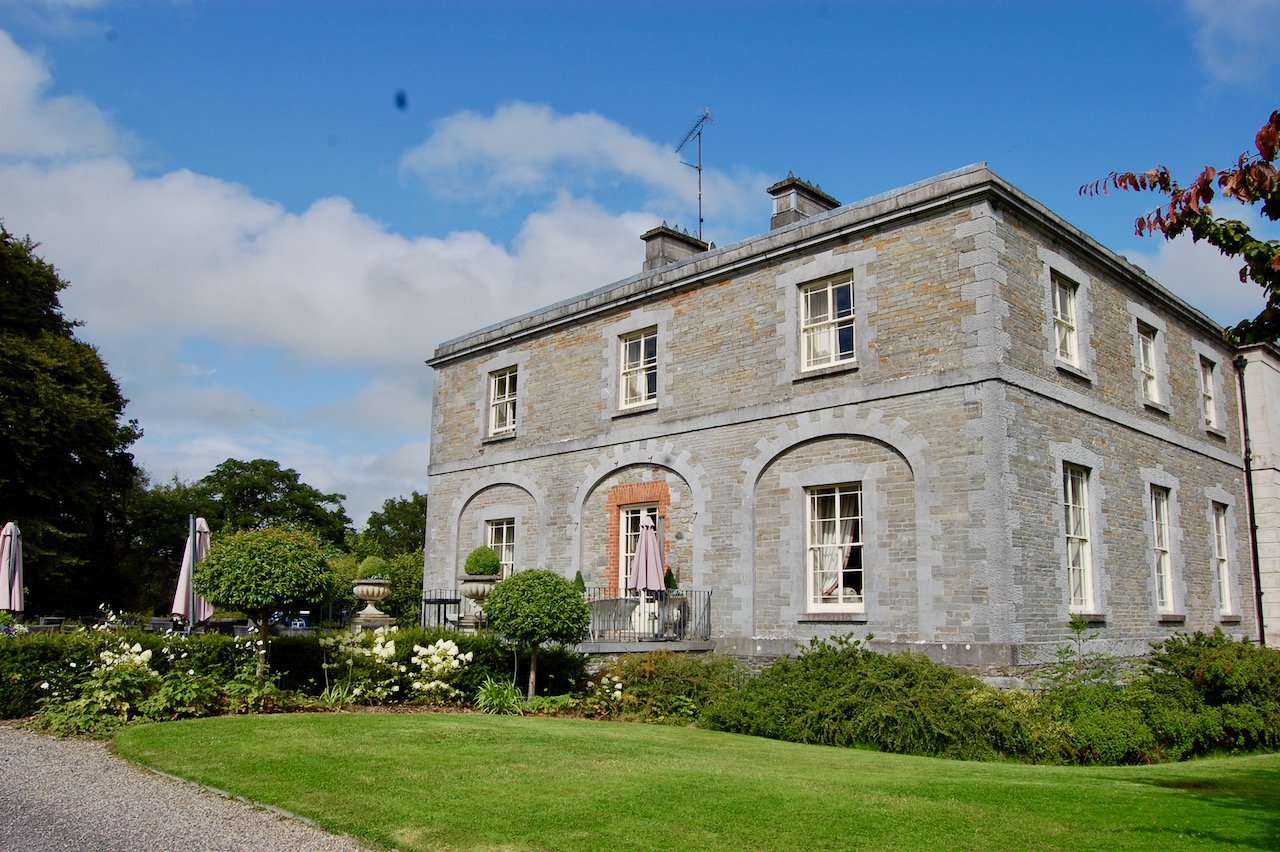
Tankardstown, 2019. Photograph © Jennifer Winder-Baggot, www.irishhistorichouses.com

It has a three bay side elevation, with ground floor windows set in arched recesses with blocking (the use of alternating large and small blocks of stone, or of intermittent large blocks, in a doorcase, window surround or similar feature. Also known as rustication), with blocking around the first floor windows also. Bence-Jones also mentions its parapeted roof (“a low protective wall along the edge of a roof, bridge, or balcony”).

Tankardstown, County Meath. Photograph © Jennifer Winder-Baggot, www.irishhistorichouses.com
Tankardstown, 2019. Photograph © Jennifer Winder-Baggot, www.irishhistorichouses.com

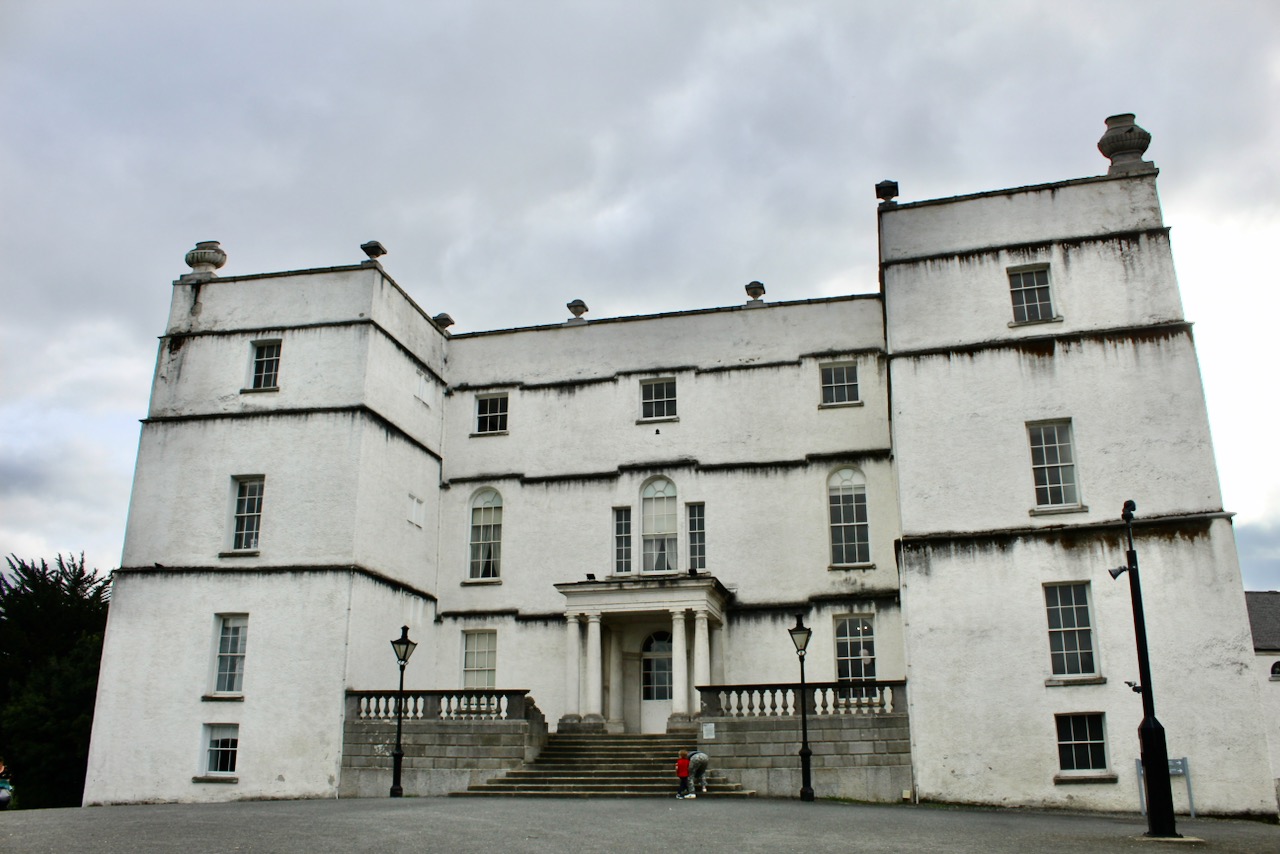
John Coddington purchased nearby Oldbridge Estate from the Earl of Drogheda in 1729 (Oldbridge is now the Battle of the Boyne museum). It looks as though a nephew of John’s, Dixie Coddington, Sheriff, lived in Tankardstown at some point, perhaps with his wife Catherine de Burgh and seven daughters.

Oldbridge, County Meath, which was owned by the Coddington family, and which now houses the Battle of the Boyne museum. Photograph © Jennifer Winder-Baggot, www.irishhistorichouses.com

Coincidentally, a brother of Dixie, Henry Coddington of Oldbridge (1728 – 1816) had a daughter, Elizabeth Coddington, who married Edward Winder of Bellview in 1798. This Edward Winder is an ancestor of Stephen’s! So our relatives, by marriage, owned Tankardstown!

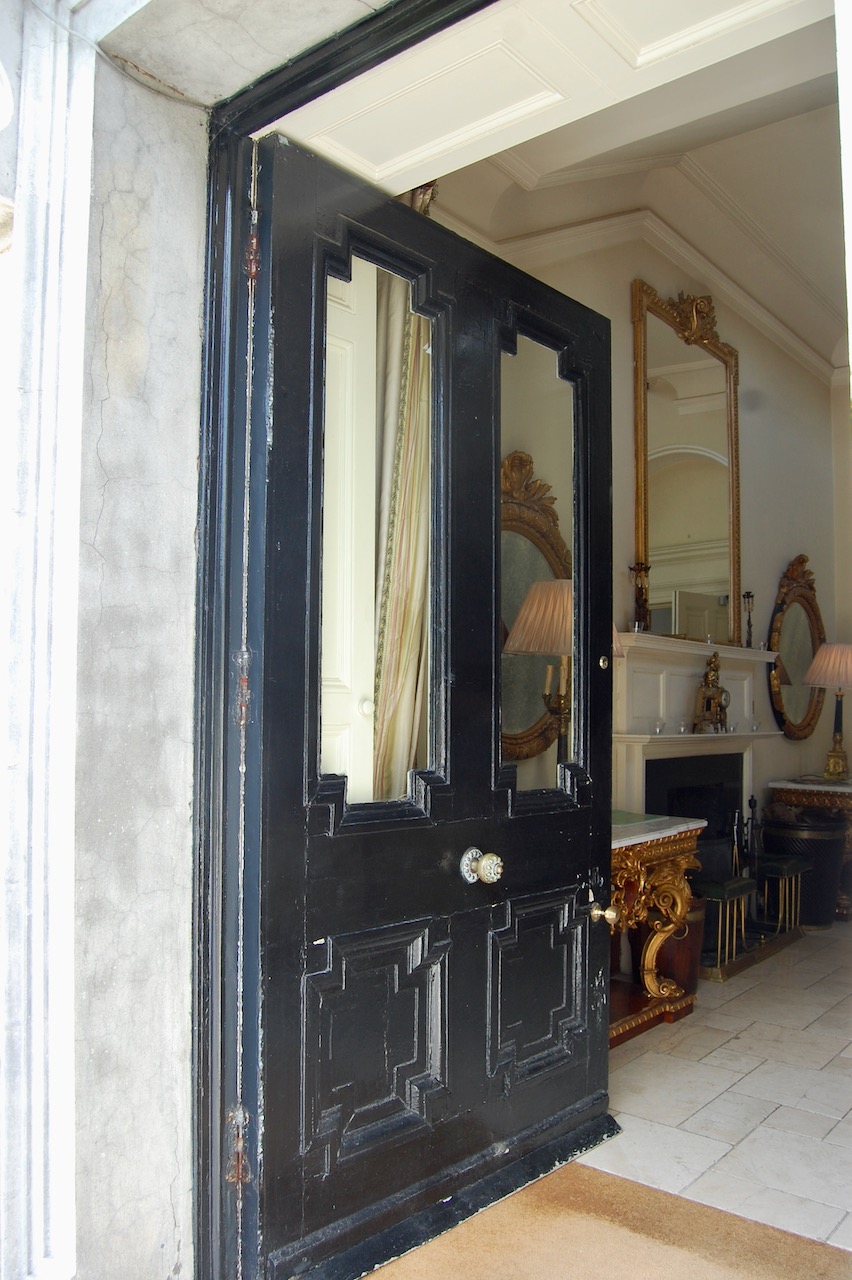
Tankardstown, 2019. Photograph © Jennifer Winder-Baggot, www.irishhistorichouses.com

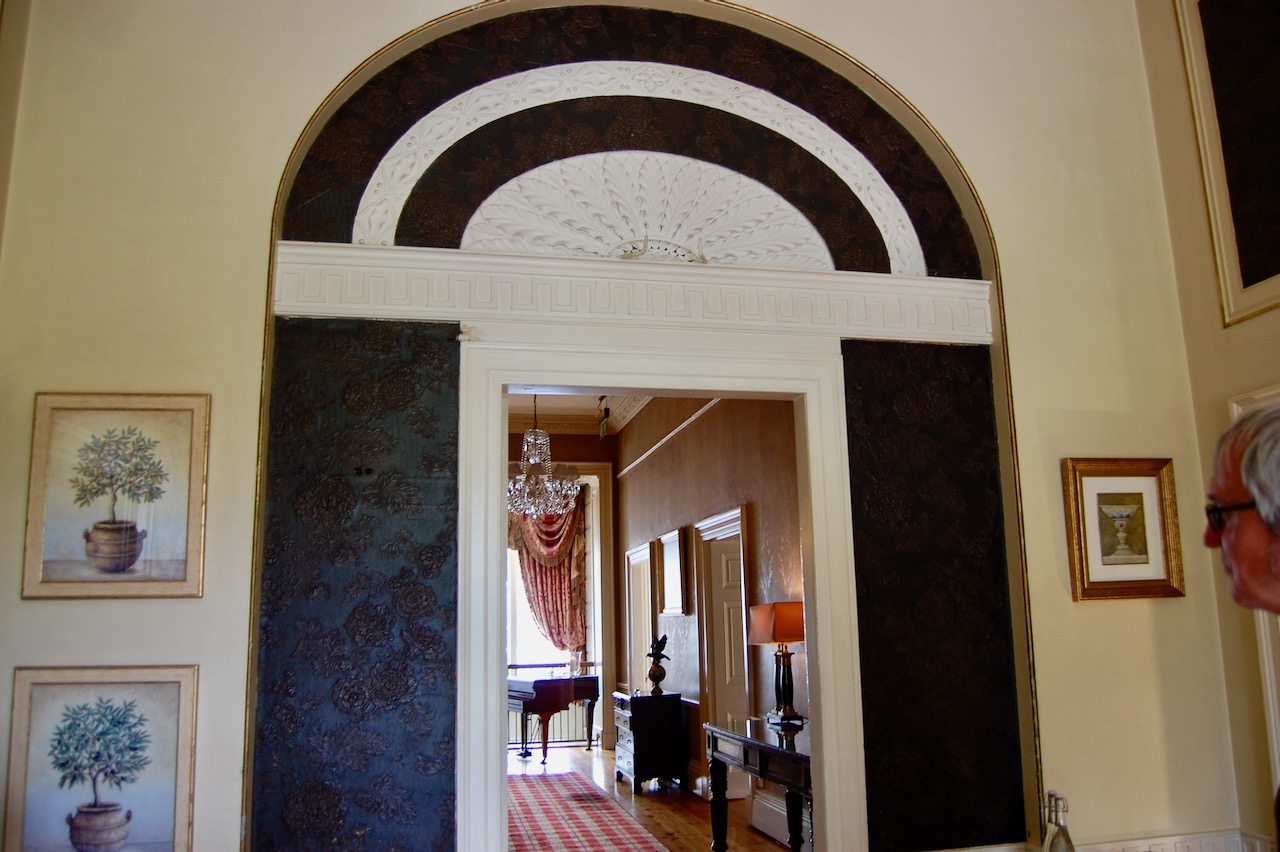
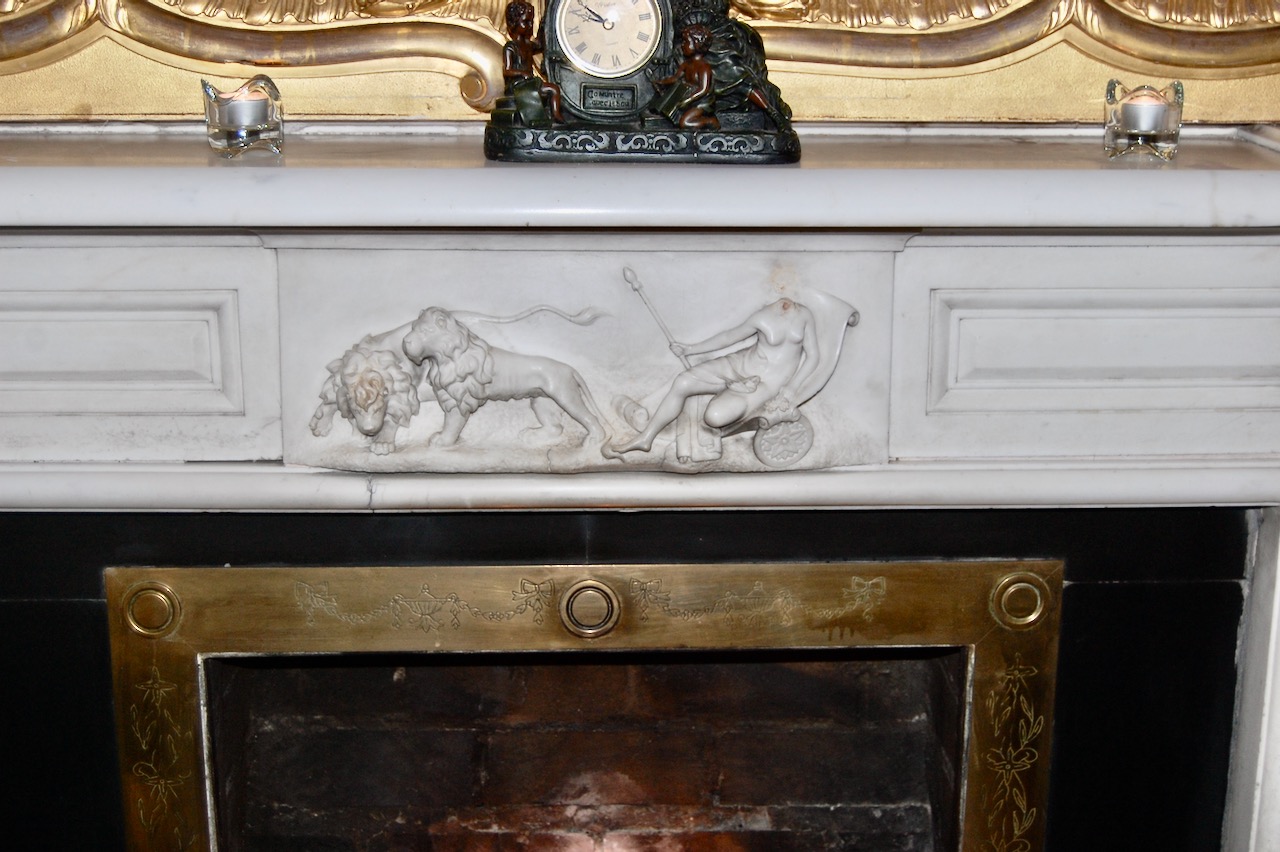
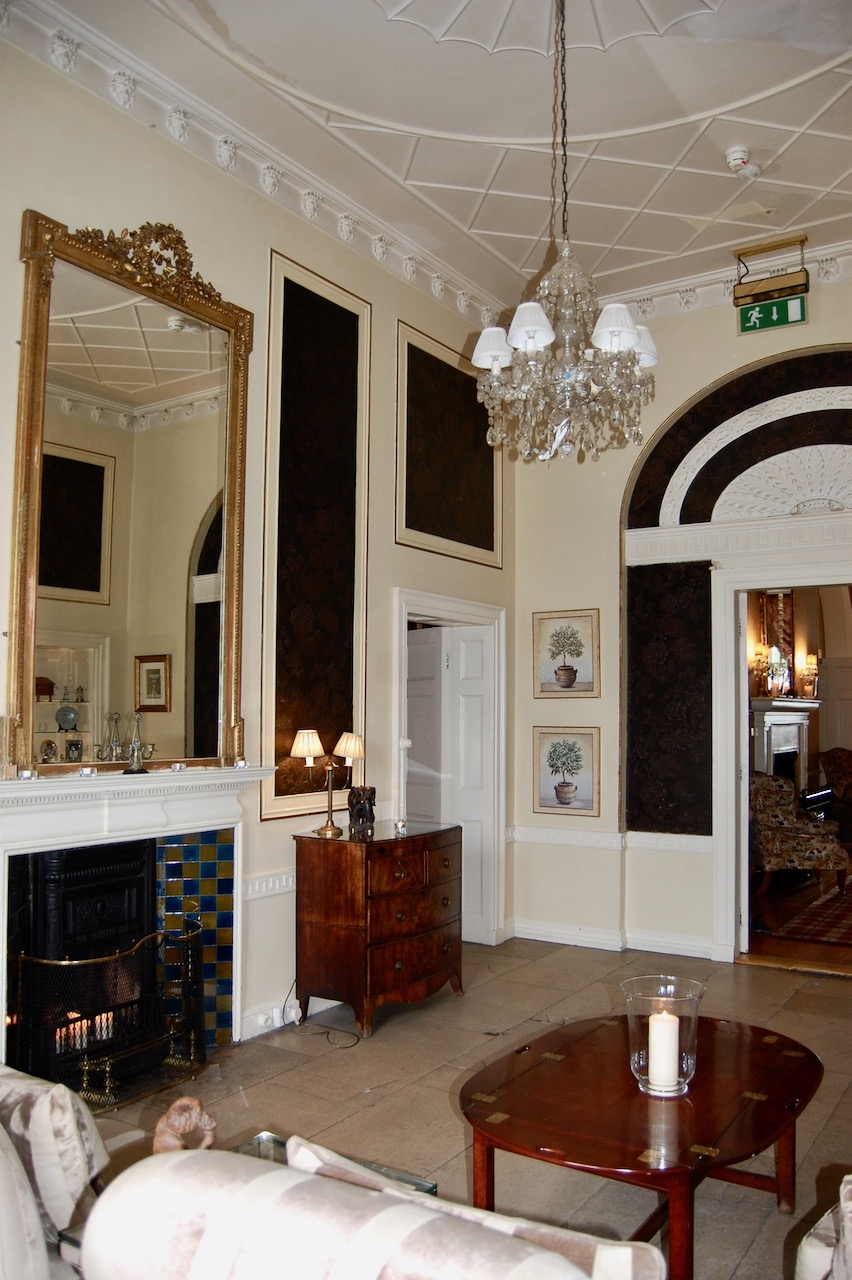
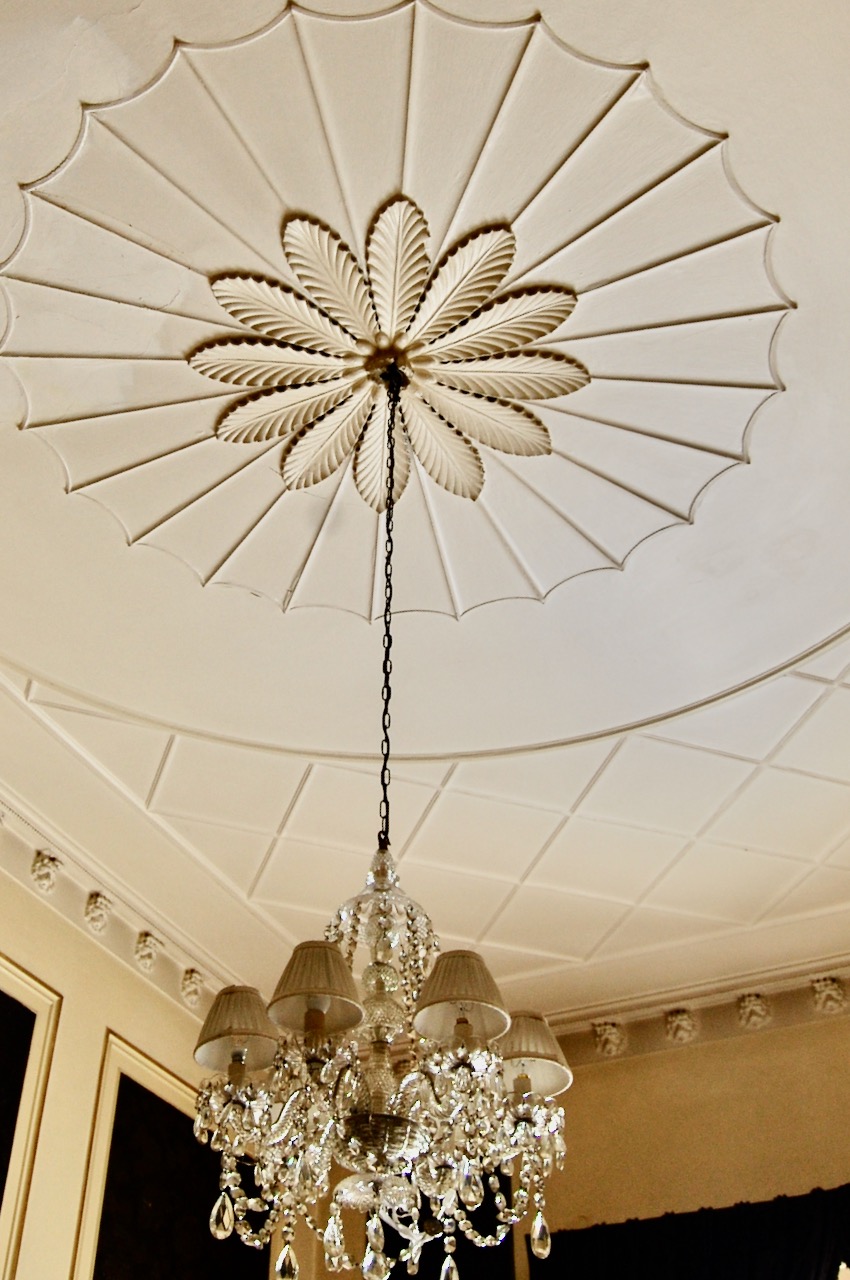
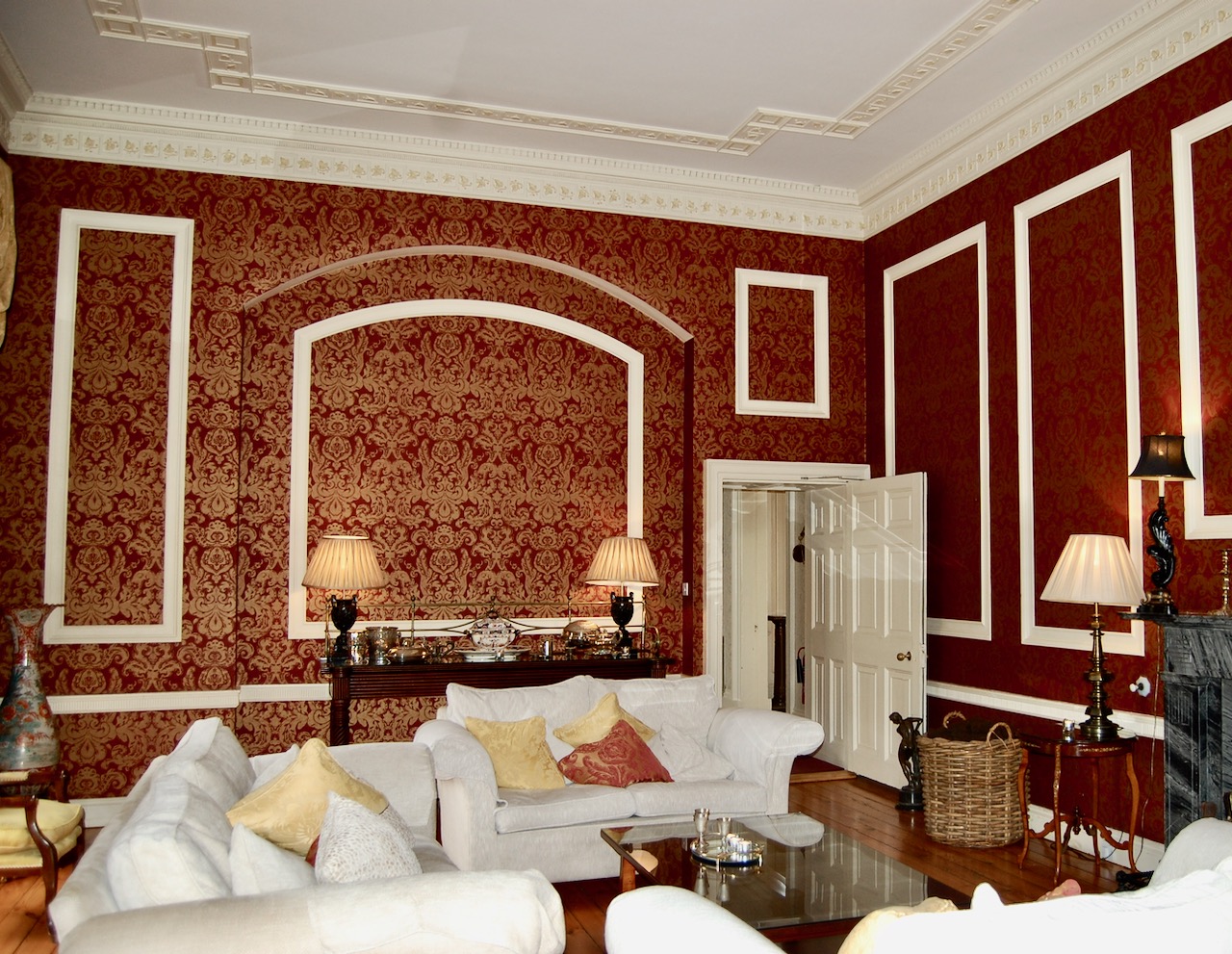
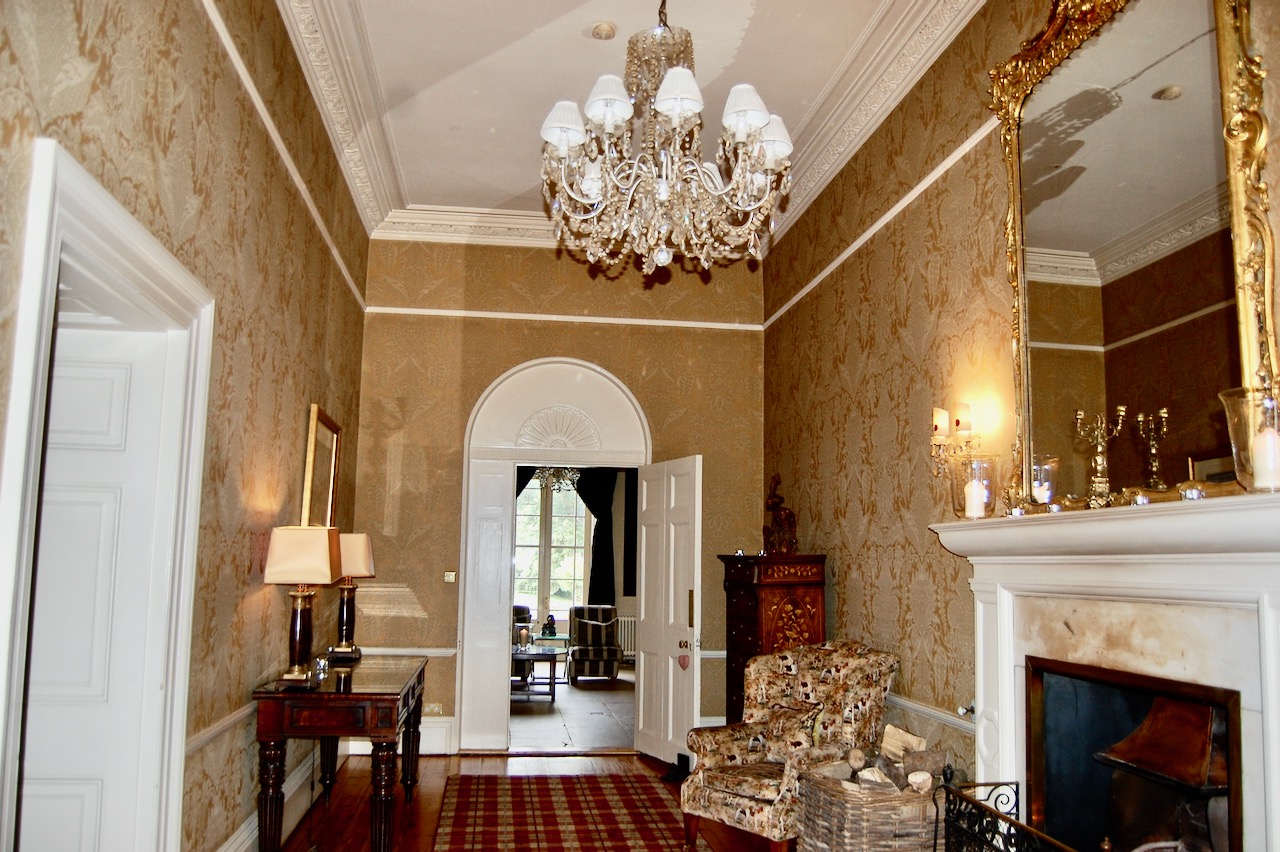
The house, as you can see from the photographs, is incredibly opulent with many period features which I assume are original. Above, one can see the unusual black rose patterned wall panels in the inner doorway of the hall, with an arch of alternate black panelling and stuccowork. The drawing room has painted stuccowork on the ceiling and a carved marble fireplace.

Tankardstown, County Meath. Photograph © Jennifer Winder-Baggot, www.irishhistorichouses.com
Tankardstown, 2019. Photograph © Jennifer Winder-Baggot, www.irishhistorichouses.com

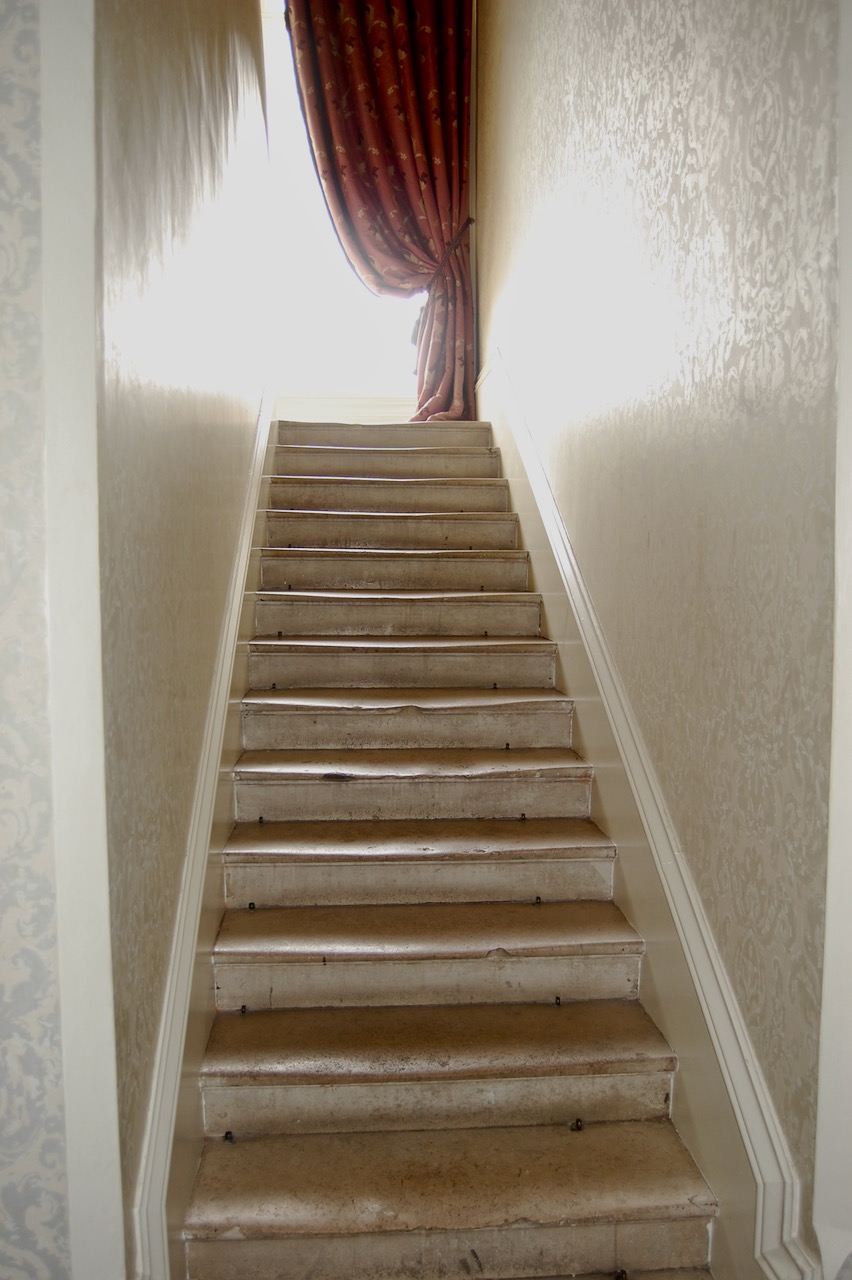
The plush furnishings and decor are so overwhelming that the place that touched me most, in terms of feeling a link with the former residents, feeling the house’s history,  were some worn stone stairs:

Tankardstown, 2019. Photograph © Jennifer Winder-Baggot, www.irishhistorichouses.com

The Coddingtons sold the house to Brabazon Morris. According to Ireland’s Blue Book [5], Brabazon Morris built a neo-Classical villa on the land in 1789, in part on the foundations of a tenth century castle, close to pre-existing stone yards which were built in 1745. The present Tankardstown house must be his neo-Classical villa so the house the Coddingtons inhabited was probably incorporated into this house.

Brabazon Morris married Anne Hamlin (she died before 1800 aged just 52) [3] and had a daughter Anne, who married Reverend Frederick Cavendish (1803-1875) in 1834, son of Frederick Cavendish and Eleanor Gore, sixth daughter of Arthur Gore the Second Earl of Arran [4].

Brabazon Morris mortgaged the house in 1791 until it was bought by Francis Blackburne in 1815, as his country residence.

Francis Blackburne (1782-1867), Lord Chancellor of Ireland Date 1852 Engraver George Sanders, Scottish, 1810-c.1876 After Stephen Catterson Smith, Irish, 1806-1872. Photograph courtesy of National Gallery of Ireland.

According to an article in the Irish Independent newspaper by Anthony Smith, Francis Blackburne was born in 1782 and lived to be 84 years old [6]. He married Jane Martley of Ballyfallen, County Meath. [7] He was called to the bar in 1805 and became Attorney General of Ireland in 1831. He was a devout Protestant and Unionist and prosecuted Daniel O’Connell. In 1852 he was appointed Lord Chancellor of Ireland.

Tankardstown, 2019. Photograph © Jennifer Winder-Baggot, www.irishhistorichouses.com

With his new position, Francis Blackburne must have felt he needed something more grand, and purchased Rathfarnham Castle in Dublin. However his position as Lord Chancellor ended later the same year. He obtained the position again in 1866 shortly before his death. He gave Tankardstown to his second son, Judge Francis William Blackburne (d. 1921). His older son inherited Rathfarnham Castle.

Rathfarnham Castle, which was purchased by Francis Blackburne in 1852 when he was Lord Chancellor of Ireland. He had previously purchased Tankardstown in 1815 as his country residence. Photograph © Jennifer Winder-Baggot, www.irishhistorichouses.com

Judge Francis Blackburne married Olivia Beatrice Louisa Anstruther-Thomson, and had a son Jack and two daughters, Elena and Amable. The Blackburnes carried out extensive additions, refurbishment and redecoration in the 1880s. Jack Blackburne inherited the estate and worked the farm though his first love was racing cars. (see [6])

Judge Blackburne’s daughter Elena married Charles Maurice Waddington Loftus Townshend (called Maurice) (1899-1966) of Castle Townshend, County Cork, in 1928. They moved to Zimbabwe (then Rhodesia) for a while, where two of his brothers as ex-British officers were granted free land, but returned to Ireland when WWII broke out. They lived in Tankardstown after Jack died in the 1940s. They had two children, Francis b. 1930 and Maurice born 1932 [8]. C. Maurice Townshend seems to have been a little eccentric as he believed he had a sort of second sight – he was able to point to a place on a map where his sister’s missing friend was located. He also pursued the art of water divination. [9]

Tankardstown, 2019. Photograph © Jennifer Winder-Baggot, www.irishhistorichouses.com

When Maurice Townsend died in 1966, Judge Blackburne’s other daughter, Amable, moved back to Tankardstown, and she and her sister ran the farm as best they could. Anthony Smith, writer of the Irish Times article, remembers the two elderly ladies giving him treats in the kitchen while his father serviced Jack’s Aston Martin racing car. The article does not mention Elena’s sons but one moved to Australia and the other studied agriculture and farmed in Meath.

Eventually in the 1970s the sisters Elena and Amable sold the house and moved into a smaller house built at the rear entrance to the estate. I am not sure who owned the house directly after the Blackburnes. Both sisters died in 1996. Brian Conroy bought the estate when it came on the market in 2002. [see 2]

Brian and his wife Patricia spent four years restoring the mansion from complete disrepair. It was to be their dream home.

In the lead up to the Ryder Cup golf tournament which was being held in Ireland that year, a scout contacted Trish and asked if they could rent her property for the duration of the tournament. When the scout visited Tankardstown, she noticed the stable block next to the house and proposed that if it could be refurbished in time, they would rent that out for the tournament as well! The stable block now holds self-contained accommodation.

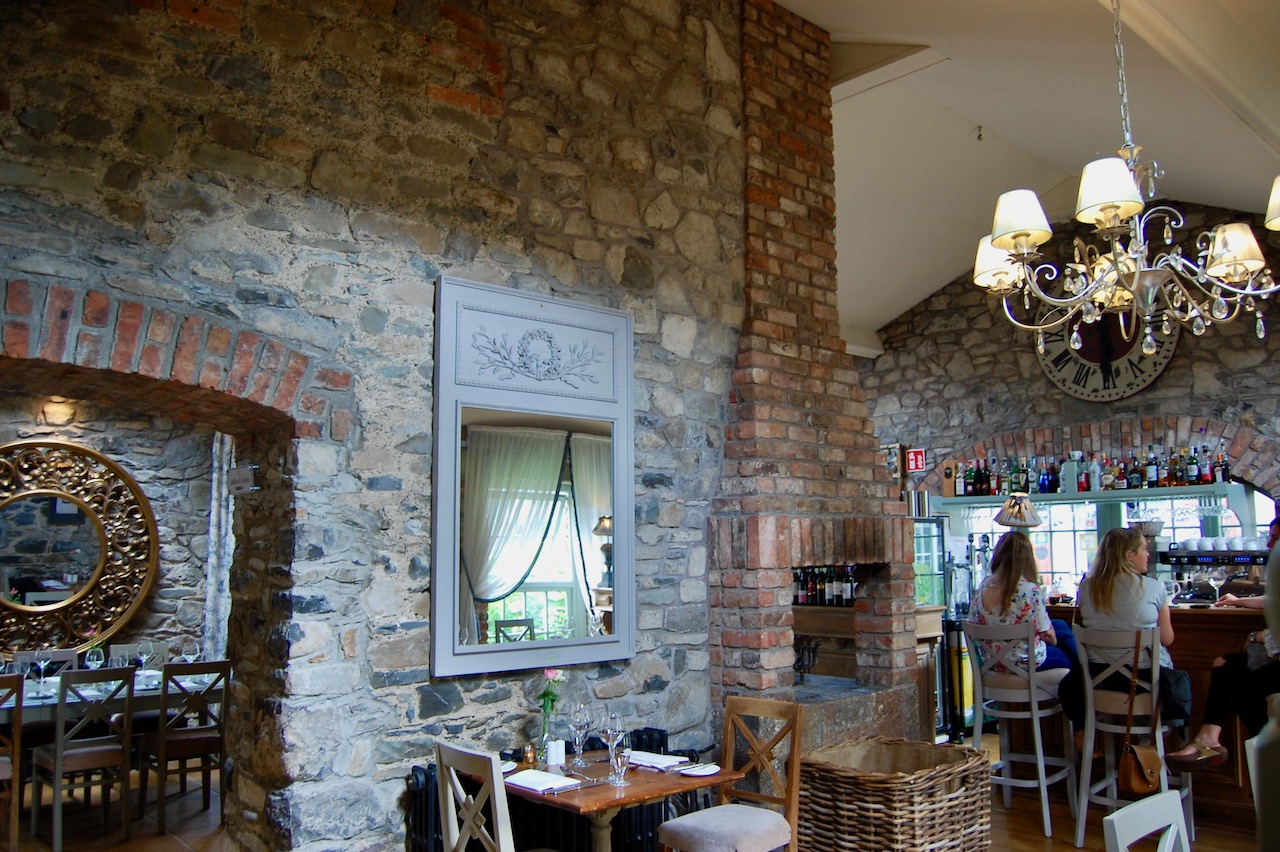
Tankardstown, 2019. Photograph © Jennifer Winder-Baggot, www.irishhistorichouses.com

Tankardstown has a café for lunch and afternoon tea and a dining room, supplied by their own fresh farm produce.

Tankardstown, County Meath. Photograph © Jennifer Winder-Baggot, www.irishhistorichouses.com
Tankardstown, 2019. Photograph © Jennifer Winder-Baggot, www.irishhistorichouses.com

The restaurant, the Brabazon, which was originally the milking parlour, retains the old walls and arches.

The tea rooms, Tankardstown. Photograph © Jennifer Winder-Baggot, www.irishhistorichouses.com

It has a large function room, formerly the Orangerie, for weddings and events.

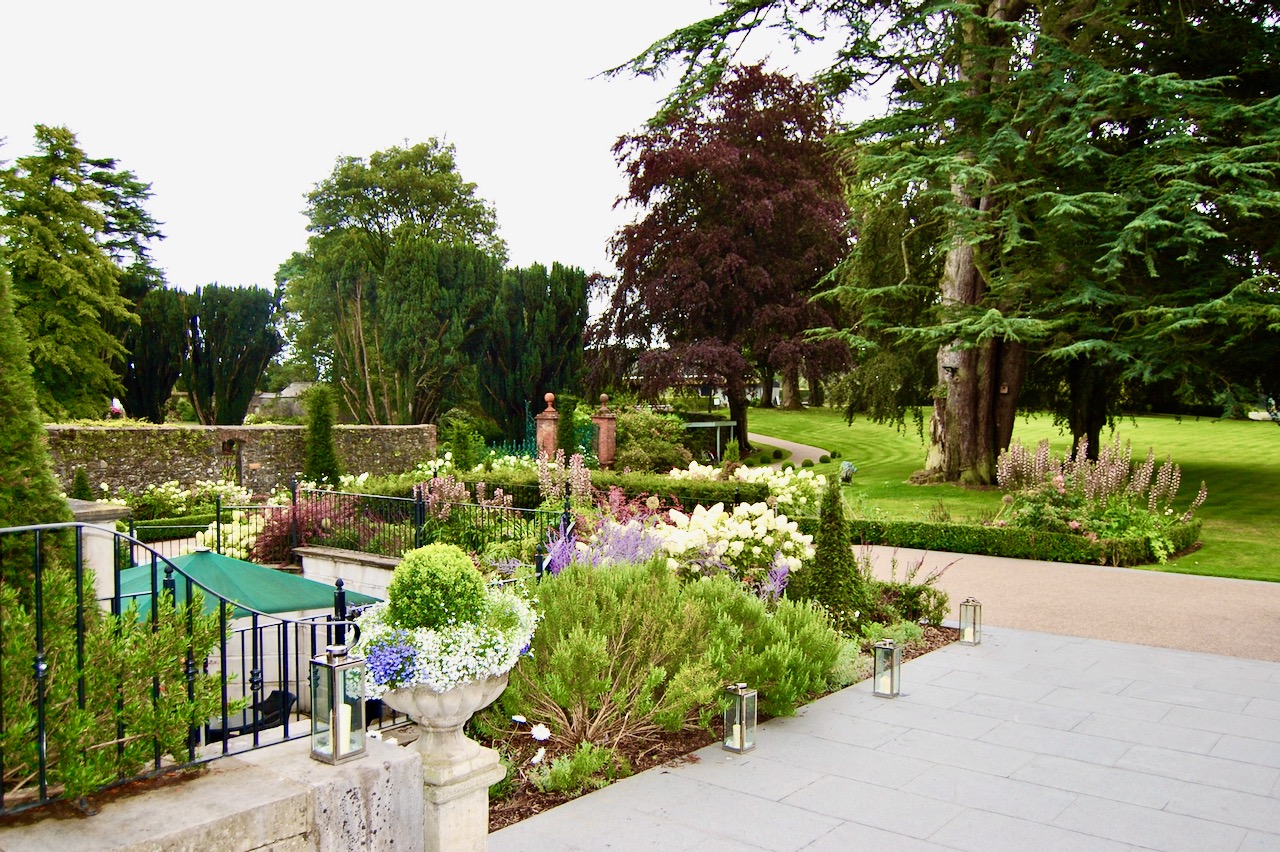
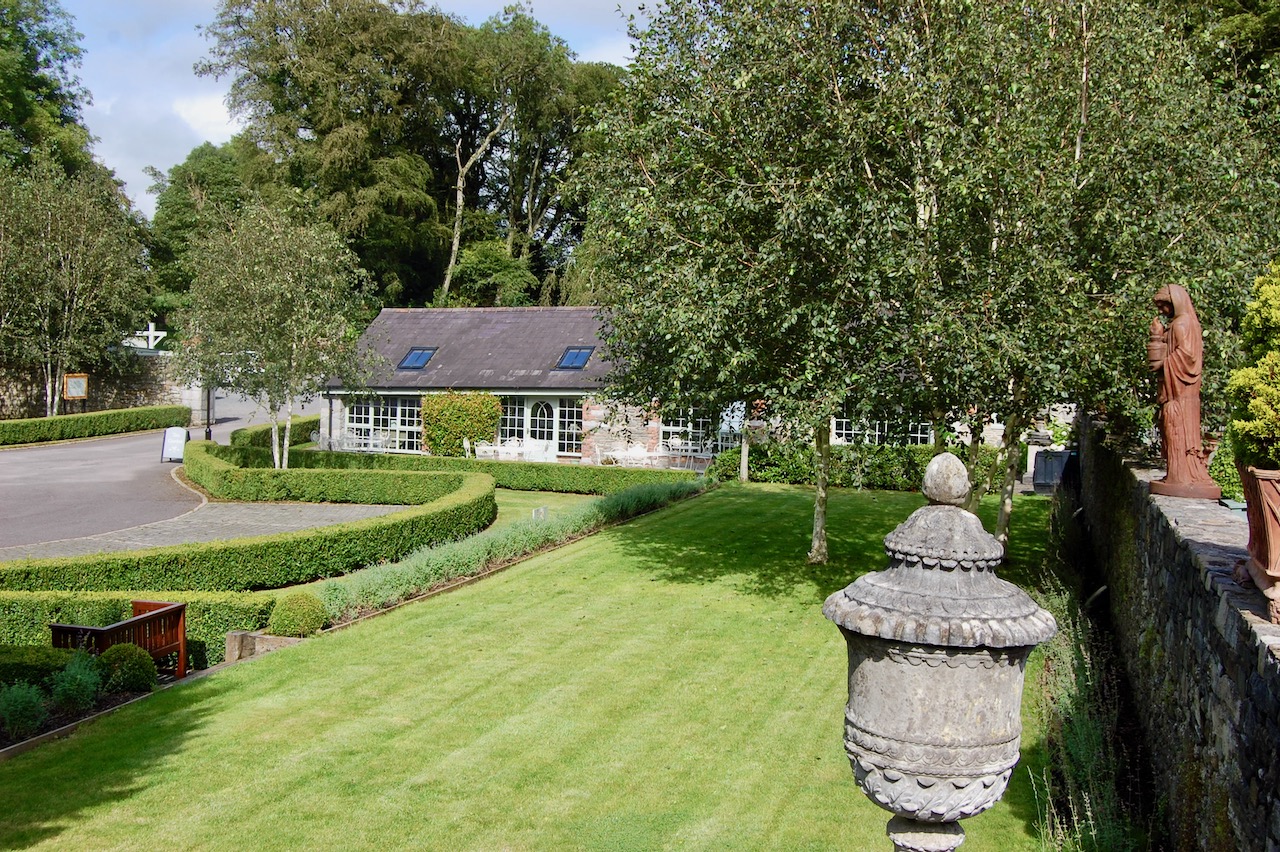
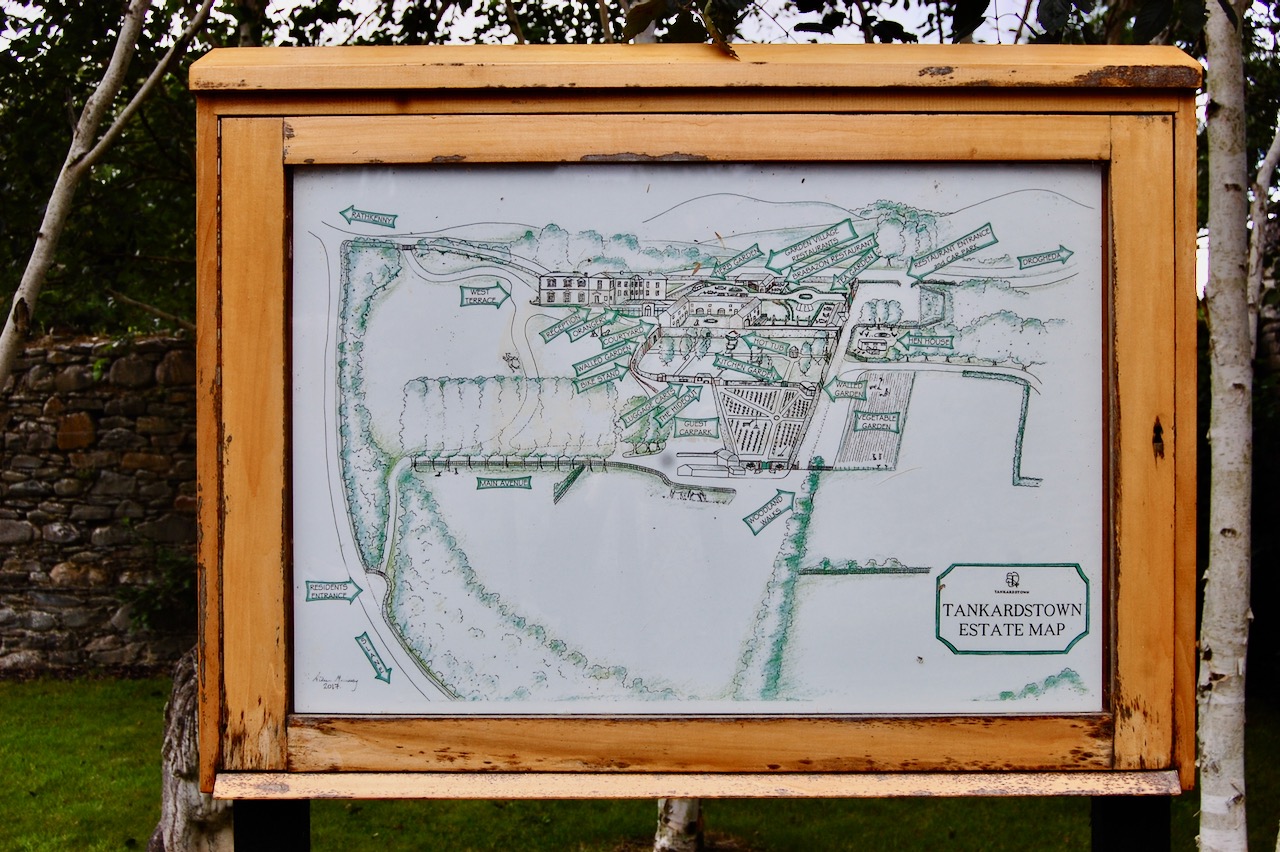
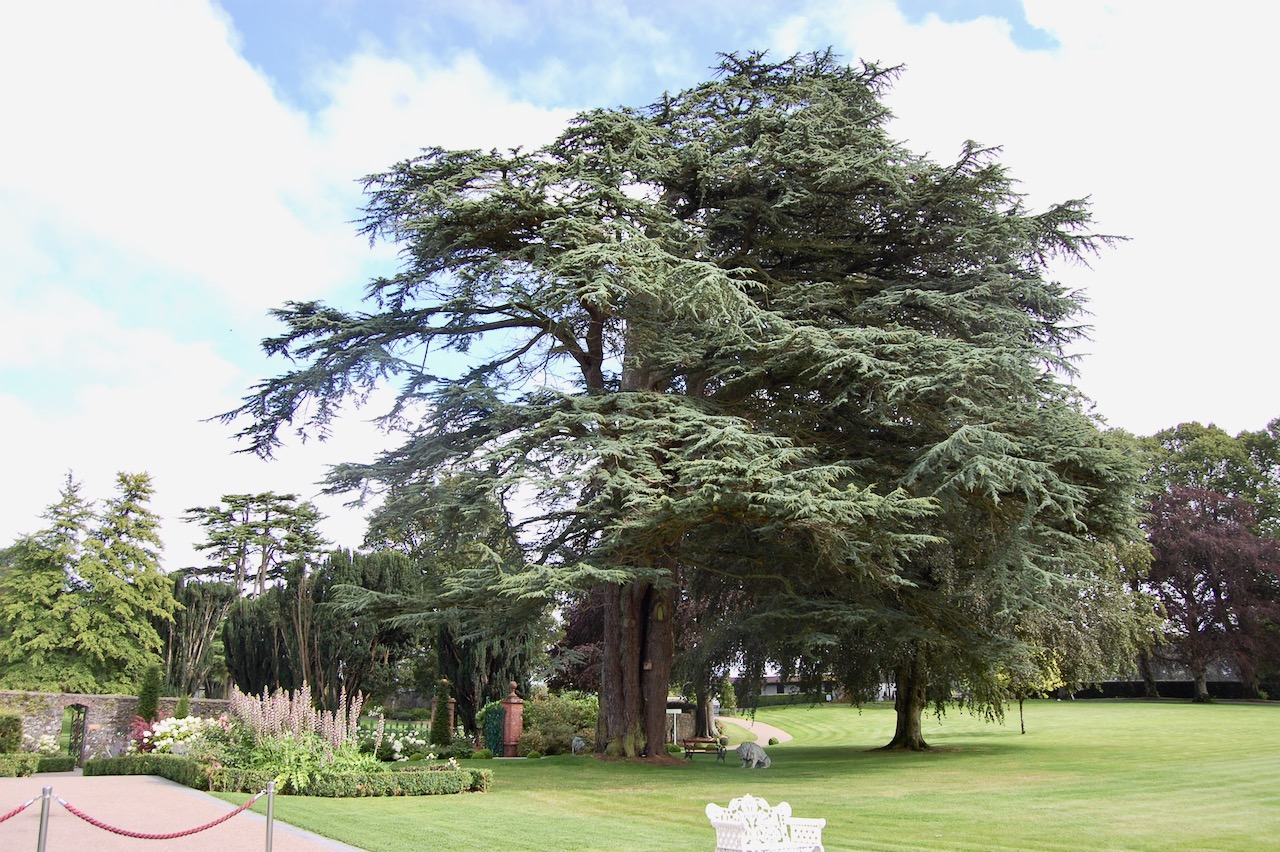
The house is situated on an 80 acre estate with woodland, rolling parkland and walled gardens. There is also a pampering treatment room in a “hide-out” beside the walled garden.

Tankardstown, County Meath.
Tankardstown, County Meath. Photograph © Jennifer Winder-Baggot, www.irishhistorichouses.com
Tankardstown, 2019. Photograph © Jennifer Winder-Baggot, www.irishhistorichouses.com

Brian Conroy is an entrepreneur with a successful track record in property development, restoration of heritage buildings and operation of hospitality venues. Having grown up in Monkstown, Co Dublin, he moved to the UK and built an engineering and property business before returning with his family to Tankardstown, Co Meath. He also owns another property on the section 482 register in 2019 which is also now a hotel, Boyne House, Slane (formerly known as Cillghrian Glebe). [10]

Donation

Help me to fund my creation and update of this website. It is created purely out of love for the subject and I receive no payment so any donation is appreciated! For this entry I paid for petrol to drive to our destination from Dublin.

€10.00

[1] architectural definitions

[2] https://www.tankardstown.ie

[3] https://historicgraves.com/kilberry/me-klby-0037/grave

[4] http://www.thepeerage.com/p25513.htm#i255125

[5] https://www.irelands-blue-book.ie/itinerary-detail.html/hotels-history-html

[6] https://www.independent.ie/regionals/droghedaindependent/news/pink-floyd-drummer-and-the-old-aston-martin-38038851.html

[7] https://en.wikipedia.org/wiki/Francis_Blackburne

[8] http://www.thepeerage.com/p35219.htm#i352181

[9] http://www.astro.wisc.edu/~townsend/tree/record.php?ref=5C17

[10] https://www.boynehouseslane.ie

Text © Jennifer Winder-Baggot, www.irishhistorichouses.com