General information: 0505 21850, roscreaheritage@opw.ie

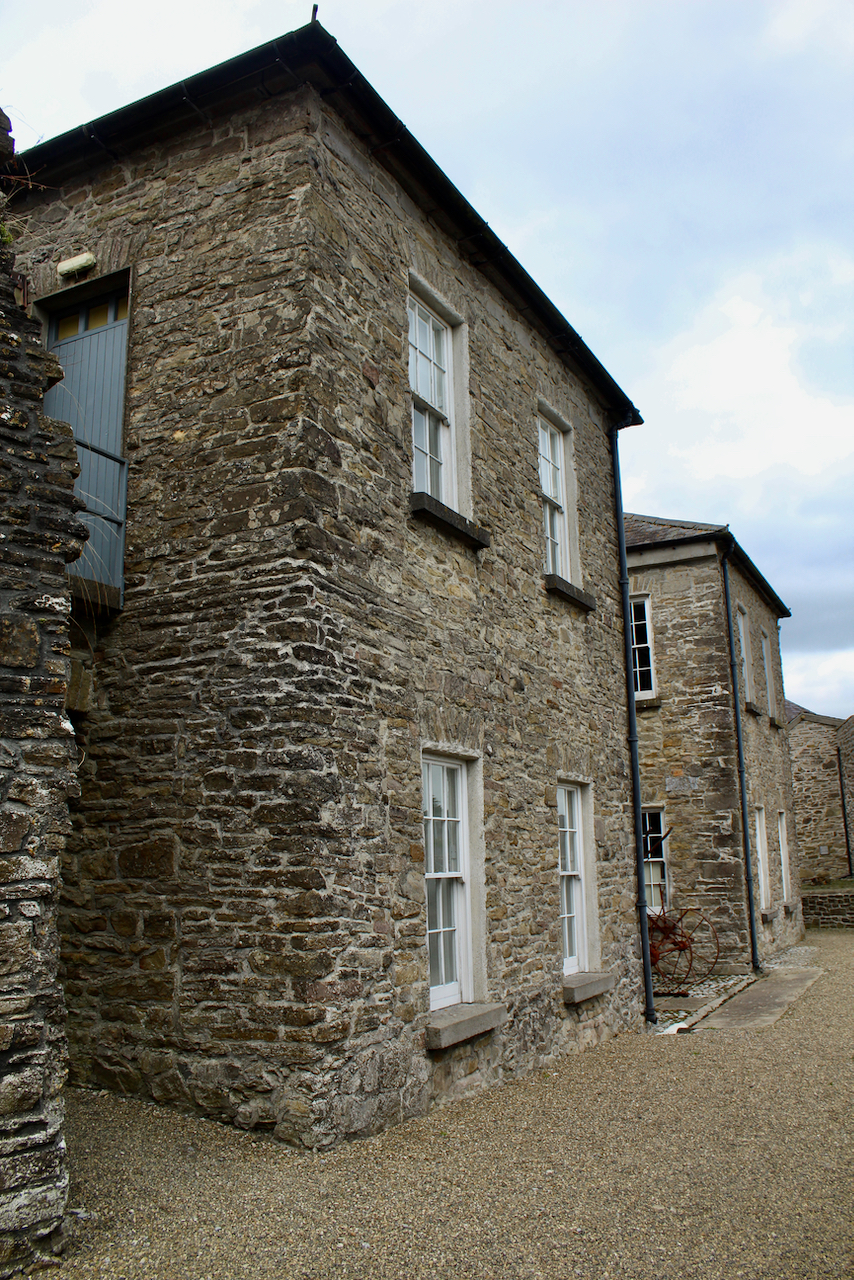
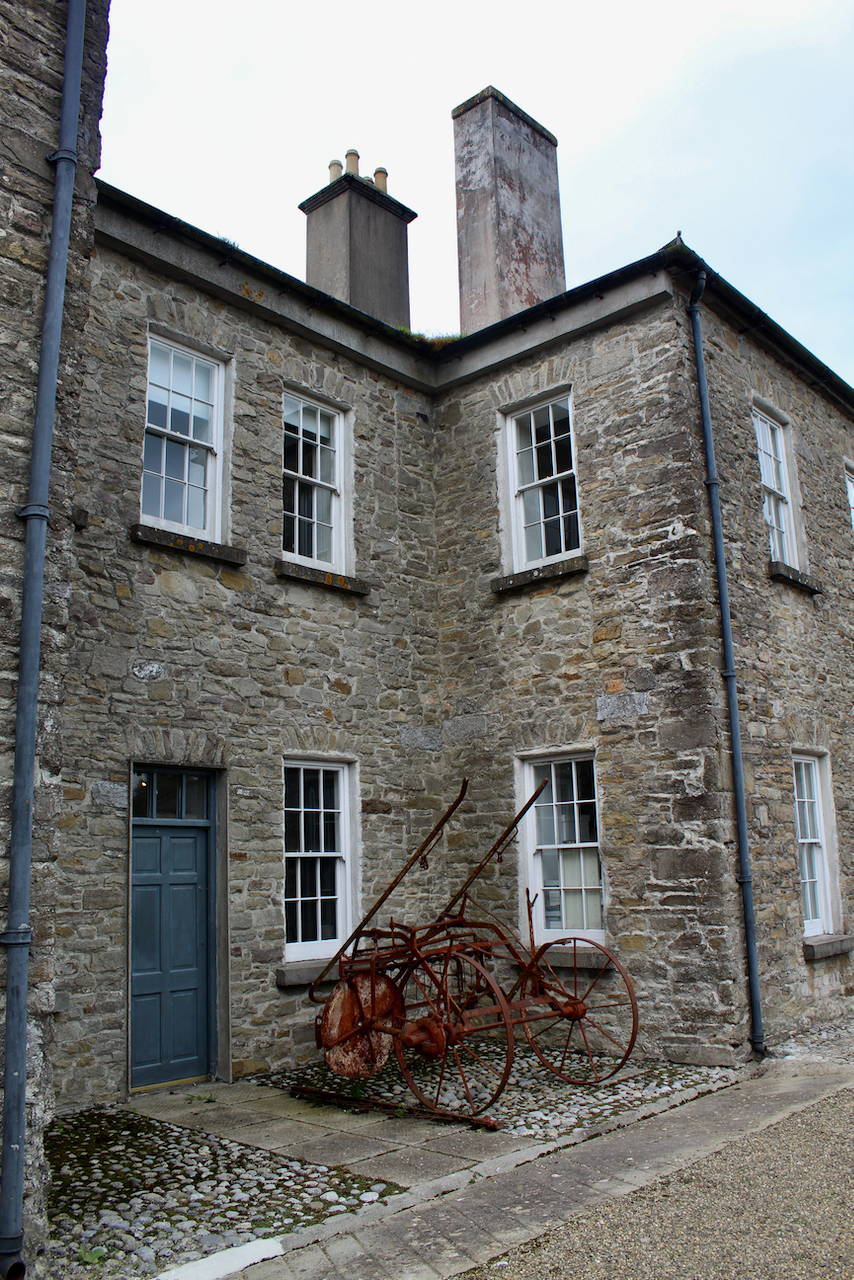
Finding ourselves with some spare time this Heritage Week (2024) after visiting Emo in County Laois, we drove over to Roscrea, to visit Damer House and Roscrea Castle.
From the OPW website https://heritageireland.ie/visit/places-to-visit/roscrea-heritage-centre-roscrea-castle-and-damer-house/:
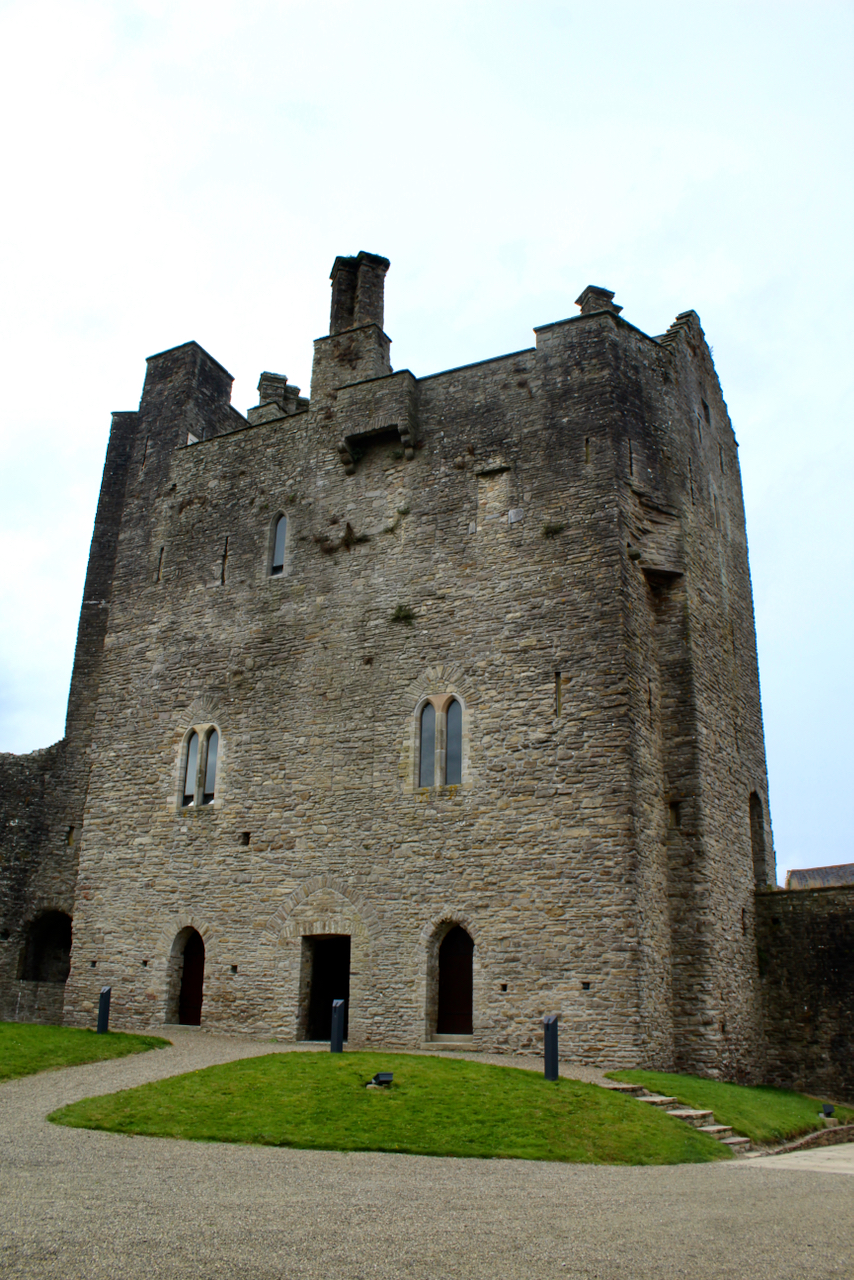
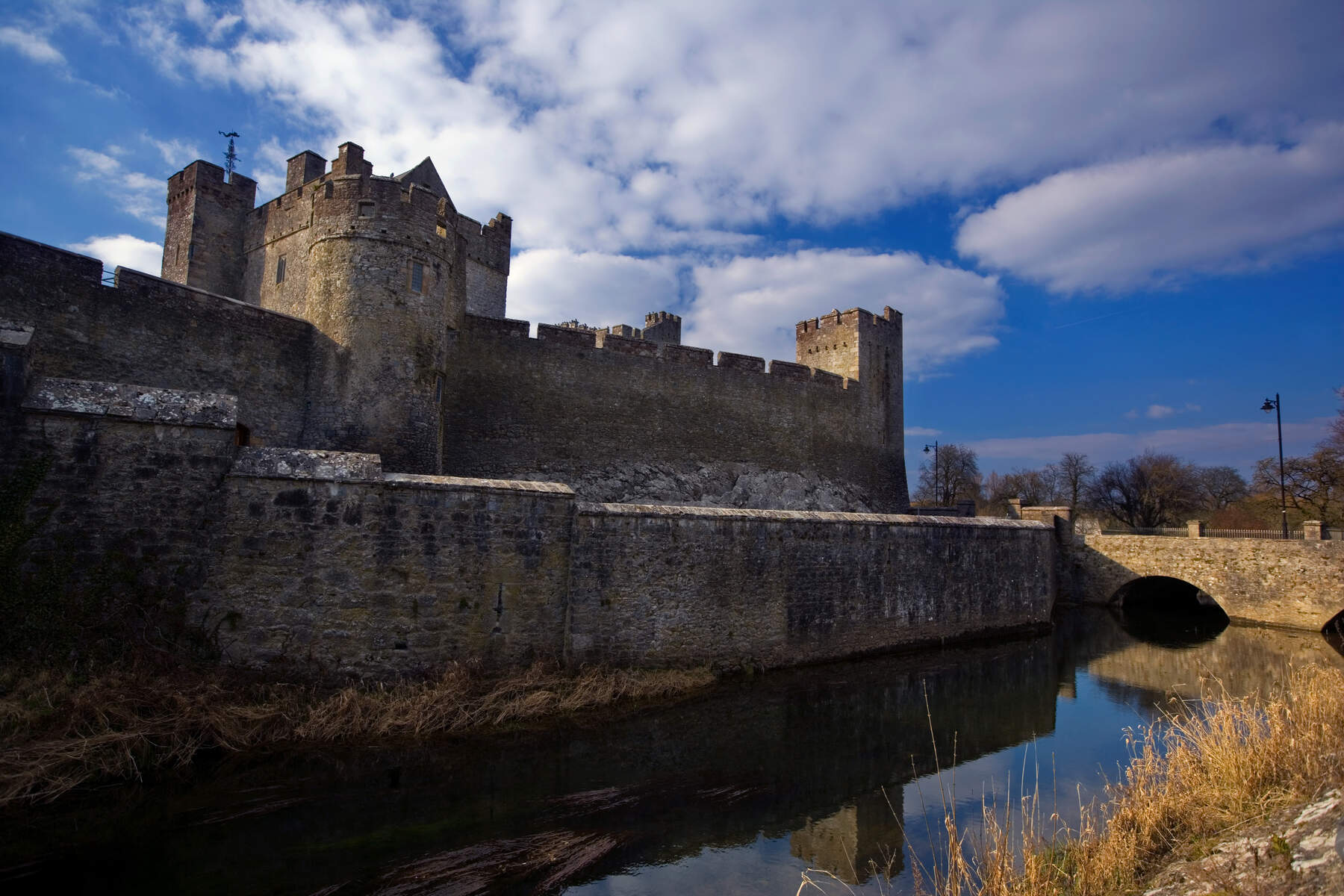
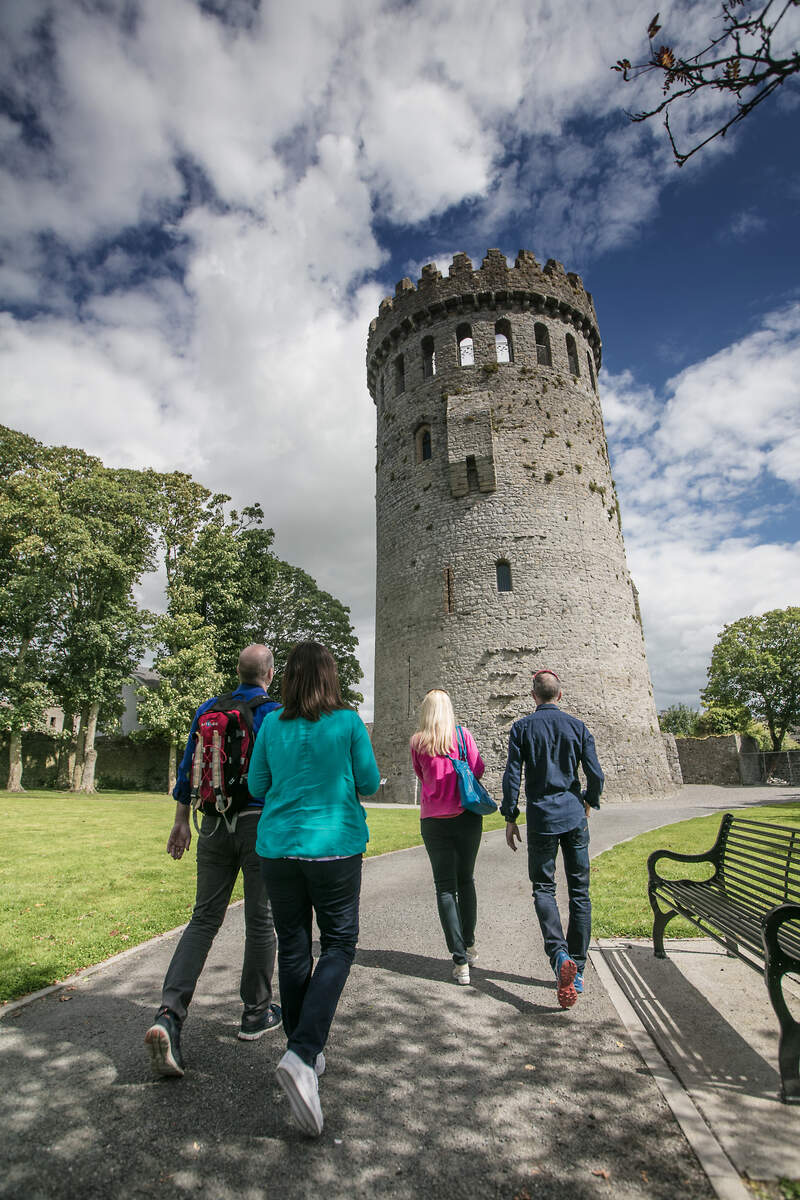
“In the heart of Roscrea in County Tipperary, one of the oldest towns in Ireland, you will find a magnificent stone motte castle dating from the 1280s. It was used as a barracks from 1798, housing 350 soldiers, and later served as a school, a library and even a sanatorium.
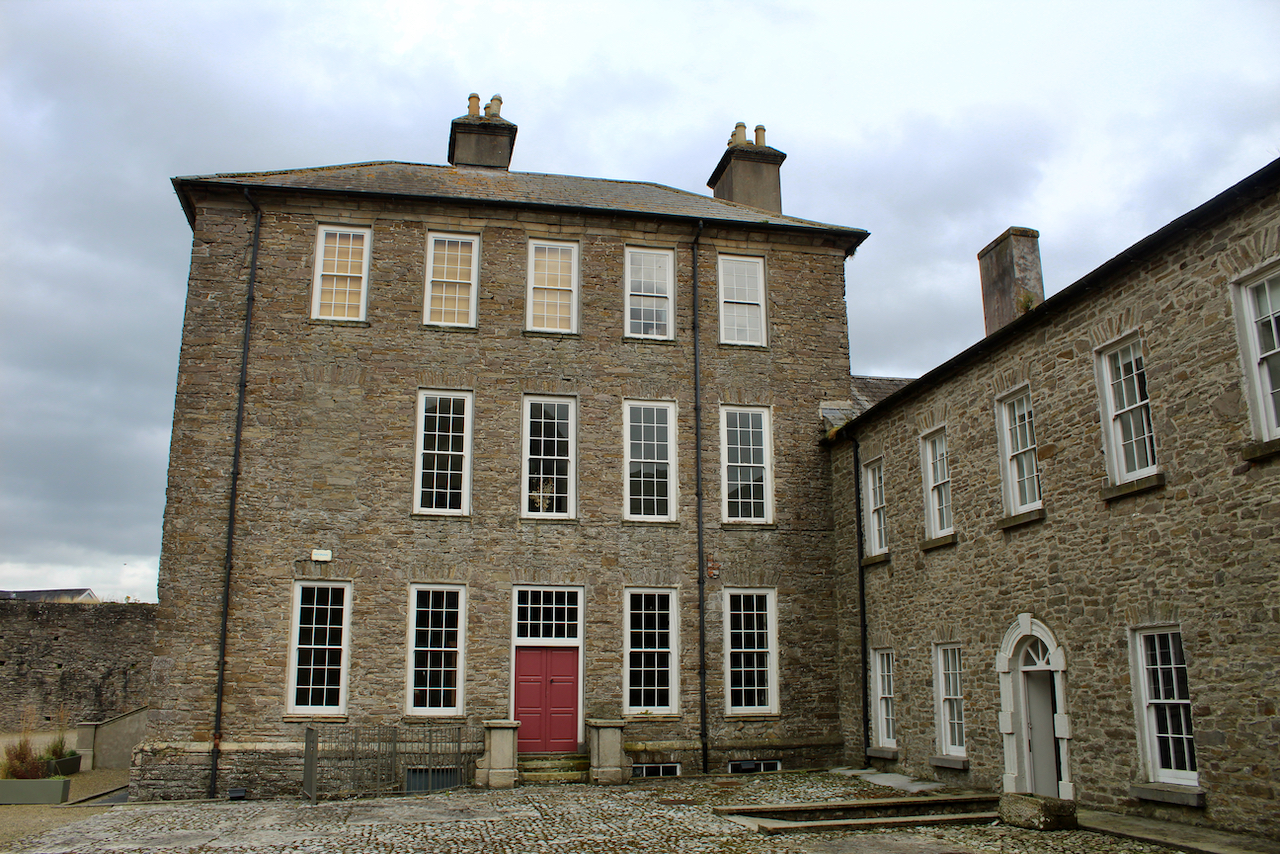
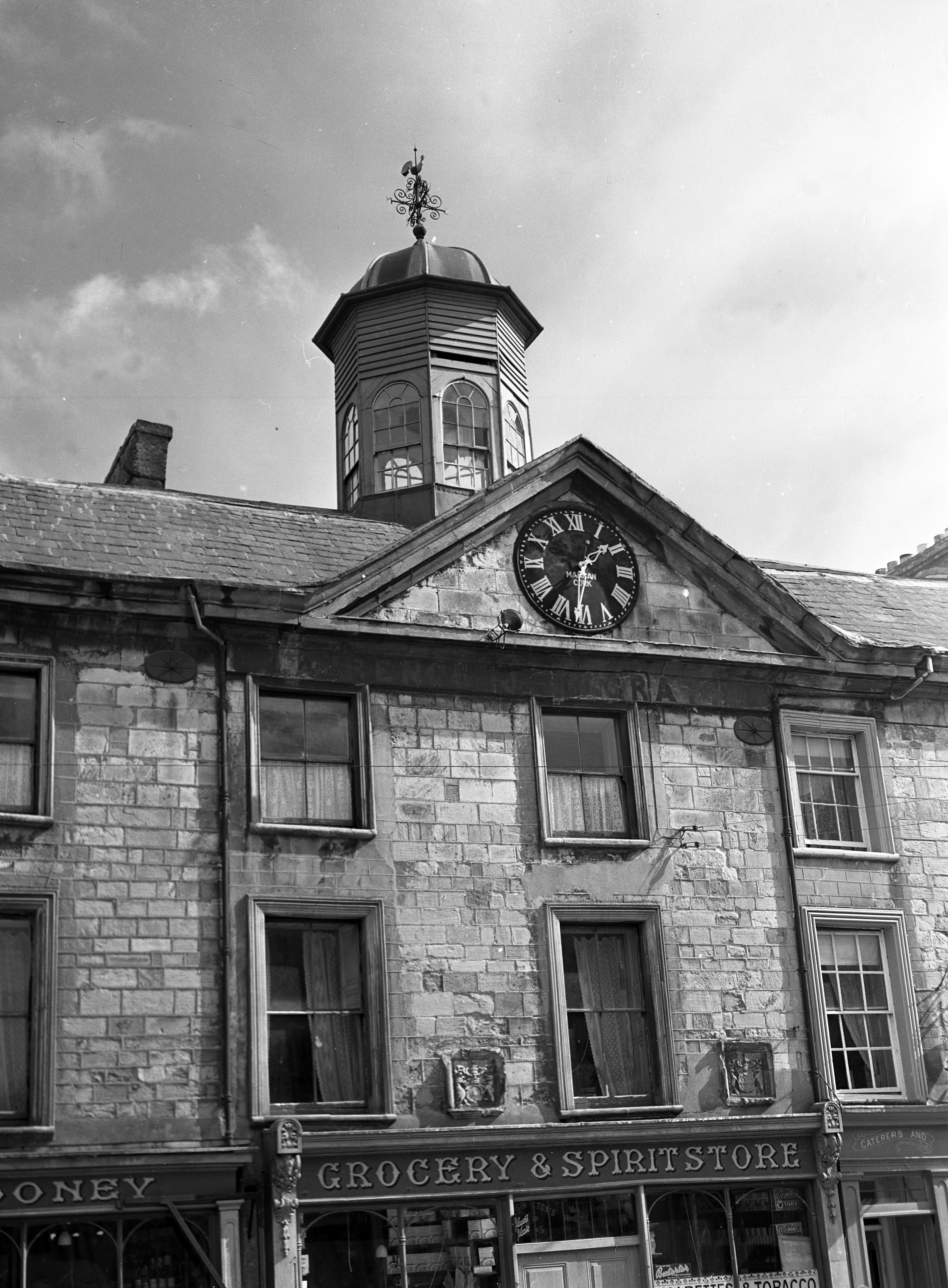
“Sharing the castle grounds is Damer House, named for local merchant John Damer [d. 1768], who came into possession of the castle in the eighteenth century. The house is a handsome example of pre-Palladian architecture. It has nine beautiful bay windows. One of the rooms has been furnished in period style.
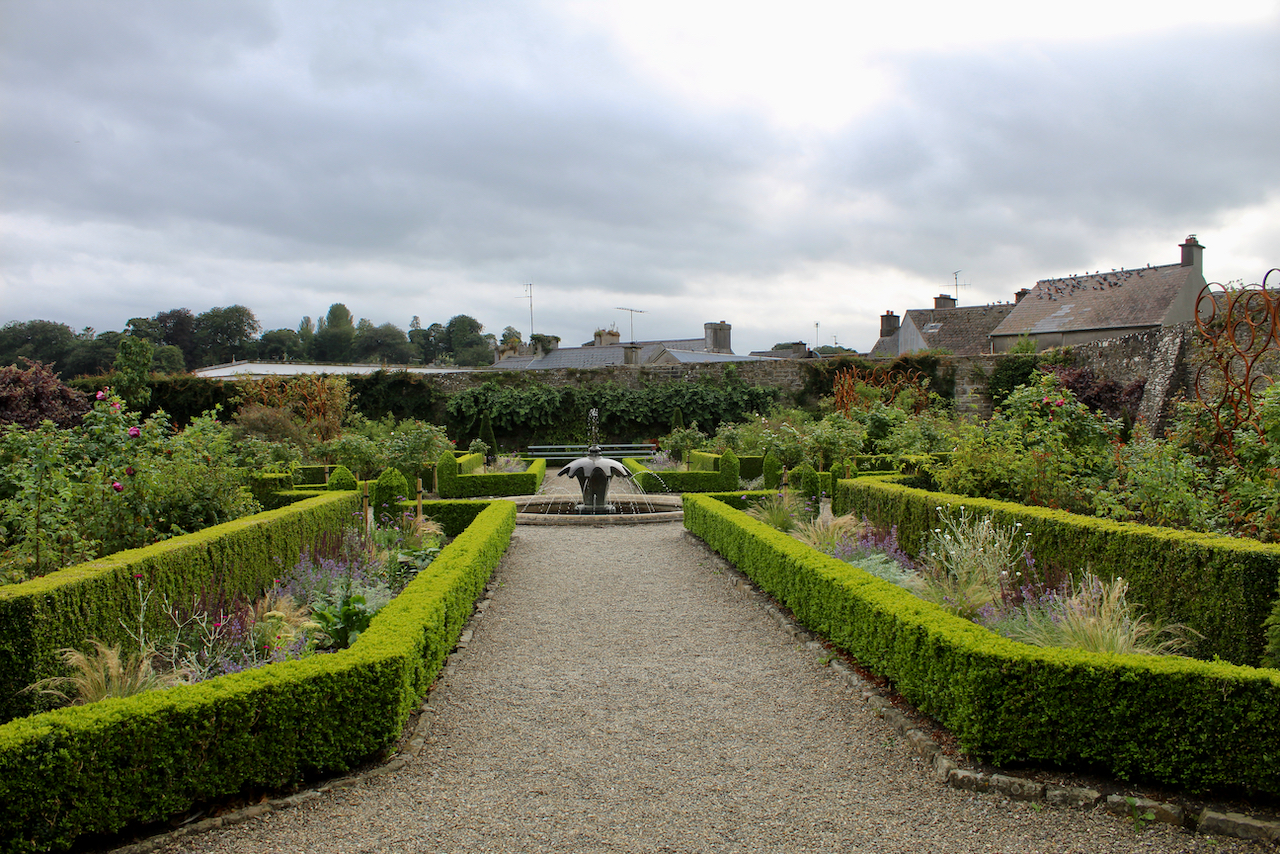
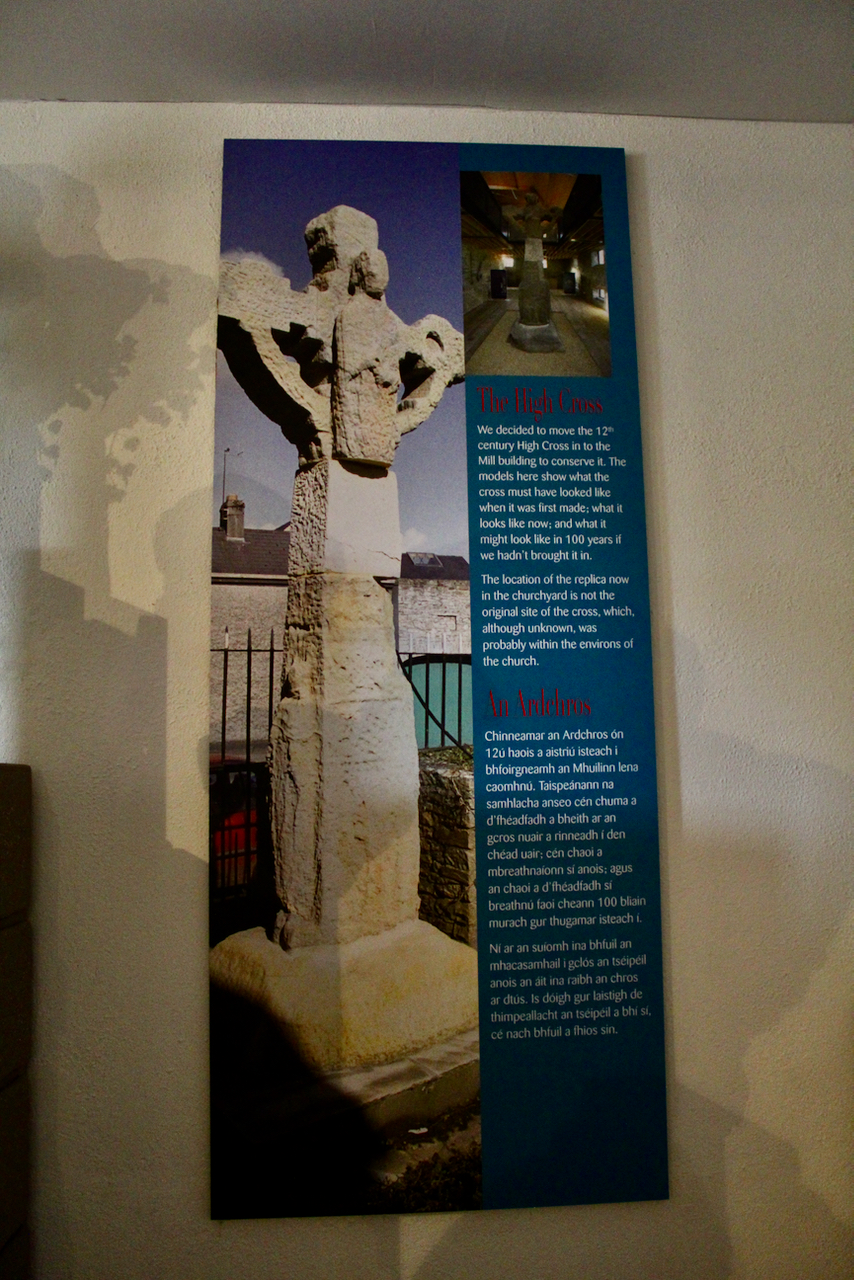
“The grounds also include an impressive garden with a fountain, which makes Roscrea Castle a very pleasant destination for a day out. There is also a restored mill displaying St Crónán’s high cross and pillar stone.“
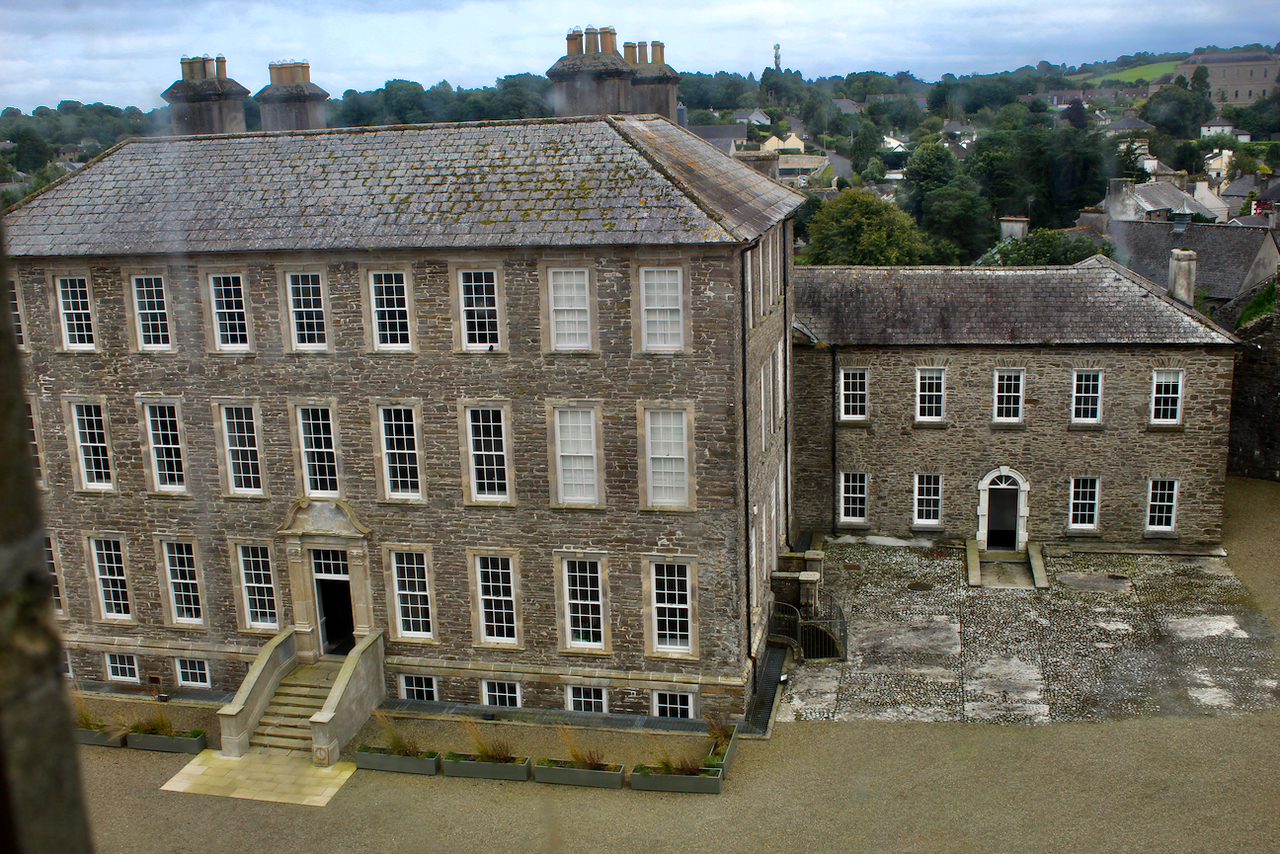
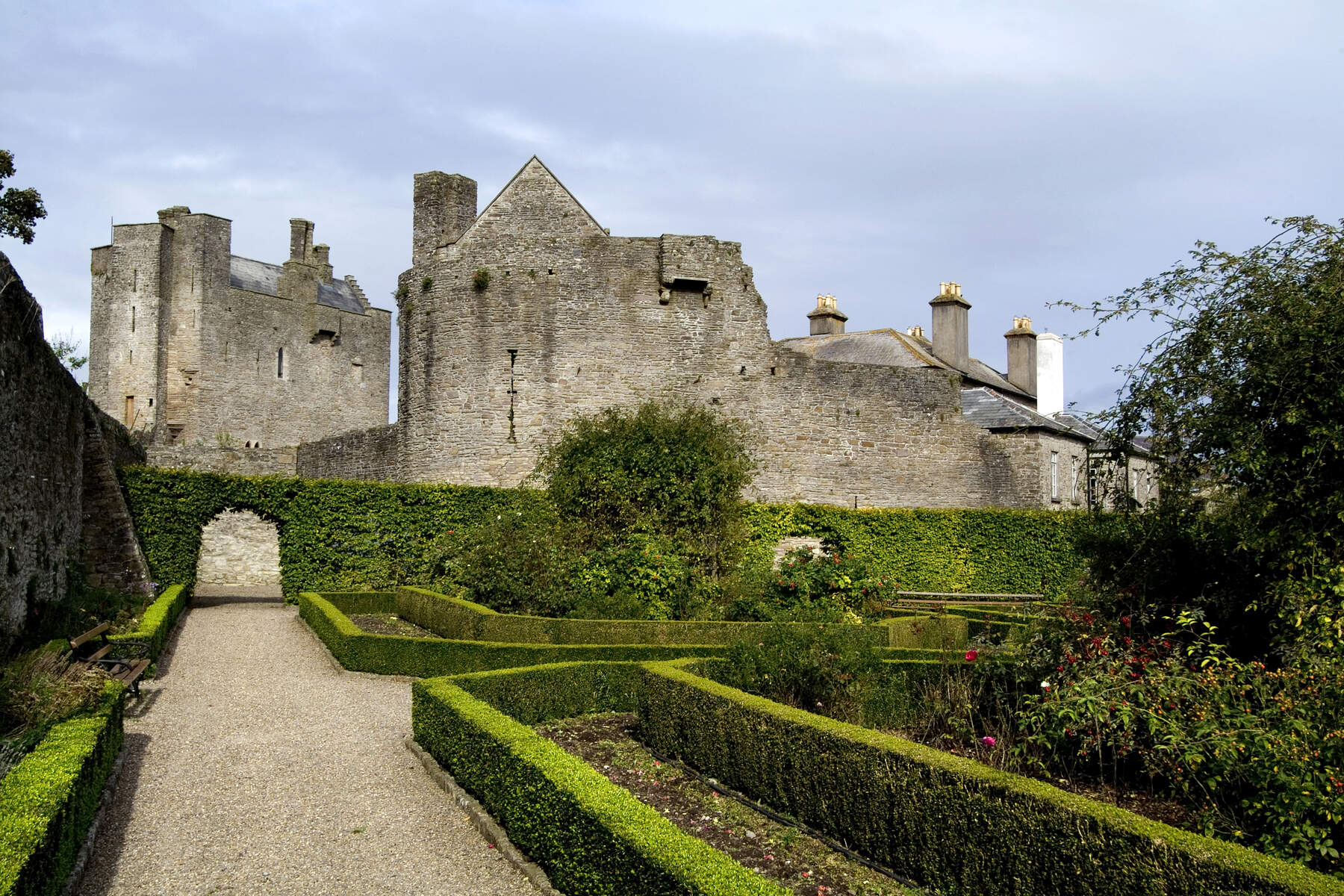
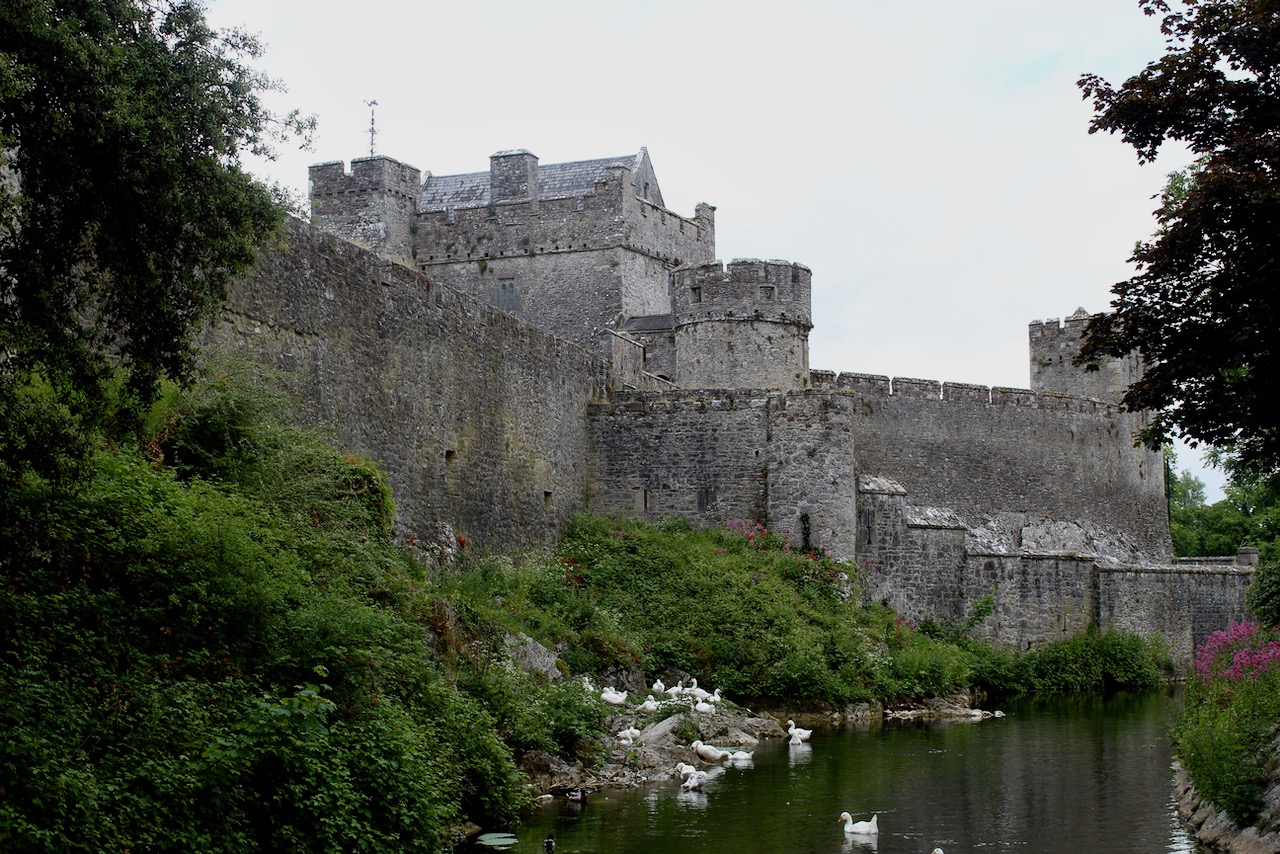
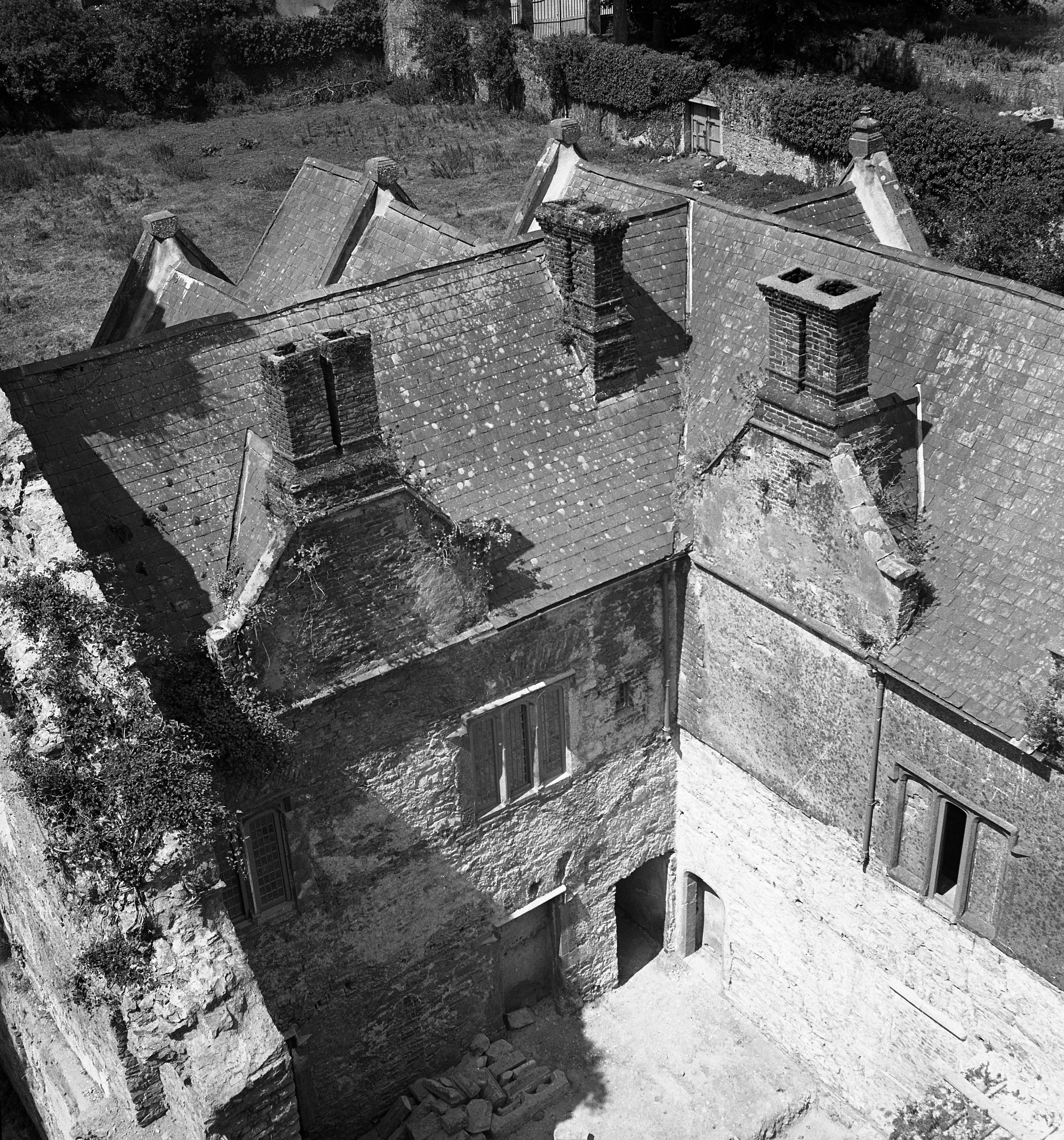
The castle and Damer house both sit inside bawn walls. Parts of the walls and outbuildings are in good condition, considering their age!
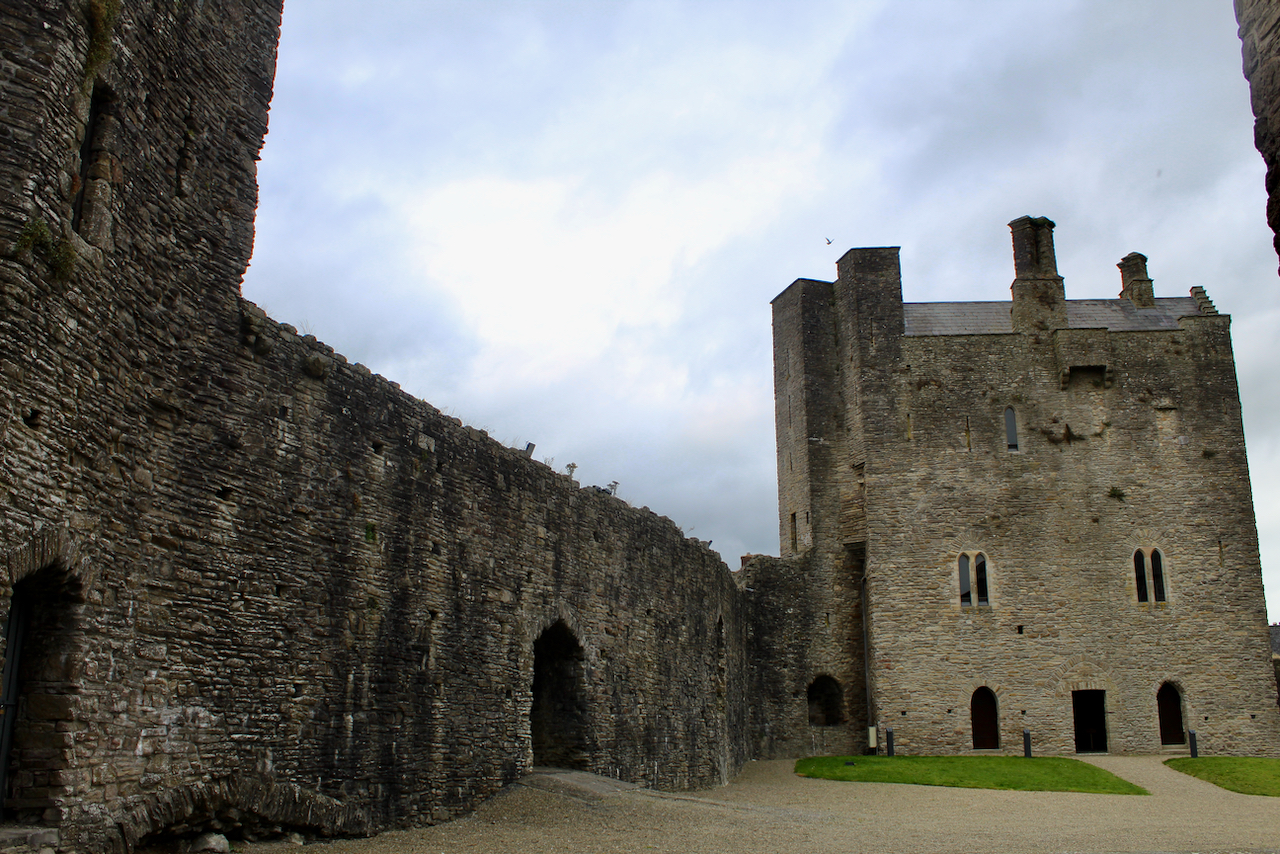
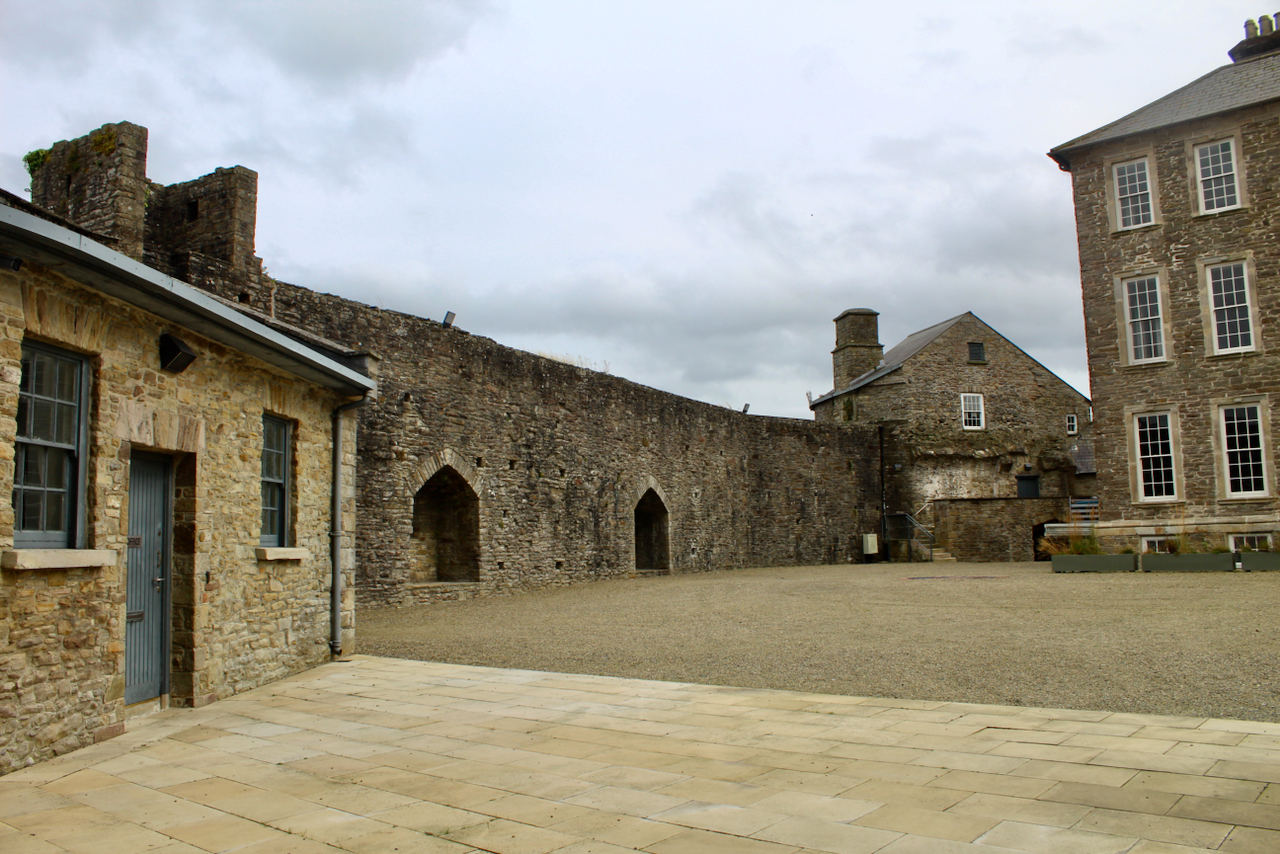
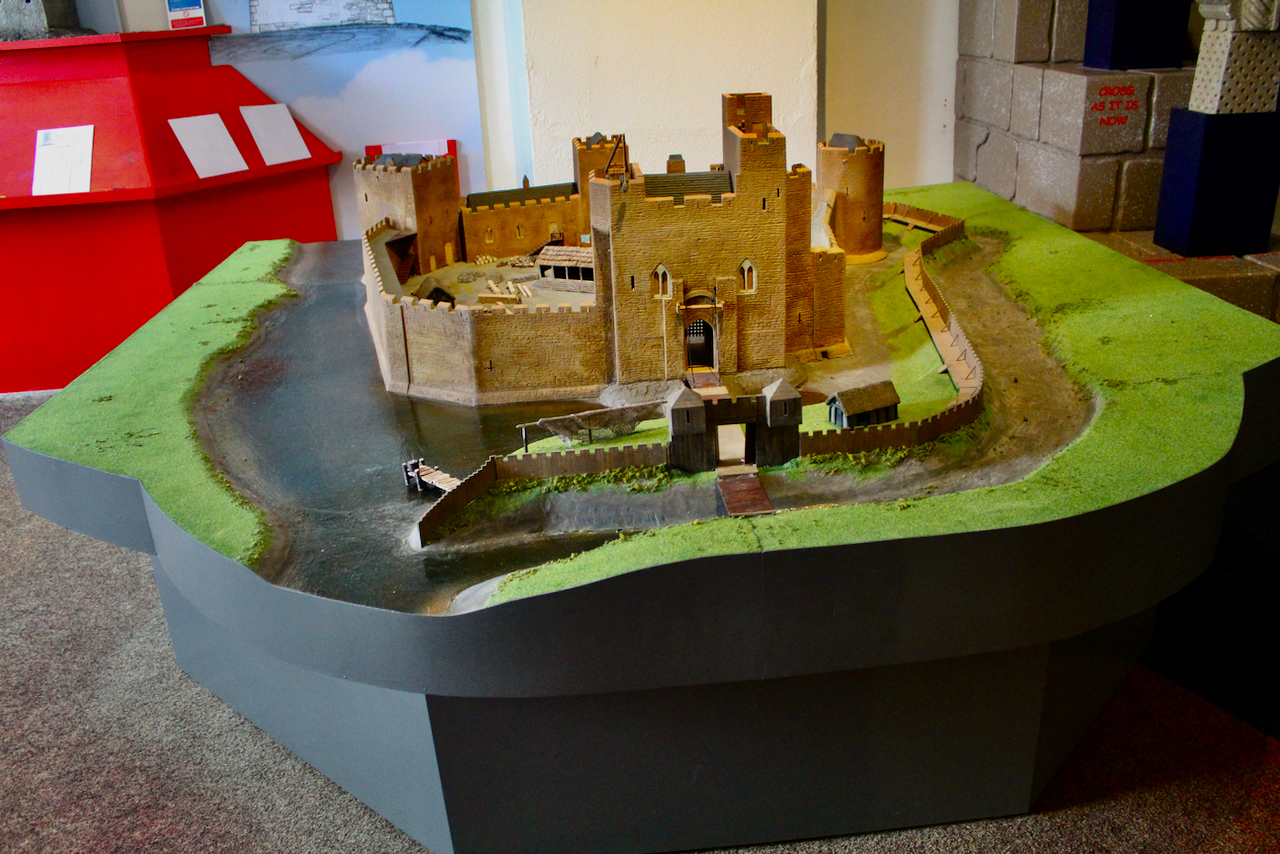
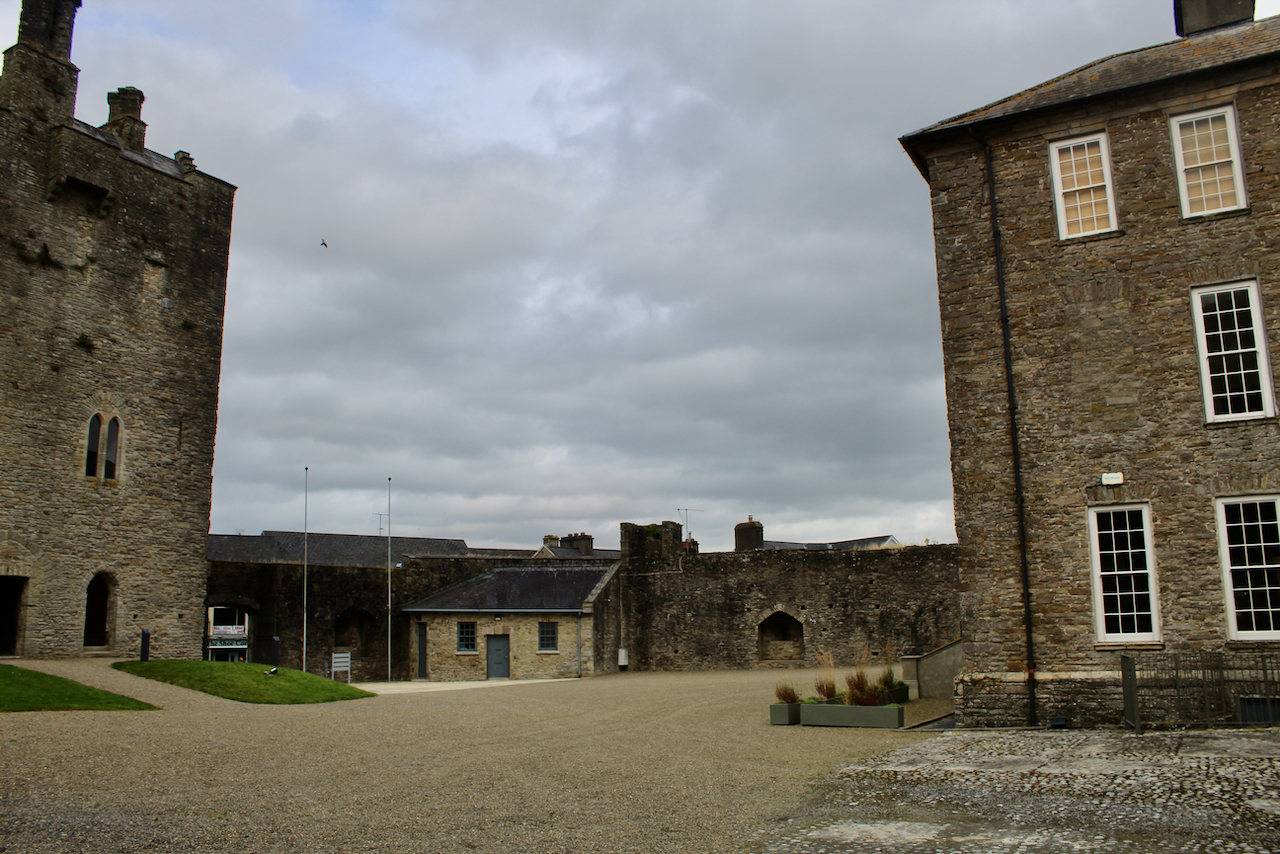
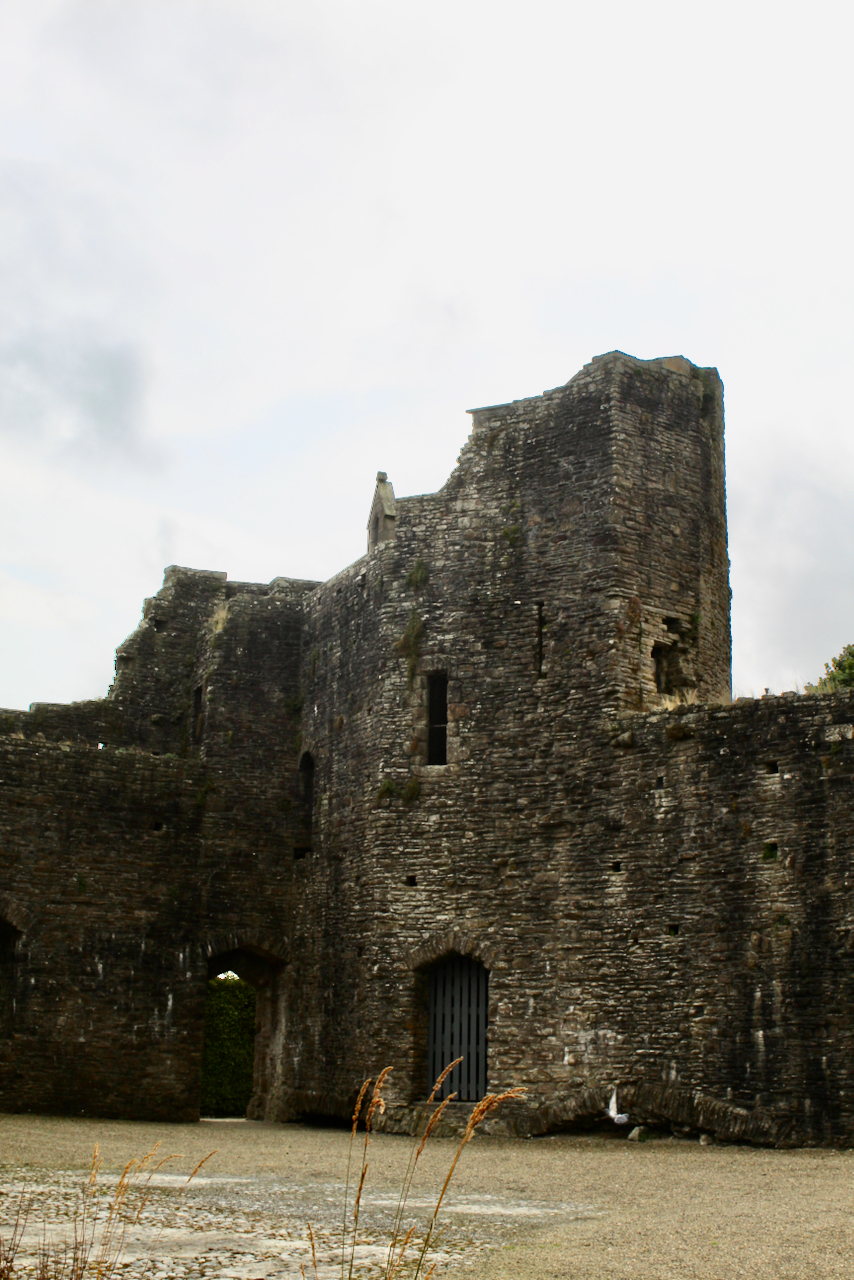
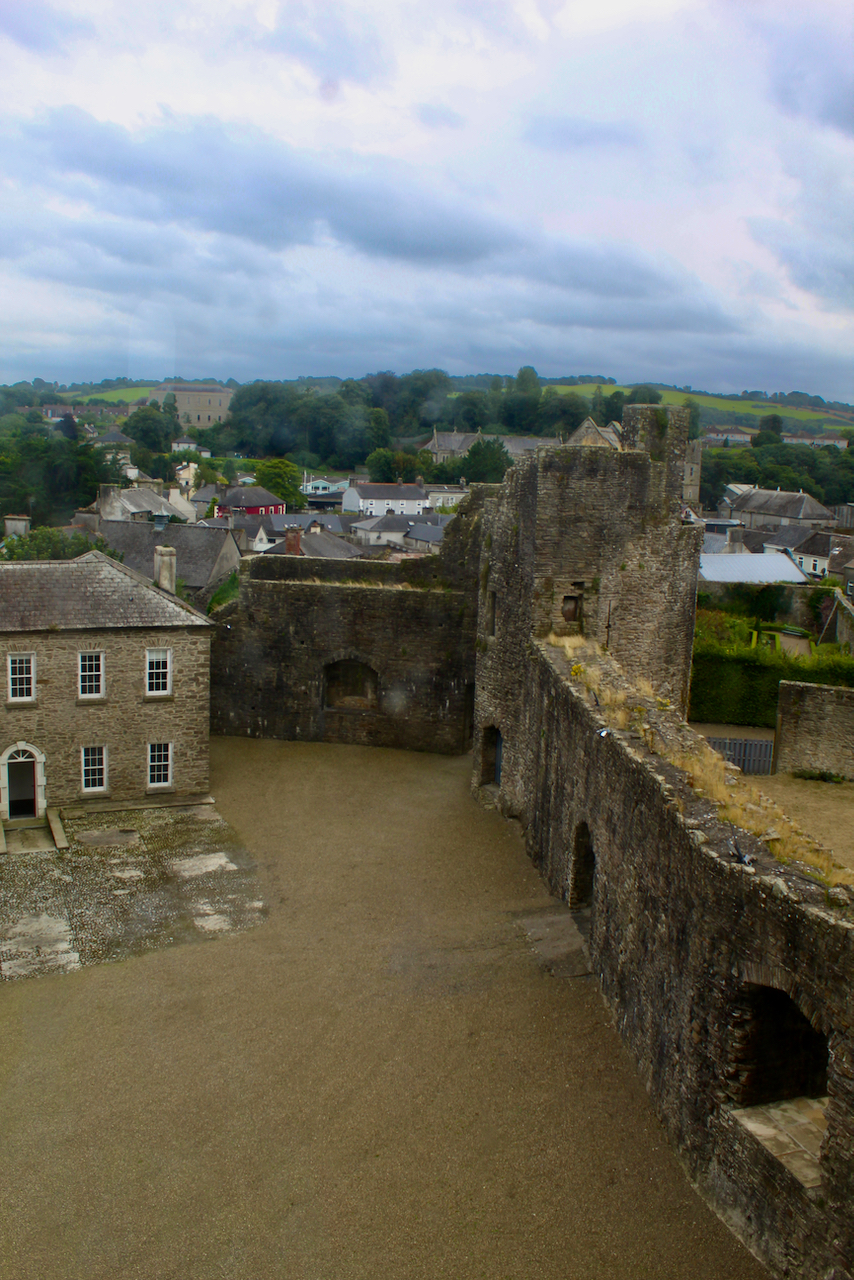
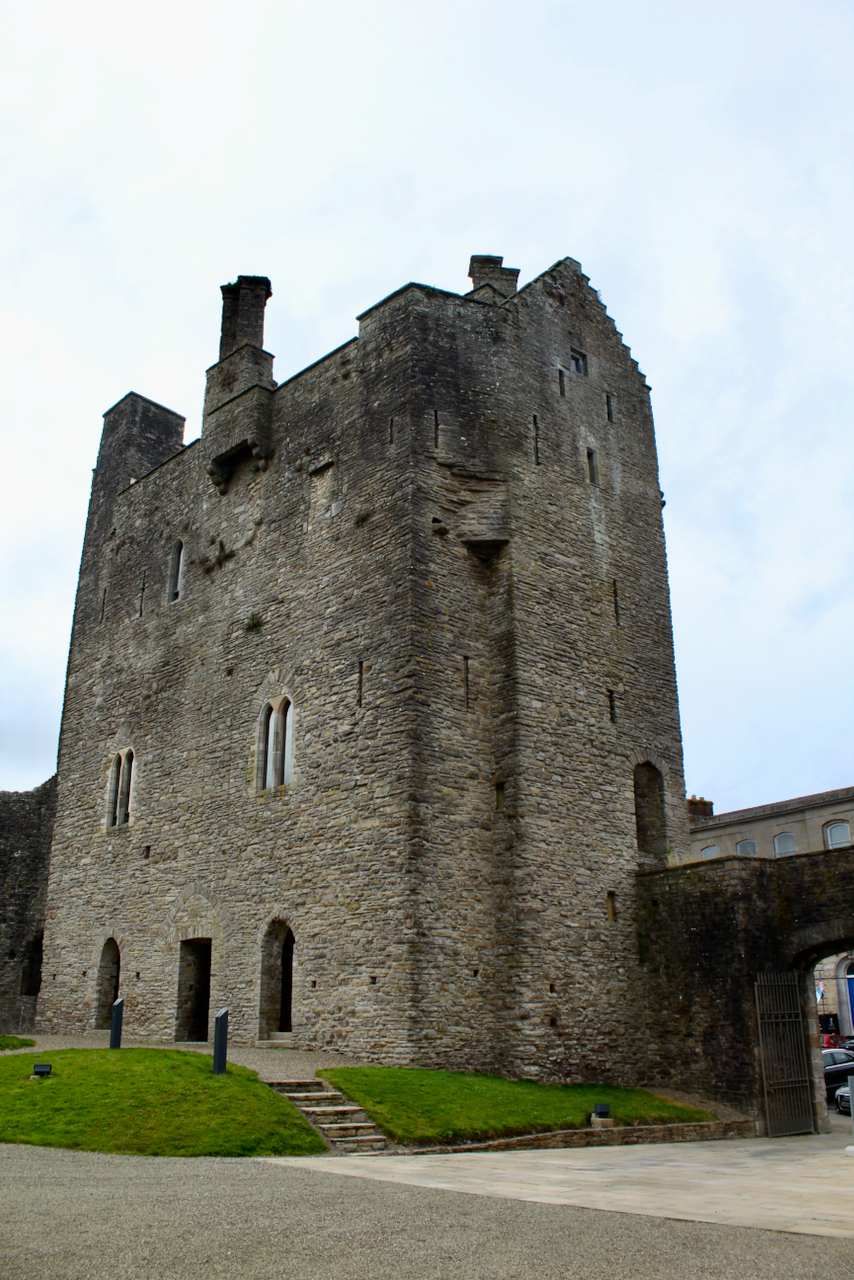
This was originally the site of a motte and bailey fortification known as King John’s Castle. The original wooden castle was destroyed in the late 13th century and was replaced with a stone structure built in 1274-1295 by John de Lydyard. The castle was originally surrounded by a river to the east and a moat on the other sides. [2] It was granted to the Butlers of Ormond in 1315 who held it until the early 18th Century. The castle as we see it today was built from 1332.
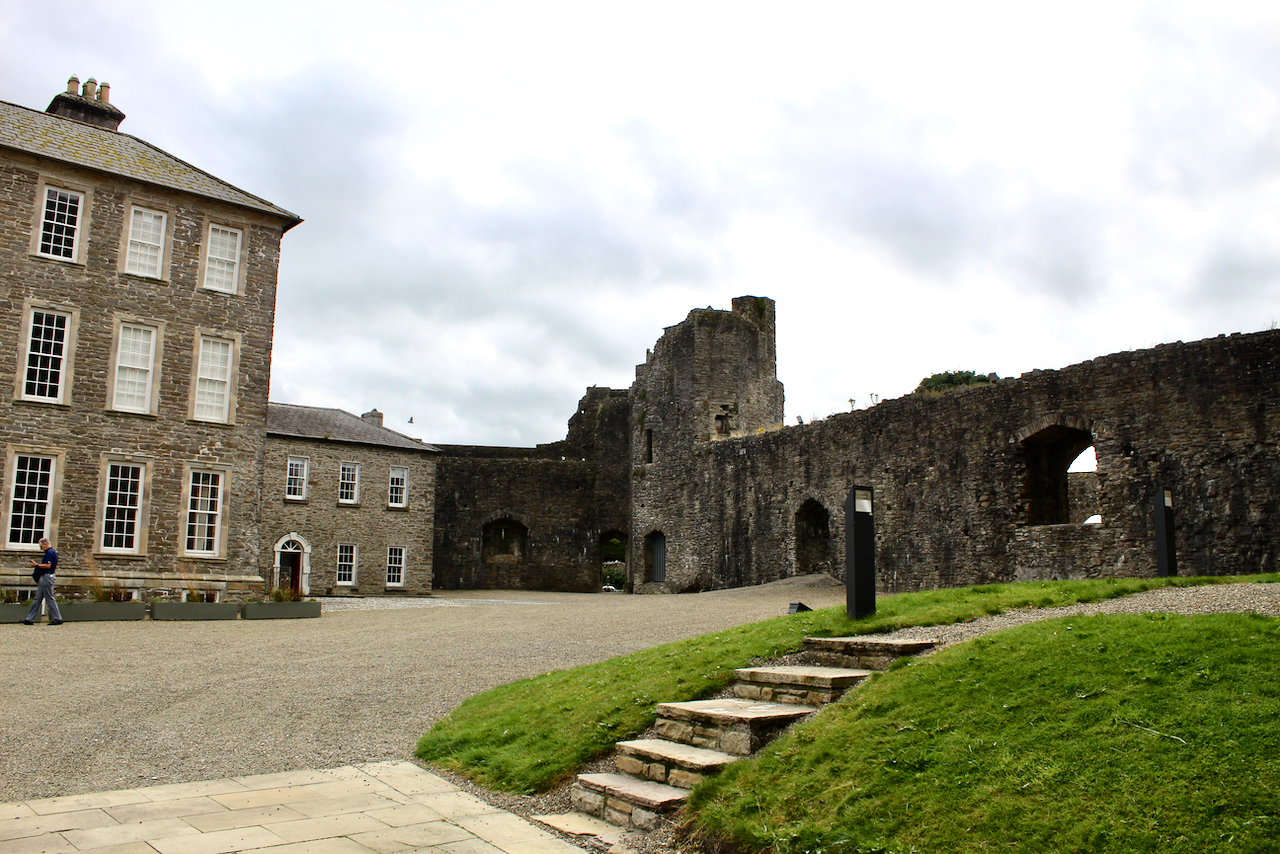
Roscrea Castle was sold to the Royal Hospital, Kilmainham, by James Butler, 2nd Duke of Ormond in 1703. It was bought by the Damers, who built an elegant three-storey nine bay pre-Palladian house in the courtyard in c. 1730.
The Dictionary of Irish Biography tells us:
“The Damer of folklore tradition is a conflation of the first Joseph [c.1630–1720] with his nephew John [1674-1768]. Thus, while Damer built himself a house in County Tipperary in the seventeenth century, the traditional stories about Damer’s Court (or Damerville) relate to a house built by John after his uncle’s death. John’s brother Joseph [1676–1737] built the Damer House in Roscrea, which was saved from demolition in the 1970s and subsequently restored. The Guildhall Library, London, has Damer correspondence among its Erasmus Smith papers.” [3]
In their book The Tipperary Gentry, Hayes and Kavanagh tell us that Joseph Damer (c.1630–1720) was born in Dorset in England in 1630. [4] He came to Ireland after the restoration of Charles II when land was being sold cheaply by Cromwellian soldiers who were given land instead of pay but did not want to remain in Ireland. Joseph Damer bought land in Tipperary, settling at Shronell, and established himself as a moneylender, lending to other landowners on mortgages. He also became involved in banking in Dublin. His nephew John (1674-1768) acted as his agent in Tipperary.
Joseph had no children and left his vast fortune when he died in 1720 to his nephews John (1674-1768) and Joseph (1676–1737), sons of his brother George Damer. He was so wealthy that he entered folklore with tales of how he gained his wealth, and he was compared to King Midas, as if everything he touched turned to gold.
Jonathan Swift wrote a ditty mocking Joseph Damer’s parsimony:
“He walked the streets and wore a threadbare cloak
He dined and supped at charge of other folk
And – by his look – had he held out his palms
He might be thought an object fit for alms.“
The Dictionary of Irish Biography tells us:
“Despite his reputation for miserliness, Damer was a benefactor of presbyterianism and, by some accounts, unitarianism. He and his nephew John (1673?–1768) were among the trustees and managers of the General Fund established in 1710 to support the protestant dissenting interest; another fund was established in 1718 to support the congregation in New Row in Dublin.” [see 3]
The nephew John had no children and his brother Joseph (1676–1737) inherited. Joseph sat in the British parliament for Dorchester (1722–27) and became MP for Tipperary in 1735. He died two years later. He married Mary Churchill, daughter of John Churchill of Henbury, Dorset.
Robert O’Byrne tells us that his son Joseph (1717-1798) inherited the house and castle was later created the Earl of Dorchester. [5] He was an absentee landlord and his brother managed his Irish properties. He built a mansion named Damerville which was very grand, but was demolished in 1775. Their sister Mary married William Henry Dawson, 1st Viscount Carlow, who lived at Emo in Laois. It was her offspring who later inherited the Damer properties.
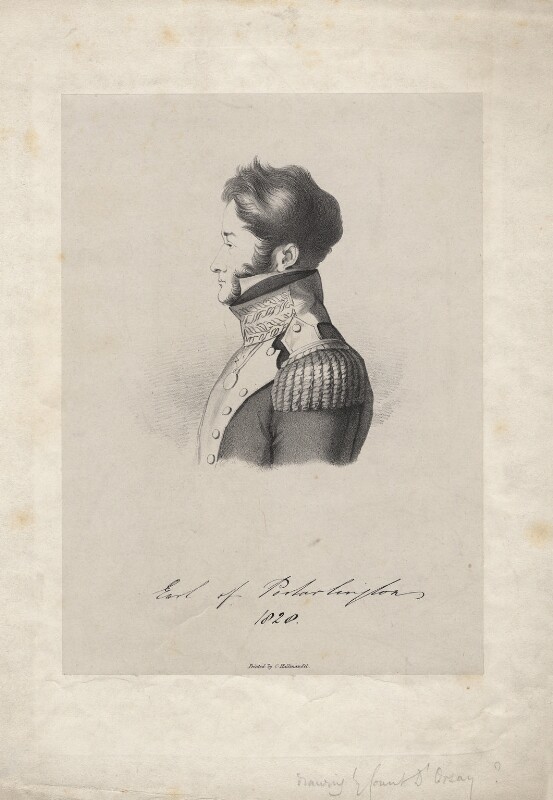
Joseph’s son John (1744-1776) married Ann Seymour, a sculptress. He spent all of his inheritance and killed himself. Subsequently it was his younger brother George who inherited the title to become 2nd Earl of Dorchester. None of Joseph’s offspring had children, however, so the properties passed to the 2nd Earl of Portarlington, a second cousin, who assumed the name Dawson-Damer.

Mary who had married the 1st Viscount Carlow had a son John Dawson (1744-1798) who became 1st Earl of Portarlington, Queen’s County. He married Caroline Stuart, daughter of the 3rd Earl of Bute and his writer wife, Mary Wortley Montagu. He commissioned James Gandon to built Emo Court in Queen’s County (Laois). It was his son John Dawson (1781-1845), 2nd Earl of Portarlington, who inherited the Damer fortune and lands, and added Damer to his surname.

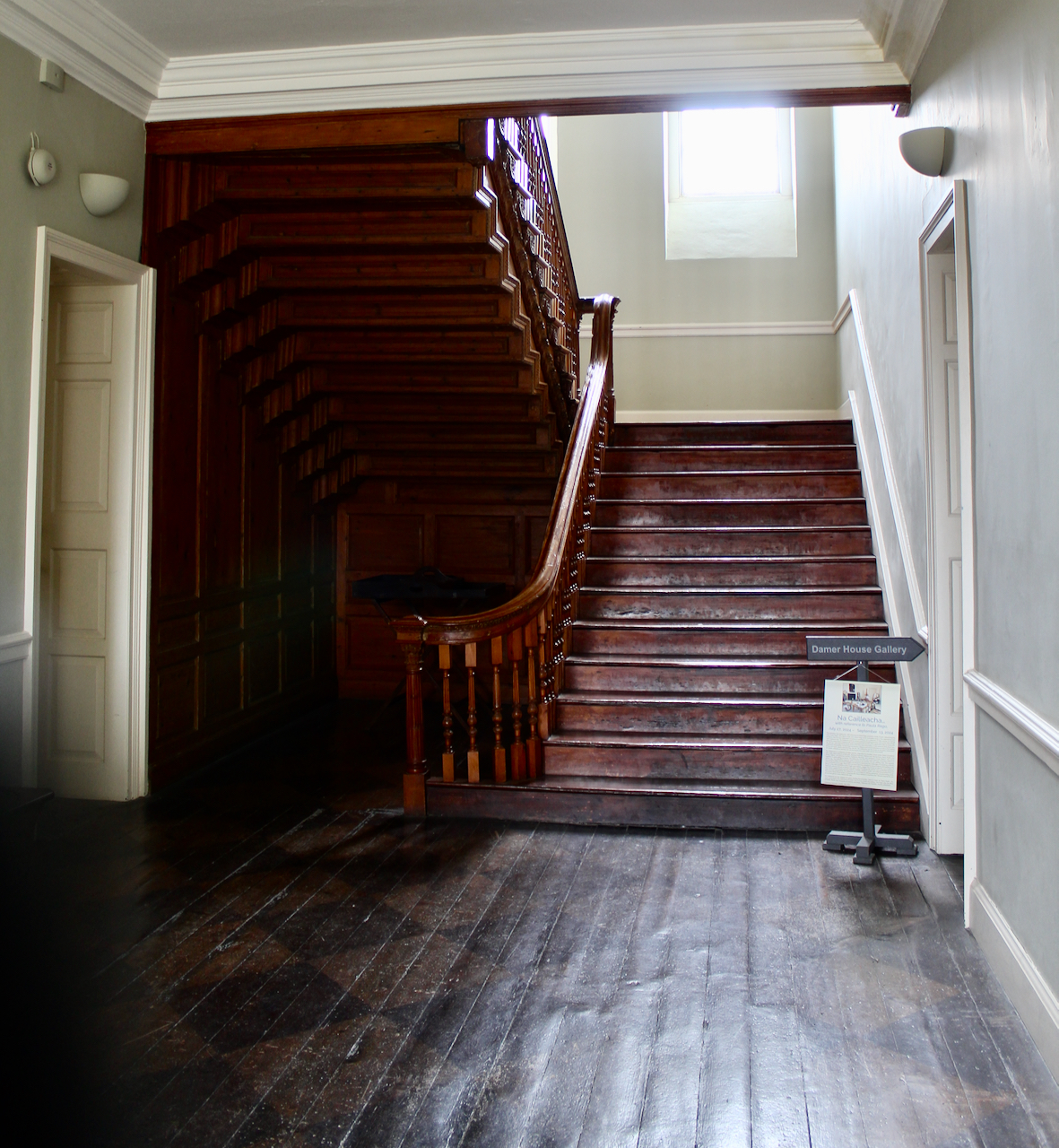
Damer House has a scroll pediment doorway and inside, a magnificent carved staircase. The Irish Georgian Society was involved in saving it from demolition in the 1960s. [for more photographs, see https://theirishaesthete.com/tag/damer-house/ ] The stairs and floor in the front hall are original to the house. The stairs are similar to ones in Cashel Palace, which was the Archbishop’s Palace, and is now an upmarket hotel. See the website of the Irish Aesthete for photographs of this staircase: https://theirishaesthete.com/tag/cashel-palace/
The Damers didn’t live in the house and it was rented out to various tenants.
Robert O’Byrne tells us about the history of the house:
“In 1798 the house was leased as a barracks and then the whole site sold to the British military in 1858. At the start of the last century the Damer House became ‘Mr. French’s Academy’, a school for boys, reverting to a barracks for the National Army during the Civil War, then being used as a sanatorium, before once again in 1932 serving as a school until 1956, then a library. By 1970 it was empty and unused, and the local authority, Tipperary County Council, announced plans to demolish the house and replace it with an amenity centre comprising a swimming pool, car park, playground and civic centre (it had been nurturing this scheme since as far back as 1957). The council’s chairman wanted the demolition to go ahead, declaring that ‘as long as it stands it reminds the Irish people of their enslavement to British rule,’ and dismissing objectors to the scheme as ‘a crowd of local cranks.’ In fact, most of the so-called ‘crowd’ were members of the Old Roscrea Society and in December 1970 this organisation was offered help by the Irish Georgian Society in the campaign to save the Damer House.“
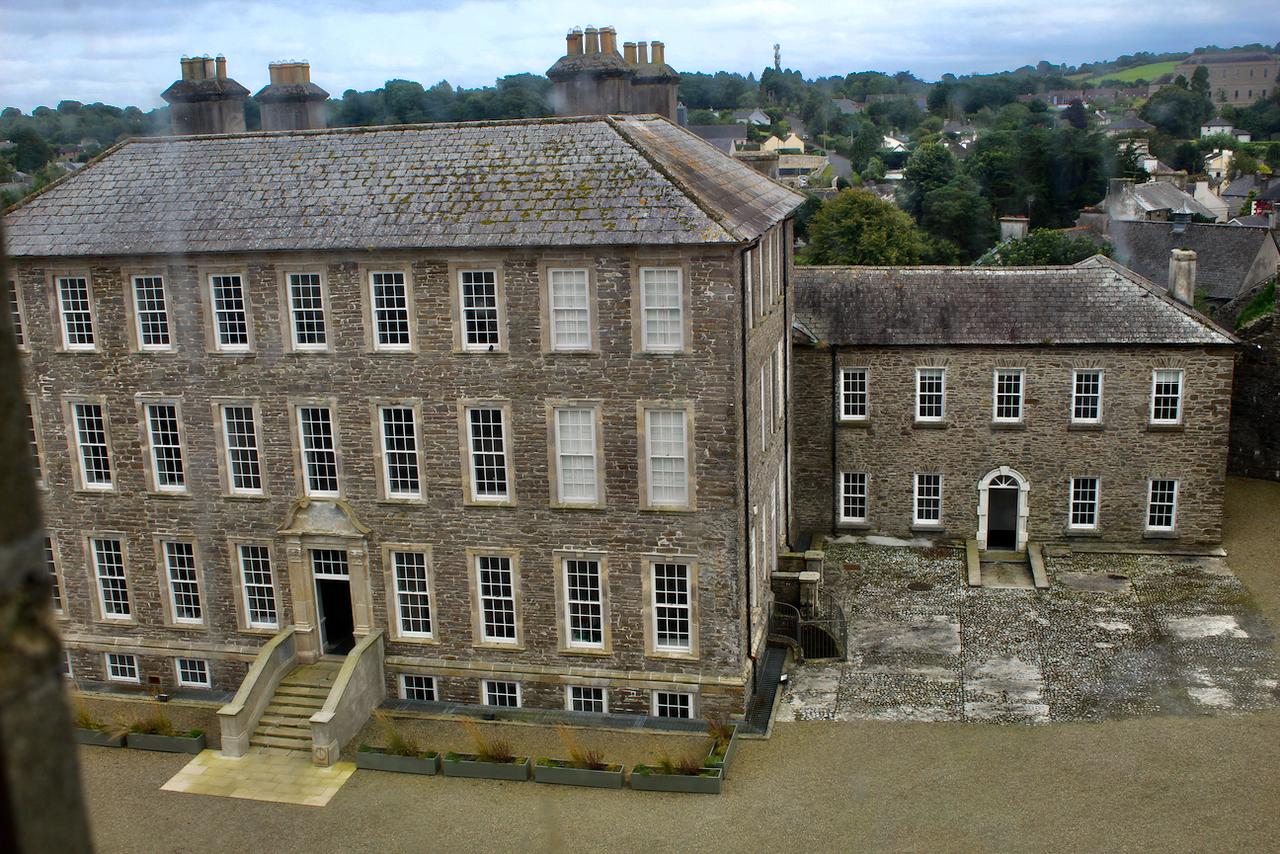
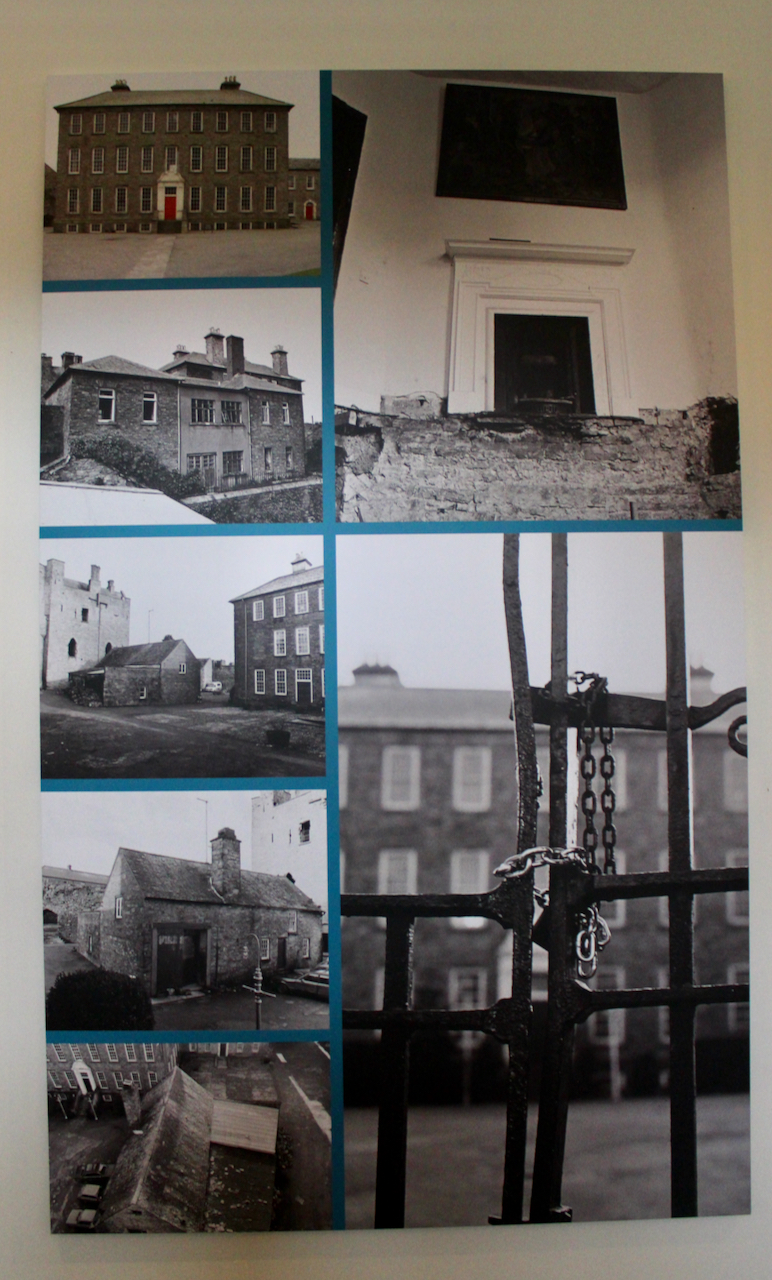
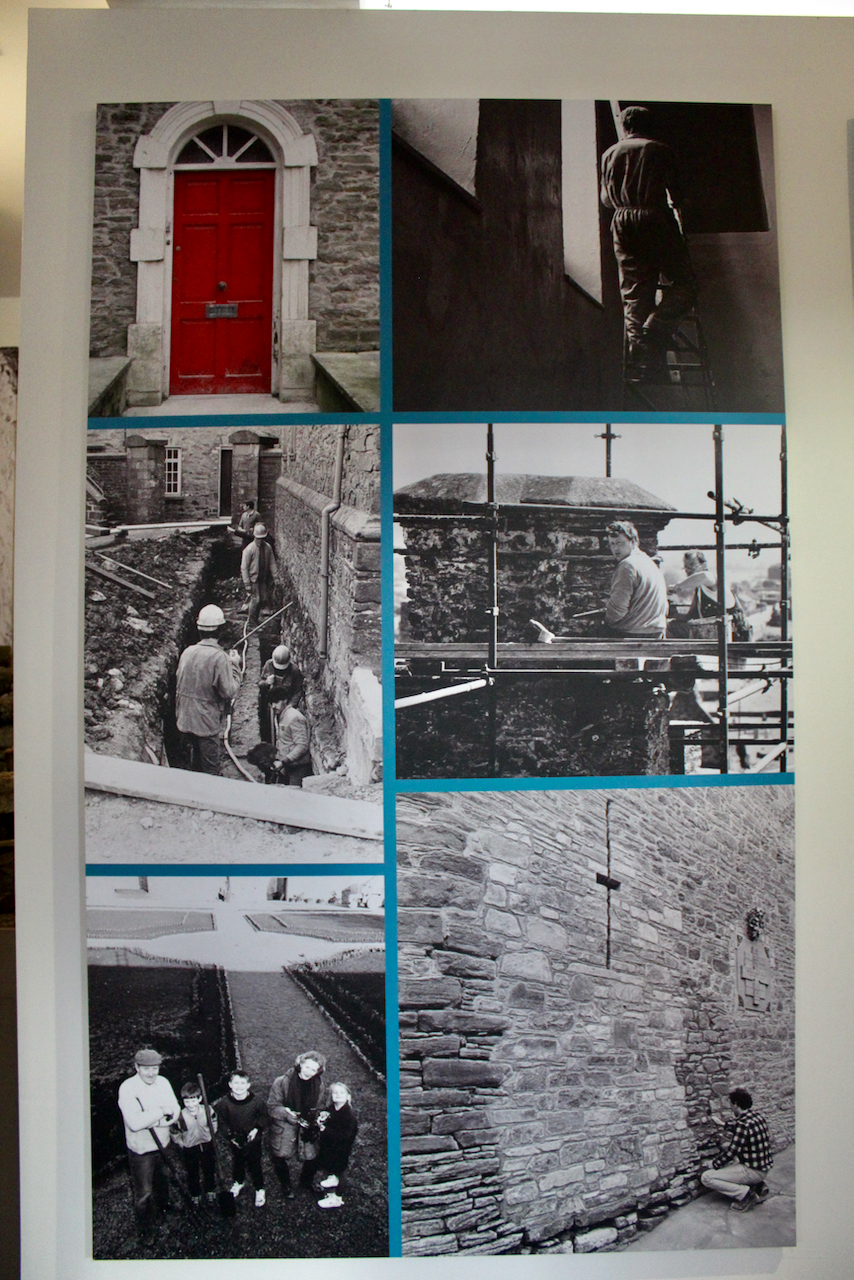
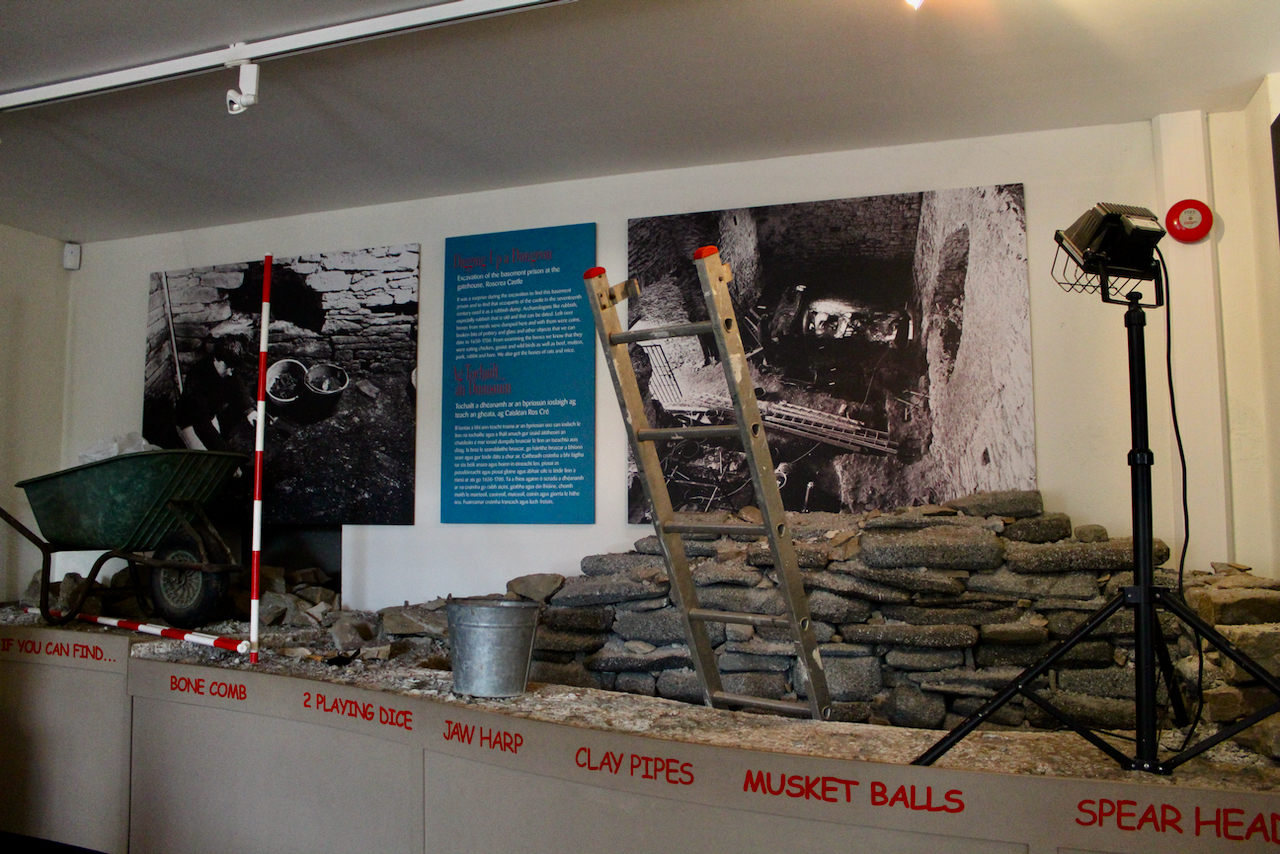
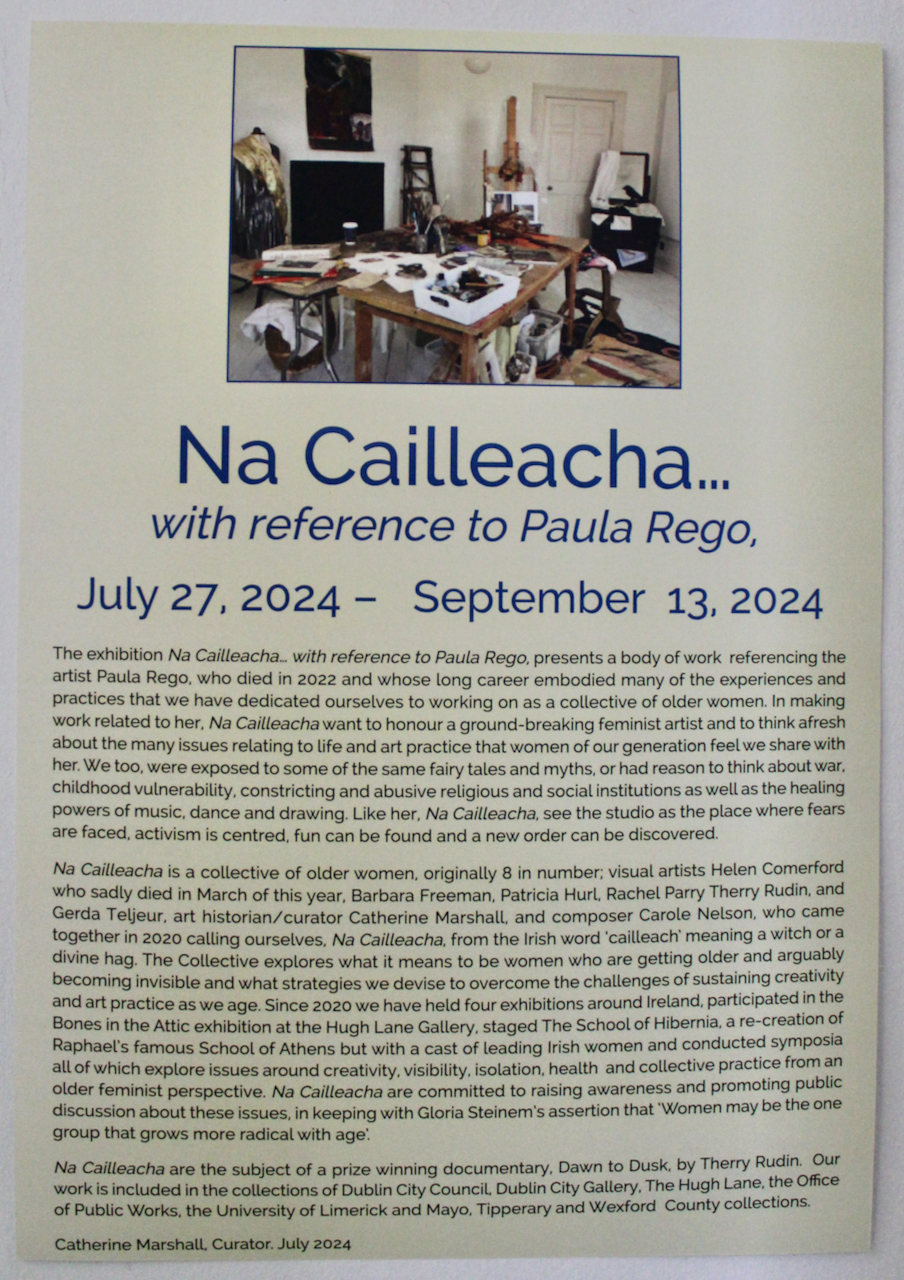
Upstairs in Damer House there’s also Exhibition space, but we did not have much time to browse.
After our tour of Damer House we crossed the yard for a tour of the castle.
Roscrea Castle fell into disrepair in the 19th century, and when the roof collapsed extensive repairs were needed in the 1850s. It was named a national monument in 1892, and is now under the care of the OPW.
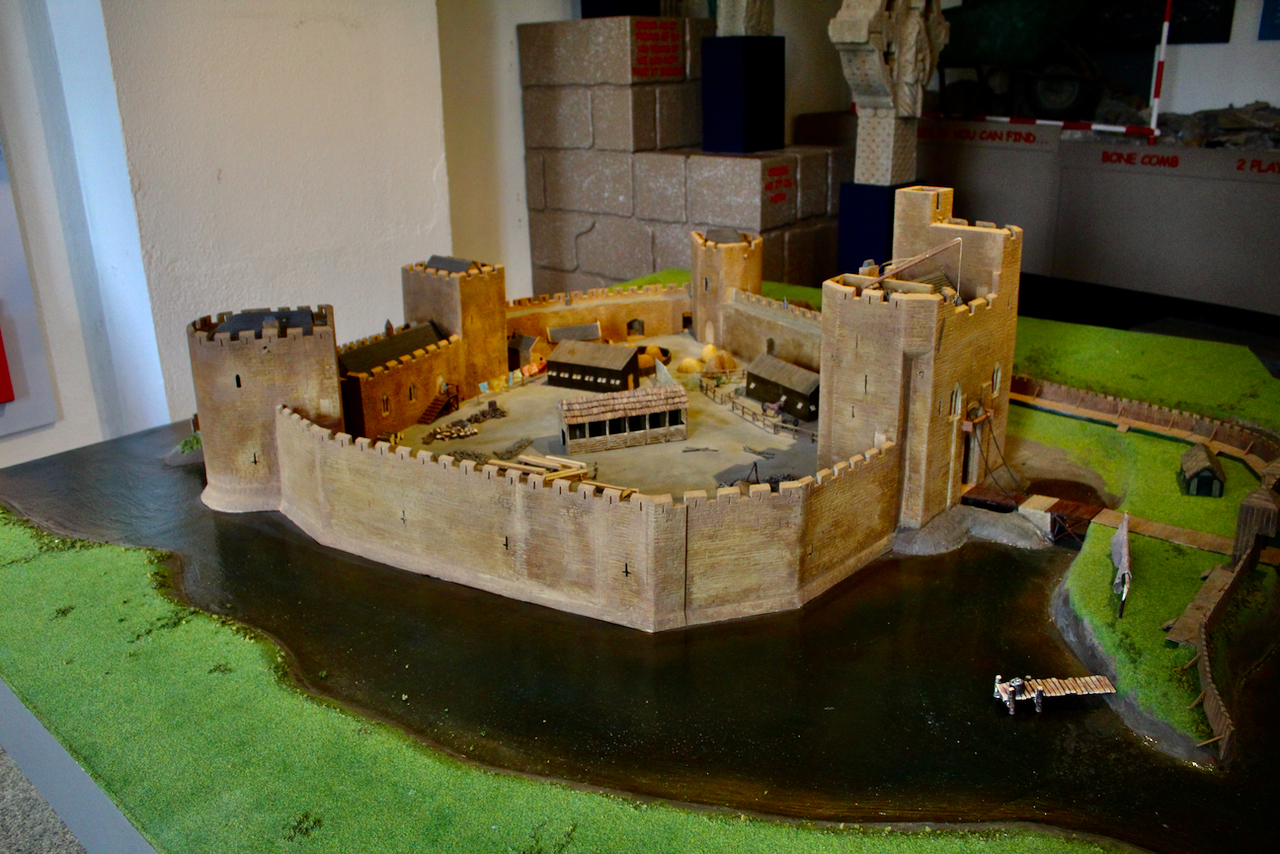
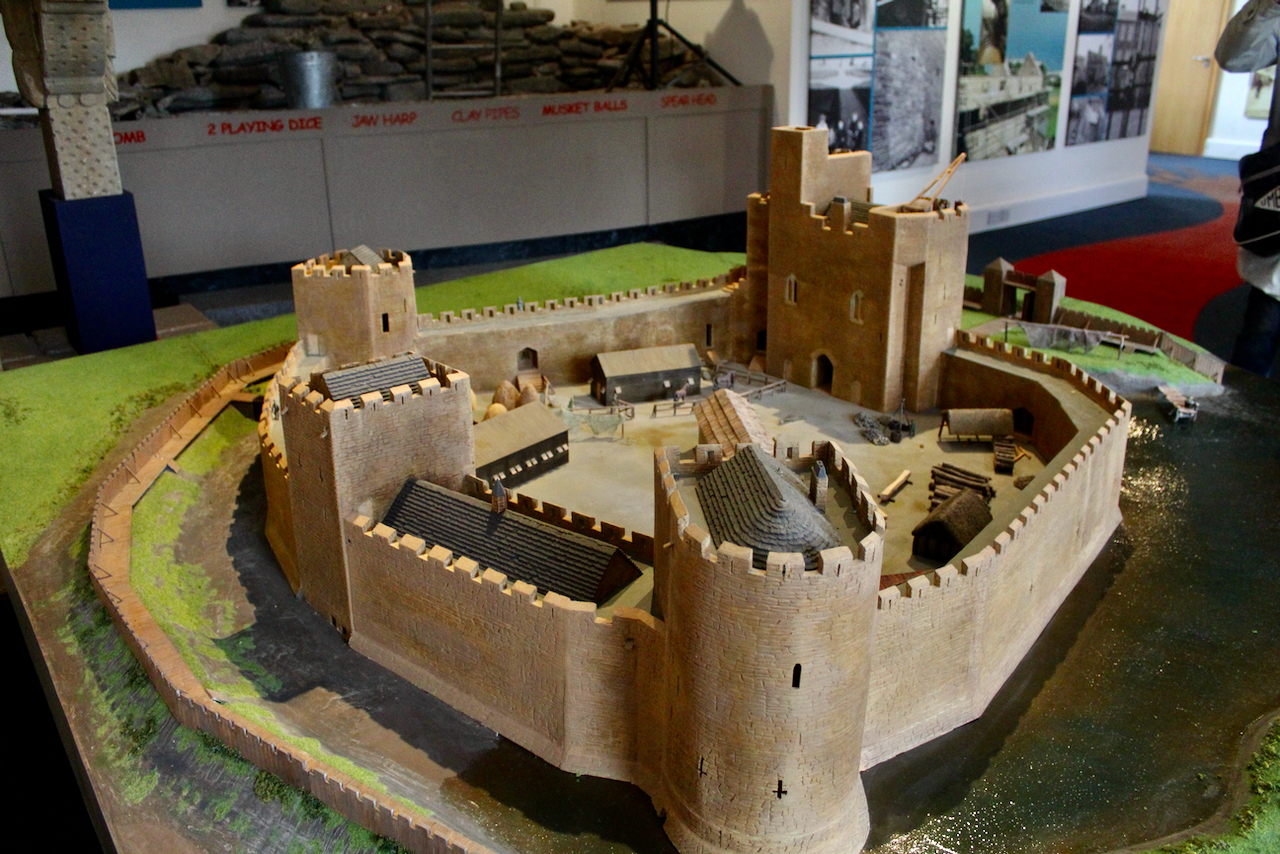
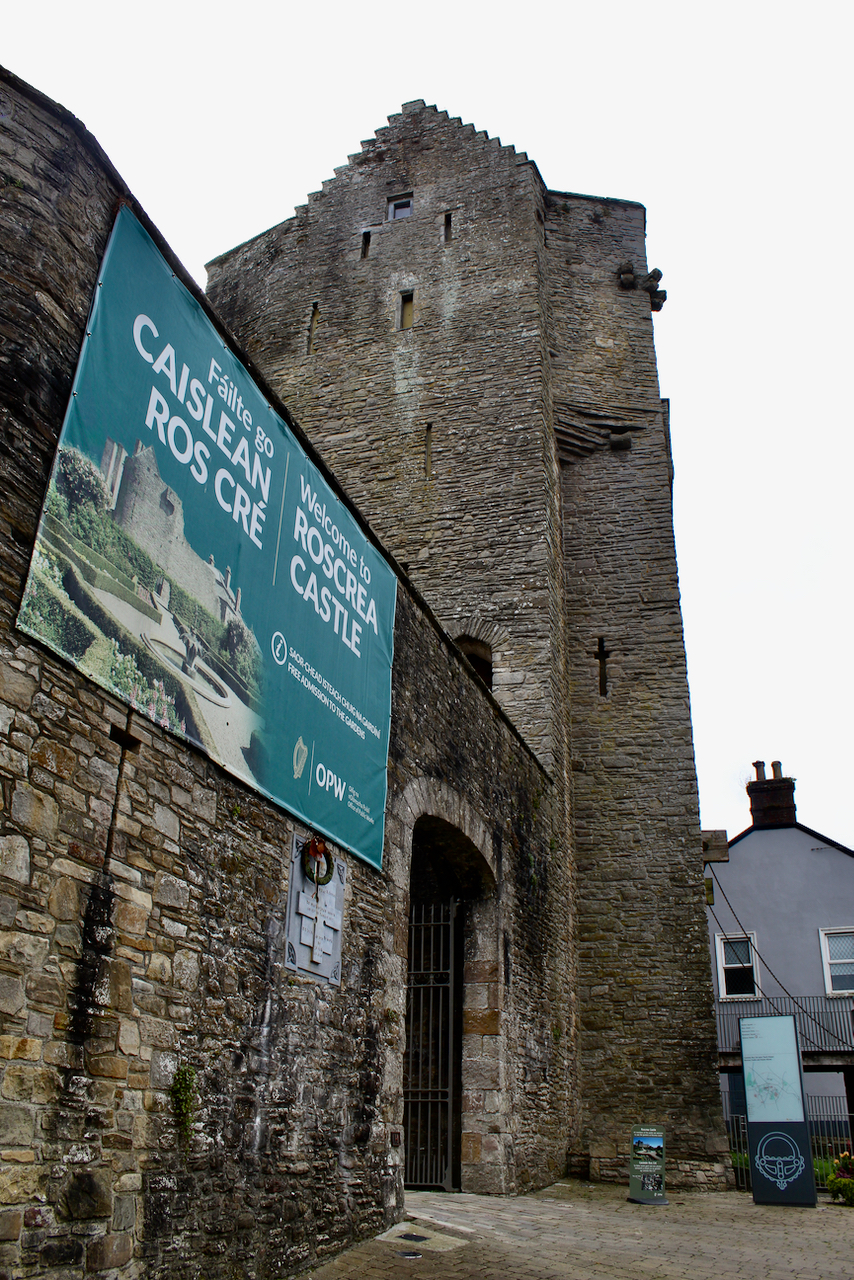
The original entrance to the castle is to one side of where we enter today – you can see the drawbridge in the photograph above.
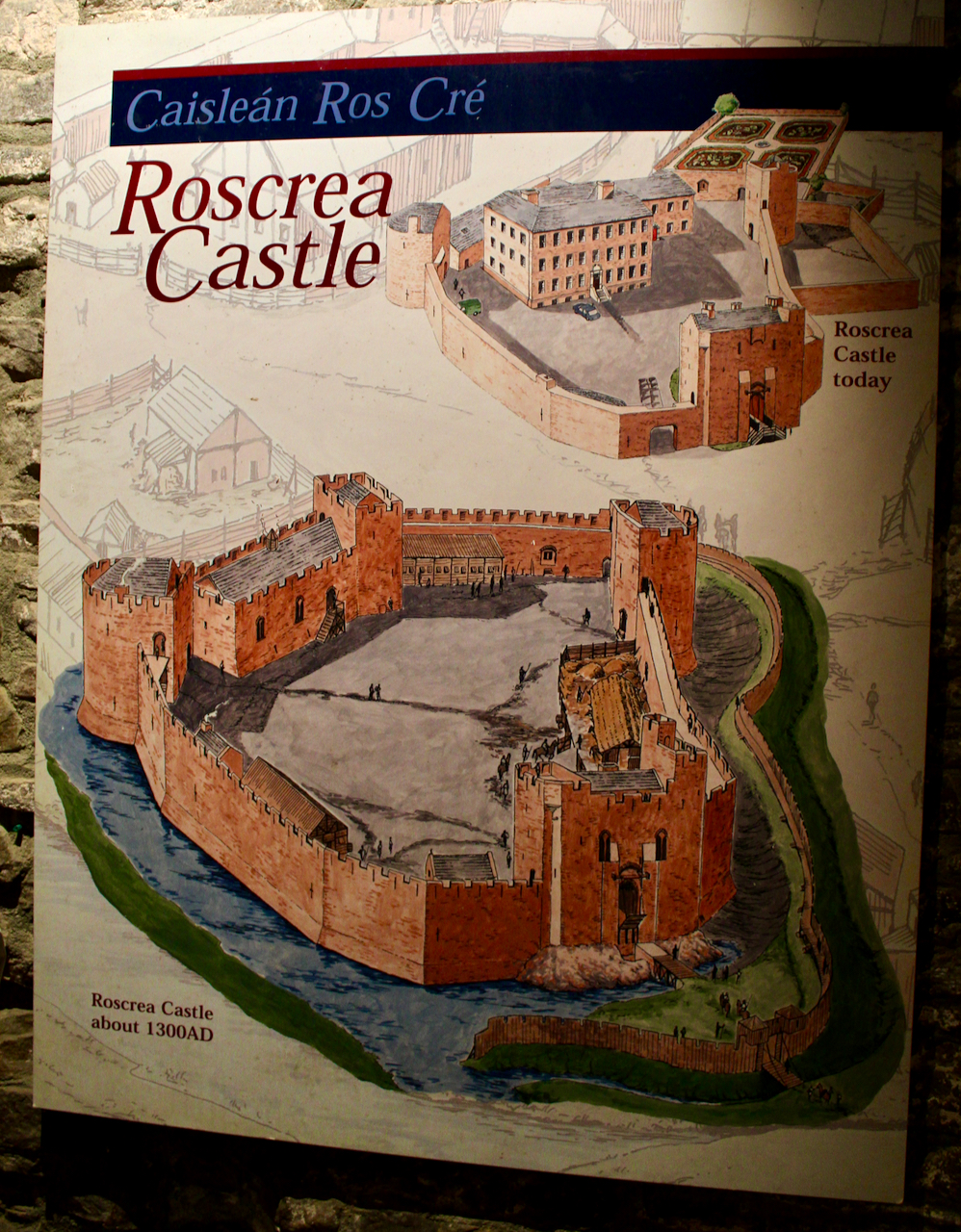
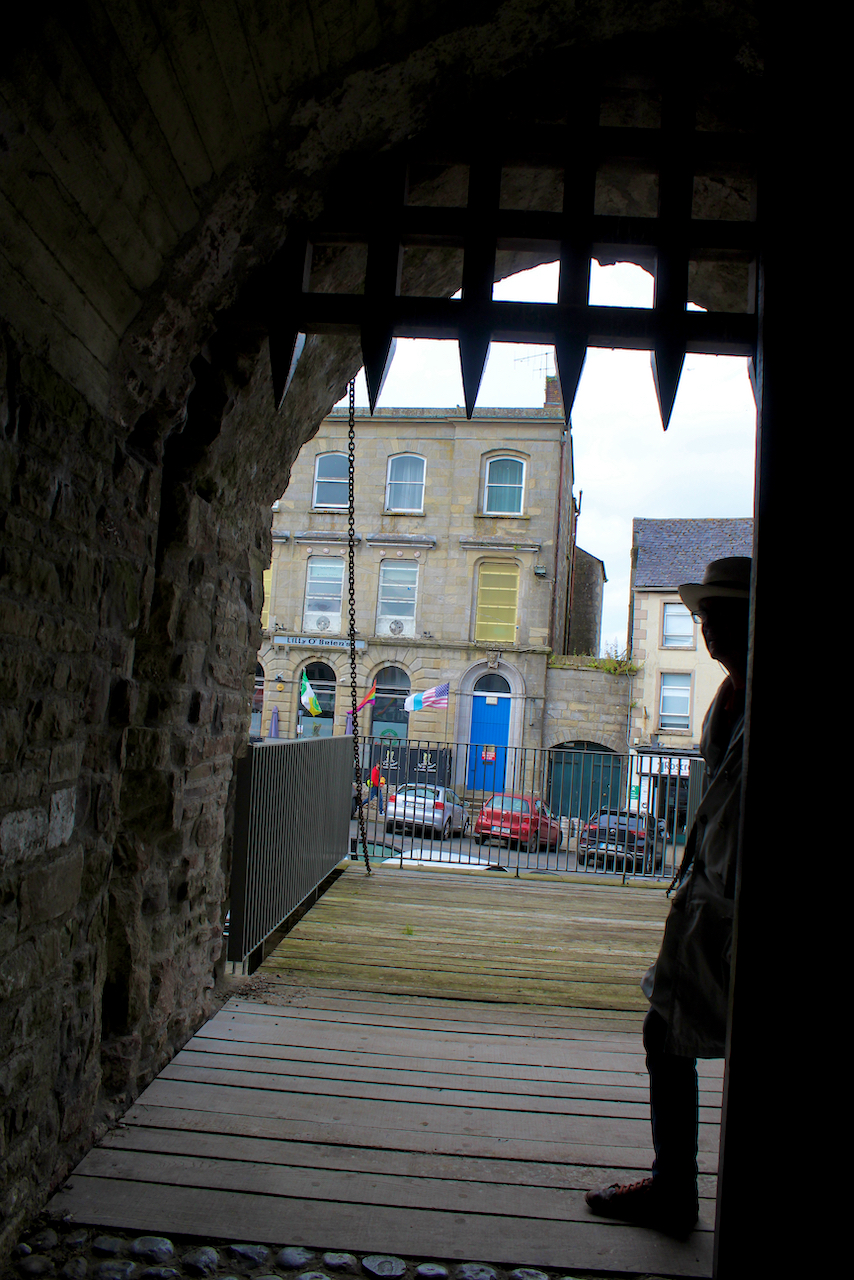
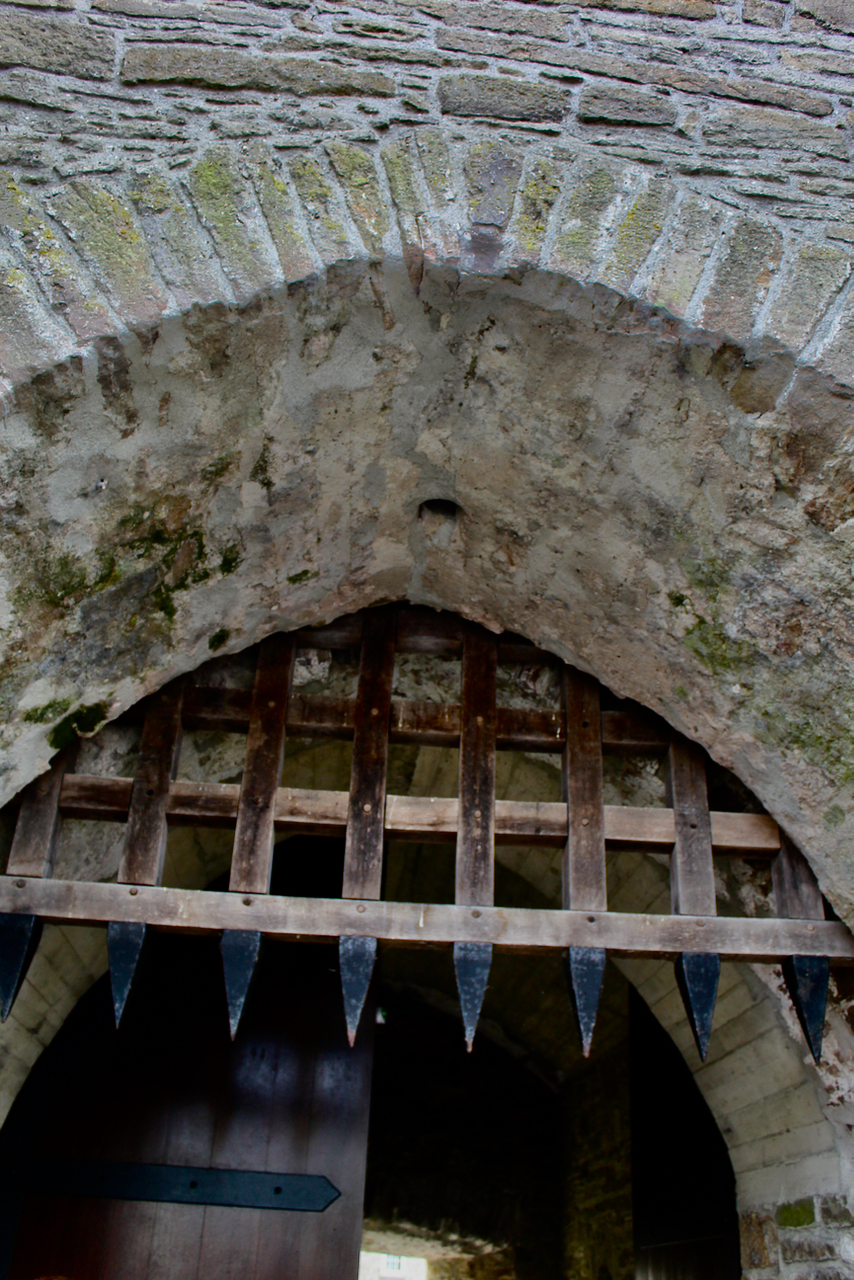
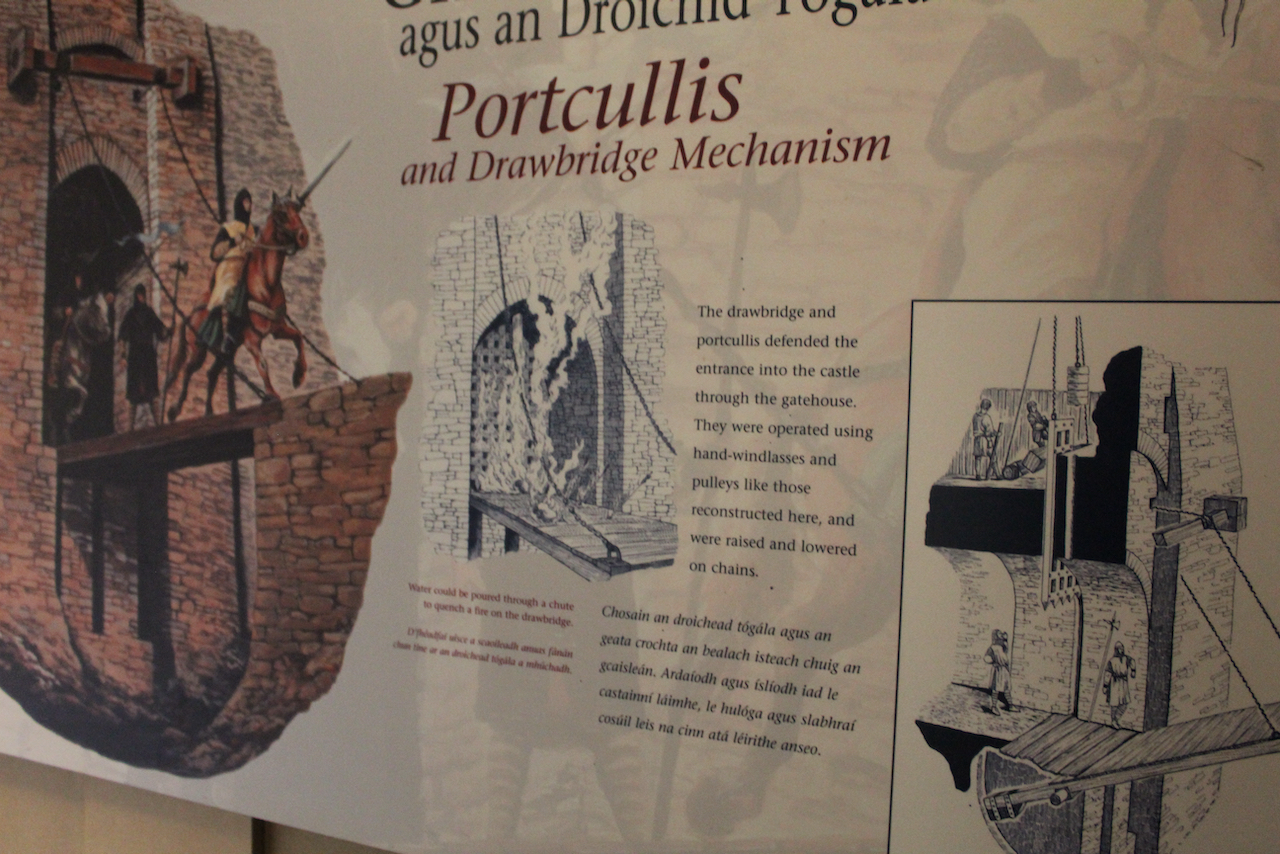
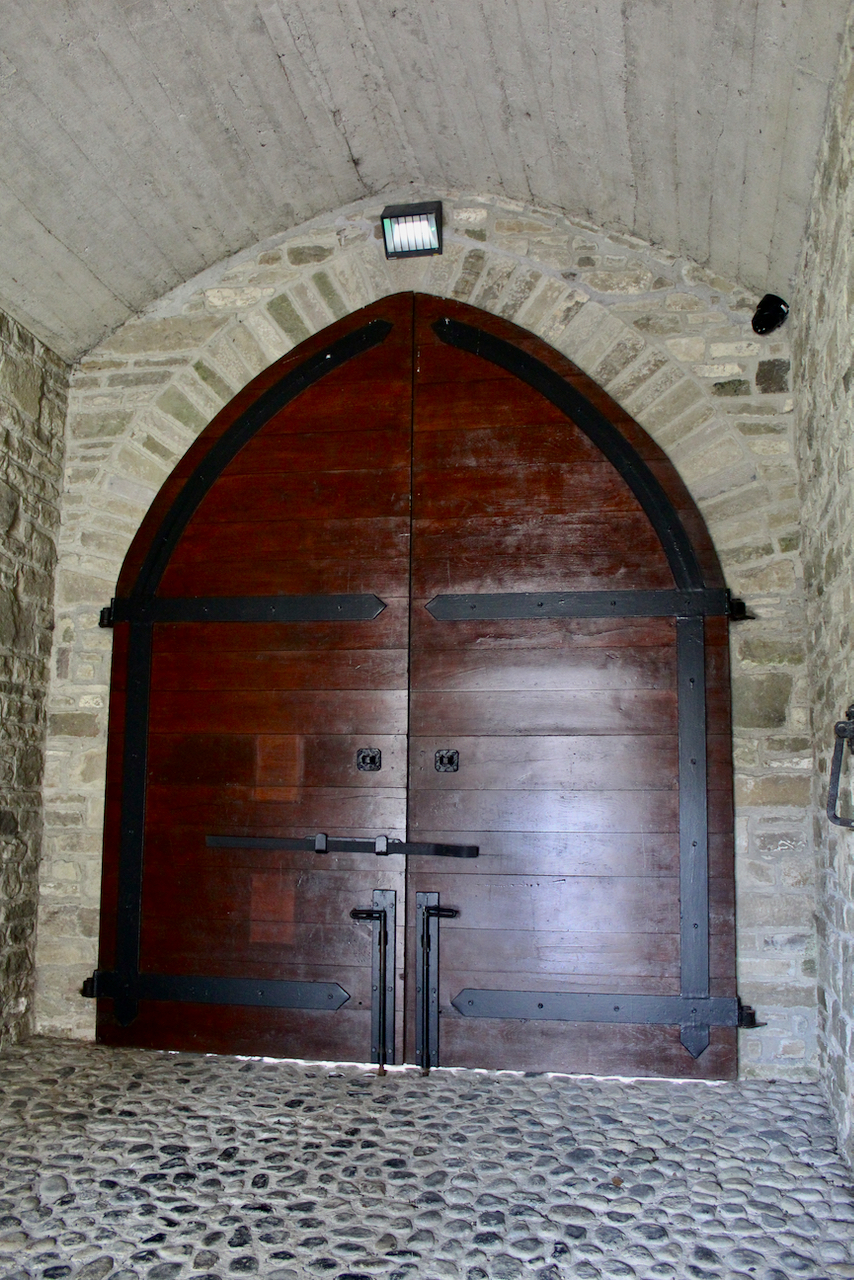
The Castle was located on one of the five main roads in ancient Ireland, and it was essential for the Normans to control this route. In 1315 King Edward II handed the castle over to James Butler, 1st Earl of Ormond.
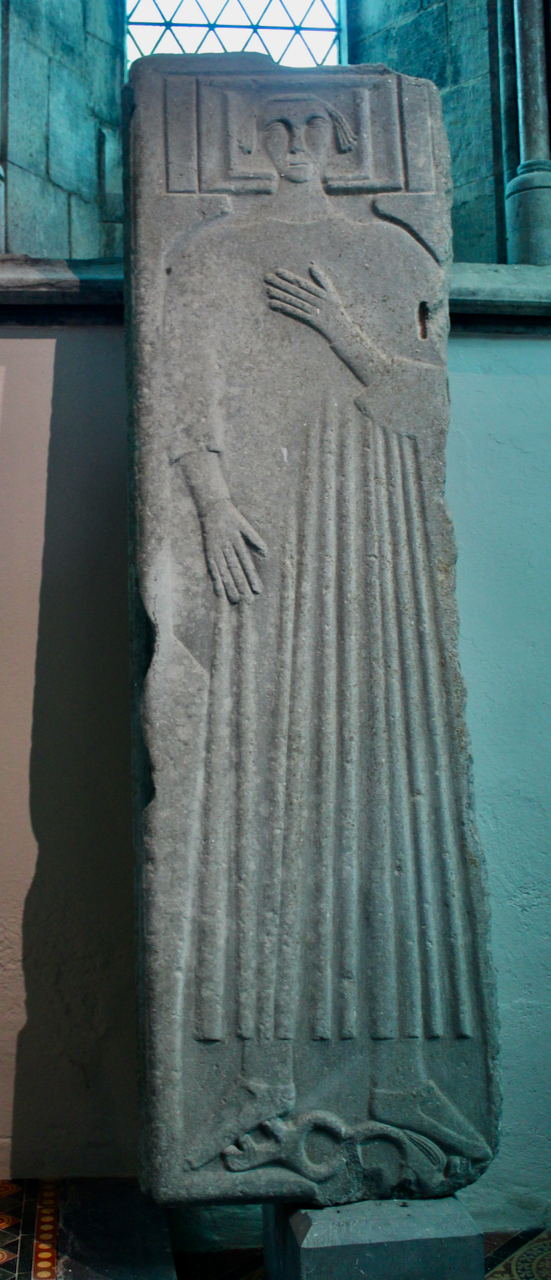
The castle had many defensive features. The curtain wall is approximately three metres thick, which allowed for a wall-walk from which soldiers had a view of the surrounding area. The River Barrow formed a moat around the east face of the castle, and the Normans constructed a dry moat on the west side. The river was diverted in the 19th century.
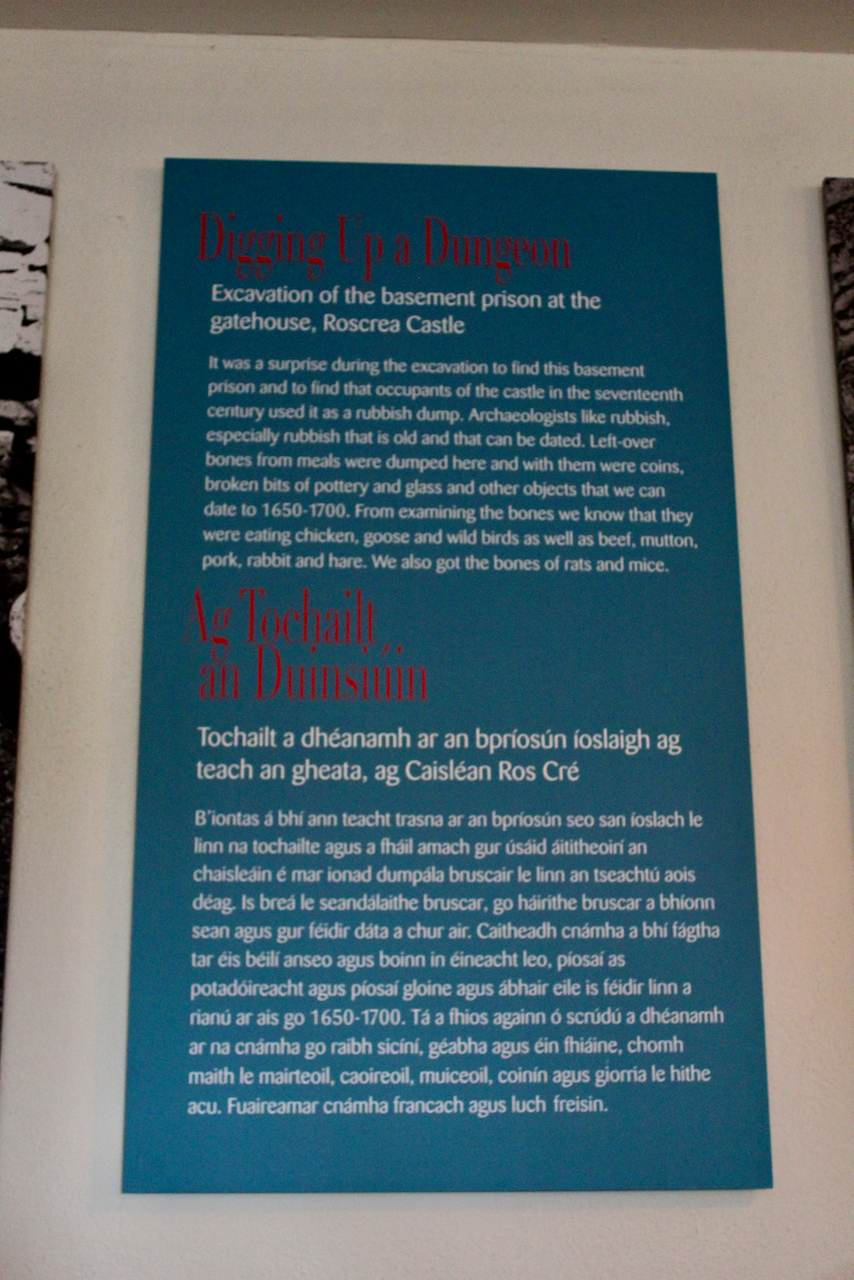
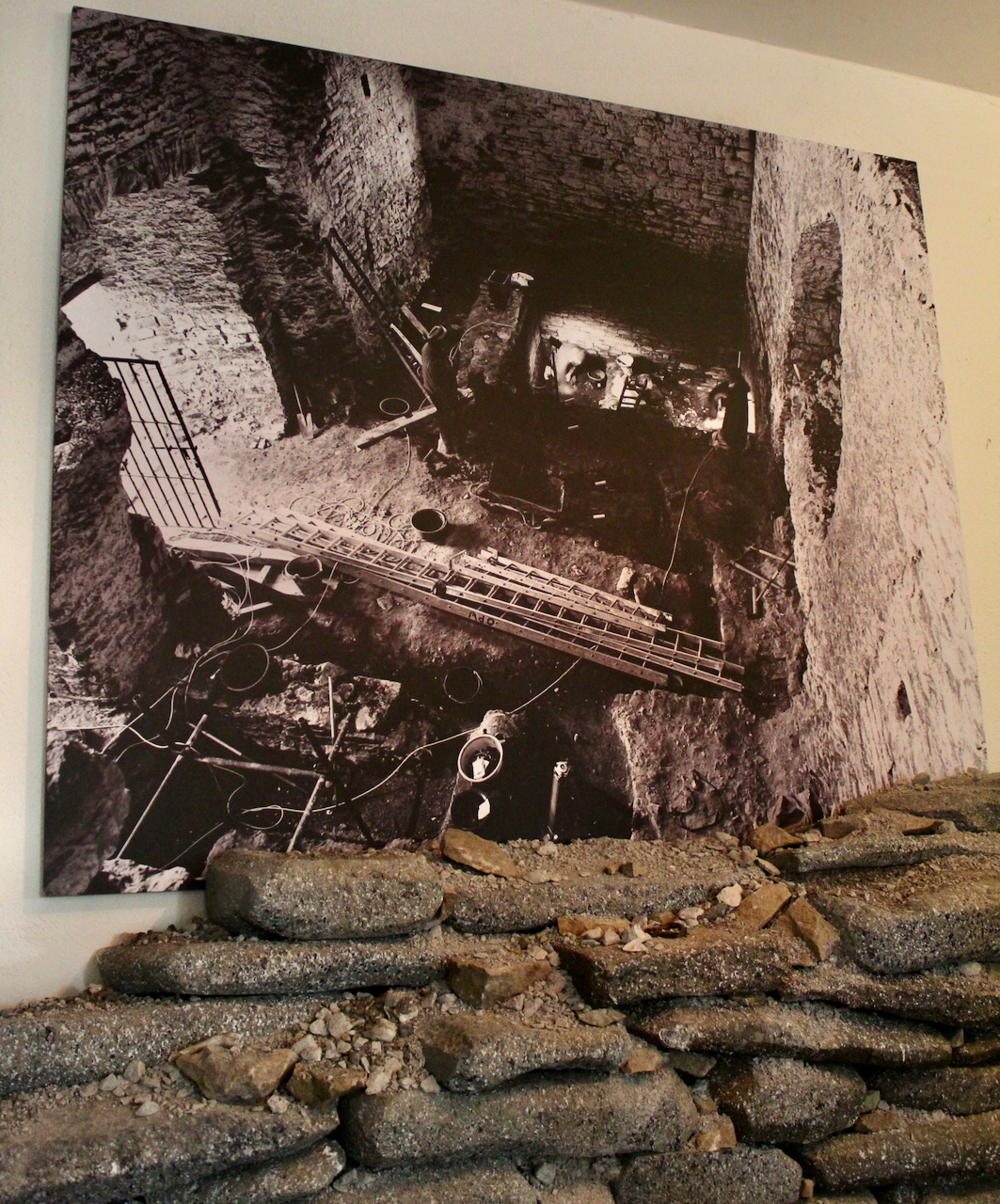
Inside the castle reception area there’s a grille on the floor, which is the “oubliette” (from the French, meaning “to forget.”). However, in this case, people were imprisoned here between court dates, the guide told us.
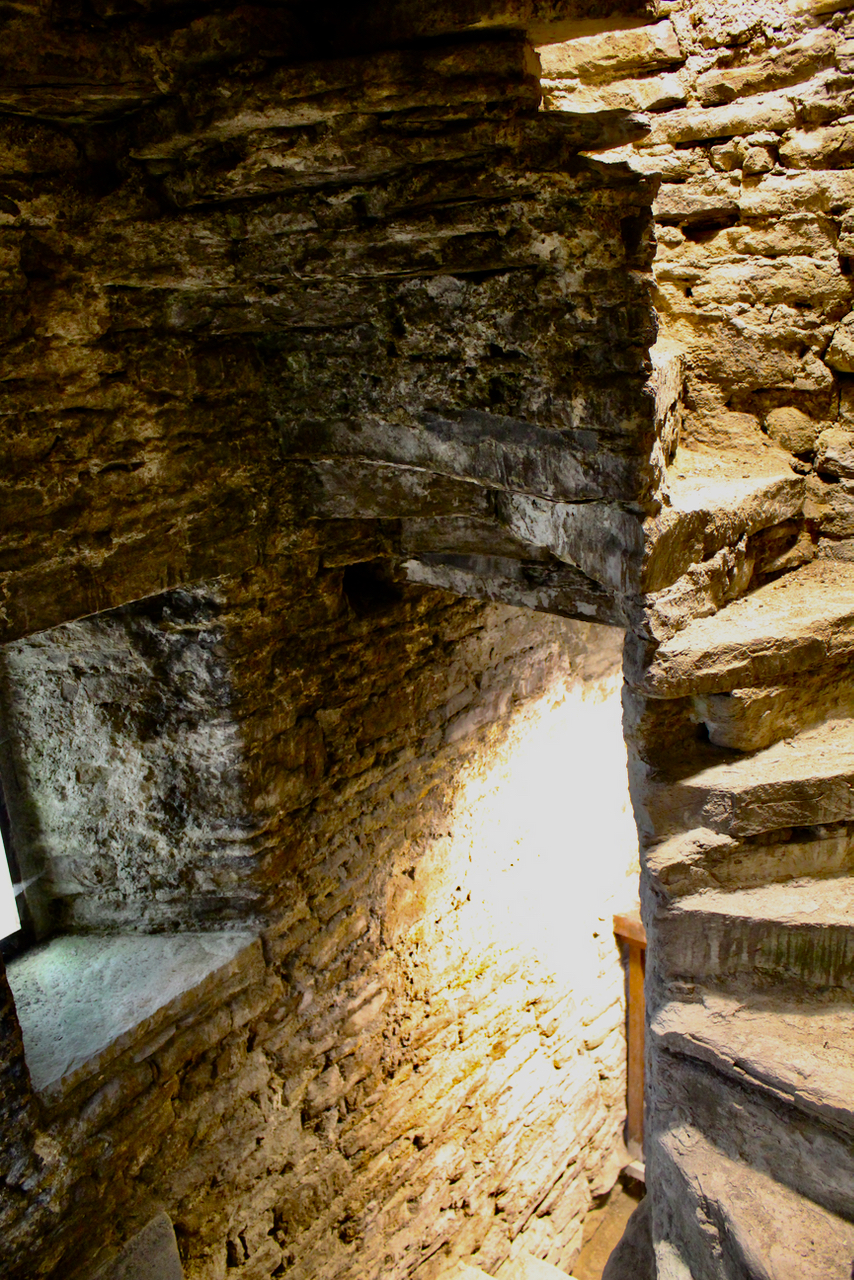
Above the drawbridge is a machicolation from which boiling substances could be dropped, and there are also arrow loop windows for defence. The stairs, called “trip steps” were deliberately built of different heights and widths to impede the intruder. The spiral clockwise to make it more difficult for the enemy to fight his way up the steps.
Silver from nearby silvermines would have been stored in the castle.
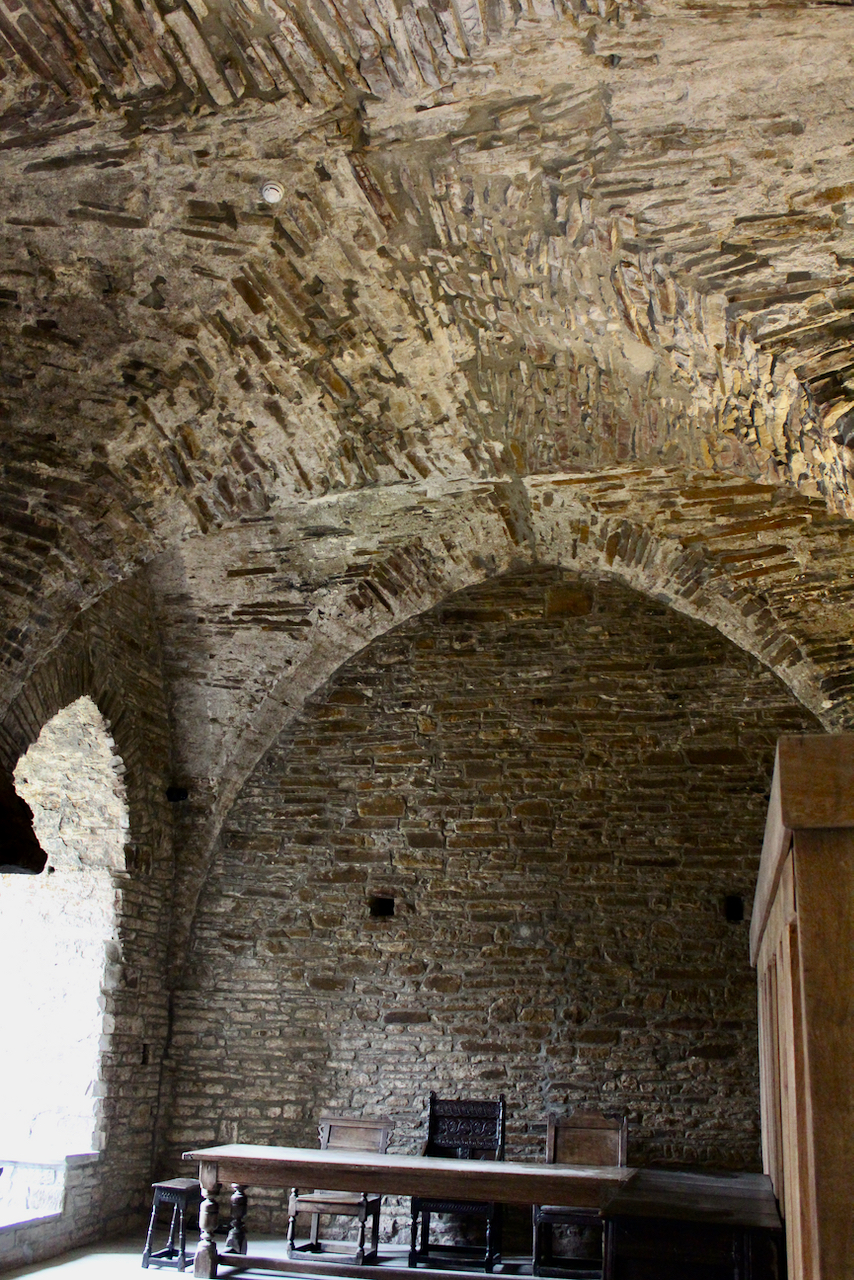
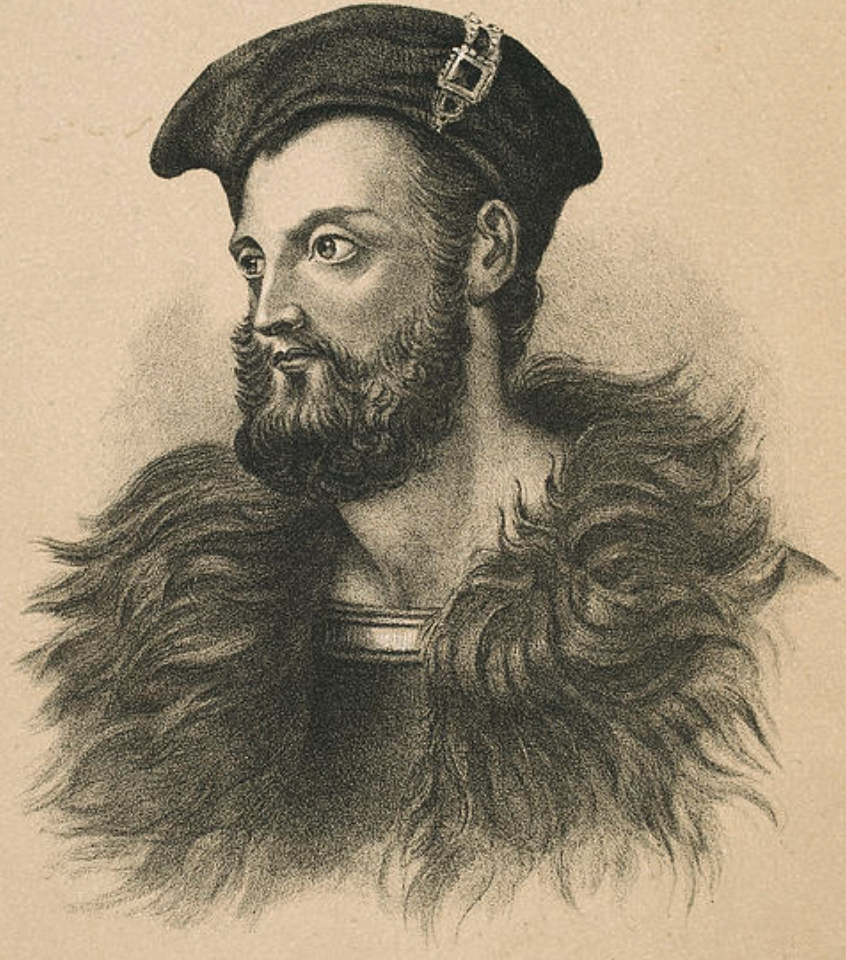
Eoin Roe O’Neill (d. 1649), at the head of 1,200 men, stormed Roscrea in 1646 and reportedly killed every man, woman and child. The only survivor was the governor’s wife, Lady Mary Hamilton (1605-1680), who was a sister to the Earl of Ormond [married to George Hamilton, 1st Baronet of Donalong County Tyrone and of Nenagh, County Tipperary]. She was again forced to play host in the castle to O’Neill three years later which again ended by the guests looting everything in sight. [7]
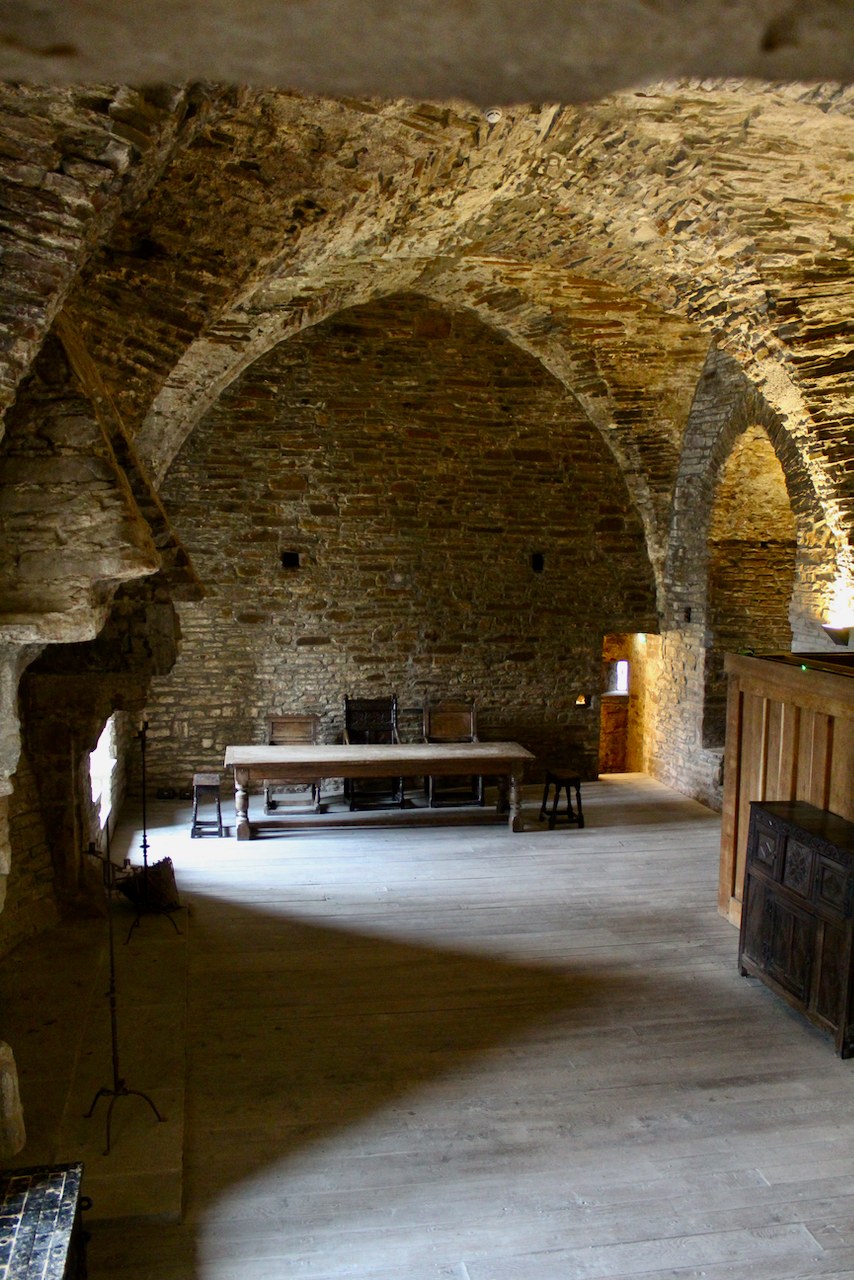
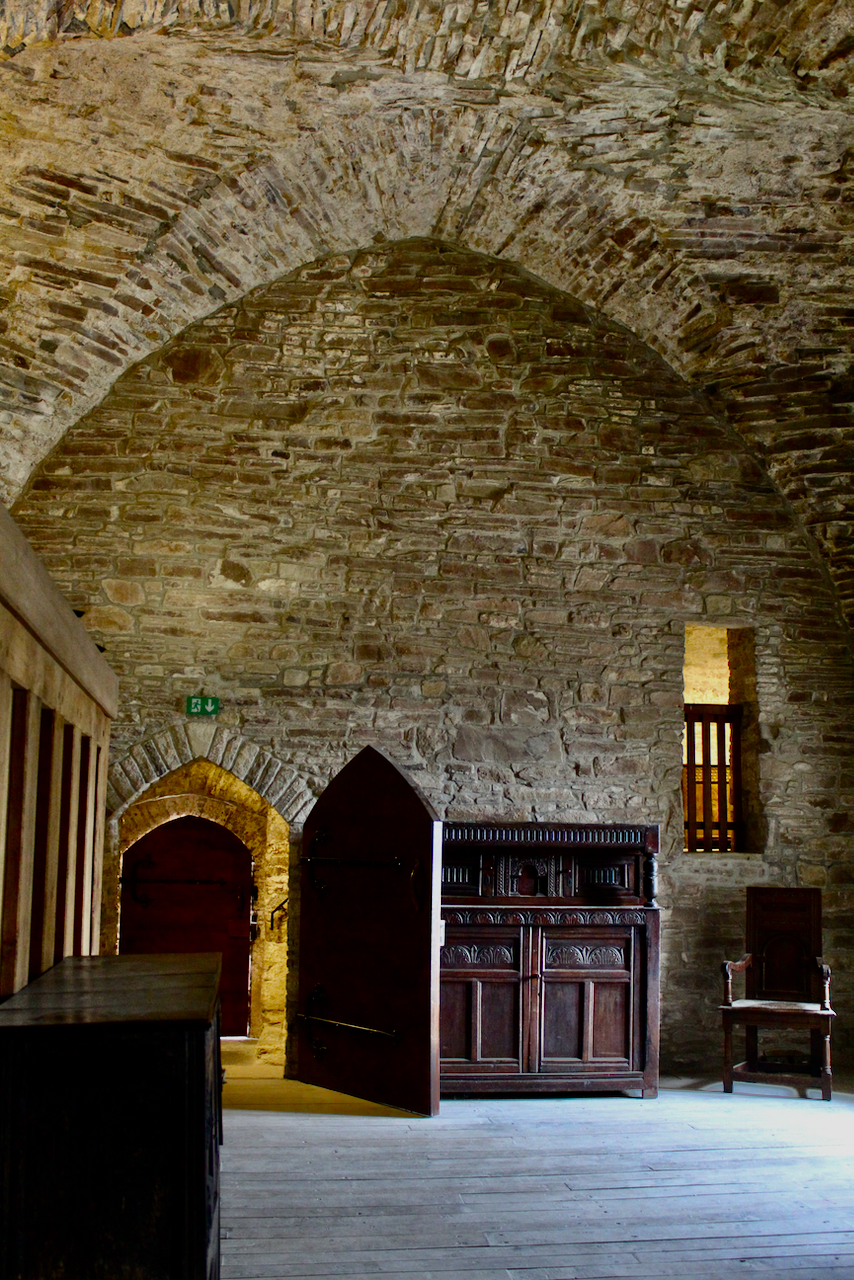
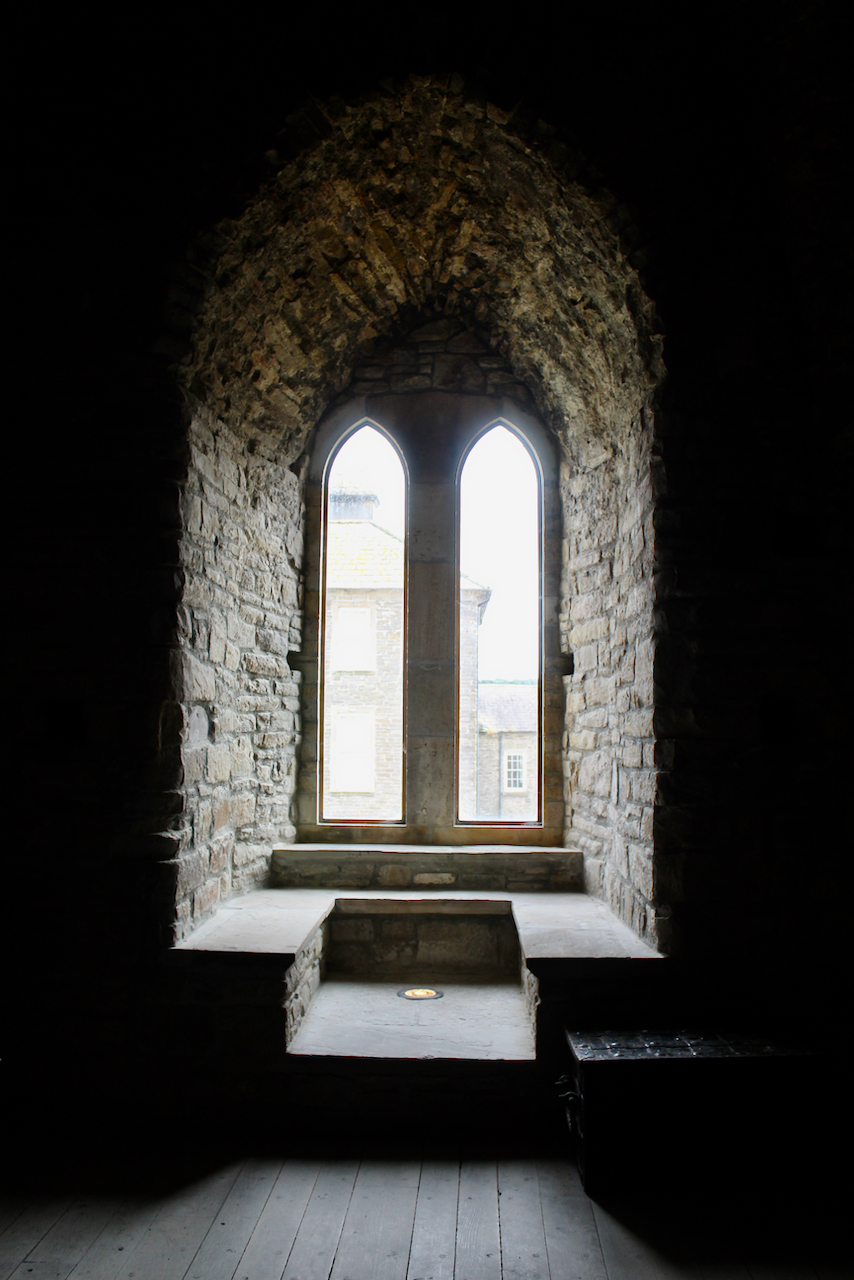
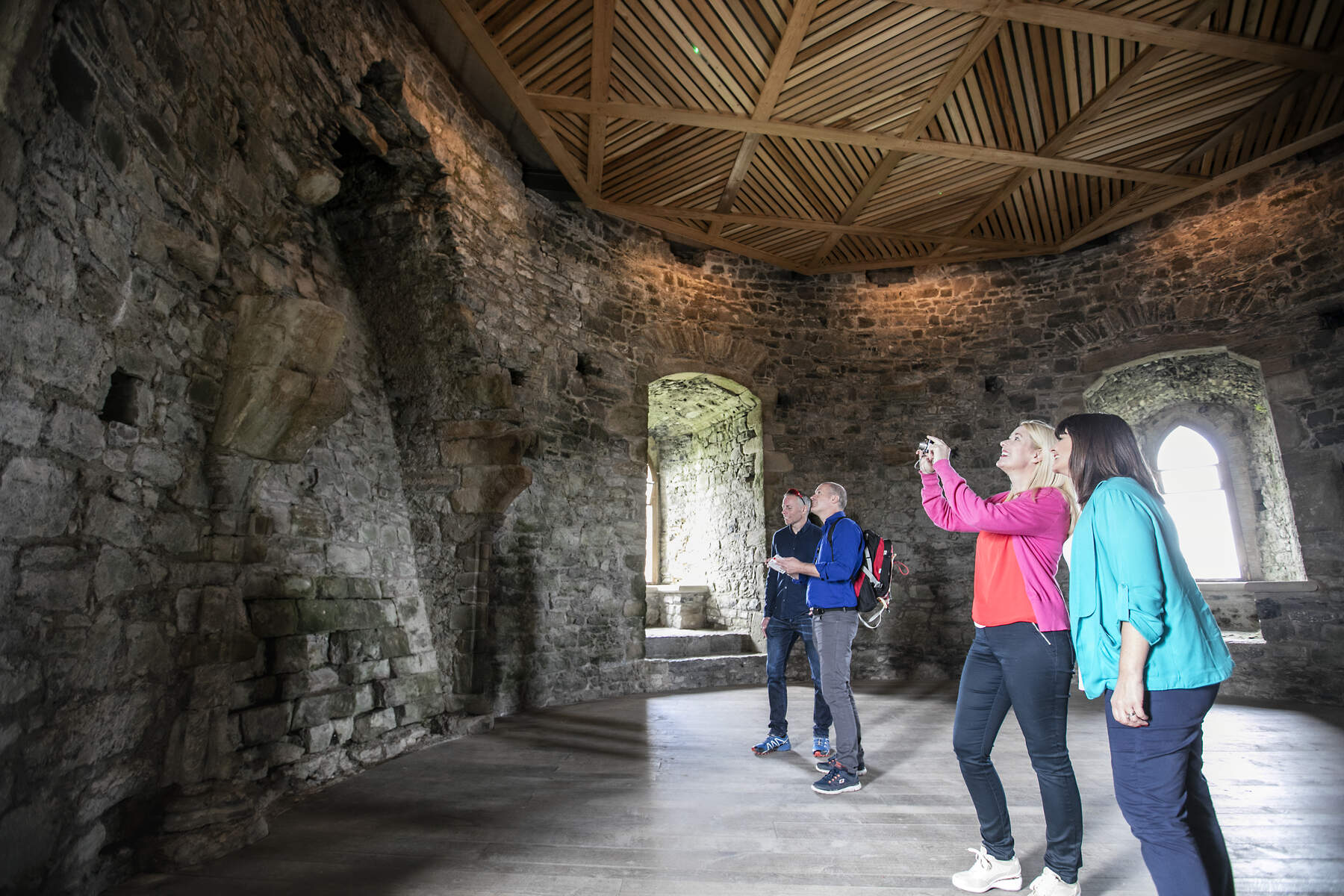
Larger windows were a later addition. Originally there would be only small loopholes. Before glass, the larger windows would be covered with skins to keep out the draught. The inside would have been limewashed, the white walls would then brighten the interior. The fireplace would also provide light.
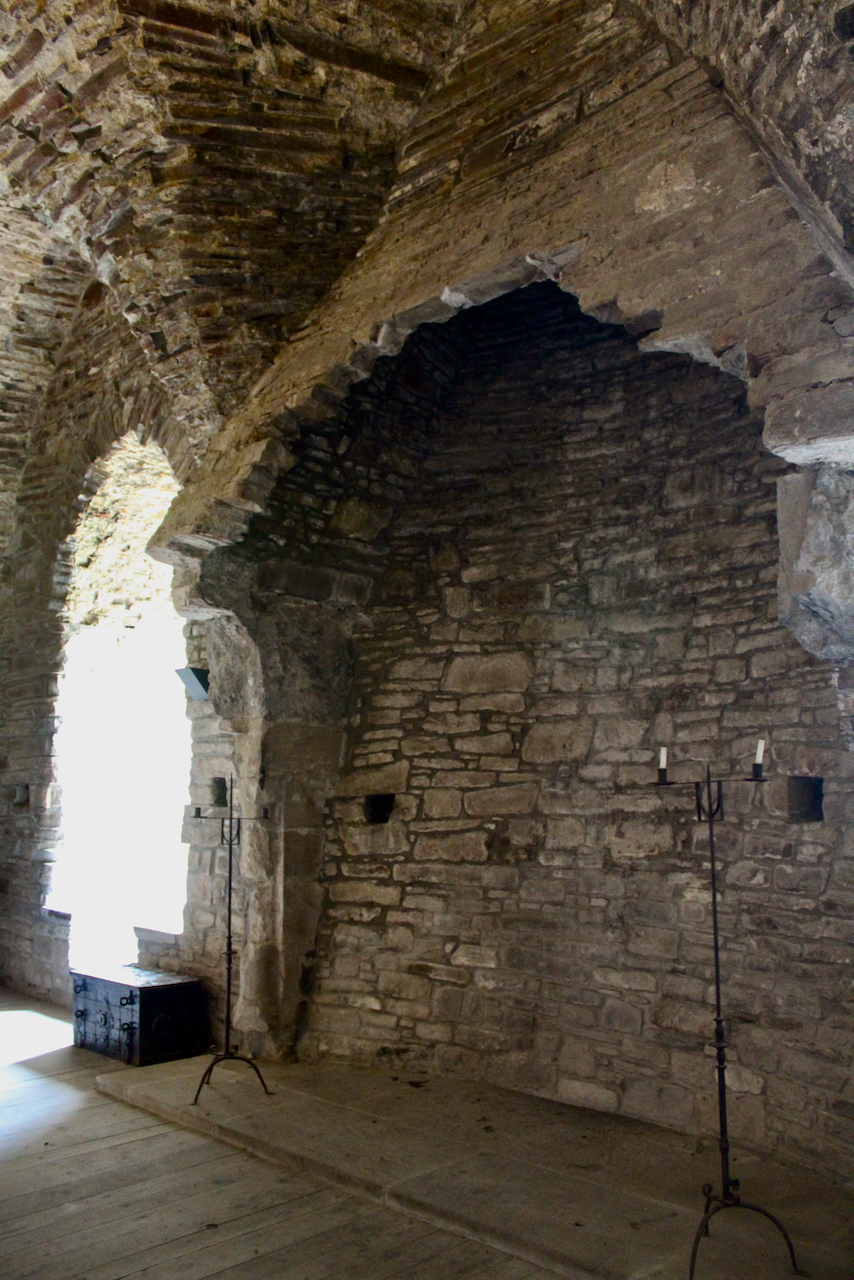
The floor above the banquet room has three fireplaces. The large room was probably partitioned.
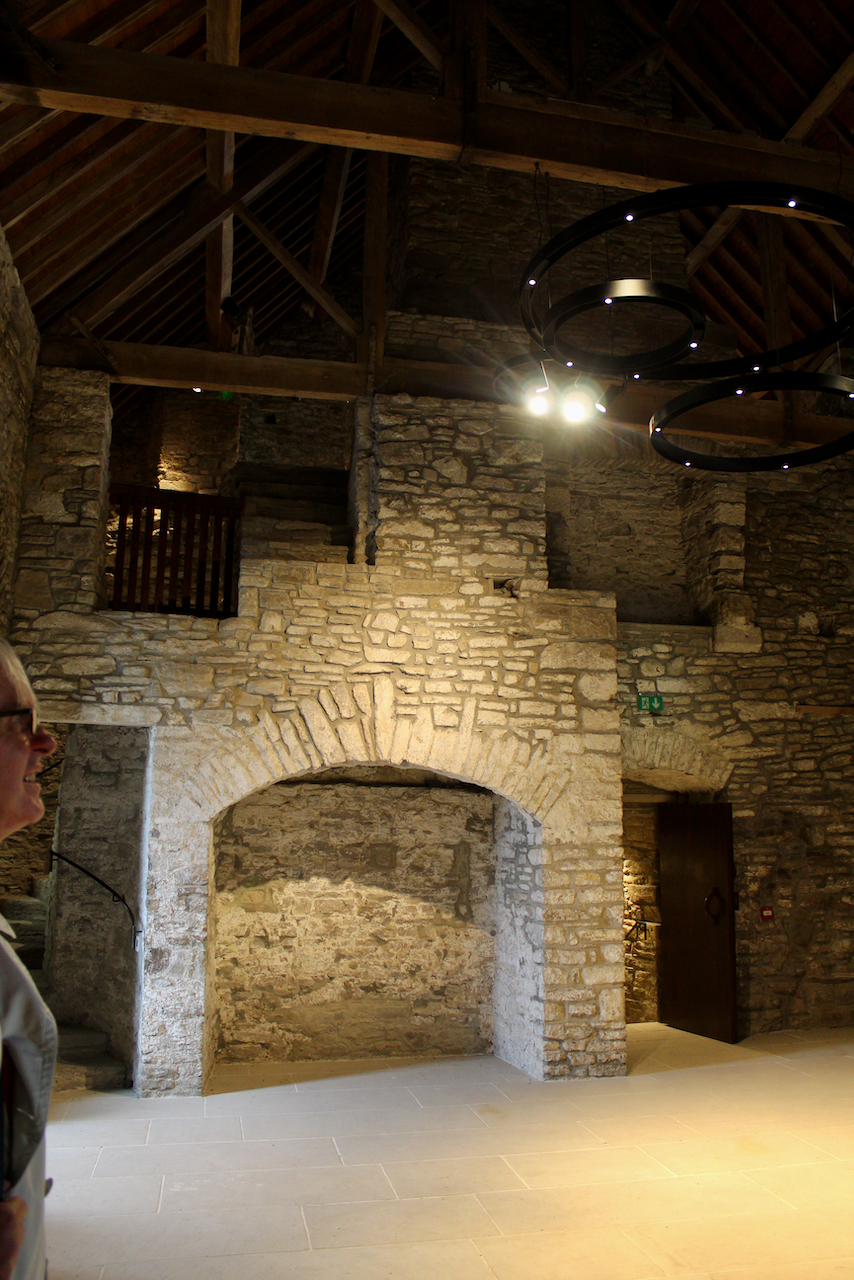
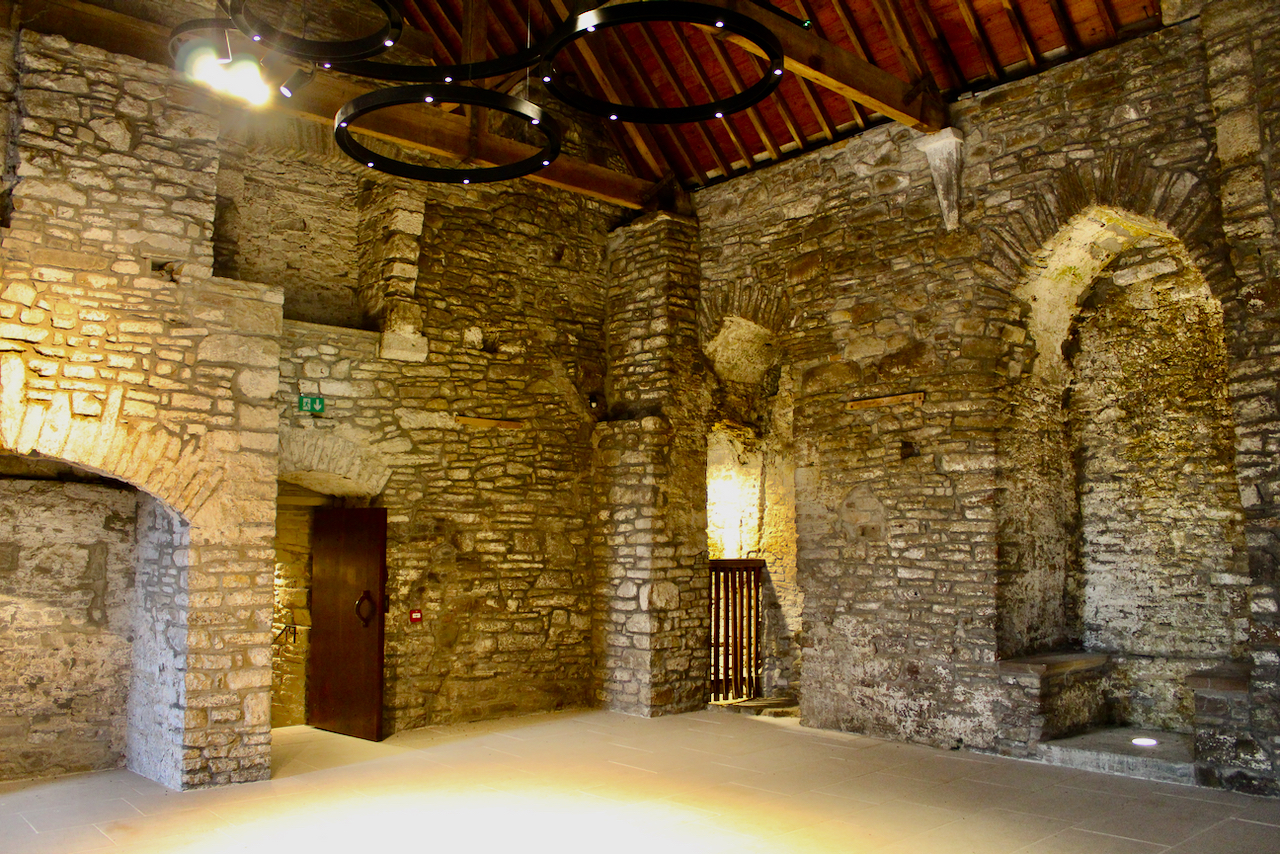
There’s a minstrils’ gallery. Minstrils were of the lower class and were kept away from aristocratic guests to prevent spreading any infection.
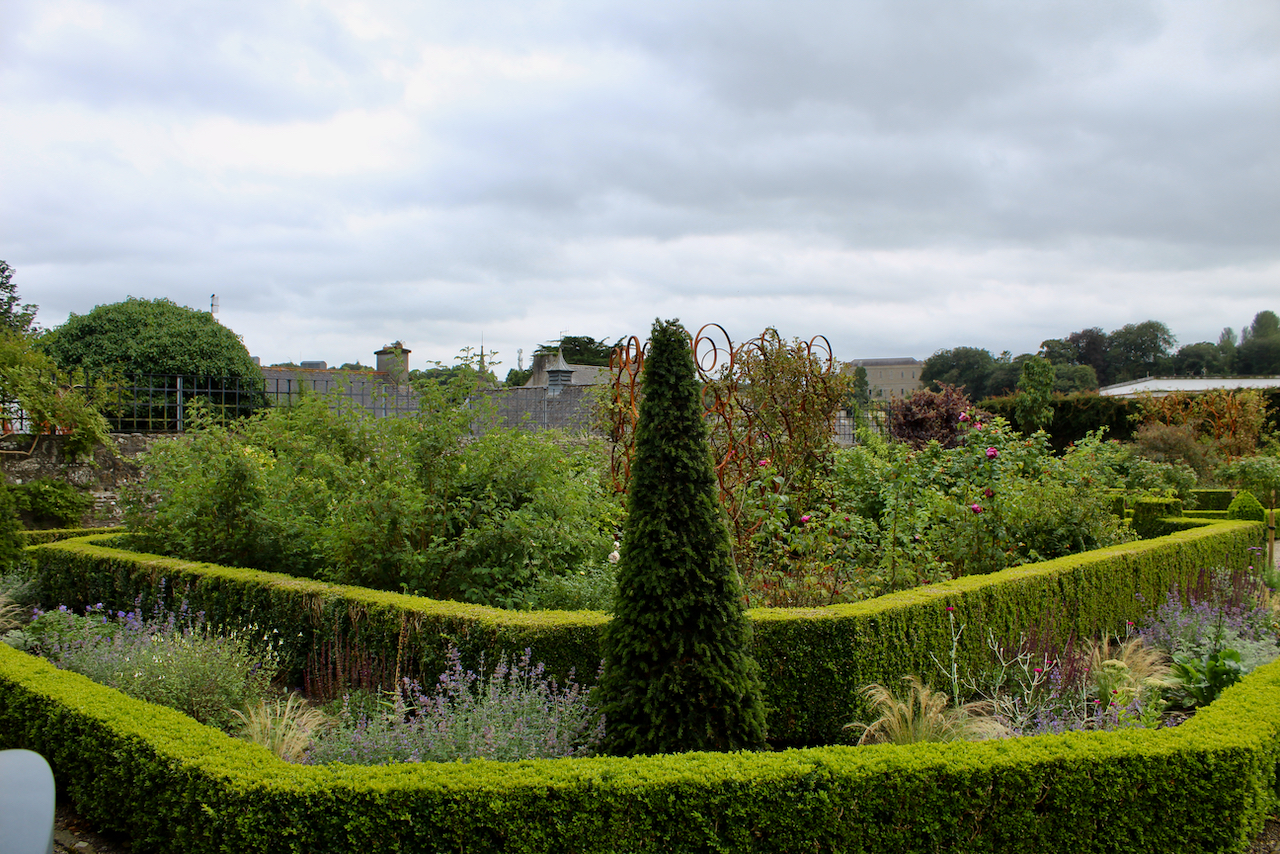
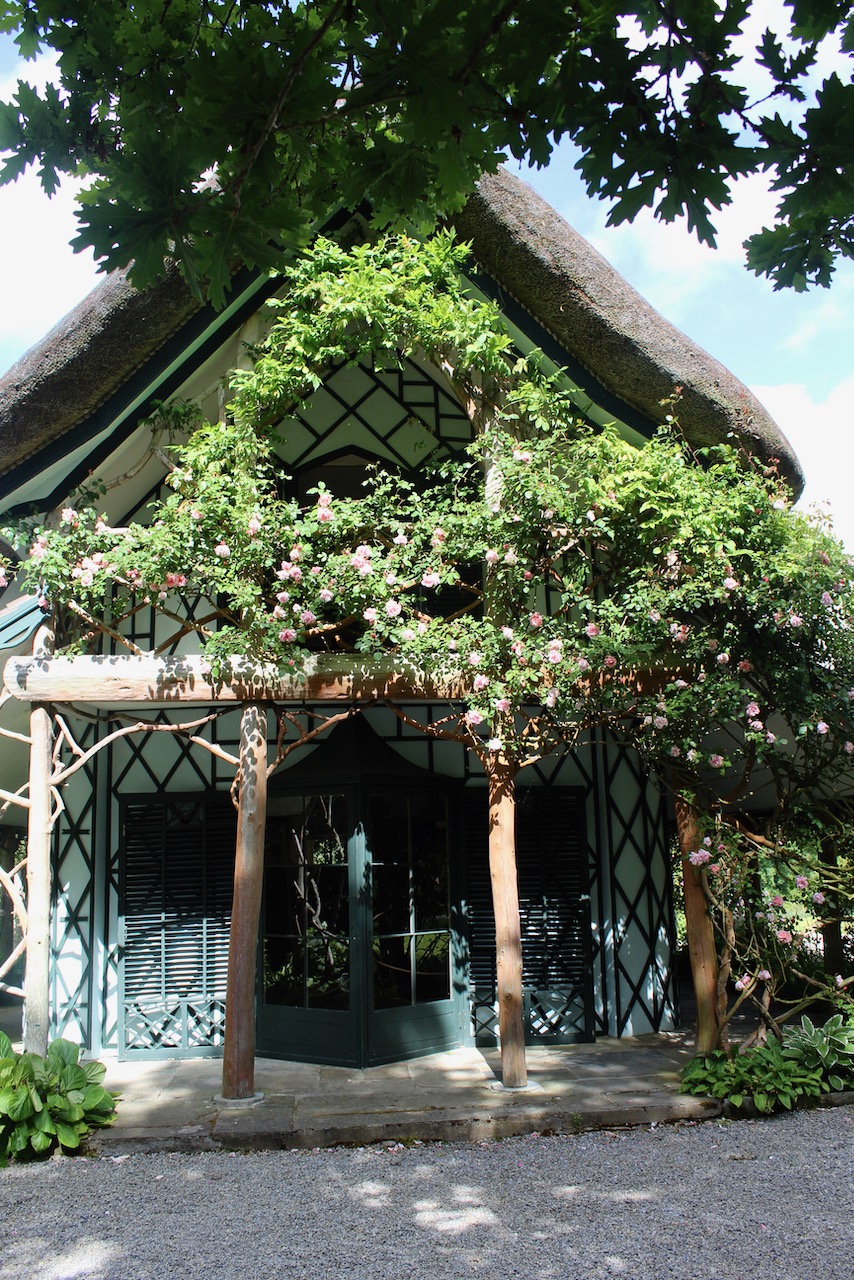
After our tour of the castle we had a little time to explore the gardens.
[1] https://www.irelandscontentpool.com/en
[2] See the blog of Patrick Comerford, http://www.patrickcomerford.com/search/label/castles?updated-max=2019-03-03T14:30:00Z&max-results=20&start=27&by-date=false
[3] https://www.dib.ie/biography/damer-joseph-a2390
[4] Hayes, William and Art Kavanagh, The Tipperary Gentry volume 1 published by Irish Family Names, c/o Eneclann, Unit 1, The Trinity Enterprise Centre, Pearse Street, Dublin 2, 2003.
[5] https://theirishaesthete.com/2013/09/23/bon-anniversaire/ and see my write-up about Emo Court, in OPW properties in Leinster: Laois.
[6] https://theirishaesthete.com/tag/damer-house/
[7] http://www.cahirhistoricalsociety.com/articles/cahirhistory.html






 Irish Historic Houses
