Damer House and Roscrea Castle, County Tipperary, Office of Public Works properties

General information: 0505 21850, roscreaheritage@opw.ie

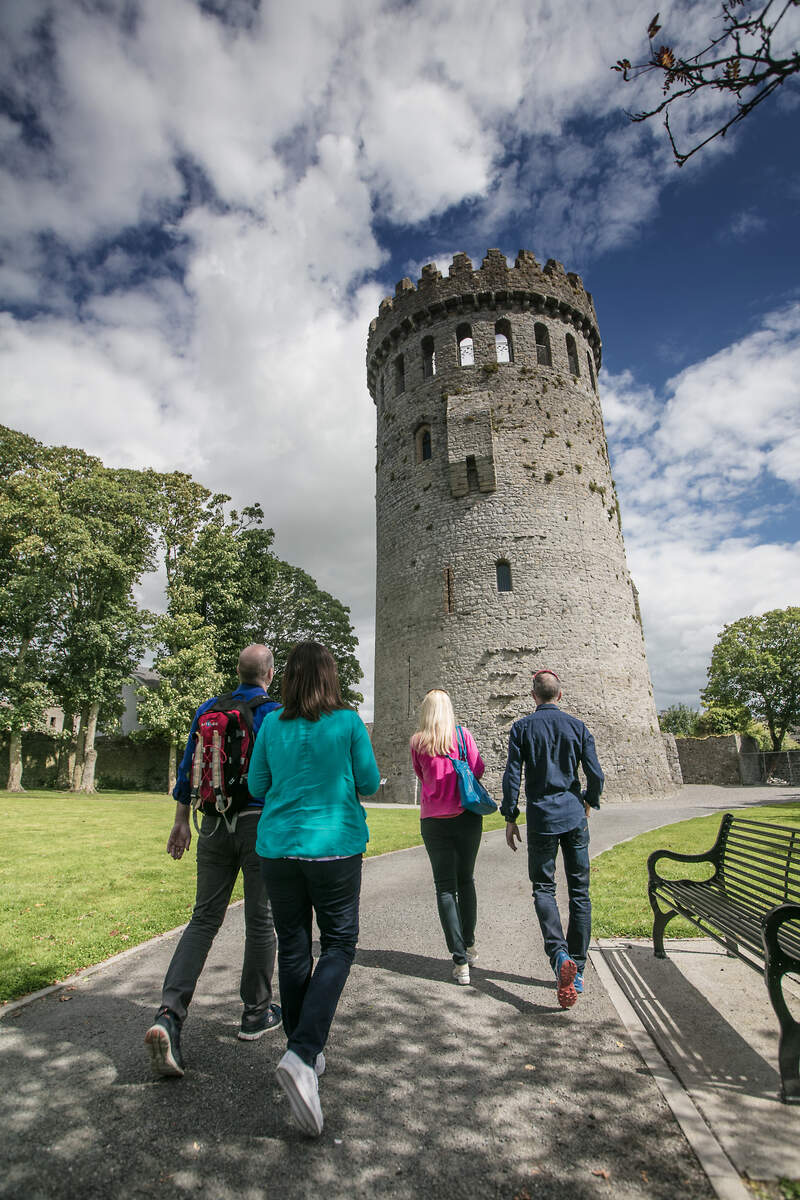
Damer House Roscrea County Tipperary, photographer creator Kerry Kissane All around Ireland 2021 courtesy Tipperary tourism, Ireland’s Content Pool [1]

Finding ourselves with some spare time this Heritage Week (2024) after visiting Emo in County Laois, we drove over to Roscrea, to visit Damer House and Roscrea Castle.

From the OPW website https://heritageireland.ie/visit/places-to-visit/roscrea-heritage-centre-roscrea-castle-and-damer-house/:

In the heart of Roscrea in County Tipperary, one of the oldest towns in Ireland, you will find a magnificent stone motte castle dating from the 1280s. It was used as a barracks from 1798, housing 350 soldiers, and later served as a school, a library and even a sanatorium. 

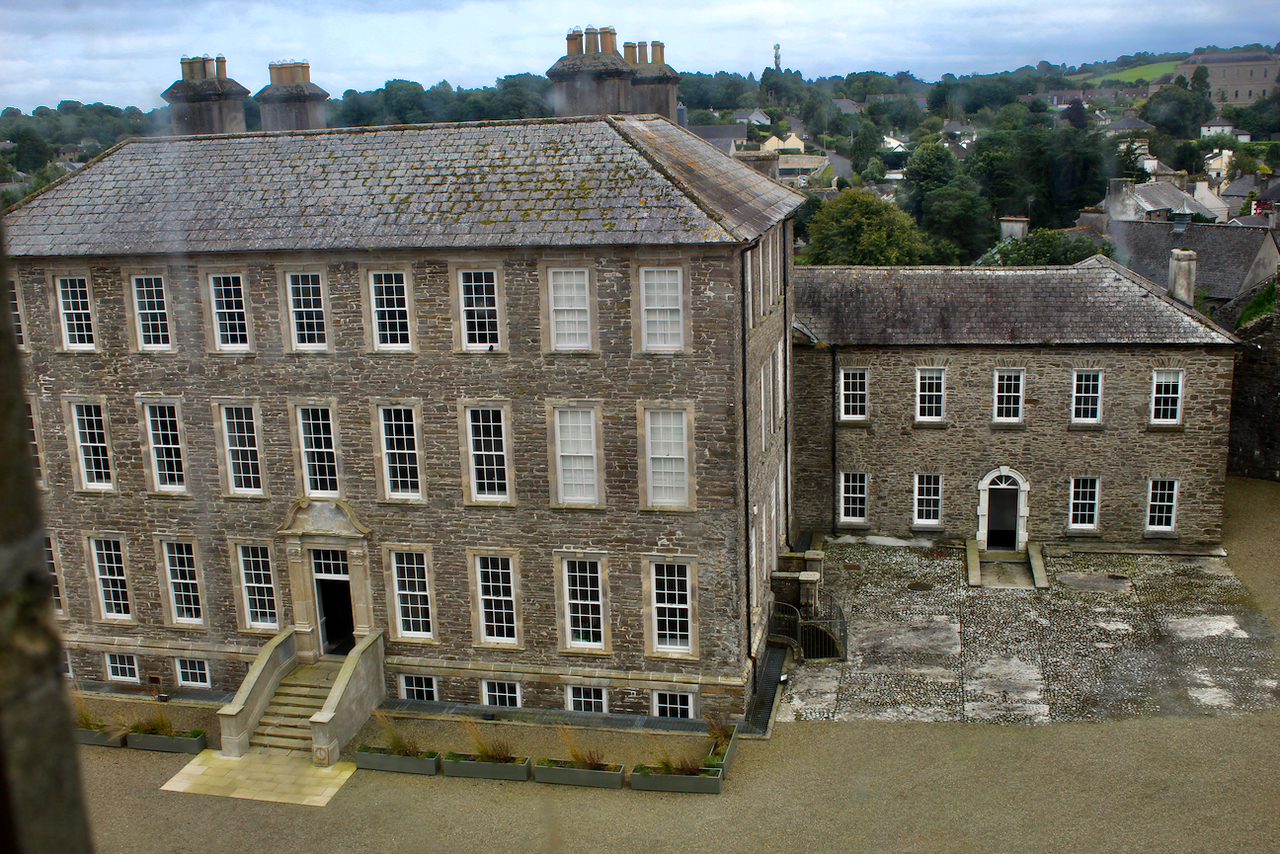
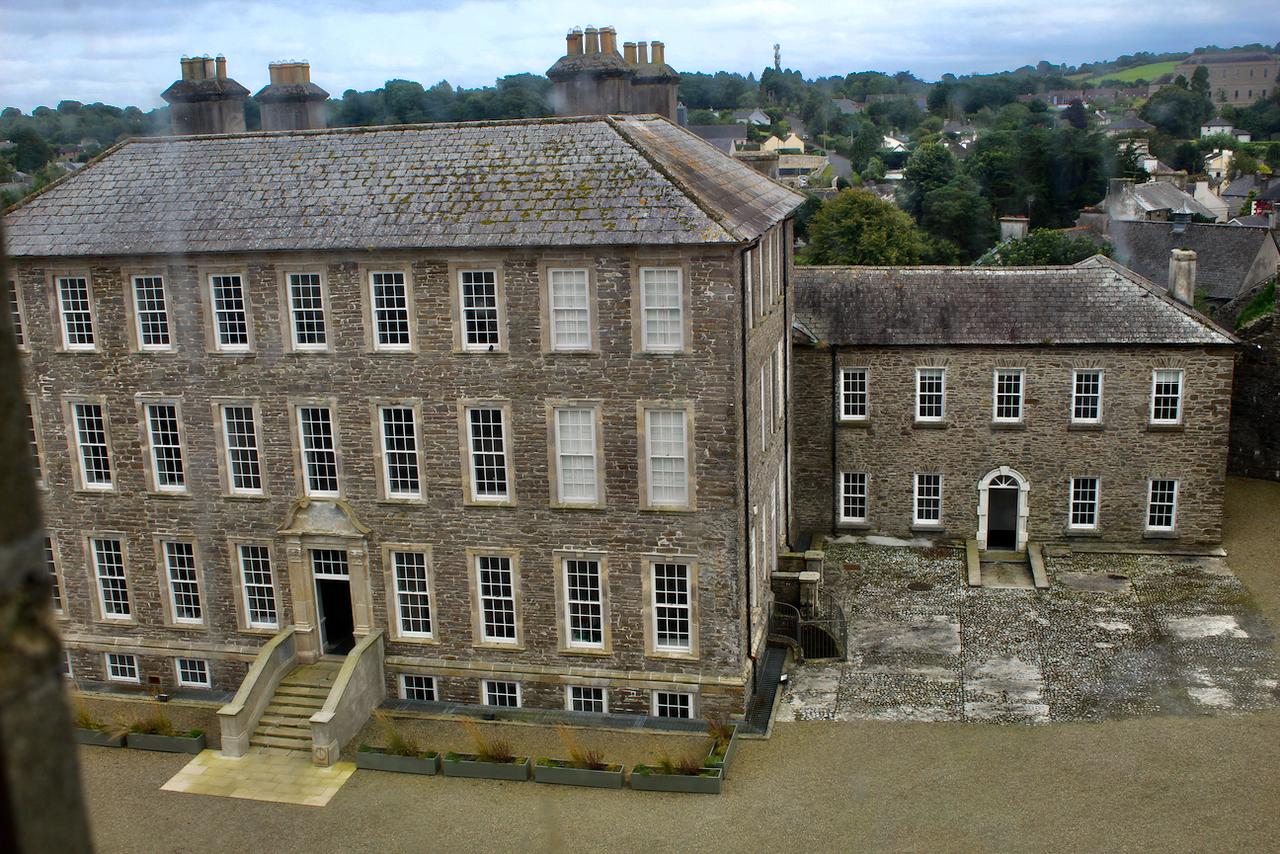
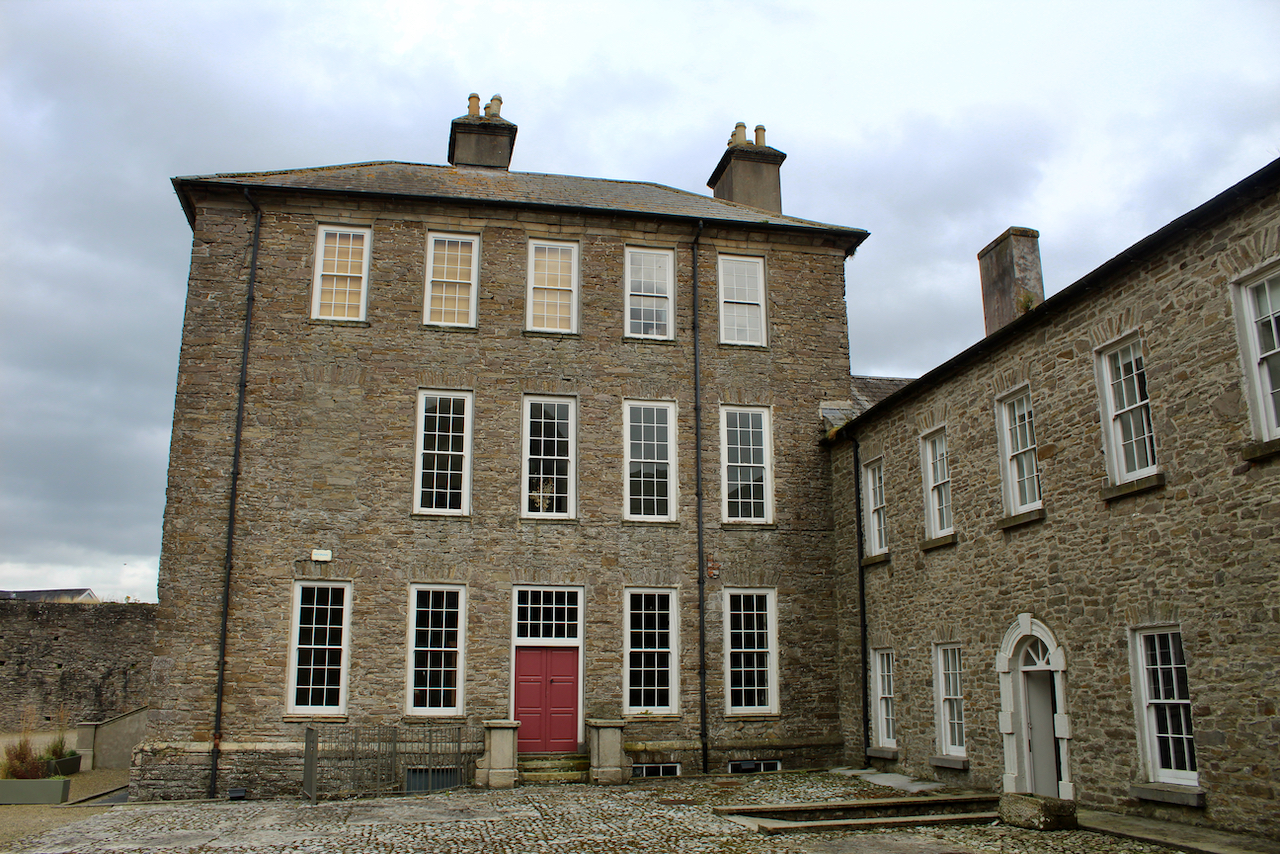
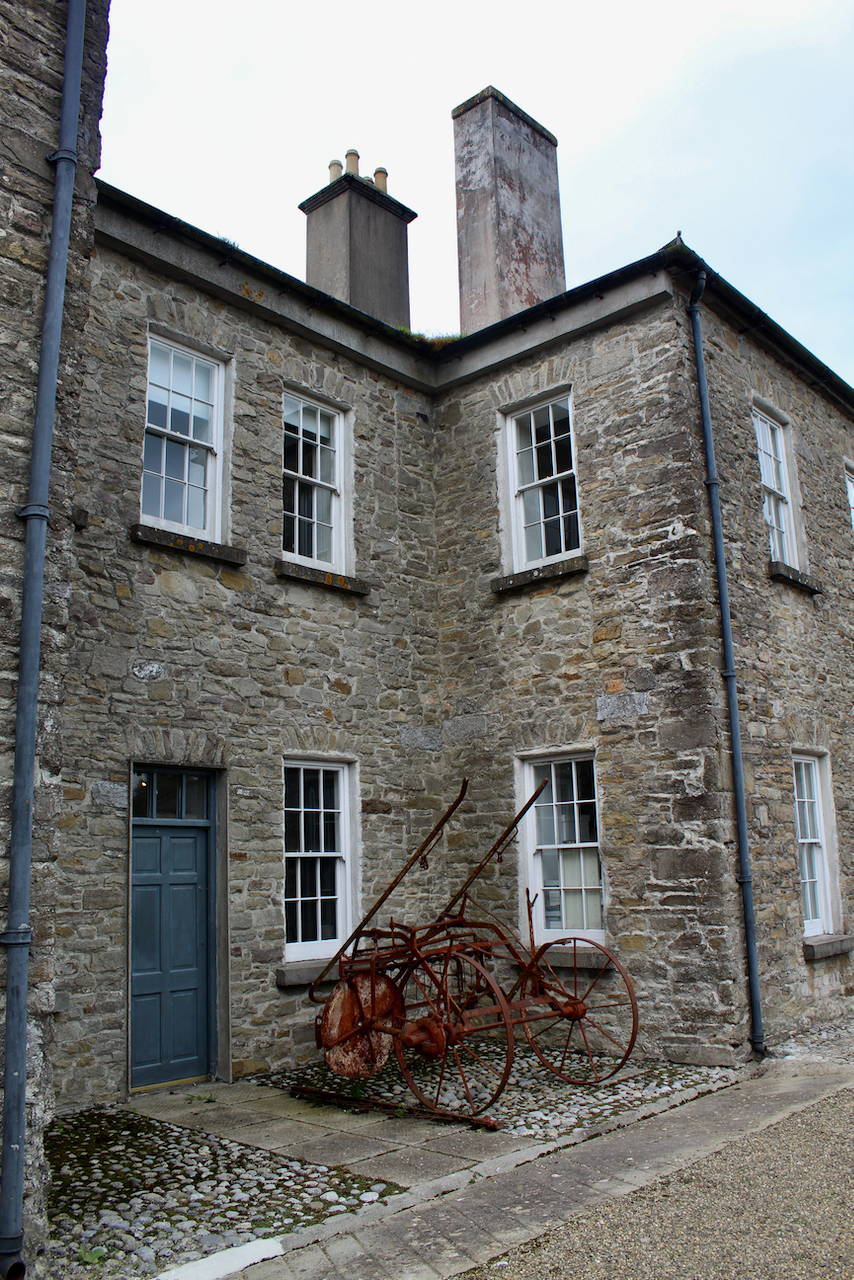
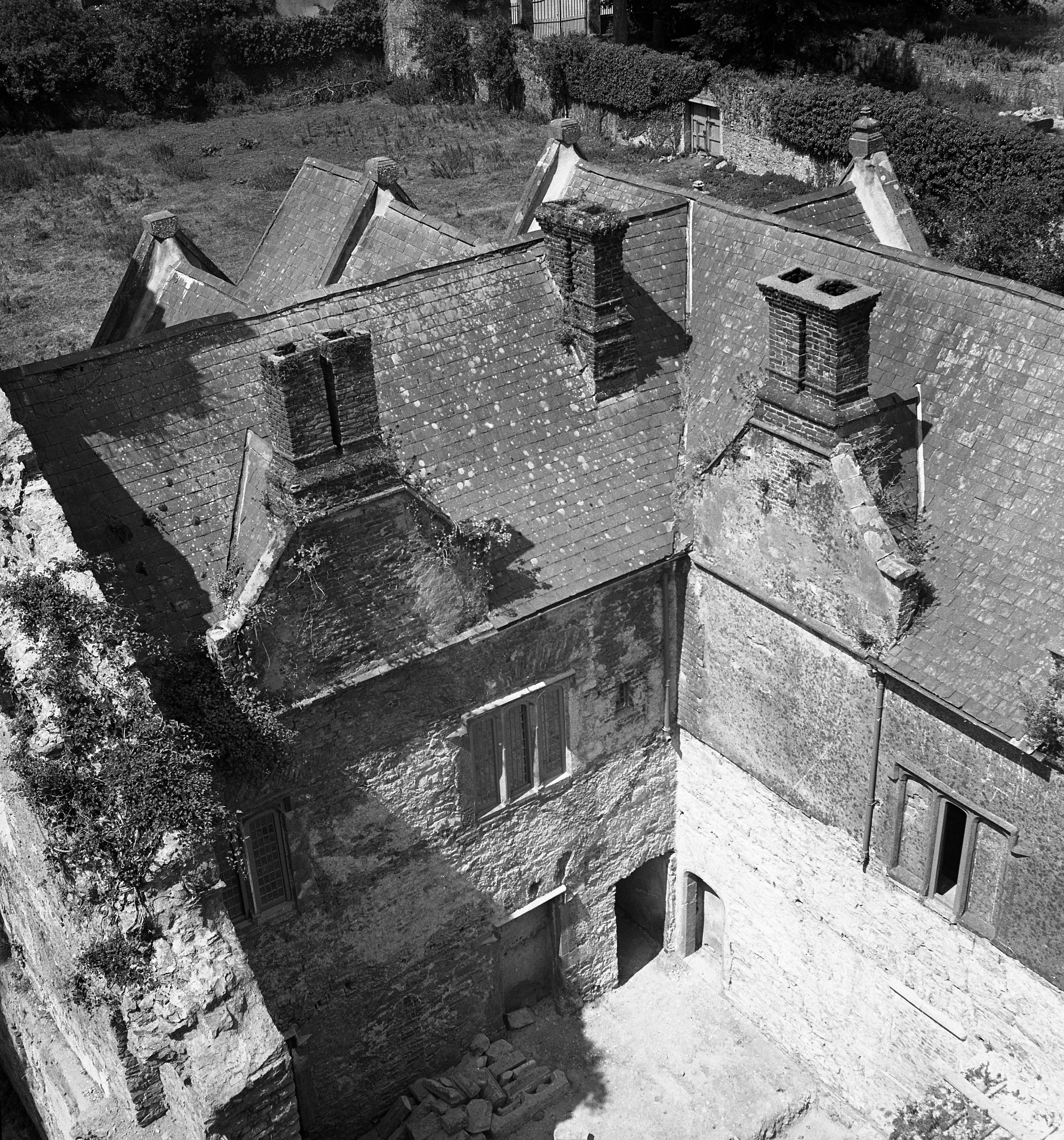
Sharing the castle grounds is Damer House, named for local merchant John Damer [d. 1768], who came into possession of the castle in the eighteenth century. The house is a handsome example of pre-Palladian architecture. It has nine beautiful bay windows. One of the rooms has been furnished in period style.

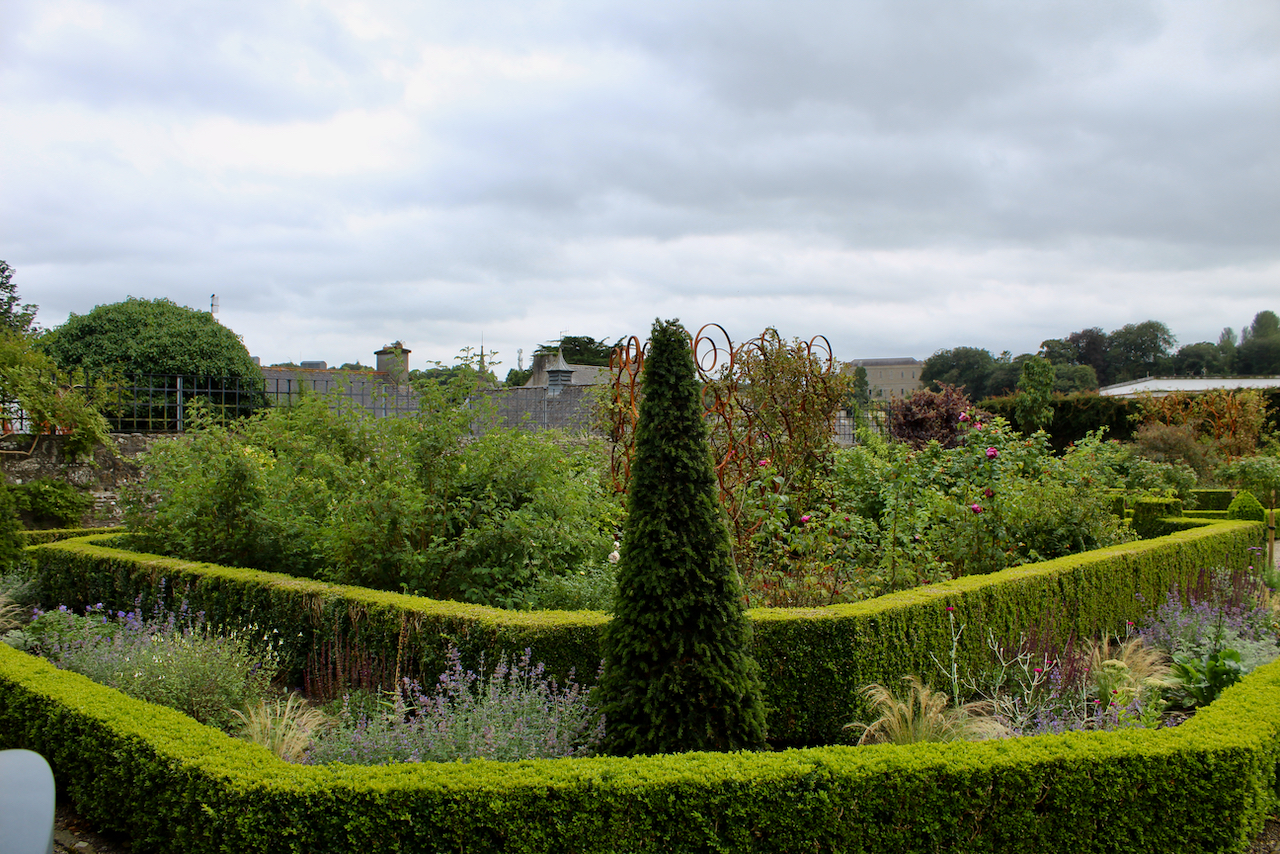
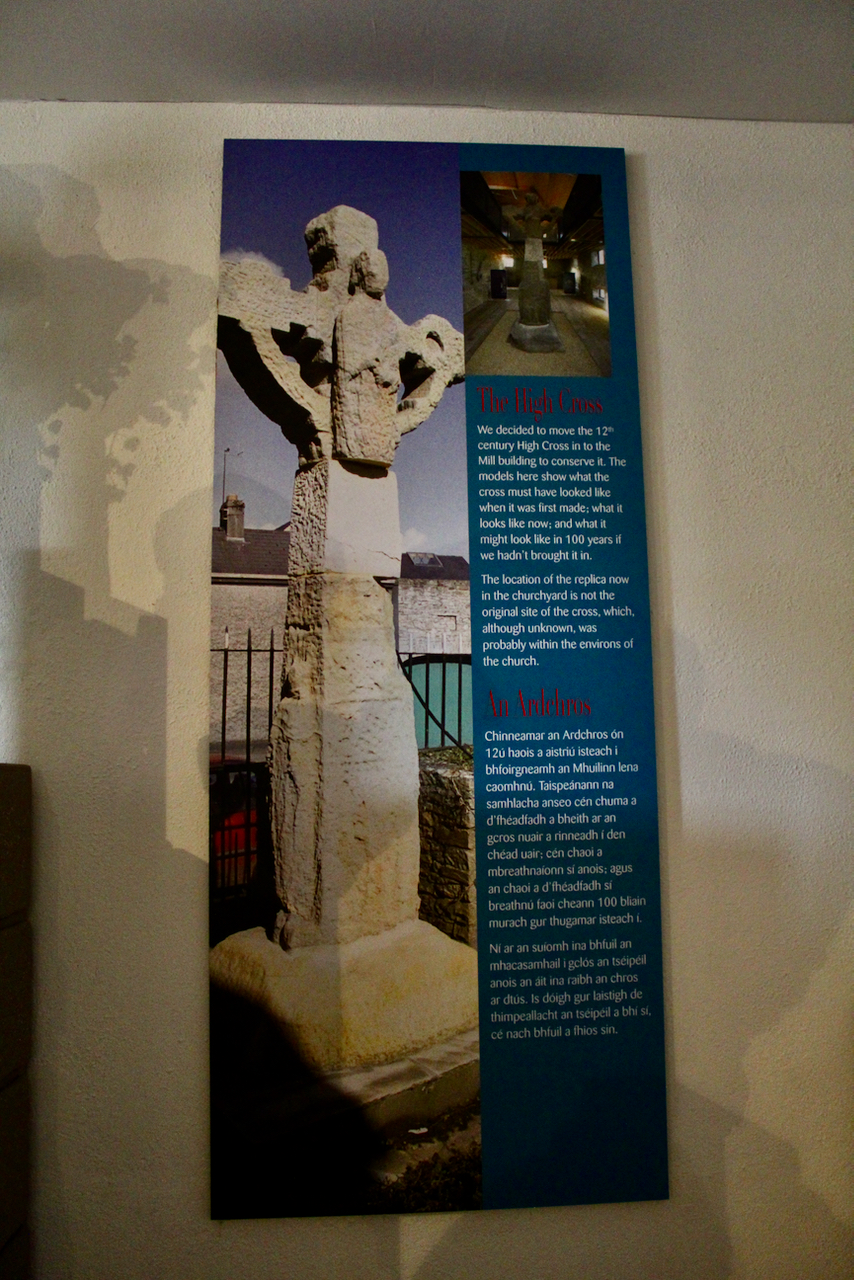
The grounds also include an impressive garden with a fountain, which makes Roscrea Castle a very pleasant destination for a day out. There is also a restored mill displaying St Crónán’s high cross and pillar stone.

Damer House, Roscrea, 21st August 2024. Photograph © Jennifer Winder-Baggot, www.irishhistorichouses.com

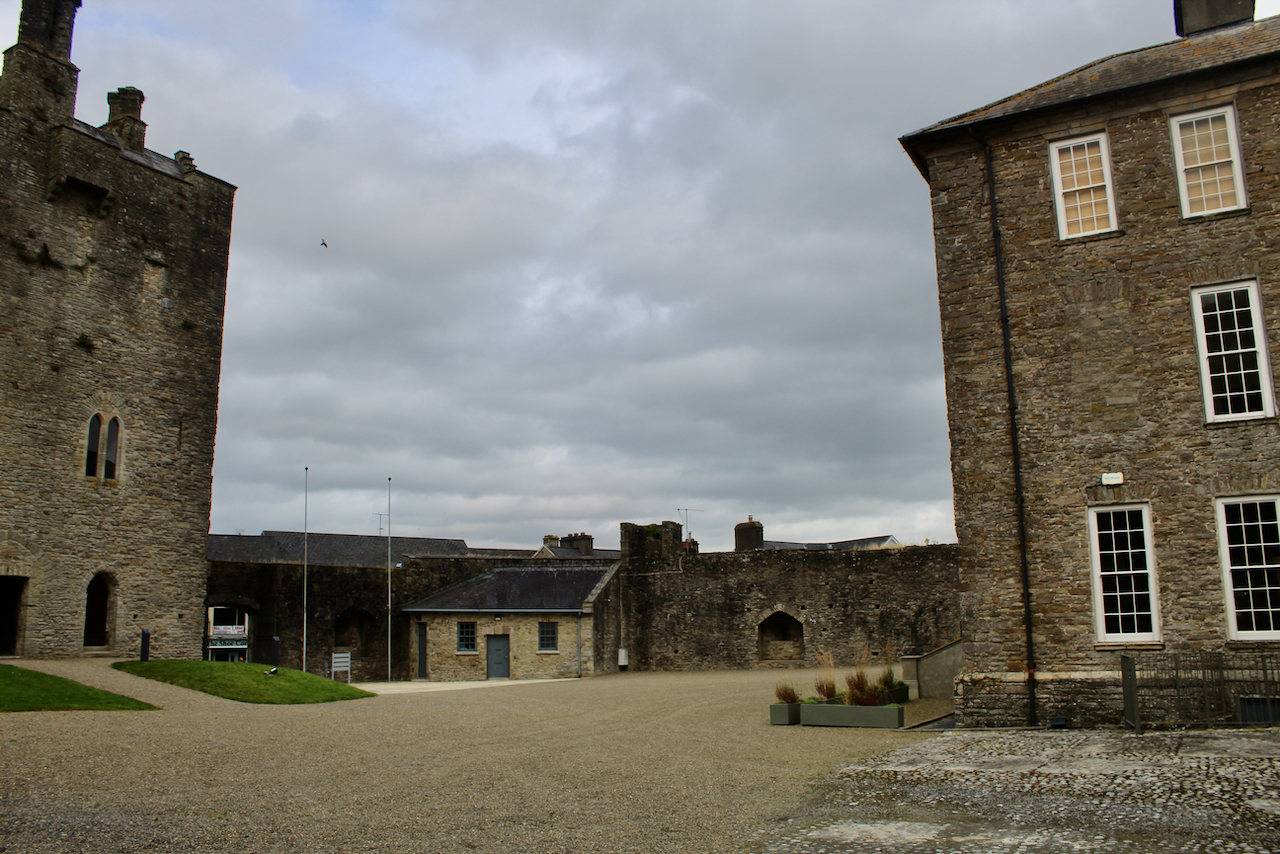
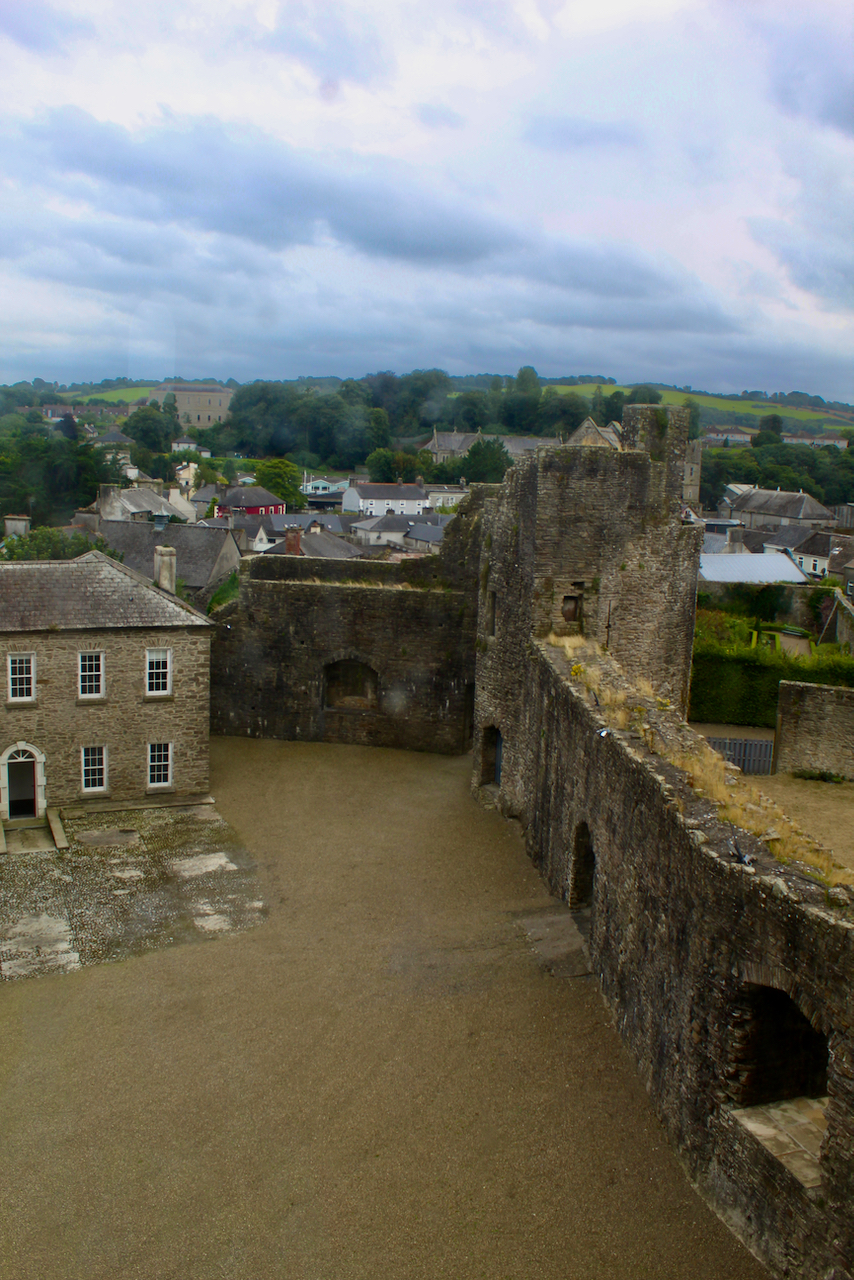
The castle and Damer house both sit inside bawn walls. Parts of the walls and outbuildings are in good condition, considering their age!
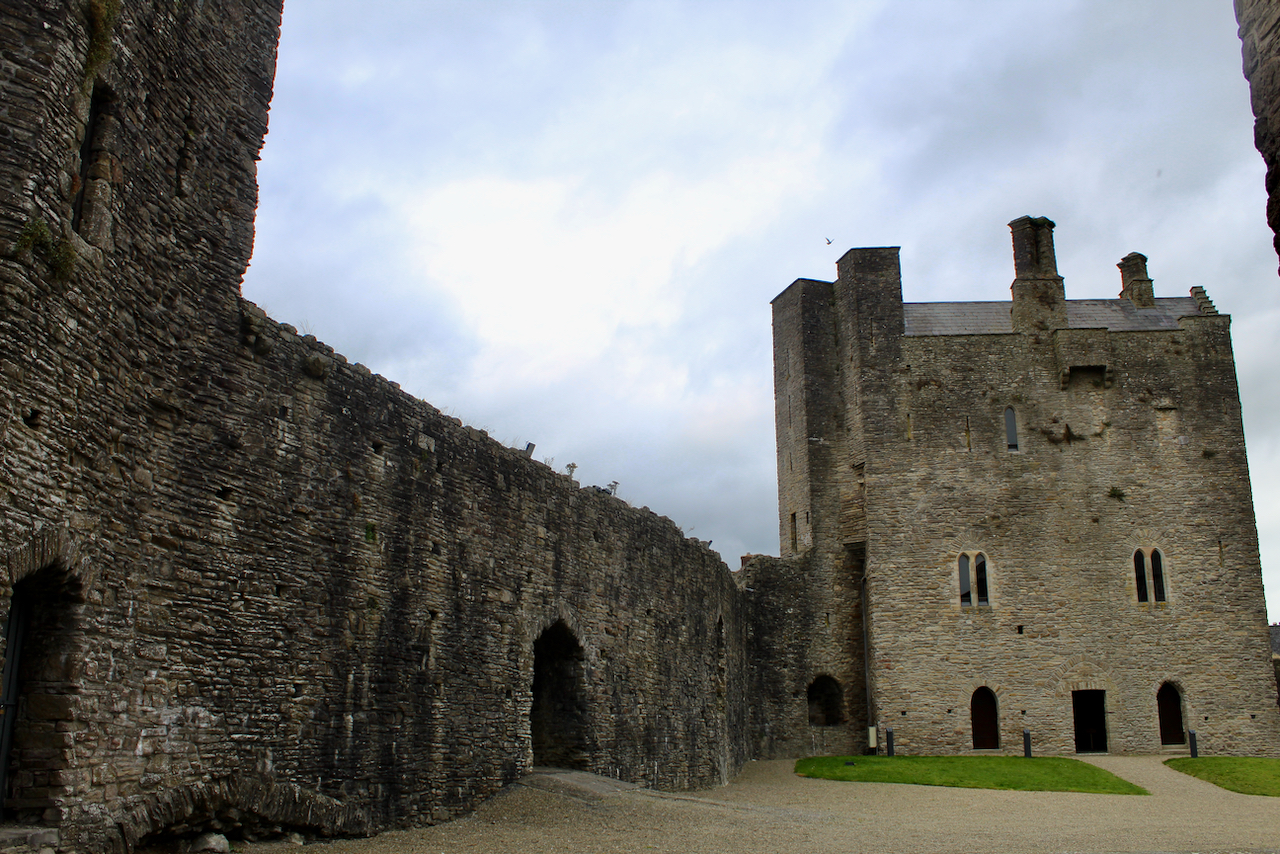
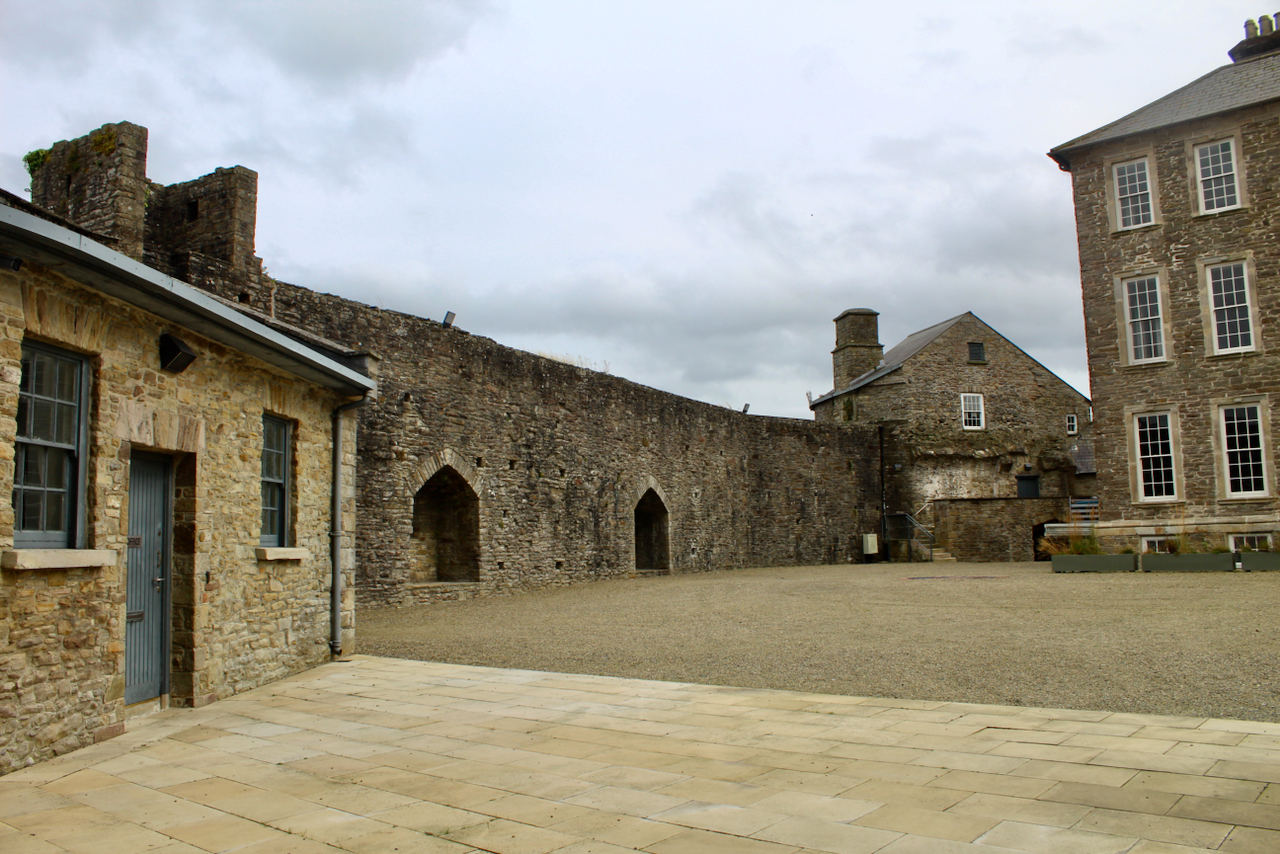
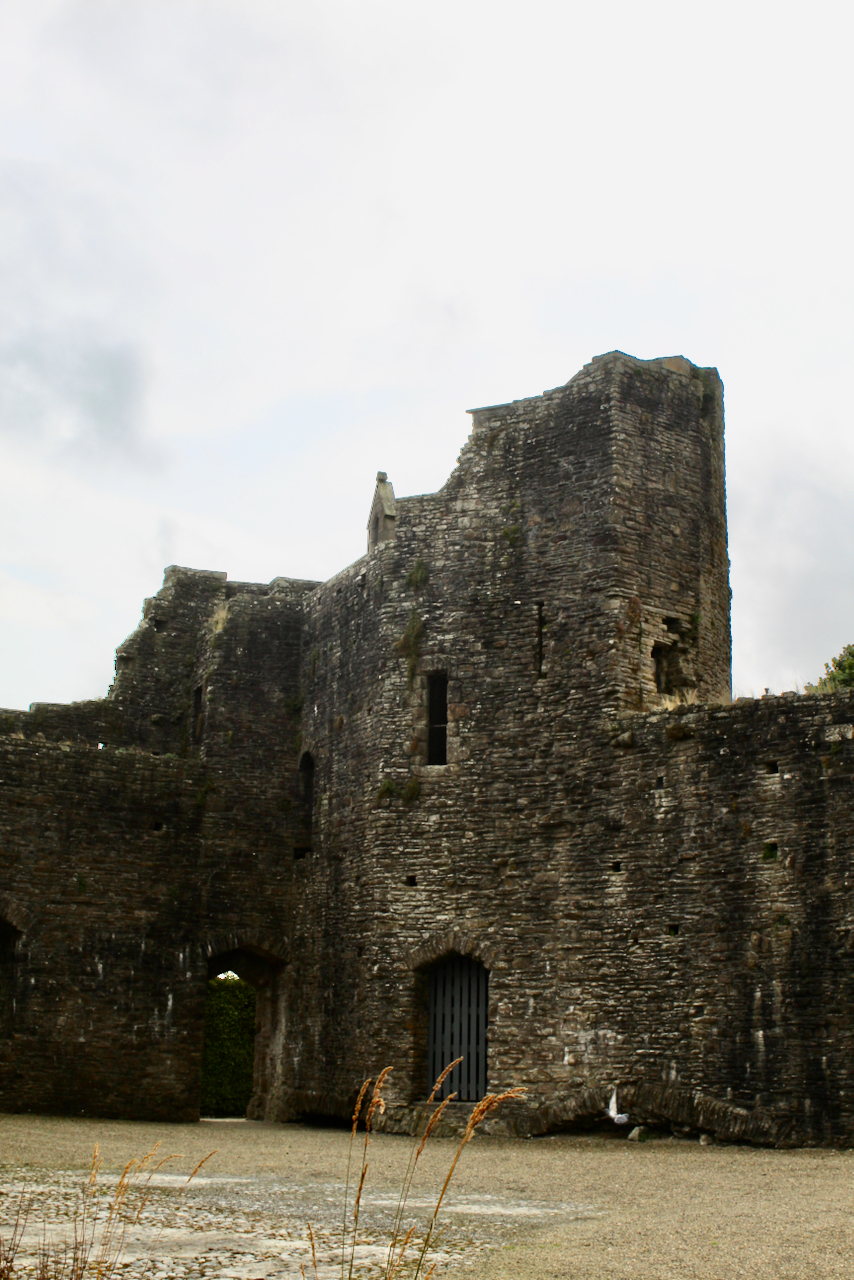
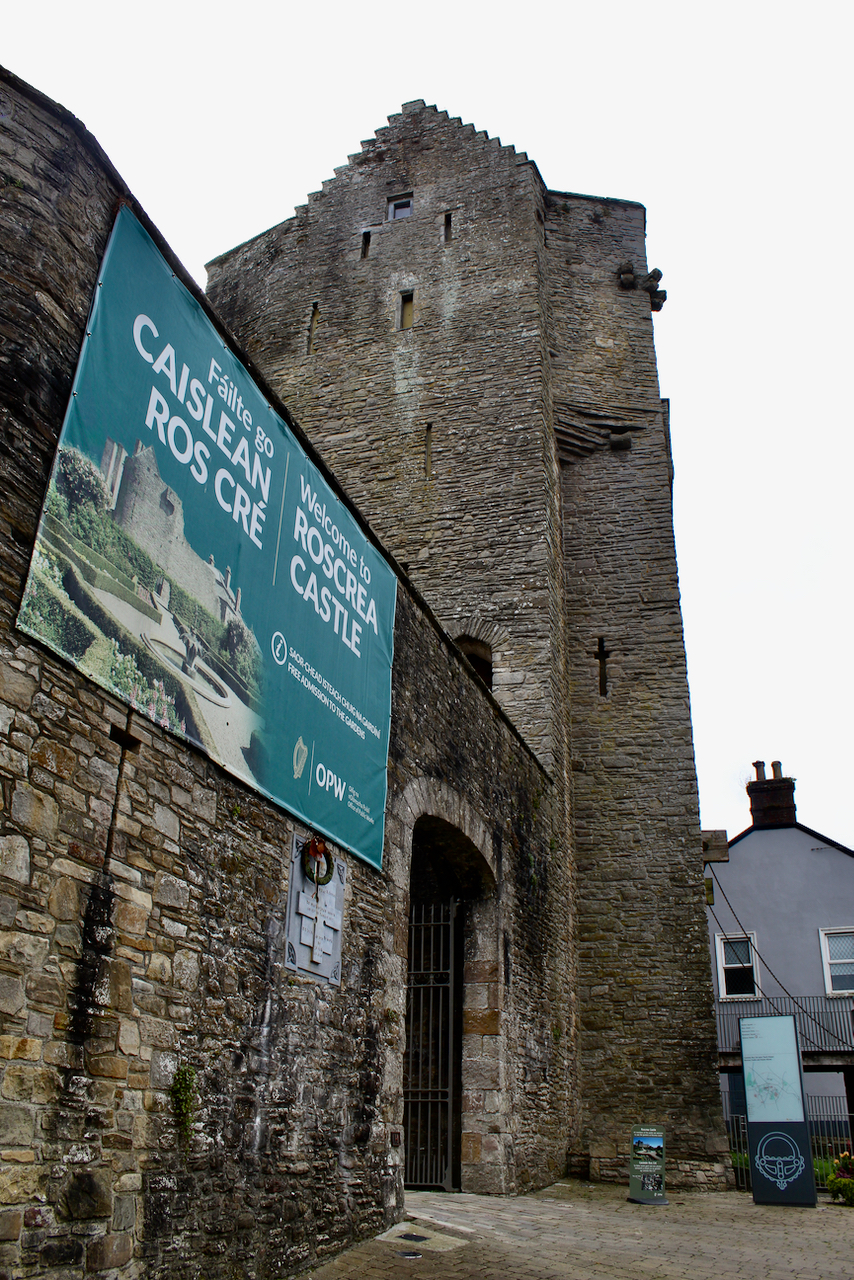
Roscrea Castle, August 2024. Photograph © Jennifer Winder-Baggot, www.irishhistorichouses.com
Damer House and Roscrea Castle sit within bawn walls, 21st August 2024. Photograph © Jennifer Winder-Baggot, www.irishhistorichouses.com
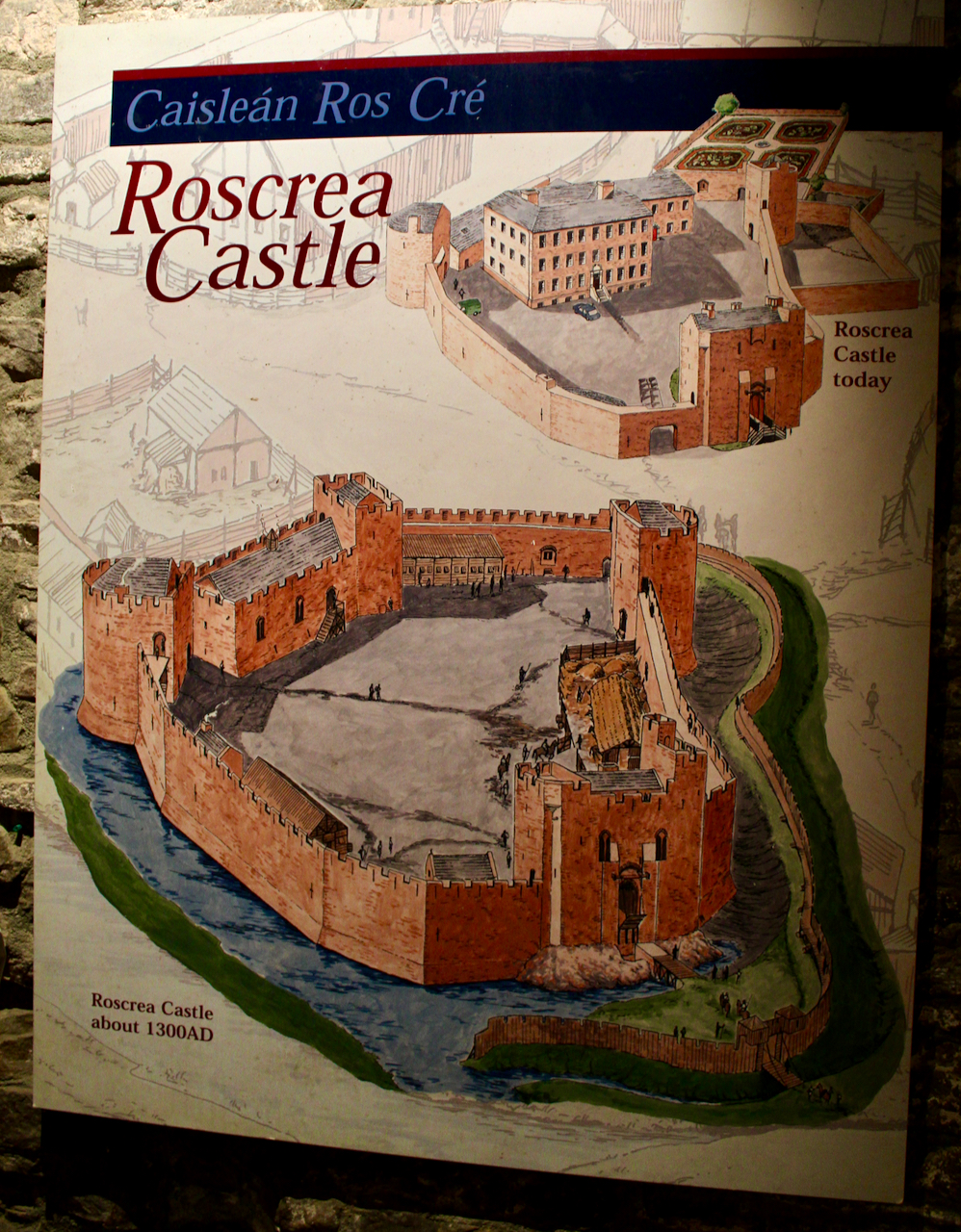
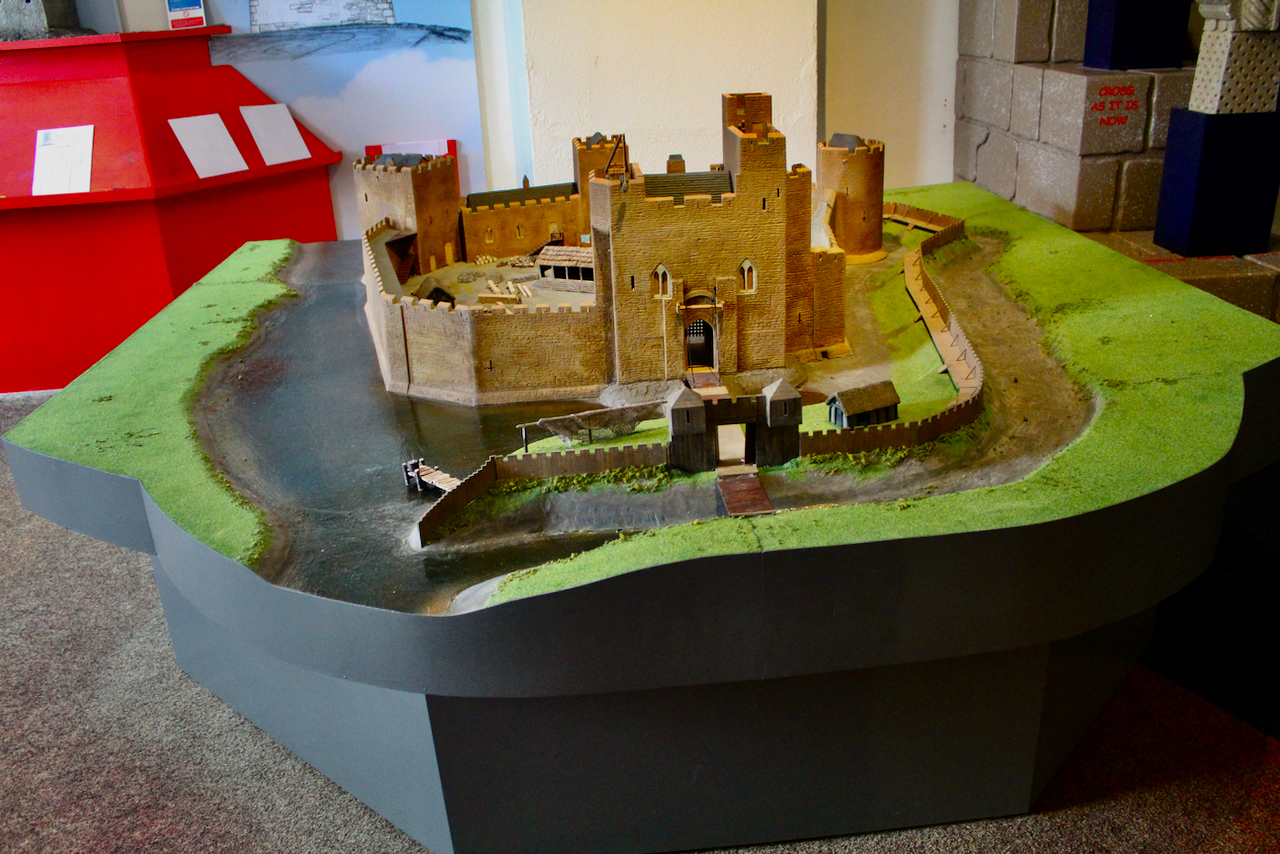
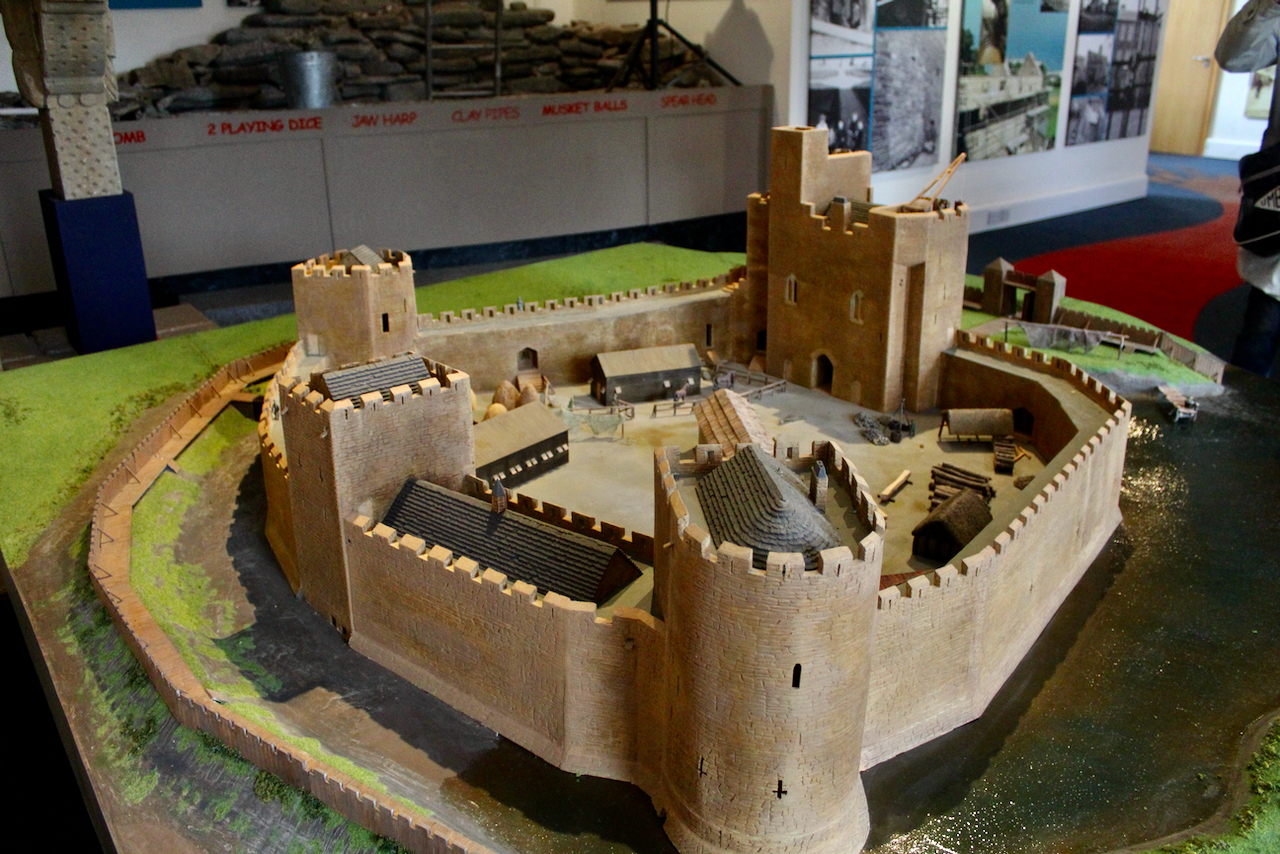
A reconstruction of what the castle would have looked like, in an exhibition in the Annex to Damer House.
Roscrea Castle, August 2024. Photograph © Jennifer Winder-Baggot, www.irishhistorichouses.com
Parts of the walls and outbuildings at Roscrea Castle are in good condition, considering their age! 21st August 2024. Photograph © Jennifer Winder-Baggot, www.irishhistorichouses.com
The bawn of Roscrea Castle with “Ormond tower,” August 2024. Photograph © Jennifer Winder-Baggot, www.irishhistorichouses.com

This was originally the site of a motte and bailey fortification known as King John’s Castle. The original wooden castle was destroyed in the late 13th century and was replaced with a stone structure built in 1274-1295 by John de Lydyard. The castle was originally surrounded by a river to the east and a moat on the other sides. [2] It was granted to the Butlers of Ormond in 1315 who held it until the early 18th Century. The castle as we see it today was built from 1332.
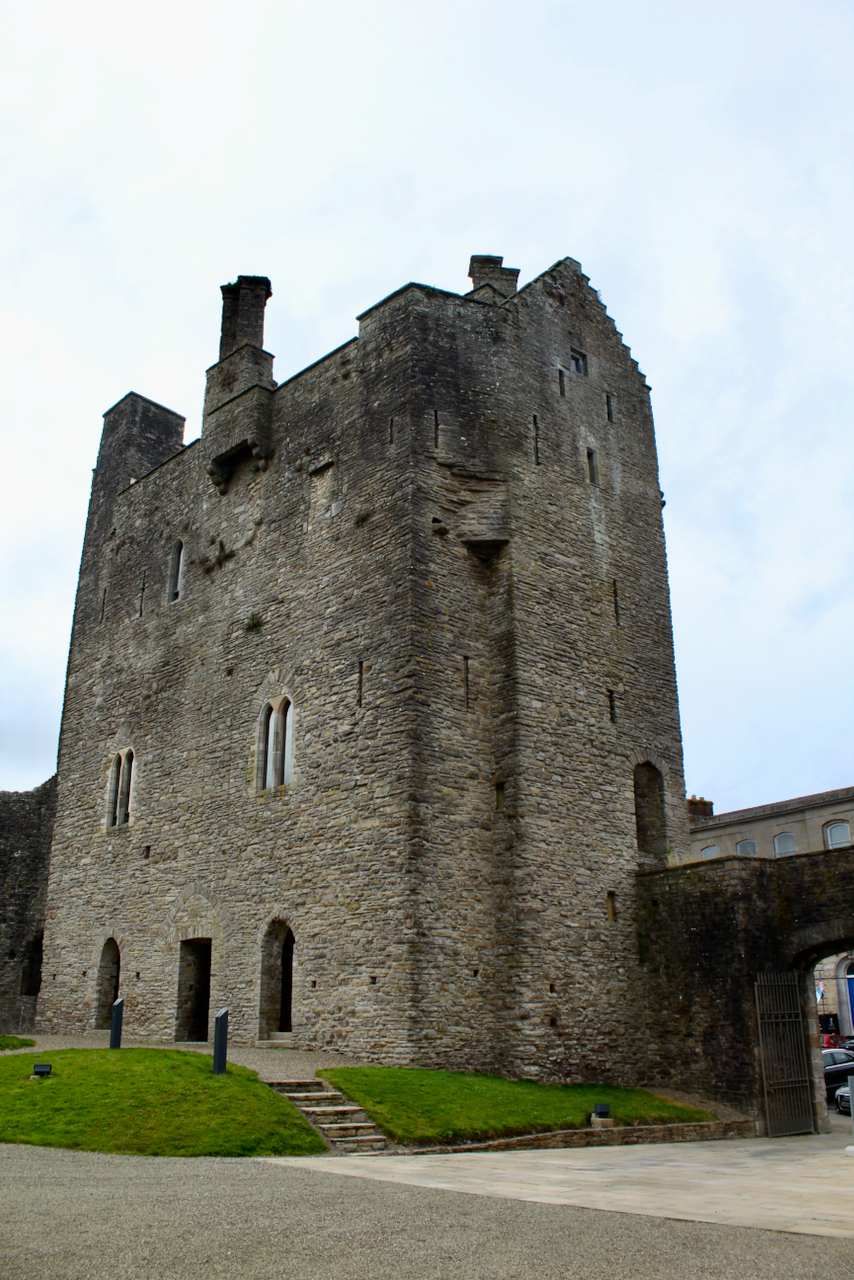
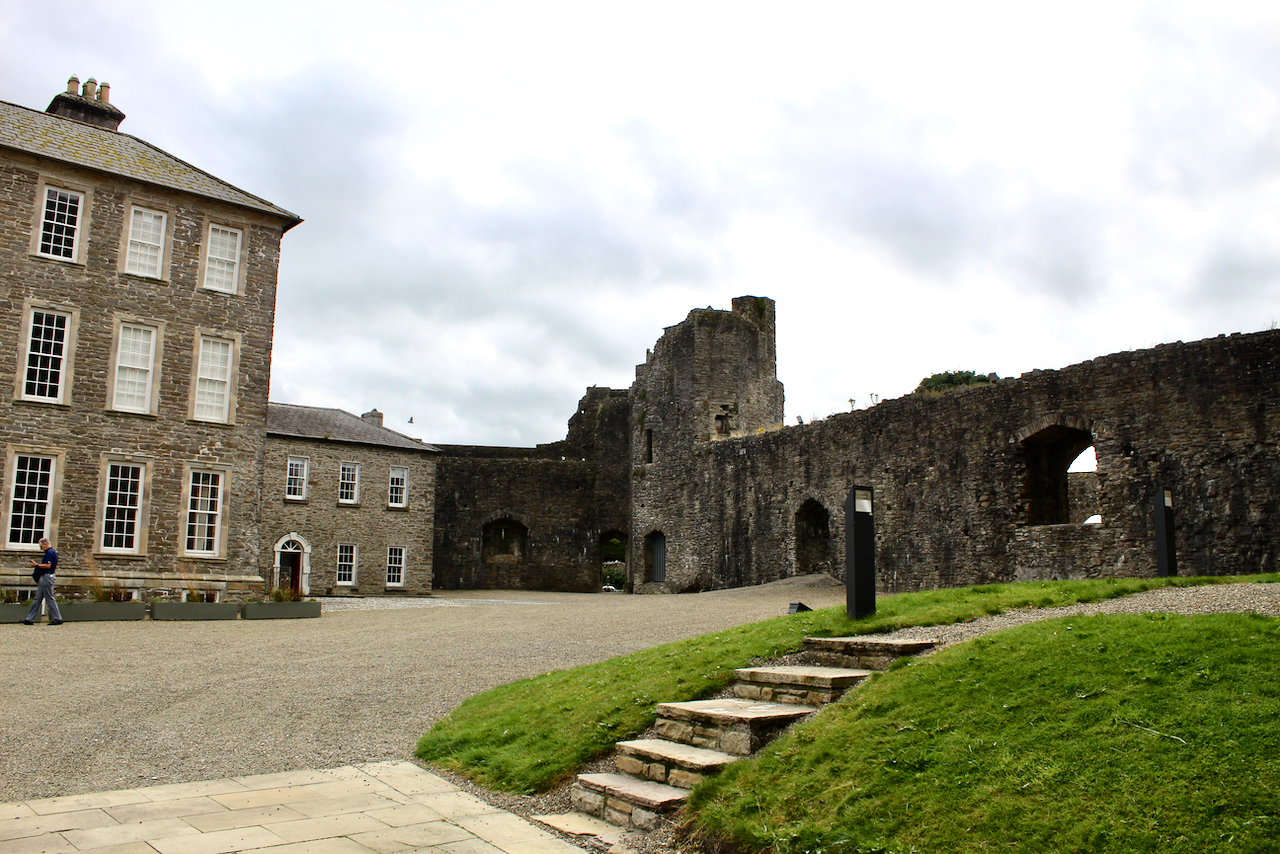
Roscrea Castle, August 2024. Photograph © Jennifer Winder-Baggot, www.irishhistorichouses.com
Damer House and Roscrea Castle sit within bawn walls, 21st August 2024. Photograph © Jennifer Winder-Baggot, www.irishhistorichouses.com

Roscrea Castle was sold to the Royal Hospital, Kilmainham, by James Butler, 2nd Duke of Ormond in 1703. It was bought by the Damers, who built an elegant  three-storey nine bay pre-Palladian house in the courtyard in c. 1730.

The Dictionary of Irish Biography tells us:

The Damer of folklore tradition is a conflation of the first Joseph [c.1630–1720] with his nephew John [1674-1768]. Thus, while Damer built himself a house in County Tipperary in the seventeenth century, the traditional stories about Damer’s Court (or Damerville) relate to a house built by John after his uncle’s death. John’s brother Joseph [1676–1737] built the Damer House in Roscrea, which was saved from demolition in the 1970s and subsequently restored. The Guildhall Library, London, has Damer correspondence among its Erasmus Smith papers.” [3]

In their book The Tipperary Gentry, Hayes and Kavanagh tell us that Joseph Damer (c.1630–1720) was born in Dorset in England in 1630. [4] He came to Ireland after the restoration of Charles II when land was being sold cheaply by Cromwellian soldiers who were given land instead of pay but did not want to remain in Ireland. Joseph Damer bought land in Tipperary, settling at Shronell, and established himself as a moneylender, lending to other landowners on mortgages. He also became involved in banking in Dublin. His nephew John (1674-1768) acted as his agent in Tipperary.

Joseph had no children and left his vast fortune when he died in 1720 to his nephews John (1674-1768) and Joseph (1676–1737), sons of his brother George Damer. He was so wealthy that he entered folklore with tales of how he gained his wealth, and he was compared to King Midas, as if everything he touched turned to gold.

Jonathan Swift wrote a ditty mocking Joseph Damer’s parsimony:

He walked the streets and wore a threadbare cloak

He dined and supped at charge of other folk

And – by his look – had he held out his palms

He might be thought an object fit for alms.

The Dictionary of Irish Biography tells us:

Despite his reputation for miserliness, Damer was a benefactor of presbyterianism and, by some accounts, unitarianism. He and his nephew John (1673?–1768) were among the trustees and managers of the General Fund established in 1710 to support the protestant dissenting interest; another fund was established in 1718 to support the congregation in New Row in Dublin.” [see 3]

The nephew John had no children and his brother Joseph (1676–1737) inherited. Joseph sat in the British parliament for Dorchester (1722–27) and became MP for Tipperary in 1735. He died two years later. He married Mary Churchill, daughter of John Churchill of Henbury, Dorset.

Robert O’Byrne tells us that his son Joseph (1717-1798) inherited the house and castle was later created the Earl of Dorchester. [5] He was an absentee landlord and his brother managed his Irish properties. He built a mansion named Damerville which was very grand, but was demolished in 1775. Their sister Mary married William Henry Dawson, 1st Viscount Carlow, who lived at Emo in Laois. It was her offspring who later inherited the Damer properties.

Joseph’s son John (1744-1776) married Ann Seymour, a sculptress. He spent all of his inheritance and killed himself. Subsequently it was his younger brother George who inherited the title to become 2nd Earl of Dorchester. None of Joseph’s offspring had children, however, so the properties passed to the 2nd Earl of Portarlington, a second cousin, who assumed the name Dawson-Damer.

Mary Seymour, who according to Mealy’s sales catalogue married John Dawson 1st Earl of Portarlington of Emo Court, by Thomas Heaphey, courtesy of Fonsie Mealy auction; I think she married George Lionel Dawson-Damer, son of 1st Earl.

Mary who had married the 1st Viscount Carlow had a son John Dawson (1744-1798) who became 1st Earl of Portarlington, Queen’s County. He married Caroline Stuart, daughter of the 3rd Earl of Bute and his writer wife, Mary Wortley Montagu. He commissioned James Gandon to built Emo Court in Queen’s County (Laois). It was his son John Dawson (1781-1845), 2nd Earl of Portarlington, who inherited the Damer fortune and lands, and added Damer to his surname.
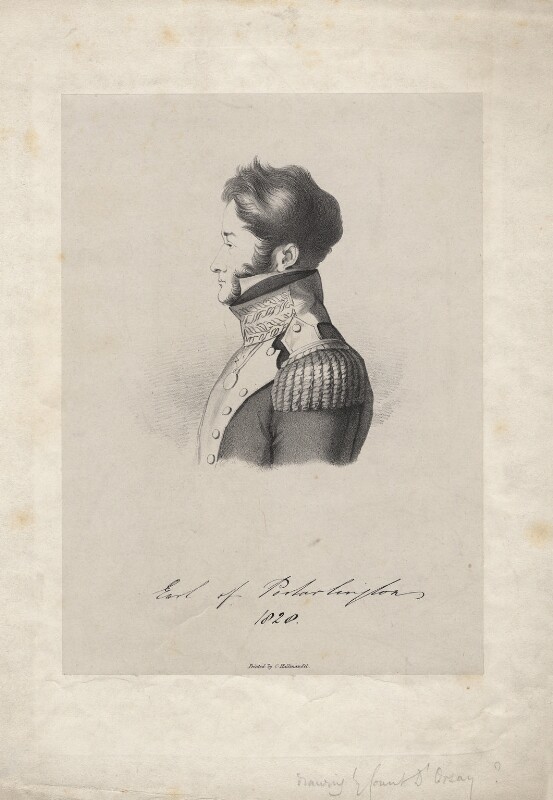
John Dawson 2nd Earl of Portarlington by Count D’Orsay courtesy of National Portrait Gallery in London NPG D5547
Lady Mary Wortley Montagu (1718-1794), Wife of John Patrick Crichton Stuart 3rd Earl of Bute, print after Christian Friedrich Zincke, 1830s, courtesy of National Portrait Gallery of London, NPG D34619.

Damer House has a scroll pediment doorway and inside, a magnificent carved staircase. The Irish Georgian Society was involved in saving it from demolition in the 1960s. [for more photographs, see https://theirishaesthete.com/tag/damer-house/ ] The stairs and floor in the front hall are original to the house. The stairs are similar to ones in Cashel Palace, which was the Archbishop’s Palace, and is now an upmarket hotel. See the website of the Irish Aesthete for photographs of this staircase: https://theirishaesthete.com/tag/cashel-palace/
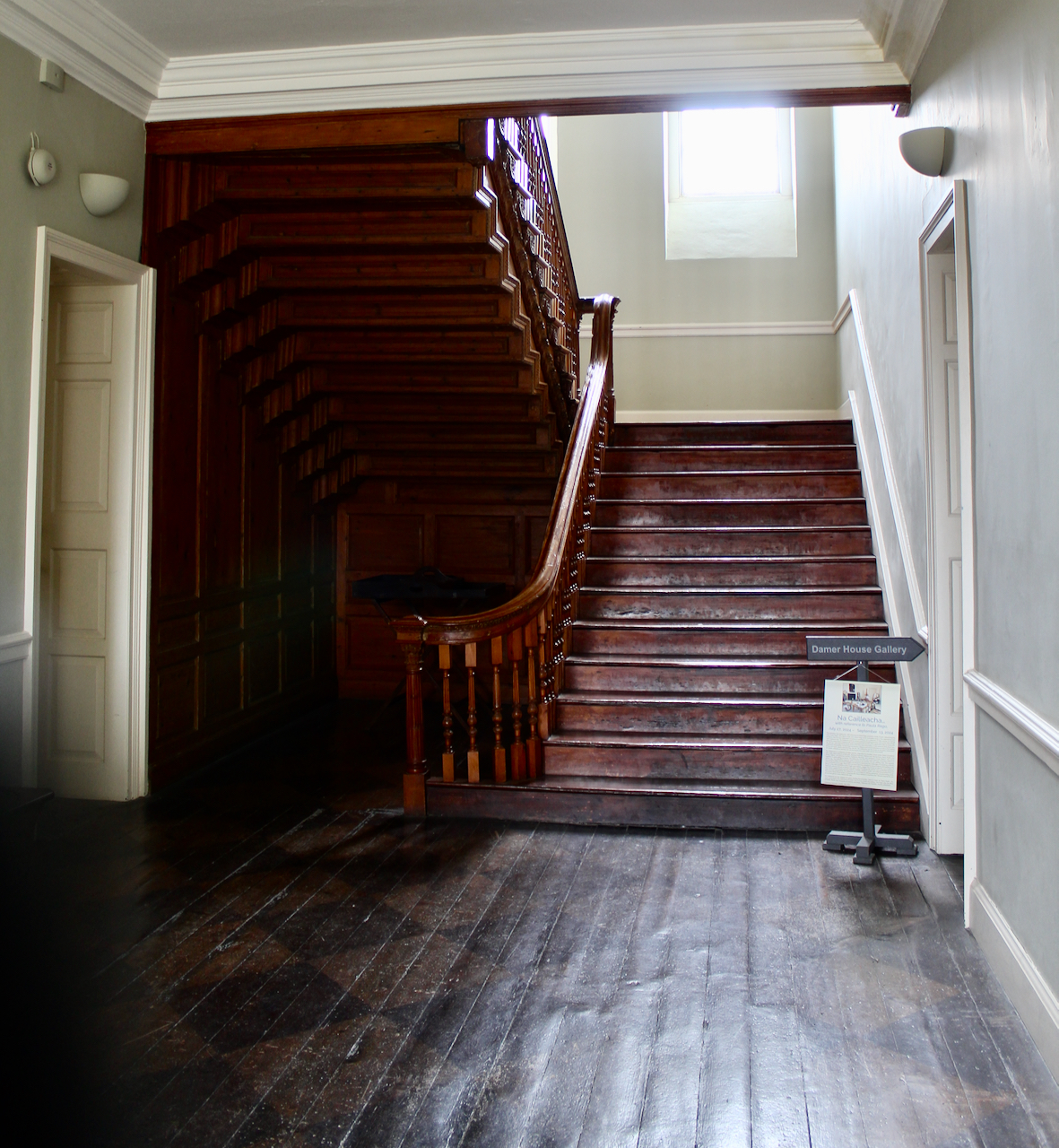
Unfortunately we were not allowed to take photos inside Damer House! I took this one before the tour guide told us we can’t take them – I think it’s a shame and cannot see the sense in it so am publishing this. Damer House, August 2024. Photograph © Jennifer Winder-Baggot, www.irishhistorichouses.com

The Damers didn’t live in the house and it was rented out to various tenants.

Robert O’Byrne tells us about the history of the house:

In 1798 the house was leased as a barracks and then the whole site sold to the British military in 1858. At the start of the last century the Damer House became ‘Mr. French’s Academy’, a school for boys, reverting to a barracks for the National Army during the Civil War, then being used as a sanatorium, before once again in 1932 serving as a school until 1956, then a library. By 1970 it was empty and unused, and the local authority, Tipperary County Council, announced plans to demolish the house and replace it with an amenity centre comprising a swimming pool, car park, playground and civic centre (it had been nurturing this scheme since as far back as 1957). The council’s chairman wanted the demolition to go ahead, declaring that ‘as long as it stands it reminds the Irish people of their enslavement to British rule,’ and dismissing objectors to the scheme as ‘a crowd of local cranks.’ In fact, most of the so-called ‘crowd’ were members of the Old Roscrea Society and in December 1970 this organisation was offered help by the Irish Georgian Society in the campaign to save the Damer House.

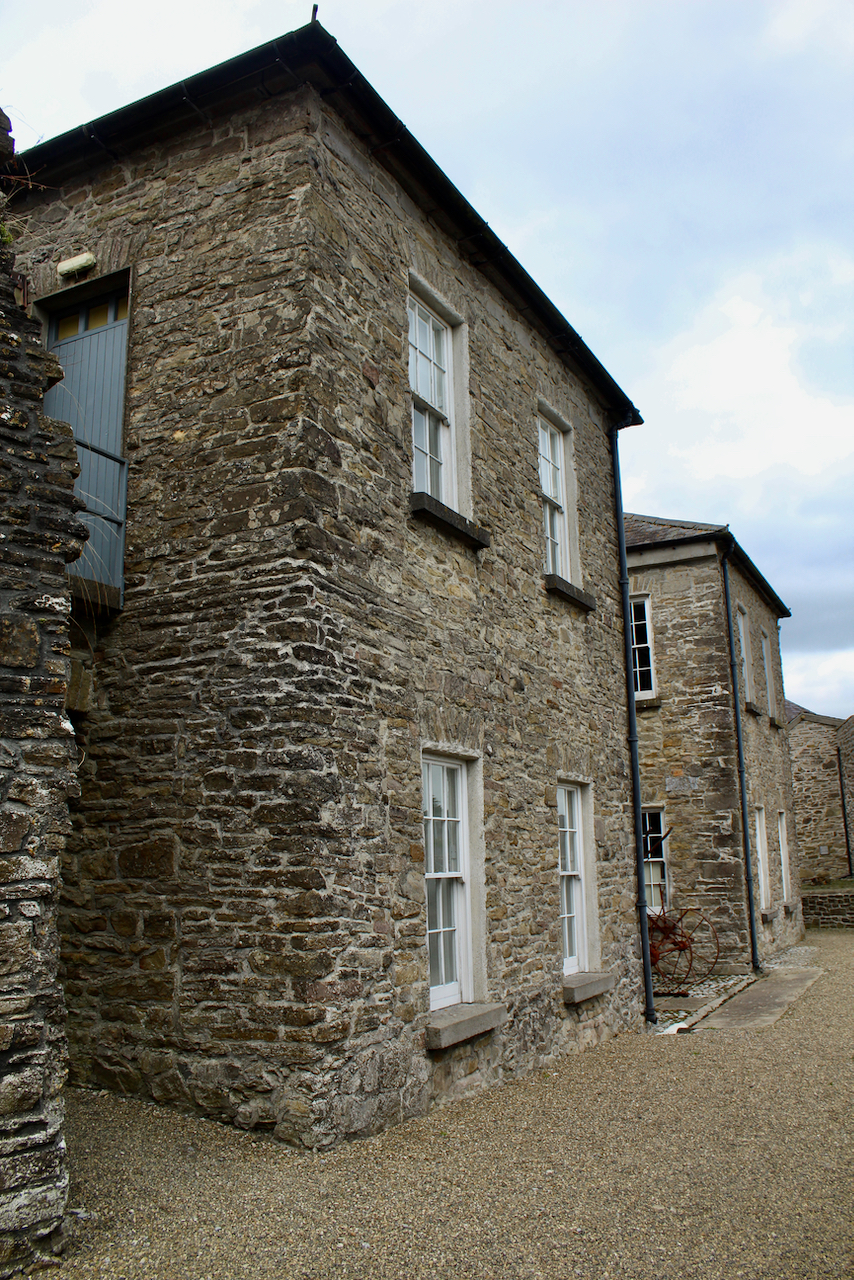
Robert O’Byrne suggests that the large annex to one side of Damer House was probably added during its time as use as a military barracks. Photograph © Jennifer Winder-Baggot, www.irishhistorichouses.com
The side of Damer House, August 2024. Photograph © Jennifer Winder-Baggot, www.irishhistorichouses.com
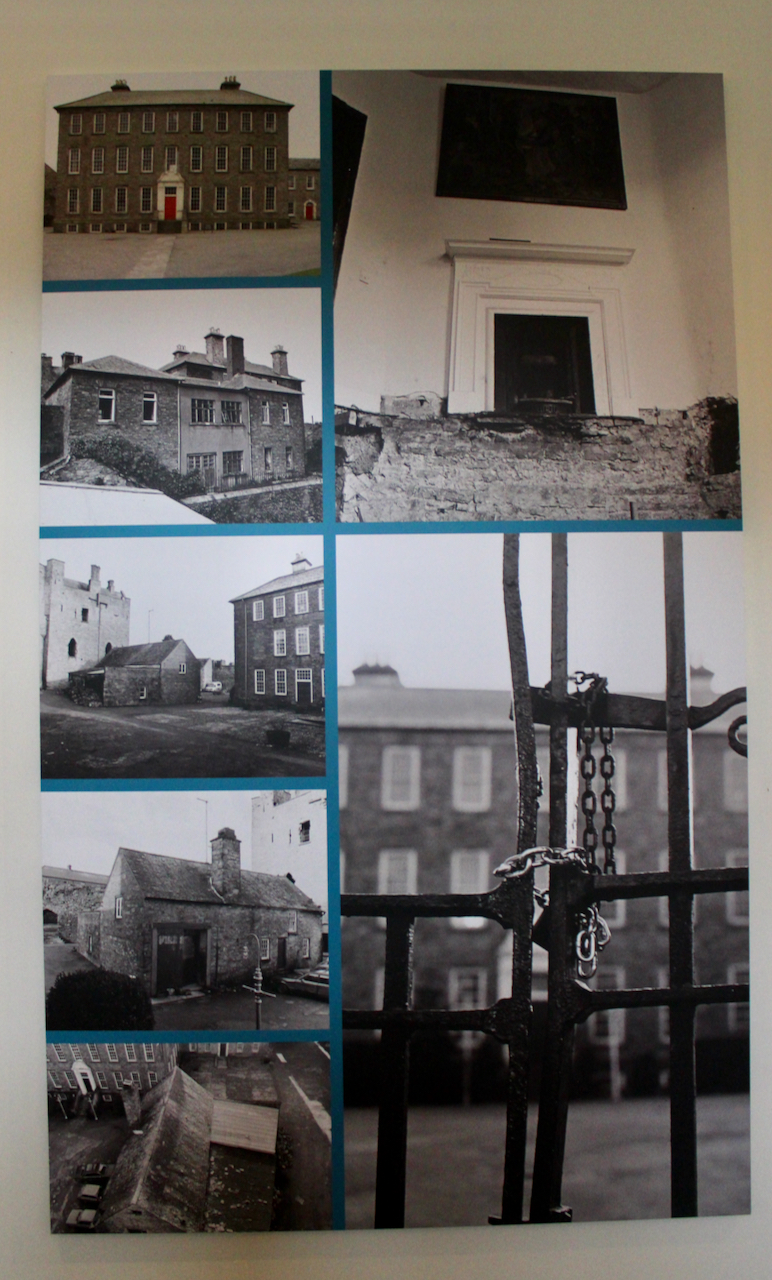
Photographs from an exhibition of the restoration of Damer House in the Annex.
Photographs from an exhibition in the Annex.

Upstairs in Damer House there’s also Exhibition space, but we did not have much time to browse.
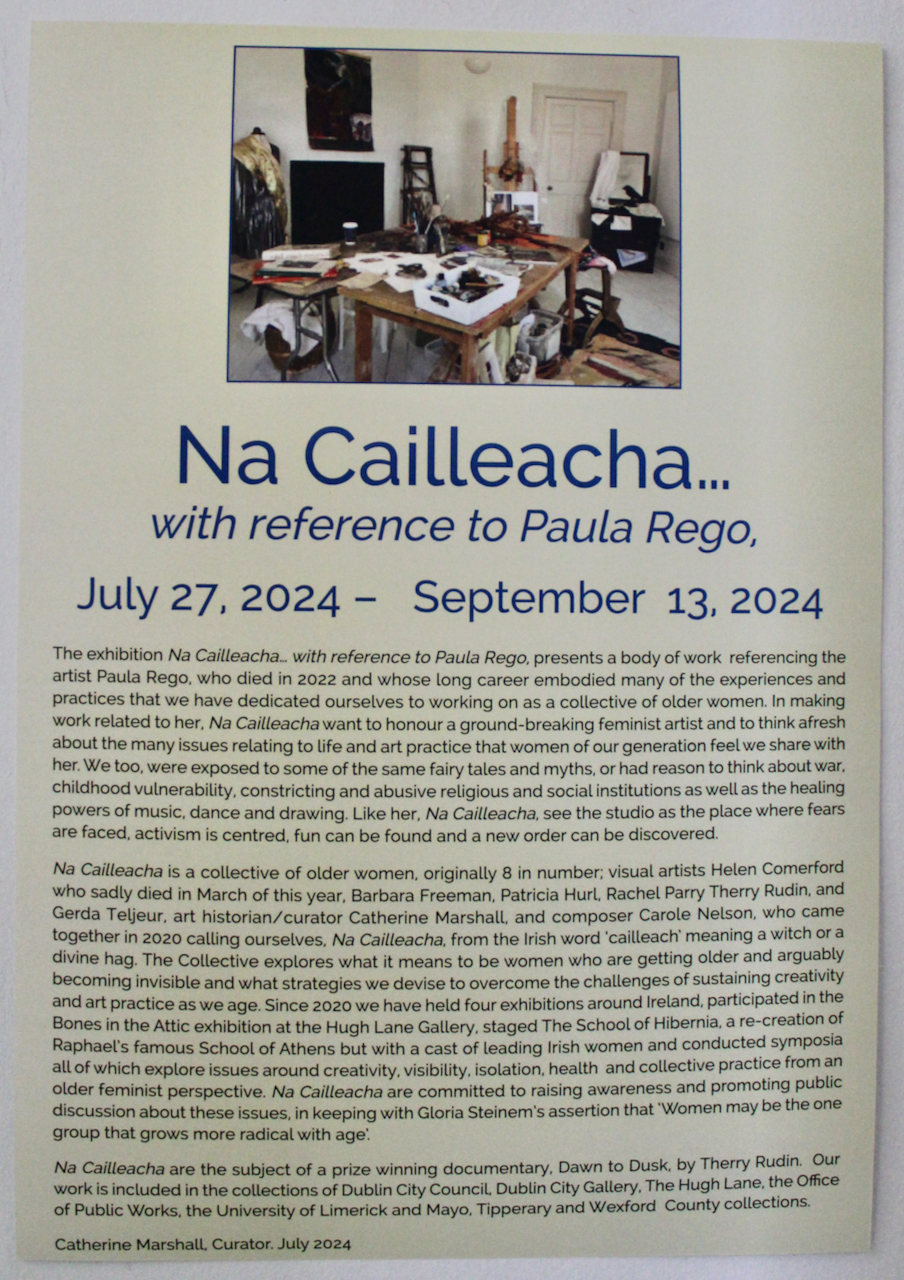
Exhibition in Damer House.
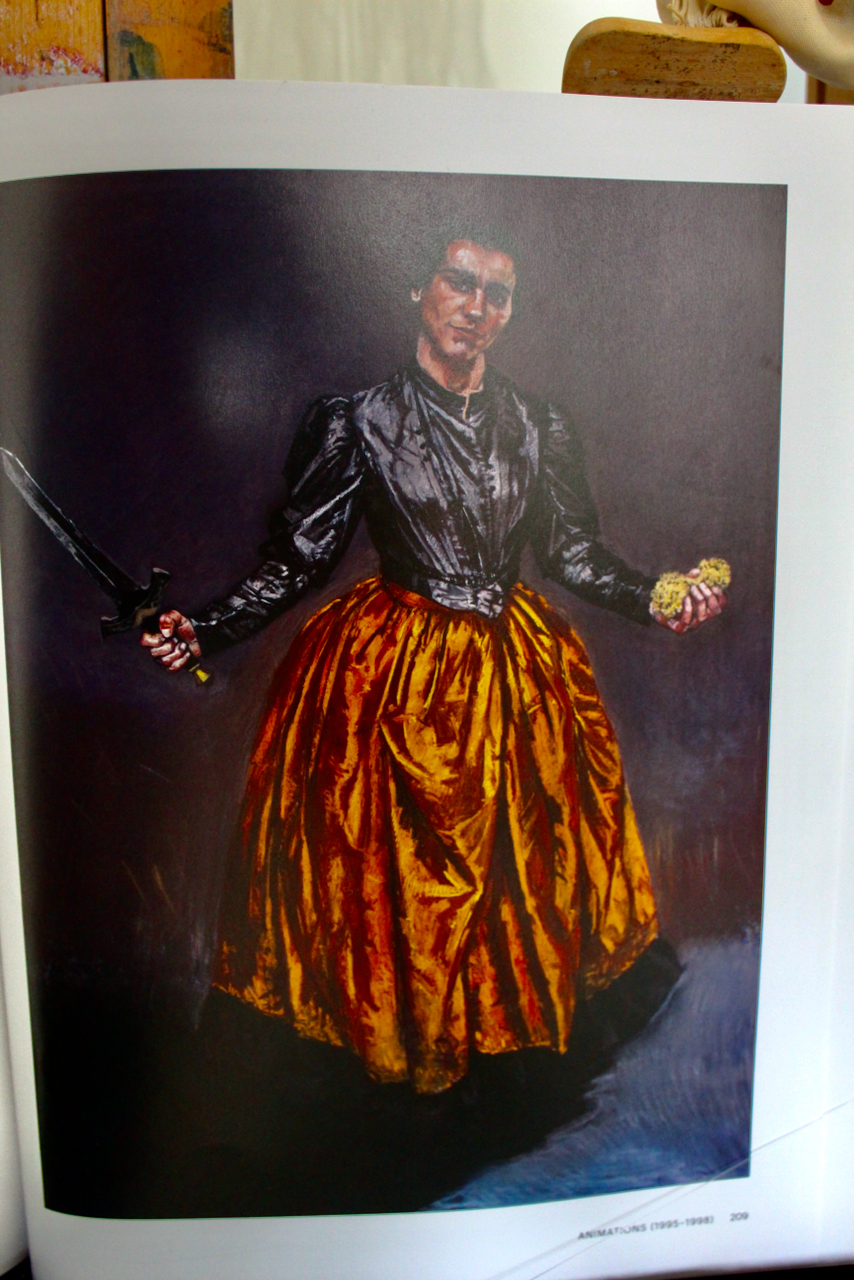
“Angel” by Paula Rego.
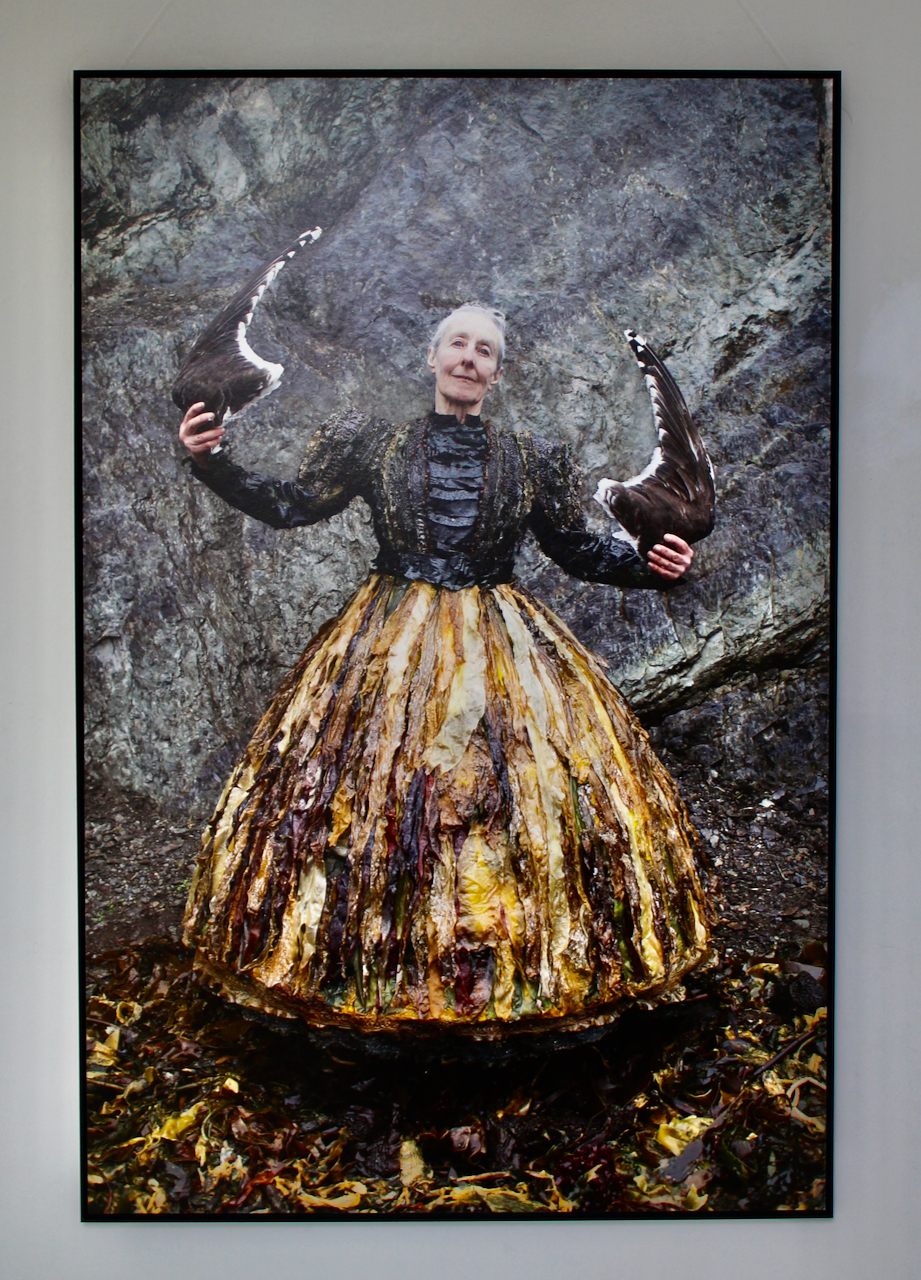
“Kelp Cailleagh” after “Angel” by Paula Rego, by Rachel Parry. Archival print of Rachel Parry in a dress made of dried seaweed, photographed in Allihies by Thomasz Madajczak.
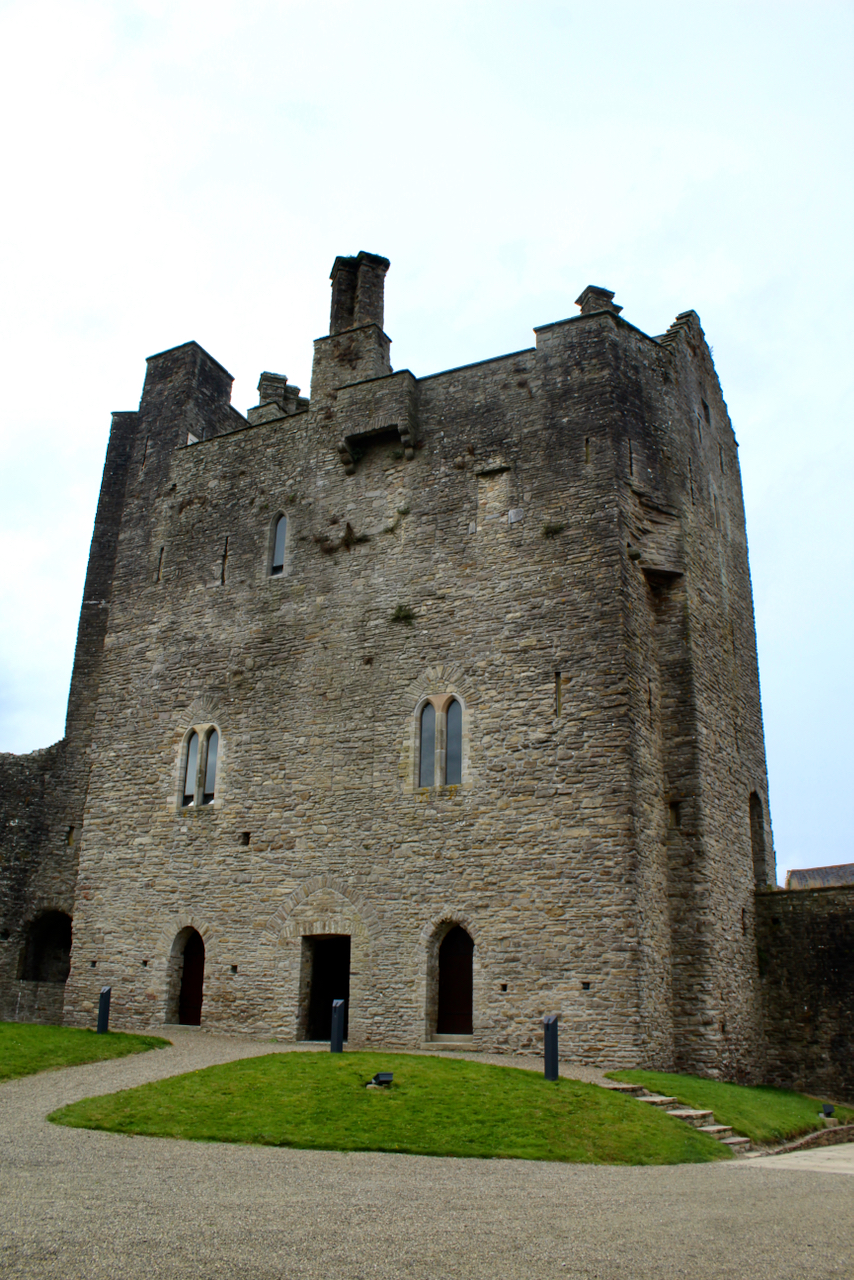
Roscrea Castle, August 2024. Photograph © Jennifer Winder-Baggot, www.irishhistorichouses.com

After our tour of Damer House we crossed the yard for a tour of the castle.

Roscrea Castle fell into disrepair in the 19th century, and when the roof collapsed extensive repairs were needed in the 1850s. It was named a national monument in 1892, and is now under the care of the OPW. 
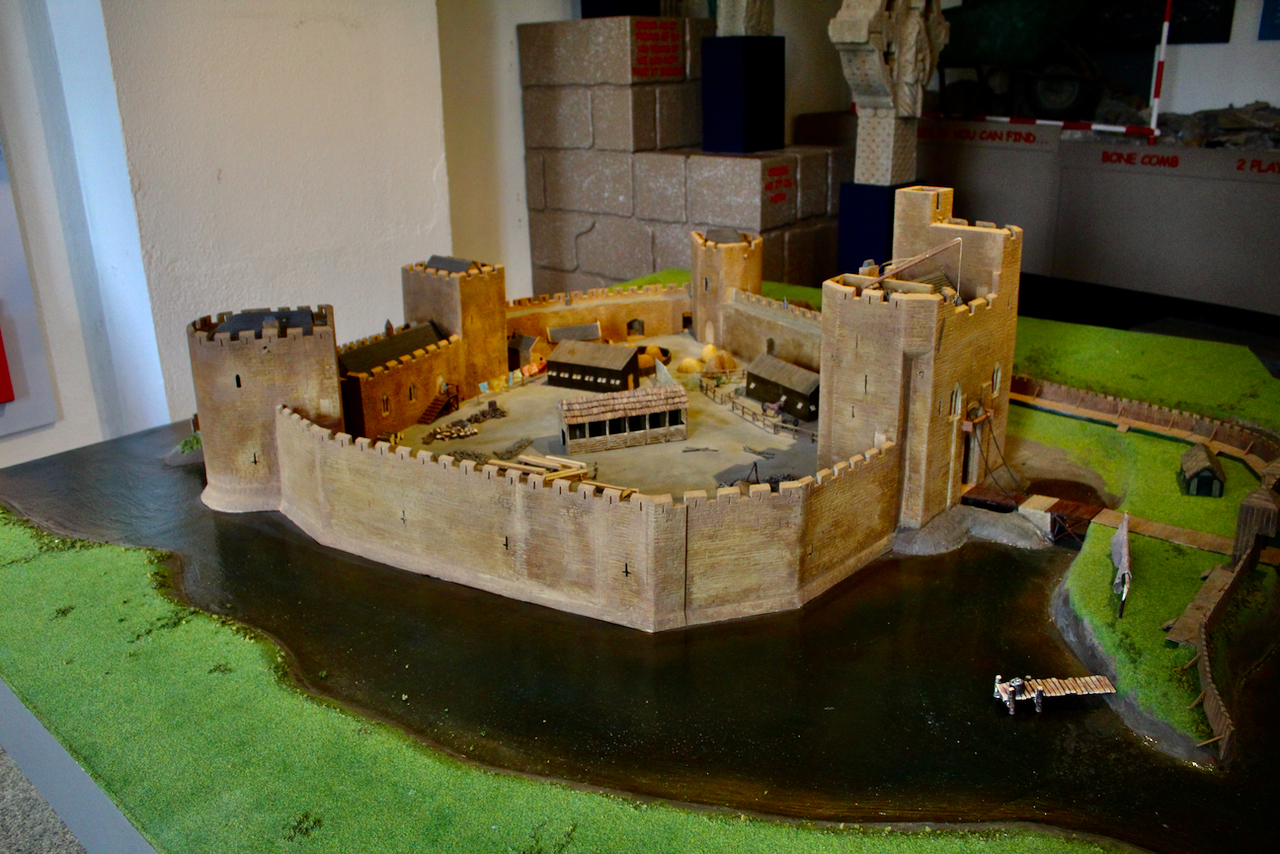
A reconstruction of what the castle would have looked like, in an exhibition in the Annex to Damer House.
A reconstruction of what Roscrea Castle would have looked like, in an exhibition in the Annex to Damer House.
Roscrea Castle, August 2024. Photograph © Jennifer Winder-Baggot, www.irishhistorichouses.com

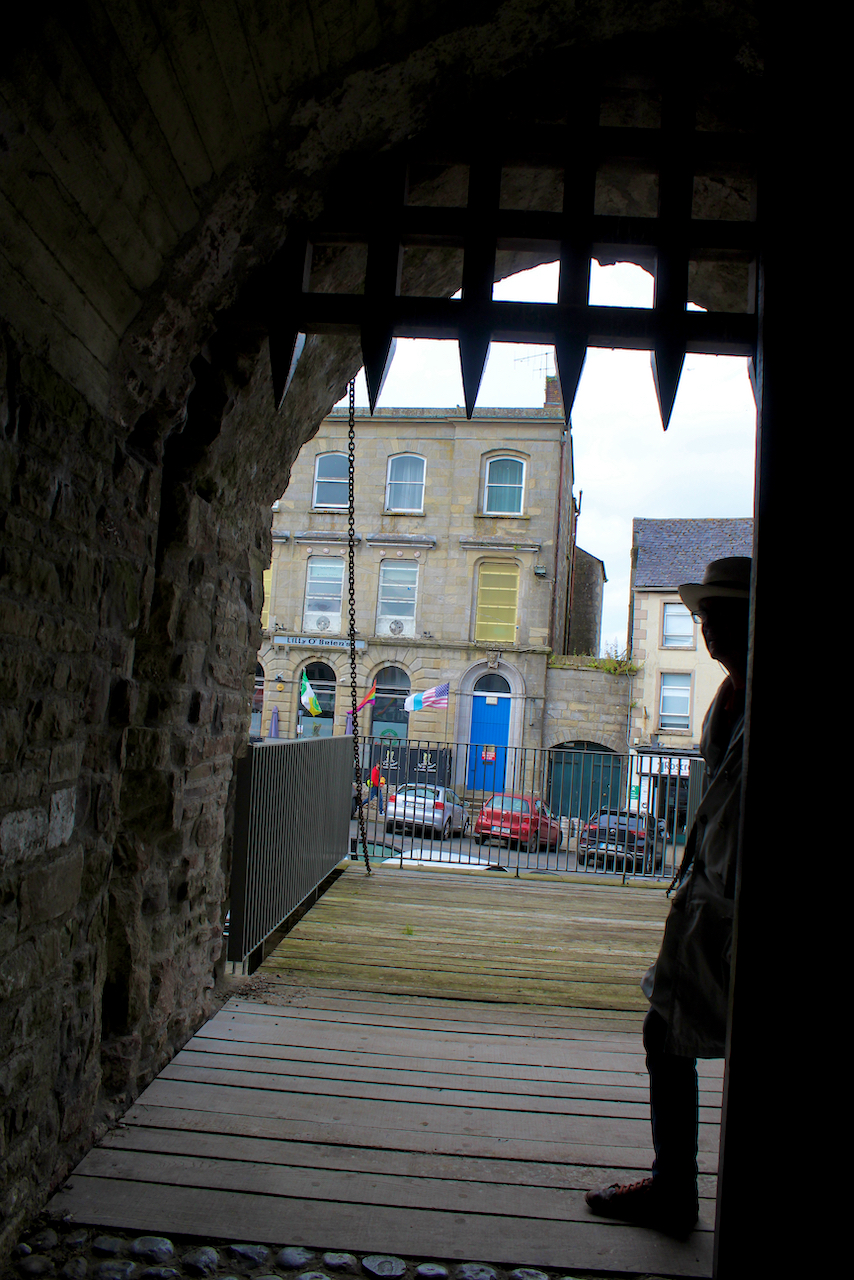
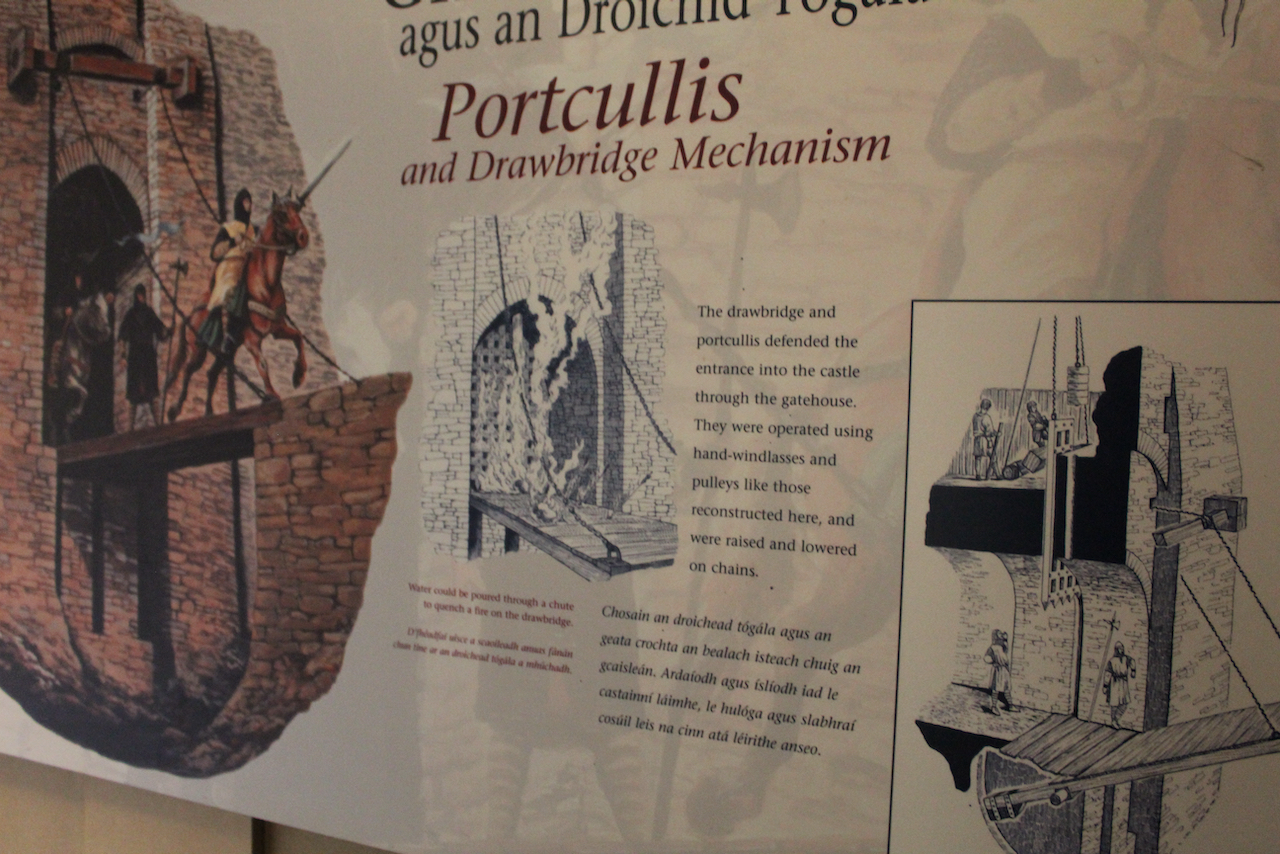
The original entrance to the castle is to one side of where we enter today – you can see the drawbridge in the photograph above.

Information board inside the Roscrea Castle.
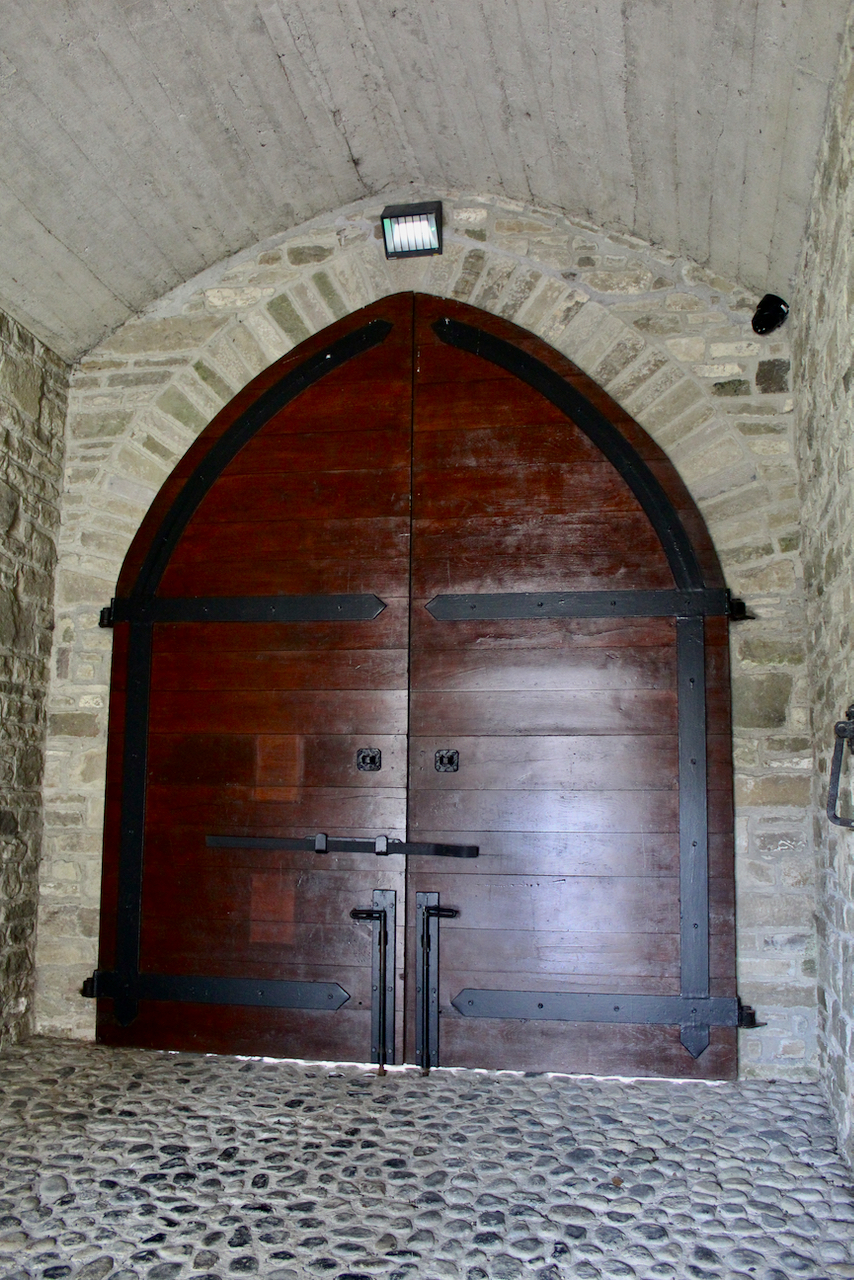
The original entrance to Roscrea Castle had a drawbridge over a moat. Photograph © Jennifer Winder-Baggot, www.irishhistorichouses.com
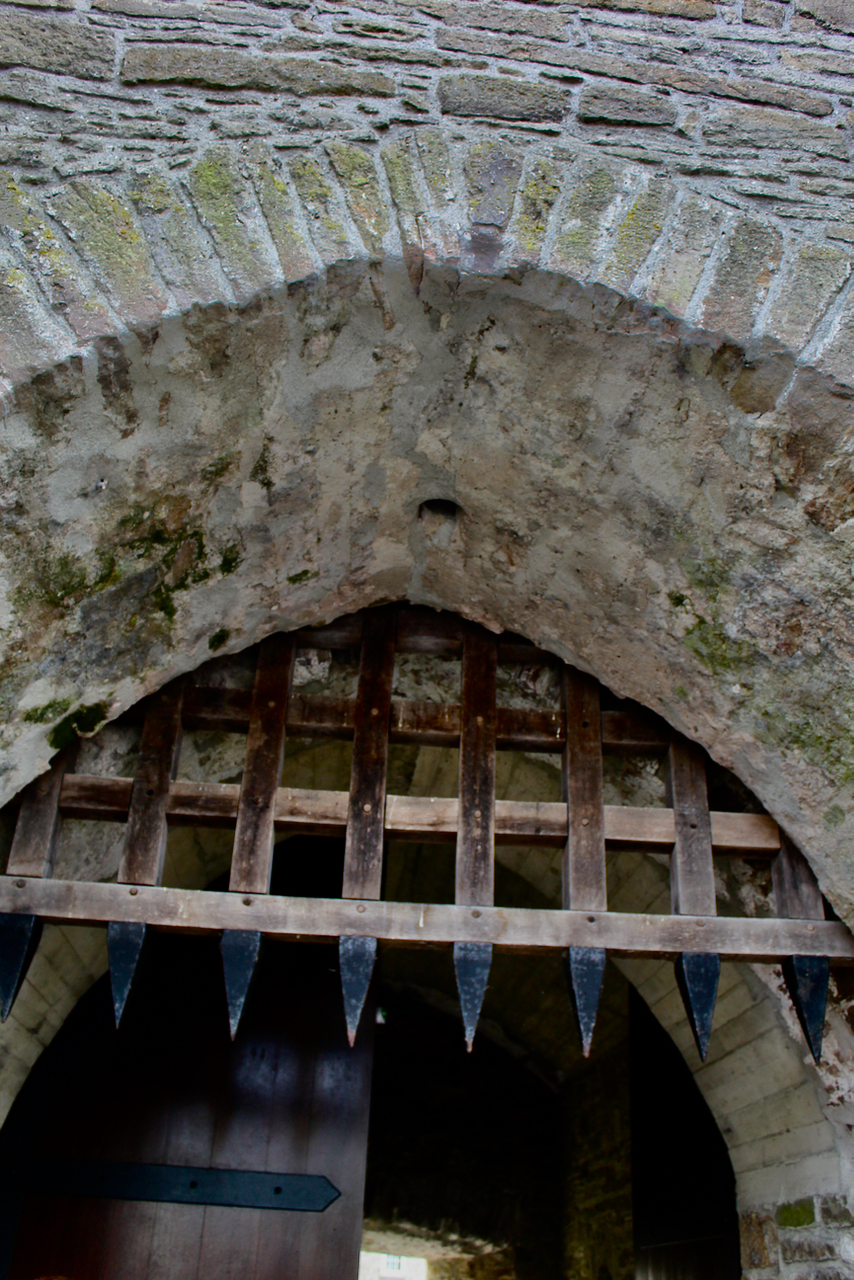
The entrance to Roscrea Castle would have had a portcullis. Photograph © Jennifer Winder-Baggot, www.irishhistorichouses.com
This is the door from inside Roscrea Castle, which leads to the drawbridge. Photograph © Jennifer Winder-Baggot, www.irishhistorichouses.com

The Castle was located on one of the five main roads in ancient Ireland, and it was essential for the Normans to control this route. In 1315 King Edward II handed the castle over to James Butler, 1st Earl of Ormond.

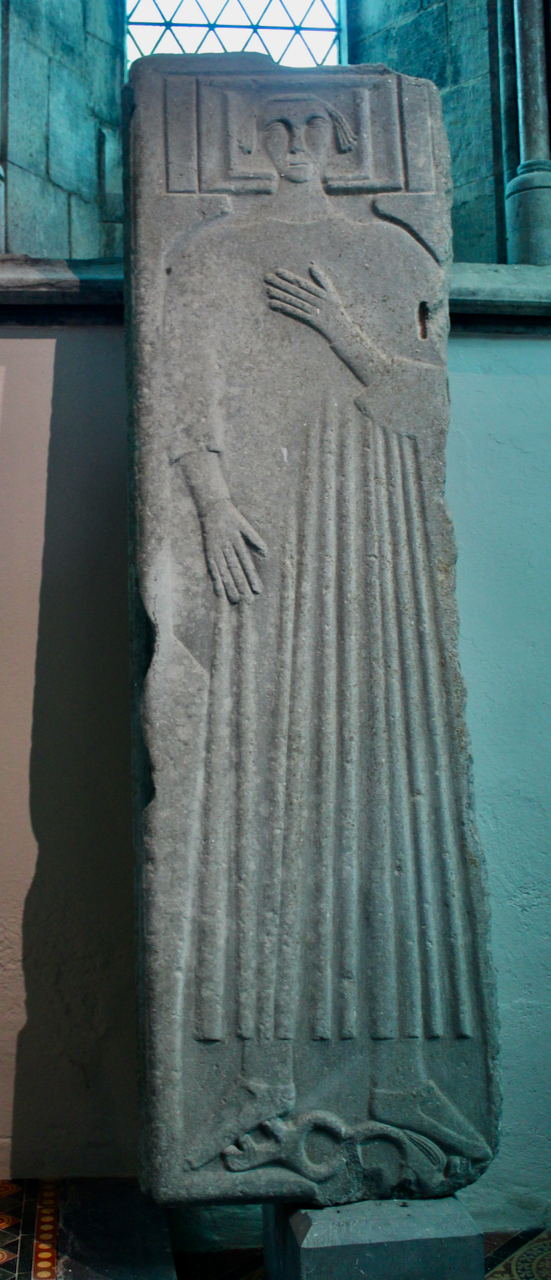
Probably James Butler (c. 1305-1337), the 1st Earl of Ormond. St. Mary’s church, Gowran, June 2023. Photograph © Jennifer Winder-Baggot, www.irishhistorichouses.com

The castle had many defensive features. The curtain wall is approximately three metres thick, which allowed for a wall-walk from which soldiers had a view of the surrounding area. The River Barrow formed a moat around the east face of the castle, and the Normans constructed a dry moat on the west side. The river was diverted in the 19th century.

Inside the castle reception area there’s a grille on the floor, which is the “oubliette” (from the French, meaning “to forget.”). However, in this case, people were imprisoned here between court dates, the guide told us.

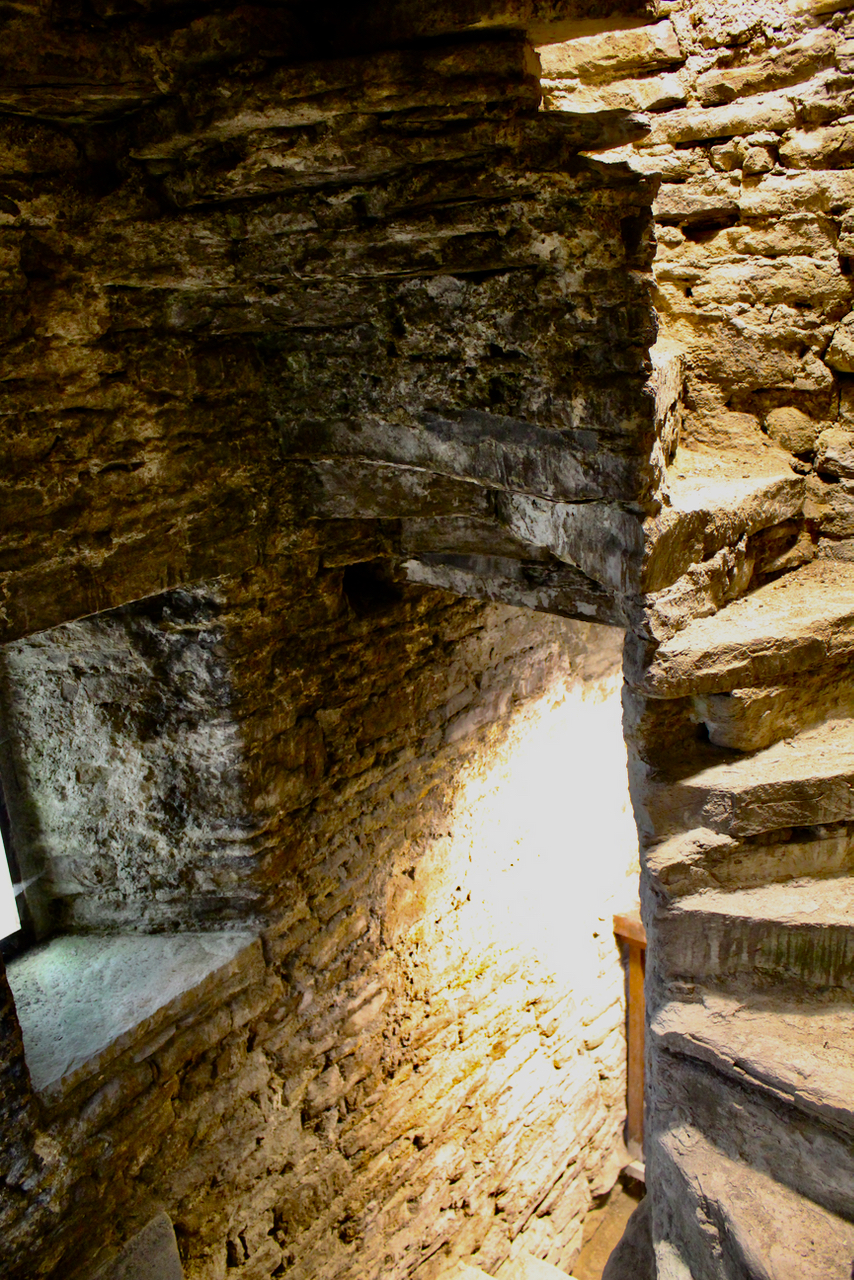
Above the drawbridge is a machicolation from which boiling substances could be dropped, and there are also arrow loop windows for defence. The stairs, called “trip steps” were deliberately built of different heights and widths to impede the intruder. The spiral clockwise to make it more difficult for the enemy to fight his way up the steps.

Silver from nearby silvermines would have been stored in the castle.

Inside Roscrea Castle, August 2024. Photograph © Jennifer Winder-Baggot, www.irishhistorichouses.com

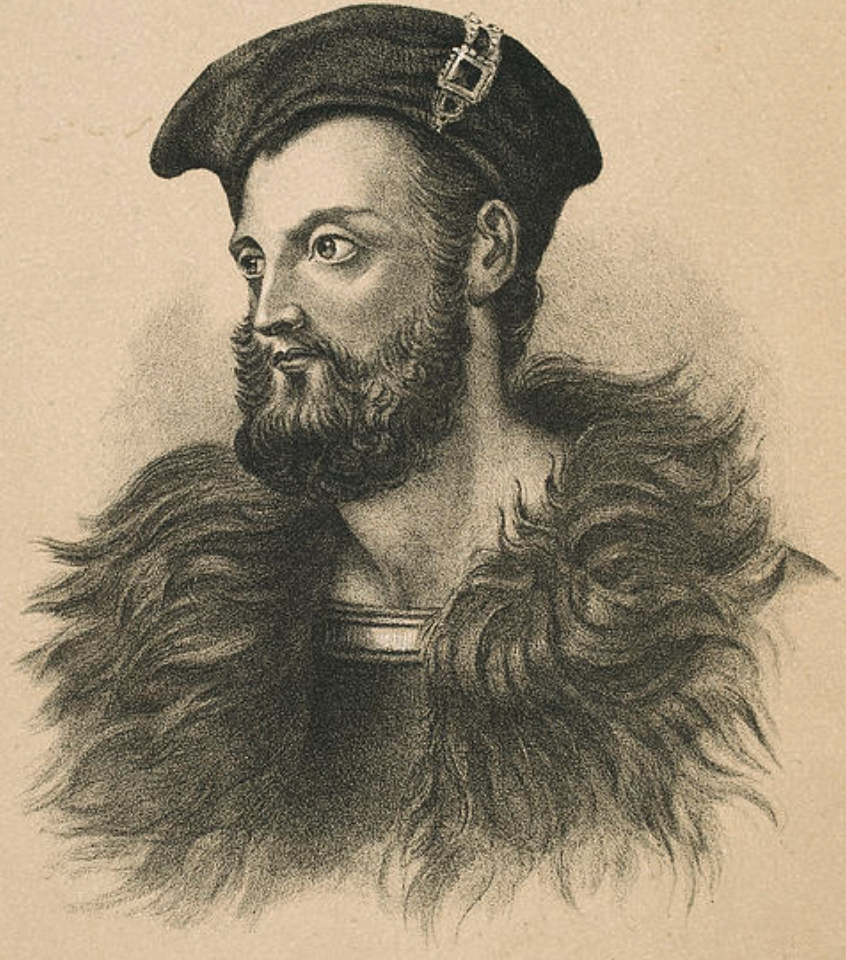
Eoin Roe O’Neill (d. 1649), at the head of 1,200 men, stormed Roscrea in 1646 and reportedly killed every man, woman and child. The only survivor was the governor’s wife, Lady Mary Hamilton (1605-1680), who was a sister to the Earl of Ormond [married to George Hamilton, 1st Baronet of Donalong County Tyrone and of Nenagh, County Tipperary]. She was again forced to play host in the castle to O’Neill three years later which again ended by the guests looting everything in sight. [7]

Owen Roe O’Neill By Unknown, Van Brugens – Ulster Journal of Archaeology Volume 4, Public Domain, https://commons.wikimedia.org/w/index.php?curid=17552770.jpg
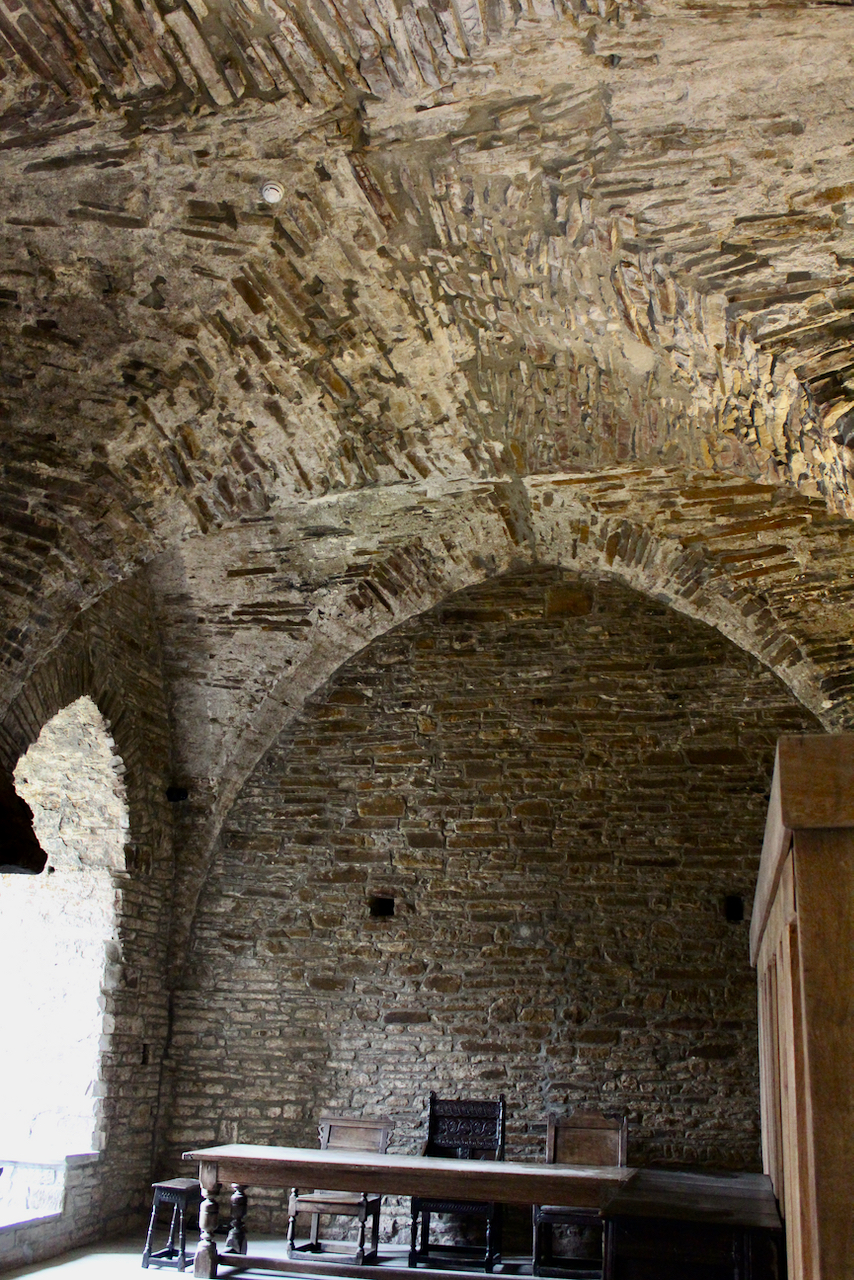
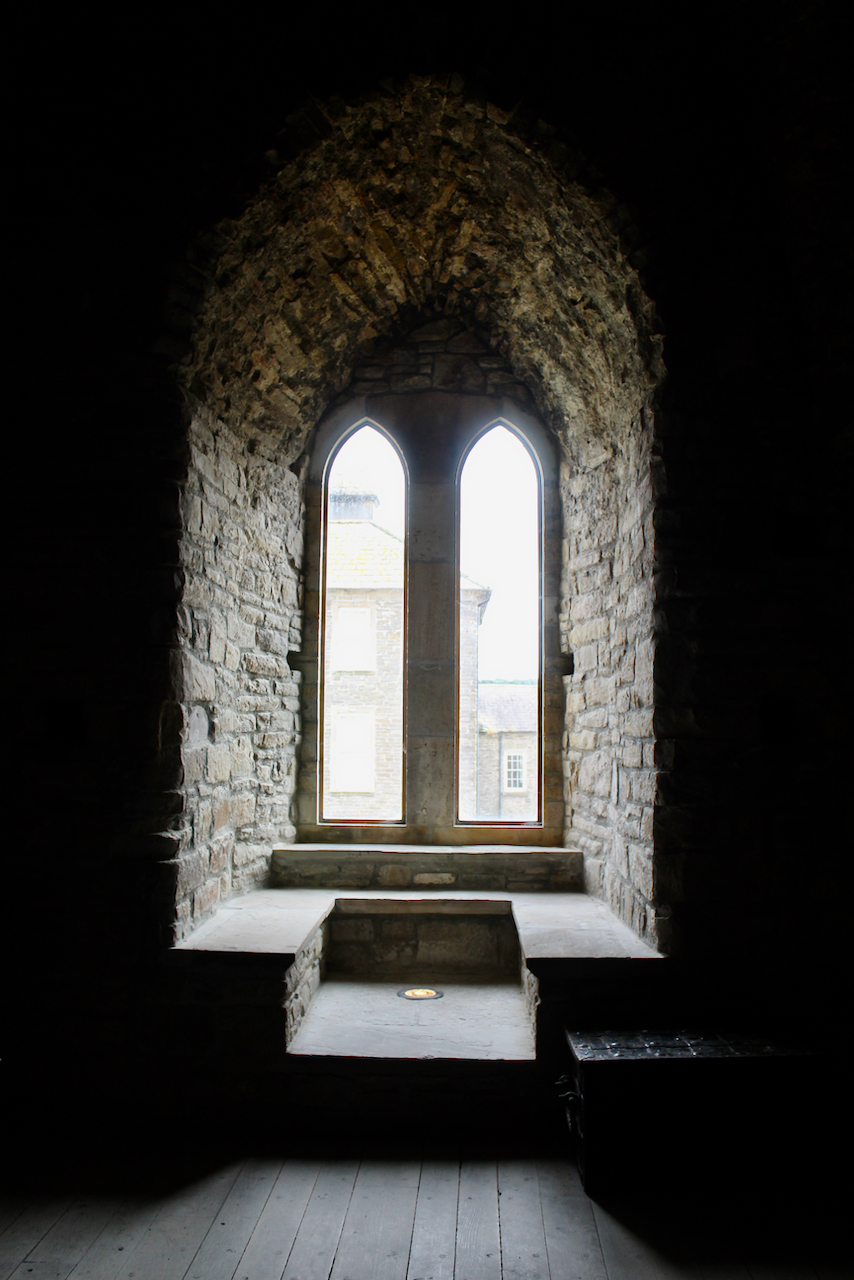
Inside Roscrea Castle, August 2024. Photograph © Jennifer Winder-Baggot, www.irishhistorichouses.com

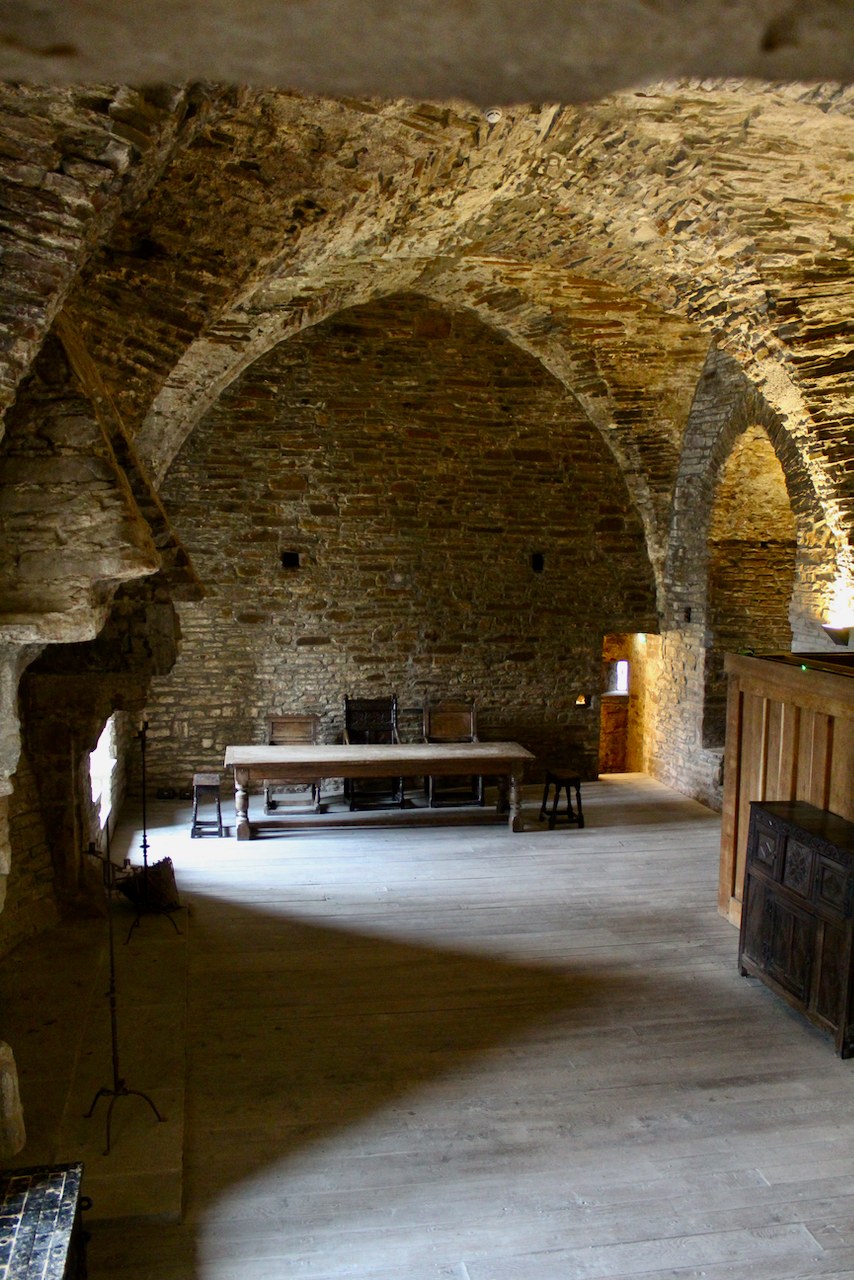
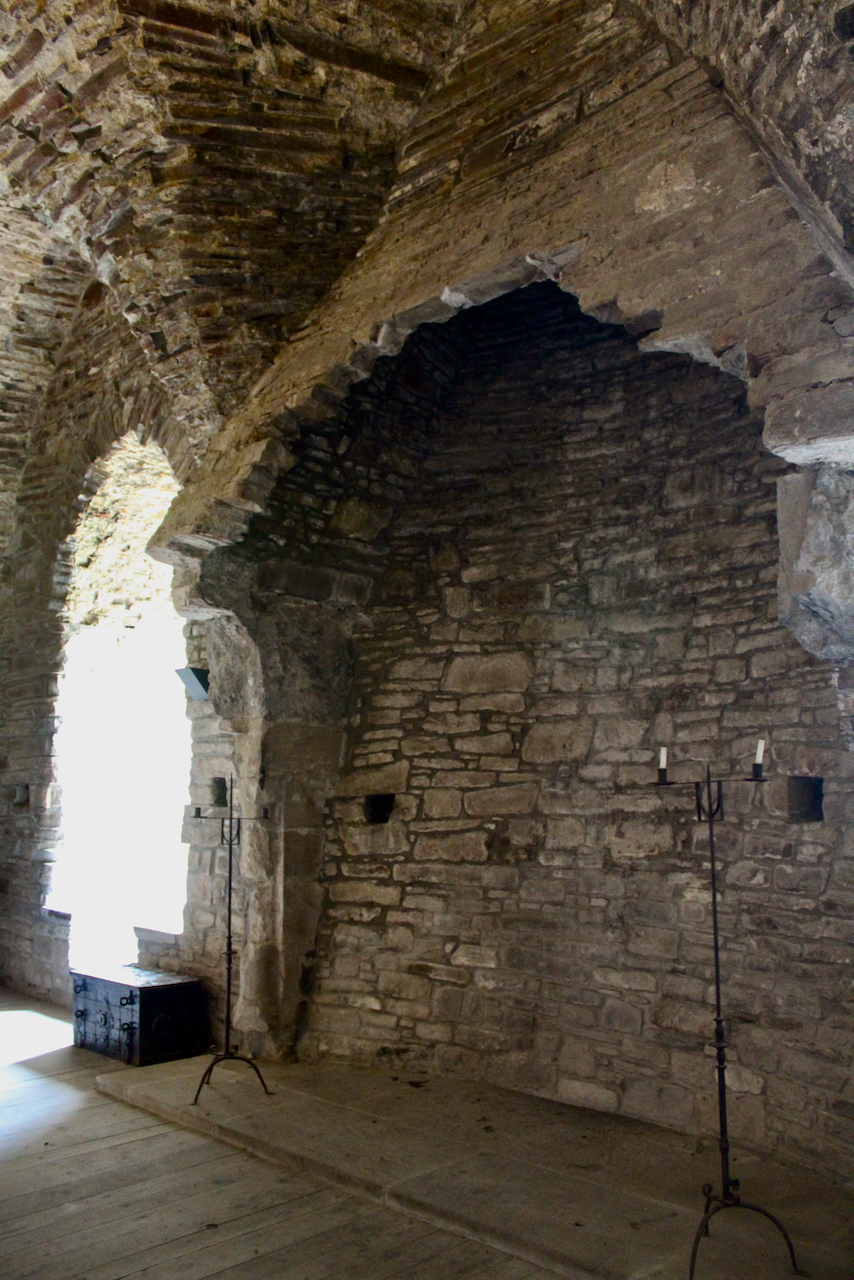
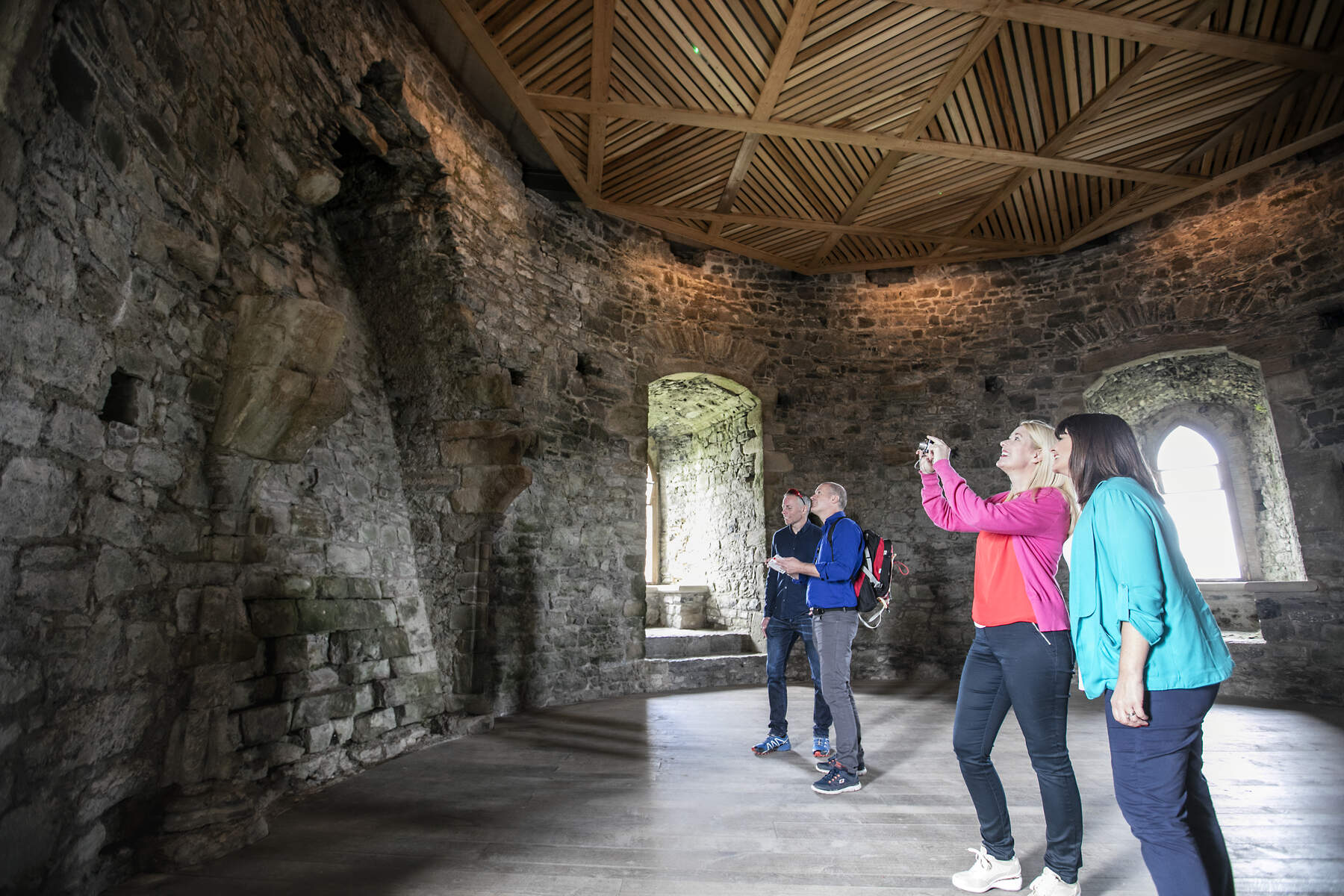
Larger windows were a later addition. Originally there would be only small loopholes. Before glass, the larger windows would be covered with skins to keep out the draught. The inside would have been limewashed, the white walls would then brighten the interior. The fireplace would also provide light.

Inside Roscrea Castle, August 2024. Photograph © Jennifer Winder-Baggot, www.irishhistorichouses.com

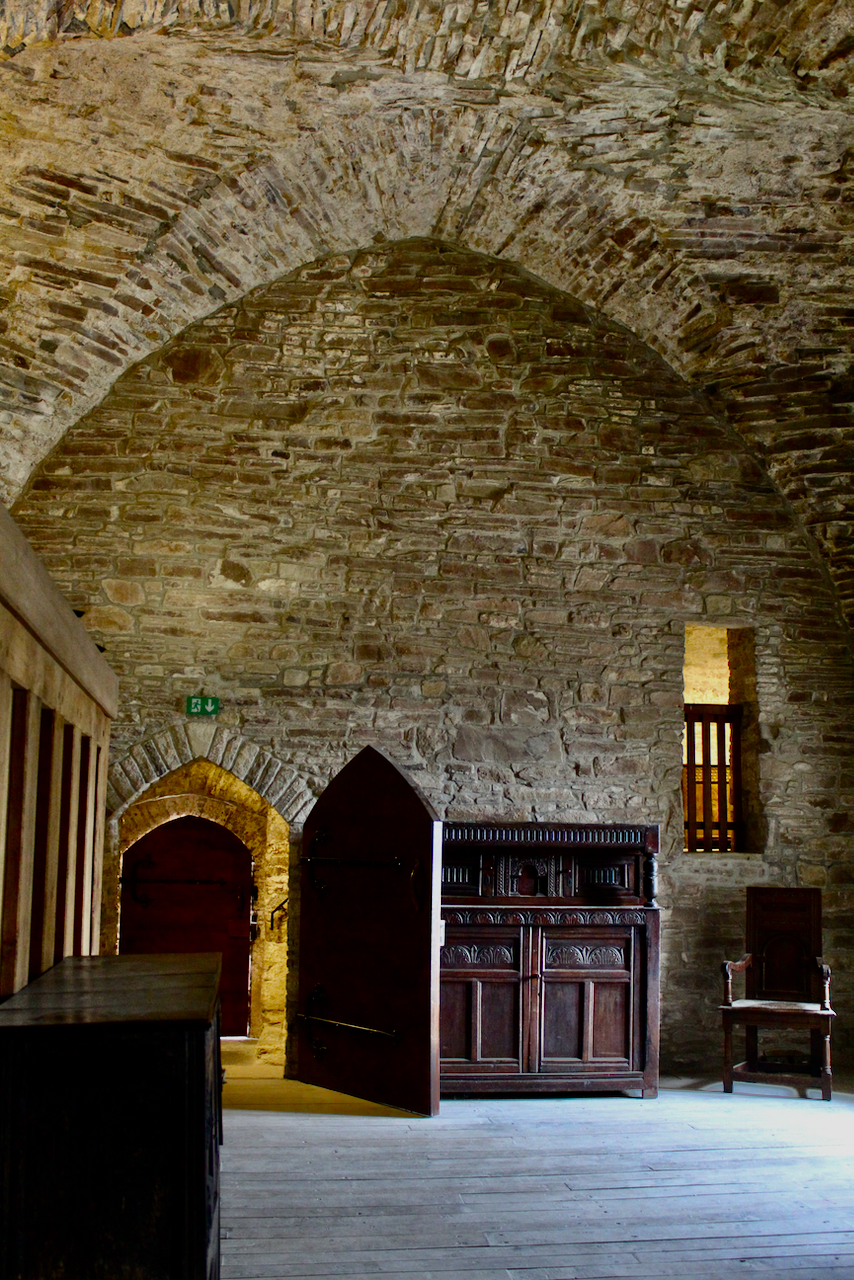
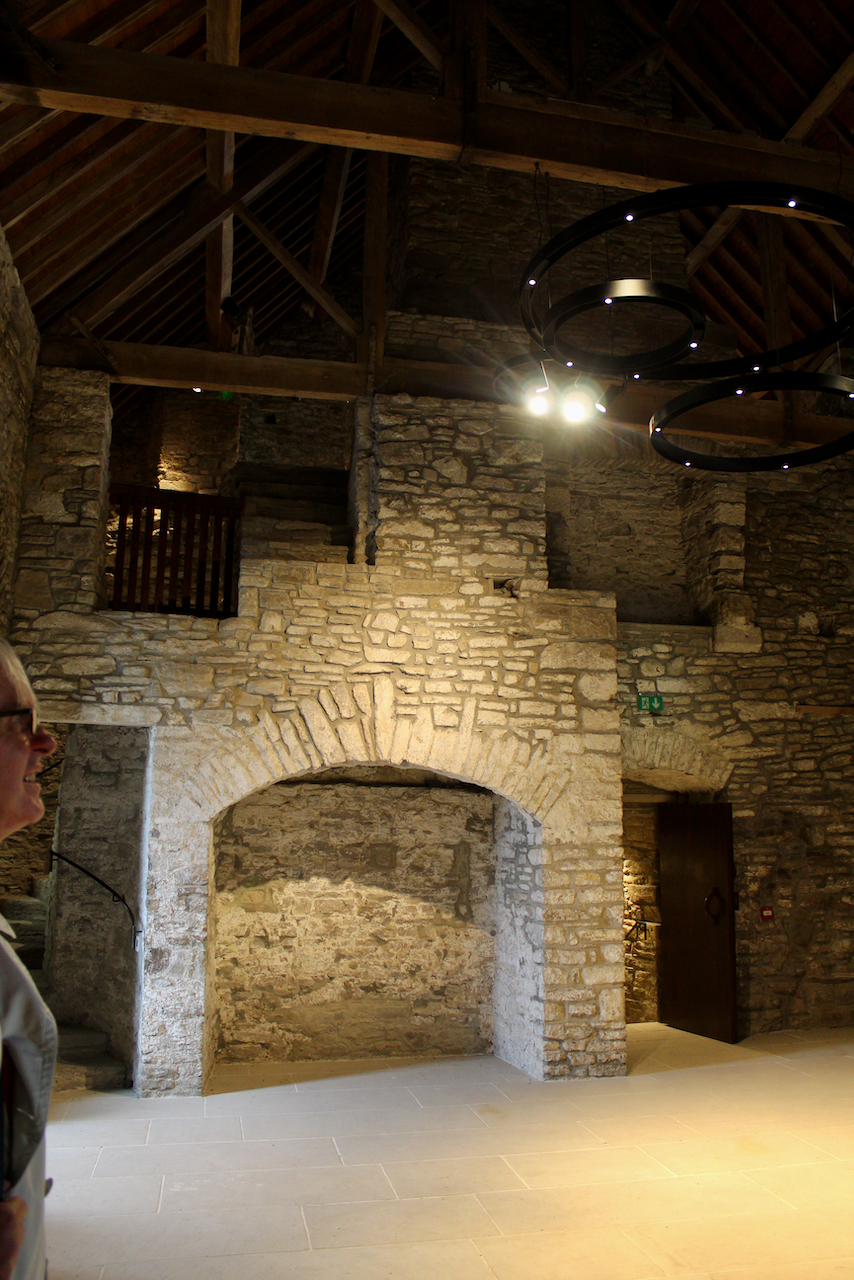
The floor above the banquet room has three fireplaces. The large room was probably partitioned.

Inside Roscrea Castle, August 2024. Photograph © Jennifer Winder-Baggot, www.irishhistorichouses.com

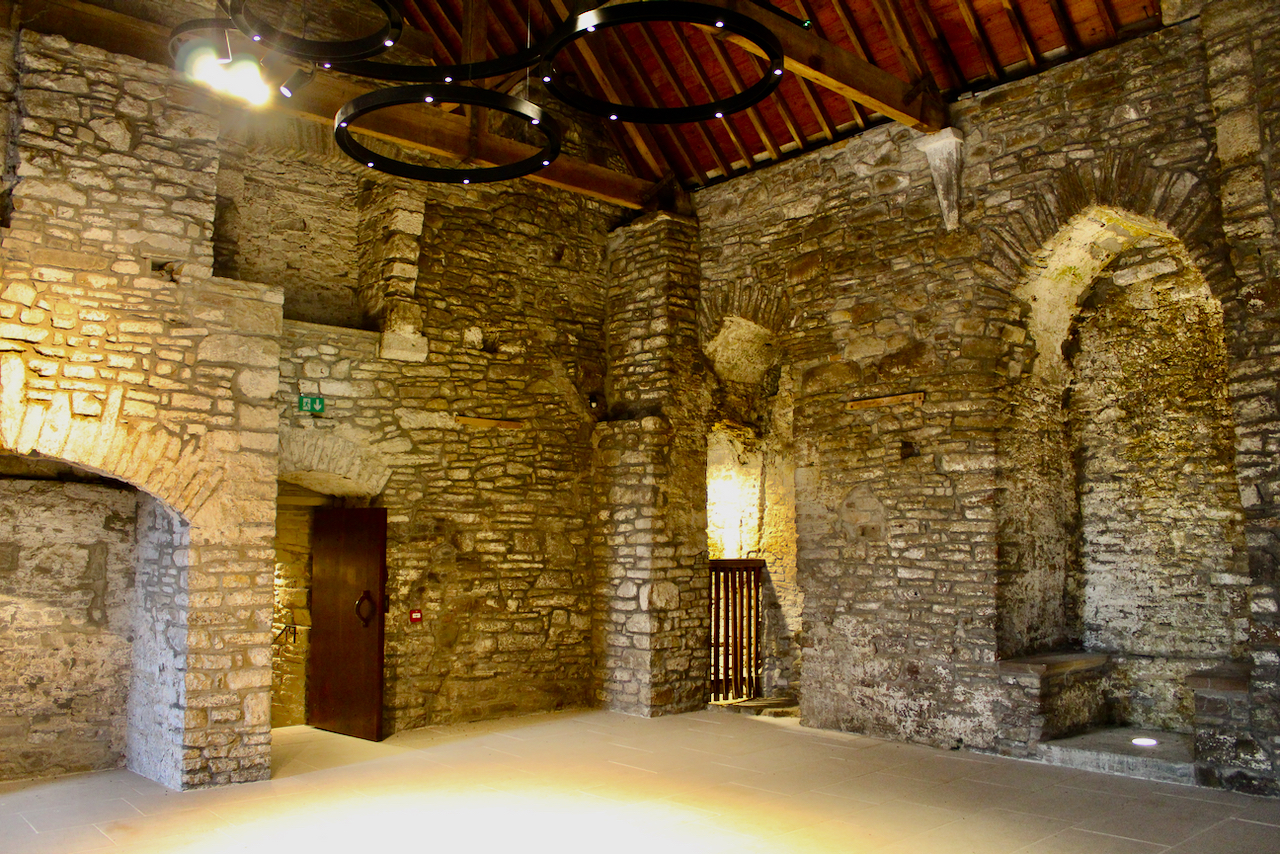
There’s a minstrils’ gallery. Minstrils were of the lower class and were kept away from aristocratic guests to prevent spreading any infection.

Roscrea Castle, August 2024. Photograph © Jennifer Winder-Baggot, www.irishhistorichouses.com
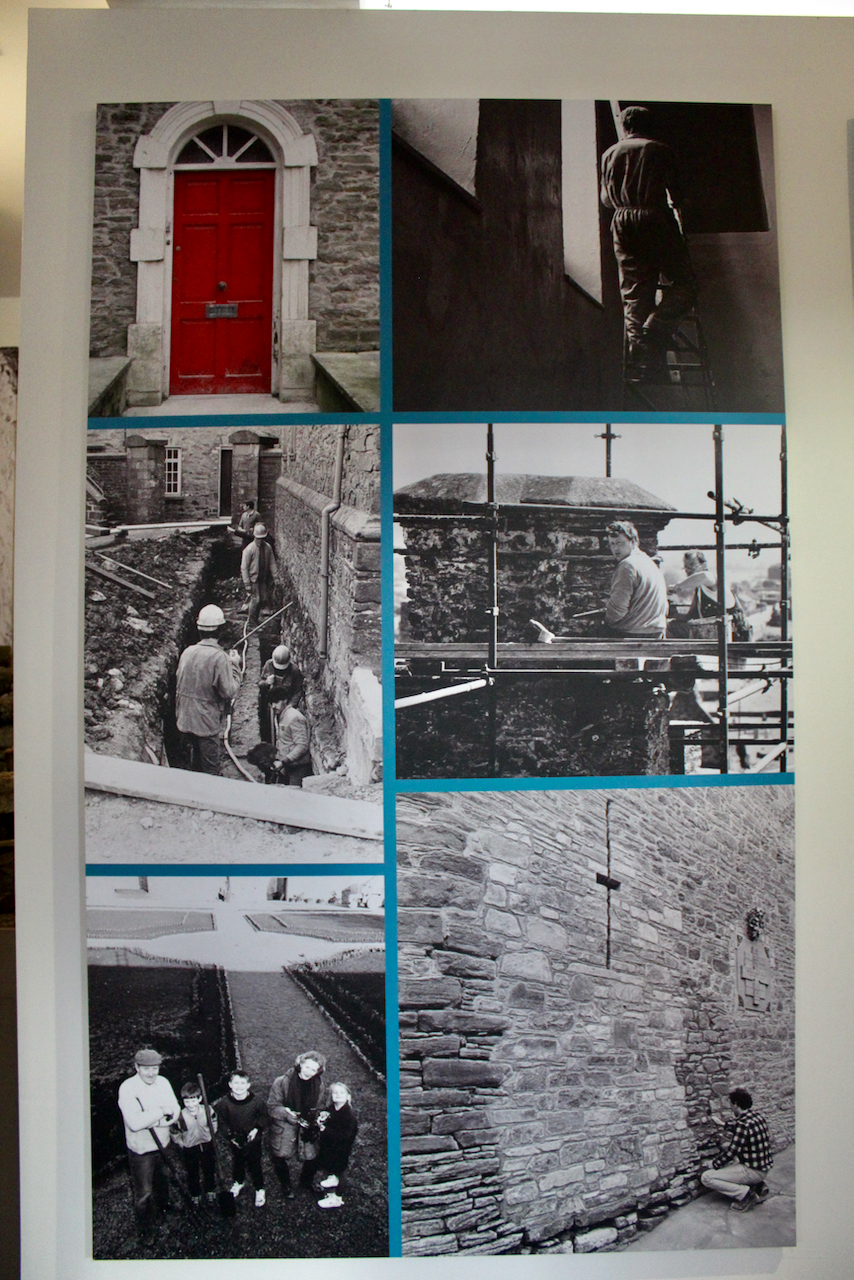
Exhibition panel at Damer House.
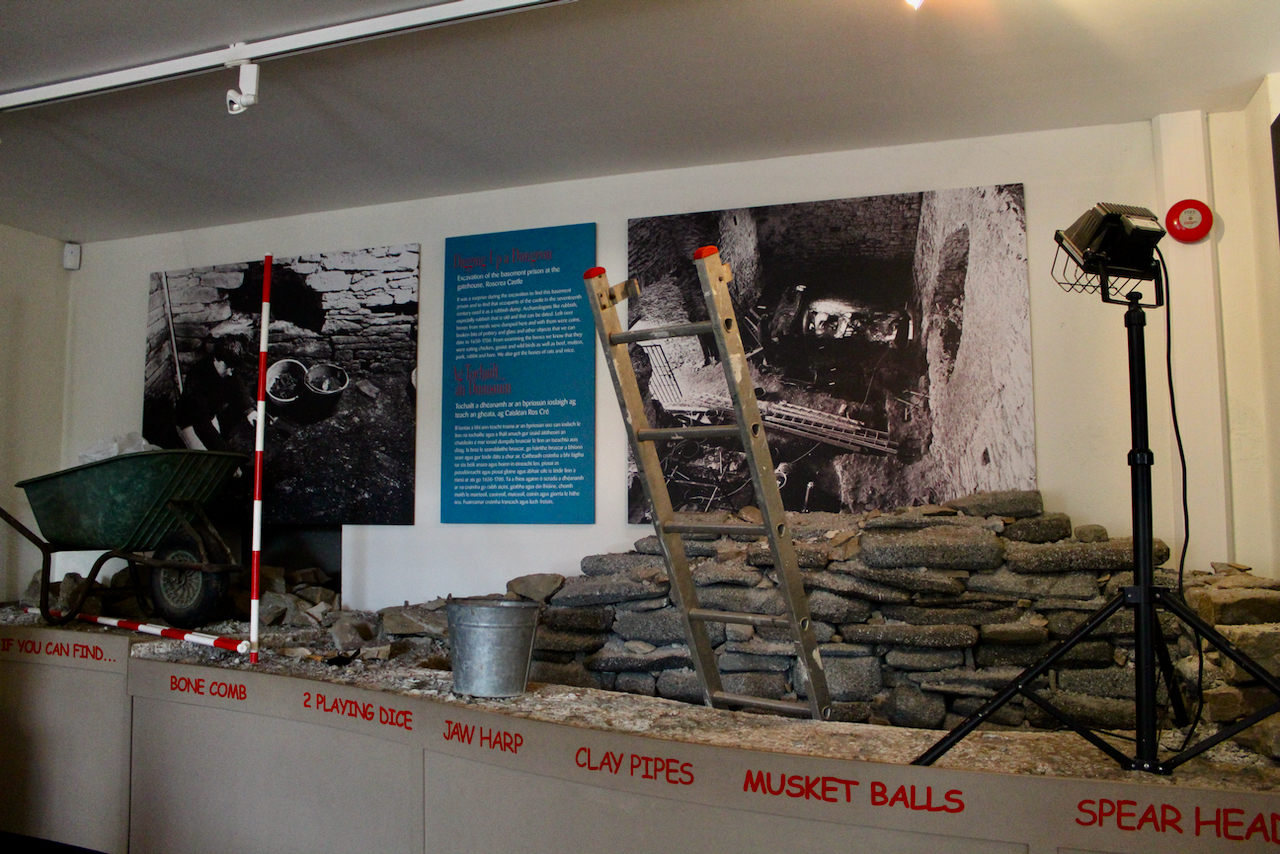
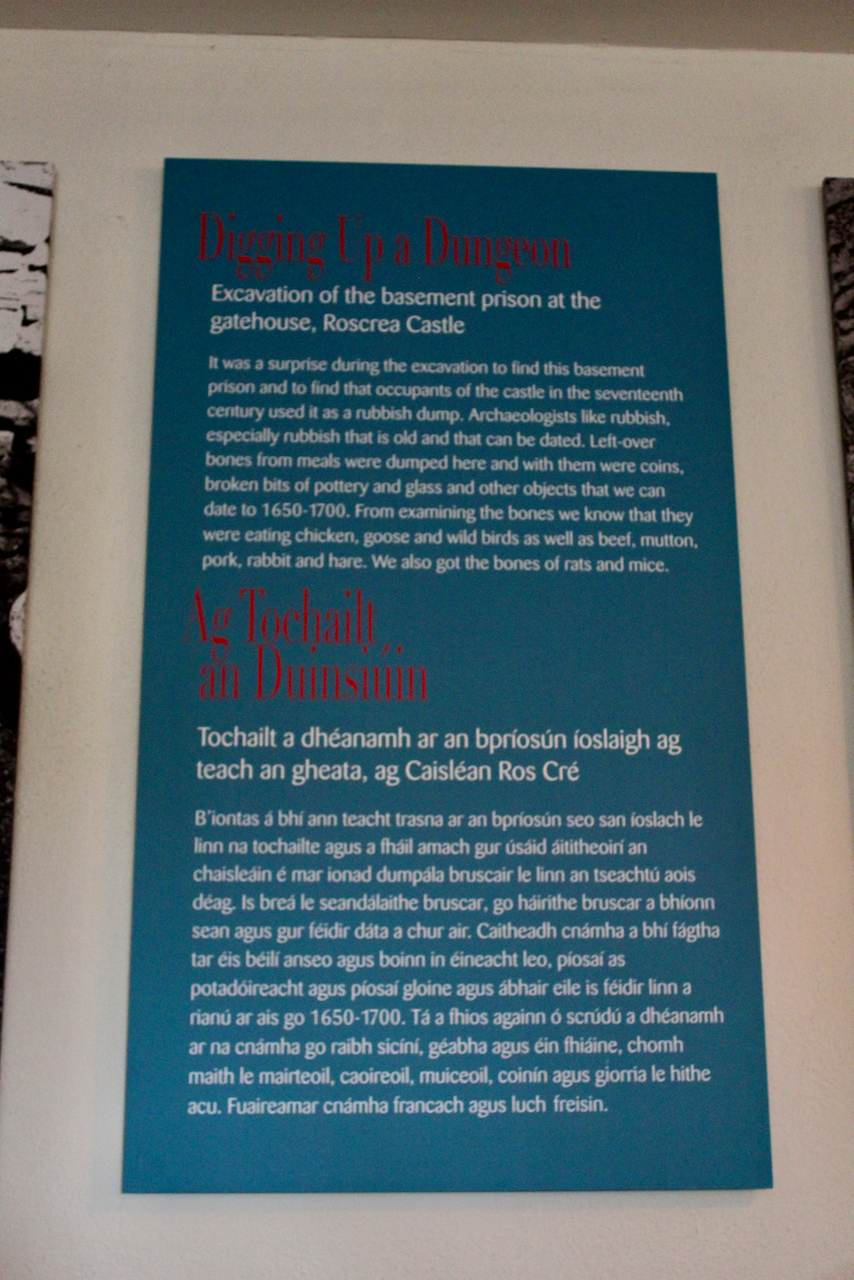
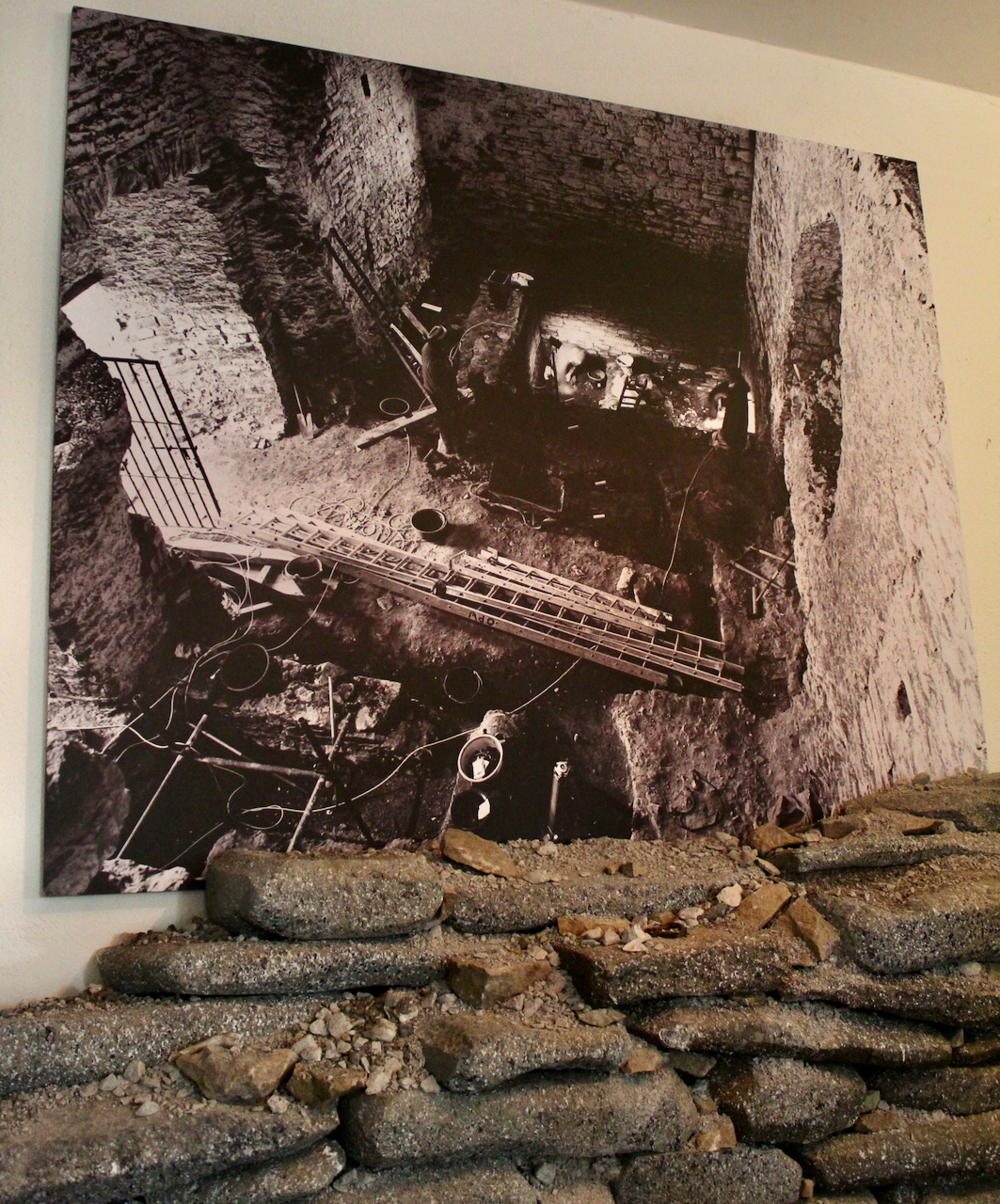
Exhibition panel at Damer House about excavation.

After our tour of the castle we had a little time to explore the gardens.

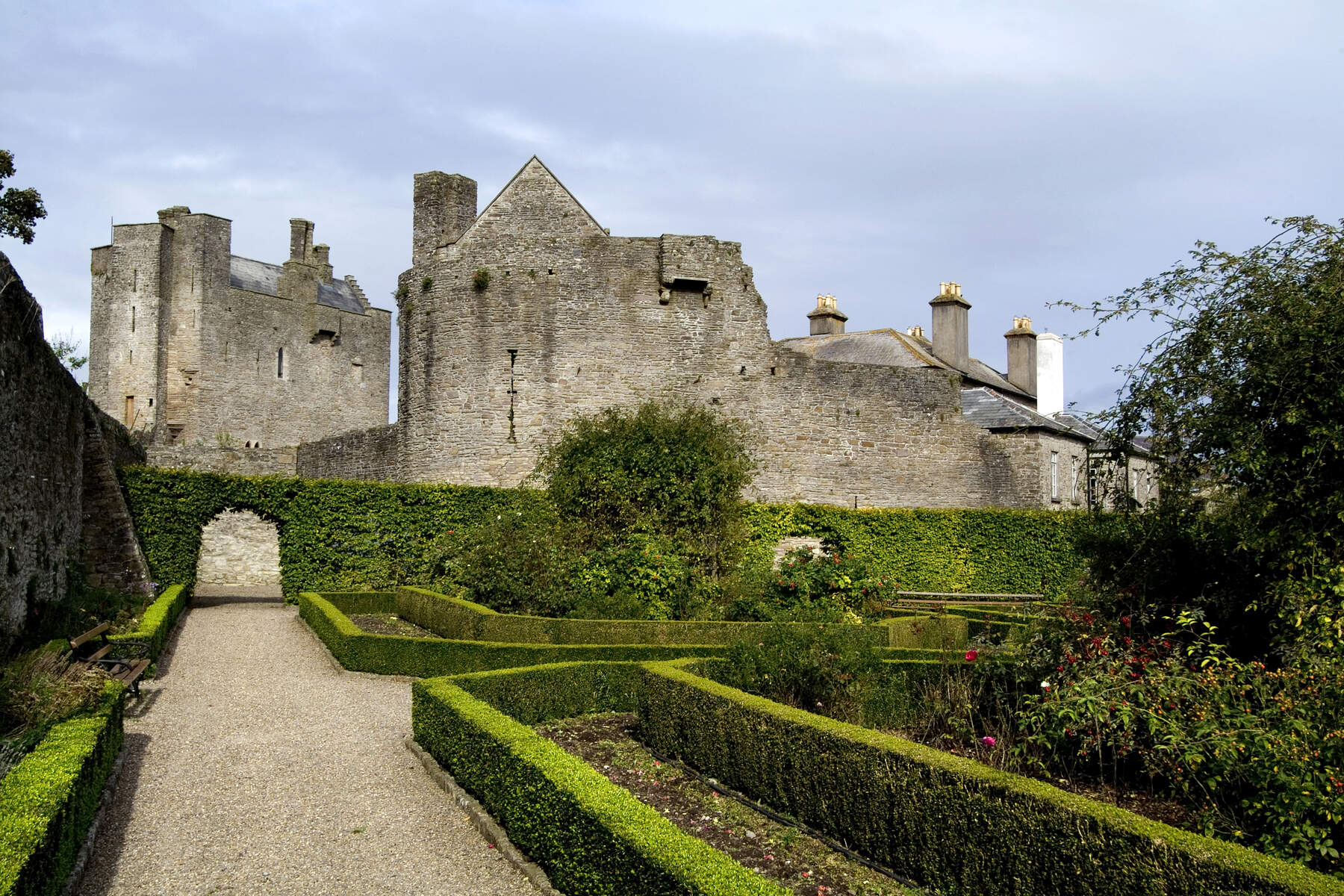
Roscrea Castle, photograph from Ireland’s Content pool, by Chris Hill 2014 for Failte Ireland.
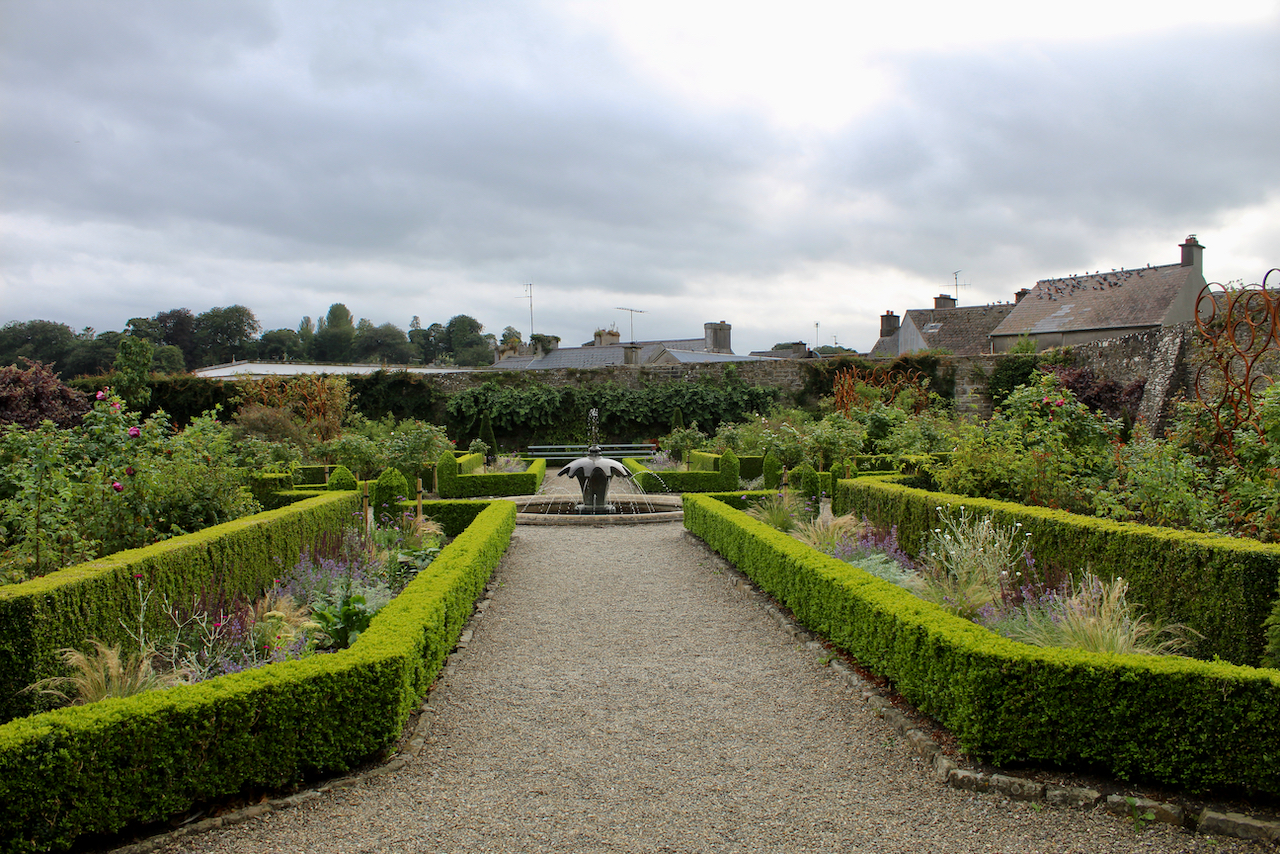
Gardens at Roscrea Castle, August 2024. Photograph © Jennifer Winder-Baggot, www.irishhistorichouses.com
Exhibition panel at Damer House.
The back of buildings at Roscrea Castle, August 2024. Photograph © Jennifer Winder-Baggot, www.irishhistorichouses.com

[1] https://www.irelandscontentpool.com/en

[2] See the blog of Patrick Comerford, http://www.patrickcomerford.com/search/label/castles?updated-max=2019-03-03T14:30:00Z&max-results=20&start=27&by-date=false

[3] https://www.dib.ie/biography/damer-joseph-a2390

[4] Hayes, William and Art Kavanagh, The Tipperary Gentry volume 1 published by Irish Family Names, c/o Eneclann, Unit 1, The Trinity Enterprise Centre, Pearse Street, Dublin 2, 2003.

[5] https://theirishaesthete.com/2013/09/23/bon-anniversaire/ and see my write-up about Emo Court, in OPW properties in Leinster: Laois.

[6] https://theirishaesthete.com/tag/damer-house/

[7] http://www.cahirhistoricalsociety.com/articles/cahirhistory.html

Office of Public Works properties in County Tipperary

I had initially published the County Tipperary OPW sites along with Munster counties of Clare and Limerick but the entry is too long so I am dividing it.

OPW sites in County Tipperary:

1. Cahir Castle, County Tipperary

2. Damer House and Roscrea Castle, County Tipperary

3. Famine Warhouse 1848, County Tipperary

4. Holycross Abbey, County Tipperary – must prebook for tour

5. The Main Guard, County Tipperary – closed at present

6. Nenagh Castle, County Tipperary

7. Ormond Castle, Carrick-on-Suir, County Tipperary

8. Rock of Cashel, County Tipperary

see 2. Roscrea Castle and Damer House, County Tipperary

9. Swiss Cottage, County Tipperary

donation

Help me to pay the entrance fee to one of the houses on this website. This site is created purely out of love for the subject and I receive no payment so any donation is appreciated!

€15.00

Photograph © Jennifer Winder-Baggot, www.irishhistorichouses.com

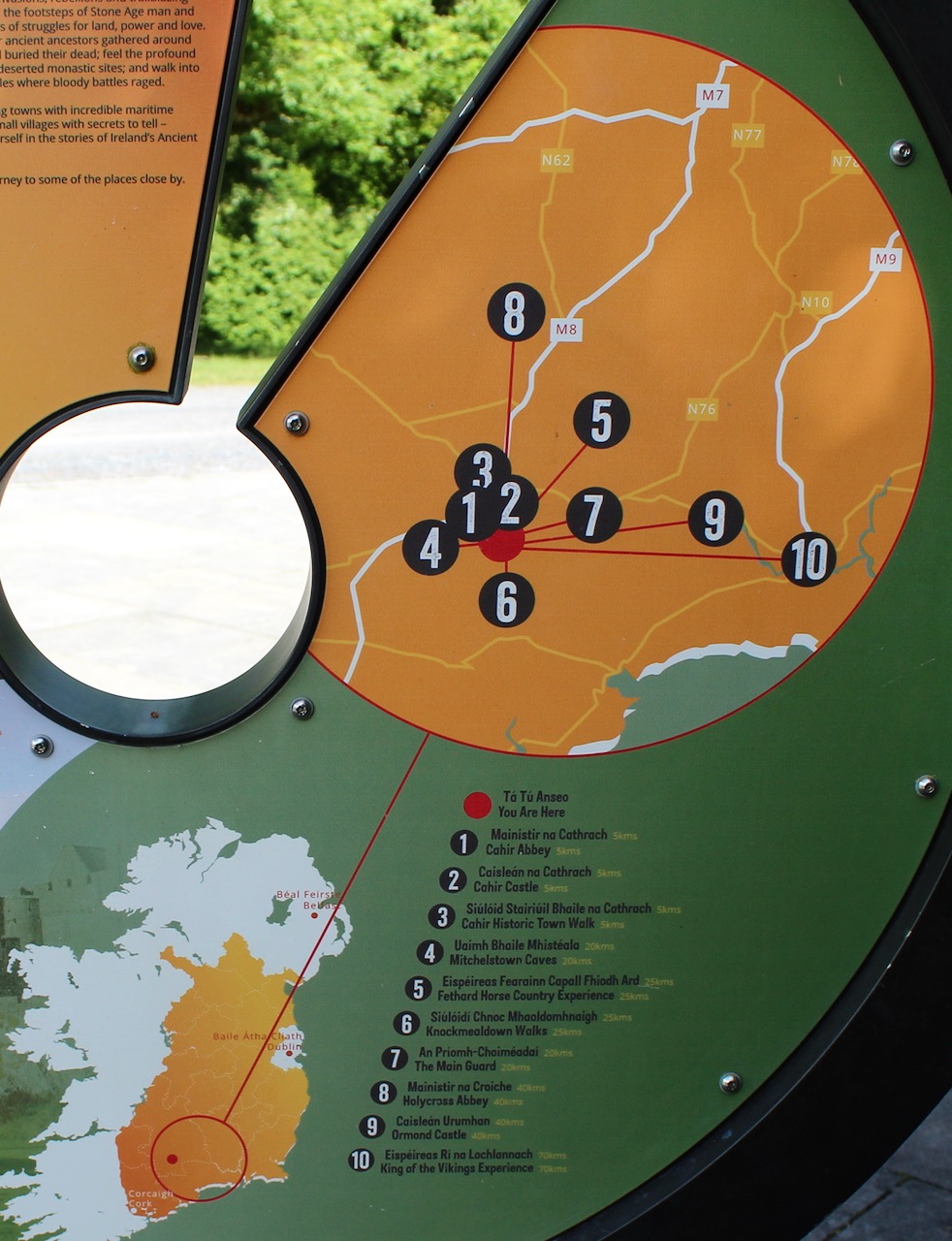
1. Cahir Castle, County Tipperary:

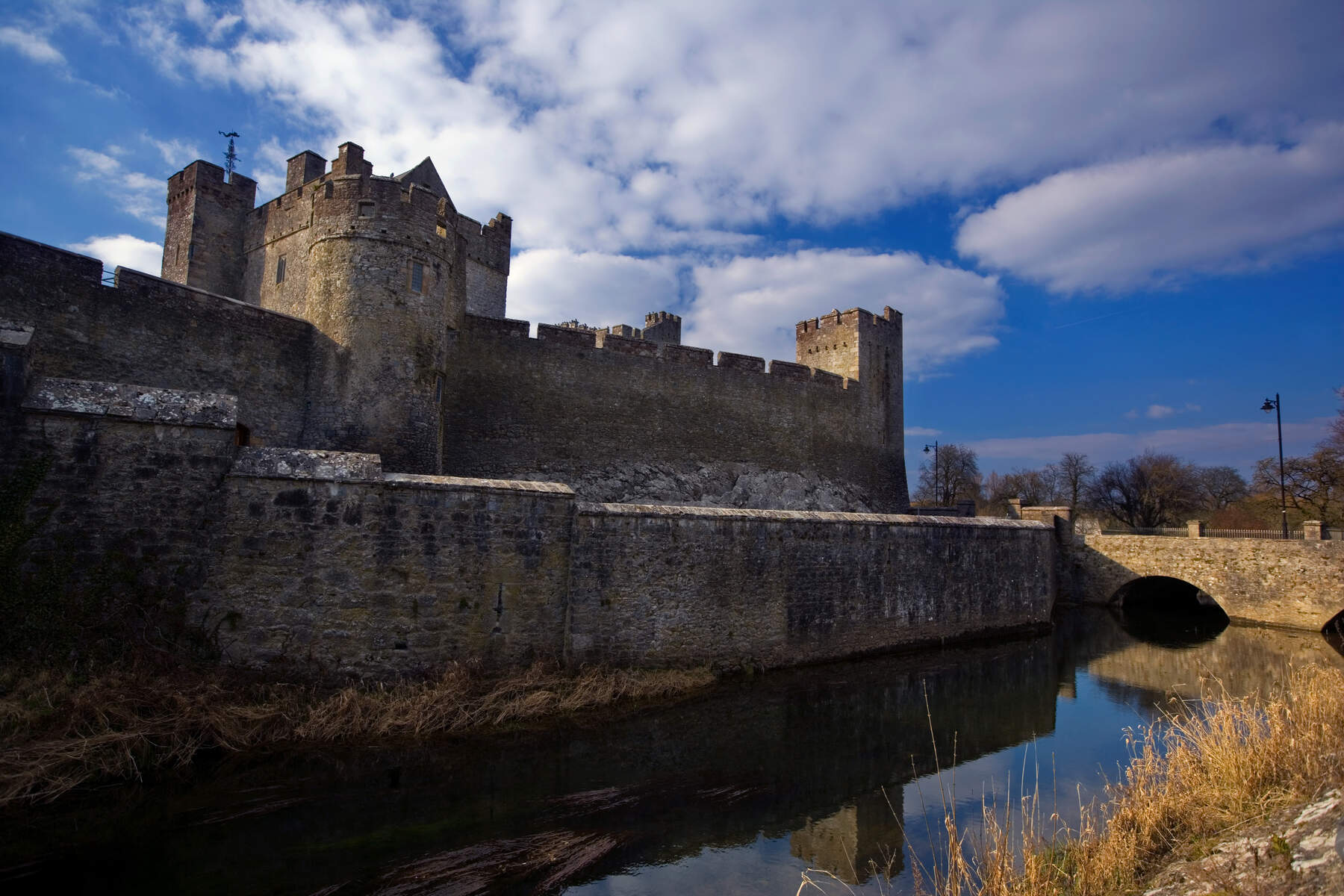
Cahir Castle, photograph from Ireland’s Content pool, by Brian Morrison 2014 for Failte Ireland. [see 1]
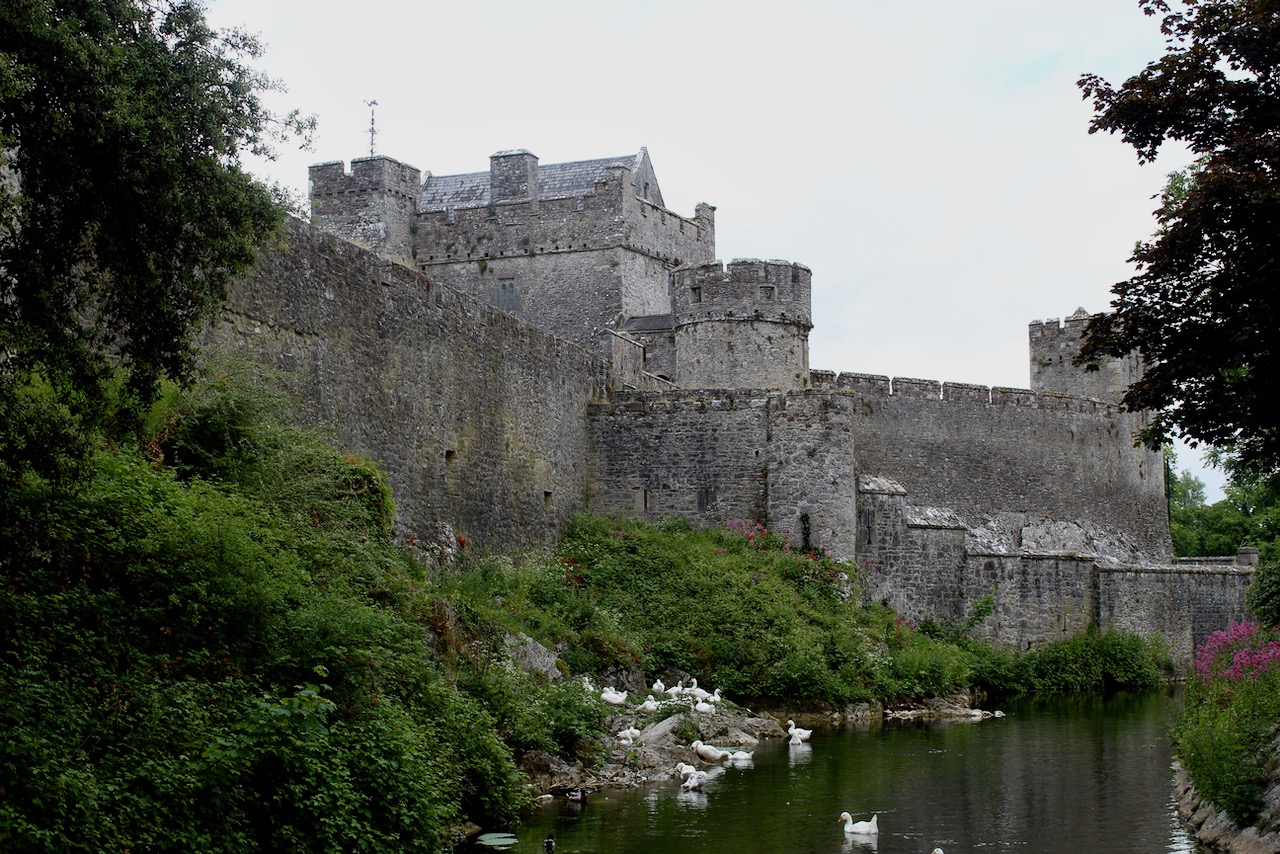
Cahir Castle, June 2022. The geese are particularly picturesque! The outer walls are called the Barbican. When breached, the attacking force gains entry to this area and are vulnerable to missiles fired by defenders and it would be difficult to retreat, due to the enclosed nature of the barbican. Photograph © Jennifer Winder-Baggot, www.irishhistorichouses.com

General information: 052 744 1011, cahircastle@opw.ie

Stephen and I visited Cahir Castle in June 2022, and I was very impressed. I had no idea that we have such an old castle in Ireland with so much intact. See my entry https://irishhistorichouses.com/2024/03/29/cahir-castle-county-tipperary-an-office-of-public-works-property/

From the OPW website https://heritageireland.ie/visit/places-to-visit/cahir-castle/:

Cahir Castle is one of Ireland’s largest and best-preserved castles. It stands proudly on a rocky island on the River Suir.

The castle was was built in the thirteenth century and served as the stronghold of the powerful Butler family. [The Archiseek website tells us it was built in 1142 by Conor O’Brien, Prince of Thomond] So effective was its design that it was believed to be impregnable, but it finally fell to the earl of Essex in 1599 when heavy artillery was used against it for the first time. During the Irish Confederate Wars it was besieged twice more.

At the time of building, Cahir Castle was at the cutting edge of defensive castle design and much of the original structure remains.

Our tour guide took us through the outside of the castle, showing us its defenses. Our tour ended inside the Great Hall, or dining hall.

The Great Hall, with giant Irish elk antlers. The fireplace is not genuine – it is made of papier mache and was installed for the filming of a movie. Photograph © Jennifer Winder-Baggot, www.irishhistorichouses.com

2. Damer House and Roscrea Castle, County Tipperary

https://heritageireland.ie/places-to-visit/roscrea-castle-gardens-damer-house-black-mills/

In the heart of Roscrea in County Tipperary, one of the oldest towns in Ireland, you will find a magnificent stone motte castle dating from the 1280s. It was used as a barracks from 1798, housing 350 soldiers, and later served as a school, a library and even a sanatorium.

Sharing the castle grounds is Damer House, named for local merchant John Damer, who came into possession of the castle in the eighteenth century. The house is a handsome example of pre-Palladian architecture. It has nine beautiful bay windows. One of the rooms has been furnished in period style.

The grounds also include an impressive garden with a fountain, which makes Roscrea Castle a very pleasant destination for a day out. There is also a restored mill displaying St Crónán’s high cross and pillar stone.” See my entry https://irishhistorichouses.com/2024/10/03/damer-house-and-roscrea-castle-county-tipperary-office-of-public-works-properties/

3. Famine Warhouse 1848, Ballingarry, County Tipperary:

General information: 087 908 9972, info@heritageireland.ie

From the OPW website https://heritageireland.ie/visit/places-to-visit/famine-warhouse-1848/:

How did an ordinary farmhouse near Ballingarry, County Tipperary, become the site of a bloody siege and a monument of the Young Irelander Rebellion of 1848?

It was here that rebels, under the leadership of Protestant aristocrat William Smith O’Brien, besieged 47 police officers who had barricaded themselves into the McCormack homestead, taking 5 children hostage. After two of their number were killed, the rebels finally gave in. They were later transported to penal colonies abroad.

The Warhouse, as it became known, is now a museum. Its contents illuminate the history of the Young Irelander Rebellion, the trials of its leaders, their exile in Australia and escape to the USA. The exhibition places the rebellion in the context of the Great Famine and the upheaval that rocked Europe during that turbulent year.

Traditionally it was known as Ballingarry Warhouse or The Widow McCormack’s House.

4. Holycross Abbey, County Tipperary:

Holycross Abbey, photograph from Ireland’s Content pool, by Liam Murphy 2016 for Failte Ireland [see 1]

From the OPW website https://heritageireland.ie/visit/places-to-visit/holycross-abbey/:

As destination for pilgrims, Holy Cross Abbey, near Thurles, County Tipperary, has a rich history. Pilgrims travelled here for eight centuries to venerate the relic after which the abbey and surrounding villages are named – a piece of the True Cross of Christ’s crucifixion.

Today this working parish church is a peaceful landmark and a place for quiet contemplation and historical discovery. As well as inspecting the relic of the cross, you can marvel at the building’s ornate stonework. The chancel is possibly the finest piece of fifteenth-century architecture in the country. The abbey also houses one of the only surviving medieval wall paintings in Ireland.

5. The Main Guard, Sarsfield Street, Clonmel, County Tipperary:

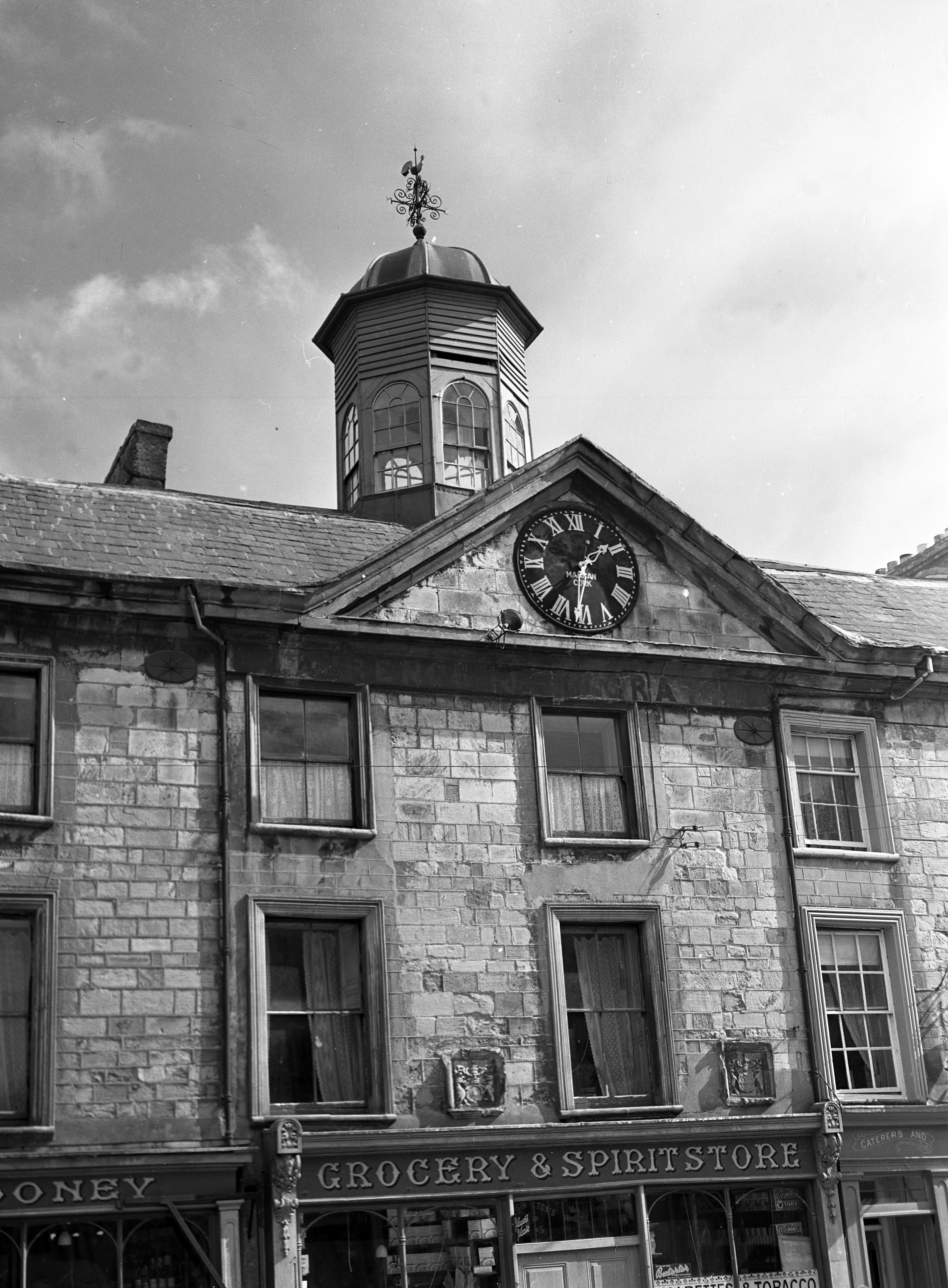
The Main Guard, or Clonmel Courthouse, County Tipperary. Photograph from National Inventory of Architectural Heritage: five-bay two-storey courthouse and market house, built 1673, with arcaded ground floor to front and north gable, and pediment and cupola to roof. Until restored c.2000, building had been five-bay three-storey with triple public house front to ground floor, and timber sliding sash windows. Now in use as museum. The columns of the arcaded facades were recycled from the ruins of the Cistercian abbey of Inislounaght, to the west of the town and retain some decorative elements that testify to this fact. 

General Information: 052 612 7484, mainguard@opw.ie

From the OPW website https://heritageireland.ie/visit/places-to-visit/the-main-guard/:

In the seventeenth century County Tipperary was a palatinate, ruled by James Butler, duke of Ormond. When the duke decided he needed a new courthouse, he built one in the heart of Clonmel [built in 1673]. Later, when it was used as a barracks, it became known as the Main Guard.

A fine two-storey symmetrical building, some elements of its design were based on works by the famous Sir Christopher Wren.

In the eighteenth century it was the venue for the Clonmel Assizes. The most notable trial it witnessed was that of Father Nicholas Sheehy, the anti-Penal Laws agitator. Sheehy was hanged, drawn and quartered.

In about 1810, the ground floor was converted into shops, but the building has recently undergone an award-winning restoration. The open arcade of sandstone columns is once again an attractive feature of the streetscape, while inside you will find a fantastic exhibition and event space.

Main Guard, 1948, photograph from Dublin City Library and Archives. [2]

6. Nenagh Castle, County Tipperary

Nenagh Castle, photograph by Brian Morrison, 2017, for Tourism Ireland, Ireland’s Content Pool. [see 1]

General information: 067 33850, castlenenagh@gmail.com

The OPW doesn’t seem to have a site for this currently, but there is information at a site about Nenagh:

Nenagh Castle was built by Theobald Walter (the first of the Butlers of Ormond) around 1200. To this day the cylindrical keep adorns the town and like most keeps it formed part of the perimeter of the fortress. The walls have now almost disappeared, but fragments remain. 

Built from limestone Nenagh Castle measures fifty-five feet in external diameter at the base and rises to a height of one hundred feet. The Castle features four storeys and thanks to a recent renovation this wonderful landmark now represents the town’s premier tourist attraction.

The building and has stone spiral stairs to the top. There are 101 steps in all to the top.  Access to the tower is through a passageway within the base of the wall.  This has low head room and visitors will need to stoop to avoid hitting the stone above. All children under the age of 18 must be accompanied by an adult. [3]

Nenagh Castle, photograph by Brian Morrison, 2017, for Tourism Ireland, Ireland’s Content Pool. [see 1]

7. Ormond Castle, Carrick-on-Suir, County Tipperary:

Ormond Castle, Carrick-on-Suir, County Tipperary, May 2018. Maurice Craig tells us in The Architecture of Ireland from the earliest times to 1880 that in style Carrick-on-Suir is like hundreds of buildings in Northamptonshire or the Cotswolds, but like no other in Ireland. Photograph © Jennifer Winder-Baggot, www.irishhistorichouses.com

See my entry https://irishhistorichouses.com/2024/09/05/ormond-castle-carrick-on-suir-county-tipperary-an-opw-property/

General Information: 051 640787, ormondcastle@opw.ie

From the OPW website https://heritageireland.ie/visit/places-to-visit/ormond-castle/:

Joined on to an earlier medieval riverside castle, Ormond Castle Carrick-on-Suir is the finest example of an Elizabethan manor house in Ireland. Thomas, 10th Earl of Ormond [“Black Tom” (1531-1614)], built it in 1565 in honour of his distant cousin Queen Elizabeth. 

The magnificent great hall, which stretches almost the whole length of the building is decorated with some of the finest stucco plasterwork in the country. The plasterwork features portraits of Queen Elizabeth and her brother Edward VI and many motifs and emblems associated with the Tudor monarchy.

Ormond Castle, Carrick-on-Suir 1949, photograph from Dublin City Library and Archive. [see 2]

James Butler the 12th Earl of Ormond and 1st Duke of Ormond (1610-1688) spent much of his time here and was the last of the family to reside at the castle. On his death in 1688 the family abandoned the property and it was only handed over to the government in 1947, who then became responsible for its restoration. 

7. Rock of Cashel, County Tipperary:

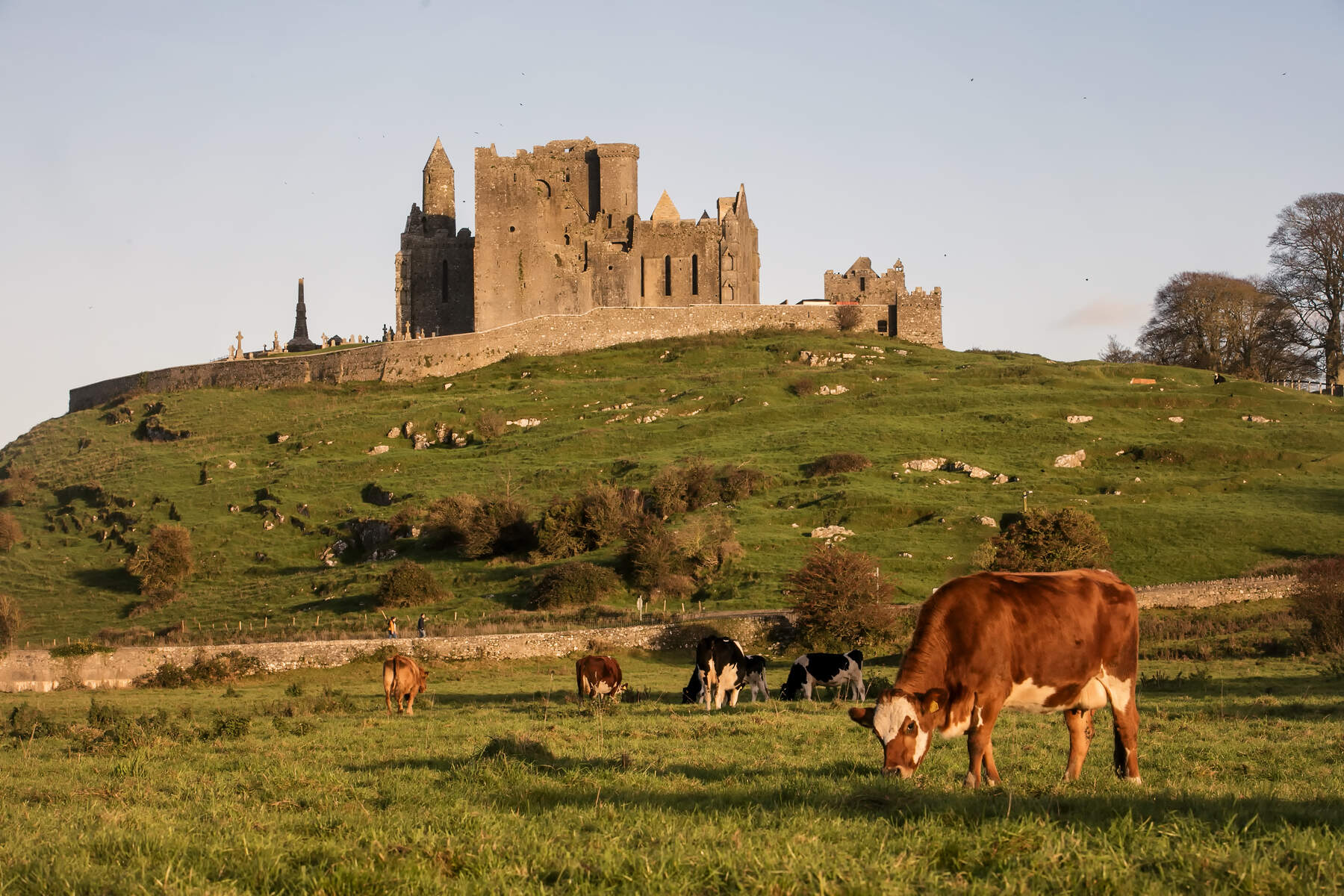
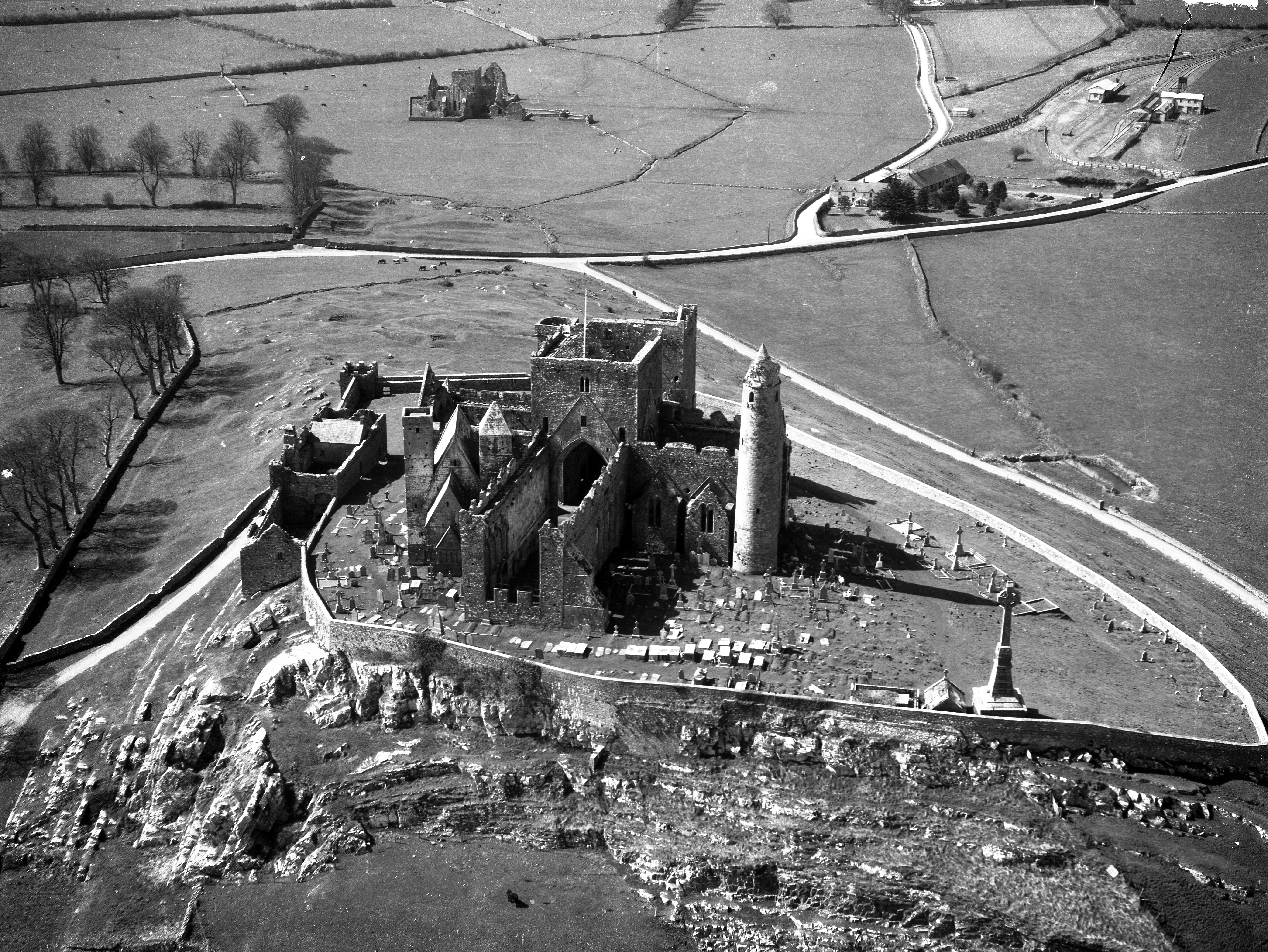
Rock of Cashel, Co Tipperary photograph from Ireland’s Content pool, by Brian Morrison 2018 for Failte Ireland. [see 1]

General Information: 062 61437, rockofcashel@opw.ie

From the OPW website https://heritageireland.ie/visit/places-to-visit/rock-of-cashel/:

Set on a dramatic outcrop of limestone in the Golden Vale, the Rock of Cashel, iconic in its historic significance, possesses the most impressive cluster of medieval buildings in Ireland. Among the monuments to be found there is a round tower, a high cross, a Romanesque chapel, a Gothic cathedral, an abbey, the Hall of the Vicars Choral and a fifteenth-century Tower House.

Originally the seat of the kings of Munster, according to legend St. Patrick himself came here to convert King Aenghus to Christianity. Brian Boru was crowned High King at Cashel in 978 and made it his capital.

In 1101 the site was granted to the church and Cashel swiftly rose to prominence as one of the most significant centres of ecclesiastical power in the country.

The surviving buildings are remarkable. Cormac’s Chapel, for example, contains the only surviving Romanesque frescoes in Ireland.

Rock of Cashel, 1955, from Dublin City Library and Archives [see 2].
Rock of Cashel ca. 1901, photograph from National Library of Ireland Flickr constant commons.

8. Roscrea Castle and Damer House, County Tipperary:

Roscrea Castle, photograph from Ireland’s Content pool, by Chris Hill 2014 for Failte Ireland. [see 1]

General information: 0505 21850, roscreaheritage@opw.ie

From the OPW website https://heritageireland.ie/visit/places-to-visit/roscrea-heritage-centre-roscrea-castle-and-damer-house/:

In the heart of Roscrea in County Tipperary, one of the oldest towns in Ireland, you will find a magnificent stone motte castle dating from the 1280s. It was used as a barracks from 1798, housing 350 soldiers, and later served as a school, a library and even a sanatorium. 

Sharing the castle grounds is Damer House, named for local merchant John Damer, who came into possession of the castle in the eighteenth century. The house is a handsome example of pre-Palladian architecture. It has nine beautiful bay windows. One of the rooms has been furnished in period style.

The grounds also include an impressive garden with a fountain, which makes Roscrea Castle a very pleasant destination for a day out. There is also a restored mill displaying St Crónán’s high cross and pillar stone.

See my entry https://irishhistorichouses.com/2024/10/03/damer-house-and-roscrea-castle-county-tipperary-office-of-public-works-properties/

This was originally the site of a motte and bailey fortification known as King John’s Castle. The original wooden castle was destroyed in the late 13th century and was replaced with a stone structure built in 1274-1295 by John de Lydyard. The castle was originally surrounded by a river to the east and a moat on the other sides. [4] It was granted to the Butlers of Ormond in 1315 who held it until the early 18th Century. The castle as we see it today was built from 1332.

The castle was used as a barracks from 1798, housing 350 soldiers. It was used later as a school, a library, and a tuberculosis sanatorium. Roscrea Castle fell into disrepair in the 19th century, and when the roof collapsed extensive repairs were needed in the 1850s. It was named a national monument in 1892, and is now under the care of the OPW. 
Damer House is of three storeys and nine bays and has a scroll pediment doorway and inside, a magnificent carved staircase. The Irish Georgian Society was involved in saving it from demolition in the 1960s.

9. Swiss Cottage, Ardfinnan Road, Cahir, County Tipperary:

General Information: 052 744 1144, swisscottage@opw.ie

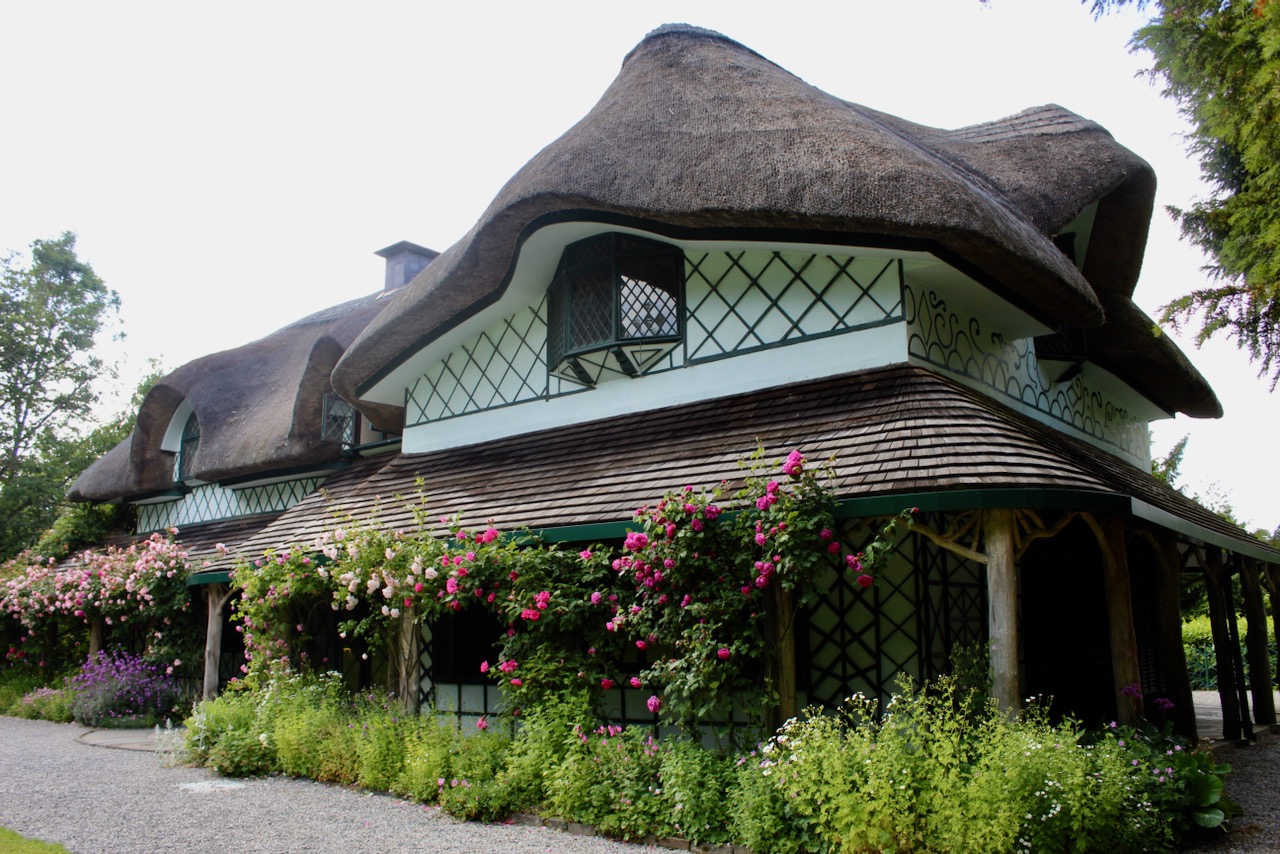
Swiss Cottage, June 2022. Photograph © Jennifer Winder-Baggot, www.irishhistorichouses.com

From the OPW website https://heritageireland.ie/visit/places-to-visit/swiss-cottage/:

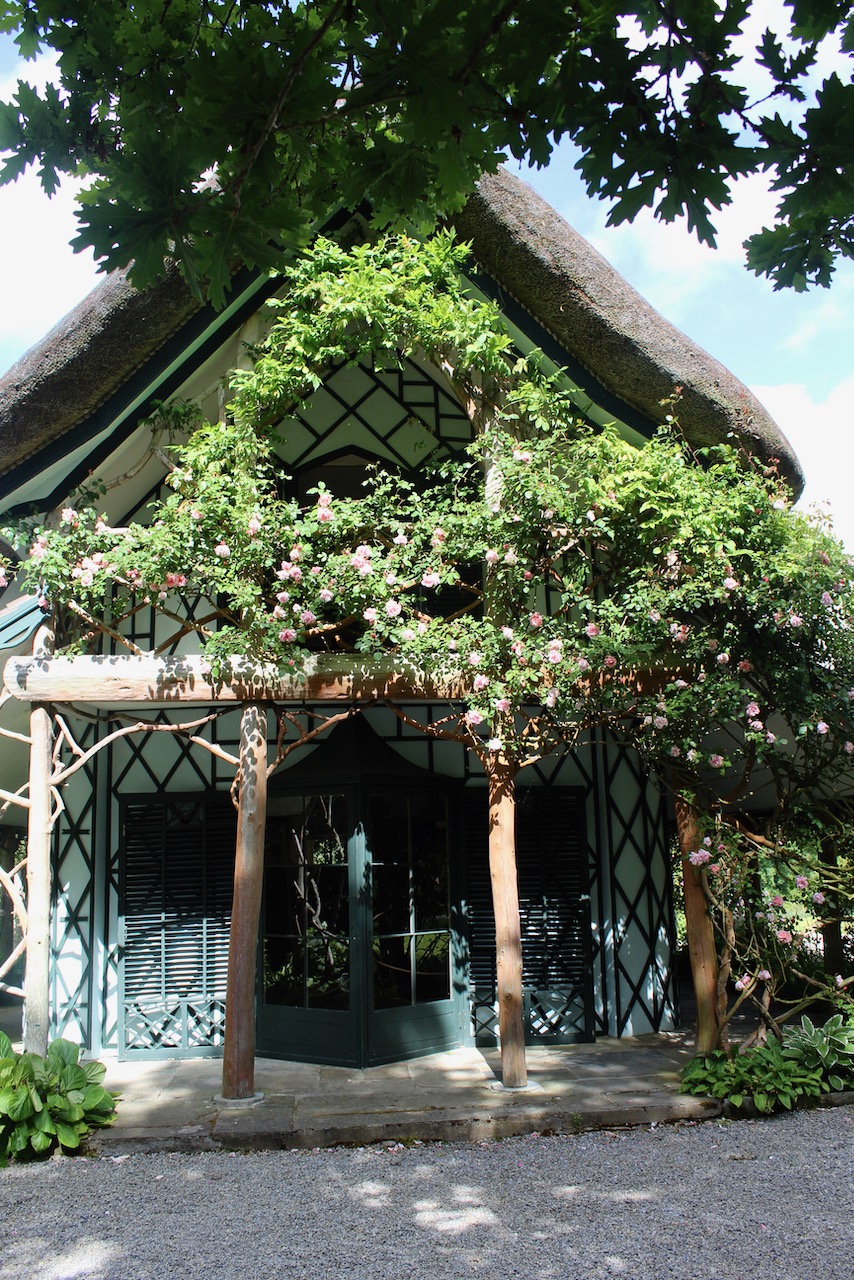
The Swiss Cottage, just outside the heritage town of Cahir, is a cottage orné – a fanciful realisation of an idealised countryside cottage used for picnics, small soirees and fishing and hunting parties and was also a peaceful retreat for those who lived in the nearby big house.

Built in the early 1800s [around 1810] by Richard Butler, 1st Earl of Glengall, who, we believe, managed to persuade world-famous Regency architect John Nash to design it [he also designed Buckingham Palace for the Crown]. Originally, simply known as “The Cottage” it appears to have acquired its present name because it was thought to resemble an Alpine cottage.”

See my write-up https://irishhistorichouses.com/2025/03/20/swiss-cottage-ardfinnan-road-cahir-county-tipperary-office-of-public-works/

Timber rustic oak posts with triangular arch detailing between posts to verandahs and to bowed bay, having latticework rail to balcony. Photograph © Jennifer Winder-Baggot, www.irishhistorichouses.com
Photograph © Jennifer Winder-Baggot, www.irishhistorichouses.com

[1] https://www.irelandscontentpool.com/en

[2] https://repository.dri.ie/

[3] https://www.nenagh.ie/places-of-interest/details/nenagh-castle

[4] See the blog of Patrick Comerford, http://www.patrickcomerford.com/search/label/castles?updated-max=2019-03-03T14:30:00Z&max-results=20&start=27&by-date=false

[5] https://www.buildingsofireland.ie/buildings-search/building/22208107/swiss-cottage-kilcommon-more-north-tipperary-south