Kenure Park, Co Dublin – demolished 1978

Kenure Park, Co Dublin – demolished 1978

Kenure House on auction day September 1964, Col. Palmers last day at Kenure before leaving for the last time, courtesy of Kenure Park facebook page.

Bence-Jones, Mark. A Guide to Irish Country Houses (originally published as Burke’s Guide to Country Houses volume 1 Ireland by Burke’s Peerage Ltd. 1978); Revised edition 1988 Constable and Company Ltd, London.  

p. 163. “(Palmer, of Castle Lackin/PB1911; Fenwick-Palmer/LG1965) A large mic-C18 three storey house, grandly refaced 1842 to the design of George Papworth…Sold 1964 by Col R.G. Fenwick-Palmer, demolished except for the portico 1978.” 

Kenure postcard from c1940/50. A great photo of the drive up to the main house and front lawns. Courtesy Kenure Park facebook page.
Kenure Park, County Dublin, entrance c. 1960 Vanishing Country Houses of Ireland by The Knight of Glin, David J. Griffin and Nicholas K. Robinson, published by The Irish Architectural Archive and The Irish Georgian Society, 1988.

Listed in Vanishing Country Houses of Ireland by The Knight of Glin, David J. Griffin and Nicholas K. Robinson, published by The Irish Architectural Archive and The Irish Georgian Society, 1988.

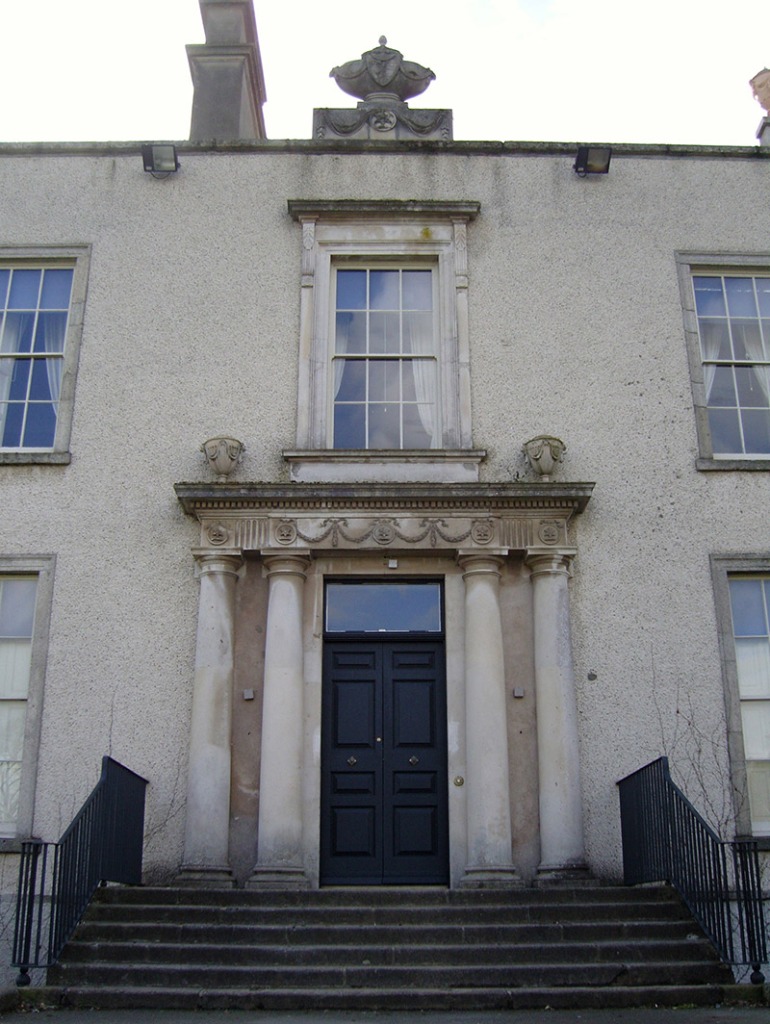
p. 60: “A large early to mid 18C house altered c. 1770 when the two large bowed drawing rooms were created. These rooms had magnificent rococo ceilings and carved doorcases, that on the ground floor having a superb Doric chimneypiece. The house was altered and enlarged again in 1842 for Roger Palmer Bart, to the design of George Papworth. Papworth refaced the house and added the granite Corinthian portico. He also created the entrance hall, the library and the central top-lit staircase hall. Teh hosue was sold in 1964 and became derelict before its demolition in 1978. Samples of the rococo ceilings were saved by the OPW. Only the portico remains.

Courtesy Kenure Park facebook page.
Kenure Park, County Dublin, photograph Courtesy Kenure Park facebook page.

Paddy Rossmore. Photographs. Edited by Robert O’Byrne. The Lilliput Press, Dublin 7, 2019. 

“The lands in this part of the country north of Dublin came into the possession of the Butler familiy in the early fourteenth century, bu tthe first house on this site was only built some four hundred years later by James Butler, second Duke of Ormonde. After the failed Jacobite Rising of 1715 and his voluntary exile to France, the duke’s lands were forfeited and subsequently purchased by Henry Echlin, a lawyer who was created a baronet in 1721. In the second half of the eighteenth century, Kenure came into the possession of the granddaughter Elizabeth, who had married Francis Palmer, originally from County Mayo. It was the third Palmer Bt, Sir William, who owned Kenure in 1827 when it was severly damaged by fire, and who some fifteen years later commissiioned architect George Papworth to refurbish the building. …The last of hte Palmer family to own the house sold the contents in a four day sale in Sept 1964 after which Kenure , acquired by the local authority, sat empty and a prey to vandals until demolished – other than the portico – in 1978.” 

One of the final images of Kenure House intact around 1970. Courtesy Kenure Park facebook page.

In Blake, Tarquin. Abandoned Mansions of Ireland II: More Portraits of Forgotten Stately Homes. Collins Press, Cork, 2012. 

Kenure Park, County Dublin, photograph Courtesy Kenure Park facebook page.
The Kenure Grand staircase of marble, gold plate and mahogany, it disappeared before Dublin City Council announced demolition. Kenure Park, County Dublin, photograph Courtesy Kenure Park facebook page.
Kenure Park, County Dublin, photograph Courtesy Kenure Park facebook page.
Photograph and notes courtesy of facebook page for Kenure Park.
The Grand staircase leading up to the second floor where you can see the doors to Sir Rogers Study and the Red drawing room or picture gallery as it was also known. Courtesy Kenure Park facebook page.
Kenure Park, County Dublin, photograph Courtesy Kenure Park facebook page.
Photograph and notes courtesy of facebook page for Kenure Park.
Kenure Park, County Dublin, photograph Courtesy Kenure Park facebook page.
Photograph and notes courtesy of facebook page for Kenure Park.
The Daly parlour located on the first floor at the front of the house was used mainly for hosting guests at Kenure. Courtesy Kenure Park facebook page.
Courtesy Kenure Park facebook page.
Photograph and notes courtesy of facebook page for Kenure Park.
Courtesy Kenure Park facebook page.
Photograph and notes courtesy of facebook page for Kenure Park.
On the second floor to the back of the house attached to the master bedroom was one of the main dressing rooms seen here. Courtesy Kenure Park facebook page.
The magnificent stained glass ceiling and stunning rococo and palladian plasterwork in ruin after the lead from the roof was stolen. Courtesy Kenure Park facebook page.

http://lordbelmontinnorthernireland.blogspot.com/2013/09/kenure-park.html

THE PALMER BARONETS, OF CASTLE LACKIN, WERE MAJOR LANDOWNERS IN COUNTY MAYO, WITH 80,990 ACRES

THEY OWNED 3,991 ACRES OF LAND IN COUNTY DUBLIN 

ROGER PALMER (alleged to have been the third son of Edward Palmer, of Nayton and Casterton, Norfolk) went over to Ireland and had a grant of Castle Lackin, and many other lands in County Mayo, in 1684. His signature appears to the address from the nobility and gentry of County Mayo to CHARLES II in 1682.

The Palmer family had come to Ireland in 1681 from Norfolk, and had acquired lands in County Mayo, where by the end of the 19th Century, they had amassed 80,000 acres. 

THOMAS PALMER, of Castle Lackin, County Mayo, second son of Roger Palmer, of Palmerstown, in the same county, was succeeded by his eldest son,

ROGER PALMER (1729-90), MP for Jamestown, 1761-8, Portarlington, 1768-83, who was created a baronet in 1777, designated of Castle Lackin.

Sir Roger wedded Miss Andrews, and had issue,

JOHN ROGER, his successor;
WILLIAM HENRY, succeeded his brother;
Sophia.

He was succeeded by his elder son,

SIR JOHN ROGER PALMER, 2nd Baronet, who married Mary, only daughter of the Rev Thomas Althem, and was succeeded at his decease, in 1819, by his brother,

SIR WILLIAM HENRY PALMER, 3rd Baronet, of Castle Lackin, who espoused Alice, daughter of _____ Franklin, and had issue,

WILLIAM HENRY ROGER, his heir;
Francis Roger;
John Roger;
Charlotte Alice; Augusta Sophia; Ellen Ambrosia.

Lady Eleanor Ambrose Palmer Born to Michael Ambrose of swords, a wealthy brewer, Ambrose spent her life campaigning and advocating for justice for her fellow catholic countrymen for crimes against humanity committed upon them by the English Crown. Photograph and notes courtesy of facebook page for Kenure Park.

Sir William died in 1840, and was succeeded by his eldest son,

SIR WILLIAM HENRY ROGER PALMER, 4th Baronet (1802-69), who married and was succeeded by his only son,

Ellen Mary Palmer was the daughter of the 4th Palmer Baronet. She was known to be ahead of her time as she would participate in many male only or dominated sports and pastimes including horse racing and the hunt. Photograph and notes courtesy of facebook page for Kenure Park.

LIEUTENANT-GENERAL SIR ROGER WILLIAM HENRY PALMER, 5th and last Baronet (1832-1910), MP for Mayo, 1857-65, High Sheriff of County Mayo, 1888.

Col. Roderick George Fenwick Palmer seen here at the front of Kenure, known simply as Roddy, was the last Palmer to occupy Kenure Park. Photograph courtesy of Kenure Park Facebook page.
Lady Palmer the last Lady of Kenure was married to the last palmer baronet, Sir Roger Palmer. Photograph and notes courtesy of facebook page for Kenure Park.

The Palmers owned a number of seats, including Keenagh Lodge, Crossmolina, and the ruinous Castle Lackin in County Mayo; Cefn Park, near Wrexham, North Wales; Glenisland, Maidenhead, Berkshire.

Their principal Irish seat (through marriage) was Kenure Park, near Rush, County Dublin, where the estate comprised 3,991 acres.

Lieutenant-General Sir Roger Palmer, 5th and last Baronet, MP for Mayo, 1857-65, was Ellen Palmer’s only brother.

He resided at Kenure with his wife, Gertrude Millicent, until his death in 1910.

Lady Palmer survived her husband for many years. She continued to spend much of her time in Kenure (above) until her death in 1929.

There are people in Rush who still remember the parties held in the house for the children of the town.

Sir Roger and Lady Palmer left no heirs, and the property devolved to Colonel Roderick Henry Fenwick-Palmer, who had fought in the 1st World War, and still bore the marks of shrapnel wounds to his face.

He had property of his own in Wrexham, North Wales, and only came to Kenure in the summer.

A plain man, he was not given to living the high life, apart from dining occasionally with friends, such as the late Lord Revelstoke.

He spent a lot of money trying to keep the house in repair.

He was finally defeated by rising costs on a property which was not making money.

Part of the estate had already been sold years before.

He eventually sold Kenure to the Irish Land Commission, in 1964, for £70.000.

Most of the land was divided up among local farmers.

The remainder was sold to Dublin County Council for housing and playing fields. 

The woodland was cleared and all that now remains of the trees, which once dominated the skyline, is a small area around the main gate.

The front gate lodge is now the local Scouts’ Den.

The gate lodge at Skerries Road belongs to Rush Cricket Club, which has beautifully refurbished it.

The Gate-Keeper’s Lodge, the walled garden, the Steward’s Lodge, the pond and shady avenues, have all gone the way of the big house itself. Only the portico remains, a stark remainder of what once was there.

The contents of the house were auctioned in September 1964, the auction lasted four days and realised £250,000, which would be over £1,000,000 in present day values.

Socially, Kenure had been a place apart from the ordinary life of the town, but it had been there for hundreds of years, an essential part of the Rush scene.

The general feeling was one of regret and disbelief that it was disintegrating.

As landlords, the Palmers had not been the worst.

However, there had been some evictions, and one action, which is still adversely remembered, was the removal of some of their tenants from their ancient holdings in order to lengthen the main avenue and have the main entrance gate near the town.

Nevertheless the Palmers were in many ways beneficent to Rush.

They gave land for the Catholic and Protestant churches, for a presbytery and for a teacher’s residence.

In 1896, when the Catholic church was being refurbished, they donated the seating for the nave, and a brass memorial tablet in the church testifies to this.

A portion of the estate was allocated to the local cricket club, and it was certainly the most beautifully situated cricket pitch in north County Dublin.

Dublin County Council was left with an empty mansion, for which they could find no buyer.

The house continued to deteriorate.

During this time it was rented to a film company and a few films were made there, including “Ten Little Indians,” “Rocket to the Moon,” and “The Fall of Fu Manchu.”

In 1978, after a series of incidents in which the house was vandalized and set on fire, with the inevitable water damage that resulted from the fire engines having to put out the blaze, the house was in a very dangerous condition structurally.

The County Council decided it had no choice but to demolish the house.

Within a few days, all that was left of this once great house was a mountain of rubble, from which the massive portico arose, forlorn and lonely against the sky.

First published in September, 2011. Select bibliography: KENURE HOUSE AND DEMESNE

Photograph and notes courtesy of facebook page for Kenure Park.

https://theirishaesthete.com/2025/03/31/kenure-park/

Two Days to Demolish the Work of Centuries

by theirishaesthete


Rush is a coastal town lying some 15 miles north of central Dublin. Following the Anglo-Norman settlement in the late 12th century, much of the land in this area fell under the control of the Butler family, although the latter’s main base was further south in what are now Counties Kilkenny and Tipperary. As a result, during the medieval period the property was leased to a succession of tenants. In the mid-17th century, the estate was owned by James, the 12th Earl of Ormond and future first Duke of Ormond and according to the Civil Survey of 1654, the property was then occupied by one Robert Walsh. Estimated to extend to 300 acres, and valued at £120, the estate consisted of ‘one Mansion House of stone & one slated house of Office, a Barne & Stable slated, one thatcht Barne two other houses of office thatcht, six tenements, five cabbins part of an old castle Valued by ye Jury at five hundred poundes, a garden plott, one young orchard with some young trees set for ornament, a ruined Chappell of Ease, one horse mill now out of use & one decayed Pigeon House.’ Subsequently, a branch of the Hamilton family held the estate: within the walls of the ruined St. Catherine’s church is a tomb remembering ‘the affable, obliging, exemplary, wise, devout, most charitable, most virtuous and religious, the RT. Hon George Lord Hamilton, Baron of Strabane’ who died there in 1668. However, the Rush property was once more in the possession of the Butlers until 1715 when the second Duke of Ormond’s was attainded after he had fled to France and given his support to the Jacobite cause. The estate was then acquired by Henry Echlin whose great-grandfather Robert Echlin had moved from Scotland to Ireland where he was appointed Bishop of Down and Connor in 1612. A judge and ardent bibliophile, Henry Echlin was created a baronet in 1721 and on his death four years later, the title and estate in Rush passed to his grandson, Sir Robert Echlin. The latter’s wife Elizabeth (née Bellingham) continued the family’s engagement with books, being a writer and friend of Samuel Richardson (she is remembered for having penned an alternative, less shocking, end for Clarissa). Like George Hamilton before him, Sir Robert, who died in 1757, is buried in the now-ruined St Catherine’s church, his tomb reading 
‘Here lies a man without pretence,
Blessed with plain reason and common sense,
Calmly he looked on either life and here
Saw nothing to regret or there to fear.
From nature’s temperate feast rose satisfied
Thanked Heaven that he lived, and that he died.’
Readers familiar with the works of Alexander Pope will recognised that the first two lines are a variant of those written by the poet for his On Mrs Corbet, who died of a Cancer in her Breast, while the other four come from Pope’s epitaph to Elijah Fenton. 


Sir Robert Echlin had no direct male heir and so the Rush estate and baronetcy passed to his nephew, Sir Henry Echlin who appears to have been something of a wastrel and who dissipated the greater part of his inheritance before dying suddenly in 1799. Long before then, gambling debts had cost him the Rush estate which in 1780 was bought by his cousin Elizabeth. A daughter of Sir Robert, she had been left a mere shilling by her father who disapproved of what he deemed Elizabeth’s unsuitable marriage to Francis Palmer of Castle Lacken, County Mayo (for more on the Palmers and Castle Lacken, see https://theirishaesthete.com/2022/09/12/castle-lacken). Thus the estate passed into the hands of the Palmers who chose to rename the place Kenure Park (from the Irish Ceann Iubhair, meaning the Headland of the Yew Trees), by which it has been known ever since. Francis and Elizabeth Palmer’s son, Roger, on his death in 1811 bequeathed ‘May Money’ to the area. According to the terms of his will, £2,500 was to be laid out in Ireland ‘in proper securities at 6% p.a. compound interest, and I desire that the interest be employed every succeeding year, in the month of May, for the purpose of giving a marriage gift to ten women. Never married, between the ages of twenty & thirty-two years, at the rate of £10 each.’  Furthermore, ‘They must be from the poorest & born upon any part of my estate in the County of Dublin, but women born in the environs of the town of Rush, within two miles of my estate be preferred.’ Seemingly this fund still exists, although now dormant. Meanwhile, successive generations of Palmers lived on the estate until the death without a direct male heir of Lt. General Sir Roger Palmer, fifth baronet, in 1910. Kenure Park then passed to Colonel Roderick Henry Fenwick-Palmer who retained the property until 1964 when, unable to maintain it any longer, he sold the place to the Irish Land Commission for £75,500. Most of the land was divided between local farmers, with the rest acquired by Dublin County Council for housing and playing fields.


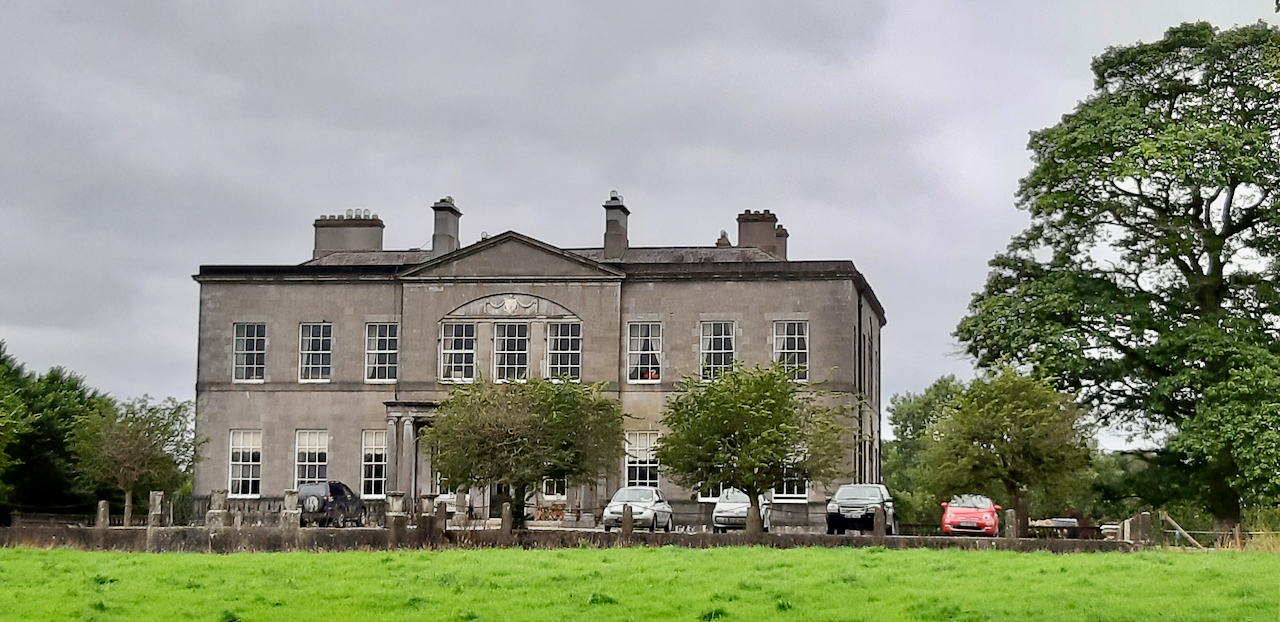
A succession of houses were constructed on what eventually became known as the Kenure estate. The scant remains of what is thought to be a late-medieval tower house lie to the north of the later Palmer residence, and this may have been the ‘Mansion House of stone’ mentioned in the Civil Survey of 1654. In any case, that building was succeeded by another, constructed either during the time of the dukes of Ormond or else soon after the estate came into the hands of the Echlins. A description of this house survives, since it was visited in June 1783 by the antiquary Austin Cooper who noted that ‘About half a mile from the (Roman Catholic) Chapel is Rush House, once the seat of the Echlin family, and which now belongs to a Mr. Palmer. It is a large quadrangular building in the old style, terminated by a hewn parapet ornamented with urns. In the front is a small pediment supported by four Tuscan pillars, which evidently appears to be a modern addition. The situation of it is low, but the view of the sea agreeable. The improvements about it are very neat and kept in good order.’ This late 17th/early 18th century house appears to have remained intact until the outbreak of fire in 1827 but the damage cannot have been too serious since photographs show both the bow-ended drawing room and the room above it had elaborate rococo ceilings in the style of Robert West. In 1842-44 extensive work was carried out on the building to the designs of George Papworth, the exterior refaced in stucco in the manner of a Nash London terrace and a tremendous pedimented Corinthian portico of granite added to the facade. Inside, the entrance hall was given engaged Doric columns and walls covered in yellow scagliola. Beyond this rose a top-lit Imperial staircase with ornate wrought-iron scrolled balustrading, further Doric columns on the ground floor and Ionic pilasters above. All  survived until 1964 when the house was sold and a four-day auction held to dispose of the contents, which realised a total of some £250,000. Contemporary reports noted that a pair of Buhl cabinets went for just £120, while a Chinese Chippendale display cabinet, sold to a London dealer, made £6,800, seemingly the highest price yet paid for a single piece of furniture at auction in Ireland. Today these figures seem absurdly low. To give a couple of examples: in June 2008, that same Chinese Chippendale cabinet was sold at auction by Christie’s for more than £2.7 million. And in October 2006, two mid-18th century chairs attributed to the London cabinet makers William and Richard Gomm and once part of a set of five in Kenure Park, sold for US$408,000.  Meanwhile, an undignified fate awaited the house itself, which was left standing empty by the county council, subject to the inevitable decay and equally inevitable assault by vandals who eventually managed to set fire to the place. Finally, after 14 years of neglect, the authority sought tenders for Kenure Park’s demolition, although after local petitioning, Papworth’s great portico was left standing, a melancholic reminder of what had been lost. As a headline in the Irish Times noted in September 1978, it took ‘Two Days to Demolish the Work of Centuries…’

https://theirishaesthete.com/2025/04/04/kenure-park-2/

Kenure Park

by theirishaesthete


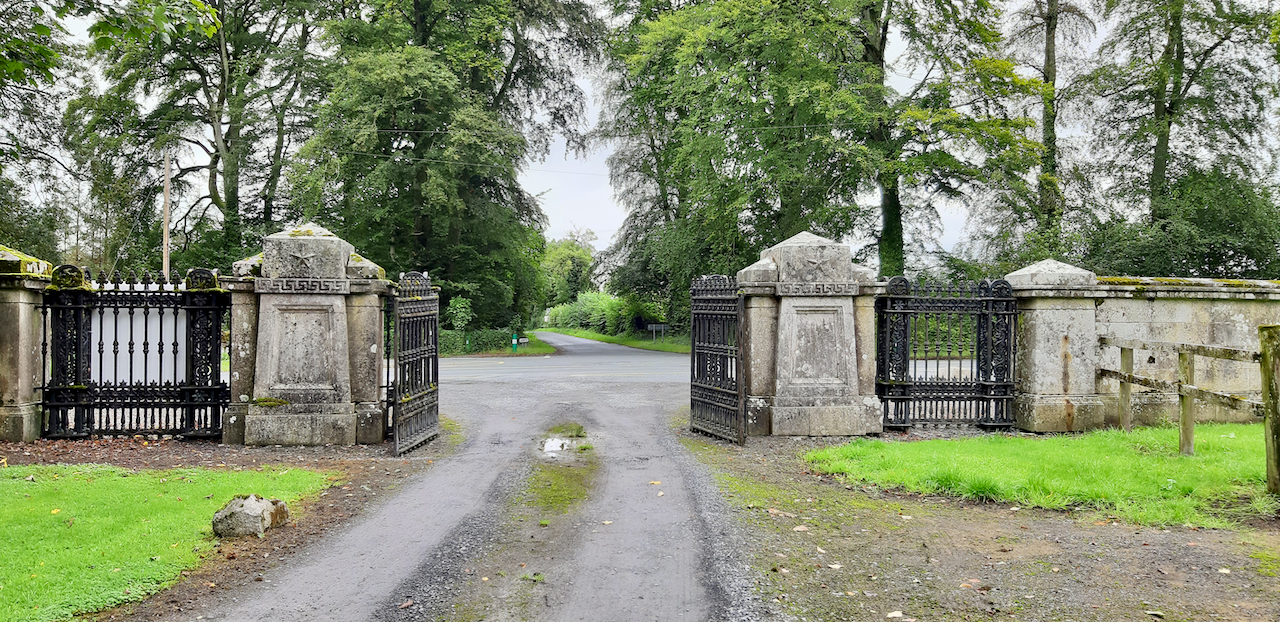
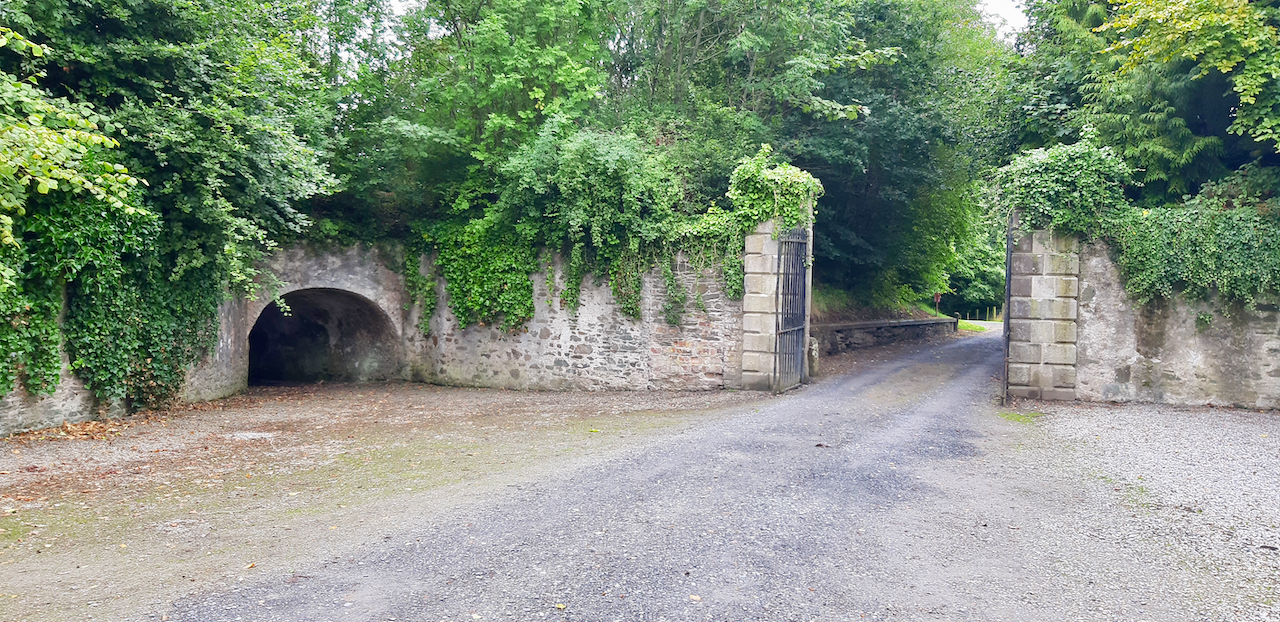
After Monday’s post about the melancholy fate of Kenure Park, County Dublin, here are the other remains of the estate: two gate lodges. The first of these, close to the centre of Rush town and erected around the mid-19th century, stands inside curved quadrant walls of wrought iron concluding in granite piers with vermiculated bands and concluding in spherical finials, this work. believed to date from c1740. The lodge itself, of single storey and three bays with a pedimented central breakfront, appears to be currently unused and suffers from having the render stripped from its exterior. The second lodge, which lies to the north of the now-demolished house, is again of single storey and three bays with a central pedimented breakfront. Thought to date from c.1830, the building retains its render which features boldly vermiculated quoins. In this case, however, the gate piers are in a much poorer state of repair.

Millpark House, Kilbridge, Co Carlow

Millpark House, Kilbridge, Co Carlow – private 

not in Bence-Jones 

Detached three-bay two-storey farmhouse with dormer attic, c. 1710, on a T-shaped plan with gable ends. Renovated with rusticated stone doorcase added. Renovated, c. 1985. Group of detached stone built outbuildings to rear. 
Record of Protected Structures: 

Mill Park, Aghade, Tullow 

Townland: Carrickslaney 

A three-bay, two-storey, gable-ended house said to date from 1650. It has a T plan with the return added at a later date. It has remarkably thick walls which suggests a seventeenth century date. The walls are rough cast and there is a square-headed, granite, blocked-architrave doorcase dating from the eighteenth century flanked by wide sidelights. The roof is slightly high pitched and there are substantial, granite stacks. The 19th century glazing has been replaced with modern windows during recent renovations.  
Importance: regional, architectural, interior, social 

http://www.igp-web.com/Carlow/Millpark.htm 

The first Echlin home in Carlow was at Millpark, Kilbride, built in the 17th century for one of the four daughters of the Rev. Henry Echlin, Bishop of Down and Connor, from 1613, who came to Ireland from Scotland during the reign of King James I. It was his great-grandson, Henry Echlin, second Baron of the Court of Exchequer, who was created a Baronet in October 1712. His eldest son [Robert], who was an M.P., first for Downpatrick, and later for Newry, married Penelope Eustace, daughter of Sir Maurice Eustace of Harristown, County Kildare. 

Millpark House was either leased or bought by the Tomlinsons around 1670, and remained in the ownership of this family until the death, in 1958, of Harriet Tomlinson. The estate, which comprised 452 acres in 1839, was sold to the Land Commission by William Tomlinson, and after the division of the land, the house was purchased by Sheila Eustace Harvey, a member of the Eustace family of Newstown. It is now the home of her son. Robin Harvey, and his wife Carole Joan. 

The present drawing-room at Millpark. originally the kitchen, still retains some of its original features, including the wooden rafters, now well darkened by turf smoke The arch of the old fireplace is of local cut granite, and inside is a rounded fire-bricked oven for bread making. The large chimney had a crane fitted halfway up. enabling sides of bacon to be pulled into the flue and cured to perfection. Hooks are still in place on the rafters of the room where meat and other food items were hung. The drawing room ceiling is very unusual for a farmhouse. In 1720, Italian students who had been befriended by the Tomlinsons, returned the hospitality by completing elaborate Rococo plasterwork in the form of a hub and circle of wheat cars and stalks. The cornice was completed in the “small egg and dart” style. 

May 18, 2006 

Co Carlow/€1.2m: Why would you brave airports in your hunt for la vraie campagne when just down the road from Dublin is this 17th century farmhouse on 4.5 acres for €1.2m, asks Michael Parsons 

Driving south through Co Carlow is not unlike cruising down an autoroute from Paris and being unaware of la France profonde on either side. 

Okay, admittedly Serge does not shunt his camion at 120 km an hour, causing freshly quarried gravel to fall like brimstone and shatter Nicole and Papa’s windscreen. 

The perils of the N9, therefore, allow only the occasional glimpse of a foaming weir on the lordly Barrow or the purple grandeur of the Blackstairs. 

And so, the little county – Leinster’s pearl-drop earring – is quickly traversed. That’s a pity, because within minutes of the main roads lies some of Ireland’s loveliest and most unspoilt scenery with possibly the best-value property in the country. 

Mill Park, Kilbride, Carlow, a 17th century farmhouse on 4.5 acres, with frontage onto the River Slaney (the county’s other major river), is to be auctioned by Dawson Real Estate Alliance at Tullow on June 22nd and carries an advised minimum value of €1.2 million. 

Folks, it’s a steal. 

The 232sq m (2,500sq ft) house has two reception rooms and a traditional kitchen. A diningroom, formerly the kitchen, retains turf-stained pine beams, an original bread oven and a nook where the goose once cared for its goslings. 

There are three bedrooms on the first floor (two doubles and a single) and a bathroom which weekending Dortsiders might find a tad ancien régime. 

On the second floor, two further bedrooms are suitable only for the vertically challenged due to won’t-forget-that-in-a-hurry low door lintels. 

Outside, the farm has long gone but 4.5 magical acres remain. There’s a quarter-acre sheltered sloping lawn leading to a walled fruit and vegetable garden yielding organic treats from asparagus to Turkish brown figs. 

A proper, old-fashioned chicken run (yes, children, the film was based on a true story) and a glasshouse of Black Hamburg grapevines. And a “rambling rector” rose – named, one hopes, to honour the reverend’s sermons, and not his wandering eye. 

A separate garden area features a large spring-fed pond – potentially a perfect natural swimming pool (en vogue) beneath a grove of Rhodesian Oak. 

There is a profusion of granite outbuildings at least two of which – a 70-ft long re-roofed store and a former milking parlour – could be converted into quaint cottage residences without damaging the character of the main house. 

There is a tennis court and then a large paddock leading to a secluded stretch of pristine riverbank where a canopy of beech and ash provide shade “o’er the pleasant Slaney”. 

Amid a carpet of bluebells, close to a little waterfall, a natural picnic spot created by a granite outcrop known as the Tea Rock overlooks a languid scene to rival a river valley in Dordogne. 

Still determined to endure the unspeakable indignity of Dublin airport this summer and budget-airline misery to an out-of-the-way airstrip and your secret little gateway? 

To what? La “vraie” campagne? Une fermette idéale? It’s on the doorstep. Just 54 miles from the city centre. 

As the old song says: Suivez-moi à Carlow. 

Harristown, Brannockstown, County Kildare W91 E710 – section 482

https://www.harristownhouse.ie/

Open dates in 2026: Feb 2-6, 9-13, Mar 9-13, 16-20, May 1-13, July 20-24, 27-31, Aug 4-23, 9am-1pm

Fee: adult/ OAP/student/child €10

donation

Help me to pay the entrance fee to one of the houses on this website. This site is created purely out of love for the subject and I receive no payment so any donation is appreciated!

€15.00

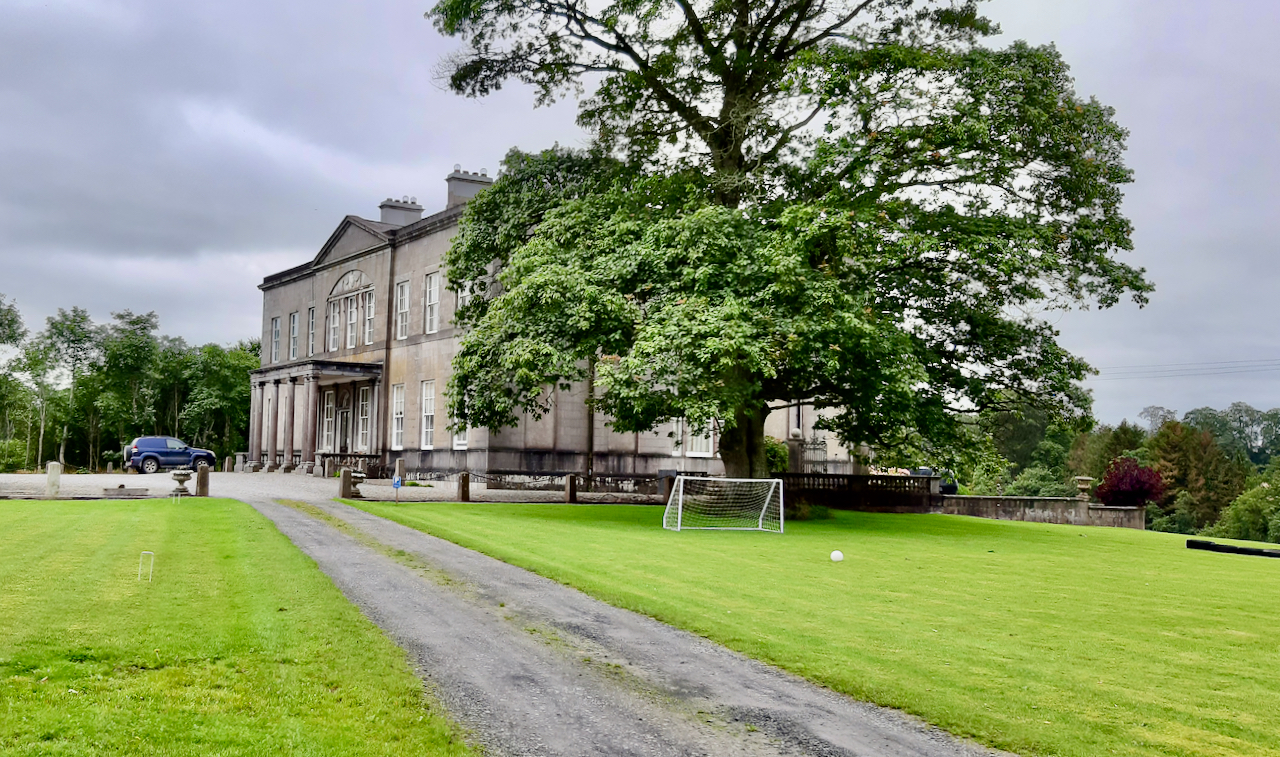
Harristown, August 2019. Photograph © Jennifer Winder-Baggot, www.irishhistorichouses.com

Last week I wrote about Charleville in County Wicklow, a house designed by Whitmore Davis. This week I am writing about another house by Davis, Harristown House. This house is magnificently situated at the top of a gently sloping hill, overlooking the River Liffey. I contacted the owner Hubert Beaumont, the husband of the listed contact, Noella, to arrange a visit on Thursday 22nd August 2019, during Heritage Week.

Harristown, August 2019. Photograph © Jennifer Winder-Baggot, www.irishhistorichouses.com

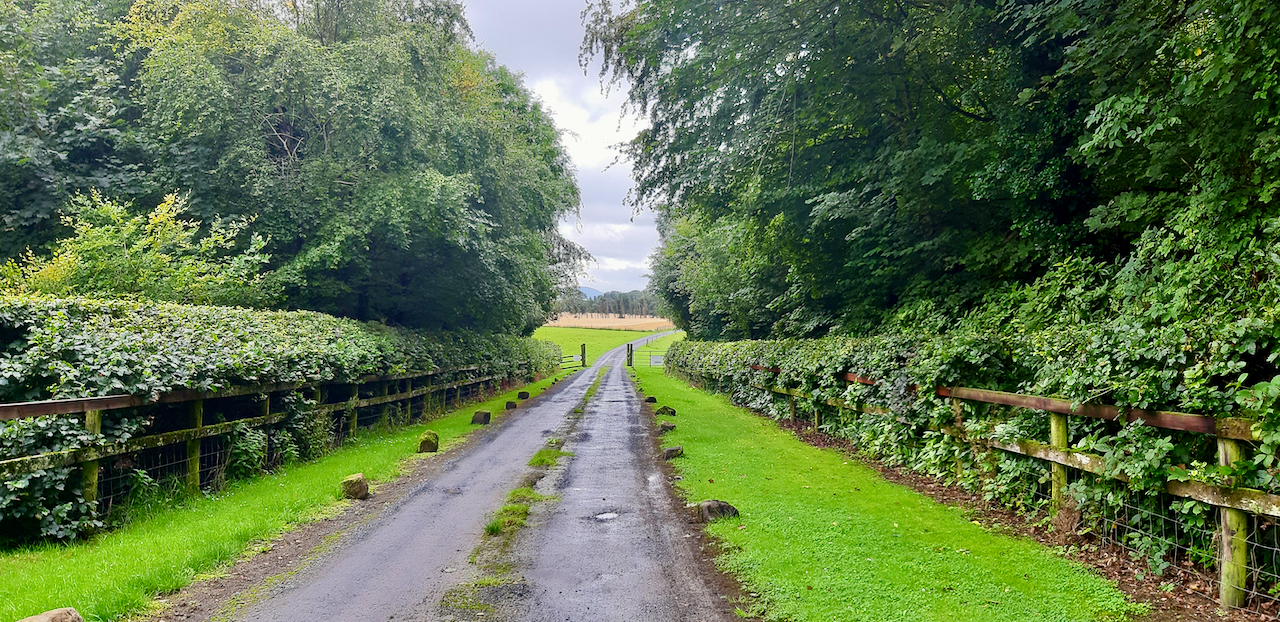
We drove up a very long avenue to the house, between fields, now farmed by the Beaumonts.

Harristown, County Kildare. Photograph © Jennifer Winder-Baggot, www.irishhistorichouses.com

A British Parliamentary Paper, a Royal Commission appointed to inquire into the municipal corporations in Ireland, in 1833, tells us that in the 33rd year of Charles II’s reign [he was restored to the British throne in 1660 but some would claim that his reign began with the death of his father, Charles I, in 1649], the Borough of Harristown was incorporated by a Charter which created the Manor of Harristown, which could hold a Court and make judgements, by “Seneschals” (a governor or other administrative or judicial officer) appointed by Sir Maurice Eustace and his heirs. He could also hold a market and fairs, on particular days, and have a prison. The borough could return two Members of Parliament. The Commission continues to describe the borough in the present day of 1833: the borough was the property of the La Touche family, and at the Union [1801], John La Touche obtained compensation for loss of the elective franchise. [1]

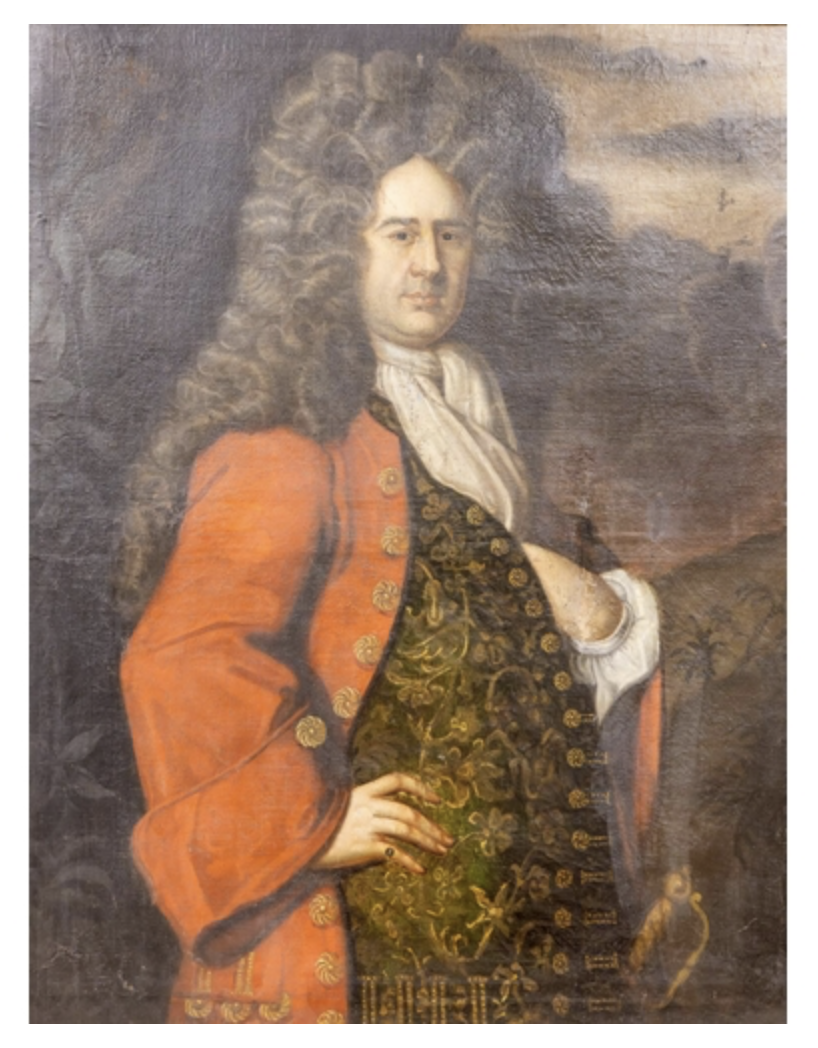
“The Piked Eustace” (painting piked in 1798) Maurice Eustace, c. 1689, by circle of James Gandy. He was Lord Chancellor of Ireland after the Restoration of Charles II. Courtesy Fonsie Mealy Aug 2023.

The Eustace family acquired the land of Harristown in the sixteenth century. The Harristown house website agrees with Mark Bence-Jones that the current house at Harristown was built by Whitmore Davis [2]. However, a website about the La Touche family claims that the present Harristown House was built in 1662, for Maurice Eustace (circa 1590-1665), but does not mention an architect [3]. Maurice Eustace became Lord Chancellor of Ireland after the Restoration of Charles II to the throne, because he was loyal to the monarchy. Wikipedia refers to Maurice Eustace’s beloved “Harristown Castle,” “which he was rebuilding after the damage it had suffered during the Civil War, and which by the time of his death was considered to be one of the finest houses in Ireland.” [4] This seems to refer to a house Eustace built near the original castle.

View from what is now the back of the house, overlooking the Liffey. Photograph © Jennifer Winder-Baggot, www.irishhistorichouses.com

After much soul-searching, Maurice left Harristown as well as a large fortune to a nephew, Maurice (d. 1703). The Lord Chancellor had an illegitimate son with a woman of, apparently, “some social standing,” also named Maurice and he promised his inheritance both to this son and to his nephews, sons of his brother William (d. 1673/4) and William’s wife Anne Netterville. He consulted a preacher as to whether his promise to his lover was binding, and the preacher cruelly advised that it was not. Sadly, Maurice the Lord Chancellor also had a daughter by this liaison, Mary.

As well as the mother of the two illegitimate children, Maurice had a wife, Cicely (or Charity) Dixon (1605-1678), daughter of the Lord Mayor of Dublin, Robert Dixon, but with her had no children. He left not only his country estates but a townhouse, named “Damask,” on the street which is now named after him, Eustace Street. He eventually left his inheritance to his nephews. The eldest son of his brother William, John, had died in 1697, so it went to the younger, Maurice (d. 1703).

Harristown, County Kildare. Photograph © Jennifer Winder-Baggot, www.irishhistorichouses.com

This nephew Maurice married Anne Colville, daughter of Robert Colville (1625-1697). After she died in 1685, he married secondly, Clotilda Parsons. He had no male heirs and his fortune was divided on his death between his three daughters. The Harristown estate went to his daughter by his first wife, also named Anne. It’s sad to me that the house was inherited by a daughter after all, when the first Maurice Eustace’s illegitimate daughter, Mary, unlike her brother, was never even considered for inheritance.

His daughter Penelope married Robert Echlin (d. 1706), MP for Downpatrick and for Newry, son of Henry Echlin 1st Baronet Echlin of Clonagh, Co. Kildare.

Anne married the Irish MP Benjamin Chetwood (or Chetwode), who served as Member of Parliament for Harristown, and her son Eustace Chetwood inherited Harristown. He became MP for Harristown but mismanaged his estates [5] and it passed to James FitzGerald, the 1st Duke of Leinster.

Anne and Benjamin’s daughter Elizabeth married Christopher Ussher of Mount Usher, County Wicklow, another Section 482 property (see my entry).

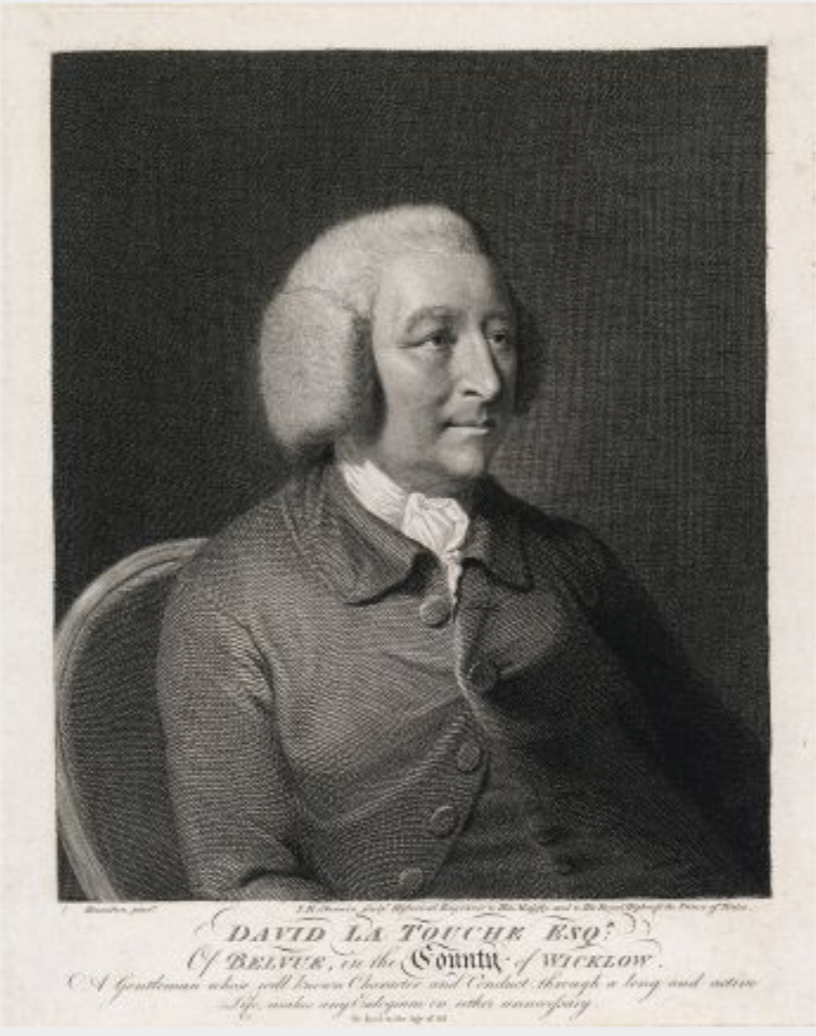
James FitzGerald’s son William, who had no need for Harristown since he had also inherited Castletown House in County Kildare, sold it to David La Touche (1703-1785) in 1768. [6]

David (Digges) La Touche of Bellevue, County Wicklow, (1703-1785) purchased Harristown in 1768.

I cannot find the original date of construction of the house – Mark Bence-Jones in his Guide to Irish Country Houses identifies it as late Georgian, which generally means 1830-1837, but the Georgian period began in 1714 so “late” could mean as early as around 1800, which is more likely, as Charleville was built in 1797. I suspect that this house was built earlier, perhaps around the time when Whitmore Davis worked for the Bank of Ireland, because the Bank of Ireland was set up in 1783, and The La Touche family were major contributors to the bank.

The La Touche family was a Huguenot family. Huguenots, who were French Protestants, fled from France due to the punishment and killing of Protestants after Louis XIV revoked the Edict of Nantes – the Edict of Nantes had promoted religious toleration. Earlier in the week, Stephen and I had a tour of another La Touche house, Marlay House in Marlay Park in Rathfarnham. Marlay House is now owned by Dun Laoghaire and Rathdown County Council and it has been restored and furnished and holds tours by arrangement. [7]

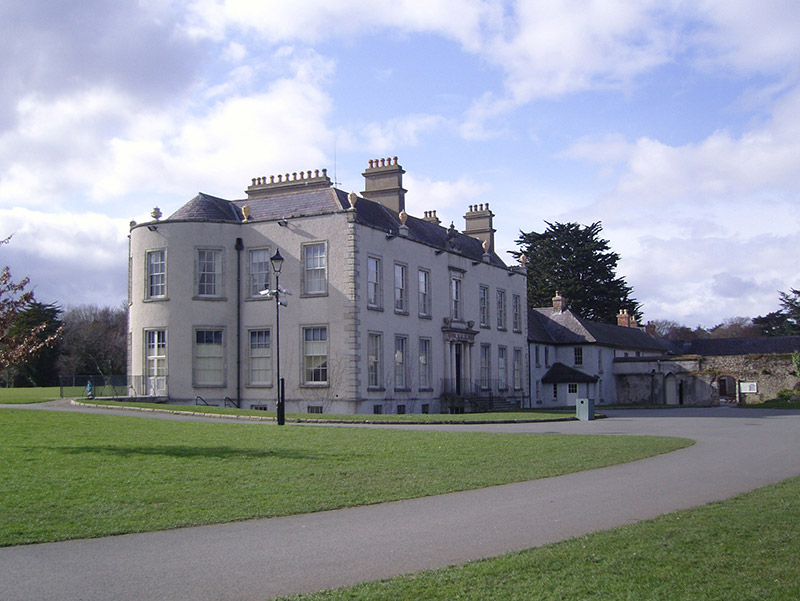
Marlay House in Marlay Park, Rathfarnham, Dublin. Photo from National Inventory of Architectural History [8] When we mentioned to Mr. Beaumont that we had been to Marlay House earlier in the week, he commented on the incongruity between the two parts of that house – the 1690 part and the later part commissioned by David La Touche. It’s true that the two parts of the house are very different.

It was David Digues La Touche, born in the Loire Valley, who fled from France after the Revocation of the Edict of Nantes. He fled to Holland, where his uncle obtained for him a commission in the army of William of Orange. He fought in the Battle of the Boyne in the regiment under General Caillemotte. [9] He left the army in Galway, where he was billeted on a weaver who sent him to Dublin to buy wool yarn (worsteds). He decided then to stay in Dublin, and with another Huguenot, he set up as a manufacturer of cambric and rich silk poplin. Where I live in Dublin is an area where many Huguenots lived and weaved – we are near “Weaver Square,” and our area is called “The Tenters” because cloth was hung out to dry and bleach in the sun and looked like tents, hung on “tenterhooks”!

The La Touches began banking when Huguenots left their money and valuables with David for safekeeping when they would travel out of the capital. He began to advance loans, and so the La Touche bank began. He had two sons, David La Touche (1703-1785) and James Digues (later corrupted to Digges) La Touche. This David La Touche purchased properties which passed to his sons: Marlay House to David (1729-1817), Harristown to John (1732-1805), and Bellevue, County Wicklow, to Peter (1733-1828). Bellevue has since been demolished, in the 1950s [10].

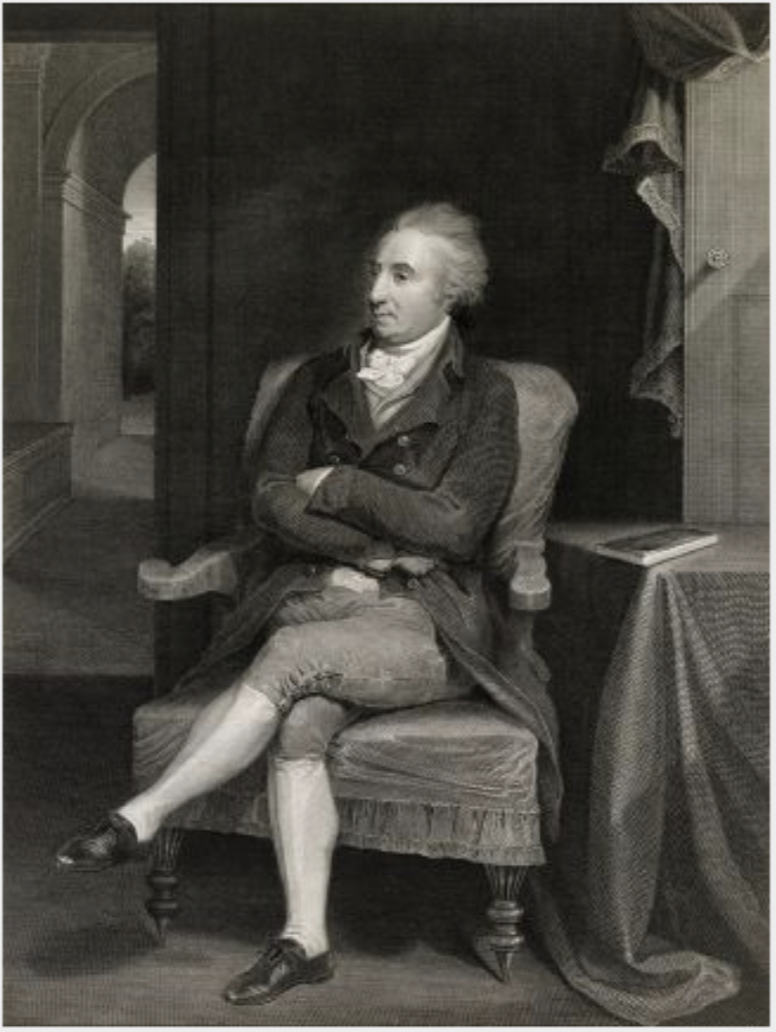
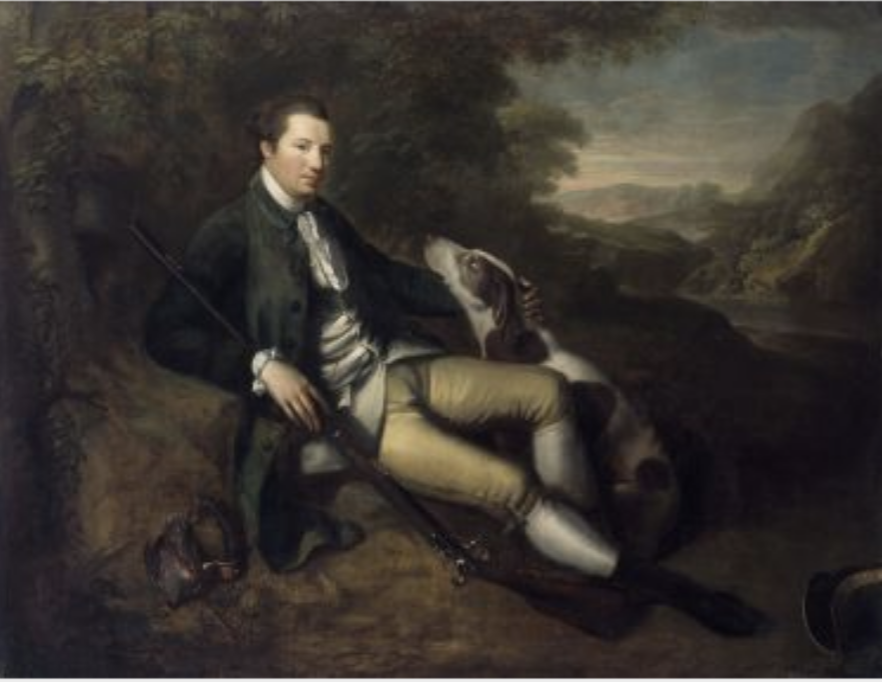
David La Touche of Marley, County Dublin, (1729-1817), M.P., Banker and Privy Counsellor. Photograph courtesy of National Gallery of Ireland.
Peter La Touche of Bellevue (1733-1828) Date 1775 by Robert Hunter, Irish, 1715/1720-c.1803, photograph courtesy of National Gallery of Ireland.
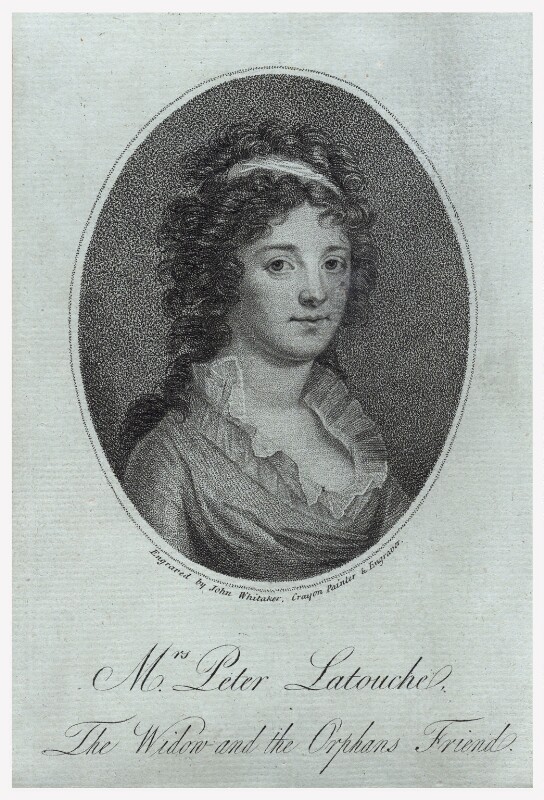
Elizabeth La Touche née Vicars (1756-1842), wife of Peter La Touche, by John Whitaker National Portrait Gallery of London D18415.
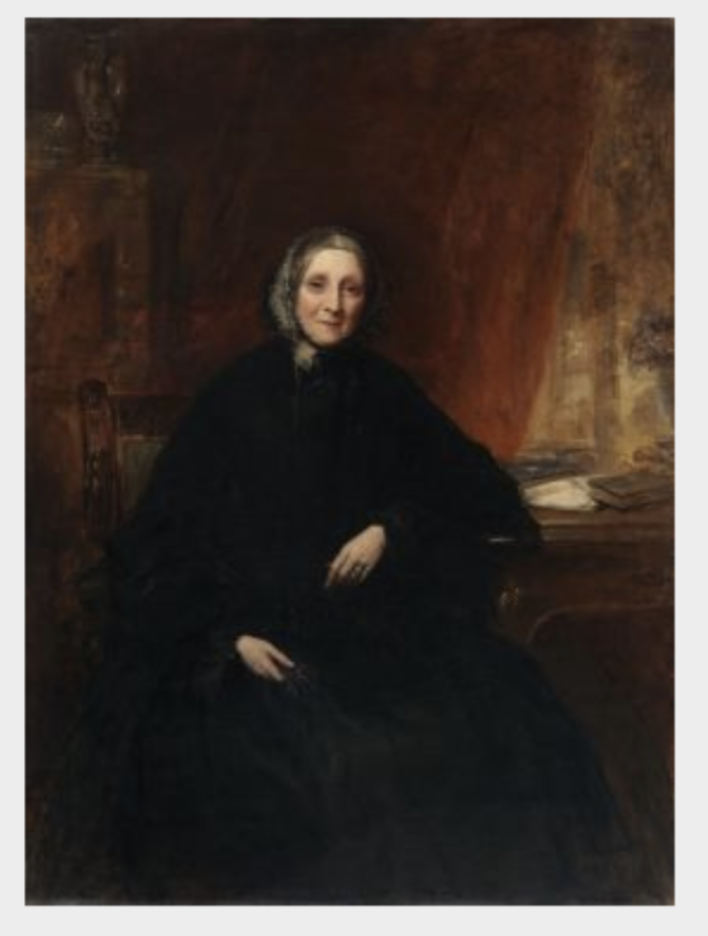
Mrs La Touche of Bellevue by Stephen Catterson Smith 1806-1872, courtesy of National Gallery of Ireland NGI 628.

As I mentioned last week, the biography about Whitmore Davis in the Dictionary of Irish Architects is not flattering. Descriptions include: “By 1786 he had became architect to the Bank of Ireland at St Mary’s Abbey, where he was employed on minor works, but in 1788 he was reprimanded for lack of attention to his responsibilities ….Although he was employed as architect of the new Female Orphan House in 1792-93, his performance was not judged satisfactory; the Board’s minutes register ‘much disappointment’ at his not having completed the building within the time stipulated…. his architectural practice appears to have been going into decline and by February 1797 he had been declared bankrupt. [my italics]” However, things picked up for him eventually: “by 1803 he had succeeded Richard Harman  as Surveyor of the Revenue Buildings for the Port of Dublin, a post which he still held in 1811.” [11]

The La Touches purchased Harristown and its lands in 1768, and presumably the house that was built by Maurice Eustace still stood on the land. They were involved with the establishment of the Bank of Ireland at Mary’s Abbey in 1783 and David La Touche was a major investor. It could have been at this time, when Whitmore Davis was architect for the Bank of Ireland 1786-91, that the La Touches had him build the new house at Harristown. Peter La Touche hired Whitmore Davis in 1789 to build a church in Delgany, County Wicklow, and the Orphan House on North Circular Road, also by Whitmore Davis, was commissioned by John La Touche in 1792.

Harristown House, County Kildare. Photograph © Jennifer Winder-Baggot, www.irishhistorichouses.com

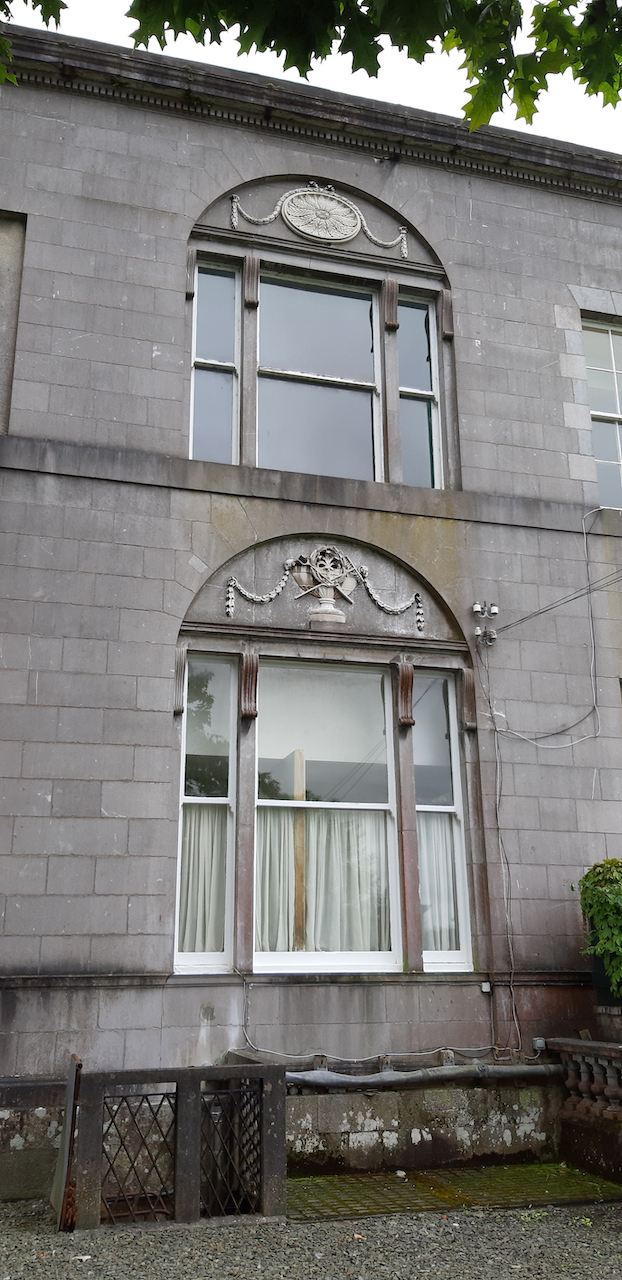
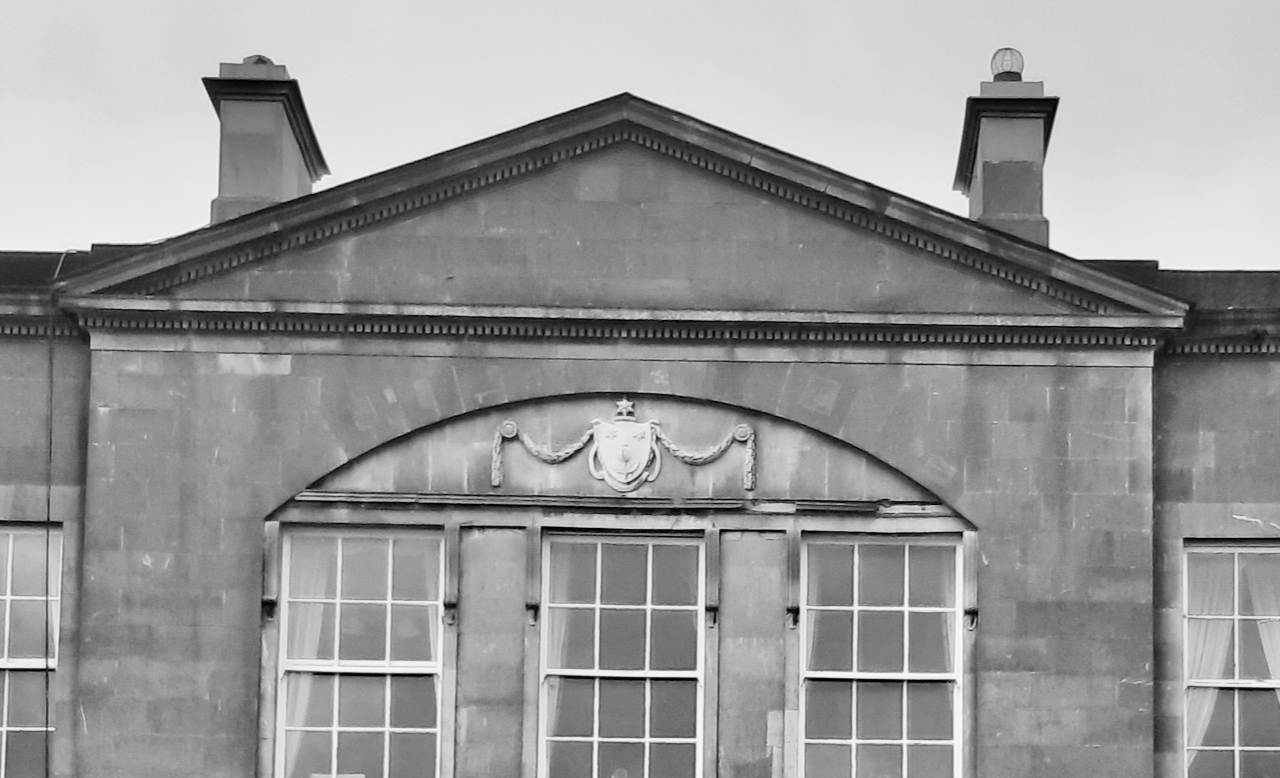
Like Charleville, Harristown is ashlar faced, and has nine bays with a central breakfront of three bays, but it was originally three storey over basement. After a fire in 1890 it was rebuilt to designs by James Franklin Fuller, and was reduced to the two storeys you can see in the photograph above. As it stands now, the windows in the breakfront are grouped together under a wide “relieving” arch, as Mark Bence-Jones describes (I’m not sure what this means – if you know, please enlighten me! – perhaps it means that it is “in relief” ie. raised from the background), with a coat of arms and swags. There is a single-storey portico of Ionic columns. (see [2])

Crest with pomegranate on Harristown House. Photograph © Jennifer Winder-Baggot, www.irishhistorichouses.com

The crest on the over the portico in Harristown features the same pomegranate symbol, for fertility, as features in the La Touche crest on Marlay House on an urn over the front door, as well as a star shaped symbol. The guide at Marlay House was unable to explain the star shaped symbol to us but thought it might be the shape of the pomegranate flower. This shape features on the front pillar gates of Harristown House also, as well as a Greek key pattern.

Front of Marlay House, with crest of pomegranate on the urn on top of roof, and star symbol under urn. Photo from National Inventory of Architectural History [see 8].

The rear of Harristown has a pair of curved bows:

Harristown, County Kildare. Photograph © Jennifer Winder-Baggot, www.irishhistorichouses.com

Just a little diversion to tell you about Marlay House: David La Touche purchased the land of Marlay Park in Rathfarnham in 1764. Before La Touche, the land in Rathfarnham had belonged to St. Mary’s Abbey, until King Henry VIII dissolved the monasteries. In 1690, Thomas Taylor, one time Mayor of Dublin, acquired the land and built a house, which he called “The Grange.” He farmed the land, and both his son and grandson held key political positions in Dublin in the 1740-60s. Part of this house still stands and is incorporated into the present Marlay House. David La Touche (1729-1817) renamed the house “Marlay” in honour of his wife, Elizabeth Marlay, and her father, George Marlay (1691-1743), Bishop of Dromore.

David La Touche enlarged the Marlay house. I don’t know what architect designed the enlargement of the original Taylor house at Marlay for La Touche. If it was done in 1764 it can’t have been Whitmore Davis as he only joined the Dublin Society’s School of Drawing in Architecture in 1770. Marlay house does have bows, similar to Harristown. Turtle Bunbury claims that the enlargement was indeed by Whitmore Davis so perhaps it was done some years after purchase of the estate, which is perfectly possible as David and his wife and family would have spent much of their time in their townhouse closer to the city centre. His father had developed much of the area around St. Stephen’s Green, Aungier Street and the Liberties.

David La Touche (1729-1817), of Marlay, 1800 by Hugh Douglas Hamilton, courtesy of National Gallery of Ireland.

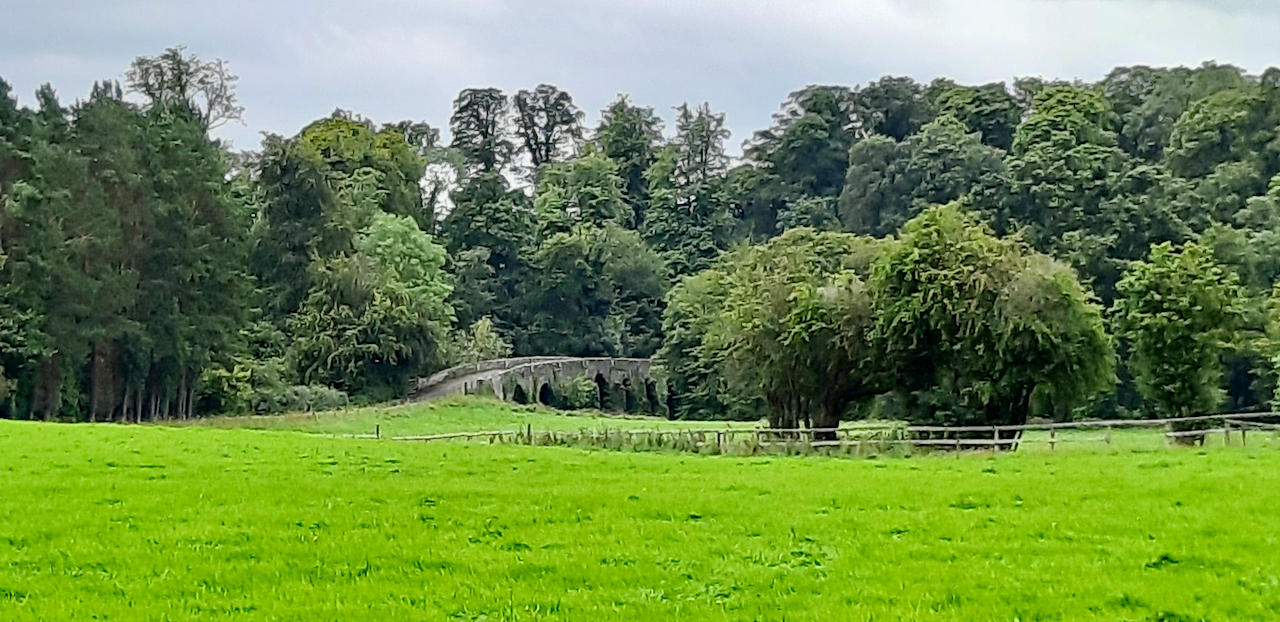
John La Touche (1732-1805), David’s brother, who was gifted Harristown by his father, enclosed the present Harristown desmesne and built a new road and bridge over the Liffey.

Bridge over the Liffey built by John La Touche in 1788. Photograph © Jennifer Winder-Baggot, www.irishhistorichouses.com
John La Touche (1732-1805) by Angelica Kauffmann courtesy of MutualArt.com

John represented the Borough of Harristown in Parliament. He married Gertrude Uniacke-Fitzgerald (d. 1818), daughter of Robert Uniacke-Fitzgerald. They had several children. He died in 1805.

Two of John’s sons also sat in Parliament. His son John inherited the estate. He was artistic and travelled in Italy, enriching his home with paintings and marbles. He died in 1822 and the estate passed to his brother, Robert La Touche (1773-1844), who was also an MP for Harristown.

Robert had married Lady Emily Le Poer Trench (1790-1816), daughter of William Power Keating Trench (1741-1805) 1st Earl of Clancarty of Garbally in Ballinasloe, and they had four children. They also owned a house on Merrion Square in Dublin. Their daughter Gertrude (1812-1864) married Henry Stanley McClintock (1812-1898) of Kilwarlin House, County Down.

A son, another John (1814-1904), succeeded his father in 1844, the year after he married Maria Price. John had a twin, William, but William died in the same year as his father. John was called “the Master” as he was a keen huntsman, and was Master of the Kildare Hounds 1841-45. He had a serious fall off a horse, however, and stopped hunting, and the same year, his brother Robert died tragically in a stand at the Curragh races – I think the stand collapsed.

Historic houses require constant maintenance. Mr. Beaumont told us that he had to have the entire front portico taken down to be repaired. He preferred the appearance of the house without the portico, but acknowledged that it is good for keeping off the rain! Photograph © Jennifer Winder-Baggot, www.irishhistorichouses.com
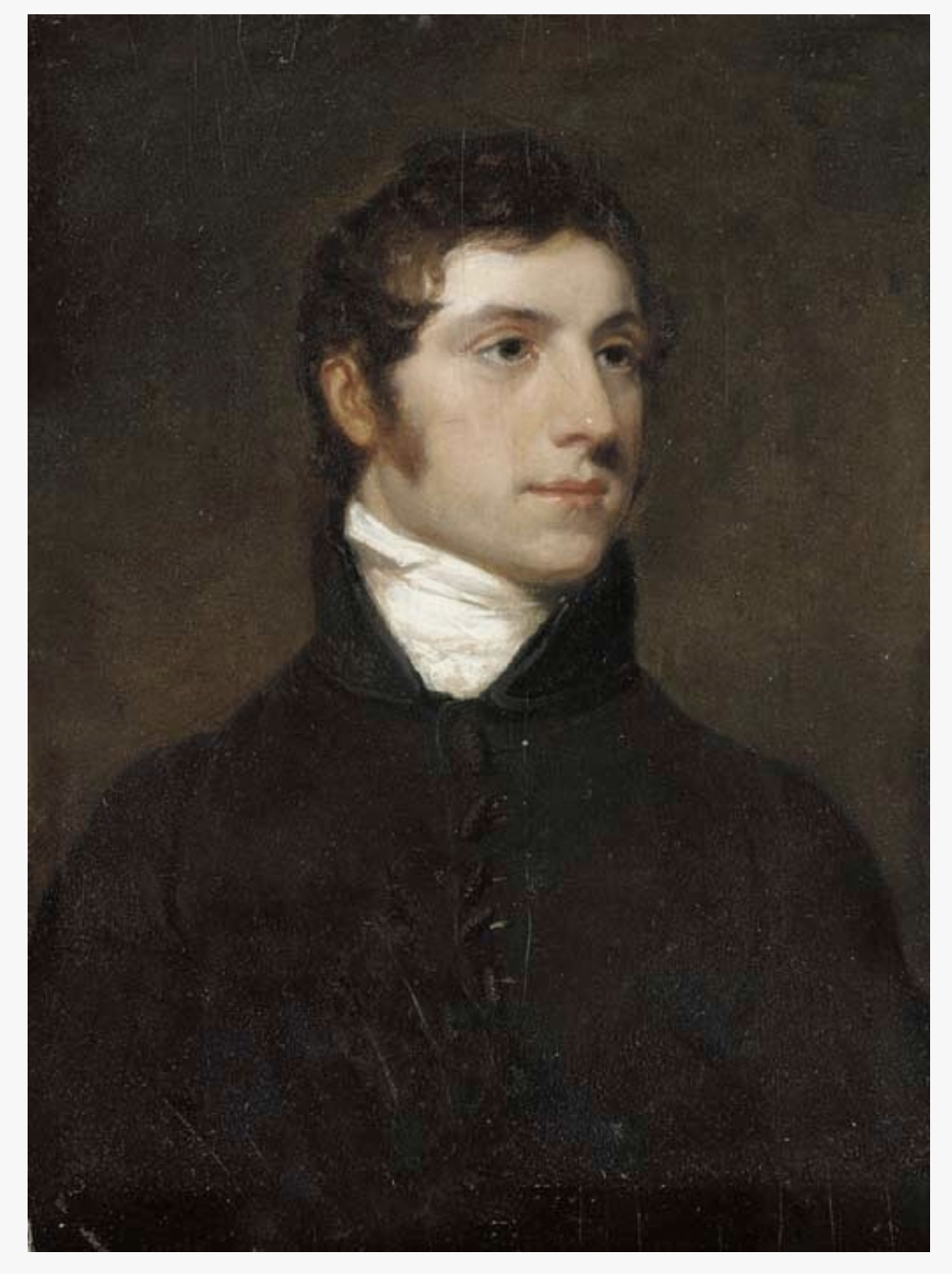
Gentleman believed to be Robert La Touche by Hugh Douglas Hamilton courtesy Christies Irish Sale 2003. Robert died when a stand collapsed at the Curragh Races.

John lived at Harristown for  sixty-two years. His wife, Maria was artistic, with a particular interest in botany, drawing, languages and poetry. She was an avid letter-writer and wrote a number of tracts on religious and social themes. She also wrote two novels, “The Clintons” (1853), and “Lady Willoughby” (1855). According to the La Touche legacy website, she had a horror of blood sports – and no wonder, with her husband’s nasty fall – and complained often about the enthusiastic hunting pursued by neighbouring gentry.

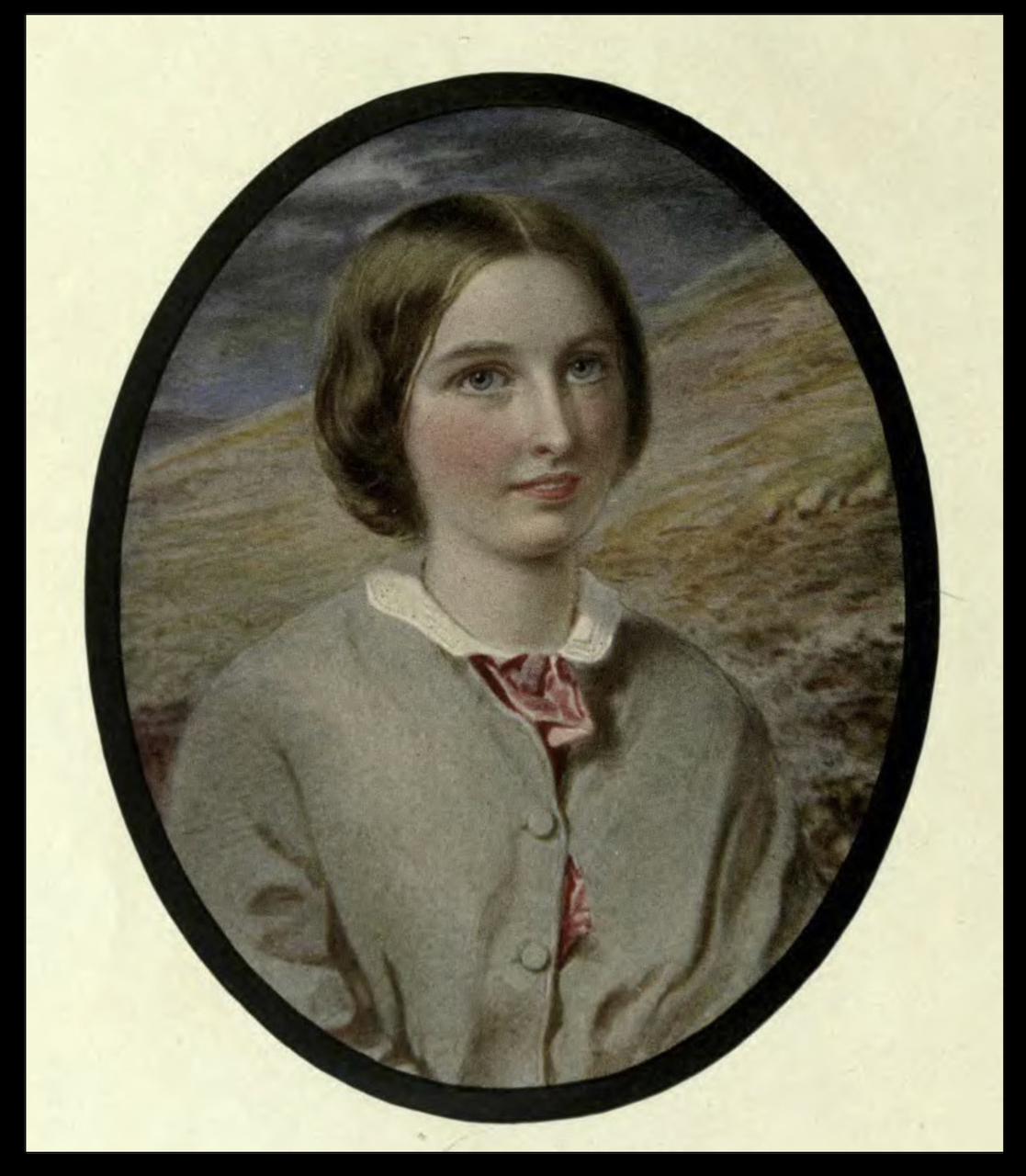
Maria La Touche née Price (1824-1906) of Harristown.

During the Famine, John initiated drastic measures in his household: “allowing no white bread or pastry to be made, and only the simplest dishes to appear on his table. The deer-park at Harristown ceased at this time to have any deer in it; all were made into food for the starving people.” He busied himself with his farm tenants, and supported Land Reform under Gladstone.

In 1857 John La Touche heard the preaching of C.H. Spurgeon, which led him to become a Baptist. In 1882, he built a Baptist Chapel and a fine Manse (minister’s house) at Brannockstown, and was a regular benefactor of Baptist work throughout Ireland. John had an interest in education, as did all the La Touches, and he knocked down the remains of Portlester Castle to build a school at Brannockstown, which opened in 1885. This school prospered for twenty years, but under his son, Percy, the pupils moved to the Carnalway National School. It re-opened in 1928 under Catholic management and it is still in use. For more on the La Touches and education and banking, see Turtle Bunbury’s chapter on the La Touches in his book The Landed Gentry & Aristocracy of County Kildare.

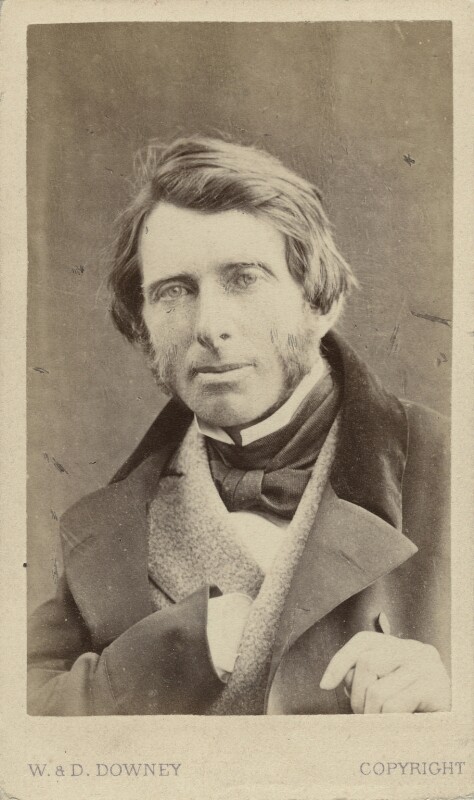
Maria La Touche’s friend, Louisa, Lady Waterford (whom we came across in Curraghmore, the wife of the 3rd Marquess), introduced her to the famous art critic John Ruskin, and she asked him to tutor her children, especially her daughter Rose, in art.

John Ruskin by W. & D. Downey 1863, National Portrait Gallery of London ref. x12958.

The relationship between Rose and Ruskin is fascinating and sad. They grew to be very fond of each other, and he fell in love with her when she was still a young girl. Ruskin proposed marriage but due to the fact that his first marriage, to Effie Gray (featured in the film “Effie Gray” written by Emma Thompson), was annulled due to his impotence, Rose’s parents would not allow the marriage. [12] [13] According to a wikipedia article, Rose’s parents feared that if Rose did become pregnant by Ruskin, the marriage would be invalidated since the reason for his annulment would be disproved! Ruskin proposed again, when Rose came of age. She must have had some sort of illness or unusual anatomy because doctors had told her that she was “unfit for marriage.” She said would only agree to the marriage if it could remain unconsummated. Ruskin, however, refused this, “for fear of his reputation” (again, according to wikipedia).

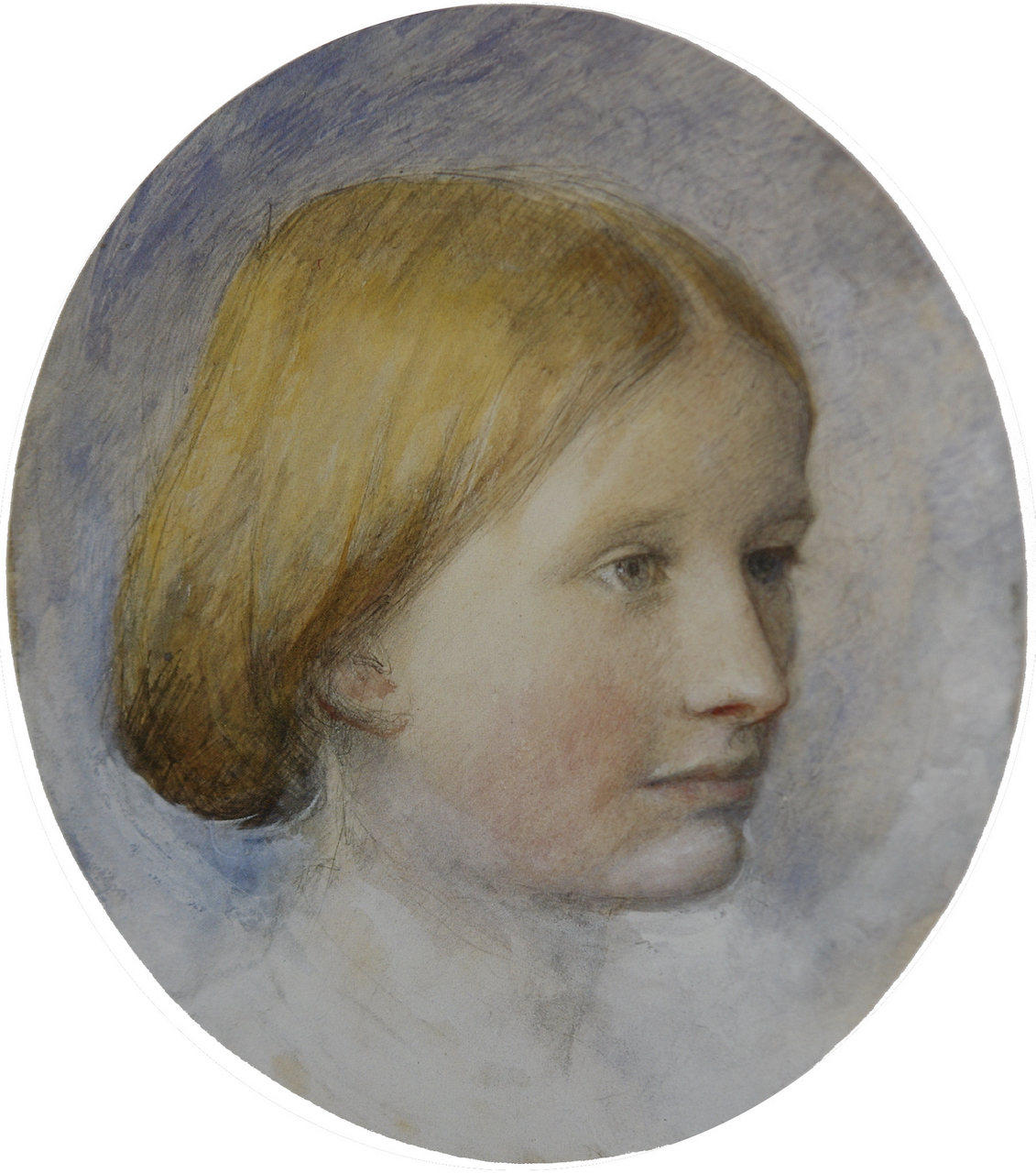
Rose La Touche, 1861, by John Ruskin From “Ruskin, Turner and the pre-Raphaelites”, by Robert Hewison, 2000.
We loved the aesthetic touch of the pair of peacocks in the garden. Harristown, August 2019. Photograph © Jennifer Winder-Baggot, www.irishhistorichouses.com

The La Touche legacy website is less sensationalistic about Rose – it claims that she had ill health and this was one reason that her parents were worried about a potential marriage to Ruskin, and they also didn’t like his professed atheism. Given their firm religious faith this seems a most probable reason for their disapproval. Rose went to London in January 1875 for medical care and Ruskin attended her, but she soon died.

Harristown, August 2019. Photograph © Jennifer Winder-Baggot, www.irishhistorichouses.com

According to wikipedia, Rose was placed by her parents in a Dublin nursing home in her mid-20s, and :

Various authors describe the death as arising from either madness, anorexia, a broken heart, religious mania or hysteria, or a combination of these. Whatever the cause, her death was tragic and it is generally credited with causing the onset of bouts of insanity in Ruskin from around 1877. He convinced himself that the Renaissance painter Vittore Carpaccio had included portraits of Rose in his paintings of the life of Saint Ursula. He also took solace in Spiritualism, trying to contact Rose’s spirit.

Harristown, County Kildare. Photograph © Jennifer Winder-Baggot, www.irishhistorichouses.com

Another daughter, Emily Maria (1846-1868) married Bernard Matthew Ward (1831-1918), son of Edward Southwell Ward, 3rd Viscount Bangor of Castle Ward, County Down.

In 1891 a fire gutted the three storey house. It was rebuilt to the designs of James Franklin Fuller. One storey was removed, which Mr. Beaumont pointed out to us when we were inside, makes the house brighter than it would have been with a further storey. The brightness is further aided with lantern skylights. Franklin Fuller also rebuilt the small Church of Ireland at the entrance to the estate, Carnalway church. It was done in a Hiberno Romanesque style similar to his masterpiece at Millicent. The church also has stained glass windows by Harry Clarke and Sir Ninian Comper.

When “The Master” died in 1904 in his 90th year, his son, Robert Percy (1846-1921), succeeded to the estate. He moved in the highest levels of society and was a favourite of King Edward the Seventh. He married Lady Annette Scott (1844-1920), a sister of the John Henry Reginald, 4th Earl of Clonmel, but they had no children. After his death in 1921, his sister Emily’s son succeeded, Ernest Otway Ward (1867-1965), who added La Touche to his surname upon inheritance, but he sold it soon afterwards. [14]

Harristown, County Kildare. Photograph © Jennifer Winder-Baggot, www.irishhistorichouses.com

The estate passed through two other owners before being sold to Major Michael Whitley Beaumont (1903-1958), grandfather to the present owner, Hubert Beaumont, in 1964.

Hubert’s grandfather Michael set about renovating, and shipped furniture and interiors, even panelling and wallpaper, from the home he purchased from Lord Buckingham in England in 1929, Wootton (or Wotton) House. Wotton House was later to be owned by the actor John Guilgood, and Tony and Cherie Blaire, amongst others. Major Beaumont sold Wotton House in 1947.

Hubert Beaumont inherited the house from his grandfather Michael’s widow, Doreen (the Major’s second wife, daughter of Herbert William Davis-Goff, 2nd Baronet Davis-Goff, of Glenville, Co. Waterford and of Horetown, Co. Wexford. It was his first wife, Faith Pease, daughter of the 1st Baron Gainford, who was Hubert’s grandmother). Hubert’s father, Lord Timothy Wentworth Beaumont, Baron Beaumont of Whitley, was a British politician in the Liberal Party, Liberal Democrats and Green Party, and also an Anglican clergyman. Major Michael’s father was also a politician in the Liberal Party, Hubert Beaumont (1864-1922). There’s a strong line of politicians in the family, and they are related  to George Canning, who served as Prime Minister of the UK from April 1827 until he died in August later that year.

Wotton House, Buckinghamshire, 2007, photograph courtesy of British Listed Buildings, photograph by Peter Harris.

The house is spacious, bright, and beautifully decorated with the items that the Beaumonts brought from their former home in Buckinghamshire. Wootten’s interior was designed by Sir John Soane, and Doreen Beaumont brought some of the Soanian influence to her new home. [15] The colours she used are not traditionally associated with an Irish Georgian house. You can see pictures of the interior on the website.

The front hall is a large double room which opens into the three main reception rooms: the library, drawing room and dining room. The beautiful fireplaces were brought from Wootten. A sitting room leading from the drawing room features delicate sixteenth century Chinese wallpaper, depicting birds against a sky blue background. The mounted wallpaper was imported from England, so an artist was hired to continue the pattern (although it is not a “pattern” as such as the birds are all hand-painted and none are repeated) on the remaining wall. I was particularly delighted with the little mouse painted over the skirting board – the artist found the room so full of mice as the house was being renovated, he decided to commemorate one. The artist also commemorated Doreen’s beloved dogs, and painted a Chow Chow on the wall. A portrait in the room of Mr. Beaumont’s grandmother features her standing next to a chair occupied by her chow!

Upstairs the stairs lead on to a magnificent bright landing corridor lined with long wooden bookshelves, which were also brought from Wootton, along with much of the library from that house, which also feature in the library downstairs. One bedroom is paneled in Tudor oak, brought from a sixteenth century house in England and is older than the house! This interior could be from the Jacobean Dorton House in Buckinghamshire, another house which Major Michael Beaumont had owned. The room contains a four poster bed and heavy French Empire pelmets.

A feature normally lost in old houses which Harristown retains is the servants’ tunnel under the house that leads from the basement to the yard.

One end of the tunnel, the other end originating in the basement of the house. Photograph © Jennifer Winder-Baggot, www.irishhistorichouses.com

In the basement we saw some of the vaulted storage rooms and what would have been the kitchen. The Beaumonts have opened their house to film crews and a recent film set in the house is one I’d love to see, “Vita and Virginia” about Virginia Woolf and Vita Sackville-West. The tunnel was also used in one of our favourite TV series, “Foyle’s War”!

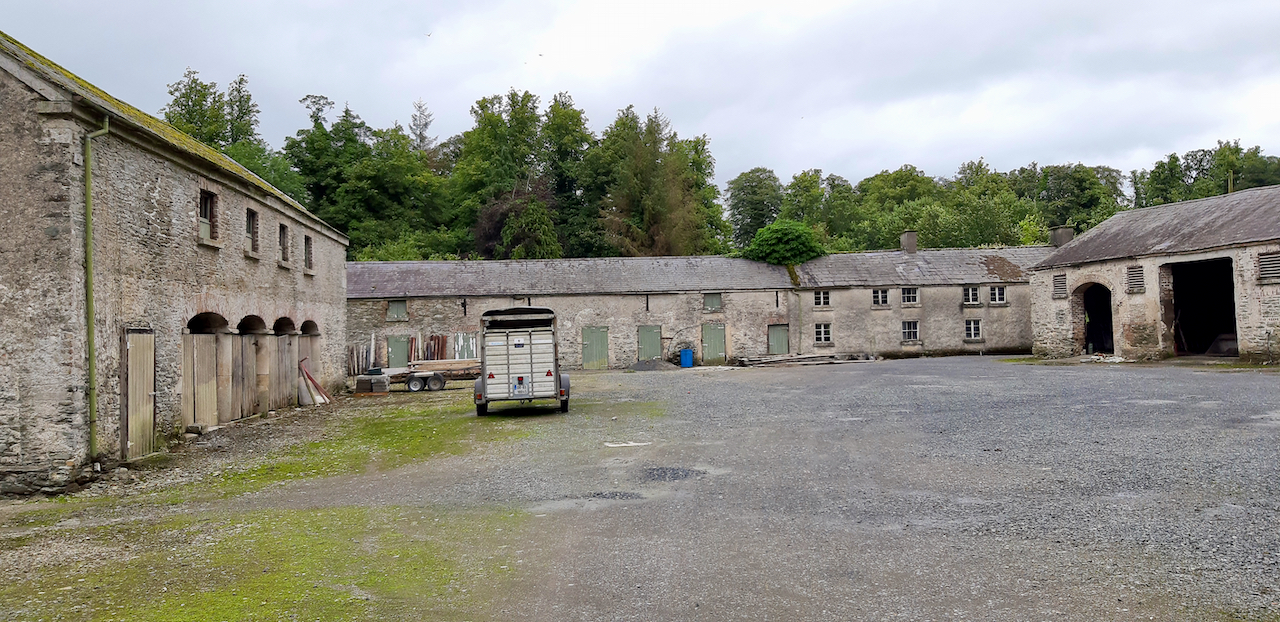
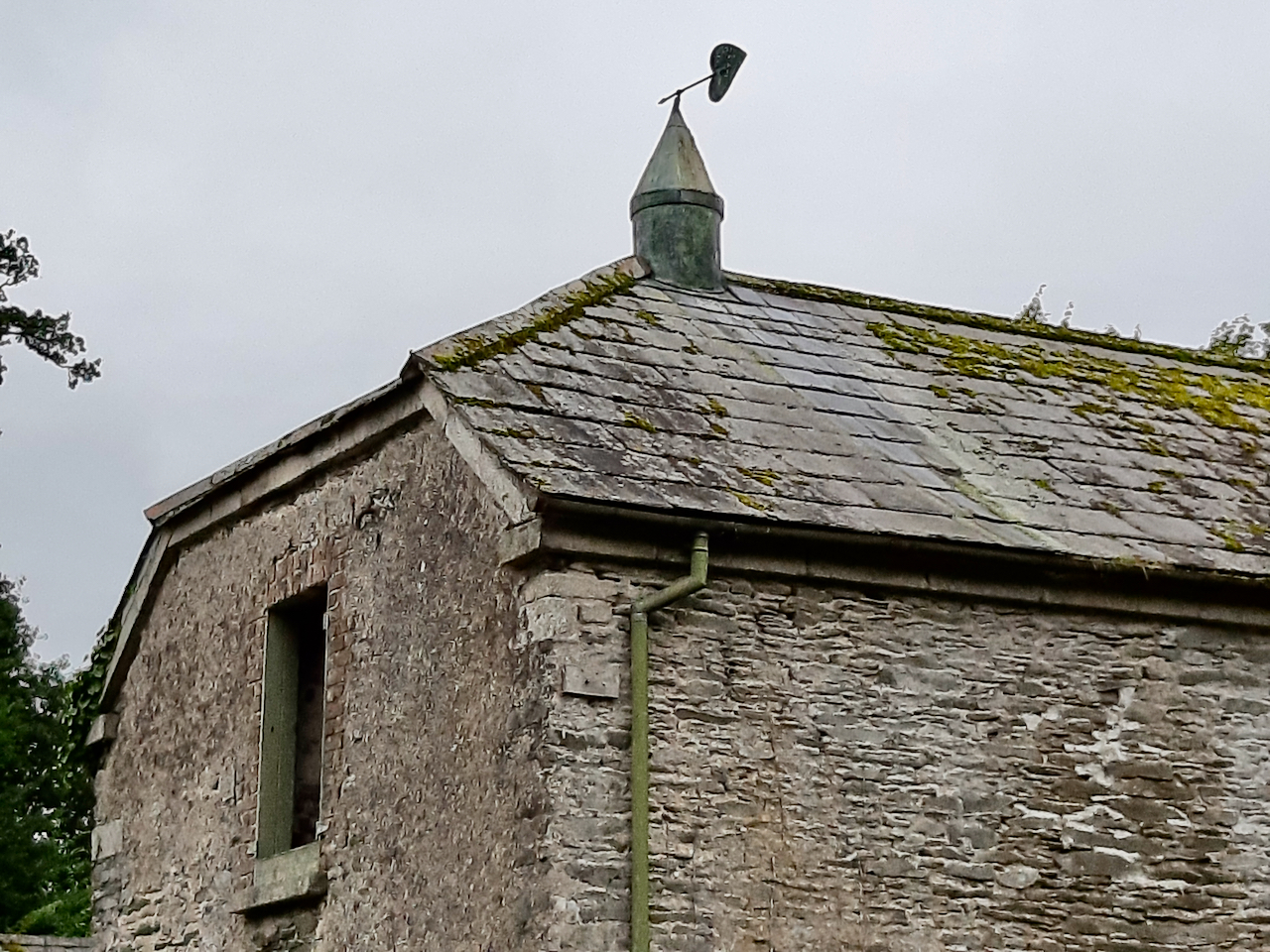
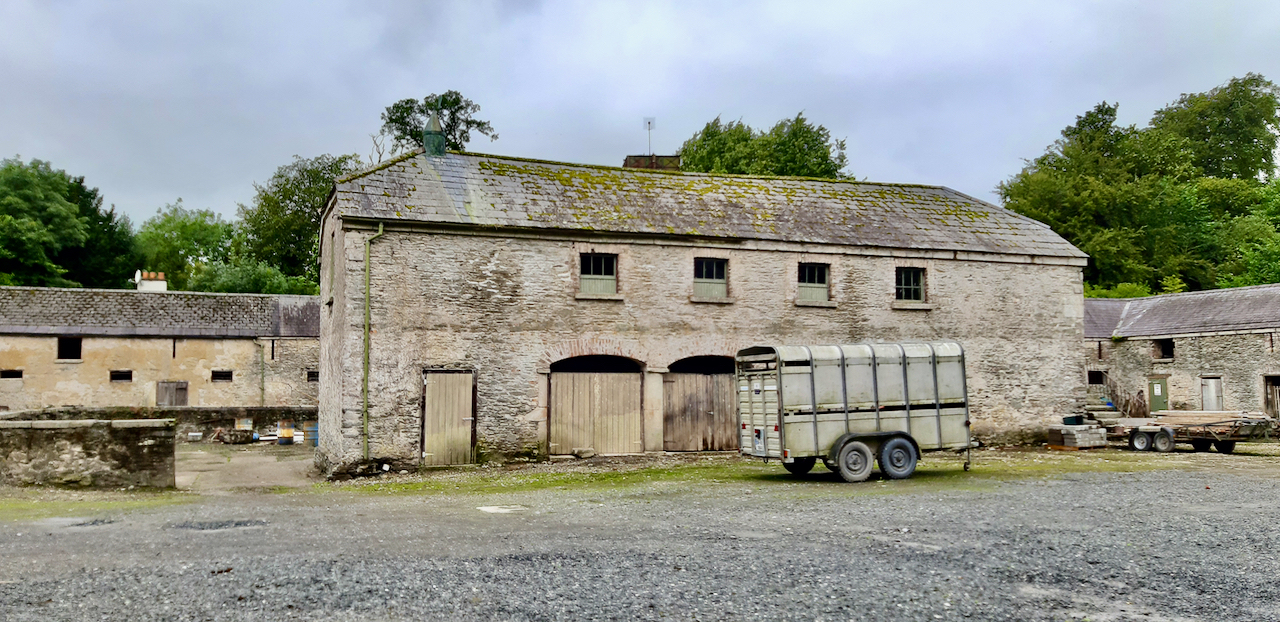
After our tour, Mr. Beaumont invited us to explore outside. We wandered over to the farmyard first, which has marvellous old barns, and a beautiful weather vane.

Harristown, County Kildare. Photograph © Jennifer Winder-Baggot, www.irishhistorichouses.com
Harristown, August 2019. Photograph © Jennifer Winder-Baggot, www.irishhistorichouses.com

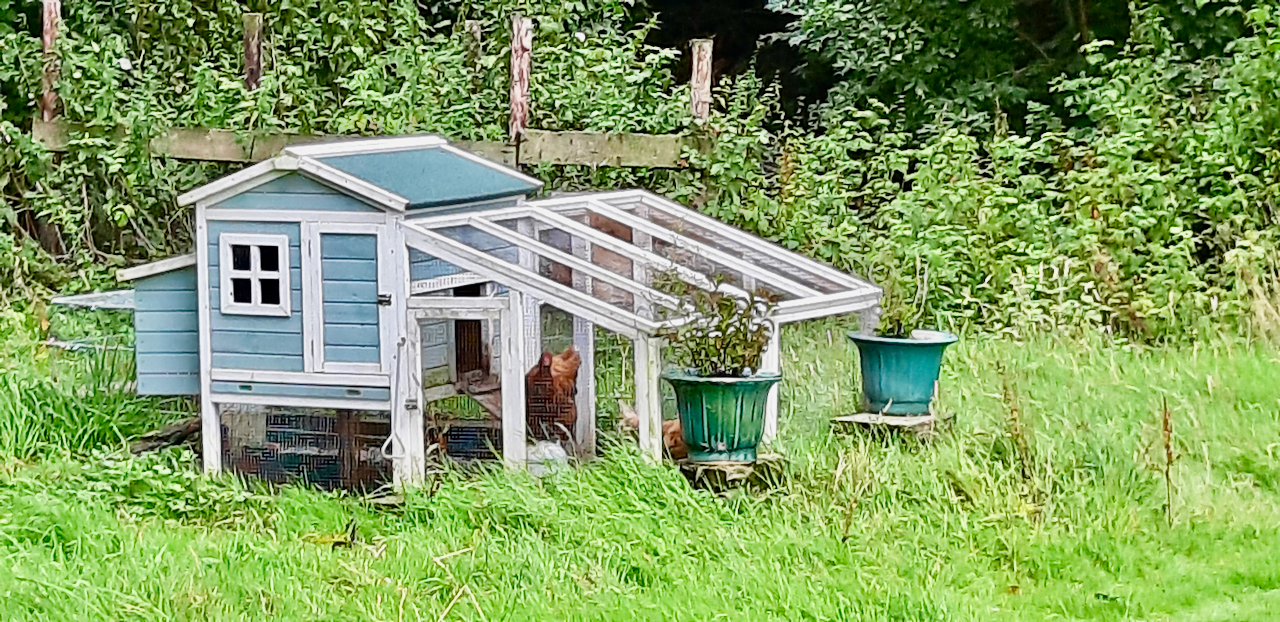
There is extra accommodation in a converted stableyard where Noella teaches English and French to live-in students. Some teenagers emerged when we were passing and we asked where we could find the walled garden. Noella followed them out, welcomed us, and pointed us in the right direction. We walked along a grassy path past a delightful henhouse – the hens also have their own portico!

Harristown, August 2019. Photograph © Jennifer Winder-Baggot, www.irishhistorichouses.com

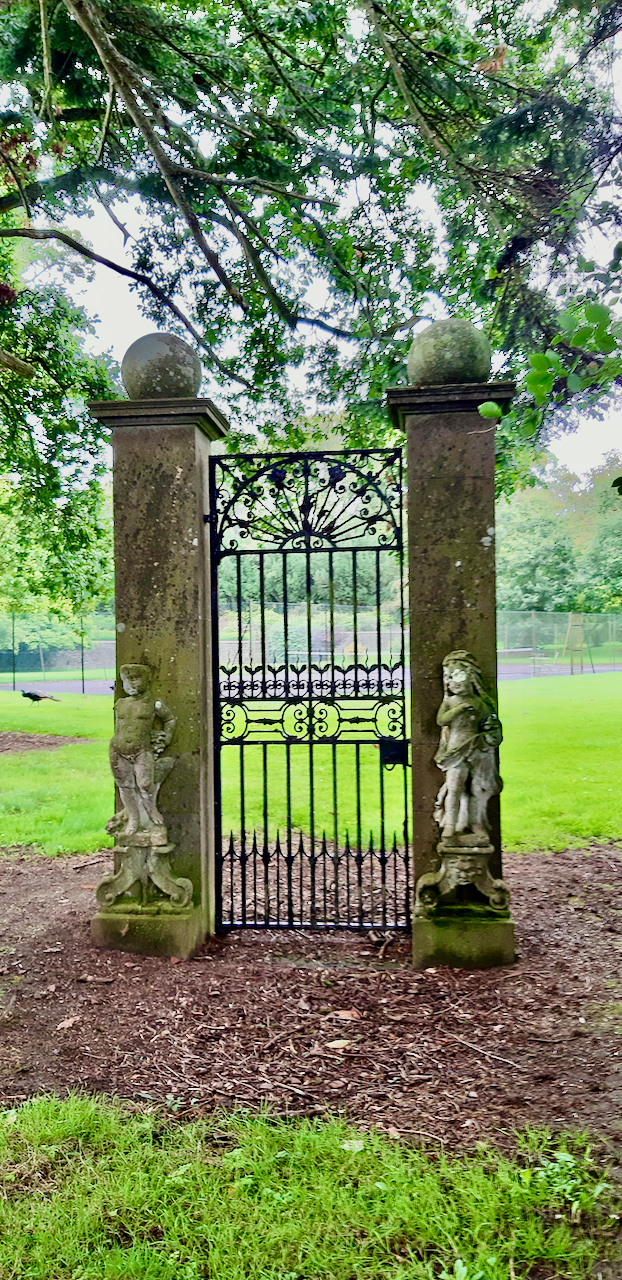
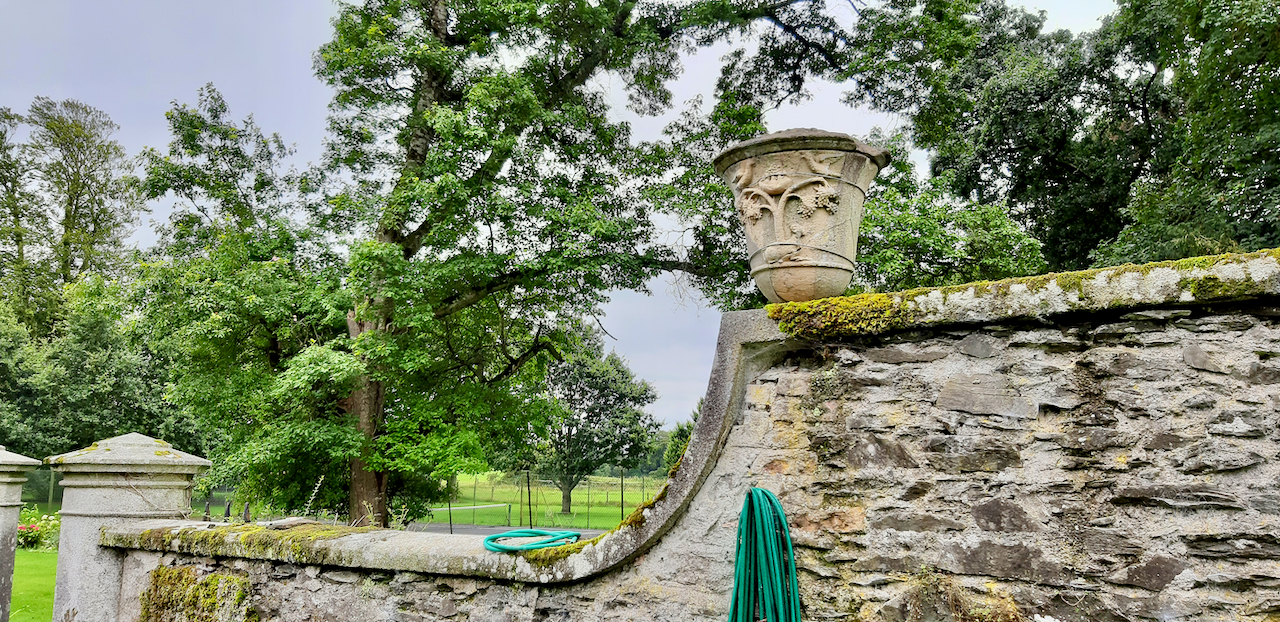
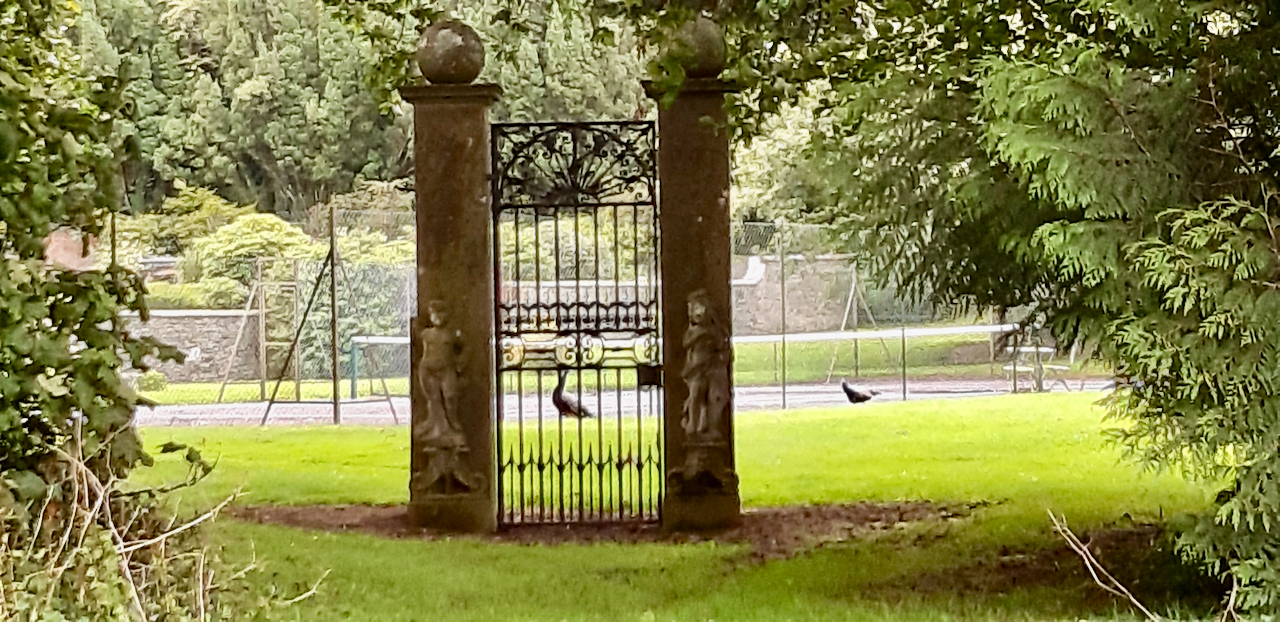
We passed the tennis court, and an odd random gate featuring two cherubs.

Harristown, County Kildare. Photograph © Jennifer Winder-Baggot, www.irishhistorichouses.com
Harristown, August 2019. Photograph © Jennifer Winder-Baggot, www.irishhistorichouses.com

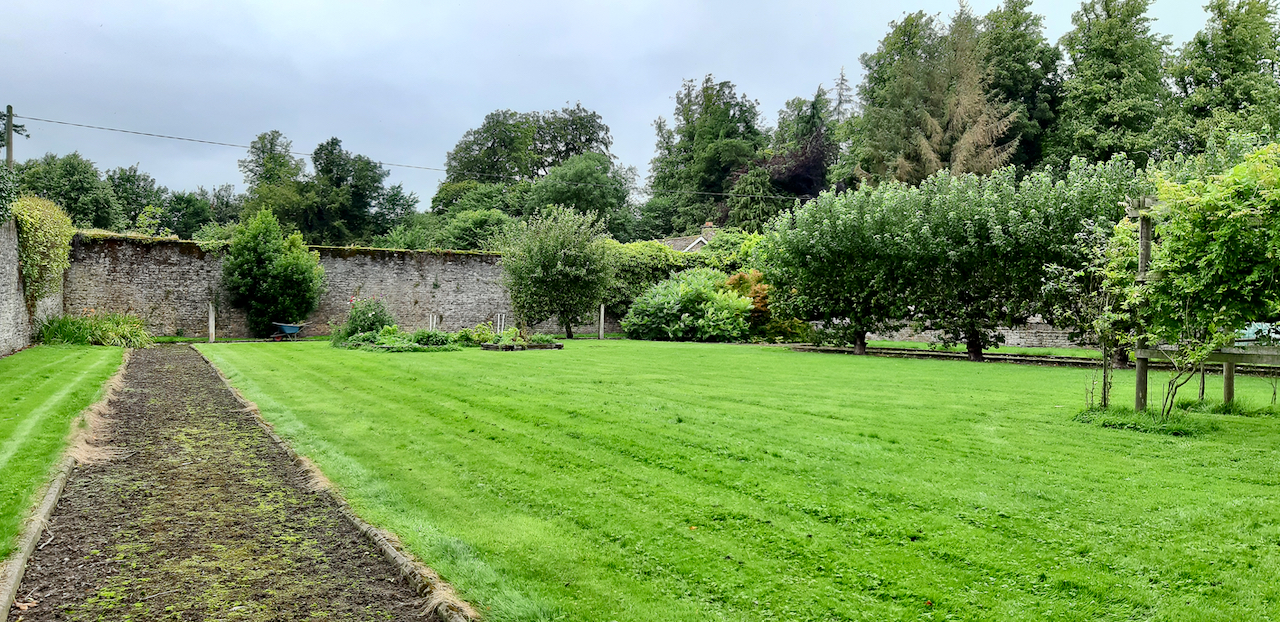
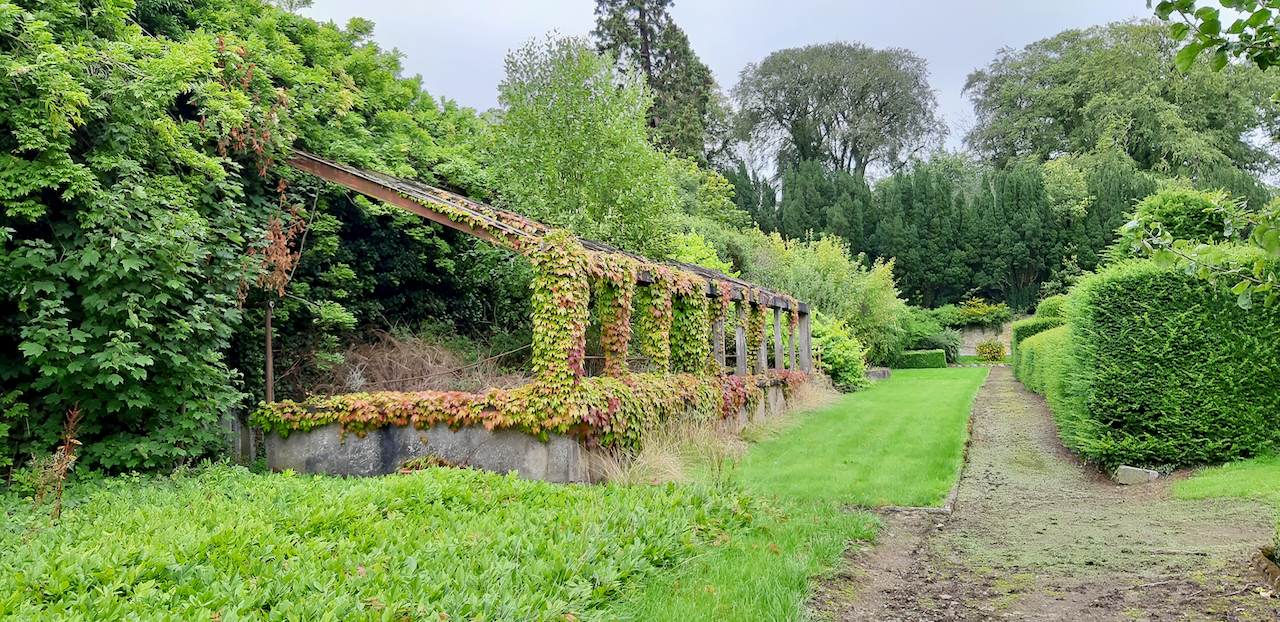
The walled garden was beyond the tennis court.

Harristown, County Kildare. Photograph © Jennifer Winder-Baggot, www.irishhistorichouses.com
Harristown, August 2019. Photograph © Jennifer Winder-Baggot, www.irishhistorichouses.com

[1] http://www.dippam.ac.uk/eppi/documents/10925/page/244850

[2] Mark Bence-Jones, A Guide to Irish Country Houses (originally published as Burke’s Guide to Country Houses volume 1 Ireland by Burke’s Peerage Ltd. 1978); Revised edition 1988 Constable and Company Ltd, London.

[3] http://latouchelegacy.com/page15.php

[4] https://en.wikipedia.org/wiki/Maurice_Eustace_(Lord_Chancellor)

[5] https://en.wikipedia.org/wiki/Benjamin_Chetwood

[6] https://en.wikipedia.org/wiki/Harristown,_Naas_South

[7] www.dlrevents.ie

[8] https://www.buildingsofireland.ie/buildings-search/building/60220011/marlay-house-grange-road-co-dun-laoghaire-rathdown

[9] Young, M.F. “The La Touche Family of Harristown,” Journal of the Kildare Archaological Society, volume 7. 1891. https://archive.org/details/journalofcountyk07coun/page/36/mode/2up

[10] p. 129. Bunbury, Turtle and Art Kavanagh, The Landed Gentry & Aristocracy of County Kildare. Published by Irish Family Names, 11 Emerald Cottages, Grand Canal St., Dublin 4 and Market Square, Bunclody, Co. Wexford, Ireland, 2004.

[11] https://www.dia.ie/architects/view/1412#tab_biography

[12] https://en.wikipedia.org/wiki/Rose_La_Touche

[13] a different view of the marriage and annulment between Ruskin and Effie Gray is discussed in the following article, a review of a book that claims that Ruskin did not consummate the marriage with Effie Gray because he learned that she married him for money and not love. https://www.theguardian.com/books/2013/mar/29/ruskin-effie-marriage-inconvenience-brownell

[14] p. 137, Bunbury, Turtle and Art Kavanagh, The Landed Gentry & Aristocracy of County Kildare. Published by Irish Family Names, 11 Emerald Cottages, Grand Canal St., Dublin 4 and Market Square, Bunclody, Co. Wexford, Ireland, 2004.

[15] https://www.harristownhouse.ie/en/our-history

Text © Jennifer Winder-Baggot, www.irishhistorichouses.com