Today I am continuing to publish the portraits I have gathered so far. I’ll be adding to this list as I go. Eventually I hope to create a new website with a virtual gallery of portraits. Maybe we can find a home for an in-person museum at some point! Wouldn’t the Bank of Ireland on College Green, the former Parliament House, make a wonderful building for a National Portrait Gallery?
Also, I notice that we can welcome a new property to the Section 482 list:
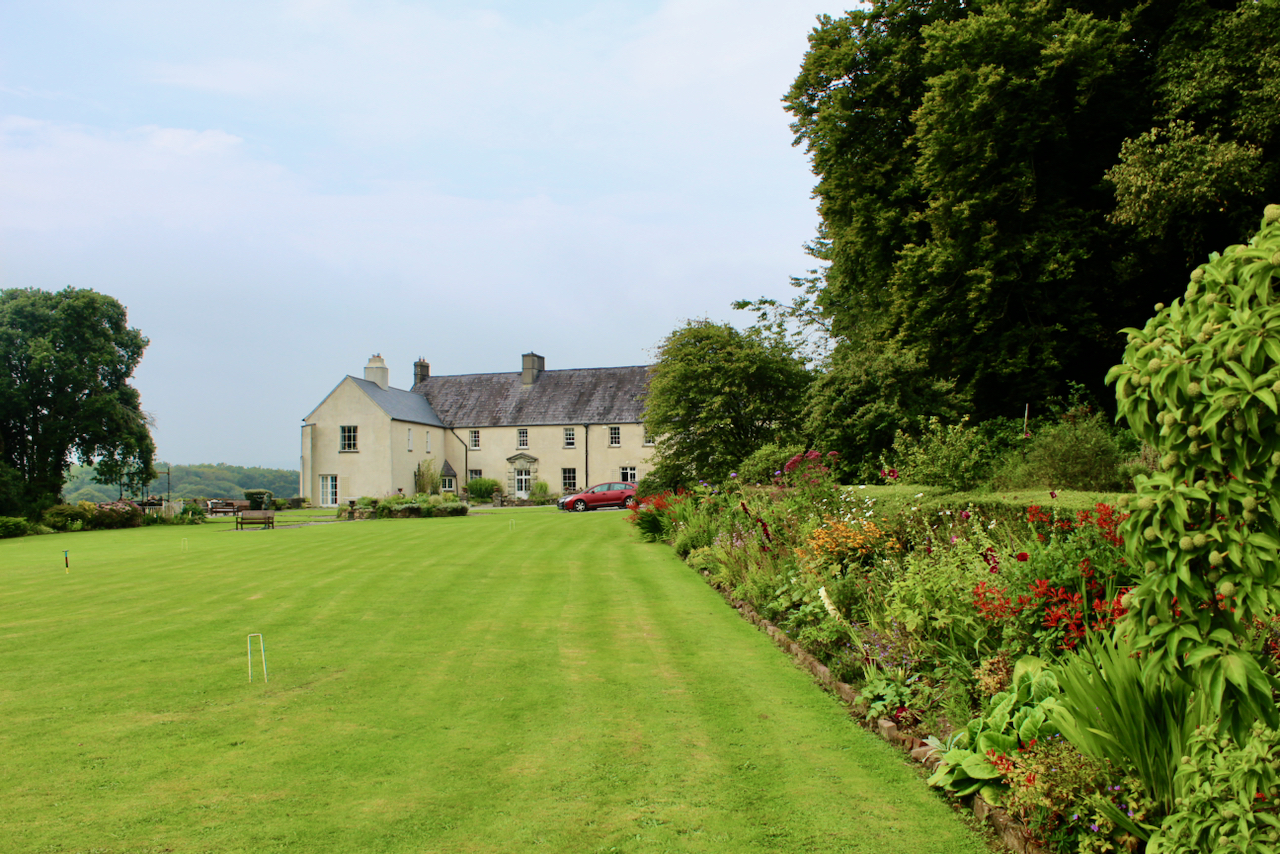
Millbrook House Kilkea, Beaconstown, Castledermot, Co. Kildare R14Y319 Open dates in 2024: May 17- 31, Aug 12-31, Sept 7-16, Dec 17-31, 9am-1pm Fee: Adult €8, student/OAP/groups €5
I look forward to visiting!
I usually like to publish a new post every Thursday, but I’m publishing one today as I’ll hopefully publish another tomorrow! I still have eighteen properties I have already visited to write up, so I’m working away. Also I’m gearing up for Heritage week August 12-20th when I hope to visit as many properties as possible. All of the Section 482 properties, except those listed as “Tourist Accommodation” should be open, so I hope you get to visit some as well!
F
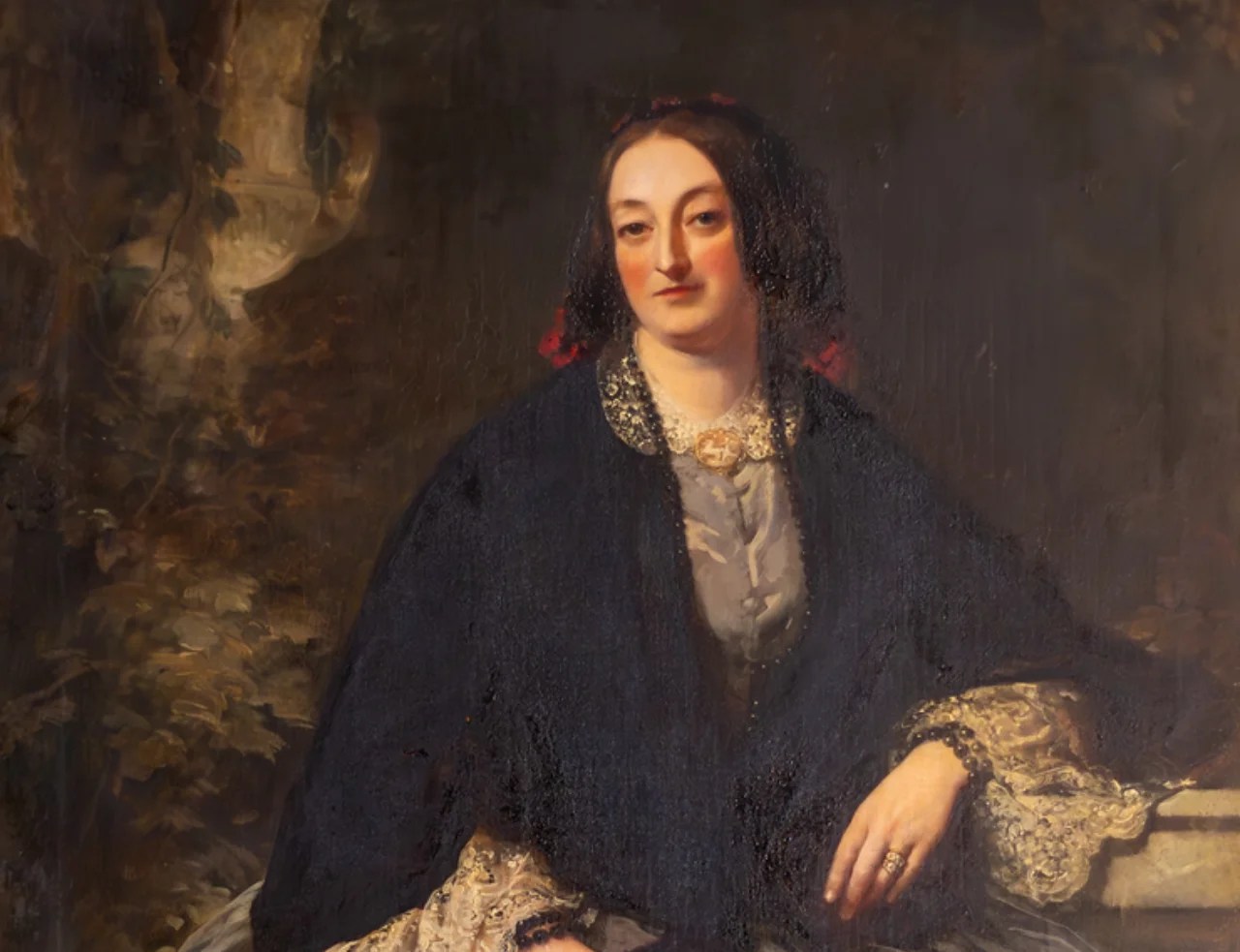
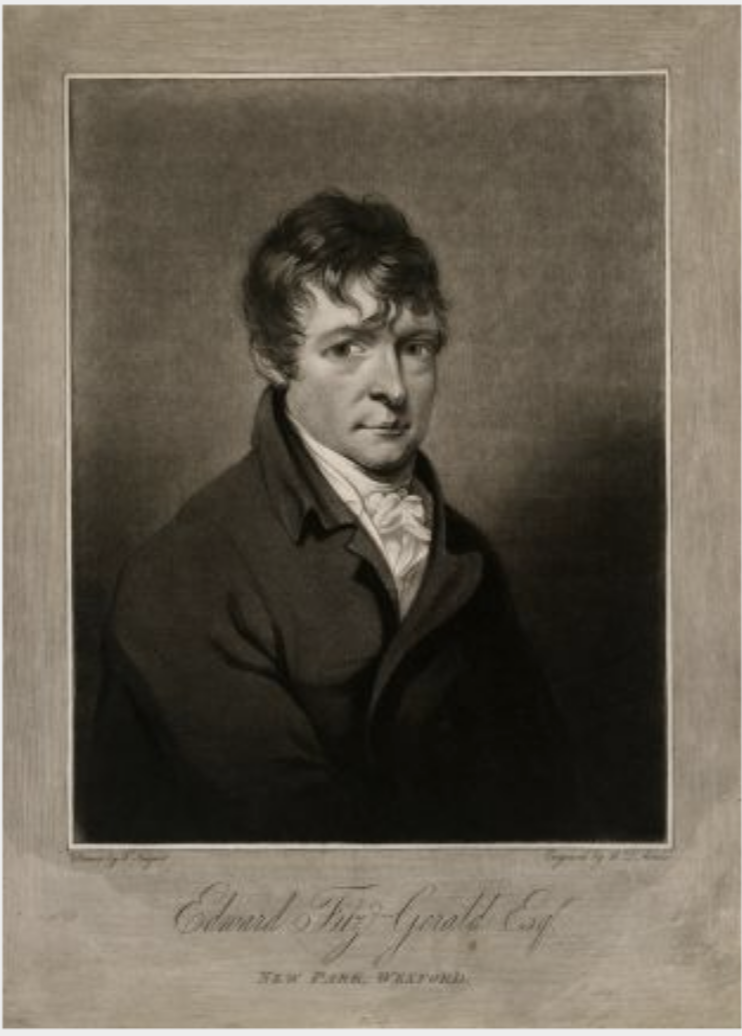
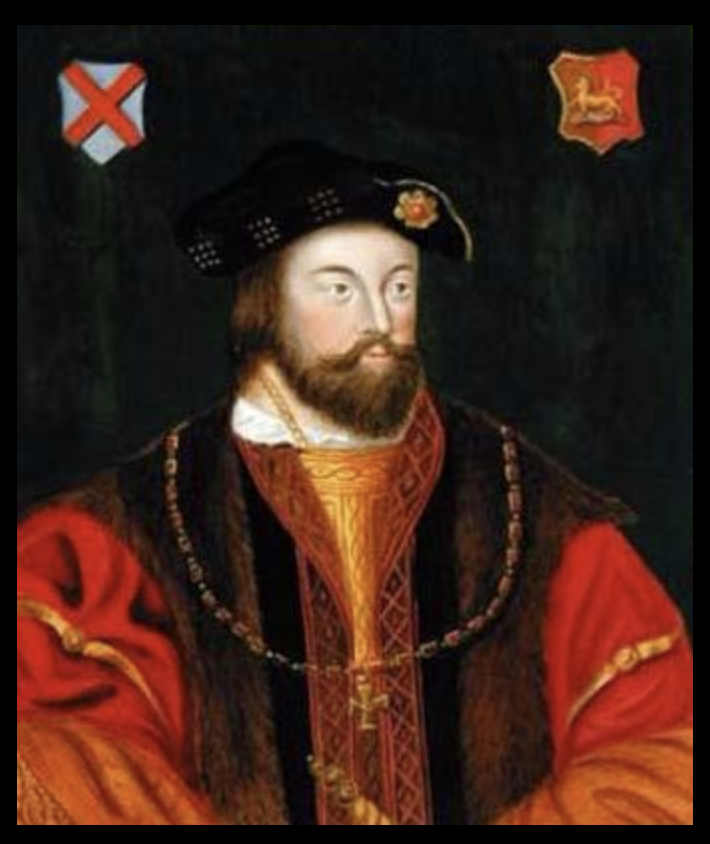
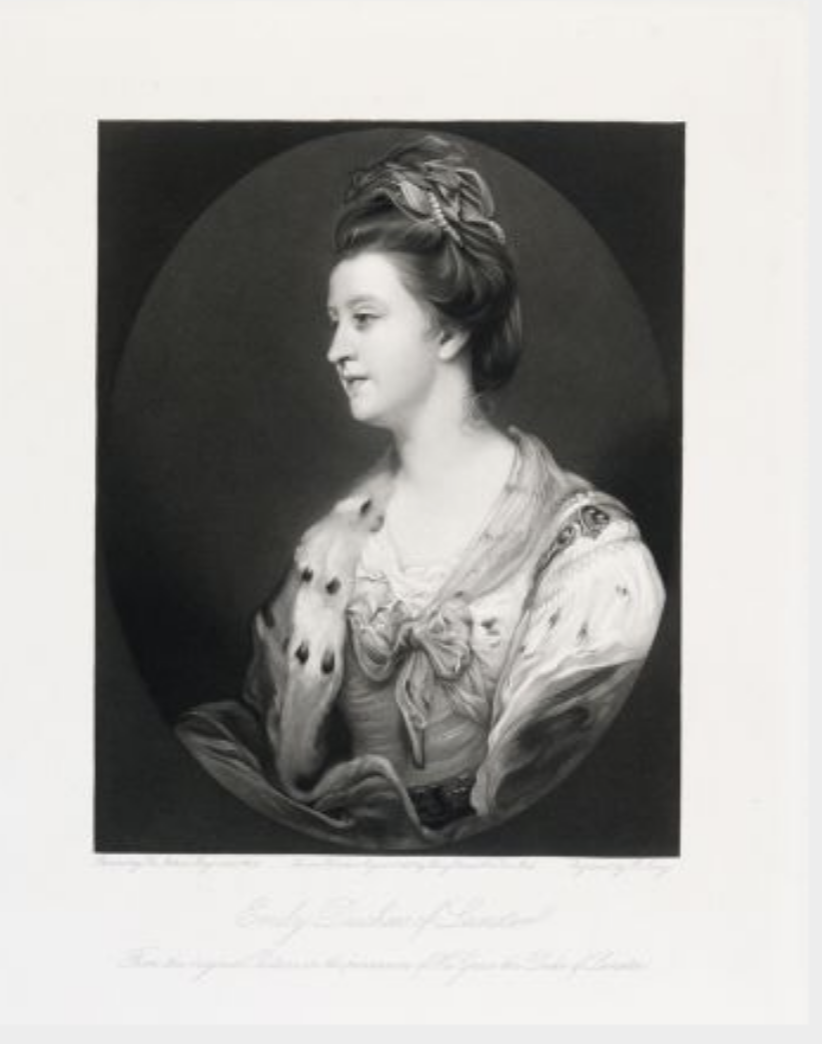
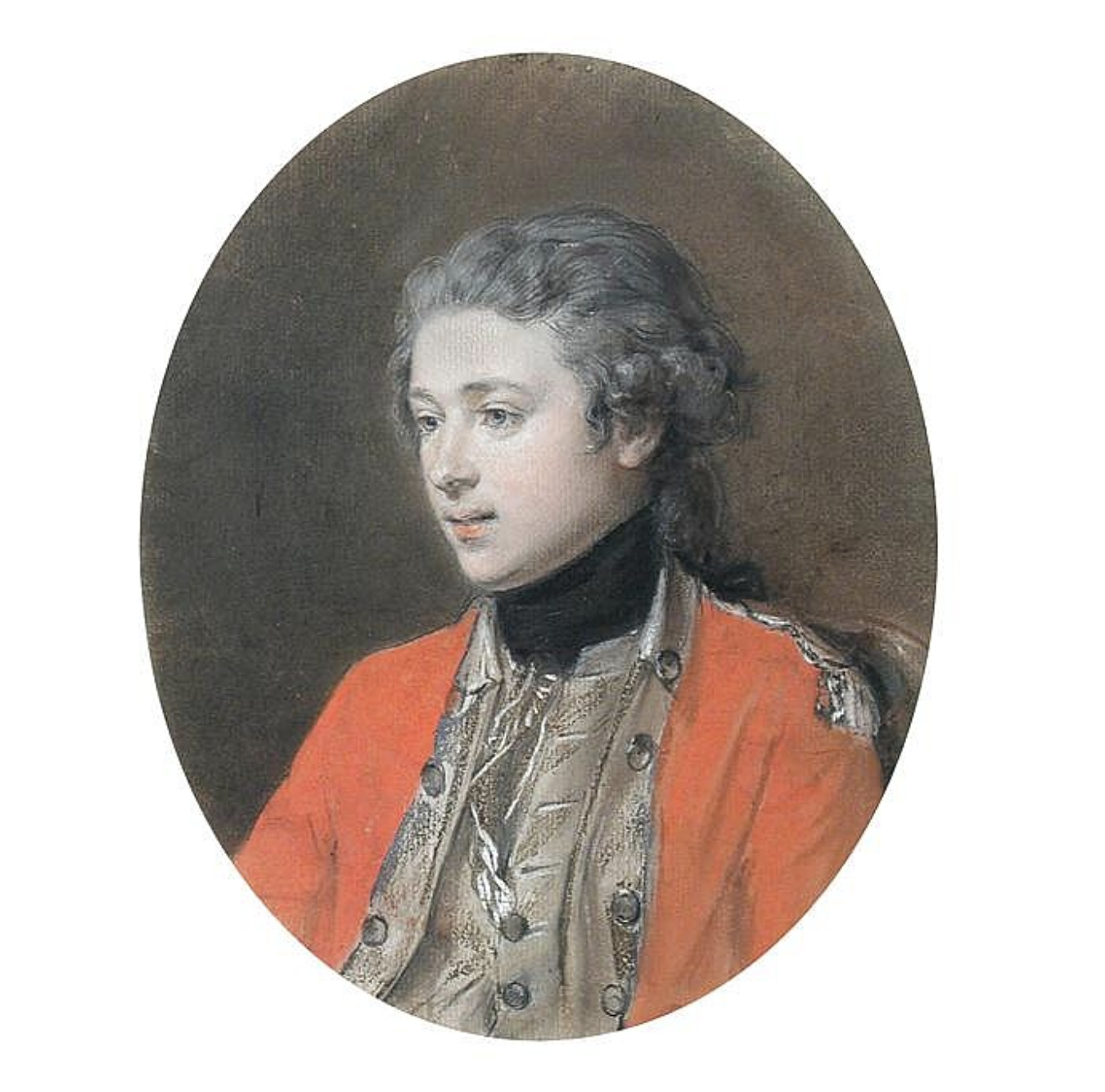
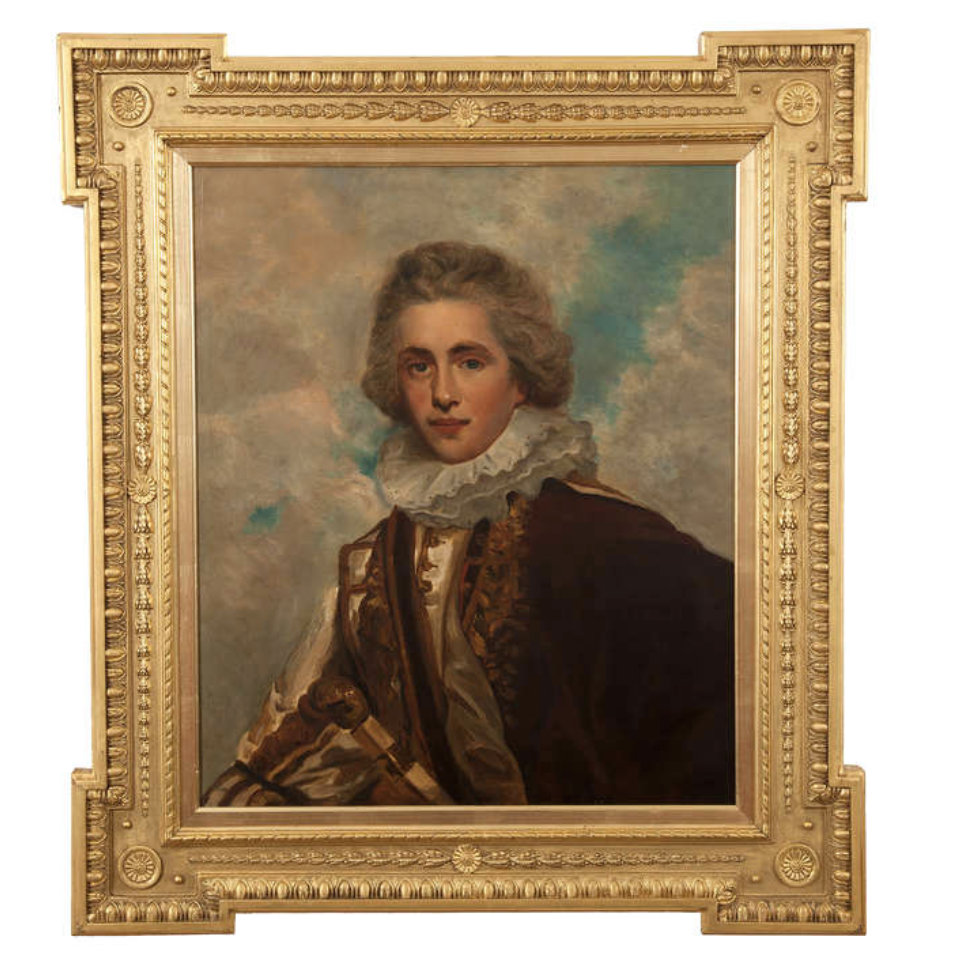
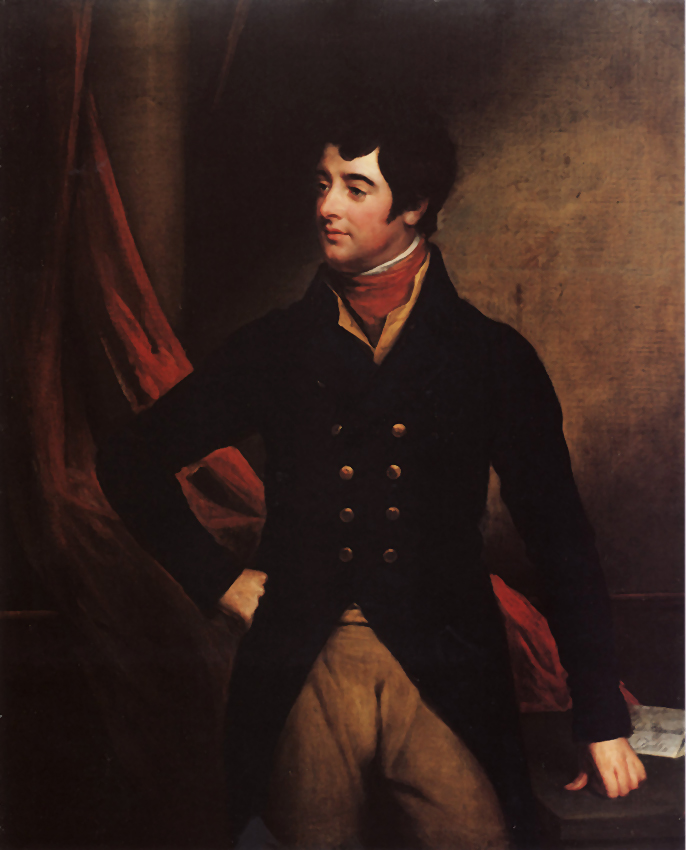
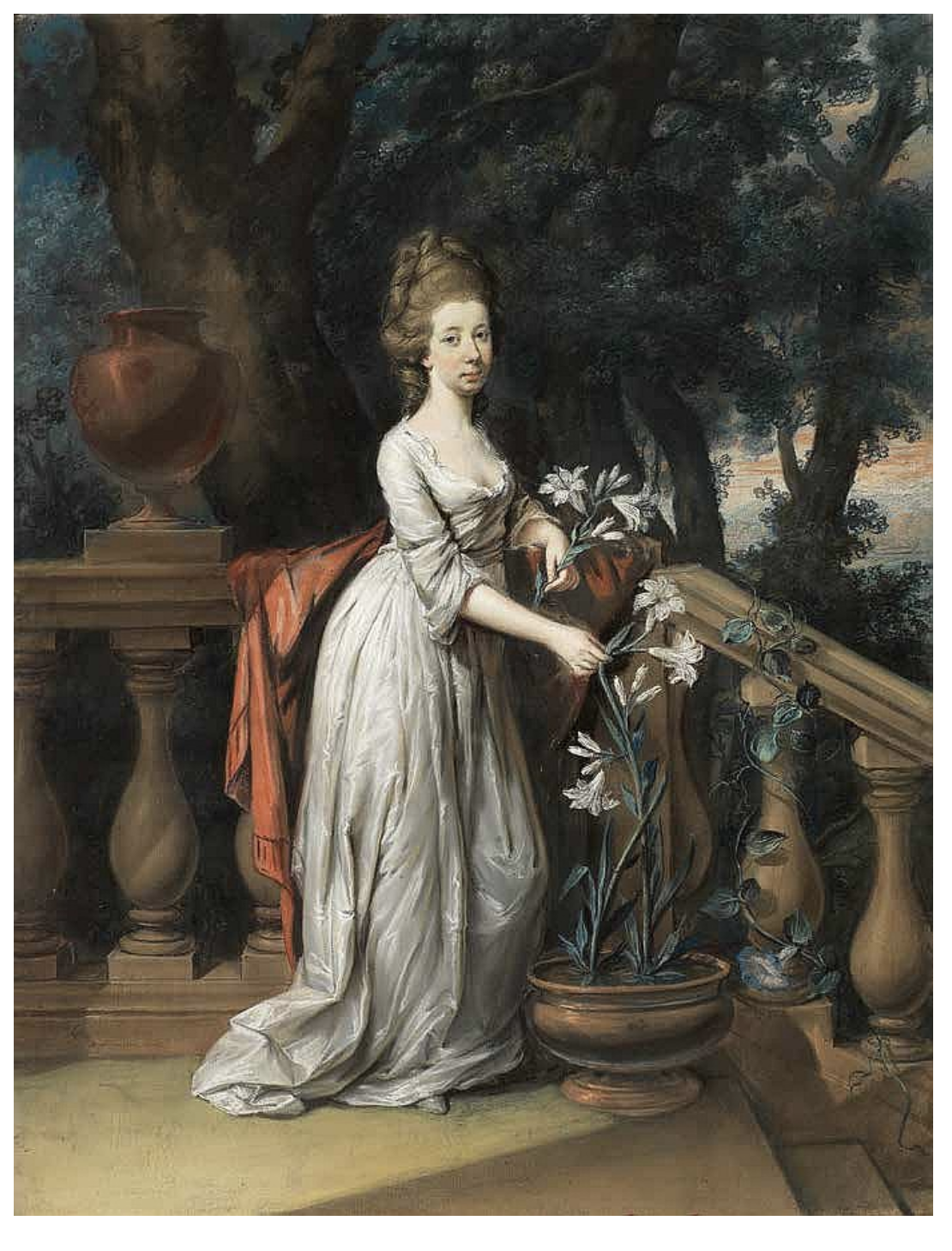
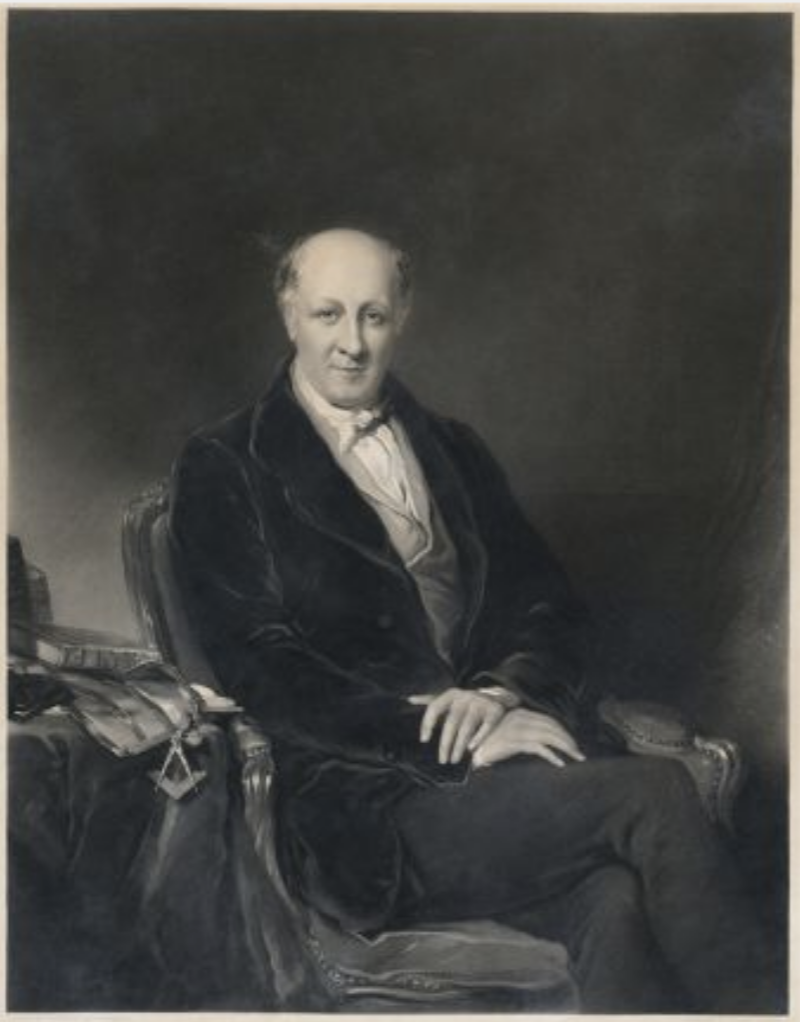
Mary Rosse, Countess of Rosse (née Mary Field) (1813-1885), painter unknown, photograph from Birr Archives, courtesy wikimedia commons.Mary Rosse, Countess of Rosse (née Mary Field) (1813-1885), painter unknown, photograph from Birr Archives, courtesy wikimedia commons.Edward Fitzgerald of New Park, County Wexford (1770-1807), Revolutionary Engraver W.T. Annis After Thomas Nugent, courtesy of National Gallery of Ireland.Gerald Fitzgerald (1487-1534) 9th Earl of Kildare, courtesy of Bodleian Libraries.
Gerald Fitzgerald (1487-1534) 9th Earl of Kildare was the son of Gerald FitzGerald, 8th Earl of Kildare and Alison Eustace. He married, first, Elizabeth Zouche (d. 1517).
Their daughter Catherine married Jenico Preston, 3rd Viscount Gormanston, and secondly, Richard St. Lawrence 6th Baron Howth. Their daughter Cecilia married Cahir Mac Art Boy Kavanagh, Baron of Ballyanne, The MacMorrough. Their daughter Ellis married James Fleming 9th Lord Slane. Their son Thomas Fitzgerald (1513-1536/7) became 10th Earl of Kildare.
Thomas FitzGerald (1513-1536/7) 10th Earl of Kildare, “Silken Thomas,” c. 1530 attributed to Anthony Van Dyck.He had no offspring.
Gerald Fitzgerald (1487-1534) 9th Earl of Kildare married secondly Elizabeth daughter of Thomas Grey 1st Marquess of Dorset, and they had several more children. Their daughter Elizabeth (1528-1589/90) married first Anthony Browne, Joint Keeper of Windsor Great Park on 29 January 1528/29, with his brother 1st Earl of Southampton. She married secondly Edward Clinton, 1st Earl of Lincoln. Gerald 9th Earl and Elizabeth had a son Gerald FitzGerald (1525-1585) who became 1st/11th Earl of Kildare. He was called ‘The Wizard Earl’. He held the office of Master of Horse to Cosimo de’ Medici, Duke of Florence.
A younger brother of the Wizard Earl, Edward (1528-1590), was the father of Gerald FitzGerald (d. 1611/12) 14th Earl of Kildare.
The 11th Earl, the Wizard Earl, married his cousin Mabel Browne. Their daughter Elizabeth (d. 1617) married Donough O’Brien 3rd Earl of Thomond. The 11th Earl’s daughter Mary (d. 1610) married Christopher Nugent 5th Baron Delvin.
A son of the 11th Earl, Henry (1562-1597) became the 12th Earl and was also known as “Henry of the Battleaxes.” He had only daughters so his brother became the 13th Earl. The 12th Earl’s daughter Elizabeth married Lucas Plunkett 1st Earl of Fingall. His daughter Bridget married first Ruaidhri O’Donnell, 1st Earl of Tyrconnell, then Nicholas Barnewall, 1st Viscount Barnewall of Kingsland.
William FitzGerald (d. 1599) 3rd/13th Earl of Kildare was another son of Gerald FitzGerald, 1st/11th Earl of Kildare. He died circa April 1599, lost at sea while crossing from England to Ireland, unmarried. The title went to his uncle Edward’s (1528-1590) son Gerald FitzGerald (d. 1611/12) who became 14th Earl of Kildare.
Gerald FitzGerald (d. 1611/12) 14th Earl of Kildare married Elizabeth daughter of Christopher Nugent, 5th Baron Delvin, who gave birth to Gerald FitzGerald (1611-1620) who became 15th Earl of Kildare. The 15th Earl died young. The title passed the 14th Earl’s younger brother’s son, George FitzGerald (1611/12-1660) who became 16th Earl of Kildare.
The 16th Earl married Joan Boyle (1611-1656/7), daughter of Richard Boyle 1st Earl of Cork. Their daughter Elizabeth (d. 1697/98) married Callaghan MacCarty, 3rd Earl of Clancarty. Their daughter Eleanor (d. 1681) married Walter Borrowes, 2nd Bt of Grangemellon, County Kildare. Their son Wentworth FitzGerald (1634-1663/64) became 17th Earl of Kildare.
The 17th Earl married Elizabeth daughter of John Holles, 2nd Earl of Clare.
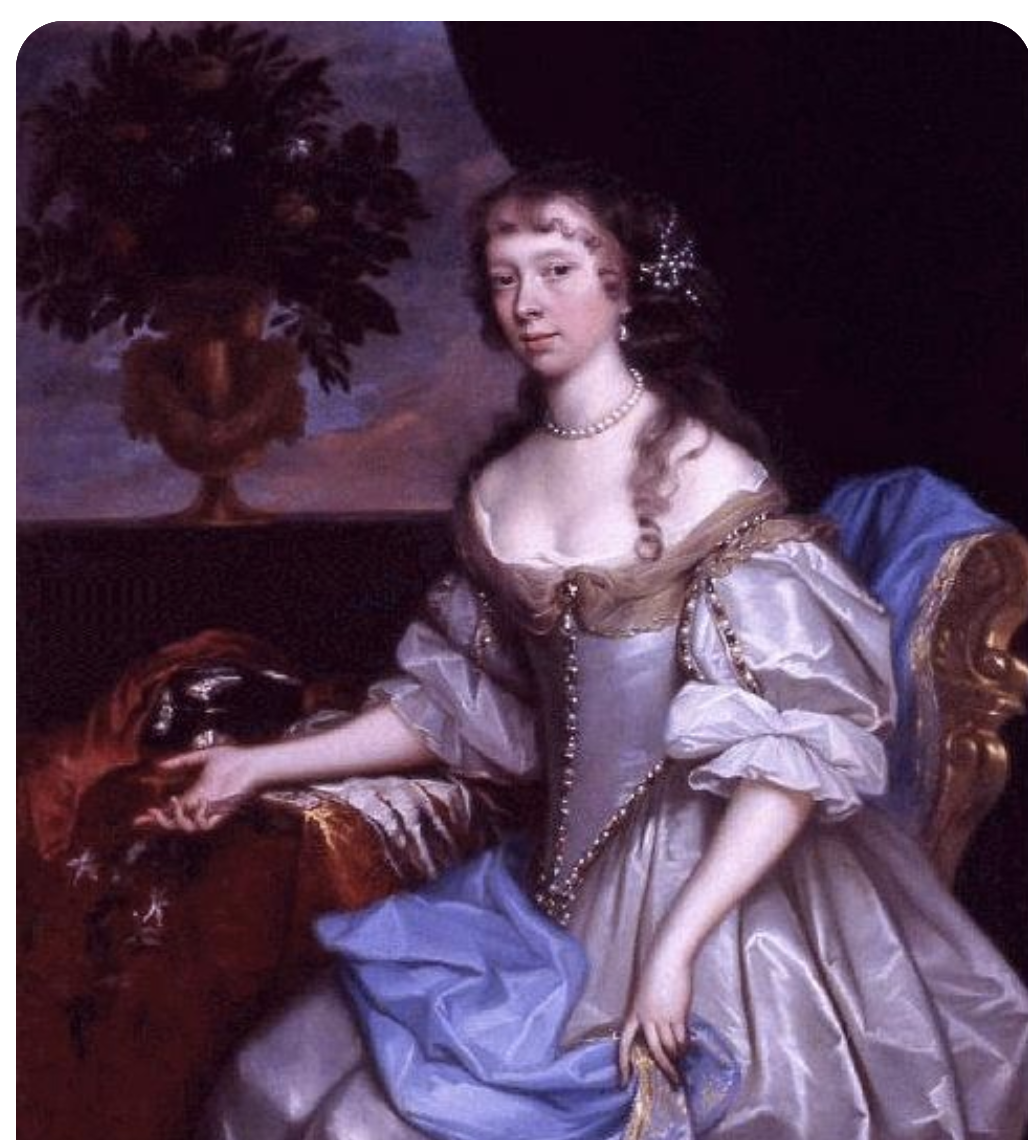
Elizabeth FitzGerald, née Holles, Countess of Kildare, 1660, by John Michael Wright, wife of Wentworth Fitzgerald 17th Earl of Kildare.
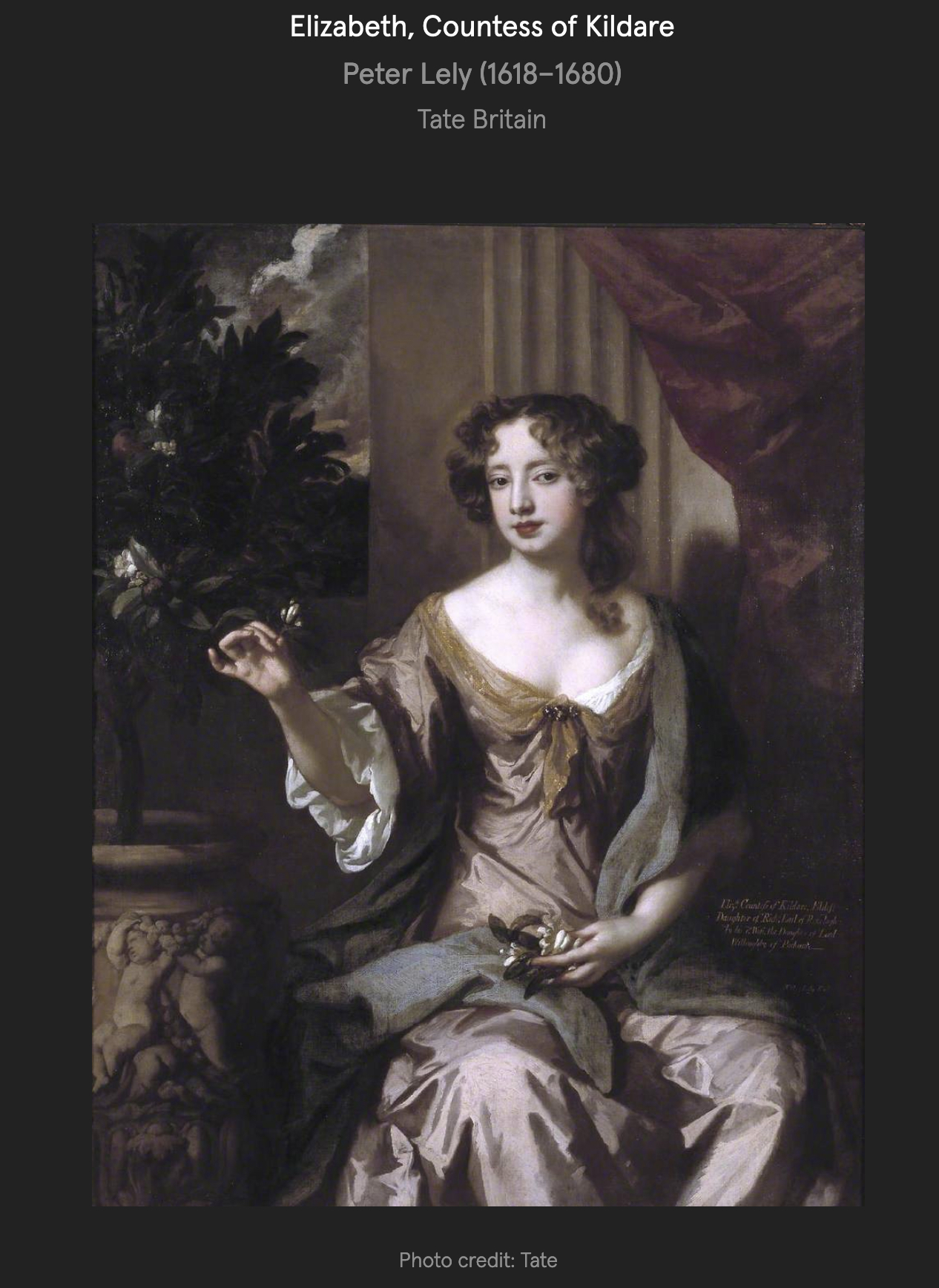
Elizabeth and the 17th Earl of Kildare had a son, John FitzGerald (1661-1707) who became 18th Earl of Kildare. The 18th Earl married Mary O’Brien (1662-1683), daughter of Henry O’Brien (d. 1678) , MP for Clare. She gave birth to a son but he died in his first year. The 18th Earl then married Elizabeth daughter Richard Jones, 1st and last Earl of Ranelagh but they had no children.
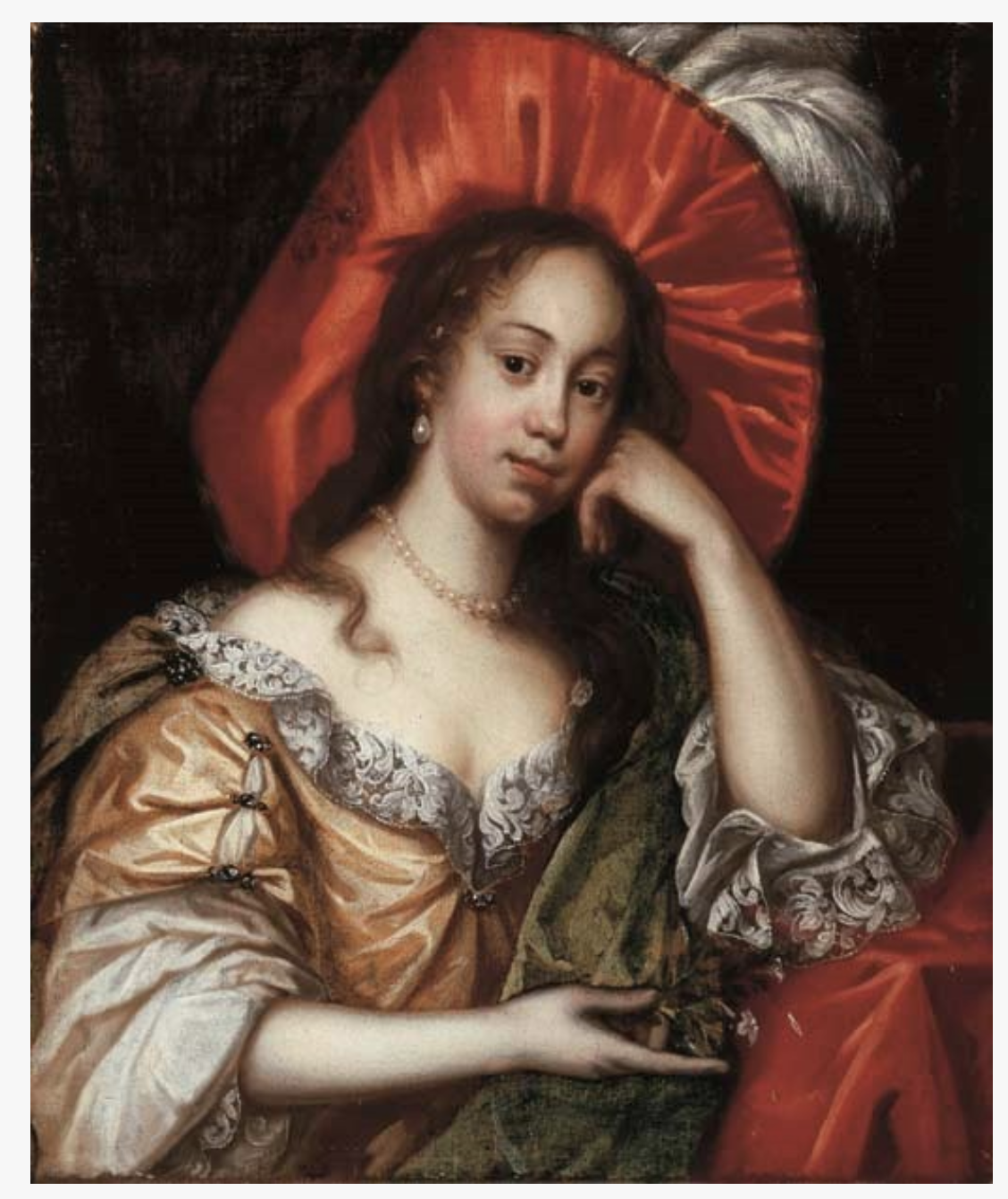
Elizabeth née Jones (d. 1758), Countess of Kildare wife of 18th Earl, daughter of Richard Jones 1st Earl of Ranelagh by Peter Lely.Traditionally identified as Lady Elizabeth Jones, Countess of Kildare (1665-1758), English school c. 1680 courtesy Christies Irish Sale 2003
The title passed to a cousin, Robert Fitzgerald (1675-1744), who became 19th Earl of Kildare. He was the son of Robert Fitzgerald (d. 1697/98), a younger son of George Fitzgerald 16th Earl of Kildare. The 19th Earl’s sister Mary (1666-1697) married John Allen, 1st Viscount Allen of County Kildare.
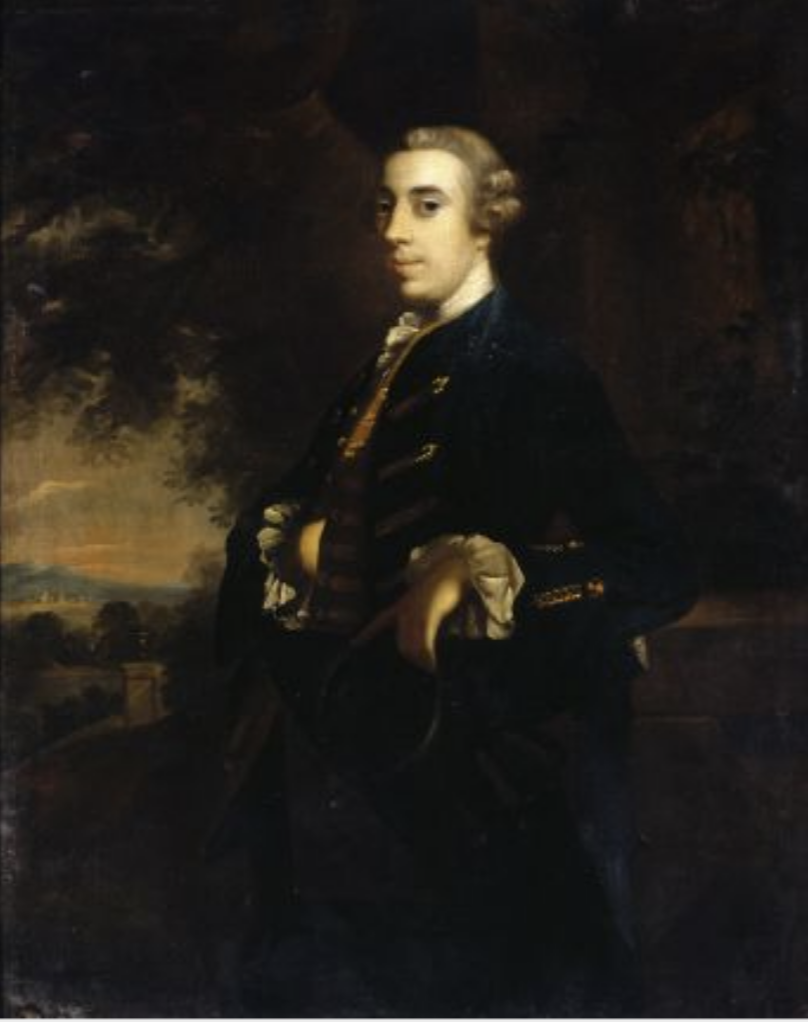
Robert, 19th Earl of Kildare (1675-1744) after Frederick Graves, courtesy of Adam’s auction 15th Oct 2019. Robert FitzGerald was married to Mary O’Brien, daughter of William O’Brien 3rd Earl of Inchiquin. They had 12 children but only 2 survived to majority. They had lived quietly at Kilkea Castle, near Athy, but in 1739 Robert bought back the lease of Carton, in Maynooth, for £8,000. He commissioned Richard Castle, the eminent architect, to reconstruct the existing house. In the pediment over the South front, previously the main entrance, is the coat of arms of Robert FitzGerald and his wife Mary O’Brien. Robert also employed the La Franchini brothers to construct the wonderful ceiling in the Gold Salon. The additions to Carton were not finished when Robert died in 1744 but he left instructions in his will to finish the restoration according to his plans. A monument dedicated to Robert FitzGerald is situated in Christ Church Cathedral, Dublin.(This portrait hung in Carton until 1949 when the Fitzgerald family sold the estate. It hung in Kilkea Castle until 1960. It was in the FitzGerald family collection in Oxfordshire until 2013.)
Robert FitzGerald 19th Earl of Kildare married Mary O’Brien, daughter of William O’Brien 3rd Earl of Inchiquin. Their daughter Margaretta (d. 1766) married Wills Hill, 1st Earl of Hillsborough, Co. Down, 1st Marquess of Downshire.
Margaretta Fitzgerald (d. 1766) Countess of Hillsborough, daughter of Robert Fitzgerald, 19th Earl of Kildare, attributed to Charles Jervas, courtesy of Fonsie Mealy auction.She married Wills Hill, 1st Earl of Hillsborough, Co. Down, 1st Marquess of Downshire.
A son of Robert 19th Earl and Mary was Richard Fitzgerald who lived at Mount Ophaly in County Kildare and married Margaret (d. 1763) daughter of James King, 4th Baron Kingston. Their other son was James FitzGerald (1722-1773) who became 20th Earl of Kildare and later, 1st Duke of Leinster.
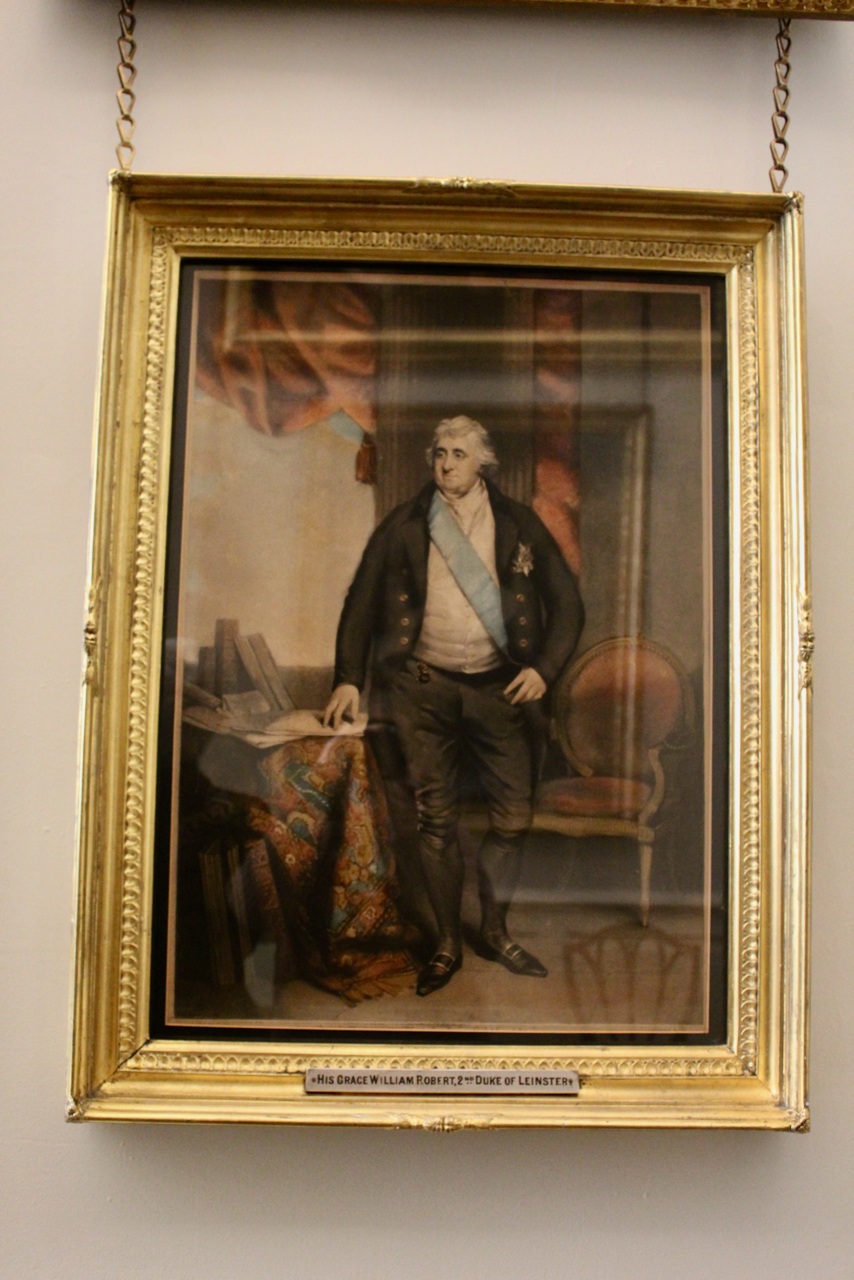
James Fitzgerald (1722-1773) 20th Earl of Kildare later 1st Duke of Leinster married Emilia Mary née Lennox (1731-1814), daughter of Charles Lennox, 2nd Duke of Richmond. They had many children, including William Robert Fitzgerald (1749-1804), 2nd Duke of Leinster.
Thomas Fitzgerald (d. 1730/31) was the son of Gerald Fitzgerald (d. 1689) 17th Knight of Glin and Joan daughter of Donough O’Brien of Carrigogunnell Castle, County Limerick. Gerald 17th Knight held the office of Member of Parliament (M.P.) for Limerick City in 1661, and High Sheriff of Limerick in 1680. He fought in the Battle of Windmill Hill in 1689, after the Siege of Derry. He was Member of Parliament (M.P.) for County Limerick in 1689, in King James II Patriot Parliament.
Thomas Fitzgerald (d. 1730/31) 18th Knight of Glin obtained a Certificate in 1701 for not having taken part in the wars of King James II, although he was an active supporter of Jacobite cause. In 1713/14 he was one of the Catholic nobility of Ireland licensed to carry arms. [1] His wife Mary née Fitzgerald of Ballymartyr gave birth to, among other children, the 19th, 20th, 21st and 22nd Knights of Glin. A daughter, Catherine (d. 1759) married first Thomas Freke Crosbie and second, Robert Fitzgerald, 17th Knight of Kerry.
John Fitzgerald (d. 1737) 19th Knight of Glin courtesy of The Knights of Glin: A Geraldine family, by J. Anthony Gaughan (1978).Edmond Fitzgerald (d. 1763) 20th Knight of Glin, a brother of the 19th, 21st and 22nd Knights of Glin.Richard Fitzgerald (1710-1775) 21st Knight of Glin, by Heroman Van Der Mijn, photograph courtesy of Glin Castle website.He conformed to the Protestant faith. He had only daughters so the title passed to his brother.Thomas Fitzgerald, 22nd Knight of Glin By Philip Hussey courtesy ofhttps//:theirishaesthete.com/tag/knight-of-glin/, Public Domain, commons.wikimedia.org/w/index.php?curid=81941595
Thomas Fitzgerald (d. 1781) 22nd Knight of Glin married Mary Bateman. She gave birth to his heir, John Bateman FitzGerald (d. 1803) who became 23rd Knight of Glin. His wife Margaretta Maria Gwyn (d. 1801) gave birth to their heir, John Fraunceis FitzGerald (1791-1854) 24th Knight of Glin.
Glin Castle, photograph courtesy of Glin Castle website.The picture of Colonel John Bateman FitzGerald (1765-1803) the 23rd Knight of Glin, the builder of the house, wearing the uniform of his volunteer regiment the Royal Glin Artillery. In his portrait, which hangs over the Portland stone chimneypiece, he is proudly pointing at his cannon.Photograph courtesy of Glin castle website.The portrait is Margaretta Maria Gwyn (1769-1801), wife of John Bateman Fitzgerald (1765-1803) 23rd Knightof Glin, I believe.John Fraunceis Fitzgerald (1803-1854), “Knight of the Women,” the 24th Knight, photograph courtesy of the castle website.
As well as the Earls of Kildare, who became Dukes of Leinster, and Knights of Glin, Fitzgeralds were also Lords of the Decies, and Knights of Kerry, and Earls of Desmond.
Maurice FitzGerald (d. 1729) 14th Knight of Kerry fought for King James II in the Battle of the Boyne. He married Elizabeth Crosbie, who gave birth to their heir, John FitzGerald (d. 1741) who became 15th Knight of Kerry.
John FitzGerald (d. 1741) 15th Knight of Kerry had a son Maurice (d. 1780) who became 16th Knight of Kerry, and a daughter Elizabeth who married Richard Townsend of Castletownshend in County Cork.
Maurice (d. 1780) 16th Knight of Kerry married Anna Maria, daughter of William FitzMaurice, 2nd Earl of Kerry. They did not have children, and Maurice’s uncle Robert (1716-1781) became the 17th Knight of Kerry.
Open dates in 2026: June 1-30, Aug 15-31, Sept 1-19, Mon-Sun, 2pm-6pm
Fee: adult/OAP/student, house €14, garden €7, both €20, child under 12 years free, R.H.S.I members 50% reduction
donation
Help me to pay the entrance fee to one of the houses on this website. This site is created purely out of love for the subject and I receive no payment so any donation is appreciated!
On Sunday 5th May 2019, Stephen and I attended a day of talks in Dromana House on “Pursuit of the Heiress.” This is an apt topic for Dromana since the property passed down to the current generation via an heiress, Katherine FitzGerald (1660-1725). In fact, you could say that even in this generation the property was passed down through an heiress, or through the female line, as Barbara Grubb is the daughter of James Villiers-Stuart, descendent of the FitzGeralds of the Decies who originally built the house. “The Decies” is the county of Waterford west of the River Mahon.
We didn’t have a tour of the house on the day of the conference, so we returned during Heritage Week in 2020.
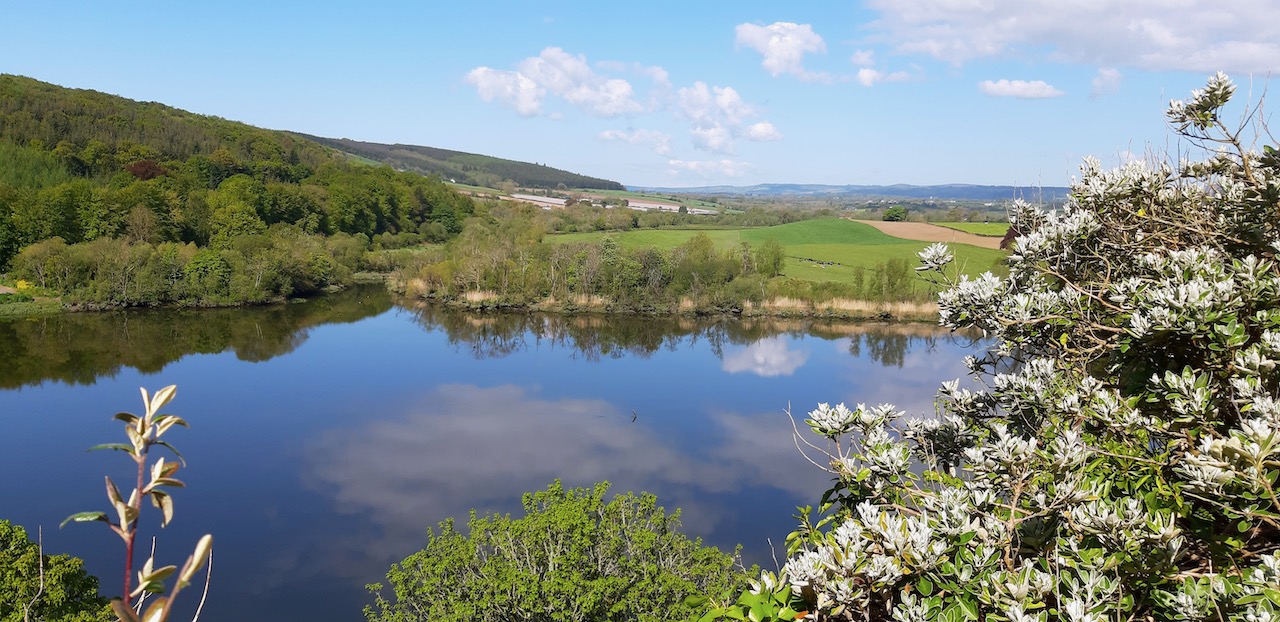
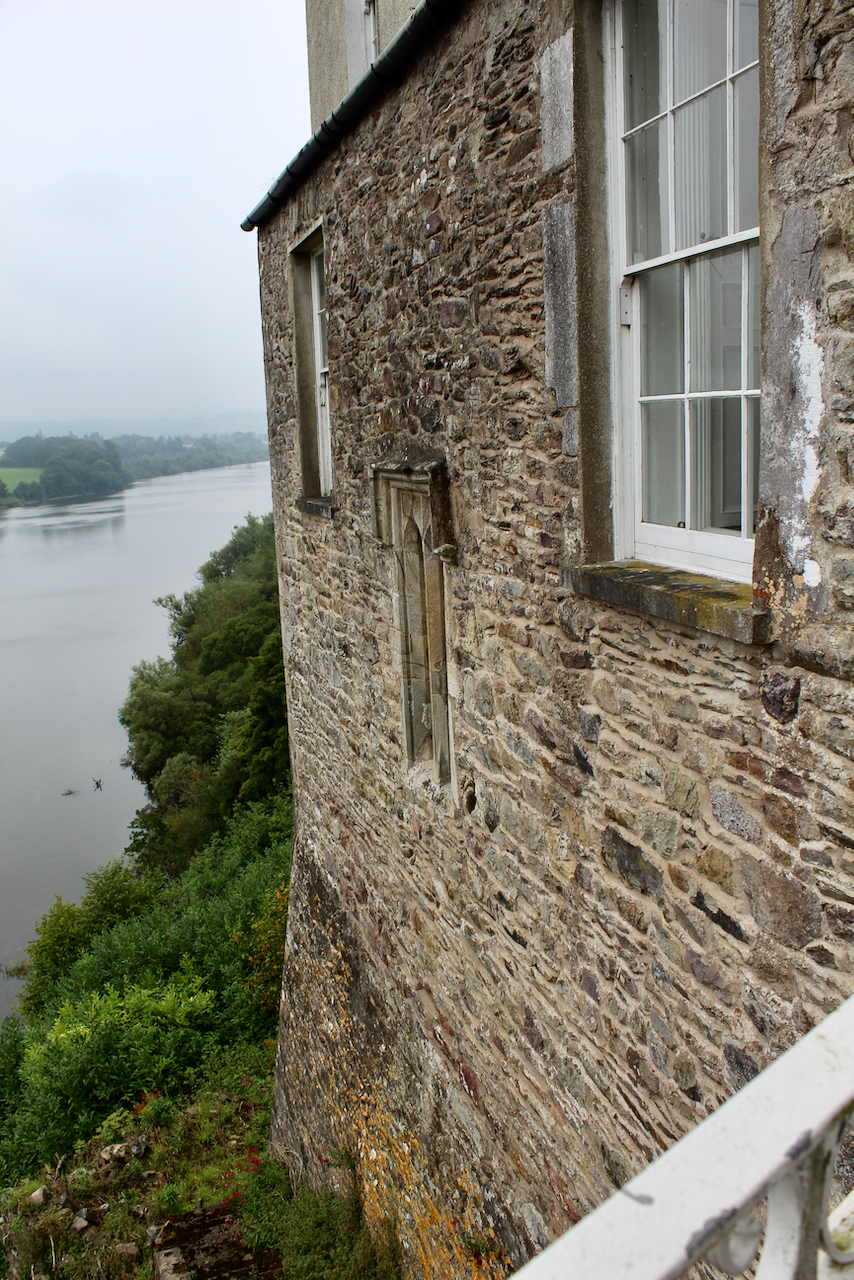
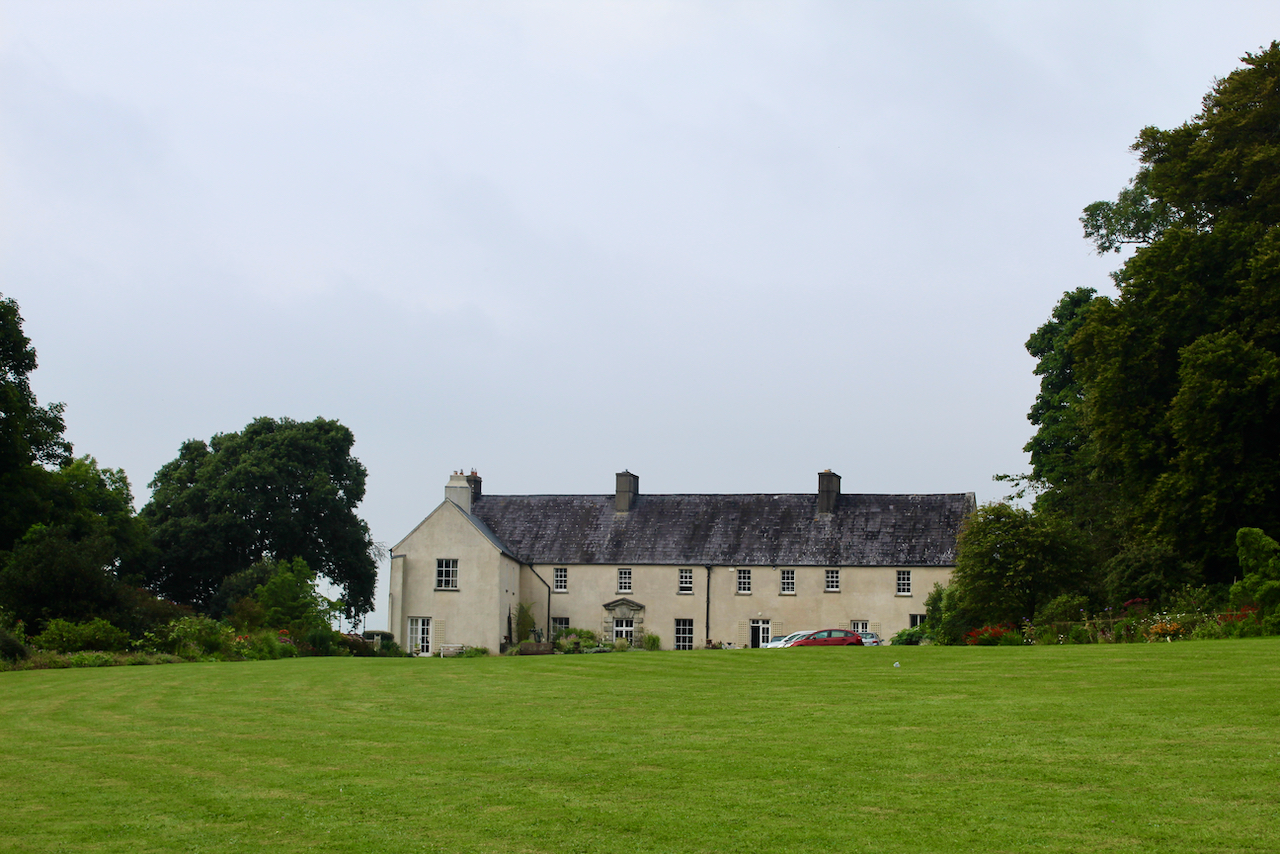
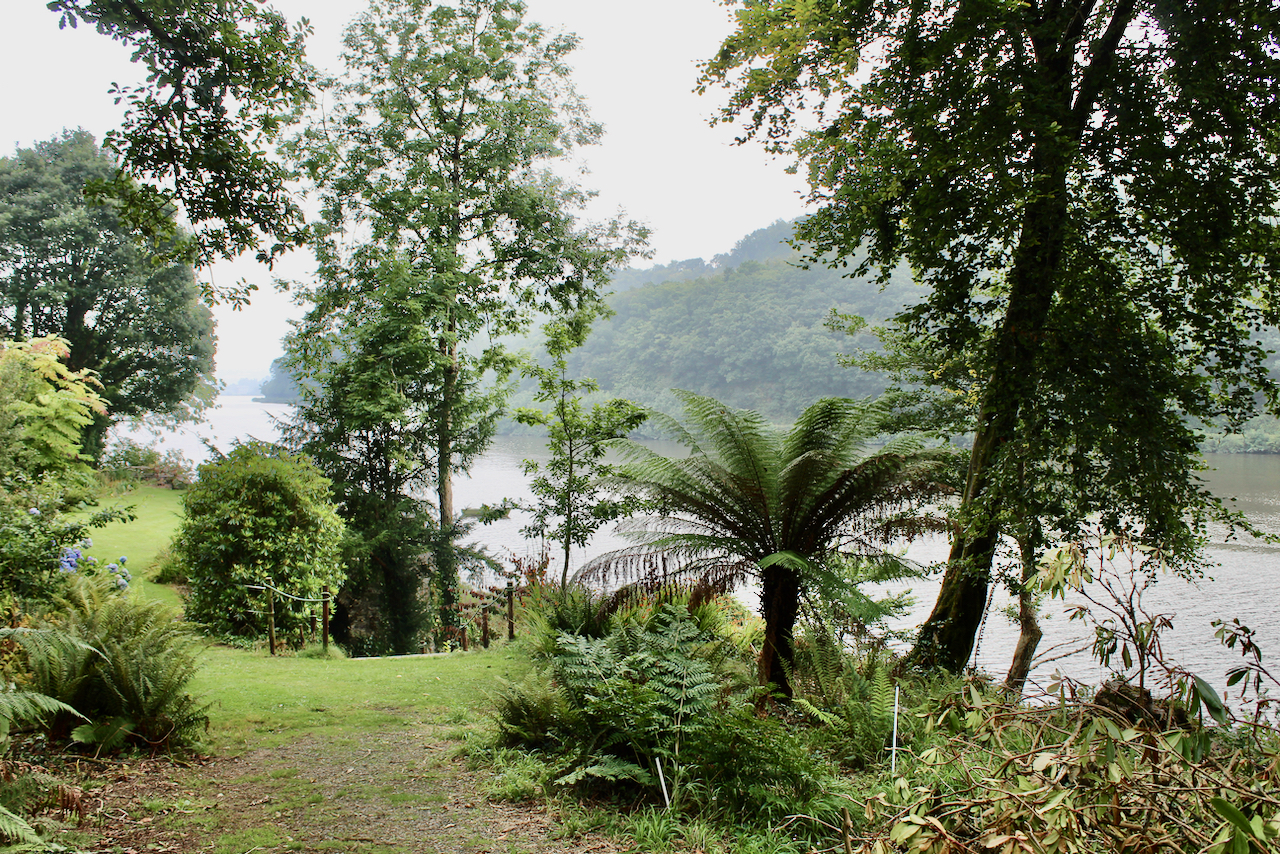
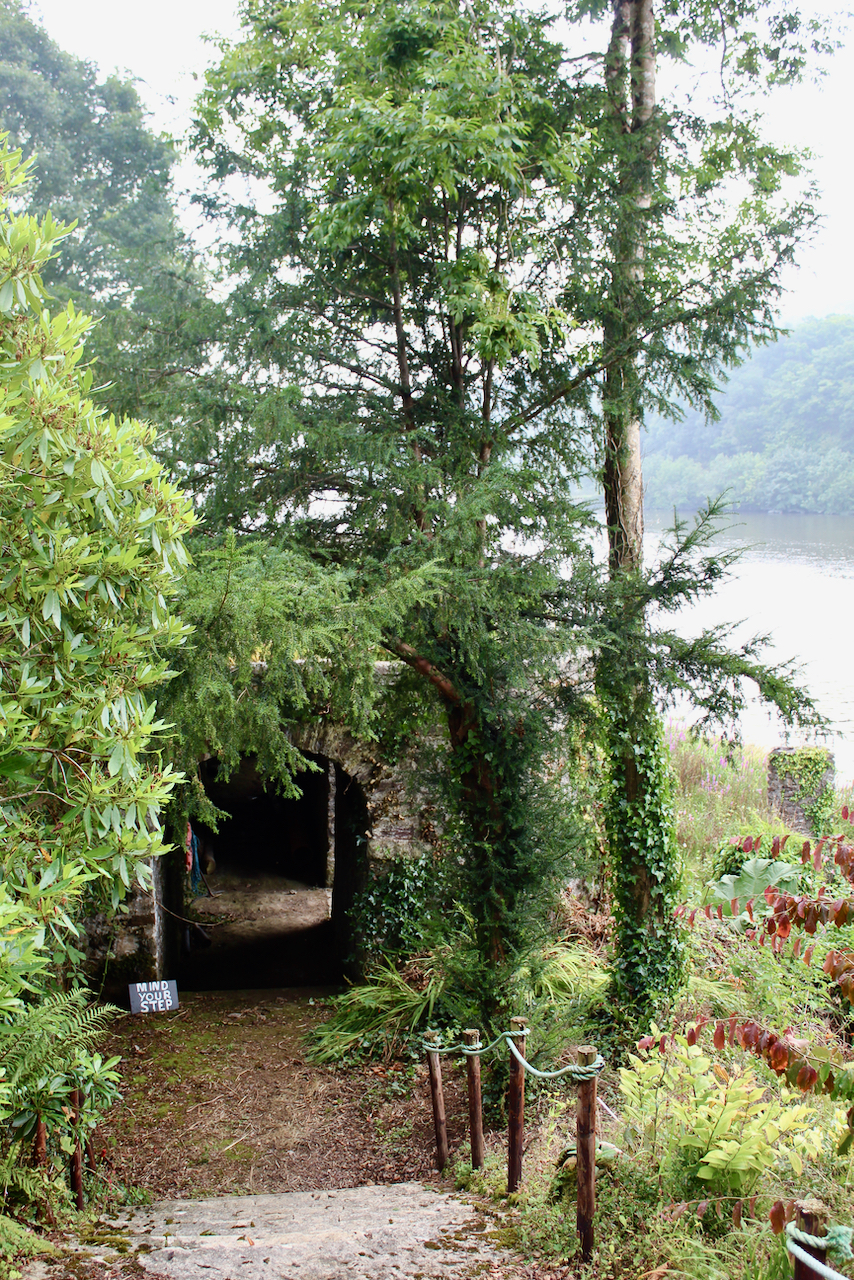
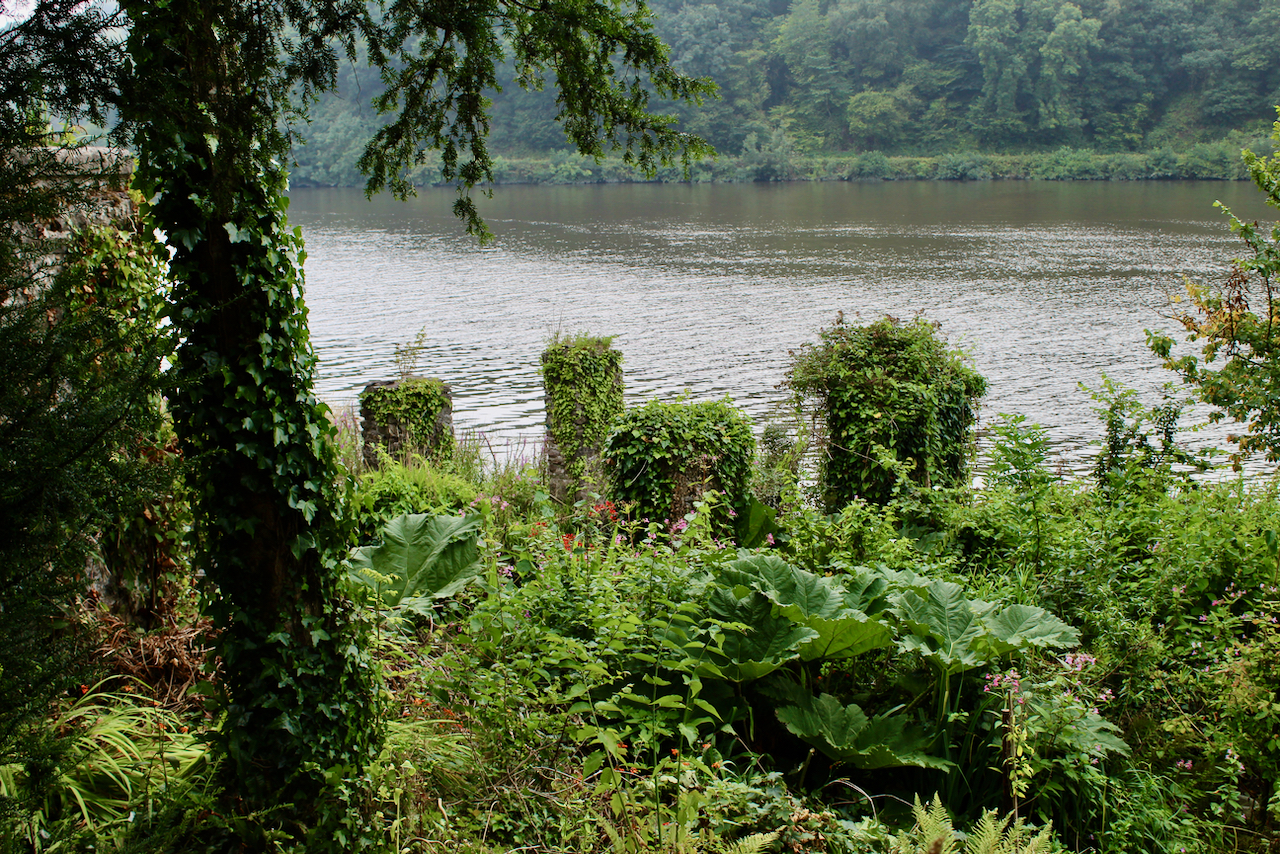
Parts of the house date back to the 1400s, and fortifications on the grounds date back even further. Its situation perched above the Blackwater River gives it stunning views.
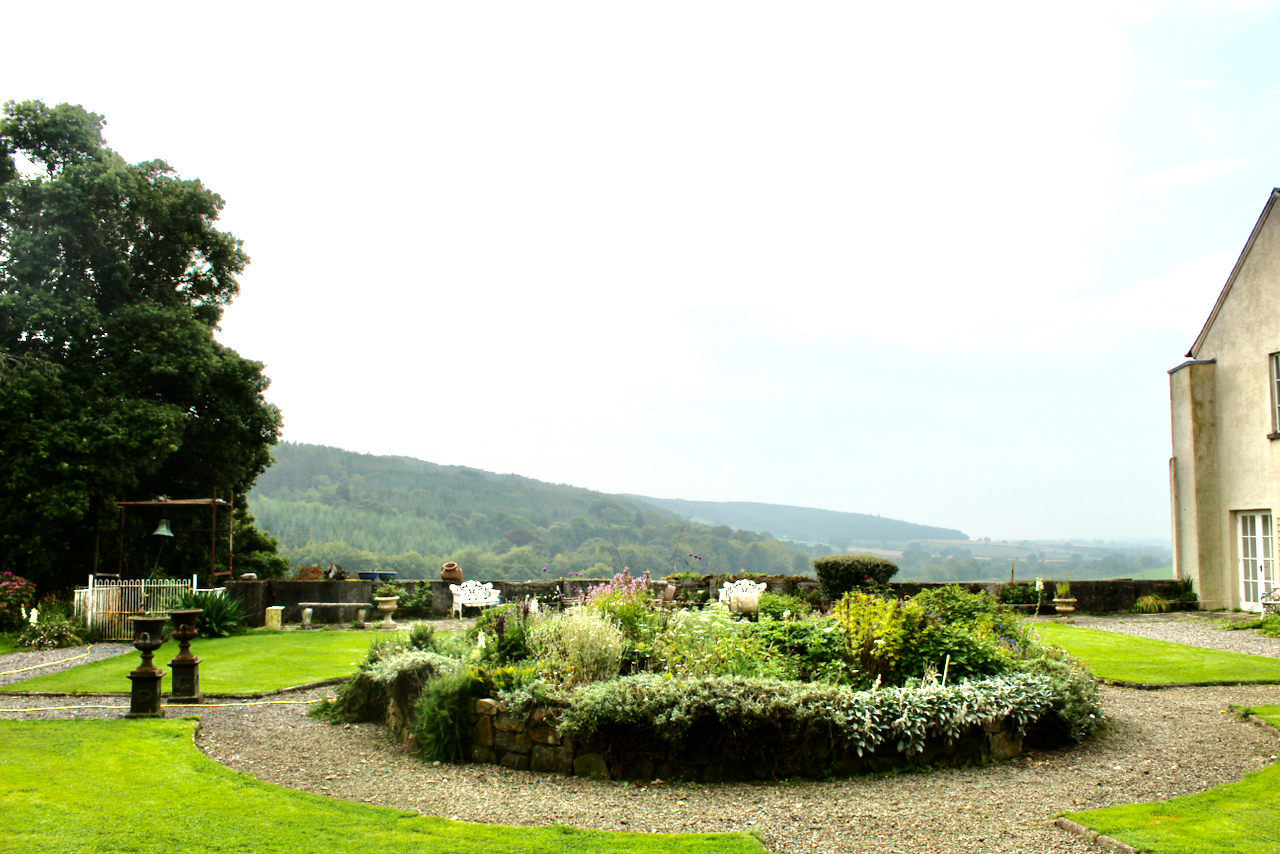
The house was once larger and grander than what we see today. Unfortunately, part of the house was demolished in the 1960s as upkeep and rates were too expensive (it shares the fate of Lisnavagh in County Carlow and Killruddery in County Wicklow). It retains part of the older elements, however, and remains a relatively large, comfortable home. The garden is impressive and the sun brought out its beauty – we were lucky with the weather.
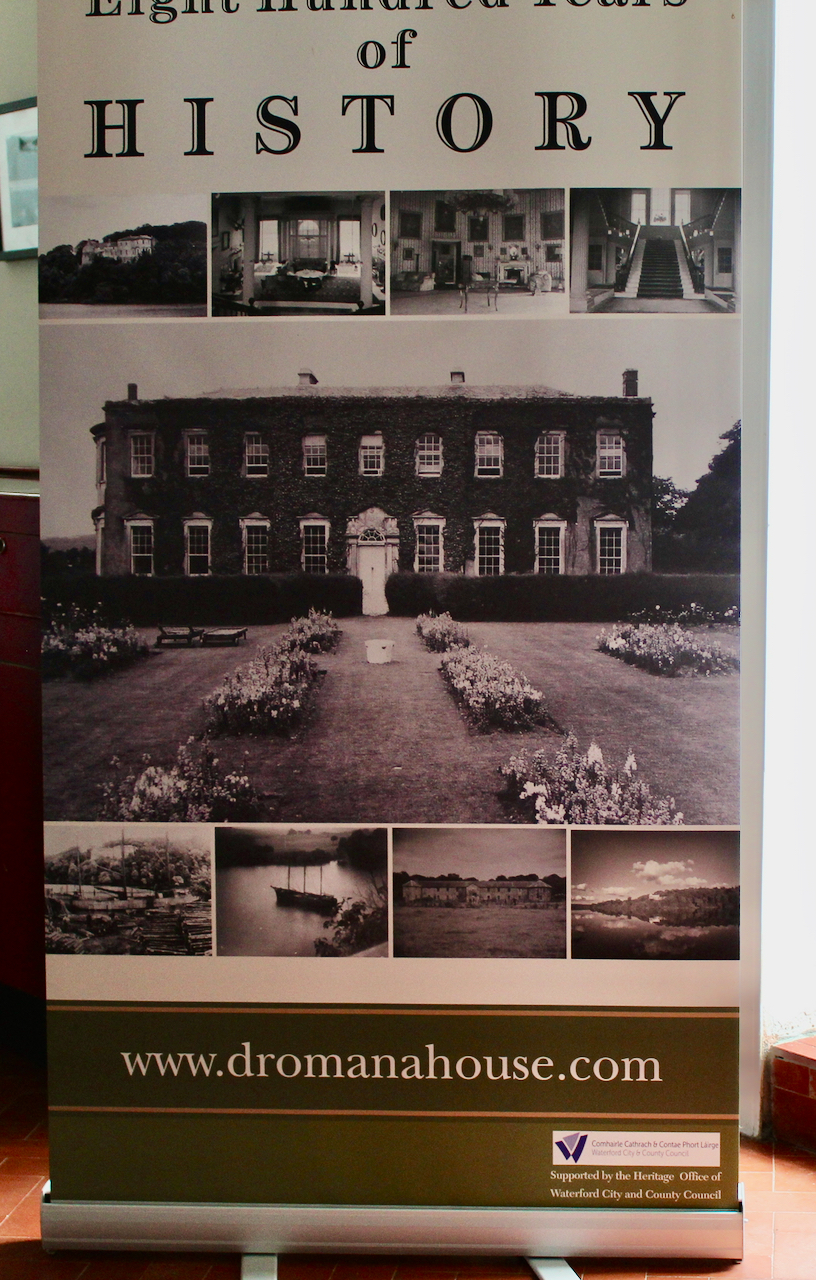
This poster board prepared for the 800th anniversary of Dromana shows a photograph of the house as it was before the demolition of a large part of it.
The lectures in 2019 took place in what used to be the old kitchen. On my way in, I admired the cloakroom hallway with its old floor tiles, long mirror and row of hooks for hats and coats. I learned the following year that this mirror used to be in the Ballroom, which has been demolished. The mirror now lies on its side but originally stood vertically, so the room would have been an impressive height.
First, a little background about the house. From the website:
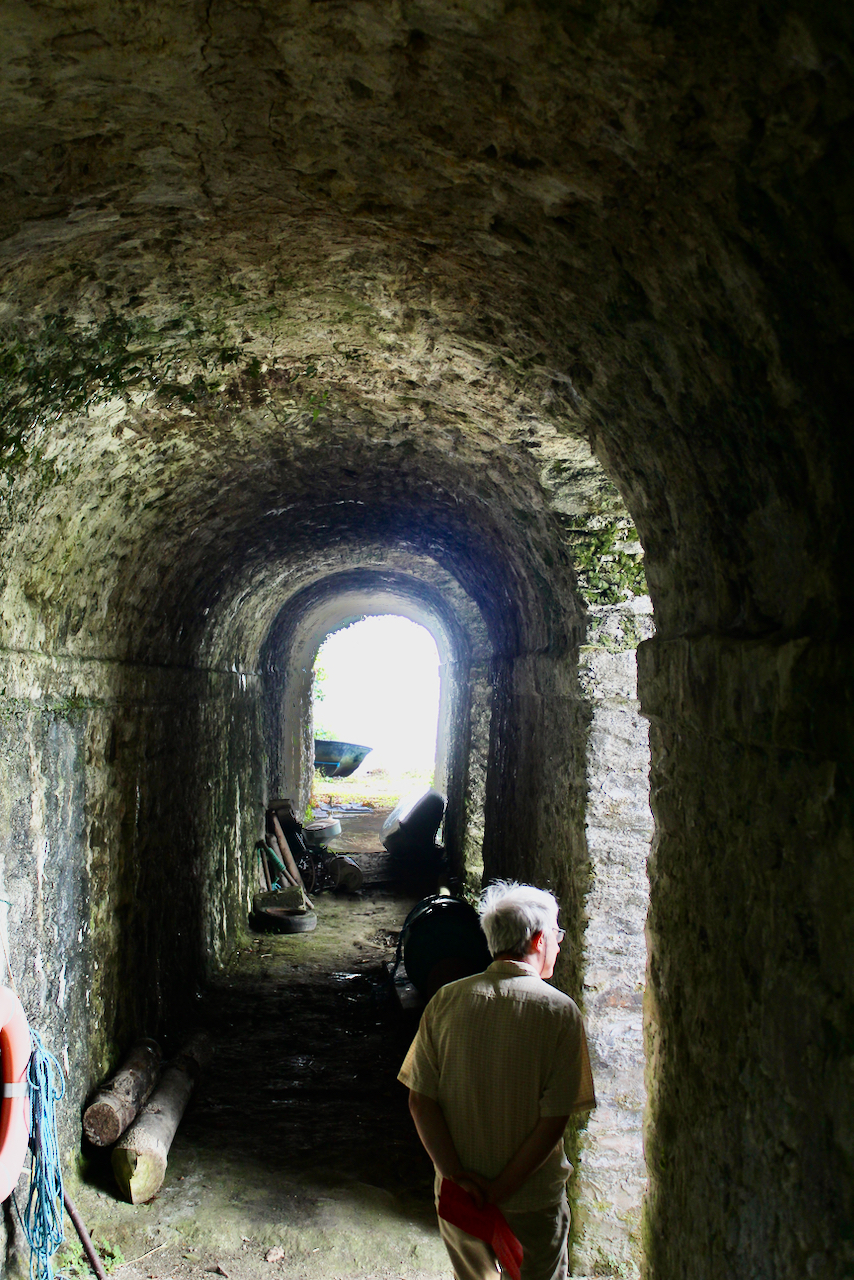
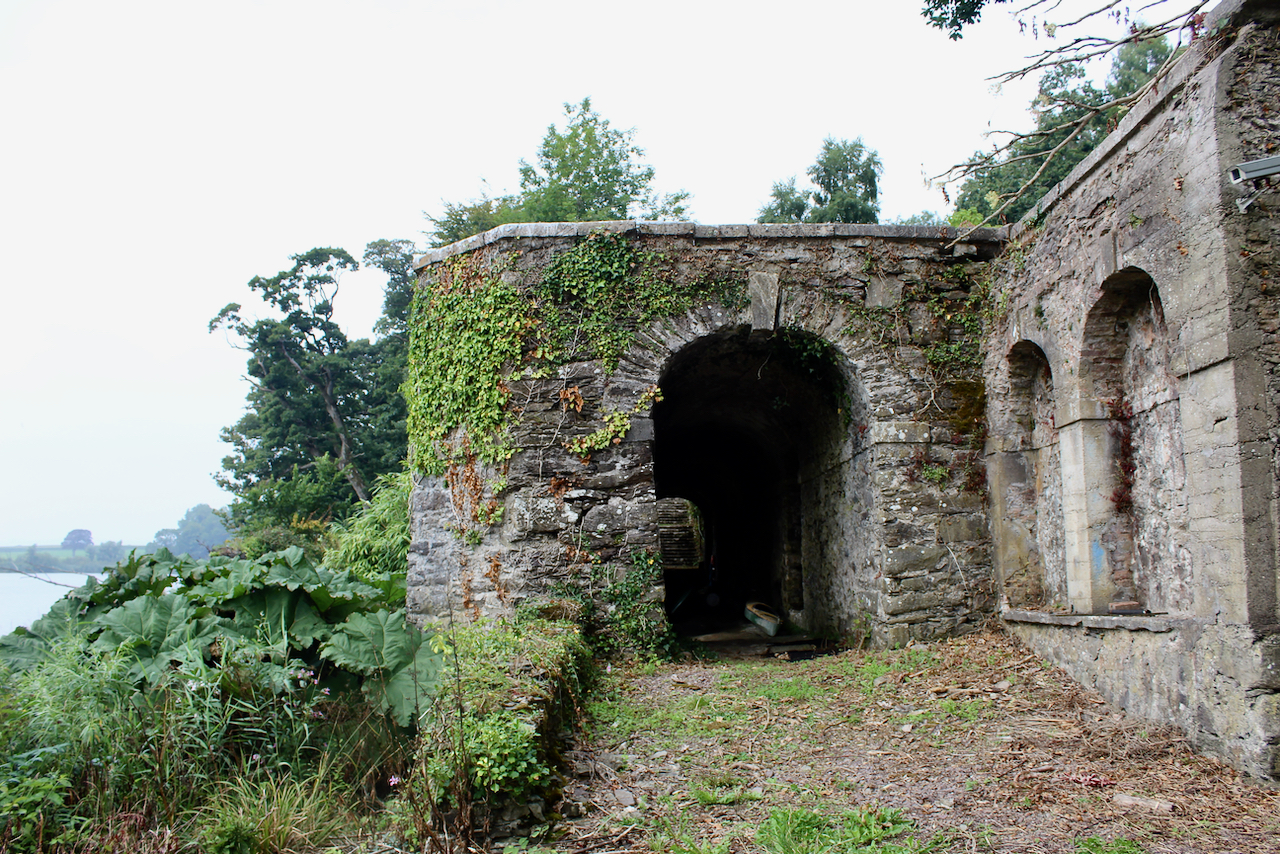
“Dromana House is a true gem, perched on a rocky outcrop overlooking the strikingly beautiful, unspoilt river Blackwater. It is surrounded by a 600 acre privately owned estate with numerous woodland and garden walks. Several interesting historic follies are also to be seen throughout the grounds including an ancient outer fortification, boathouse and slipway down to the river. This period property has been lovingly maintained by its owners whose family have lived on this location since 1200, the present owner being the 26th generation.” [1]
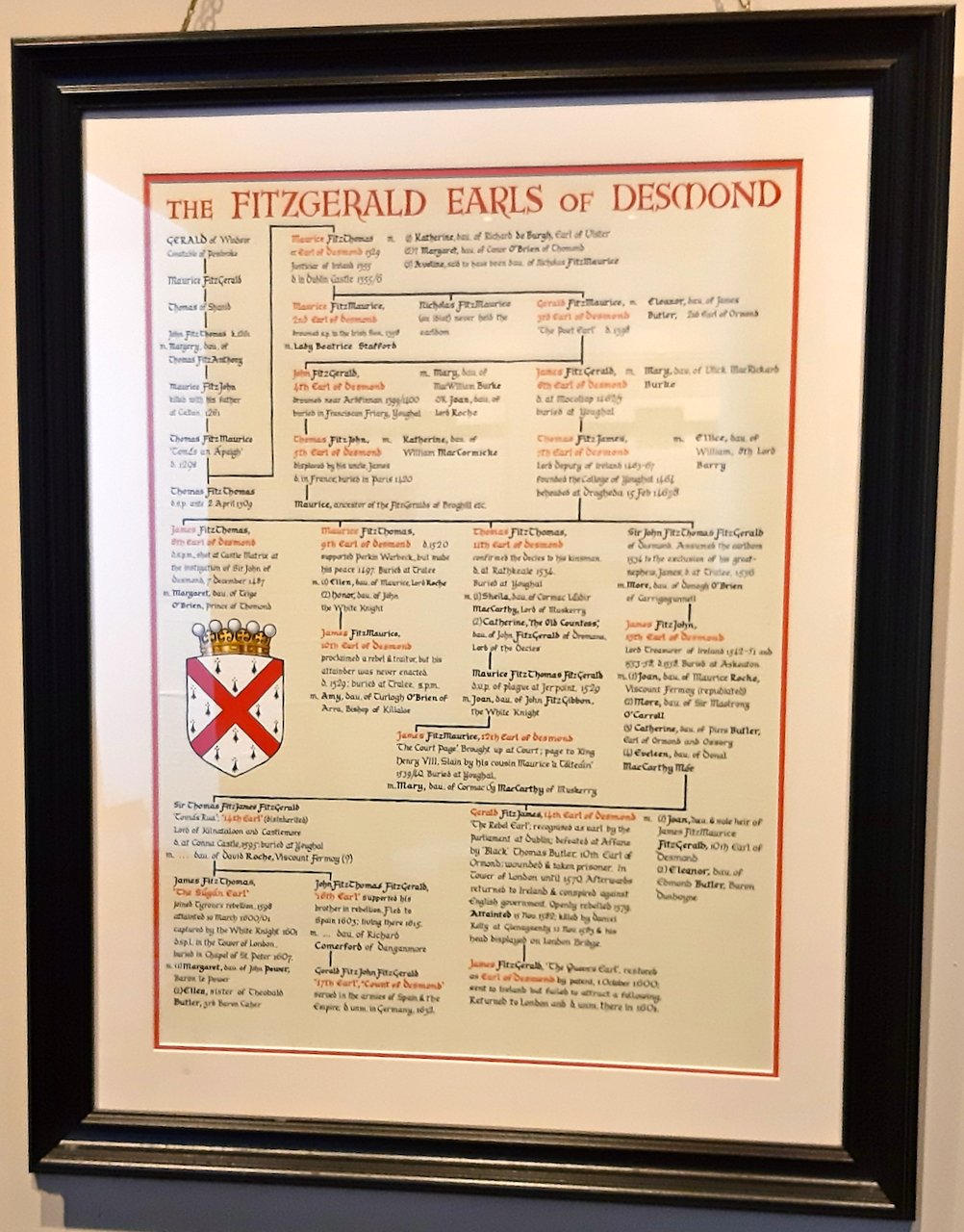
From the 13thcentury onwards the property was the seat of the FitzGeralds, Lords of the Decies, a junior branch of the Earls of Desmond. Information boards in the old kitchen, created with the help of University College Cork, describe the history of the estate. In 1215 King John of England granted a charter to the Norman knight Thomas fitz Anthony, giving him custody of the present-day counties of Waterford and Cork. Through the marriage of his daughter the estates came into the possession of the FitzGeralds – the first instance of the property passing through the female line. The earliest fortifications of Dromana date from this period.
The title of Lord the Decies split from the Earl of Desmond title when James FitzGerald the 6th Earl of Desmond (who died in 1462) granted the land of the Decies to his younger son Sir Gerald Mor FitzGerald, whose descendants have lived in Dromana ever since. The tower-house which forms the core of today’s Dromana was built at this time.
The Earls of Desmond asserted their claim to the Decies until the Battle of Affane in 1565, in which the Earl of Desmond’s army [that of the 14th Earl of Desmond, I think] was overthrown. In January 1569 Queen Elizabeth granted Sir Maurice FitzGerald of Decies (great-grandson of Gerald Mor FitzGerald) letters patent creating him Baron of Dromana and Viscount Decies. His titles became extinct, however, when he died three years later without a male heir.
Katherine Fitzgerald of the Decies, granddaughter of Gerald Mor FitzGerald, married her cousin Thomas, who in 1529 became the 11th Earl of Desmond (the information panel below says he was the 12th Earl but I think he was the 11th). He died in 1534 but she survived him for 70 years, dying in 1604 at the age of 140 years. She lived as a widow, as the Countess of Desmond, in Inchiquin Castle in East Cork. She died supposedly from falling out of a cherry tree, having allegedly worn out three natural sets of teeth. The current owners have planted a cherry tree in her honour. They have a bookcase supposedly made from the cherry tree from which she fell!
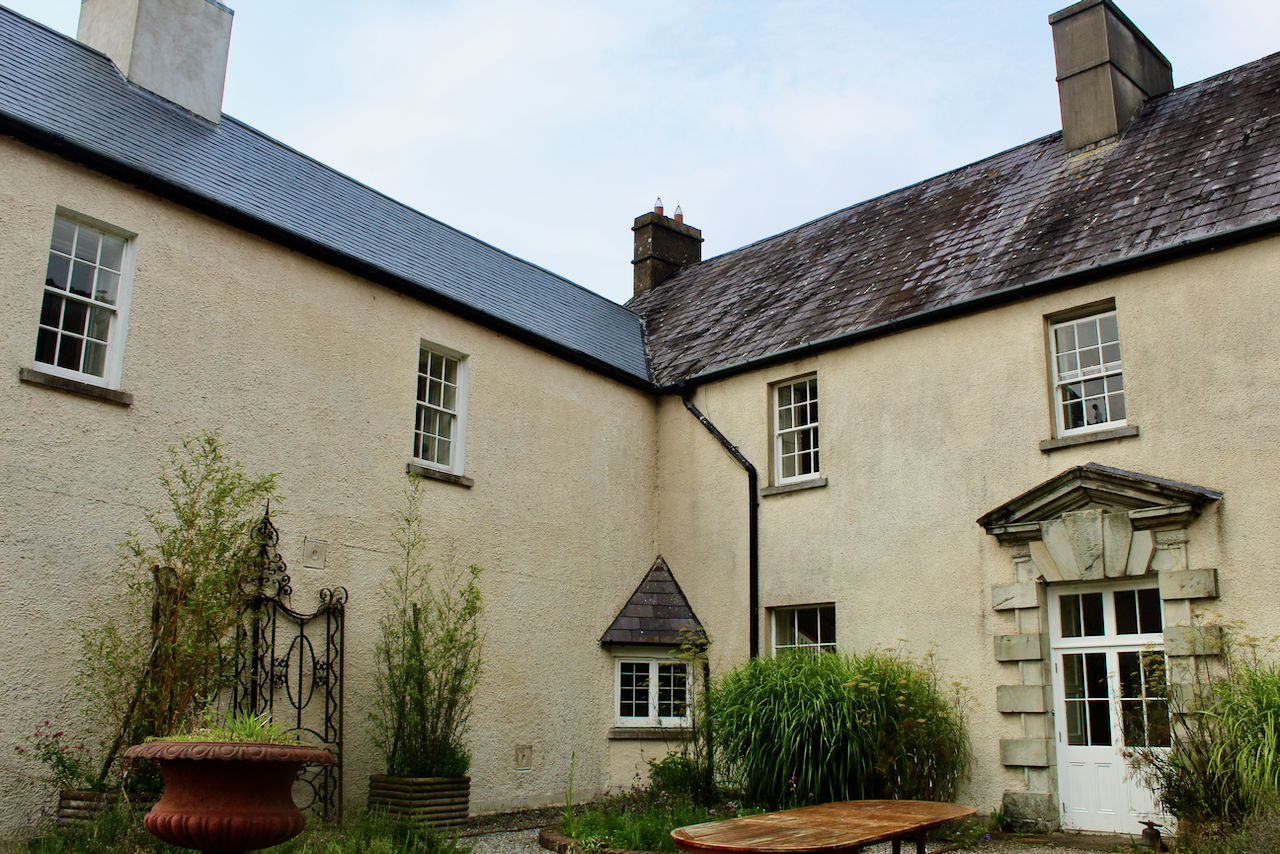
“The castle of Dromana was attacked and damaged in the wars of the 1640s and 50s, though its base can still be identified from the river, and indeed is still inhabited. In about 1700, instead of rebuilding the castle, two new ranges were built at right angles to one another along the courtyard walls. Both were simple gable-ended two storey structures, possibly just intended for occasional occupation, their only decoration being a robust, pedimented block-and-start door case in the manner of James Gibbs.” This door was moved when part of the house was demolished and is still the front door.
Julian Walton, one of the speakers at the “Pursuit of the Heiress” conference in 2019, has gained access to the archives at Curraghmore and is eliciting many interesting facts and details. This was great preparation for our visit to Curraghmore House the next day! [2] He told us of the heiress Katherine FitzGerald.
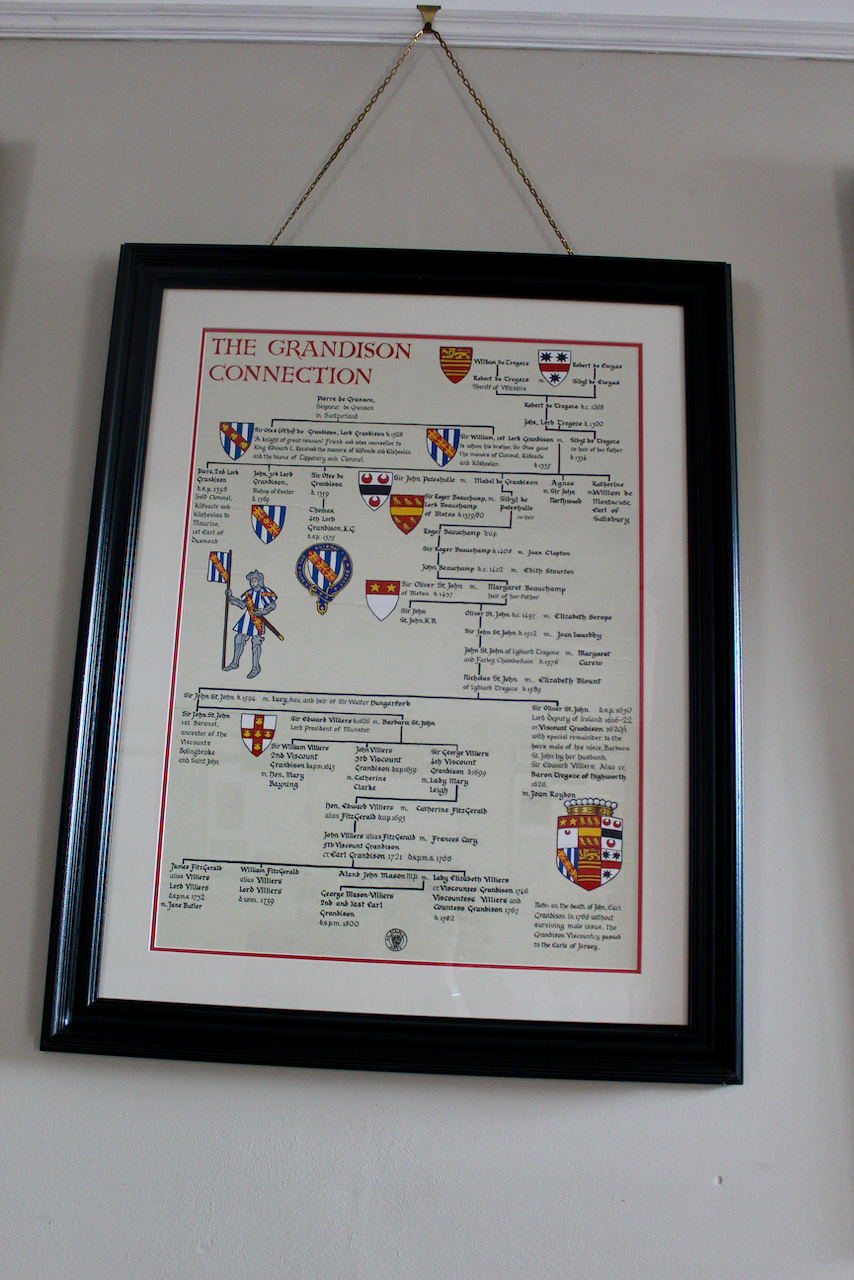
In 1673 the young heiress of Dromana, another Katherine Fitzgerald, was married against her will by her guardian Richard Le Poer, the 6th Baron of Curraghmore, to his son John. She was the only child of Sir John FitzGerald, Lord of Dromana and Decies and heir to Dromana. Her mother was Katherine Le Poer, daughter of John Le Poer 5th Baron of Curraghmore. Her mother’s brother, the 6th Baron of Curraghmore, wanted to unite the Curraghmore and Dromana estates. Both parties were underage – she was 12 and John Le Poer was only eight! Three years later Katherine escaped and married a cavalry officer named Edward Villiers (son of 4th Viscount Grandison). The courts upheld her second marriage and her first husband had to return her estate of Dromana and renounce the title of Viscount Decies. Her second husband’s father was a cousin to Barbara Villiers, mistress to King Charles II, and Barbara intervened on behalf of her cousin. When her second husband’s father, the 4th Viscount Grandison died in 1700, she was granted, in lieu of her now deceased husband, the title of Viscountess Grandison. She lived in Dromana until her death in 1725.
History of the Development of the House, and the Villiers-Stuarts
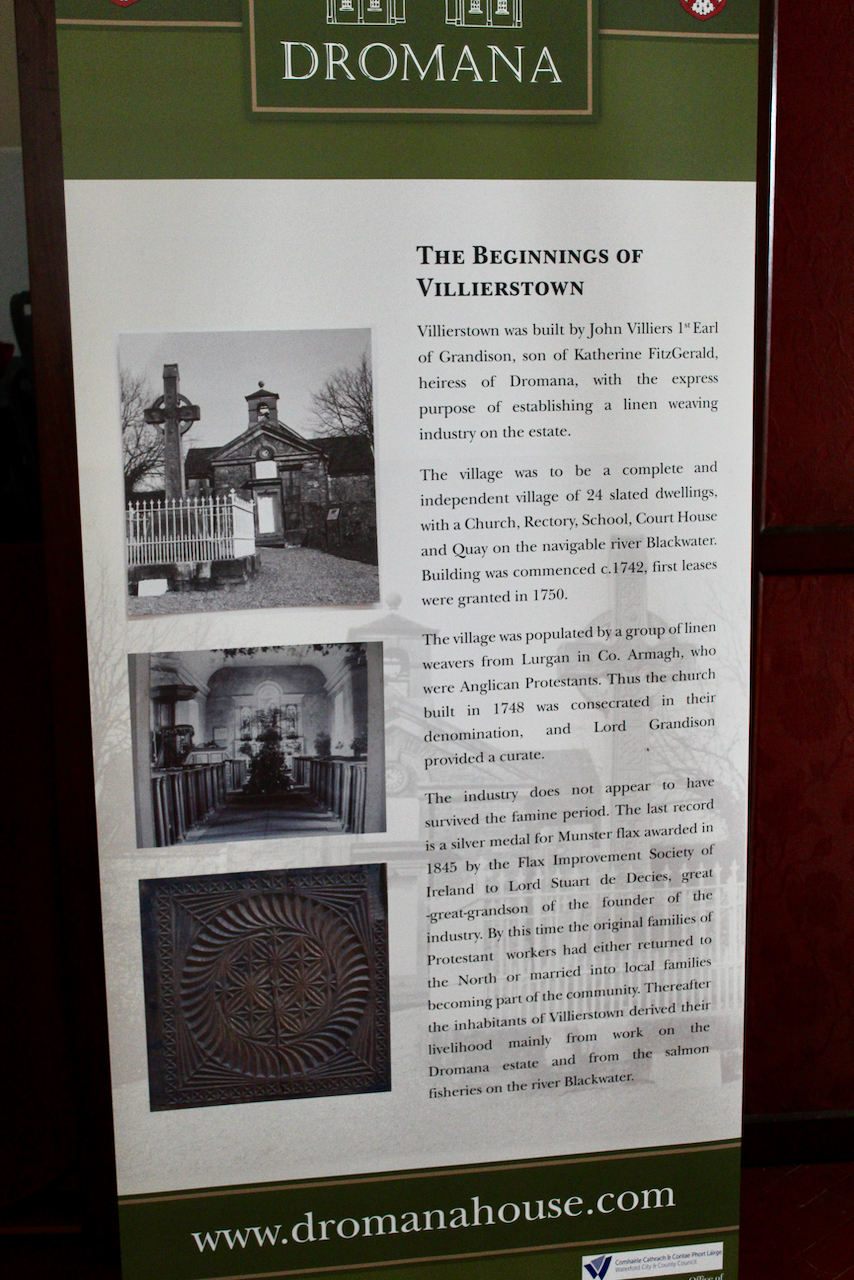
The son of Edward Villiers and Katherine Fitzgerald, John Villiers, c.1684 – 1766, became the 5th Viscount Grandison, and later, the 1st Earl Grandison. He repaired the house in the 1730s after it was partly destroyed in the political turmoil of the 1600s. Our guide, Barbara, told us that he was an enterprising landlord: in the 1740s he brought weaving from Lurgan, County Armagh, to start the linen industry in the area, and he built the village of Villierstown for the workers. He also planted 52,000 trees.
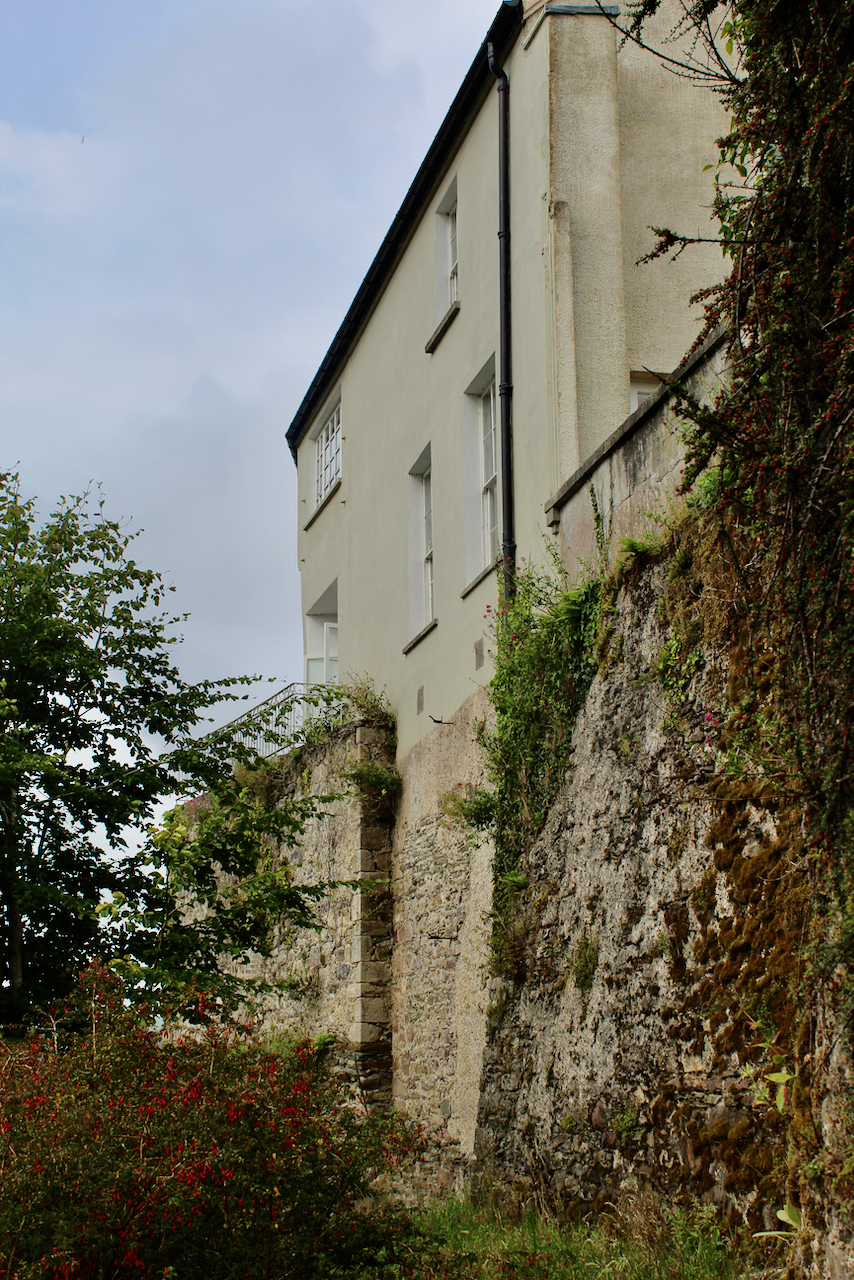
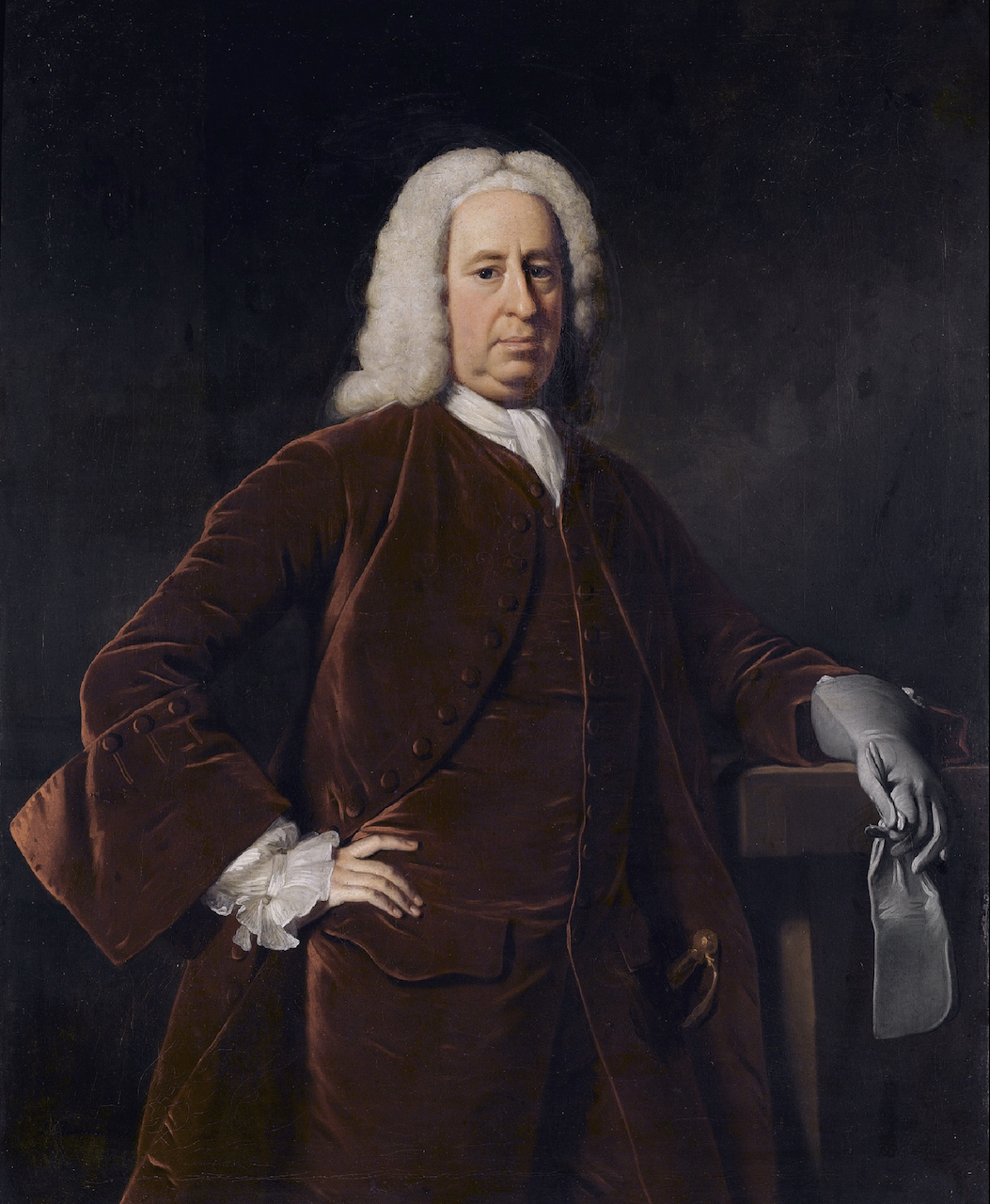
Dromana House, May 2019.John Villiers (c.1684 – 1766) 1st Earl Grandison by Alan Ramsay.
The 1st Earl of Grandison’s sons predeceased him so the estate passed to his daughter, Elizabeth. She married Alan John Mason, an MP for County Waterford and a merchant, and on her father’s death she was created 1st Countess Grandison and and 1st Viscountess Villiers. [3] Their son became the 2nd Earl of Grandison and added the surname Villiers to become George Mason-Villiers. In 1780, he added a larger new house in front of the old one, adding an impressive staircase and ballroom. Of his building work, Mark Bence-Jones describes the back of the new block forming a third side of a courtyard with two older ranges, and a low office range forming the fourth side. The Gibbsian doorway was hidden from sight in the courtyard. [4]
A panel about the architectural evolution of Dromana states: “The second Earl Grandison, George Mason-Villiers, added on a larger new house, commencing in about 1780, directly in front of the longer 1700s range. The principal façade was of two storey and nine bays, quite plain, with a parapet and a rather curious segmental-headed armorial doorcase. The river façade contained a shallow double-height bow and was actually an extension of the smaller 1700s range. Together these three buildings faithfully followed the line of the original bawn or courtyard. There was a spacious hall with a grand staircase, and a large circular ballroom.”
In this old picture you can see the house with the bows.
George Mason-Villiers too had only a daughter as an heir: Gertrude Amelia Mason-Villiers (1778-1809). In 1800, she married Lord Henry Stuart (1777-1809), third son of the 1st Marquess of Bute, of the Isle of Bute in Scotland. Henry Stuart’s grandmother was the famous writer Lady Mary Wortley-Montagu, who wrote about her experiences of travelling in Ottoman Istanbul.
Lady Mary Wortley Montagu (1718-1794), Wife of 3rd Earl of Bute, print after Christian Friedrich Zincke, 1830s, courtesy of National Portrait Gallery of London, NPG D34619.
Gertrude and Henry were succeeded in 1809 by their son, Henry, when he was just six years old. Henry added “Villiers” to his name in 1822, becoming Villiers-Stuart. The architect Martin Day was hired first in 1822 by trustees of Lady Gertrude – Henry didn’t come of age until 1824. Martin Day came from a family of architects in County Wexford. He designed several Church of Ireland churches for the Board of First Fruits and the Irish Ecclesiastical Commissioners between 1822-1849. In the 1820s, Day worked on the interiors of Dromana. He assisted Daniel Robertson at Johnstown Castle (now open to the public) and Castleboro House in County Wexford in the 1840s, and around the same time did more work for Henry Villiers-Stuart, adding parapets, pediments and mouldings to the windows, and an elaborate surround to the entrance doorway which incorporated the family arms. [5] He also fitted out a suite of very grand reception rooms and a massive imperial staircase.
Henry served as MP for Waterford 1826-1830 and for Banbury, Oxfordshire, England in 1830-1. He also served as Colonel in the Waterford Militia. He was admitted to the Irish Privy Council in 1837, and was created, in 1839, Baron Stuart de Decies, a title that recalled his long family connection with the region. Henry Villiers-Stuart was Lord-Lieutenant of County Waterford, 1831-74.
The Dromana website tells us that Henry Villiers-Stuart was “a Protestant aristocrat and large landowner with radical views. As a young man he defeated the Waterford establishment in the famous 1826 election to give Daniel O’Connell and the Catholic Emancipation movement their first Member of Parliament.” Daniel O’Connell signed documents in Dromana House, and the Catholic Emancipation Act of 1829 was drawn up at Dromana.
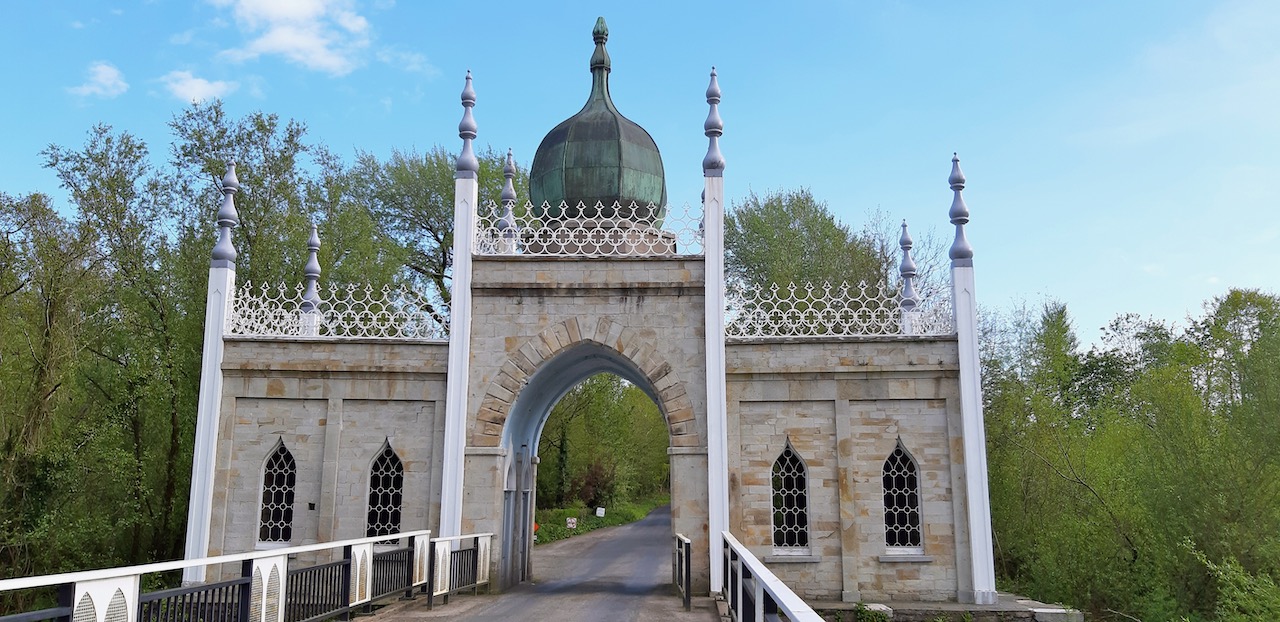
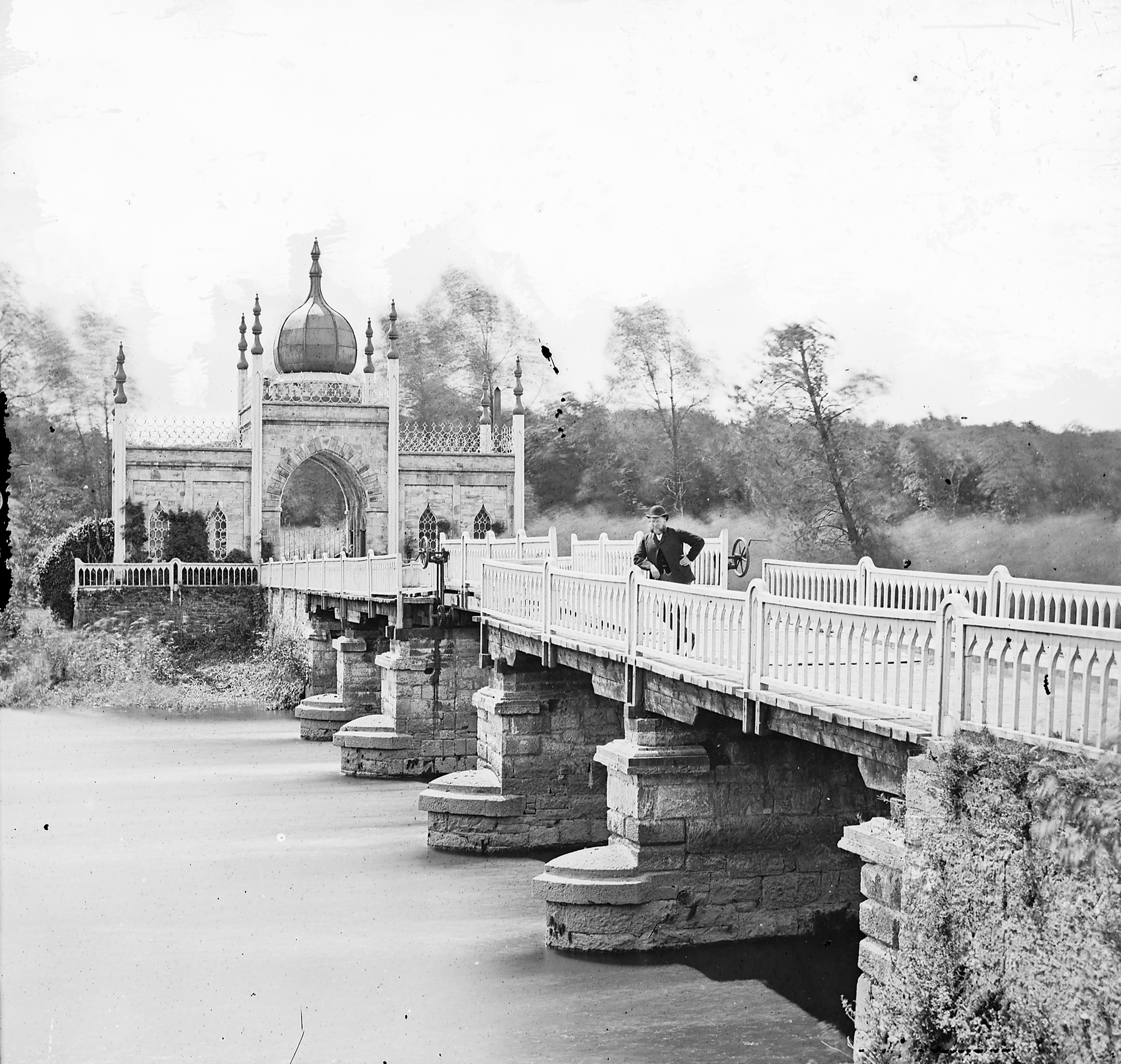
In 1826 Henry Villiers-Stuartmarried Theresia Pauline Ott. When they returned from their honeymoon, the tenants of Villierstown constructed an elaborate papier-mache archway gate for them to drive through. Martin Day may have had a hand in the original gateway, and later drew up plans to create a more permanent structure, which Stephen and I visited later in the day.
The Bridge is now on a public road. One used to need a ticket to enter through the gate. When King Edward VII arrived at the gate in a pony and trap, on his way to Lismore, he had no pass, so was turned away! The Gate was restored by the Irish Georgian Society in the 1960s and again by the local city council in 1990. [6] The “bishop” like structures either side of the top of the central part have been replaced by fibreglass “bishops,” as the original copper ones are too heavy, and one of the originals now sits in the garden of Dromana.
Pauline Ott had been married before, and her husband was thought to have died in the army. However, he later reappeared. Her marriage to Henry Villiers-Stuart was thus rendered invalid, and her children illegitimate. She and Henry had a son, Henry Windsor Villiers-Stuart and a daughter Pauline. Pauline married into the Wheeler-Cuffe family of Lyrath, County Kilkenny (now a hotel). Their son was unable to inherit the title of Baron Stuart of the Decies and the peerage expired with his father’s death in 1874. [7]
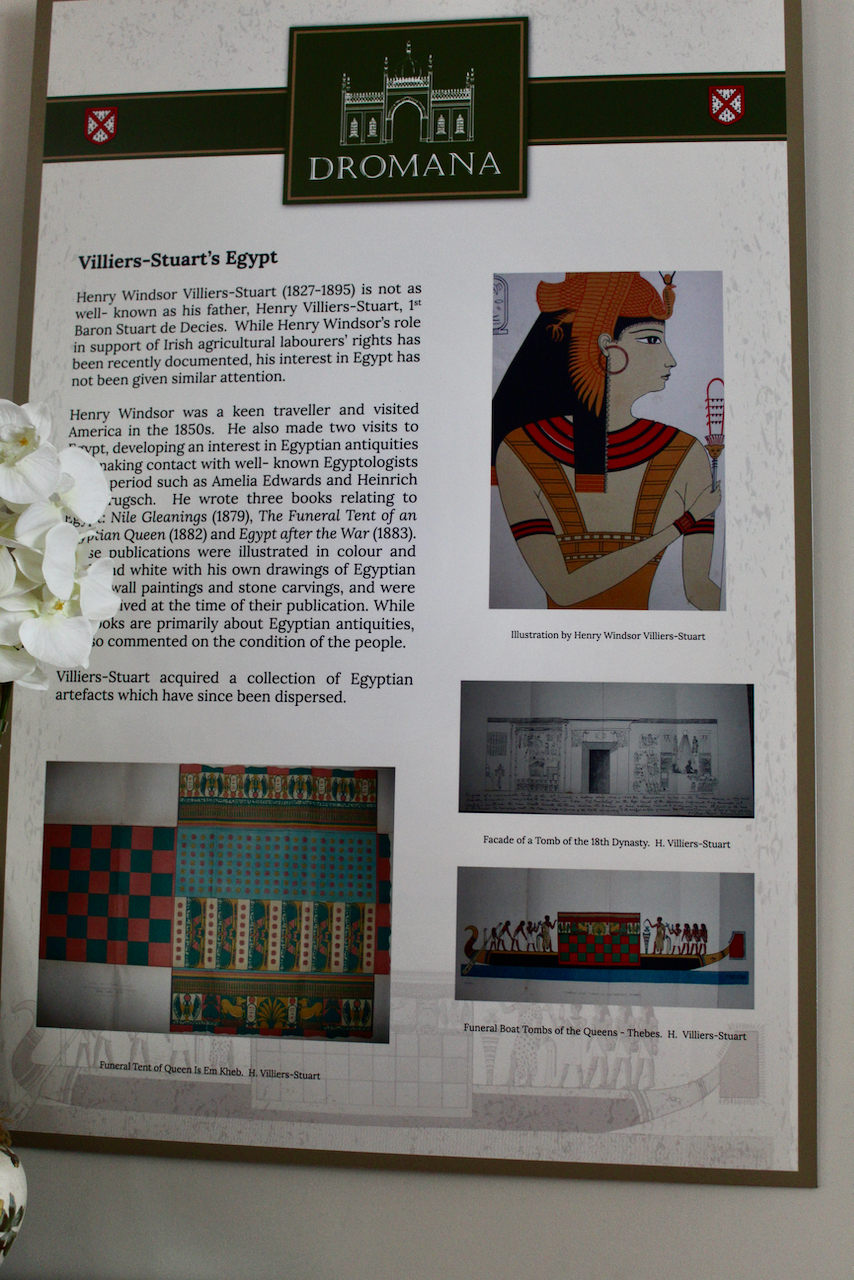
Despite becoming illegitimate, the son, Henry Windsor Villiers-Stuart (1827-1895) [the name Windsor came from his father’s maternal family], did very well for himself. He served first in the Austrian then the British Army, then went to university. He was ordained in the Church of England but later resigned Holy Orders in order to pursue a political career. He became MP for County Waterford from 1873-85, Vice Lord-Lieutenant of County Waterford, 1871-73, and High Sheriff of County Waterford in 1889. In 1865 he married Mary, second daughter of the Venerable Ambrose Power, Archdeacon of Lismore. He travelled extensively and wrote books, studied hieroglyphics, and did pioneering work in Egypt. He brought many artefacts back from Egypt, which have since been dispersed.
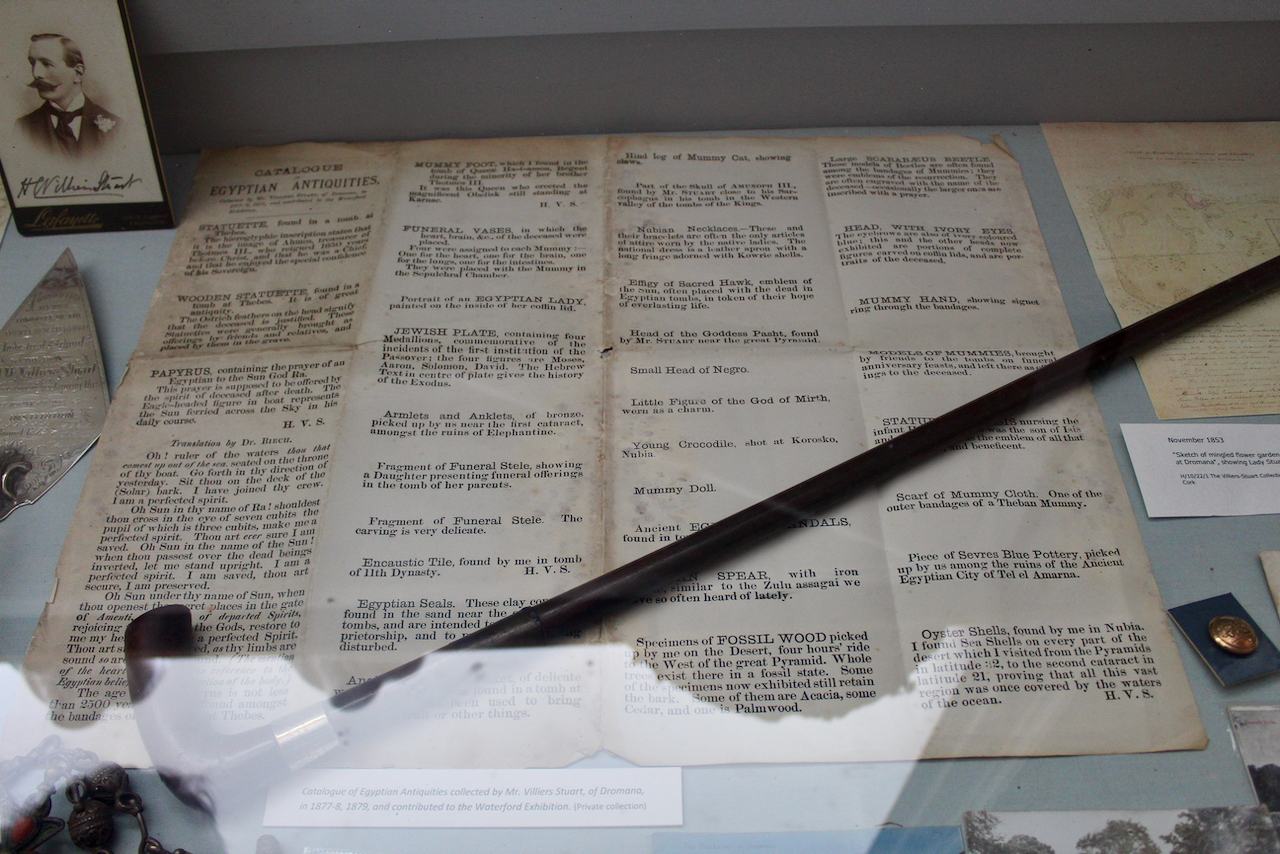
Henry Windsor Villiers-Stuart (1827 – 1895) travelled extensively and wrote books, studied hieroglyphics, and did pioneering work in Egypt. He was a British soldier, clergyman, politician, Egyptologist, and author.In the old kitchen, which houses the information boards, there was a museum case of fascinating artefacts, many from Egypt from Henry Windsor Villiers-Stuart’s travels.
His eldest son, Henry Charles Windsor Villiers-Stuart (1867-1908), who served as High Sheriff of County Waterford, 1898, espoused, in 1895, Grace Frances, only daughter of John Adam Richard Newman of Dromore, County Cork. Their heir, Ion Henry Fitzgerald Villiers-Stuart (1900-48), wedded, in 1928, Elspeth Richardson, and was succeeded by his only son, James Henry Villiers-Stuart (b. 1928), of Dromana, who married, in 1952, Emily Constance Lanfear and had two daughters, Caroline and Barbara, one of whom was our tour guide and who now lives in the house. [8]
The website states that: “by the 1960s Dromana had become something of a white elephant. The estate was sold and subdivided, and the house bought by a cousin, Fitzgerald Villiers-Stuart [a grandson of Henry Windsor Villiers-Stuart], who demolished the 1780s block in 1966 and reduced it to more manageable proportions.”
“James Villiers-Stuart was able to repurchase the house in 1995 he and his wife Emily moved into Dromana and began restoring the house and garden. Now a widow, Emily still lives there, along with her daughter and family.”
Back to the Conference
Barbara, heir to the house, and her husband Nicholas, attended the “Pursuit of the Heiress” conference. Nicholas gave us an impromptu lecture of sorts about how forces merged to make the upkeep of the big houses in Ireland almost impossible, with the high rates charged by the government, and the decline of salmon fishing, etc.
We had more lectures after lunch. First up was “The Abduction of Mary Pike,” by Dr. Kieran Groeger, which interested Stephen as she too was a Quaker. [9] The last lecture was by Dr Dagmar Ó Riain-Raedel, on her research on Irish exiles to the Austrian army. [10] This was fascinating. I have much to study, to learn the history of the Habsburg empire.
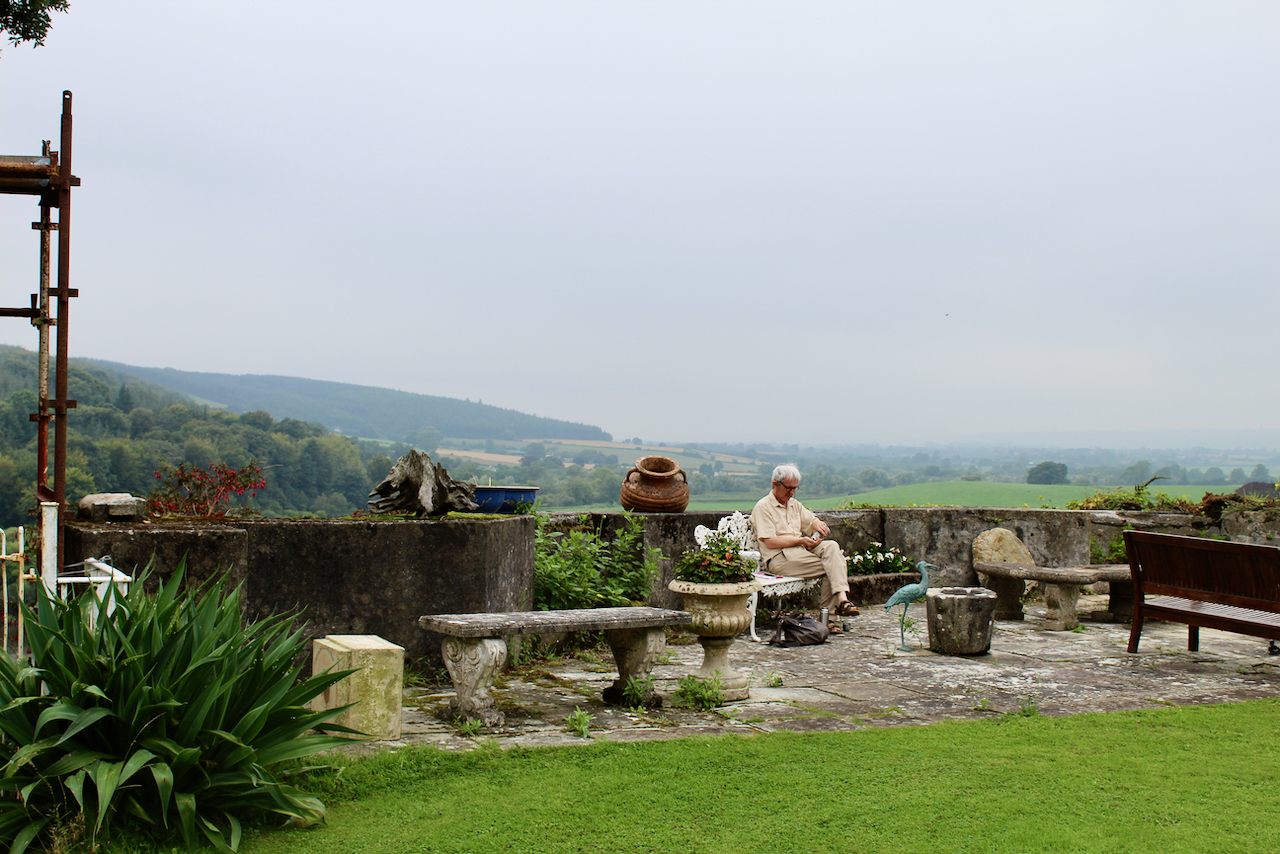
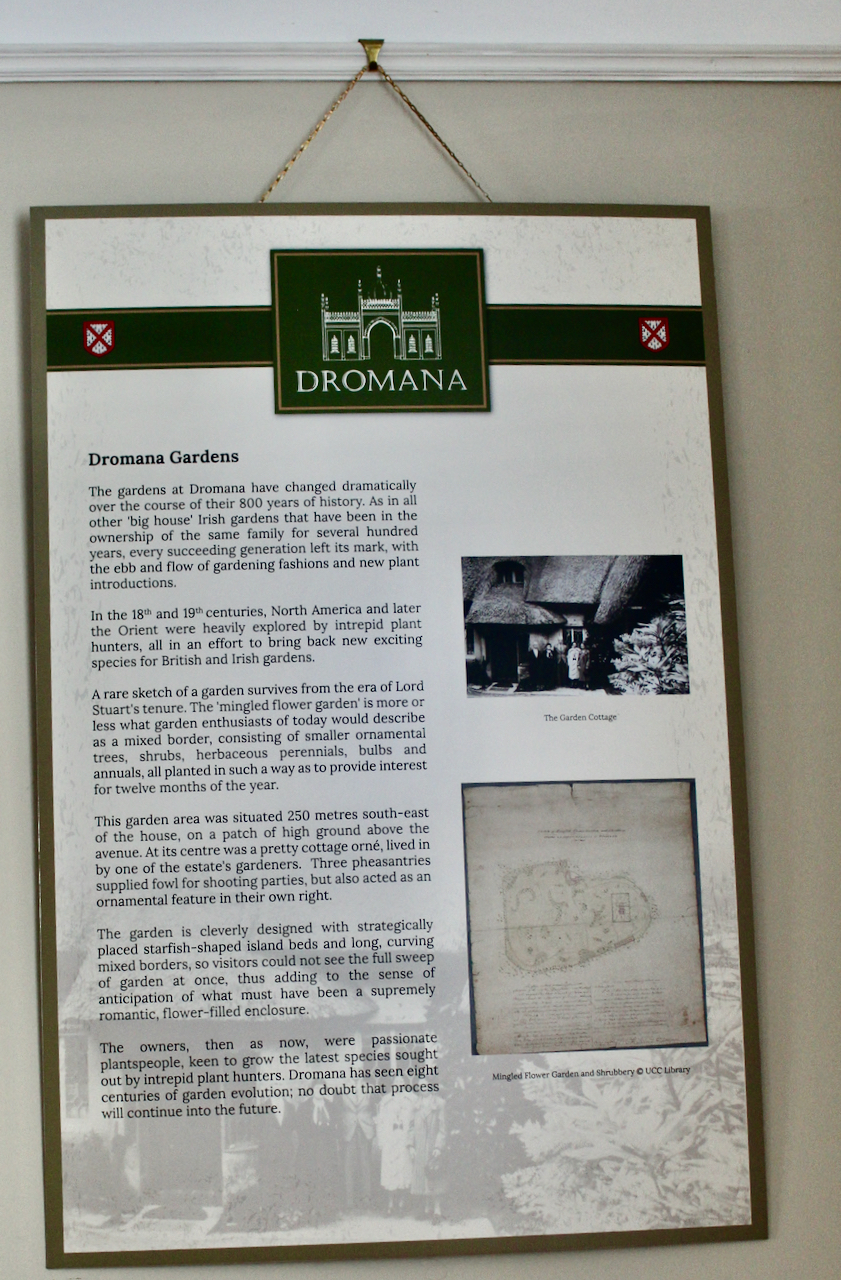
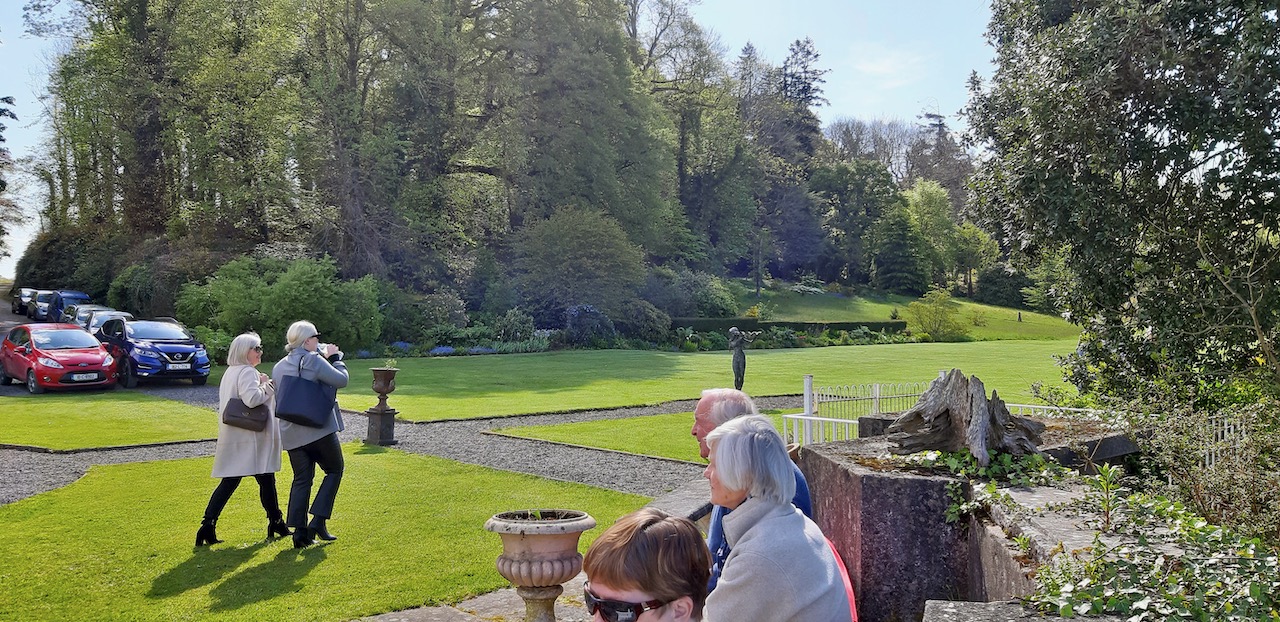
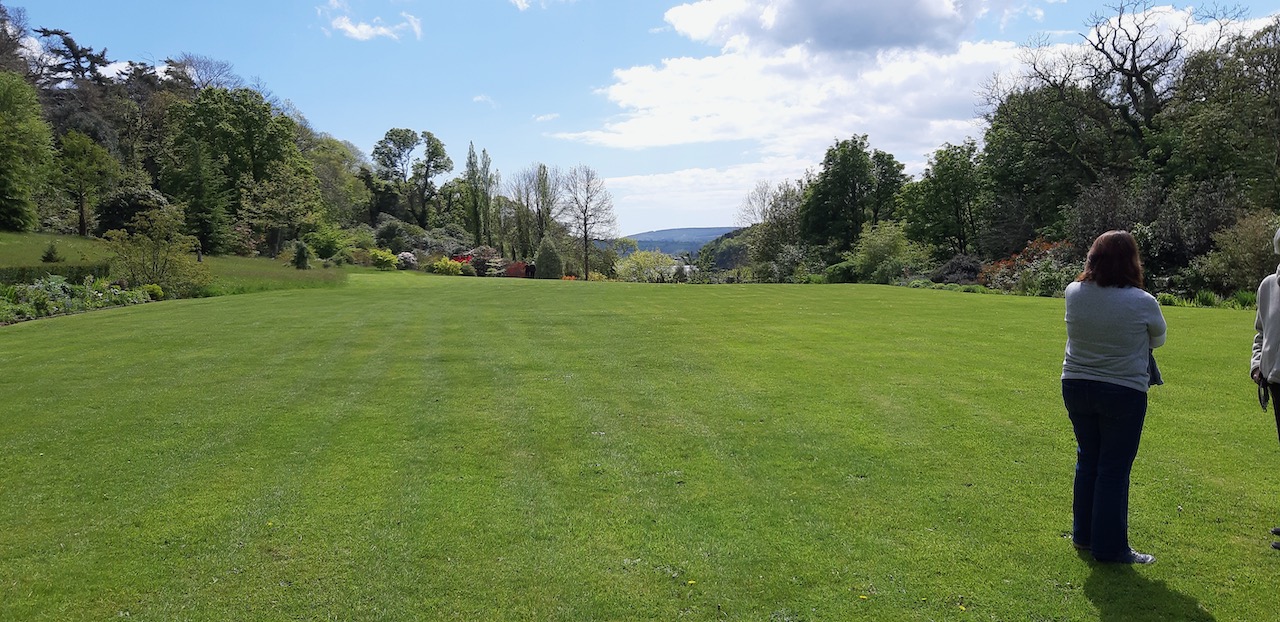
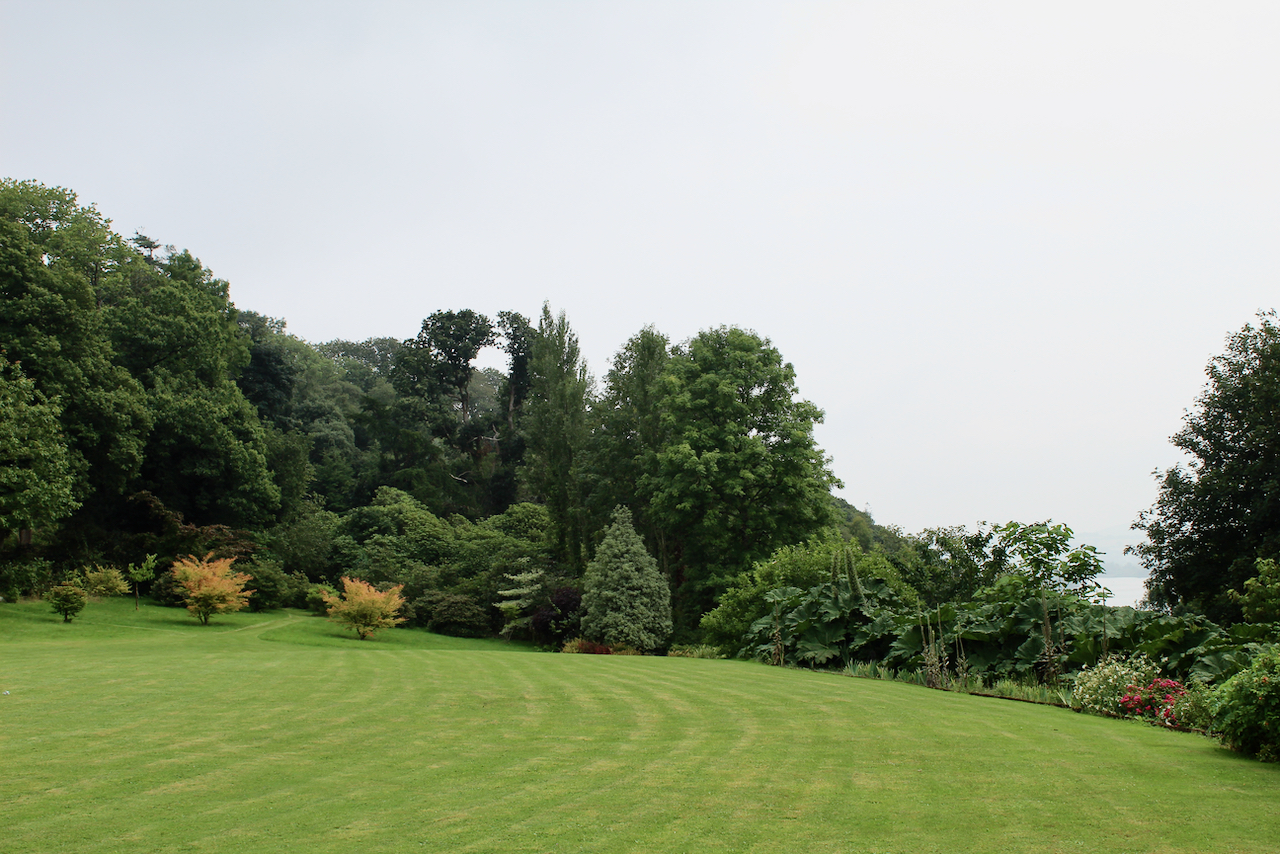
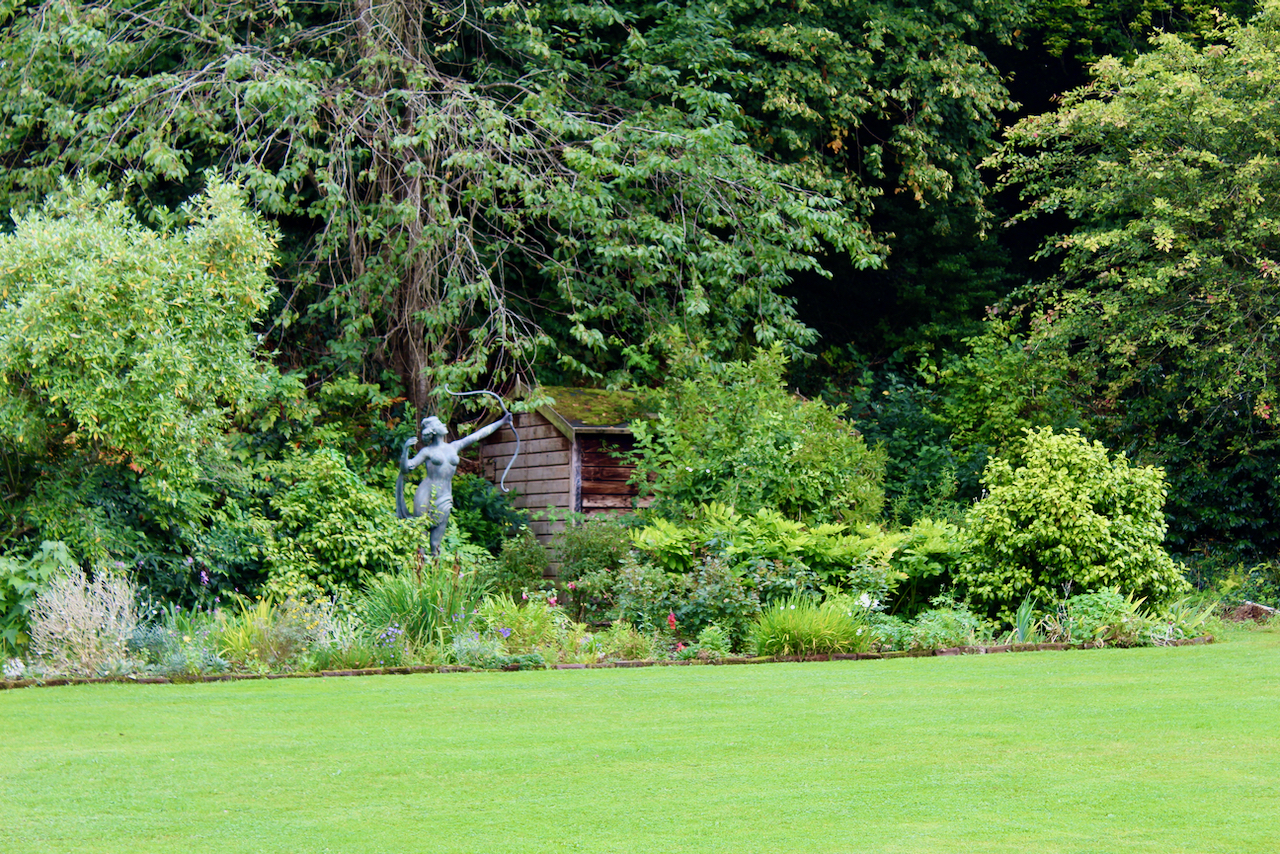
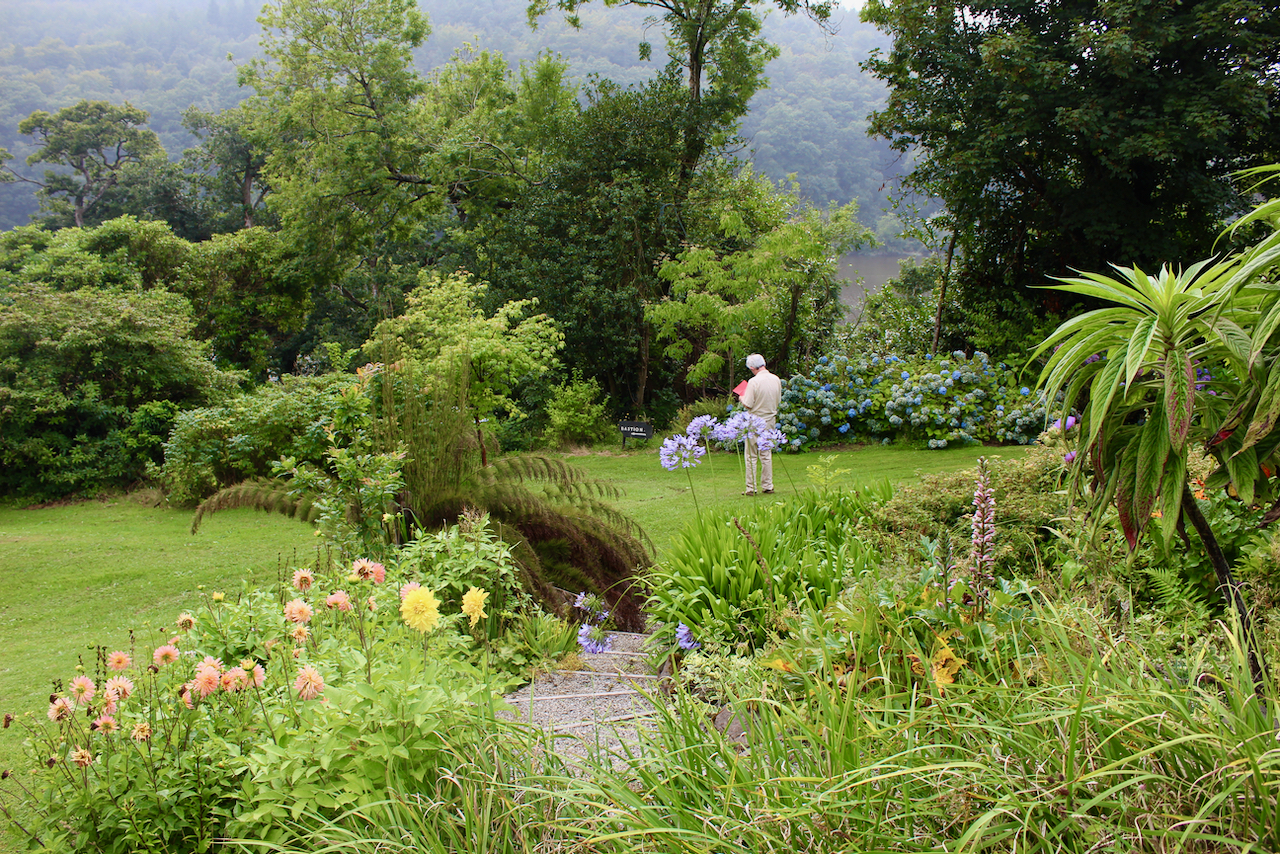
Afterwards we had tea on the lawn, then Nicholas gave us an almost running tour of the garden – we had to be quick to keep up with him as he bound ahead describing the plants. The website states that “the steeply sloping riverbanks are covered with oak woods and the important mid-eighteenth century garden layout, with its follies, the Rock House and the Bastion, is currently being restored.” There are over thirty acres of garden and woodland, including looped walks.
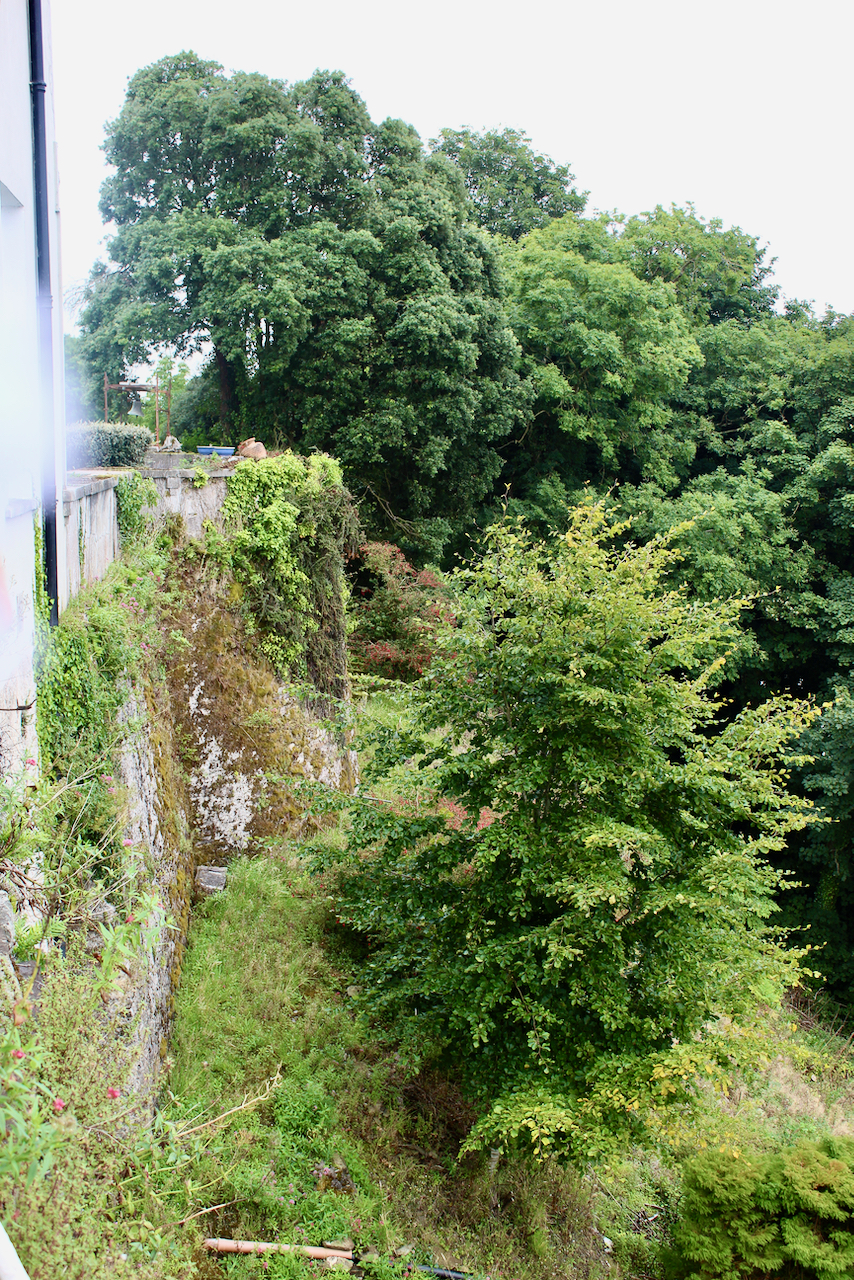
Dromana House, May 2019.
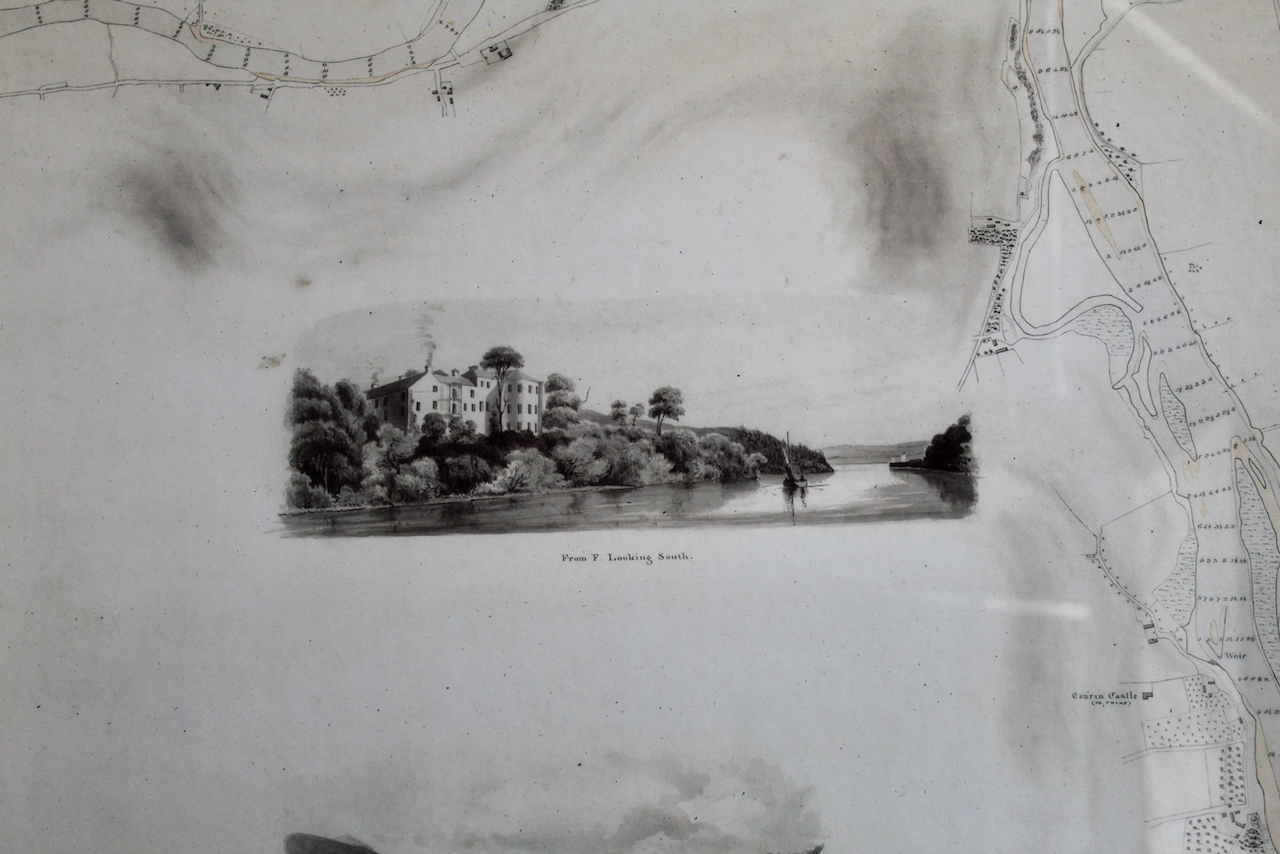
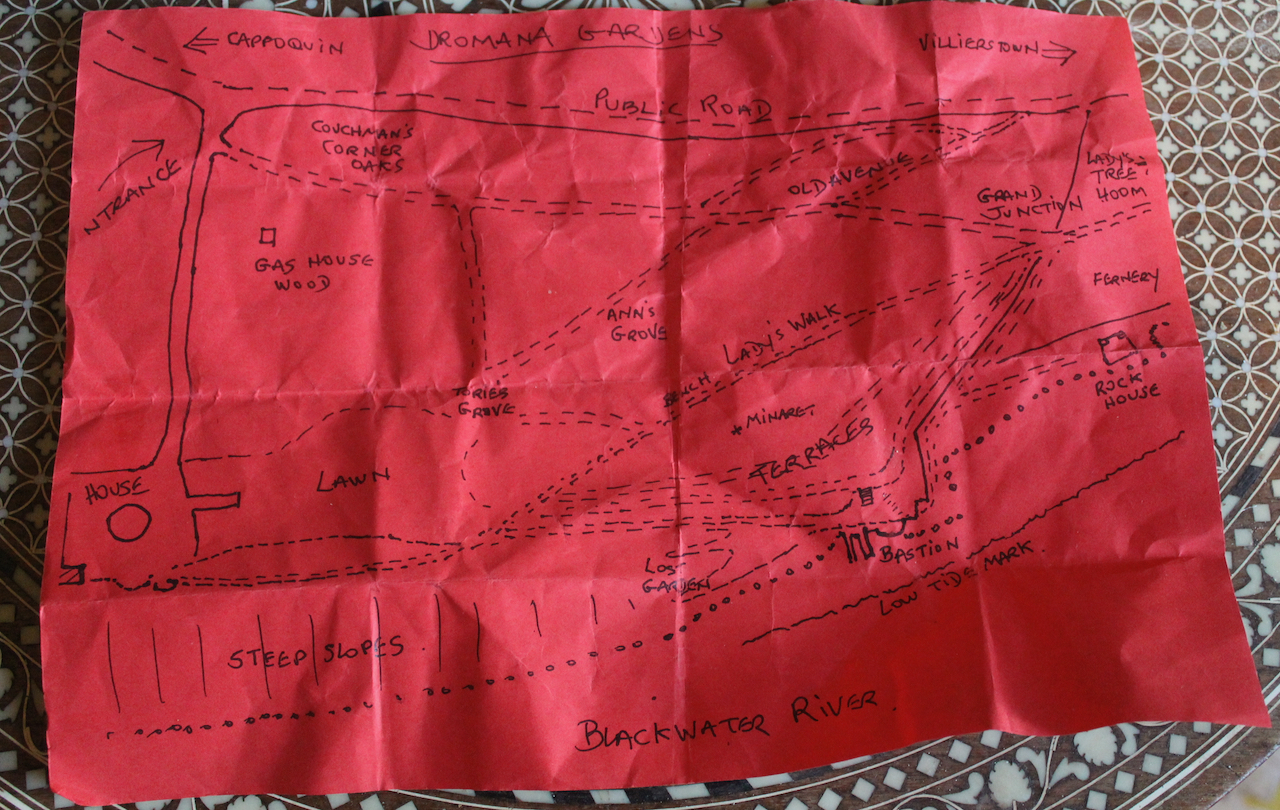
When we visited in 2020, we had more time to explore the garden. We were given a map when we arrived. The current owners are enthusiastic gardeners and do nearly all the work themselves.
[4] p. 108. Bence-Jones, Mark. A Guide to Irish Country Houses. (originally published as Burke’s Guide to Country Houses volume 1 Ireland by Burke’s Peerage Ltd. 1978); Revised edition 1988, Constable and Company Ltd, London.
[7] See Robert O’Byrne’s recent blog entry: There is a memorial in front of the church (constructed by Lord Grandison in 1748): a High Cross erected by Henry Villiers-Stuart in memory of his parents, Henry, Baron Stuart de Decies and his Austrian-born wife Pauline. To the immediate west is a second monument, this one a public fountain in rock-faced limestone ashlar; it was erected in 1910 by the younger Henry’s children in memory of their mother Mary who had died three years earlier. https://theirishaesthete.com/2022/08/20/20689/ Robert O’Byrne tells us that the village of Villierstown, County Waterford was established in the 1740s by John Villiers, first Earl Grandison who wished to have a settlement for weavers and other personnel working in the linen industry he was then establishing in the area.






















 Irish Historic Houses