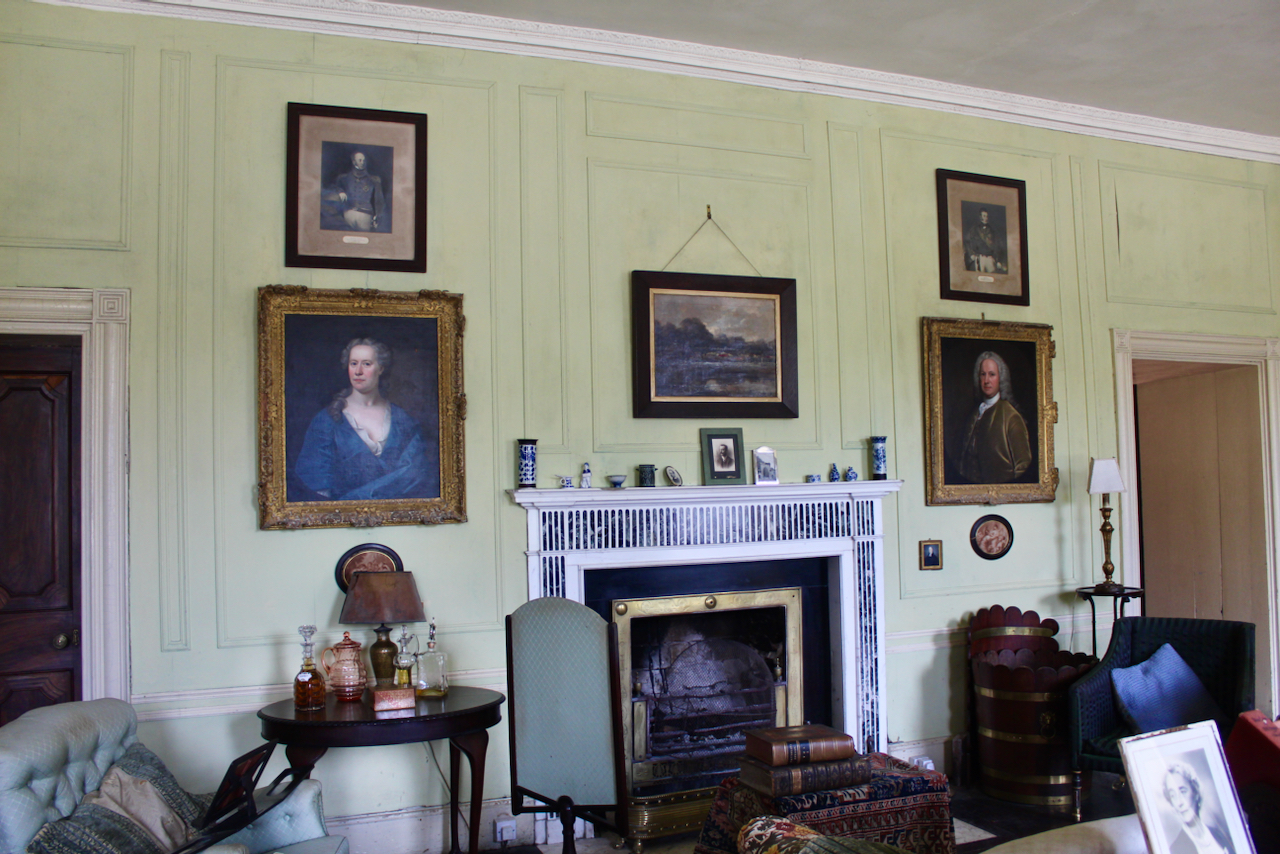
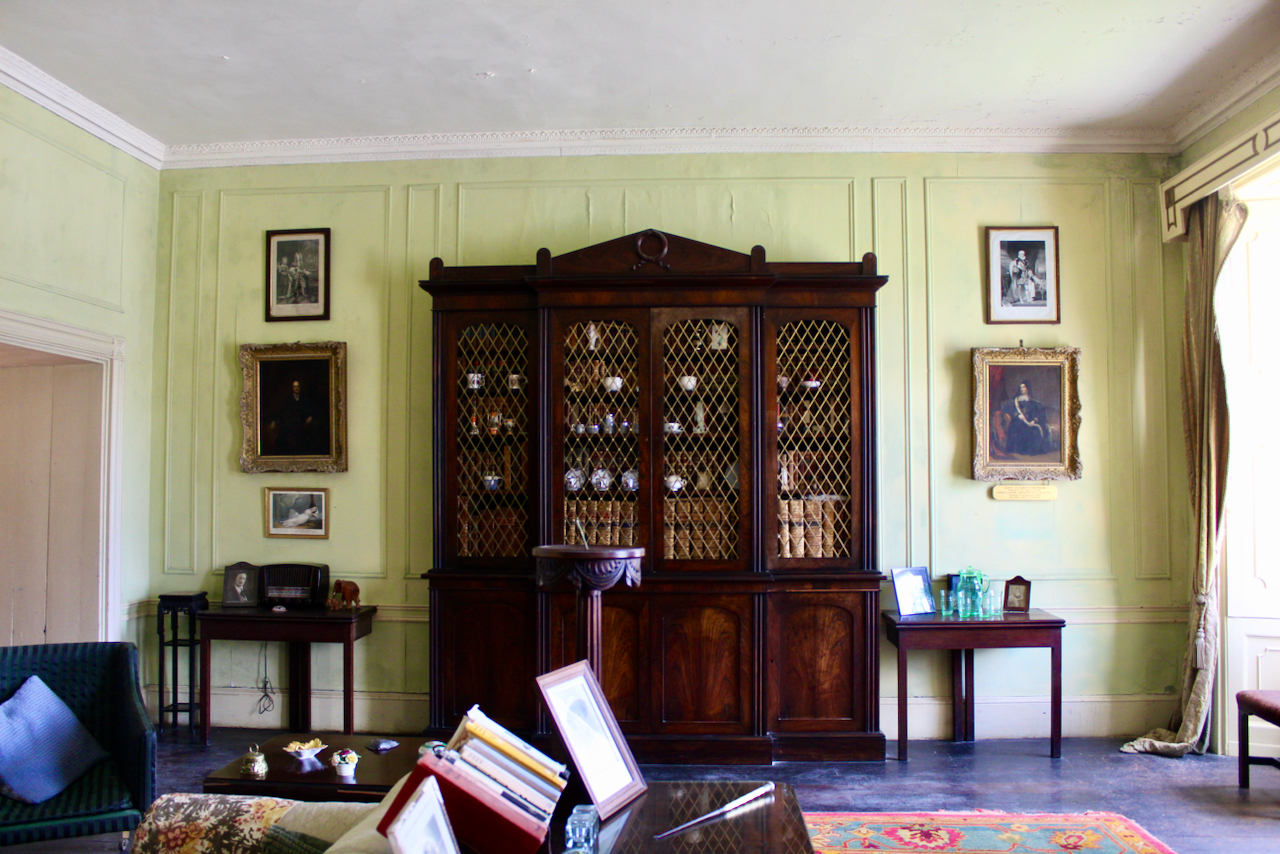
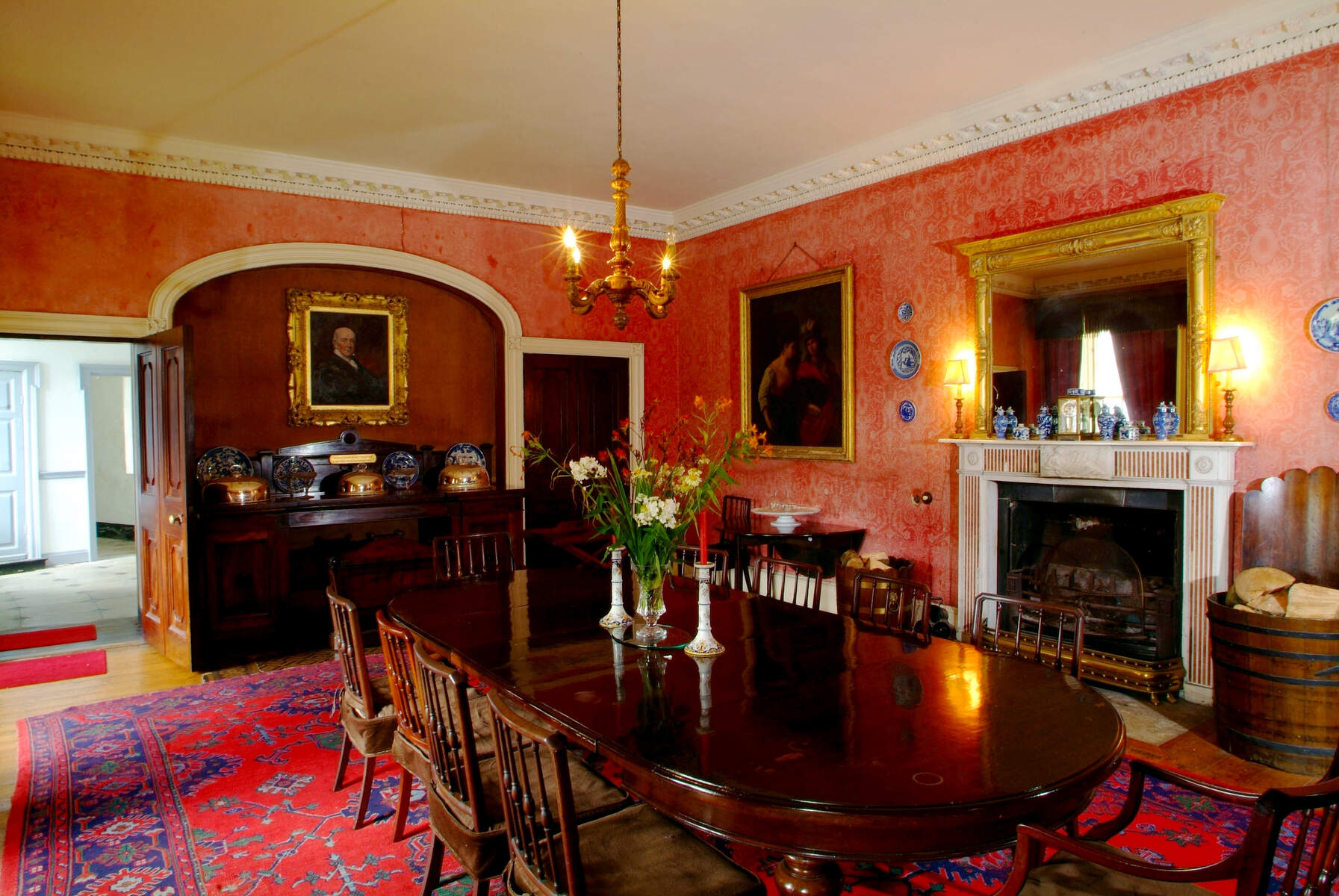
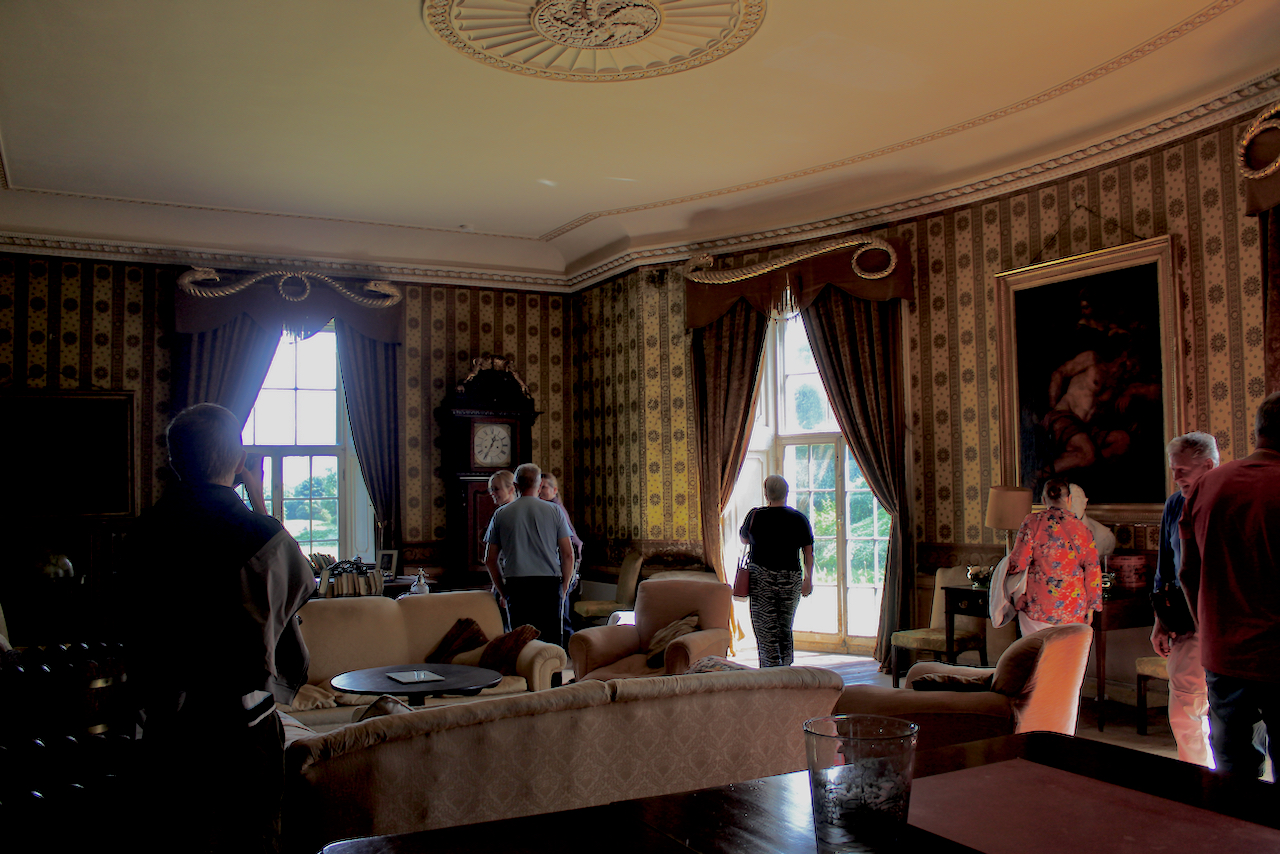
Places to visit and stay in County Longford, Leinster

On the map above:

blue: places to visit that are not section 482

purple: section 482 properties

red: accommodation

yellow: less expensive accommodation for two

orange: “whole house rental” i.e. those properties that are only for large group accommodations or weddings, e.g. 10 or more people.

green: gardens to visit

grey: ruins

As well as places to visit, I have listed separately places to stay, because some of them are worth visiting – you may be able to visit for afternoon tea or a meal.

For places to stay, I have made a rough estimate of prices at time of original publication:

€ = up to approximately €150 per night for two people sharing (in yellow on map);

€€ – up to approx €250 per night for two;

€€€ – over €250 per night for two.

Places to visit in County Longford:

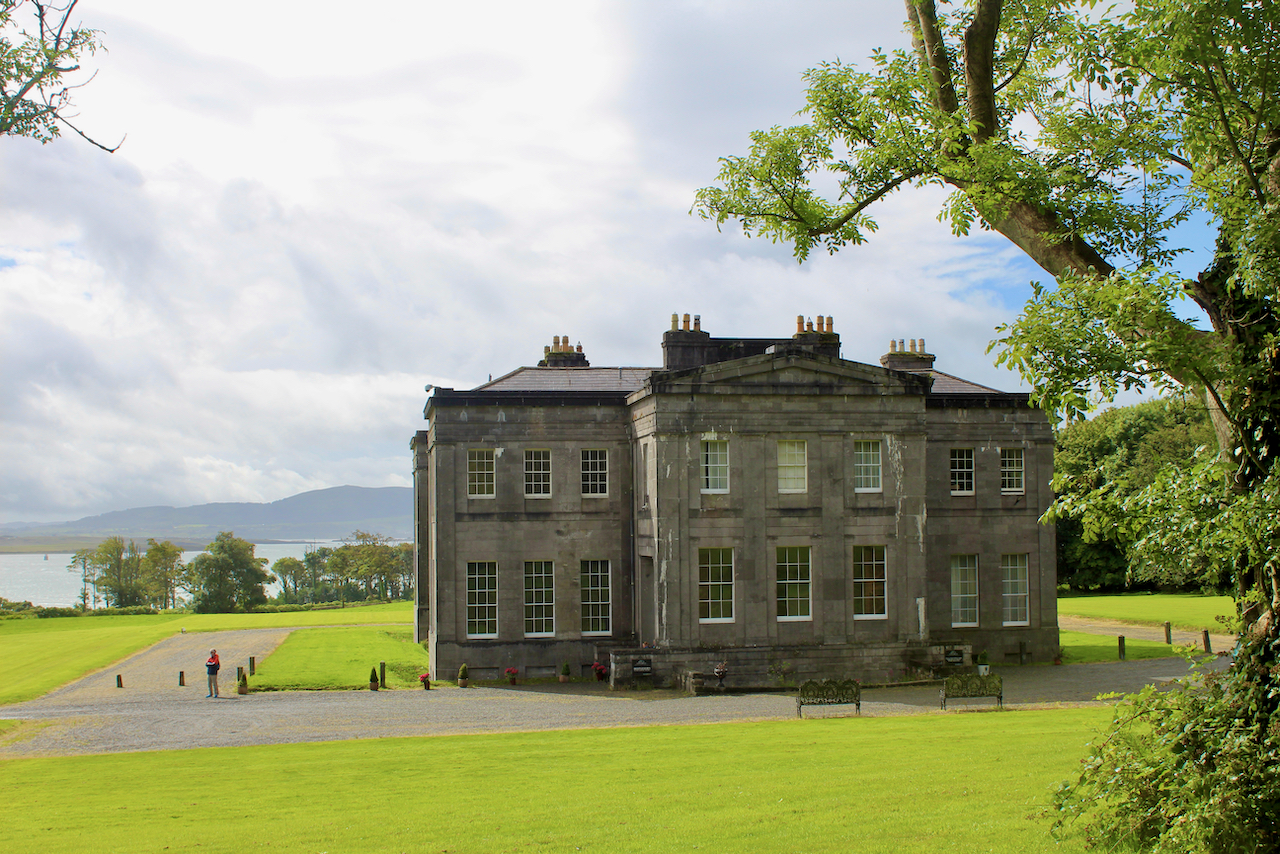
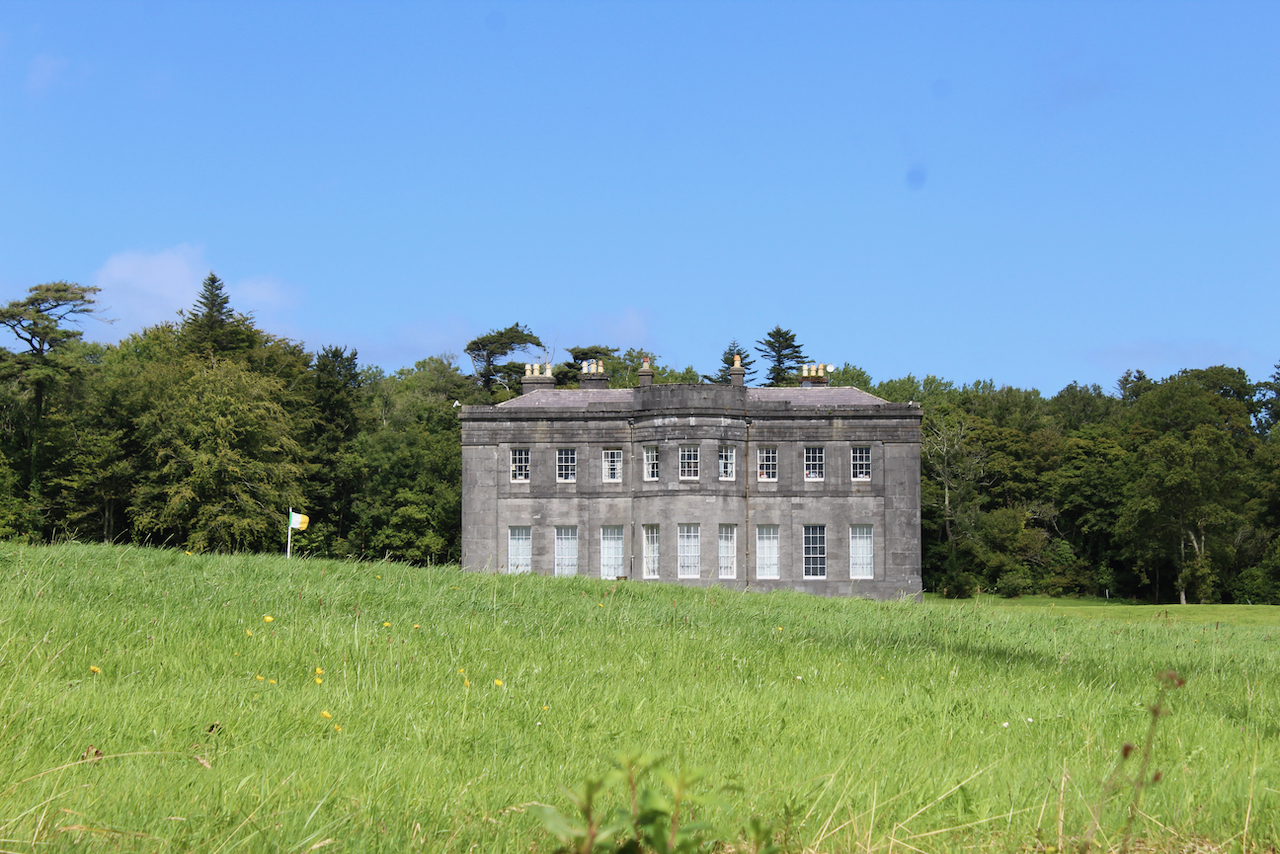
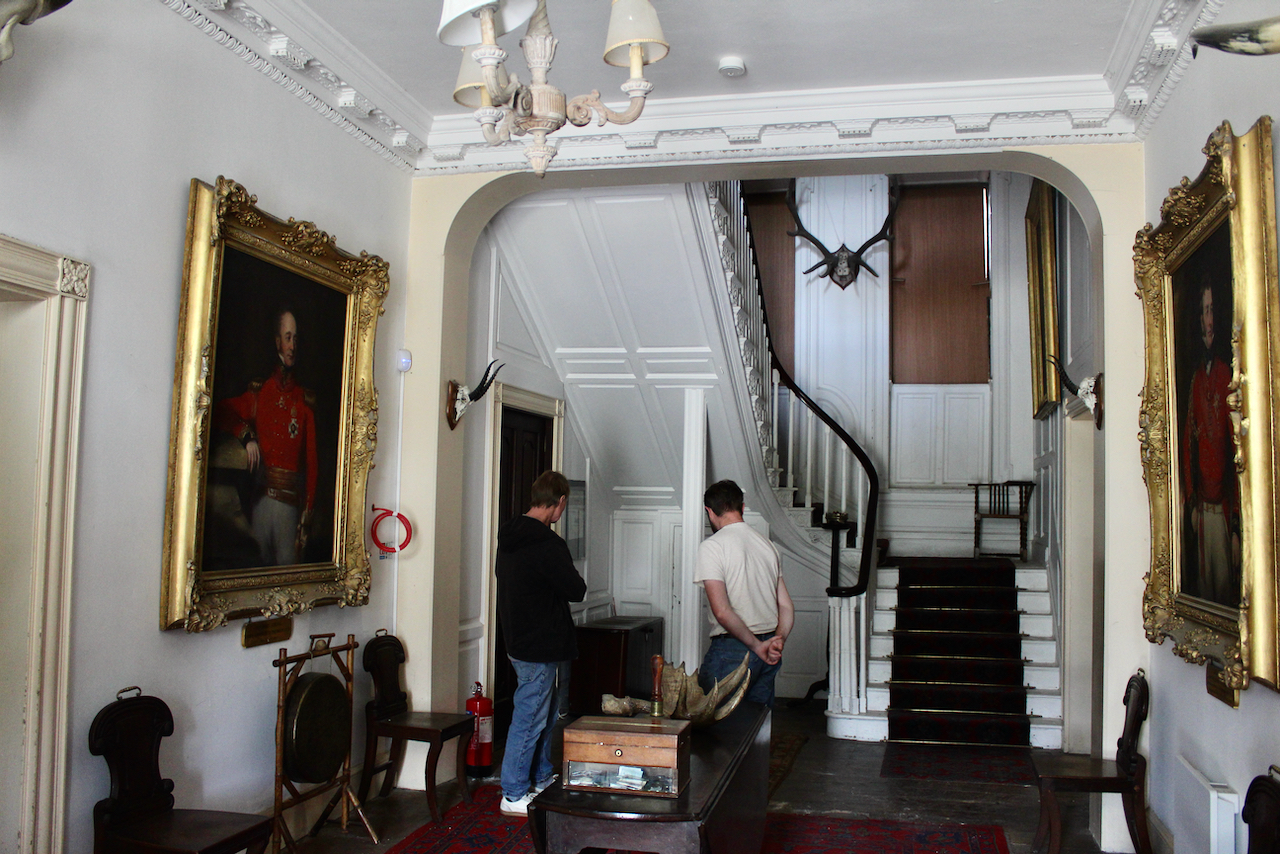
1. Castlecor House, County Longford, open by previous arrangement.

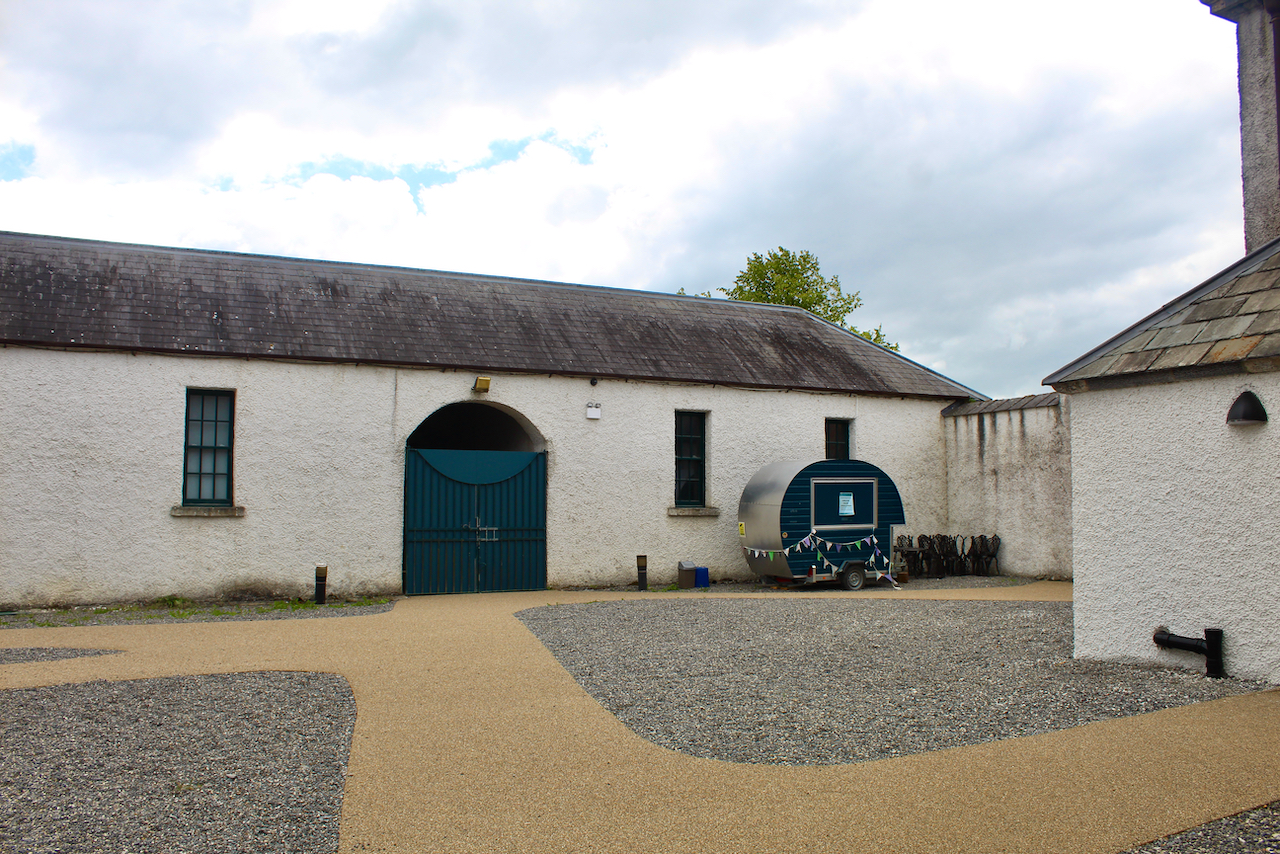
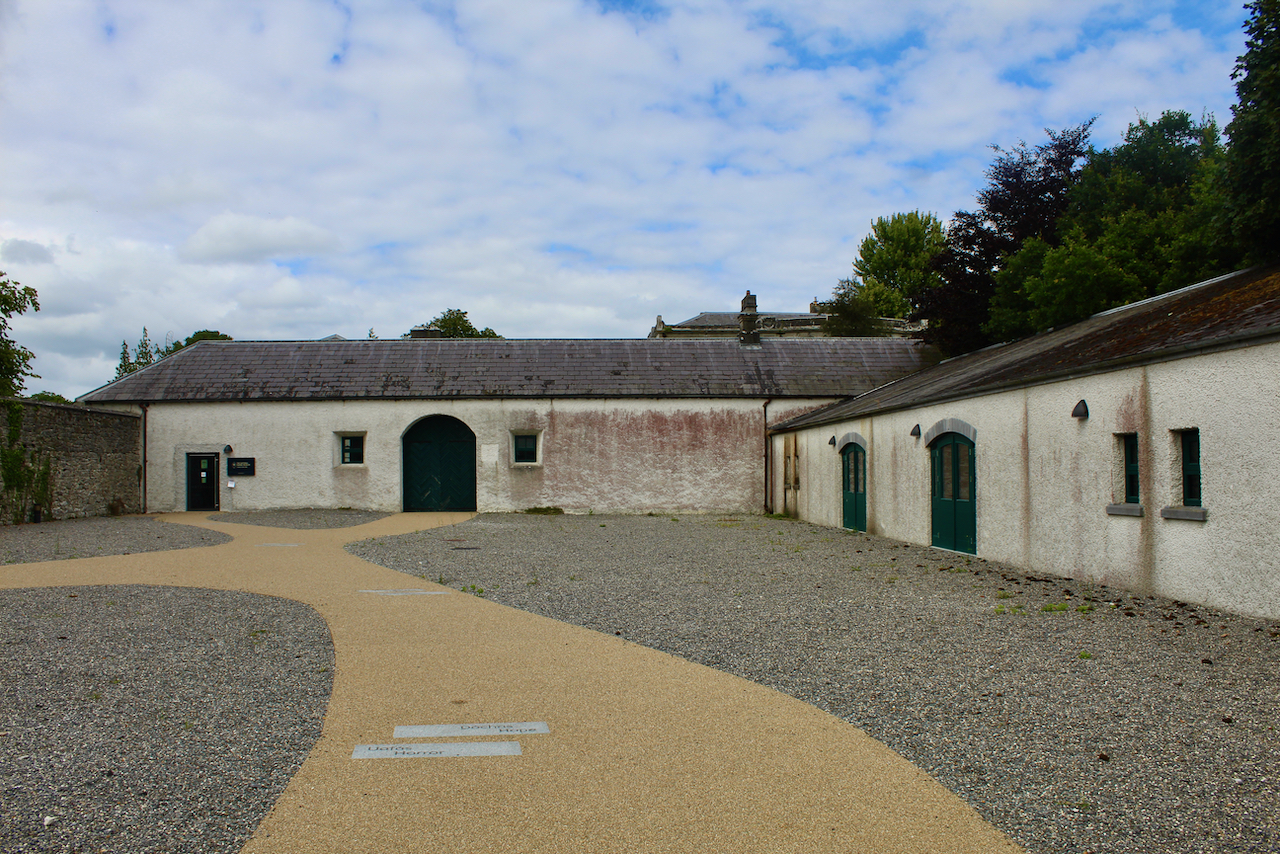
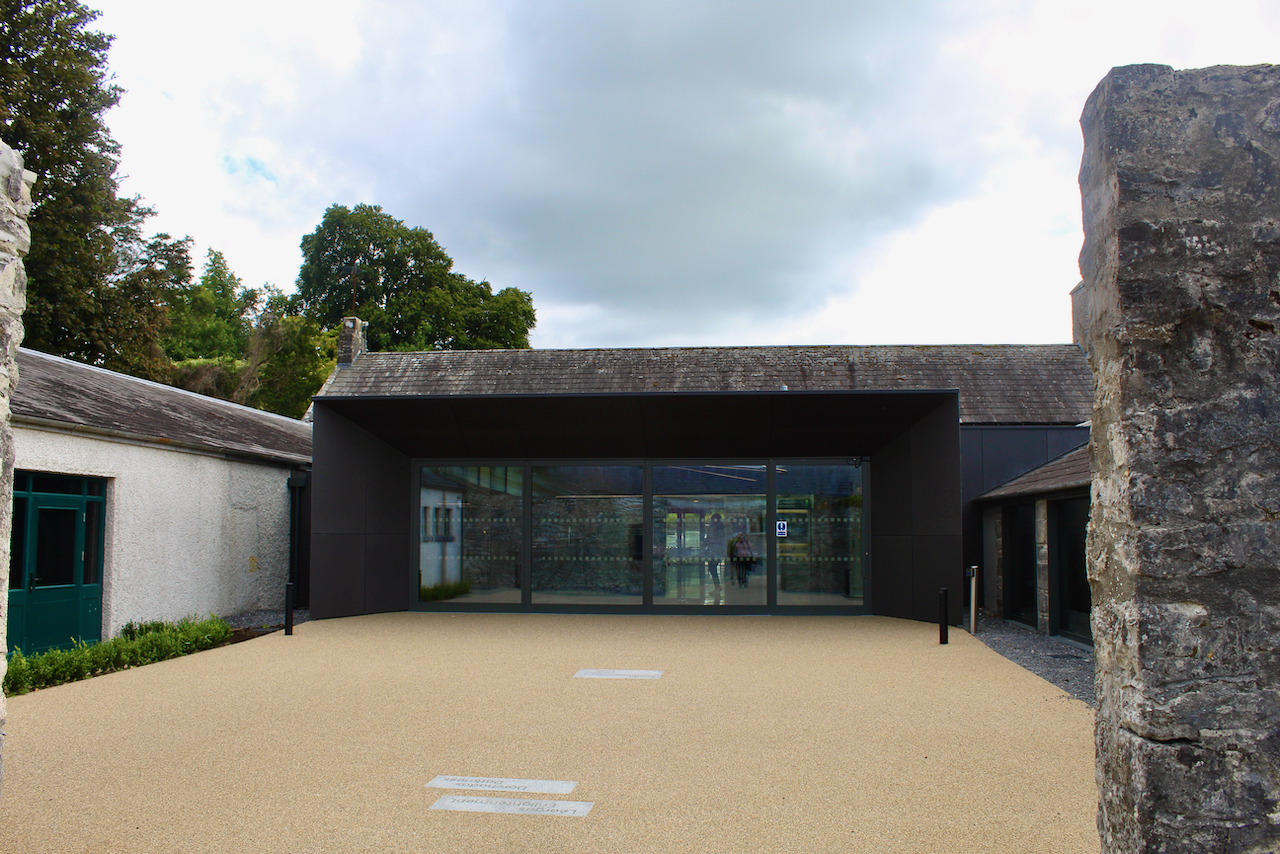
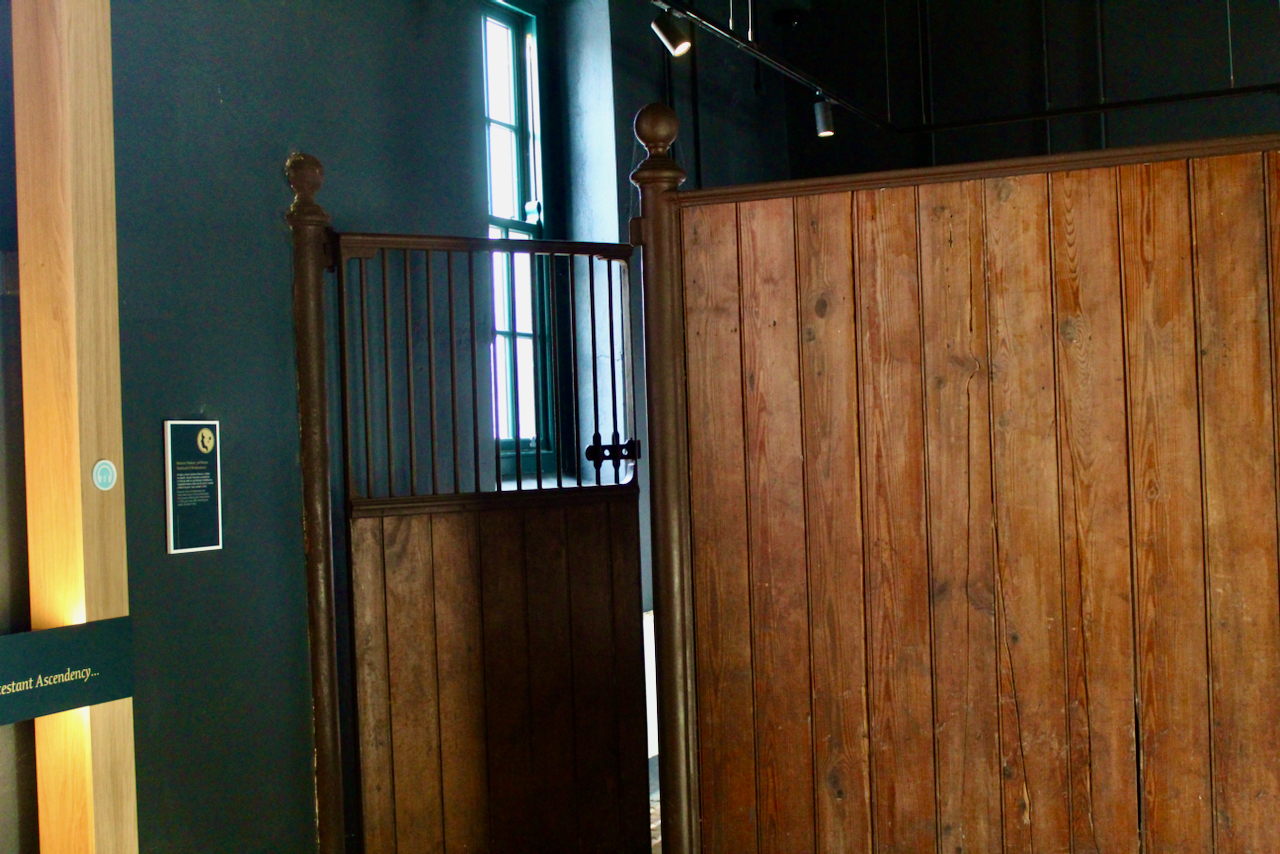
2. Maria Edgeworth Visitor Centre, Longford, County Longford.

3. Moorhill House, Castlenugent, Lisryan, Co. Longford – section 482

Places to stay, County Longford:

1. Castlecor House, County Longford

2. Newcastle House Hotel, Ballymahon, County Longford.

3. Viewmount House, Longford

donation

Help me to pay the entrance fee to one of the houses on this website. This site is created purely out of love for the subject and I receive no payment so any donation is appreciated!

€15.00

Places to visit in County Longford:

1. Castlecor House, County Longford, open by previous arrangement:
https://castlecorhouse.com/

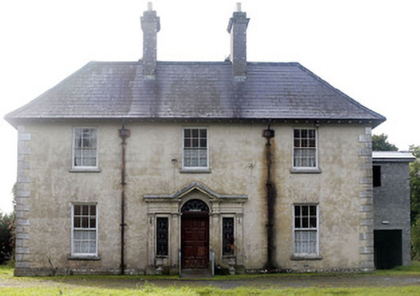
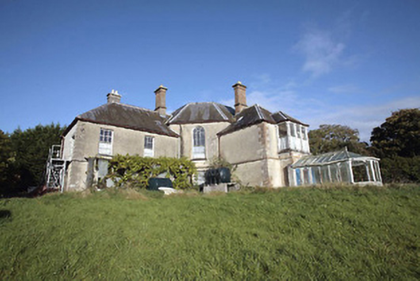
Castlecor House, County Longford, photograph from the National Inventory of Architectural Heritage [1]

I’ve been looking forward to staying in Castlecor house, after seeing a photograph of its incredible octagonal room.
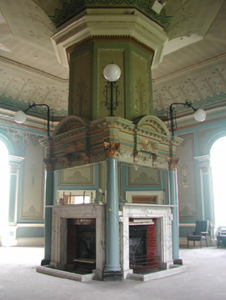
Castlecor House, County Longford, photograph from the National Inventory of Architectural Heritage [1]

The website tells us:

The construction of this magnificent residence, as it stands today, spanned 300 years, originally built in the mid 1700’s as a Hunting Lodge with additions in the 19th & 20th century.

The website continues: “It was built by the Very Revd. Cutts Harman (1706 – 1784), son of the important Harman family of nearby Newcastle House [which offers accommodation]. He was Dean of Waterford cathedral from 1759 and was married to Bridget Gore (1723-1762) from Tashinny [Tennalick, now a ruin, which passed from the Sankey family to the Gore family by the marriage of Bridget’s mother Bridget Sankey to George Gore, son of Sir Arthur Gore, 1st Baronet of Newtown Gore, County Mayo] in c. 1740.

The National Inventory of Architectural Heritage (www.buildingsofIreland.ie) gives the building an unusually long appraisal which explains the unusual building:

It was originally built as a symmetrical two-storey block on octagonal-plan with short (single-room) projecting wings to four sides (in cross pattern on alternating sides), and with tall round-headed window openings between to the remaining four walls. The single wide room to the octagon at first floor level has an extraordinary central chimneypiece (on square-plan) with marble fireplaces to its four faces; which are framed by Corinthian columns that support richly-detailed marble entablatures over. The marble fireplaces themselves are delicately detailed with egg-and-dart mouldings and are probably original. This room must rank as one of the most unusual and interesting rooms built anywhere in Ireland during the eighteenth-century.

Castlecor House, County Longford, photograph from the National Inventory of Architectural Heritage: “The single wide room to the octagon at first floor level has an extraordinary central chimneypiece (on square-plan) with marble fireplaces to its four faces; which are framed by Corinthian columns that support richly-detailed marble entablatures over. The marble fireplaces themselves are delicately detailed with egg-and-dart mouldings and are probably original.” [1]
Castlecor House, County Longford, photograph from the National Inventory of Architectural Heritage: “The walls of the octagonal room are decorated with Neo-Egyptian artwork.” [1]
Castlecor House, County Longford, photograph from the National Inventory of Architectural Heritage [1]

The National Inventory continues: “The walls of the octagonal room are decorated with Neo-Egyptian artwork, which may have been inspired by illustrations in Owen Jones’ book ‘Decoration’, published in 1856. The inspiration for this distinctive octagonal block is not known. Some sources suggest an Italian inspiration, such as the pattern books of the noted architect Sebastiano Serlio (1475 – 1554) [Mark Bence-Jones suggests this [2]], or that it was based on the designs of the much larger hunting lodge (Palazzina di caccia of Stupinigi) that was built for the Duke of Savoy, near Turin, between 1729 and c. 1731 (The later seems a highly fanciful idea but there are some similarities in plan, albeit on a much larger scale at Stupinigi); while Craig (1977, 15) suggests that the ‘inspiration is clearly the hunting lodge at Clemenswerth in Lower Saxony, Germany’, which was constructed between 1737 – 1747 to designs by Johann Conrad Schlaun for Prince Clemens August, a structure that Castlecor resembles in terms of scale and plan. However, it may be that the plan of this building was inspired by William Halfpenny (died 1755), an English Palladian architect who created a number of unexecuted designs for Waterford Church of Ireland cathedral and for an associated bishop’s palace from c. 1739. Interestingly, a number of these unexecuted plans for the bishop’s palace included a central octagonal block with projecting wings, while a number of the church plans included an unusual separate baptismal building attached to the nave, which is also on an octagonal-plan. The Very Revd. Cutts Harman may well have been aware of Halfpenny’s unexecuted designs, being Dean of the cathedral from 1759 and was probably associated with the diocese from an earlier date, and perhaps he used these as his inspiration for the designs of Castlecor. The central four-sided chimneypiece is reminiscent of the centerpiece of the Rotunda of Ranelagh Gardens, London, (built to designs by William Jones 1741 – 2; demolished c. 1803) albeit on a much reduced scale at Castlecor. The plan of Castlecor is also similar to a number of buildings (some not executed) in Scotland, including Hamilton Parish Church (built c. 1733 to designs by William Adam (1698 – 1748) and the designs for a small Neoclassical villa prepared by James Adam (1732 – 92), c. 1765, for Sir Thomas Kennedy. The exact construction date of Castlecor is not known, however the traditional building date is usual given as c. 1765. The architectural detailing to the interior of the original block, and perhaps the personal life of Very Revd. Cutts Harman (married in 1751 to a daughter of Lord Annaly of Tennalick 13402348; his duties at Waterford cathedral from 1759; Cutts Harmon leased out a number of plots of land in Longford from c. 1768) would suggest an earlier date of, perhaps, the 1740s. The architect is also unknown although it is possible that Harman designed the house himself (perhaps inspired by a pattern book or by Halfpenny’s unexecuted designs); while Craig (1977) suggest that the architect may have been Davis Ducart (Daviso de Arcort; died 1780/1), an Italian or French architect and engineer who worked extensively in Ireland (particularly the southern half of the island) during the 1760s and 1770s.” We saw Ducart’s work at Kilshannig in County Cork, another section 482 property, see my entry [3].
Castlecor House, County Longford, see the octagonal Great Hall in the centre of the house. photograph from the National Inventory of Architectural Heritage [1].
Castlecor House, County Longford, photograph from the National Inventory of Architectural Heritage [1]

The website tells us:”The Rev. Cutts Harman who had Castlecor built died without issue, it was inherited by his niece’s son [or was it his sister Anne’s son? If so, it was her son Lawrence Harman Parsons (1749-1807); she married Laurence Parsons, 3rd Baronet of Birr Castle. Her son added Harman to his surname when he inherited Castlecor from his uncle], Laurence Harman- Harman, later Lord Oxmantown, and finally Earl of Rosse. Peyton Johnston, the Earl’s nephew, rented the house during this time. Captain Thomas Hussey, Royal Marines; purchased Castlecor in c.I820. There is very little documentary evidence relative to Captain Hussey’s occupancy. He resided there from 1832/3 to 1856 and was High Sheriff of Longford.

Mark Bence-Jones adds: “To make the house more habitable, a conventional two storey front was built onto it early in C19, either by Peyton Johnston, who rented the house after it had been inherited by the Earl of Rosse, or by Thomas Hussey, the subsequent tenant who bought the property ante 1825. This front joins two of the wings so that its ends and theirs form obtuse angles. In the space between it and the octagon is a top-lit stair. Early in the present century, a wider front of two storeys and three bays in C18 manner, with a tripartite pedimented doorway, was built onto the front of the early C19 front. Castlecor subsequently passed to a branch of the Bonds, and was eventually inherited by Mrs C. J. Clerk (nee Bond).”
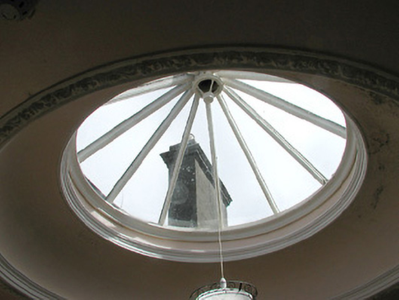
Castlecor House, County Longford, photograph from the National Inventory of Architectural Heritage [1]

The National Inventory continues to tell us the history of the house: “The building was extended c. 1850 (the house appears on its original plan on the Ordnance Survey first edition six-inch map 1838) by the construction of a two-storey block to the northeast corner of the house, between two of the wings of the original structure. The earlier wing to the west may have been extended at this time also. The lion’s head motifs to the rainwater goods throughout the building (built around and before c. 1850) are very similar to those found at the gate lodge serving Castlecor to the northwest, built c. 1855, suggesting that the house was altered at this time, possibly as part of wider program of works at the estate.”
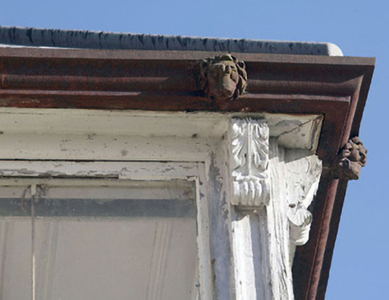
The lion’s head motifs to the rainwater goods throughout the building: Castlecor House, County Longford, photograph from the National Inventory of Architectural Heritage [1]

The National Inventory continues: “The projection to the south wing having the box bay window also looks of mid-to-late nineteenth century date and may also have been added at this time. The Castlecor estate was bought by the Hussey family during the late-eighteenth century following the death of Cutts Harman, and the first series of works may have been carried out when Capt. Thomas Hussey (1777 – 1866), High Sheriff of Longford from 1840 – 44, was in residence. However, the Castlecor estate was offered for sale by Commissioners of Incumbered Estates in 1855 when it was bought by a branch of the Bond family and, perhaps, the house was extended just after this date by the new owners. The Bonds were an important landed family in Longford at the time, and owned a number of estates to the centre of the county, to the north of Castlecor, and a branch also lived at adjacent Moygh/Moigh House (13402606) [still standing and in private hands] during the second half of the nineteenth century. Thomas Bond (1786 – 1869) [of Edgeworthstown] was probably the first Bond in residence at Castlecor. A John Bond, later of Castlecor, was High Sheriff of Longford in 1856. The last Bond owner/resident was probably a Mrs Clerk (nee Bond) [Emily Constance Smyth Bond] who was in residence in 1920. She married a Charles James Clerk (J.P. and High Sheriff of Longford in 1906) in 1901/2, and he was responsible for the three-bay two-storey block that now forms the main entrance, built c. 1913. This block was built to designs by A. G. C. Millar, an architect based on Kildare Street, Dublin. This block is built in a style that is reminiscent of a mid-eighteenth century house, having a central pedimented tripartite doorcase and a rigid symmetry to the front elevation. The house became a convent (Ladies of Mary) sometime after 1925 until c. 1980, and was later in use as a nursing home until c. 2007. This building, particularly the original block, is one of the more eccentric and interesting elements of the built heritage of Longford, and forms the centrepiece of a group of related structures.” [1]

The website tells us that the four wings adjoining the original octagonal hunting lodge align with the four cardinal compass points.

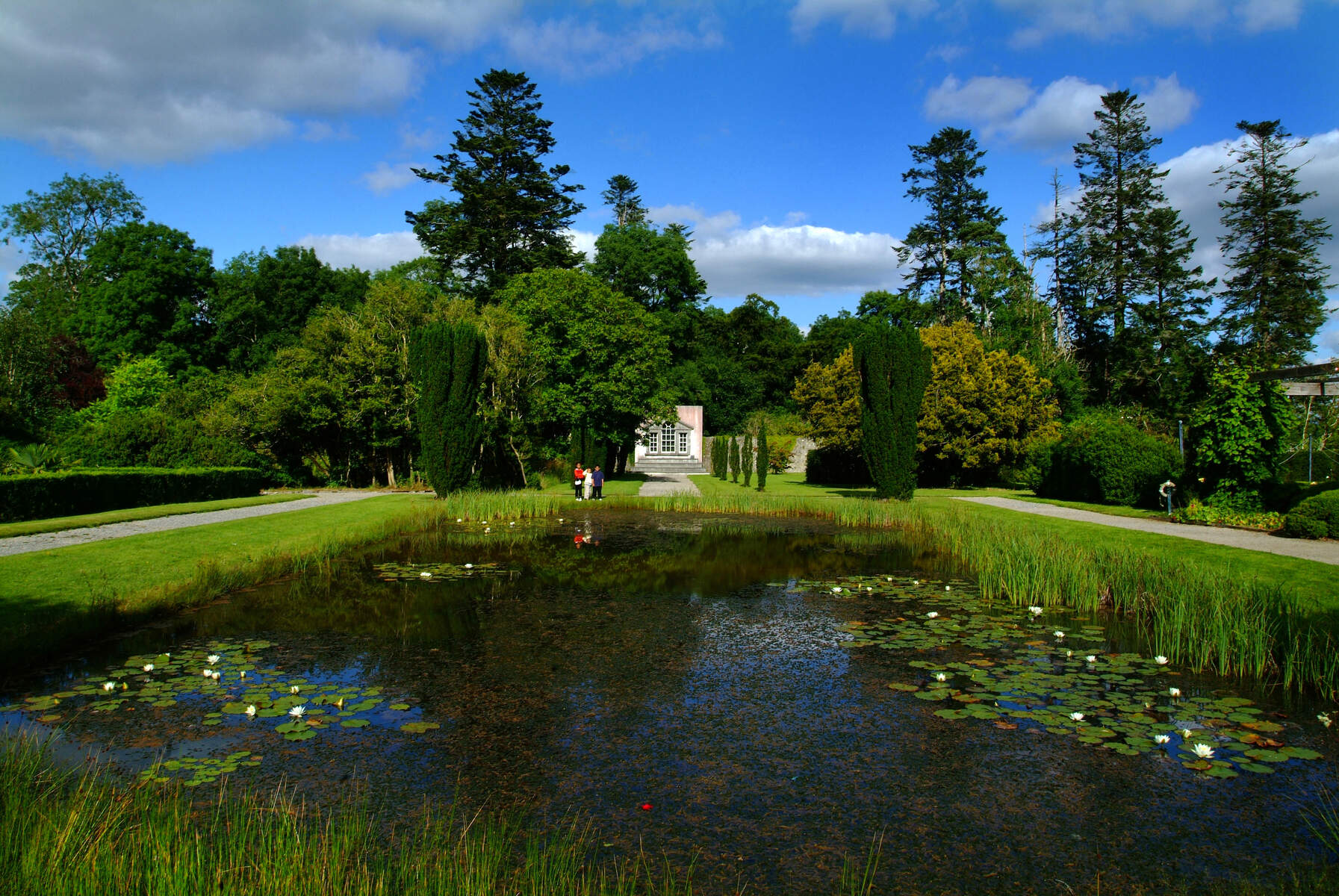
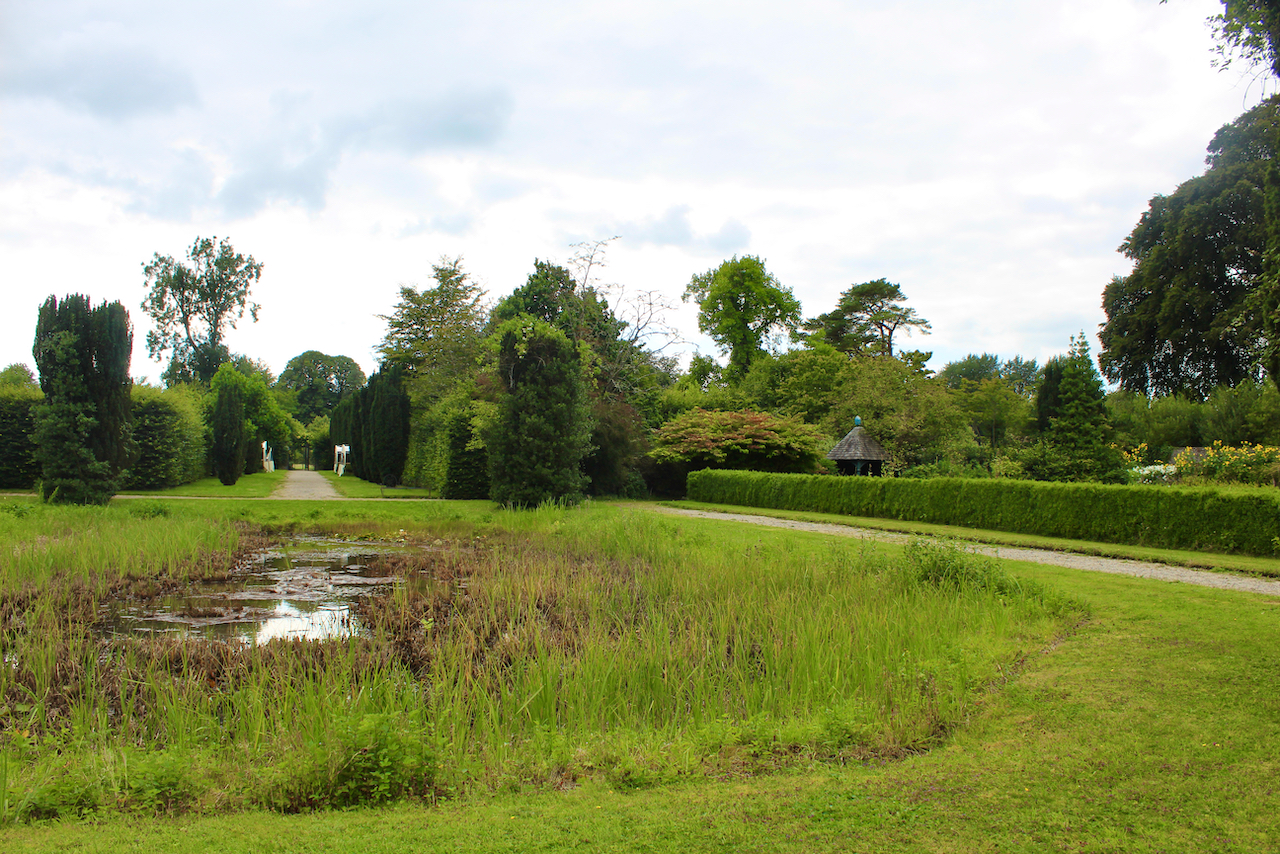
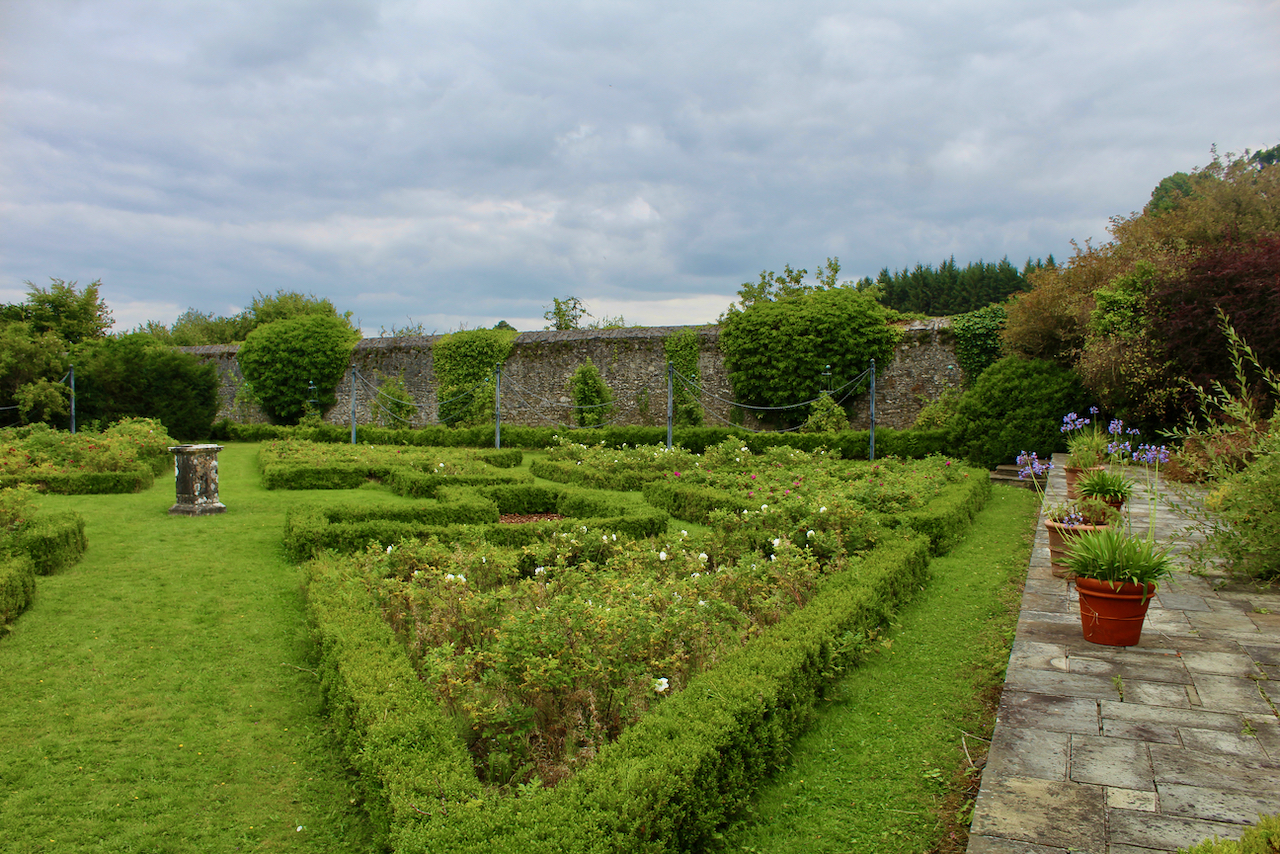
In 2009, the current owners Loretta Grogan and Brian Ginty set about purchasing the house, with the aspiration to restore Castlecor House, its grounds, native woodland and walled garden with pond and orchard to its former glory, opening it to the public by appointment and also welcoming guests.

2. Maria Edgeworth Visitor Centre, Longford, County Longford.

https://www.discoverireland.ie/longford/the-maria-edgeworth-visitor-centre
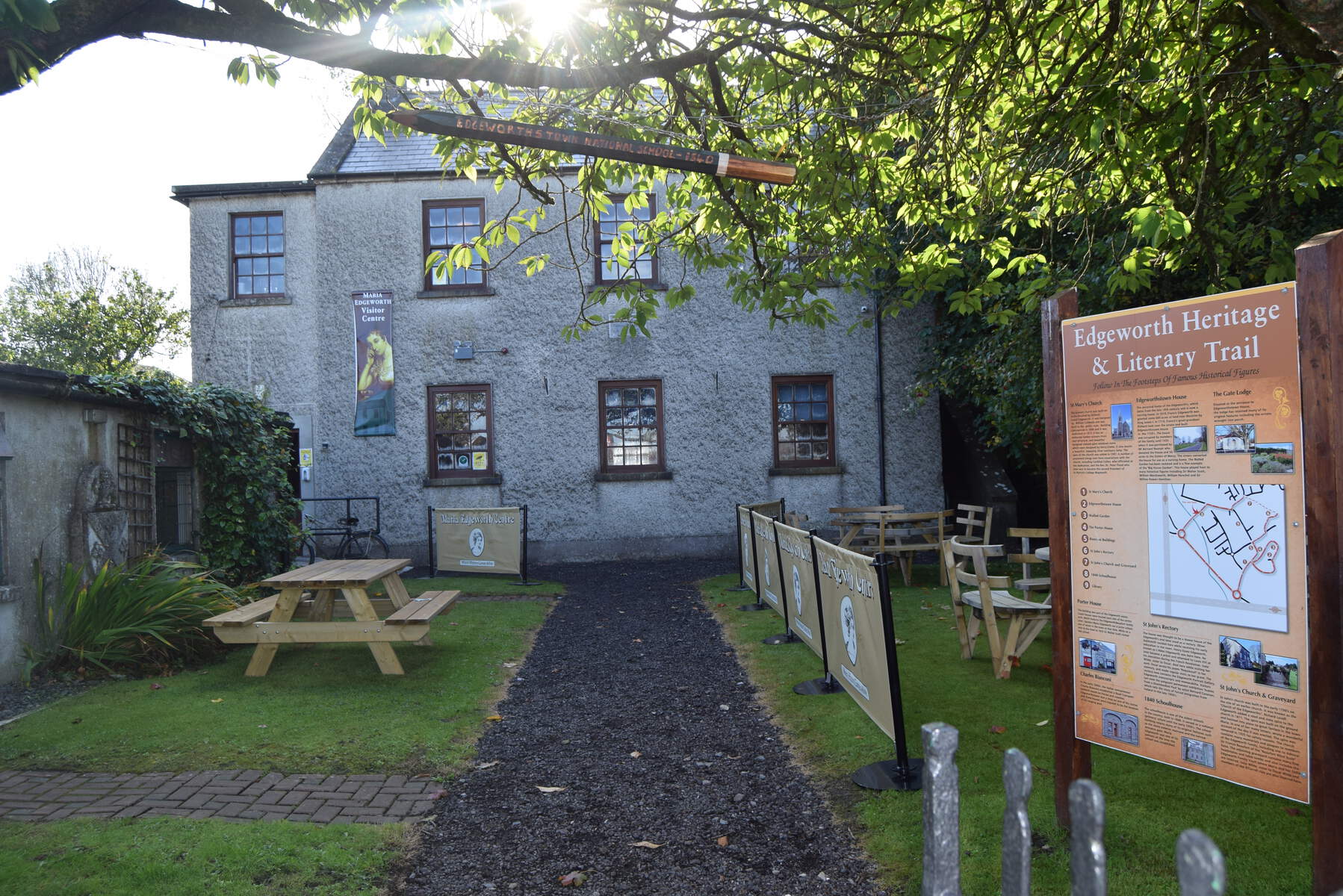
Maria Edgeworth Visitors Centre, Edgeworthstown, Co Longford, photo by Dympna Reilly 2020 ©Longford County Council, Ireland’s Content Pool (see [15])

The Maria Edgeworth Centre, in County Longford, is located in one of Ireland’s oldest school buildings that opened in 1841. Using a combination of audio, imagery and interactive displays, the centre tells the story of the Edgeworth family and the origins of the National School system. You will also learn about the role the family played in the educational, scientific, political and cultural life in Ireland. Maria Edgeworth was a notable pioneer of literature and education, a feminist and a social commentator of her time. Audios and displays are available in seven languages.”

3. Moorhill House, Castlenugent, Lisryan, Co. Longford – section 482

Open dates in 2025: Aug 1-31, Sept 1-29, 9.30am-1.30pm
Fee: adult/OAP/student/child €8

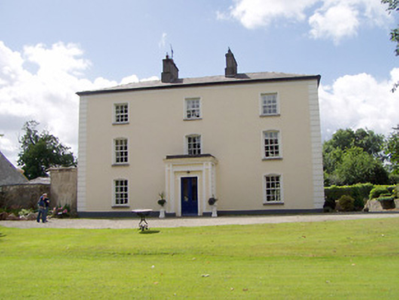
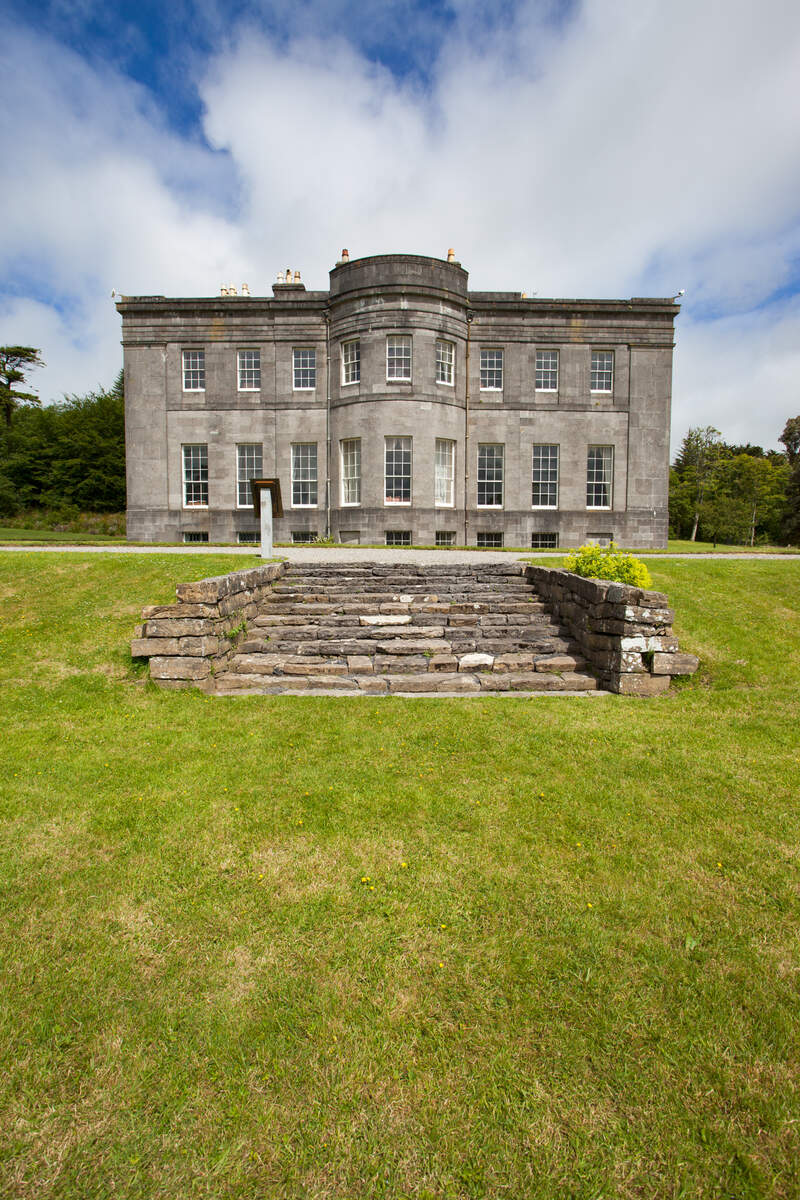
Moorhill House, photograph from the National Inventory of Architectural Heritage.[4]

The National Inventory describes it:

Detached three-bay two-storey over basement house on L-shaped plan, built c. 1815, having two-storey-storey return to rear (northwest) with pitched slate roof. Two-storey extension attached to the northwest end of rear return. Recently renovated. Possibly incorporating fabric of earlier building/structure. …This appealing and well-proportioned middle-sized house, of early nineteenth-century appearance, retains its early form, character and fabric. Its form is typical of houses of its type and date in rural Ireland, with a three-bay two-storey main elevation, hipped natural slate roof with a pair of centralised chimneystacks, and central round-headed door opening with fanlight. The influence of classicism can be seen in the tall ground floor window openings and the rigid symmetry to the front facade. The simple doorcase with the delicate petal fanlight over provides a central focus and enlivens the plain front elevation. The return to the rear has unusually thick walls and a relative dearth of openings, possibly indicating that it contains earlier fabric. This house forms an interesting group with the entrance gates to the southeast, the outbuildings (13401509) and walled garden to the rear, and the highly ornate railings to the southwest side featuring a sinuous vine leaf motif. The quality of these railings is such that their appearance is equally fine from both sides, the vine leaves being cast in three dimensions. They are notable examples of their type and date, and add substantial to the setting of this fine composition, which is an important element of the built heritage of the local area. Moorhill was the home of a R. (Robert or Richard) Blackall, Esq. in 1837 (Lewis). The Blackalls were an important family in the locality and built nearby Coolamber Manor c. 1837 [built for Major Samuel Wesley Blackhall (1809 – 1871)…to designs by the eminent architect John Hargrave (c. 1788 – 1833). Hargrave worked extensively in County Longford during the 1820s and was responsible for the designs for the governor’s house at Longford Town Jail in 1824; works at Ardagh House in 1826; the rebuilding of St. Paul’s Church of Ireland church at Newtown-Forbes; the remodelling of Castle Forbes, nearby Farragh/Farraghroe House (demolished); Doory Hall now ruinous; St. Paul’s Church of Ireland church, Ballinalee; and possibly for the designs of St. Catherine’s Church of Ireland church at nearby Killoe. …and [Coolamber Manor] may have replaced an earlier house associated with the Blackall family at Coolamber (a Robert Blackall (1764 – 1855), father of the above, lived in Longford in the late-eighteenth century)].

Moorhill House “was possibly the home of Robert Blackall, the father of Samuel Wensley, who was responsible for the construction of Coolamber Manor and later served as M.P. (1847 – 51) for the county before serving as Governor of Queensland, Australia from 1868 until his death in 1871. Moorhill may have been the residence of a Francis Taylor in 1894 (Slater’s Directory).”

Places to stay, County Longford:

1. Castlecor House, County Longford – see above

https://castlecorhouse.com/

2. Newcastle House Hotel, Ballymahon, County Longford

https://www.newcastlehousehotel.ie

Newcastle House (now a hotel), County Longford, photograph from Newcastlehousehotel.ie
photograph from the Newcastlehousehotel.ie

Newcastle House is a 300-year-old manor house, set on the banks of the River Inny near Ballymahon, in Co. Longford.

The website tells us; “Standing on 44 acres of mature parkland and surrounded by 900 acres of forest, Newcastle House is only one and half hour’s drive from Dublin, making it an excellent base to see, explore and enjoy the natural wonders of Ireland. So whether you are looking for a peaceful place to stay (to get away from it all) or perhaps need a location to hold an event, or that most important wedding, give us a call.”

Newcastle House (now a hotel), County Longford, photograph from the National Inventory of Architectural Heritage. [5]

The website previously included a brief history of the inhabitants of Newcastle:

Newcastle Wood was once part of Newcastle Demesne, an estate of some 11,000 hectares run by the King- Harman family in the 1800’s. The beautiful, historic nearby Newcastle House was where the King- Harmans lived and there are many features and place names in the woodland which refer back to that time.

We came across Lawrence Harman Parsons (1749-1807) who became the 1st Earl of Rosse, and who added Harman to his surname to become Lawrence Harman Parsons Harman, when he inherited Castlecor in County Longford. He married Jane King, daughter of Edward Thomas King, 1st Earl of Kingston, from Boyle, County Roscommon. They had a daughter, Frances Parsons-Harmon, who married Robert Edward King (1773-1854), 1st Viscount Lorton of Boyle, County Roscommon. Their second son, Lawrence Harman King assumed the additional name of Harman to become Lawrence Harman King-Harman (1816-1875). It was his family who lived at Newcastle Wood.

The old website continued: “The King- Harmans were generally regarded as good landlords by the local populace. They employed many local people in all sorts of trades. The last of the King- Harmans died in 1949. King- Harman sold lands to the Forestry Department in 1934 and over the following two years it was planted with a mixture of coniferous and broadleaf trees.

Then National Inventory describes the house:

Detached double-pile seven-bay three-storey over basement former country house, built c. 1730 and altered and extended at various dates throughout the eighteenth and nineteenth century, having curvilinear Dutch-type gable to the central bay and later gable-fronted single-bay single-storey entrance porch with matching curvilinear Dutch-type gable to the centre of the main block (southeast elevation), built c. 1820. Advanced three-bay single-storey over basement wing flanking main block to northeast, and advanced four-bay two-storey over basement wing flanking main block to southwest, both built c. 1785. Recessed single-bay single-storey over basement Tudor Gothic style addition attached to northeast elevation having gable-fronted rear elevation and chamfered corners at ground floor level having dressed ashlar limestone masonry , built c. 1850, and two-storey extension to southwest, built c. 1880. Possibly incorporating the fabric of earlier house(s) to site c. 1660. Later in use as a convent and now in use as a hotel…Round-headed door opening to front face of porch (southeast) having carved limestone surround with architrave, square-headed timber battened door with decorative cast-iron hinge motifs, wrought-iron overlight, and having moulded render label moulding over.Painted stuccoed ceilings and ceiling cornices, some with a neoclassical character, a number of early panelled timber doors and marble fireplaces survive to interior...” [5]

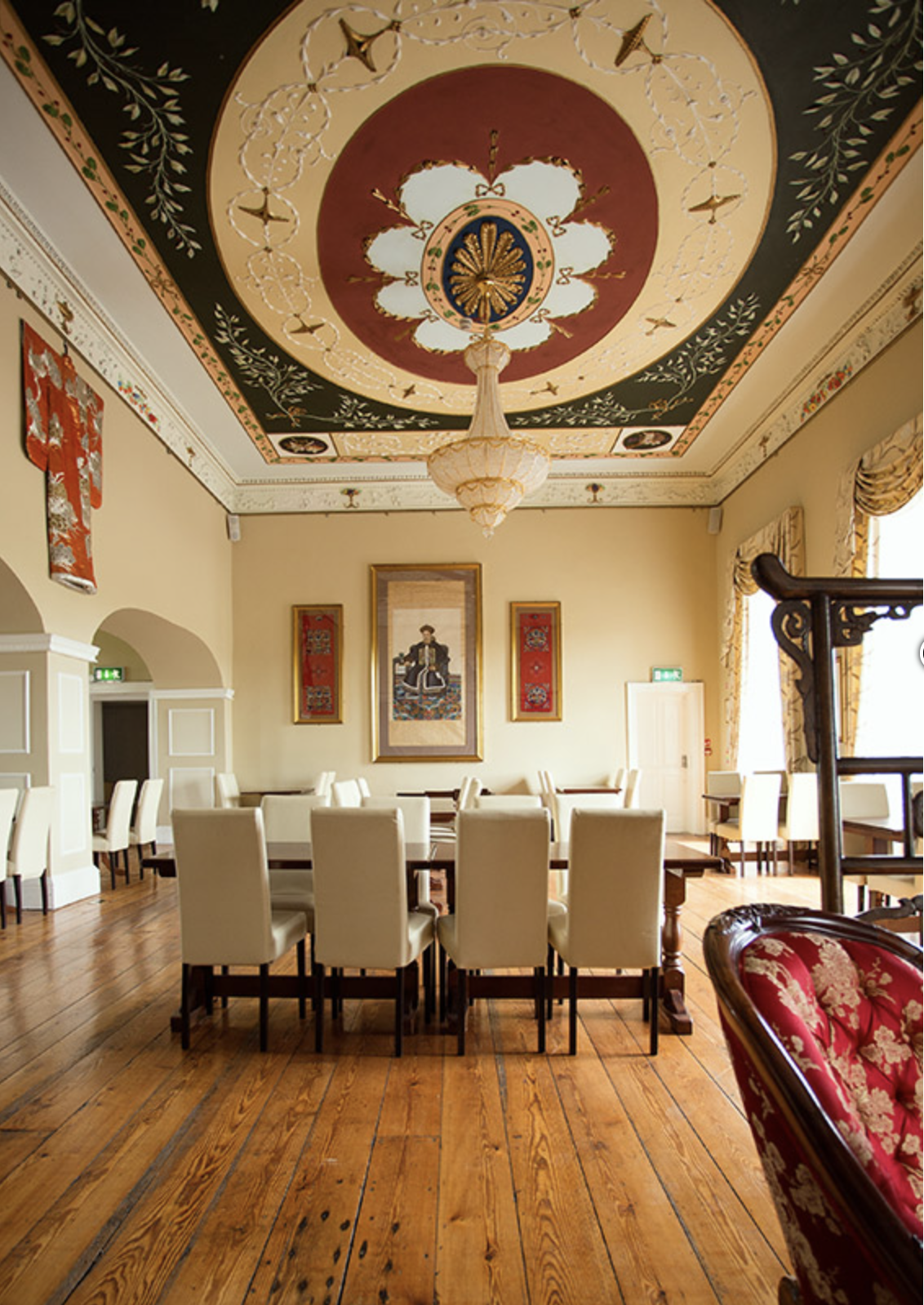
Newcastle House, photograph from National Inventory of Architectural Heritage: “Round-headed door opening to front face of porch (southeast) having carved limestone surround with architrave, square-headed timber battened door with decorative cast-iron hinge motifs, wrought-iron overlight, and having moulded render label moulding over.” The Inventory tells us that the carved coat of arms is probably of the King family. [5]
Newcastle House, photograph from Newcastlehousehotel.ie: “Painted stuccoed ceilings and ceiling cornices, some with a neoclassical character.” [5]
photograph from the Newcastlehousehotel.ie

Before belonging to the King-Harman family, Newcastle belonged to the Sheppard family. It came to the King-Harman family through the marriage of Frances Sheppard (d. 1766) daughter of Anthony Sheppard of Newcastle to Wentworth Harman (d. 1714) of Moyle, County Longford.

The National Inventory adds:

The lands and house at Newcastle were successively in the possession of the Chappoyne/Chappayne/Choppin, the Sheppard, the Harman and the King-Harman families. The earliest mention of the estate is references to an Anthony Chappoyne at Newcastle in 1660, although this may have been the site of an earlier ‘castle’ from as early as the fourteenth century (as the placename suggests). In 1680 a Robert Choppayne appears to have purchased/consolidated the lands of Newcastle from Gerald Fitzgerald, 17th Earl of Kildare. Dowdall (1682) describes the site as ‘..on the southside of the river is Newcastle, the antient Estate of the Earl of Kildare now the estate and habitation of Robert Choppin Esqr where he hath lately built a fair house and a wooden bridge over said river’. The estate passed into the ownership of Anthony Sheppard (born 1668 – 1738), heir (son?) of Robert Chappoyne, c. 1693, who served as High Sheriff of County Longford in 1698. His son, also Anthony, was M.P. for Longford in 1727. The estate later passed by marriage into the ownership into the Harman family at the very end of the seventeenth century. Robert Harman (1699 – 1765; M.P. for Longford c. 1760 -5) [son of Wentworth Harman and Frances Sheppard] was in possession of the estate of much of the middle of the eighteenth century and it is likely that he was responsible for much of the early work on the house. The Very Revd. Cutts Harman, who built the quirky hunting/fishing lodge at nearby Castlecor, inherited the house c. 1765 following the death of his brother Robert. The estate later passed into the ownership of Lawrence Parsons-Harman (1749 – 1807) in 1784 (M.P. for Longford 1776 – 1792; Baron Oxmantown in 1792; Viscount Oxmantown in 1795; Earl of Rosse 1806; sat was one of the original Irish Representative Peers in the British House of Lords) and he greatly increased the Newcastle estate, and by his death (1807) its size had doubled to approximately 31,000 acres in size. It is likely that he was responsible for the construction of the side wings to the main block and general improvements to the house from 1784. The estate passed into the ownership of his wife Jane, Countess of Rosse (who partially funded the construction of a number of Church of Ireland churches and funded a number of schools in County Longford during the first half of the nineteenth century), who left the estate to her grandson Laurence King-Harman (1816 – 1878) after falling out with her son. Laurence King-Harman has probably responsible for the vaguely Tudor Gothic extension to the northeast elevation. The brick chimneystacks also look of mid-nineteenth century date and may have been added around the same time this wing was constructed. The King family had extensive estates in Ireland during the nineteenth century, owning the magnificent Rockingham House (demolished) and King House [also a Section 482 property which I hope to visit later this year], Boyle, both in County Roscommon; as well as Mitchelstown Castle in County Cork, burnt in 1922 (memorial plaques and carved stone heads from Mitchelstown Castle were built into the northeast elevation of Newcastle House c. 1925, but have been removed and returned to Cork in recent years). The estate reached its largest extent in 1888, some 38,616 acres in size, when Wentworth Henry King-Harman was in residence. The estate was described in 1900 as ‘a master-piece of smooth and intricate organisation, with walled gardens and glasshouses, its diary, its laundry, its carpenters, masons and handymen of all estate crafts, the home farm, the gamekeepers and retrievers kennels, its saw-mill and paint shop and deer park for the provision of venison. The place is self supporting to a much greater degree than most country houses in England’. The estate went in to decline during the first decades of the twentieth century, and with dwindled in size to 800 acres by 1911. The house and estate remained in the ownership of the King-Harman family until c. 1951, when Capt. Robert Douglas King-Harman sold the house to an order of African Missionary nuns (house and contents sold for £11,000). It was later in use as a hotel from c. 1980.” [5]

photograph from the Newcastlehousehotel.ie

3. Viewmount House, Longford

http://www.viewmounthouse.com

Viewmount House, photograph from National Inventory of Architectural Heritage. [6]

The website tells us:

Discover this boutique gem, a secret tucked away in the heart of Ireland. This magnificent 17th century manor is complemented by its incredible countryside surroundings, and by the four acres of meticulously-maintained garden that surround it. Within the manor you’ll find a place of character, with open fires, beautiful furniture, fresh flowers and Irish literature. The manor retains its stately, historic charm, and blends it with thoughtful renovation that incorporates modern comfort.

Here, you will unwind into the exceptionally relaxing atmosphere, a restful world where all you hear is peace, quiet and birdsong.

This house was advertised for sale in recent years. The National Inventory describes it:

Detached three-bay three-storey house, built c. 1750 and remodeled c. 1860, having single-bay single-storey porch with flat roof to the centre of the front elevation (north). Renovated c. 1994. Formerly in use as a Church of Ireland charter school (c. 1753 – 1826)…This elegant mid-sized Georgian house is a fine example of the language of classical architecture reduced to its essential elements. It retains its early character and form despite recent alterations….Set in extensive mature grounds, this fine structure is a worthy addition to the architectural heritage of County Longford….This house was the home of the Cuffe family during the first half of the eighteenth century. It was later inherited by Thomas Pakenham (later [1st] Baron Longford [of Pakenham Hall, or Tullynally, County Westmeath, another section 482 property, see my entry]) following his marriage to Elizabeth Cuffe (1714-94) in 1739 or 1740. It is possible that Viewmount House was constructed shortly after this date and it may have replaced an earlier Cuffe family house on or close to the present site. The house was never lived in by the Pakenham family but it was used by their agent to administer the Longford estate, c. 1860. It was apparently in use as a charter school from 1753 until 1826, originally founded under the patronage of Thomas Pakenham. There is a ‘charter school’ indicated here (or close to here) on the Taylor and Skinner map (from Maps of the Roads of Ireland) of the area, dated between 1777 – 1783. A ‘free charter school’ at Knockahaw, Longford Town, with 32 boys, is mentioned in an Irish Education Board Report, dated 1826 – 7 (Ir. Educ. Rept 2, 692 – 3).” [6]

[1] https://www.buildingsofireland.ie/buildings-search/building/13402608/castlecor-house-castlecore-longford

[2] p. 66. Bence-Jones, Mark. A Guide to Irish Country Houses (originally published as Burke’s Guide to Country Houses volume 1 Ireland by Burke’s Peerage Ltd. 1978); Revised edition 1988 Constable and Company Ltd, London.

[3] www.irishhistorichouses.com/2020/12/10/kilshannig-house-rathcormac-county-cork/
[4] https://www.buildingsofireland.ie/buildings-search/building/13401508/moorhill-house-castlenugent-longford

[5] https://www.buildingsofireland.ie/buildings-search/building/13402709/newcastle-house-newcastle-newcastle-demesne-longford

[6] https://www.buildingsofireland.ie/buildings-search/building/13007038/viewmount-house-knockahaw-longford

Lissadell House & Gardens, Lissadell, Ballinfull, Co. Sligo – section 482

www.lissadell.com

Open dates in 2025: June 1-2, 4-8, 11-15, 18-22, 25-29, July 2-6, 9-13, 16-20, 23-27, 30-31, Aug 1-4, 6-10, 13-24, 27-31, 10.30am-6pm

Fee: adult €16, OAP/student €14, child €8, tour groups of over 30 persons who pay in advance receive a discount

donation

Help me to pay the entrance fee to one of the houses on this website. This site is created purely out of love for the subject and I receive no payment so any donation is appreciated!

€15.00

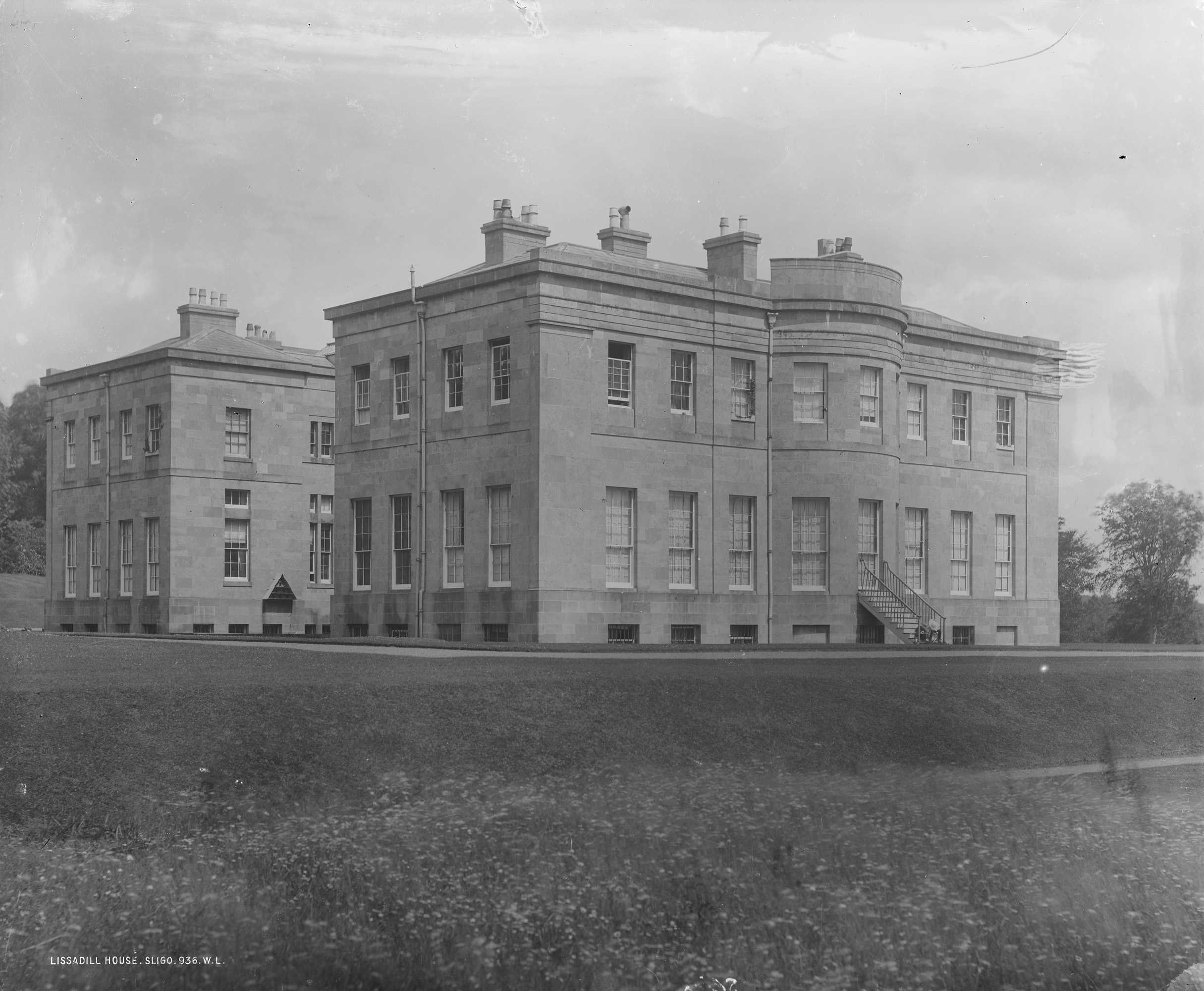
Lissadell House and Gardens County Sligo Ireland, Photograph created by Peter McCabe, Tourism Ireland, 2015, taken from Ireland’s Content Pool care of Failte Ireland. This south elevation, facing the sea, has a three-bay central bow with a raised parapet and three-bays either side of the full height bow.
Lissadell House, County Sligo circa 1865-1914 by Robert French, Lawrence Collection NLI L_IMP_0936.

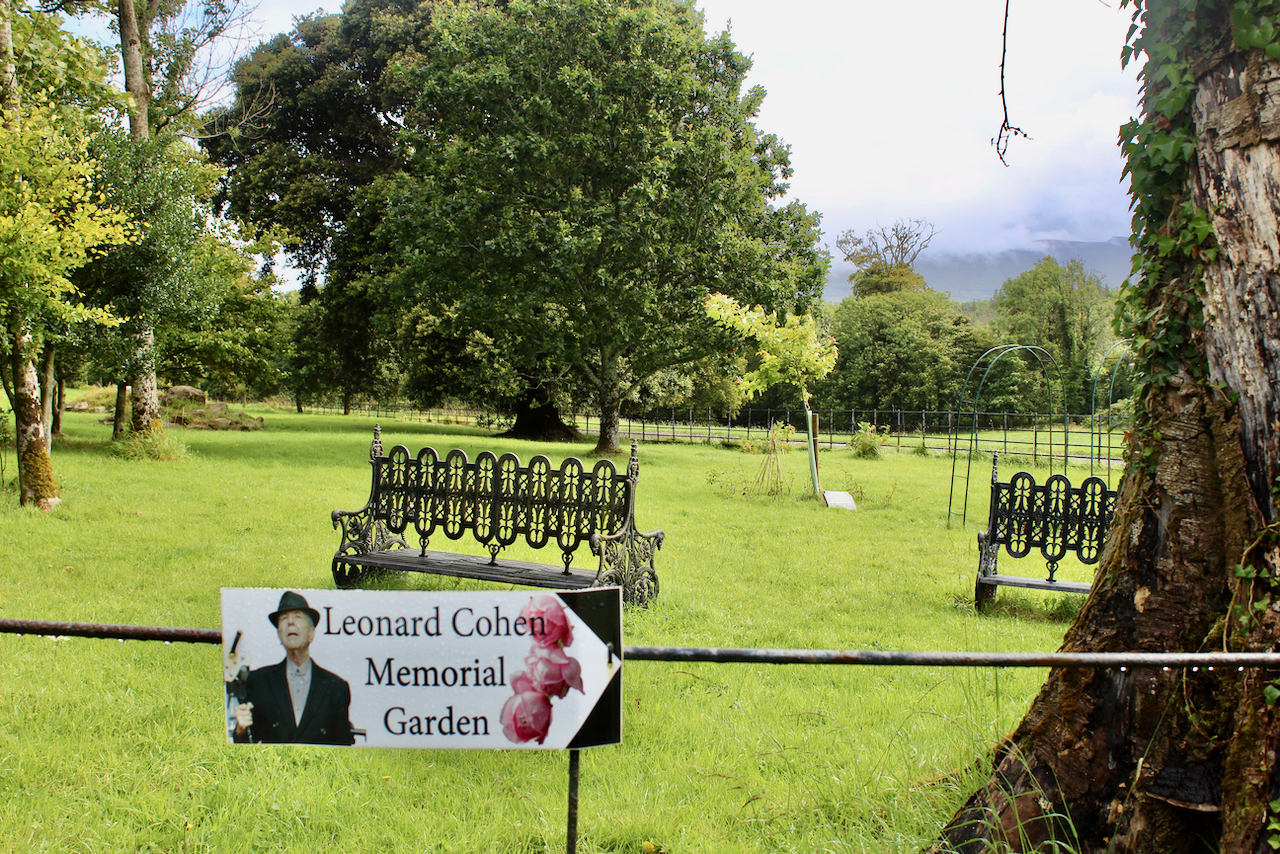
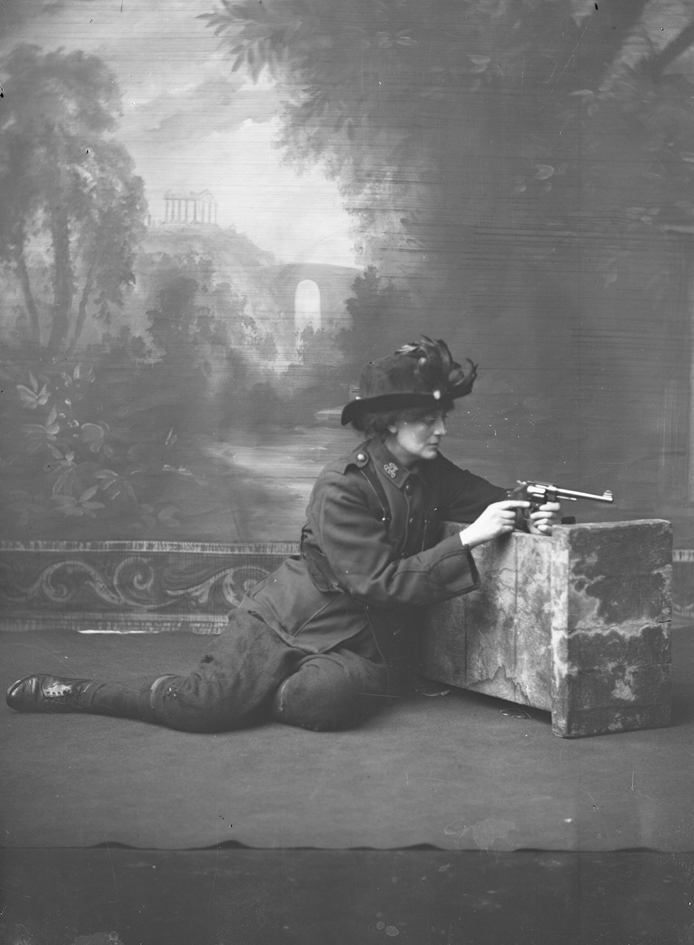
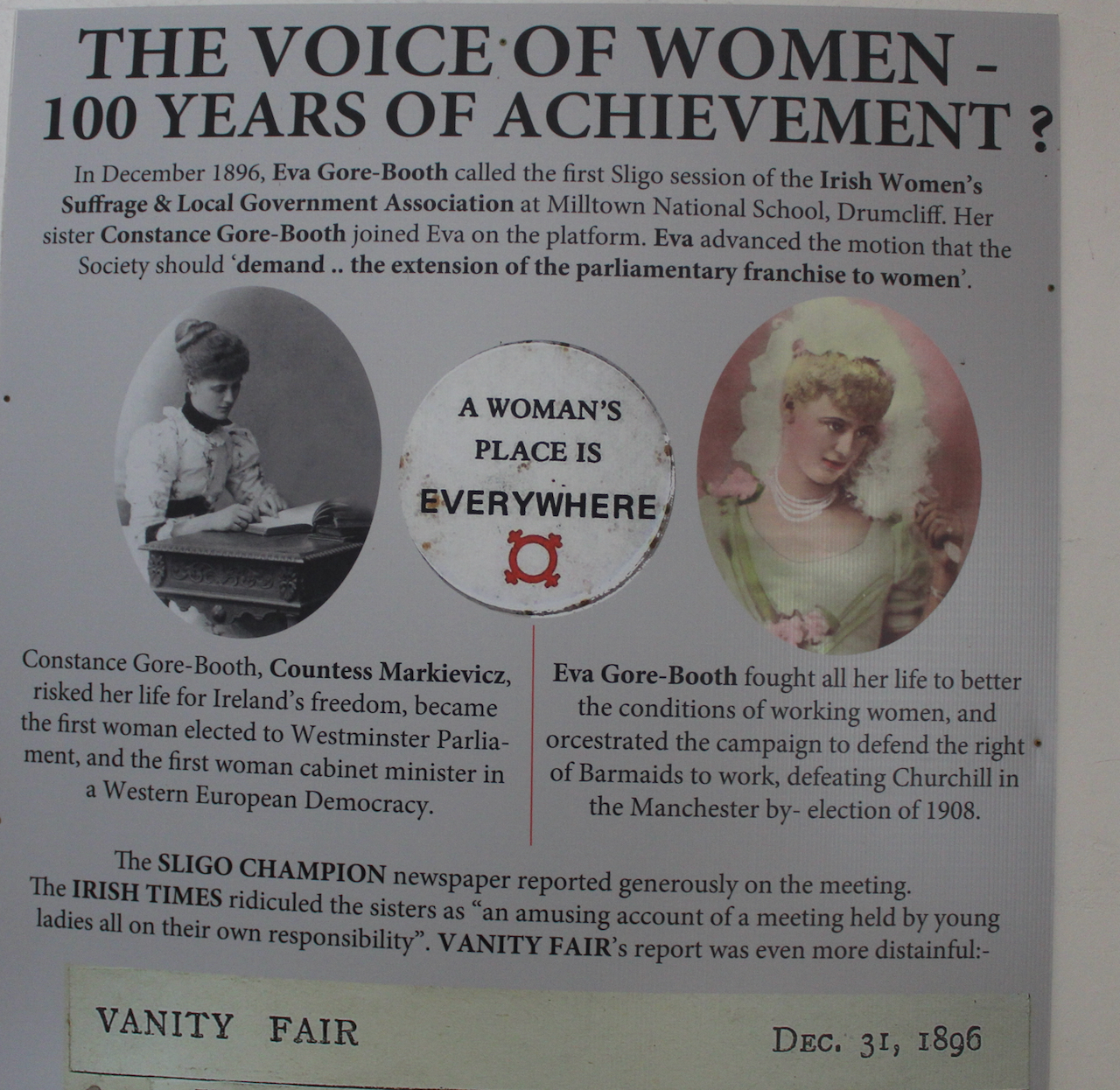
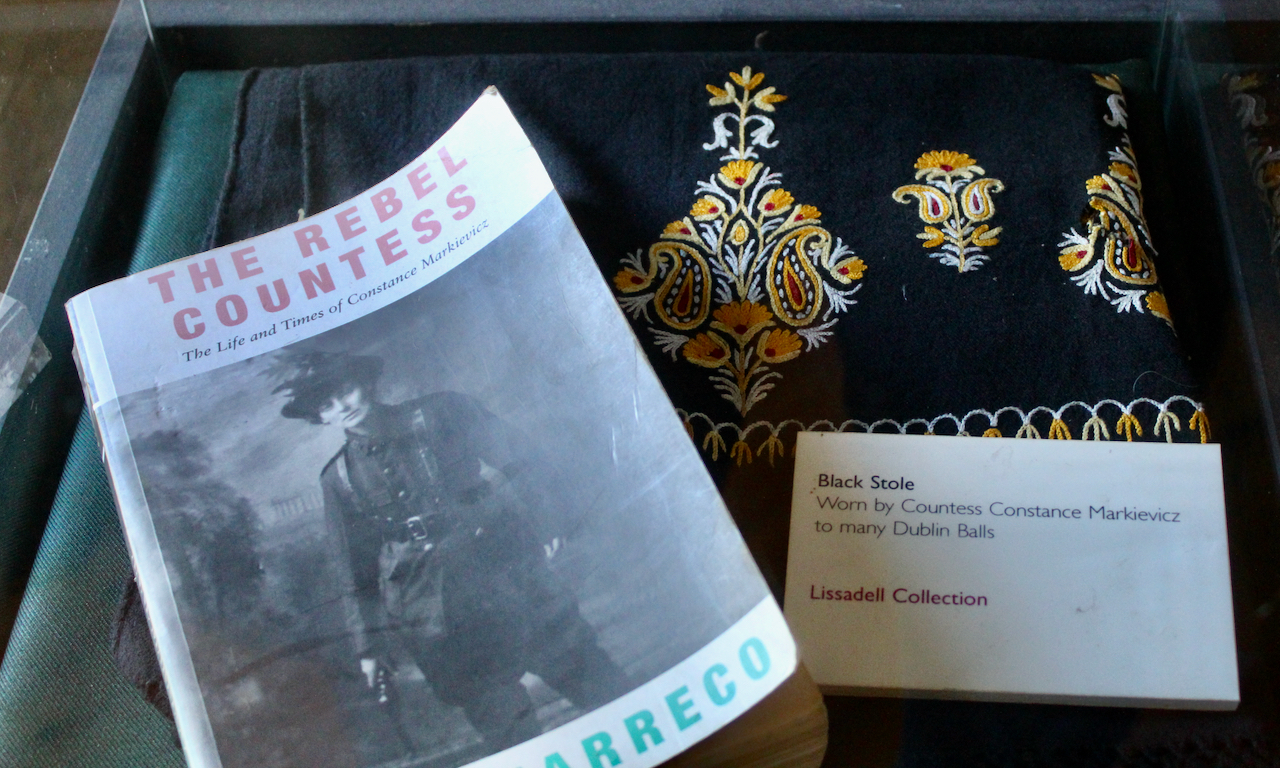
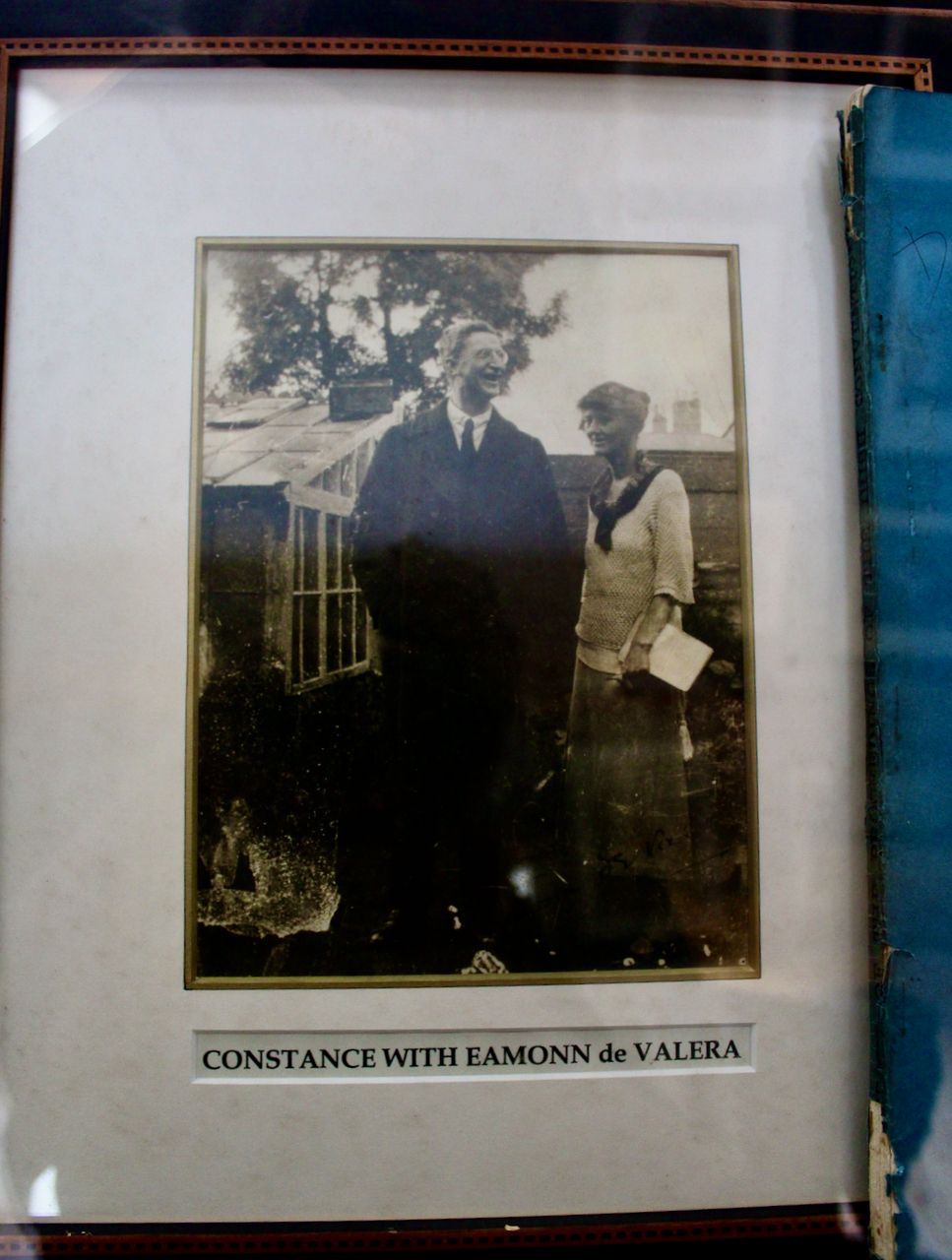
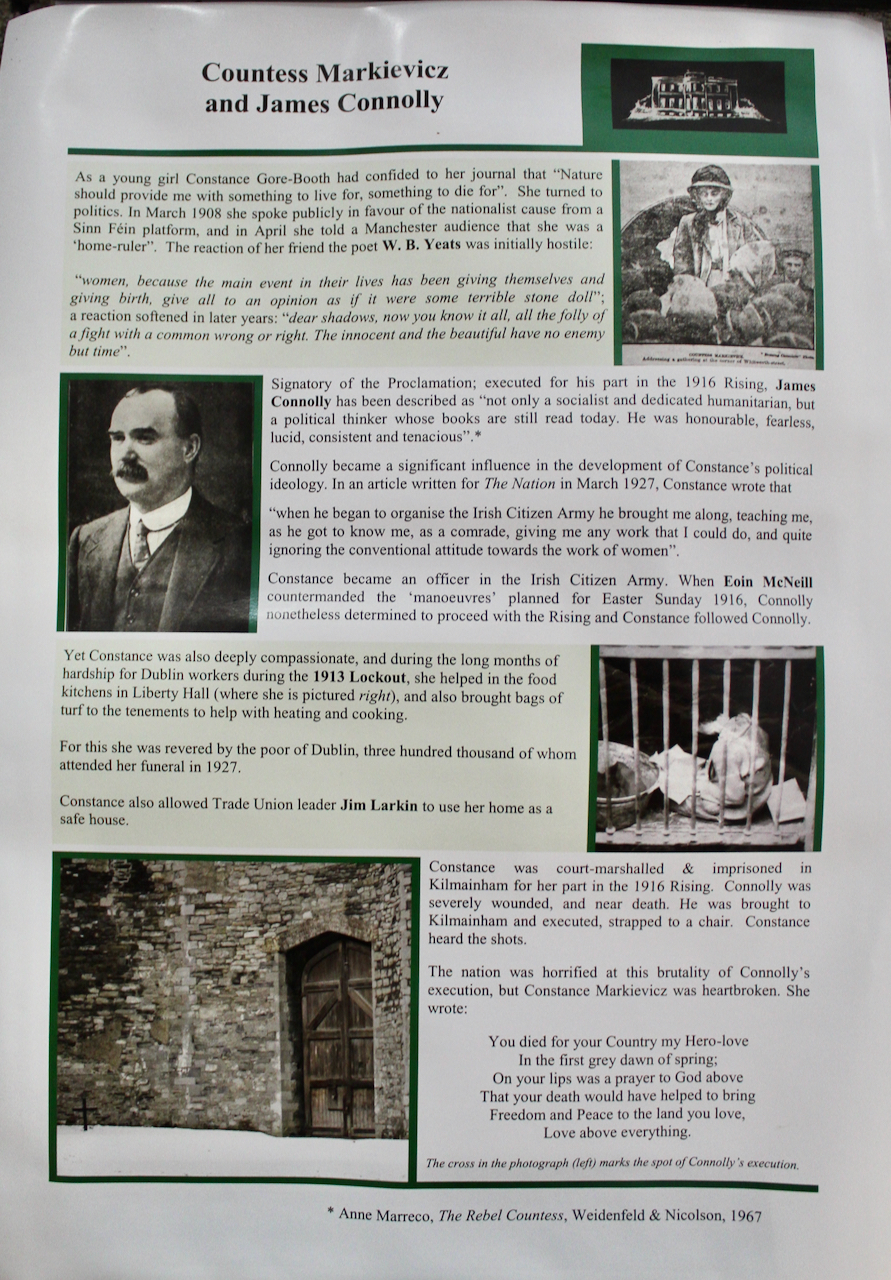
We visited Lissadell during Heritage Week 2022. I had been looking forward to seeing it as it has some amazing internal Classical architecture. It is most famous as the birthplace of Constance Markievicz, née Gore-Booth, the first woman senator in Ireland and fighter in the 1916 uprising, and also more recently as the host of a concert of Leonard Cohen. It was only sold out of the Gore-Booth family in 2004.

Lissadell, 2022. Photograph © Jennifer Winder-Baggot, www.irishhistorichouses.com
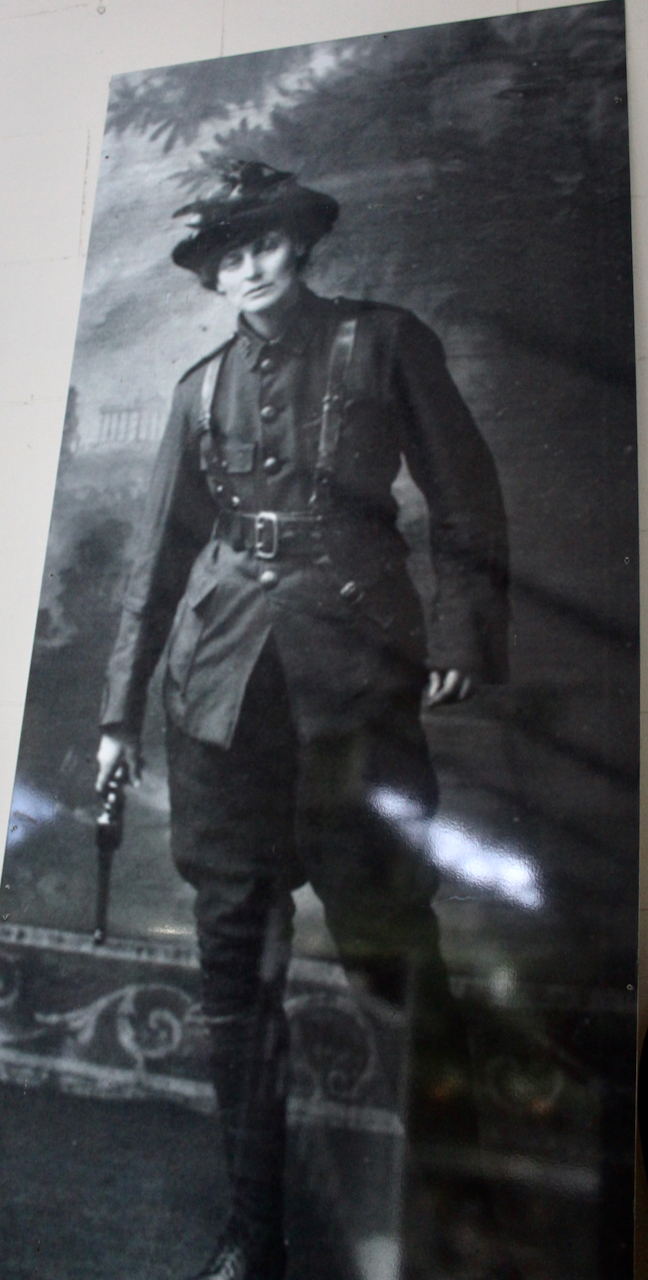
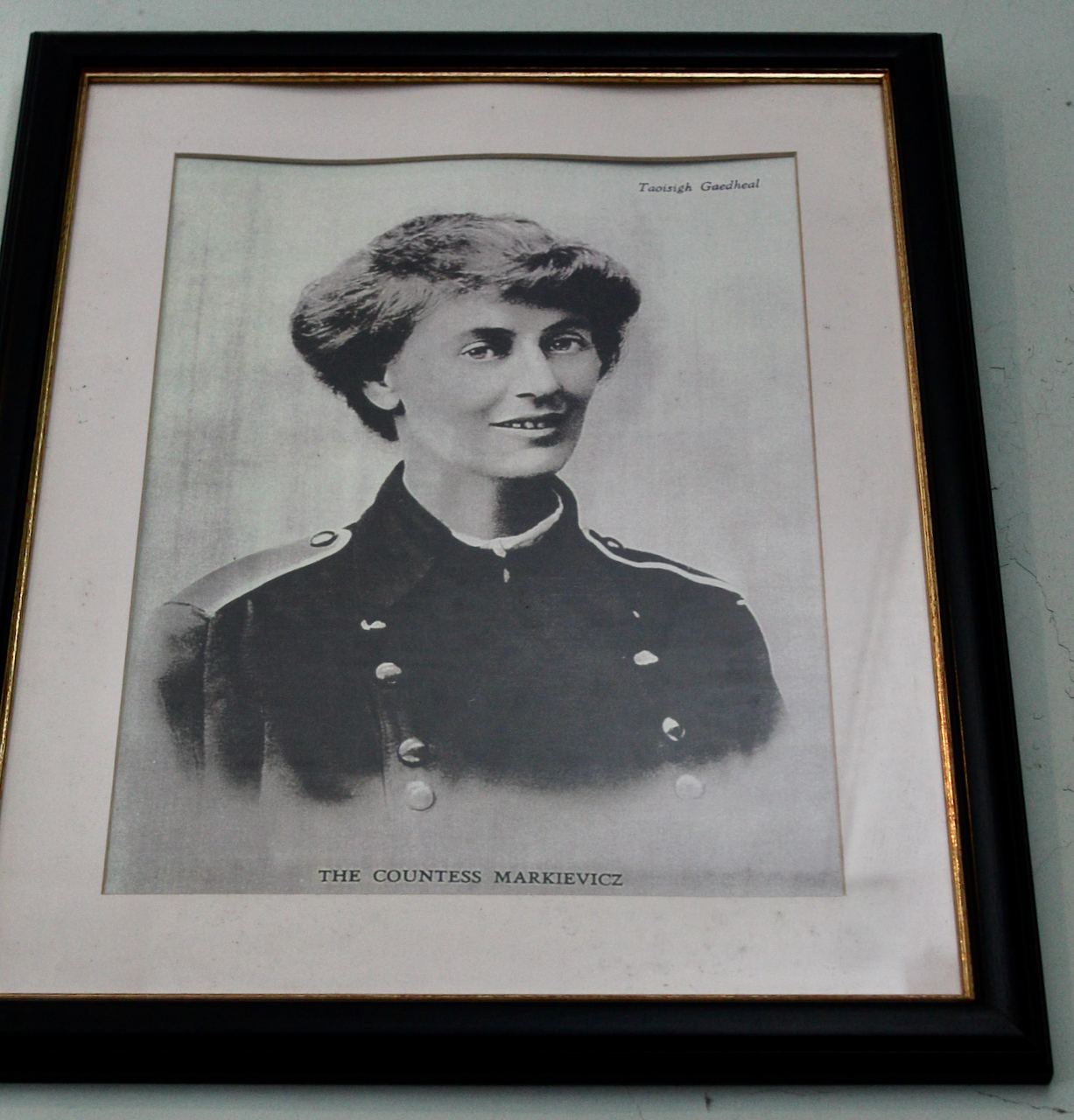
Studio portrait of Countess Constance Markievicz (née Gore-Booth) in uniform with a gun, photograph courtesy of National Library of Ireland Ref. KE 82
Lissadell, 2022.

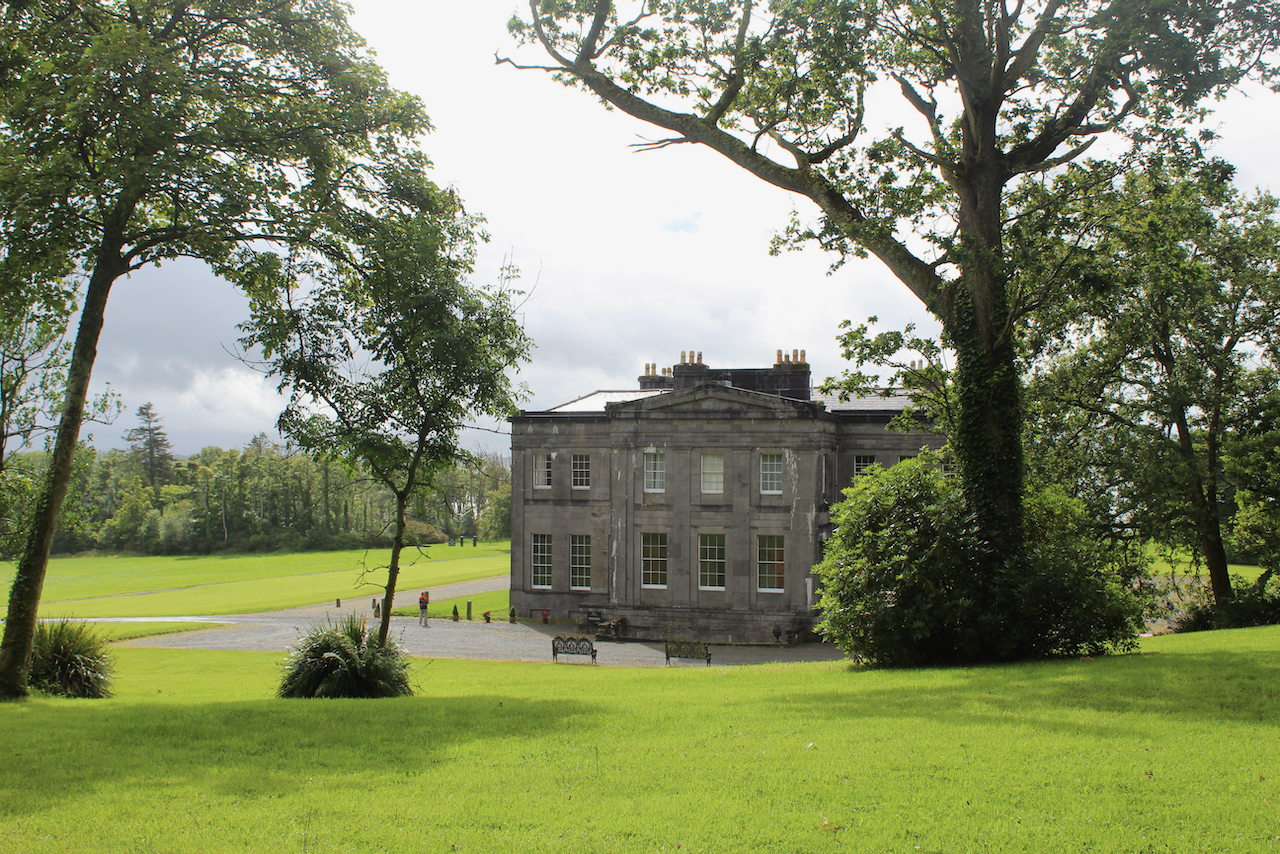
It was built in 1830-35 for Robert Gore-Booth (1805-1876), 4th Baronet, to the Greek Revival design of Manchester architect Francis Goodwin (1784-1835). It replaced an earlier house nearer the shore which itself replaced an old castle. It is a nine-bay two-storey over basement house built of Ballisodare limestone. [1]

Lissadell, 2022. Photograph © Jennifer Winder-Baggot, www.irishhistorichouses.com

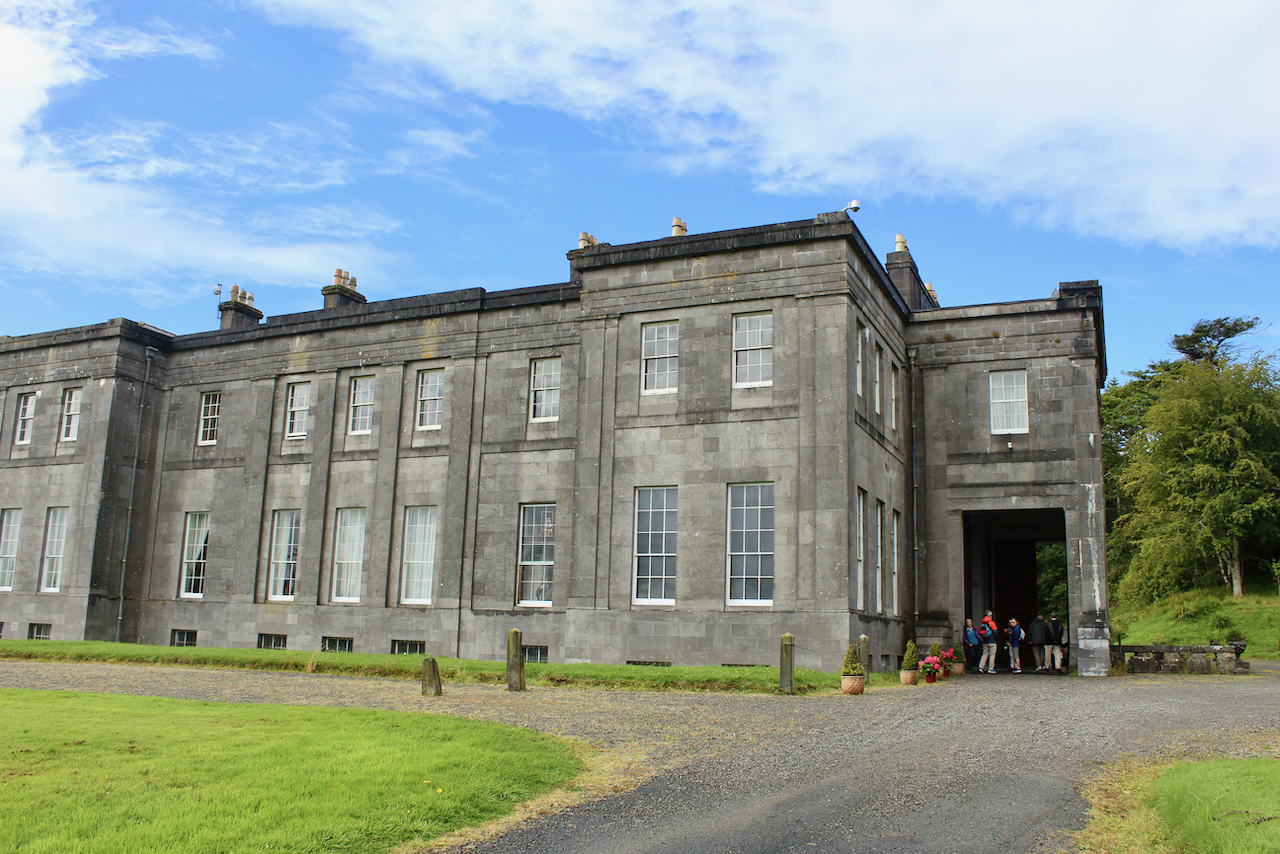
The entrance front (north) elevation has a three-bay pedimented central projection flanked by three-bay side sections. When one approaches on the path one can see that the lower storey is open to the east and west to form a porte-cochere. The house was described by Maurice Craig as being ‘…distinguished more by its solidity than by its suavity and more by its literary associations than by either.’ I find the crafted stone and the massive squareness of it beautiful.

Lissadell, 2022. Photograph © Jennifer Winder-Baggot, www.irishhistorichouses.com

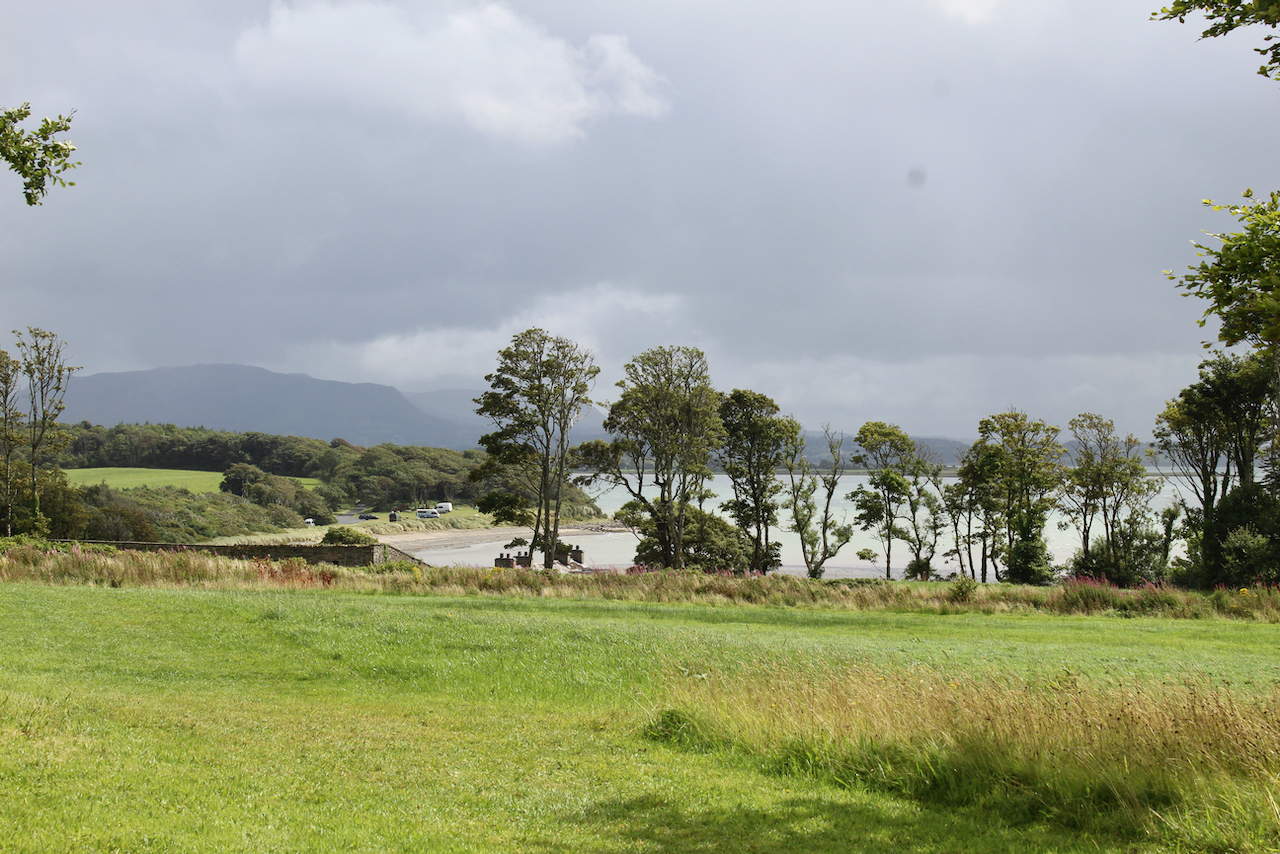
The east elevation which faces the sea has a five-bay central section between two-bay projections. The five-bay section contains a three-bay central breakfront with tall framing pilasters. Above the upper floor windows is a stepped stone feature that runs around three sides of the house.

Lissadell, 2022. Photograph © Jennifer Winder-Baggot, www.irishhistorichouses.com

Other former residents of the house deserve to be as famous as Constance.

Dermot James in his book The Gore-Booths of Lissadell tells us that the Gore-Booths are descended from Paul Gore of Manor Gore, County Donegal. He was MP for Ballyshannon in Donegal, and was created 1st Baronet Gore, of Magherabegg, County Donegal in 1621/22. He married a niece of the 1st Earl of Strafford, Isabella Wickliffe.

Paul Gore of Manor Gore had seven sons, and all married well. His oldest son, Ralph, 2nd Baronet, became the ancestor of the earls of Rosse, who are in Birr Castle [another section 482 property I visited]. Arthur, the second son, became the ancestor of the Earls of Arran, a family that subsequently inherited the very large Saunders Court estate near Ferrycarrig in County Wexford. He was MP for County Mayo and became 1st Baronet Gore, of Newtown Gore, Co. Mayo. A third son, Henry, married the eldest daughter of Robert Blaney of Monaghan and was the ancestor of the earls of Kingston. Two further sons settled in County Kilkenny, giving the family name to Goresbridge, and the seventh son settled in County Mayo and, according to a memorial tablet in Killala Cathedral, married Ellinor St. George of Carrick, County Leitrim, and he died at his residence, Newtown Gore, later named Castle Gore and Deel Castle, near Killala, County Mayo in 1697.

The fourth son, Francis Gore (1612-1712), lived in Ardtarman, County Sligo, which still stands and has been renovated for habitation and self-catering accommodation. [2]

Lissadell, 2022. Photograph © Jennifer Winder-Baggot, www.irishhistorichouses.com

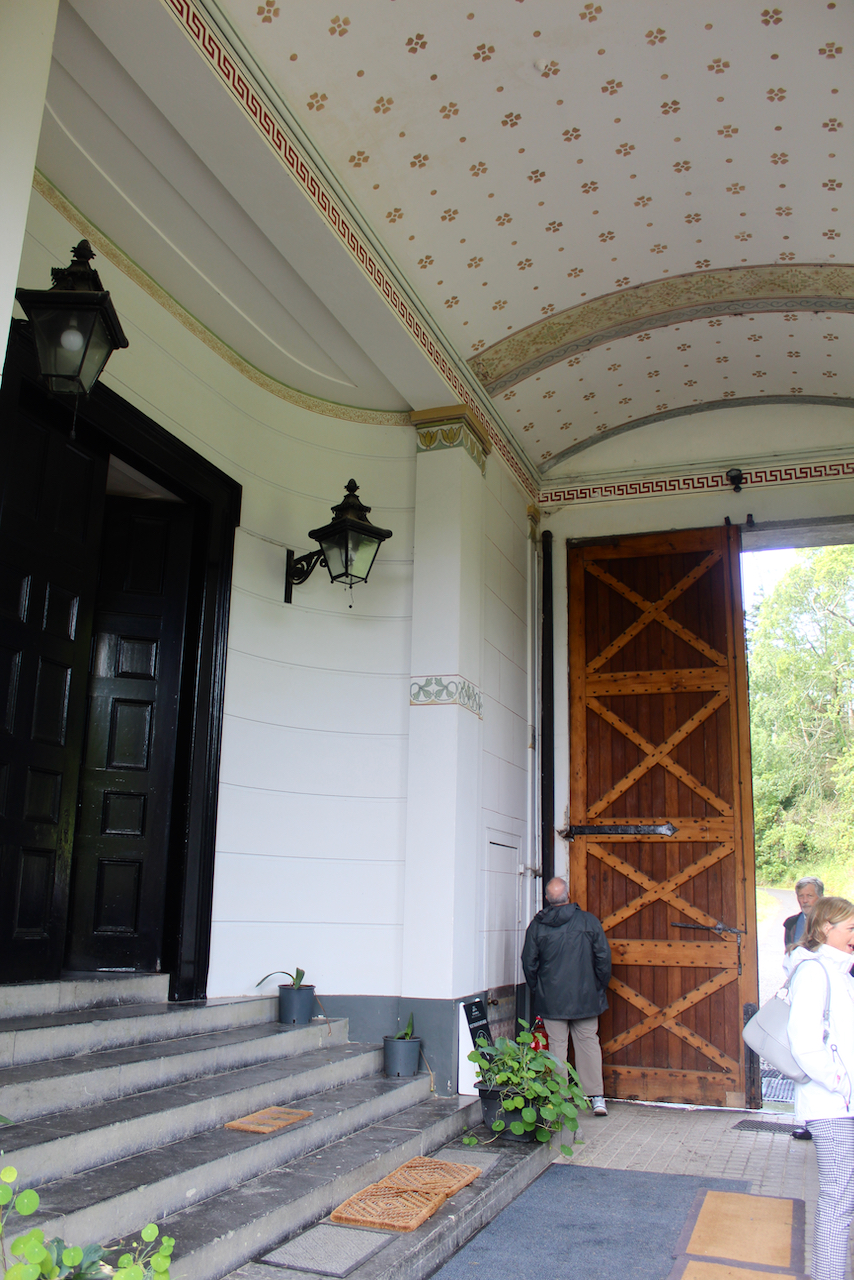
The front door is under the tall porte-cochere, which has a curved painted ceiling and massive wooden doors.

Lissadell, 2022. Photograph © Jennifer Winder-Baggot, www.irishhistorichouses.com

Francis Gore married Anne Parke of Parkes Castle in Leitrim – see my entry on OPW sites in Leitrim, Mayo, Roscommon and Sligo: https://irishhistorichouses.com/2022/10/31/office-of-public-works-properties-in-connaught-counties-leitrim-mayo-roscommon-and-sligo/
Dermot James tells us that Francis managed to keep on good terms with both the Cromwellians and Royalists during the Civil War, avoiding an engagement with either cause. After the Restoration of Charles II, he was rewarded with grants of land in Sligo, Mayo and Kilkenny, and in 1661 he was knighted and also became M.P. for Sligo. He settled at Ardtarmon, two miles west of Lissadell. He fought for the crown in Lieutenant-Colonel Coote’s Regiment.

Francis and Anne had a son, Robert (1645-1720). He married Frances Newcomen and they had a son, Nathaniel (1692-1737). He married Letitia (or Lettice) Booth, only daughter and heiress of Humphrey Booth, of Dublin. [3] She must have inherited quite a bit since later generations added her surname “Booth” to their surname. In fact, the prosperous Booth estates in the English midlands were added to the Sligo property.

Robert and Lettice named their son “Booth” (1712-1773). In 1760 Booth Gore was created 1st Baronet Gore of Lissadell, County Sligo.

Booth married Emilia Newcomen, daughter of Brabazon Newcomen, and they had several children. Their first son, also named Booth, who became 2nd Baronet, died unmarried, and his brother Robert Newcomen inherited and added Booth to his surname in 1804, when he succeeded as the 3rd Baronet.

Robert Newcomen Gore-Booth inherited in his 60s, and only then married Hannah Irwin from Streamstown, County Sligo (ninety years later this property became part of the Gore-Booth estate). Their daughter Anne married Robert King, 6th Earl of Kingston, son of the 1st Viscount Lorton.

The eldest son, Robert (1805-1876) became the 4th Baronet, and he built the house at Lissadell which we see now. He was Lord Lieutenant for County Sligo and also MP for Sligo.

The 4th Baronet married Caroline King, daughter of Robert Edward King, 1st Viscount Lorton, whom we came across in King House in County Roscommon. Sadly, she died the following year in 1828. Two years later he married Caroline Susan Goold, daughter of Thomas Goold (or Gould). Her sister Augusta married Edwin Richard Wyndham-Quin, 3rd Earl of Dunraven, of Adare Manor in Limerick.

According to Dermot James, “Henry Coulter described Lissadell before Robert inherited the estate as ‘wild and miserable and poor looking.’ But within a few decades Sir Robert had demonstrated ‘the immense improvement which may be made in the appearance of the country and the quality of the soil by the judicious expenditure of capital.’ Coulter continued, considering the estate to be “one of the most highly cultivated and beautiful in the United Kingdom… If the excellent example set by Sir Robert Booth as a resident country gentleman – living at home and devoting himself to the improvement of his property – were more generally followed by Irish landlords then indeed the cry of distress which is so often raised… would never more be heard, even in the west of Ireland.” [Henry Coulter, The West of Ireland published 1862]. [4]

Lissadell, 2022.

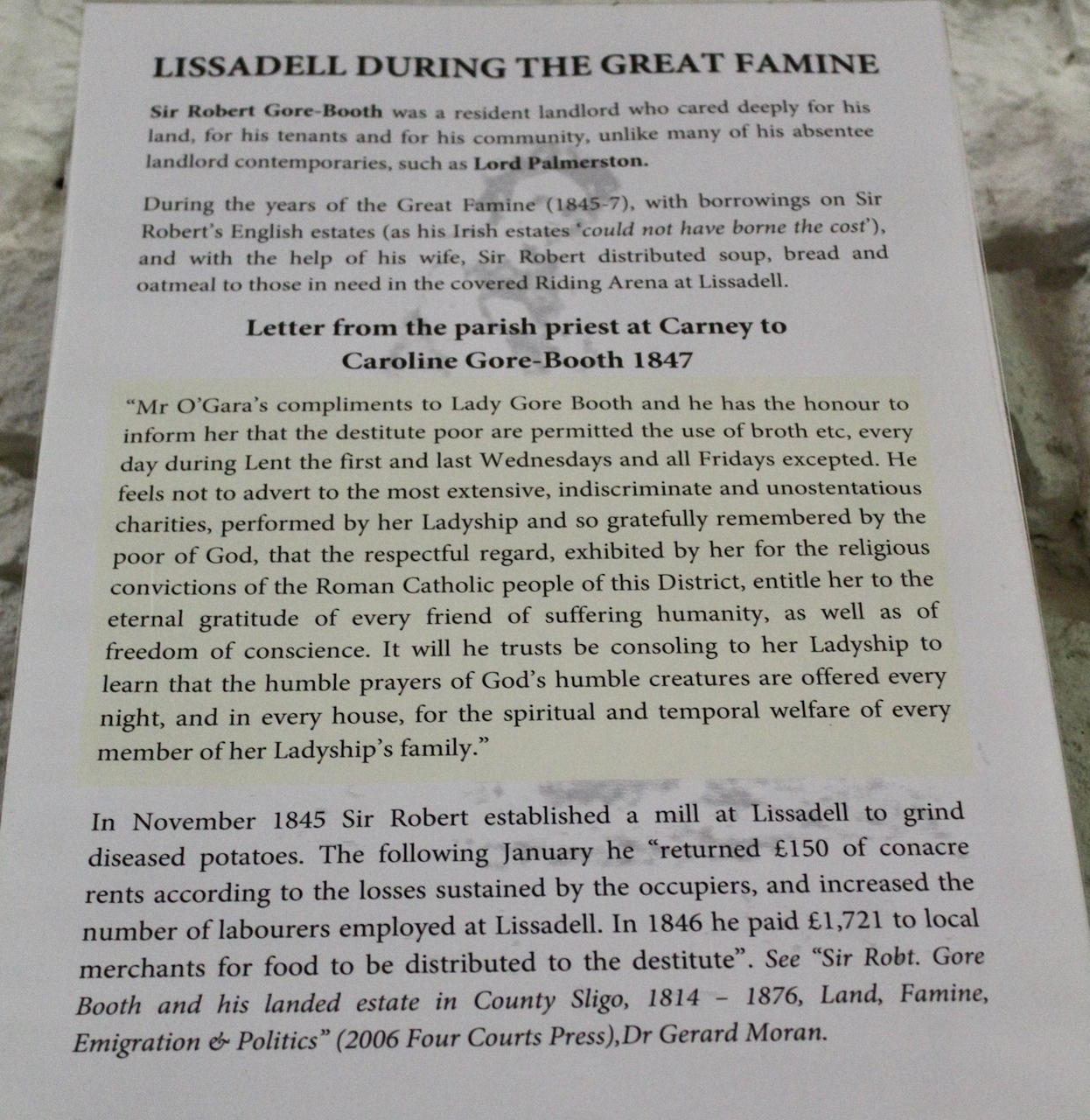
Robert was in situ at the time of the Great Famine in the 1840s. He did send some tenants to North America, and was later criticised for the evictions, but on the whole he was a generous landlord. He ran a soup kitchen and provided seed for crops. When his first wife Caroline died the Sligo Journal called her “a ministering angel among the people, her charitie was unbounded and her exertions to relieve the wants and sufferings of the distressed excited the admiration of all classes” when “the dark clouds of pestilence and death covered the land.”

Lissadell, 2022.

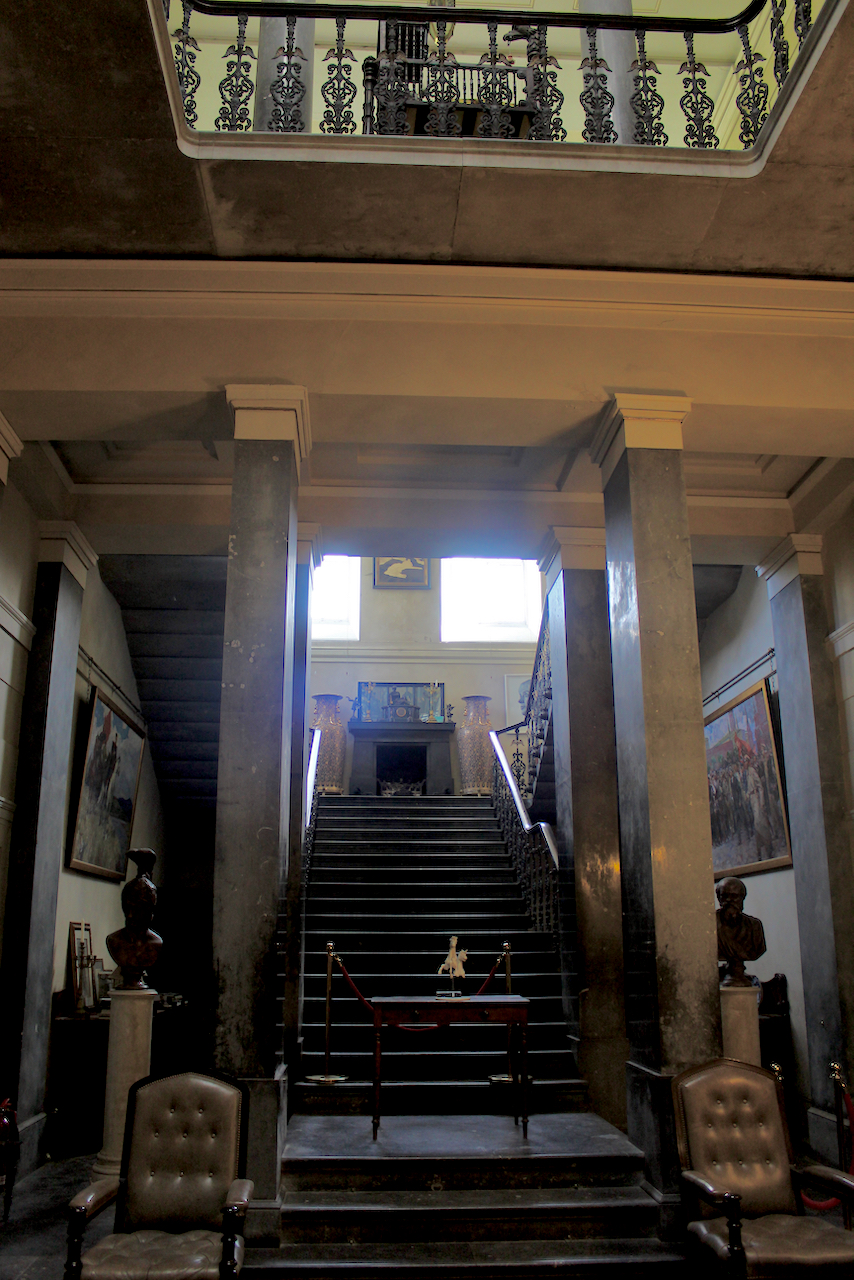
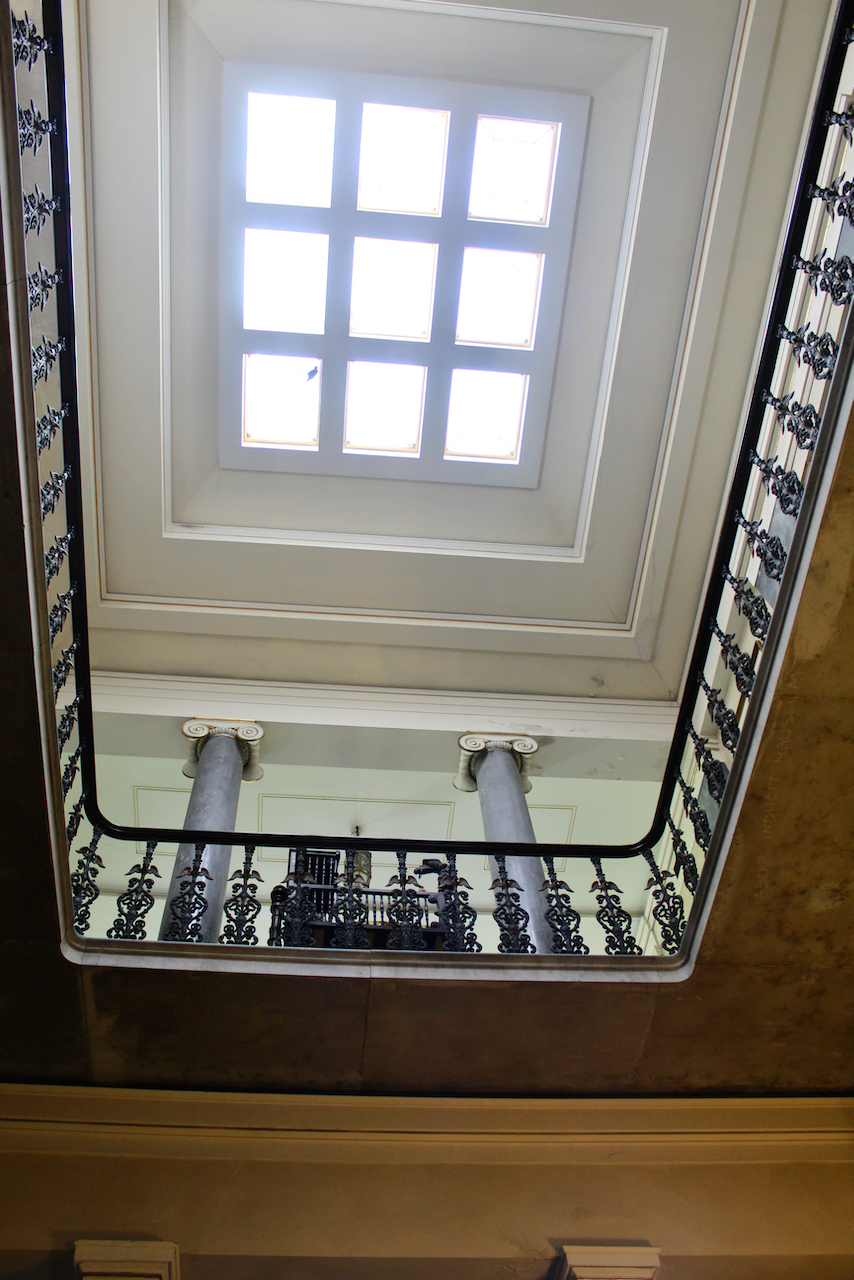
Dermot James writes: “If the exterior of Lissadell House is seen by some to be disappointingly plain, Goodwin’s design ensured that the entrance to the interior is all the more unexpected and dramatic. The visitor is met by a spectacularly high entrance hall decorated with Doric and Ionic columns from which there is an impressive staircase in Kilkenny marble with cast iron balustrade leading to the building’s most important feature, the great gallery, lit by sky-lights high above. On Goodwin’s plans, the gallery is marked as the music room, reflecting one of Sir Robert’s tastes, where an organ was installed. In the main, the house then remained largely unaltered for more than a century and a half.

Mark Bence-Jones describes the entrance stair hall in his Guide to Irish Country Houses (1988) as a lofty two storey hall, partly top-lit, with square Doric columns below and Ionic columns above and double staircase of Kilkenny marble.

In his book Irish Big Houses, Terence Reeves-Smyth alerts us to the winged birds in the iron balusters of the staircase. Photograph © Jennifer Winder-Baggot, www.irishhistorichouses.com
For more photographs of this wonderful hall and gallery see the entry by Robert O’Byrne. [5] Photograph © Jennifer Winder-Baggot, www.irishhistorichouses.com

In the book Great Irish Houses, with forewards by Desmond FitzGerald, and Desmond Guinness published by IMAGE Publications in 2008, we are told that the scale of the stair hall is such that, unusually, a large fireplace was added to the return landing. The iron balusters are adorned with golden eagles.

Sir Robert took an interest also in the garden and Lord Palmerston of nearby Classiebawn would send him seeds from overseas. He sold some of the property in England and expanded his property in Ireland.

Dermot James tells us that when serving as MP Robert went regularly to London and brought his family and also servants. His servant Kilgallon wrote about the packing up: “They took all the silver plate. It was quite a business packing all up. They had boxes specially made for them. The housekeeper did not go as there was a housekeeper for the London house, a Mrs Tigwell. They took the first and second housemaids, house steward, groom chambers, under butler, and first and second footmen and steward’s room boy. All the other servants were put on board [reduced] wages [but] they were allowed milk and vegetables.” [6]

Kilgallon also described some details about how the Lissadell household was then being run, which is described by Dermot James: “The servants were managed by the house steward, Mr Ball, who engaged all the servants, paid their wages, and dismissed them when necessary. His duties included ordering all the wine for the house and acting as wine waiter at dinners. Ball supervised a small army of footmen, grooms, maids, etc. The groom chambers carved, and with the footmen, waited at all meals, despatched the post, opened the newspapers and ironed them. Their other duties included attending the hall door and polishing the furniture in the main rooms. One of the footmen was also the under-butler who kept the dinner silver in order and laid the dinner table, making sure that plates intended to be hot were kept warm in a special iron cupboard heated by charcoal kept outside the dining room door.”

The maids had to be up at 4am to prepare for carrying hot water to the bedrooms. There was a cook, pastry cook, kitchen maid, scullery maid and some kitchen boys. Kilgallon describes the meals, serving order and seating, and entertainment – there was a small dance in the servants hall once or twice a week, with beer and whiskey punch provided!

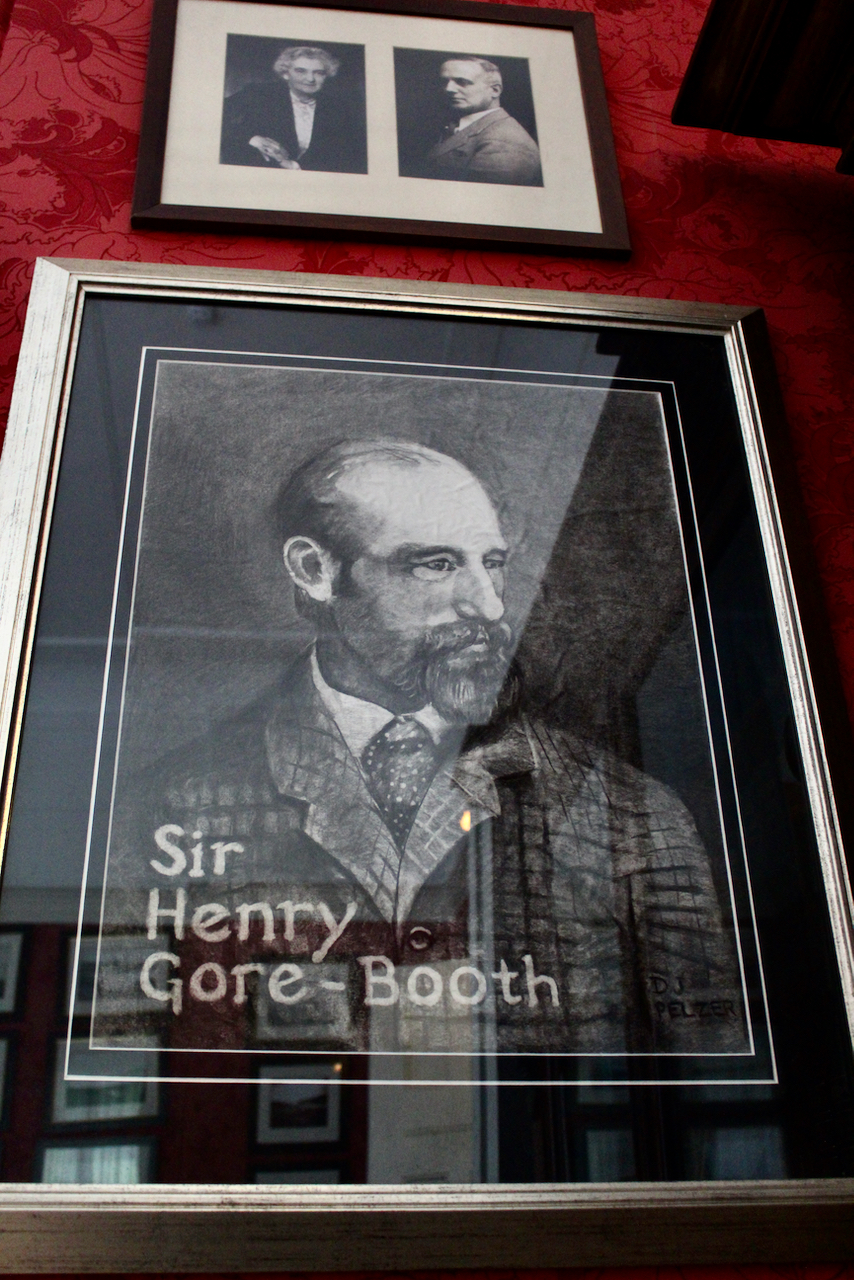
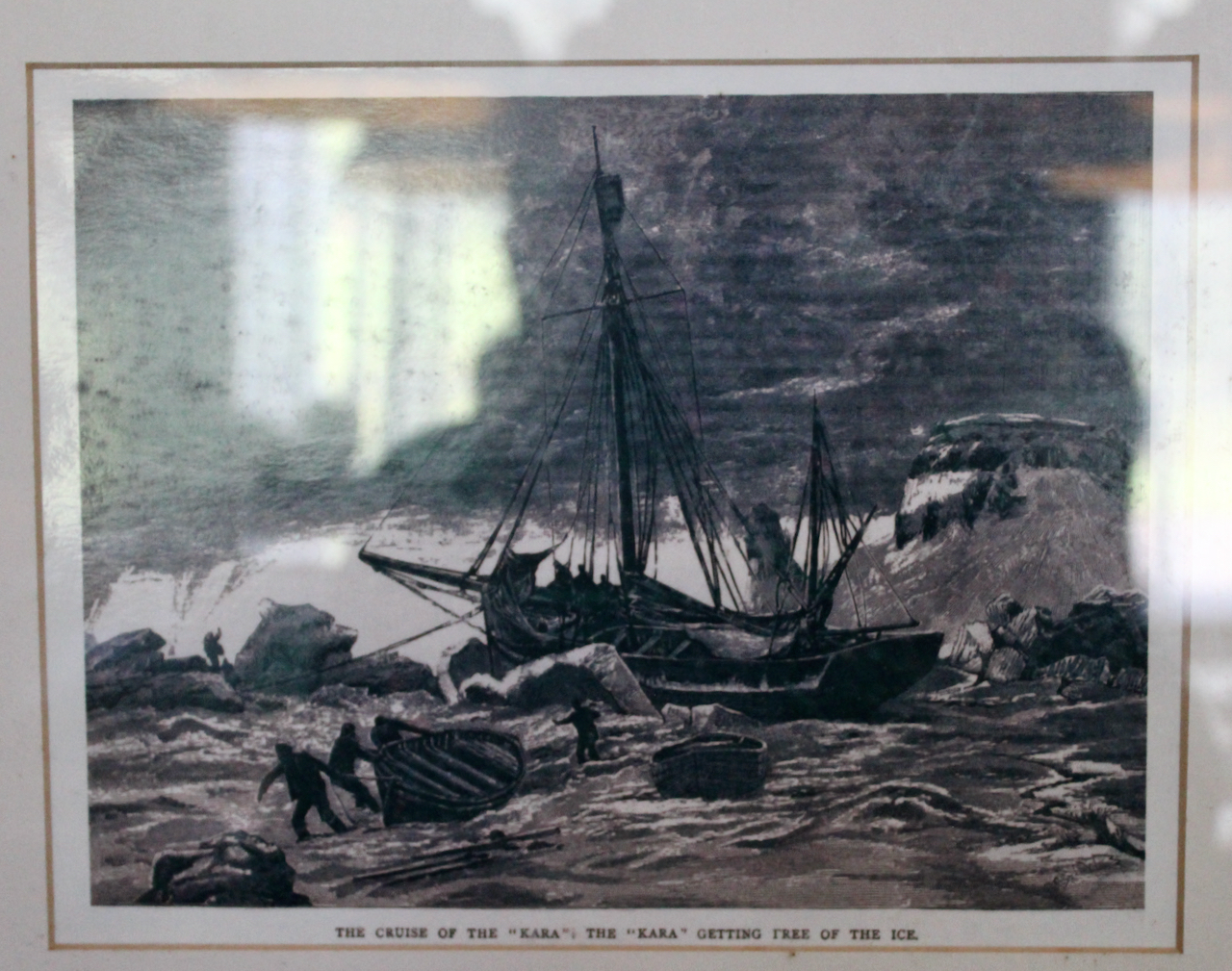
Henry William Gore-Booth (1843-1900) inherited in 1876 and became the 5th Baronet. He held the offices of High Sheriff of County Sligo, Deputy Lieutenant of County Sligo and Justice of the Peace for County Sligo. He was also a keen fisherman and Arctic explorer.

His sister Fanny Stella married Owen Wynne of nearby Hazelwood, County Sligo (which was designed by Richard Cassells and was recently owned by Lough Gill Distillery, until sold to American alcohol company Sazerac, which plans to save the house from dereliction).

Lissadell, 2022.

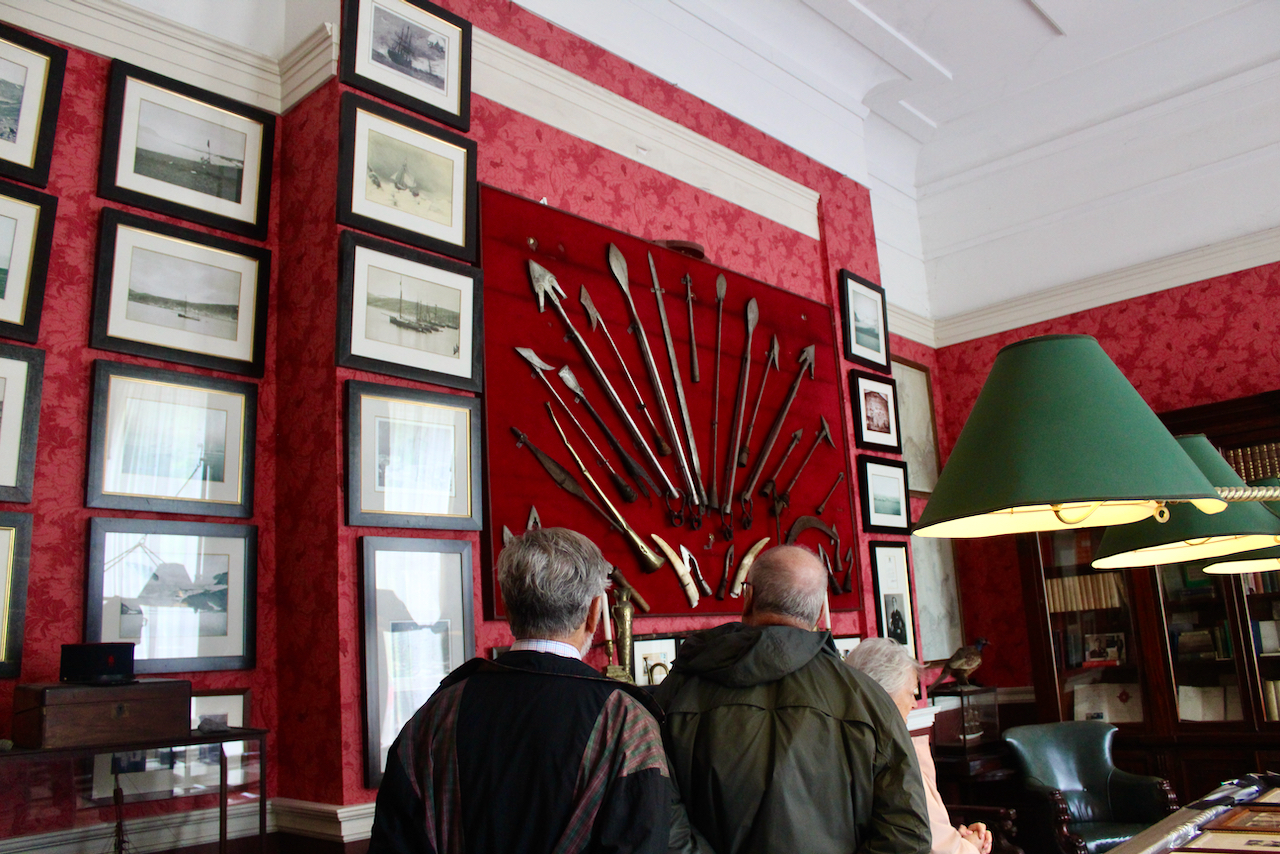
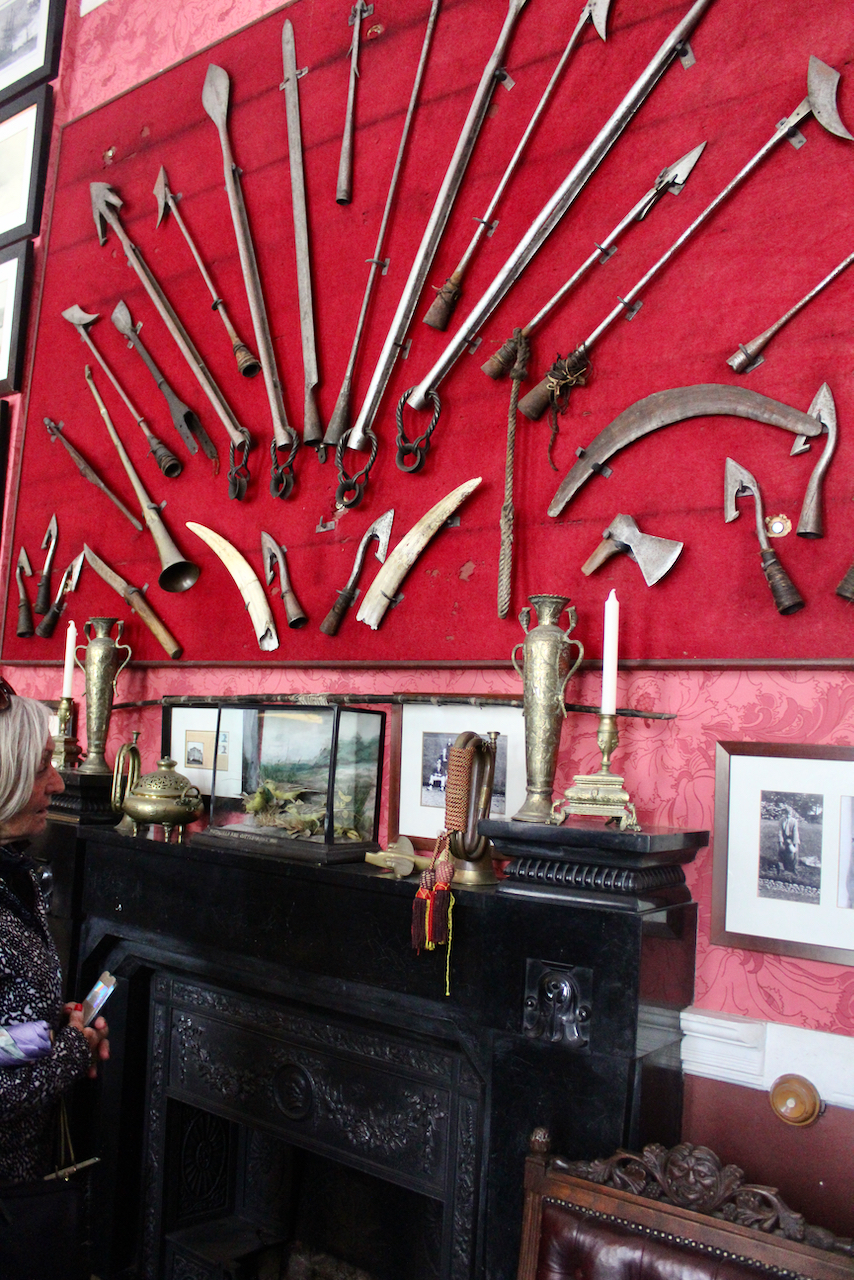
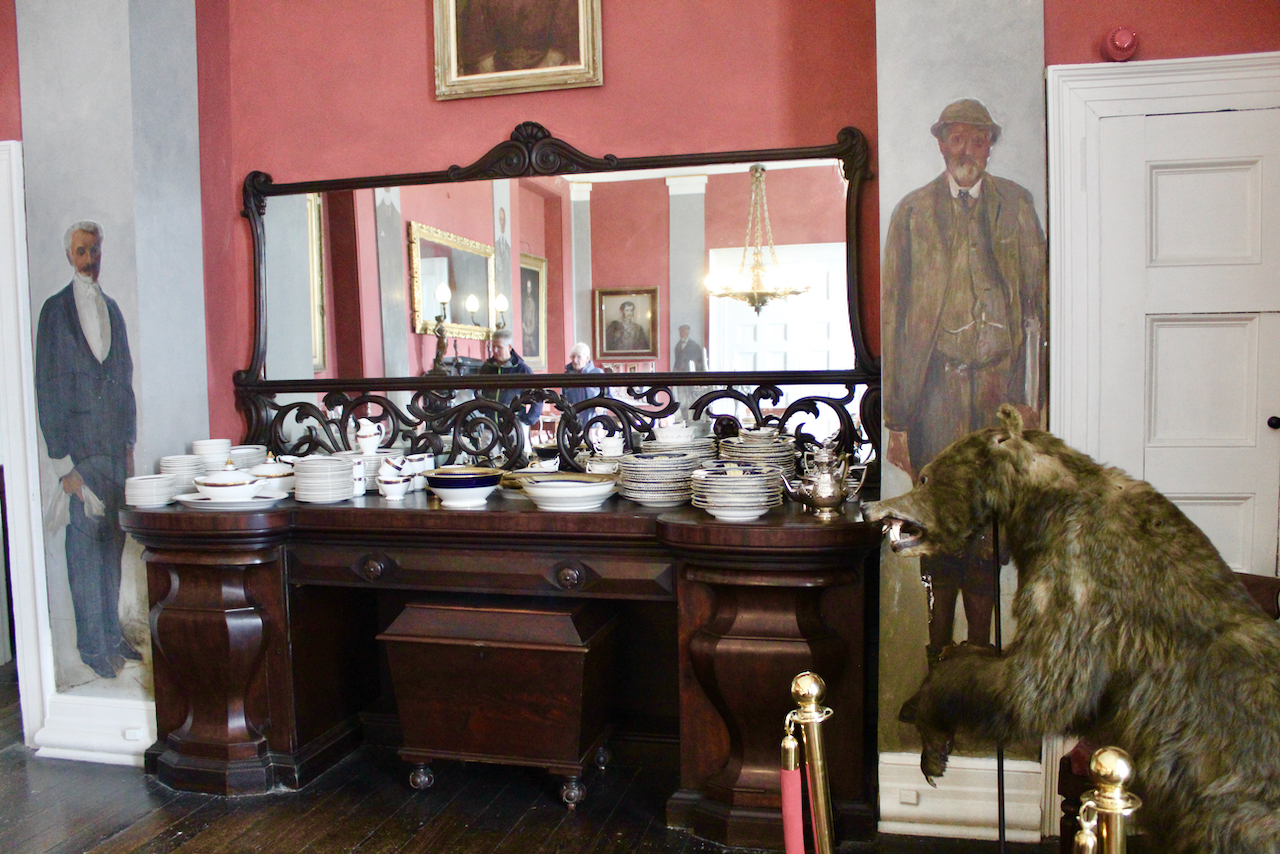
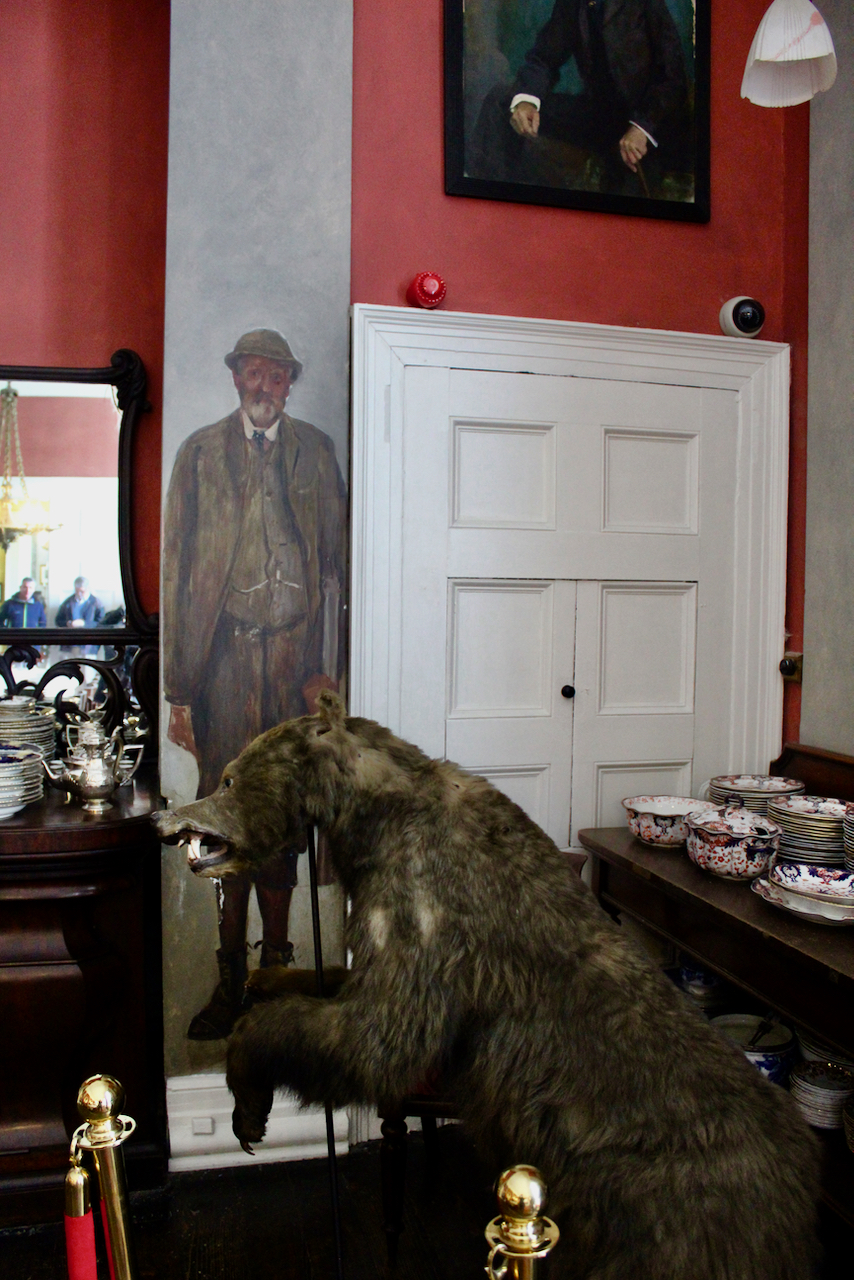
From the entrance hall, we were brought by the tour guide into the Billiards Room full of Gore-Booth memorabilia, including Henry’s fishing equipment. Kilgallon stayed on for the next generation, and he accompanied Henry the 5th Baronet on all of his fishing adventures and Arctic explorations. Kilgallon became Sir Henry’s personal valet as well as his close companion and confidant. At one point he saved Henry from an attacking bear, and the bear was then stuffed and brought back to Lissadell. It used to stand in the front hall, alarming arriving guests!

Kilgallon, with young Angus Gore-Booth.

The original wallpaper has been replaced by David Skinner, an expert on wallpapers of the great houses of Ireland, with hand-blocked period copies.

Lissadell, 2022. Photograph © Jennifer Winder-Baggot, www.irishhistorichouses.com
Lissadell, 2022.
Lissadell, 2022. Photograph © Jennifer Winder-Baggot, www.irishhistorichouses.com

It is said that Sir Henry’s wife Georgina built the artificial lake at Lissadell in the vain hope that he might stay at home and fish in it, but as the harpoons and whale bones in the billiard room testify, Sir Henry continued to travel.

Robert was President of the Sligo Agricultural Society, and he and his eldest son founded three co-operative societies in the area. He also took over the Sligo Shirt Factory to prevent it from closing and made it flourish again. He was also involved in mining locally, and played a role in setting up the railway connecting Sligo with Enniskillen, subsequently becoming the company’s chairman. He also continued the oyster fishery his father had set up – his father was one of the pioneers in creating artificial oyster beds. Henry married Georgina Mary Hill, daughter of Colonel John Hill of Tickhill Castle, Yorkshire.

Henry Gore-Booth, 5th Baronet, by Sarah Purser.
Georgina, Lady Gore-Booth, née Hill, by Sarah Purser.
Lissadell, 2022. Photograph © Jennifer Winder-Baggot, www.irishhistorichouses.com

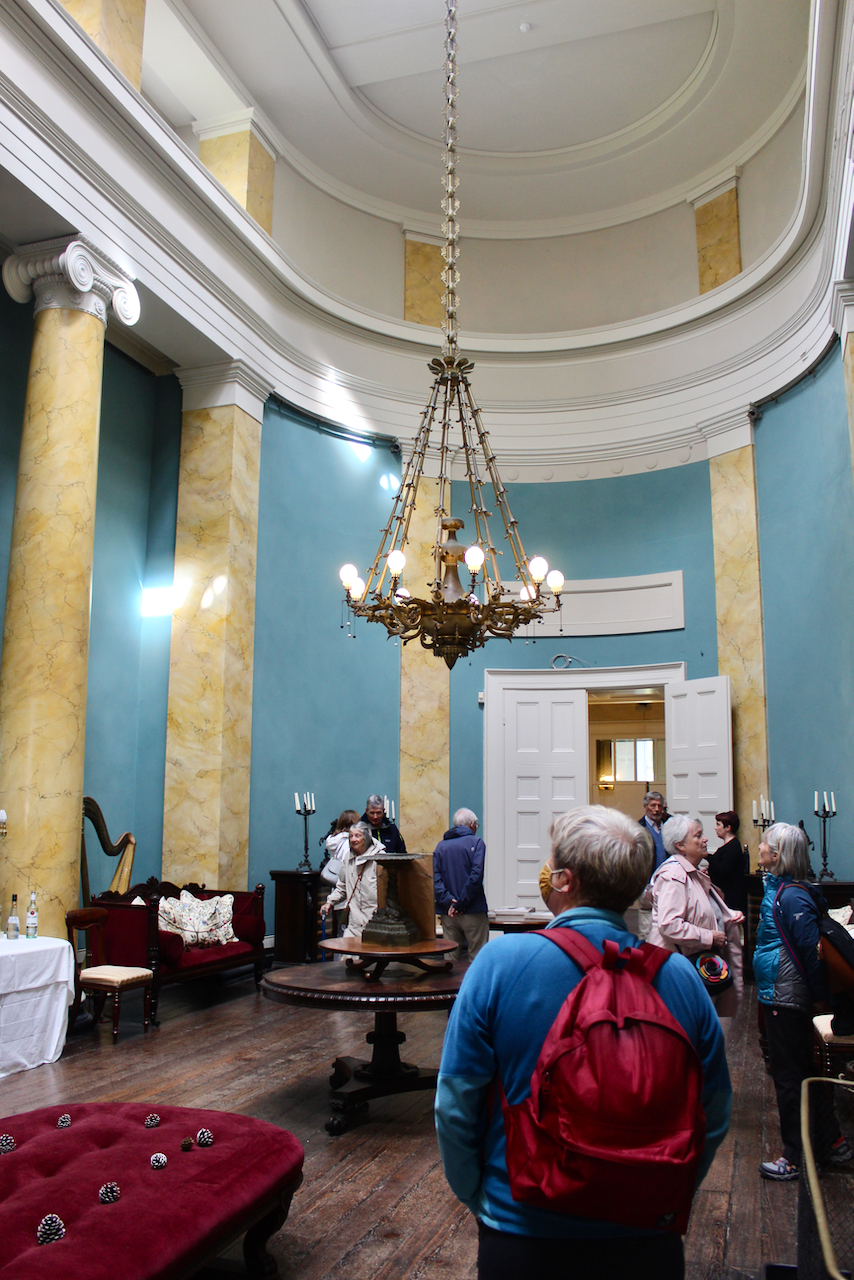
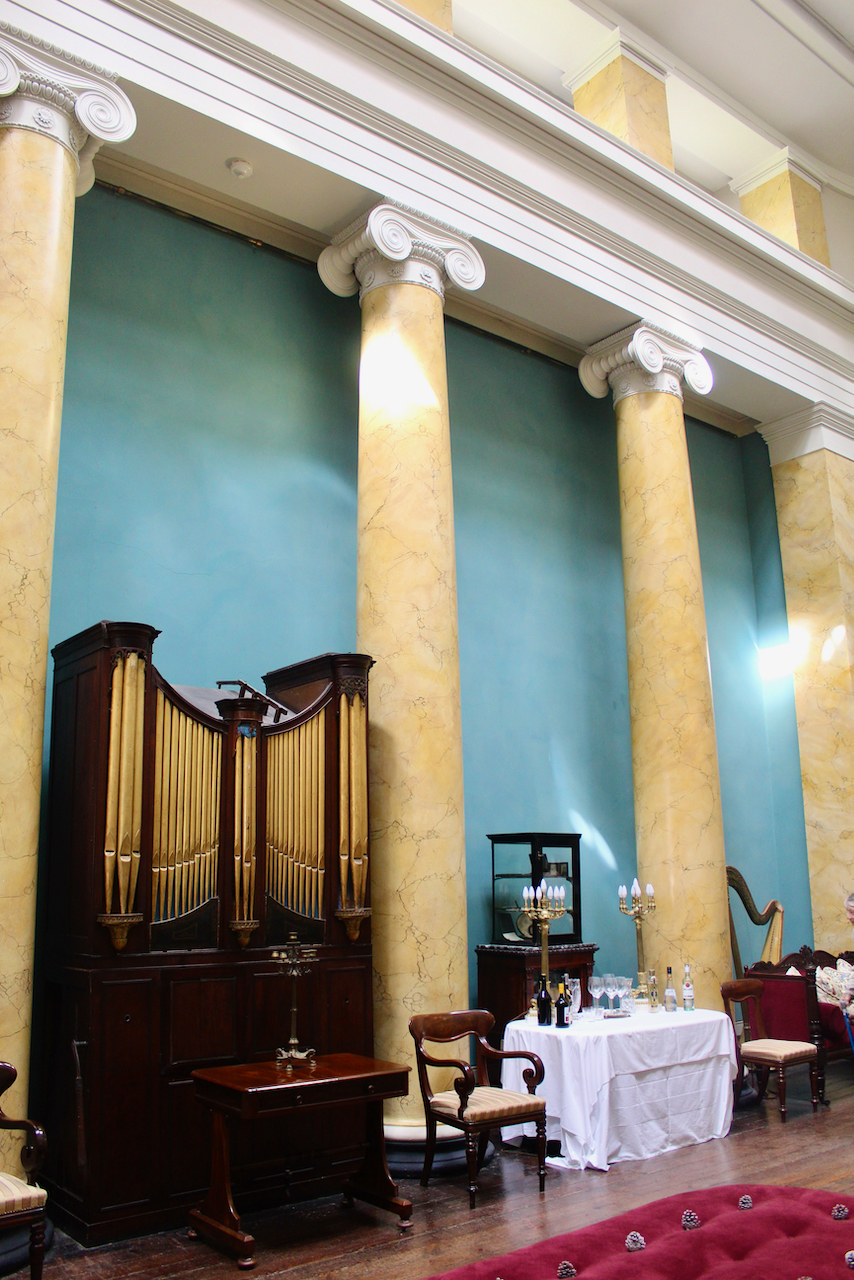
Upstairs is the music gallery. Mark Bence-Jones describes it as a vast apse-ended gallery (an apse is an area with curved walls at the end of a building, usually at the the east end of a church), lit by a clerestory (a clerestory is a high section of wall that contains windows above eye level) and skylights, with engaged Doric piers along one side, and Ionic columns along the other. It was hard to capture in a photograph since we were on a tour.

Lissadell, 2022. Photograph © Jennifer Winder-Baggot, www.irishhistorichouses.com

In Great Irish Houses, forewards by Desmond FitzGerald and Desmond Guinness, we are told that the gallery is 65 foot long. It still has its original Gothic chamber organ, which was made by Hull of Dublin in 1812 and is pumped by bellows in the basement! Two Grecian gasoliers by William Collins, a renowned Regency maker of chandeliers, hang on chains from the ceiling. As late as 1846 Lissadell generated gas from its own gasometer.

Lissadell was the first house in Ireland to be lit by its own gas supply. This was produced in a plant installed by Sir Robert about a quarter of a mile to the west of the mansion, complete with a house for the manager in charge of the works.

A team led by Kevin Smith, from the internationally renowned Windsor House Antiques of London, undertook the major task of restoring the gasoliers.

A Grecian gasolier by William Collins, a renowned Regency maker of chandeliers. Photograph © Jennifer Winder-Baggot, www.irishhistorichouses.com
Lissadell, 2022. Photograph © Jennifer Winder-Baggot, www.irishhistorichouses.com
Unusual, the gallery has Ionic pillars on one side and Doric pillars on the other side. Photograph © Jennifer Winder-Baggot, www.irishhistorichouses.com
The original Gothic chamber organ, which was made by Hull of Dublin in 1812 and is pumped by bellows in the basement. Photograph © Jennifer Winder-Baggot, www.irishhistorichouses.com
Lissadell, 2022. Photograph © Jennifer Winder-Baggot, www.irishhistorichouses.com

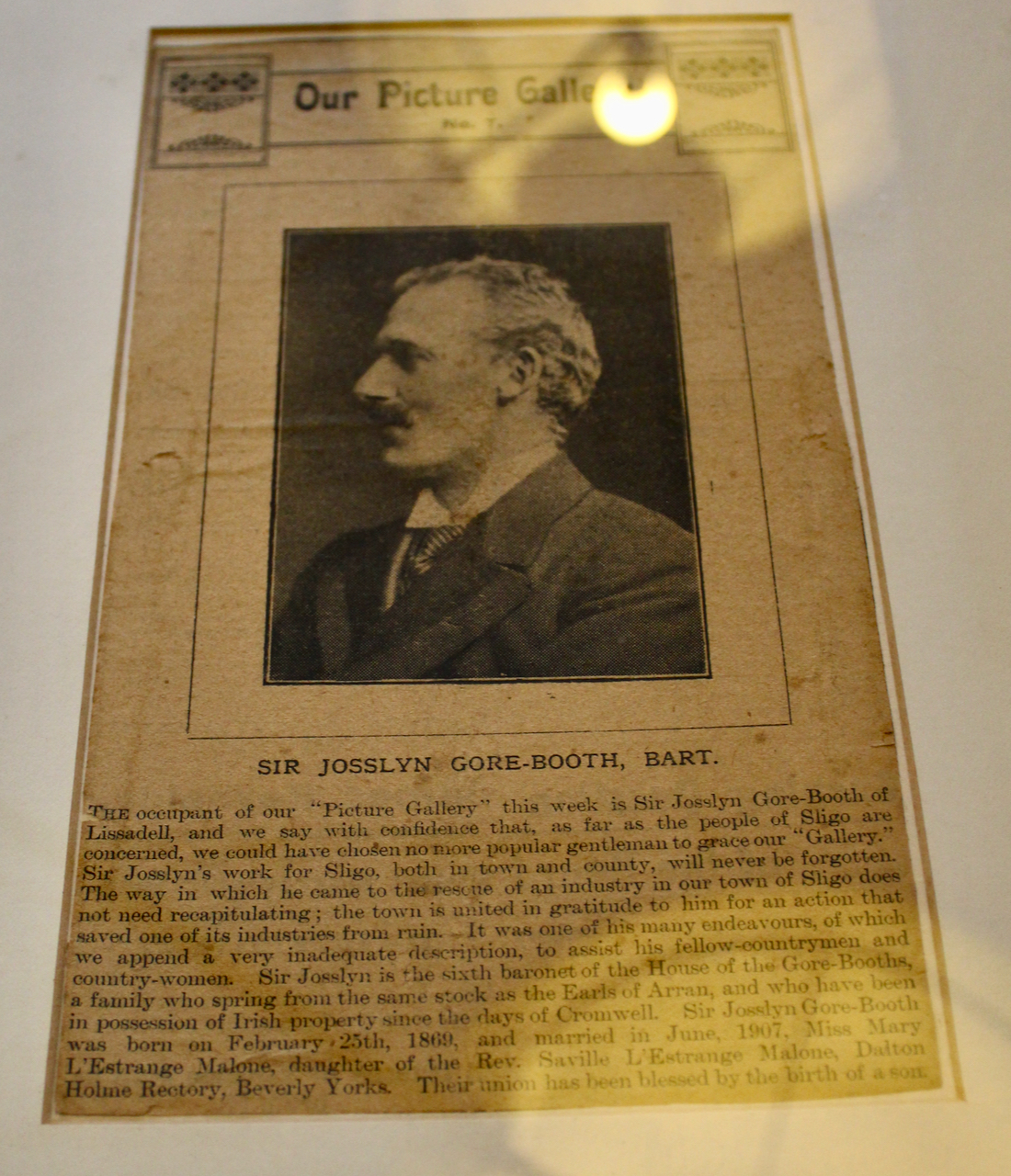
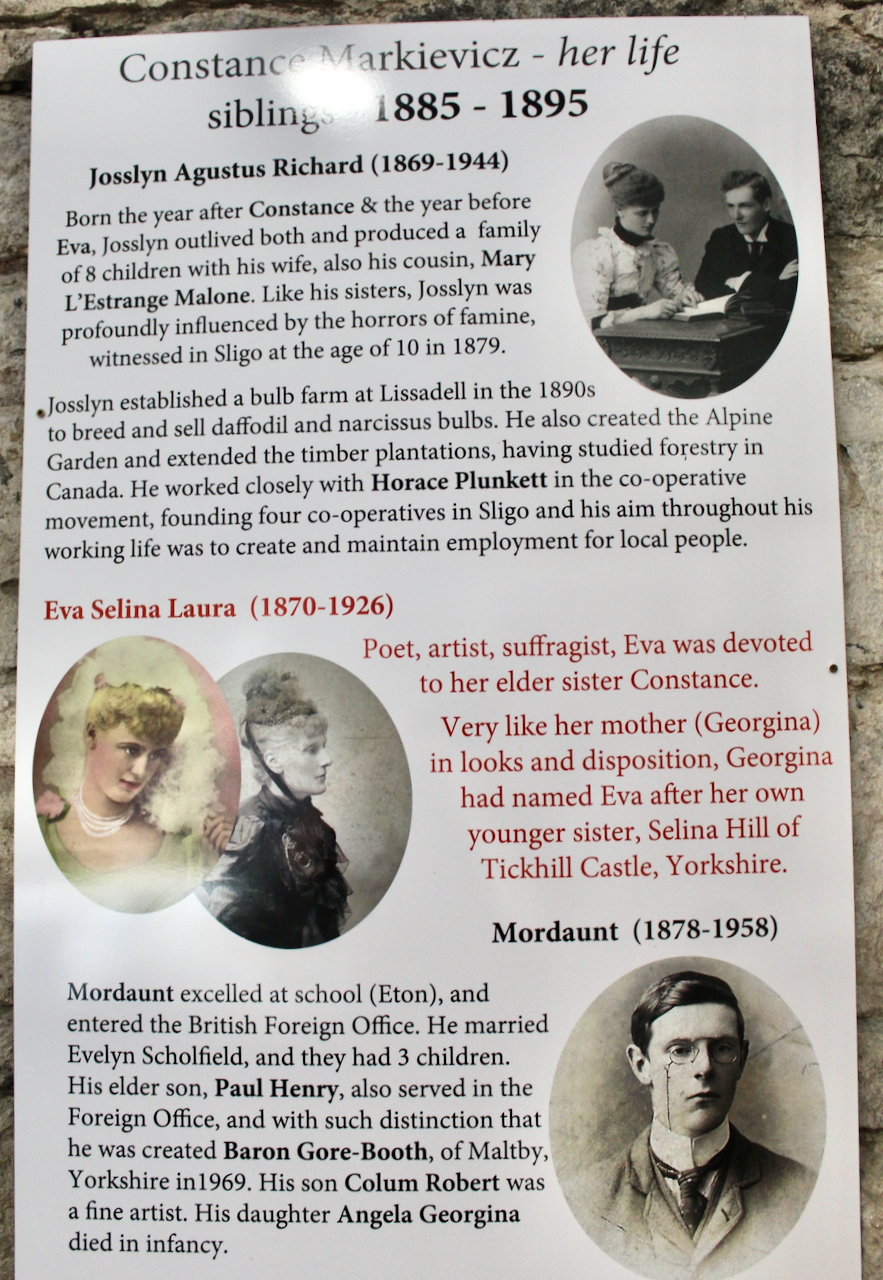
The 4th Baronet and Georgina Mary Hill had five children. The eldest son, Josslyn (1869-1944) was to inherit the property. There was a younger son, Mordaunt, and three daughters, Constance, Eva and Mabel.

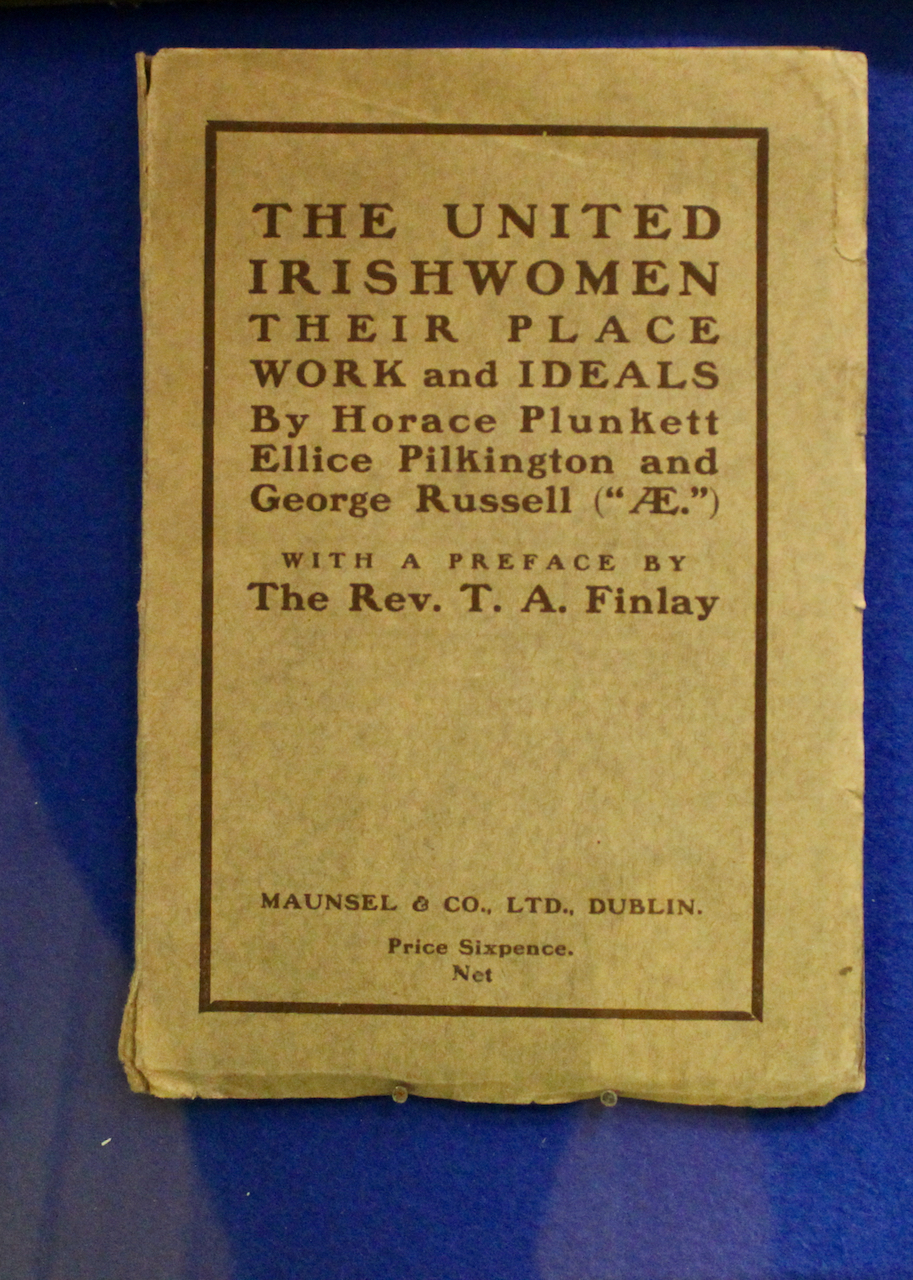
It was with Josslyn that Henry William set up the co-operatives. When Josslyn was young, he had socialist ideals, much like his sisters Eva and Constance. He joined Horace Plunkett in his efforts to help the farmers to help themselves, by cutting out the middle man. It took a while for farmers to trust the motivation of Plunkett and Gore-Booth in setting up the co-operatives, thinking that “no good thing could come from a man who was at once a Protestant, a landlord and a Unionist.” Catholic priests even denounced the co-operatives as a “Protestant plot.” Eventually, however, they flourished, and helped the farmers.

Lissadell, 2022.

Josslyn continued to develop the estate, so that it became one of the most progressive and best run in Ireland.

Lissadell, 2022.

Josslyn was a keen gardener and plant breeder. At Lissadell he established one of the finest horticultural enterprises in Europe. By 1906, his gardens provided employment for more than 200 people. The head gardener, Joseph Sangster, became head gardener of the Royal Horticultural Society in England. An advocate of land reform, he let more than 1000 tenants buy out 28,000 acres of the property under the Wyndham Land Act of 1903. The final payments under the scheme were not received until the 1970s. Until he died in 1944, the estate was famous the world over for its varieties of old and new flowers. [7] The current owners are working to re-establish the gardens.

Next we enter a room that is in the bow of the house, and features in a poem by W. B. Yeats. Mark Bence-Jones tells us:

“The rather monumental sequence of hall and gallery leads to a lighter and more intimate bow room with windows facing towards Sligo Bay – the windows Yeats had in mind when he wrote, in his poem on Eva Gore-Booth and her sister, Constance Markievizc:

“The light of evening, Lissadell

Great windows open to the South.”

This room, and all other principal receptions rooms, have massive marble chimney-pieces in the Egyptian taste. The ante-room has a striped wallpaper of lovely faded rose.”

In memory of Eva Gore Booth and Constance Markiewicz” This is the first part of this poem:

The light of evening, Lissadell,
Great windows open to the south,
Two girls in silk kimonos, both
Beautiful, one a gazelle.

But a raving autumn shears
Blossom from the summer’s wreath;
The older is condemned to death,
Pardoned, drags out lonely years
Conspiring among the ignorant.
I know not what the younger dreams –
Some vague Utopia – and she seems,
When withered old and skeleton-gaunt,
An image of such politics.

Many a time I think to seek
One or the other out and speak
Of that old Georgian mansion, mix
pictures of the mind, recall
That table and the talk of youth,
Two girls in silk kimonos, both
Beautiful, one a gazelle.”

Lissadell, 2022. Photograph © Jennifer Winder-Baggot, www.irishhistorichouses.com
Lissadell, 2022.
Lissadell, 2022.
Lissadell, 2022.
Lissadell, 2022.
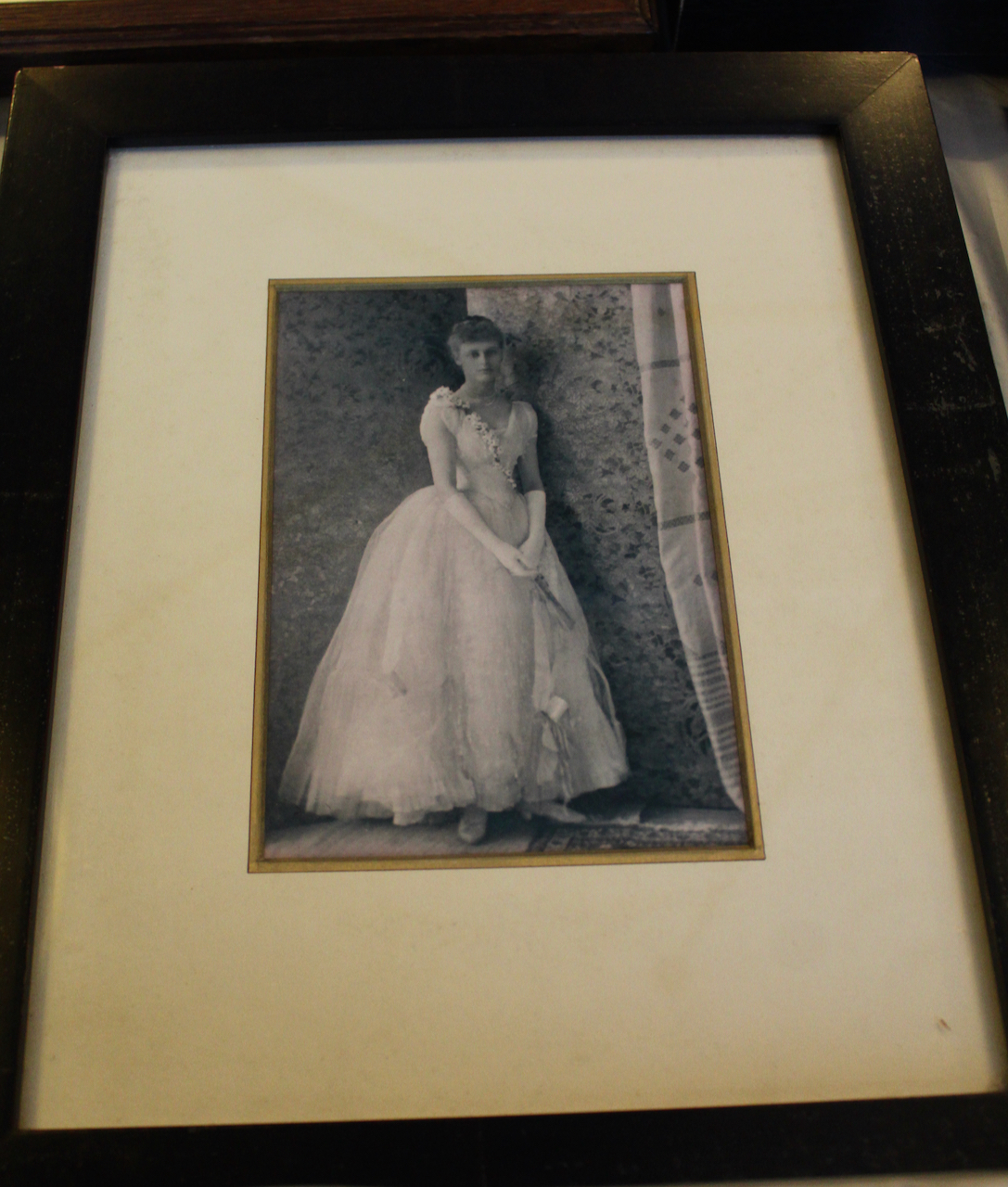
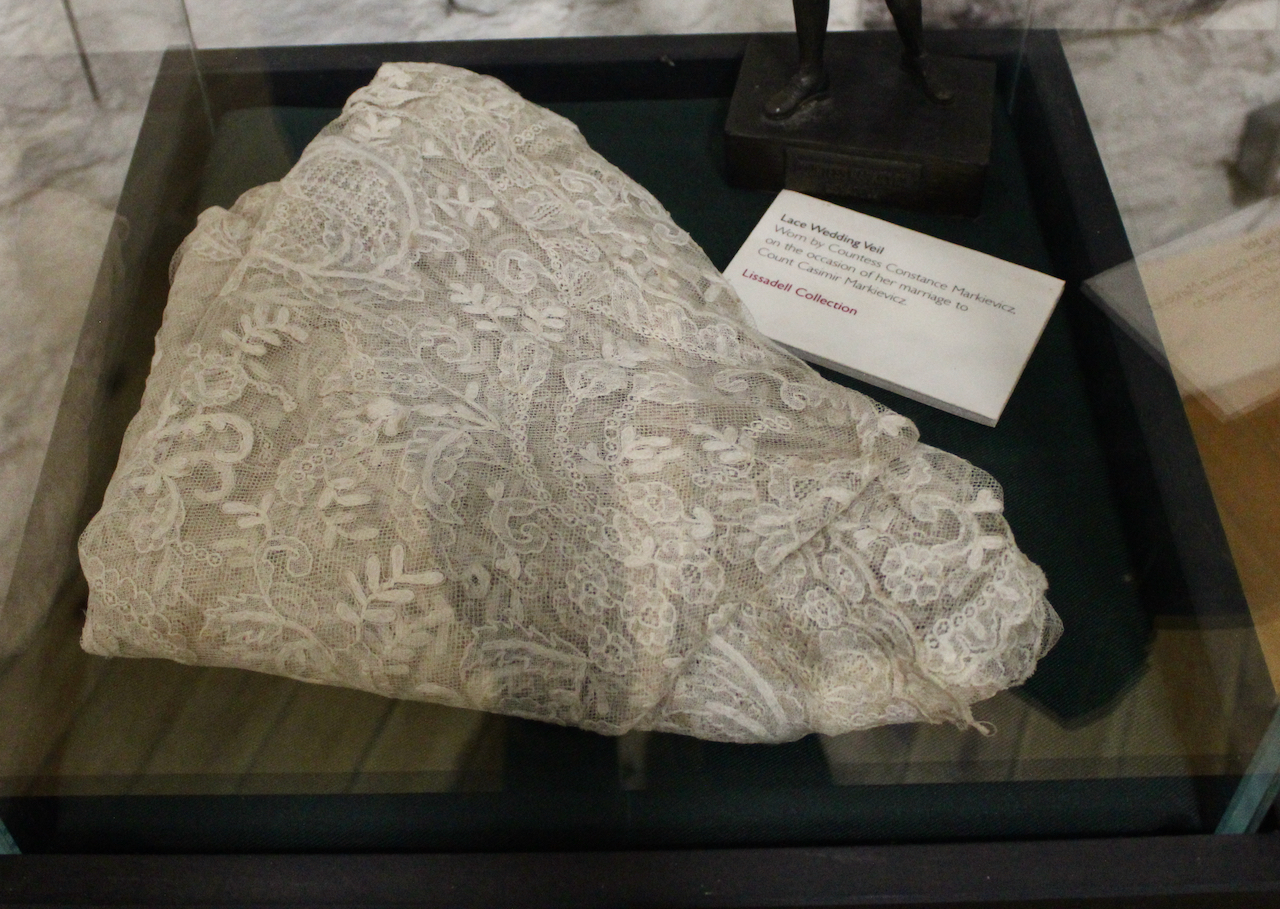
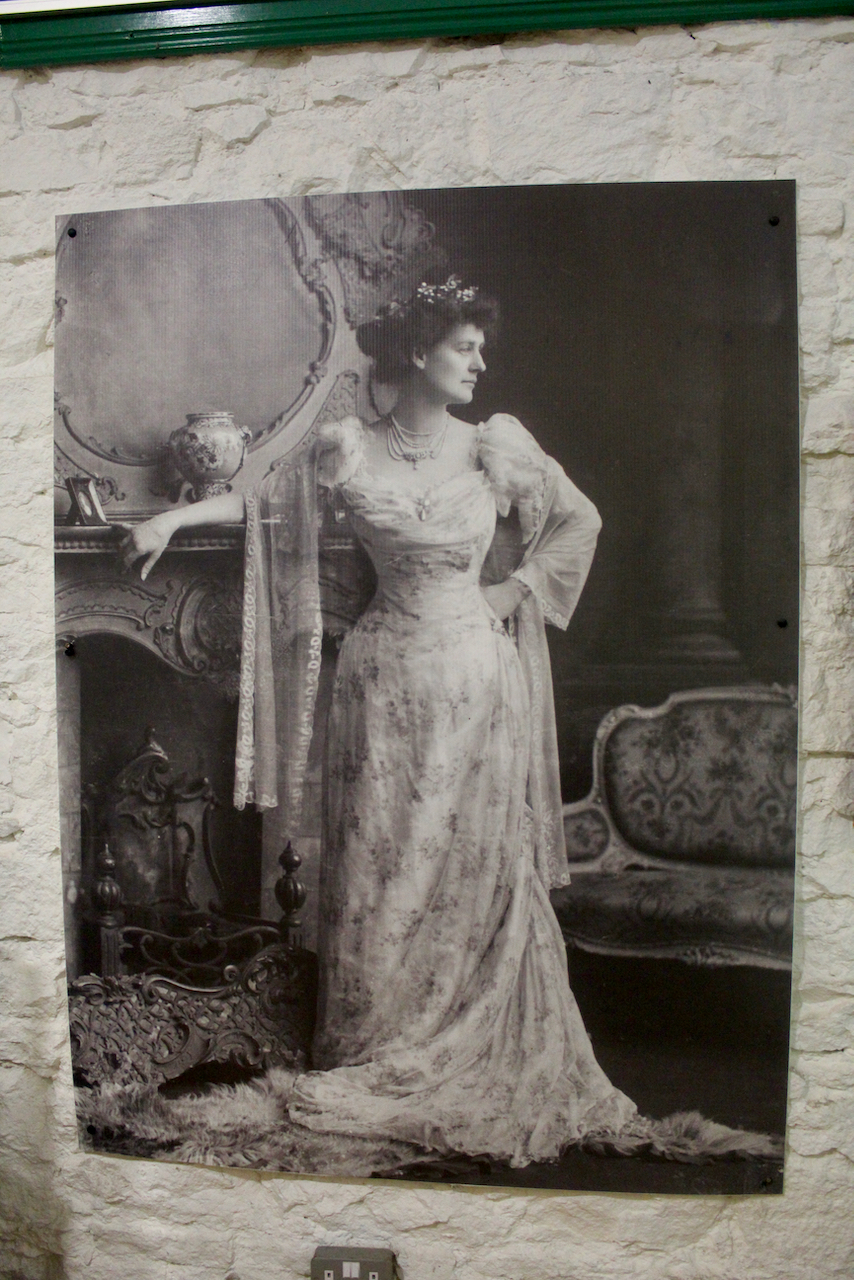
Photographs of the Gore-Booths are taken from the Sterry family album, purchased for the Lissadell collection in 2007. It shows Constance in her early 20s.

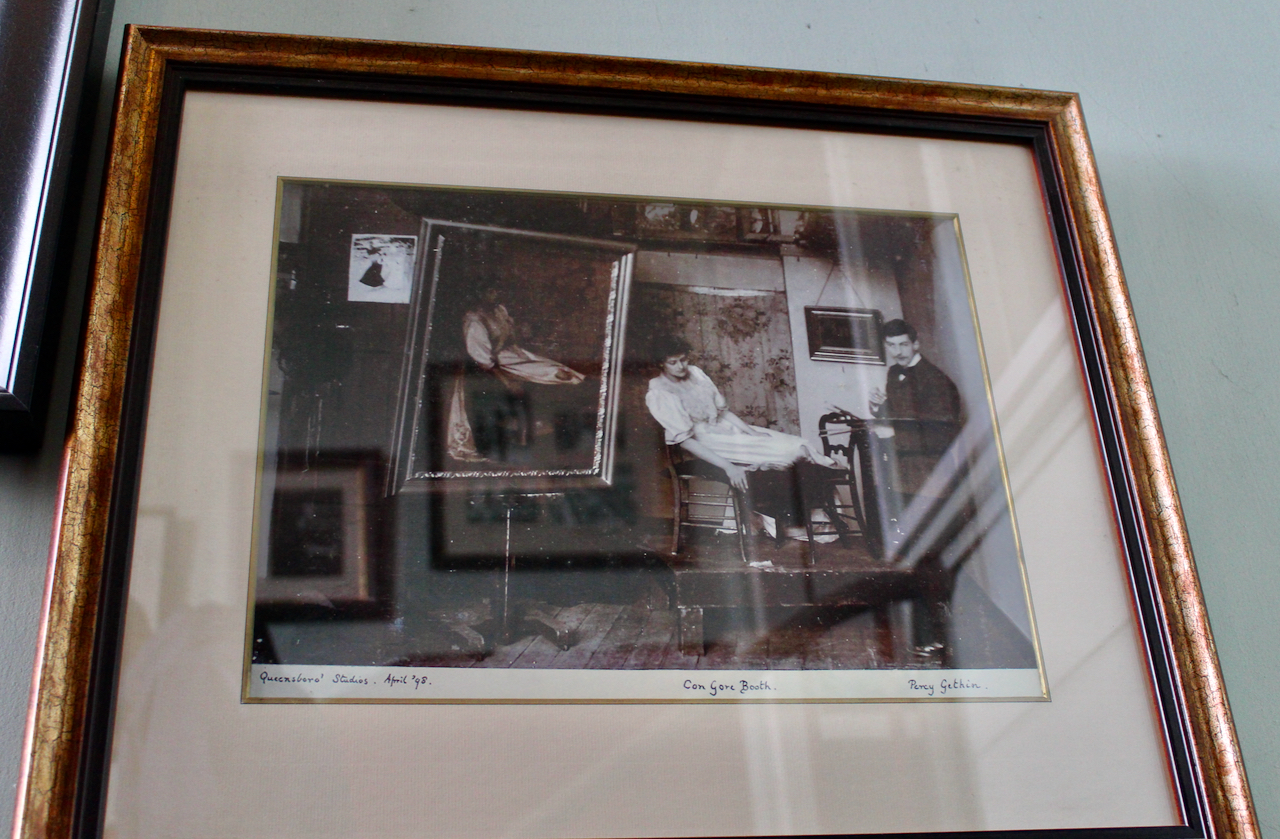
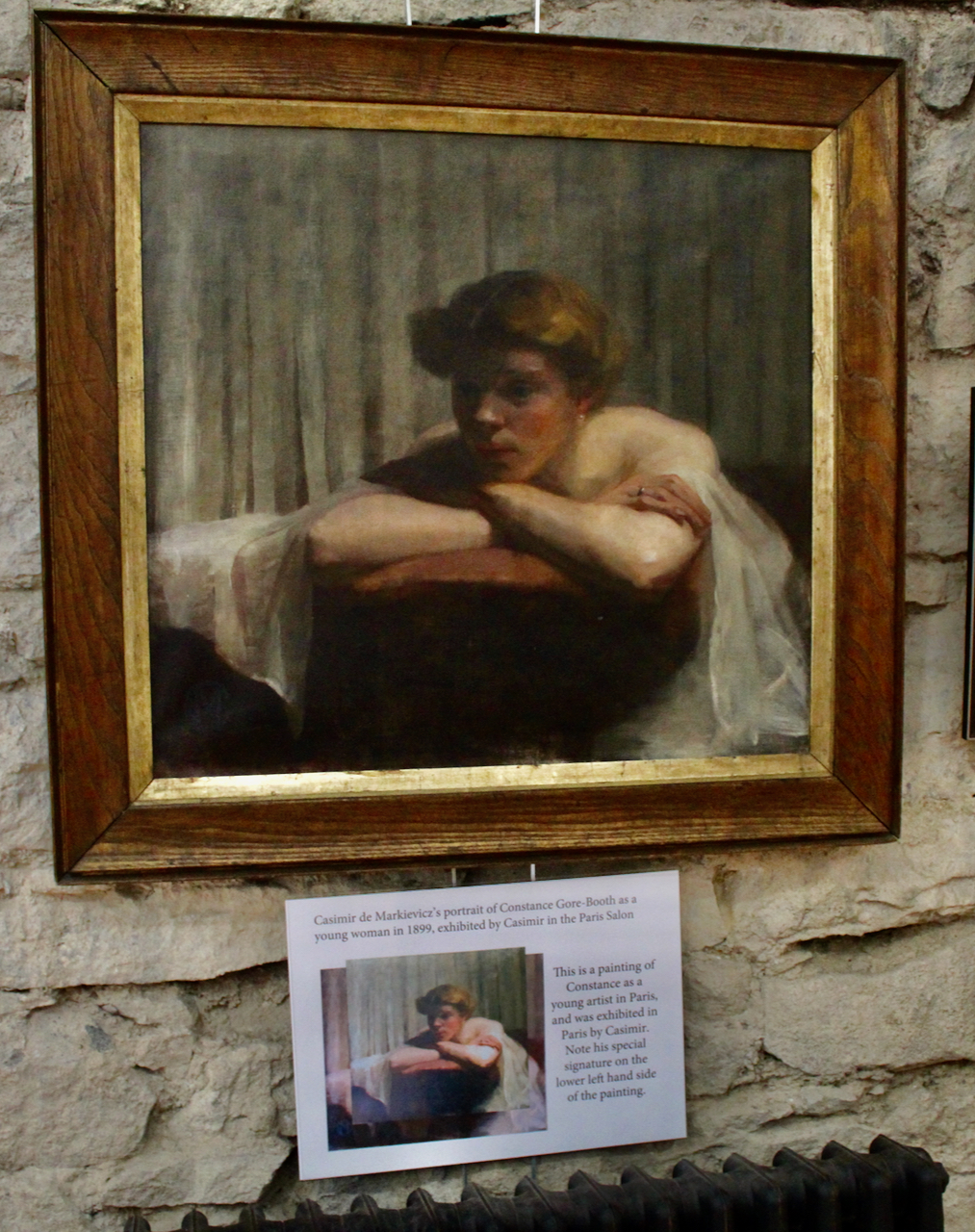
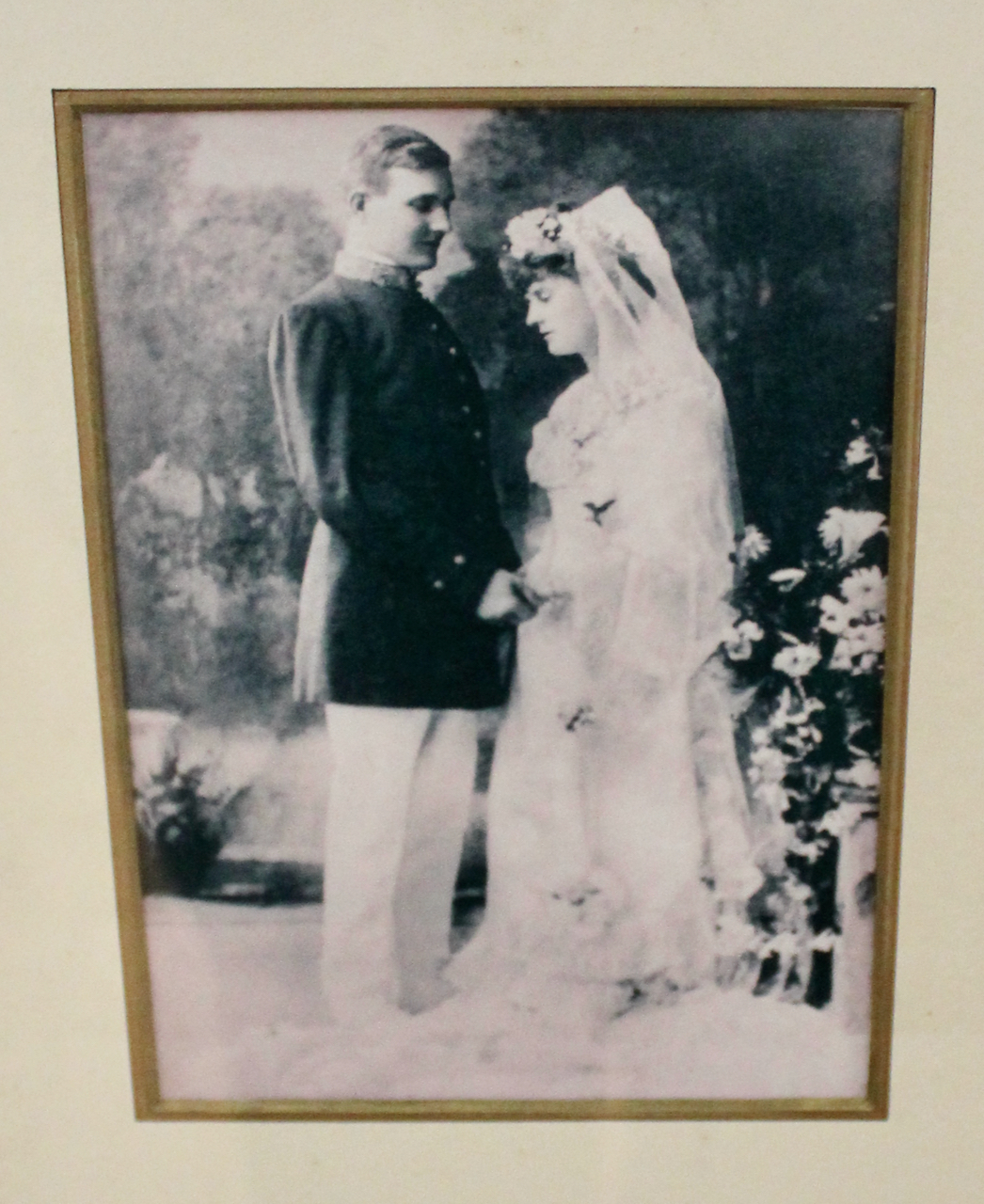
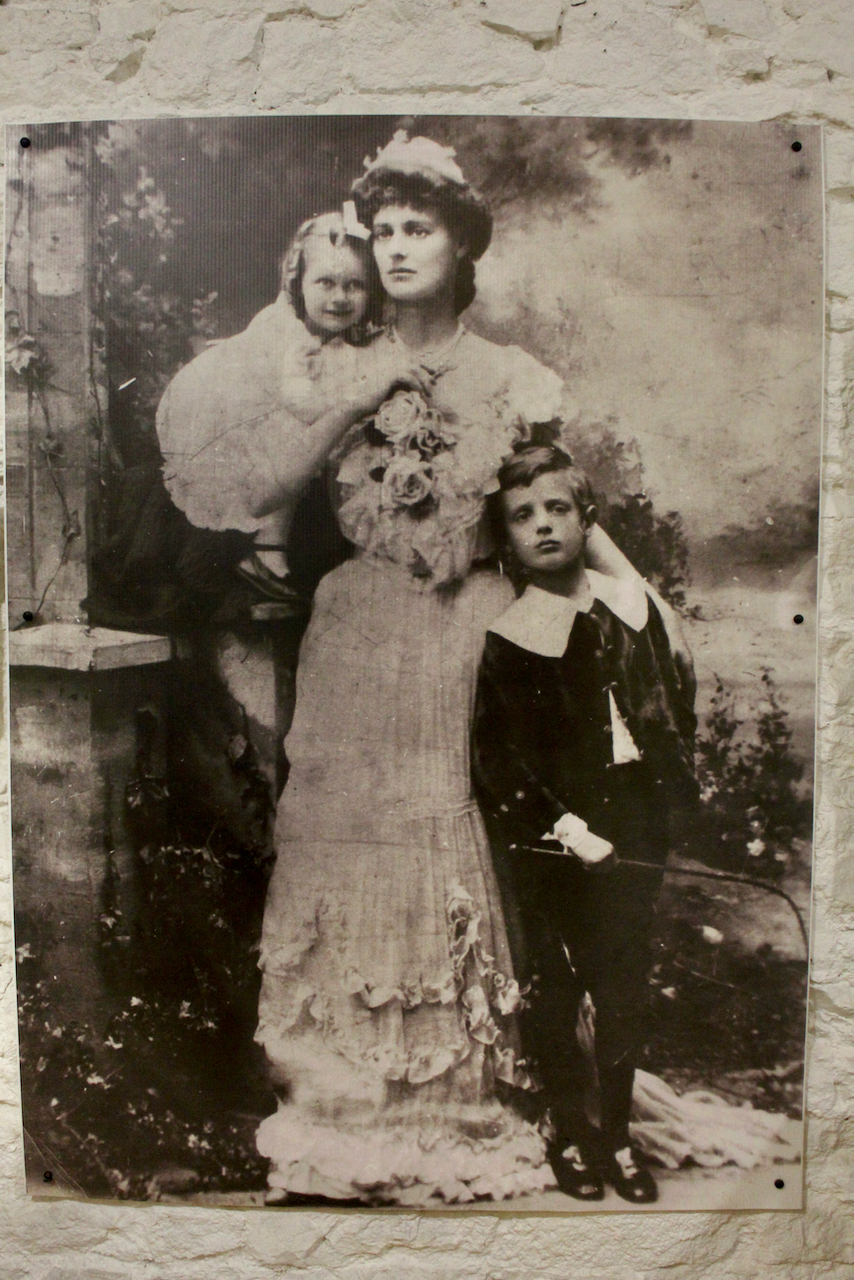
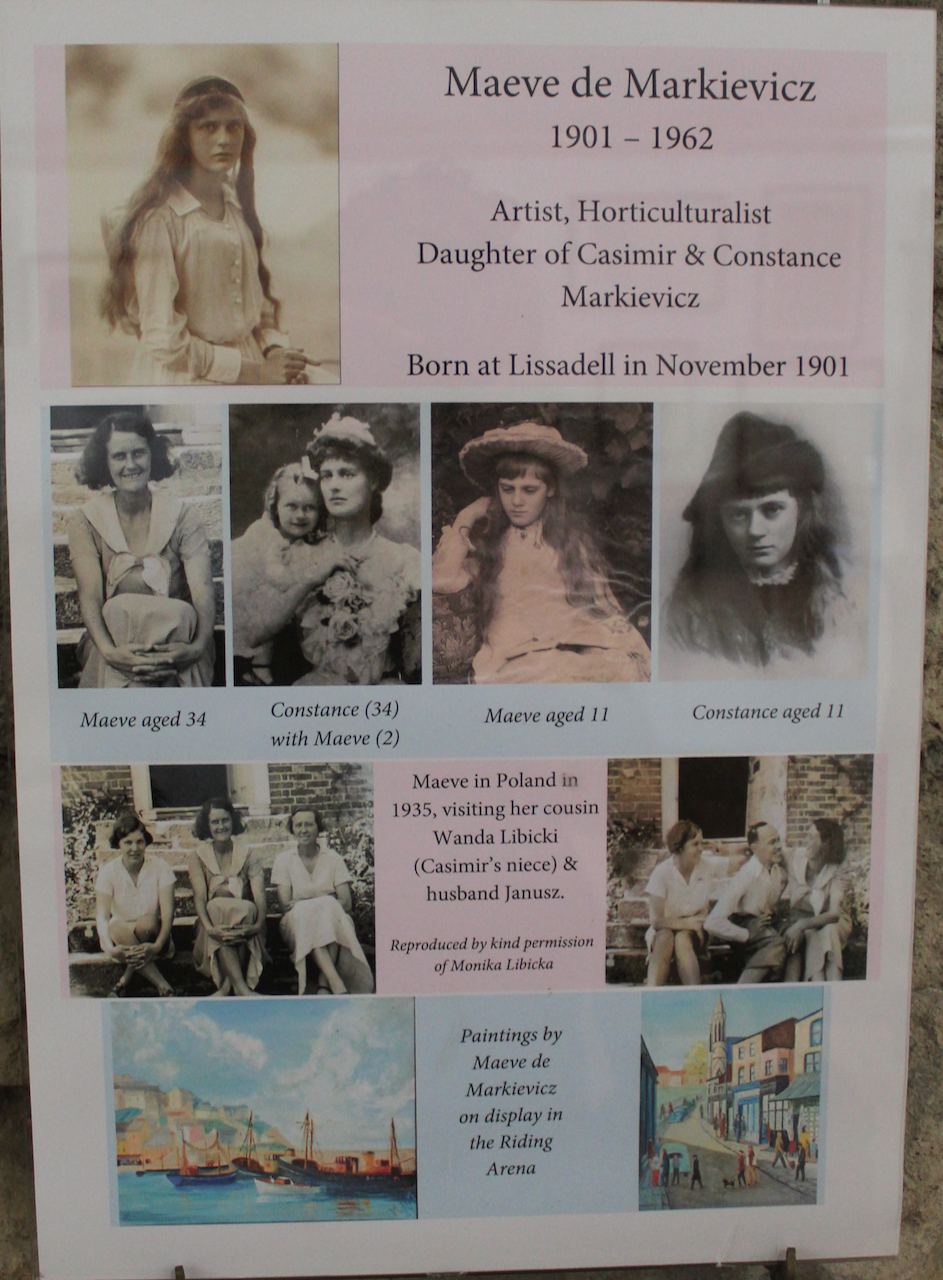
Constance went to art school in the Slade School of Art in London 1892-1894. She lived in Cheyne Walk, Chelsea, where many of London’s bohemians and writers gathered: George Eliot had lived there, Whistler, Henry James and Erskine Childers. At the age of 25 went to Paris to continue her studies, and met and married a fellow artist, the Polish Casimir Markievicz. Many of Constance’s paintings still hang on the walls, as well as some work by Casimir. Their only child, Maeve Allys, was born in Lissadell in 1901.

Constance Gore-Booth (left) and her sister, Eva, in 1895.
Lissadell, 2022.
Lissadell, 2022.
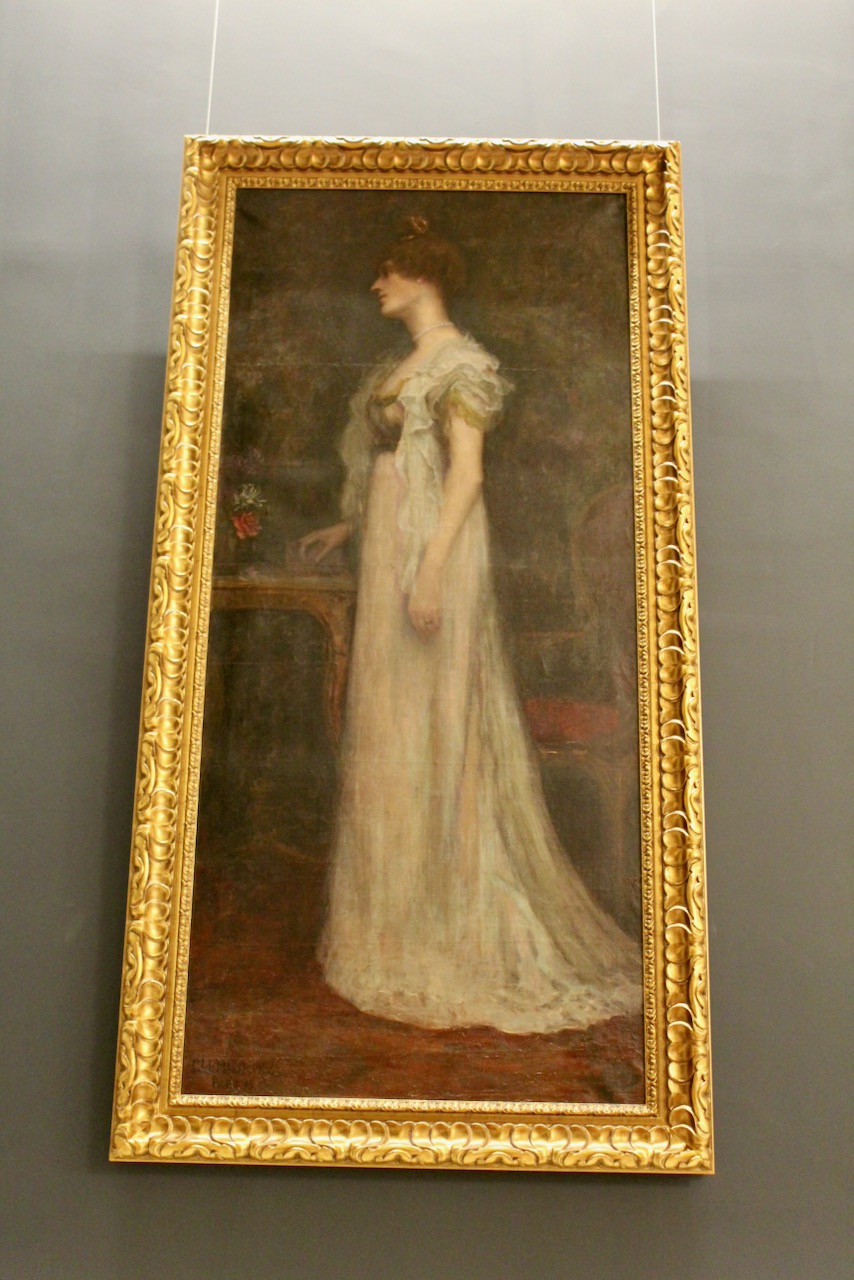
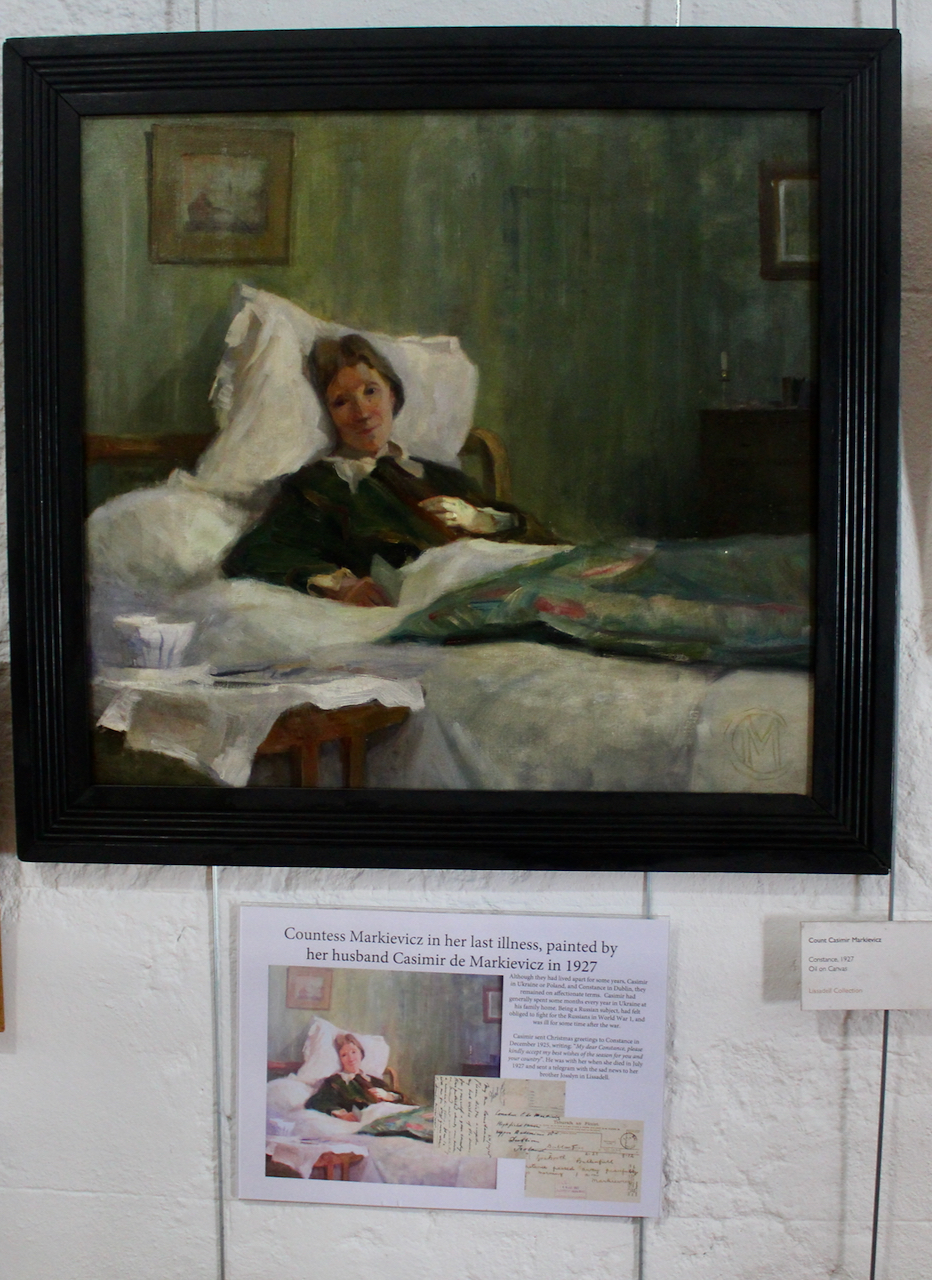
Painting of Countess Markievicz (1868-1927) by Casimir Markievicz (1874-1932), hanging in the National Gallery of Ireland. Constance Gore-Booth studied art in London and Paris, and in 1900 married Count Markievicz-Dunin, a Polish aristocrat.
Lissadell, 2022.
Casimir Markievicz.
Lissadell, 2022.
Lissadell, 2022.
Lissadell, 2022.
Lissadell, 2022.
Lissadell, 2022.
Lissadell, 2022.

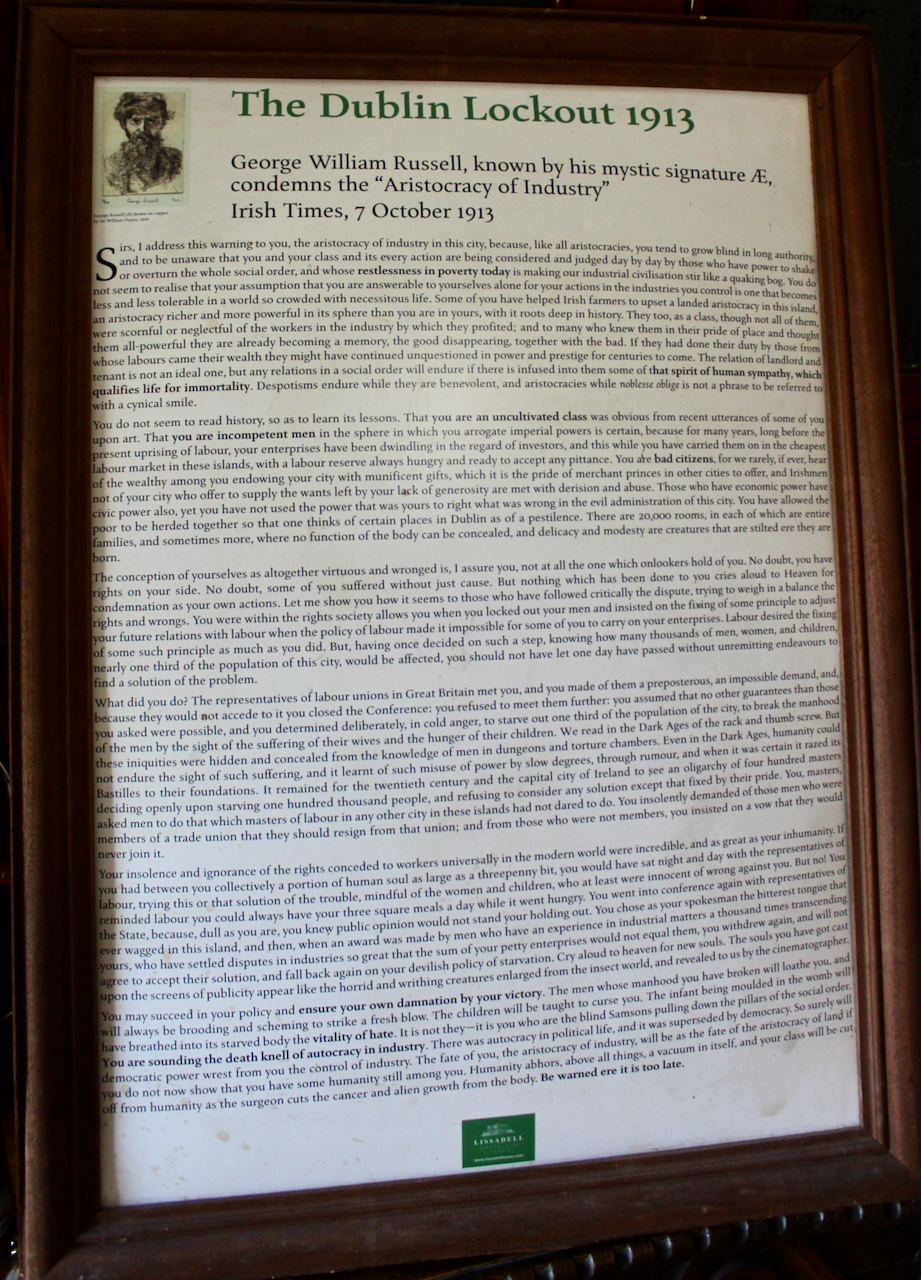
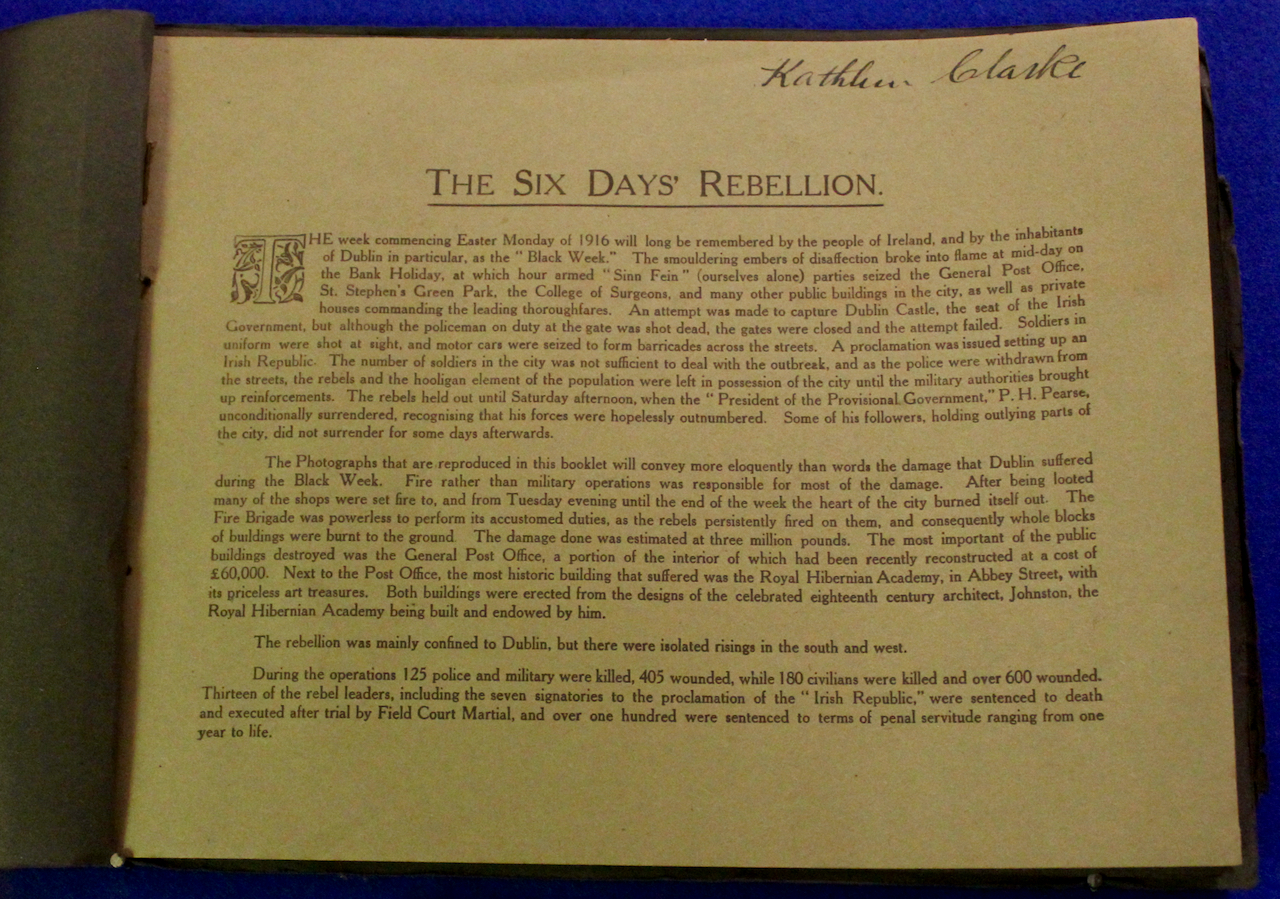
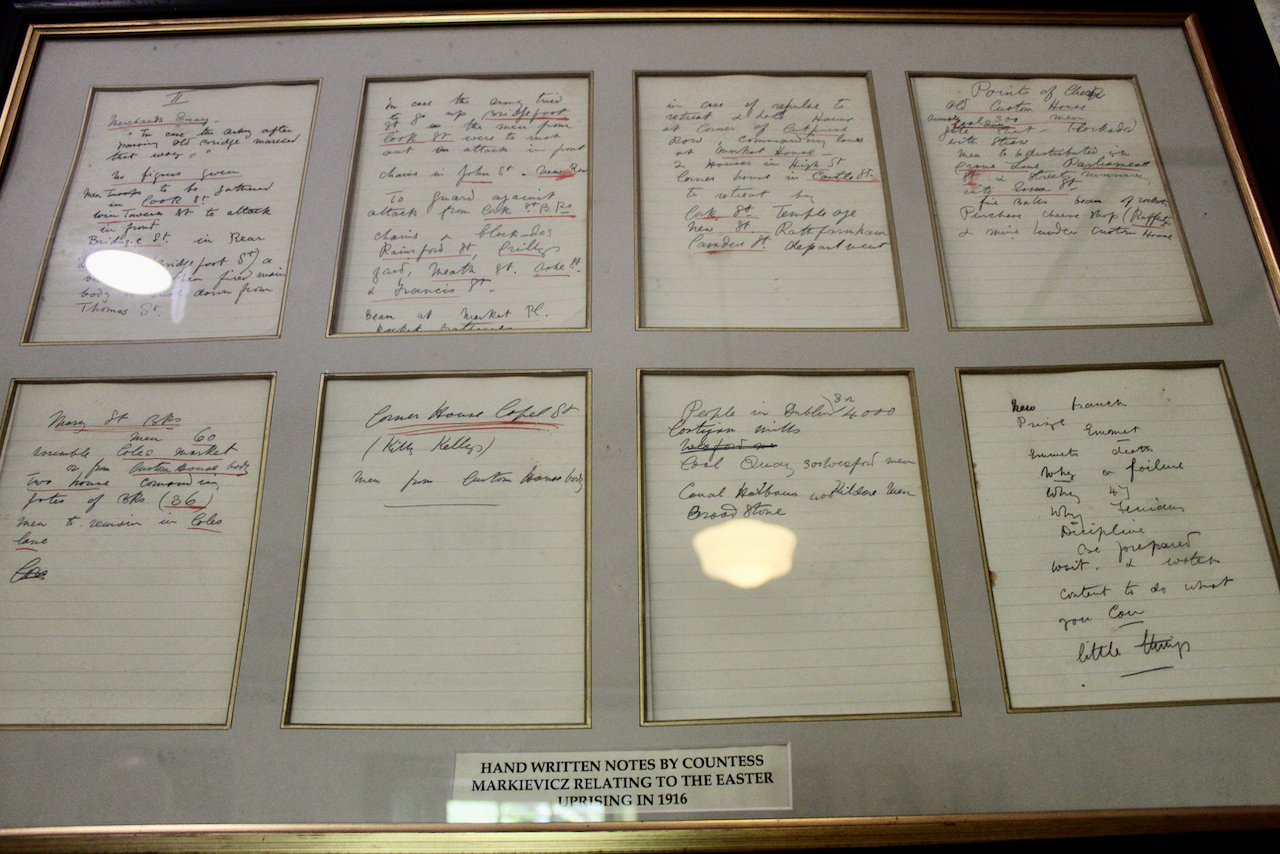
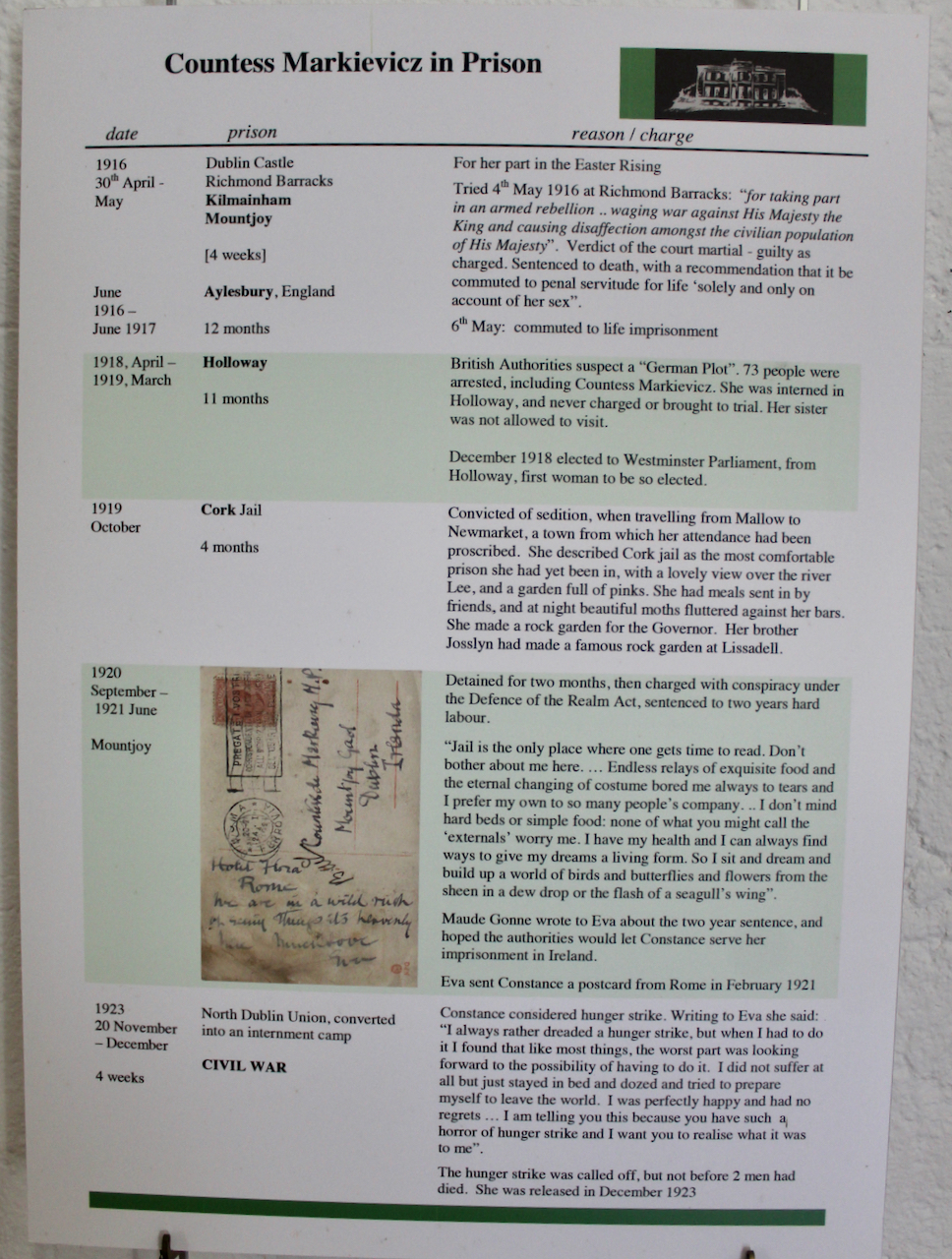
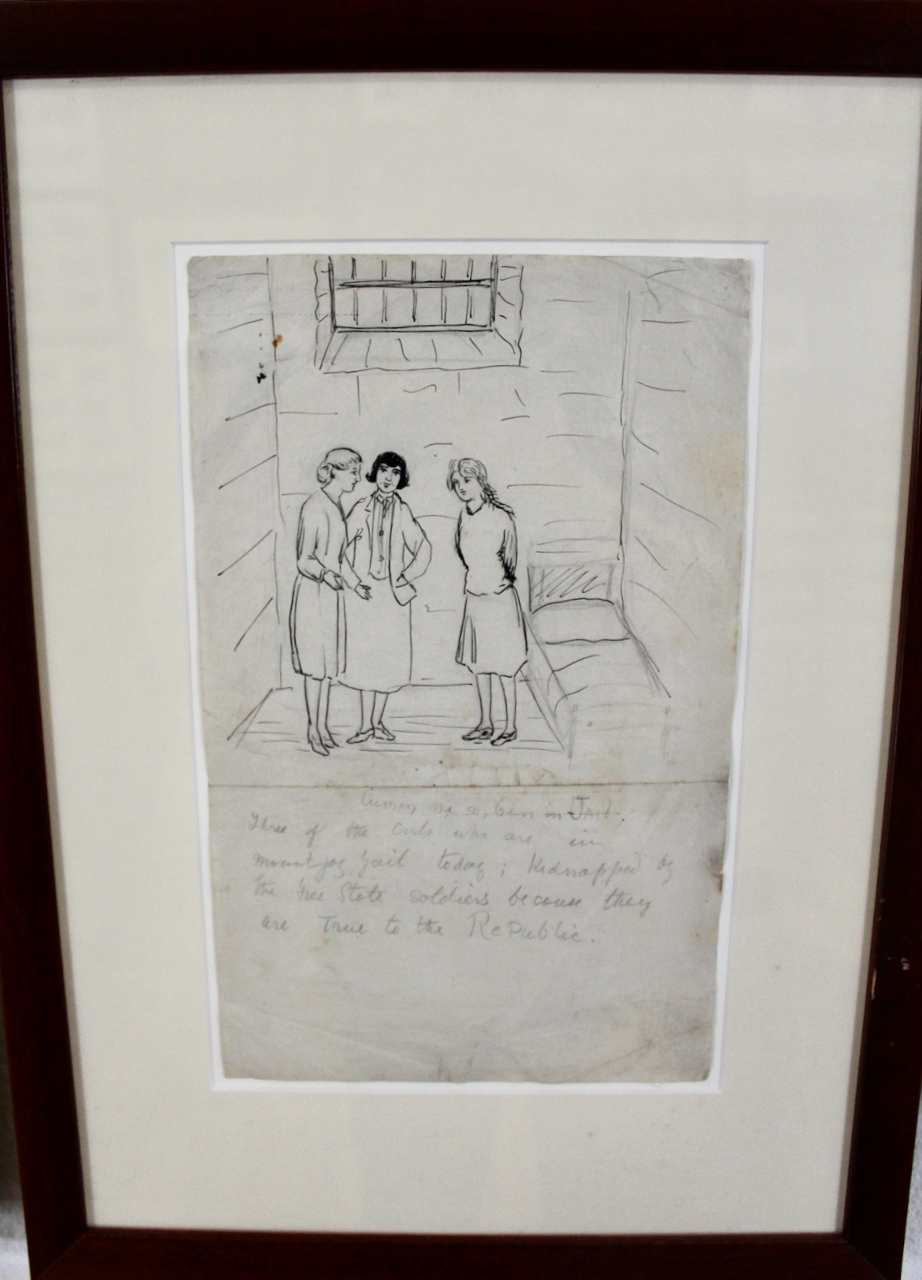
Constance had a strong social conscience, and became involved in the 1913 Lockout, where workers went on strike for better pay. She was then involved in the 1916 Rising, and was jailed for her activity. When the new state was born, she was elected to Dáil Eireann, where she served as Minister for Labour. She was also the first woman to be elected to the House of Commons at Westminster, London, but like many other Irish politicians, she declined to take her seat – members of Sinn Fein in Northern Ireland continue in this tradition and refuse to take their seats in Westminster.

Lissadell, 2022.

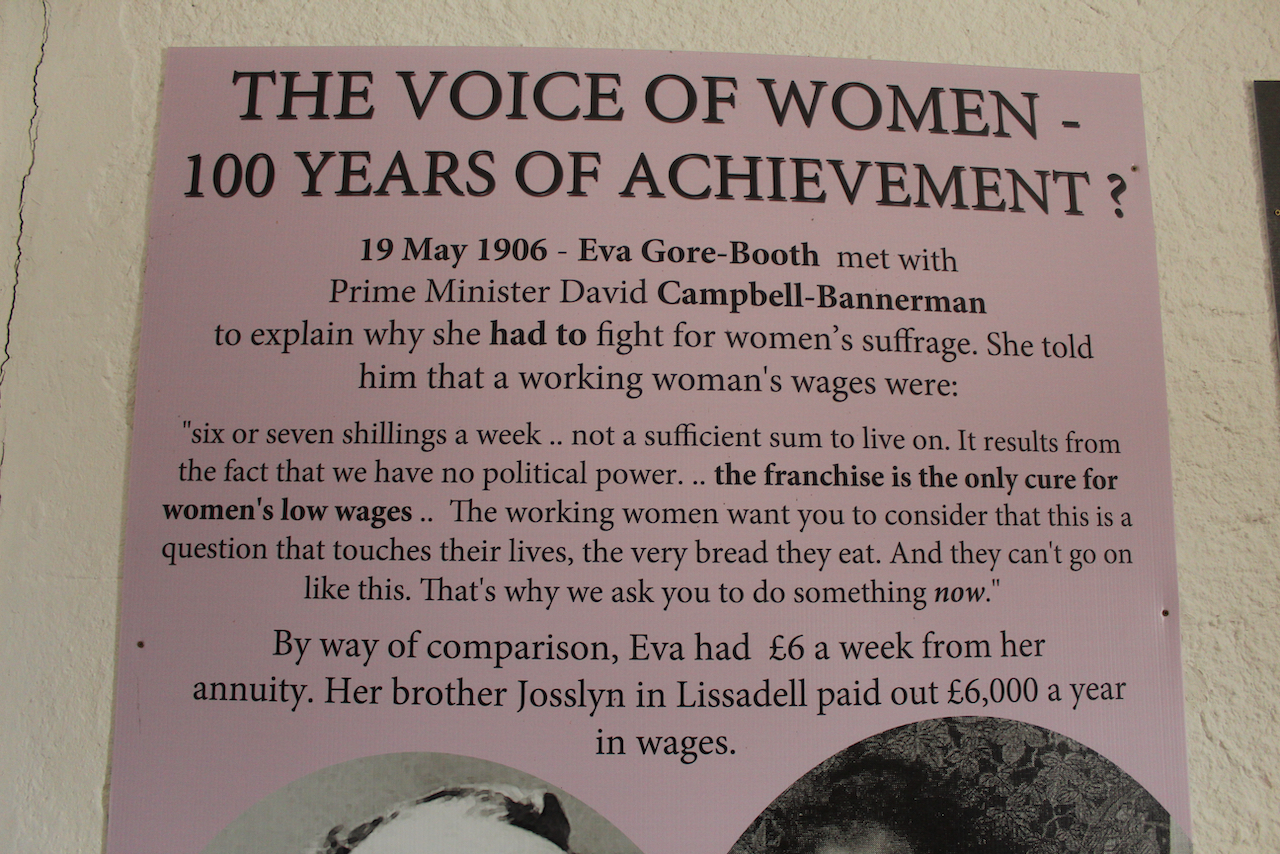
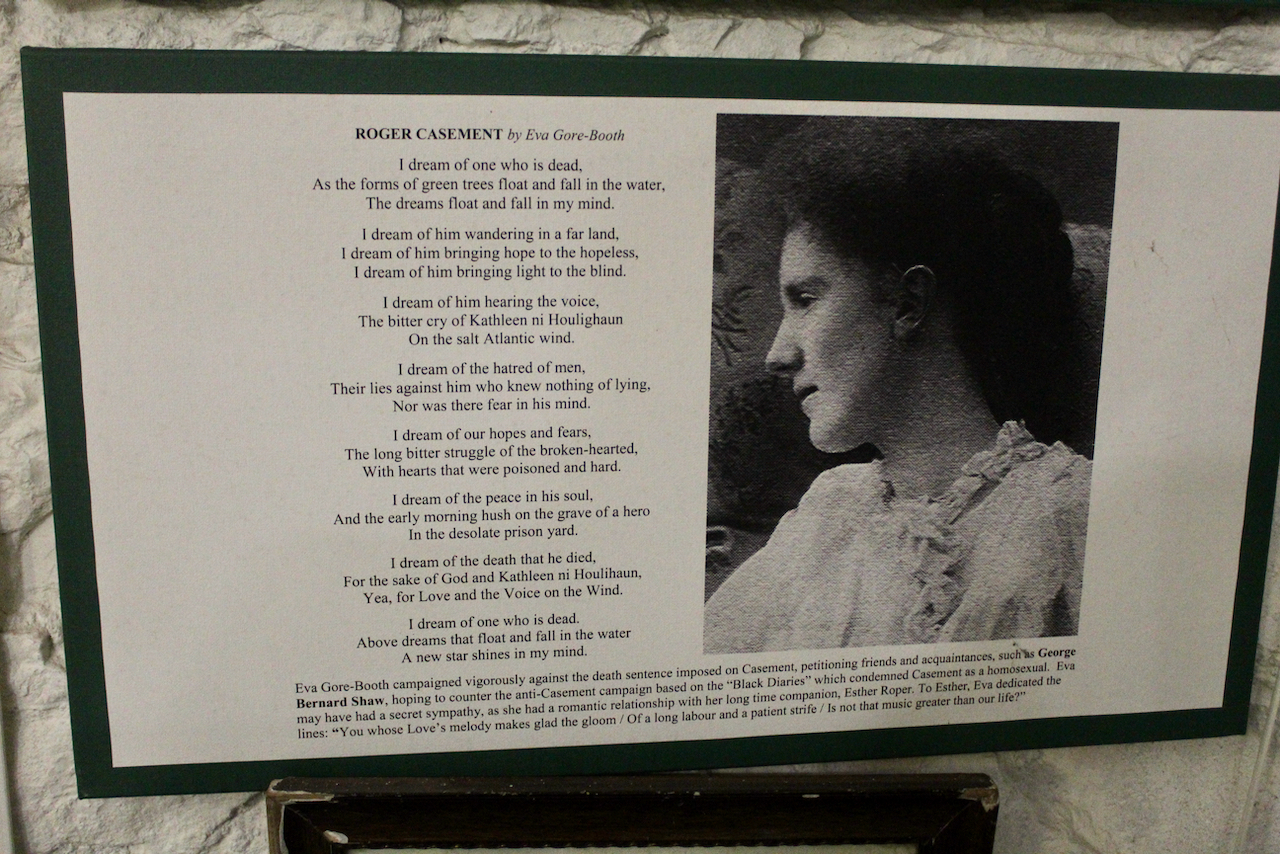
Eva was a suffragist and poet, and lived in meagre circumstances in England with her partner Esther Roper.

Lissadell, 2022.

Eva fought for Women’s Rights and clashing with the young Winston Churchill over barmaids’ rights in 1908. She spent many years in Manchester working to alleviate the condition of working women.

Lissadell, 2022.
Lissadell, 2022.
Lissadell, 2022.

Eva wrote:

The little waves of Breffny

The grand road from the mountain goes shining to the sea
And there is traffic on it and many a horse and cart,
But the little roads of Cloonagh are dearer far to me
And the little roads of Cloonagh go rambling through my heart.

A great storm from the ocean goes shouting o’er the hill,
And there is glory in it; and terror on the wind:
But the haunted air of twilight is very strange and still,
And the little winds of twilight are dearer to my mind.

The great waves of the Atlantic sweep storming on their way,
Shining green and silver with the hidden herring shoal;
But the little waves of Breffny have drenched my heart in spray,
And the little waves of Breffny go stumbling through my soul.

Lissadell, 2022.
Lissadell, 2022.
The drawing room with its rose pink wallpaper and a beautiful painting by Constance over the fireplace. Photograph © Jennifer Winder-Baggot, www.irishhistorichouses.com
Lissadell, 2022. Photograph © Jennifer Winder-Baggot, www.irishhistorichouses.com
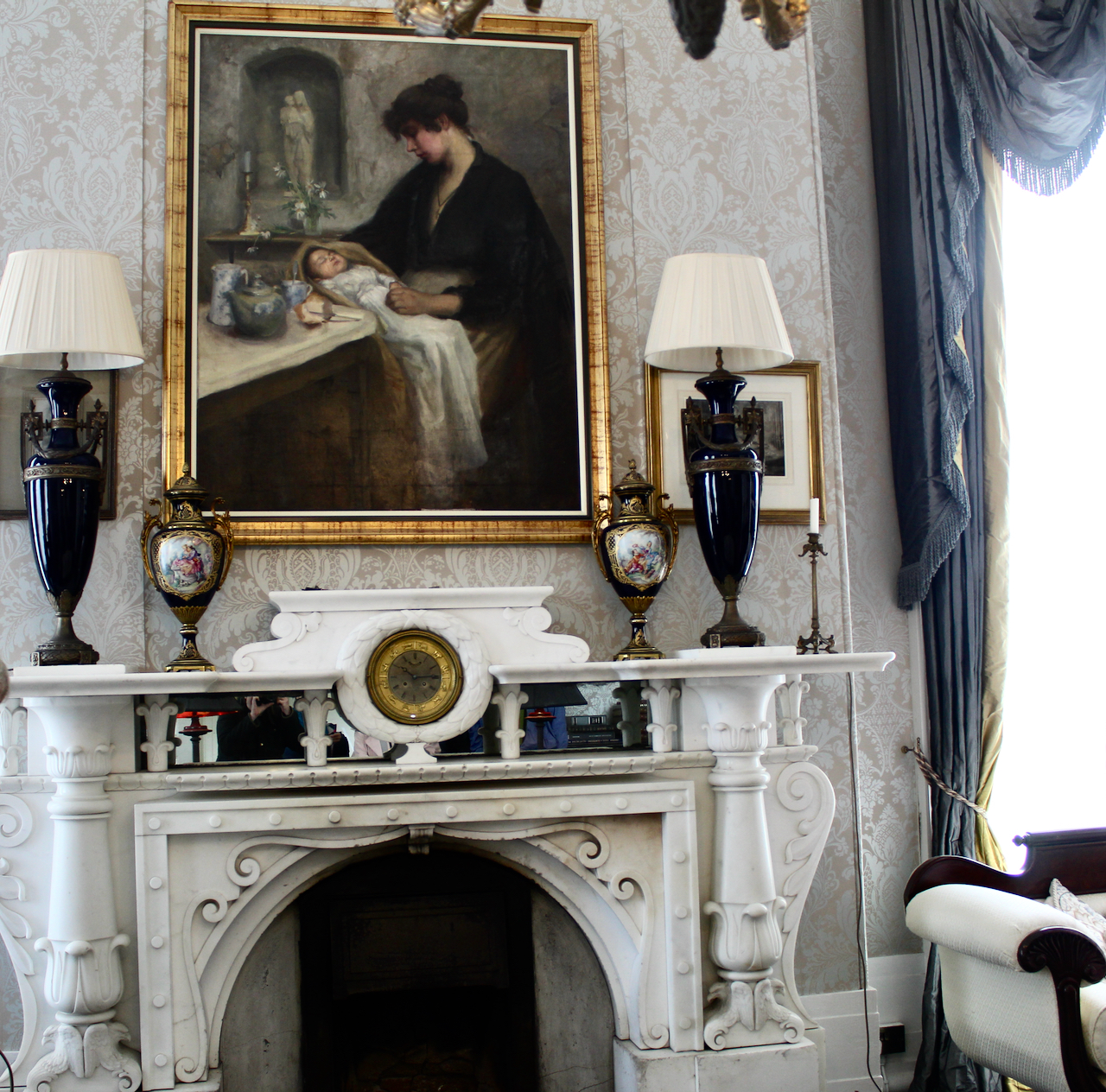
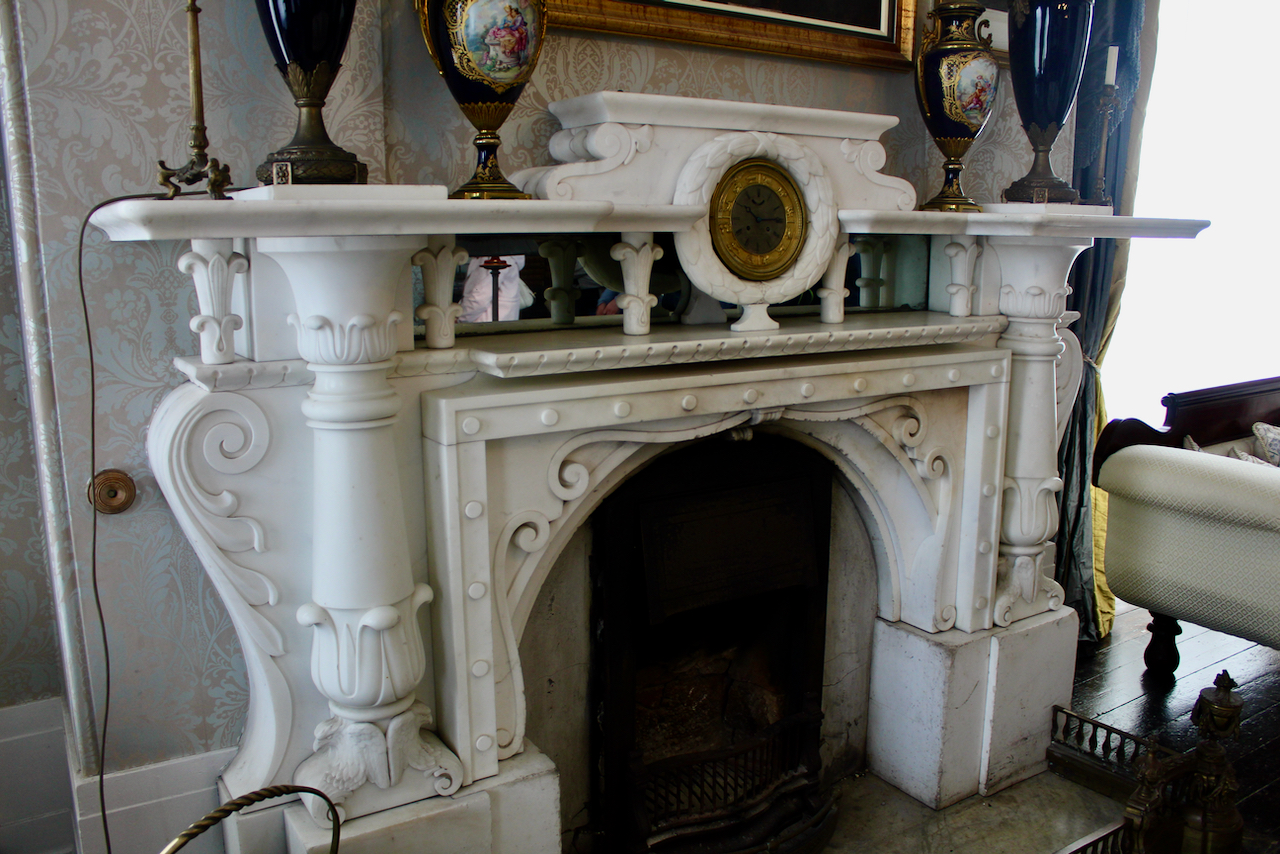
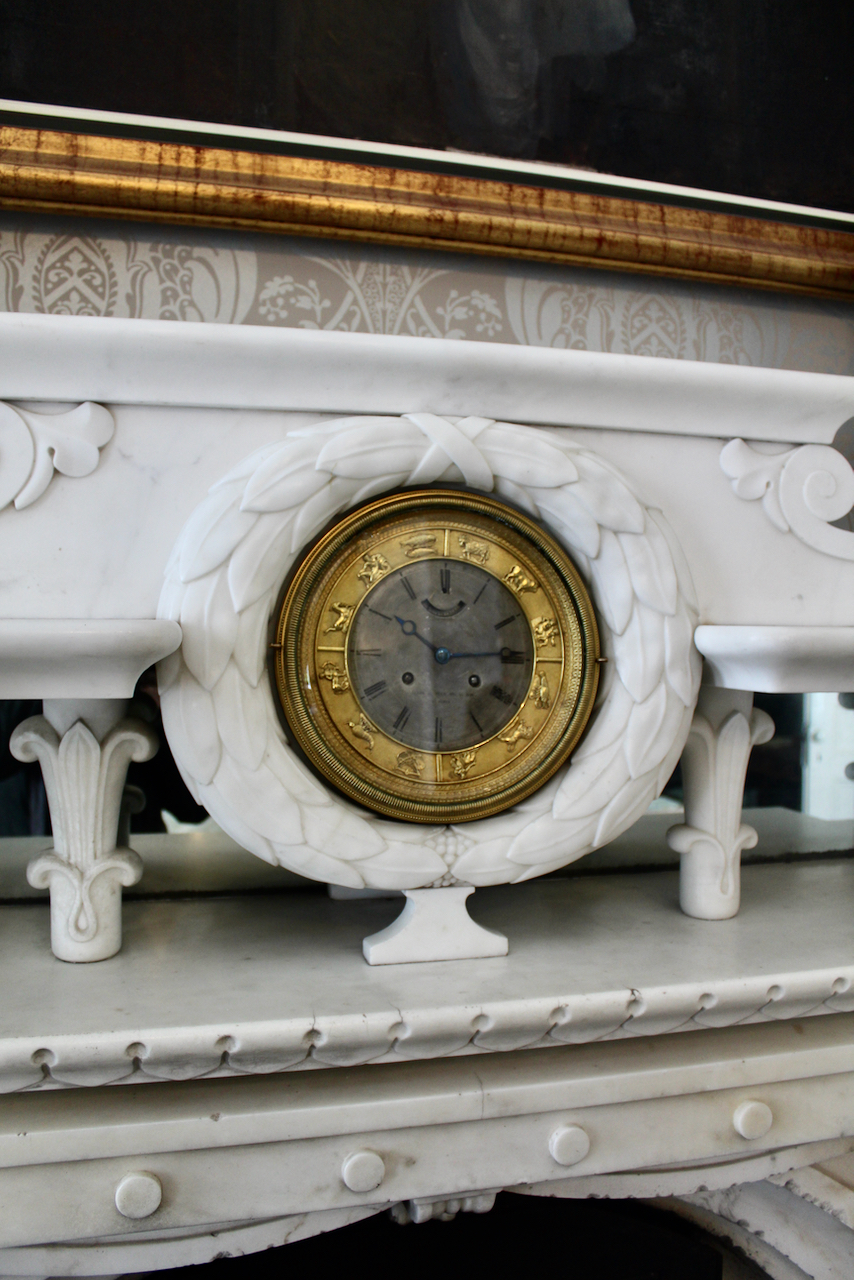
An ornate Italian marble fireplace, set with an “horloge,” dominates one wall. Photograph © Jennifer Winder-Baggot, www.irishhistorichouses.com
The clock features the signs of the zodiac. Photograph © Jennifer Winder-Baggot, www.irishhistorichouses.com
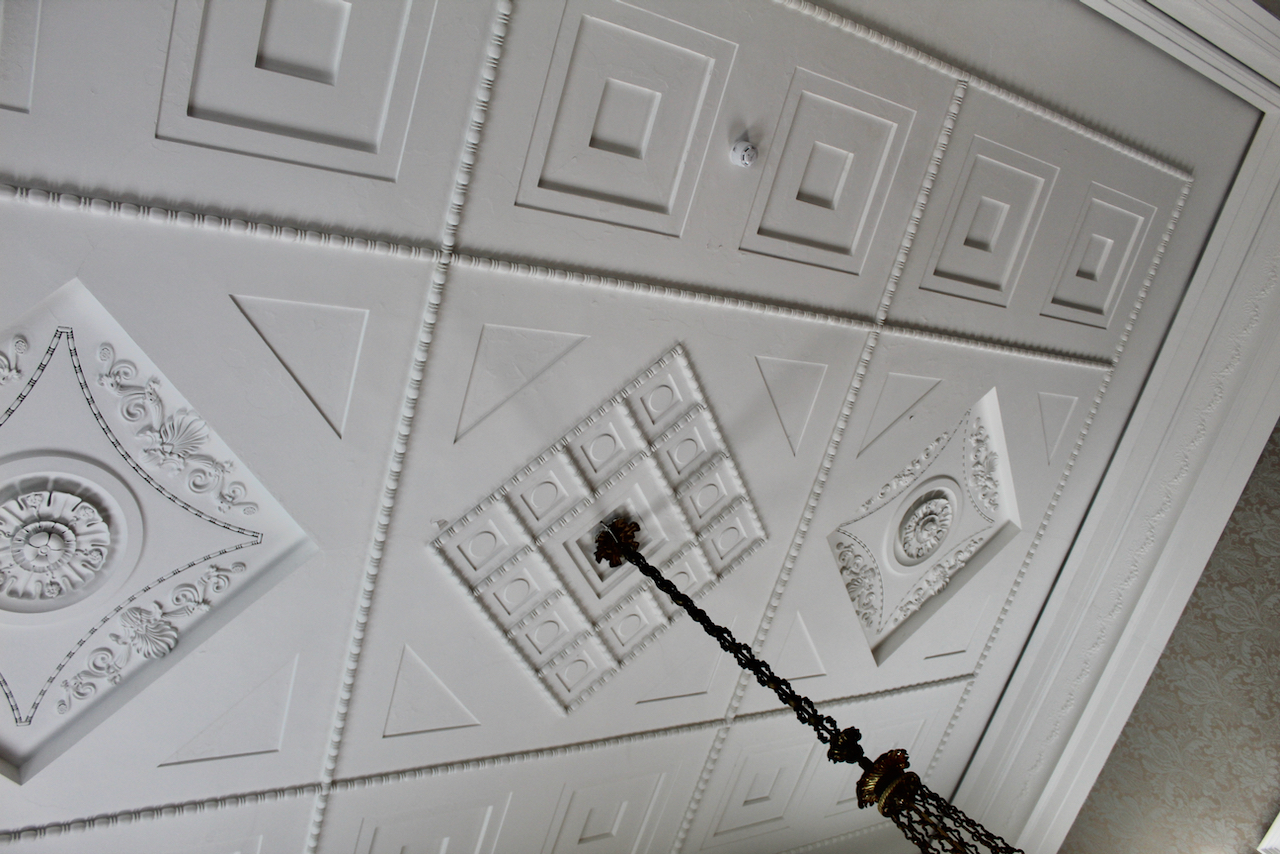
The drawing room’s comparted ceiling. Photograph © Jennifer Winder-Baggot, www.irishhistorichouses.com

There is also a collection of paintings by a friend of W.B. Yeats, “A.E.” i.e. George William Russell, who was also part of the farming Co-operative movement and, like Yeats, a mystic.

Paintings by A.E.
Lissadell, 2022. Photograph © Jennifer Winder-Baggot, www.irishhistorichouses.com

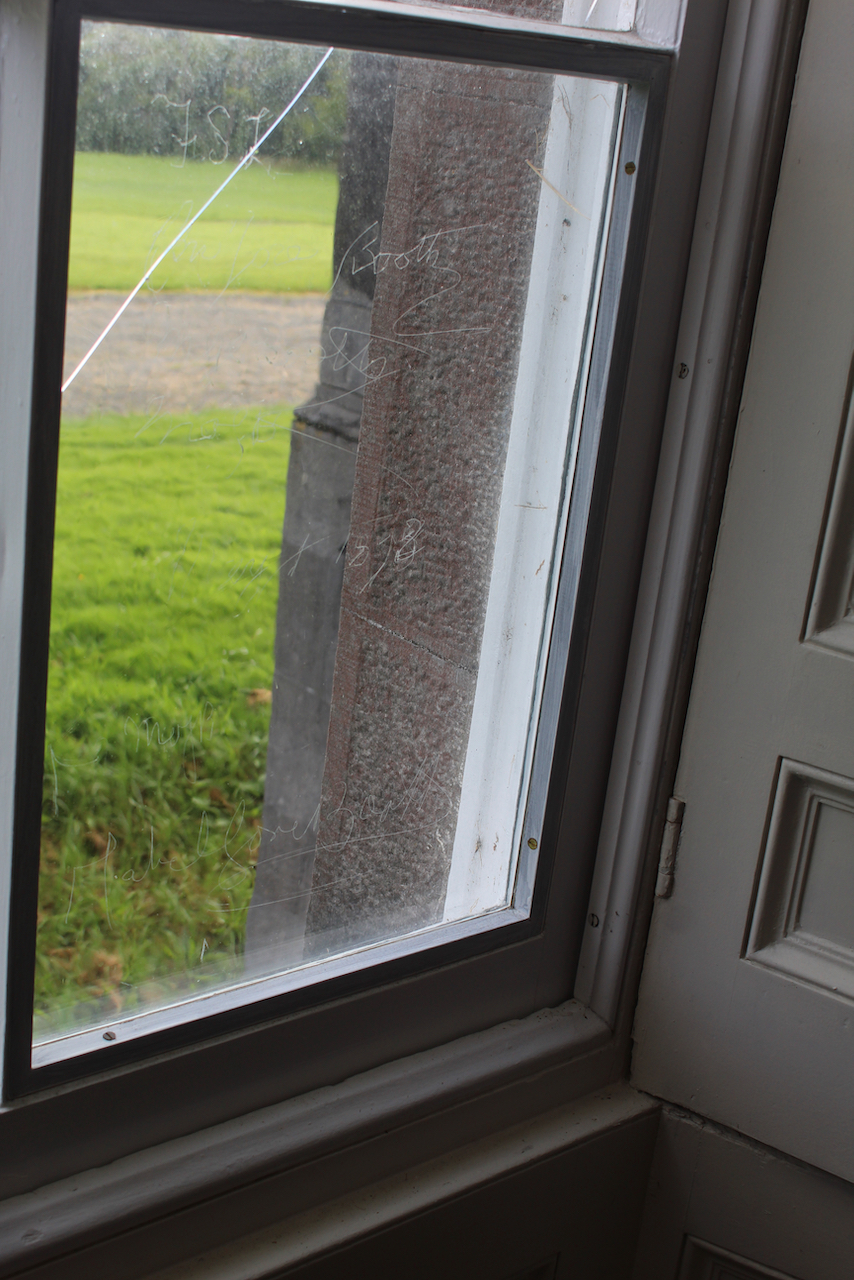
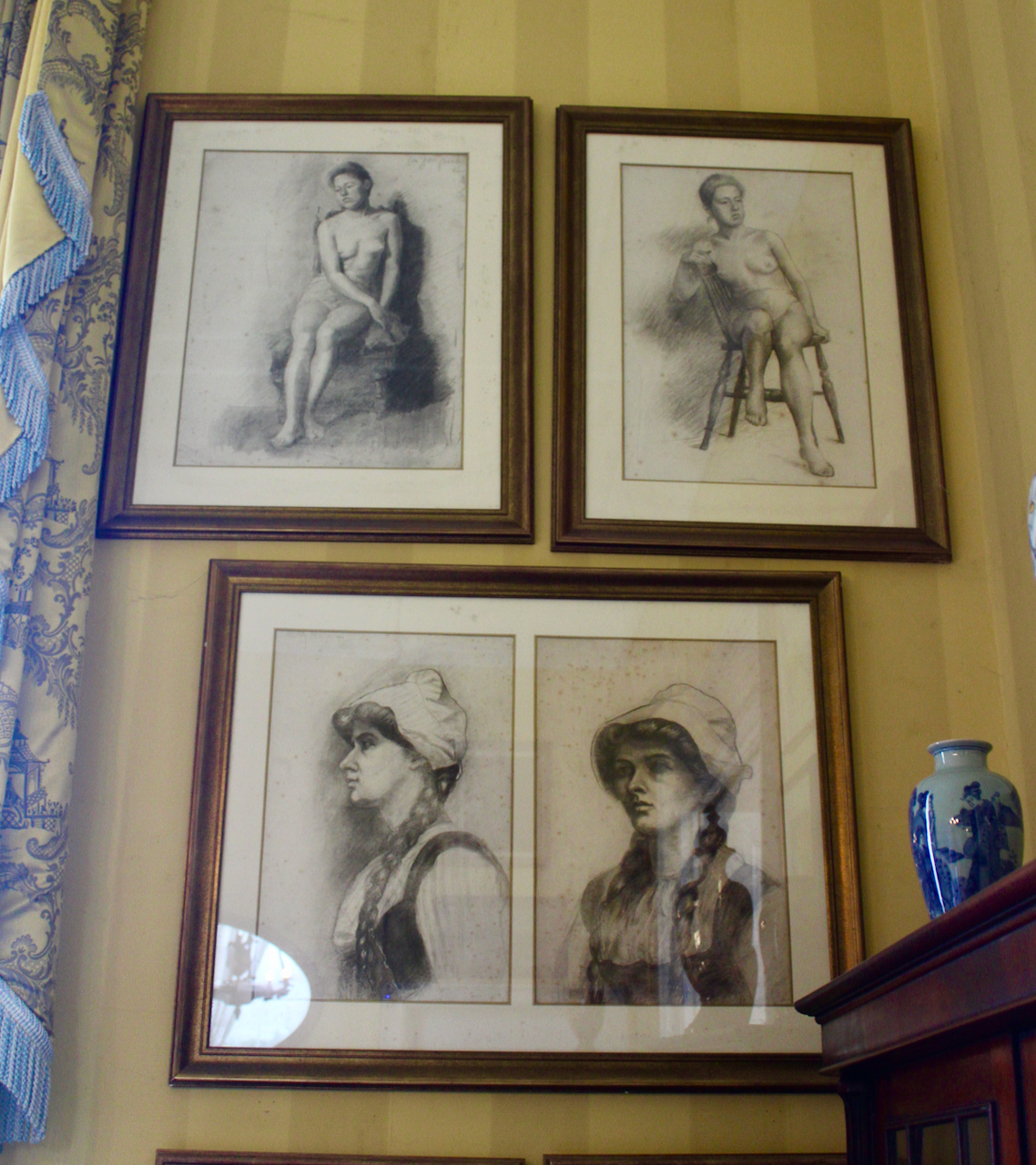
The anteroom still has an engraving that Constance made with her sister Mabel in a windowpane with a diamond in 1898. Drawings from Constance’s sketchbook are displayed also.

Lissadell, 2022. Photograph © Jennifer Winder-Baggot, www.irishhistorichouses.com
Sketches by Constance. Photograph © Jennifer Winder-Baggot, www.irishhistorichouses.com
Lissadell, 2022.
A mystical painting by A.E.
Lissadell, 2022.
This little boy is the son of Casimir Markievicz, from Casimir’s first marriage, before he married Constance.

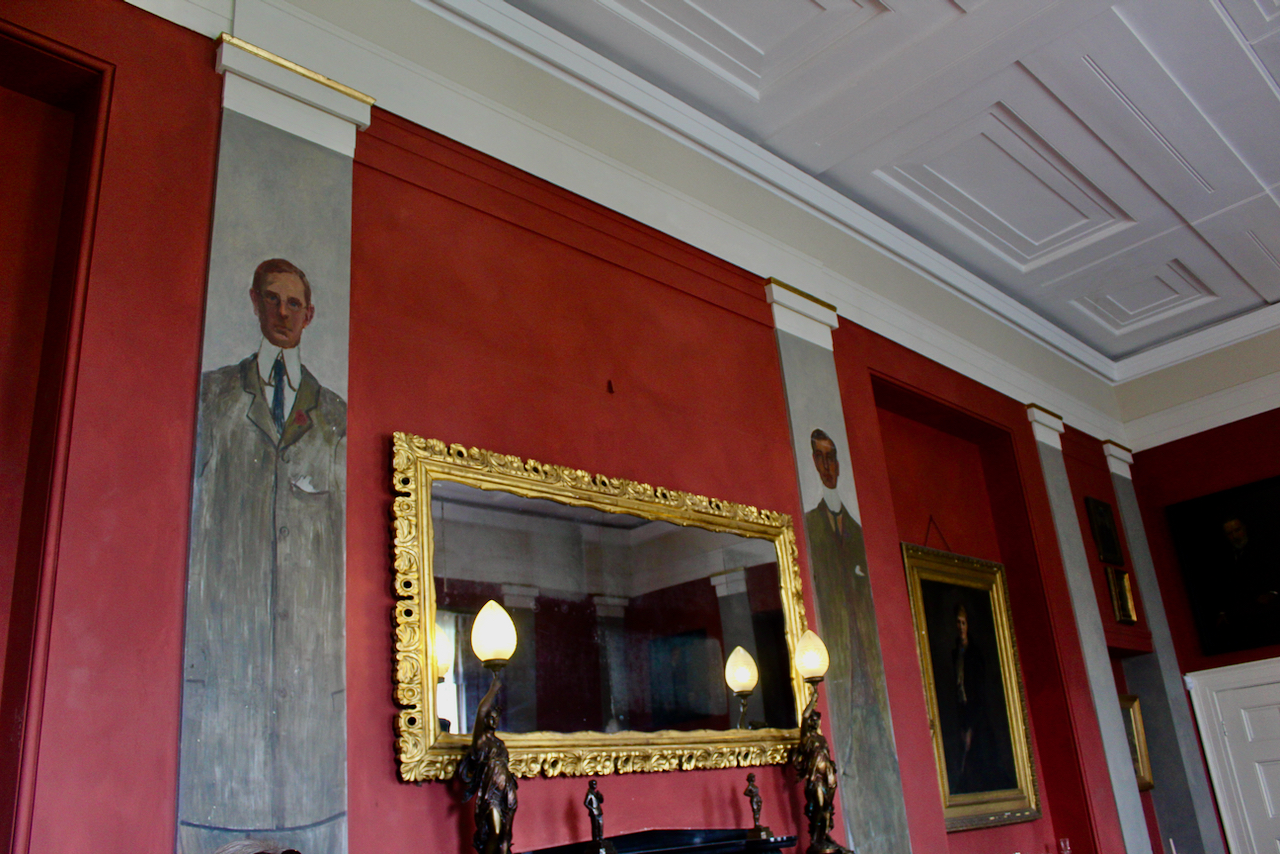
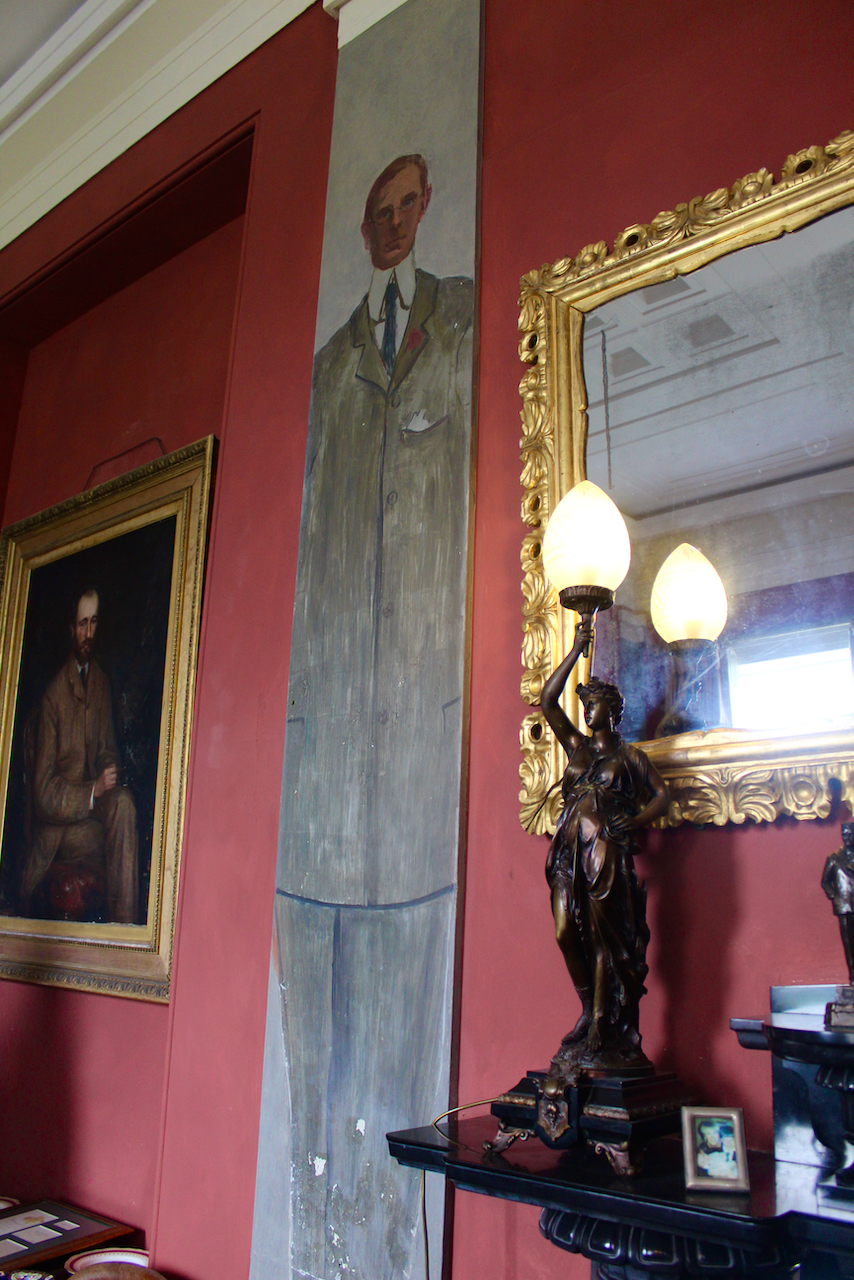
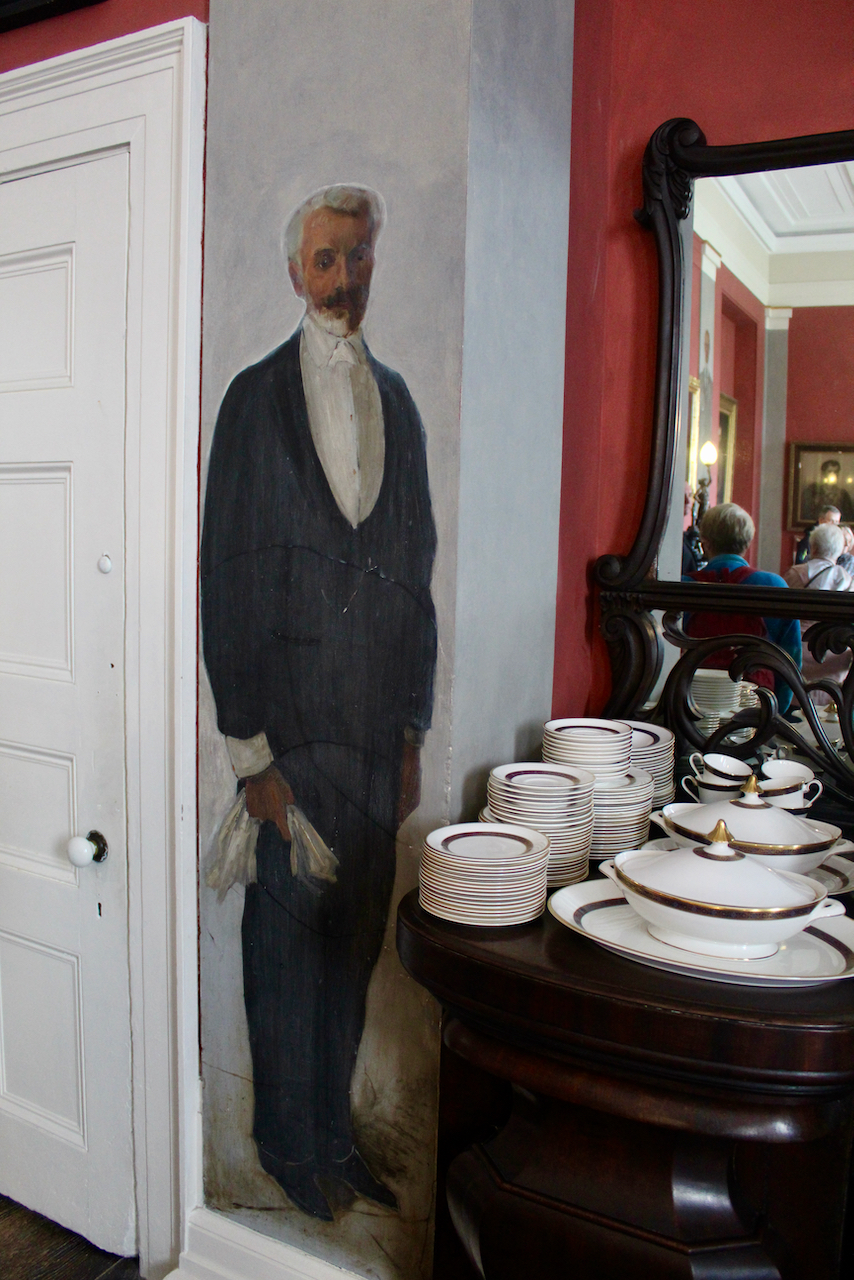
I had been particularly looking forward to seeing the dining room as I had seen pictures of it before and it has rather eccentric paintings which I love! Again, it was hard to take photographs because the room was crowded with the tour. Casimir painted portraits onto the pillars. He painted some of the servants, including Kilgallon. The bear shot by Kilgallon stands now beside his portrait.

Lissadell, 2022. Photograph © Jennifer Winder-Baggot, www.irishhistorichouses.com
Lissadell, 2022.
Lissadell, 2022. Photograph © Jennifer Winder-Baggot, www.irishhistorichouses.com
The bear shot by Kilgallon stands now beside his portrait. Photograph © Jennifer Winder-Baggot, www.irishhistorichouses.com
Lissadell, 2022. Photograph © Jennifer Winder-Baggot, www.irishhistorichouses.com
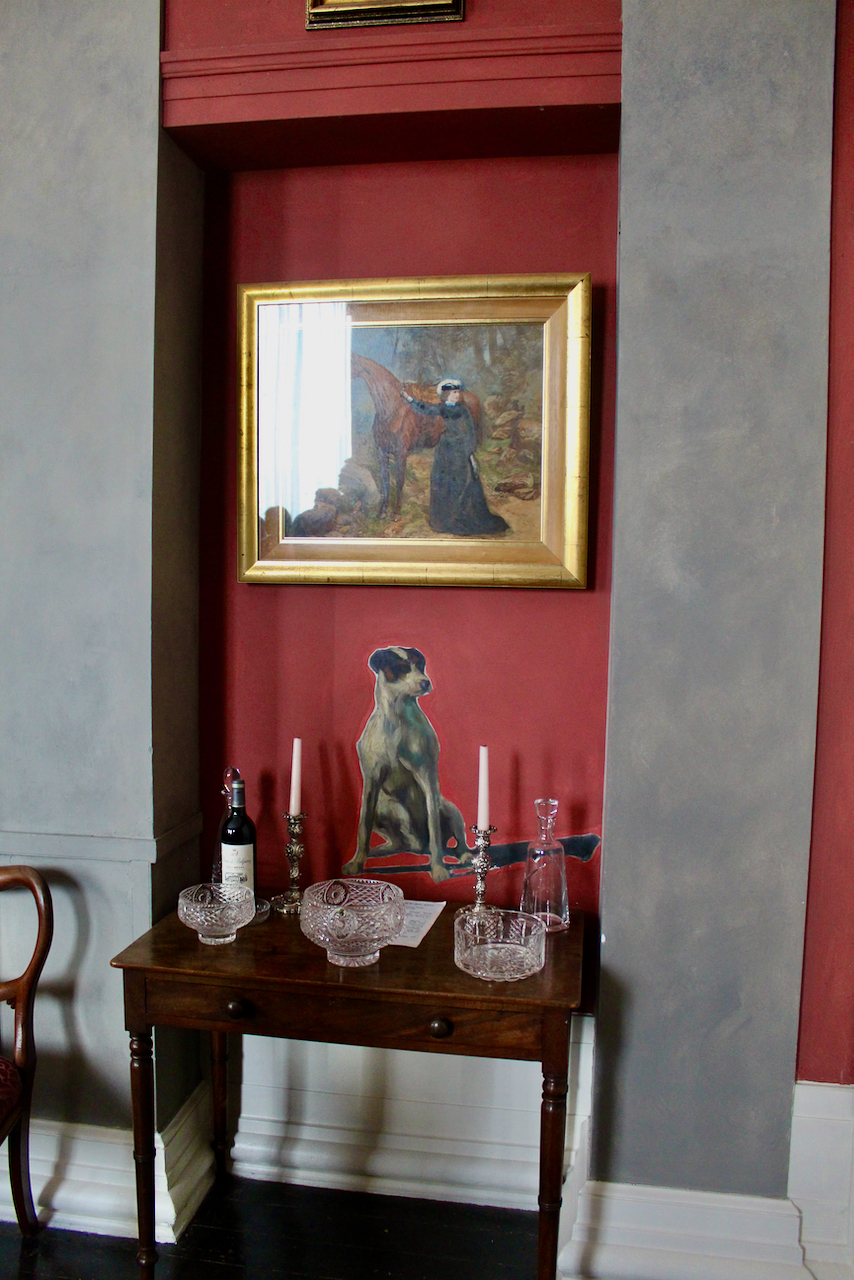
I love the portrait of the dog. Photograph © Jennifer Winder-Baggot, www.irishhistorichouses.com
Lissadell, 2022. Photograph © Jennifer Winder-Baggot, www.irishhistorichouses.com

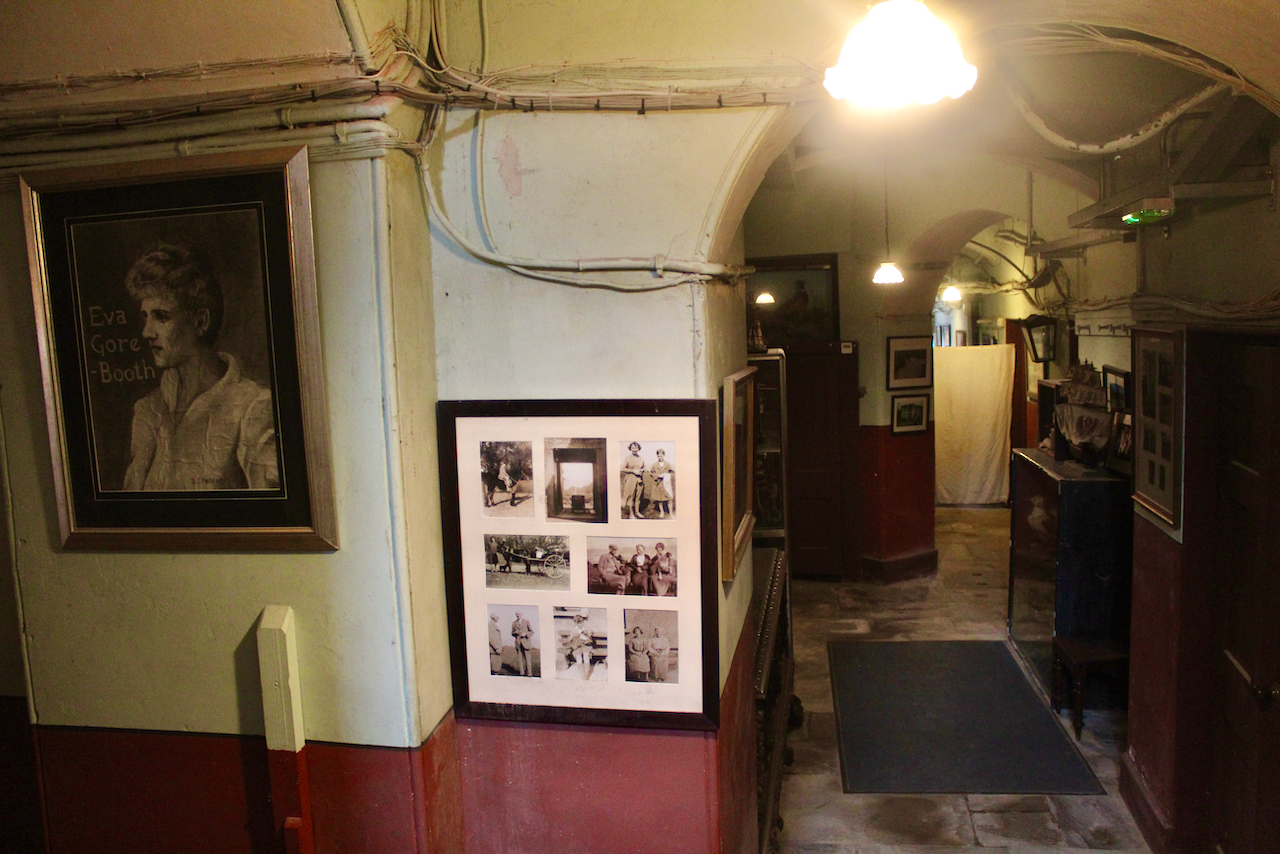
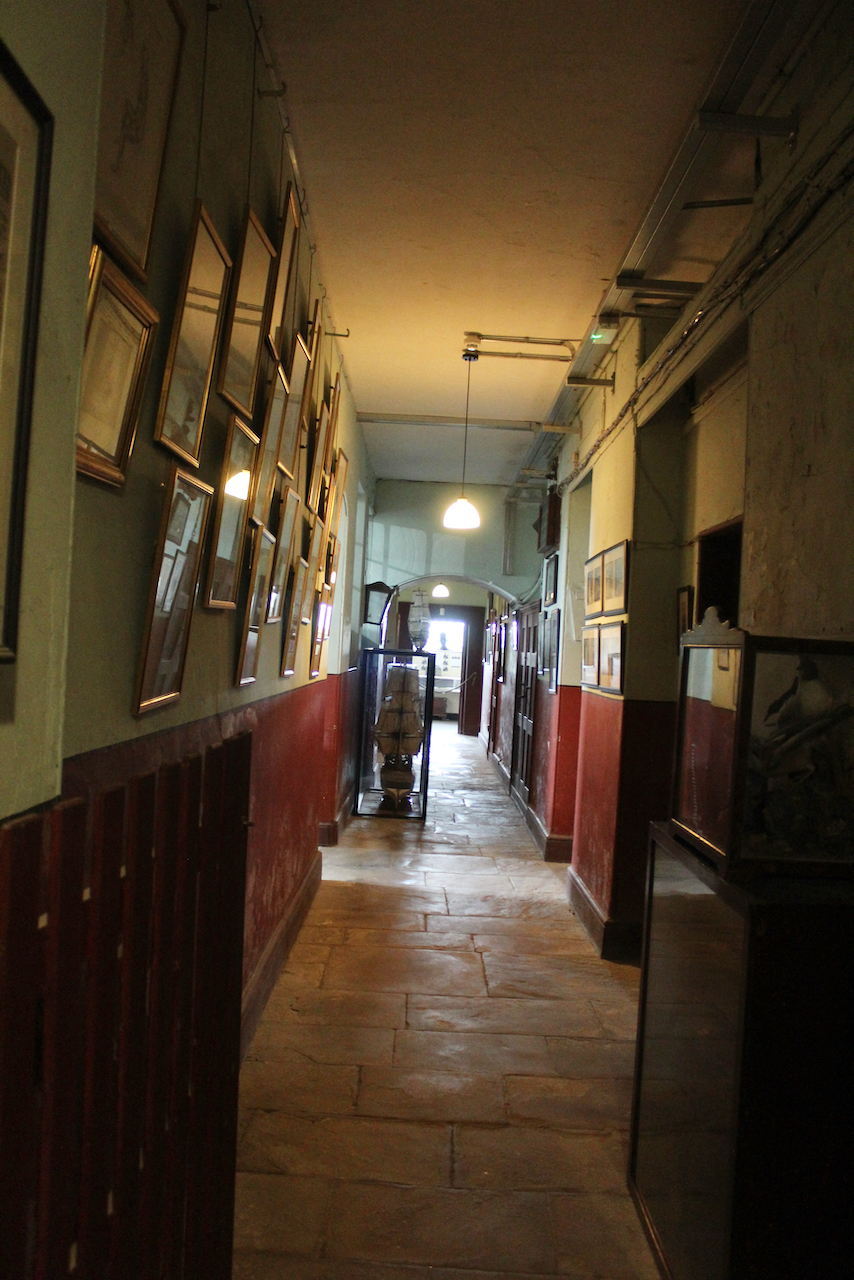
Next we went down to the basement, which holds the old kitchen and a warren of corridors.

Lissadell, 2022. Photograph © Jennifer Winder-Baggot, www.irishhistorichouses.com
Lissadell, 2022.
Lissadell, 2022. Photograph © Jennifer Winder-Baggot, www.irishhistorichouses.com
Lissadell, 2022.
Lissadell, 2022. Photograph © Jennifer Winder-Baggot, www.irishhistorichouses.com
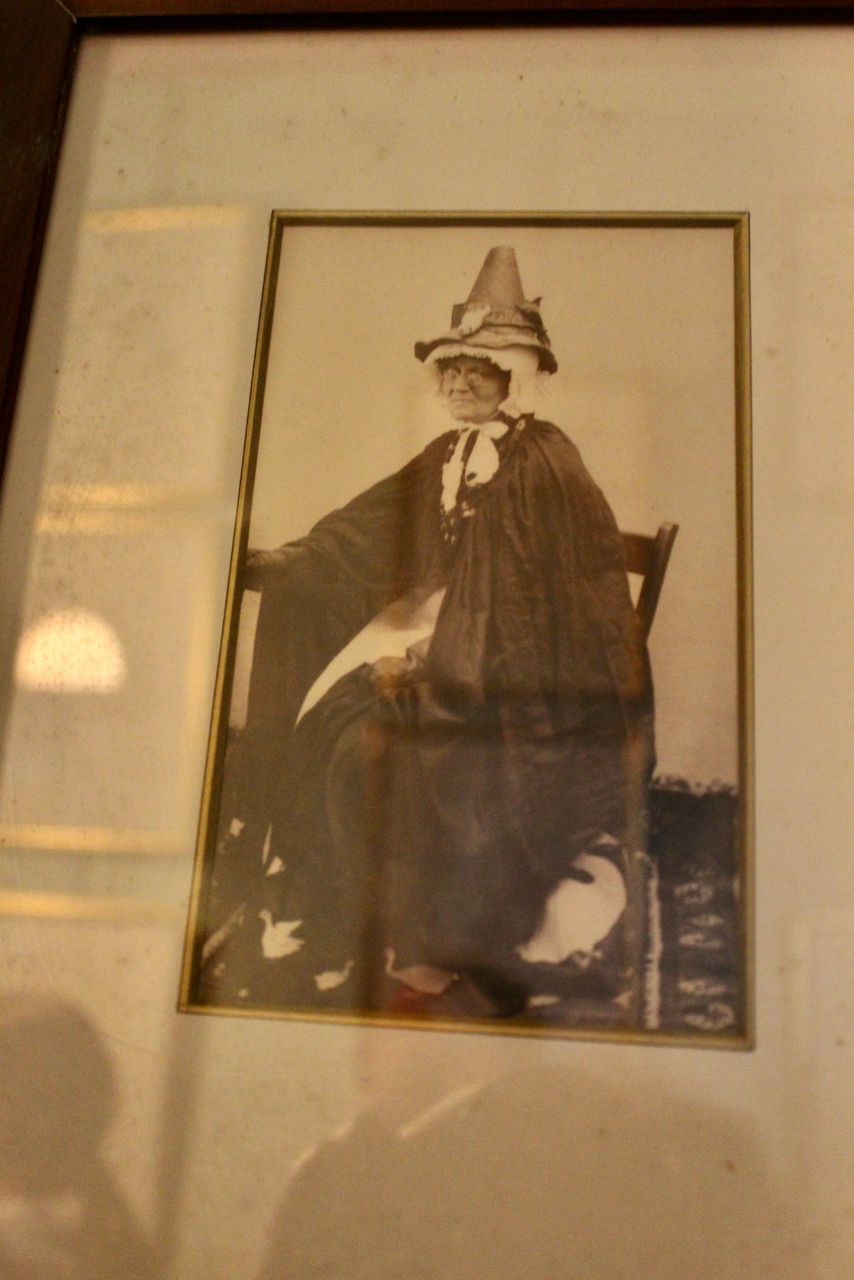
I’m not sure who this is or why she is wearing such a peculiar hat – if you know, let me know! Photograph © Jennifer Winder-Baggot, www.irishhistorichouses.com
Lissadell, 2022. Photograph © Jennifer Winder-Baggot, www.irishhistorichouses.com
We did not get to linger in this room, unfortunately. The current owner of the house, Edward Walsh, is interested in military history. Photograph © Jennifer Winder-Baggot, www.irishhistorichouses.com
Lissadell, 2022.
The stone steps are worn from use. Photograph © Jennifer Winder-Baggot, www.irishhistorichouses.com
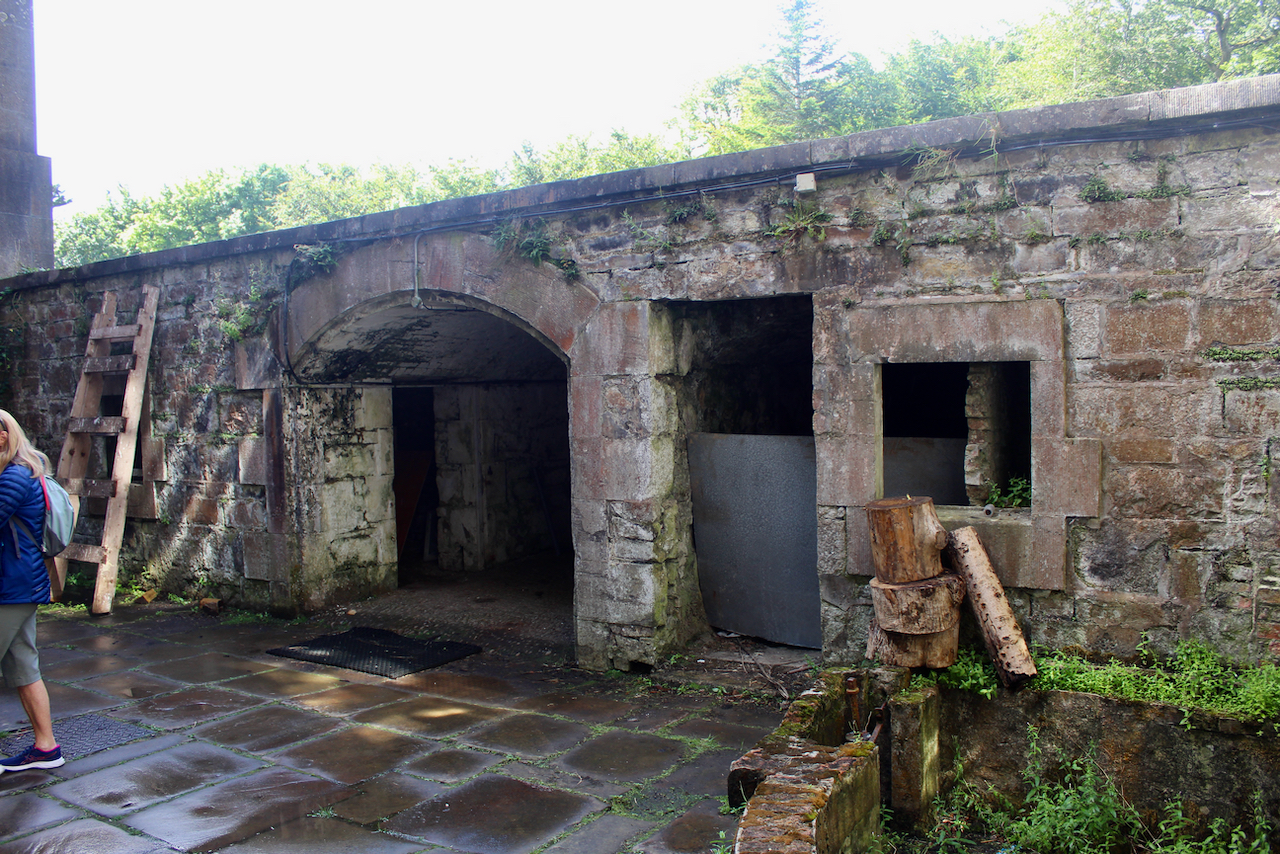
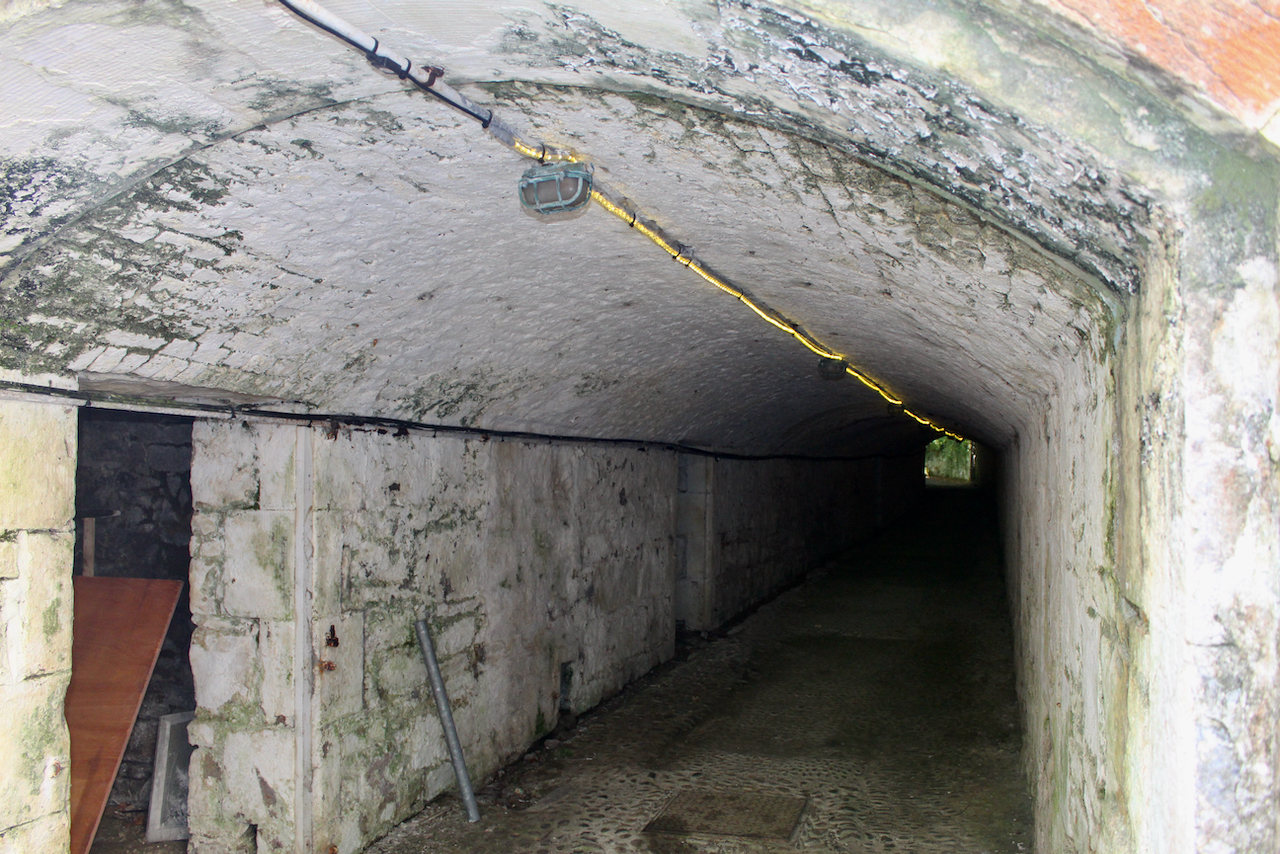
Tunnels were built for hiding the workings of the house, deliveries and the servants.
Lissadell, 2022. Photograph © Jennifer Winder-Baggot, www.irishhistorichouses.com

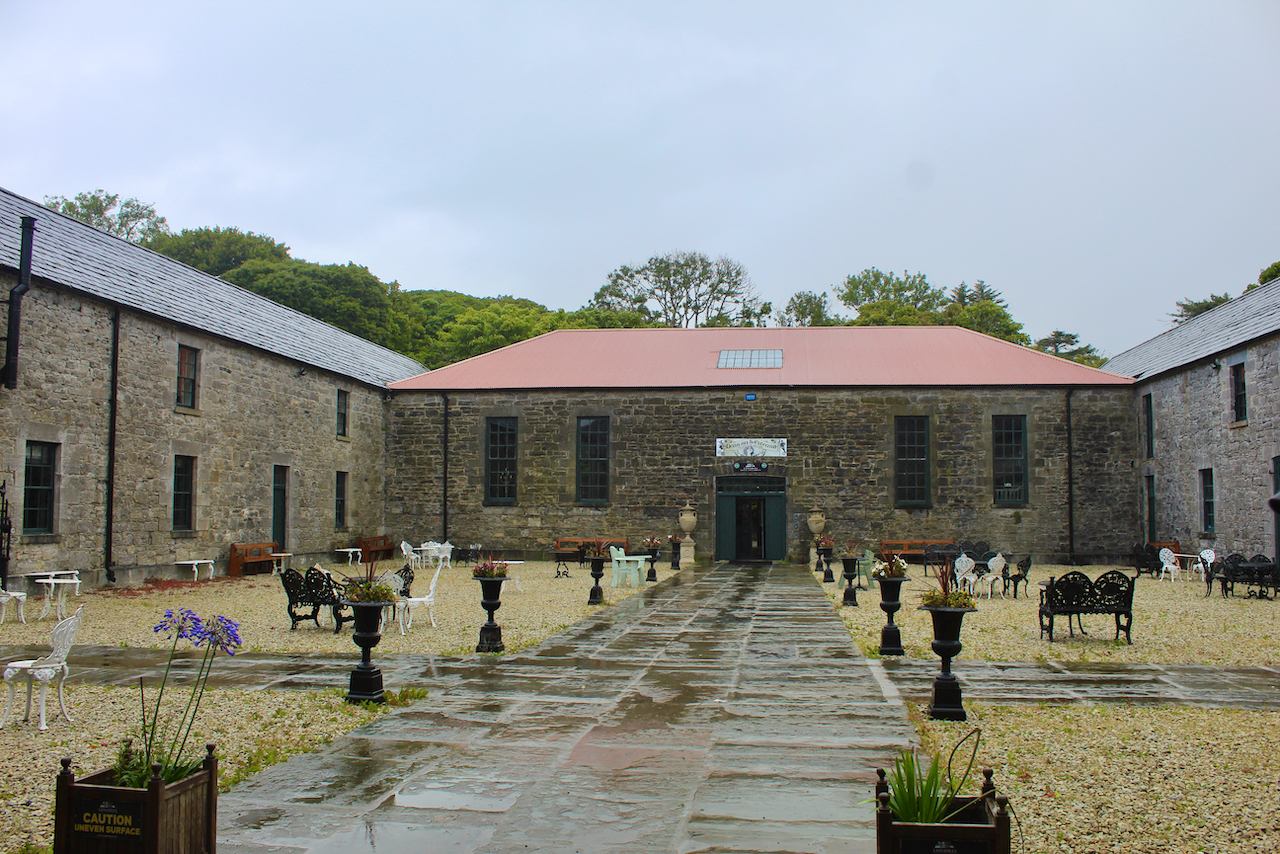
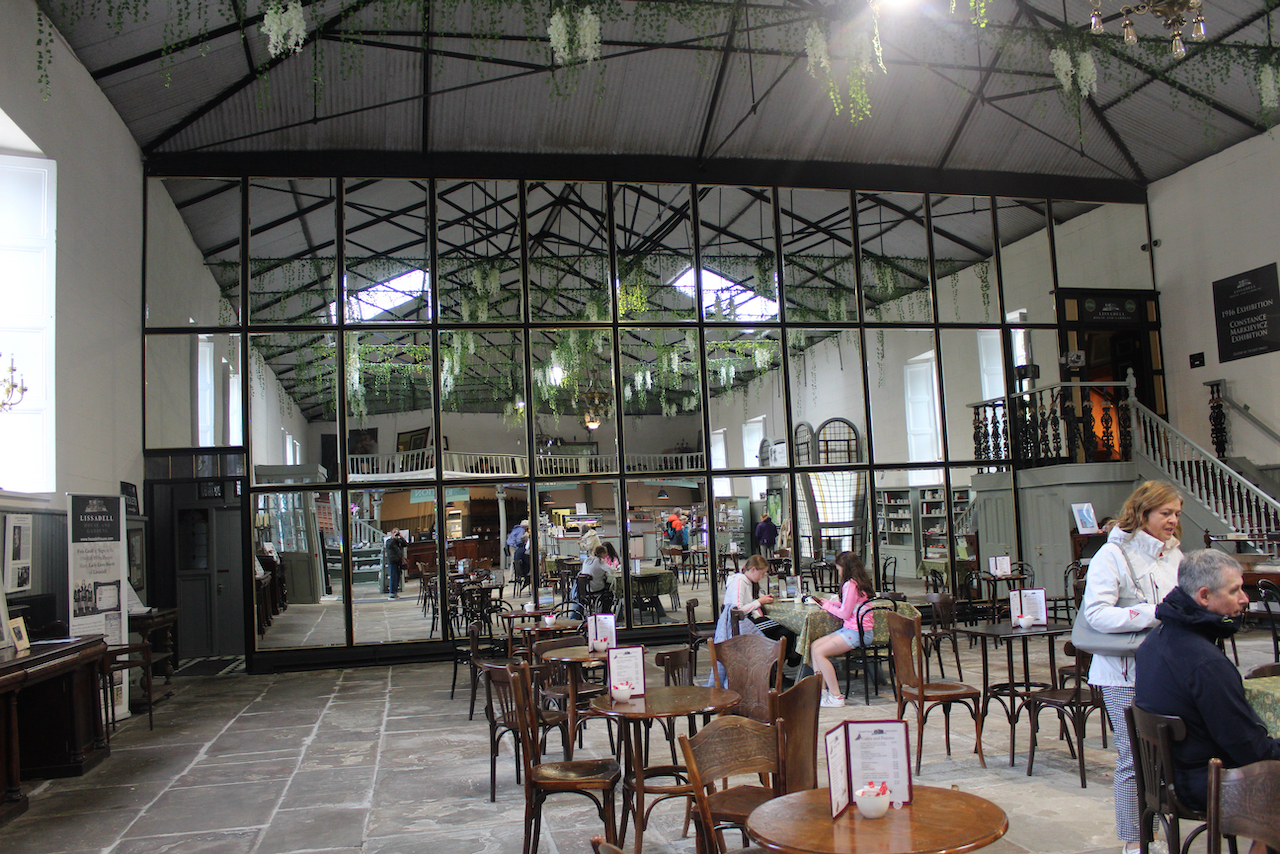
The long tunnel provides access to a sunken courtyard and the coach house and stable block, which was one of the largest in Ireland. This limestone complex of stables, tack rooms, grain stores and rooms once for staff and guests is now almost completely restored. Today it houses tea rooms, a gallery for exhibitions and lecture rooms.

Lissadell, 2022. Photograph © Jennifer Winder-Baggot, www.irishhistorichouses.com
Lissadell, 2022.
Cafe and Museum at Lissadell House. Photograph © Jennifer Winder-Baggot, www.irishhistorichouses.com
Lissadell, 2022.

In the 20th century the family fortunes took a turn for the worse. Constance and Eva died in their 50s. Constance died in 1927 and Eva in 1926.

In June 1927 Constance fell seriously ill. She was admitted to a public ward in Sir Patrick Dun’s hospital (at her own insistence). She had peritonitis, and although she had surgery, it was too late. Constance Markievicz died at 1:25 a.m. on the morning of 15th July, 1927. She was attended by her husband, Casimir. Her brother, Sir Josslyn Gore Booth, had received daily bulletins from the Matron, and immediately arranged to attend the funeral in Dublin.

Lissadell, 2022.

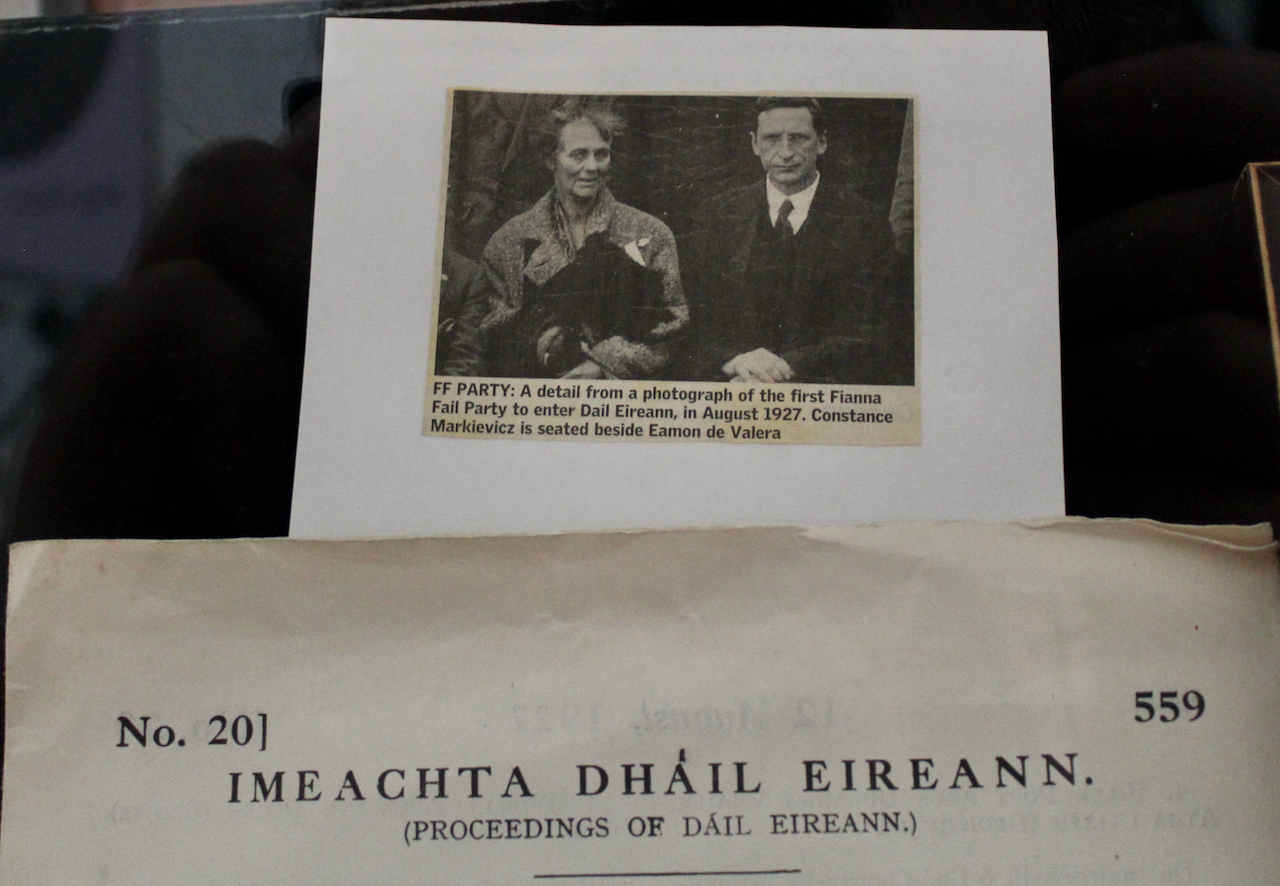
Her brother Josslyn would have preferred a private, family funeral, but this was not to be. In death Constance Markievicz was even more openly appreciated and acclaimed than in life. Three hundred thousand people attended the funeral to pay tribute to “the friend of the toiler, the lover of the poor”, the words of Eamon de Valera, who delivered the funeral oration, and with whom she had founded the Fianna Fáil Party.

Lissadell, 2022.

Two of Josslyn’s sons, Hugh and Brian, were killed in WWII. Hugh, the younger brother, studied estate management in England to run the estate. Brian joined the Navy. The third son, Michael, suffered from mental illness that made him incapable of running the family estate. Josslyn was still alive at this stage, and his four daughters continued to live on the estate – three of them never married. When their father died in 1944, the government assumed responsibility for the administration of the estate when Sir Josslyn’s eldest son was made a ward of the court after a nervous breakdown. Gabrielle took over the responsibility of running the estate at the age of just 26. [8] There was a youngest son also, Angus Josslyn, who succeeded as 8th Baronet. When Gabrielle died, Aideen took over the estate. For decades, the family struggled to maintain the house and the gardens became neglected and overgrown.

The family migrated to live in the bow-room and a small suite of rooms behind when the family of Gore-Booth siblings were living in near poverty in the 1960s and 70s, when the remainder of the house was uninhabited.

During this time the estate went into sharp decline, resulting in the felling of much fine woodland and the compulsory sale in 1968 of 2,600 acres by the Land Commission, leaving only 400 acres around the house.

Terence Reeves-Smyth tells us in Irish Big Houses: “The Lissadell estate had fallen into decline after the death of Josslyn Gore Booth in 1944. Indeed, writing about Lissadell for the Sunday Times around forty years ago, the BBC’s Anne Robinson observed that “the garden is overgrown, the greenhouses are shattered and empty, the stables beyond repair, the roof of the main block leaks badly and the paintings show patches of mildew.” It also featured in the documentary “The Raj in the Rain.”

In 2003 Lissadell was put on the market by the 9th Baronet, Josslyn Henry Robert Gore-Booth (b. 1950), son of Angus the 8th Baronet. You can listen to his memories of Lissadell online, part of the Irish Life and Lore series. [9] It was purchased by Edward Walsh and his wife Constance Cassidy, to become home for them and their seven children.

In the Image publication Great Irish Houses we are told that Edward and his wife Constance commissioned David Clarke, an architect with Moloney O’Beirne, to prepare a conservation plan and restoration of the house began in 2004. Assistance and expert advice was received from Laurence Manogue, a consultant to Sligo County Council. [10]

Lissadell, 2022.
Lissadell, 2022.

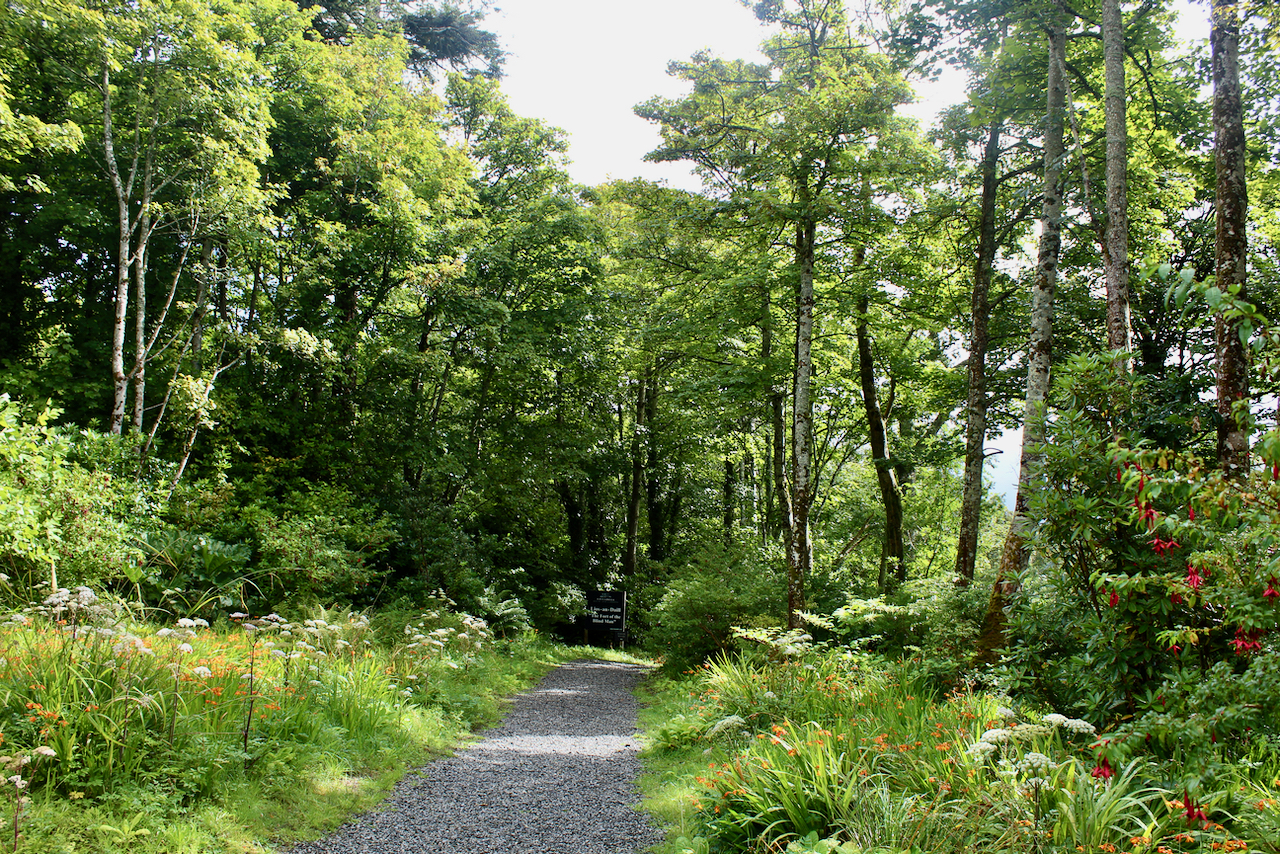
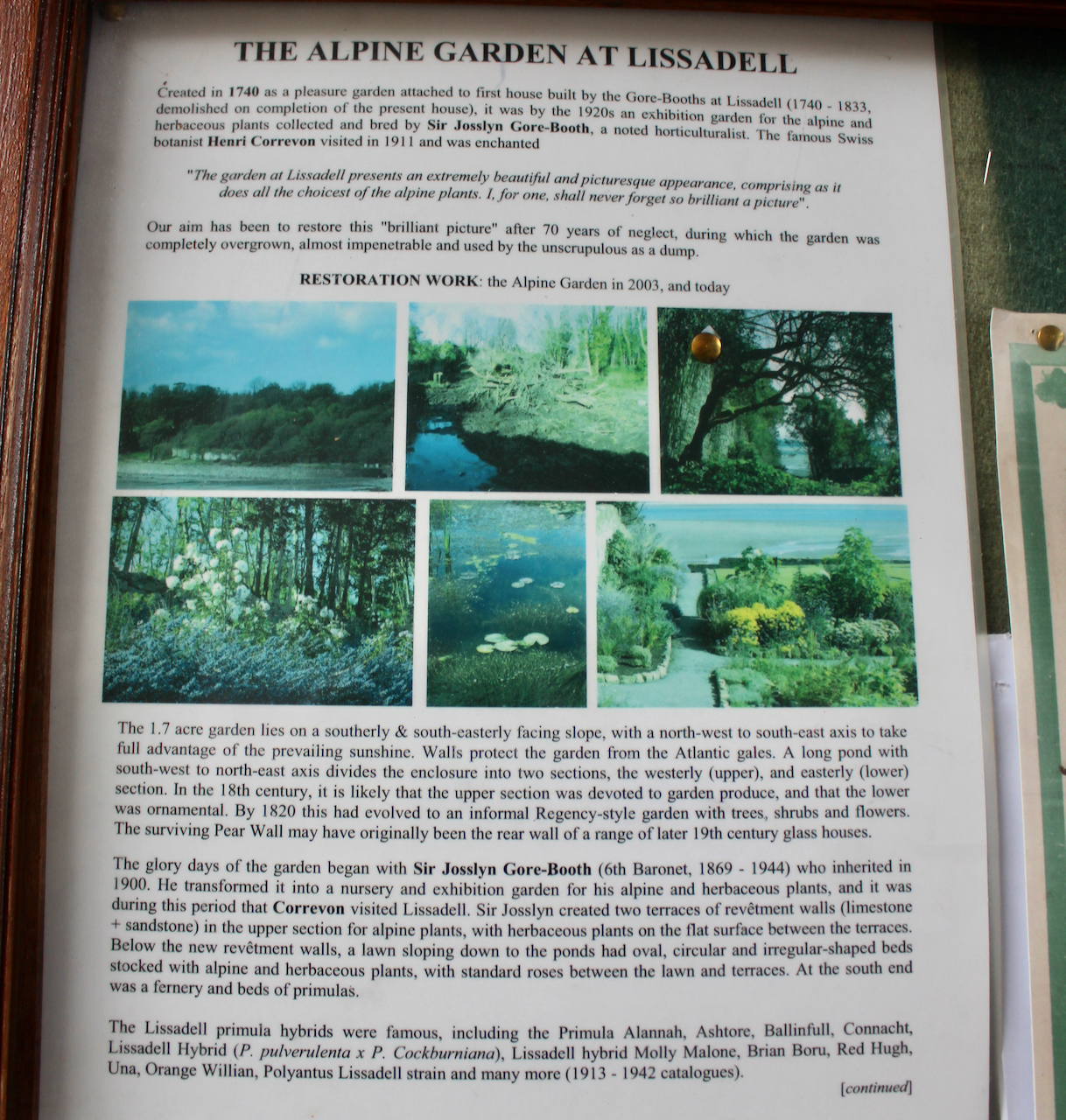
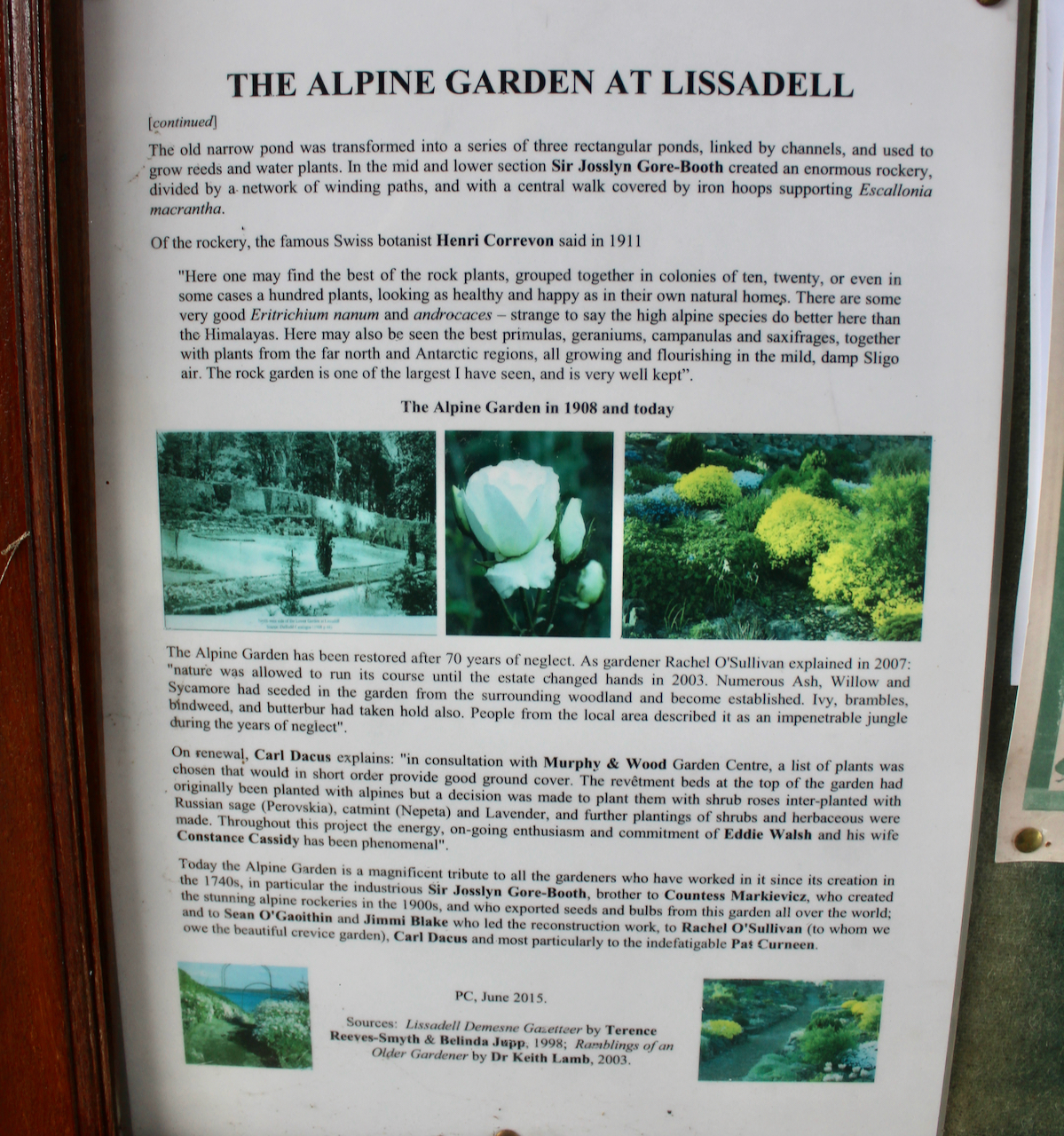
The Image publications book tells us that there has been a great focus on the gardens, with regeneration of the flower and pleasure gardens. The alpine nurseries with its “revetment walls” (limestone and sandstone), terraces, and ornamental ponds had been neglected for half a century. Now the gardens are cleared and the orchards and two-acre kitchen garden have been reseeded. The plan, in many ways, is to resurrect the horticultural enterprise of Henry and Josslyn Gore Booth. Thirty-eight of an original seventy-eight daffodil narcissus cultivars developed by Sir Josslyn are now back in the ground at Lissadell.

Lissadell, 2022.
Lissadell, 2022.
Lissadell, 2022.
Lissadell, 2022.
Lissadell, 2022. Photograph © Jennifer Winder-Baggot, www.irishhistorichouses.com
Lissadell House and Gardens County Sligo Ireland, Photograph created by Peter McCabe, Tourism Ireland, 2015, taken from Ireland’s Content Pool care of Failte Ireland.
Lissadell, 2022. Photograph © Jennifer Winder-Baggot, www.irishhistorichouses.com

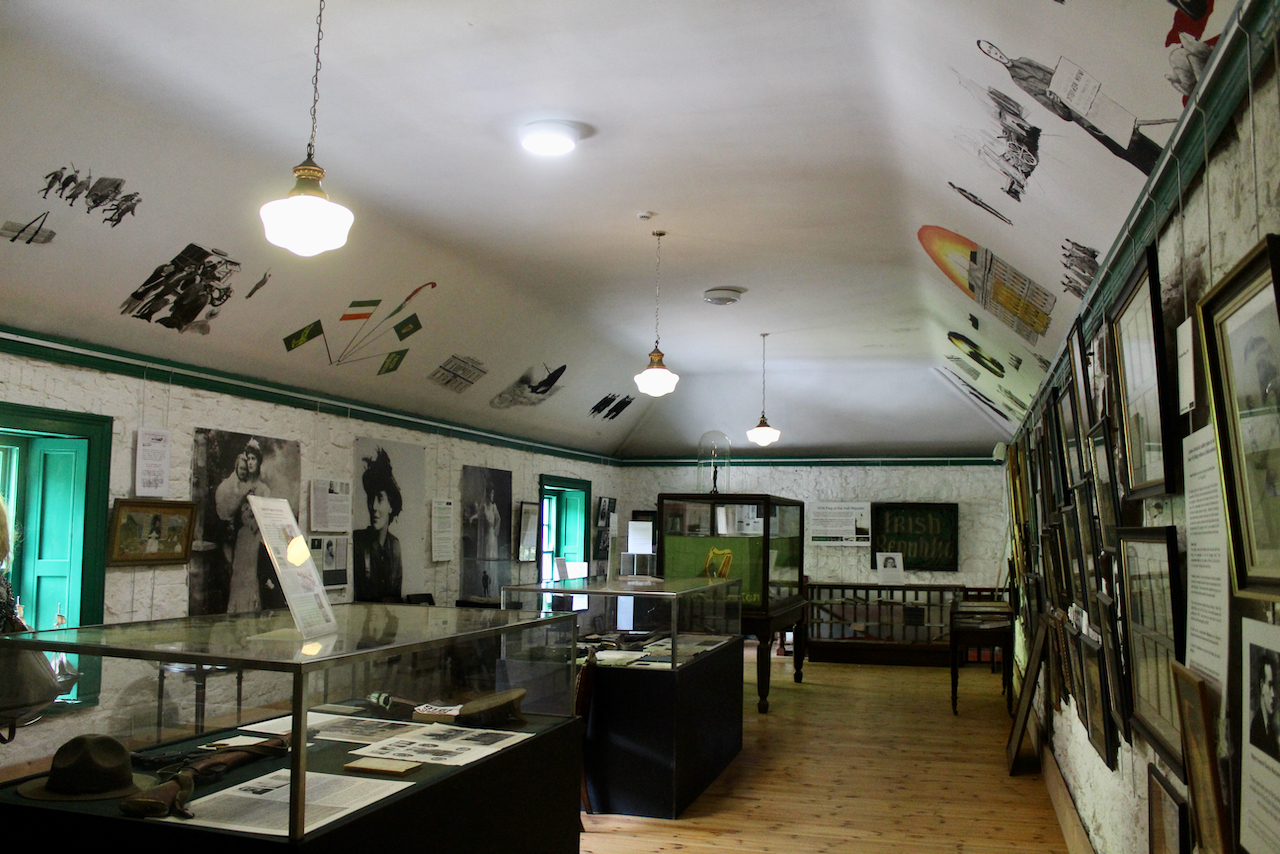
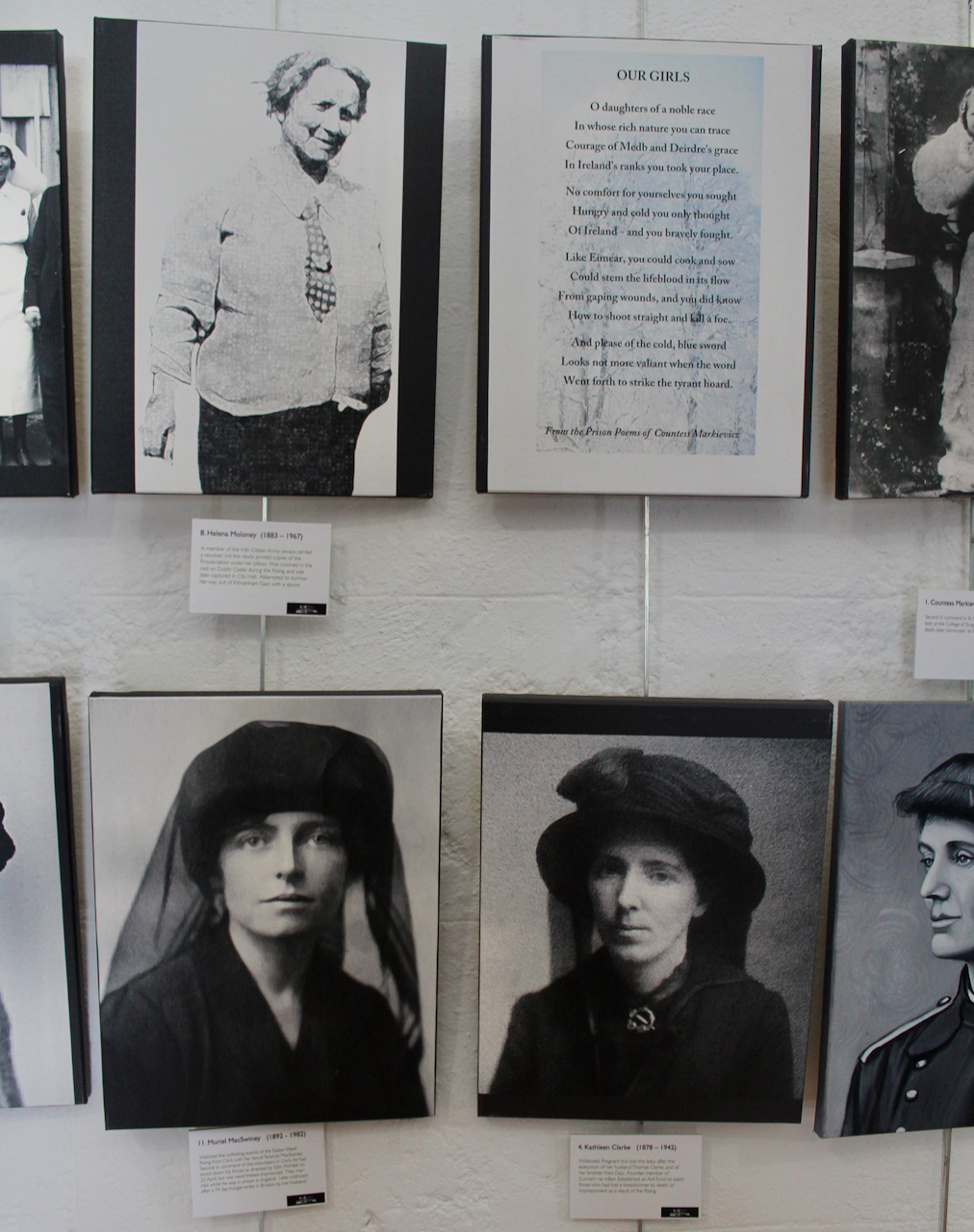
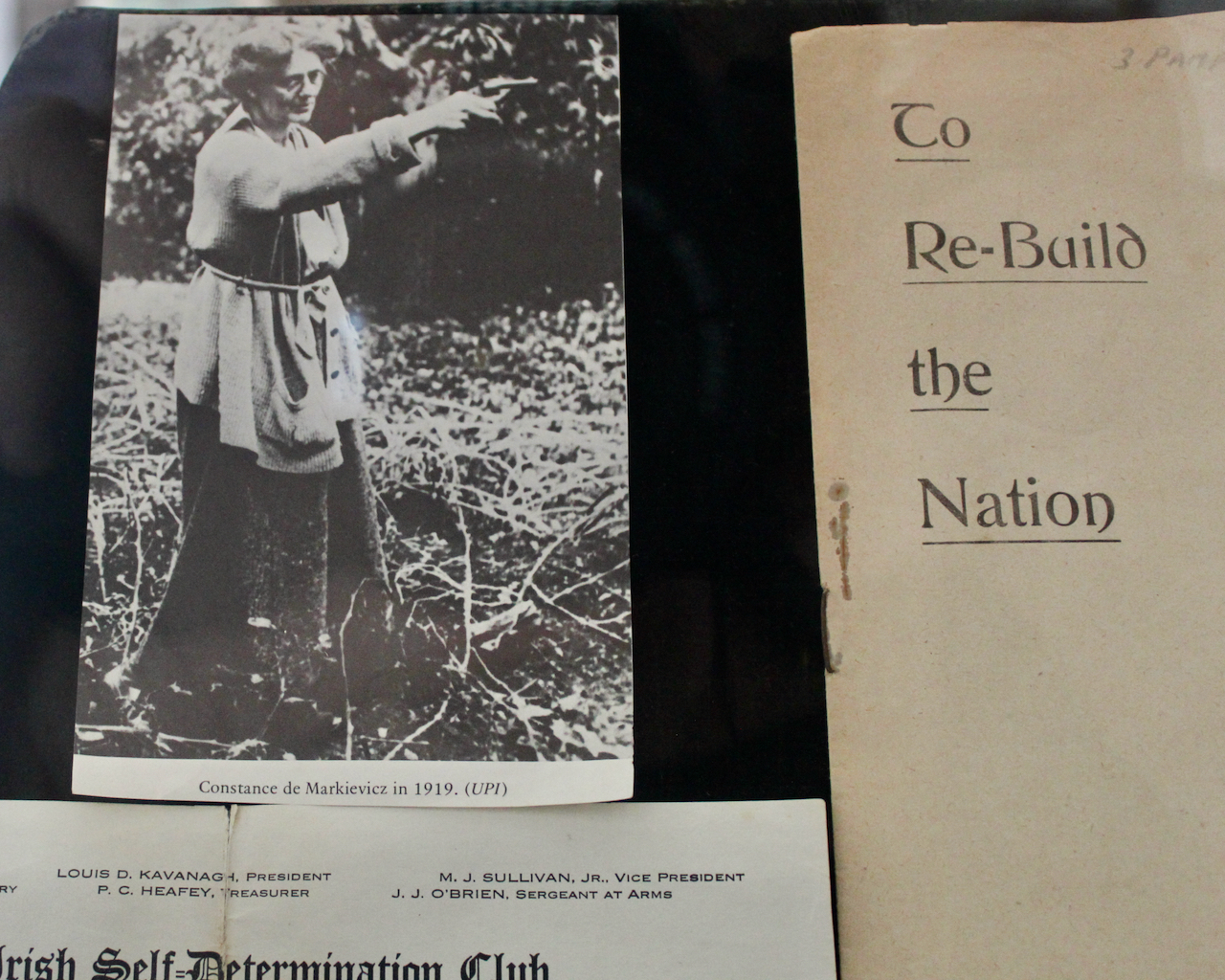
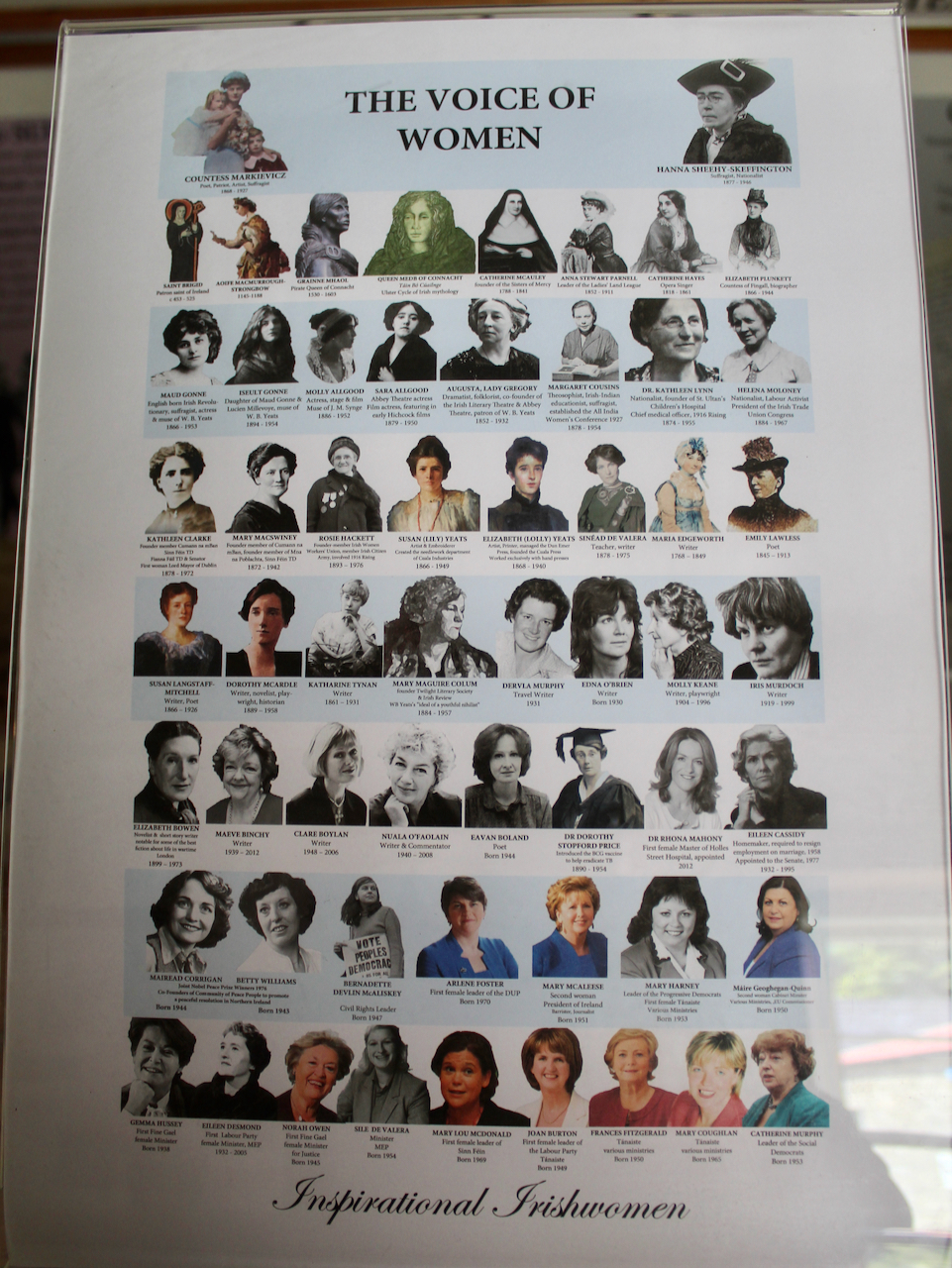
There is an extensive museum in the Cafe building, with areas dedicated to Constance Markievicz and W. B. Yeats.

Lissadell, 2022.
Lissadell, 2022.
Lissadell, 2022.
Lissadell, 2022.
Lissadell, 2022.
Lissadell, 2022.
Lissadell, 2022.
Lissadell, 2022.
Lissadell, 2022.
Lissadell, 2022.
Lissadell, 2022.
Lissadell, 2022.
Lissadell, 2022.
Lissadell, 2022.
Lissadell, 2022.
Lissadell, 2022.
Lissadell, 2022.
Lissadell, 2022.
Lissadell, 2022.
Lissadell, 2022.
Lissadell, 2022.
Lissadell, 2022.
Lissadell, 2022.
Lissadell, 2022.
Lissadell, 2022.
Lissadell, 2022. Photograph © Jennifer Winder-Baggot, www.irishhistorichouses.com

[1] https://www.buildingsofireland.ie/buildings-search/building/32400813/lissadell-house-lissadill-co-sligo

[2] https://www.ardtarmoncastle.com/
[3] http://lordbelmontinnorthernireland.blogspot.com/search/label/County%20Sligo%20Landowners

[4] p. 11. James, Dermot. The Gore-Booths of Lissadell. Published by Woodfield, 2004

[5] https://theirishaesthete.com/2021/11/22/lissadell/

[6] p. 40, James.

[7] p. 214, Great Irish Houses. Foreward by Desmond FitgGerald, Desmond Guinness. IMAGE Publications, 2008.

[8] For more about Gabrielle and her struggle to manage the estate, see https://lissadellhouse.com/countess-markievicz/gore-booth-family/gabrielle-gore-booth/

[9] https://www.irishlifeandlore.com/product/sir-josslyn-gore-booth-b-1950-part-1/

This collection includes Patrick Annesley b. 1943 speaking about Annes Grove in County Cork; Valerie Beamish-Cooper b. 1934; Bryan and Rosemarie Bellew of Barmeath Castle County Louth; Charles and Mary Cooper about Markree Castle in Sligo; Leslie Fennell about Burtown in Kildare; Maurice Fitzgerald 9th Duke of Leinster and Kilkea Castle, County Kildare; Christopher and Julian Gaisford St. Lawrence and Howth Castle; George Gossip and Ballinderry Park; Nicholas Grubb and Dromana, County Waterford, into which he married, and Castle Grace, County Tipperary, where he grew up; Caroline Hannick née Aldridge of Mount Falcon; Mark Healy-Hutchinson of Knocklofty, County Tipperary; Michael Healy-Hutchinson, Earl of Donoughmore, son of Anita Leslie of Castle Leslie; Susan Kellett of Enniscoe; Nicholas and Rosemary MacGillycuddy of Flesk Castle, County Kerry and Aghadoe Heights; Harry McCalmont of Mount Juliet, County Kilkenny; Nicholas Nicolson of Balrath Estate; Durcan O’Hara of Annaghmore, County Sligo; Sandy Perceval of Temple House, County Sligo; Myles Ponsonby, Earl of Bessborough; Benjamin and Jessica Bunbury of Lisnavagh, County Carlow; Philip Scott of Barnfield House, Gortaskibbole, Co. Mayo; George Stacpoole of Edenvale House, Co. Clare; Christopher Taylour, Marquess of Headfort; Richard Wentges of Lisnabin Castle and Philip Wingfield of Salterbridge, County Waterford.

[10] p. 218, Image publications.

[11] Lissadell features in Irish Castles and Historic Houses. ed. by Brendan O’Neill, intro. by James Stevens Curl. Caxton Editions, London, 2002.

Featured in Mark Bence Jones, Life in an Irish Country House. Constable, London. 1996.

Featured in Irish Country Houses, Portraits and Painters. David Hicks. The Collins Press, Cork, 2014.

Featured in Irish Big Houses by Terence Reeves-Smyth

Text © Jennifer Winder-Baggot, www.irishhistorichouses.com

Strokestown Park House, Strokestown, Co. Roscommon – section 482

www.strokestownpark.ie

Open dates listed for 2024:

House tour at noon. Jan-Feb, Nov-Dec, 10.30am-4pm,

Mar-May, Sept-Oct, 10am-5pm,

June-Aug, 10am-6pm

Fee: adult house €14.50, tour of house €18.50, child €7, tour of house €10, OAP/student €12, tour of house €14.50, family €31, tour of house €39

donation

Help me to pay the entrance fee to one of the houses on this website. This site is created purely out of love for the subject and I receive no payment so any donation is appreciated!

€10.00

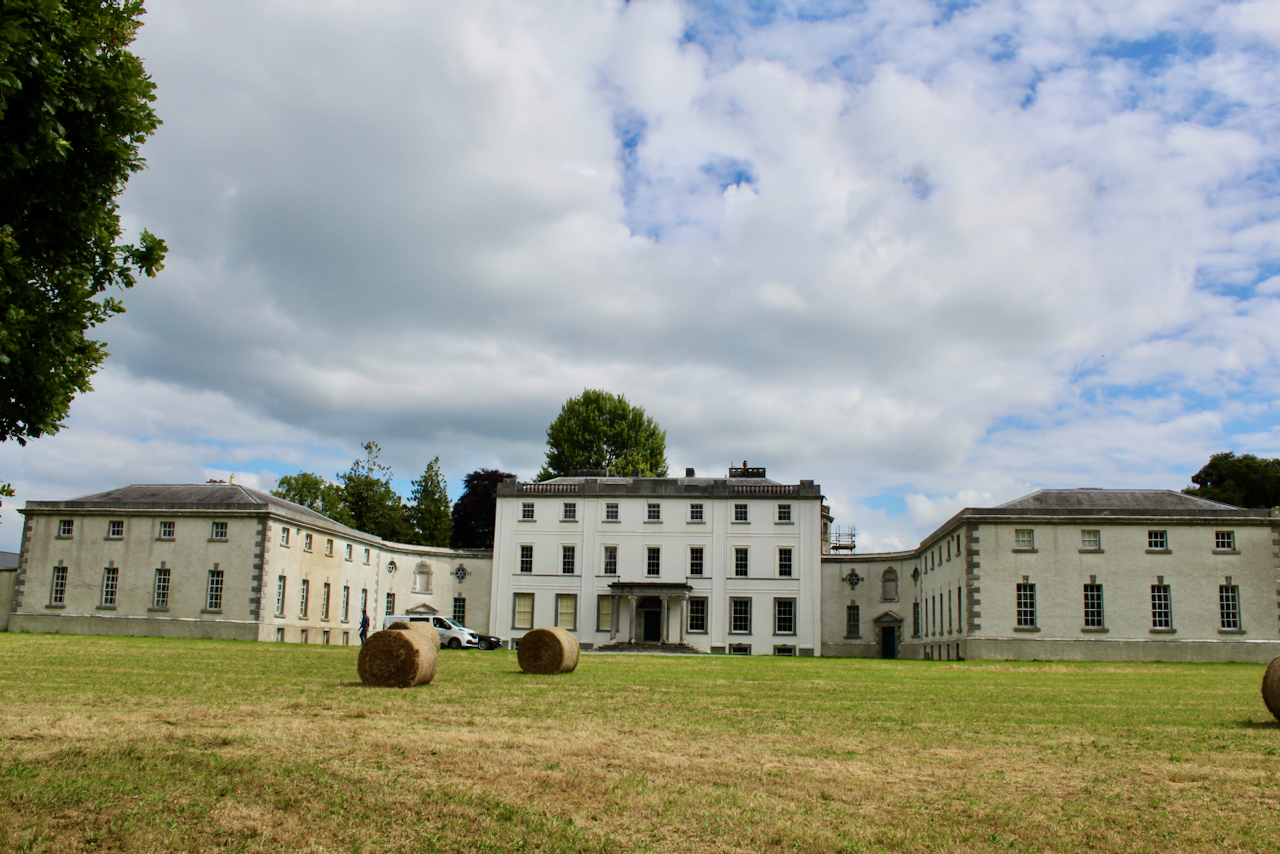
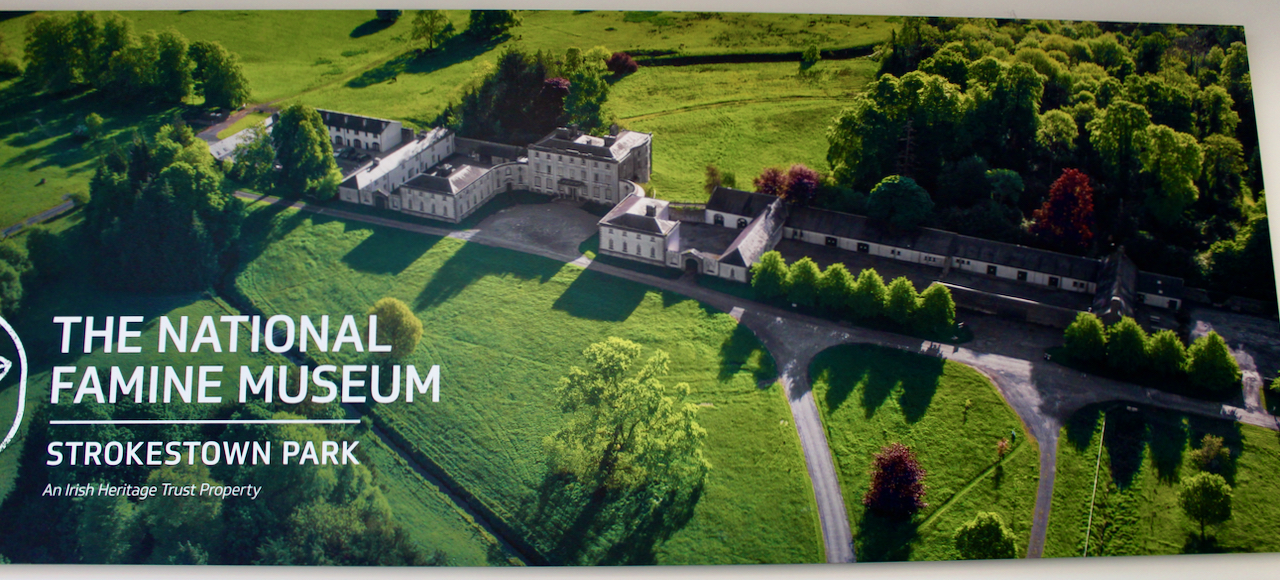
Image by Chris Hill, 2014, Tourism Ireland, from Ireland’s Content Pool. [1]
Strokestown Park, County Roscommon, August 2022. Photograph © Jennifer Winder-Baggot, www.irishhistorichouses.com

The Archiseek website describes Strokestown Park house as “a substantial house in the Palladian manner of a central block flanked by wings and curved sweeps. The centre block was completed in 1696 but extended around 1730 by Richard Cassels who added the substantial wings. The house was further altered in 1819 by J. Lynn.” [2]

Strokestown Park, County Roscommon.

We visited Strokestown Park in County Roscommon during Heritage Week 2022. It houses the excellent National Famine Museum and Archive, which is really worth visiting. It sounds grim, but it is a great exhibition and it tells us so much about people’s lives that it is not a grim museum at all. It also tells us about the Pakenham-Mahons, the family who lived in the impressive Strokestown Park. Strokestown Park was the home of the first landlord to be assassinated during the height of the Great Famine of Ireland the 1840s, and it is therefore ideal for the location of the Famine Museum.

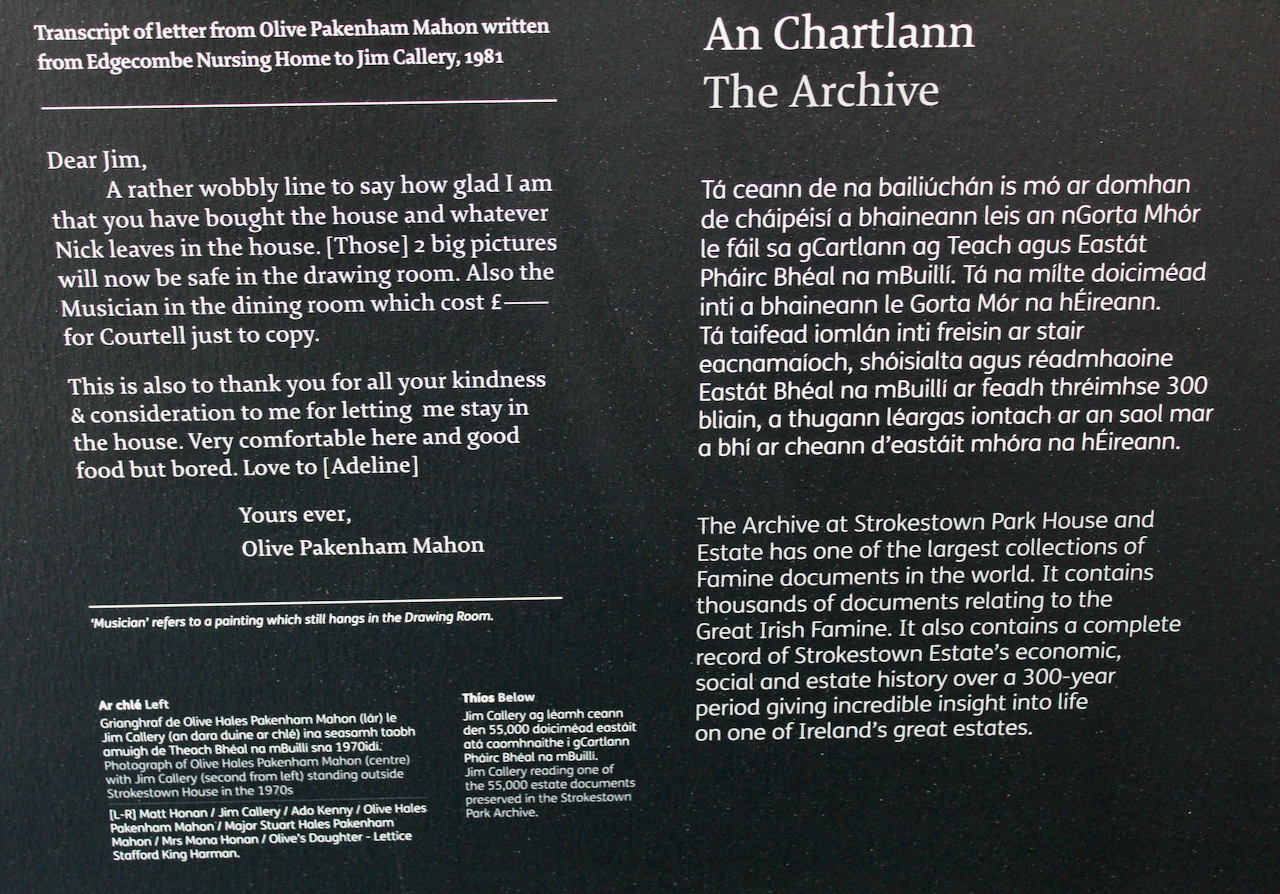
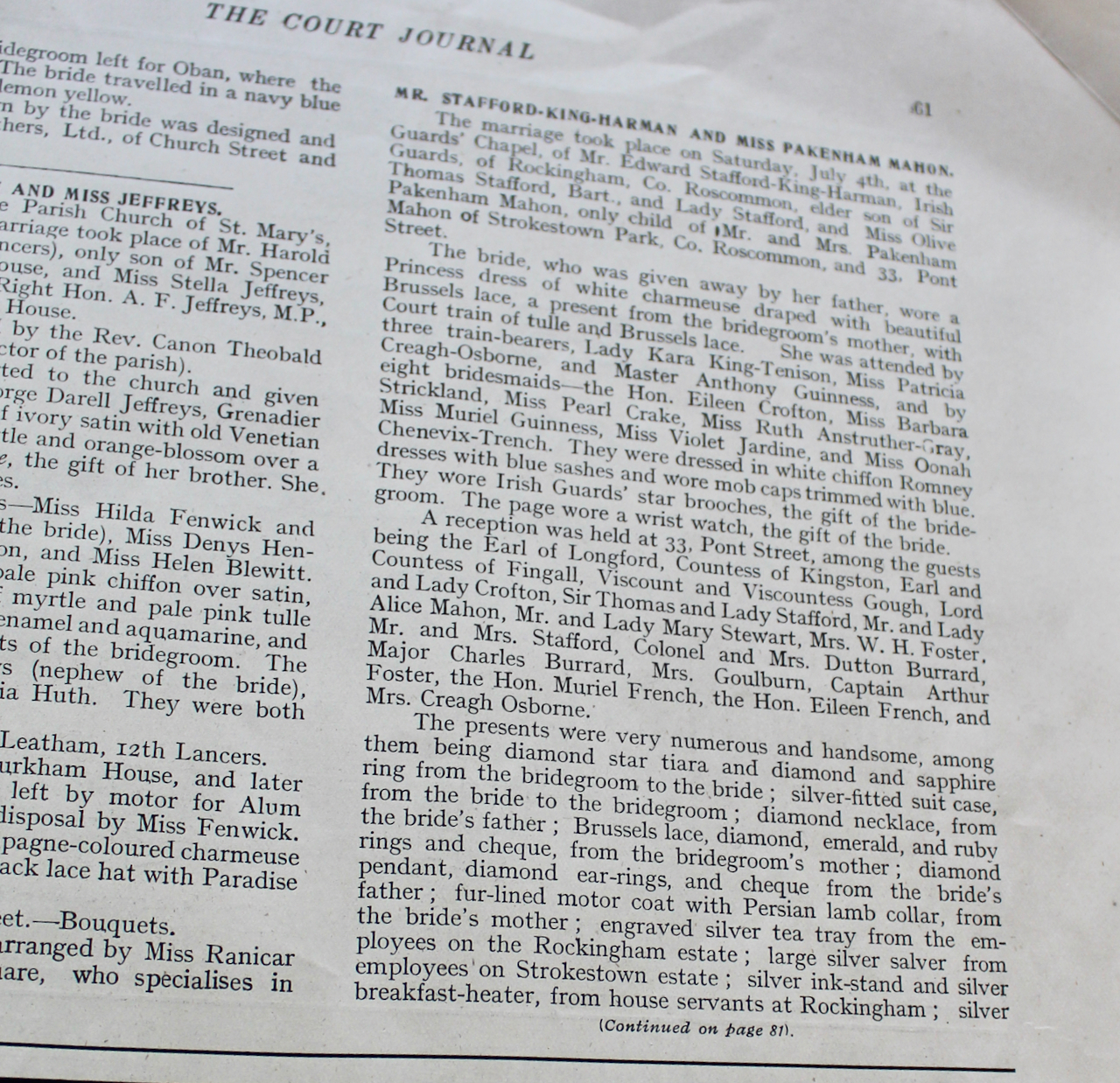
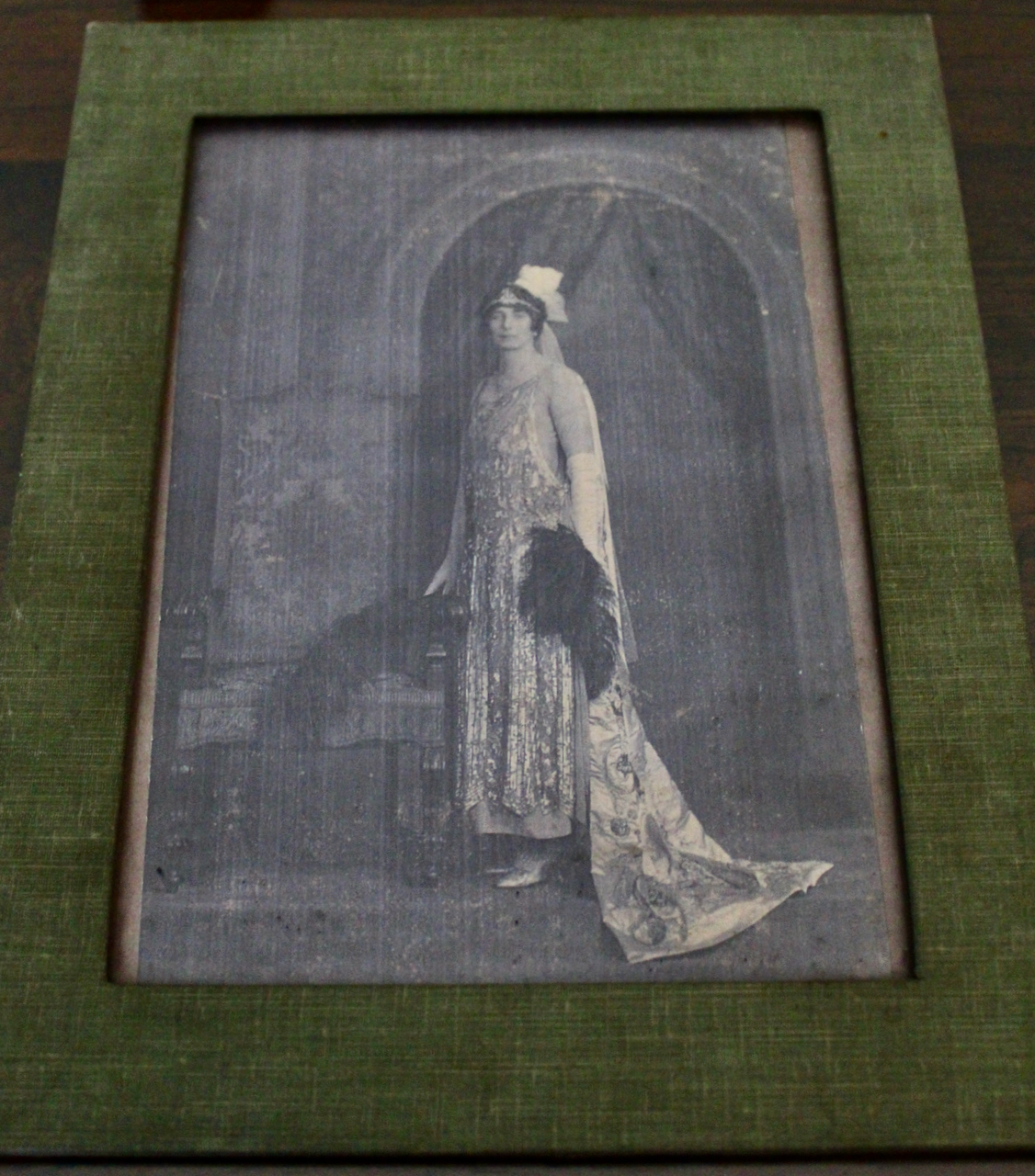
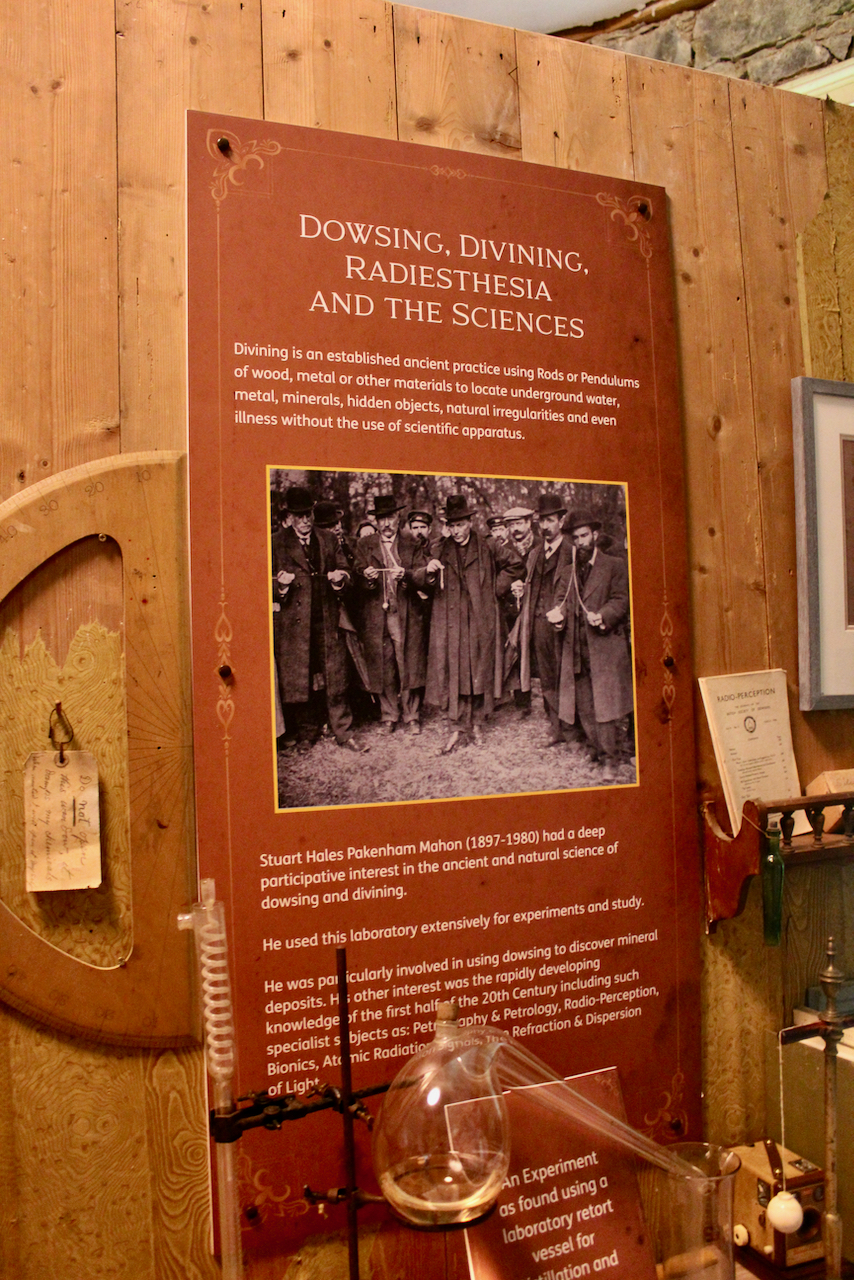
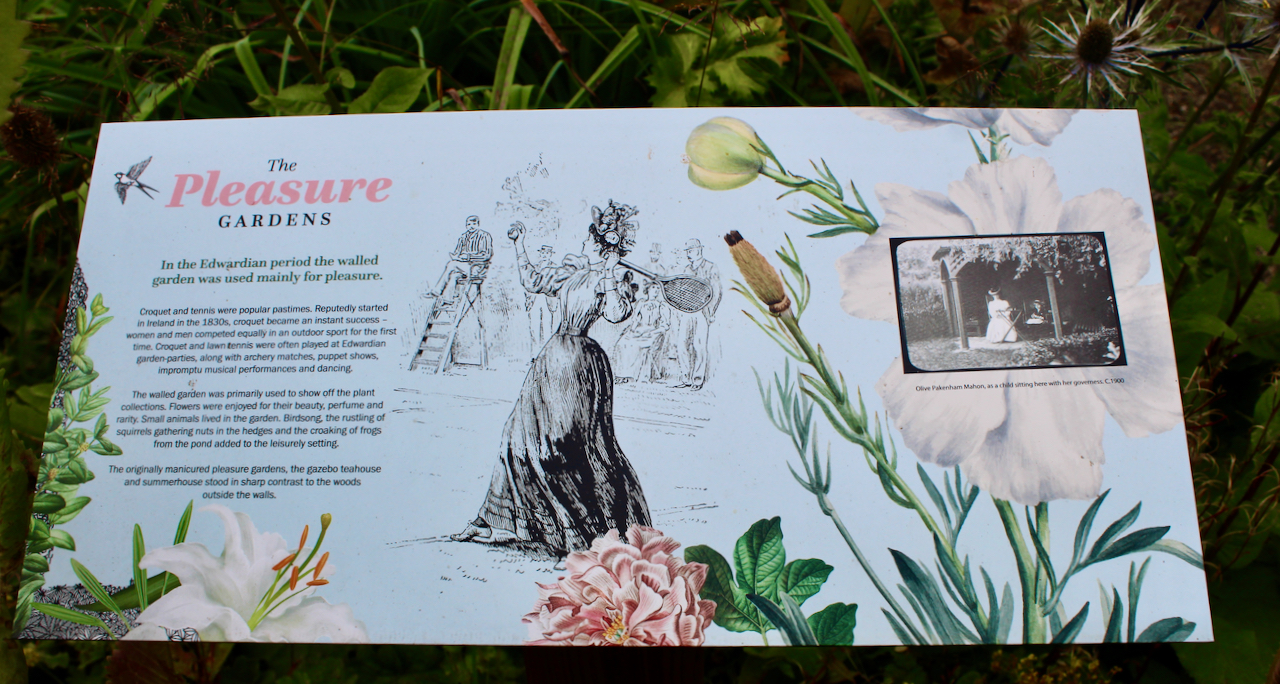
In 1979 Nicholas Hales Pakenham Mahon sold the estate to Westward Garage, founded by Jim Callery. The new owners allowed the last of the Mahon family, Olive and her husband Wilfrid Stuart Hales Pakenham Mahon, to remain living in the house until she moved to a nursing home.

Despite no longer being in the hands of the original owners, the house contains the original furnishings and fittings. The house is unchanged from the time when the Mahons lived there.

Strokestown Park, County Roscommon, August 2022.

The Museum was created when Jim Callery, founder of the Westward Garage which purchased the property, found documents relating to the famine in the family archives. Jim Callery and the Westward Garage carried out a major restoration programme and opened the property to the public. Since 2015, Strokestown Park is cared for by the Irish Heritage Trust, an independent charity. Produce from the original working gardens are grown by volunteers and used in the Strokestown Park Café.   

Strokestown Park, County Roscommon, August 2022.

The website tells us that the house is built on the site of the 16th-century castle, home of the O Conor-Roe Gaelic Chieftains. Before being called “Strokestown House” the property was called “Bawn,” in reference to the bawn of the O Conor-Roe castle.

Nicholas Mahon, a captain in King Charles I’s army, was granted Strokestown as a royal deer park in 1653. Later, after pledging allegiance to King Charles II, he received more land. He was High Sheriff of County Roscommon, 1664-76. [3] He received over 3000 acres in 1678. He started to build a house, which was completed after his death in 1680, in 1696. Terence Reeves-Smyth tells us in his book Irish Big Houses that there is a stone by the door which has 1696 carved into it – the stone is now inside the house.

Strokestown Park featured as Building of the Month in December 2015 on the National Inventory of Architectural Heritage, and it tells us about the 1696 house:

Evidence of this house survives to the present day at basement level where a panelled still room, previously one of the principal reception rooms, retains a rosette-detailed Jacobean chimneypiece, an egg-and-dart-detailed plasterwork overmantle decorated with fruits and shells, and a compartmentalised ceiling with dentilated moulded plasterwork cornices. Some earlier remains of the castle are also found in the basement where sections of the walls measure almost three metres deep. Memories of the medieval past were carried through into the nineteenth century when the house was still officially called, and was referred to by Isaac Weld (1832) and Samuel Lewis (1837) as “Bawn”.” [4] [5]

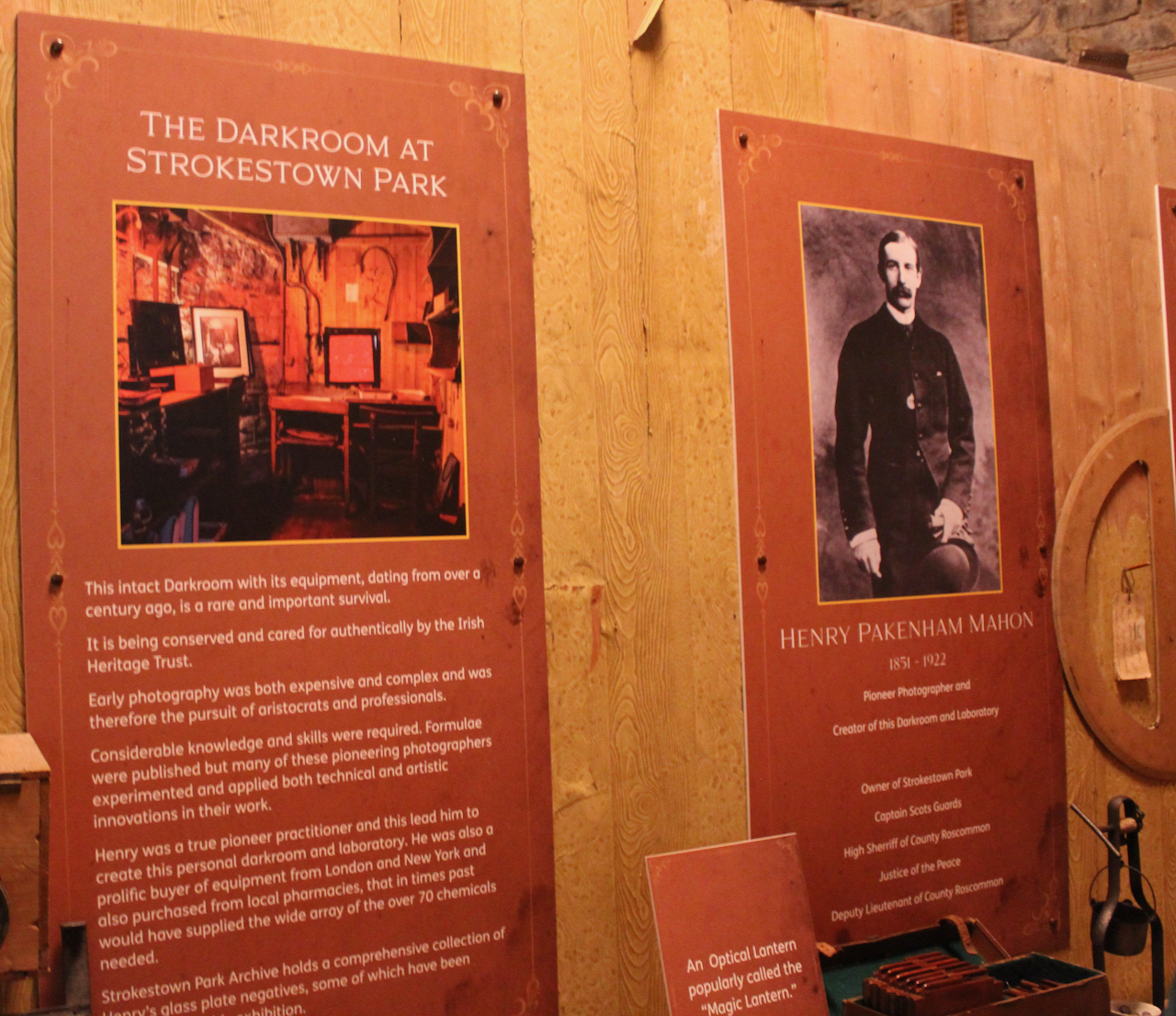
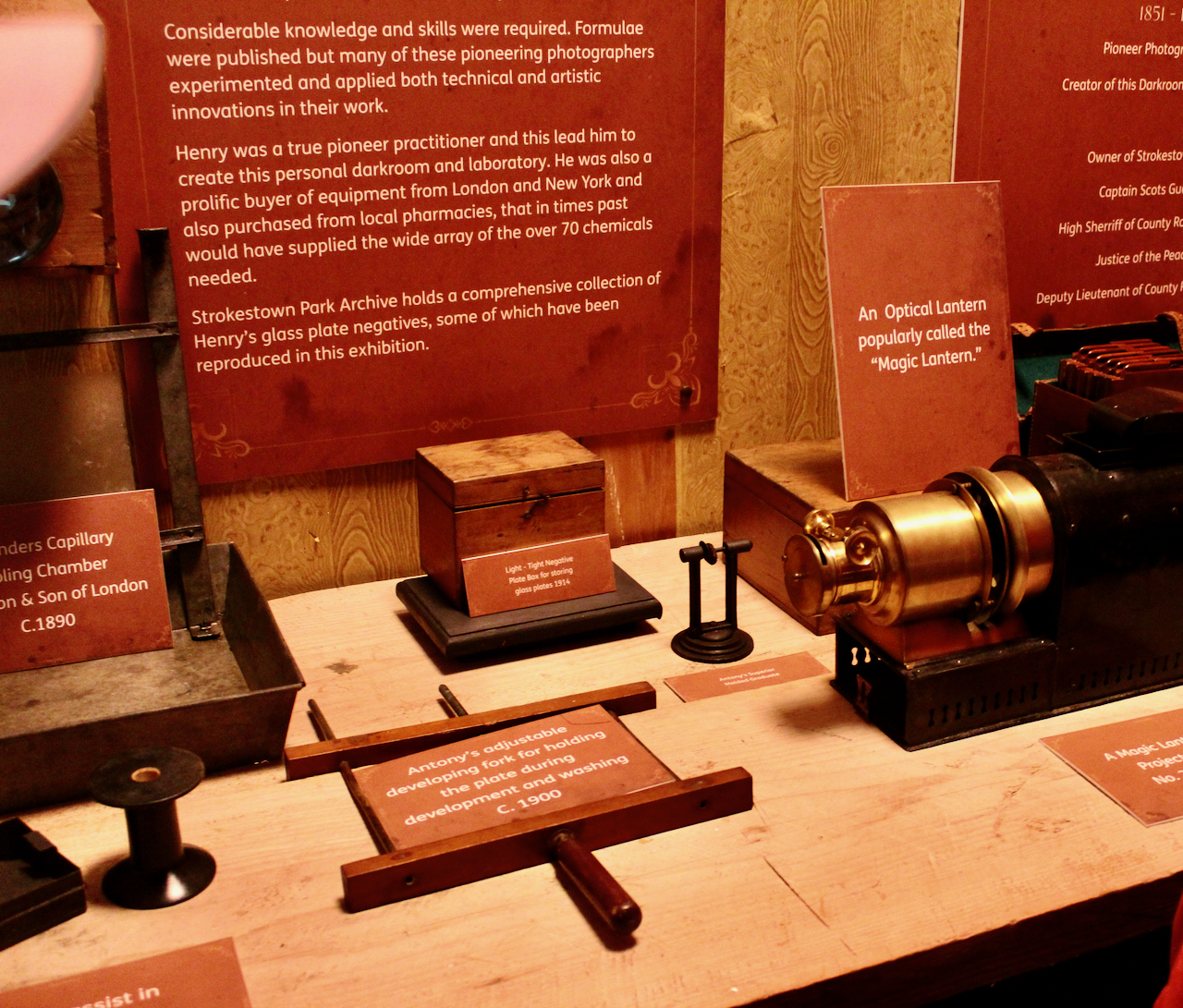
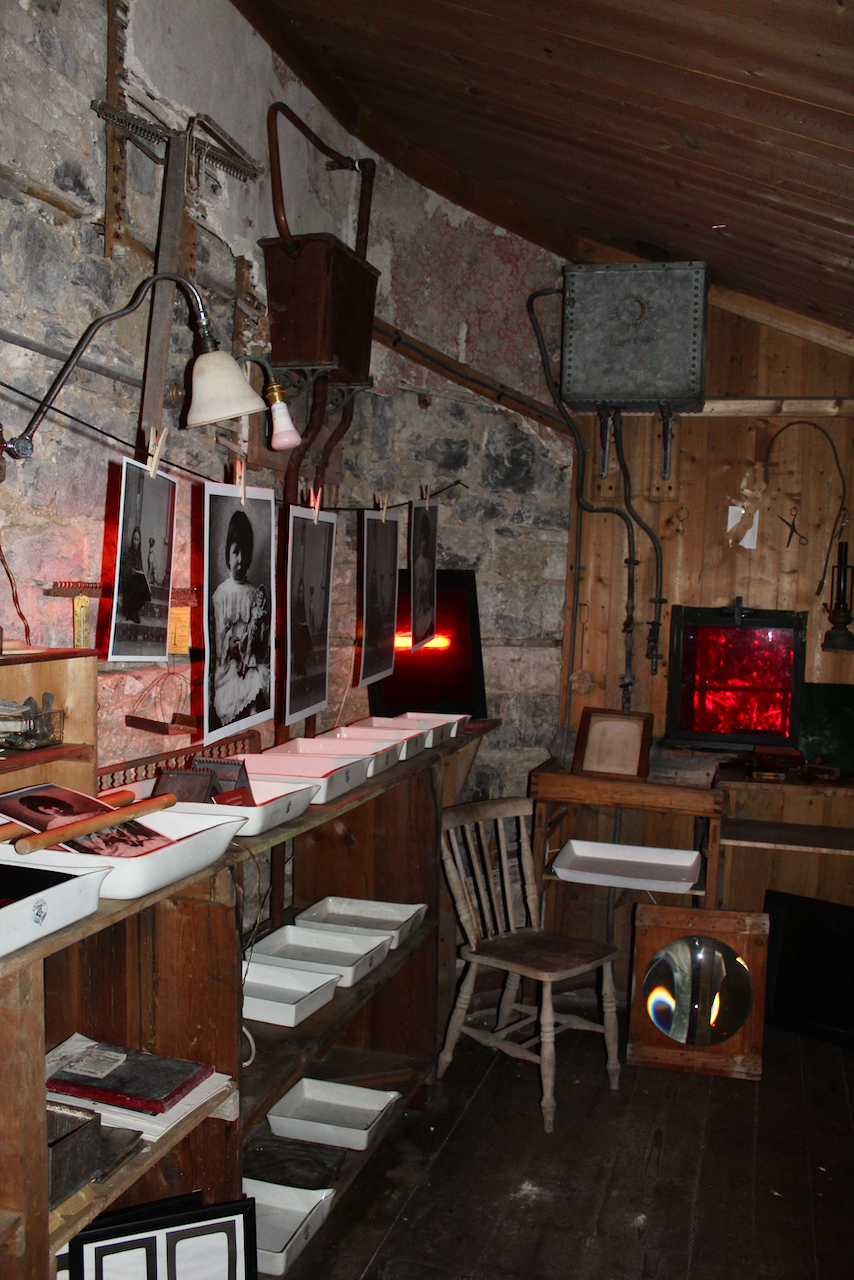
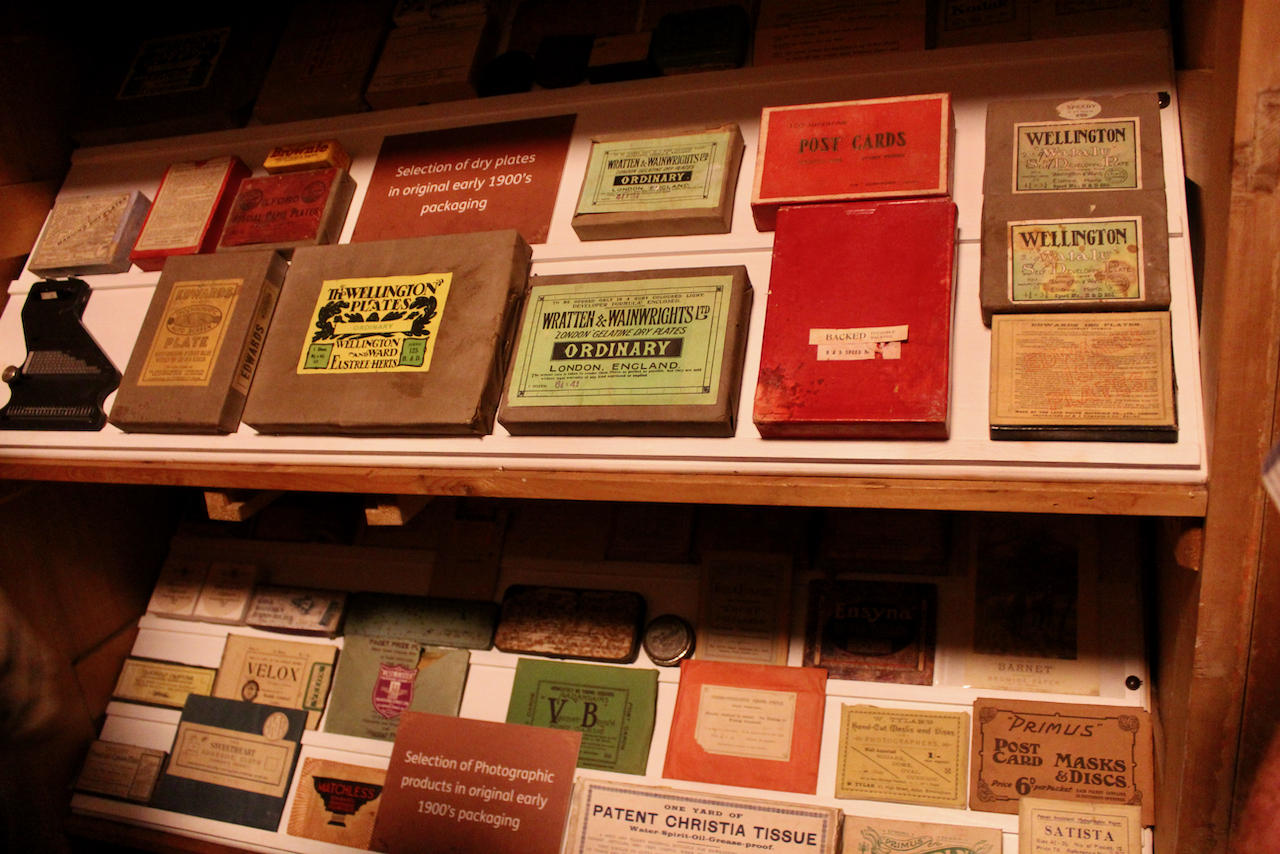
Stephen and I were able to see part of the interior of the house, despite the house being closed for restoration work at the time, by joining a Heritage Week talk about a photographic dark room which had been created in the house by one of its residents. Unfortunately we did not get to see the basement or the galleried kitchen.

Captain Nicholas married Magdalena French, daughter of Arthur French of Movilla Castle, County Galway. [6] They had several children. Their son Reverend Peter (d. 1739) became Dean of Elphin and married Catherine, daughter of Paul Gore of Castle Gore, County Mayo (otherwise known as Deel Castle, now a ruin), who was son of Arthur, 1st Baronet Gore, of Newtown Gore, otherwise known as Parkes Castle in Leitrim (see my Office of Public Works in Connaught, Counties Leitrim, Mayo and Roscommon entry).

Another son, Nicholas (c. 1671-1781) married Eleanor Blayney, daughter of Henry Vincent, 5th Baron Blayney of Castle Blayney, County Monaghan.

A daughter, Margaret, married Edward Cooper of Markree Castle, County Sligo (another Section 482 property which we visited).

Strokestown passed via another son, John (d. 1708), who married Eleanor Butler (daughter of Thomas, 3rd Baronet Butler, of Cloughgrenan, Co. Carlow), to their son Thomas (1701-1782). It was Thomas who built on to the 1696 house, to create a residence designed by Richard Cassells, in about 1730.

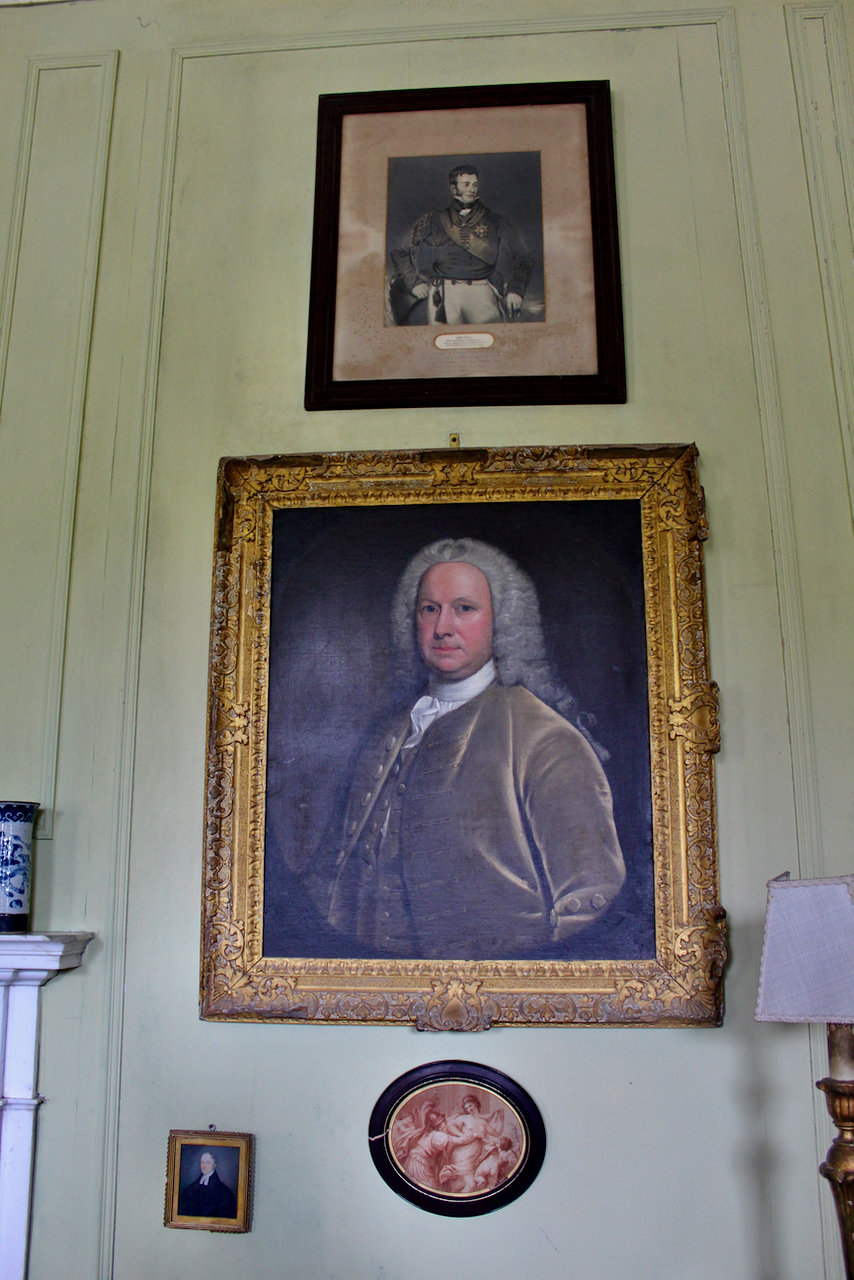
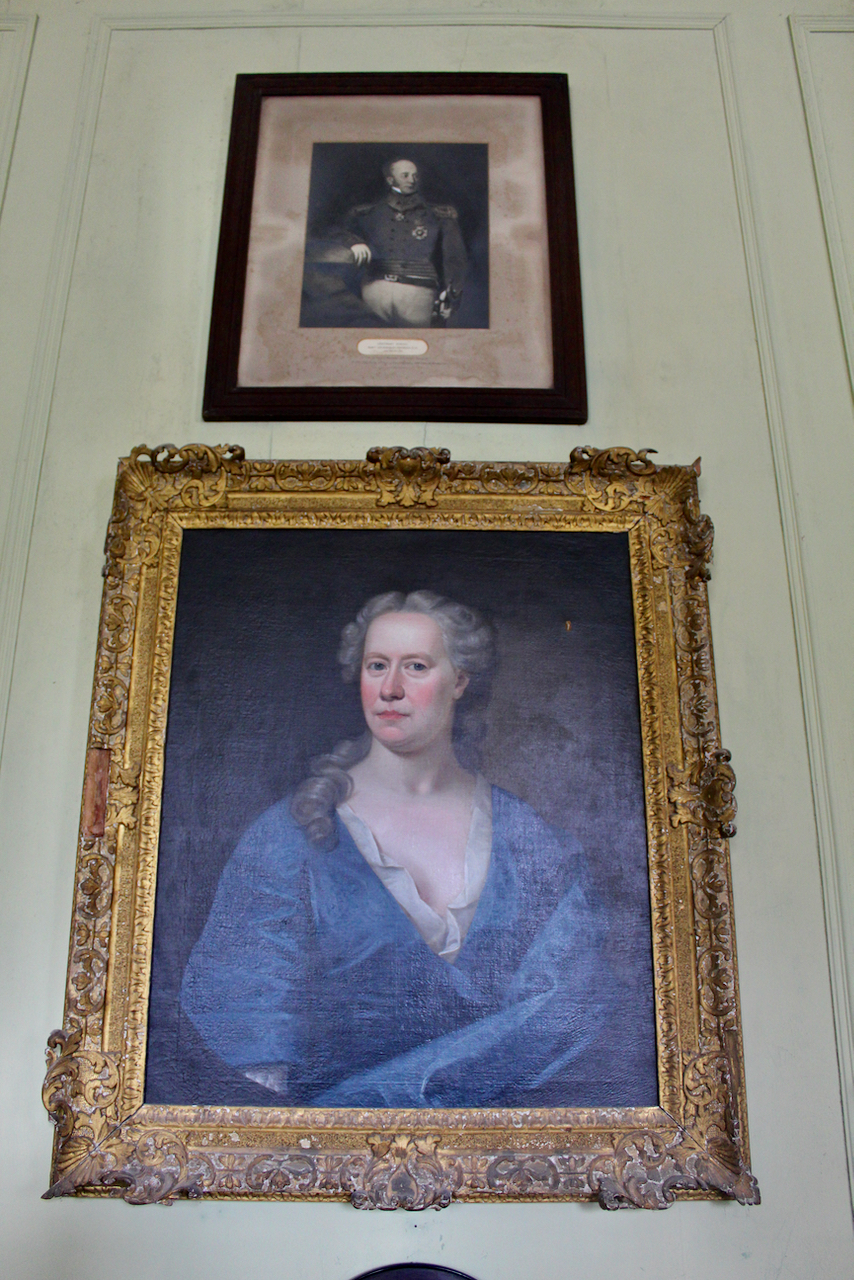
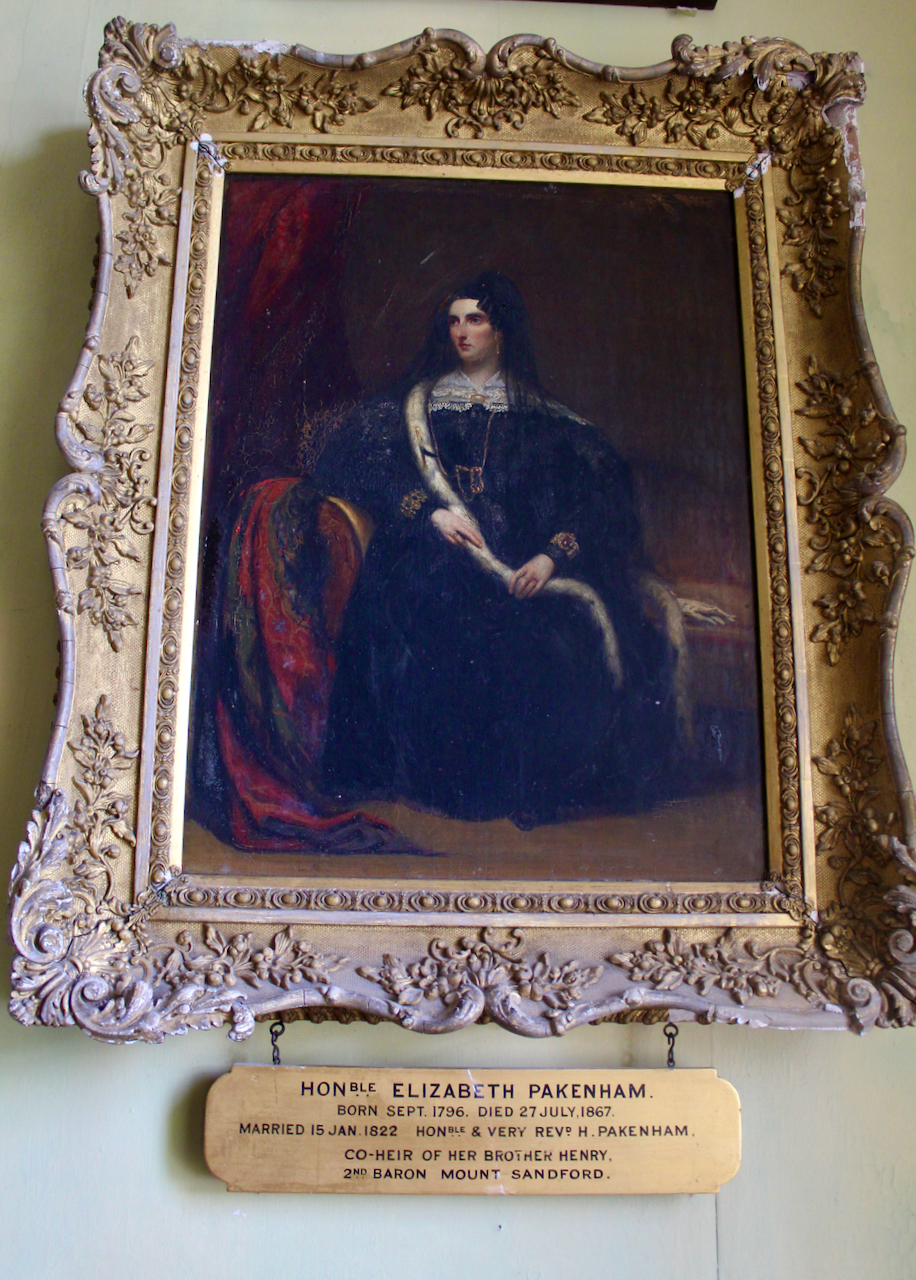
I think the portrait is of Thomas Mahon (1701-1782), who employed Richard Castle to built a house at Strokestown. Photograph © Jennifer Winder-Baggot, www.irishhistorichouses.com

Terence Reeves-Smyth tells us in his Irish Big Houses that the top storey and balustrade were added probably around 1740 when Richard Castle built the wings for Thomas Mahon. [7]

Richard Castle, or Cassells, (c.1690/95–1751) probably came to Ireland to work for Sir Gustavus Hume to design Castle Hume, Co. Fermanagh. [8] He then worked under Edward Lovett Pearce when Pearce worked on the Parliament Building in Dublin. Pearce died young and Castle succeeded to his practice. The Dictionary of Irish Biography tells us:

He contributed significantly to the development of Dublin, designing the first imposing town houses in cut stone for the nobility, notably Tyrone House, Marlborough St. (1740–45), built for Marcus Beresford (1694–1793), later earl of Tyrone, and Leinster House, Kildare St. (1745–51), for James Fitzgerald, earl of Kildare, the grandest town house and since the 1920s the seat of Dáil Éireann. His commissions included 85 Stephen’s Green (c.1738), the first stone-fronted house on the Green, latterly part of Newman House; houses in Kildare St., notably Doneraile House (designed c.1743); and Sackville Place...Castle designed many country houses, including Belvedere, Co. Westmeath (designed 1740), which incorporated the ‘Venetian’ window, a common feature of his designs, and Ballyhaise, Co. Cavan (c.1733). By altering and enlarging many houses, he created grand country mansions (often with vaulted stables), notably Powerscourt, Co. Wicklow, with its magnificent Egyptian hall (built 1731×1740; damaged by fire 1974, and since partly restored), Westport House, Co. Mayo (1731–40), and Carton House, Co. Kildare (c.1739–45). Conolly’s Folly at Castletown estate, Co. Kildare (1740), a tall obelisk mounted on multiple arches, is attributed to him. He possibly collaborated with Francis Bindon on Belan House, Co. Kildare, complete with temple and three obelisks (1743), and Russborough, Co. Wicklow (c.1742–55).” [9]

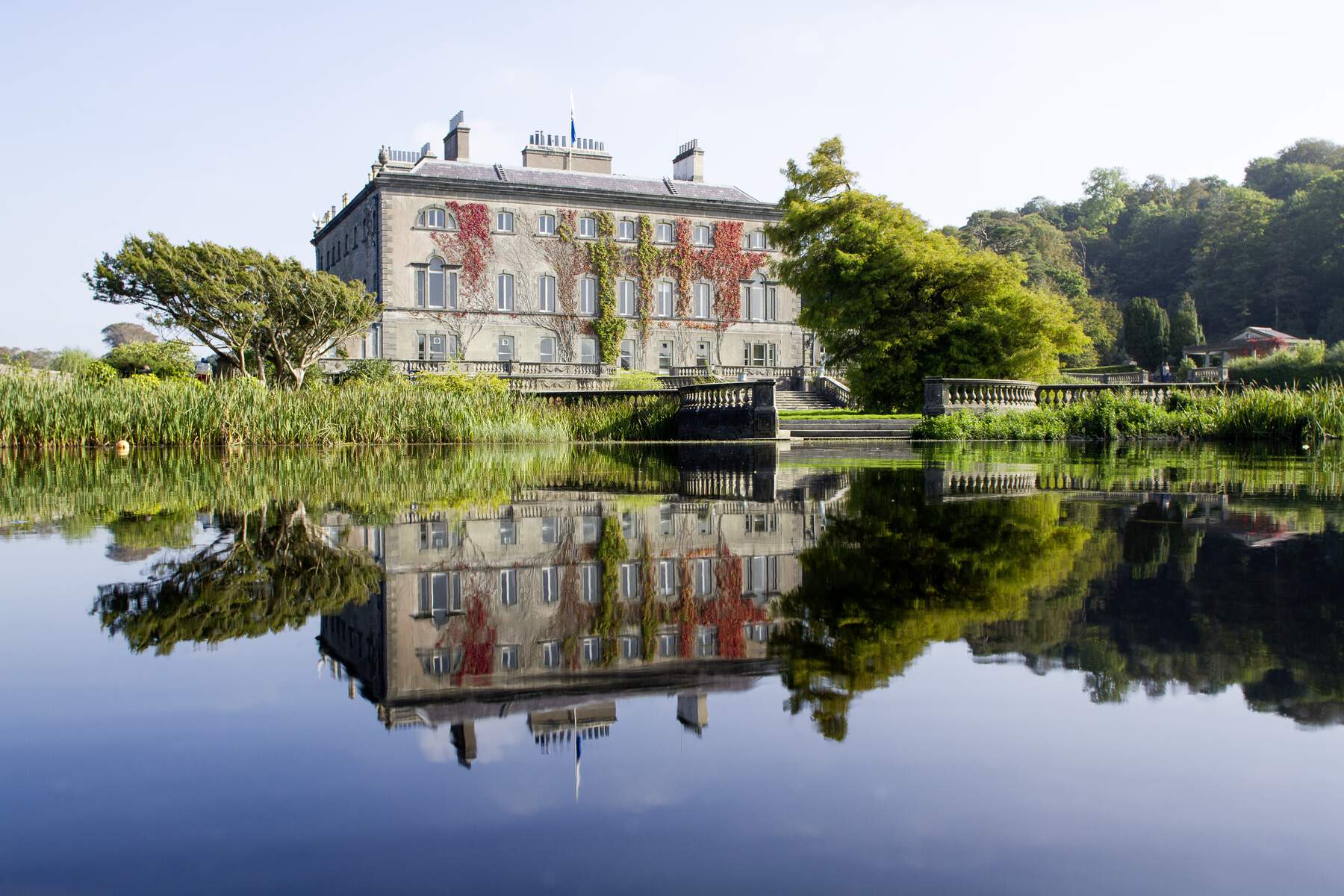
Also designed by Richard Castle: Westport House, County Mayo (1731), photograph courtesy of Ireland’s Content Pool [1].
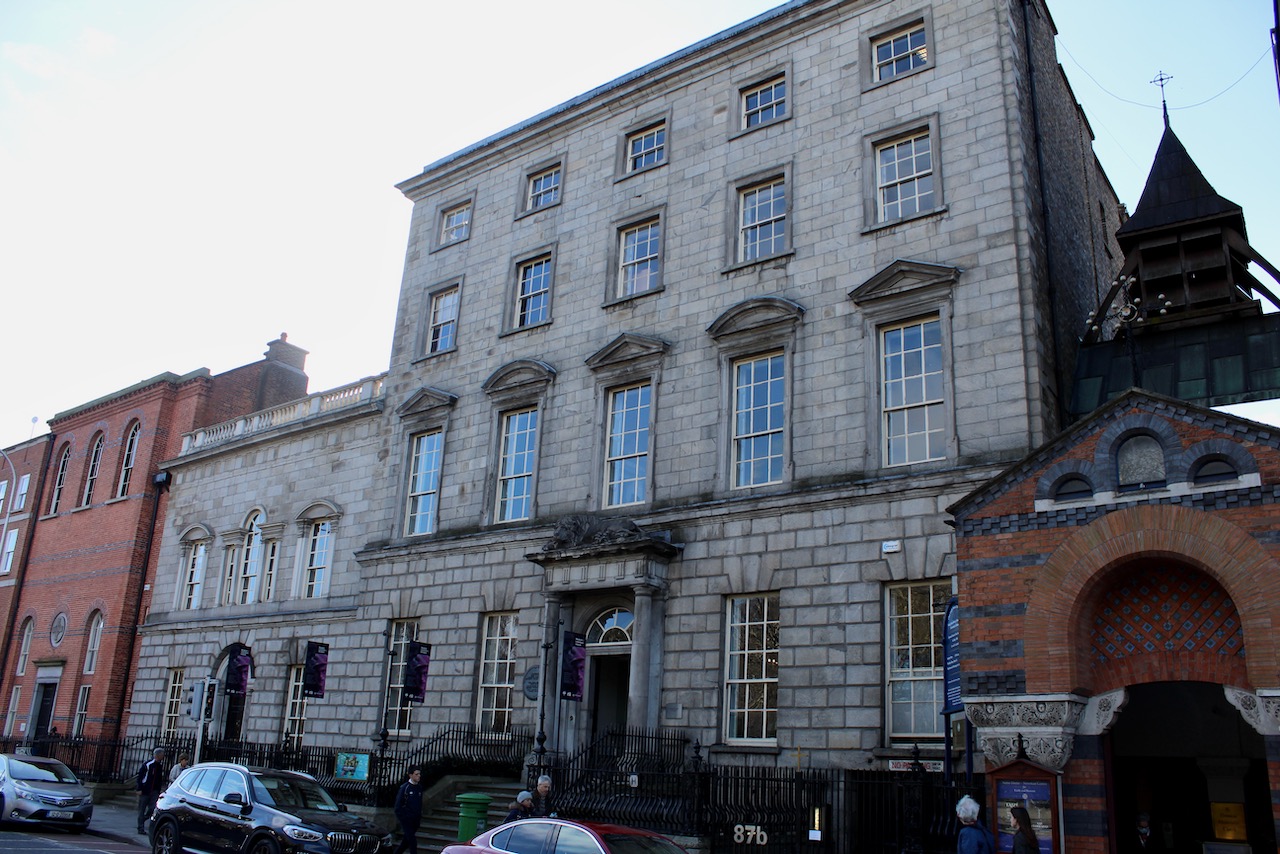
Newman House, St. Stephen’s Green (Museum of Literature Ireland), also designed by Castle (1738). Photograph © Jennifer Winder-Baggot, www.irishhistorichouses.com
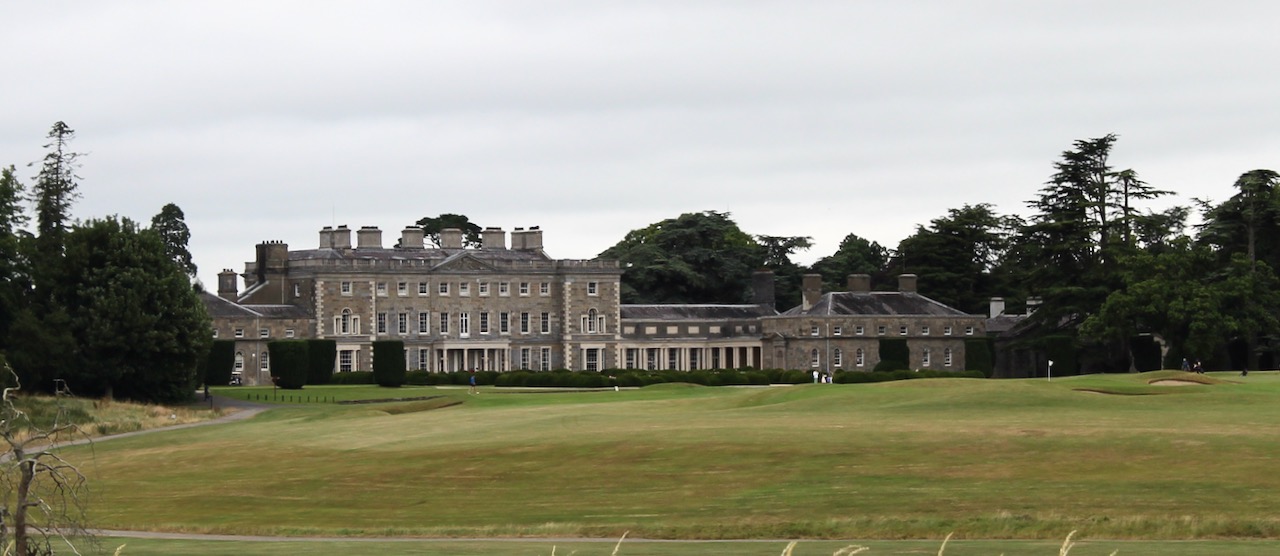
Also designed by Richard Castle: Carton House, County Kildare, renovations by Castle in 1739. Photograph © Jennifer Winder-Baggot, www.irishhistorichouses.com
Carton House, County Kildare, renovations by Castle in 1739. Photograph © Jennifer Winder-Baggot, www.irishhistorichouses.com
Castletown obelisk folly, also by Richard Castle (1740). Photograph © Jennifer Winder-Baggot, www.irishhistorichouses.com
Also designed by Richard Castle: Belvedere, County Westmeath (1740). Photograph © Jennifer Winder-Baggot, www.irishhistorichouses.com
Also designed by Richard Castle: Powerscourt, County Wicklow (1740) Photograph © Jennifer Winder-Baggot, www.irishhistorichouses.com
Russborough House, also designed by Richard Castle, 1742. Photo taken by Jeremy Hylton June 2012.
Russborough House, County Wicklow, also designed by Richard Castle. Photograph © Jennifer Winder-Baggot, www.irishhistorichouses.com
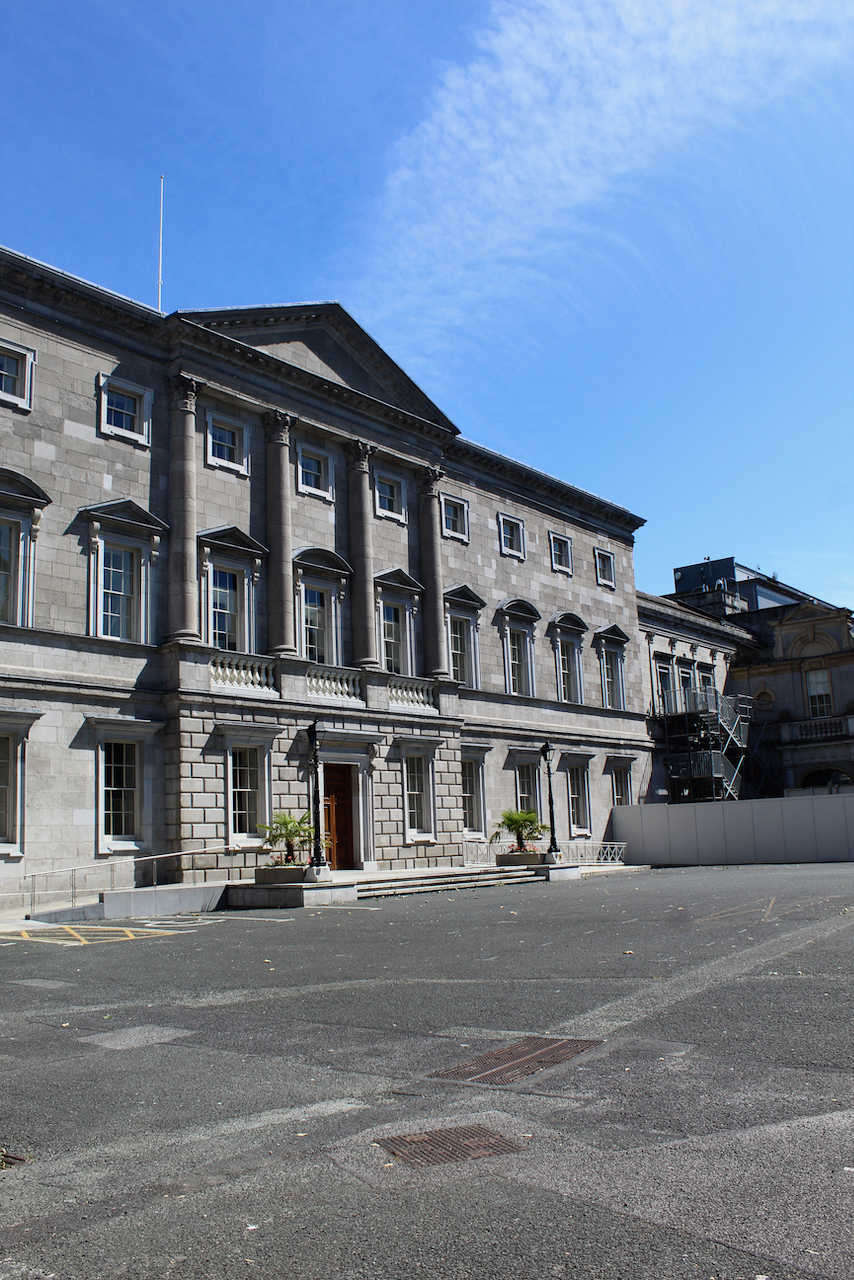
Also designed by Richard Castle: Leinster House, 1745 [Dublin, July 2022]. Photograph © Jennifer Winder-Baggot, www.irishhistorichouses.com

The house has a seven-bay, three-storey over basement central block, with curved curtain walls linking it to flanking pavilions with four-bay principal façades. The centre block front facade has three bays in the centre with giant pilasters either side and two bays beyond on either side. The centre three bays have a central panel on the pediment and the two bays on either side of the pilasters have a balustraded pediment. The front door is set in a tooled stone doorcase with decorative brackets, with an ornate spoked fanlight, and is flanked by traceried sidelights.

Strokestown House. Photograph © Jennifer Winder-Baggot, www.irishhistorichouses.com

Most of what we see today was designed by Castle, but the house was resurfaced in 1819 and the portico added.

The portico was added around 1820. Photograph © Jennifer Winder-Baggot, www.irishhistorichouses.com
Strokestown Park, County Roscommon, August 2022. Photograph © Jennifer Winder-Baggot, www.irishhistorichouses.com

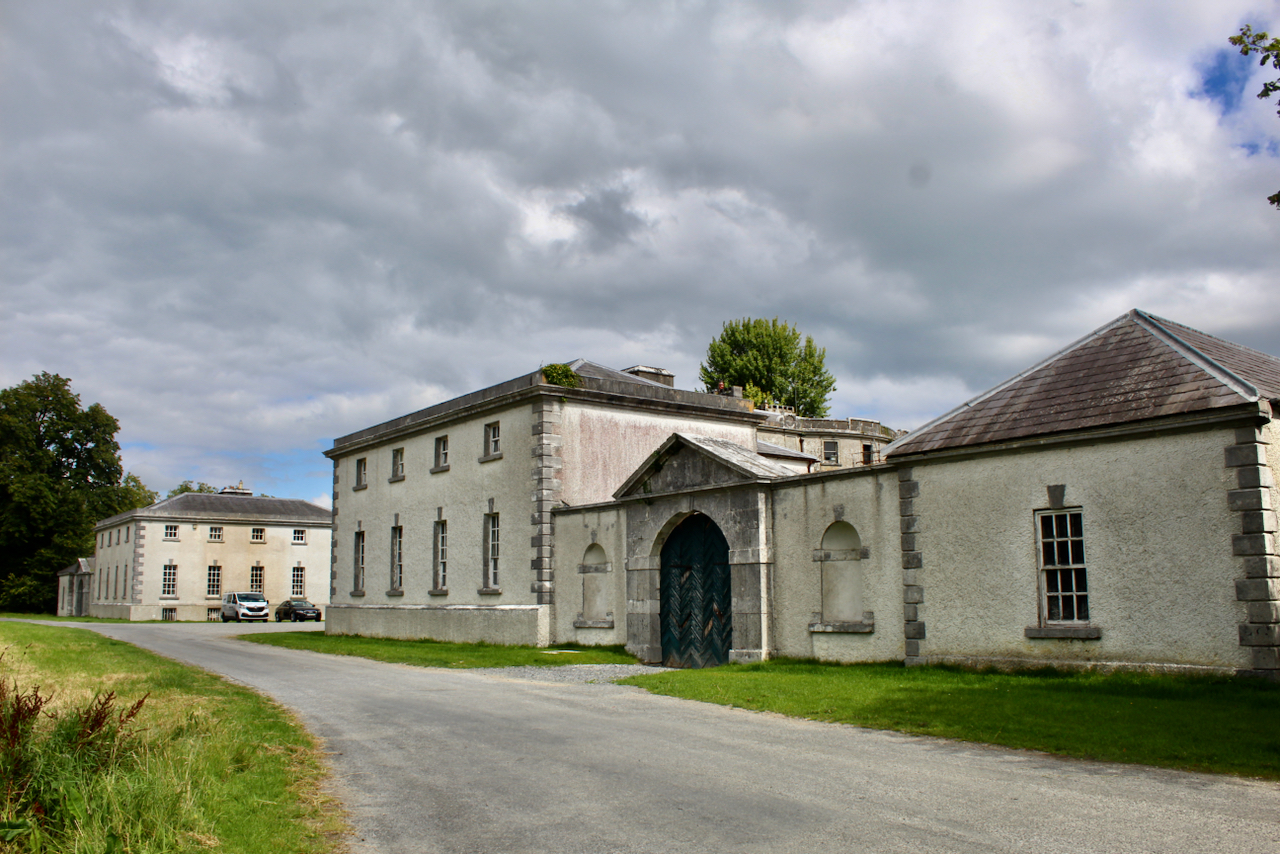
The National Inventory of Architectural Heritage tells us that the pedimented archways to outer walls extending from pavilions give access to stable complex and kitchen yards. [10]

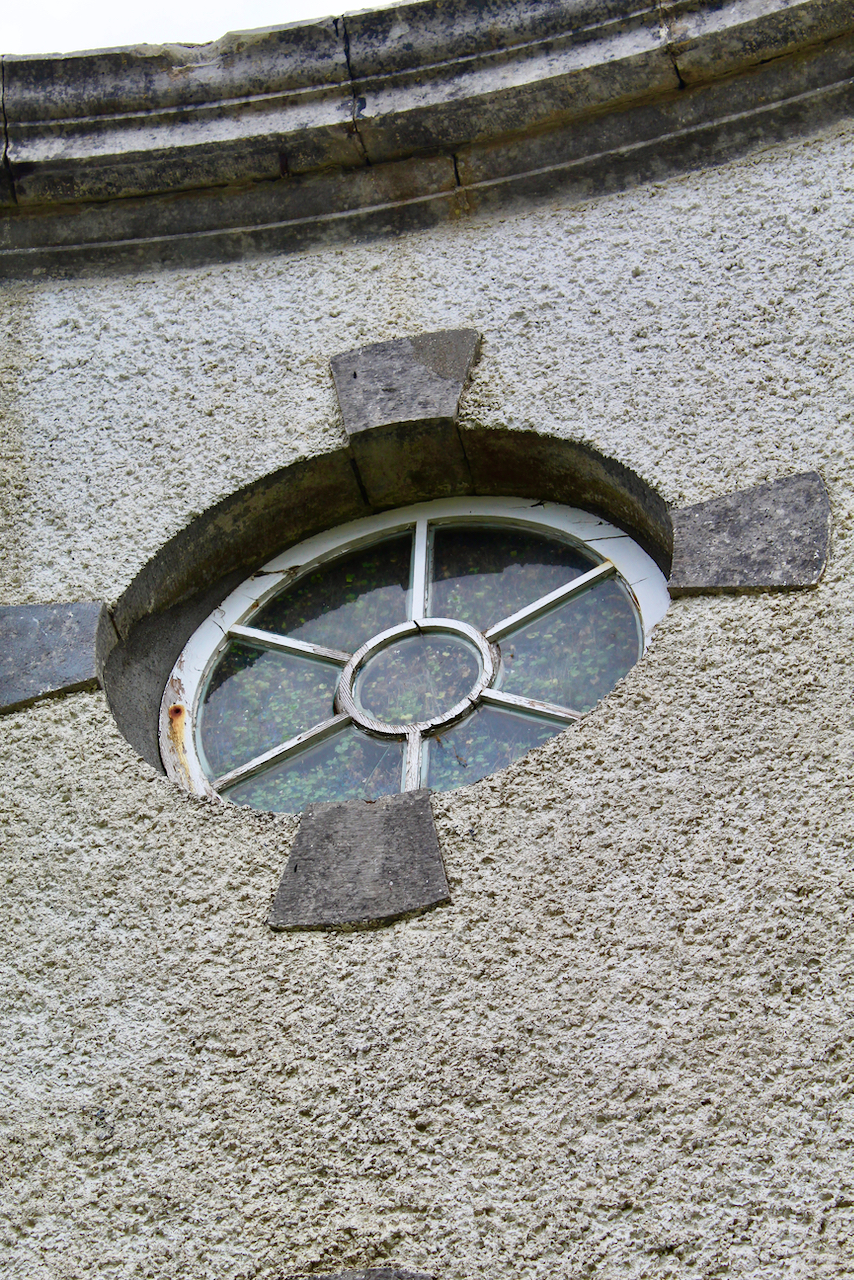
The flanking curtain walls have niches flanked by oculus windows on the upper part with tooled stone surrounds, and a Gibbsean doorcase with pediment over.

Strokestown Park, County Roscommon, August 2022. Photograph © Jennifer Winder-Baggot, www.irishhistorichouses.com
Flanking wall between main block and a pavilion block. Photograph © Jennifer Winder-Baggot, www.irishhistorichouses.com
Strokestown Park, County Roscommon, August 2022. Photograph © Jennifer Winder-Baggot, www.irishhistorichouses.com
An oculus window in the curtain wall has overgrowth of greenery on the other side! Photograph © Jennifer Winder-Baggot, www.irishhistorichouses.com

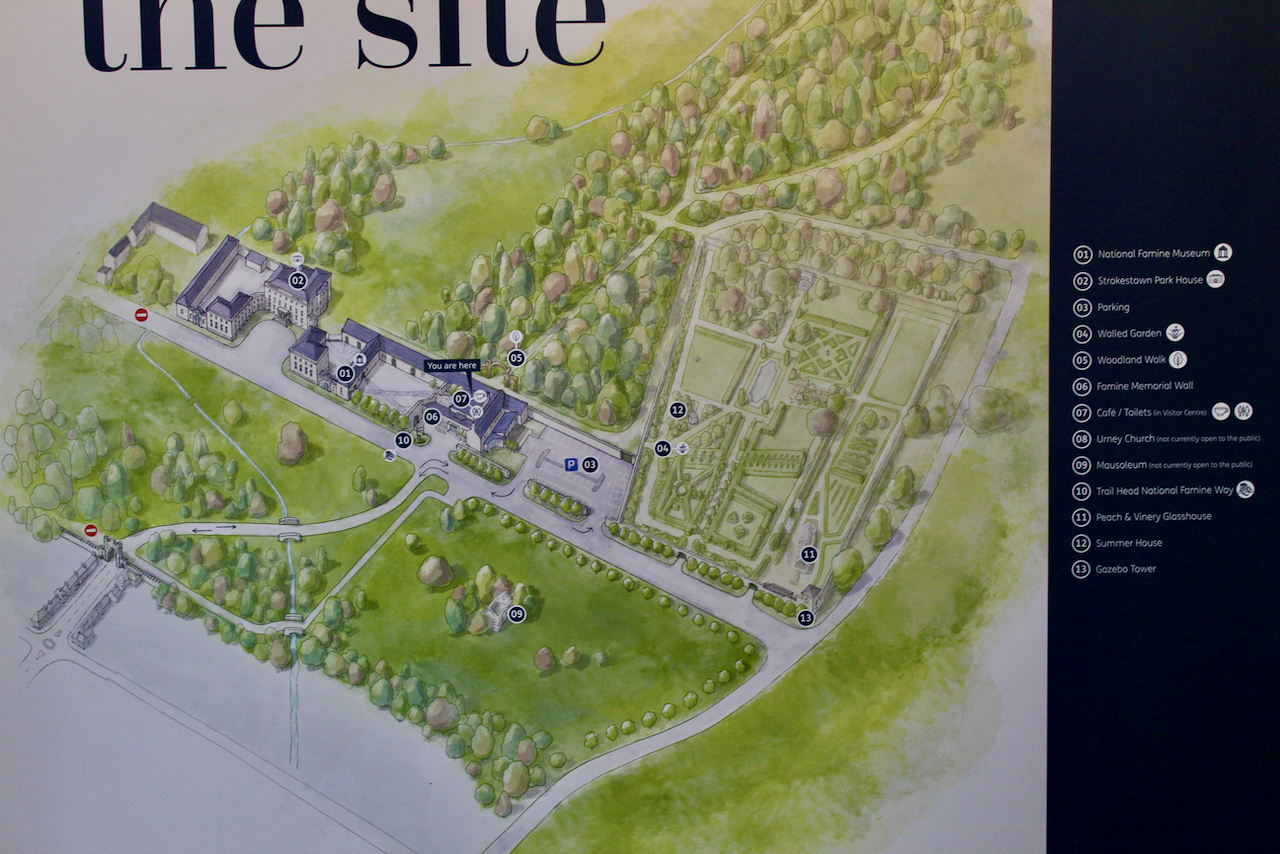
The Famine Museum is located in the stables. One enters via a Visitor Centre to one end of the complex.

Pedimented archways to outer walls extending from pavilions give access to stable complex and kitchen yards. Photograph © Jennifer Winder-Baggot, www.irishhistorichouses.com
Strokestown Park, County Roscommon, August 2022. Photograph © Jennifer Winder-Baggot, www.irishhistorichouses.com
Entrance to the Famine Museum, located in the stables. Photograph © Jennifer Winder-Baggot, www.irishhistorichouses.com
Visitor Centre, located at one end of the stable courtyard, opposite the entrance to the stables and the Famine Museum. Photograph © Jennifer Winder-Baggot, www.irishhistorichouses.com
Inside the Famine Museum, which is in the former stables. Photograph © Jennifer Winder-Baggot, www.irishhistorichouses.com

In 1735, Thomas married Jane Crosbie, daughter of Maurice, 1st Baron Branden, of Ardfert, County Kerry, MP for County Kerry. Thomas Mahon later became MP, first for the Borough of Roscommon in 1739-1763 then for County Roscommon 1763-82, when he was called the “Father of the House.” [11]

I think this is Jane Crosbie, who married Thomas Mahon. Photograph © Jennifer Winder-Baggot, www.irishhistorichouses.com

Thomas’s son Maurice (1738-1819), named after Jane’s father, married Catherine, daughter of Stephen Moore, 1st Viscount Mountcashell, in 1765. He inherited when his father died in 1782. He was granted a peerage for his support of the Act of Union, and created 1st Baron Hartland, of Strokestown, Co. Roscommon in 1800.

Terence Reeves-Smyth tells us:

His son Maurice, who became Baron Hartland upon accepting a Union Peerage in 1800, made further additions and modifications to the house, including the inlaid mahogany doors, chimney-pieces and cornices as well as the library.”

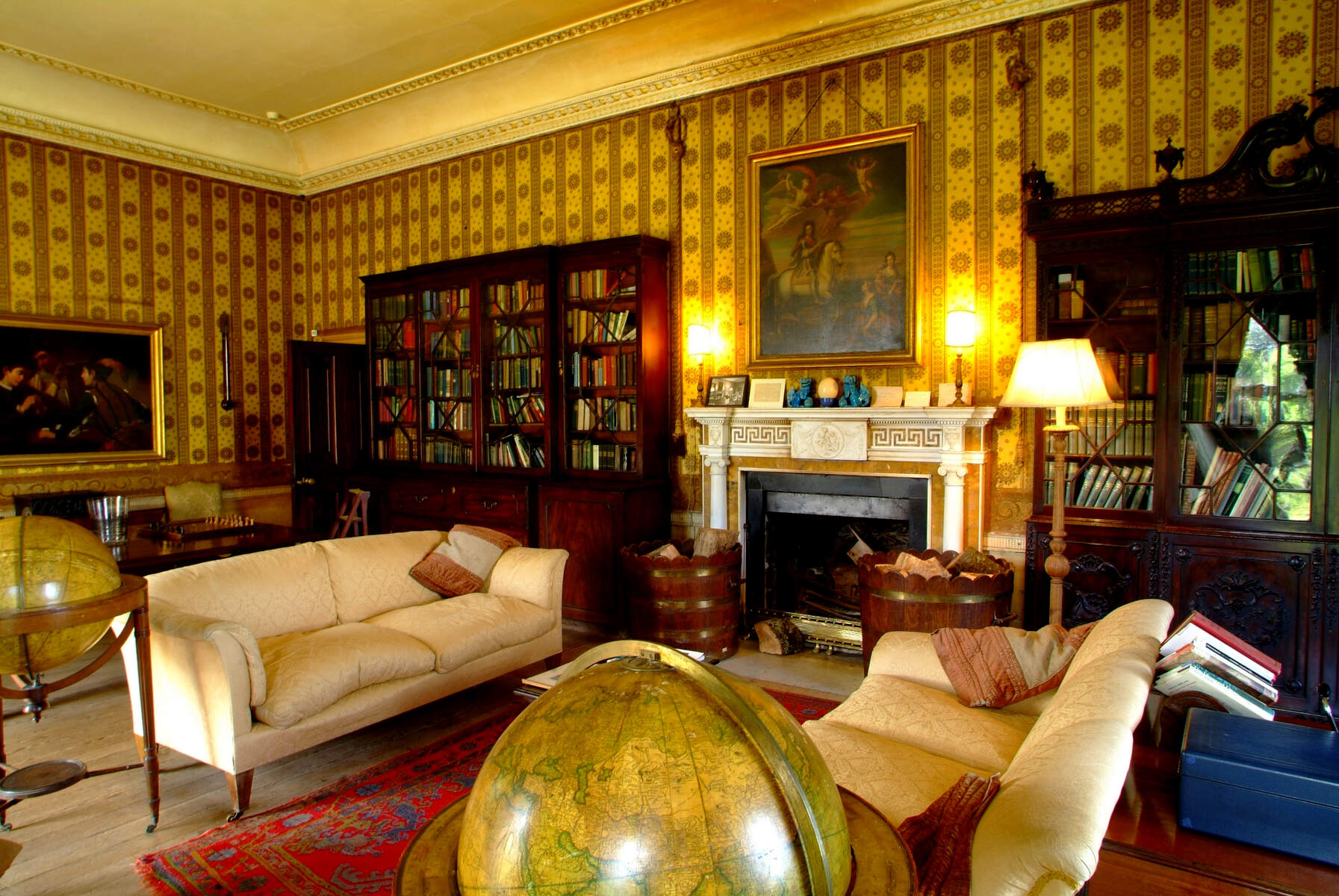
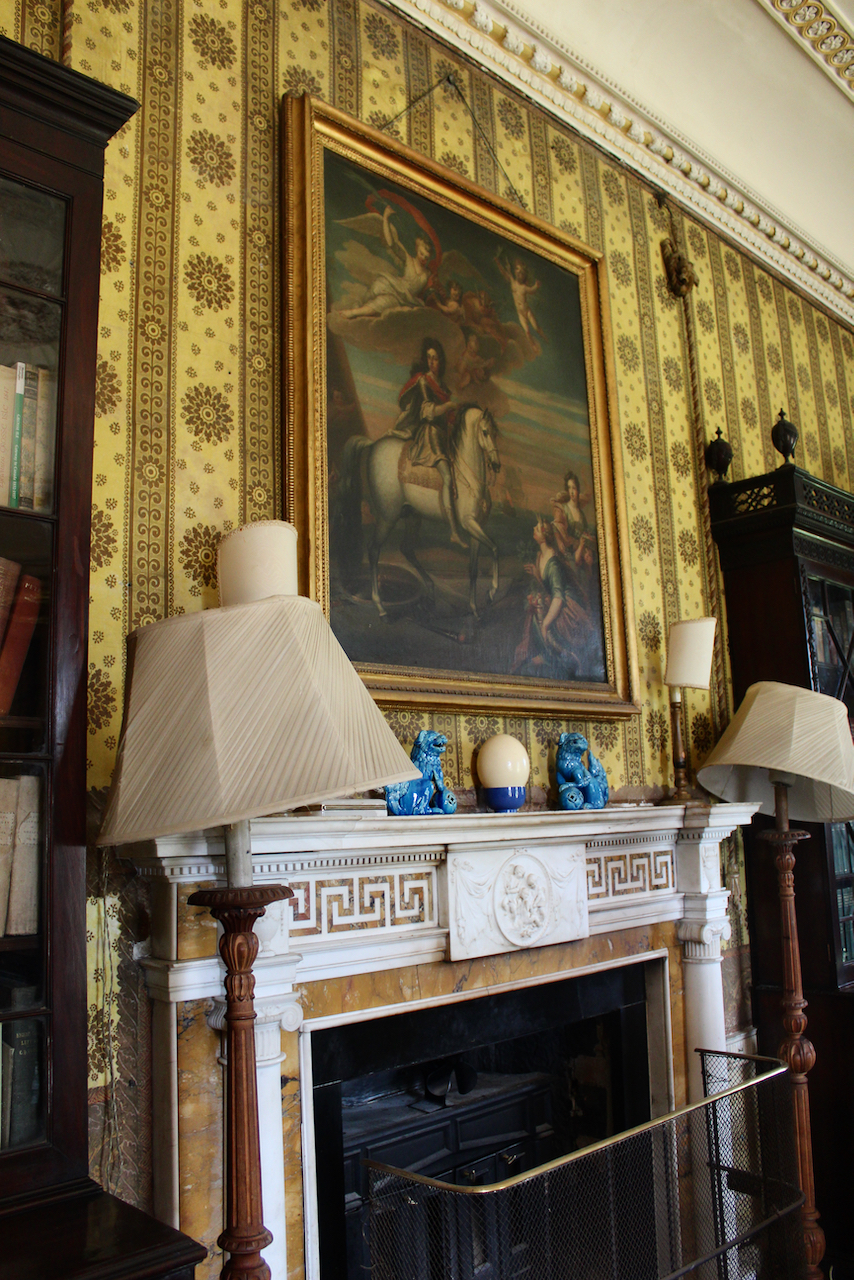
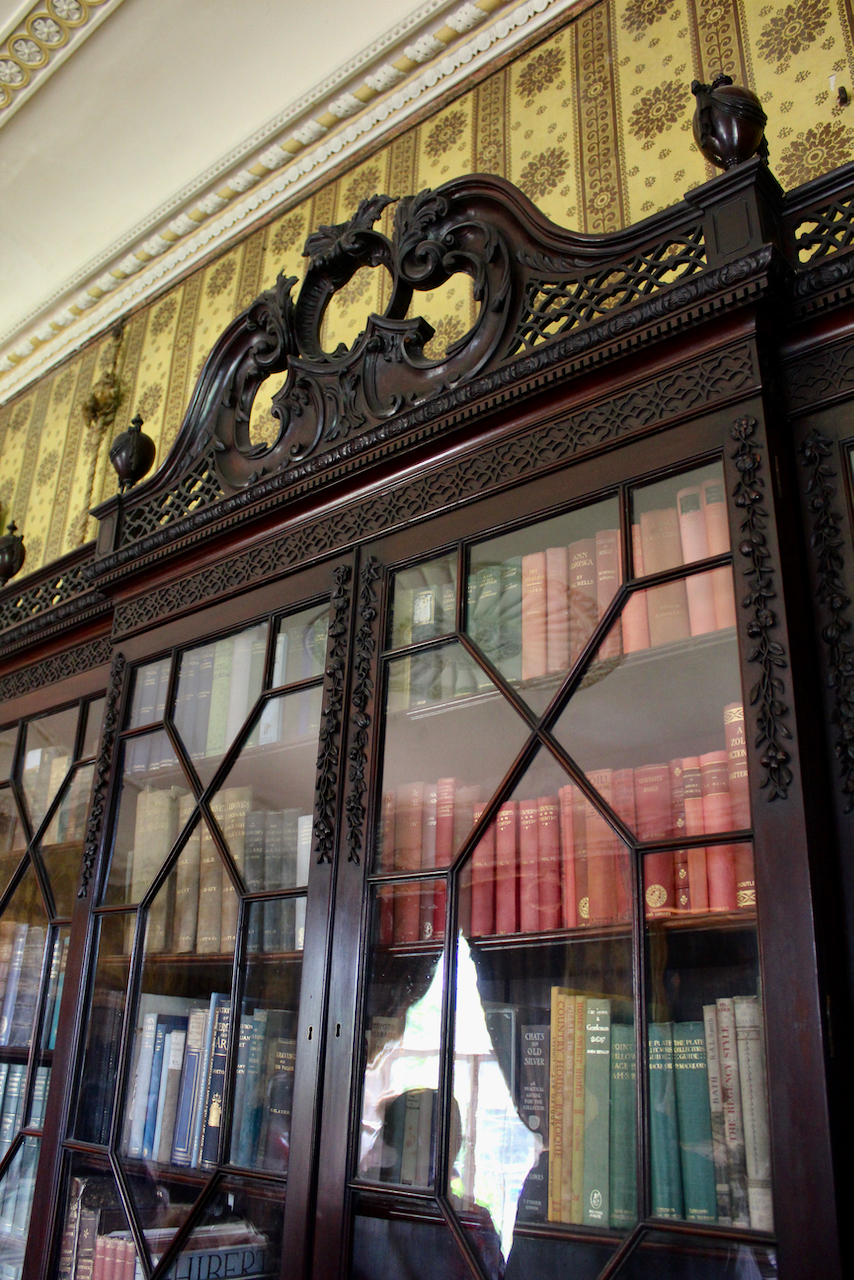
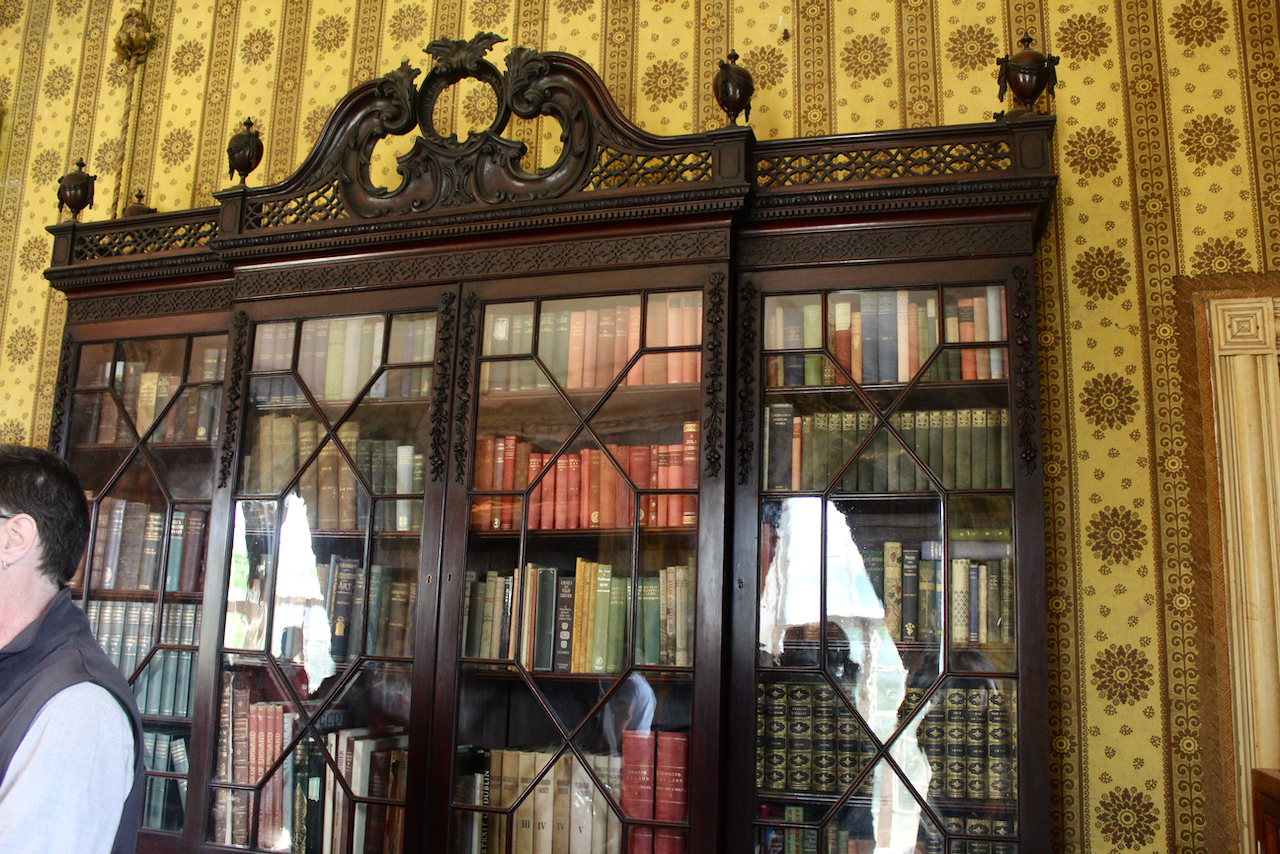
Strokestown, image by Chris Hill, 2014, Tourism Ireland, from Ireland’s Content Pool. [1] Mark Bence-Jones writes that in a late-Georgian addition at the back of the house there is a splendid library with a coved ceiling and an original early nineteenth century wallpaper of great beauty, in yellow and brown, which gives the effect of faded gold. [12]

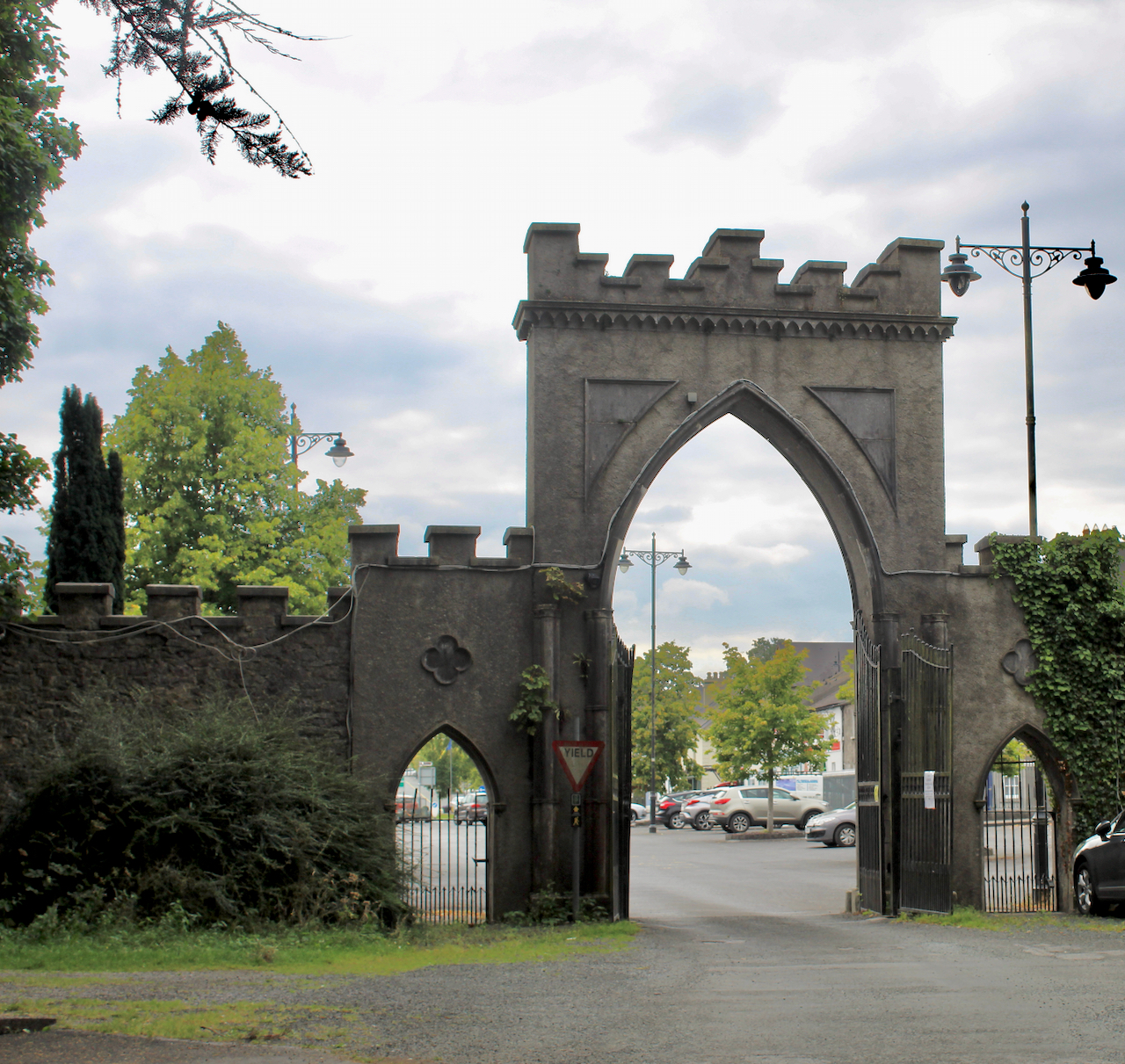
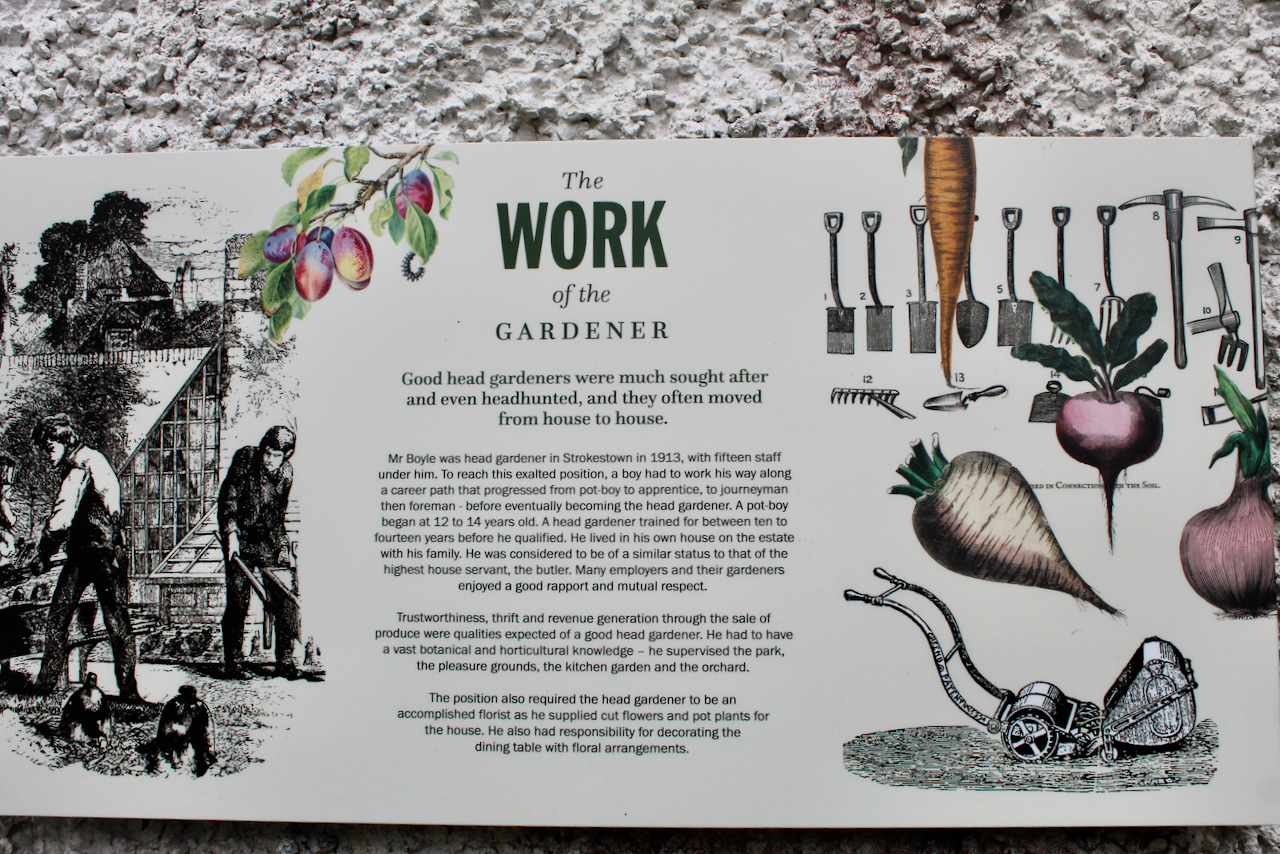
Maurice Mahon also had the main street of Strokestown laid out between 1810 and 1815, and had a tall Georgian Gothic arch erected at the entrance to Strokestown Park, at one end of the main street. At almost one hundred and fifty feet wide, the main thoroughfare, leading up to the gates of the estate, was said to be the widest in Ireland at the time. Apparently Baron Hartland wanted it to be wider than the Ringstrasse in Vienna. [see 12]

Tripartite gate at the entrance to the Strokestown Park estate, with crow stepped battlements. Photograph © Jennifer Winder-Baggot, www.irishhistorichouses.com

Maurice, 1st Baron Hartland had three sons. The first, Thomas (1766-1835) succeeded as 2nd Baron Hartland in 1819. His mother lived another fifteen years after her husband died in 1819, and the museum tells us that receipts for her extravagant spending are kept in the archive.

When Thomas inherited the property in 1819 he hired John Lynn who created the porch, among other renovations. Lynn had served as clerk of works for the building of Rockingham House in County Roscommon, erected in 1810 for Robert, 1st Viscount Lorton to designs by John Nash. We saw pictures of Rockingham House when we visited King House, see my entry. Rockingham House no longer exists. Soon after working in Strokestown, Lynn moved up to Downpatrick, County Down. [13]

Terence Reeves-Smyth continues in Irish Big Houses: “In 1819 Lieutenant General Thomas Mahon, second Lord Hartland, employed the architect J[ohn] Lynn to carry out some more improvements, such as the addition of the porch and giant pilasters to the front. Except for the gardens, few changes were later carried out at Strokestown and it remained the centre of a vast 30,000 acre estate until the present century.”

Thomas the second baron was educated at the Royal School in Armagh, Trinity College Dublin and St. John’s College, Cambridge. He joined the military and became Major in the 24th Light Dragoons. In 1798 he was in command of a garrison in Carlow, where he trapped and killed many rebels. [14] In 1811 he married Catherine Topping, but they did not have any children. He later fought in the Napoleonic wars and in Argentina.

Terence Reeves-Smyth continues:

In contrast to the exterior, the interior is quite intimate, with surprisingly small rooms – a product of the early date of much of the building. Early 18th century wood panelling survives in parts of the house including the main staircase hall, but many rooms were redecorated in regency times, such as the dining room which still has its early 19th century furniture, including a bath-sized turf bucket and pinkish-red damask wallpaper.

Staircase hall of Strokestown Park, with its original wood panelling, and archivist Martin Fagan. Photograph © Jennifer Winder-Baggot, www.irishhistorichouses.com
On the wall on the right hand side is a portrait of Edward Pakenham (b. 1778), an uncle of Henry Sandford Pakenham who married into the family, and on the left, his brother Lt. Col. Hercules Pakenham (1781-1850). Both were brothers of the 2nd Earl of Longford, of Tullynally, County Westmeath. Photograph © Jennifer Winder-Baggot, www.irishhistorichouses.com
Strokestown Park, County Roscommon, August 2022. Photograph © Jennifer Winder-Baggot, www.irishhistorichouses.com
Mark Bence-Jones tells us that some of the principal rooms in the centre of the house have eighteenth century panelling. [see 12] Photograph © Jennifer Winder-Baggot, www.irishhistorichouses.com
Strokestown Park, County Roscommon, August 2022. Photograph © Jennifer Winder-Baggot, www.irishhistorichouses.com
Strokestown dining room, image by Chris Hill, 2014, Tourism Ireland, from Ireland’s Content Pool. [1] Robert O’Byrne tells us that the wallpaper features in Wallpaper in Ireland 1700-1900 written by David Skinner.

Terence Reeves-Smyth continues: “Regency additions incorporated the study, which also retains its original furnishings, and the smoking room, which was converted into a laboratory and photography darkroom by Henry Pakenham-Mahon, an amateur scientist, in the 1890’s. The finest regency addition is the library at the back, originally built as a ballroom with a bowed wall at one end to accommodate musicians. This contains Chippendale bookcases and beautiful brown and gold wallpaper, made especially for the walls in the early 19th century.

The bowed library with its gold-coloured wallpaper. Photograph © Jennifer Winder-Baggot, www.irishhistorichouses.com
King William III on his horse in the portrait. The chimneypiece features Siena marbe, Ionic pilasters and a Grecian key pattern. Photograph © Jennifer Winder-Baggot, www.irishhistorichouses.com
The library contains Chippendale bookcases. Photograph © Jennifer Winder-Baggot, www.irishhistorichouses.com
Strokestown Park, County Roscommon, August 2022. Photograph © Jennifer Winder-Baggot, www.irishhistorichouses.com
The curtain pelmet features a dragon head. Photograph © Jennifer Winder-Baggot, www.irishhistorichouses.com
The ceiling rose in the library. Photograph © Jennifer Winder-Baggot, www.irishhistorichouses.com
Strokestown Park, County Roscommon, August 2022. Photograph © Jennifer Winder-Baggot, www.irishhistorichouses.com

Reeves-Smyth continues, describing the kitchen which we did not see: “The old kitchen in the left wing of the house is approached from the dining room along a curved corridor, past store rooms for kitchen utensils and sporting equipment. Fitted with spits and ovens for baking, roasting and smoking, this kitchen has its original balustraded gallery which crosses the high ceilinged room lengthwise, the only example of its kind to survive in Ireland, especially in houses designed by Richard Castle. These galleries allowed the housekeeper to supervise the affairs below – one tradition has it that menus were dropped from the balcony on Monday mornings with instructions to the cook for the week’s meals.

The wing to the right of the central block contains magnificent vaulted stables carried on Tuscan columns, similar to stables built by Castle for Carton (1739) and Russborough (1741). An underground passage links these stables to the yard on the north side of the house. The estate office was also in this wing, which meant the tenantry had to come here rather than to an office in the village to pay their rent.

A photograph of the vaulted stables, by Henry Pakenham Mahon (1851-1922).

Maurice Craig tells us in his Irish Country Houses of the Middle Size: p. 21. “The practice of connecting the house with outlying offices by a tunnel seems to be peculiar to Ireland…Strokestown, Bellamont, Castle Coole and Lucan are amongst the Irish examples. In the nature of things, this is a feature of the grander houses, though it has been reported in connection with some of modest size.”

Thomas 2nd Baron married but had no children and his brother Maurice (1772-1845) succeeded as 3rd Baron Hartland when Thomas died in 1835. Maurice had joined the clergy, and was awarded a prebendary (an administrative role) in Tuam Cathedral in 1804.

In 1813 the 3rd Baron Hartland married Jane Isabella Hume of Humewood, County Wicklow, but also had no children and the title became extinct. He had another brother, Stephen, but he predeceased his brothers and had no children. The museum tells us that the 3rd Baron suffered with mental illness, though it does not give us specifics. He was declared insane just a year after he inherited the property in 1835.

The 3rd Baron Hartland married Jane Isabella Hume of Humewood, County Wicklow. Humewood, County Wicklow photograph courtesy of National Library of Ireland, photographer Robert French, Lawrence Collection Circa 1865 – 1914 NLI Ref. L_IMP_3853.

The Dictionary of Irish Biography tells us that it was Denis Mahon who brought a motion against Maurice claiming that he was mentally ill and incapable of caring for the estate. Maurice had allowed the lease to lapse for a portion of the estate and stopped collecting rent from the town of Ballykilcline and its surrounding area. This led to an official declaration stating Maurice was a “lunatic.” Denis was named executor of the estate as well as being named Maurice’s legal guardian.

The museum tells us that when he was declared insane in 1836, two cousins battled in the courts to inherit the property: Denis Mahon (1787-1847) and Marcus McCausland.

Marcus McCausland owned the property of Drenagh, Limavady in County Derry (now a wedding venue). His mother was Theodosia Mahon, a sister of the 1st Baron Hartland, who had married Conolly McCausland-Gage. The nine year court case decided in favour of Denis Mahon. As well as the now poorly managed property, he inherited debts.

Denis was the son of a brother of 1st Baron Hartland, Reverend Thomas Mahon (1740-1811). Reverend Thomas married Honoria Kelly, daughter of Denis Kelly of Castle Kelly, County Galway (also called Aughrane Castle, it has been demolished. It was purchased by Bagots in 1910, I’m haven’t found an ancestral link to these Bagots).

Strokestown Park, County Roscommon, August 2022.

It was Denis Mahon who was then murdered during the Famine. The story is told in detail in the Famine Museum. The estate was badly run and tenants let and sublet their parcels of land, hence owned smaller and smaller portions of land to grow their crops.

Reeves-Smyth tells us: “Major Denis Mahon, who succeeded to Strokestown on the death of the third and last Lord Hartland in 1845 was so unpopular a landlord during the famine years that he was shot whilst returning from a meeting of the Roscommon Relief Committee in 1848, apparently on suspicion of chartering unseaworthy ships to transport emigrants from his estate to America. His successors were much better regarded and his great-granddaughter and last owner, Mrs. Olive Hales-Packenham-Mahon, was a much loved figure in this part of Ireland. She died in 1981, leaving a house filled with the trappings of three centuries of unbroken family occupation.

Strokestown Park, County Roscommon, August 2022.

Captain Denis Mahon chose to help his tenants to leave Ireland. He wanted to reduce his number of tenants. The 1838 Poor Law made a local tax for poor rates. In 1843 the act was amended and introduced new rates, charging landlords a tax for each tenant who had holdings of less than a value of £4. Landlords therefore tried to reduce the number of tenants.

Sculptures of shoes like this are dotted along the way of the Famine Walk. Photograph © Jennifer Winder-Baggot, www.irishhistorichouses.com
Strokestown Park, County Roscommon, August 2022.
The entrance to the Famine Museum and café. Photograph © Jennifer Winder-Baggot, www.irishhistorichouses.com

The Famine Museum is introduced by a beautifully handwritten letter by tenants asking not for money or food, but work. The eloquent letter humanises those who were experiencing the poverty of the famine in the 1840s.

Strokestown Park, County Roscommon, August 2022.

Arthur Young writes in his A Tour in Ireland in 1799 that “the poor live on potatoes and milk, it is their regular diet, very little oat bread being used and no flesh meat at all except on Easter Sunday and Christmas day.

Strokestown Park, County Roscommon, August 2022.

Denis Mahon tried to make the estate pay for itself, to pay off the debts he had inherited. He also tried to take care of his tenants. He had two agents, John Ross Mahon and Thomas Conry. He began relief efforts for his tenants in March 1846. 4000 people were provided with corn on a weekly basis at low or no cost, and after a harsh winter, he distributed free seed to his most needy tenants. He also had a soup kitchen set up.

John Ross Mahon wrote to him that the poor rates would exceed receipts of rent. By 1847 the conditions were worse and there was unrest amongst the tenants. Mahon began to evict tenants and to encourage others to emigrate. The Freeman’s Journal in 1848 states that “The evictions on the estate since Major Mahon had taken over amounted to 3006 people, including the 1,490 who were selected to emigrate.” Fewer than half of those who emigrated survived the trek to Dublin and the journey on the ship.

The building of the month entry in the National Inventory summarises: “Major Mahon, an improving landlord, sought to alleviate the situation by judicious depopulation and in 1847 organised the voluntary emigration of almost one thousand of his tenants to North America. However, a far greater number refused to move and were the subject of evictions involving almost 600 families and 3000 individuals. Returning from an evening meeting in Roscommon, where he had urged the Board of Guardians to keep the workhouse open for needy paupers, Major Mahon was fatally shot on the 2nd of November 1847. Three men were hanged for the murder and two were transported, but the true identity of the assassin or assassins has been debated ever since.”

Strokestown Park, County Roscommon, August 2022.

The Famine Museum tells us that there were secret societies who sought to improve the conditions of the poor. A local one in Roscommon was called the “Molly Maguires.”

Strokestown Park, County Roscommon, August 2022.

The man suspected to be the mastermind of the murder, Andrew Connor, probably escaped to Canada. Police followed to Canada to try to capture him but to no avail. A man named Patrick Hasty was hanged for the murder, along with two others.

Strokestown Park, County Roscommon, August 2022.

Denis’s son Thomas predeceased him, childless, and the house passed to his daughter, Grace Catherine. Earlier in 1847, Grace had married Henry Sandford Pakenham (1823-1893), son of Reverend Henry Pakenham, Dean of St. Patrick’s Cathedral in Dublin, who was from Pakenham Hall in County Westmeath, now called Tullynally (see my entry, it is another Section 482 property which can be visited).

Henry Sandford Pakenham held the office of High Sheriff of County Roscommon in 1830. He was heir to the vast Pakenham and Sandford estates in counties Longford, Westmeath and Roscommon. He legally changed his name to Henry Sandford Pakenham Mahon by Royal Licence in 1847.

Elizabeth Sandford, mother of Henry Sandford Pakenham, wife of Reverend Henry Pakenham, Dean of St. Patrick’s Cathedral in Dublin. Henry Sandford Pakenham married the heiress Grace Catherine Mahon and changed his surname to Pakenham Mahon. Photograph © Jennifer Winder-Baggot, www.irishhistorichouses.com
A portrait of Lt. Gen. Hercules Pakenham (1781-1850), an uncle of Henry Sandford Pakenham Mahon, hangs in the front hall of Strokestown House.
Major General Edward Pakenham (1778-1815), another uncle of Henry Sandford Pakenham Mahon, also hangs in the front hall of Strokestown House.

After Denis Mahon was killed his devastated daughter Grace moved to the Isle of Wight with her husband, who continued to manage the estate with the help of his agent.

He and Grace Catherine had several daughters, and a son, Henry Pakenham-Mahon (1851-1922).

Henry moved back to live in Strokestown. He was High Sheriff, Justice of the Peace and Deputy Lieutenant of County Roscommon, following in the footsteps of his father. He married Mary Burrard and Olive, as mentioned by Reeves-Smyth, was their daughter.

Henry Pakenham-Mahon was a keen horticulturalist and his main contribution to the estate was the development of the gardens. The family lived part-time in Strokestown Park and part-time in England. He developed a Pleasure Garden in the walled garden.

Strokestown Park, County Roscommon, August 2022.

He also had an interest in photography, and he built a darkroom in Strokestown House.

Strokestown Park, County Roscommon, August 2022.
Strokestown Park, County Roscommon, August 2022. Photograph © Jennifer Winder-Baggot, www.irishhistorichouses.com
Strokestown Park, County Roscommon, August 2022.

His daughter Olive, born in 1894, first married Captain Edward Charles Stafford-King-Harman, from Rockingham House, County Roscommon, whom we came across in King House. Tragically, he died in the first world war in 1914. They had one daughter, Lettice. If Lettice had been a boy she would have inherited Rockingham. Olive and Lettice returned to live in Strokestown Park.

The King Harman Gate in the Pleasure Gardens, a wedding present from the men of Rockingham Estate on the marriage of Olive to Edward Charles Stafford-King-Harman. Photograph © Jennifer Winder-Baggot, www.irishhistorichouses.com
Strokestown Park, County Roscommon, August 2022.

Olive married again, this time to Wilfrid Stuart Atherstone Hales, who also fought in the first world war, and later, in the second. A British garrison was set up in Strokestown House during the War of Independence. After an ambush nearby, Wilfrid Stuart Hales was sent to investigate, and he and Olive fell in love. On 18 April 1923 his name was legally changed to Wilfrid Stuart Atherstone Hales Pakenham Mahon by Deed Poll. He married Olive in 1921 and he changed his name after the death of her father in 1922. They went on to have several children. It was her son who sold the estate.

Olive Hales Pakenham Mahon dressed for a visit to Buckingham Palace in the 1930s.
Strokestown Park, County Roscommon, August 2022.

The Pakenham Mahons did not spent much time in Strokestown due to Stuart Hales Pakenham Mahon’s military career, until they returned to live there in the 1950s.

Stuart Hales Pakenham Mahon was interested in finding water and mineral deposits by “dousing,” and the photography display we saw in the house also had information on this topic.

Strokestown Park, County Roscommon, August 2022. Photograph © Jennifer Winder-Baggot, www.irishhistorichouses.com

The property has a six acre walled garden and woodlands.

Westward Garage Ltd approached the Pakenham Mahons to buy their land, and terms were agreed. At first the garage only wanted to keep some land and they planned to sell the house, but then Jim Callery found the documents relating to the famine, and had the idea of setting up a famine museum. The company let Olive and her husband remain in the house. Jim Callery employed his cousin Luke Dodd to oversee restoration of the house. [15] In 1987 the house opened to the public, and the Famine Museum opened in 1994. The walled garden opened in 1997, and the herbaceous border is said to be the longest in either Ireland or the UK.

Strokestown Park, County Roscommon, August 2022.
Strokestown Park, County Roscommon, August 2022. Photograph © Jennifer Winder-Baggot, www.irishhistorichouses.com
Seated is Henry Pakenham Mahon, son of Grace Mahon and her husband Henry Sandford Pakenham Mahon (born Pakenham). He is photographed here with his wife Mary and to far left, his daughter Olive, and friends.

After exploring the Famine Museum we went out to the extensive walled garden.

Strokestown Park, County Roscommon, August 2022.
Strokestown Park, County Roscommon, August 2022. Photograph © Jennifer Winder-Baggot, www.irishhistorichouses.com
Strokestown Park, County Roscommon, August 2022.
Strokestown Park, County Roscommon, August 2022. Photograph © Jennifer Winder-Baggot, www.irishhistorichouses.com
This Venetian window was over the doorway of Strokestown Park House in the eighteenth century. The window was removed when the house was refaced in 1819 and remained in storage until an opportunity for its reuse was found. Its “Venetian” form elicits comparisons with the doorcase of the Castle-designed Ledwithstown House (1746), County Longford, and the first floor centrepiece of the long ruined Mantua House (1747), near Elphin. [16] Photograph © Jennifer Winder-Baggot, www.irishhistorichouses.com
image by Chris Hill, 2014, Tourism Ireland, from Ireland’s Content Pool. [1]
Strokestown Park, County Roscommon, August 2022.
Strokestown Park, County Roscommon, August 2022. Photograph © Jennifer Winder-Baggot, www.irishhistorichouses.com
Strokestown Park, County Roscommon, August 2022.
Paul Connolly tells us that this building was used in the summer months by the Mahons, offering views of their garden. Photograph © Jennifer Winder-Baggot, www.irishhistorichouses.com
Strokestown Park, County Roscommon, August 2022. Photograph © Jennifer Winder-Baggot, www.irishhistorichouses.com
Strokestown Park, County Roscommon, August 2022.
Strokestown Park, County Roscommon, August 2022. Photograph © Jennifer Winder-Baggot, www.irishhistorichouses.com

The following day there was a talk about the mausoleum at Strokestown, but we had to move on with our Heritage Week plans. The mausoleum was constructed within an earlier 17th century church and contains a crypt in which members of the Mahon Family were buried. Following years of careful and professional conservation and sympathetic landscaping, this ruin is again accessible and visible to visitors to Strokestown Park.

Strokestown Park, County Roscommon, August 2022. Photograph © Jennifer Winder-Baggot, www.irishhistorichouses.com

[1] https://www.irelandscontentpool.com/en

[2] https://www.archiseek.com/2012/1730-strokestown-park-co-roscommon/

[3] http://lordbelmontinnorthernireland.blogspot.com/search/label/County%20Roscommon%20Landowners

[4] https://www.buildingsofireland.ie/building-of-the-month/strokestown-park-house-cloonradoon-td-strokestown-county-roscommon/

[5] You can see the chimney and plaster overmantel on the website of Robert O’Byrne, https://theirishaesthete.com/2014/10/29/getting-to-the-bottom-of-it/

[6] Bernard, Sir Burke, editor, Burke’s genealogical and heraldic history of the landed gentry of Ireland, 4th ed. (London, U.K.: Burkes Peerage Ltd, 1958), page 471. I’m not sure if “Movilla” mentioned here refers to Moyveela townland.

[7] Reeves-Smyth, Terence. Irish Big Houses. Appletree Press Ltd (22 April 2009)

[8] https://www.dia.ie/architects/view/347/CASTLE-RICHARD

[9] https://www.dib.ie/index.php/biography/castle-castles-cassels-cassells-richard-a1552

[10] https://www.buildingsofireland.ie/buildings-search/building/31811028/strokestown-park-house-cloonradoon-strokestown-co-roscommon and Strokestown Park featured as Building of the month in December 2015 https://www.buildingsofireland.ie/building-of-the-month/strokestown-park-house-cloonradoon-td-strokestown-county-roscommon/

[11] http://www.thepeerage.com/p37647.htm#i376469

[12] Bence-Jones, Mark. A Guide to Irish Country Houses (originally published as Burke’s Guide to Country Houses volume 1 Ireland by Burke’s Peerage Ltd. 1978); Revised edition 1988, Constable and Company Ltd, London. Note that Mark Bence-Jones claims that it was the 2nd Baron Hartland who laid out the main street of Strokestown and had the entrance built, but the National Inventory tells us that it was Maurice, 1st Baron Hartland.

[13] https://www.dia.ie/architects/view/3279/LYNN-JOHN%5B1%5D#tab_biography

[14] p. 203. Connolly, Paul. The Landed Estates of County Roscommon. Published by Paul Connolly, 2018.

[15] p. 213, Connolly.

[16] https://www.buildingsofireland.ie/building-of-the-month/strokestown-park-house-cloonradoon-td-strokestown-county-roscommon/

Text © Jennifer Winder-Baggot, www.irishhistorichouses.com