Open dates in 2026: June 1, 3-7, 10-14, 17-21, 24-28, July 1-5, 8-12, 15-19, 22-26, 29-31, Aug 1-3, 5-9, 12-23, 26-30,
10.30am-6pm
Fee: adult €16, OAP/student €14, child €8, tour groups of over 30 persons who pay in advance receive a discount Fee: adult €16, OAP/student €14, child €8, tour groups of over 30 persons who pay in advance receive a discount
donation
Help me to pay the entrance fee to one of the houses on this website. This site is created purely out of love for the subject and I receive no payment so any donation is appreciated!
€15.00
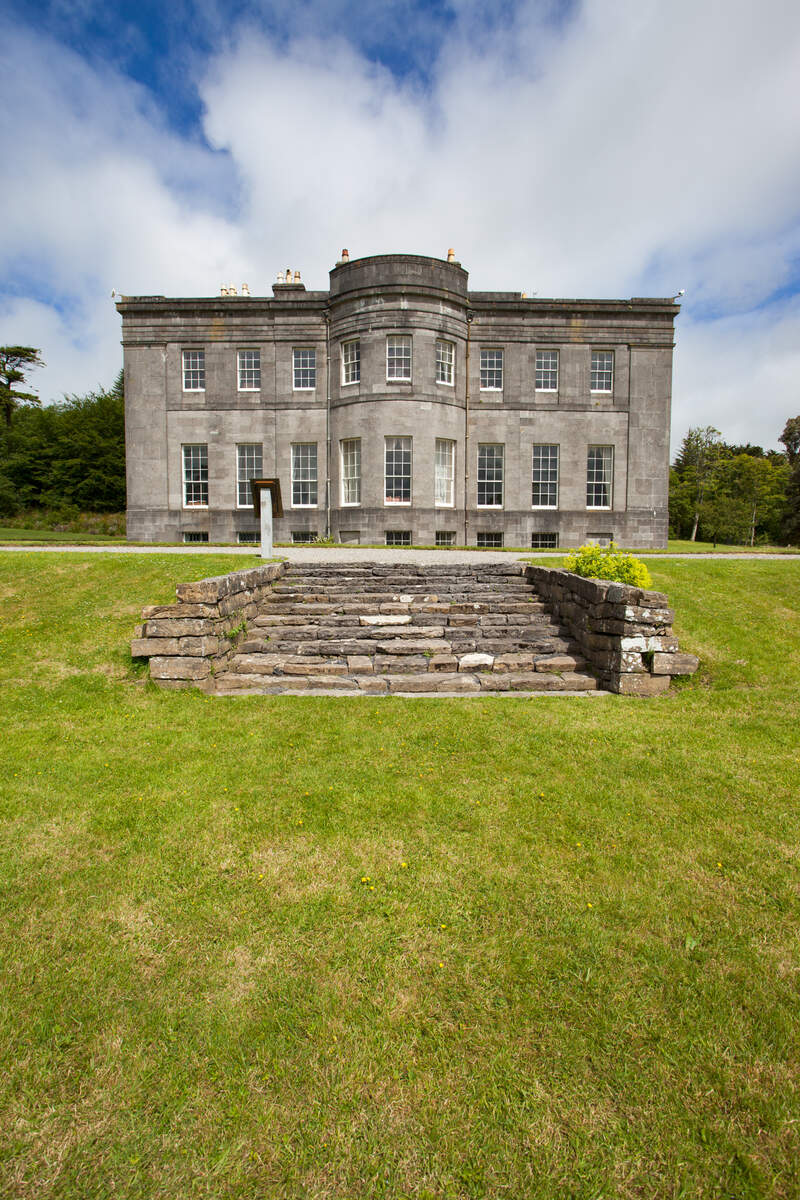
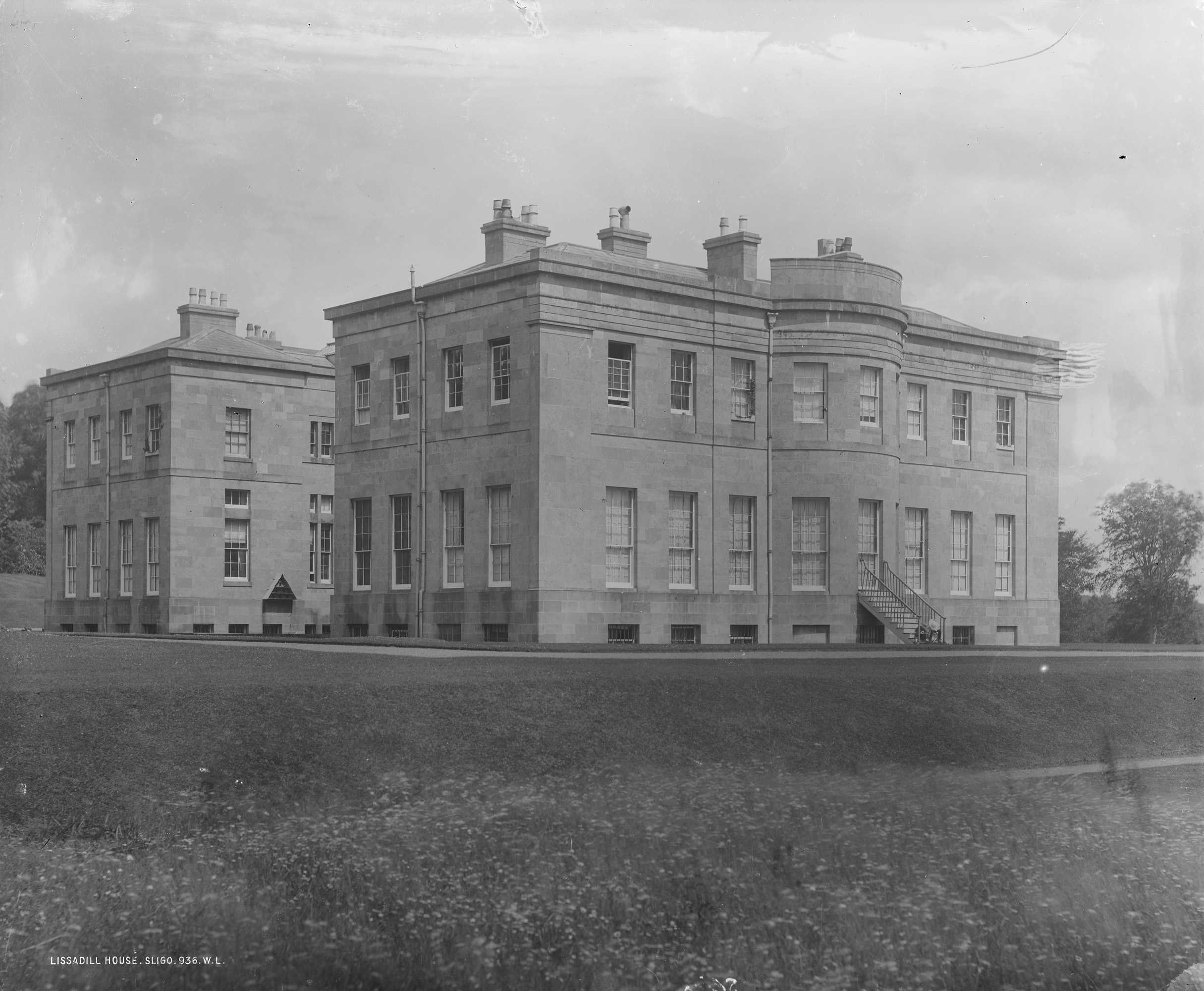
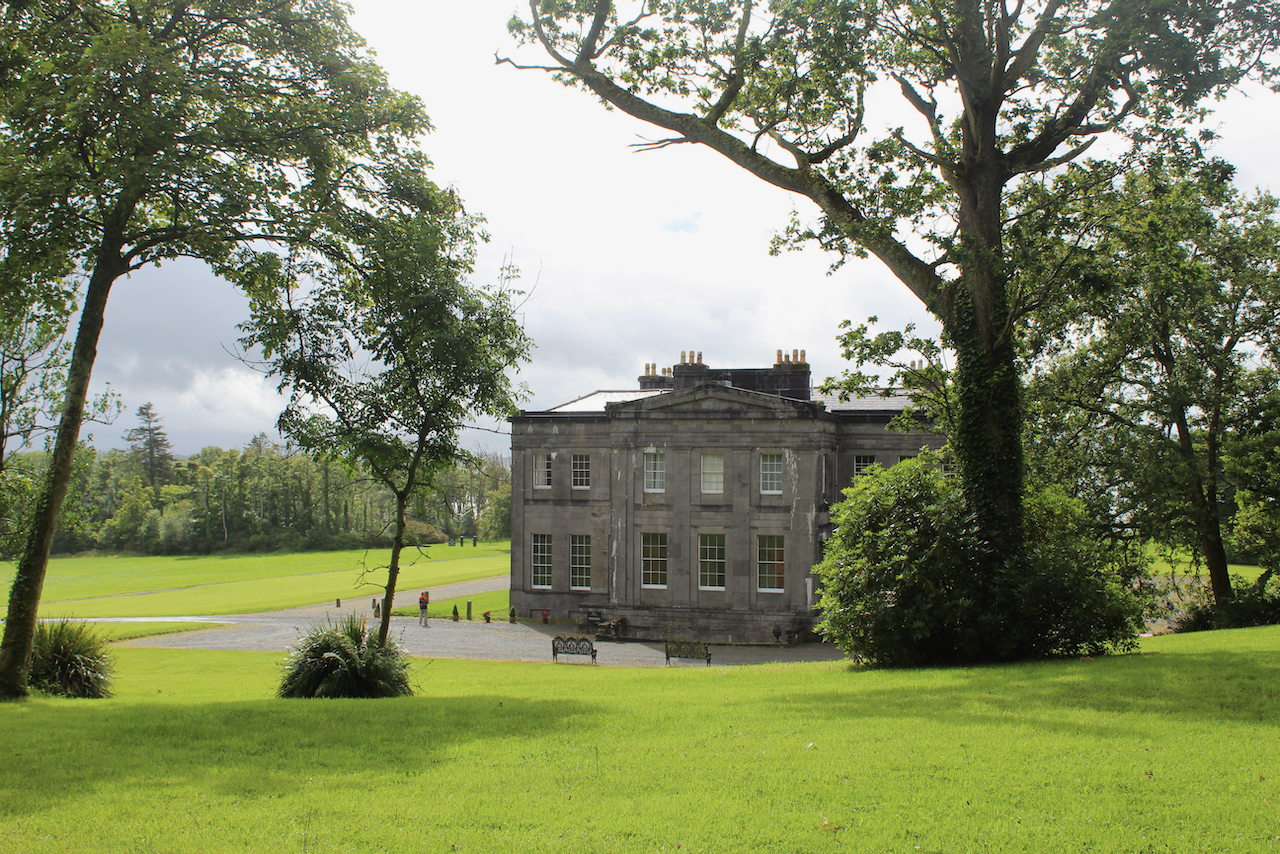
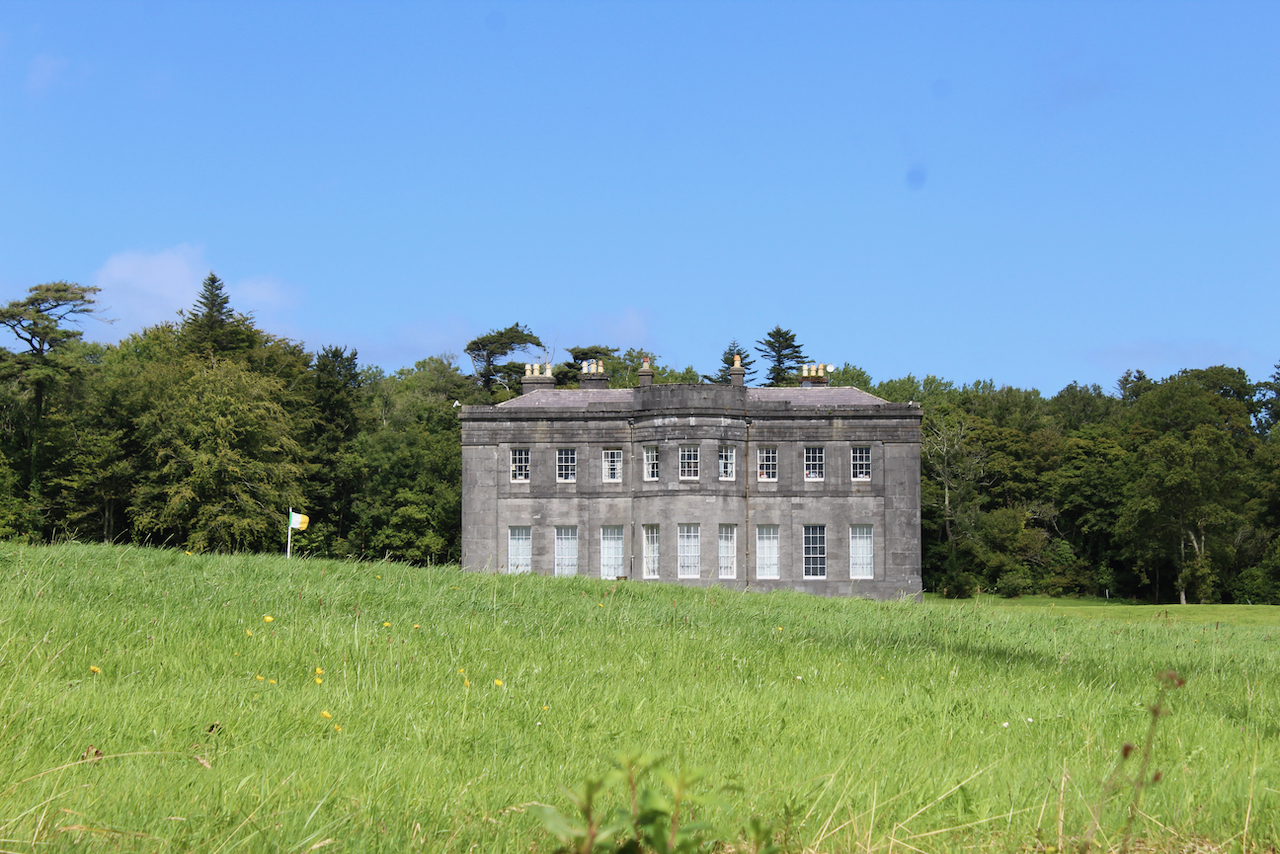
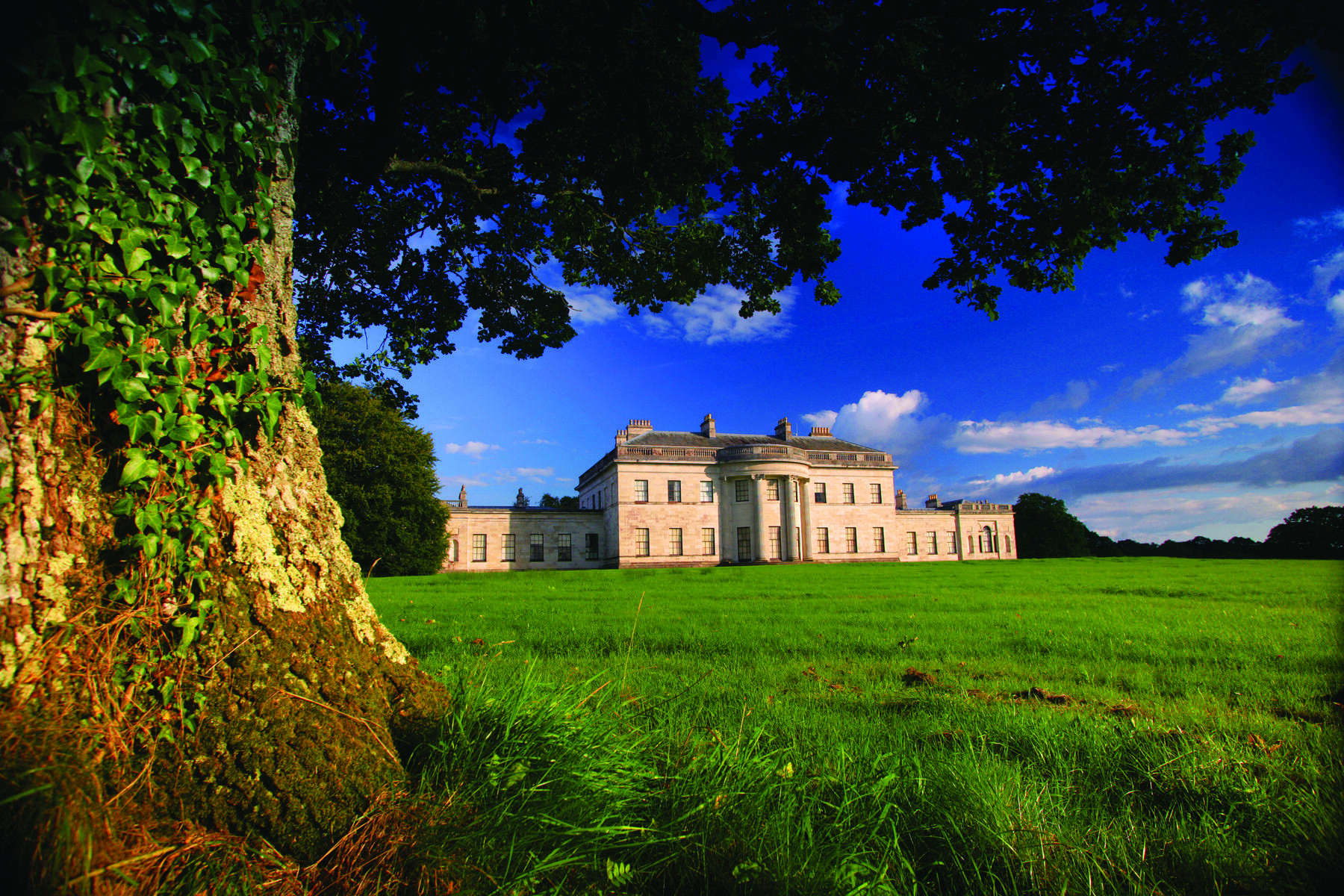
Lissadell House and Gardens County Sligo Ireland, Photograph created by Peter McCabe, Tourism Ireland, 2015, taken from Ireland’s Content Pool care of Failte Ireland.This south elevation, facing the sea, has a three-bay central bow with a raised parapet and three-bays either side of the full height bow.Lissadell House, County Sligo circa 1865-1914 by Robert French, Lawrence Collection NLI L_IMP_0936.
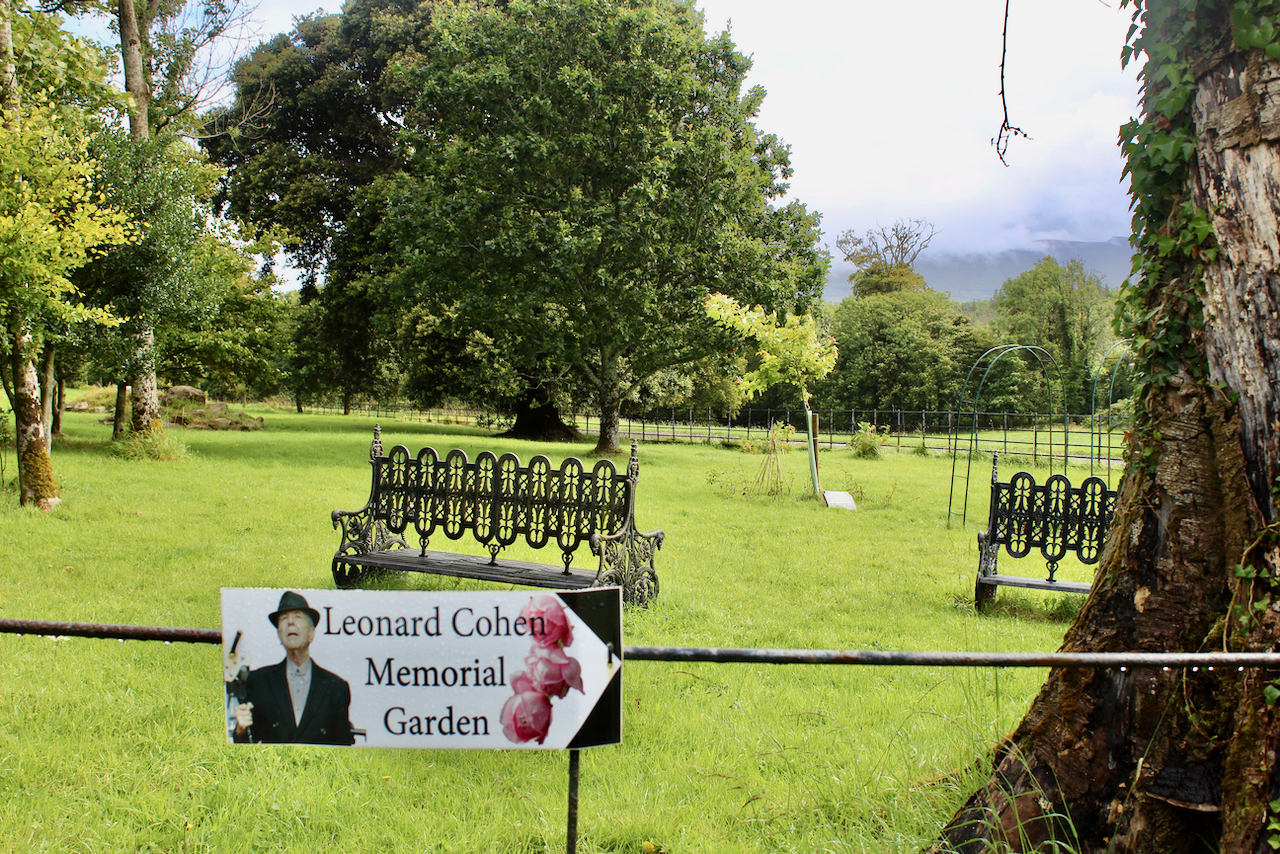
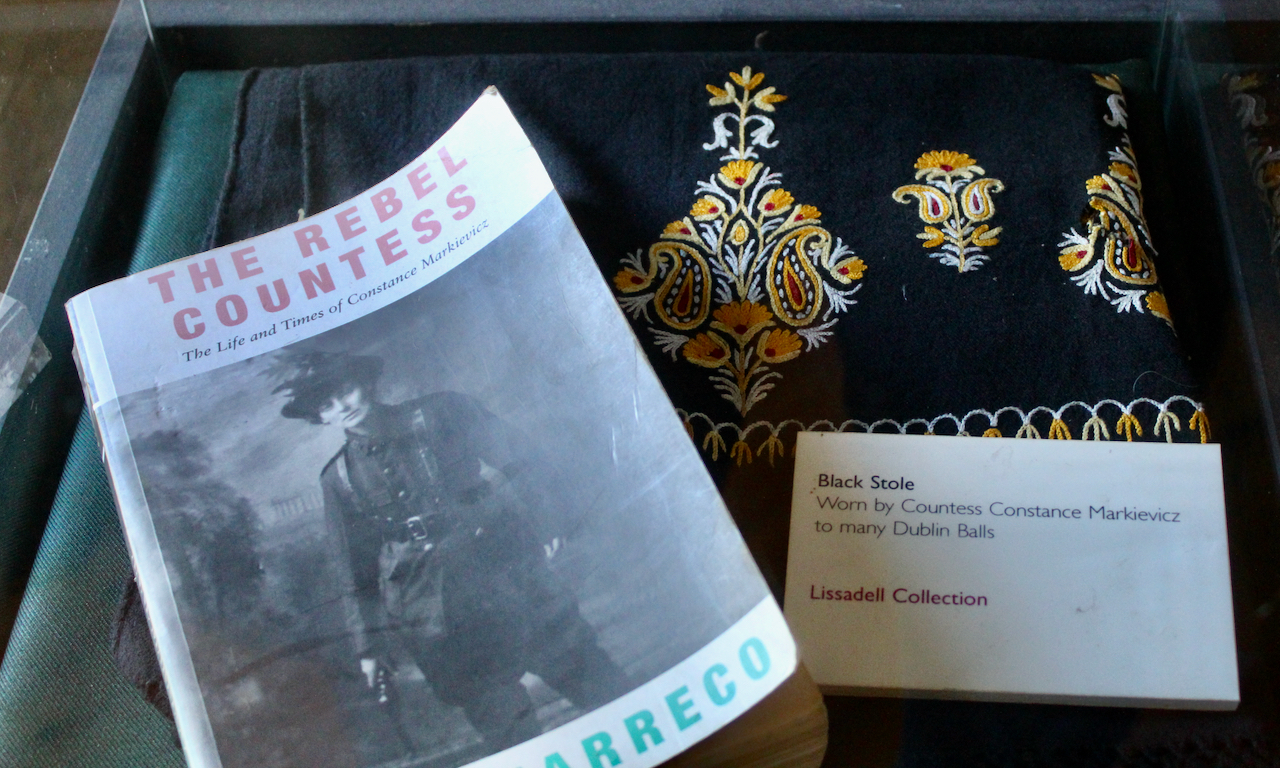
We visited Lissadell during Heritage Week 2022. I had been looking forward to seeing it as it has some amazing internal Classical architecture. It is most famous as the birthplace of Constance Markievicz, née Gore-Booth, the first woman senator in Ireland and fighter in the 1916 uprising, and also more recently as the host of a concert of Leonard Cohen. It was only sold out of the Gore-Booth family in 2004.
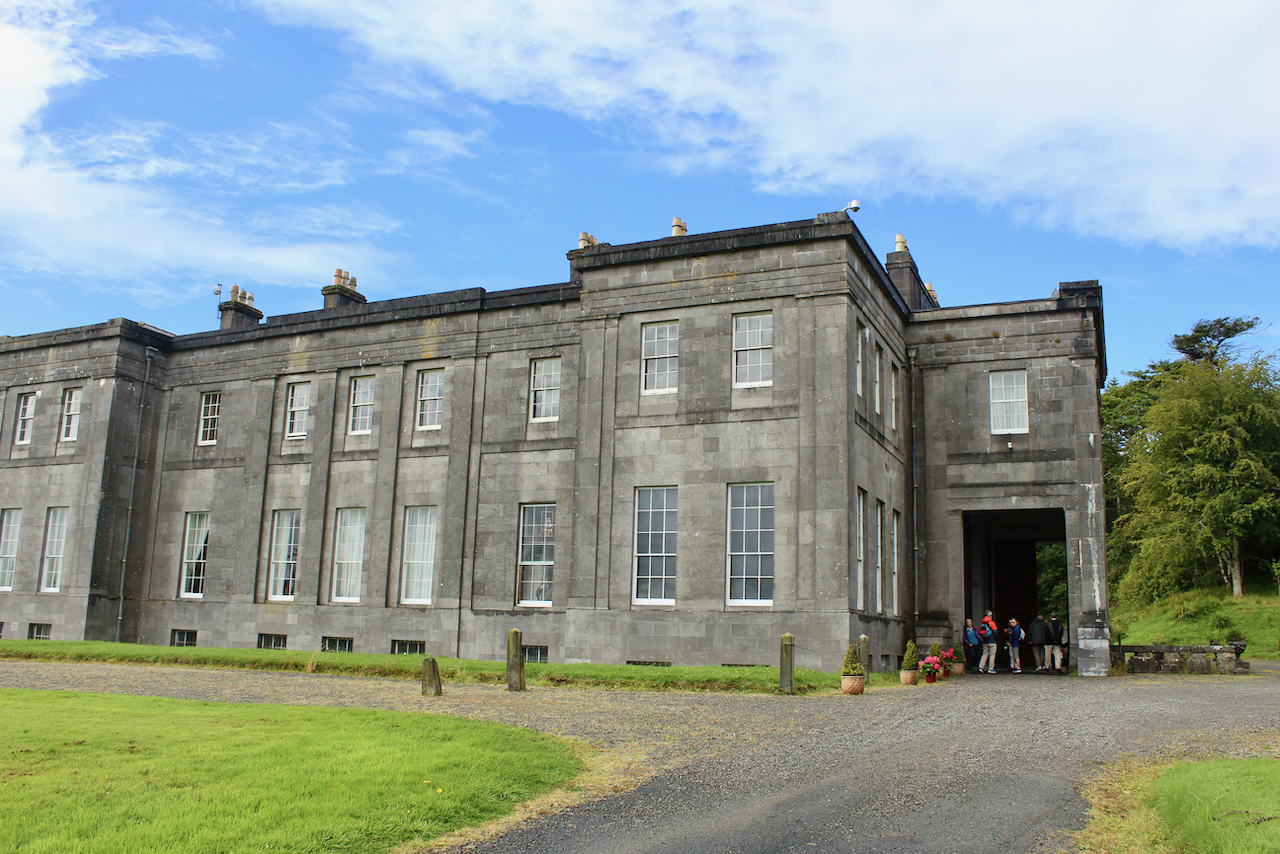
It was built in 1830-35 for Robert Gore-Booth (1805-1876), 4th Baronet, to the Greek Revival design of Manchester architect Francis Goodwin (1784-1835). It replaced an earlier house nearer the shore which itself replaced an old castle. It is a nine-bay two-storey over basement house built of Ballisodare limestone. [1]
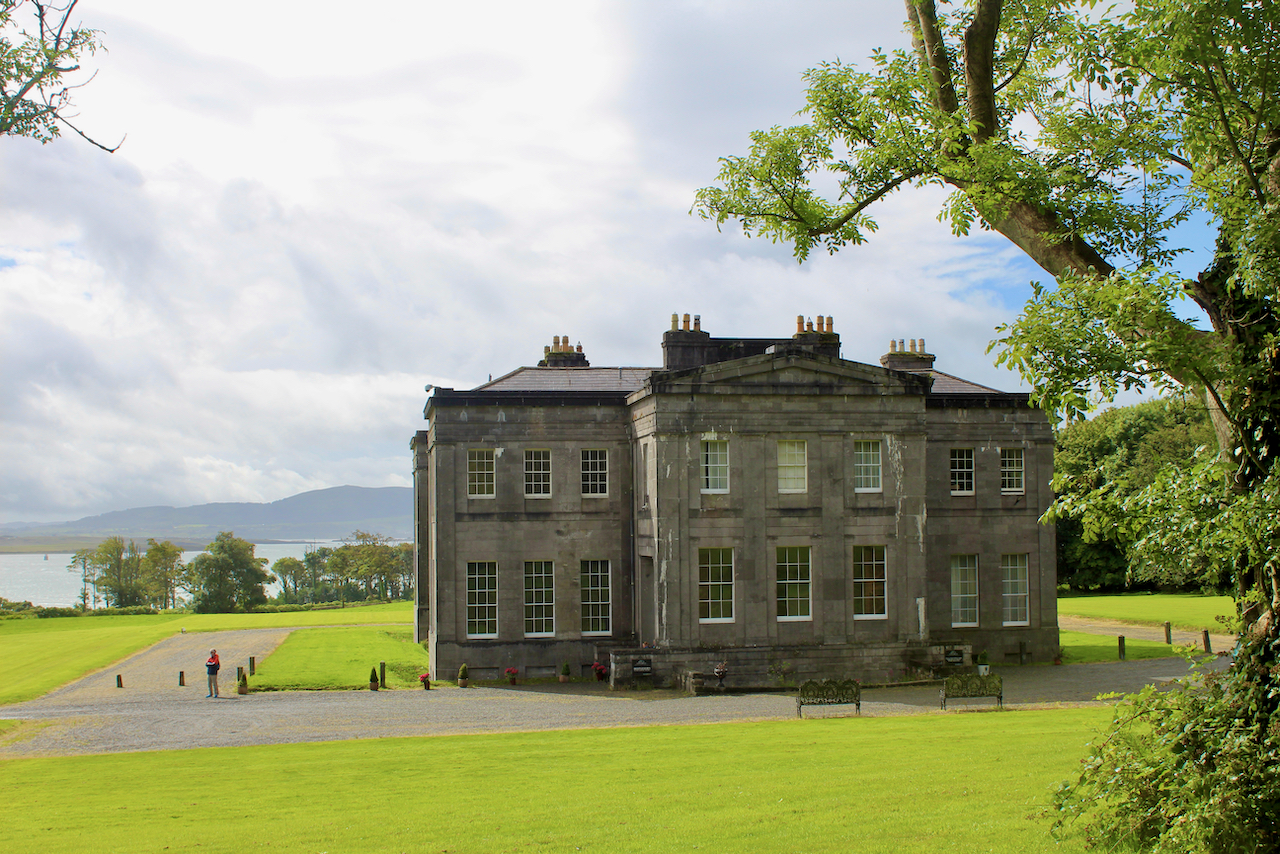
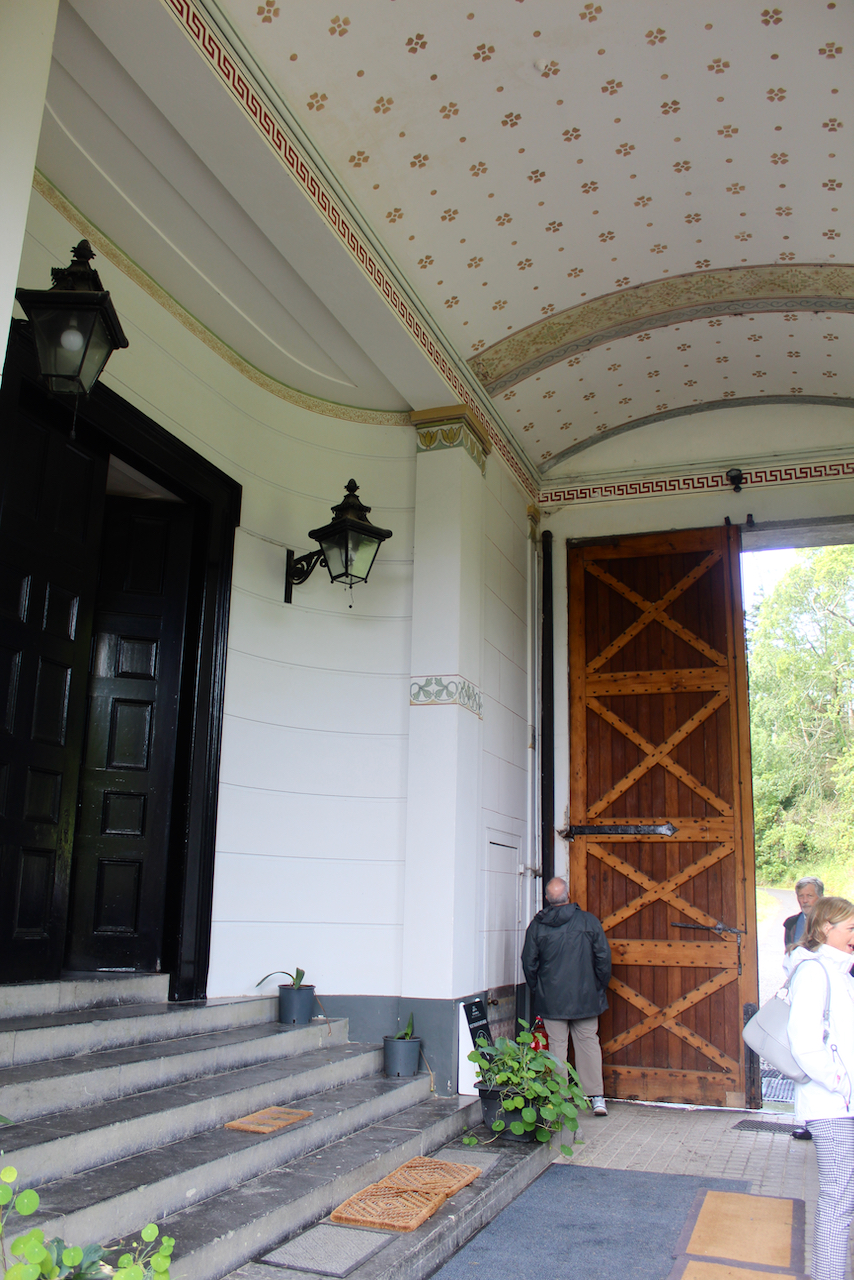
The entrance front (north) elevation has a three-bay pedimented central projection flanked by three-bay side sections. When one approaches on the path one can see that the lower storey is open to the east and west to form a porte-cochere. The house was described by Maurice Craig as being ‘…distinguished more by its solidity than by its suavity and more by its literary associations than by either.’ I find the crafted stone and the massive squareness of it beautiful.
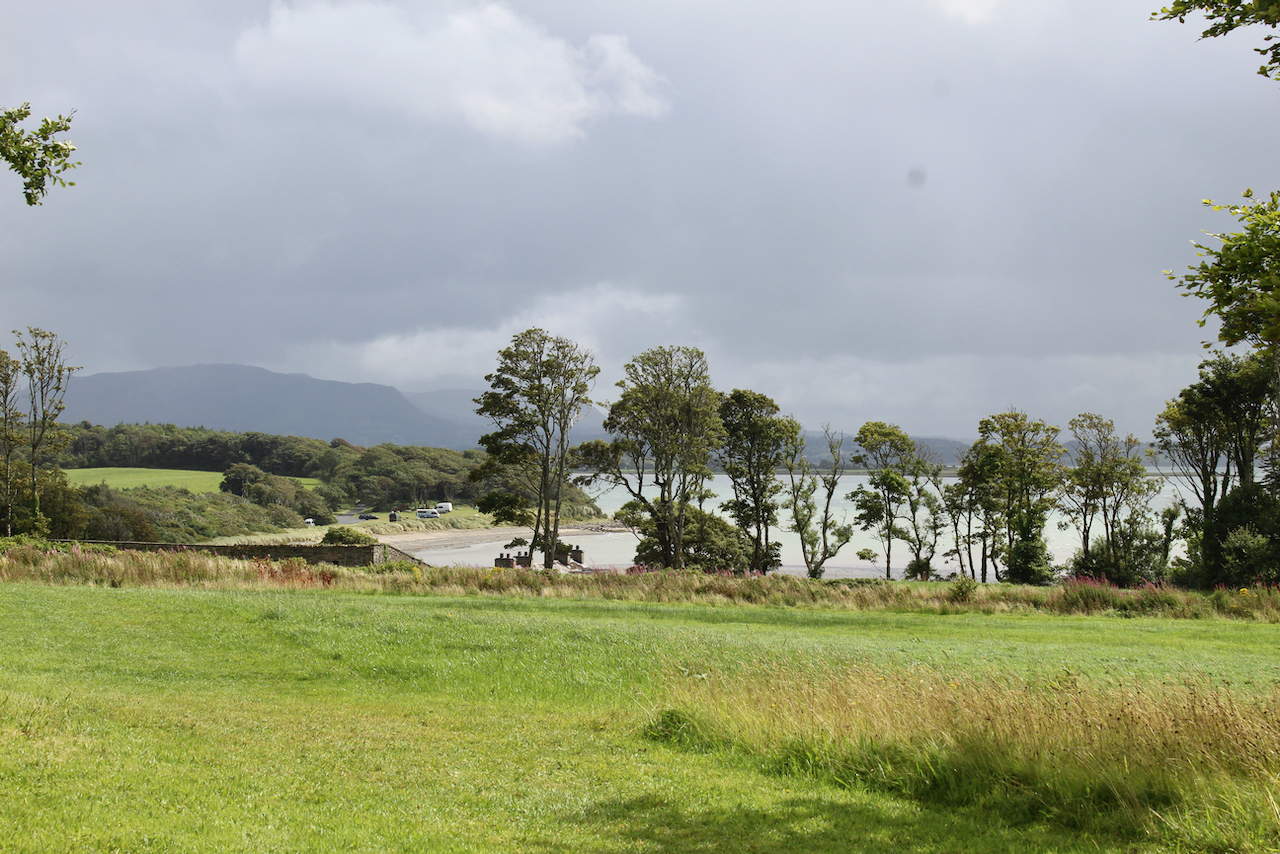
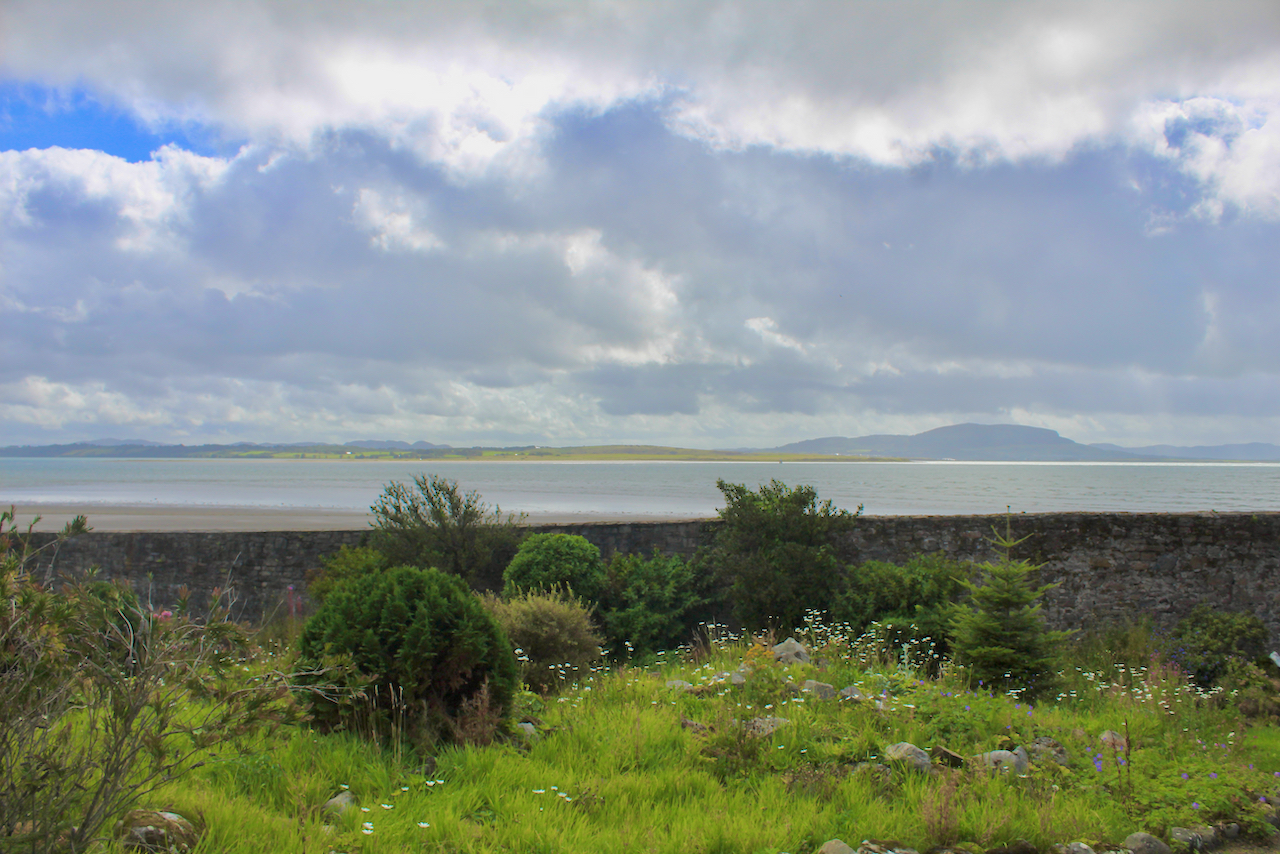
The east elevation which faces the sea has a five-bay central section between two-bay projections. The five-bay section contains a three-bay central breakfront with tall framing pilasters. Above the upper floor windows is a stepped stone feature that runs around three sides of the house.
Other former residents of the house deserve to be as famous as Constance.
Dermot James in his book The Gore-Booths of Lissadell tells us that the Gore-Booths are descended from Paul Gore of Manor Gore, County Donegal. He was MP for Ballyshannon in Donegal, and was created 1st Baronet Gore, of Magherabegg, County Donegal in 1621/22. He married a niece of the 1st Earl of Strafford, Isabella Wickliffe.
Paul Gore of Manor Gore had seven sons, and all married well. His oldest son, Ralph, 2nd Baronet, became the ancestor of the earls of Rosse, who are in Birr Castle[another section 482 property I visited]. Arthur, the second son, became the ancestor of the Earls of Arran, a family that subsequently inherited the very large Saunders Court estate near Ferrycarrig in County Wexford. He was MP for County Mayo and became 1st Baronet Gore, of Newtown Gore, Co. Mayo. A third son, Henry, married the eldest daughter of Robert Blaney of Monaghan and was the ancestor of the earls of Kingston. Two further sons settled in County Kilkenny, giving the family name to Goresbridge, and the seventh son settled in County Mayo and, according to a memorial tablet in Killala Cathedral, married Ellinor St. George of Carrick, County Leitrim, and he died at his residence, Newtown Gore, later named Castle Gore and Deel Castle, near Killala, County Mayo in 1697.
The fourth son, Francis Gore (1612-1712), lived in Ardtarman, County Sligo, which still stands and has been renovated for habitation and self-catering accommodation. [2]
Dermot James tells us that Francis managed to keep on good terms with both the Cromwellians and Royalists during the Civil War, avoiding an engagement with either cause. After the Restoration of Charles II, he was rewarded with grants of land in Sligo, Mayo and Kilkenny, and in 1661 he was knighted and also became M.P. for Sligo. He settled at Ardtarmon, two miles west of Lissadell. He fought for the crown in Lieutenant-Colonel Coote’s Regiment.
Francis and Anne had a son, Robert (1645-1720). He married Frances Newcomen and they had a son, Nathaniel (1692-1737). He married Letitia (or Lettice) Booth, only daughter and heiress of Humphrey Booth, of Dublin. [3] She must have inherited quite a bit since later generations added her surname “Booth” to their surname. In fact, the prosperous Booth estates in the English midlands were added to the Sligo property.
Robert and Lettice named their son “Booth” (1712-1773). In 1760 Booth Gore was created 1st Baronet Gore of Lissadell, County Sligo.
Booth married Emilia Newcomen, daughter of Brabazon Newcomen, and they had several children. Their first son, also named Booth, who became 2nd Baronet, died unmarried, and his brother Robert Newcomen inherited and added Booth to his surname in 1804, when he succeeded as the 3rd Baronet.
Robert Newcomen Gore-Booth inherited in his 60s, and only then married Hannah Irwin from Streamstown, County Sligo (ninety years later this property became part of the Gore-Booth estate). Their daughter Anne married Robert King, 6th Earl of Kingston, son of the 1st Viscount Lorton.
The eldest son, Robert (1805-1876) became the 4th Baronet, and he built the house at Lissadell which we see now. He was Lord Lieutenant for County Sligo and also MP for Sligo.
The 4th Baronet married Caroline King, daughter of Robert Edward King, 1st Viscount Lorton, whom we came across in King House in County Roscommon. Sadly, she died the following year in 1828. Two years later he married Caroline Susan Goold, daughter of Thomas Goold (or Gould). Her sister Augusta married Edwin Richard Wyndham-Quin, 3rd Earl of Dunraven, of Adare Manor in Limerick.
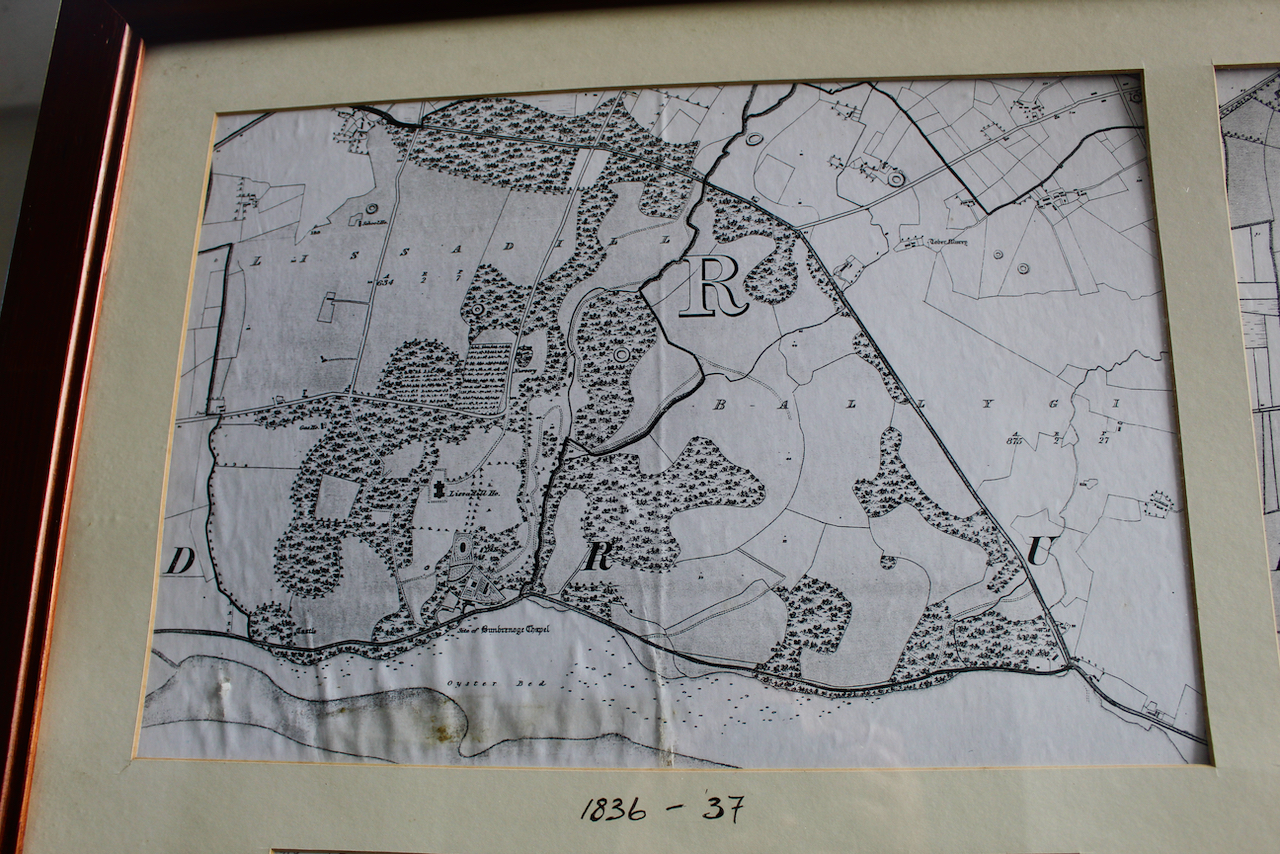
According to Dermot James, “Henry Coulter described Lissadell before Robert inherited the estate as ‘wild and miserable and poor looking.’ But within a few decades Sir Robert had demonstrated ‘the immense improvement which may be made in the appearance of the country and the quality of the soil by the judicious expenditure of capital.’ Coulter continued, considering the estate to be “one of the most highly cultivated and beautiful in the United Kingdom… If the excellent example set by Sir Robert Booth as a resident country gentleman – living at home and devoting himself to the improvement of his property – were more generally followed by Irish landlords then indeed the cry of distress which is so often raised… would never more be heard, even in the west of Ireland.” [Henry Coulter, The West of Ireland published 1862]. [4]
Lissadell, 2022.
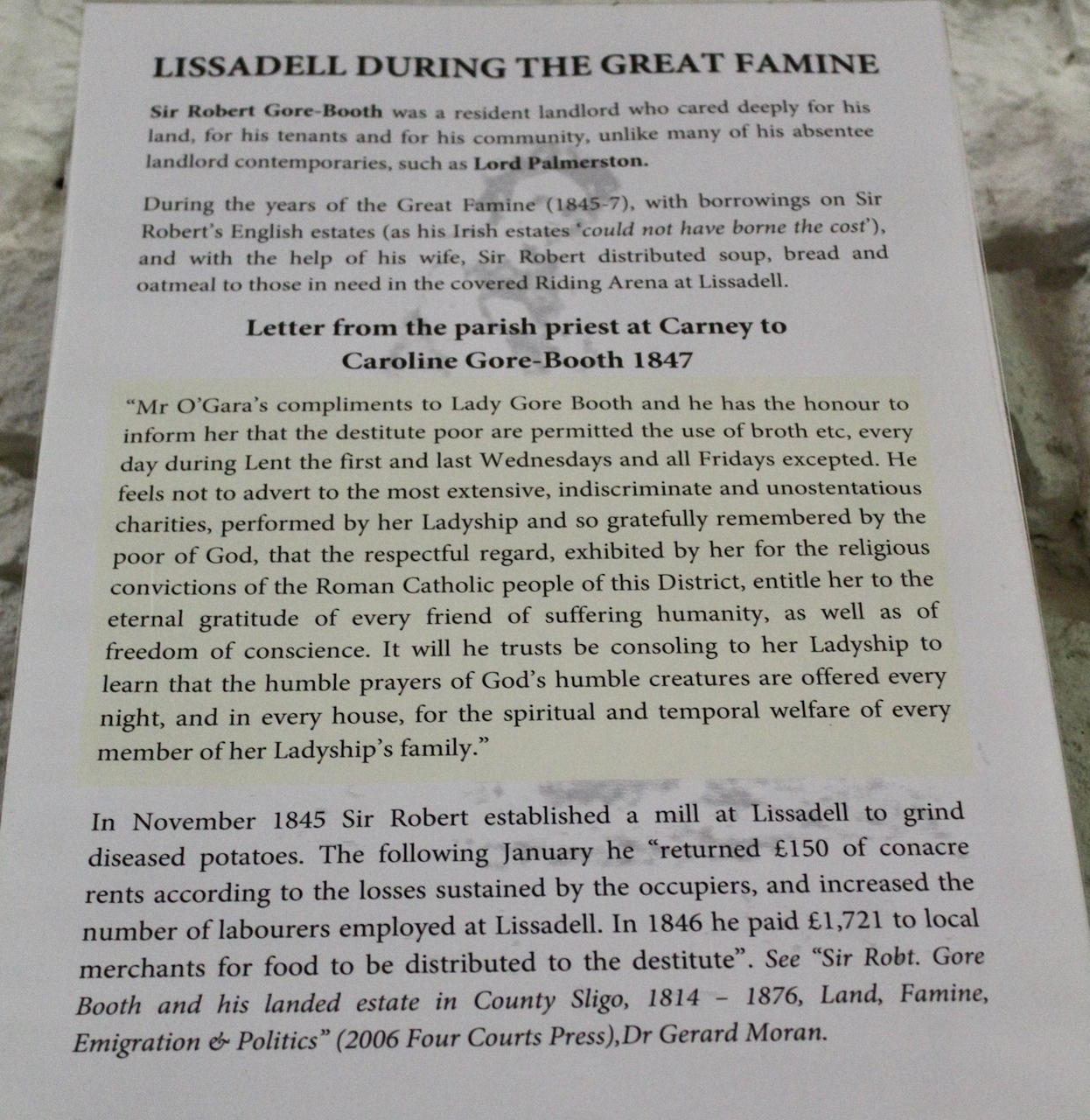
Robert was in situ at the time of the Great Famine in the 1840s. He did send some tenants to North America, and was later criticised for the evictions, but on the whole he was a generous landlord. He ran a soup kitchen and provided seed for crops. When his first wife Caroline died the Sligo Journal called her “a ministering angel among the people, her charitie was unbounded and her exertions to relieve the wants and sufferings of the distressed excited the admiration of all classes” when “the dark clouds of pestilence and death covered the land.”
Lissadell, 2022.
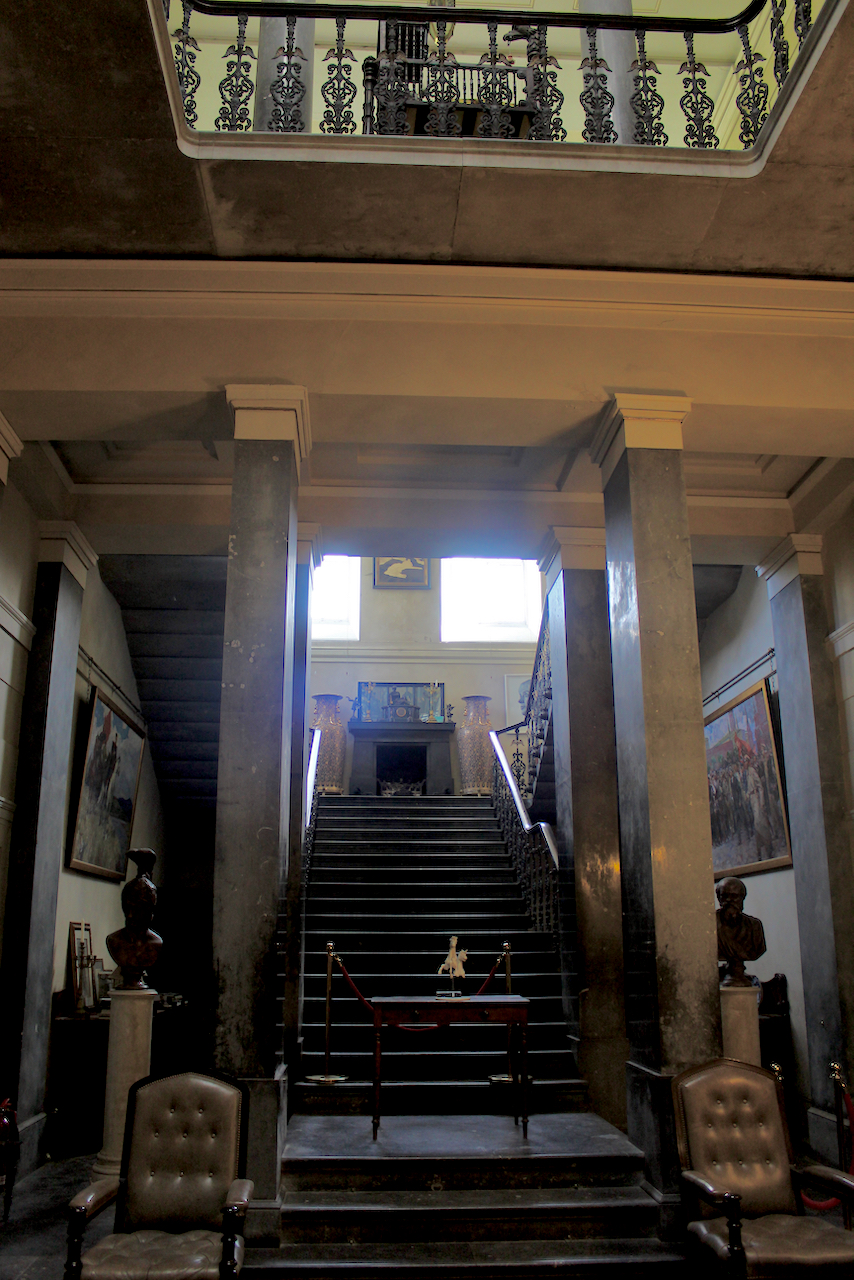
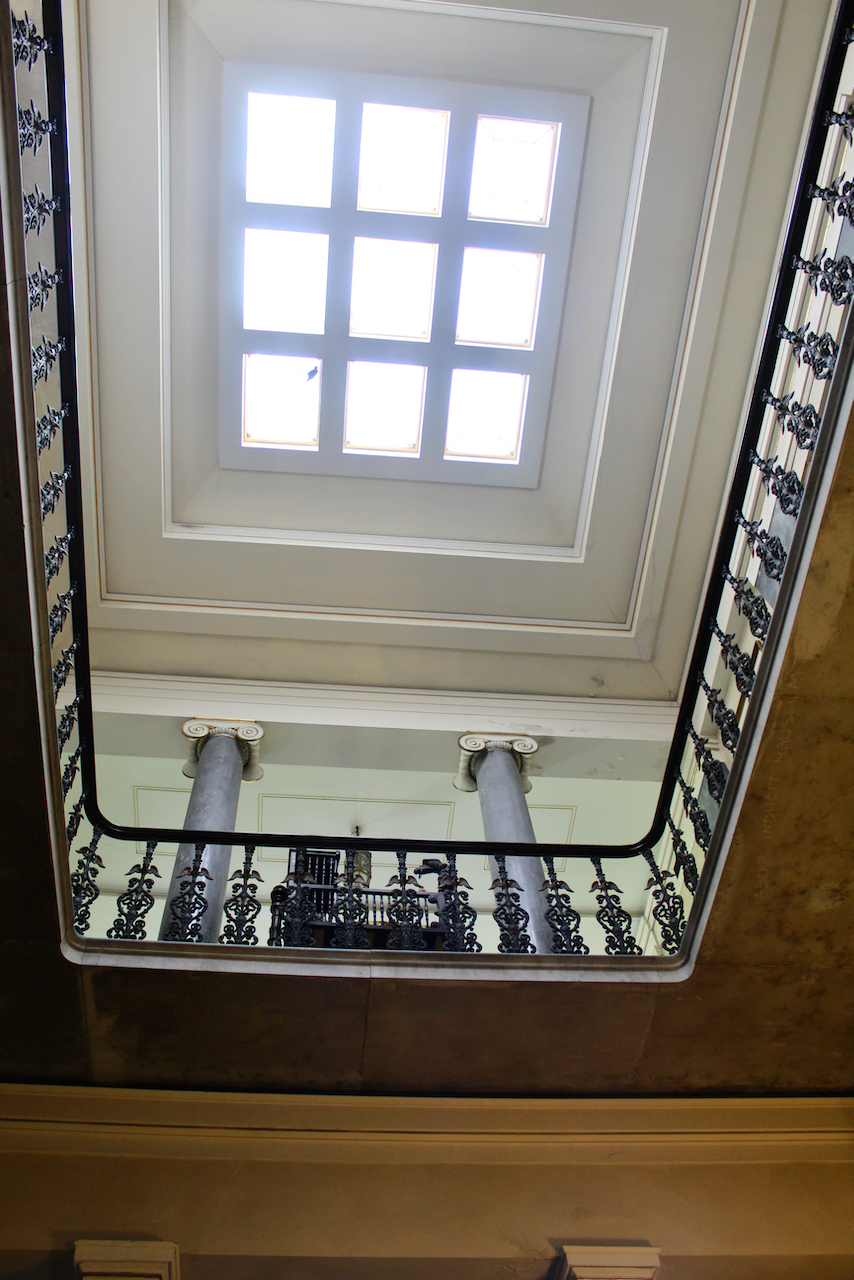
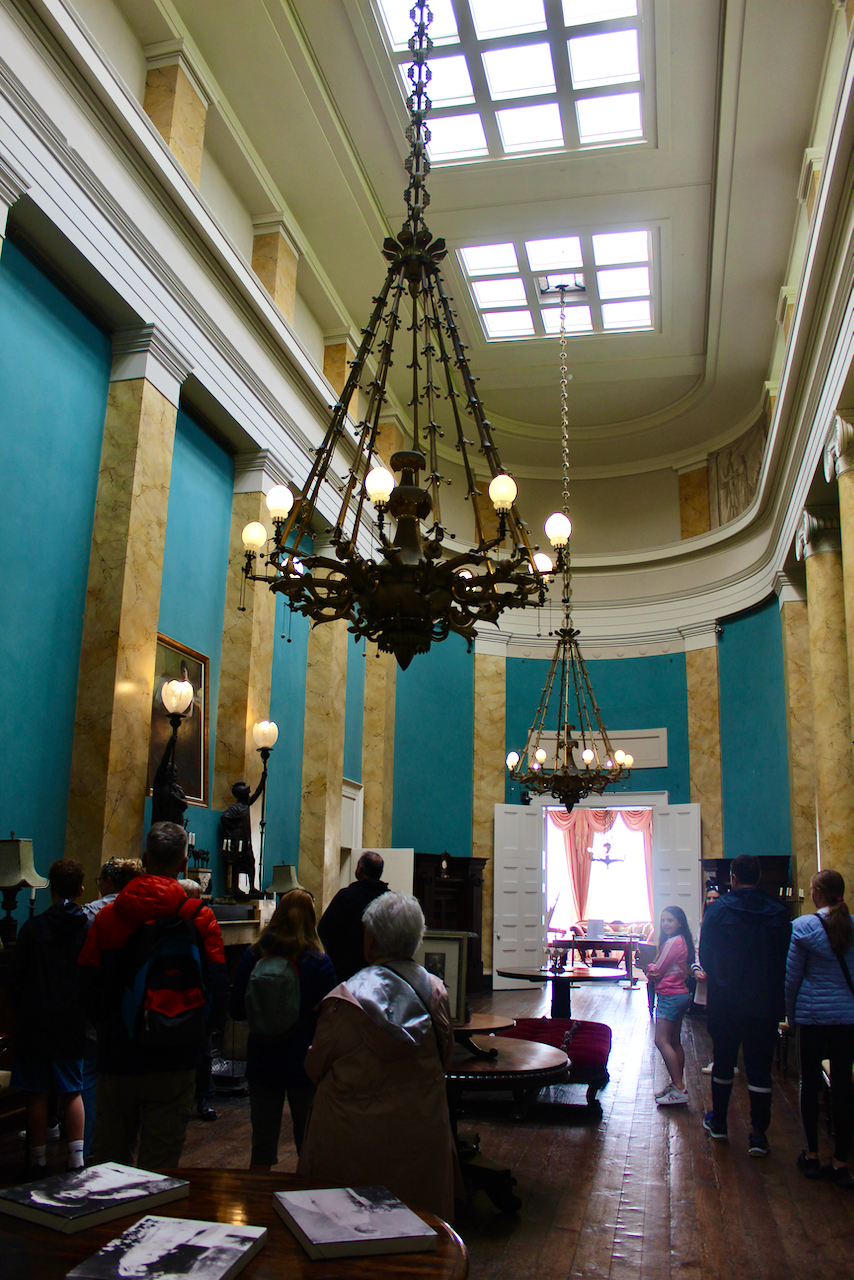
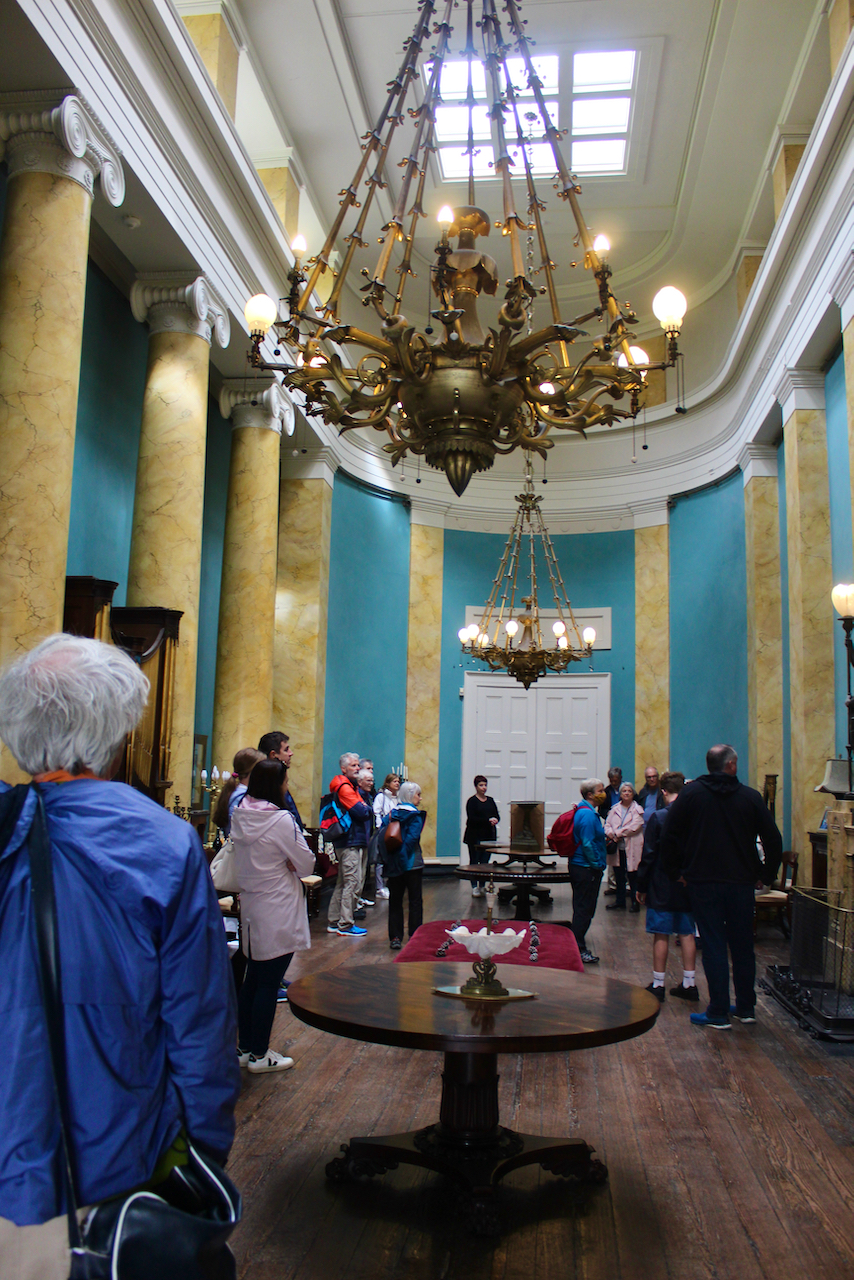
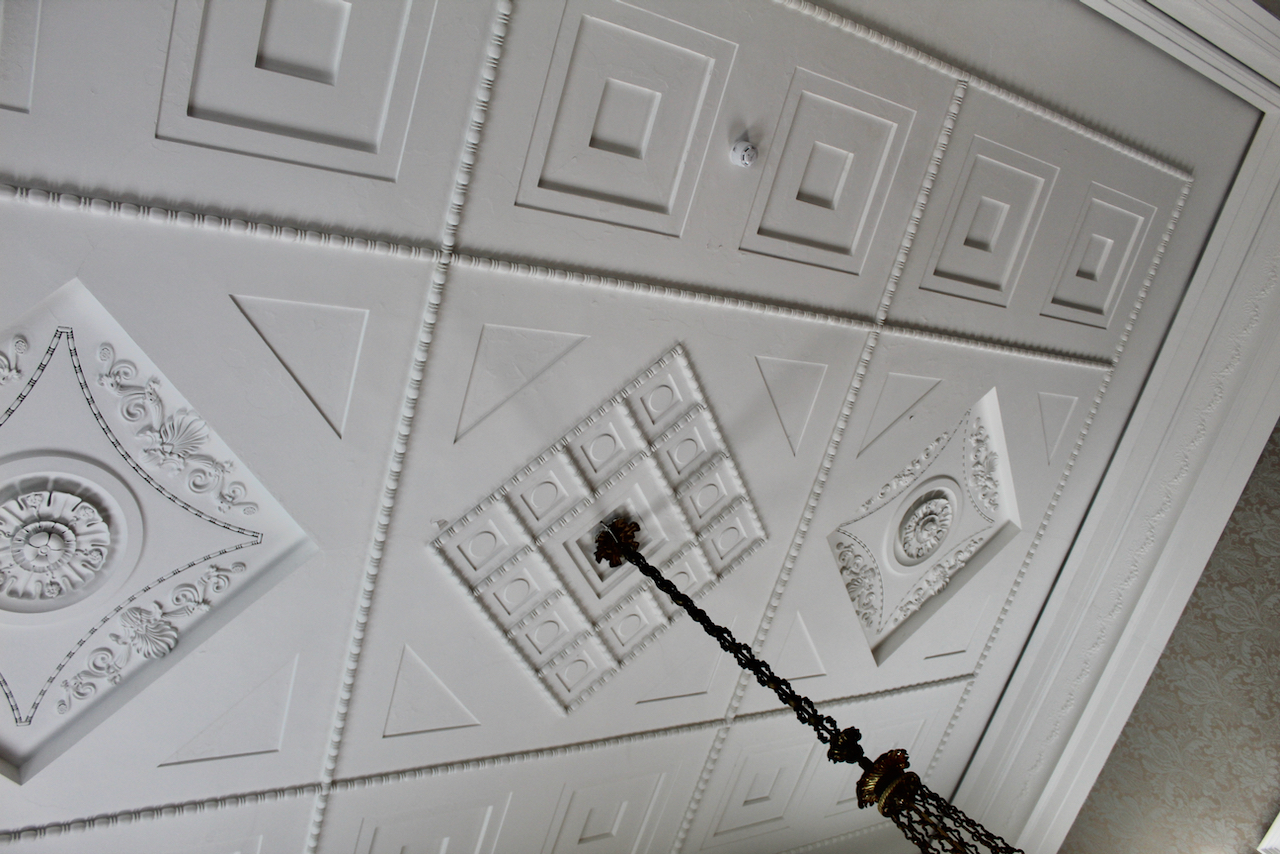
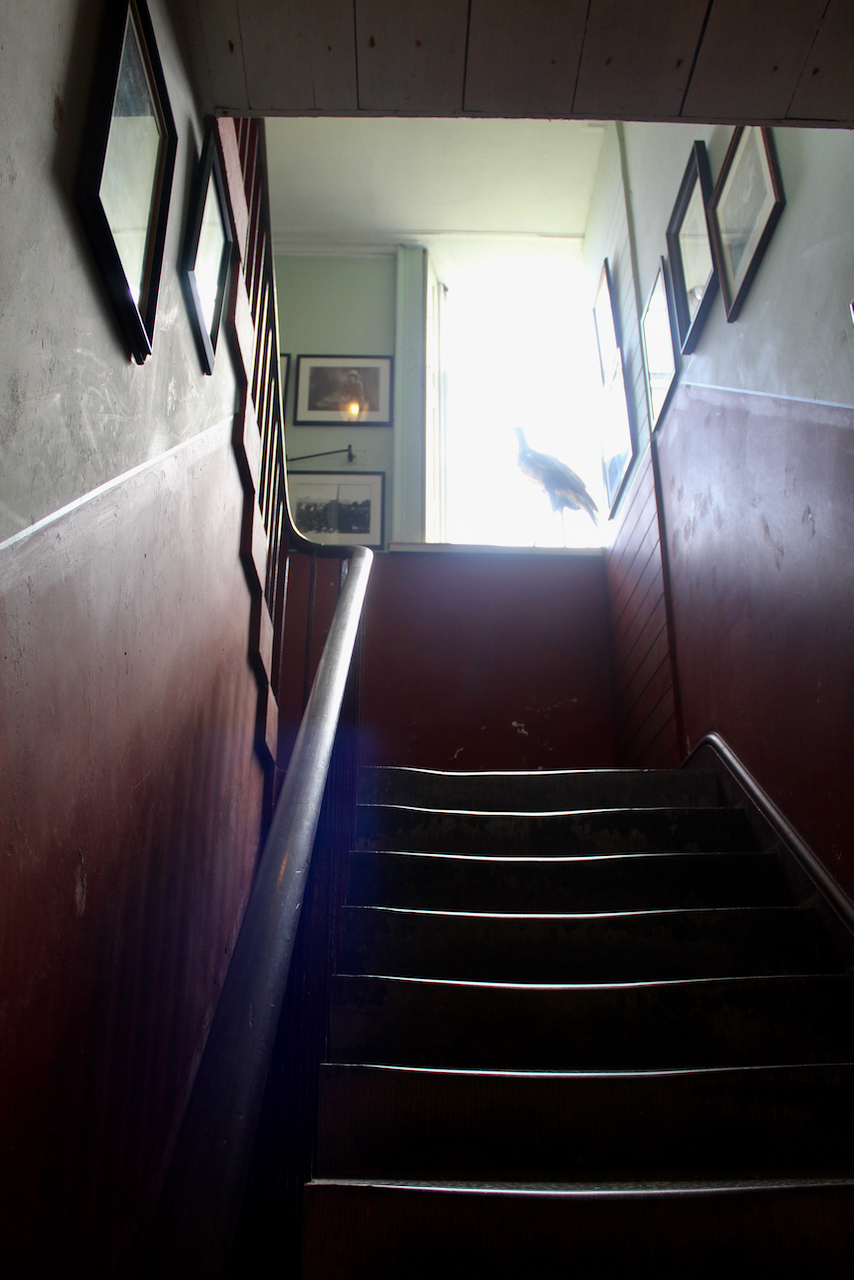
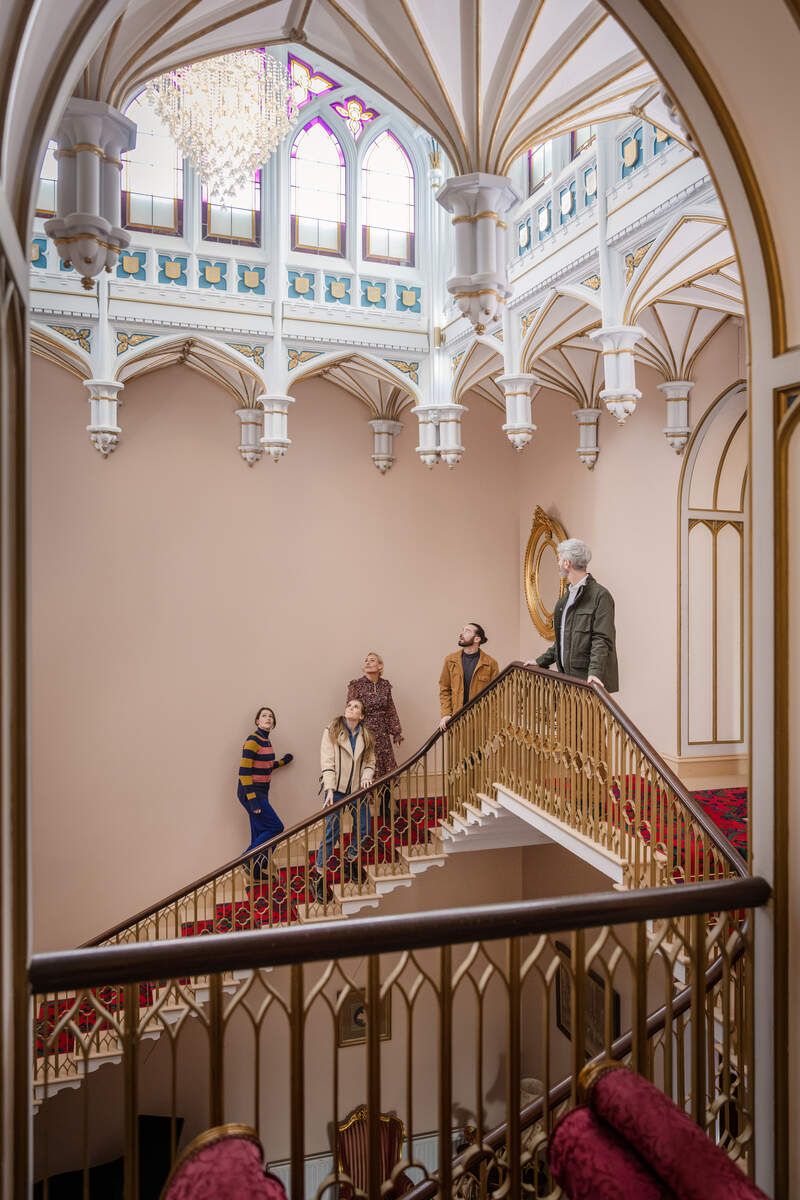
Dermot James writes: “If the exterior of Lissadell House is seen by some to be disappointingly plain, Goodwin’s design ensured that the entrance to the interior is all the more unexpected and dramatic. The visitor is met by a spectacularly high entrance hall decorated with Doric and Ionic columns from which there is an impressive staircase in Kilkenny marble with cast iron balustrade leading to the building’s most important feature, the great gallery, lit by sky-lights high above. On Goodwin’s plans, the gallery is marked as the music room, reflecting one of Sir Robert’s tastes, where an organ was installed. In the main, the house then remained largely unaltered for more than a century and a half.“
Mark Bence-Jones describes the entrance stair hall in his Guide to Irish Country Houses (1988) as a lofty two storey hall, partly top-lit, with square Doric columns below and Ionic columns above and double staircase of Kilkenny marble.
In the book Great Irish Houses, with forewards by Desmond FitzGerald, and Desmond Guinness published by IMAGE Publications in 2008, we are told that the scale of the stair hall is such that, unusually, a large fireplace was added to the return landing. The iron balusters are adorned with golden eagles.
Sir Robert took an interest also in the garden and Lord Palmerston of nearby Classiebawn would send him seeds from overseas. He sold some of the property in England and expanded his property in Ireland.
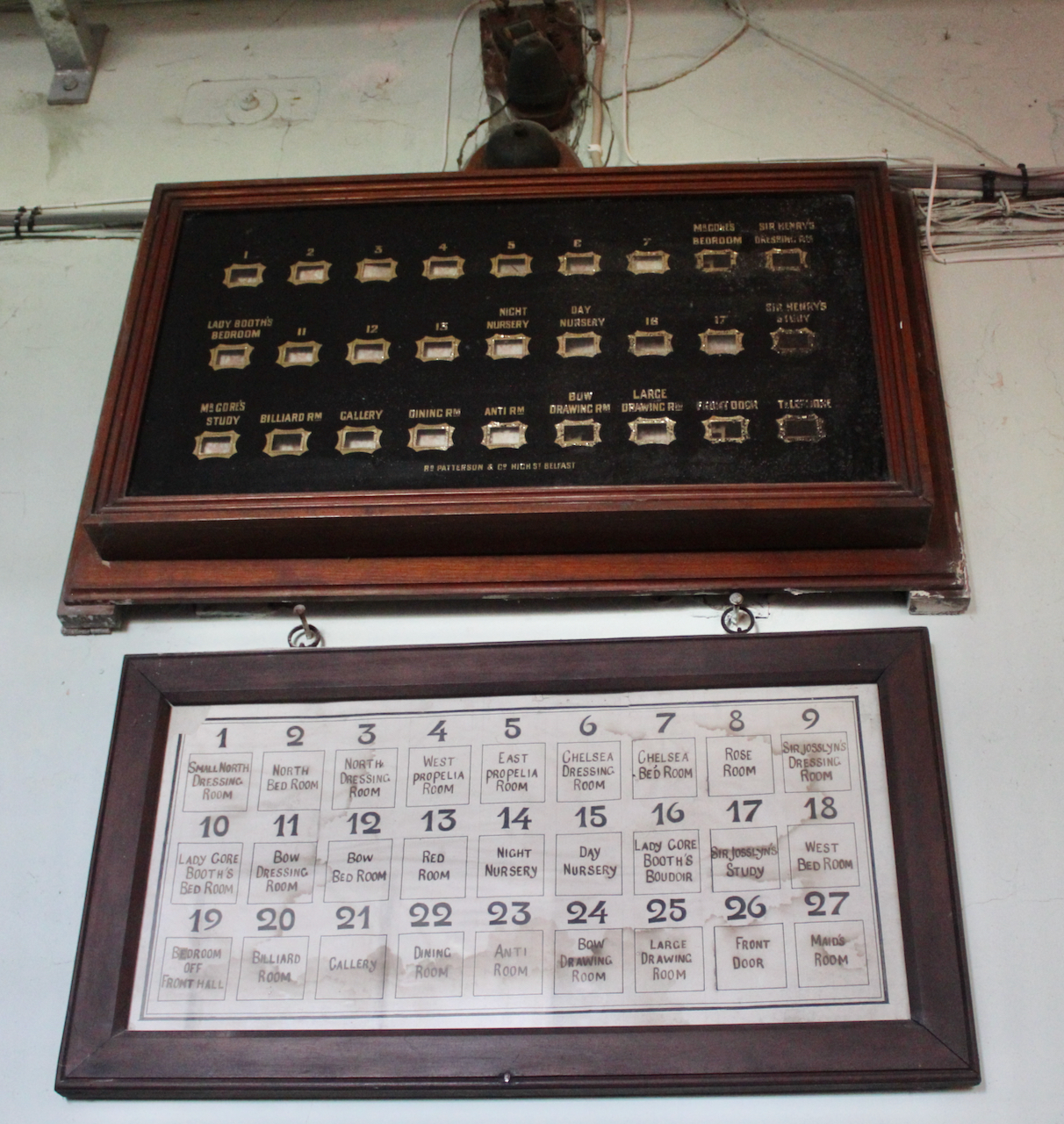
Dermot James tells us that when serving as MP Robert went regularly to London and brought his family and also servants. His servant Kilgallon wrote about the packing up: “They took all the silver plate. It was quite a business packing all up. They had boxes specially made for them. The housekeeper did not go as there was a housekeeper for the London house, a Mrs Tigwell. They took the first and second housemaids, house steward, groom chambers, under butler, and first and second footmen and steward’s room boy. All the other servants were put on board [reduced] wages [but] they were allowed milk and vegetables.” [6]
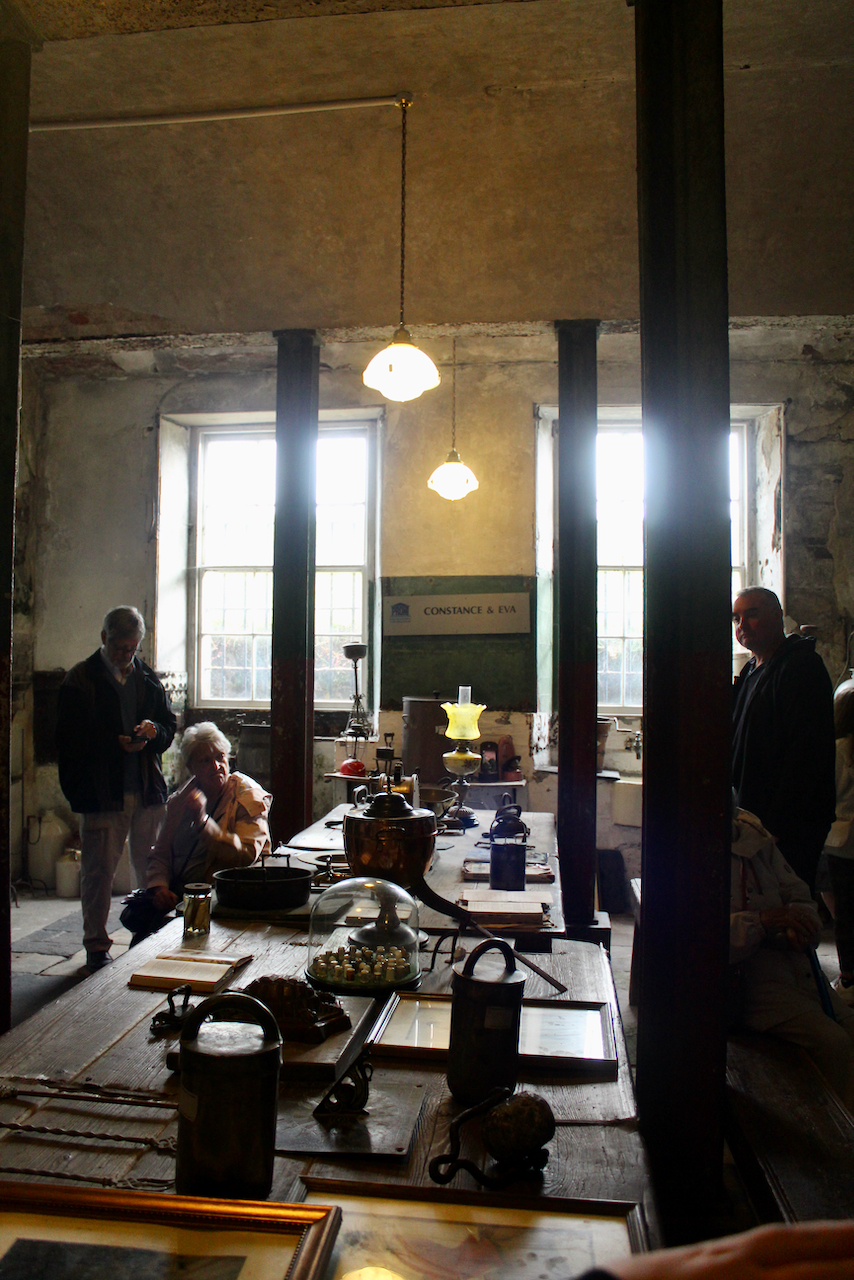
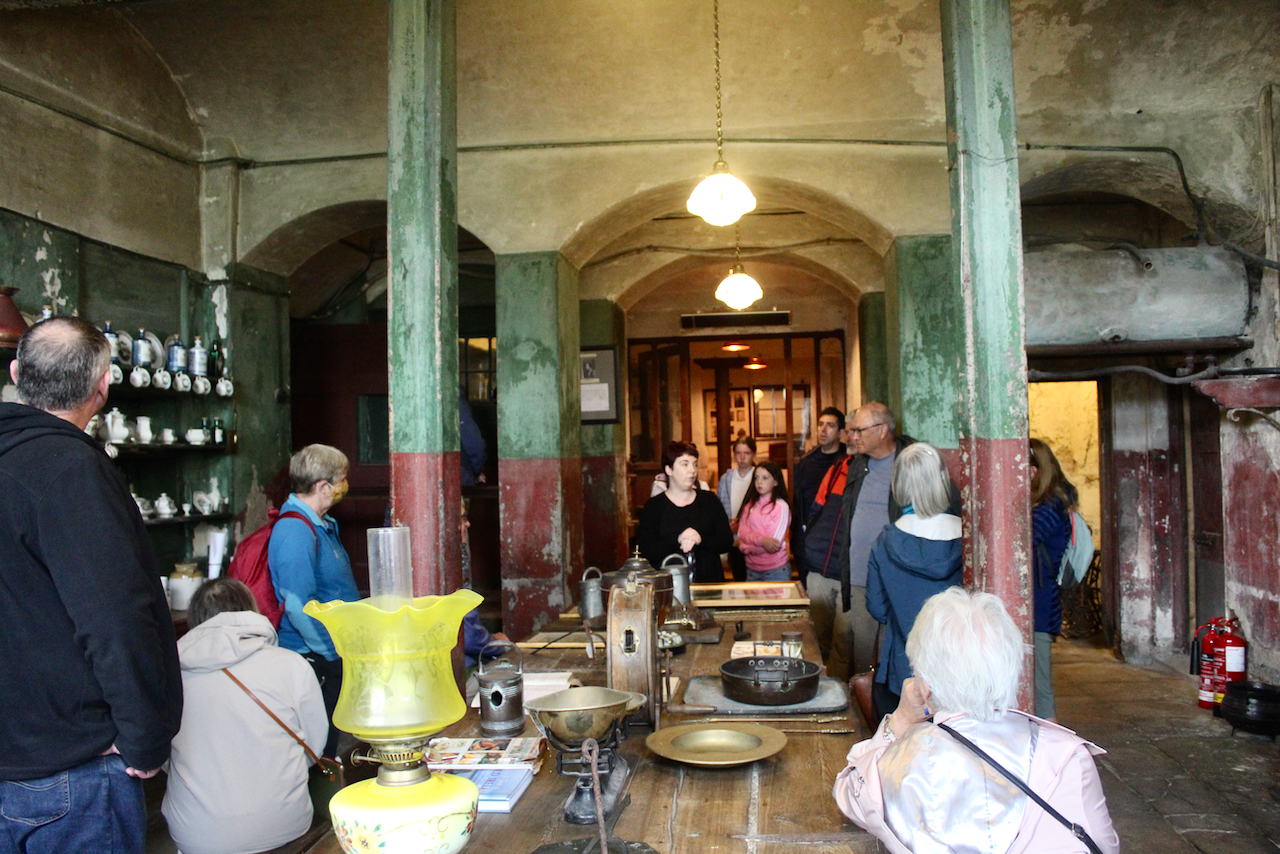
Kilgallon also described some details about how the Lissadell household was then being run, which is described by Dermot James: “The servants were managed by the house steward, Mr Ball, who engaged all the servants, paid their wages, and dismissed them when necessary. His duties included ordering all the wine for the house and acting as wine waiter at dinners. Ball supervised a small army of footmen, grooms, maids, etc. The groom chambers carved, and with the footmen, waited at all meals, despatched the post, opened the newspapers and ironed them. Their other duties included attending the hall door and polishing the furniture in the main rooms. One of the footmen was also the under-butler who kept the dinner silver in order and laid the dinner table, making sure that plates intended to be hot were kept warm in a special iron cupboard heated by charcoal kept outside the dining room door.”
The maids had to be up at 4am to prepare for carrying hot water to the bedrooms. There was a cook, pastry cook, kitchen maid, scullery maid and some kitchen boys. Kilgallon describes the meals, serving order and seating, and entertainment – there was a small dance in the servants hall once or twice a week, with beer and whiskey punch provided!
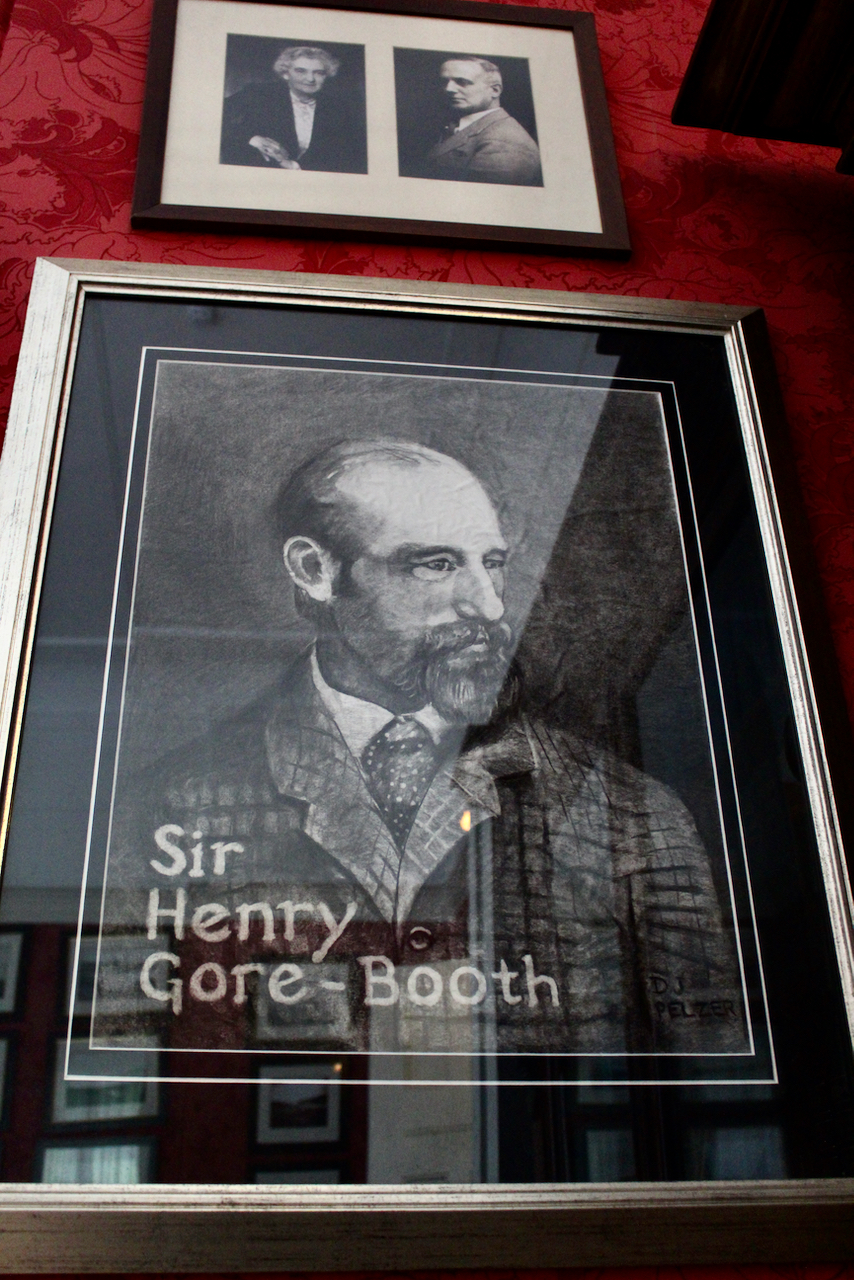
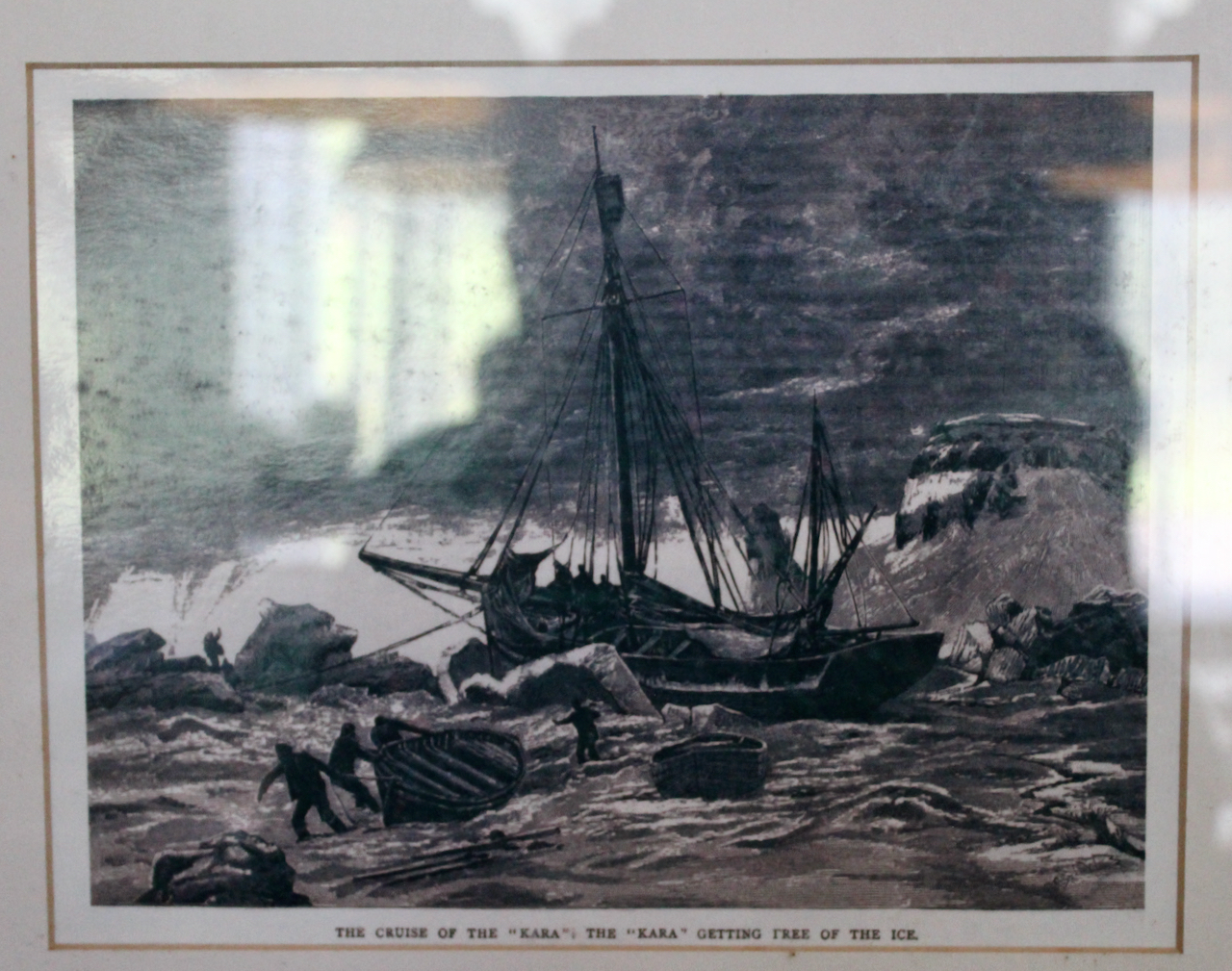
Henry William Gore-Booth (1843-1900) inherited in 1876 and became the 5th Baronet. He held the offices of High Sheriff of County Sligo, Deputy Lieutenant of County Sligo and Justice of the Peace for County Sligo. He was also a keen fisherman and Arctic explorer.
His sister Fanny Stella married Owen Wynne of nearby Hazelwood, County Sligo (which was designed by Richard Cassells and was recently owned by Lough Gill Distillery, until sold to American alcohol company Sazerac, which plans to save the house from dereliction).
Lissadell, 2022.
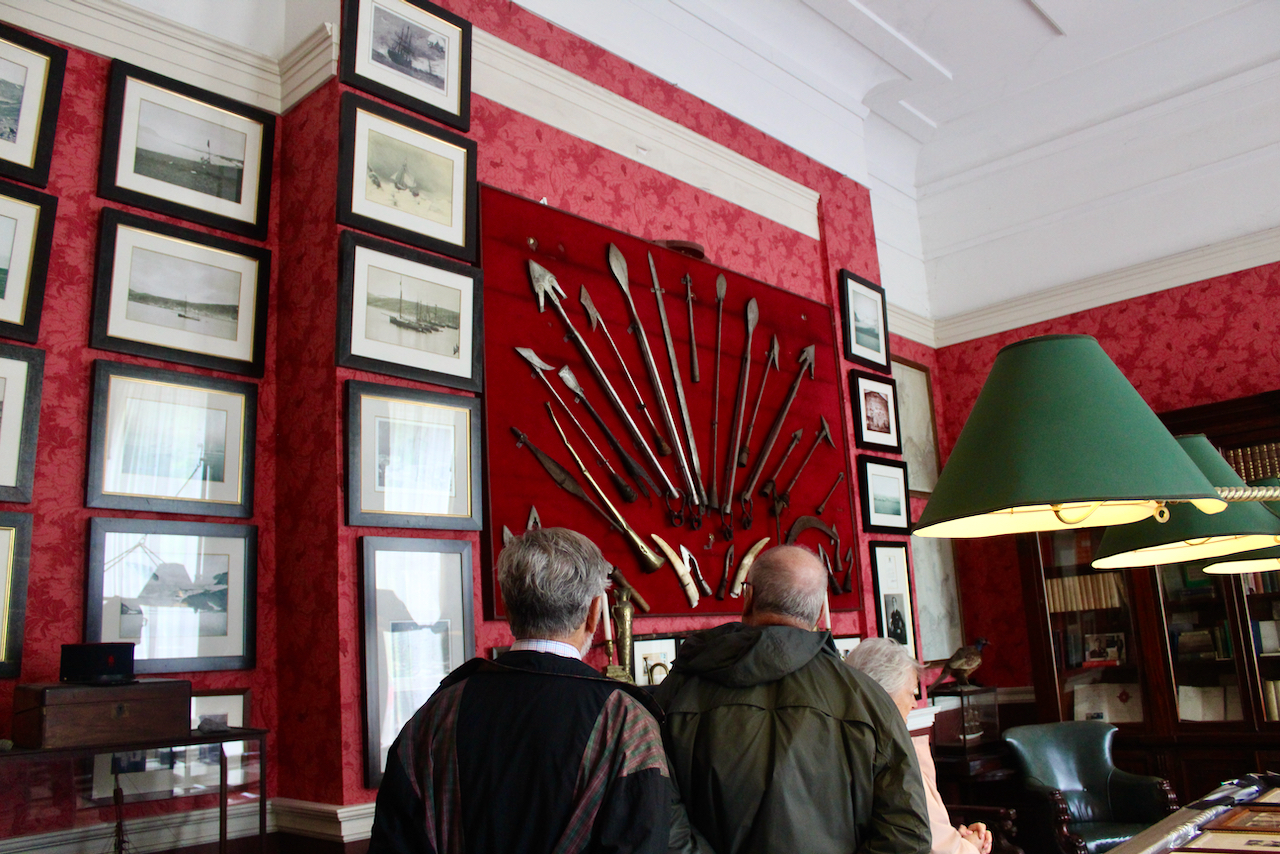
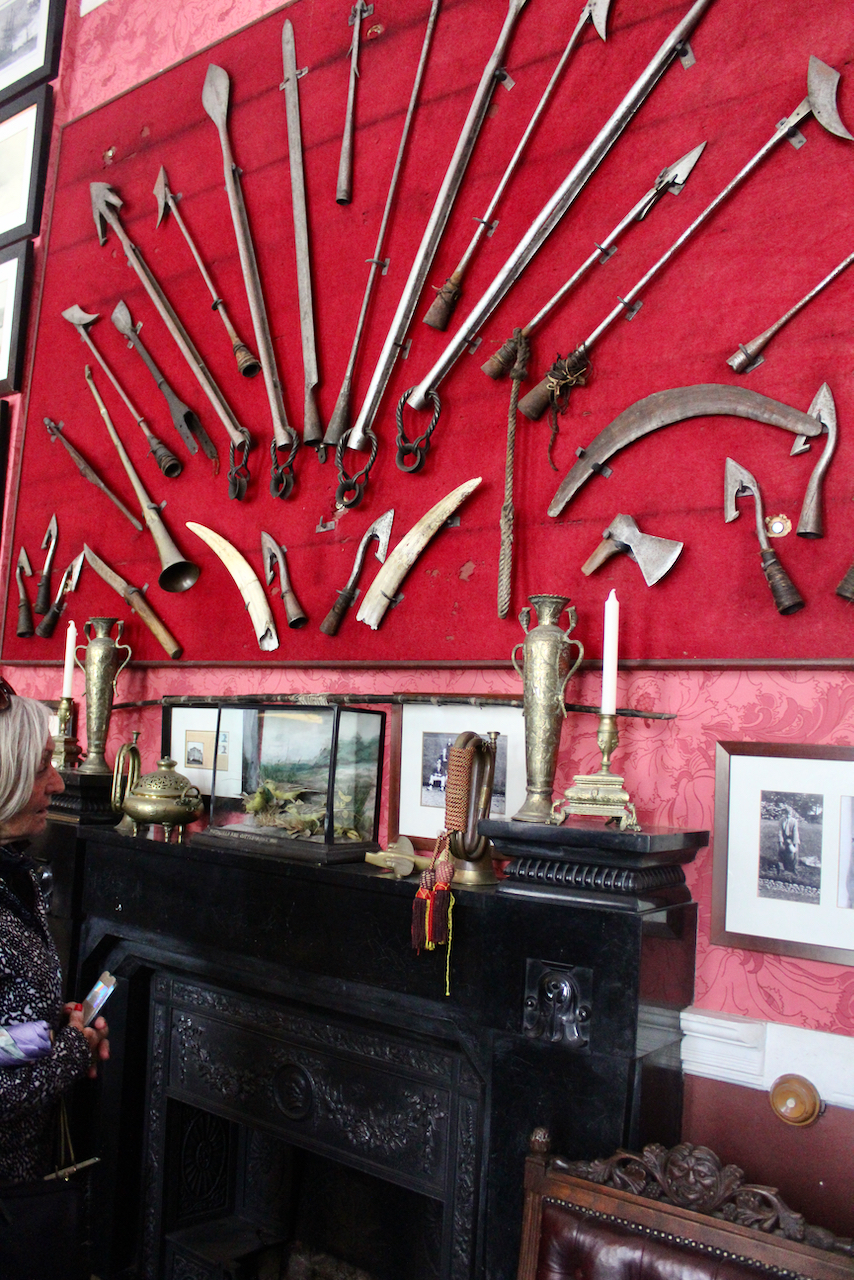
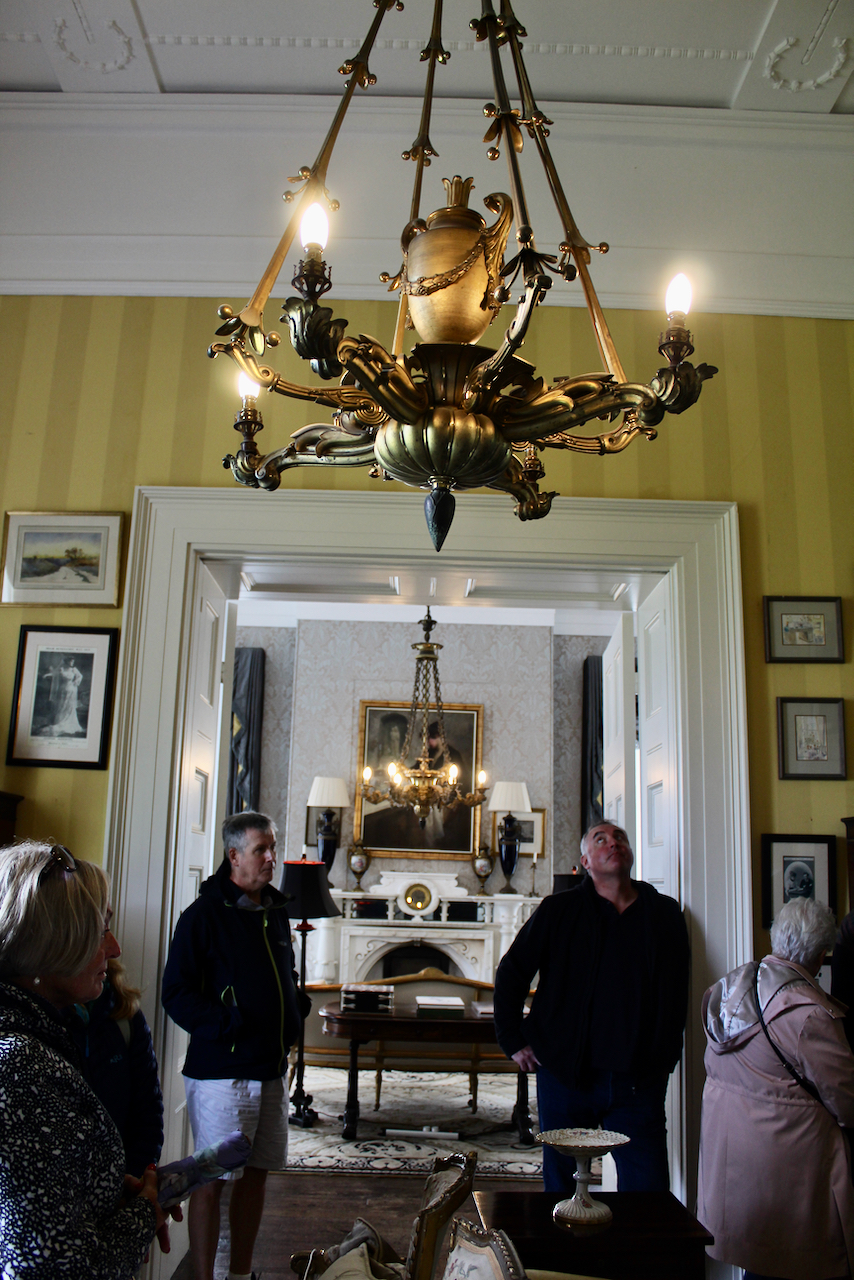
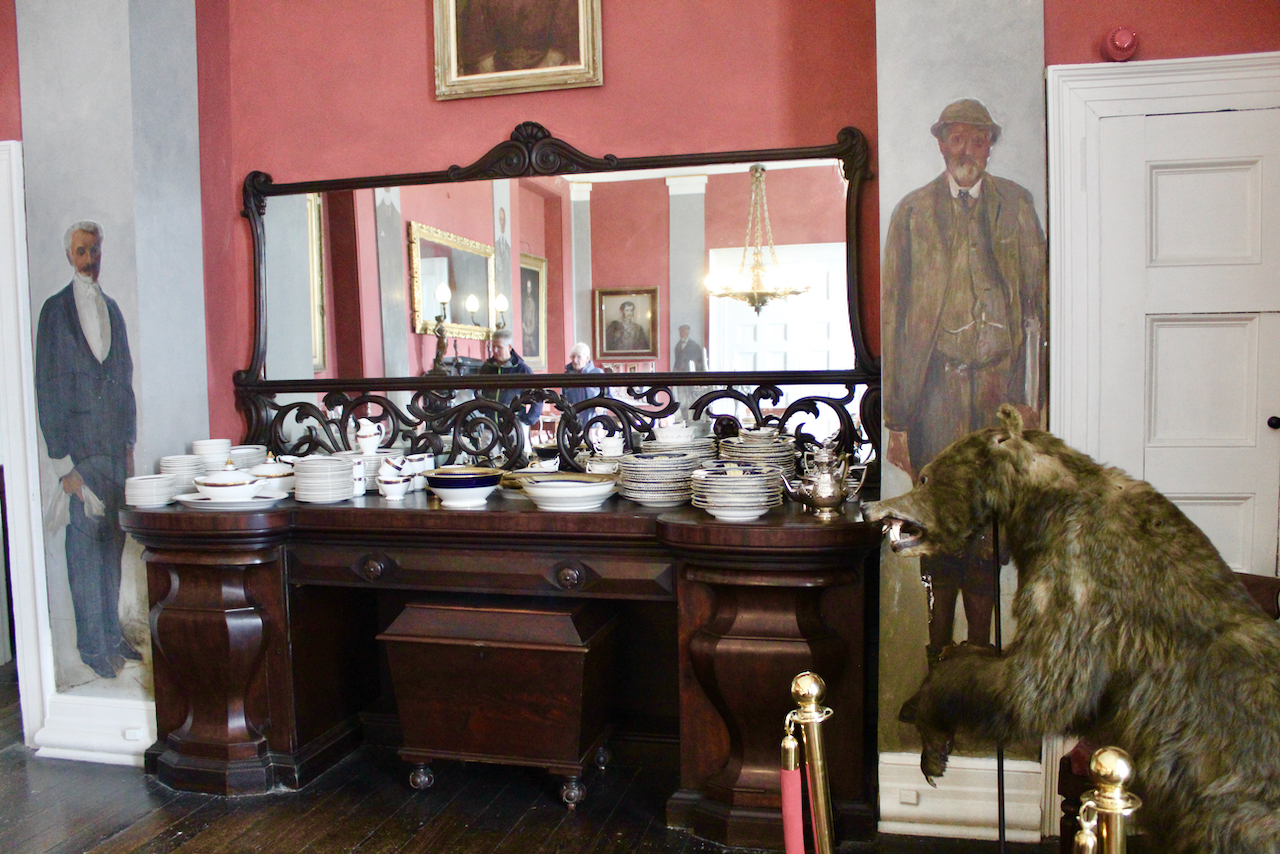
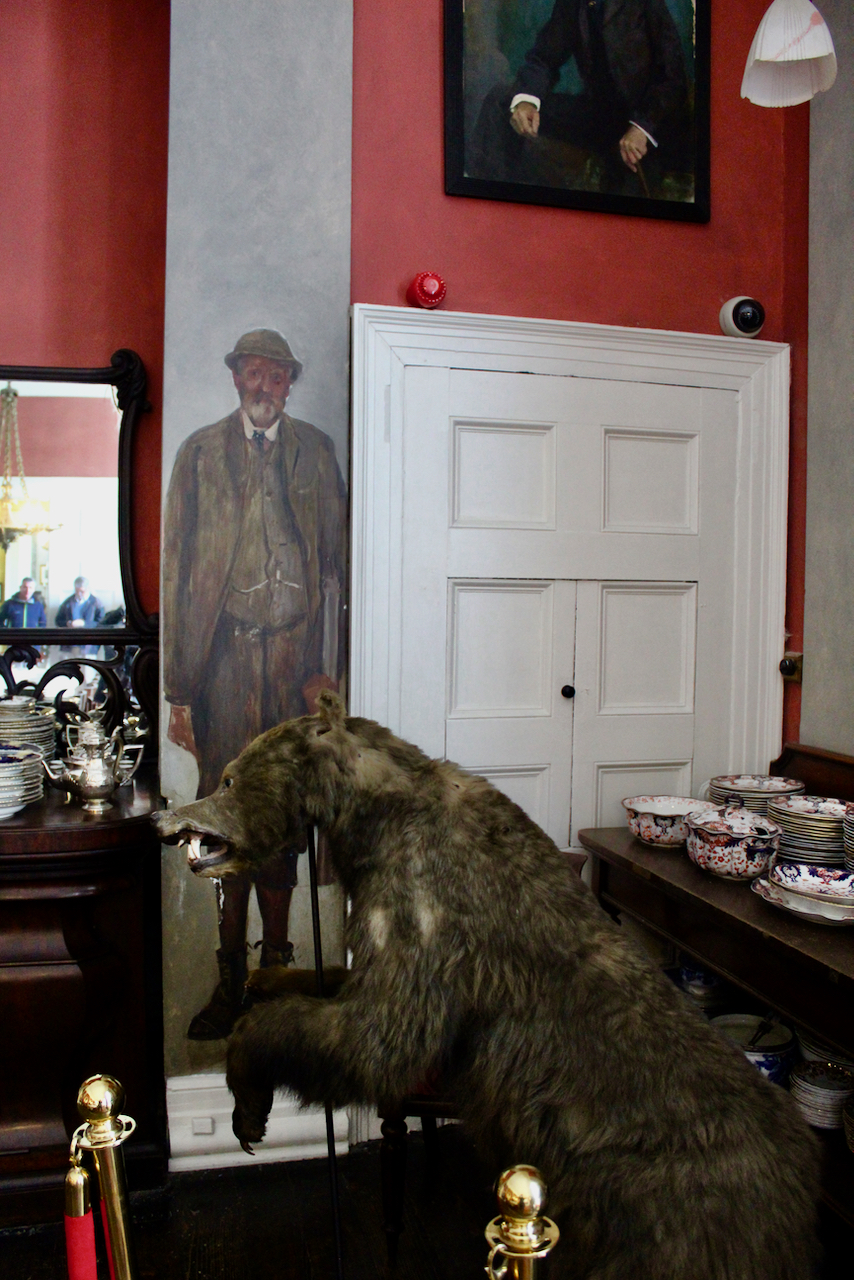
From the entrance hall, we were brought by the tour guide into the Billiards Room full of Gore-Booth memorabilia, including Henry’s fishing equipment. Kilgallon stayed on for the next generation, and he accompanied Henry the 5th Baronet on all of his fishing adventures and Arctic explorations. Kilgallon became Sir Henry’s personal valet as well as his close companion and confidant. At one point he saved Henry from an attacking bear, and the bear was then stuffed and brought back to Lissadell. It used to stand in the front hall, alarming arriving guests!
Kilgallon, with young Angus Gore-Booth.
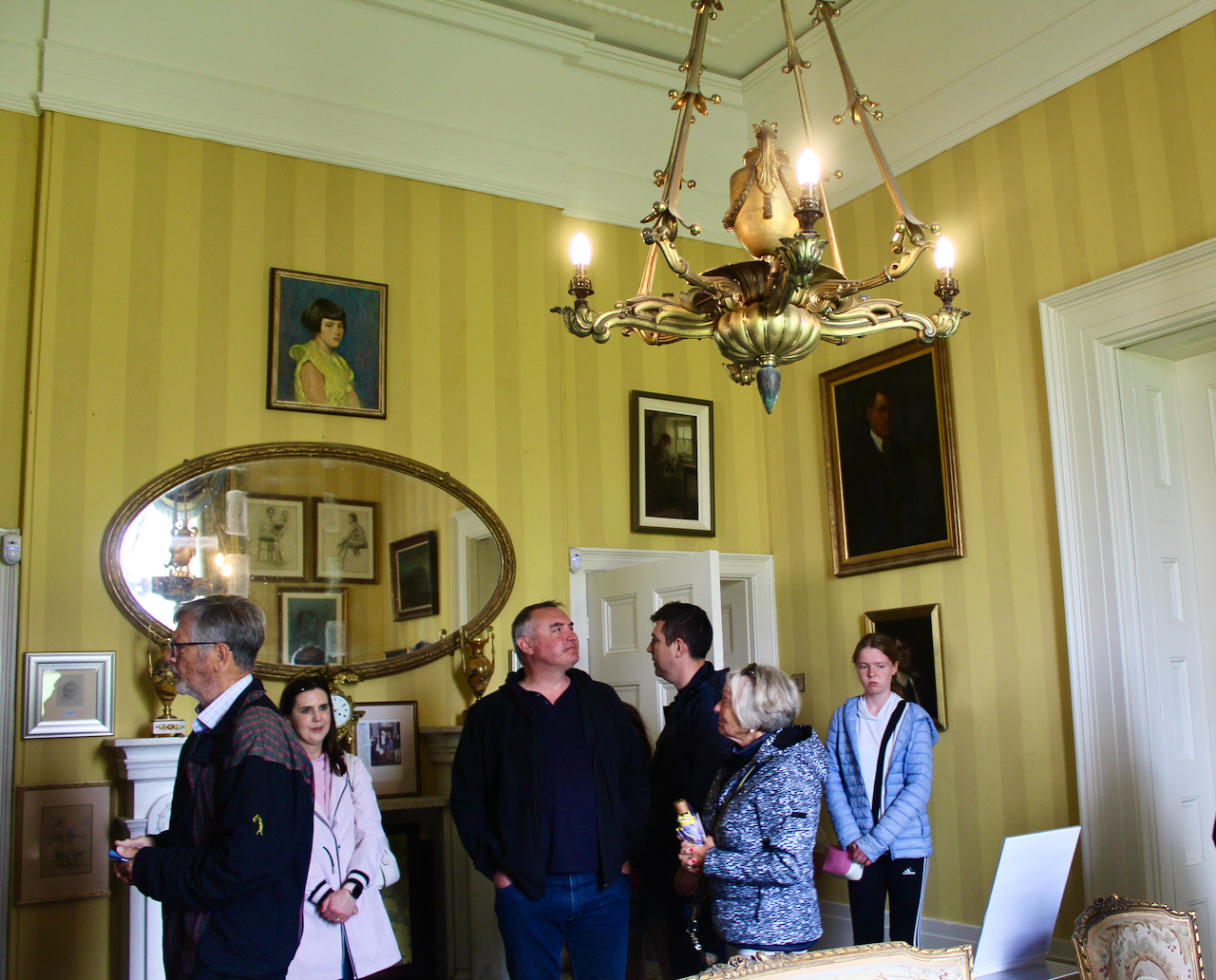
The original wallpaper has been replaced by David Skinner, an expert on wallpapers of the great houses of Ireland, with hand-blocked period copies.
It is said that Sir Henry’s wife Georgina built the artificial lake at Lissadell in the vain hope that he might stay at home and fish in it, but as the harpoons and whale bones in the billiard room testify, Sir Henry continued to travel.
Robert was President of the Sligo Agricultural Society, and he and his eldest son founded three co-operative societies in the area. He also took over the Sligo Shirt Factory to prevent it from closing and made it flourish again. He was also involved in mining locally, and played a role in setting up the railway connecting Sligo with Enniskillen, subsequently becoming the company’s chairman. He also continued the oyster fishery his father had set up – his father was one of the pioneers in creating artificial oyster beds. Henry married Georgina Mary Hill, daughter of Colonel John Hill of Tickhill Castle, Yorkshire.
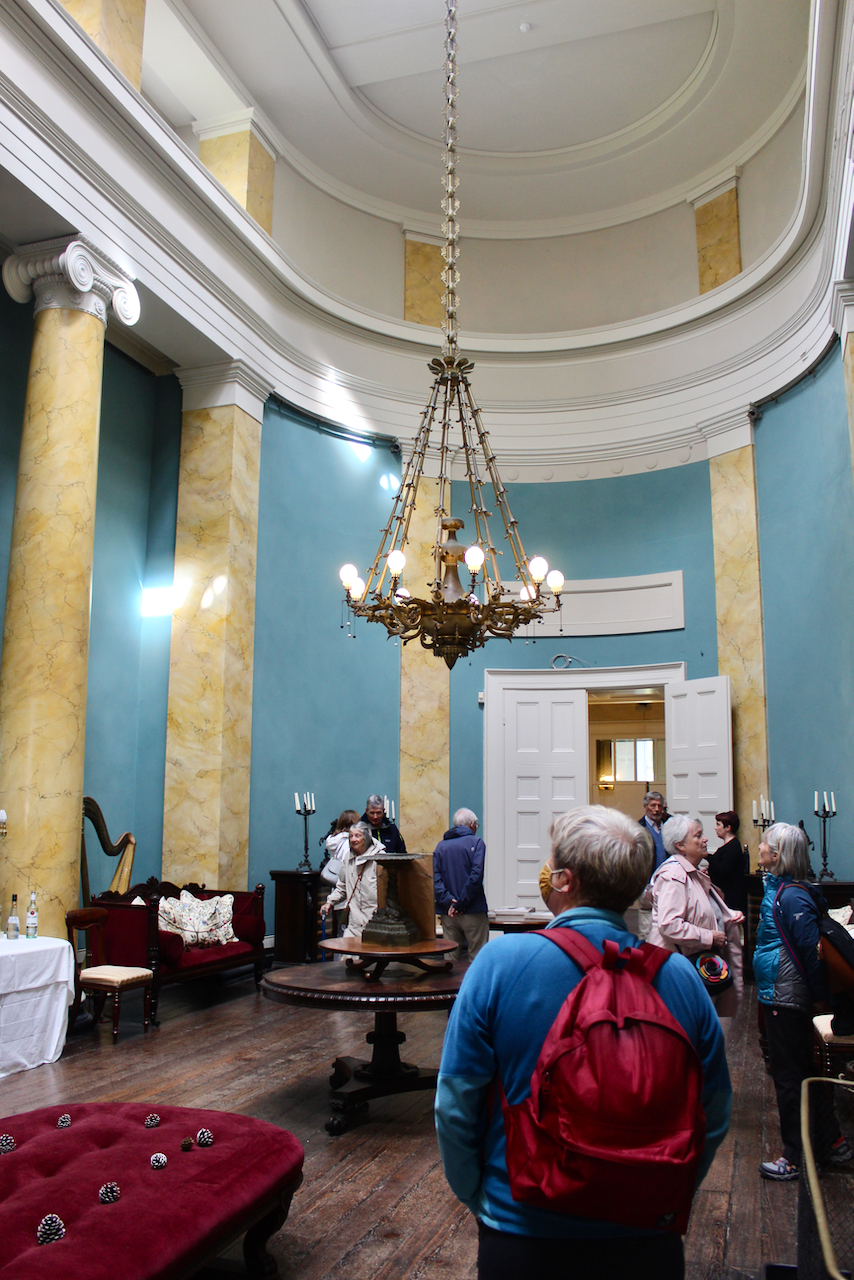
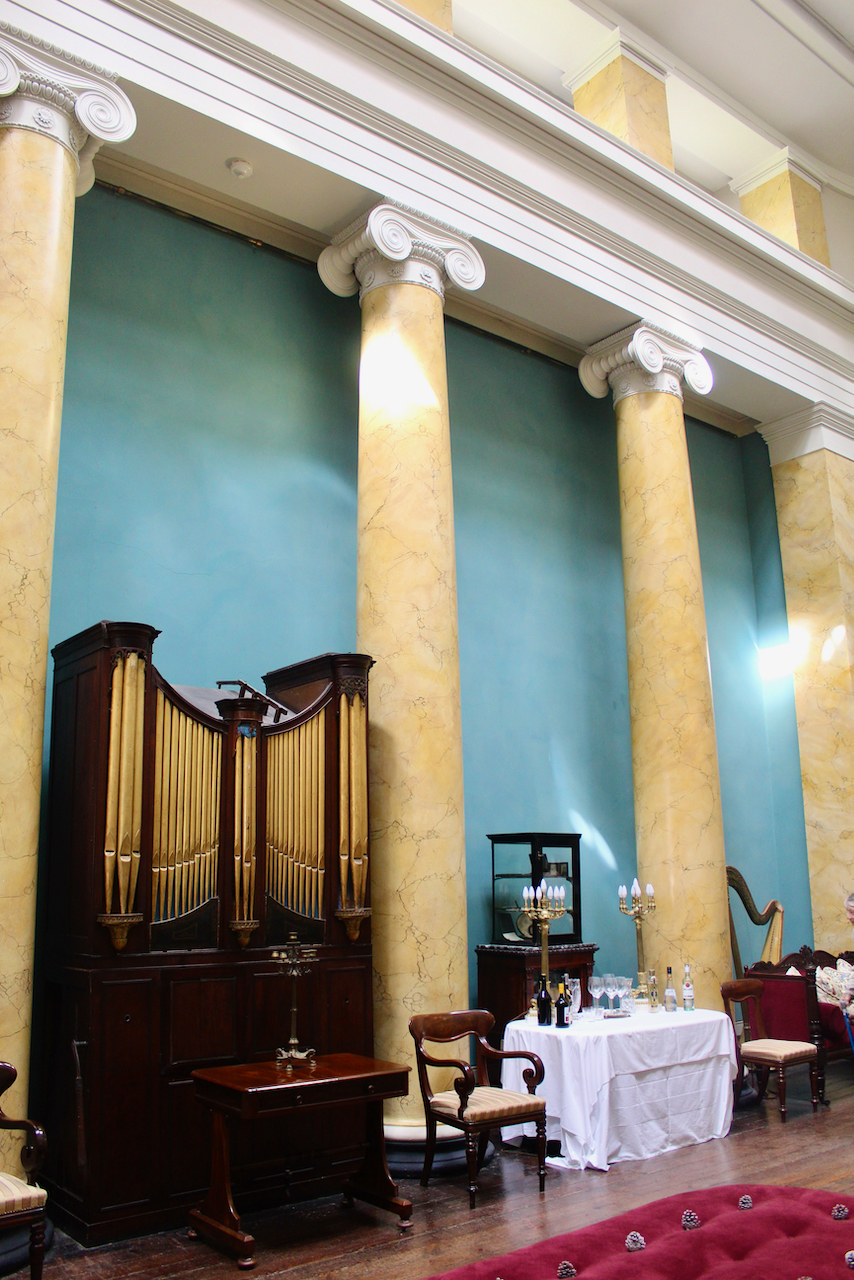
Upstairs is the music gallery. Mark Bence-Jones describes it as a vast apse-ended gallery (an apse is an area with curved walls at the end of a building, usually at the the east end of a church), lit by a clerestory (a clerestory is a high section of wall that contains windows above eye level) and skylights, with engaged Doric piers along one side, and Ionic columns along the other. It was hard to capture in a photograph since we were on a tour.
In Great Irish Houses, forewards by Desmond FitzGerald and Desmond Guinness, we are told that the gallery is 65 foot long. It still has its original Gothic chamber organ, which was made by Hull of Dublin in 1812 and is pumped by bellows in the basement! Two Grecian gasoliers by William Collins, a renowned Regency maker of chandeliers, hang on chains from the ceiling. As late as 1846 Lissadell generated gas from its own gasometer.
Lissadell was the first house in Ireland to be lit by its own gas supply. This was produced in a plant installed by Sir Robert about a quarter of a mile to the west of the mansion, complete with a house for the manager in charge of the works.
A team led by Kevin Smith, from the internationally renowned Windsor House Antiques of London, undertook the major task of restoring the gasoliers.
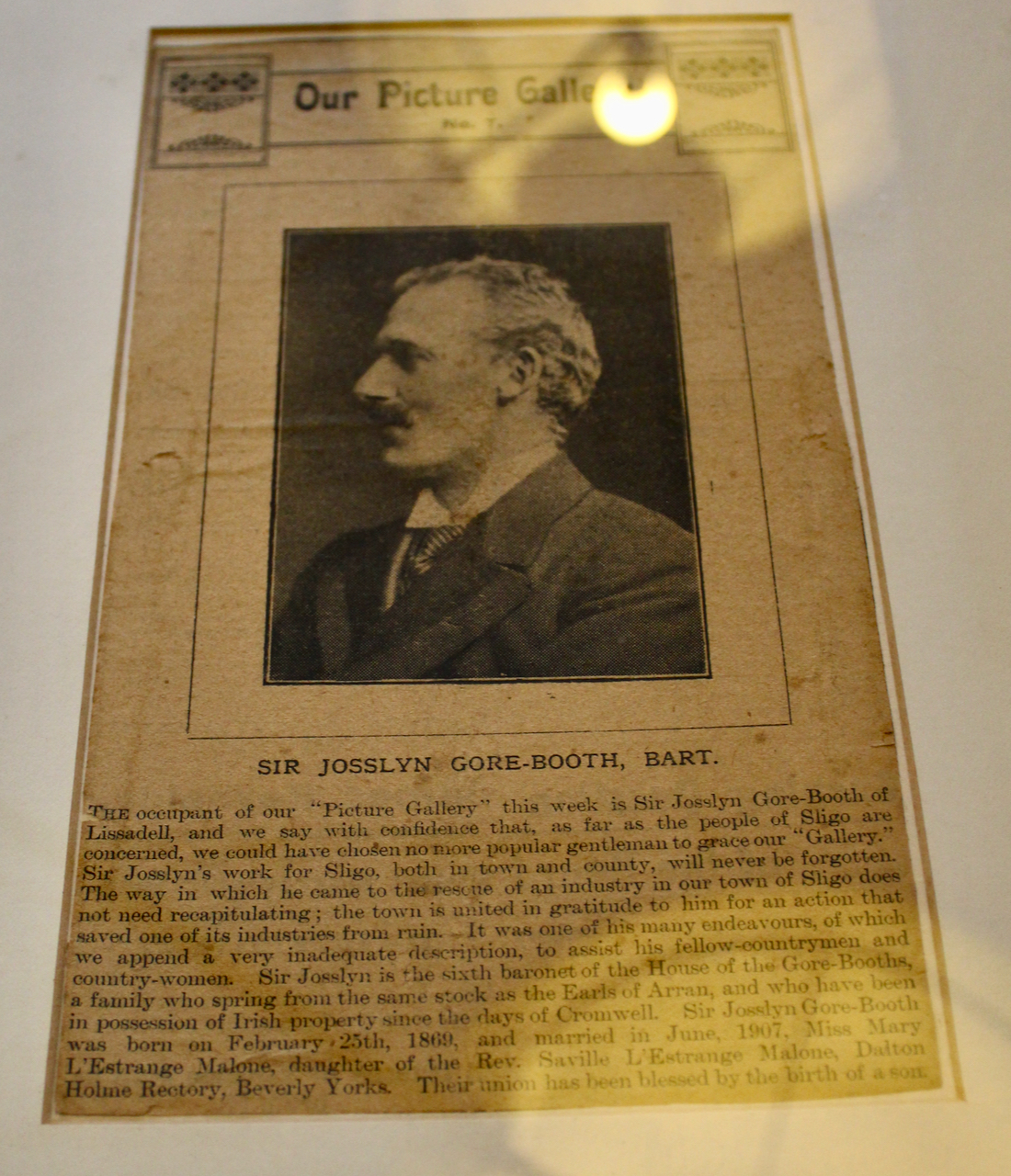
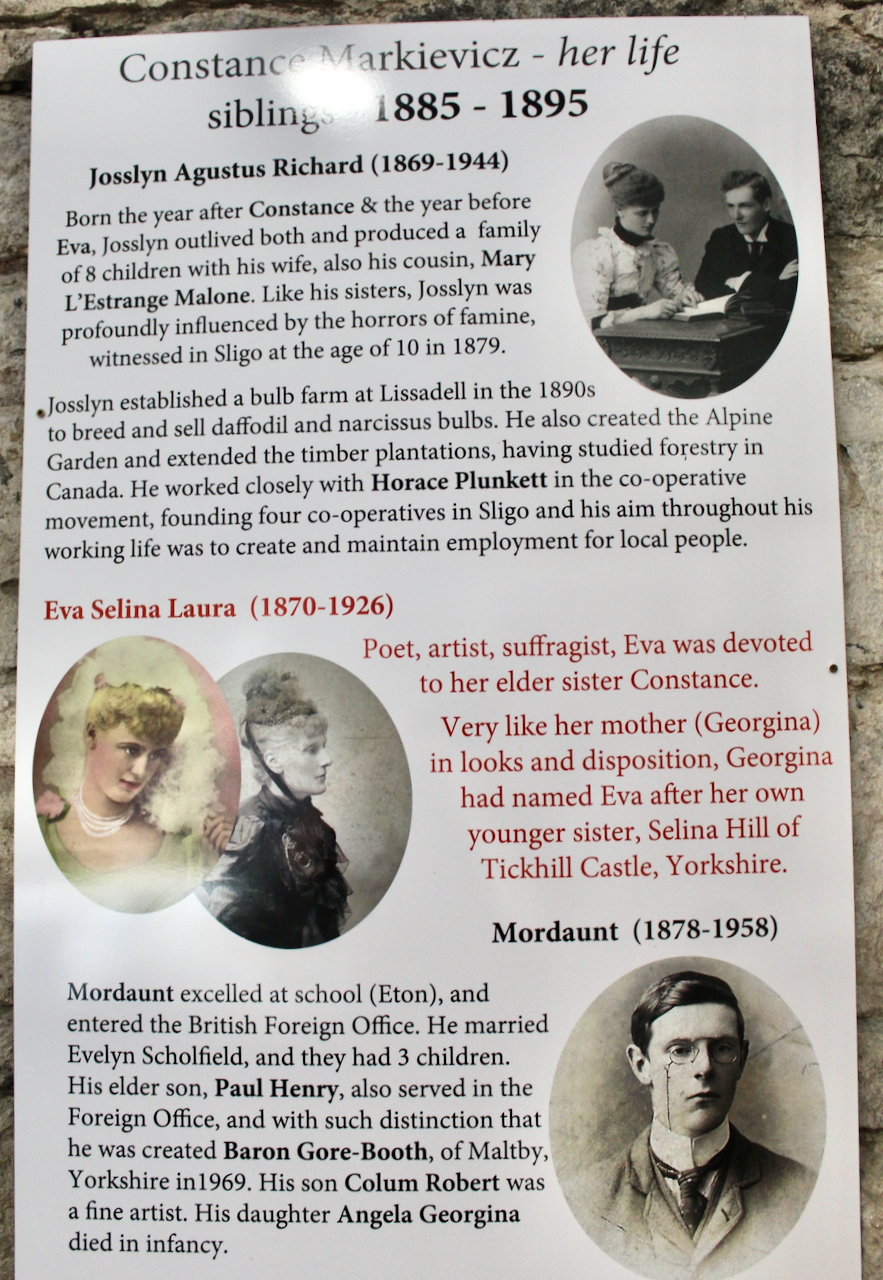
The 4th Baronet and Georgina Mary Hill had five children. The eldest son, Josslyn (1869-1944) was to inherit the property. There was a younger son, Mordaunt, and three daughters, Constance, Eva and Mabel.
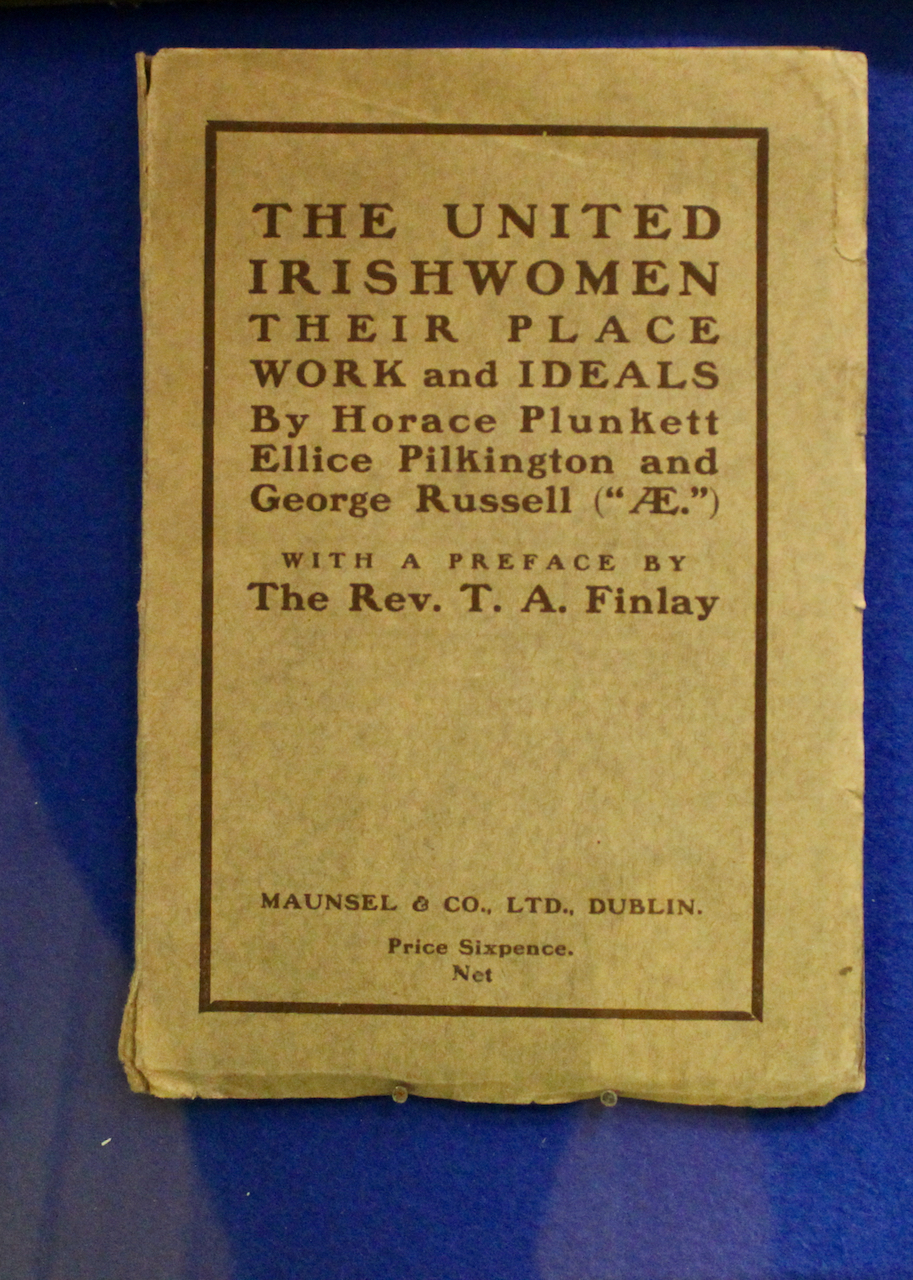
It was with Josslyn that Henry William set up the co-operatives. When Josslyn was young, he had socialist ideals, much like his sisters Eva and Constance. He joined Horace Plunkett in his efforts to help the farmers to help themselves, by cutting out the middle man. It took a while for farmers to trust the motivation of Plunkett and Gore-Booth in setting up the co-operatives, thinking that “no good thing could come from a man who was at once a Protestant, a landlord and a Unionist.” Catholic priests even denounced the co-operatives as a “Protestant plot.” Eventually, however, they flourished, and helped the farmers.
Lissadell, 2022.
Josslyn continued to develop the estate, so that it became one of the most progressive and best run in Ireland.
Lissadell, 2022.
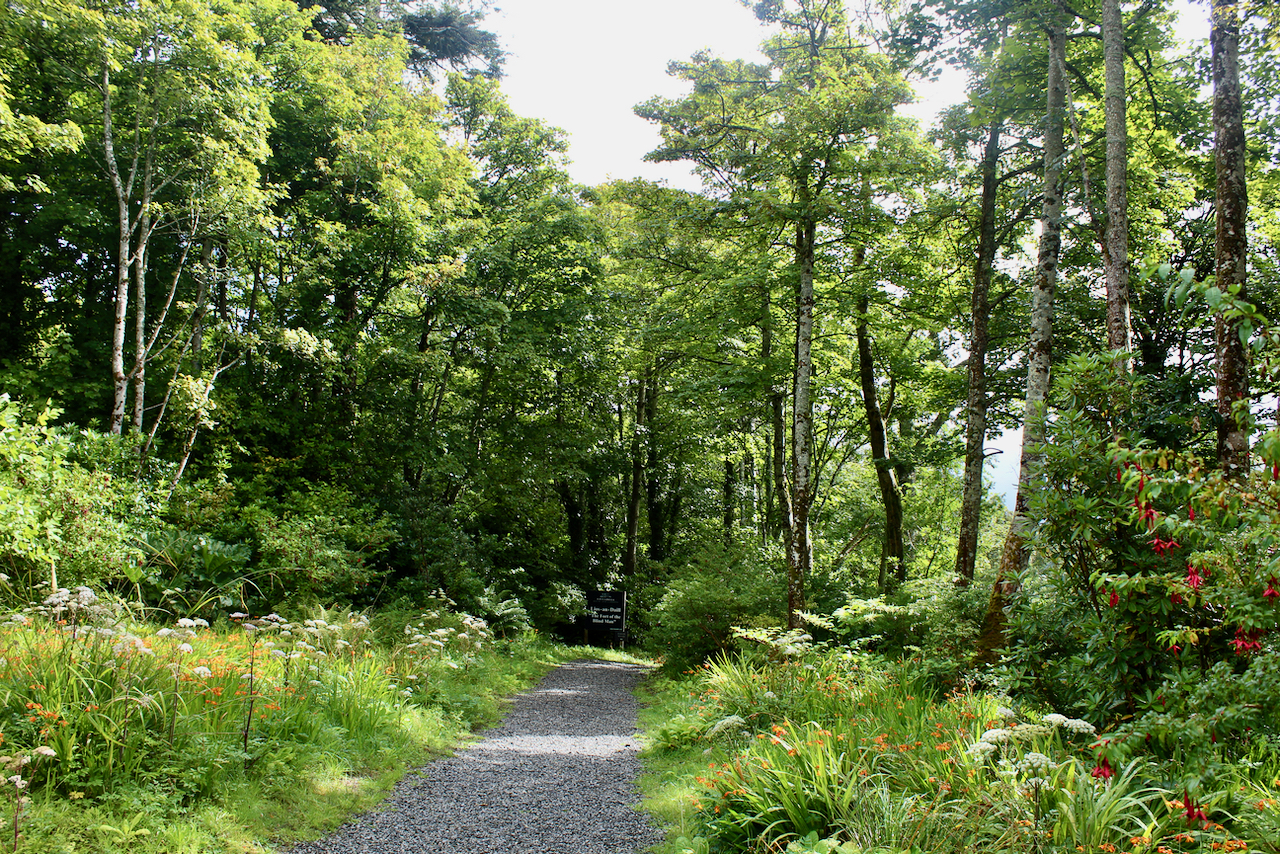
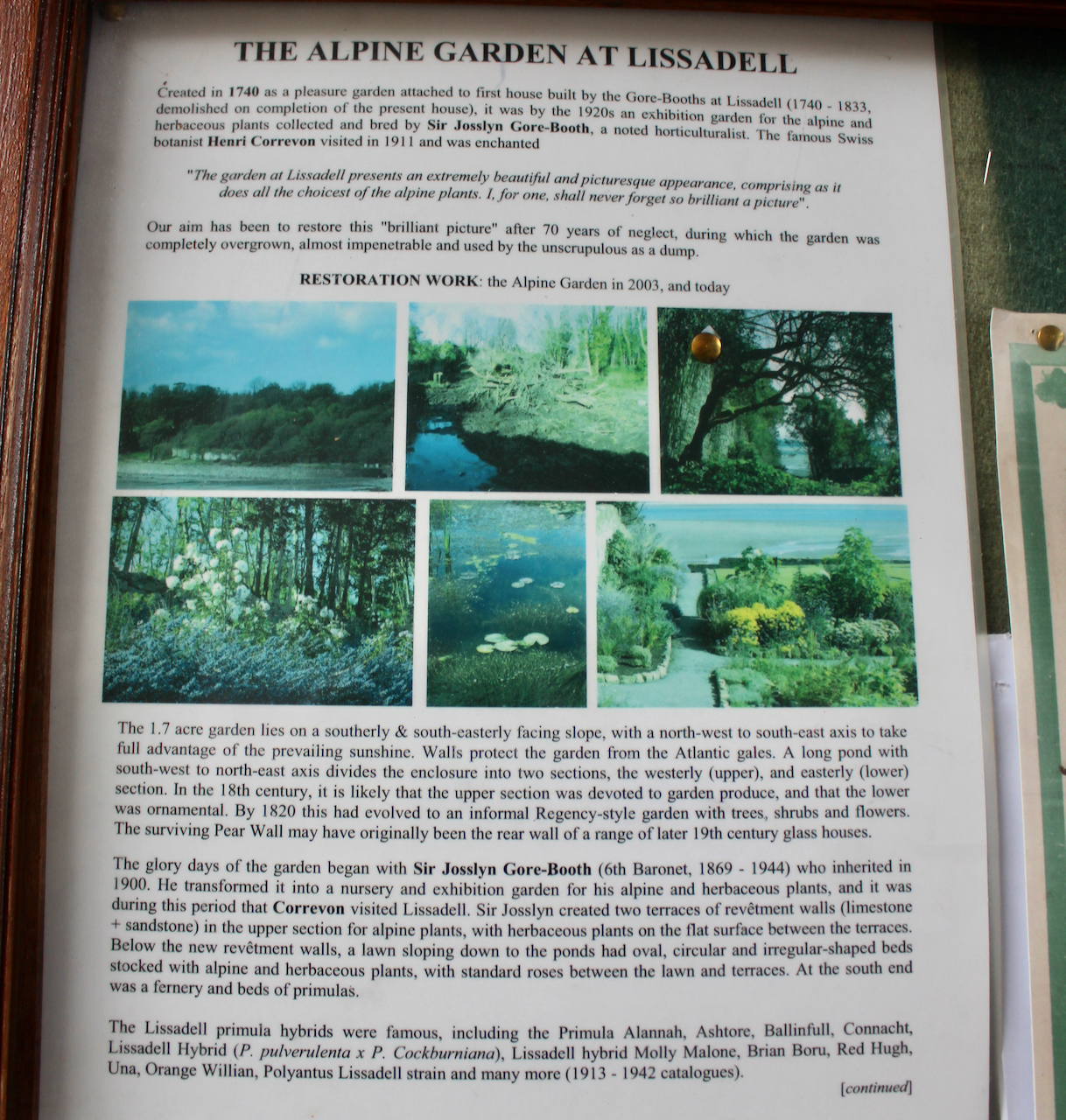
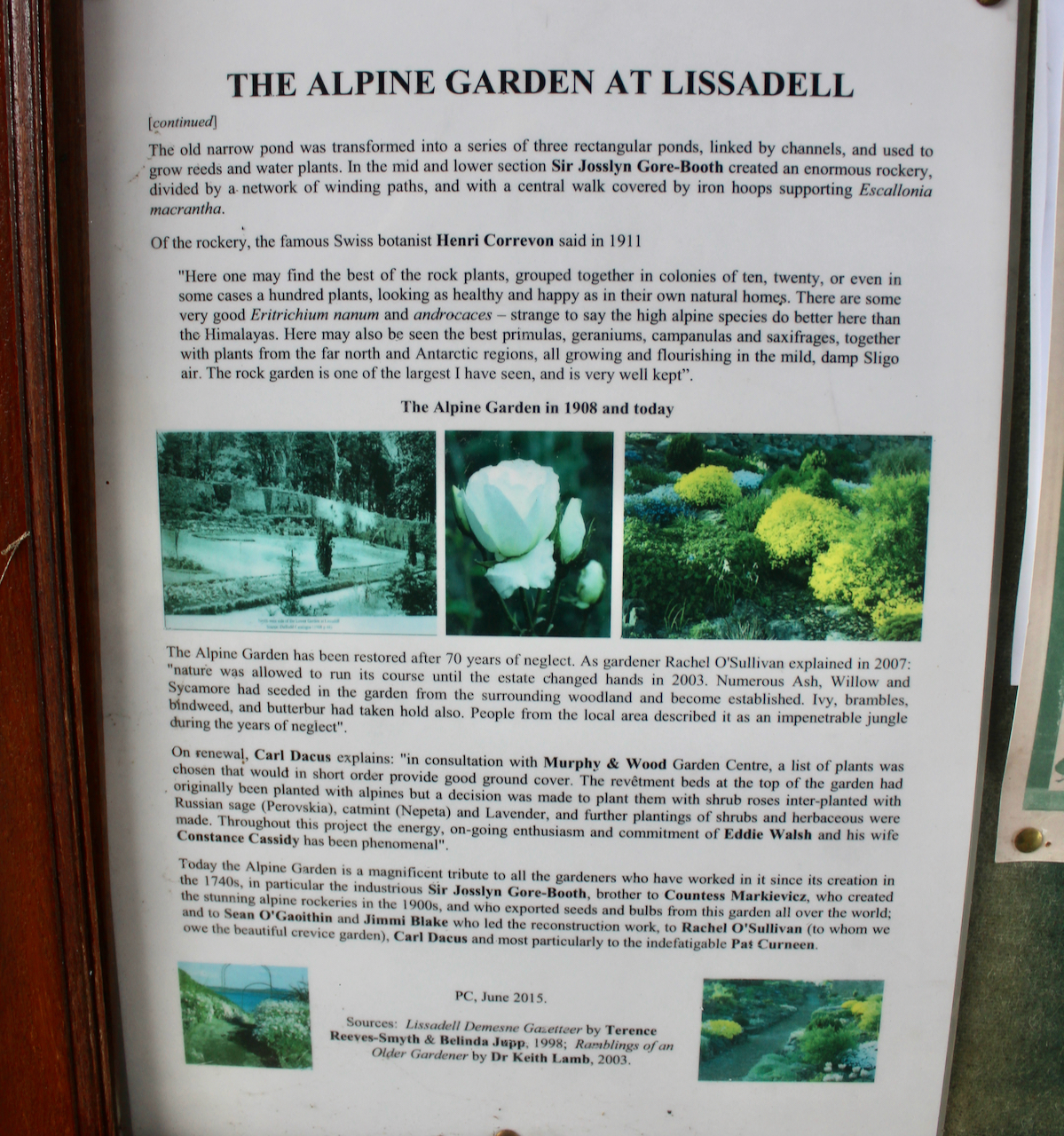
Josslyn was a keen gardener and plant breeder. At Lissadell he established one of the finest horticultural enterprises in Europe. By 1906, his gardens provided employment for more than 200 people. The head gardener, Joseph Sangster, became head gardener of the Royal Horticultural Society in England. An advocate of land reform, he let more than 1000 tenants buy out 28,000 acres of the property under the Wyndham Land Act of 1903. The final payments under the scheme were not received until the 1970s. Until he died in 1944, the estate was famous the world over for its varieties of old and new flowers. [7] The current owners are working to re-establish the gardens.
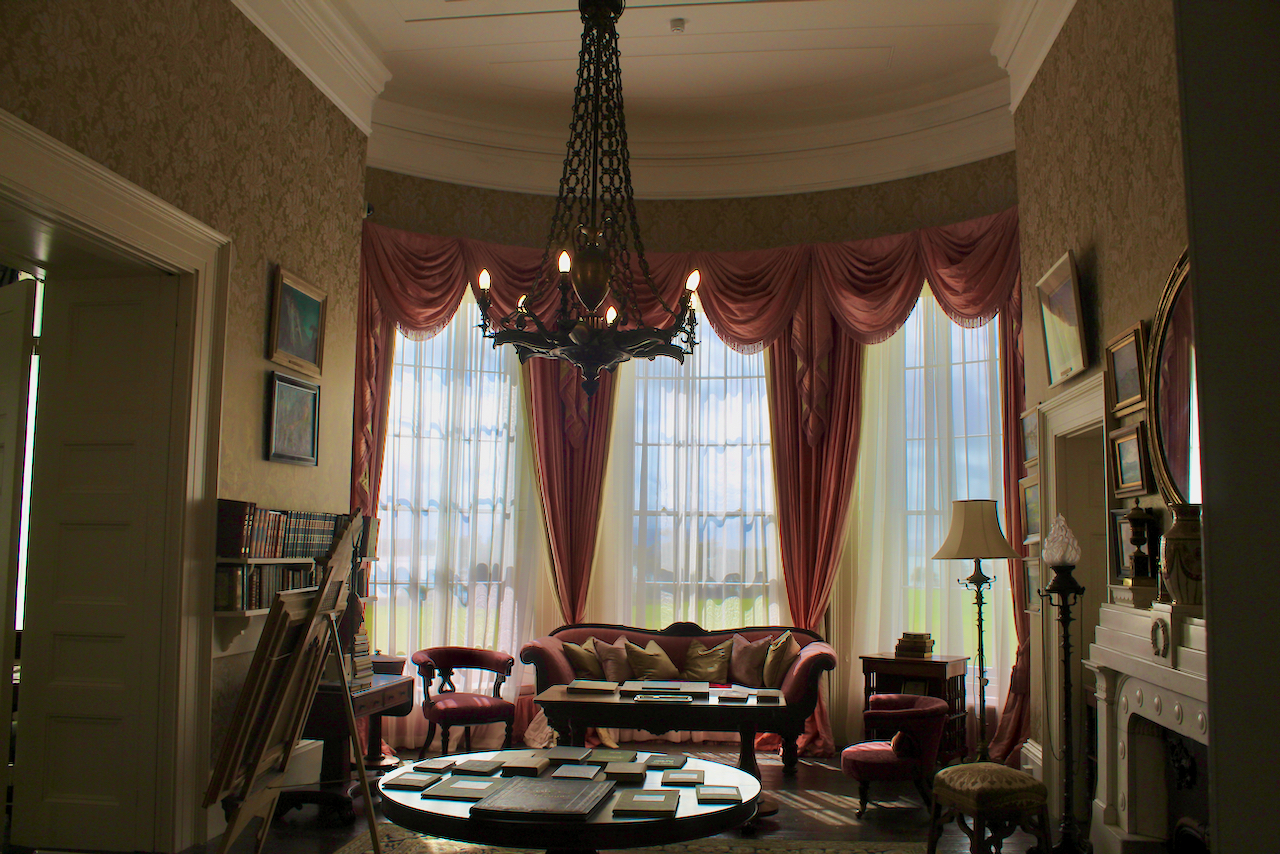
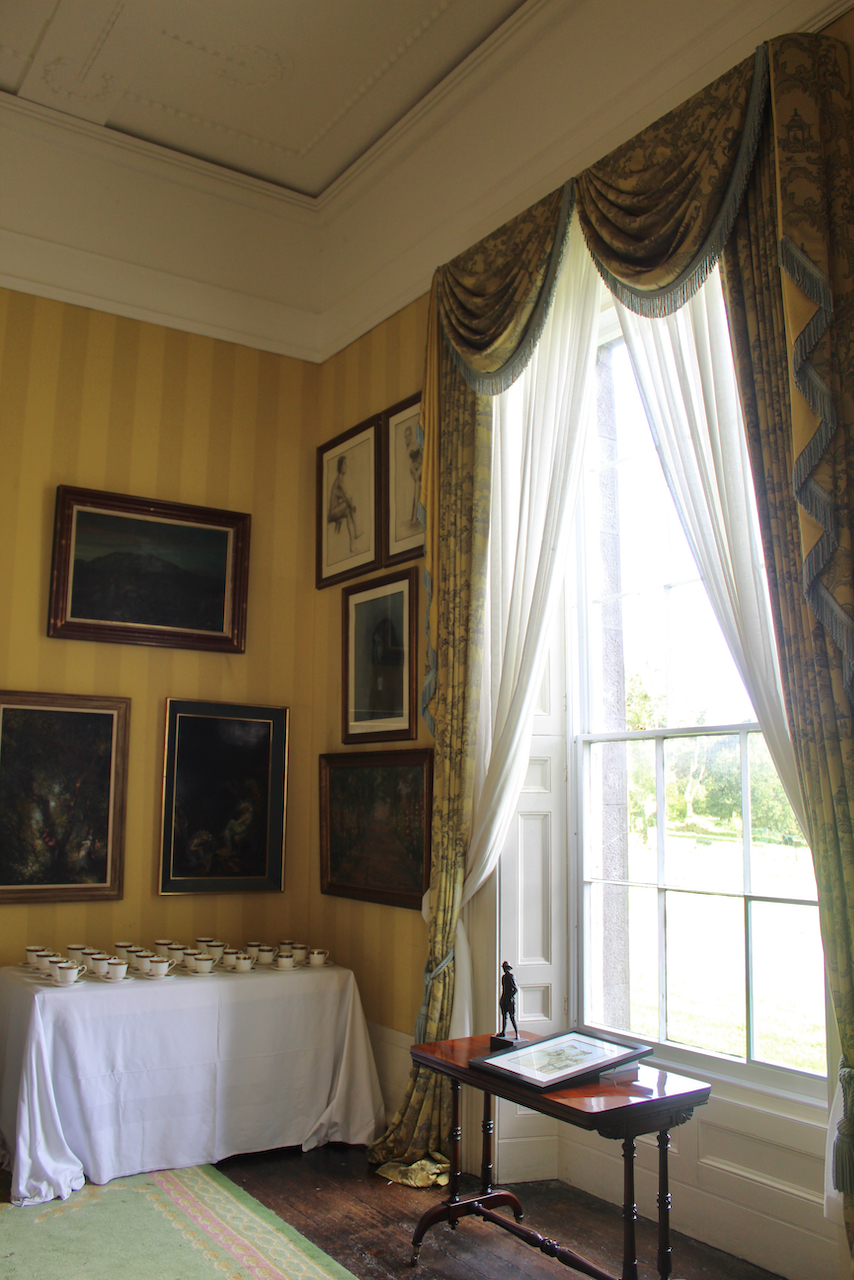
Next we enter a room that is in the bow of the house, and features in a poem by W. B. Yeats. Mark Bence-Jones tells us:
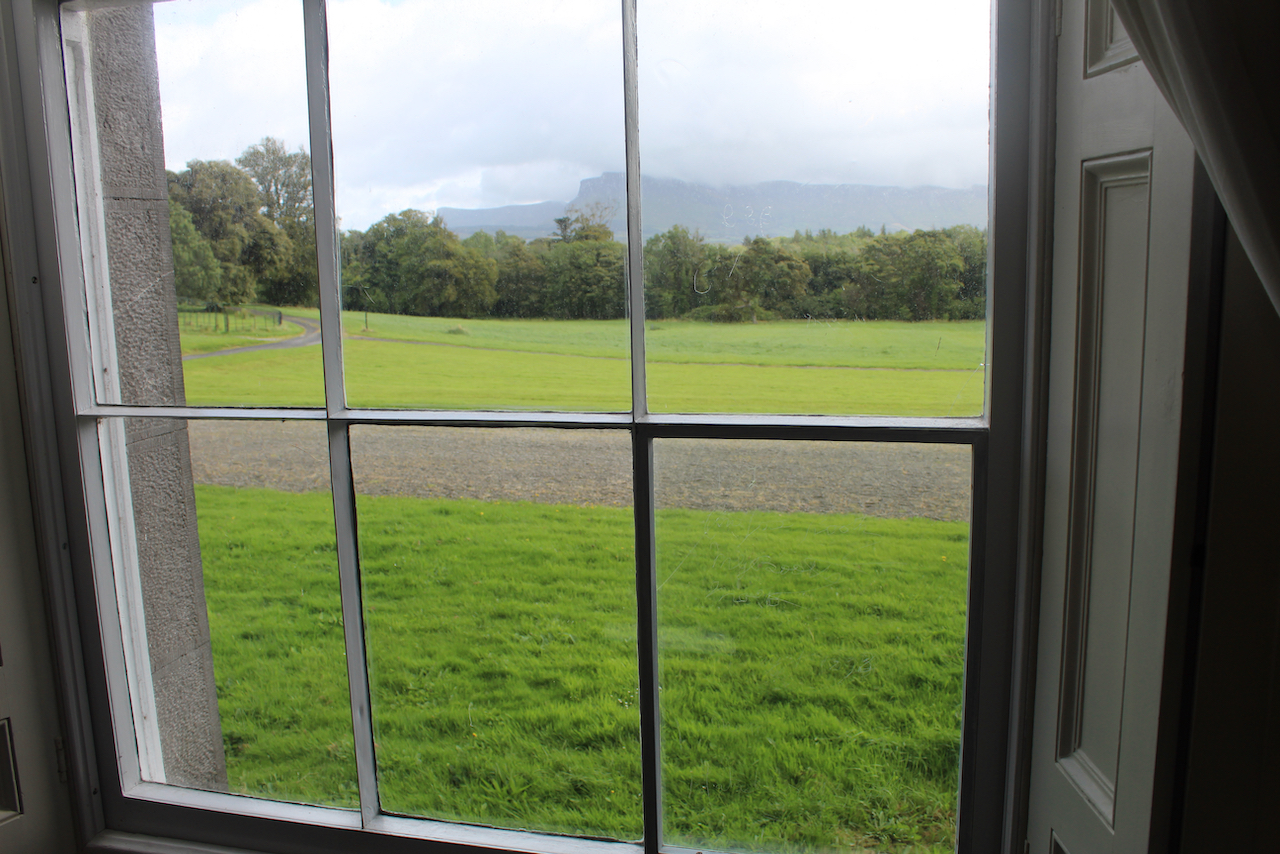
“The rather monumental sequence of hall and gallery leads to a lighter and more intimate bow room with windows facing towards Sligo Bay – the windows Yeats had in mind when he wrote, in his poem on Eva Gore-Booth and her sister, Constance Markievizc:
“The light of evening, Lissadell
Great windows open to the South.”
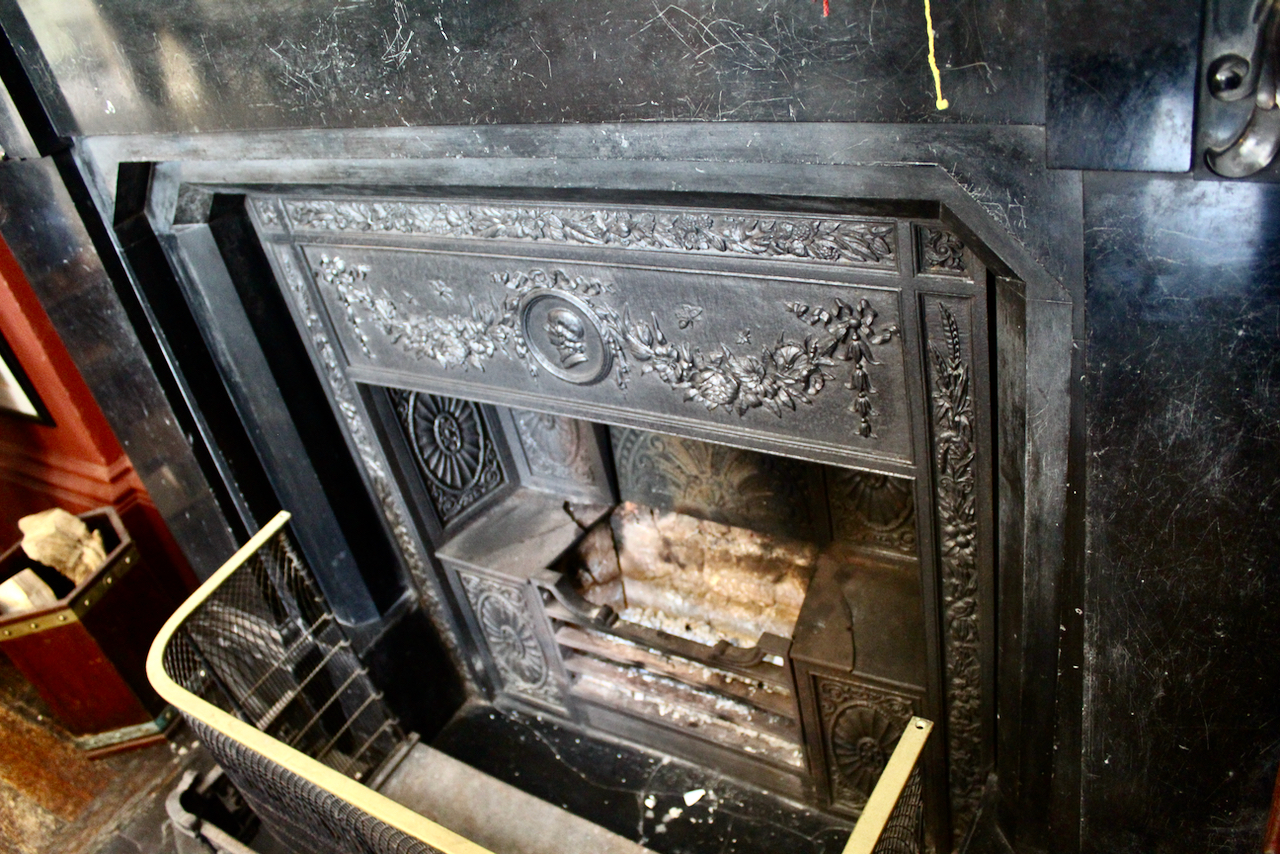
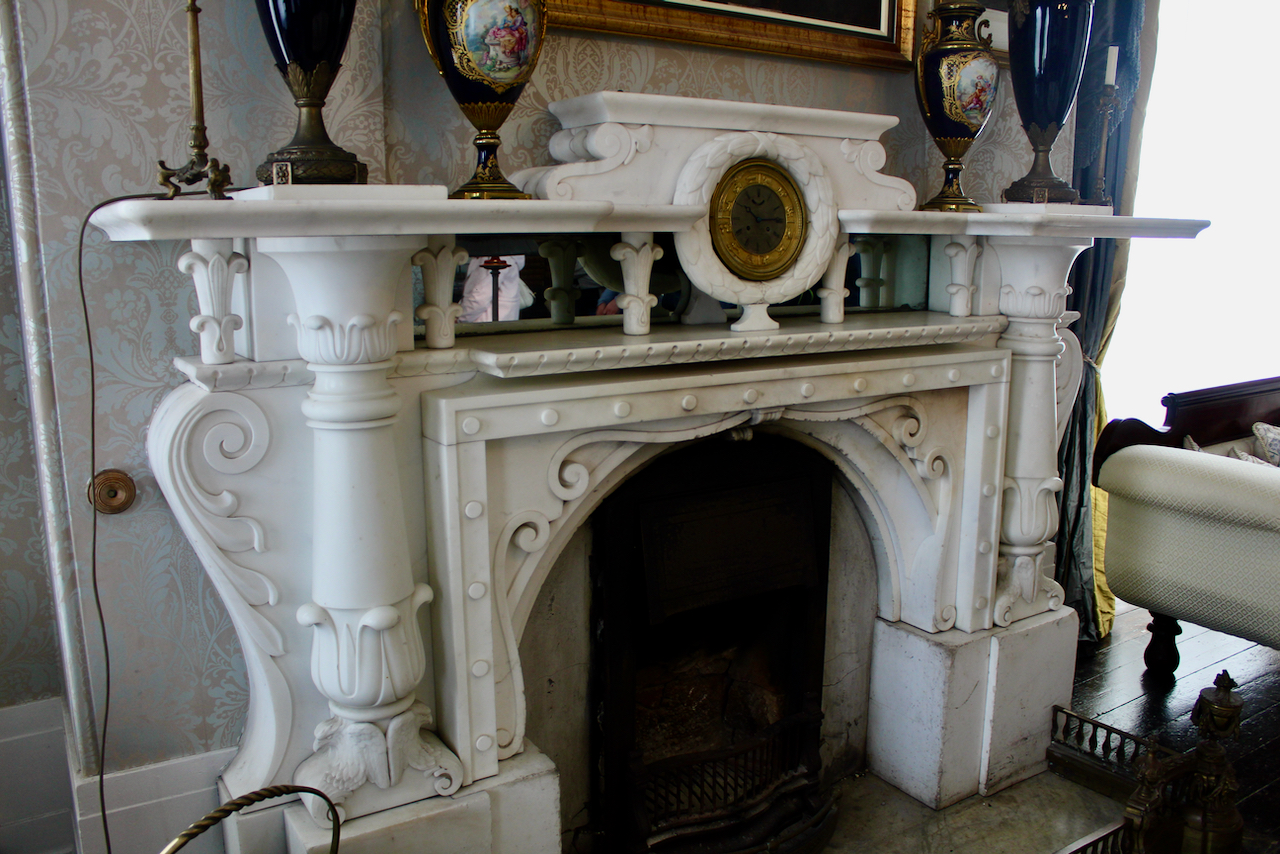
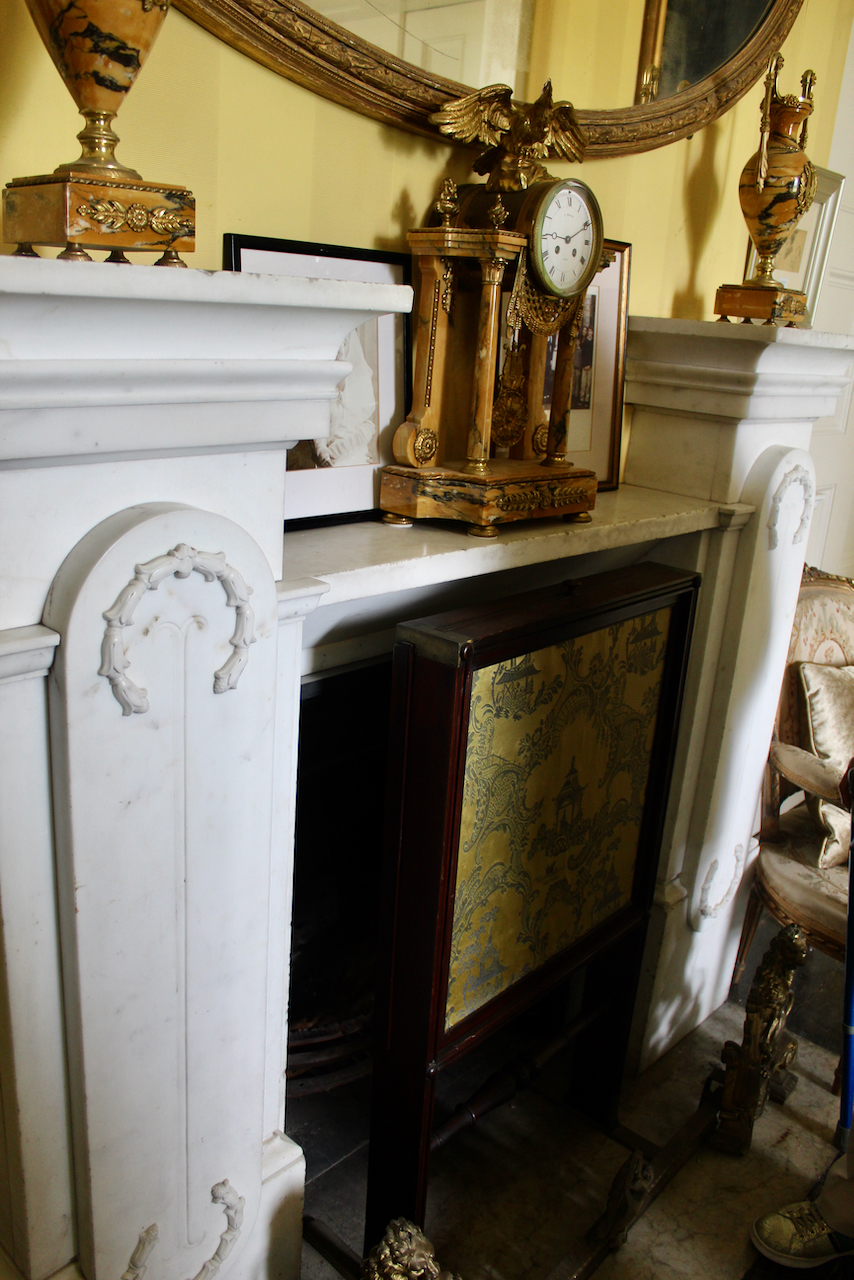
This room, and all other principal receptions rooms, have massive marble chimney-pieces in the Egyptian taste. The ante-room has a striped wallpaper of lovely faded rose.”
“In memory of Eva Gore Booth and Constance Markiewicz” This is the first part of this poem:
The light of evening, Lissadell, Great windows open to the south, Two girls in silk kimonos, both Beautiful, one a gazelle.
But a raving autumn shears Blossom from the summer’s wreath; The older is condemned to death, Pardoned, drags out lonely years Conspiring among the ignorant. I know not what the younger dreams – Some vague Utopia – and she seems, When withered old and skeleton-gaunt, An image of such politics.
Many a time I think to seek One or the other out and speak Of that old Georgian mansion, mix pictures of the mind, recall That table and the talk of youth, Two girls in silk kimonos, both Beautiful, one a gazelle.”
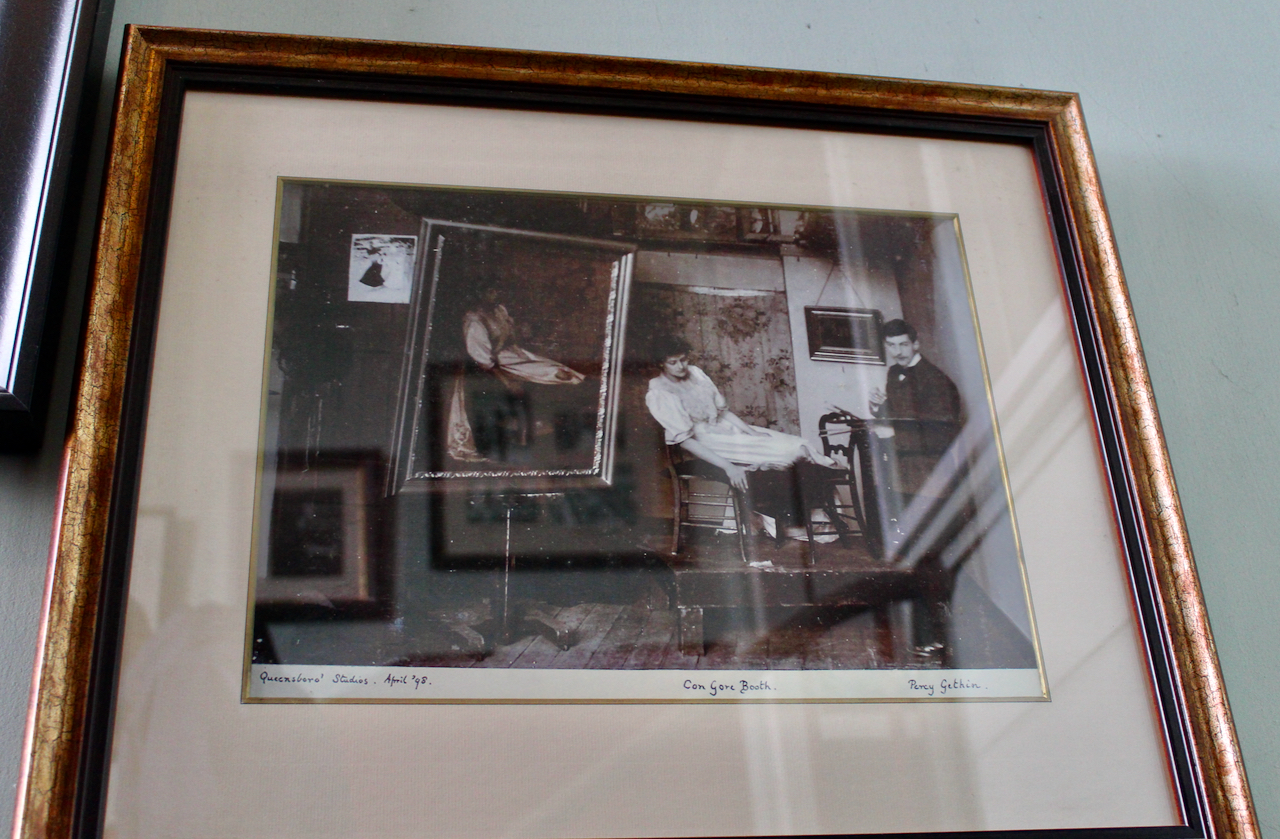
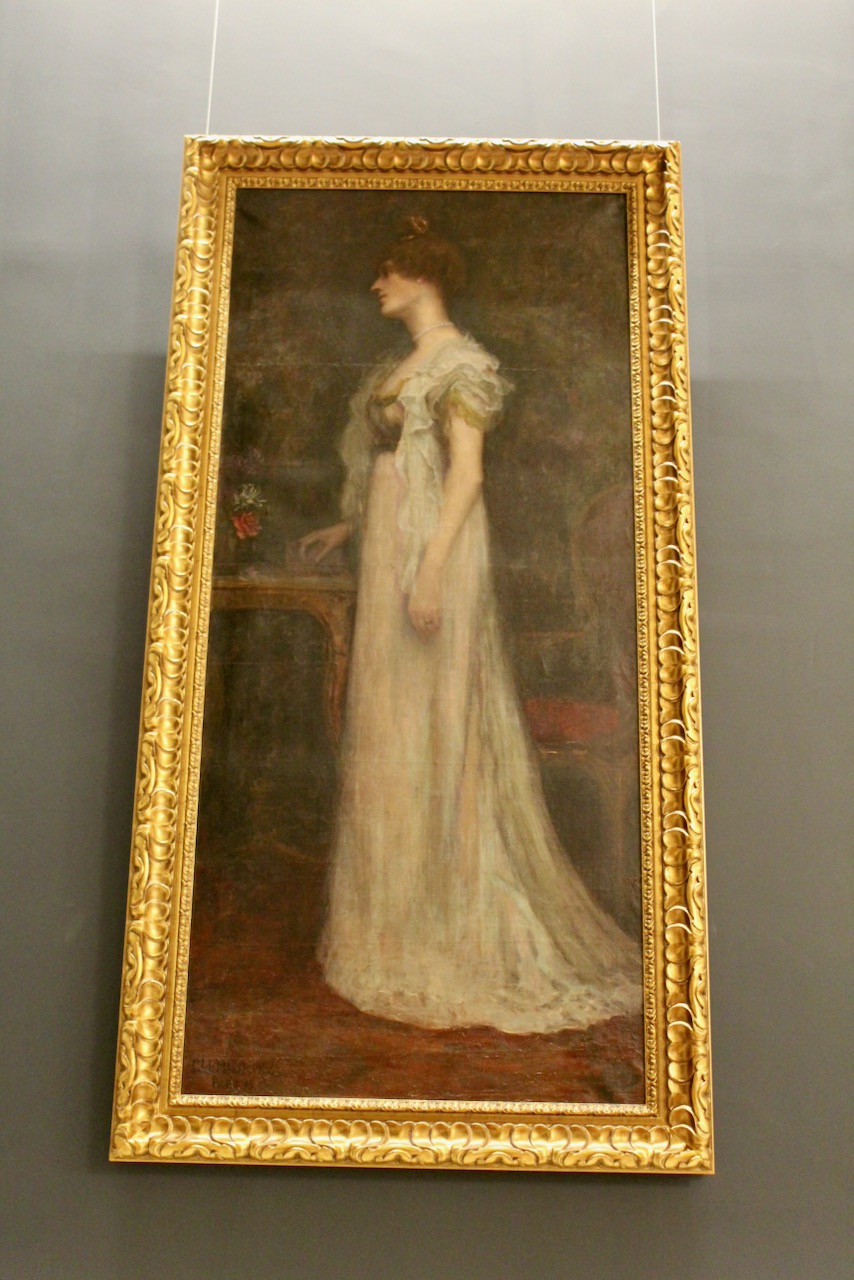
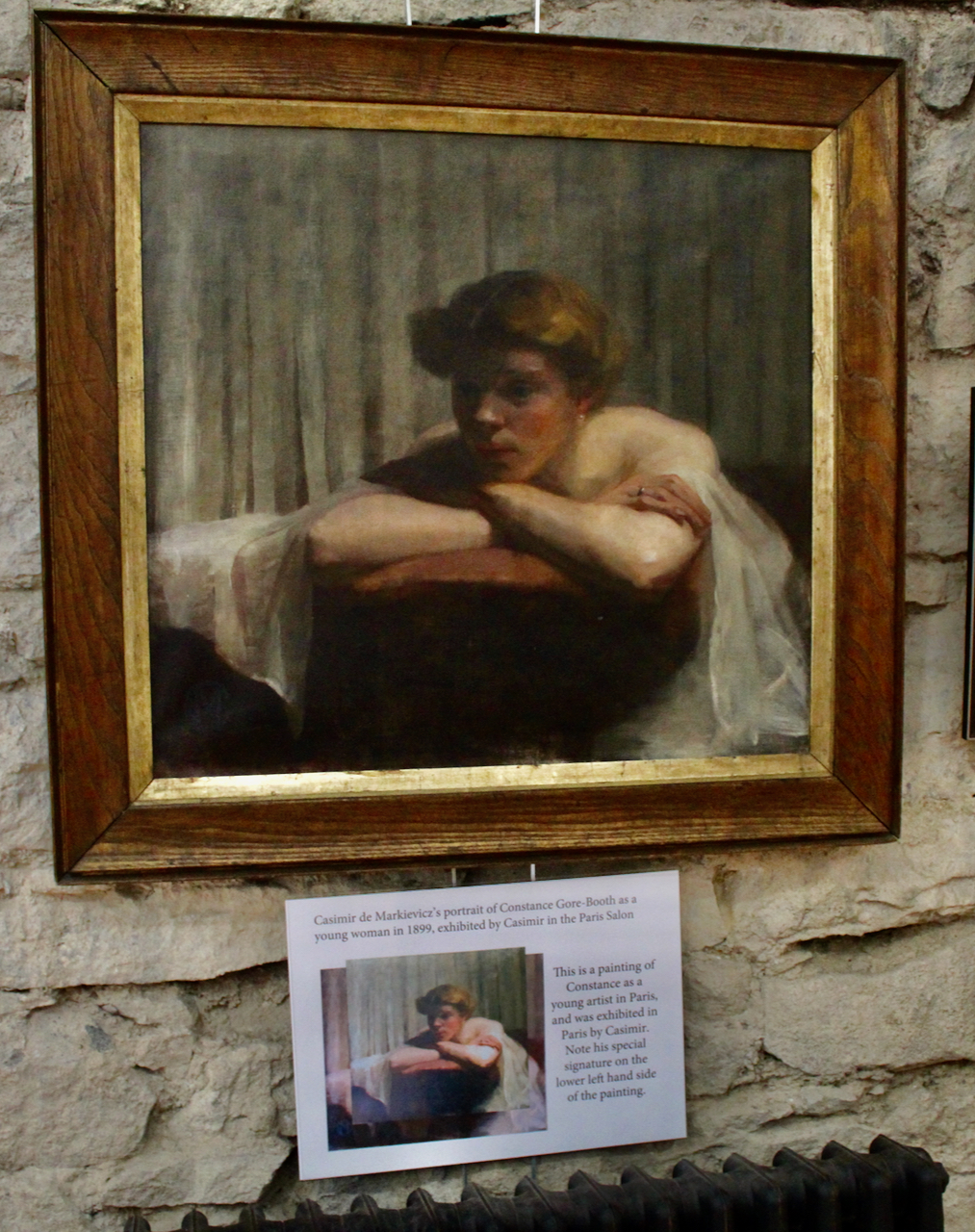
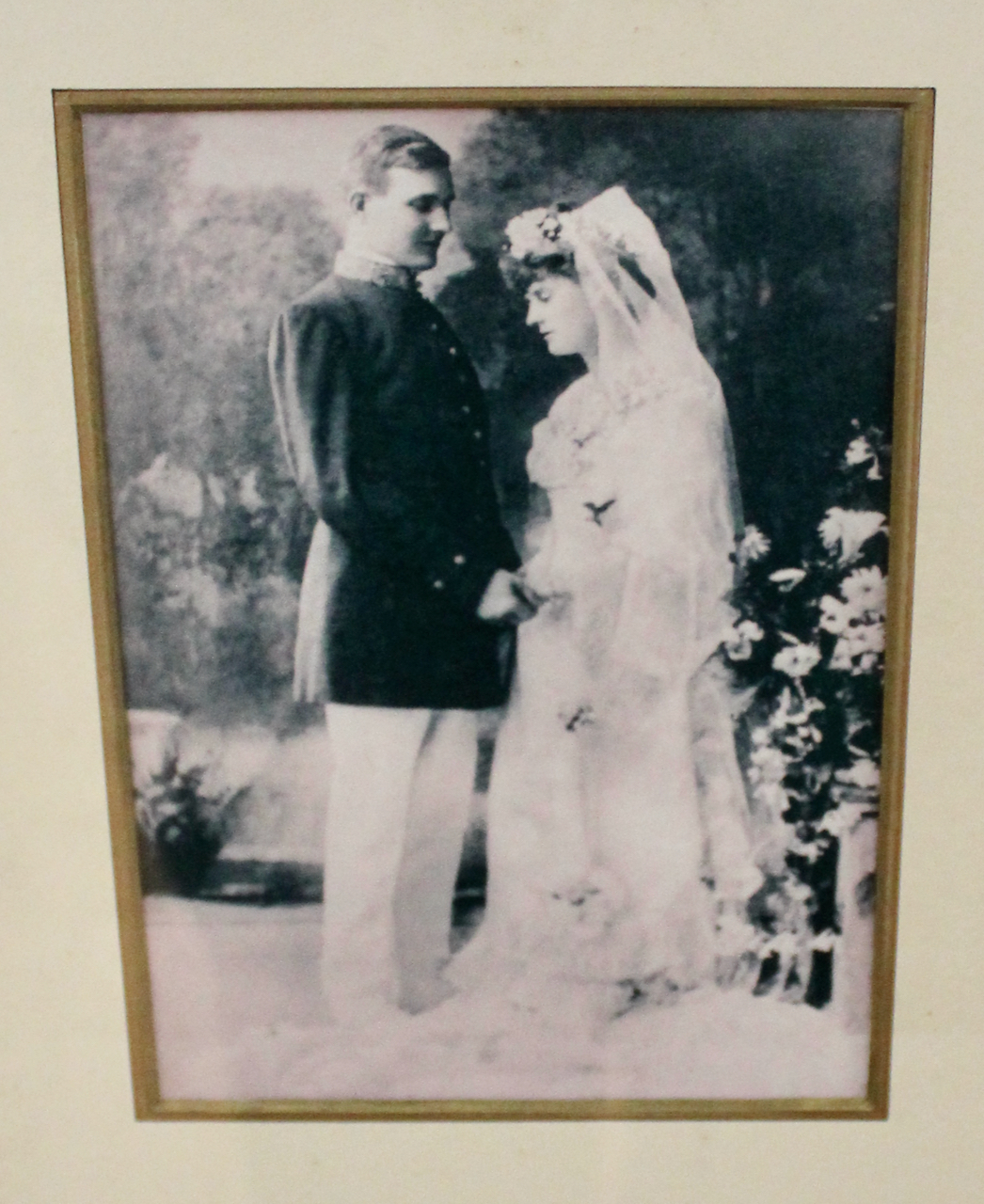
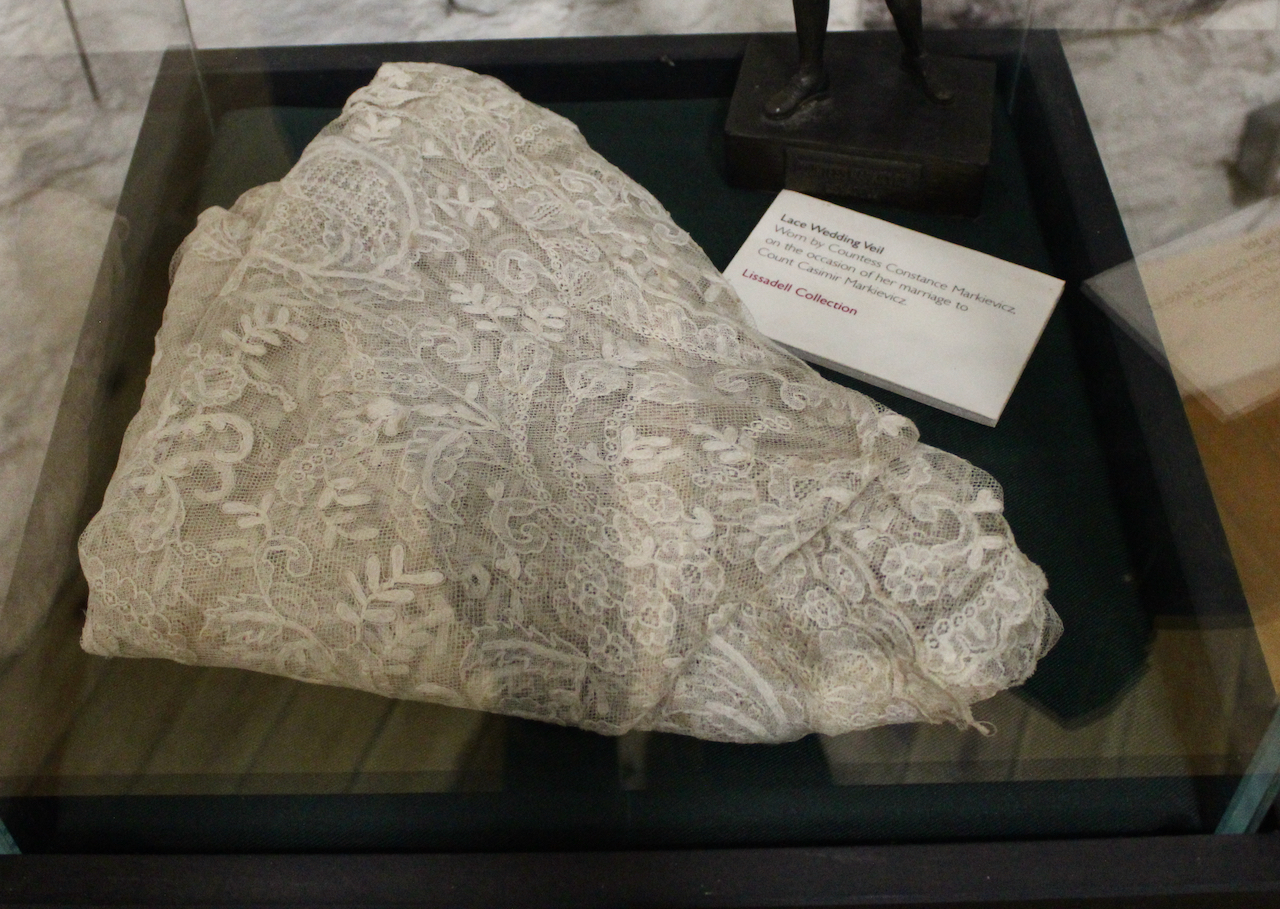
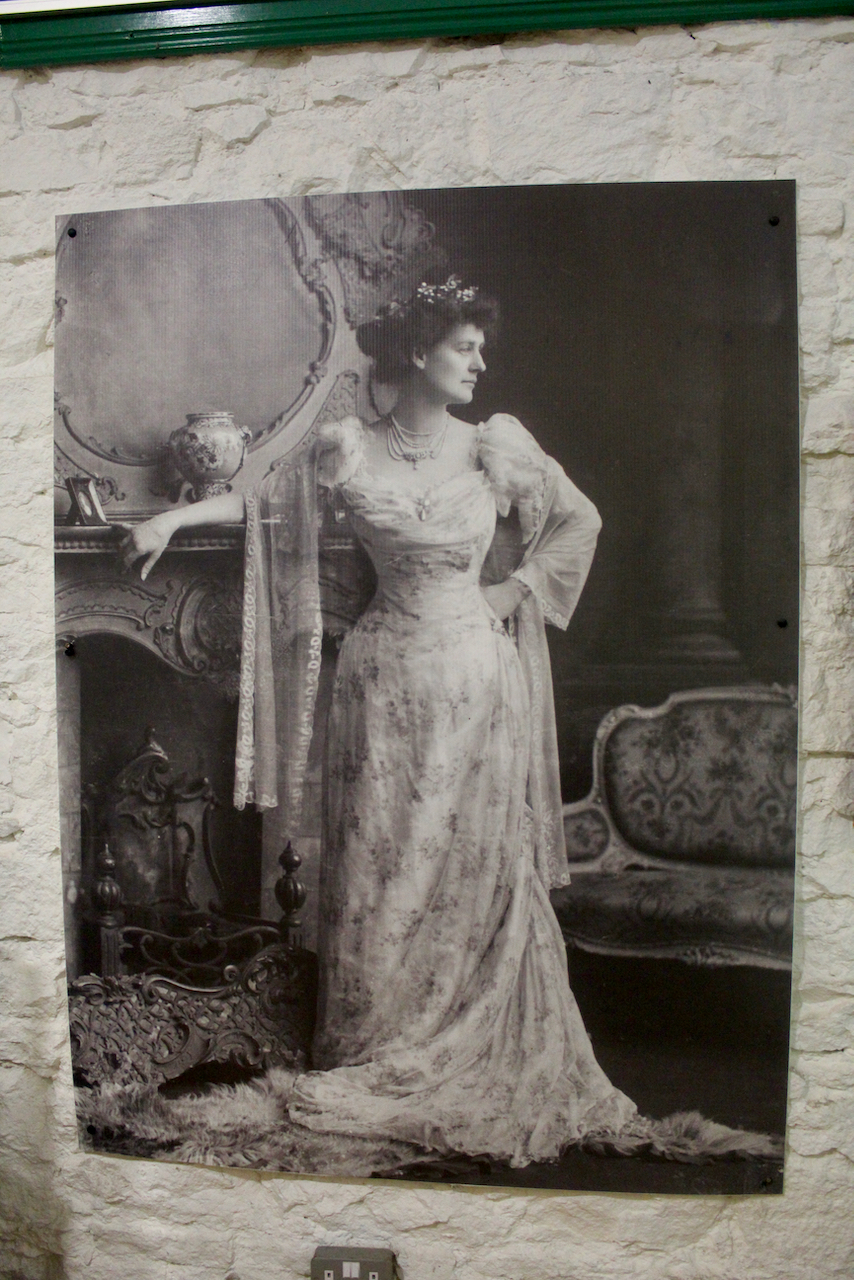
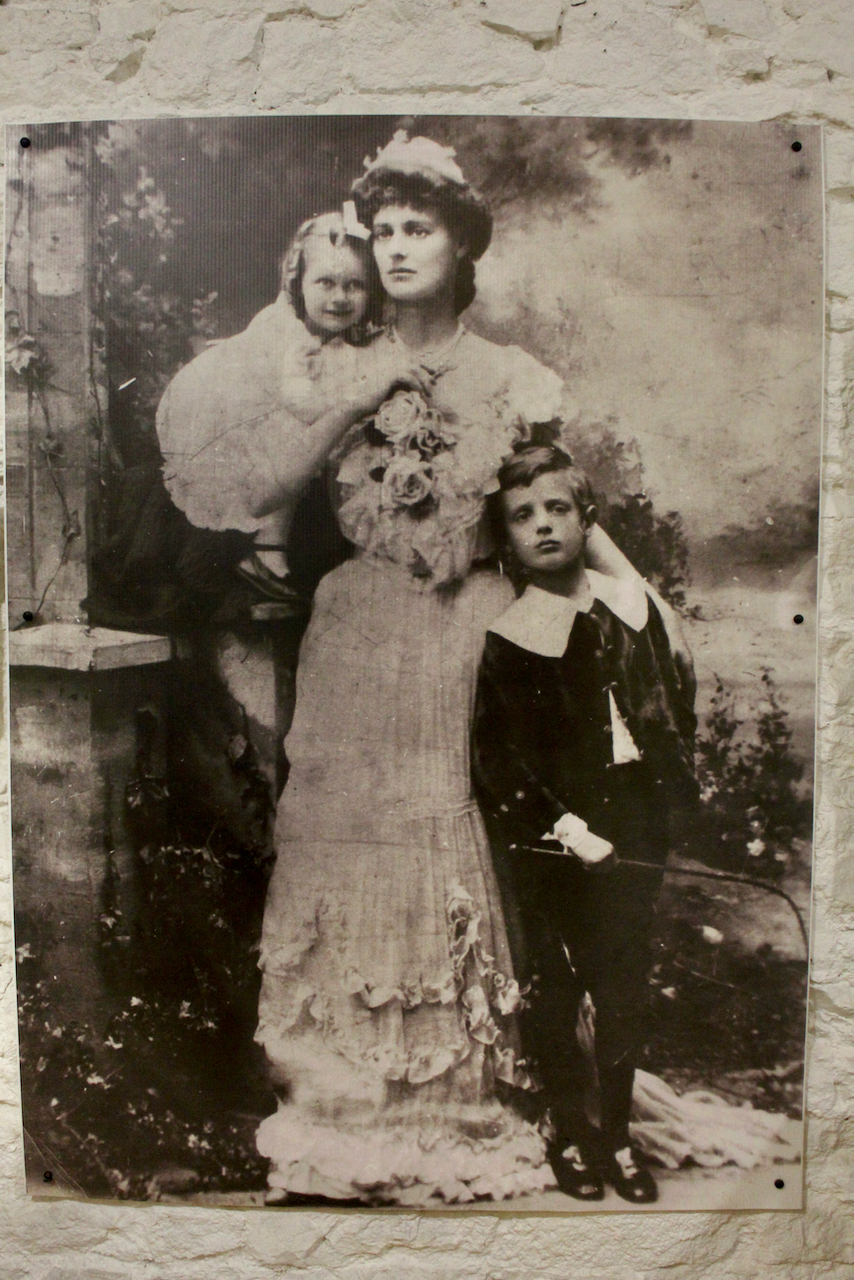
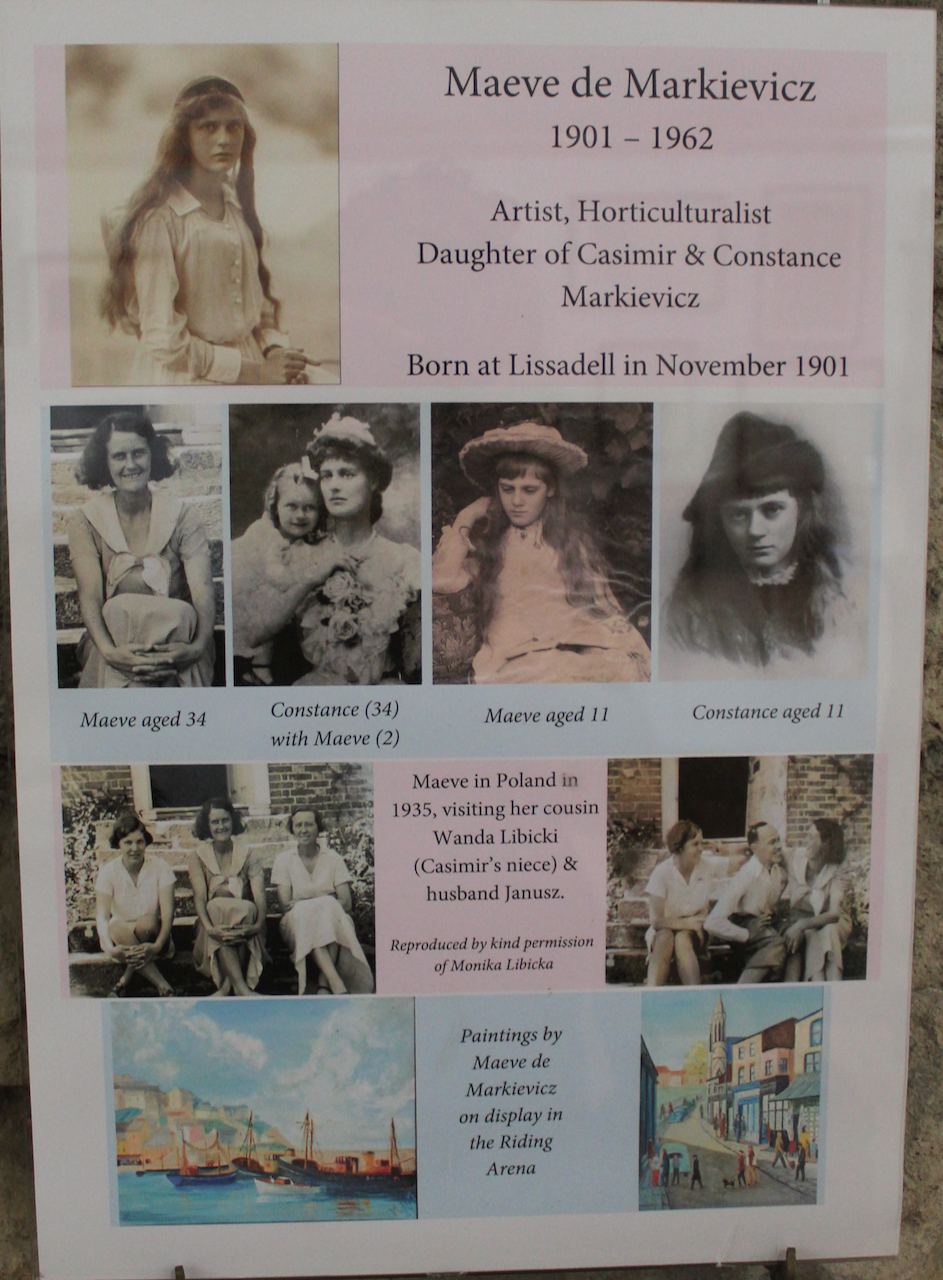
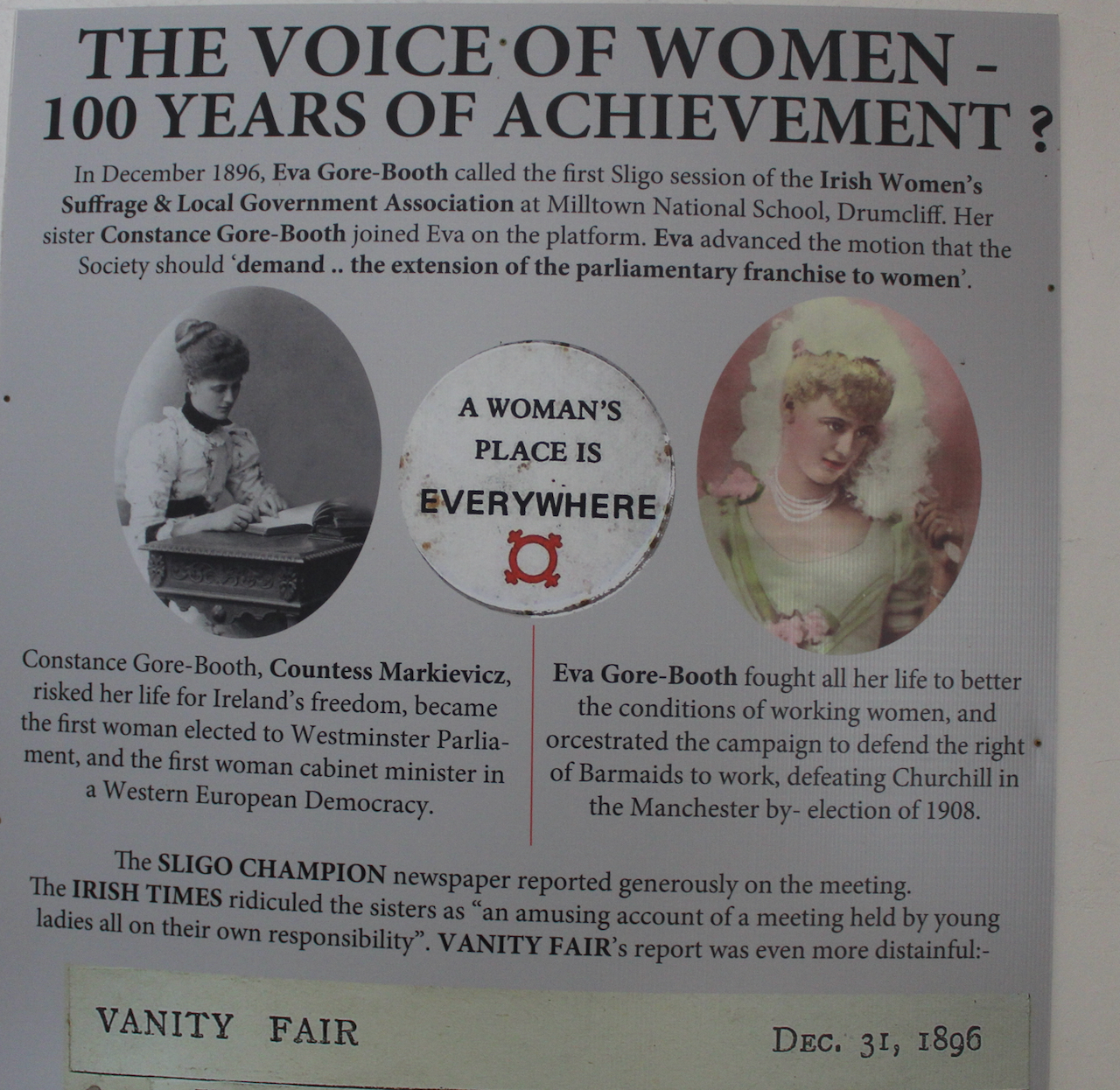
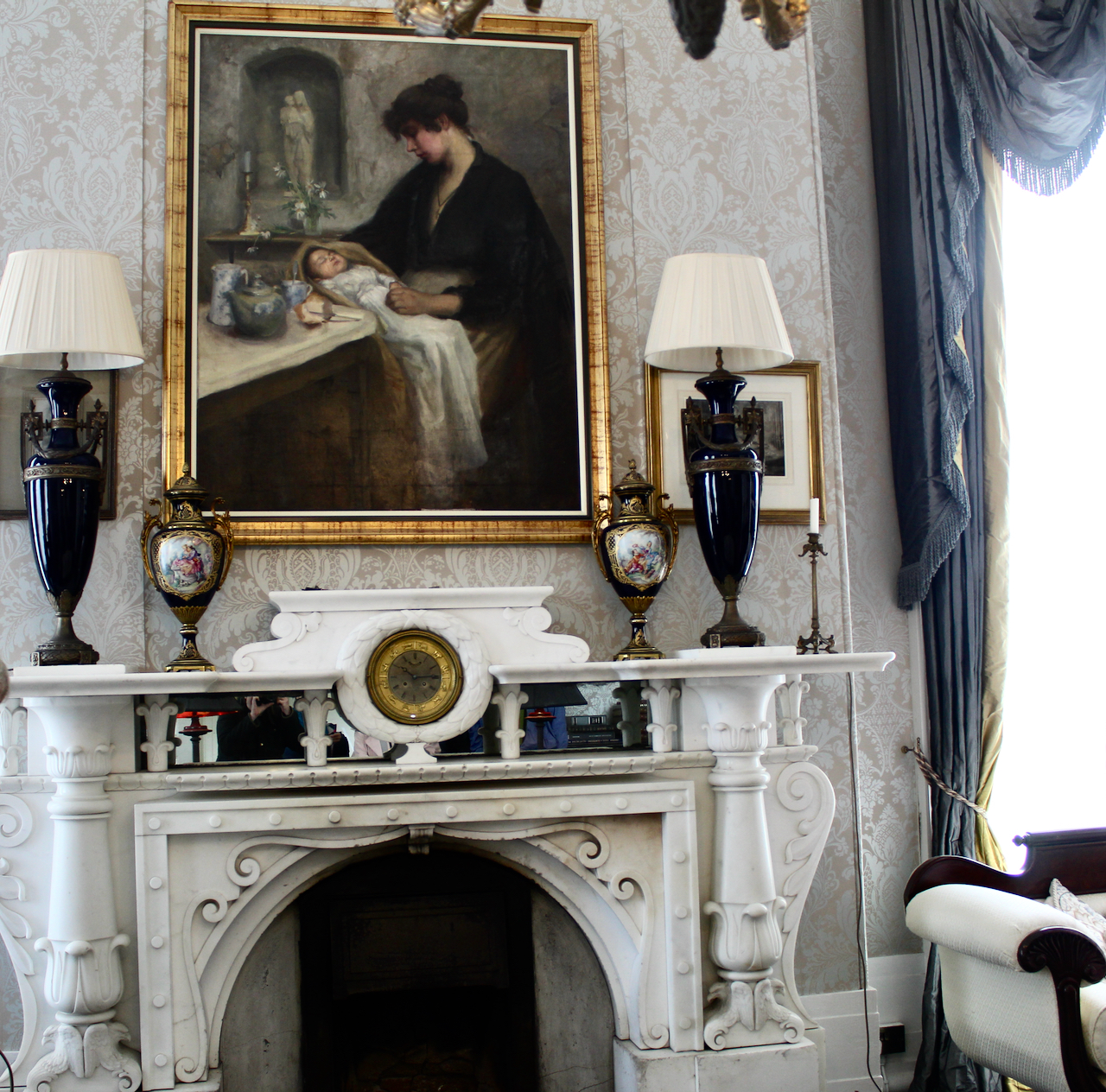
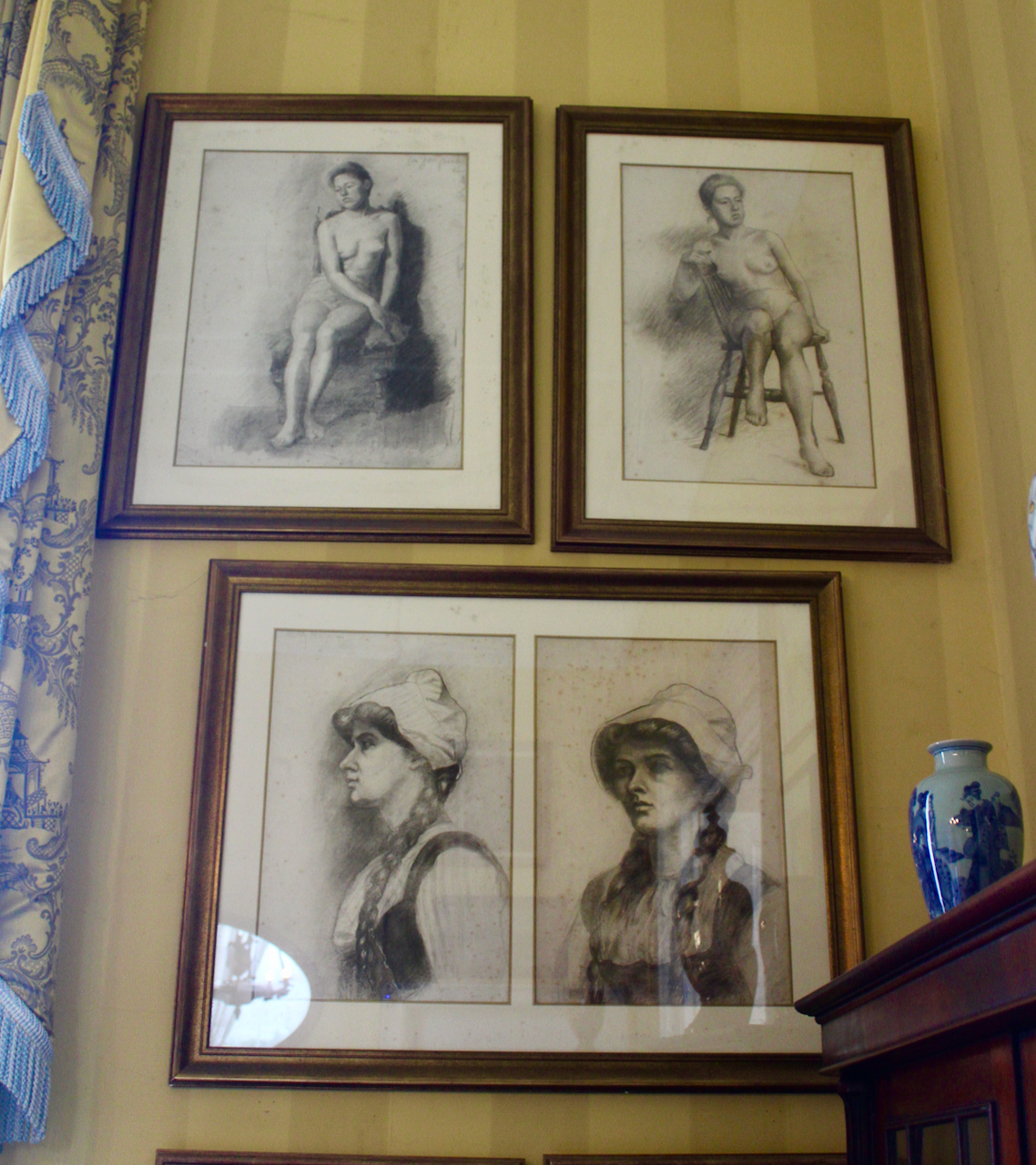
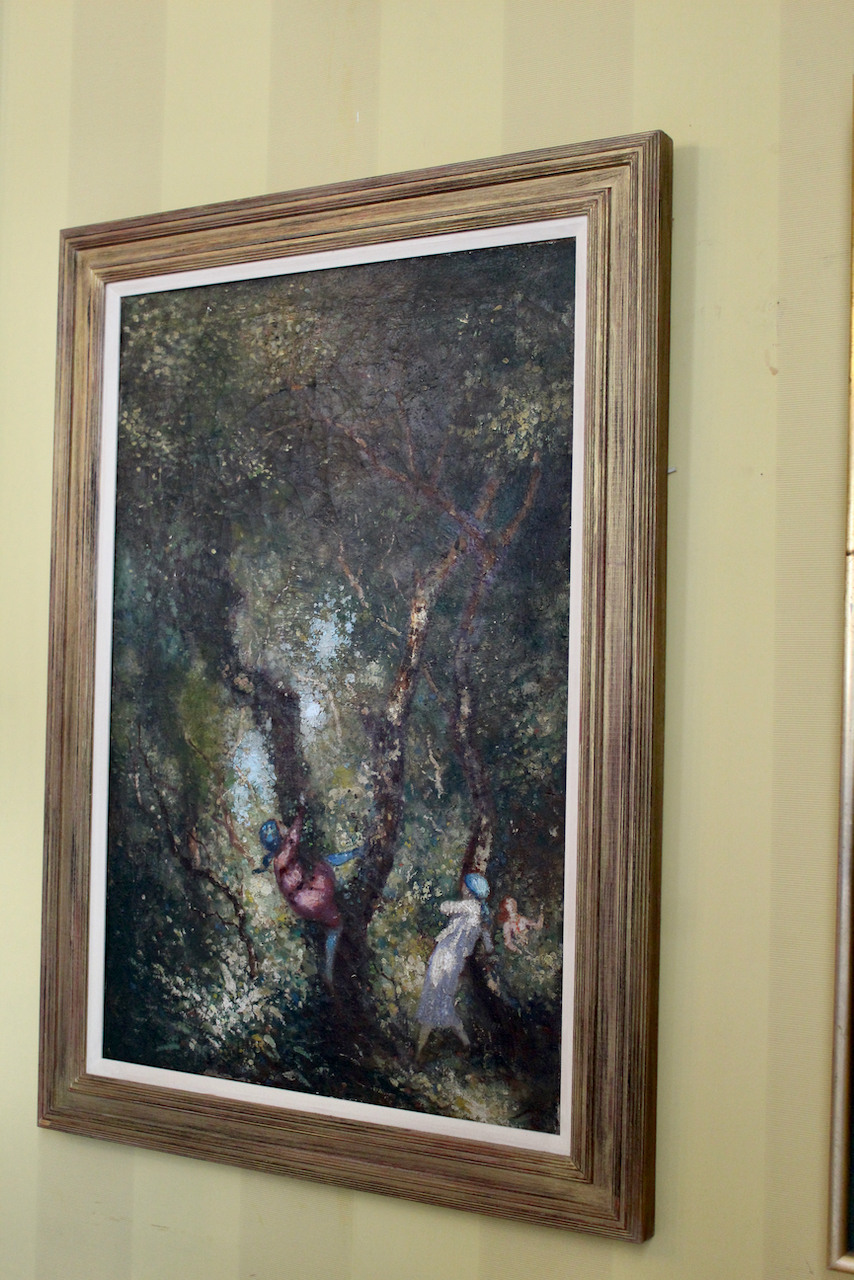
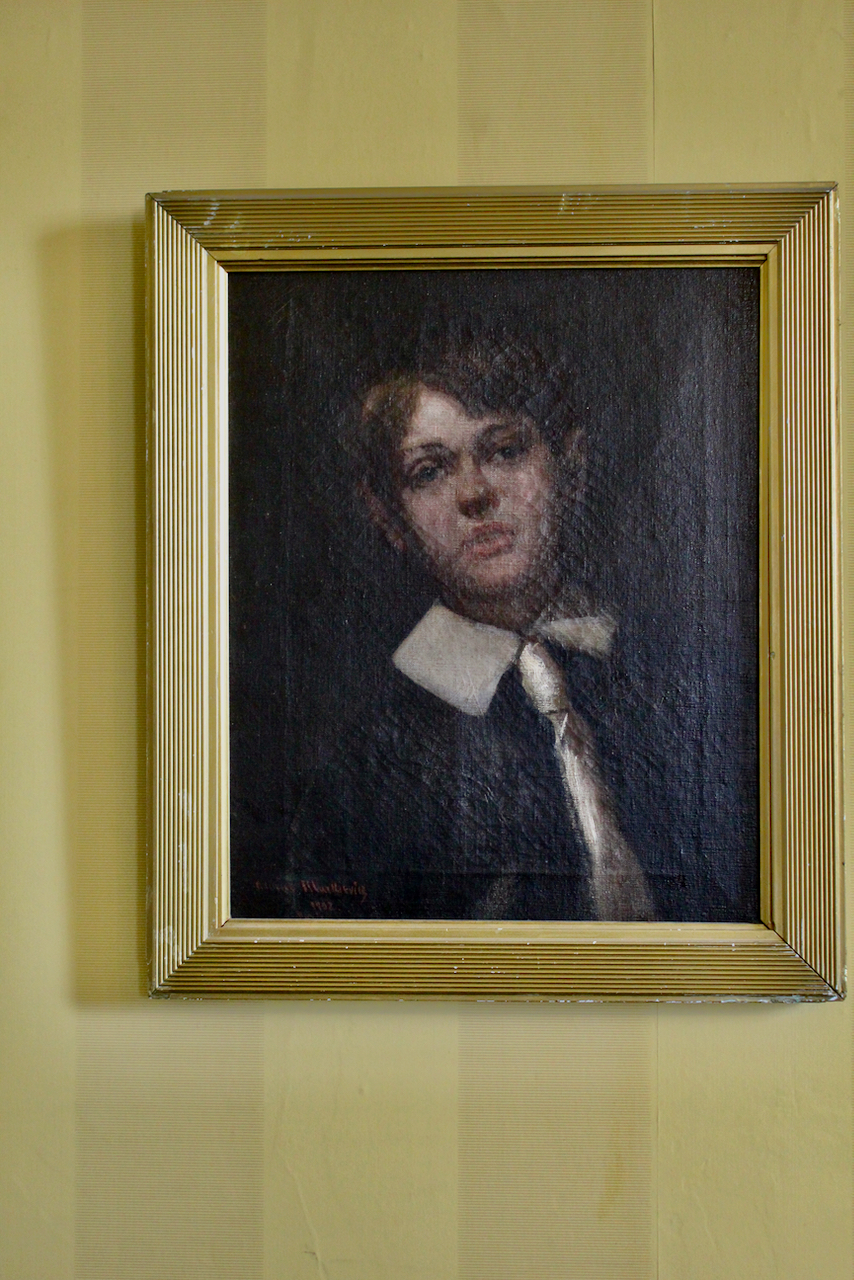
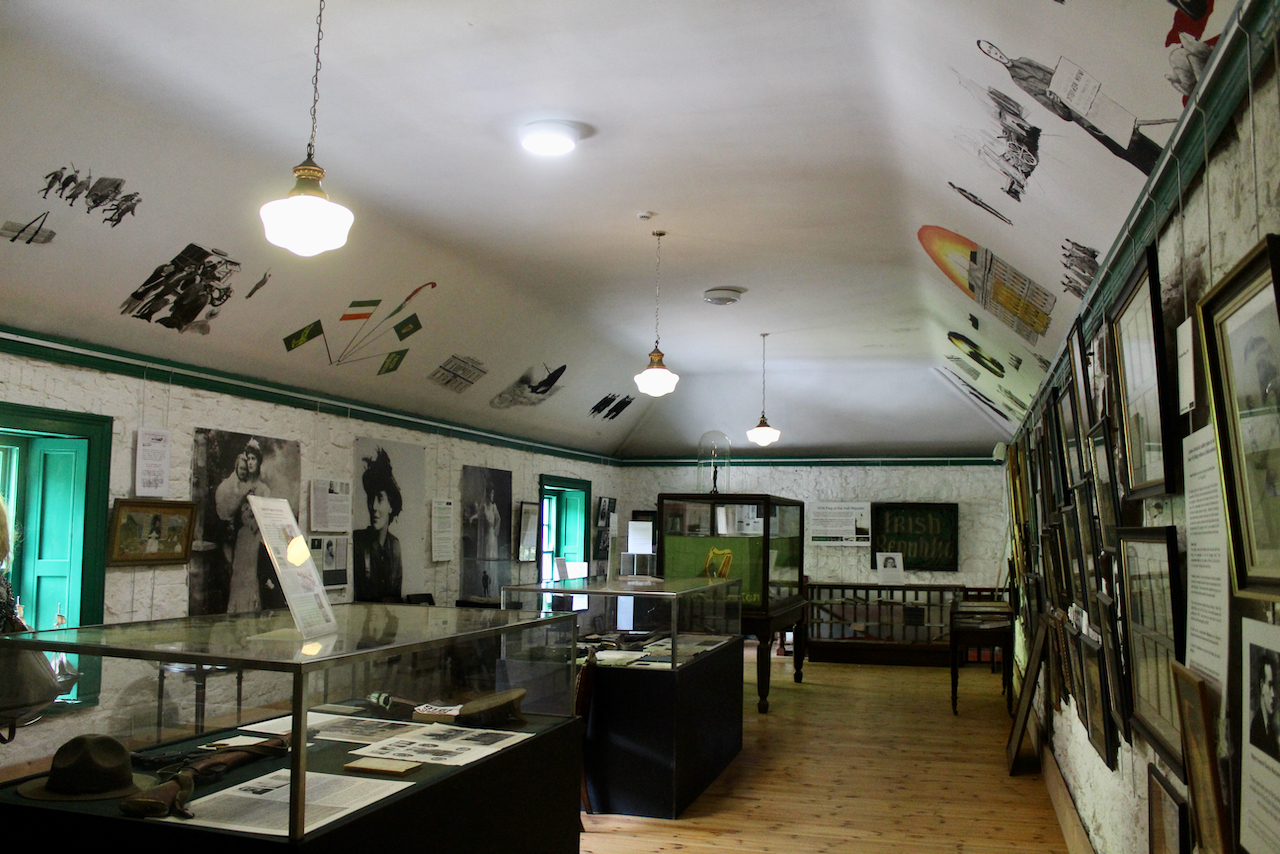
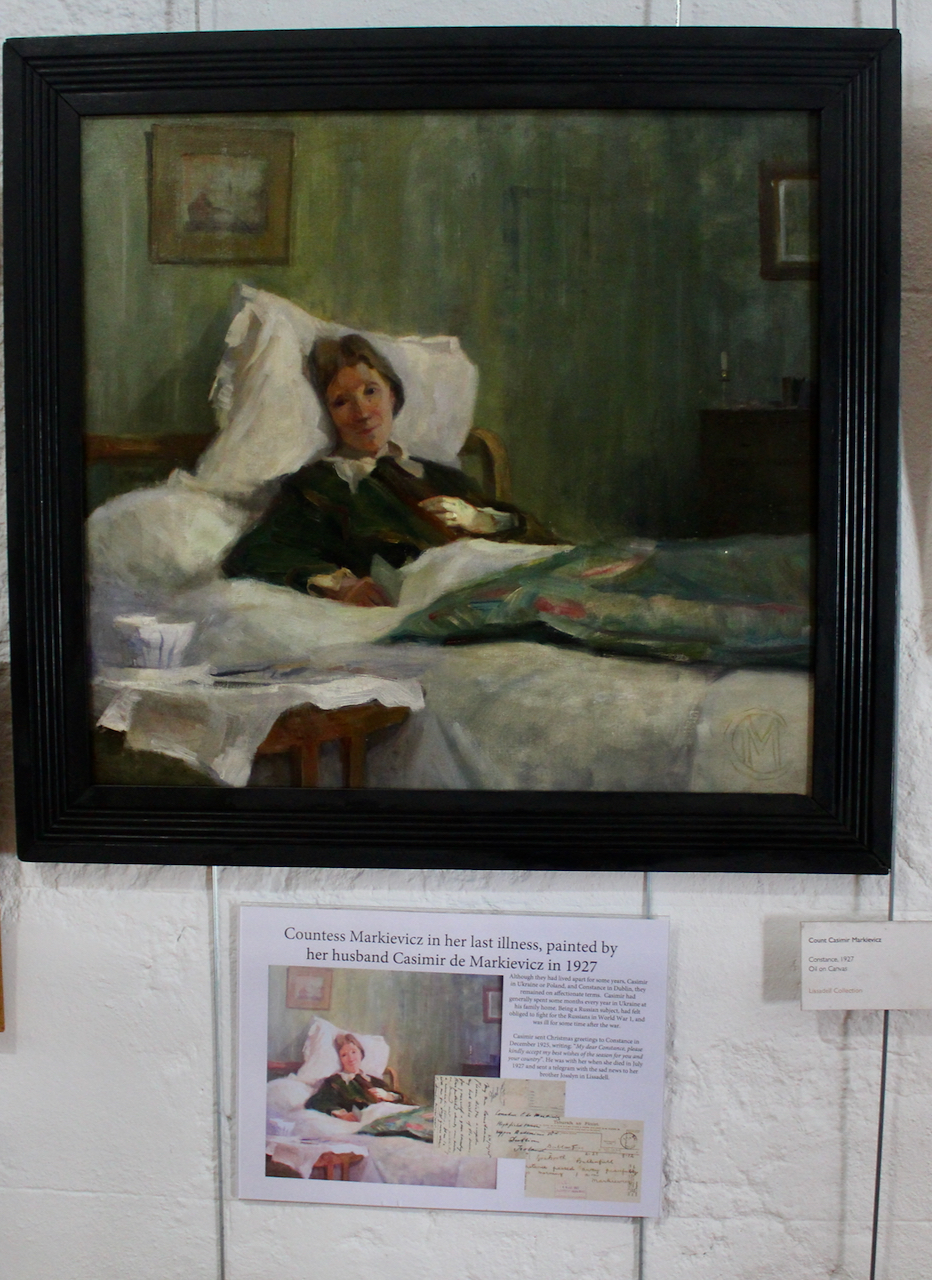
Constance went to art school in the Slade School of Art in London 1892-1894. She lived in Cheyne Walk, Chelsea, where many of London’s bohemians and writers gathered: George Eliot had lived there, Whistler, Henry James and Erskine Childers. At the age of 25 went to Paris to continue her studies, and met and married a fellow artist, the Polish Casimir Markievicz. Many of Constance’s paintings still hang on the walls, as well as some work by Casimir. Their only child, Maeve Allys, was born in Lissadell in 1901.
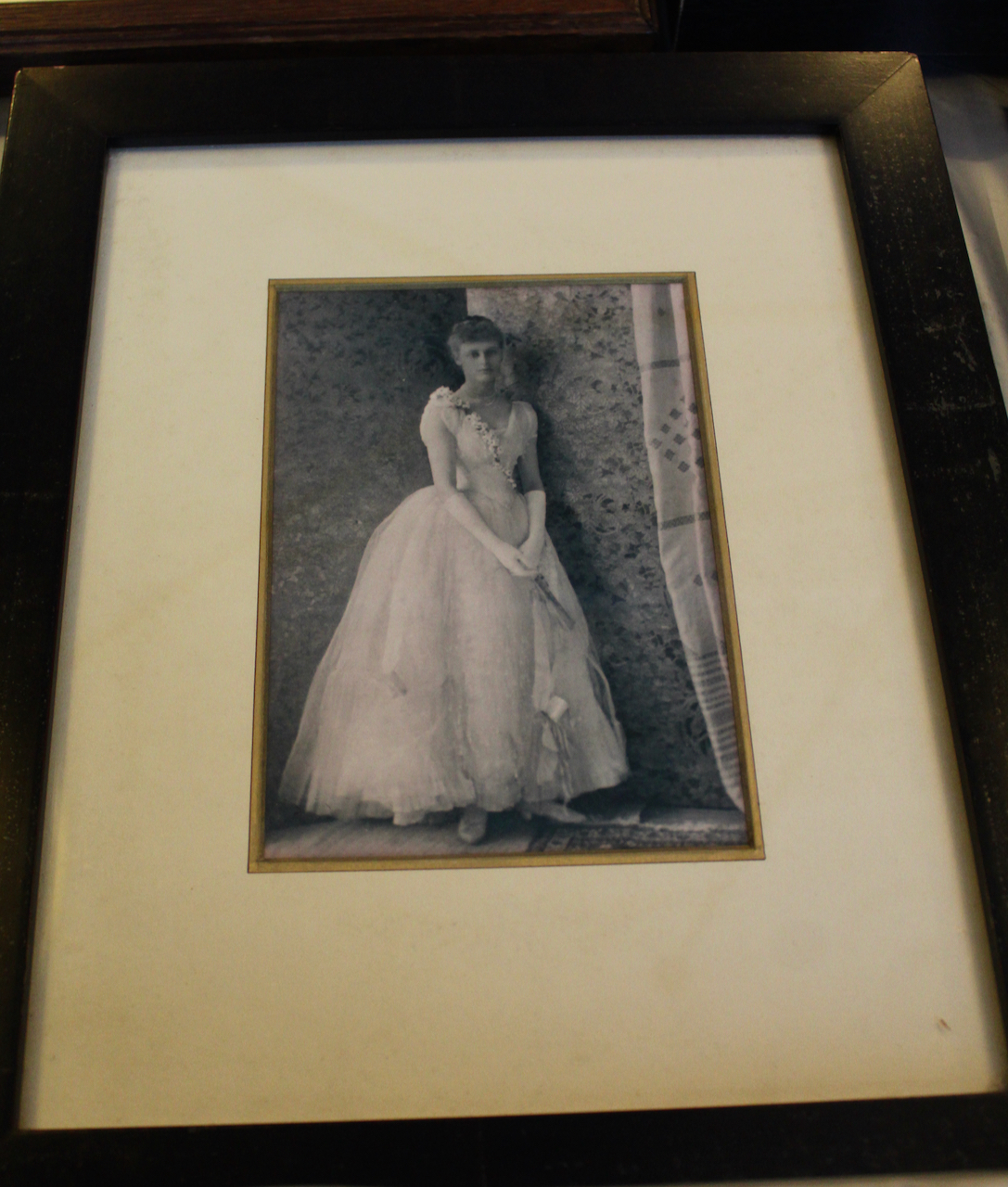
Constance Gore-Booth (left) and her sister, Eva, in 1895.Lissadell, 2022.Lissadell, 2022.Painting of Countess Markievicz (1868-1927) by Casimir Markievicz (1874-1932), hanging in the National Gallery of Ireland. Constance Gore-Booth studied art in London and Paris, and in 1900 married Count Markievicz-Dunin, a Polish aristocrat. Lissadell, 2022.Casimir Markievicz.Lissadell, 2022.Lissadell, 2022.Lissadell, 2022.Lissadell, 2022.Lissadell, 2022.Lissadell, 2022.
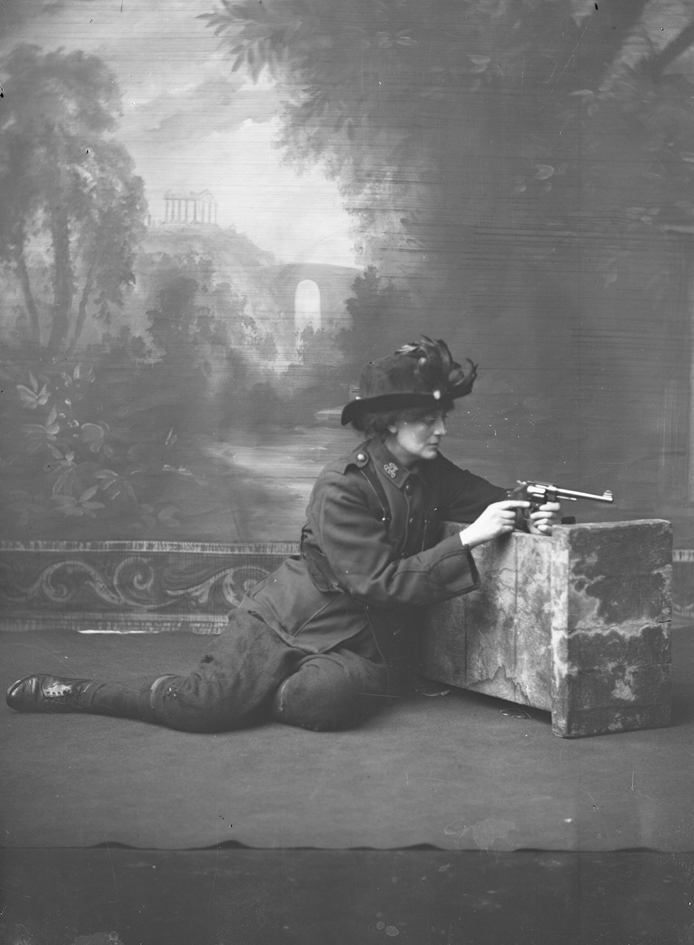
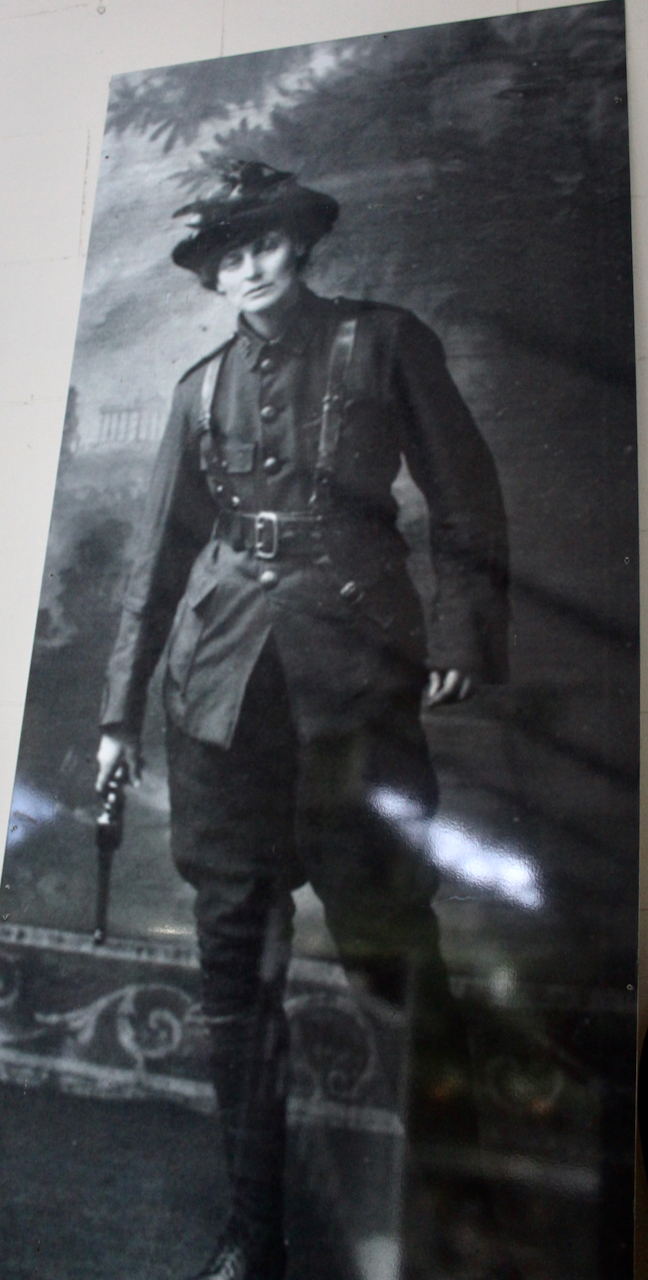
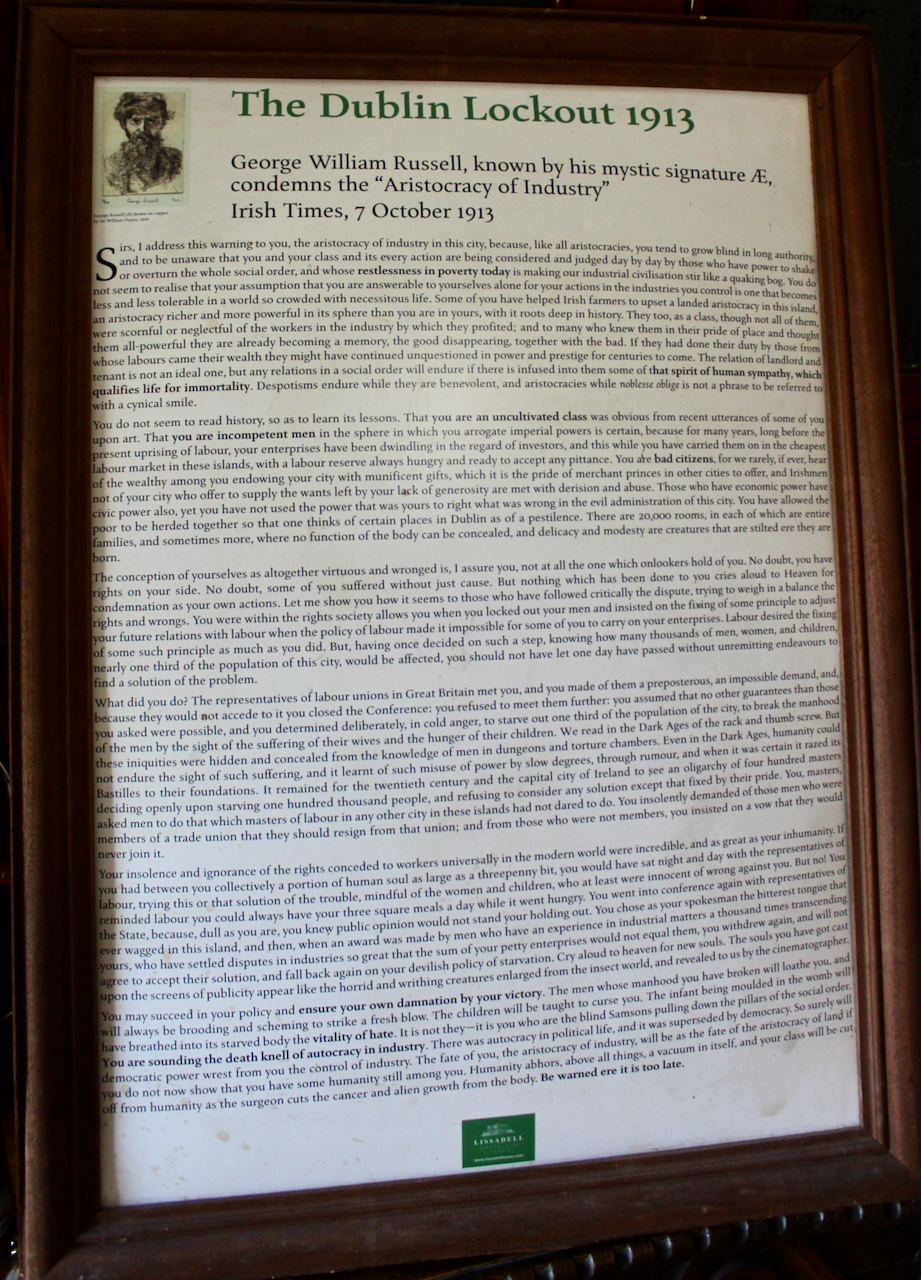
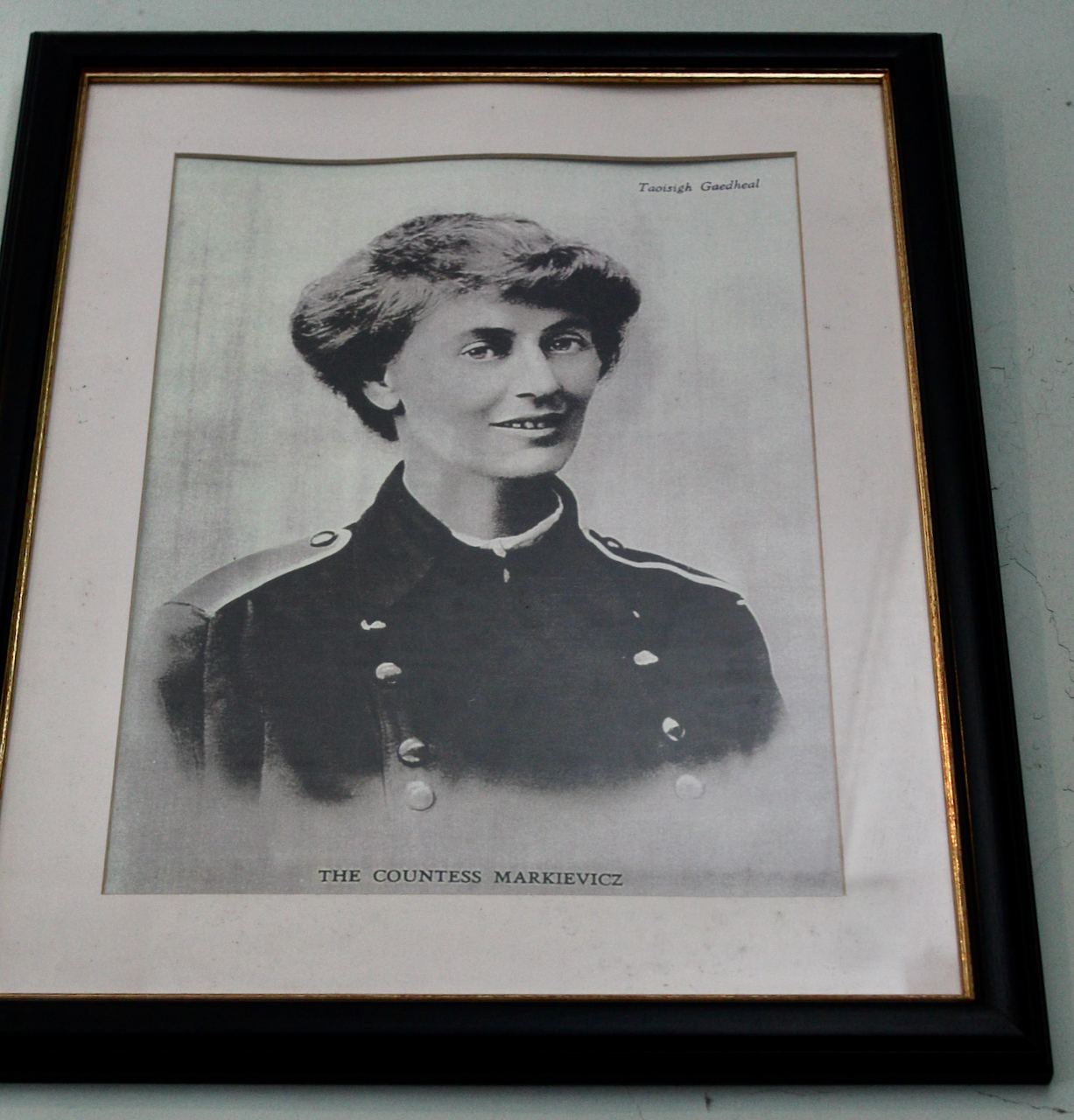
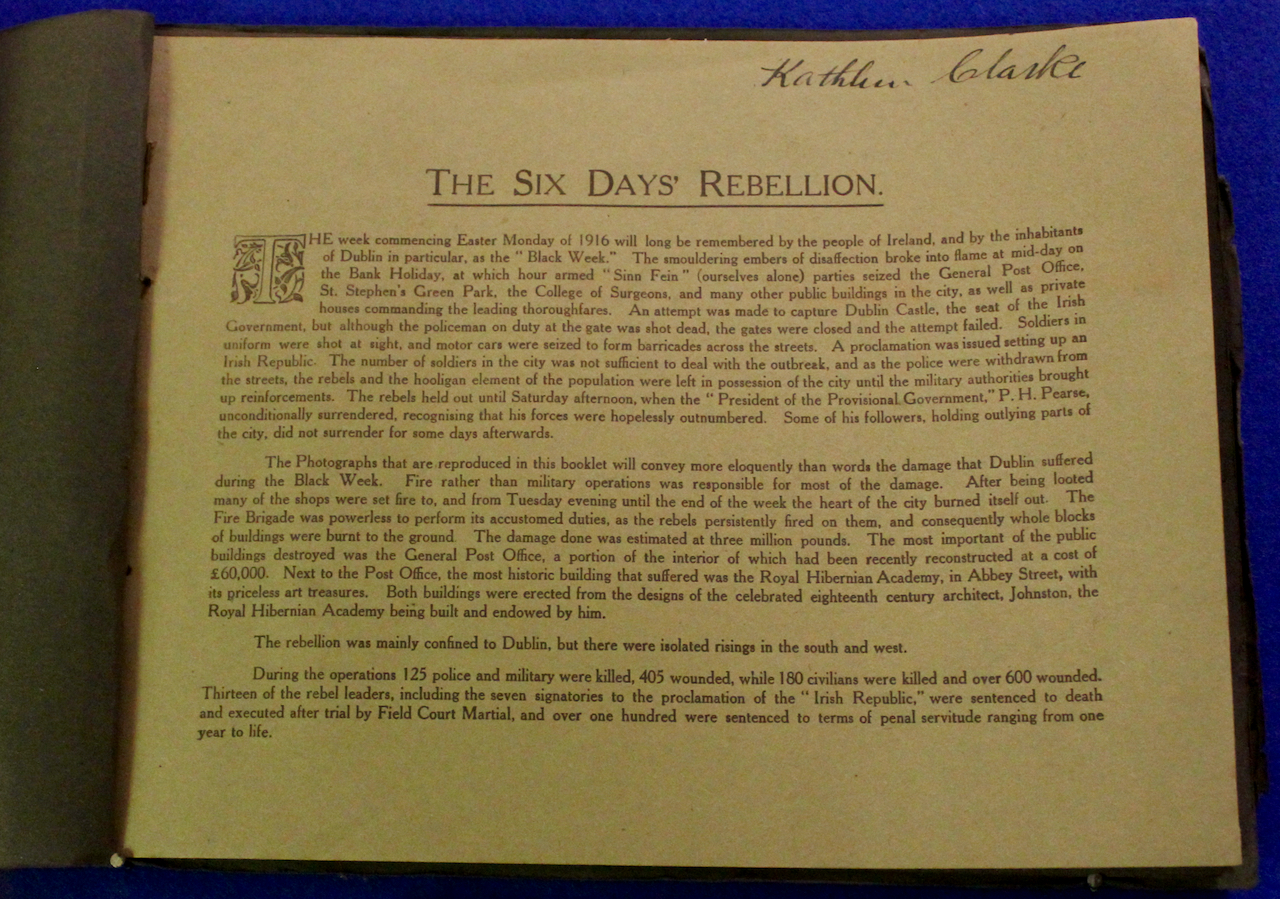
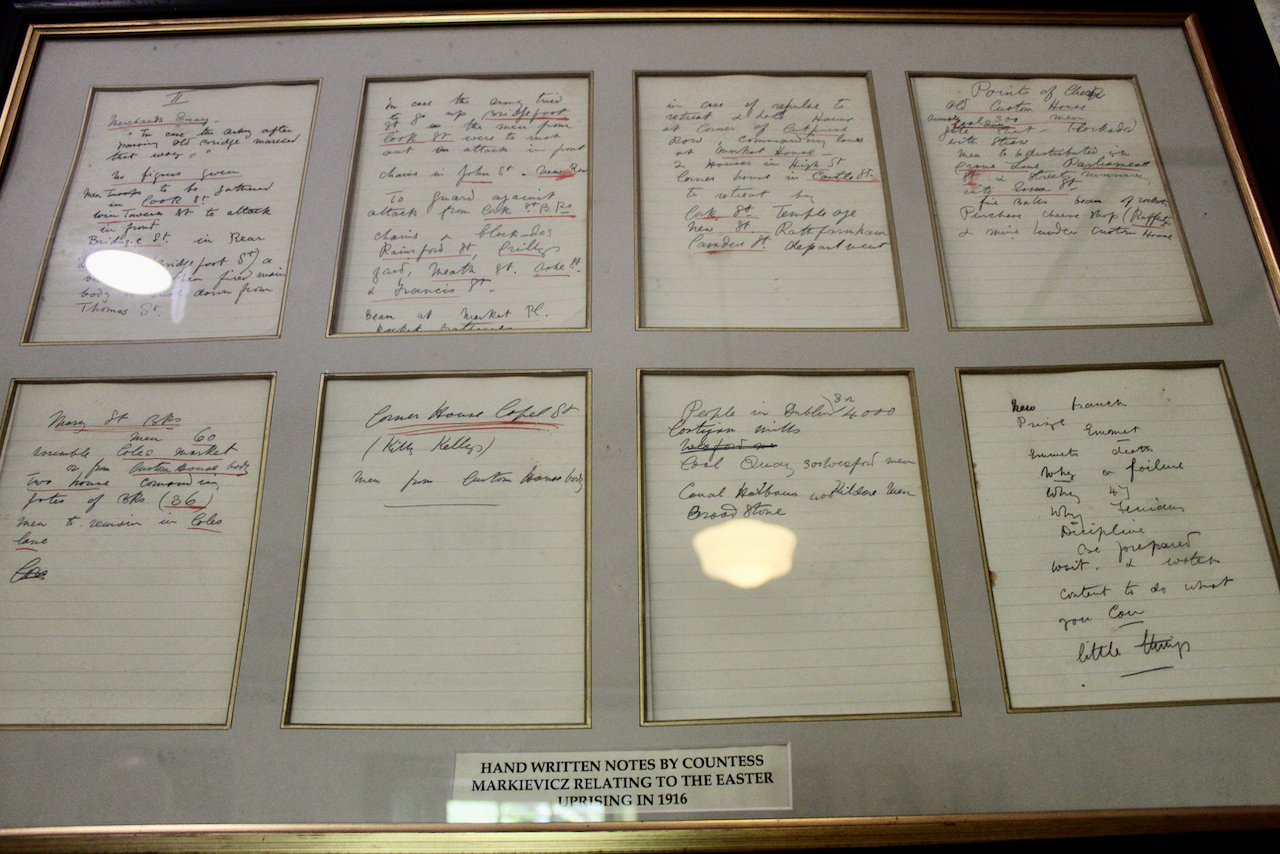
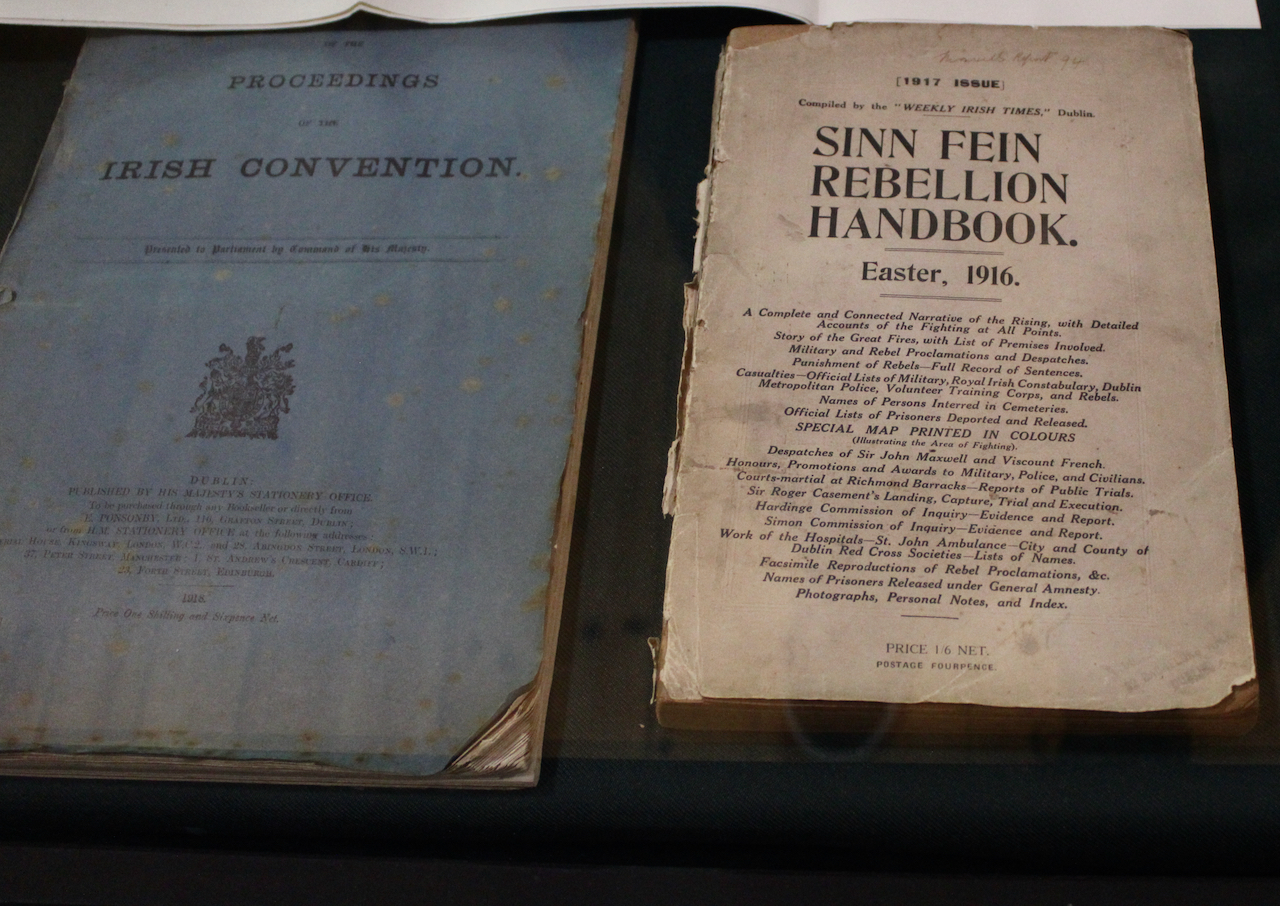
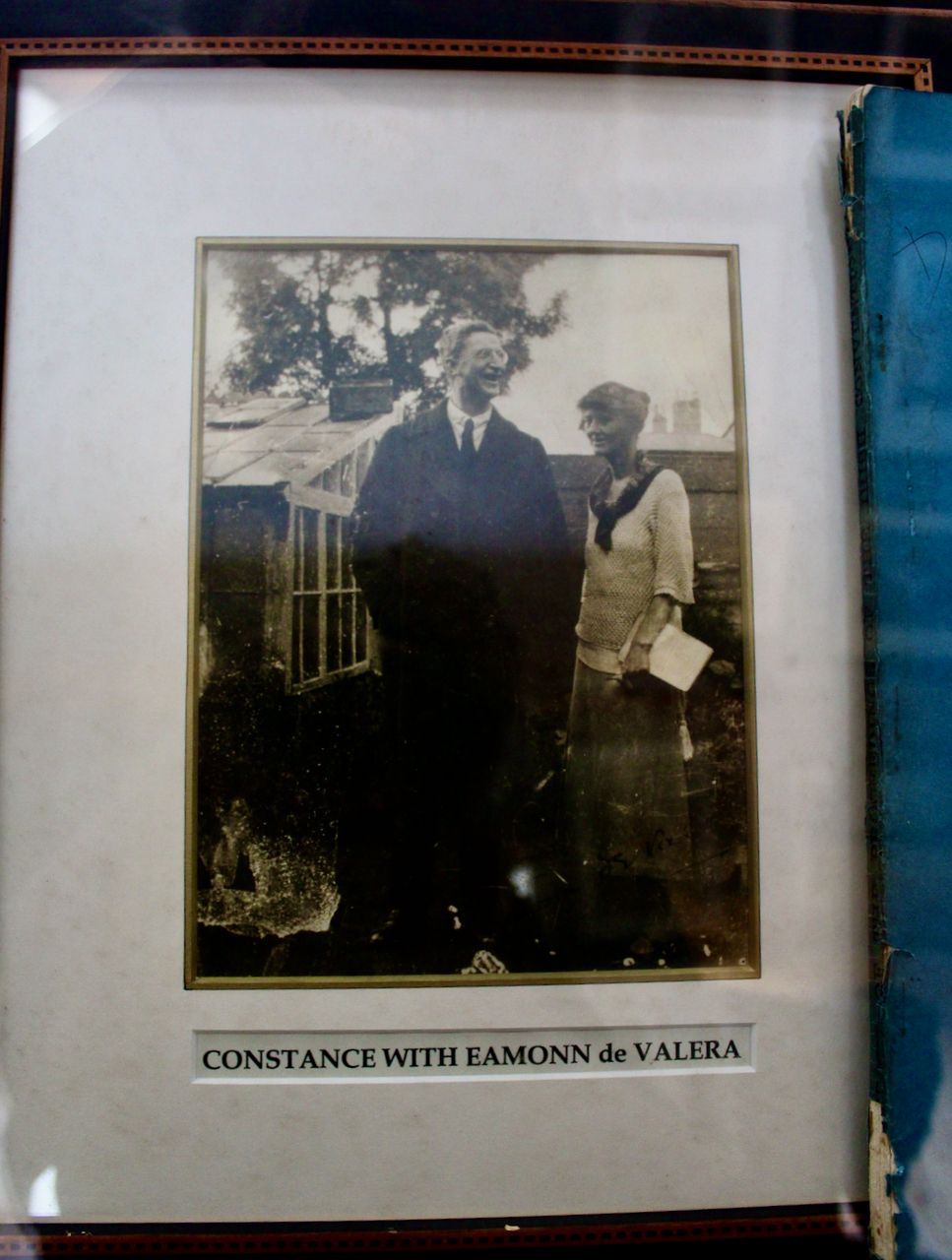
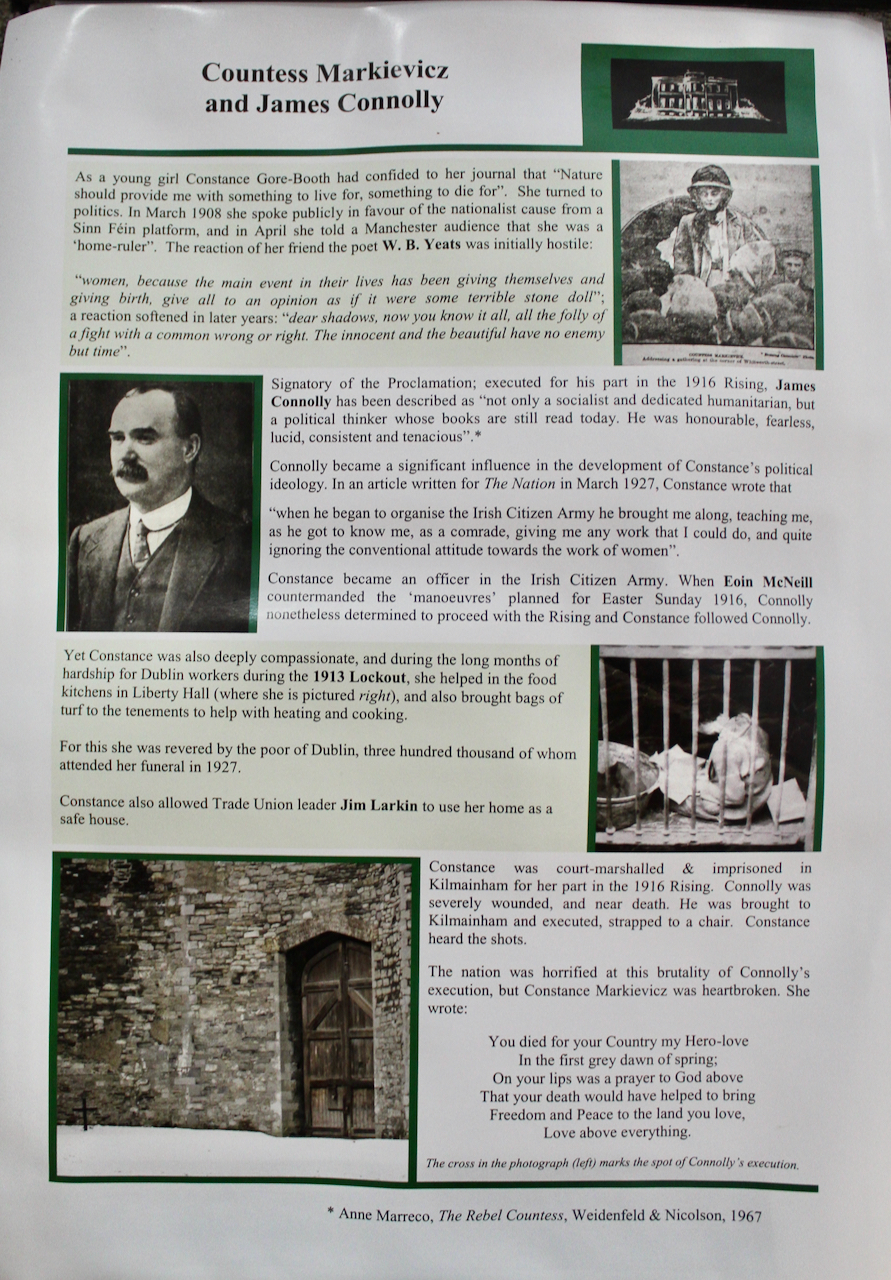
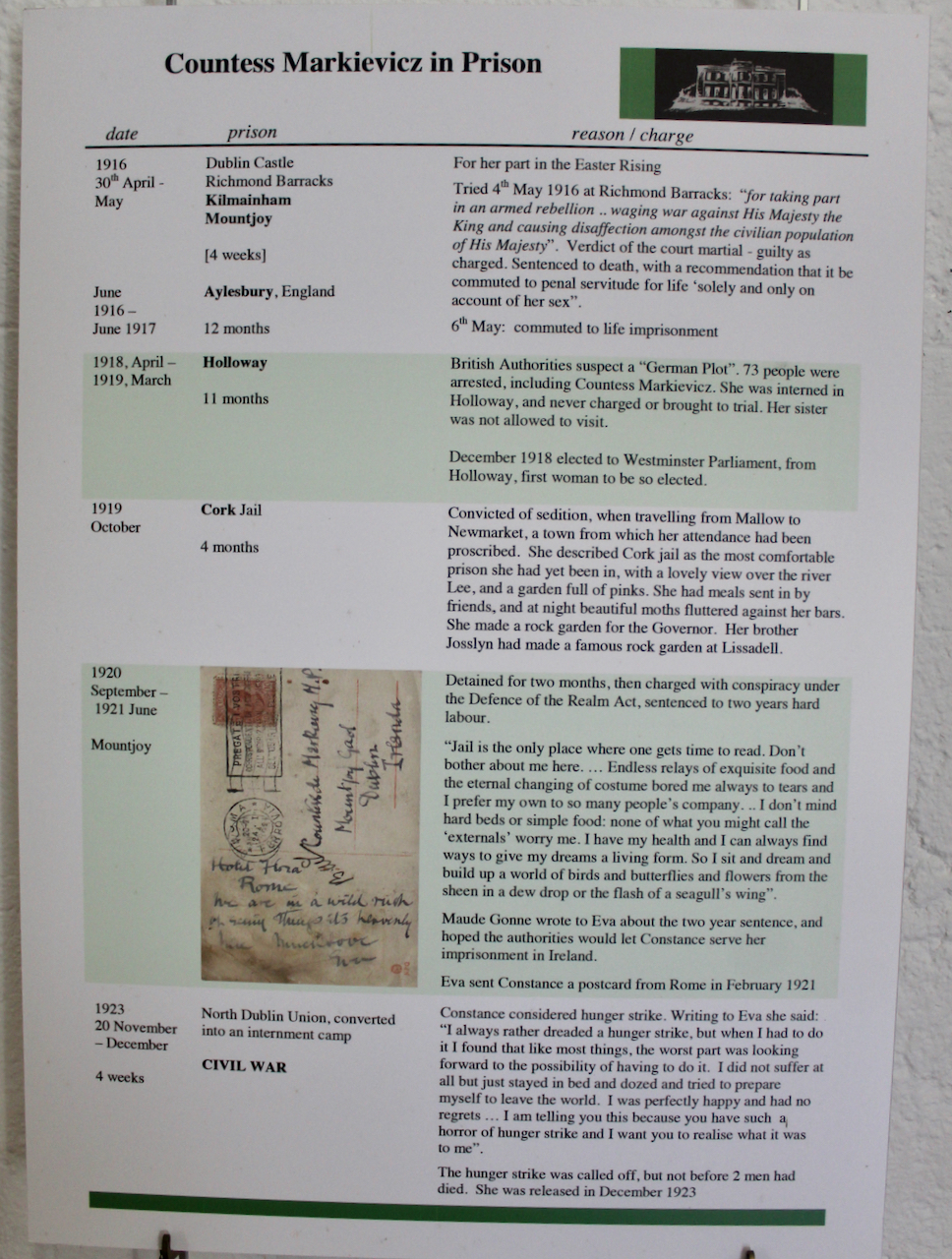
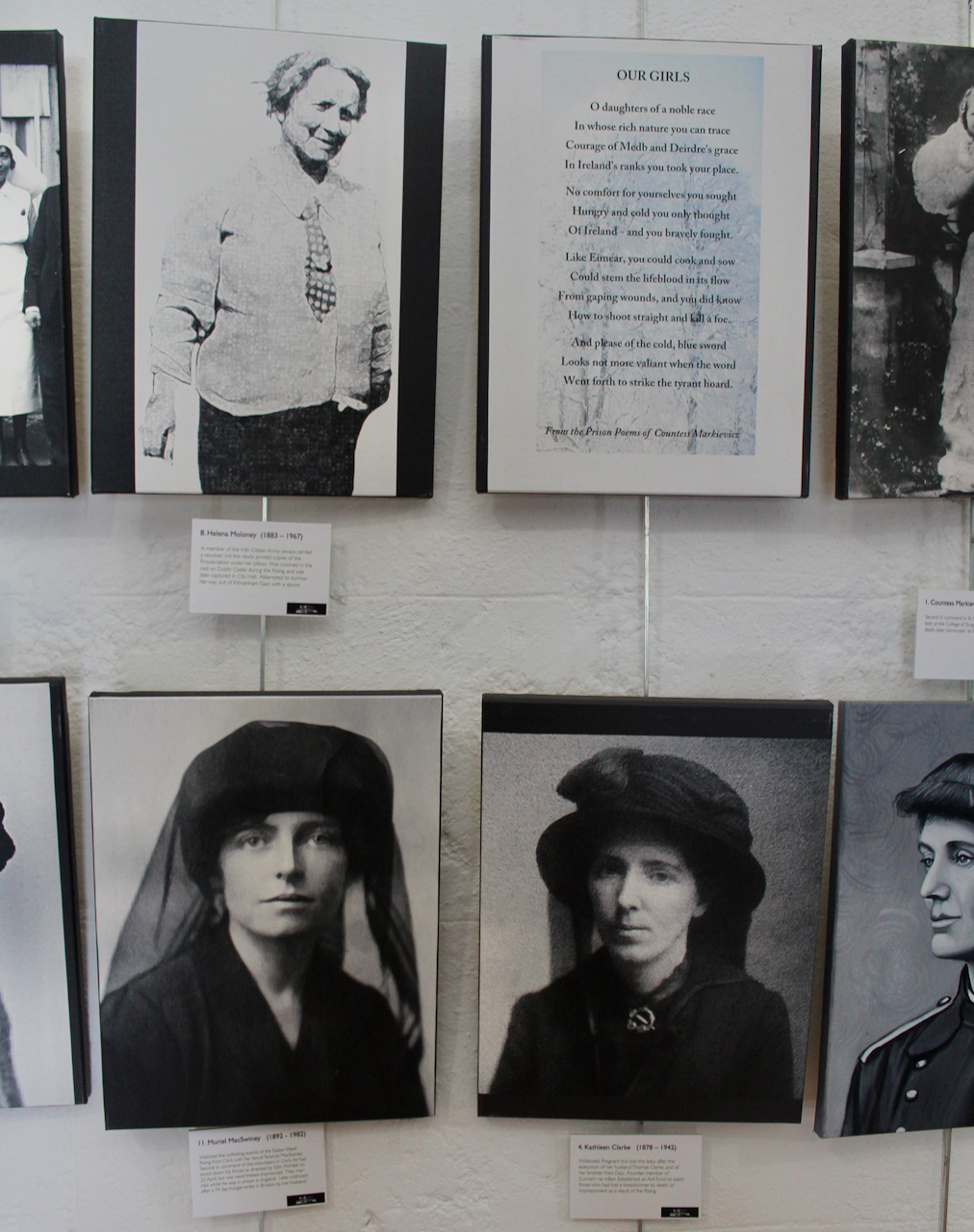
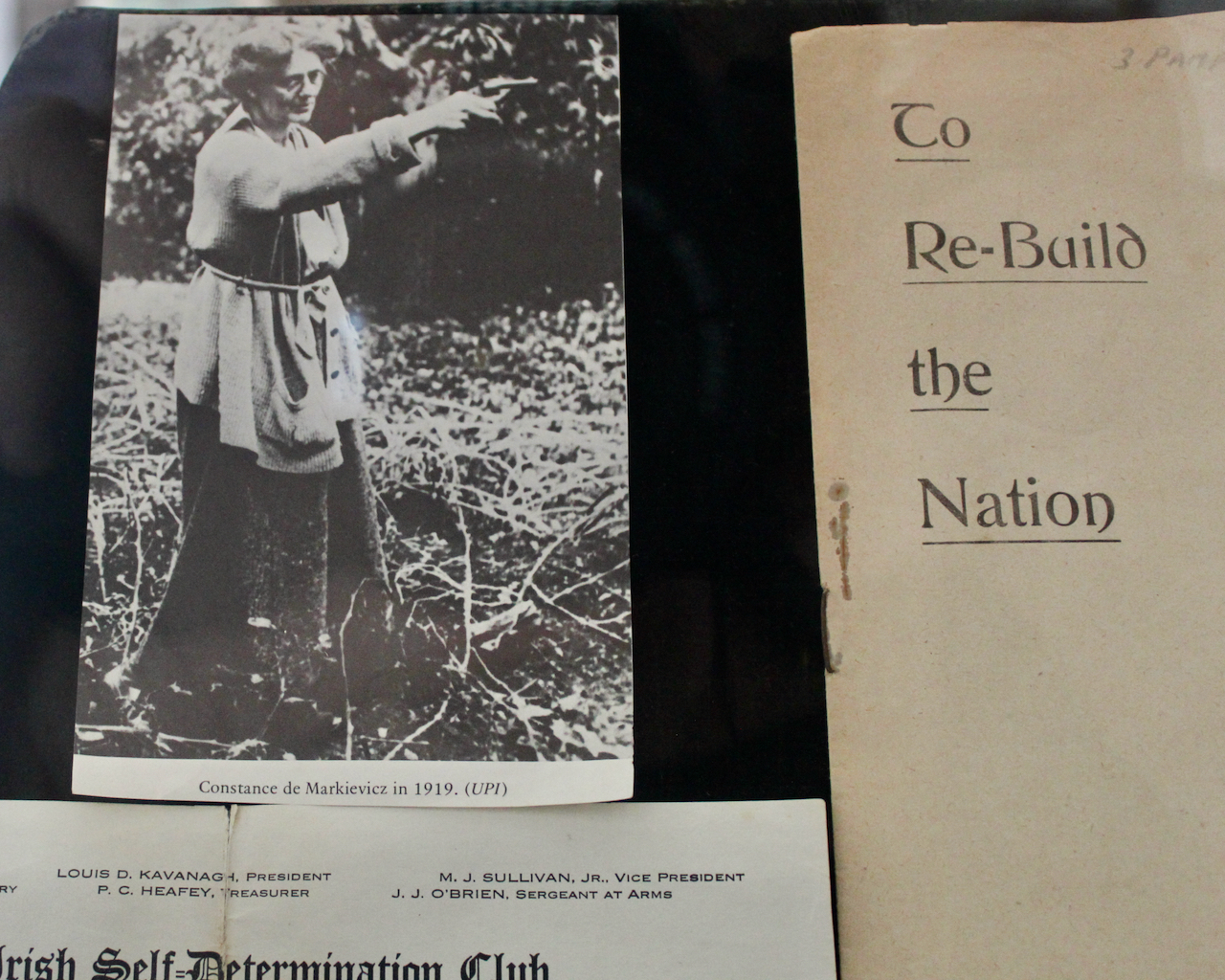
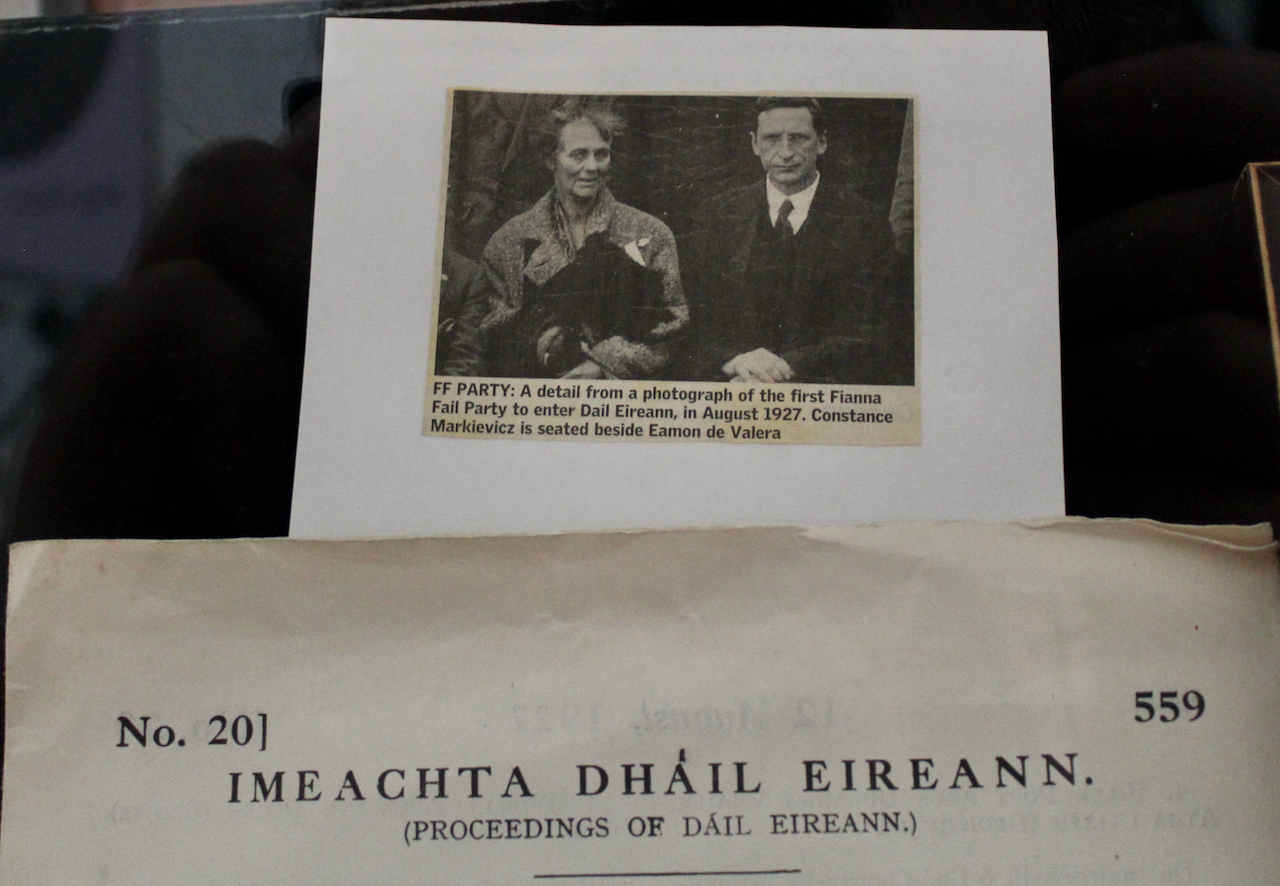
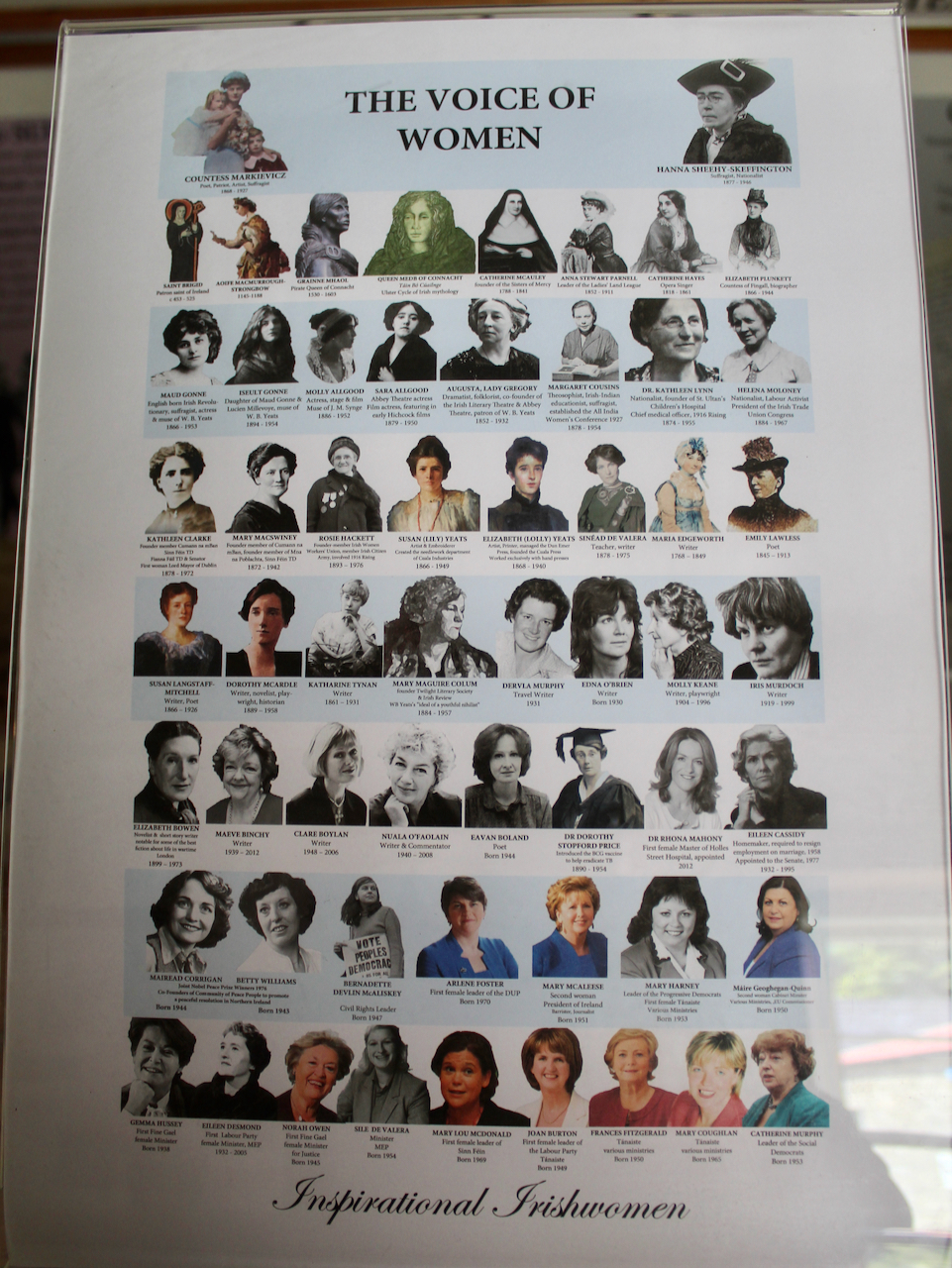
Constance had a strong social conscience, and became involved in the 1913 Lockout, where workers went on strike for better pay. She was then involved in the 1916 Rising, and was jailed for her activity. When the new state was born, she was elected to Dáil Eireann, where she served as Minister for Labour. She was also the first woman to be elected to the House of Commons at Westminster, London, but like many other Irish politicians, she declined to take her seat – members of Sinn Fein in Northern Ireland continue in this tradition and refuse to take their seats in Westminster.
Lissadell, 2022.
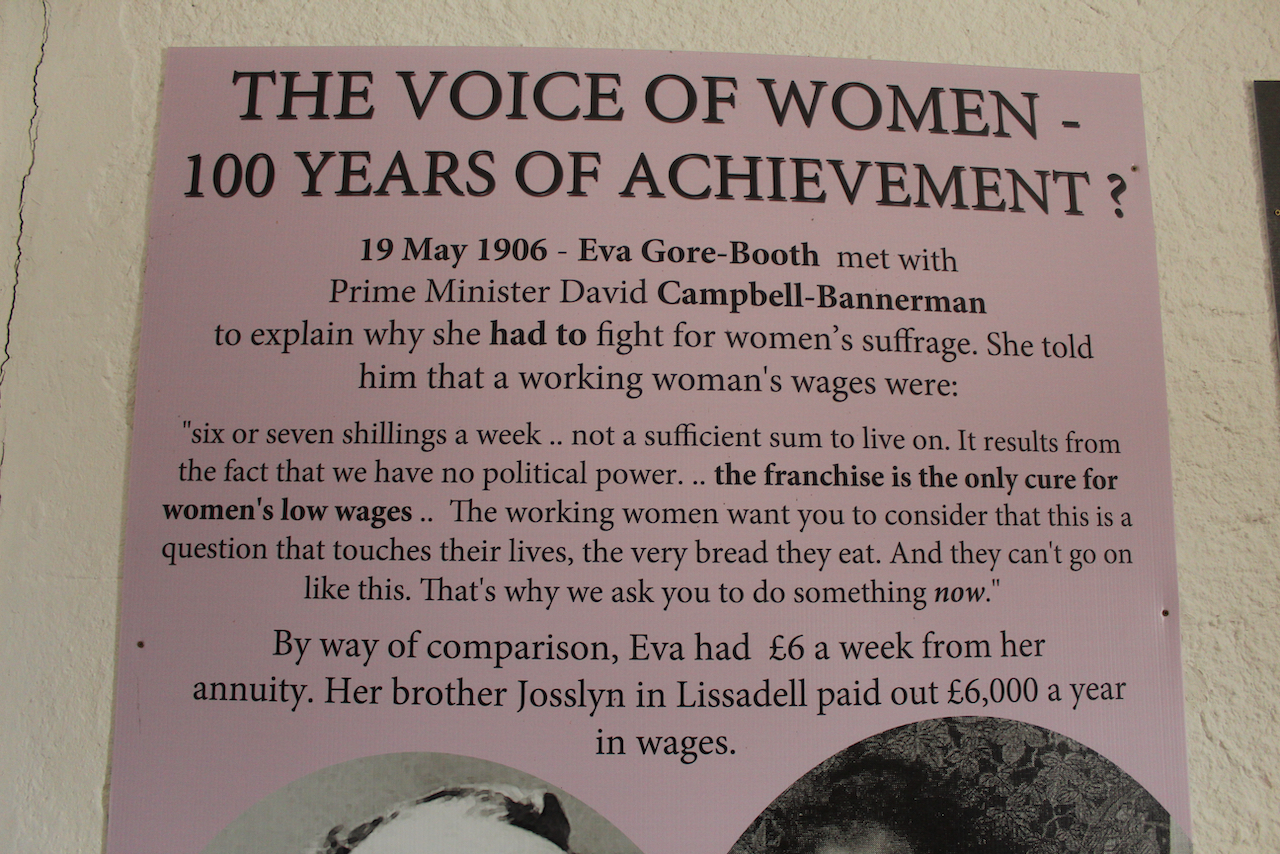
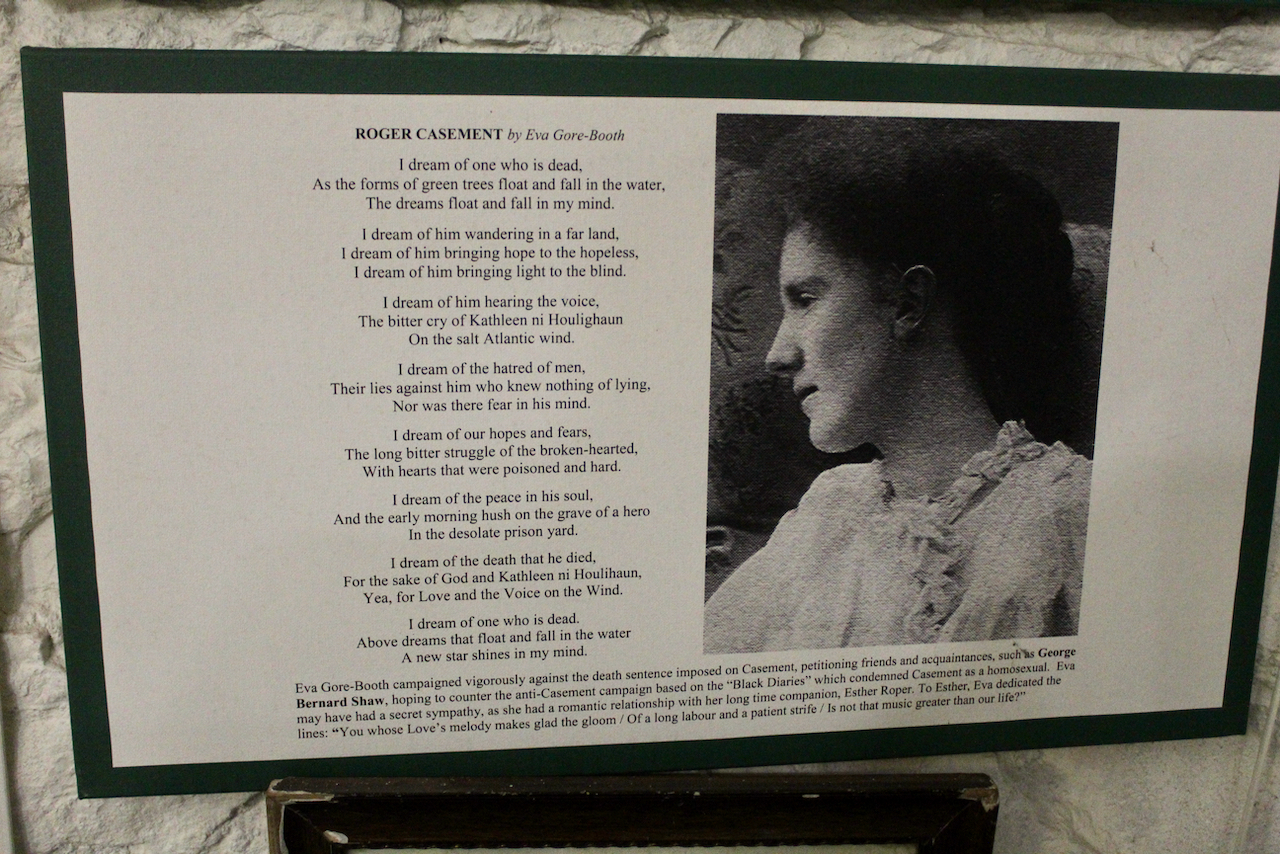
Eva was a suffragist and poet, and lived in meagre circumstances in England with her partner Esther Roper.
Lissadell, 2022.
Eva fought for Women’s Rights and clashing with the young Winston Churchill over barmaids’ rights in 1908. She spent many years in Manchester working to alleviate the condition of working women.
Lissadell, 2022.Lissadell, 2022.Lissadell, 2022.
Eva wrote:
The little waves of Breffny
The grand road from the mountain goes shining to the sea And there is traffic on it and many a horse and cart, But the little roads of Cloonagh are dearer far to me And the little roads of Cloonagh go rambling through my heart.
A great storm from the ocean goes shouting o’er the hill, And there is glory in it; and terror on the wind: But the haunted air of twilight is very strange and still, And the little winds of twilight are dearer to my mind.
The great waves of the Atlantic sweep storming on their way, Shining green and silver with the hidden herring shoal; But the little waves of Breffny have drenched my heart in spray, And the little waves of Breffny go stumbling through my soul.
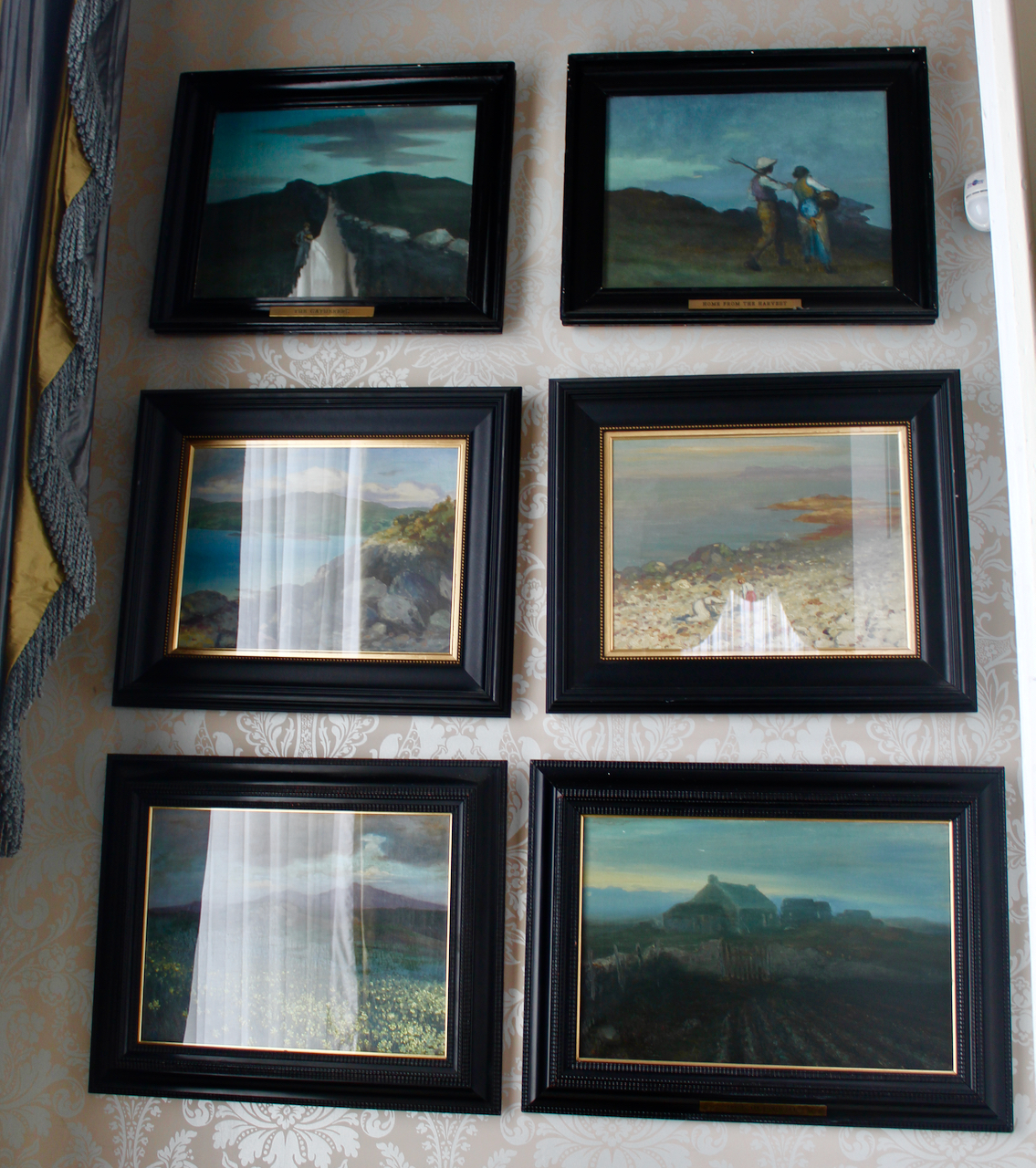
There is also a collection of paintings by a friend of W.B. Yeats, “A.E.” i.e. George William Russell, who was also part of the farming Co-operative movement and, like Yeats, a mystic.
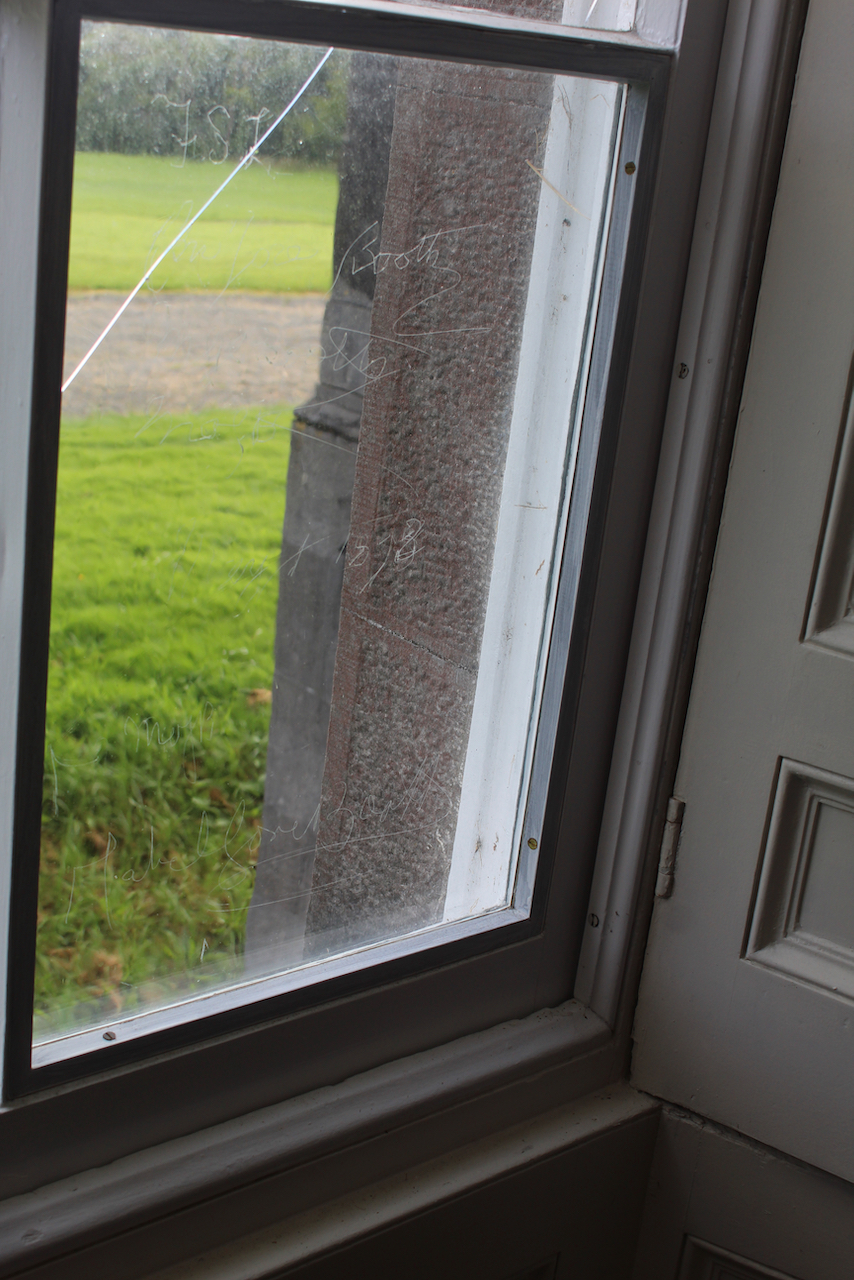
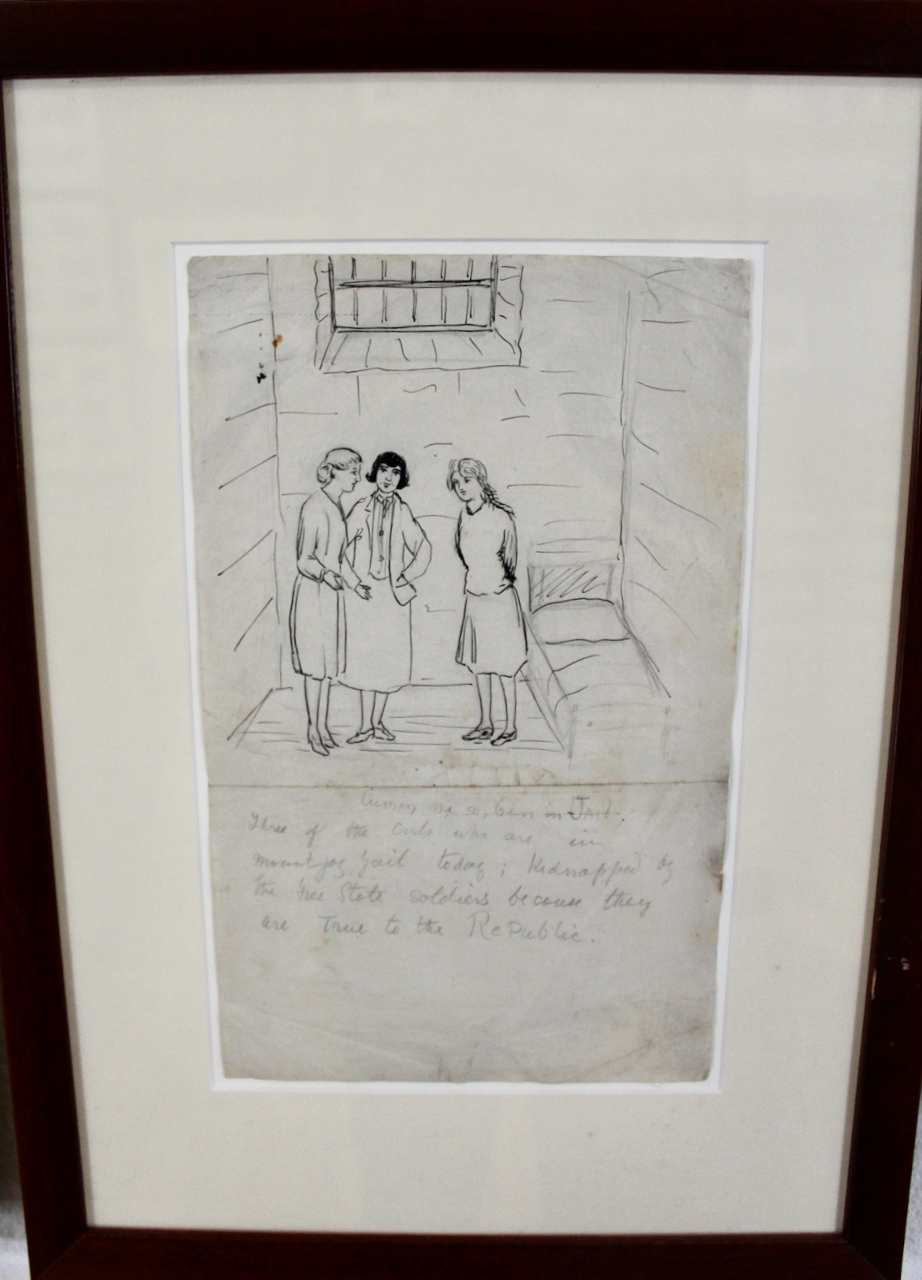
The anteroom still has an engraving that Constance made with her sister Mabel in a windowpane with a diamond in 1898. Drawings from Constance’s sketchbook are displayed also.
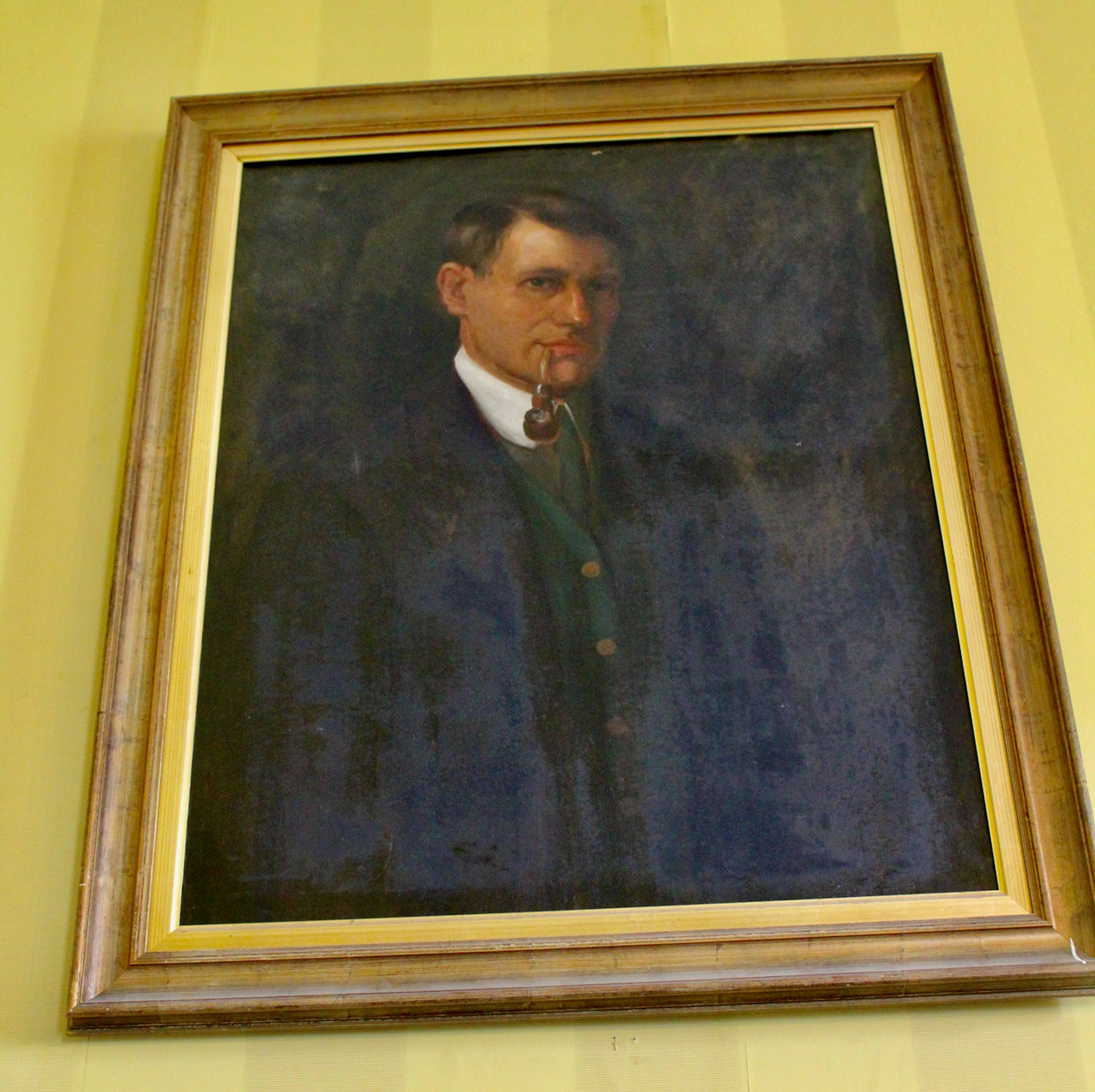
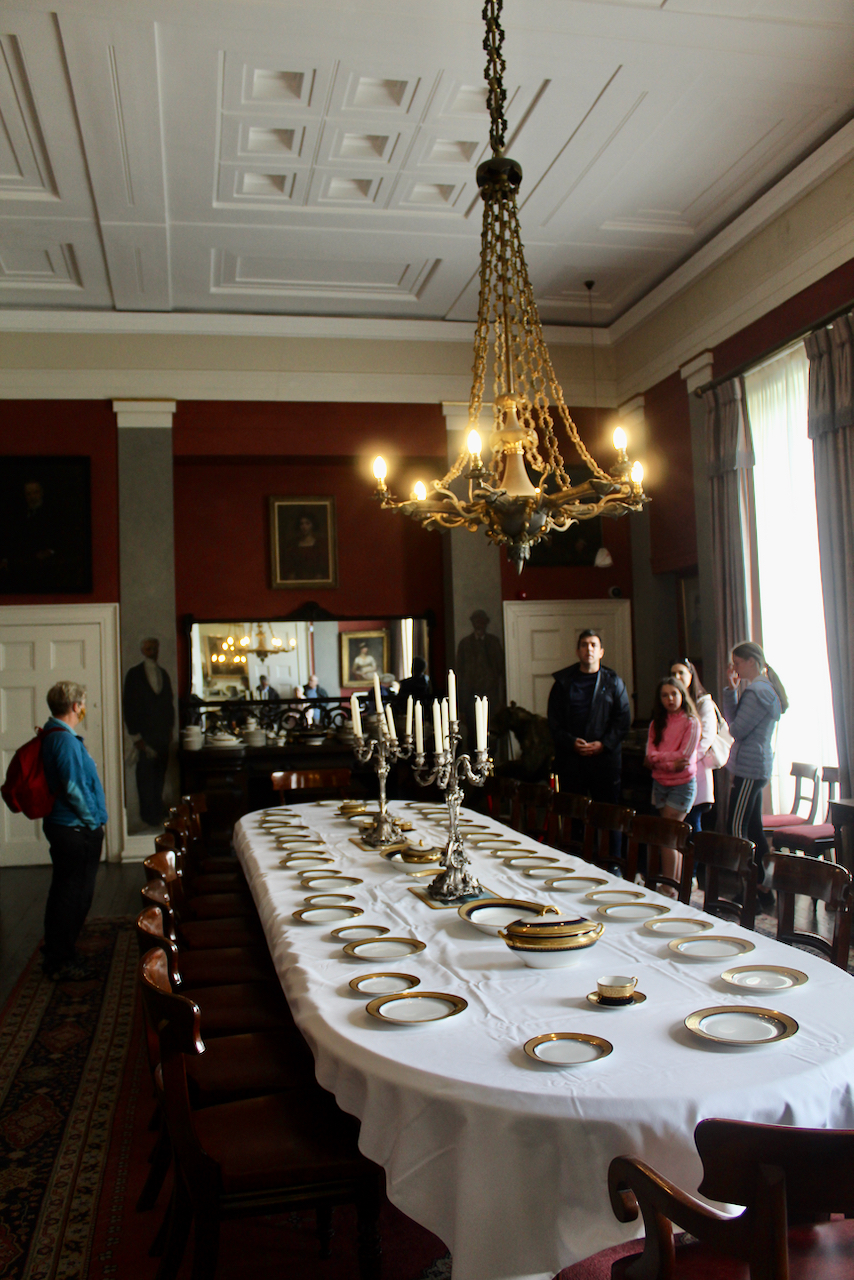
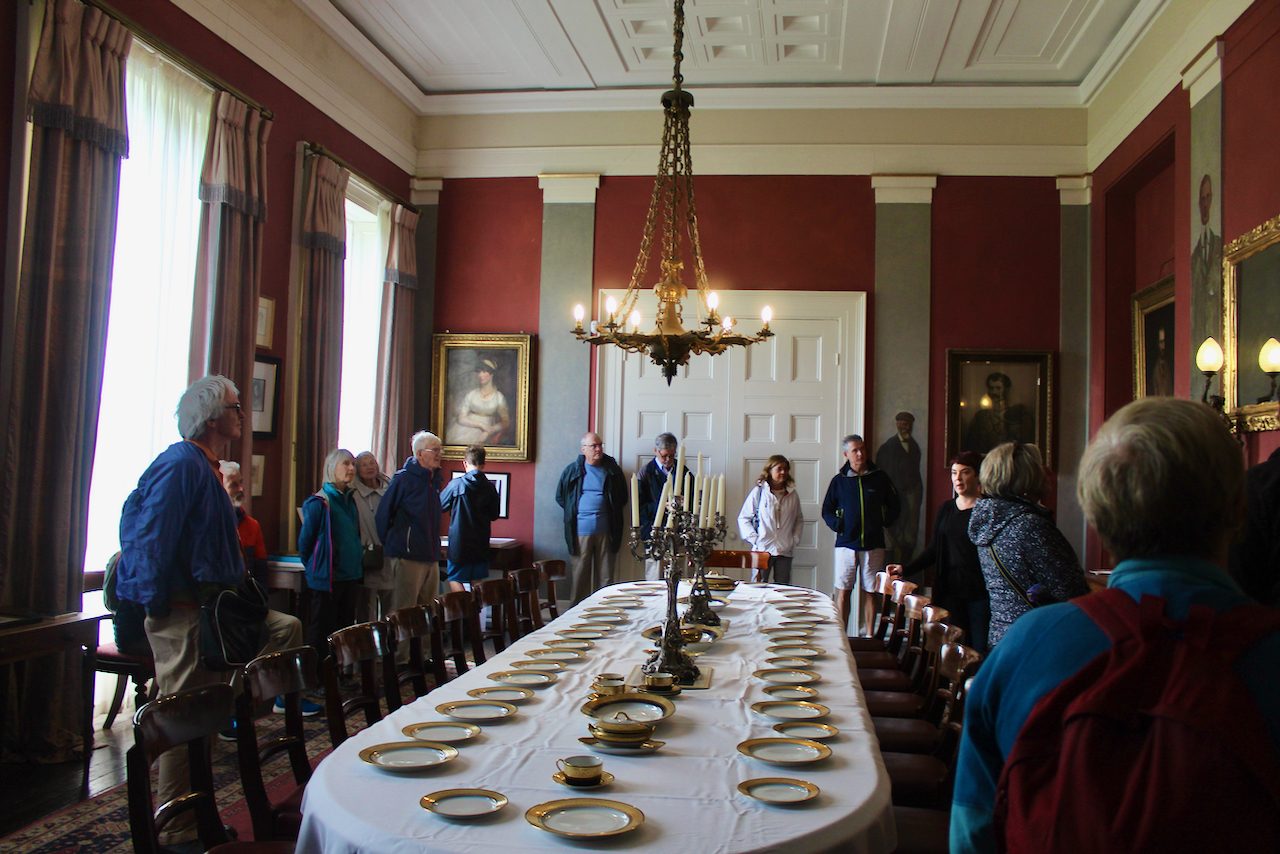
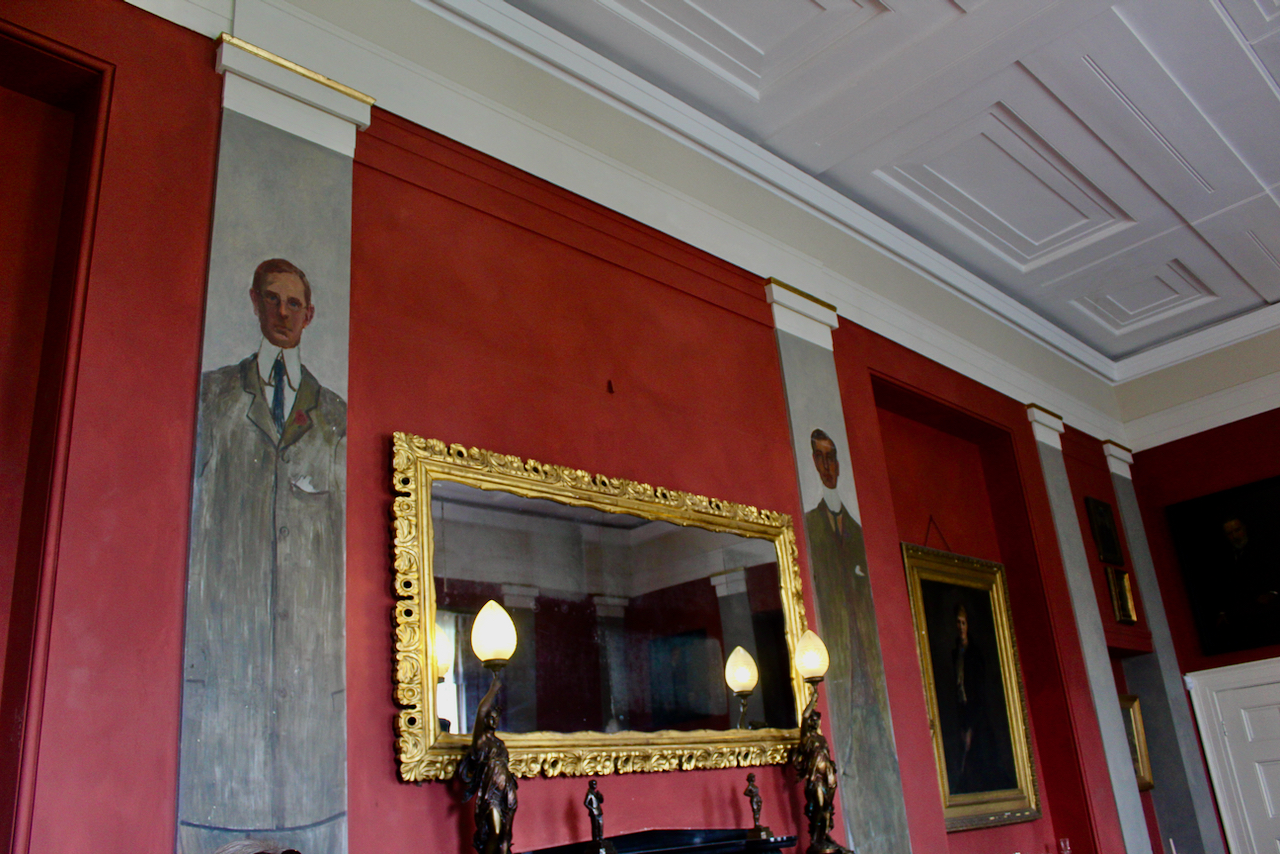
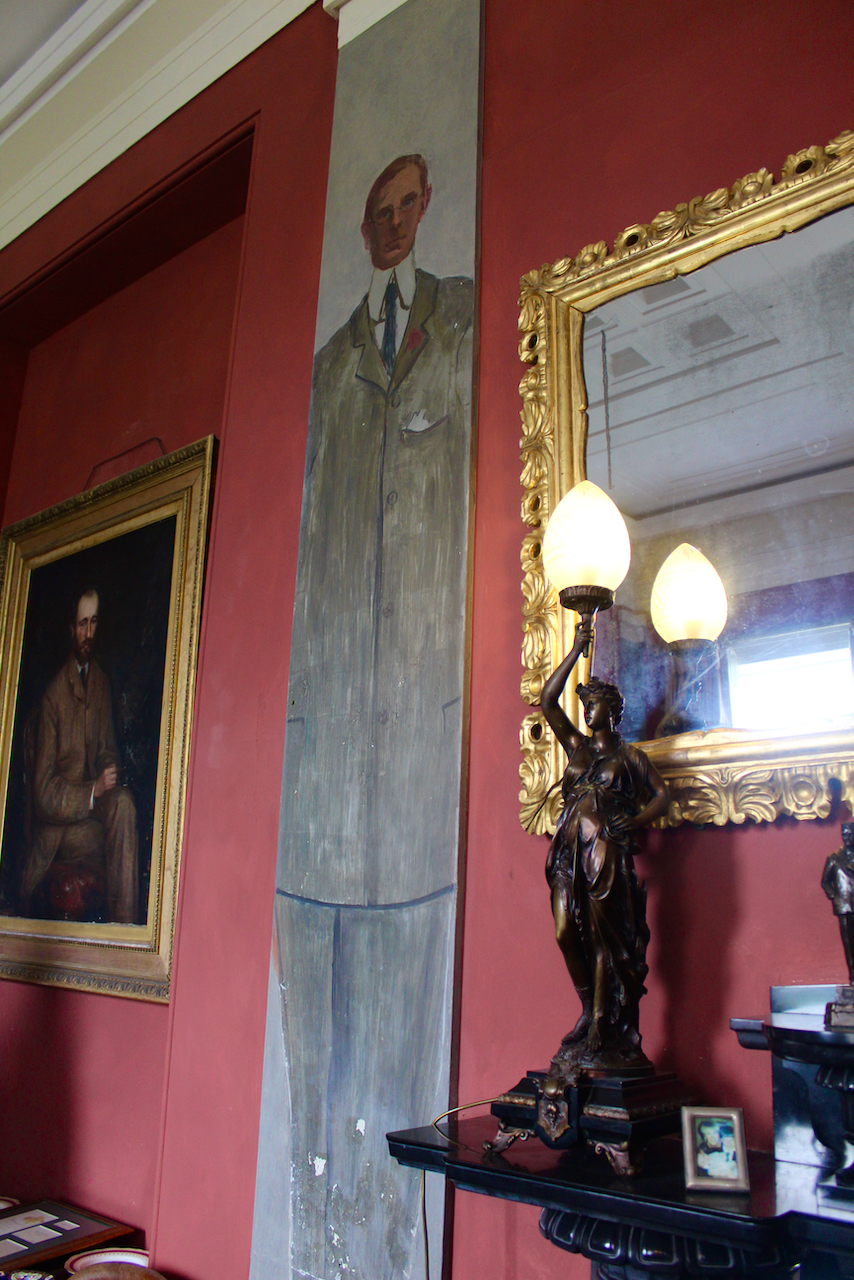
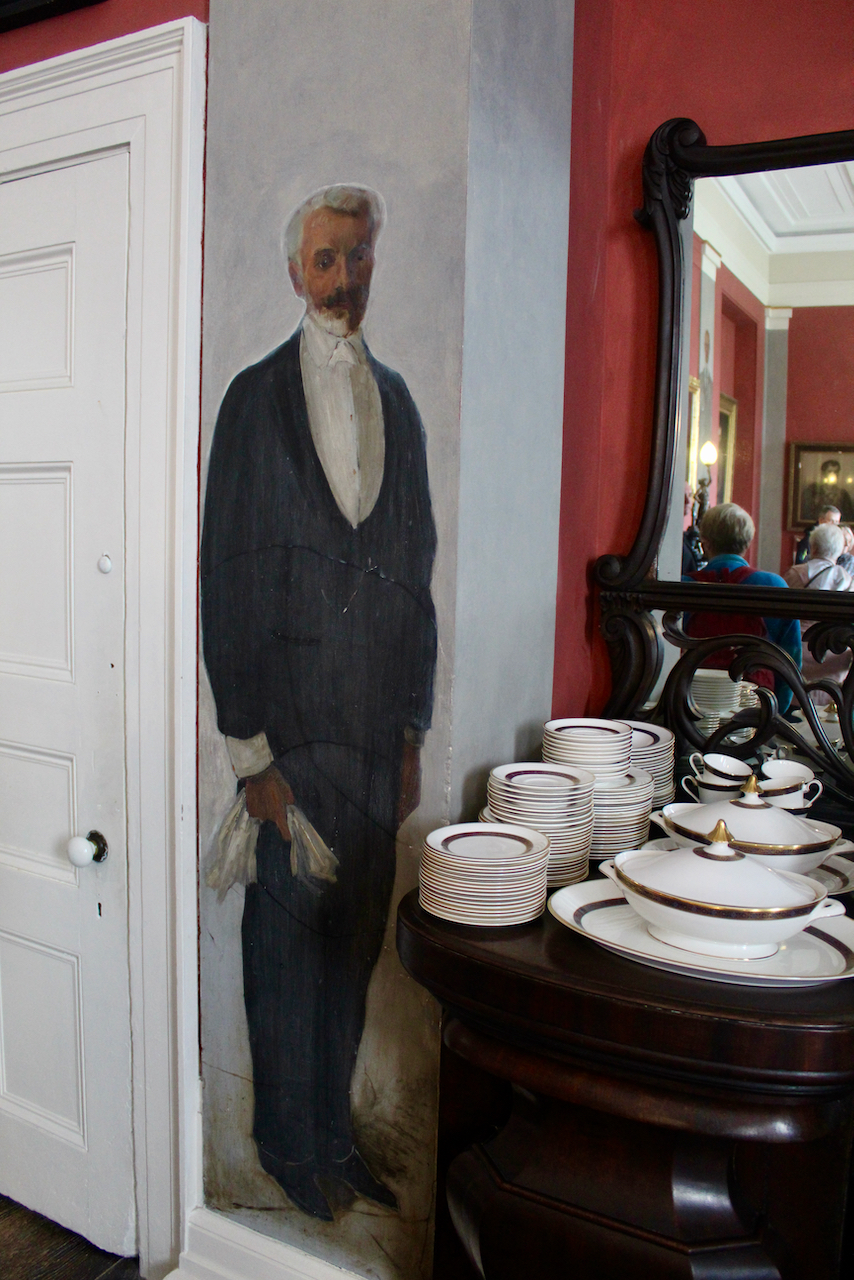
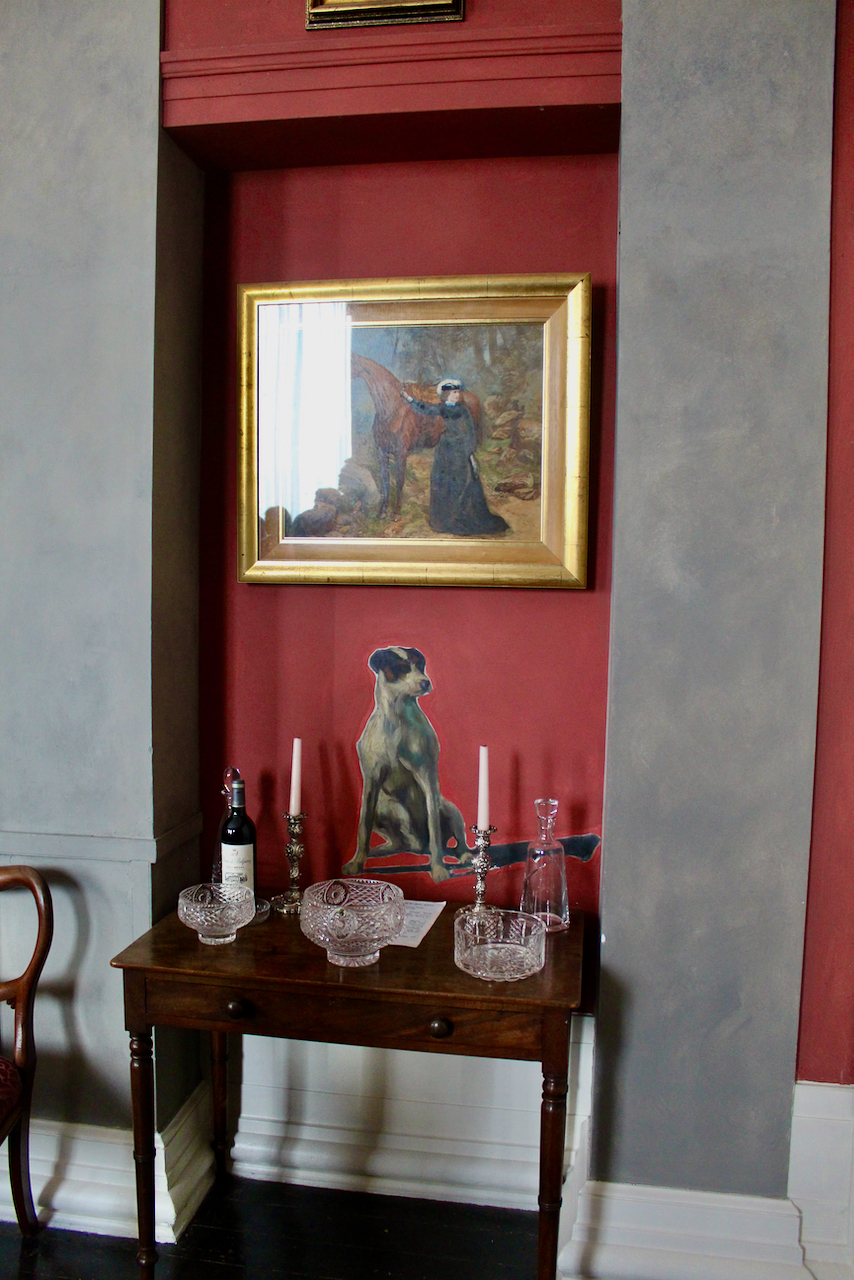
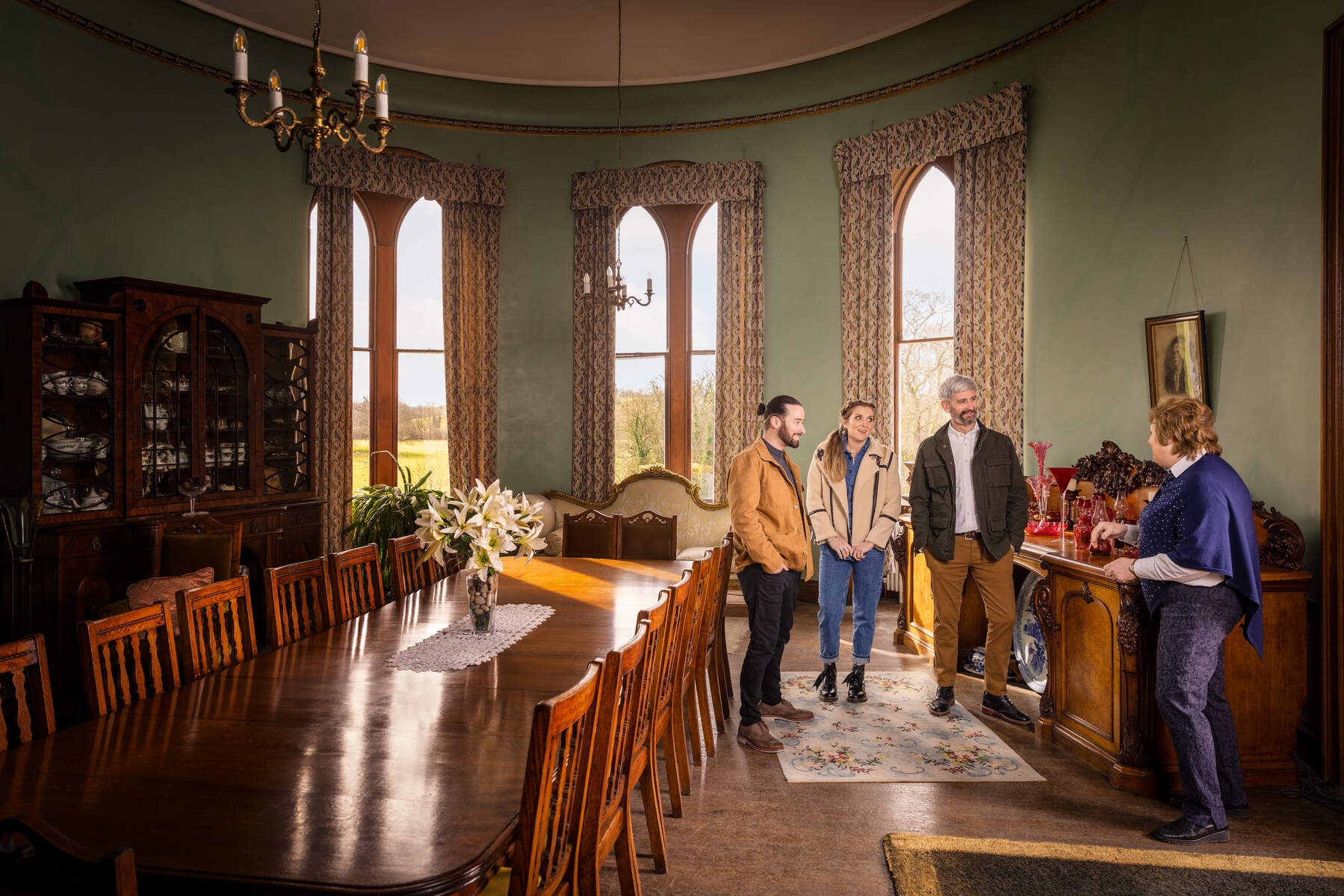
I had been particularly looking forward to seeing the dining room as I had seen pictures of it before and it has rather eccentric paintings which I love! Again, it was hard to take photographs because the room was crowded with the tour. Casimir painted portraits onto the pillars. He painted some of the servants, including Kilgallon. The bear shot by Kilgallon stands now beside his portrait.
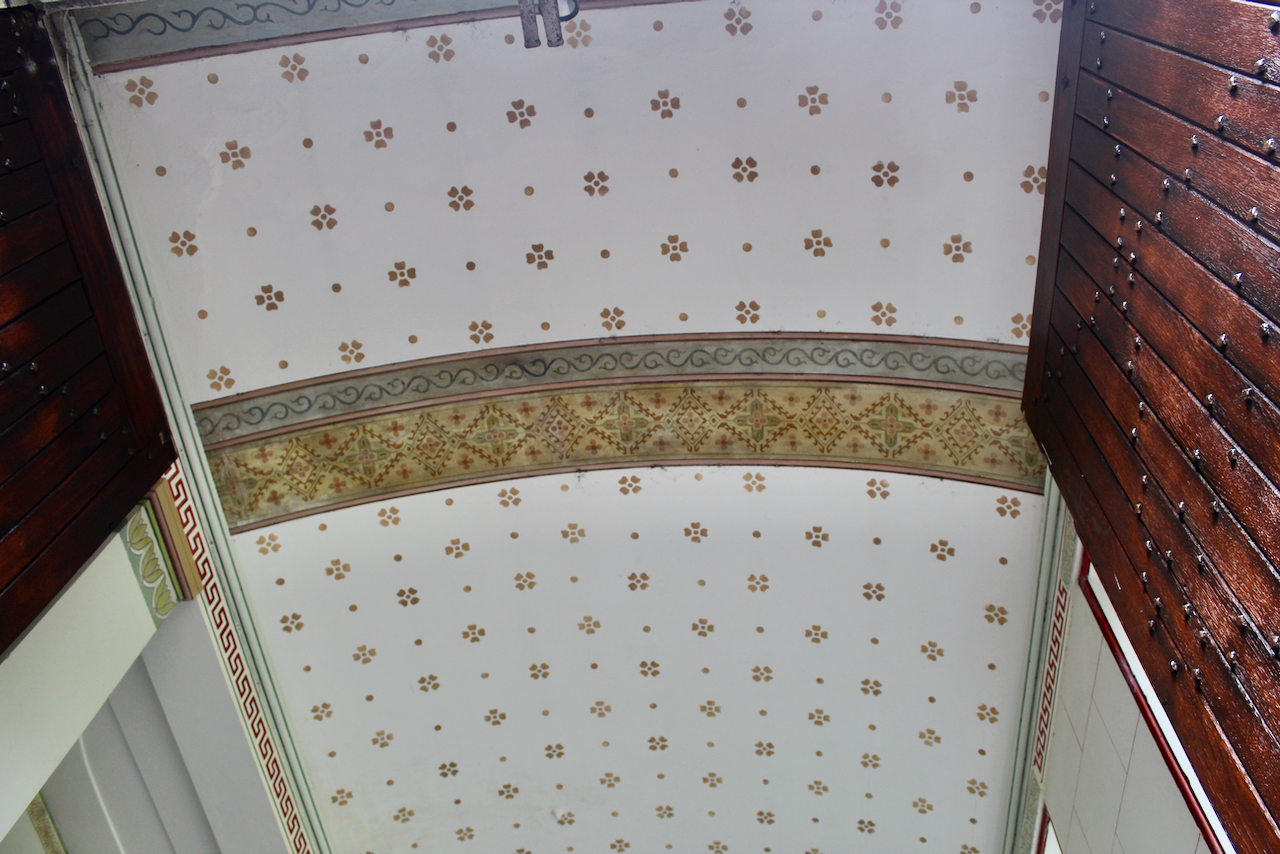
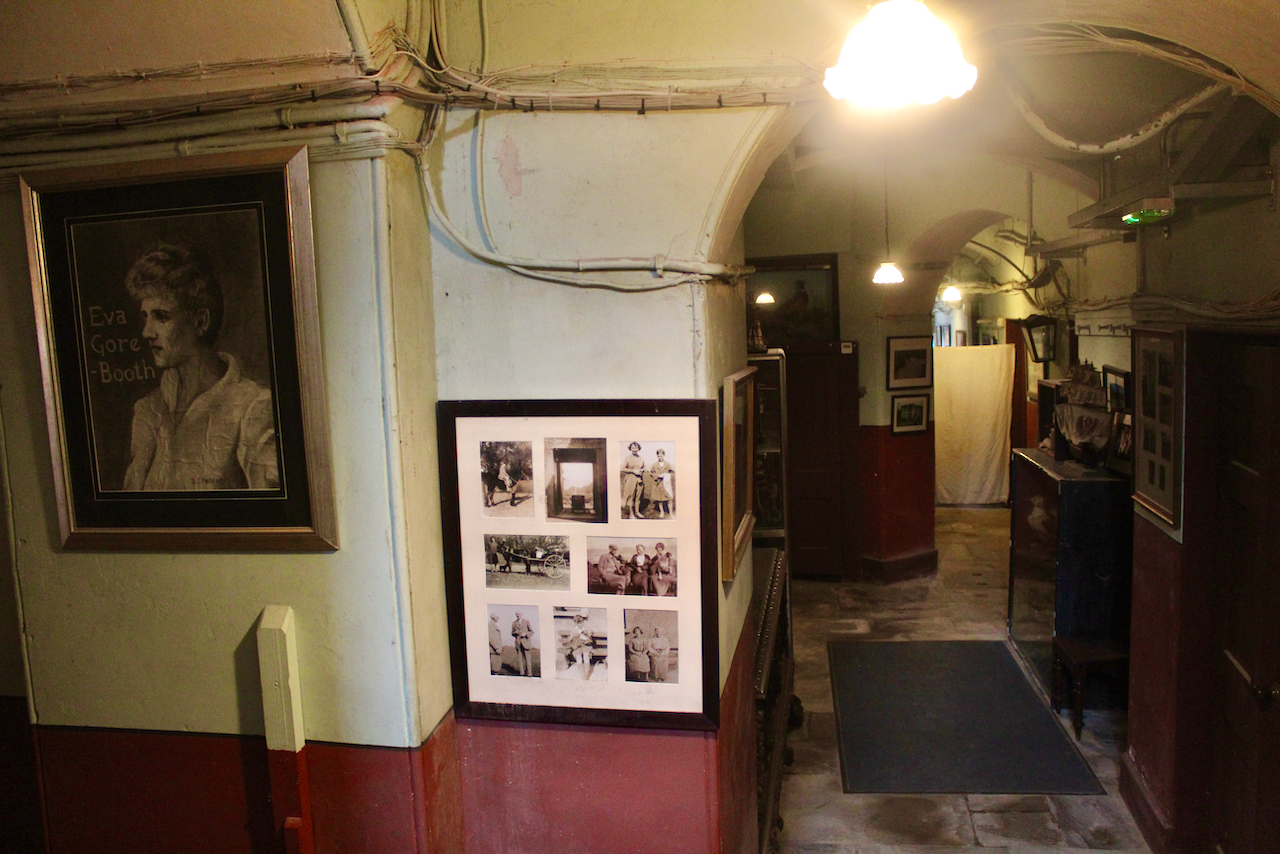
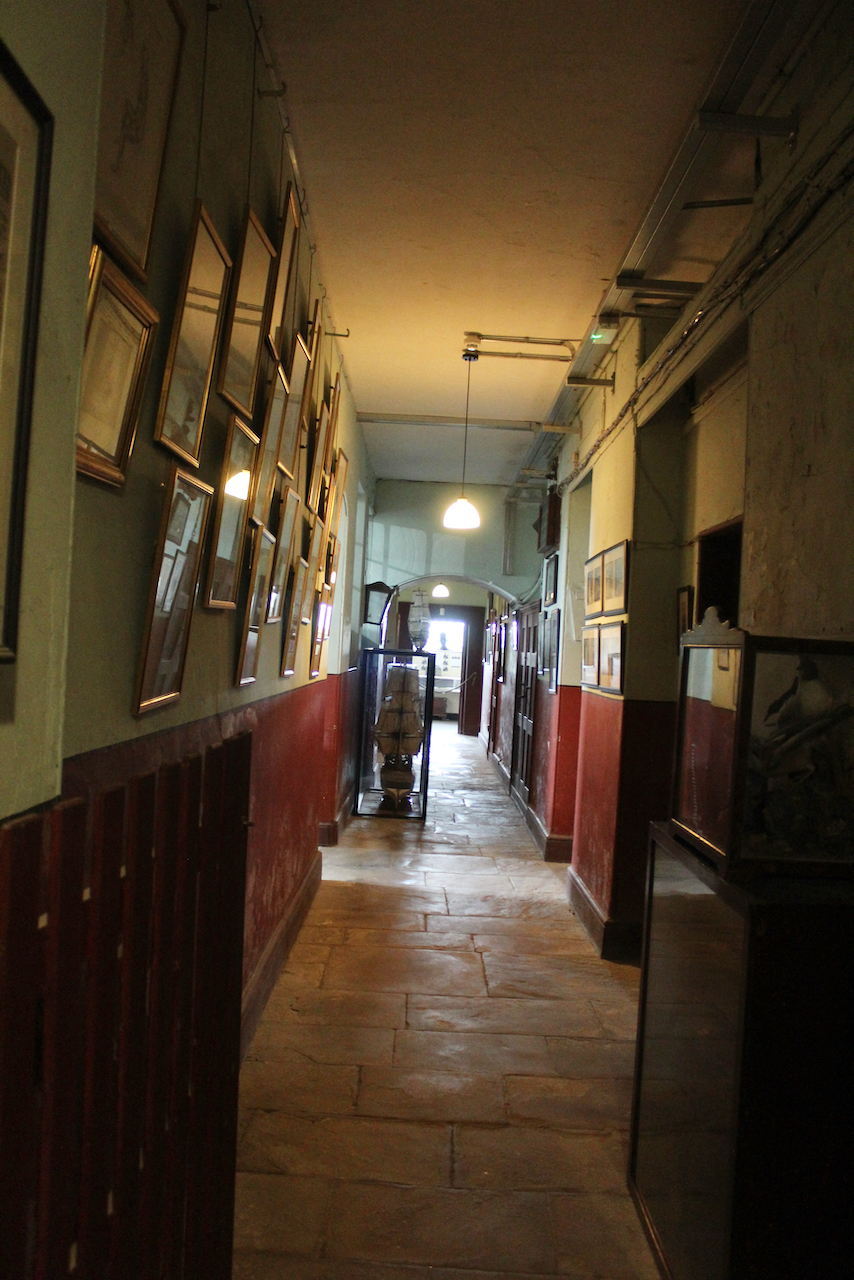
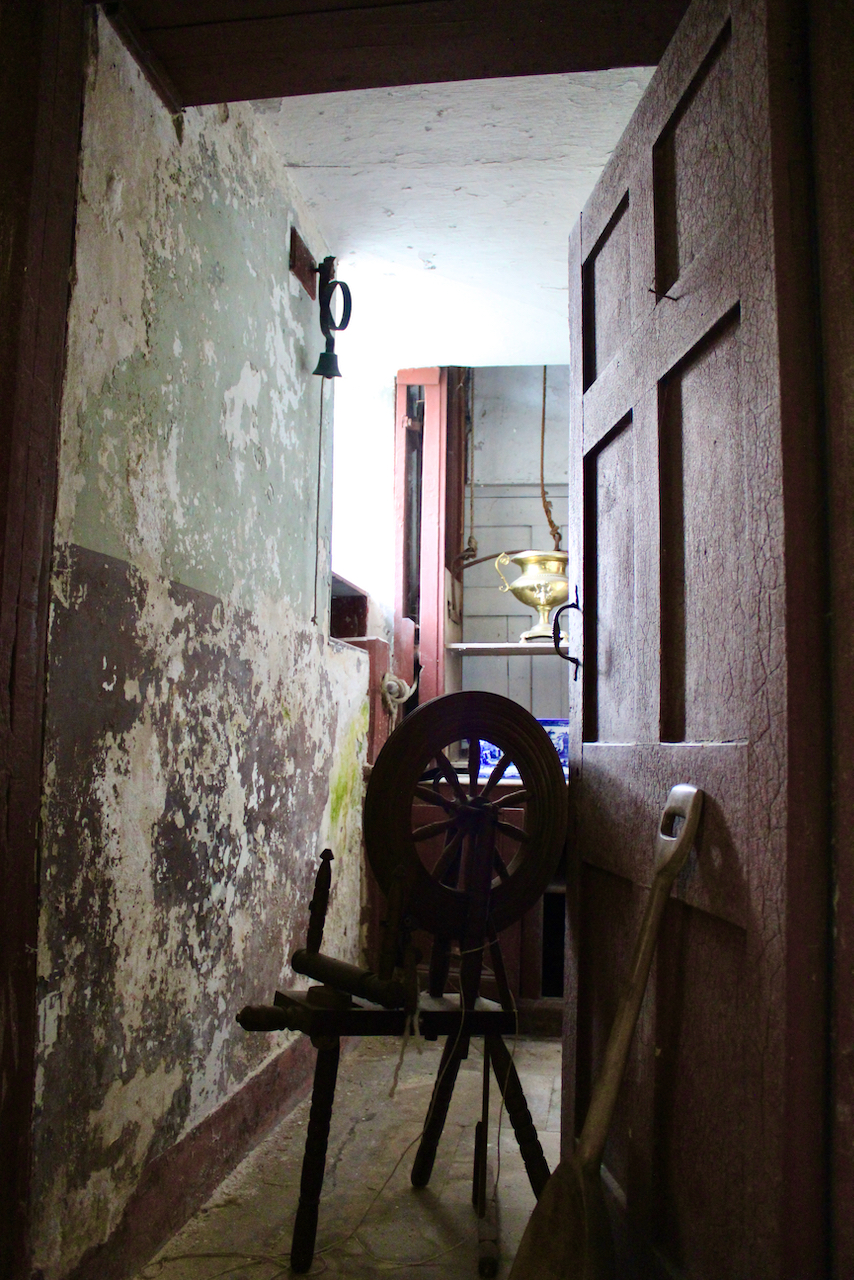
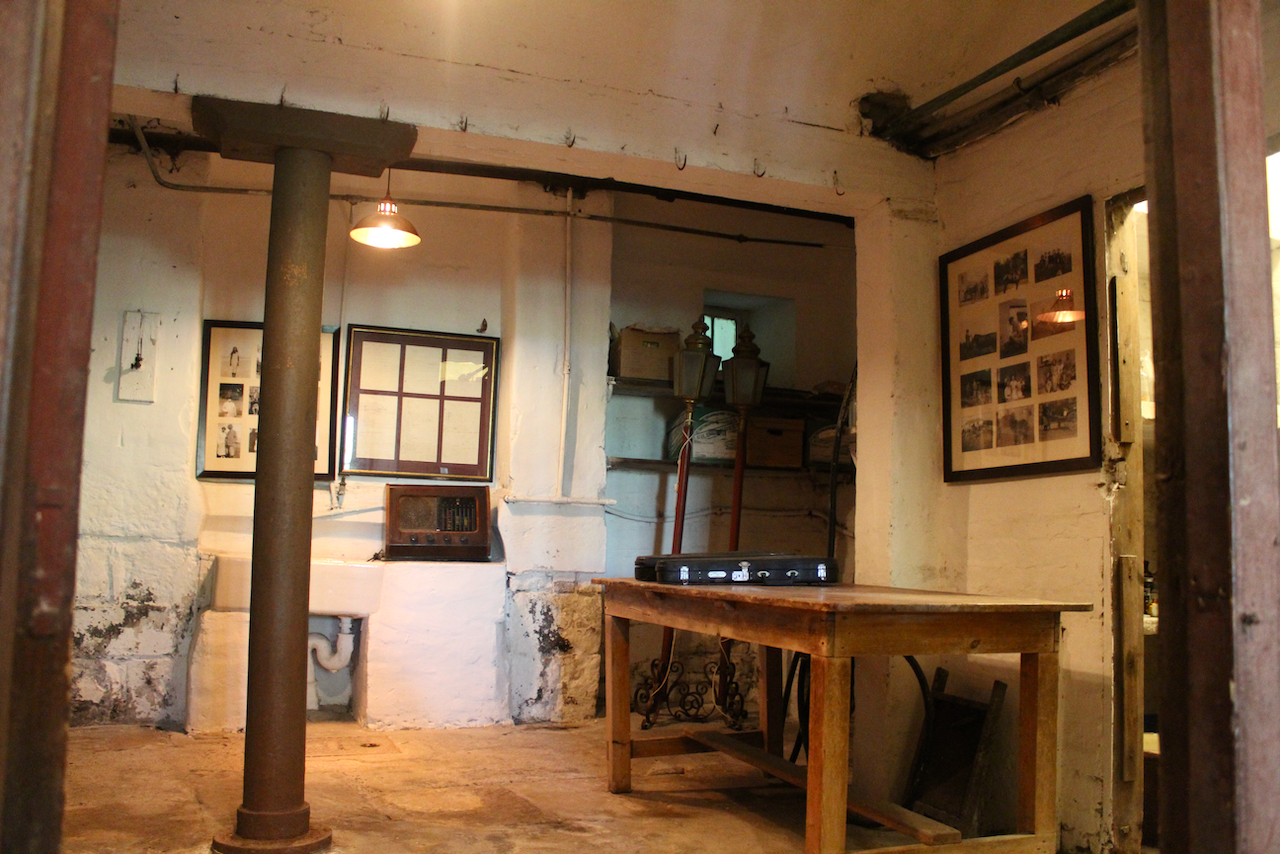
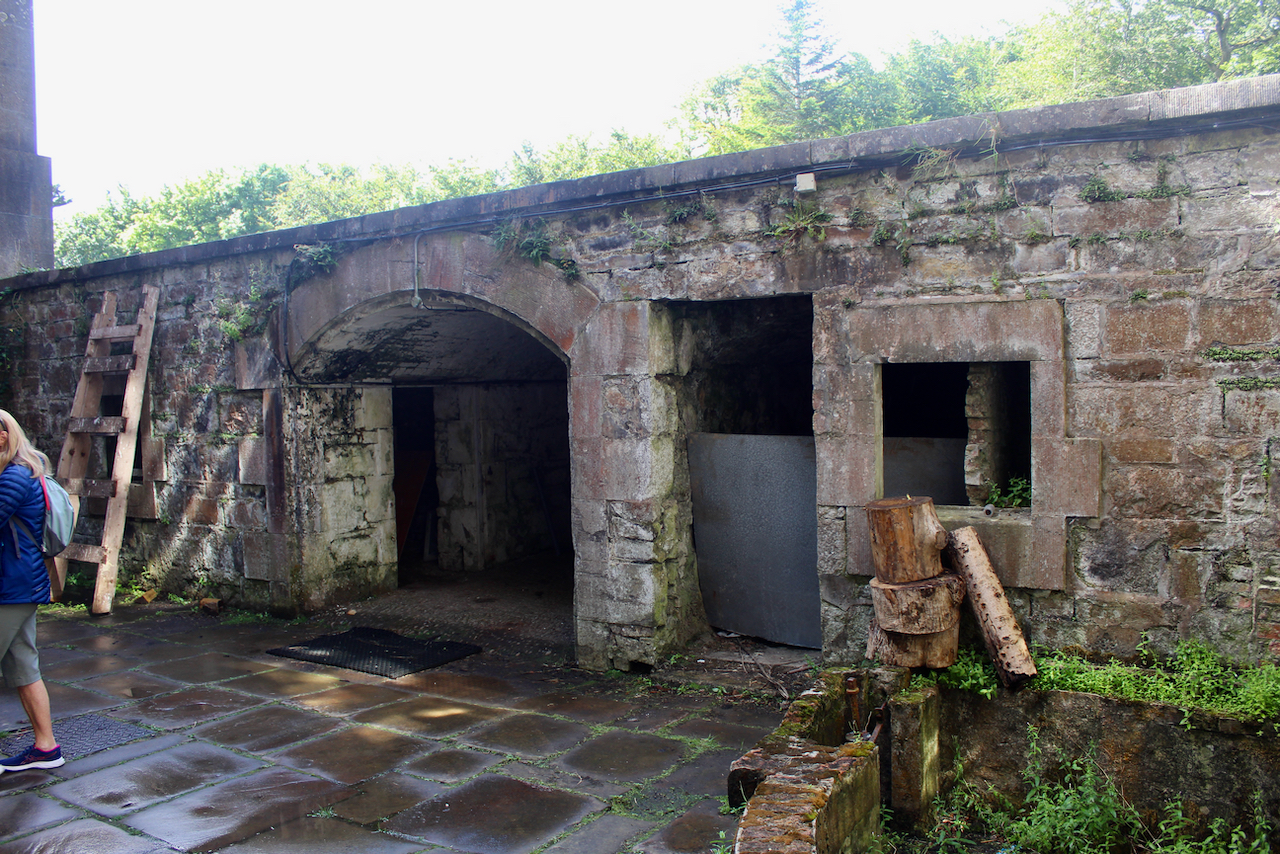
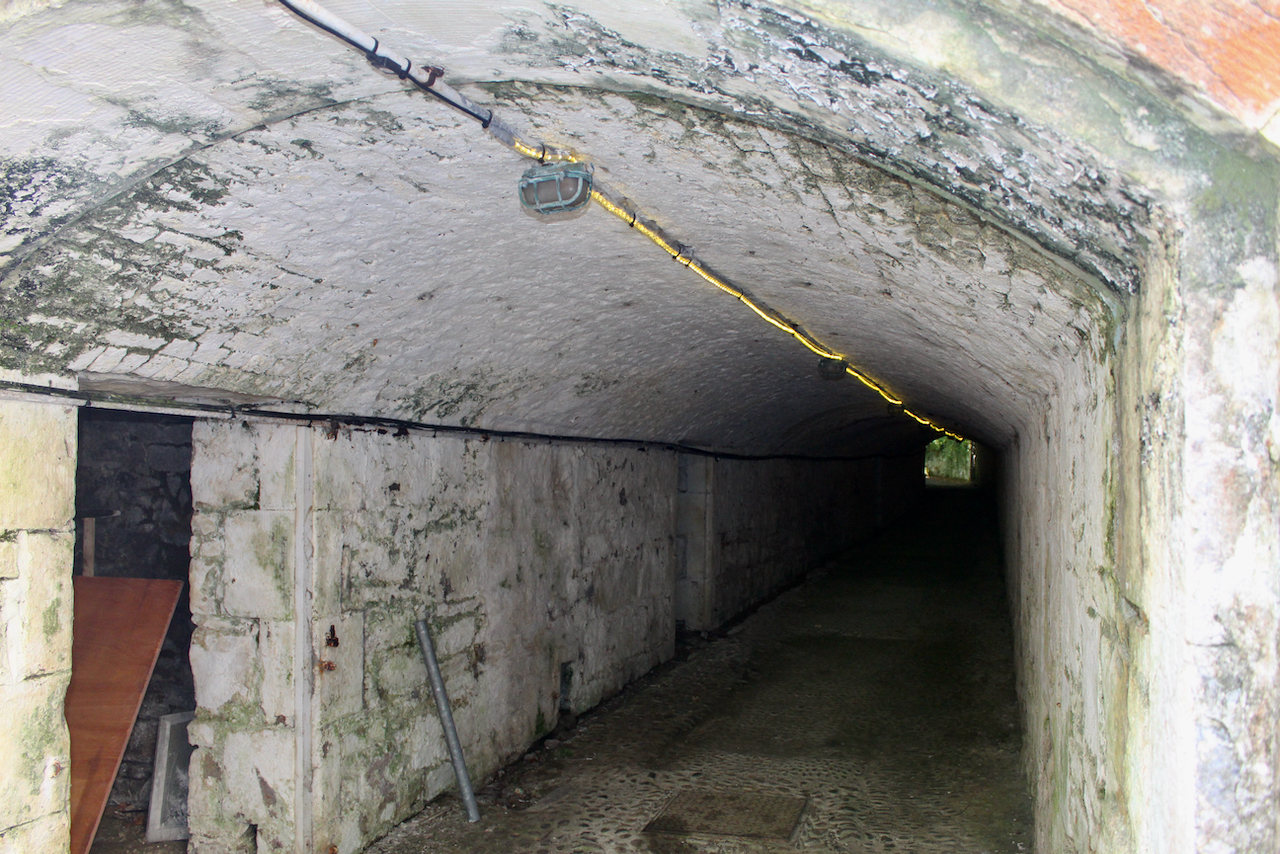
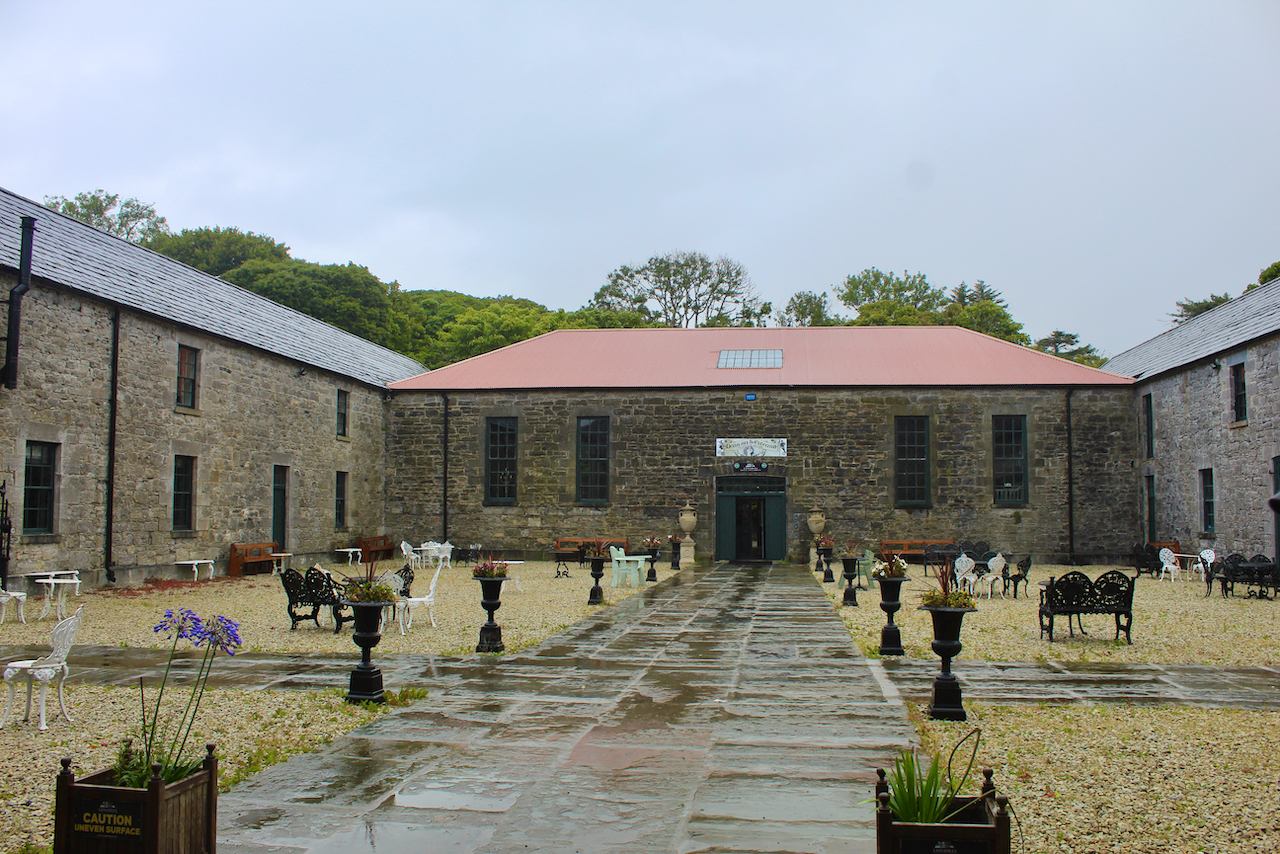
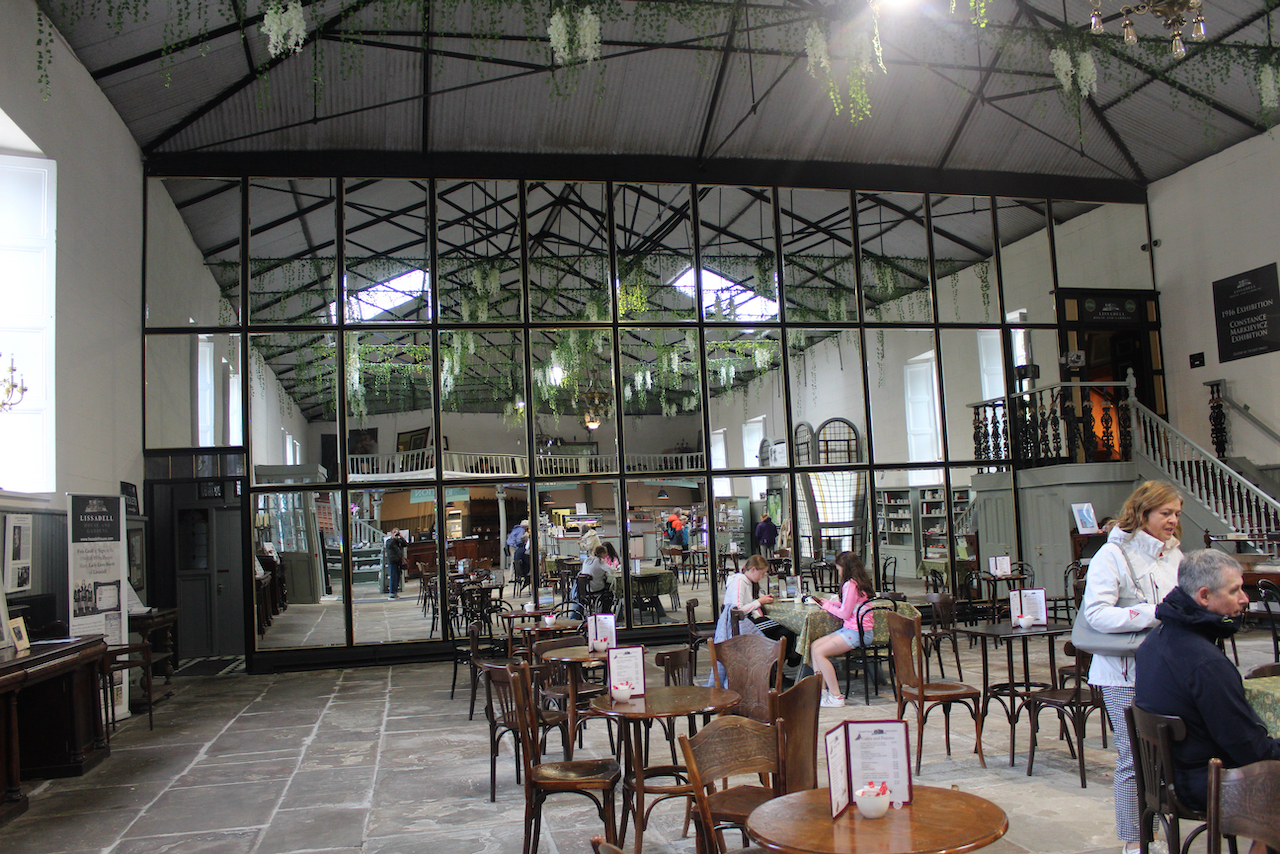
The long tunnel provides access to a sunken courtyard and the coach house and stable block, which was one of the largest in Ireland. This limestone complex of stables, tack rooms, grain stores and rooms once for staff and guests is now almost completely restored. Today it houses tea rooms, a gallery for exhibitions and lecture rooms.
In the 20th century the family fortunes took a turn for the worse. Constance and Eva died in their 50s. Constance died in 1927 and Eva in 1926.
In June 1927 Constance fell seriously ill. She was admitted to a public ward in Sir Patrick Dun’s hospital (at her own insistence). She had peritonitis, and although she had surgery, it was too late. Constance Markievicz died at 1:25 a.m. on the morning of 15th July, 1927. She was attended by her husband, Casimir. Her brother, Sir Josslyn Gore Booth, had received daily bulletins from the Matron, and immediately arranged to attend the funeral in Dublin.
Lissadell, 2022.
Her brother Josslyn would have preferred a private, family funeral, but this was not to be. In death Constance Markievicz was even more openly appreciated and acclaimed than in life. Three hundred thousand people attended the funeral to pay tribute to “the friend of the toiler, the lover of the poor”, the words of Eamon de Valera, who delivered the funeral oration, and with whom she had founded the Fianna Fáil Party.
Lissadell, 2022.
Two of Josslyn’s sons, Hugh and Brian, were killed in WWII. Hugh, the younger brother, studied estate management in England to run the estate. Brian joined the Navy. The third son, Michael, suffered from mental illness that made him incapable of running the family estate. Josslyn was still alive at this stage, and his four daughters continued to live on the estate – three of them never married. When their father died in 1944, the government assumed responsibility for the administration of the estate when Sir Josslyn’s eldest son was made a ward of the court after a nervous breakdown. Gabrielle took over the responsibility of running the estate at the age of just 26. [8] There was a youngest son also, Angus Josslyn, who succeeded as 8th Baronet. When Gabrielle died, Aideen took over the estate. For decades, the family struggled to maintain the house and the gardens became neglected and overgrown.
The family migrated to live in the bow-room and a small suite of rooms behind when the family of Gore-Booth siblings were living in near poverty in the 1960s and 70s, when the remainder of the house was uninhabited.
During this time the estate went into sharp decline, resulting in the felling of much fine woodland and the compulsory sale in 1968 of 2,600 acres by the Land Commission, leaving only 400 acres around the house.
Terence Reeves-Smyth tells us in Irish Big Houses: “The Lissadell estate had fallen into decline after the death of Josslyn Gore Booth in 1944. Indeed, writing about Lissadell for the Sunday Times around forty years ago, the BBC’s Anne Robinson observed that “the garden is overgrown, the greenhouses are shattered and empty, the stables beyond repair, the roof of the main block leaks badly and the paintings show patches of mildew.” It also featured in the documentary “The Raj in the Rain.”
In 2003 Lissadell was put on the market by the 9th Baronet, Josslyn Henry Robert Gore-Booth (b. 1950), son of Angus the 8th Baronet. You can listen to his memories of Lissadell online, part of the Irish Life and Lore series. [9] It was purchased by Edward Walsh and his wife Constance Cassidy, to become home for them and their seven children.
In the Image publication Great Irish Houses we are told that Edward and his wife Constance commissioned David Clarke, an architect with Moloney O’Beirne, to prepare a conservation plan and restoration of the house began in 2004. Assistance and expert advice was received from Laurence Manogue, a consultant to Sligo County Council. [10]
Lissadell, 2022.Lissadell, 2022.
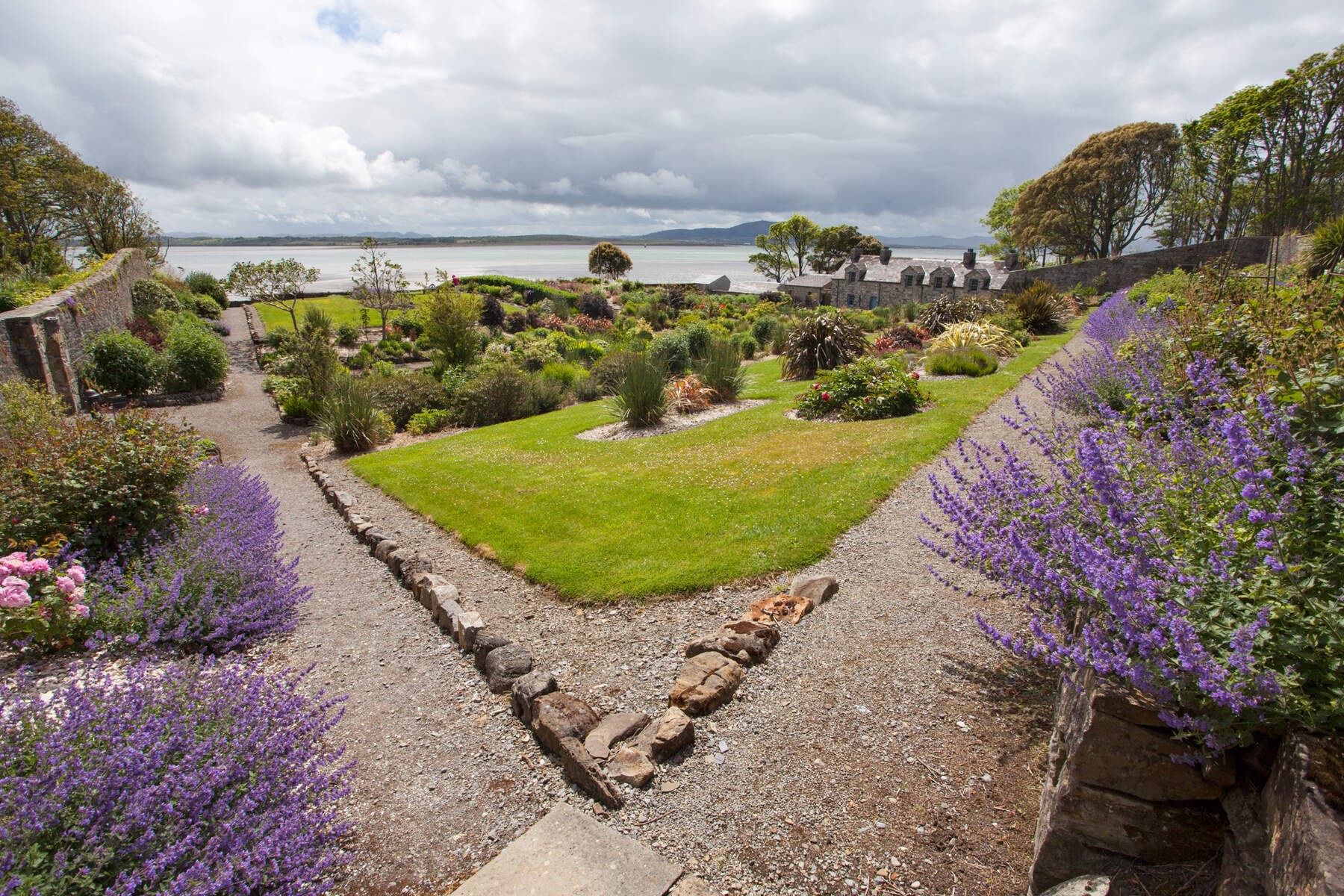
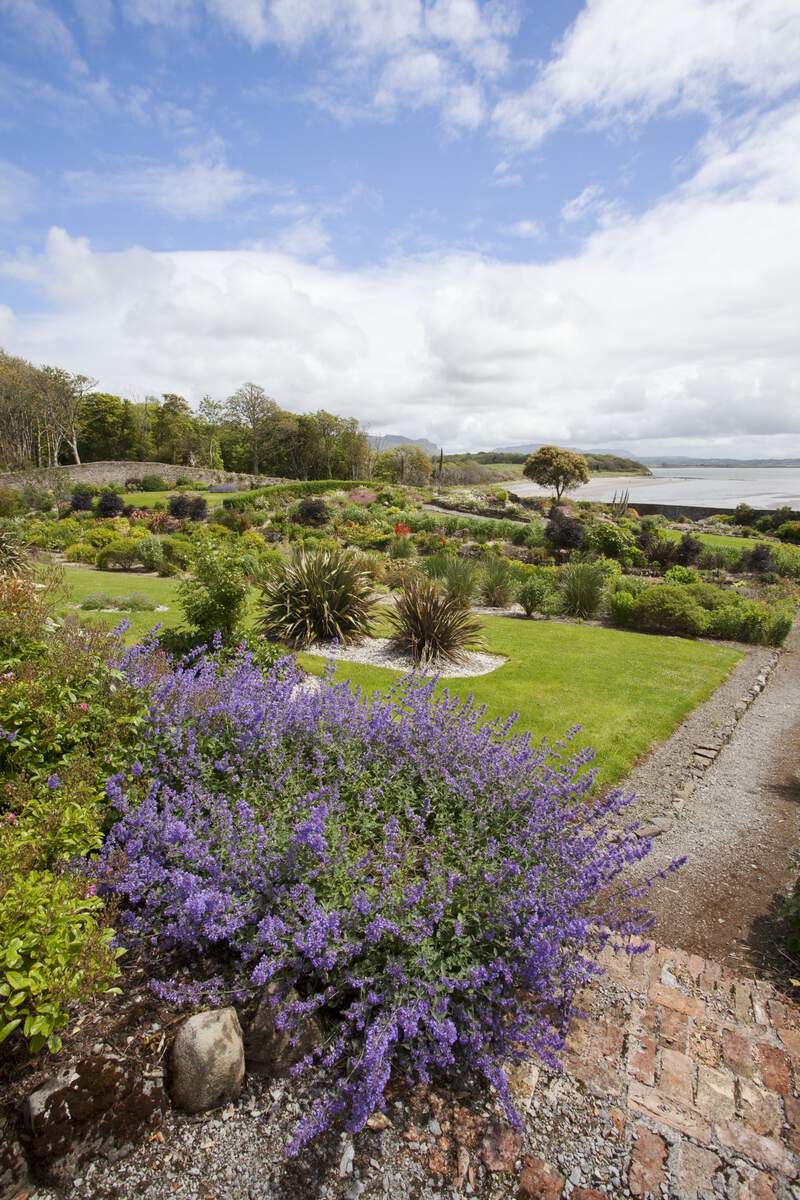
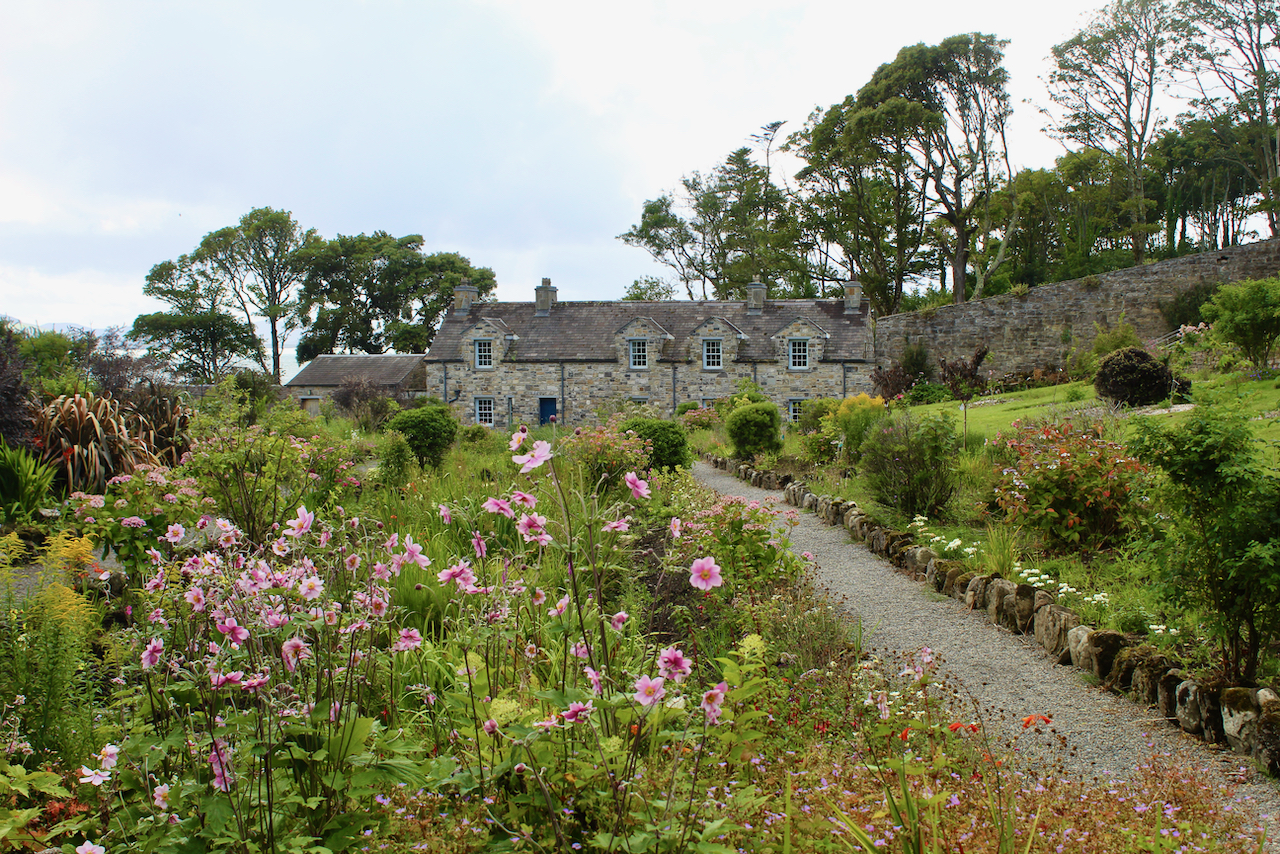
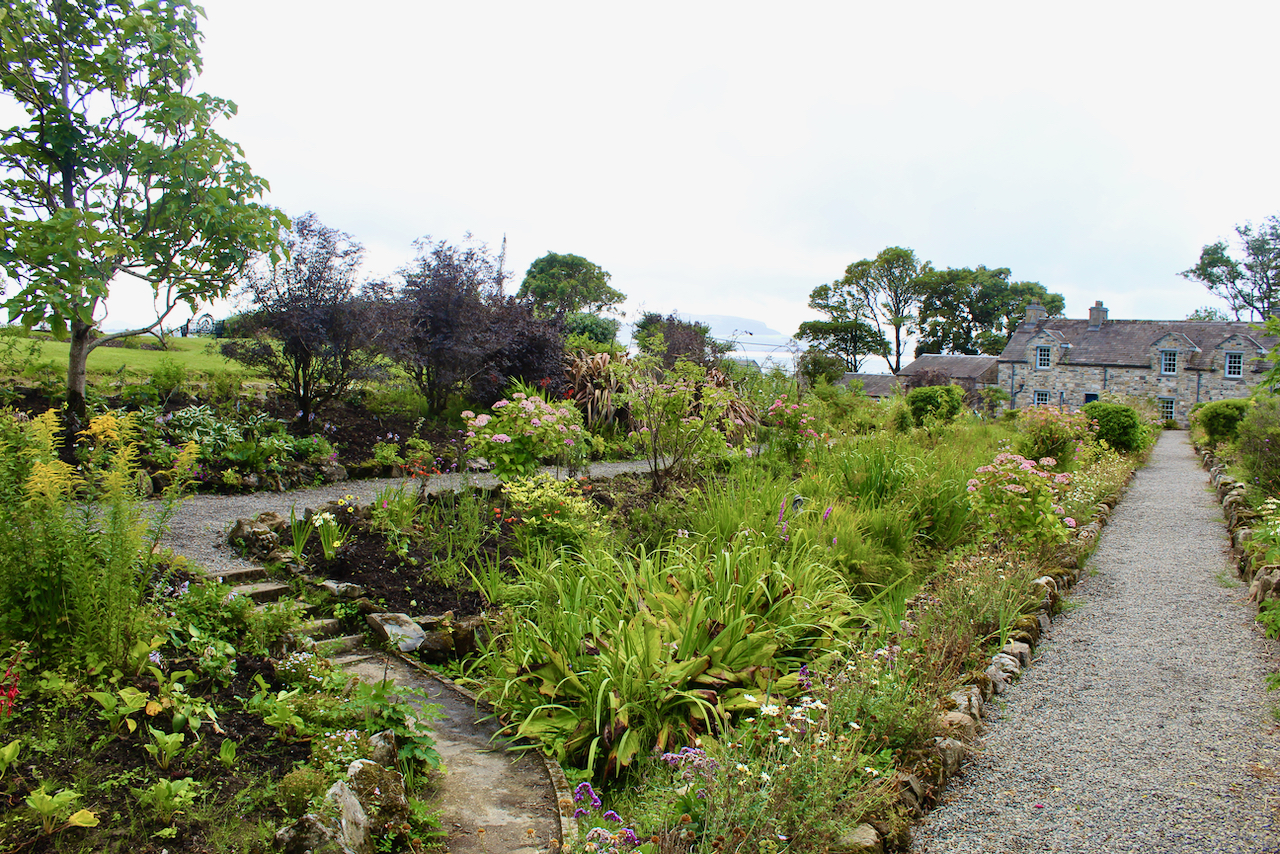
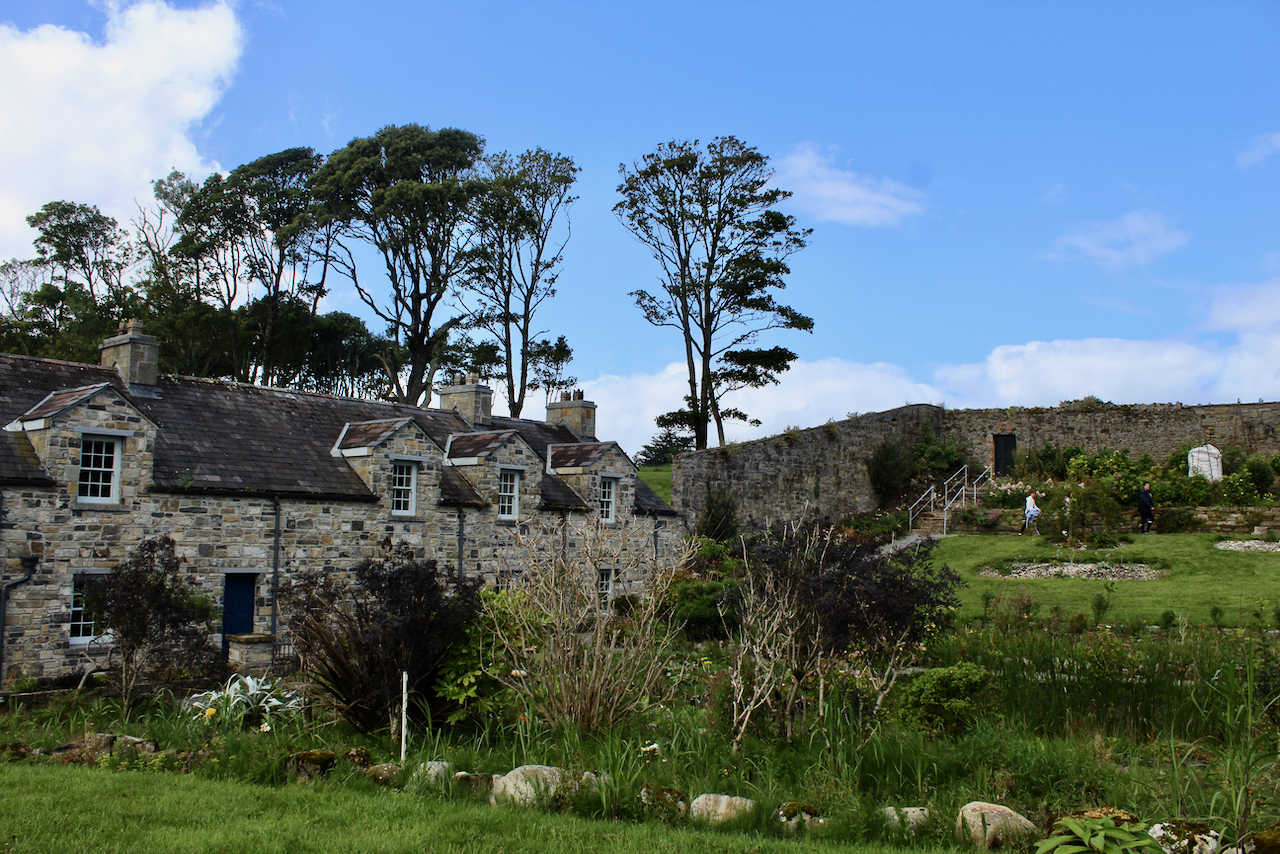
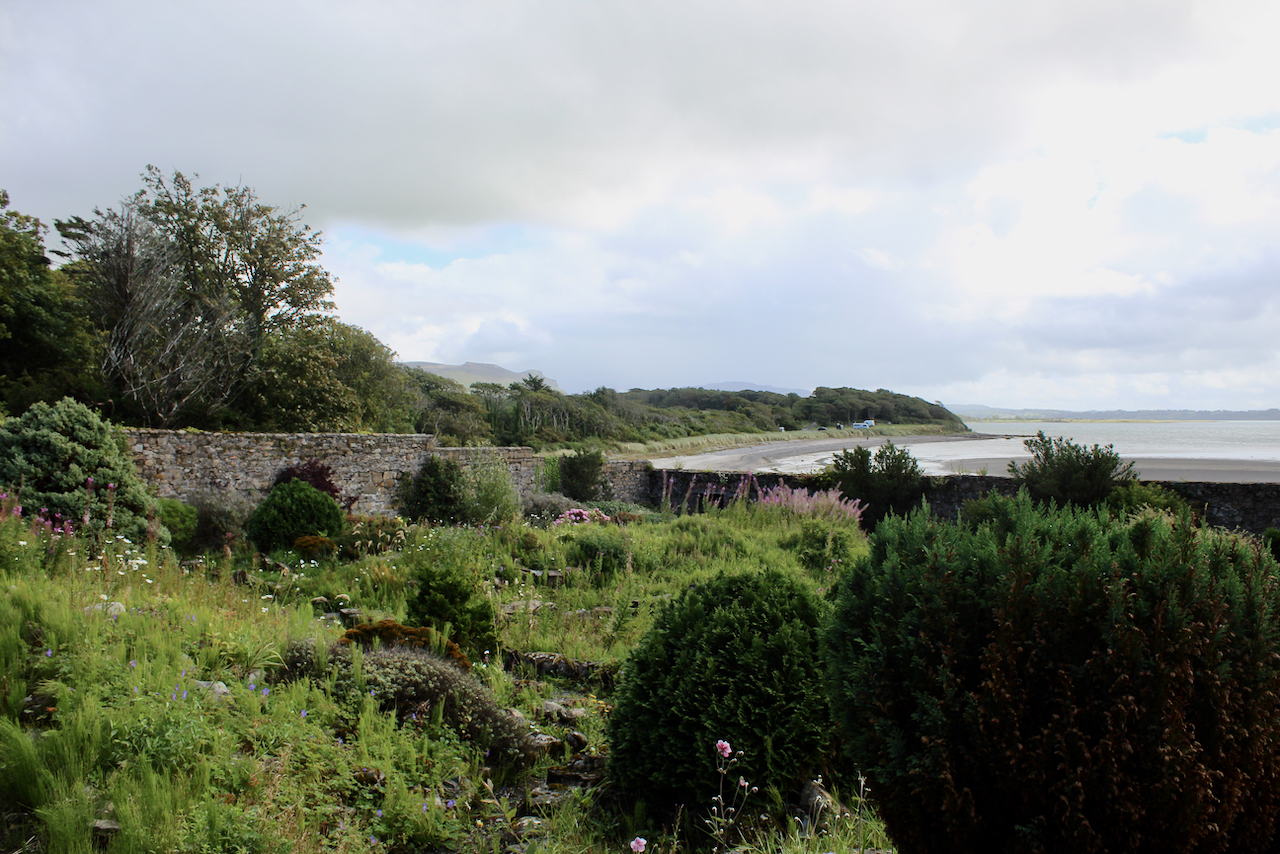
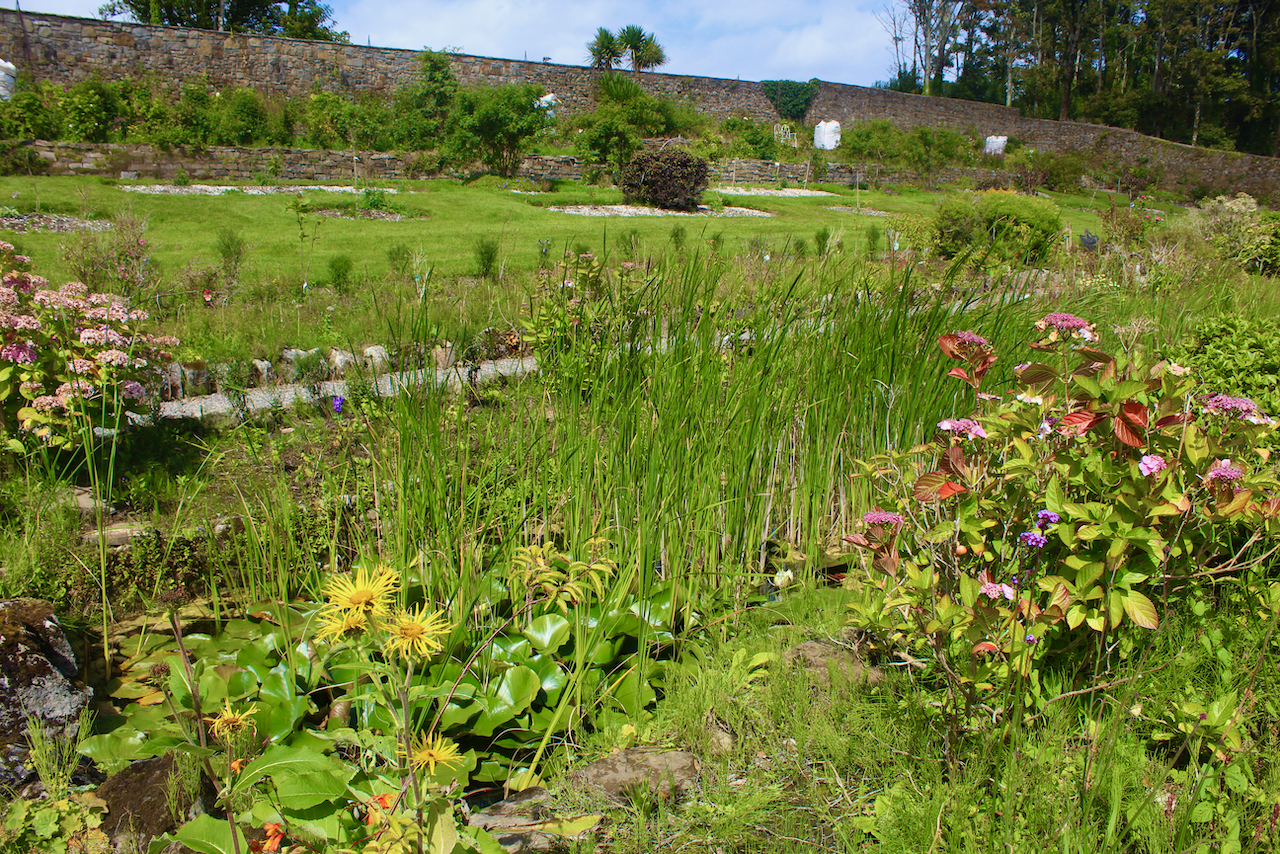
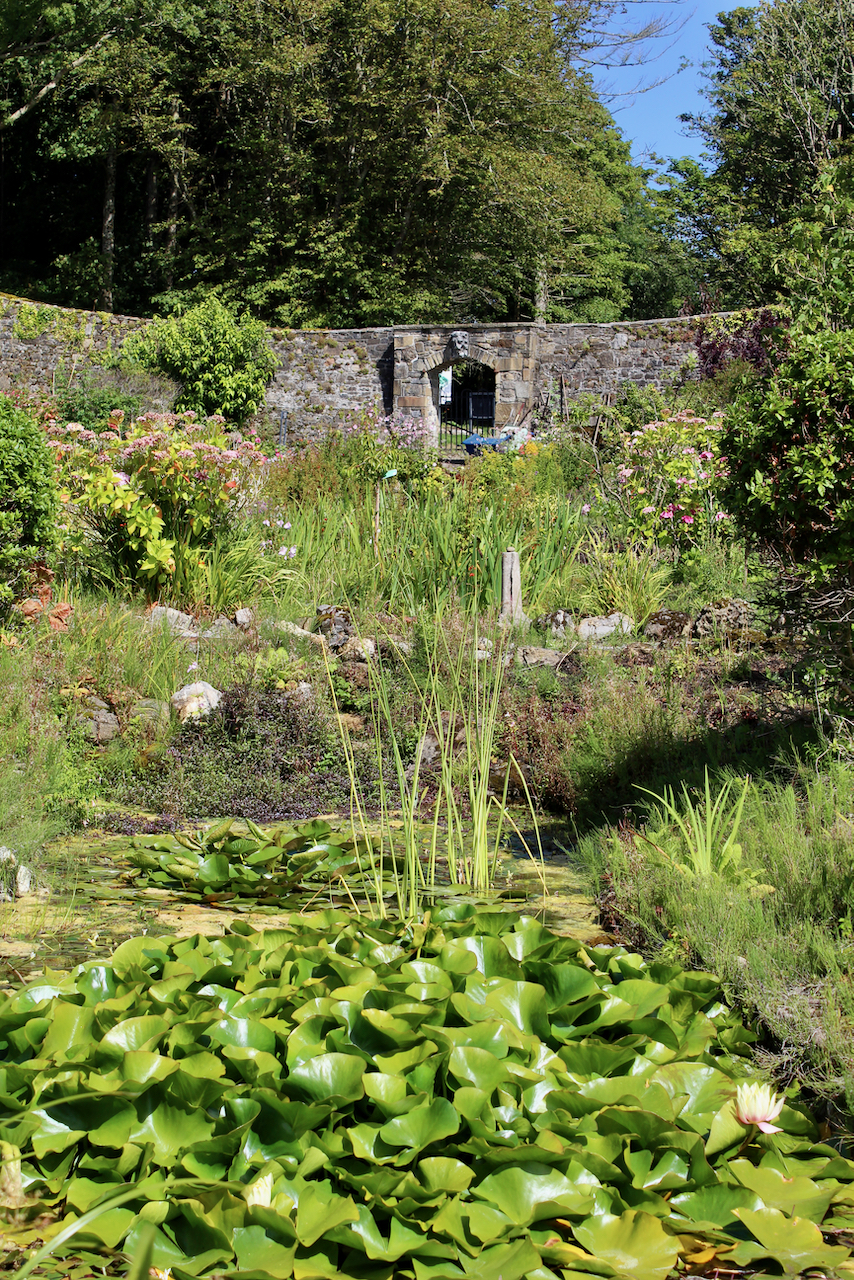
The Image publications book tells us that there has been a great focus on the gardens, with regeneration of the flower and pleasure gardens. The alpine nurseries with its “revetment walls” (limestone and sandstone), terraces, and ornamental ponds had been neglected for half a century. Now the gardens are cleared and the orchards and two-acre kitchen garden have been reseeded. The plan, in many ways, is to resurrect the horticultural enterprise of Henry and Josslyn Gore Booth. Thirty-eight of an original seventy-eight daffodil narcissus cultivars developed by Sir Josslyn are now back in the ground at Lissadell.
This collection includes Patrick Annesley b. 1943 speaking about Annes Grove in County Cork; Valerie Beamish-Cooper b. 1934; Bryan and Rosemarie Bellew of Barmeath Castle County Louth; Charles and Mary Cooper about Markree Castle in Sligo; Leslie Fennell about Burtown in Kildare; Maurice Fitzgerald 9th Duke of Leinster and Kilkea Castle, County Kildare; Christopher and Julian Gaisford St. Lawrence and Howth Castle; George Gossip and Ballinderry Park; Nicholas Grubb and Dromana, County Waterford, into which he married, and Castle Grace, County Tipperary, where he grew up; Caroline Hannick née Aldridge of Mount Falcon; Mark Healy-Hutchinson of Knocklofty, County Tipperary; Michael Healy-Hutchinson, Earl of Donoughmore, son of Anita Leslie of Castle Leslie; Susan Kellett of Enniscoe; Nicholas and Rosemary MacGillycuddy of Flesk Castle, County Kerry and Aghadoe Heights; Harry McCalmont of Mount Juliet, County Kilkenny; Nicholas Nicolson of Balrath Estate; Durcan O’Hara of Annaghmore, County Sligo; Sandy Perceval of Temple House, County Sligo; Myles Ponsonby, Earl of Bessborough; Benjamin and Jessica Bunbury of Lisnavagh, County Carlow; Philip Scott of Barnfield House, Gortaskibbole, Co. Mayo; George Stacpoole of Edenvale House, Co. Clare; Christopher Taylour, Marquess of Headfort; Richard Wentges of Lisnabin Castle and Philip Wingfield of Salterbridge, County Waterford.
[10] p. 218, Image publications.
[11] Lissadell features in Irish Castles and Historic Houses. ed. by Brendan O’Neill, intro. by James Stevens Curl. Caxton Editions, London, 2002.
Featured in Mark Bence Jones, Life in an Irish Country House. Constable, London. 1996.
Featured in Irish Country Houses, Portraits and Painters. David Hicks. The Collins Press, Cork, 2014.
Featured in Irish Big Houses by Terence Reeves-Smyth
9. The Lower House Rooms, Donaghmore, Dungannon, Co. Tyrone, BT70 3EZ€
10. Spice Cottages, Dungannon, County Tyrone€€
donation
Help me to pay the entrance fee to one of the houses on this website. This site is created purely out of love for the subject and I receive no payment so any donation is appreciated!
€15.00
Fermanagh:
1. Castle Archdale Countryside Centre & War Museum – demolished in 1970 but the stables remain intact.
Mark Bence-Jones writes in his A Guide to Irish Country Houses (1988):
p. 61. (Archdale/IFR) “A noble house of 1773 on the shores of Lough Erne, built by Colonel Mervyn Archdall in 1773 to replace a “Plantation castle” originally built by John Archdale 1615.
“Three storeys over a basement; a six bay entrance front with a two bay breakfront centre; and a tripartite doorway with Ionic pilasters, entablature and pediment, the latter breaking forwards on two Ionic columns to form a porch, which appears to have been a subsequent alteration.
The side elevation was of three bays, the bottom storey having Venetian windows with Gothic astragals in its outer bays. The quoins were rusticated and bold; with a solid roof parapet. Derelict since 1959 and now ruinous.” [1]
Castle Archdale, County Fermanagh, from Discover Northern Ireland website.
Built in about 1618 by Sir James Balfour, a Scottish planter, the castle was in continuous occupation until the early 19th century. Open all year.
Timothy William Ferres tells us: “CASTLE BALFOUR formed the nucleus of the town [Lisnaskea]. It stands beside the parish church, in the graveyard. The Castle was built with local stone ca 1618 by Sir James Balfour. Sandstone was used for the quoins and dressings. The main block consists of a rectangular block, 78 feet by 24 feet, with a large wing projecting to the east and west, comprising two L-shaped units. The northern block has three storeys with attics. The kitchen is vaulted, with a fireplace and oven. Corbelled turrets and gun-slits are a feature.
“During the Irish Rebellion of 1641, Castle Balfour and the village were burnt but later reoccupied. In 1689, the Castle was again badly damaged by the Jacobite armies but was repaired after the Williamite victory at Limerick. About 1780, Castle Balfour was sold to the 1st Earl of Erne, and the Balfours subsequently left County Fermanagh.
“The last person to inhabit the Castle was James Haire (1737-1833), of Nutfield, who leased the Castle from Lord Erne. James Haire and his family ceased to occupy the castle after it was destroyed by an arson-based fire in 1803 (his mother, Phoebe, was killed in the rubble caused by the fire).
“Thereafter the Castle remained ruinous, until it was placed in state care by the 6th Earl of Erne in 1960.
“Major conservation work was carried out between 1966-68 and again during the late 1990s.” [2]
“Castle Coole is one of the greatest neo-classical country houses in Ireland. Home to the Earls of Belmore, it was commissioned and built to impress by the first Earl of Belmore by Amar Lowry Corry, 1st Earl Belmore (1740-1802) and furnished largely by Somerset Lowry Corry, 2nd Earl (1774-1841).”
The castle is still in private hands but the grounds are open to the public.
Mark Bence-Jones writes in his A Guide to Irish Country Houses (1988):
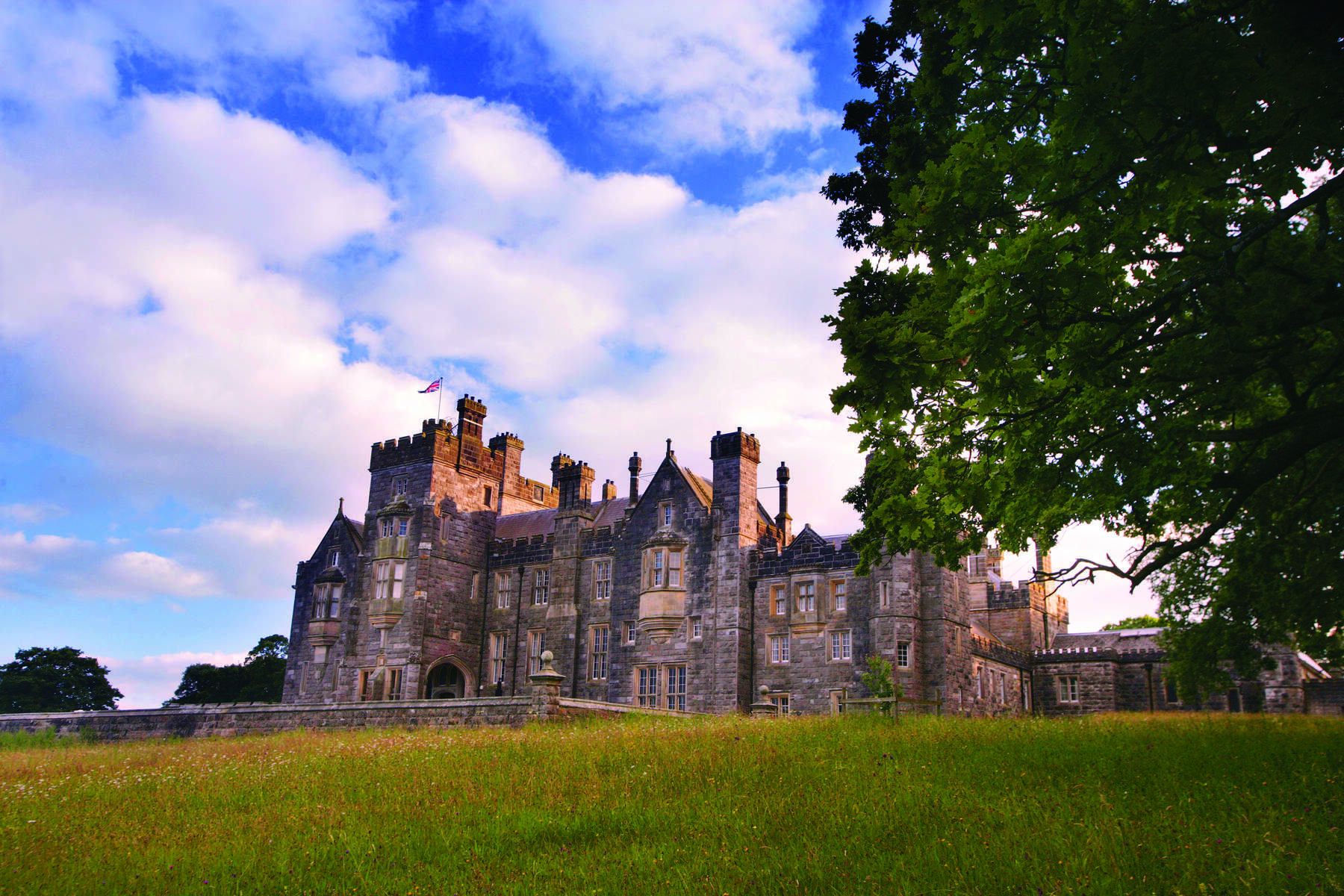
p. 95. “(Crichton, Erne, E/PB) A large castellated mansion combining Baronial and Tudor-Revival elements, by the side of one of the many inlets of Upper Lough Erne, built 1829 to the design of Edward Blore. The entrance front has a gabled projection with a corbelled oriel at each end, but they are not entirely similar; while the tall, battlemented entrance tower, which incorporates a porte-cochere, is not central but to one side, against the left hand gable. The adjoining garden front is symmetrical, dominated by a very tall central tower with slender octagonal turrets, inspired by various Tudor gatehouse towers in England, but without a doorway. On either side of it is a gable and oriel. In the park are the ruins of the earlier Crom Castle, a Plantation castle of 1611, destroyed by fire in 1764.”
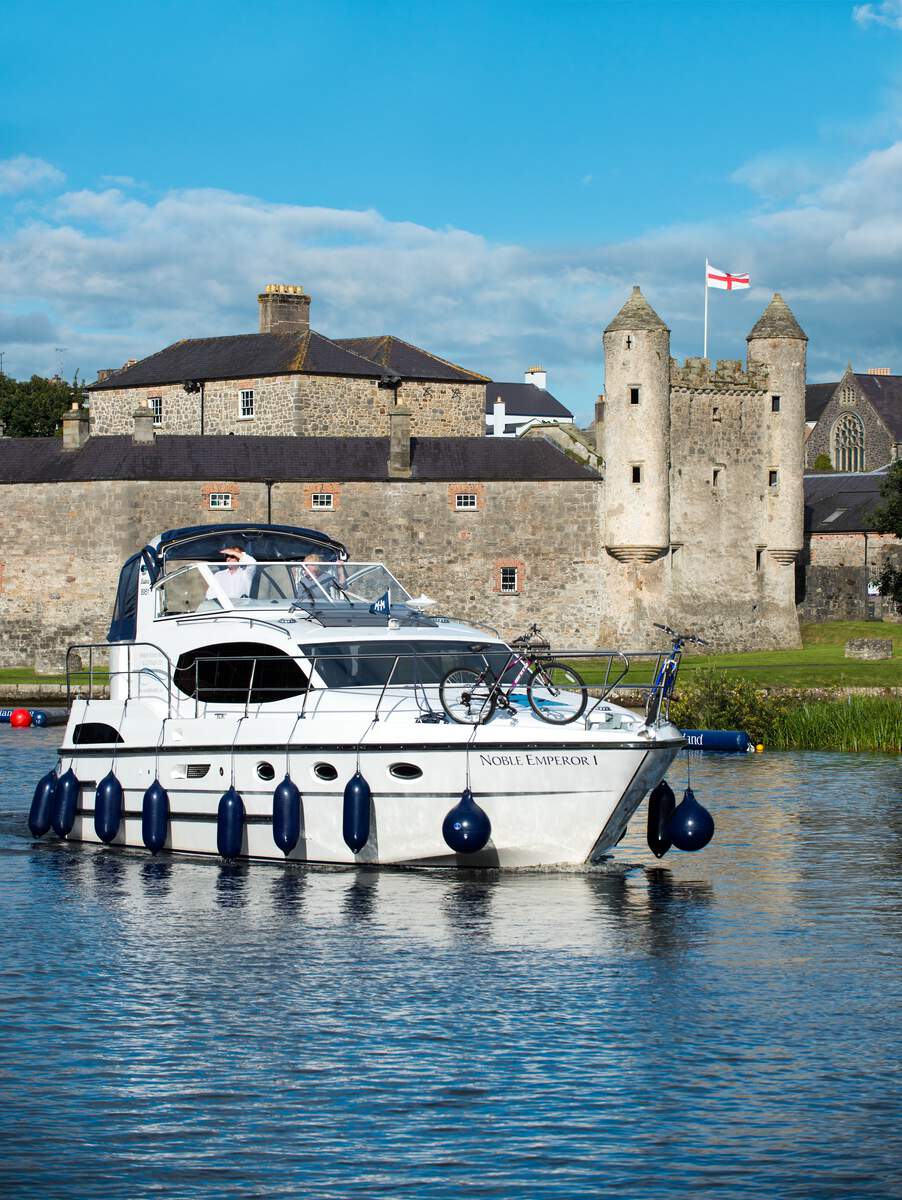
Enniskillen Castle by Gardiner Mitchell 2015 for Tourism Ireland, Ireland’s Content Pool (see [3]).
The website tells us: “Enniskillen Castle, situated beside the River Erne in County Fermanagh, was built almost 600 years ago by Gaelic Maguires.
“Guarding one of the few passes into Ulster, it was strategically important throughout its history. In the 17th century it became an English garrison fort and later served as part of a military barracks. This historic site houses two museums, Fermanagh County Museum and The Inniskillings Museum.“
Mark Bence-Jones writes in his A Guide to Irish Country Houses (1988):
p. 121. (Cole, Enniskillen, E/PB) A large and impressive fortress at one side of the island in the River Erne on which the town of Enniskillen is built; with walls enclosing a ward of courtyard, an inner keep and a tall and frowning water gate with two conical-roofed bartizans. Until C18 the castle stood on a small island of its own, separated from the rest of the island by a ditch of water crossed by a draw-bridge. The castle was originally built C15 by the Maguires; it was granted 1607 to Captain William Cole, who rebuilt the keep as a house for himself, and renovated all the fortifications; the water gate probably dates from his time. The Coles continued to live on and off at the castle until 1739; afterwards, they established themselves permanently at Florence Court. The castle then became barracks, and the keep was rebuilt once again. The buildings remain in good repair.”
Enniskillen Castle by Chris Hill 2018 for Tourism Ireland, Ireland’s Content Pool (see [3]).
6. Florence Court, County Fermanagh
Florence Court, formerly the home of the Cole family, Earls of Enniskillen, is surrounded by a large area of parkland, garden and woodland, with beautiful views to Benaughlin and the Cuilcagh Mountains. photo Courtesy of Tourism Northern Ireland by Brian Morrison 2008 (see [3]).
1. Belle Isle Courtyard cottages and castle accommodation, Lisbellaw, Enniskillen, County Fermanagh Northern Ireland – (self-catering)
Nestling close to the water’s edge and set within a landscape of lakes and islands of gently rolling hills and fragrantwoods, Belle Isle Castle provides self-catering or fully catered accommodation. Situated at the heart of Belle Isle Estate and dating from the early 17th century the castle has been extensively yet sensitively refurbished, ensuring that a full range of modern facilities blends seamlessly with original period grandeur. Photo for Tourism Ireland, 2008. (see [3])
“Belle Isle provides an outstanding mix of natural beauty and authentic heritage on a private 400 acre estate designated a Special Area of Conservation with a range of accommodation options including castle rental, luxury cottages and self-catering apartments. Whether you are looking to host your wedding, enjoy a private event with friends and family or just have a relaxing weekend with your pets, we have something for everyone. Enjoy a Summer Getaway to the Belle Isle Estate with one of our great special offers.
“Belle Isle has a rich history dating back to before the 15th century as the place where the Annals of Ulster were written. Belle Isle Castle was built in the early 17th century as the home to many generations of nobles and has been hosting events since as early as 1760. In 1991, the castle was fully refurbished to open its doors to more visitors. Belle Isle Estate stretches over 470-acres across Lisbellaw, County Fermanagh, Northern Ireland. It is a private estate with access to its estate grounds and trails open solely its visitors. If you are looking for the ultimate experience in luxury, Belle Isle Estate is one of the best hotels Fermanagh can offer.“
Mark Bence-Jones writes in his A Guide to Irish Country Houses (1988):
p. 38. “(Gore, Bt/PB; Porter, sub Baird/IFR) A house beautifully situated on an island in Upper Lough Erne; the seat of a distinguished C18 soldier, Sir Ralph Gore, 6th Bt, 1st and last Earl of Ross and Viscount Bellisle, who was C-in-C in Ireland 1788. Bought early in C19 by Rev. J.G. Porter.“
Ralph Gore (1725–1802), 6th Bt, Later 1st Earl of Rosse, on His Bay Hunt, attriibuted to Thomas Spencer, courtesy of National Trust.
“The present house appears to incorporate a two storey C18 range with a three sided bow at one end, to which a range of 1820-30 was added at right angles, with a staircase hall, top-lit by an octangular lantern, in the re-entrant. The house was re-modelled post 1880 in the plain English Tudor manor house style made popular by Norman Shaw and his disciples; producing a gable entrance front with mullioned windows, a projecting porch and a tall, church-like battlemented tower at the corner of th 1820-30 range. The latter range, which is the garden front facing the lough, remains unaltered apart from having Victorian plate-glass windows; at one end is the end bow of C18 range, with Georgian astragals. Inside the house, arches were opened up between the staircase hall and the rooms at either end of it, to make a much larger hall; the staircase hall was also widened at the expense of the rooms in 1820-30 range, the old wall being replaced by a massive oak beam. An oak staircase with barleysugar balusters replaced the original stairs; the walls were panelled in oak, or decorated with half-timbering. The octangular ceiling lantern, however, was left undisturbed. The drawing room, in 1820-30 range, was redecorated, having been reduced in width, and given a chimneypiece of old oak carving, possibly of more than one period and nationality. The room extending into the bow of C18 range, which is now the drawing room, was given a stone Tudor fireplace; but it still keeps its original doors with shouldered C18 architraves. In 1907 the entrance front was prolonged by a wing in Tudor style containing a long and lofty gallery, with a timbered roof, an elaborate Tudor fireplace and overmantel and a minstrels’ gallery, the balustrade of which has slender turned uprights and would appear to be late C17 or early C18 woodwork brought from elsewhere. At this end of the entrance front stands a pedimented and gable-ended office wing which would appear to date from quite early C18. After the death of N.H.A. Porter 1973, Belle Isle was inherited by his niece, Miss Olivia Baird.”
Belle Isle Estate, photo by Brian Morrison 2008 for Tourism Ireland. (see [3])
2. Castle Irvine, County Fermanagh – courtyard accommodation
“Castle Irvine, also known as Necarne Castle, lies south of the town of Irvinestown, in County Fermanagh, in Northern Ireland.
“The core of Necarne Castle is a castle which was built in the 17th century by Gerard Lowther as part of the plantation of Ulster. In 1629, the lands were leased to Christopher Irvine and the Irvines remained there until 1922.
“In the 1830’s the castle and park were rebuild and a Victorian style wing was built against its south west facade amongst other things.
“In 1925, Captain Richard Outram Hermon, from Sussex, bought the castle. In 1927 an extensive restoration of the castle and its gardens was started while Captain Hermon and his new wife went off on a world cruise. The estate was turned into a haven for shooting parties and Lord Mountbatten and Prince Bernhard of the Netherlands were once guests at Necarne Castle.
“In 1941 Necarne Castle was requisitioned by the United States Navy. It originally had 200 beds but was soon enlarged to a 500 bed institution and released to the American Army. The castle, then the 28th Station Hospital, cared for recuperating American soldiers and RAF personnel. After the war the castle was never inhabited again and fell to ruin.
“Fermanagh District Council bought the Necarne Castle estate in 1981; and in 1988 The NI Department of Agriculture leased the estate on a 25-year basis from them. In the last decades the outbuildings of the castle have been used as a student facility for the Enniskillen Agricultural College as the Necarne Castle Equine College.
“Fermangh & Omagh District Council began the search for a new operator for the estate in 2014 following the Agricultural College relocating their Equine Courses to Enniskillen.
“Gardrum Holdings Ltd agreed a lease of the estate from 2020.
“The park around Necarne Castle can freely be visited during daytime. The ruin of the castle itself is boarded up, so its interior can not be visited.”
2. Colebrooke gate lodge,Colebrooke Park, County Fermanagh– accommodation
“Colebrooke Estate in Co. Fermanagh, N.Ireland offers guests a haven of peace and privacy with over 1000 acres to play in. The 5 star Whitehill Cottage and 5 star Woodcock Corner Cottage are sensitively restored original Estate workers cottages. Rossbeg Cottage is located in a stunning part of Co. Donegal, overlooking the Atlantic Ocean. We are proud of all the properties, which offer high standards of comfort, with all the modern conveniences you would expect to find in quality accommodation.“
Henry Brooke (1770-1834), 1st Bt.of Colebrooke, Co Fermanagh.Painting with inscription verso ‘Sir Henry Brooke Bart Son of Francis Brooke, Major of 18th. of Hannah, Sister of 1st Lord Dunally. He married Harriott Butler, granddaughter of Earl Lainsborough. He rebuilt the House of Colebrooke in 1822. Died at Colebrooke, 24th March 1834, aged 63 years.’ courtesy of Adam’s auction 10 Oct 2017.
3. West Wing, Crom Castle, County Fermanagh – accommodation
Crom Castle, County Fermanagh, photograph by Robert French, (between ca. 1865-1914), Lawrence Photograph Collection, National Library of Ireland.
“A converted farm building with a spacious living area and views of the Lough Erne.
“Erne View is the largest in a row of holiday cottages on the shores of Lough Erne. The cottage boasts stunning views, an open fire and a wet room on the ground floor.
“Enjoy a coffee whilst taking in the view over to the Island of Inishfendra before heading down to the nearby jetty for a stroll along the shoreline.
“Adventurers might want to take advantage of the Lough Erne Canoe Trail which offers guided trips and canoe hire. Further afield, the pretty town of Enniskillen, with its historic castle, is just 20 miles away.“
5. Florence Court, County Fermanagh – Butler’s Apartment accommodation
“Butler’s Apartment served as living quarters for the male servants at Florence Court, the 18th-century mansion next door to the holiday home. This atmospheric first floor apartment overlooks the laundry courtyard and adjoining woodland garden. Inside, you’ll find many historical quirks such as the period fireplaces, large sash windows and wooden floorboards.“
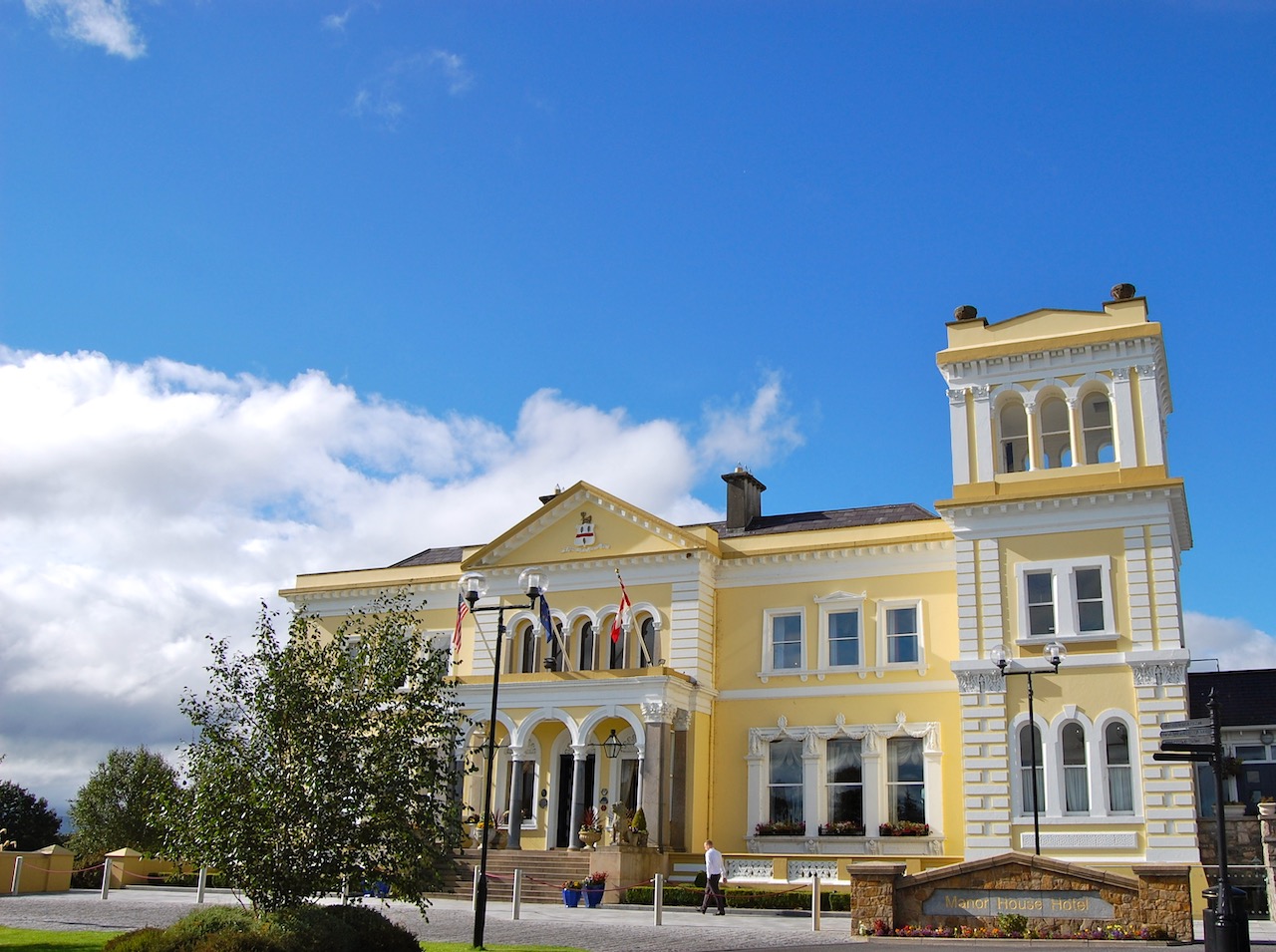
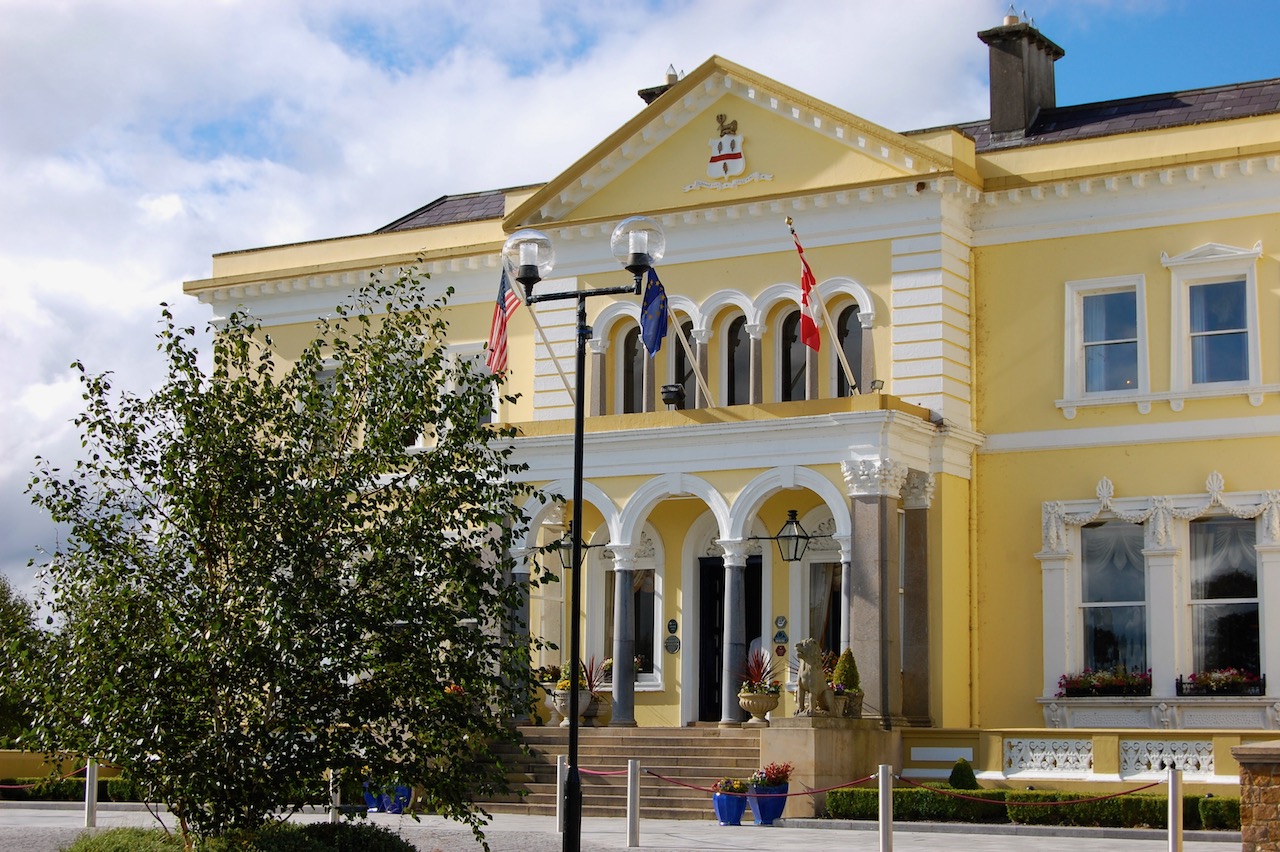
6. Manor House Hotel (formerly Killadeas Manor and before that, Rockfield), County Fermanagh
Mark Bence-Jones writes in his A Guide to Irish Country Houses (1988):
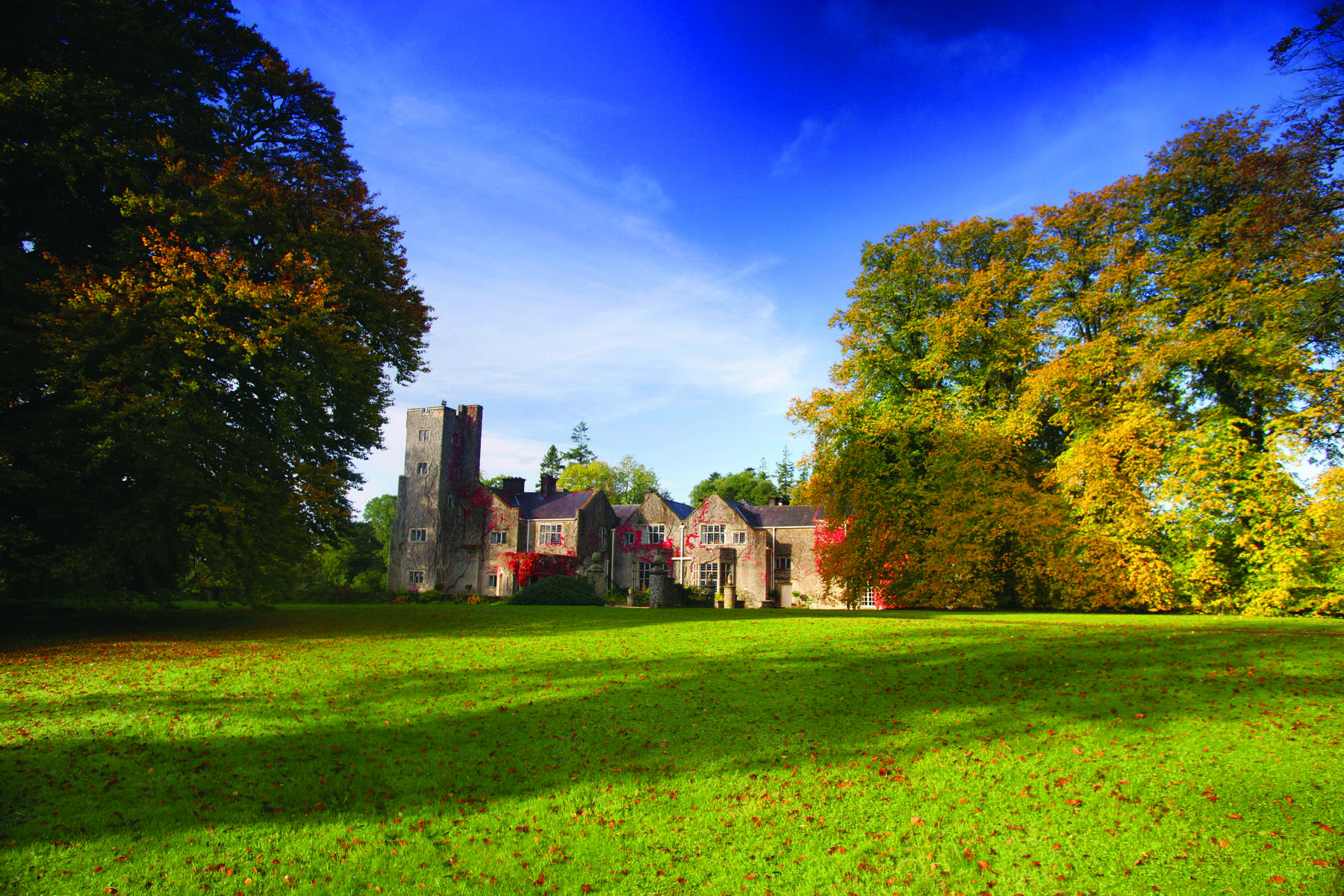
p. 168. “(Irvine/LGI1912) A two storey Victorian Italianate house, in a splendid position on the shores of Lough Erne. Entrance front with pediment and porch in the form of a three arched loggia, flanked by a square tower with glazed belvedere and urns on its parapet. Now a hotel.”
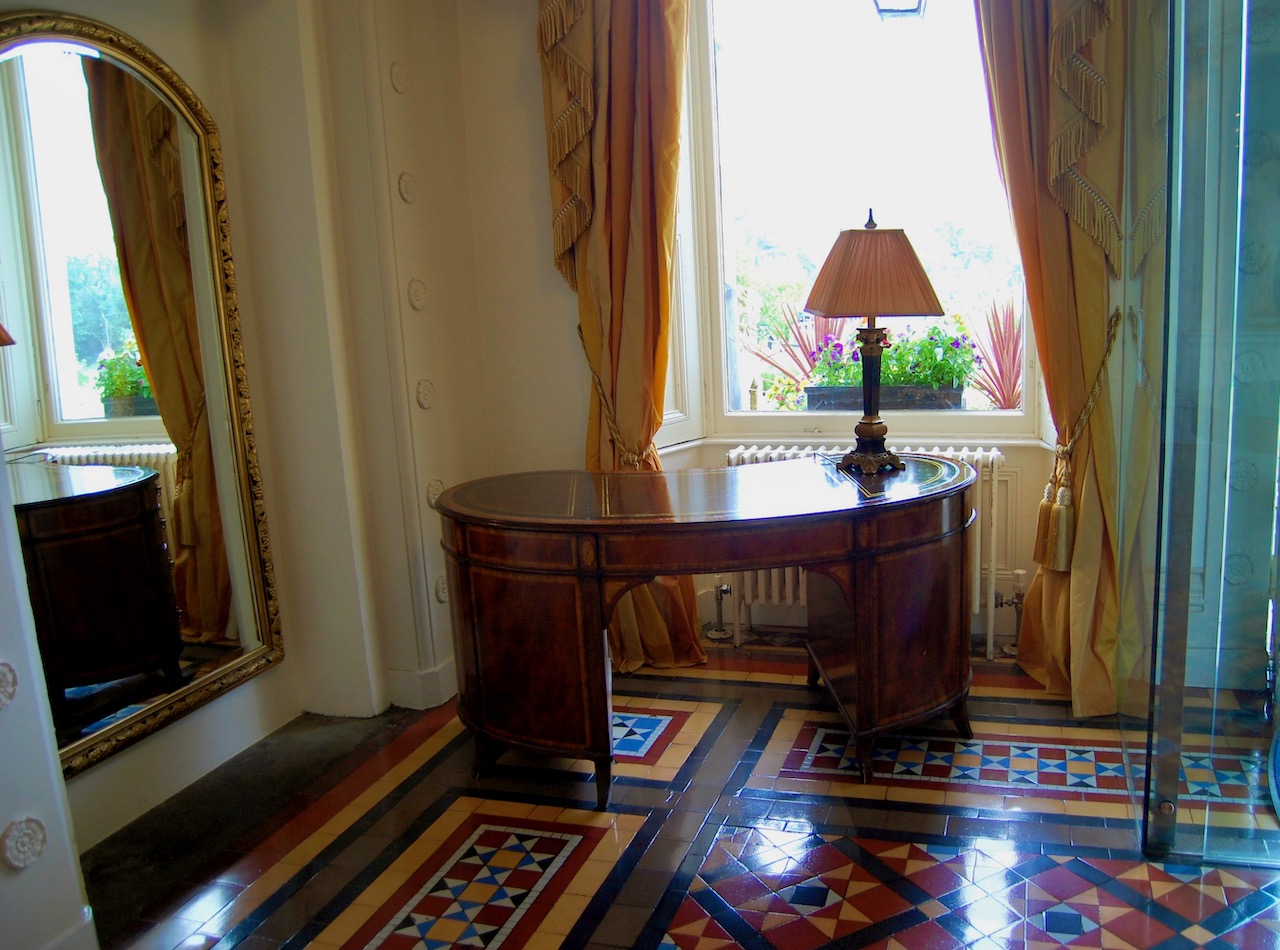
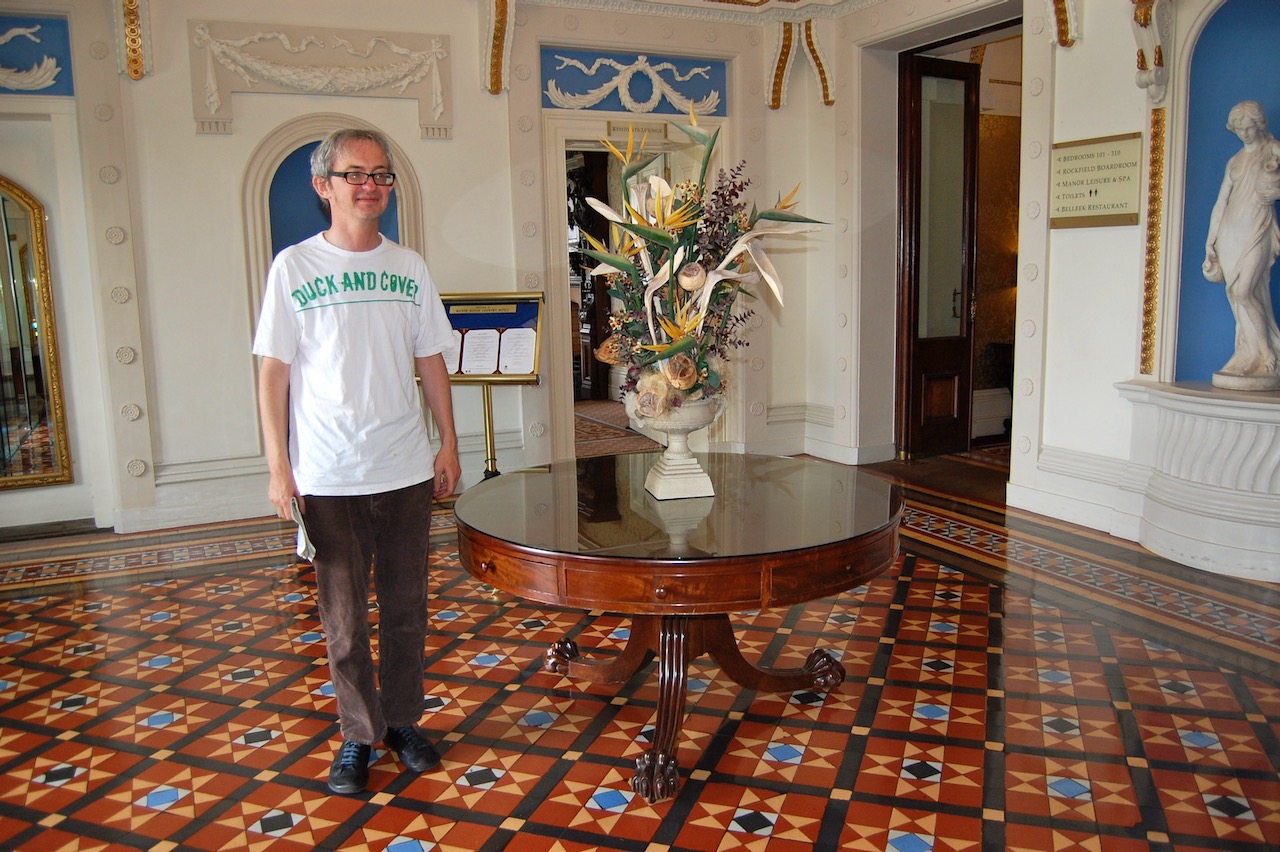
A younger son of the Irvines of Castle Irvine [now dilapidated but you can visit the grounds], John Irvine, acquired the estate in 1660. It was known as Rockfield. The website tells us it remained as Rockfield until it was rebuilt in 1860 by Colonel John Gerard Irvine (1823-1902), who brought workmen from Italy to do the interior decoration which exists to this day.
The name of Rockfield was changed to Killadeas Manor House by Major John Irvine who succeeded to Killadeas in 1835 and died in 1860. It was his son, Colonel John Gerard Irvine, who rebuilt Killadeas, incorporated some parts of the old house into the new mansion.
The website adds that in a directory of Fermanagh, published in 1879, the author states that Rockfield was built in 1710, and greatly altered and added to in 1868 by Colonel Irvine under the direction of that able and artistic architect, Mr Armstrong of Belleek. There are some obvious similarities between the architecture of the Belleek Pottery and The Manor House not least the unusual narrow, arched windows.
During the 1939-45 war it was requisitioned by the Government and was for a time used by the American Forces. The house itself was used as an Officers’ Mess and Headquarters for the Seaplane base of Killadeas. It was a plane from this base which sighted the ‘Bismarck’ and consequently resulted in the destruction of this mighty battleship. The Manor House remained in the Irvine family until 1957 when it was acquired for a Hotel.
Ashbrooke is the Dower House for the Colebrooke Estate it has been in the Brooke family for over 200 years. Formerly the home of Viscount and Viscountess Brookeborough the house has recently been fully restored and renovated to provide luxurious accommodation.
Mark Bence-Jones writes of Colebrook Park in his A Guide to Irish Country Houses (1988):
p. 89. “(Brooke, Brookeborough, V.PB) An austere Classical house of 1825 by William Farrell; built for Sir Henry Brooke [1770-1834], 1st Bt of 2nd creation. Two storey nine bay front, with a pedimented portico of four giant Ionic columns; three storey irregular side; eaved roof. Of cut-stone, with a sprinking of red sandstone ashlars which gives the elevation a pleasant reddish tinge. Large entrance hall; double staircase in back hall. Drawing room with original white and gold damask wallpaper. Sitting room with C19 arabesques. Large dining room, which Lord Craigavon, 1st Prime Minister of Northern Ireland, christened “Golgotha” on account of the numerous deer skulls covering the walls. The home of Sir Basil Brooke, 5th Bt and 1st Viscount Brookeborough, Prime Minister of Northern Ireland 1943-63; he and the late Lady Brookeborough made an attractive sunken garden at one end of the house. The house stood empty for some years after the death of 1st Viscount, 2nd Viscount living in Ashbrooke, a smaller house on the estate. But the present Lord and Lady Brookeborough have moved back into Colebrook.”
2. Belle Isle Courtyard cottages and castle accommodation, Lisbellaw, Enniskillen, County Fermanagh Northern Ireland – see above
3. Colebrook Park, County Fermanagh– group accommodation
“Colebrooke Park in County Fermanagh, Northern Ireland is first and foremost a family home, the seat of Viscount & Viscountess Brookeborough and one of region’s most important and historic stately homes. It is exclusive, discreet and offers a taste of a unique lifestyle which guests may experience whilst staying in an Irish Stately Home. Set in a lush 1,000 acre working estate, Colebrooke Park is only 90 minutes from Belfast, 40 minutes from the West Coast of Ireland and a short distance from the tranquility of beautiful Lough Erne.
“Lady Brookeborough has skilfully recreated the style and grandeur of the past with family portraits, original Victorian wallpaper, 18th Century porcelain and fine furniture used to decorate the grand rooms. Modern additions such as en-suite bathrooms, central heating, a Business Conference Unit and Day Spa makes Colebrooke a discerning choice of venue for business away days and conferences.
“Standing on the banks of the Colebrooke River, fishing, clay pigeon shooting, archery and other outdoor activities are available for guests’ enjoyment. For those who may wish to enjoy a less energetic stay there are long riverside and shrub garden walks and there are purpose built ‘hides’ for watching the abundant wildlife in this remarkable haven. These include deer, otters, mink, buzzards, kingfishers and many others.
“The combination of historic grandeur, modern business facilities, outdoor pursuits and the renowned hospitality of the Brooke family means Colebrooke Park is a truly unique location for special events.
“Colebrooke Park is a brilliant example of how comfortable an historic Irish Stately home can become in the 21st Century; the ultimate in luxury. Above all it is a place where guests can stay in complete privacy. The estate is ideal for weddings, house party breaks, family gatherings and as a corporate venue with a difference, all in the heart of Northern Ireland’s lush countryside.Having approached the house along the sweeping avenue, guests enter through the grand entrance beneath the portico into a large hall overlooked by the impressive main staircase.
“Then guests can make their way to the Library or the Drawing Room and relax in great comfort in magnificent surroundings. In addition to these large reception rooms, there is a large billiard room. The Dining Room seats up to 30 guests at one large table and more in other formats – making it particularly well suited for corporate entertaining, private dinner parties and weddings.
“Within the house, located towards the rear, is the fully equipped Conference Suite. Accommodating up to 70, the suite provides all necessary facilities for business users including overhead projector and screen.Colebrooke Park can accommodate up to 300 guests for receptions with a great deal of flexibility and with that all important personal touch that is so often missing in large hotels. There are 12 comfortable double bedrooms with private bathrooms, all of which have been individually and tastefully decorated by Lady Brookeborough.
“The landscaped gardens, parkland and ancient woodland with 3 miles of the Colebrooke river meandering through it, form this stunning 1000 acre estate which is a haven of tranquility. There is also a dry grassed lawn at the side of the house suitable for a large marquee, demonstrations and exhibits or as a pleasant area to congregate on sunny days.“
The website also tells us of the history, quoting an article in Country Life magazine:
“A sprawling barracks* of a country house, in the heart of terrorist-torn Northern Ireland, encumbered with death duties and overdraft, is an unenviable inheritance. Particularly when, abandoned to patching, the fabric has begun to rot; the extensive stables and outbuildings are in ruins; the Victorian wallpaper is peeling from the walls of rooms empty from a house sale seven years earlier. Income from the beautiful – but agriculturally poor – 1,100 acre estate cannot conceivably support the maintenance, let alone restoration, of the house. [* Someone else’s description – not ours!]This was the situation that confronted Lord Brookeborough and his wife in 1980. The Brookes are a fairly typical Anglo-Irish ‘plantation’ family. They arrived in the 1590’s and were granted a large portion of confiscated lands at Brookeborough as reward for services during the 1641 Rebellion (the name Colebrooke derives from the 17th century marriage of Maj Thomas Brooke to Catharine Cole). Thereafter they displayed a record of competent – often enlightened – land-holding, combined with remarkable honours for military and public service (the family includes both Field Marsh Viscount Alanbrooke and a Prime Minister of Northern Ireland).
“The present house was built in 1820 by Henry Brooke (1770 – 1834), created baronet (2nd creation) in 1822, as the culmination of some three decades of frugal living aimed at restoring the fortunes of the estate after the excesses of his uncle. In common with Irish building tradition, the new house, a severe neo-Classical block, subsumed an earlier building of unknown appearance. In his ‘Specification of works’ of 1820, William Farrell – a Dublin architect who practised mainly in Ulster – wrote ‘All the old house except the present Drawing Room and Dining Parlour (the present south range) to be taken down.’ In its place, Farrell attached two ranges of red sandstone (quarried at Alterbrock on the estate and by 1835 covered with Roman cement) containing a palatial entrance hall, stone staircase, reception rooms and bedrooms. This switched the main front from south to east, leaving an untidy arrangement of windows on the south-east corner where the new two-storey building met, under the same roof, the three storeys of what remained of the old. The only ornament to this austere addition was an ashlar cornice and a free-standing giant Greek-Ionic pedimented portico, on a base of two steps, in front of the central three bays. The cost was £10,381.
“Despite the sandstone in place of Portland stone, the shallow, eaved roof and lack of balustrade, the resemblance of the main front to neighbouring Castlecoole, Wyatt’s neo-Classical masterpiece is striking. This is no accident. A drawing in the Brookeborough papers held by the Public Record Office of Northern Ireland, reveals that Farrell discarded a more modest, and in many ways more appropriate design – the central three bays broken forward with an attached Ionic porch – for a direct quote of the Castlecoole portico. In a note to Henry Brooke of May 23, 1821, he approves an increase in the dimensions of the house, apparently with the sole purpose of eclipsing those of its illustrious neighbour, commenting that these changes would make the new ensemble ‘far superior to any in Castle Cool House’.
“Other notes reveal ideas of increasing grandeur through the summer. First, the dining parlour was extended from the original measurements; then in September, the rooms to the left of the hall were altered ‘by taking down the partition wall and the floor over it to form a Room for a library of 36ft by 18ft …’ (In earlier plans and elevations the library is a modest, two-bay room between the drawing room and the dining parlour in the north range; this now became a breakfast room – currently the billiard room.) In 1823 additional offices were also agreed.
“For the next 50 years, alterations and additions continued in a steady stream – the dower house, Ashbrooke (a plaque in the stableyard is dated 1830); lodges (a plan is dated 1833); a triumphal arch gate. These became most significant with the succession of Sir Victor (1843-91), 3rd Bt, in 1864. ‘Few houses in Britain showed more distinctly their owner’s proclivities,’ wrote Oscar Stephen in Sir Victor Brooke, Sportsman and Naturalist (1894). ‘From floor to ceiling, heads of every variety were to be seen; … bison, wild boar, moufflon, Neilgherry ibex, Pyrenean bouquetin … every known variety of red deer … markor, brahsing, ovis ammon, burrel … a grand series of roe’s heads … over the chimney piece in the hall the huge horns of an Irish elk and two enormous German red deer … two of the tigers he had killed in India … the famous black panther, and, most valued of all, the monster tusk of the great elephant, whose mighty bones … lay in mighty massiveness round the foot of the billiard table.’ It was a taste in interior decoration which prompted Lord Craigavon, first Prime Minister of Northern Ireland, to christen the dining room ‘Golgotha’.
“Given that he occupied Colebrooke permanently for only seven years – thereafter paying visits only in the summer and autumn, after the delicate health of his wife prompted a move to Pau in the south of France – Sir Victor’s legacy was considerable. He introduced sika deer into the park and built the splendid ‘Conservatory with the curved projection’, mentioned in an account of October 1864 from the celebrated William Turner of Dublin. Presumably it was Sir Victor, also, who commissioned the unexecuted colour-washed designs (signed C.W.W.), for panelling the library and dining room, which have Classical and hunting themes and the Classical stained-glass window over the stone stairs.
“By the 1876 return of Landowners in Ireland, the estate was almost 28,000 acres, the third largest in the county – only slightly smaller than Crom or Florence Court. However, there was a sharp change in fortunes when all but 1,300 acres were sold under the Ashbourne and subsequent Land Acts, leaving, as with so many Irish houses, a ‘demesne’ scarcely able to support a large country house. This development, combined with the agricultural depression of the 1880s which left most of the gentry even worse off than they had been in the years following the Famine, suggests that when the 4thBt, Sir Douglas Brooke, had the ‘house and demesne’ valued in 1893 (for £22.035 6s 3d) it was with a view to selling the whole property.
“By 1910 Sir Basil Brooke (1888 – 1973), 5th Bt, (Prime Minister of Northern Ireland 1943 – 63), who from childhood had nursed a powerful affection for the house – as a pupil at Winchester he wrote of it as ‘always tugging at my heart’ – was writing of his desire ‘to get it on its legs’. By the time of his return after the war, high taxation had eaten into the depleted income of the neglected property. Farm profits were low and the long-term trend of food prices was down. However, by reclamation and innovation over the decades the estate became a model of efficient farming. Changes to the house included repainting, removing the cement render, demolishing the conservatory and creating a sunken formal garden on the south front.
“In the early 1930’s a Minister of Agriculture official described the house as ‘comfortable but with many rooms unused’. By December 1939, Sir Basil’s letters reveal the felling of trees as ‘the only way to save Colebrooke’ and clear the overdraft. All might have been well, however, had some tax planning been made before Lord Brookeborough (as he was from 1952) died in 1973. As it was there was no alternative but to sell up, leaving the house in the condition in which the present Lord Brookeborough found it in 1980.
“The question was whether a house in such a state could ever again be made to support itself, let alone remain a home. The London-based architect Paul Hyett was called in to help arrange a feasibility study and devise ways of raising capital. For a time, conversion to a golf club looked the only possibility, although it was realised that the character of the house and its setting would be unlikely to survive such a change.
“Fortunately, by 1985 Lord Brookeborough’s business idea had begun to take off. The Colebrooke estate offers one of the best driven snipe-shooting anywhere, excellent stalking of sika, fallow and red deer over 10,000 acres and pheasant shooting and fishing, all of which had the potential to be developed along the one guiding principal; that all these activities must bring paying guests into the house. As the idea developed, hope returned, especially when the Northern Ireland Tourist Board agreed to provide up to 50% of the necessary capital.
“Problems, however, were not long in surfacing. Government grants, geared to the provision of commercial accommodation, tended to insist on features hardly compatible with the preservation of the fragile character of a historic house; from en suite facilities to numbers on bedroom doors. Planning permission for such a change of use also triggered an avalanche of fire provisions. Although at times the differences between the parties seemed irreconcilable a spirit of compromise won through. Bedrooms were permitted with designated rather than en suite bathrooms with the ample recompense to visitors today of splendid airy proportions and traditional full-length, cast-iron baths with ball plugs. Fire signs were accepted. Numbers on doors were not.
“Having addressed the major structural problems, and prepared four new bedrooms and bathrooms in the south wing, in addition to the principal bedrooms in the main front, Lord Brookeborough, guided by the conviction that just three ingredients are critical to happy apres-hunting: food, comfortable beds and never ending supplies of hot water, put this equation to work. For the rest, the main difficulty was refurbishing – on a shoestring – the vast, bare reception rooms. A friend who had bought one of the original gilt drawing room looking-glasses donated it. Marble busts of Sir Victor Brooke and his wife, by a local artist, Joseph Watkins, were retrieved from a Dublin antique shop.“
Monaghan:
1. Castle Leslie, Glaslough, Co. Monaghan(hotel)–
www.castleleslie.com Tourist Accommodation Facility – since it is listed under Revenue Section 482 as Tourist Accommodation Facility, it does not have to open to the public. It may have events during Heritage Week – see the hotel website.
2. Hilton Park House, Clones, Co. MonaghanH23 C582– section 482accommodation
www.hiltonpark.ie Tourist Accommodation Facility – April 1- Sept 30 2026
since it is listed under Revenue Section 482 as Tourist Accommodation Facility, it does not have to open to the public. However, check the website as it is open to visitors on some dates.
Hilton Park, Monaghan, photograph taken 2018 for Tourism Ireland. (see [3])
Blessingbourne, County Tyrone, photograph courtesy of Tourism Northern Ireland, 2019. (see [3])
The website tells us:
“Blessingbourne Estate came into the Montgomery family by marriage to the Armar family in the early 18th century. The builder of Blessingbourne was a man of taste; Hugh De Fellenberg known as “Colonel Eclipse”, Montgomery, grandfather of Captain Peter Montgomery.
“Blessingbourne originally belonged to the Armars. The Estate came to the Montgomerys in the eighteenth century when Elizabeth Armar married Hugh Montgomery [b. 1692], of Derrygonnelly Castle in Fermanagh.
“The first Montgomery to live at Blessingbourne was another Hugh. Hugh was born in 1779 and known for some reason as “Colonel Eclipse”. His portrait, which he gave to his old school, Eton, shows him to have been very handsome. However, he was unlucky in love.
“He vowed he would never marry and built himself a bachelor retreat at Blessingbourne, a romantic thatched cottage. He also built the charming little Gate Lodge (transformed to the present day 5 star Gate Lodge)
“But his bachelorhood ended after a few years, for he married a Spanish girl and had a son. His son’s godmother was Lady Byron, who remained a close friend and was greatly attached to his sister Mary, a key figure in the development of Blessingbourne.
“It descended in the family to Peter Montgomery, Vice-Lord Lieutenant of Tyrone, who died childless, after which it passed to a cousin. The property was ultimately the inheritance of Captain Robert Lowry, a direct descendant of Colonel Eclipse, and now belongs to Colleen and Nicholas Lowry.
“The Classic Tour encompasses everything well loved about the Estate. Current estate owners Nicholas and Colleen Lowry host all Tours personally. This tour includes a walk through the Victorian gardens, with their majestic setting overlooking the beautiful Lough Fadda. As well as, a private tour of main ground floor rooms of the impressive Manor House. The Manor House was built in 1871-74 and designed by Pepy’s Cockerall a close friend of William Morris. After that, enjoy a guided stroll around the extensive Coach , Carriage and Costume Collections from yesteryear.“
Mark Bence-Jones writes in his A Guide to Irish Country Houses (1988):
p. 44. “(Montgomery/IFR) There was originally no house at Blessingbourne, an estate which came to the Montgomerys through marriage early in C18; the family seat being Derrygonnelly Castle in County Fermanagh, which was burnt later in C18 and not rebuilt. The family lived for some years at Castle Hume, which they rented; then, at the beginning of C19, a romantic thatched cottage was built by the side of the lough at Blessingbourne by Hugh Montgomery (known as Colonel Eclipse) as a bachelor retreat for himself after he had been crossed in love. His bachelorhood ended in 1821, when he married a Spanish girl; but during the next 50 years the family lived mainly abroad, so that his cottage was all they needed for their occasional visits to County Tyrone. The present Victorian Elizabethan house was built by his grandson, Hugh de Fellenberg Montgomery, between 1870 and 1874, to the design of F. Pepys Cockerell. Pepys Cockerell, son of the better-known C.R. Cockerell, as an artist as much as an architect; his patron and his patron’s wife were also people of tate; so that Blessingbourne is an unusually attractive and successful example of it style and period. The grey stone elevations are not overloaded with ornament; such as there is had restraint: caps on the chimneys, small finials on the gables, curved and scrolled pediments over some of the mullioned windows. The interior of the house is comfortable, with great character. The hall has a staircase incorporated in a screen of tapering wooden piers. Through glazed arches one looks across an inner hall to the lough and mountains. The principal rooms have chimneypieces of carved sone in a Tudor design, flanked by niches for logs: some of them being decorated with William de Morgan tiles. The dining room still keeps its original William Morris wallpaper of blue and green grapes and foliage; while there is another original Morris paper in the library. The late owner, Capt P. S. Montgomery, former President of th Northern Ireland Arts Council, stylishly redecorated much of the interior, which houses his collection of modern Irish art. Blessingbourne has passed to his nephew, Captain R.H.Lowry.”
Hill of The O’Neill and Ranfurly House Arts Visitor Centre, Tyrone, by Brian Morrison 2014, for Tourism Northern Ireland (see [3]).
The website tells us:
“The O’Neills were perhaps the greatest of the Irish clans, whose origins date back as far as the 10th century and whose lineage includes two High Kings of Ireland.
“Hugh O’Neill became leader of the clan in 1595 and as such was known as The O’Neill. A charismatic, even romantic figure, he had a long, tempestuous and complicated relationship with the English Crown, a relationship largely of convenience – for both parties. It was characterised by double-crossing by each side, building and abandoning strategic alliances. And ultimately, by all-out war.
“In this story Hugh O’Neill, Earl of Tyrone and the last inaugurated chief of the O’Neills, plays the central role. Dungannon was at the eye of an international political storm from 1594 to 1603, during which time The O’Neill would lead mighty armies, would win and lose battles, and create problems for at least four monarchs.
“And the repercussions were serious. Some might say that the consequences are still being felt today. When Hugh O’Neill was ultimately outmanoeuvred, his defeat paved the way for two connected seismic events that would forever transform his kingdom.
“The O’Neill was a military genius who repeatedly got the better of the Crown’s generals in Ulster. However, after a bitter defeat at the Battle of Kinsale, he was driven to bid farewell to the Hill of the O’Neill and the lands he ruled over.
“O’Neill’s departure for Spain, with the Earl of Tyrconnell and 90 followers, became known as the Flight of the Earls. It was a pivotal event in Irish history, effectively marking the end of the Gaelic way of life.
“With The O’Neill and his followers effectively gone into exile, the way was clear for the organised colonisation of their lands by wealthy settlers, largely from Scotland and England under King James I. This was known as the Plantation, a plan conceived to subdue, control and ‘civilise’ the wayward Irish. Instrumental in managing the process and distributing the lands was the Lord Deputy of Ireland – Arthur Chichester, who had defeated Hugh O’Neill in the Nine Years War. (Chichester would go on to become a major figure in the founding of Belfast.)
“The Plantation is the point that marks the shift in Ulster from an ancient Gaelic tradition to a new Anglo-Scottish ethos. It is in effect, the beginning of another age in the history of Ireland, Ulster, Dungannon and, of course, of the Hill.“
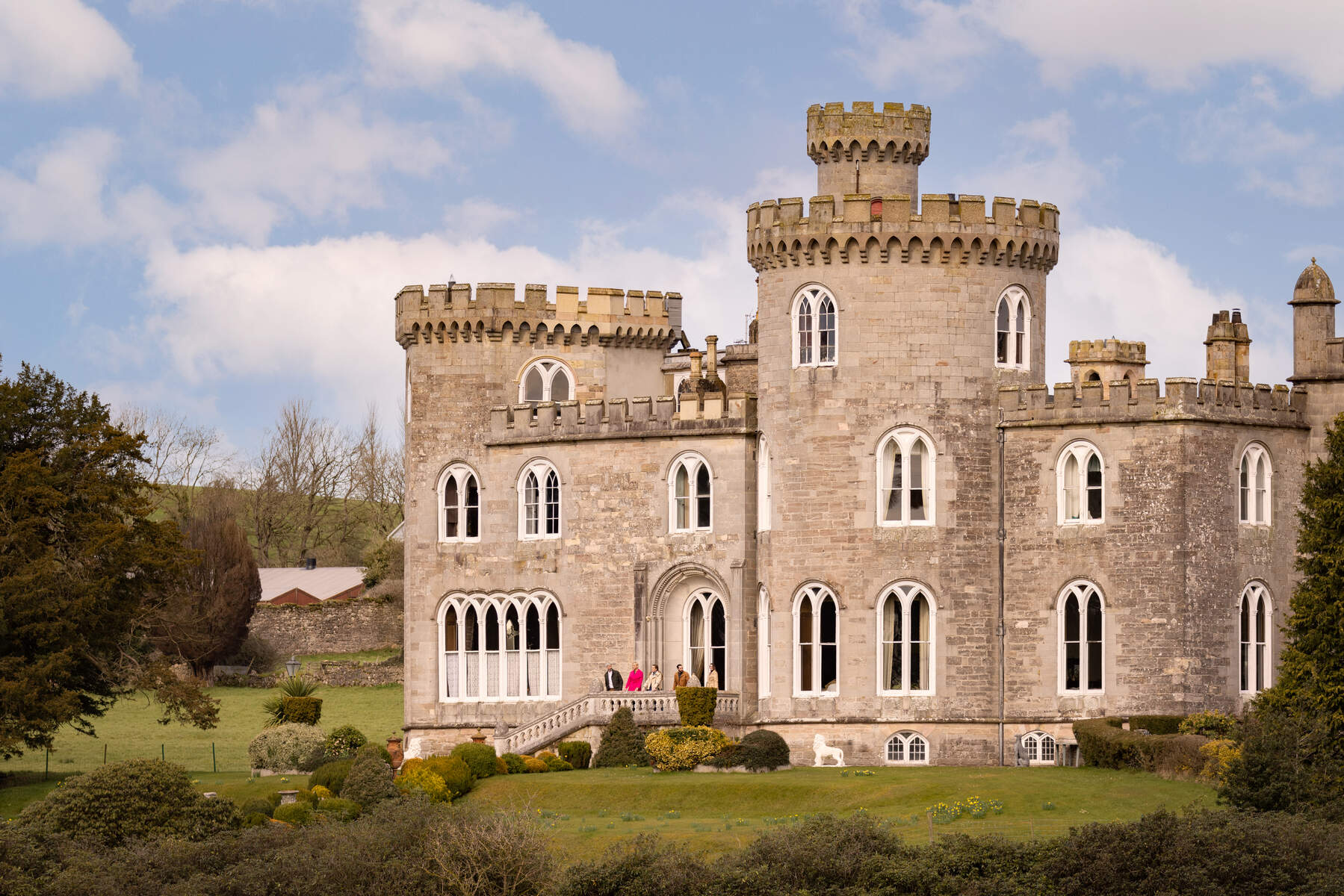
Killymoon Castle, County Tyrone, photograph @ChristopherHeaney for Tourism Ireland 2022, Ireland’s Content Pool. (see [3])
The website tells us:
“Killymoon castle sits in picturesque surroundings overlooking the Ballinderry River on the outskirts of Cookstown just 50 miles from Belfast by car. The castle is a grade A listed building designed by the famous John Nash who also designed the Regent Street area of London and its most famous landmark Buckingham Palace. The castle was originally built in 1600 for James Stewart, six generations of the Stewarts lived in the castle until 1852. It was described in the Irish Penny Journal of 1841 ‘as one of the most aristocratic residences in the province of Ulster’.”
“The original castle, built in 1671 by James Stewart on the substantial demesne had been granted to him under the Plantation Settlement. Stewarts ancestors had come from Scotland during the plantation to settle in Cookstown, and in 1666 James bought the land lease for the castle site from Alan Cooke – the founder of Cookstown. The castle was destroyed by fire in 1801 and in 1802, Colonel William Stewart had a new, more imposing castle built, designed by John Nash, the famous London Architect.“
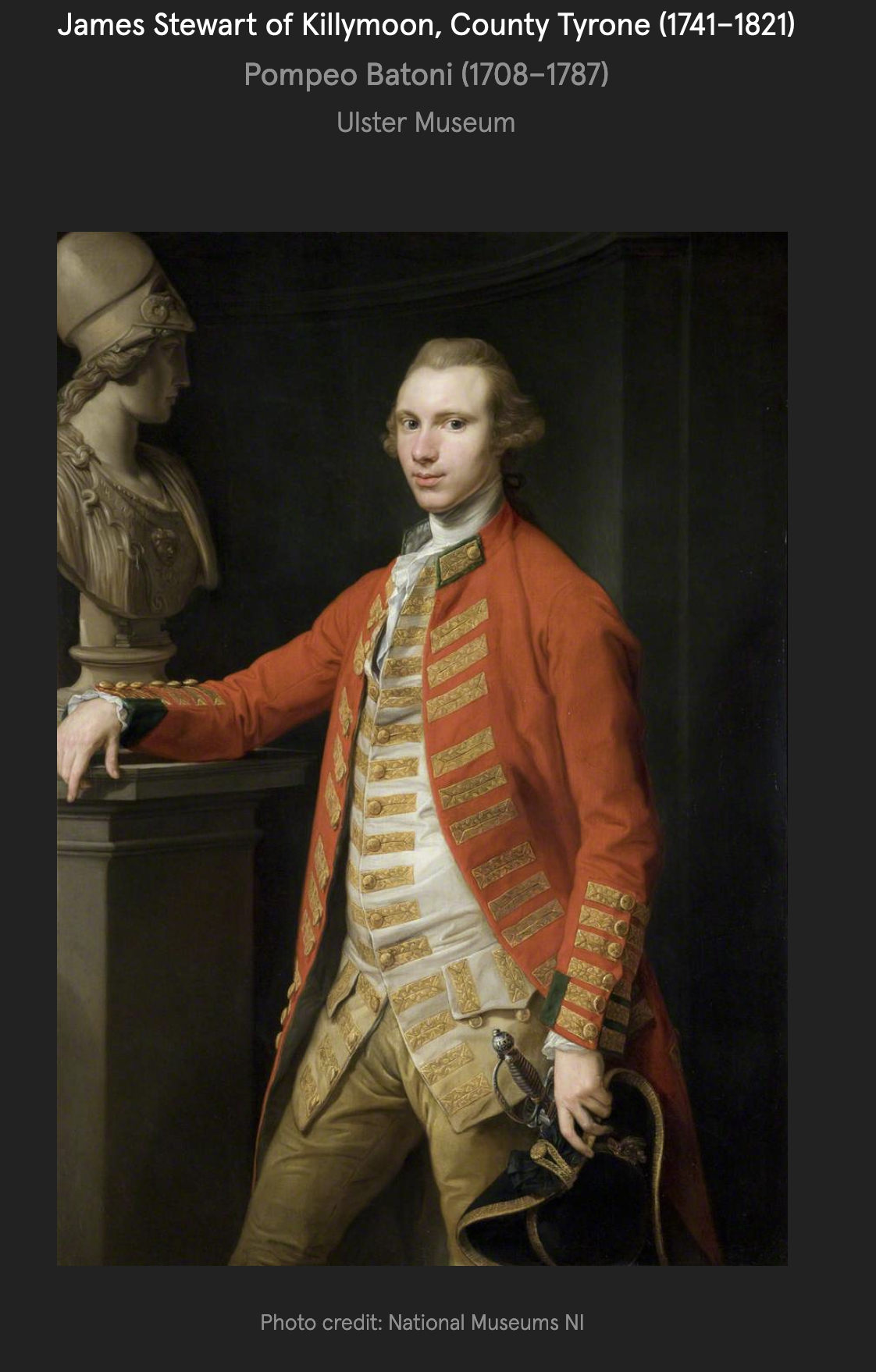
James Stewart (1741-1821) of Killymoon, County Tyrone, by Pompeo Batoni, Ulster Museum, National Museum of Northern Ireland.
“Killymoon was Nash’s first castle in Ireland, and reputedly cost £80,000 to build (about £7.4 million today). It was described in the Irish Penny Journal of 1841 as “one of the most aristocratic residences in the province of Ulster”, with state apartments consisting of “a breakfast-parlour, dining room, ante-room and drawing-room, all of which are of noble proportions and their woodwork of polished oak”.
“The Killymoon estate remained the property of the Stewart family for six generations; however, their extravagant lifestyle caused the Stewart family to fall on hard times, especially during the years of the Irish famine. The estate was sold in 1852 for £100,000. In 1857, the castle had again been sold to the Cooper family; and, in 1865, Colonel Bolton, an English gentleman, purchased the castle.
“A mere ten years later, Mervyn Stuart Thomas Moutray JP, became the owner of Killymoon Castle until 1916, when Gerald Macura bought the castle and town of Cookstown for almost £100,000. By 1918, Macura was also in financial difficulties and was compelled to sell off his assets. John Coulter bought the castle and grounds in 1922 and it remains the home of the Coulter family to this day.“
Killymoon Castle, County Tyrone, photograph @ChristopherHeaney for Tourism Ireland 2022, Ireland’s Content Pool. (see [3])
“Take a tour of Killymoon Castle and step back in time. Visit Lady Molesworth’s morning room, the oval dining room whose restrained plasterwork and marble fireplace show the dignity of their Georgian origin. Ascend the magnificent cantilever style staircase and admire the fragile plasterwork like sugar spires on an inverted wedding cake .
“Colonel Stewart was only 27 when this castle was built and it must have been a truly wonderful fairy tale to bring his beautiful bride to this romantic spot.
“Fortunes and families rise and fall and this fabulous fairy dwelling which cost £80.000 to build in 1807, was gambled in a game of poker and sold for an unbelieveable sum in the 1920’s
“Group tours can be arranged by clicking the button below and filling out a request form. Private tours also available.“
Killymoon Castle, County Tyrone, photograph @ChristopherHeaney for Tourism Ireland 2022, Ireland’s Content Pool. (see [3])
Mark Bence-Jones writes in his A Guide to Irish Country Houses (1988):
p. 173. “(Stewart/LGI1912; Moutray/LGI1912) One of John Nash’s earliest castles, built ca 1803 for William Stewart, MP, incorporating part of the previous house which was burnt ca 1800. A building with a romantic silhouette in a glorious position above the Ballinderry river with a backdrop of sweeping woods and parkland. The principal front dominated by an almost central battlemented and machicolated round tower and turret; at one end, an octagonal battlemented and machicolated tower; at the other, the profile of the square tower in the adjoining front, the base of which is arched to form a porte-cochere. The latter tower has slender octagonal corner turrets, with cupolas. Pointed windows grouped together under segmental hood-mouldings, which were regarded by Nash and his contemporaries as Saxon. Good interior planning with square, circular and octagonal rooms fitted together. Hall with double staircase, lit by Gothic lantern on plaster fan-vaulted ceiling. Drawing room with plain gilt plasterwork cornice of wreath and honeysuckle design. Library in form of Gothic chapel, with stained glass windows. Sold after William Stewart’s death 1850. Subsequently the seat of the Moutray family.”
Killymoon Castle, County Tyrone, photograph @ChristopherHeaney for Tourism Ireland 2022, Ireland’s Content Pool. (see [3])Killymoon Castle, County Tyrone, photograph @ChristopherHeaney for Tourism Ireland 2022, Ireland’s Content Pool. (see [3])Killymoon Castle, County Tyrone, photograph @ChristopherHeaney for Tourism Ireland 2022, Ireland’s Content Pool. (see [3])
The house is open from Easter to mid September on Saturdays and Sundays, and during July and August it is open Thursday to Sunday. Opening hours are from 12:00 – 17:00. 3 guided tours per day at 12:30, 14:00 and 15:30.
“Lissan House is an enchanting country residence set within a 260 acre demesne of ancient woodland and forestry.
“The estate was created in the 17th century and remained the home of the Staples family for nearly 400 years. Lissan came to prominence in 2003 when its popularity helped it reach the final of the BBC Restoration programme.
“Following extensive redevelopment, the house opened its doors in spring 2012 to reveal modern interactive exhibits and original family furnishings which take you on a unique journey through the history of the estate and the family characters that have shaped it. Children will be kept entertained in the house with the teddy bear treasure hunt. The demesne also features a challenging adventure playground for children, a wooded picnic area, walled garden.“
Lissan House and estate is now run and managed by a charitable board, who help secure the future of the property for the benefit of the community.
Robert Staples (1772-1832) 8th Baronet, courtesy of National Trust Springhill.
Mark Bence-Jones writes in his A Guide to Irish Country Houses (1988):
p. 188. “(Staples, Bt/PB) A plain three storey 9 bay Georgian house with later additions. At one end, a single-storey wing with a three-sided mullioned bow. At the other, a gable-ended office range. And in the middle of the entrance front, a single-storey protuberance of unusual depth, embodying a porch and a bow-fronted porte-cochere with windows. Some time post mid-C18, a garden was laid out here by the architect, Davis Duckart; with an “artificial sheet of water with cascades, and a picturesque bridge.”
Nestled in the heart of the estate’s historic courtyard the collection of 5 award-winning self-catering apartments are ideal for family breaks, romantic breaks and groups. Guests can enjoy a relaxing country estate experience.
Guests can choose from 1 bedroom or 2 bedroom self-catering accommodation, all of which are pet friendly. Experience a home from home environment with the apartment’s warm and inviting décor. All apartments feature open plan Living, Dining and Kitchen areas. On-site laundry facilities are available.
5. Cobblers Cottage Omagh, County Tyrone(sleeps 5)
The lovingly renovated Cobblers Cottage has a cosy living/kitchen/dining area, 2 spacious bedrooms (sleeps 5) & a bathroom.
Enjoy the simplicity of this recently renovated 200 year old traditional Irish cottage in peaceful surroundings of Tyrone at the foot of the Sperrin Mountains between Omagh and Cookstown, in the area of Creggan.
Stay with us in our Castle Lodge, located in the grounds of Killymoon Castle on the banks of the Ballinderry River, offers the most tranquil of breaks. Only a short distance from Cookstown town centre and a one hour drive to the north coast, Donegal or Belfast. With Killymoon golf club and the Ballinderry River on your doorstep what better way to relax.
9. The Lower House Rooms, Donaghmore, Dungannon, Co. Tyrone, BT70 3EZ – accommodation
Located in Donaghmore in the heart of Mid-Ulster, the conversion of The Lower House into 7 rooms of accomodation has been our pride and joy. Renovated with the finest fixtures, fittings and decoration, a stay at The Lower House rooms is an experience full of character and luxury.
10. Spice Cottages, Dungannon, County Tyrone – accommodation
4 Stunning self catering family cottages situated in the Dungannon countryside, Co. Tyrone, Northern Ireland
[1] Bence-Jones, Mark. A Guide to Irish Country Houses (originally published as Burke’s Guide to Country Houses volume 1 Ireland by Burke’s Peerage Ltd. 1978); Revised edition 1988 Constable and Company Ltd, London.




























































 Irish Historic Houses