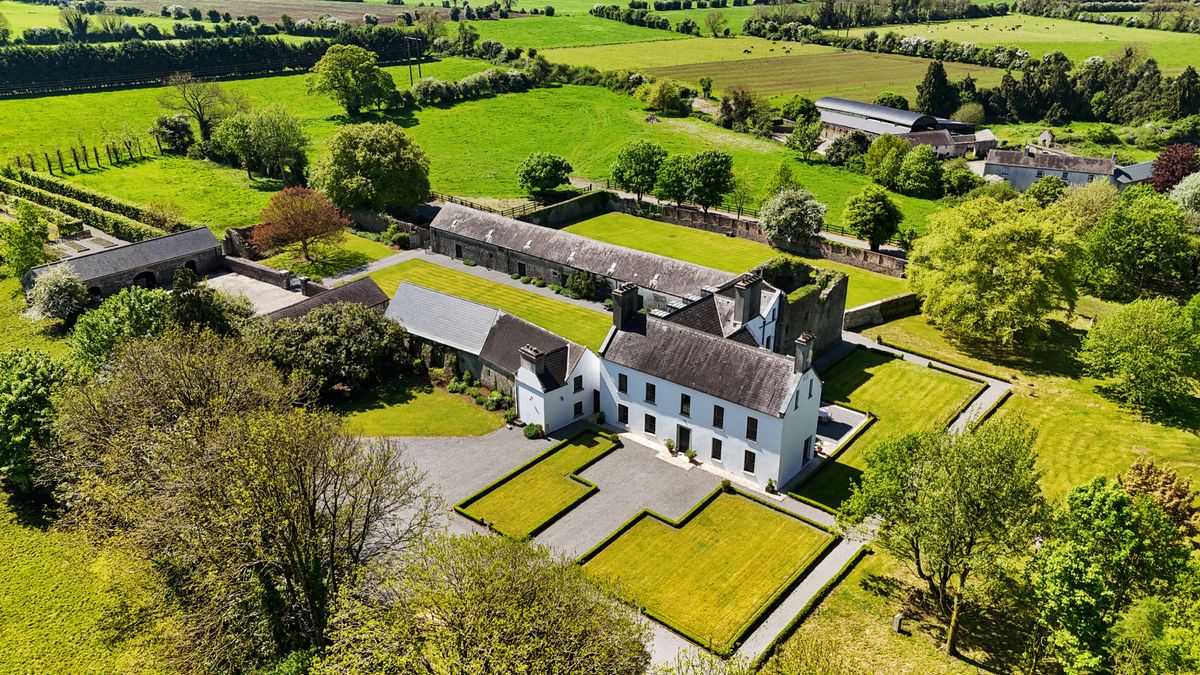
Ballybrittan Castle was recently sold. We visited during Heritage Week in 2024. It’s not in Mark Bence-Jones’s tome of Irish Country Houses, nor is it in the National Inventory of Architectural Heritage.
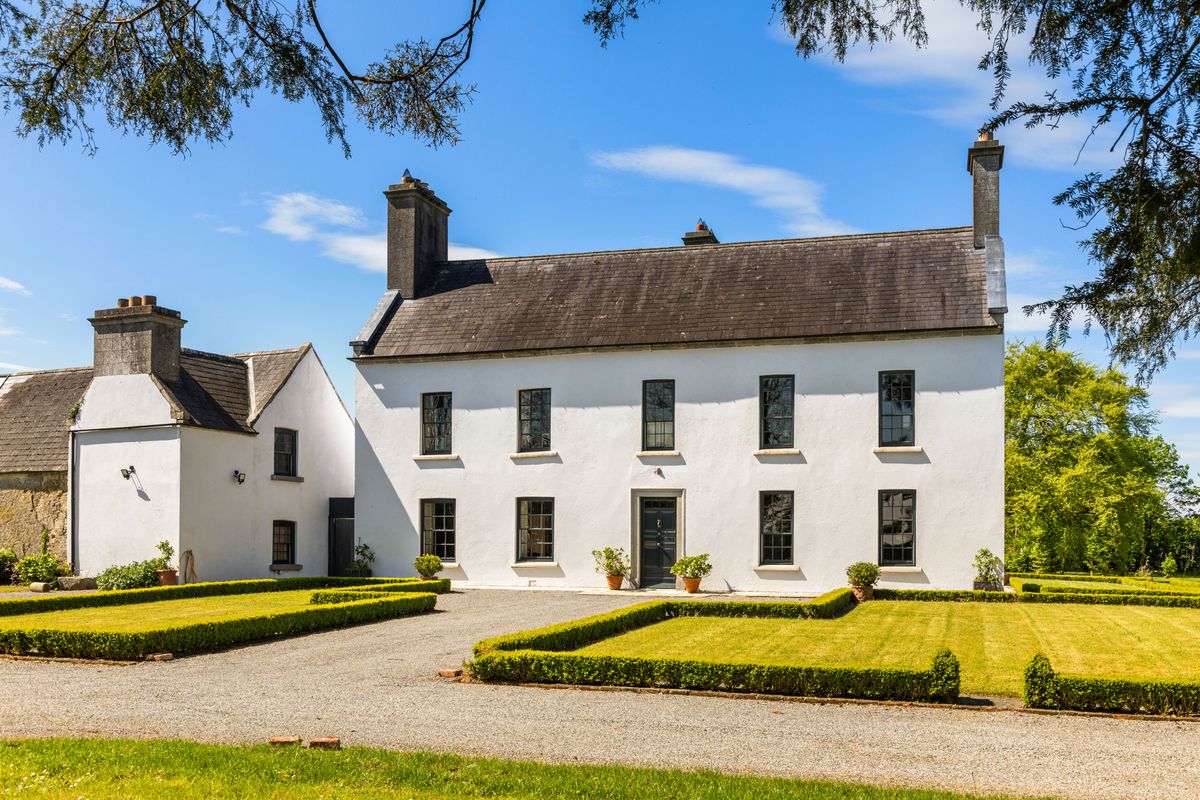
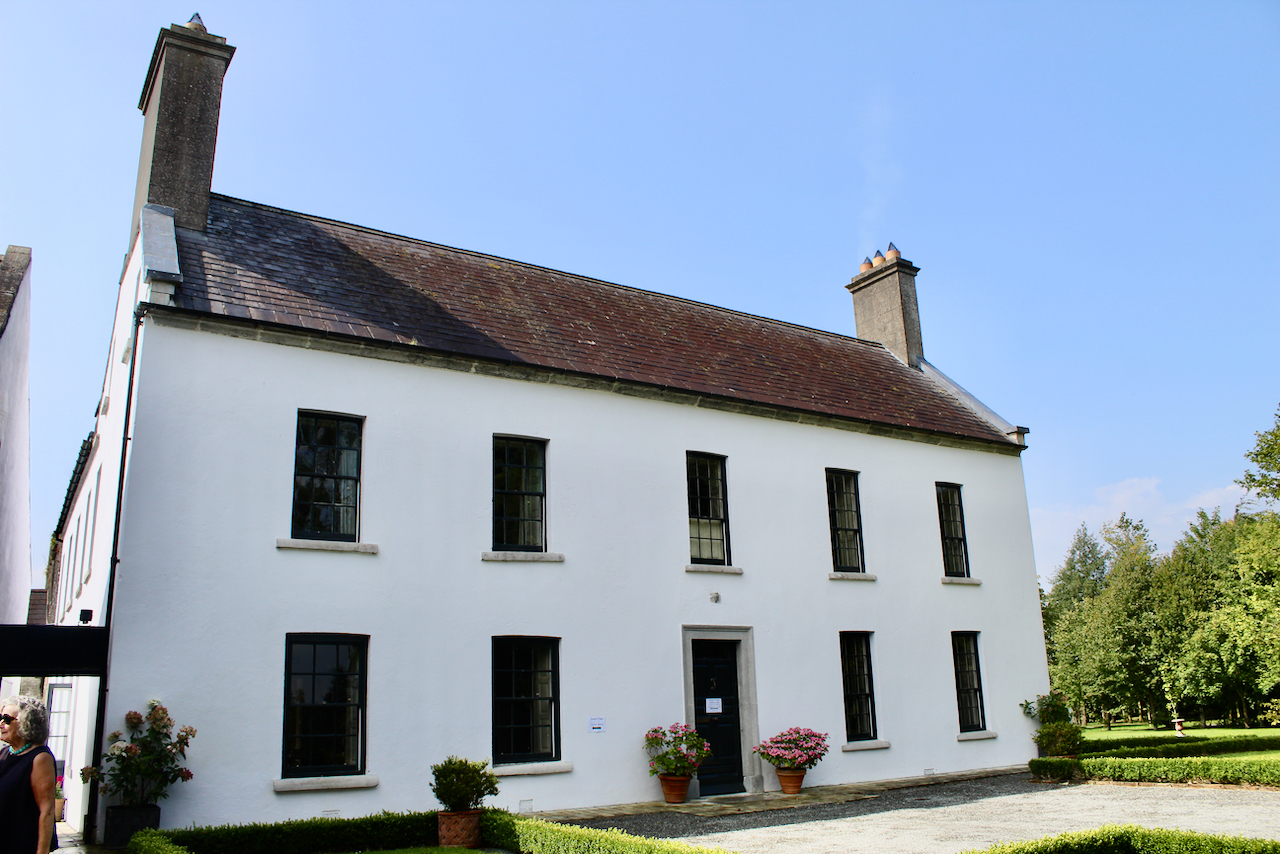
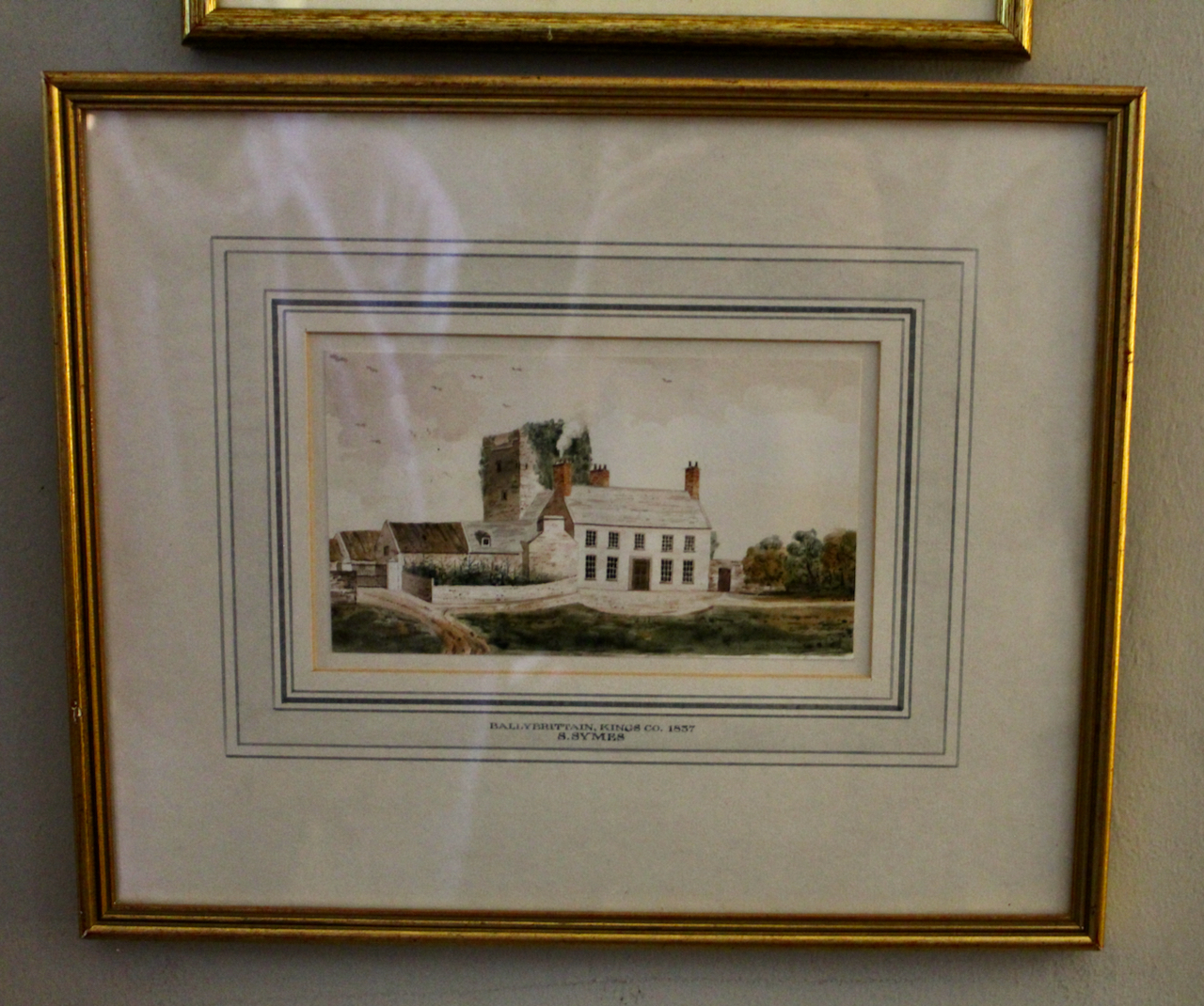
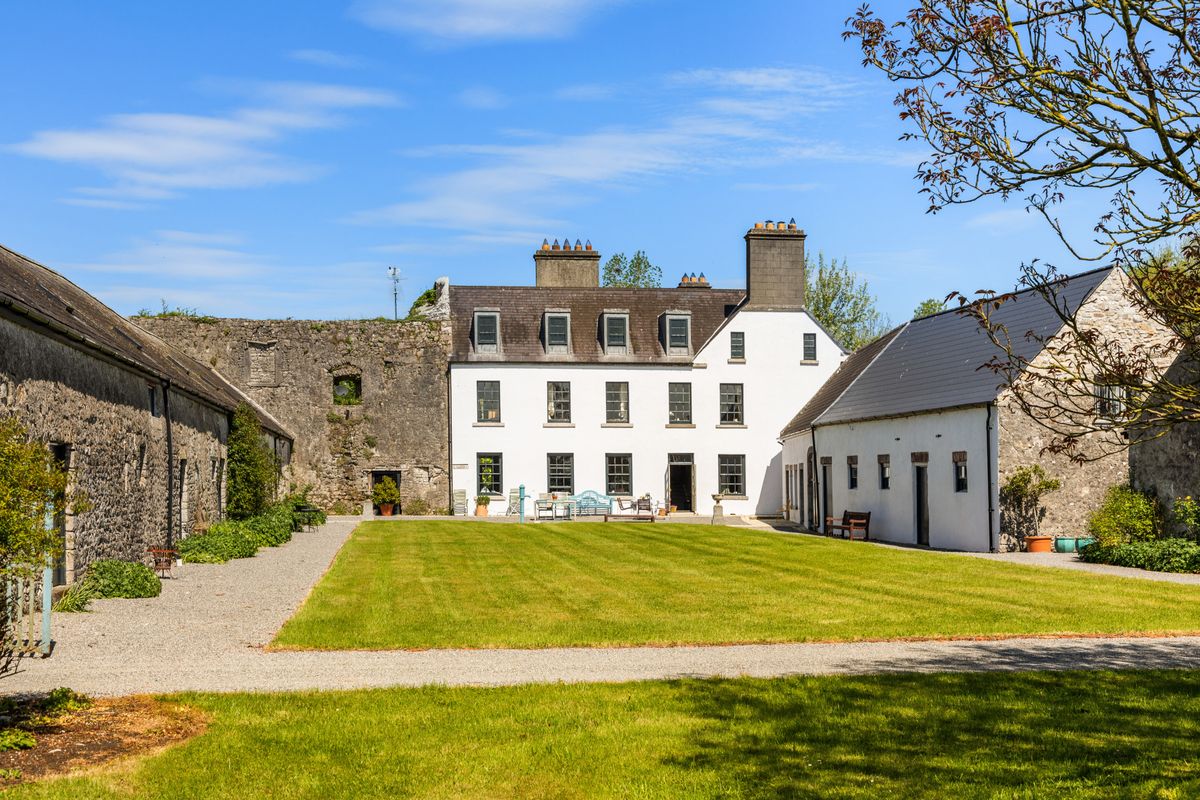
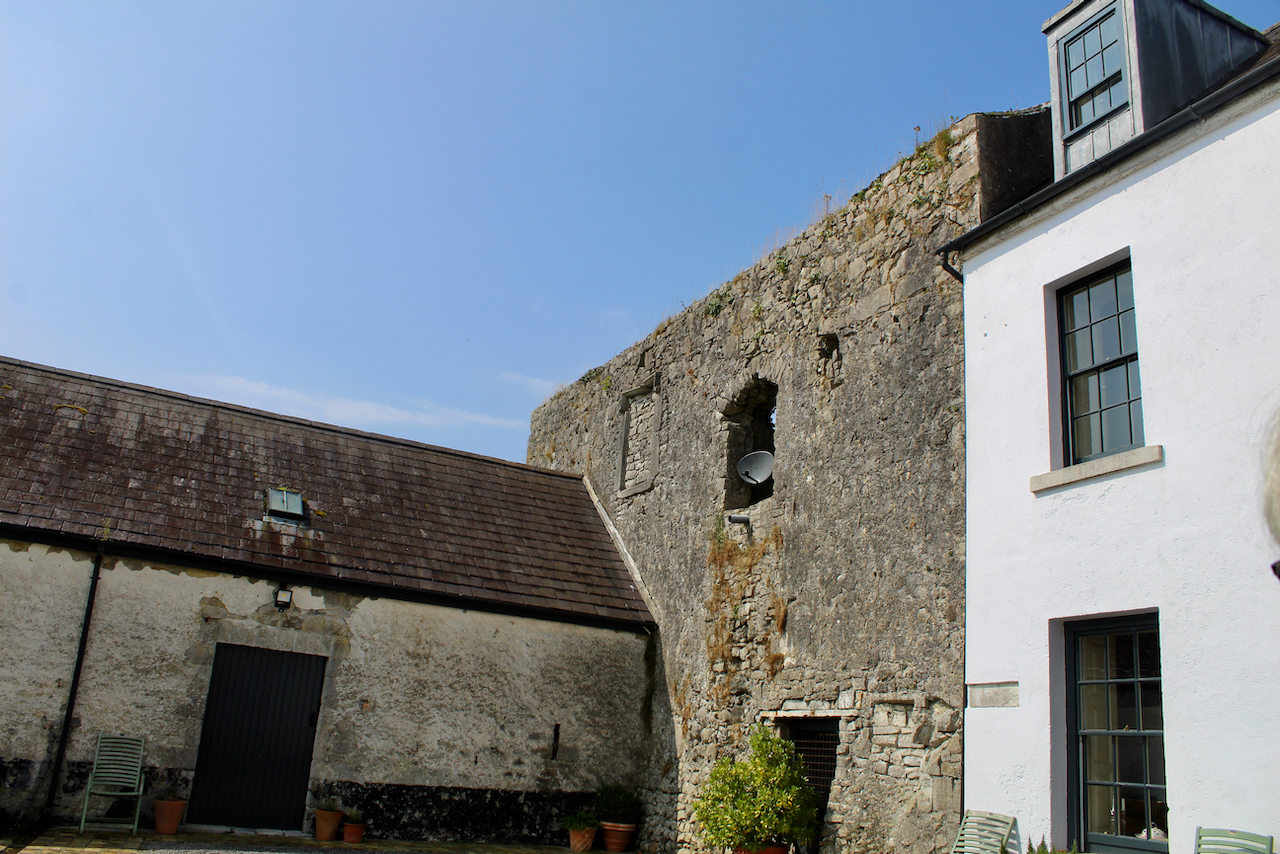
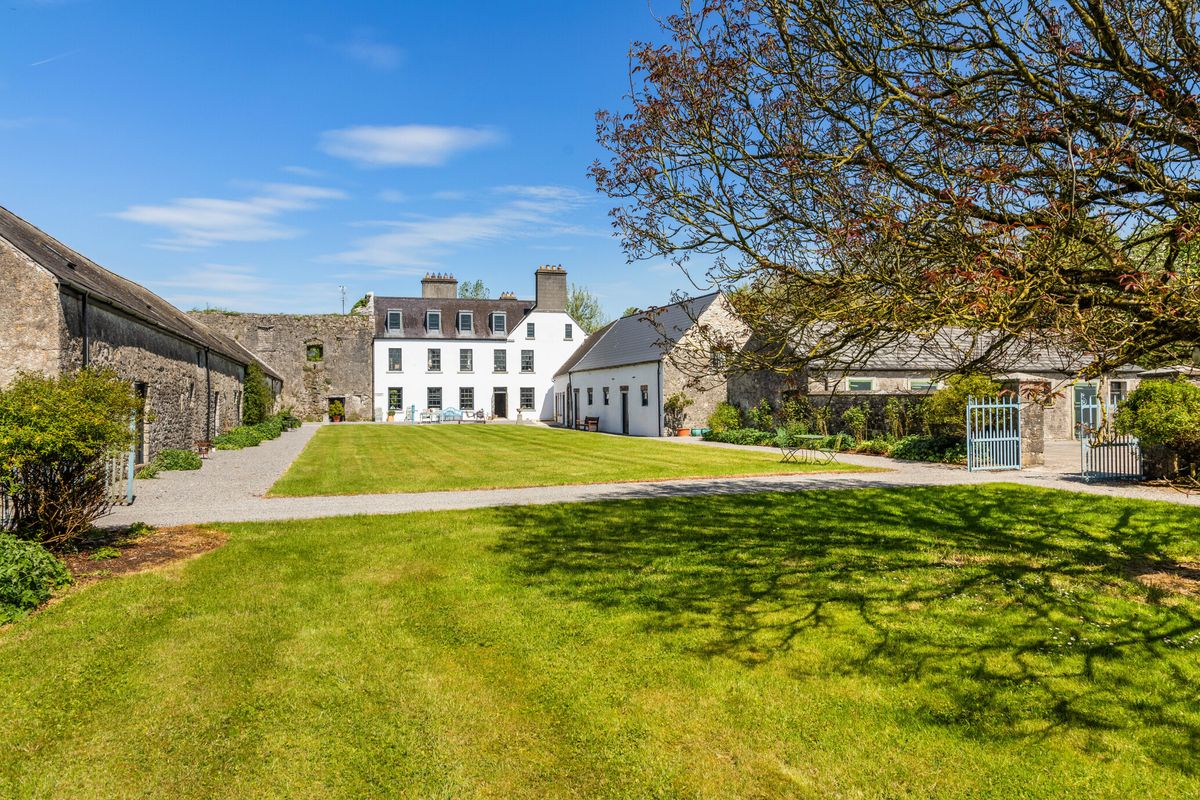
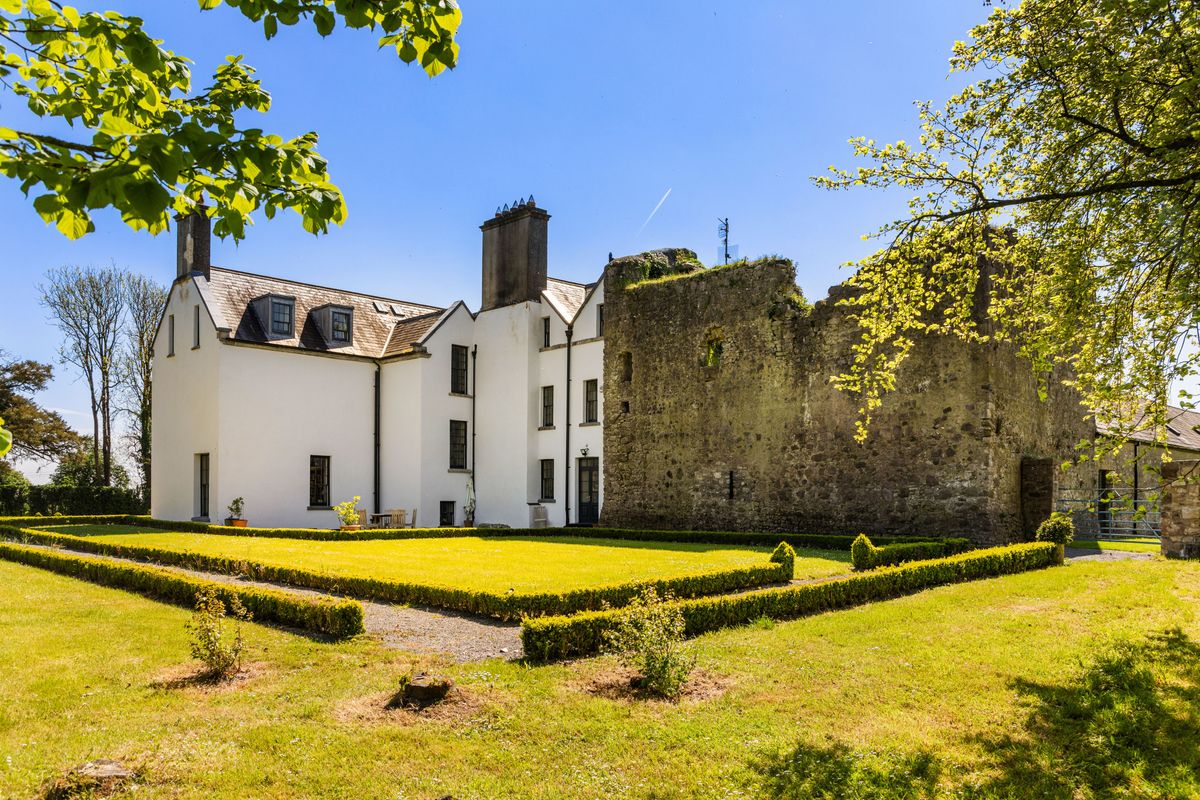
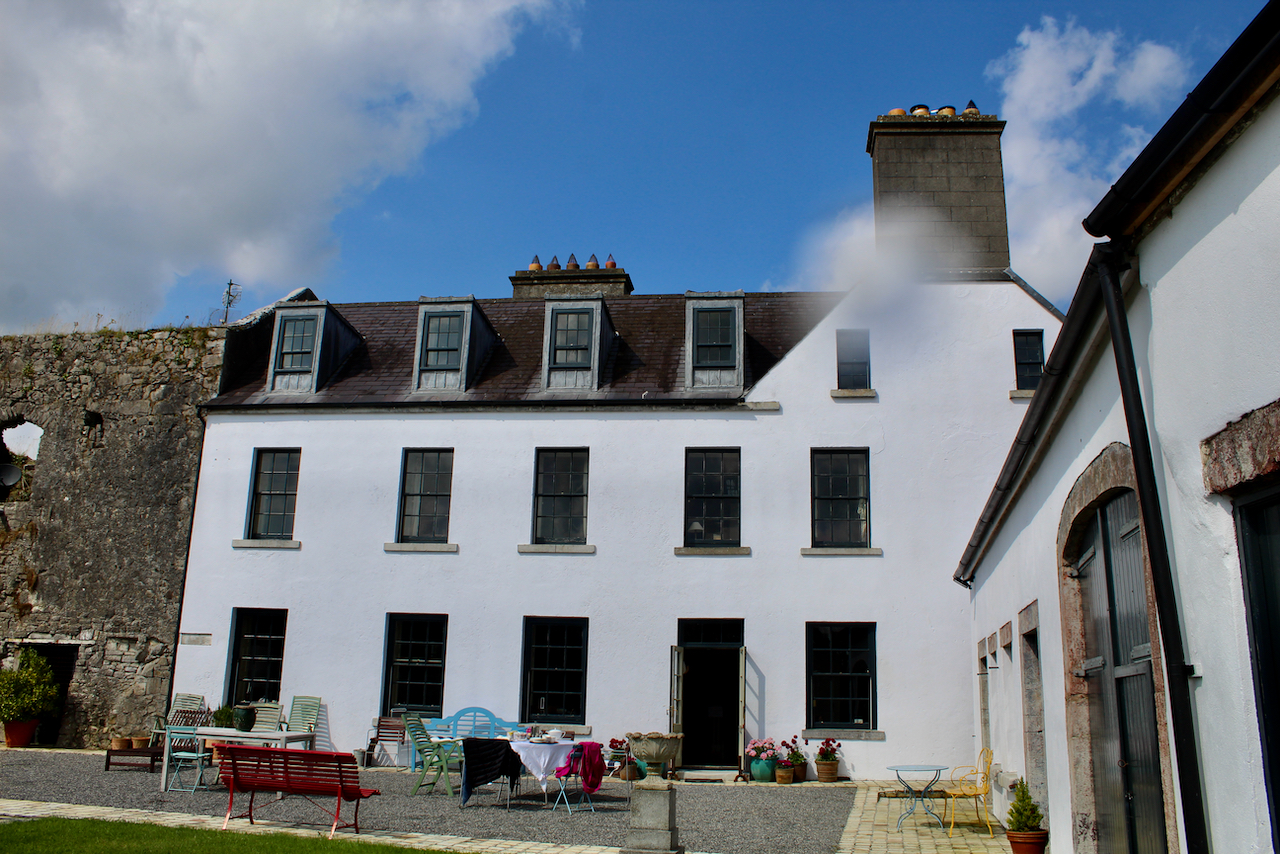
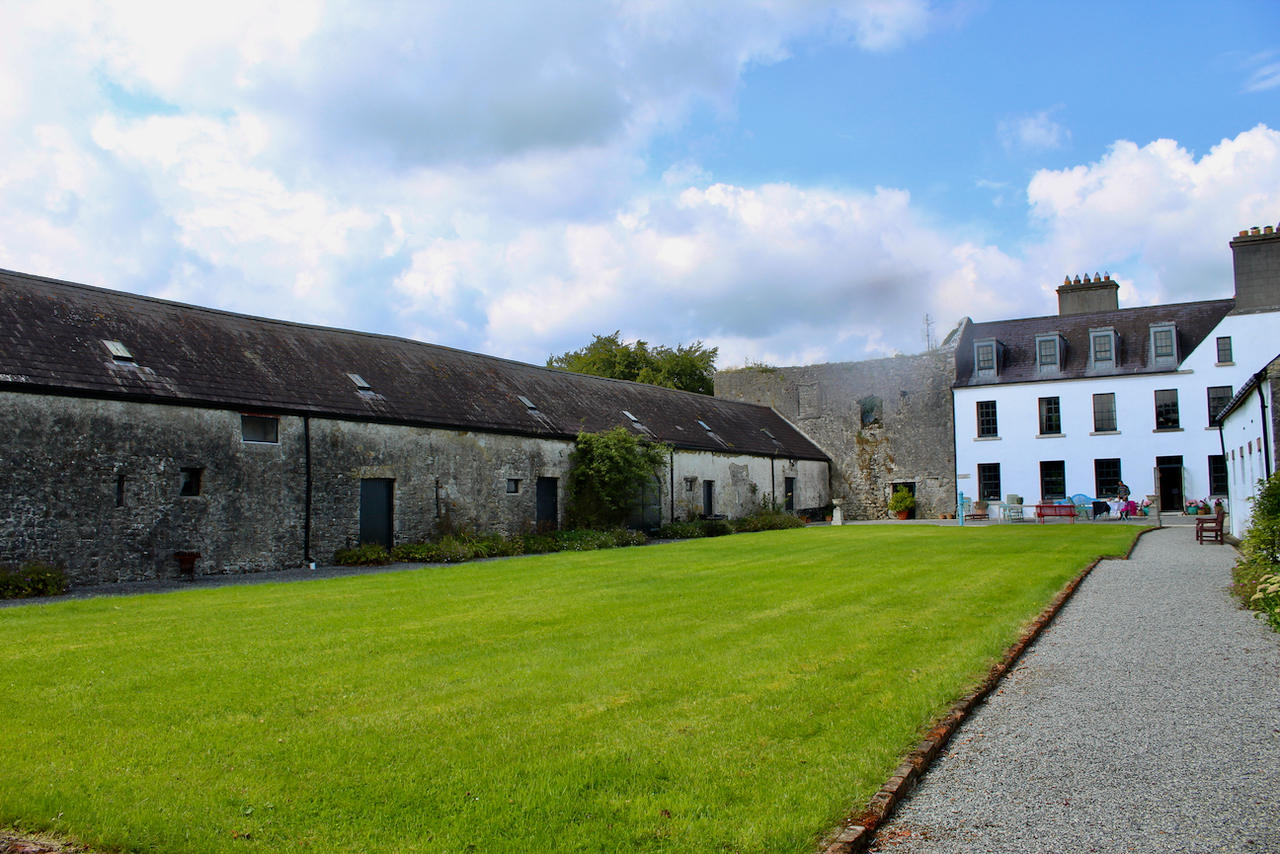
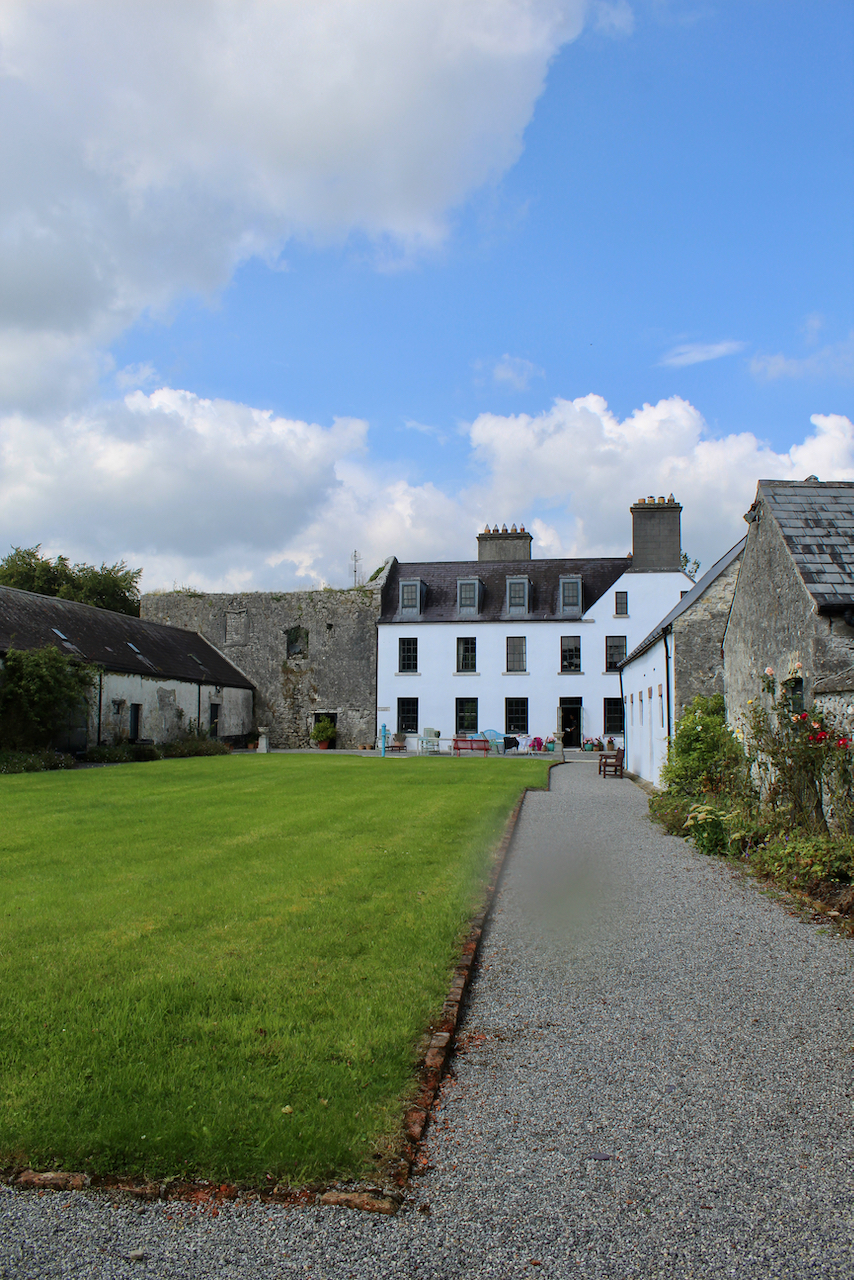
It is a Queen Anne style house attached to an old tower house ruin that dates back to at least 1460, when it was mapped, but it was probably built earlier, as it was taken by the Berminghams from the O’Connors in the 1300s, Rosemarie, the former owner, told us. The house itself was probably built originally as a Baronial hall attached to the side of the castle in the 1600s. Henry Warren was granted the land during the Plantation of Queens County and Kings County – now Offaly and Laois – initiated by Queen Mary and her husband Philip II of Spain. Portlaoise was initially called Maryborough, after Queen Mary, and Daingan in Offaly was called Philipstown. The Baronial hall was probably knocked down in the 1700s and the current house built, using parts of the Baronial hall.
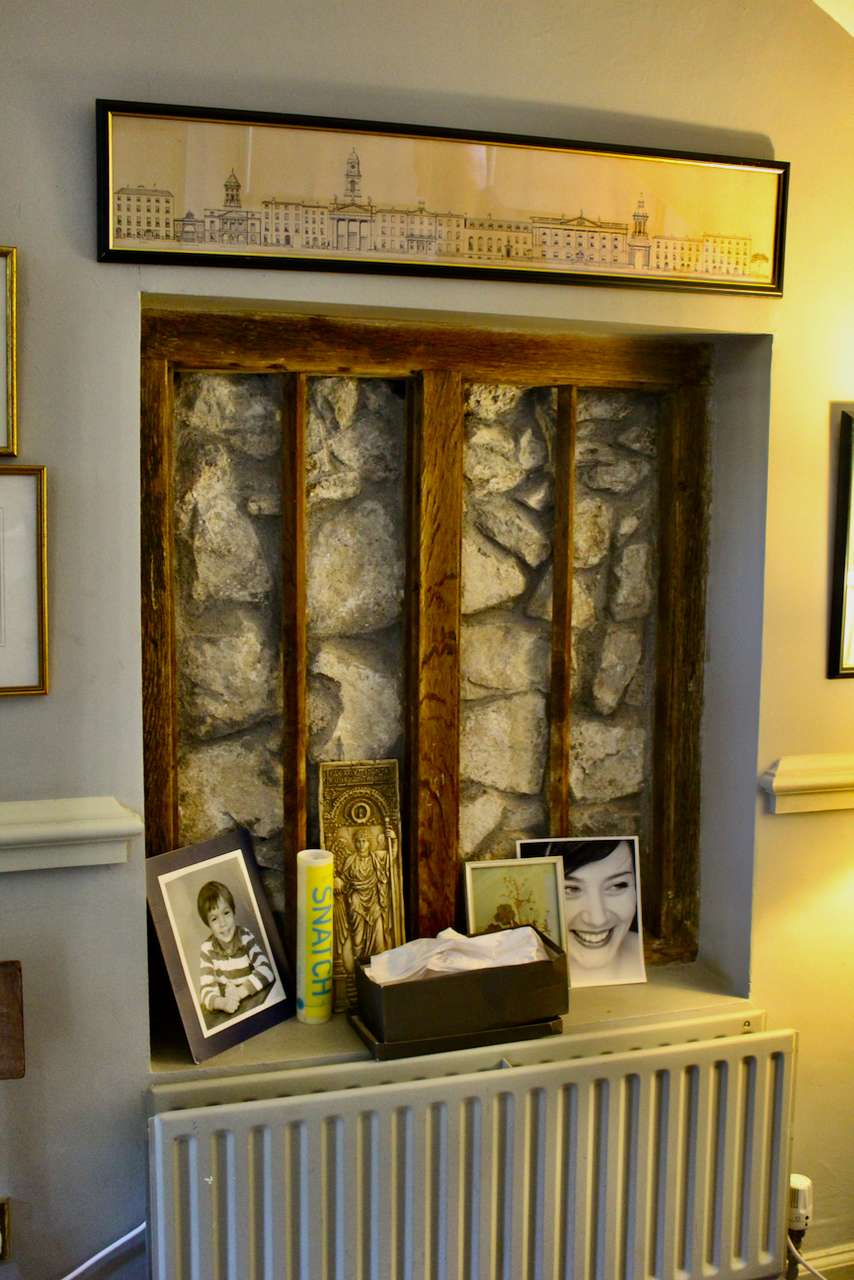
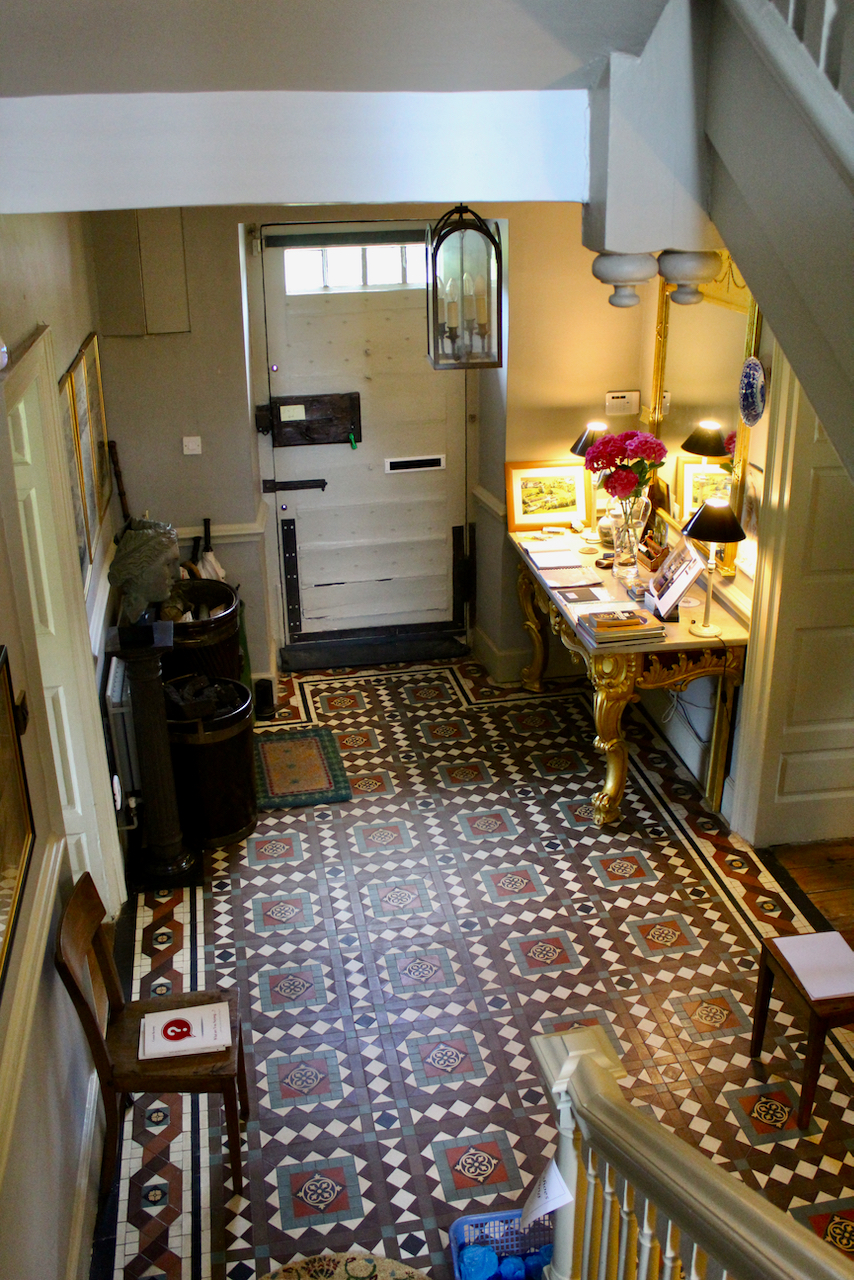
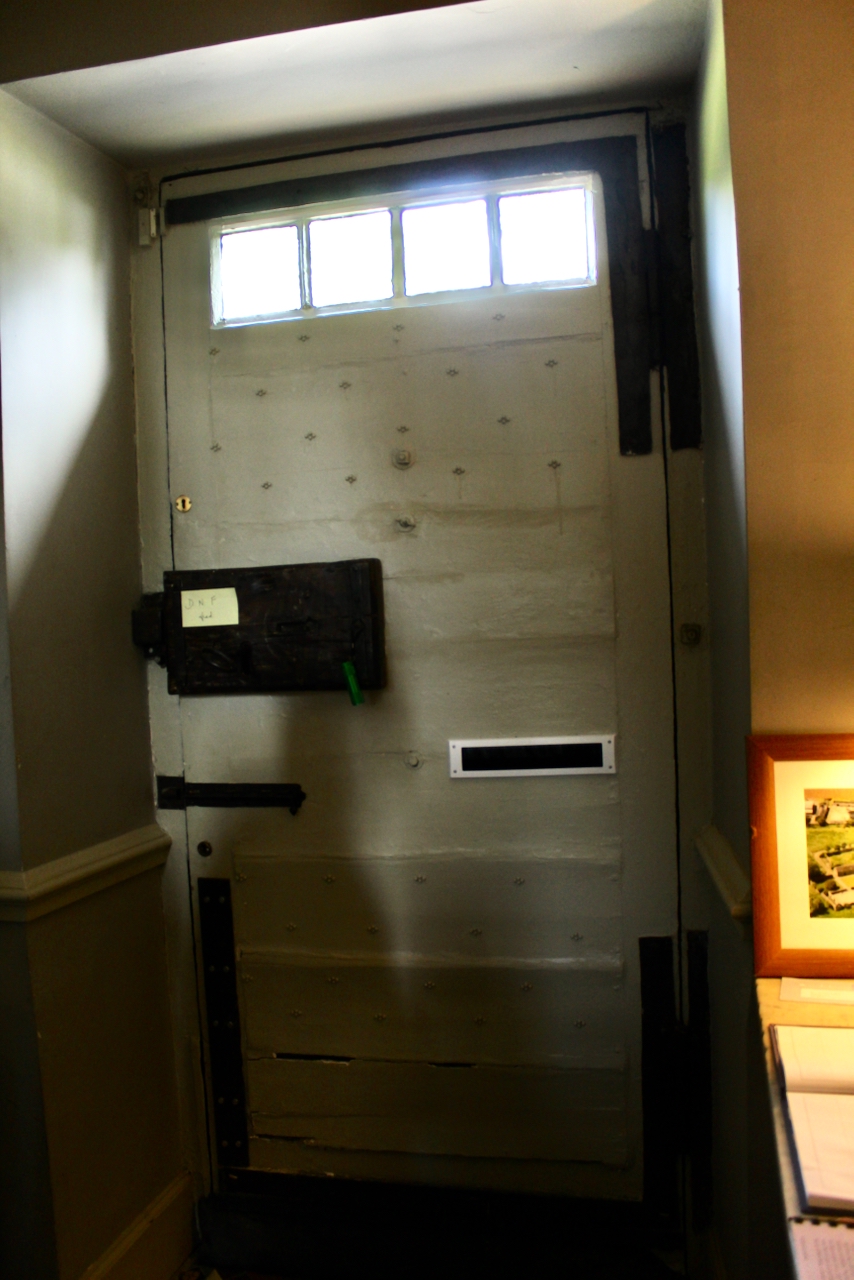
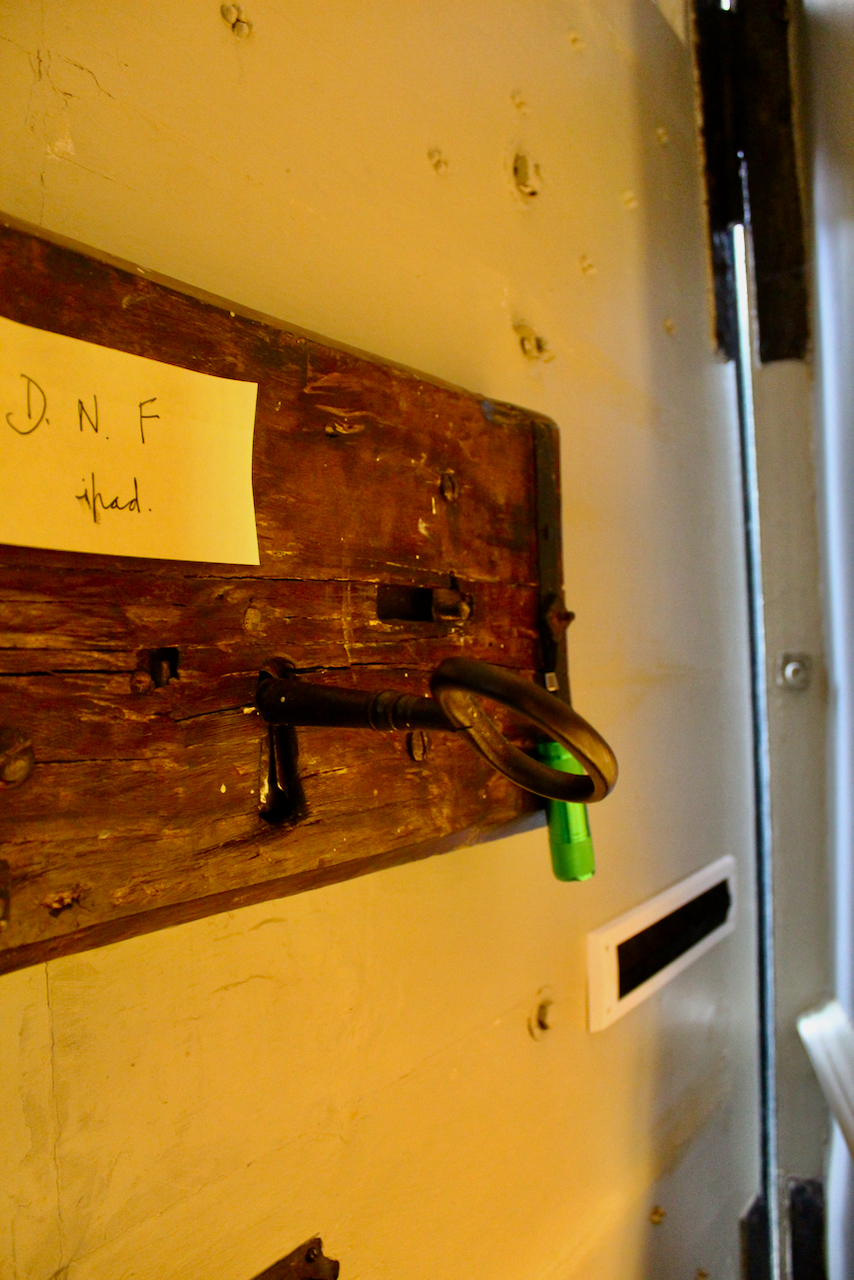
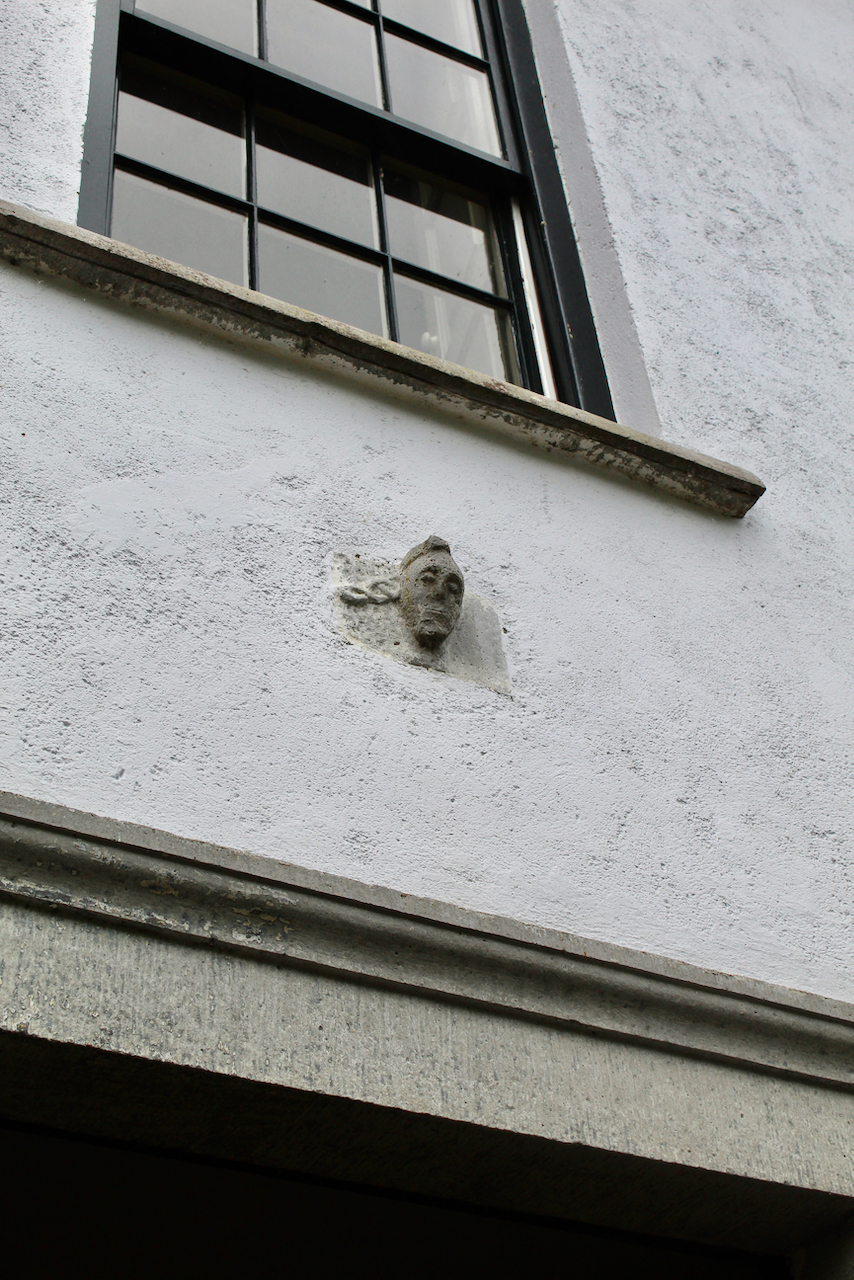
In a quirky feature, part of the stone wall in the front hall is framed and left exposed. The frame is actually an oak window surround discovered by the owners in the process of restoration work, and it dates to the Tudor period!
Rosemarie, who was in the process of selling her beloved house, welcomed us warmly – she had several visitors for Heritage Week and offered us coffee and biscuits! She brought us inside to share the home she had loved for over twenty years. She and her late husband barrister Jerry Healy purchased the property in 1998 and there raised their four children.
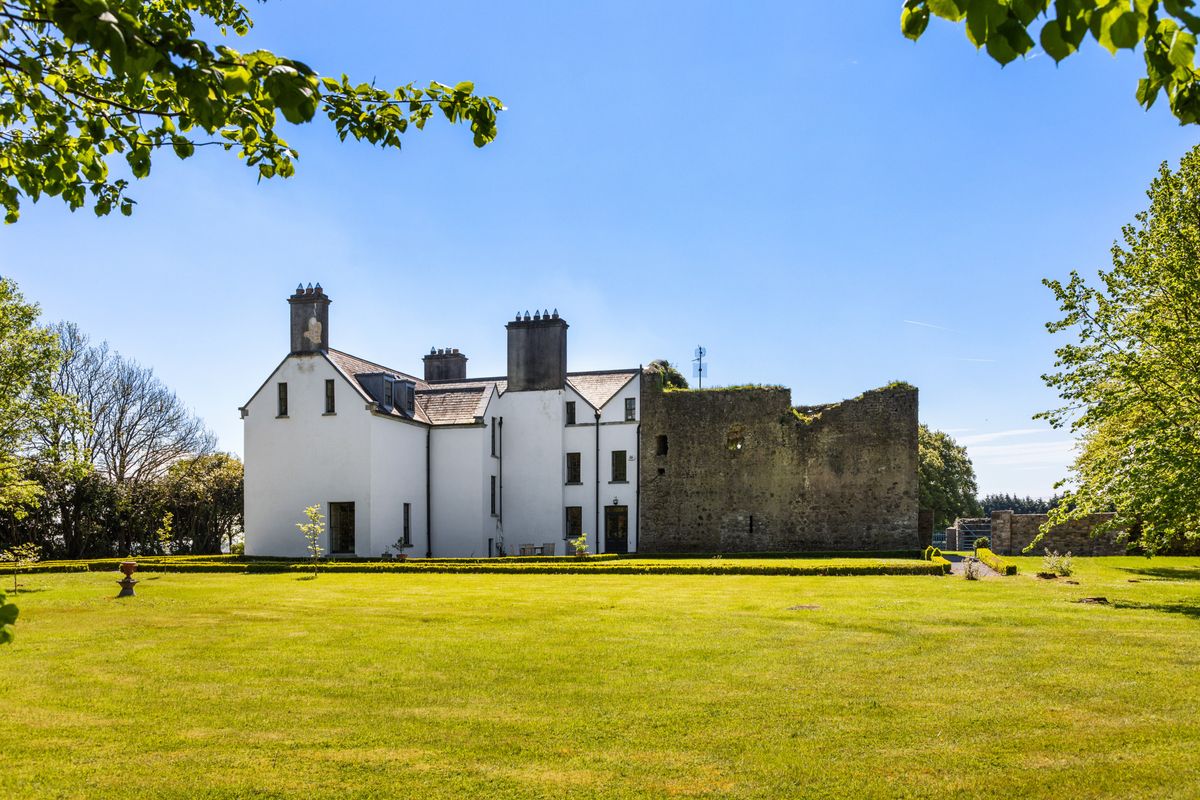
In the Dictionary of Irish Biography, we are told that Thomasine Preston (d. 1706), daughter of Anthony Preston (1618-1659) 2nd Viscount Tara of County Meath, brought the castle of Ballybrittan with her to her marriage with John Barnewall (d. circa 1691), who was a judge and barrister. [1]
Ballybrittan came from Thomasine’s mother’s side of the family. Her mother was Margaret Warren, and Ballybrittan was previously called Warrenstown.
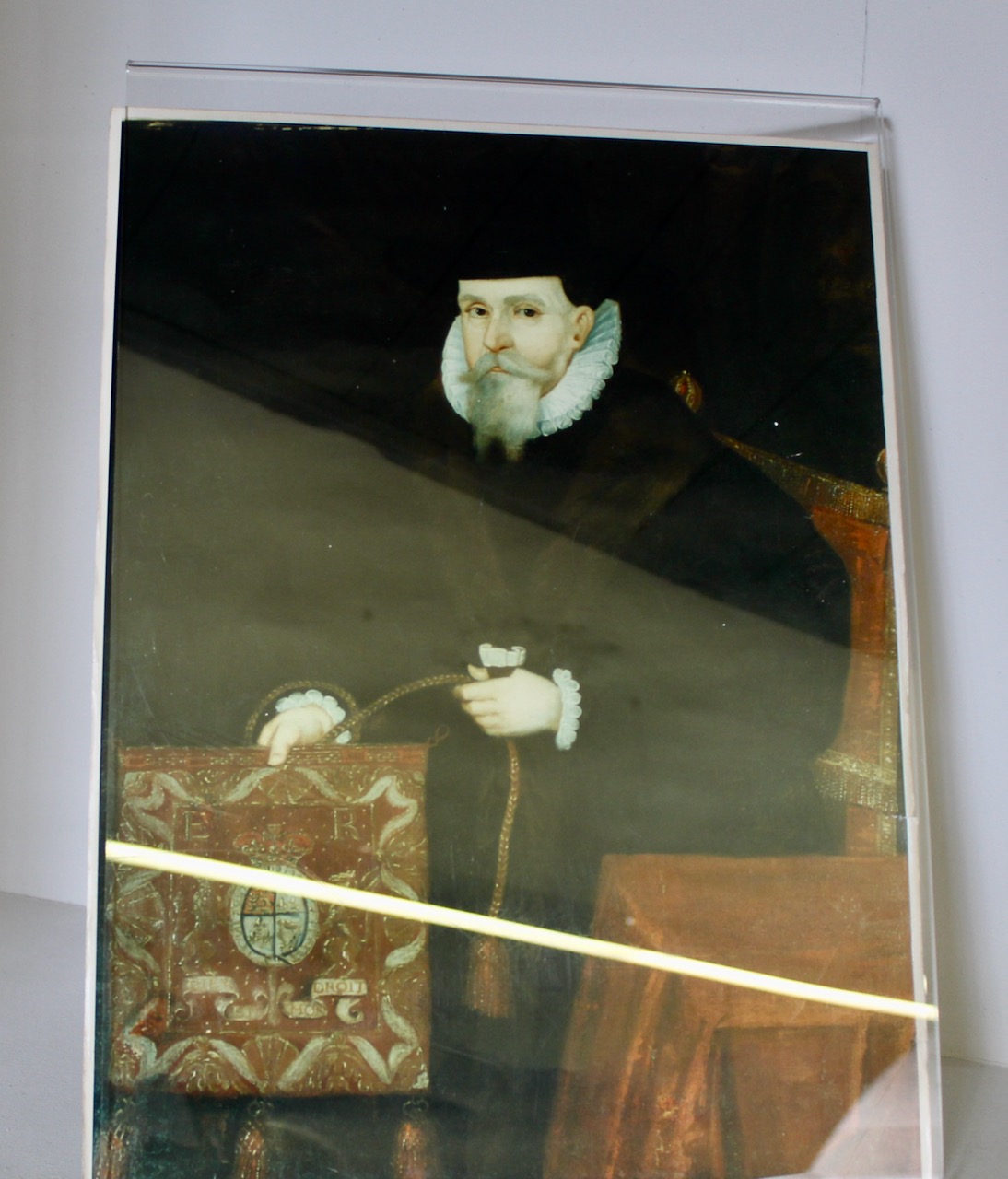
In a blog by Maureen Wilson, Wilson writes that Henry Warren garrisoned the fortress at Ballybrittan in 1600 for Queen Elizabeth. A Henry Warren married Alice Loftus, daughter of Adam Loftus (d. 1605) who was Lord Keeper of the Great Seal, Lord Chancellor of Ireland, Provost of Trinity College.
The recent owners invested in upgrading and renovating the property. They carried out significant work in the 1990s. The website for MVK Architects tells us that the cementitious pebble dash was removed, and the house re-rendered in historically appropriate lime render which allowed the house to dry out.
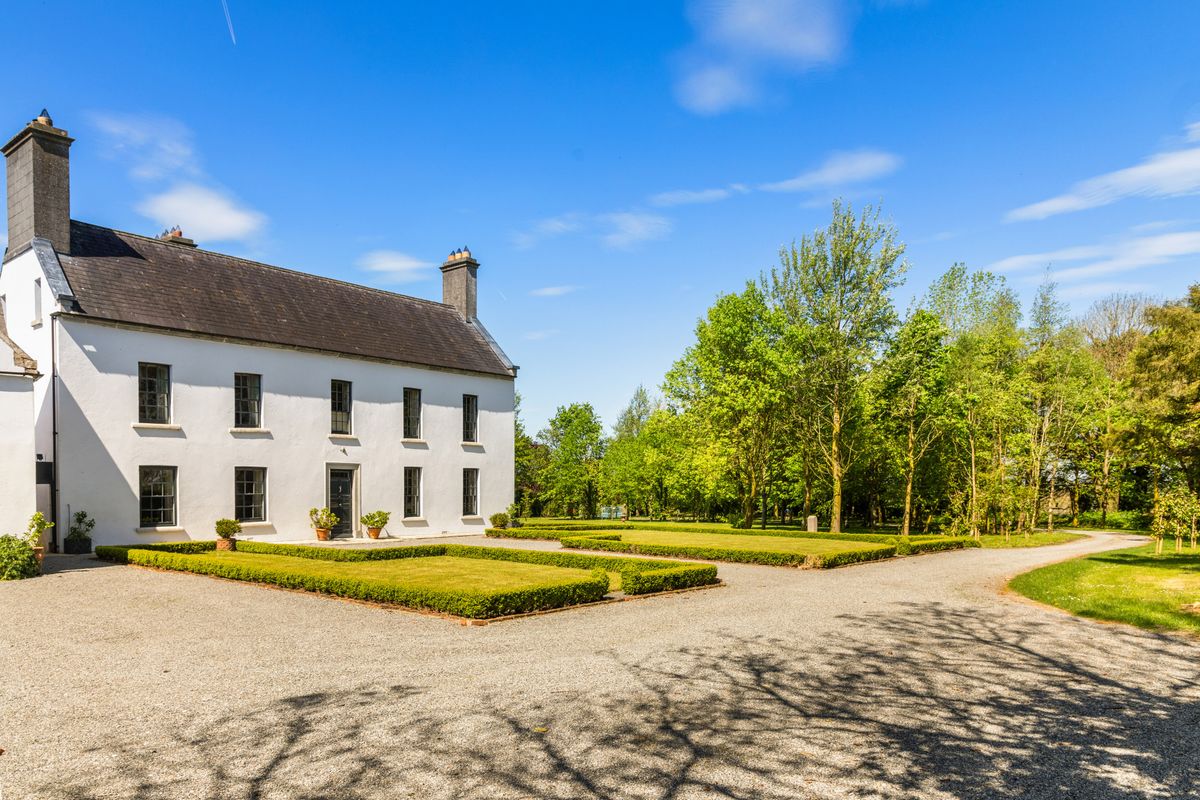
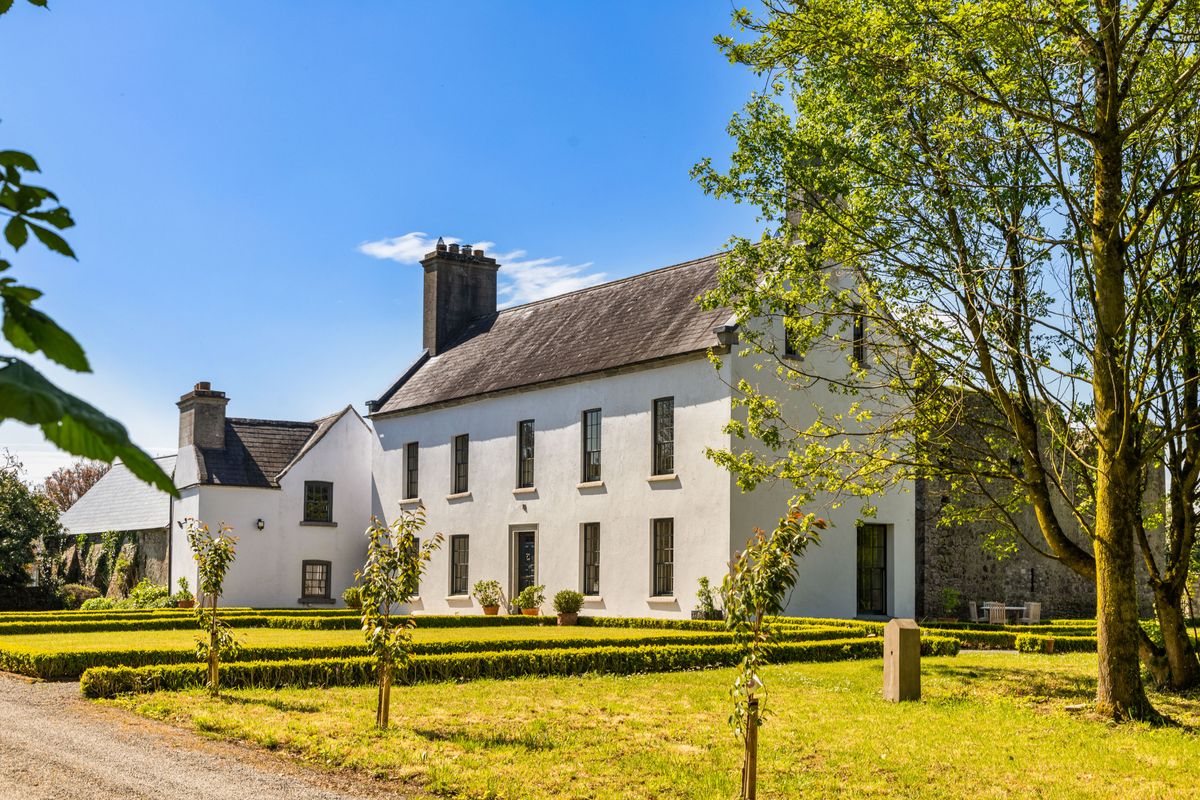
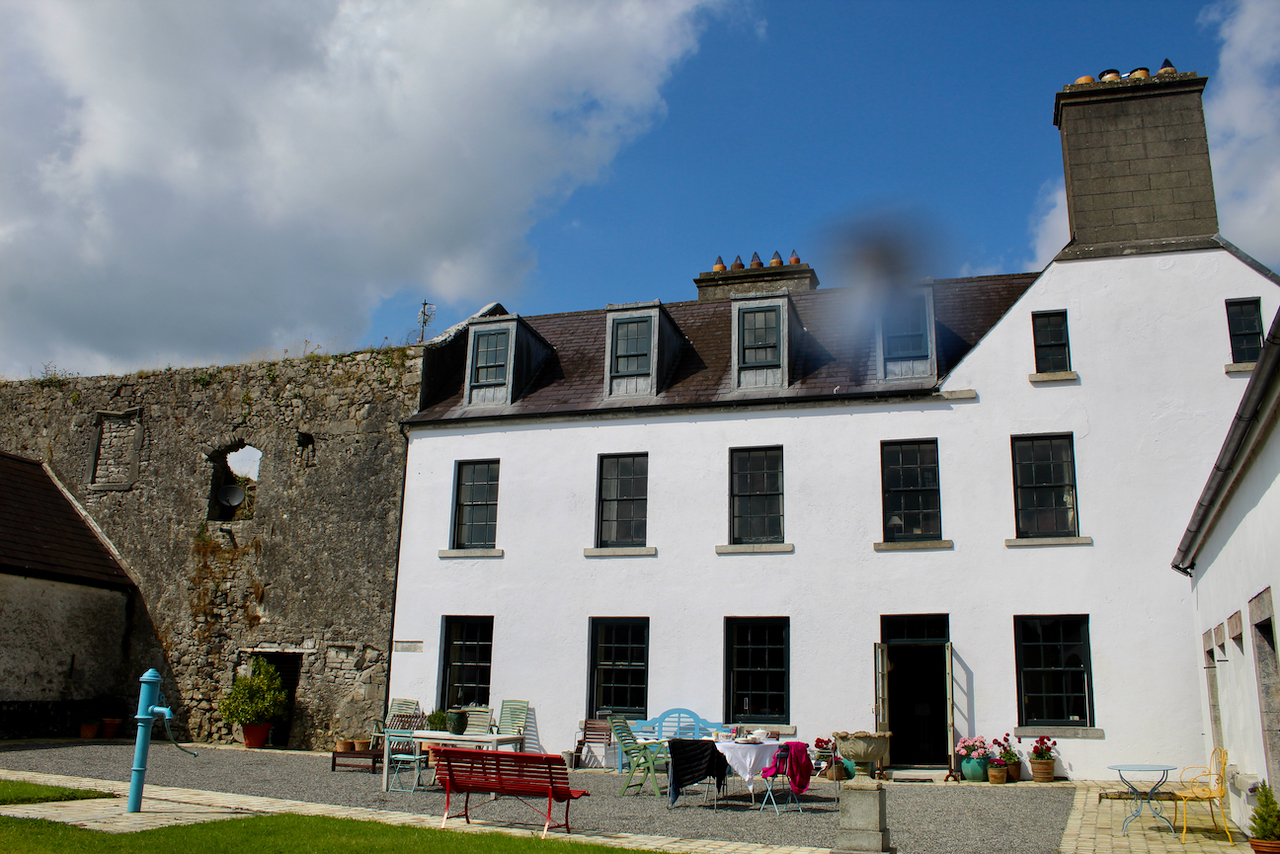
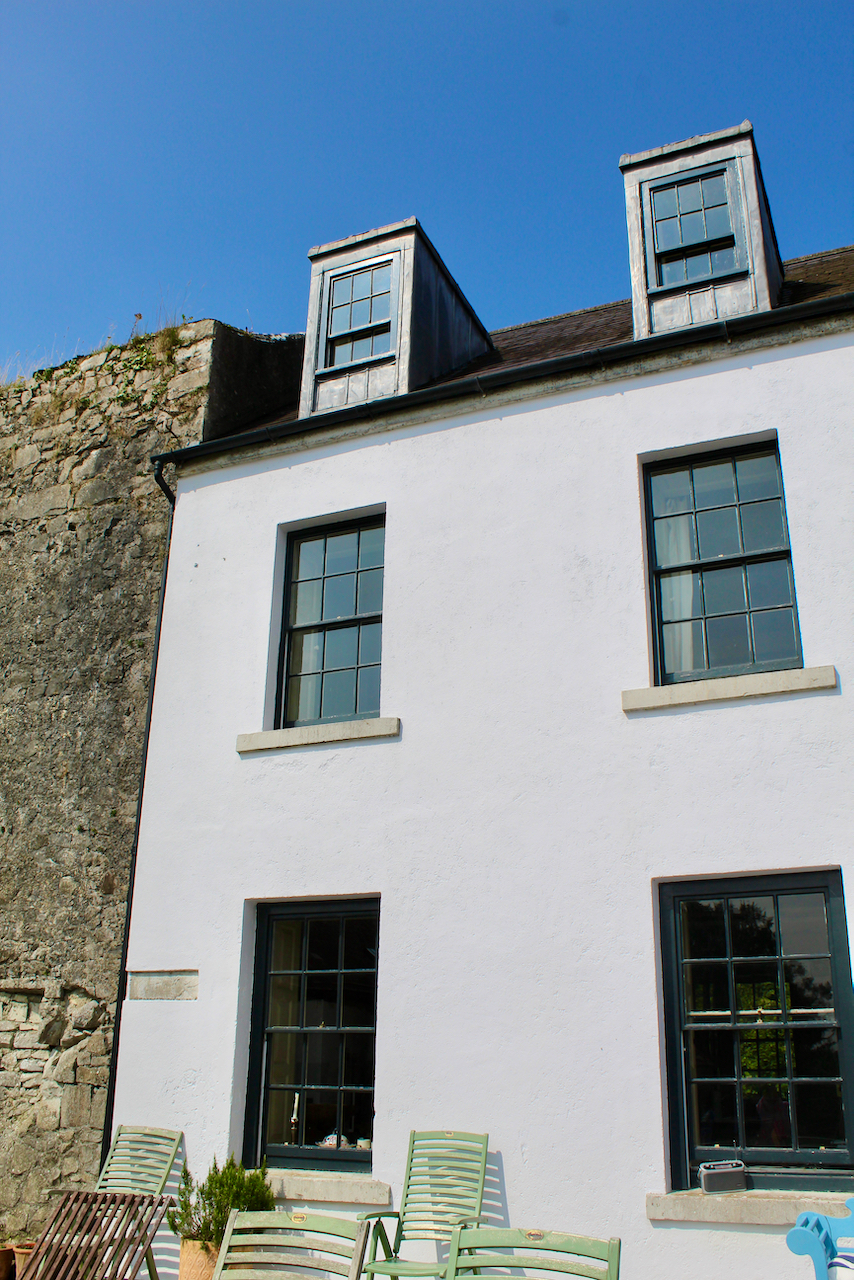
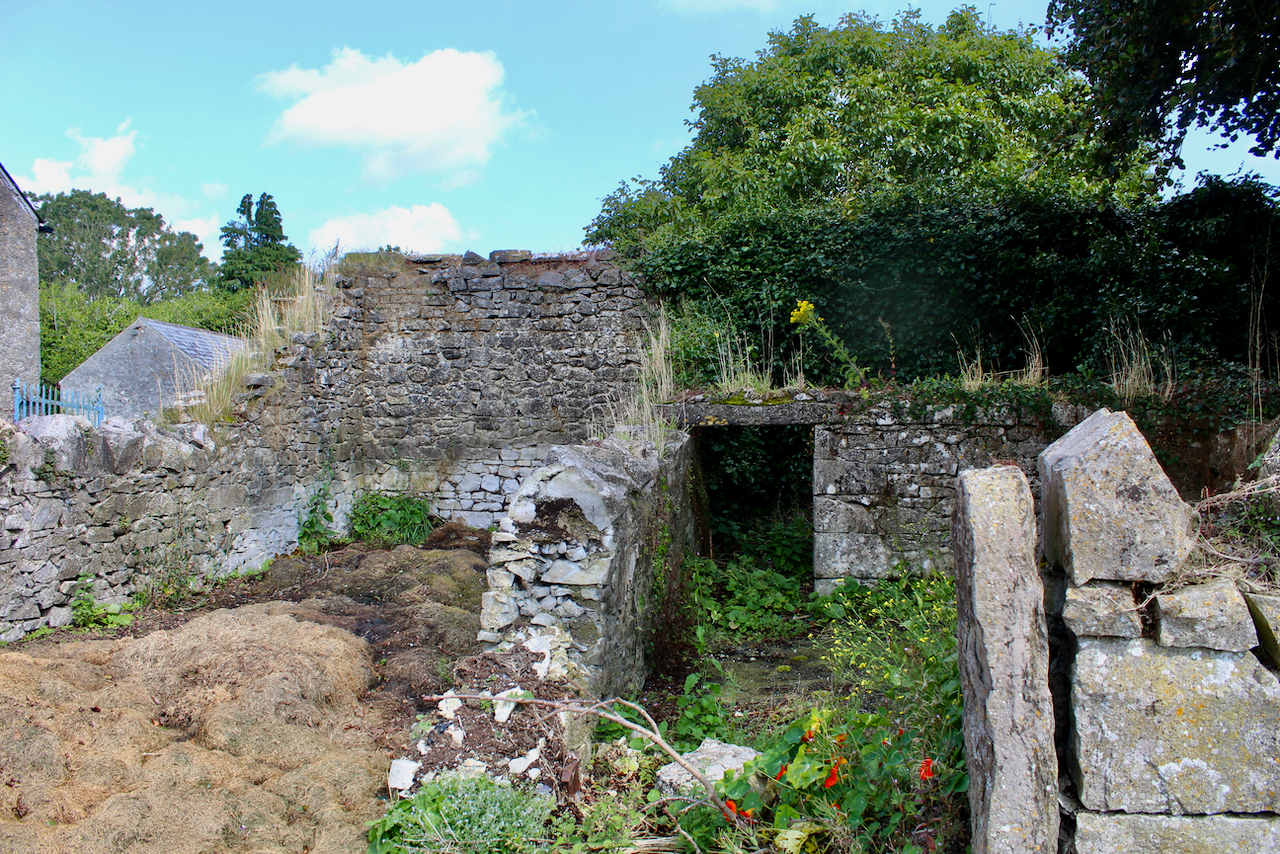
The roof was refurbished with new timbers and blue Bangor slates, and four lead-clad dormers were added to provide light to the refurbished attic rooms. Kitchens and bathrooms were added to the house while preserving the proportions of the original rooms. The original fabric was preserved as much as possible including the joinery and ironmongery. Simple changes were made to the approach to the house along with tree planting to improve its setting in the landscape. Repairs to the outbuildings and walled garden boundaries were carried out as well as some careful repairs and stabilization of the adjoining castle. [2]
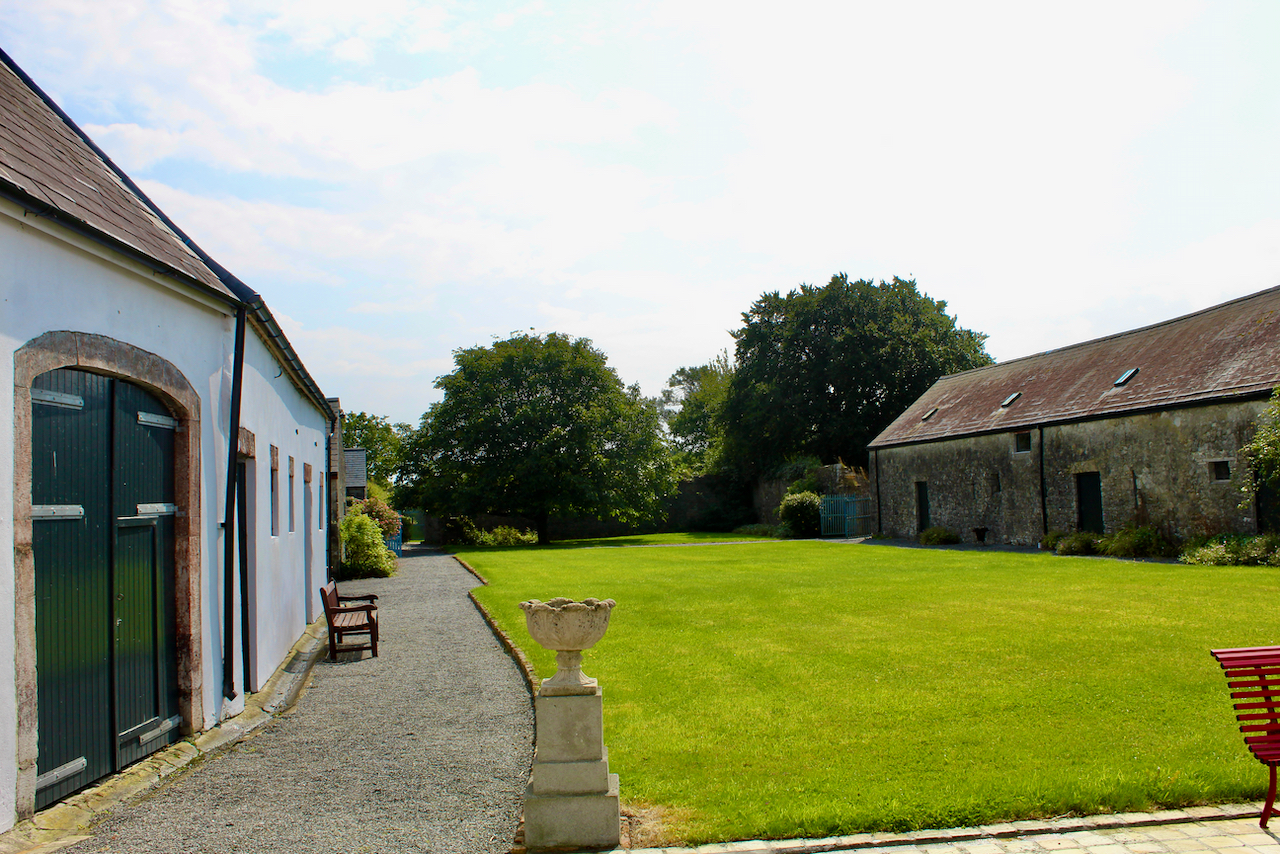
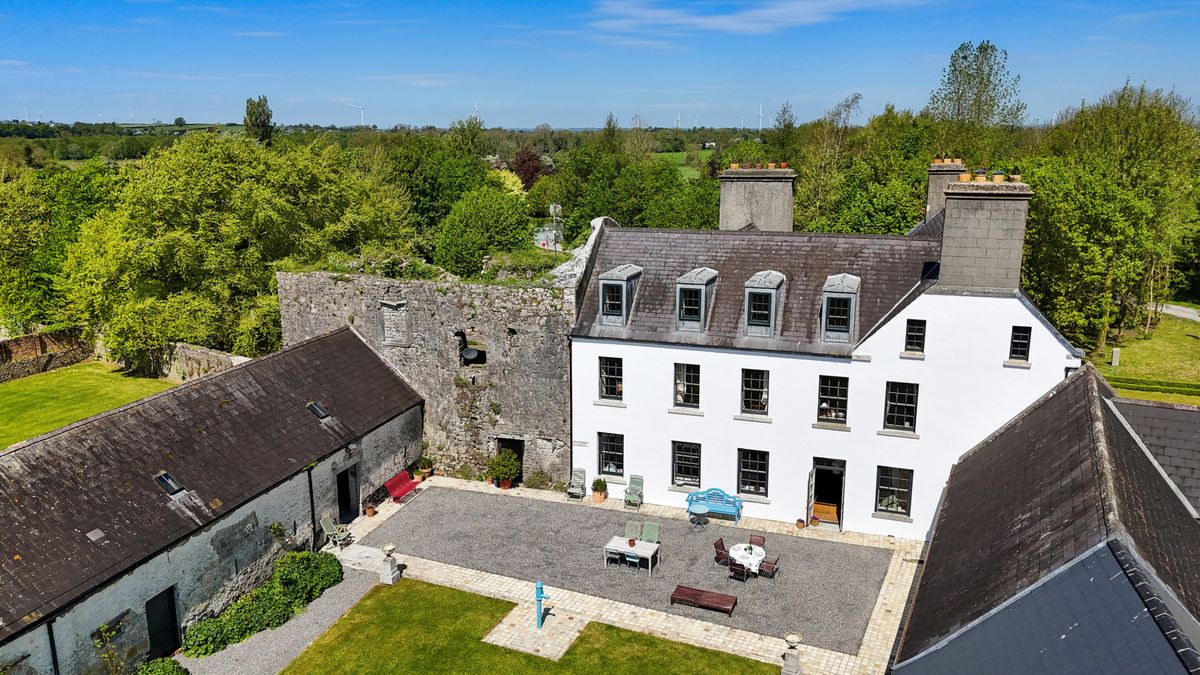
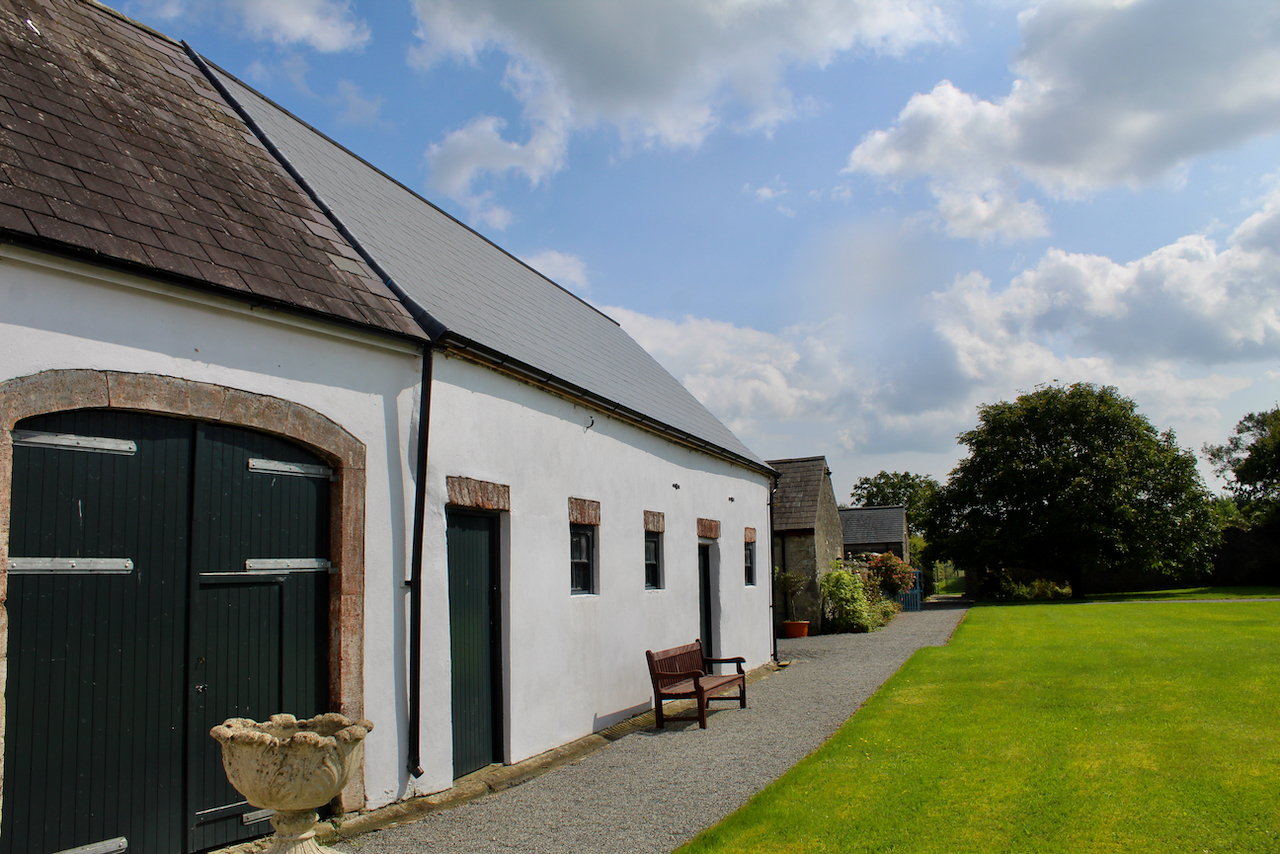
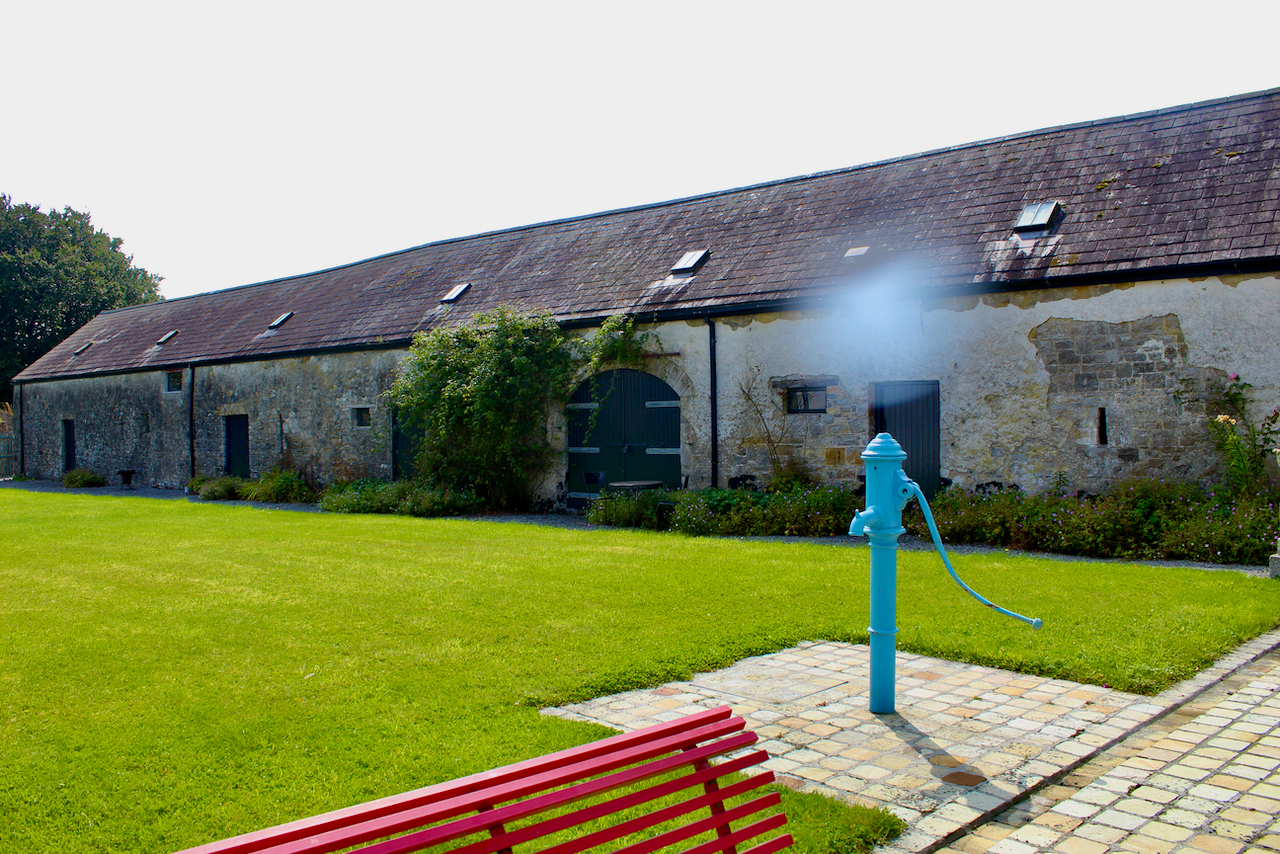
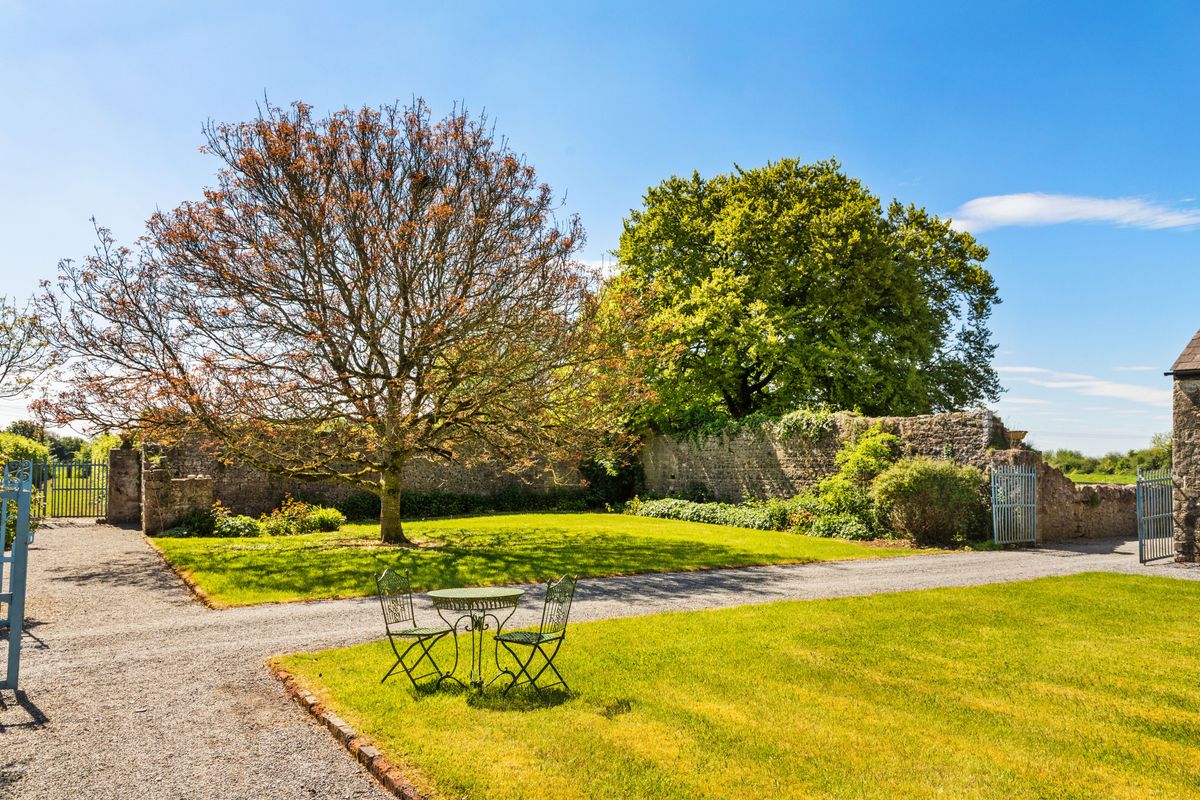
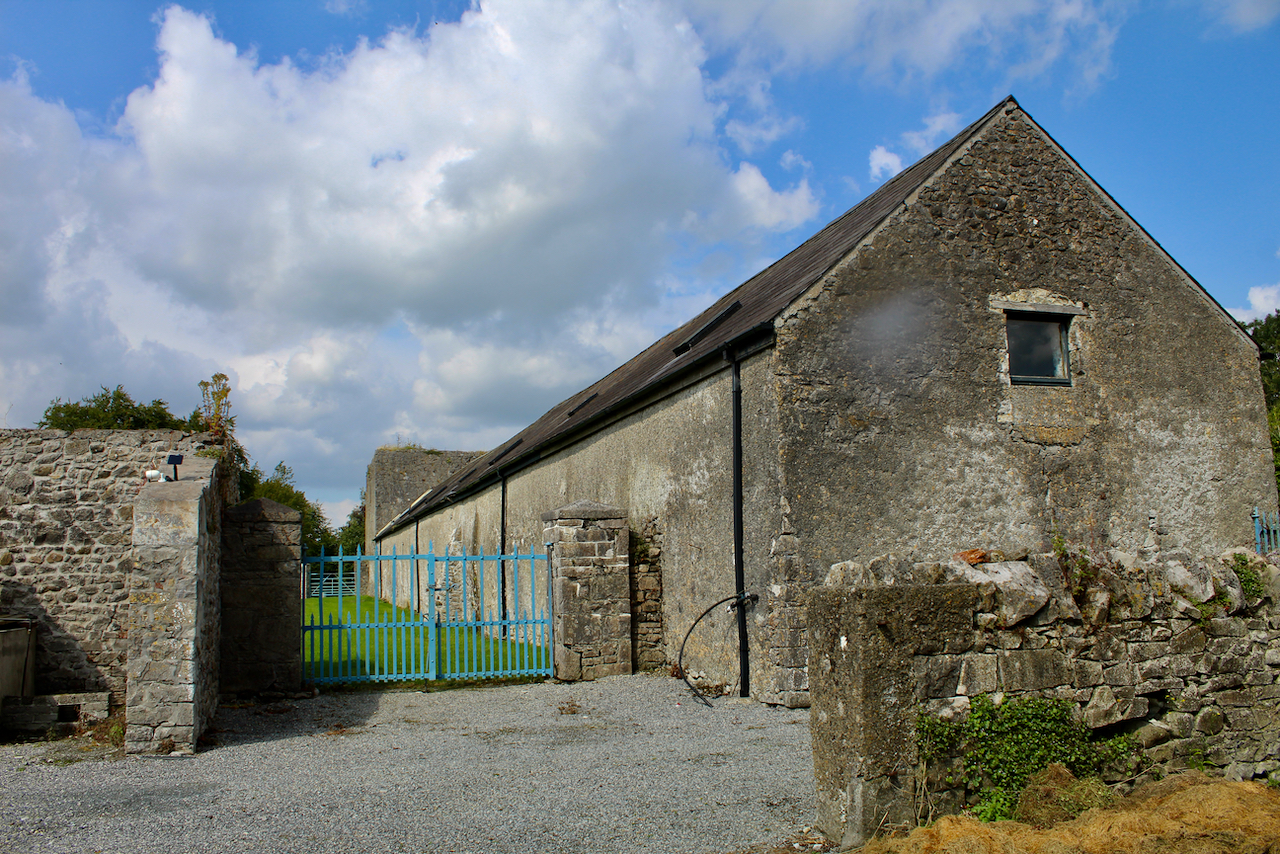
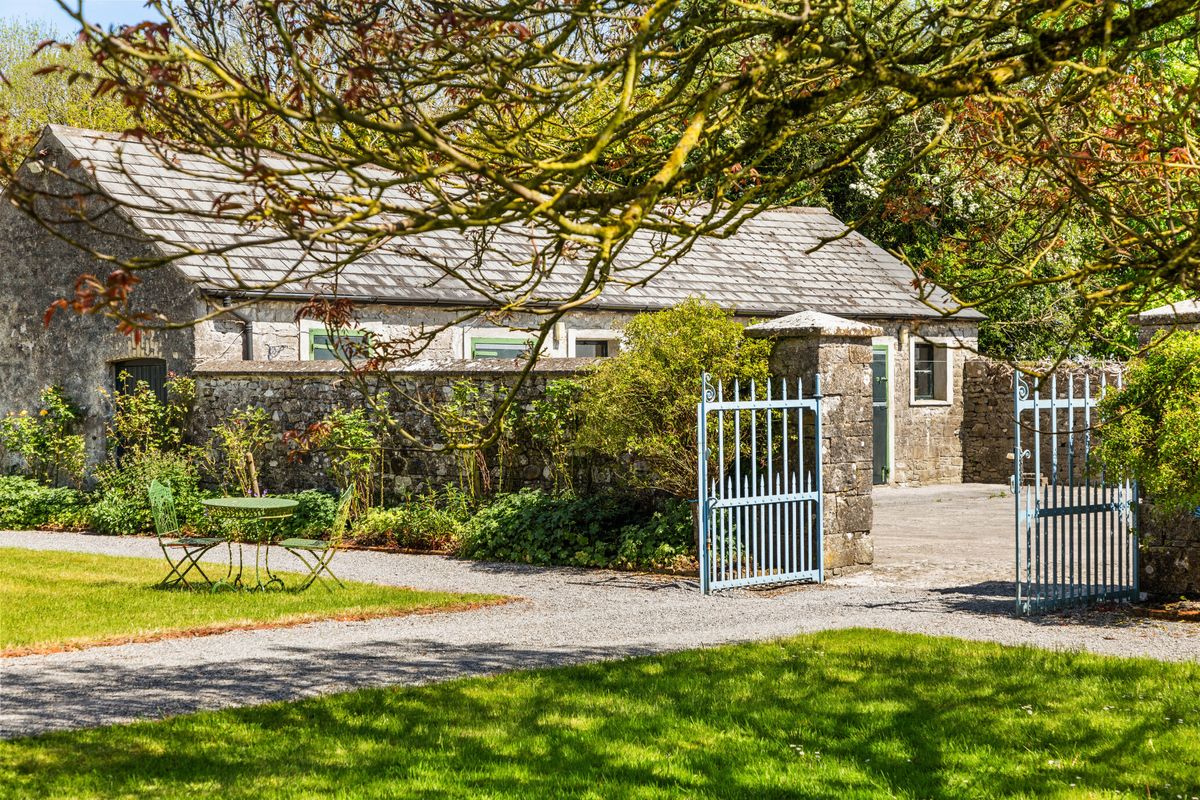
While half of the visitors wandered around outside, the rest of us were given the tour inside. It was a beautiful sunny day and I loved the grassy courtyard at the back of the house framed by outbuildings, where coffee and tea were provided. The sale advertisement tells us that one of the outbuildings close to the house houses the boiler and also serves as a laundry room.
In the entry for John Barnewall (d. 1691) in the Dictionary of Irish Biography, a fascinating history is recounted:
“Mary Warren, sister of Thomasine’s mother, had lived in exile with Thomasine’s parents at Bruges during the Cromwellian period. Charles II, also in exile, enjoyed their hospitality there for ‘near a month‘. For this, after the Restoration, Charles warmly expressed gratitude. ‘Lady‘ Mary Warren invoked the family’s service to curry favour with the king, in 1663 in respect to both the recovery of family property at Ballybrittan and securing an income for Thomasine and her siblings, and in 1683 in respect to a legal action taken by Thomasine and her husband against Nicholas [Taaffe], 2nd Earl of Carlingford, for £2,000 they claimed was owed to Thomasine’s late father since 1648.”
Thomasine’s father Anthony Preston was a Colonel from 1641 to 1642 in the Confederation of Kilkenny Forces. The Prestons and the Barnewalls were Catholic families. The Confederate of Ireland was a period of Irish Catholic government between 1642-1652. The Confederate controlled two thirds of Ireland from their base in Kilkenny. They professed loyalty to the English monarch.
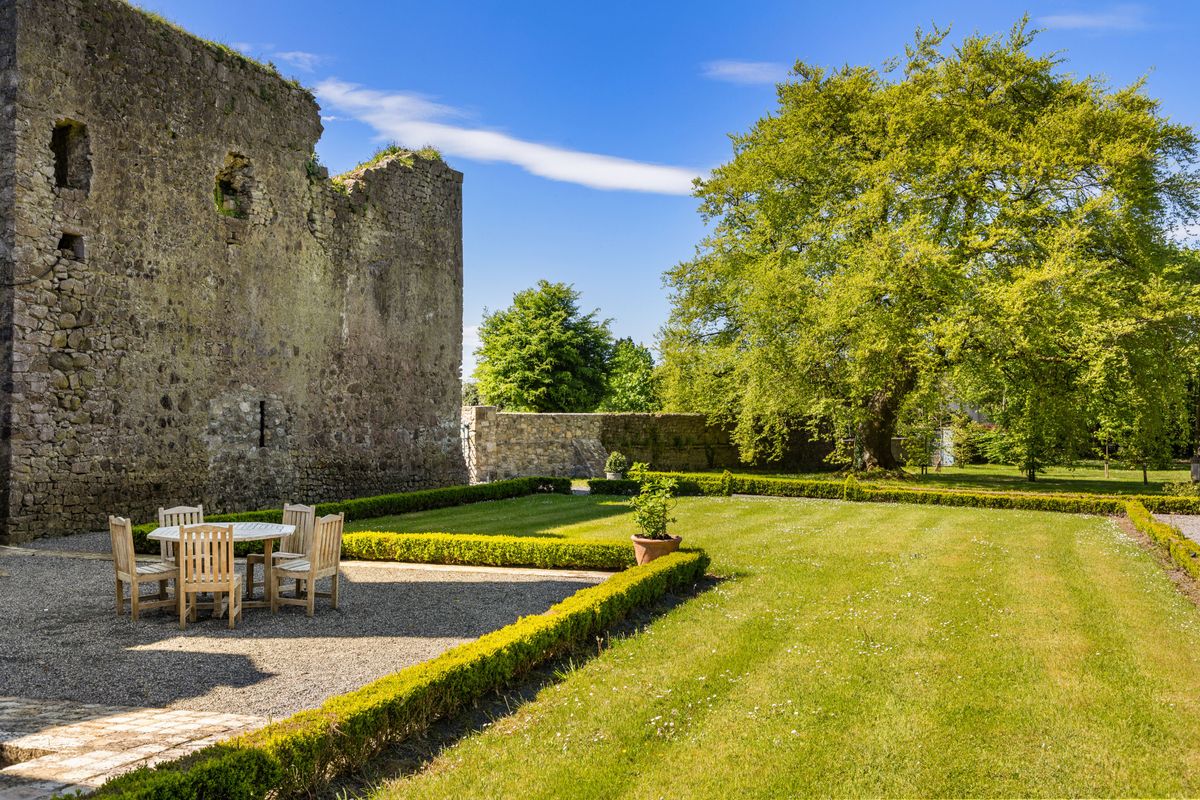
On the 13th of February, 1691, Ballybrittain Castle was sacked and burned. [3]
Under King James II, John Barnewall was created Baron of the Irish Exchequer in 1689. However, following the Battle of the Boyne, the bench again became exclusively Protestant and he was replaced in October 1690.
John Barnewell and Thomasine had one child, Mary (1683–1771). On her marriage in 1703, Ballybrittan passed to her husband John Barnewall (1672–1746), styled 11th Baron Trimlestown. His brother Matthias Barnewall, 10th Baron Trimlestown had been a Jacobite Colonel in the Battle of the Boyne and was attainted and his estates forfeited.
John Barnewall managed to get back his estates in 1697, which would have included Trimlestown in County Meath, but his plea to be restored to the title was turned down. Despite the outlawry and the attainder, however, the title continued to be widely used by and about John and his successors in the 18th century in all but the most official documents. [4]
The house at Ballybrittan which attaches to the old castle was built in the early 1700s. In an article in the Business Post [June 16th 2024] about the sale of Ballybrittan, Valerie Shanley writes that the house goes back even further, and she tells us the Mansard roof in the back, which is punctuated with dormer windows, is 17th century. I don’t know who built the house.
The advertisement of the house for sale by Roseanne de Vere Hunt of Sherry Fitzgerald tell us:
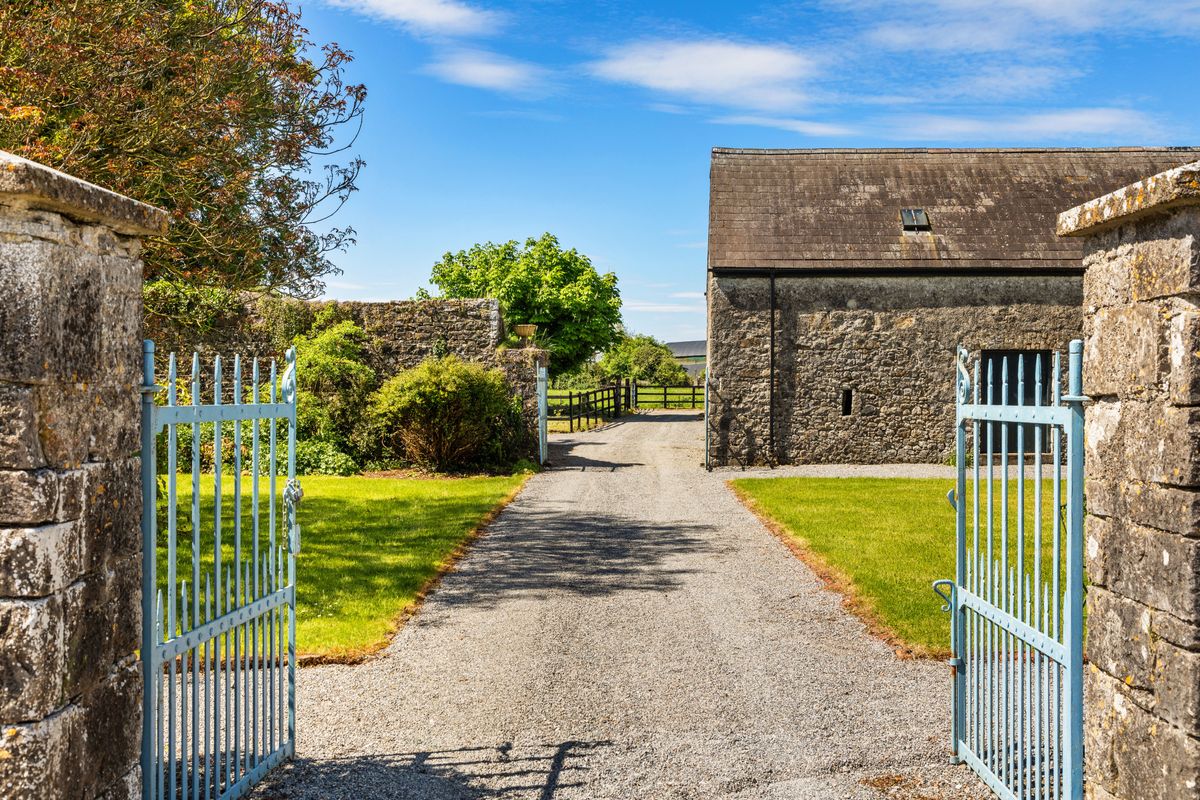
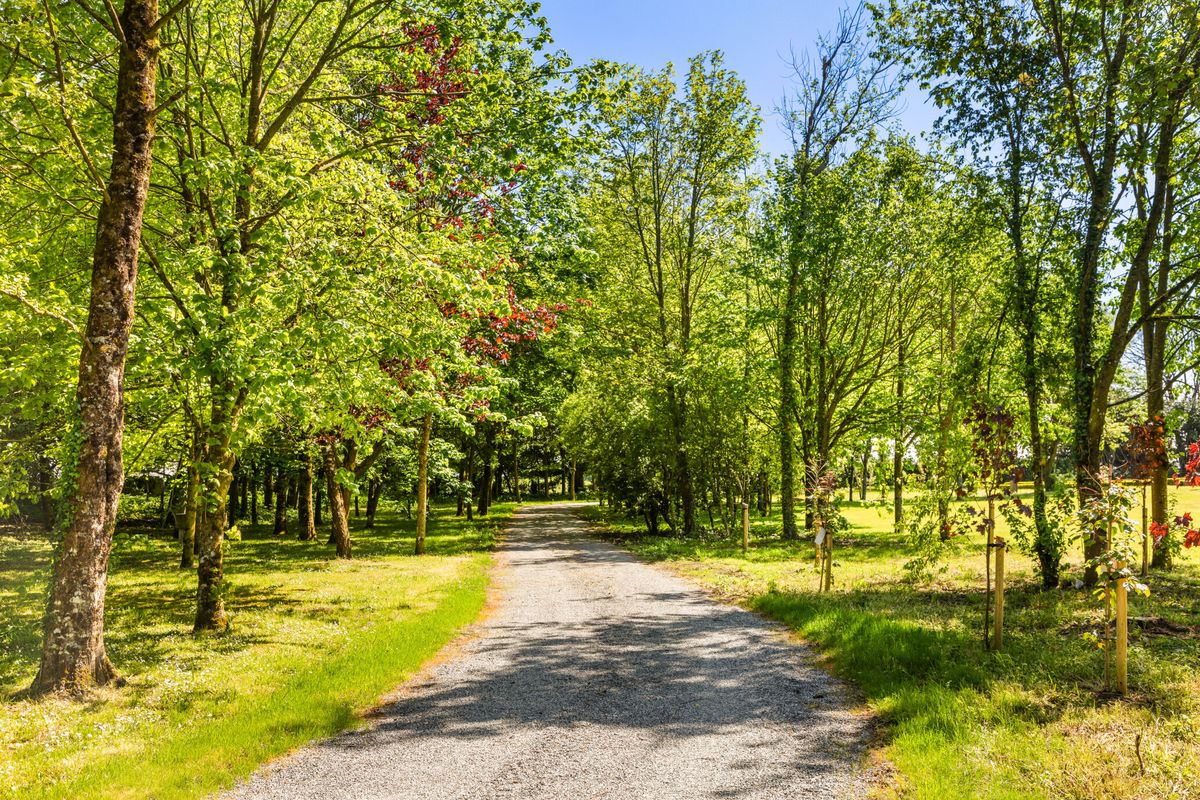
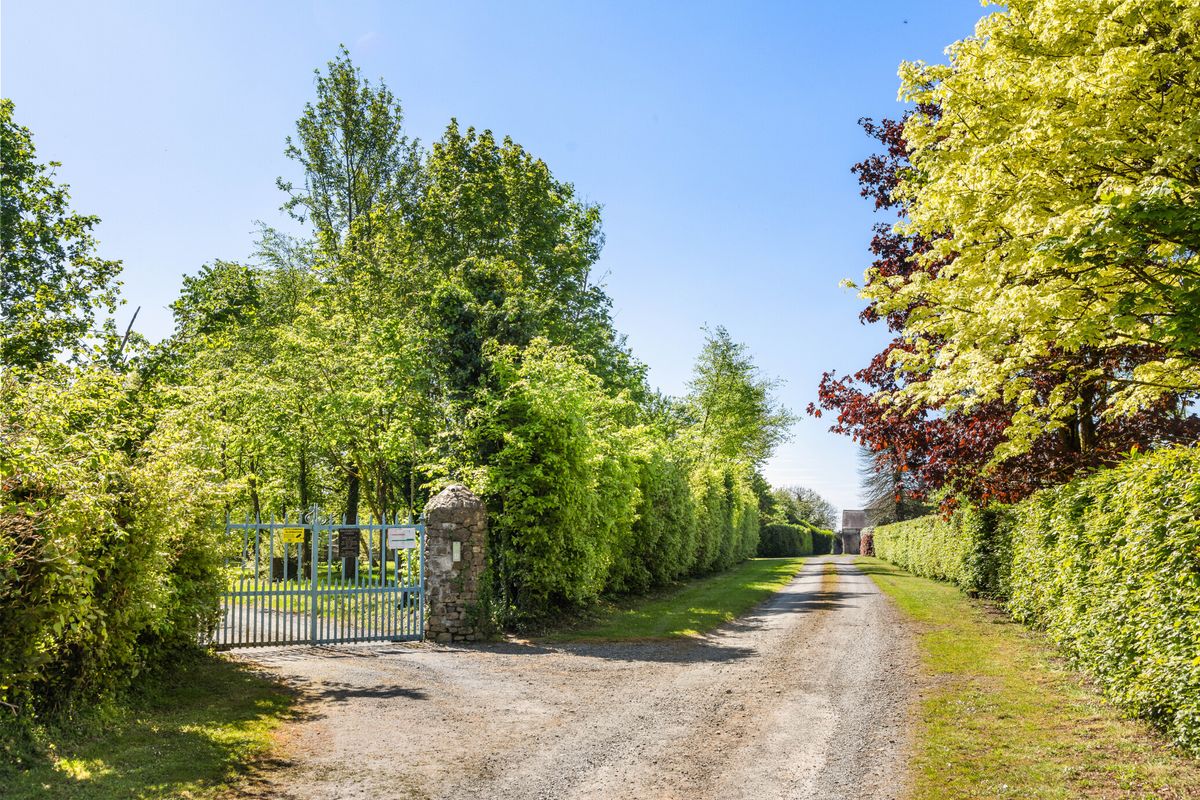
“As the electric security gates open, you’re greeted by a tree-lined avenue, setting the scene for an unparalleled arrival experience. Drive up the gravelled avenue lined by rows of cherry trees which leads you to the impeccable Queen Anne double fronted façade. This is the most recent architectural evolution of the property dating back to the early 1700s and retains the original panelled door complete with original door furniture and transome light. Manicured box hedging frames the entrance, adding a touch of sophistication.
“Although the Queen Anne façade reads as a two storey property, the actual house is three storey over basement with the windows in the third floor being Mansard 17th century style windows facing south and west, maximizing sunlight.”
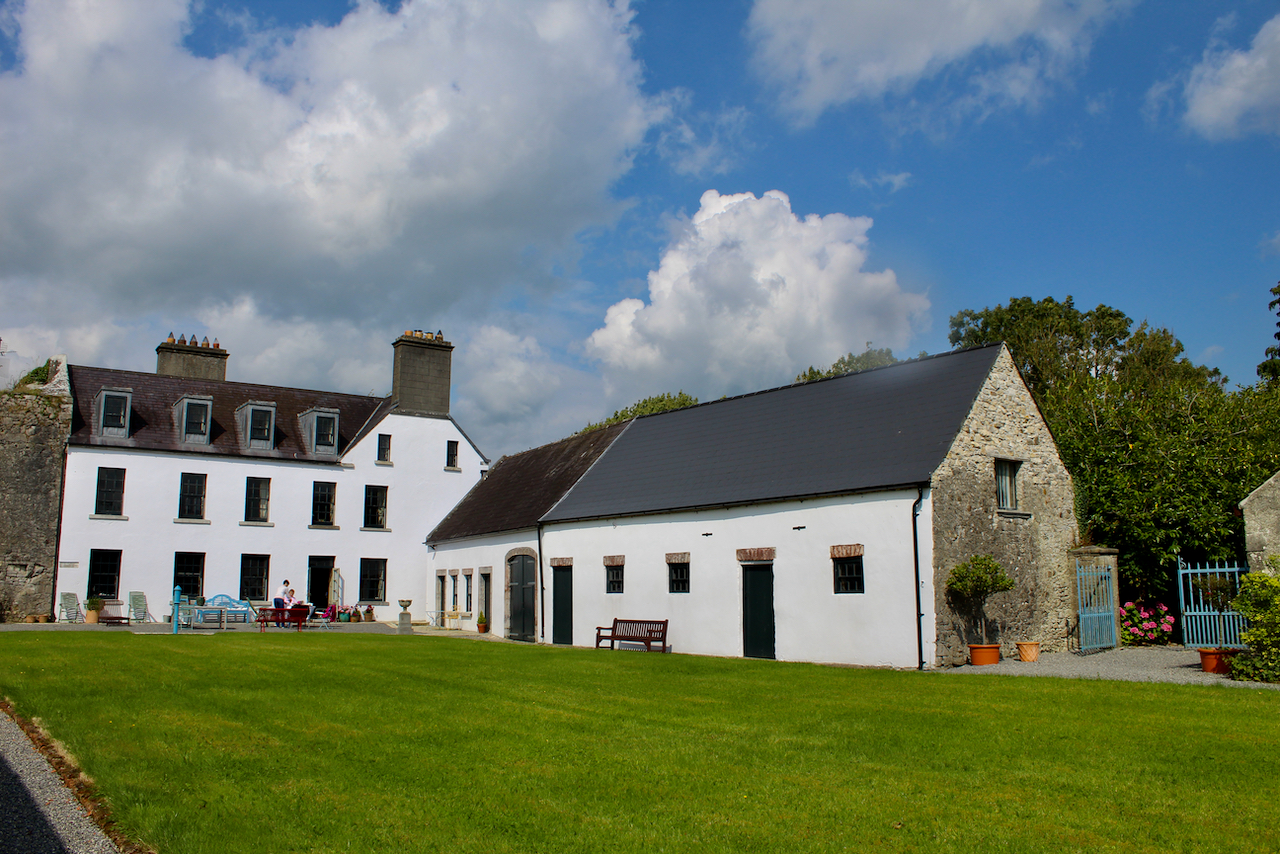
We entered through the door from the back and not by the original front door.
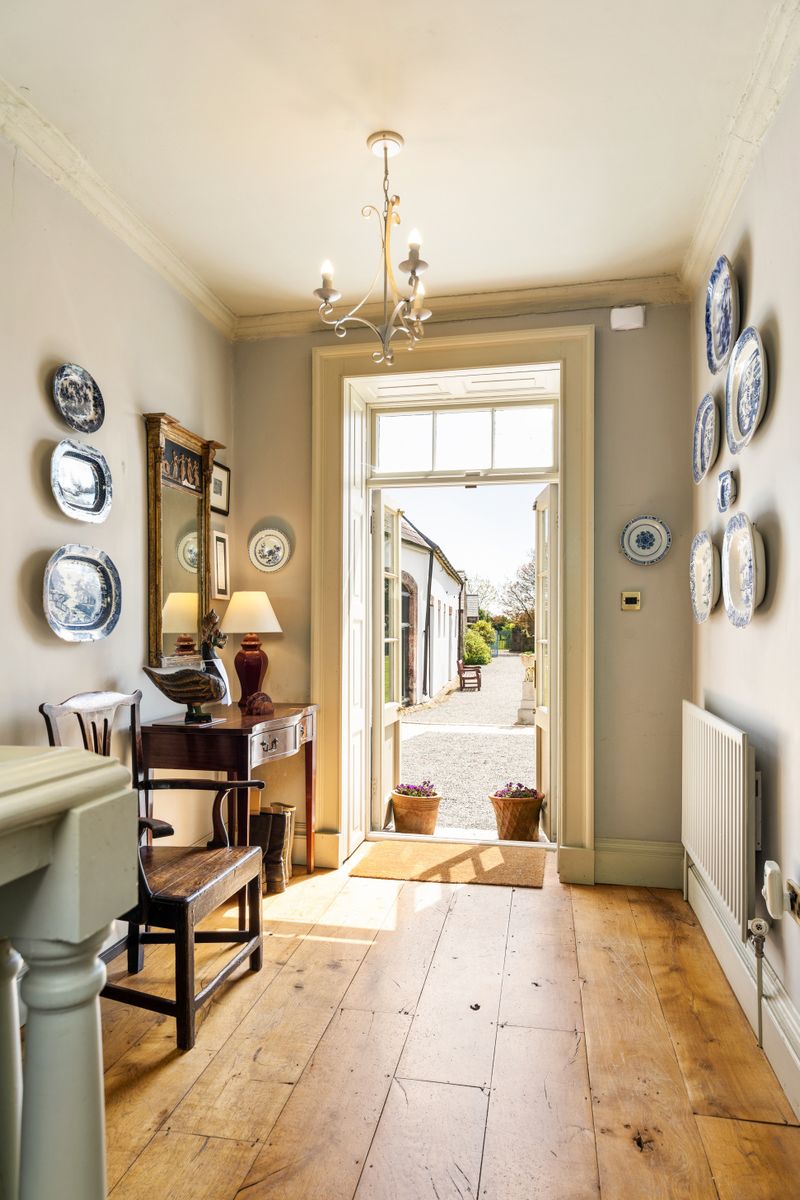
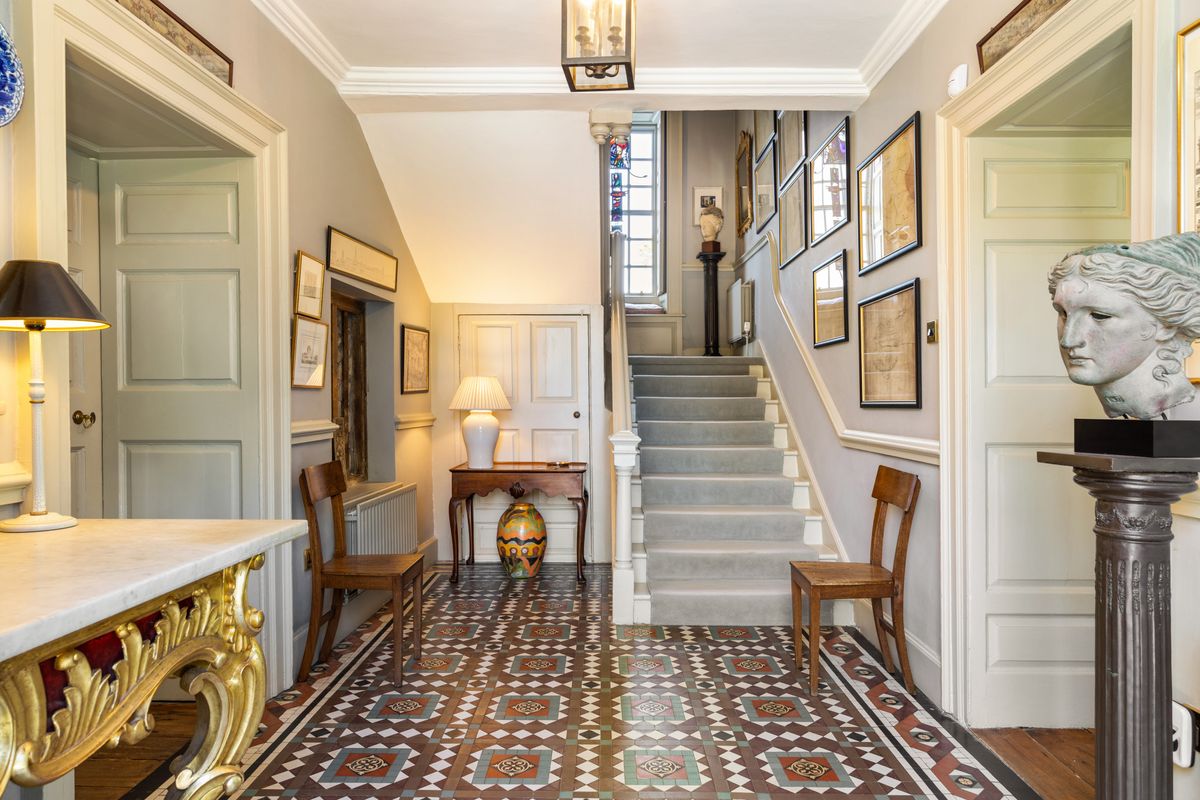
In the front hall Rosemarie had us don plastic shoe protectors, to protect the carpets for the new owners. The carpets were immaculately clean after over twenty years of family tread!
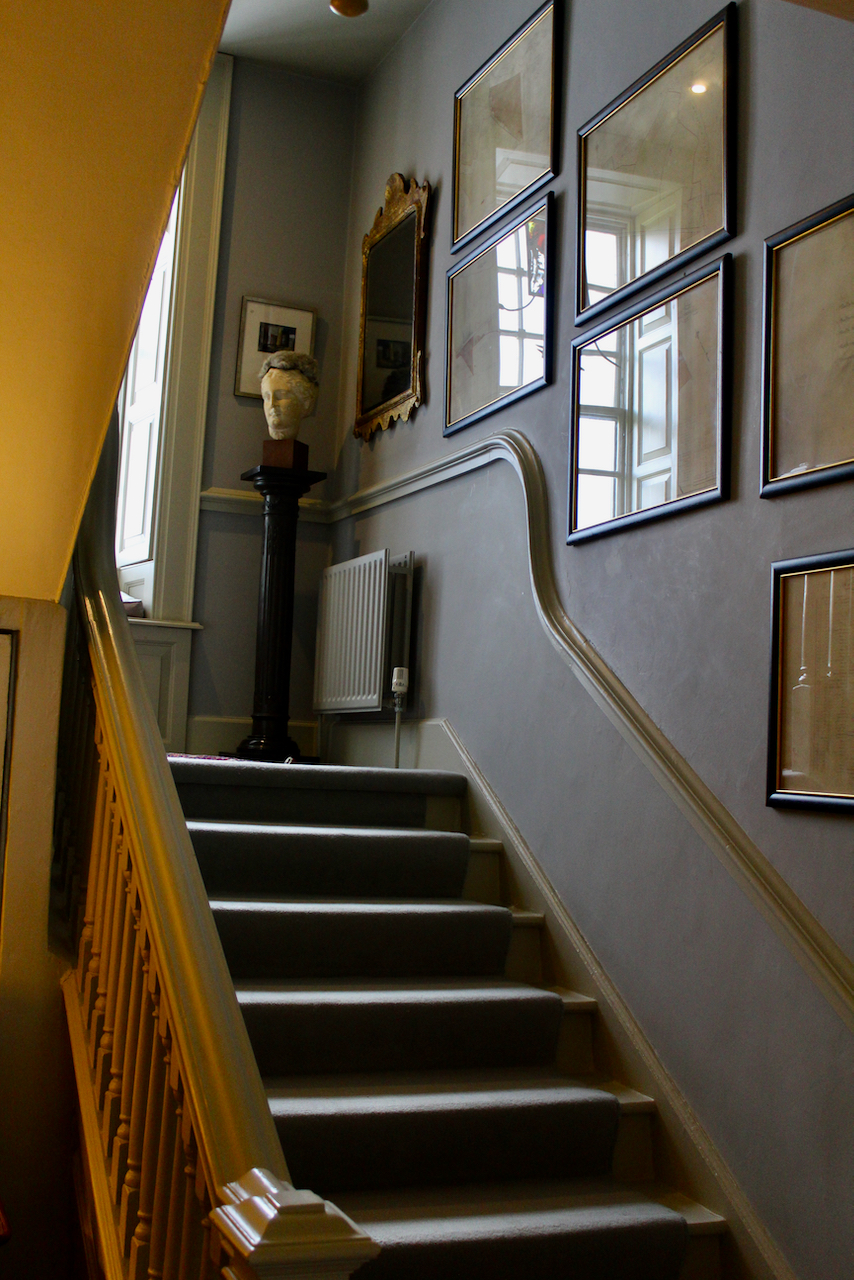
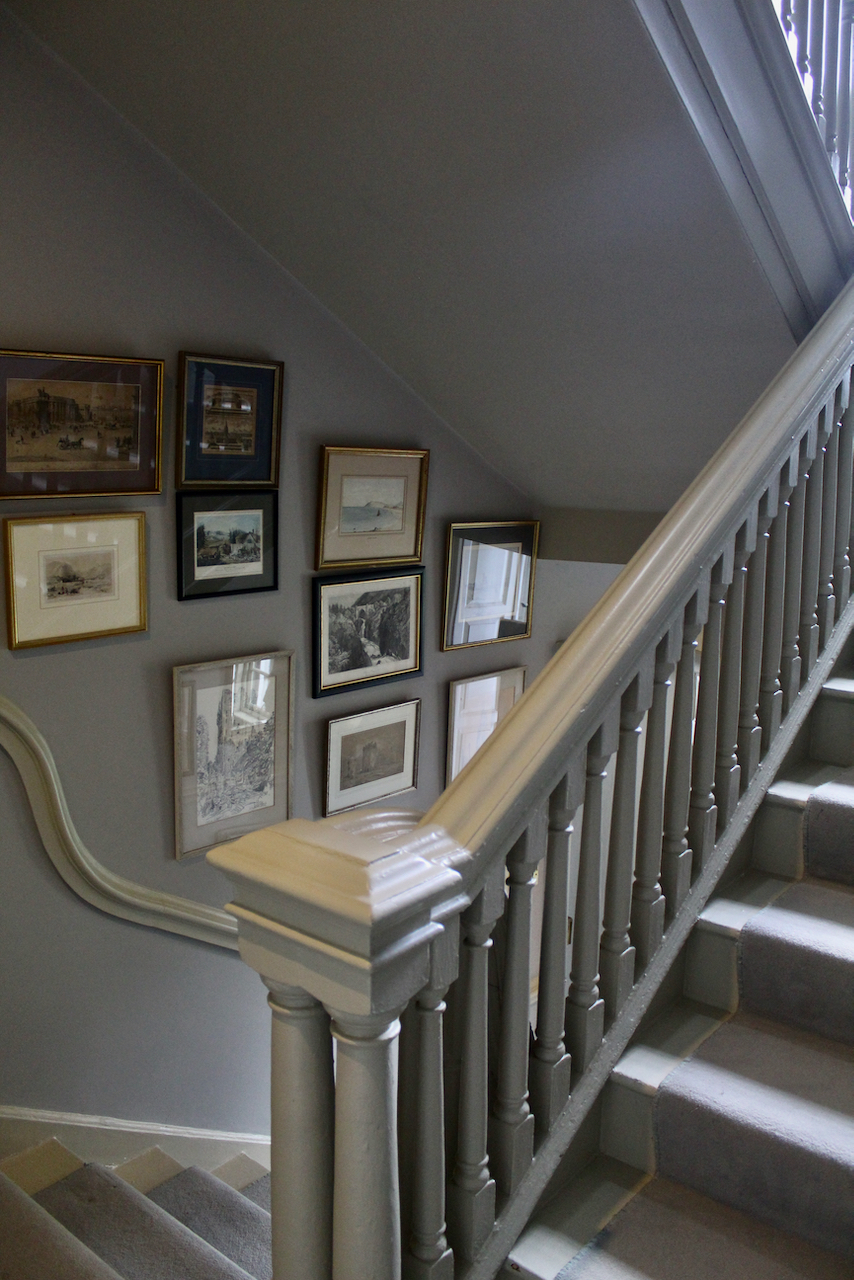
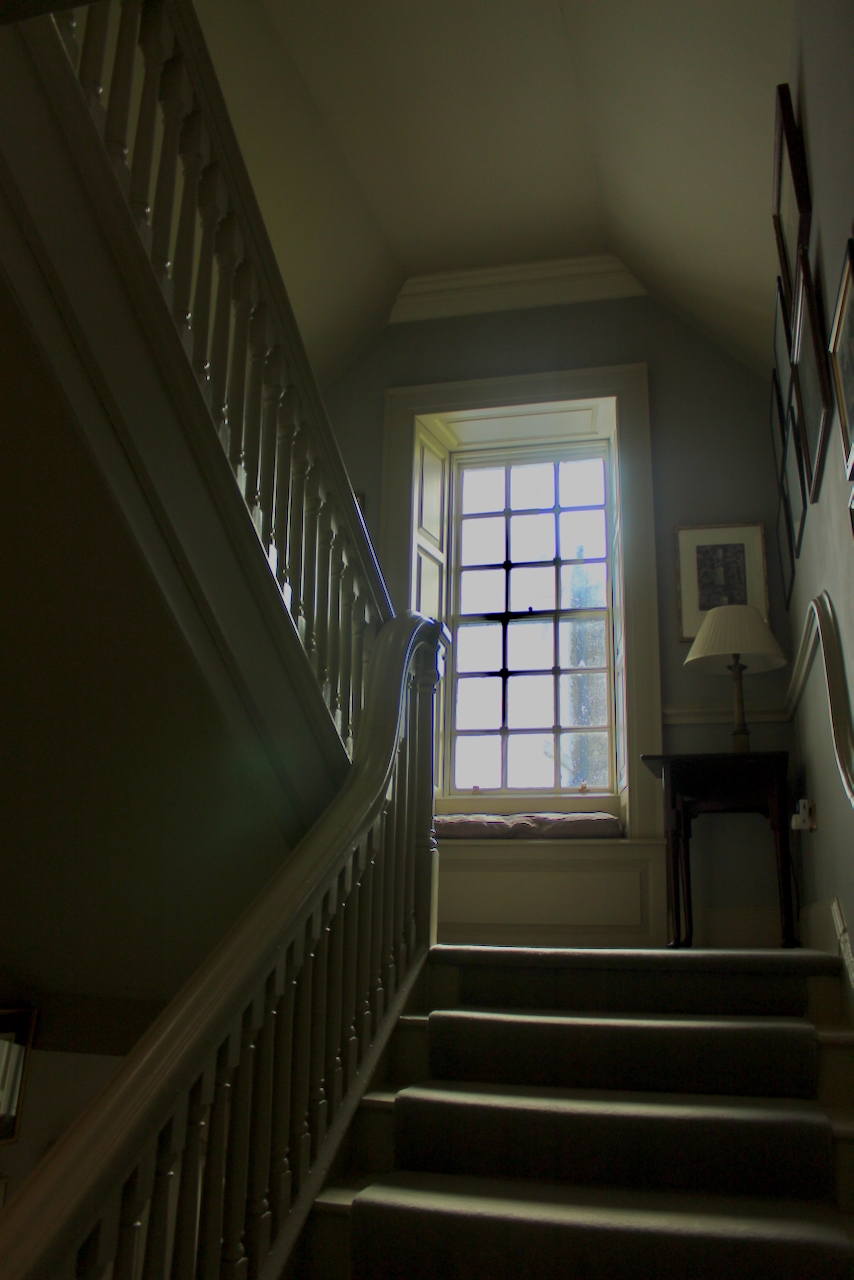
The house is beautifully decorated. The hand-carved early 18th century staircase is enhanced by matching dado rails along the walls. Most of the joinery in the house is original, restored to elegance by Rosemarie and her husband.
The floor in the front hall is covered with a beautiful array of tiles, in a tessellated pattern of interlocking shapes. Above is a decorative ceiling rose.
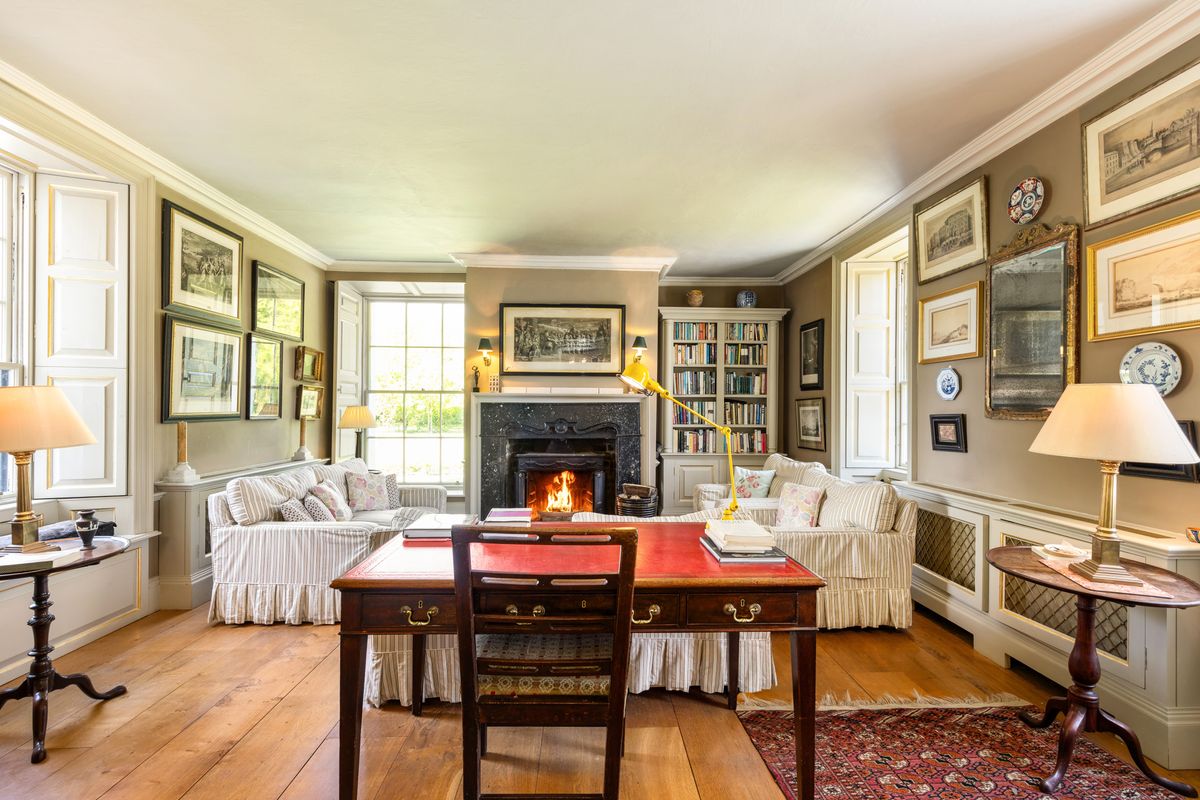
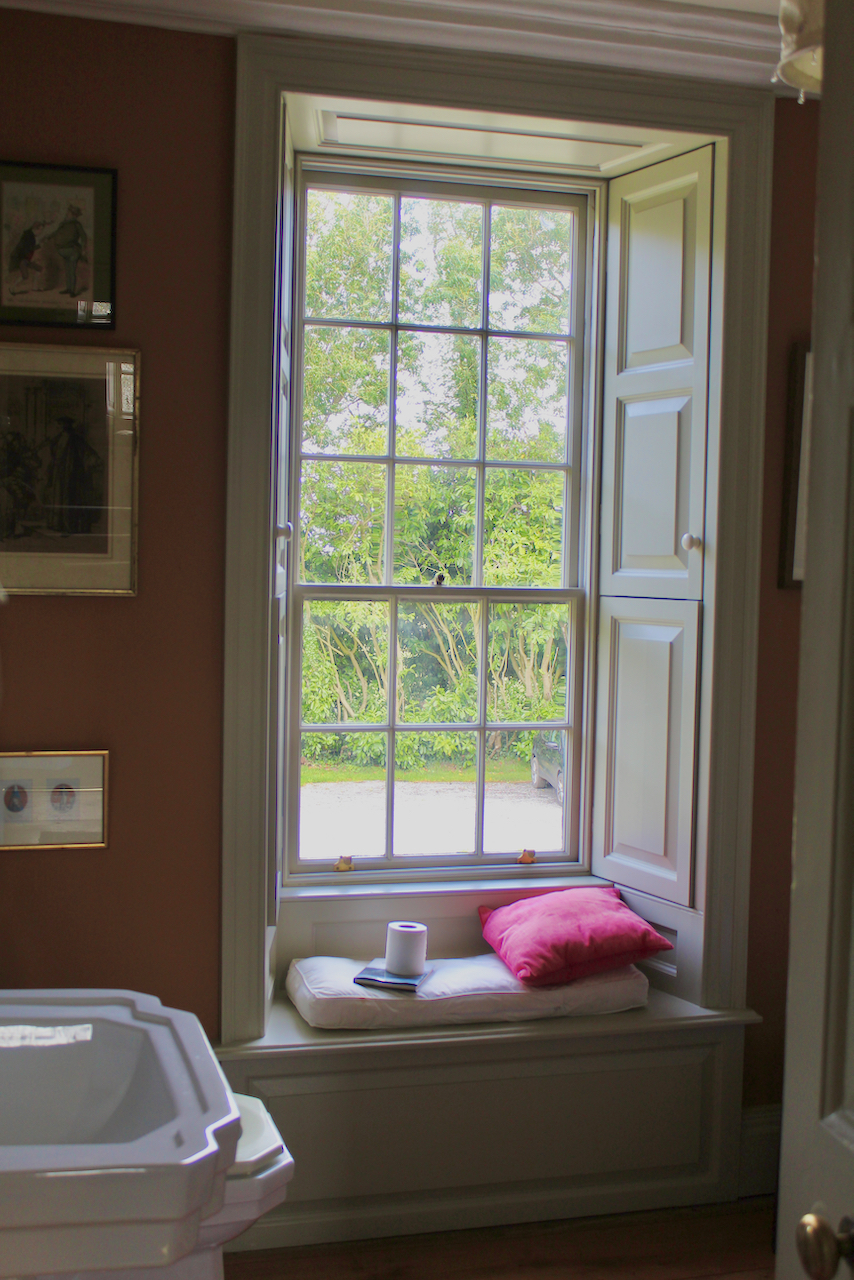
To the right is the library, with timber sash windows and original working shutters. The sale advertisement tells us that the room is fitted with reclaimed “cat’s paw wide plank oak flooring,” (this gets its name from groupings of small knots in the wood that resembles a cat’s paw print) and features an open fireplace with a stove set within a 17th-century fireplace originally from Strokestown House. The decorative wall panelling has gold leaf detail, the advertisement tells us. The window seats are also original.
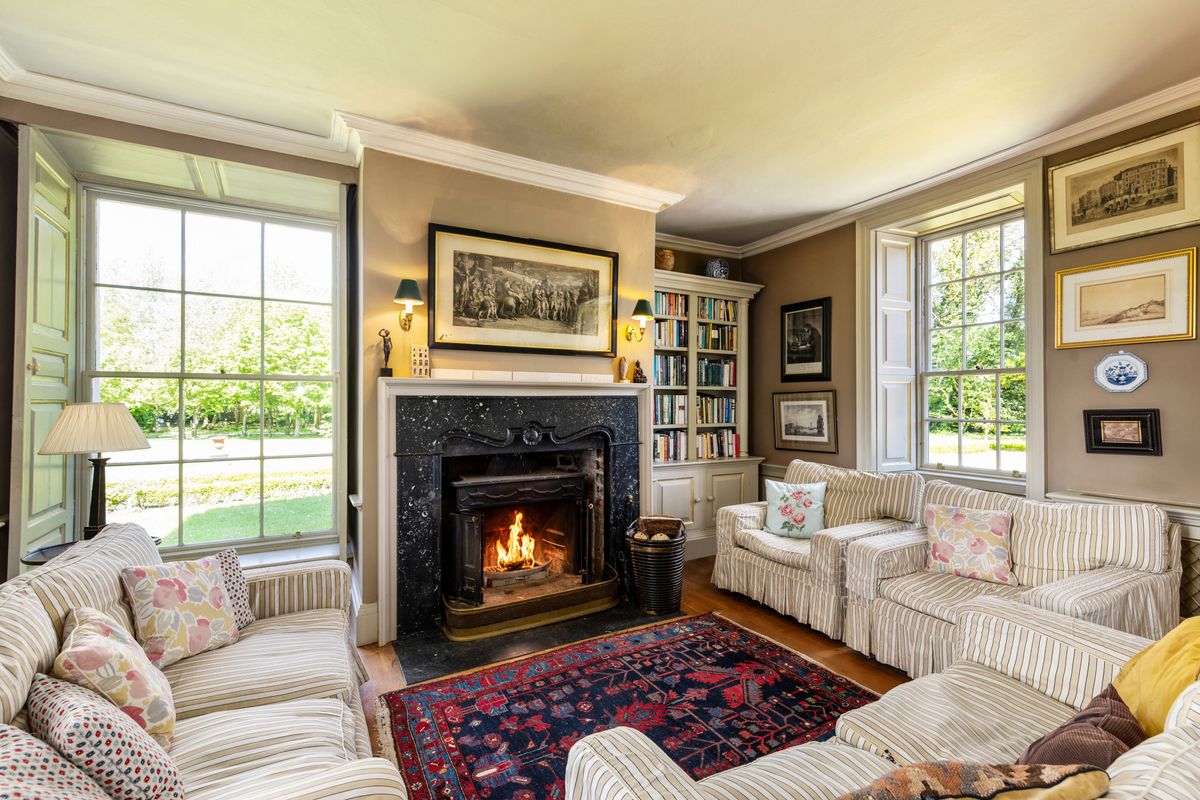
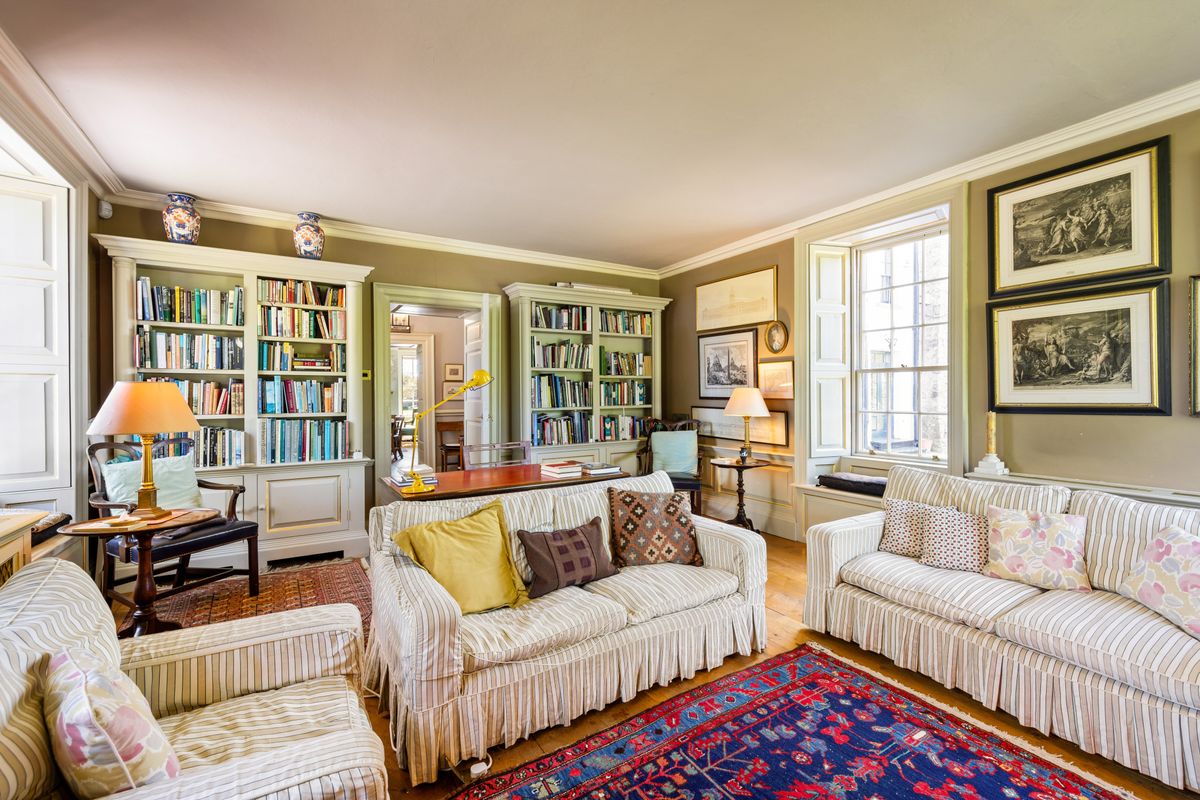
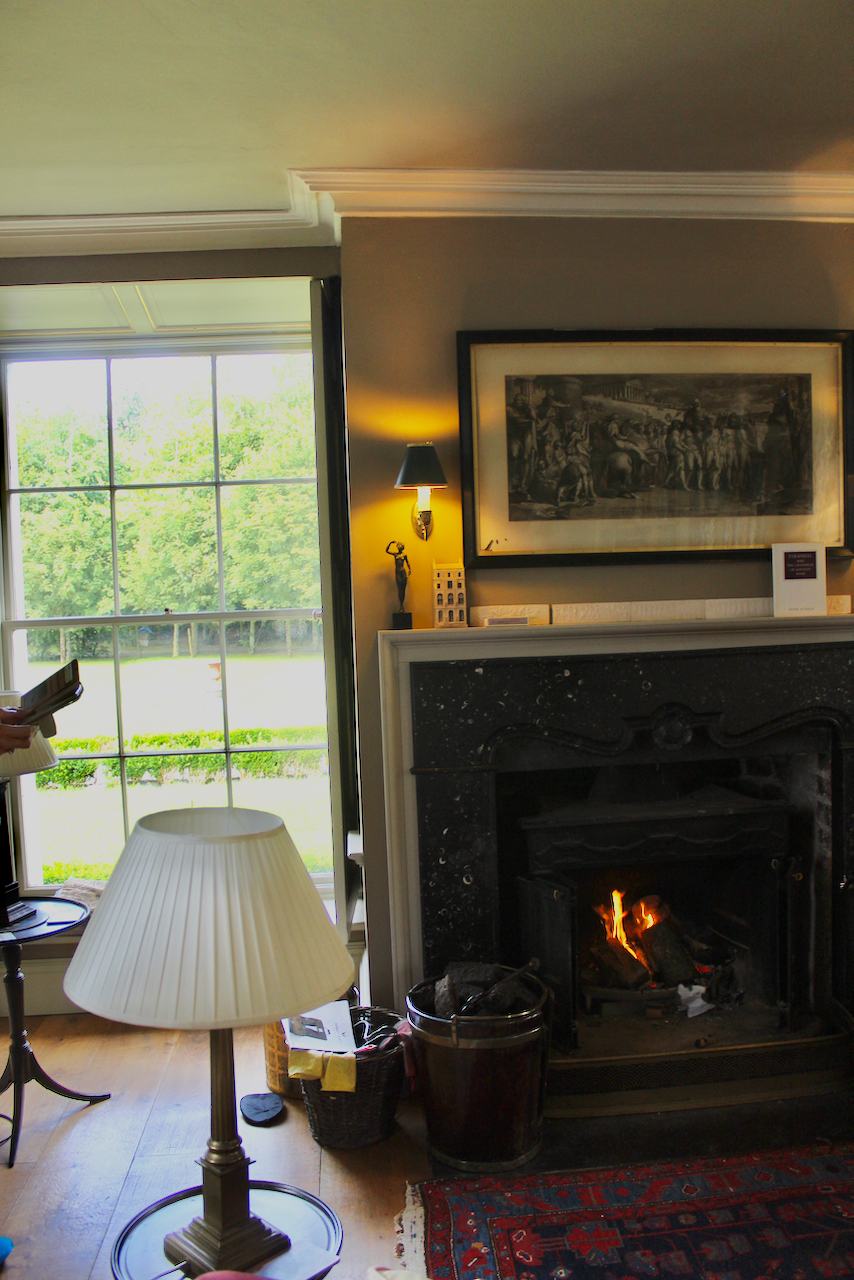
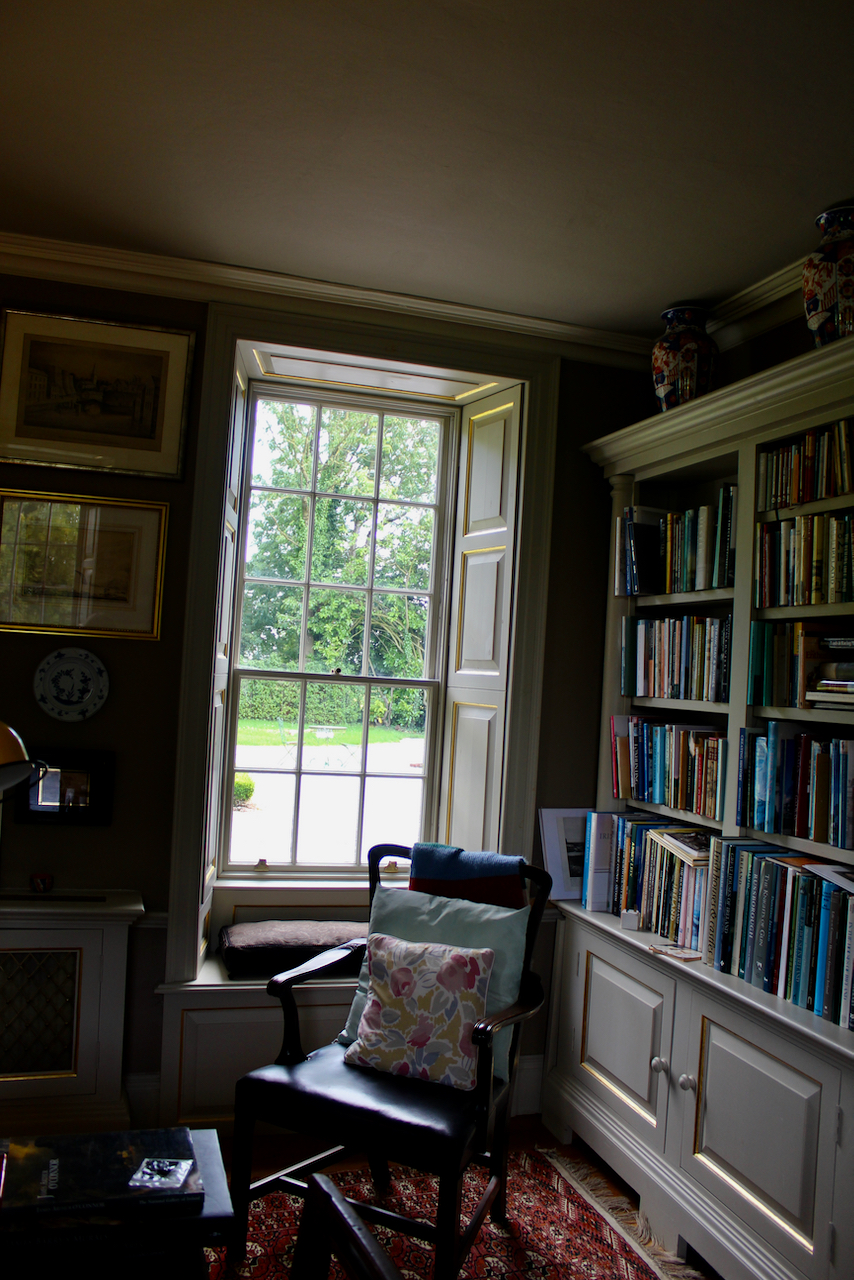
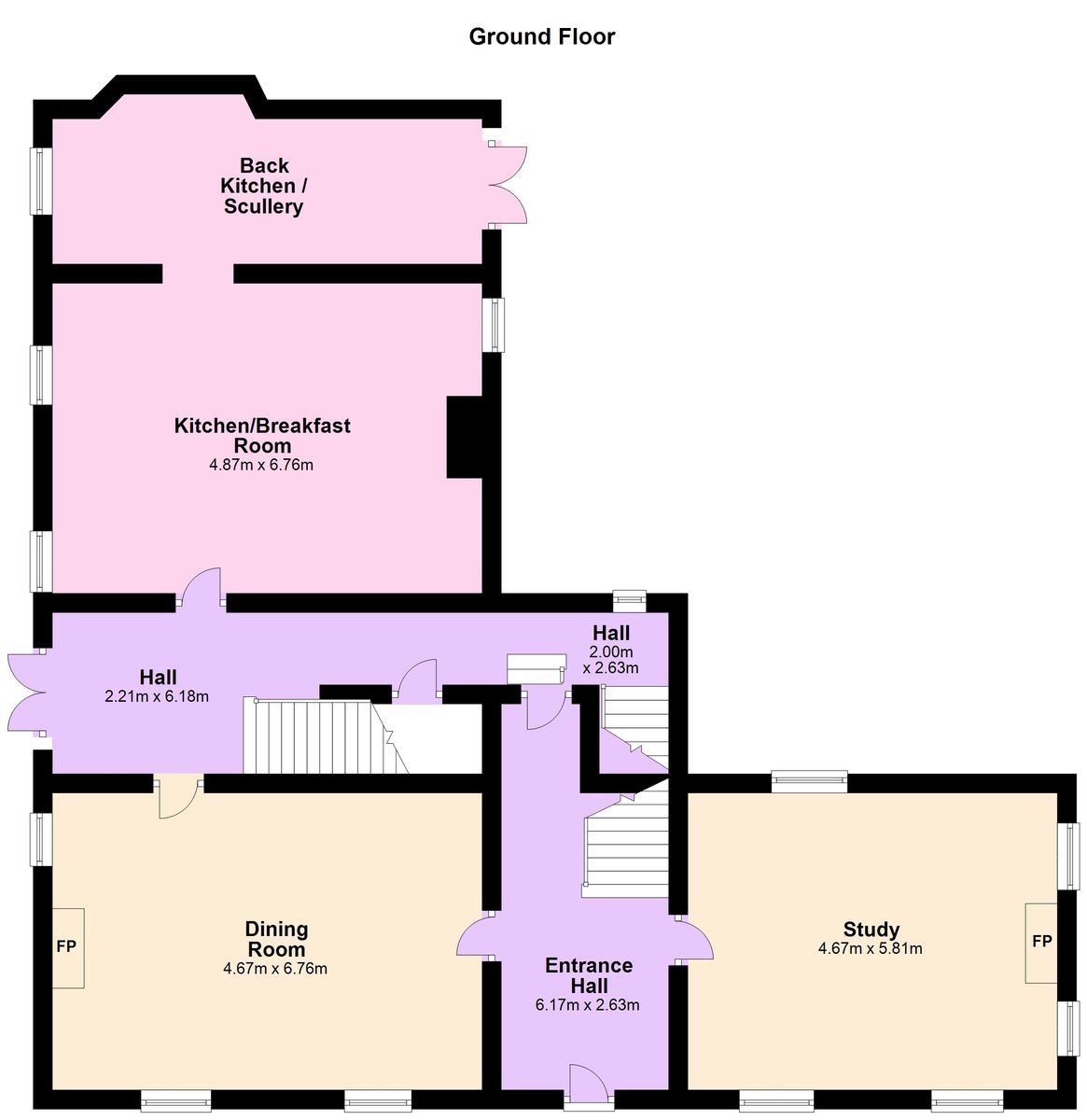
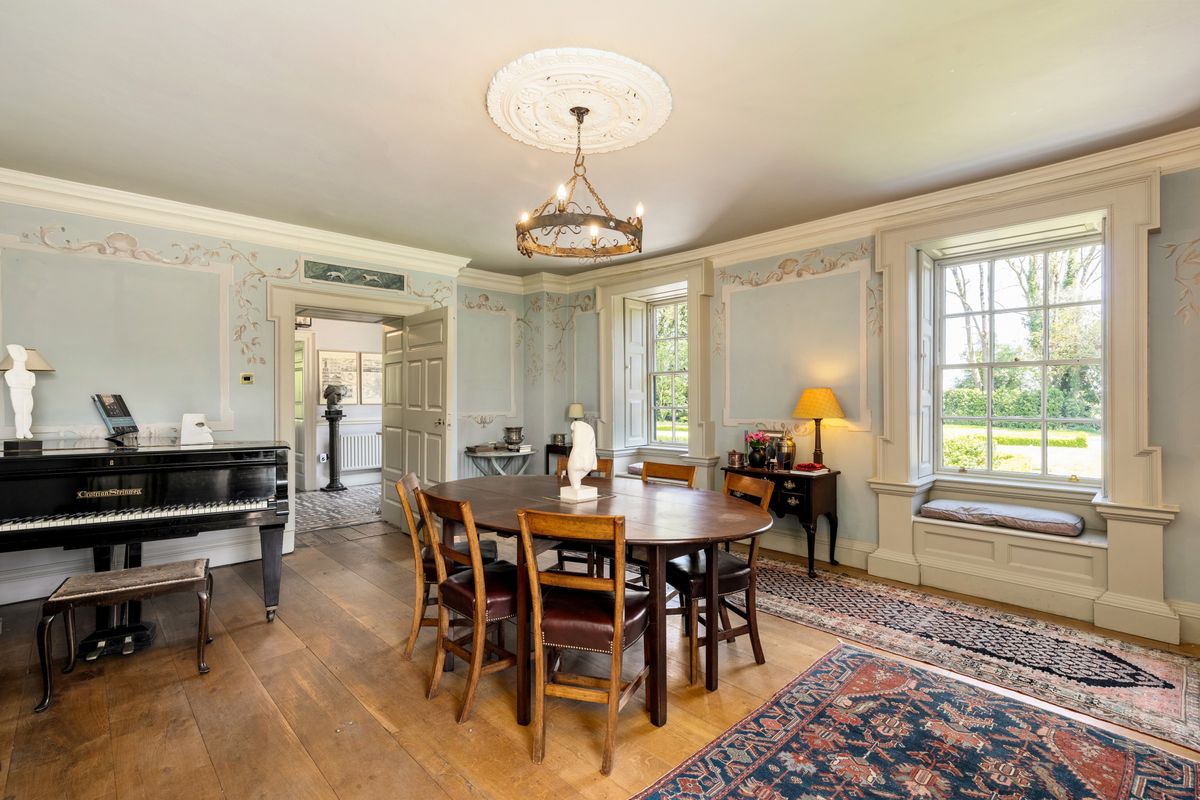
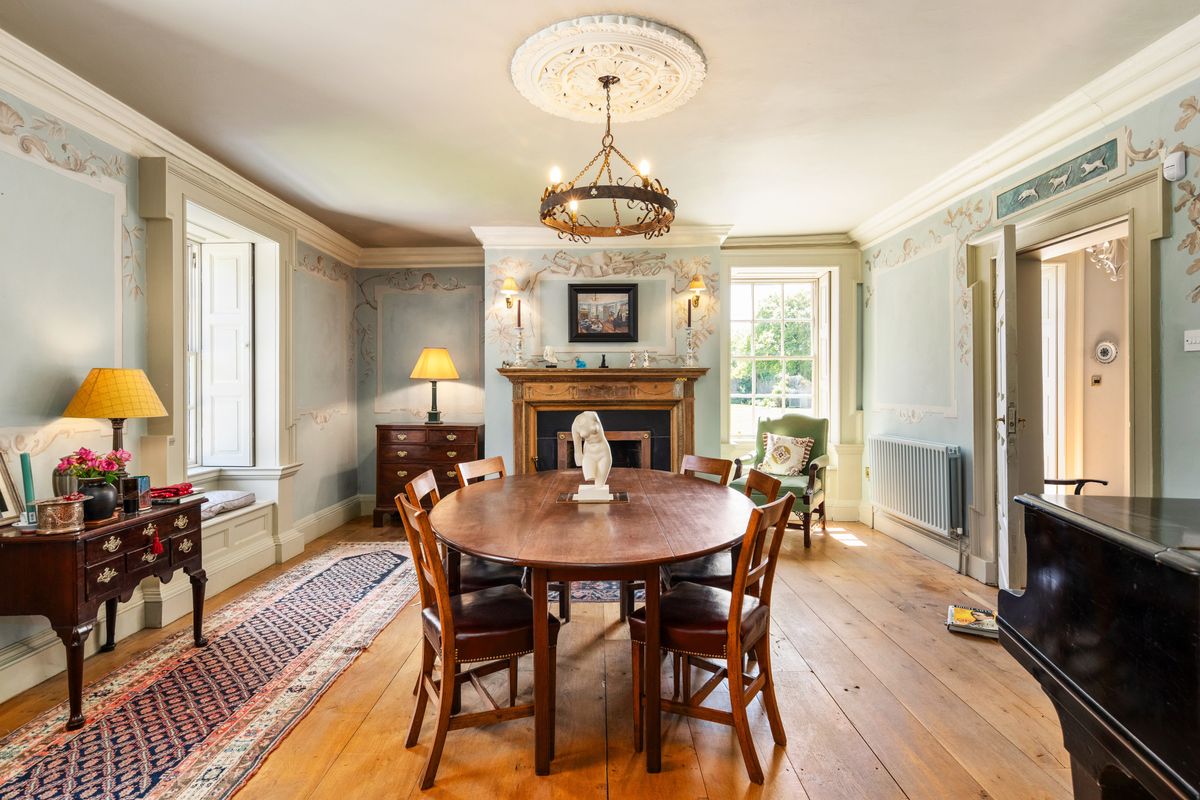
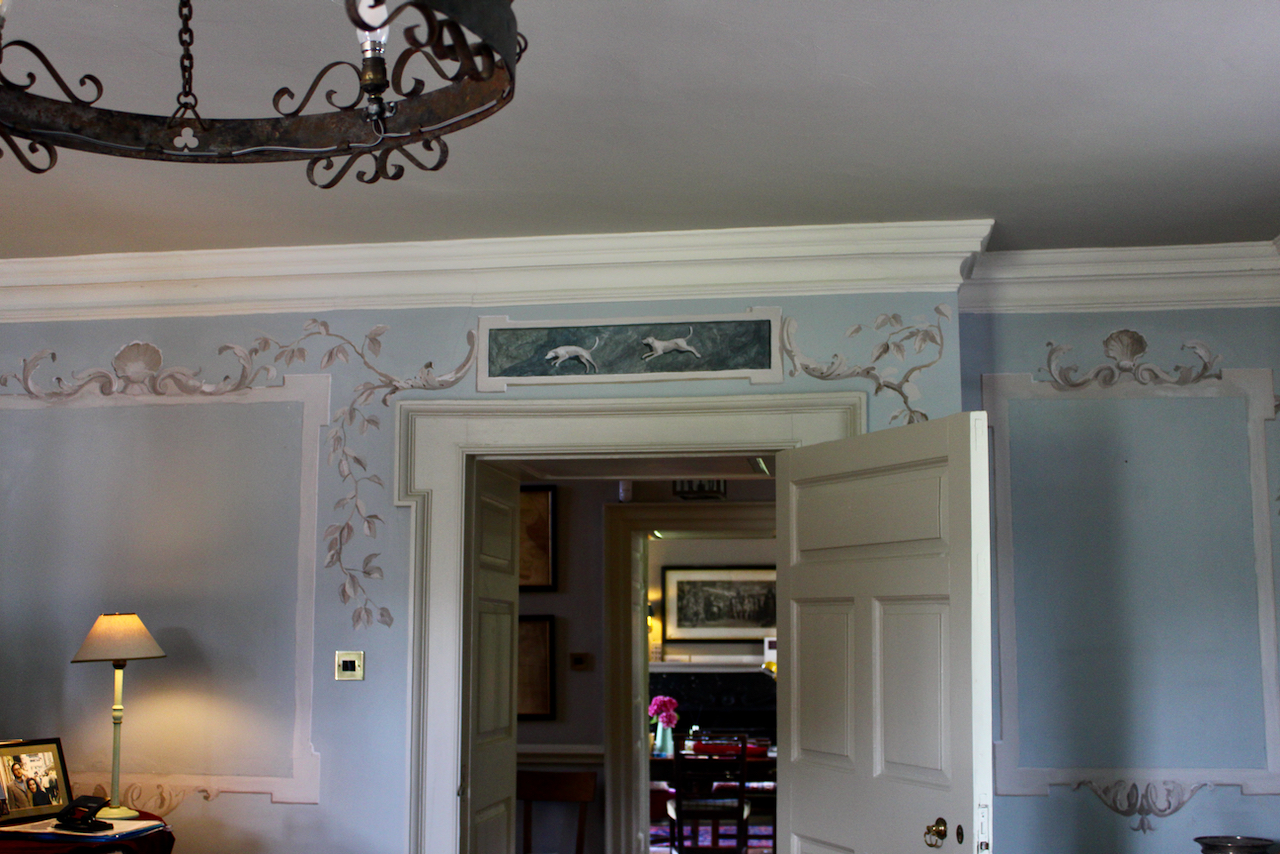
The dining room features paintwork on the walls by Michael Dillon. We saw his work elsewhere, such as in Woodville in New Ross, another Section 482 property. Instead of the traditional acanthus leaves, the foliage is oak and beech leaves, such as those that grow at Ballybrittan.

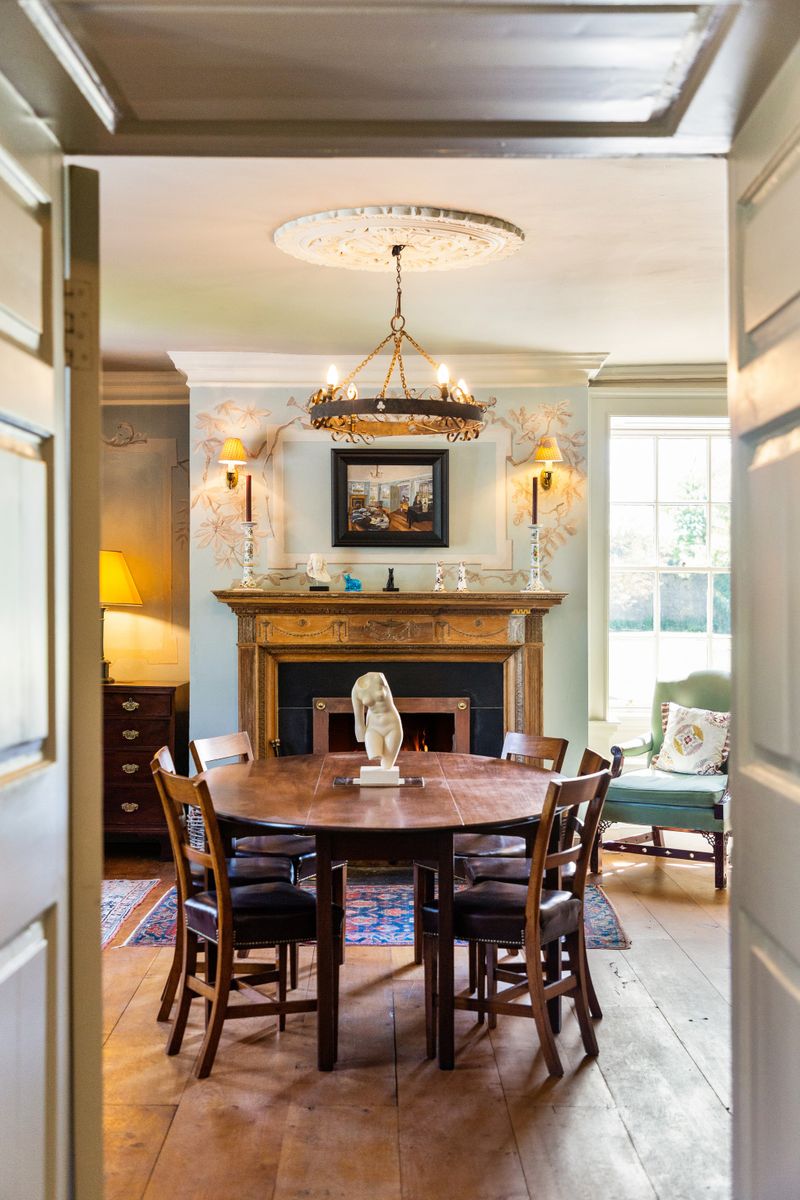
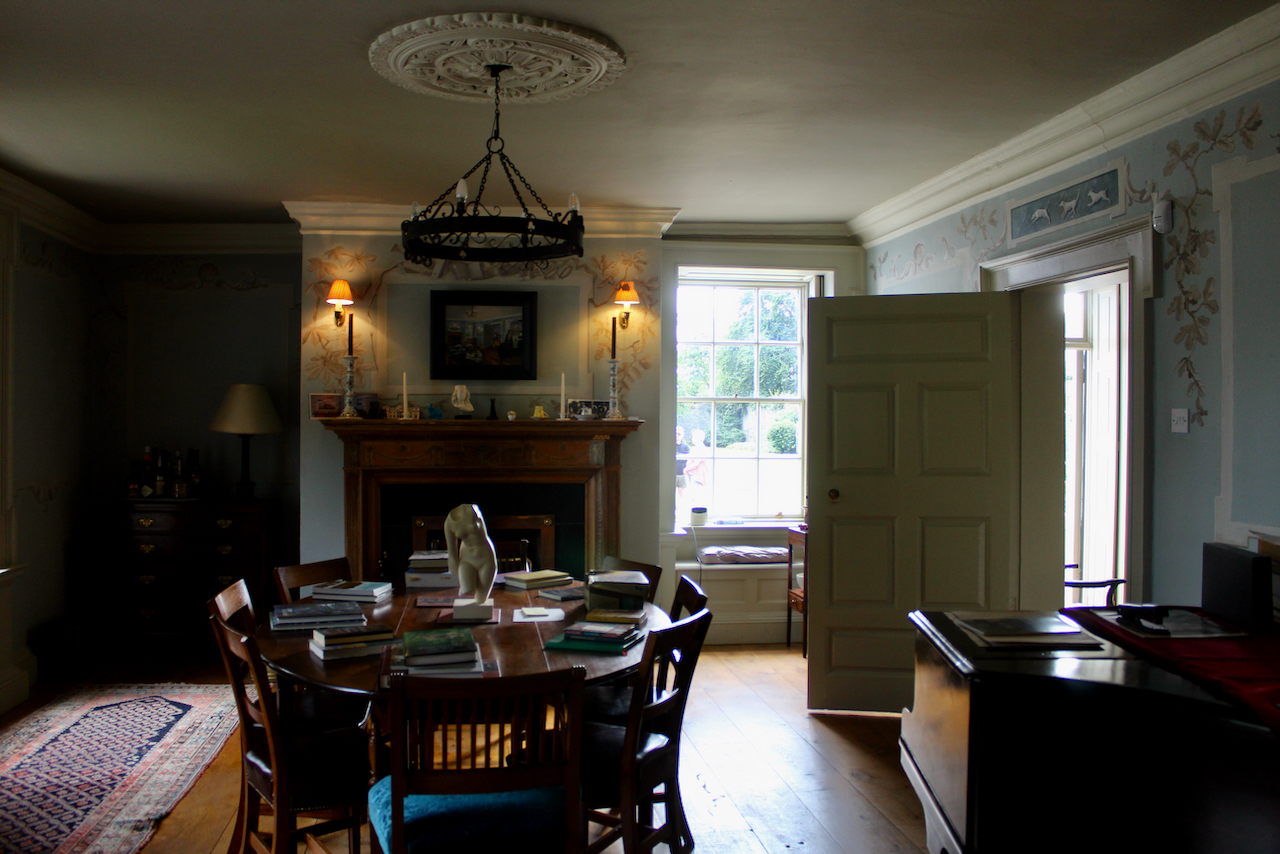
The doors and windows in the dining room have shouldered architraves. The impressive fireplace is hand-carved.
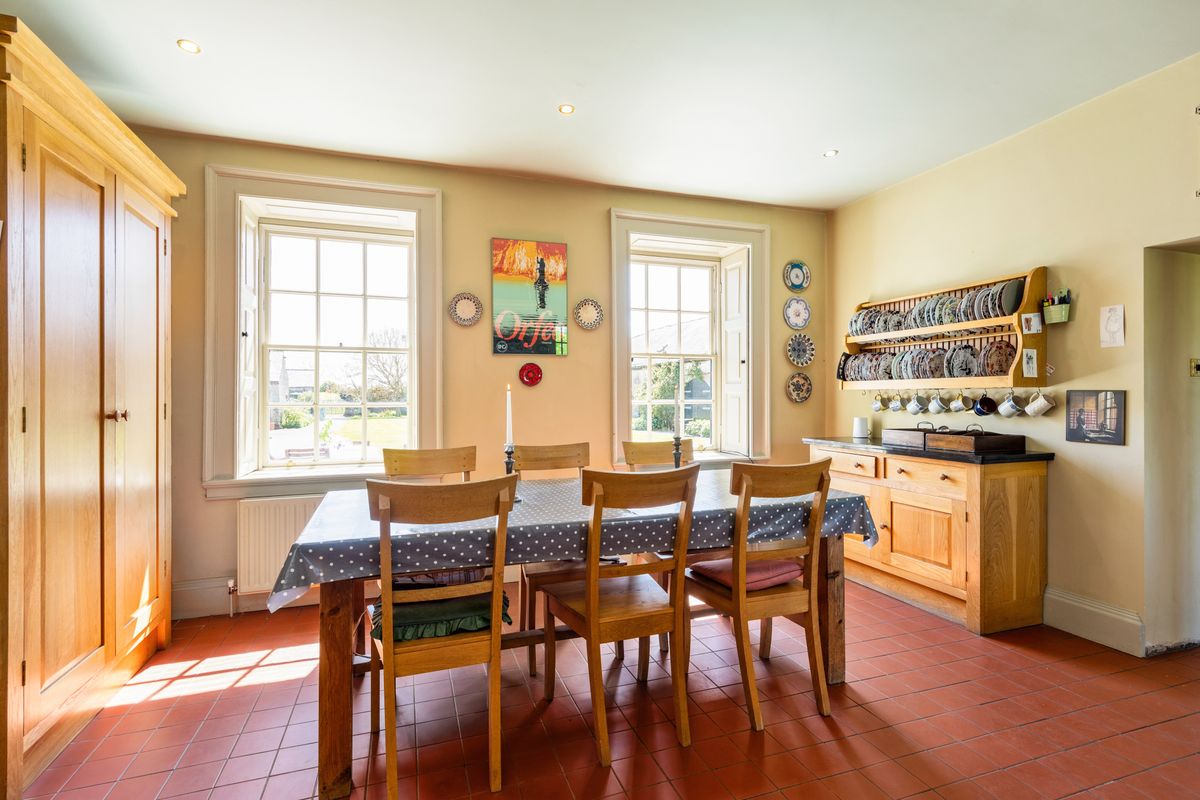
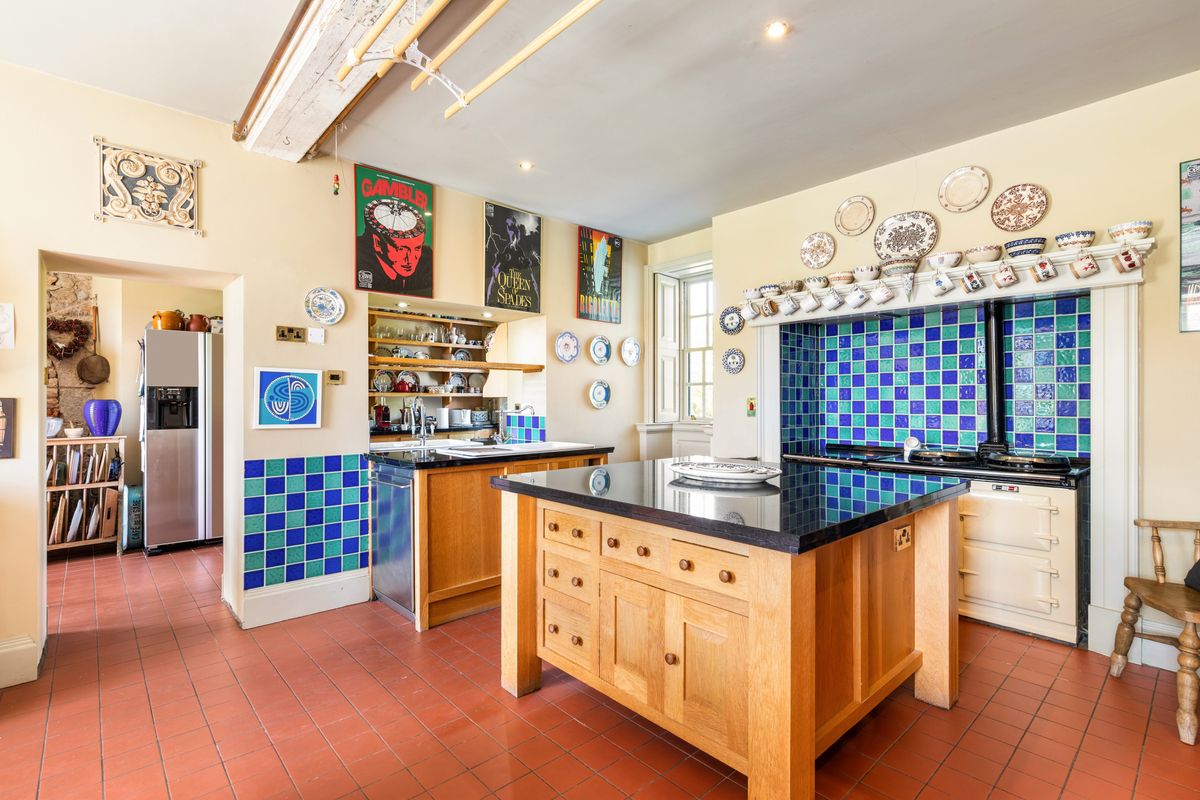
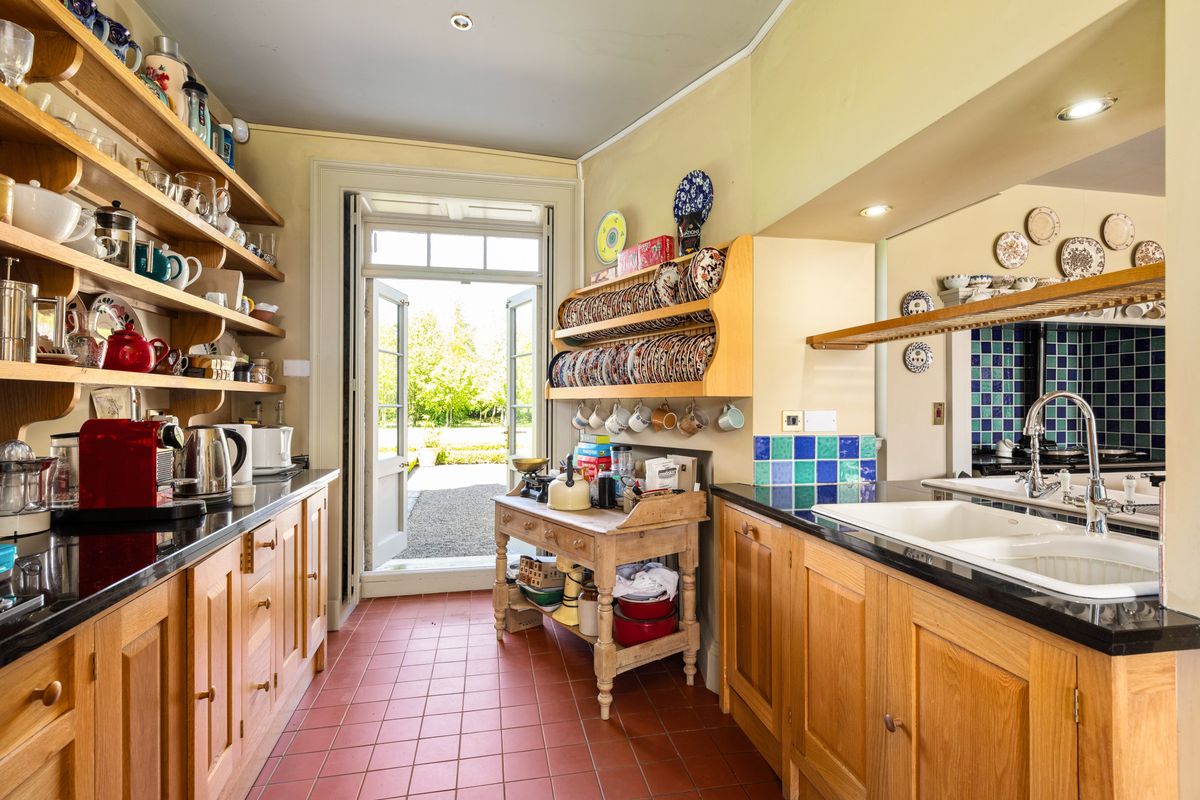
The house’s sale advertisment describes the kitchen: “The kitchen, hand made by the late Clive Nunn, is a harmonious blend of traditional charm and modern convenience. Exposed timber beams, deep timber sash windows with working shutters, and built-in window seats reflect the 17th-century architecture. Modern amenities include a kitchen island and state-of-the-art appliances, all within a space that offers breathtaking, double aspect views of the stone courtyard and lawns. The basement is laid in flagstone flooring and is suitable for storage.“
Not pictured is a stone arch now filled with brickwork, which would have led to the castle.
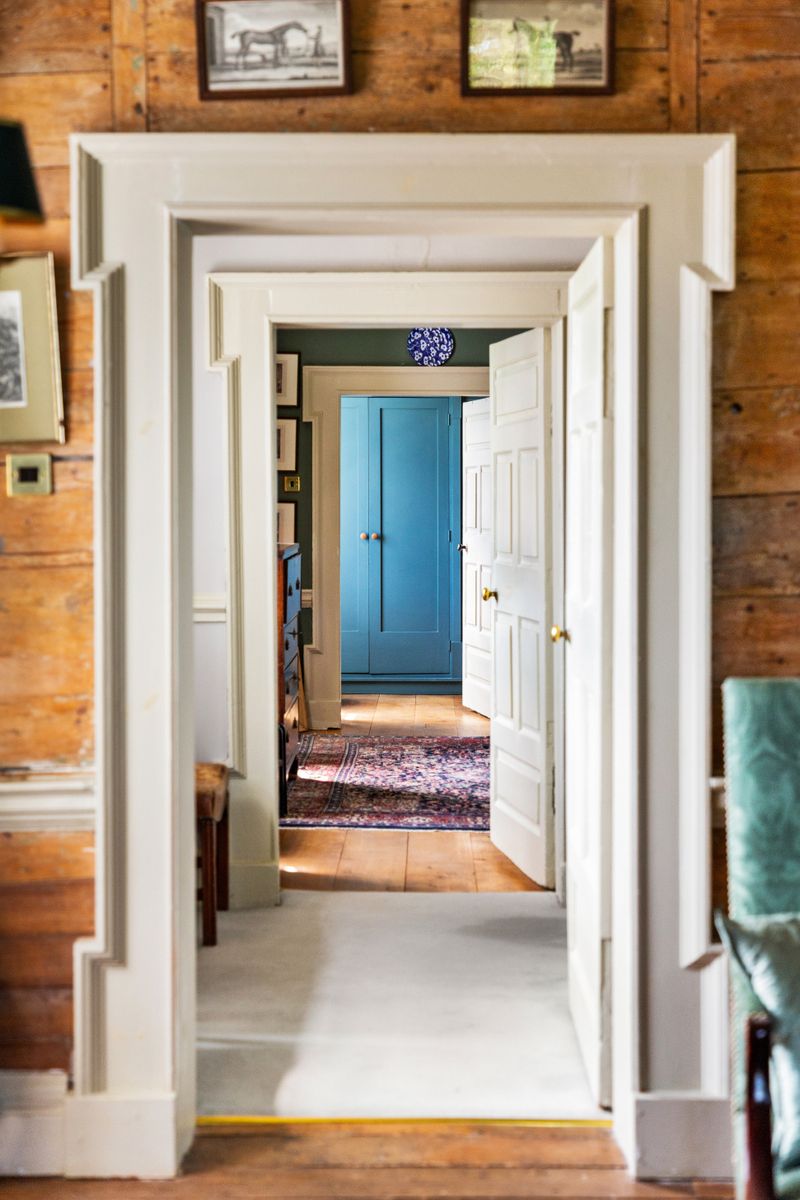
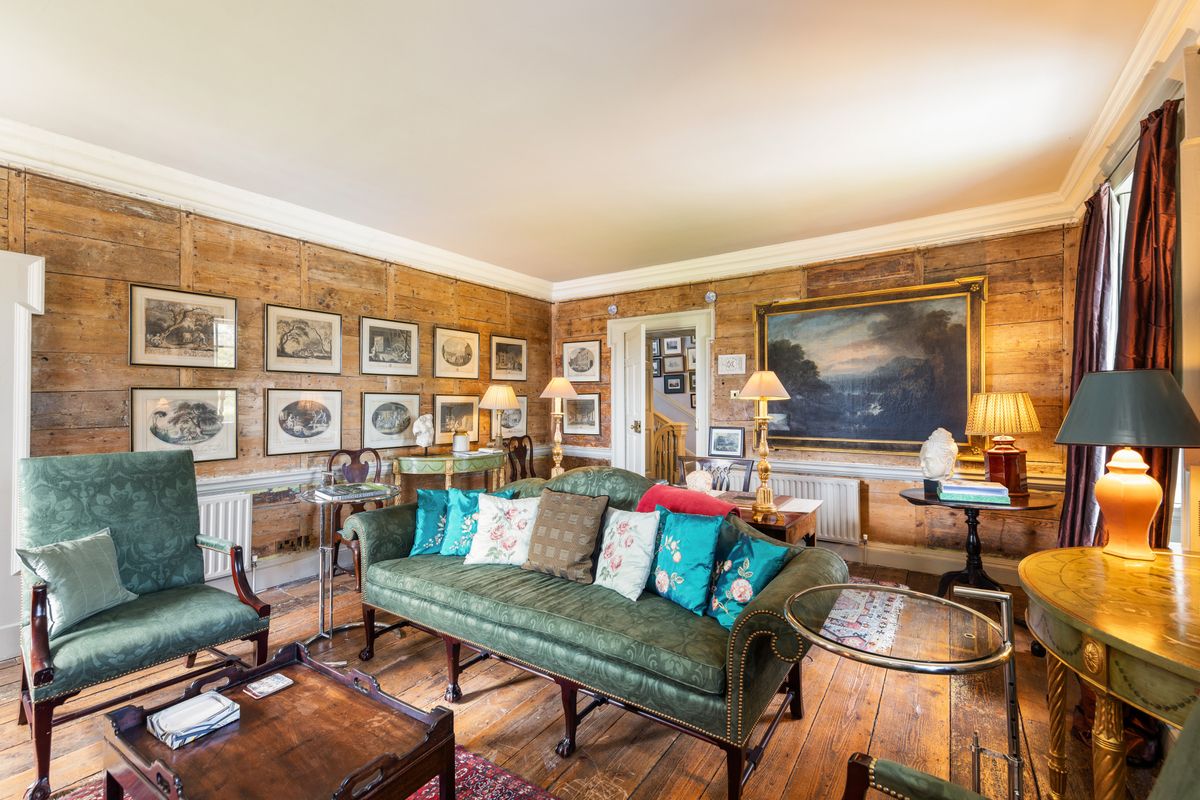
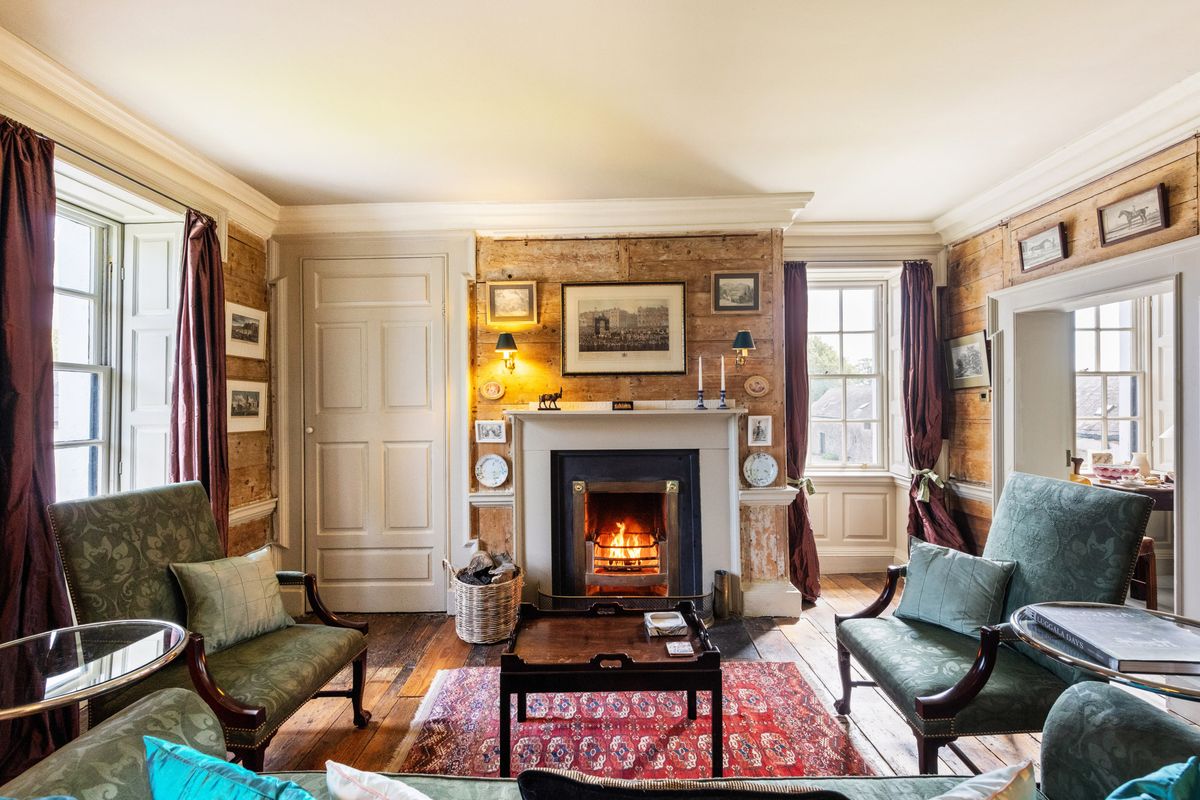
A second staircase beside the kitchen leads to the upstairs drawing room, which is lined with late seventeenth century Baltic pine panelling. One can see the waviness in the glass of the windows, showing the age of the glass.
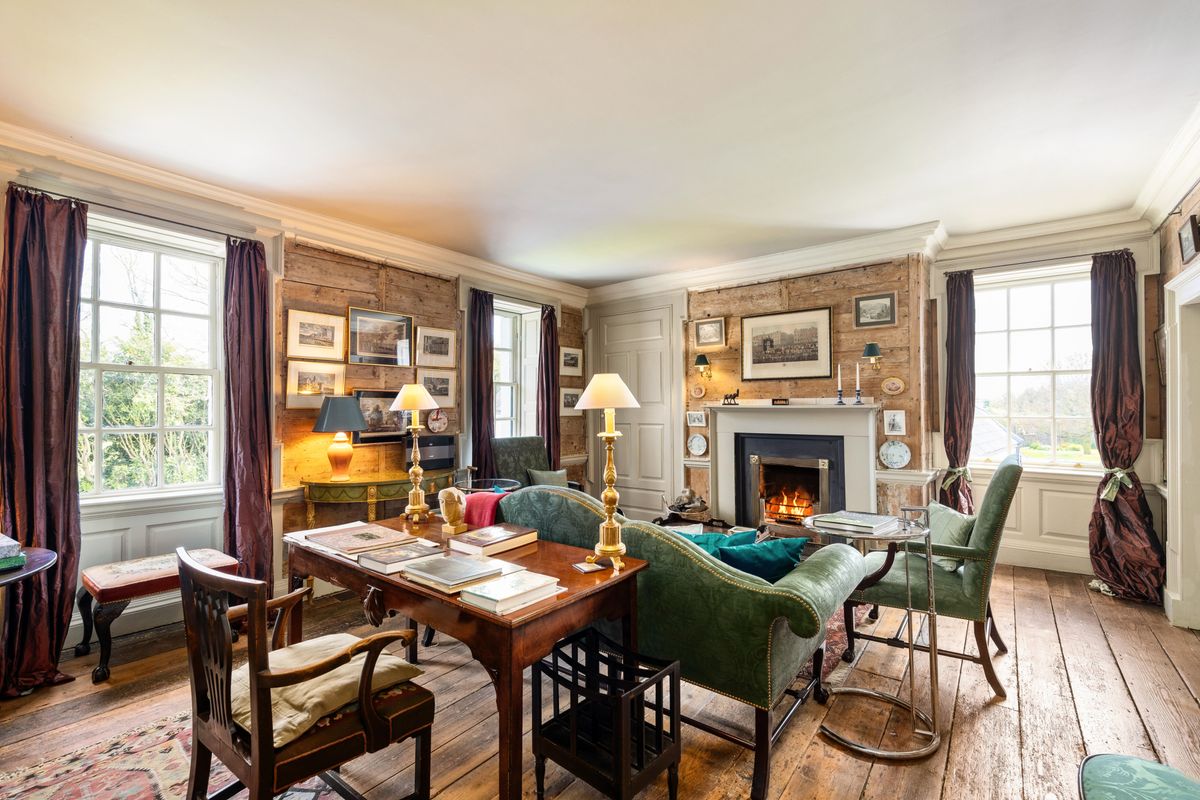
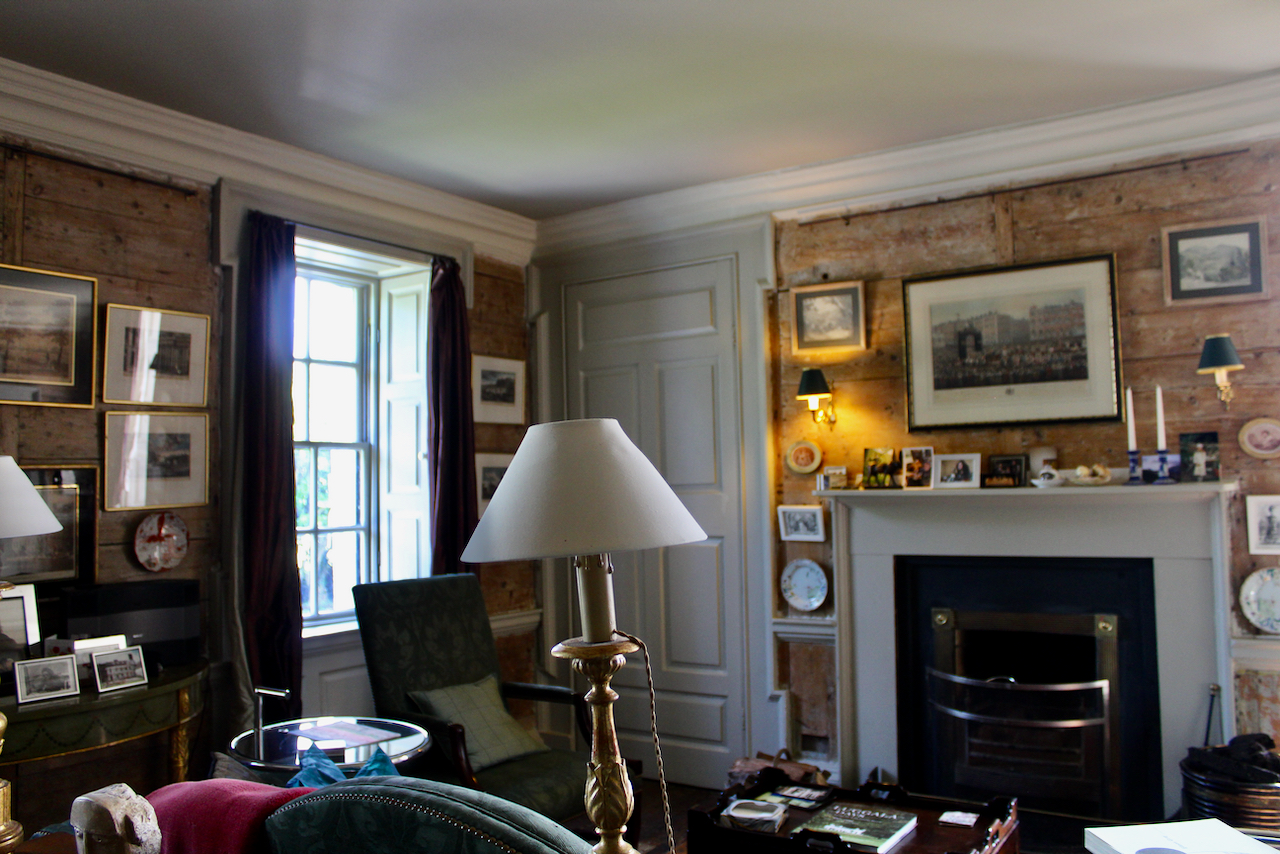
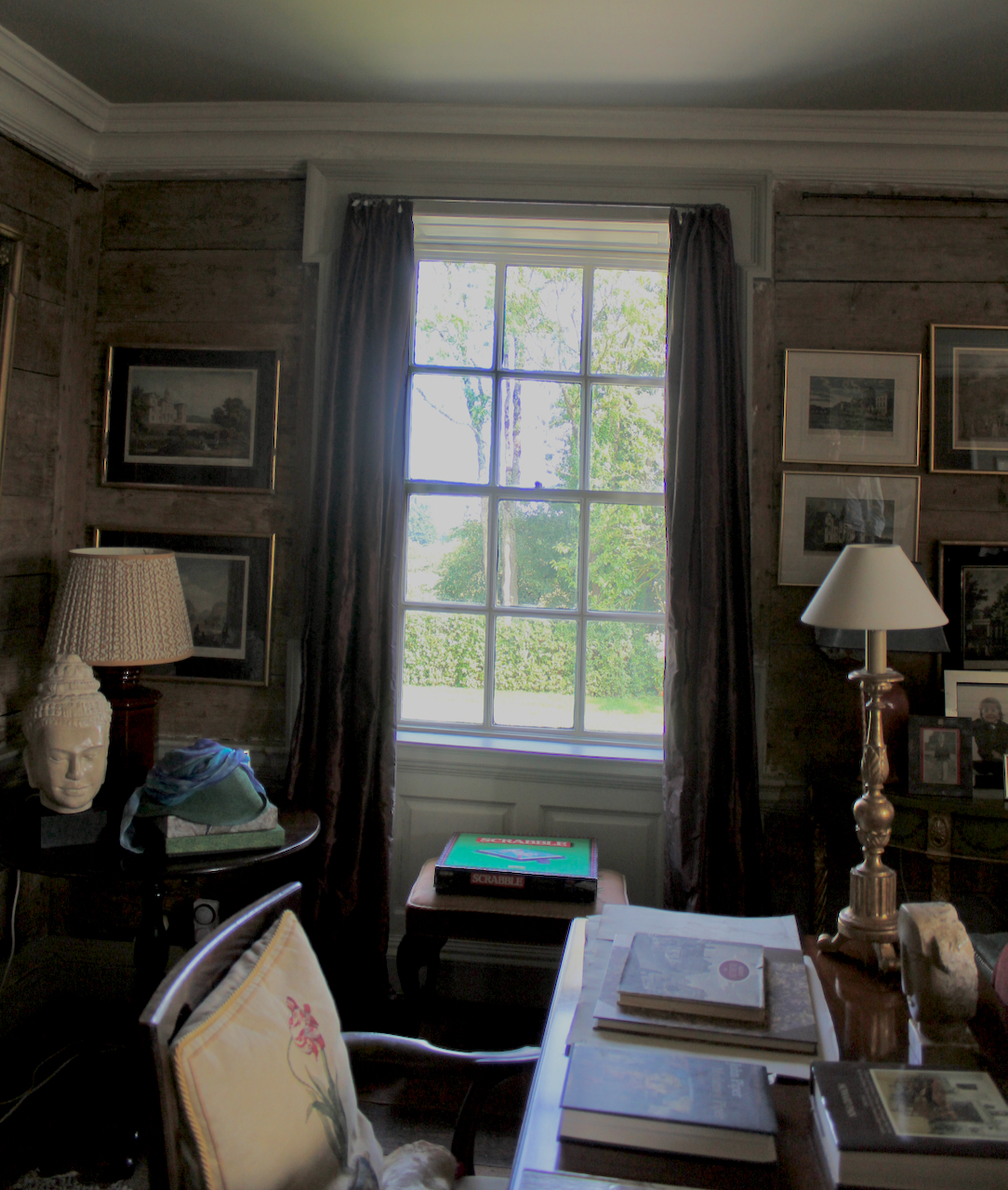
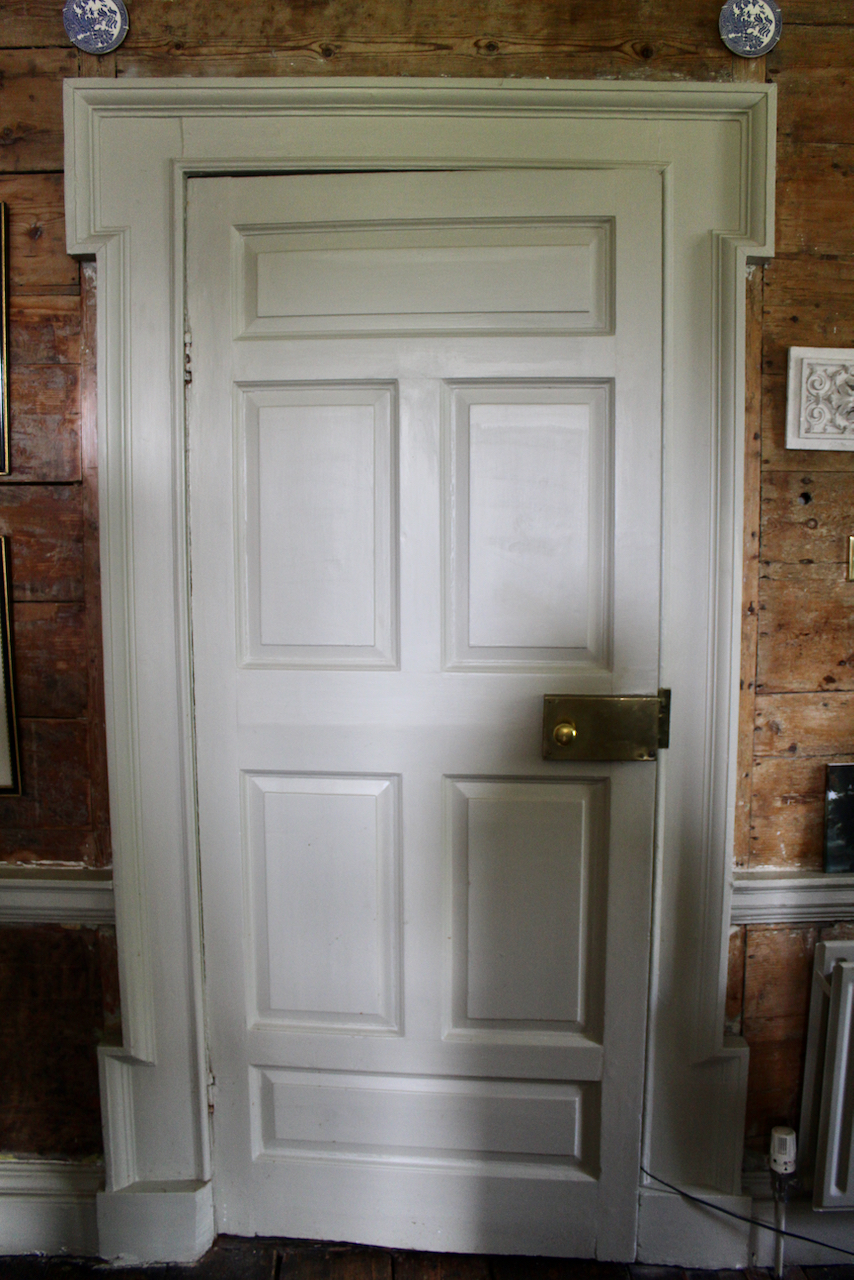
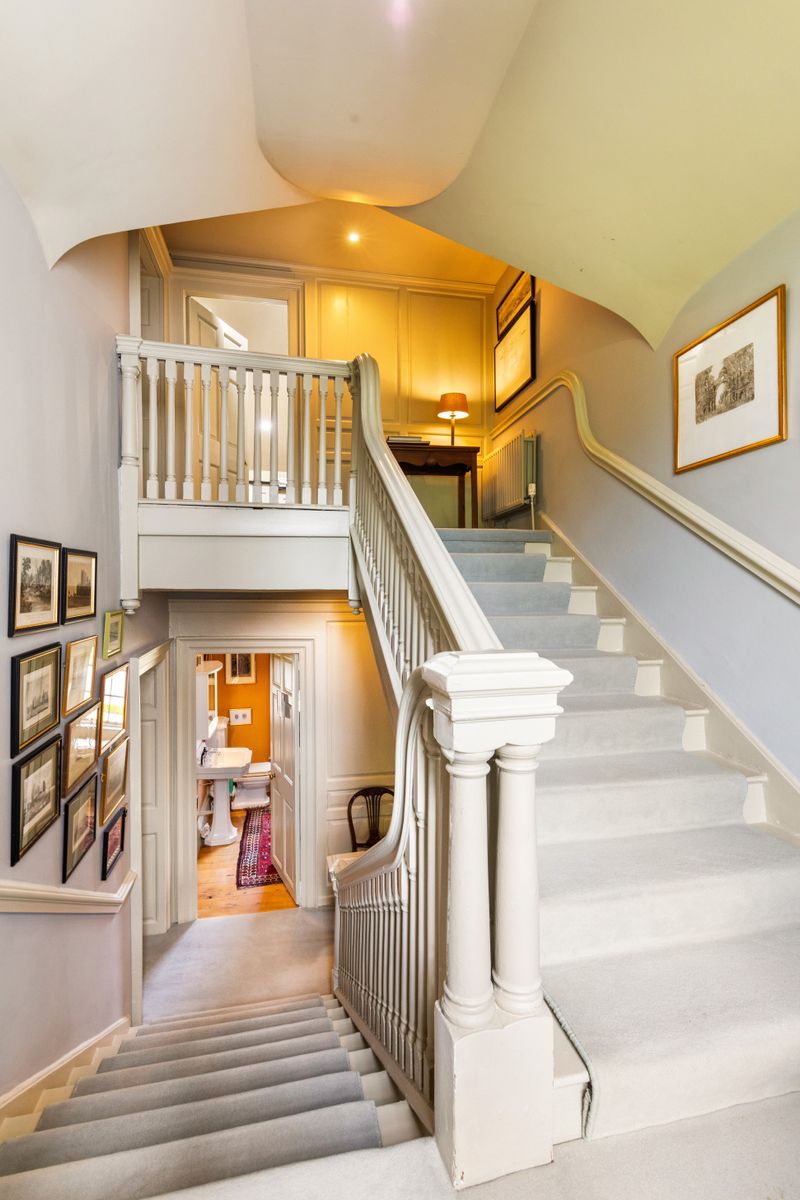
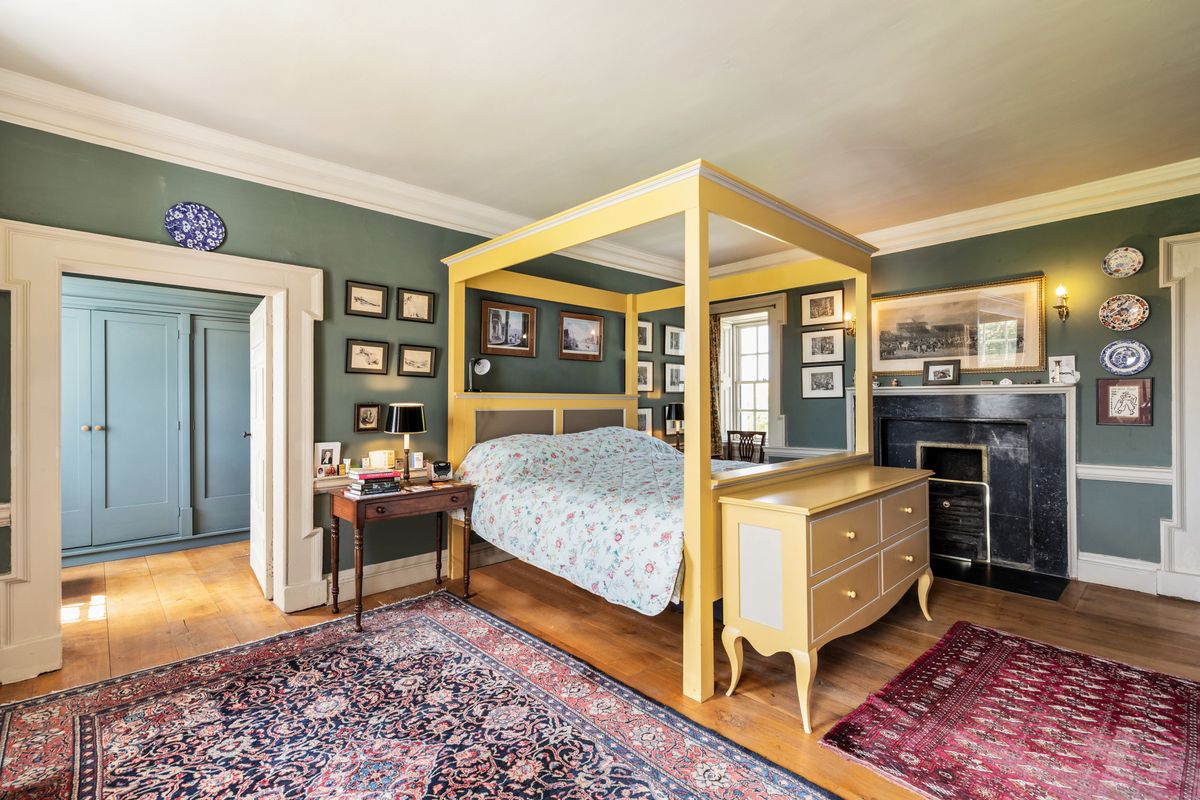
The staircase facing the main Queen Anne hall door leads to the first floor accommodation. As one arrives on the landing, on the left is a large double bedroom complete with original early 18th century panelling, original fireplace and original built in storage cupboards on either side. All of the bedrooms have functioning fireplaces.
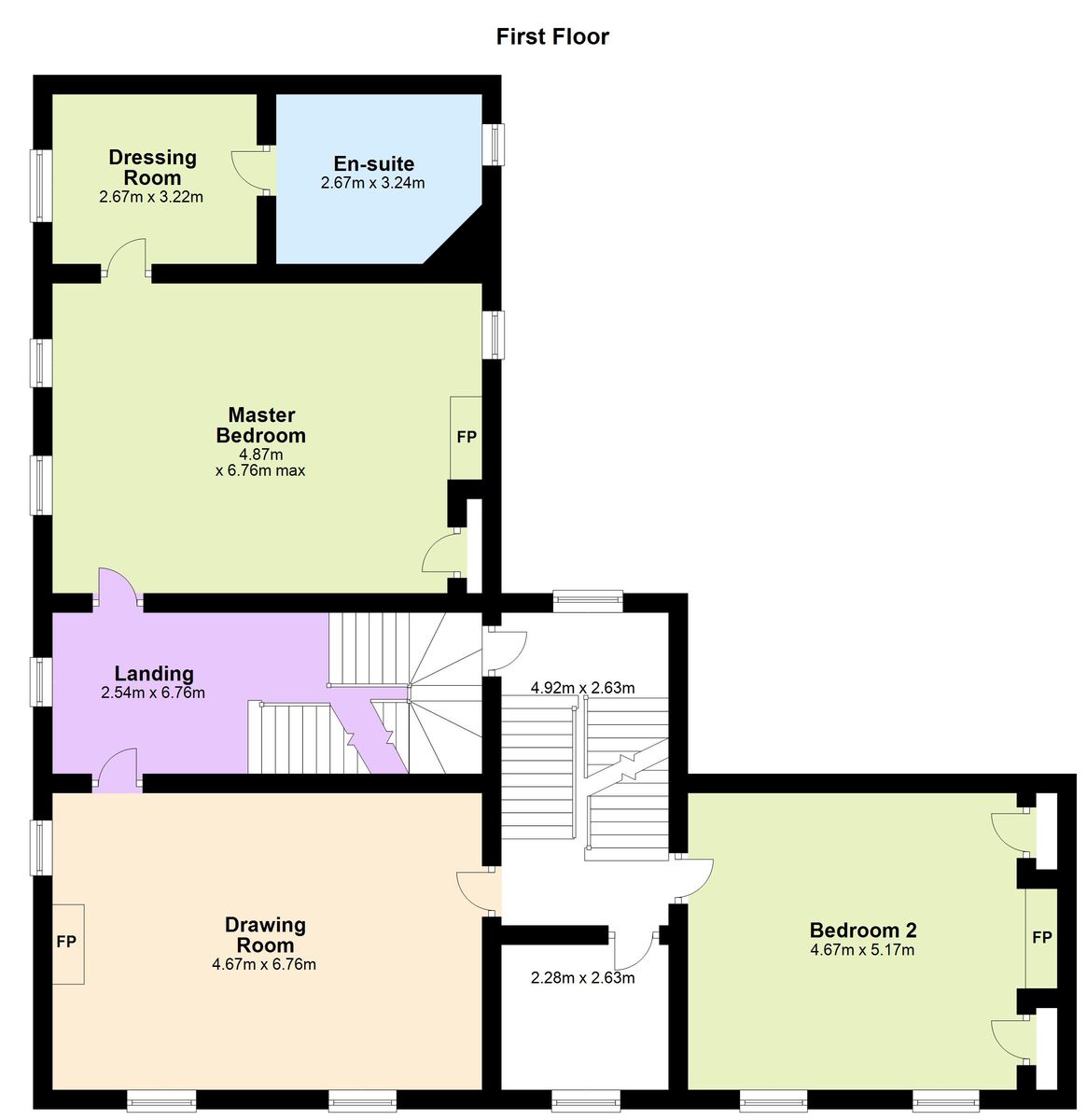
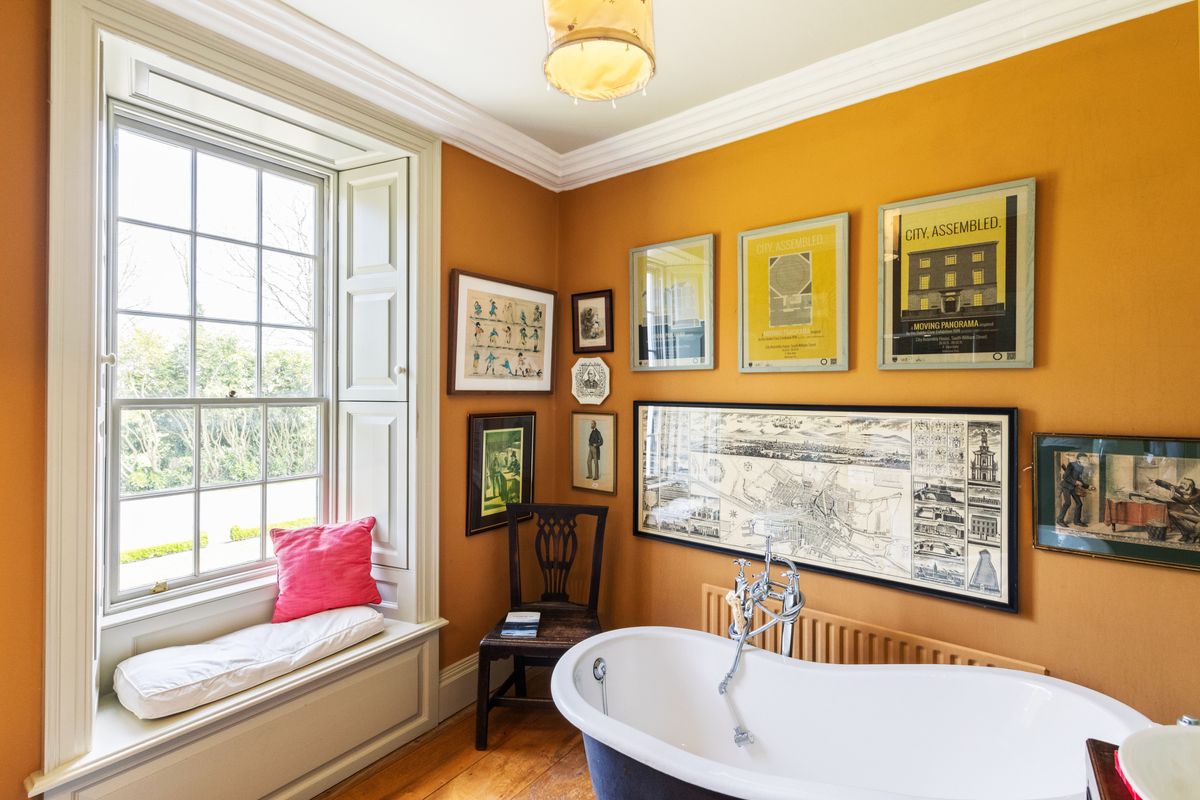
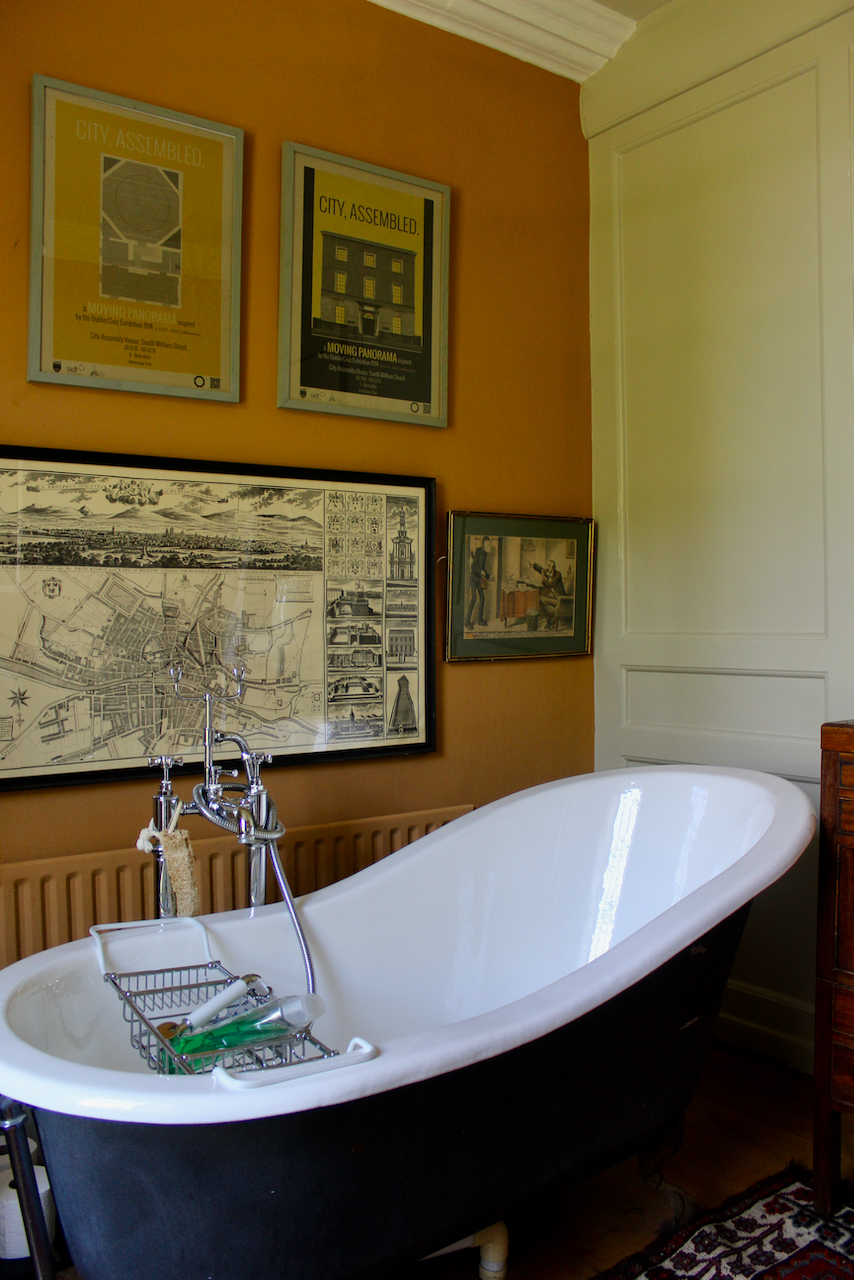
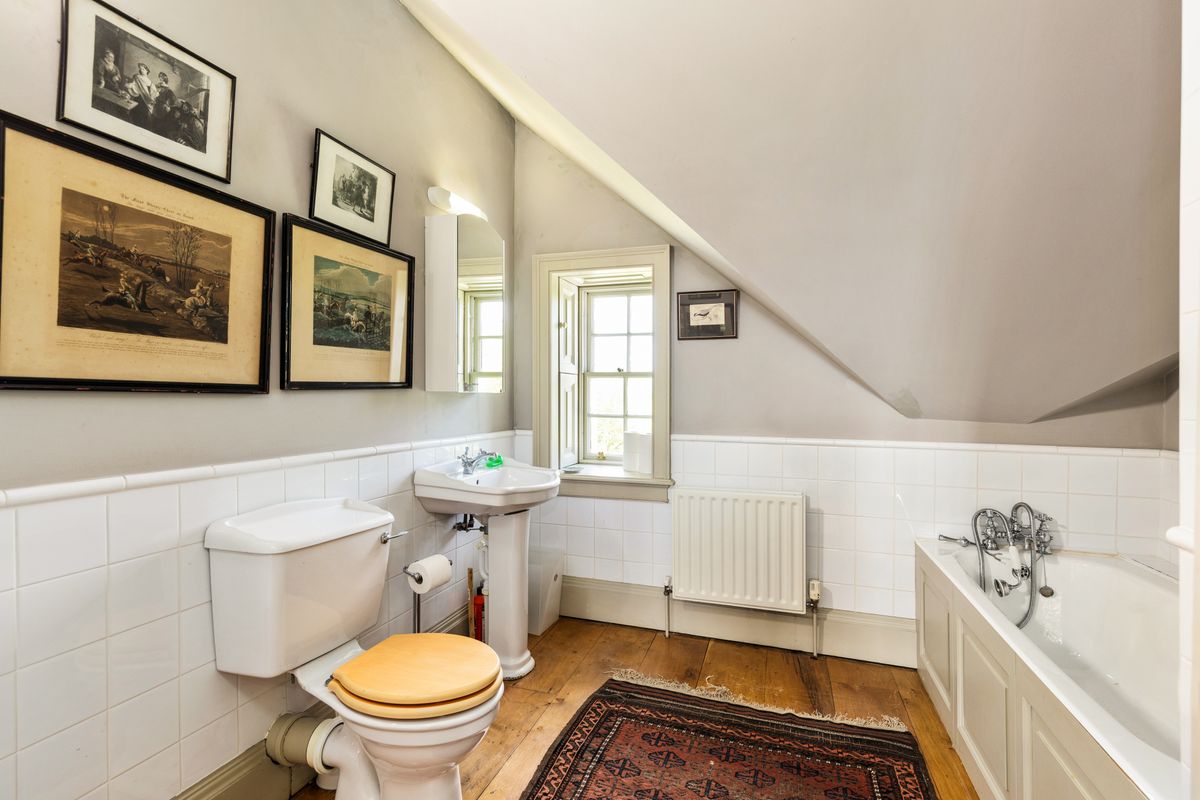
Straight ahead is the large family bathroom with a free standing slipper bath. To the right is the sitting room with the Baltic pine panelling.
Across the landing on this floor is the main bedroom suite with its original fireplace with black polished limestone surround. The adjoining dressing room features built in wardrobes, also by Clive Nunn of Kilkenny, while the en-suite bathroom boasts a freestanding rolled top bath, a traditional rain shower, wall radiators and a fireplace with a lime stone surround.
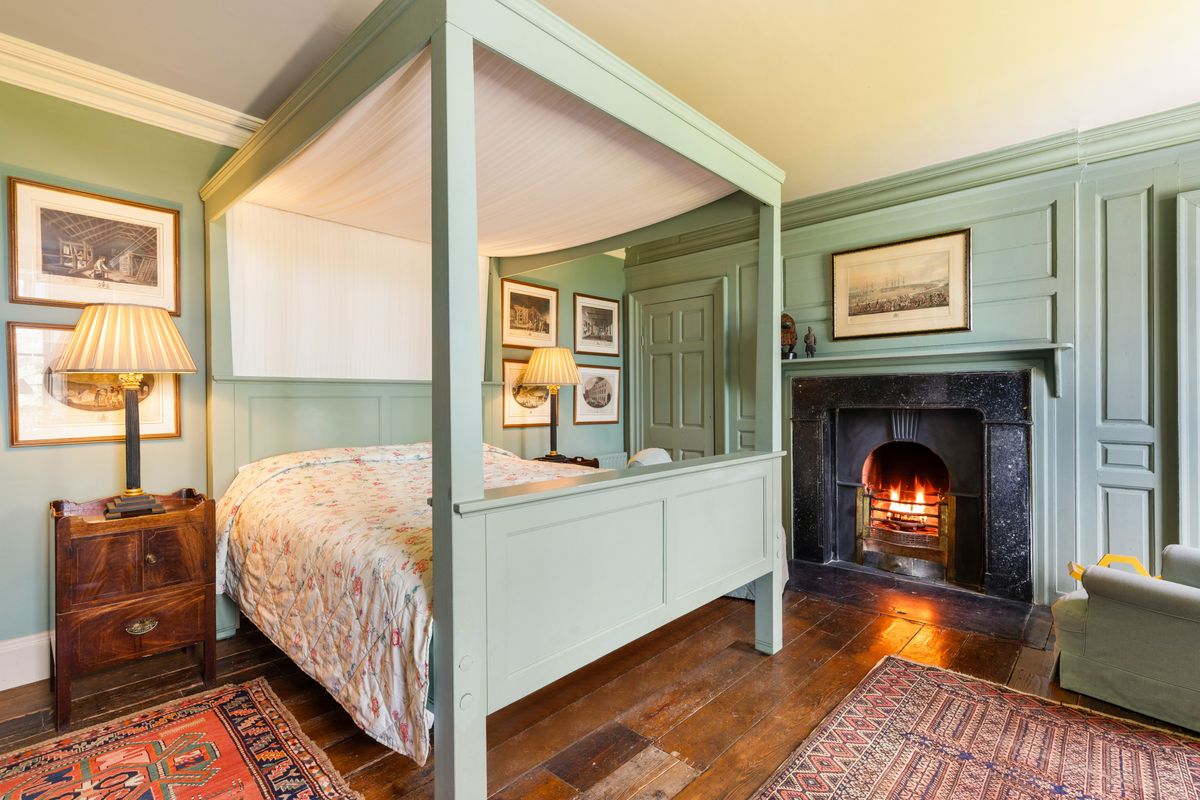
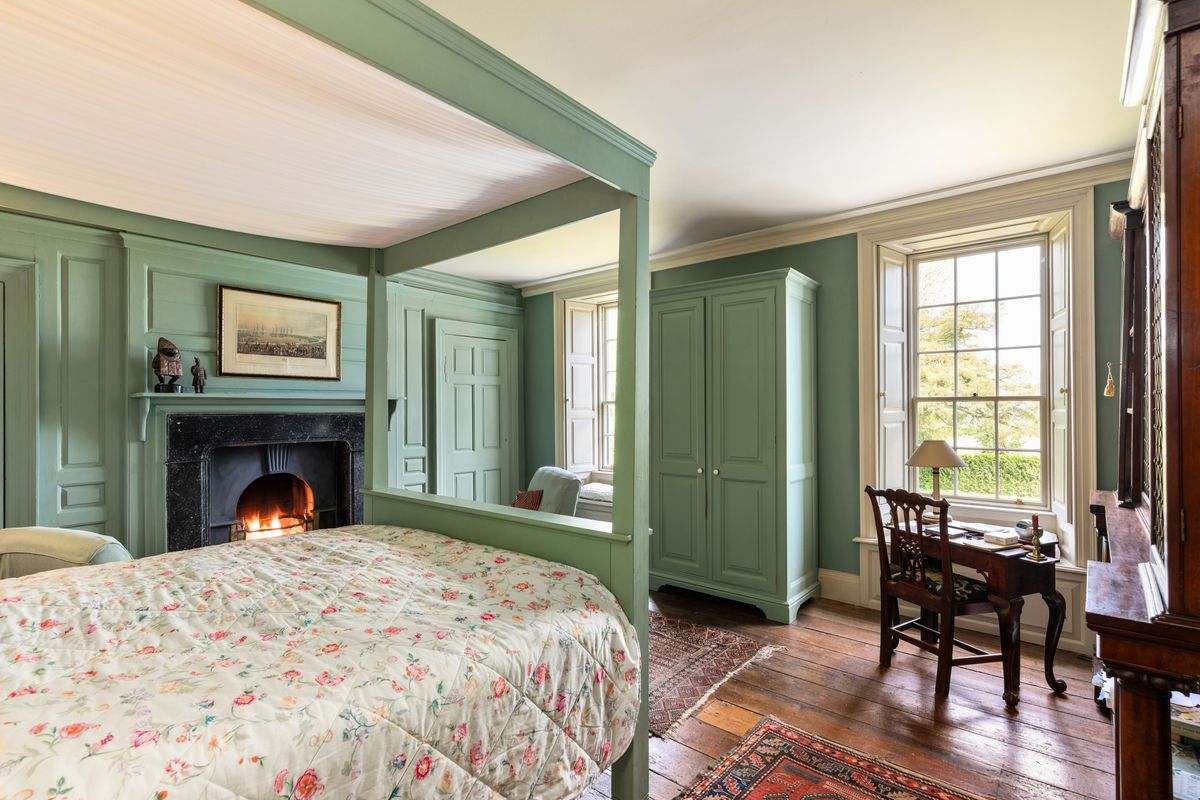
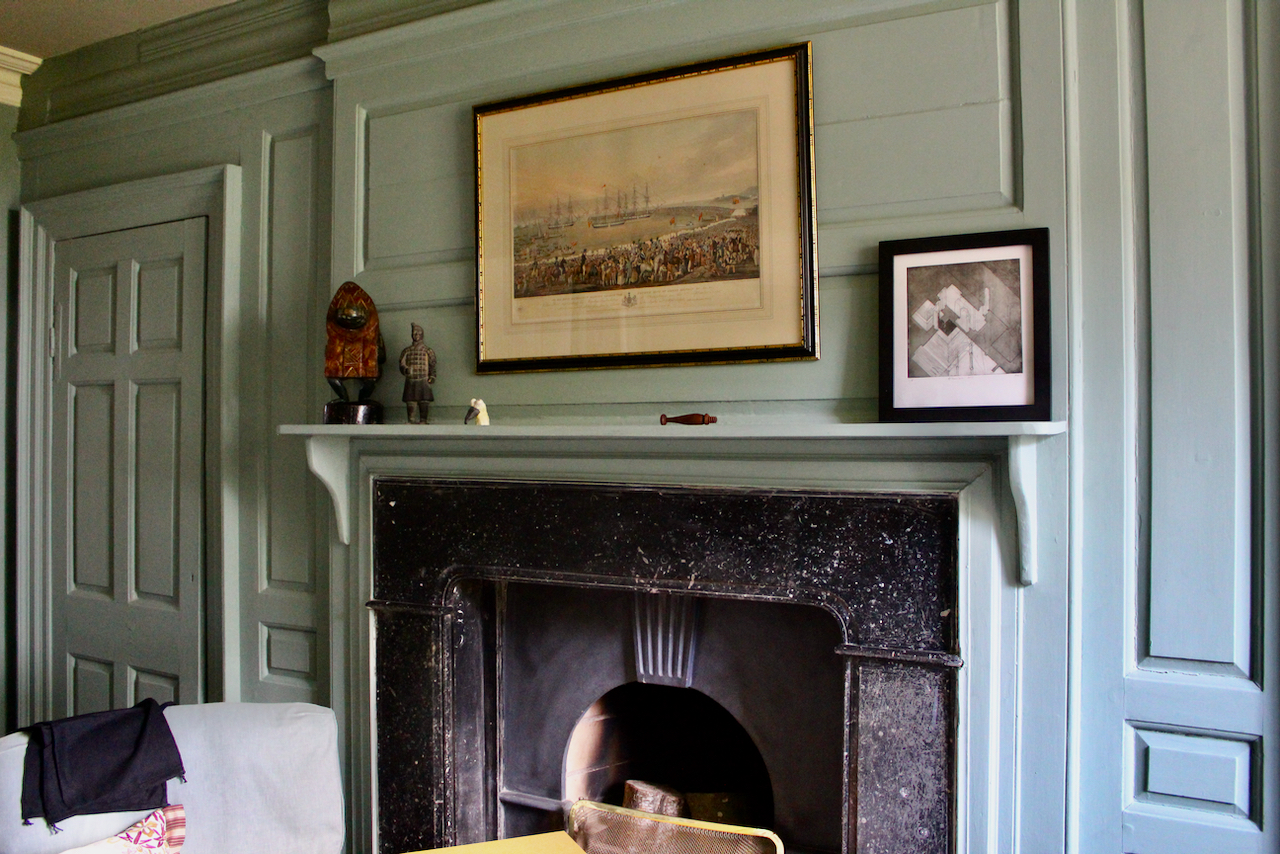
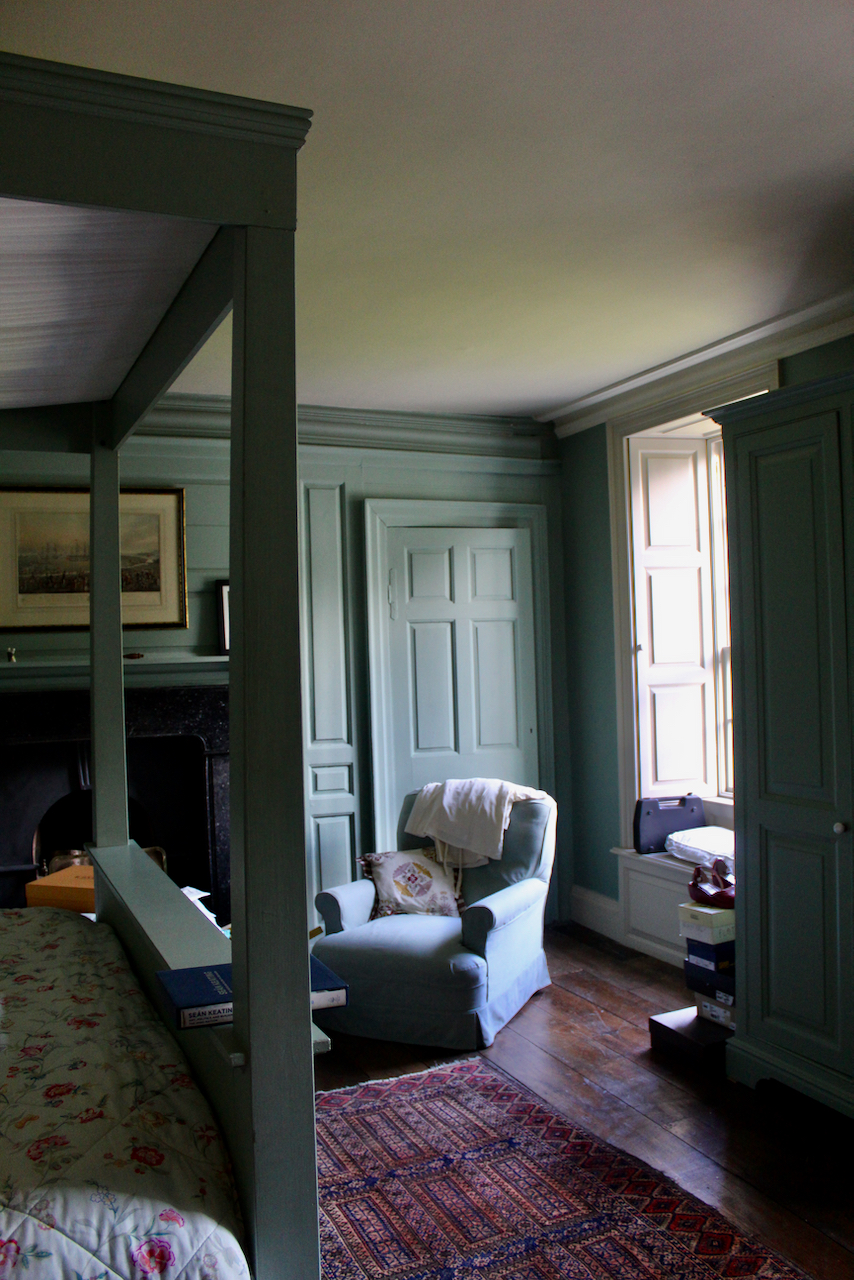
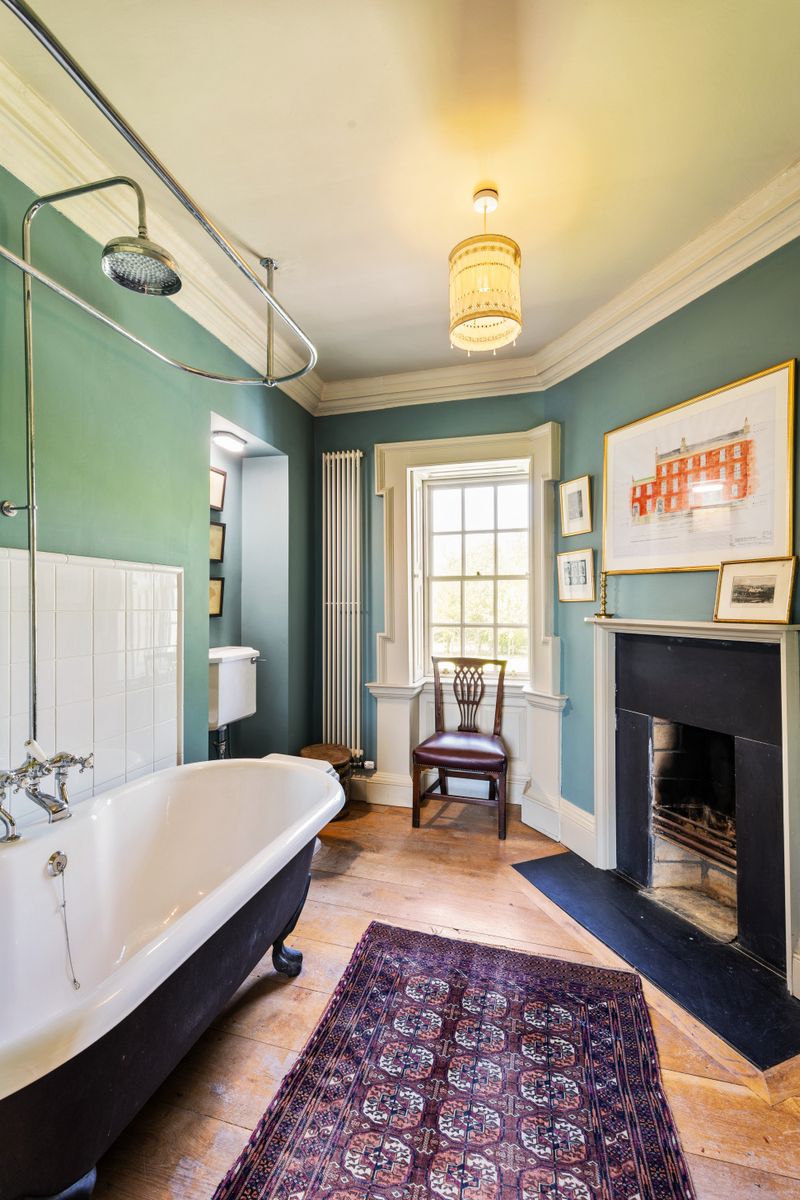
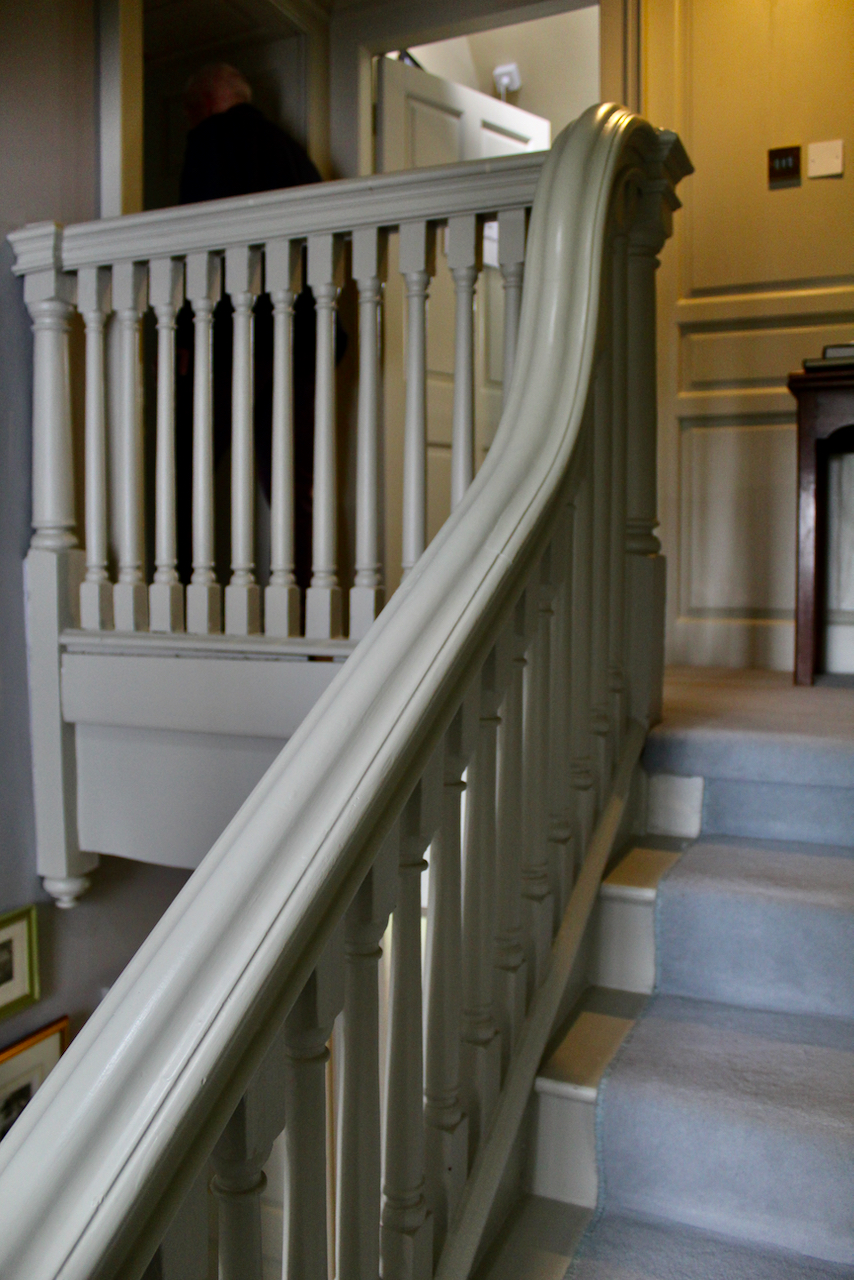
The second floor in the south side of the house has two bedrooms with Mansard windows which allow the light to enter.
One bedroom features a fireplace with a freestanding stove, a walk-in dressing room with an en-suite bathroom including bath, bidet and separate shower.
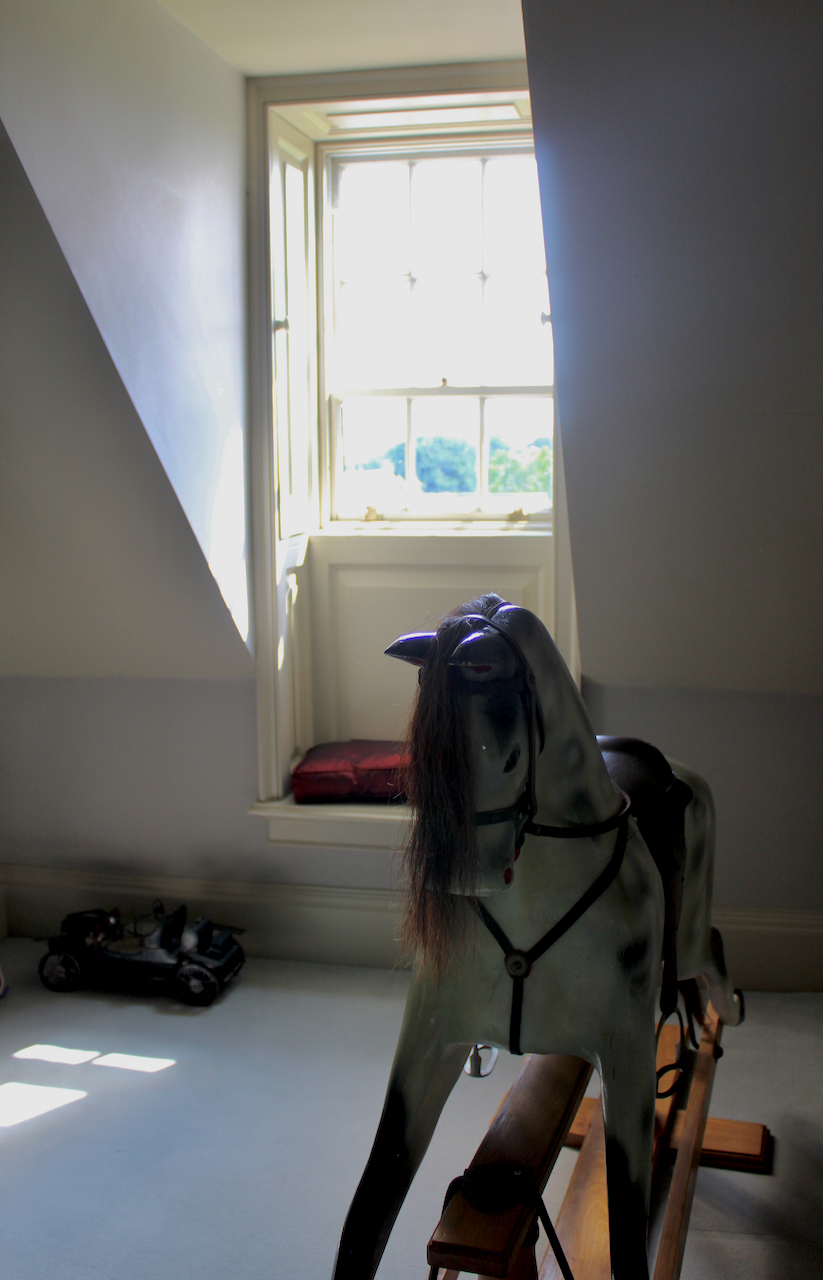
The second bedroom on this floor was used as a nursery/sitting room/office. This room also has its original fireplace surround with a free standing stove.
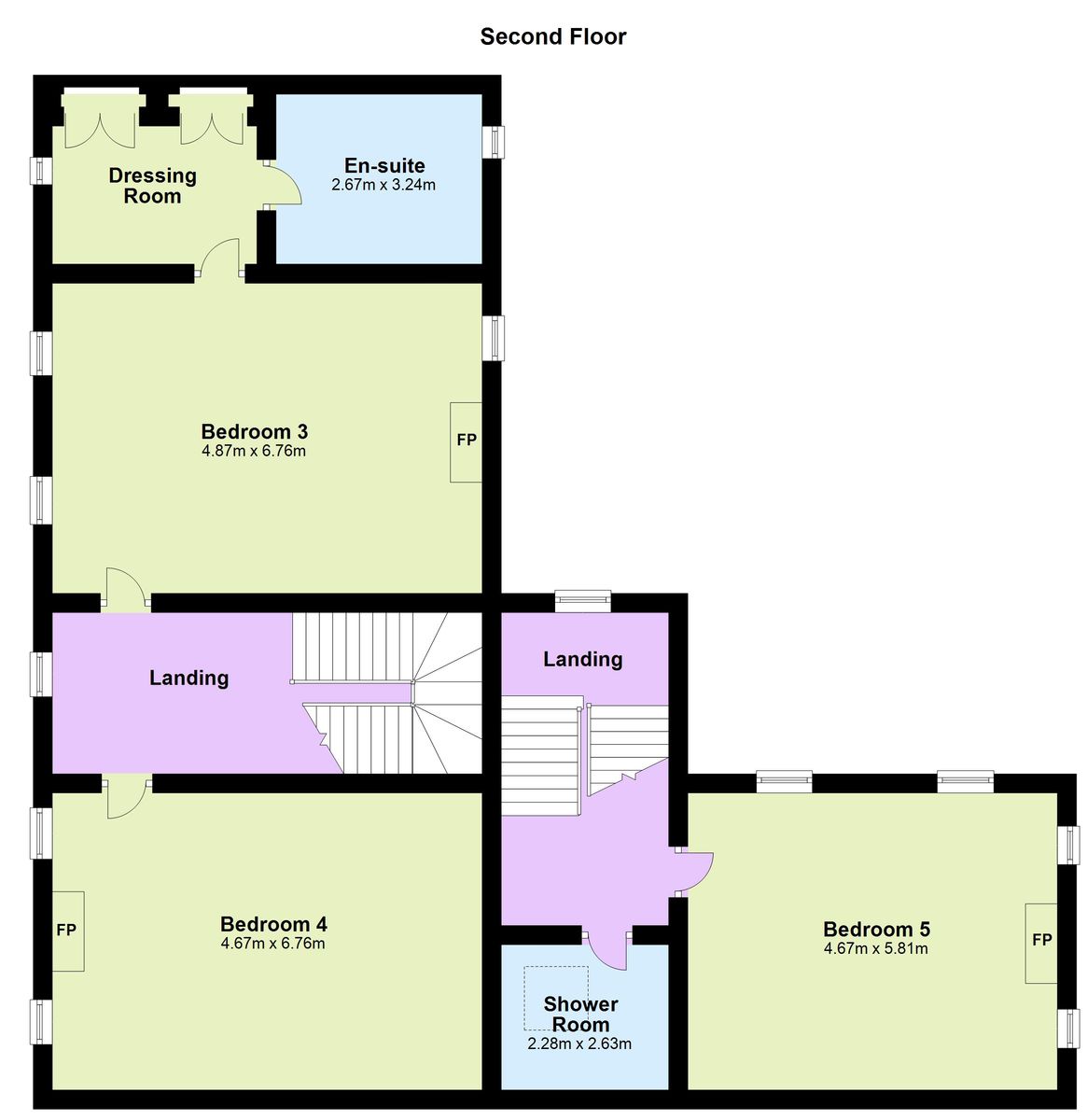
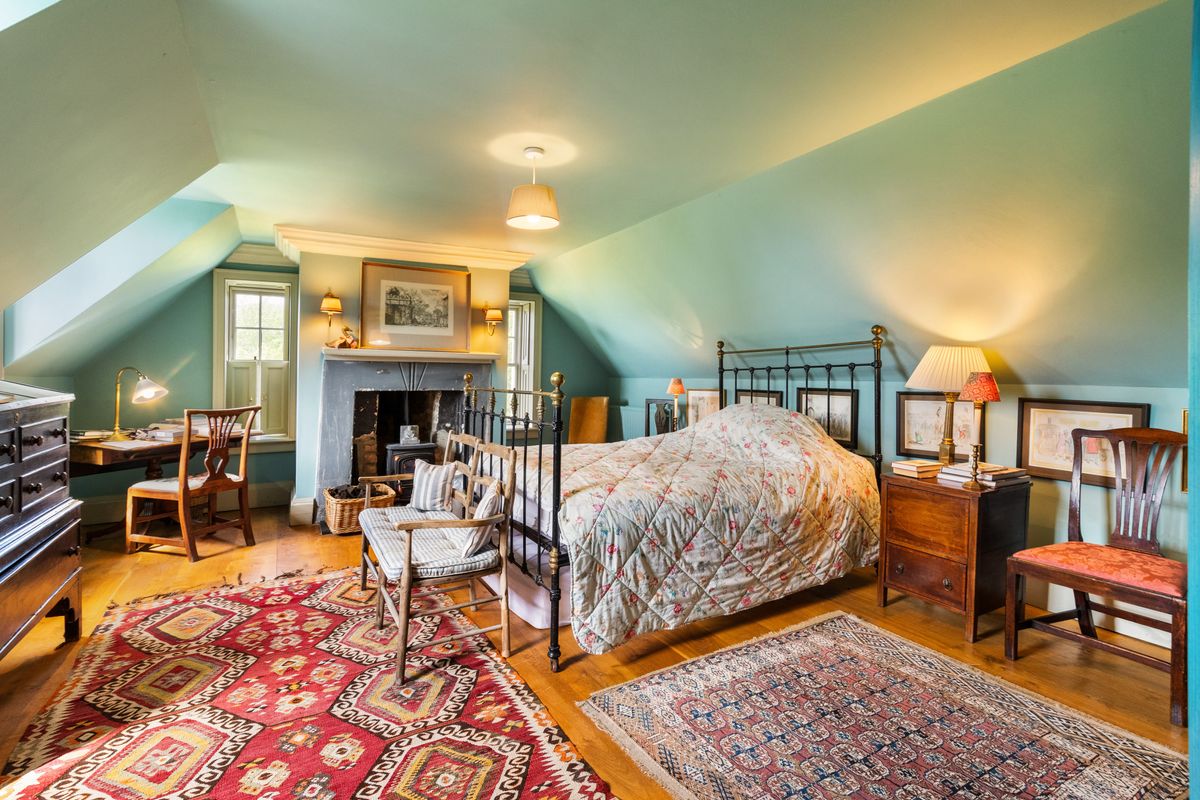
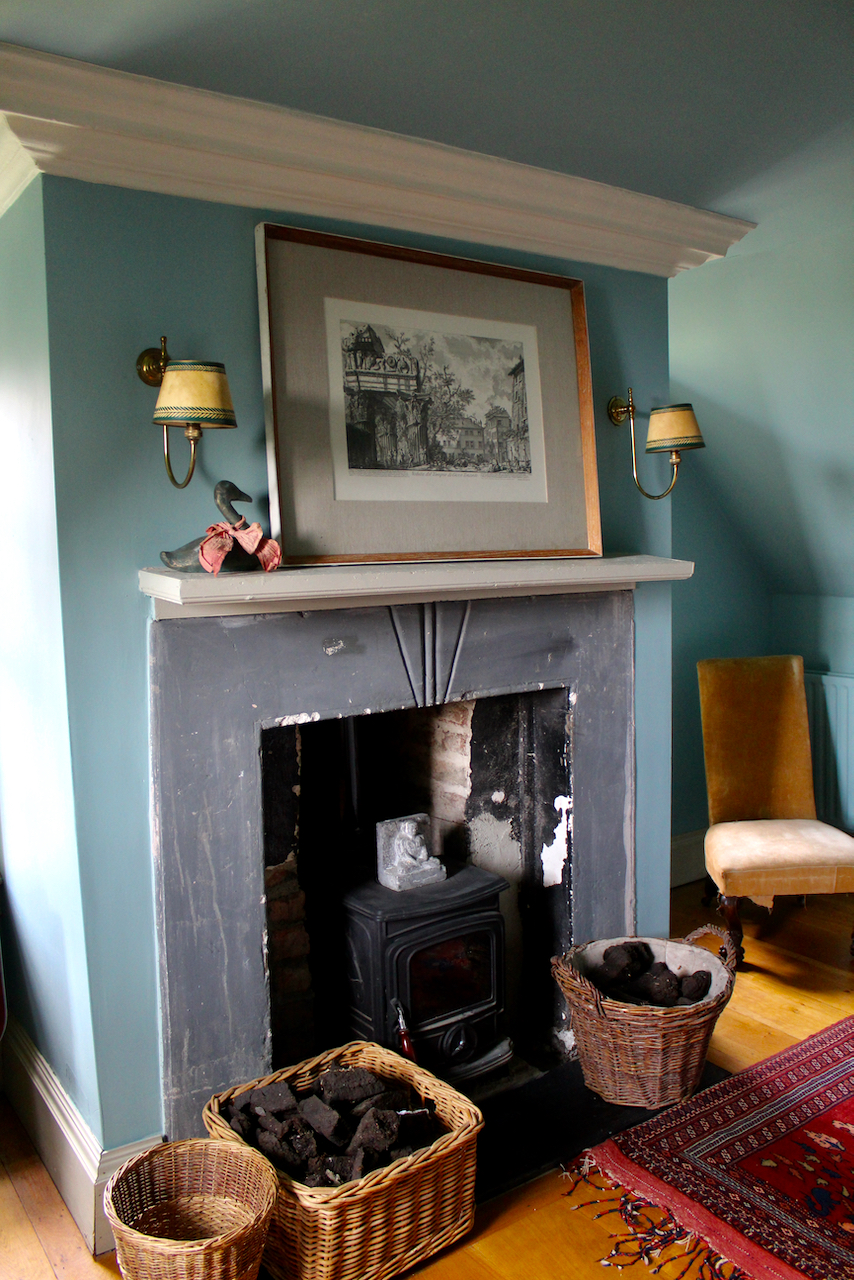
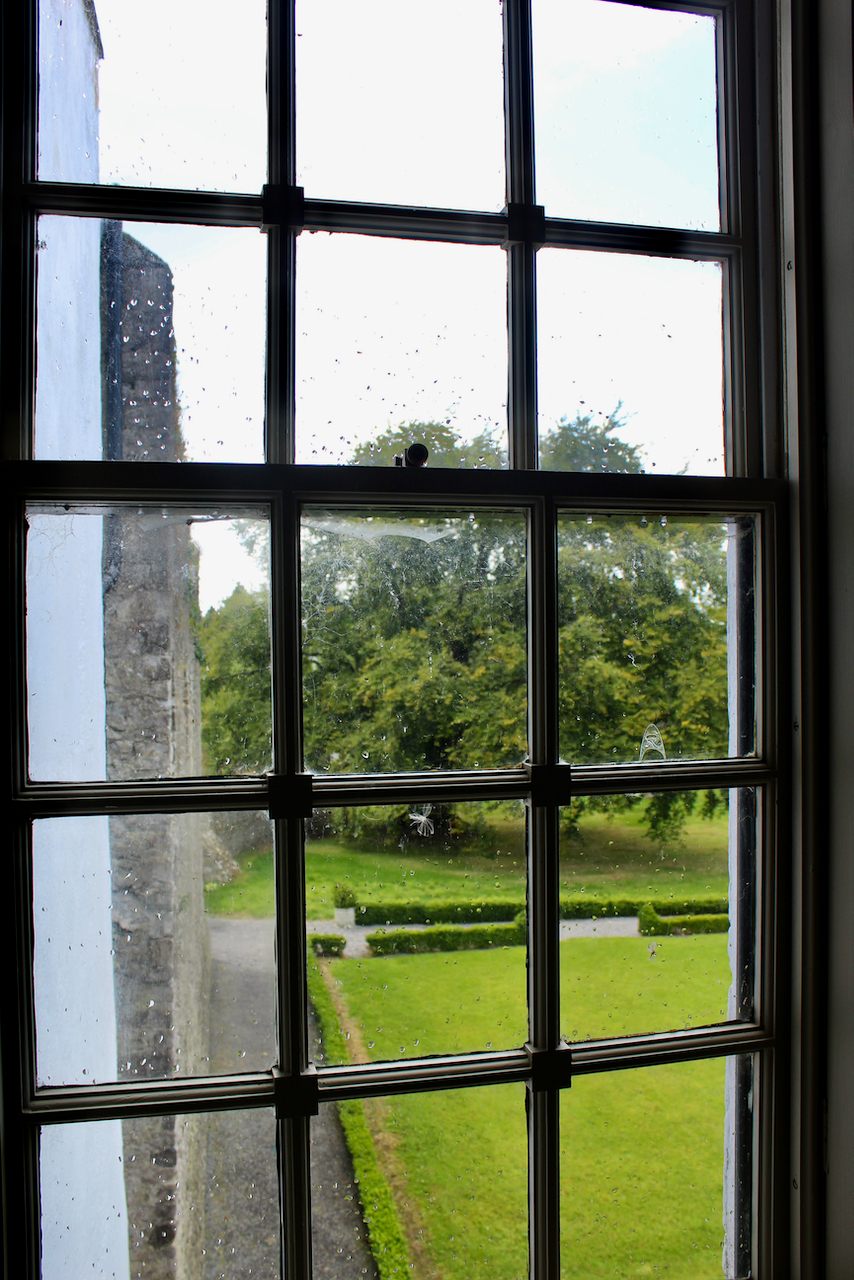
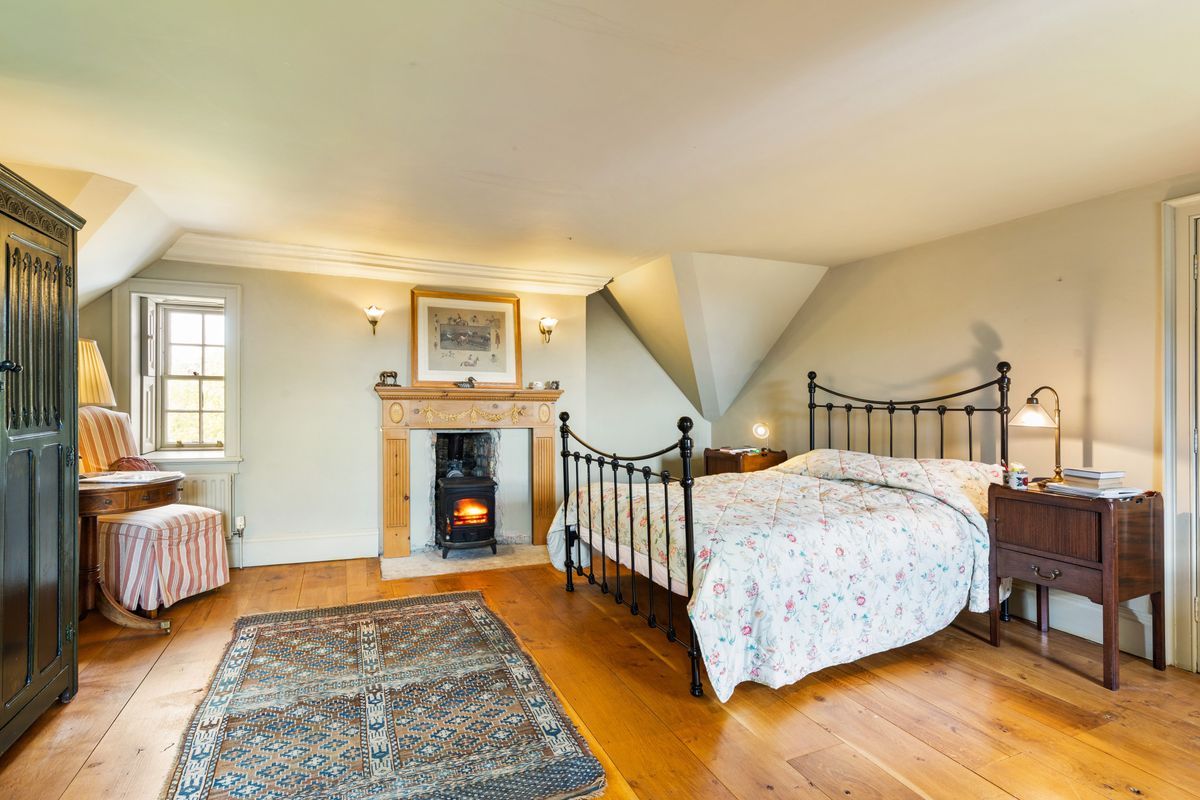
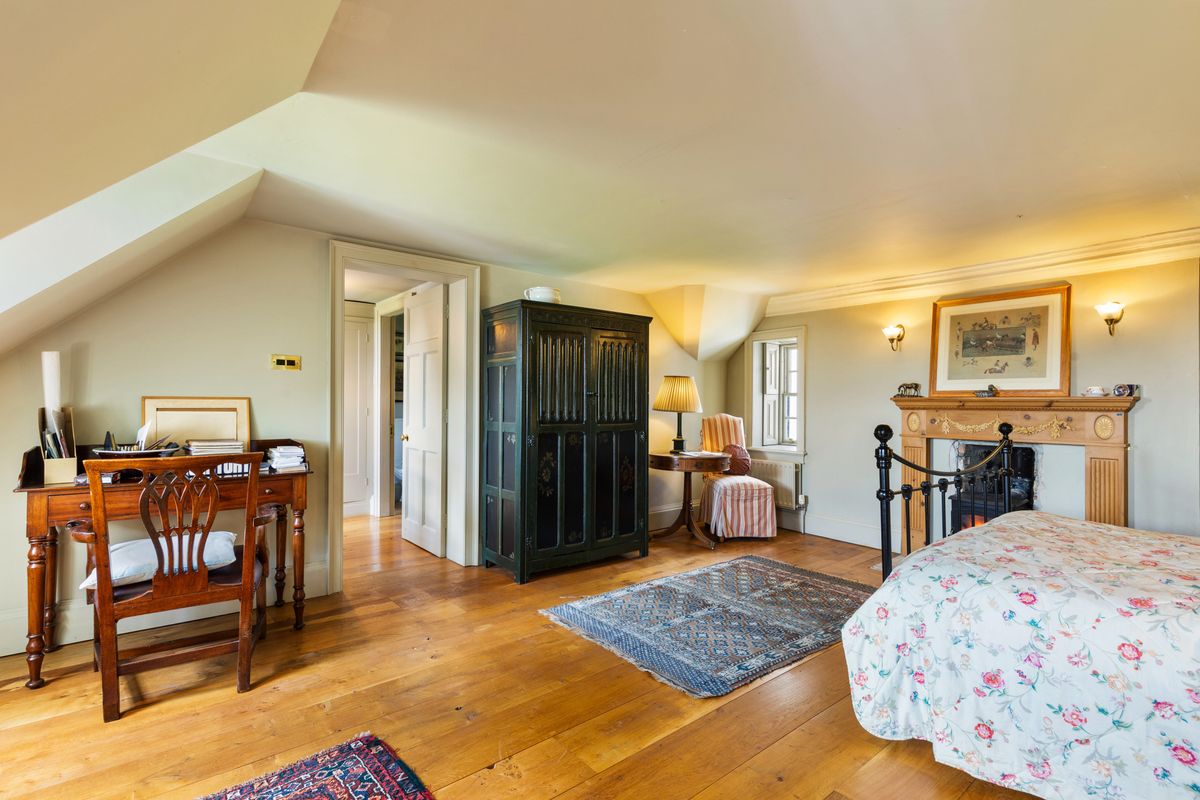
On the Queen Anne side, continuing up the staircase from the entrance hall is a double bedroom with Mansard and gable windows with its own private bathroom. This bedroom also has its original fireplace and a free standing stove.
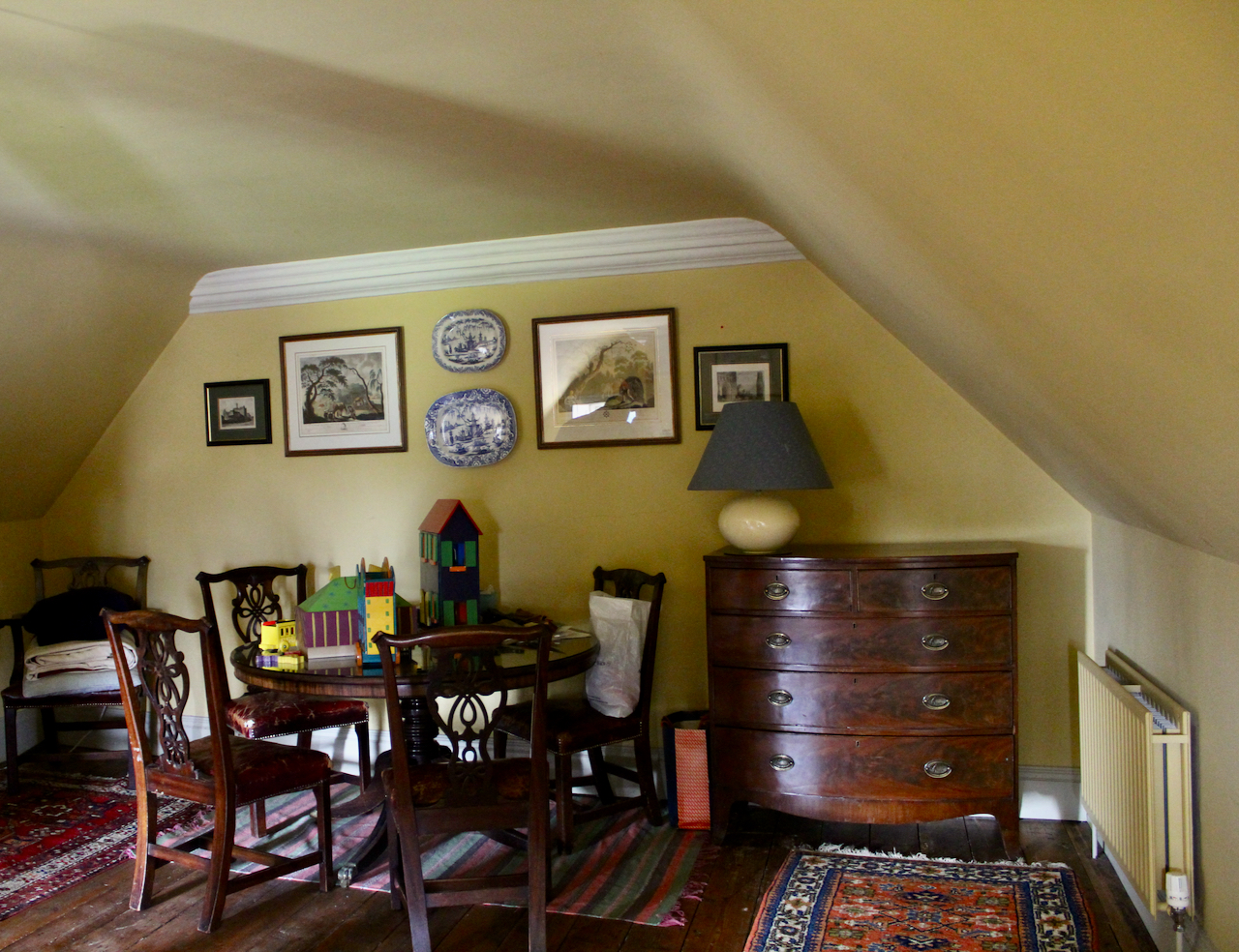
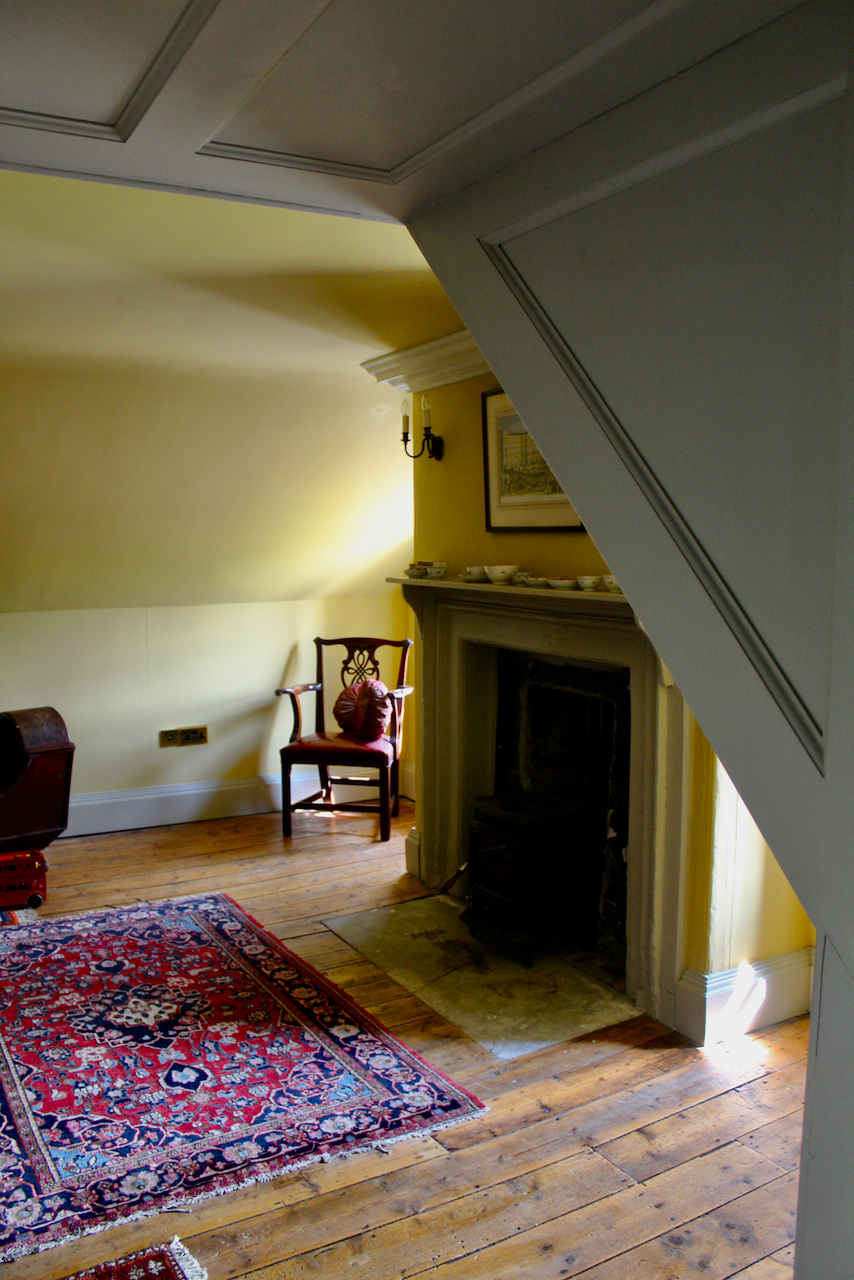
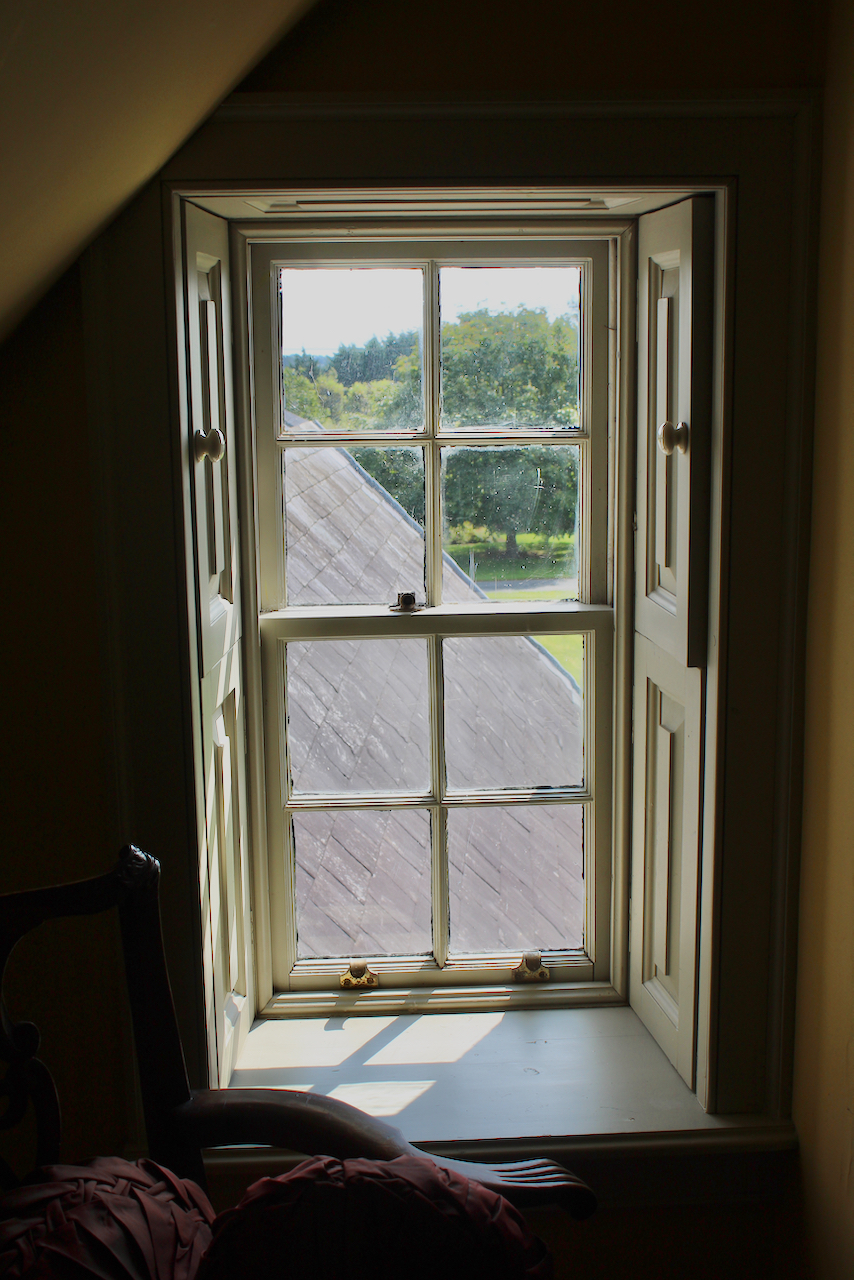
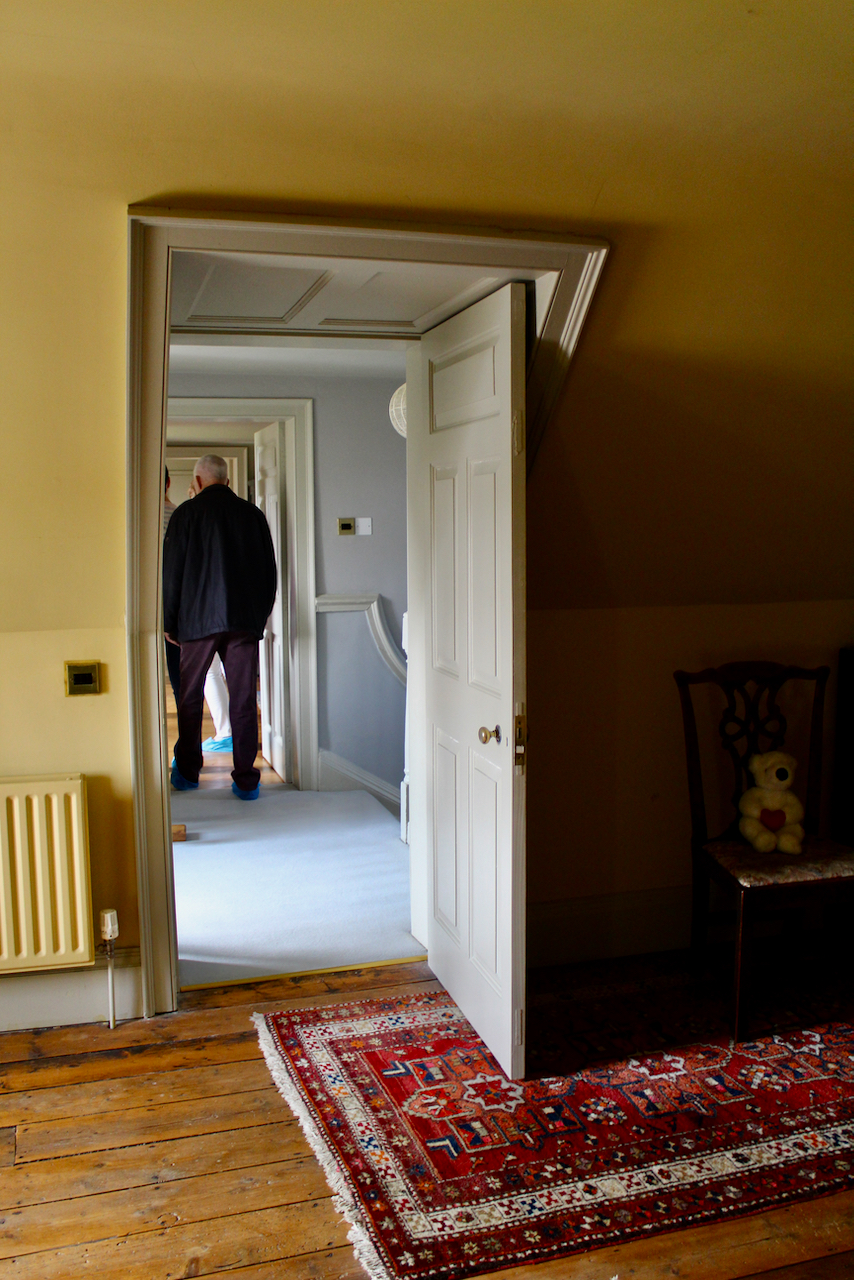
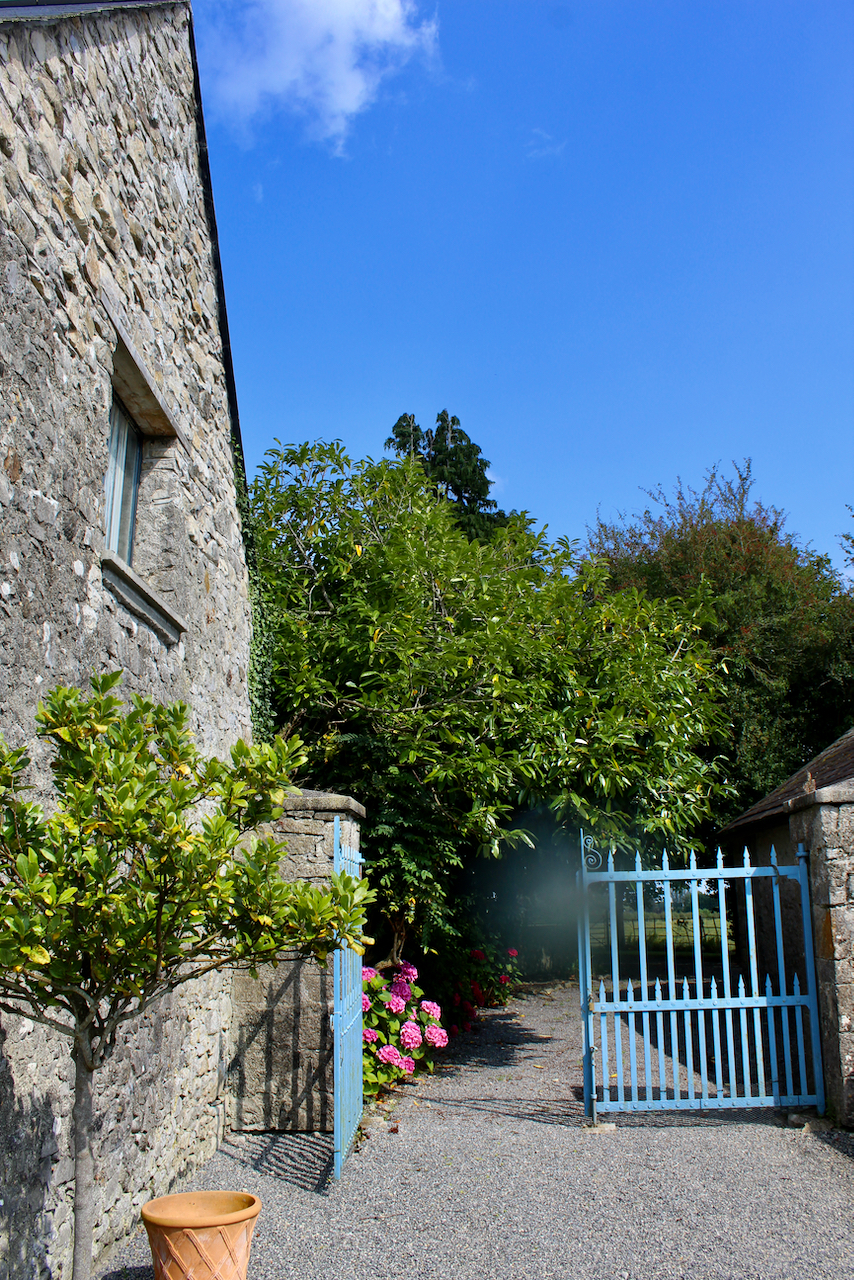
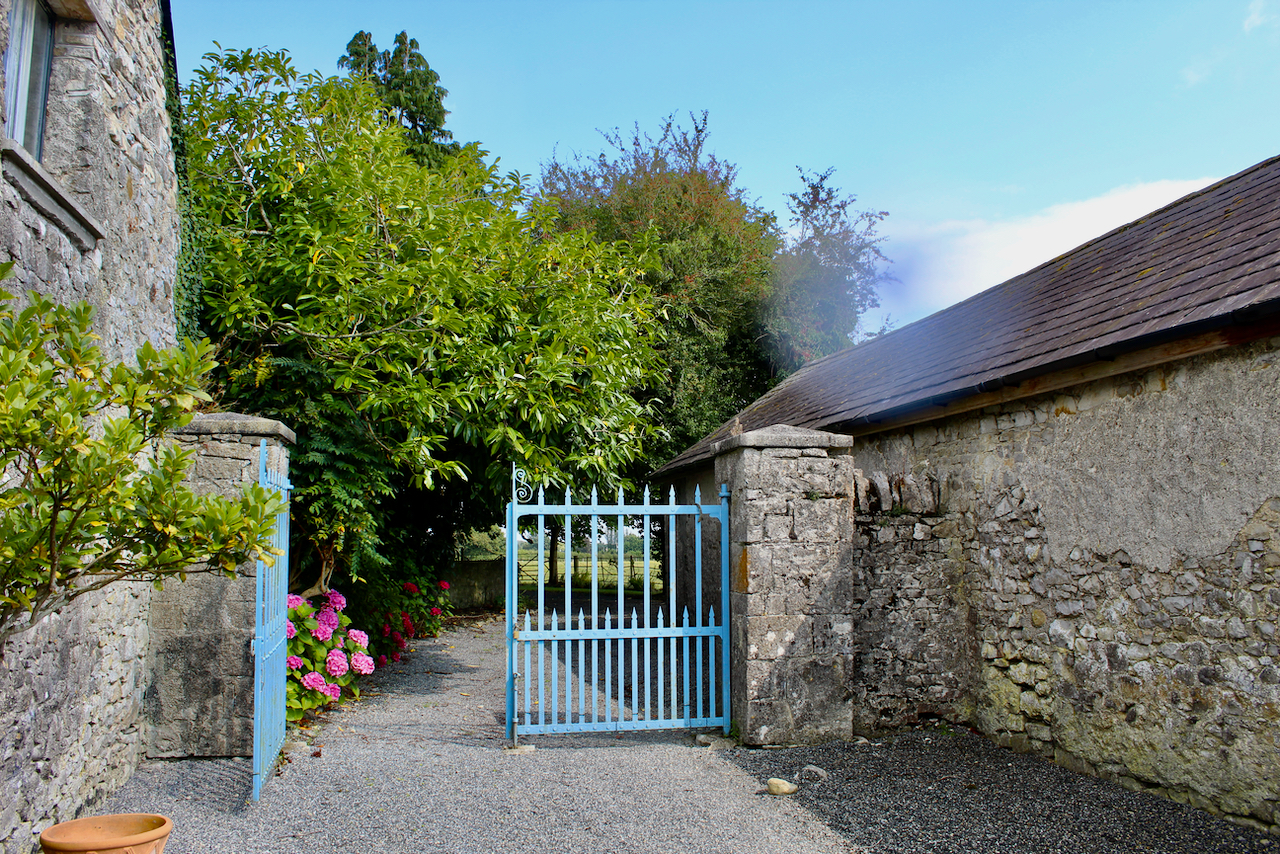
After our tour of the house we wandered into the garden, the sunny day made a perfect setting. However, it started to rain, as you can see from the raindrop on my photo lens!
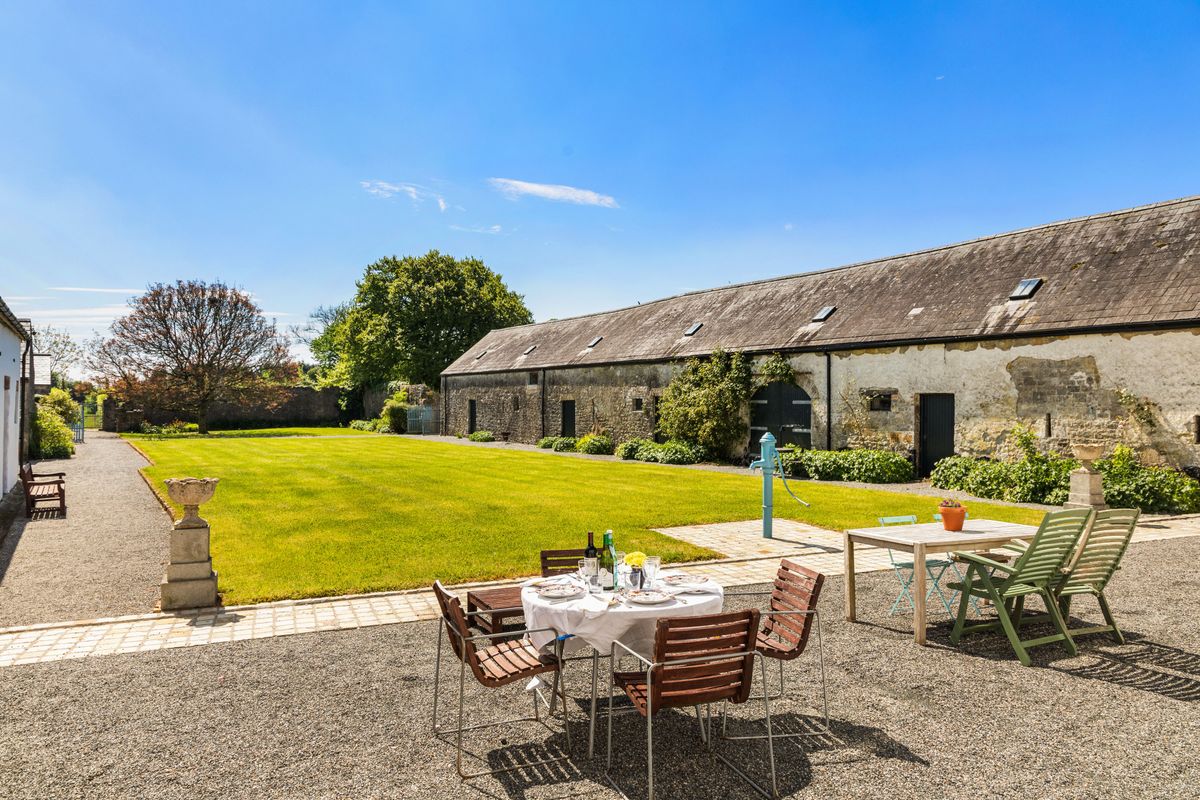
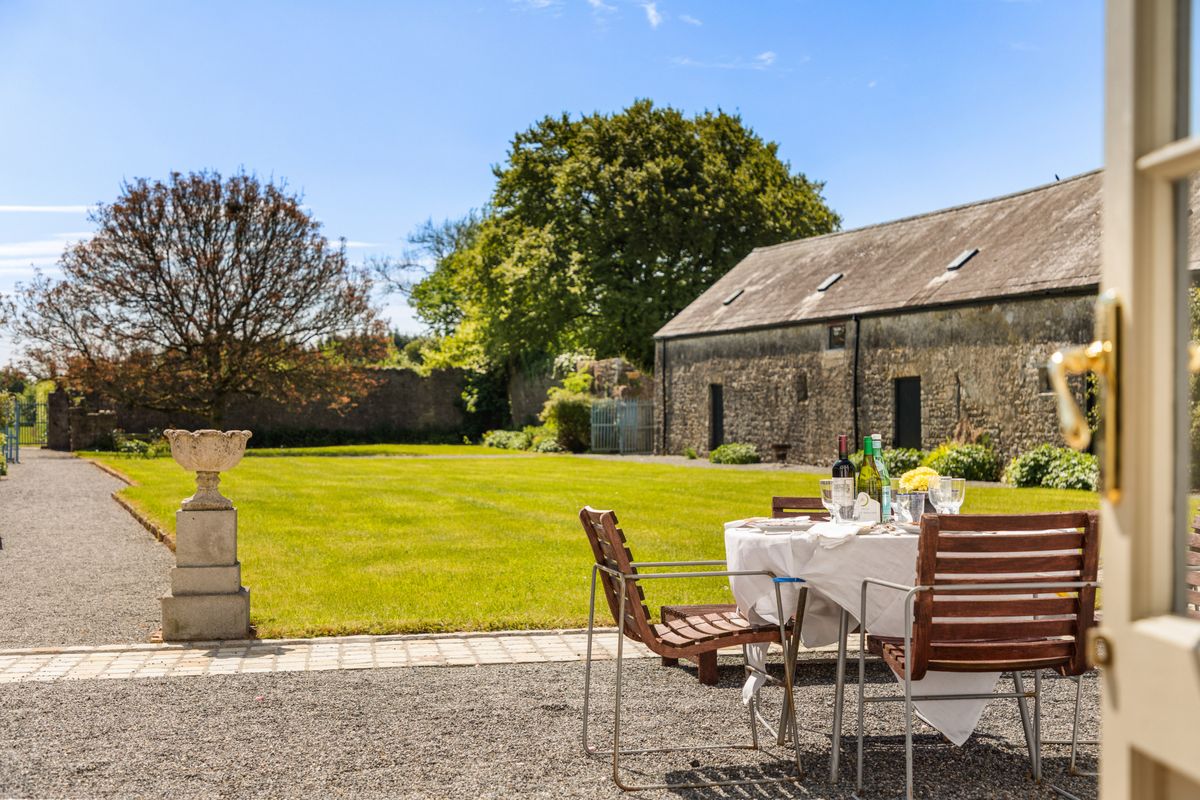
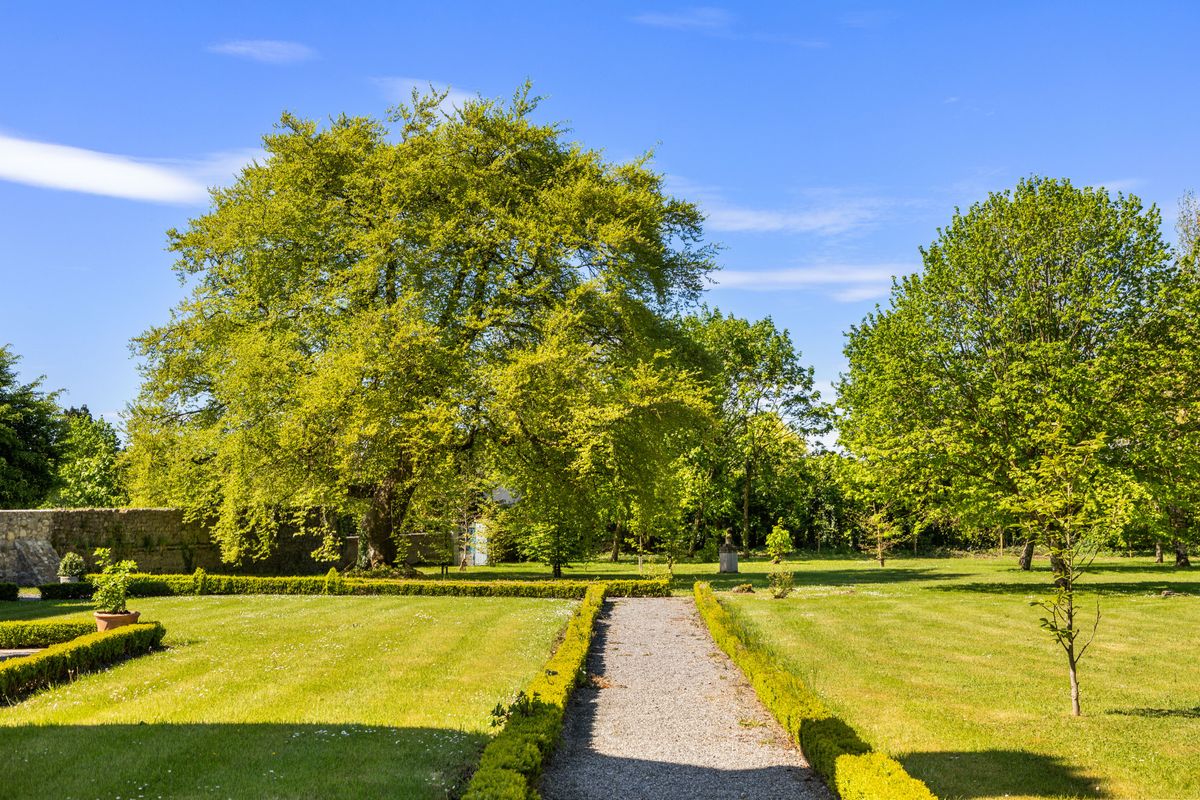
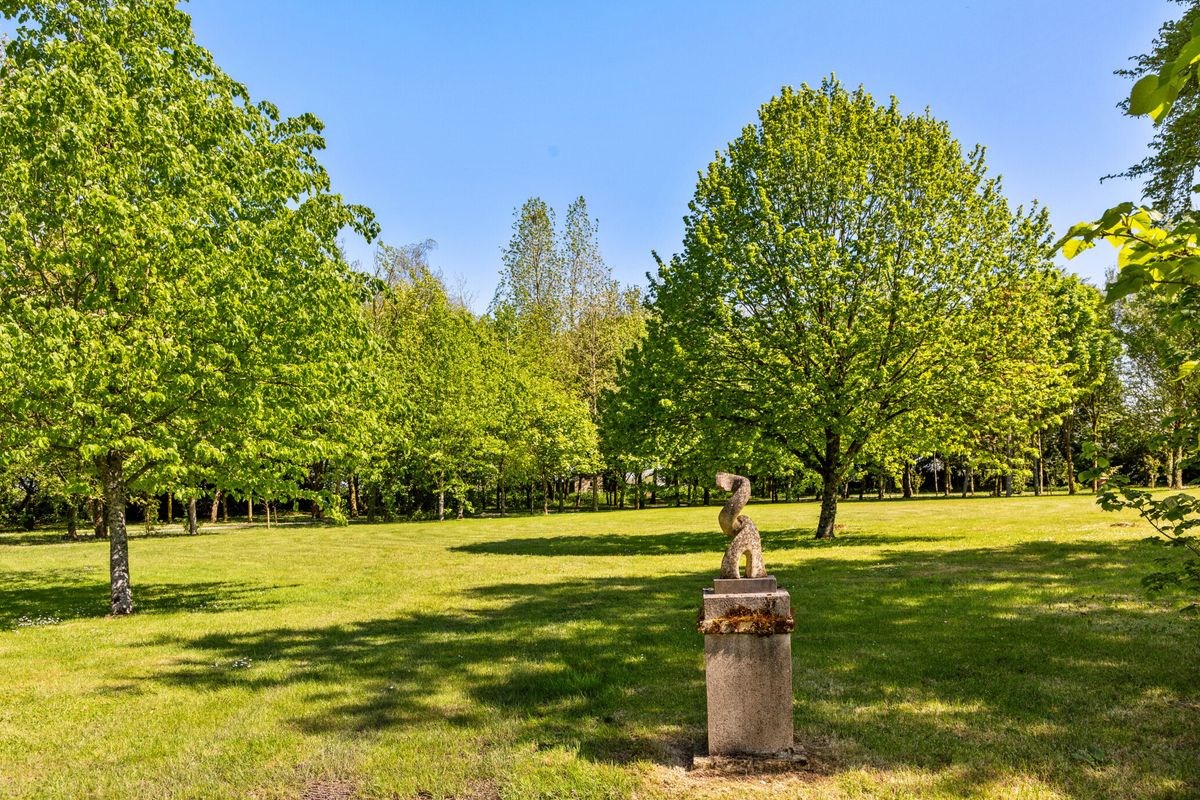
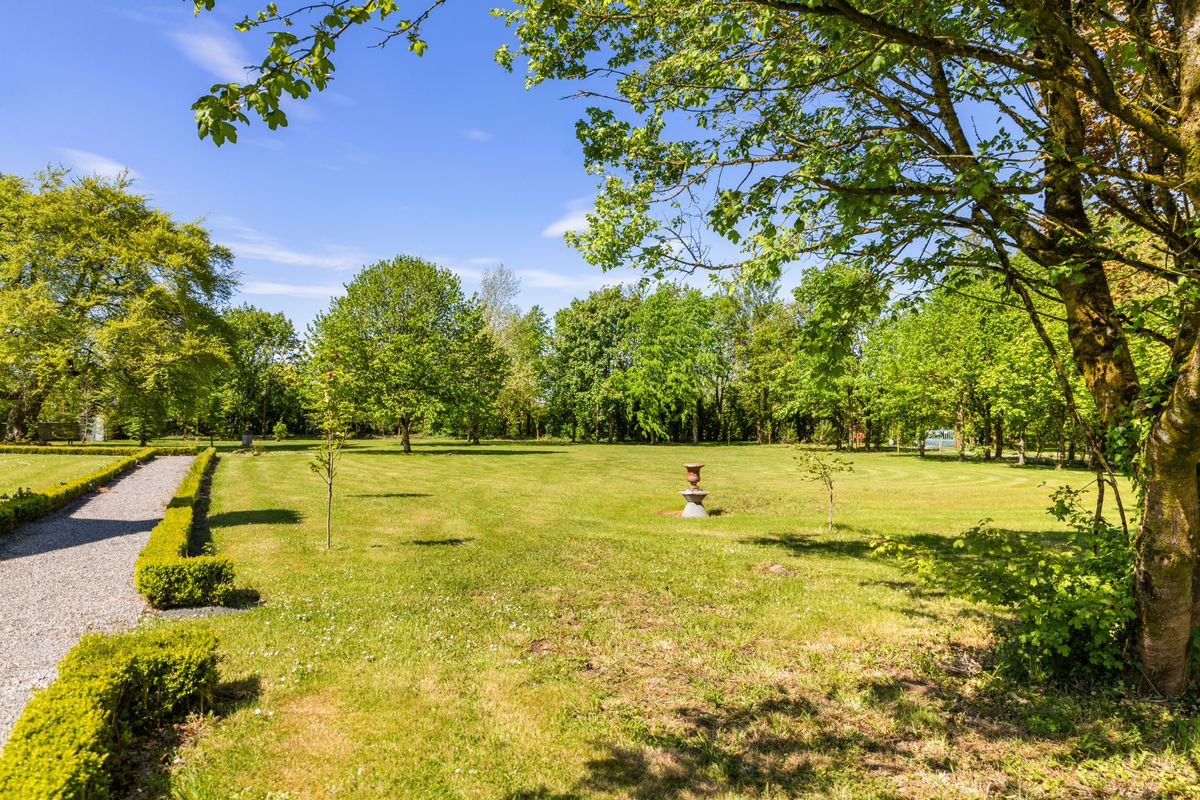
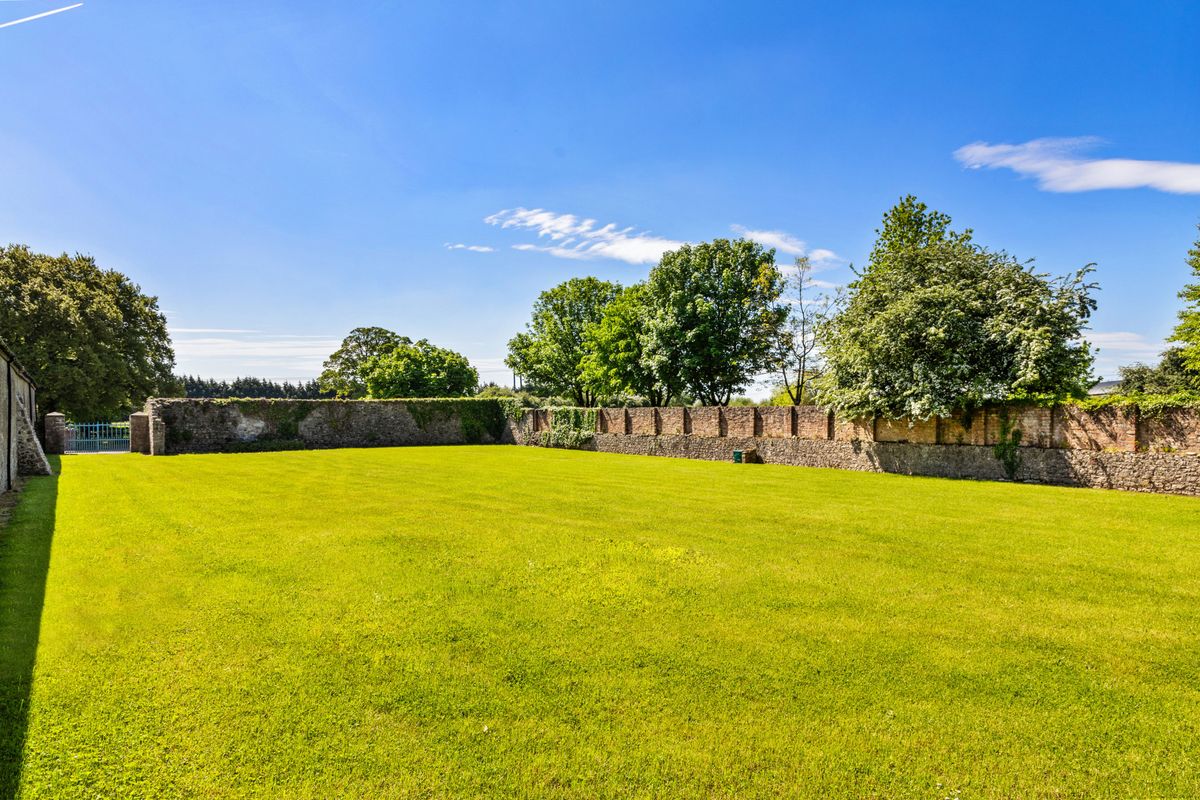
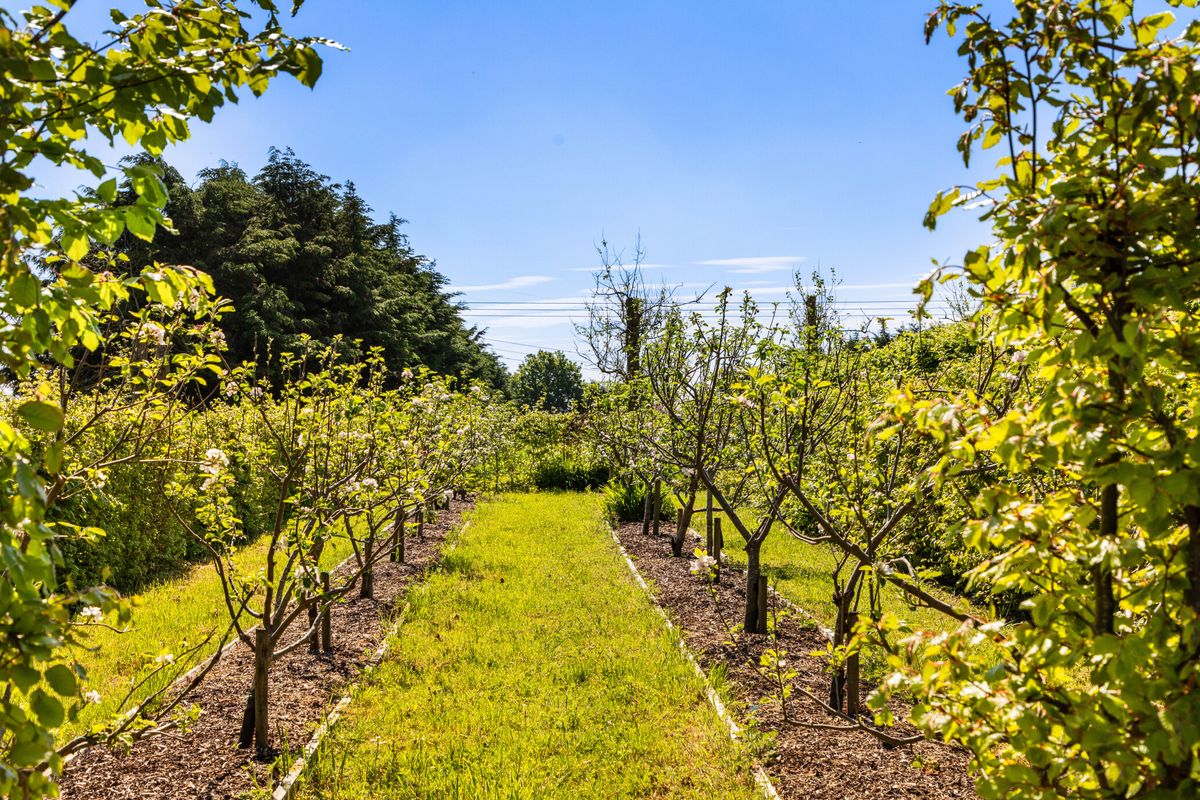
The grounds include lawns, box hedging, and mature trees. There’s a walled garden and an orchard featuring an array of eating apple specimen trees planted by Rosemarie’s husband Jerry, including Kerry Piplin, Lady Finger of Offaly, Cavan Sugarcane, Dick Davies, and Scarlet Crofton. A walkway on the grounds is lined with hornbeam hedges.
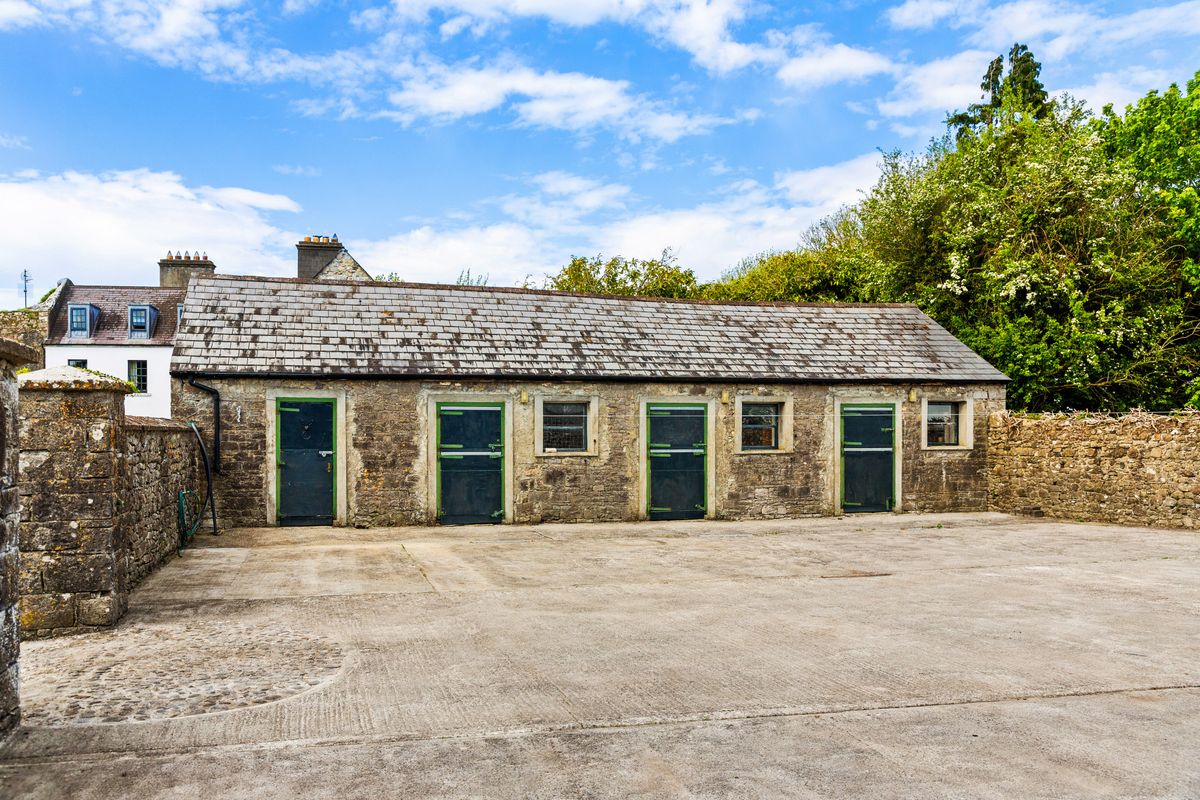
The stone outbuildings have restored roofs to ensure durability. There are stables and an enclosed stone wall paddock.
The Landed Families blog tells us about the descendants of those early inhabitants of Ballybrittan. I’m not sure who lived in Ballybrittan after it passed to the Barons of Trimlestown.
“Although the de jure 11th Baron recovered possession of his estates, there seems little doubt that he divided his time between Ireland and France, and his sons made their careers on the continent. His eldest son and heir, Robert Barnewall (c.1704-79), de jure 12th Baron Trimlestown, studied medicine and botany in France and returned to Ireland on his father’s death with a considerable reputation as a physician: skills which he made available to his Irish neighbours, whether gentle or poor. In later life he became an active advocate for the civil rights of his fellow-Catholics, and in the 1770s he was responsible for drafting a form of oath of allegiance which was acceptable to both the Government and to Irish Catholics. This opened up careers in the army to the Catholic population, and laid the foundation for further measures for Catholic relief which took place after his death. It must therefore have been something of an embarrassment to one so prominent in the Catholic cause that his two sons chose to conform to the Protestant religion.” (see [4])
The Landed Families website lists the children of the 11th Baron Trimlestown:
(1) Robert Barnewall (c.1704-79), de jure 12th Baron Trimlestown;
(2) John Barnewall (c.1706-76), born about 1706; lived near Toulouse (France) and became a naturalised Frenchman, 1745; had licence to act as a land agent in France, 1746; married, 1740, in France, Lady Waters, but died without issue, 1776;
(3) Richard Barnewall (b. c.1708; fl. 1768) (q.v.);
(4) Thomasine Barnewall (d. 1788); married, 9 February 1729/30, Jenico Preston (1707-57), de jure 10th Viscount Gormanston, and had issue three sons and five daughters; died 16 January 1788 and was buried at Notre Dame aux Fonds, Liege, Flanders;
(5) Thomas Barnewall; an officer in French service; married there; died at the ‘battle of Lansfield.’
(6) James Barnewall; an officer in Spanish service; died in Spain;
(7) Margaret Barnewall (d. 1764); married, January 1736, James Butler (d. 1742), 8th Viscount Mountgarret, but had no issue; died June 1764;
(8) Anthony Barnewall (1721-39), born 1721; joined General Hamilton’s regiment of cuirassiers in the Austrian service, 1738 (Cornet, 1738; Lt., 1739); died as a result of his ‘headlong bravery’ at the Battle of Krotzka, where the Austrians were defeated by the Turks, 22 July 1739;
(9) Bridget Barnewall (c.1723-62), born about 1723; married, 6 April 1753, Robert Martin of Dangan (Galway) and Ballinahinch Castle; died 2 February 1762.
(10) Catherine Barnewall; died unmarried.
The Landed Families blog continues: “Robert [(c.1704-79), de jure 12th Baron Trimlestown] was succeeded by the youngest son of his first marriage, Thomas Barnewall (c.1739-96), who lived in France until the French Revolution took place. In 1790 he left his French property in the hands of an attorney (from whom it was seized by the French state in 1793) and returned to Ireland. It was now more than a century since the attainder on the title of Baron Trimlestown, and with the incumbent a Protestant, the Government seems to have made no difficulty about reversing the attainder on the title, which was done in 1795, after which he was summoned to the Irish House of Lords as 13th Baron Trimlestown.
“He died the following year, and the revived title passed to his nephew, Nicholas Barnewall (1726-1813), 14th Baron Trimlestown. He had been brought up near Toulouse in France, where he was a leading Freemason, and acquired through his marriage the Chateau Lamirolles, where he lived until the French Revolution. His wife having died in 1782, he then moved to England, where he seems to have lived in Bath until he inherited the Irish estates and peerage from his uncle. In 1797 he married for a second time, taking as his wife a young Irishwoman a third of his age [Alicia Eustace], and this would seem to have been the occasion for a major building campaign at Trimlestown Castle to turn it into a modern house. In 1800, however, Nicholas inherited the extensive estates of his distant kinsman, the 5th Viscount Barnewall of Kingsland, which included Turvey House, and soon afterwards Trimlestown seems to have been abandoned, perhaps with his alterations incomplete.” (see [4])
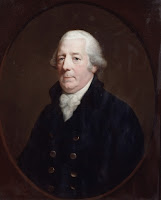
The house features in Essentially Irish, Homes with Classic Irish Style by Josephine Ryan. [6] She writes that the castle was leased to the Quaker family of Inman in around 1700. Joseph Inman (1725-1800) of Ballybrittan was the son of Joseph (1693 – 1740), and his sisters married into the Bewley family.
I should have asked Rosemarie from whom she purchased the property, as this would help me to complete the list of former owners. Certainly the newest owner has a wonderful property to enjoy!
[1] https://www.dib.ie/biography/barnewall-sir-john-a10142
[2] https://mvkarchitects.com/ballybrittan-castle/
[3] https://mlwilson12.wordpress.com/2015/05/23/ireland-a-castle-the-abbey-and-those-lovely-mathews/
[4] https://landedfamilies.blogspot.com/2020/01/401-barnewall-of-trimlestown-castle-and.html
[6] Ryan, Josephine, with photography by James Fennell. Essentially Irish. Homes with Classic Irish Style. Ryland, Peters and Small, London and New York, 2011.
 Irish Historic Houses