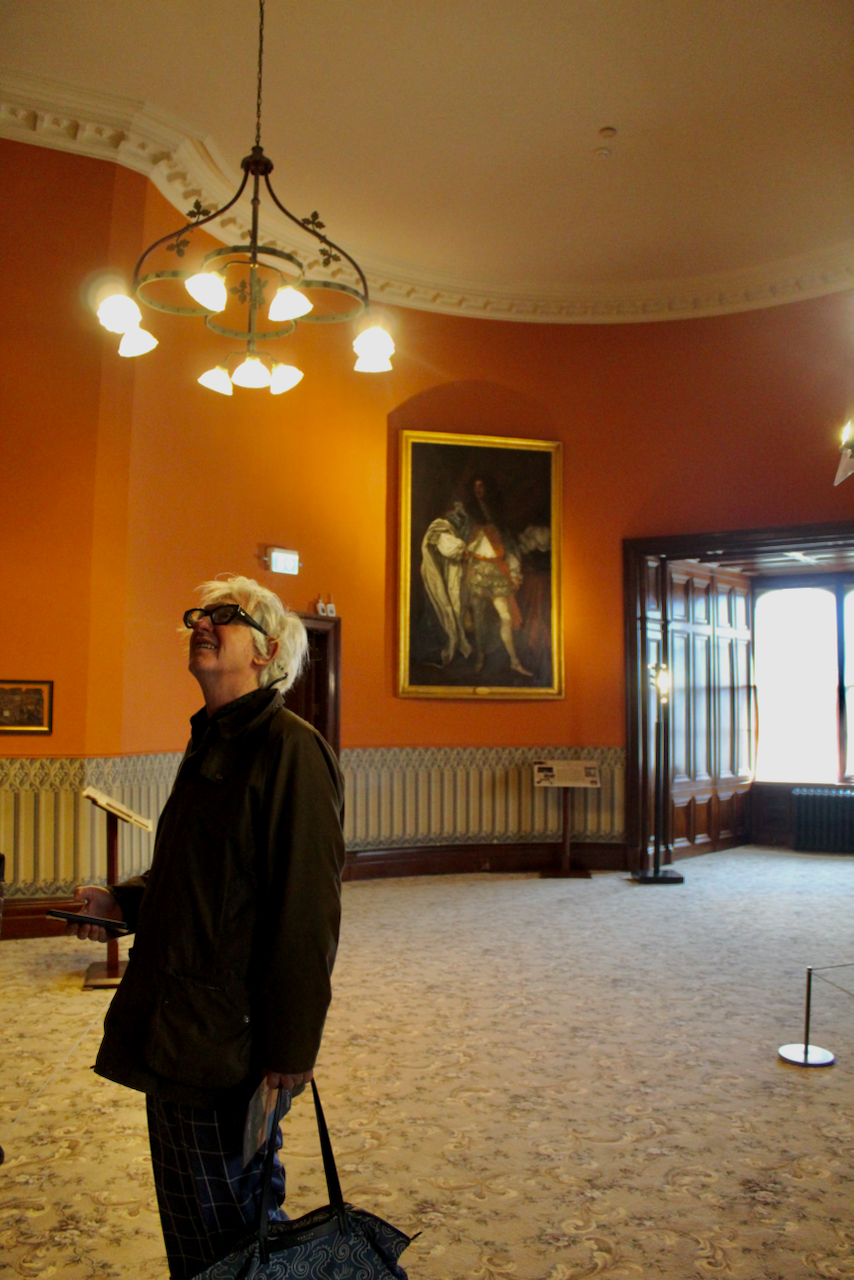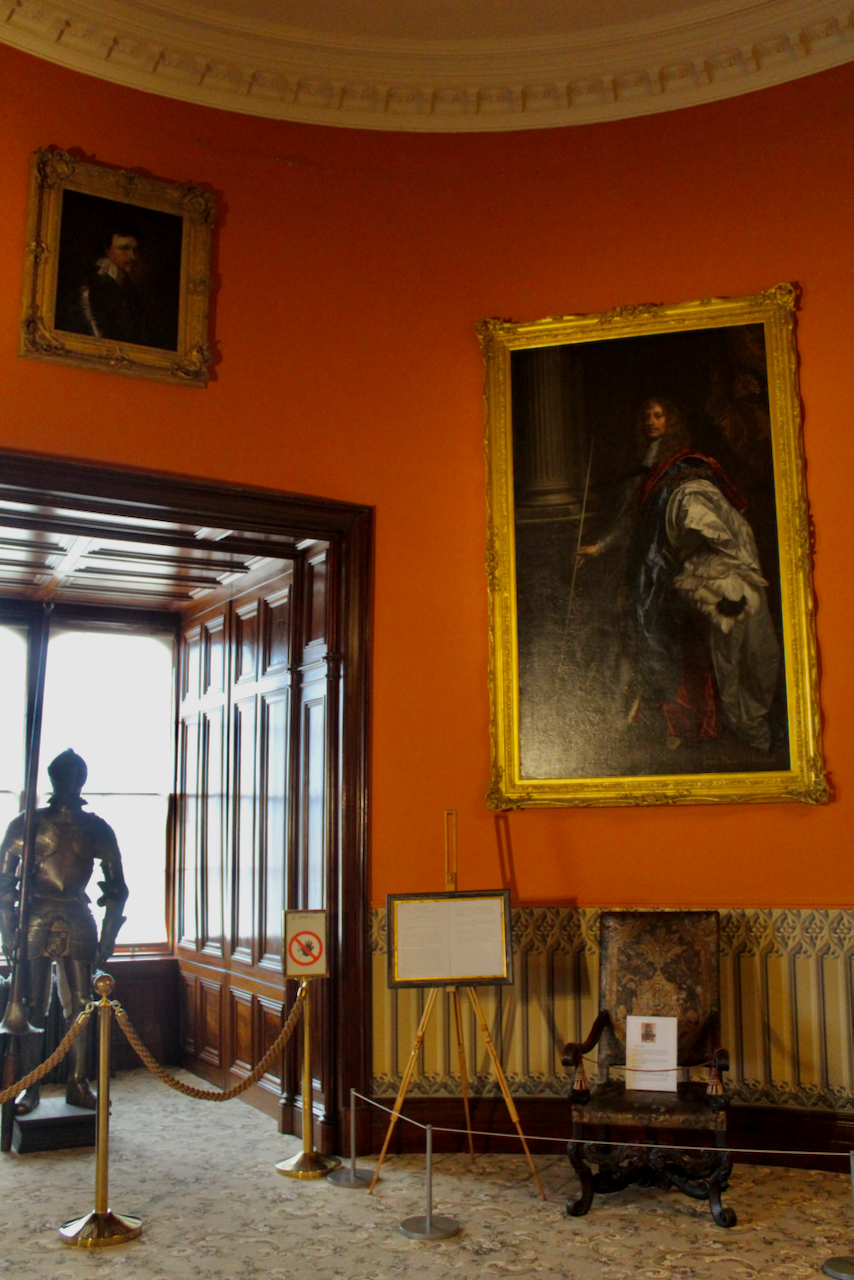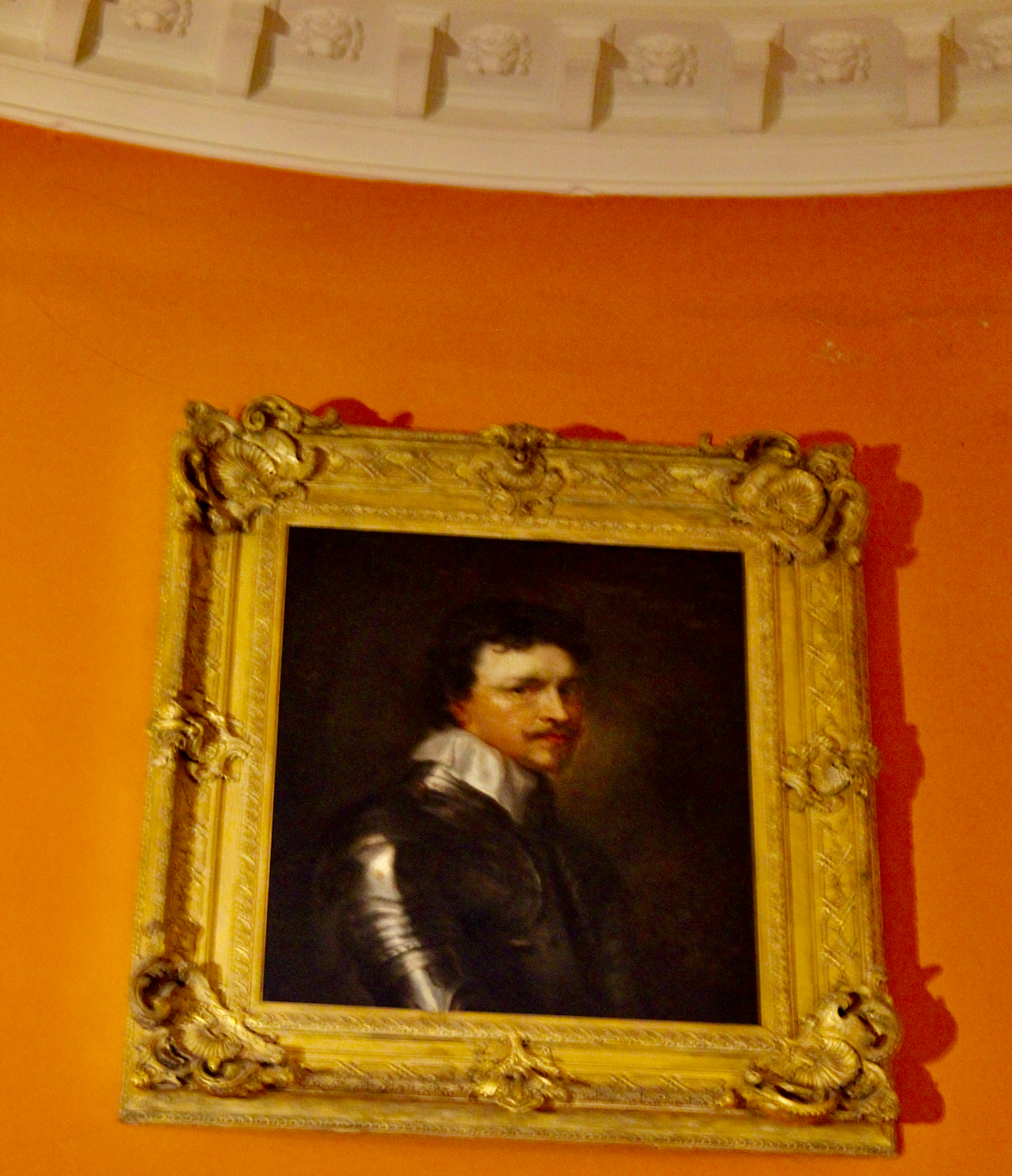
Kilkenny Castle, County Kilkenny, an Office of Public Works property

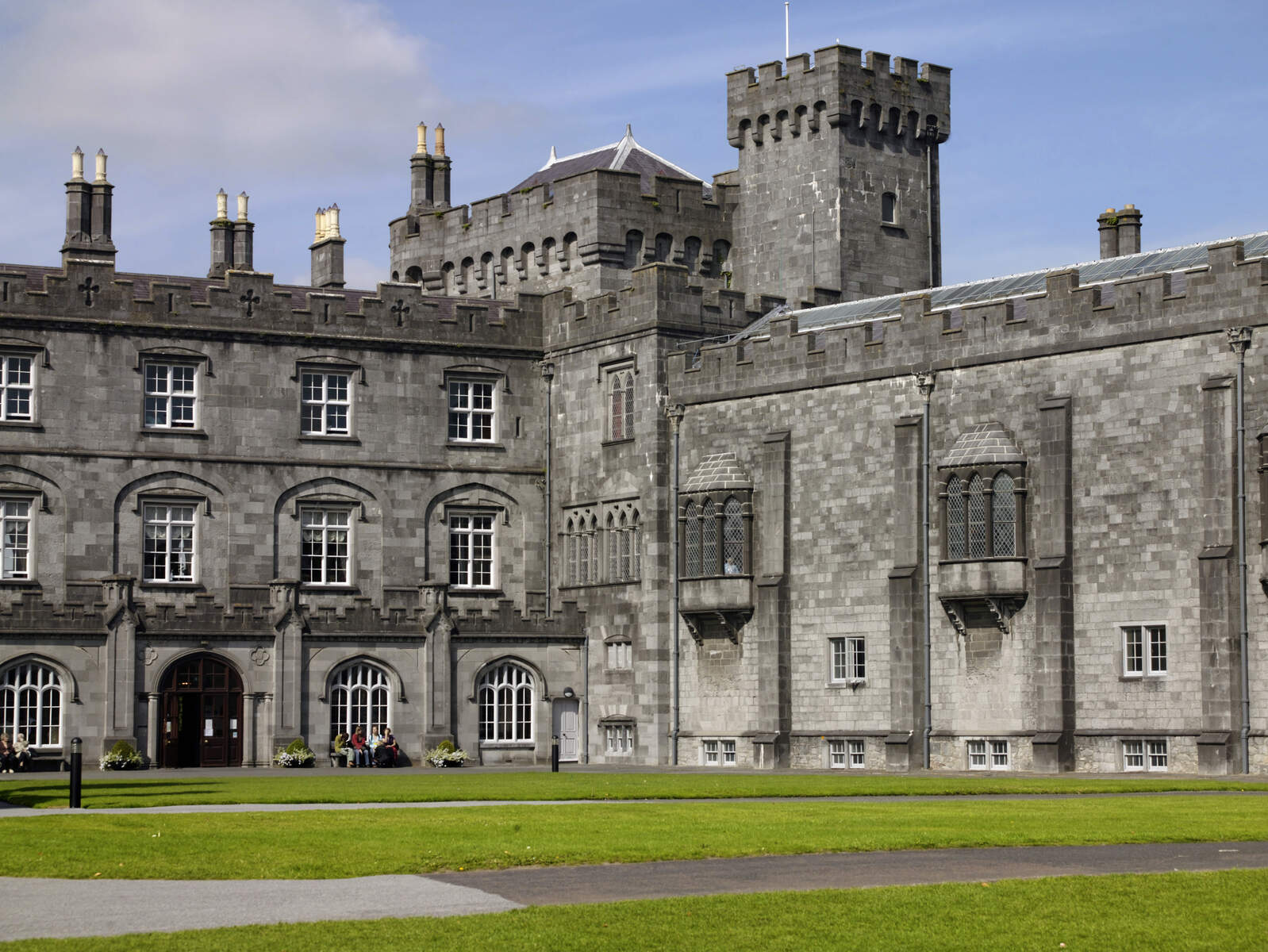
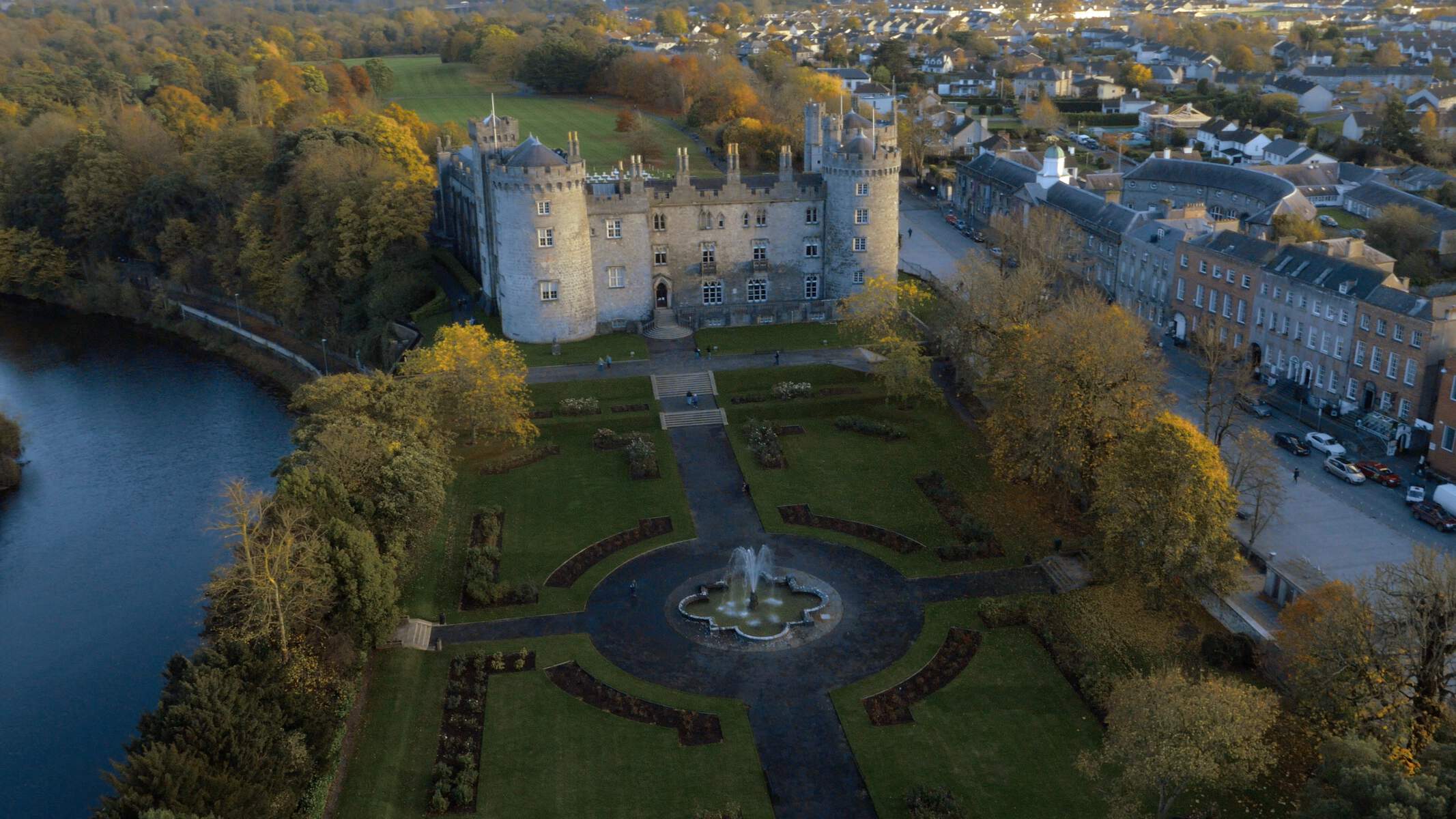
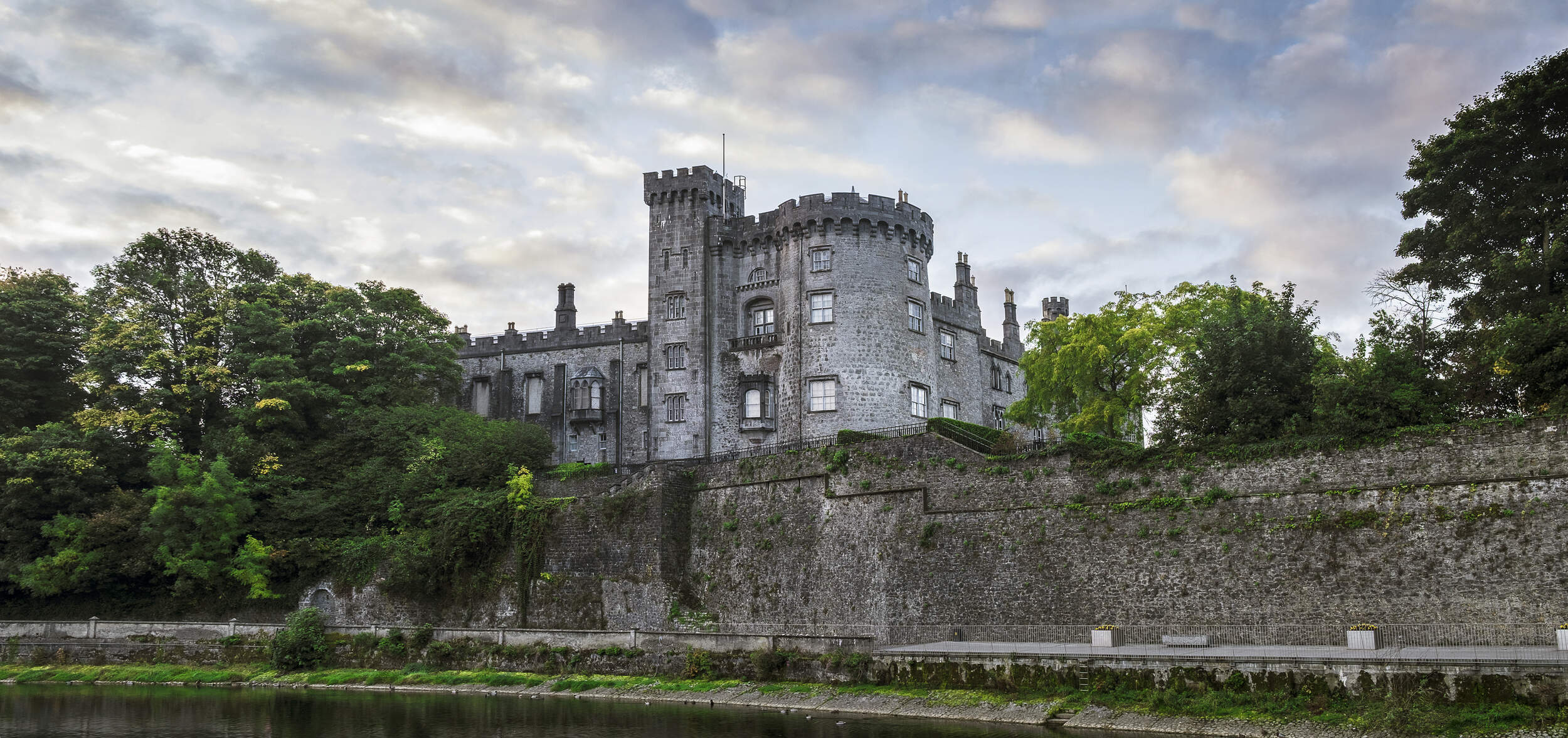
The garden front of Kilkenny Castle, photograph by macmillan media 2016 for Tourism Ireland, Ireland’s Content Pool. It sits on the banks of the River Nore. [1]

From the OPW website:

Built in the twelfth century, Kilkenny Castle was the principal seat of the Butlers, earls, marquesses and dukes of Ormond for almost 600 years. Under the powerful Butler family, Kilkenny grew into a thriving and vibrant city. Its lively atmosphere can still be felt today.

The castle, set in extensive parkland, was remodelled in Victorian times. It was formally taken over by the Irish State in 1969 and since then has undergone ambitious restoration works. It now welcomes thousands of visitors a year.

Kilkenny Castle, photograph by unknown 2014 for Failte Ireland, Ireland’s Content Pool. [see 1]

Kilkenny Castle has been standing for over eight hundred years, dominating Kilkenny City and the South East of Ireland. Originally built in the 13th century by William Marshall, 4th Earl of Pembroke as a symbol of Norman control, Kilkenny Castle reflected the fortunes of the powerful Butlers of Ormonde for over six hundred years. [2]

The Butlers fought for the king in Ireland, France and Scotland, and held positions of power including Lord Lieutenant of Ireland, the monarch’s representative in Ireland.

In 1967 James Arthur Norman Butler (1893-1971), 6th Marquess and 24th Earl of Ormonde sold the Castle to the Kilkenny Castle Restoration Committee for £50. Two years later it went into state ownership.

William Marshall (about 1146-1219) married Isabel the daughter of “Strongbow” Richard de Clare, 2nd Earl of Pembroke. With the marriage, he gained land and eventually the title Earl of Pembroke. Isabel inherited the title of 4th Countess of Pembroke “suo jure” i.e. herself (her brother, who died a minor, was the 3rd Earl). Hence William Marshall became the 4th Earl through his wife, but then then was created the 1st Earl of Pembroke himself ten years after their marriage. They settled in Ireland, beginning with setting up the town of New Ross and then restoring Kilkenny town and castle – a castle had pre-dated them, according to the Kilkenny Castle website.
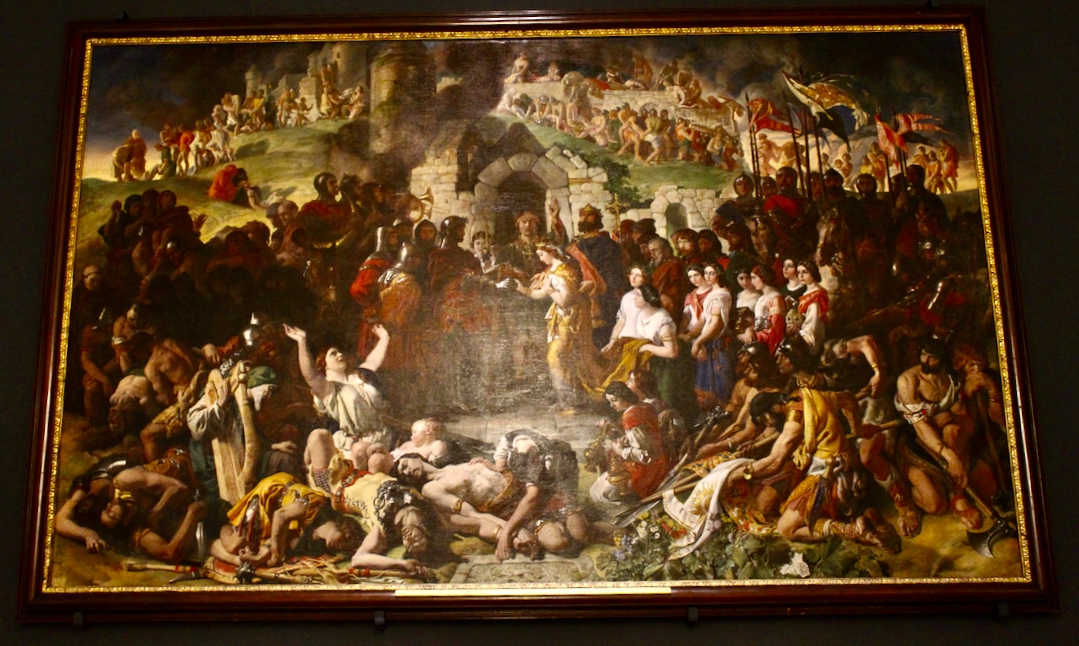
The Marriage of Aoife and Strongbow, Richard de Clare 2nd Earl of Pembroke at Waterford in 1170, by Daniel Maclise, in National Gallery of Ireland. Conceived for the decoratino of the Palace of Westminster, the painting is an ambiguous representation of the victorious Normans and the vanquished Irish. Strongbow places his foot upon a fallen Celtic cross, King Dermot looks on in alarm, and an elderly musician slumps of his harp. Photograph © Jennifer Winder-Baggot, www.irishhistorichouses.com

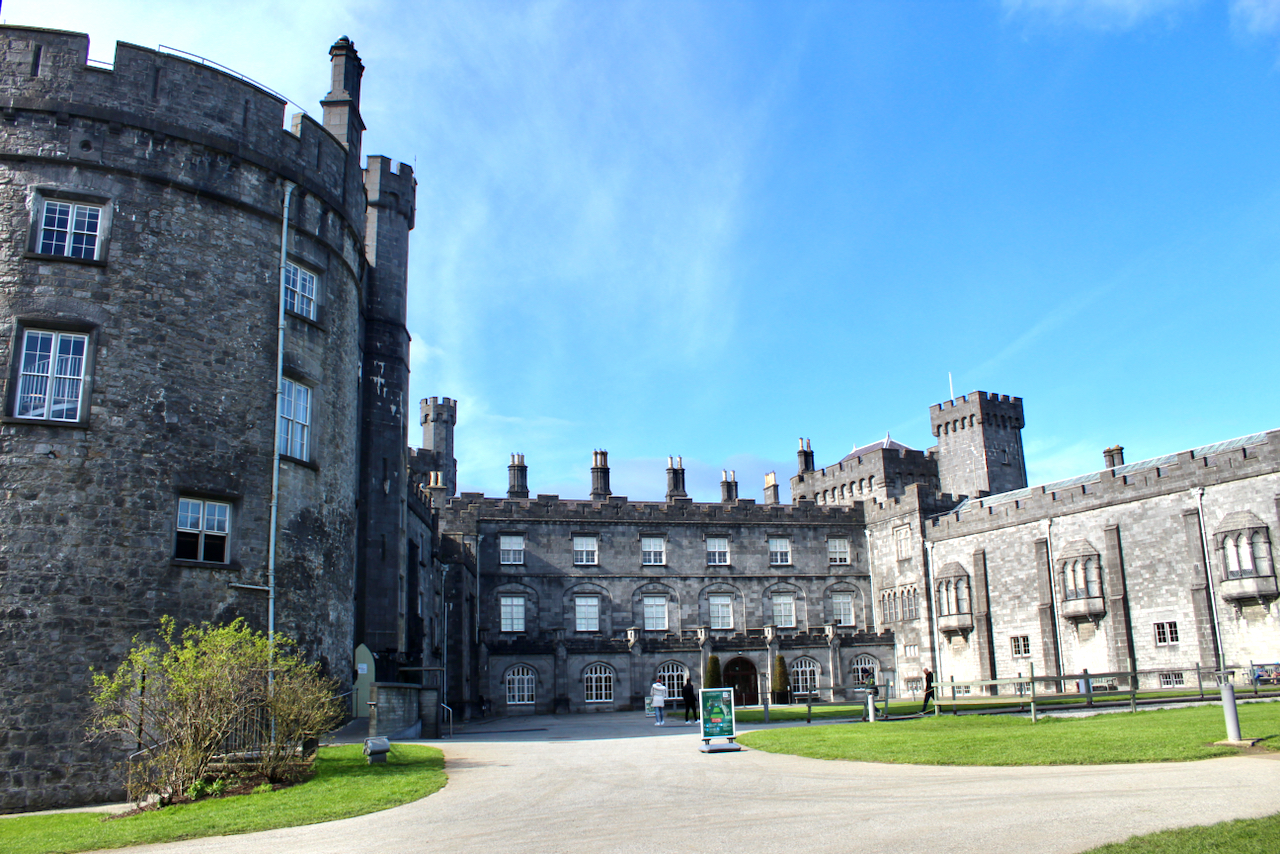
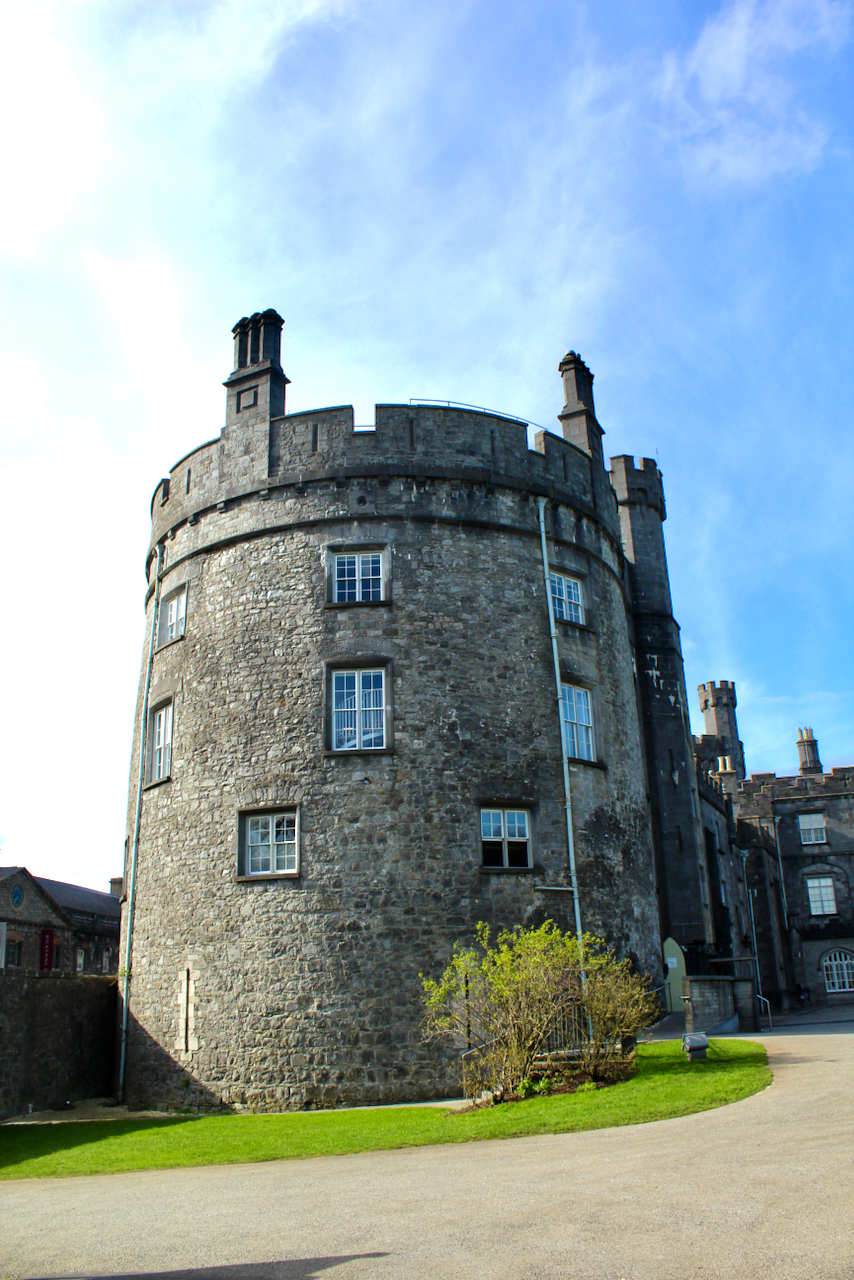
The present-day castle is based on the stone fortress that Marshall designed, comprising an irregular rectangular fortress with a drum-shaped tower at each corner. Three of these towers survive to this day.
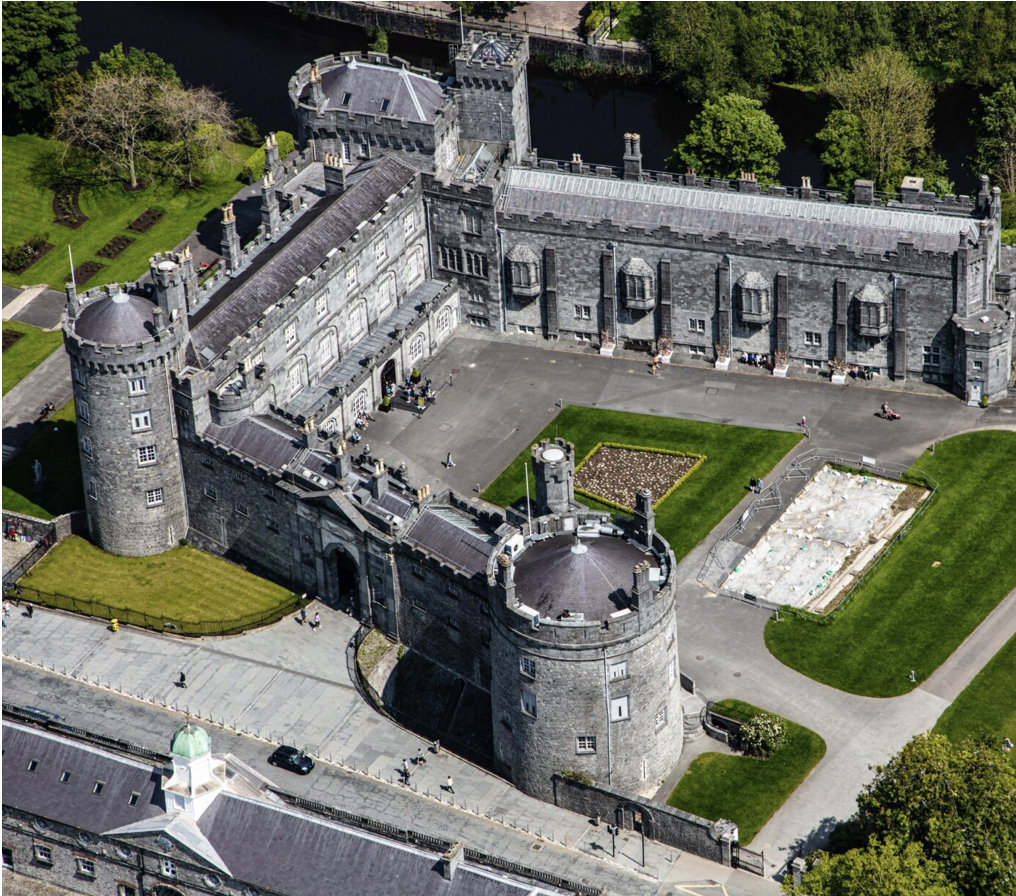
Kilkenny Castle, County Kilkenny, overhead shot courtesy Air Experience AFTA website.
Kilkenny Castle, photograph by Mark Wesley 2016 for Failte Ireland, Ireland’s Content Pool. [see 1]

There is an introductory film for visitors in the one of the old round towers. Inside, you can see the thickness of the walls.
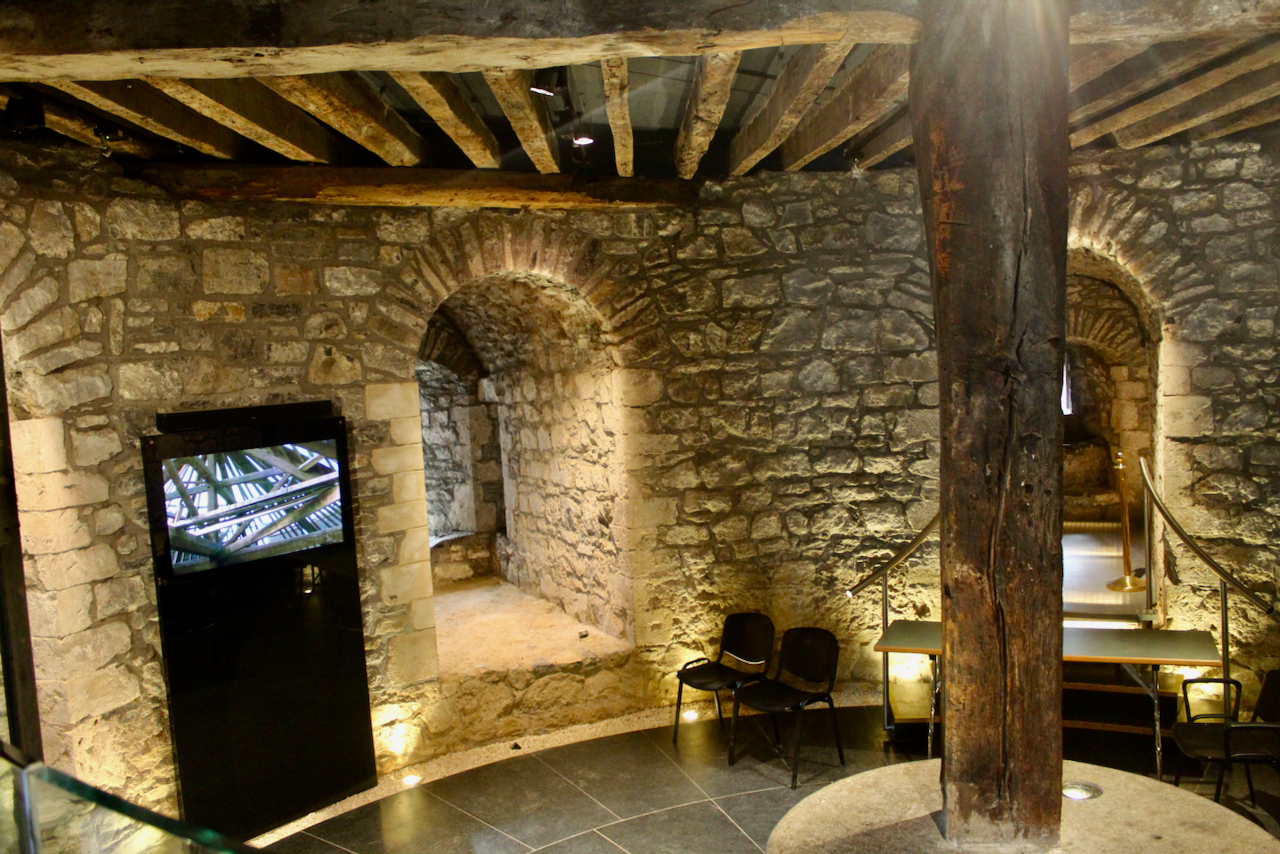
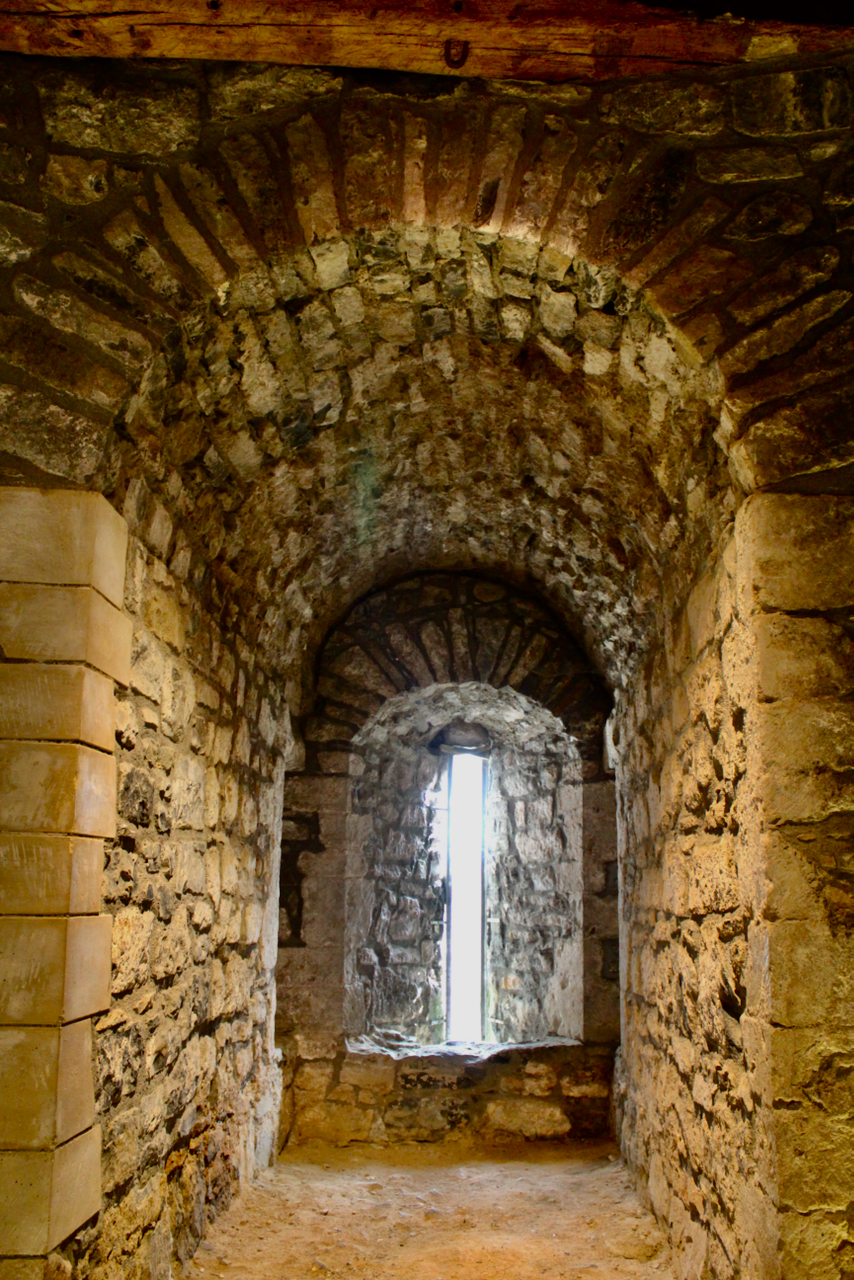
Kilkenny Castle. Photograph © Jennifer Winder-Baggot, www.irishhistorichouses.com

By 1200, Kilkenny was the capital of Norman Leinster and New Ross was its principal port. The Marshalls also founded the Cistercian abbeys at Tintern in County Wexford and Duiske in Graiguenamanagh, County Kilkenny, as well as the castles at Ferns and Enniscorthy. Marshall died and was buried in England. [3]
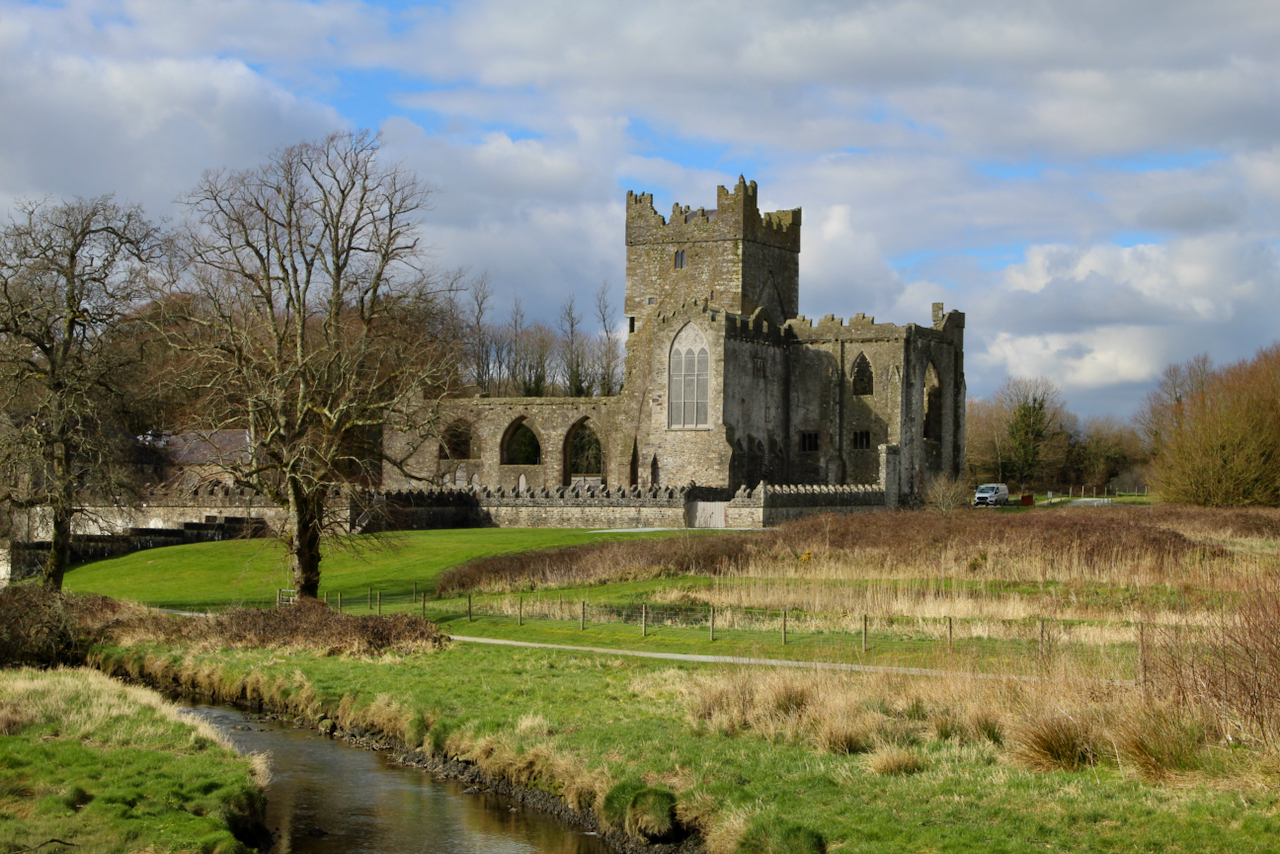
Tintern Abbey, County Wexford, 15th March 2025. Photograph © Jennifer Winder-Baggot, www.irishhistorichouses.com

In 1317, the de Clare family sold the Kilkenny castle to Hugh Despenser. The Despensers were absentee landlords. In 1391 the Despensers sold the castle to James Butler, 3rd Earl of Ormond, 9th Chief Butler of Ireland (1360–1405).

The first Butler to come to Ireland was Theobald Walter Le Botiller or Butler (1165–1206), 1st Baron Butler, 1st Chief Butler of Ireland.

In 1185, Prince John landed at Waterford and around this time he granted the hereditary office of Chief Butler of Ireland to Theobald. Before this, there was a Chief Bulter of England, a position Theobald held, but the office of Chief Butler of Ireland was freshly created. The hereditary office was a position of “serjeanty.” Under feudalism in France and England during the Middle Ages, tenure by serjeanty was a form of tenure in return for a specified duty other than standard knight-service. The duty of this serjeanty was to to attend the Kings of England at their coronation and to pour their first cup of wine. [p. 67, Otway-Ruthven, A. J. A History of Medieval Ireland New York: Barnes & Noble 1993].

It is said that he was called “Le Botiller” because he received the monopoly of the taxes on wines being imported into Ireland. As the Chief Butler had to provide the wine, he was given this “prisage” to help perform his role. This privilege only ceased in 1811 when the right was purchased back by the Crown from the Marquess of Ormonde for £216,000.

Theobald was the first of the family to use the surname Butler. He was involved in the Irish campaigns of King Henry II and King John of England. He built Arklow Castle in County Wicklow. His descendant, the 4th Chief Butler, constructed a stone fortress on the site in the 1280s which became the family’s regional stronghold.
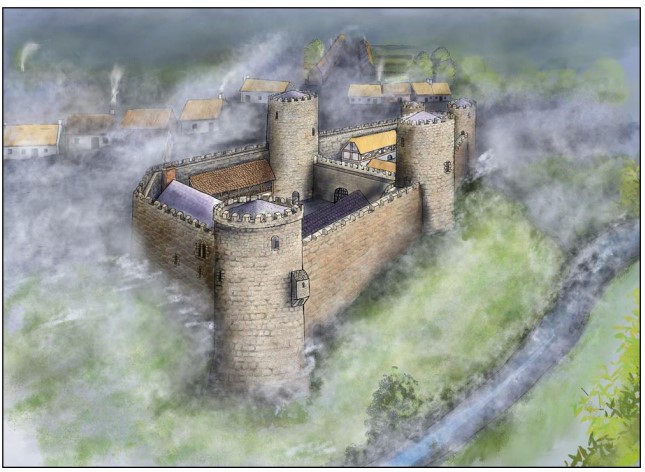
Conjectural reconstruction drawing of Arklow Castle, County Wicklow by Sara Nylund courtesy County Wicklow Heritage.

Over the following centuries, as the Butlers grew into Earls and eventually Dukes of Ormonde centered in Kilkenny, they retained Arklow Castle and the surrounding lands by appointing constables. The 1st Duke of Ormond sold Arklow Castle in 1714 to John Allen of Stillorgan. Today only fragments remain. [see https://surnamearts.com/history/butler/butler-castles-in-ireland/ ]

Theobald died in 1206 and was buried at Wotheney Abbey in Limerick.

His son, Theobald le Botiller (1200–1230) 2nd Baron Butler was summoned in 1229 cum equis et armis (Latin: “with horses and arms”) to attend the King in Brittany. He died on 19 July 1230 in Poitou, France, and was buried in the Abbey of Arklow, County Wicklow.

Timothy William Ferres gives us an excellent summary of the Butler genealogy and there are great notes on the Kilkenny Castle website.

The 2nd Baron Butler’s widow was his second wife, Roesia/Rohese de Verdun (c. 1204–1247). She became one of the most powerful women in 13th century Ireland. In 1236 she built Castleroche in County Louth to defend her lands against Irish raiders. The castle was practically impregnable thanks to its position and design. The Kilkenny Castle website tells us that she was the only woman to build a castle in Ireland.
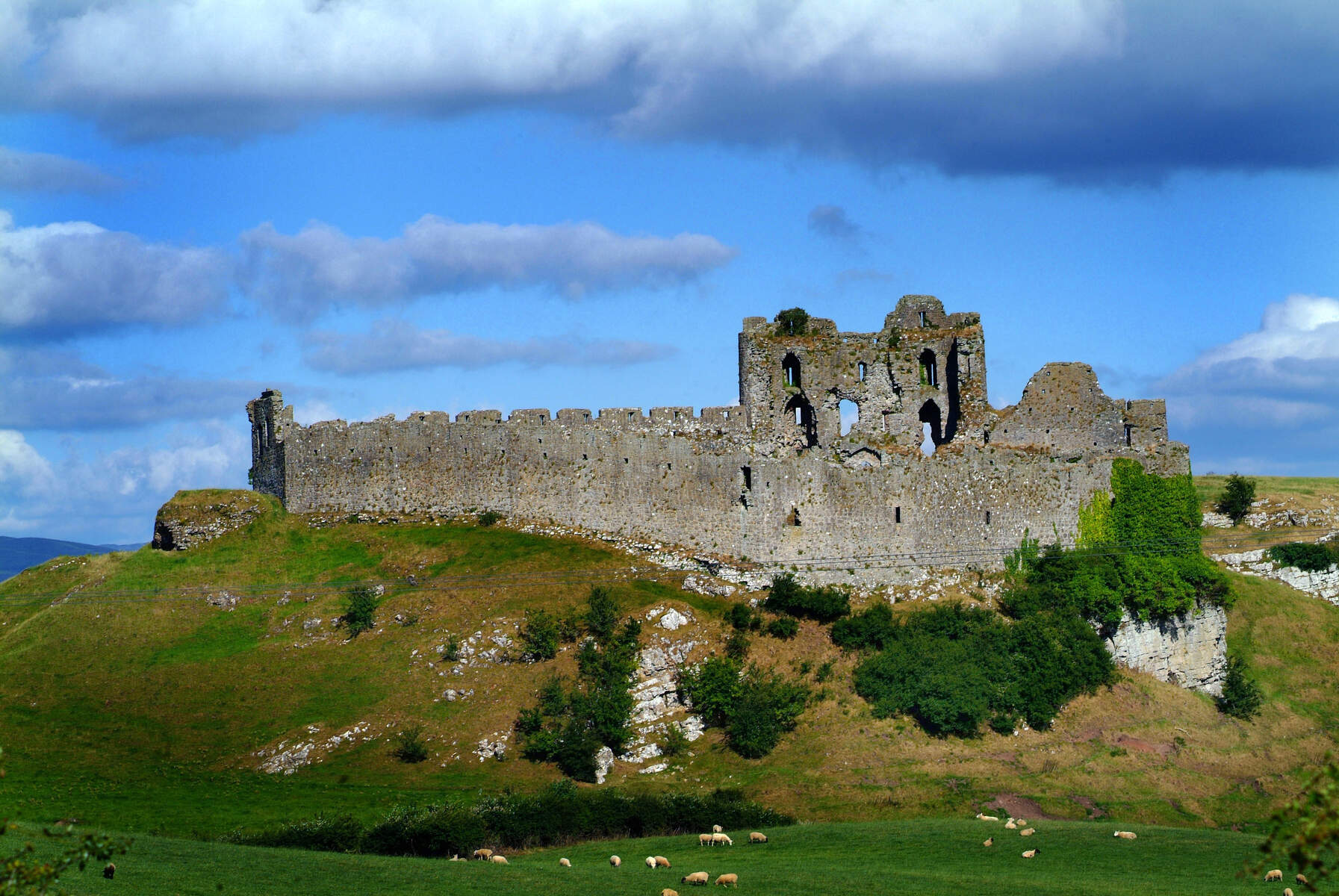
Castleroche, County Louth, built by Rohese de Verdun, wife of Theobald le Botiller (1200–1230) 2nd Baron Butler. Photograph courtesy of Tourism Ireland.

Theobald Butler 3rd Baron acquired considerable property by marrying Margery, eldest daughter of Richard de Burgh (ancestor of the Earls of Clanricarde). He served as Chief Justiciar of Ireland. His son Theobald (1242-85) succeeded as 4th Baron Butler sat in the Parliament of Ireland. He assisted King Edward I in his wars in Scotland. By his marriage, the 4th Baron acquired considerable land in England.

The 5th and 6th Barons were both sons of the 4th Baron. Theobald’s son Edmond (c.1270-1321) succeeded his brother as 6th Baron and 6th Chief Butler of Ireland in 1299. He was appointed Lord Deputy of Ireland in 1312. He married Joan, the daughter of the 1st Earl of Kildare. In 1315 Edward II granted him the manors of Carrick-on-Suir and Roscrea in Tipperary, with the title of Earl of Carrick.
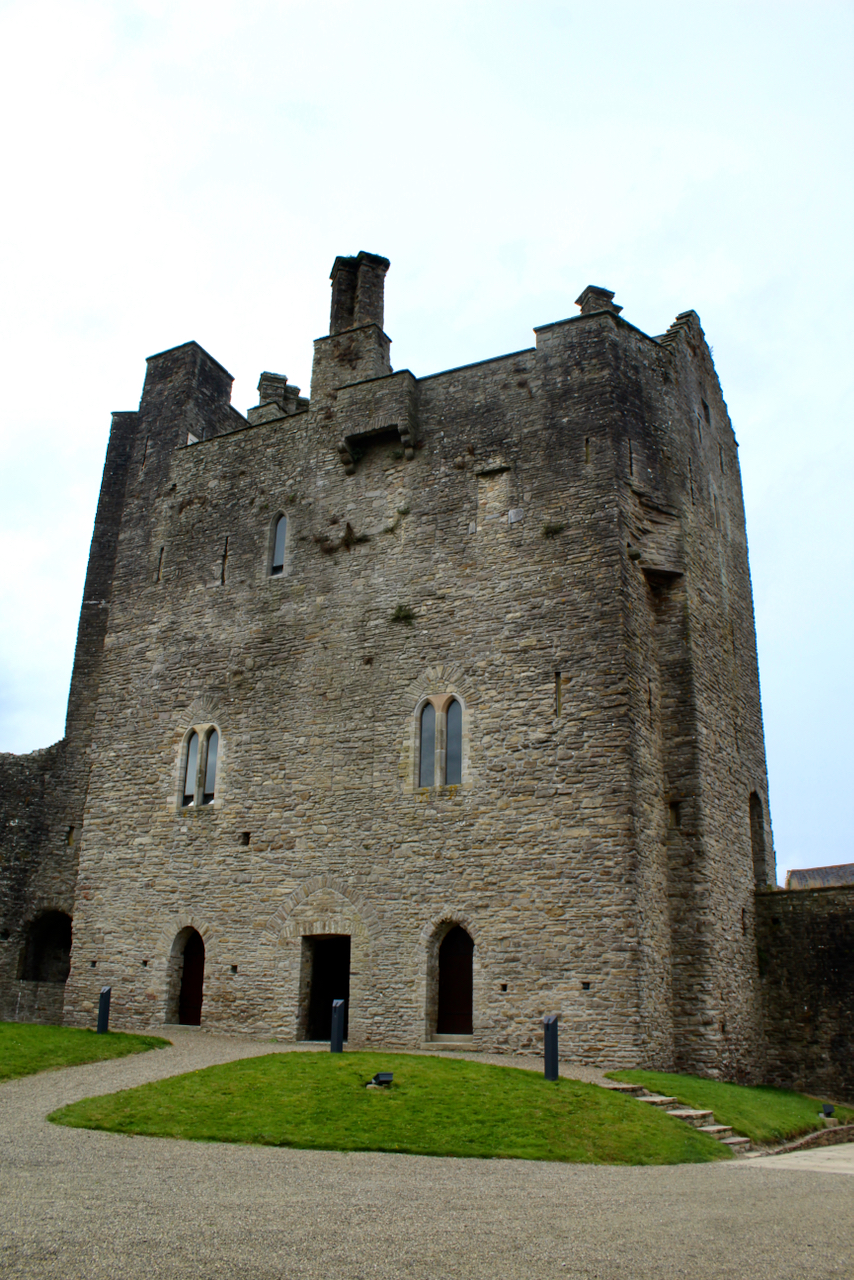
Roscrea Castle, County Tipperary, August 2024. It was granted to the Butlers of Ormond in 1315 who held it until the early 18th Century. The castle as we see it today was built from 1332. Photograph © Jennifer Winder-Baggot, www.irishhistorichouses.com

The Earl of Carrick’s son James Butler (c. 1305-38) who succeeded as 7th Baron married Eleanor, whose mother was a daughter of King Edward I. In consequence of this alliance, in 1328 King Edward III named James Earl of Ormond.
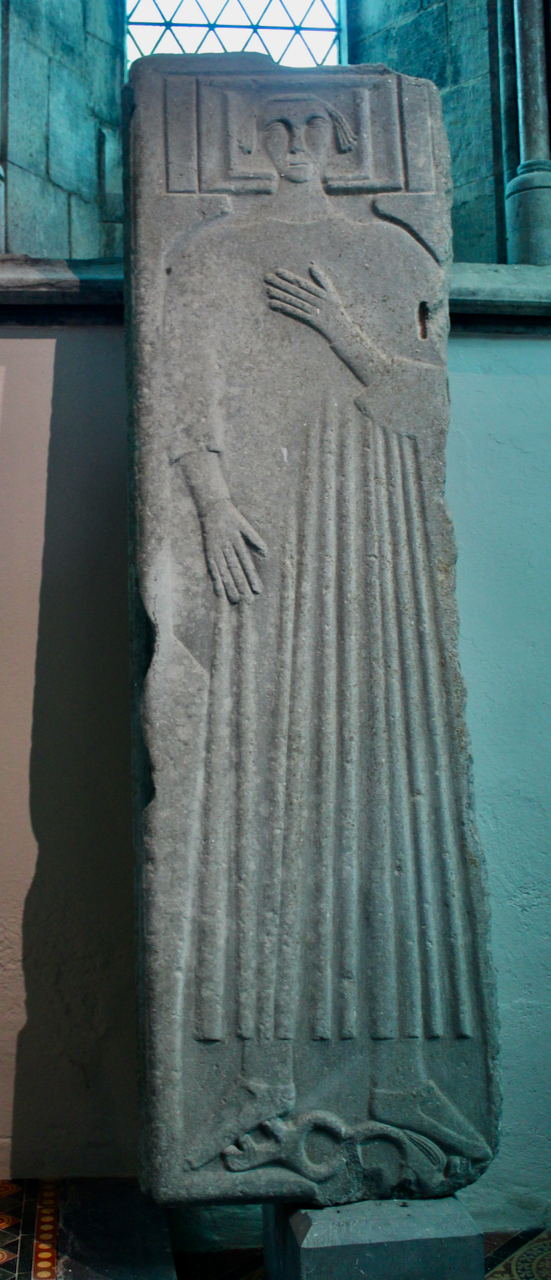
Probably James Butler (c. 1305-1337), the 1st Earl of Ormond. St. Mary’s church, Gowran, June 2023. Photograph © Jennifer Winder-Baggot, www.irishhistorichouses.com.
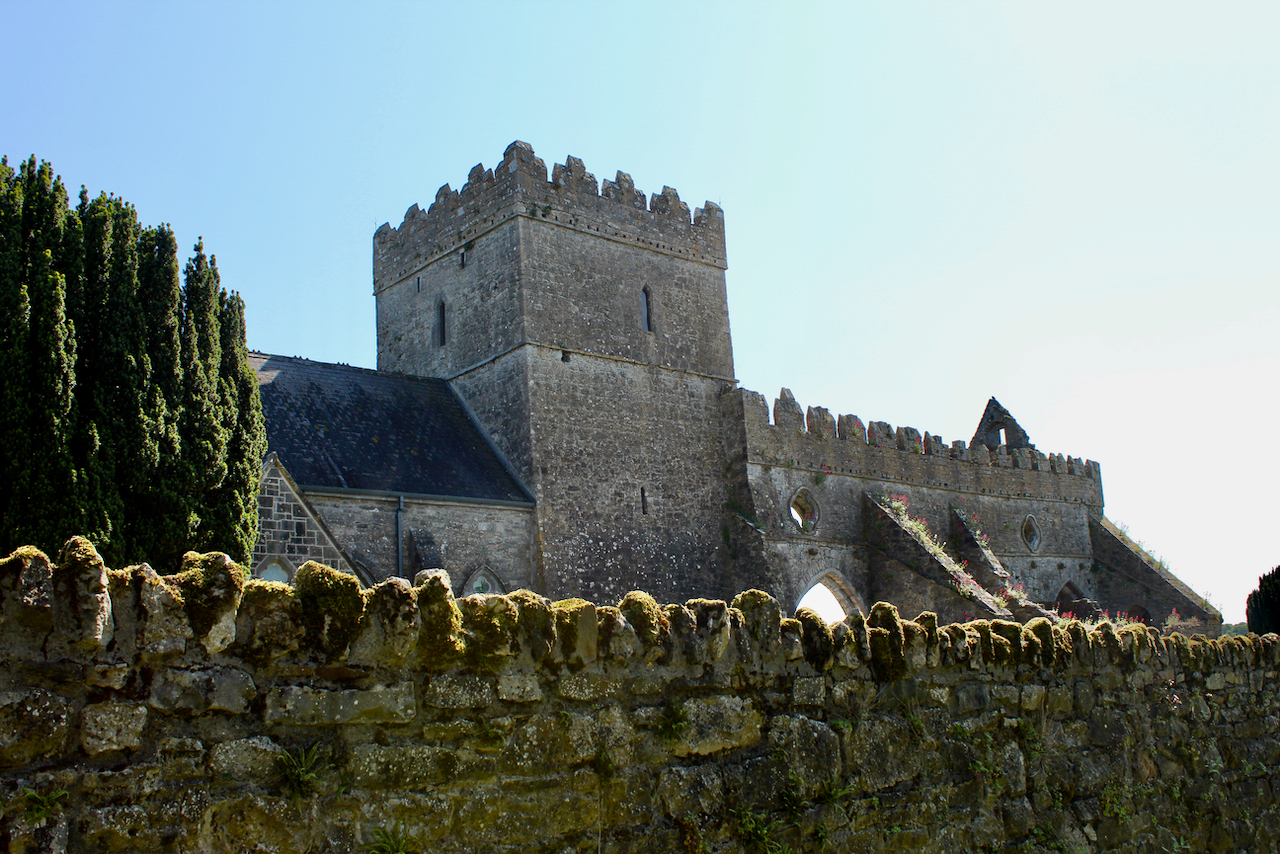
St. Mary’s church, Gowran, June 2023. Photograph © Jennifer Winder-Baggot, www.irishhistorichouses.com.

His son James Butler (1331–1382) 2nd Earl of Ormond was called the Noble Earl due to his links with King Edward I. He served as Lord Justice of Ireland.

James Butler (1360–1405) who succeeded as 3rd Earl of Ormond on his father’s death made Gowran Castle his usual residence so was called Earl of Gowran. The original Gowran Castle was built in the late 14th century by the Earls of Ormonde. Badly damaged in the Cromwellian wars, it was all but a ruin when Charles Agar acquired a lease of it about 1660 and repaired it. After a fire in 1713, his son James Agar rebuilt it. The house was rebuilt for the 2nd Viscount Clifden in 1817-19 to the designs of William Robertson. 

In 1391 James Butler 3rd Earl of Ormond purchased Kilkenny Castle. In 1399 King Richard II stayed in Kilkenny Castle, where he was entertained for fourteen days.
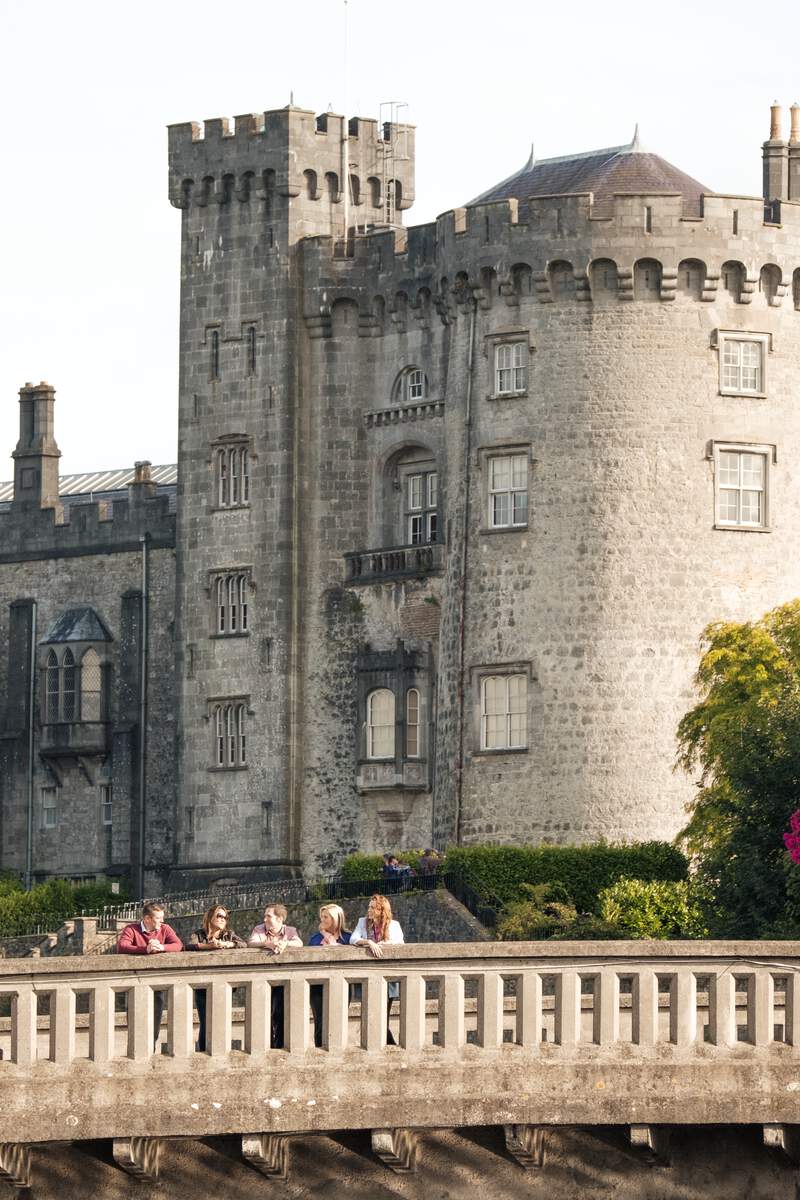
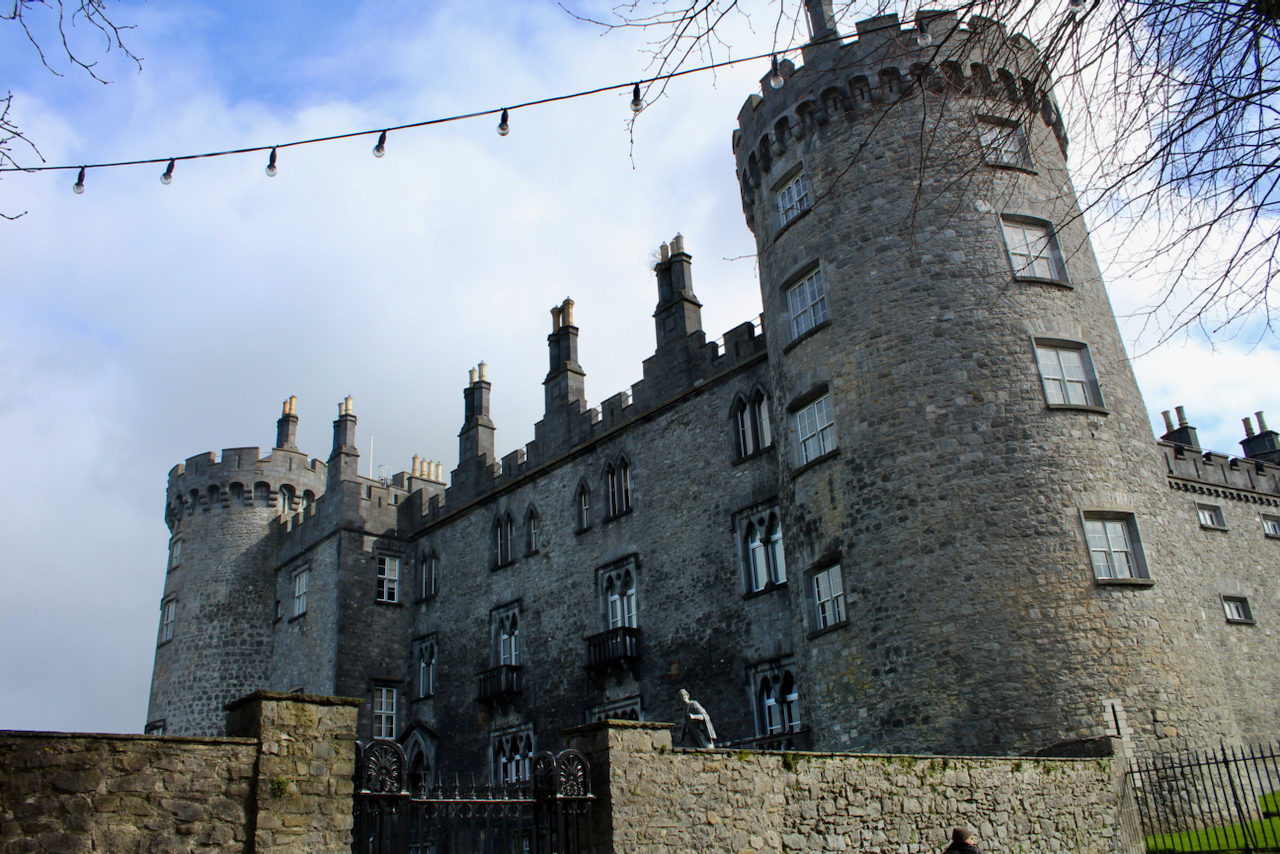
One of the three old towers of Kilkenny Castle, photograph by Finn Richards, 2015 for Failte Ireland, Ireland’s Content Pool. [see 1]
Two of the old corner towers of Kilkenny Castle. Photograph © Jennifer Winder-Baggot, www.irishhistorichouses.com

James 3rd Earl was succeeded by his eldest son, James, 4th Earl (1392-1452), who was called The White Earl, and was esteemed for his learning. James was one of the most important figures in Irish politics in the early 15th century. He was Lord Justice of Ireland in 1407, and again in 1440. He died in 1452.

He was succeeded by his eldest son James (1420-61) 5th Earl. He married Avice Stafford in 1438, by whom he inherited substantial lands in the west country of England. After the death of his first wife, he married Eleanor Beaufort, sister of the Duke of Somerset. In 1451, was was made Lord Deputy of Ireland and the next year, Lord Lieutenant of Ireland. He served as Lord High Treasurer in 1455 and was installed a Knight of the Garter.

The Butler Family become embroiled in the War of the Roses in the 15th Century. When the Wars of the Roses gripped England from the 1450s through to 1487, the opposing houses of Lancaster (the red rose) and York (the white rose) were supported by the earls of Ormond and Kildare, respectively. The 5th Earl of Ormond was loyal to the Lancastrians and Henry VI, who made him Earl of Wiltshire in England. The title of Earl of Wiltshire expired when the throne passed into the hands of the Yorkists in 1461, and the 5th Earl was captured and executed at Newcastle in 1461. In England, Richard Plantagenet 3rd Duke of York’s son came to the throne as King Edward IV.
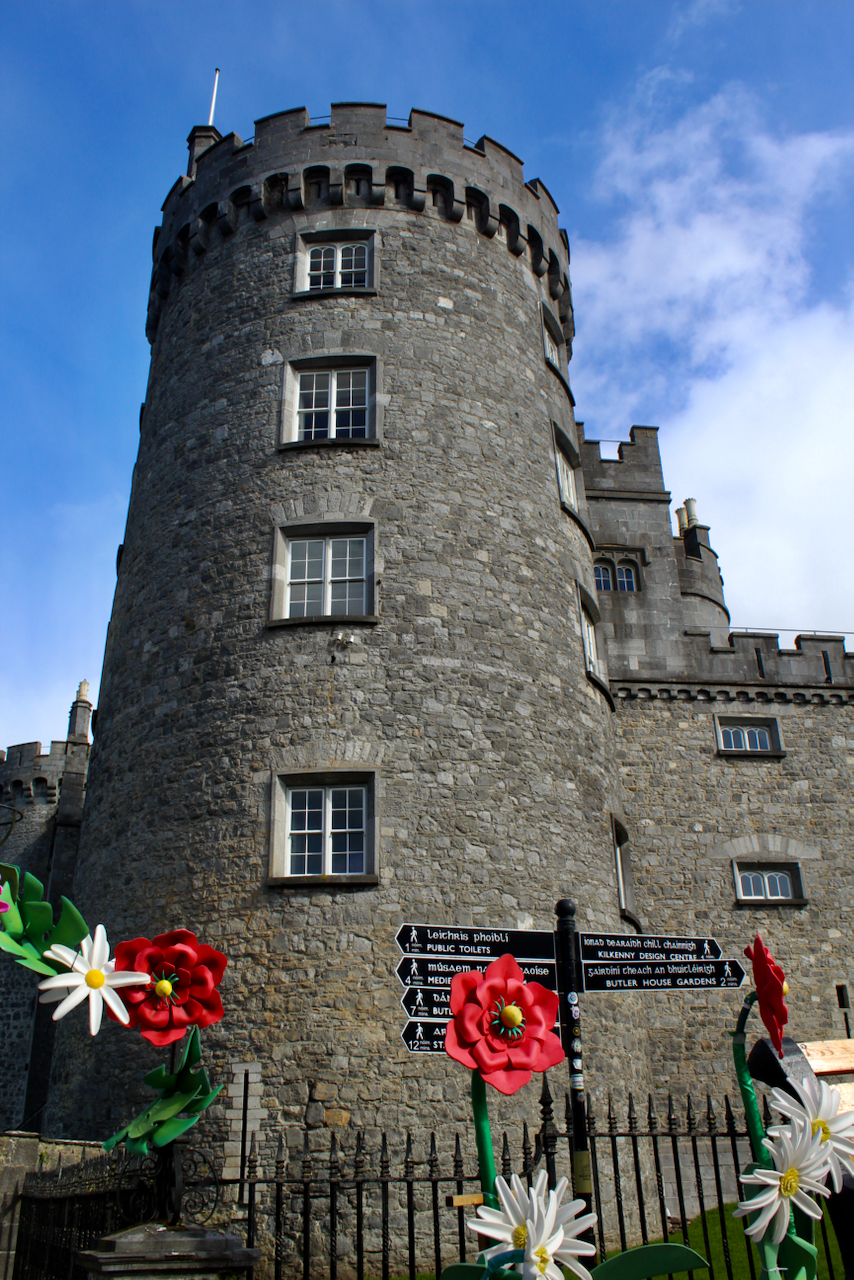
An old corner tower of Kilkenny Castle. Photograph © Jennifer Winder-Baggot, www.irishhistorichouses.com

After the execution of his brother the 5th Earl in 1461, John (1422–1477), who succeeded as the 6th Earl, fled to Scotland with the Lancastrians. He attempted a new Lancastrian uprising in Ireland but the revolt ended with the defeat of his kinsmen by the 8th Earl of Desmond at the Battle of Piltown in the summer of 1462. John was not present at the battle. He went into exile in Portugal and France from 1464. He returned to England 1470-71 on the restoration of Henry VI.

Edward IV, of the House of York, was returned to the throne, however, in 1471. Richard III became king in 1473, until he died in 1475, when Henry VII became king. Henry VII of the Lancaster dynasty married Edward IV’s daughter Elizabeth of York, thus uniting the families.

The 6th Earl of Ormond’s brother Thomas (1426-1515), who succeeded as 7th Earl, was attainted as a Lancastrian, but restored by King Henry VII. He was known as ‘Earl of the Wool.’ Under Henry VII he managed to recover the family position in England and his lands were restored. He was appointed Chamberlain to the Queen in 1486 and Ambassador to Brittany in 1491 and Burgundy in 1497.

From the 1490s he faced troubles in Ireland, as he lacked a male heir. His two daughters became co-heiresses who inherited the Butler estates in England. His daughter Margaret Butler (1465–1537) married Sir William Boleyn and they were the grandparents of Anne Boleyn, Queen of England, second wife of Henry VIII.

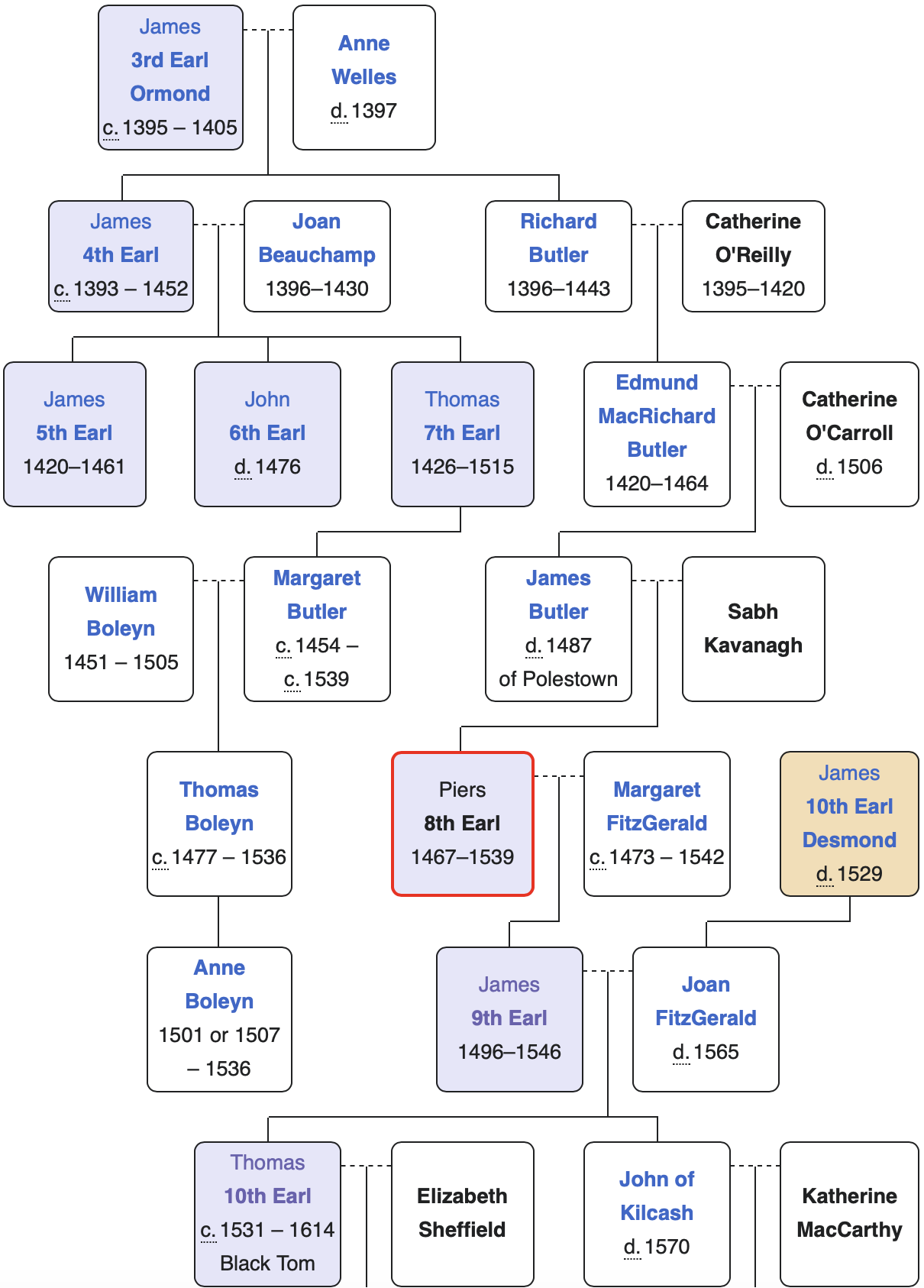
When the 7th Earl of Ormond died in 1515, the next male in the family line was Piers Butler (1467-1539). Both the 7th Earl and Piers descended from the 3rd Earl of Ormond. Piers Butler was the son James Butler and Sabh Kavanagh. He was the great grandnephew of James, the 3rd Earl. Before the 7th Earl’s death, Piers’s father laid claims to the Ormond land and title, as the 7th Earl lived mostly abroad.

Someone else could claim to be heir of the 7th Earl of Ormond. James Butler 6th Earl had illegitimate children, though he never married. His son James was called James Ormond, or James Dubh Butler. He was the 7th Earl’s agent in Ireland while the 7th Earl lived in England. Piers Butler murdered him, but was pardoneed for the murder.
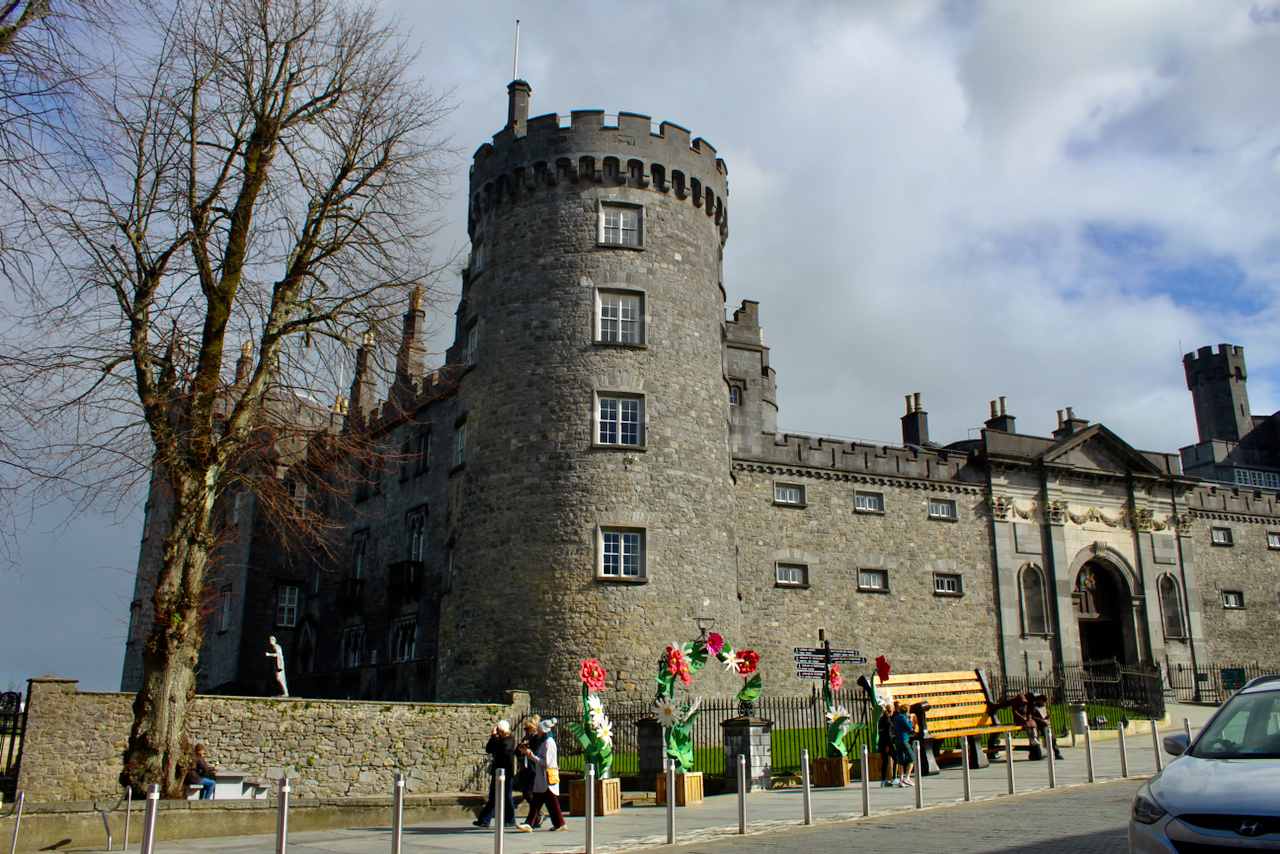
Kilkenny Castle. Photograph © Jennifer Winder-Baggot, www.irishhistorichouses.com
Butler genealogy.

In 1485 Piers Butler married Margaret Fitzgerald, daughter of the 8th Earl of Kildare – a political marriage to merge the two dynasties.

In 1498, he and Margaret had seized Kilkenny Castle and made it their chief residence. Through her considerable efforts, the standard of living inside the castle was greatly improved.

Margaret was sometimes styled the “Great Countess of Ormond.” She signed herself “Margaret Fitzgerald of the Geraldines,” and occupied herself in legal matters regarding her family and the Ormond estates. She worked with Piers to develop the estate, expanding and rebuilding manor houses. She also established Kilkenny Grammar School. She urged Piers to bring over skilled weavers and artificers from Flanders and helped establish industries for the production of carpets, tapestries and diapers (a type of cloth). Margaret and her husband commissioned significant additions to the castles of Granagh, and rebuilt Gowran Castle, which had been originally constructed in 1385 by James Butler, 3rd Earl of Ormond. She is also said to have built Ballyragget Castle in County Kilkenny.
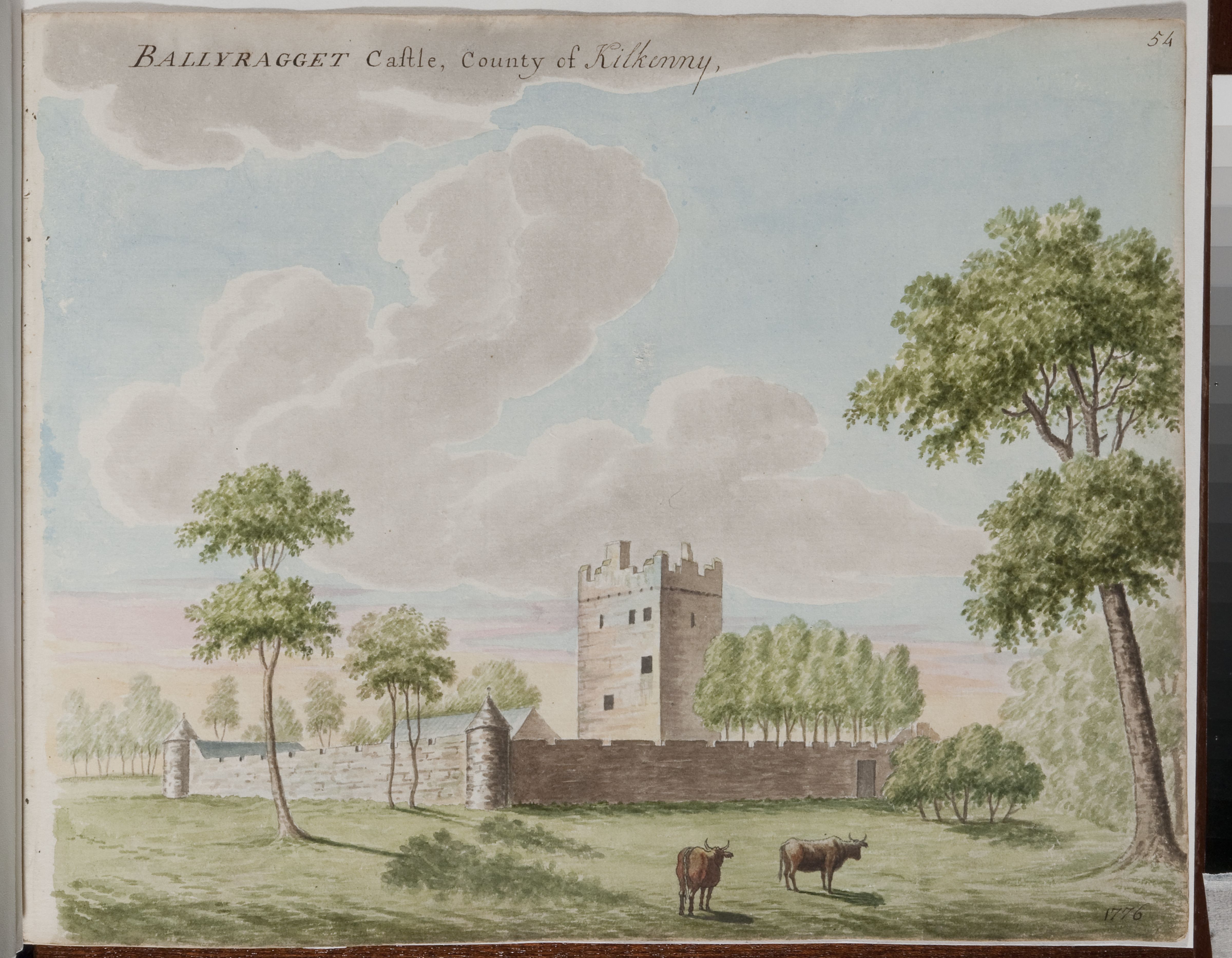
Ballyragget castle, County Kilkenny, by Gabriel Berenger, courtesy Royal Irish Academy MS 3 C 30/54.

As Anne Boleyn grew in King Henry VIII’s favour, so did her father Thomas. In 1529, the King persuaded Piers Butler to relinquish the title Earl of Ormond, and the king gave this title to Thomas Boleyn, Viscount Rochford. Piers was created, instead, Earl of Ossory. The king hoped Piers would improve the Crown’s grip over southern Ireland. Piers gained much from Crown.

Thomas Boleyn, Earl of Ormond, died without issue in 1539 and the King restored Piers Butler Earl of Ossory to his original title of Ormond. Piers succeeded as the 8th Earl of Ormond.

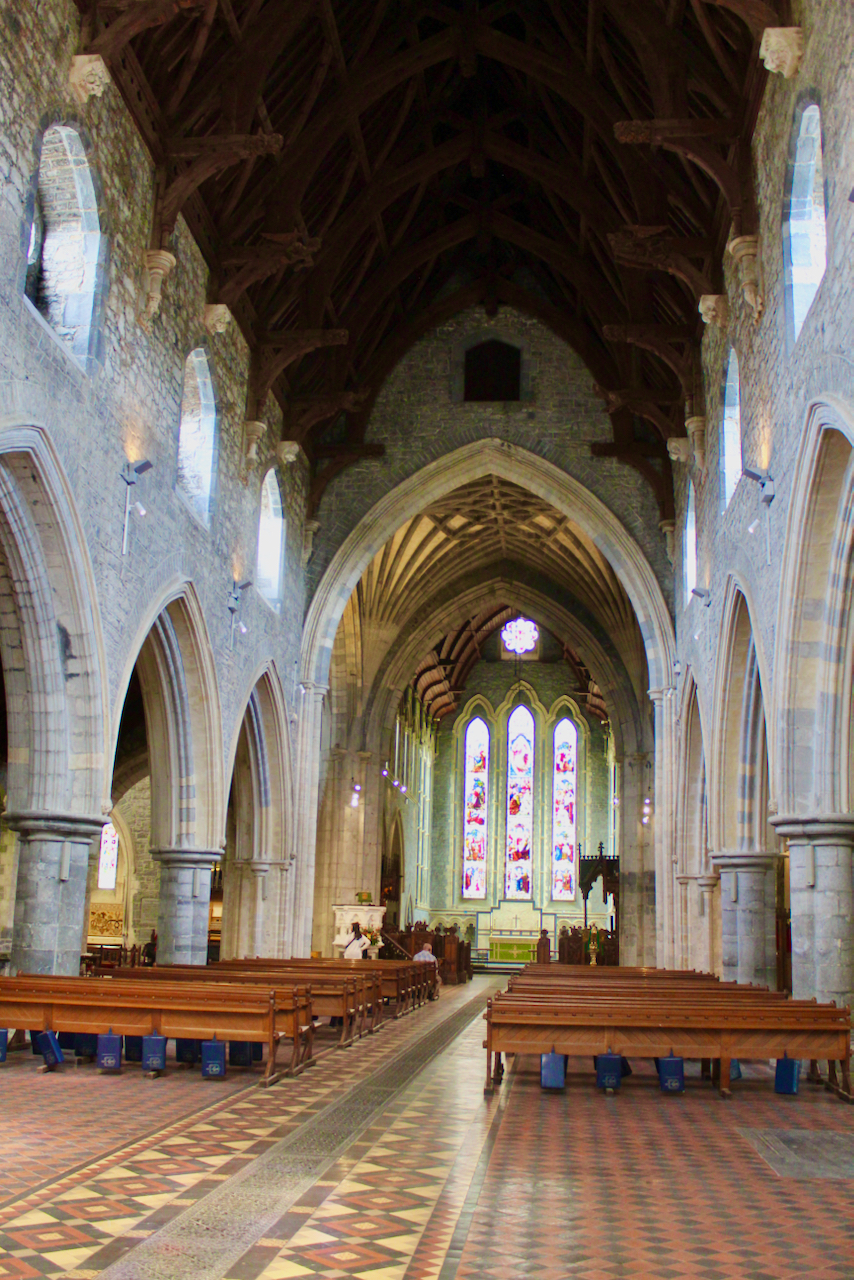
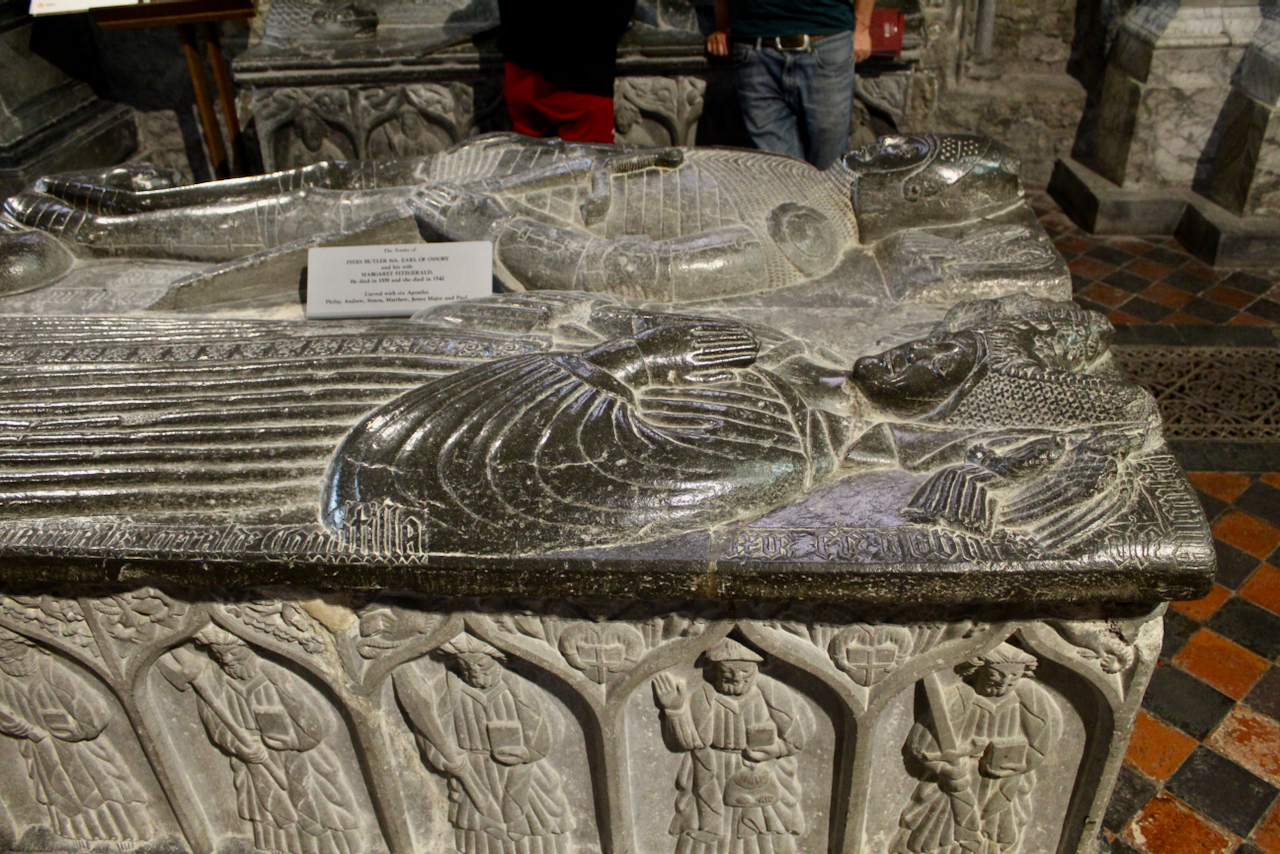
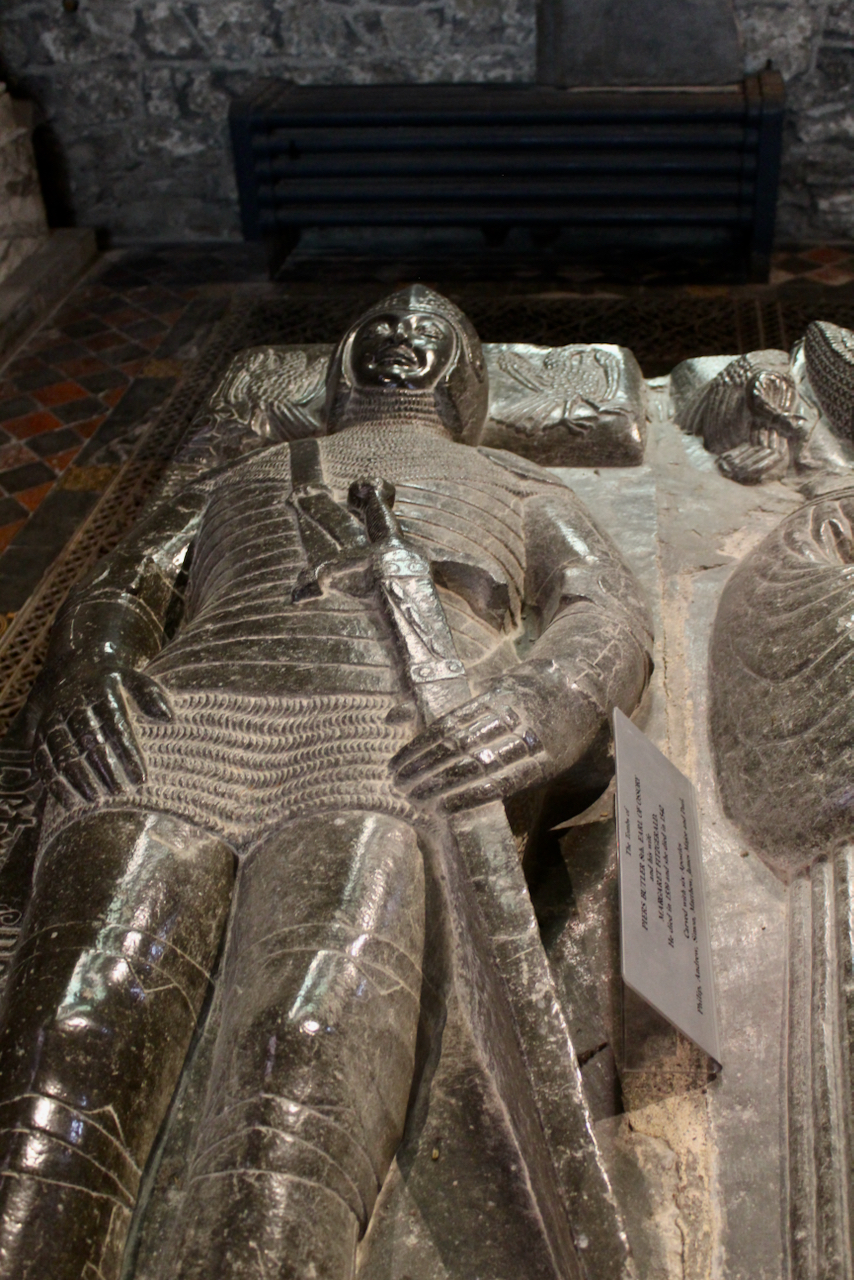
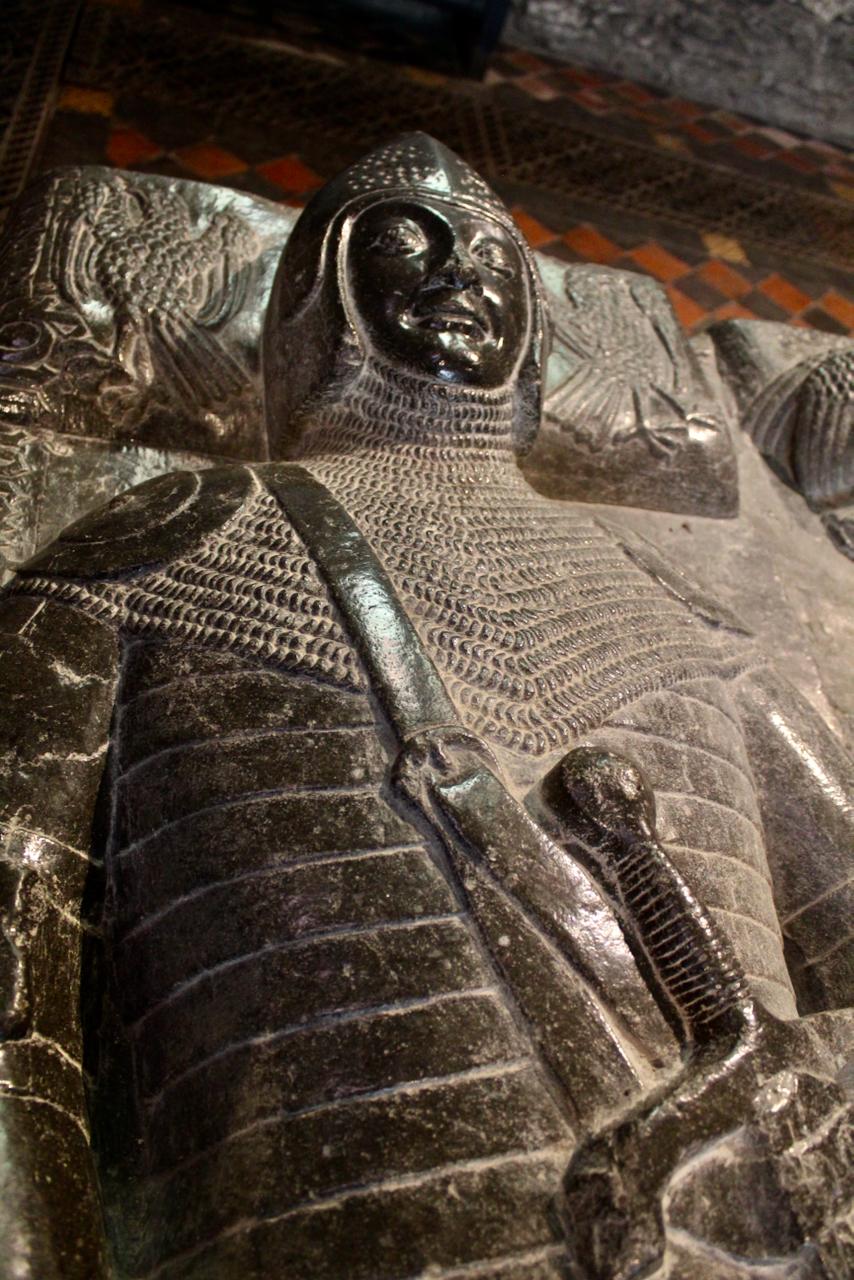
Piers is buried in St Canice’s Cathedral, Kilkenny with his wife.
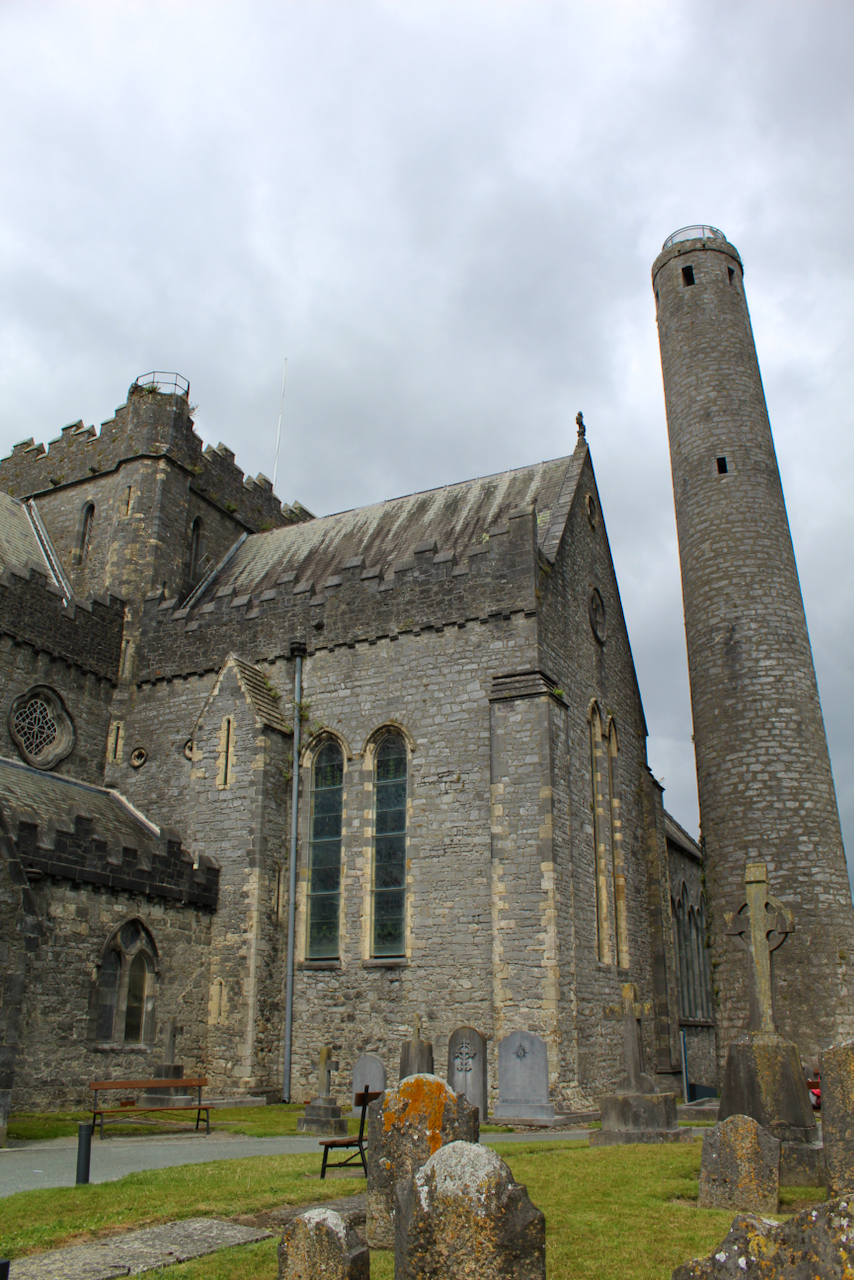
St. Canice’s Cathedral, Kilkenny. Photograph © Jennifer Winder-Baggot, www.irishhistorichouses.com
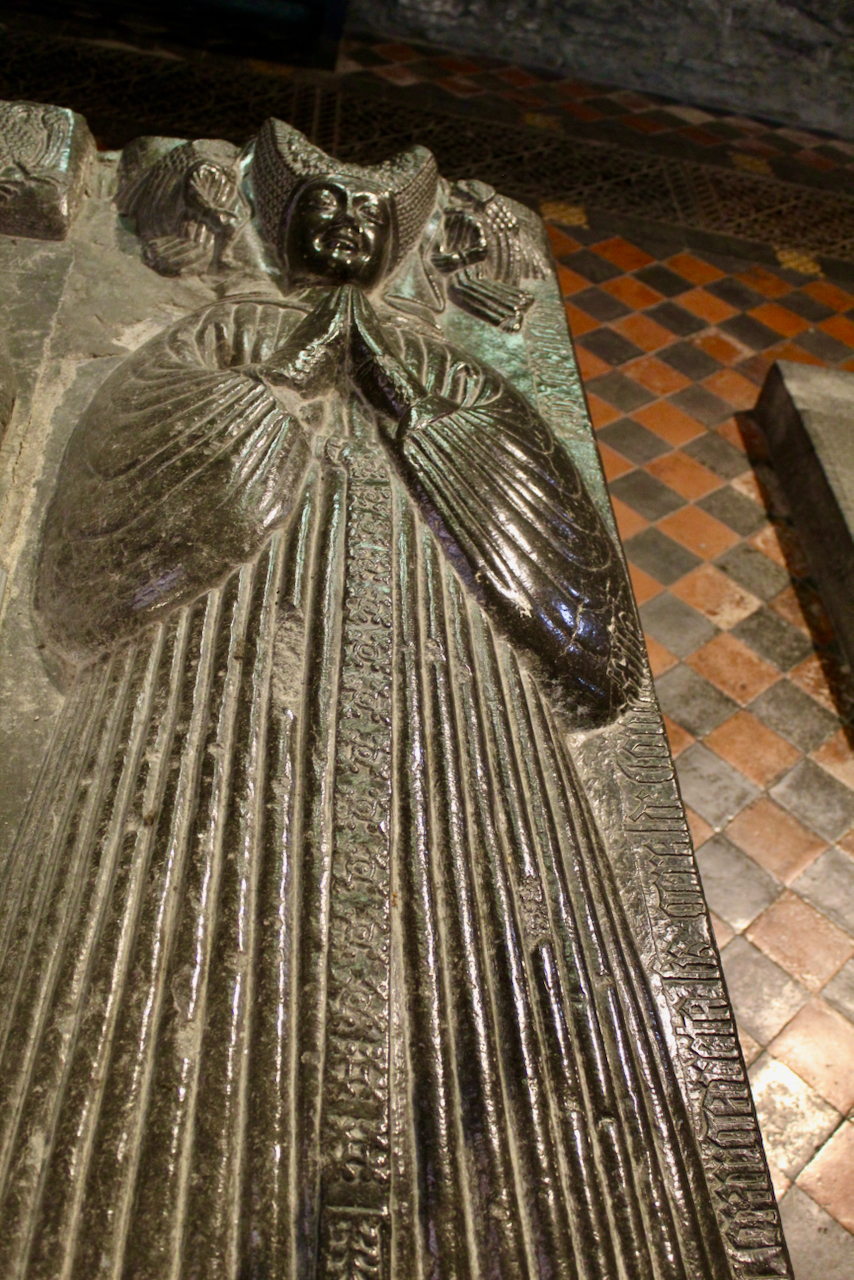
Piers Butler (1467-1539) Earl of Ossory, 8th Earl of Ormond, and his wife Margaret Fitzgerald (d. 1542), St. Canice’s Cathedral, Kilkenny. Photograph © Jennifer Winder-Baggot, www.irishhistorichouses.com
Piers Butler (1467-1539) Earl of Ossory, 8th Earl of Ormond, St. Canice’s Cathedral, Kilkenny. Photograph © Jennifer Winder-Baggot, www.irishhistorichouses.com
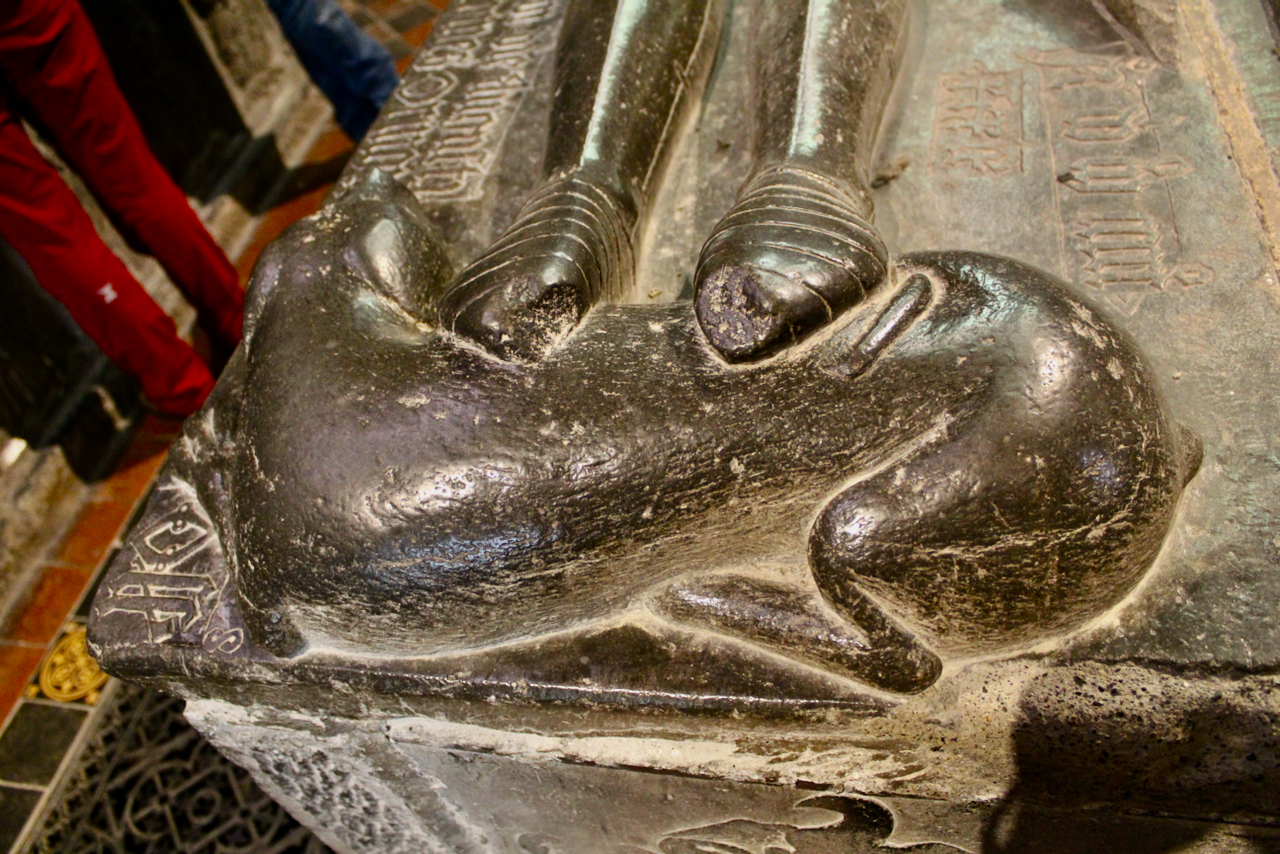
A dog, symbol of loyalty, at the feet of Piers Butler (1467-1539) Earl of Ossory, 8th Earl of Ormond, St. Canice’s Cathedral, Kilkenny. Photograph © Jennifer Winder-Baggot, www.irishhistorichouses.com
Margaret Fitzgerald (d. 1542) wife of Piers Butler, Earl of Ossory, 8th Earl of Ormond. Photograph © Jennifer Winder-Baggot, www.irishhistorichouses.com

Piers and Margaret’s daughters married well, continuing to build ties with other powerful families. They had daughters Ellen (d. 1597) who married Donough O’Brien (d. 1553) 1st Earl of Thomond; Margaret married Barnaby FitzPatrick, 1st Baron of Upper Ossory; Joan married James Butler, 10th Baron Dunboyne; Eleanor married Thomas Butler 1st Baron Caher; Katherine married Richard Power, 1st Baron le Power and Coroghmore first and secondly, James FitzJohn FitzGerald, 13th Earl of Desmond; Ellice married Gerald FitzJohn FitzGerald (d. 1553, father of 1st Viscount Decies).

Piers’s eldest son James (1496–1546) succeeded him in 1539 as 9th Earl of Ormond, 15th Chief Butler, and 2nd Earl of Ossory. Piers’s second son, Richard (d.1571), was created 1st Viscount Mountgarret in 1550. Another son, John Butler (d. 1570) who lived in Kilcash, County Tipperary, was father of Walter (1569-1632) 11th Earl of Ormond.

James Butler (1504-1564), Soldier, 9th Earl of Ormond and Ossory by Francesco Bartolozzi, published by John Chamberlaine, after Hans Holbein the Younger publ. 1797, courtesy of National Portrait Gallery NPG D39383.

In 1520 there was a plan to marry the eldest son James to a daughter of Thomas Boleyn in an effort to end the controversy over the earldom – but nothing came of it. James married Joan Fitzgerald, daughter of James Fitzgerald, 11th Earl of Desmond.

James was nicknamed ‘The Lame’ because of a limp he acquired in the 1513 invasion of France as part of Henry VII’s army. He had been reared at the Court of Henry VIII and he was created Viscount of Thurles during the lifetime of his father. Henry VIII appointed him Lord Treasurer of Ireland (1532) and he was given seven religious houses on the dissolution of the Monasteries. He was held in high regard by Henry, with the decline of the Geraldines. He died 1546, aged 42, of food poisoning, eleven days after attending a supper at Ely House, Holborn. He and the seventeen of his household who died with him may have been deliberately poisoned. His host, John Dudley, 1st Duke of Northumberland had no motive as he had no quarrel with Ormond. Historian James Murray suggests that Anthony St Leger, Lord Deputy of Ireland, may have been invovled. [p. 192. Murray, James (2009). Enforcing the English Reformation in Ireland. Cambridge: Cambridge University Press, “Whether Ormond’s death was directly attributable to the viceroy’s actions, or simply a remarkable coincidence, is now impossible to determine.”]
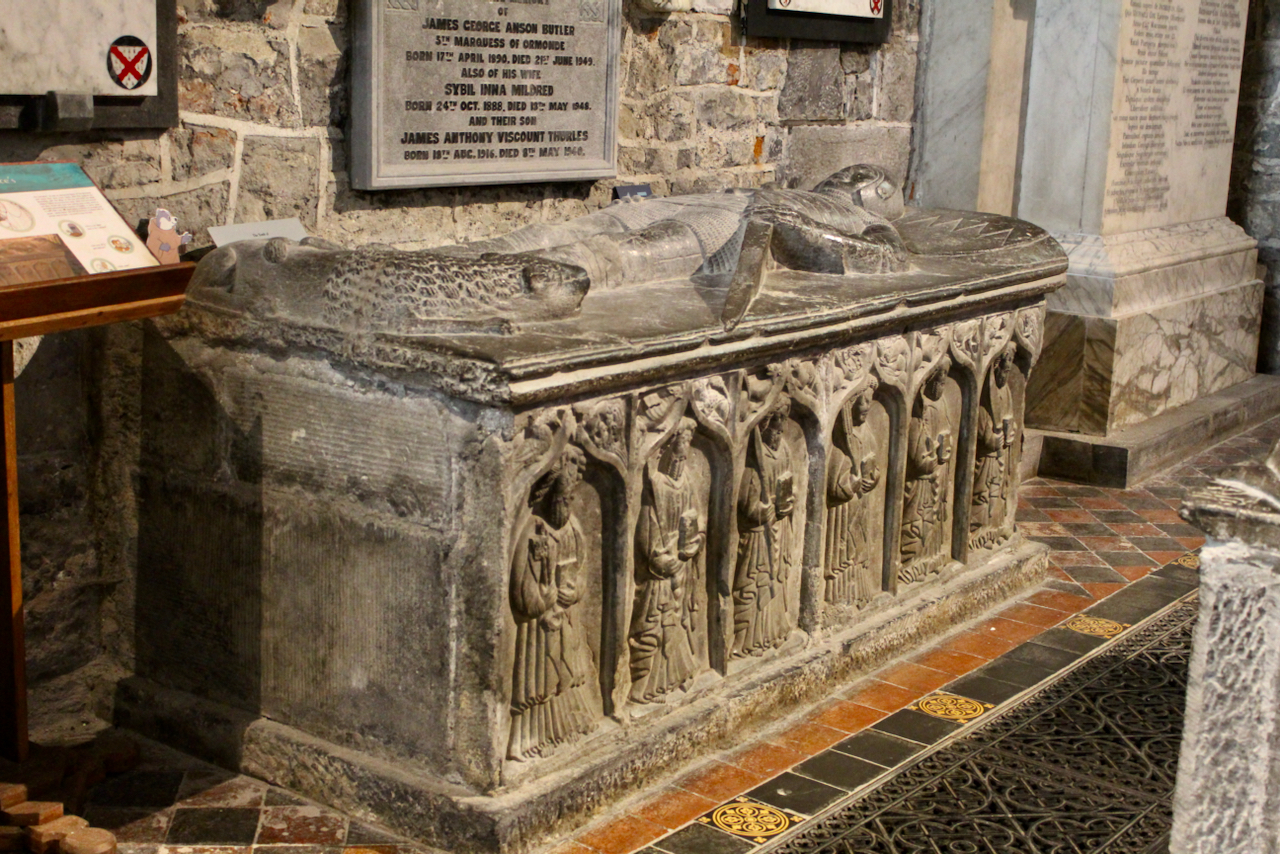
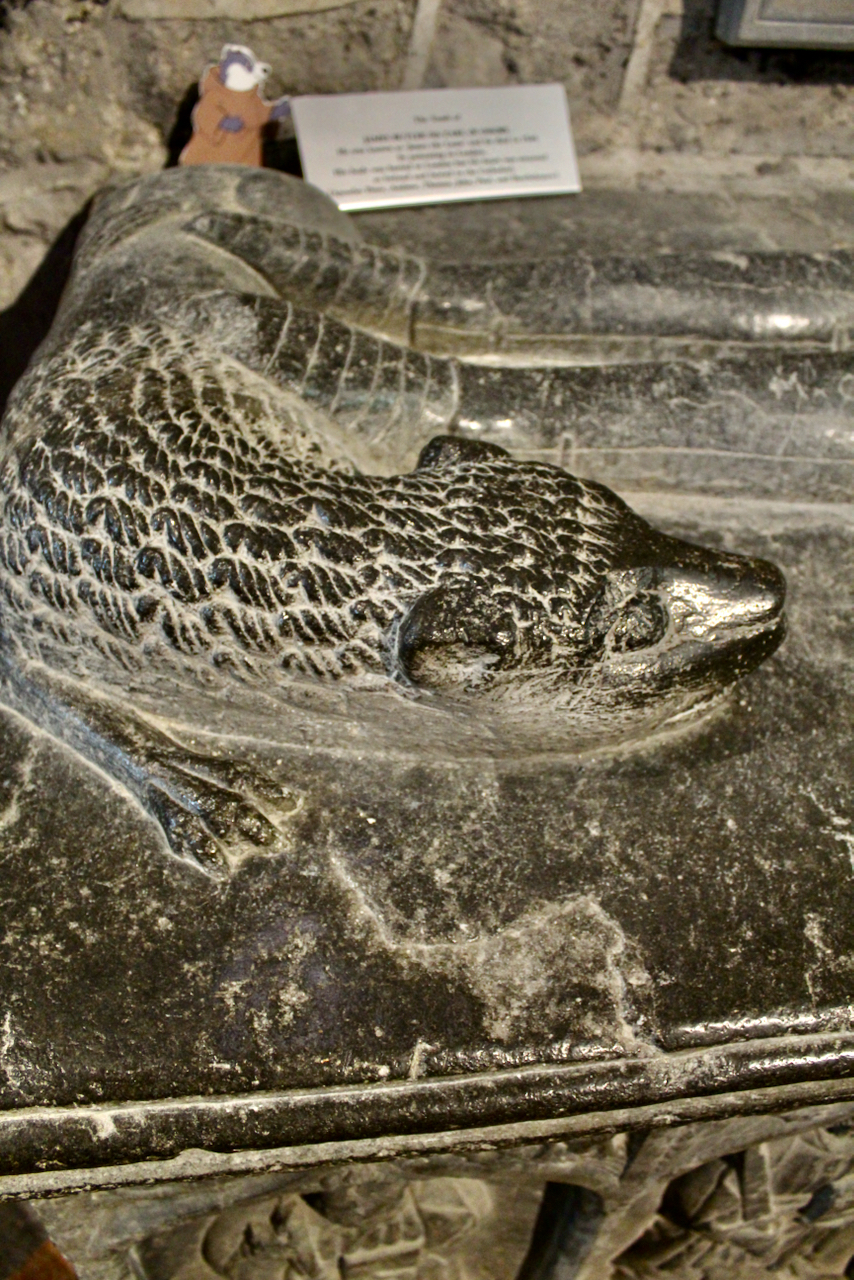
James Butler (d. 1546) 9th Earl of Ormond, 2nd Earl of Ossory. Photograph © Jennifer Winder-Baggot, www.irishhistorichouses.com
A dog, symbol of loyalty, at the feet of James Butler (d. 1546) 9th Earl of Ormond, 2nd Earl of Ossory, St. Canice’s Cathedral, Kilkenny. Photograph © Jennifer Winder-Baggot, www.irishhistorichouses.com

As well as his heir, Thomas, the 9th Earl also had a son Edmond (d. 1602) who lived in Cloughgrenan, County Carlow, who gave rise to the Baronets of Cloughgrenan.

As a young boy, Thomas Butler (c.1531-1614), later 10th Earl of Ormond, was fostered with Rory O’More, son of the lord of Laois before being sent to London to be educated with the future Edward VI. He was the first member of the Butler family to be brought up in the protestant faith. In 1546, he inherited the Ormond earldom following the sudden death of his father.
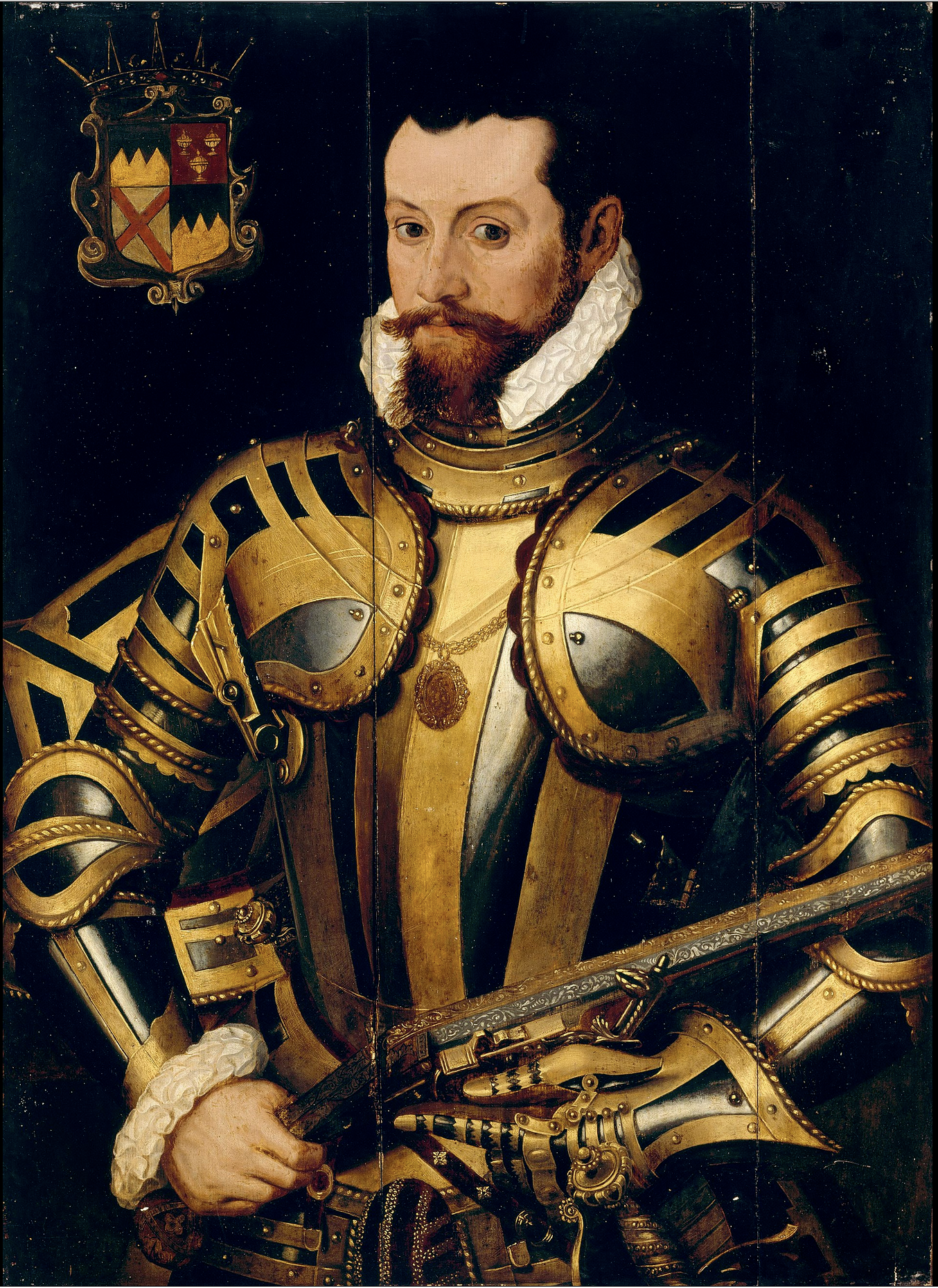
Thomas Butler 10th Earl of Ormond by Steven Van der Meulen. He is holding a wheelcock pistol with his coat of arms in the upper left corner.

Thomas Butler was highly regarded by Queen Elizabeth, to whom he was related through her mother Anne Boleyn. Anne Boleyn was the granddaughter of the 7th Earl of Ormond making Elizabeth and Thomas cousins. Due to his dark hair, he was called “Black Tom,” and the Queen called him “her dark husband” and it is even rumoured that she had a son with him.

Queen Elizabeth promoted him to Lord Treasurer of Ireland in 1559.
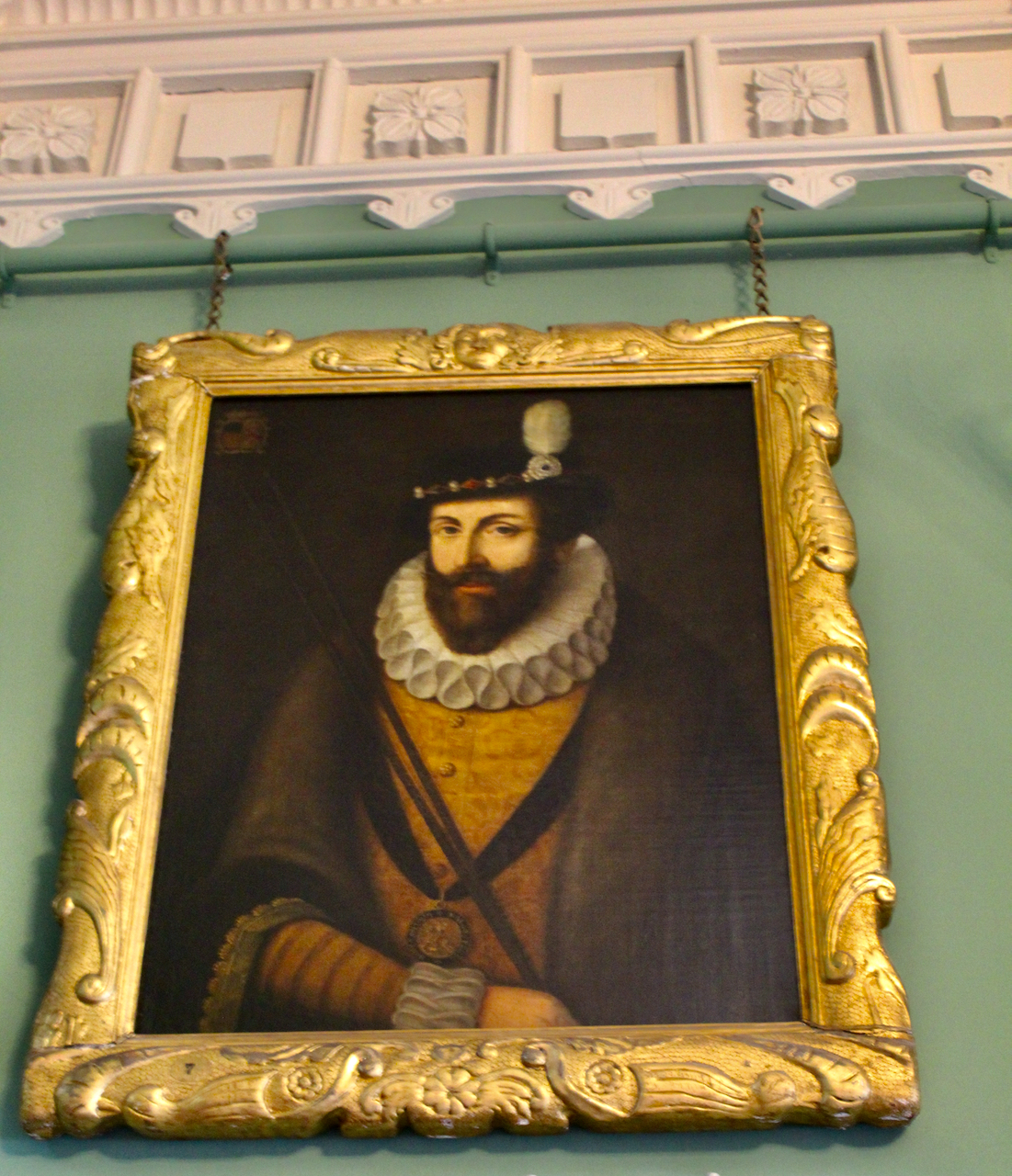
Thomas Butler (c.1531-1614), 10th Earl of Ormond, artist unknown. Thomas married three times but left no heir and was succeeded by his nephew Walter Butler 11th Earl of Ormond. He died in 1614 and was buried in St Canice’s cathedral, Kilkenny. Photograph © Jennifer Winder-Baggot, www.irishhistorichouses.com

The OPW website tells us that after the death of his mother, Joan Fitzgerald, the old feud between the Butlers and the Fitzgeralds broke out again and Black Tom defeated the Earl of Desmond at Affane (1565), the last pitched battle in Britain or Ireland.

He was made Knight of the Garter in 1588 and Earl Marshal of England in 1591.

See my entry about the Ormond Castle at Carrick-on-Suir for more on “Black Tom.” https://irishhistorichouses.com/2024/09/05/ormond-castle-carrick-on-suir-county-tipperary-an-opw-property/
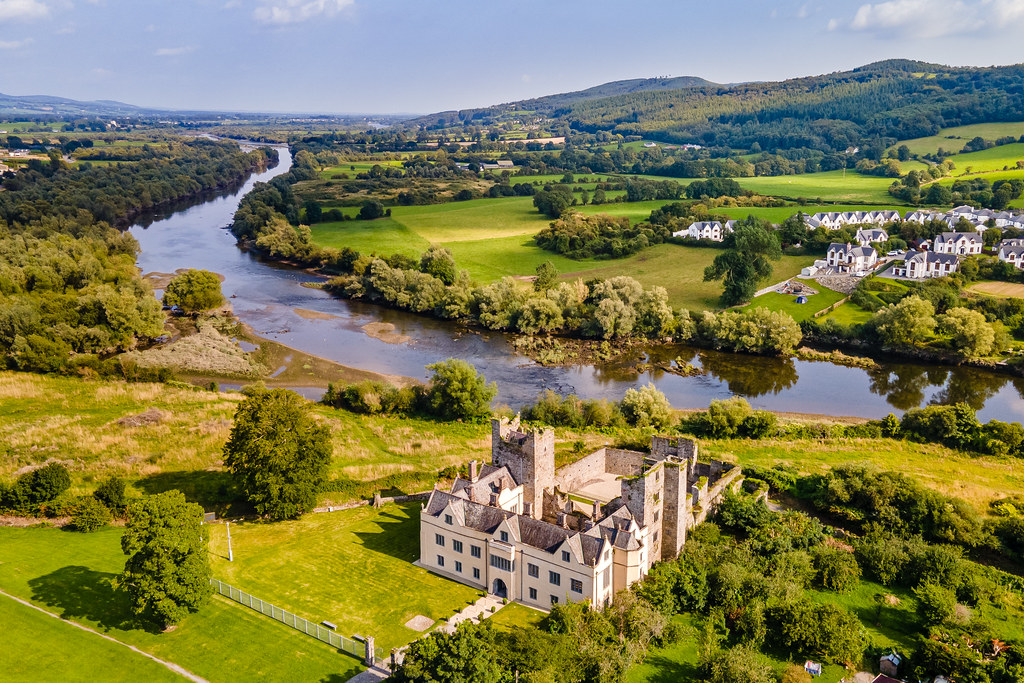
Carrick-On-Suir, Co Tipperary Courtesy Tipperary Tourism photo by Kerry Kissane All Around Ireland 2021

The Desmond Rebellions in Munster in 1569–1573 and 1579–1583 were motivated primarily by the desire to maintain the independence of feudal lords from the English monarch but also had an element of religious antagonism between Catholic Geraldines (Fitzgeralds, Earls of Desmond) and the Protestant English state. Some of Thomas the 10th Earl’s brothers supported the Fitzgeralds in their rebellion: Edmund Butler (1534-1602) of Cloghgrennan, County Carlow, Edward and Piers (1541-1601). Edmund, Edward and Piers were attainted in April 1570. That meant that Edmund ceased to be Ormond’s heir presumptive and the next brother, John Butler of Kilcash, took his place. However, John predeceased Thomas, in 1570, and John’s eldest son Walter Butler (1559–1633) became heir presumptive. 
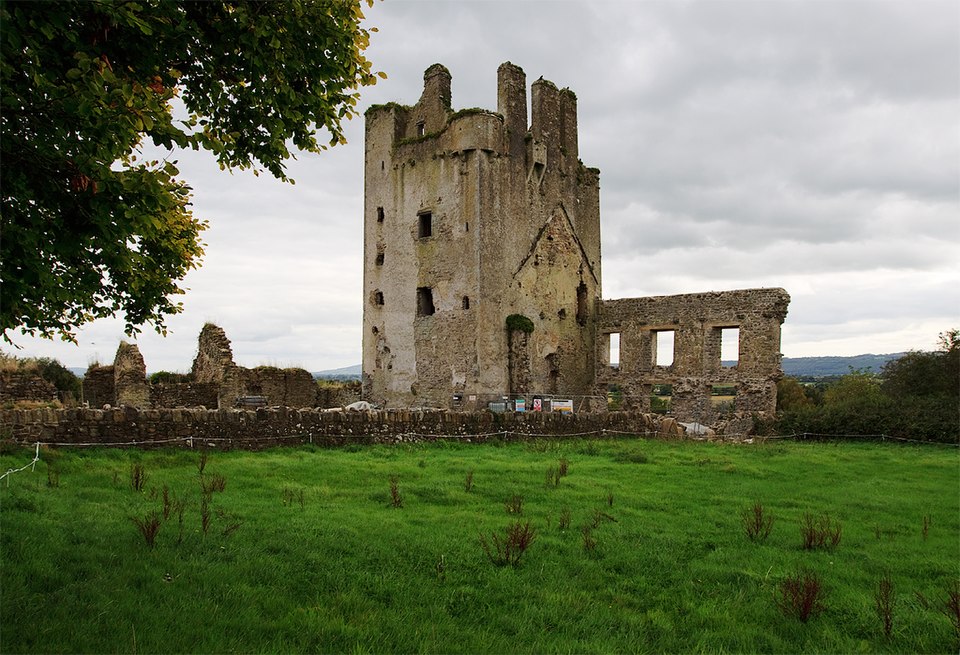
Kilcash Castle, County Tipperary, photograph by Mike Searle.

Thomas married three times but left no direct male heir. He died in 1614 and was buried in St Canice’s cathedral, Kilkenny. He had a daughter, Elizabeth. She married her cousin, Theobald Butler (1565-1614), 1st Viscount Tulleophelim, who was the son of Black Tom’s brother Edmund (1534-1602) of Cloghgrennan, County Carlow. He died, however, the same year as Black Tom.

King James then orchestrated the marriage of Elizabeth Butler to his Scottish favourite Richard Preston (1589-1628) 1st Baron Dingwall. James I made sure that Black Tom’s daughter Elizabeth (1590-1628) inherited most of the Ormond estate.

Although he did not inherit the majority of the land, Walter Butler (1559–1633) inherited the title and became the 11th Earl of Ormond. Unlike his uncle, who had been raised at Court and reared a Protestant, Walter was Catholic. Because of his devotion to his faith, he was called Walter of the Beads.

Walter Butler’s claim to the family estates was blocked by King James I. Walter he spent much time and money in litigation opposing the King’s decision and was imprisoned for eight years in the Fleet, London, as a result. He was released 1625. The King gave Richard Preston the title Earl of Desmond, as the Fitzgeralds had lost the title of Earl of Desmond due to their rebellion.
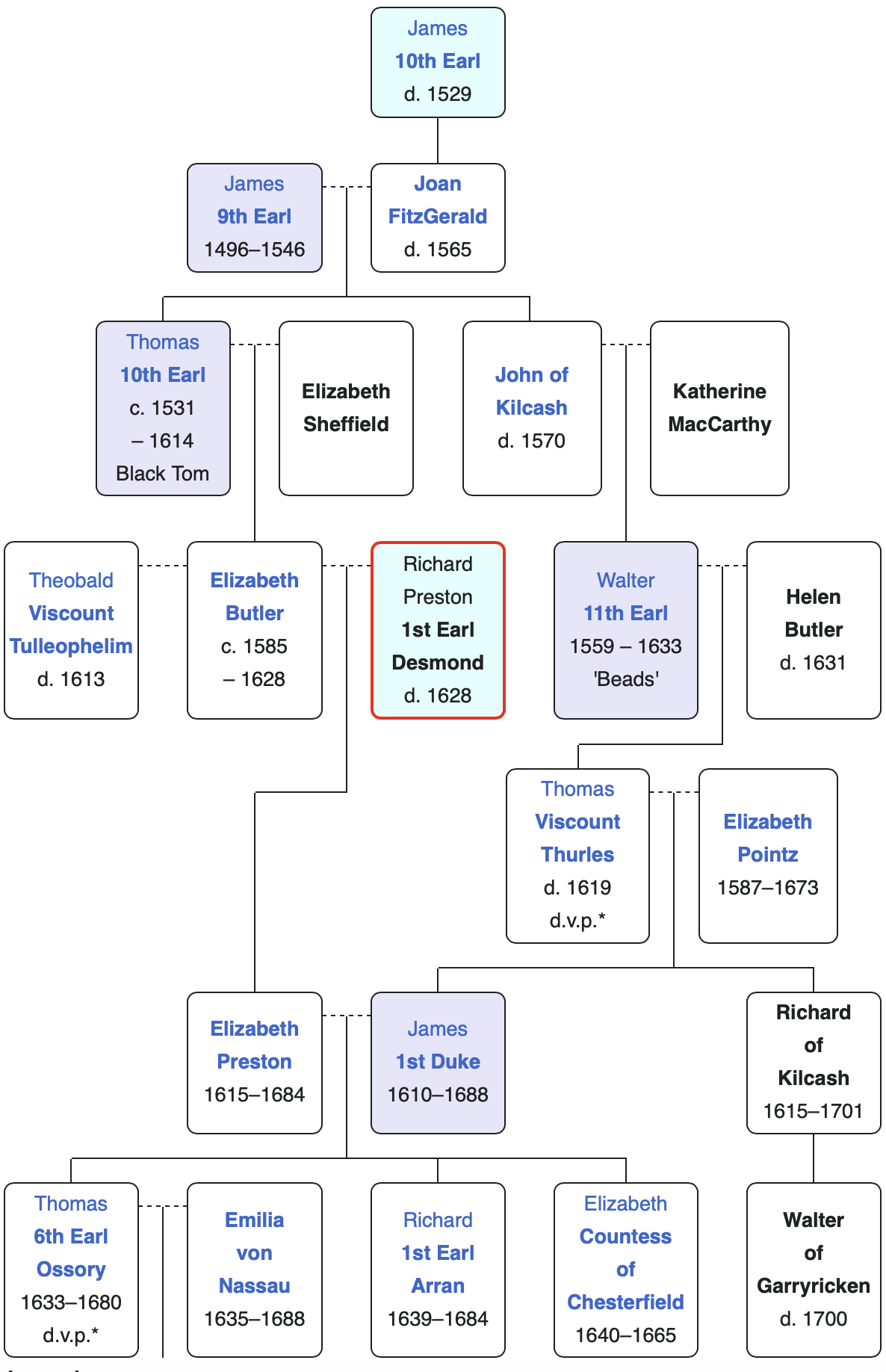
The Butler genealogy.

Walter’s son Thomas, Viscount Thurles, predeceased him, so when he died his nine-year-old grandson James (1610-1688) became the heir to the titles. The estates, including Kilkenny Castle, had passed to Elizabeth and her husband Richard Preston Baron Dingwall. Before he died, Walter arranged a marriage between his heir James and Elizabeth and Richard Preston’s daughter in order to unite the estates with the Earl of Ormond title. In 1629 James married his cousin Elizabeth Preston and reunited the Ormond estates.
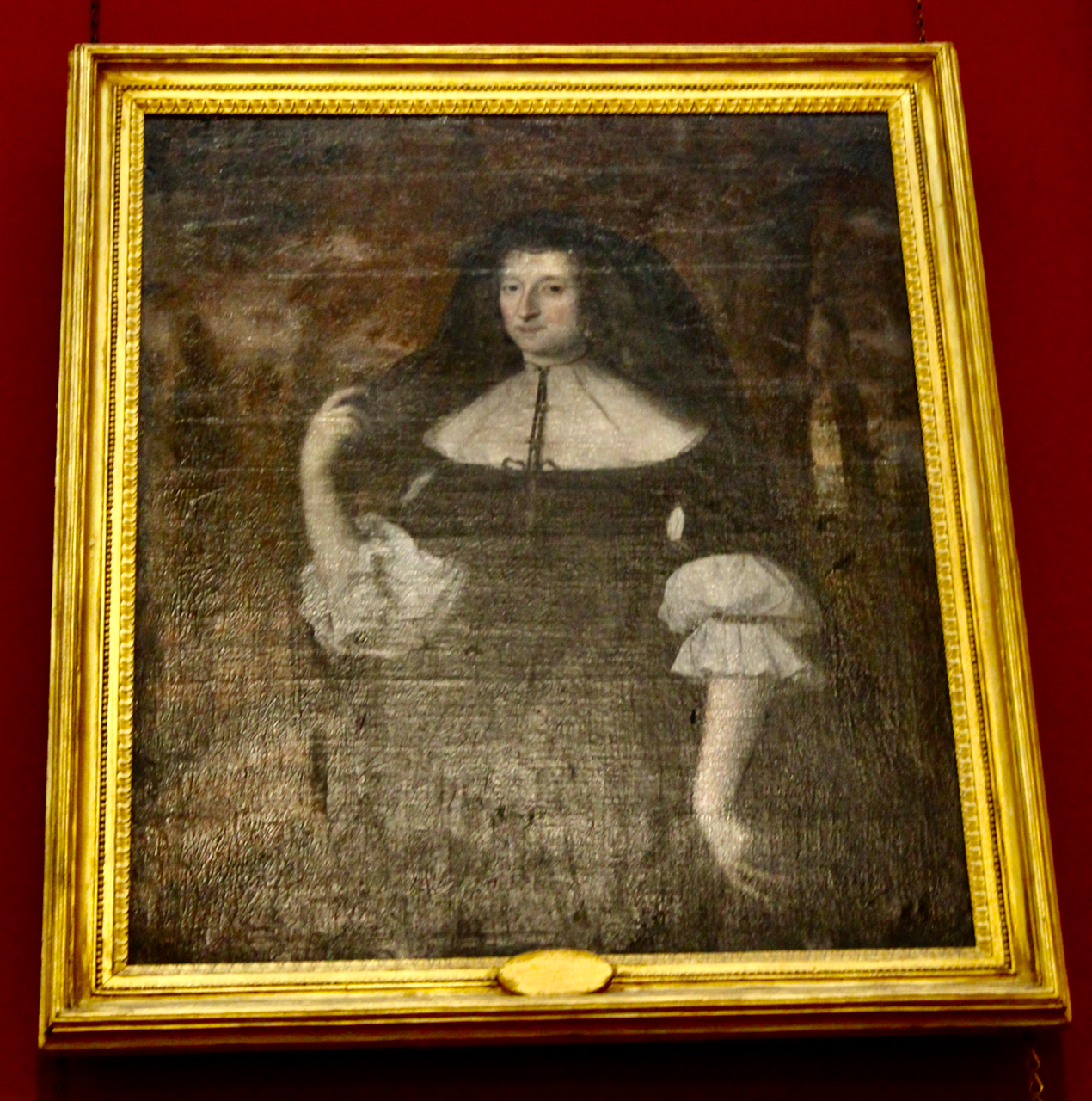
Elizabeth Poyntz (1588-1673), mother of the 1st Duke of Ormond, painted by John Michael Wright, Kilkenny Castle. Photograph © Jennifer Winder-Baggot, www.irishhistorichouses.com

James Butler (1610-88) 12th Earl of Ormond (later 1st Duke of Ormond) was the eldest son of Thomas Butler, Viscount Thurles, and his wife Elizabeth Poyntz. Following his father’s death in 1619, 9-year-old James was made a royal ward, and was educated at Lambeth Palace under the tutelage of George Abbot, Archbishop of Canterbury.
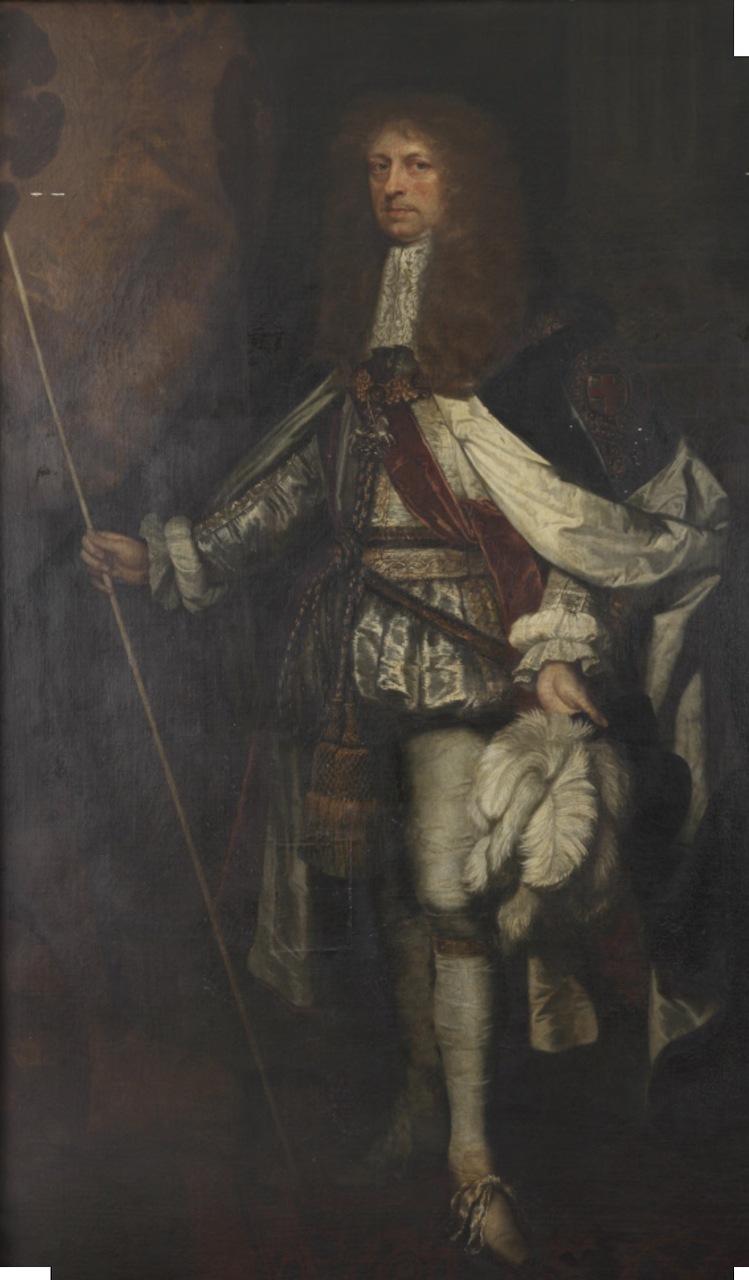
James Butler, 1st Duke of Ormonde (1610–1688) after John Michael Wright courtesy of National Trust images.
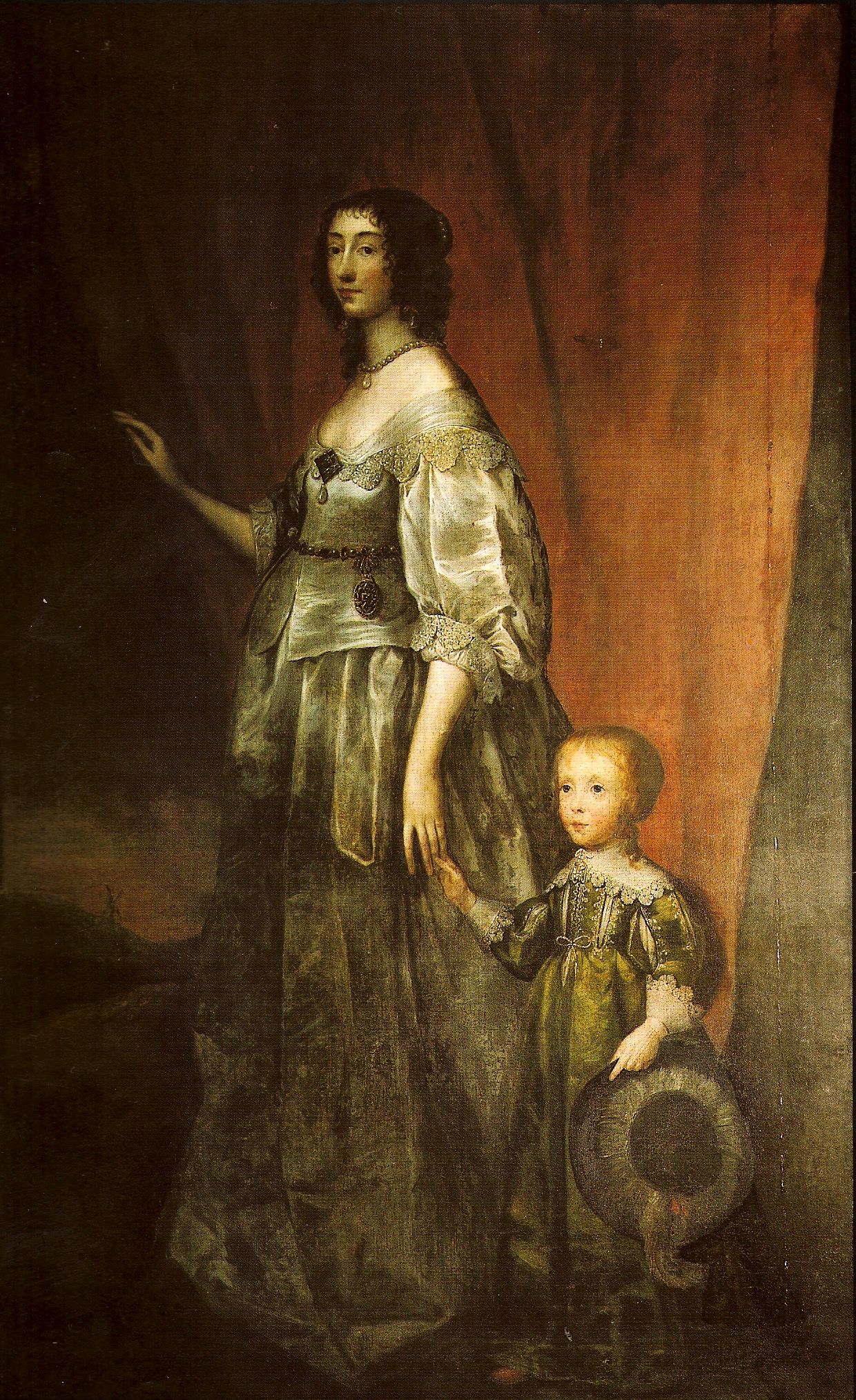
Elizabeth Preston, (1616-1684) Baroness Dingwall, Countess of Ormond, later Duchess of Ormond, with her son Thomas, Lord Ossory (1634-1680), attributed to David des Granges (1611-1671/72), courtesy Office of Public Works. She was the daughter of Richard Preston, Baron Dingwall, Earl of Desmond and his wife Elizabeth Butler, only daughter and heiress of Thomas Butler, 10th Earl of Ormond. On the death of her parents in 1628, Elizabeth was made a royal ward and the rights of her marriage were granted to the Earl of Holland, who sold it for £15,000. She married her cousin James Butler, Viscount Thurles, later 1st Duke of Ormond in 1629, thus reuniting the Ormond titles and properties.
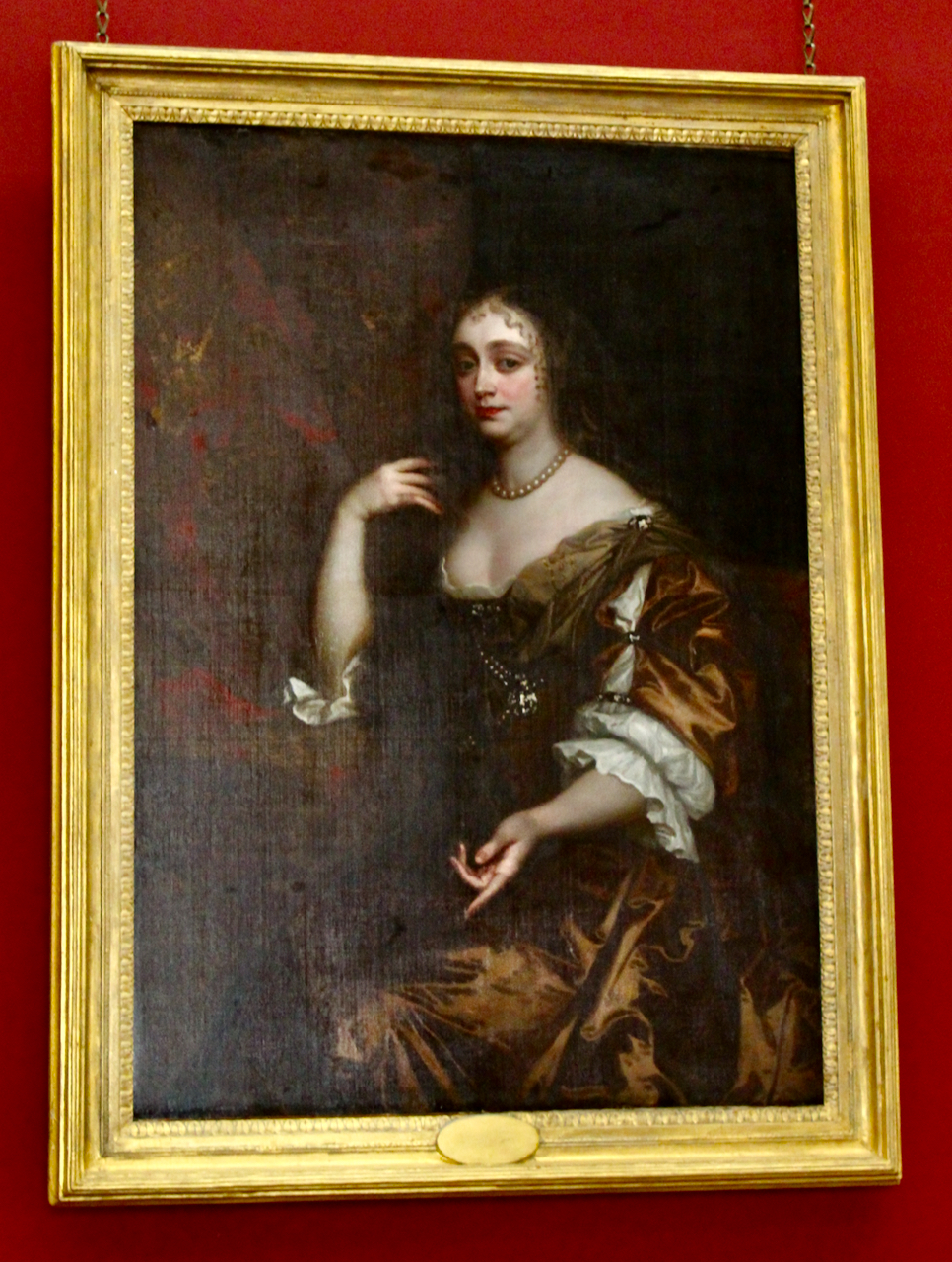
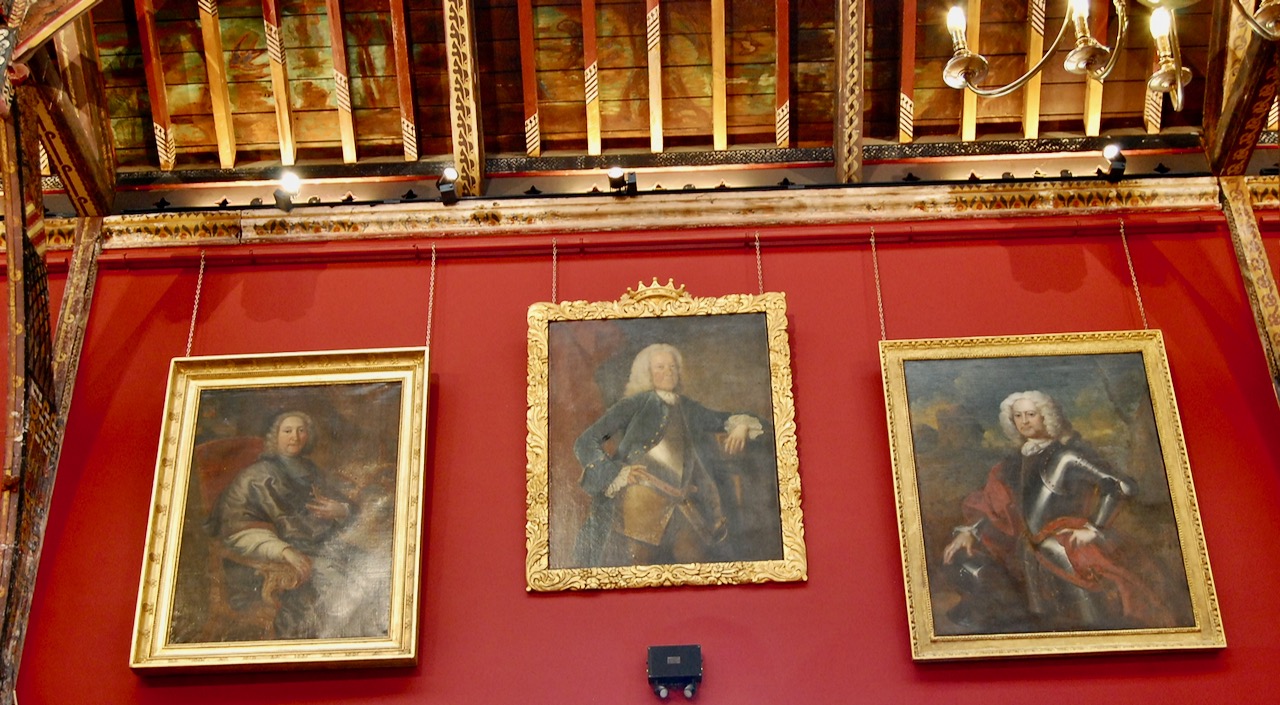
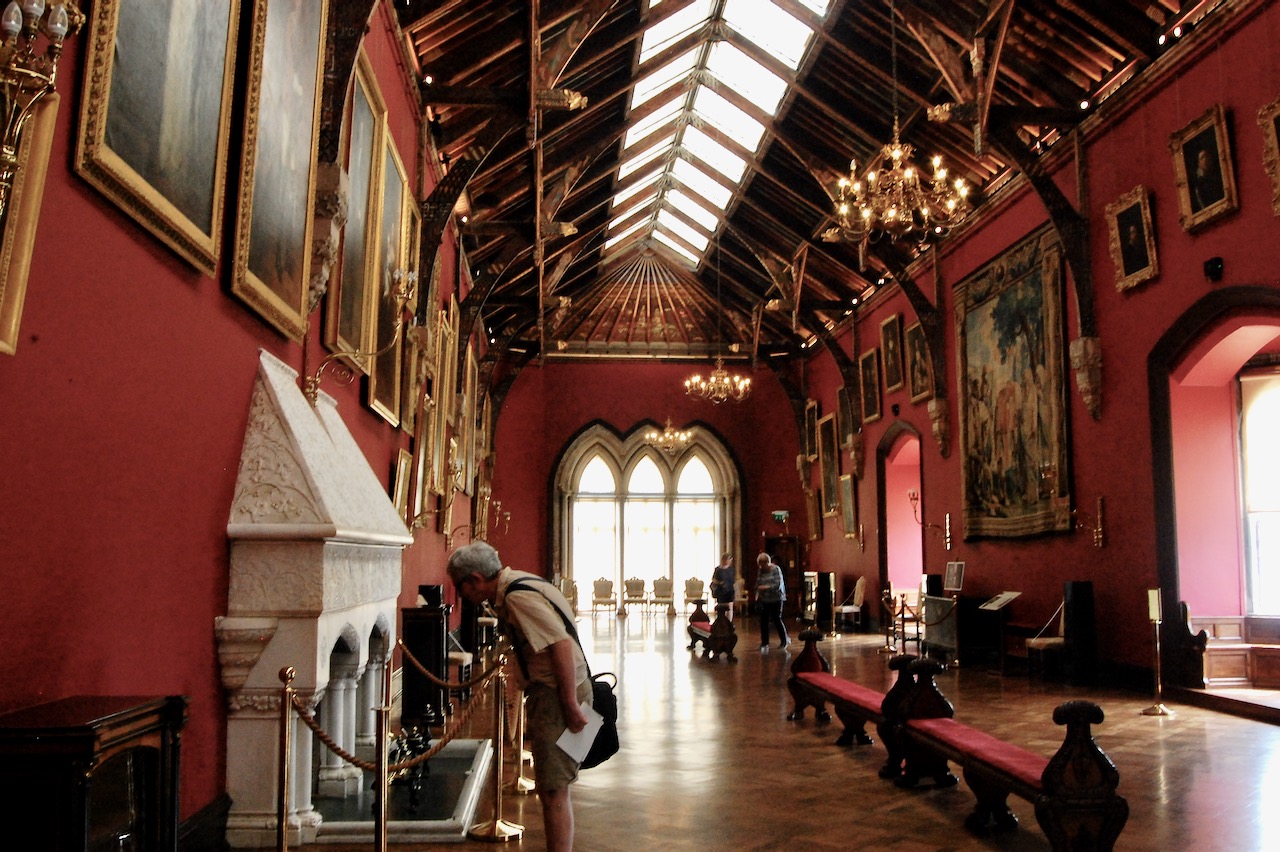
In the long gallery of Kilkenny Castle: James Butler 1st Duke of Ormond painted by John Michael Wright (1617-1694); in centre, Elizabeth Poyntz (1588-1673), mother of the 1st Duke of Ormond, painted by John Michael Wright; and Elizabeth Preston (1615-1684), wife of the 1st Duke of Ormond, with her son Thomas, who became the 6th Earl of Ossory. Photograph © Jennifer Winder-Baggot, www.irishhistorichouses.com

The marriage took place on Christmas 1629. In 1630, James and his wife Elizabeth lived in the castle in Carrick-on-Suir.

James succeeded to the Ormond titles in 1633 on the death of his grandfather, Walter Butler, 11th Earl of Ormond. James and Elizabeth Butler’s estates in Ireland consisted of close to 300,000 acres, spread over seven counties, mostly in Counties Kilkenny and Tipperary. However, both he and his wife inherited debts. Debt was to plague James all his life.
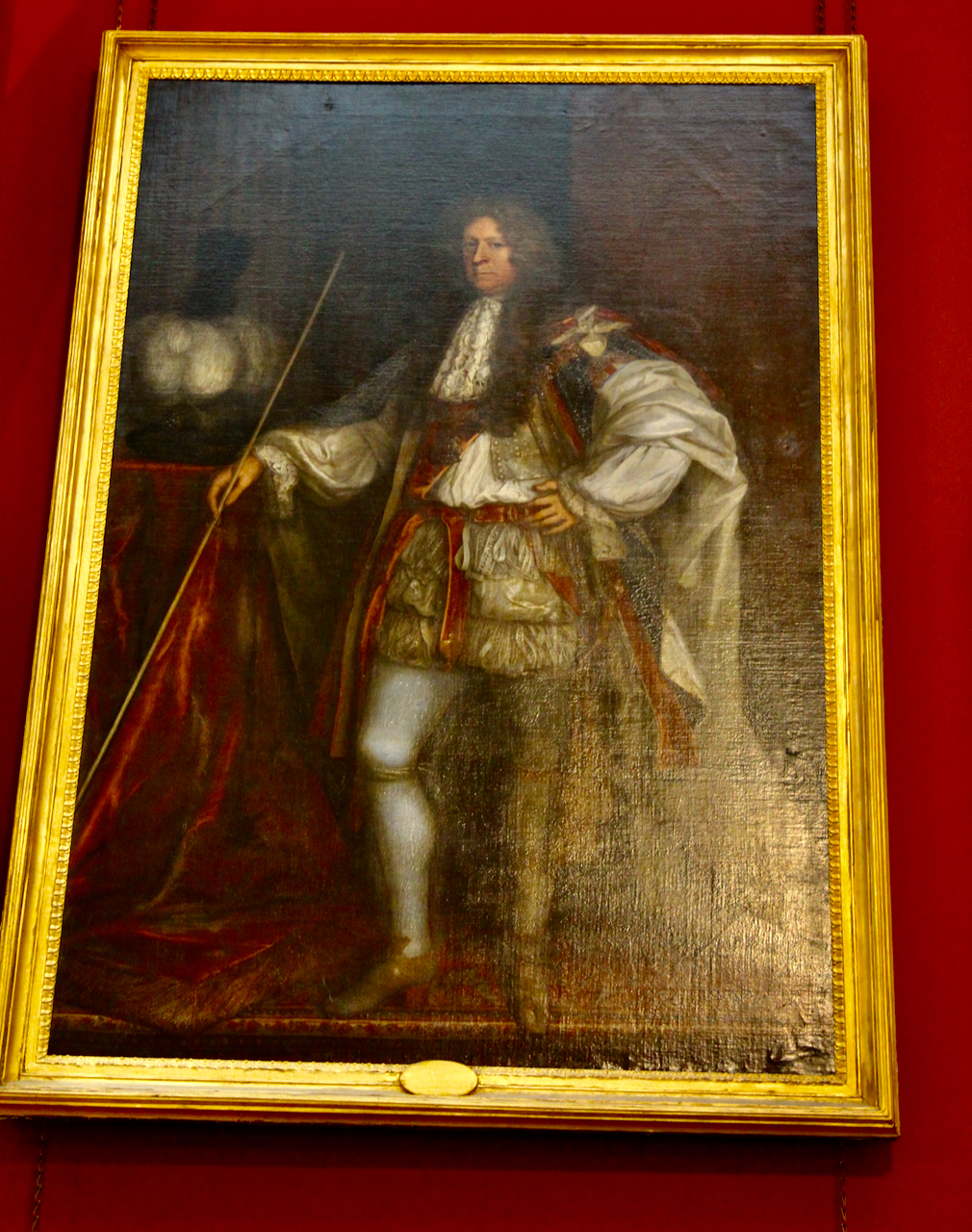
James Butler 1st Duke of Ormond painted by John Michael Wright (1617-1694), Kilkenny Castle. Photograph © Jennifer Winder-Baggot, www.irishhistorichouses.com

James 12th Earl of Ormond and Elizabeth had eight sons and two daughters but only three of those sons survived infancy: Thomas, later Earl of Ossory, born in 1634, John, later Earl of Gowran, also born in 1634, and Richard, later 1st Earl of Arran in 1639. Their daughters were Mary, born in 1640, later Duchess of Devonshire and Elizabeth, born in 1646, later Countess of Chesterfield.

James 12th Earl of Ormond remained loyal to the monarchy and to King Charles I at the time of the 1641 Rebellion and the Civil War. He was appointed commander-in-chief of the army in Ireland in 1641. The family was living at Carrick when the 1641 rebellion broke out. The earl went to Dublin to command the army and Elizabeth and her children moved to Kilkenny Castle.
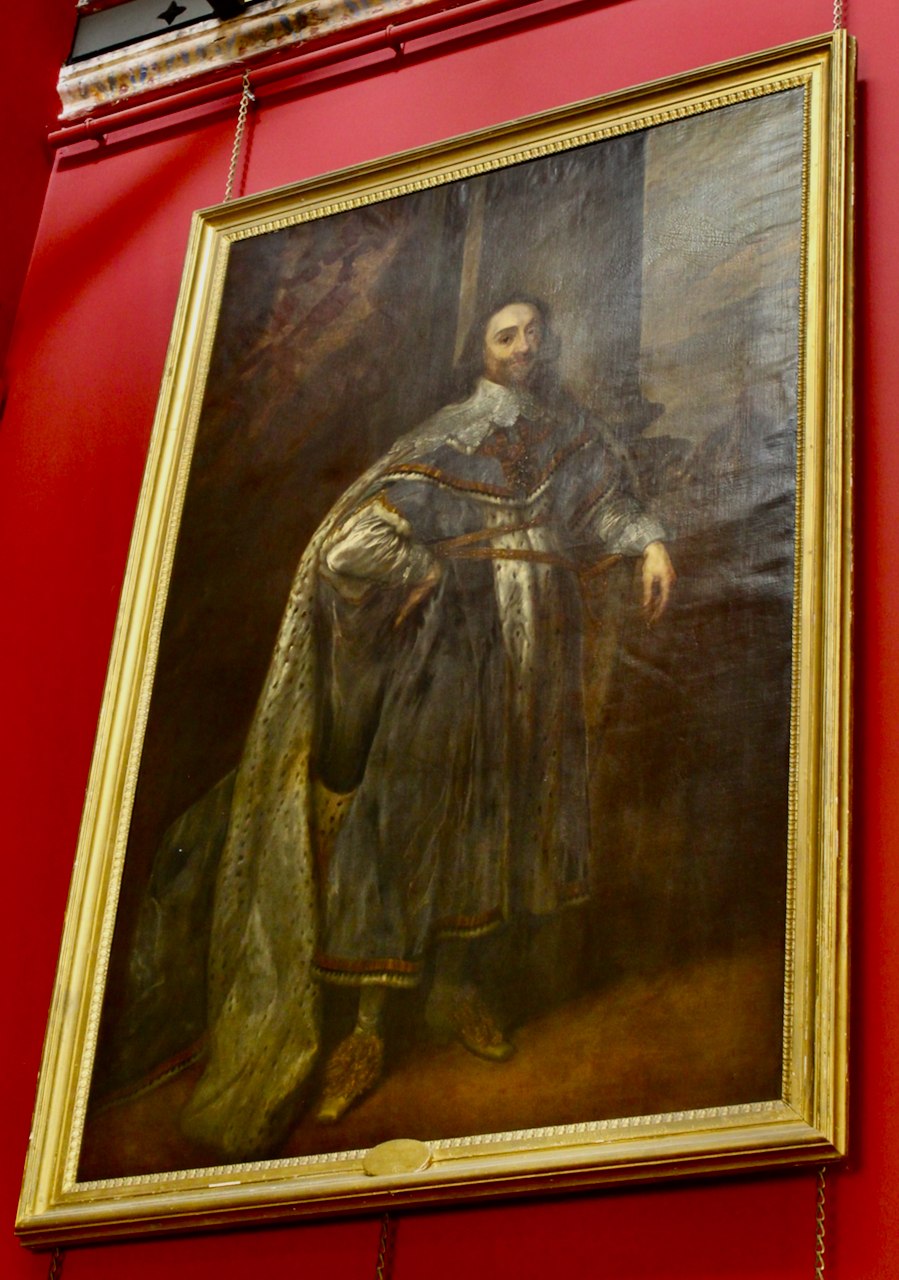
King Charles I (1600-49), attributed to James Gandy after Sir Anthony van Dyck (1619-89), this portrait hangs in the long gallery of Kilkenny Castle. Charles had been a notable patron of the arts, and was responsible for commissioning works from artists such as Sir Peter Paul Rubens, and for bringing Sir Anthony van Dyck to England. A full length portrait wearing robes of state, this is a very close copy of the portrait painted by Van Dyke (c.1636) now in the Royal Collection. The portrait is attributed to James Gandy on the grounds that it is a seventeenth century work and that he is said to have made many copies of portraits after van Dyck during the time he was employed by the Duke of Ormond. Photograph © Jennifer Winder-Baggot, www.irishhistorichouses.com
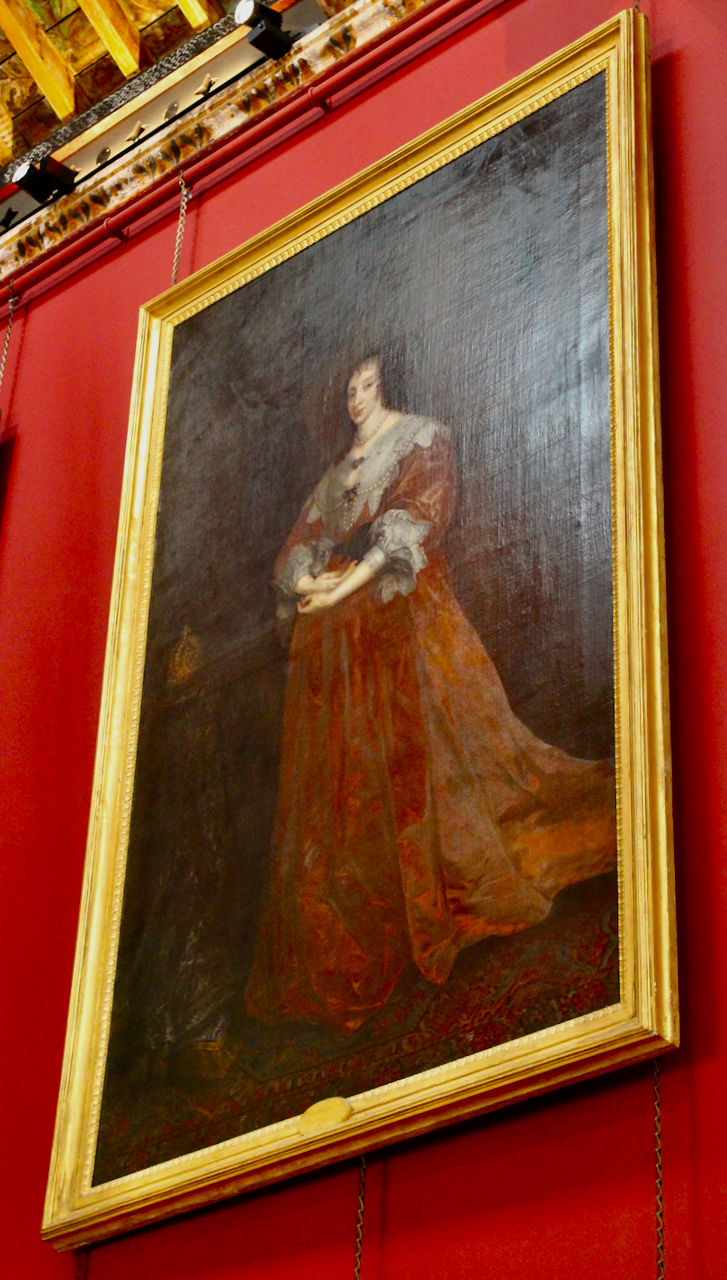
Queen Henrietta Maria (1609-69), attributed to James Gandy after Sir Anthony van Dyck (1619-89). Daughter of Henri IV of France and Marie De Medici. Wife of Charles I of England and mother to Charles II and James II of England. This portrait hangs in the long gallery of Kilkenny Castle. Photograph © Jennifer Winder-Baggot, www.irishhistorichouses.com
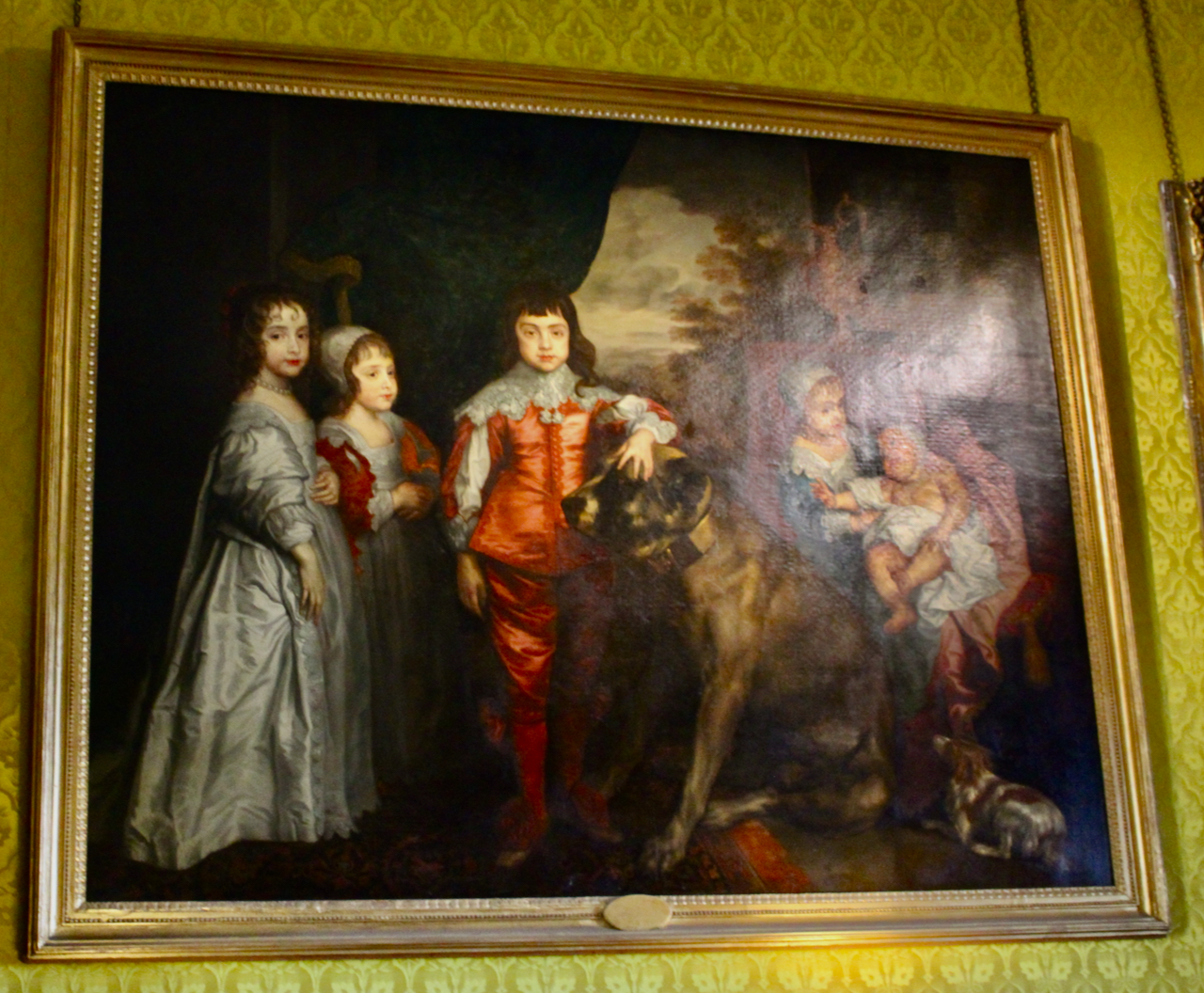
Queen Henrietta Maria (1609-69), after Sir Anthony van Dyck. Unfortunately the light means we can’t see her. She was the wife of King Charles I. She is pictured with her children, including the future Kings Charles II and James II. The painting hangs in Kilkenny Castle. Photograph © Jennifer Winder-Baggot, www.irishhistorichouses.com
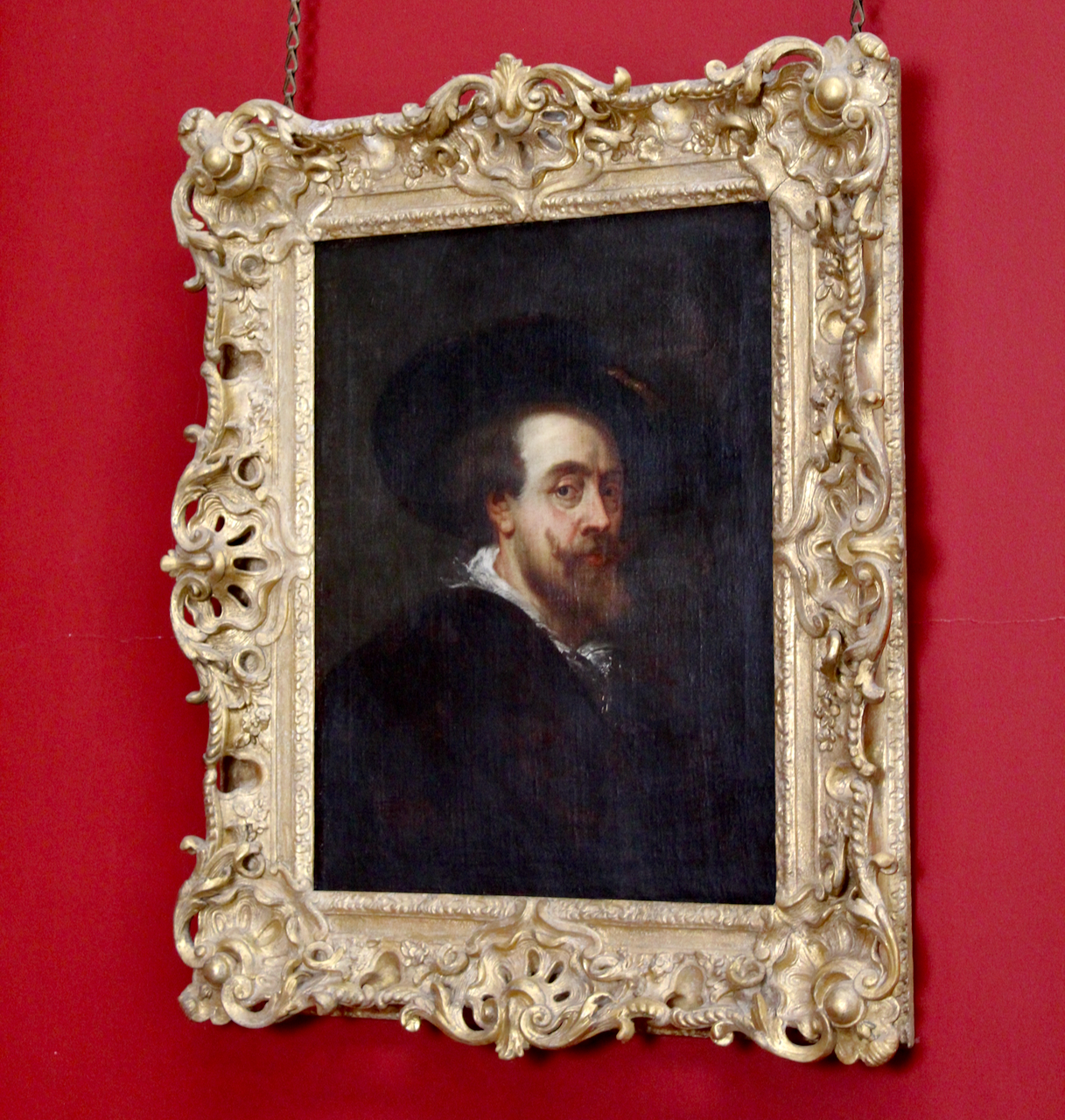
Sir Peter Paul Rubens (1577-1640), after a self-portrait by Rubens of c. 1625 which was painted for Charles, Prince of Wales. A crude copy, the artist is unknown, probably a nineteenth century copy. This portrait hangs in the long gallery of Kilkenny Castle. Photograph © Jennifer Winder-Baggot, www.irishhistorichouses.com
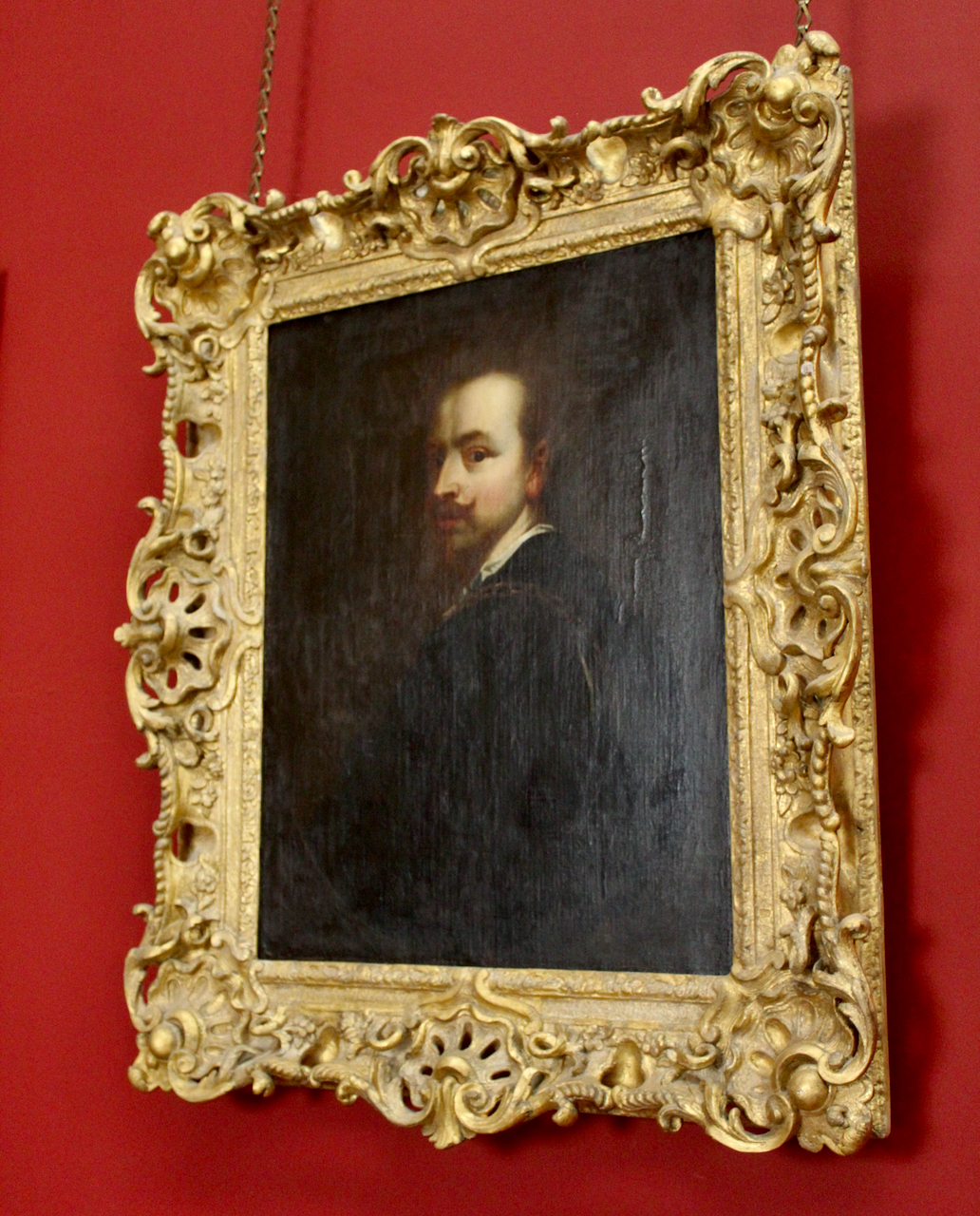
Sir Anthony van Dyck (1599-1641), after Sir Anthony van Dyck. The head in this portrait would seem to be derived from van Dyck’s Self Portrait with Endymion Porter (Prado, Madrid) although the costume is different; in fact, it is closer to that used in van Dyck’s self portrait with Sunflower. Probably a nineteenth century copy, it also hangs in the long gallery of Kilkenny Castle. Photograph © Jennifer Winder-Baggot, www.irishhistorichouses.com
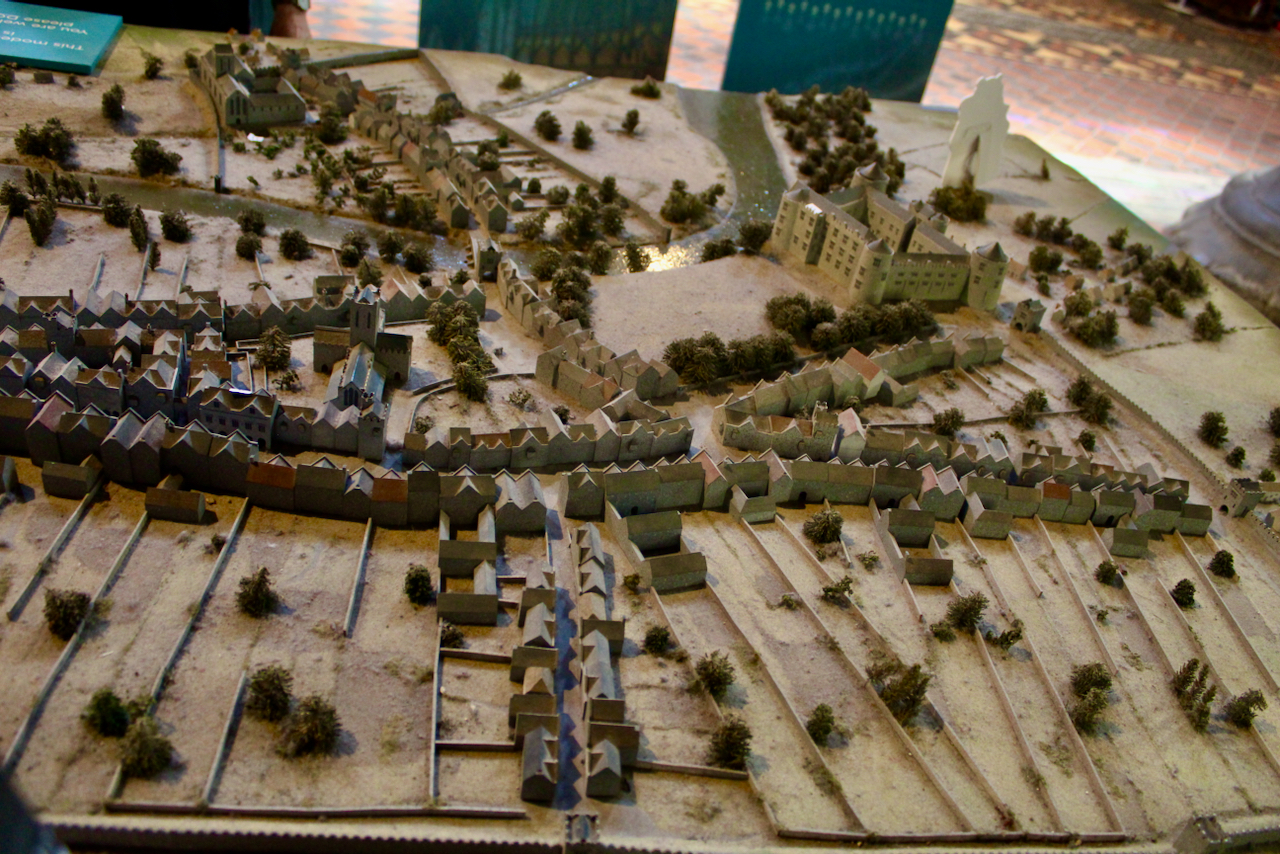
Diorama and information in St. Canice’s Cathedral, Kilkenny, how the city of Kilkenny looked in 1642. Photograph © Jennifer Winder-Baggot, www.irishhistorichouses.com
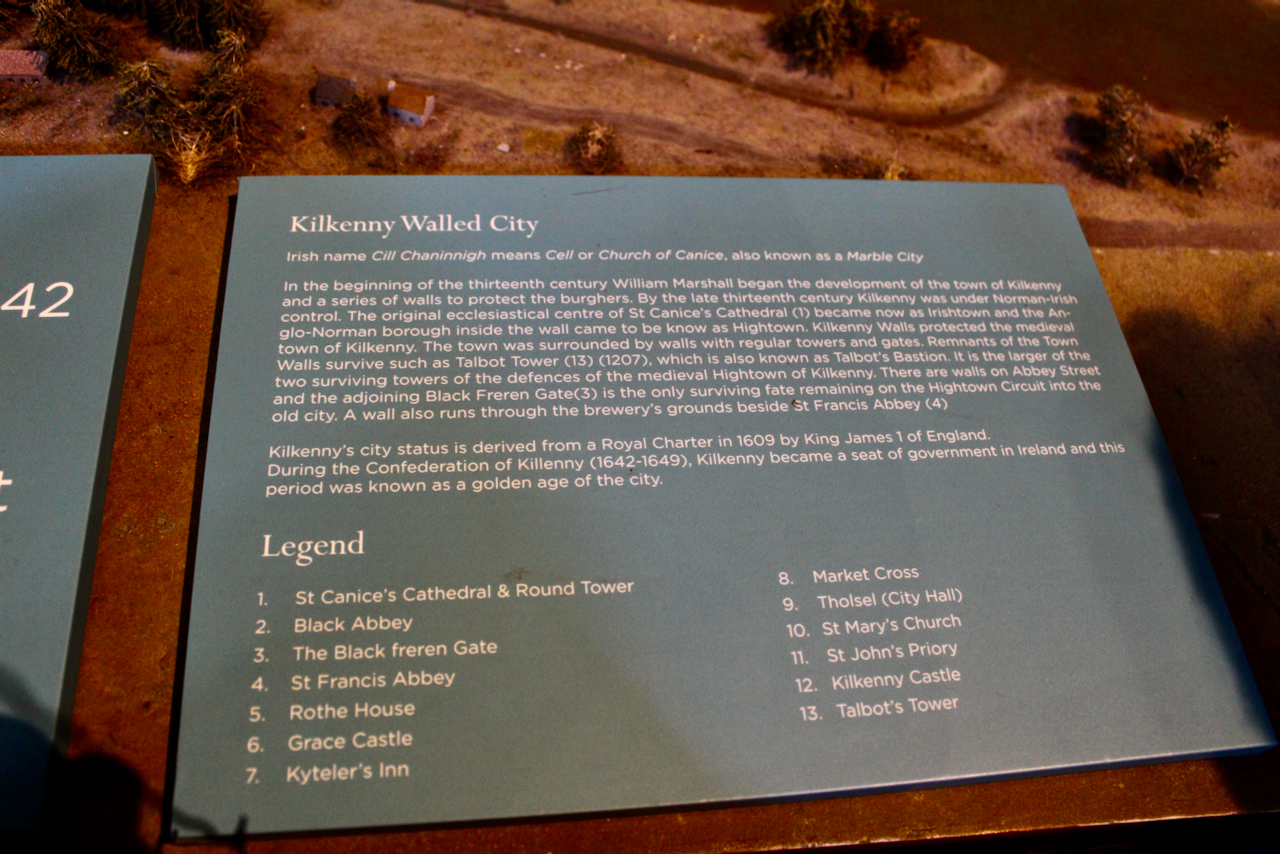
Diorama and information in St. Canice’s Cathedral, Kilkenny. Photograph © Jennifer Winder-Baggot, www.irishhistorichouses.com

The Catholic Confederacy, an alliance of Catholics and Anglo-Irish, made Kilkenny their base. James the 12th Earl negotiated on behalf of the king with the Catholic Confederacy. However, Cromwell came to Ireland in 1649 and captured Kilkenny. He ransacked the Cathedral, and attacked Kilkenny Castle.

The castle now forms a “u” shape, because in the time of Oliver Cromwell’s invasion, the fourth wall fell. [4]

Kilkenny Castle, photograph by unknown 2014 for Failte Ireland, Ireland’s Content Pool. [see 1] The castle now forms a “u” shape, because in the time of Oliver Cromwell’s invasion, the fourth wall fell.
James Butler (1610-1688) 1st Duke of Ormonde by Willem Wissing circa 1680-1685, courtesy of National Portrait Gallery NPG 5559.

James Butler served as Lord Lieutenant of Ireland from 1648-1650, the first of three periods as Lord Lieutenant. Following the defeat of the monarchy, he went into exile, moving around Europe with the exiled court of Charles II.
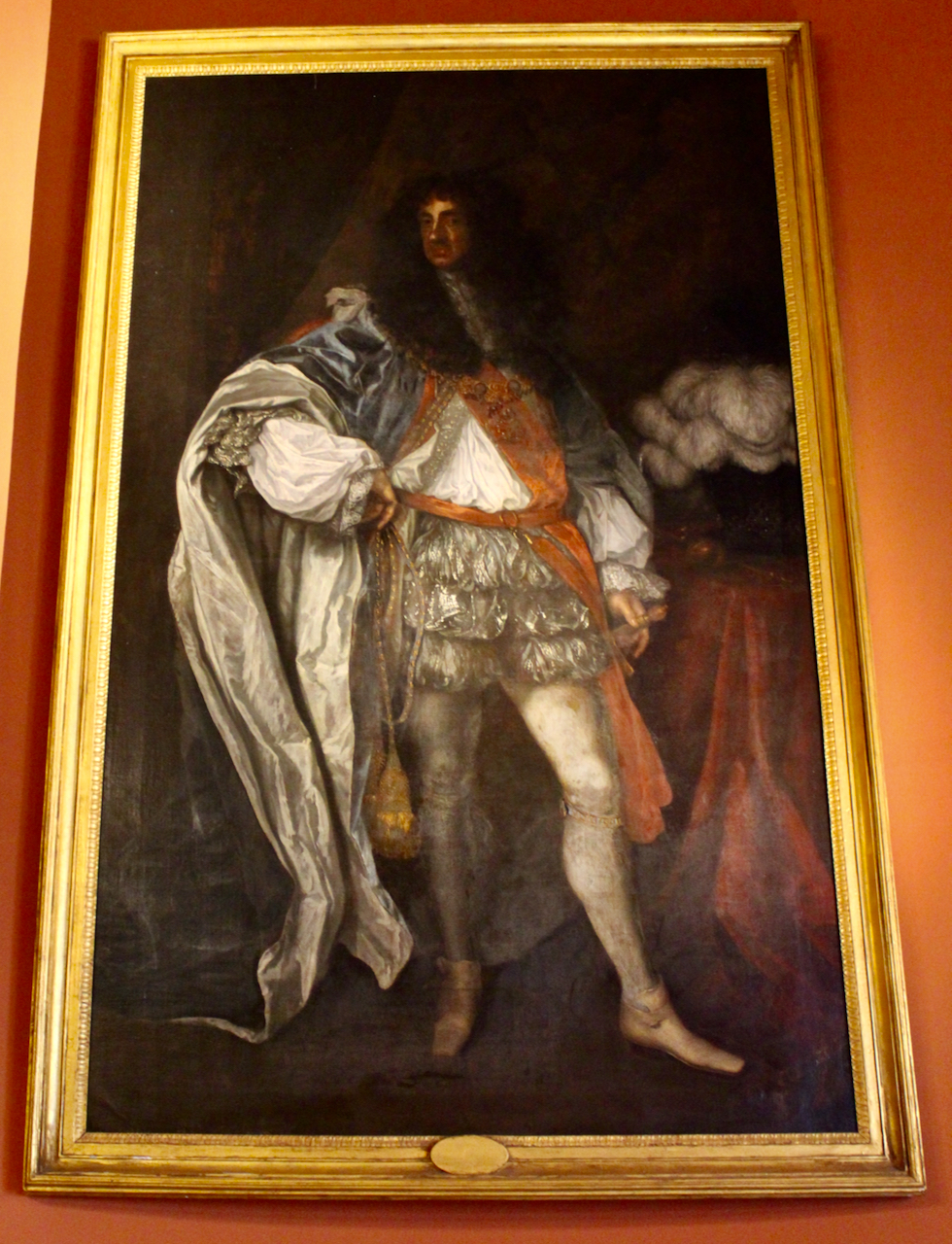
King Charles II (1630-85) attributed to John Michael Wright (1617-1694). This portrait hangs in the Tapestry Room in Kilkenny Castle. Photograph © Jennifer Winder-Baggot, www.irishhistorichouses.com
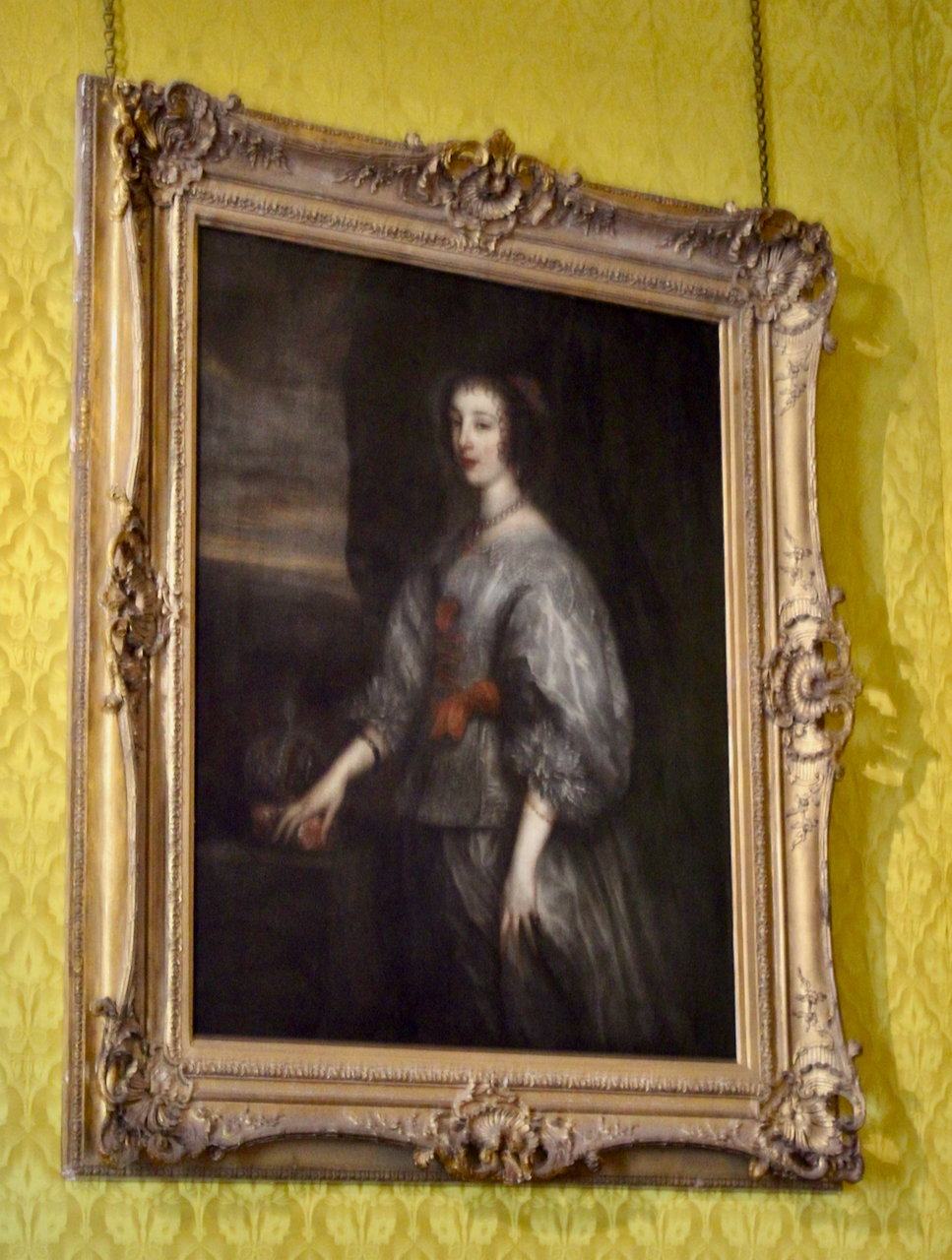
Queen Henrietta Maria (1609-69), after Sir Anthony van Dyck. Henrietta Maria was the daughter of Henri IV of France and Marie de Medici. She was the wife of Charles I of England and mother of Charles II and James II. This painting was formerly called “Duchess of Orleans”. This is a copy, with slight variations, after an original portrait by van Dyck, painted in 1632. Photograph © Jennifer Winder-Baggot, www.irishhistorichouses.com

Lady Ormond was highly regarded at Court and was godmother to Princess Mary, daughter of King James II, later Queen Mary. The Kilkenny Castle website tells us that Elizabeth is author of the largest body of extant correspondence of any woman from 17th century Ireland.

Lady Ormond spent a short period in exile with her husband and family in France during the early 1650s. By August 1652, poverty forced her to travel to England to plead with Cromwell for permission to live with her children on a portion of her Irish estates. She argued that it was she who inherited the estates and not her husband. Permission was granted in February 1653 on condition that she ceased all communication with her husband. They reunited later. She returned to her house at Dunmore, Co. Kilkenny.

After the restoration of the monarchy, James Butler was given an Irish Dukedom as Duke of Ormond, in 1661. He was raised to a dukedom in the English peerage in 1682.
This image has an empty alt attribute; its file name is 20181014_151119.jpeg
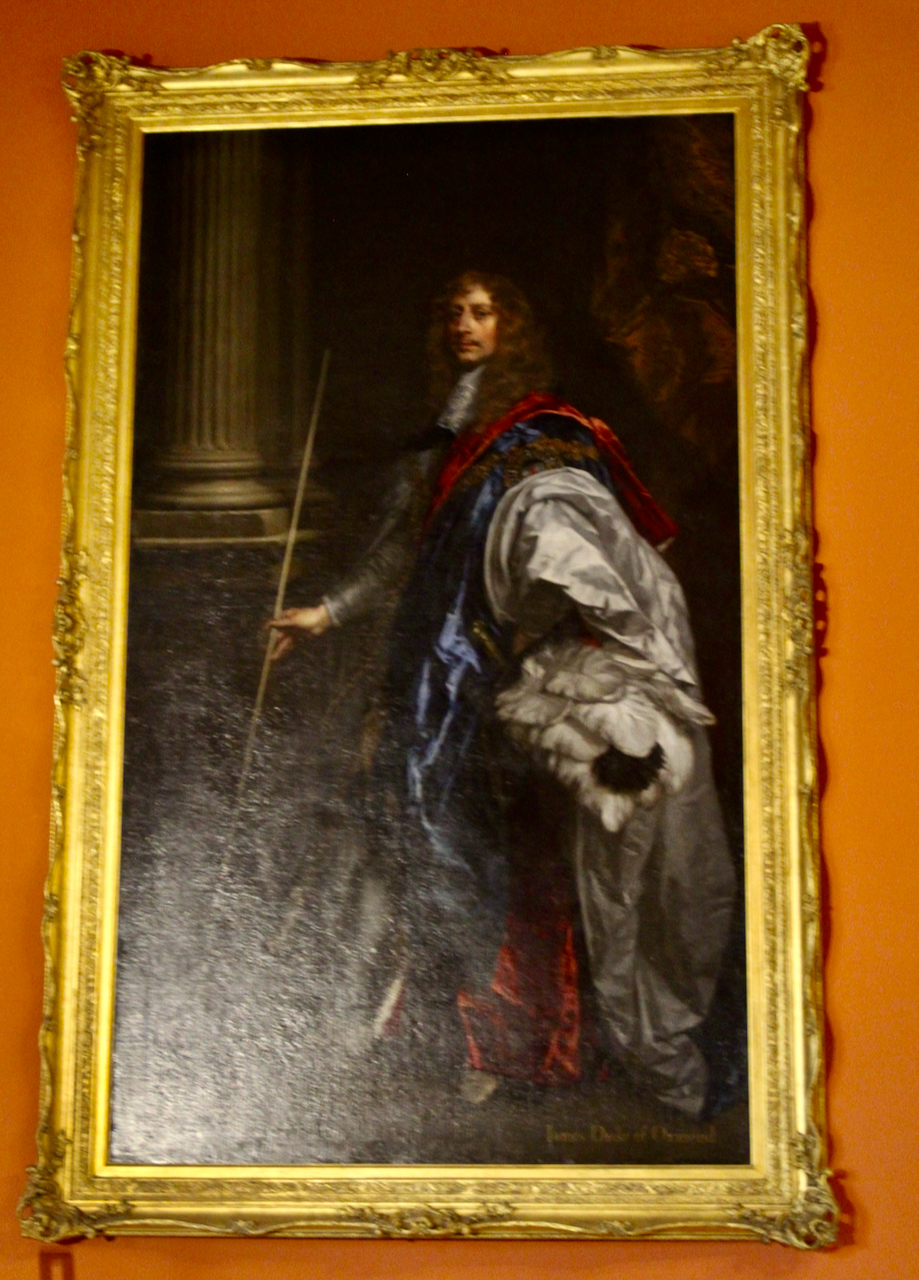
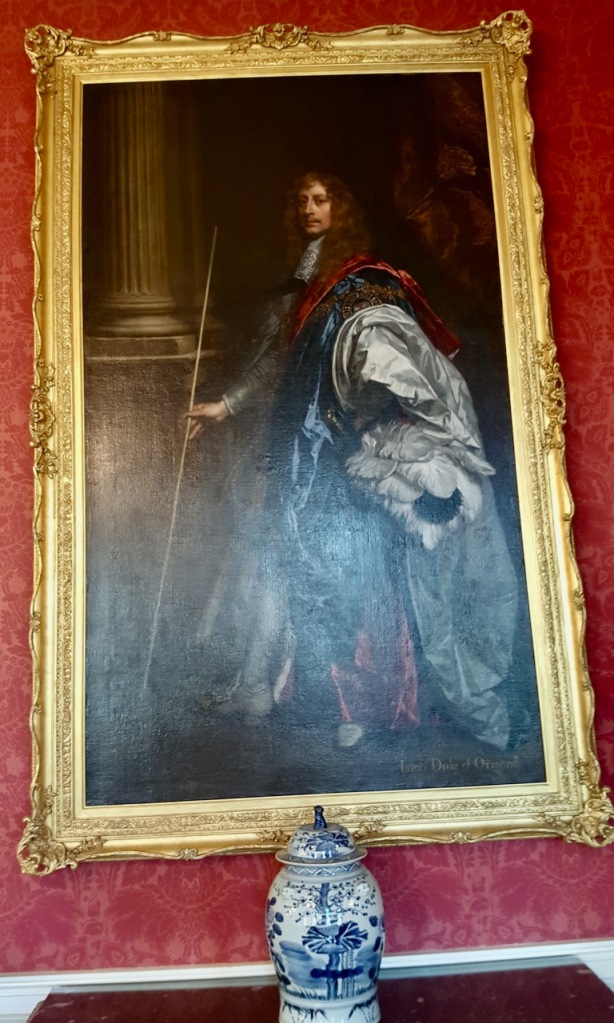
James Butler 1st Duke of Ormond. Artist: Sir Peter Lely (1618-1680). He is wearing robes of the Order of the Garter and holds the wand of office of Lord Steward of the Household in his right hand. Photograph © Jennifer Winder-Baggot, www.irishhistorichouses.com

The Kilkenny castle website continues: “After the restoration of the monarchy in England, Ormond was rewarded with a dukedom and several high offices by a grateful king. Though he enjoyed the king’s favour, Ormond had enemies at court and as a result of the machinations of the Cabal, which included powerful figures such as the Earl of Shaftesbury, he was dismissed from his post as Lord Lieutenant in 1669.

Note that the “Cabal” was the term used to refer to the clique around the king. The term comes from an acronym of their names, Sir Thomas Clifford 1st Baron Clifford, Henry Benet 1st Earl of Arlington, George Villiers 2nd Duke of Buckingham, Anthony Ashley Cooper, Lord Ashley 1st Earl of Shaftesbury and John Maitland, 1st Duke and 2nd Earl of Lauderdale.

Ormond served his last term as Lord Lieutenant from 1677-1685. During this time he founded the Royal Hospital in Kilmainham in Dublin for old soldiers. William Robinson served as Surveyor General and architect of the Royal Hospital. He also worked on Kilkenny Castle. As Lord Lieutenant, the Duke lived in Dublin Castle’s State Apartments, and he had work carried out there also.

Mark Bence-Jones describes the Duke’s renovations of Kilkenny Castle:

The Great Duke transformed the castle from a medieval fortress into a pleasant country house, rather like the chateau or schloss of contemporary European princeling; with high-pitched roofs and cupolas surmounted by vanes and gilded ducal coronets on the old round towers. Outworks gave place to gardens with terraces, a “waterhouse” a fountain probably carved by William de Keyser, and statues copied from those in Charles II’s Privy Gardens. The Duchess seems to have been the prime mover in the work, in which William (afterwards Sir William) Robinson, Surveyor-General and architect of the Royal Hospital, Kilmainham, was probably involved, supervising the construction of the Presence Chamber 1679.

A rather amusing article in the Dublin Penny Journal in September 1832 criticises the Duke of Ormond’s renovation “in the bad style of architecture then prevailing on the Continent, a taste for which had probably been imbibed by the Duke in his repeated visits to France. It retained, however, three of the ancient towers, but changed in character and disfigured by fantastic decorations to make them harmonize in style with the newer portions of the building.” The article tells us that the building has been put to right again by the present owner, the Marquess of Ormond, by architect Robertson of Kilkenny.

Garden front of Kilkenny Castle, photograph by Roselinde Bon 2016 for Failte Ireland, Ireland’s Content Pool. [see 1]

When Ormond retired to England in 1682, the duchess accompanied him and they settled at Kingston House (Kingston Lacy) in Dorset. She died two years later at their town house, Ormonde House, in St. James’s Square, London. Sir Peter Lely painted the duchess but no portrait of her by the artist has been traced. A portrait of her by Henri Gascars is recorded in seventeenth-century Ormonde inventories.
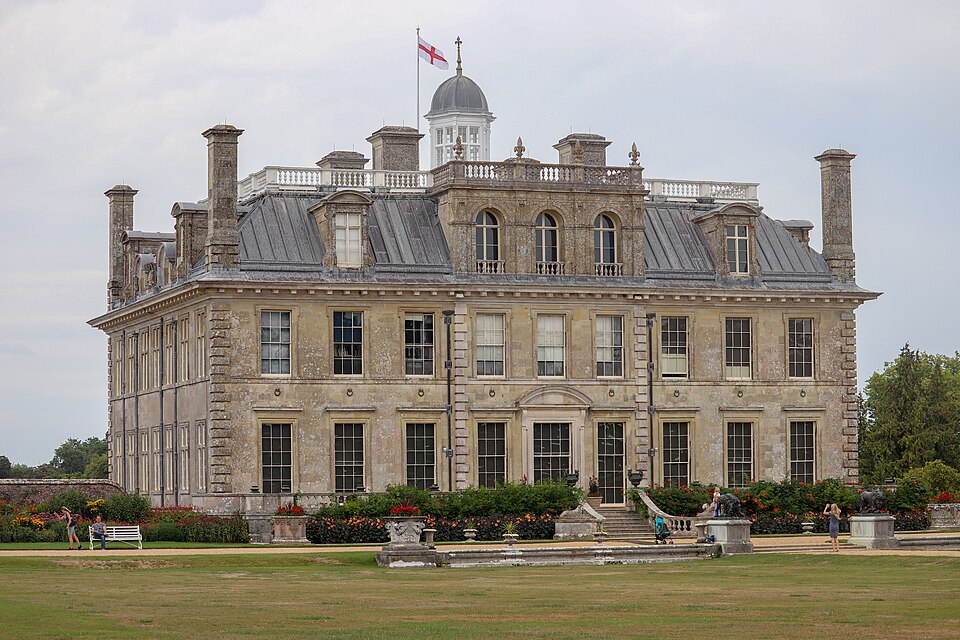
Kingston Lacy, which belonged to James Butler Duke of Ormond, photograph by Vauxhall,  licensed under the Creative Commons Attribution-Share Alike 4.0 International license.

The last decade of the Duke’s life was marked by tragedy: all three of his sons as well as his wife died. His daughter Elizabeth, who had married Philip Stanhope, 2nd Earl of Chesterfield, had already died at the young age of 25 in 1665. She was Stanhope’s second wife. Stanhope was one of the lovers of the notorious Barbara Villiers, mistress of King Charles II. Her portrait is in the stair hall of Kilkenny Castle.
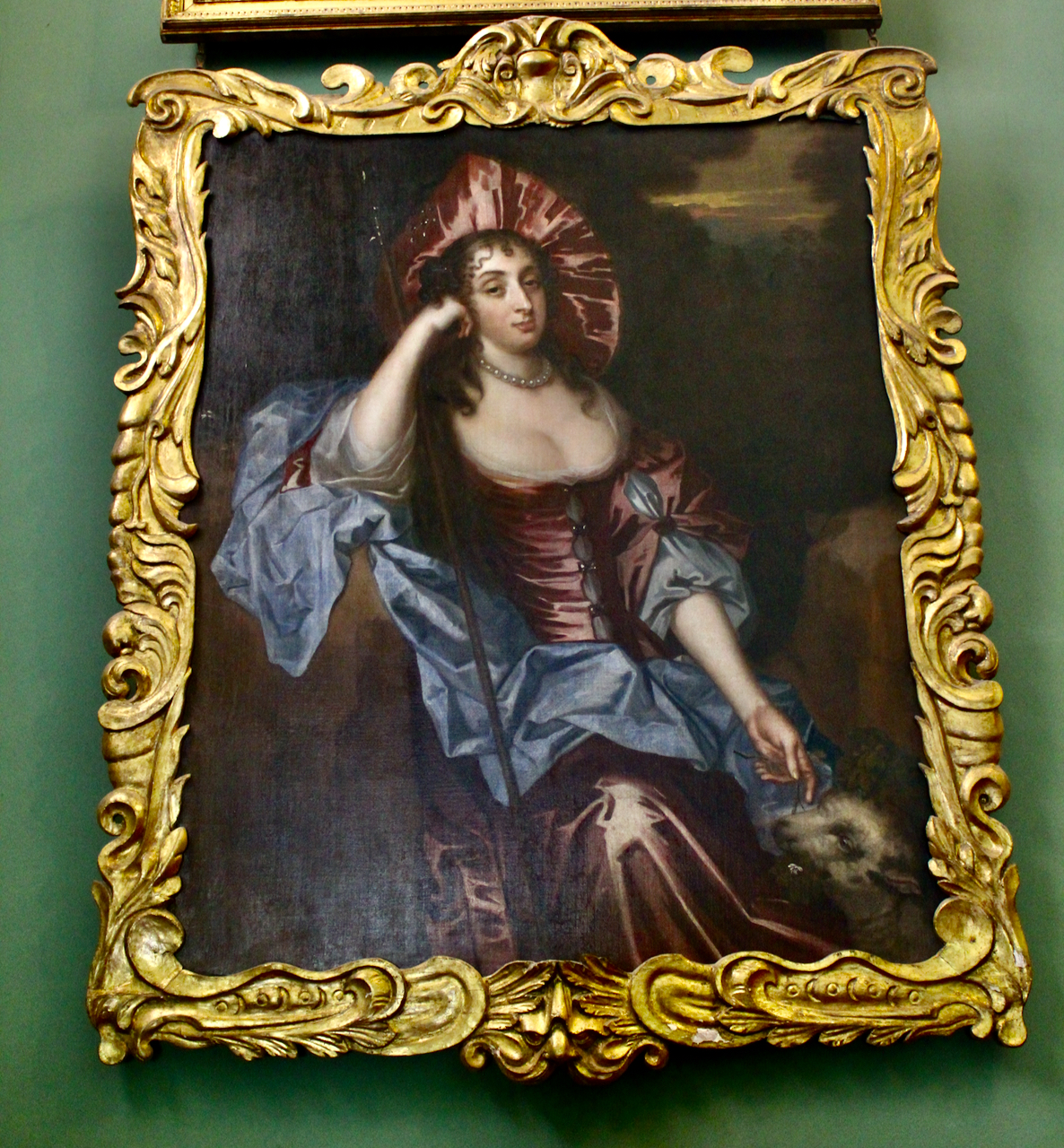
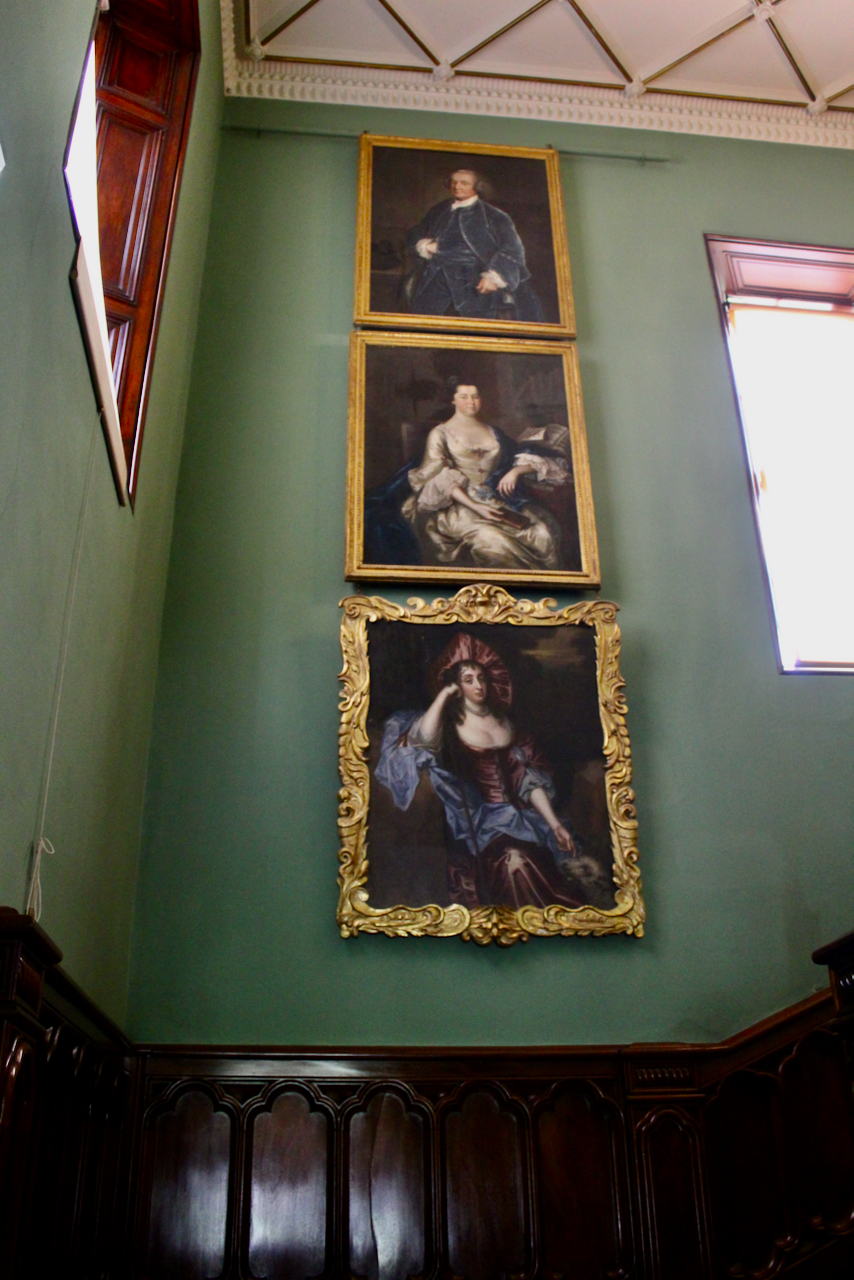
Barbara Villiers (c.1641-1709), Duchess of Cleveland & Countess of Castlemaine, attributed to Sir Peter Lely (1618-1680) and his studio. Daughter of Lord Grandison. After an affair with Philip Stanhope, 2nd Earl of Chesterfield, in 1659, she married Roger Palmer, Earl of Castlemaine. Established as Charles II’s mistress during the Restoration in 1660, she bore him at least six children and was created Duchess of Cleveland in her own right in 1670. When she was granted lands in Dublin by the king, the grant was opposed by Ormond. The duchess was no friend of the Butler family because of her notorious affair with Lord Chesterfield, husband of Ormond’s daughter Elizabeth. A heavily restored picture shows the sitter in shepherdess’s costume with a crook and lamb, it is said to have been commissioned from Lely in order to insult the queen, Catherine of Braganza, who had been painted in a similar pose by Jacob Huysmans. Photograph © Jennifer Winder-Baggot, www.irishhistorichouses.com

John, 1st and last Earl of Gowran, died in 1677. Thomas 6th Earl of Ossory died in 1680. His wife Elizabeth died in 1684, and Richard, 1st and last Earl of Arran, in 1686. He himself died in 1688 at Kingston Lacy and was buried in Westminster Abbey.
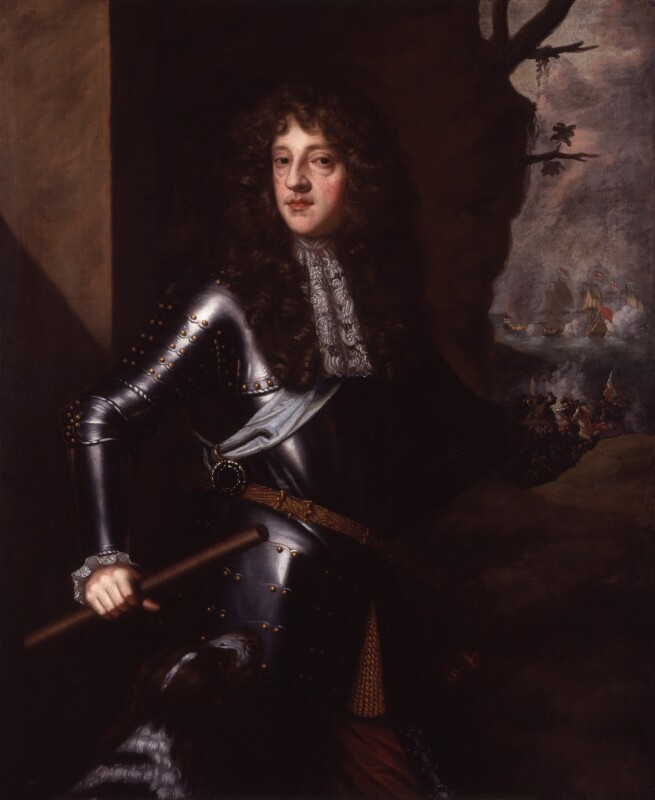
Thomas Butler (1634-1680) 6th Earl of Ossory, studio of Sir Peter Lely, circa 1678, courtesy of National Portrait Gallery NPG 371. He was the second son of the Duke and Duchess of Ormond and father of 2nd Duke of Ormonde.
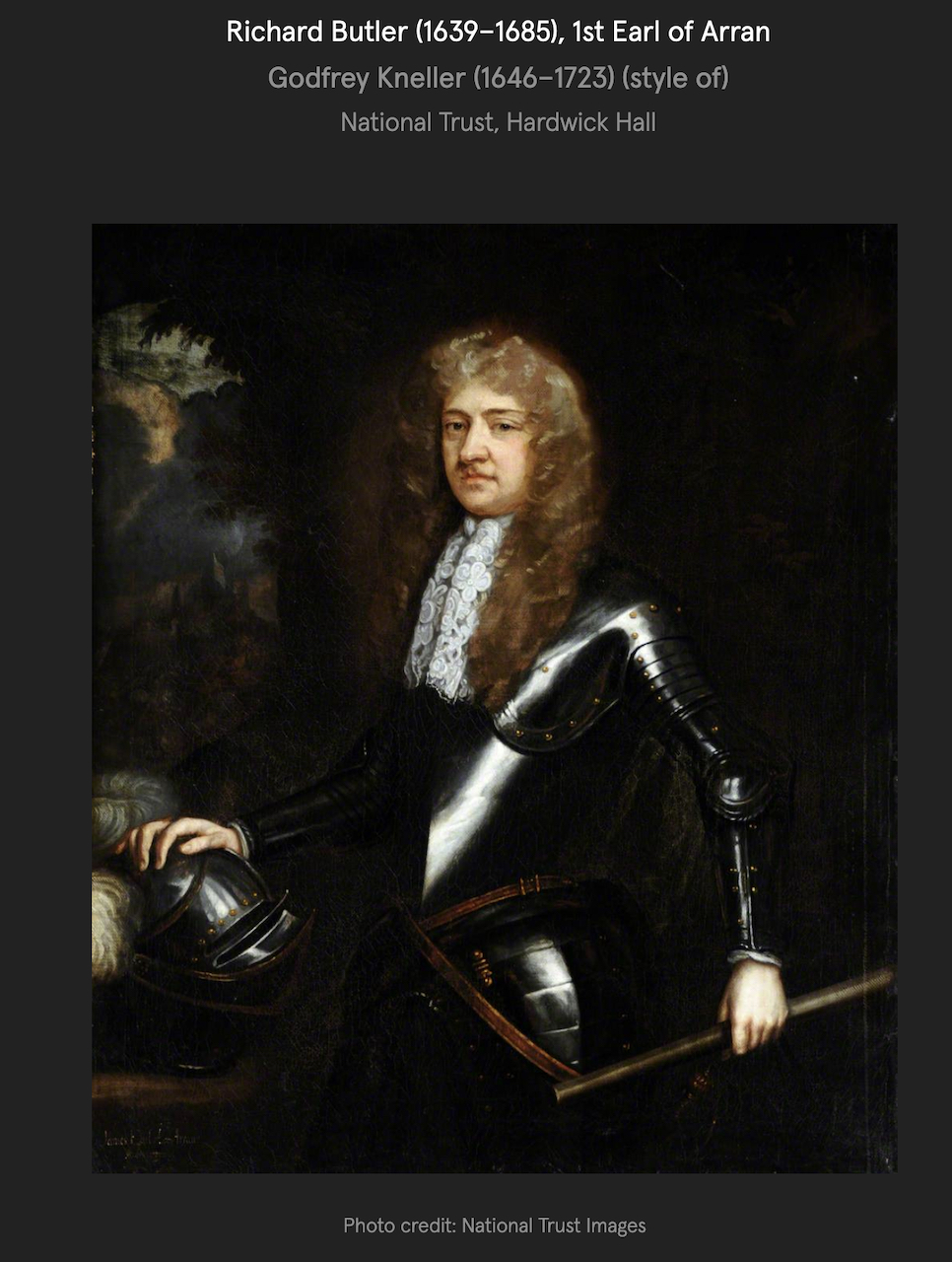
Richard Butler (1639-1685) 1st Earl of Arran, son of the Duke of Ormonde, by Godfrey Kneller, courtesy of National Trust Hardwick Hall.
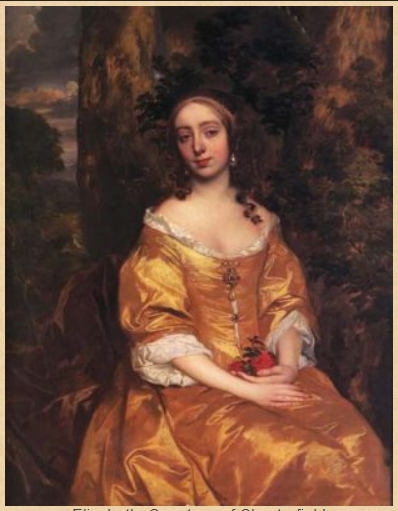
Daughter of the 1st Earl of Ormond, Elizabeth Stanhope née Butler Countess of Chesterfield By Peter Lely – http://www.thepeerage.com/p951.htm#i9503, Public Domain, https://commons.wikimedia.org

His daughter Mary (1646-1710) married William Cavendish, 1st Duke of Devonshire.
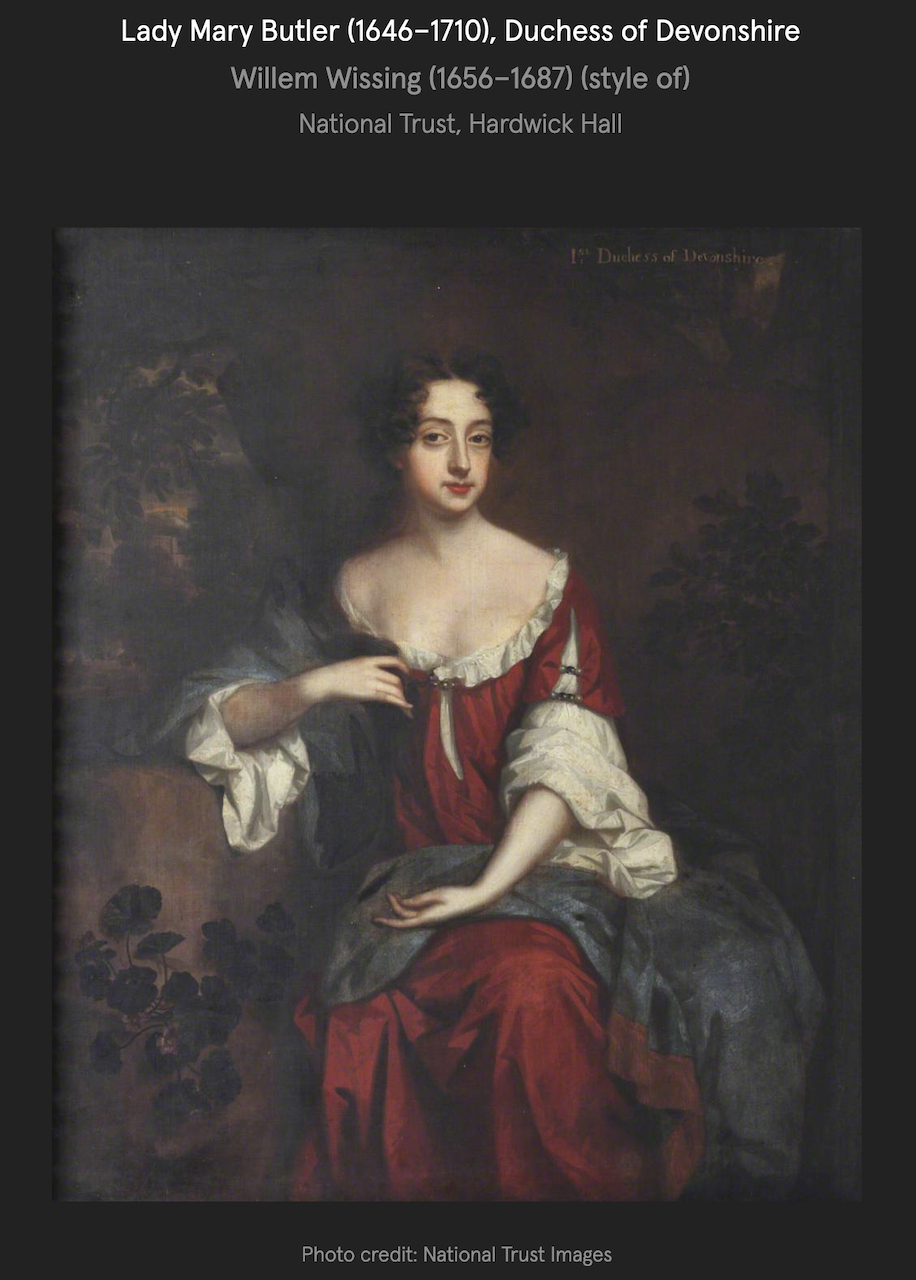
Daughter of the 1st Earl of Ormond, Mary Butler (1646-1710) Duchess of Devonshire in the style of Willem Wissing courtesy of National Trust Hardwick Hall. She married William Cavendish, 1st Duke of Devonshire.

Thomas Butler (1634-1682) 6th Earl of Ossory was the father of the 2nd Duke of Ormond. Thomas was a soldier and Naval Commander, known as ‘Gallant Ossory.’ Born at Kilkenny Castle in 1634, his childhood was spent at Kilkenny until he went with his father and brother Richard to England in 1647. They then went to France, where he was educated at Caen and Paris at Monsieur de Camps’ Academy. In Holland he married Amelia of Nassau, daughter of Lodewyk van Nassau, Heer van Beverweerd, a natural son of Prince Maurice of Nassau. 

Thomas enjoyed the favour and support of both King Charles II and his queen. Because of his wife’s Dutch connections he was frequently sent on royal missions to Holland. In 1661 Thomas Butler became a member of both the English and Irish houses of Commons, representing Bristol in the former and Dublin University in the latter House. In 1665 he was appointed lieutenant-general of the army in Ireland and in 1666 was created an English peer as Lord Butler.

Having proven himself as an expert military strategist, and whilst visiting France in 1672, he rejected the liberal offers made by Louis XIV to induce him to enter the service of France, and returning to England he added to his high reputation by his conduct during the Battle of Texel in August 1673. From 1677 until 1679, he served alongside his father as a Lord of the Admiralty.

In 1670 he conducted William of Orange to England. In 1677 he joined the allied army in the Netherlands, commanding the British section and winning great fame at the siege of Mons in 1678. He acted as deputy for his father, who was lord-lieutenant of Ireland, and in parliament he defended Ormonde’s Irish administration with great vigour. In 1680 he was appointed governor of English Tangier, but his death prevented him from taking up his new duties.
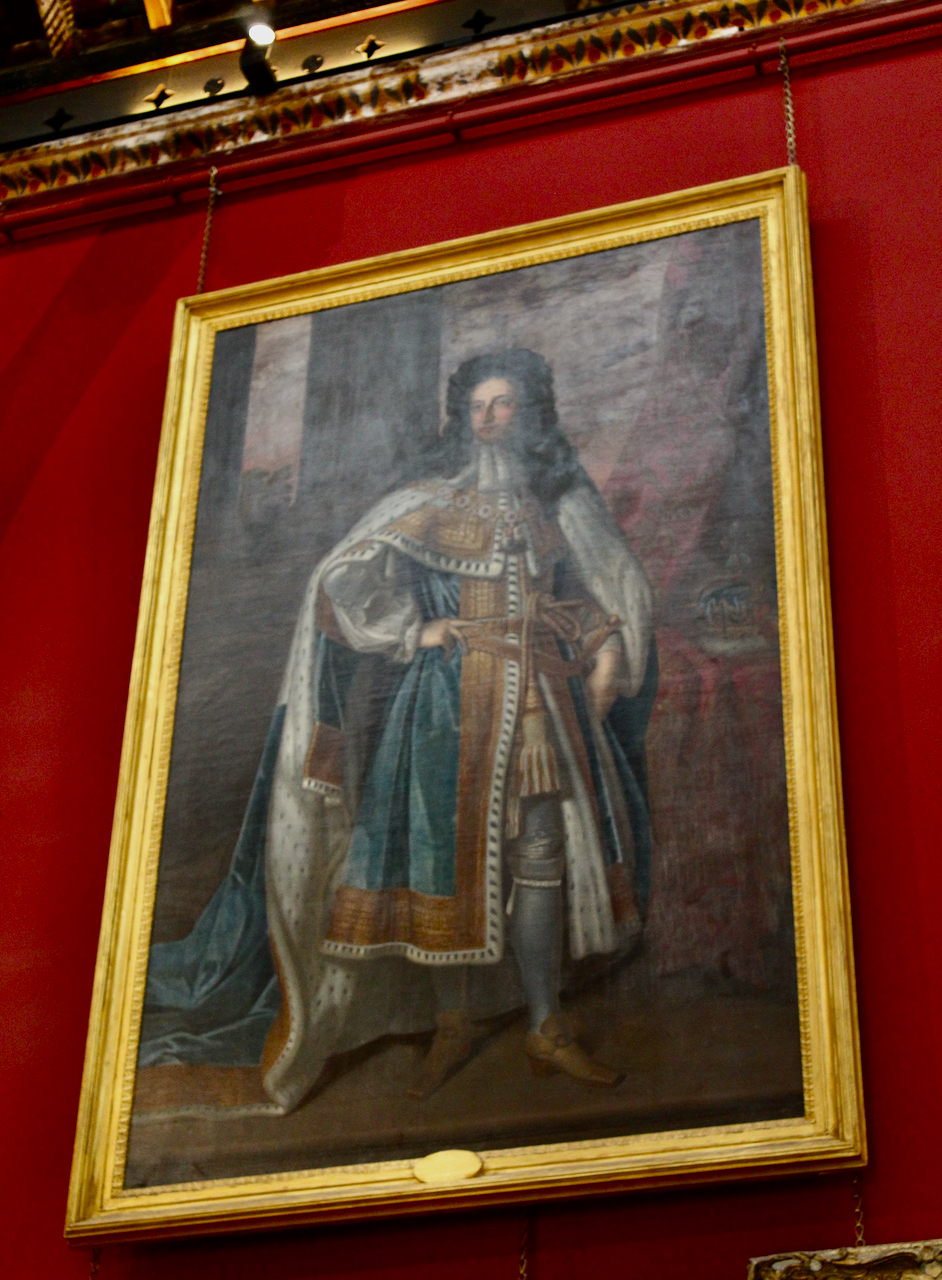
King William III (1650-1702), studio of Sir Godfrey Kneller (1646-1723). This portrait in the picture gallery at Kilkenny Castle is a copy of the ‘official approved likeness’ first painted by Sir Godfrey Kneller in 1690, with a companion piece of Queen Mary II. The king is depicted waring the robes of state. Both originals are in the Royal Collection.William was born in The Hague, he was the posthumous and only child of Stadholder William II and Princess Mary, Princess Royal of England, eldest daughter of Charles I and Queen Henriette Maria [see painting: The Children of Charles I]. After the crisis precipitated by the birth of an heir [Prince James Francis Stuart] to his cousin, the Catholic James II, in 1688, William came to England at the invitation of several leading men to defend the Protestant cause. James left England, first to France to seek aid from Louis XIV, another cousin, and thence to Ireland, where he launched a military campaign to win over the country. Meanwhile William, his son-in law, landed at Carrickfergus in June 1690. He then marched south, and defeated James and his forces at the Battle of the Boyne. Both kings stayed at Kilkenny Castle during their visit to Ireland. James Butler, 2nd Duke of Ormonde, was a firm supporter of King William at the Boyne.
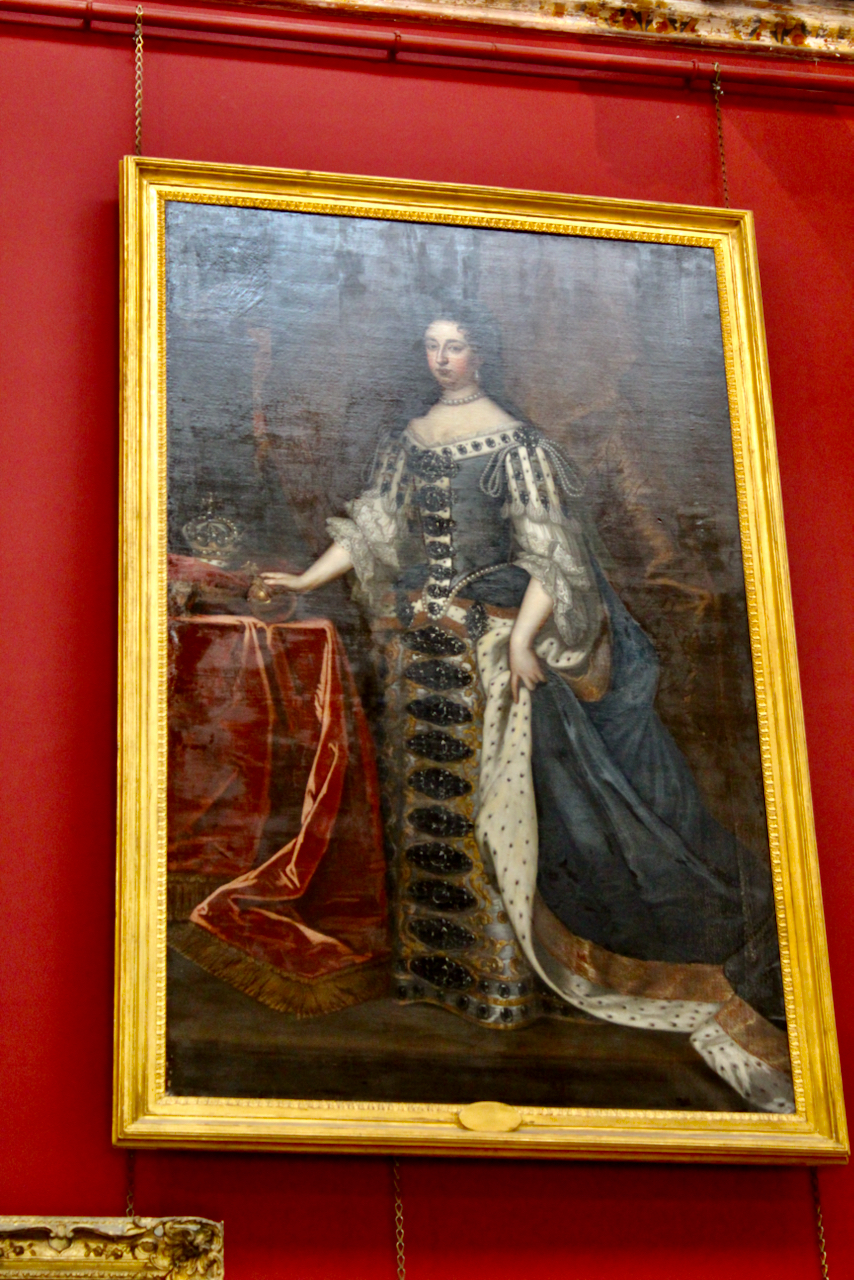
Queen Mary II (1662-1694), studio of Sir Godfrey Kneller (1646-1723), in the picture gallery of Kilkenny Castle. Eldest daughter of James Duke of York (later James II) and Anne Hyde, she married, at the age of 15, her cousin, William, Prince of Orange, in Holland. The Duchess of Ormond was Godmother to Princess Mary, at her birth in London. Mary took an active role in the dispute with her father James II. William and Mary ruled as king and queen regnant. Under the terms of the succession, William would administer the government in both their names. The Crown would descend in the first instance to the heirs of her body, then to any heirs he might have after her death, and then to any heirs her sister Anne, Princess of Denmark (later Queen Anne).Mary was a popular monarch, and this helped compensate for her husband’s rather taciturn nature. She died prematurely at the age of 32, leaving William to reign alone for another eight years.

John Evelyn, the diarist, was a close friend and referred to him as ‘a good natured, generous and perfectly obliging friend’. He died suddenly in 1680, possibly from food poisoning, at Arlington House in London. He was buried in Westminster Abbey

Ossory had eleven children, including James Butler (1665-1745), the eldest surviving son of Thomas the 6th Earl of Ossory, who became the 2nd Duke of Ormonde. Following his father’s death in 1680, James became the heir to his grandfather, James Butler, 1st Duke of Ormond, whom he succeeded in 1688. James Butler 2nd Duke of Ormonde (the ‘e’ was added to the name around this time) inherited all of the Ormonde properties and titles, from both his grandfather and grandmother including her Dingwall title.

James Butler (1665-1745) 2nd Duke of Ormonde courtesy of National Maritime Museum, Greenwich, London.
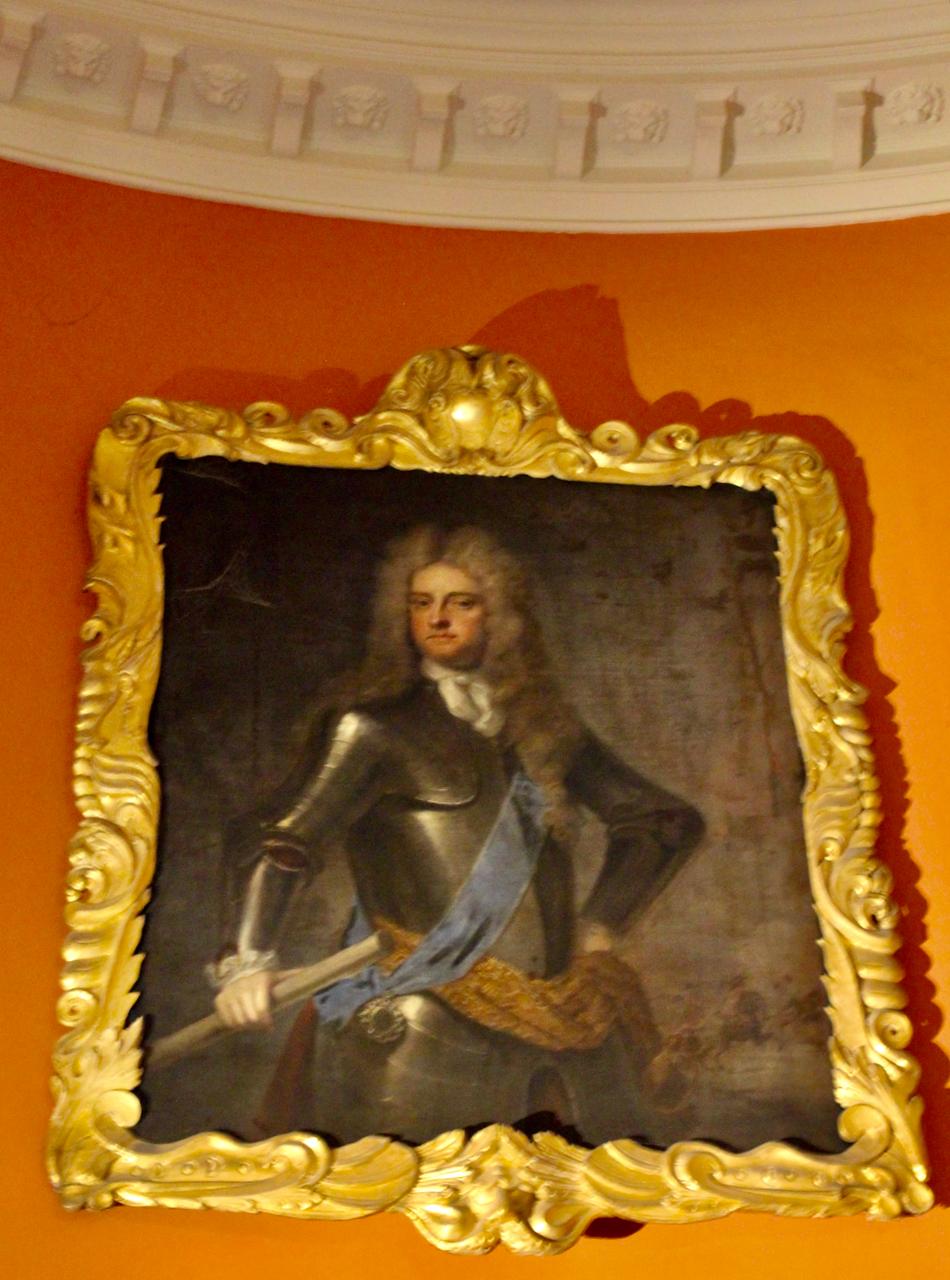
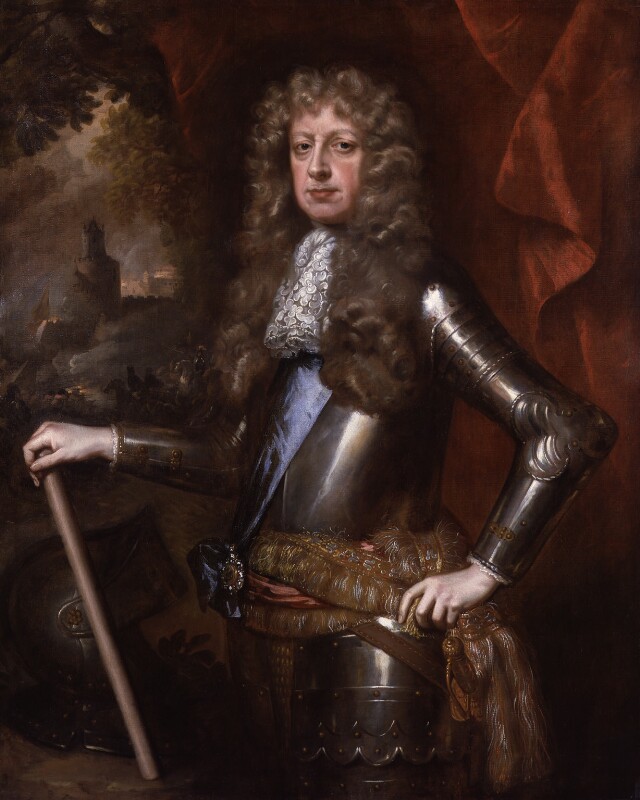
Oil painting on canvas, James Butler, 2nd Duke of Ormonde (1665-1745) by Sir Godfrey Kneller (Lubeck 1646/9 – London 1723). A three-quarter length portrait, turned slightly to the right, facing, gazing at spectator, wearing armour, blue sash and white jabot, a baton in his right hand, his left on his hip, his helmet placed at the left; cavalry in the distance, right.
James Butler (1665-1745) 2nd Duke of Ormond, studio of Michael Dahl, oil on canvas, circa 1713 courtesy of National Portrait Gallery NPG 78.

James the 2nd Duke married twice: first to Anne Hyde, daughter of Laurence, 1st Earl of Rochester, and a niece Anne Hyde the wife of the duke of York, the future James II. After she died, he married Mary Somerset, a daughter of Henry Somerset, 1st Duke of Beaufort. 

Anne Hyde (1637-1671), Duchess of York, a well painted version of an original painted by Sir Peter Lely in c. 1662. Daughter of Edward Hyde, 1st Earl of Clarendon (a close friend & confidant to the 1st Duke of Ormond), and first wife of james, Duke of York ( later James II). She was mother to princesses Mary and Anne, future Queens of England, and aunt of Anne Hyde, Lady Ossory, first wife of the 2nd Duke of Ormonde.
Top left: James Butler 2nd Duke of Ormonde (1665-1745), Lord Lieutenant of Ireland, son of Thomas Butler, Earl of Ossory. First married Anne Hyde and then Mary Somerset; below him, Mary Somerset (1665-1733), daughter of the Duke of Beaufort. In middle, Thomas Butler (1634-1680), 6th Earl of Ossory, second son of the Duke and Duchess of Ormond and father of 2nd Duke of Ormonde. Mary Somerset’s father top right, Henry Somerset (1629-1700), 1st Duke of Beaufort; below Anne Hyde (1669-1685), the 2nd Duke’s first wife, daughter of Lawrence Hyde, 1st Earl of Rochester, artist: William Wissing (1656-87). Photograph © Jennifer Winder-Baggot, www.irishhistorichouses.com
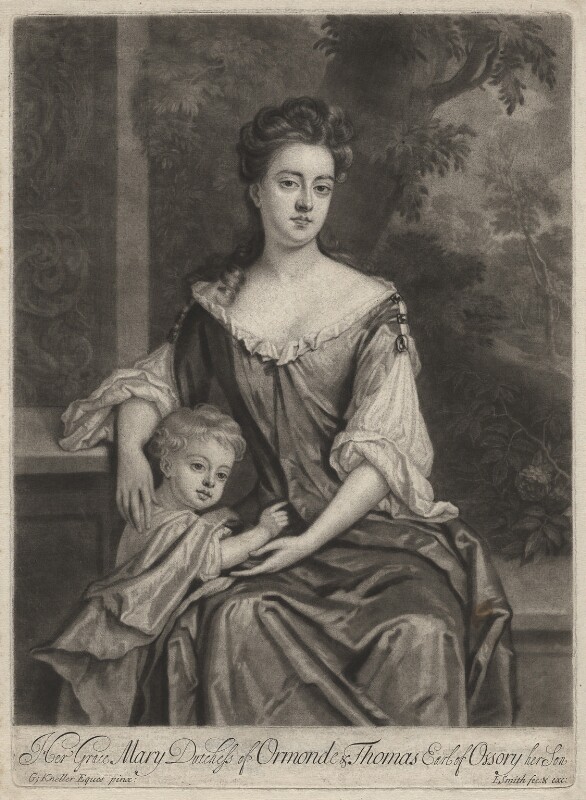
Mary Butler née Somerset (1665-1733) Duchess of Ormonde and her son Thomas Earl of Ossory by John Smith, after Sir Godfrey Kneller, Bt., courtesy of National Portrait Gallery, NPG D31316.
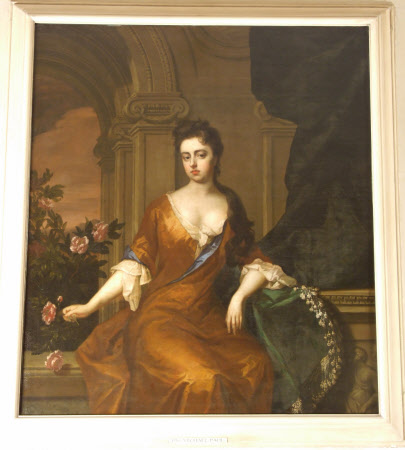
Lady Mary Somerset, Duchess of Ormonde (1665-1733) by Michael Dahl, 1690s. Three-quarter-length portrait, of a young woman, seated, full front, her head three-quarters left. She is wearing a deep brown-gold dress, blue lined and is holding a rose in her right hand. A bottle green curtain is to the right and an arcade in the left background. Courtesy of National Trust Petworth.
Henry Somerset (1629-1700) 1st Duke of Beaufort by Robert White, after Sir Godfrey Kneller, Bt, NPG D28194.
James Butler (1665-1745), 2nd Duke of Ormonde, 13th Earl of Ormonde, after Michael Dahl (1659-1743). Following his support of the Jacobite rising, he was impeached and fled to France. He lived out his life in exile, died in Avignon in France in 1745 and was buried in 1746 at Westminster Abbey. Wearing armour with the blue ribbon of the Garter with the lesser George (a term used to describe the medal associated with the Order of the Garter), and a sash about his waist, Ormonde holds in his right hand a baton of command. A cavalry skirmish and buildings are to his left. The portrait appears to have been executed in the 1690s; the pose is similar to that used by both Sir Godfrey Kneller and Michael Dahl. An original portrait by Dahl which is very similar is in the Devonshire collection at Hardwick Hall. A portrait by Kneller is in the National Gallery of Ireland. This portrait hangs in the Tapestry Room of Kilkenny Castle. Photograph © Jennifer Winder-Baggot, www.irishhistorichouses.com

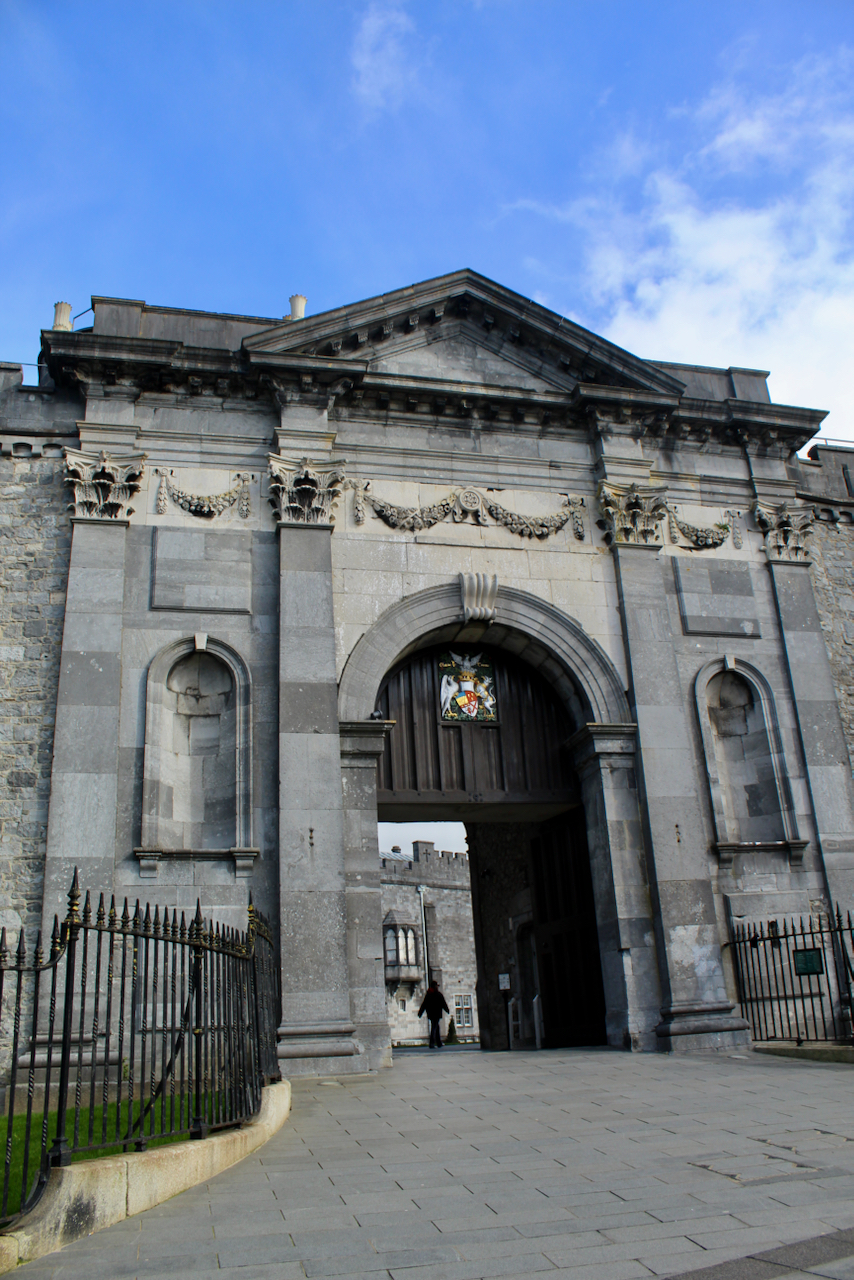
The 2nd Duke carried out more work on Kilkenny Castle. Bence-Jones continues: “[William] Robinson is also believed to have designed the magnificent entrance gateway of Portland and Caen stone with a pediment, Corinthian pilasters and swags which the second Duke erected on the street front of the castle ca 1709. Not much else was done to the castle in C18, for the Ormondes suffered a period of eclipse following the attainder and exile of the 2nd Duke, who became a Jacobite after the accession of George I.” [5]

Kilkenny Castle, photograph by unknown 2014 for Failte Ireland, Ireland’s Content Pool. [see 1]
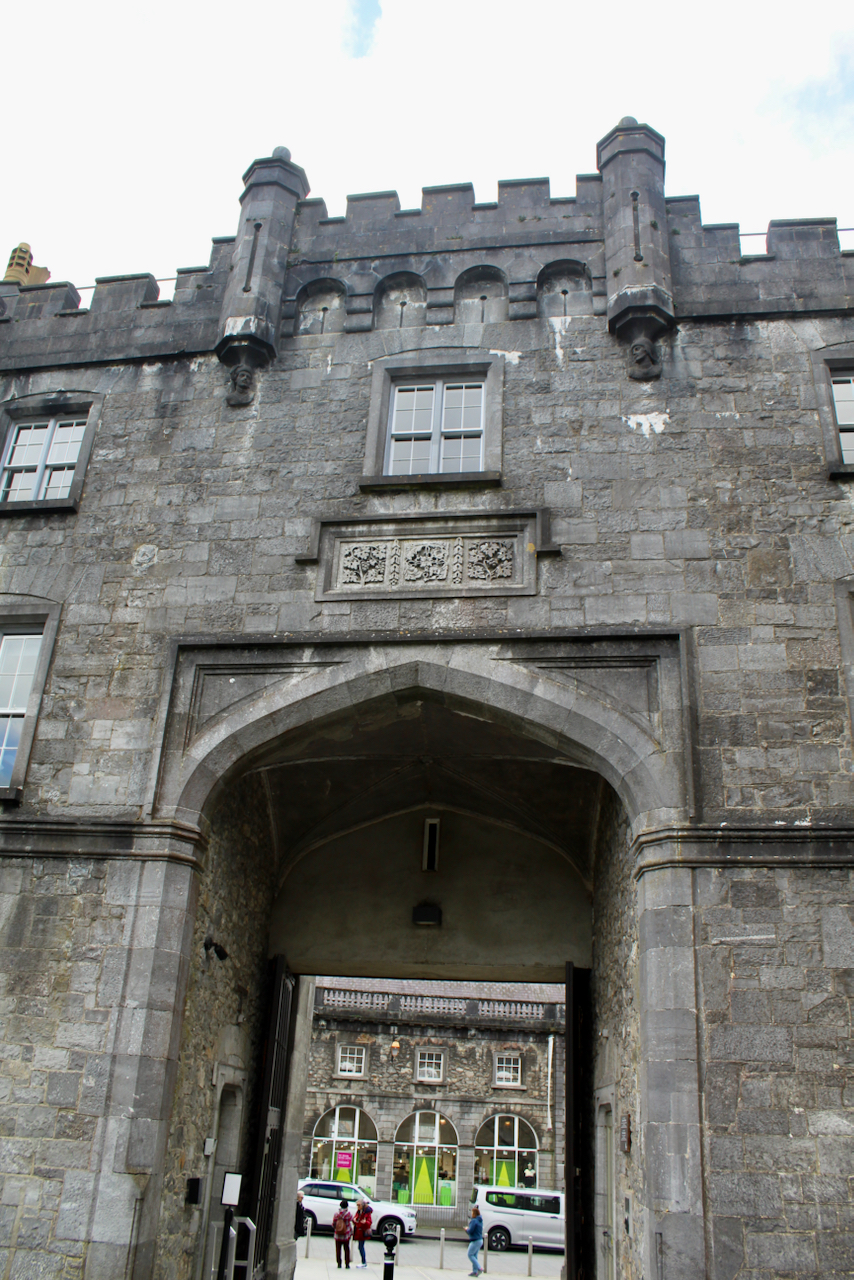
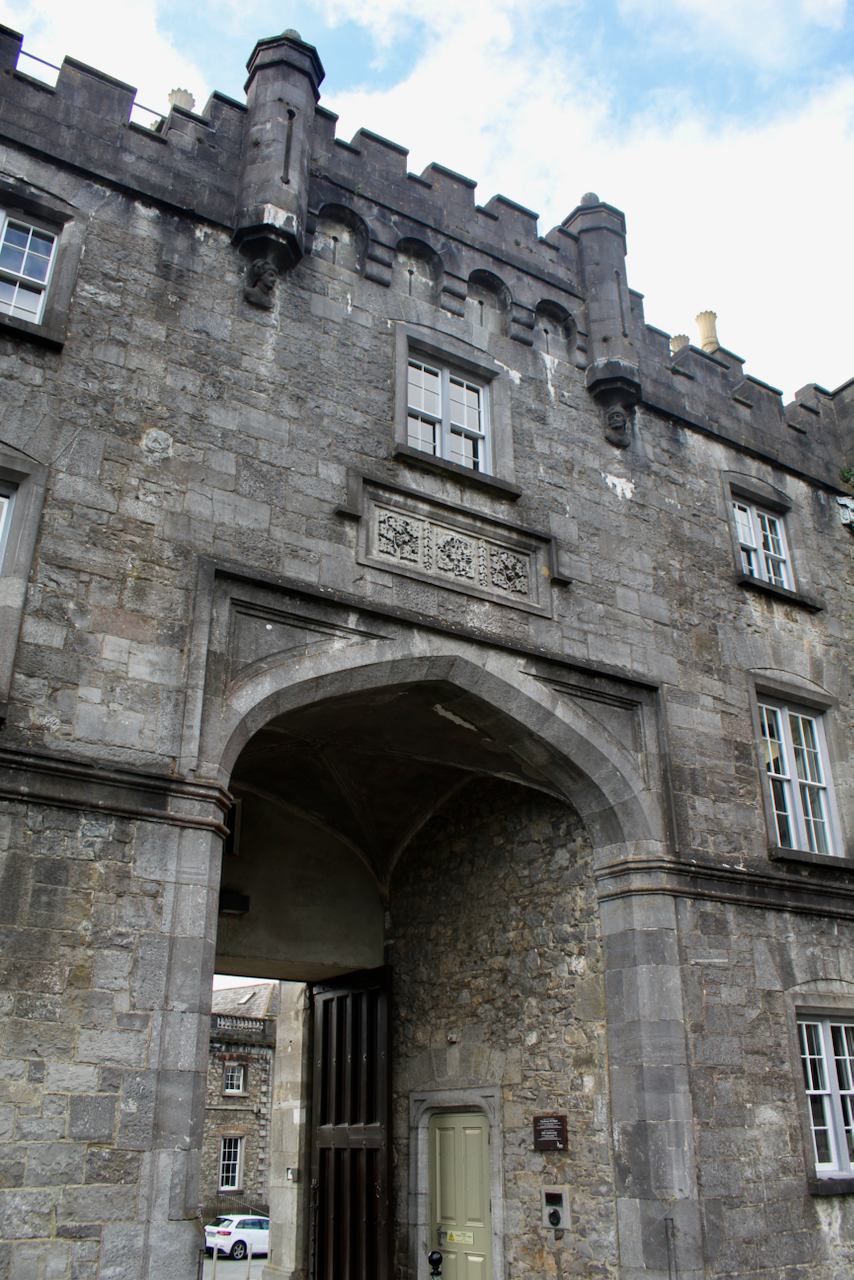
The classical frontispiece was designed for James Butler, Second Duke of Ormonde possibly to designs prepared by Sir William Robinson. Kilkenny Castle. It has full height Corinthian pilasters and a large arched entry, with niches either side. The moulded surrounds of the entrance and niches have keystones. A decorative frieze of swags sits above the entrance arch. Photograph © Jennifer Winder-Baggot, www.irishhistorichouses.com
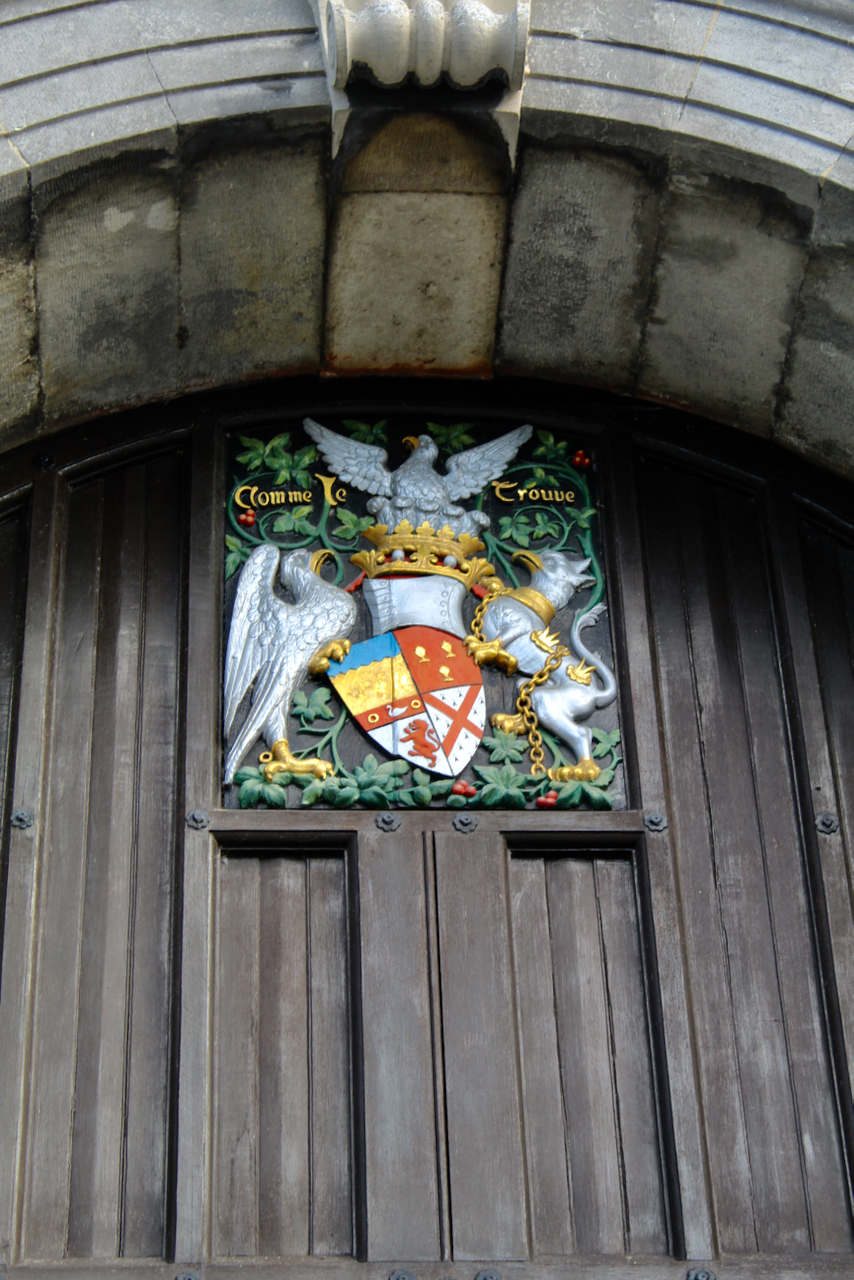
At the top of the entrance door is the Butler coat of arms and their motto, Comme le Trouve. Kilkenny Castle. Photograph © Jennifer Winder-Baggot, www.irishhistorichouses.com
Inside of the entrance gate, Kilkenny Castle. Photograph © Jennifer Winder-Baggot, www.irishhistorichouses.com

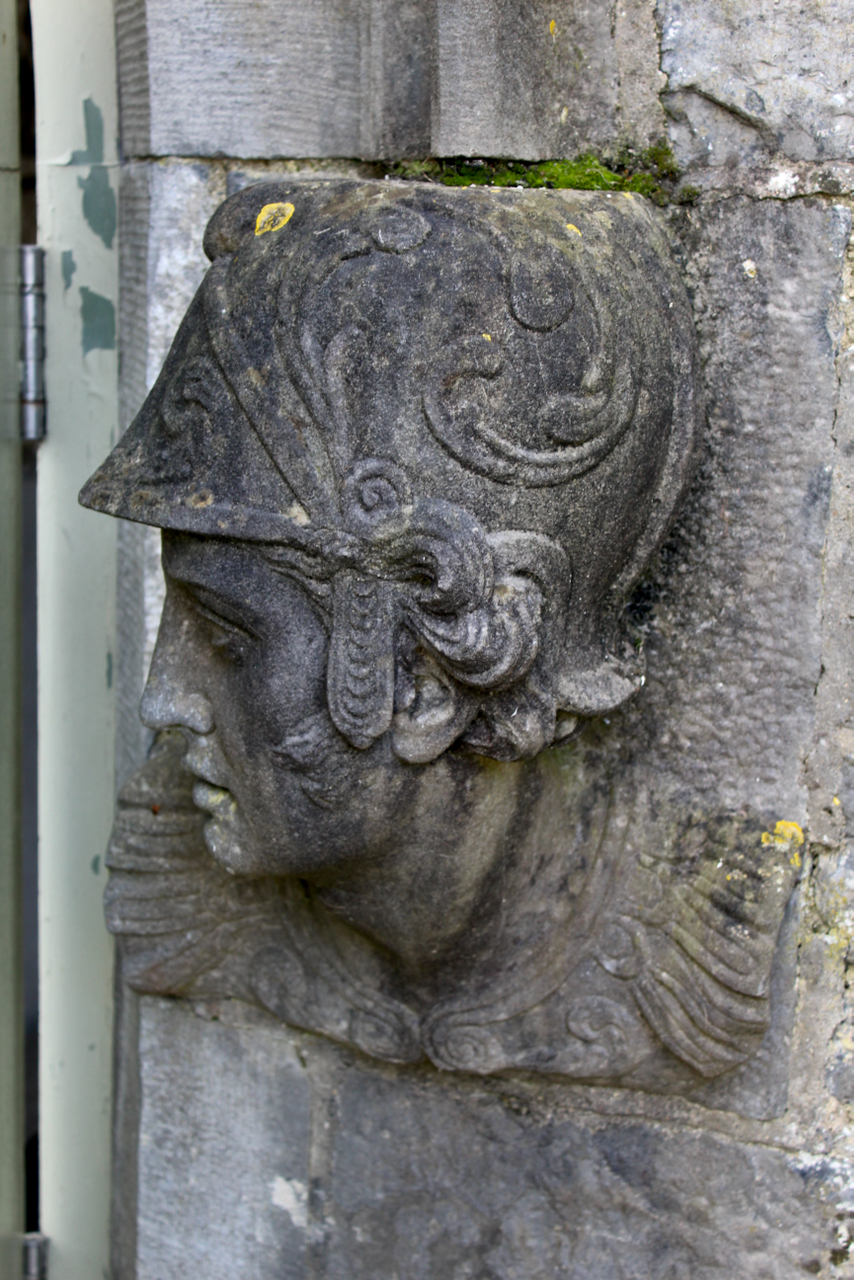
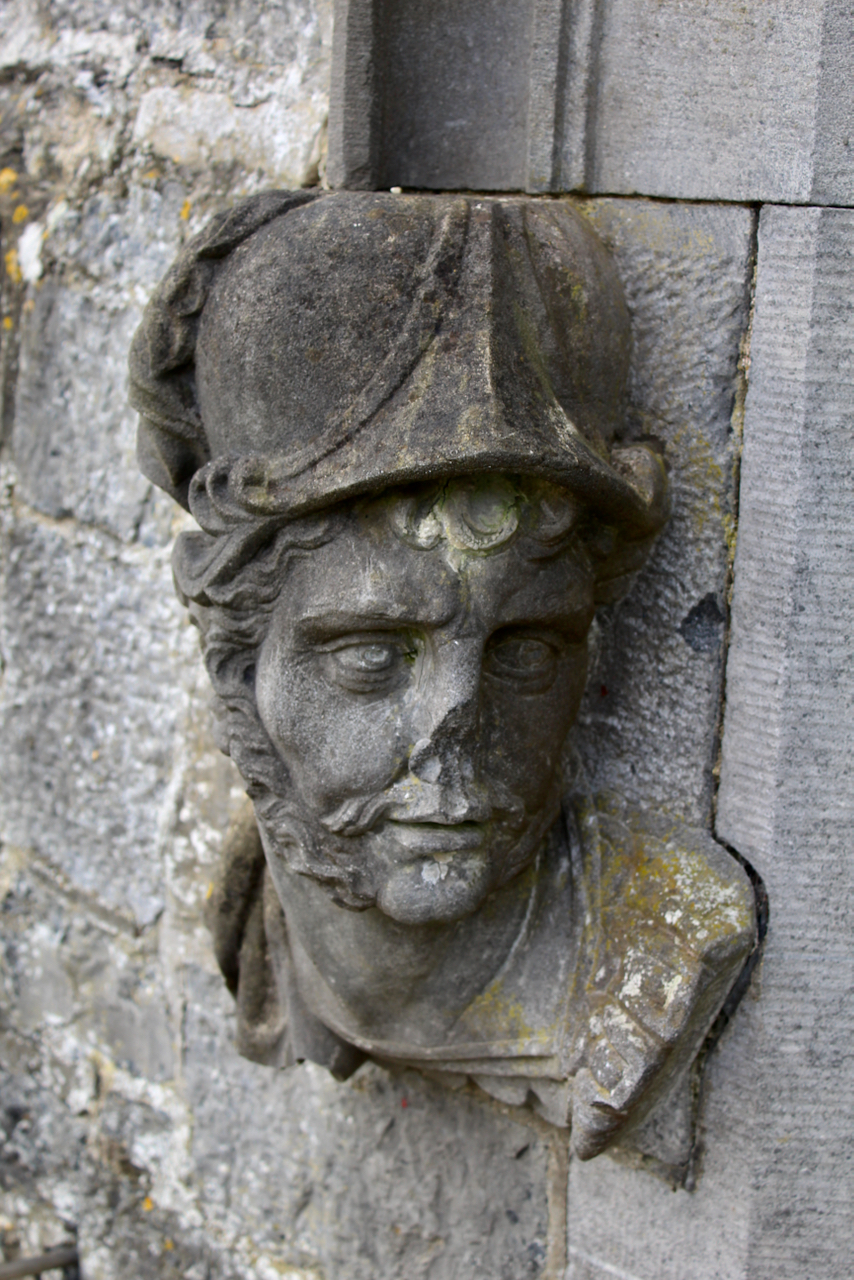
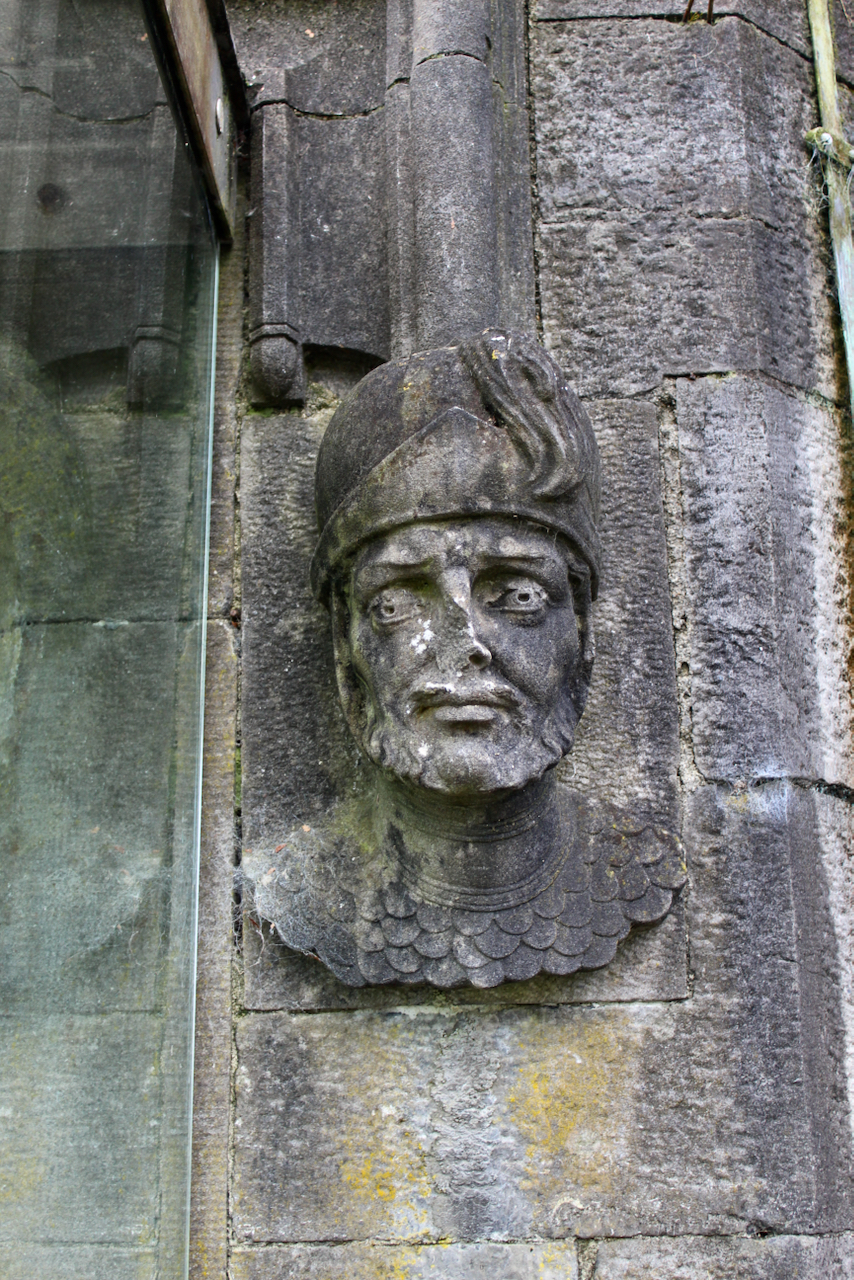
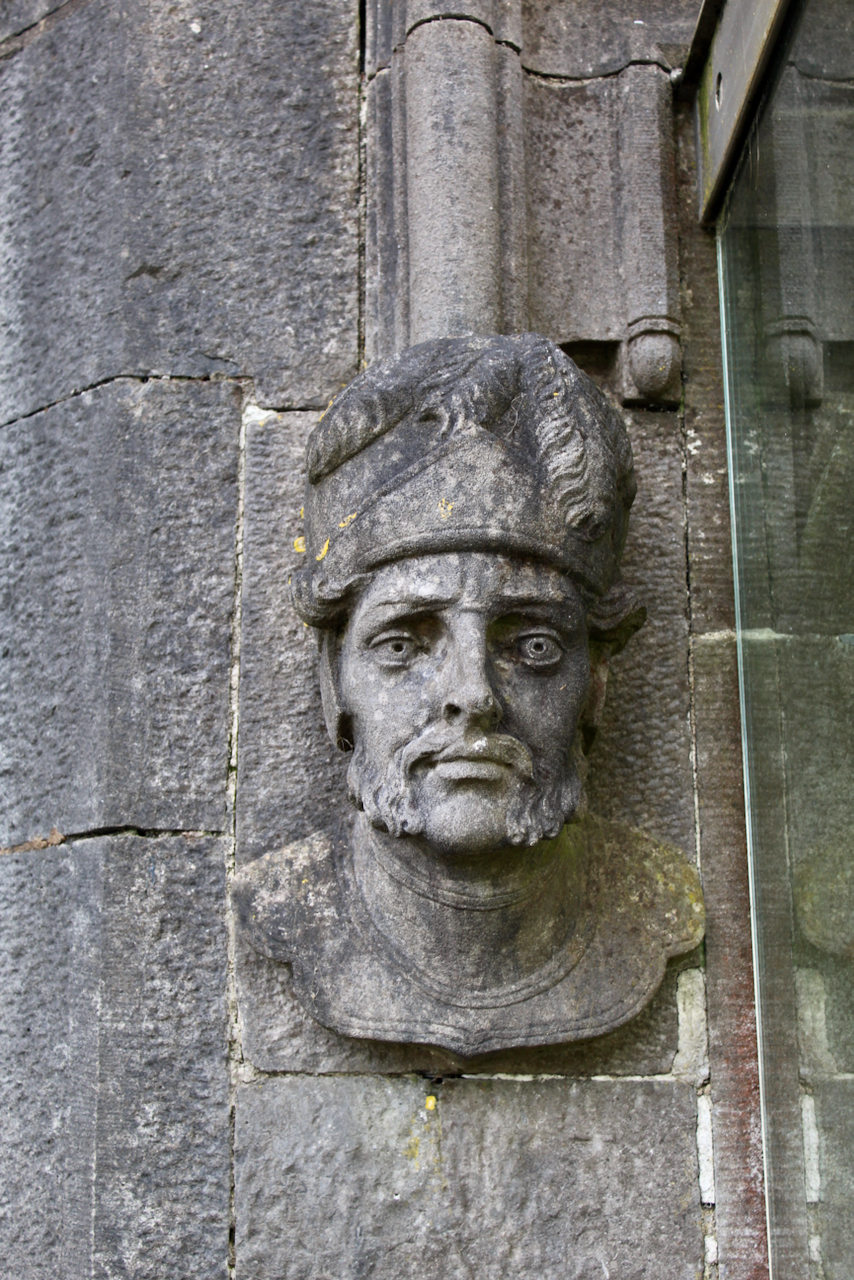
Lots of stone carved heads decorate the exterior of the castle.
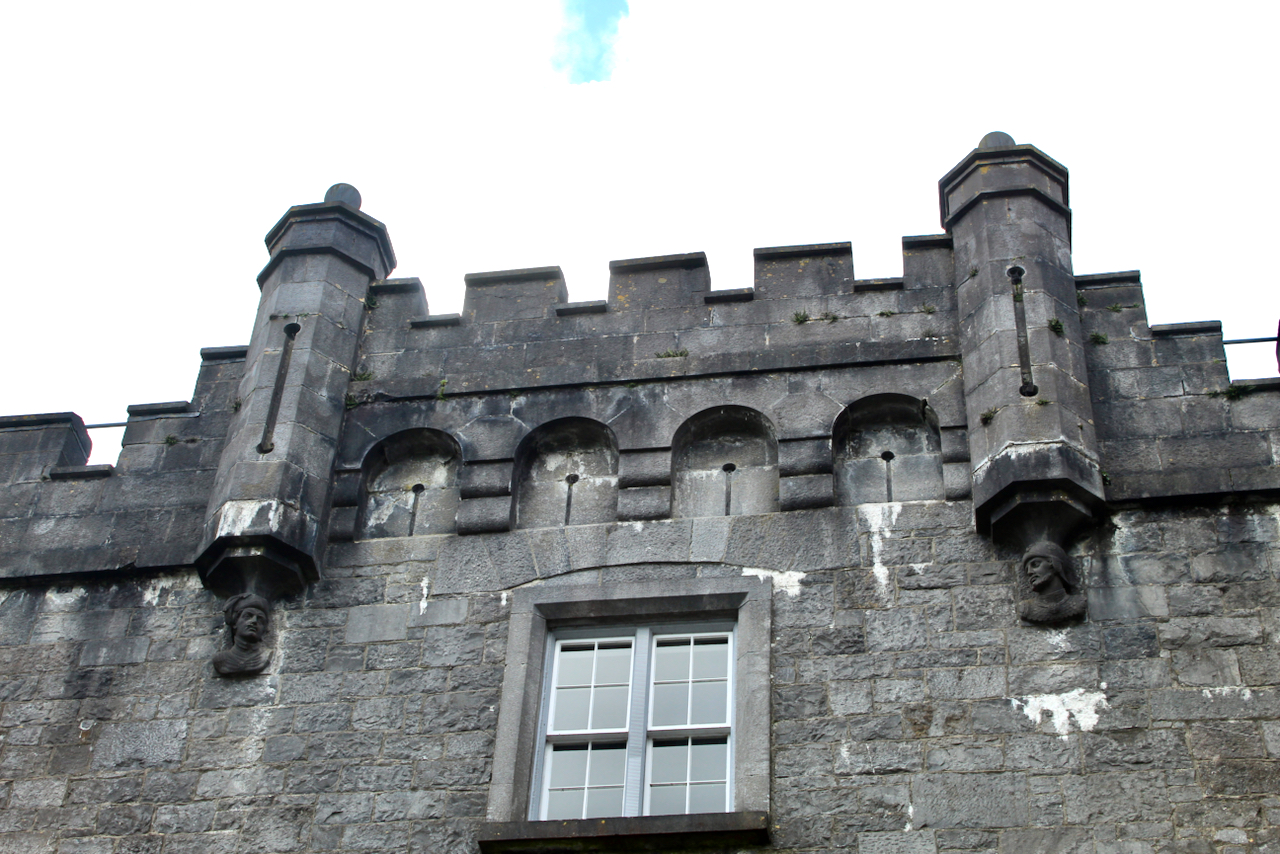
Lots of stone carved heads decorate the exterior of the castle. Kilkenny Castle. Photograph © Jennifer Winder-Baggot, www.irishhistorichouses.com
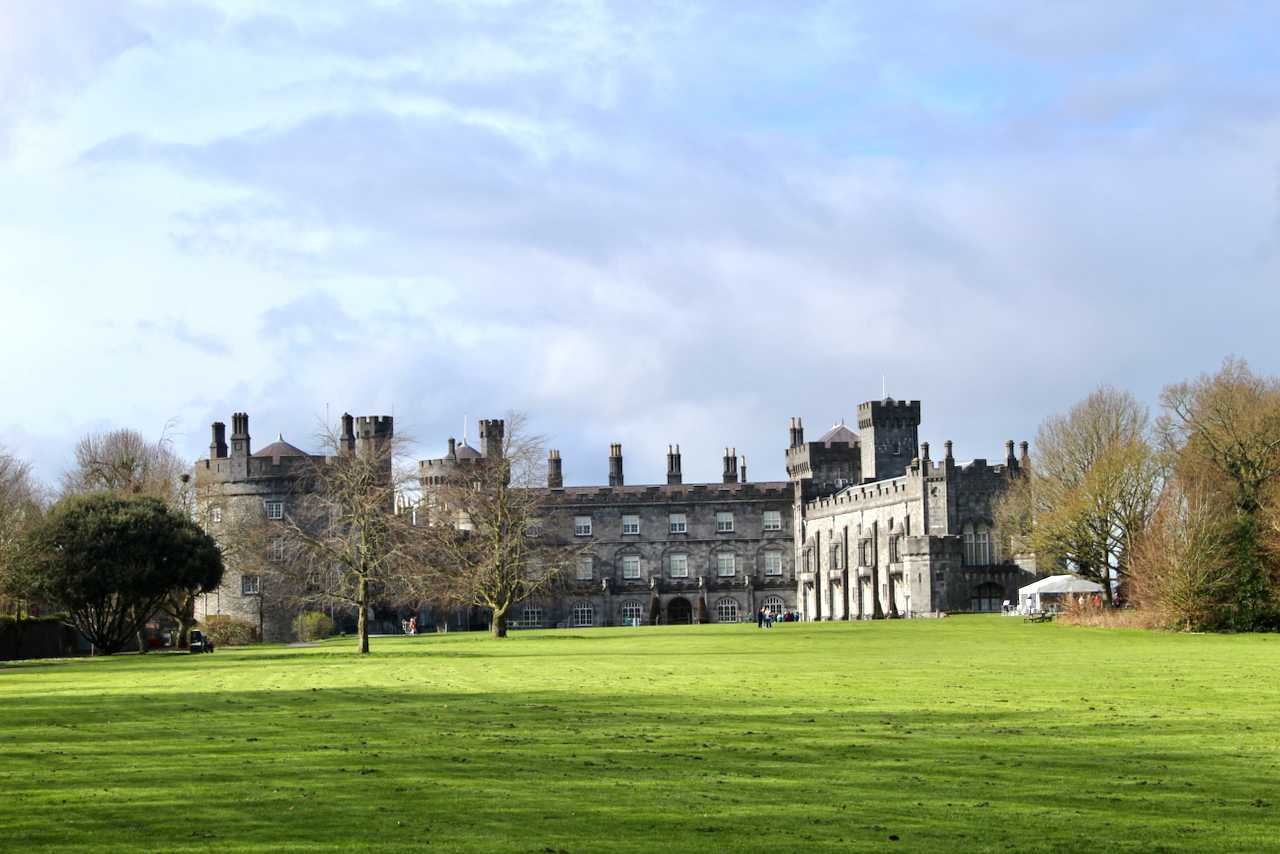
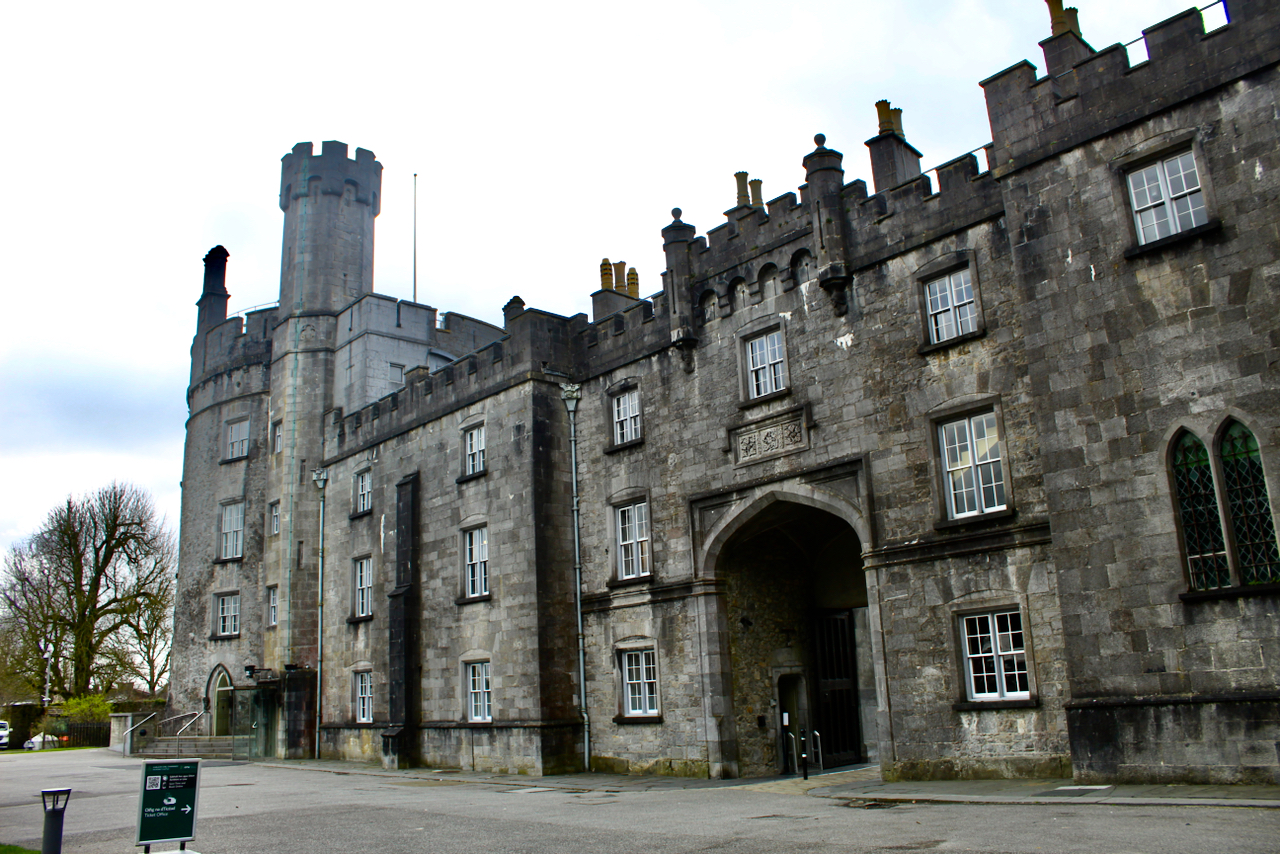
Kilkenny Castle. Photograph © Jennifer Winder-Baggot, www.irishhistorichouses.com
The entrance to inside Kilkenny Castle, the rounded arched door. Photograph © Jennifer Winder-Baggot, www.irishhistorichouses.com
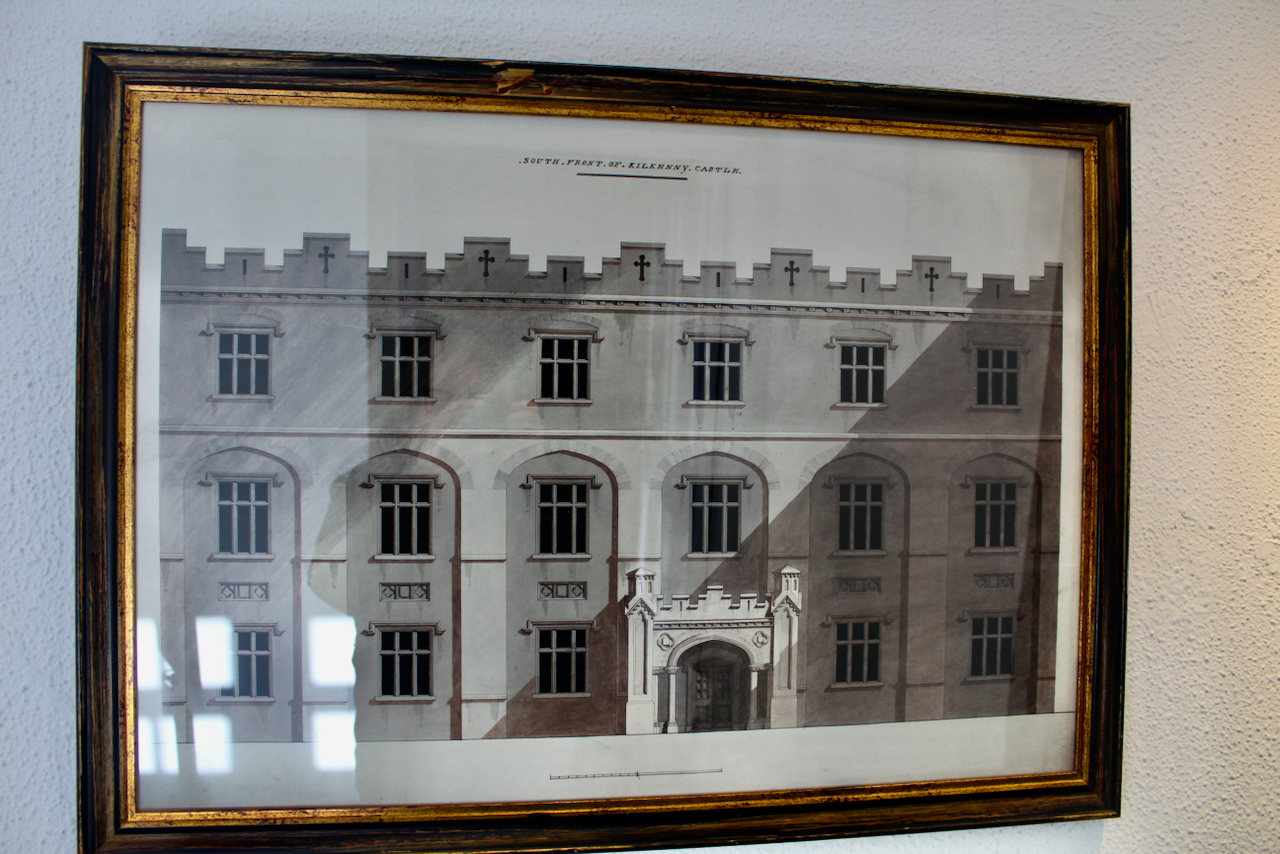
A drawing inside Kilkenny Castle shows a slightly different South front, with a portico around the entrance door. Now the whole ground floor has been extended out from the rest of the building into a corridor.
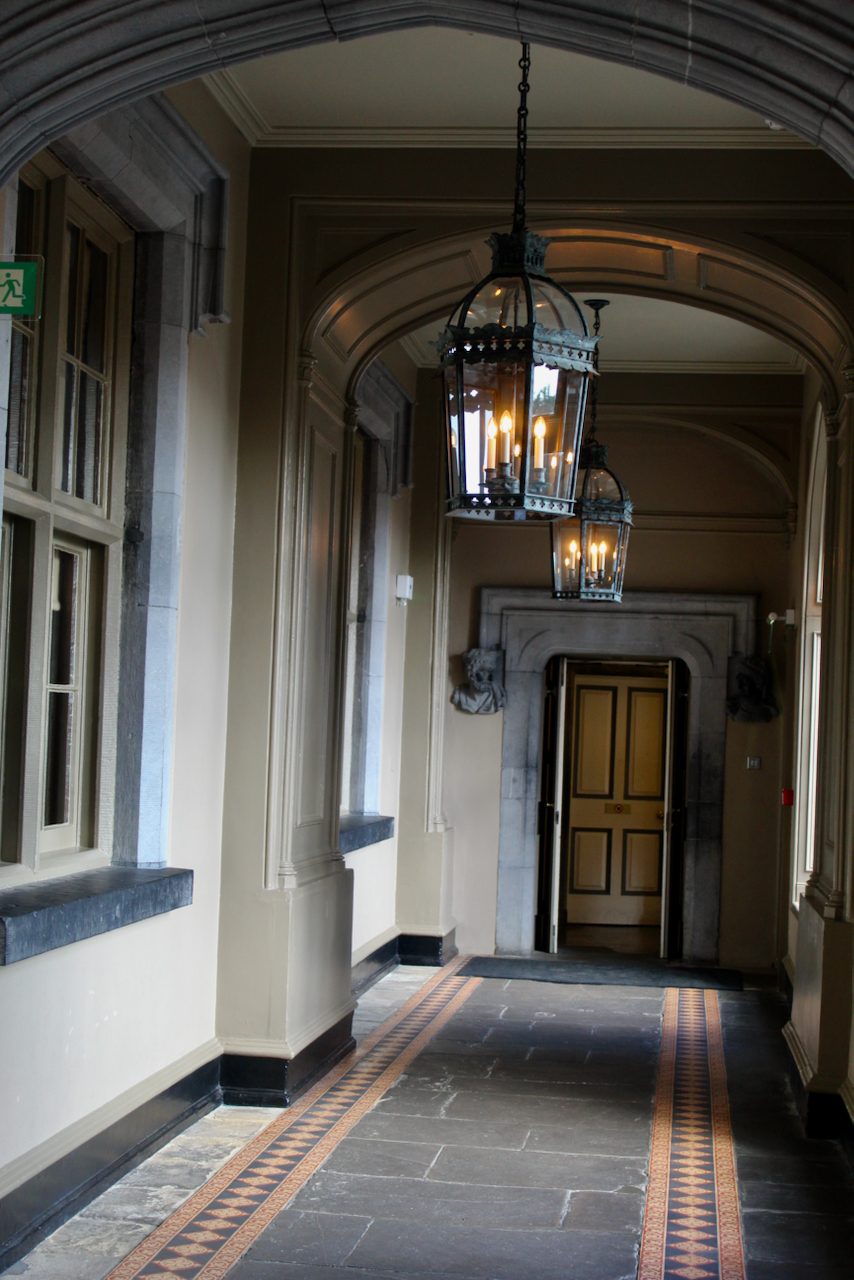
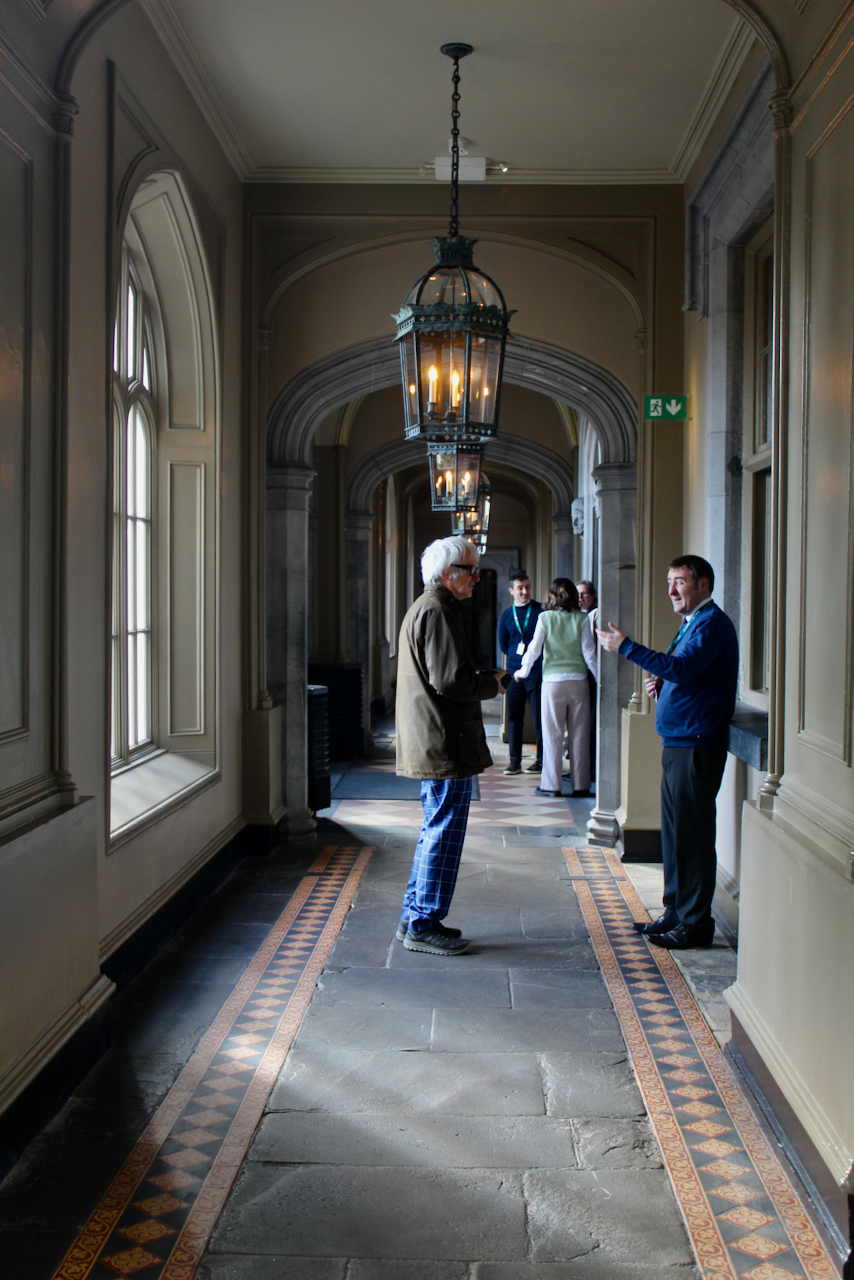
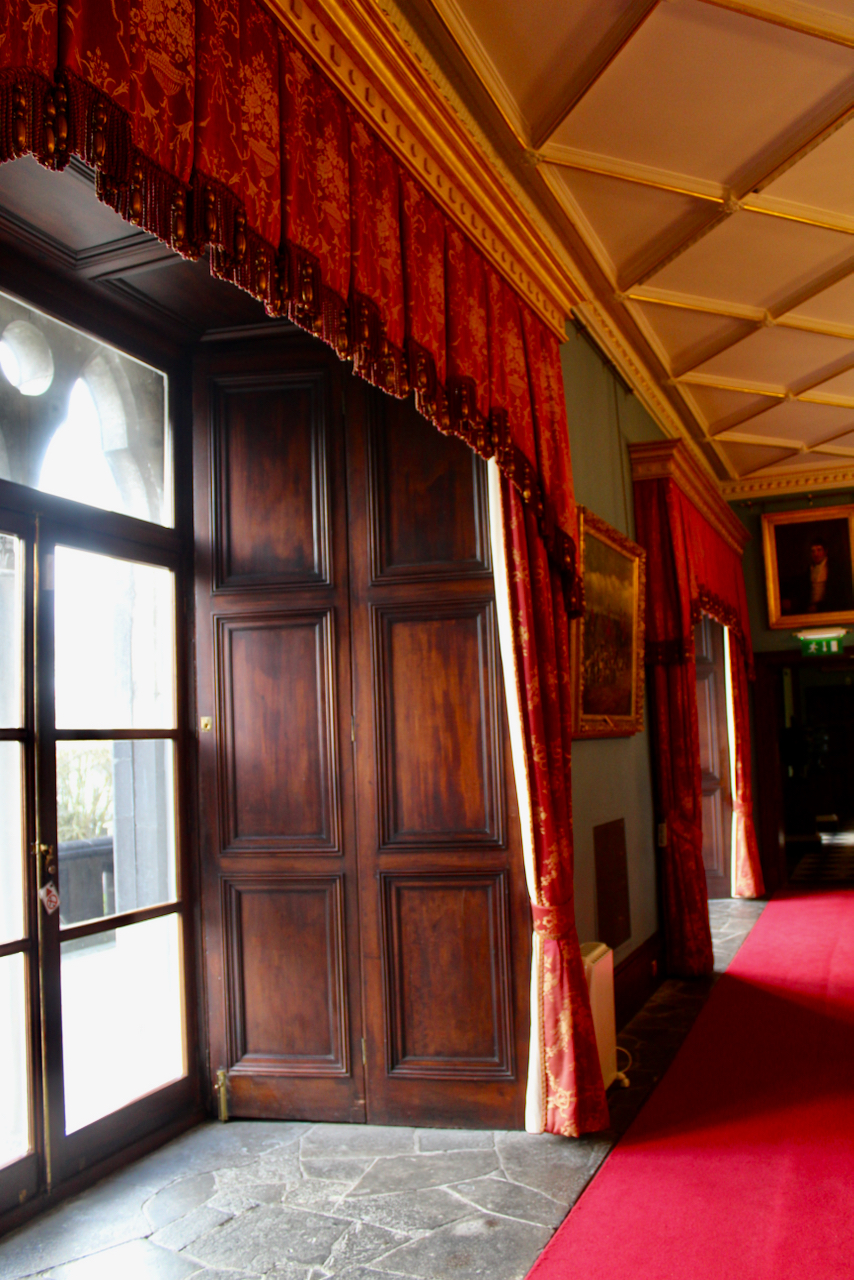
The front corridor of Kilkenny Castle. Photograph © Jennifer Winder-Baggot, www.irishhistorichouses.com

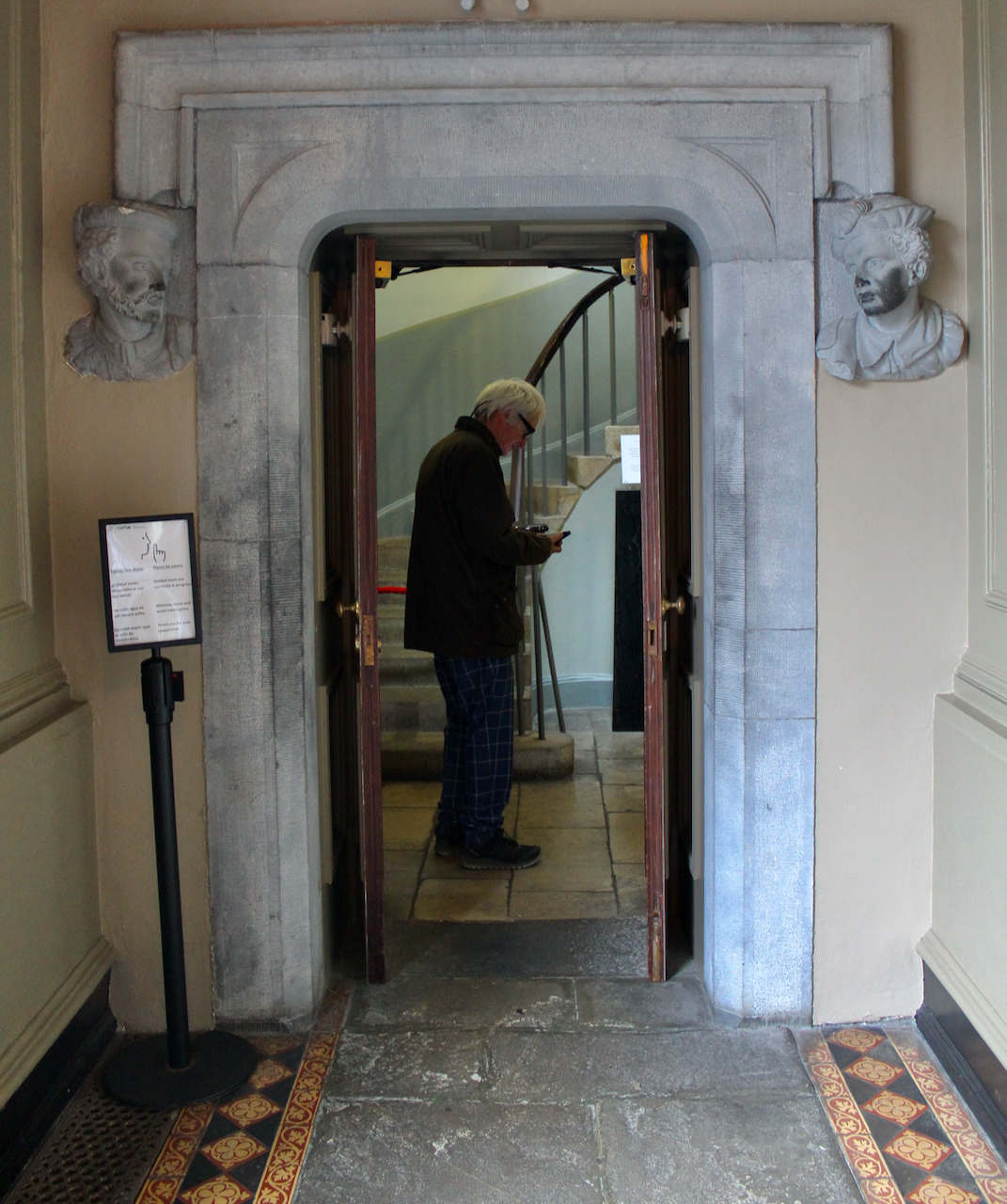
There are also stone heads inside the front corridor. I think the corridor’s inner wall was originally an external wall of the castle.
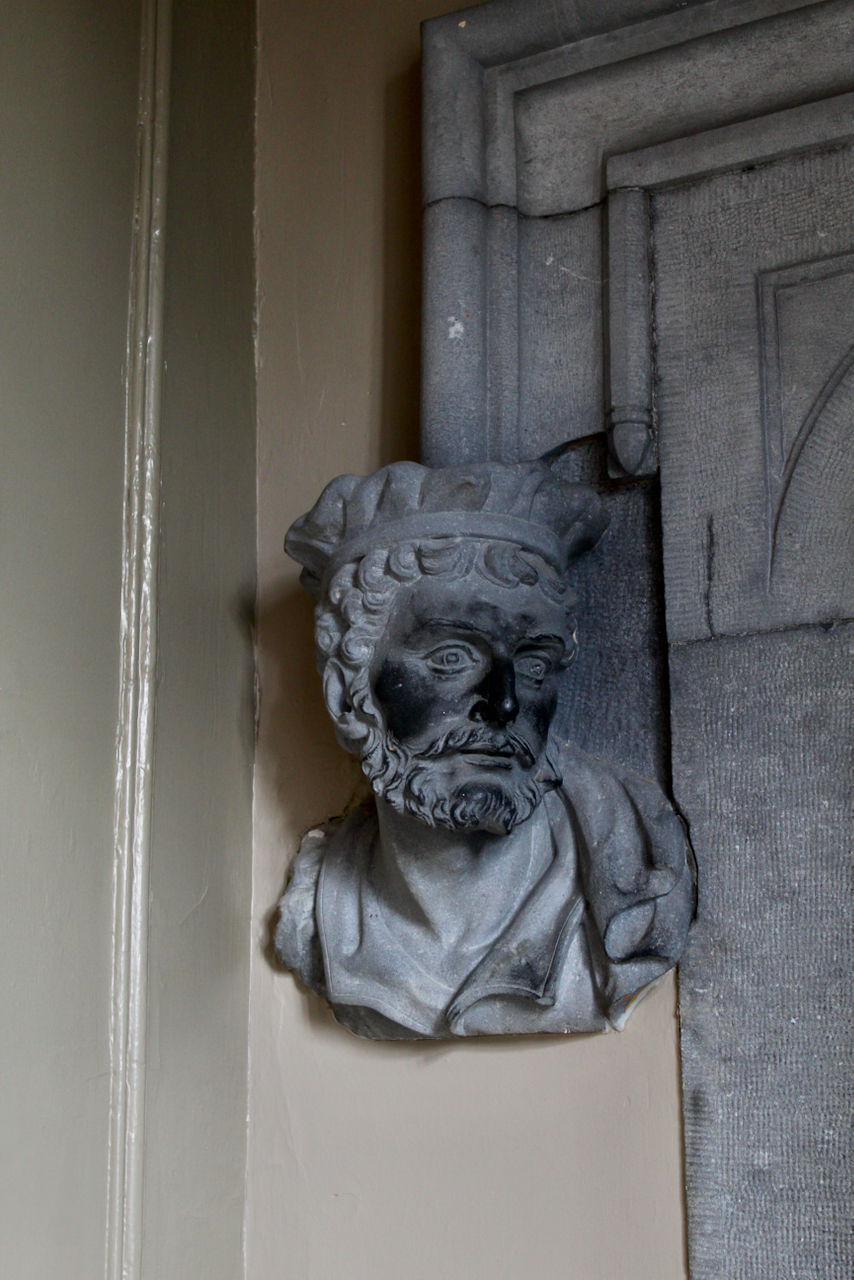
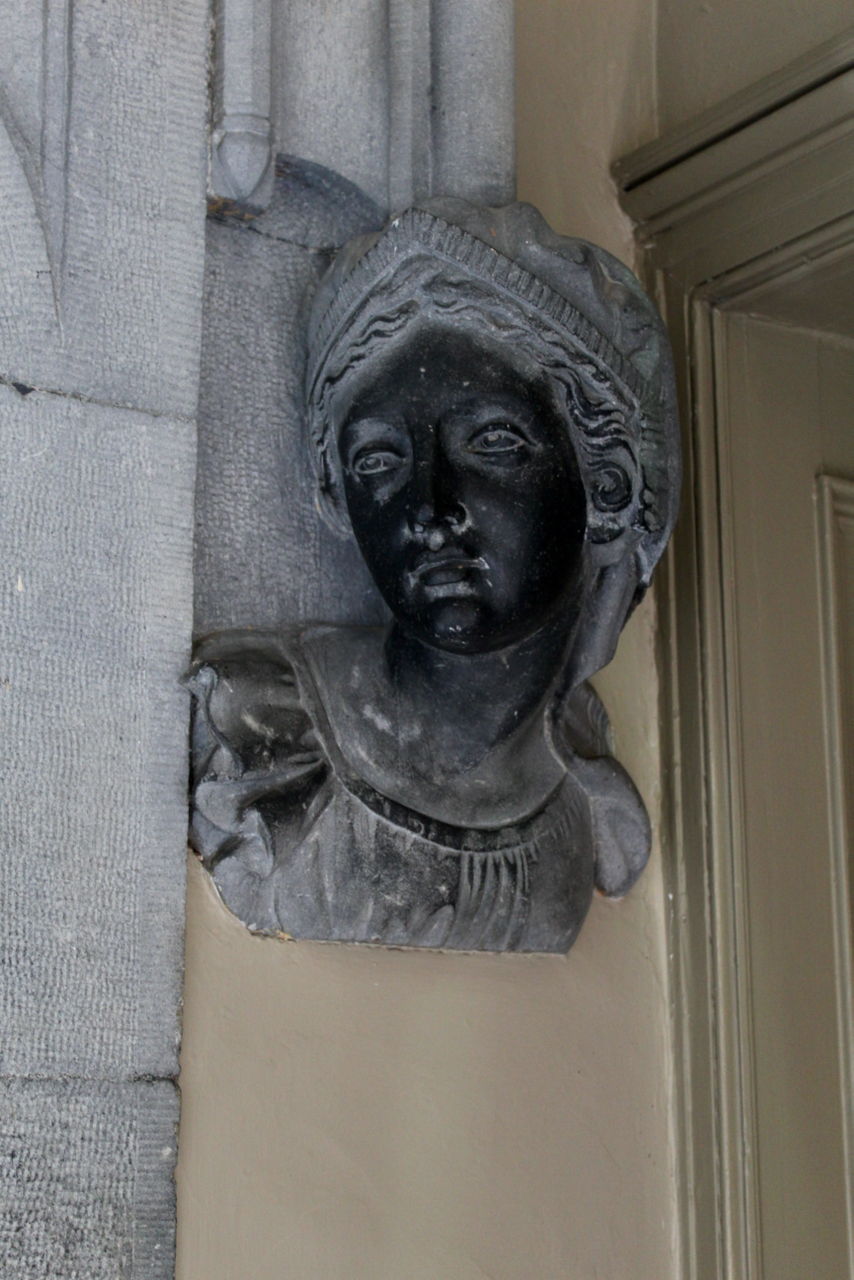
A carved stone head inside the front corridor Kilkenny Castle, at the end of hood moulding over a door. Photograph © Jennifer Winder-Baggot, www.irishhistorichouses.com
Stephen speaks to a guide in the front corridor of Kilkenny Castle. Photograph © Jennifer Winder-Baggot, www.irishhistorichouses.com
Stephen in the front corridor of Kilkenny Castle. Photograph © Jennifer Winder-Baggot, www.irishhistorichouses.com
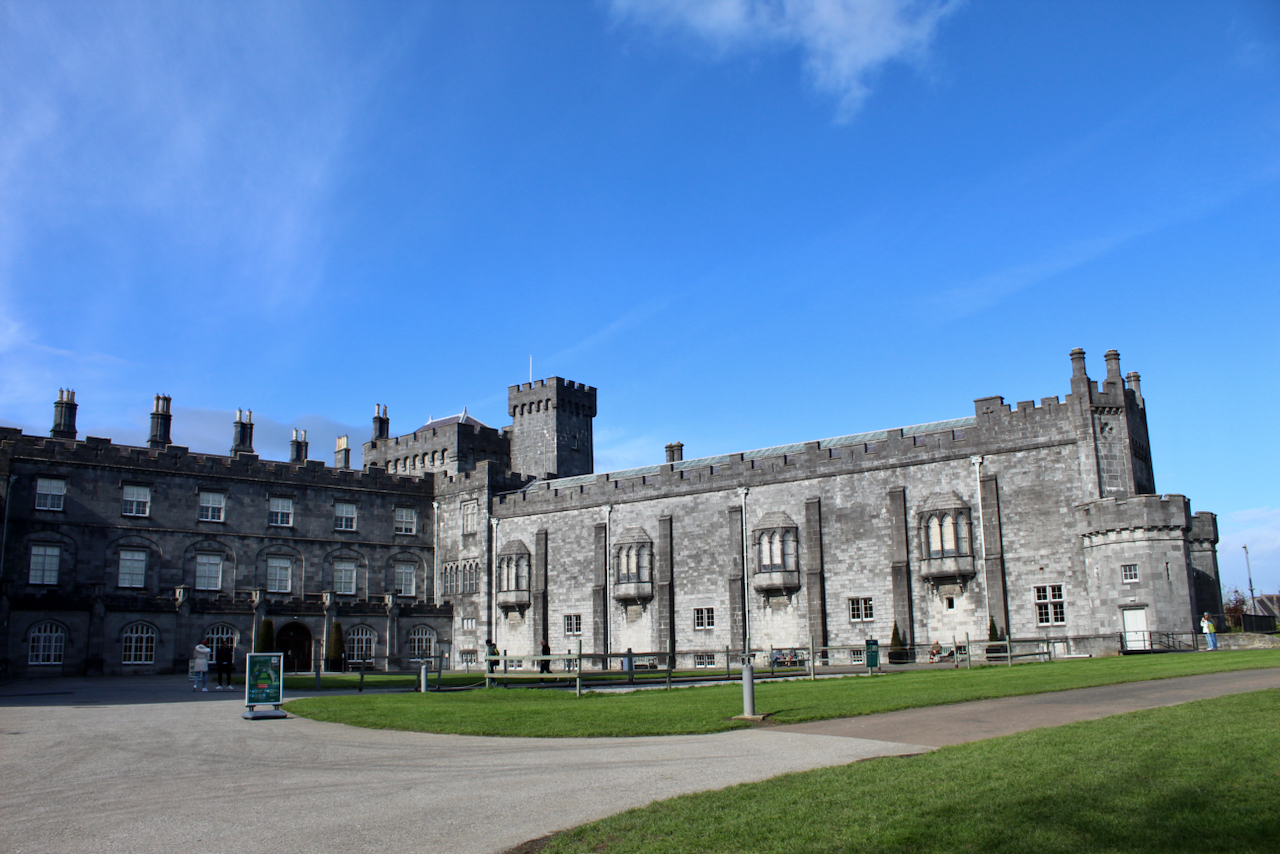
The long gallery wing of Kilkenny Castle. Photograph © Jennifer Winder-Baggot, www.irishhistorichouses.com
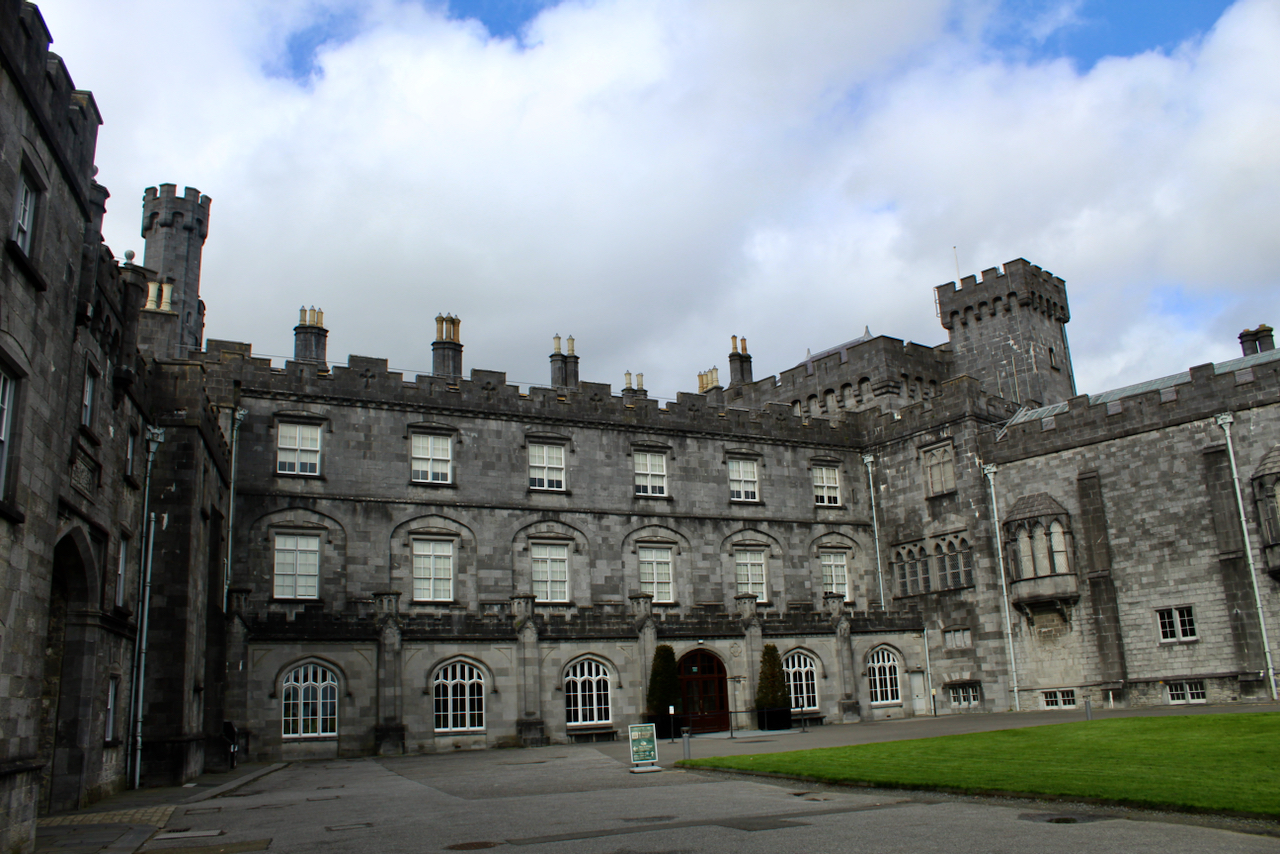
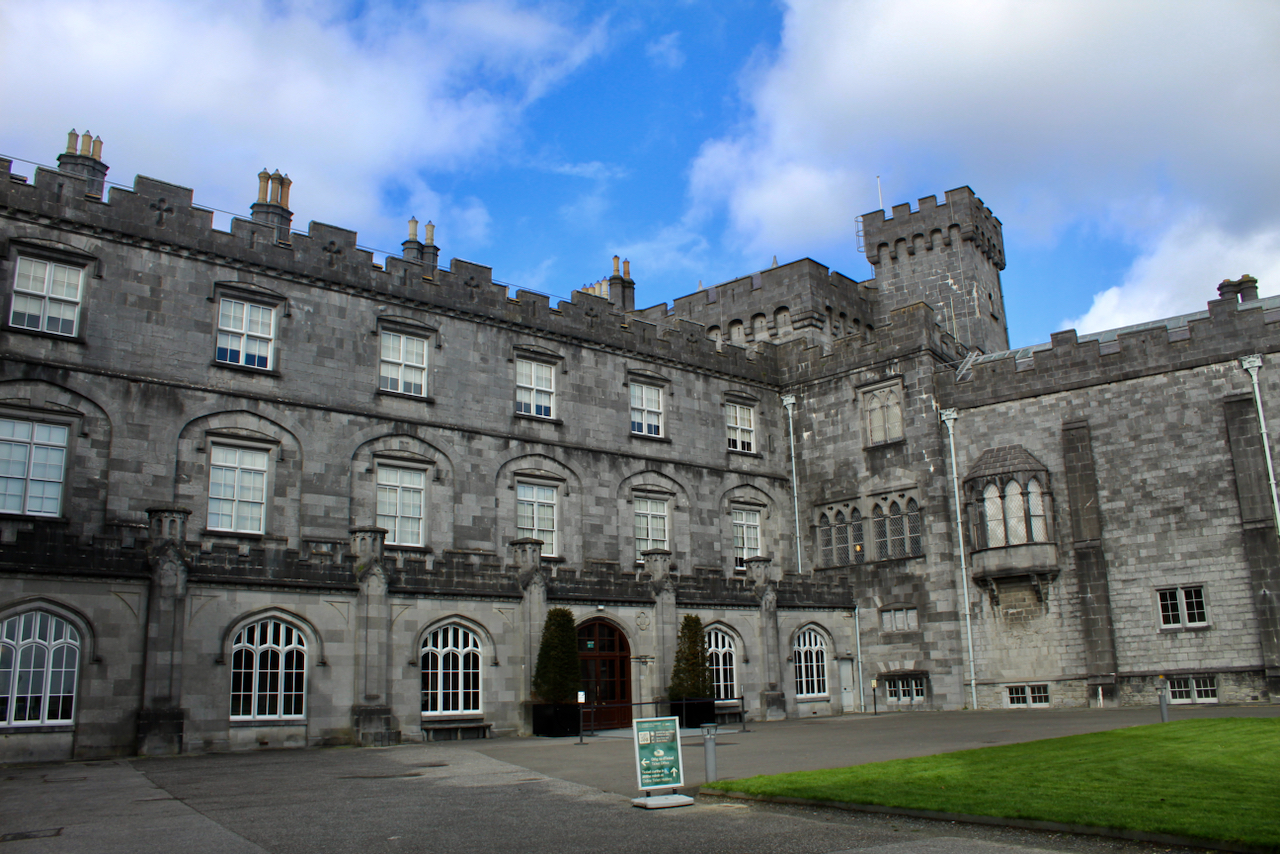
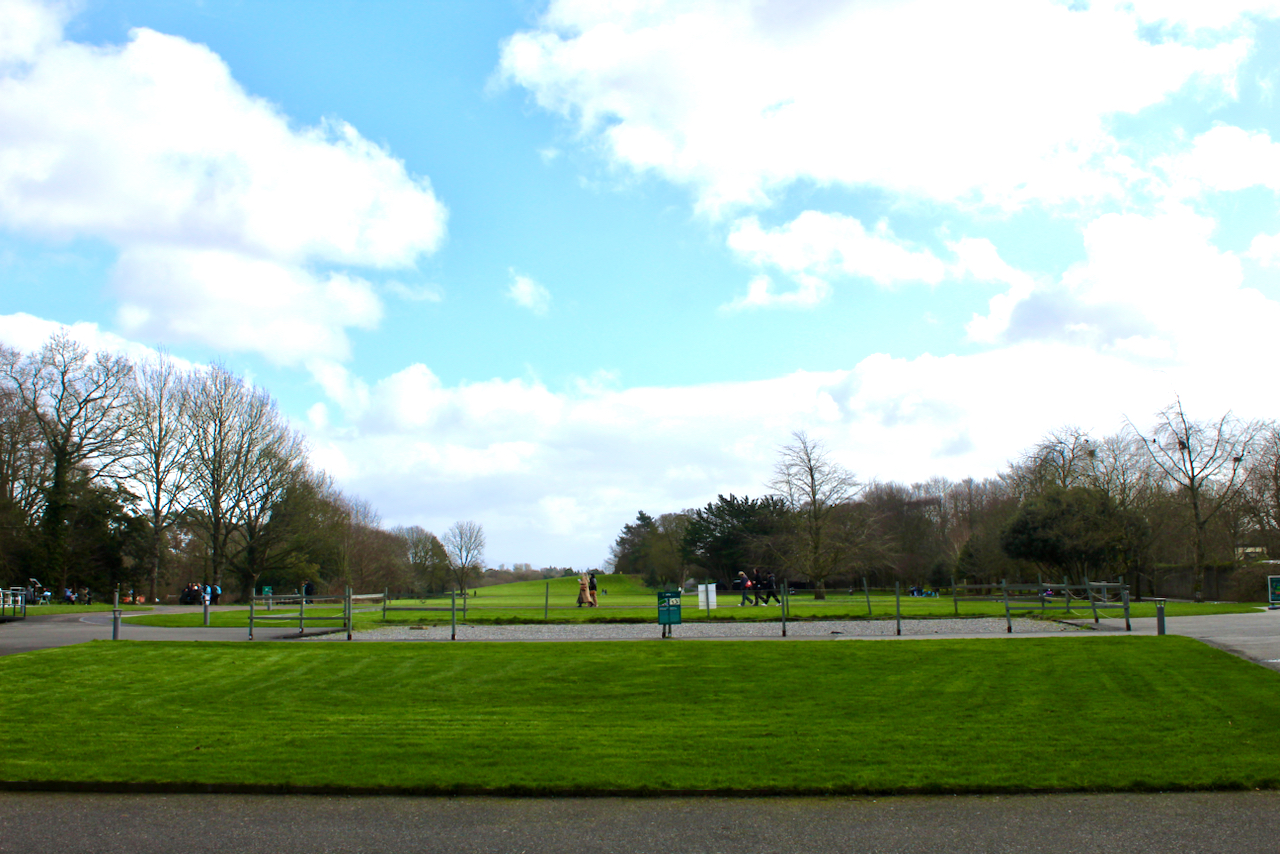
The view from the south front of Kilkenny Castle. Photograph © Jennifer Winder-Baggot, www.irishhistorichouses.com
Kilkenny Castle. Photograph © Jennifer Winder-Baggot, www.irishhistorichouses.com
One of the three ancient corner towers of Kilkenny Castle. Photograph © Jennifer Winder-Baggot, www.irishhistorichouses.com
One of the stone heads next to an entrance of Kilkenny Castle. Photograph © Jennifer Winder-Baggot, www.irishhistorichouses.com
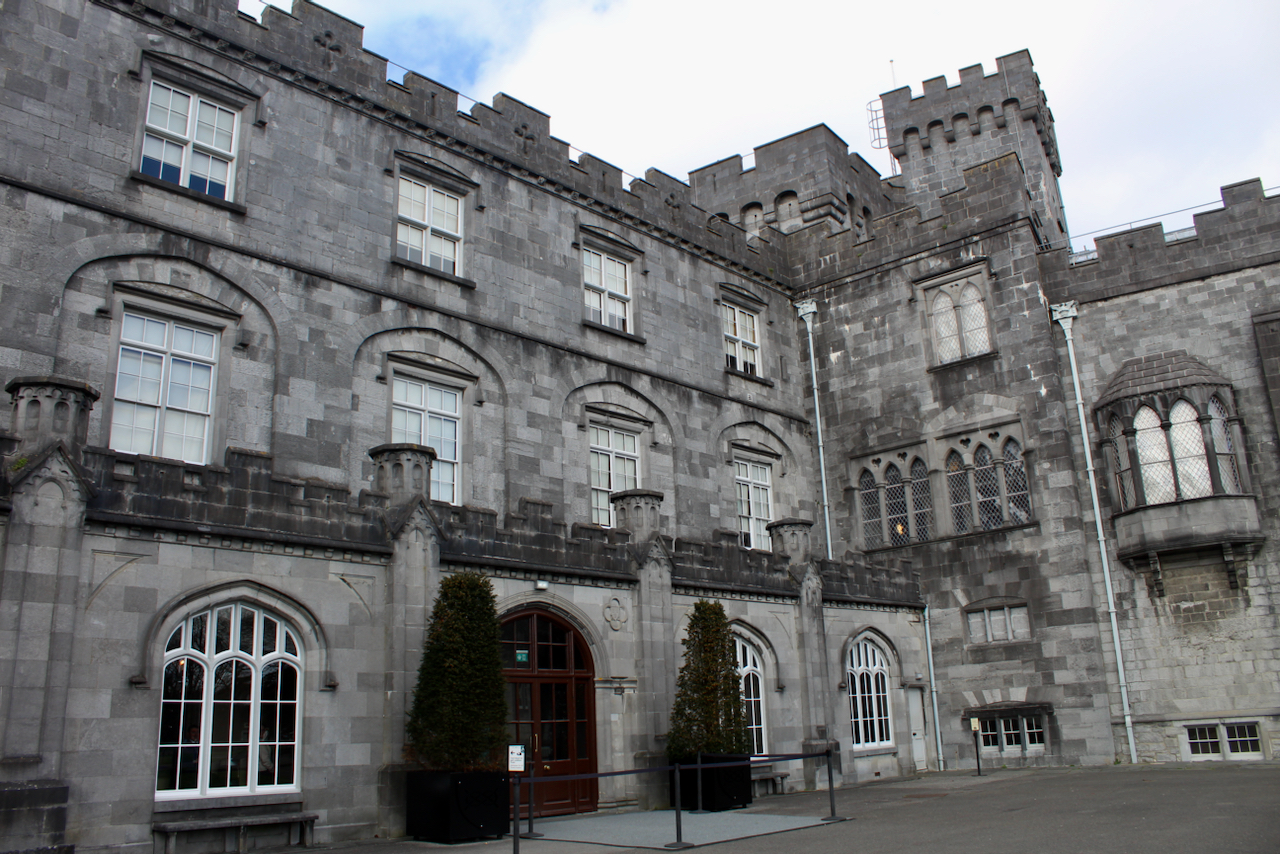
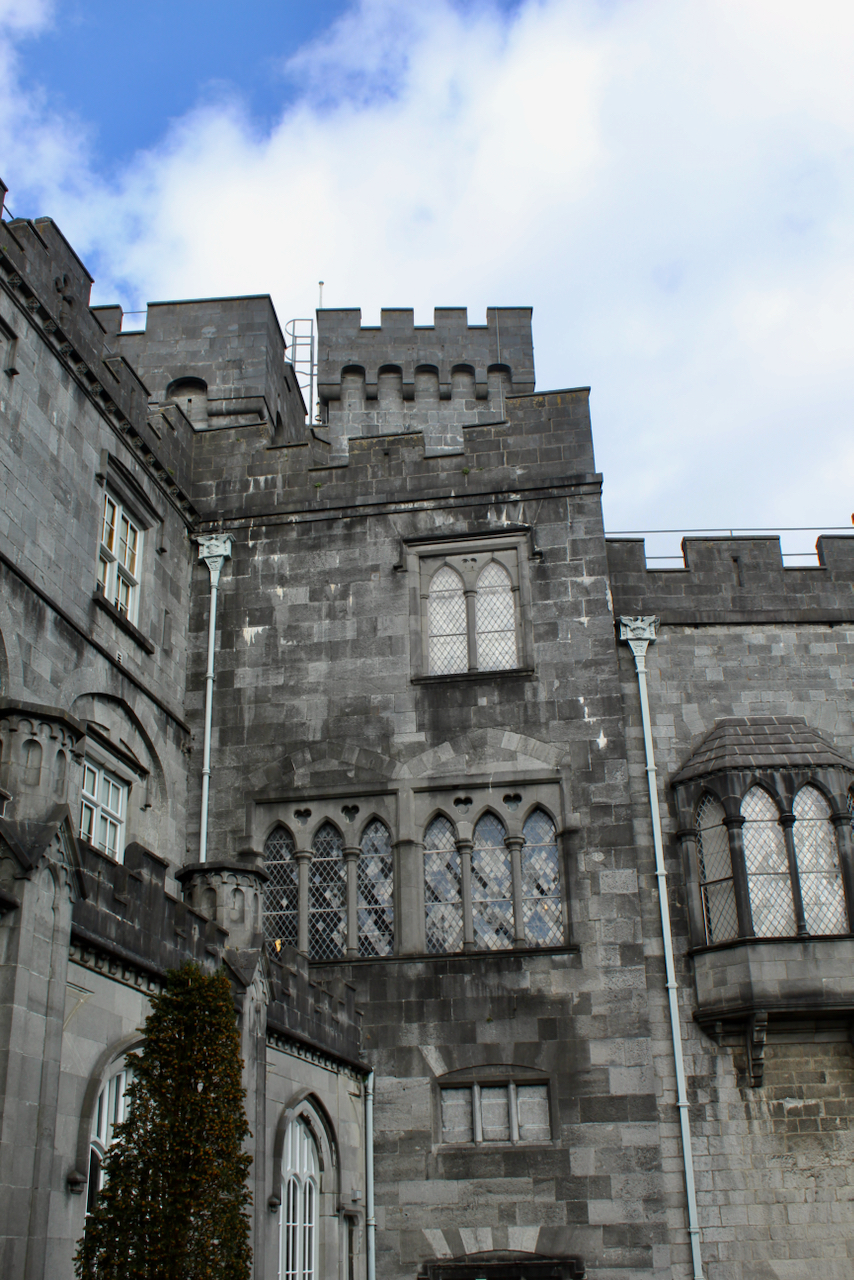
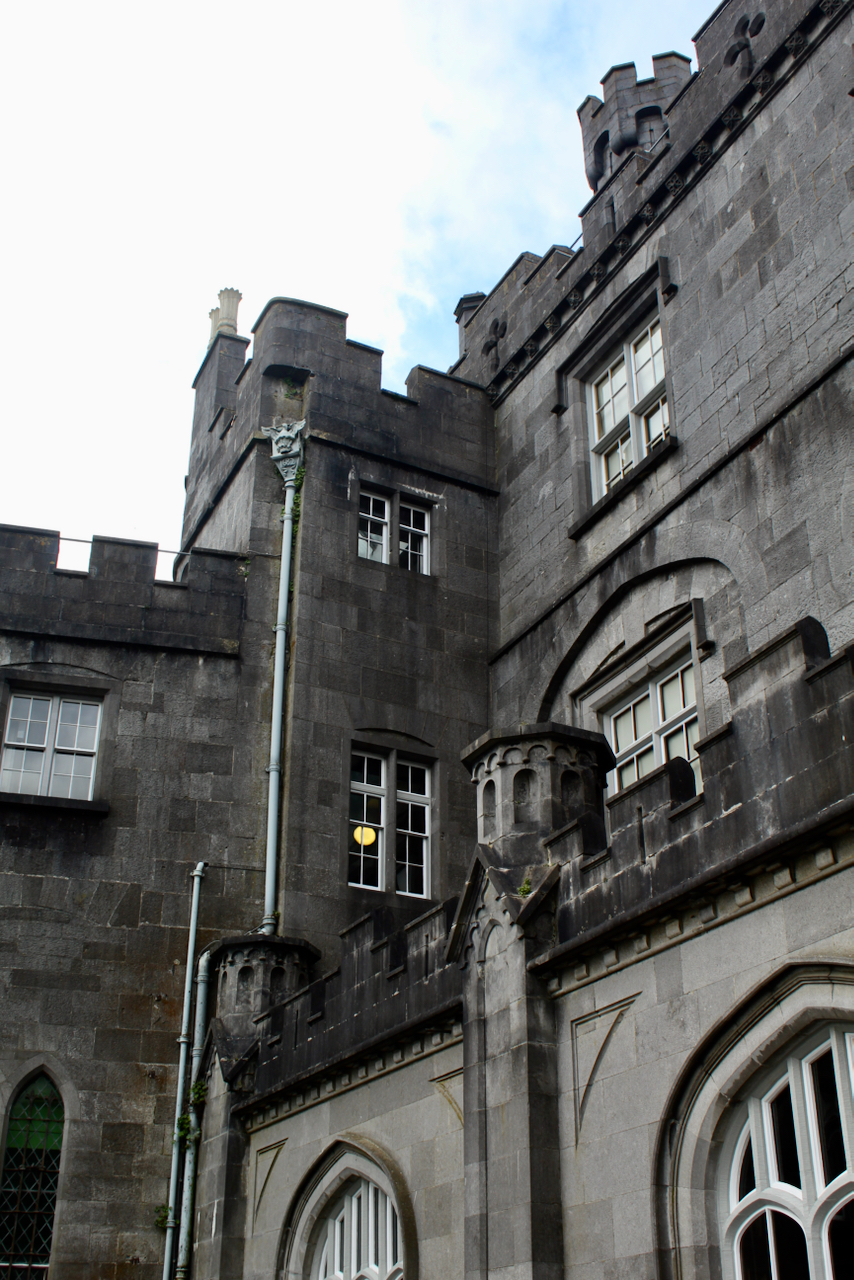
Inner corner of the south front of Kilkenny Castle. The hoppers on the top of the drain pipes depict an eagle, and each has a different date written on it, each a significant year to the Ormondes and Kilkenny Castle. Photograph © Jennifer Winder-Baggot, www.irishhistorichouses.com

Although he was later a Jacobite, favouring the return of James III to the throne rather than George I, James 2nd Duke favoured William III over James II. He took up arms under William Prince of Orange. He was present at the Boyne, and during William’s stay in Ireland entertained the king in extravagant style at Kilkenny castle. 

Once William and Mary were established on the throne of England, he began to reap the rewards of his allegiance. He attended the coronation of the new king and queen as lord high constable of England, and was named as a gentleman of the king’s bedchamber. Later he became a privy councillor in both Ireland and England. The dictionary of national biography tells us that if Ormond had prospered in William’s reign, he was to reach new heights of favour under Queen Anne. In February 1703 Ormond was appointed lord lieutenant of Ireland.

However, his fortunes went downhill, and instead of supporting the accession of George I, he became a Jacobite. He was a supporter of James II’s son James Francis Stuart (1688-1766) and his son Charles Edward Stuart, “Bonnie Prince Charlie.”
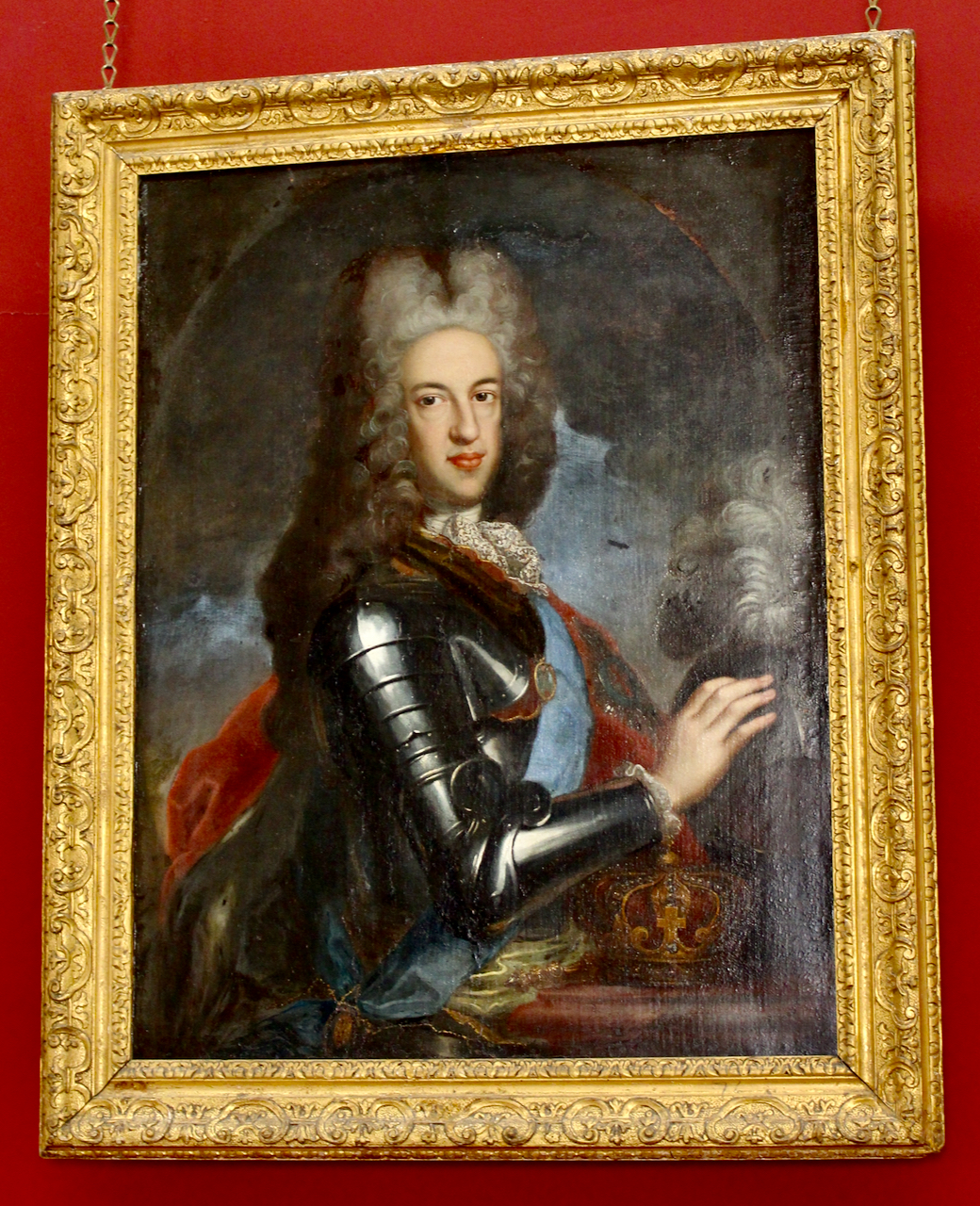
Prince James Francis Stuart (1688-1766), after Antonio David (1698–1750), this hangs in the long gallery of Kilkenny Castle. Son of King James II and his second wife Maria d’Este, ‘Mary of Modena,’ his birth in 1688 precipitated what became known as ‘The Glorious Revolution’ in England. Throughout his life he remained a focus of the Jacobite cause, culminating in the Battle of Culloden in 1745, when his son, Prince Charles Edward Stuart, ‘Bonnie Prince Charlie,’ led the Highland Scots and other Jacobites to their final defeat. The 2nd Duke of Ormonde was a close confidant and supporter to both princes.

Following his involvement in a Jacobite rising, a Bill of Attainder was passed against him. His English and Scottish honours and his English estates were seized. Ormonde fled to France in 1715. 

He was degraded from the order of the Garter. Ormond’s Irish and English property was regarded as forfeit and administered by the crown until 1721, when his brother Charles, Earl of Arran, was permitted by act of parliament to buy back the Irish estates. 

He lived out his life in exile, and died at Avignon in France. Despite this, he was buried in 1746 in Westminster Abbey.

James the 2nd Duke had no son, so the title passed to his brother Charles Butler (1671-1758) 1st Earl of Arran of the second creation. He was enabled by an Act of Parliament in 1721 to recover his brother’s forfeited estates, but the dukedom ended with him. He did however keep the title of 14th Earl of Ormonde. He had no children, however, so the title passed to a cousin.
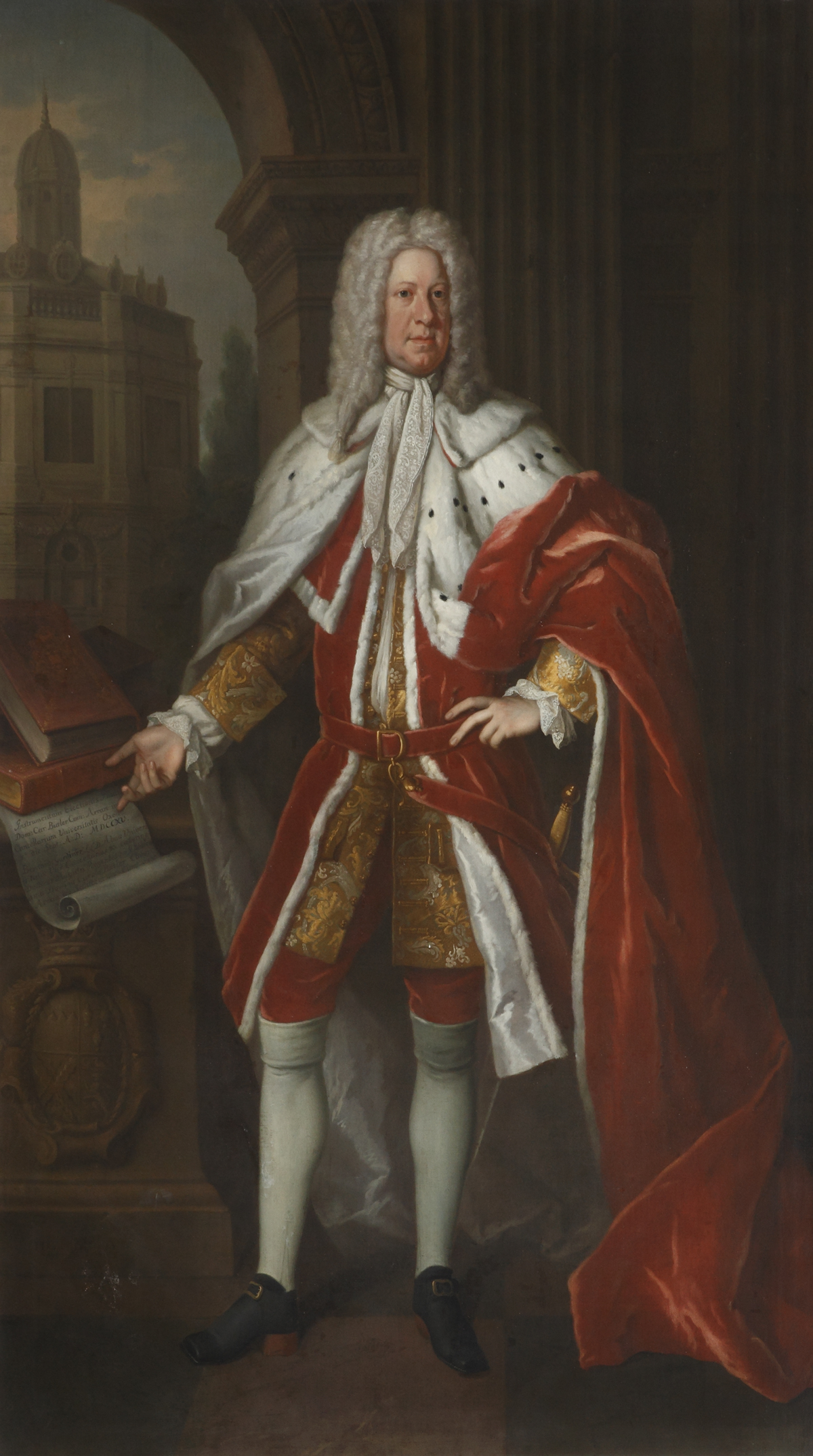
Charles Butler, 1st Earl of Arran (1671-1758) by James Thornhill. He was the brother of the 2nd Duke of Ormond http://www.odl.ox.ac.uk/oxfordportraits

You can take an online tour of the castle on the website https://kilkennycastle.ie/about/explore-the-castle-new/

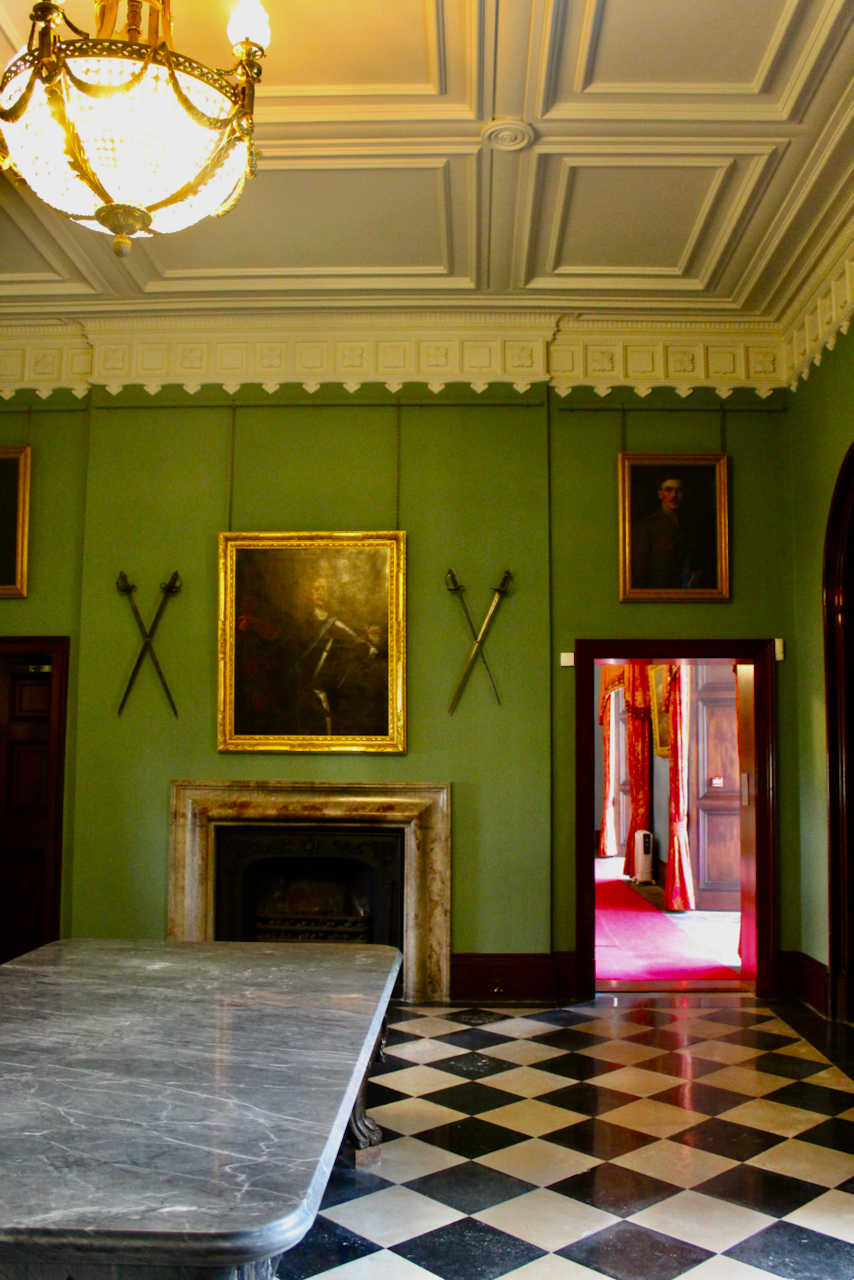
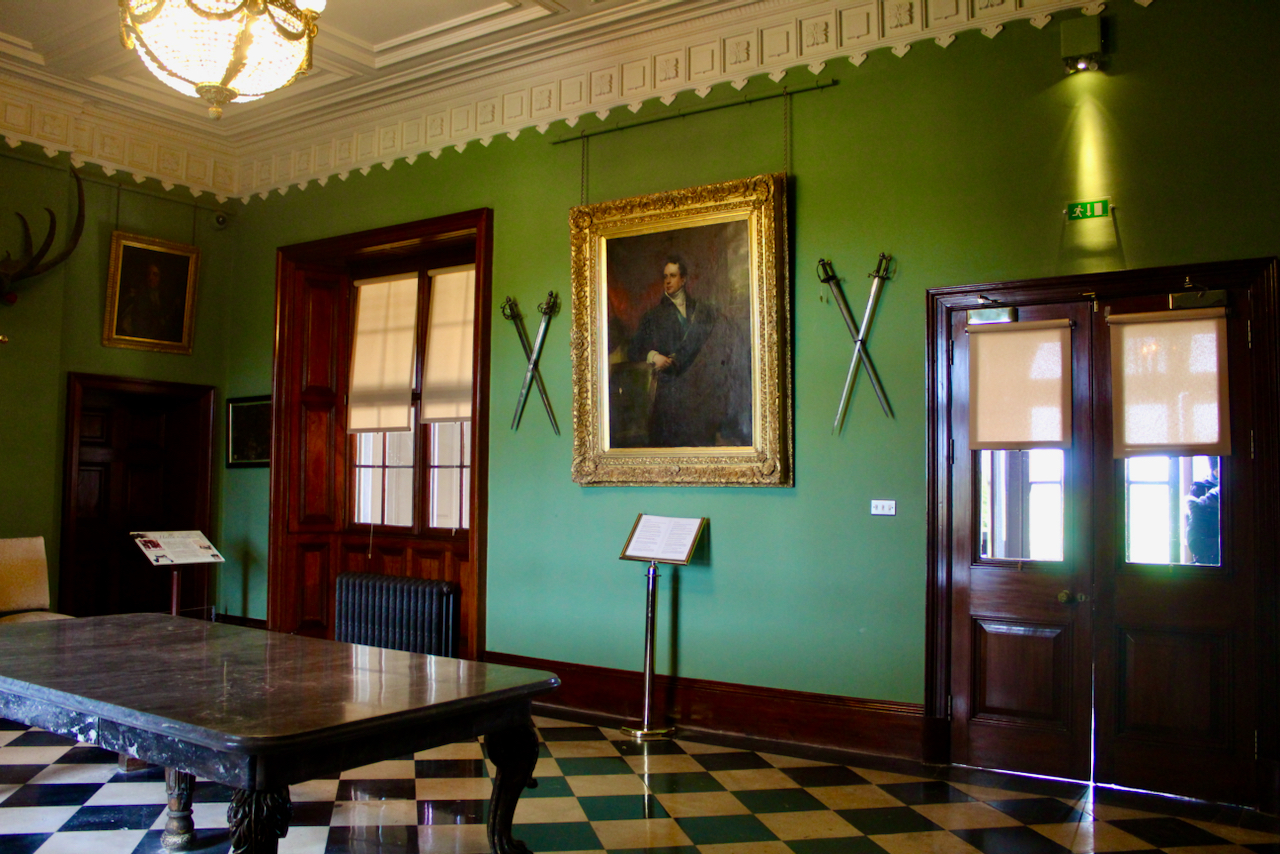
There has been an entrance hall here at least since the 17th century rebuilding of the castle. The black and white stone floor is laid with Kilkenny Black Marble and local sandstone, laid in the 19th century. The north doorway through the massive curtain wall was remodelled on two occasions in the 19th century. This room has been redecorated using organic naturally pigmented copper green paint. This colour is based on two Edwardian Irish Country house schemes; the Entrance Hall at Beaulieu, Co. Louth and the Saloon at Headford, Co. Meath.
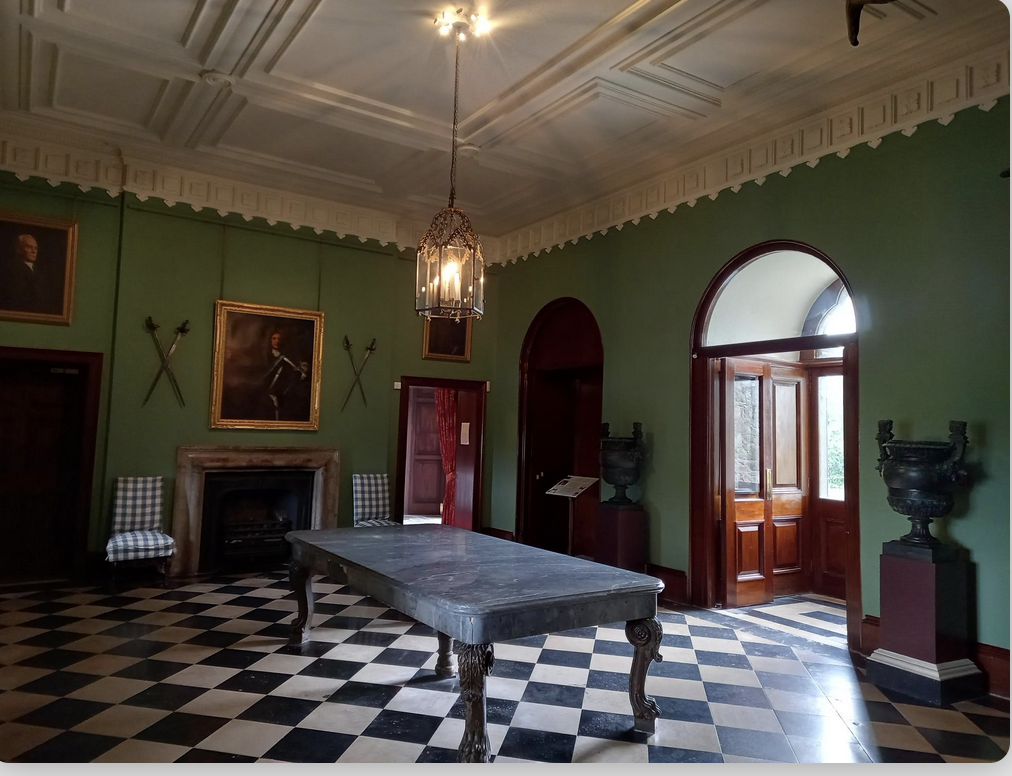
The Entrance Hall, Kilkenny Castle. Photograph courtesy of Kilkenny Castle website, Entrance Hall.
The Entrance Hall, Kilkenny Castle. There has been an entrance hall here at least since the 17th century rebuilding of the castle. The black and white stone floor is laid with Kilkenny Black Marble and local sandstone, laid in the 19th century. Portrait is of James Wandesforde Butler (1774-1838), 1st Marquess of Ormonde (3rd creation), 19th Earl of Ormonde, by Richard Rothwell (1800-1868). Photograph © Jennifer Winder-Baggot, www.irishhistorichouses.com
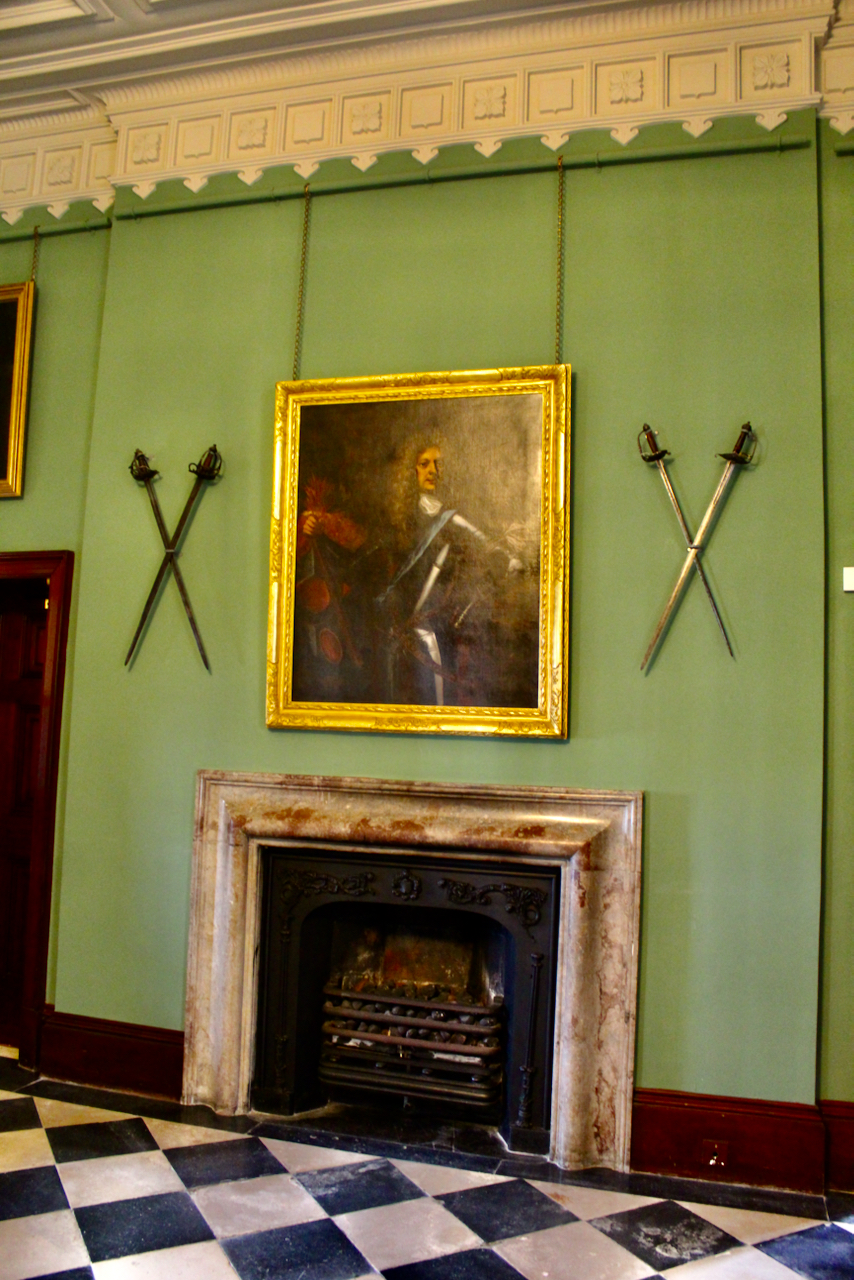
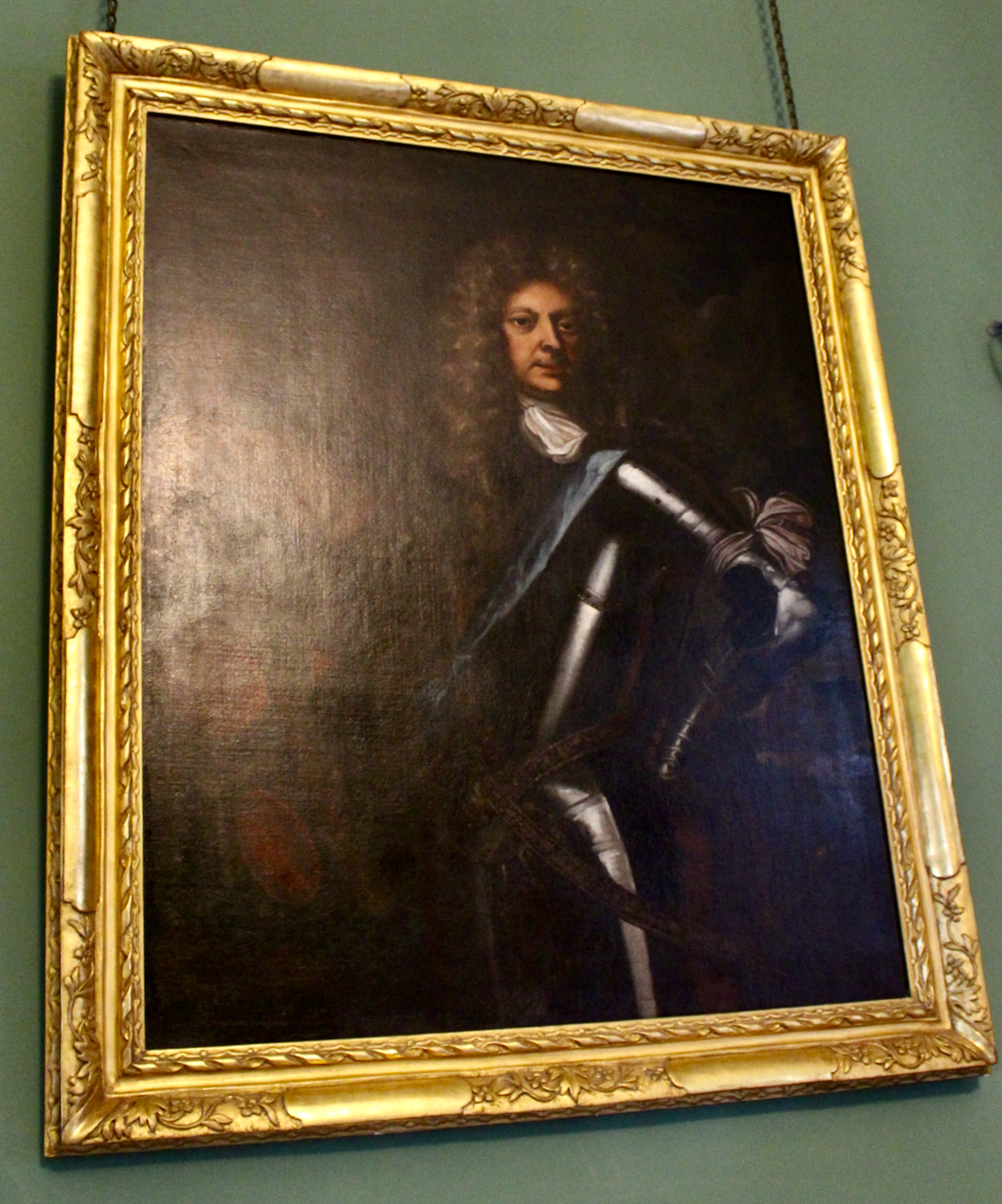
The Entrance Hall, Kilkenny Castle. James Butler (1610-88), 1st Duke of Ormond, 12th Earl of Ormond, in the style of John Michael Wright (1617-1694). There was no fewer than 28 swords and daggers displayed in the Entrance Hall prior to the 1935 auction. Photograph © Jennifer Winder-Baggot, www.irishhistorichouses.com
James Butler (1610-88), 1st Duke of Ormond, 12th Earl of Ormond, in the style of John Michael Wright (1617-1694). Ormond is clad in armour, holding the baton of command, and wearing the blue ribbon of the Order of the Garter. A plumed helmet is to the sitter’s right. Photograph © Jennifer Winder-Baggot, www.irishhistorichouses.com
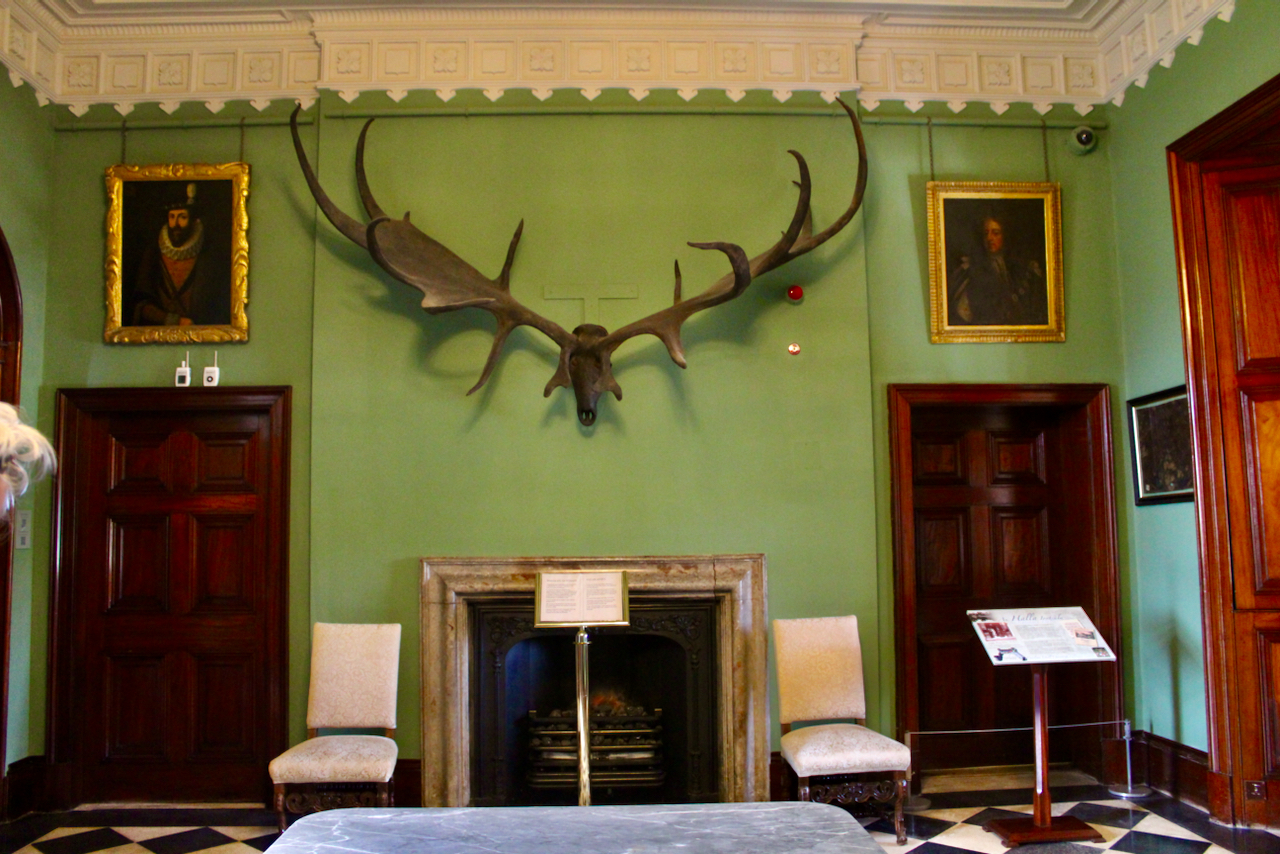
The Entrance Hall, Kilkenny Castle. Portraits of Thomas Butler (c.1531-1614), 10th Earl of Ormond, artist unknown, and James Butler (1665-1745), 2nd Duke of Ormonde, 13th Earl of Ormonde, artist unknown. A fine set of Irish elk antlers, dug from a Leitrim bog in the 19th century, are displayed over the fireplace. The Irish elk (Megaloceros giganteus) also called the giant deer or Irish deer, is an extinct species of prehistoric deer which lived during the Ice Age about 2,580,000 to 11,700 years ago. Photograph © Jennifer Winder-Baggot, www.irishhistorichouses.com
The Entrance Hall, Kilkenny Castle. Italian marble table. This large grey marble table is original to Kilkenny Castle and dates to the late 17th century. Photograph © Jennifer Winder-Baggot, www.irishhistorichouses.com

Since there is the portrait of James Wandesforde Butler (1774-1838), 1st Marquess of Ormonde (3rd creation), 19th Earl of Ormonde in the front hall, let’s continue with the genealogy of the Ormondes before we continue further into the castle.

After the childless 14th Earl of Ormonde, the successor was a cousin, John Butler (d. 1766) of Kilcash and Garryricken. His father was Thomas Butler of Kilcash (d. 1738), a grandson of Richard Butler (d. 1701) of Kilcash, a brother of the 1st Duke of Ormond.
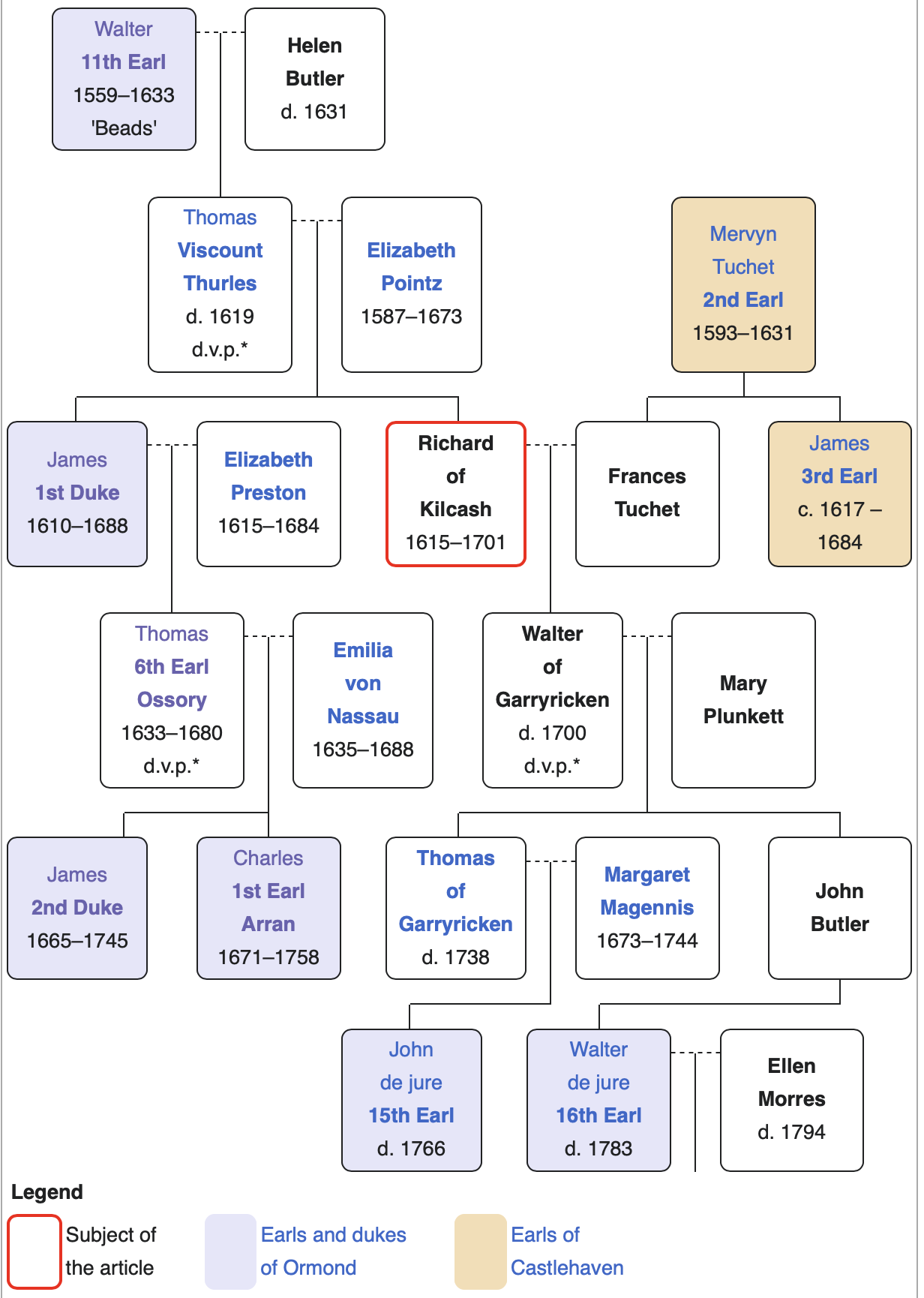
Family tree of the Butlers, showing the genealogy of the 15th Earl of Ormonde.
Colonel Thomas Butler (d. 1738) of Kilcash and Garryricken by James Latham. Thomas was the father of the 15th Earl of Ormonde, John Butler (d. 1766) of Kilcash and Garryricken.

Colonel Thomas Butler (d. 1738) of Kilcash and Garryricken, father of the 15th Earl of Ormonde, had a brother who became a Catholic Archbishop of Cashel and Emly. Their portraits, by James Latham, hang in the picture gallery of Kilkenny Castle.

Thomas (d. 1738) inherited Kilcash from his grandfather Richard Butler (d. 1701) of Kilcash. A Colonel of a Regiment of Foot in the army of King James II, Thomas married Margaret Bourke, widow of 5th Viscount Iveagh and daughter of William, 7th Earl of Clanricarde. They had three sons: Richard (d.1711), Walter who died in Paris and John Butler of Kilcash, who succeeded to the Ormonde titles as de jure15th Earl in 1758 on the death of his cousin Amelia, sister of James Butler, 2nd Duke of Ormonde. The couple also had five daughters: one, Honora married Valentine Brown, Lord Kenmare.
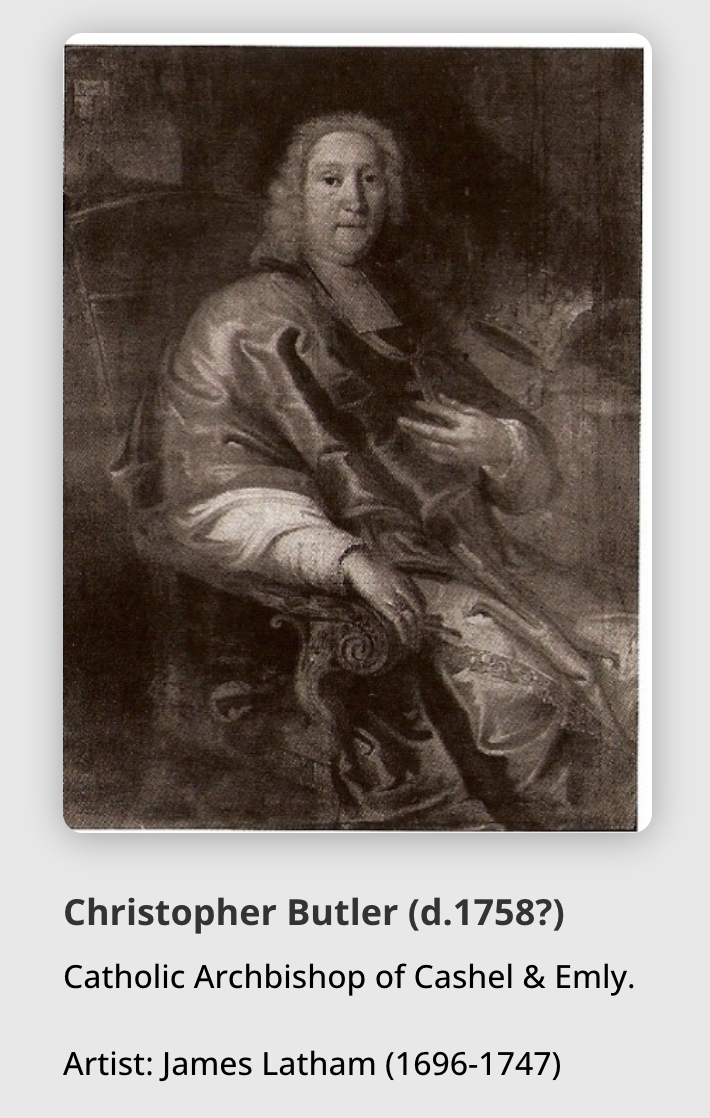
Christopher Butler (d. 1758?) Catholic Archbishop of Cashel and Emly, by James Latham. Christopher Butler was Catholic archbishop of Cashel and Emly, son of Walter Butler of Garryricken and brother of Colonel Thomas Butler of Kilcash.
In the picture gallery of Kilkenny Castle: Christopher Butler (d. 1758?), Catholic archbishop of Cashel and Emly, son of Walter Butler of Garryricken and brother of Colonel Thomas Butler of Kilcash, portrait by James Latham (1696-1747); Charles Butler (1671-1758) 2nd Earl of Arran, youngest son of Thomas Butler Earl of Ossory and brother of the 2nd Duke of Ormonde; Colonel Thomas Butler of Kilcash (d. 1738) by James Latham. He was the son of Walter Butler and Garryricken and Mary Plunket. He inherited Kilcash from his grandfather Richard, youngest brother of the Duke of Ormond. His wife was Margaret Burke. Portrait attributed to Hans Hysing (1678-1753). Photograph © Jennifer Winder-Baggot, www.irishhistorichouses.com

The 15th Earl had no children so the title then passed to a cousin, Walter Butler (1703-1783), another of the Garryricken branch, who also became the 9th Earl of Ossory. Walter the 16th Earl took up residence at Kilkenny Castle. Walter, a Catholic, was unable to exercise a political role. He undertook the restoration of the Castle, decorating some of the rooms with simple late eighteenth century plasterwork, and also built the stable block across the road from the Castle, today the Design Centre and National Craft Centre (also a Section 482 property). He also built the Dower House, now a hotel called Butler House.

He married Eleanor Morres (1711-1793), the daughter of Nicholas Morres of Seapark Court, Co. Dublin, and of Lateragh, Co. Tipperary. After Walter’s death in 1783, she moved  into the Dower House.

Their son John (1740-1795) became known as “Jack of the Castle” and was the 17th Earl. Jack’s sister Susannah married Thomas Kavanagh of Borris House in County Carlow (see my entry about Borris House). Jack married Anne Wandesford.
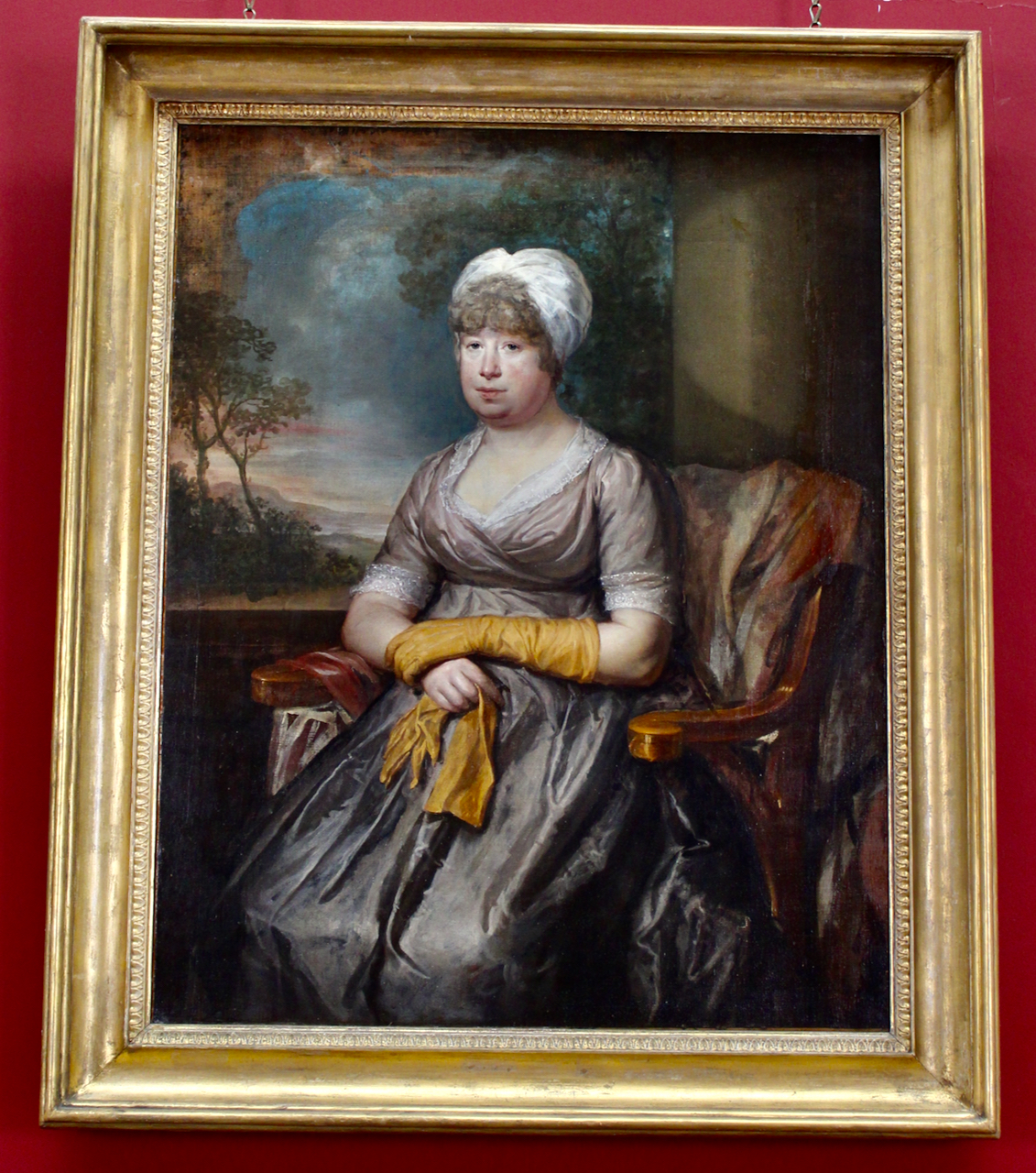
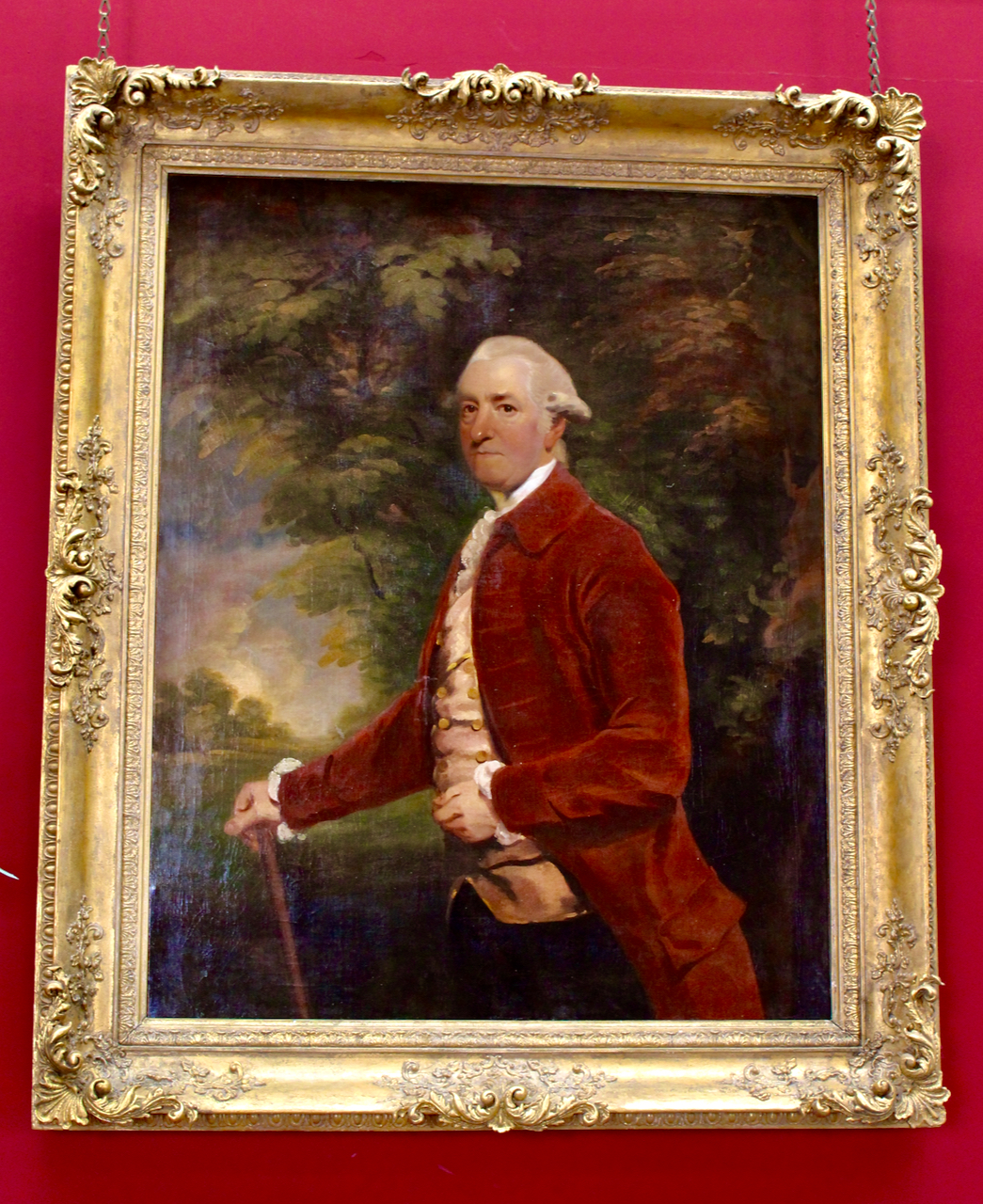
Susan Frances Elizabeth (Anne) Wandesford (1754-1830) Countess of Ormonde by Hugh Douglas Hamilton (1739-1808), hanging in the picture gallery of Kilkenny Castle. Daughter of John, Earl Wandesford and his wife Agnes Elizabeth Southwell of Enniscouch, Co. Limerick. In 1769, Anne married John Butler, 17th Earl of Ormonde, who claimed the Irish titles in 1783 and had them confirmed in 1791. They had four sons: Walter, later 18th Earl of Ormonde, John, who died unmarried and James. The youngest, Charles Howard Butler was heir to his mother’s estates and also inherited her brother Walter Clarke’s estates.
John Wandesford (1725-1784), 1st Earl of Wandesford and Viscount Castlecomer, after Sir Joshua Reynolds (1723-92), hanging in the picture gallery of Kilkenny Castle. Father of Susan Frances Elizabeth (Anne) Wandesford, Marchioness of Ormonde, he was created Earl of Wandesford in 1758. When he died in 1884, the title became extinct.
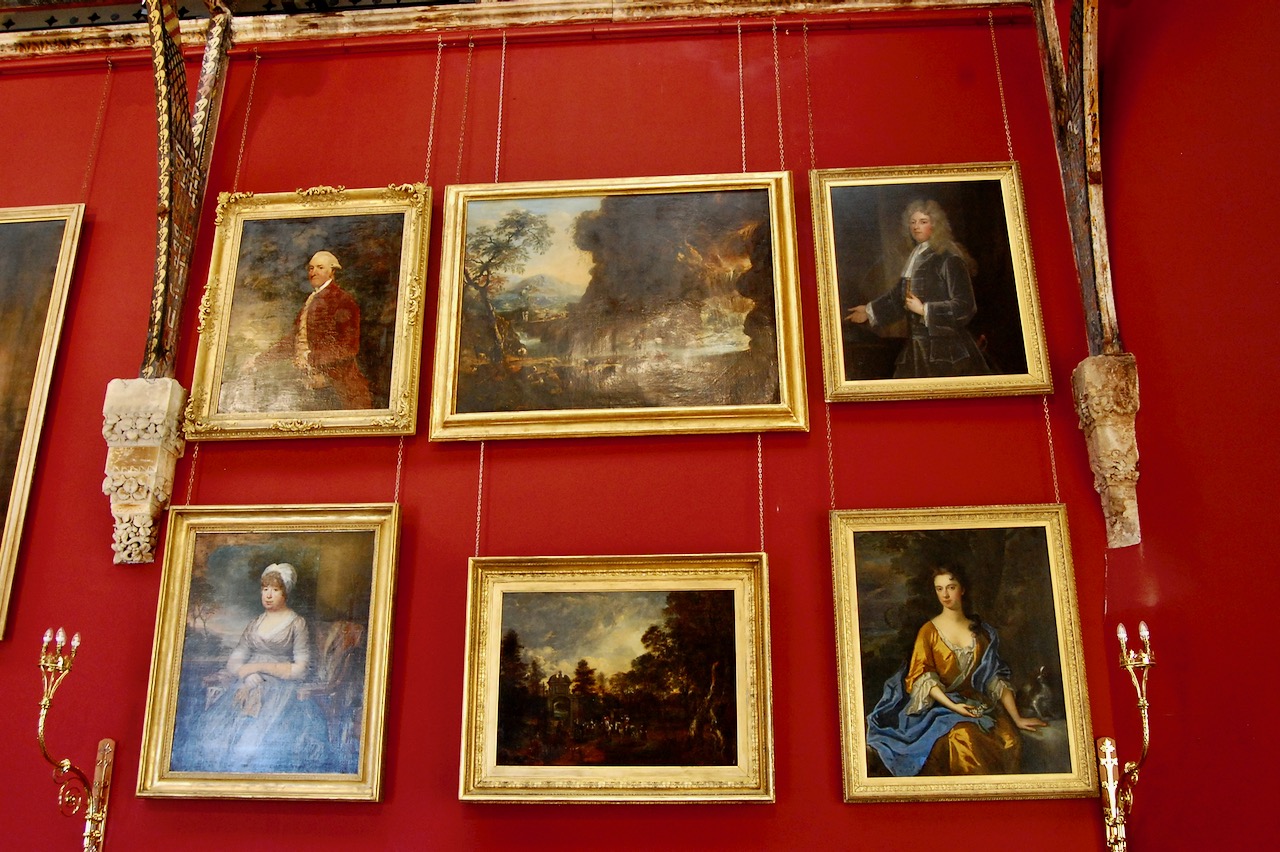
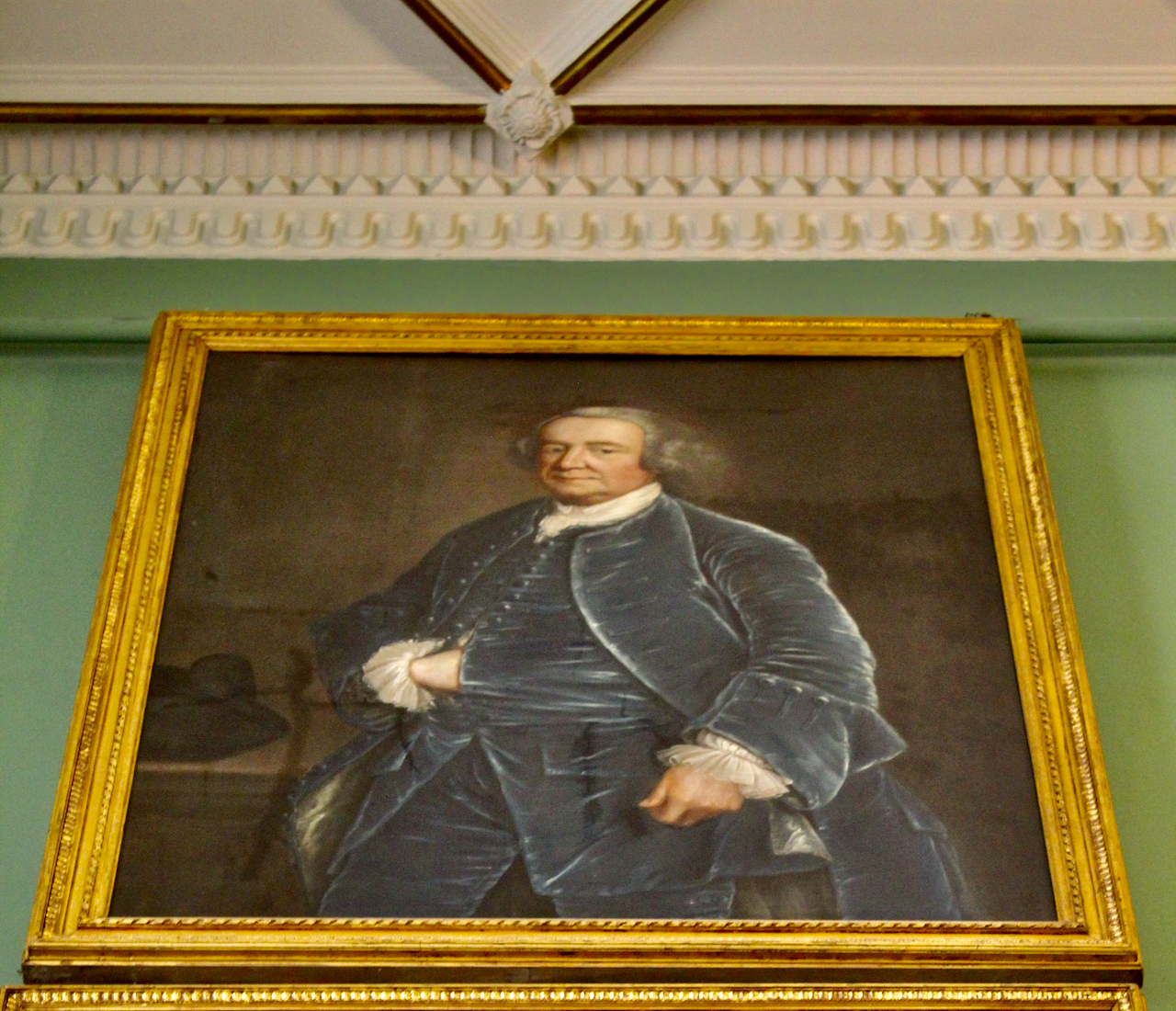
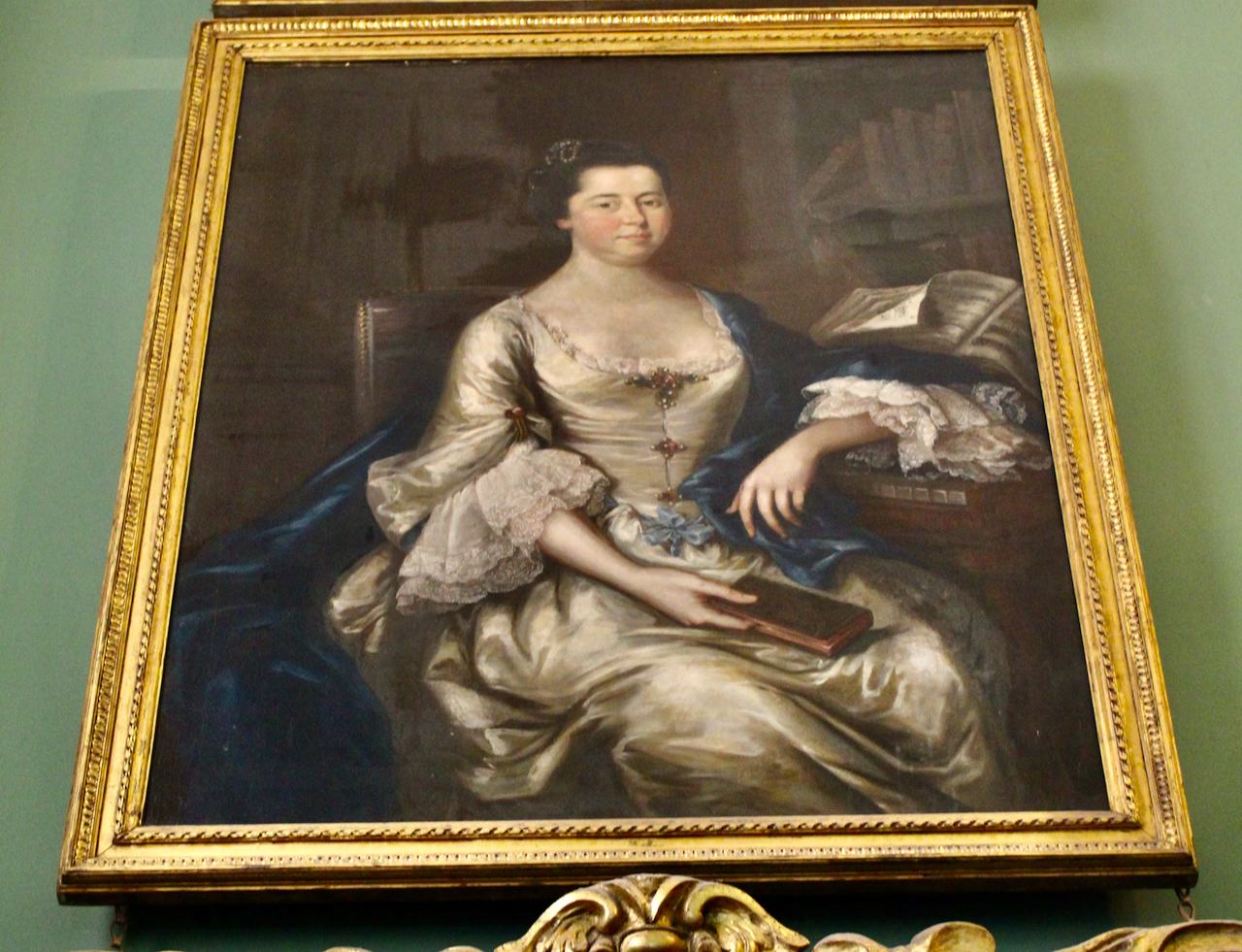
John Wandesford (1725-1784), Earl of Wandesford, father of Anne; below, Susan Frances Elizabeth (Anne) Wandesford (1754-1830), Countess of Ormonde, wife of 17th Earl of Ormonde and mother of 18th Earl, Artist: Hugh Douglas Hamilton (1739-1808); Landscape with Waterfall from the Italian school of 18th century and below, Before the Hunt. To right, Gilbert Clarke (d. 1725), by Sir Godffrey Kneller (1646-1723) and below, possibly Susanna nee Boun, wife of Gilbert Clarke. Photograph © Jennifer Winder-Baggot, www.irishhistorichouses.com

Jack and Anne’s son Walter (1770-1820) became the 18th Earl and 1st Marquess of Ormonde. Knight of the Order of St. Patrick (1798), in 1803 he was created Baron Butler of Lanthony, Co. Monmouth. After voting for the Act of Union in 1800, Walter took his seat in the House of Lords. He was said to haven a profligate spender, moving in the circle of the Regent, Prince George (later George IV).

His Irish estates were worth £22,000 per annum in 1799 and in 1811, Parliament granted him £216,000 as compensation for the resumption by the Crown of the hereditary presage of wines, granted to his ancestor in 1327. He was created Marquess of Ormonde in 1816. In 1805, he married a wealthy heiress, Anna Maria Catherine Price-Clarke (1789-1817).
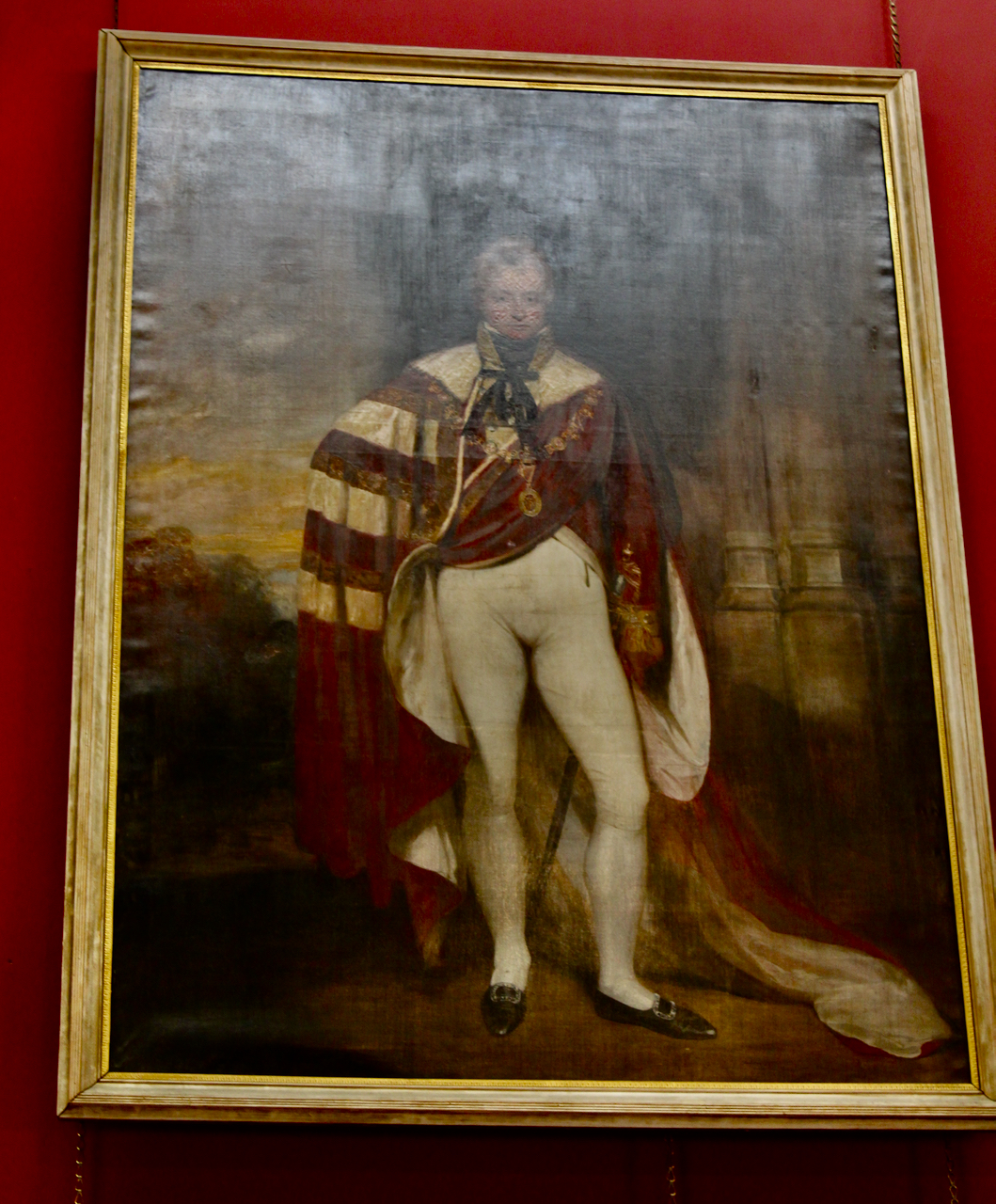
Walter Butler (1770-1820) 1st Marquess of Ormonde (2nd creation), 18th Earl of Ormonde by Sir William Beechey, hanging in the picture gallery of Kilkenny Castle. Son of John Butler and Anne Wandesford.
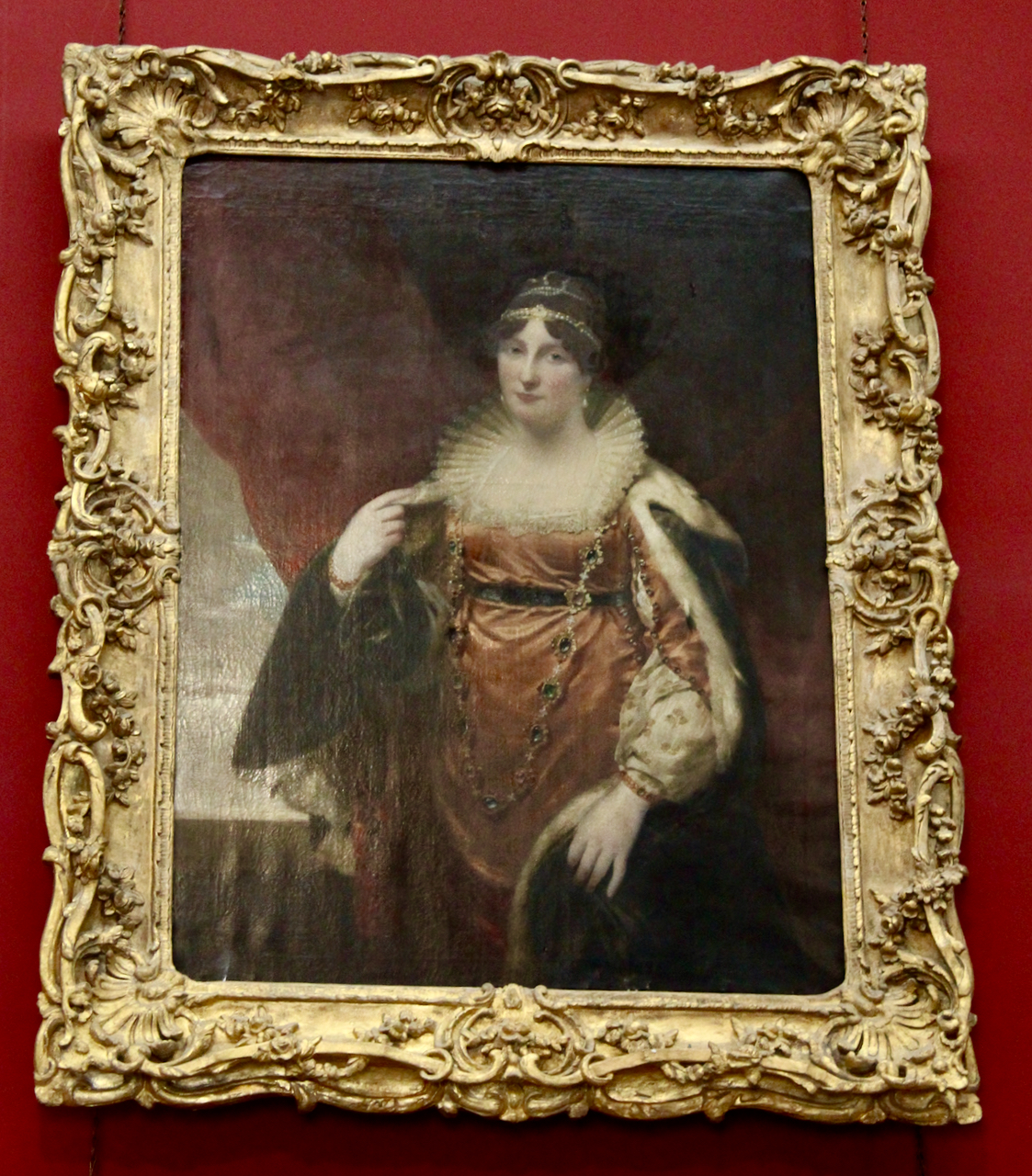
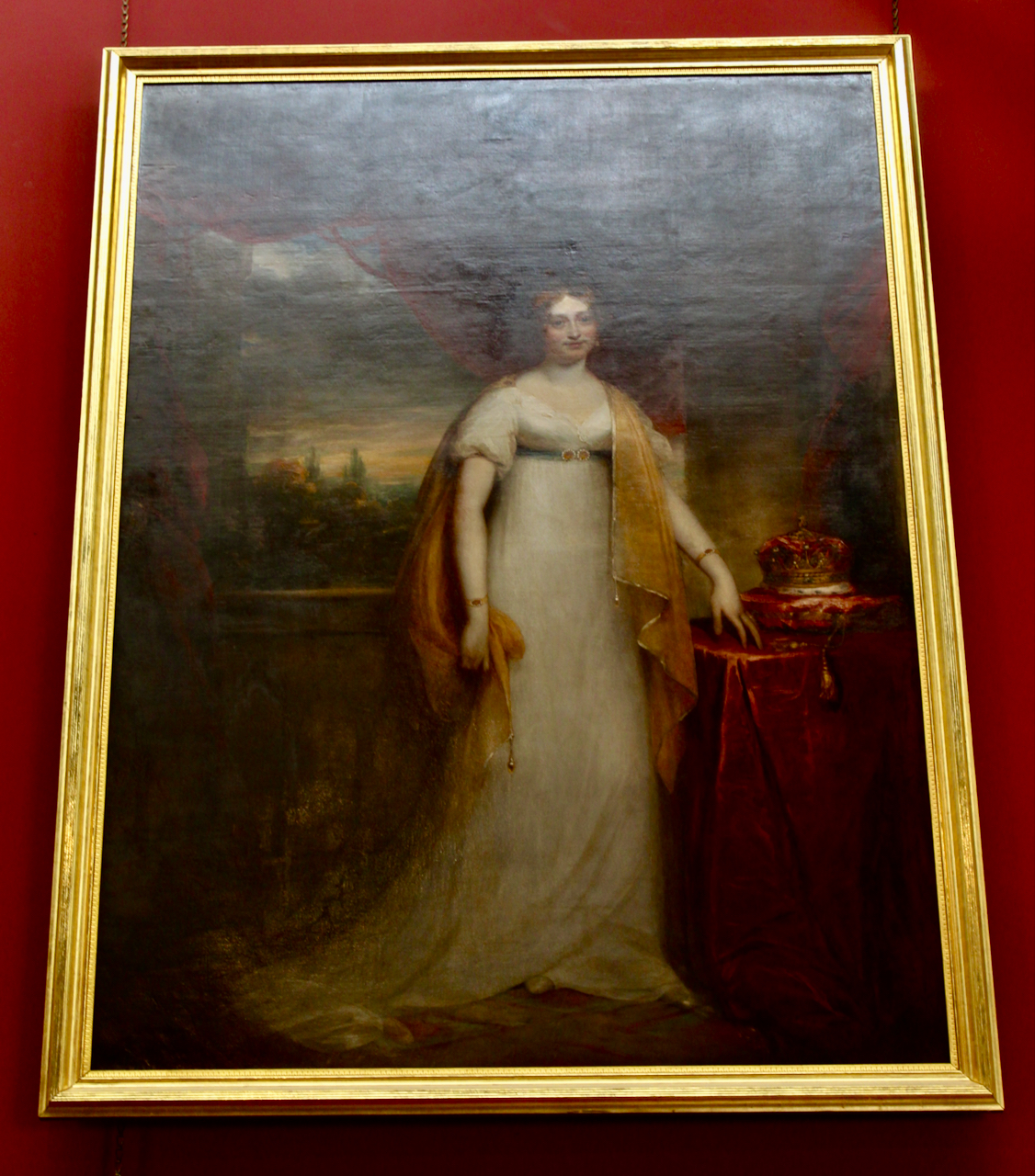
Anna Maria Catherine Price-Clarke (1789-1817) Marchioness of Ormonde by Sir William Beechey (1753-1839), hanging in the picture gallery of Kilkenny Castle. Heiress to her brother Godfrey TR Price-Clarke, she was the only daughter and heir of Job Hart Price-Clarke (formerly Price) of Sutton Hall, Derby, and his wife Sarah, sister and heiress of Godfrey Bagnal Clarke of Sutton Hall. She was married to Walter Butler, 1st Marquess of Ormonde (2nd creation).

When Walter the 18th Earl died, the Marquessate of Ormonde and the Barony of Butler of Lanthony became extinct. He was described by Barrington in his Personal Sketches ‘as engaging a person, as many manly qualities, and to the full as much intellectual promise, as any young man of his country’, but these were ‘either blunted by dissipation or absorbed in the licentious influence of fashionable connection’.
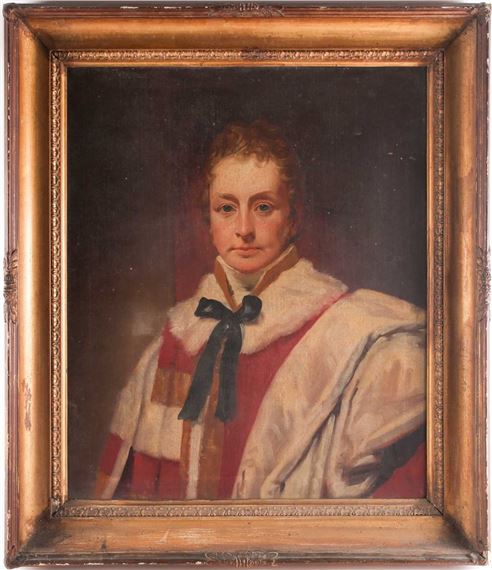
 Walter Butler, 1st Marquis of Ormond (1770-1820) in the manner of William Beechy.

The 18th Earl had no sons so his brother James Wandesford Butler (1774-1838) inherited the title of 19th Earl. He became one of the largest landowners in Ireland with an estate worth more than £20,000 a year. He was recreated 1st Marquess of Ormonde (of the 3rd creation) in 1825 and officiated as Chief Butler of Ireland at the Coronation of George IV.

Brother and heir of Walter Butler, 1st  Marquess (2nd  creation), after the Act of Union in 1800, he took his seat in London as MP for Kilkenny (1801.20). In 1807 he married Grace Louisa Staples. They had ten children.
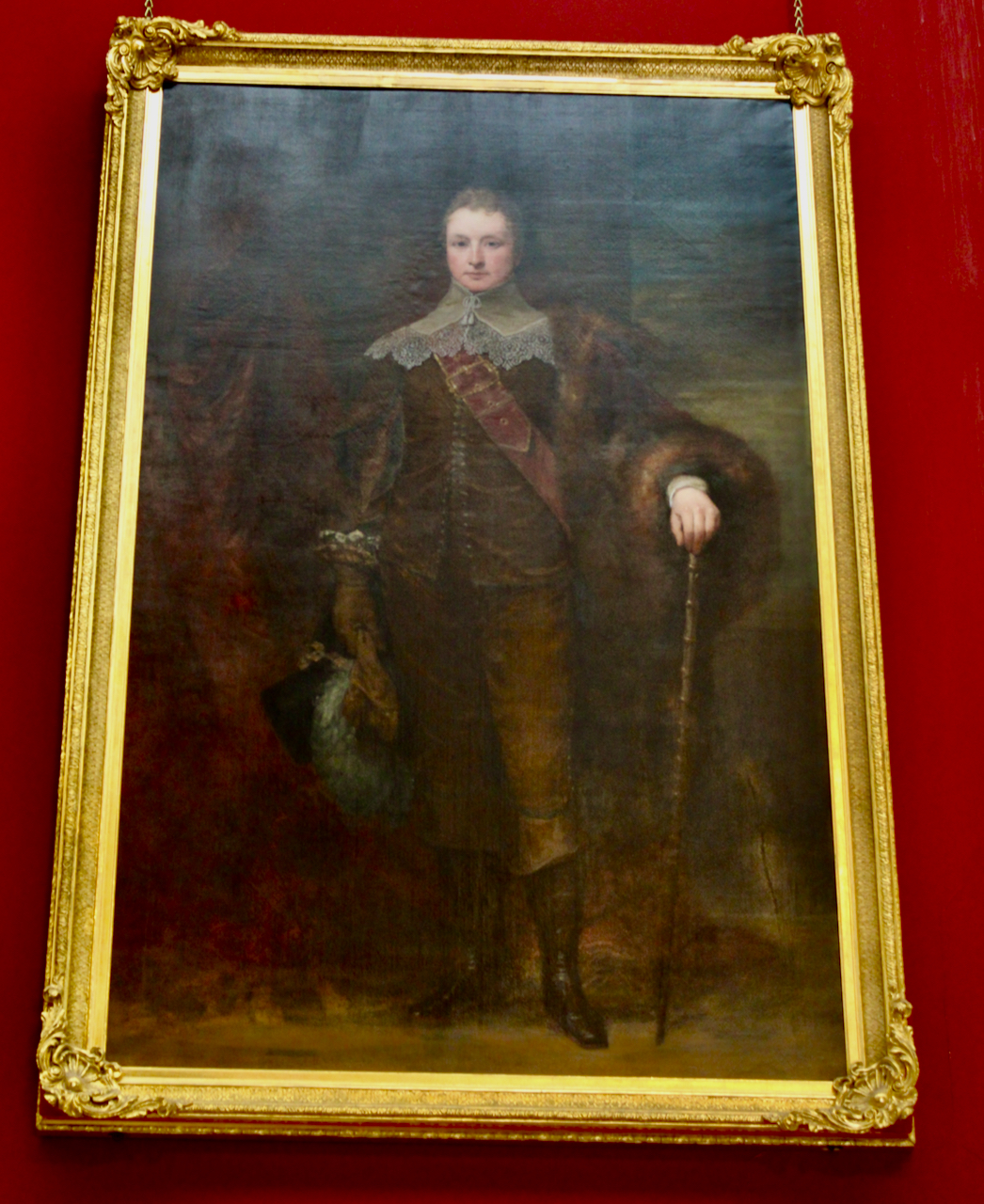
James Butler (1774-1838) 1st Marquess of Ormonde (3rd creation) and 19th Earl of Ormonde, by John Saunders (1750-1825), hanging in the picture gallery of Kilkenny Castle.
Grace Louisa Staples (1779-1860) Marchioness of Ormonde by John Saunders (1750-1825) hanging in the picture gallery of Kilkenny Castle. Daughter of the Rt Hon John Stapes of Lissan, near Dungannon and Henrietta, fourth daughter of Richard, 3rd Viscount Molesworth, she married James Butler, 19th Earl and 1st Marquess of Ormonde (3rd creation) in 1807.

James succeeded his brother in 1820 and because the English honours had become extinct at Walter’s death, it was not until 1821 that he was created Baron Ormonde of Lanthony, Knight of St. Patrick, in the same year. Four years later he was created Marquess of Ormonde. 

He was Vice Admiral of Leinster, Lord Lieutenant of Co. Kilkenny (1831-38) and Militia ADC to King William IV and to Queen Victoria from 1837 until his death. 
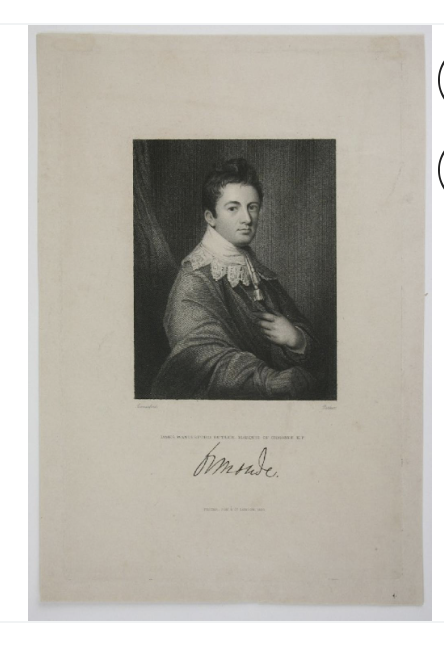
Marquess James Butler, Ormonde (1774 – 1838 ), 1830, After John Comerford (around 1762 Kilkenny – 1832 Dublin).

It was during James Wandesford Butler the 19th Earl and 1st Marquess’ time that major reconstruction work was carried out at Kilkenny Castle.

After some refurbishment had been carried out at Butler House, the family moved to live there for some years during the reconstruction work of the late 1830s and the 1840s.

Mark Bence-Jones describes the renovations:

Ca. 1826, the Kilkenny architect, William Robertson, when walking in the castle courtyard with the Lady Ormonde of the day, noticed that a main wall was out of true and consequently unsafe. One suspects it may have been wishful thinking on his part, for it landed him the commission to rebuild the castle, which he did so thoroughly that virtually nothing remains from before his time except for the three old towers, the outer walls and – fortunately – the 2nd Duke’s gateway. Apart from the latter, the exterior of the castle became uncompromisingly C19 feudal; all the 1st Duke’s charming features being swept away. Robertson also replaced one of two missing sides of the courtyard with a new wing containing an immense picture gallery; the original gallery, on the top floor of the principal range, having been divided into bedrooms. Robertson left the interior of the castle extremely dull, with plain or monotonously ribbed ceilings and unvarying Louis Quinze style chimneypieces.

William Robertson also designed a Section 482 property which I have yet to visit, Lismacue in County Tipperary.
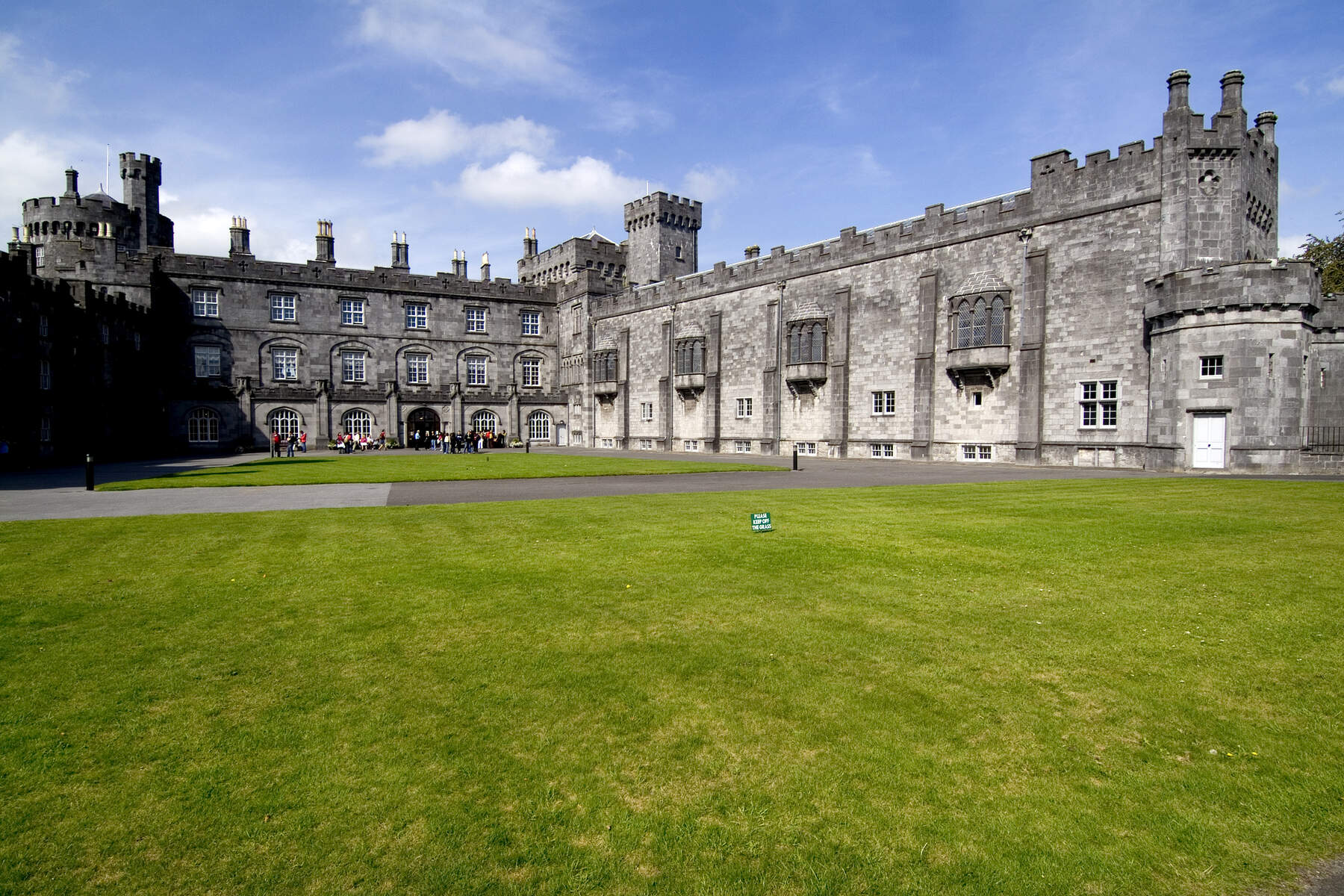
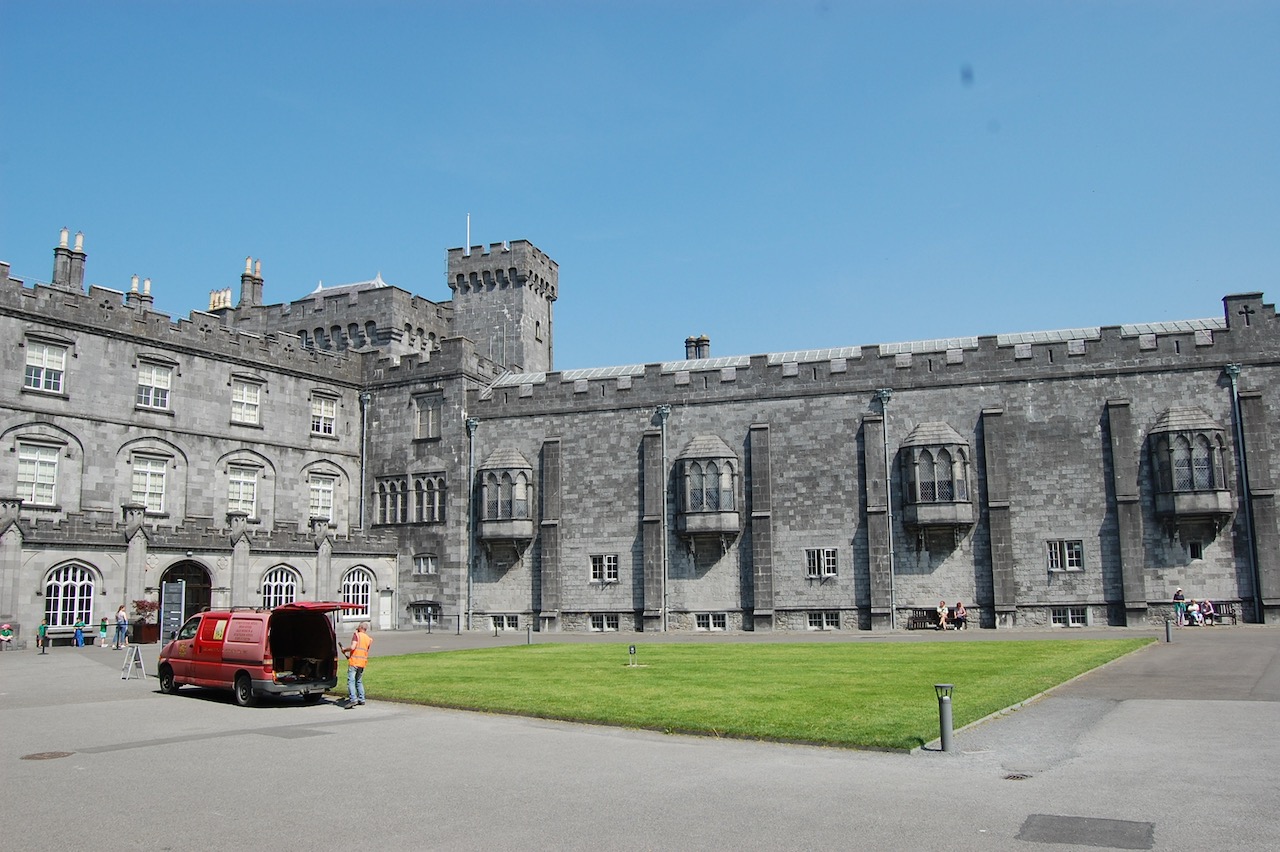
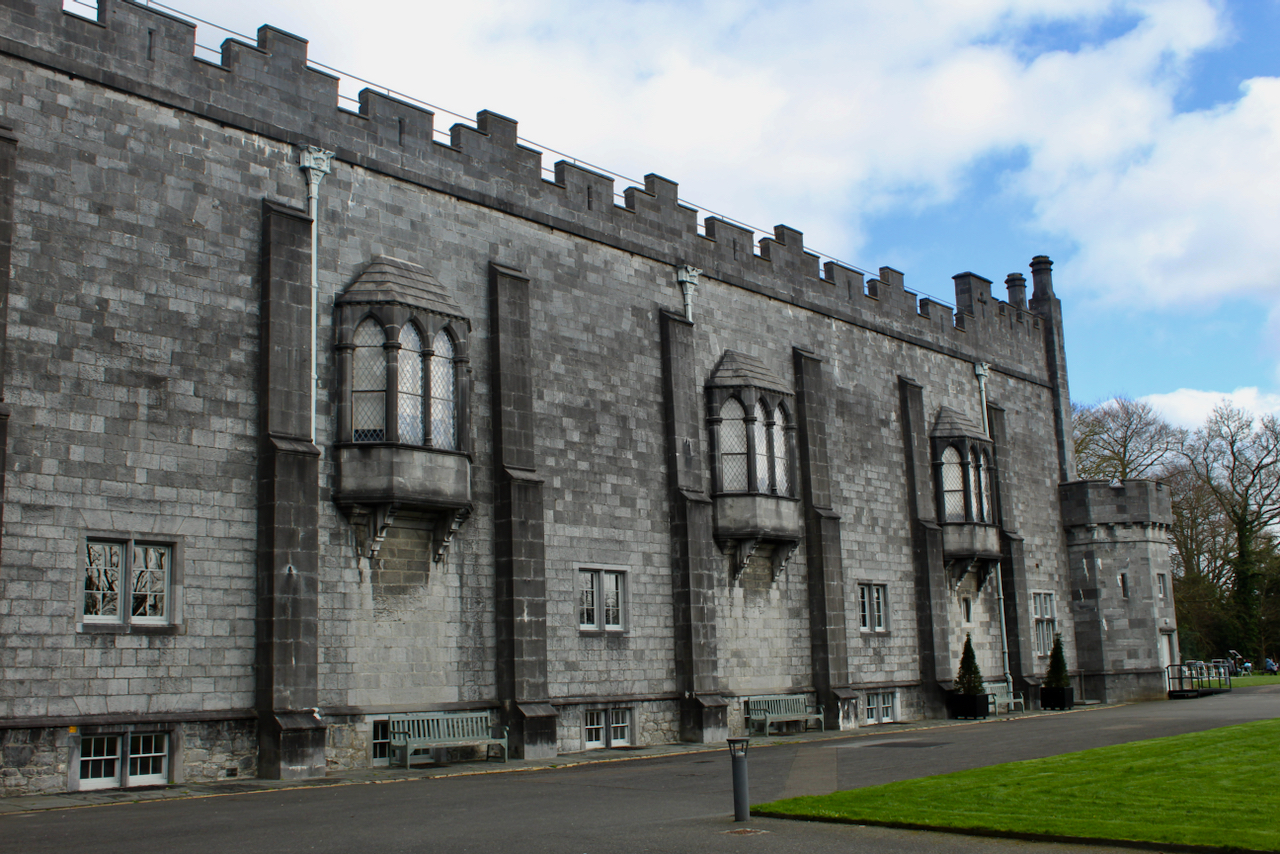
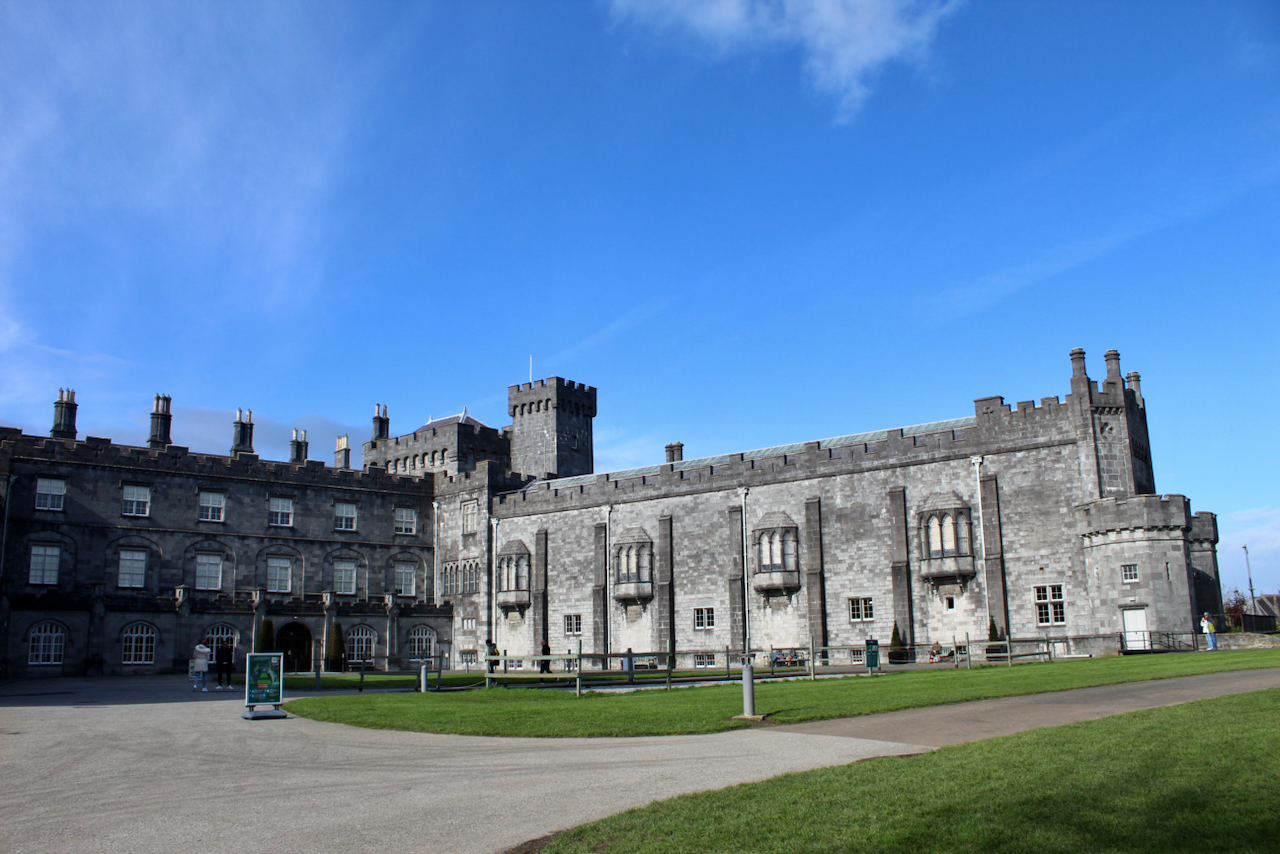
Kilkenny Castle, photograph by Chris Hill 2014 for Failte Ireland, Ireland’s Content Pool. [see 1] The National inventory describes the newer wing: Renovated, 1858-62, with eight-bay two-storey range to north-east reconstructed having canted oriel windows to first floor, and pair of single-bay single-stage corner turrets on octagonal plans Photograph © Jennifer Winder-Baggot, www.irishhistorichouses.com
Kilkenny Castle, photograph by me in May 2018. Photograph © Jennifer Winder-Baggot, www.irishhistorichouses.com
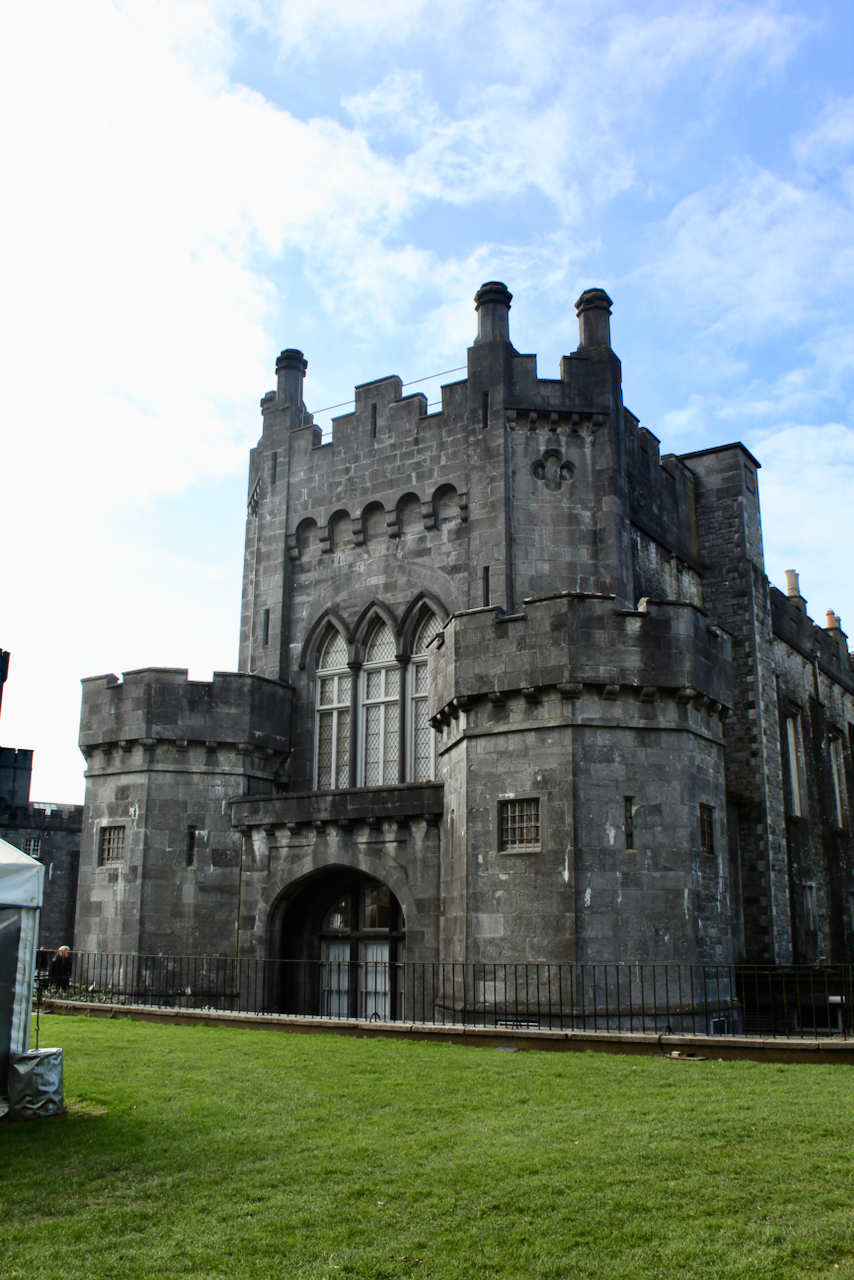
Kilkenny Castle picture gallery wing. Photograph © Jennifer Winder-Baggot, www.irishhistorichouses.com
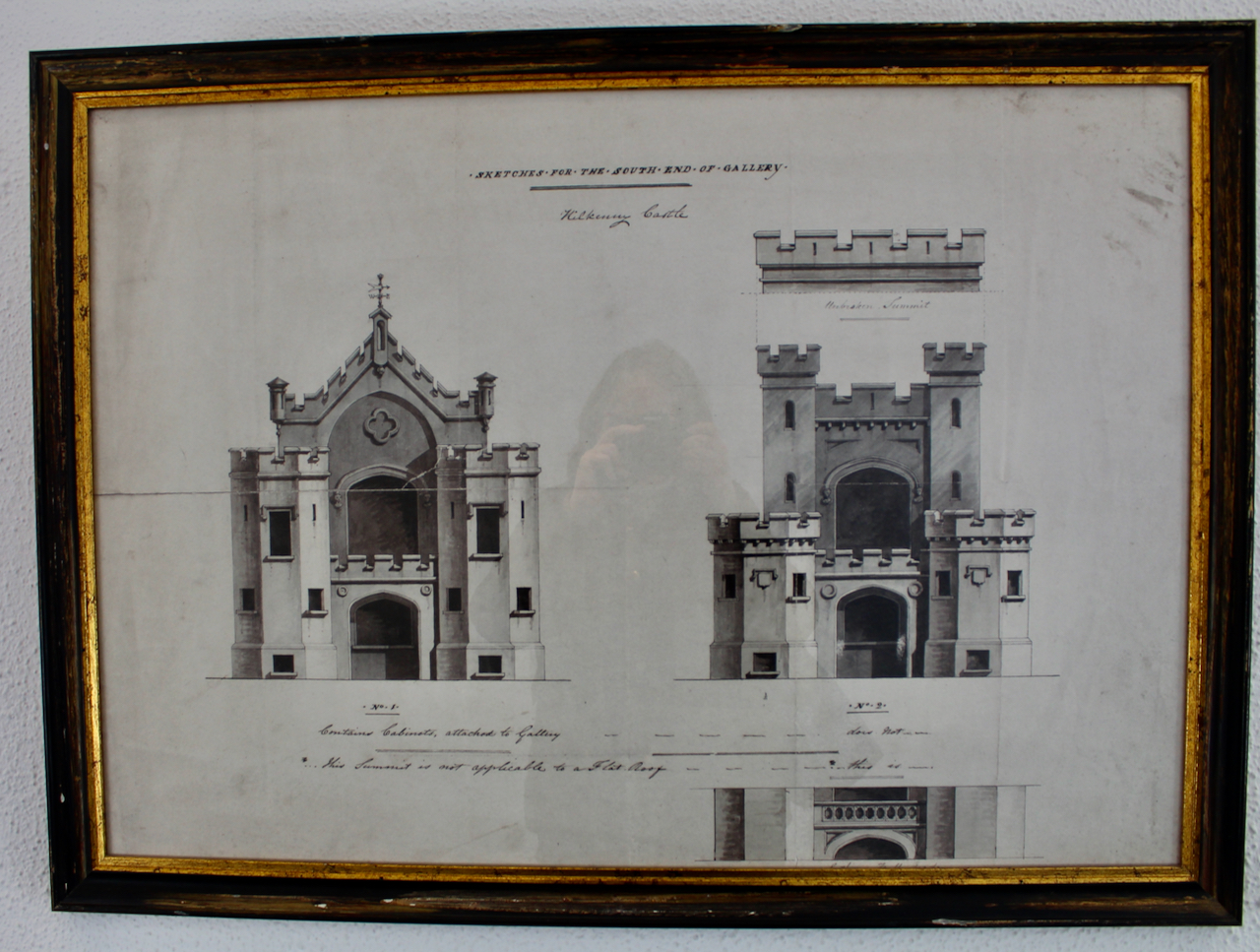
Sketches of the south end of the picture gallery, Kilkenny Castle.
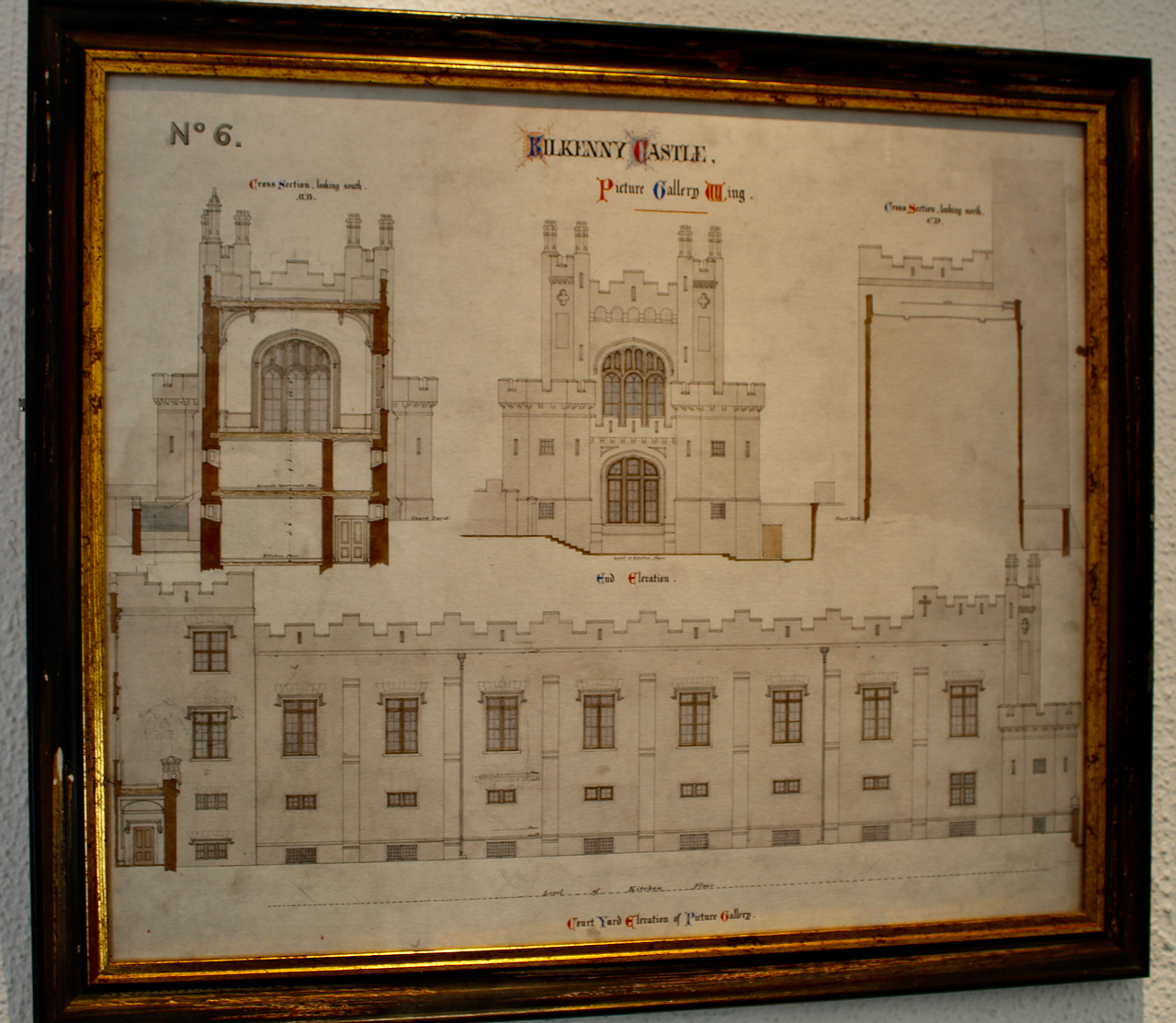
Sketches of the picture gallery wing, Kilkenny Castle.
End of the picture gallery wing Kilkenny Castle . Photograph © Jennifer Winder-Baggot, www.irishhistorichouses.com
Kilkenny Castle picture gallery wing. Photograph © Jennifer Winder-Baggot, www.irishhistorichouses.com

On the ground floor of the castle, along with the Entrance Hall are the Chinese Withdrawing Room and the State Dining Room. In a corridor there is a plan of the different floors – I don’t know when it was made, but maybe around 1826 at the time of Willliam Robertsons’s renovation.
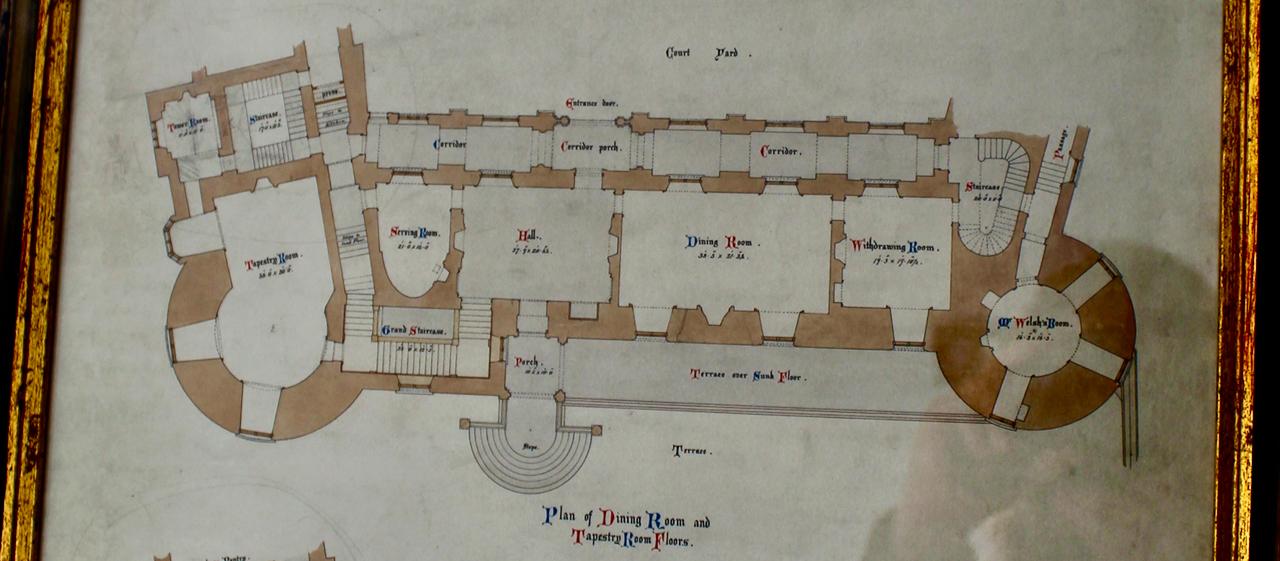
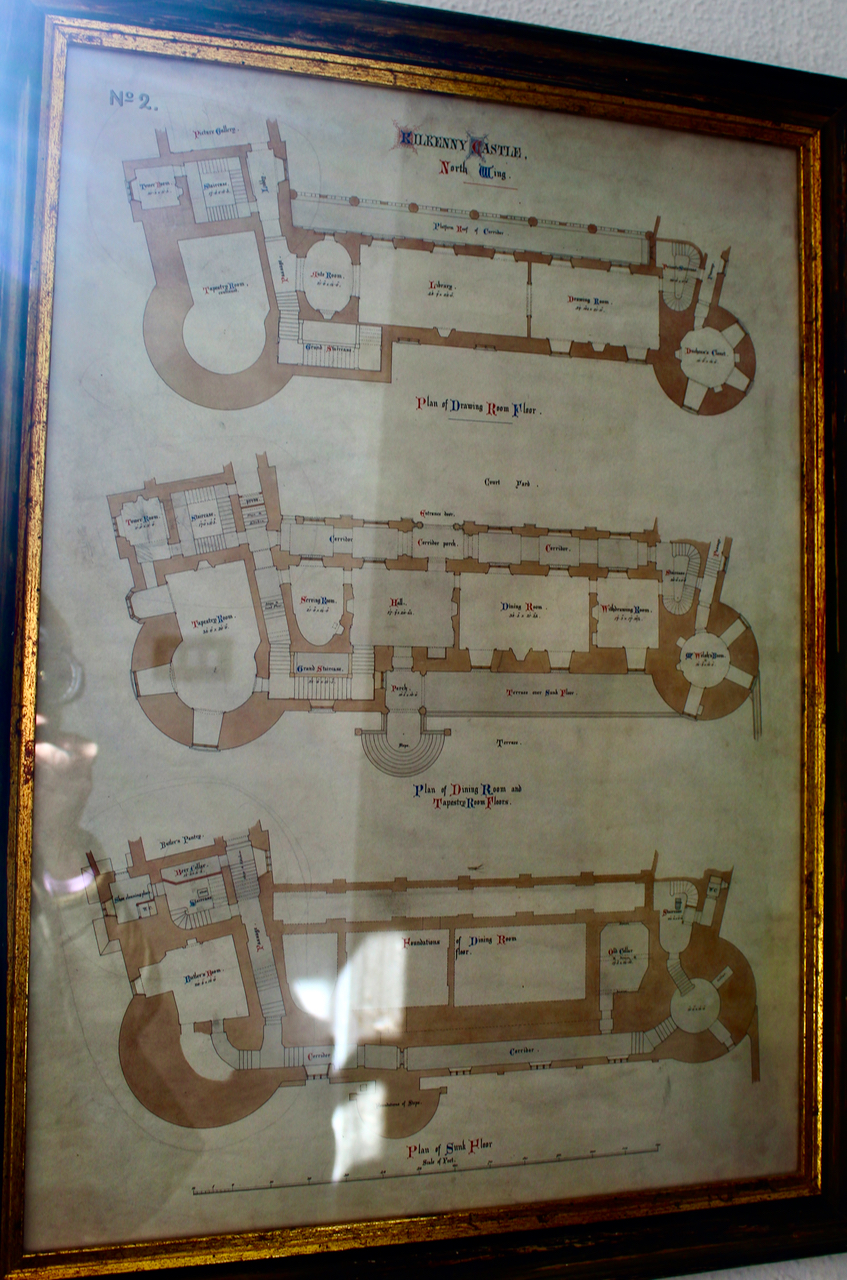
Kilkenny Castle: this shows the ground floor with the hall, dining room and withdrawing room, and the Tapestry room in a round tower.
Kilkenny Castle.

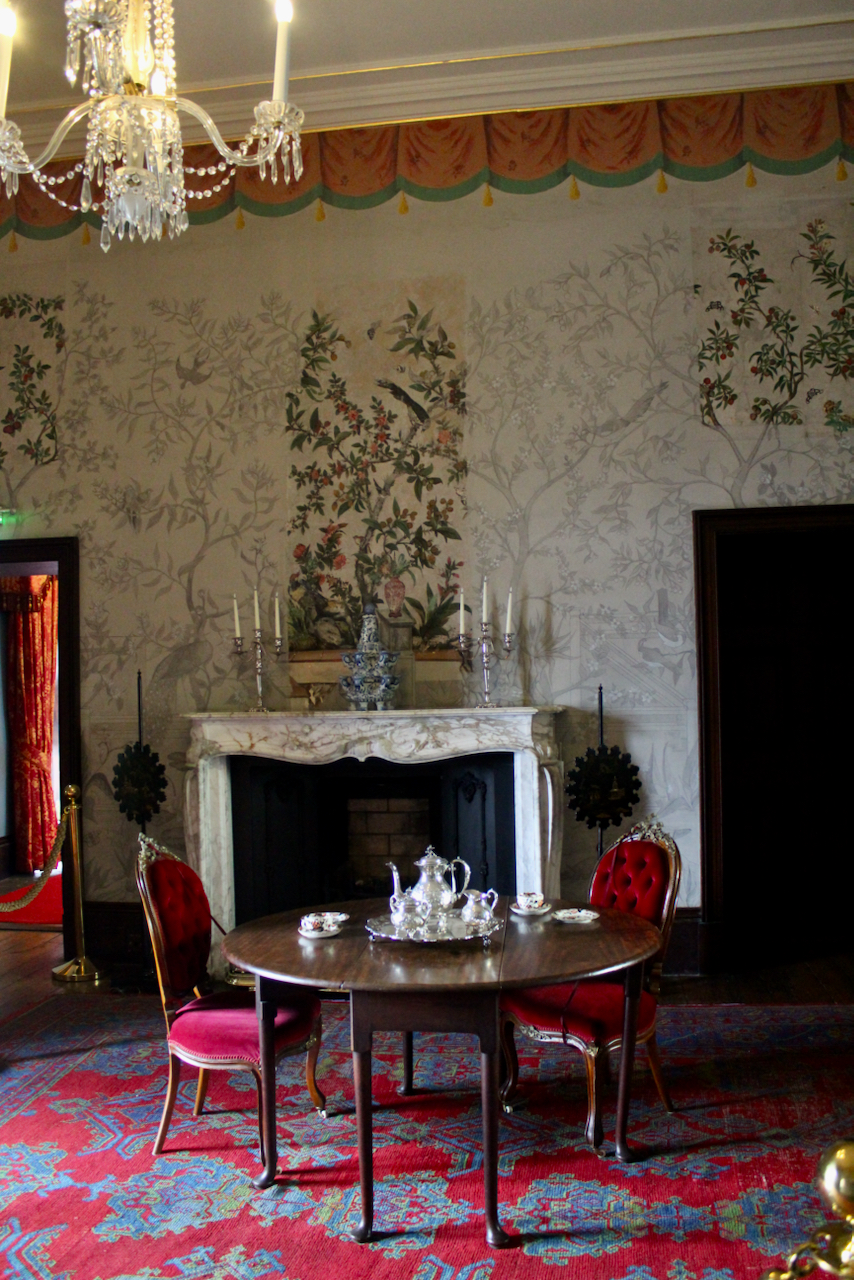
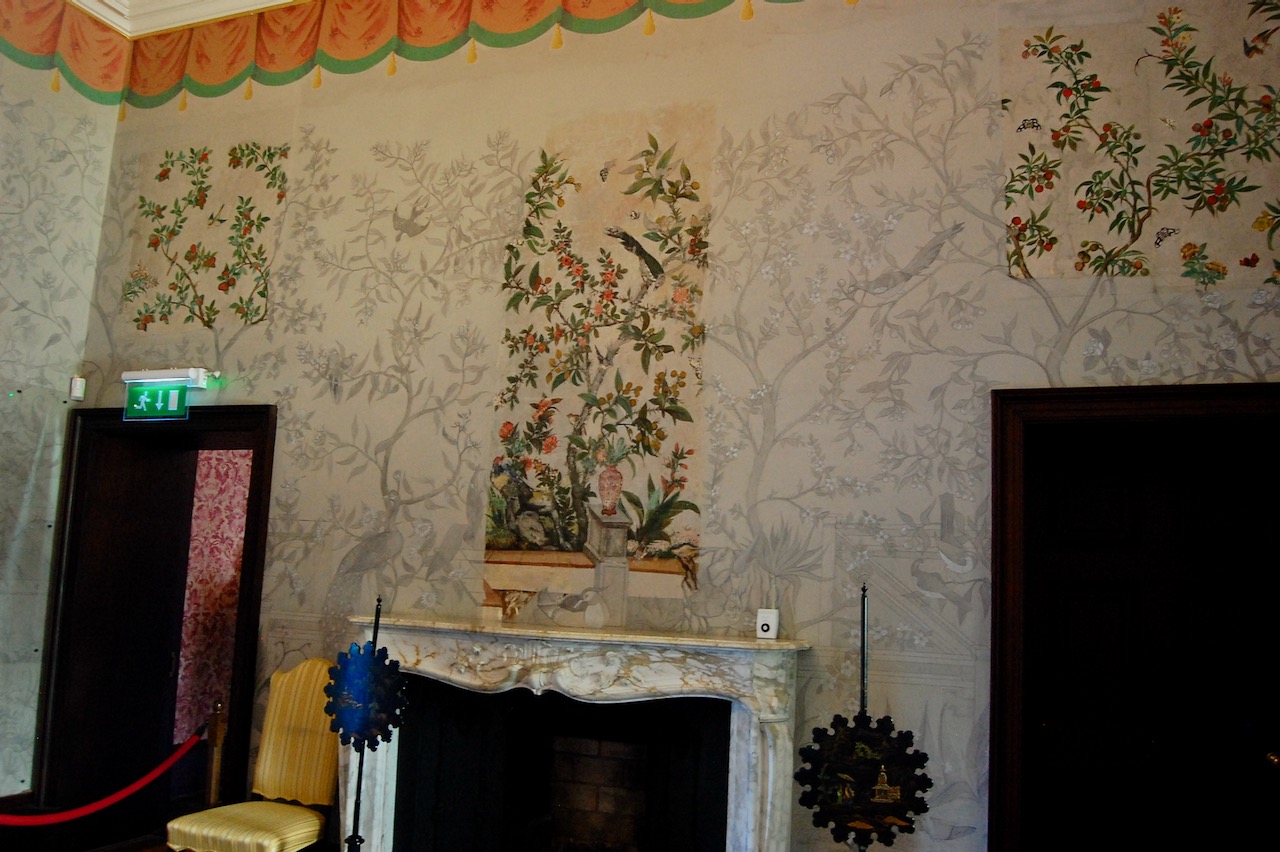
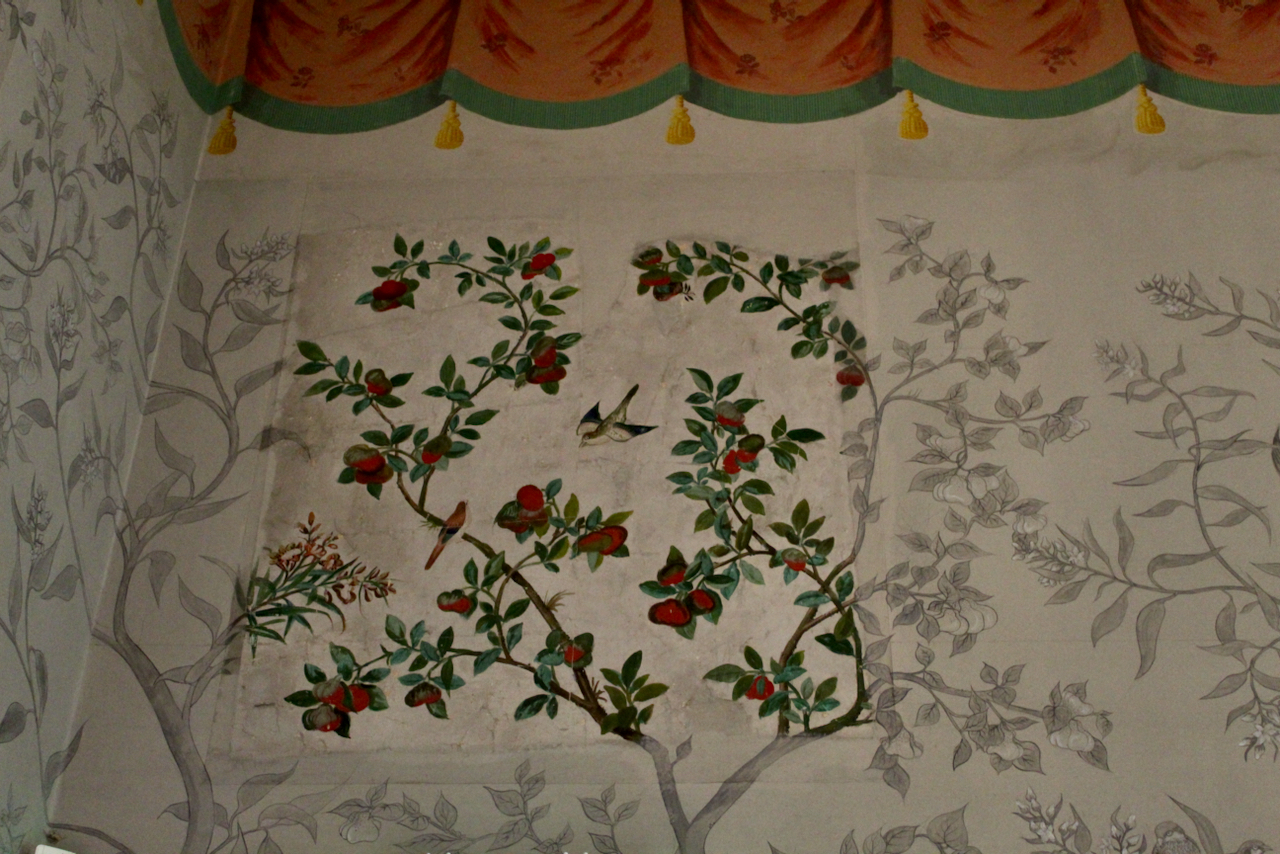
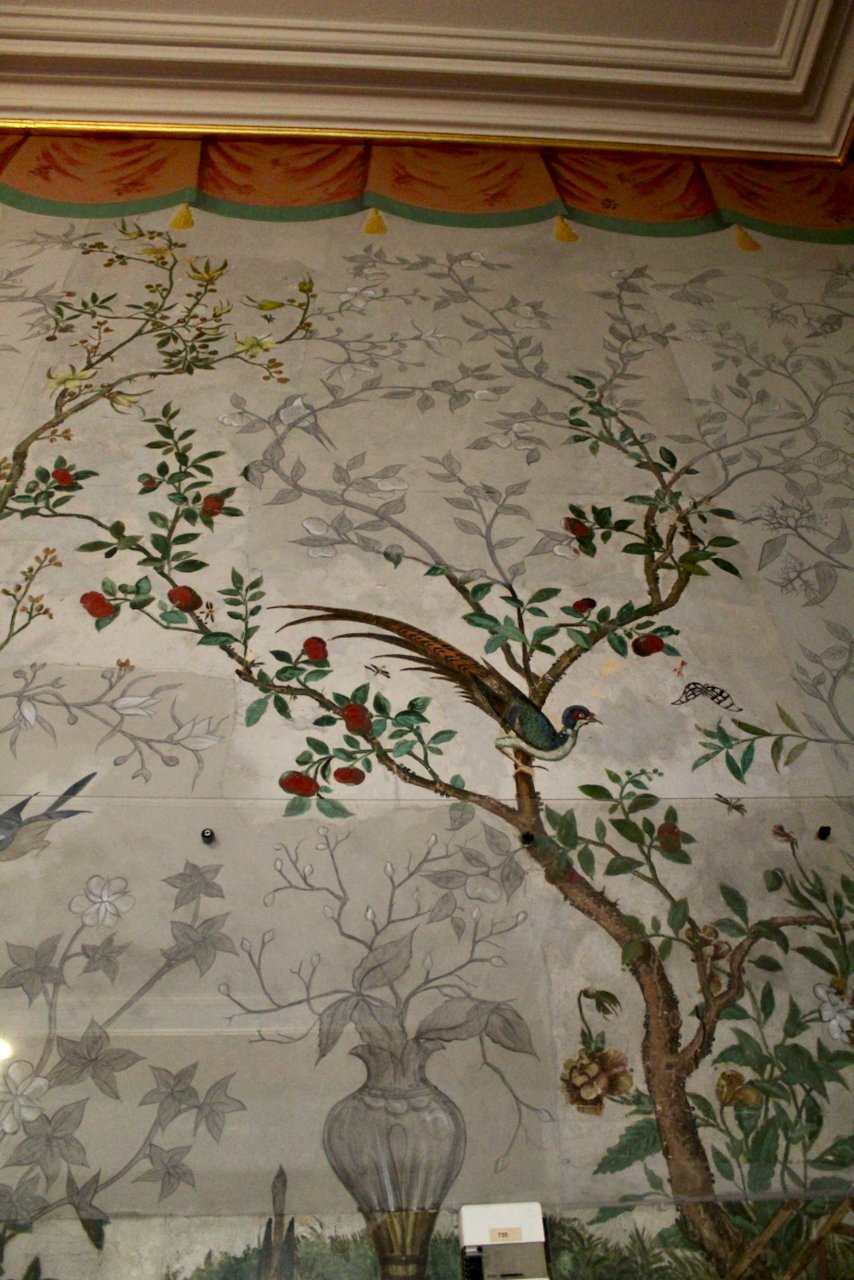
The walls of the Chinese Withdrawing Room has remnants of hand painted Chinese wallpaper original to the room, with the monochrome grey and white infill carried out by the studio of David Skinner. This delicate paper was probably ordered as part of the redecorations done to the castle by Walter Butler (1770-1820) 1st Marquess of Ormonde (2nd creation), 18th Earl of Ormonde. Walter had three rooms decorated with Chinese Paper in 1801 of which only fragments of one survive. Walter belonged to the circle of the Prince Regent and the paper in Kilkenny is similar to that chosen by the future king for the saloon at the Royal Pavilion, Brighton, and to another set which the regent presented to the owners of Temple Newsam, Leeds.

During the 19th century ladies withdrew here from the dining room leaving the men to enjoy their port and cigars after dinner, as was the social convention.
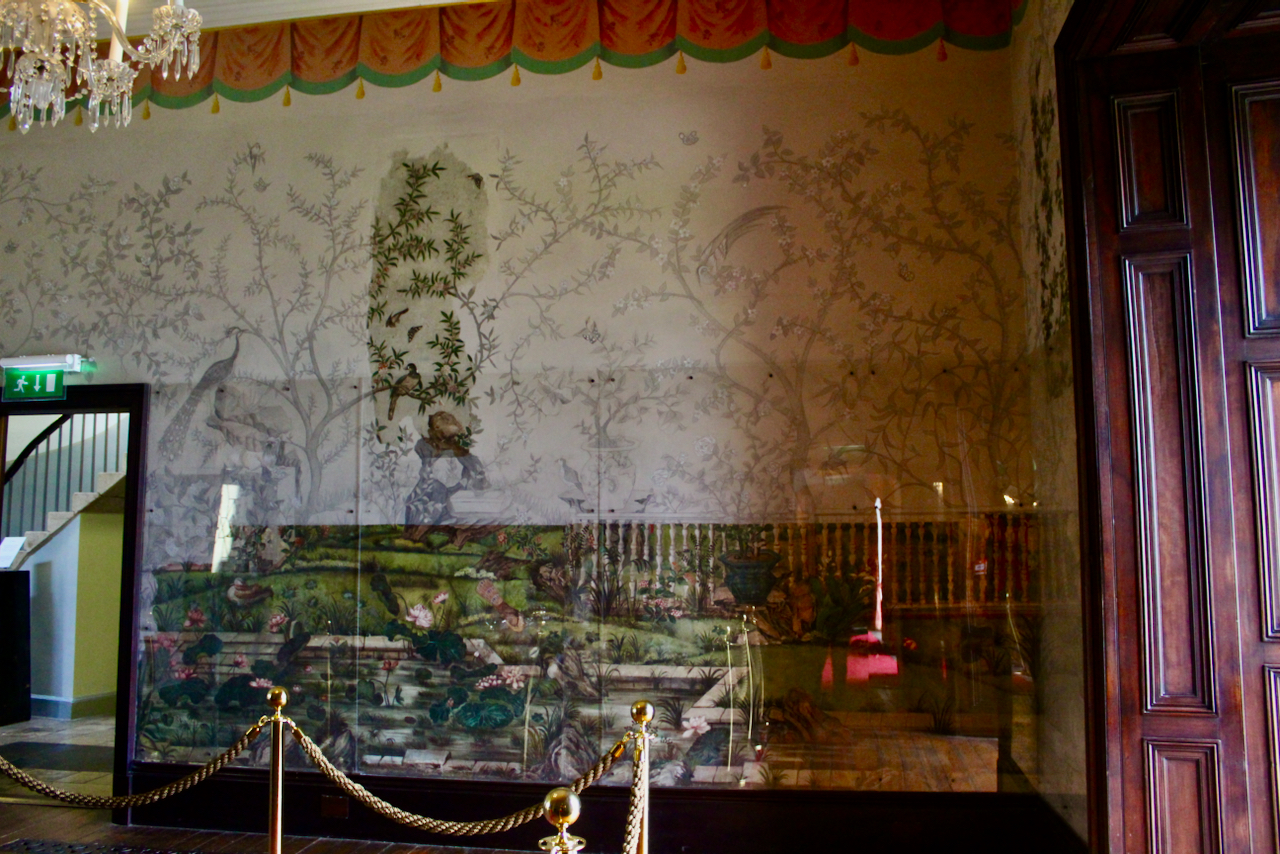
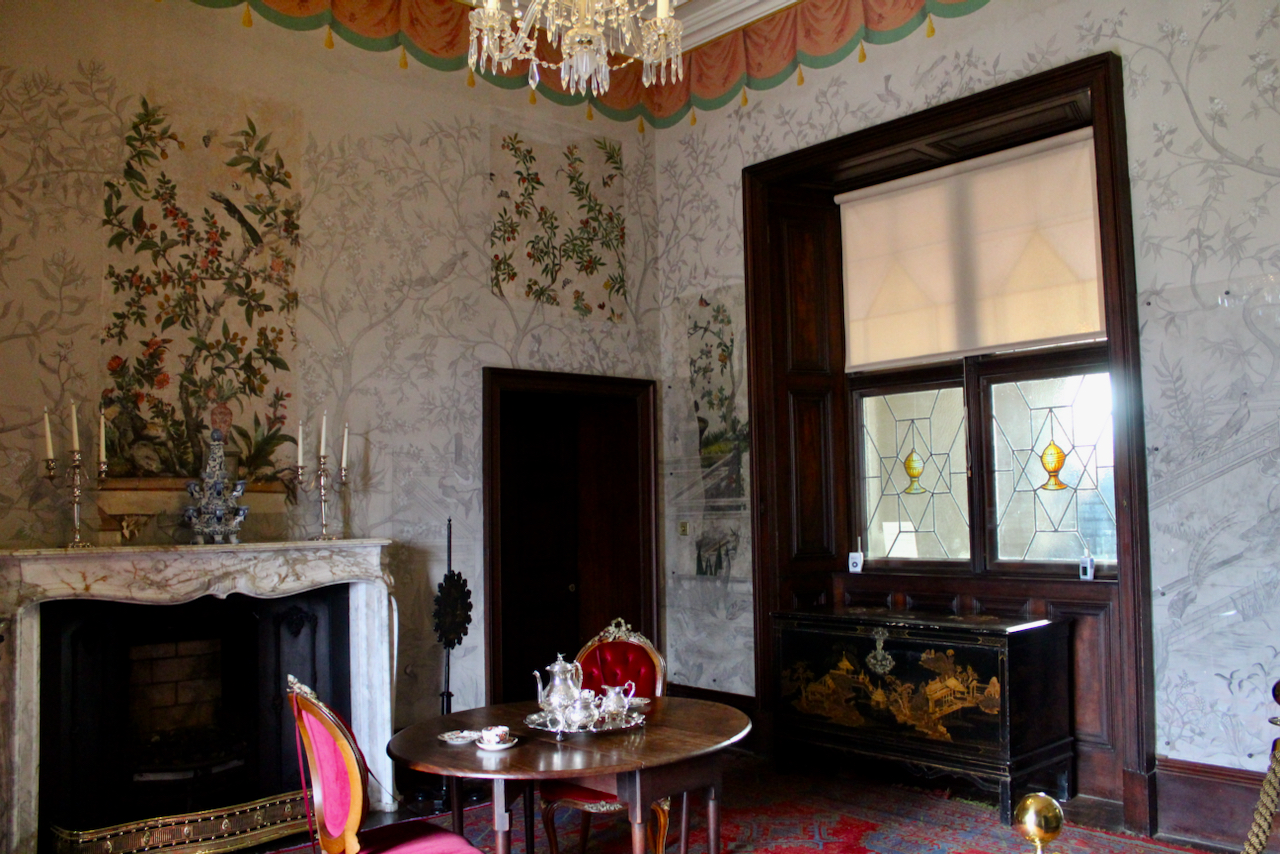
The Chinese Withdrawing Room, Kilkenny Castle. Photograph © Jennifer Winder-Baggot, www.irishhistorichouses.com
The Chinese Withdrawing Room, Kilkenny Castle. Walter Butler belonged to the circle of the Prince Regent and the paper in Kilkenny is similar to that chosen by the future king for the saloon at the Royal Pavilion, Brighton, and to another set which the regent presented to the owners of Temple Newsam, Leeds. Photograph © Jennifer Winder-Baggot, www.irishhistorichouses.com
The Chinese Withdrawing Room, Kilkenny Castle. Recreated to its original 18th century proportions. The room has a late 19th century Ushak rug. Ushak Carpets are handwoven in the city of Uşak in Turkey. Uşak was a major centre of rug production from the early days of the Ottoman Empire. There was a renewed appreciation for Persian rugs in the 19th century and the Ushak rugs became highly fashionable. Ushak rugs are generally woven in a method known as the Ghiordes knot or the Turkish knot: where coloured weft yarn passes over the two warp yarns and is then pulled through between them and then cut to form the pile. Photograph © Jennifer Winder-Baggot, www.irishhistorichouses.com
The Chinese Withdrawing Room, Kilkenny Castle. Recreated to its original 18th century proportions. Photograph © Jennifer Winder-Baggot, www.irishhistorichouses.com
The Chinese Withdrawing Room. On the walls are remnants of hand painted Chinese wallpaper original to the room with monochrome infill carried out by the studio of David Skinner. This delicate paper was probably ordered as part of the redecorations done to the castle by the 18th Earl, Walter Butler. Photograph © Jennifer Winder-Baggot, www.irishhistorichouses.com
The Chinese Withdrawing Room, Kilkenny Castle. Walter Butler had three rooms decorated with Chinese Paper in 1801 of which only fragments of one survive. Photograph © Jennifer Winder-Baggot, www.irishhistorichouses.com
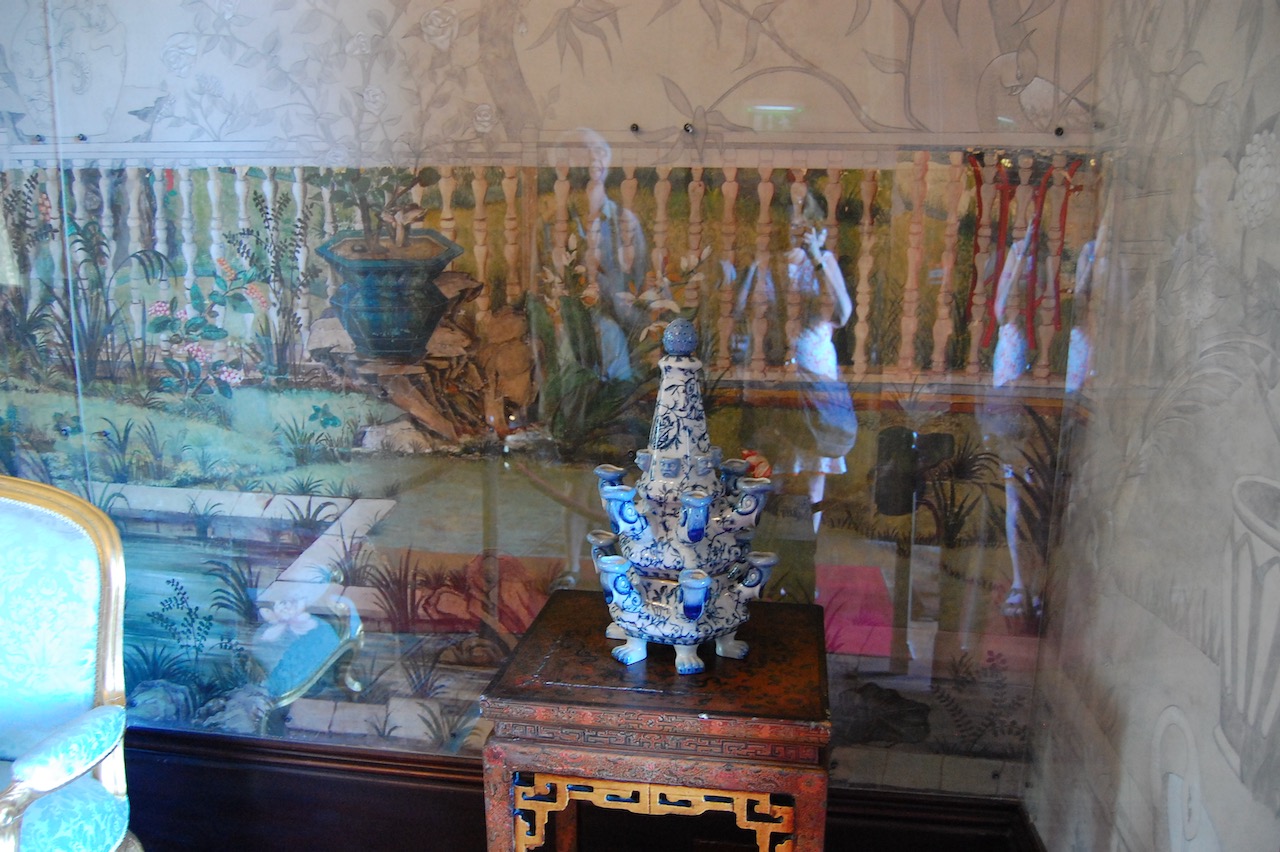
The Chinese Withdrawing Room, Kilkenny Castle. The Crowded design includes water fowl, fruit and flower laden trees, ornate balustrades and fences supporting urns of various sizes and forms. More vases hang from the trees, where pheasants perch and smaller birds fly in pursuit of butterflies and insects. Photograph © Jennifer Winder-Baggot, www.irishhistorichouses.com
The Chinese Withdrawing Room. A tulipiére is an ornate vessel in which to grow tulips. They are typically constructed to accommodate one bulb per spout with a larger common water reservoir base. It is usually made of hand crafted pottery, classically delftware. This tulipiére was hand-made in Delft in 2009 as a one off. Photograph © Jennifer Winder-Baggot, www.irishhistorichouses.com

The ground floor also contains the State Dining Room. The website tells us that this was the formal dining room in the 1860’s. Historic evidence shows that this room was hung in the late 19th century with a red flock paper when it was a billiard room. The strong blue on the walls echoes the colour in the original 19th century-stained glass windows and provides a backdrop for the Langrishe family portraits, which originated in Knocktopher Abbey, Kilkenny, and are now in the care of the State.

Knocktopher Abbey in County Kilkenny, a house incorporating the remains of the first Carmelite friary in Ireland, rebuilt for Lieutenant-Colonel Sir James Langrishe JP DL (1832-1910) after a fire. It was rebuilt around 1866 in High Victorian Gothic to the design of John McCurdy. The paintings on display are part of a generous bequest to Kilkenny Castle from Lady Grania Langrishe in July of 2012.

Most large estate houses would have had both a formal and informal Dining Room. The collection of silverware contains some pieces from the original 18th century collection, purchased by Walter Butler, the 18th Earl, after his marriage to the wealthy heiress Anna Maria Price Clarke.
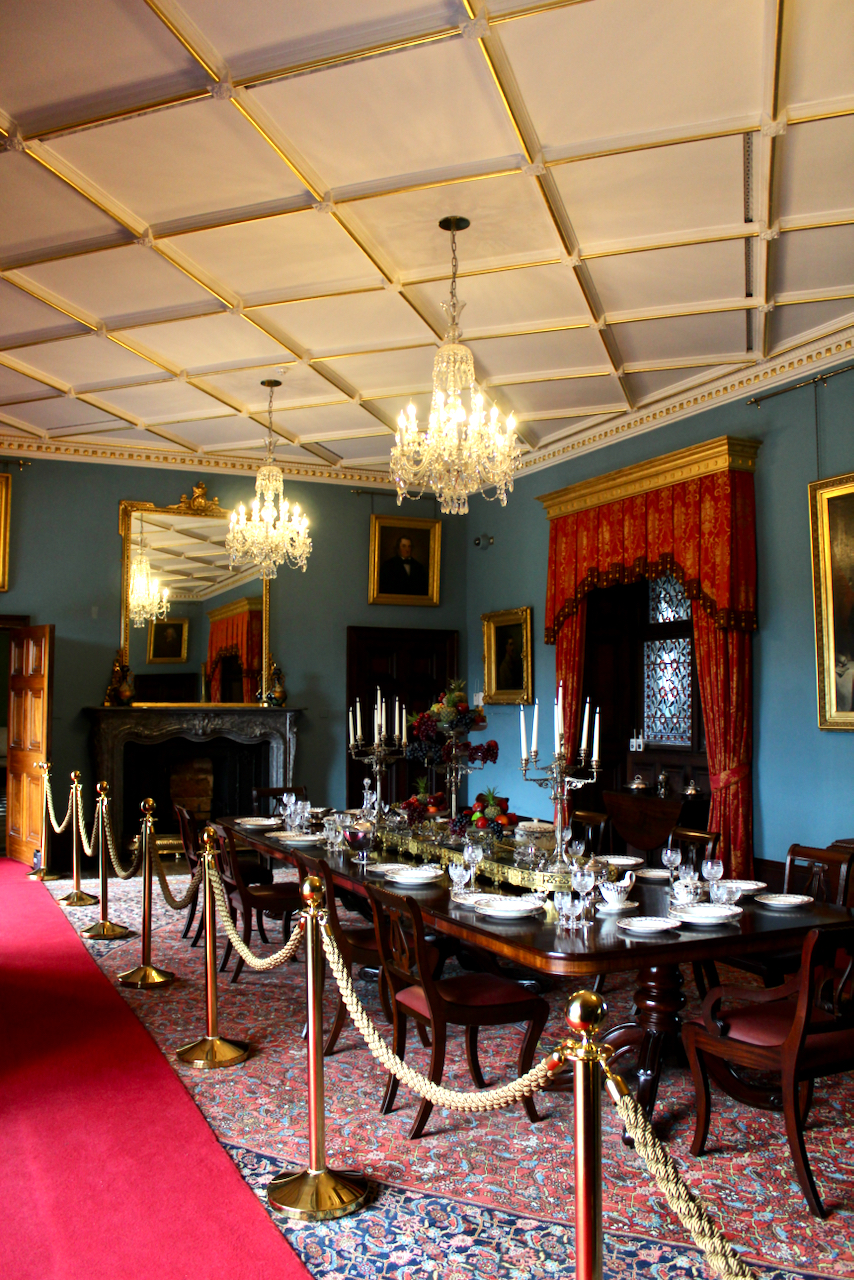
The State Dining Room, Kilkenny Castle. This was the formal dining room in the 1860’s. Historic evidence shows that this room was hung in the late 19th century with a red flock paper when it was a billiard room. The strong blue on the walls echoes the colour in the original 19th century-stained glass windows and provides a backdrop for the Langrishe family portraits, which originated in Knocktopher Abbey, Kilkenny, and are now in the care of the State. Photograph © Jennifer Winder-Baggot, www.irishhistorichouses.com

John Langrishe  (1660-1735), son of Hercules Langrishe (the first member of the family who settled in Ireland), became proprietor of the borough of Knocktopher, County Kilkenny. 
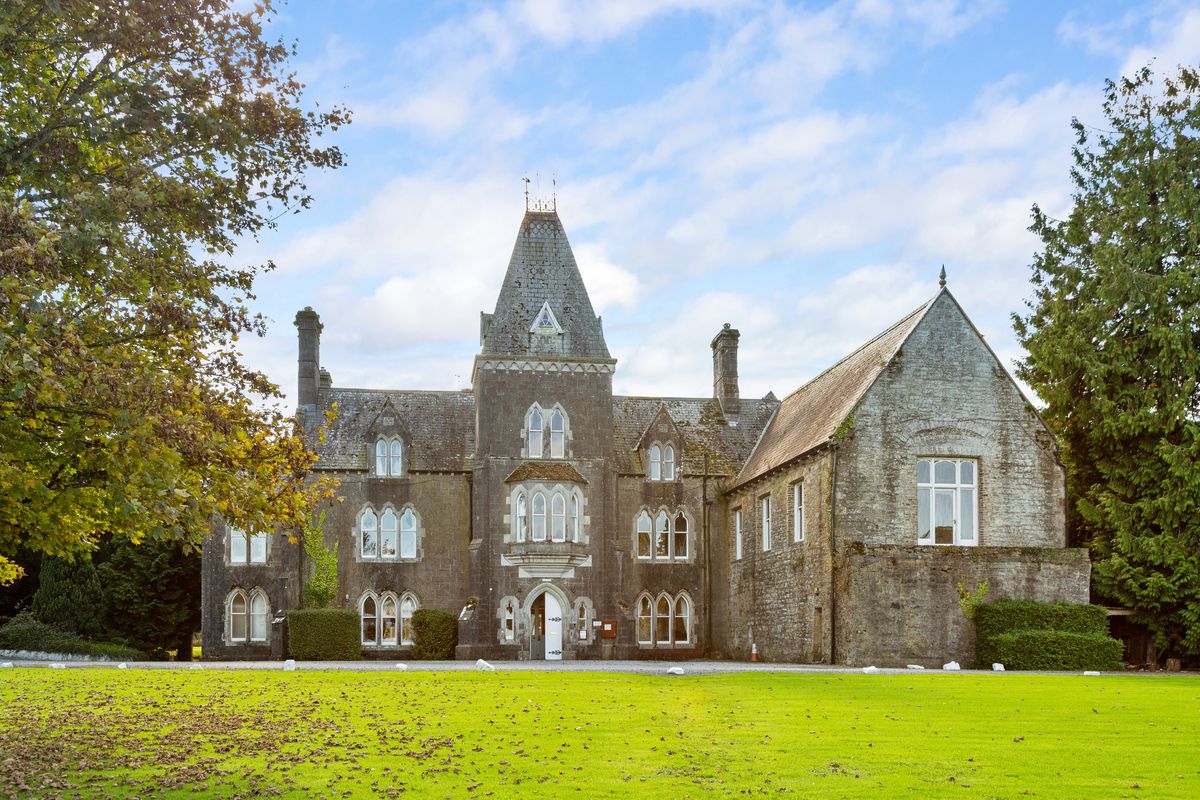
Knocktopher Abbey, Knocktopher, Co. Kilkenny, R95TD82 for sale courtesy DNG Country Homes & Estates, November 2024.
The State Dining Room, Kilkenny Castle. Photograph © Jennifer Winder-Baggot, www.irishhistorichouses.com
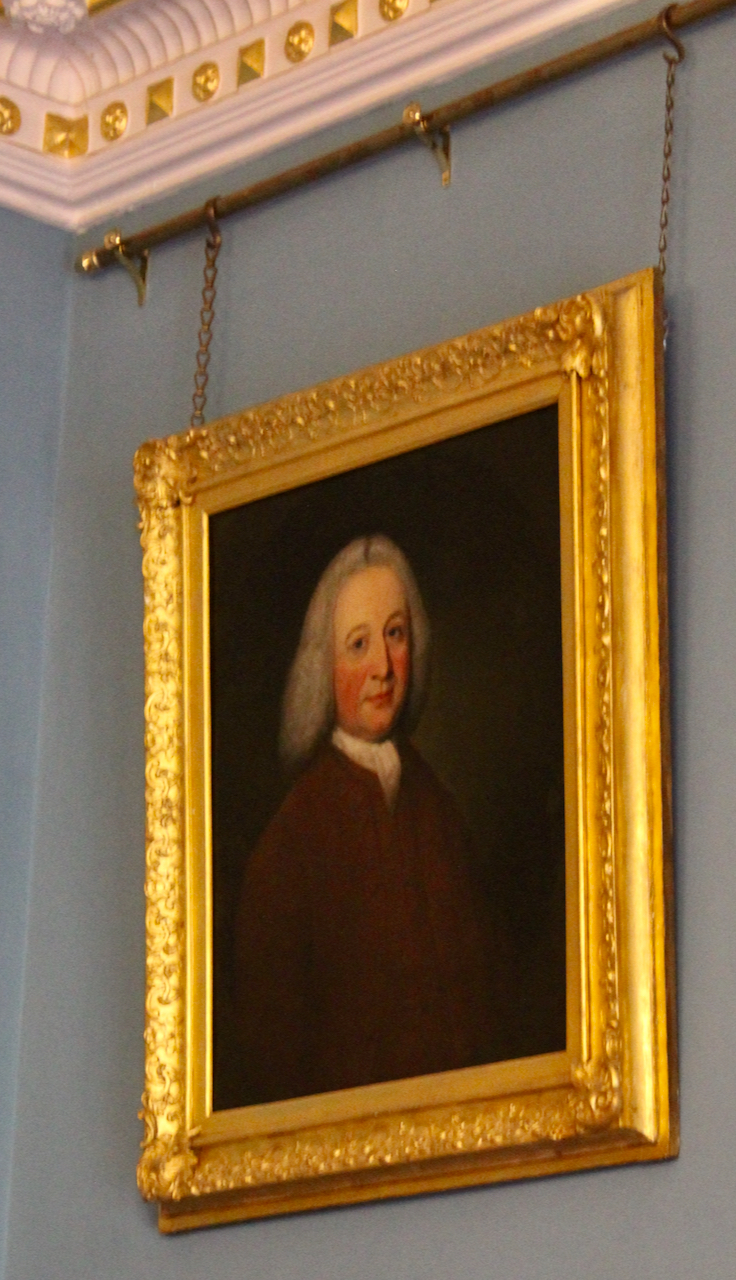
Portrait of an unknown gentleman perhaps John Langrishe (1660-1735), the first of the family to arrive in Knocktopher, father of Robert. Photograph © Jennifer Winder-Baggot, www.irishhistorichouses.com

Mr Langrishe, High Sheriff of County Kilkenny, 1696, married firstly, Alicia, second daughter of Harry, 2nd Baron Blayney, and widow of Thomas Sandford, of Sandford Court; and secondly, Miss Sandford, daughter of Colonel Sandford; but had issue by neither of those ladies. 

He wedded thirdly, Mary, daughter of Robert Grace, feudal baron of Courtstown, and had an only son, his successor, Robert Langrishe  (c.1696-1769).
Robert Langrishe (1696-1769), artist unknown. He held the office of High Sheriff in 1740 and completed the outright purchase of the fee simple of the Knocktopher lands of over 800 acres in 1757 according to William Nolan and Kevin Phelan in Kilkenny, History and Society 1990. His son Hercules was to become first Baronet of Knocktopher. Photograph © Jennifer Winder-Baggot, www.irishhistorichouses.com

Robert served as High Sheriff of County Kilkenny in 1740 amd Gentleman Usher of the Black Rod in Ireland 1745-9. His son and heir Hercules Langrishe (1731-1811) served as MP for Knocktopher 1761-1800. Hercules was created a baronet in 1777, denominated  of Knocktopher Abbey, County Kilkenny. 
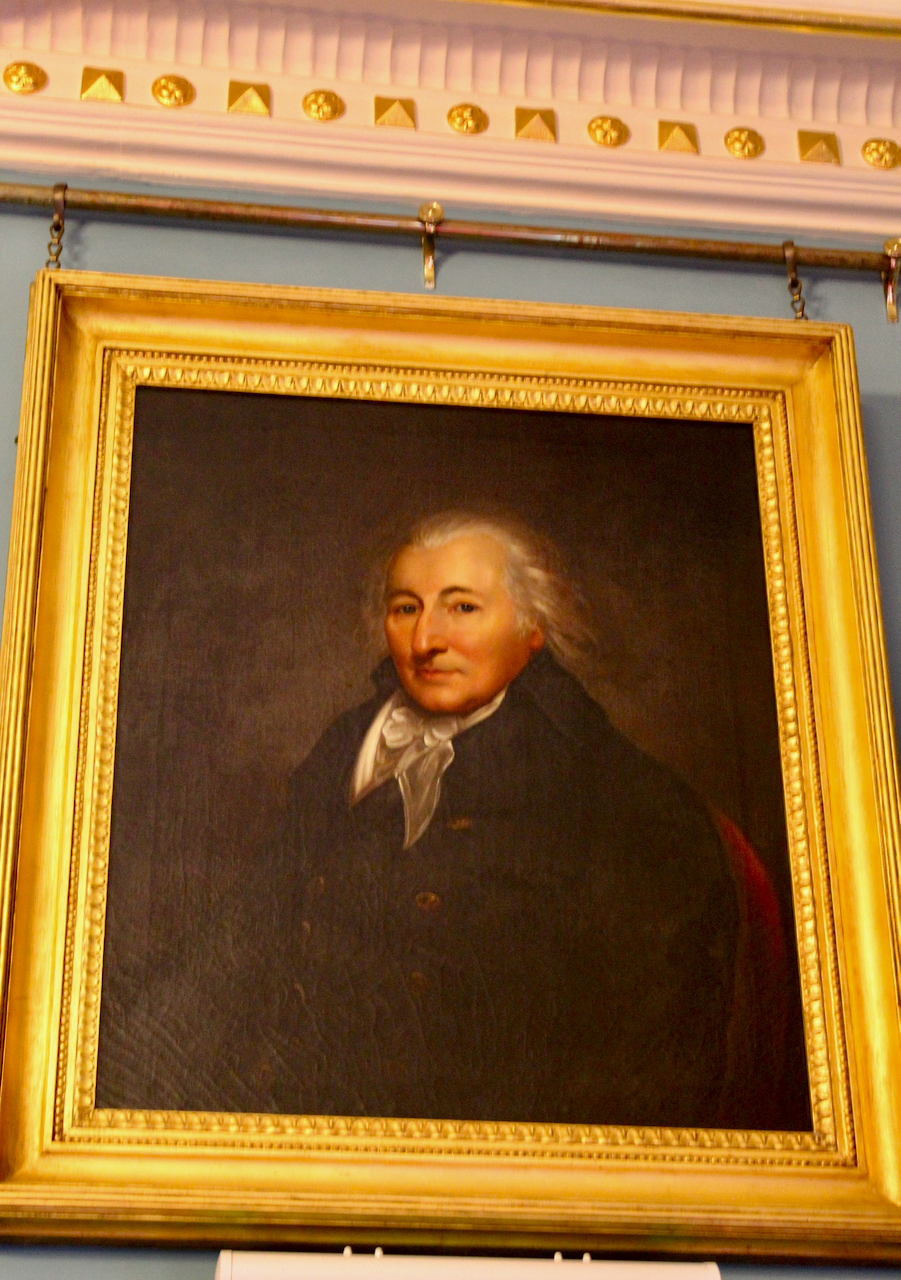
Right Hon. Sir Hercules Langrishe (1731-1811), 1st Baronet Knocktopher, artist unknown. The Langrishe Baronetcy of Knocktopher Abbey in the County of Kilkenny is a title in the Baronetage of Ireland. It was created on 19 February 1777 for Sir Hercules Langrishe, who represented Knocktopher in the Irish House of Commons. The Langrishe family were part the social world of the Butlers. They were present at many social occasions in Kilkenny Castle including the Royal Visits to the Castle. The family seat from 1679 to 1981 was Knocktopher Abbey, County Kilkenny. The 1st Baronet was MP for Knocktopher for 40 years until the Act of union in 1801. It is said he bought up lands in Knocktopher and leased it to Catholic residents. He was created 1st Baronet in 1777. Best remembered for his pro Catholic Relief stance and his exchange of views with his friend Edmund Burke. He introduced the Catholic Relief Bill in 1792 and The Catholic Enfranchisement Act which passed in 1793. Photograph © Jennifer Winder-Baggot, www.irishhistorichouses.com

Sir Hercules, who was a member of the Privy Council, represented the borough of Knocktopher in the Irish parliament for forty years, during which period he ranked amongst the most distinguished of its members, and was the first who advocated and obtained a partial relaxation of the most atrocious code of laws which oppressed the Roman Catholics of Ireland, a code that consigned 80% of the population to unmitigated and grinding slavery, and reduced the whole of the state to semi-barbarism. He was Commissioner of Excise and Revenue.

In 1755 he married Hannah, daughter and co-heir of Robert Myhill, of Killarney, County Kilkenny, and sister of Jane, wife of Charles, 1st Marquess of Ely. His successor was his son Robert Langrishe, 2nd Baronet (1756-1835).
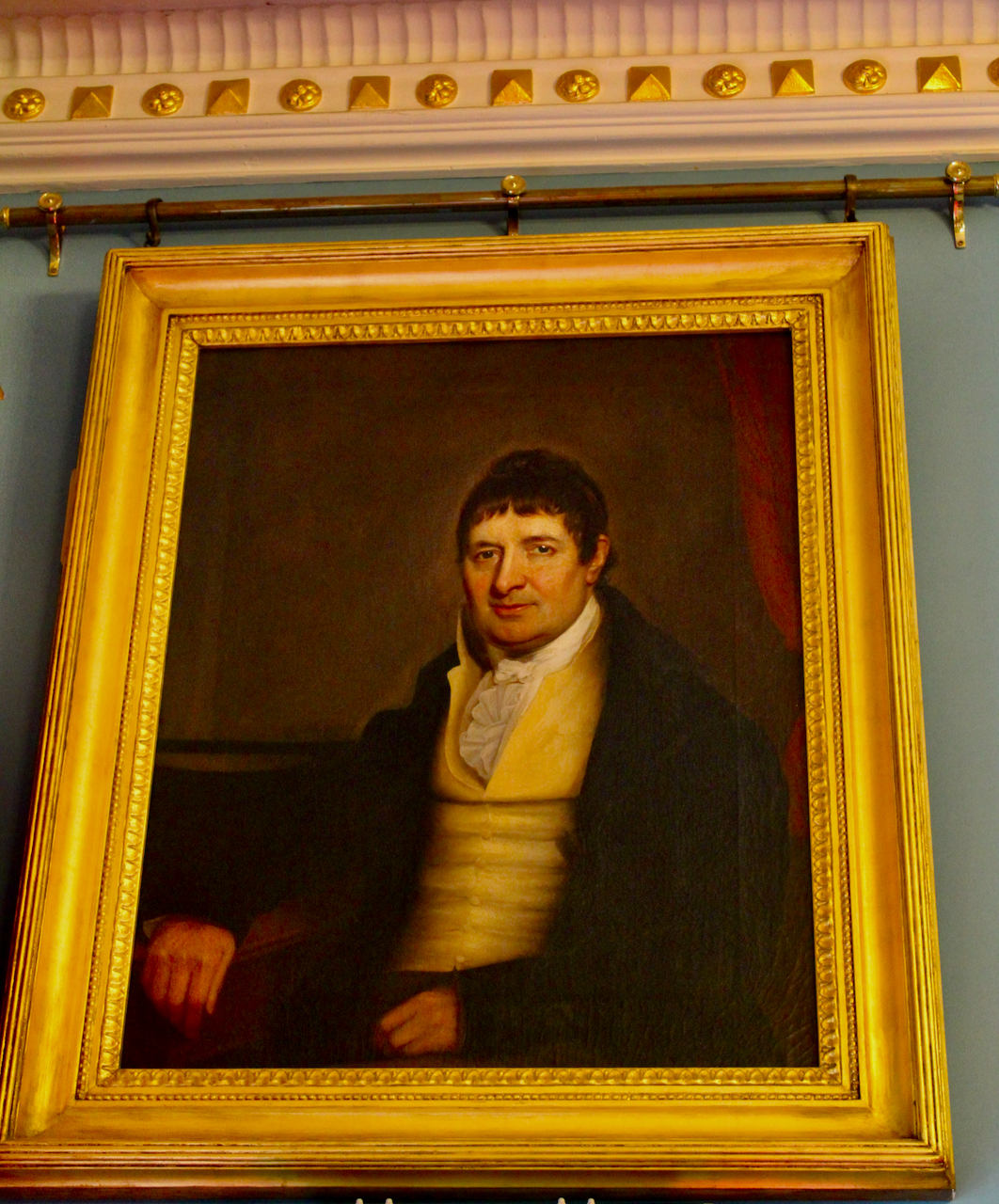
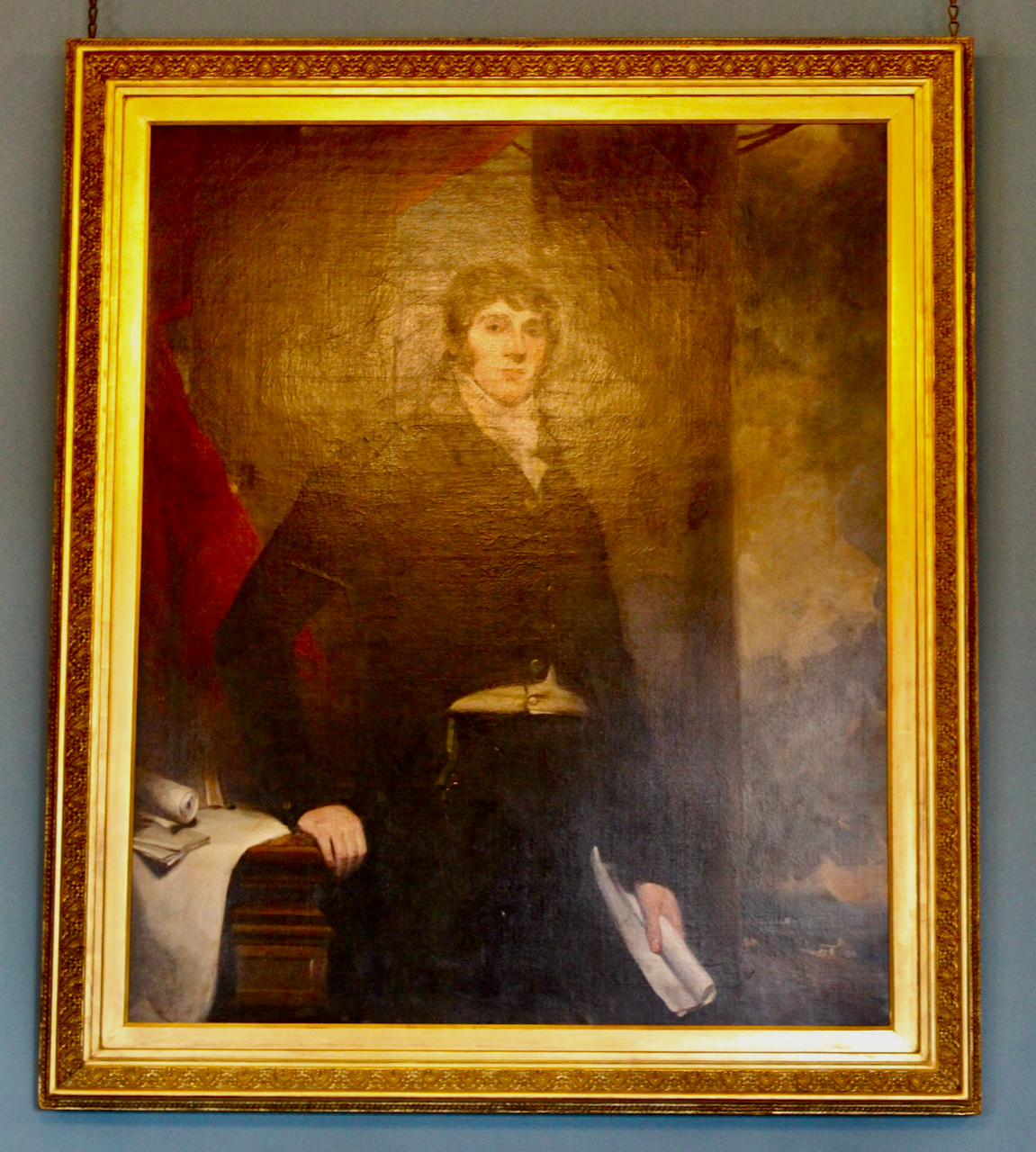
Sir Robert Langrishe (1756–1835), 2nd Baronet Knockopher, artist unknown. MP for Knocktopher 1783-1796, he graduated as a barrister from Kings Inn and both father and son sat in Parliament at the same time. He was heavily involved in the theatre and was Revenue Commissioner in 1796. Photograph © Jennifer Winder-Baggot, www.irishhistorichouses.com
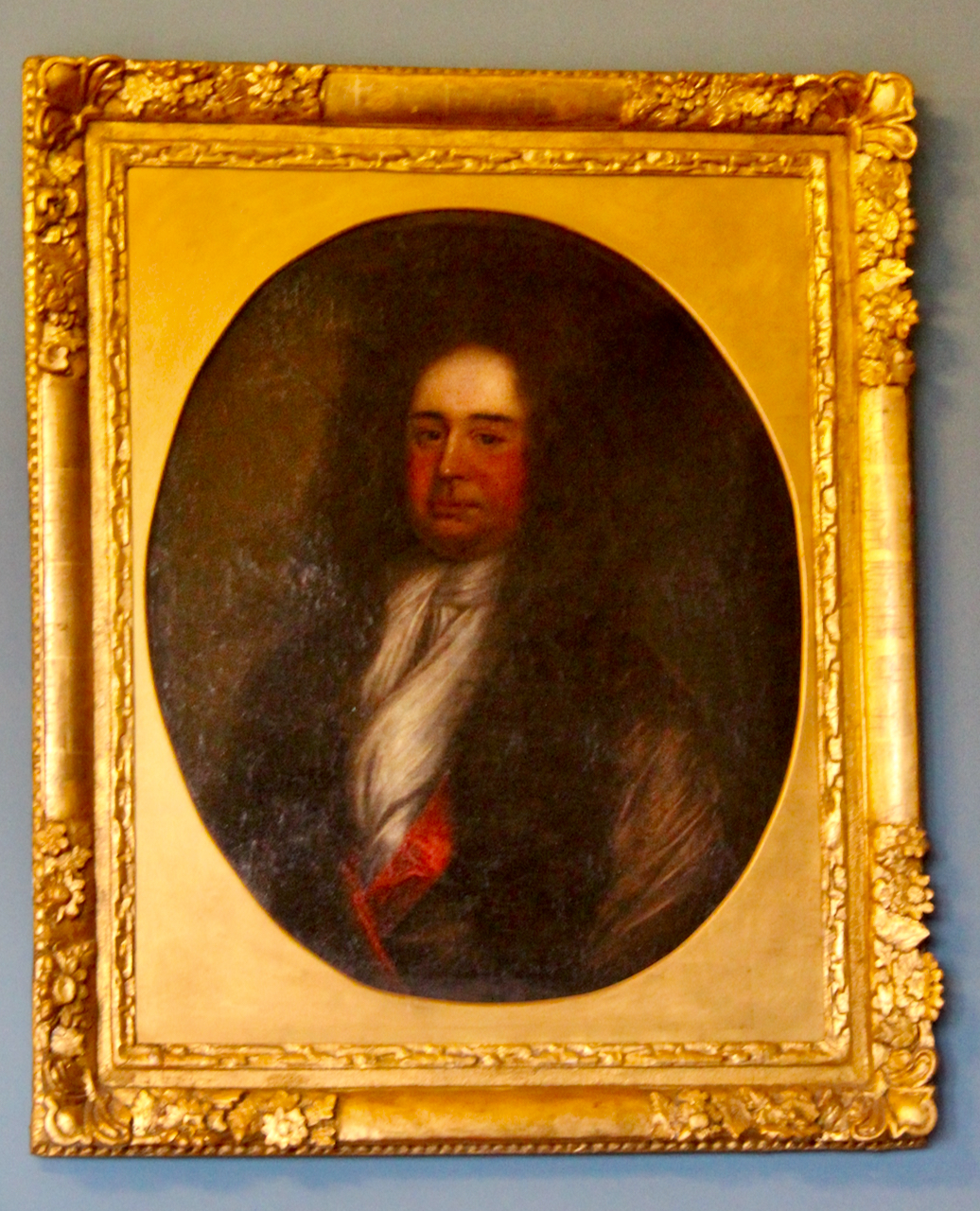
Oil portrait of an unknown gentleman possibly Sir Robert Langrishe 2nd Baronet. Photograph © Jennifer Winder-Baggot, www.irishhistorichouses.com
The State Dining Room, Kilkenny Castle. Photograph © Jennifer Winder-Baggot, www.irishhistorichouses.com

In 1782 Robert married Anne, daugher of Bellingham Boyle.
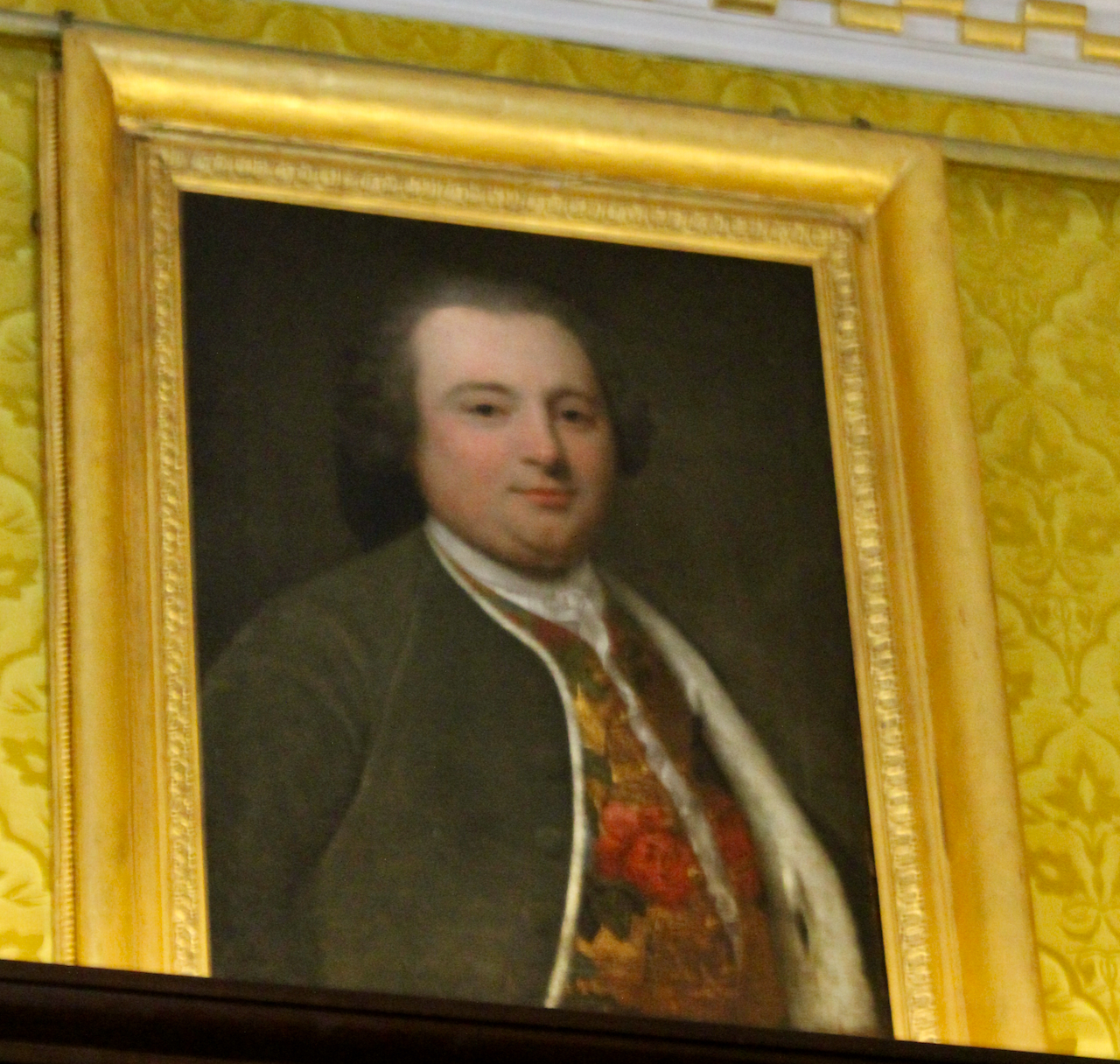
Bellingham Boyle (1709-1771), unknown artist. His daughter married Sir Robt Langrishe 2nd Bt. Photograph © Jennifer Winder-Baggot, www.irishhistorichouses.com

His son was his successor, Hercules Richard 3rd Baronet (1782-1862), who joined the clergy.
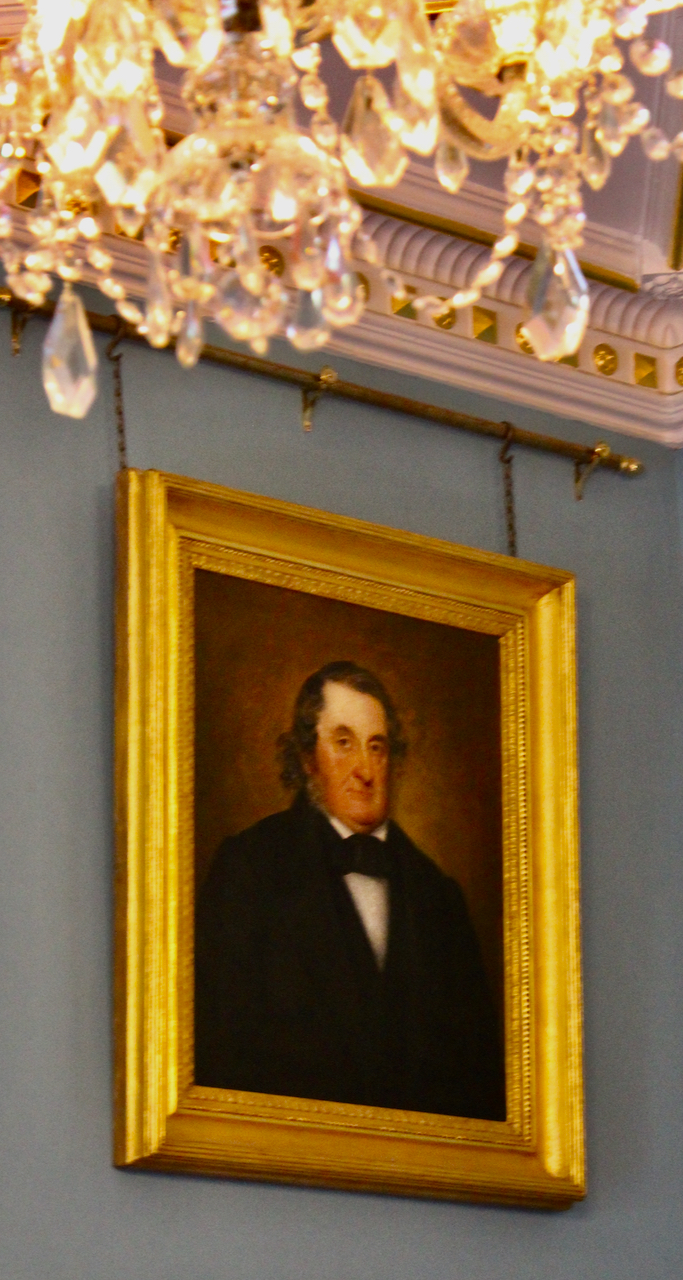
Rev. Sir Hercules Richard Langrishe (1782-1862), 3rd Baronet of Knocktopher County Kilkenny, artist unknown. Photograph © Jennifer Winder-Baggot, www.irishhistorichouses.com

Sir Hercules was succeeded by his eldest son, James Langrishe (1832-1905), 4th Baronet Knocktopher.
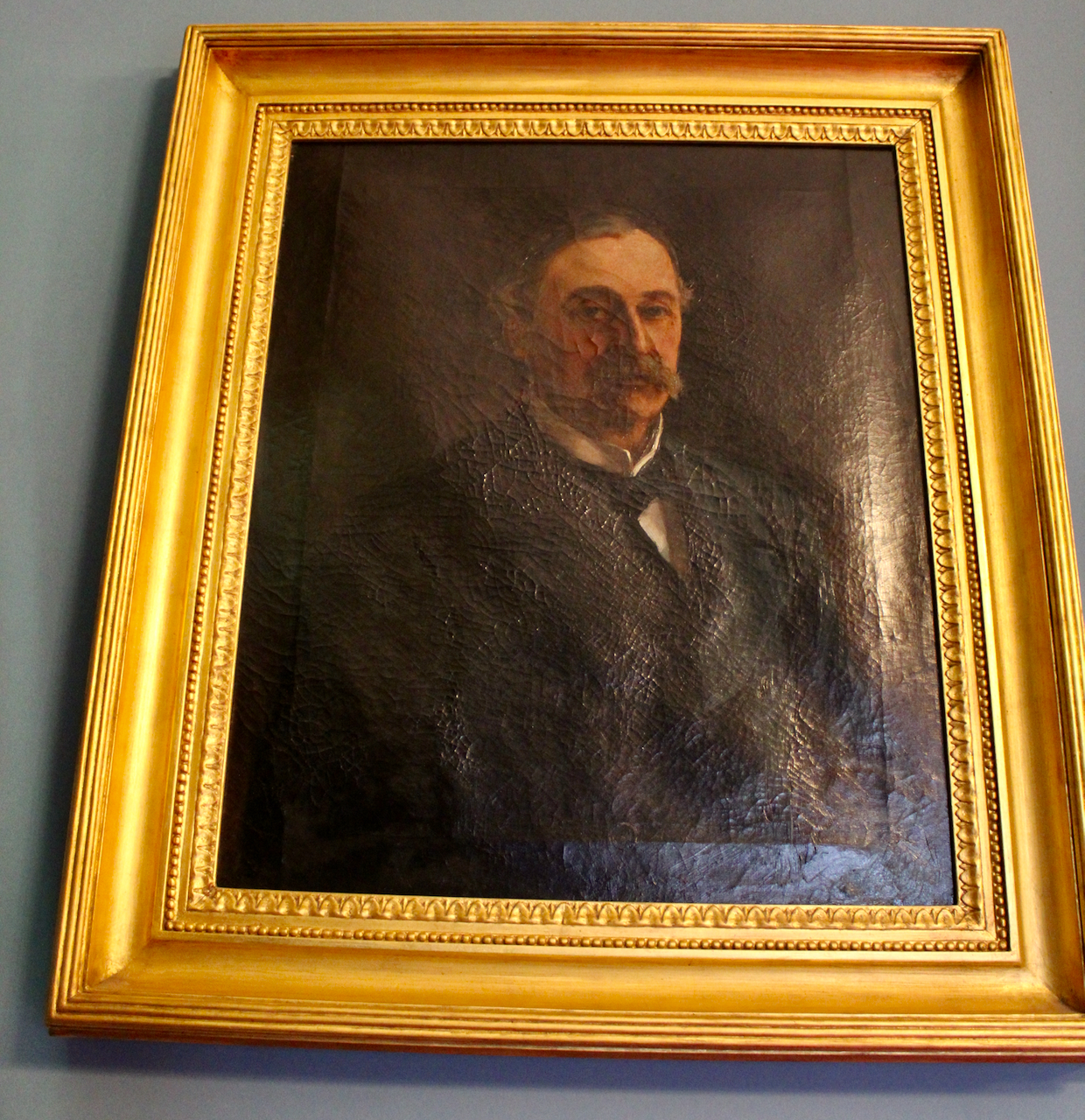
James Langrishe (1832-1905), 4th Baronet Knocktopher, artist unknown. Married twice, he was a Lt. Col in the army and High Sheriff of Kilkenny 1866. Photograph © Jennifer Winder-Baggot, www.irishhistorichouses.com

He was succeeded by his son Hercules Langrishe (1859–1943), 5th Baronet Knocktopher.
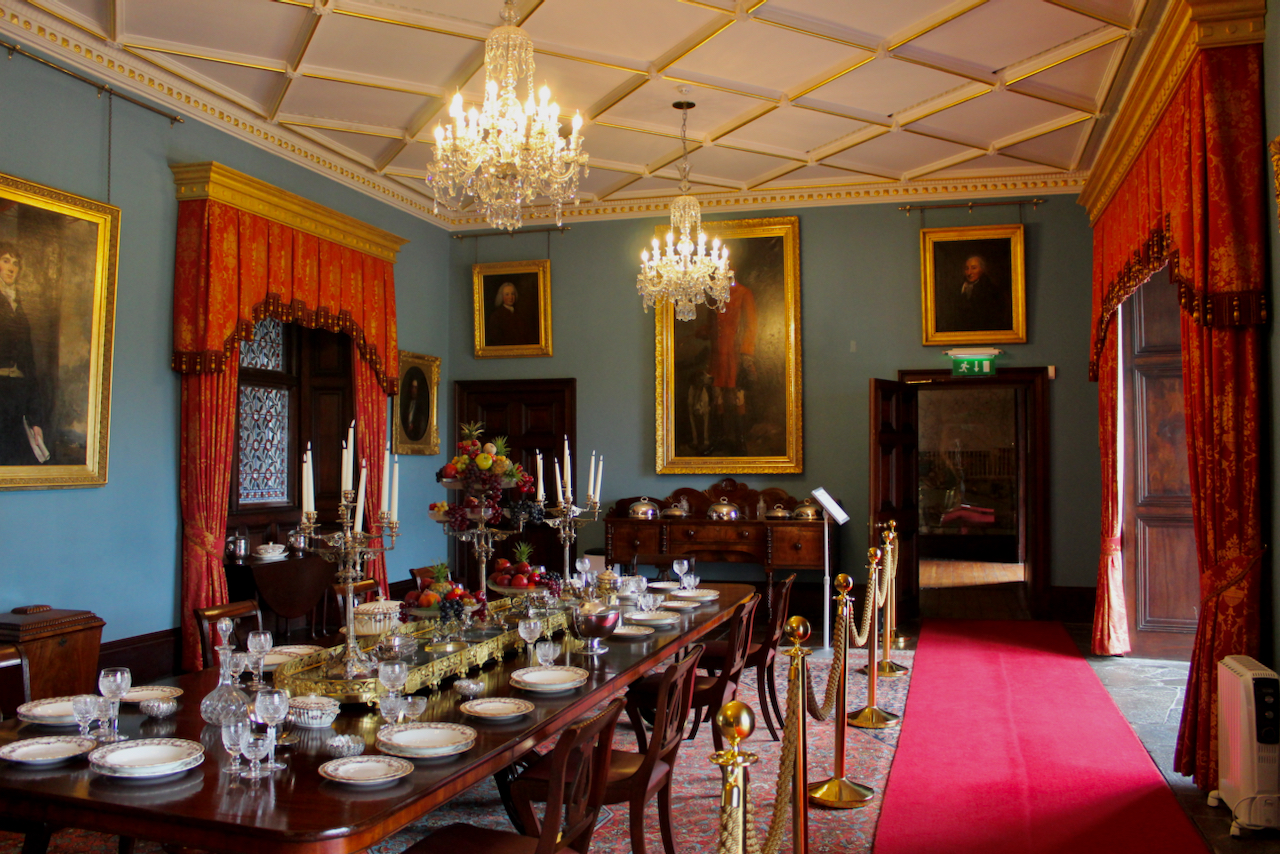
The State Dining Room, Kilkenny Castle. Photograph © Jennifer Winder-Baggot, www.irishhistorichouses.com
Hercules Langrishe (1859–1943), 5th Baronet Knocktopher, Artist unknown. He gained the rank of Captain in the service of the Army Motor Reserve, of Captain and Honorary Major in the service of the 3rd Battalion, Oxfordshire Light Infantry and of Temporary Commander in the service of the Royal Naval Volunteer Reserve. He fought in the First World War, in the Mediterranean and Russia. He succeeded to the title of 5th Baronet on 20 August 1910. He held the office of Justice of the Peace for County Kilkenny, of High Sheriff of County Kilkenny and the office of Deputy Lieutenant of County Kilkenny. Photograph © Jennifer Winder-Baggot, www.irishhistorichouses.com

There is a portrait of the 5th Baronet’s son, Hercules Ralph Langrishe (1888-1917), also.
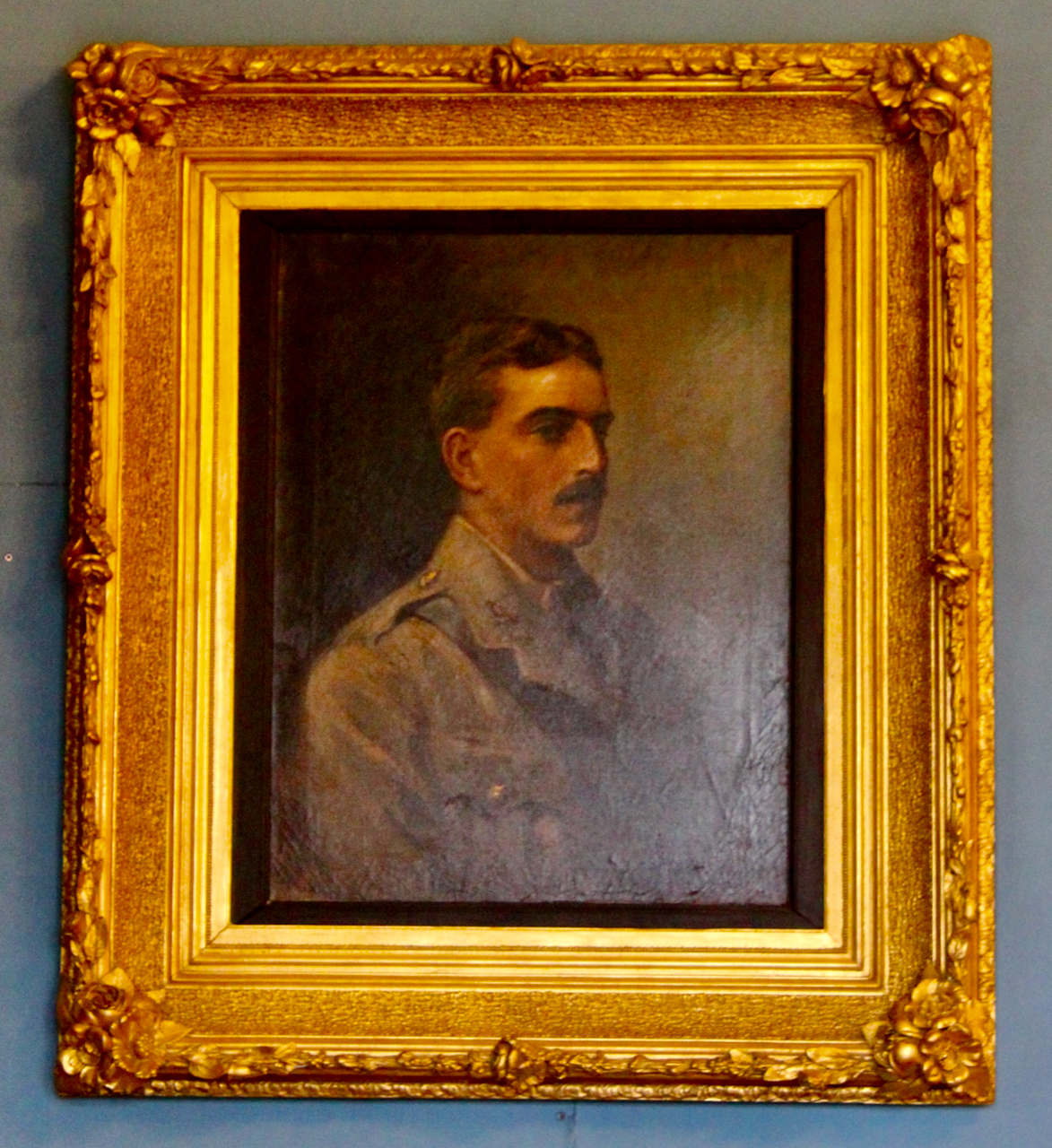
Hercules Ralph Langrishe (1888-1917), artist unknown. Photograph © Jennifer Winder-Baggot, www.irishhistorichouses.com

This 19th century mahogany staircase was designed and made by the local firm of Furniss & Son, Kilkenny and leads to the Tapestry Room and first floor. The use of mahogany in domestic furniture, which is so synonymous with the Grand House, is virtually unknown before the 18th century. Most of the wood imported came from the Jamaican Plantations which were cleared in order to plant sugar cane and cotton. During the 19th century this staircase was hung with several beautiful tapestries from the Decius Mus suite, some of which are now housed in the Tapestry Room.
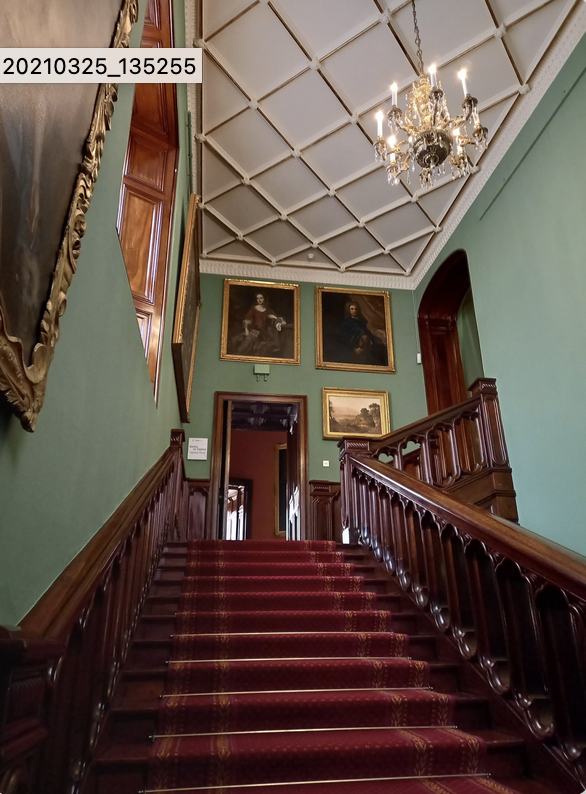
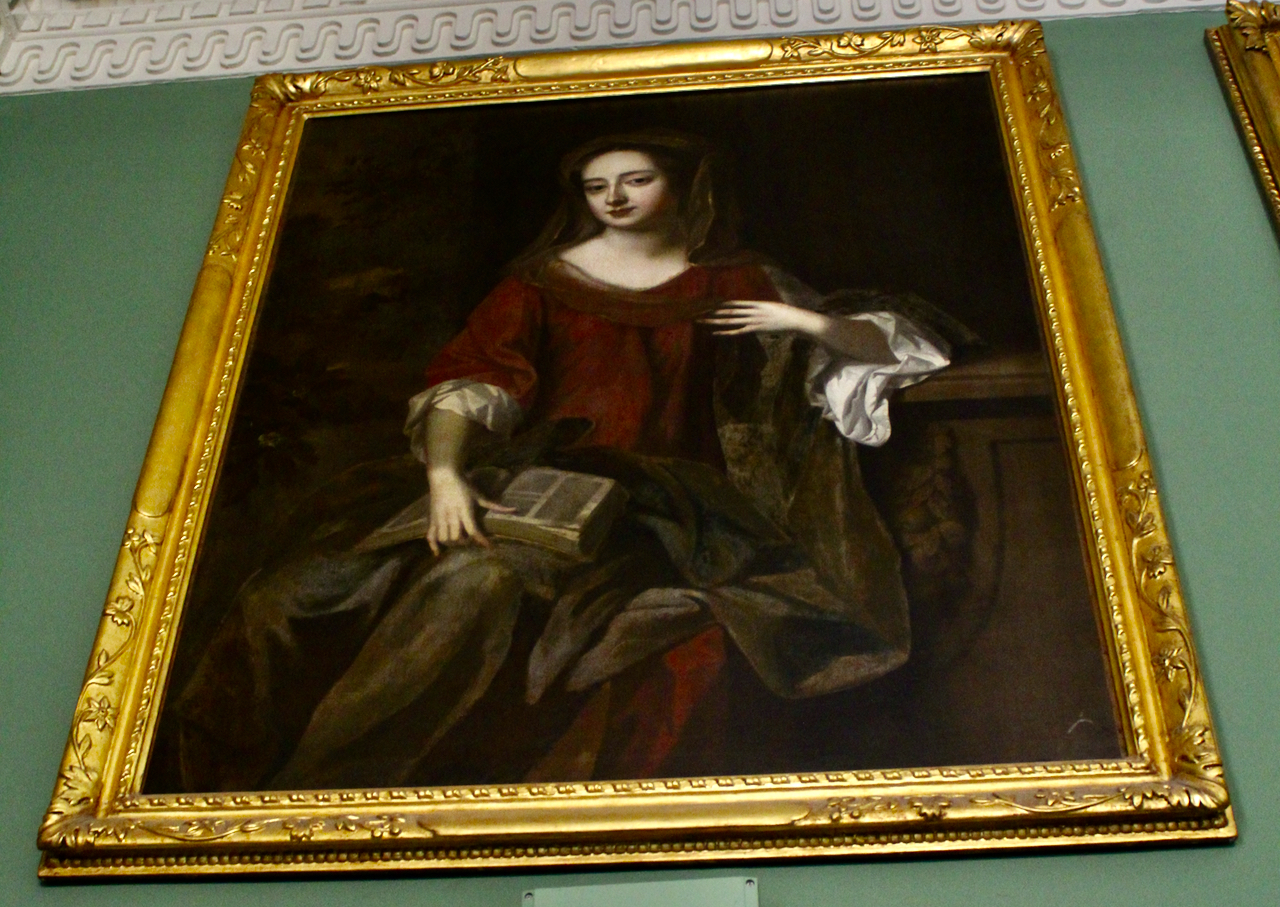
Photograph courtesy of Kilkenny Castle website, The Grand Staircase.
At the top of the stairs is a portrait of Mrs Nott (Knott) (d.1711), possibly Susan, granddaughter of Sir Thomas Nott, Gentleman Usher of the Privy Chamber to Charles II, studio of William Wissing (1656-87). Brewer describes the sitter as a possible mistress of one of the dukes of Ormonde. The portrait also resembles that of Amelia of Nassau, wife of Thomas, Earl of Ossory, in similar costume, and may have been acquired for that reason. A signed portrait by Wissing of Mrs. Knott is in the Royal Collection, as is a portrait of Amelia. Millar dates the original portrait to ‘perhaps c. 1680-85.’ Photograph © Jennifer Winder-Baggot, www.irishhistorichouses.com
The other portrait at the top of the stairs is John Bligh (1683-1728), Earl of Darnley, Viscount Darnely and Baron Clifton, attributed to Charles Stoppelaer (fl. 1703-45). Bligh was MP for Trim (1709-13) and for Athboy (1713-21). His father, Thomas, had obtained large grants of land in Ireland under the Acts of Settlement 1668. He was created Baron Clifton of Rathmore, Co Meath in 1721 in consequence of his marriage in 1713 to Theodosia Hyde, suo jure Baroness Clifton, sister and heir of Edward, Lord Clifton, Viscount Cornbury. She was a wealthy heiress with royal connections. Bligh is depicted wearing a buff-coloured coat with drapery. it was painted c.1723, as the coronet is that of a viscount. Photograph © Jennifer Winder-Baggot, www.irishhistorichouses.com
The Grand Staircase, Kilkenny Castle. This 19th century mahogany staircase was designed and made by the local firm of Furniss & Son, Kilkenny and leads to the Tapestry Room and first floor. Most of the wood imported came from the Jamaican Plantations which were cleared in order to plant sugar cane and cotton. During the 19th century this staircase was hung with several beautiful tapestries from the Decius Mus suite, some of which are now housed in the Tapestry Room. Photograph © Jennifer Winder-Baggot, www.irishhistorichouses.com
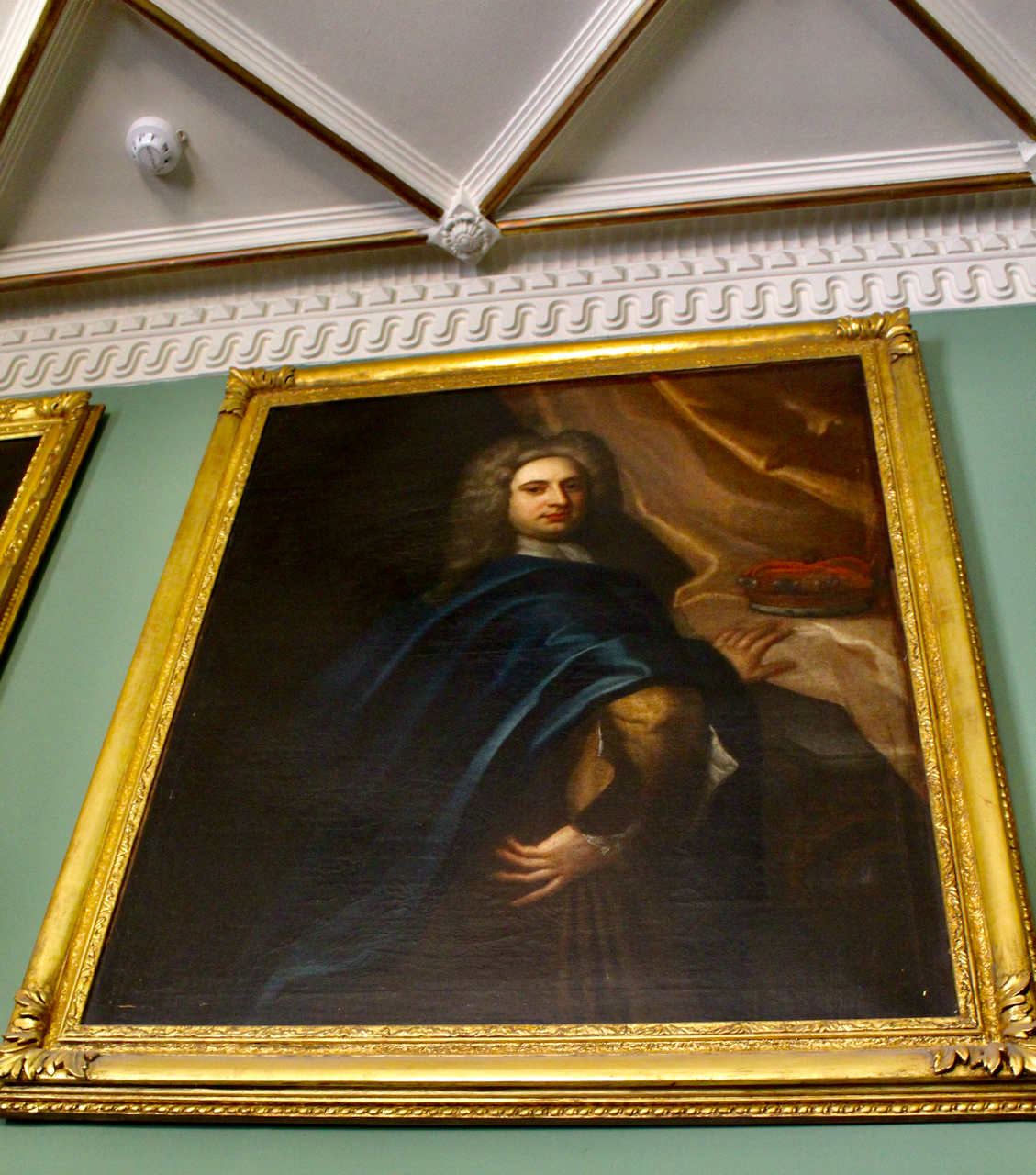
The Grand Staircase, Kilkenny Castle. Photograph © Jennifer Winder-Baggot, www.irishhistorichouses.com
Unknown Gentleman by Philip Hussey (1713-1783). Said to be a member of a Fitzgerald/Fitzmaurice family from the Cork area. Photograph © Jennifer Winder-Baggot, www.irishhistorichouses.com
Unknown lady by Philip Hussey (1713-1783). The basic details of the costume are identical to that worn by Mrs Sophia Tipping in the double portrait, Mrs Sophia Tipping with her daughter, Wilhelmina Salisbury, also painted by Hussey. Photograph © Jennifer Winder-Baggot, www.irishhistorichouses.com
Mrs Sophia Tipping and her Daughter Wilhelmina Salisbury by Philip Hussey.
An allegory of Avarice by Jan de Herdt (fl.1646-72). Photograph © Jennifer Winder-Baggot, www.irishhistorichouses.com

On the first floor we can visit the Tapestry Room, and then a suite of rooms, the Anteroom, Library and Drawing Room.

The Tapestry Room in the North Tower shows how the medieval castle was transformed in the 17th century to become a magnificent baroque ducal palace. This room was called the Great Chamber in the 17th century and the walls were decorated with embossed and gilded leather hangings on the walls; a fragment of a late 17th/ early 18th century leather has been hung beside the door to give an impression of how rich the room must have been. In the 18th century, they were replaced by a set of tapestries.
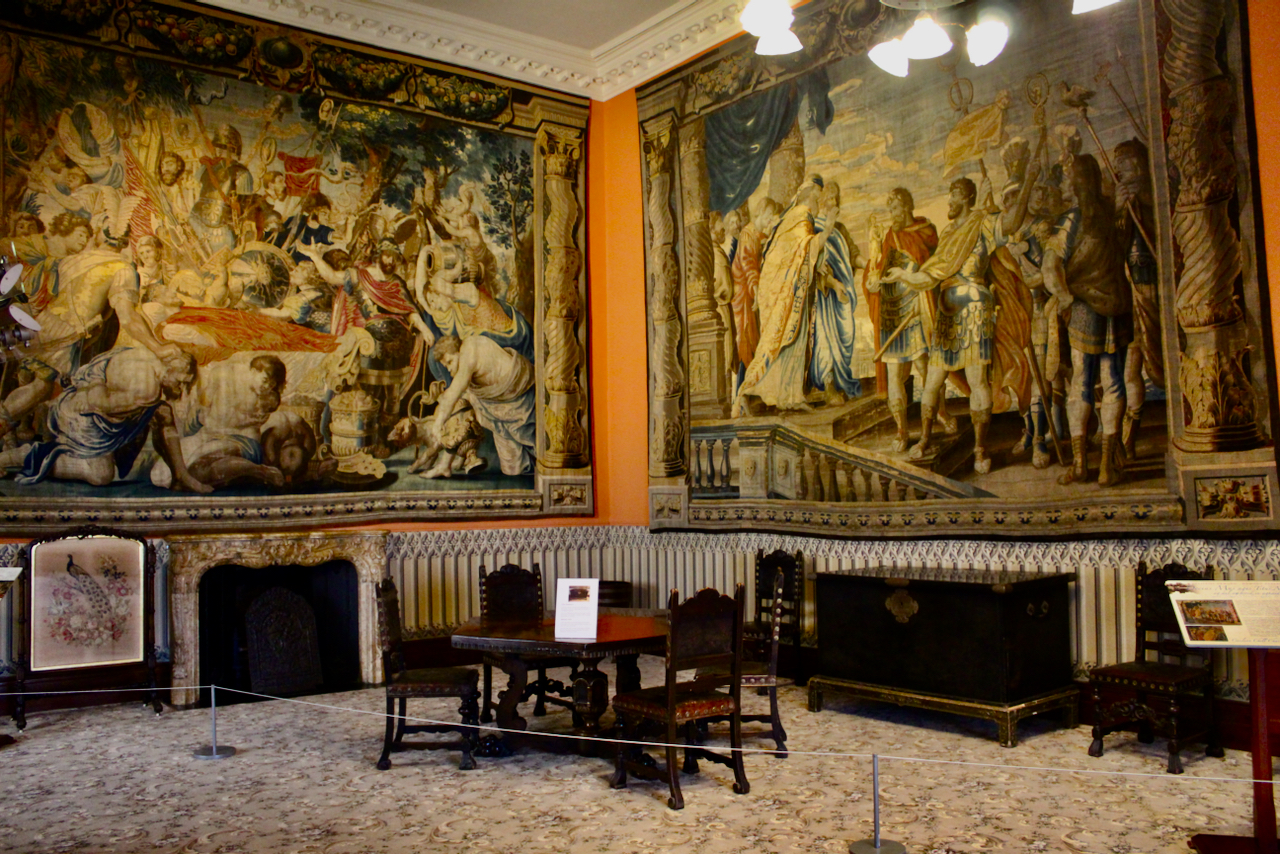
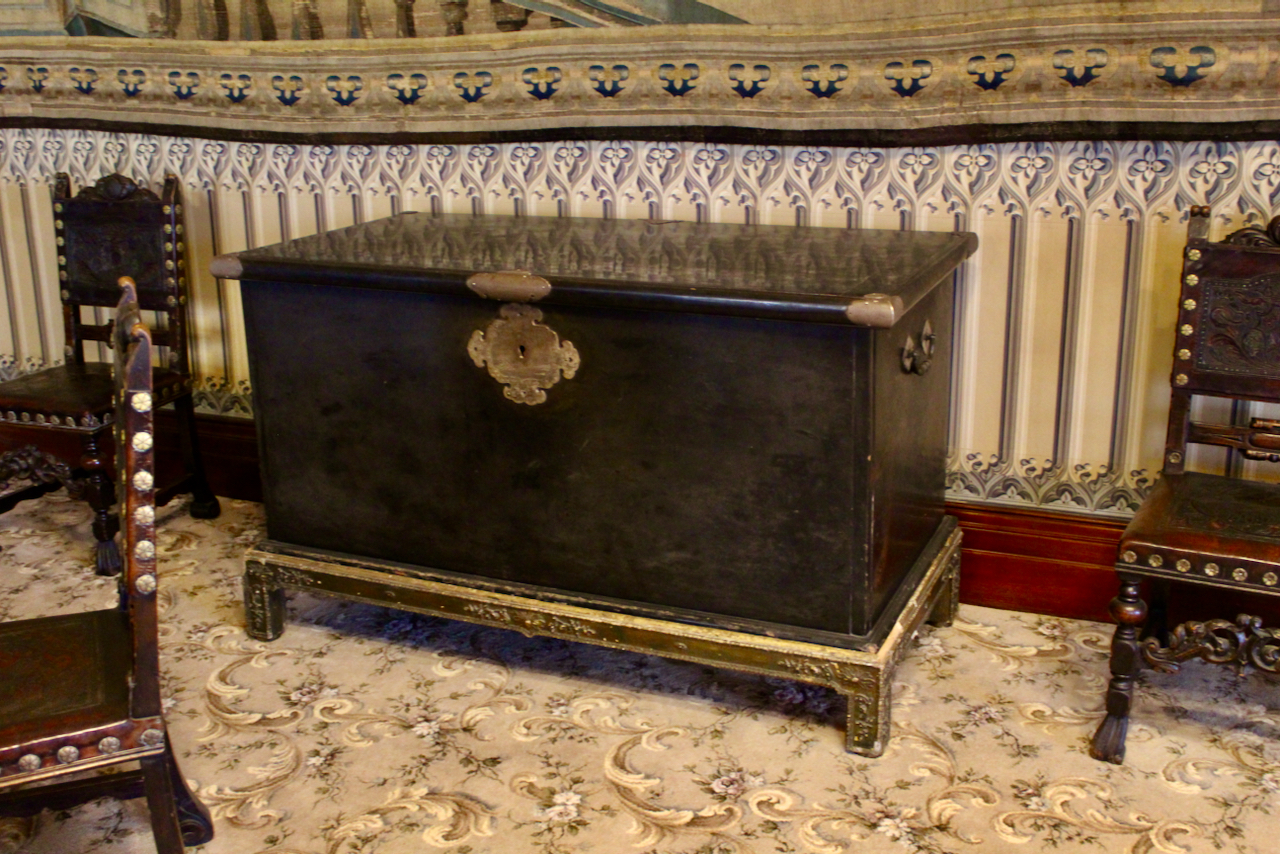
The Tapestry Room in Kilkenny Castle. Photograph © Jennifer Winder-Baggot, www.irishhistorichouses.com
Japanese chest. A fine early black lacquer and chinoiserie decorated lift-top chest, with large engraved brass lock place, on a stand with short square legs. This travelling chest belonged to the Duke of Ormond and is an important remnant of the late 17th century furnishing of Kilkenny Castle. The Gothic style hand blocked wallpaper was reproduced by David Skinner from Malahide Castle, one of the very few examples of Irish produced wallpaper from the 18th century. Photograph © Jennifer Winder-Baggot, www.irishhistorichouses.com
The Tapestry Room, Kilkenny Castle. Photograph © Jennifer Winder-Baggot, www.irishhistorichouses.com
The Tapestry Room in Kilkenny Castle. The ceiling outlines the keyhole shape of this room, created by the addition of a square tower to the circular medieval tower during the 15th century. Photograph © Jennifer Winder-Baggot, www.irishhistorichouses.com
Desius Mus and Manlius Torquatus leave to fight the Latins. There are two tapestries from the “Decius” suite in the Tapestry room. The tapestries are attributed to the workshop of Jan Raes, after designs by Sir Peter Paul Rubens. Photograph © Jennifer Winder-Baggot, www.irishhistorichouses.com
The obsequies of Decius Mus. There are two tapestries from the “Decius” suite in the Tapestry room. The tapestries are attributed to the workshop of Jan Raes, after designs by Sir Peter Paul Rubens. The Story of ‘Decius Mus’ is a heroic tale of a Roman Consul who foretold his own death at the Battle of Veseris (Vesuvius) in the Latin War (340BC). The tapestries are attributed to the workshop of Jan Raes, after designs by Sir Peter Paul Rubens. The ‘Decius’ suite had been in the ownership of the Ormonde family for over 300 years and was displayed in several of their residences before being acquired by OPW for display in Kilkenny Castle. Tapestries were an important feature of the interior decoration of large houses in Europe during the 16th and 17th centuries and helped provide interior interest, warmth, and colour. You can read more about these tapestries on the Kilkenny Castle website. Photograph © Jennifer Winder-Baggot, www.irishhistorichouses.com
The Tapestry Room in Kilkenny Castle is in the North Tower with its thick 12th walls. Photograph © Jennifer Winder-Baggot, www.irishhistorichouses.com
The Tapestry Room in Kilkenny Castle is in the North Tower with its thick 12th walls. This room was called the Great Chamber in the 17th century and the walls were decorated with embossed and gilded leather hangings on the walls. Photograph © Jennifer Winder-Baggot, www.irishhistorichouses.com
Honora Bourke (1675-1698), Countess of Lucan and Duchess of Berwick. French School 17th century. She was the daughter of William Bourke, 7th Earl of Clanricarde and Lady Helen MacCarty. Honora’s sister was Margaret, Lady Iveagh, wife of Thomas Butler of Kilcash. She married, firstly, General Patrick Sarsfield, 1st Earl of Lucan, son of Patrick Sarsfield, circa 9 January 1689/90 and secondly, James FitzJames, 1st Duke of Berwick-Upon-Tweed, son of James II Stuart, King of Great Britain and Arabella Churchill, on 26 March 1695 at Saint-Germain-en-Laye, Île-de-France, France. Honora died aged 22 at Pesenas in France. Both her sons inherited their father’s titles. Oval, 1/2 length portrait. Sitter wears a yellow dress with a blue ermine-trimmed, blue wrap. It was possibly taken from a portrait painted on the occasion of her marriage to the Duke of Berwick at St-Germain-en-Laye. Photograph © Jennifer Winder-Baggot, www.irishhistorichouses.com
The Tapestry Room in Kilkenny Castle. Photograph © Jennifer Winder-Baggot, www.irishhistorichouses.com
The Tapestry Room in Kilkenny Castle is in the North Tower with its thick 12th walls. The colour orange is an early 19th century burnt Sienna distemper known as Malahide Orange, which was also found at Malahide Castle. Photograph © Jennifer Winder-Baggot, www.irishhistorichouses.com
Thomas Wentworth (1593-1641), 1st Earl of Stafford, Lord Deputy General, Lord lieutenant of Ireland, after Anthony van Dyck (1599-1641). In the late 1620s, Wentworth was MP in opposition to the Crown, but was to become one of Charles I’s principal supporters from 1629 until his death. During his time in Ireland as Lord Lieutenant, Strafford sought to further royal interest, and in so doing he also managed to enrich himself. As a result of his manoeuvres and his own self-aggrandisement, he made many powerful enemies. His final effort on the King’s behalf-the formation of a standing army in Ireland to defend royal’s interest- was to lead to his ultimate downfall in 1640. Rumours spread that the army was to be used to invade England. He was committed to the Tower of London, and in January 1641 was impeached for high treason. The King signed his death warrant, and he was executed on Tower Hill in May 1641. Head and shoulders in armour, after a portrait by Sir Anthony van Dick painted in 1636. Van Dyck painted two portraits of the sitter in armour, one a full-length, the other a three-quarter-length. Numerous smaller copies were also made by studio assistants. Photograph © Jennifer Winder-Baggot, www.irishhistorichouses.com
James Butler (1610-1688), 1st Duke of Ormond, 12th Earl of Ormond, Lord Lieutenant of Ireland, by Peter Lely (1618-1680). Wearing robes of the Order of the Garter, Ormond holds the wand of office of Lord Steward of the Household in his right hand. The portrait is probably that referred to in a series of letters written by Ormond’s agents, John Buck in England and Sir George Lane in Ireland, during the years 1662 to 1663. In a letter dated May 1663, John Buck wrote: ‘…the latter end of this month I shall send from hence a most excellent picture of My Lord Duke’s, I think you saw the face done before you went; by that time I am promised the Queen’s for my Lady Duchess to send along with it: Mr. Lilly tells me there is one very good at cappeinge [copying?] in Dublin, if not pray let me receive your farther commands; Mr. Lilly will presently part with the Duchess’ pictures for you, if you can procure any to bring directions from Her Highness to him for it.’ [HMC Ormonde Mss, iii, 55]. This is the finest extant portrait of the duke. Photograph © Jennifer Winder-Baggot, www.irishhistorichouses.com

From the website: “Today the first floor space is occupied by three rooms: Anteroom, Library and Drawing Room, as it was in the 19th century. The processional lay out of the rooms, each opening into the next is characteristic of the Baroque style of the 17th century and was know as an ‘enfilade’ suite of rooms. Baroque protocol dictated that visitors of lower rank than their host would be escorted by servants down the enfilade to the nearest room that their status allowed. In the 16th and 17th century the State Rooms were situated on this floor. 17th century history records that it was in these state apartments that James Butler 1st Duke of Ormonde received the Papal Nuncio Giovanni Battista Rinuccini during the Irish Confederate Wars of that century. An Anteroom was a small room used as a waiting room, that leads into a larger and more important room. The Anteroom and the room below,  today the Serving Room, were constructed in the area where an earlier stone staircase was situated.” The anteroom features a reproduction poplin wallpaper and bronze figurines in niches.

The Ante Room. Photograph © Jennifer Winder-Baggot, www.irishhistorichouses.com

The anteroom leads to the library. “The interior decoration is a faithful recreation of the furnishing style of the mid to late 19th century. Thanks to a salvaged fabric remnant found behind a skirting board, it was possible to commission the French silk poplin on the walls in its original pattern and colour from the firm of Prelle in Lyons in France. The claret silk damask curtains are also based on the originals were made in Ireland. One of the nine massive curtain pelmets is original and an Irish firm of Master Gilders faithfully reproduced matching gilt reproductions. The bookcases were also reproduced based on one original bookcase acquired by the OPW in the 1980s, this original with its 19th century glass stands in the right end corner of the library. The matching pair of pier mirrors over the mantelpieces was conserved and re gilded.”

The Library. Photograph courtesy of Kilkenny Castle website.

The Drawing Room is typically the room in a house where guests and visitors are entertained. Drawing rooms were previously known as ‘withdrawing rooms’ or ‘withdrawing chambers’ which originated in sixteenth century.

The fabrics in this room are vintage glazed and block printed English and French chintzes and have been chosen to recreate the style of the rooms as they appeared in the 19th century family photographs. The Drawing Room picture hang reflects the Edward Ledwich description in his 1789 “Antiquities of Ireland!” when this room was the Presence Chamber or Alcove.

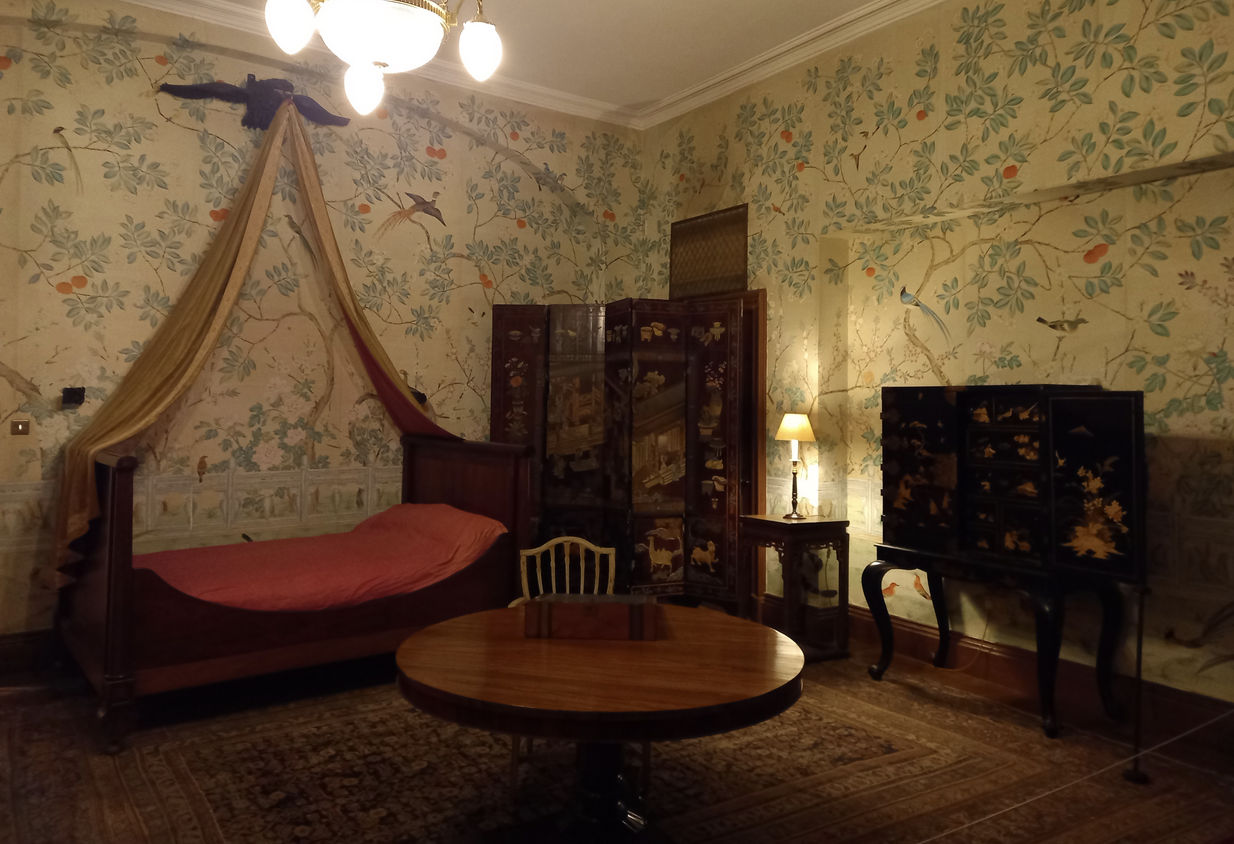
The Drawing Room, courtesy of Kilkenny Castle website.
The Chinese Bedroom is connected to the blue bedroom by double doors [these are on the second floor]. This bedroom is decorated with a modern reproduction of a hand painted Chinese wallpaper, part of the Chinoiserie theme of the room. The wallpaper was based on a design from Lissan House in County Tyrone, owned by the Staples family, Grace Louisa Staples became Marchioness of Ormonde when she married James Butler, 19th Earl, 1st Marquess of Ormonde in 1807. Photograph © Jennifer Winder-Baggot, www.irishhistorichouses.com

The 1st Marquess died in Dublin in 1838 and was succeeded by his eldest son John Butler (1808-1854), 2nd Marquess, 20th Earl of Ormonde, Earl of Ossory and Viscount Thurles, Baron Ormonde of Lanthony, Chief Butler of Ireland (see his portrait below).
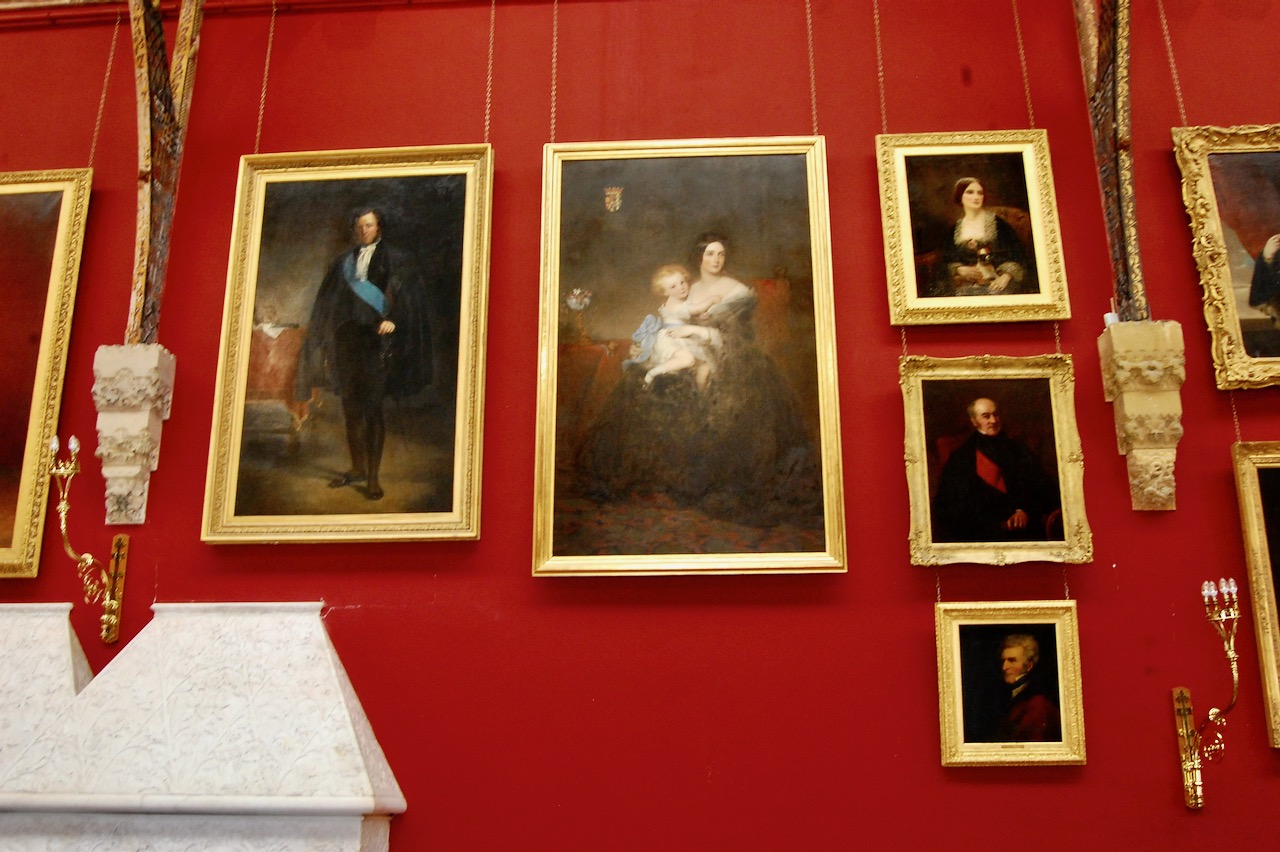
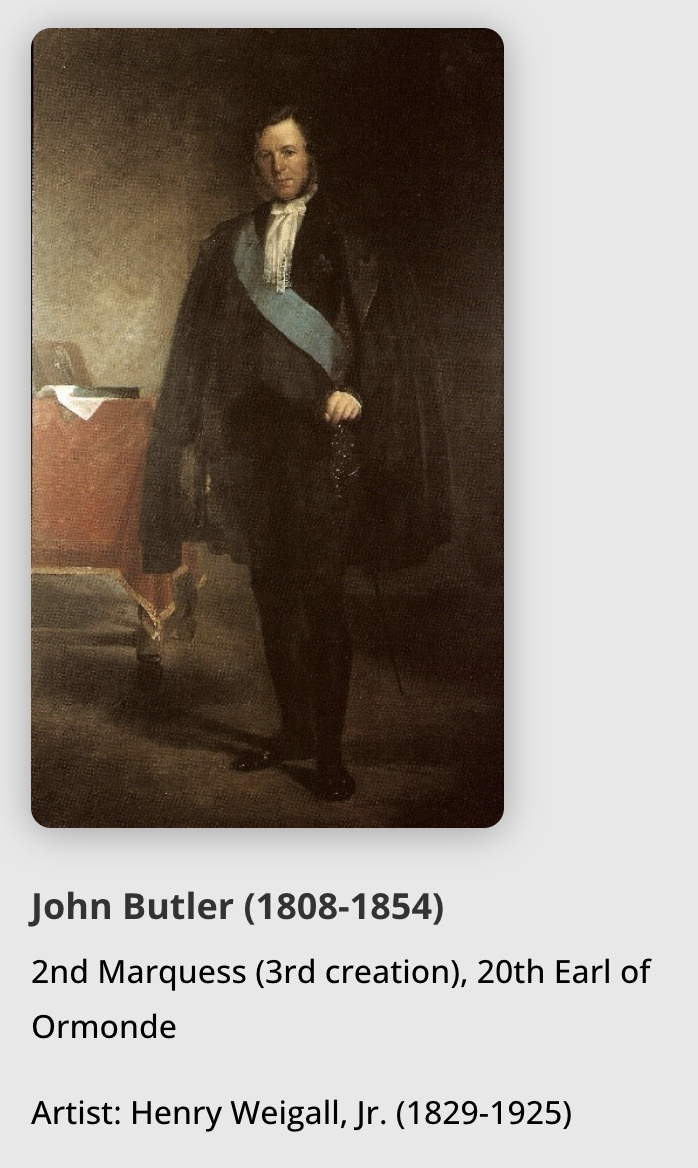
John Butler (1808-1854), 2nd Marquess of the 3rd creation, 20th Earl of Ormonde, Earl of Ossory and Viscount Thurles, Baron Ormonde of Lanthony, Chief Butler of Ireland. He died while bathing; Frances Jane Paget in middle (1817-1903), with her son James, Earl of Ossory. She was the daughter of General E. Paget and niece of Field Marshal Henry William Paget, 1st Marquis of Anglesey, and wife of 2nd Marquess of Ormonde. Following the death of her husband, she managed the Ormonde estates and continued the rebuilding of Kilkenny Castle.  On top of the three,  over her father and uncle, is Frances Jane Paget again, with her dog. Below is her father General the Honourable Edward Paget (1775-1849), soldier and Governor of Ceylon. He was second in command under the Duke of Wellington in the Napoleonic Wards. He lost his right arm in Spain. Below him is Field Marshall Henry William Paget (1768-1854), 1st Marquis of Anglesey, Lord Lieutenant of Ireland, brother of Edward, above. Photograph © Jennifer Winder-Baggot, www.irishhistorichouses.com
John Butler (1808-1854) 2nd Marquess (3rd creation) and 20th Earl of Ormonde, by Henry Weigall Jr.
Frances Jane Paget (1817-1903) Marchioness of Ormonde with her son James Earl of Ossory, by Richard Bruckner.

John the 2nd Marquess travelled extensively. His journals (now in National Library of Ireland) record his many journeys across  Europe to Italy and Sicily. He published an account of his travels, Autumn in Sicily, and he also wrote an account of the life of St. Canice. He married Frances Jane Paget in 1843. He continued the work of rebuilding Kilkenny castle that was started by his father. His journals show him to have a deep interest in art, and there are careful descriptions of several of the great galleries in Italy to be found in his writing. Although he continued to write in his journals during the years 1847 to 1850, no mention of the Irish famine is made. He died while bathing in the sea near Loftus hall on Hook Head, Co. Wexford. A marble tomb was erected in his memory in St. Canice’s Cathedral, Kilkenny.

The son of the 2nd Marquess, James Edward William Theobald Butler became the 3rd Marquess in 1854.
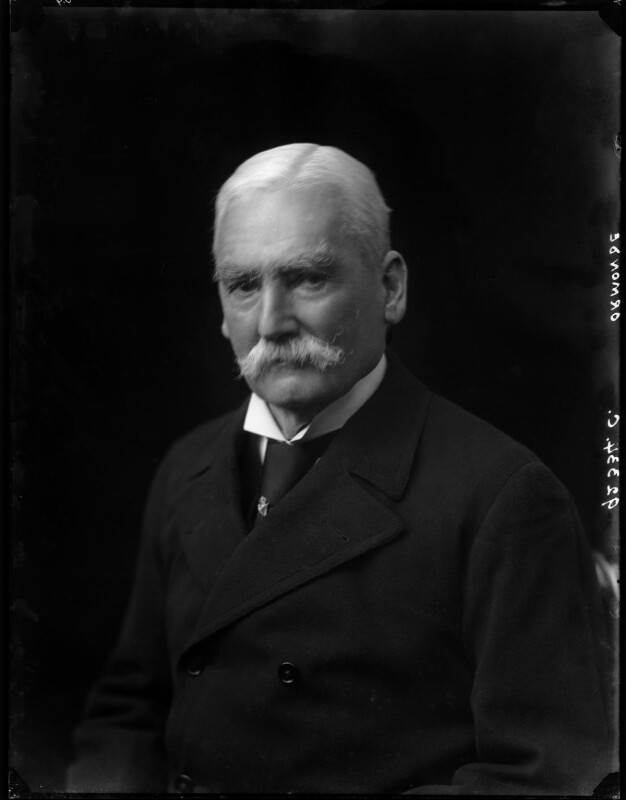
James Edward William Theobald Butler (1844-1919) 3rd Marquess of Ormonde by Walter Stoneman 1917, courtesy of National Portrait Gallery NPG x43817.

It was during the 3rd Marquess’s time that changes were made to the rather plain picture gallery block created by William Robertson. Robertston’s Picture Gallery, in keeping with his work on the rest of the castle, was in a Castellated Baronial style. Initially the gallery was built with a flat roof that had begun to cause problems shortly after its completion. The distinguished architectural firm of Deane and Woodward was called in during the 1860s to make changes to the overall design of the Picture Gallery block, and other corrections to Robertson’s work. These changes included the insertions of four oriels in the west wall and the blocking up of the eight windows, while another oriel added to the east wall.
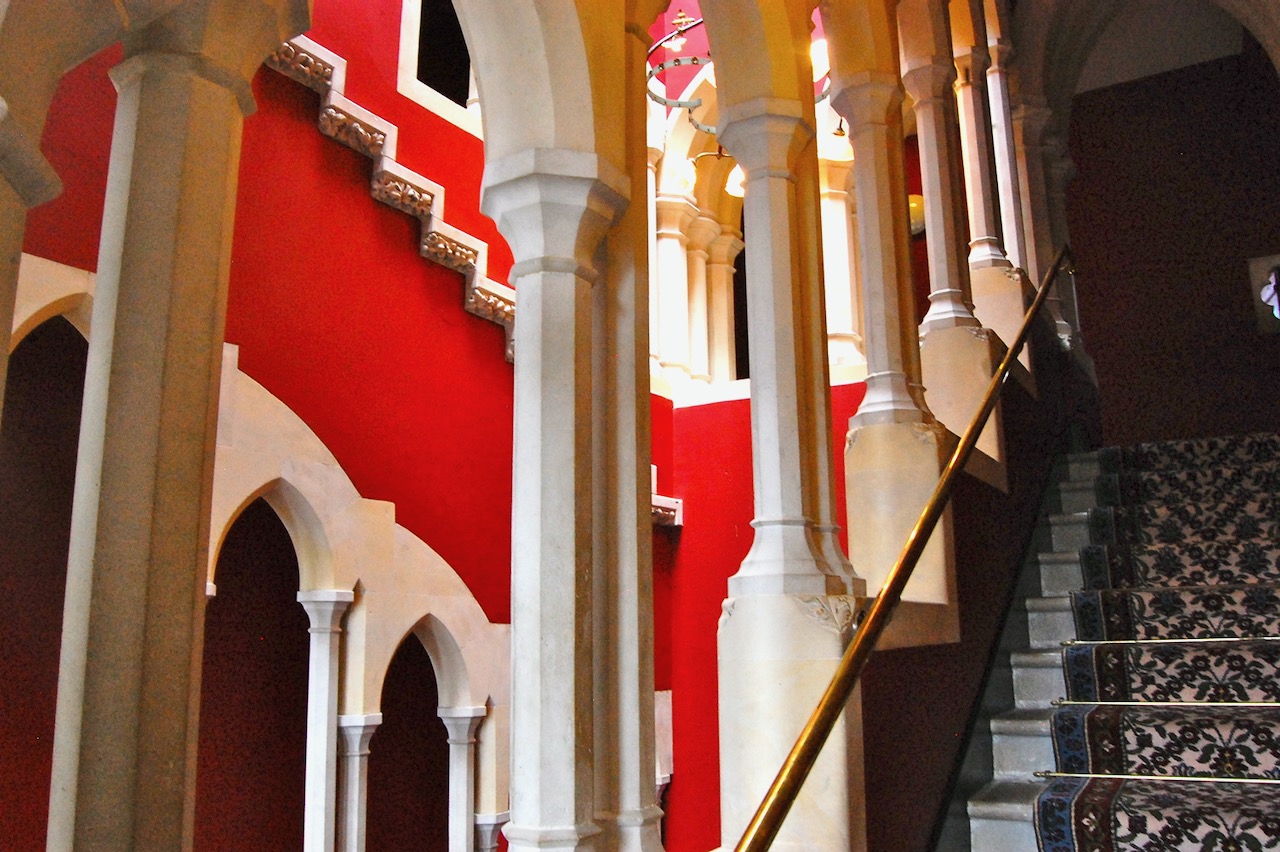
The Moorish Staircase: Created by the architects Woodward & Deane to allow better access to the Picture Gallery and provide another staircase in this awkwardly shaped building. It is a rising half-turn stairs around a sky-lit well. Charles Harrison (1835-1903), the stone carver, is credited with the carved naturalistic foliage and small animals which adorn the stairs. Photograph © Jennifer Winder-Baggot, www.irishhistorichouses.com
Photograph © Jennifer Winder-Baggot, www.irishhistorichouses.com

The magnificent Picture Gallery is situated in the east wing of Kilkenny Castle.This stunning space dates from the 19th century and was built primarily to house the Butler Family’s fine collection of paintings.

Photograph © Jennifer Winder-Baggot, www.irishhistorichouses.com

From the website: “… The entire ceiling was hand painted by John Hungerford Pollen (1820-1902), then Professor of Fine Arts at Newman College, Dublin, using a combination of motifs ranging from the quasi-medieval to the pre-Raphaelite, with interlace, gilded animal and bird heads on the cross beam.

Photograph © Jennifer Winder-Baggot, www.irishhistorichouses.com

The Marble Fireplace is made of Carrara marble and was designed by J. H. Pollen also in a quasi-medieval style. It was supplied by the firm of Ballyntyne of Dorset Street, Dublin. Foliage carving attributed to Charles Harrison covers the chimneypiece and a frieze beneath is decorated with seven panels, showing the family coat of arms and significant episodes from the family’s long history. Starting on the left, the first panel shows the buying the castle by the first Earl of Ormond in 1391 from the Despenser family – money changing hands is shown. The second panel depicts Theobald Fitzwalter acting as Chief Butler to the newly crowned King of England highlighting their ancient royal privilege and upon which their surname of Butler is based. On the third panel, you see King Richard the Second acting as godfather for one of the infants of the Butler family in 1391. The centrepiece is the family crest which can also be seen over the arch and gateway, with the family motto “comme je trouve”- “as I find”, as well as the heraldic shield guarded, the falcon, the griffin (a legendary creature with the body of a lion and the head and wings of an eagle) and the ducal coronet. In the fifth panel, the 1st Duke of Ormond can be seen entering the Irish House of Lords still bearing his sword. Indeed, he refused to hand his weapon over as were the protocols in case it was used inside during an argument; this became known as The Act of Defiance. The sixth panel next to this symbolizes the charity of the Butler family showing Lady Ormonde giving alms to the poor. Finally, the sixth and last panel portrays the First Duke of Ormond’s triumphant return to Dublin from exile on the Restoration of Charles the Second in 1662, when he also established the Royal Hospital in Kilmainham and founded the Phoenix Park.”
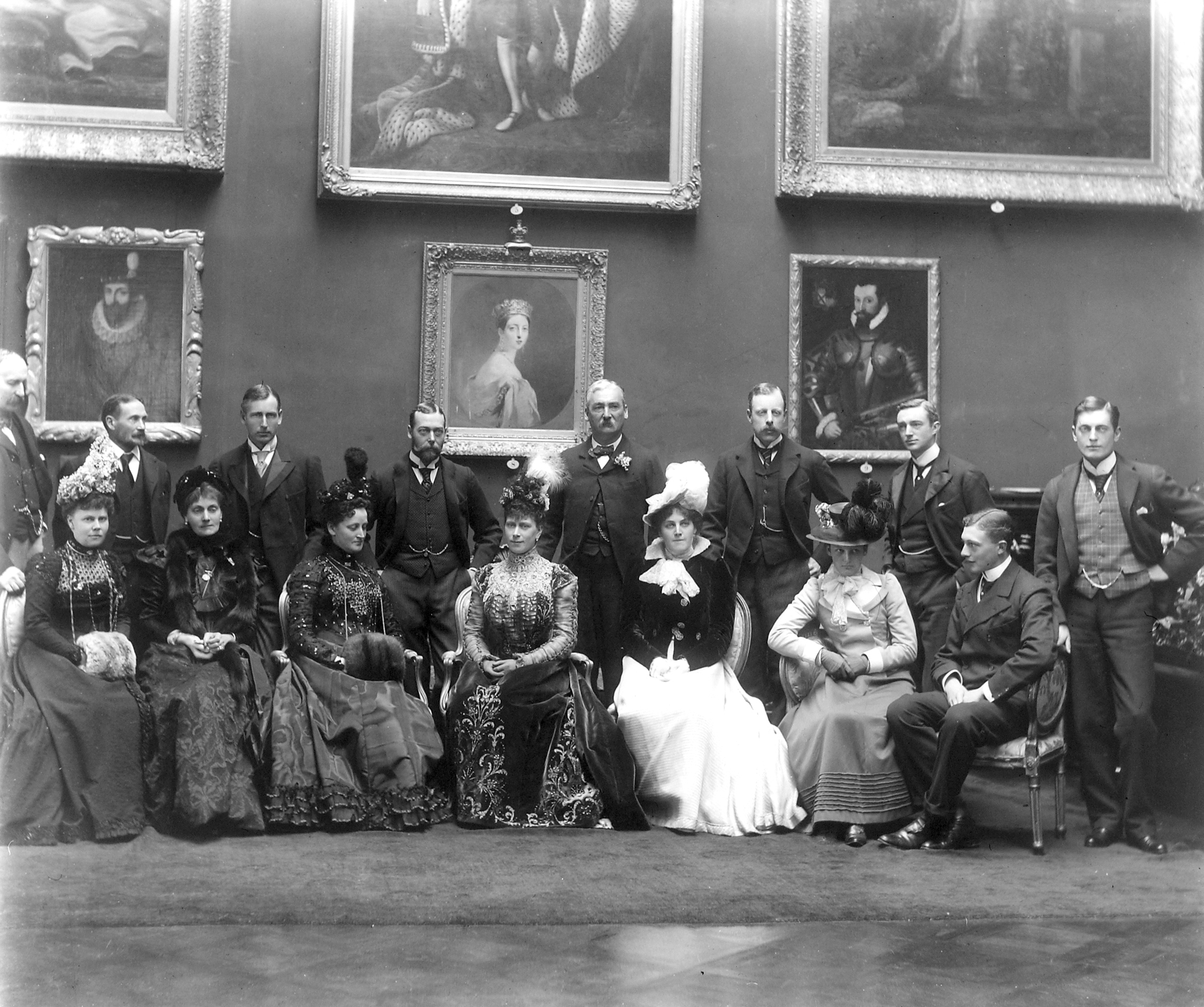
From the Poole photographic collection, National Library of Ireland. Royal visitors to the Picture Gallery of Kilkenny Castle: the Duke and Duchess of York (later King George V and Queen Mary with James Butler the 3rd Marquess of Ormond and his wife Elizabeth Grosvenor, also Two other Ormondes (likely the Marquess’ daughter & brother), Marshal & Lady Roberts (Frederick Roberts & Nora Bews), 4th Viscount & Viscountess De Vesci (John Vesey & Evelyn Charteris), Lady Eva Dugdale (later Lady of the Bedchamber), Earl of Ava (Hamilton-Temple-Blackwood d.1900), Sir Charles Leopold Cust (baronet), Sir Francis De Winton, Mr J. T Seigne JP (officer of Ormonde’s estate – we came across him when we visited Kilfane, as he lived in the house there), and “Mr Moncrieffe” 

The 3rd Marquess’s brother James Arthur Wellington Foley Butler (1849-1943) became 4th Marquess (and 22nd Earl) of Ormonde in 1919. He was educated at Harrow and joined the army becoming a lieutenant in the 1st Life Guards. He was state steward to the Earl of Carnarvon when Lord Lieutenant of Ireland. In 1887 he married Ellen Stager, daughter of American General Anson Stager.

The Nursery. Boys were usually sent away to boarding school in England at a young age. The Butlers traditionally sent their sons to Harrow. Girls however generally received less formal education at home including sewing, drawing, etiquette and instruction on running a household.  Photograph © Jennifer Winder-Baggot, www.irishhistorichouses.com

As I mentioned earlier, it was James Arthur Norman Butler (1893-1971), 6th Marquess and 24th Earl of Ormonde, youngest son of James Arthur, 4th Marquess of Ormonde, who in 1967 sold the Castle.

Mark Bence-Jones tells us that the interior was largely redecorated and wood-carvings in the manner of Grinling Gibbons were introduced into some of the family rooms in the South Tower after the castle suffered damage 1922 during the Civil War, when, having been occupied by one side, it was attacked and captured by the other; the Earl of Ossory (afterwards 9th Marquess) and his wife being in residence at the time. In 1935 the Ormondes ceased to live in the castle, which for the next thirty years stood empty and deteriorating. It is now a wonderful place to visit, and has fifty acres of rolling parkland, a terraced rose garden, playground, tearoom and man-made lake, for visitors to enjoy.

[1] https://www.irelandscontentpool.com

[2] https://kilkennycastle.ie/about/explore-the-castle-new/

[3] https://kilkennycastle.ie/about/characters-of-kilkenny-castle/

[4] http://www.stevenroyedwards.com/kilkennycastle-timeline.html

[5] p. 167. Bence-Jones, Mark. A Guide to Irish Country Houses (originally published as Burke’s Guide to Country Houses volume 1 Ireland by Burke’s Peerage Ltd. 1978); Revised edition 1988 Constable and Company Ltd, London.

Text © Jennifer Winder-Baggot, www.irishhistorichouses.com

Office of Public Works properties: County Kilkenny, Leinster

Kilkenny:

1. Dunmore Cave, County Kilkenny

2. Jerpoint Abbey, County Kilkenny

3. Kells Priory, County Kilkenny

4. Kilkenny Castle, County Kilkenny

5. St. Mary’s Church, Gowran, County Kilkenny

donation

Help me to pay the entrance fee to one of the houses on this website. This site is created purely out of love for the subject and I receive no payment so any donation is appreciated!

€15.00

1. Dunmore Cave, Mothel, Ballyfoyle, Castlecomer Road, County Kilkenny:

General information: 056 776 7726, dunmorecaves@opw.ie

https://heritageireland.ie/visit/places-to-visit/dunmore-cave/

From the OPW website:

Dunmore Cave, not far from Kilkenny town, is a series of limestone chambers formed over millions of years. It contains some of the most impressive calcite formations found in any Irish underground structure.

The cave has been known for many centuries and is first mentioned in the ninth-century Triads of Ireland, where it is referred to as one of the ‘darkest places in Ireland’. The most gruesome reference, however, comes from the Annals of the Four Masters, which tells how the Viking leader Guthfrith of Ivar massacred a thousand people there in AD 928. Archaeological investigation has not reliably confirmed that such a massacre took place, but finds within the cave – including human remains – do indicate Viking activity.

Dunmore is now a show cave, with guided tours that will take you deep into the earth – and even deeper into the past.

2. Jerpoint Abbey, Thomastown, County Kilkenny.

Jerpoint Abbey, May 2016. Photograph © Jennifer Winder-Baggot, www.irishhistorichouses.com
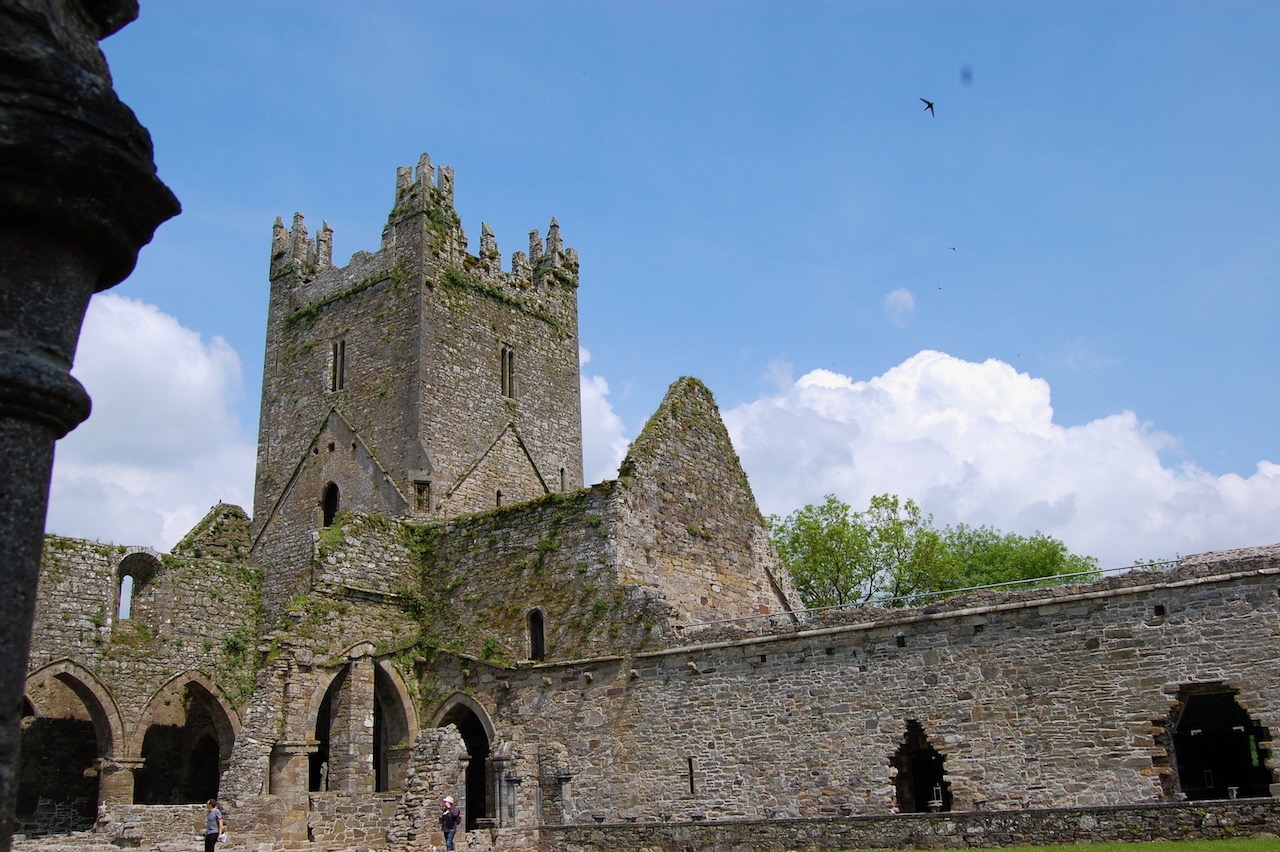
Photograph © Jennifer Winder-Baggot, www.irishhistorichouses.com
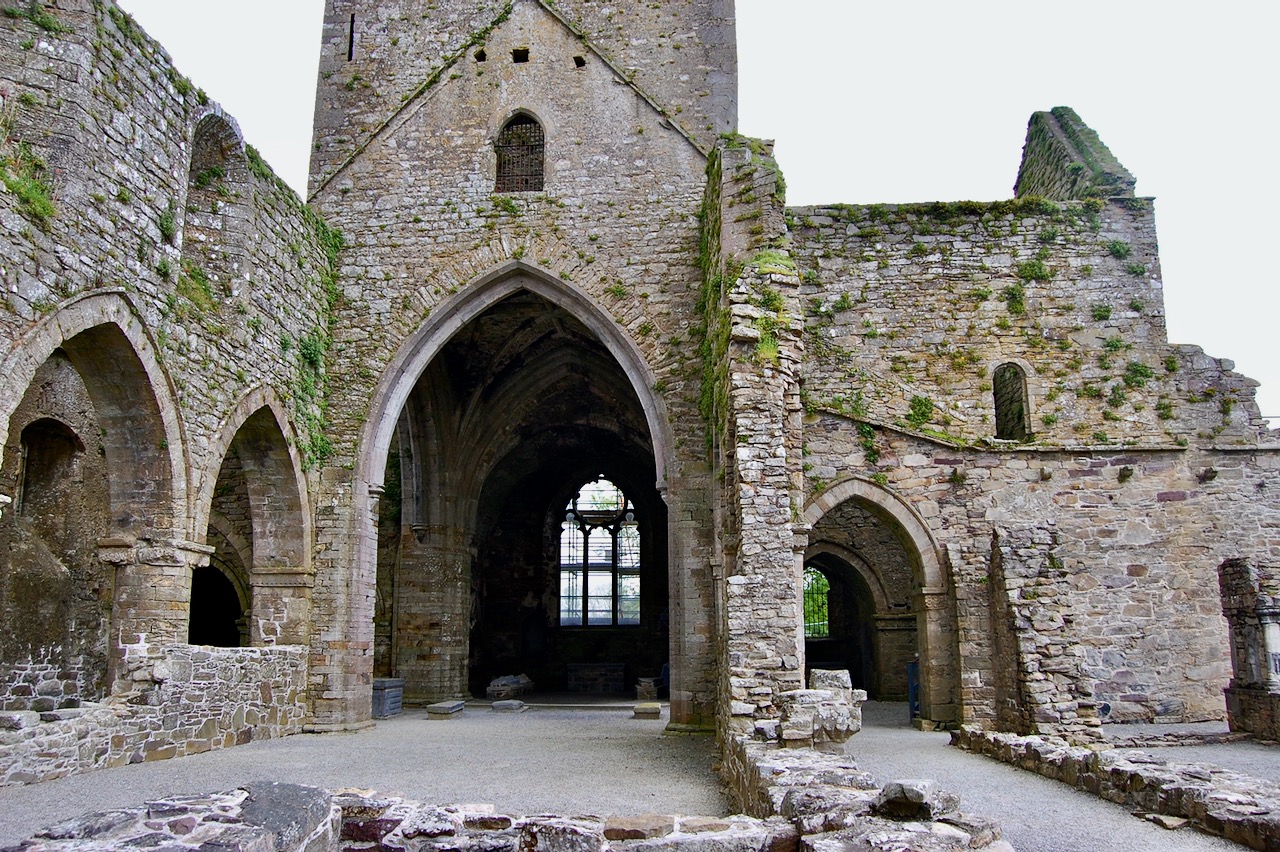
General information: 056 772 4623, jerpointabbey@opw.ie

https://heritageireland.ie/visit/places-to-visit/jerpoint-abbey/

From the OPW website:

Founded in the 12th century, Jerpoint Abbey is one of the best examples of a medieval Cistercian Abbey in Ireland. The architectural styles within the church, constructed in the late twelfth century, reflect the transition from Romanesque to Gothic architecture. The tower and cloister date to the fifteenth century.

Jerpoint is renowned for its detailed stone sculptures found throughout the monastery. Dating from the thirteenth to the sixteenth centuries these include mensa [table] tombs from the O’Tunney school, an exquisite incised depiction of two 13th century knights, the decorated cloister arcades along with other effigies and memorials. 

Children can explore the abbey with a treasure hunt available in the nearby visitor centre. Search the abbey to discover saints, patrons, knights, exotic animals and mythological creatures.

A small but informative visitor centre houses an excellent exhibition.

Jerpoint Abbey, May 2016. Photograph © Jennifer Winder-Baggot, www.irishhistorichouses.com
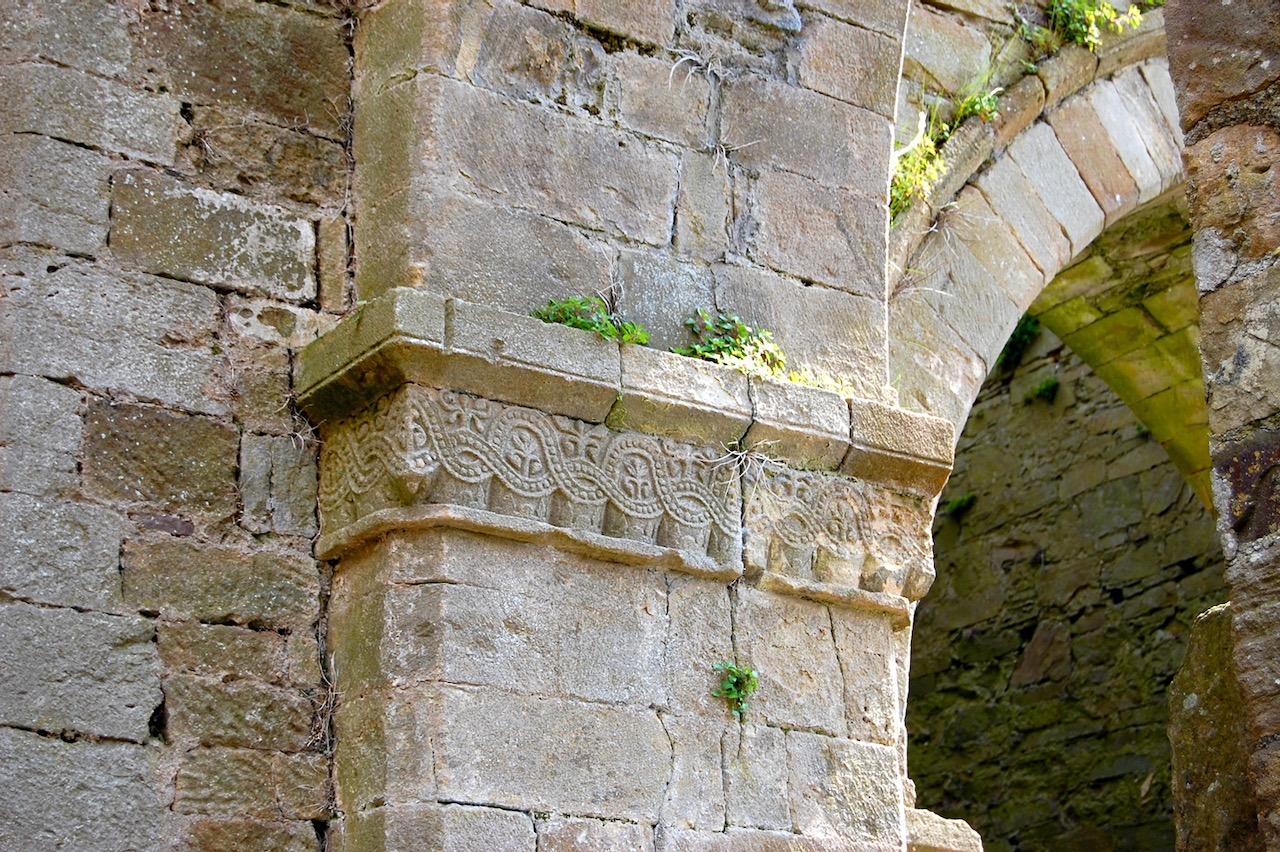
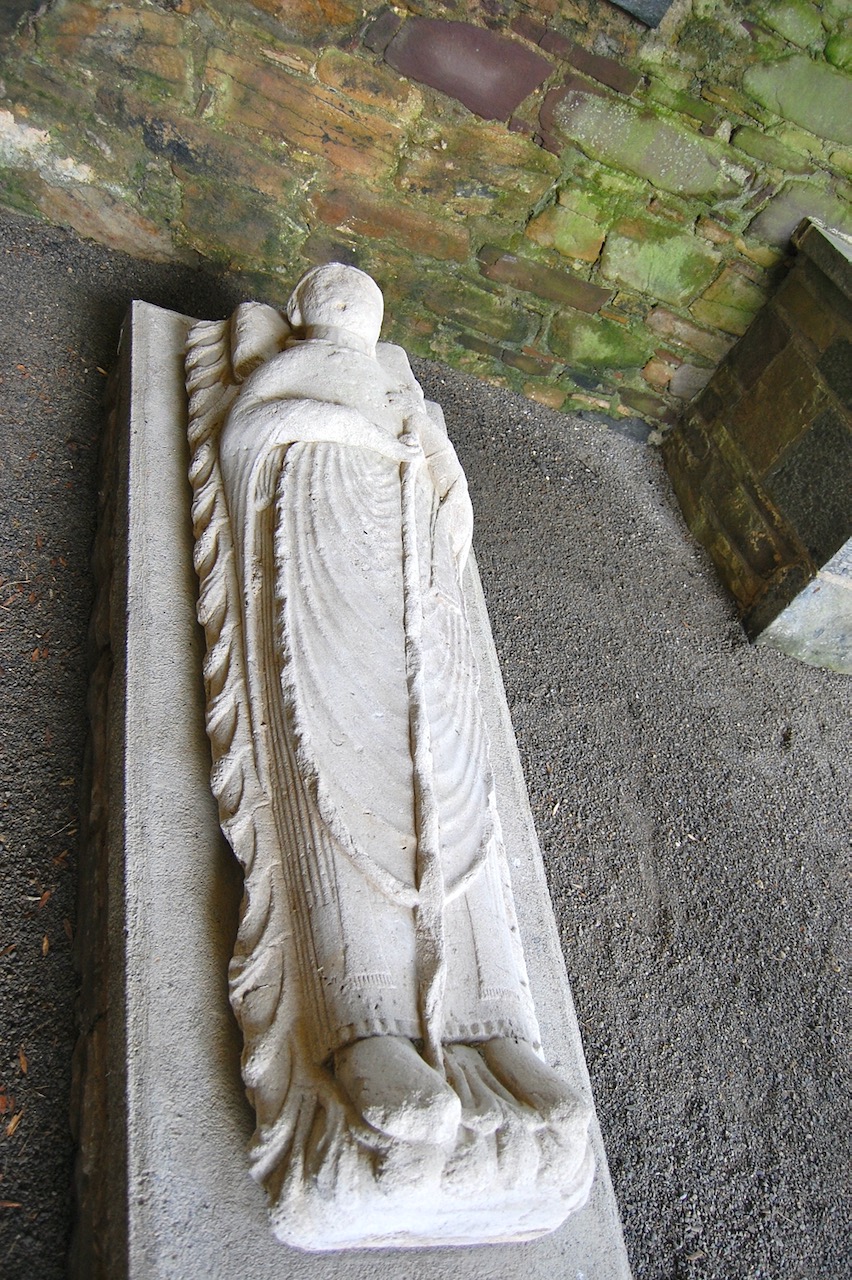
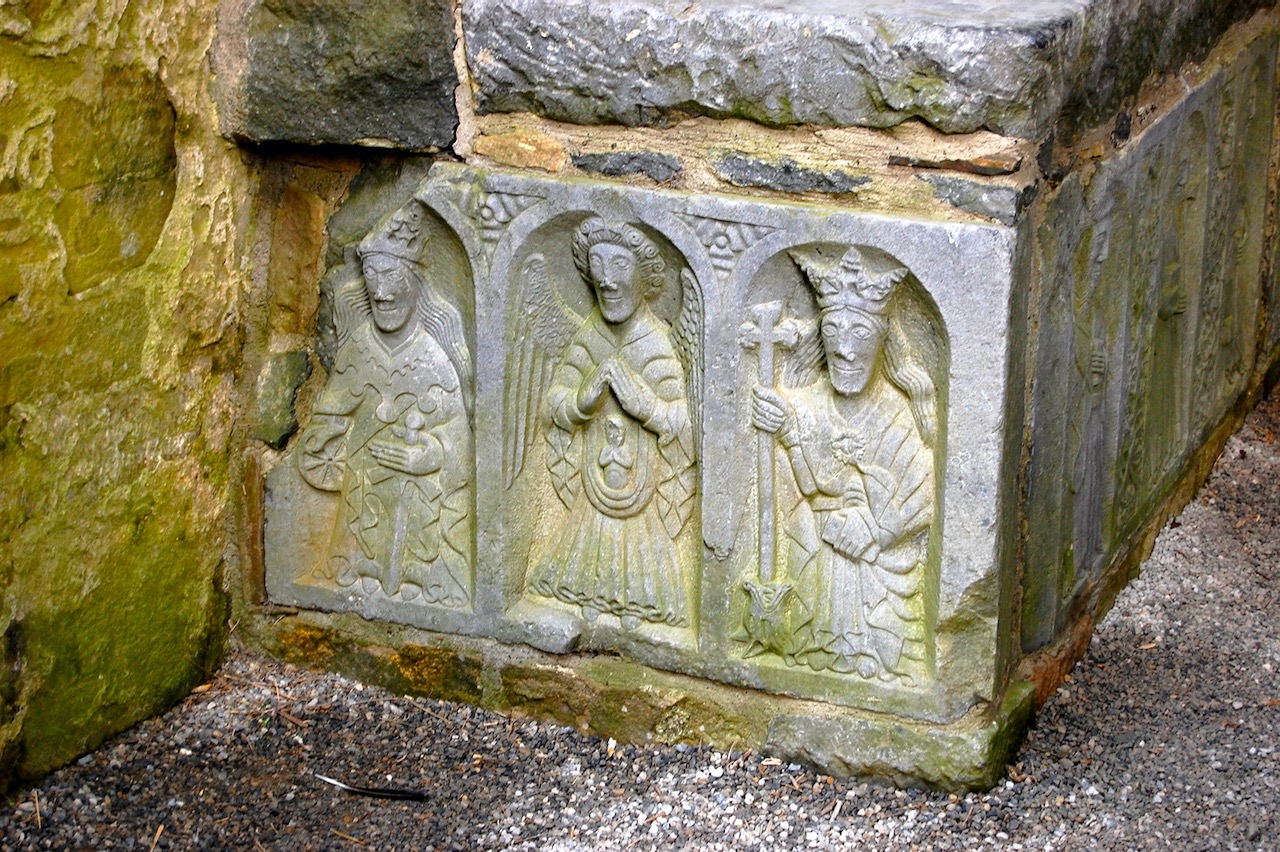
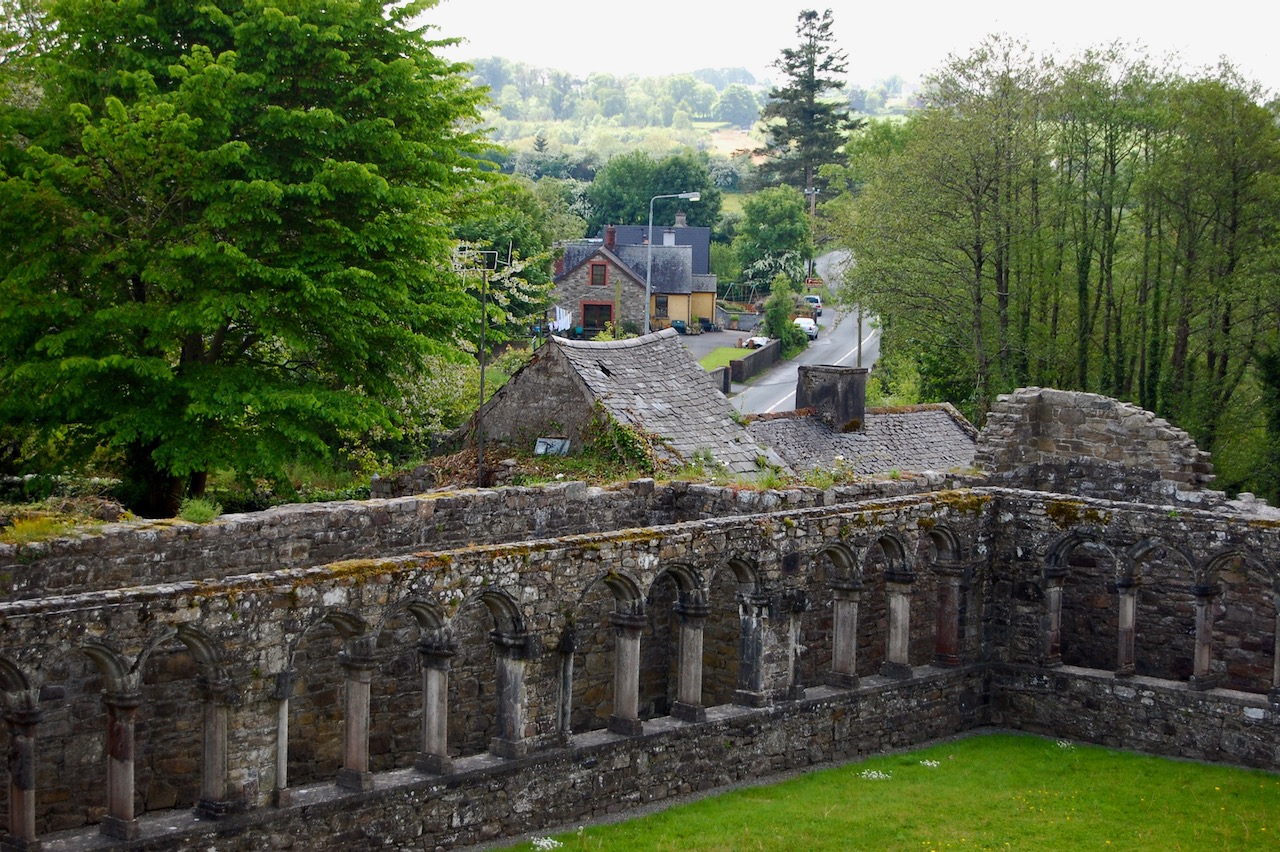
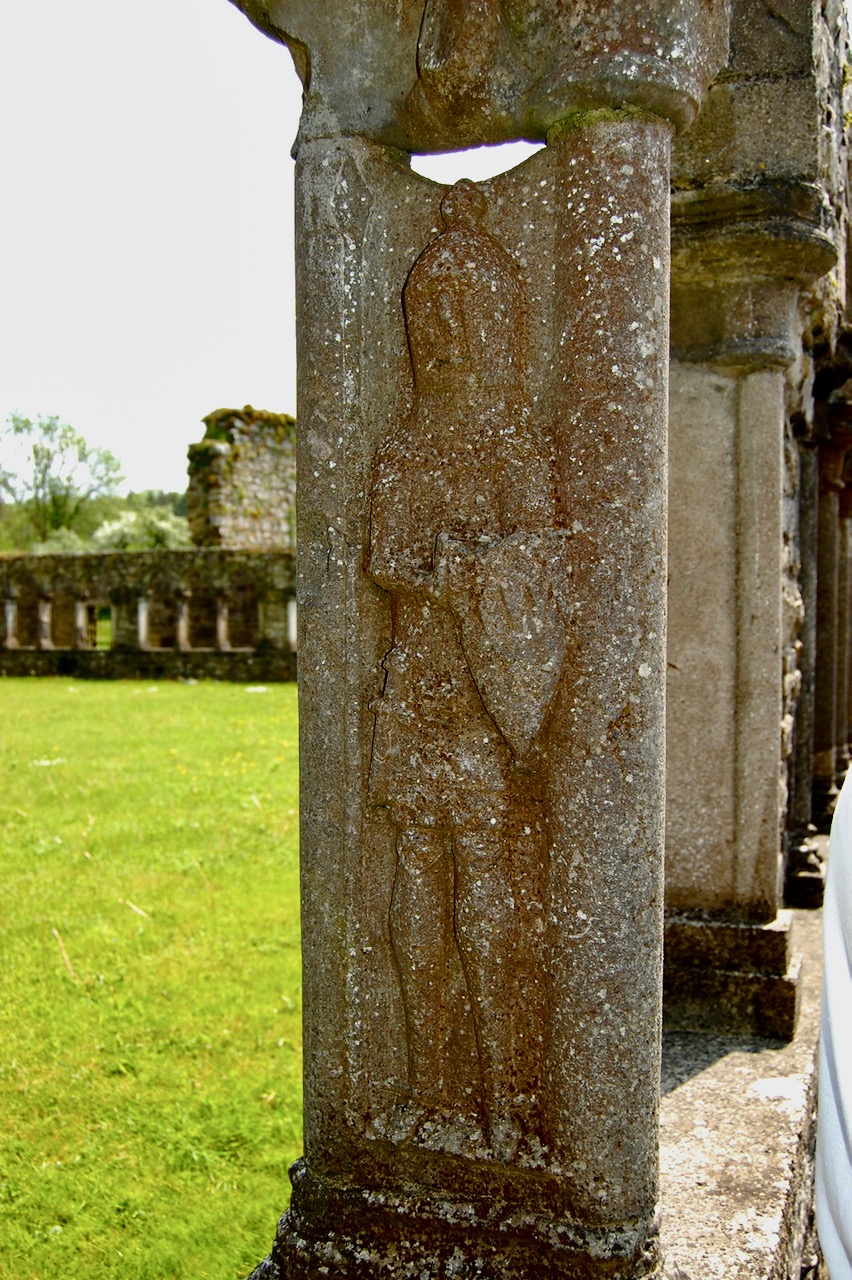
Jerpoint Abbey. Photograph © Jennifer Winder-Baggot, www.irishhistorichouses.com

3. Kells Priory, Kells, County Kilkenny:

General information: 056 772 4623, jerpointabbey@opw.ie

From the OPW website:

Kells Priory owes its foundation to the Anglo-Norman consolidation of Leinster. Founded by Geoffrey FitzRobert, a household knight and trusted companion of William Marshal the priory was one element of Geoffrey’s establishment of the medieval town of Kells. 

Although founded in c. 1193 extensive remains exist today which include a nave, chancel, lady chapel, cloister and associated builds plus the remains of the priory’s infirmary, workshop, kitchen, bread oven and mill. The existence of the medieval defences, surrounding the entire precinct, underline the military aspect of the site and inspired the priory’s local name, the ‘Seven Castles of Kells’.

4. Kilkenny Castle, County Kilkenny:

Kilkenny Castle, photograph by macmillan media 2016 for Tourism Ireland, Ireland’s Content Pool. It sits on the banks of the River Nore. [1]

General information: 056 770 4100, kilkennycastleinfo@opw.ie

From the OPW website:

Built in the twelfth century, Kilkenny Castle was the principal seat of the Butlers, earls, marquesses and dukes of Ormond for almost 600 years. Under the powerful Butler family, Kilkenny grew into a thriving and vibrant city. Its lively atmosphere can still be felt today.

The castle, set in extensive parkland, was remodelled in Victorian times. It was formally taken over by the Irish State in 1969 and since then has undergone ambitious restoration works. It now welcomes thousands of visitors a year.

Kilkenny Castle, photograph by unknown 2014 for Failte Ireland, Ireland’s Content Pool. [see 1]

See my entry https://irishhistorichouses.com/2024/04/08/kilkenny-castle-county-kilkenny-an-office-of-public-works-property/

Kilkenny Castle has been standing for over eight hundred years, dominating Kilkenny City and the South East of Ireland. Originally built in the 13th century by William Marshall, 4th Earl of Pembroke, as a symbol of Norman control, Kilkenny Castle came to symbolise the fortunes of the powerful Butlers of Ormonde for over six hundred years. [2]

In 1967 James Arthur Norman Butler (1893-1971), 6th Marquess and 24th Earl of Ormonde sold the Castle to the Kilkenny Castle Restoration Committee for £50. Two years later it went into state ownership.

Kilkenny Castle, photograph by unknown 2014 for Failte Ireland, Ireland’s Content Pool. [see 1] The National Inventory describes: Random rubble stone walls with sections of limestone ashlar construction (including to breakfront having full-height Corinthian pilasters flanking round-headed recessed niches with sills, moulded surrounds having keystones, decorative frieze having swags, moulded course, modillion cornice, and blocking course with moulded surround to pediment having modillions), and limestone ashlar dressings including battlemented parapets (some having inscribed details) on corbel tables. The classical frontispiece was designed for James Butler, Second Duke of Ormonde possibly to designs prepared by Sir William Robinson. 

You can take an online tour of the castle on the website https://kilkennycastle.ie/about/explore-the-castle-new/

The magnificent Picture Gallery is situated in the east wing of Kilkenny Castle.This stunning space dates from the 19th century and was built primarily to house the Butler Family’s fine collection of paintings.

Kilkenny Castle. Photograph © Jennifer Winder-Baggot, www.irishhistorichouses.com
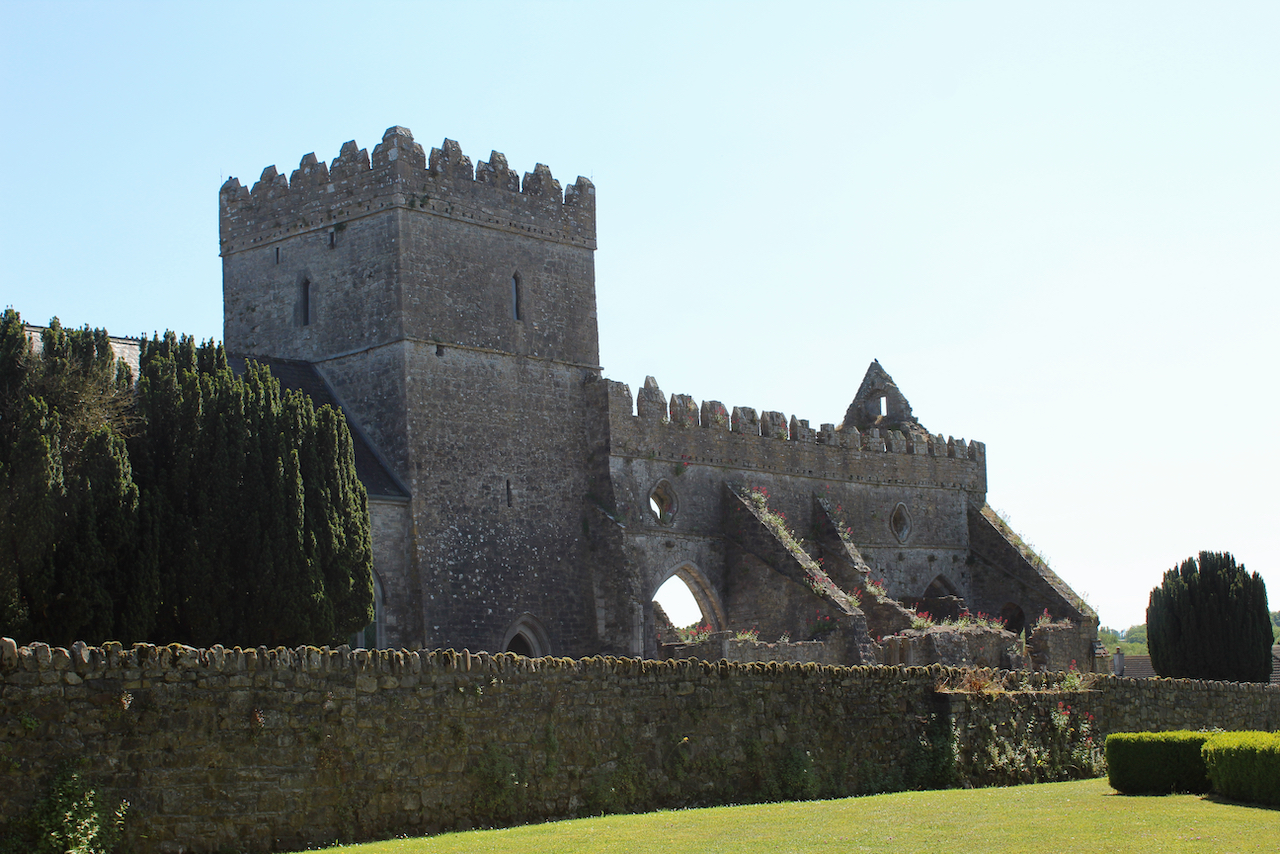
5. St. Mary’s Church, Gowran, County Kilkenny:

General information: 056 772 6894, breda.lynch@opw.ie

St. Mary’s church, Gowran, June 2023. Photograph © Jennifer Winder-Baggot, www.irishhistorichouses.com

From the OPW website:

This church was built in the late thirteenth century as a collegiate church and was served by a college – clerics who lived in a community but did not submit to the rule of a monastery. 

The church was patronised by the Butler family and many early family members are commemorated here with elaborate medieval tombs. The impressive ruins were decorated by the Gowran Master whose stone carvings are immortalised in the poetry of Nobel Laureate Séamus Heaney. 

The once medieval church was later partly reconstructed in the early 19th century and functioned as a Church of Ireland church until the 1970s when it was gifted to the State as a National Monument. Today the restored part of the church preserves a collection of monuments dating from the 5th to the 20th centuries.

St. Mary’s church, Gowran, June 2023.

We visited it on the way home from Shankill Castle in County Kilkenny in June 2023. Our tour guide was an enthusiastic font of information and we shared what we knew also and we would have happily spent longer but had to head off as we were visiting a friend in Thomastown.

Entrance to the church. Photograph © Jennifer Winder-Baggot, www.irishhistorichouses.com
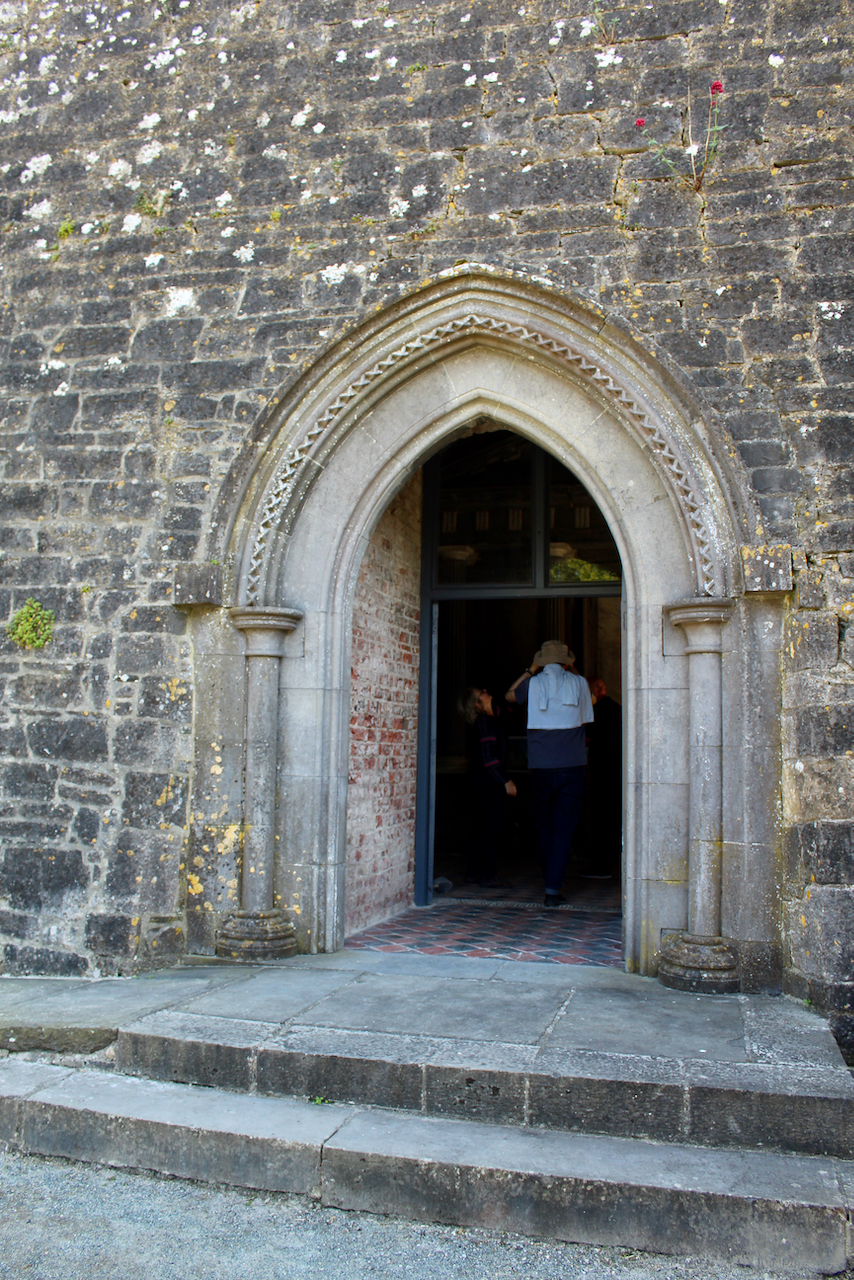
This large monument greets one as one enters the church, a monument to James Agar (d. 1733), son of Charles from York and Ellis Blancheville. By his first wife Susannah daughter of James Alexander he had three children who died young. By his second wife Mary daughter of Henry Wemyss of Danesfort, Kilkenny, he had several children. Photograph © Jennifer Winder-Baggot, www.irishhistorichouses.com
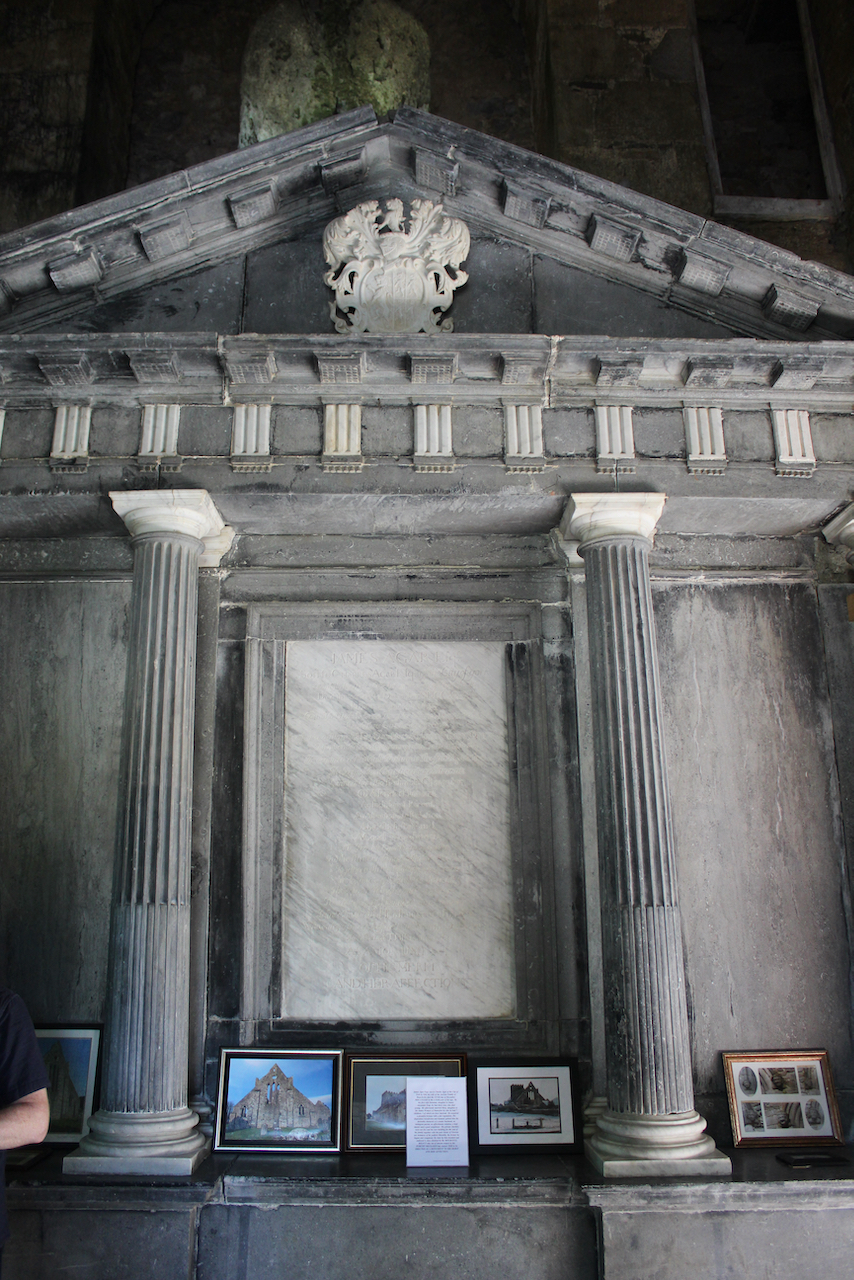
St. Mary’s church, Gowran, June 2023. Photograph © Jennifer Winder-Baggot, www.irishhistorichouses.com
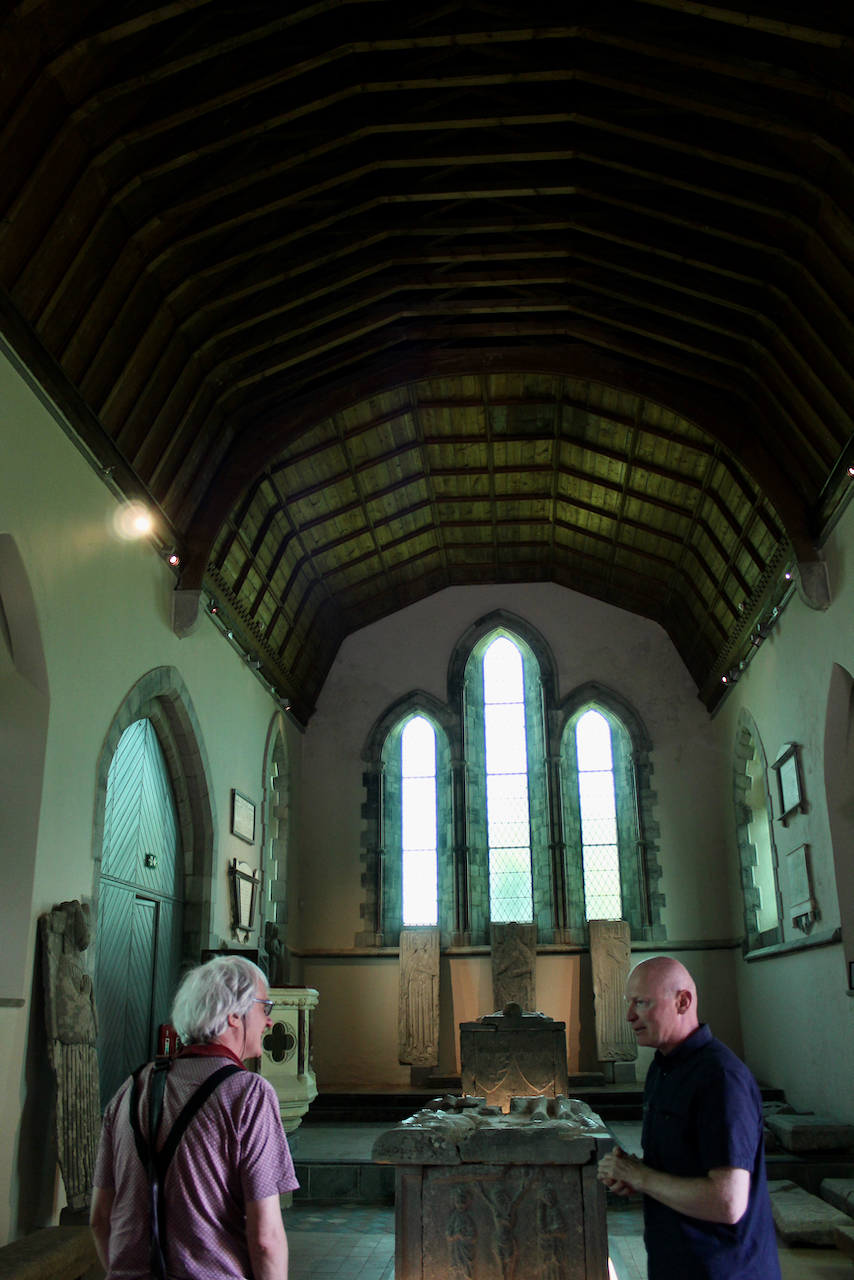
I was excited to see the tombs of the early Butlers of Ormond. The website tells us that the pair of effigial tombs belong (1467-1539) (d. 1487) to Butler knights. The more elaborate of them is believed to belong to Sir James Butler of Polestown, father of the eighth earl of Ormond, Piers Rua.

One of the effigial tombs. Photograph © Jennifer Winder-Baggot, www.irishhistorichouses.com
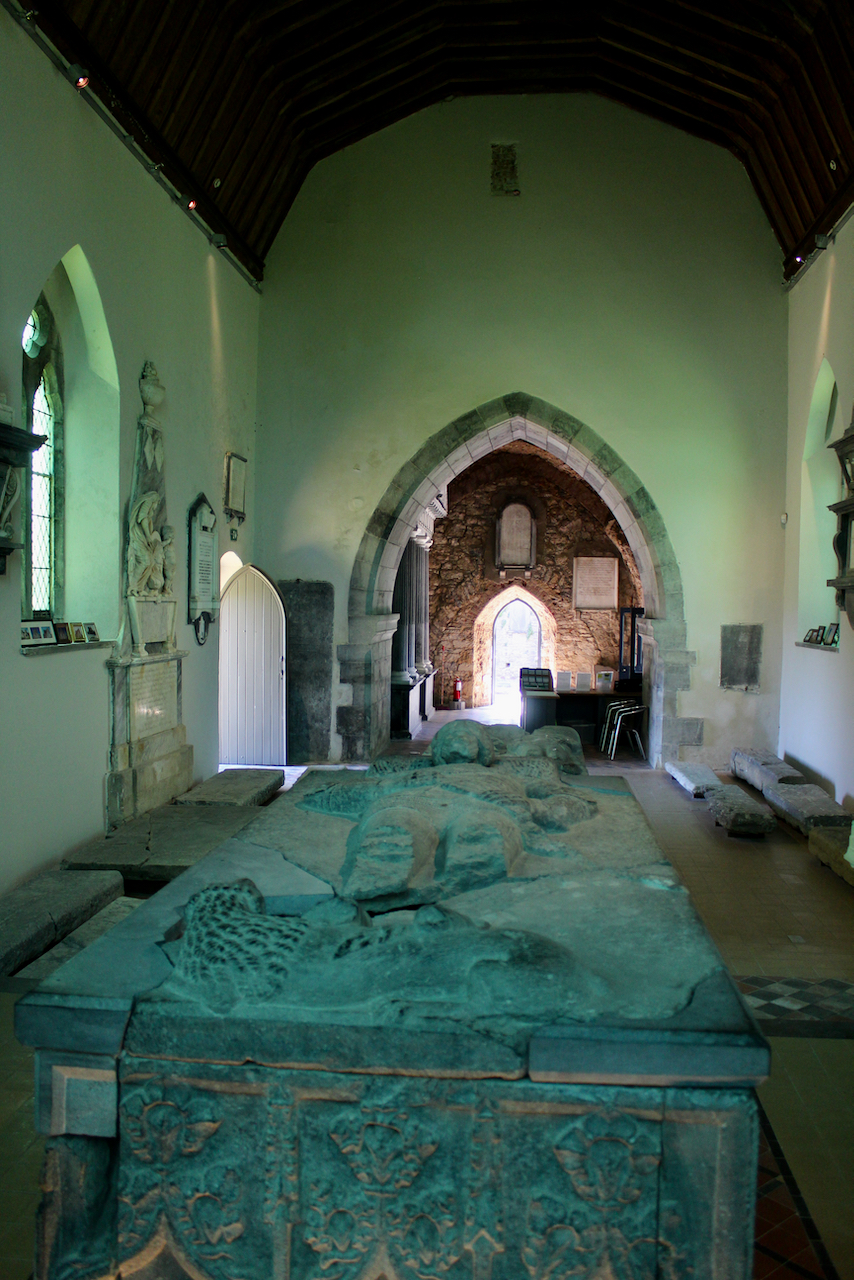
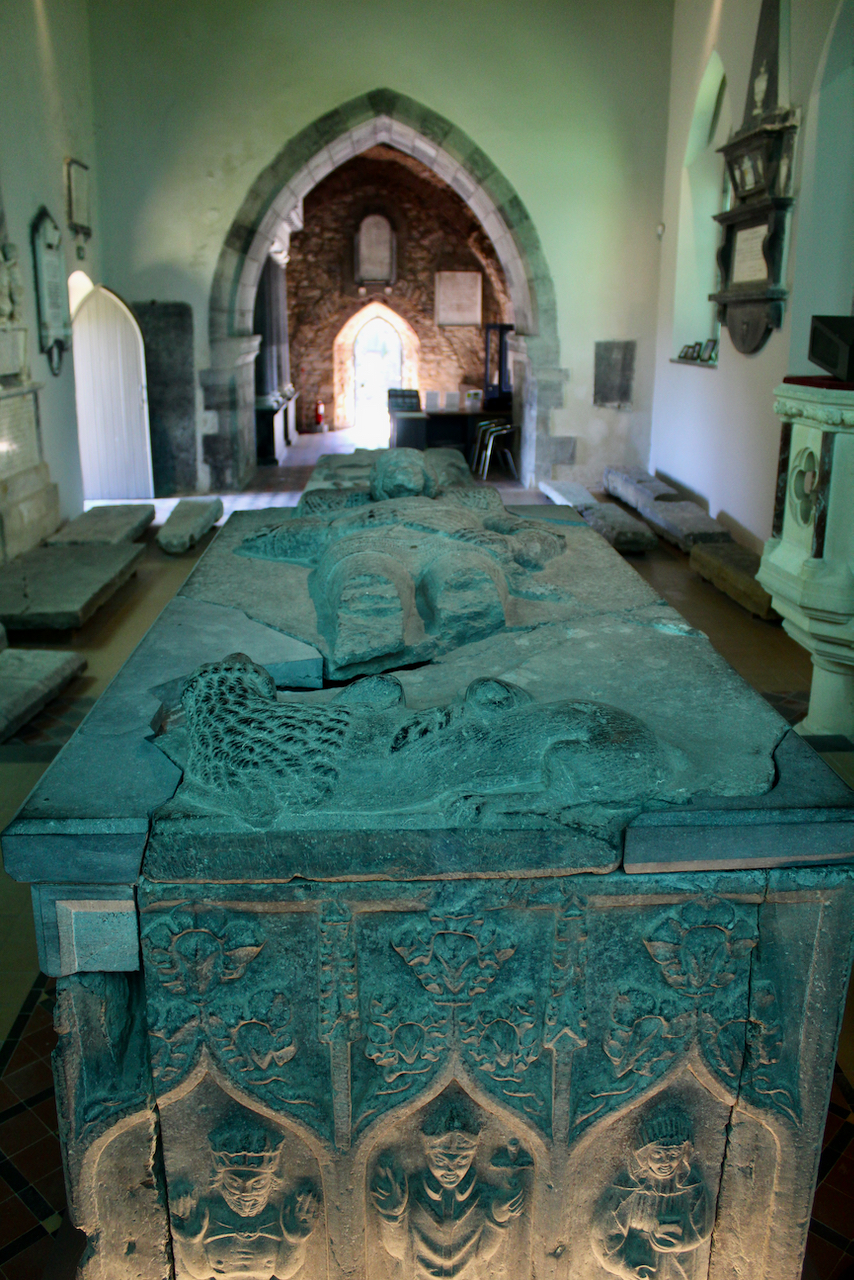
The end of the effigial tomb. Photograph © Jennifer Winder-Baggot, www.irishhistorichouses.com
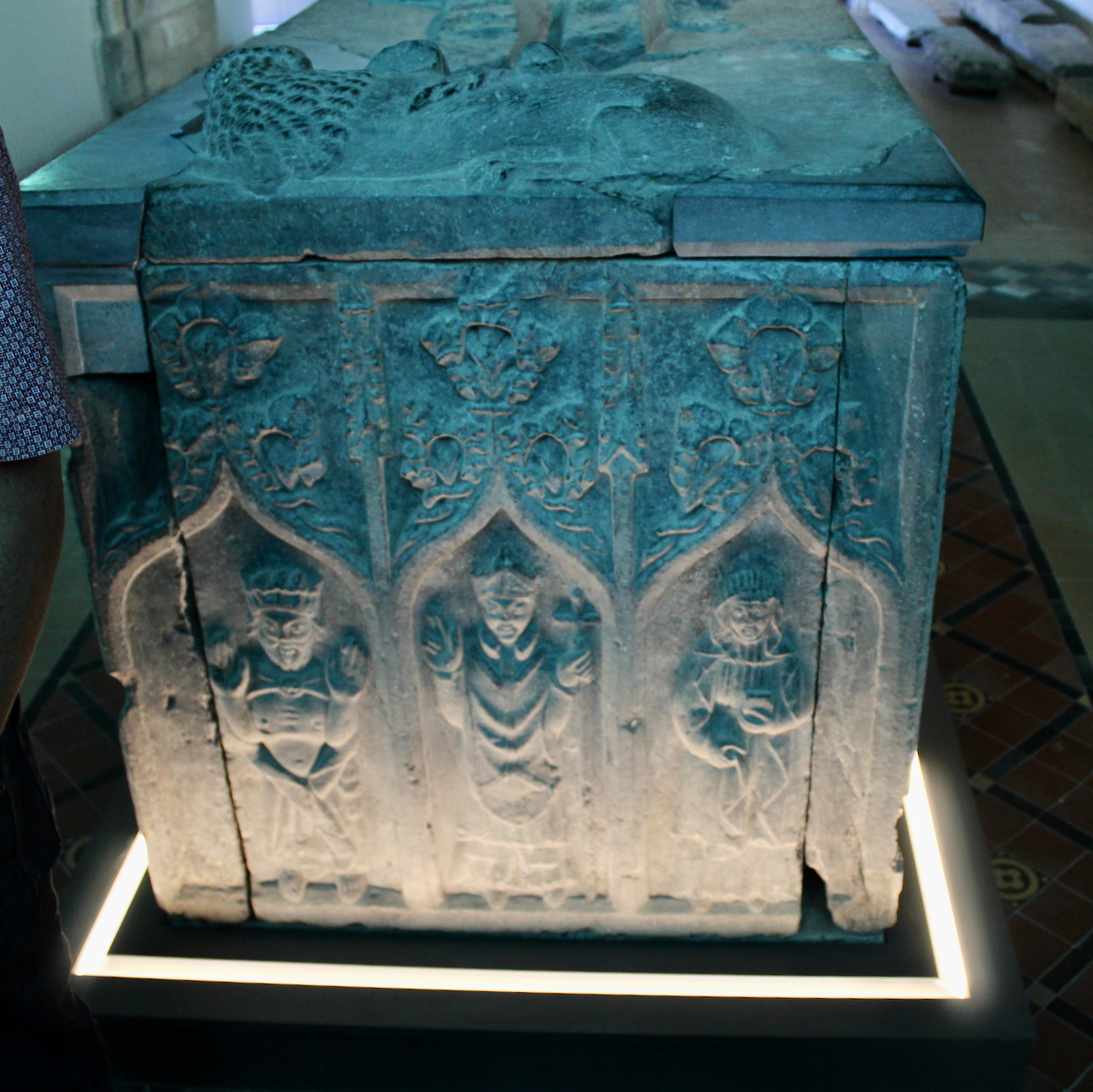
The sides of this tomb are skilfully decorated with carvings of the Apostles, St Brigid, the crucifixion of Jesus Christ and possibly St Thomas à Becket. This tomb is believed to be the work of the renowned O’Tunneys of Callan. James became the Lord Deputy of Ireland in 1464. He married Sabh Kavanagh, daughter of Donal Reagh MacMurrough-Kavanagh, the King of Leinster.

This is probably the 1st Earl of Ormond, James Butler (c. 1305-1337). Photograph © Jennifer Winder-Baggot, www.irishhistorichouses.com
Probably the wife of the 1st Earl of Ormond, Eleanor de Bohun (c. 1304-1363). Photograph © Jennifer Winder-Baggot, www.irishhistorichouses.com
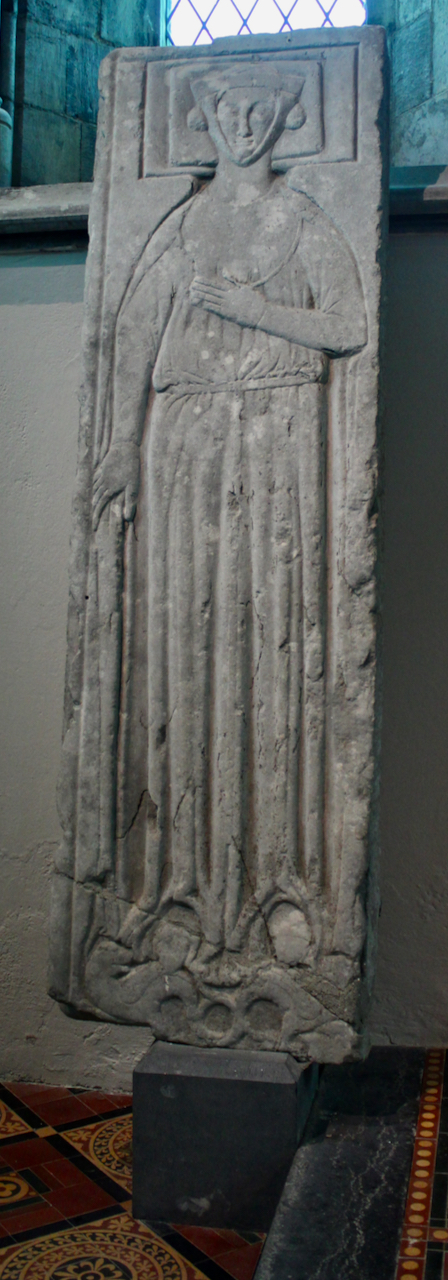
I’m not sure who this one is. Photograph © Jennifer Winder-Baggot, www.irishhistorichouses.com
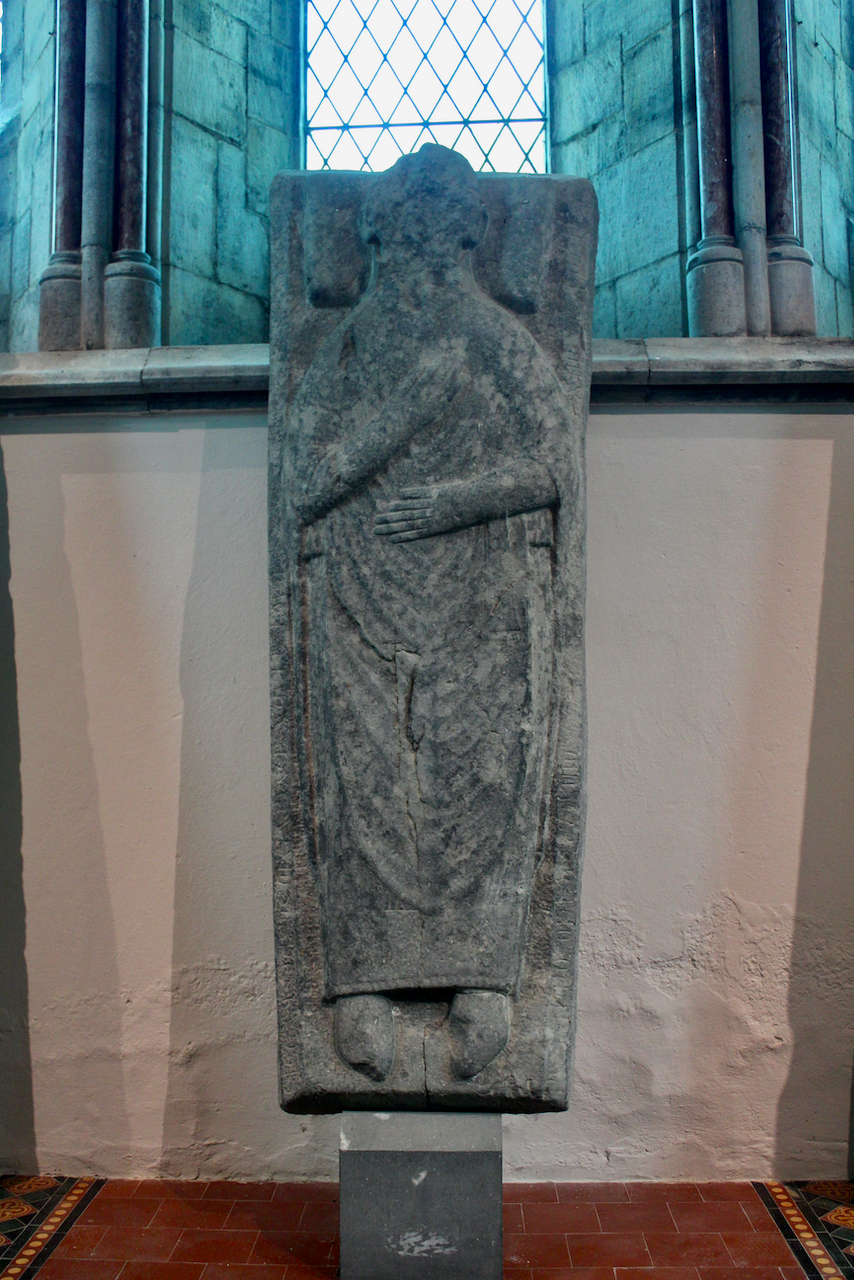
I think this one is the effigy of Ralph (Radoulfus) in his priestly vestments, the portrieve (priest) of Gowran in 1218. It is believed to be the oldest burial monument in Ireland with a date on it. The inscription is carved in Latin around the edge of the monument in Lombardic lettering. The monument is dated 19 March 1253. Photograph © Jennifer Winder-Baggot, www.irishhistorichouses.com
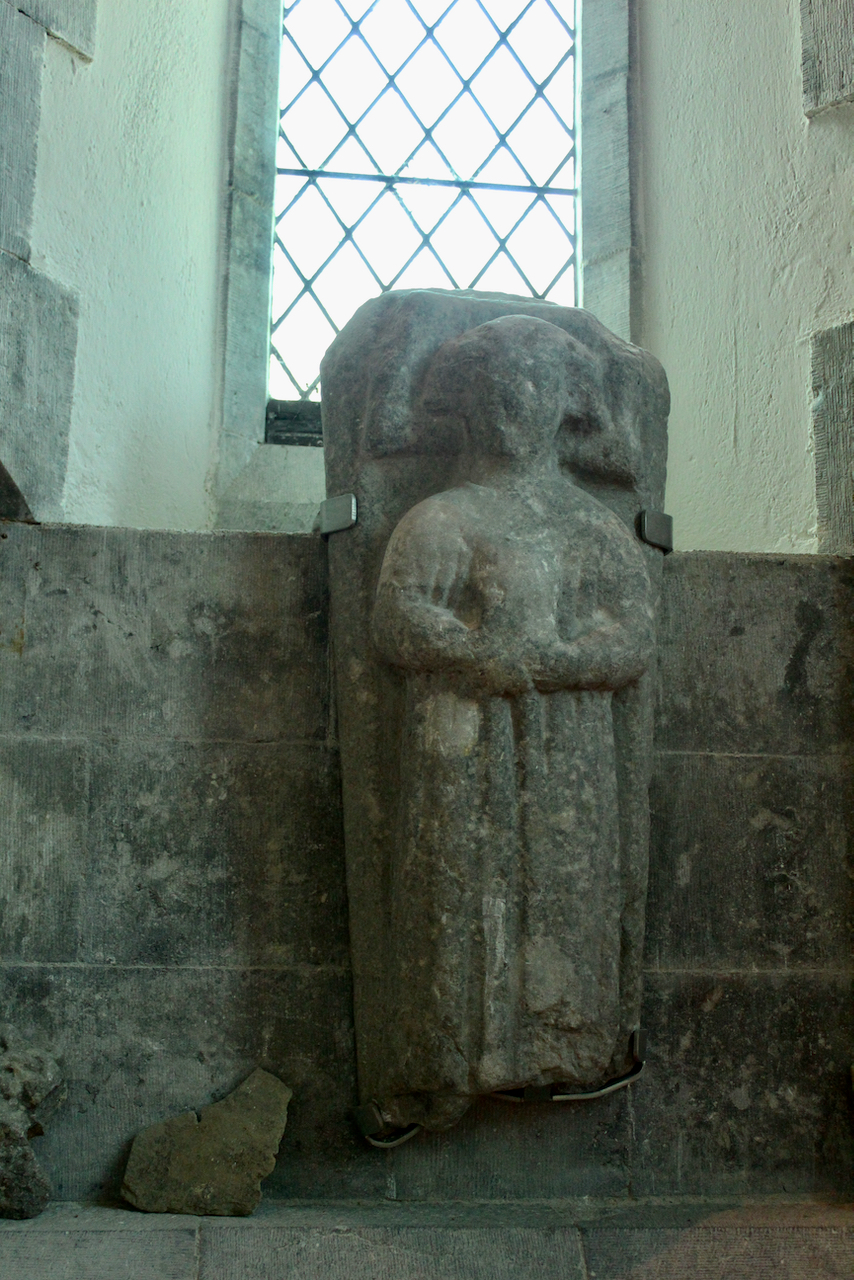
Another sculpted monument. Photograph © Jennifer Winder-Baggot, www.irishhistorichouses.com
An ogham stone with a cross. This is from the third or fourth century, was found on the site during the rebuilding of the chancel in 1826. Fr. Edmund Barry’s reading of the ogham writing here is “DALO MAQA MUCOI MAQUI-ERACIAS MAQI LI”, that is, “Dalach, grandson, of Mac-Eirche, who was son of Lia.” The cross was probably carved around the sixth century. Photograph © Jennifer Winder-Baggot, www.irishhistorichouses.com

[1] https://www.irelandscontentpool.com

[2] https://kilkennycastle.ie/about/explore-the-castle-new/

Text © Jennifer Winder-Baggot, www.irishhistorichouses.com