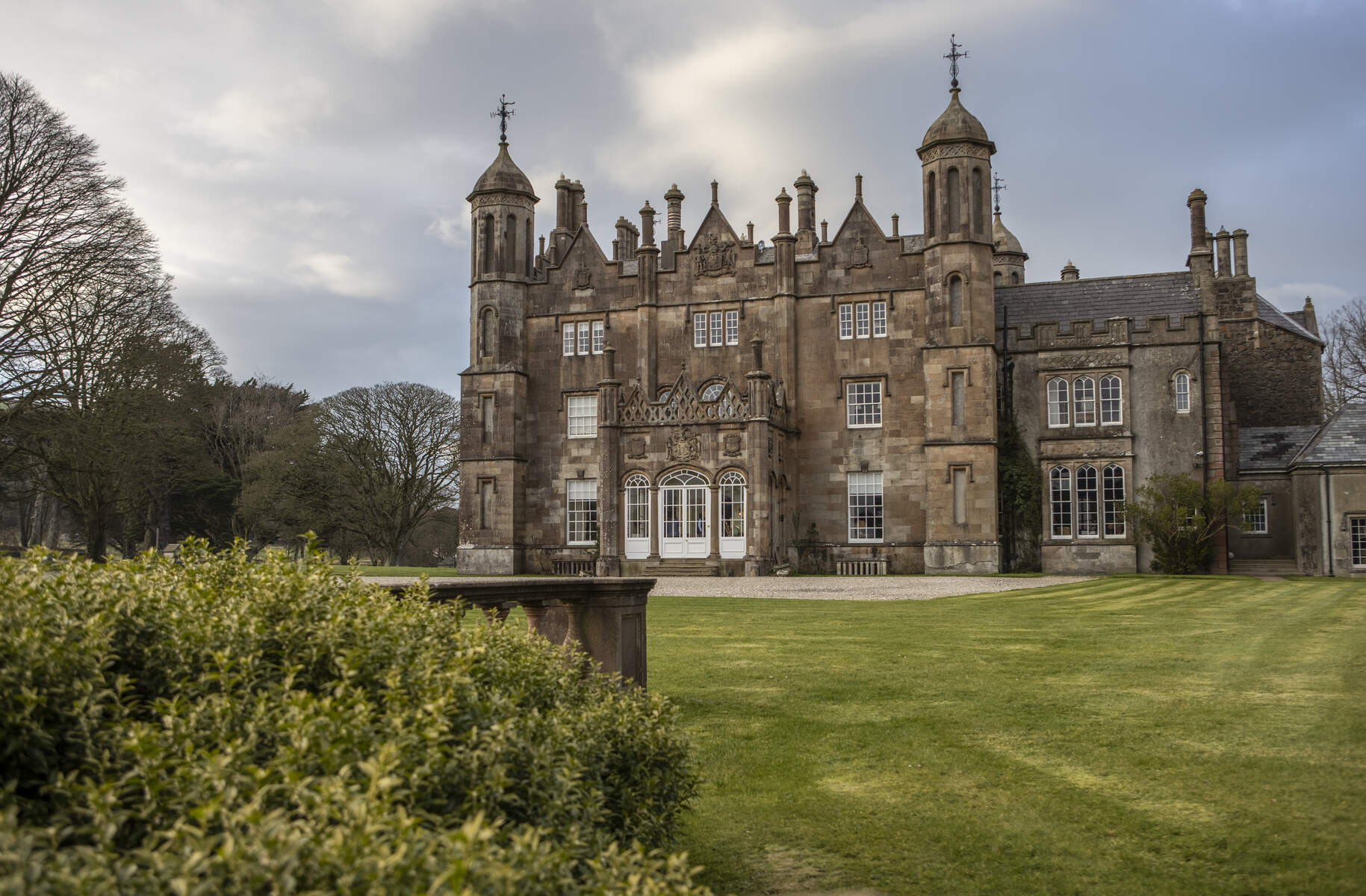
Glenarm Castle, County Antrim, Northern Ireland – private, can book a tour

https://glenarmcastle.com

Glenarm Castle & Garden, photo by Donal Maloney 2021 for Tourism Ireland [1]

Sorry, this is another re-publishing, as it was previously published on my “Places to Visit in County Antrim” page. Stephen and I have still been too busy this year to visit more Section 482 properties. Heritage Week is coming up next month, August 17-24th, so all of the Section 482 properties should be open – see my home page for details, https://irishhistorichouses.com/

I hope Stephen and I can visit many properties this year during Heritage Week!

The website tells us that Glenarm Castle is one of few country estates that remains privately owned but open to the public. It is steeped in a wealth of history, culture and heritage and attracts over 100,000 visitors annually from all over the world. 
Photograph © Jennifer Winder-Baggot, www.irishhistorichouses.com

Visitors can enjoy enchanted walks through the Walled Garden and Castle Trail, indulge in an amazing lunch in the Tea Room, purchase some local produce or official merchandise, or browse through a wide range of ladies & gents fashions and accessories and a selection of beautiful gifts, souvenirs and crafts in the Byre Shop and Shambles Workshop – with many ranges exclusive to Glenarm Castle.

Glenarm Castle is the ancestral home of the McDonnell family, Earls of Antrim. The castle is first and foremost the private family home of Viscount and Viscountess Dunluce and their family but they are delighted to welcome visitors to Glenarm Castle for guided tours on selected dates throughout the year.

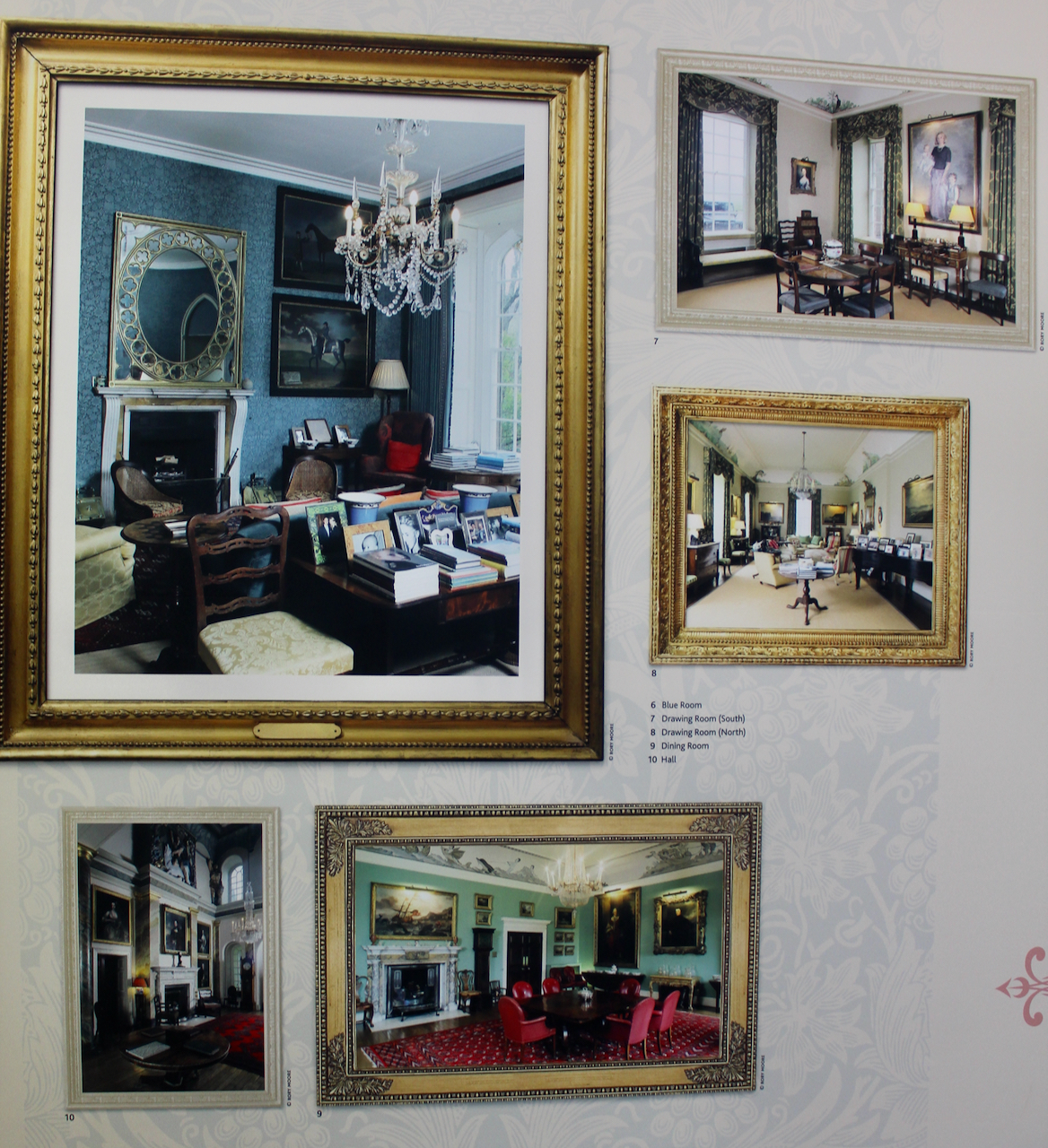
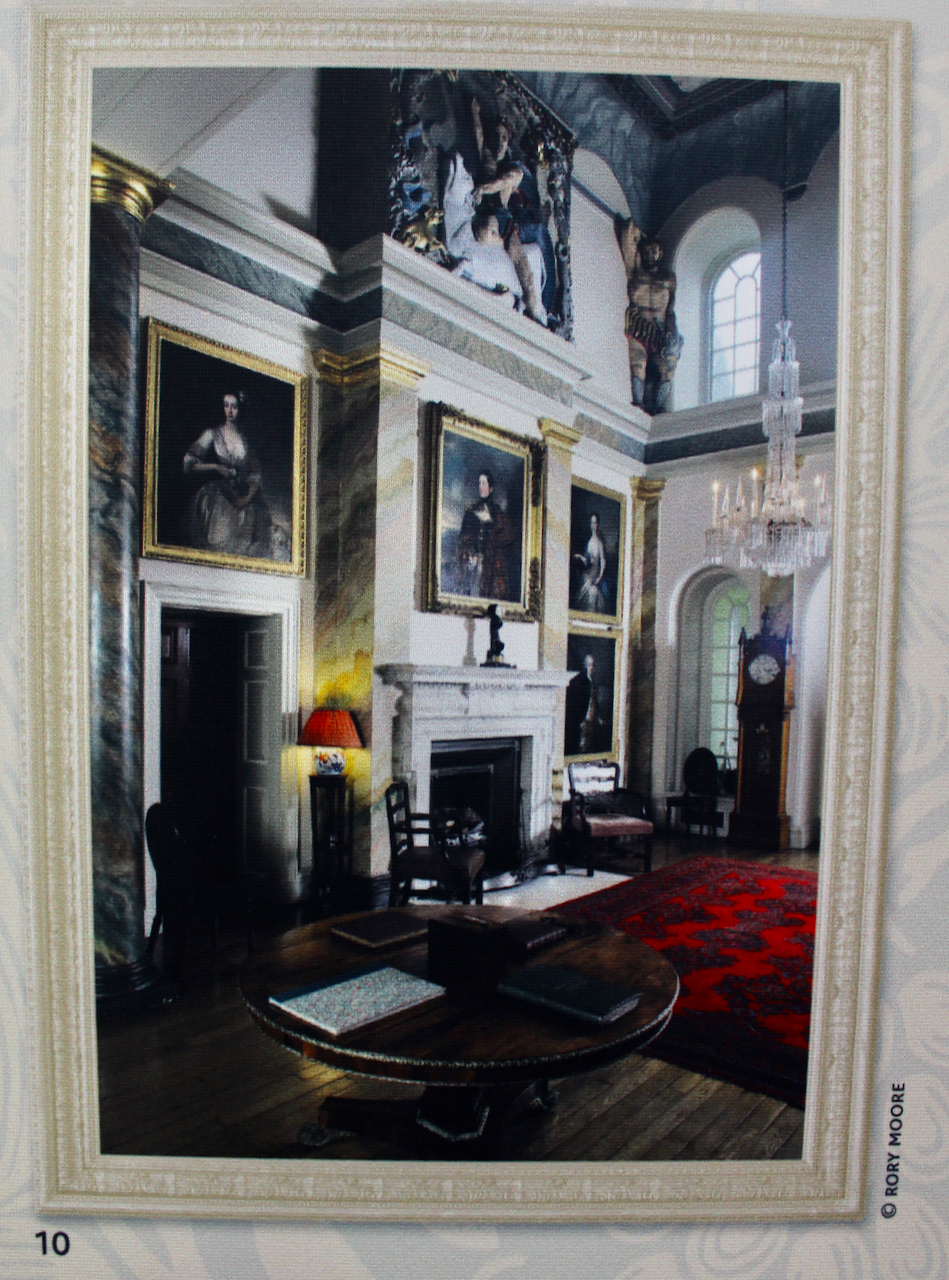
Delve deep into the history of Glenarm Castle brought to life by the family butler and house staff within the walls of the drawing room, the dining room, the ‘Blue Room’ and the Castle’s striking hall. 

Finish the day with the glorious sight of the historic Walled Garden, which dates back to the 17th century.

Dates are limited and booking in advance is required.  
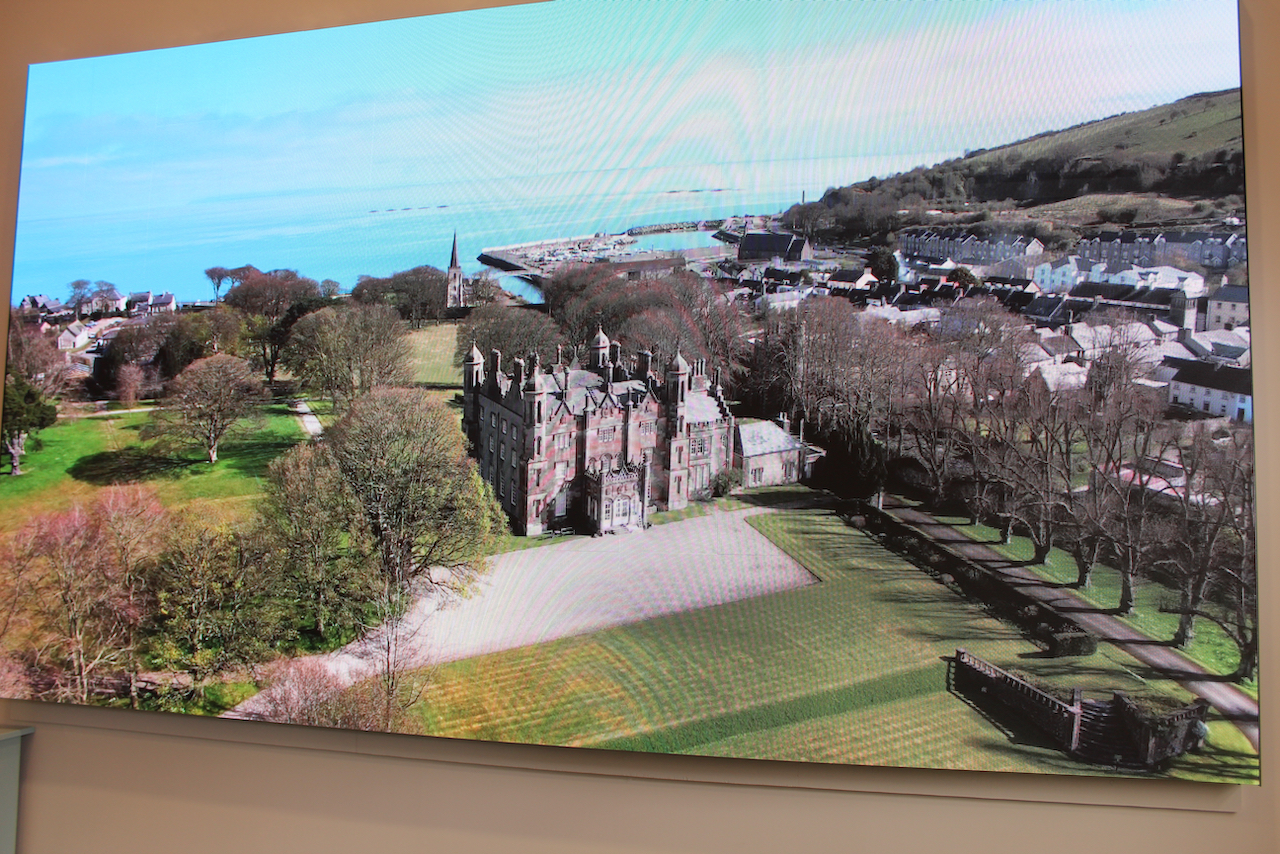
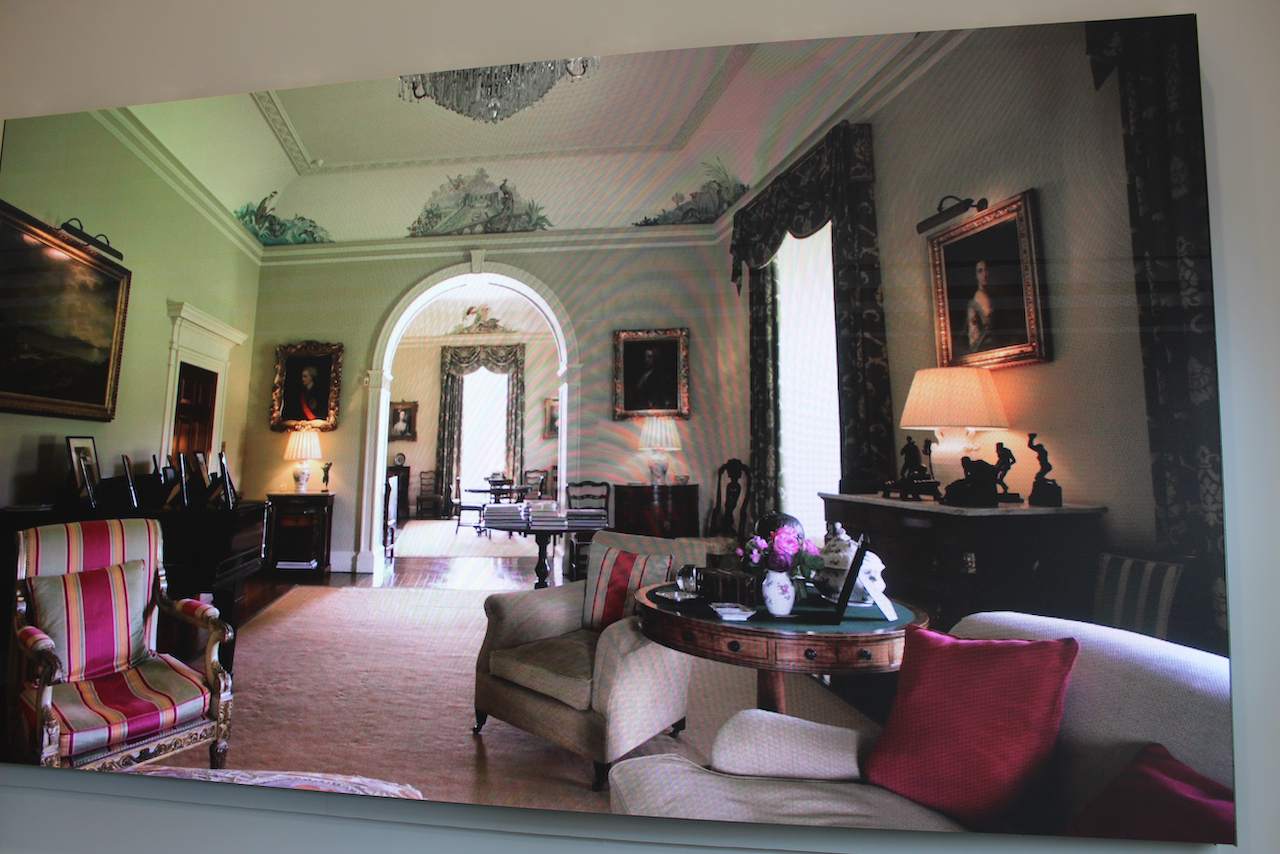
An image of Glenarm Castle from the slideshow in the museum.
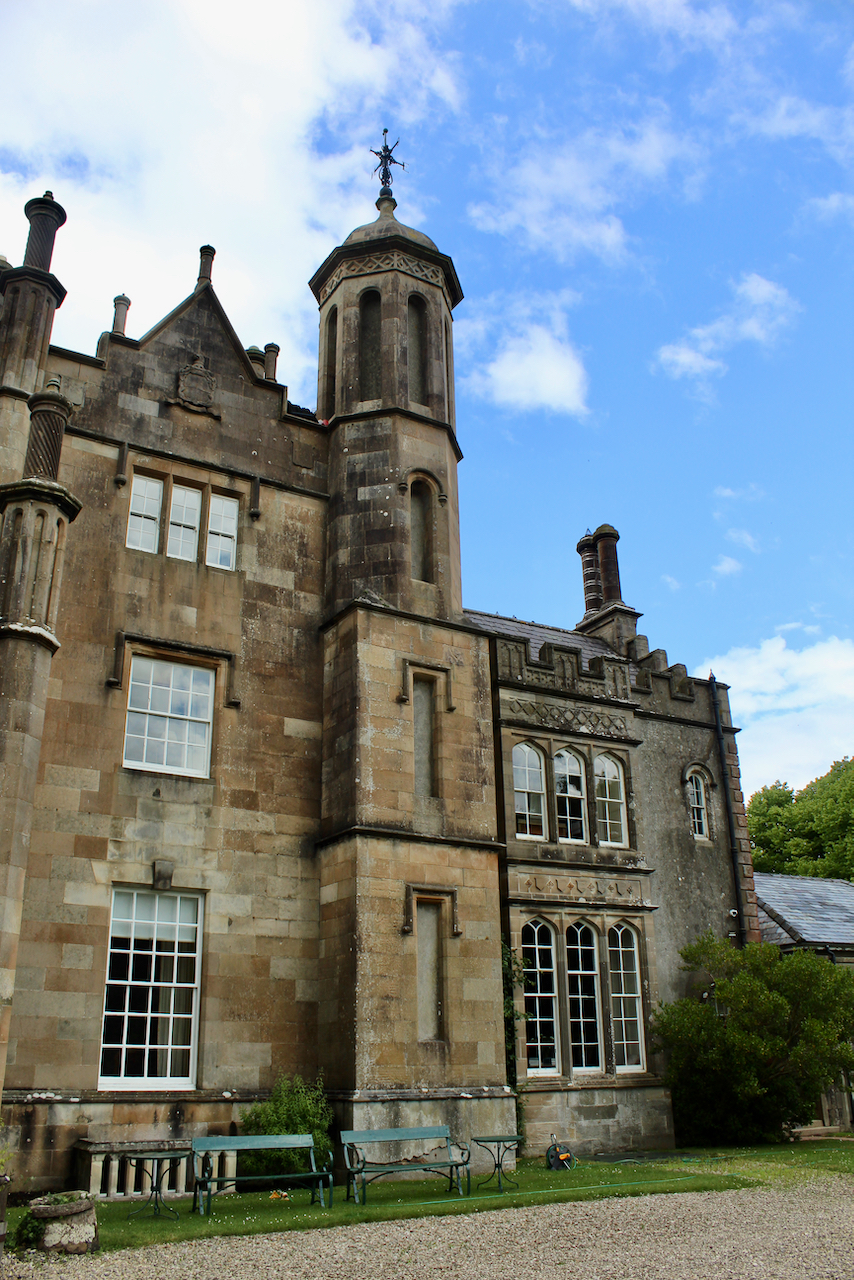
Glenarm Castle, June 2023. Photograph © Jennifer Winder-Baggot, www.irishhistorichouses.com
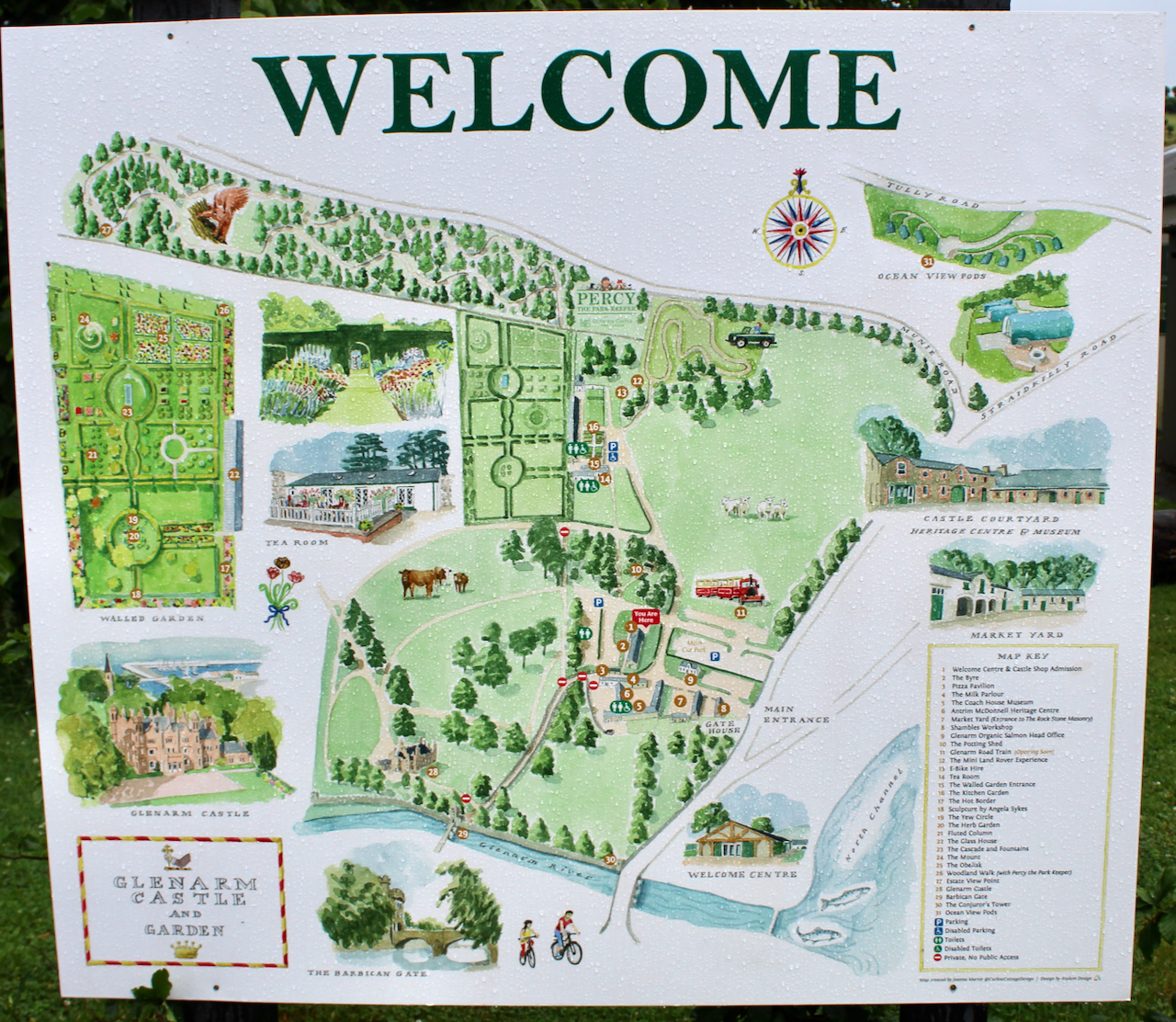
Information board at Glenarm.

The castle was built around 1603 by Randal MacDonnell [1610-1682], afterwards 1st Earl of Antrim, as a hunting lodge or secondary residence to Dunluce Castle, and became the principal seat of the family after Dunluce Castle was abandoned. The mansion house was rebuilt ca. 1750 as a 3-storey double gable-ended block, joined by curving colonnades to two storey  pavilions with high roofs and cupolas. This would have been during the life of the 5th Earl of Antrim, Alexander MacDonnell (1713-1775).

Glenarm Castle, June 2023. Photograph © Jennifer Winder-Baggot, www.irishhistorichouses.com

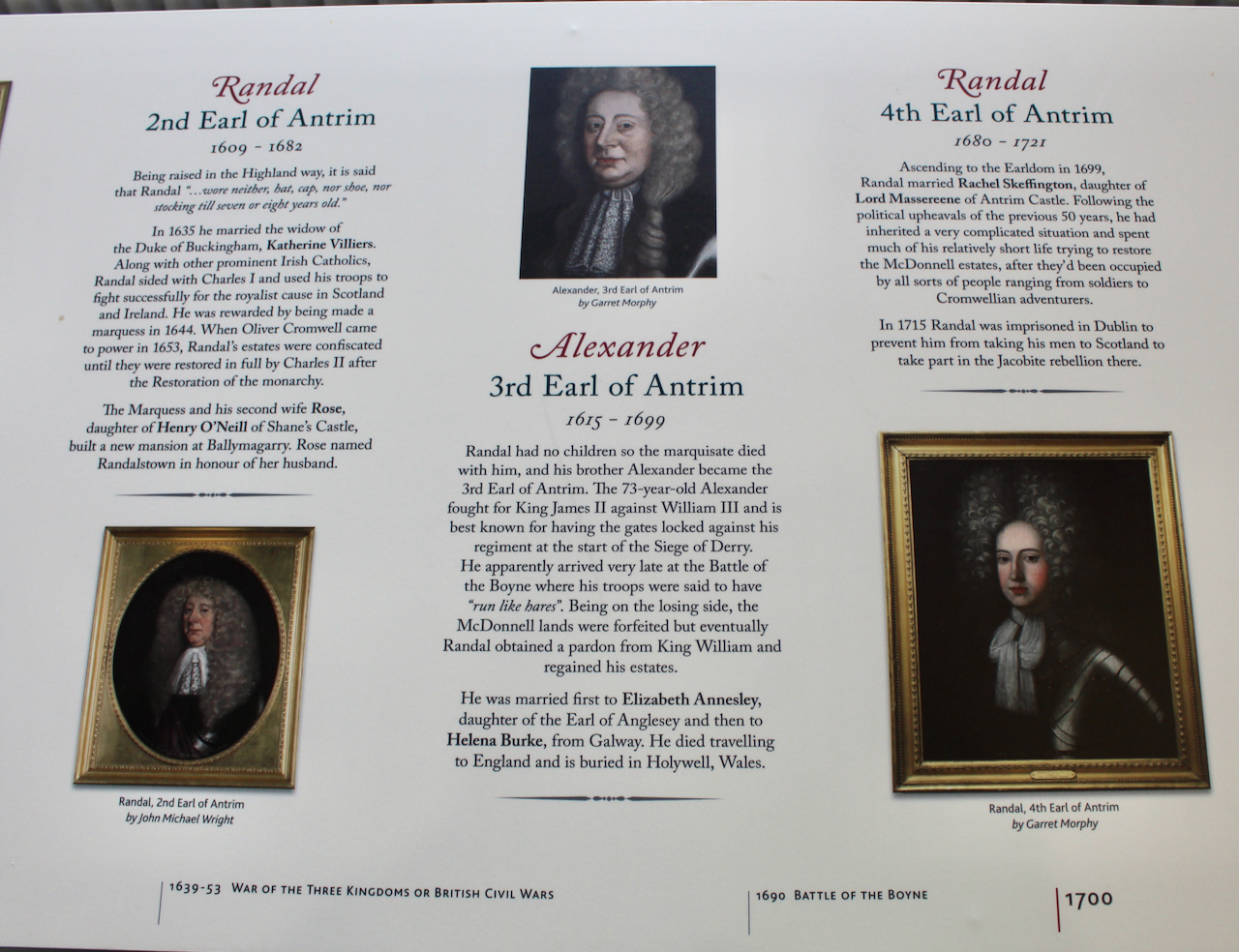
We learned of the 1st and 2nd Earls of Antrim on our visit to Dunluce Castle in Antrim. When the 2nd Earl died in 1682 his brother Alexander (1615-1699) became 3rd Earl of Antrim. He first married Elizabeth Annesley, daughter of the 1st Earl of Anglesey.

Arthur Annesley (1614-1686) 1st Earl of Anglesey, after John Michael Wright based on a work of 1676, National Portrait Gallery of London 3805.

Elizabeth née Annesley died in 1672 and Alexander married Helena Burke. Their son Randal (1680-1721) became the 4th Earl of Antrim.
Photograph © Jennifer Winder-Baggot, www.irishhistorichouses.com

The 4th Earl married Rachael Skeffington, daughter of Clotworthy, 3rd Viscount Massereene, Co. Antrim, of Antrim Castle. The 4th Earl of Rachael had a son Alexander MacDonnell (1713-1775) who succeeded as 5th Earl of Antrim. It was during his time that the castle was enlarged. He was a Privy Counsellor and Governor of County Antrim.

Ballymagarry, where the Earls lived after Dunluce Castle, burned down in 1750, so in 1756 the 5th Earl of Antrim invited an engineer from Cumbria called Christopher Myers to come to Glenarm to rebuild the ruin. Myers transformed it into a grand Palladian country house with curving colonnades ending in pavilions on either side, one of which contained a banqueting room. The lime trees that now arch over the driveway were planted and gardens were planned in a network of walled enclosures.

Alexander the 5th Earl married Elizabeth Pennefather, daughter of Matthew, MP for Cashel and Comptroller and Accountant-General for Ireland. She died, however, in 1736, and he married Anne Plunkett in 1739.
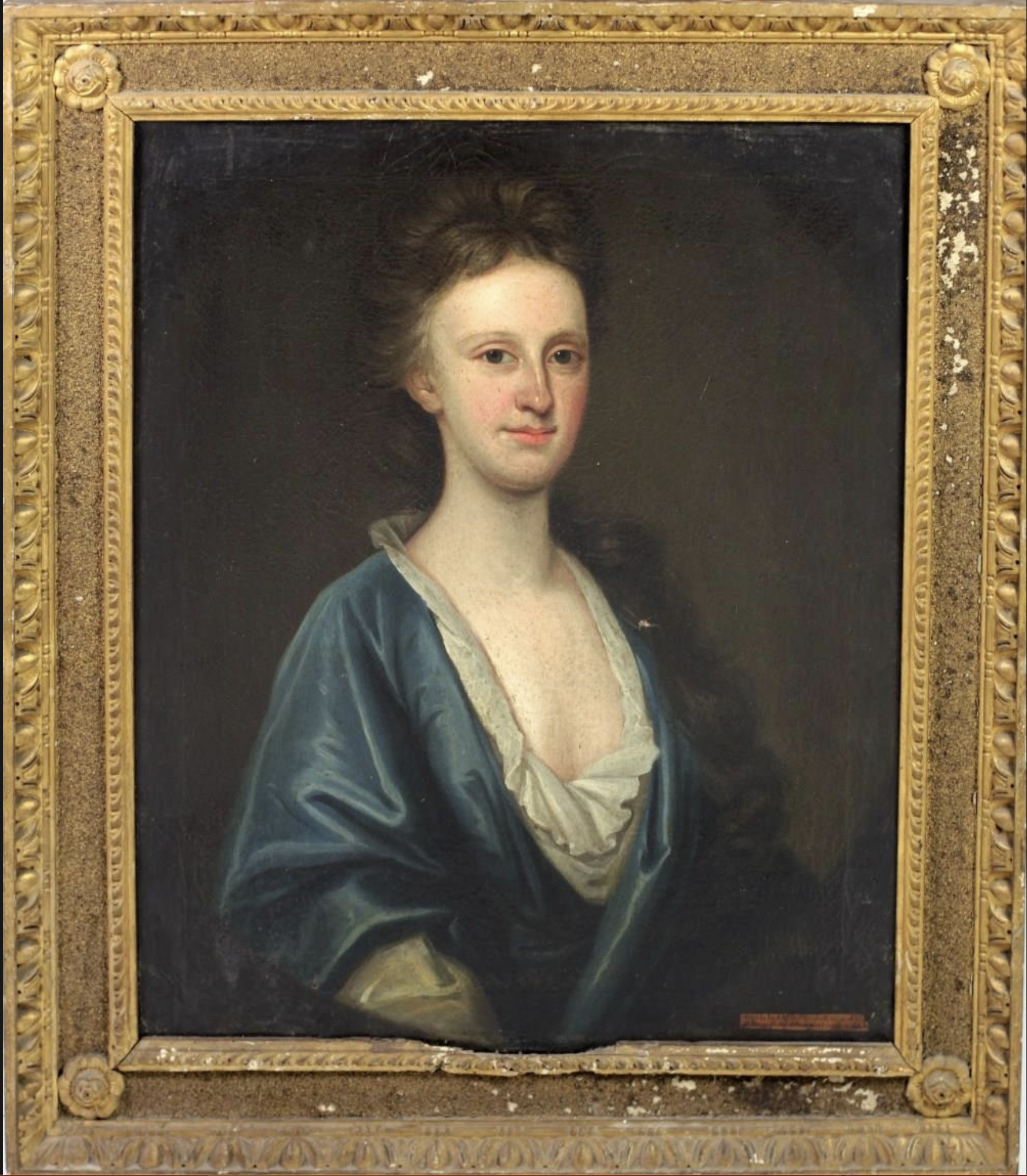
“Miss Anne Plunkett, niece of the first Lord Aldborough, Countess of Antrim,” 18th Century Irish School , courtesy of Fonsie Mealy Fortgranite. She was the daughter of Charles Patrick Plunkett of Dillonstown, County Louth and Elizabeth Stratford. She married Alexander MacDonnell the 5th Earl of Antrim.

Anne née Plunkett gave birth to the heir, Randal William (1749-1791), who later became the 6th Earl of Antrim. Anne died when Randall was just six years old, so Alexander married again, this time to Catherine Meredyth, daughter of Thomas of Newtown, County Meath. She had been previously married to James Taylor (1700-1747), son of Thomas 1st Baronet Taylor, of Kells, Co. Meath.

Information board about the 5th and 6th Earls of Antrim.
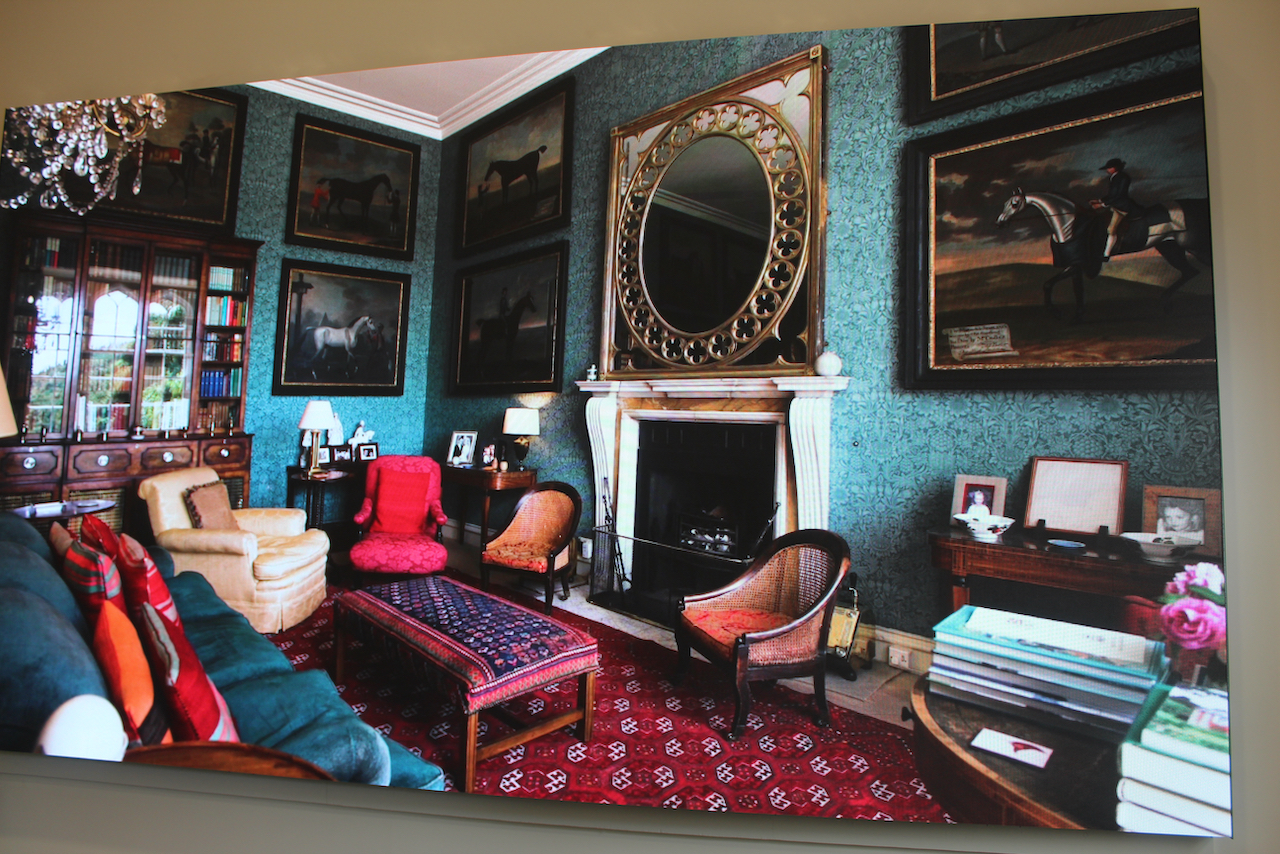
This room in Glenarm Castle has portraits of many of the 5th Earl’s horses. Photograph is from the slideshow in the museum.
Glenarm Castle. Photograph © Jennifer Winder-Baggot, www.irishhistorichouses.com

The 6th Earl served as MP for County Antrim as well as High Sheriff for the county. Randall William MacDonnell married Letitia Morres, daughter of Hervey Morres 1st Viscount Mountmorres of Kilkenny. They had no sons.

Randall William was created 1st Viscount Dunluce [Ireland] and 1st Earl of Antrim [Ireland] on 19 June 1785, with special remainder to his daughters in order of seniority. This meant that his daughters became Countesses of Antim in their own right. He then served as Privy Counsellor for Ireland. He was created 1st Marquess of Antrim [Ireland] on 18 August 1789 but this title died with him, along with the two earlier creations of Earl of Antrim and Viscount Dunluce.

His eldest daughter Anne Catherine (1778-1834) became 2nd Countess of Antrim in 1791 when her father died. Anne Catherine’s sister Letitia Mary predeceased her. When Anne Catherine died in 1834 her sister Charlotte became 3rd Countess of Antrim. Charlotte’s sons became the 4th and 5th Earls of Antrim (the Countesses being in lieu of the 2nd and 3rd Earls). The descendants still live in the castle.

See also the blog of Timothy William Ferres. [2]
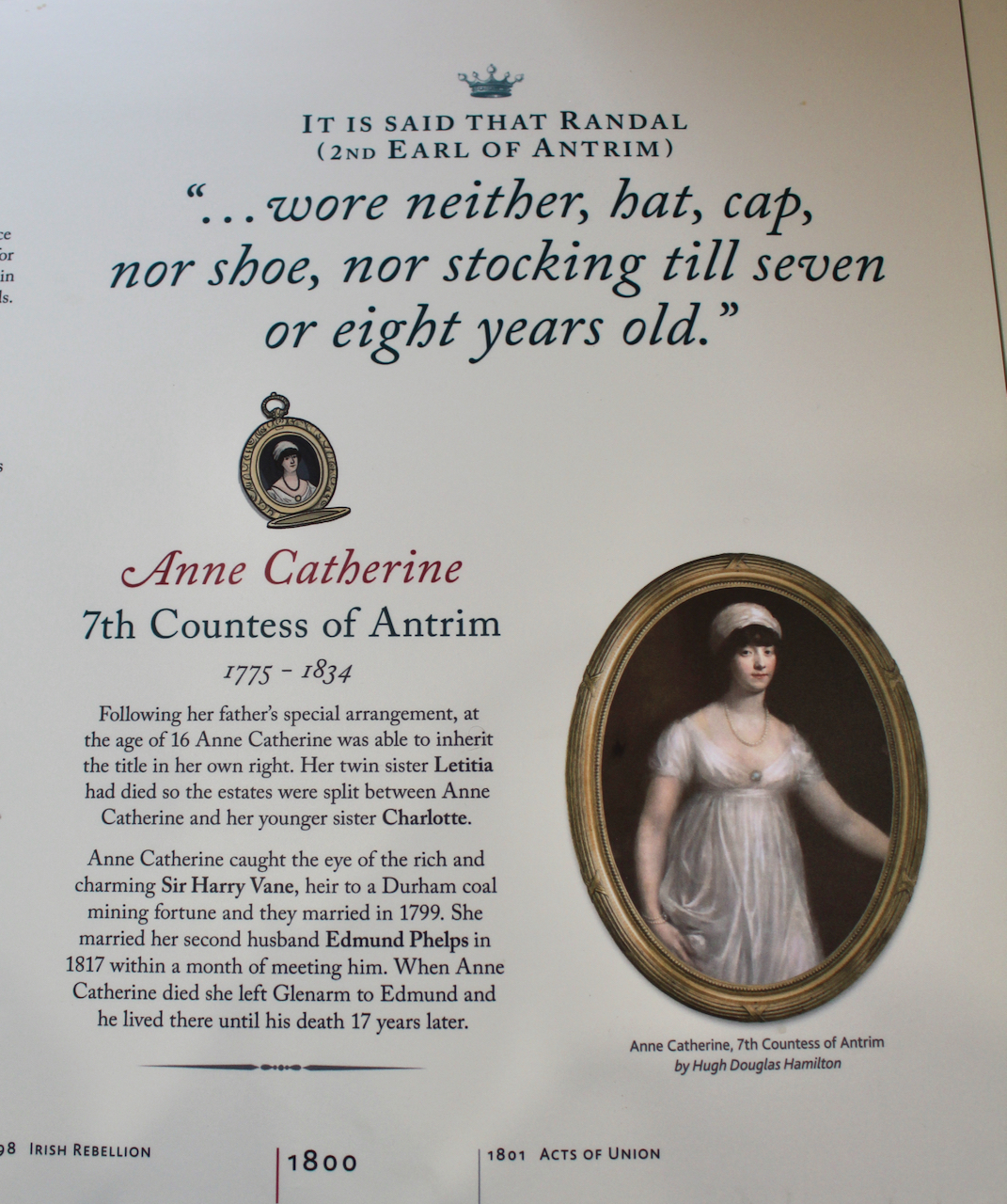
Information about Anne Catherine (1775-1834), Countess of Antrim.
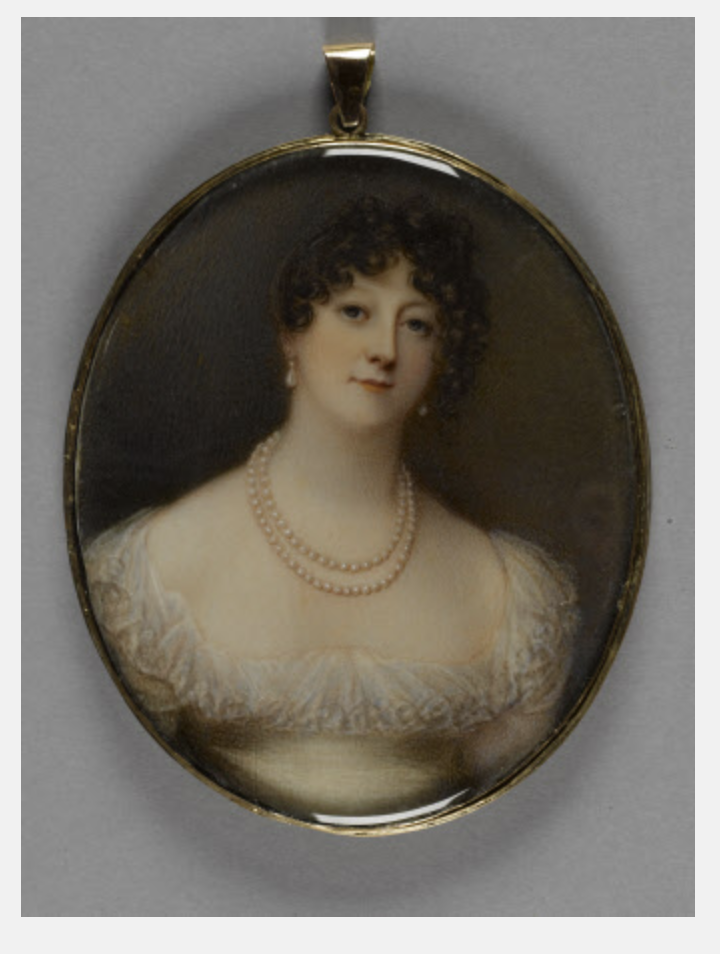
Anne Katherine MacDonnell, 2nd Countess of Antrim (1778-1834) by Anne Mee, watercolour painting on ivory.
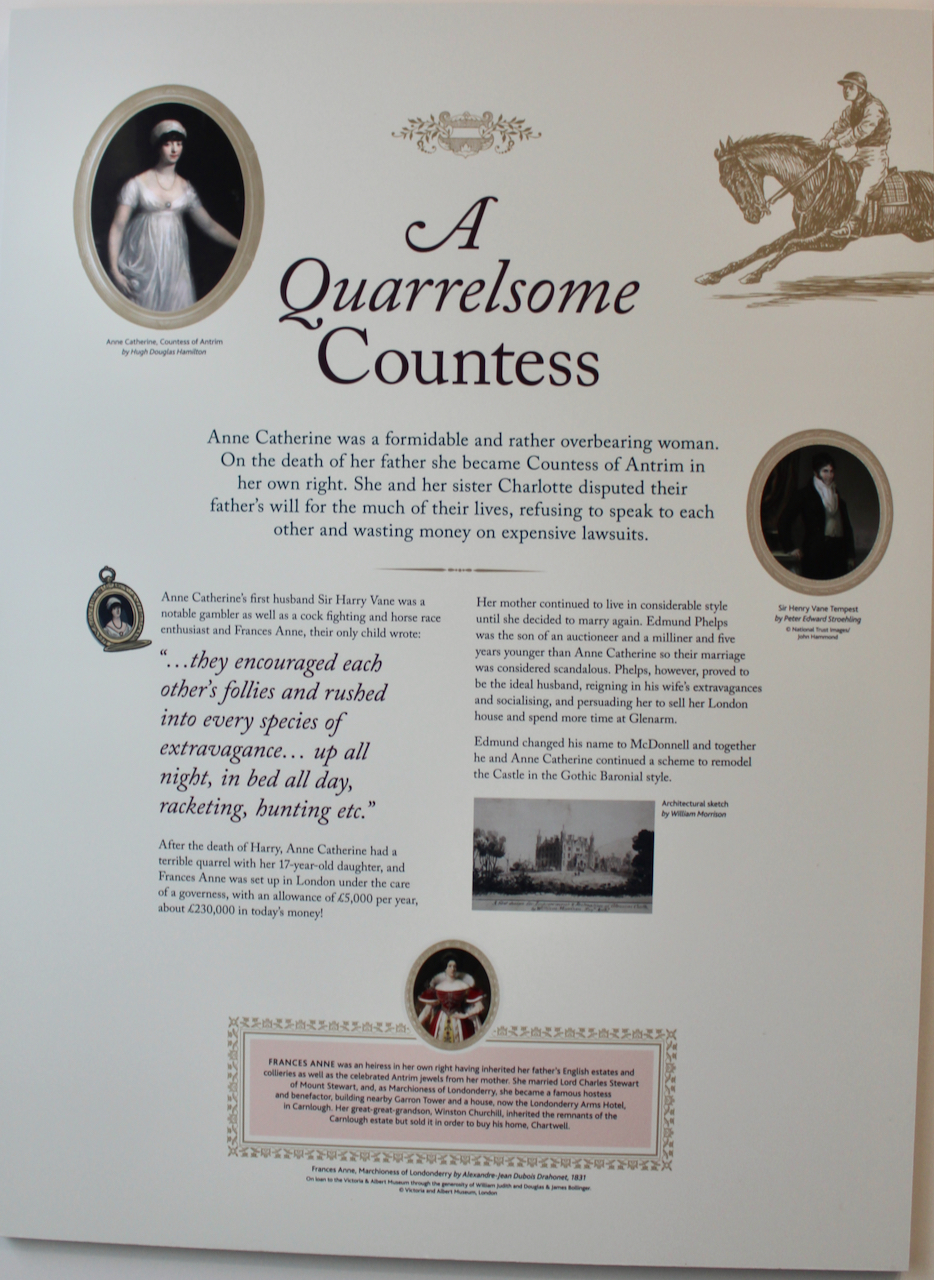
Information board about Elizabeth Catherine, Countes of Antrim.
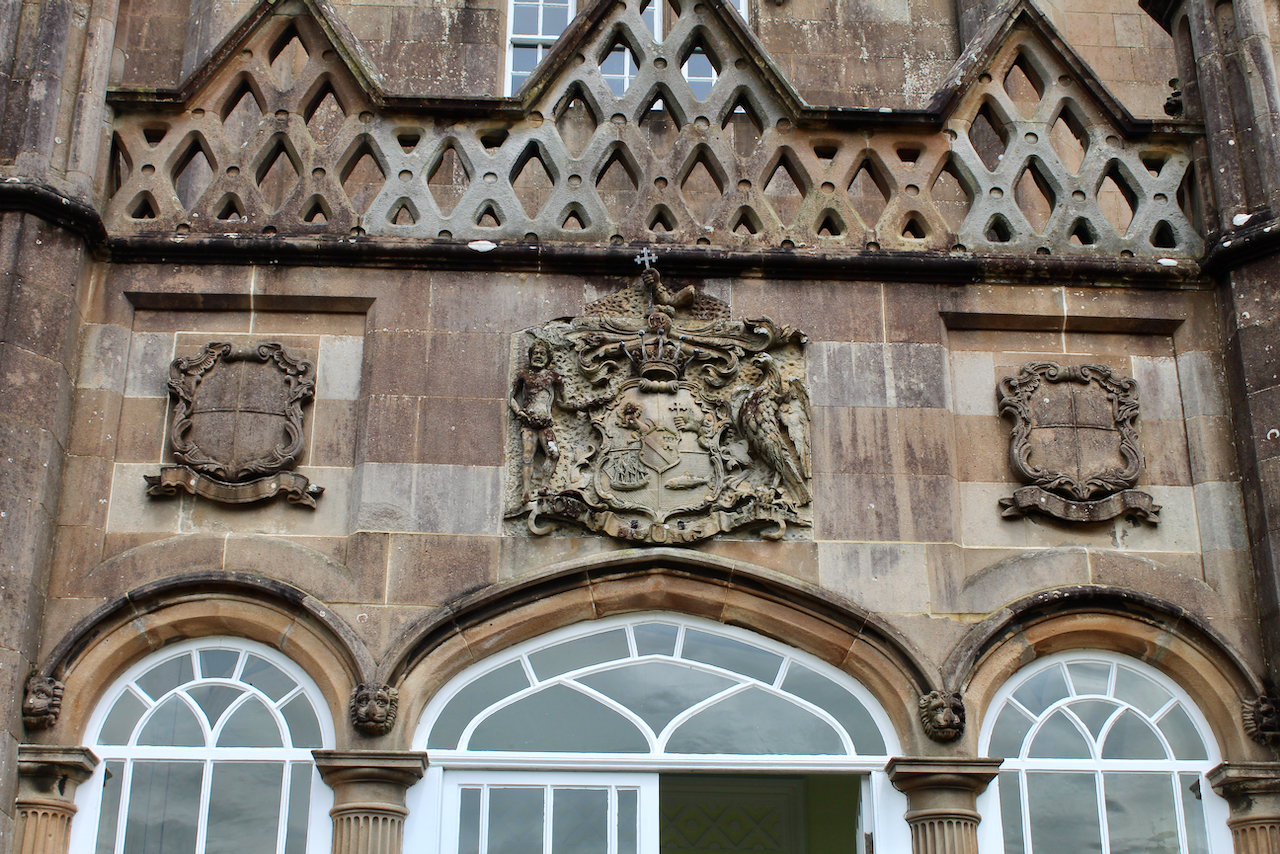
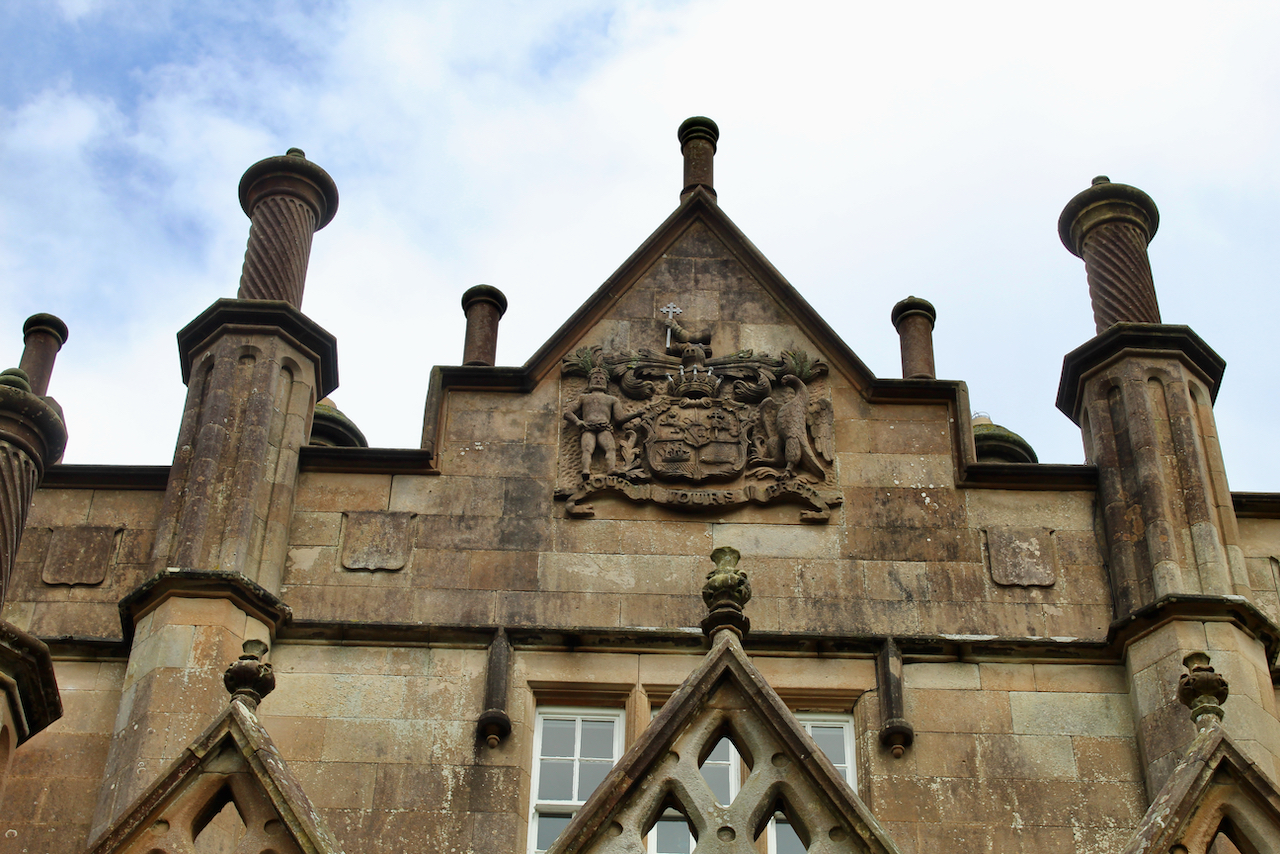
Crest on the front of the house at Glenarm Castle. See also the lions heads over the windows. Photograph © Jennifer Winder-Baggot, www.irishhistorichouses.com

Anne Catherine married first Henry Vane-Tempest (1771-1813) 2nd Baronet Vane, of Long Newton, Co. Durham. They had a daughter, Frances Anne Emily Vane-Tempest, who married Charles William Vane, 3rd Marquess of Londonderry. Harry Vane-Tempest decided to ‘Gothicise’ the building. The colonnades and pavilions were demolished and Gothic windows installed. When he died, Anne Catherine married Edmund Phelps, who assumed the name of MacDonnell.

Anne Catherine and Edmund hired William Vitruvius Morrison to enlarge Glenarm.

Mark Bence-Jones writes in his  A Guide to Irish Country Houses (1988):

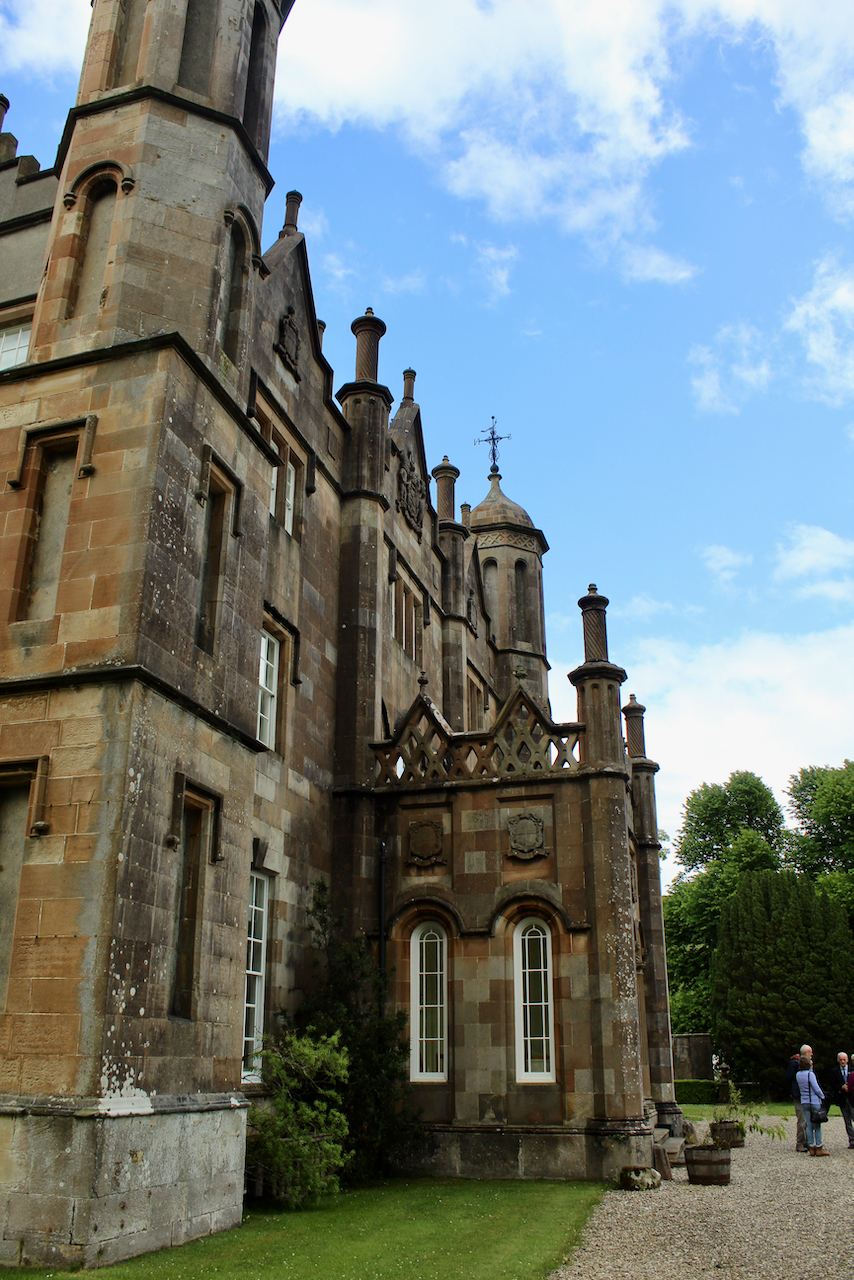
p. 135. “(McDonnell, Antrim, E/PB) The main block had a pedimented breakfront with three windows in the top storey, a Venetian window below and a tripartite doorway below again, flanked on either side by a Venetian window in each of the two lower storeys and a triple window above. The pavilions were of three bays. Ca. 1825, the heiress of the McDonnells, Anne, Countess of Antrim in her own right, and her second husband [Edmund Phelps], who had assumed the surname of McDonnell, commissioned William Vitruvius Morrison to throw a Tudor cloak over Glenarm. He did very much the same as he had done at Borris, Co Carlow and Kilcoleman Abbey, Co Kerry; adding four slender corner turrets to C18 block, crowned with cupolas and gilded vanes; he also gave the house a Tudor-Revival façade with stepped gables, finials, pointed and mullioned windows and heraldic achievements, as well as a suitably Tudor porch. The other fronts were also given pointed windows and the colonnades and pavilions were swept away, a two storey Tudor-Revival service wing being added in their stead.” [3]
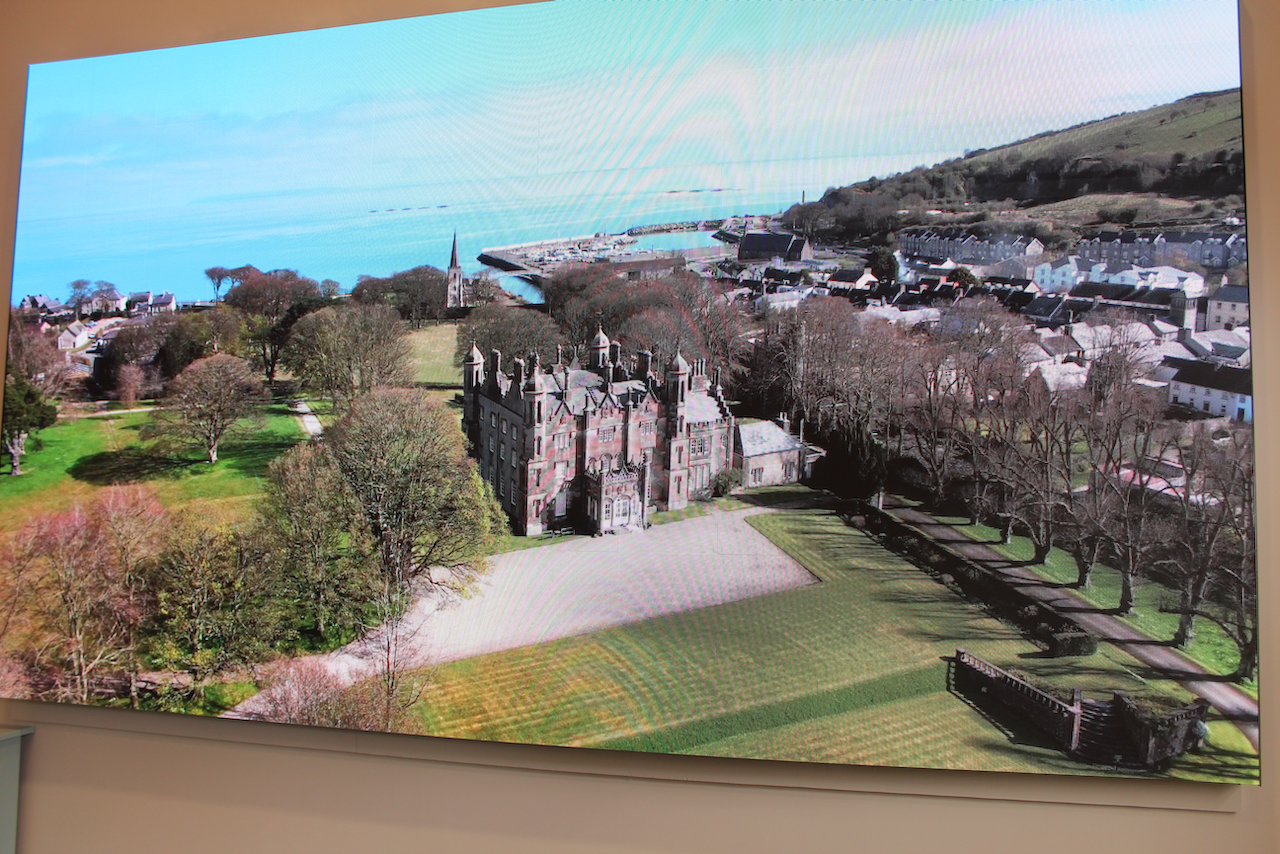
A photograph of Glenarm Castle from the museum slideshow.
Glenarm Castle, June 2023. Photograph © Jennifer Winder-Baggot, www.irishhistorichouses.com
Glenarm Castle. Photograph © Jennifer Winder-Baggot, www.irishhistorichouses.com
A crest on Glenarm Castle. Photograph © Jennifer Winder-Baggot, www.irishhistorichouses.com
Photograph © Jennifer Winder-Baggot, www.irishhistorichouses.com

Mark Bence-Jones continues:”The interior remained Classical; the hall being divided by an arcade with fluted Corinthian columns; the dining room having a cornice of plasterwork in the keyhole pattern. In 1929, the Castle was more or less gutted by fire; in the subsequent rebuilding, to the designs of Imrie & Angell, of London, the pointed and mullioned windows were replaced with rectangular Georgian sashes. Apart from the octagon bedroom, which keeps its original plasterwork ceiling with doves, the interior now dates from the post-fire rebuilding; some of the rooms have ceilings painted by the present Countess of Antrim [Elizabeth Hannah Sacher]. The service wing was reconstructed after another fire 1967, the architect being Mr Donal Insall. In 1825, at the same time as the castle was made Tudor, the entrance to the demesne from the town of Glenarm was transformed into one of the most romantic pieces of C19 medievalism in Ireland, probably also by Morrison. A tall, embattled gate tower, known as the Barbican, stands at the far end of the bridge across the river, flanked by battlemented walls rising from the river bed.” [3]
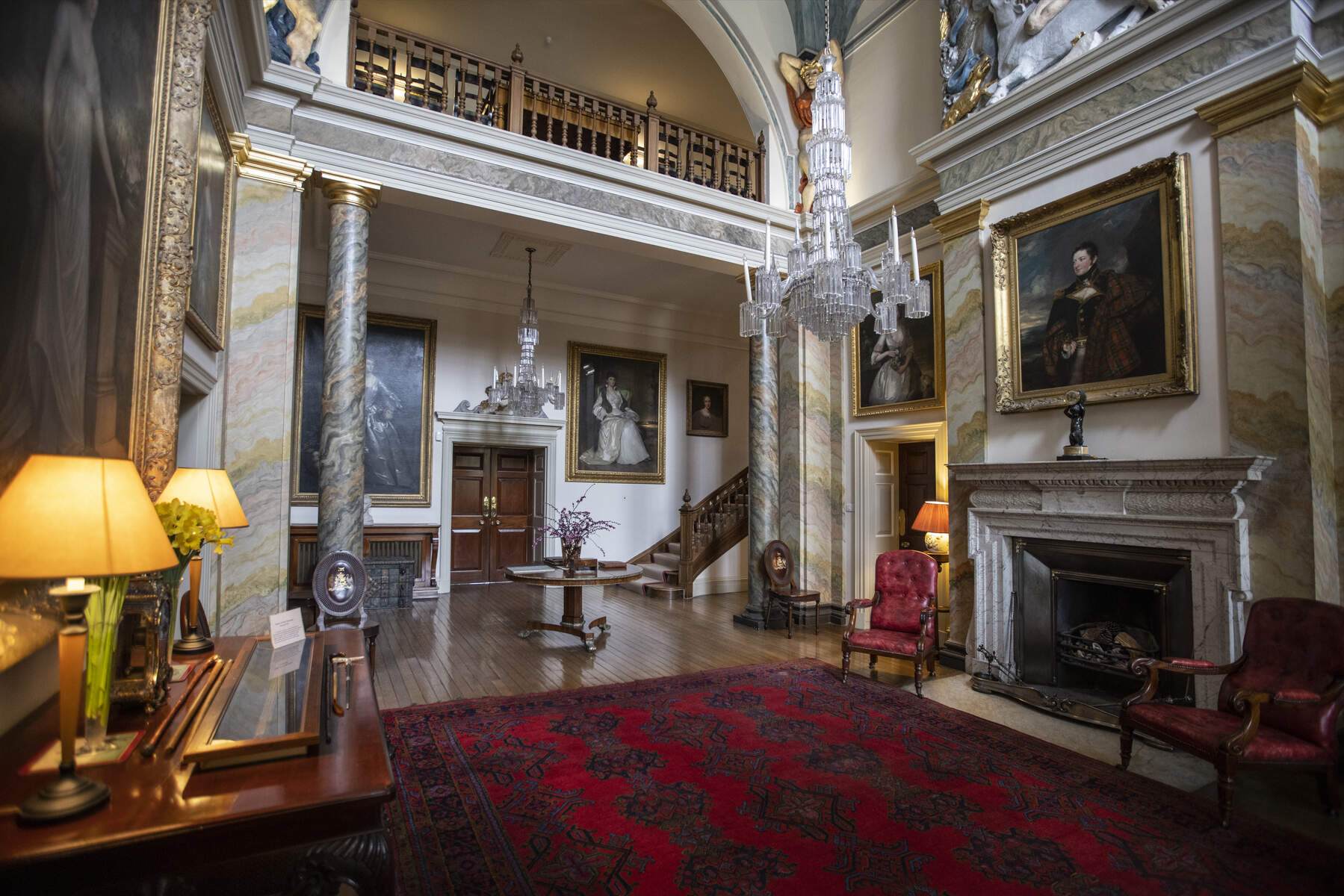
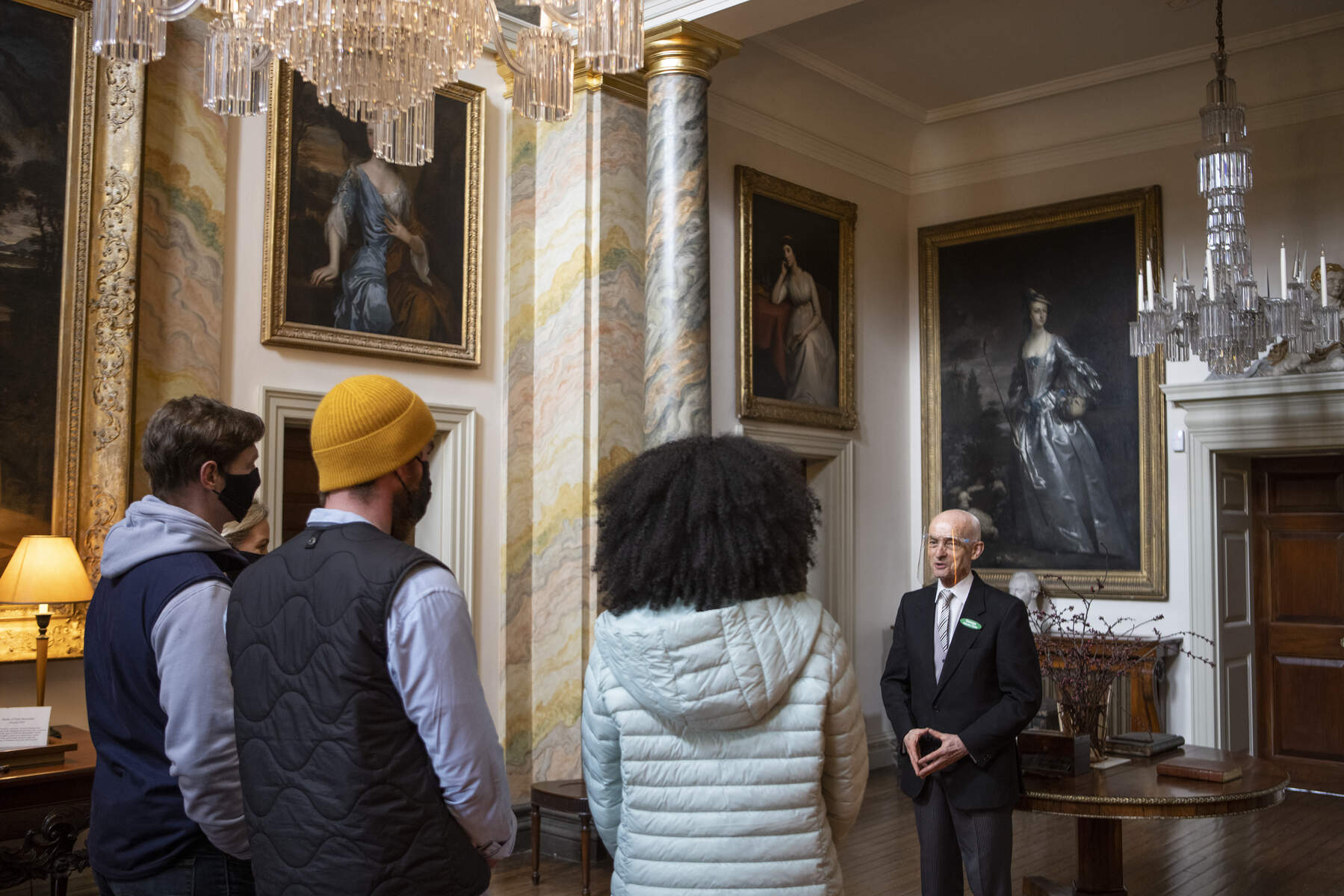
Glenarm Castle, by Donal Maloney 2021, for Tourism Ireland. [see 1]
Glenarm Castle, with George the butler, who gave us a tour, photograph by Donal Malony 2021 for Tourism Ireland, Ireland’s Content Pool (see [1]). A portrait of Charlotte, Countess of Antrim, with her head resting on her hand, is on the wall.
Glenarm, County Antrim.

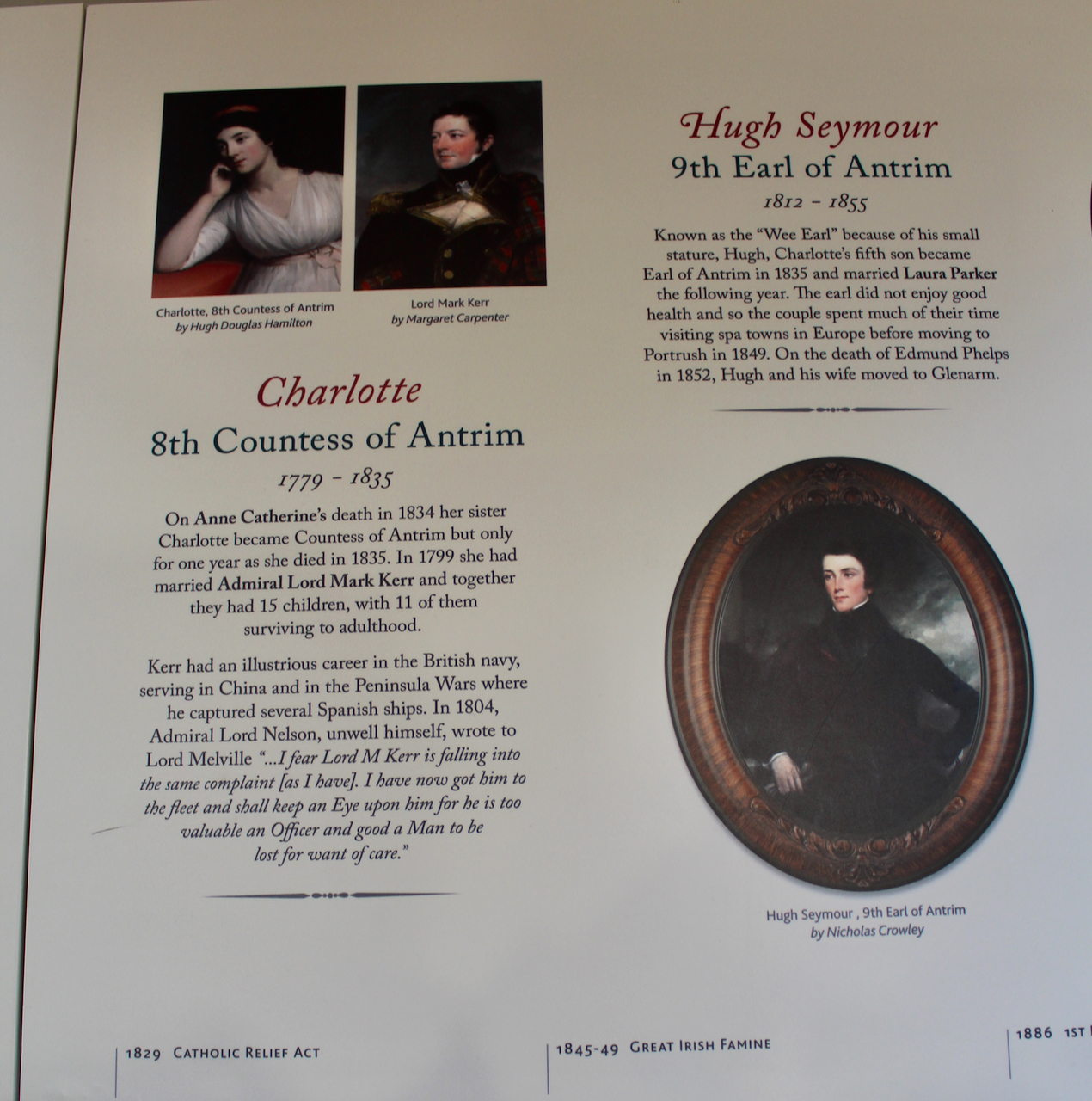
The second daughter, Charlotte 3rd Countess of Antrim married Mark Robert Kerr (1776-1840), son of William John Kerr, 5th Marquess of Lothian, Scotland. An information board tells us that as well as being a military man, he had a fondness for art.

Drawings by Mark Kerr.
Glenarm, County Antrim.

Charlotte and Mark had many children. Their sons who inherited the title Earl of Antrim after their mother’s death took the name MacDonnell when they succeeded to the title. The 4th Earl, Hugh Seymour McDonnell (1812-1855) had no son so his brother, Mark (1814-1869), succeeded him as 5th Earl of Antrim.
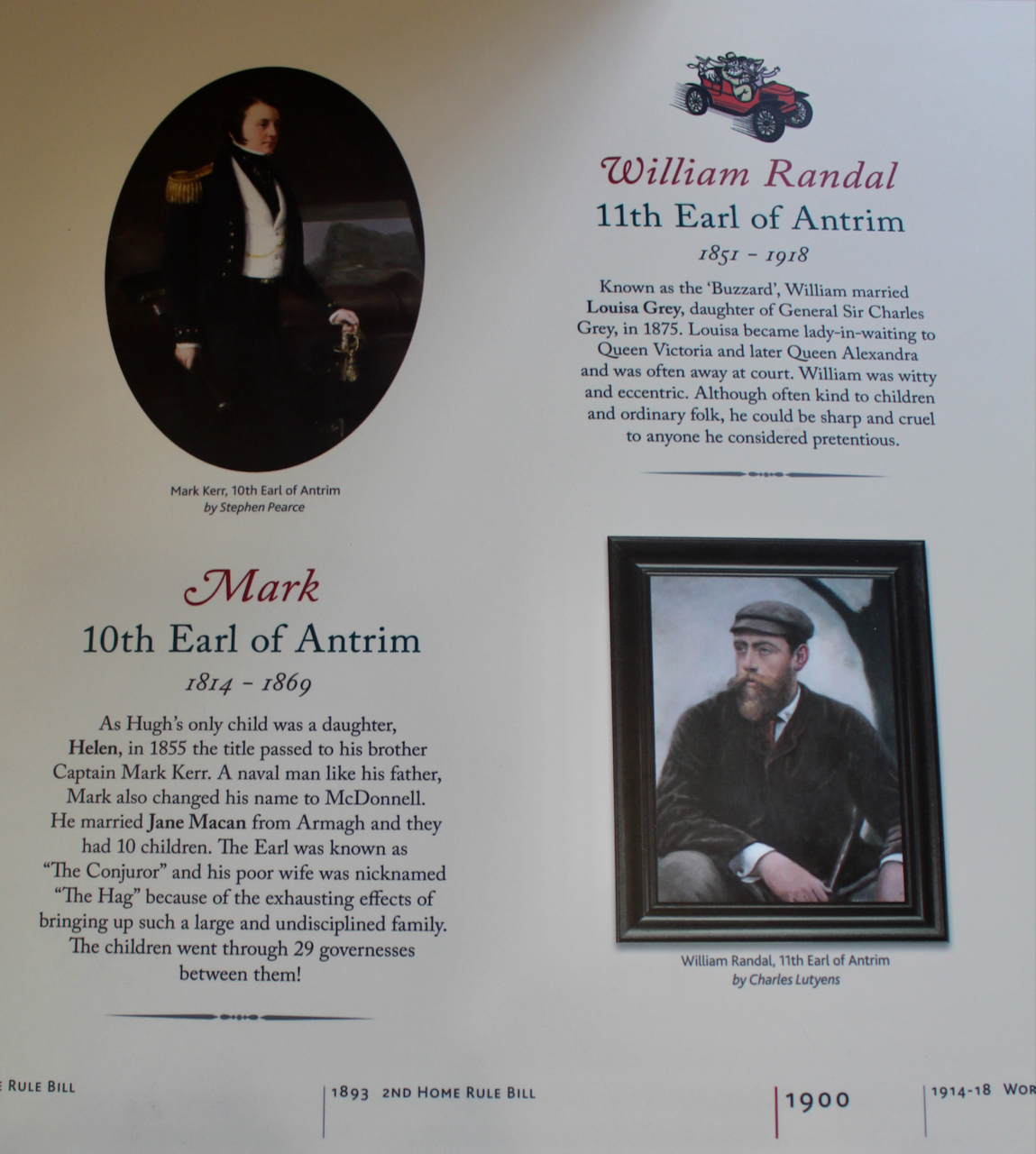
Glenarm, County Antrim.

Mark’s son William Randal McDonnell (1851-1918) succeeded as 6th/11th Earl of Antrim. He held the office of Deputy Lieutenant (D.L.) of County Antrim. In the information panel in the museum at the castle, he is referred to as the 11th Earl. He married Louisa Jane Grey. She held the office of a Lady of the Bedchamber to Queen Victoria between 1890 and 1901.
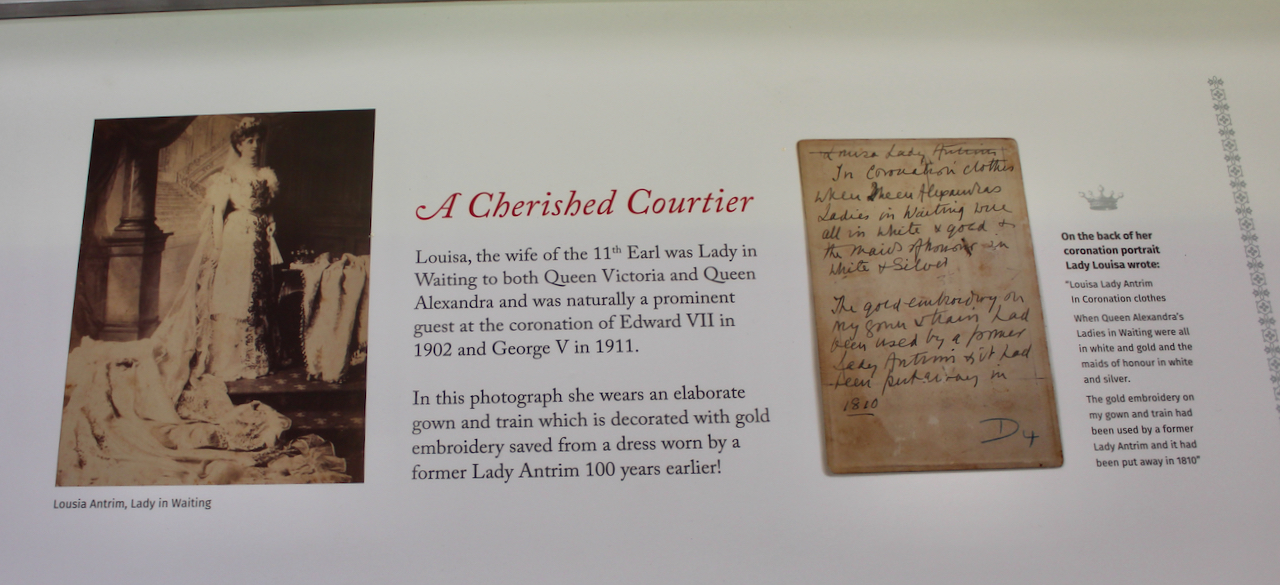
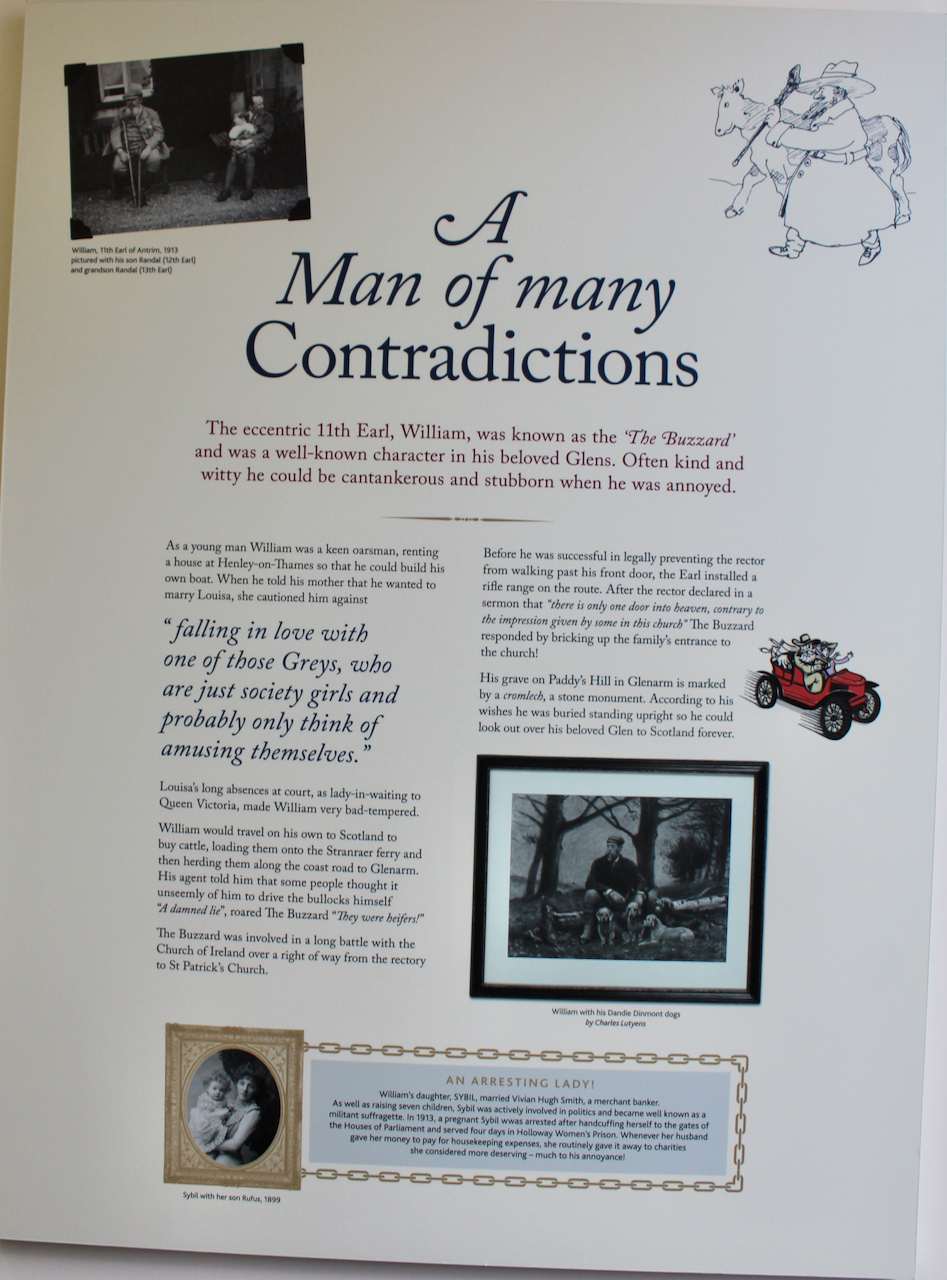
Louisa, wife of 11th, or 6th Earl of Antrim.
Information about William, 6th Earl of Antrim. His wife Louisa née Grey was lady-in-waiting to Queen Victoria.
Glenarm, County Antrim.

Their son Randal Kerr MacDonnell (1878-1932) became 7th/12th Earl of Antrim in 1918. In 1929 a large fire occurred.

Glenarm, County Antrim.

His son Randal John (1911-1977) became 8th Earl (13th) in 1932, and his son in turn, Alexander Randal MacDonnell (1935-2021) the 9th Earl.

Glenarm, County Antrim.

Randal John 8th Earl and his wife Angela attended the coronation of Queen Elizabeth II in 1953.

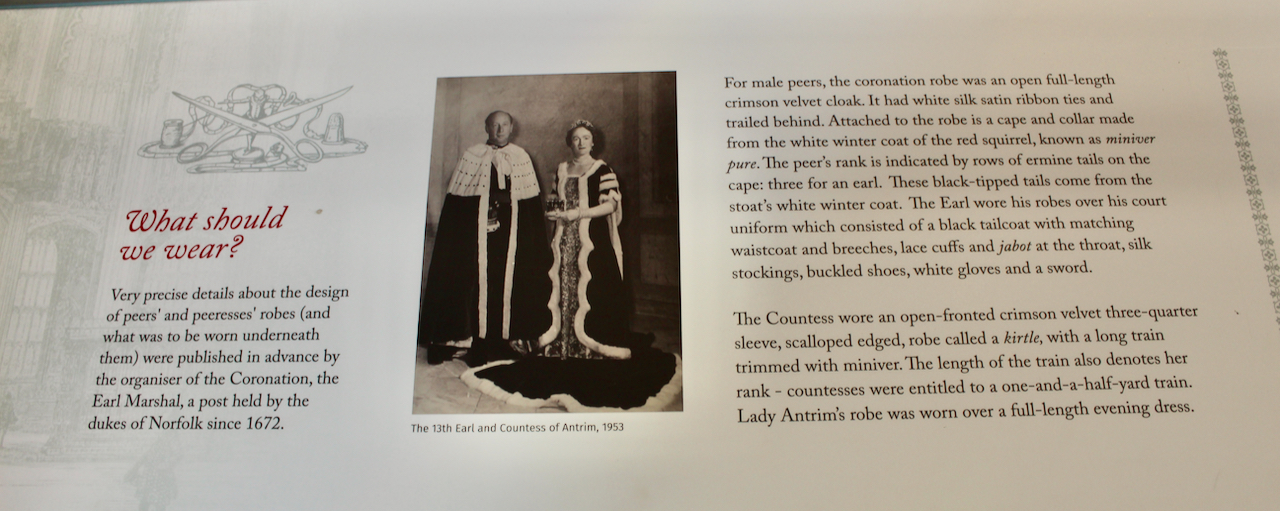
Randal John 9th Earl and Angela Christina attended the coronation of Queen Elizabeth II. Photograph © Jennifer Winder-Baggot, www.irishhistorichouses.com
Explanation of the Coronation robes.
The family at the time of the Coronation in 1953.

Angela Sykes (1911-1984), wife of the 8th or 13th Earl was an artist and she created the rather bulging statues of planetary gods that adorn the ceiling corners of the front hall. She also designed Mithras slaying the bull over the fireplace. She also created murals in the dining room, drawing room and in her bedroom.
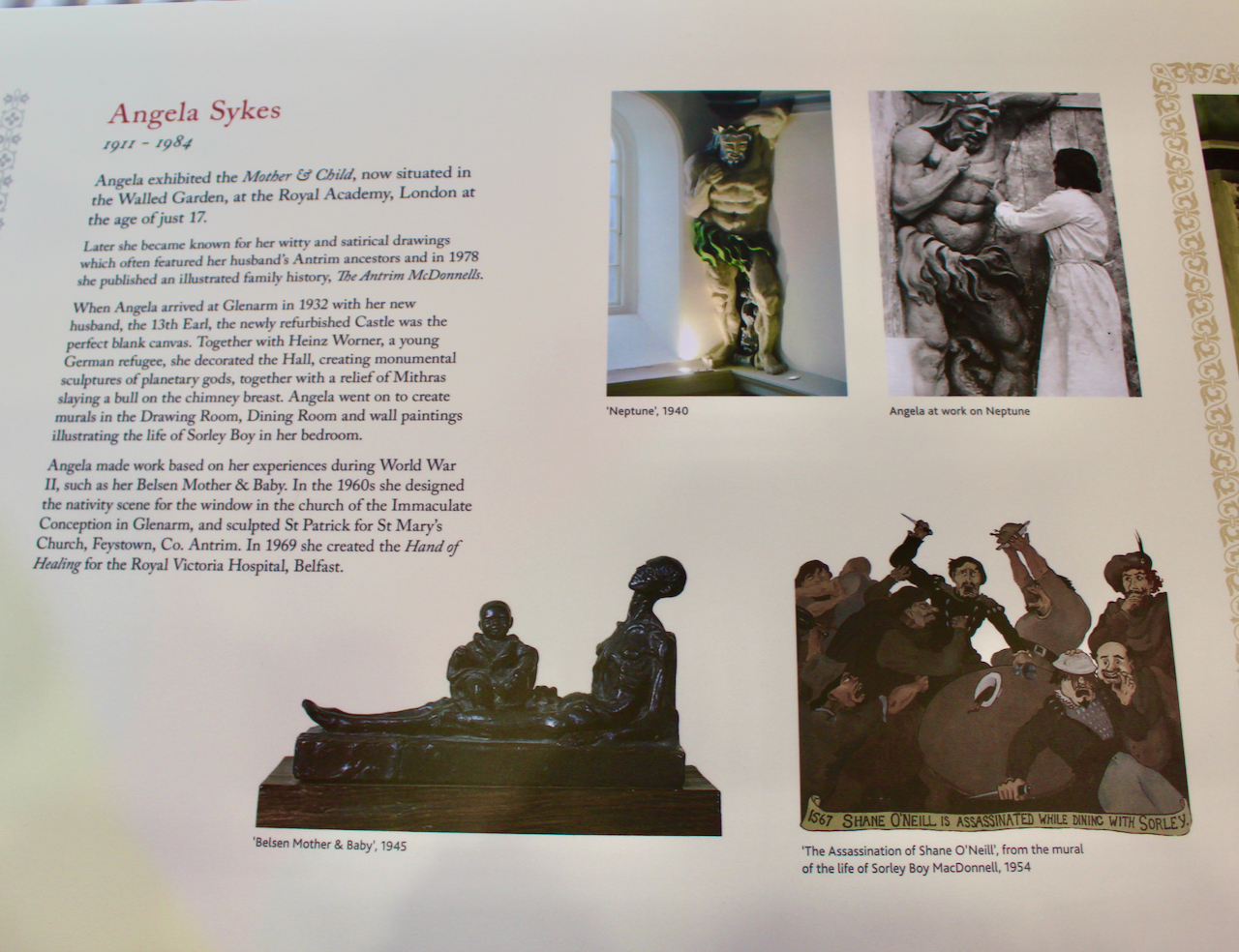
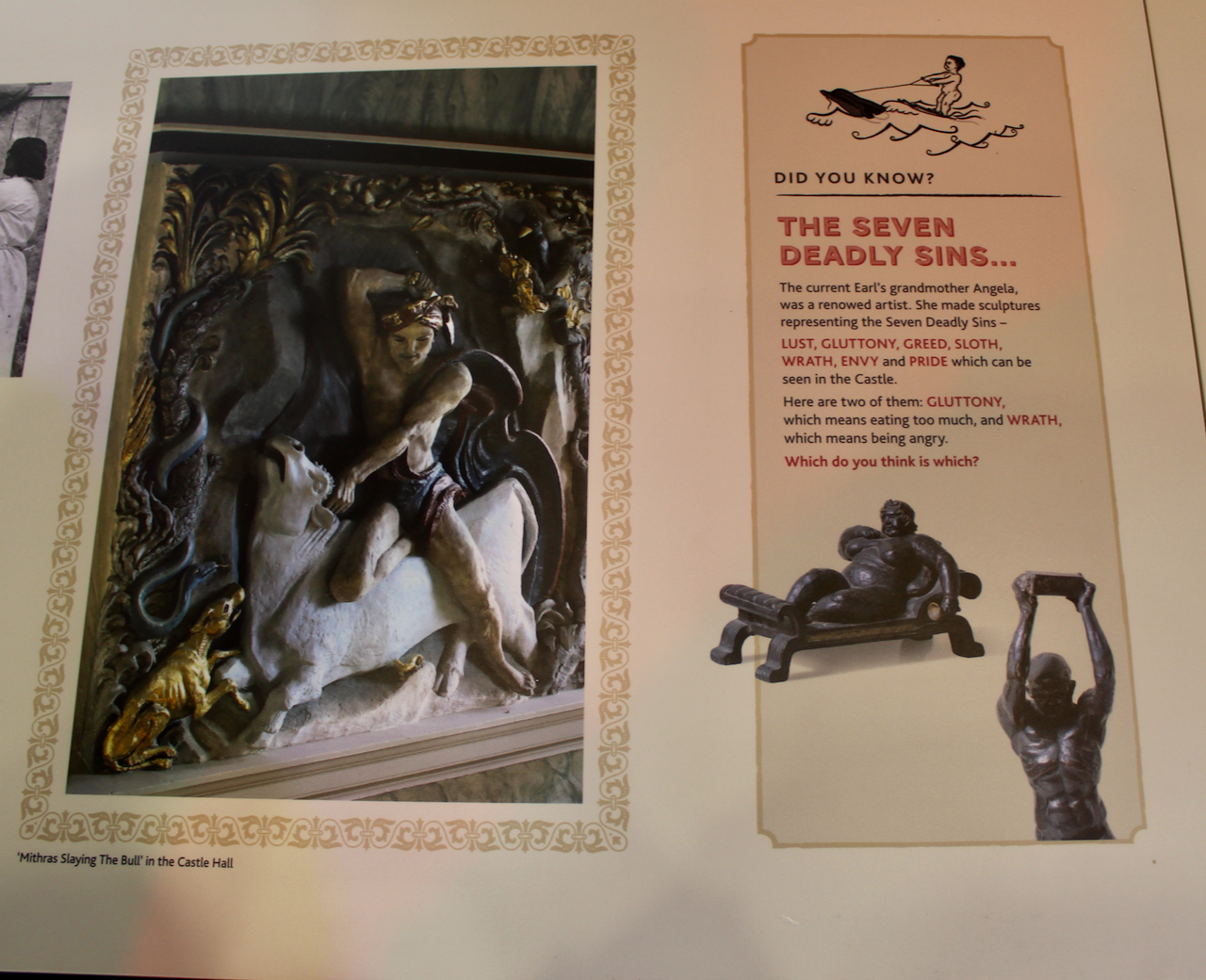
About Angela Sykes and her art.
Mithras slaying the bull, which features in the Castle Hall, by Angela Sykes.
The front hall of Glenarm, photograph courtesy of Heritage centre.
Angela Sykes also painted the ceiling decoration, photograph courtesy of the McDonnell family heritage centre museum.
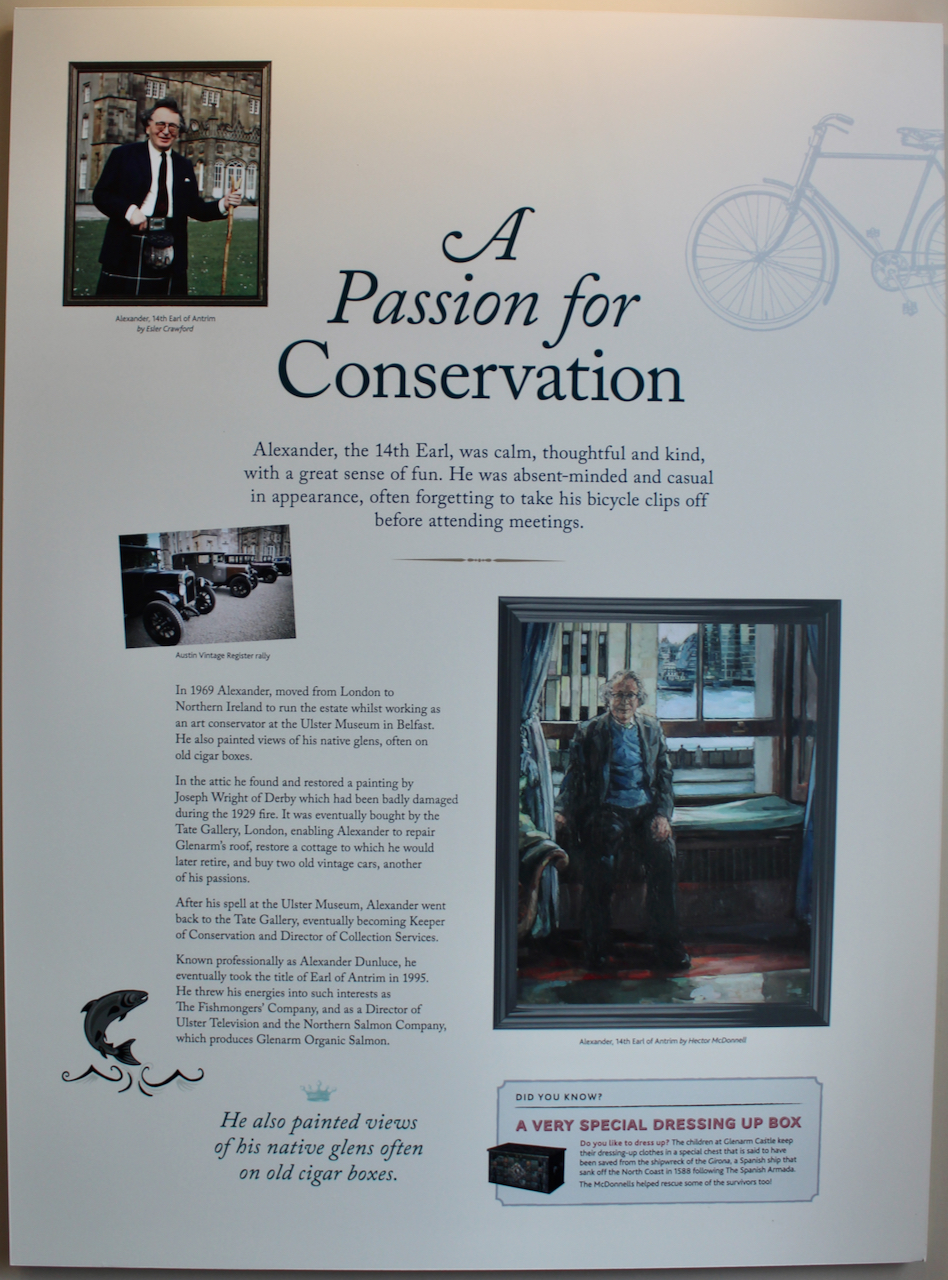
Information about Alexander MacDonnell, the 9th Earl of Antrim, the 14th Earl.
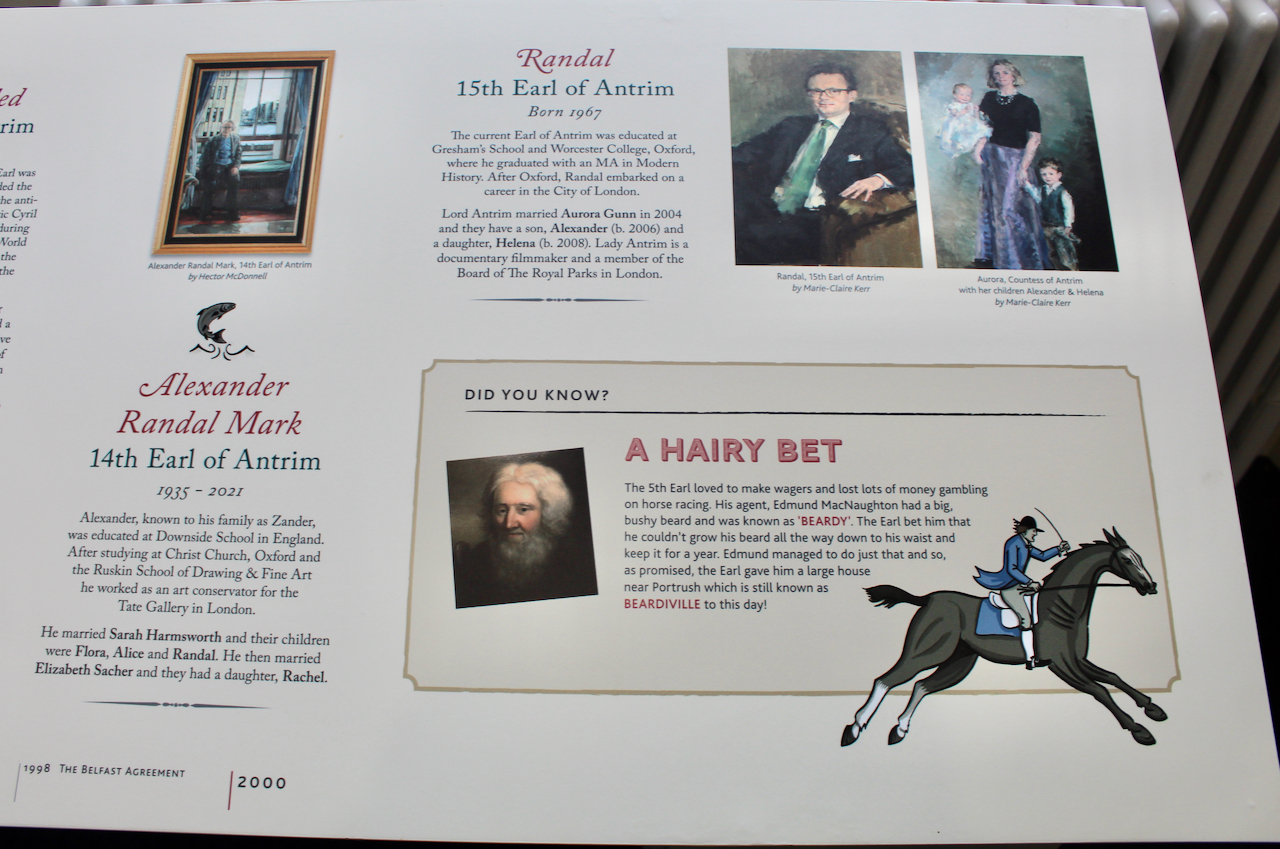
The current Earl of Antrim.
Courtyard on the way to the walled garden at Glenarm. Photograph © Jennifer Winder-Baggot, www.irishhistorichouses.com
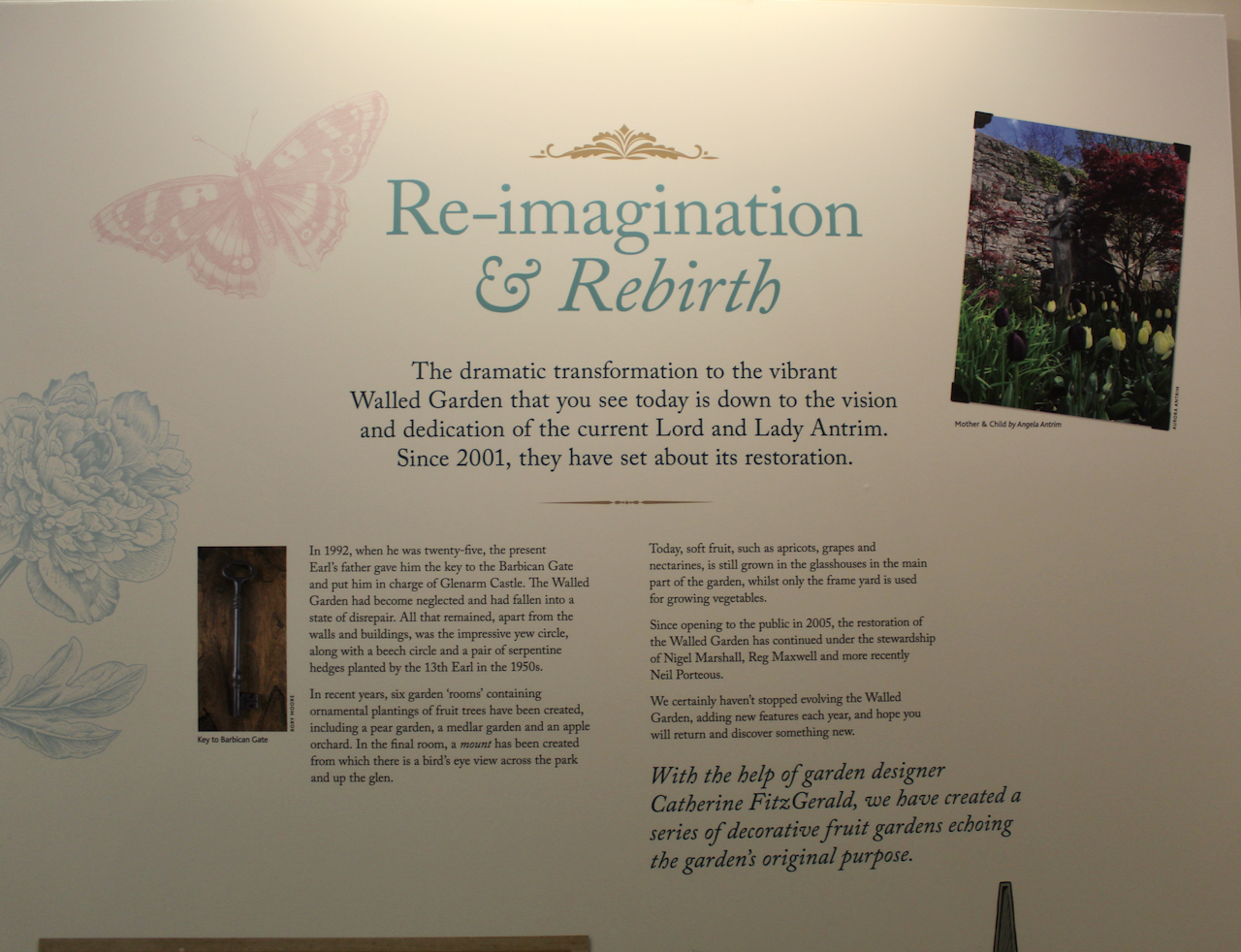
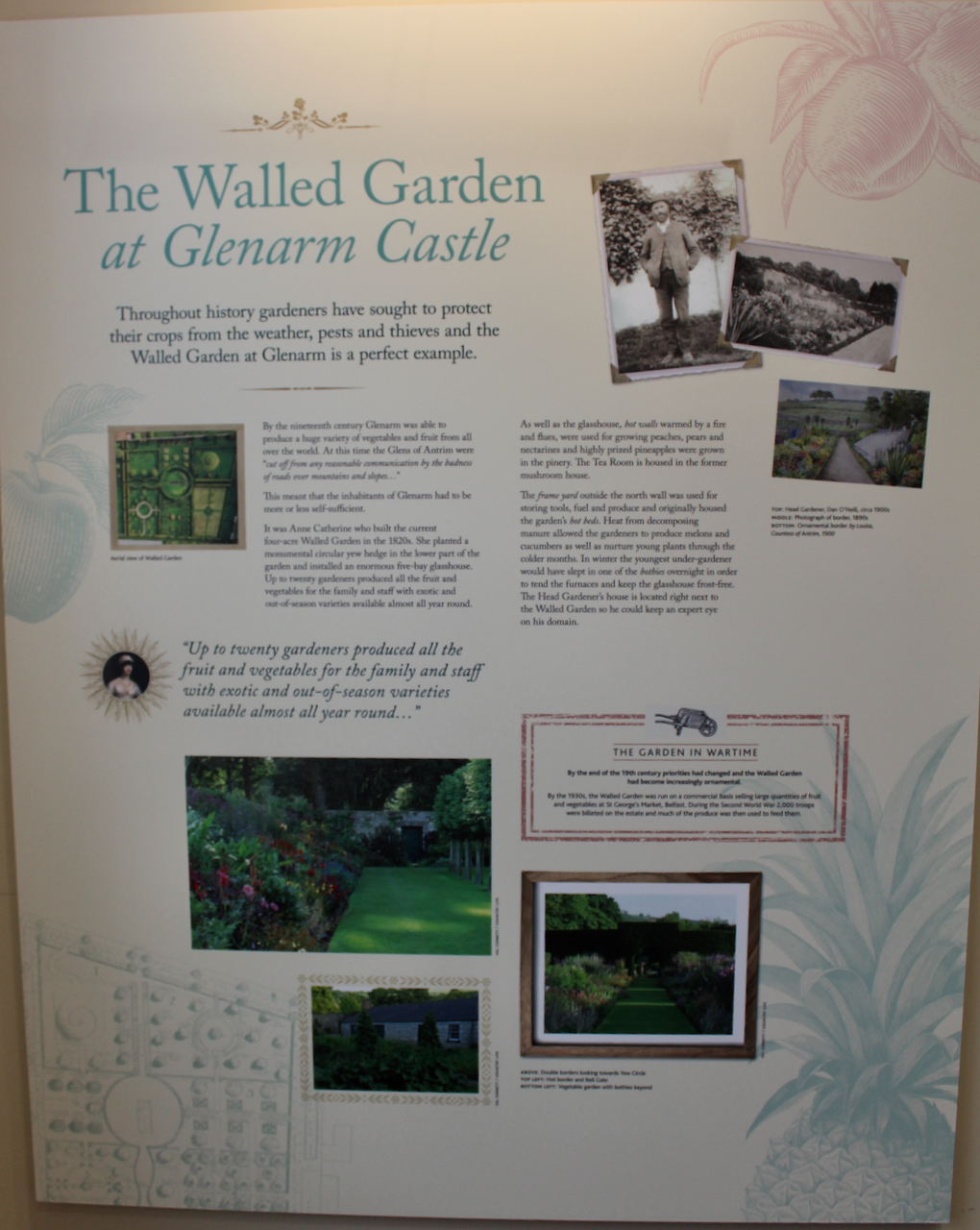
Explanation about the walled garden at Glenarm.
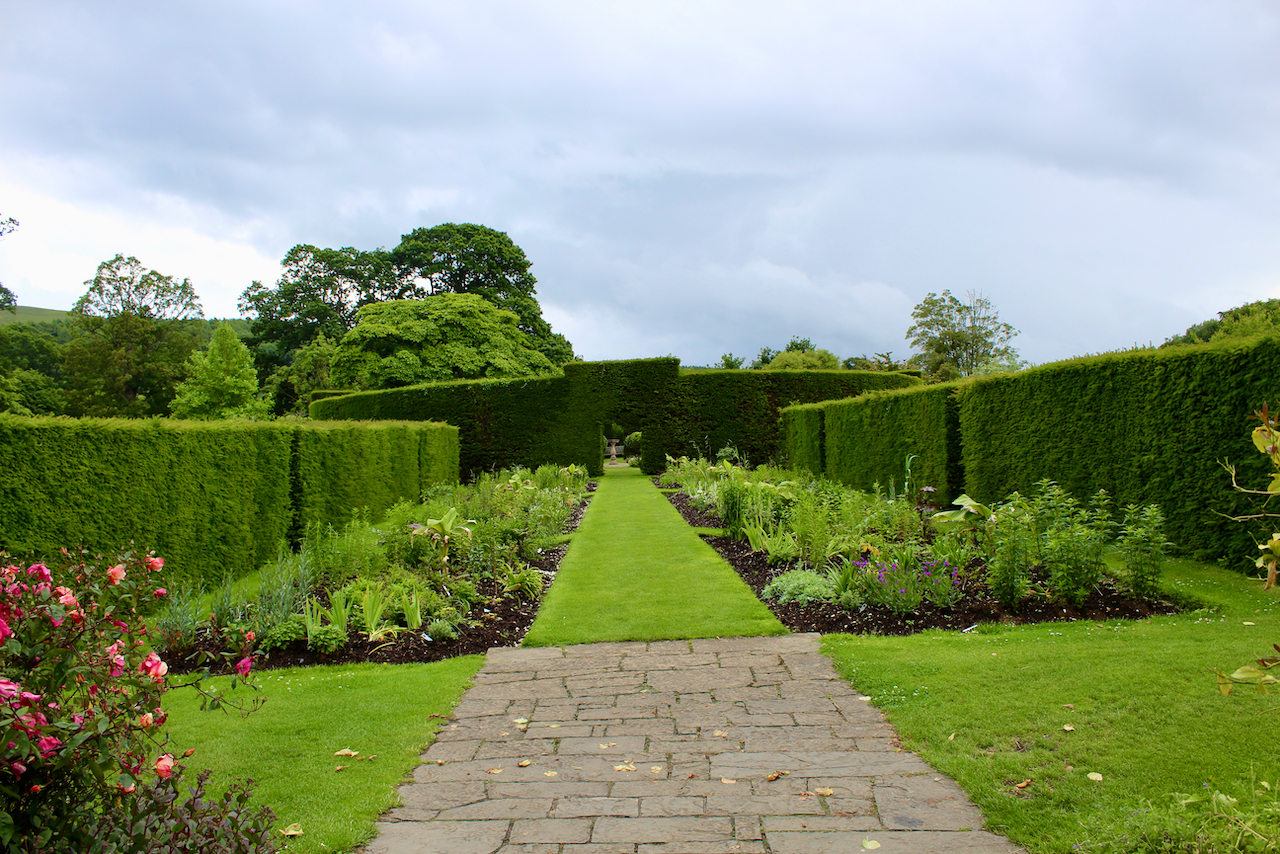
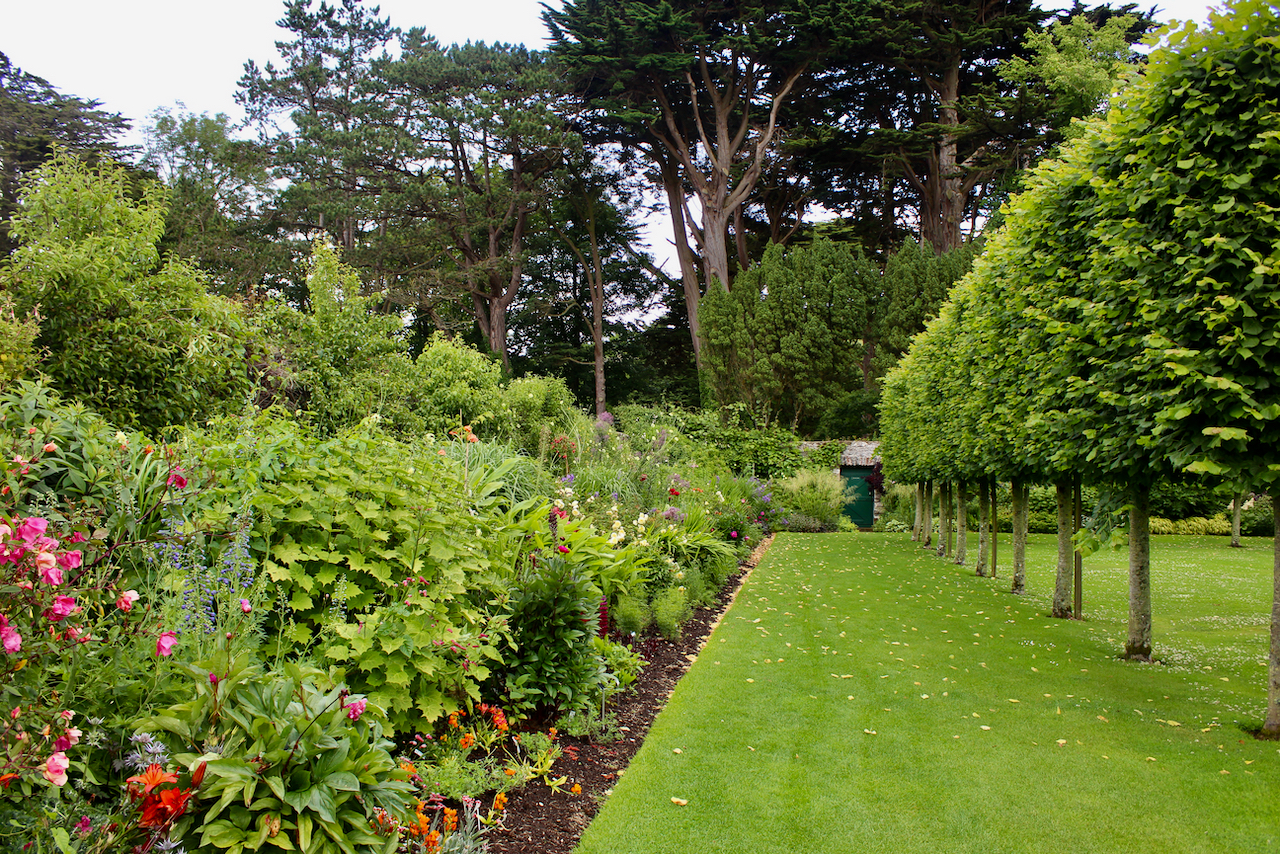
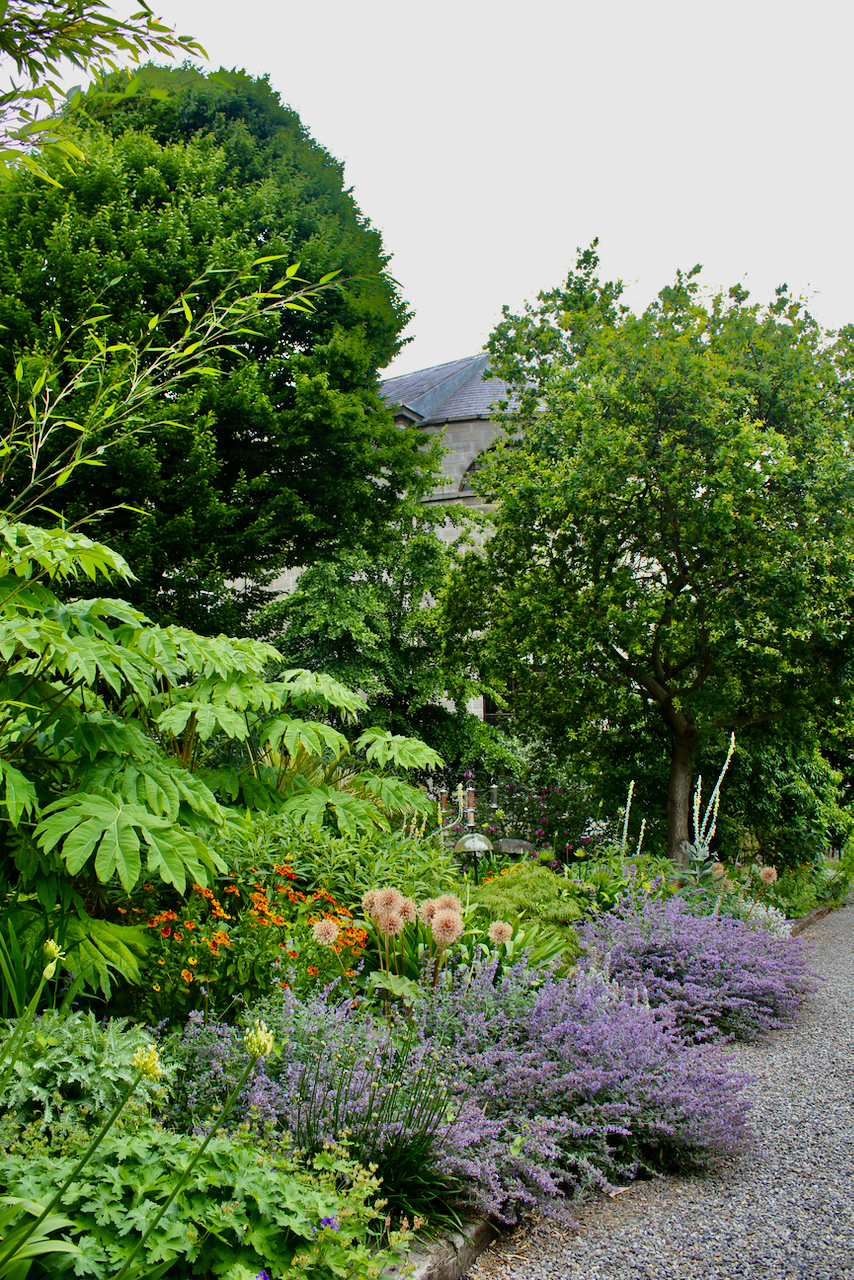
The Walled Garden at Glenarm is amazing, June 2023. Photograph © Jennifer Winder-Baggot, www.irishhistorichouses.com
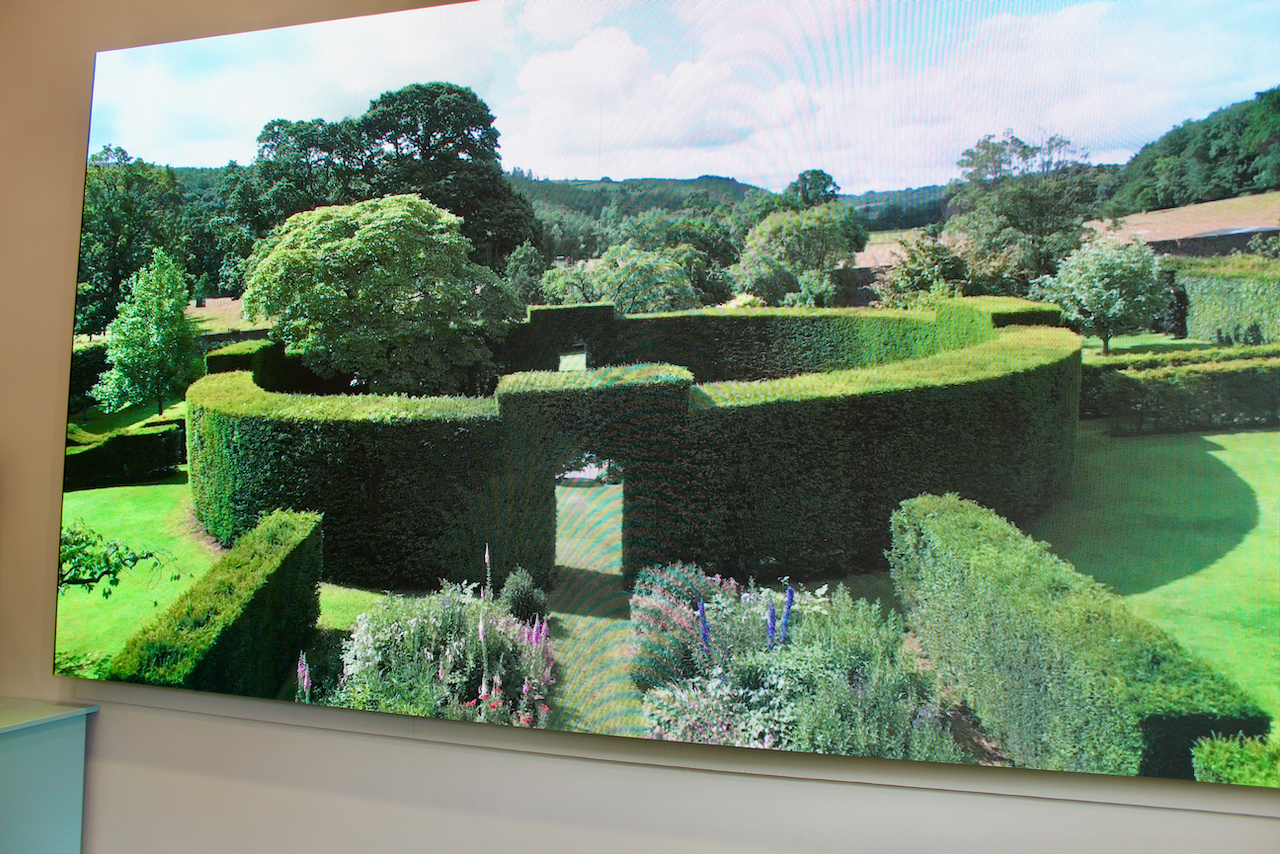
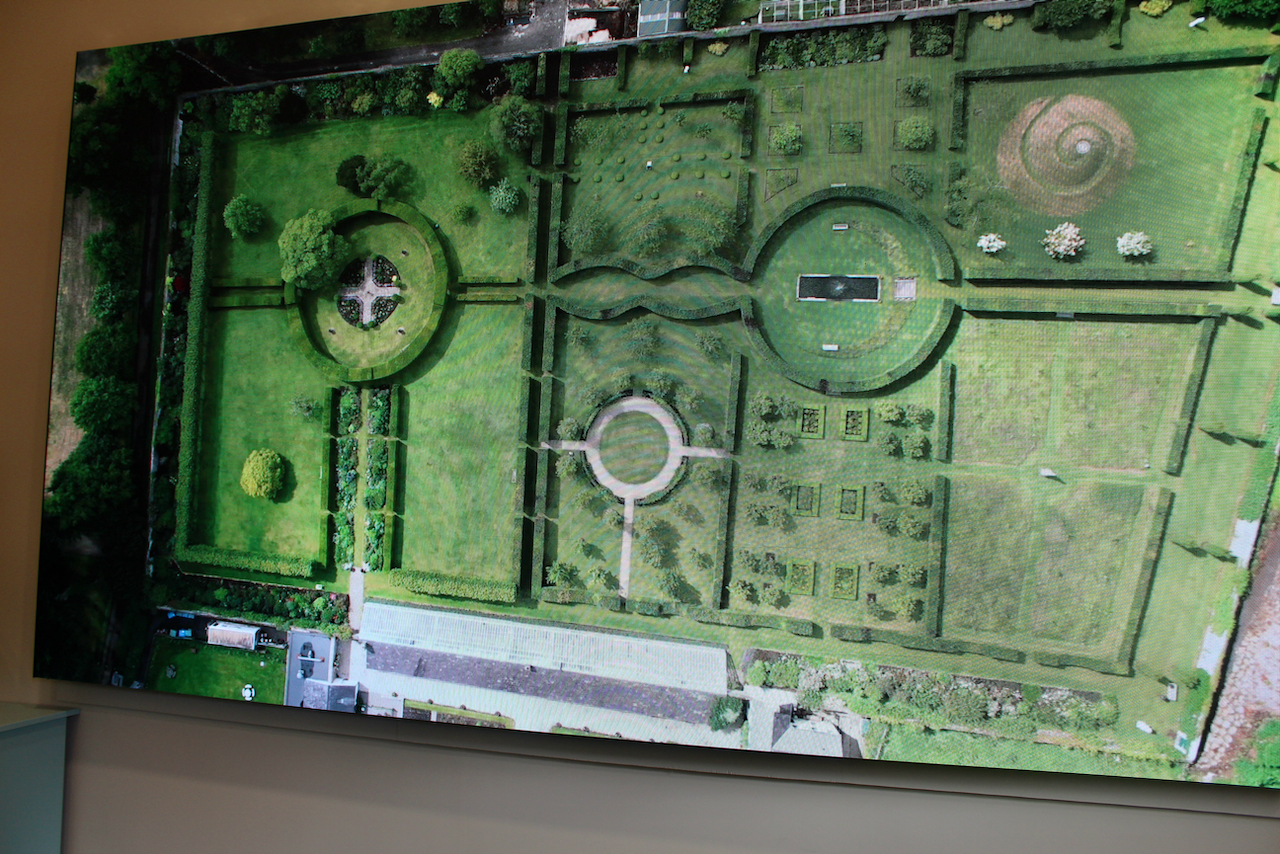
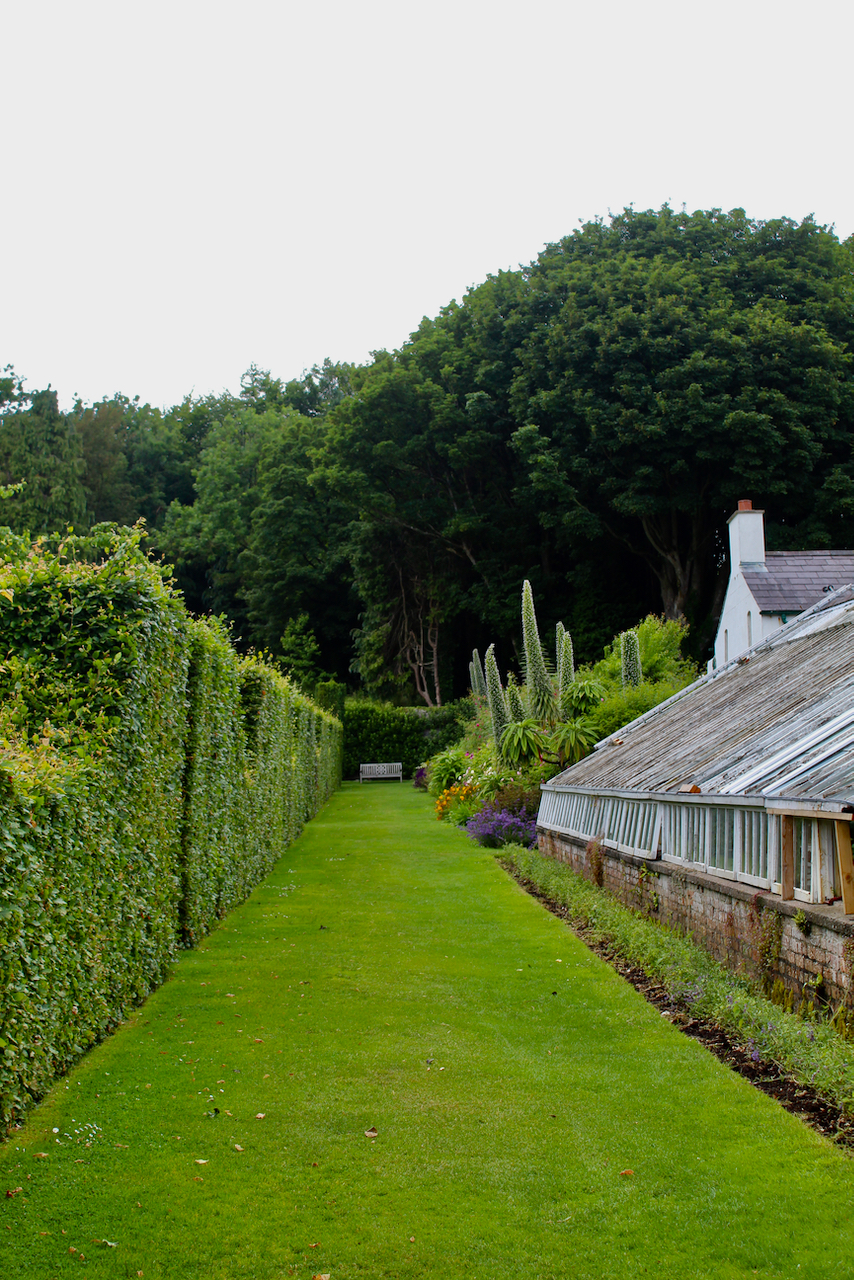
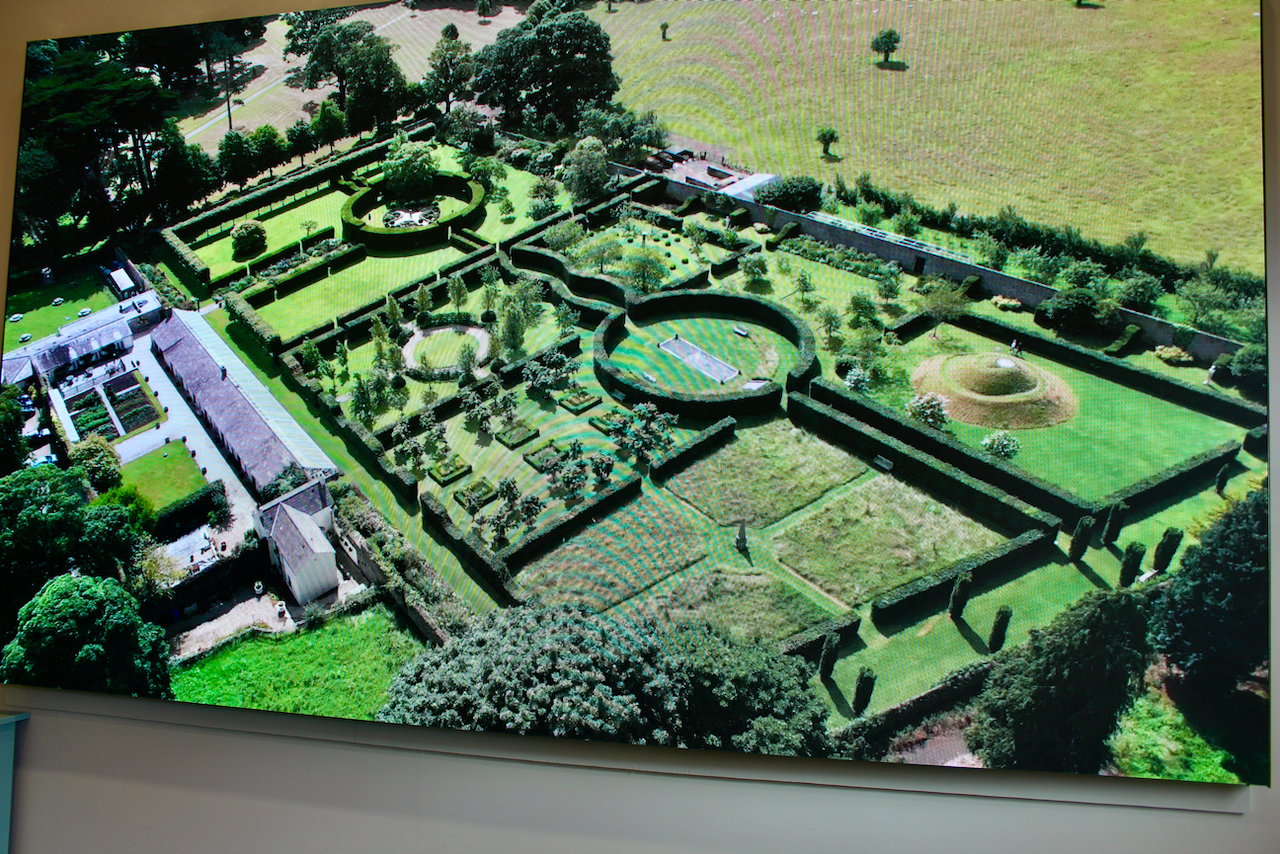
Anne Catherine (1778-1834) MacDonnell, daughter of the 1st Earl of Antrim, built the current four acre walled garden in the 1820s. She planted the circular yew hedge and installed an enormous five bay glass house.
The circular yew hedge, photograph from slide show in museum.
The walled garden at Glenarm, photograph courtesy of Heritage Centre.
Walled garden, Glenarm, June 2023. Photograph © Jennifer Winder-Baggot, www.irishhistorichouses.com
The Glass houses at Glenarm, June 2023. Photograph © Jennifer Winder-Baggot, www.irishhistorichouses.com
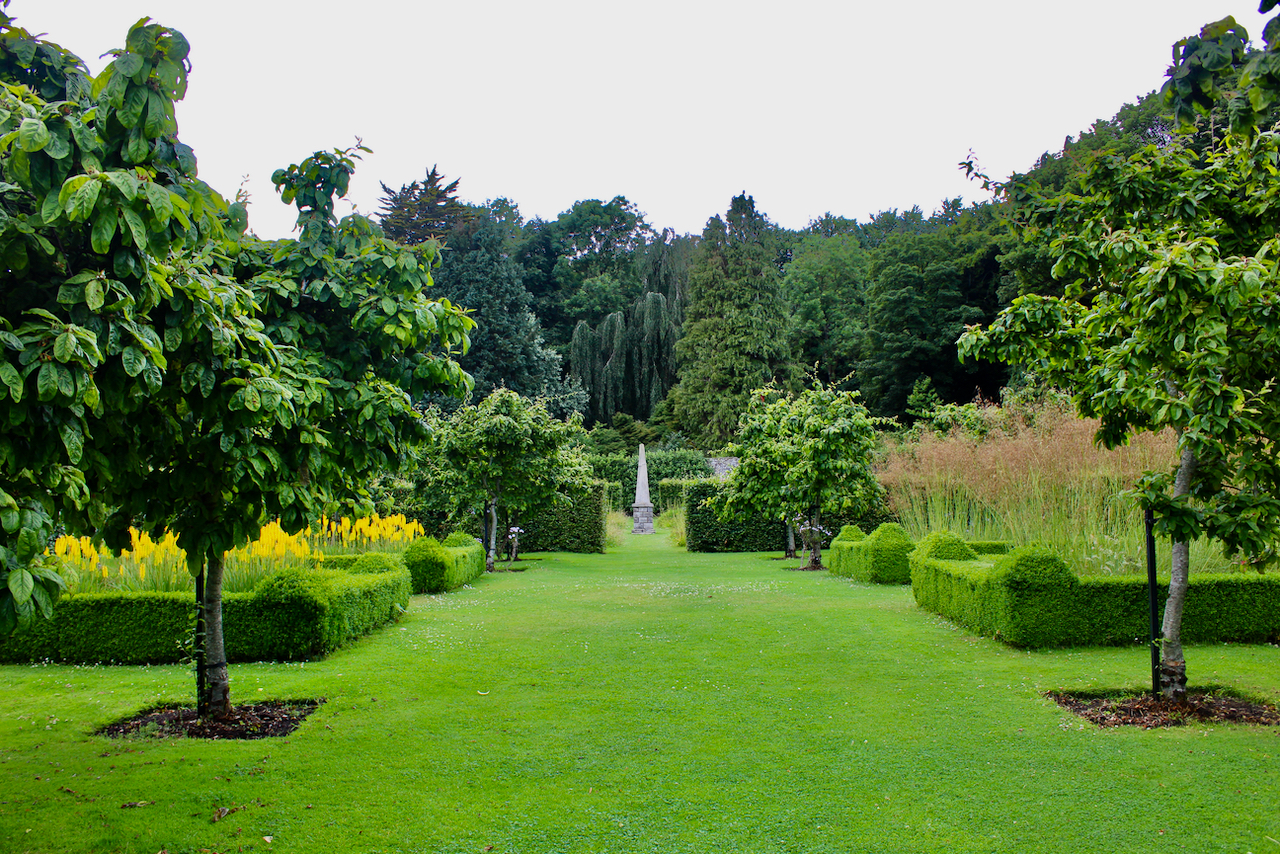
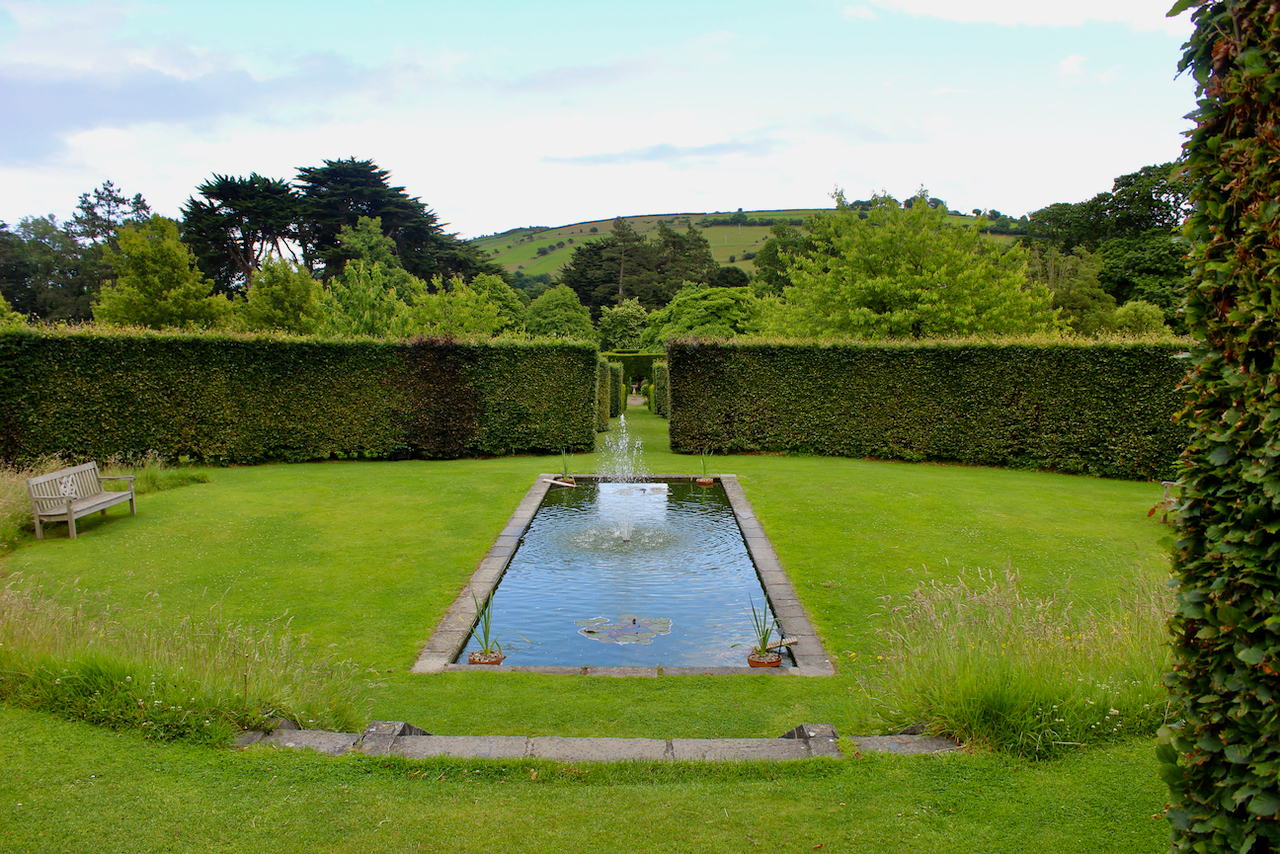
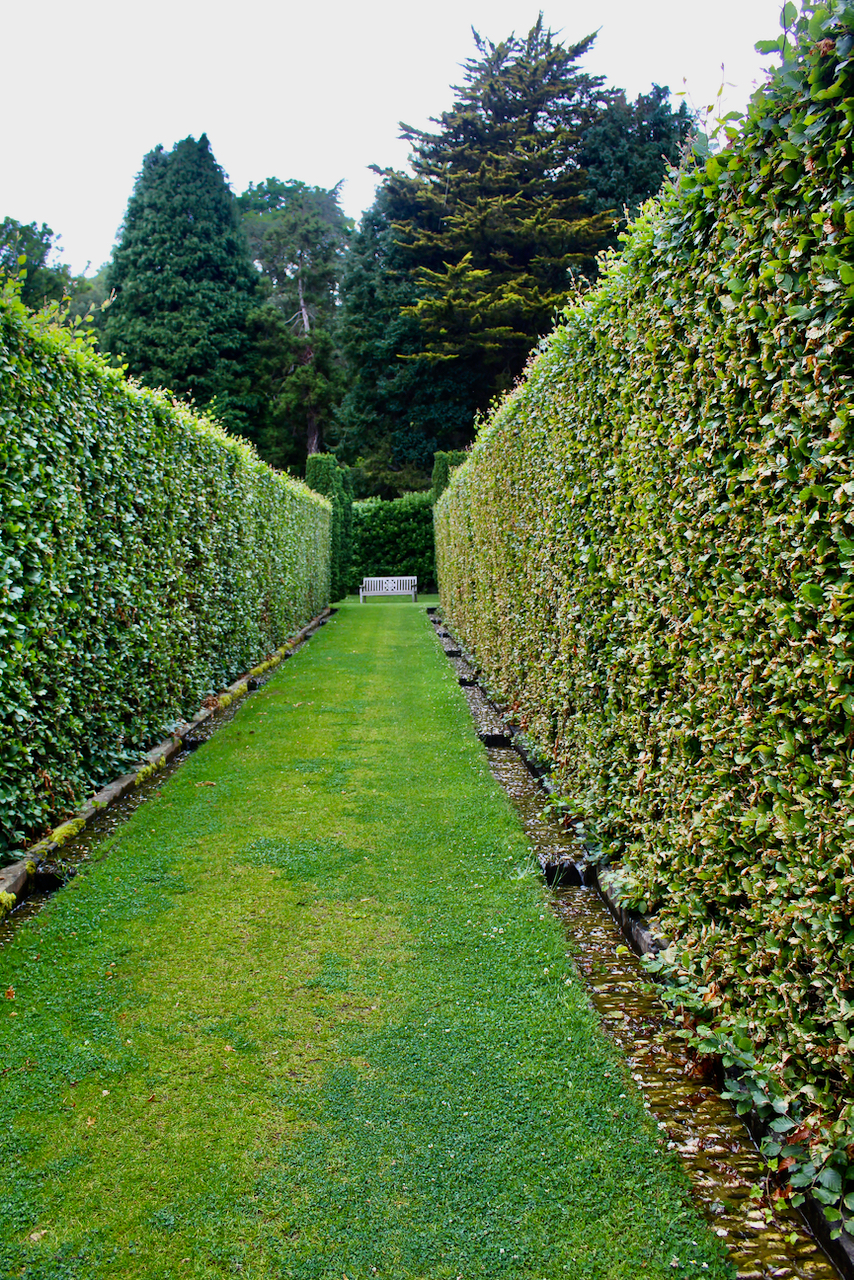
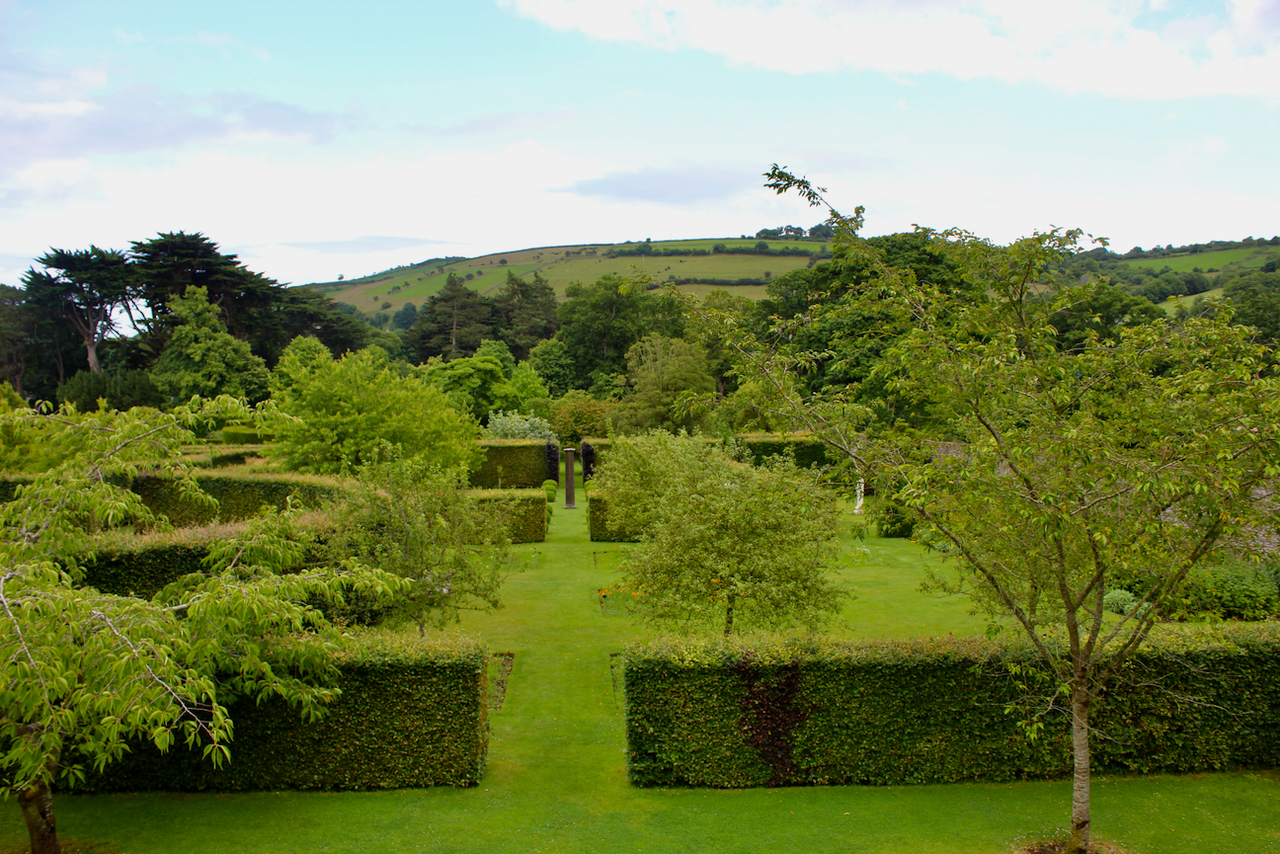
The Glenarm walled garden is full of beautiful vistas. Photograph © Jennifer Winder-Baggot, www.irishhistorichouses.com
Glenarm walled garden, June 2023. Photograph © Jennifer Winder-Baggot, www.irishhistorichouses.com
Glenarm walled garden, June 2023.
Glenarm walled garden, June 2023. Photograph © Jennifer Winder-Baggot, www.irishhistorichouses.com
More beautiful vistas at Glenarm walled garden, June 2023. Photograph © Jennifer Winder-Baggot, www.irishhistorichouses.com
Glenarm walled garden, photograph courtesy of Heritage centre.
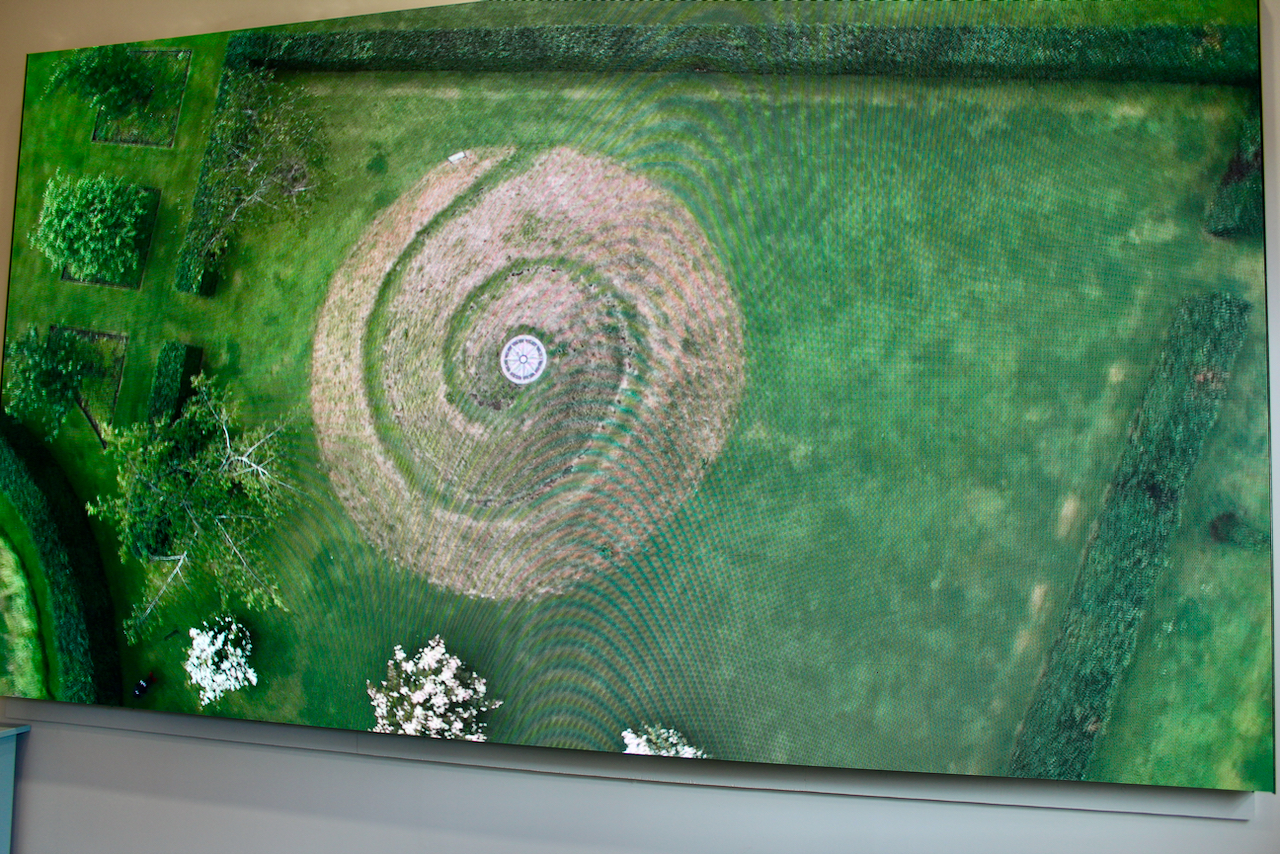
“The Mound” in the garden, photograph courtesy of Heritage centre.
“The Mound.”
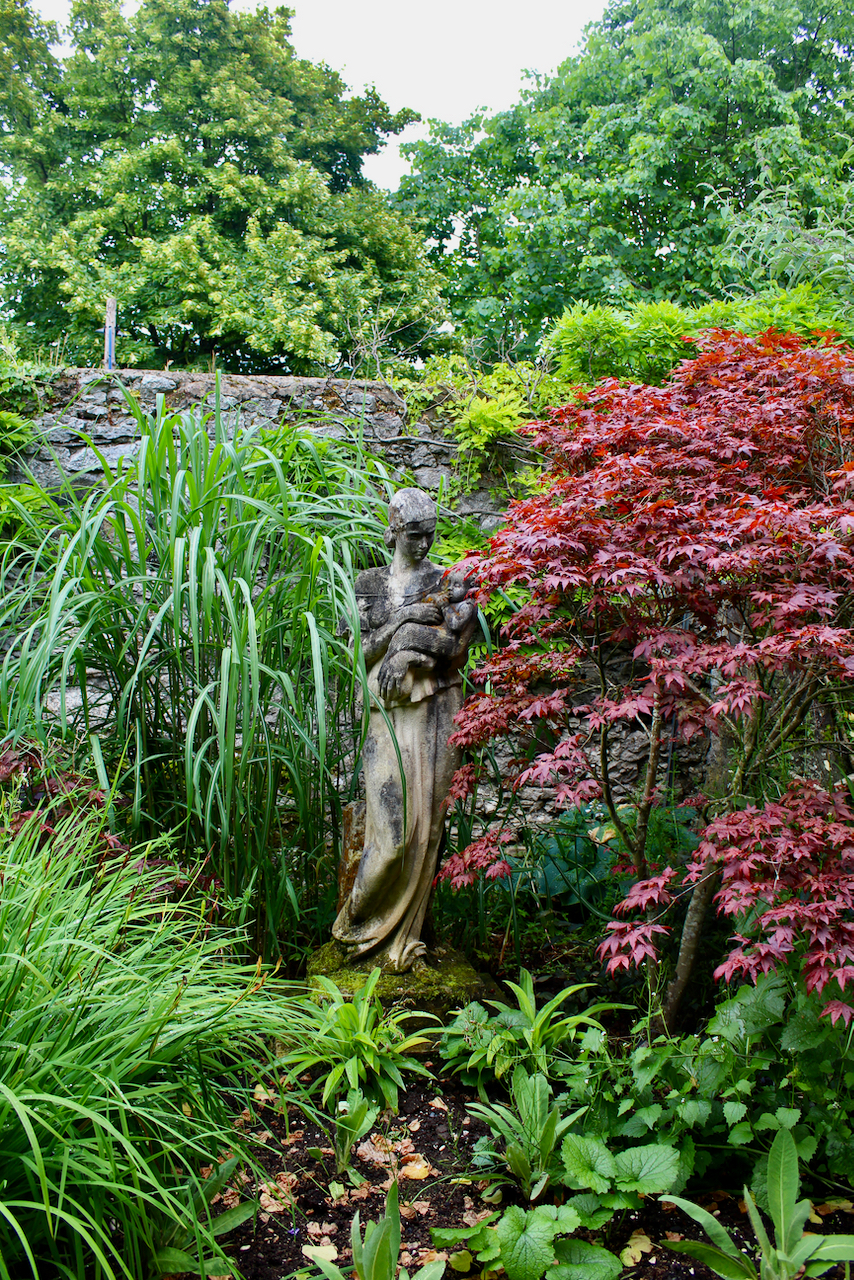
Mother and Child by Angela Sykes (1911-1984), wife of the 13th Earl of Antrim. Photograph © Jennifer Winder-Baggot, www.irishhistorichouses.com
The estate continues to provide employment. Angela wife of the 13th Earl established a furniture factory. Today Glenarn has an organic salmon farm, an organic shorthorn beefherd, farming, forestry and hydro-electric enterprises.
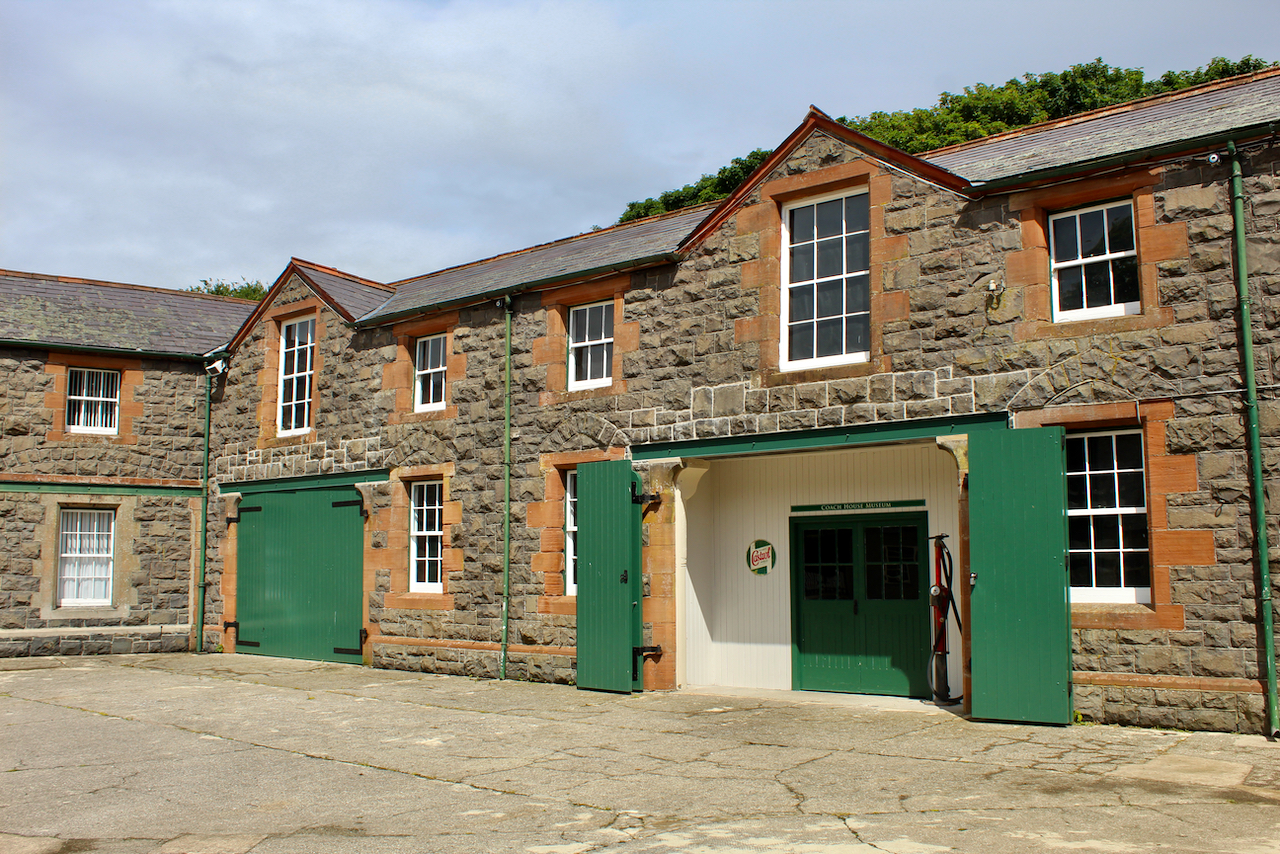
The outbuildings at Glenarm Castle. Photograph © Jennifer Winder-Baggot, www.irishhistorichouses.com

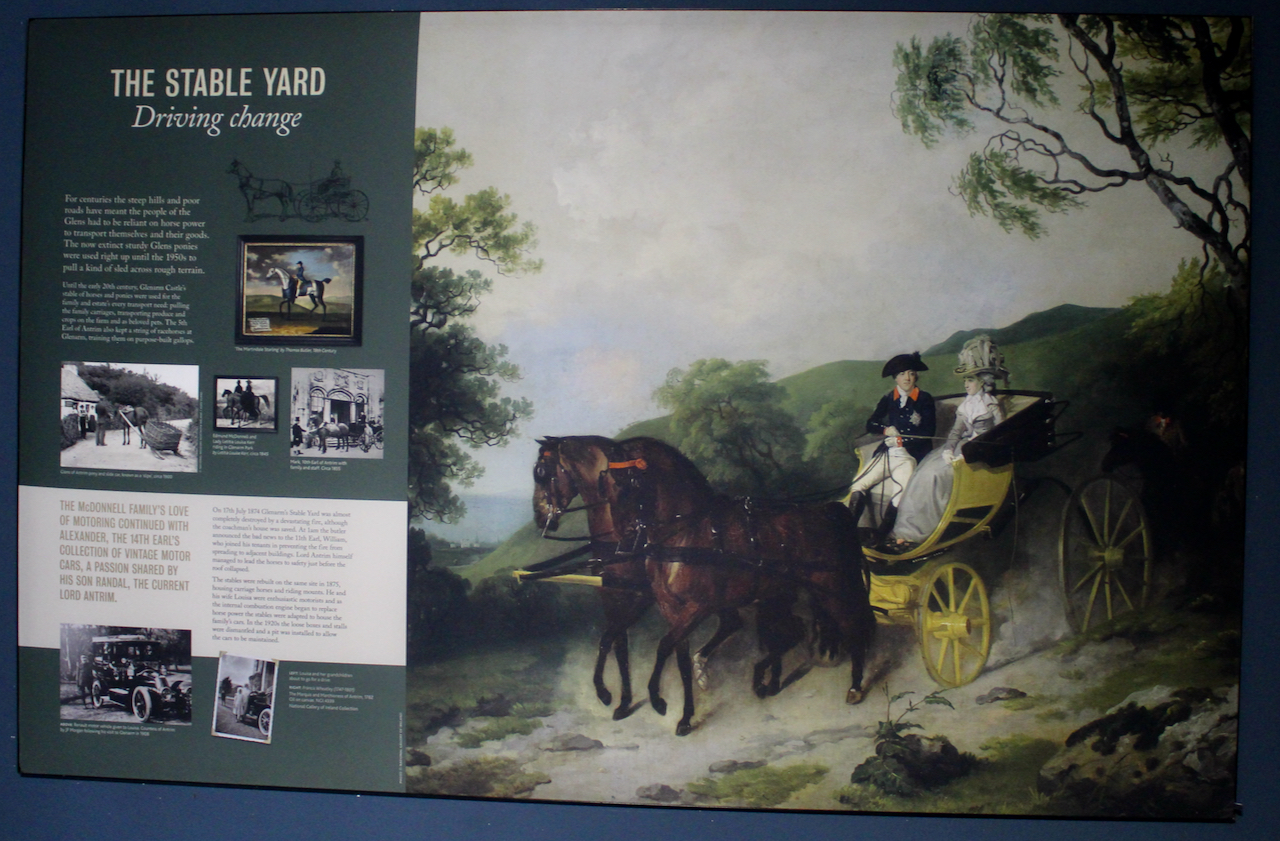
The Castle also hosts a Coach House Museum.
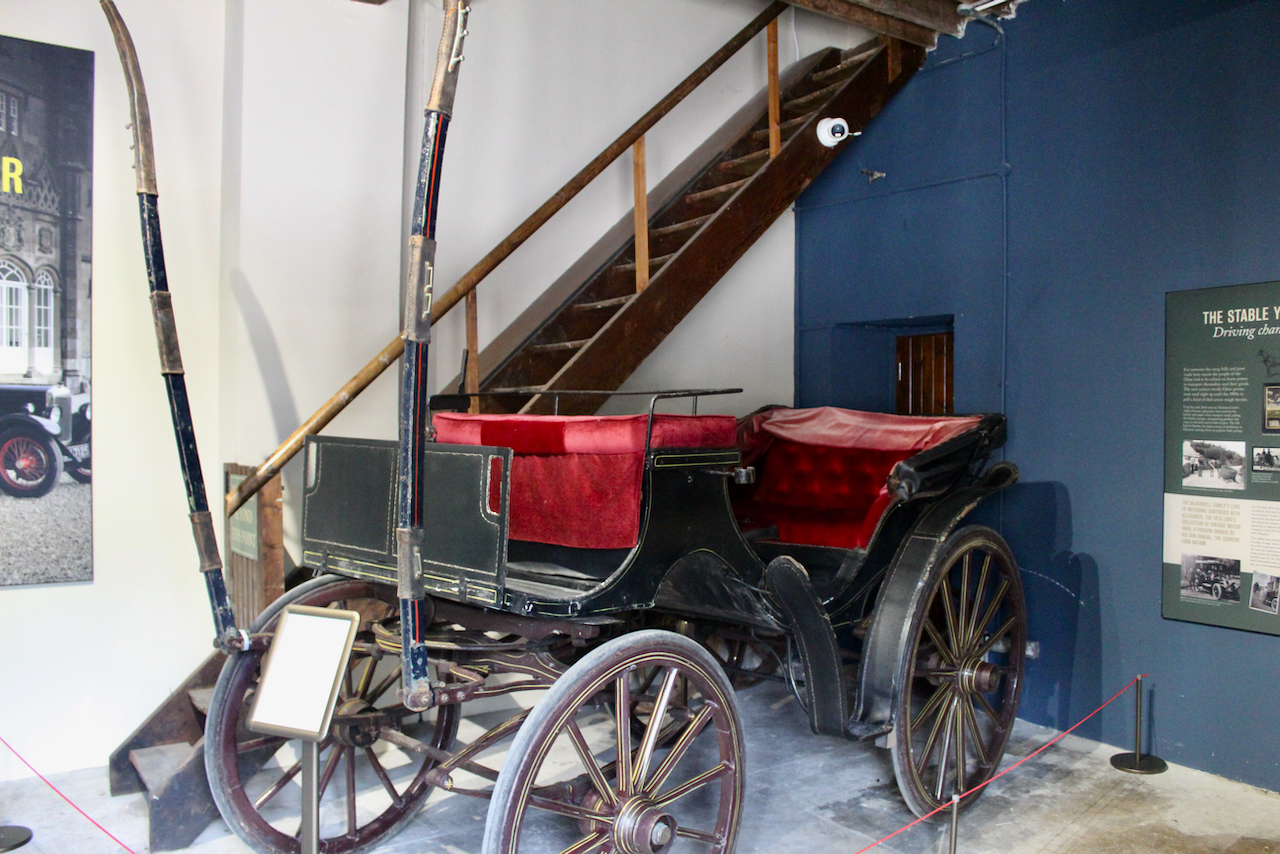
In the Coach House Museum at Glenarm. Photograph © Jennifer Winder-Baggot, www.irishhistorichouses.com
In the Coach House Museum at Glenarm.
Glenarm, County Antrim.

[1] https://www.irelandscontentpool.com/en

[2] http://lordbelmontinnorthernireland.blogspot.com/search/label/County%20Antrim%20Landowners?updated-max=2020-02-05T07:48:00Z&max-results=20&start=49&by-date=false

[3] p. 135, Bence-Jones, Mark. A Guide to Irish Country Houses (originally published as Burke’s Guide to Country Houses volume 1 Ireland by Burke’s Peerage Ltd. 1978); Revised edition 1988, Constable and Company Ltd, London.

Text © Jennifer Winder-Baggot, www.irishhistorichouses.com
Open House 2023

I had a busy Open House Dublin this year as I made sure to be up and in front of my computer at 9am when booking started, to try to get a place to visit the Provost’s House. I didn’t manage to on the day, but I joined the Irish Architecture Foundation especially to try to see places not normally open to the public, and I was in luck! They later offered some tickets to see the Provost’s House on the Friday morning of Open House this year and I jumped at the chance.

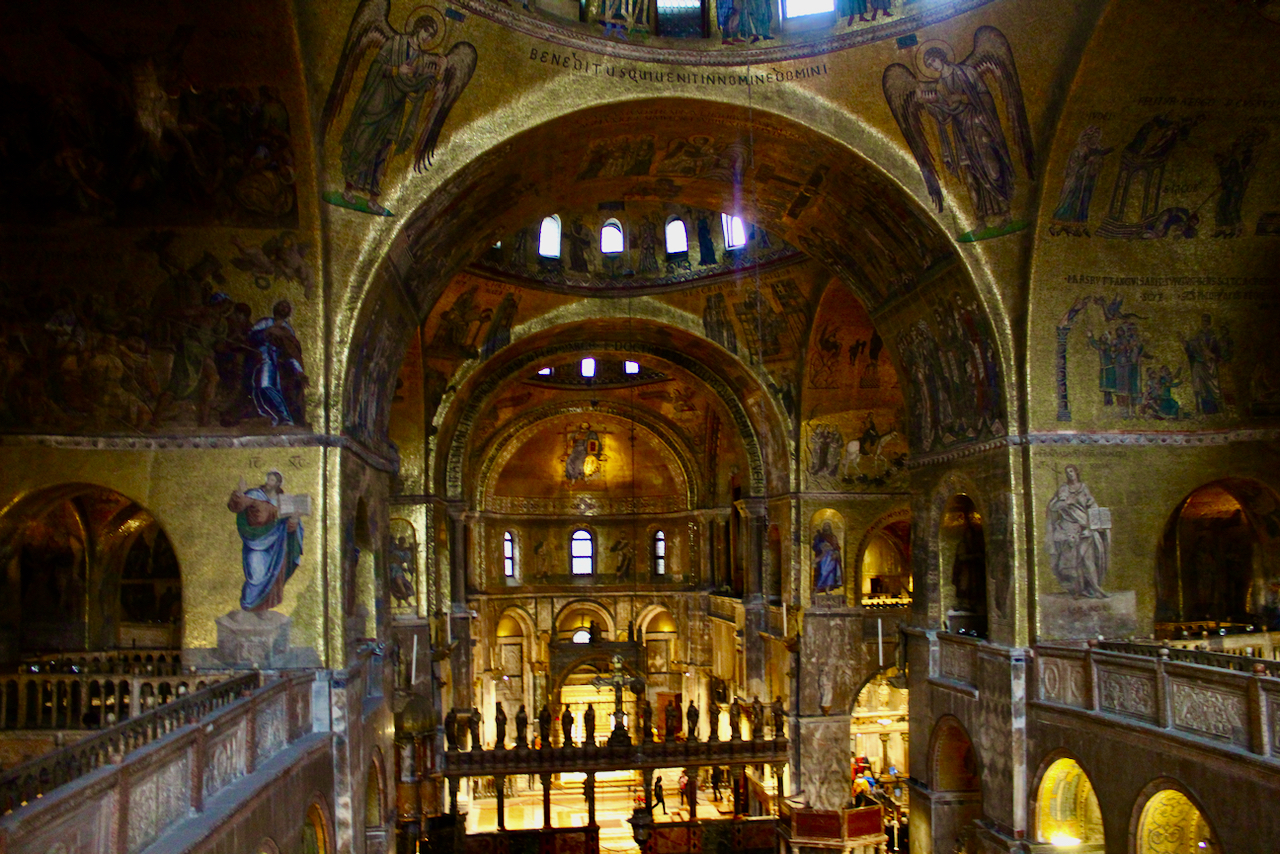
I’m a bit late writing about it, as Stephen and I took a short jaunt to visit Venice for the first time! First of many, I hope, as I loved it. This time we only had time to see the Basilica di San Marco and the Doge’s Palace, and we went on a water bus trip up the Grand Canal.

Basilica di San Marco, Venice. Photograph © Jennifer Winder-Baggot, www.irishhistorichouses.com
The Museum of the Basilica di San Marco in Venice. Photograph © Jennifer Winder-Baggot, www.irishhistorichouses.com
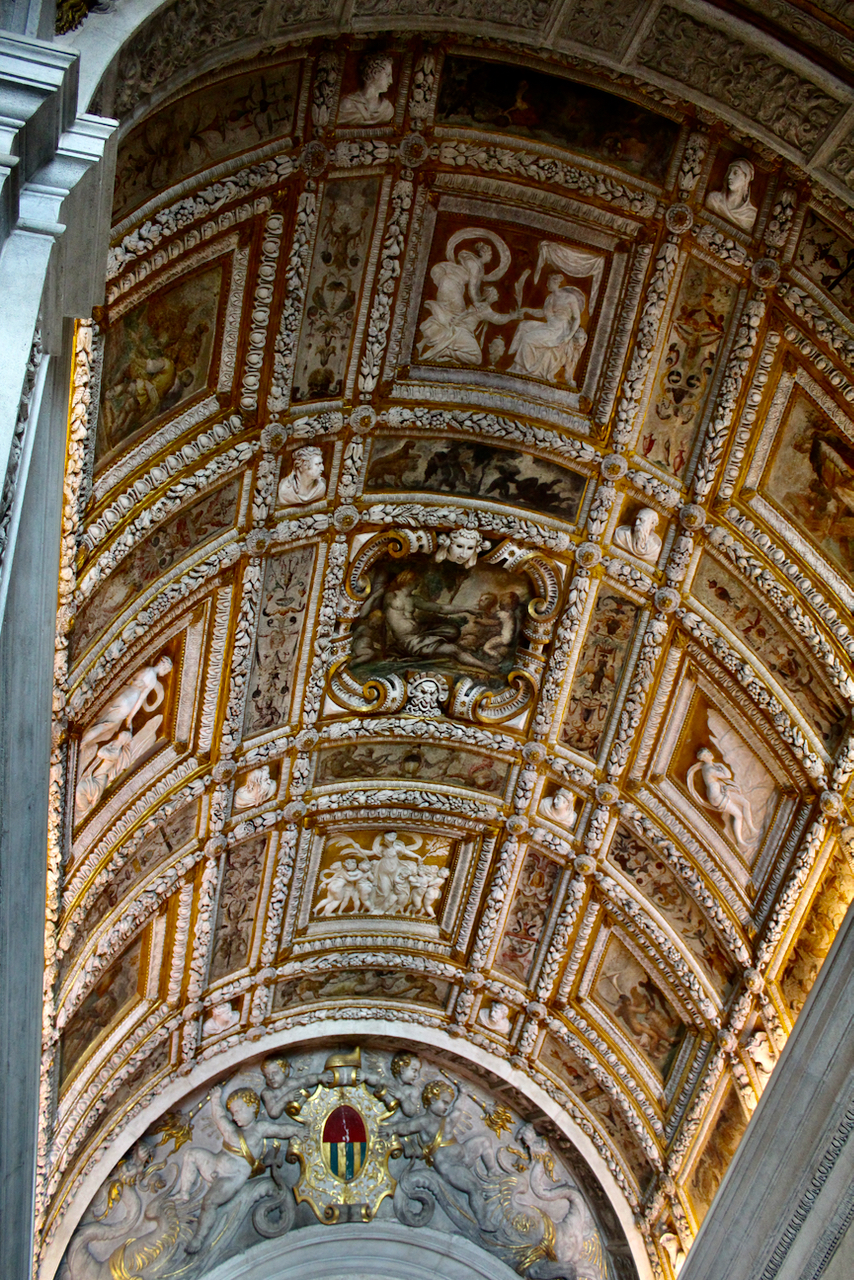
The Golden staircase at the Doge’s Palace. Photograph © Jennifer Winder-Baggot, www.irishhistorichouses.com
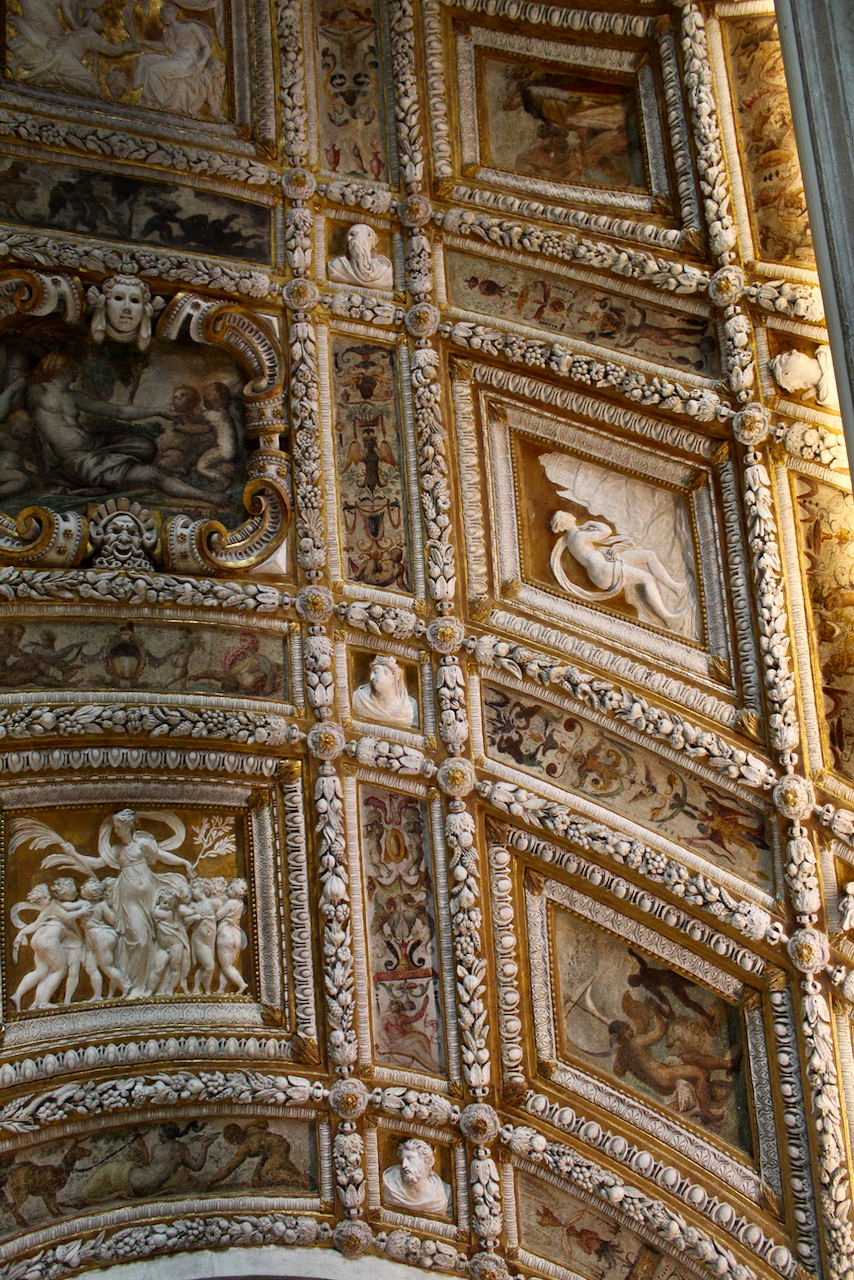
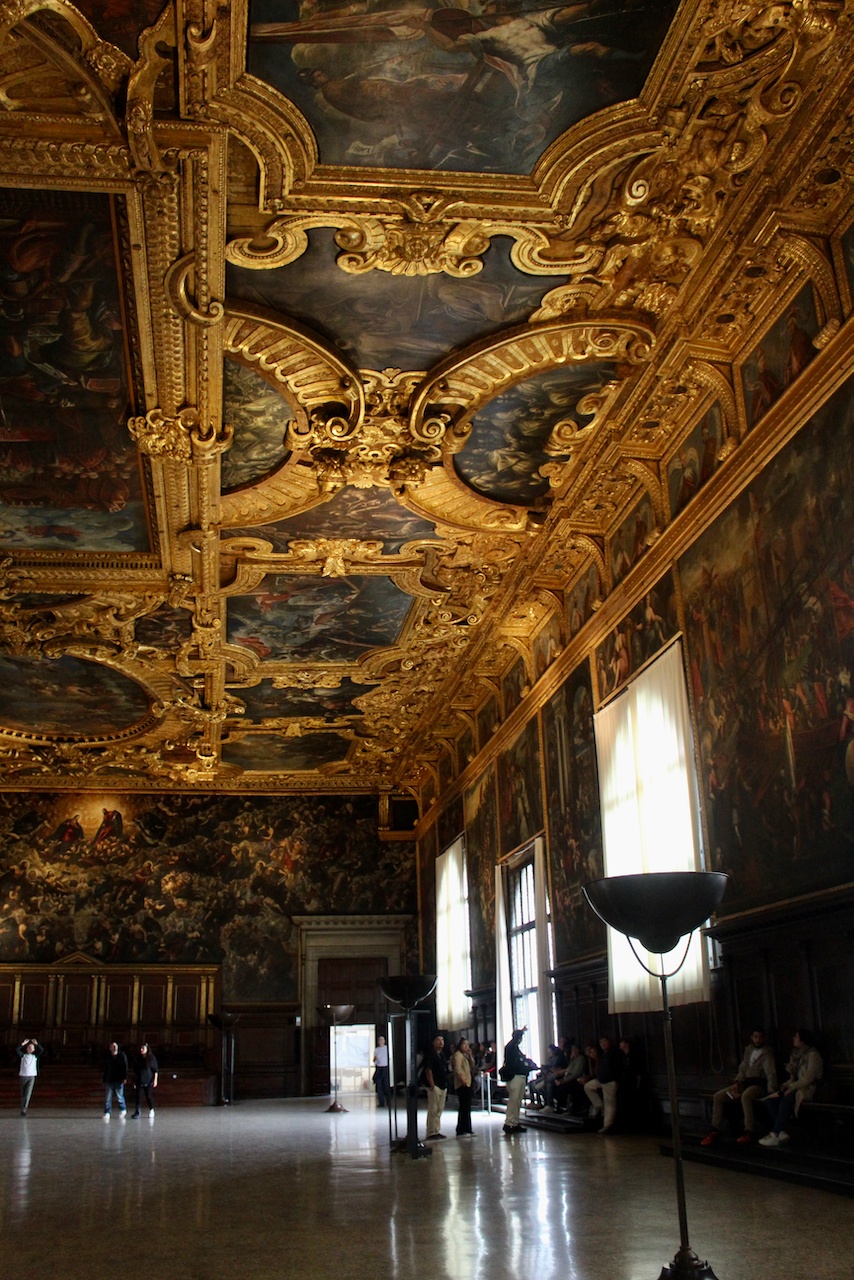
The Doge’s Palace, Venice. Photograph © Jennifer Winder-Baggot, www.irishhistorichouses.com
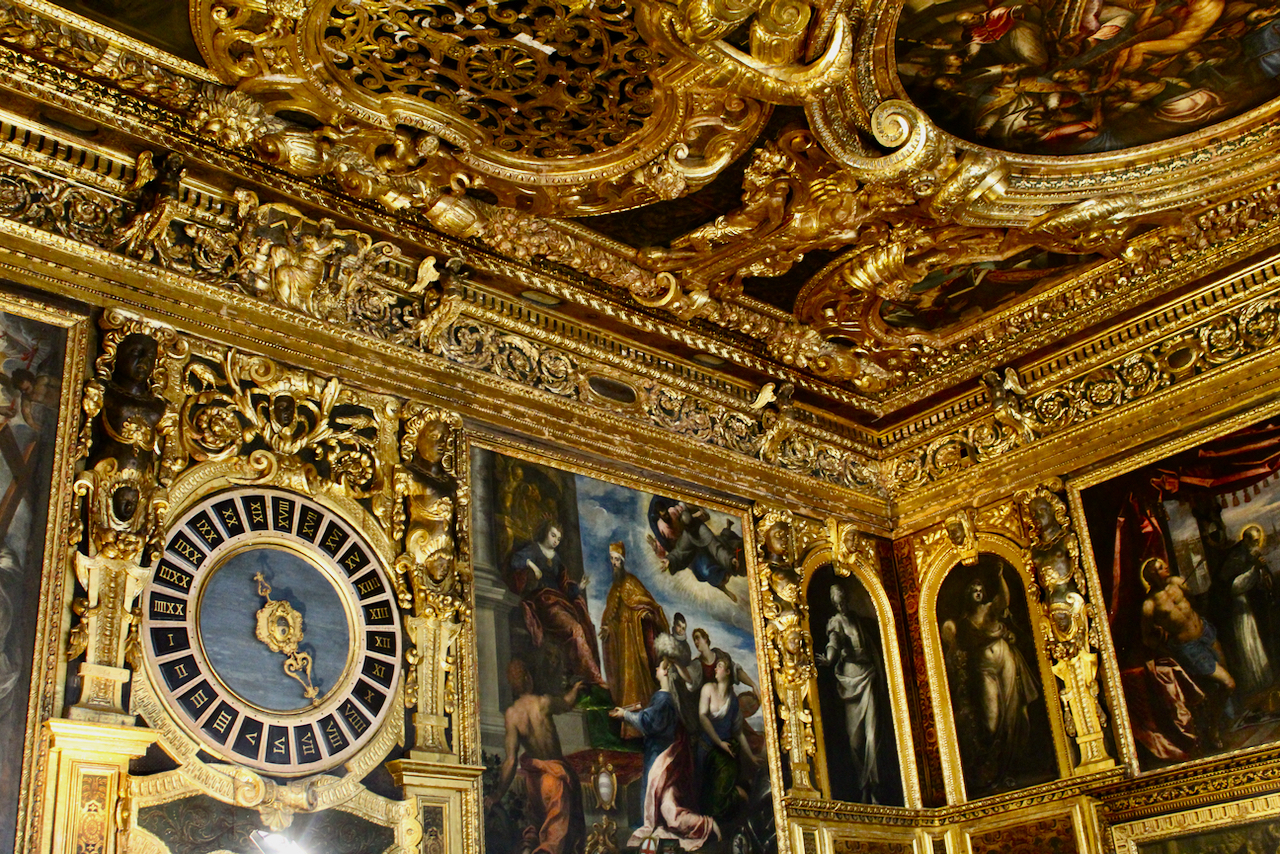
The Doge’s Palace, surely some of the finest craftsmanship in the world. Photograph © Jennifer Winder-Baggot, www.irishhistorichouses.com
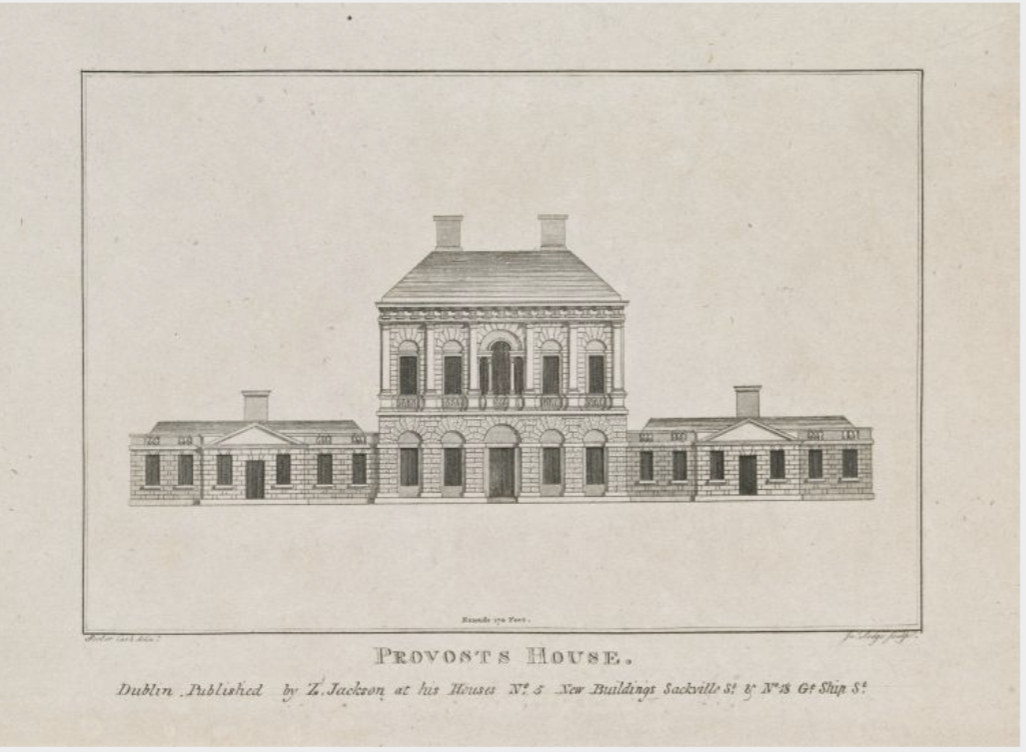
It’s not a very fair comparison to segue now to the Provost’s House, the stucco work of which is indeed beautiful!

The dining room of the Provost’s House. Local stuccadores Patrick and John Wall did the plasterwork. The bows and ropes are quite distinctive. Photograph © Jennifer Winder-Baggot, www.irishhistorichouses.com
Ceiling of the salon at the Provost’s House. Photograph © Jennifer Winder-Baggot, www.irishhistorichouses.com
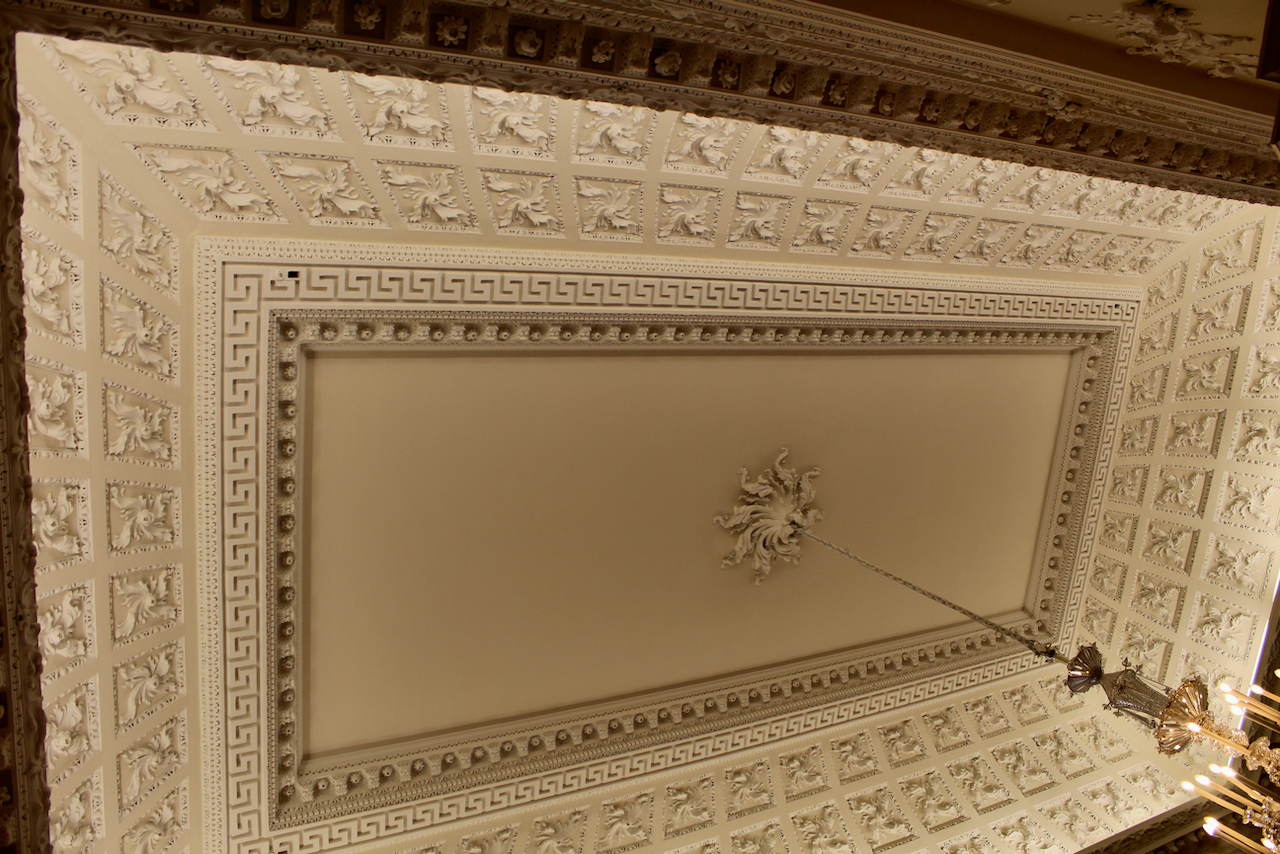
The Provost’s House, Trinity College Dublin, 2023. I felt I certainly deserved a tour, after spending eight years studying in Trinity! Photograph © Jennifer Winder-Baggot, www.irishhistorichouses.com
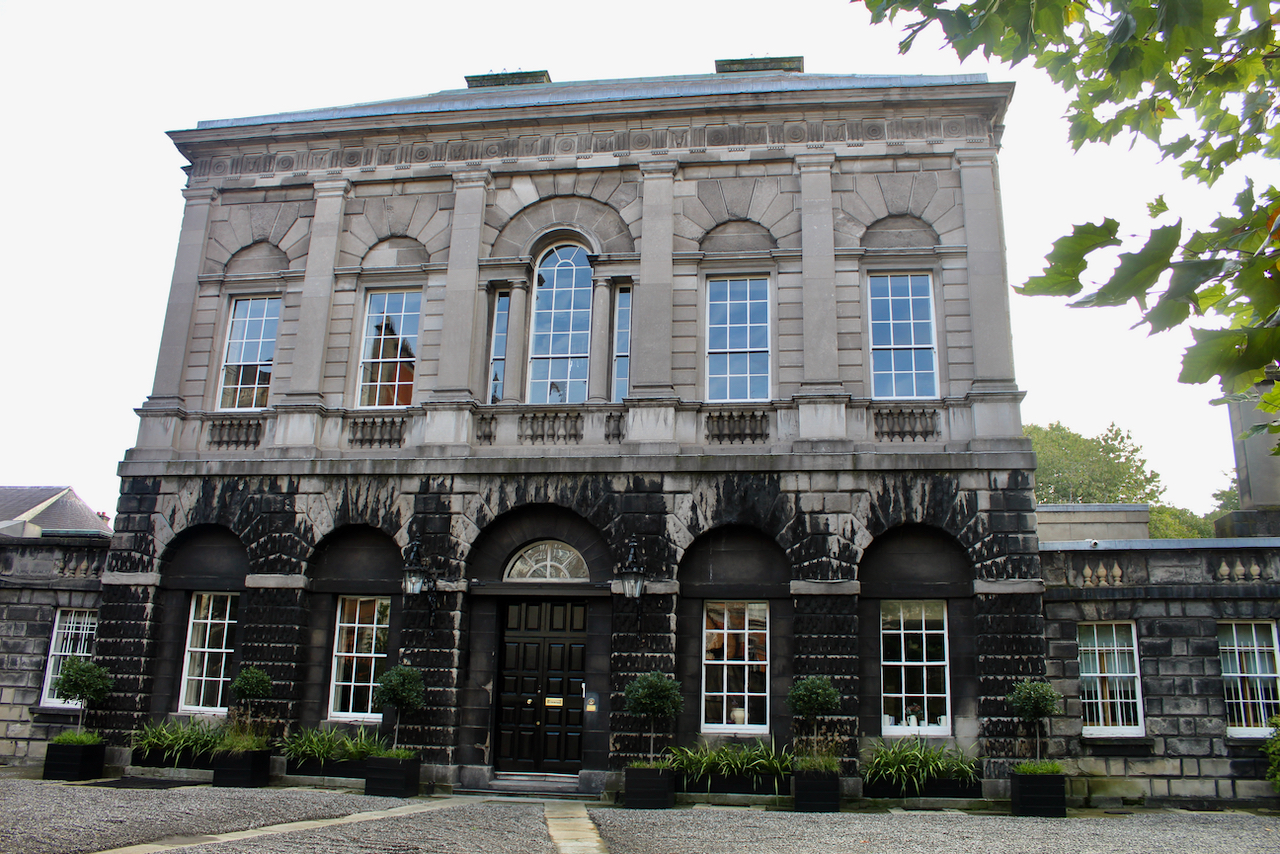
The Provost’s House is a five bay two storey over basement house with later built wings, single-storey of seven bays each, which hold offices. It is built to impress, with a carved balustrade along the first floor stringcourse, and a row of Doric pilasters on the first storey facade topped with a frieze of metops and bucrania. The upper storey is limestone but the lower level has rusticated vermiculated stone which absorbs the pollution of the air and has become blackened.

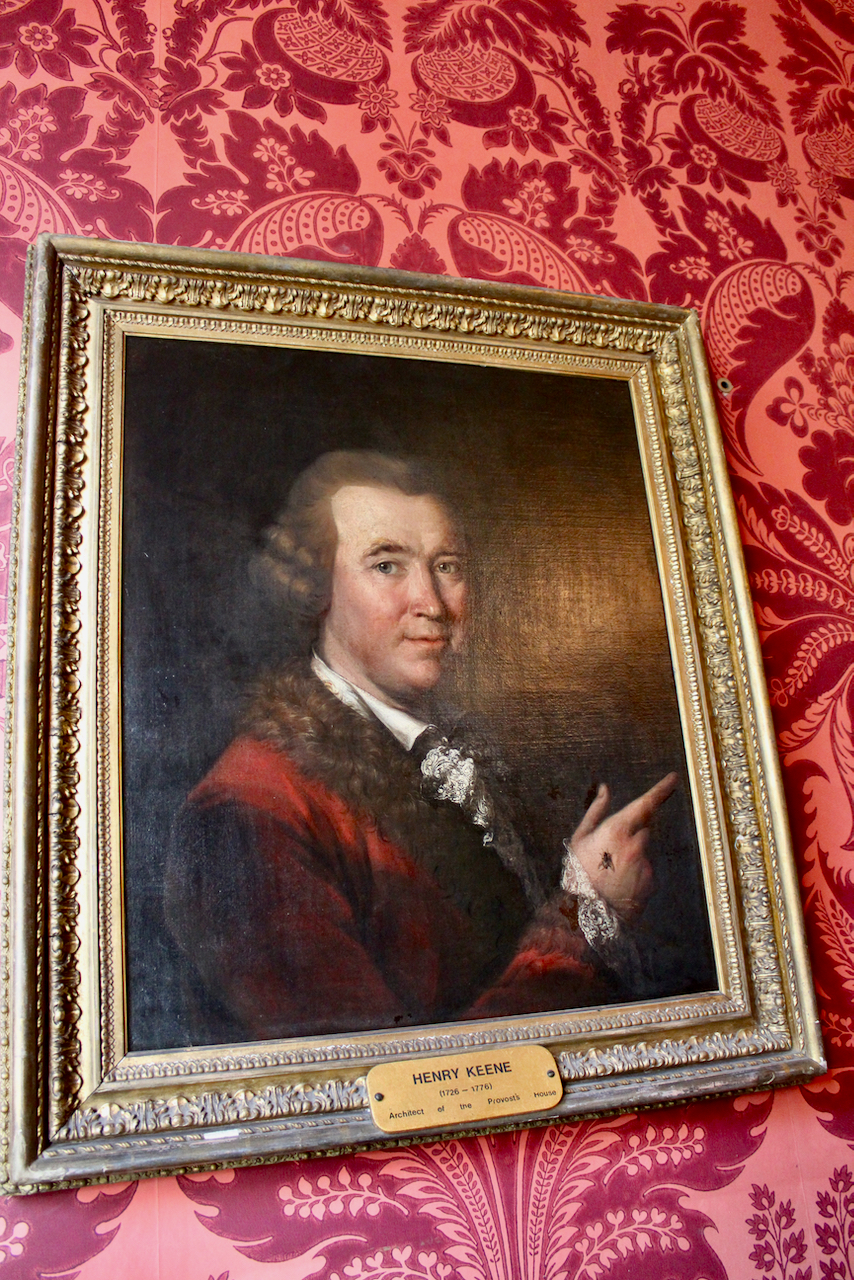
Although Henry Keene is identified as the architect, it is said to copy Richard Boyle 3rd Earl of Burlington’s design for General Wade’s Mayfair house, but George Montague, in a letter to Horace Walpole in 1761, commented ‘The Provost’s House of the university is just finished after the plan of General Wade’s but half of the proportions and symmetry were lost at sea in coming over’.

Henry Keene (1726-1776), architect of the Provost’s House. Photograph © Jennifer Winder-Baggot, www.irishhistorichouses.com
Anne Keene, wife of Henry, architect of the Provost’s house. She looks rather worried. Photograph © Jennifer Winder-Baggot, www.irishhistorichouses.com

The National Inventory tells us that it was commissioned for Provost Francis Andrews, and “Dr Frederick O’Dwyer has suggested that John Magill, the builder, conspired with Andrews to divert funds from the west front of Parliament Square for its building. Andrews was heavily criticised by contemporaries for removing his lodgings from the main college residences. It was extended in 1775 to designs by Christopher Myers and continued to be augmented and updated into the nineteenth century when John Mallet was paid £326 5s 3½d for plumbing works. According to Casey (2005), the interior is reminiscent of Richard Castle’s country house design for Bellinter in Co Meath, and of Castle’s design for number 85 Stephen’s Green. The octagonal stair supports an iron balustrade by Timothy Turner. The saloon chimneypiece decorative designs are derived from Boucher’s ‘Livres des Arts’. The interior plasterwork is by Patrick and John Wall and the carving by James Robinson and Richard Cranfield.

The rather stark front hall of the Provost’s House, constructed in the early 1760s. Photograph © Jennifer Winder-Baggot, www.irishhistorichouses.com
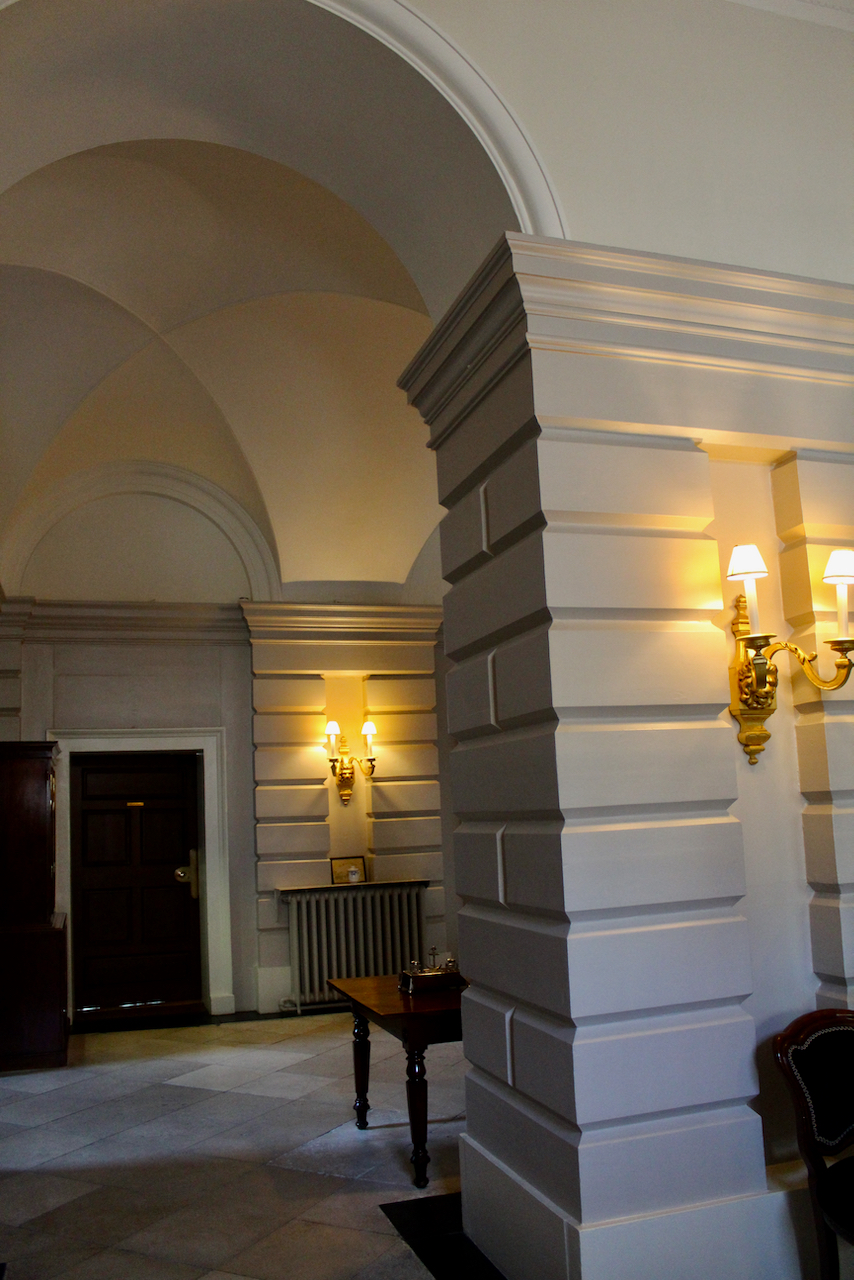
Decorative frieze and cornice in the front hall of the Provost’s house. Photograph © Jennifer Winder-Baggot, www.irishhistorichouses.com
The inner front hall has groin vaulting. Photograph © Jennifer Winder-Baggot, www.irishhistorichouses.com
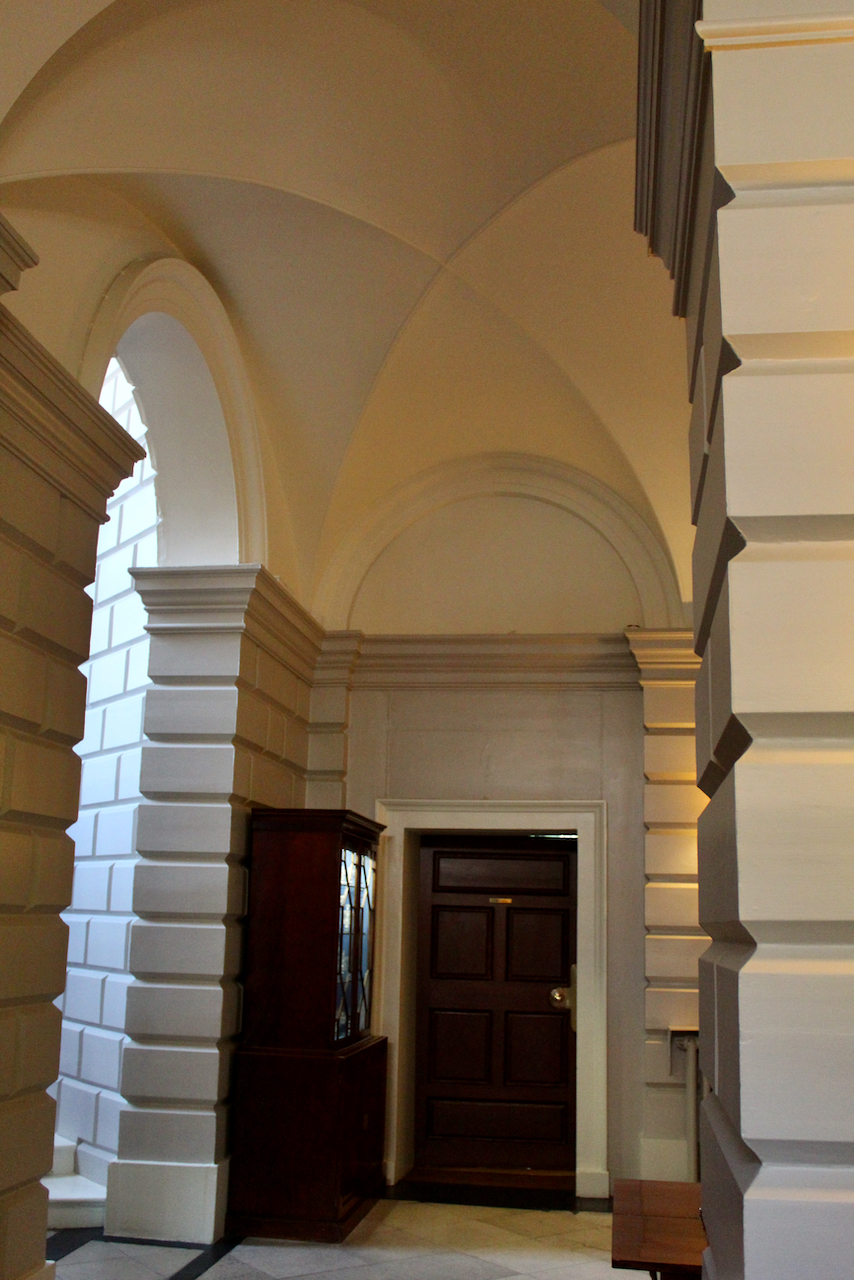
The front hall and front door of the Provost’s House. Photograph © Jennifer Winder-Baggot, www.irishhistorichouses.com
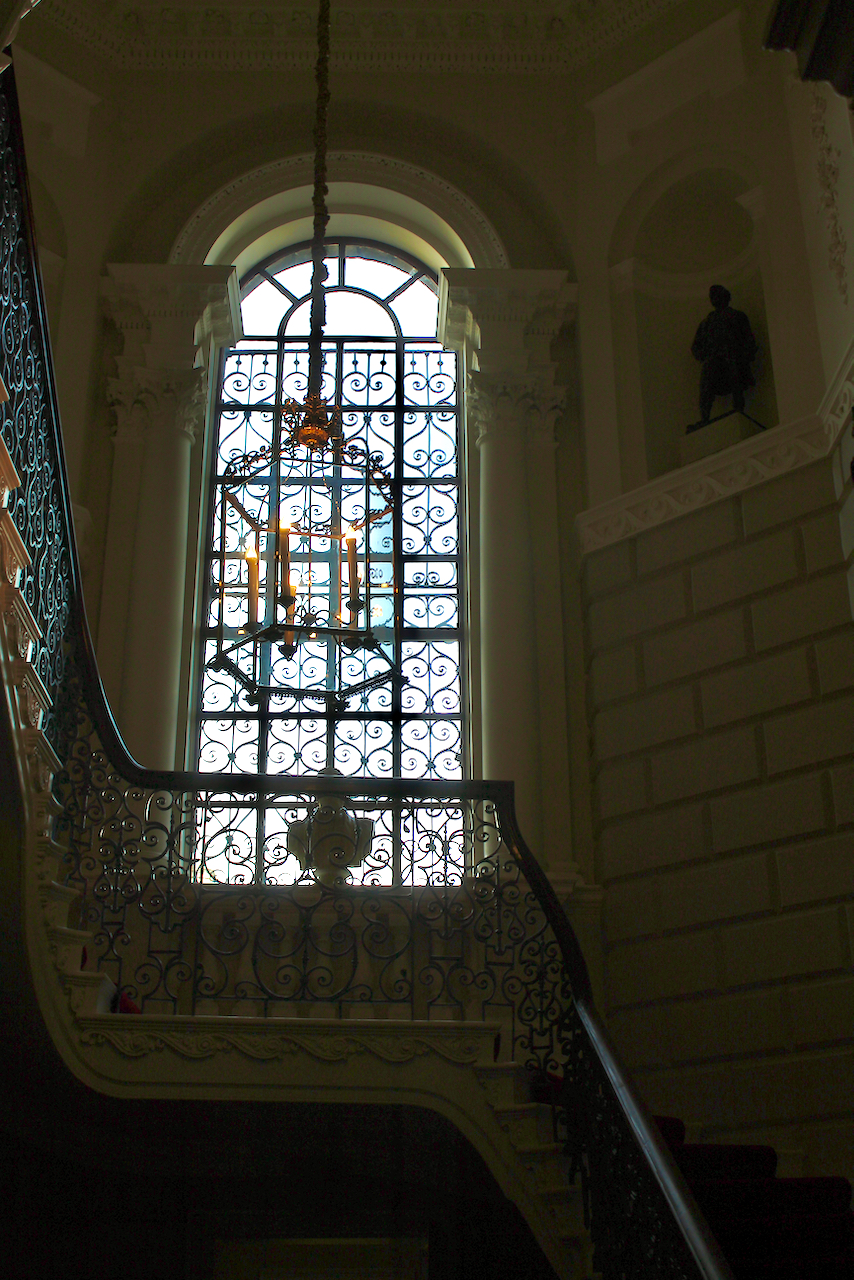
Stairs of the Provost’s House. The walls look like brick but are of timber, much like in the later Powerscourt townhouse. Photograph © Jennifer Winder-Baggot, www.irishhistorichouses.com
Stairs and overlooking arched window at the Provost’s House. Photograph © Jennifer Winder-Baggot, www.irishhistorichouses.com
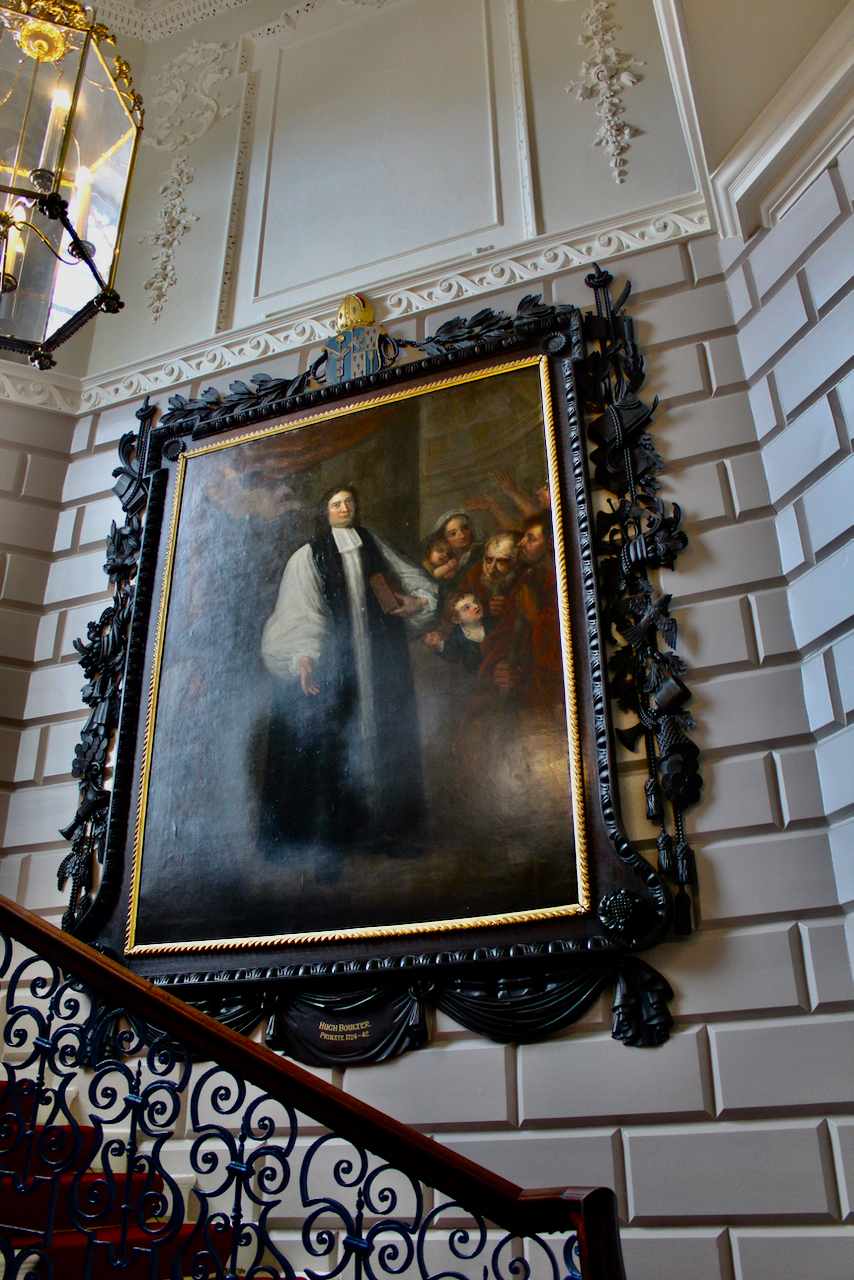
Lovely stuccowork in the staircase hall, over a portrait of Hugh Boulter, Protestant Archbishop of Armagh and then Primate of Ireland 1724-1742. He was also Chaplain to King George I. The Dictionary of National Biography tells us that by a statute enacted through Boulter’s influence, Catholics were excluded from the legal profession and disqualified from holding offices connected with the administration of law. Under another act passed through Boulter’s exertions, they were deprived of the right of voting at elections for members of parliament or magistrates—the sole constitutional right which they had been allowed to exercise. He helped to set up the Charter School system and sought to convert Catholics to Protestantism, but did good work trying to alleviate hunger during the Faminethough perhaps he only advocated feeding those who converted to Protestantism! I’m not sure of that though. Photograph © Jennifer Winder-Baggot, www.irishhistorichouses.com
The portrait of Hugh Boulter is in an impressively carved frame. Photograph © Jennifer Winder-Baggot, www.irishhistorichouses.com
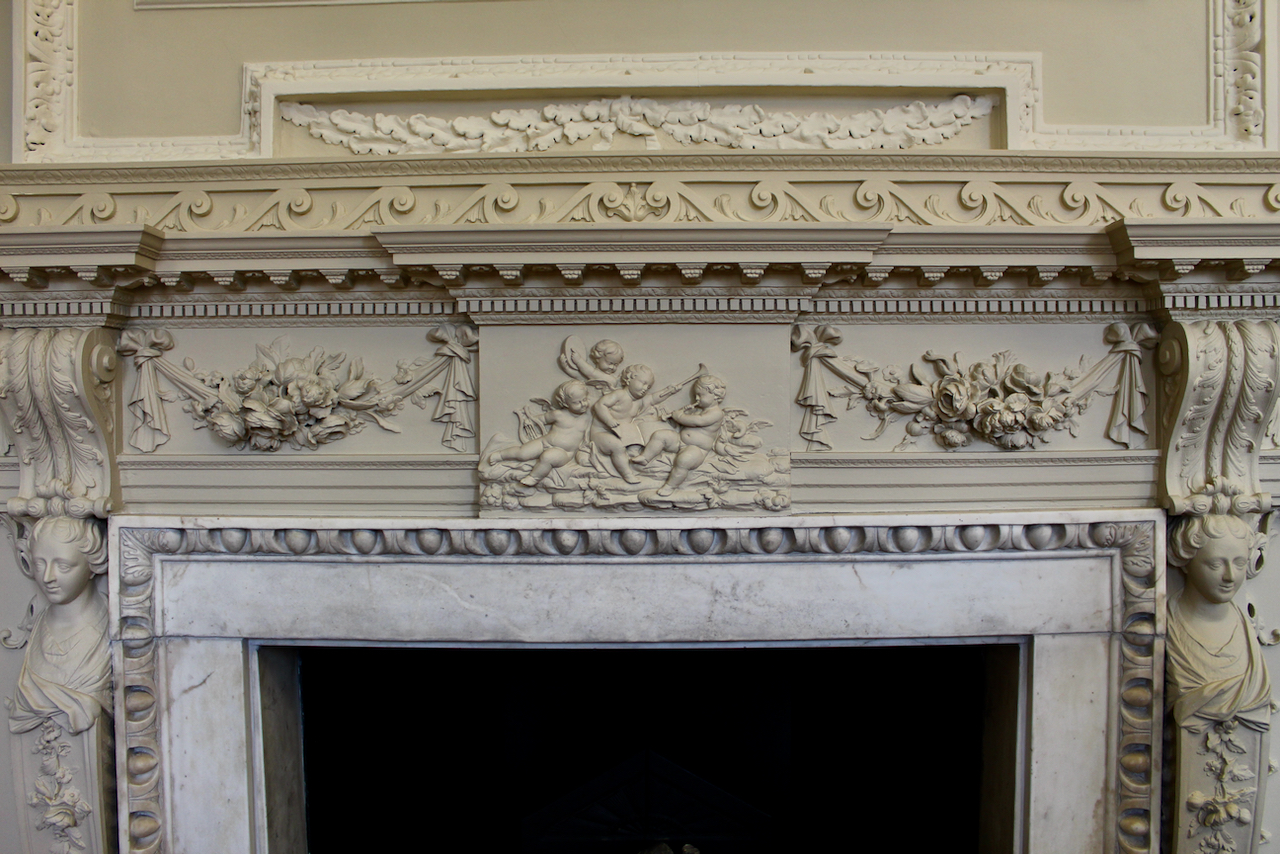
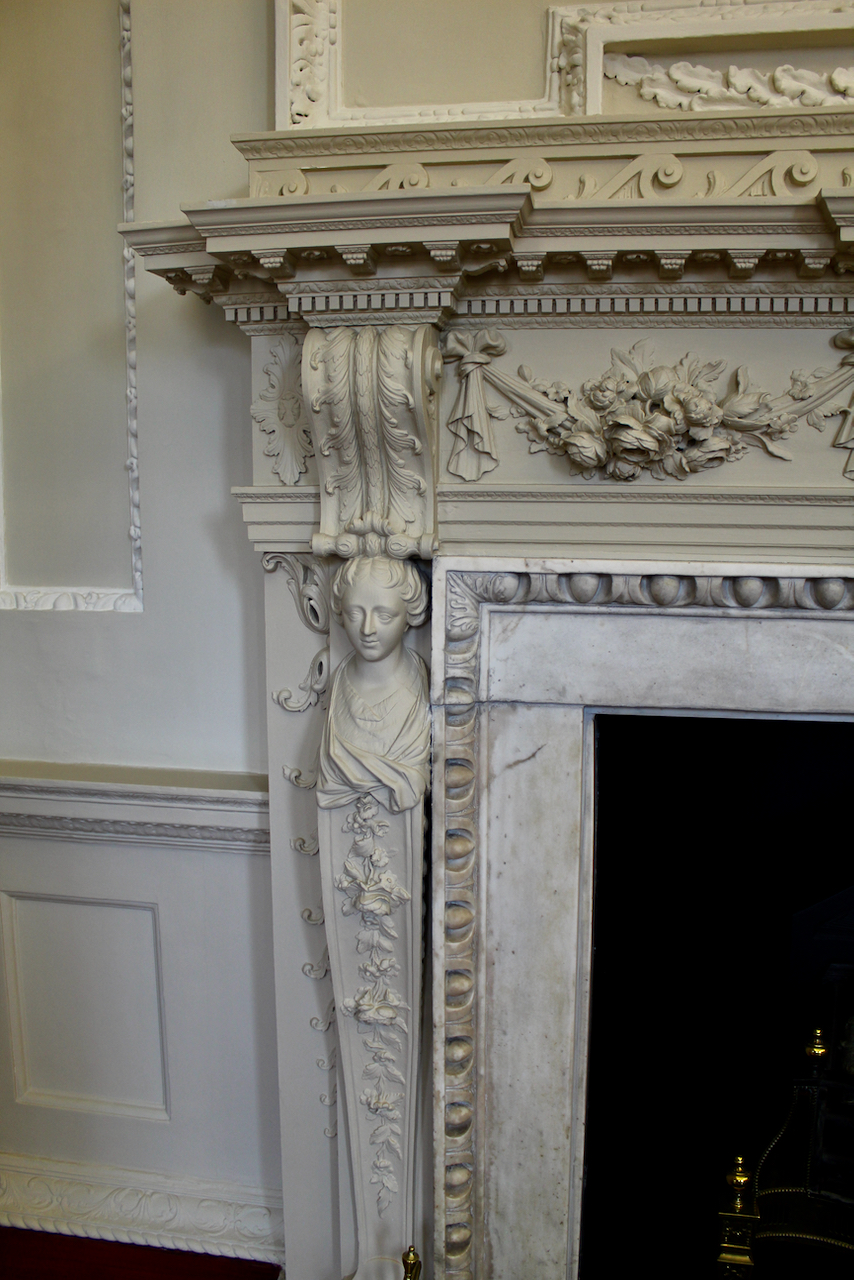
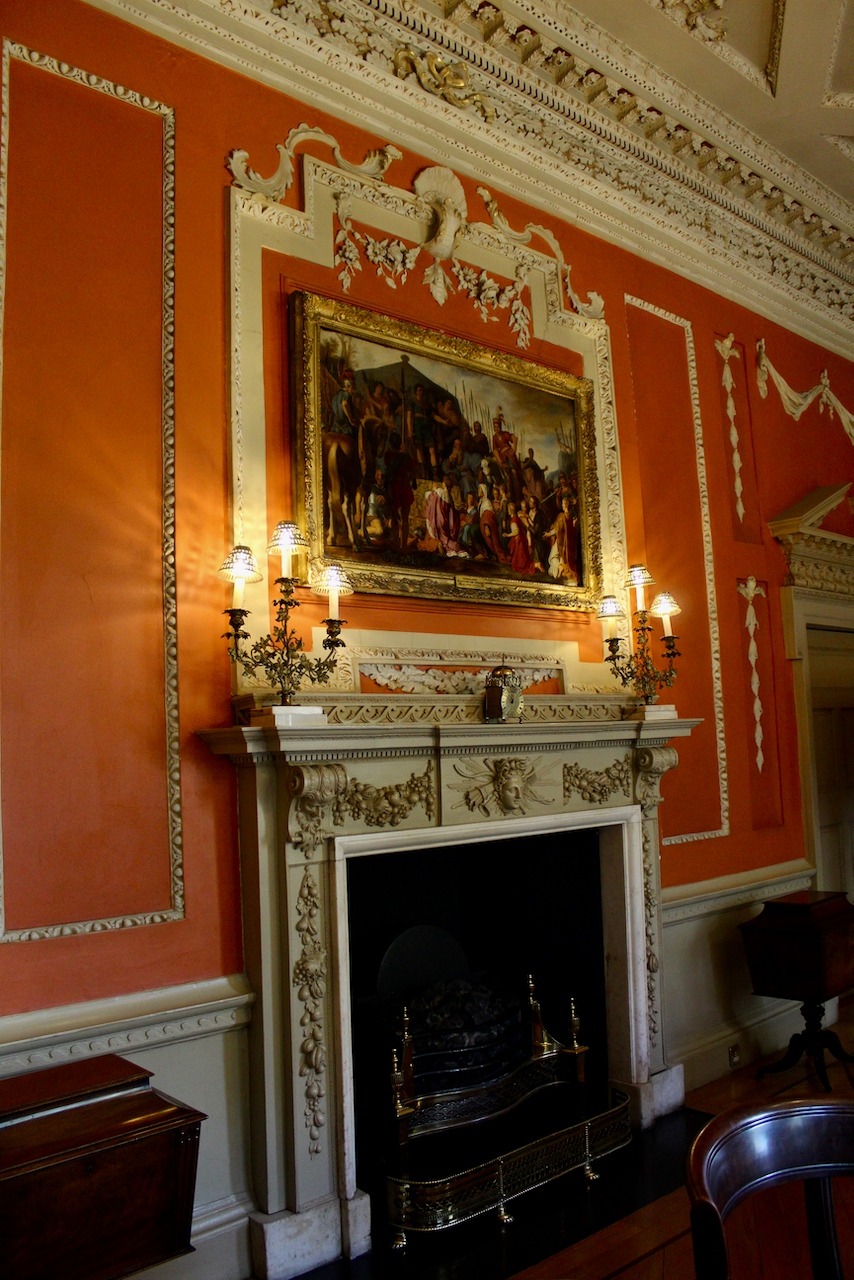
The dining room also has an impressive carved chimneypiece. The woodwork in the house is by James Robinson and Richard Cranfield. The painting is in a lovely stuccowork frame. Photograph © Jennifer Winder-Baggot, www.irishhistorichouses.com
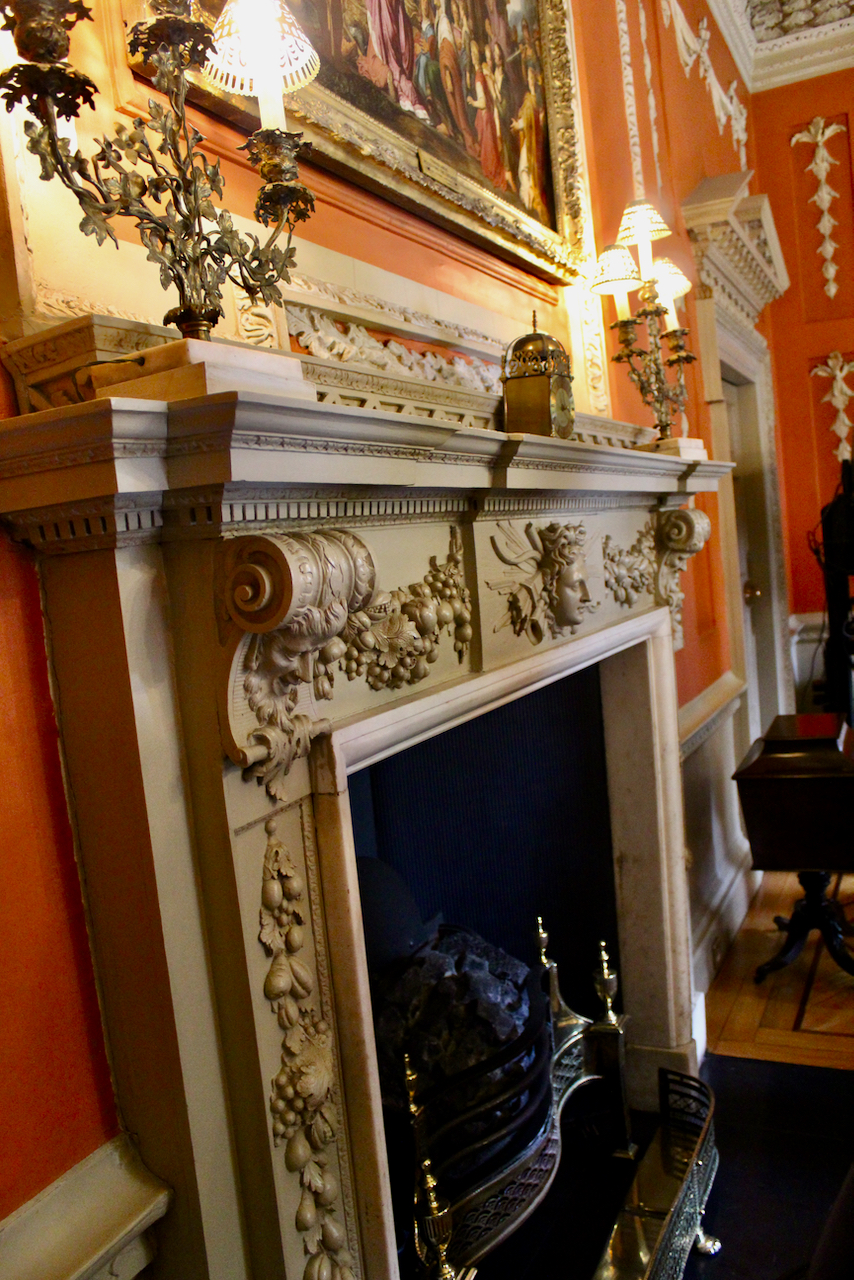
Chimneypiece detail in the dining room. Photograph © Jennifer Winder-Baggot, www.irishhistorichouses.com
Plasterwork by the Wall brothers of Dublin. Photograph © Jennifer Winder-Baggot, www.irishhistorichouses.com
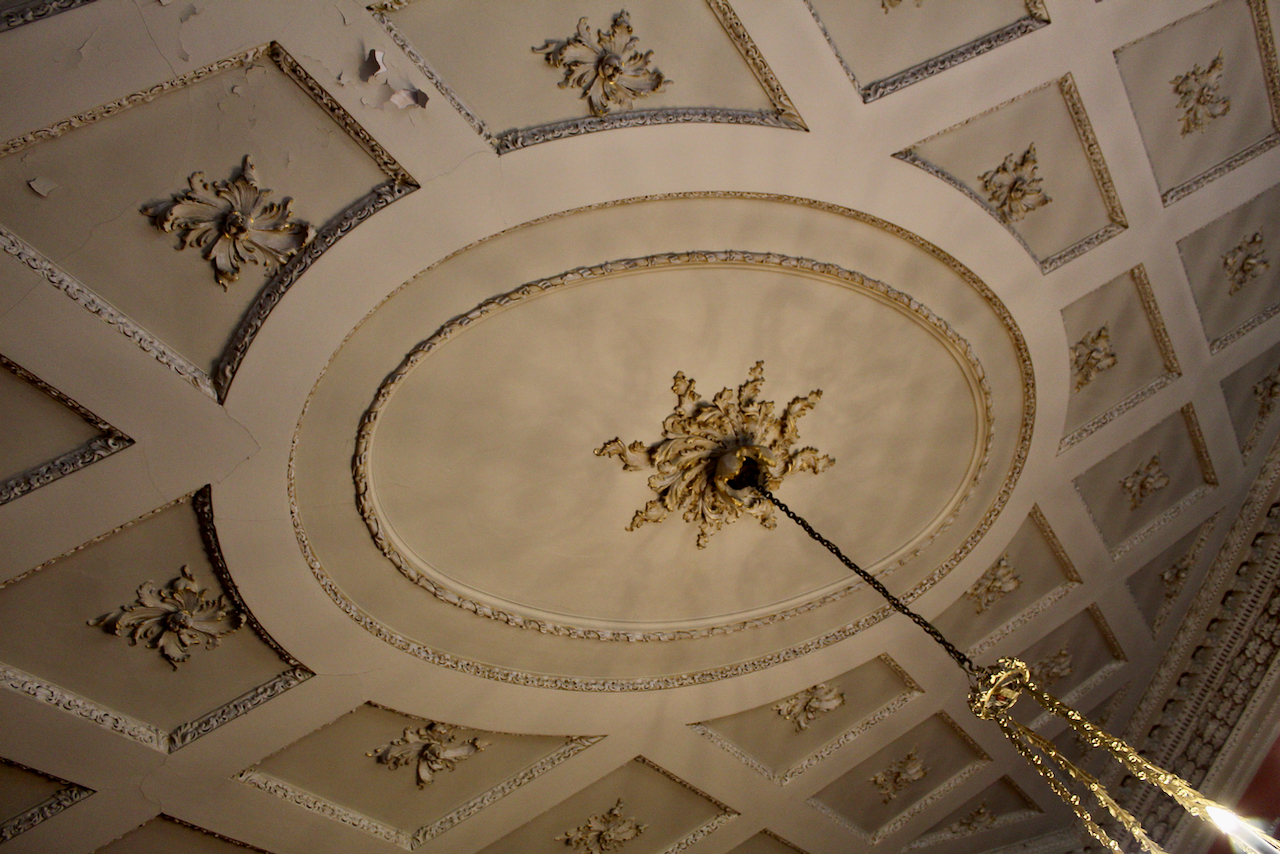
The ceiling rose and ceiling of the dining room in the Provost’s House. Photograph © Jennifer Winder-Baggot, www.irishhistorichouses.com
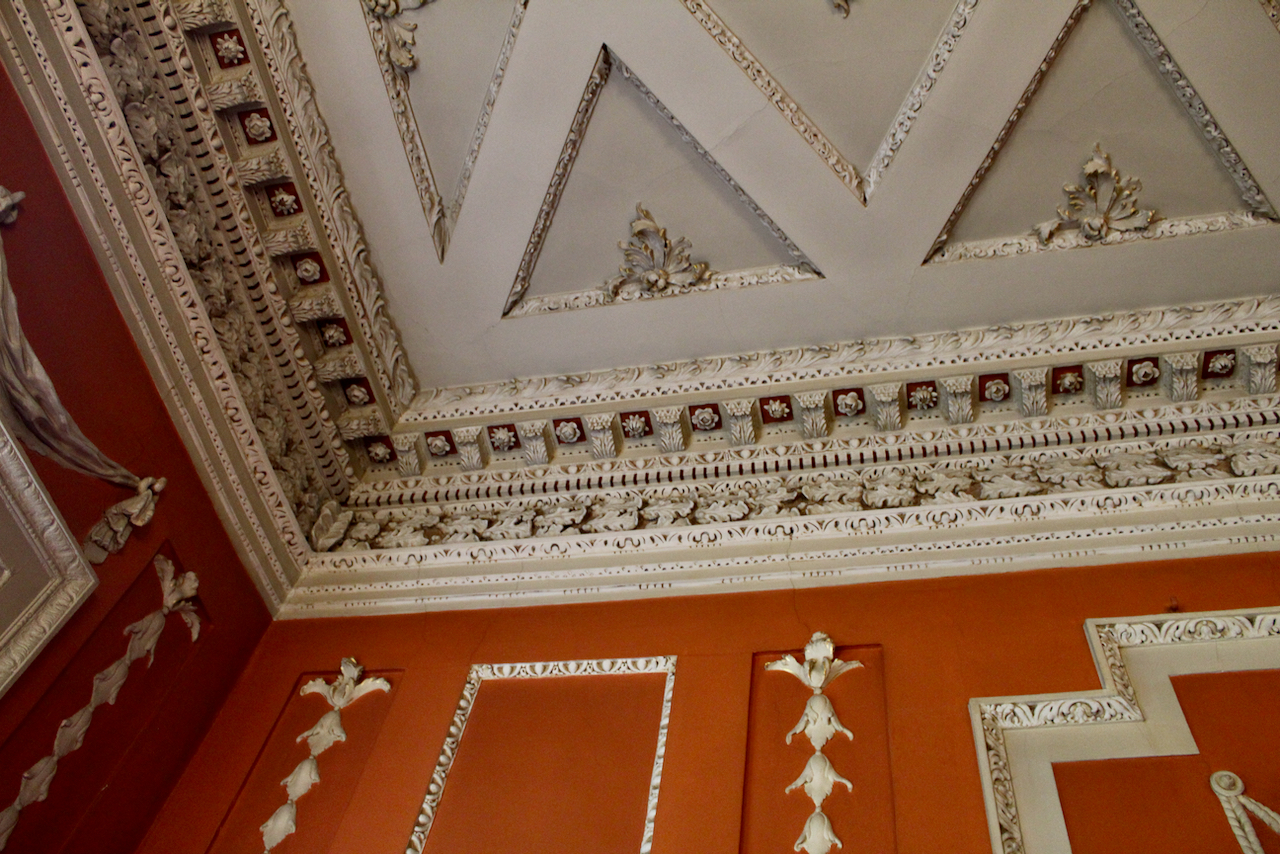
The cornice of the dining room is very ornate. Photograph © Jennifer Winder-Baggot, www.irishhistorichouses.com
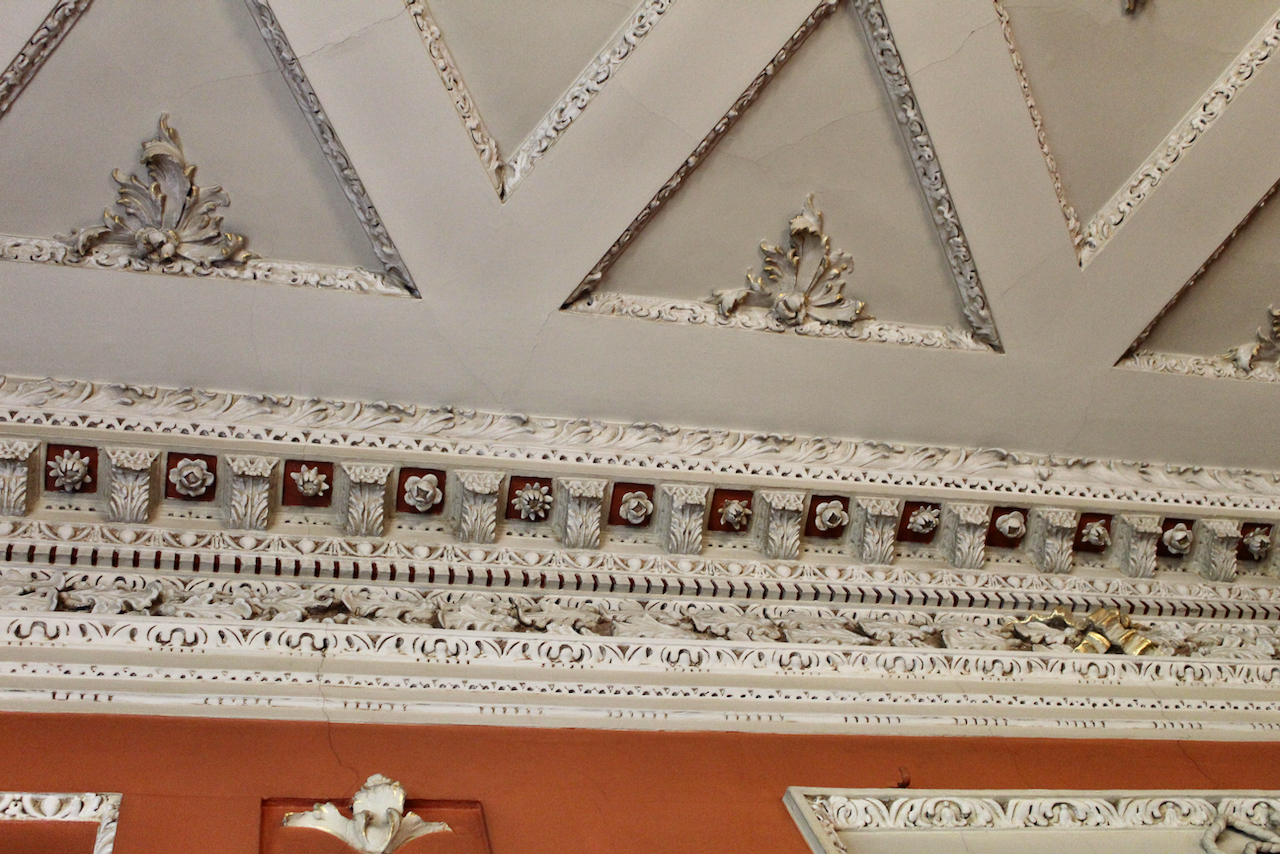
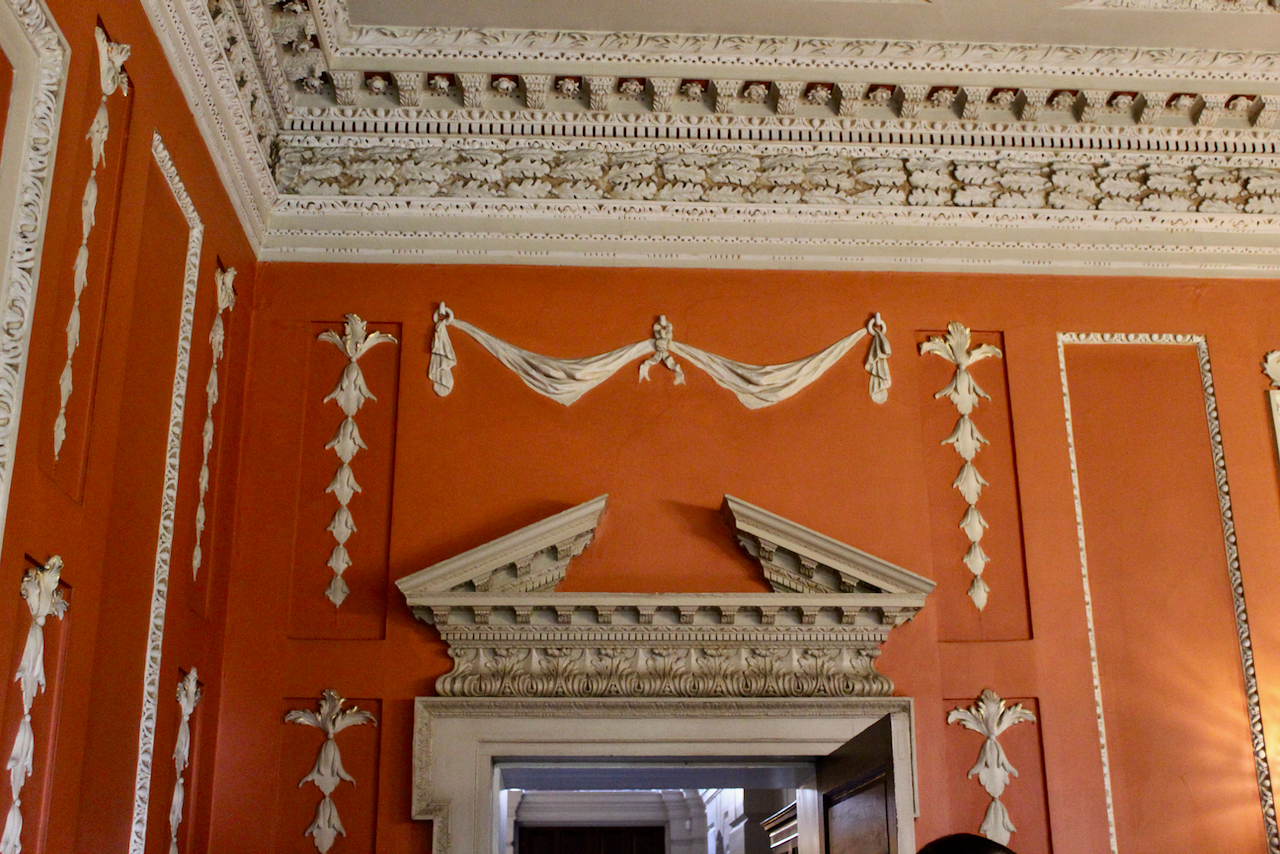
There are plasterwork swags and floral motifs. The door frames are of carved timber. Photograph © Jennifer Winder-Baggot, www.irishhistorichouses.com
The staircase hall. Photograph © Jennifer Winder-Baggot, www.irishhistorichouses.com
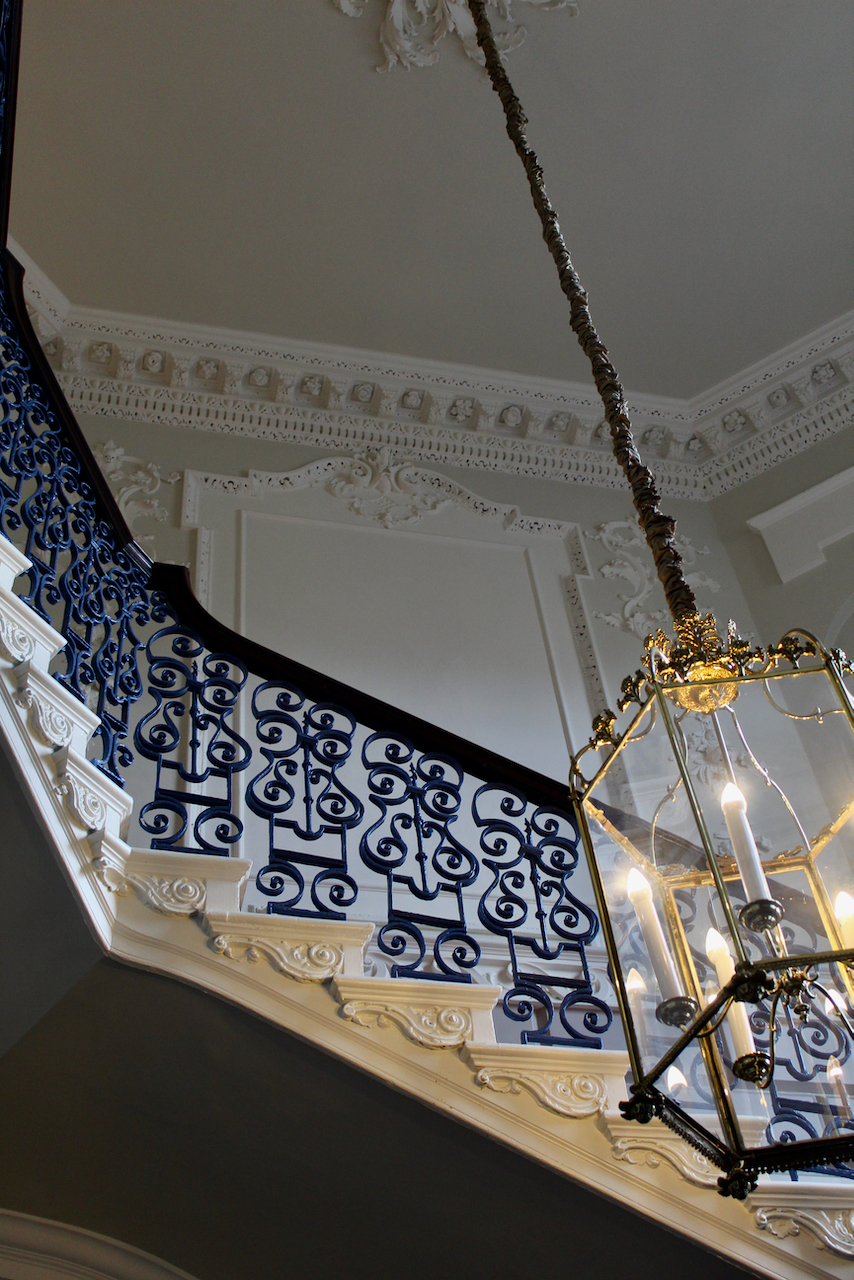
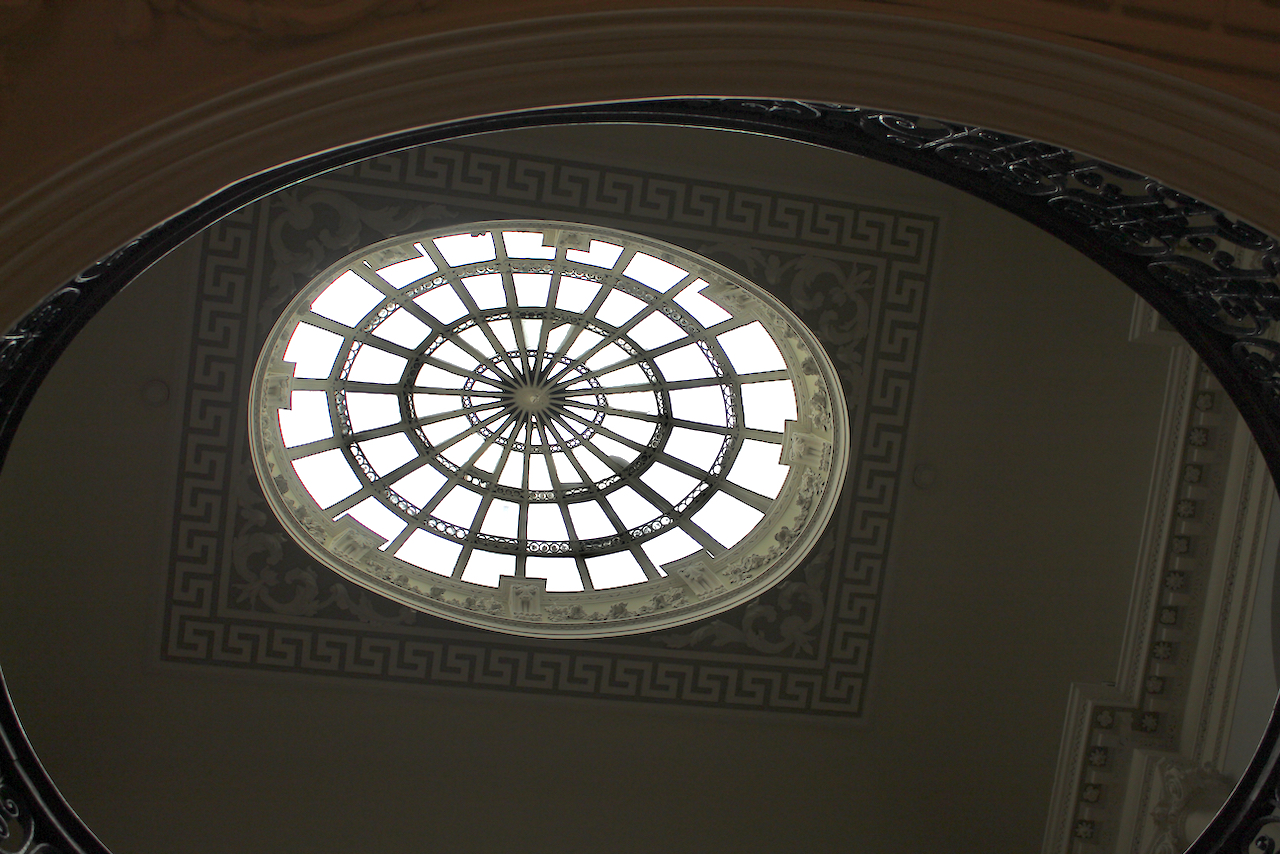
The landing has a lovely lantern dome. Photograph © Jennifer Winder-Baggot, www.irishhistorichouses.com
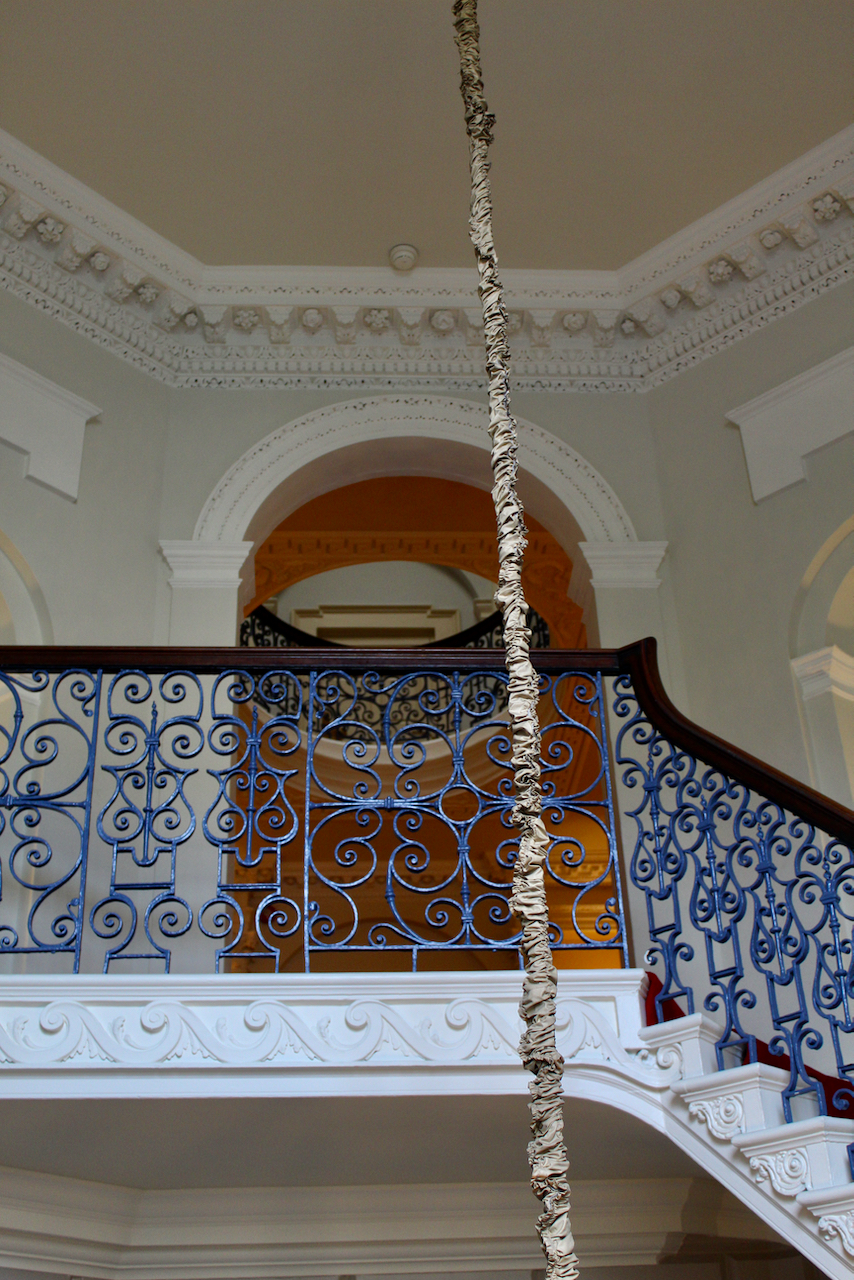
The upper storey landing. Photograph © Jennifer Winder-Baggot, www.irishhistorichouses.com
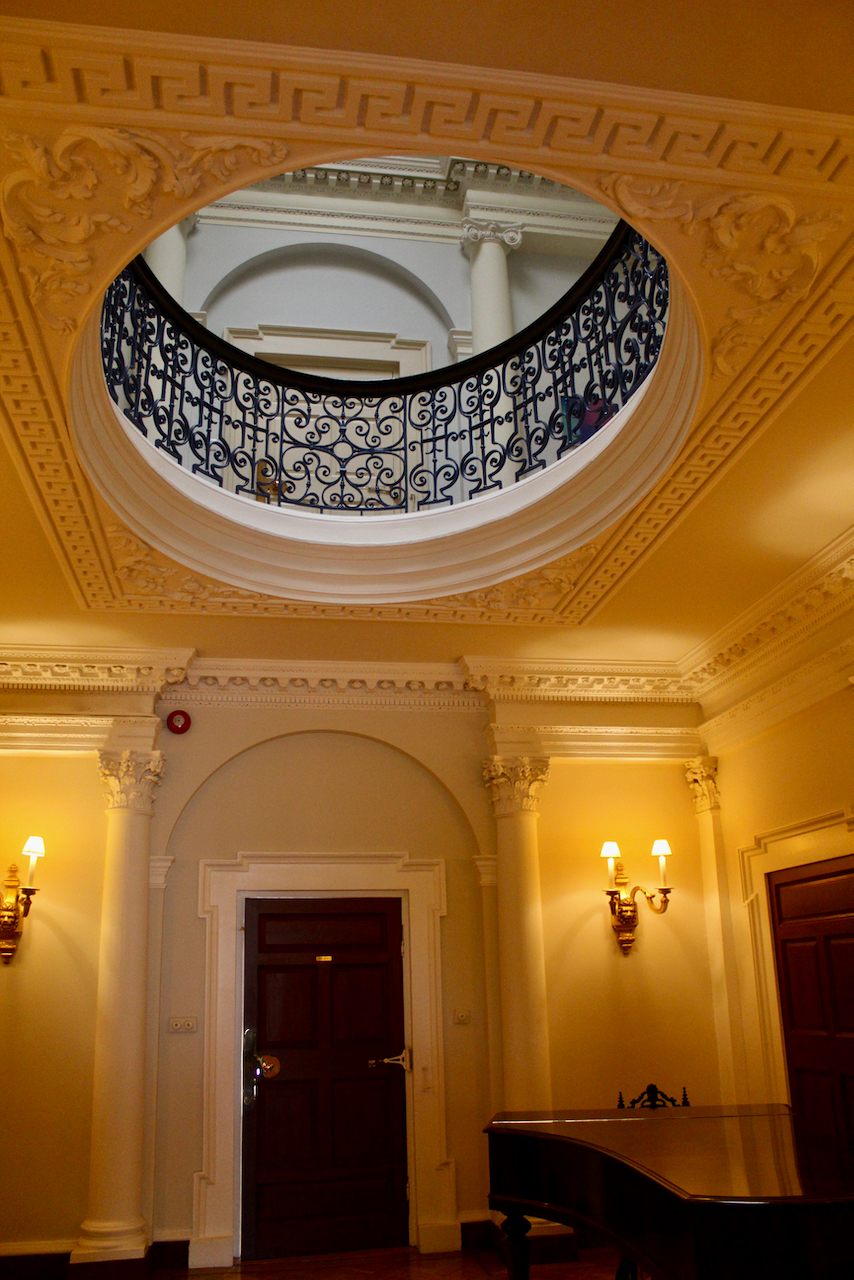
There is a third storey, not visible from the outside as the house appears to have two storeys, so this would be the attic level. Photograph © Jennifer Winder-Baggot, www.irishhistorichouses.com
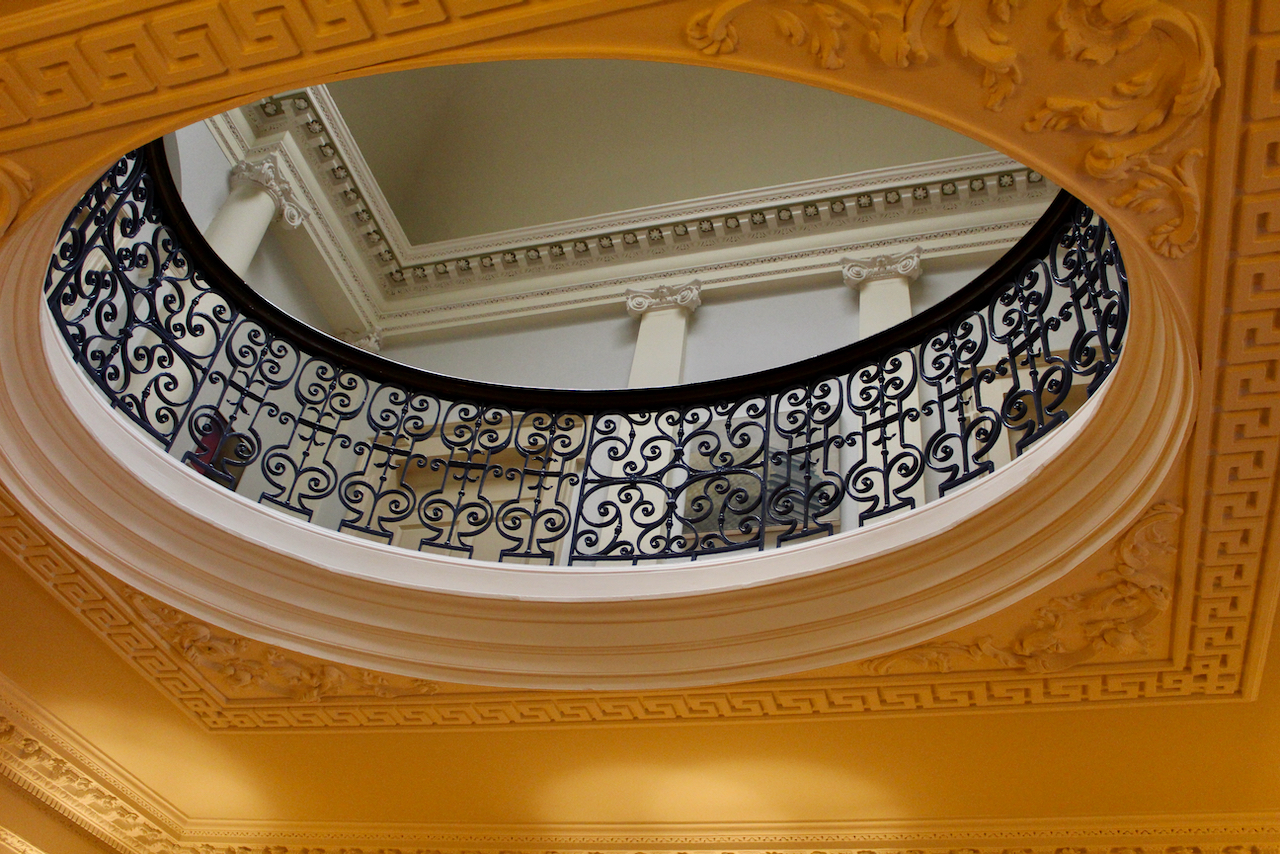
There’s decorative stucco work around the edge of the lantern window in the roof. Photograph © Jennifer Winder-Baggot, www.irishhistorichouses.com
Uptairs is a large salon which takes up nearly the entire floor and is perfect for the Provost’s entertaining. Traditionally, Provosts didn’t marry, so the house is not built for a family, it does not have large living quarters.

The Salon of the Provost’s House. Photograph © Jennifer Winder-Baggot, www.irishhistorichouses.com
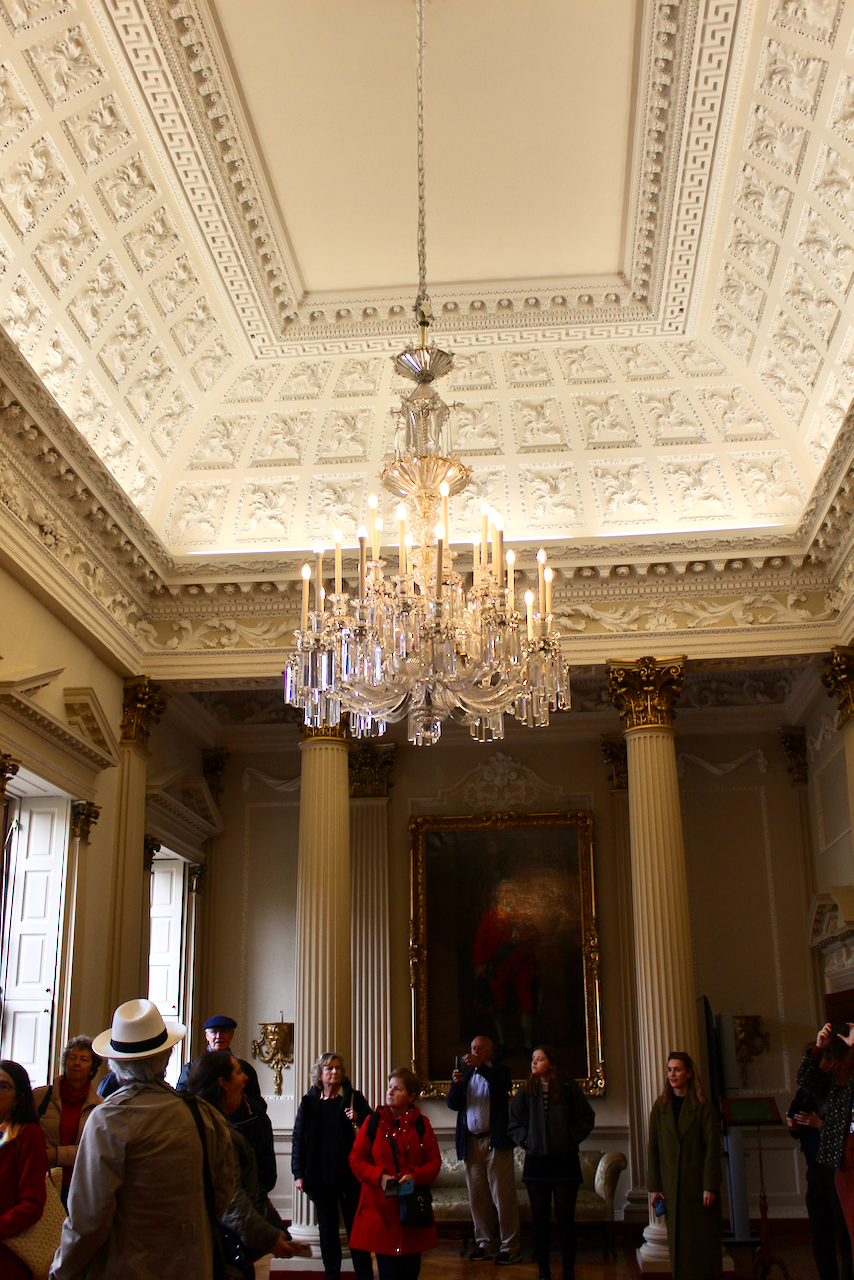
The Saloon. Photograph © Jennifer Winder-Baggot, www.irishhistorichouses.com
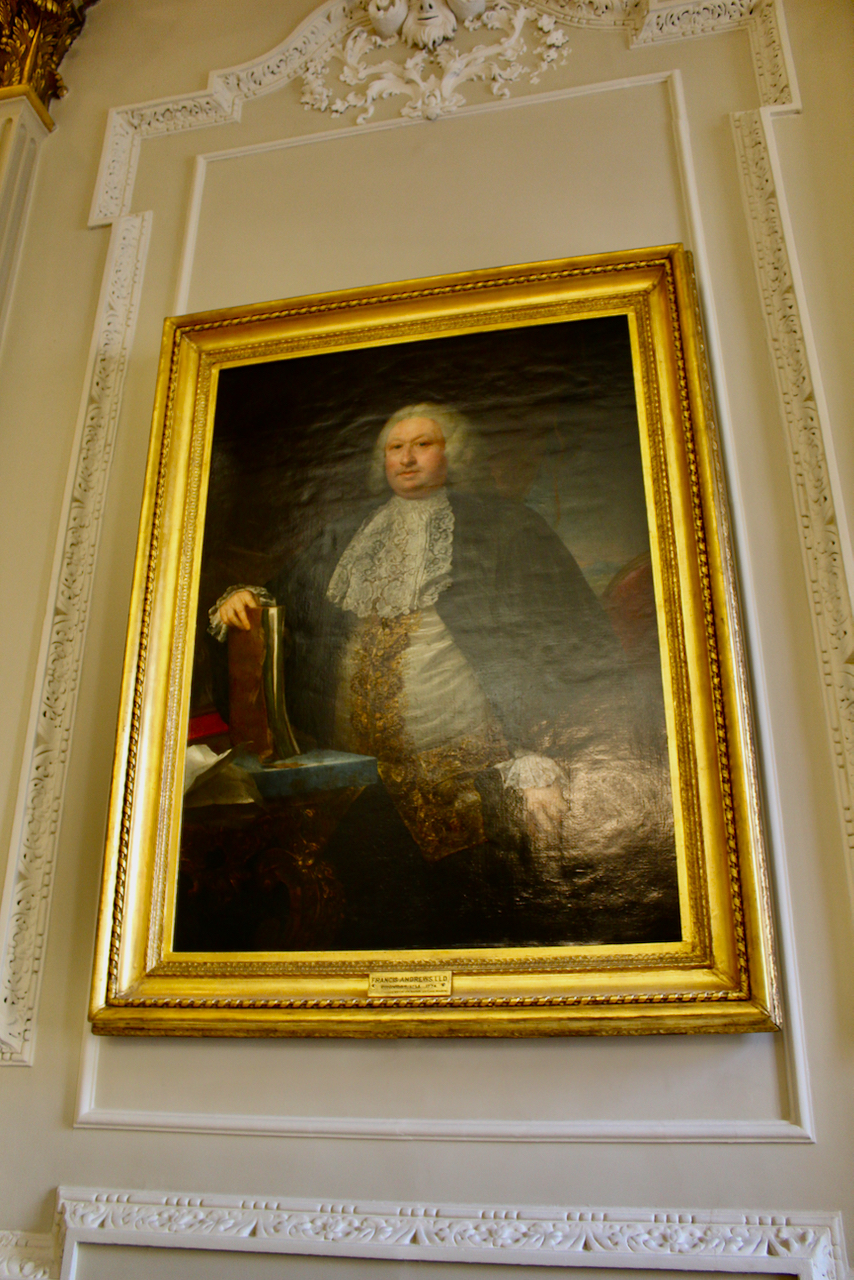
The Provost who commissioned the building of the new Provost’s House begun in 1759, Frances Andrews, whose portrait by Antonio Maroni hangs in the salon. He was Provost 1758-1774. Photograph © Jennifer Winder-Baggot, www.irishhistorichouses.com
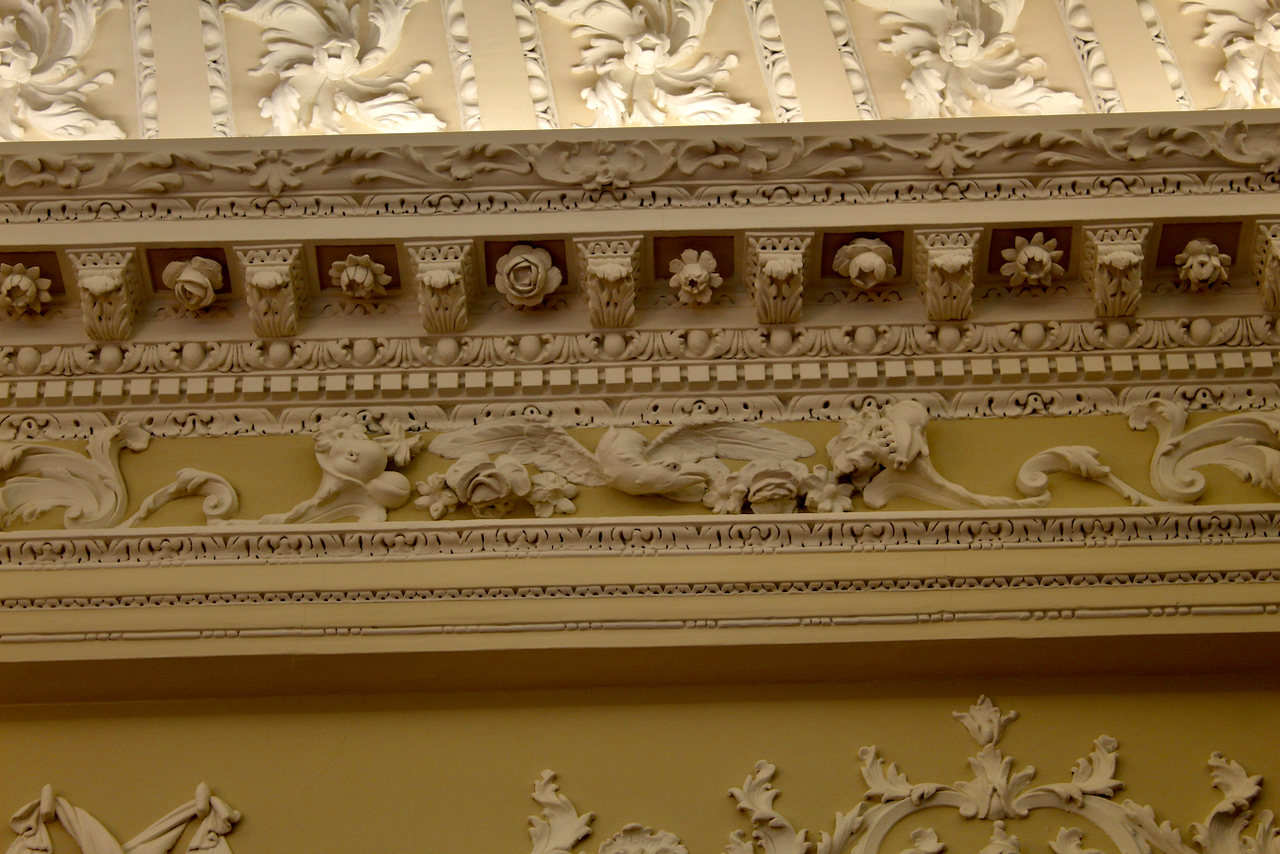
Carved doorcase with impressive Corinthian fluted columns and stuccowork birds typical of the Dublin school. Photograph © Jennifer Winder-Baggot, www.irishhistorichouses.com
The birds in the plasterwork are similar to those of Robert West, such as in 85 St. Stephen’s Green, now the Museum of Literature, MOLI. Photograph © Jennifer Winder-Baggot, www.irishhistorichouses.com
Robert West stuccowork, 85/86 St. Stephen’s Green. Photograph © Jennifer Winder-Baggot, www.irishhistorichouses.com
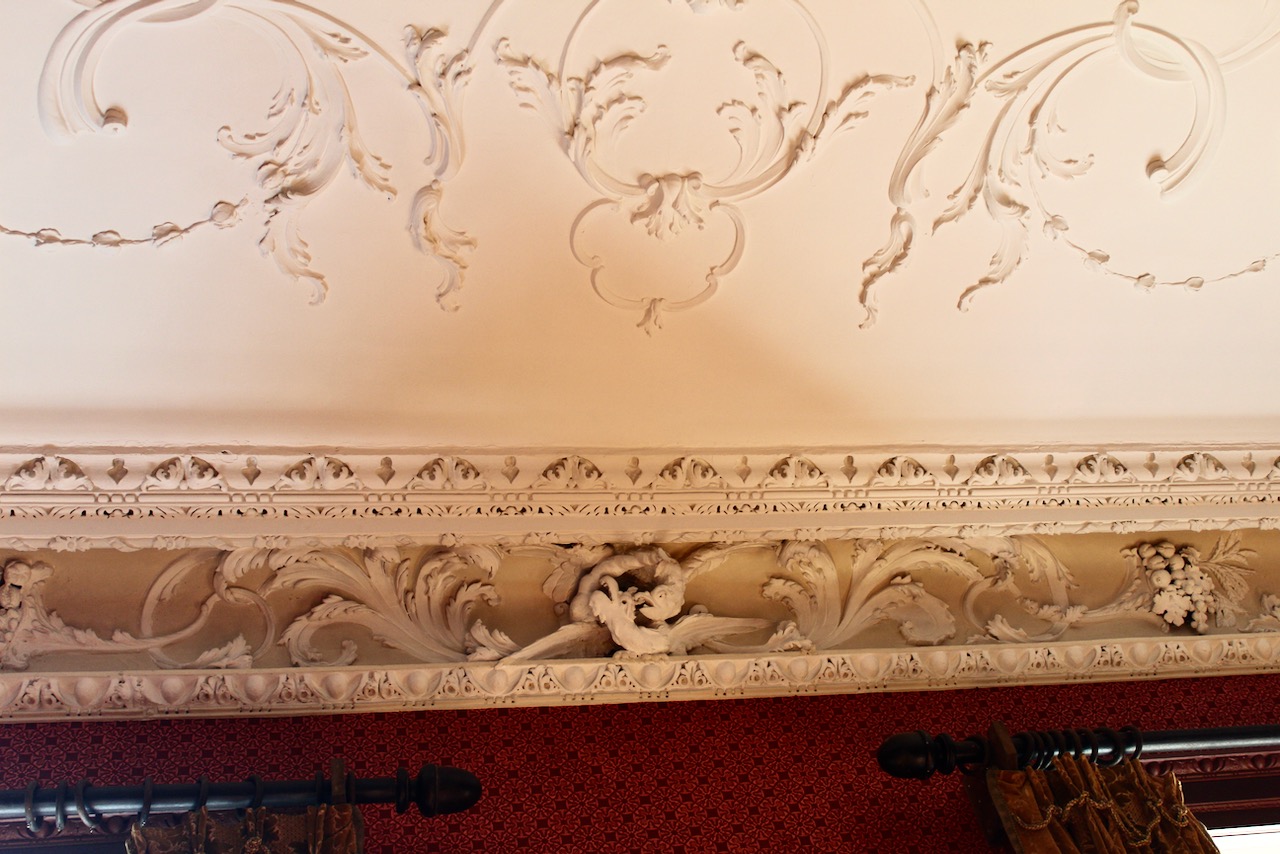
A mask design in stucco, flanked by birds’ heads. Photograph © Jennifer Winder-Baggot, www.irishhistorichouses.com
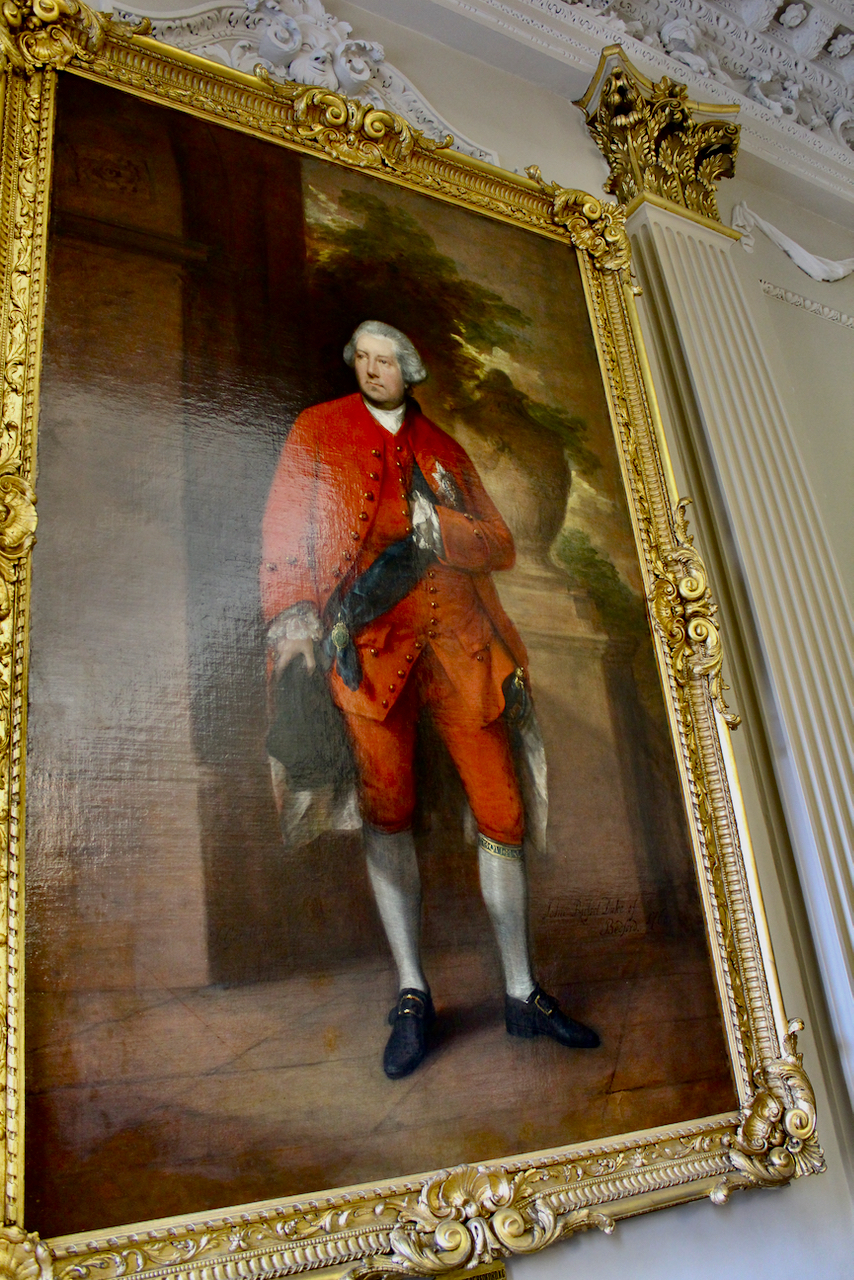
John Russell (1710-1771) 4th Duke of Bedford was Chancellor of the University 1765-1771. The portrait is by Thomas Gainsborough. It’s suitable to include him in this post, as he is not only in the Saloon of the Provost’s House but he commissioned several pieces by Canaletto, famous painter of Venice, Giovanni Antonio Canal (1697 – 1768). Russell was Lord Lieutenant of Ireland in 1756 and resigned in 1761.
The National Inventory tells us that the saloon chimneypiece decorative designs are derived from Boucher’s ‘Livres des Arts’. Photograph © Jennifer Winder-Baggot, www.irishhistorichouses.com
The Saloon chimneypiece. Photograph © Jennifer Winder-Baggot, www.irishhistorichouses.com
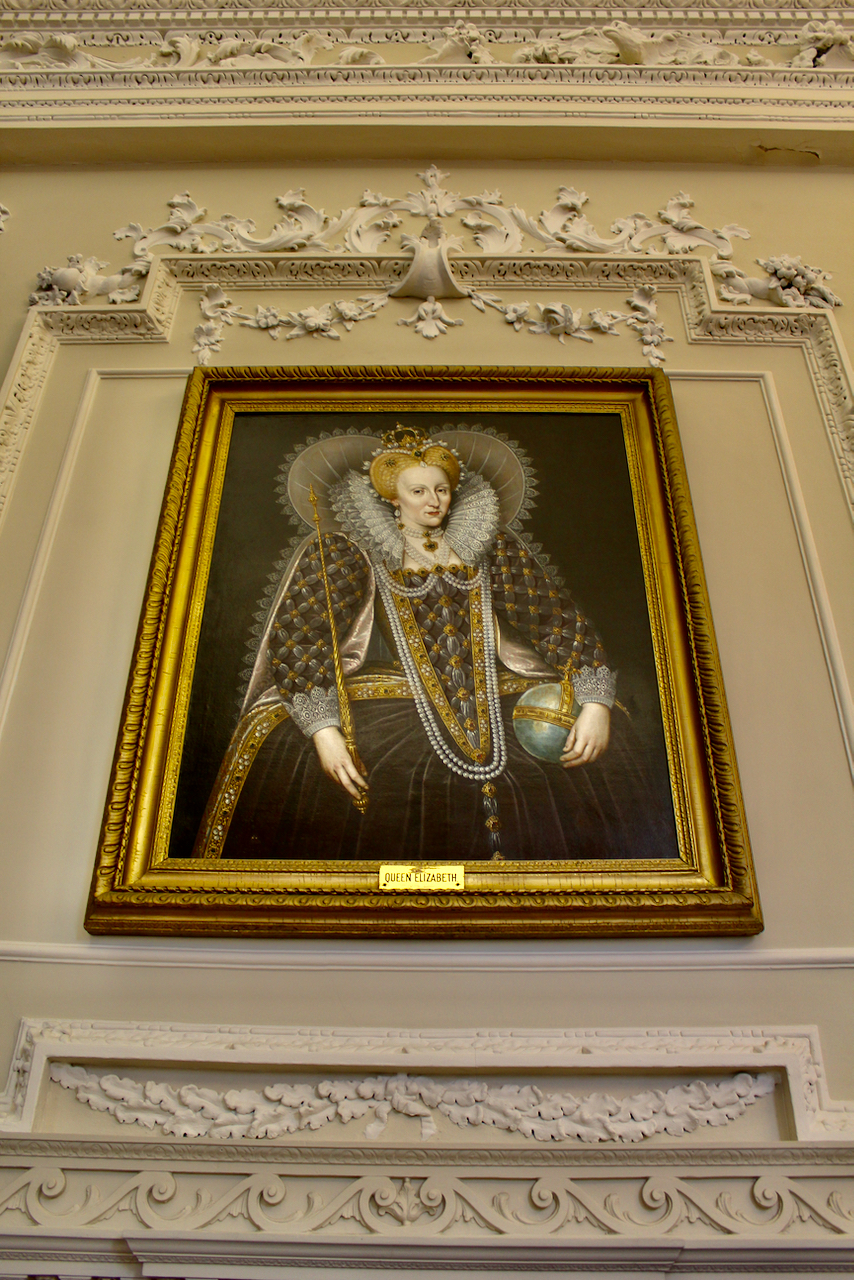
Queen Elizabeth I was the founder of Trinity College Dublin. Photograph © Jennifer Winder-Baggot, www.irishhistorichouses.com

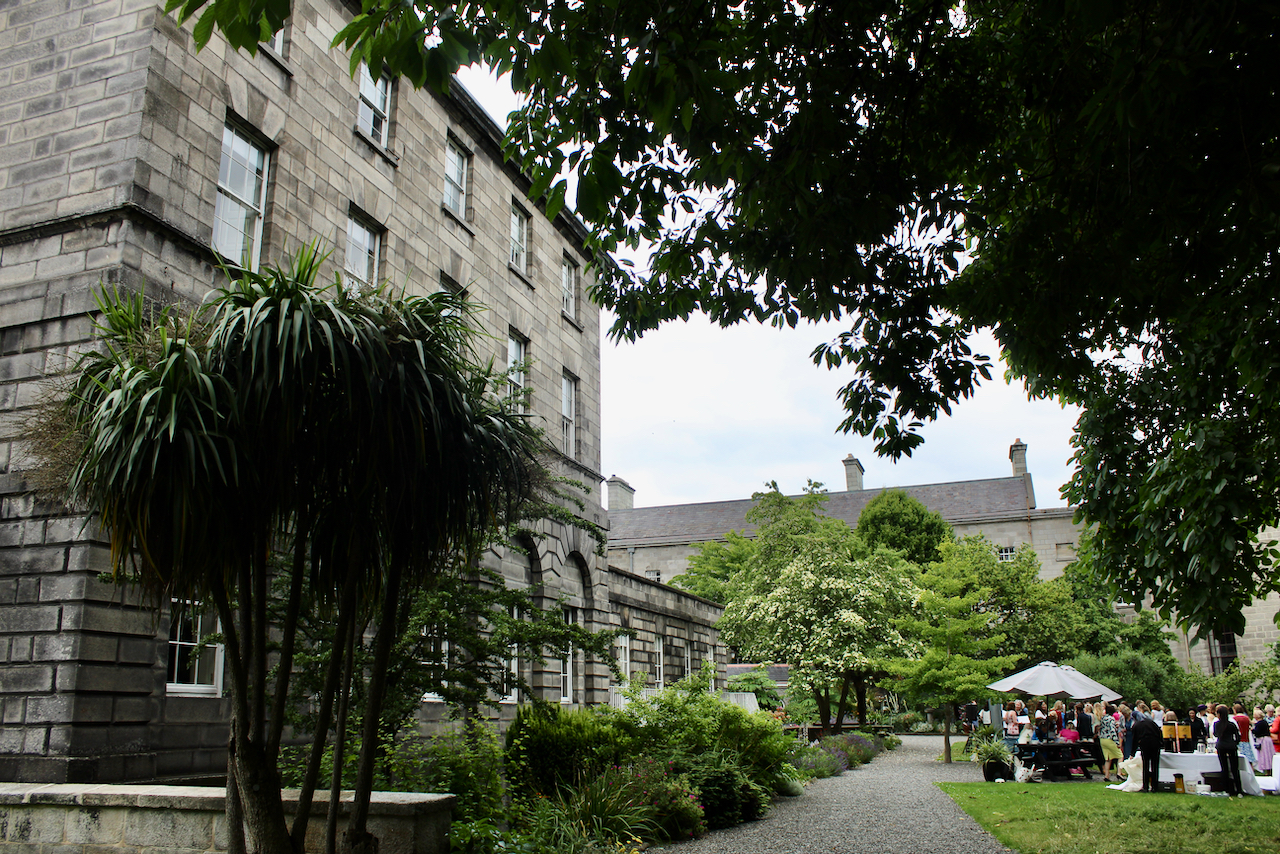
Earlier in the year I’d hoped to have a tour of the Provost’s House in June at an Alumni Garden Party, but we were not brought inside!

The back of the Provost’s House, at the Garden Party in June 2023. Photograph © Jennifer Winder-Baggot, www.irishhistorichouses.com
The Provost’s Garden, at the Garden Party in June 2023. Photograph © Jennifer Winder-Baggot, www.irishhistorichouses.com
The back of the Provost’s House, at the Garden Party in June 2023. Photograph © Jennifer Winder-Baggot, www.irishhistorichouses.com
I didn’t see the name of this sculpture or the artist. Photograph © Jennifer Winder-Baggot, www.irishhistorichouses.com
Photograph © Jennifer Winder-Baggot, www.irishhistorichouses.com

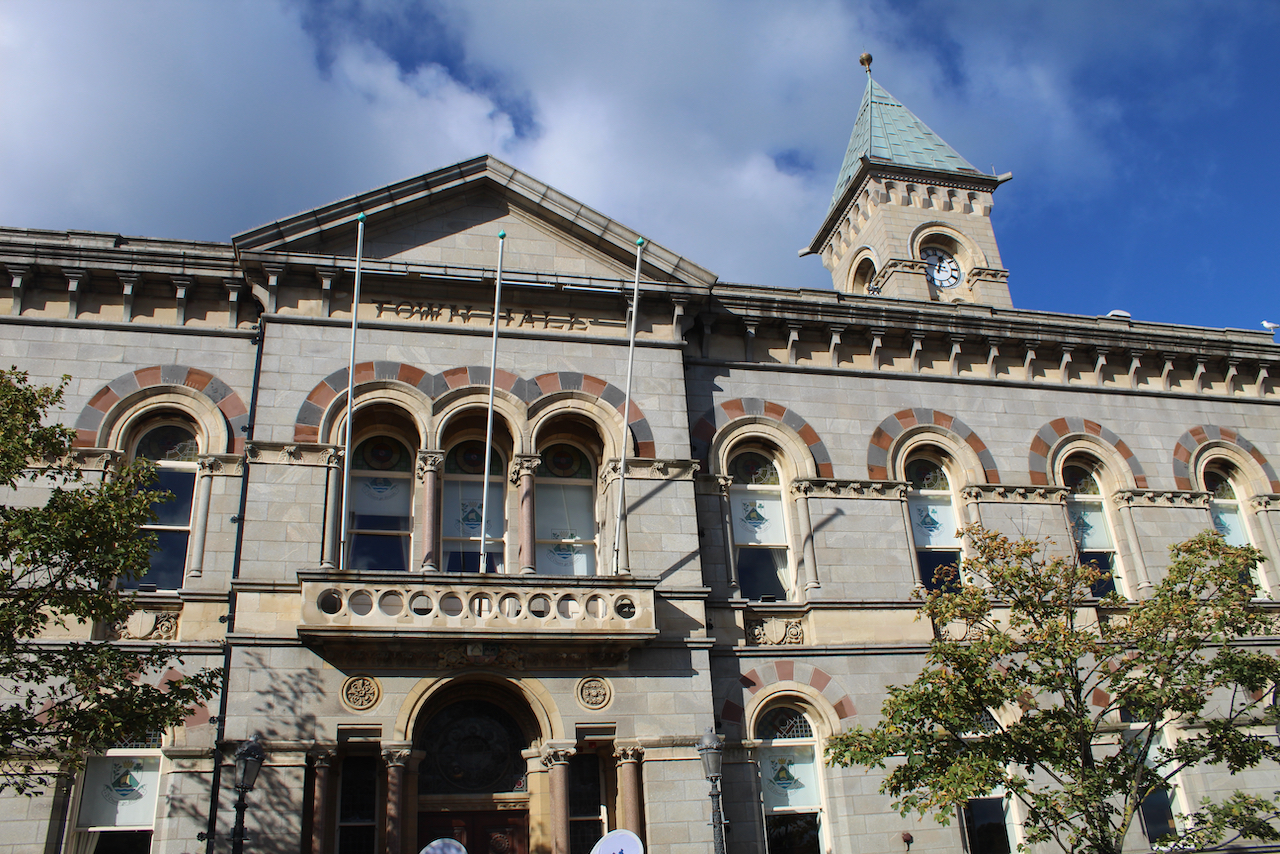
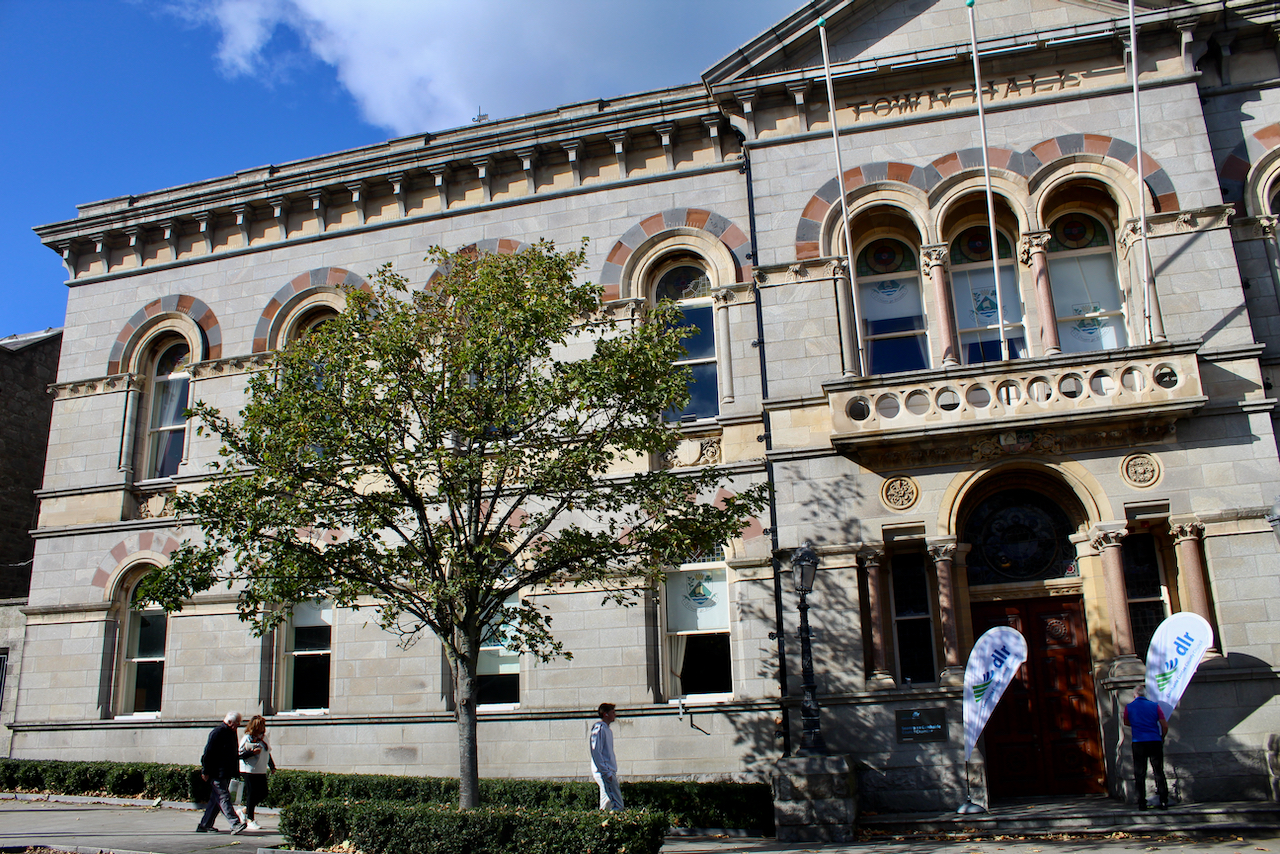
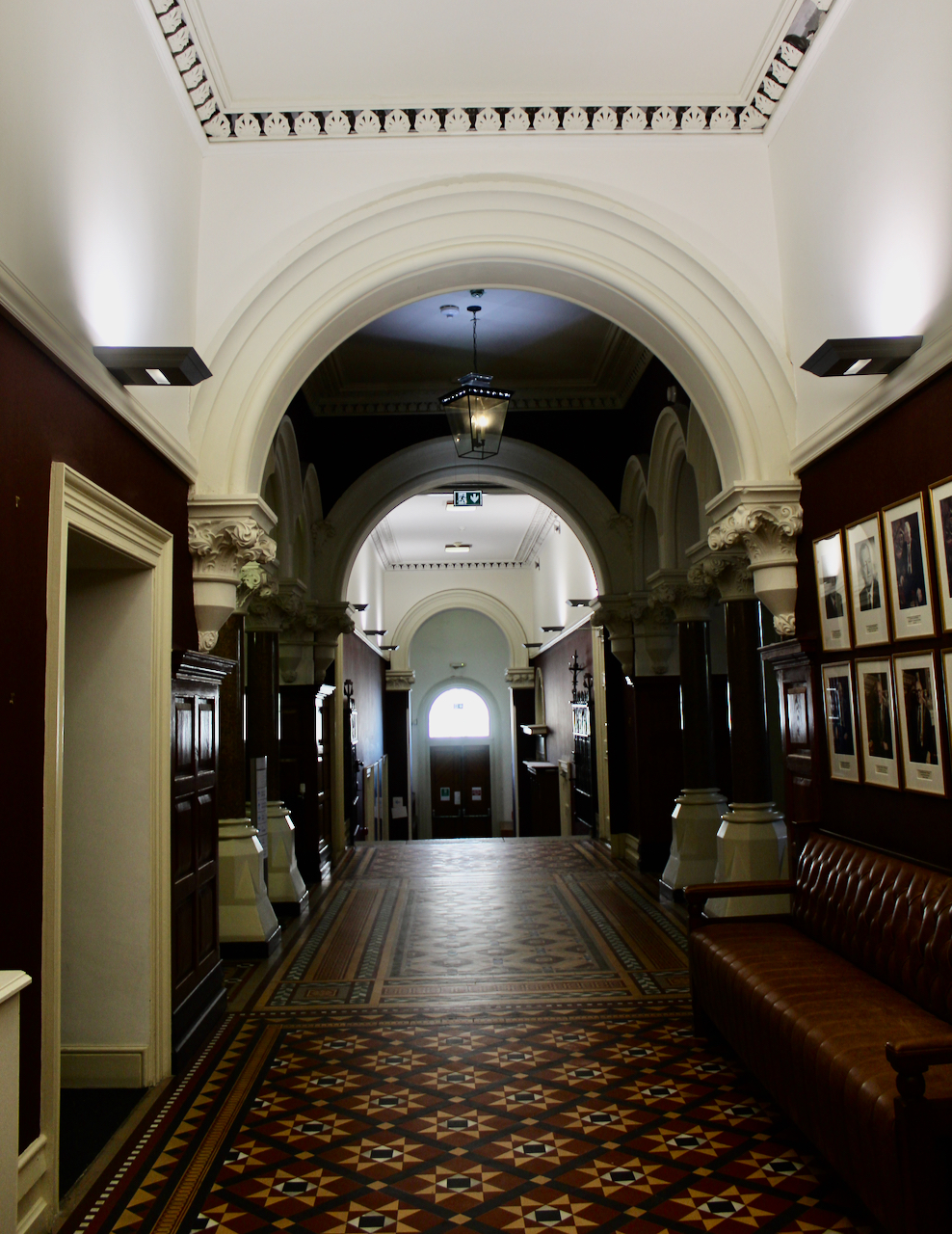
On Saturday Stephen and I went on a tour of Dun Laoghaire’s County Hall, and then to Loughlinstown House. Sunday I went to see a house in the Tenters in Dublin, then for an architect’s tour of the outside of the Royal Hospital Kilmainham. I can’t wait until the inside is open again, now being renovated by the Office of Public Works.

Dun Laoghaire County Hall. Photograph © Jennifer Winder-Baggot, www.irishhistorichouses.com
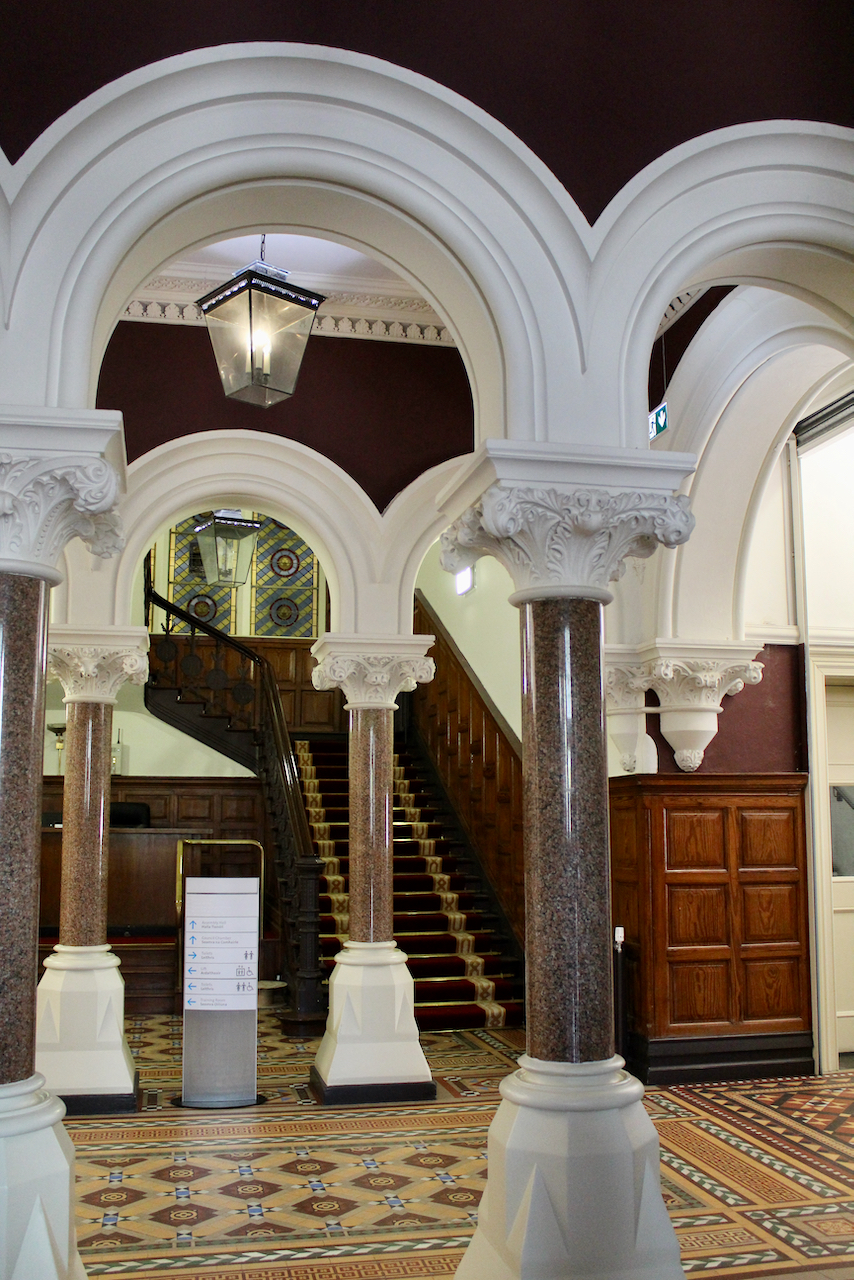
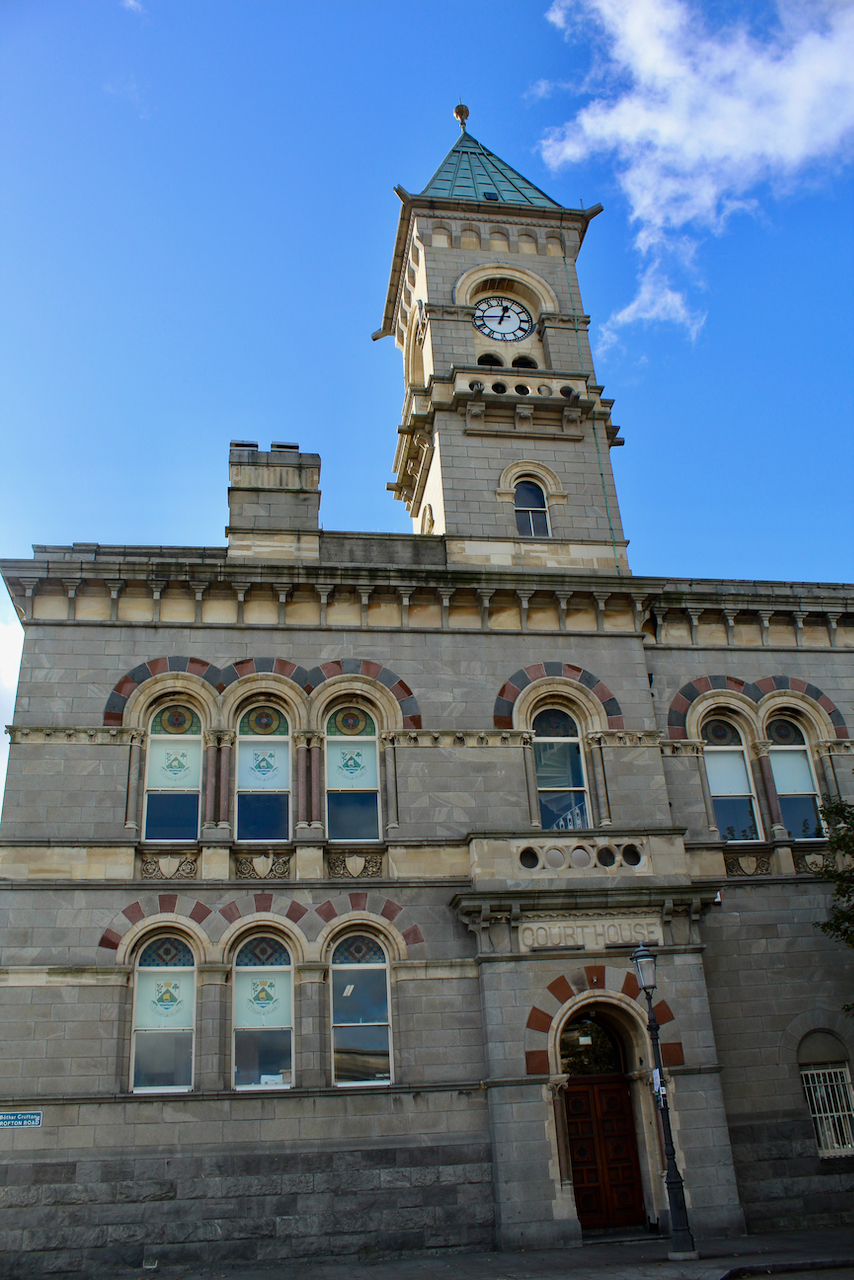
Dun Laoghaire County Hall. The building reminds me of Trinity College’s Museum Building and is indeed in the same style – a sort of Venetian style, our excellent guide told us – again, suitable for this post! Photograph © Jennifer Winder-Baggot, www.irishhistorichouses.com
Dun Laoghaire County Hall. Photograph © Jennifer Winder-Baggot, www.irishhistorichouses.com
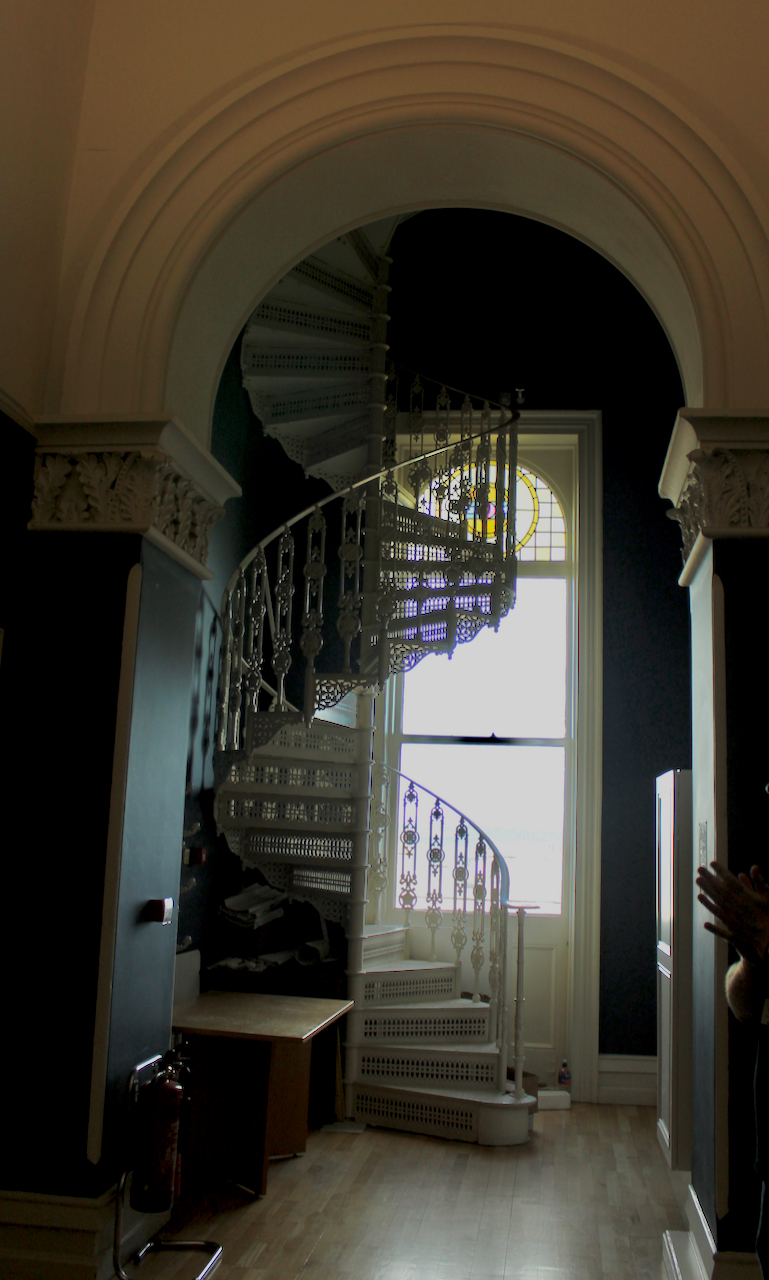
John Loftus Robinson, architect of Dun Laoghaire County Hall. Photograph © Jennifer Winder-Baggot, www.irishhistorichouses.com
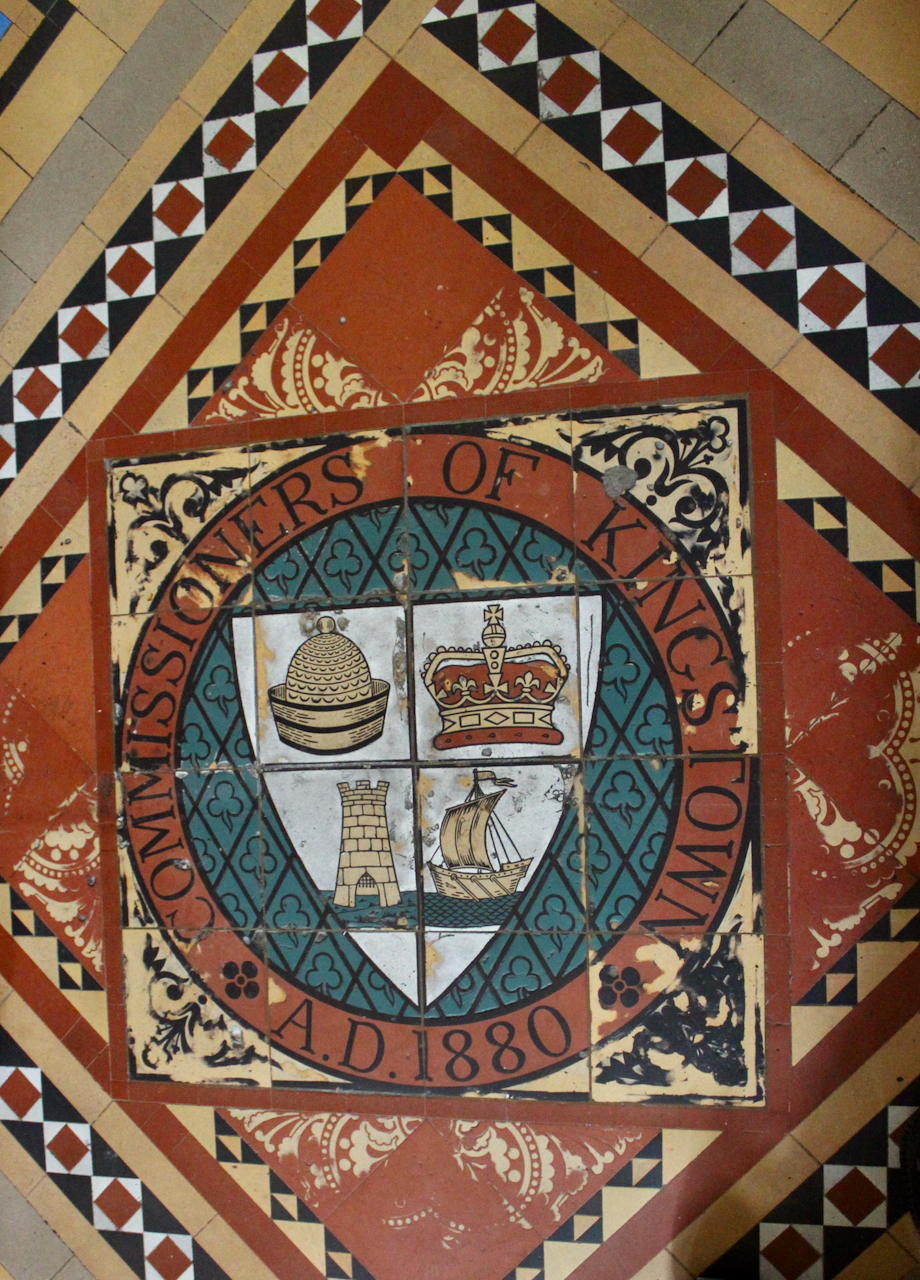
The crest of the Commissioners of Kingstown (as Dun Laoghaire was formerly known, named after the visit of King George IV, when Cobh in Cork was renamed Queenstown), 1880, on the floor. Photograph © Jennifer Winder-Baggot, www.irishhistorichouses.com
Dun Laoghaire County Hall. Photograph © Jennifer Winder-Baggot, www.irishhistorichouses.com
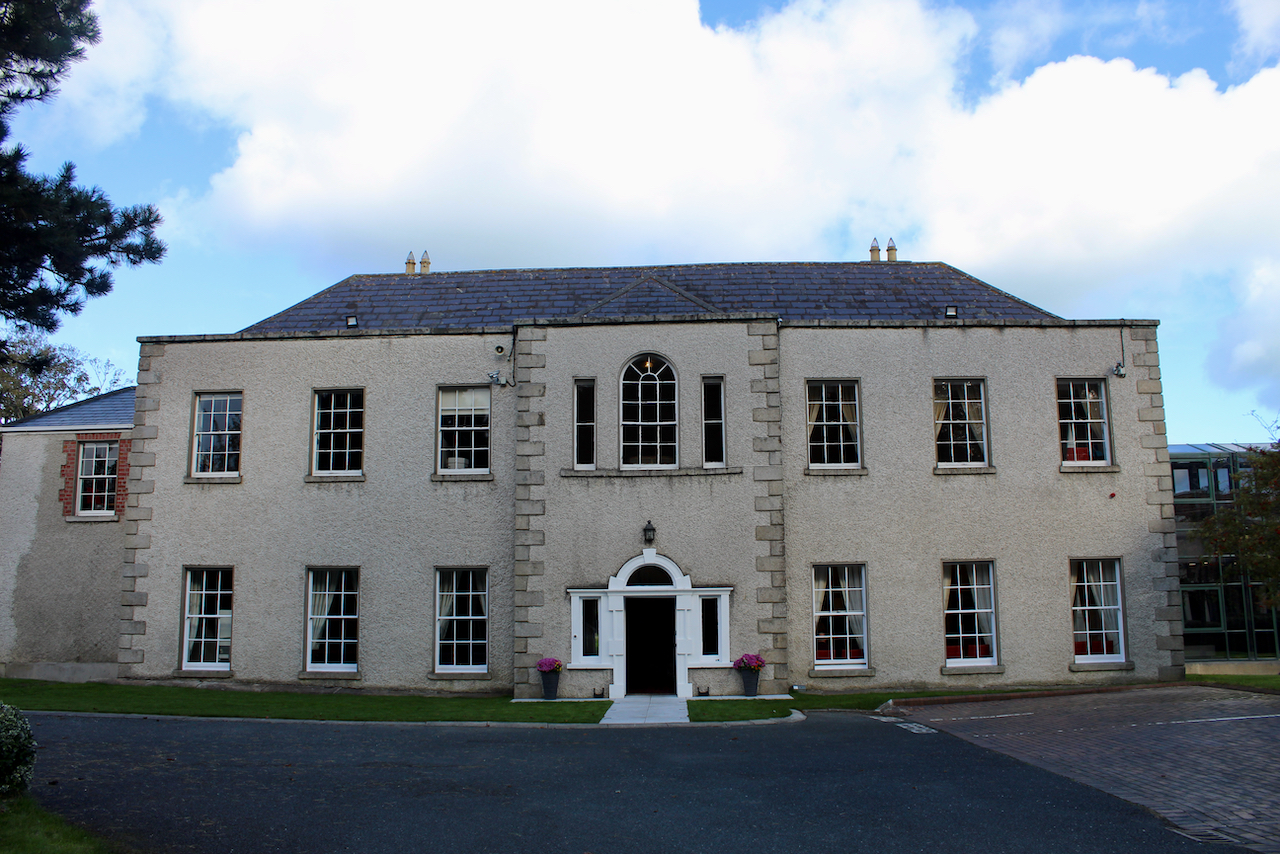
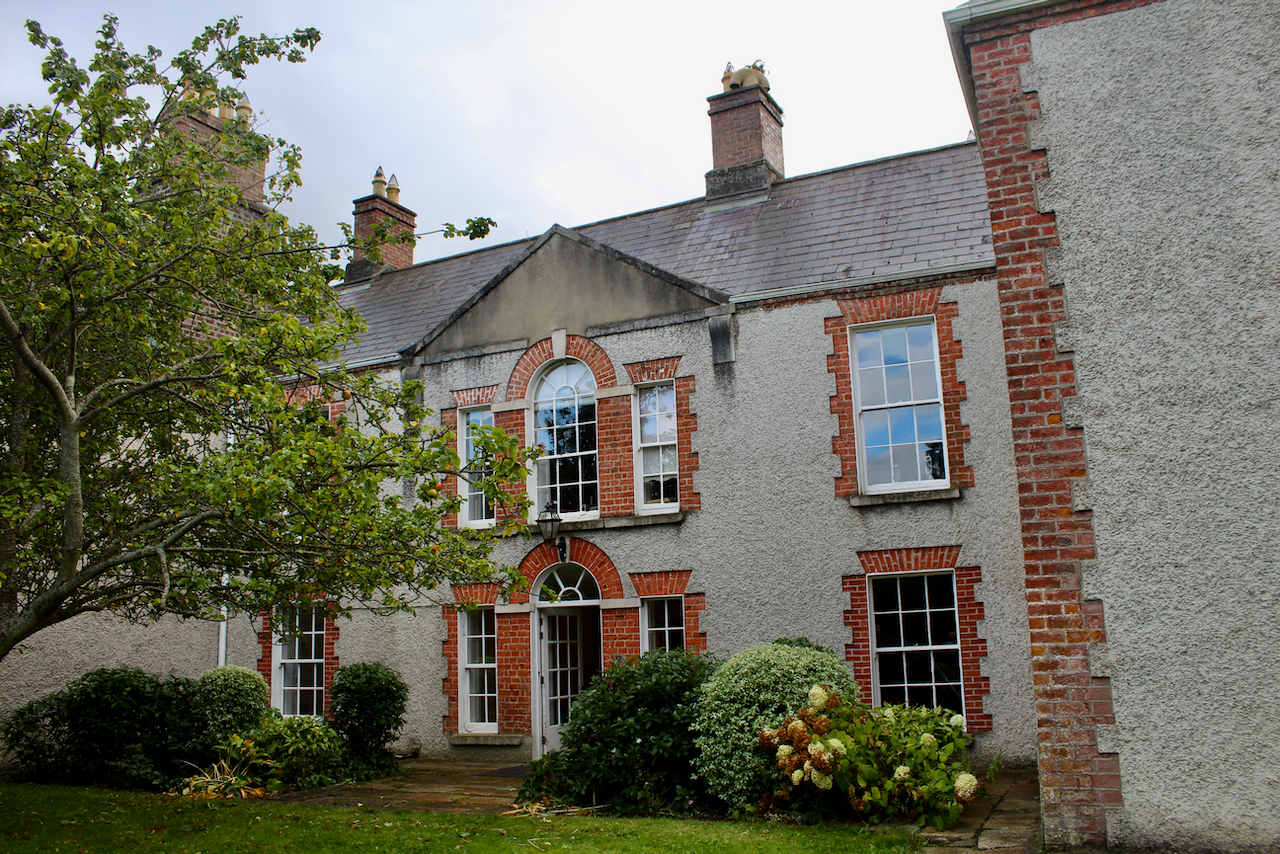
Loughlinstown House, Dublin, extant 1778, erected in two stages succeeding a house occupied by Sir William Domvile (1609-89), one-time Attorney General for Ireland (fl. 1660-86). Photograph © Jennifer Winder-Baggot, www.irishhistorichouses.com
Loughlinstown House. Photograph © Jennifer Winder-Baggot, www.irishhistorichouses.com

I’ll get back to posting about Section 482 properties next week!