Rockbarton, County Limerick entrance front c. 1900, Vanishing Country Houses of Ireland by The Knight of Glin, David J. Griffin and Nicholas K. Robinson, published by The Irish Architectural Archive and The Irish Georgian Society, 1988.
Mark Bence-Jones. A Guide to Irish Country Houses (originally published as Burke’s Guide to Country Houses volume 1 Ireland by Burke’s Peerage Ltd. 1978); Revised edition 1988 Constable and Company Ltd, London.
p. 243. “(O’Grady, Guillamore, V/PB1953) A three storey house with a three bay front, C19 in its facing but basically late C18. Centre bay breaking forward; single storey Ionic portico; heavy triangular and segmental pediments on console brackets over windows. Curved bow at side. It originally had a spacious three flight cantilevered stone staircase. Now a ruin.”
Listed in Vanishing Country Houses of Ireland by The Knight of Glin, David J. Griffin and Nicholas K. Robinson, published by The Irish Architectural Archive and The Irish Georgian Society, 1988.
Remains of detached three-bay three-storey former country house and outbuildings, c. 1790, with additions dating to 1833. House formerly with a central bay breakfront with single-storey Roman Ionic portico and a curved bow at side of house. Square-profile dressed limestone entrance piers with decorative carved caps and double-leaf wrought-iron gate.
Appraisal
Rockbarton House was formerly the seat of Lord Guillamore. Although now a ruin, it was a significant house in the area with work carried out in early nineteenth century by the well known architect James Pain. The survival of the attendant structures such as the outbuildings and the lodges is significant. As a group, they are important structures within the architectural heritage of County Limerick.
Rockbarton House was constructed in the late 18th century. It is said to have been a stunningly beautiful residence with exquisite fittings & furniture and a sweeping staircase of portland stone.
Rockbarton House was the main residence of Standish O’Grady (1766-1840) who was the chief prosecuting counsel in the trial of Robert Emmett who was hanged for treason in 1803.
The House was subsequently occupied by the 2nd Lord Fermoy when he married into the O’Grady family in 1877 and finally by Nigel Baring, of the Baring banking dynasty, who married Lord Fermoy’s only daughter, Sybil in 1908.
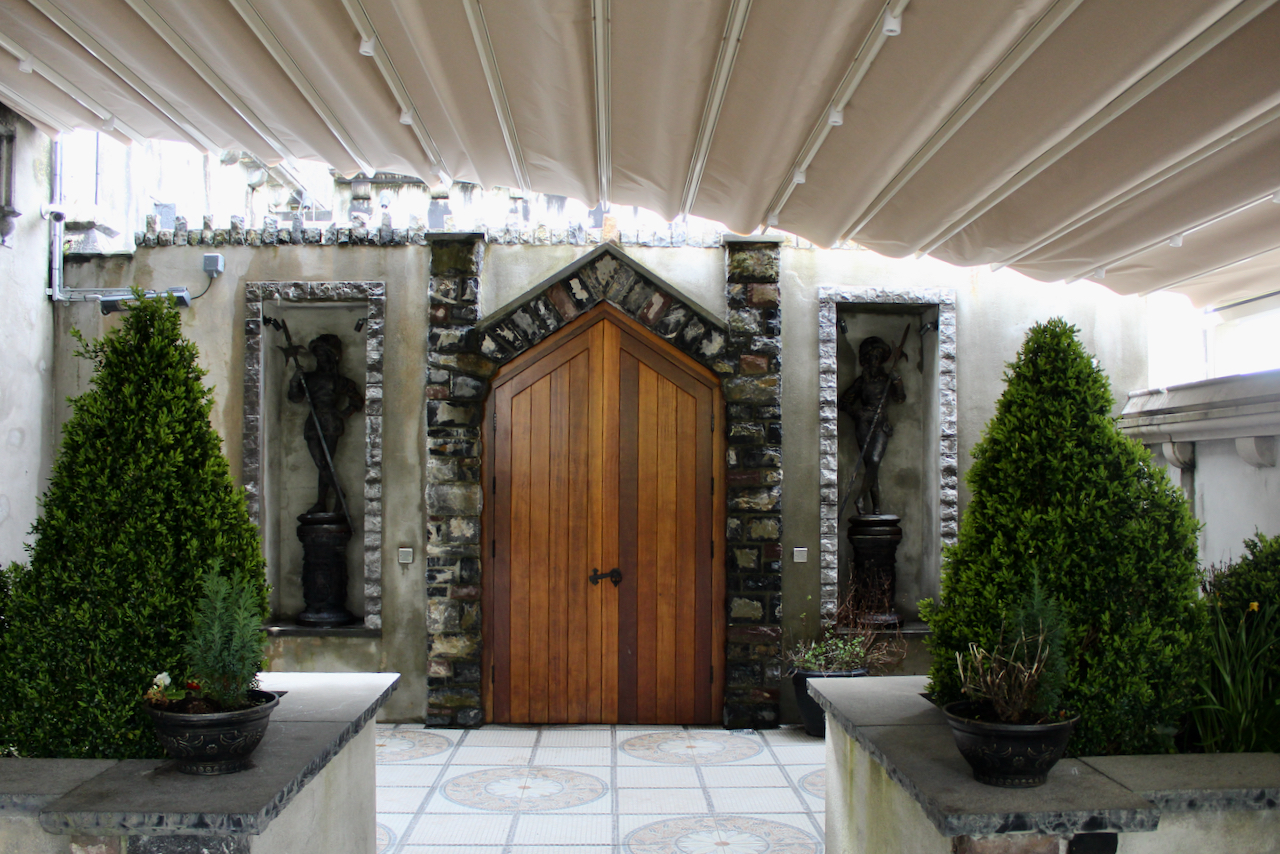
Nigel Baring spent stg.£30,000 on a major refurnbishment of Rockbarton House and stableyard in 1908. However, within a few short years the Golden Age of Irelands Great Houses came to an end. Ireland became a dangerous place for the ascendancy and Nigel Baring was forced to flee Ireland leaving his beloved Rockbarton Estate behind him. The Estate was divided by the Land Commission in 1922. The house was stripped down and sold off bit by bit. It eventually fell into disrepair and an auction was held to dipose of the remaining fixtures and fittings. The staircase is known to have been sold and installed in a house in London. All that now stands as a testament to the grandure of Rockbarton is its Courtyard where our Garden Centre is located.
The History of Rockbarton & Caherguillamore Houses
By Mary Sheehan
Rockbarton and Caherguillamore were both situated on the same estate and were originally O’Grady houses. Caherguillamore House was the Dower house while Rockbarton was a much larger house. Both houses were occupied by O’Grady’s and those who married into the O’Grady clan.
Rockbarton House was built at the end of the 18th century, when many Irish Country Houses were erected, while Caherguillamore House would already have been in place by this time. All that remains today of these houses are the ruins, the remains of the woodland, the Rockbarton stable yard & workers’ living quarters and the gate lodge. The Caherguillamore/Rockbarton Estate was a very impressive place in the 1920’s when Nigel Baring left Ireland. At that time it had a sophisticated underground drainage system and a water supply from a reservoir situated above Rockbarton House. The golden age of these houses was from the late 1700’s to early 20th century. In the early 1800’s the First Viscount Guillamore took up residence at Rockbarton and his descendants remained there until 1922.
Caherguillamore was situated in a valley and surrounded by rising ground. The house was approached by an avenue of ash and elm., which was almost a mile long. This avenue into Caherguillamore is now known as ‘Burma Road’ and it still retains much of its quaint and ancient atmosphere although several houses have since been erected there. The parkland contained Cedar of Lebanon trees and was well stocked with deer. The demesne is reputed to have been one of the most interesting in the County for Raths and other remaining antiquities.
Rockbarton House was also splendidly furnished having a fine hall with a noble staircase of Portland stone. The house also facilitated large apartments which would have been decorated to the highest standards of the time.
Chief Baron O’Grady – First Viscount Guillamore
In the 1700’s Standish O’Grady married Hanora Hayes who was co-heir to properties at Caherguillamore and in this way the Caherguillamore estate passed into the O’Grady family. Standish O’Grady’s grandson who was also called Standish was born in 1767. He was to become Chief Baron and the First Viscount Guillamore and Rockbarton House was his place of residence. Standish was a lawyer and a contemporary of Daniel O’Connell. His promotion in the legal profession was rapid and in 1803 he was appointed as Attorney General for Ireland. Subsequently, he was the leading officer for the Crown during the prosecution for Treason of Robert Emmet. The government was highly impressed with his conduct of the case and as a result promoted him to Chief Baron of His Majesty’s Court of Exchequer. He was again honoured in 1831 when he was raised to the peerage as Viscount Guillamore.
In legal history of the time he was viewed as a humorist and as a fairly rough character. It is also recorded that he spoke with a broad County Limerick accent which indicates that his links with his Irish roots may have been stronger than his links with the ascendancy. Locally, his reputation for imposing the death penalty as a punishment for trivial offences grew and so he became known as the ‘Bloody Judge’. However, his involvement in the trial of Robert Emmett may be the reason for his unpopularity in local folklore.
His local reputation as the ‘Bloody Judge’ who showed no mercy to anyone is said to by some to be somewhat unfair as, at that time hanging was the penalty for many offences. In fact in many of the recorded cases of the time he was seen to be a fair judge. He was originally Judge in the Case of the Doneraile Conspiracy, which is the subject of Canon Sheehan’s book ‘Glenanaar’ .
In the early 1800’s there would have been a lot of Whiteboy activity around Doneraile and around this time a local landlord’s son was murdered as a result of these activities. In an attempt to solve the case the authorities of the time offered a reward of Stg.£750 for any information given which would lead to convictions. An unsavoury character offered information, which implicated over seventeen men from the Doneraile district. One of the accused, O’Leary, was a man over seventy years old. Chief Baron O’Grady, who was the Judge at the initial assizes, was suspicious of this informer and did not go along with the Crown as he recommended to the Jury that they should not find anyone guilty on the evidence of an informer. Subsequently, two other judges came into the case and the prisoners were found guilty and sentenced to death. Later, Daniel O’Connell came out of retirement to appeal the case and the conspiracy was uncovered.
In local folklore, it is said that the Judge O’Grady condemned a priest to death in Clonmel. The condemned priest cursed O’Grady by saying ‘May you never die’. Later, he suffered from paralysis and it is said that the skin rotted off his body. During this time his greatest wish was to die, but it was not until a Father O’Grady from Bruff prayed over him that he died. His body lay in state for a week in the spacious library at Rockbarton, awaiting the nobility of Ireland to assemble at the funeral. The body was interred in the O’Grady vault at Knockainey Churchyard.Lt. Col. Standish O’Grady – Second Viscount Guillamore
The elder son of the Chief Baron was also known as Standish O’Grady. He commanded the 7th Hussars and fought in the European wars against Napoleon. Upon Napoleons’ return from Elba he sailed for Brussels with his regiment to assist Wellington. When fighting the French at Genappe he secured a safe march to Waterloo for the 7th Hussars, where they were destined to defeat Napoleon. This was considered to have been his greatest military achievement and in recognition he was promoted as Aide-de-Camp to the Queen.
Locally, it is known that he had a beautiful white charger which he rode into battle, but that had never before obliged him by jumping any ditch. However during a retreat from the French this white steed took a great leap over a wide ditch thus saving O’Grady’s life.
Later when O’Grady retired from the army he brought the horse back to Caherguillamore where it was allotted a rich pasture and is reputed to have been buried at the gates of Caherguillamore. During O’Grady’s retirement he married and took up residence at Caherguillamore House. He also became involved in politics and represented Limerick in parliament. He donated the land at Meanus for the building of the Church there. On the death of this father in 1840 he succeeded to the title Viscount Guillamore and he continued to live at Caherguillamore House until his death. As was the case with his father, he was buried in the family vault in Knockainey.Standish O’Grady – 3rd Viscount Guillamore
Information on Standish O’Grady, 3rd Viscount Guillamore is sparse. It is known that he was buried in Knockainey churchyards along with his father and grandfather. According to his headstone he died on April 10th 1860 at the young age of 27. However it is not known what caused his untimely death. On the death of Standish, the 3rd Viscount Guillamore, the Guillamore title passed from the Rockbarton/Caherguillamore branch of the O’Grady’s to the Rathfreda branch. This is due to the fact that he was predeceased by his only son who died in 1856, aged one and a half.
The final holder of the Guillamore title was Standish Bruce O’Grady who died in 1955. Therefore, the title which was created in 1831 for the then Chief Baron O’Gardy who was referred to locally as the ‘Bloody Judge’ lasted a little more than a century.2nd Lord Fermoy
The only surviving child of the 3rd Viscount Guillamore was Cecilia O’Grady. She married the 2nd Lord Fermoy in 1877 and brought the properties of Rockbarton and Caherguillamore to the marriage as both of her parents were dead. Therefore Lord Fermoy came to Rockbarton in 1877.
Lord Fermoy was from Co. Cork and the family name was Roche. The Fermoy’s seem to have had some financial difficulties and Lord Fermoy’s father required his Carrignavar tenants to increase their rents in 1850’s to boost the depleted finances of the Roche family. Their fortunes collapsed completely in the 1870’s. Lord Fermoy’s estate of 19,530 acres estate was then pushed onto the market by Norwich Union Insurance Company. Obviously the marriage to Cecilia O’Gardy had a lot of financial advantages for the Second Lord Fermoy. Fermoy was also known to be very interested in greyhounds. He enjoyed a gamble and is reputed to have lost a fortune on the Waterloo Cup. He had a dog running in the Waterloo Cup which he believed was a ‘dead cert’ to win. The dog was interfered with and Lord Fermoy lost a large sum of money. Lord Fermoy lived at Caherguillamore until his death in 1920. He had one daughter, Ada Sybil, who married Nigel Baring.
Nigel Baring was born in Essex in 1870. His father was TC Baring a member of the banking family. His mother, Susan Minturn, was an American heiress. Nigel Baring had a lifelong passion for horses and hunting. He came to Ireland in 1896, and became a famed master of the Duhallow Hounds. His fame was mainly linked to the fact that he bred a pack of hounds for the Duhallows that were famous for their ferocity. His own love of the hunt was also famed as his renowned toast over port was ‘more blood’. He spent 12 years with the Duhallows and was respected both as a huntsman and as a master. In the final season of his mastership he married Sybil Roche and moved to Rockbarton House with his new bride. There he took up mastership of the Limerick Hounds and spent 14 years with them. His retirement from hunting was made necessary due to a hunting accident. Nigel Baring was known to be generous in nature. The late Major Ged O’Dwyer recalled in his memoirs that when he followed the hunt as a young boy on his donkey ‘Bess’ he was looked on with distain by some of the hunting fraternity but was encouraged and befriended by Nigel Baring. It is worth noting that he attributed his love of horses and his success on the International stage to the encouragement he received from Nigel Baring. It is also recorded by Major O’Dwyer how in the early 1920’s he was part of an IRA unit that raided Rockbarton House for ammunition and guns. He stated his case to Nigel Baring and the guns and ammunition were handed over. Nigel Baring, whilst regarded as a member of the landed gentry, was not interested in politics and no intimation was ever given by him to the authorities as to the identity of the raiders.
In 1908 Nigel Baring spent Stg.£30,000 on Rockbarton House and estate, which at that time was a large sum of money. The stable yard was upgraded, an underground drainage system was installed and Italian craftsmen were brought to Rockbarton to decorate the ceilings. A beautiful marble and brass staircase was installed. One can imagine that the Estate must have been considered impressive and it provided employment for a lot of people. When Nigel Baring and his family left Rockbarton in 1922 this source of employment dried up for many people and the nearby town of Bruff went into decline. The 1920’s were a very dangerous time in Ireland for members of the ascendancy and in 1922 Nigel Barings’ horses were stolen. The thieves removed the horse’s shoes and put them on back to front in order to mislead the police. This act of hostility was the catalyst, which led to his decision to leave Ireland.
Nigel Baring was buried in England. His wife Sybil, who died in 1944 was buried in St John’s churchyard in Knockainey. After 1922 the Caherguillamore/Rockbarton Estate was acquired by the Land Commission and divided up into small holdings that were distributed amongst various people of the locality and new families came into the area to work these holdings. Several of the people who worked on the estate received land and houses. Nigel Baring had houses built for the estate workers at Meanus, which were known as ‘The New Houses’.
In 1920 Caherguillamore house was the scene of a bloody massacre at the hands of the Black and Tans. Caherguillamore was burnt out during the troubles and Rockbarton House was sold. It was never again occupied but the house was stripped down and sold off bit by bit. An auction was eventually held and the remaining fittings and furnishings were sold off. The staircase and fountain are known to have been sold and installed in a house in London.
Whilst the houses themselves are now but a memory, the folklore about these houses and their impact on the locality remain. The love of horses and the horse related pursuits which were encouraged by Nigel Baring and the O’Grady’s continue to be a vibrant part of life in County Limerick today.Sources The History of Bruff – Pius Browne History of Limerick – McGregor & Fitzgerald Famous Irish Trials – Hedley McKay History of Limerick and it’s Antiquities – Lenihan Glenanaar – Canon Sheehan Vanishing Country Houses of Ireland Forgotten Dreams – Tom Twomey Topographical Dictionary of Ireland – S Lewis Research on Baring Family in Ireland, Ann Ashton, Anne Baring, Gillian Cooke Memories of Rockbarton recorded by late John Fraher – Alice Fraher.
Cahir-Guillamore, County Limerick, entrance front 1965 copy photograph: David Davison, Vanishing Country Houses of Ireland by The Knight of Glin, David J. Griffin and Nicholas K. Robinson, published by The Irish Architectural Archive and The Irish Georgian Society, 1988.
Mark Bence-Jones. A Guide to Irish Country Houses (originally published as Burke’s Guide to Country Houses volume 1 Ireland by Burke’s Peerage Ltd. 1978); Revised edition 1988 Constable and Company Ltd, London.
p. 54. “O’Grady, Guillamore, V/PB 1953) A two storey late C17 house. High roof with dormers; projecting end bays. Now totally derelict.”
Listed in Vanishing Country Houses of Ireland by The Knight of Glin, David J. Griffin and Nicholas K. Robinson, published by The Irish Architectural Archive and The Irish Georgian Society, 1988.
Farmyard complex comprising multiple-bay two-storey buildings, built c. 1790, arranged around a yard. Remains of country house, now in a complete state of ruin, evidenced by roughly dressed limestone wall. Remains of pitched slate roofs with red brick chimneystacks. Rendered rubble stone walls. Square-headed openings having red brick voussoirs, limestone sills and remains of timber fittings. Elliptical-headed carriage-arches with red brick voussoirs to site. Detached three-bay two-storey former laundry to north-east of site. Pitched slate roof with rendered chimneystacks and cast-iron rainwater goods. Roughcast rendered walls. Half-dormer window openings to first floor with timber casement windows and timber bargeboards. Segmental-headed openings set in shallow recesses to ground floor with timber lattic casement windows. Square-headed opening with timber panelled door flanked by sidelights having lattic glazing. Set within rubble limestone demesne walls.
Appraisal
Cahir Guillamore was formerly a two-storey late seventeenth-century house with a high roof with dormers and projecting end bays. The house has been totally destroyed except for the courtyard of outbuildings and laundry house, which are of clear architectural design. Simple in form, the outbuildings form a pleasing group of functional structures which would once have served a large demesne. The laundry building exhibits architectural detailing especially apparent in its half dormer and lattic windows. Set within the former demesne walls, they form a pleasing group of demesne related structures. It was formerly the house of Lieutenant Colonel O’Grady.
Cahir Guillamore farmyard, County Limerick, courtesy National Inventory.Cahir Guillamore farmyard, County Limerick, courtesy National Inventory.Cahir Guillamore farmyard, County Limerick, courtesy National Inventory.Cahir Guillamore farmyard, County Limerick, courtesy National Inventory.Cahir Guillamore farmyard, County Limerick, courtesy National Inventory.Cahir Guillamore farmyard, County Limerick, courtesy National Inventory.Cahir Guillamore farmyard, County Limerick, courtesy National Inventory.
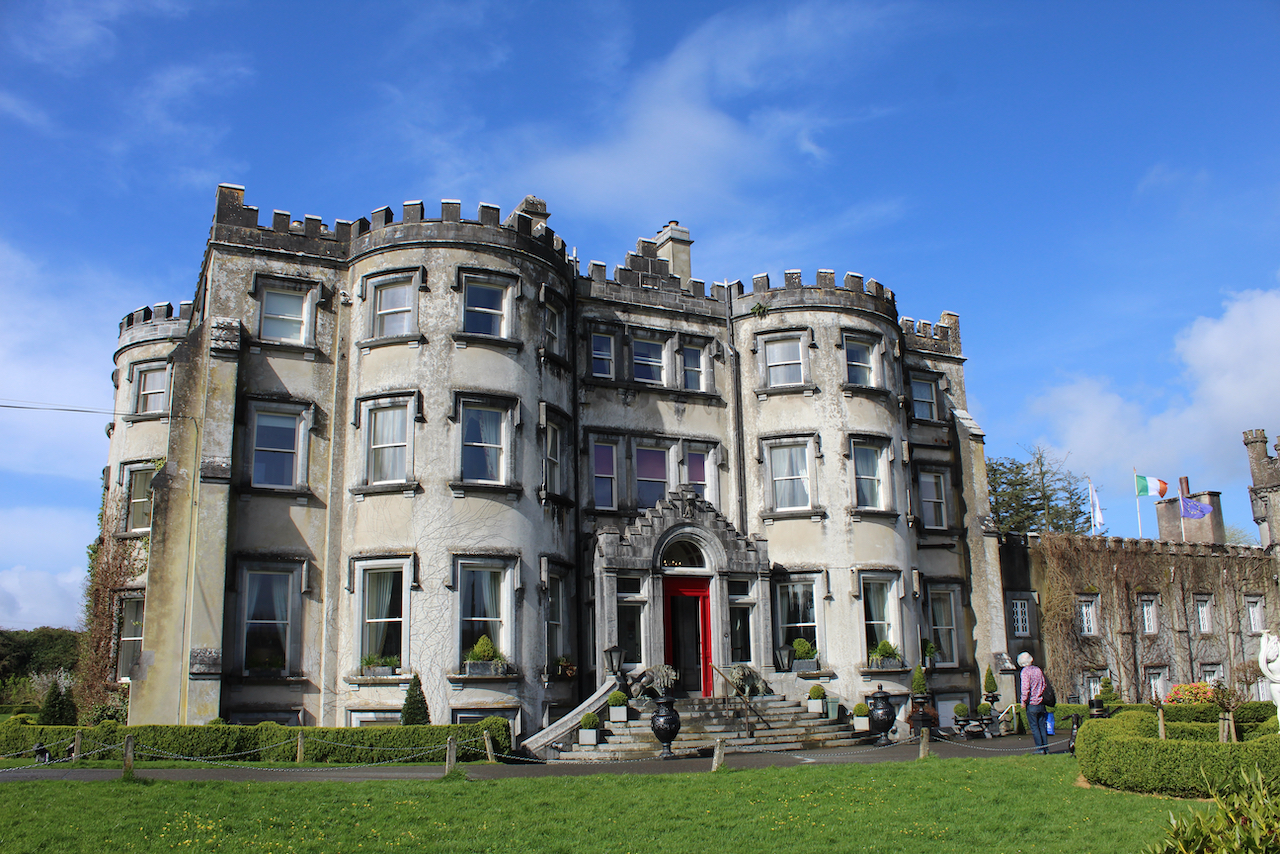
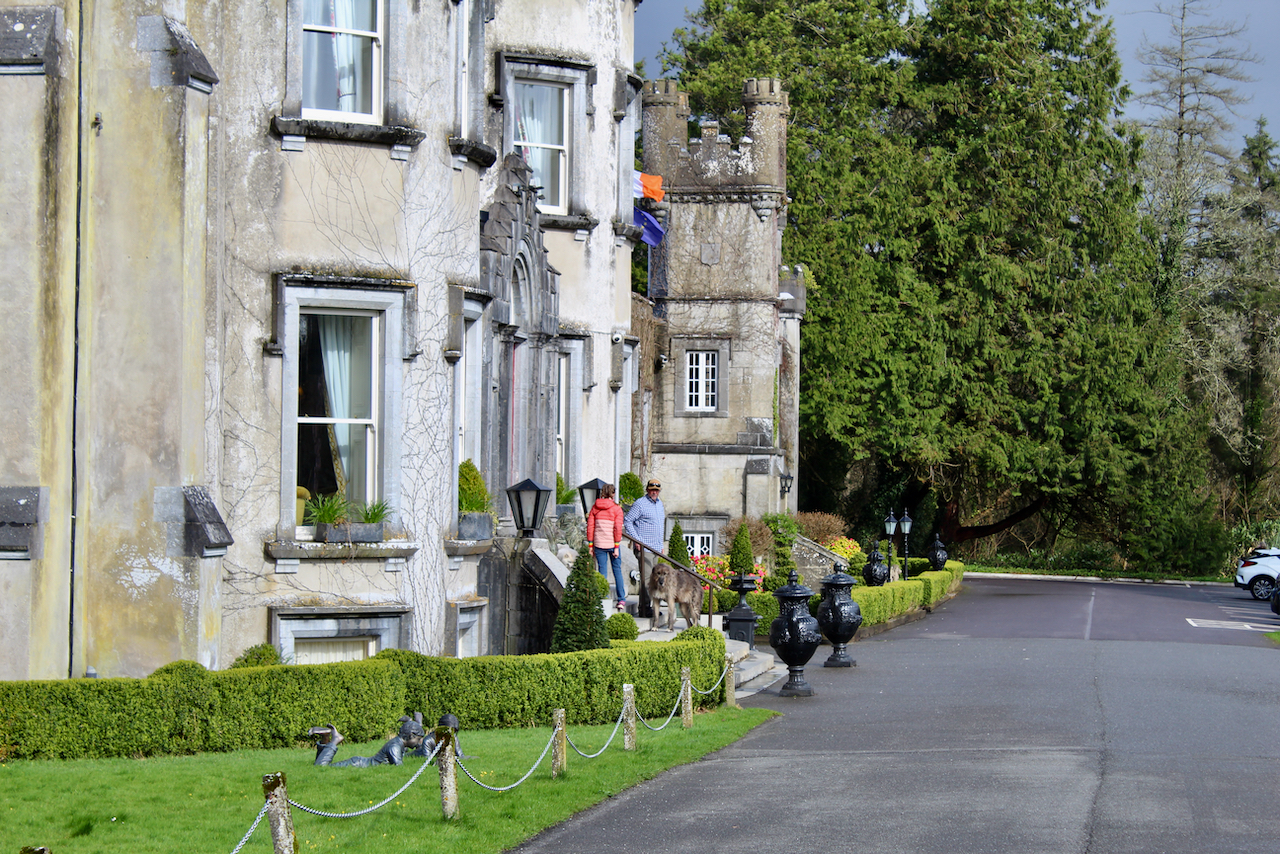
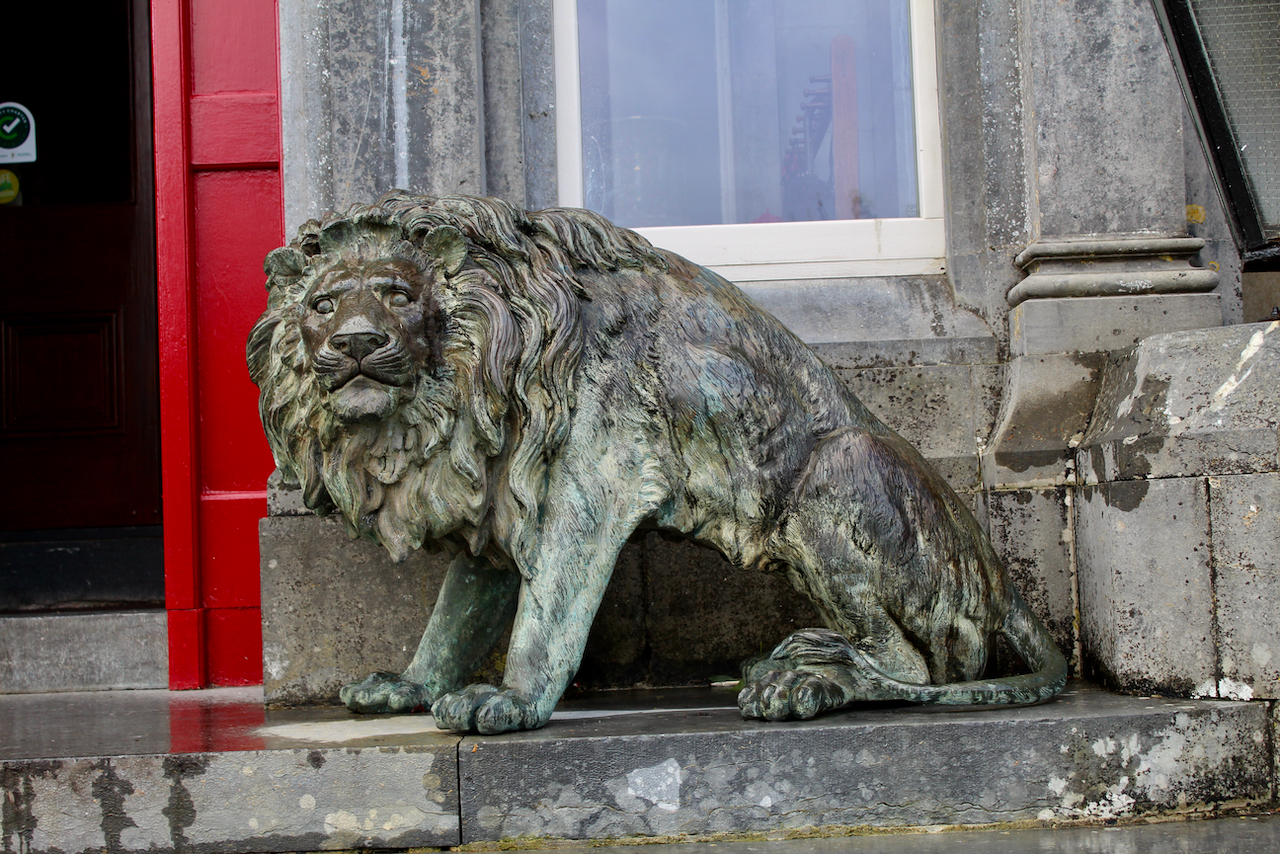
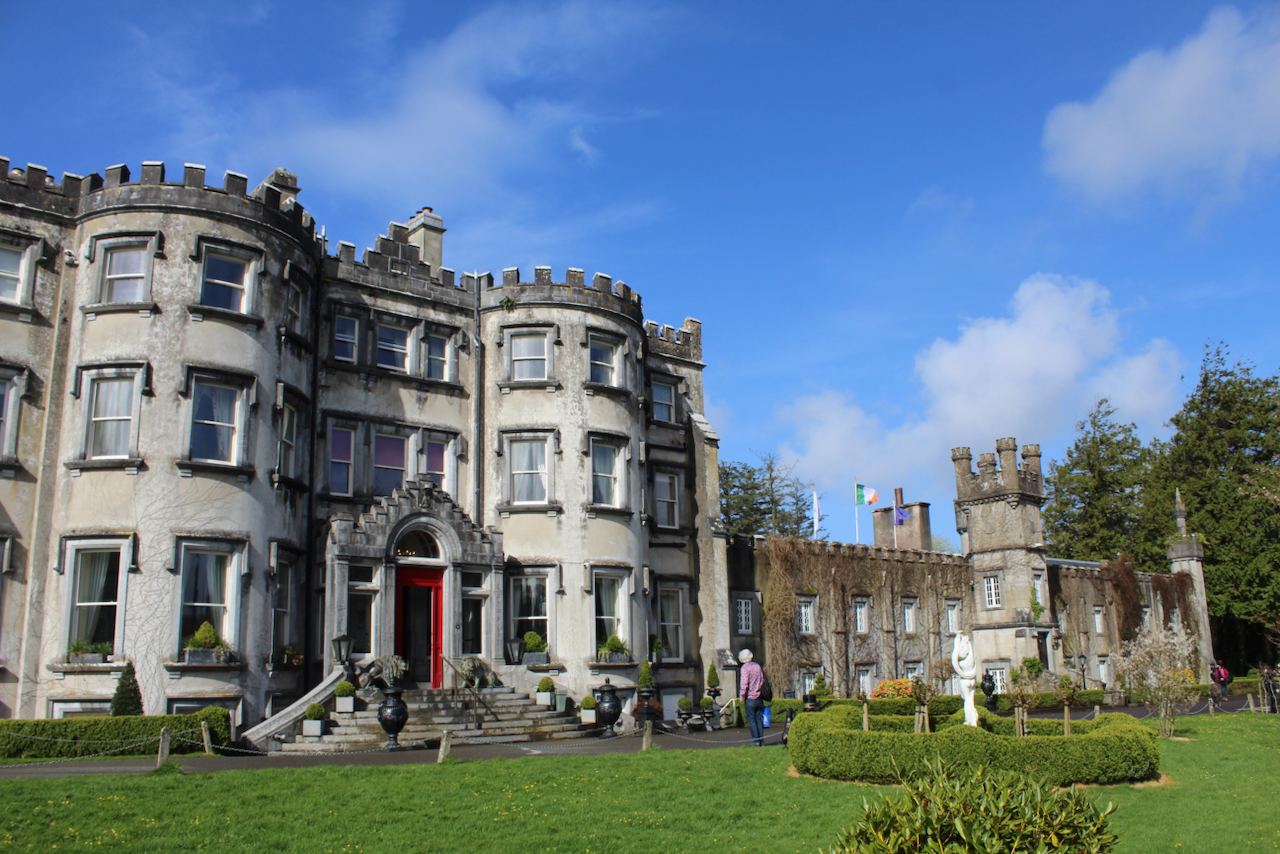
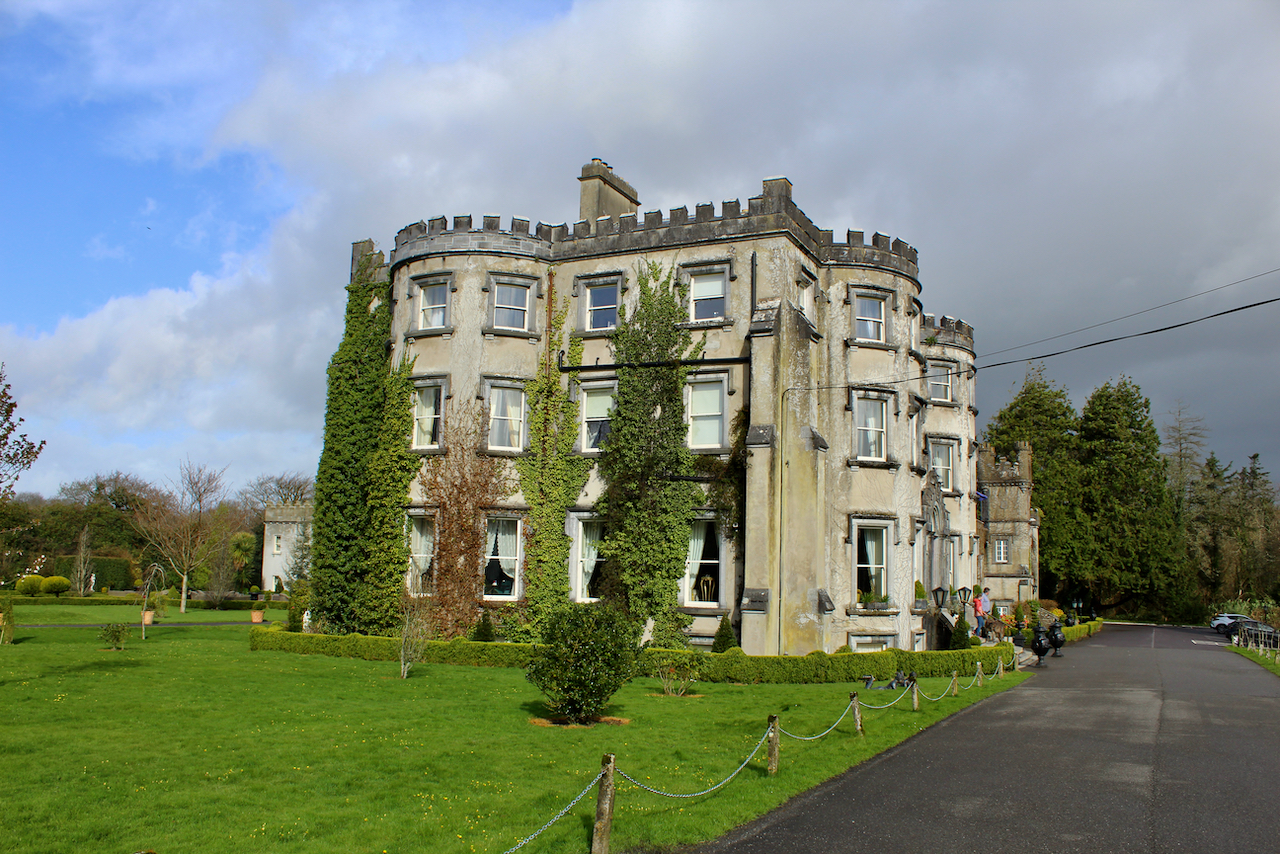
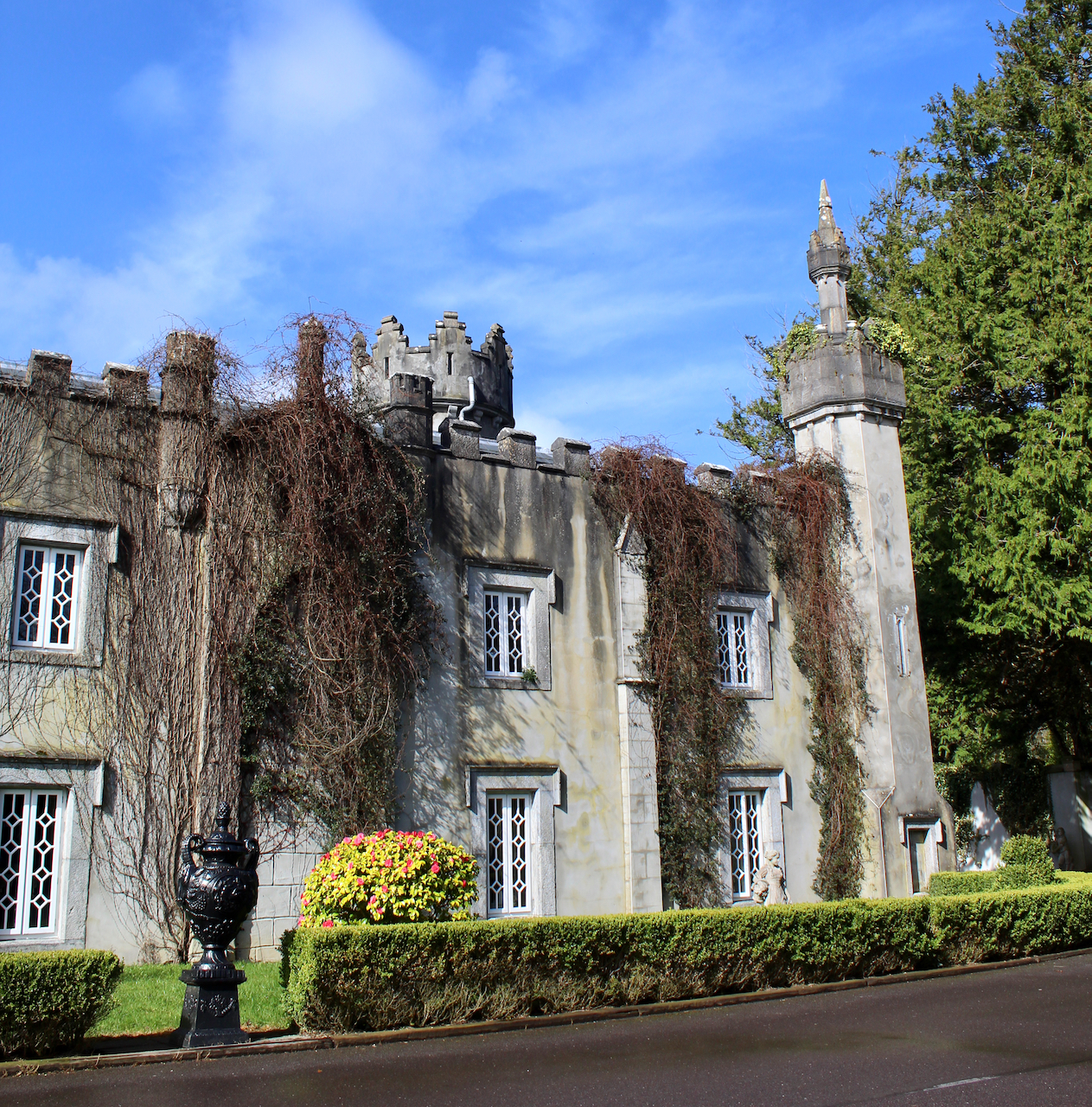
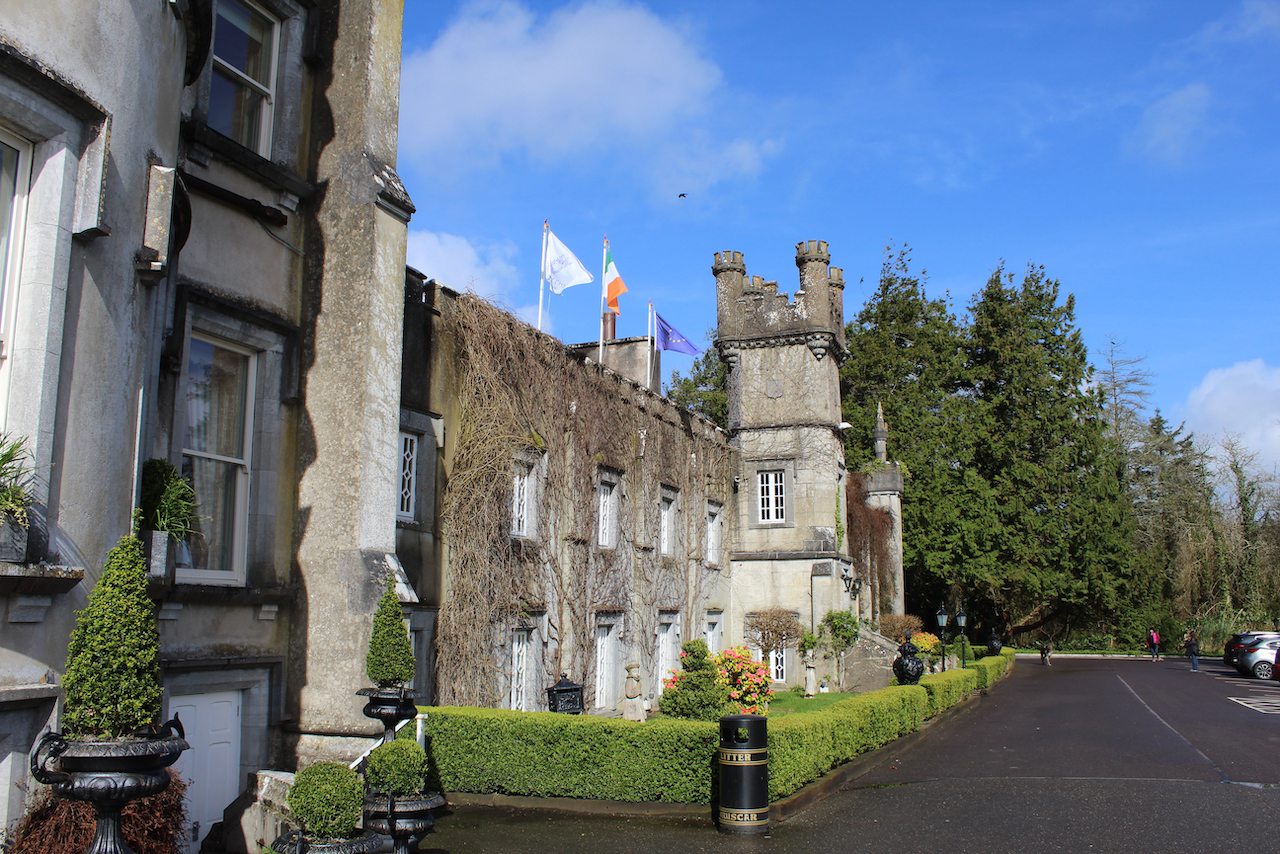
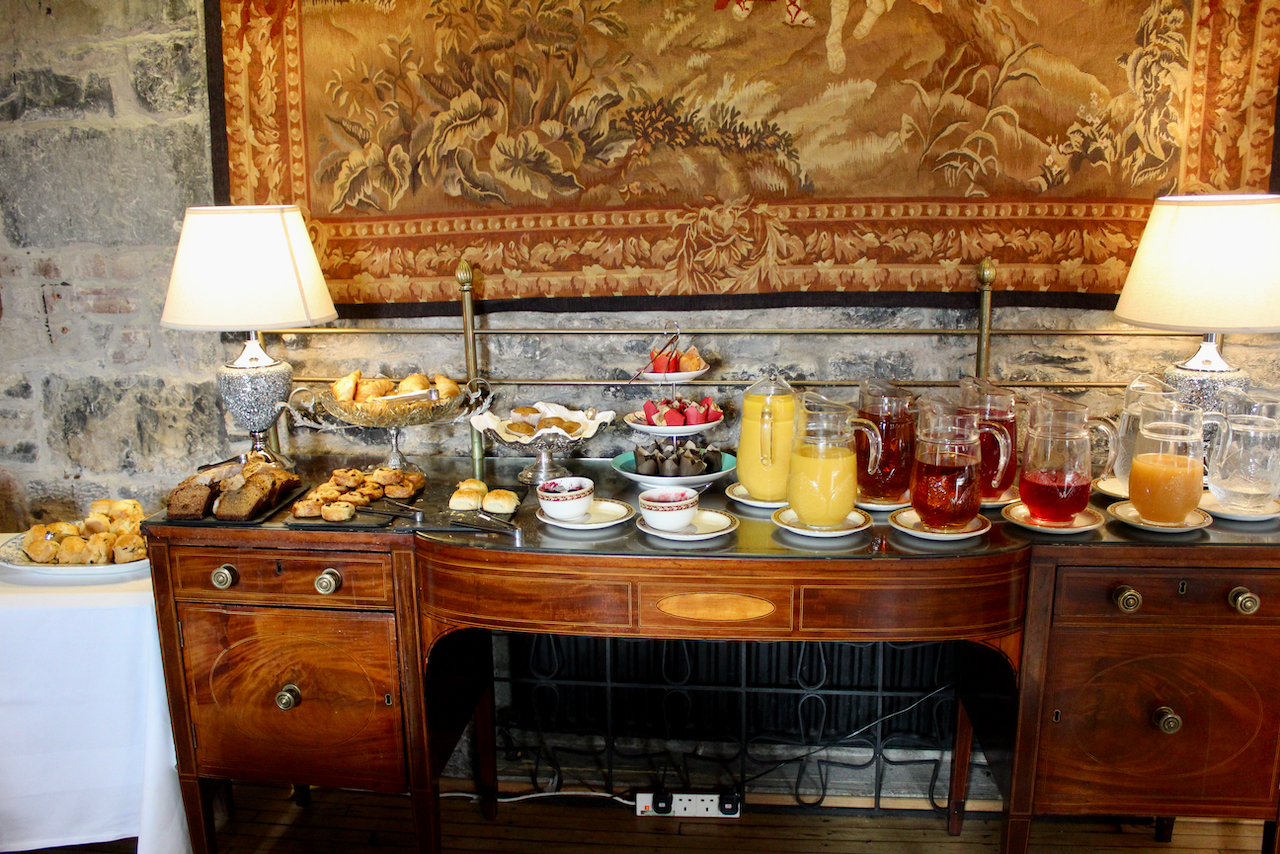
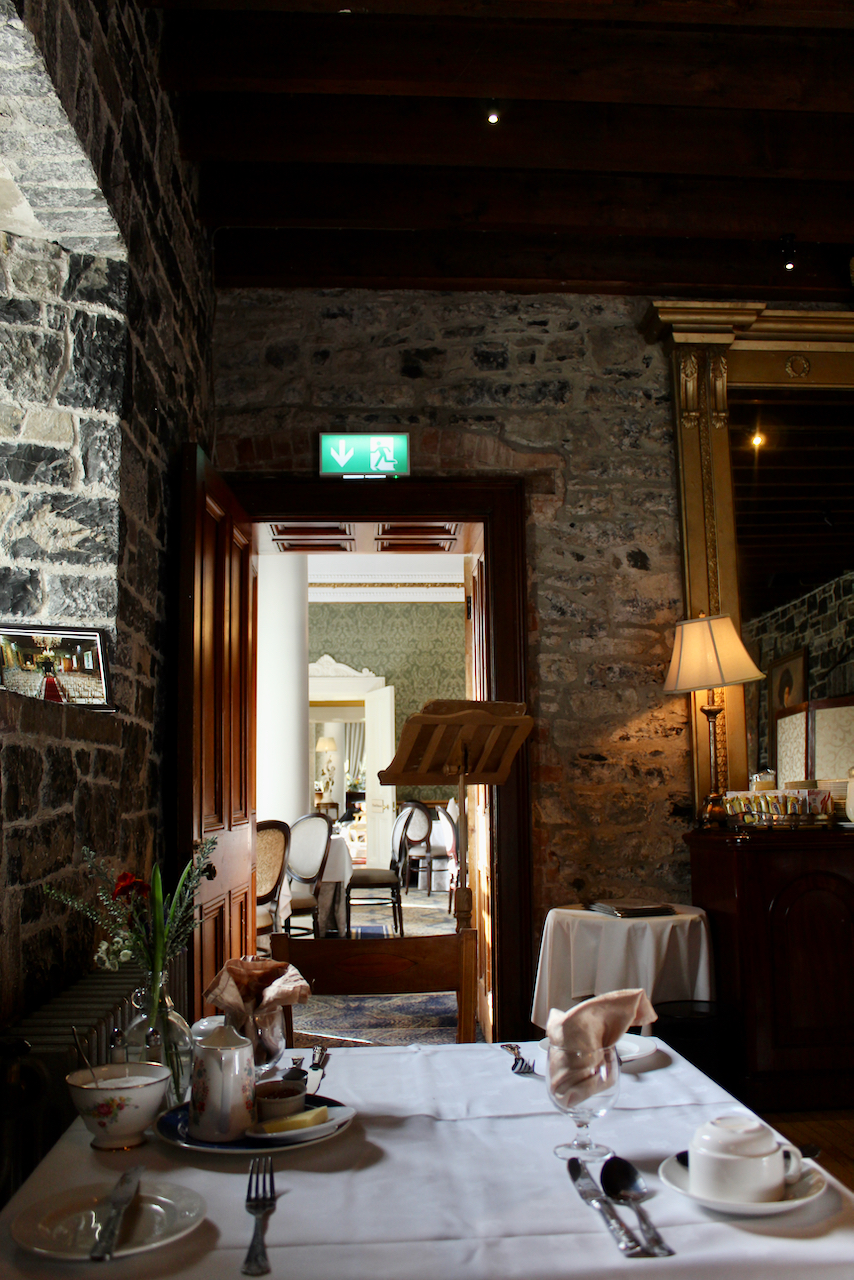
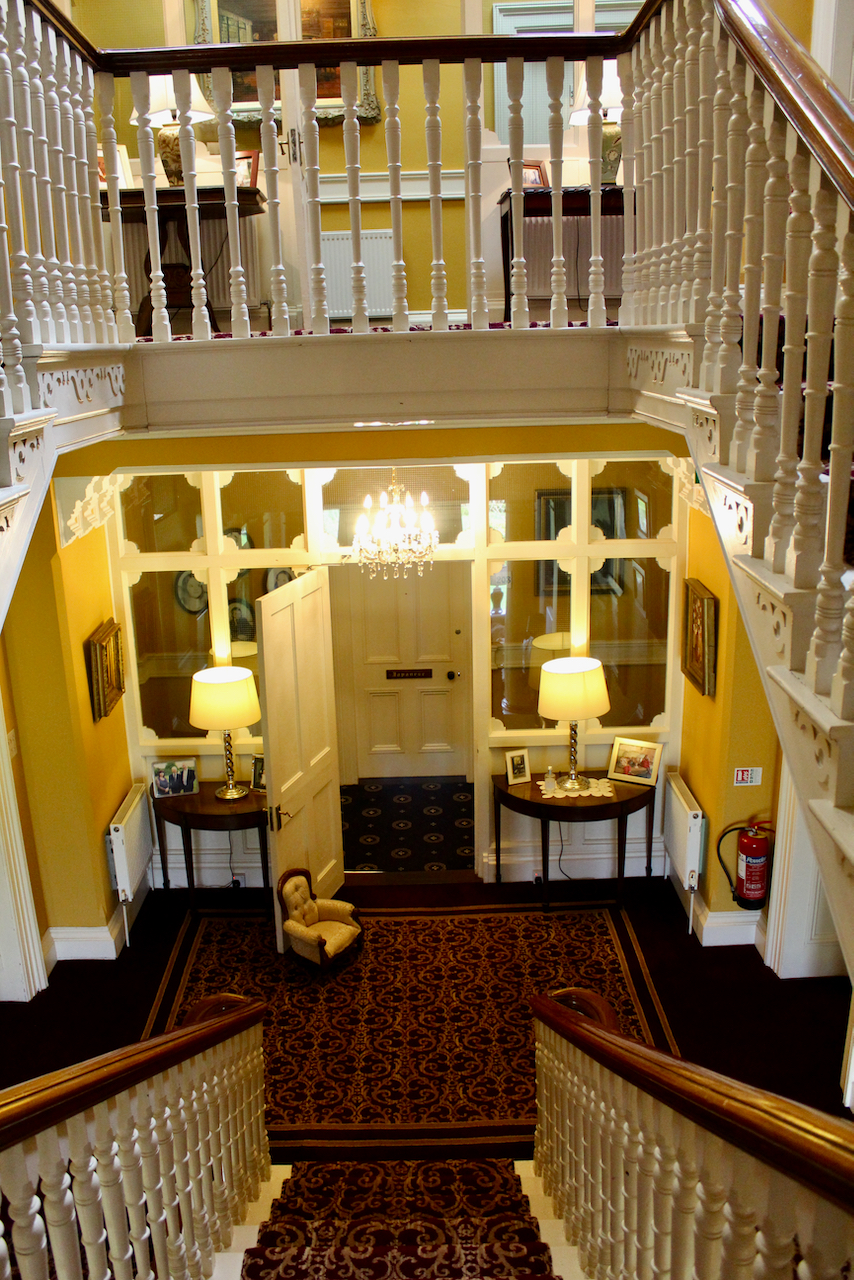
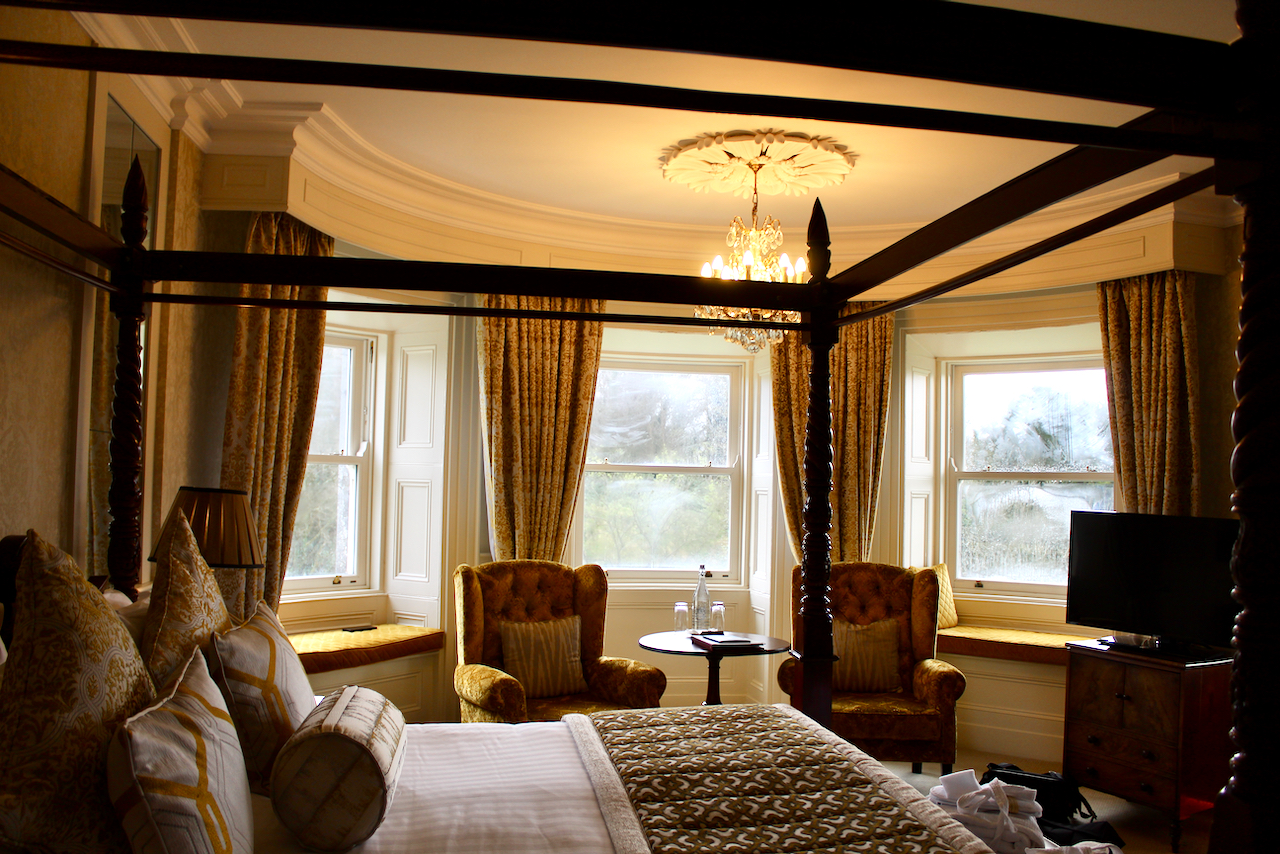
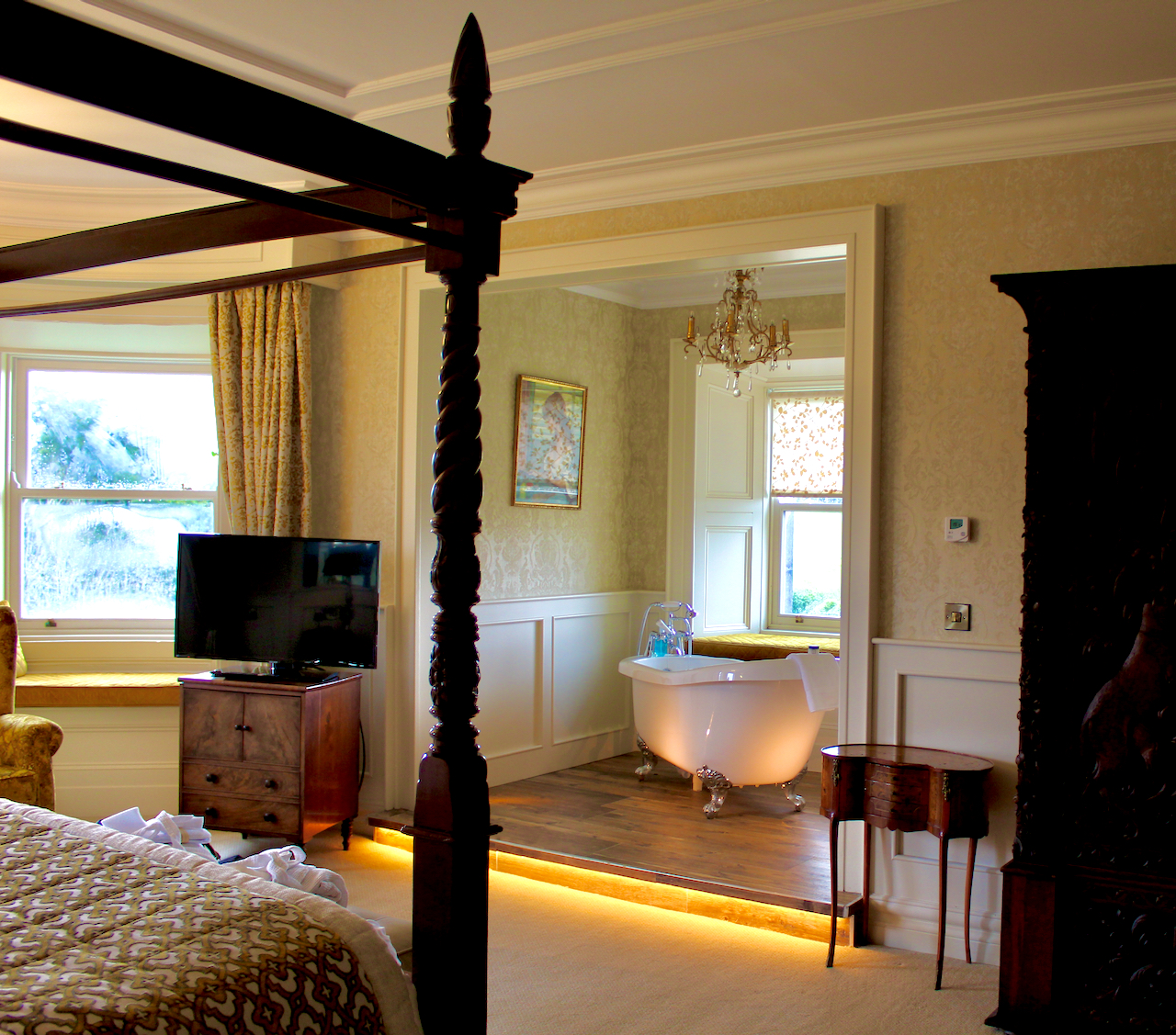
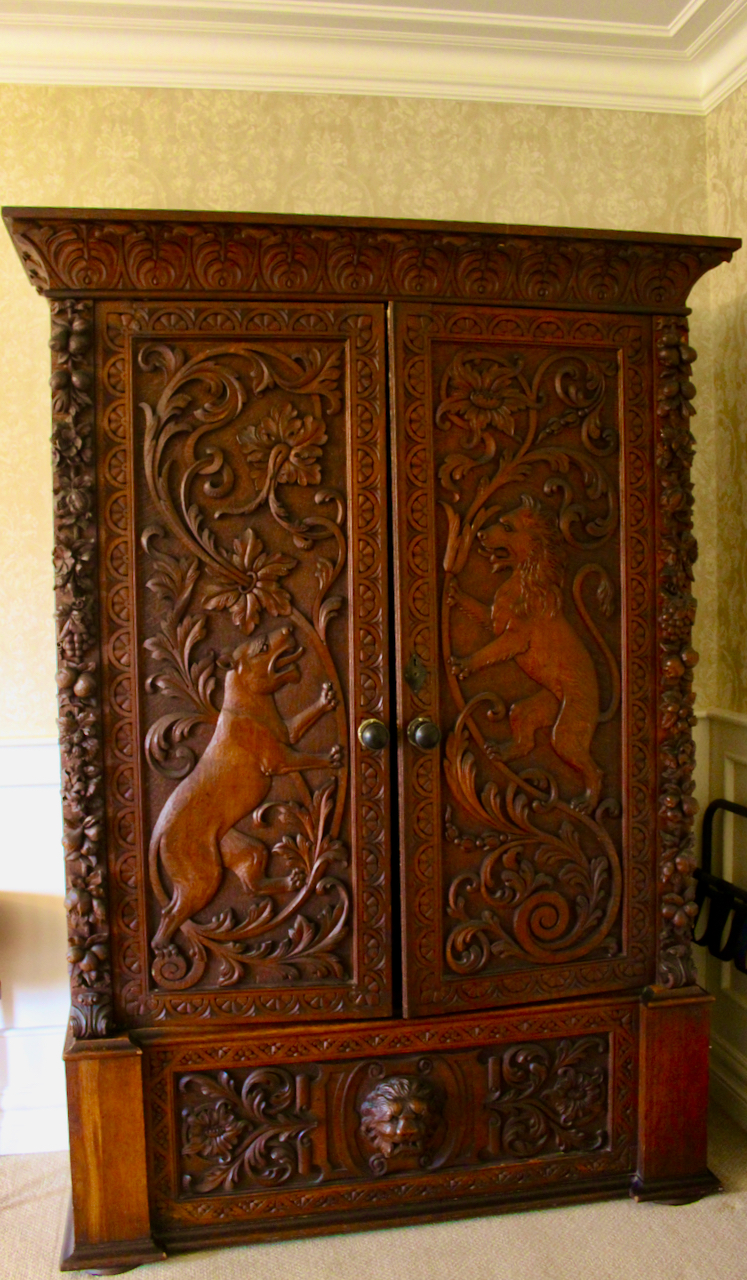
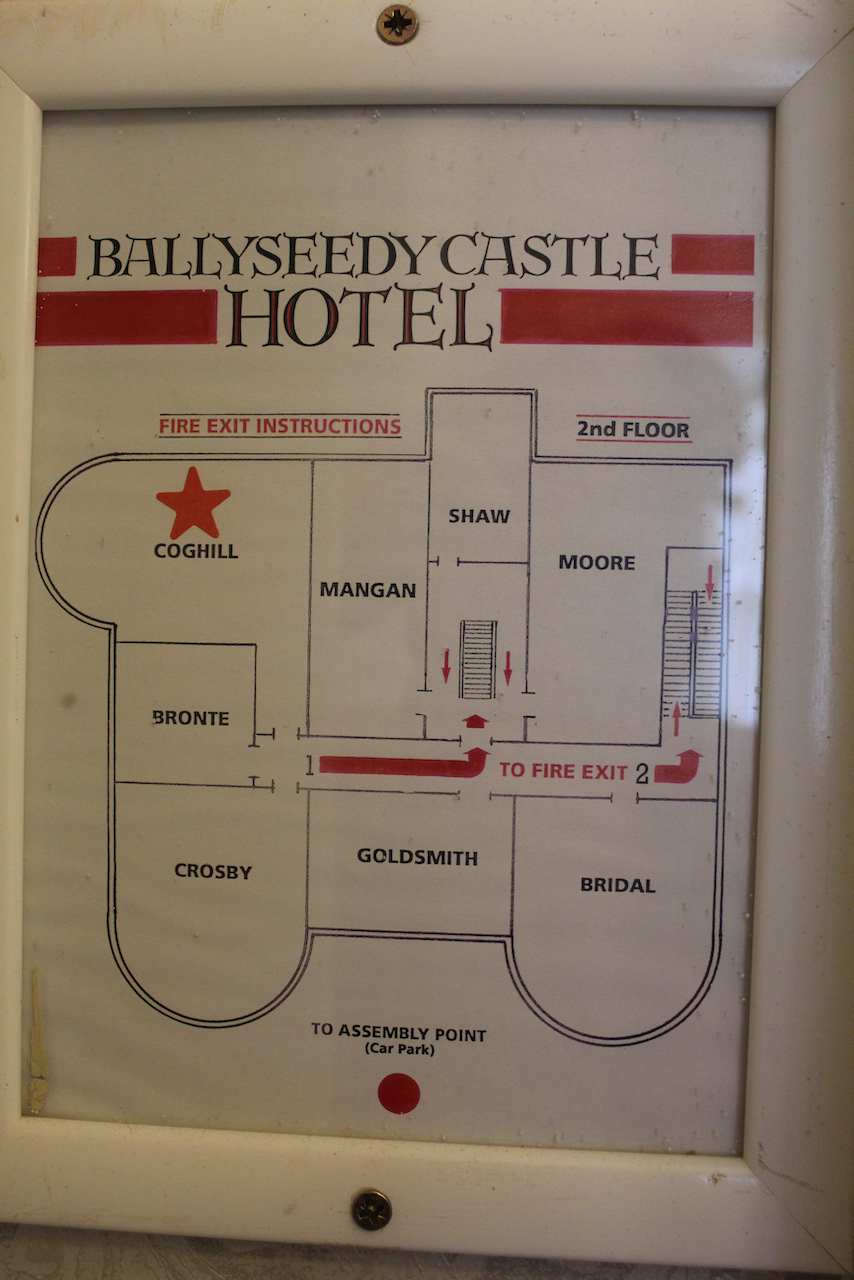
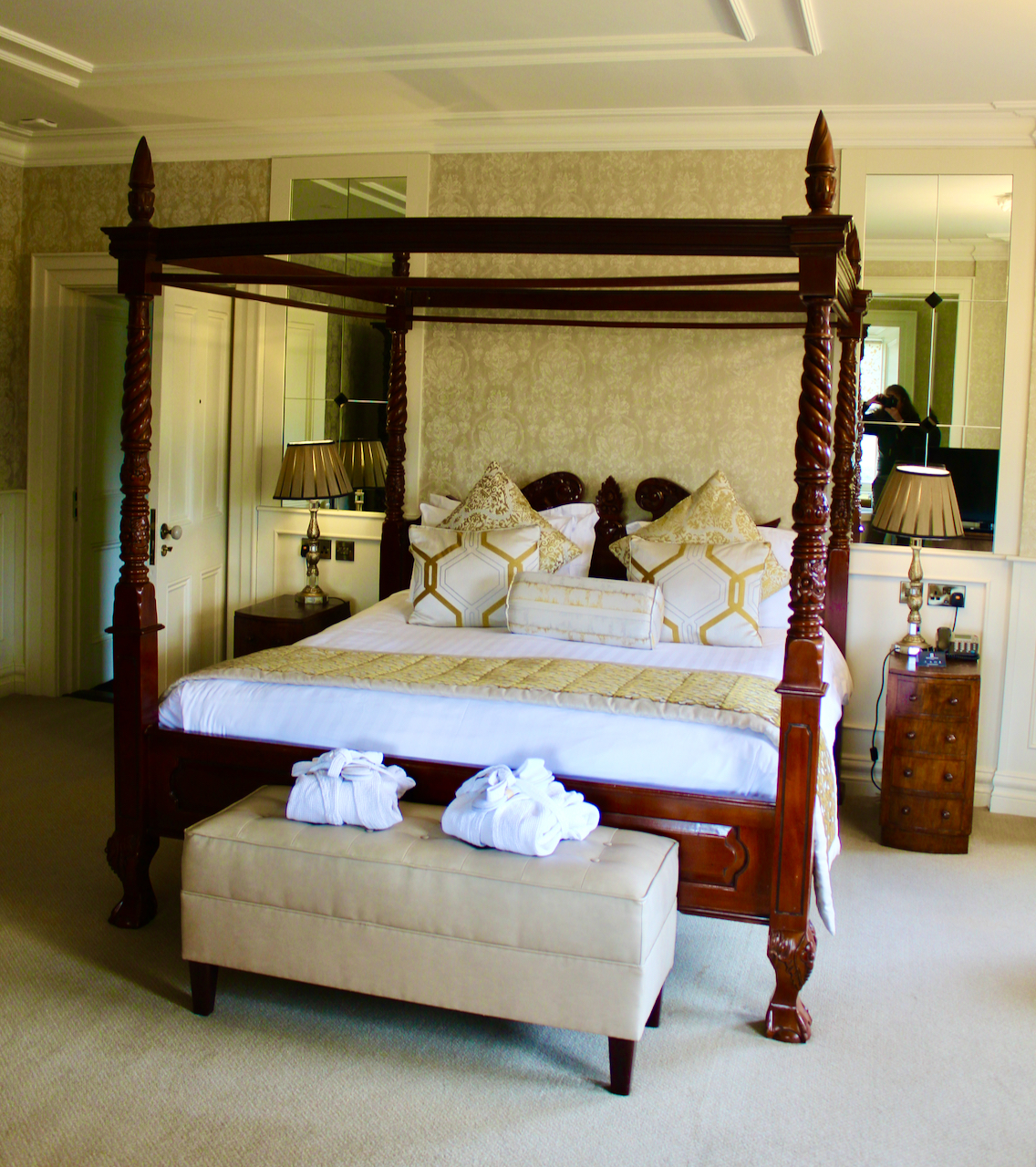
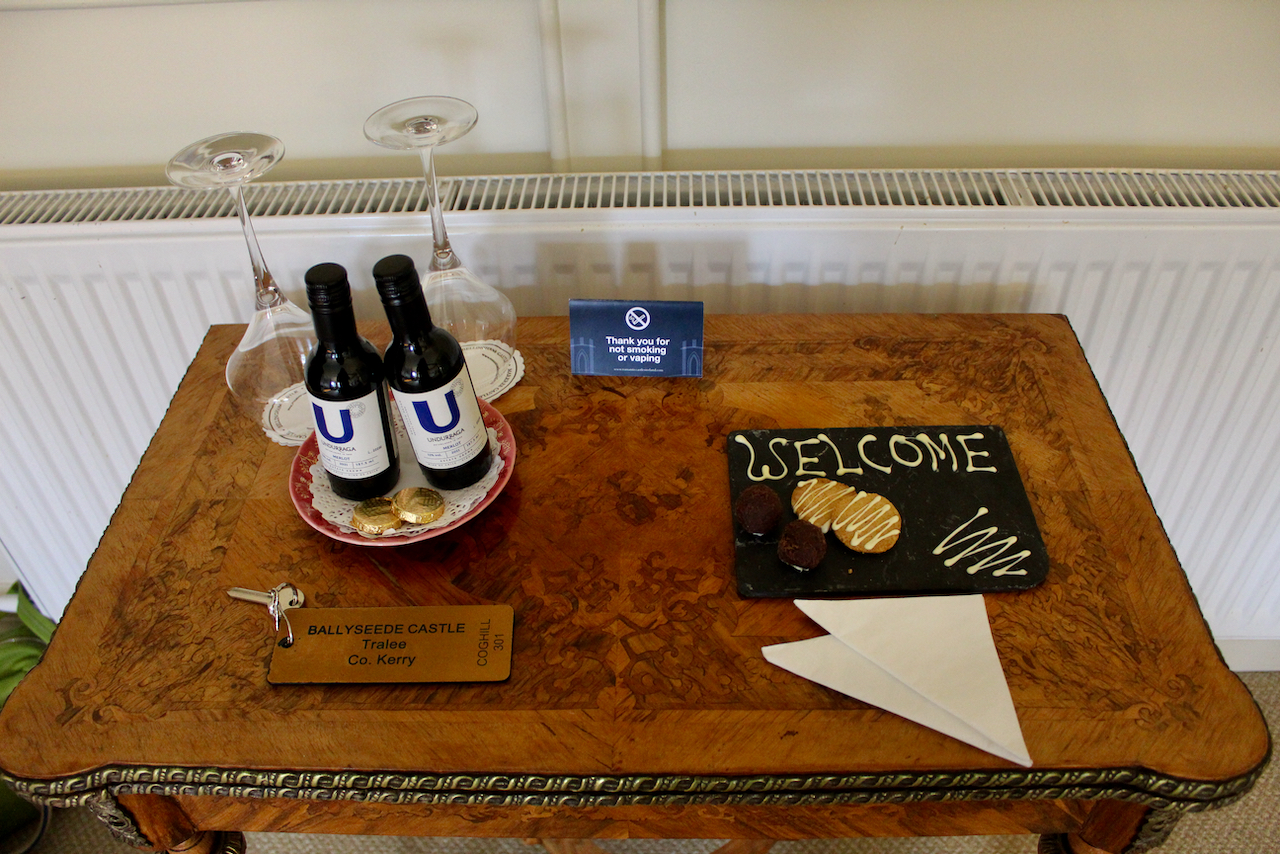
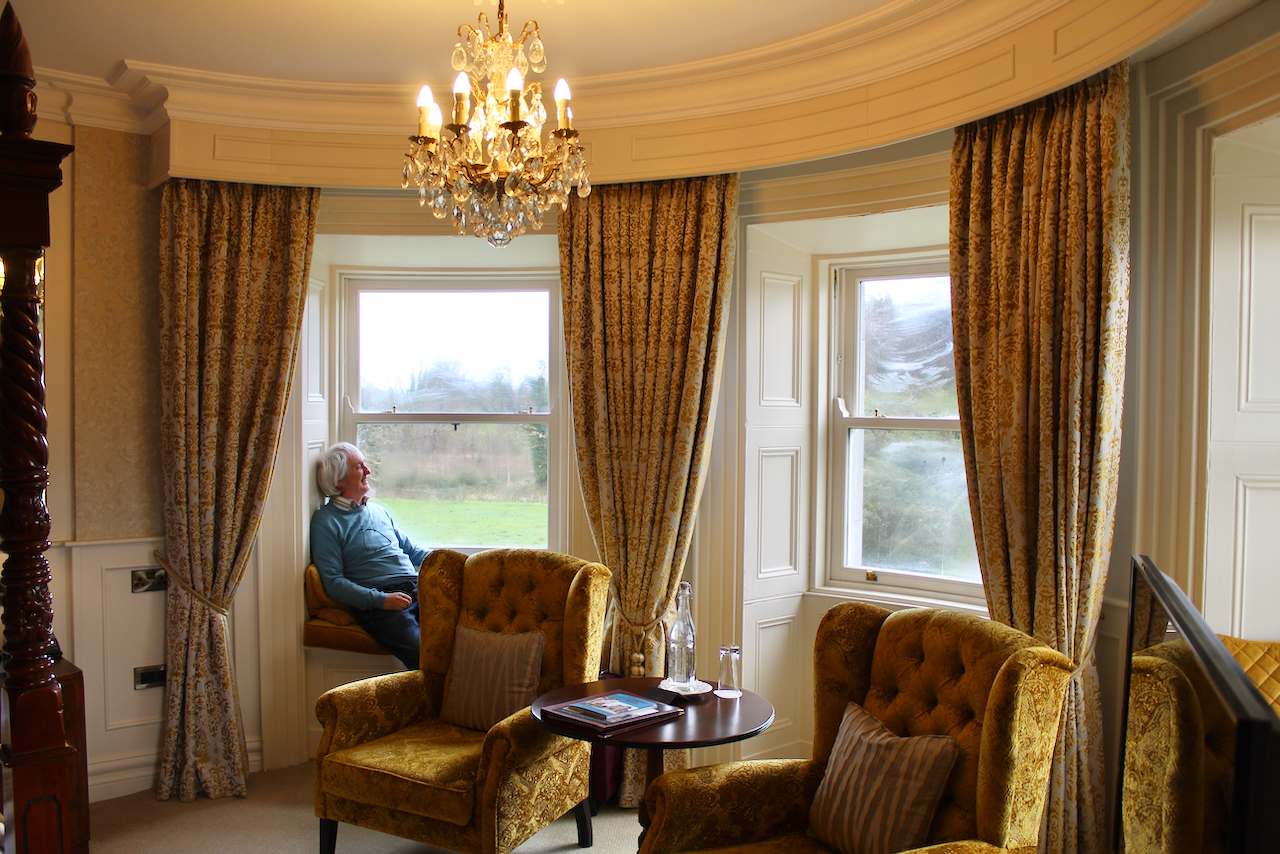
Ballyseede castle (pronounced Ballyseedy) is now a hotel, and Stephen and I treated ourselves to a stay in March 2023. The house was built in around 1760 for the Blennerhassett family, and parts were added and gothicized over time. Gothic revival additions may have been designed by William and Richard Morrison. Later renovations were carried out by James Franklin Fuller.
The castle is now one of four owned by the Corscadden family. We have visited the other properties: Cabra Castle in County Cavan and Markree in County Sligo, both of which are also section 482 properties (see my entries). We also visited the fourth, Castle Bellingham in County Louth, kindly welcomed by Patrick, who showed us around and I told him of my website. I am in the process of writing about that in my “Places to visit and stay in County Louth” page, still a work in progress.
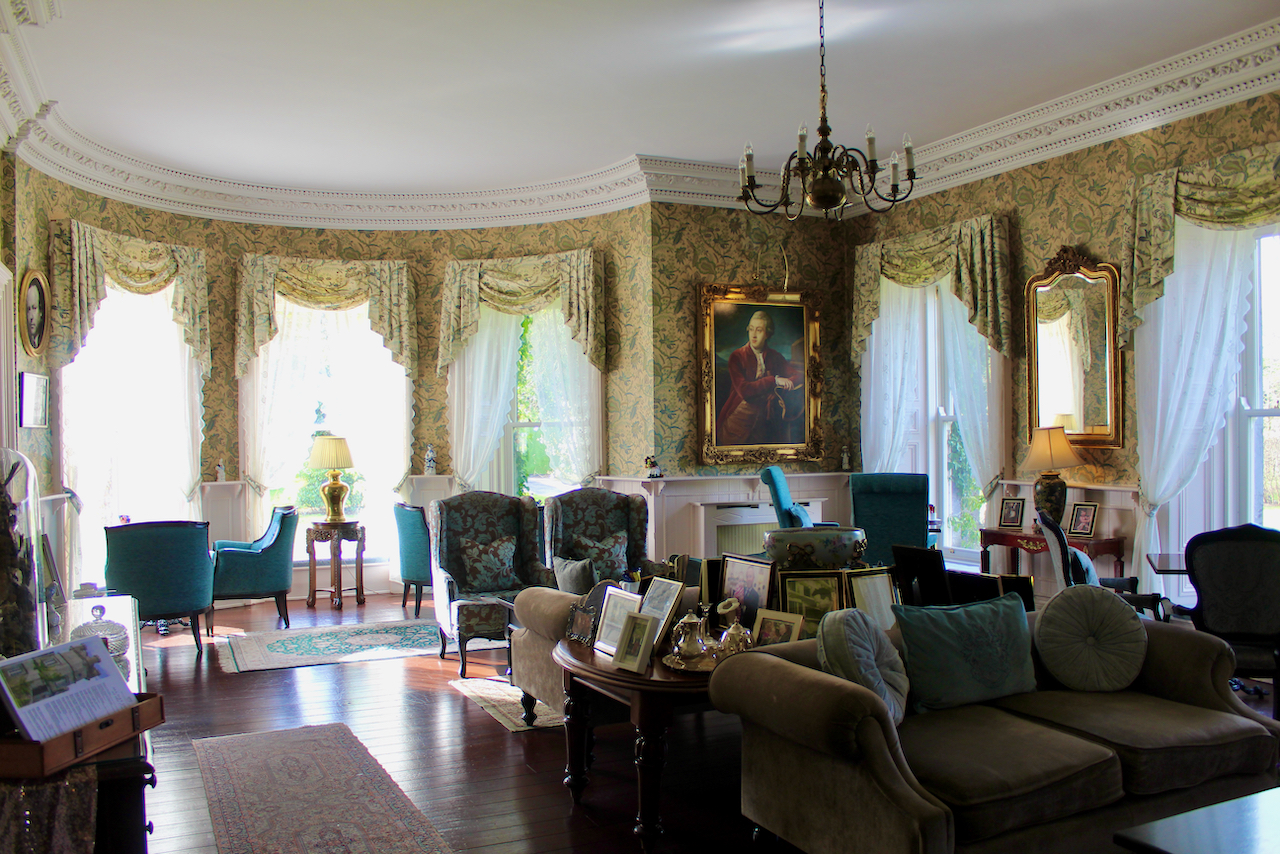
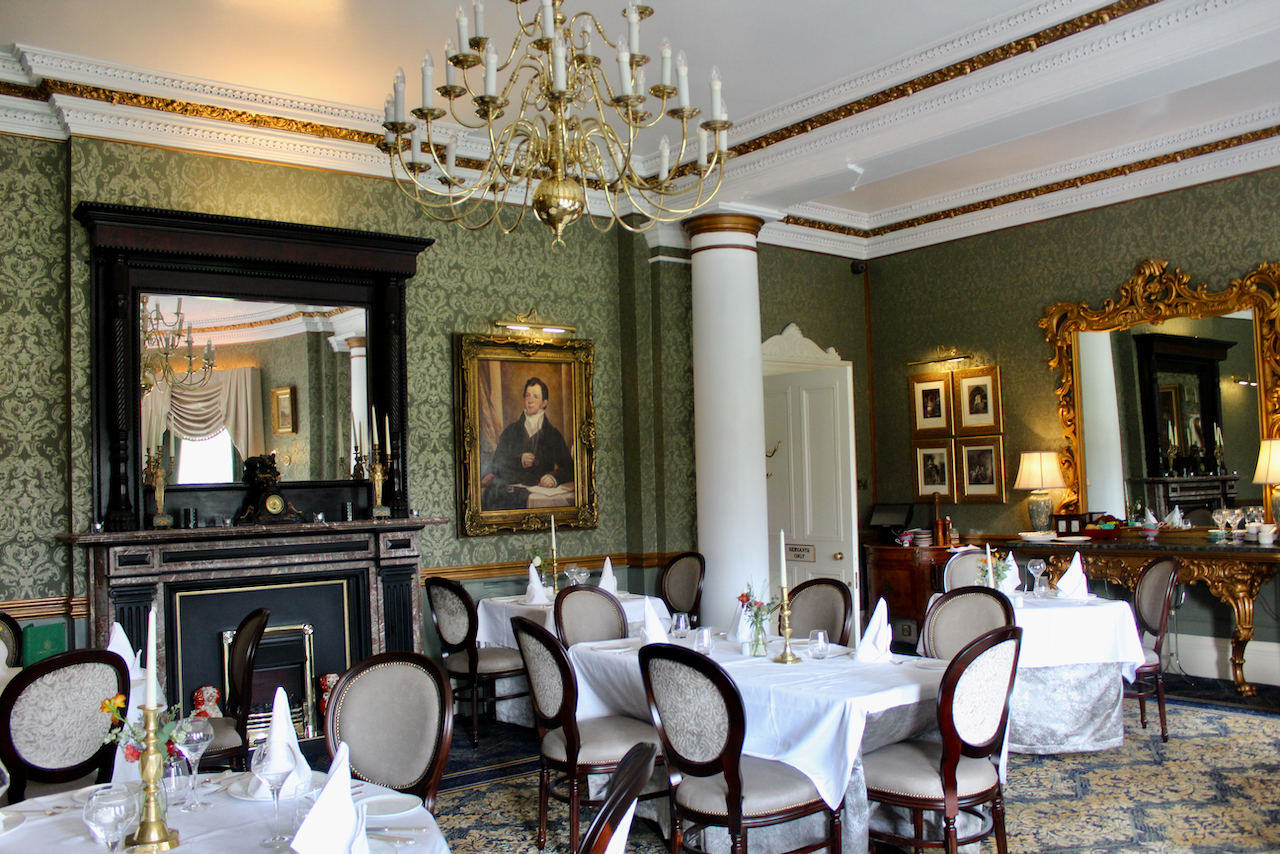
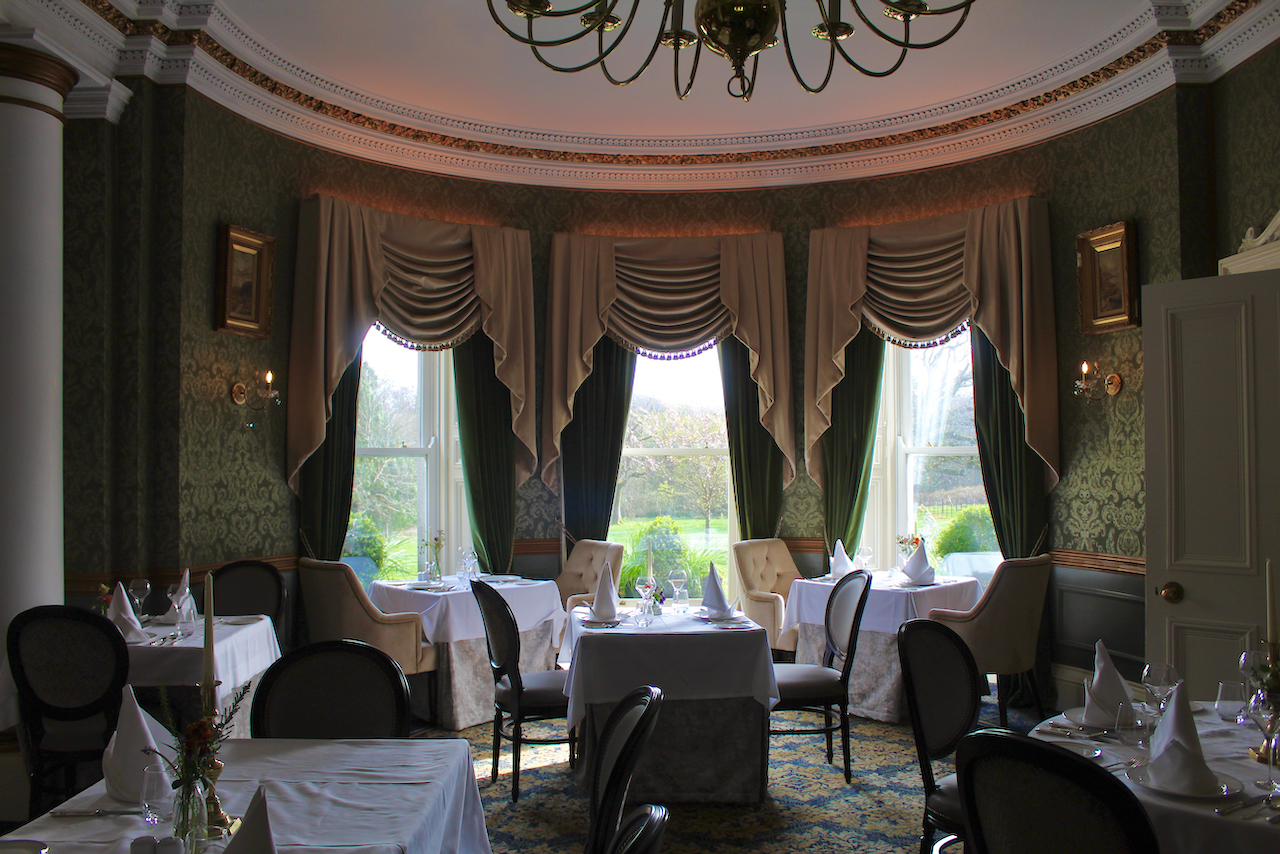
“Take a step back in time with a hotel steeped in history that offers luxurious surroundings within 30 acres of private gardens and woodland.
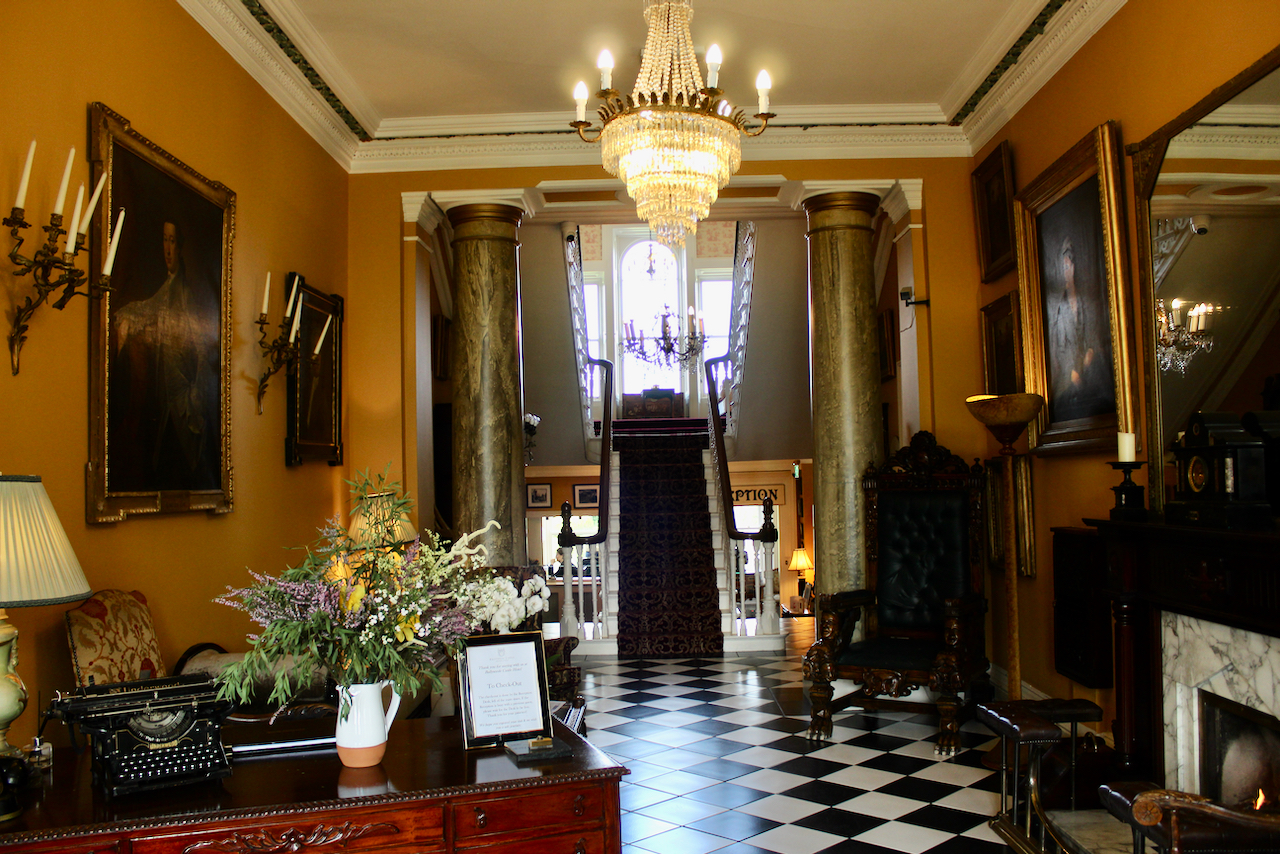
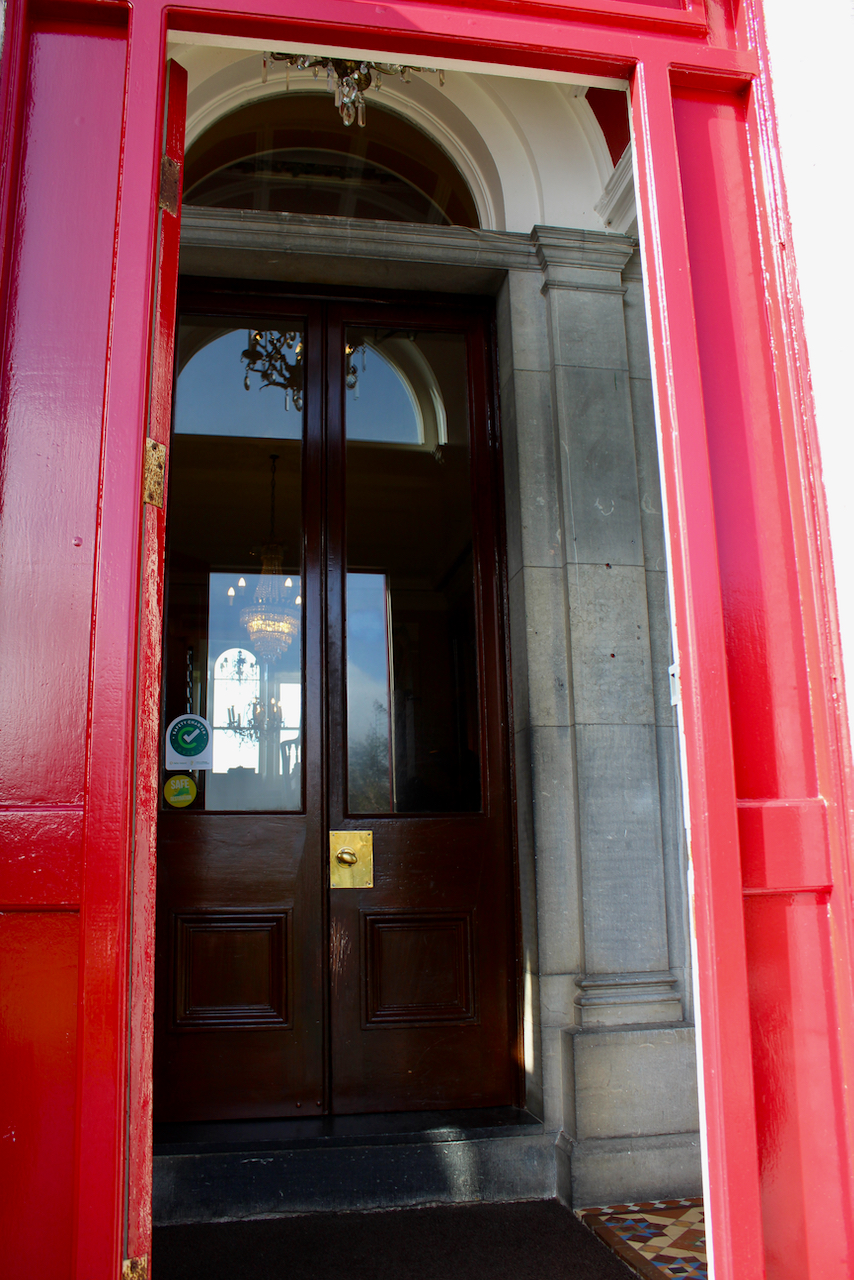
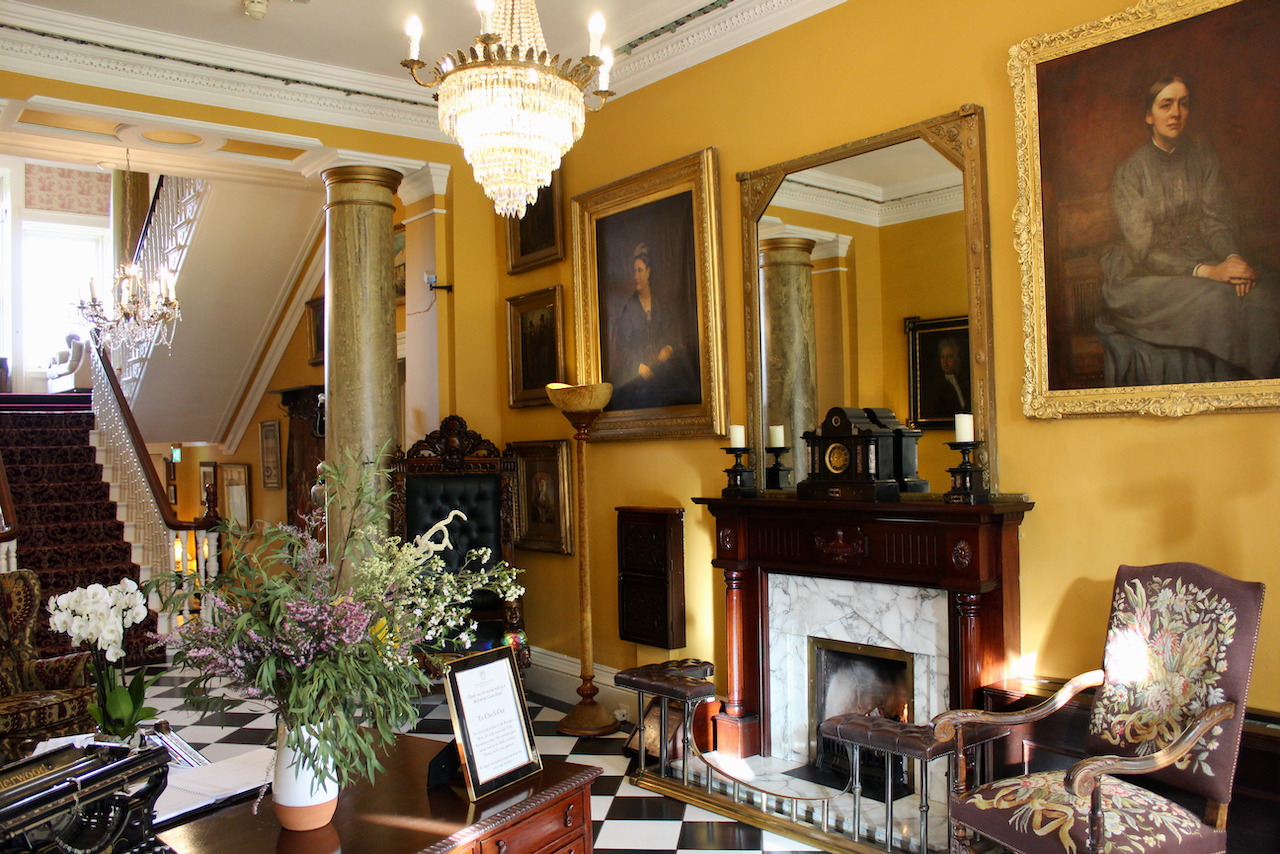
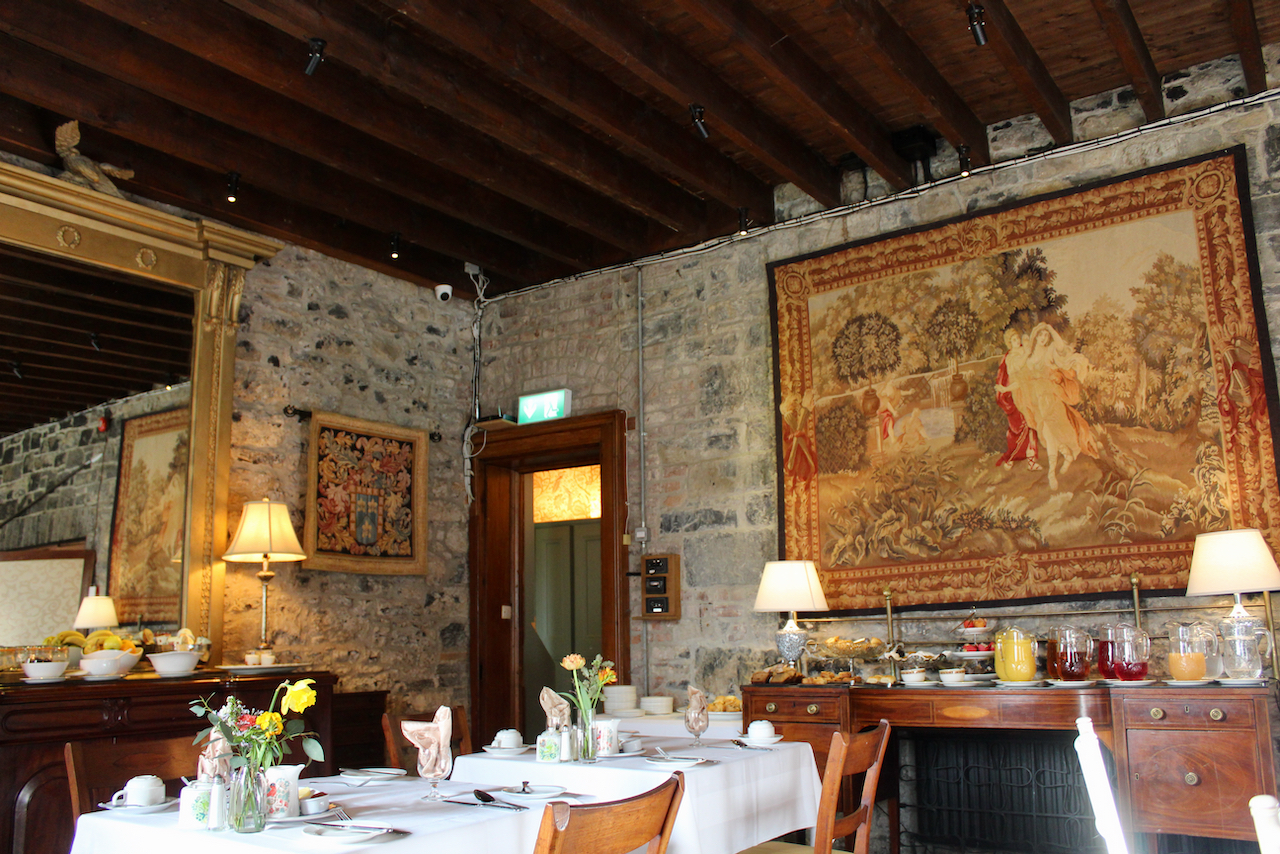
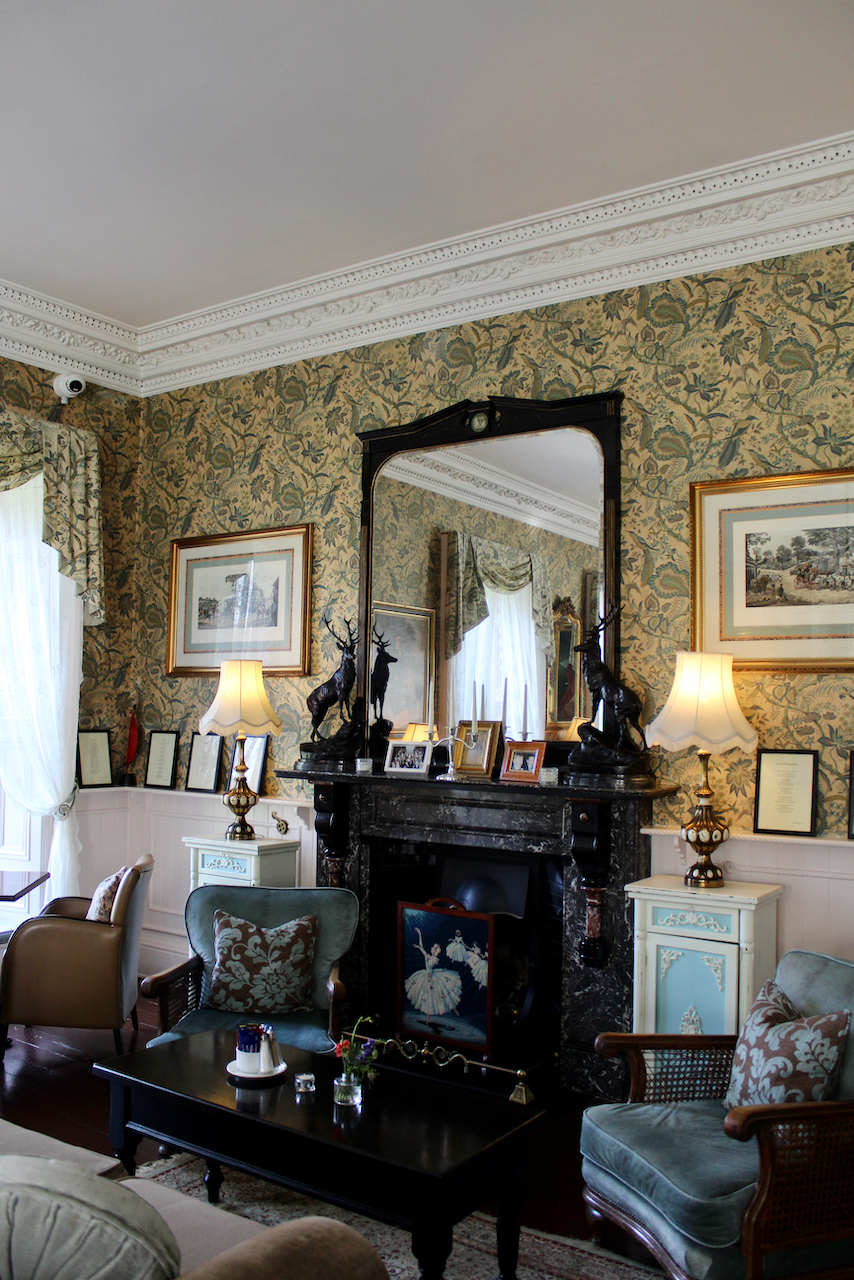
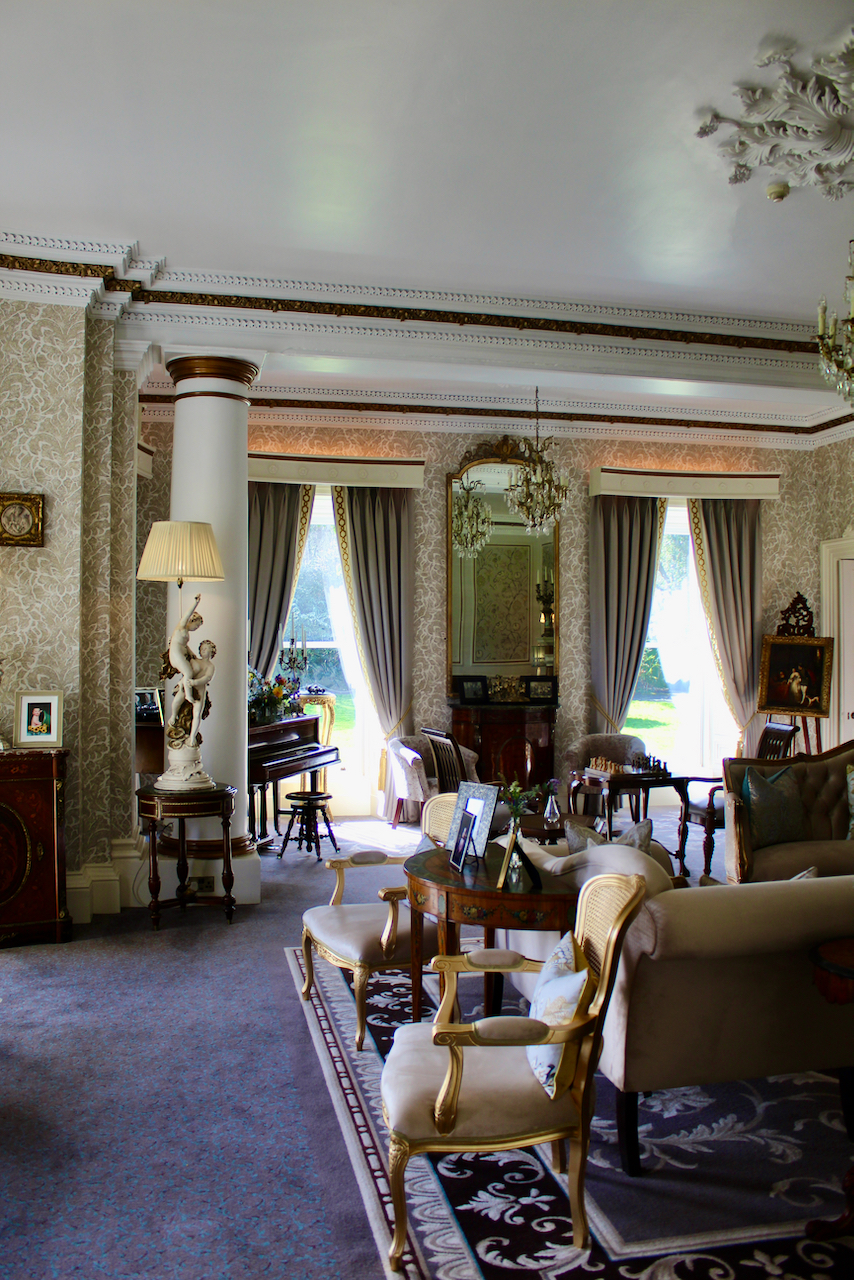
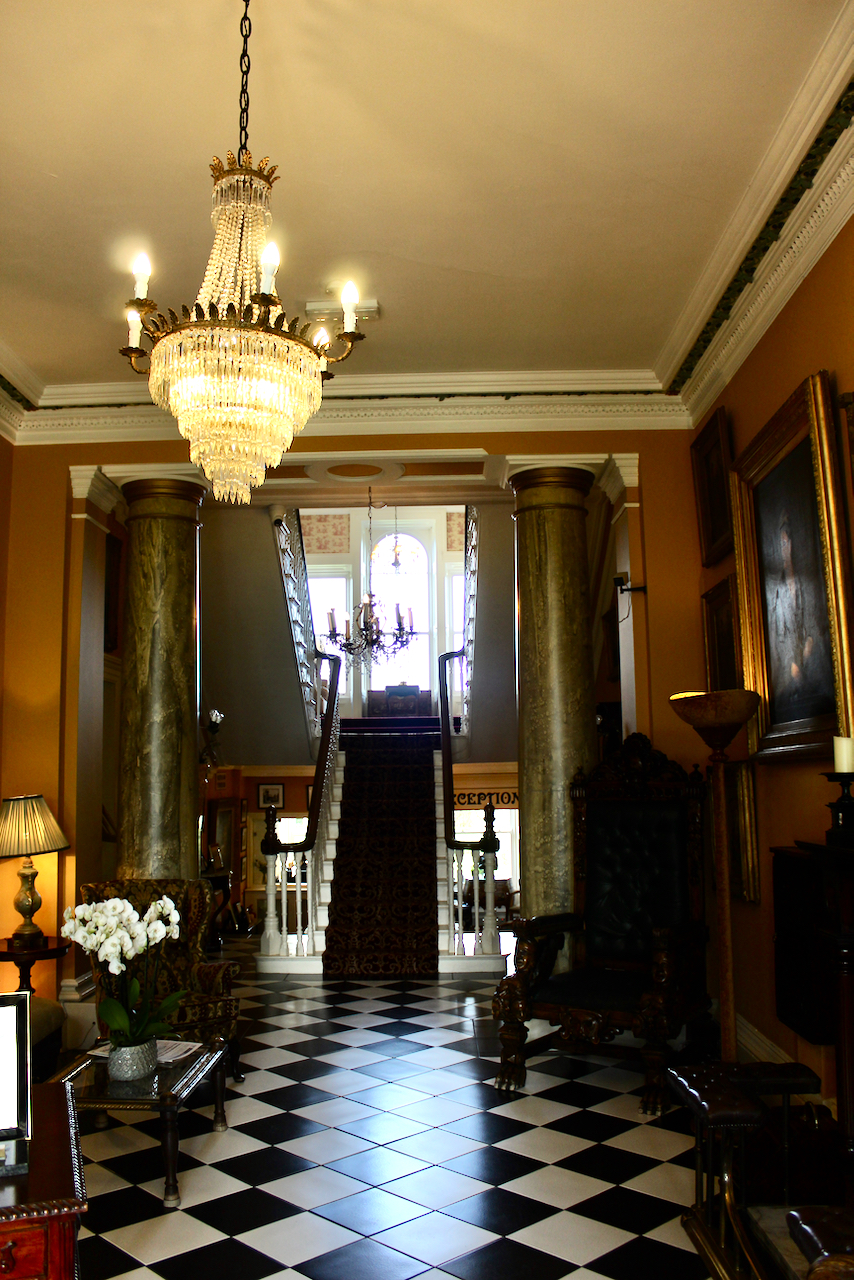
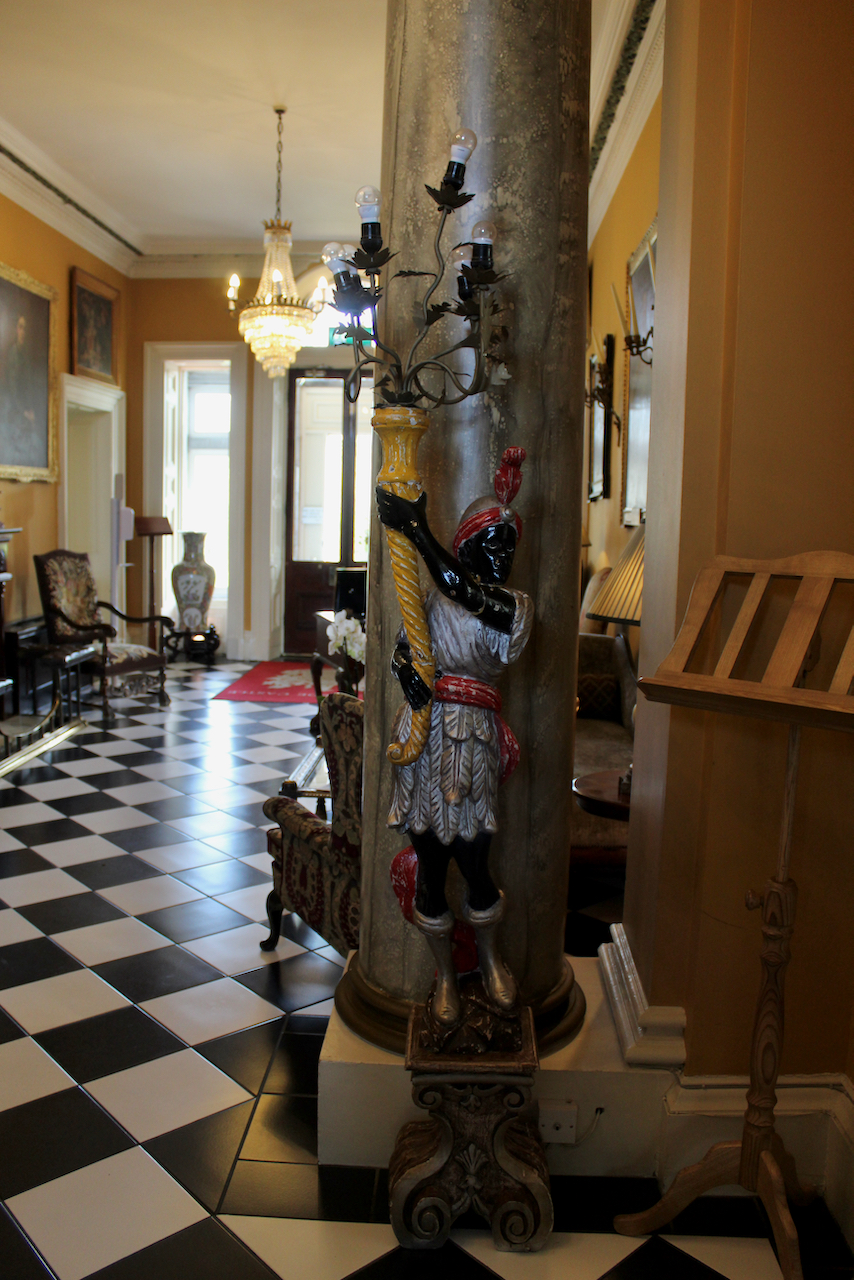
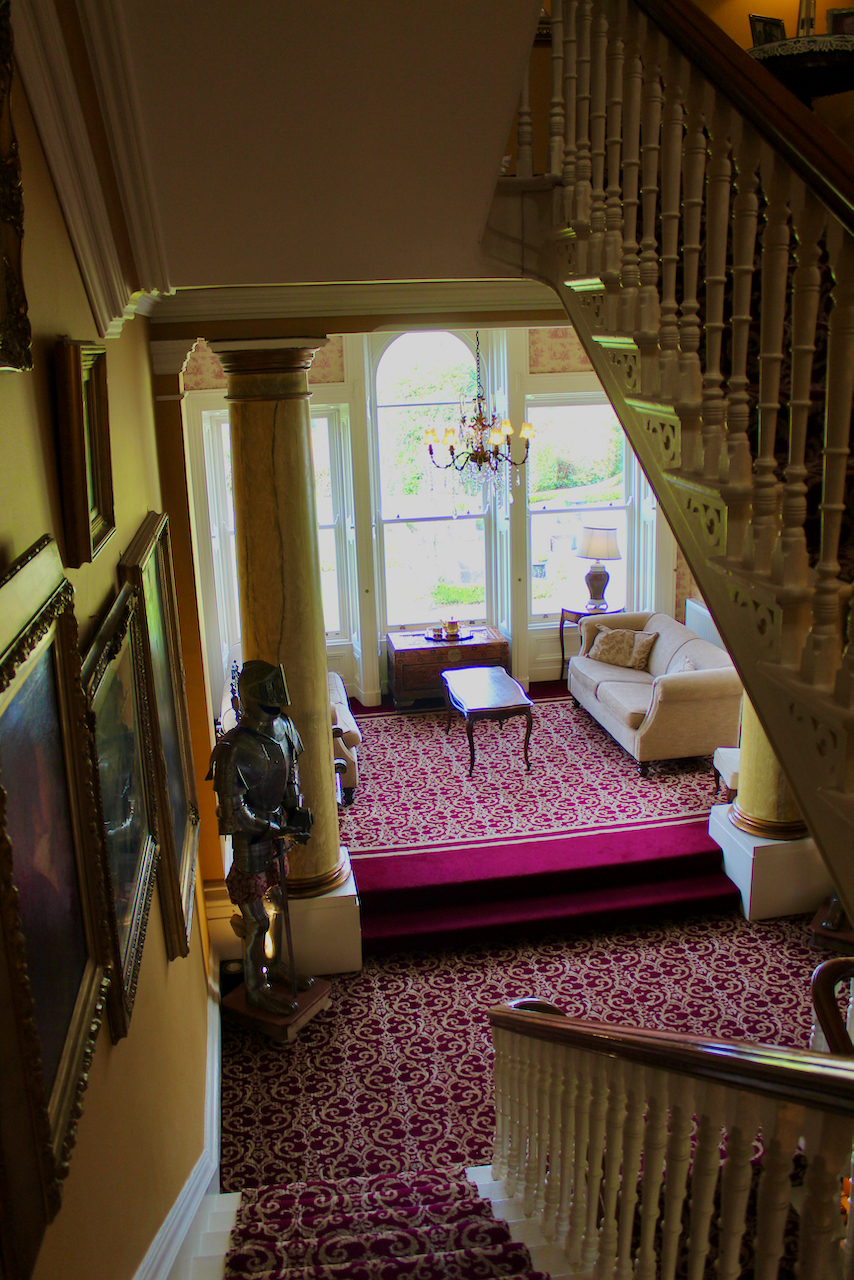
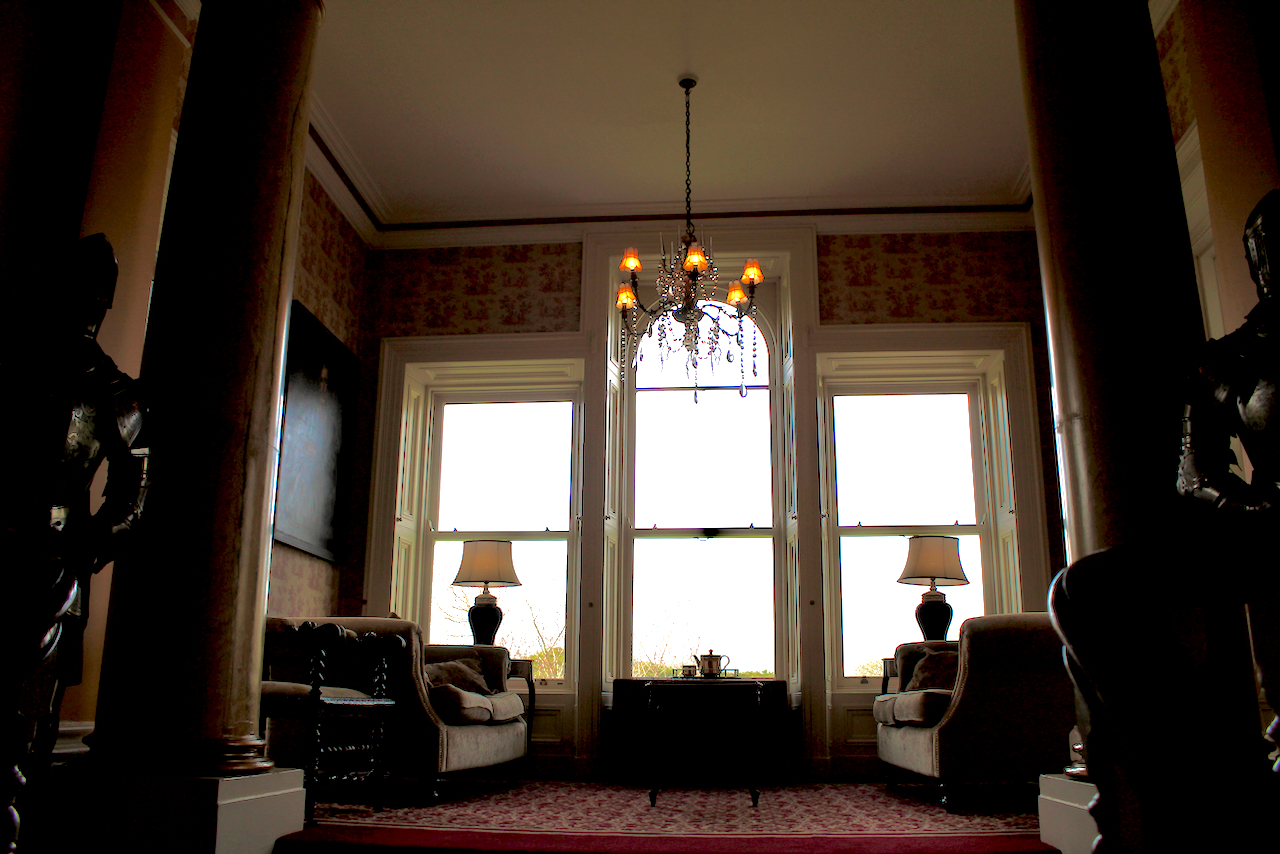
“The Doric columns that lead to an elegant oak staircase in the lobby are indicative of the grand decoration throughout the hotel. Impressive drawing rooms with ornate cornices, adorned with marble fireplaces provide an ideal setting for afternoon tea or morning coffee.
“Elegant accommodation, fine dining with traditional Irish cuisine, rooms that tell a story and the picturesque natural setting, will all comprise to make your stay at Ballyseede Castle an unforgettable one.”
The Landed Estates database tells us that the Blennerhassett family was originally from Cumbria in the north of England. Robert Blennerhassett was the first to settle in Kerry. He married Elizabeth, daughter of Captain Jenkin Conway of Castle Conway, Killorglin, County Kerry, formerly known as Killorglin Castle (now a ruin). He was originally from Pembrokeshire in Wales.
Between 1611 and 1618 Robert acquired lands in Ireland. He held the office of Member of Parliament (M.P.) for Tralee in 1613 and between 1635 and 1639. He lived in an old castle named Ballycarty Castle and also owned the old Ballyseedy Castle. The current Ballyseede Castle is different from the original Ballyseedy Castle, a castle that had belonged to the Fitzgeralds, located at the west end of Ballyseedy Wood.
The Landed Estates database tells us that a John Blennerhassett was granted an estate of 2,787 acres in the barony of Trughanacmy, County Kerry (where Ballyseede Castle and Ballyseedy woods are located) and 2,039 acres in the barony of Fermoy, County Cork under the Acts of Settlement in 1666. [1] This John is probably son of Robert.
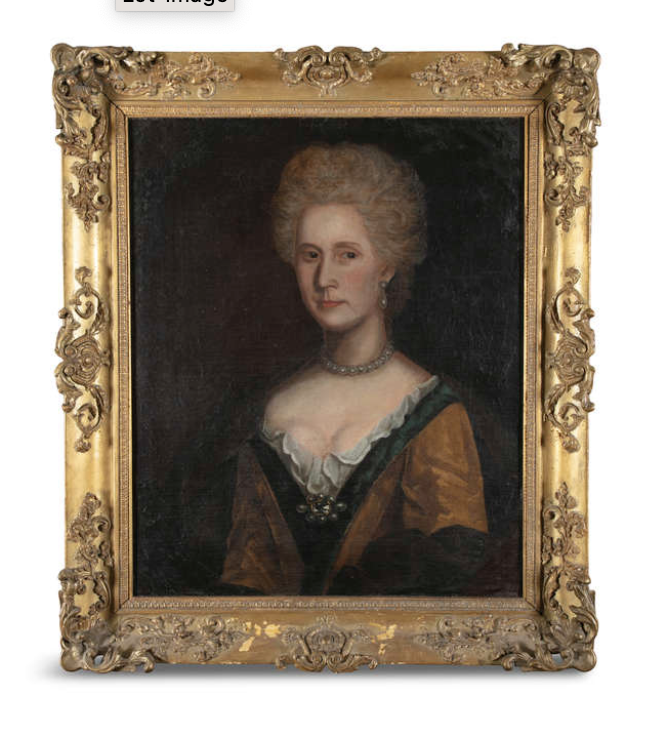
Lady Blennerhassett (I’m not sure which one), Ballyseedy Castle, Tralee, Co. Kerry, Irish school 18th century, Adams auction 19 Oct 2021
John Blennerhassett, son of Robert and Elizabeth, was, following his father’s footsteps, MP for Tralee [2]. He too lived in Ballycarty Castle, now a ruin. He married Martha Lynn, daughter of George from Southwick Hall, Northamptonshire, England. They had several children and he died in 1676.
His younger brothers Edward and Arthur married and lived nearby.
John and Martha’s son John was also MP for Tralee and high sheriff, but died only a year after his father, in 1677. He had married Elizabeth Denny in 1654, whose family lived in Tralee Castle (it no longer exists). She was the daughter of Edward Denny (1605-1646) who was also an MP and High Sheriff for County Kerry. [see 2] The Denny and Blennerhassett families intermarried over generations.
Edward Denny (1547-1600), who was granted land in Tralee County Kerry after the Desmond Rebellions photograph courtesy of the Roaringwaterjournal website.
In her Voices from the Great Houses: Cork and Kerry (2013) Jane O’Hea O’Keeffe tells us about the grandfather of Edward Denny (1605-1646), Edward Denny (1547-1599/1600), who moved to Kerry:
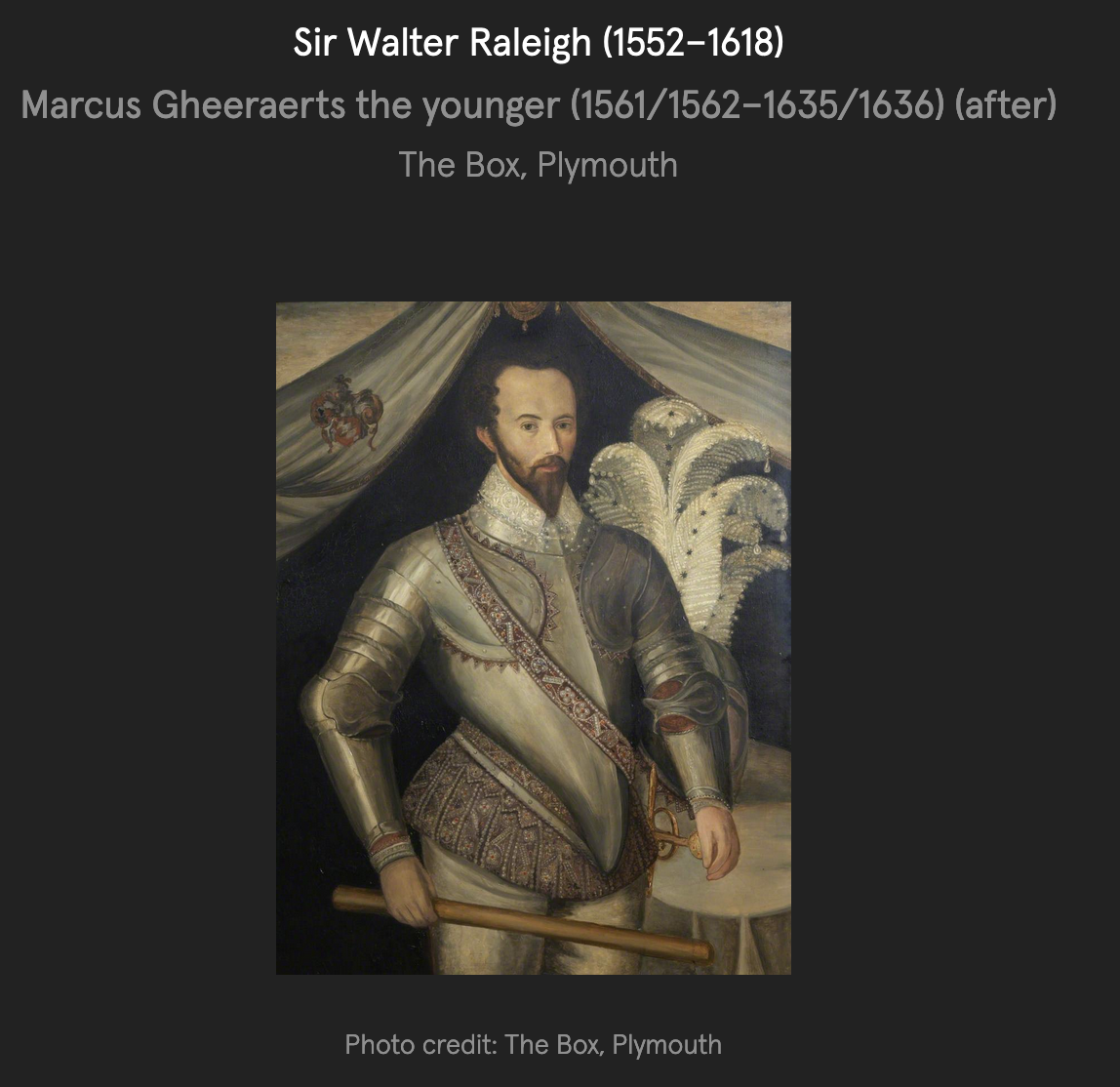
“Following the Desmond rebellions of 1569-73 and 1579-83, Sir Edward Denny of Waltham Abbey, Herefordshire, who was born in 1547, was granted 6,000 acres of land around Tralee, County Kerry. The ruined thirteenth century Tralee Castle, formerly a Desmond property, was included in the grant. Sir Edward Denny was a relative of Sir Walter Raleigh, who was also granted 42,000 acres in Cork and Waterford at this time.” [3]
John Blennserhassett and Martha had other children beside John who died in 1677. Their son Robert also held the office of MP for Tralee and High Sheriff of County Kerry in 1682. He married Avice Conway (d. 1663), a daughter of Edward Conway of Castle Conway, County Kerry. Their son John (d. circa 1738) inherited Castle Conway from his mother.
John (d. 1677) and Elizabeth née Denny’s son John (d. 1709) was MP for Tralee, Dingle and County Kerry at various times. He married Margaret Crosbie (1670-1759) of Tubrid, County Kerry (Tubrid House no longer exists, and should not be confused with Tubbrid Castle in County Kilkenny). Her father Patrick held the office of High Sheriff of County Kerry in 1660.
Margaret née Crosbie and John Blennerhassett had several children. After John’s death in 1709 Margaret married David John Barry in the same year, son of Richard Barry (1630-1694) 2nd Earl of Barrymore but they had no children together.
Margaret and John’s heir was Colonel John (1691-1775), who was called “Great Colonel John” thanks to his hospitality. He followed in his forebears’ footsteps, becoming an MP. In 1727 he signed a family compact with Maurice Crosbie of Ardfert and Arthur Denny of Tralee, partitioning the county representation among the three families [see 2].
Colonel John married Jane Denny, daughter of Colonel Edward Denny (1652-1709) of Tralee Castle.
A website about the Blennerhassett family tells us that in 1721 the first “Ballyseedy House” was built among ruins of the Geraldine Ballyseedy Castle at the west end of Ballyseedy Wood. Colonel John lived here with his family. [4]
It was Margaret and John Blennerhassett’s younger son William (1705-1785) who built the house which has become the hotel Ballyseede Castle. It was built around 1780 (the National Inventory says c. 1760) and named “Elm Grove.” [4] William died during its construction and the work was completed around 1788 by his son William Blennerhassett Jr. (c. 1735-1797).
We will return to William and his family later. First, let’s look at the older son Colonel John and his offspring.
Colonel John’s son John Blennerhassett (1715-1763) would have succeeded his father and lived in the original Ballyseedy House, if he had not predeceased him in 1763. This John was admitted to the Middle Temple in London to train for the legal profession, and he also held the office of High Sheriff of County Kerry, in 1740, and M.P. for County Kerry between 1751 and 1760. He married Anne Crosbie, daughter of William Crosbie of Tubrid, County Kerry, who was MP for Ardfert between 1713 and 1743. Her mother was Isabella Smyth from Ballynatray, County Waterford, another Section 482 property – gardens only – that I’ll be writing about soon. Anne Crosbie had been previously married to John Leslie of Tarbert, County Kerry (another section 482 property which I hope to visit soon), but he died in 1736.
Anne died and John Blennerhassett remarried in 1753, this time wedding Frances Herbert, daughter of Edward Herbert (1693-1770) of Muckross, County Kerry. For more on Muckross House, see my entry on places to visit and stay in County Kerry.
Muckross House Killarney Co. Kerry, photograph by Chris Hill 2014 for Tourism Ireland, Ireland’s Content Pool.
Neither of John’s sons married and one died young. His house, Ballyseedy House, fell into disuse.
John’s daughter Frances married Reverend Jemmett Browne (d. 1797) of Riverstown, County Cork, another Section 482 property (see my entry).
Colonel John and Jane née Denny had a younger son, Arthur (1719-1799), who served as MP for Tralee between 1743 and 1760. He married Jane Giradot and had two daughters but no sons. His daughter Jane married George Allanson-Winn, 1st Lord Headley, Baron Allanson and Winn of Aghadoe, County Kerry. She was heiress of her father’s unentailed Ballyseedy estates – this would have been land that did not include what is now Ballyseede Castle. She died in 1825.
Colonel John and Jane née Denny also had several daughters. Agnes, born in 1722, married neighbour Thomas Denny (d. 1761) of Tralee Castle, son of Colonel Edward Denny (1728). Another daughter, Arabella (1725-1795), married Richard Ponsonby of Crotto, County Kerry (now demolished), MP for Kinsale, County Kerry, and then secondly Colonel Arthur Blennerhassett (1731-1810), a grandson of John who died in 1709 and Margaret née Crosbie. A third daughter of Jane and John Blennerhassett, Mary, married Lancelot Crosbie, who lived at Tubrid, County Kerry. Lancelot was MP for County Kerry between 1759 and 1760 and for Ardfert in County Kerry between 1762 and 1768 [see 2].
Let us return now to Elm Grove, now called Ballyseede castle. It is an eleven-bay three-storey over part-raised basement house, comprising a three-bay entrance bay to the centre with door opening approached by flight of steps, and a pair of three-bay full-height flanking bow bay windows and single-bay end bays. It has five-bay side elevations with three-bay full-height bow bay window to south elevation and eight-bay west elevation with two-bay breakfront. [5]
William Blennerhassett Senior (1705-1785), son of John Blennerhassett (d. 1709) of Ballyseedy and Margaret Crosbie married Mary, daughter of John Morley, Mayor of Cork. Their son William (c.1735-1797) inherited Elm Grove.
Their daughter Agnes, born in 1740, married William Godfrey (c. 1738-1817) 1st Baronet of Bushfield, County Kerry, later called Kilcolman Abbey (renovated by William Vitruvius Morrison in 1818, demolished in 1977).
William (c.1735-1797) held the office of High Sheriff of County Kerry in 1761 and was the Collector of Customs at Tralee, which could have been a lucrative post.
William married Catherine daughter of the interestingly named Noble Johnson of County Cork. William and Catherine’s son Arthur (1779-1815) lived in Elm Grove with his wife Dorcas (1775/7-1822) daughter of George Twiss from Cordell House, County Kerry. Arthur died in 1815, but it seems that before he died he began plans to renovate the house. As was the case with his father and grandfather, Arthur’s son, another Arthur (1800-1843), continued the renovations.
William and Catherine’s daughter Catherine (b. 1777) married Colonel John Gustavus Crosbie (d. 1797), a son of Lancelot Crosbie and Mary née Blennerhassett. He was M.P. for County Kerry between 1795 and 1797. In 1794 he killed Barry Denny, 2nd Bt. in an election duel at Oak Park (now Collis-Sandes House) and was subsequently poisoned, it is said, by the Denny family, which resulted in him falling from his horse as he was riding home from Churchill to his home in Tubrid. Catherine then married George Rowan of Rathanny, County Kerry (a beautiful Georgian house, still occupied). Rowan ordered the militia to fire into the crowd at an election rally killing five people. He was tried for murder but not convicted. [6]
Another daughter, Mary, married another cousin, Captain Nevinson Blennerhassett de Courcy (1789-1845). He was the son of Anne Blennerhassett of the Castle Conway branch of the family.
A younger son of William and Catherine née Johnson, John (circa 1769-1794), served as MP for Kerry between 1790 and 1794. He died unmarried.
Mark Bence-Jones tells us that the Gothic Revival renovation dates from 1816 and may be designed by Richard Morrison (1767– 1849). [7] The work was completed in 1821, and the house renamed “Ballyseedy House” because the original old “Ballyseedy” of Colonel John Blennerhassett at the west end of Ballyseedy Wood had by then fallen into disrepair and disuse.
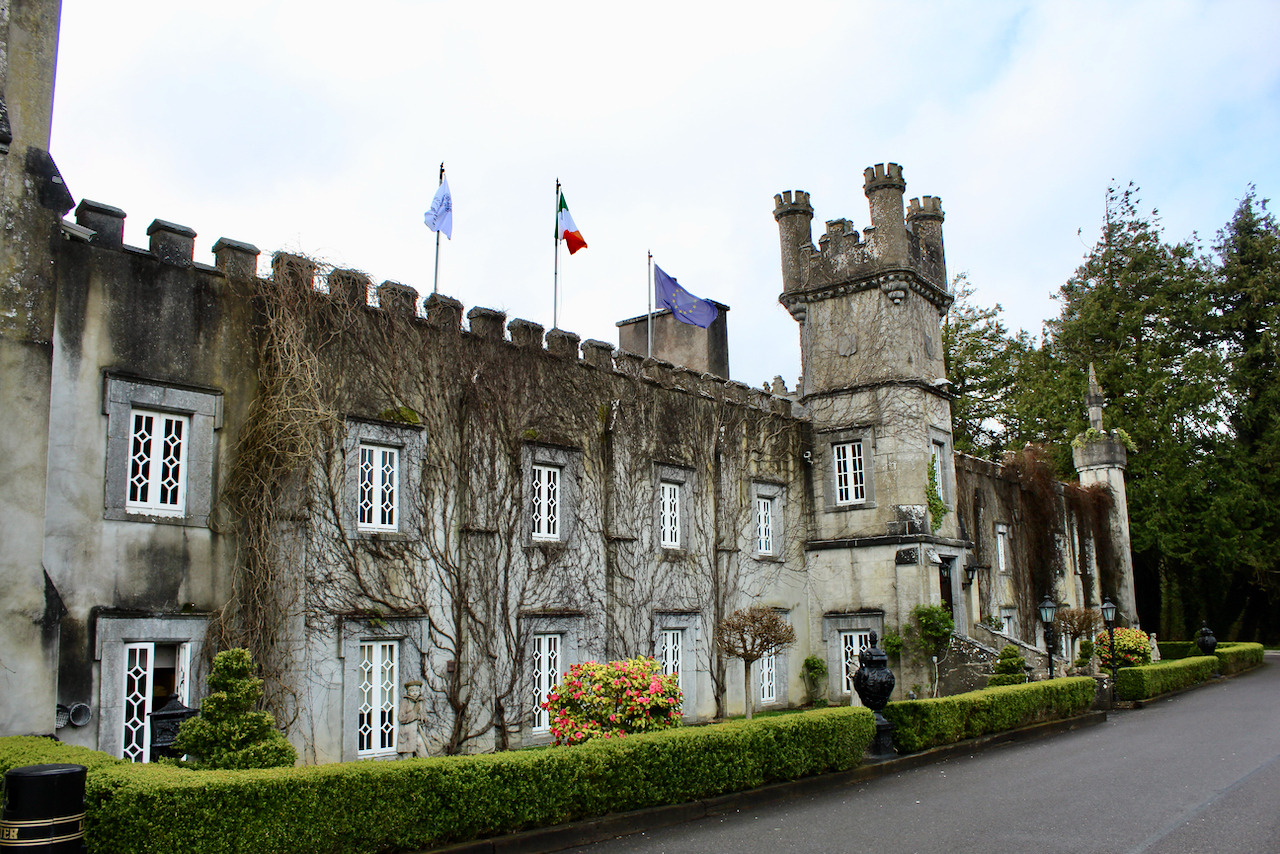
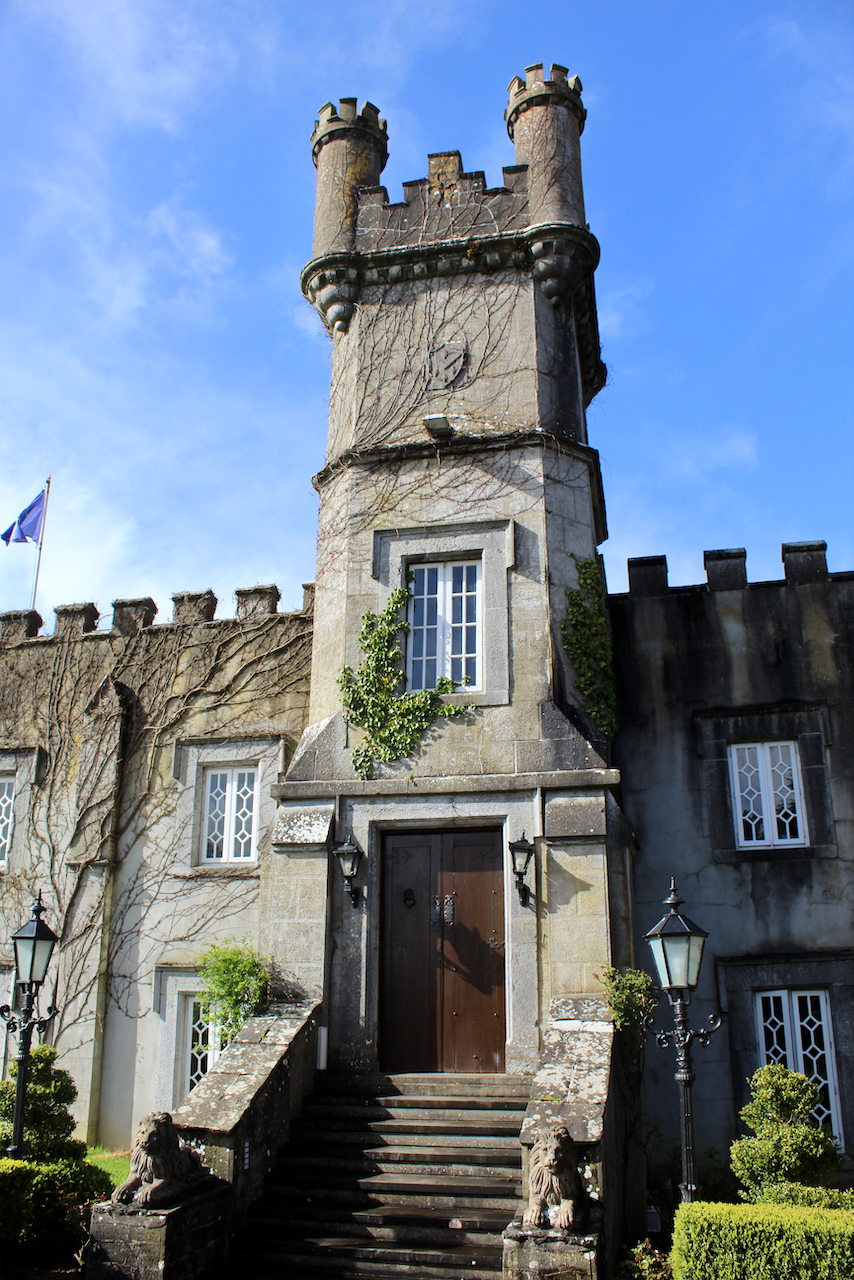
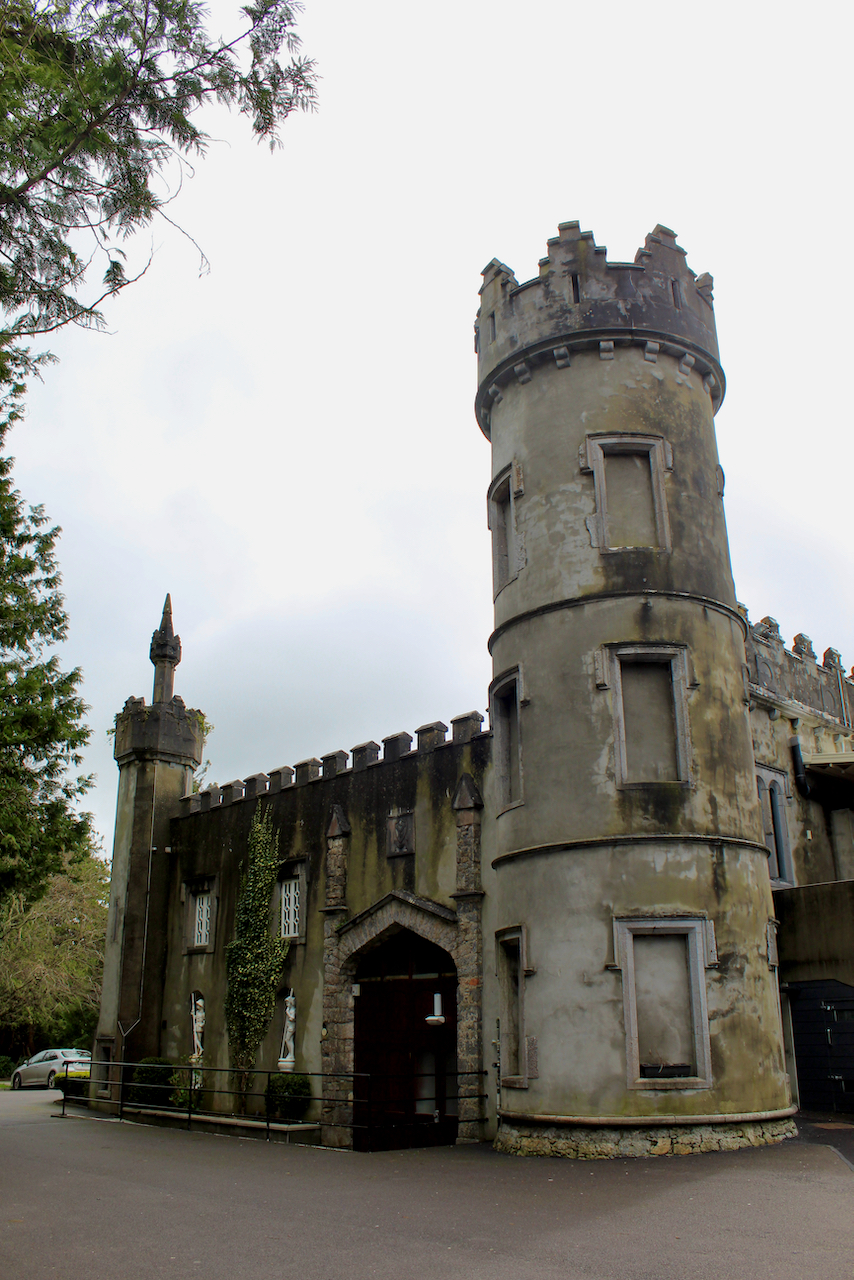
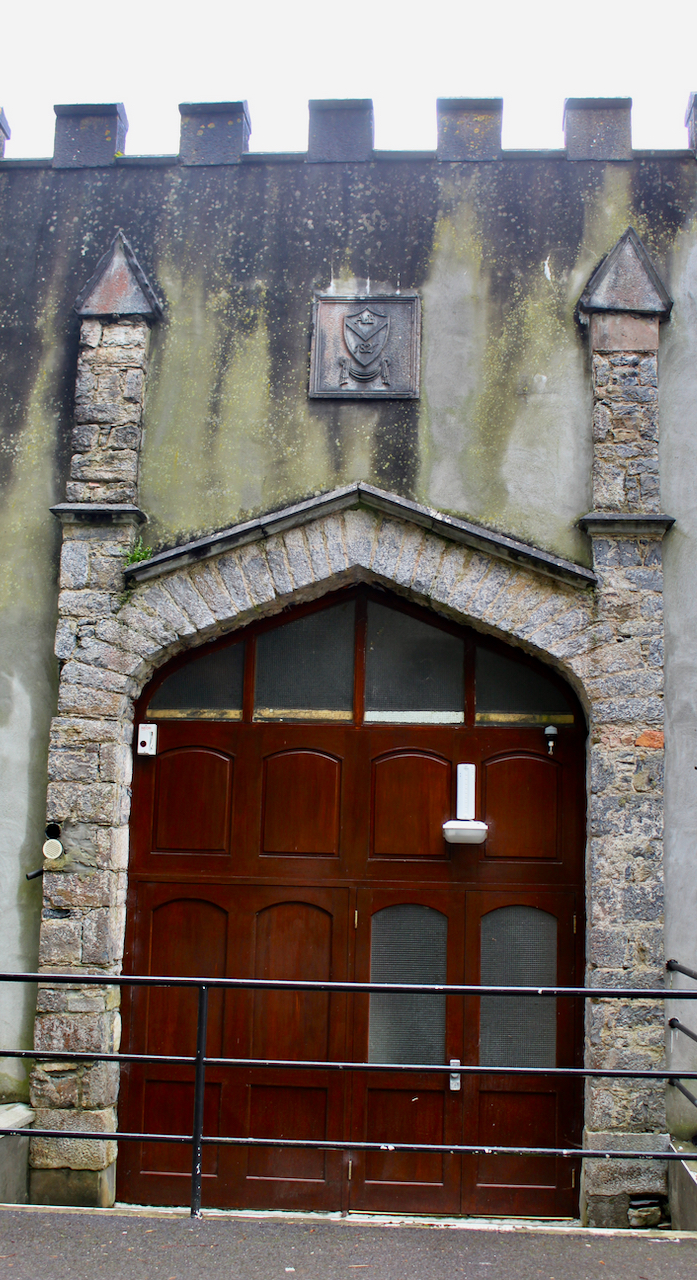
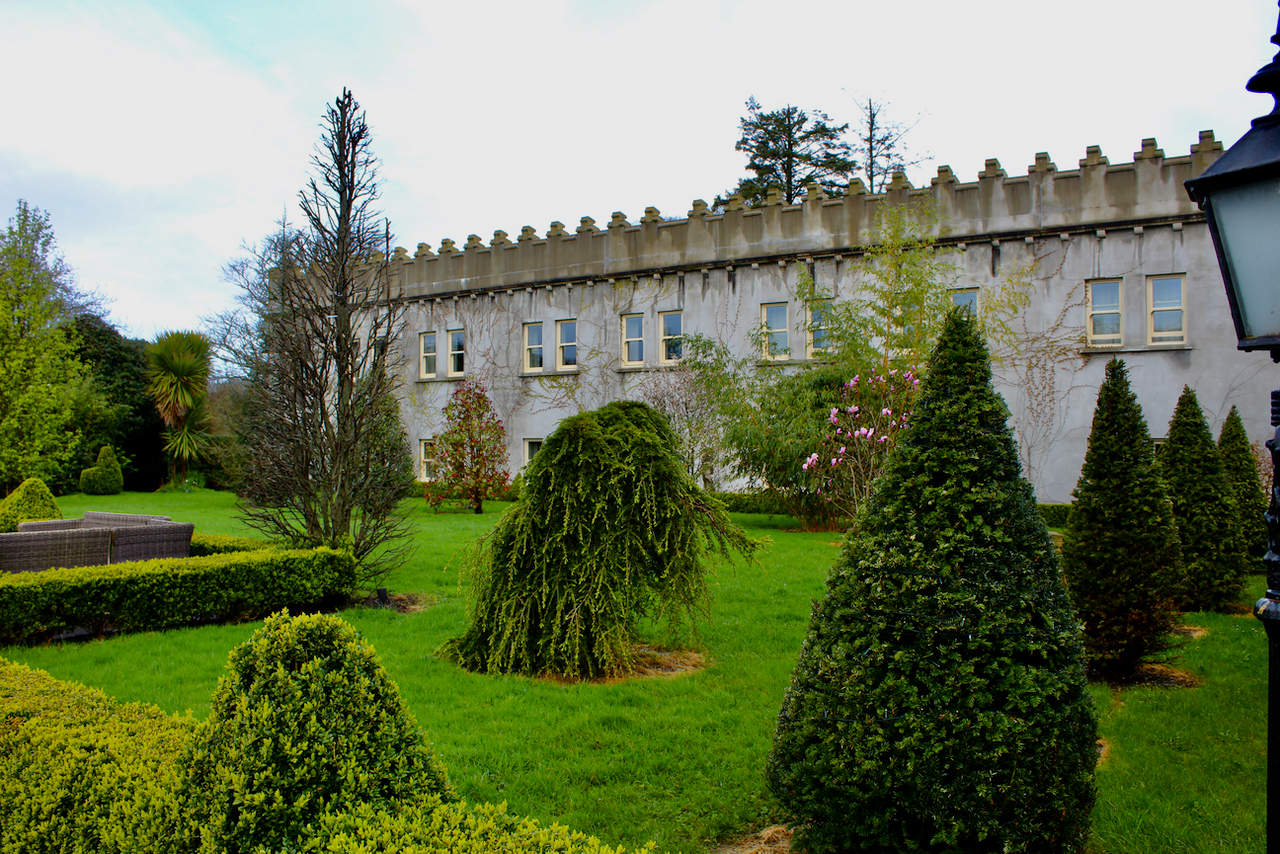
The house was extended, adding a seven-bay two-storey wing to the north. This wing has a pair of single-bay three-storey turrets to the east elevation. These turrets have battlemented roof parapets and pinnacles. The ten-bay rear elevation to the west has hood mouldings to the openings and a single-bay three-storey corner turret on a circular plan to north-west. [see 5]
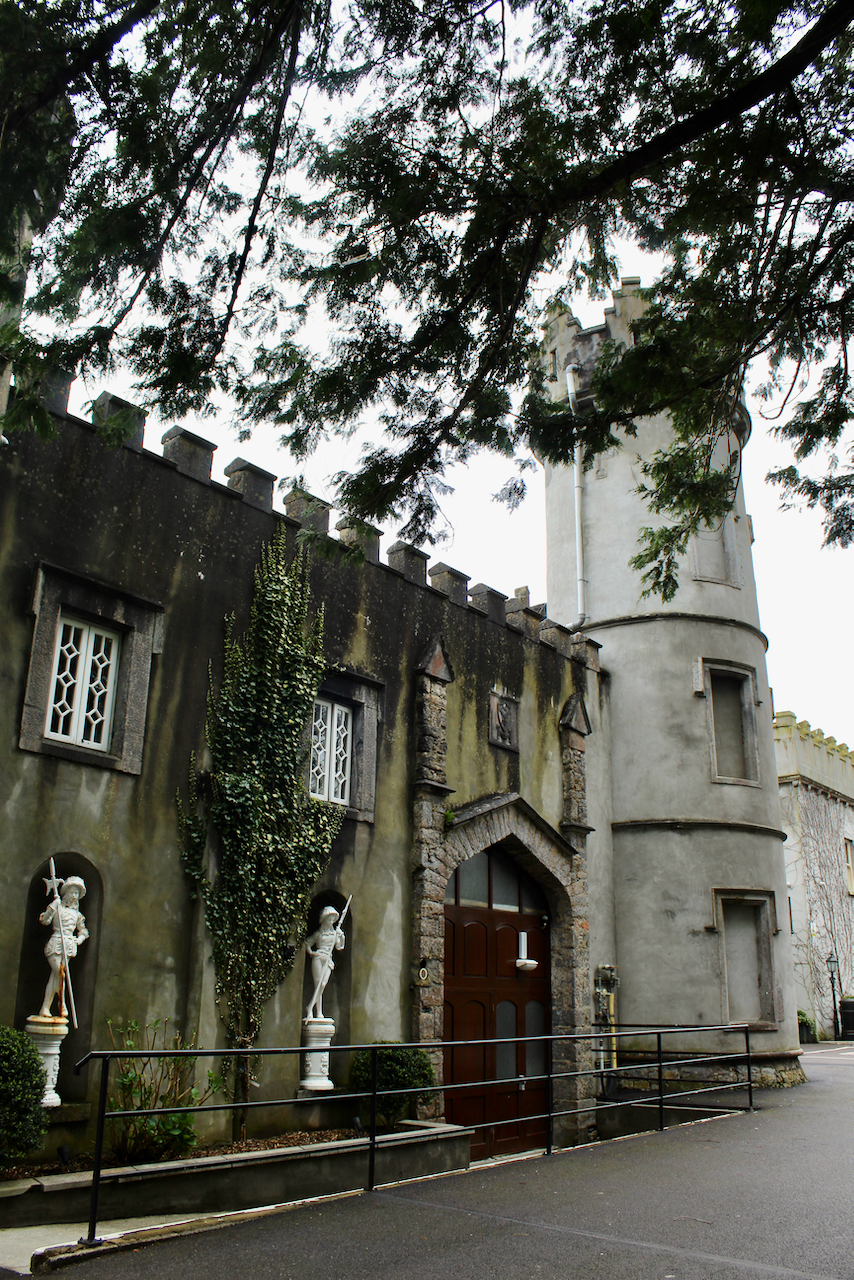
The Blennerhassett site tells us: “It was William Blennerhassett Jr’s son Arthur (1779-1815) and his wife Dorcas Twiss (1775/7-1822) who commenced addition of the long north wing, something of a “folly” with the stable yard surrounded by a great wall of false windows, with two carriage entrances and a round tower of medieval appearance at the north-west corner.The work of architect Sir William Morrison [From 1809 onward Richard Morrison collaborated increasingly with his second son, William Vitruvius Morrison (1794–1838)], this remodelling was completed in 1821, exactly 100 years after the older “Ballyseedy House” house had been built, by his son Arthur Blennerhassett (b. 1799 d.1843) then only 22 years of age.” [8]
Mark Bence-Jones describes: “At one side of the front is a long and low castellated service wing, with round and square turrets, the other side of which has a sham wall, consisting of a long range of false windows.”
I couldn’t work out where this sham wall of false windows was – perhaps later renovations changed this folly.
At the time of renovations, the son of Arthur and Dorcas, Arthur (1800-1843), was High Sheriff for County Kerry.
The Blennerhassett website tells us:
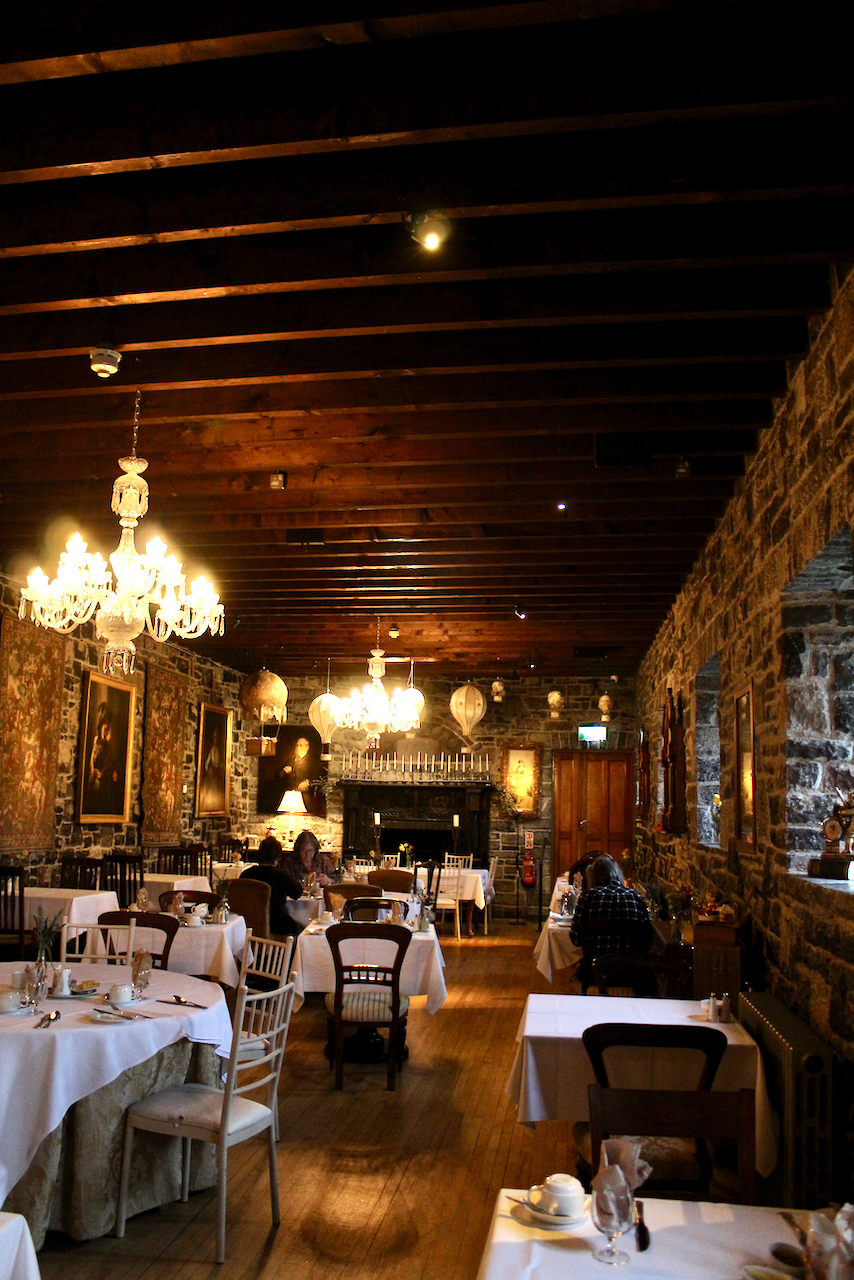
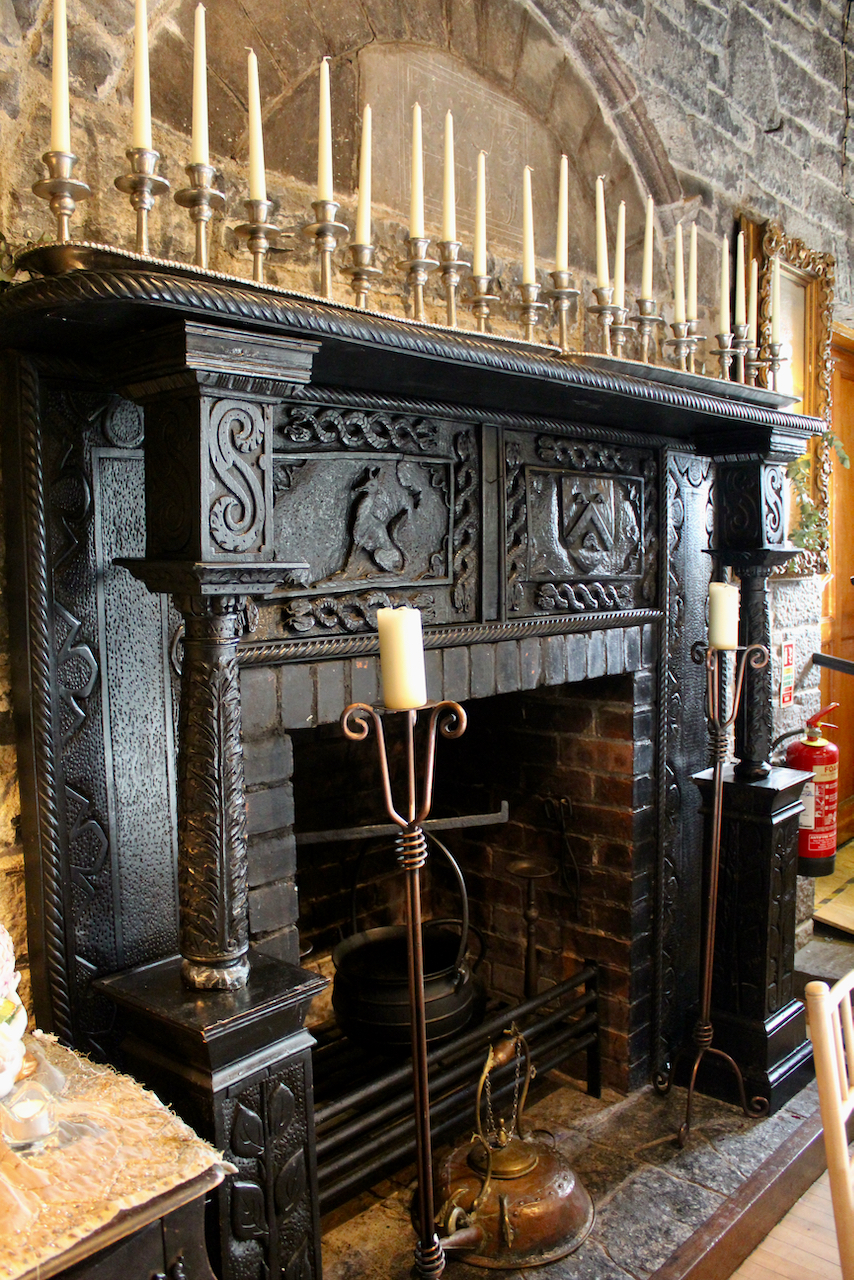
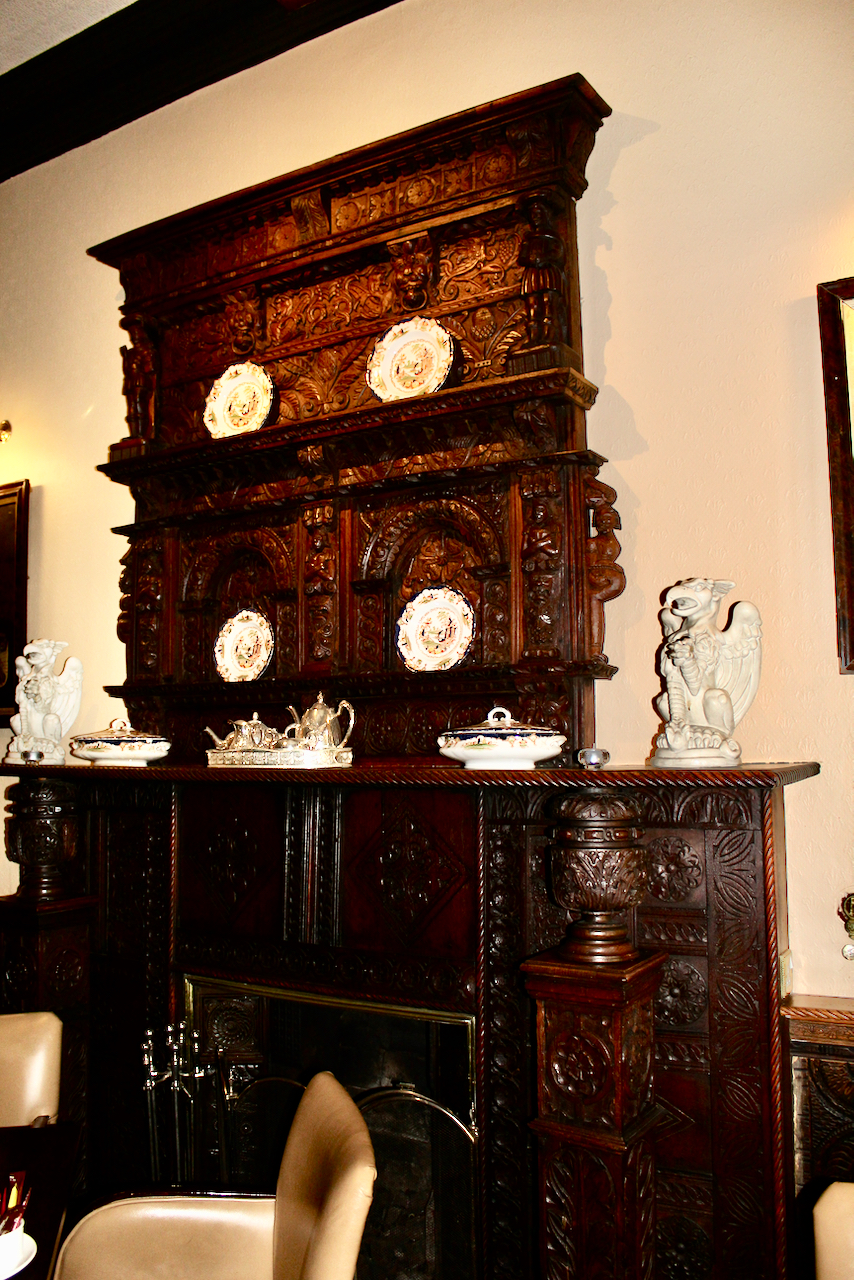
“In the north wing is a “Banqueting Hall” which features a foundation stone dated 1721, set into the wall over primitive 17th century black oak fireplace surround.“
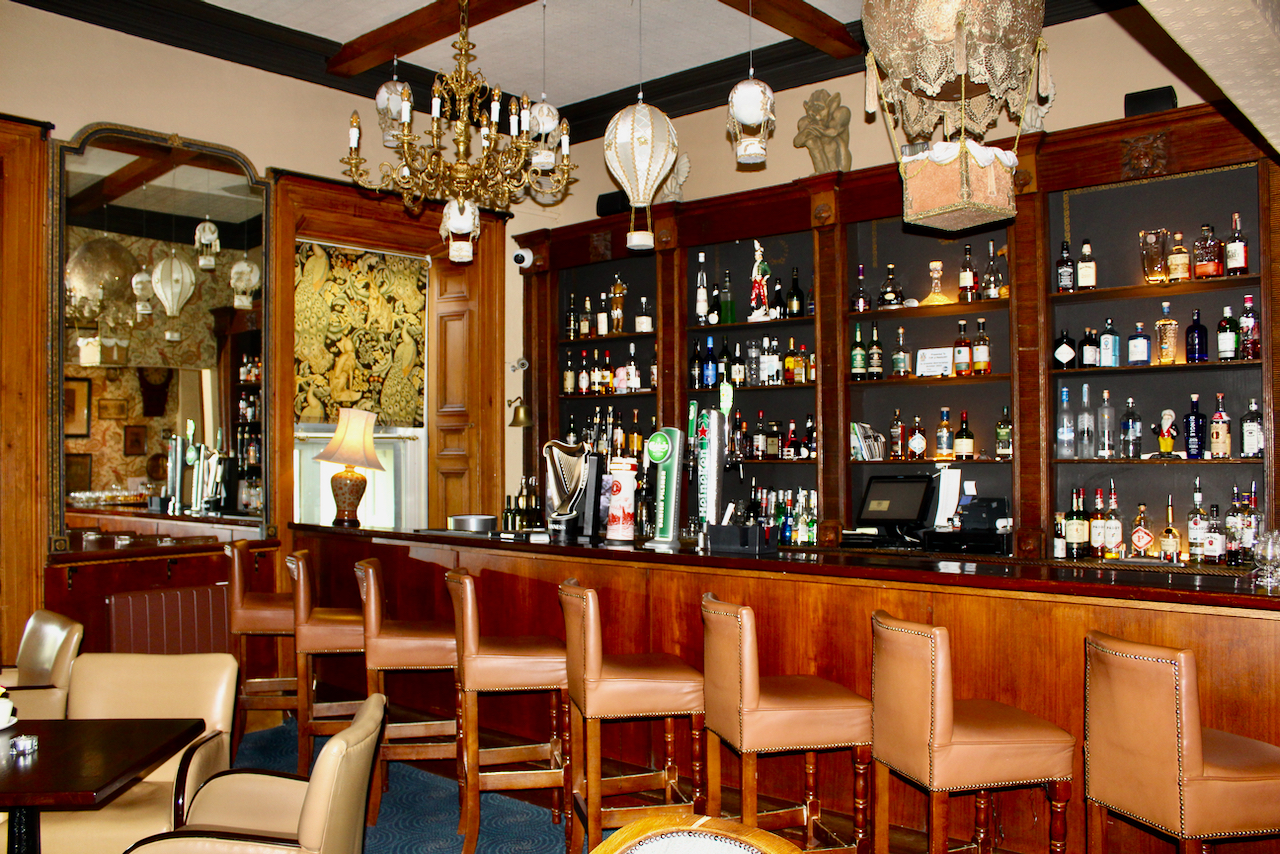
The Blennerhassett website tells us thatanother 17th century wooden fireplace surround of finer workmanship was installed in what was the library of the main house (now the hotel bar). The two fireplaces are believed to have been moved with other free-standing oak furniture from “Old” Ballyseedy” as it fell into ruin.
Arthur Jr. (1800-1843) married Frances Deane O’Grady (1800-1834), daughter of Henry Deane O’Grady (1765-1847). This would have been a prestigious marriage. Her sisters married, respectively, Edward Chichester, 4th Marquess of Donegal (Amelia); David Roche (1791-1865), 1st Baronet of Carass, Co. Limerick (Cecilia); John Skeffington (1812-1863), 10th Viscount Massereene (Olivia); and Matthew Fitzmaurice Deane (1795-1868), 3rd Baron Muskerry (Louisa). Thus Arthur would have been very well connected. He served as M.P. for County Kerry between 1837 and 1841.
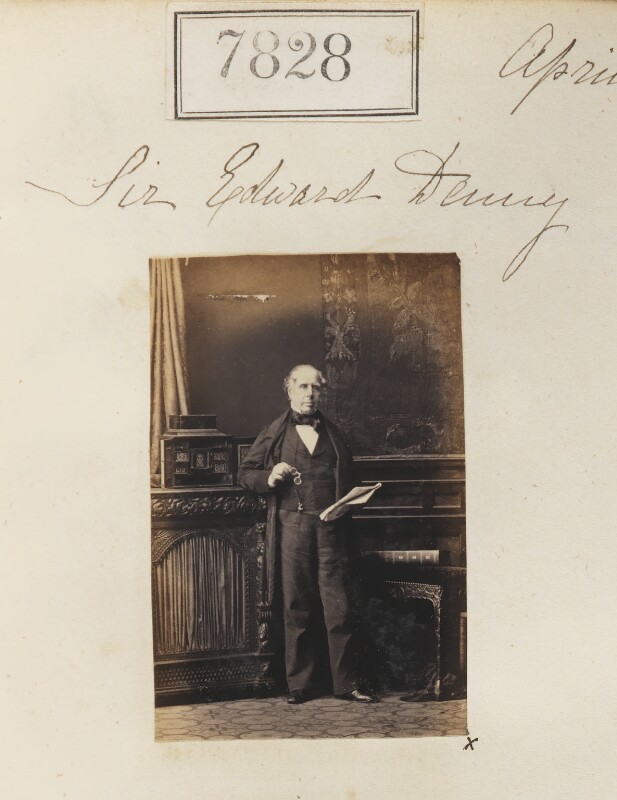
It must have been during this Arthur’s time in the 1830s that Ballyseede was leased to Edward Denny (1796-1889), 4th Baronet.
Edward Denny (1796-1889) 4th Bt , Poet and hymn writer, by Camille Silvy, 1862, National Portrait Gallery of London, Ax57667.
In Voices from the Great Houses: Cork and Kerry (2013) Jane O’Hea O’Keeffe tells us:
p. 160. “Several generations of the Denny family occupied the ancient castle in Tralee. They ran the estate through both peaceful and turbulent times until 1826, when Sir Edward Denny, 3rd Baronet [1773-1831, of Castle Moyle, Co. Kerry], decided to demolish the castle. Tom Denny ruefully remarks, “The demolition of Tralee Castle by Sir Edward Denny was a crime, and much resented in Tralee at that time. People felt angry that part of the town’s history was being destroyed. Sir Edward was really quite a muddled character. As a younger man, when he inherited the estate, he promptly set about enlarging the castle, something which is powerful father-in-law Judge Day found very irritating, and which created enormous problems for Sir Edward’s finances. He subsequently went to live in Worcester. He remained fascinated by genealogy and artefacts from the family’s past and continued to acquire Tudor portraits long after he had pulled down the Tudor remains of the Denny house.
“In the 1830s the Worcestershire Dennys came back to Tralee, and Sir Edward Denny, 4th Baronet, rented Ballyseedy Castle outside the town for a number of years. His younger brother William [1811-1871] became his agent, and he lived at Princes Quay in Tralee in a house when the Dominican church now stands. Sir Edward Denny planned to rebuild the [Tralee] castle, and he replanted the park and also built lodges on the estate. His plans came to an end in 1840 when he joined the conservative Plymouth Brethren movement and he lived thereafter in poverty in London, leaving the management of the estate to his family.
“The indebted Denny estate in Tralee was run by members of the family, or their agents, until 1892, when it was taken over by an insurance company; this severed a family link to the area which had remained strong for over 300 years.
“The Denny estates at one time, stretched to around 29,000 acres, extending from Fenit to Tralee and around the other side of the bay to Derrymore,” explains Tom Denny. “Sir Arthur Denny, 5th Baronet (1838-1921), was a notorious gambler who managed to lose the entire estate by around 1892.”
Arthur Blennerhassett died in 1843 when his son, Charles John Allanson Winn Blennerhassett (1830-1859) was only thirteen years old. By this time, Ballyseedy was probably back in the hands of the Blennerhassetts. Charles’s mother has died when he was only four. I am not sure who raised him. A few of his uncles still lived in County Kerry: His uncle Thomas (1806-1878) remained unmarried and lived in Kerry, and uncle Lt.-Col. Francis Barry Blennerhassett (1815-1877) lived in Blennerville, County Kerry, also unmarried.
Charles John Allanson Winn married Marianne Hickson of Dingle, County Kerry, in 1855. He held the office of High Sheriff in 1858 and was a Justice of the Peace. He died at the young age of 29 and his wife remarried, this time to Captain William Walker. Before Charles died, his wife had two children: Barbara, who died at the age of ten, and Arthur (1856-1939). Young Arthur was only three years old when his father died. He was sent away to school in Harrow in England.
Charles John Allanson Winn Blennerhassett (1830-1859) had several siblings. His sister Adelaide married Standish O’Grady (1832-1860) 3rd Viscount Guillamore, County Limerick. His sister Dorcas married Robert Conway Hurly of Glenduffe, County Kerry. His sister Amelia married Chichester Thomas Skeffington, son of Thomas Henry Skeffington, 2nd Viscount Ferrard, County Louth. Frances Annabella married John Richard Wolseley, 6th Bt of Mount Wolseley, County Carlow. His only brother, Henry Deane, died unmarried in 1850.
Young Arthur Blennerhassett (1856-1939) was the owner of 12,621 acres in 1876 [see 2]. He held the office of High Sheriff in 1878. In 1882 he married Clara Nesta Richarda FitzGerald, daughter of Desmond John Edmund FitzGerald, 26th Knight of Glin.
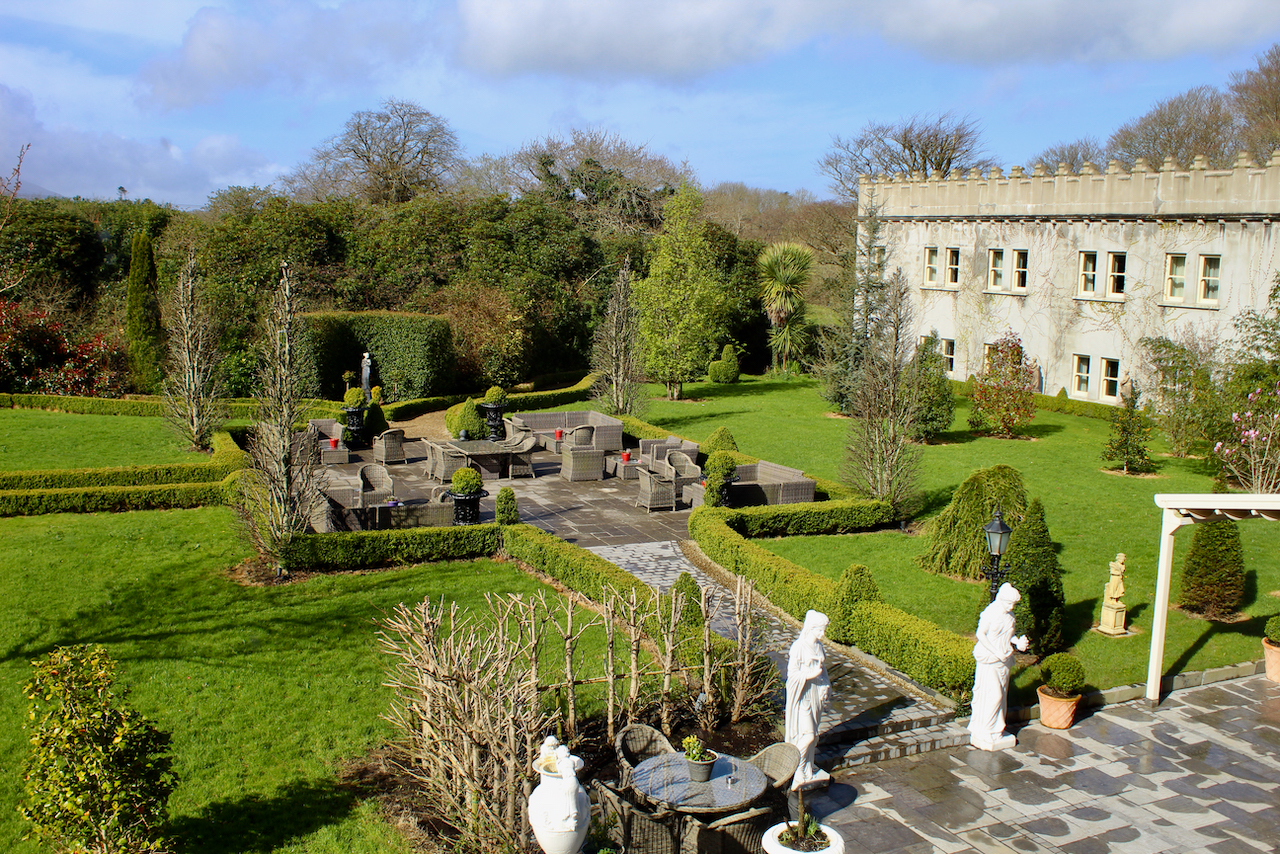
The house was further remodelled during the 1880s for the Blennerhassett family by James Franklin Fuller (1835–1924), after which it was then known as “Ballyseedy Castle.” Fuller added a battlemented parapet, hood mouldings and other mildly baronial touches. The three-bay single-storey flat-roofed limestone ashlar projecting porch was added to the entrance bay. The Blennerhassett website tells us that the back of the castle became the front at this time.
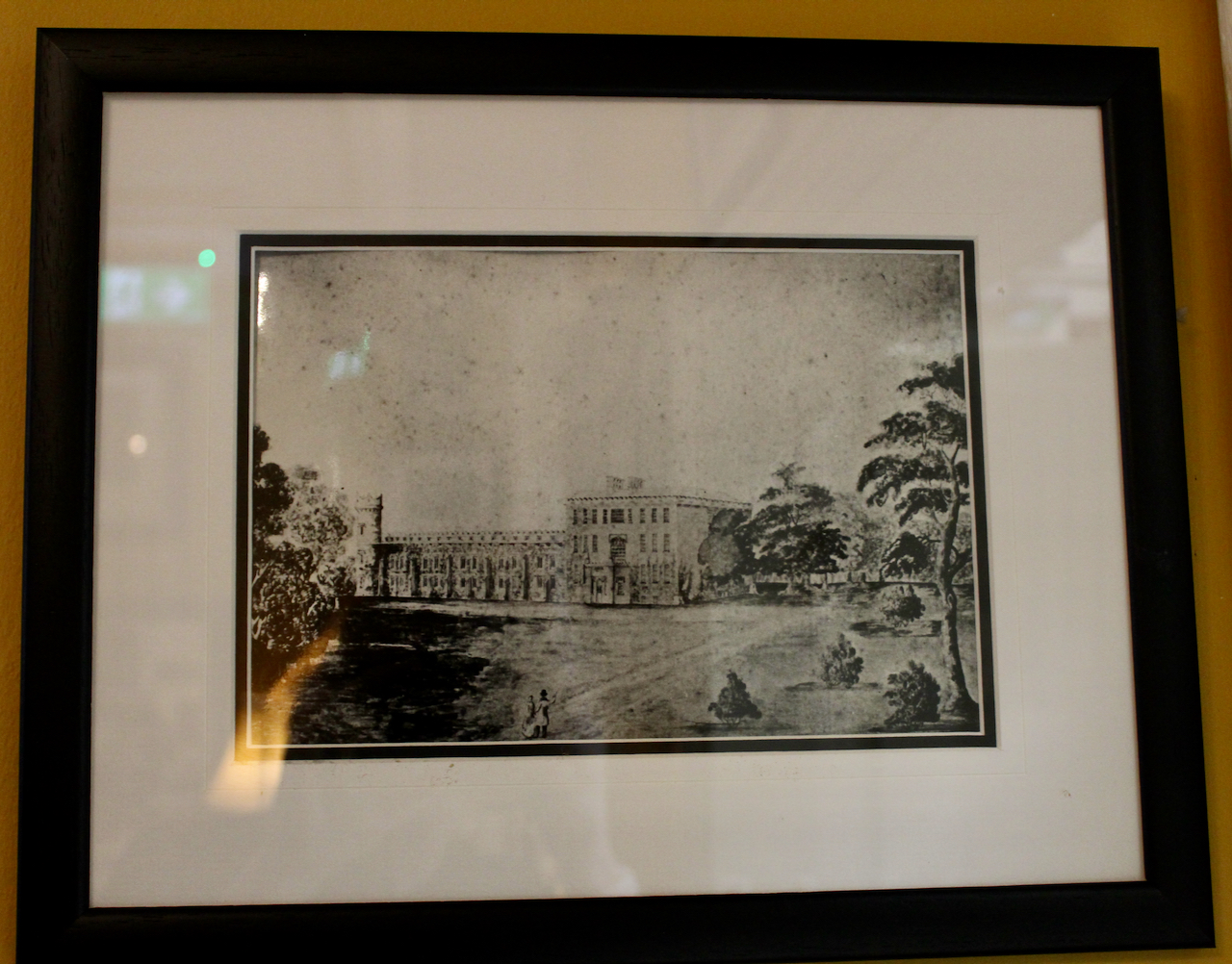
Older pictures of Ballyseedy. It looks like this could be the original front of the castle.It is identified on the Blennerhassett family website as Ballyseedy c.1837-1841 and their version is titled “The Seat of Arthur Blennerhassett Esq MP, Co Kerry.”
The Blennerhassett family website [8] tells us more about the history:
“During the 1880s Arthur’s grandson, Maj. Arthur Blennerhassett (b.1856 d.1939), commissioned a “mock castle” refacing of the house, as was popular during the late Victorian period, these changes causing what had previously been the front elevation and west facing main entrance to become the rear of the house. This work, executed by Kerry architect, historian and Blennerhassett descendant James Franklin Fuller, caused the house to lose its Georgian elegance and simplicity but resulted in the more impressive building we see today. Following these changes the house began to be referred to as “Ballyseedy Castle” and is named as such on the family headed writing paper of the time.” [8]
Unfortunately not having read this fully in advance of our visit, I didn’t take a proper picture of the back of the hotel, not knowing that it had originally been the front!
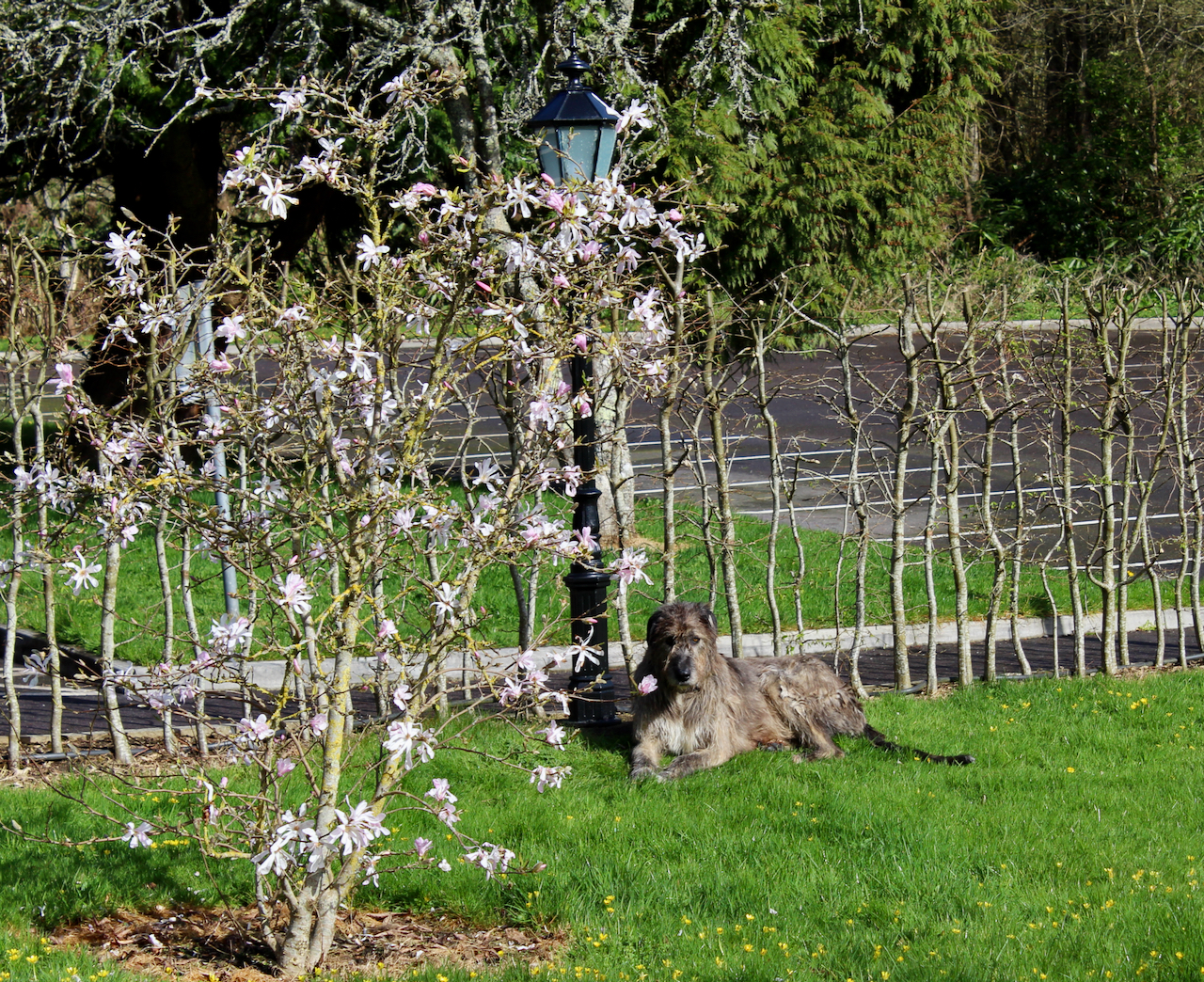
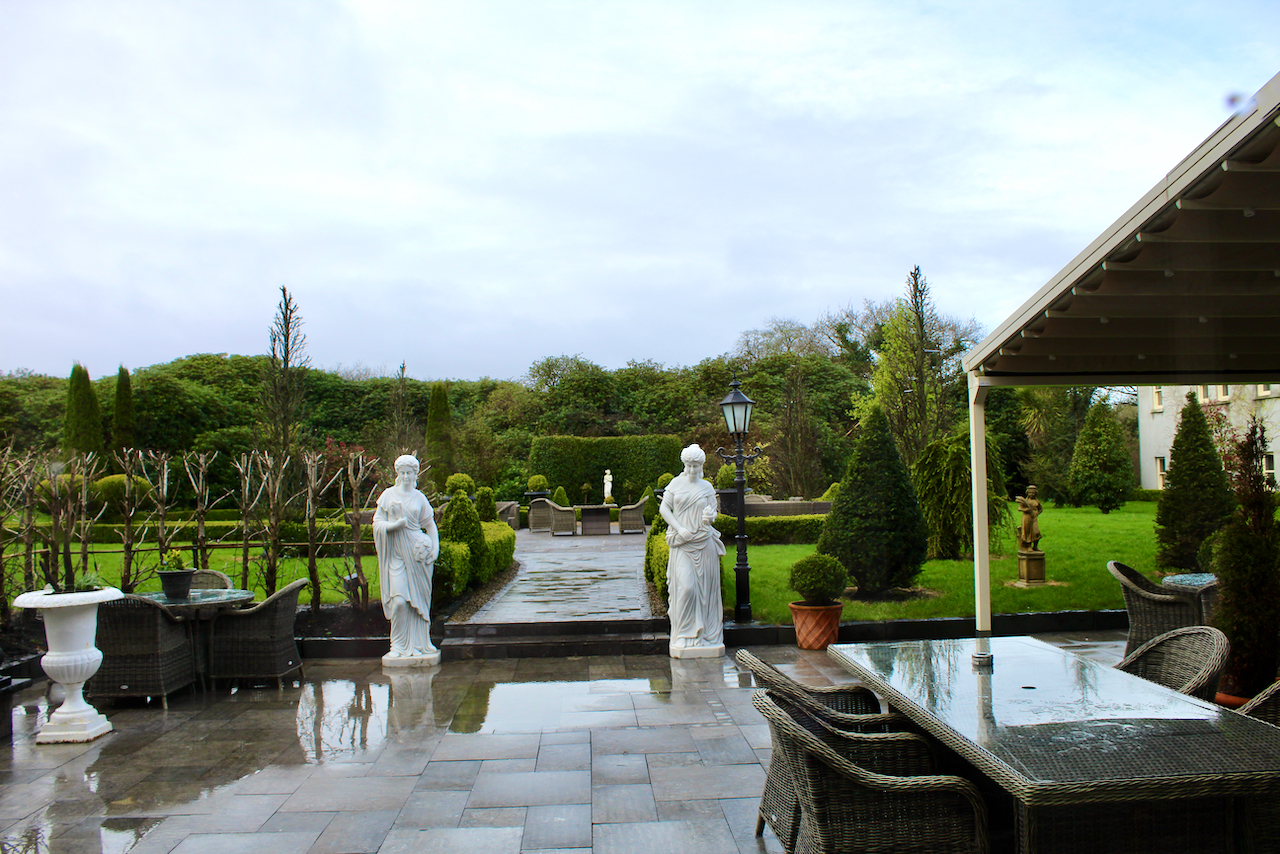
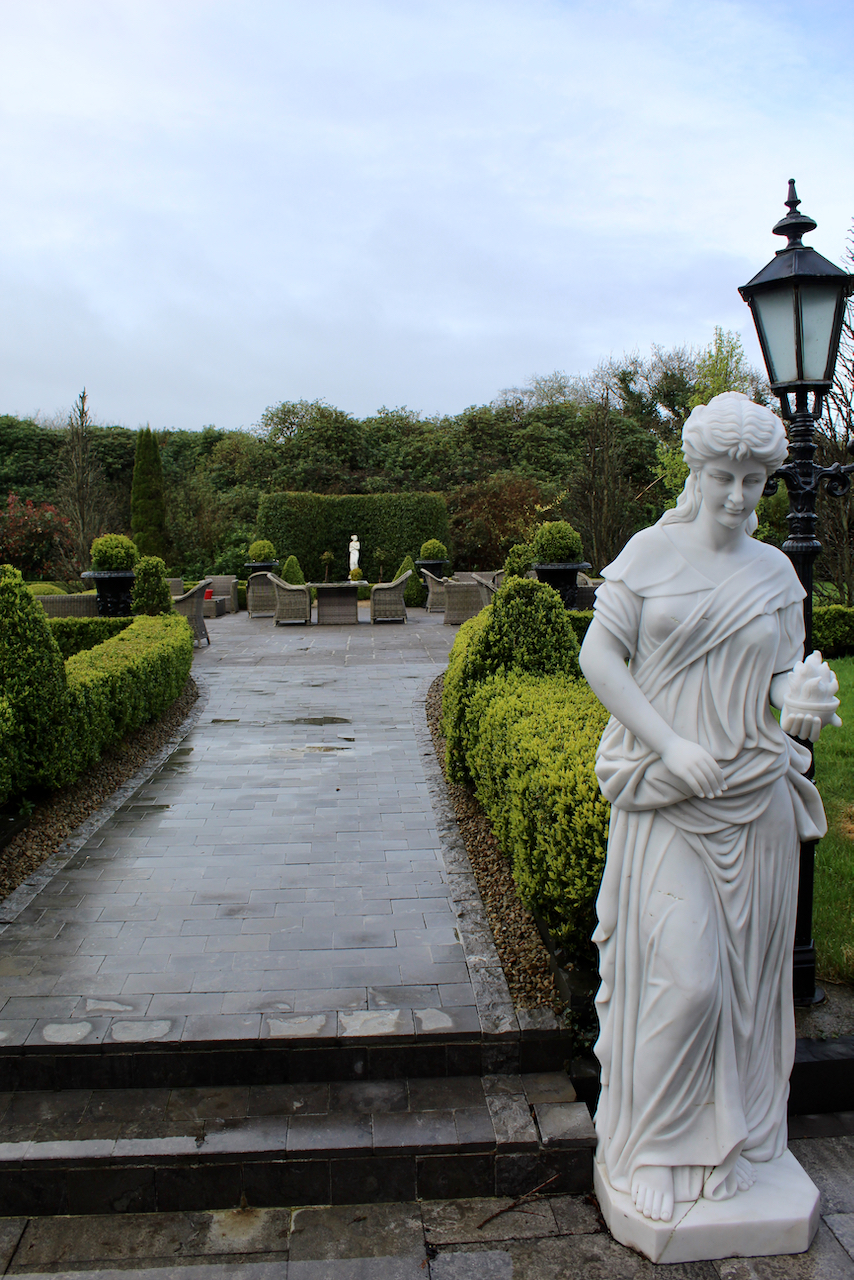
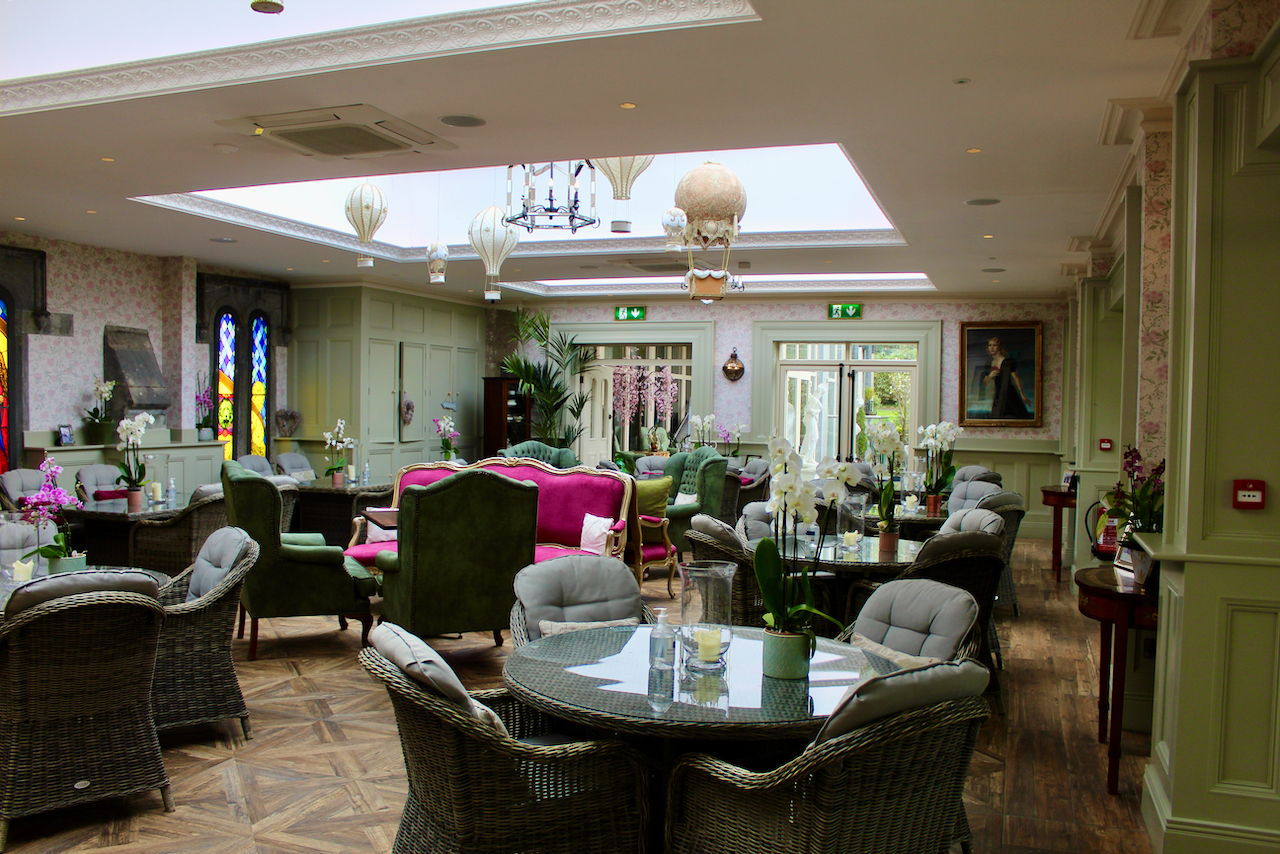
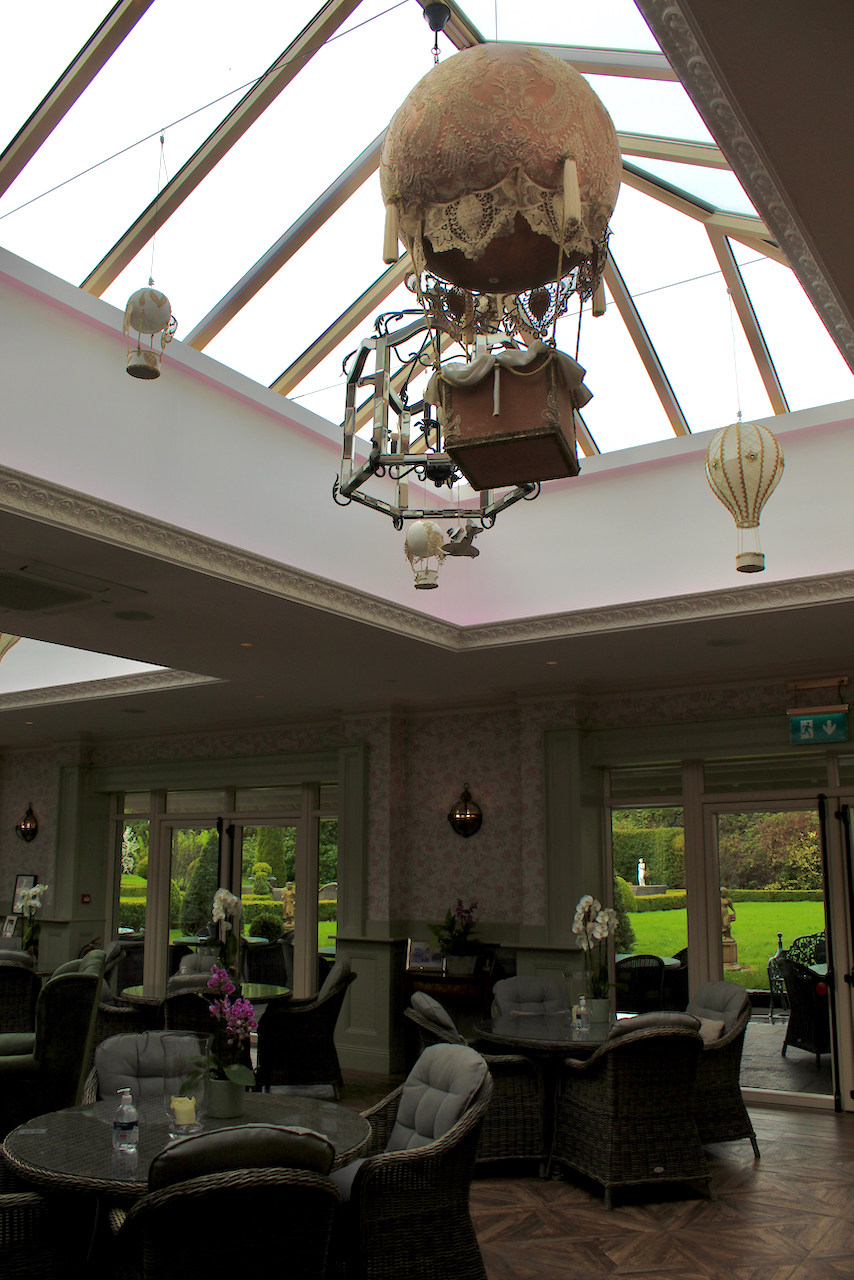
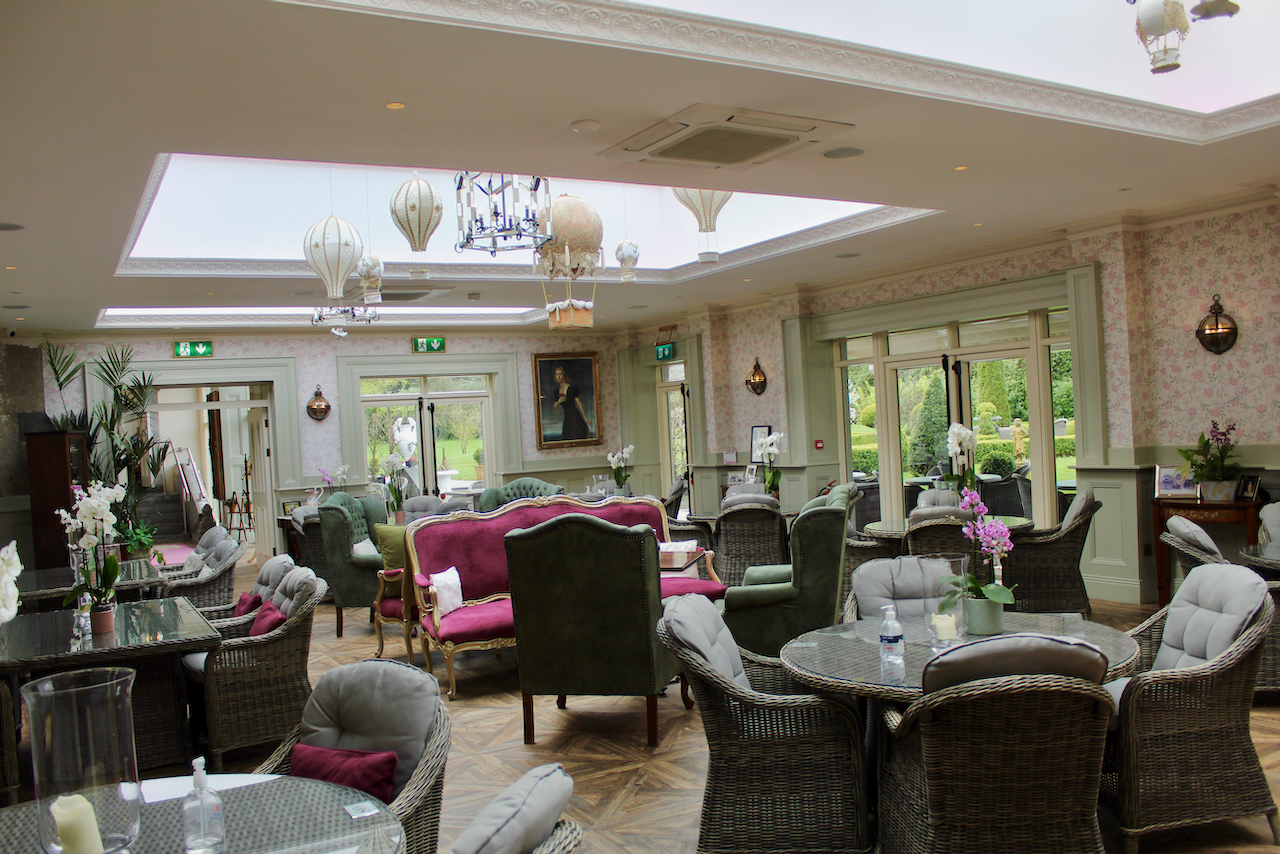
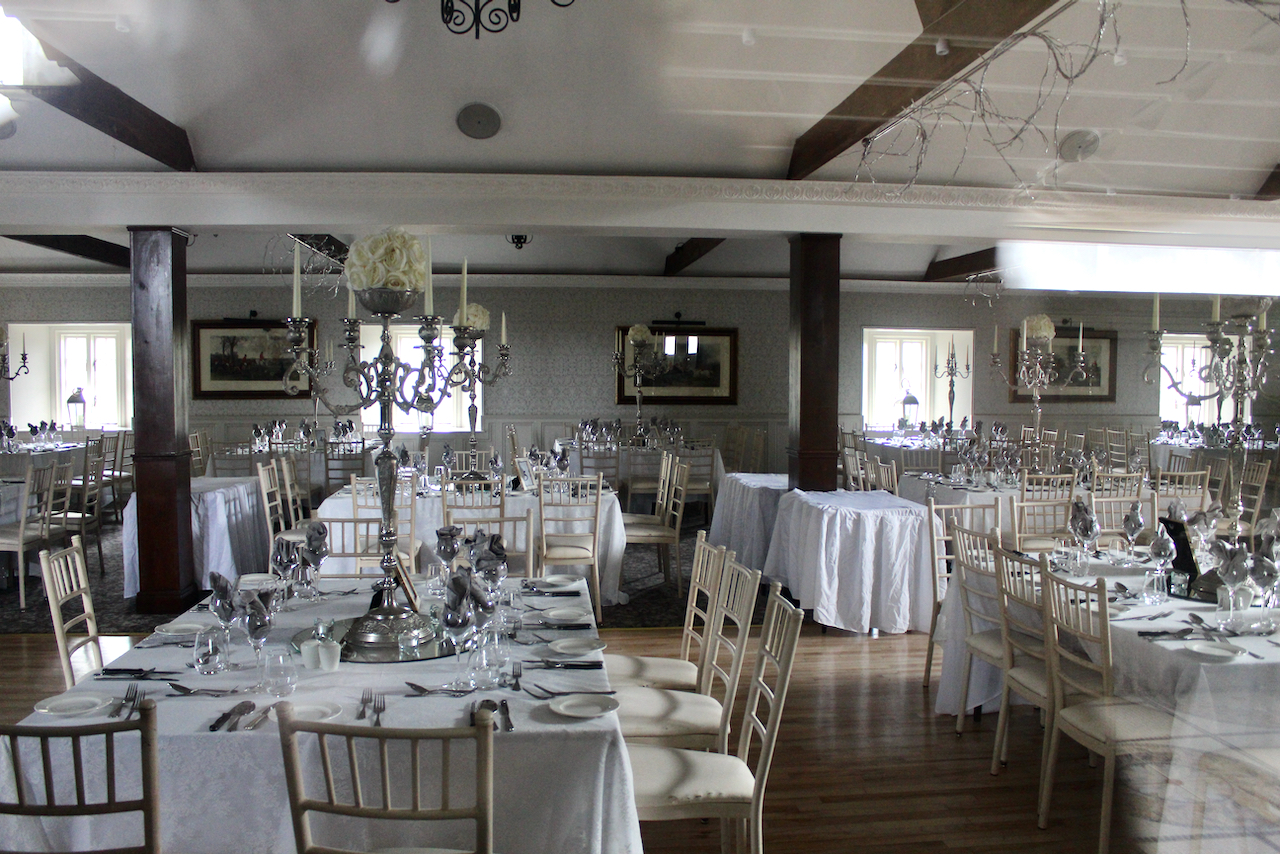
Out the back there is a lovely garden with statues, small hedges, trees and a gazebo perfect for wedding photographs. Unfortunately it rained during most of our visit, so we didn’t get to explore much outside.
Arthur served as Deputy Lieutenant and Justice of the Peace. He fought in the first World War and gained the rank of Major in the 4th Battalion, Munster Fusiliers. In 1918, both he and Clara Nesta (known as Nesta) were appointed as Members of the Order of the British Empire (M.B.E.) for their services: Nesta because during WWI she and her younger daughters Hilda and Vera served as Voluntary Aid Detachment nurses caring for the wounded, first behind the battlefields of France, and later on Lord Dunraven’s hospital ship “Grianaig” in the Mediterranean.
Arthur and Nesta had three daughters. Hilda and Vera lived at Ballyseedy. Hilda bequeathed the estate in 1965 to her kinsman Sir (Marmaduke) Adrian Francis William Blennerhassett, 7th Bt of Blennerville, County Kerry, who sold it 1967. [see 5] This branch of Blennerhassetts are descendants of Robert Blennerhassett of Ballycarty Castle and his wife Elizabeth Conway also, from their grandson Robert, younger brother of John from whom the Ballyseedy Blennerhassetts descended.
The Blennerhassett website has a copy of the auction of the contents of the house, held by Hamilton and Hamilton in 1967.
[2] Montgomery-Massingberd, Hugh. Burke’s Irish Family Records. London, U.K.: Burkes Peerage Ltd, 1976.
List of M.P.s for County Kerry:
1692: Edward Denny (1652-1709 or 1712) of Tralee Castle; Thomas Fitzmaurice (1668-1741) 1st Earl of Kerry
1697: Edward Denny (1652-1709 or 1712) of Tralee Castle; William Sandes
1703: Edward Denny (d. 1727/8, son of Edward Denny (1652-1709 or 1712) of Tralee Castle); John Blennerhassett (d. 1709)
1709: Edward Denny (1676–1727/8); John Blennerhassett (1691-1775)
1715: John Blennerhassett (1691-1775); Maurice Crosbie (c. 1689 –1762) 1st Baron Brandon, of Ardfert, County Kerry
1727: Maurice Crosbie (c. 1689 –1762) 1st Baron Brandon; Arthur Denny (1704-1742), son of Edward Denny (1676–1727/8)
1743: Maurice Crosbie (c. 1689 –1762) 1st Baron Brandon; John Petty-Fitzmaurice (1706-1761) 1st Earl of Shelburne, son of Thomas Fitzmaurice (1668-1741) 1st Earl of Kerry
1751: Maurice Crosbie (c. 1689 –1762) 1st Baron Brandon; John Blennerhassett (1715-1763), son of John Blennerhassett (1691-1775)
1759: John Blennerhassett (1715-1753); Lancelot Crosbie (1723-1780)
1761: William Petty-Fitzmaurice (1737-1805) 1st Marquess of Lansdowne; Lancelot Crosbie (1723-1780)
1762: John Blennerhassett (1715-1763)
1763: John Blennerhassett (1691-1775); Thomas Fitzmaurice
1768: John Blennerhassett (1691-1775); Barry Denny (c. 1744-1794), 1st Baronet
1775: Barry Denny (c. 1744-1794), 1st Baronet; Arthur Blennerhassett (1719-1799) son of John Blennerhassett (1691-1775)
1776: Arthur Blennerhassett (1719-1799); Rowland Bateman (c. 1737-1803)
1783: Barry Denny (c. 1744-1794) 1st Bt; Richard Townsend Herbert (1755-1832)
1790: Barry Denny (c. 1744-1794) 1st Bt; John Blennerhassett (1769-1794)
1794: Barry Denny (d. 1794 in in dual with John Gustavus Crosbie) 2nd Bt; John Gustavus Crosbie (c. 1749-1797) son of Lancelot Crosbie (1723-1780)
1795: Maurice Fitzgerald (1774-1849) 18th Knight of Kerry; John Gustavus Crosbie (c. 1749-1797)
1798: Maurice Fitzgerald (1774-1849) 18th Knight of Kerry; James Crosbie (c. 1760-1836)
[3] p. 157. O’Hea O’Keeffe, Jane. Voices from the Great Houses: Cork and Kerry. Mercier Press, Cork, 2013.


























 Irish Historic Houses