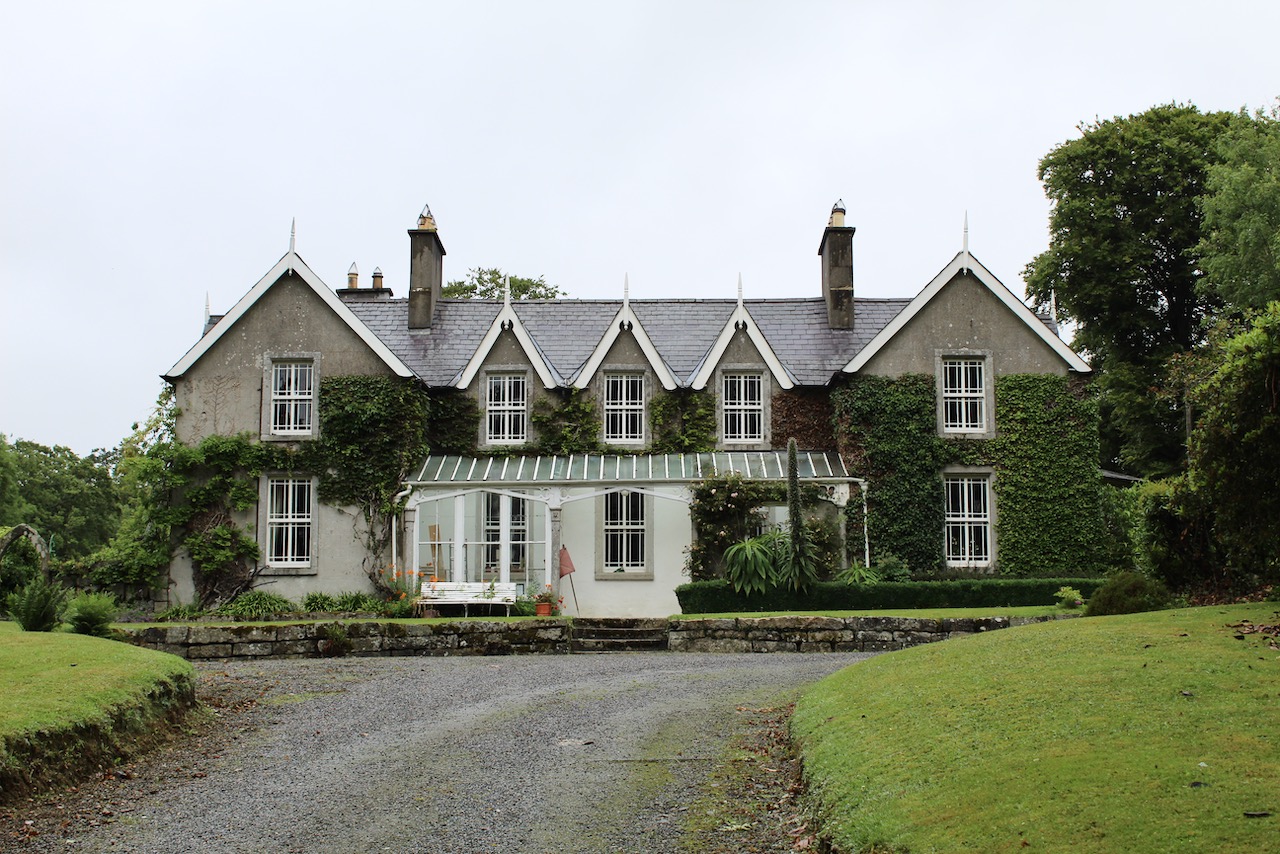
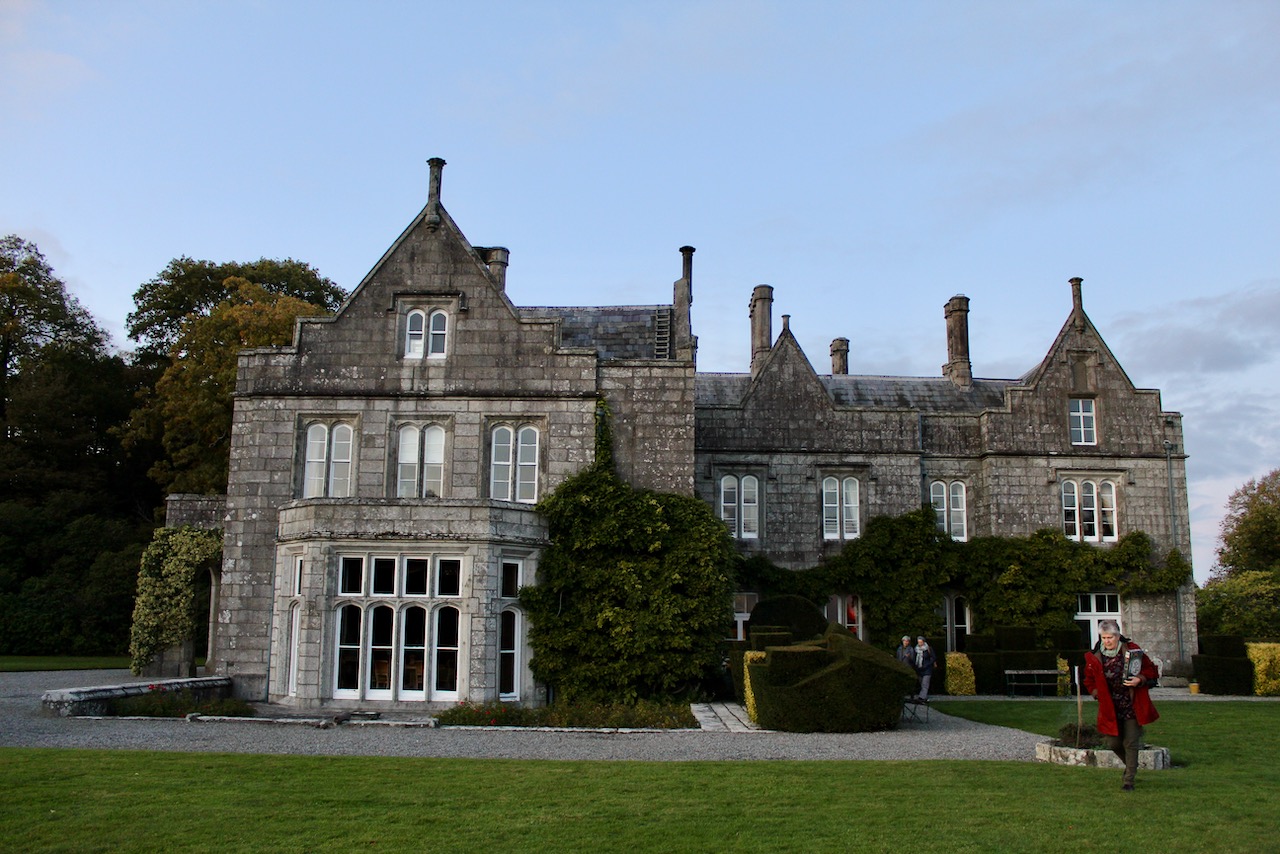
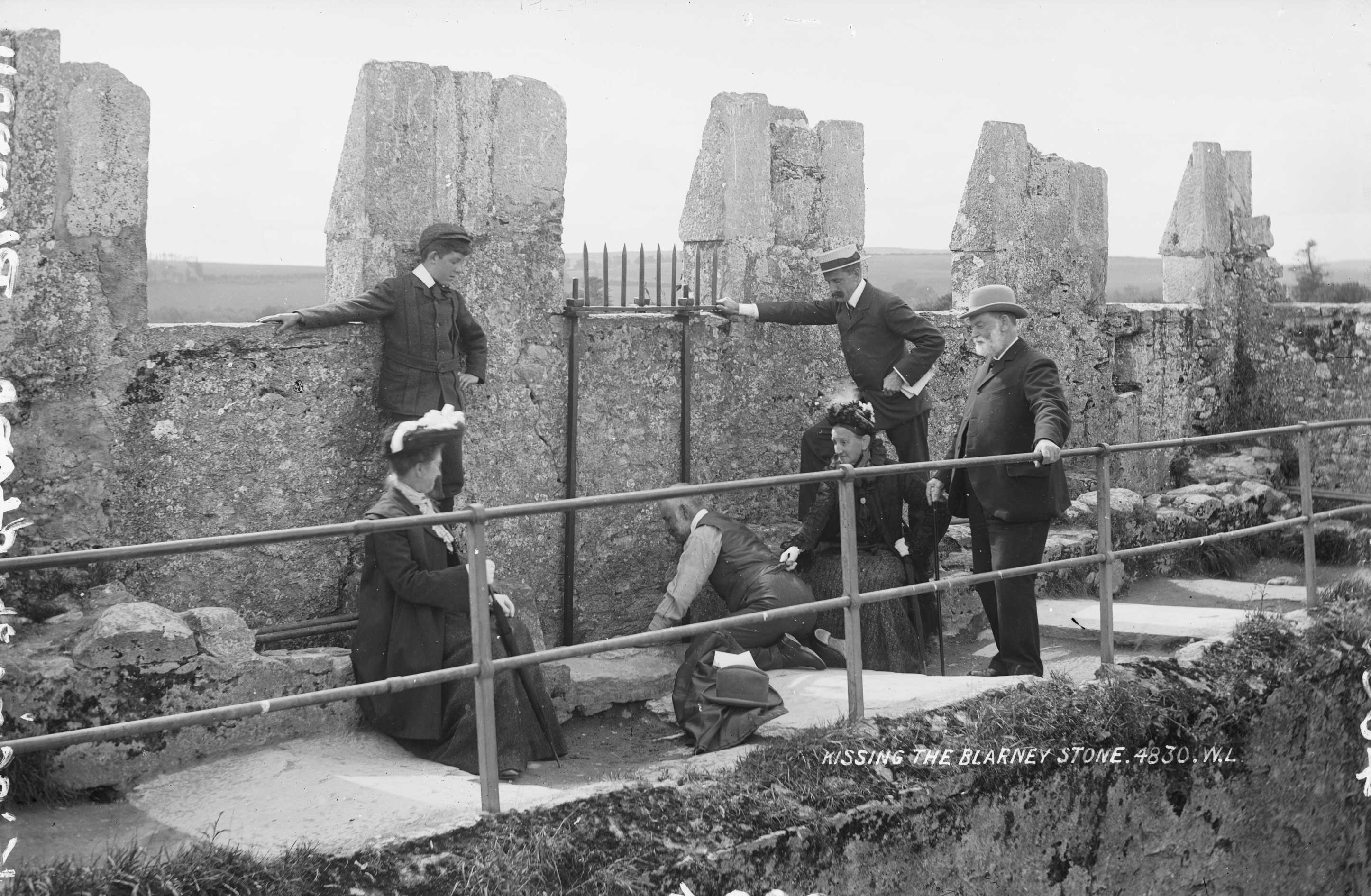
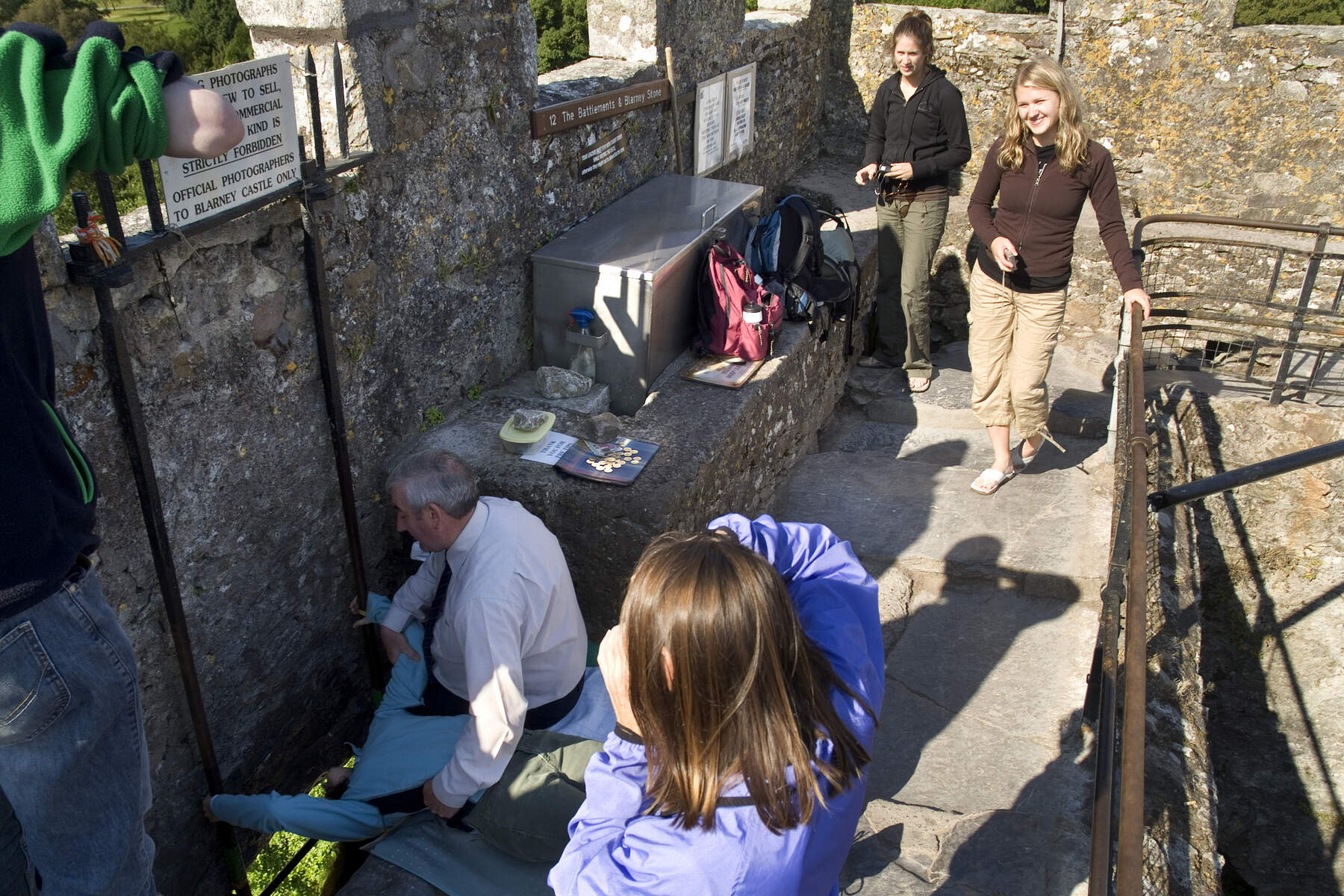
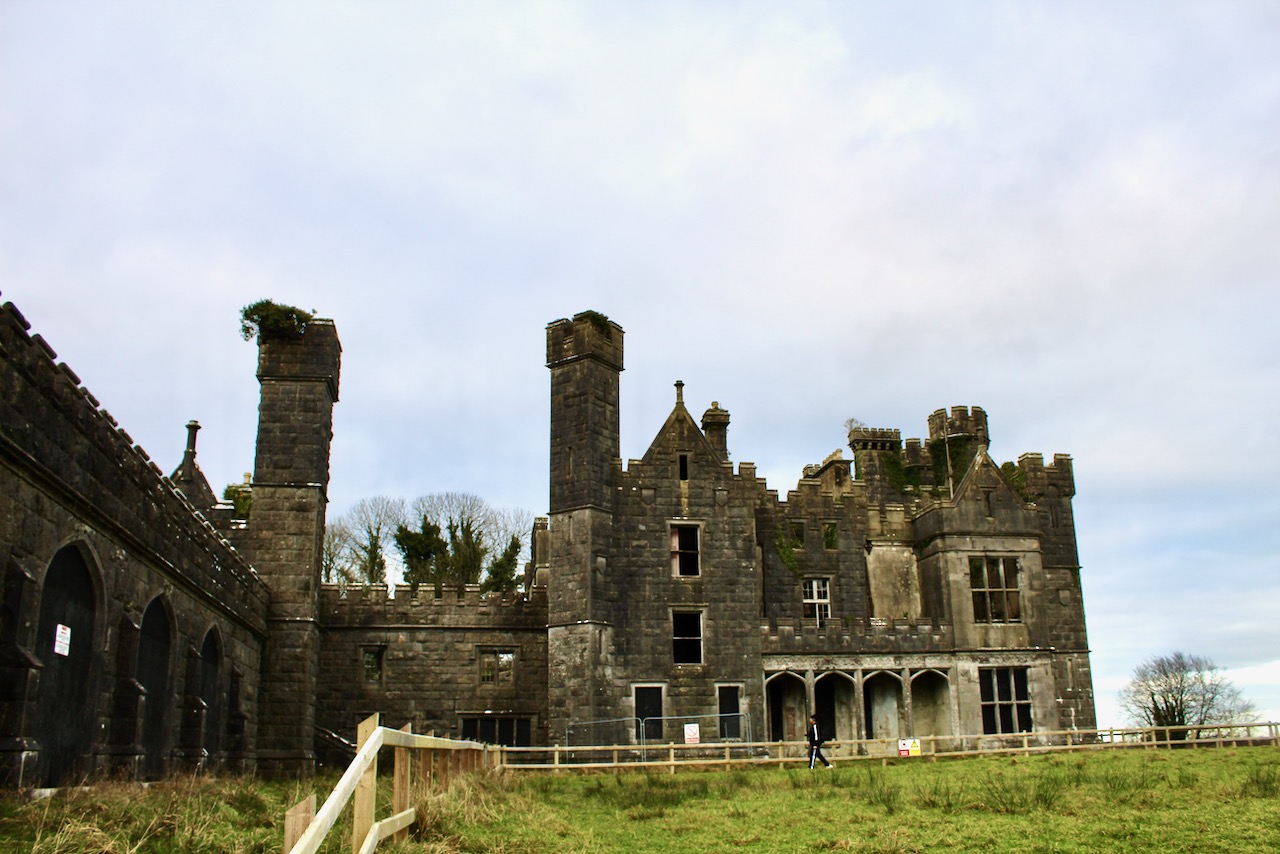
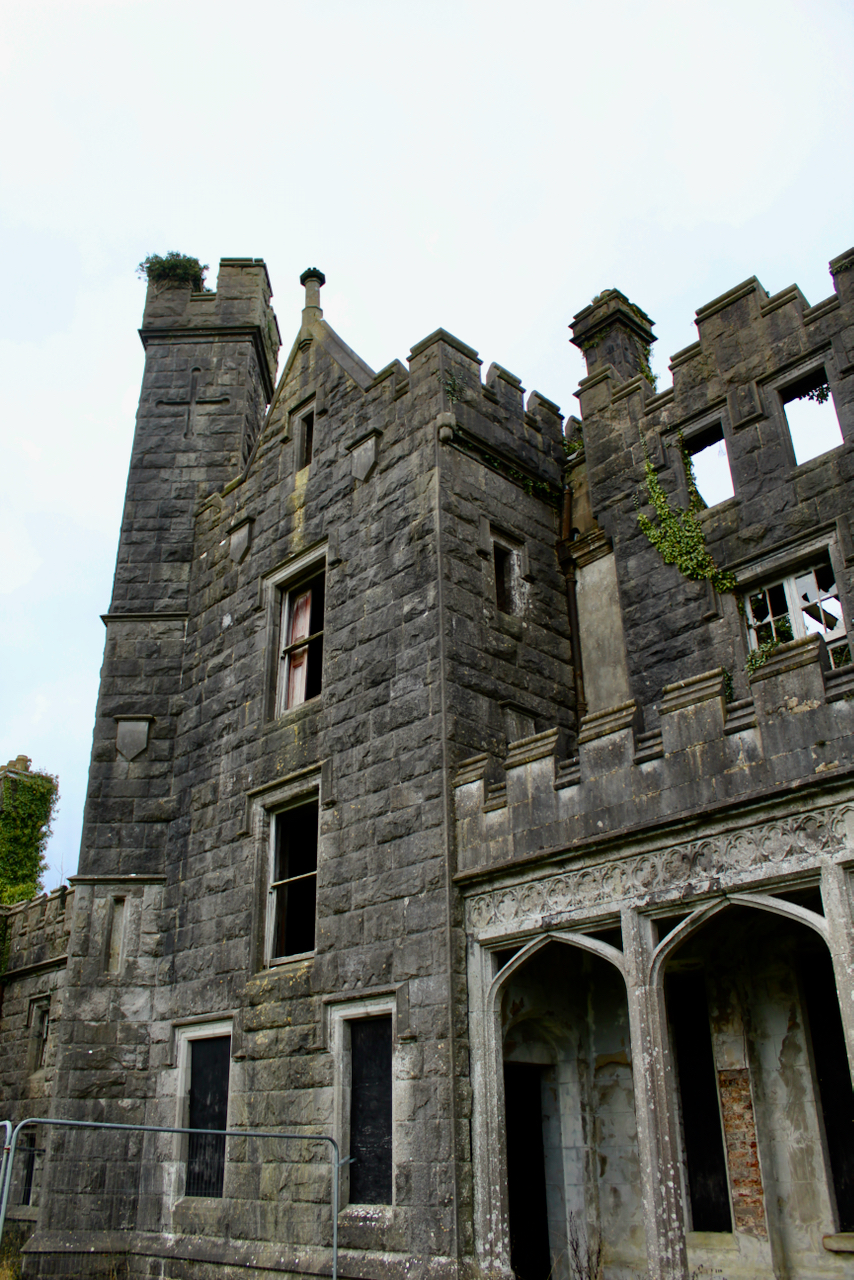
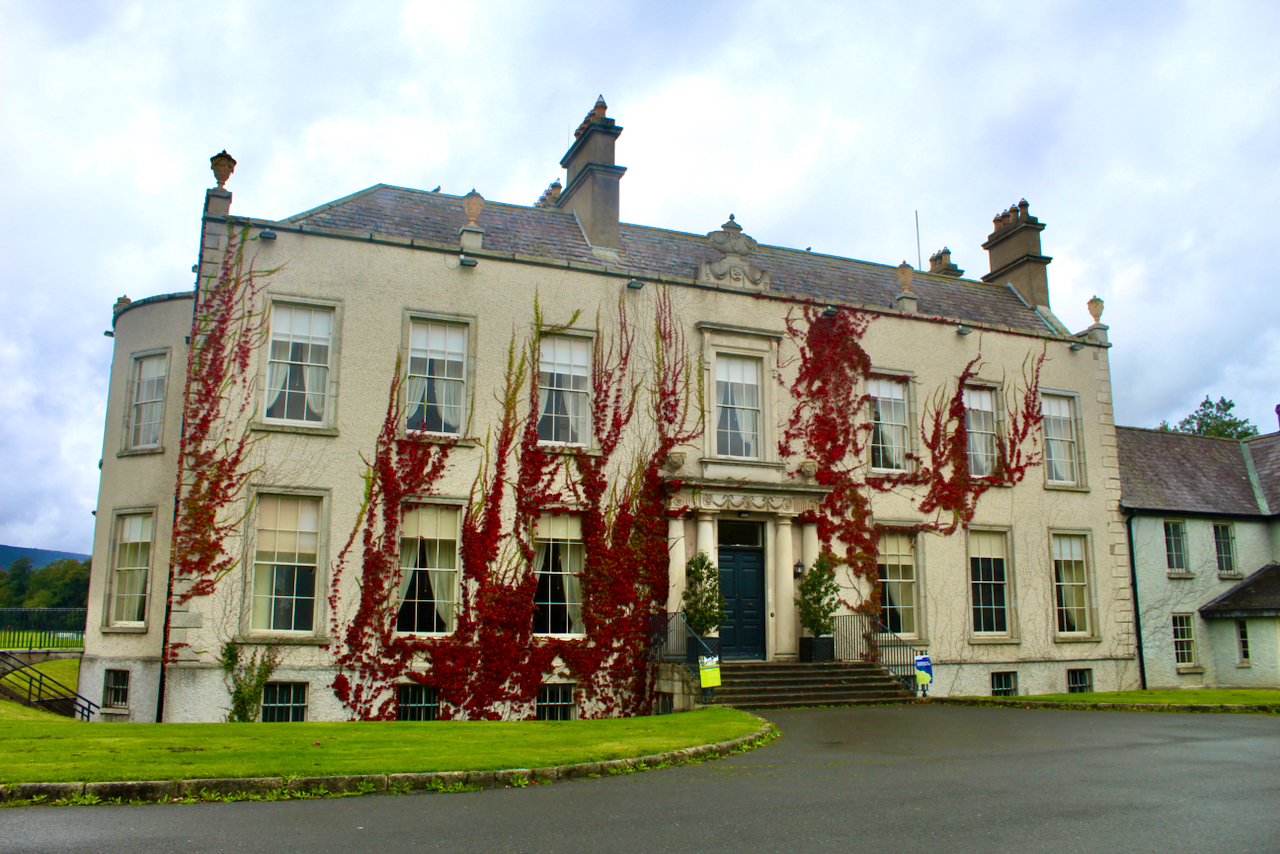
A Guide to Irish Country Houses by Mark Bence-Jones contents and pictures, houses beginning with D

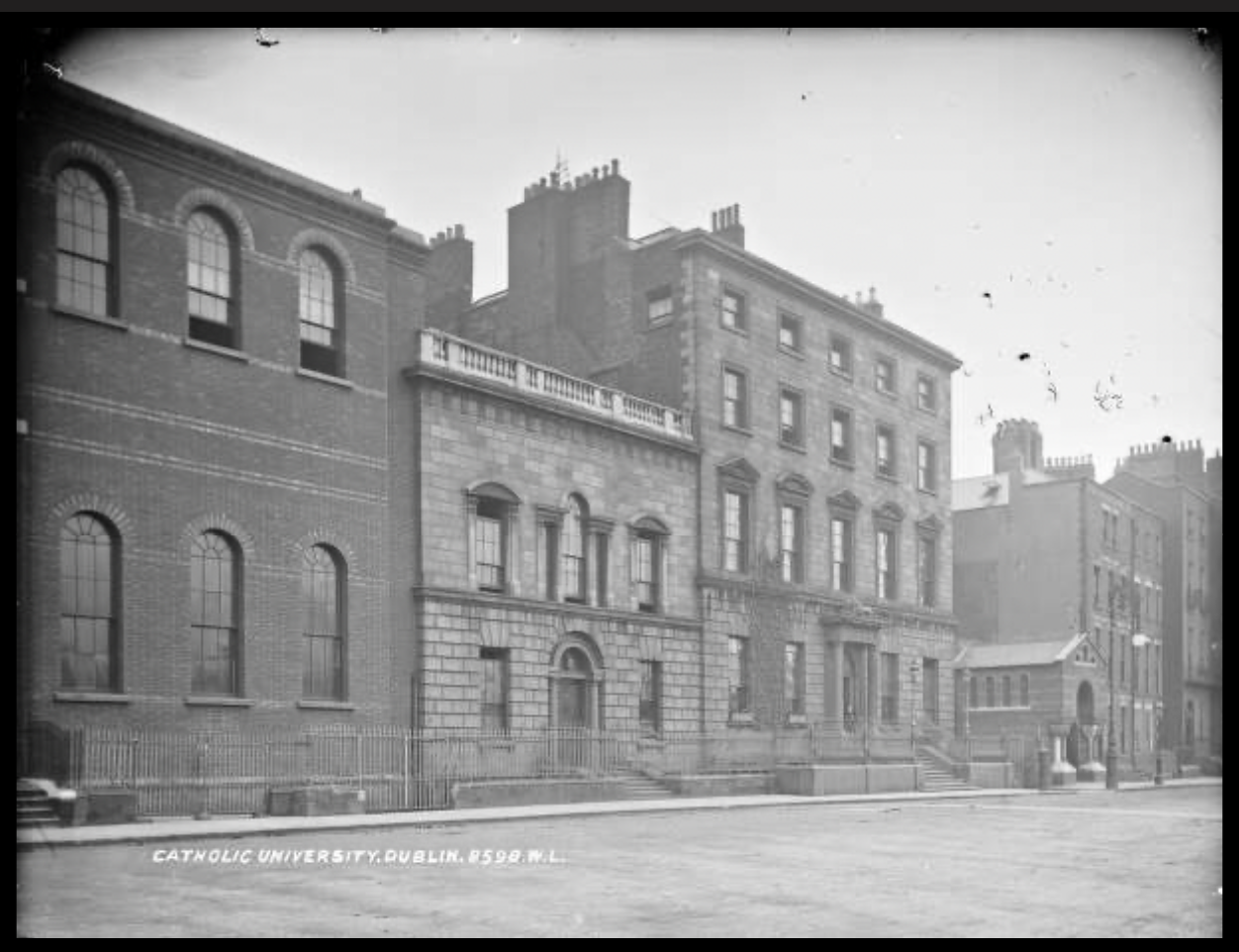
I have been exploring the beautiful photographs of Robert French in the National Library of Ireland this week. The Dictionary of Irish Biography tells us about the wonderful photographer who took such clear precisely composed photographs:

French, Robert (1841–1917), photographer, was born 11 November 1841 in Dublin, eldest of the seven children of William French, a court messenger, and Ellen French (née Johnson). At the age of nineteen, in September 1860, he joined the Constabulary (later RIC) as a sub-constable, giving his occupation as ‘porter’. He was stationed at the barracks at Glenealy, Co. Wicklow. Having served almost two years, he resigned in August 1862.

All Hallow’s College, Drumcondra, Dublin, photograph by Robert French, Lawrence Photographic Collection, National Library of Ireland.

French next found employment in Dublin as a photographic printer, possibly at the portrait studio operated by John Fortune Lawrence at 39 Grafton Street. He later joined the more successful studio run by John Fortune’s brother, William Mervin Lawrence (1840–1932), which opened at 7 Upper Sackville (later O’Connell) Street in March 1865. Progressing upwards through the grades of printer, colourer-retoucher and assistant photographer, he attained the rank of photographer in the mid-1870s. Meanwhile, William Mervin Lawrence had developed a lucrative trade in the sale of topographical views and he gave French the task of providing a comprehensive range of scenic photographs representing all parts of the country. French performed this role with dedication and distinction for almost forty years until his retirement in 1914.

French’s function was to provide photographs for a market that favoured views of picturesque landscapes, seaside resorts, and the streets of cities, towns, and villages. Lawrence was in charge of marketing strategy and planned French’s itineraries, but French selected the individual views. He travelled throughout the country, identifying and photographing appropriate subjects, generating stocks of negatives from which Lawrence’s printers produced multiple images for sale in the medium of prints, stereoscopic views, and lantern slides. The images were also widely used in commercial advertising and in publications designed for the tourist market, particularly in the extensive postcard trade that Lawrence developed in the late 1890s. As people wanted views that were up-to-date, many of the images, particularly those of urban scenes, were periodically retired and replaced, the replacements almost invariably being taken from the same optimum viewpoint. The photographs presented the more positive aspects of Ireland and contemporary Irish life, with evidence of social deprivation appearing only incidentally, and with few instances of social or political conflict other than a relatively small number of eviction scenes.

Eviction scene, photograph by Robert French, (between ca. 1865-1914), Lawrence Photograph Collection, National Library of Ireland.

French married, 1 December 1863, at St Peter’s church, Dublin, Henrietta Jones, daughter of Griffith Jones, a farmer at Newcastle, Co. Wicklow. The couple had eleven children, some of whom long afterwards recalled their father as a fervent unionist, fond of singing rather loudly in the congregation at St Patrick’s cathedral, and infuriatingly painstaking when taking family photographs. He is portrayed in a number of his own photographs as a dignified figure with a fine full beard. In his later years he lived on Ashfield Avenue, Ranelagh. He died 24 June 1917.

While French played a central role in the success of the Lawrence firm, which dominated the photographic trade nationally for a generation, his historical significance arises from the extensive archive of surviving negatives. These make up the greater part of the Lawrence collection (held by the National Photographic Archive in Dublin), amounting to approximately 30,000 of the 45,000 images in the collection. They reveal him as a talented and extremely competent photographer. His compositions presented sites to best advantage, and the images are invariably sharp and engaging and suggest the inherent atmosphere of the place. The predominant factor, however, is that the photographs provide an invaluable visual record of urban and rural Ireland over a period of almost forty years. They document the process of change and modernisation in various aspects of environment and society, reflecting the considerable economic and social progress in the decades of relative peace and prosperity leading up to the first world war. While engaged in the relatively mundane profession of commercial photographer, French emerged as one of the foremost chroniclers of his generation, albeit unwittingly, and endowed posterity with a unique cultural and educational resource.” [2]

Derryquin, County Kerry, photograph by Robert French, (between ca. 1865-1914), Lawrence Photograph Collection, National Library of Ireland.

As you can see as I work my way though the contents of Mark Bence-Jones’s A Guide to Irish Country Houses [1], there are thousands of “big houses” in Ireland – though many are “houses of middle size.”

Note that the majority of these are private houses, not open to the public. I discovered “my bible” of big houses by Mark Bence-Jones only after I began this project of visiting historic houses that have days that they are open to the public (Section 482 properties).

This is a project I have been working on for a while, collecting pictures of houses. Enjoy! Feel free to contact me to send me better photographs if you have them! I’ll be adding letters as I go…

[1] Mark Bence-Jones. A Guide to Irish Country Houses (originally published as Burke’s Guide to Country Houses volume 1 Ireland by Burke’s Peerage Ltd. 1978); Revised edition 1988 Constable and Company Ltd, London.

Donation

Help me to fund my creation and update of this website. It is created purely out of love for the subject and I receive no payment so any donation is appreciated! My website costs €300 per year on WordPress.

€15.00

Dalgan Park, Kilmaine, Co Mayo 

A two storey early C19 Classical house of cut limestone. Nine bay front, the three centre bays being framed by Ionic pilasters; medallion and plaque over entrance door. Parapeted roof. Bow at end. Impressive hall with Corinthian columns, lit by dome.” [1]

Dalyston, Loughrea, Co Galway – ‘lost’ 

Dalyston, County Galway c. 1970, photograph: David Davison, Vanishing Country Houses of Ireland by The Knight of Glin, David J. Griffin and Nicholas K. Robinson, published by The Irish Architectural Archive and The Irish Georgian Society, 1988.
Dalyston, Loughrea, Co Galway courtesy National Inventory

A good three storey late C18 house built for Rt Hon Denis Daly, MP. Three bay entrance front, of cut stone; tripartite doorcase with pilasters and pediment extending over door and sidelights; plain window surrounds. Deep and elaborately moulded roof cornice. Plain five bay side elevation. Small room off hall with decorated ceiling… Now a ruin.” [1]

Damer House, Roscrea, Co Tipperary – open to public

Damer House, Roscrea, 21st August 2024. Photograph © Jennifer Winder-Baggot, www.irishhistorichouses.com

See my entry https://irishhistorichouses.com/2024/10/03/damer-house-and-roscrea-castle-county-tipperary-office-of-public-works-properties/

Danesfort (formerly Clanwilliam House), Belfast, County Antrim 

One of the finest High-Victorian mansions in Ireland, built 1864 for Samuel Barbour to the design of William J. Barre. Described by Mr Brett as “a sort of a French-Italian chateau”; dominated by a tall and very ornate tower with a mansard roof resting on an arcade of what Mr Brett calls “square cabbage columns” which constitutes a porte-cochere.” [1]

Danesfort, County Kilkenny

Danesfort, County Kilkenny courtesy of Mark Bence-Jones.

A two storey C18 house with a handsome front of two bays on either side of a pedimented centre, with a Venetian window above a round-headed doorway between two windows. Blocked window surrounds; heavy roof cornice with urns; round-headed window in pediment. The two bays on either side of the centre were treated as pavilions and carried up into the attic storey by a lunette; these were later raised and battlemented to give the impression of Gothic towers, which, like the entrance gates of Castle Martyr, revealed themselves to be no more than stage scenery when viewed from the side... Now demolished.” [1]

Dangan Castle, Trim, Co Meath – a ruin 

The seat of the Wesley family, inherited by Richard Colley who assumed the name of Wesley (which later became Wellesley) and was created Lord Mornington; his son, 1st Earl of Mornington, was the father of the great Duke of Wellington, who, according to tradition, was born here. The house appears to have been early to mid C18, of two storeys and with a solid roof parapet; it was described (1739) as having “a noble piazza of seven curious turned arches in front of it.” Near the house was a stable block with central turret and pedimented ends. The grounds were said to (1739) to boast of at least 25 obelisks, a Rape of Prosperine weighing three tons, and a fort with cannon which fired salutes on family birthdays down by the lake; where three vessels – a 20 ton mar of war, a yacht and a packet boat – rode at anchor.” [1]

Daramona House, Street, Co Westmeath 

The National Inventory tells us it is: “Three-bay two-storey country house, built c.1855, with a projecting tetrastyle cut stone Doric entrance porch to the centre of the front facade. A very fine and elegant mid nineteenth-century Italianate essay with the rear pavilions adding substance this medium-sized house. It is one of the most attractive houses of its type and date in Westmeath.” 

Dardistown Castle, Co Meath – section 482 in 2019 

Dardistown, County Meath. Photograph © Jennifer Winder-Baggot, www.irishhistorichouses.com

See my entry https://irishhistorichouses.com/2019/07/19/dardistown-castle-county-meath/

Dartrey House (formerly Dawson’s Grove), Co Monaghan – demolished

Dartrey House (formerly Dawson’s Grove), County Monaghan, courtesy of Archiseek.

A large Elizabethan-Revival mansion by William Burn, built in 1846 to replace an earlier house of about 1770.The Elizabethan-Revival mansion which took the place of this house, built by Richard Dawson, 3rd Lord Cremorne and later 1st Earl of Dartrey, had long and somewhat monotonous elevations of curvilinear gables, mullioned windows and oriels, with, sporadically, a square turret and cupola. There were numerous Tudor chimneys, a generous application of strapwork and a two-tier terrace along the garden front with many yards of latticed balustrading.” [1]

Darver Castle, Dundalk, Co Louth – accommodation

See their website https://www.darvercastle.ie/home/ 

Darver Castle, County Louth, from flickr constant commons by Barry Mcgee 2016.

See my entry https://irishhistorichouses.com/2022/10/28/places-to-visit-and-stay-in-county-louth-leinster/

Davidstown House, Castledermot, Co Kildare 

A plain three storey Georgian block, with a five bay front and sides of five and four bays; extended at back by two storey wings, to form a small three sided court. The entrance front has a magnificent doorway with a delicately leaded fanlight and side-lights, engaged Ionic columns and a baseless pediment extending over all. Late C18 and C19 interior plasterwork.” [1]

Dean’s Hill, Armagh, County Armagh 

Formerly the Deanery. A Georgian house built 1772-74 by Very Rev Hugh Hamilton, Dean (C of I) of Armagh, subsequently Bishop of Clonfert and Bishop of Ossory; altered 1887 under the supervision of J.H. Fullerton; a wing added 1896 to the design of H.C. Parkinson.” [1]

Debsborough, Nenagh, Co Tipperary 

The Deeps, Crossabeg, Co Wexford 

The Deeps, County Wexford, photograph courtesy Savills Ireland 2018.

A house originally built 1776 by Sir John Blaquiere, MP (afterwards raised to 1st Lord de Blaquiere), Secretary to the Lord Lieutenant and one of the leading figures in the political life  of Ireland during later C18; in a demesne carved out of Phoenix Park which he obtained on the strength of being the Park’s bailiff. In 1782, he was asked to surrender the house and grounds in return for some compensation, and the house became the official residence of the Chief Secretary, the principal executive of the government of Ireland under British rule. The house was enlarged and altered at various times, but has a predominantly late-Georgian character; of two storeys, with a bowed projection at either end of its principal front. Along this front is a fine enfilade of reception rooms. A large glass conservatory was added at one end 1852 by Lord Naas (afterwards 6th Earl of Mayo and Viceroy of India), while he was Chief Secretary. Later in the century, probably 1865 during the Chief Secretaryship of Chichester Fortescue (afterwards Lord Carlingford), the two bowed projections were joined by a single-storey corridor, into which were thrown the centre rooms, making them much deeper; the main wall of the house being carried by Ionic columns. The house became afterwards the United States Legation 1927, afterwards the Embassy.” [1] And it’s now the Ambassador’s Residence.

Delaford, Rathfarnham, Co Dublin – ‘lost’ 

A three storey house, originally an inn, onto which an elegant single storey bow ended front was built ca 1800 by Alderman Bermingham. The front is of five bays, the two bays on either side breaking forwards; the slightly recessed centre being emphasised by two urns on the parapet. In the centre is a very wide fanlighted tripartite doorway, the segmental fanlight extending over the door and the sidelights, which have curving astragals. Large bow-ended rooms on either side of the hall.” [1]

Delamont Park, Killyleagh, County Down

A mildly Tudor-Revival early to mid c-19 house, rather like a simplified version of one of Richard Vitruvius Morrison’s Tudor houses. Of two storeys, plus an attic with dormer-gables. Front with central polygonal bow, raised above the skyline to give the effect of a tower, flanked by two narrow oriels topped by dormer-gables. Irregular gabled side elevation, considerably longer than front. Slender polygonal turret with cupola at back of house. Altered 1968, to the design of Mr Arthur Jury.” [1]

Delville, Glasnevin, Co Dublin – ‘lost’ 

Delville, County Dublin, eating parlour c. 1950, photograph: Phyllis Thompson. Vanishing Country Houses of Ireland by The Knight of Glin, David J. Griffin and Nicholas K. Robinson, published by The Irish Architectural Archive and The Irish Georgian Society, 1988.

A two storey early C18 house with five bay front… In C18 the seat of Dr Patrick Delany, Dean of Down, whose wife was the famous Mrs Delany, the letter writer and autobiographer. Together, they landscaped the grounds…It had a grotto, and an Ionic temple, which Mrs Delany painted with a fresco of St. Paul, and a medaliion bust of Mrs Johnson, “Stella”, who in the past used to come here with Swift. In 1837, Delville was the residence of S. Gordon. Towards end of C19, it was the residence of Sir Patrick Keenan, whose niece, Daisy, Countess of Fingall, a prominent figure in the Irish Revival as well as in Edwardian fashionable society, had her wedding reception here. The temple was demolished 1940s, and the house some time post 1951.” [1]

Delvin Lodge, Gormanston, Co Meath 

A plain three storey house with gables and dormer gables. Now a convent.” [1]

John Jameson acquired the Bow Street distillery in 1780 and by 1800 Jameson’s were the second largest producer of whiskey in Ireland and one of the largest in the world. James, the second son of John Jameson of Prussia Street, Dublin, established himself at Delvin Lodge.

In 1957 the Sisters of St. Clare acquired Delvin Lodge and opened a guest house for ladies needing a place for retirement but not requiring nursing care. The house was extended in the 1960s.  The property is now in use as a privately operated nursing home. 

Derk, Pallasgreen Co Limerick 

Derk, Pallasgreen Co Limerick courtesy National Inventory

A two storey house of ca 1770 with an eaved roof; five bay entrance front; pedimented and fanlighted Ionic doorcase; pedimented centre window above.” [1]

Derrabard, Omagh, County Tyrone

A two storey Georgian house of rough stone blocks with ashlar facings…The house was derelict and falling into ruin by 1970.” [1]

Derreen House,  Lauragh, County Kerry – garden section 482 

Derreen House, March 2023. It was designed by James Franklin Fuller, burnt in the early 1920s but rebuilt in the same style. It is not open to the public. Photograph © Jennifer Winder-Baggot, www.irishhistorichouses.com.

See my entry https://irishhistorichouses.com/2023/09/07/derreen-gardens-lauragh-tuosist-kenmare-co-kerry/

Derry House, Roscarbery, Co Cork – burnt 1922  

Derry, Rosscarbery, County Cork photograph by Robert French, (between ca. 1865-1914), Lawrence Photograph Collection, National Library of Ireland.

A house of late Georgian appearance… A seat of the Townshends; inherited by Charlotte Frances Payne-Townshend, wife of George Bernard Shaw, who sold it. Derry was the home of A.M.Sullivan, KC, the last Irish Serjeant-at-Law. It was burnt ca 1922.” [1]

Derrycarne, Dromod, Co Leitrim – derelict 

Derrycarne, Dromod, Co Leitrim courtesy of Lord Belmont.

A house on a promontory in the River Shannon between Lough Boderg and Lough Bofin, consisting of a two storey three bay bow-ended late Georgian front with Wyatt windows and an enclosed Doric porch; and a two storey 4 bay castellated wing extending back at right angles. Now derelict.” [1]

Derrylahan Park, Riverstown, Co Tipperary – burnt 1921

A High Victorian house with steep gables and roofs, plate glass windows and decorative iron cresting on the ridges. Built 1862 at a cost of £15,000, to the design of Sir Thomas Newenham Deane. Burnt 1921.” [1]

Derrymore House, Bessbrook, County Armagh – National Trust, open to public

Derrymore House, County Armagh, courtesy of National Trust images, photographer Derek Croucher.

See my entry https://irishhistorichouses.com/2023/10/05/places-to-visit-and-stay-in-county-armagh-northern-ireland/

Derrymore, Co Westmeath – lost 

Derrynane House, Caherdaniel, Kerry – OPW

Derrynane House, County Kerry, photograph from Ireland’s Content Pool, photo by George Munday, 2014

See my entry https://irishhistorichouses.com/2022/11/07/office-of-public-works-properties-in-munster-counties-kerry-and-waterford/

Derryquin Castle, Co Kerry – ‘lost’

Derryquin Castle, Sneem, Co Kerry courtesy Archiseek
Derryquin, County Kerry, photograph by Robert French, (between ca. 1865-1914), Lawrence Photograph Collection, National Library of Ireland.

Derryvolgie, Lisburn, County Antrim

A square two storey house of ca 1840 with an eaved roof and an iron veranda, built onto a cottage said to date from the early C18 or late C17. Enlarged 1898 by S.W. Ewart, who added a wing with three sided bow surmounted by a half-timbered gable. The interior appears to have been altered at about the same time: a large hall formed by making an arch between the staircase hall, which contains a curving staircase, and the adjoining room; both rooms being given fretted ceilings; while the drawing room was given a frieze of Georgian style plasterwork and an Adam Revival chimneypiece set under an inglenook arch. Sold 1972 by Sir Ivan Ewart, 6th and present Bt, to the Ministry of Defence.” [1]

Derryvoulin House, Woodford, Co Galway 

Derryvoulin, County Galway, photograph by Robert French, (between ca. 1865-1914), Lawrence Photograph Collection, National Library of Ireland.

A two storey three bay late C18 house. One bay breakfront; fanlighted doorway, surround with blocking. Ground floor wider than those above. Single-storey projection at side.” [1]

Desart Court/Dysart, Co Kilkenny – ‘lost’ 

Desart Court, County Kilkenny entrance front c. 1915, photograph: Milford Lewis, Vanishing Country Houses of Ireland by The Knight of Glin, David J. Griffin and Nicholas K. Robinson, published by The Irish Architectural Archive and The Irish Georgian Society, 1988.

A Palladian house consisting of a centre block of two storeys over basement joined to two storey wings by curved sweeps; built ca 1733 for John Cuffe, 1st Lord Desart, almost certainly to the design of Sir Edward Lovett Pearce. Centre block with seven bay front; central feature of four superimposed engaged Doric and Ionic columns and Doric entablature. Rusticated niche over rusticated doorway; ground floor windows also rusticated. Balustraded roof parapet; perron with double steps. Rusticated basement. Engaged Doric columns on curved sweeps. In the garden front of the centre block the entire lower storey was rusticated and the central feature consisted only of four engaged Ionic columns in the upper storey. there was also a balustraded parapet on this side and a large perron. Hall with wood dado, plasterwork panels, pedimented doorcases and ceiling of elaborate rococo plasterwork. In separate halls at each end of the house were two grand staircases with magnificent carved scroll balustrades; leading up to a bedroom corridor lit by a lantern. the drawing room, in the centre of the garden front, had a ceiling of rococo plasterwork similar to that in the hall. The house was burnt 1923, it was afterwards rebuilt by Lady Kathleen Milborne-Swinnerton-Pilkington, daughter of 4th Earl of Desart; the architect of the rebuilding being Richard Orpen. Some years later, however, it was sold and then demolished.” [1]

Doe Castle, Creeslough, Co Donegal  – can visit, OPW

Doe Castle, Donegal, photograph from Ireland’s Content Pool, photograph by Gardiner Mitchell, 2014, for Tourism Ireland.

See my entry https://irishhistorichouses.com/2022/01/18/office-of-public-works-properties-ulster/

Dolanstown, Knocknatulla, Co Meath

Dollanstown or Dolanstown, County Meath, courtesy Savills.

An early C18 house of two storeys and seven bays, with a central breakfront, a Venetian window and a tall pedimented doorcase. Brackets under eaves on one side rather similar to those at Eyrescourt Castle, Co Galway.” [1]

Dollardstown, Slane, Co Meath – a ruin

A house grandly remodelled in red brick ca 1730 for Arthur Meredyth, probably by Richard Castle. Three storey over a high basement with a parapet-attic of blind windows above the cornice. Seven bay front, three bay breakfronted centre, with Castle’s favourite sequence of a blind oculus above a niche above the entrance doorway, which is pedimented and pillared. Two bay side elevation, with Venetian windows in both principal storeys, triple windows above and triple blind windows in the attic and also in the basement; which, instead of being brick faced with stone, is of stone faced with brick. The principal front is flanked by two tall pedimented pavilions. Passed by inheritance to the Somerville (Athlumney) family; occupied by a farmer as early as 1837. Now a ruin.” [1]

Dolly’s Grove, Dunboyne, County Meath

“A two storey late-Georgian house; three bay front, with ground floor windows set in arched recesses; four bay side. Oval staircase. In 1814, the residence of James Hamilton.” [1]

Donacomper, Celbridge, Co Kildare 

Donacomper, County Kildare, photograph by Robert French, (between ca. 1865-1914), Lawrence Photograph Collection, National Library of Ireland.

A house enlarged and very successfully remodelled in Tudor-Revival by William Kirkpatrick ca 1835. Simple elevations with partly-stepped gables, mullioned windows and hood-mouldings; polygonal lantern and cupola. Lofty hall with timbered ceiling. Drawing room funning full depth of house with good plasterwork ceiling. Library of great beauty; ribbed timber ceiling, oak bookcases with carving and Gothic tracery, original C19 wallpaper in brown and gold. Staircase newels carved to resemble swans.” [1]

Donadea Castle, Co Kildare  – ‘lost’  

Donadea, County Kildare. Photograph © Jennifer Winder-Baggot, www.irishhistorichouses.com

A medieval and C17 castle, with a bowed centre of ca 1800 by Richard Morrison. Medieval doorways and fireplaces in some rooms. Doric entablatures in others on the first floor. Castellated gateway. Bequeathed by Miss C.M. Aylmer 1935 to the Church of Ireland, by which is was subsequently sold. The castle is now a ruin.” [1]

A plain two storey Georgian house with its entrance front behind railings on the High Street of the town; six bay entrance front with pillared porch; three sided bow in side elevation.” [1]

The Donahies (Newbrook House), Co Dublin – ‘lost’ 

A two storey three bay Georgian house faced with attractive brick. Pillared porch, three sided end bows. Adamesque interior plasterwork. Seat of the Casey family. Now demolished.” [1]

Donamon Castle, Roscommon, County Roscommon

A c15 castle with a tall arch between its towers, like that at Bunratty Castle, given regular sash windows and Georgian-Gothic battlements towards end of C18 and further altered and enlarged mid c19. Staircase gallery with plaster fan vaulting. Now owned by the Divine Word Missions.” [1]

Donamon Castle, County Roscommon, photograph by dougf, CC BY-SA 2.0

Donard House, County Wicklow

Donard House, County Wicklow, Photograph courtesy of National Inventory of Architectural Heritage.

A two-storey five bay house with a fanlighted doorway.

Donard Lodge (and Spa House), Newcastle,  County Down– demolished  

Donard Lodge, County Down, photograph by Robert French, (between ca. 1865-1914), Lawrence Photograph Collection, National Library of Ireland.

A distinguished two storey Classical house of granite ashlar, built in two stages 1830s by 3rd Earl Annesley as a marine residence. The architect at first was John Lynn, who later acted merely as contractor, carrying out plans by Thomas Duff, of Newry, and his partner, Thomas Jackson, of Belfast. Entrance front with central projecting bay (in fact a two storey porch) and a boldly projecting three sided bow at either side; the centre being joined on each side to the projecting ends by short Doric colonnade; one of these colonnades serving as the entrance portico, the door being in one side of the central projection. Garden front with curved and three sided bows and round headed ground floor windows. Elegant semi-circular conservatory by John Lynn at one end of the house. Donard Lodge is now demolished.” [1]

Donard Lodge, County Down, photograph by Robert French, (between ca. 1865-1914), Lawrence Photograph Collection, National Library of Ireland.

Donegal Castle, Donegal Town  – can visit, OPW

Donegal Castle, In Donegal Town, Feb 2014. Photograph © Jennifer Winder-Baggot, www.irishhistorichouses.com

See my entry https://irishhistorichouses.com/2022/01/18/office-of-public-works-properties-ulster/

Doneraile Court, near Mallow, Cork   

Doneraile Court, County Cork, August 2020. Tooled limestone porch with deep entablature, Ionic pilasters and columns, a heavy balustraded parpapet and swan neck doorcase. Oval heraldic motif to centre of parapet has curvilinear, foliate and wreath-swag decorative surround. Frank Keohane tells us that the porch is probably designed by G. R. Pain, added in the 1820s. Photograph © Jennifer Winder-Baggot, www.irishhistorichouses.com

See my entry https://irishhistorichouses.com/2024/04/19/doneraile-court-county-cork-an-office-of-public-works-property/

Donore House, Prosperous, Co Kildare – ‘lost’  

A two storey late C18 house of brick, with wings extending back to form a U plan. Pedimented ionic doorcase in central three sided bow with three bays on either side, the end bays projecting slightly. now a ruin.” [1]

Donore, Multyfarnham, Co Westmeath – demolished

Doolistown, Trim, Co Meath – a ruin 

A two storey three bay Georgian house with good doorcase... Now a ruin.” [1]

The Doon, Togher, County Offaly 

The Doon, County Offaly, courtesy of National Inventory.

A square two storey house built 1798 by R.J. Enraght-Moony, incorporating a late C17 or early C18 house which had been the dower house when the family lived in the old castle nearby. Three bay front with single-storey portico; three bay side.” [1]

Doonass, Clonlara, Co Clare

Doonass, Clonlara, Co Clare courtesy of National Inventory.

A two storey hosue of ca 1820 in the late Georgian-villa style. Entrance front with slightly recessed centre, one bay on either side, the windows set in two storey blind arches. Fanlighted doorway under two windows in centre; Wyatt windows on either side in lower storey. Eaved roof; curved bow at side. The back wing of the house has been demolished. A noteable folly tower dating from ca 1760 stands down by the river. It has a detached turret for a spiral staircase. A hell-fire club is said to have met there.” [1] 

 Doory Hall, Ballymahon, Co Longford – ruin

Doory Hall, Ballymahon, Co Longford courtesy National Inventory

A house of ca 1820, by John Hargrave, of Cork. Two storey, five bay, centre bay projecting. Pediment, wide entance door under porch with fluted Doric columns, wide window over. Carved bow at end. Now a ruin.” [1]

Downhill Castle (or House), near Coleraine, County Derry – ruin, open to public 

Downhill House, County Derry, photograph by Pocket Squares

See my entry https://irishhistorichouses.com/2023/10/05/places-to-visit-and-stay-in-county-derry-northern-ireland/

Downhill, County Derry (here listed as Antrim?), photograph by Robert French, (between ca. 1865-1914), Lawrence Photograph Collection, National Library of Ireland.

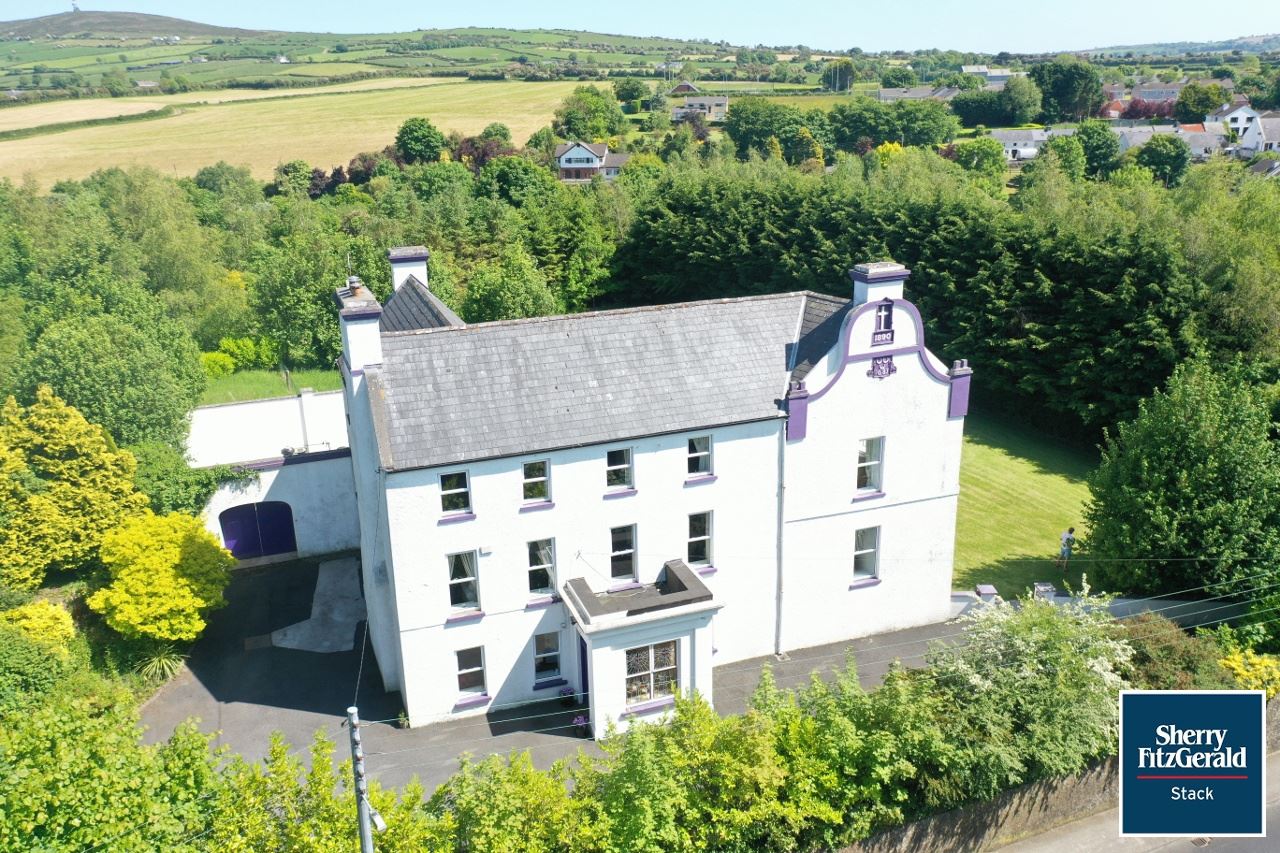
Dowth Hall, near Slane, County Meath 

Dowth Hall, County Meath, courtesy Sherry Fitzgerald.

A small and extremely elegant mid-C18 house, built for 6th Viscount Netterville; with a two storey front, but with an extra storey fitted in as a mezzanine at the back. The front, of ashlar, is five bay; the lower storey is rusticated; the windows in the upper storey are higher than those below, and have alternate triangular and segmental pediments over them. Urns on roofline; pedimented doorway with Doric columns and frieze. Splendid interior plasterwork, possibly by Robert West, who may in fact have been the architect. Doric frieze in hall. Beautiful rococo decoration on walls and ceiling of drawing room. Dining room ceiling with birds and clouds. Library with simple rococo ceiling and swags on walls.” [1]

Drenagh House (formerly Fruit Hill), Limavady, County Derry 

It tells us “Nestled in beautiful parkland and surrounded by our gardens, you will find our grand Georgian Mansion House which is perfect for weddings, family get togethers, corporate events and much more.

See my entry https://irishhistorichouses.com/2023/10/05/places-to-visit-and-stay-in-county-derry-northern-ireland/

Drewstown, Athboy, Co Meath

An imposing three storey stone house of ca 1745, attributed to Francis Bindon, built for Barry Barry. Seven bay entrance front with three bay central breakfront; round-headed window framed by pilasters and segmental entablatures in the centre of each of two upper storeys; ground floor windows with rusticated surrounds, shouldered architraves round windows in upper storeys. Later enclosed porch with fanlight and Ionic columns and pilasters. Curved bow in one side elevation, but not in the other. Two storey hall with the staircase rising behind a bridge-gallery; a rare feature in Irish country houses at this date, though there is another example of it only a couple of miles away across the Westmeath border at Ballinlough Castle. As at Ballinlough, both the stair and gallery have slender wooden balusters; and there is C18 panelling on the walls. The doorcases, both upstairs and down, have heavy triangular or segmented pediments; and the ceiling is decorated with somewhat bucolic plasterwork.” [1]

Drewstown, County Meath, courtesy National Inventory.

Drimina House, Sneem, Co Kerry 

Drimina House, County Kerry, photograph by Robert French, (between ca. 1865-1914), Lawrence Photograph Collection, National Library of Ireland.

A gabled Victorian house on the shores of Sneem Harbour. Noted sub-tropical garden.” [1]

Drimnagh Castle, Dublin – sometimes open to public

Drimnagh Castle, Dublin. Photograph © Jennifer Winder-Baggot, www.irishhistorichouses.com

See my entry https://irishhistorichouses.com/2024/09/19/drimnagh-castle-dublin-open-to-public/

Dripsey Castle, Dripsey, Co Cork

Dripsey Castle, Dripsey, Co Cork courtesy of Pat Falvey, Estate Agent.

A three storey Georgian house with a pedimented breakfront centre. Old castle nearby.

Drishane Castle & Gardens, Drishanemore, Millstreet Town, Co. Cork – section 482

Drishane Castle, County Cork 17th August 2023. Photograph © Jennifer Winder-Baggot, www.irishhistorichouses.com

See my entry https://irishhistorichouses.com/2024/01/11/drishane-castle-gardens-drishanemore-millstreet-town-co-cork/

Drishane House, Castletownsend, County Cork  – section 482  

Drishane, County Cork. Photograph © Jennifer Winder-Baggot, www.irishhistorichouses.com

See my entry https://irishhistorichouses.com/2021/03/07/drishane-house-castletownshend-co-cork/

Dromahair Castle, Dromahair, Co Leitrim

A large “strong-house” built 1626 by Sir Wiliam Villiers, 1st Bt, whose half-brother, James I’s and Charles I’s favourite, the Duke of Buckingham, was granted an extensive tract of land here. It had blank, forward facing gables and many massive chimney-stacks. Now a ruin.” [1]

Dromana, Co Waterford – section 482, Accommodation

Dromana, County Waterford. Photograph © Jennifer Winder-Baggot, www.irishhistorichouses.com

See my entry https://irishhistorichouses.com/2021/02/06/dromana-house-cappoquin-co-waterford/

Dromaneen Castle, Banteer, Co Cork  

A gabled early C17 semi-fortified house on a rock above the river Blackwater; now a ruin. Entrance court with Jacobean doorway. [1]

Dromin House, Dunleer, Co Louth 

Dromin House, Dunleer, Co Louth courtesy National Inventory

“Georgian house of two storeys over basement; five bay front with later porch; parapeted roof.” [1]

Dromkeen, Co Cavan – convent 

Dromkeen (or Drumkeen), Co Cavan – now Loreto convent, Courtesy of National Inventory.

A two storey early C19 house; front of two bays on either side of a central three sided bow, crowned with battlemented gables and finials. Plain entablatures over ground floor windows. Now a convent and much altered.” [1]

Dromkeen House, Pallasgreen, co Limerick 

Dromkeen House, County Limerick, courtesy of National Inventory.

“A gable ended Georgian house of two storeys over basement and five bays. Simple doorcase.” [1]

Dromoland Castle, Newmarket-on-Fergus, Co. Clare – hotel 

Dromoland Castle, County Clare, photo care of Dromoland Castle, for Tourism Ireland 2019, Ireland’s Content Pool.

See my entry https://irishhistorichouses.com/2023/01/20/places-to-visit-and-stay-in-county-clare/

Dromore Bishop’s Palace, Dromore, County Down 

“A fine three storey late C18 block, built 1781 by Hon William Beresford, Bishop (C of I) of Dromore, afterwards Bishop of Ossory, Archbishop of Tuam and 1st Lord Decies. “Improved” by Beresford’s successor, Thomas Percy, the antiquary and poet, who laid out plantations, gardens and a glen, adorned with painted obelisks. In Bishop Percy’s time, the Palace was frequented by a circle of poets and painters, notably the poet Thomas Stott and the painter Thomas Robinson, a pupil of Romney. Sold 1842, when the diocese of Dromore was merged with Down and Connor; used for some years in late C19 as a school, and after that, empty; now ruinous.” [1]

Dromore Castle, Pallaskenry,  County Limerick – ‘lost’ 

Dromore Castle, Pallaskenry,  County Limerick courtesy National Inventory

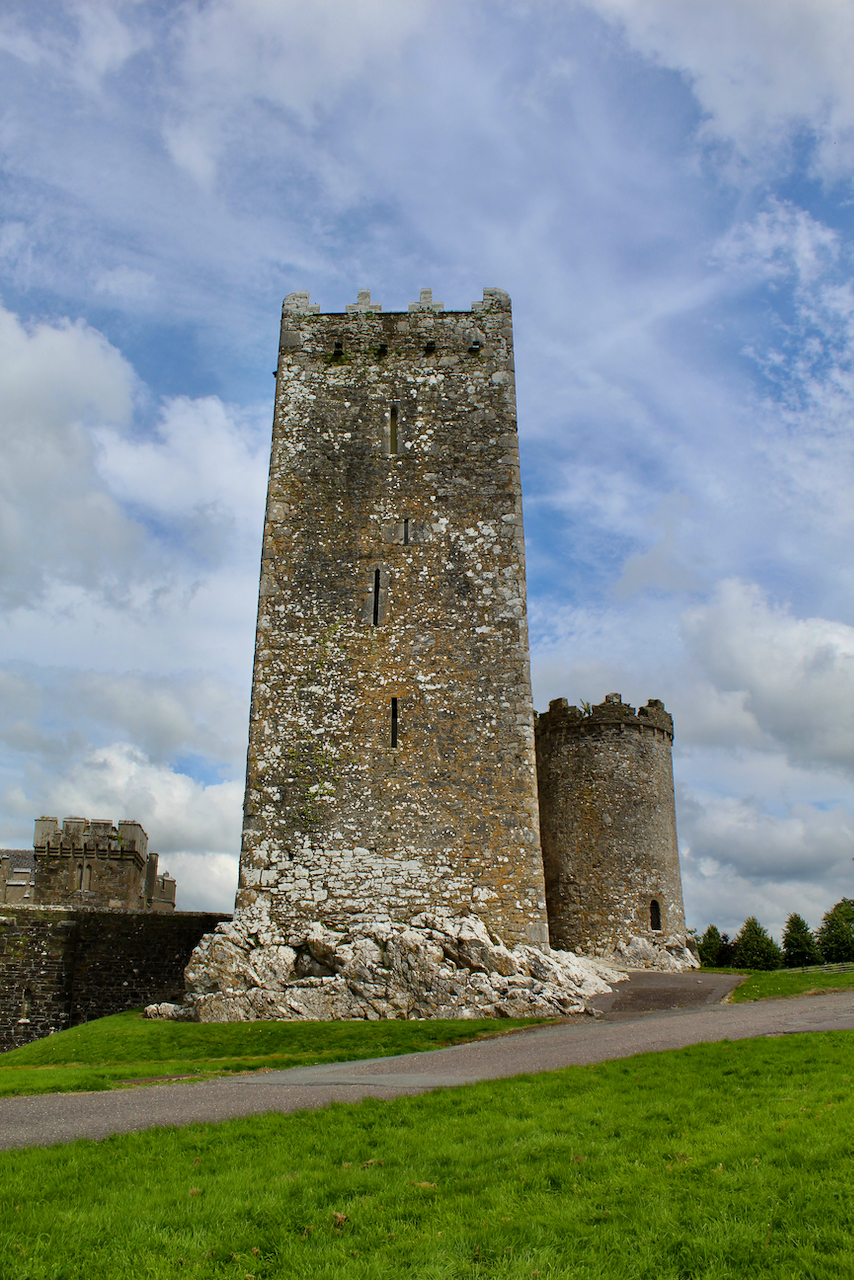
The most archaeologically correct C19 Irish castle, rising from a wooded ridge above a lough; built 1867-70 for 3rdEarl of Limerick to the design of the English architect and “aesthete” Edward William Godwin, who measured and studied the construction of at least a dozen old Irish castles before producing his plans. The grouping, the strength of detail, the solidness of the light grey stonework all make it a building of exceptional quality. A tall main block, with a massive keep at one end balanced by a reproduction of an ancient Irish round tower at teh other, has a lower hall range attached to it at right angles, as a Askeaton Castle; forming two sides of a courtyard which is enclosed on the tierh two sides by battlemented walls wiht corner towers and a narrow gateway. The walls of the castle are as much as six feet thick, with a batter; the details, which are beautifully wrought, are copied exactly from Irish originals; if not of C13 and C14, as Godwin believed, at any rate of C15 and C16; there are Irish battlements, bold chimneys, bartizans and machicoulis on stout corbelling, trefoil windows and angle loops. All the main rooms were made to face into the courtyard, and on the ground floor there is hardly a single outside windows, though this was not just archaeological but, as the Building News explained at the time, “so that in the event of hte country being disturbed, the inmates of Dromore Castle might not only feel secure themselves but be able to give real shelter to others,” this being the year of the Fenian rising, wen at least one other Irish country house, Humewood, County Wicklow – also by an English architect – was designed with a view to defence. A vaulted gateway, over which was a chapel, led into the courtyard; one one side it was the entrance to the banqueting hall, which had a high timber barrel roof and alarge stone fireplace wiht a sloping hood carried on corbels’ on the other was the entrance to the main block, from which a straight flight of stone stairs under a very unusaul stepped barrel vault led up to first floor corridor, off which opened the dining room and two drawing rooms. The larger drawing room, in the keep, had pointed arches in teh thickness of its walls, some of which were supported by marble columns. All three rooms had timbered ceilings with painted decoration in which celtic motifs were mixed with Japanese; Godwin being one of the chief protagonists of the Japanese taste. As if cut through the solid stone, the staircase continued up to the bedroom floor, where the corridor was particularly attractive, with a long row of deep window recesses and a timber barrel roof. The walls of the main room where to have been painted by the historical painter, Henry Stacy Marks, who actually started work, but the scheme had to be dropped owing to the damp – something which also caused Godwin trouble at his other Irish country house, Glenbeigh Towers, Co Kerry.  Dromore was sold by the Limerick family between the two world wars to the McMahon family, who occupied it until ca 1950. An attempt was then made to find a buyer for it; and when this proved unsuccessful, the castle was dismantled. The ruins remain, as solid as any of the old ruined castles of the Irish countryside, but larger and more spectacular than most of them.” [1]

Dromore Castle, County Limerick drawing room chimneypiece 1986, photograph: William Garner, Vanishing Country Houses of Ireland by The Knight of Glin, David J. Griffin and Nicholas K. Robinson, published by The Irish Architectural Archive and The Irish Georgian Society, 1988.

Dromore Castle, Kenmare, County Kerry 

Dromore Castle, County Kerry, photograph by Robert French, (between ca. 1865-1914), Lawrence Photograph Collection, National Library of Ireland.

An early C19 castle by Sir Thomas Deane, built ca 1831-38 for Rev Denis Mahony; replacing a long low two storey house on a different site built on one side of a courtyard with the stables on the other, which still survives; and which itself replaced an old castle of the O’Mahonys, on a different site again. The present castle is of two storeys over basement and is faced in a golden-brown Roman cement imitating ashlar, with grey limestone dressings. The entrance front, which is dominated by a machicolated round tower and turret, at one side of a central heavily machicolated porch-tower, has a certain grimness; the windows are few and narrow. The garden front, facing down wooded slopes of sub-tropical luxuriance to the Kenmare River, is more graceful and friendly; there are fewer machicolations and the windows are wider; in the centre is a Perpendicular window of great height. At either end of the garden front is a three-sided bow, with corner-bartizans. Apart from the staircase window, the windows are rectangular, and combine wooden Gothic tracery with Georgian glazing; some of them incorporating rather unusual half Gothic fanlights. Inside the castle, a vast hall, like a long gallery, runs almost the full length of the front; it has a timbered ceiling and oak-grained doors with panels of Gothic tracery. In the centre, opposite the front door, an arch opens onto an imperial staircase of oak with Gothic balusters, lit by the great Perpendicular window...” [1]

Dromore Castle, County Kerry, photograph by Robert French, (between ca. 1865-1914), Lawrence Photograph Collection, National Library of Ireland.
Dromore Castle, Kenmare, County Kerry courtesy National Inventory
Dromore Castle, County Kerry, courtesy abandonedworldphotography.com

Drumadarragh House, Kilbride, County Antrim 

A two storey three bay C18 house with a fanlighted doorway, to which two wings were added, probably 1827; they are of two bays each, similar in style and proportion to the centre; but each has a pediment gable with an oeil-de-boeuf window. The rear of the house is similar, except for a wing in the same style as the rest of the house, added 1903.” [1]

Drumalis, Larne, County Antrim

Drumalis, County Antrim, photograph by Robert French, (between ca. 1865-1914), Lawrence Photograph Collection, National Library of Ireland.

A rambling two storey late-Victorian or Edwardian mansion, dominated by a four storey central tower and turret. Eaved roof; camber-headed windows; pillared porch; solid parapet on tower and turret.” [1]

Drumalis, County Antrim, photograph by Robert French, (between ca. 1865-1914), Lawrence Photograph Collection, National Library of Ireland.

Drumbanagher, Poyntpass, County Armagh – demolished

“A very large Italianate house by William Playfair of Edinburgh, built ca 1837 for Maxwell Close, brother-in-law of 1stLord Lurgan who built Brownlow House, also to the design of Playfair. Two storey centre block with higher three storey wings set at right angles to it, and projecting beyond it both in the entrance and garden fronts; the space between the wings in the entrance front being filled by vast arched porte-cochere. Roofs of wings eaved and carried on bracket cornices; roof of centre block with balustraded parapet. Plain pilasters framing downstairs windows in ends of wings. Now demolished.” [1]

Drumbaragh House, Kells, Co Meath 

Drumbaragh, County Meath, photograph by Robert French, (between ca. 1865-1914), Lawrence Photograph Collection, National Library of Ireland.

A tall three storey three bay C18 block. Central chimneystack; C19 pillared porch and window surrounds.” [1]

Drumboe Castle, Stranorlar, Co Donegal – a ruin

A Georgian house consisting of three storey centre with a three sided central bow and pillared porch, and bow-ended wings. A Wyatt window on either side of the centre bow.” [1]

Drumcairn, Stewartstown, County Tyrone

Drumcar, Dunleer, Co Louth – hospital 

Drumcar, Dunleer, Co Louth courtesy National Inventory.

A square block of ca 1778, three storeys over a basement with a five bay front, embellished C19 and extended by the addition of two large single-storey Italianate wings prolonging two adjoining fronts, one of them ending in a handsome archway. Doorcase with four engaged Ionic columns and pediment over middle two; mid to late C19 Doric portico; segmental pediments over ground floor windows. Doorcase with Tuscan pilasters in hall. Ballroom in one of the wings. Now owned by St. John of God Brothers.” [1]

Drumcar, County Louth, photograph courtesy of National Inventory.

Drumcarban, Crossdoney, Co Cavan

A late C18 house of three storeys and three bays; doorcase with very delicate fanlight; flues grouped in one long stack.” [1]

Drumcashel, Castlebellingham, Co Louth – ruin

Drumcashel, Castlebellingham, Co Louth courtesy National Inventory.

A C19 Tudor-Revival house with hood mouldings.” [1]

Drumcondra House, Drumcondra, Dublin – All Hallow’s College 

Drumcondra House, Dublin, courtesy of Archiseek.

A very important three storey C18 house, with two adjoining fronts. The grander of these two, which has a boldly projecting central feature of giant Corinthian pillars supporting a balustraded Corinthian entablature and is richly adorned with niches, aedicules and triangular and segmental pediments over the windows and two doorways, of unknown authorship; the simpler, which is plain but for a two storey pedimented frontispiece with a pilastered Venetian window in its upper storey, by Sir Edward Lovett Pearce, his earlier recorded private house work, which he carried out 1727 for Marmaduke Coghill, MP, Chancellor of the Exchequer and Judge of the Prerogative Court. The interior, which has C18 panelling and good contemporary chimneypieces, has been altered at various times, but some of it is by Pearce. On the lawn is a temple with a pediment and Cornithian pilasters, probably by Alessandro Galilei, the Italian architect who designed the main block of Castletown, Co Kildare.  Now All Hallow’s College.” [1]

All Hallow’s College, Drumcondra, Dublin, photograph by Robert French, Lawrence Photographic Collection, National Library of Ireland.

Drumconora (formerly Nutfield), Ennis, Co Clare 

A handsome stone-faced mid-C18 house of three storeys over basement, attributed to Francis Bindon. Pedimented breakfront with triple window over round-headed tripartite doorway; 2 bays on either side. Quoins; string courses; window surrounds with keystones. Seat of the Crowes (see Dromore), afterwards of the O’Loghlens, the family of the eminent lawyer Sir Michael O’Loghlen who 1836 became the first Catholic to sit on the Judicial Bench in Ireland or Britain since the Revolution of 1688. Drumconora was sold by the O’Loghlens 1930s and subsequently demolished.” [1]

Drumcree House, Collinstown, Co Westmeath

Drumhierney, Co Leitrim 

“A two storey six bay house with a two bay pedimented breakfront and conservatory with fluted Ionic pilasters. Now derelict.” [1]

Drumlargan, Co Meath 

A two storey double gable-ended house, probably early C18 but with C19 windows and a C19 two storey gabled projecting porch. Owned by the Bomford family until ca 1850.” [1]

Drummilly, Loughgall, County Armagh 

Drummilly, County Armagh, photograph by Robert French, (between ca. 1865-1914), Lawrence Photograph Collection, National Library of Ireland.

“A plain, vaguely Georgian house with remarkable two storey elliptical structure of glass and art nouveau ironwork projecting from its centre and constituting the entrance. Elliptical windows in the upper storey of this addition.” [1]

Drumnasole House, Garronpoint, County Antrim 

p. 113. “(Turnly/IFR) An early 19C house, in what was described (1845) as “a most romantic and sheltered site at the base of the perpendicular hills.” Begun sometime ante 1819 and not completed until ca 1840, built for Francis Turnly, who had been in the East India Company and spent much of his early life in China. Of basalt from the hill behind; two storey over basement, entrance front has breakfront centre with window flanked by two narrower windows above and fanlighted doorway under shallow porch of four engaged Doric columns below; one bay on either side. Side of house is five bay. Long hall with plasterwork ceiling; stairwell lit by dome.” [1]

Drumreaske House, Monaghan, co Monaghan

A two storey C19 Tudor-revival house of the “cottage” type, with gables and decorated bargeboards.” [1]

Drumsill, County Armagh 

Owned by the MacGeough family from the C17. A house of ca 1788, remodelled by Francis Johnston, ca 1860. Sold 1916. An hotel 1957-72, when it was blown up.” [1]

Duarrigle Castle, Millstreet, Co Cork – ‘lost’

Duarrigle Castle, County Cork, entrance front, photograph: Robert French, Lawrence Collection, National Library of Ireland.

A castellated house of early C19 appearance, consisting of 3 storey block and a two storey block with a round turret at their junction. Simple battlements; regularly disposed mullioned windows with ogival-headed lights; entrance doorway wiht ogival fanlight at the head of a flight of steps with wrought-iron railings. Hood mouldings. The seat of the Justice family, more recently of the O’Connors, maternal forebears of Mr Norman St John-Stevas, (whose mother, Mrs Stephen S Stevas, was formerly Miss Kitty St John O’Connor, of Duarrigle Castle). Now a ruin.” [1]

Duckett’s Grove, Carlow – a ruin 

Duckett’s Grove, County Carlow. Photograph © Jennifer Winder-Baggot, www.irishhistorichouses.com

See my entry https://irishhistorichouses.com/2024/07/18/ducketts-grove-county-carlow-an-impressive-ruin-and-a-walled-garden/

Duckspool, Dungarvan, Co Waterford 

Duleek House, Duleek, Co Meath

“A three storey pedimented cut-stone house of ca 1750, attributed to Richard Castle or his school, built for Thomas Trotter, MP. Three bay front; central breakfront with triple window above Venetian window above pedimented tripartite doorway. Balustraded roof parapet.” [1]

Duleek House, County Meath, courtesy National Inventory.

Dunany House, Togher, Co Louth 

Dunany House, Togher, Co Louth courtesy National Inventory.

“A “U” shaped house with a courtyard, partly early C18, but much altered late C18 and made to look Gothic in early C19. Bolection chimneypiece in hall.” [1]

Dunany House, Togher, Co Louth courtesy National Inventory.

Dunboden Park, Mullingar, Co Westmeath

A house of early to mid C19 appearance… [1]

Dunboy Castle and Puxley Manor, Castletownberehaven, Co Cork  

Dunboy Castle, County Cork, photograph by Robert French, (between ca. 1865-1914), Lawrence Photograph Collection, National Library of Ireland.

Under Dunboy Castle in Mark Bence-Jones:

A castellated house of 1838 and earlier to which H.L. Puxley, owner of the Berehaven Copper Mines, added a vast new building of razor sharp ashlar 1880s; a sold, vigorous, three dimensional composition in with Ruskinian Gothic arches and windows were combined wiht the “Old English” oriels. Whilte the overall effect was High Victorian, it was not wholly uninfluenced by subsequent trends in English domestic architecture, having certain similarities to Norman Shaw’s Cragside, Northumberland. There were no battlements, but a skyline of steep and pointed roofs and tall chimneys. A high-roofed tower rose from the middle of the entrance front, and another from a corner of the front facing the water, which had an arcaded basement beneath it; at one side of the latter tower was a tremendous buttress, combined with a chimneystack. The chief feature of the interior was the series of transverse diaphragm arches spanning the hall. Burnt 1921, now a spectacular ruin.” [1]

Dunboy Castle, County Cork, photograph by Robert French, (between ca. 1865-1914), Lawrence Photograph Collection, National Library of Ireland.
Puxley Mansion, Co Cork, courtesy of National Inventory.

Dunboyne Castle, Dunboyne, County Meath – accommodation 

Dunboyne Castle, County Meath, courtesy National Inventory.

This C18 house which replaced the old castle here as the seat of the Dunboynes. From its appearance, dating from two different periods, the front being later; probably inspired by Sir William Chambers’s Charlemont House in Dublin and added either by Pierce Butler, 10th Lord Dunboyne, who succeeded 1768, or by his son, 11th Baron, who died 1785. Of three storeys and seven bays, the ground floor being rusticated and treated as a basement and the first floor as a piano nobile with pediments over the windows. Tripartite pedimented and fanlighted entrance doorway; urns on parapet. Single-storey four bay rusticated wing. Good interior rococo plasterwork...” [1]

See my entry https://irishhistorichouses.com/2022/10/28/places-to-visit-and-stay-in-county-meath-leinster/

Dunbrody Park, Arthurstown, County Wexford – accommodation

WWW.DUNBRODYHOUSE.COM 

Dunbrody House, courtesy of their website.

A pleasant, comfortable unassuming house of ca 1860 which from its appearance might be a C20 house of vaguely Queen Anne flavour. Two storey, five bay centre, with middle bay breaking forward and three-sided single-storey central bow; two bay projecting ends. Moderately high roof on bracket cornice; windows with cambered heads and astragals. Wyatt windows in side elevation.” [1]

See my entry https://irishhistorichouses.com/2023/11/15/places-to-visit-and-stay-in-county-wexford/

Dundalk House, Dundalk, Co Louth 

Dundalk House, County Louth, photograph by Robert French, (between ca. 1865-1914), Lawrence Photograph Collection, National Library of Ireland.

A Georgian Gothic house of two storeys, with pointed windows and a three sided bow, originally seat of the Earls of Roden, who inherited the estate from the Earls of Clanbrassill of 2nd creation; acquired C19 by the Carrolls, owners of the tobacco firm of P.J. Carroll & Co, whose factory was nearby. Demolished ca 1900 owing to its site being unhealthy, and replaced by red brick gabled house of the period, which was given to P.J. Carroll and Co for use as offices 1936.” [1]

Dundanion, Blackrock, Co Cork  

Dundanion, Blackrock, Co Cork courtesy of National Inventory.

“A two storey home of the Cork architect Sir Thomas Deane, who supervised its building, though it was designed by the Morrisons. Single storey Ionic portico; eaved roof.” [1]

Dundarave House, Bushmills, County Antrim 

Dunderave, County Antrim, photograph by Robert French, (between ca. 1865-1914), Lawrence Photograph Collection, National Library of Ireland.

A very fine Italianate palazzo by Charles Lanyon; built 1847 for Sir Edmond Workman-MacNaghten, 2nd Bt, to replace a castellated house which his father, Sir Francis MacNaghten, had built only ten years earlier...” [1]

Dundermot, Ballintober, Co Roscommon 

Dundermot, County Roscommon, photograph courtesy of National Inventory.

“A three storey C18 double gable-ended house of three bays with two storey two bay wings almost as high as the centre. Regency ironwork porch’ ironwork balconies in front of ground floor windows of wings. Tall and massive chimneystacks on gable ends of centre block.” [1]

Dundrum House, County Tipperary – was previously a hotel

https://www.dundrumhousehotel.com

Dundrum House, County Tipperary, photograph from National Inventory of Architectural Heritage.

A C18 Palladian mansion consisting of a centre block of two storeys over a high basement joined by short links to flanking wings or pavilions, very much in the style of Sir Edward Lovett Pearce: the seat of the Maude family, Viscounts Hawarden. Entrance front of seven bays, with a three-bay pedimented breakfront, links and wings of one bay each. Central, round-headed window with keystone above pedimented doorcase; similar windows on either side of door and in wings. Graceful perron in front of door with partly curving double stairs and iron railings. Oculi and camber-headed windows in basement; prominent quoins  on centre block and wings. Large hall with compartmented ceiling. Impressive, double-pedimented stable block at right-angles to the entrance front. 

An extra storey, treated as an attic above the continuous cornice, was added to the centre block about 1890 by the 4th Viscount Hawarden, who was 1st and last Earl de Montalt.  This did away with the pediment and spoilt the proportions of the house; making the centre block massive and ungainly, so that it dwarfs the wings. After being sold by the Maudes, the house ws for many years a convent; but it is now in private occupation once more.” [1]

Dundullerick, Lisgoold, Co Cork  

A Georgian house consisting of a two storey three bay centre with single storey two bay wings.” [1]

Duneske, Cahir, Co Tipperary

A three storey asymmetrical Victorian house with a high roof and some gables; built ca 1870 for R.W. Smith to the design of Sir Thomas Drew. Plate glass windows, bows in various places. Porch with sinuous, rather art-nouveau style decoration in stucco…” [1]

Duneske House, County Tipperary, photograph courtesy of National Inventory.

Dungar, Coolderry, Co Offaly 

Dungar House, County Offaly, courtesy of National Inventory.

A two storey C19 house with a front and side elevation of three bays, the centre bay of the front being recessed, and that of the side breaking forwards. Porch and arches and rusticated piers; single-storey curved bow in centre of side elevation; prominent quoins; entabaltures over ground floor windows; eaved roof on bracket cornice.” [1]

Dungiven Castle, Dungiven, County Derry 

“A C19 castle with a long two storey battlemented front, having a central polygon tower with a pointed Gothic doorway and a pointed window over, and a round tower at each end. Five bays on either side of centre.” [1]

Dunguaire Castle (or Dungory), near Kinvara, County Clare

Dunguaire Castle, County Clare. Photograph © Jennifer Winder-Baggot, www.irishhistorichouses.com

See my entry https://irishhistorichouses.com/2025/07/05/dunguaire-castle-kinvara-county-clare-open-to-the-public/

Duninga, Goresbridge, Co Kilkenny 

Duninga, County Kilkenny courtesy of National Inventory.

A house with a three storey centre and two storey projecting wings, joined by a Doric colonnade.” [1]

Dunkathel House (or Dunkettle), Glanmire, Cork

Dunkathel, County Cork, 1981.

A house in the Palladian manner, consisting of a two storey nine bay centre block joined by screen walls with rusticated niches to office wings extending back; the front ends of the wings being treated as two storey two bay pavilions with oculi in their upper storey. The front of the centre block has quoins at its sides and framing a three bay breakfront; a solid roof parapet and fanlighted doorcase with an entablature and engaged Tuscan columns.…” [1]

Dunleckney Manor, Bagnelstown, Co Carlow

Dunleckney Manor, County Carlow, photograph by Robert French, (between ca. 1865-1914), Lawrence Photograph Collection, National Library of Ireland.

p. 116. “(Newton, sub Bagenal/IFR; Vesey sub de Vesci, V/PB) A C19 Tudor-Gothic house by Daniel Robertson, of Kilkenny. Built ca 1850 for Walter Newton, who inherited the estate from his mother, the heiress of the Bagenal family of Dunleckney. Faced in smooth limestone ashlar; steep gables and overhanding oriels; a slender polygonal corner turret decorated with panels of miniature tracery in the manner of English Perpendicular architecture; similar ornament on the bow of the garden front. Interior has plaster fan vaulting. Elaborately carved staircase of wood...” [1]

Dunleckney Manor, County Carlow, photograph by Robert French, (between ca. 1865-1914), Lawrence Photograph Collection, National Library of Ireland.
Dunleckney Manor, County Carlow, by Daniel Robertson, 1835. Photograph from the National Inventory of Architectural Heritage.

Dunluce Castle, County Antrim – heritage visitor site

Dunluce, County Antrim, June 2023. Photograph © Jennifer Winder-Baggot, www.irishhistorichouses.com.

See my entry https://irishhistorichouses.com/2024/07/04/dunluce-castle-ruin-county-antrim-northern-ireland/

The Manor House, Dunmanway, Co Cork courtesy National Inventory.

p. 116. “Cox, sub Villiers-Stuart/LGI1912; Lucas/IFR) A two storey three bay house of 1819, with Wyatt windows and an enclosed porch.” [1]

Dunmore, Carrigans, Co Donegal  – accommodation

Dunmore House, County Donegal. Photograph from National Inventory of Architectural Heritage.

See my entry https://irishhistorichouses.com/2022/10/27/places-to-visit-and-stay-in-county-donegal-ulster/

Dunmore House, Dunmore, County Galway

p. 116. (Shee, Bt/PB1869; Dering, Bt/PB) “A late C18 house of three storeys over a basement, incorporating an earlier house. Three bay bow-ended entrance front, with one bay central breakfront. Wide fanlighted doorway.” [1]

Dunmore House (also known as Dunmore Palace), Kilkenny, Co Kilkenny, now Dunmore Cottage 

Dunmore cottage, Kilkenny, Co  Kilkenny courtesy National Inventory

p. 116. “(Butler, Ormonde, MPB) A C17 red brick house on a palatial scale built post Restoration by Duchess of Ormonde, wife of the great Duke. Its chief interior feature was a staircase of carved wood, “so large the twenty men might walk abreast.” The Duchess also laid out elaborate gardens here. When the Duke was showing some people his improvements at Kilkenny Castle, one of them said: “Your Grace has done much here,” to which he replied “Yes, and there the Duchess has Dunmore; and if she does any more, I shall be undone.” The house was neglected and eventually demolished during C18.” [1]

Dunmore, Durrow, County Laois

Dunmore, County Laois, Vanishing Country Houses of Ireland by The Knight of Glin, David J. Griffin and Nicholas K. Robinson, published by The Irish Architectural Archive and The Irish Georgian Society, 1988.

An early Georgian house of brick, plastered over, consisting of a three storey five bay gable-ended centre block with two storey projecting wings...” [1]

Dunnstown, Co Kildare 

p. 116. “A two storey pedimented C18 house flanked by two free-standing wings with small pediments. The pediment of the main block was made into a barge-boarded gable C19.” [1]

Dunore House, Aldergrove, County Antrim

p. 117. “The only full-blown country house example in Ireland of the Eyptian taste; and a rather late example, having been built post 1857. Of smooth rusticated granite’ the doorcase being composed of four tems with Pharoahs’ heads, originally surrounded by hieroglyphics; the pediment being topped with an obelisk.” [1]

Dunsandle Castle, Co Galway – ‘lost’ 

Dunsandle, County Galway c. 1950, Vanishing Country Houses of Ireland by The Knight of Glin, David J. Griffin and Nicholas K. Robinson, published by The Irish Architectural Archive and The Irish Georgian Society, 1988.

p. 116. (Daly/IFR) A large plain mid to late C18 Palladian house, until recently the finest house in Co Galway, very tentatively attributed by the Knight of Glin to David Duckart. Built for Rt Hon Denis Daly MP… Sold ca 1954 by Major Bowes Daly; subsequently demolished.”

Dunsandle Castle, Co Galway courtesy National Inventory

Dunsany Castle, Dunsany, Co Meath section 482 in 2019  

Dunsany, County Meath, July 2019. Photograph © Jennifer Winder-Baggot, www.irishhistorichouses.com

A castle  founded ca 1200 by Hugh de Lacy; and which, in 1403, passed by marriage, along with the neighbouring castle of Killeen, to Sir Christopher Plunkett; who left Killeen to his eldest son, ancester of the Earls of Fingall, and Dunsany to his second son, 1st Baron of Dunsany. The castle eventually consisted of two tall blocks, each with a pair of square corner-towers, joined by a hall range so as to enclose a shallow three sided court. The 13th Lord Dunsany restored and modernised the old castle in the 1780s, filling in the old court between the projecting tower blocks to form a spacious staircase hall, putting in pointed Georgian-Gothic windows and decorating the principle rooms in the fashionable style of the period. 14th Lord Dunsany carried out various additions and alterations to the castle around 1840, which can be safely attributed to James Shiel, who was working at the nearby Killeen Castle at that time. Shiel replaced the Georgian-Gothic windows on the entrance front and at the end of the castle with tracery and mullioned windows; but he was much more sparing with his medievalism here than he was at Killeen; so that the old grey castle with its square towers keeps all the character and atmosphere of a house that has grown through the ages, rather than looking merely like a castle of the 19th century…” [1]

Dunsland, Glanmire, Co Cork – ‘lost’  

p. 117. “(Pike;LGI1958) A late-Victorian house with an eaved roof, half-timbered gables and pediments and entablatures over the ground floor windows. Home of Joseph Pike, burnt 1920.” [1]

Dunsoghly Castle, Finglas, Co Dublin

Dunsoghly Castle, Finglas, Co Dublin courtesy Irish Antiquities, by Brian T. McElherron.

p. 117. “(Dunne/LGI1912) A C15 castle built by Thomas Plunkett, Chief Justice of the King’s Bench; consisting of a tall four storey tower with tapering corner-turrets rising above the parapet of the centre block. At one side of the tower is a detached chapel, built 1573 by Sir John Plunkett, Chief Justice of the Queen’s Bench, and his third wife, Genet Sarsfield. The lowest storey of the tower is vaulted, those above it had timber floors. The castle still keeps its original roof, with massive oak timbers...” [1]

Durrow Abbey, Tullamore, Offaly

Durrow Abbey, County Laois, photograph courtesy of National Inventory.

p. 117. “(Graham-Toler, Norbury, E/PB; Slazenger, sub Powerscourt, V/PB) Originally a plain three storey 7 bay C18 house with a pillared porch; replaced ca 1837 by a Tudor-Gothic house built for 2nd Earl of Norbury, who was murdered here 1839. The house now consists of two two storey ranges at right angles to each other, one of them standing on slightly lower ground, with a small battlemented tower at their junction. The higher range has a central projecting porch-gable, with a corbelled oriel over the entrance door, and a slightly stepped gable at each end. There are tall Tudor-style chimneys and a few pinnacles. The house was rebuilt in the same style 1924. Nearby is the site of an ancient abbey, with a fine C10 High Cross...” [1]

Dysart, Delvin, Co Westmeath

[1] Mark Bence-Jones. A Guide to Irish Country Houses (originally published as Burke’s Guide to Country Houses volume 1 Ireland by Burke’s Peerage Ltd. 1978); Revised edition 1988 Constable and Company Ltd, London.

Avondale House, County Wicklow – open to the public

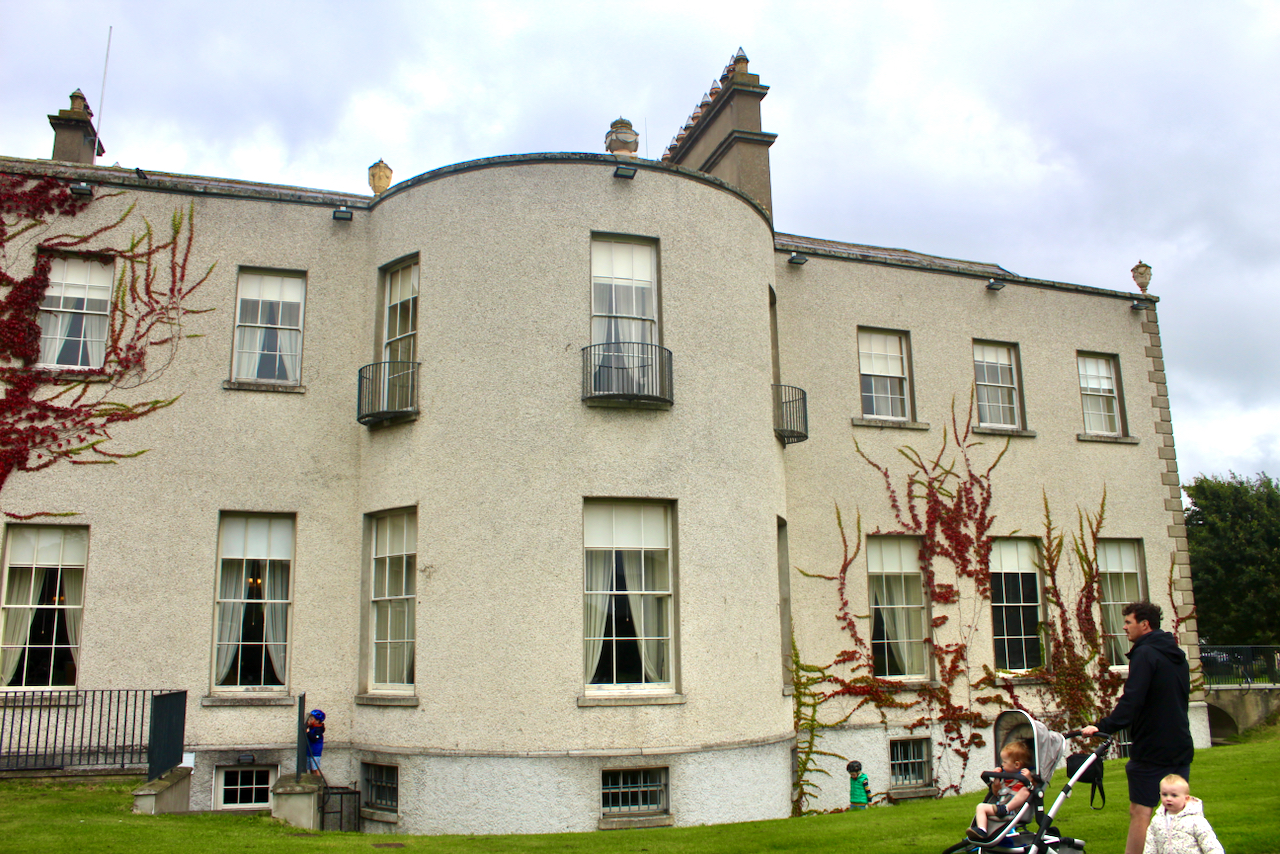
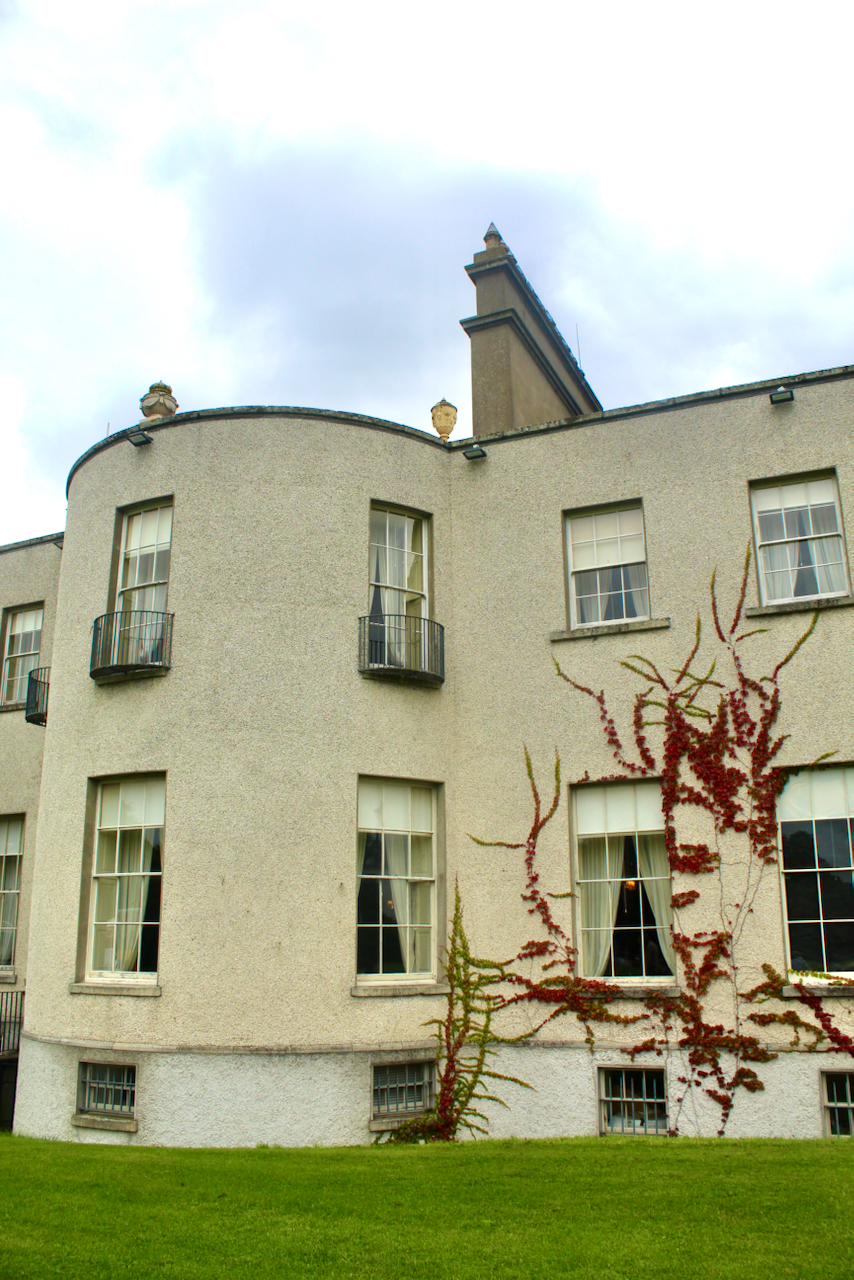
Avondale House, County Wicklow

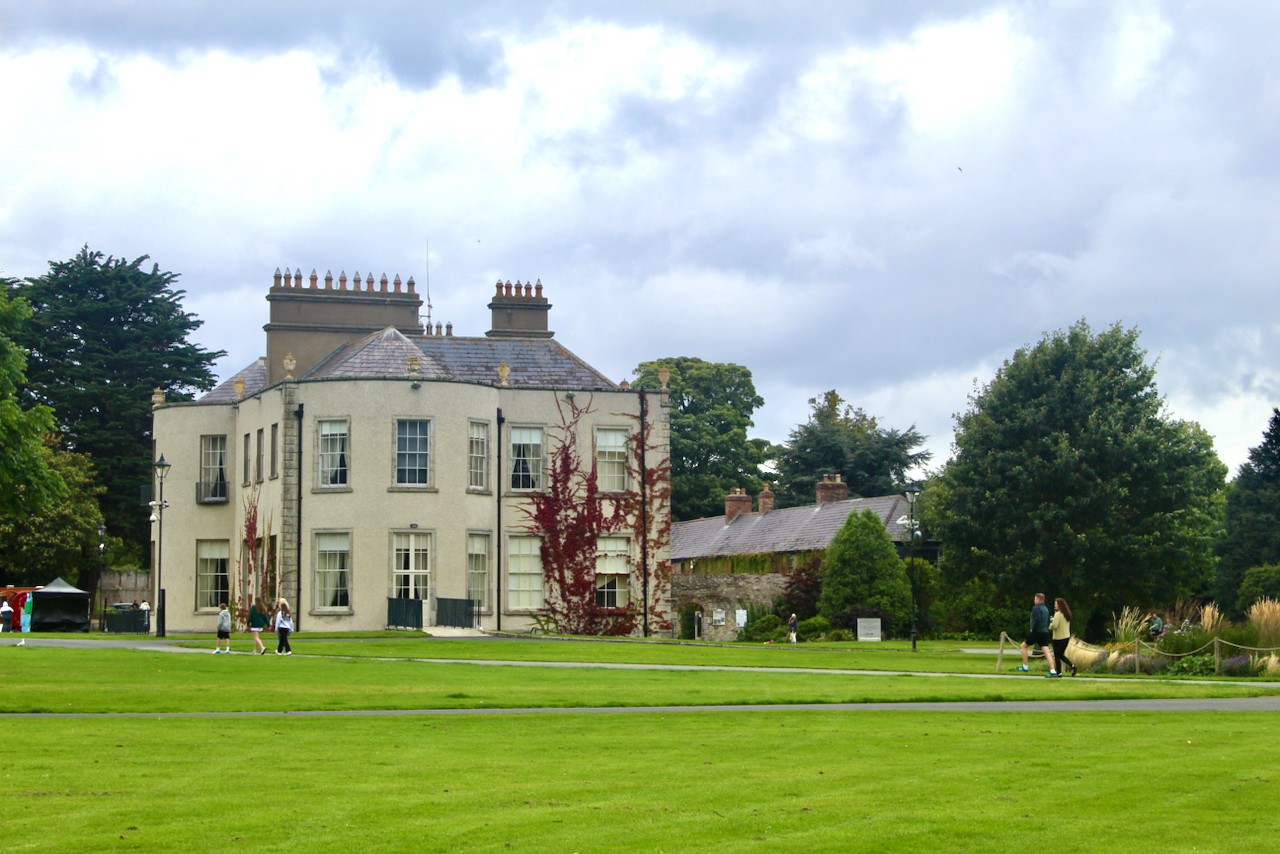
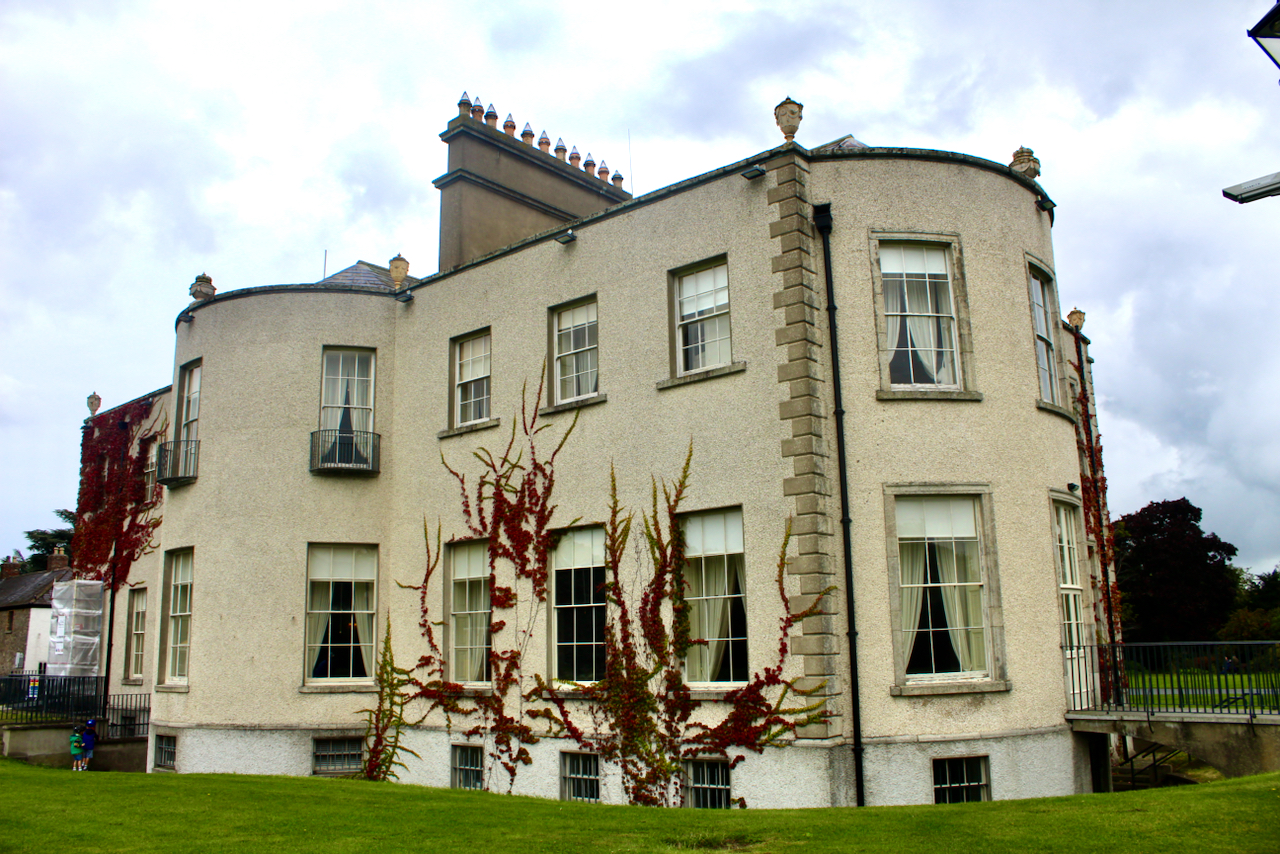
We visited in March 2023. The house was built in 1779 for Samuel Hayes and may have been designed by James Wyatt, or by Samuel Hayes himself. Photograph © Jennifer Winder-Baggot, www.irishhistorichouses.com
Avondale, Rathdrum, Co Wicklow, photograph by Sonder Visuals, 2014, Courtesy Failte Ireland.

We visited in March 2023. The house was built in 1779 for Samuel Hayes and may have been designed by James Wyatt (1746-1813), or by Samuel Hayes himself. It then passed to the Parnell family and was the birthplace of the politician Charles Stewart Parnell. In 1904 the state purchased the Avondale Estate to develop modern day forestry in Ireland.

Avondale, County Wicklow, photograph by Robert French [between ca. 1865-1914], Lawrence Photographic Collection, National Library of Ireland.

Mark Bence-Jones writes in his  A Guide to Irish Country Houses (1988):

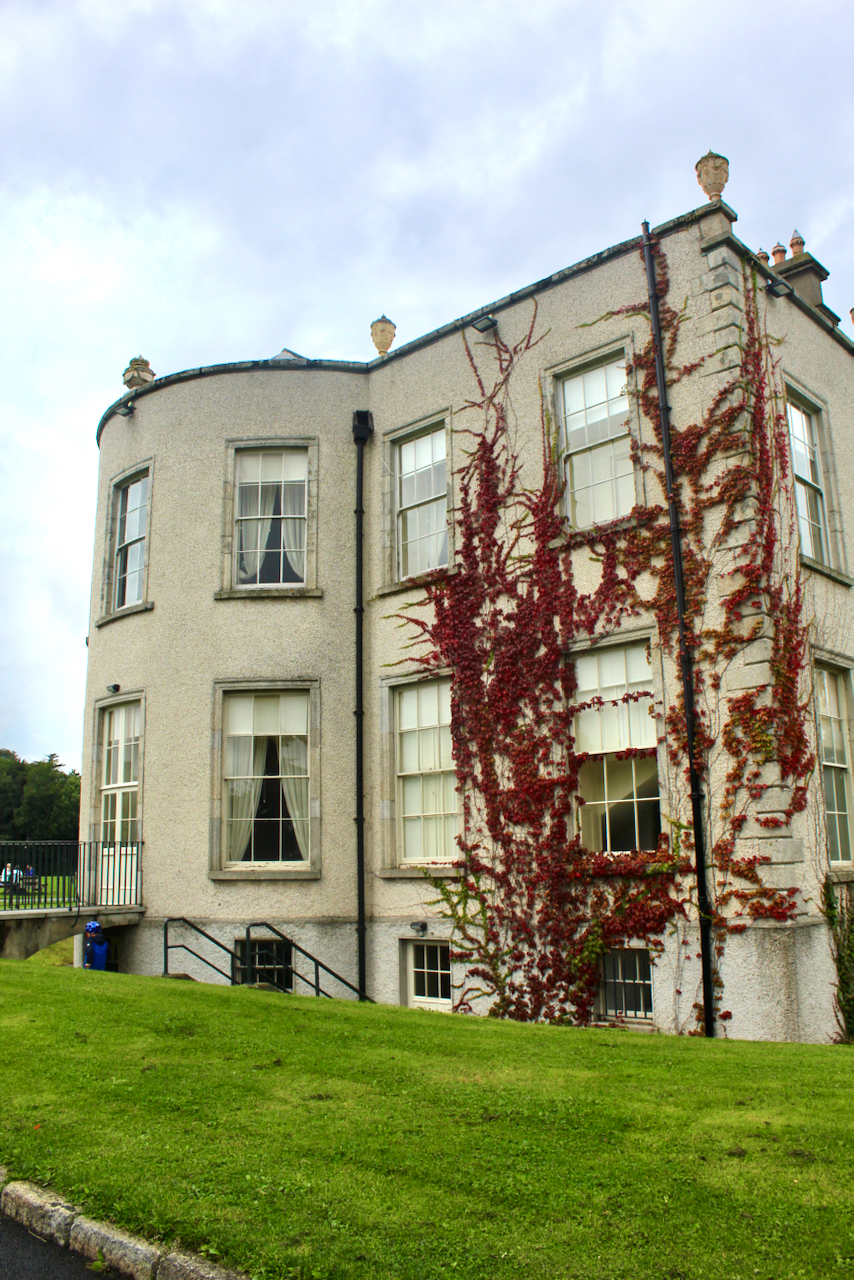
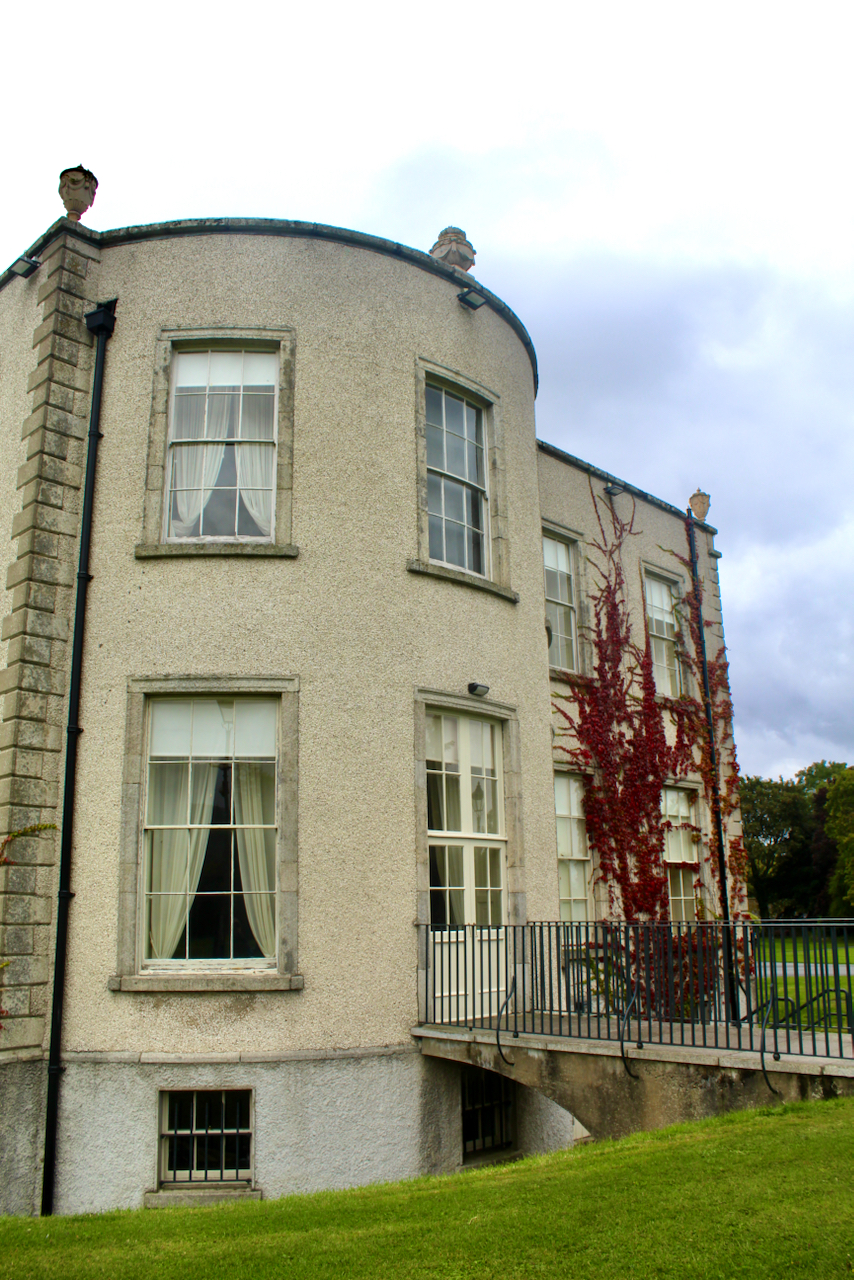
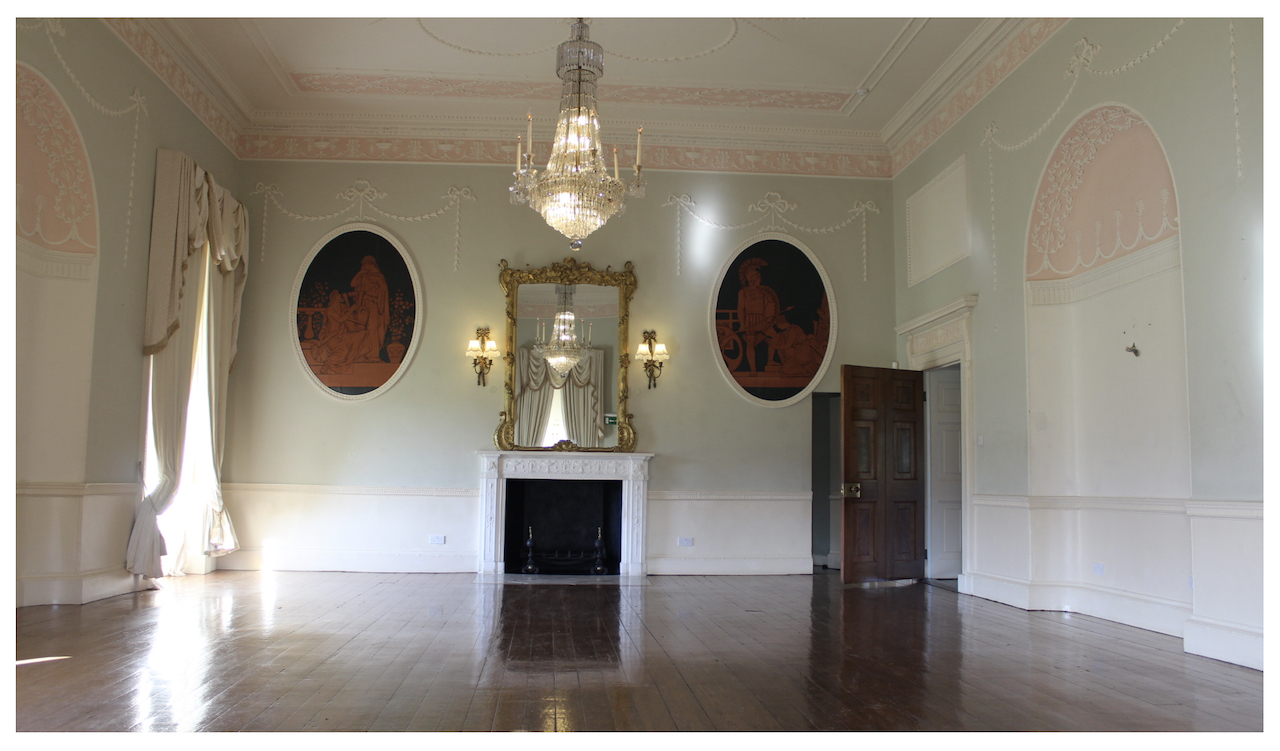
p. 15. “A square house of two storeys over basement, built 1779 for Samuel Hayes, a noted amateur architect who possibly designed it himself. Five bay entrance front, the three centre bays breaking forward under a pediment; small Doric porch with paired columns, Coade stone panels with swags and medallions between lower and upper windows. Garden front with central bow; the basement, which in the entrance front is concealed, is visible on this side with its windows have Gibbsian surrounds. Magnificent and lofty two storey hall with C18 Gothic plasterwork and gallery along inner wall. Bow room with beautiful Bossi chimneypiece. Dining room with elaborate neo-Classical plasterwork on walls and ceiling; the wall decorations incorporating oval mirrors and painted medallions. Passed to William Parnell-Hayes, brother of the 1st Baron Congleton, and grandfather of Charles Steward Parnell, who was born here and lived here all his life with his mother and elder brother. Now owned by the dept of Lands, Forestry Division, which maintains the splendid demesne as a forest park…The house has in recent years been restored by the Board of Works.” [1]

Avondale, 2023. Photograph © Jennifer Winder-Baggot, www.irishhistorichouses.com
Photograph © Jennifer Winder-Baggot, www.irishhistorichouses.com

Samuel Hayes who built the house also planted a forest. He was an expert on trees and wrote books and planted experimentally to see what trees grow best in Ireland. Hayes wrote A practical treatise on planting and the management of woods and coppices (1794). Intended to be a practical guide to the planting of trees and the managing of wood for timber, it was in fact Ireland’s first full-length book on trees. It is fitting that the property is now owned by Coillte, and that they also grow trees and ran the “Great Tree Experiment” here at Avondale. For several years after the house passed into the ownership of the state a forestry school was located in the property.

Avondale, County Wicklow, photograph by Robert French [between ca. 1865-1914], Lawrence Photographic Collection, National Library of Ireland.

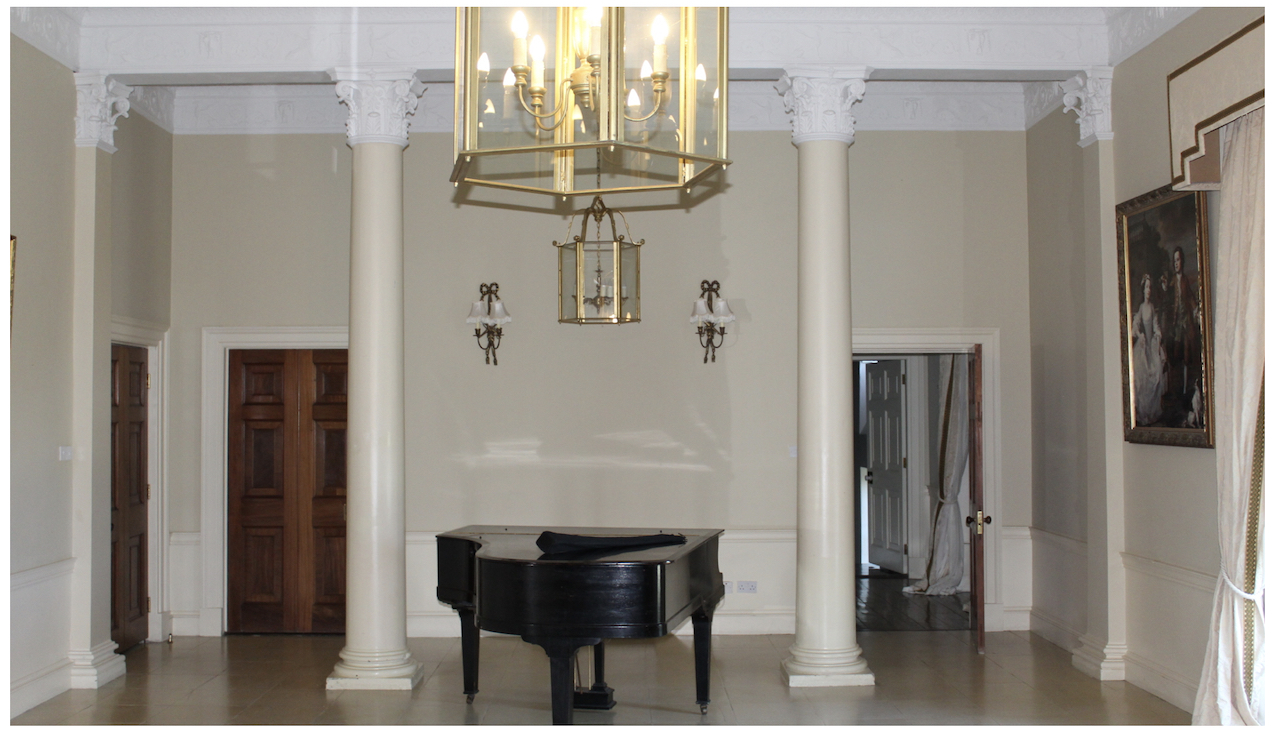
The house contains Gothic features in the front hall, especially in the stuccowork. The front hall is double-height and has an overlooking balcony.


Charles Stewart Parnell was a very shy man, and so he used to practice his speeches from the balcony in the front hall of Avondale. For this reason, his family called him “the Blackbird.” Photograph © Jennifer Winder-Baggot, www.irishhistorichouses.com
Avondale, 2023. Photograph © Jennifer Winder-Baggot, www.irishhistorichouses.com
The door has Samuel Hayes’s initials, and the date which the house was completed. Photograph © Jennifer Winder-Baggot, www.irishhistorichouses.com
Photograph © Jennifer Winder-Baggot, www.irishhistorichouses.com

The first room we entered from the hall is dedicated to Samuel Hayes.

Avondale, 2023. Photograph © Jennifer Winder-Baggot, www.irishhistorichouses.com
Samuel Hayes (1743-1795), who built Avondale House. Photograph © Jennifer Winder-Baggot, www.irishhistorichouses.com
Avondale, 2023. Photograph © Jennifer Winder-Baggot, www.irishhistorichouses.com
As well as being an amateur architect, a politician and expert on trees, Samuel Hayes designed this bridge that was built over the Avondale River. Unfortunately it no longer exists.

Samuel Hayes was the great grandson of Thomas Parnell (1625-1686), the first of the Parnell family to come to Ireland, and from whom Charles Stewart Parnell was also descended. Thomas’s son John (1680-1727) became Judge of the Court of King’s Bench and built a house at Rathleague in County Laois. According to the family tree framed in the Drawing Room, John had a daughter Anne who married John Hayes and gave birth to the builder of Avondale, Samuel Hayes.

Photograph © Jennifer Winder-Baggot, www.irishhistorichouses.com

In 1766 Samuel Hayes married Alice Le Hunt, daughter of Thomas Le Hunt, MP and wide streets commissioner of Dublin, but he died childless. The estate was initially inherited by Sir John Parnell (1744–1801), 2nd baronet. John Parnell (1680-1727) married Mary Whitshed, daughter of Thomas, Member of Parliament (M.P.) for Carysfort, County Wicklow between 1692 and 1698. Their son John (d. 1782) became 1st Baronet Parnell, of Rathleague, Queen’s County in 1766, after being High Sheriff for County Laois and MP for Maryborough in Laois (now Portlaoise).

1st Baronet Parnell married Anne Ward from Castle Ward in County Down. They had a son John (1744–1801), 2nd Baronet. He married Laetitia Charlotte Brooke, daughter of Arthur, 1st Baronet Brooke, of Colebrooke, Co. Fermanagh.

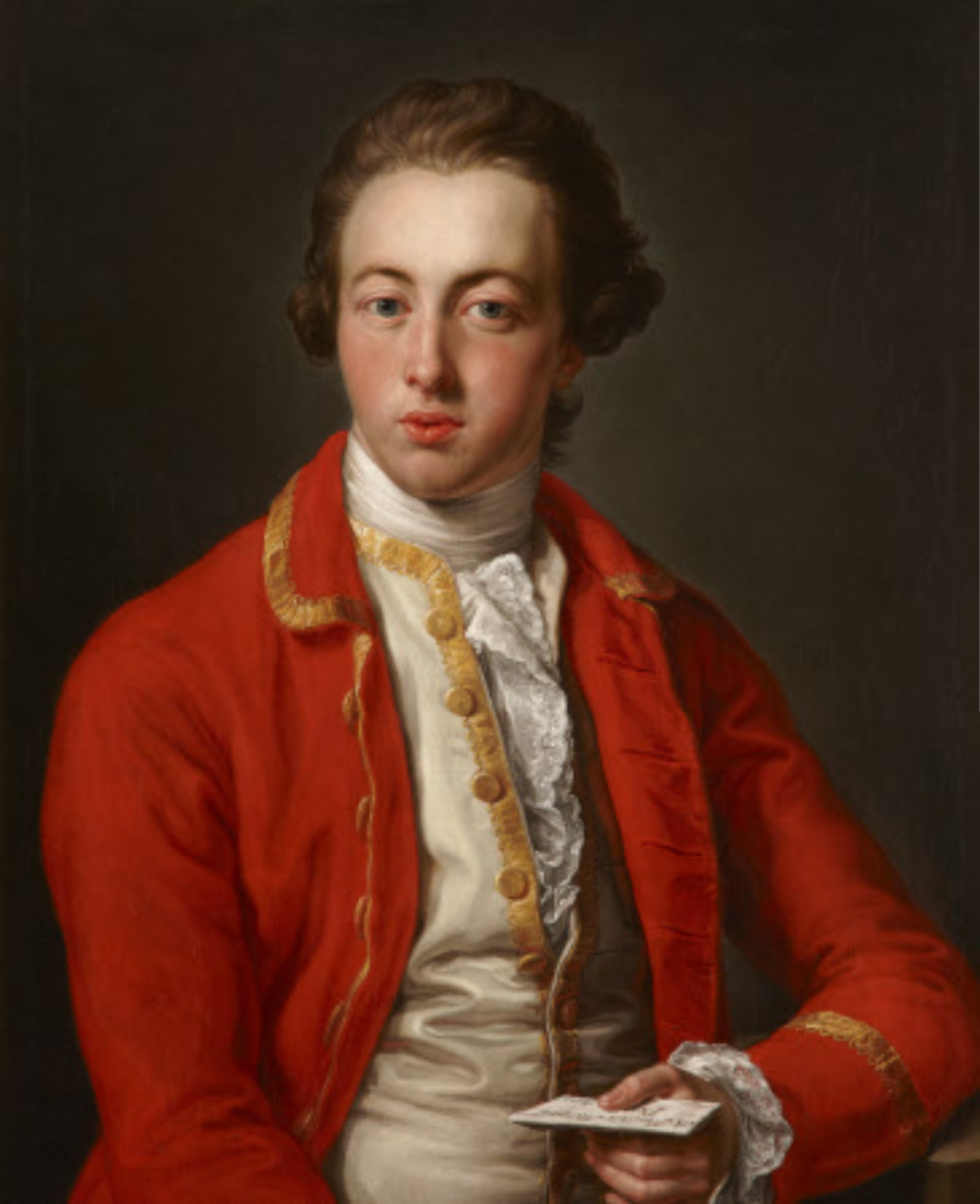
Portrait of John Parnell, 2nd Baronet, by Pompeo Girolamo Batoni, from National Trust, Castle Ward.

By the terms of Hayes’s will, Avondale passed from the 2nd Baronet to his son William Parnell (1777–1821), writer, landlord, and MP. Hayes stipulated in his will that rather than being inherited by the eldest son of the family, the estate would be inherited by a younger son. William was the younger brother of John Augustus, 3rd Baronet, who was disabled and died childless, and of Henry Brooke Parnell, who became 4th Baronet Parnell and later, 1st Baron Congleton, of Congleton, Cheshire, which had been the birthplace of the original Thomas Parnell who emigrated to Ireland.

As a result of his inheritance of Avondale, William Parnell assumed the name ‘Parnell-Hayes.’ [2] William married Francis Howard, granddaughter of Ralph Howard, 1st Viscount Wicklow. They had a son John Henry, who was Charles Stewart Parnell’s father. Charles Stewart Parnell inherited Avondale as he also was not the oldest son, but the seventh of eleven children. It was an unusual stipulation that Samuel Hayes made.

The plasterwork in the dining room is lovely, as is the marble fireplace. Photograph © Jennifer Winder-Baggot, www.irishhistorichouses.com
Avondale, 2023. Photograph © Jennifer Winder-Baggot, www.irishhistorichouses.com
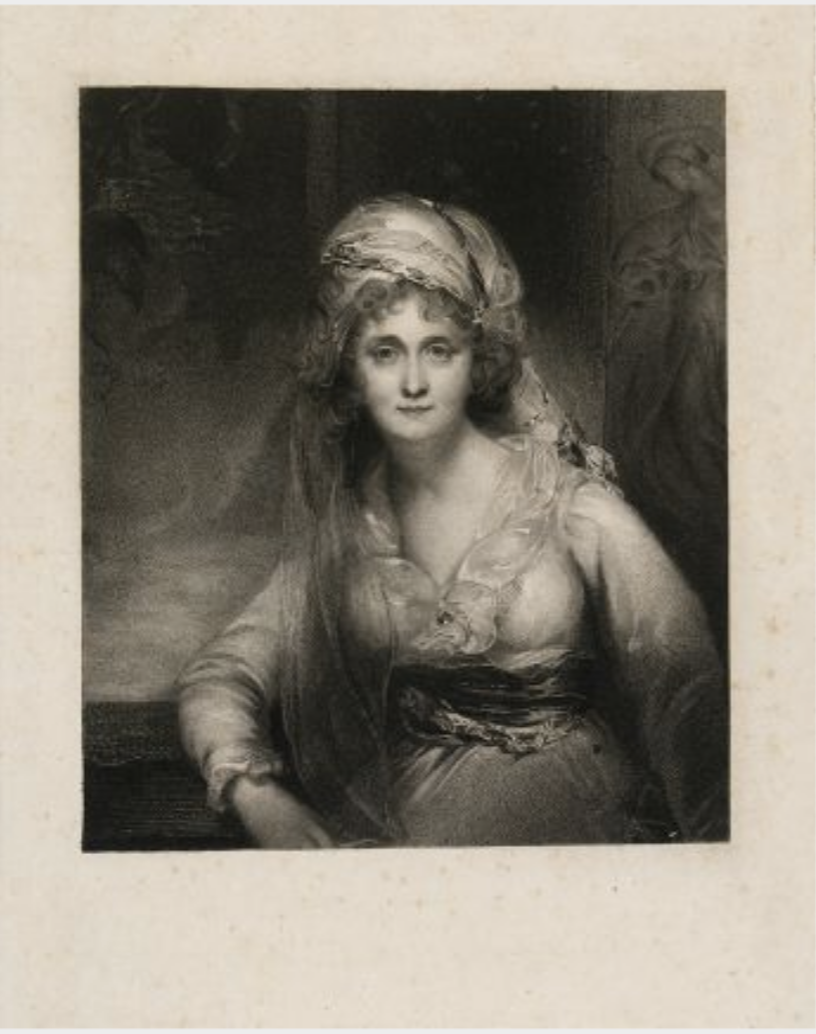
Charles Stewart Parnell’s mother Delia. She was an American, daughter of the famous “Old Ironsides,” Admiral Charles Stewart.
Photograph © Jennifer Winder-Baggot, www.irishhistorichouses.com

Delia was a member of the Plymouth Brethren, and converted a building on the property into house for worship. The 2nd Baron Congleton also converted to the Plymouth Brethren who met in Aungier Street in Dublin.

Avondale, 2023. Photograph © Jennifer Winder-Baggot, www.irishhistorichouses.com
The Cowshed. Photograph © Jennifer Winder-Baggot, www.irishhistorichouses.com
Avondale, 2023. Photograph © Jennifer Winder-Baggot, www.irishhistorichouses.com
The Drawing Room contains a beautiful Bossi fireplace. Photograph © Jennifer Winder-Baggot, www.irishhistorichouses.com
Photograph © Jennifer Winder-Baggot, www.irishhistorichouses.com

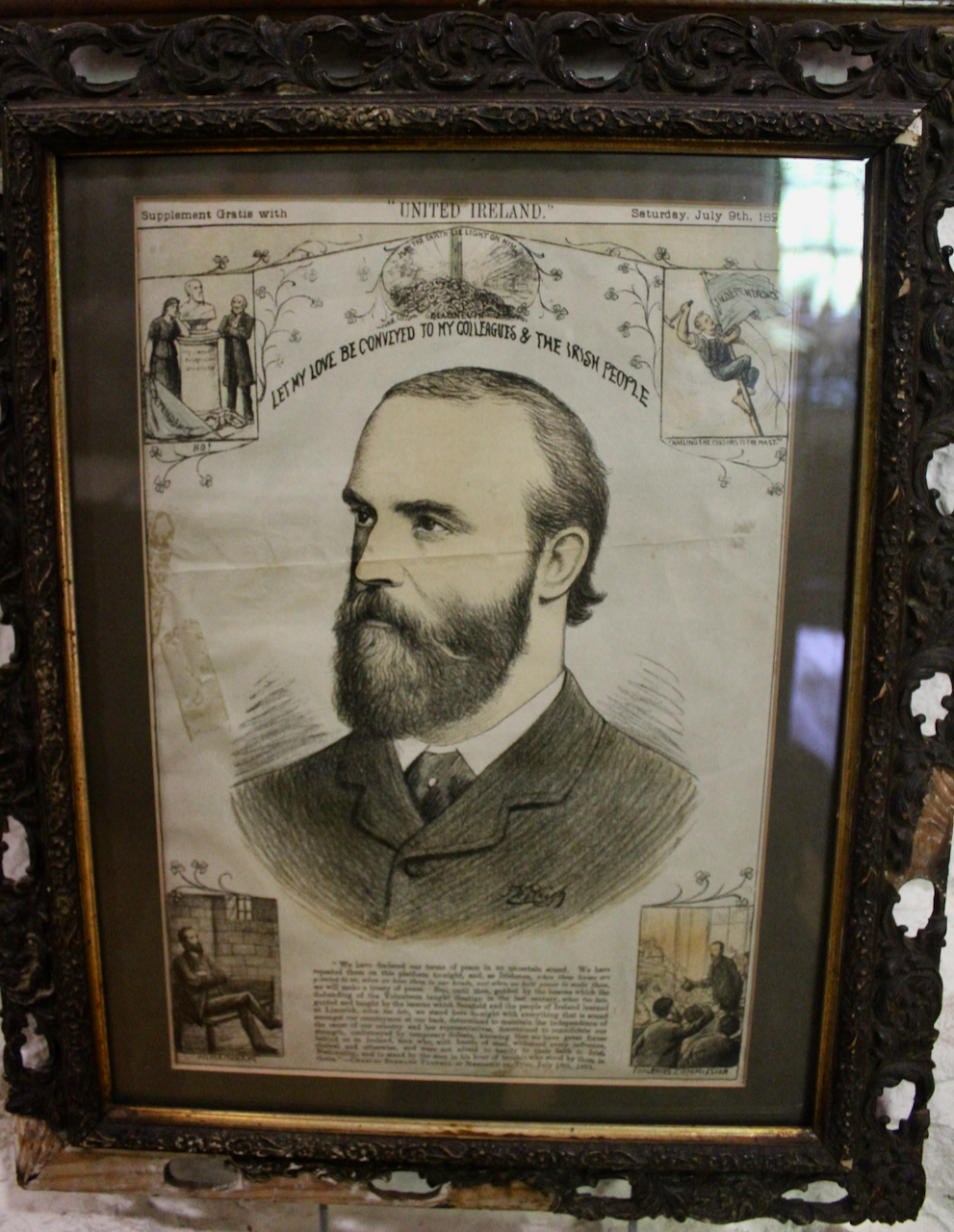
When Charles Stewart Parnell inherited Avondale estate, it was mired in debt. He sought to increase his income by mining the local area. He became a politician chiefly, our tour guide told us, to earn money to support the estate. The Dictionary of Irish Biography tells us:

Parnell invested heavily in mining and quarrying ventures in Wicklow, in particular stone quarrying at Big Rock, near Arklow, from which he supplied paving setts to Dublin corporation. He expended money and effort in seeking to revive the old lead mine and to relocate the lodes of iron and seams of copper that had formerly been worked in the vicinity of Avondale. Through the late 1880s his chief recreation was the quest for gold in Wicklow, assaying samples of ore in his workshops successively at Etham and Brighton.” [3]

Parnell assaying his gold. Photograph © Jennifer Winder-Baggot, www.irishhistorichouses.com
Photograph © Jennifer Winder-Baggot, www.irishhistorichouses.com

He may have been influenced in his politics by his mother’s Republican views, i.e. anti-monarchy. He sought home rule for Ireland and was President of the Land League, which sought to enable tenants to own the land on which they worked. He was arrested for this and put in rather luxurious quarters in Kilmainham Gaol, where he was incarcerated for six months.

Photograph © Jennifer Winder-Baggot, www.irishhistorichouses.com

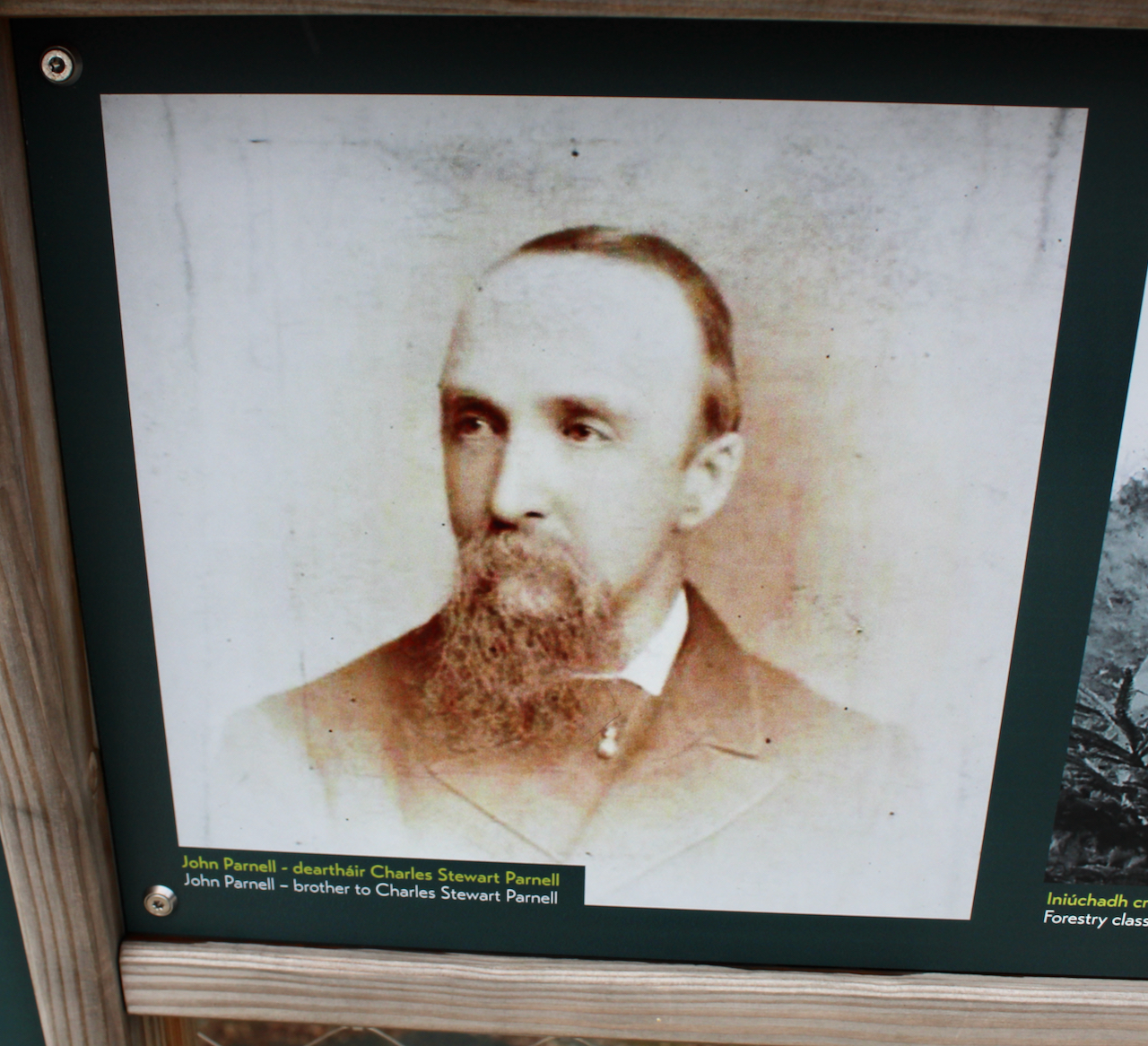
By this time he was having an affair with Katherine O’Shea who was called “Kitty” in the press in order to belittle her. She was the wife of another MP who allowed the affair, presumably to maintain his position in parliament as Parnell commanded wide support. He fathered three children with Katherine and when her husband divorced her, they married, but she was unable to inherit Avondale, which passed to Parnell’s older brother.

The Irish turned against Parnell due to his affair, as discussed in James Joyces’s Portrait of the Artist as a Young Man where Stephen Daedalus’s father and aunt argue about Parnell and Stephen’s father laments “Ireland’s poor dead King.” There is a lengthy biography about him in the Dictionary of Irish Biography.

Parnell’s monument in Glasnevin Cemetery, Dublin. Photograph © Jennifer Winder-Baggot, www.irishhistorichouses.com

The Dictionary of Irish Biography tells us:

Katharine Parnell lived on in deteriorating circumstances and died in Littlehampton, Sussex, on 5 February 1921. After Claude Sophie, who died shortly after her birth, Parnell and Katharine had two further daughters, Clare (1883–1909) and Katharine (‘Katie’) (1884–1947). Clare, who bore a haunting resemblance to Parnell, died in labour. Her son Assheton Clare Bowyer-Lane Maunsell, a lieutenant in the Lancashire Fusiliers, died of enteric fever in India on 29 July 1934, aged 24. As Parnell’s biographer F. S. L. Lyons wrote, ‘the line of direct descent from Parnell therefore ends in a cemetery in Lahore.’ “

The wedding ring which Parnell gave Katherine is the one on the right. The other is made from gold mined on the Parnell property. Photograph © Jennifer Winder-Baggot, www.irishhistorichouses.com
This room is mostly dedicated to “Old Ironsides,” who gave the desk-cabinet to his son-in-law. Photograph © Jennifer Winder-Baggot, www.irishhistorichouses.com
Avondale, 2023. Photograph © Jennifer Winder-Baggot, www.irishhistorichouses.com
Photograph © Jennifer Winder-Baggot, www.irishhistorichouses.com

Like many old houses, Avondale had a tunnel for the servants, to the outbuildings.

Avondale, 2023. Photograph © Jennifer Winder-Baggot, www.irishhistorichouses.com
Different types of wood, labelled, in one of the rooms which was used as a Forestry School. Photograph © Jennifer Winder-Baggot, www.irishhistorichouses.com

The forest planted by Samuel Hayes mostly did not last, as we see from a photograph from 1900. However, the forestry school reinstated the forest, now owned by Coillte.

Photograph © Jennifer Winder-Baggot, www.irishhistorichouses.com

There are many walks on the estate, including a “tree top walk” and a viewing tower, which has a large enclosed screwshaped slide, which Stephen and I could not resist sliding down! Be prepared to lose all control to speed!

Avondale, 2023. Photograph © Jennifer Winder-Baggot, www.irishhistorichouses.com
Photograph © Jennifer Winder-Baggot, www.irishhistorichouses.com

[1] Bence-Jones, Mark. A Guide to Irish Country Houses (originally published as Burke’s Guide to Country Houses volume 1 Ireland by Burke’s Peerage Ltd. 1978); Revised edition 1988 Constable and Company Ltd, London.

[2] https://www.dib.ie/biography/hayes-samuel-a3878

[3] https://www.dib.ie/biography/parnell-charles-stewart-a7199

Places to visit and stay in County Carlow

I am republishing this page as it had to be updated.

Carlow:

1. Altamont, Kilbride, Co Carlow – gardens open to public, see OPW entry

2. Borris House, Borris, County Carlow – section 482

3. Carlow Castle, Carlow, Co Carlow – a ruin  

4. Duckett’s Grove, Carlow – a ruin 

5. Hardymount House, Castlemore, Co Carlow – can visit gardens

6. Huntington Castle, Clonegal, Co Carlow – on section 482 

7. Old Rectory Killedmond, Borris, Co Carlow – section 482 

Places to stay, County Carlow

1. Ballykealey, Tullow, Co Carlow  – whole house rental and self-catering accommodation €€€

and lodges: https://ballykealeyhouse.com

2. Huntington Castle, County Carlow

3. Kilgraney House, County Carlow

4. Killedmond Rectory, County Carlow – shepherd’s huts €

5. Lisnavagh, County Carlow, holiday cottages

6. Lorum Old Rectory, Kilgreaney, Bagenalstown, County Carlow €€

7. Mount Wolseley, Tullow, Co Carlow – hotel €

Whole House rental, County Carlow

1. Sandbrook, Tullow, Co Carlow  – whole house rental and an apartment in house

donation

Help me to pay the entrance fee to one of the houses on this website. This site is created purely out of love for the subject and I receive no payment so any donation is appreciated!

€15.00

Carlow:

Photograph © Jennifer Winder-Baggot, www.irishhistorichouses.com

1. Altamont, Kilbride, Co Carlow – gardens open to public

See my OPW entry:

https://irishhistorichouses.com/2022/02/21/office-of-public-works-properties-leinster-carlow-kildare-kilkenny/

Altamont Gardens, County Carlow, photograph by Sonder Visuals 2015 for Tourism Ireland, Ireland’s Content Pool. [1]

2. Borris House, Borris, County Carlow – section 482

Borris House, County Carlow by Suzanne Clarke, for Tourism Ireland, Ireland’s Content Pool. (see [1])

See my write-up:

https://irishhistorichouses.com/2020/10/04/borris-house-county-carlow/

www.borrishouse.com
Open dates in 2025: Apr 1-3, 8-10, 15-17, 23-24, 29-30, May 1, 7-22, 27-29, June 17-19, 24-26, 28-29, July 1-3, 8-10, 15-17, 22-24, 29-31, Aug 16-24, 12pm-4pm

Fee: adult/OAP €12, child under 12 free, group rate on request

3. Carlow Castle, Carlow, Co Carlow – a ruin  

Carlow Castle in located in Carlow Town was at one stage one of the finest Norman castles ever built in Ireland. It was built around 1213 by William Marshall and the site was carefully chosen because of its strategic defensive location close to the River Barrow. In 1361 it was strengthened when it became the headquarters of the Exchequer of Ireland when it was moved here from Dublin. Although it was attacked and withstood a number of attempted assaults in 1494 and 1641, it’s great ‘low point’ came not through war but by a physician named Middleton. Middleton attempted to convert the castle into a lunatic asylum in 1814 when he tried to diminish the thickness of the walls by using explosives. He however made a gross miscalculation and ended up blowing most of the castle to pieces. All that remained were the 2 towers and a bit of the original wall.” [2]

Carlow Castle, 1954, Dublin City Library and Archives. [3]

4. Duckett’s Grove, Carlow – a ruin 

Maintained by Carlow County Council. Destroyed by fire in 1933 but there is a walled garden open to visitor and one can see the impressive ruins.

Photograph by Robert French, late 1800s, Lawrence Photographic Collection National Library of Ireland, flickr constant commons.
Duckett’s Grove, County Carlow, August 2021. Photograph © Jennifer Winder-Baggot, www.irishhistorichouses.com

The National Inventory tells us of the house:

Remains of detached three-storey over basement country house, c. 1745 now in ruins. Gothic style mantle added, c. 1825. Designed by Thomas Cobden. Extended, c. 1845, with granite ashlar viewing tower on an octagonal plan, turrets and entrance screens added. Designed by J. McDuff Derick. Stable complex to rear.” [5]

The property was once part of a 12,000 acre estate with eight acres of gardens.

See my entry https://irishhistorichouses.com/2024/07/18/ducketts-grove-county-carlow-an-impressive-ruin-and-a-walled-garden/

Duckett’s Grove, County Carlow, August 2021. The tallest, granite, flag tower was added in 1853 and designed to be seen above the tree line. Photograph © Jennifer Winder-Baggot, www.irishhistorichouses.com
Duckett’s Grove, County Carlow, August 2021. Photograph © Jennifer Winder-Baggot, www.irishhistorichouses.com
Duckett’s Grove, County Carlow, August 2021. The tallest, granite, flag tower was added in 1853 and designed to be seen above the tree line. Photograph © Jennifer Winder-Baggot, www.irishhistorichouses.com
Duckett’s Grove, County Carlow, August 2021. Photograph © Jennifer Winder-Baggot, www.irishhistorichouses.com

Driving to Duckett’s Grove, you first come across the impressive entrance gates:

Duckett’s Grove entrance gates, August 2021. Photograph © Jennifer Winder-Baggot, www.irishhistorichouses.com

The walled garden has also been redeveloped.

The brick walls of the walled garden retain the sun’s heat better than the granite of surrounding building structures.

Walled garden, Duckett’s Grove, County Carlow, August 2021. Photograph © Jennifer Winder-Baggot, www.irishhistorichouses.com

5. Hardymount House, Castlemore, Co Carlow R93 XN24 – can visit gardens https://www.carlowgardentrail.com/venue/hardymount-gardens/

Check website for times.

https://www.discoverireland.ie/Arts-Culture-Heritage/the-garden-hardymount-house/70913

The website tells us: “Hardymount Gardens comprise of 1 hectare of lawns and shrubs surrounded by magnificent beech and oak trees. Located near Tullow, County Carlow, the colourful, lively gardens feature many unusual plants and flowers.

One of the largest Spanish chestnut trees in the country greets visitors on arrival to 1 hectare of lawns and shrubs surrounded by magnificent beech and oak trees. Found just outside Tullow, County Carlow, Hardymount Gardens features a wonderful walled garden that sits behind the house and contains many unusual plants and flowers in the herbaceous border: lilac-coloured Erysimum, yellow helianthus, beds of old roses, downy variegated mint, mimosa, blue agapanthus, California tree poppies, Chinese foxgloves and much, much more.

The grass paths take visitors past the pond with lilies and fish, and by espaliered apple trees, lobelia tupa, a pergola clothed with wisteria and under planted with hollyhocks and foxgloves. There is a vegetable garden and a summer house at the end of the garden which provides a quiet area for rest and relaxation. Hardymount is a truly amazing walled garden full of colour and vigour thanks to its owner and her dedication to gardening.

Group lunches and teas are available upon request. Car Parking available (a coach may park on road). No dogs or picnics.”

Mark Bence-Jones writes of Hardymount House in his A Guide to Irish Country Houses (1988):

p. 149. “(Eustace-Duckett/IFR; Maude, sub Hawarden, PB). A two storey bow-ended Georigan house with giant pilasters at each end of the entrance front. The recent owner, Mr H.A.C. Maude, introduced some chimneypieces from Belgard. Now the home of Mrs Patrick Reeves-Smith.” 

6. Huntington Castle, Clonegal, Co Carlow Y21 K237 – on section 482 

Huntington Castle, County Carlow, June 2019. Photograph © Jennifer Winder-Baggot, www.irishhistorichouses.com

See my write-up:

https://irishhistorichouses.com/2019/06/28/huntington-castle-county-carlow/
Postal address: Huntington Castle, Enniscorthy, Co. Wexford

www.huntingtoncastle.com
Open dates in 2025, but check website as sometimes closed for special events:

Feb 1-2, 8-9, 15-16, 22-23, Mar 1-2, 8-9, 15-16, 22-23, 29-30, Apr 5-6, 12-30, May 1-31, June 1-30, July 1-31, Aug 1-31, Sept 1-30, Oct 4-5, 11-12, 18-19, 25-31, Nov 1-2, 8-9, 15-16, 22-23, 29-30, Dec 6-7, 13-14, 20-21, 11am-5pm

Fee: house/garden, adult €13.95, garden €6.95, OAP/student, house/garden €12.50, garden €6, child, house/garden €6.50, garden €3.50, group and family discounts available

7. Killedmond, Borris, Co Carlow.(Old Rectory, Killedmond) R95 N1K7 – section 482 

Old Rectory Killedmond, County Carlow, October 2021. Photograph © Jennifer Winder-Baggot, www.irishhistorichouses.com

See my write-up:

https://irishhistorichouses.com/2020/07/16/the-old-rectory-killedmond-borris-co-carlow/

https://www.blackstairsecotrails.ie/
Open dates in 2025: July 1-31, Aug 1-31, 9am-1pm
Fee: adult €10, OAP/student €6, child free.

Places to stay, County Carlow

1. Ballykealey, Tullow, Co Carlow  – whole house rental and self-catering accommodation €€ for self-catering

and lodges: https://ballykealeyhouse.com

Ballykealey House, County Carlow, courtesy of Ballykealey House website.

The website tells us

The House is available for private hire for family gatherings, retreats or corporate events. Distinct character and warmth characterise the 12 individually appointed bedrooms in the manor house. All have gracious views of the surrounding countryside and retain all the original features of the 19th century house. All bedrooms have recently been renovated and include the modern comforts you would expect to find.” It has twelve rooms in the house and 15 self-catering lodges.

Ballykealey House, County Carlow, courtesy of Ballykealey House website.

Mark Bence-Jones writes in his A Guide to Irish Country Houses (1988):

p. 23. “(Lecky/LGI1937 supp) A somewhat stylized Tudor-Revival house of stucco with stone facings, built ca 1830 for John James Lecky to the design of Thomas A. Cobden, of Carlow. Symmetrical front of two storeys and high attic, with three unusually steep gables ending in finials; recessed centre with three-light round-headed window edged with stonework in a rope pattern above a stone Gothic porch of three arches. Tall Tudor chimneystacks at either end; slender battlemented pinnacles rising from corbels at the angles of the roof parapet. Battlemented single storey wing at one side, prolonged by battlemented screen walls with Gothic gateway. Irregular wing with steep gables and dormers at back. Sold ca 1953. Now a novitiate of the Patrician Brothers.” [4]

Ballykealey House, County Carlow, courtesy of Ballykealey House website.

The Record of Protected Structures describes the house’s porch as a loggia. It adds that the walls are of smooth rendering painted and the windows have late-19th century sashes. There is a single-storey wing on the right-hand side and an arch into the yard. The rear of the house has a two-storey service wing. The interior retains original decoration. The immediate grounds are contained within a ha-ha.

Ballykealey House, County Carlow, courtesy of Ballykealey House website.

Jimmy O’Toole writes in his The Carlow Gentry: What will the neighbours say! Published by Jimmy O’Toole, Carlow, Ireland, 1993. Printed by Leinster Leader Ltd, Naas, Kildare. 

Chapter: Lecky of Ballykealy 

p. 147. “In 1953, the Lecky name was added to the growing list of departing gentry families from County Carlow. The Ballykealy seat had been in their possession since 1649, but not even three centuries of roots and tradition could hold back the tide of a rapidly changing financial climate that had already accounted for the departure of most of their neighbouring families. The 300 acre estate was bought by the Land Commission, and the house was purchased in the early 1960s for use as a noviciate for the Patrician Brothers, owners of the Wolseley family seat near Tullow since 1925.

The sale of Ballykealy was the first tell-tale sign of looming financial problems for the last owner, Lieutenant Colonel Rupert Beauchamp Lecky, who moved to London with his family. Within four years, he had more debts than assets, and bankruptcy proceedings were instituted against him… On 26th Sept 1957, the War Office Colonel said his early morning good-byes to his wife and three children, got on a train for central London, and was never seen again by friends and family. Thirty six years on, the missing persons file on Colonel Lecky still remains open at Scotland Yard. ..

p. 149. The Lecky family were one of several Quaker families in Couty Carlow, the first of them having come to County Donegal from Stirling in Scotland during the reign of Eliz I. In 1873, John J. Lecky had 1,440 acres at Ballykealy; John F. Lecky had 44 acres at Lenham Lodge, and W.E.H. Lecky the historian had 721 acres at Aughanure, Bestfield and Kilcock. This property he inherited from his father John Lecky of Newgardens, and from his mother Maria Hartpole of Shrule Castle, Co Laois, he inherited an additional 1,200 acres.

Ballykealey House, County Carlow, courtesy of Ballykealey House website.

2. Huntington Castle, County Carlow – see above €€ B&B in castle or self-catering in wing or gate lodge or cottage.

https://huntingtoncastle.com/all-rooms

Huntington Castle bedroom, photograph courtesy of Huntington Castle website.

3. Kilgraney House, County Carlow

https://kilgraneyhouse.com/

Kilgraney House, Co Carlow, photograph by Sonder Visuals 2022 for Failte Ireland

Kilgraney is a gracious Georgian country house with courtyard suites and cottages overlooking the Barrow valley. The property is less than ninety minutes by car from Dublin and is located halfway between Bagenalstown and Borris village. Kilgraney Courtyard Suites and Cottages are open for B & B packages from May to October 2022.

Surrounded by extensive gardens and granite stone courtyards filled with culinary, aromatic and medicinal plants, the property offers guests a memorable country house experience in a tranquil rural setting on the Carlow Kilkenny border. 

Since 1994 we have been inspired by Kilgraney and captivated by what the surrounding countryside, towns and people have to offer. For the 2020 season we have decided to take a break from the kitchen and close our dining room. We will continue to offer our renowned breakfast and can recommend some very fine local restaurants. 

Through words and images we invite you to our home and we hope that they entice you to come and experience Kilgraney for yourself. 

At Kilgraney House we create a place of peace and tranquility and therefore we close the house at 1.00 am. If you wish to stay out later than this please book one of our courtyard suites, the garden cottage or the lodge.

http://www.igp-web.com/Carlow/Kilgraney.htm

The house is a charming late Georgian house, overlooking the Barrow valley, and is conveniently situated halfway between Kilkenny city and Carlow town. The house takes its name from the Irish ‘cill greine’ which means ‘sunny hill’ or ‘sunny wood’.

Kilgraney (Kilgreaney ) has seen many changes over the centuries. The house, spelt Kylgrany, appears on Mercator’s Map of Carlow in 1595 and parts of the lower courtyard, reached through the kitchen garden, date to around this time. The main house was built around 1820 although the north wing is part of older dwelling and thought to be mid-18th century. A fire in the 1920’s destroyed the original interiors and the rebuilding left Kilgraney House with a Georgian exterior and a plain early 20th century interior. Now carefully restored, the house has immense character and a simple elegance that is full of irony and amusement. The lush interiors are an eclectic mix of traditional furniture with carefully chosen pieces of fabric, furniture and art from around the world.

Source: Ireland’s Blue Book of Country Houses & Restaurants.

4. Killedmond Rectory, County Carlow – shepherd’s huts €

https://www.blackstairsecotrails.ie/

Shepherd’s Hut, Old Rectory Killedmond, County Carlow, October 2021. Photograph © Jennifer Winder-Baggot, www.irishhistorichouses.com

5. Lisnavagh, County Carlow, holiday cottages

www.lisnavagh.com

Lisnavagh, County Carlow, photograph taken October 2019. Photograph © Jennifer Winder-Baggot, www.irishhistorichouses.com

The National Inventory tells us that it was designed around 1847 by Daniel Robertson. It was built for William McClintock-Bunbury (1800-1866). Around 1953, it was truncated and reordered, to make it more liveable, and this was designed by Alan Hope.

Lisnavagh is a wedding venue, and there are buildings with accommodation, including the farm house, converted courtyard stables, the groom’s cottage, schoolhouse, farm and blacksmiths cottages and the bothy.

Weddings at Lisnavagh, photograph courtesy of website.

The website tells us that:

The estate is owned by William & Emily McClintock Bunbury. Lisnavagh House & Gardens is managed by Emily and William along with a hardworking and dedicated team in both the house and the gardens.

William McClintock Bunbury returned to Lisnavagh in 2000 with a view to creating a financially sustainable life and business on the estate. In 2001, The Lisnavagh Timber Project was established and during the following years parts of Lisnavagh Farmyard were refurbished into offices some of which now house the family enterprises.

The Library, Lisnavagh, courtesy of website.

In his book about the Carlow Gentry, Jimmy O’Toole writes:

The Bunbury wealth was considerably enhanced after the marriage of a later generation William Bunbury to Catherine Kane, daughter of Redmond Kane, a wealthy Dublin merchant in 1773. William [who lived at Moyle, County Carlow], who was elected MP for Carlow in 1776, was killed two years later when he was thrown from his horse in Leighlinbridge. It was the marriage of William and Catherine’s only daughter, Jane Bunbury to John McClintock, MP, of Drumcar, Co Louth, in 1797, that linked the Bunbury and McClintock names. It was their son John who was created Lord Rathdonnell on 21st Dec 1868. Their second son, William Bunbury-McClintock-Bunbury, born 1800, in compliance with the will of his maternal uncle Thomas Bunbury, MP, assumed the name of Bunbury in addition to that of McClintock. The McClintocks were an old Scottish family and the first to settle in Ireland was Alexander McClintock, who purchased the Rathdonnel estates in County Donegal in 1597, from where the title originated.” [10]

John McClintock married a second time, to Elizabeth Le Poer Trench, daughter of the 1st Earl Clancarty.

Mark Bence-Jones writes in his A Guide to Irish Country Houses (1988):

William Bunbury and Catherine Kane had two sons, Thomas and Kane. Jimmy O’Toole writes about these brothers (p. 66):

The election of 1841, when Thomas Bunbury and his Tory colleague Henry Bruen II, defeated Daniel O’Connell Jr and John Ashton Yates,  was one of the bitterest election contests every witnesses in County Carlow…. A bachelor, Thomas’s 6000 acre estate in the parishes of Kellistown, Rathmore and Rathvilly, passed to his brother Kane after his death.”

O’Toole continues:

His seat in Parliament was taken by his nephew William McClintock-Bunbury [1800-1866, son of John McClintock and Jane Bunbury], who was returned unopposed, and held the seat for sixteen years with a brief interruption in 1852. William had served as a Captain with the Royal Navy during the 1820s and 1830s…After inheriting the family’s Carlow estates, he completed the building of Lisnavagh, a large and rambling Tudor-Revival house of granite, in 1847. The architect was John McGurdy. That year, William and his wife Pauline, daughter of Sir James Stronge of Tynan Abbey in Armagh, and their young family, moved from Louth to live at Lisnavagh.” 

p. 187. “[Bunbury/LG1863; McClintock-Bunbury, Rathdonnell, B/PB] A large and rambling Tudor-Revival house of grey stone, built 1847 for William McClintock-Bunbury, MP, brother of 1st Lord Rathdonnell, to the design of John McCurdy. Many gables and mullioned windows; some oriels; but all very restrained, with little or no ornament and hardly any Gothic or Baronial touches apart from a porte-cochere on the service wing, which was set back from the main entrance front, and a loggia of segmental-pointed arches at the other side of the house. The port-cochere served the luggage entrance; the hall door having no such protection. Staircase of wood, ascending round large staircase hall. Drawing room with ceiling of ribs and bosses and marble chimneypiece in Louis Quinze style, en suite with library; richly carved oak bookcases. The house was greatly reduced in size ca. 1953 by 4th Lord Rathdonnell [William Robert McClintock-Bunbury (1914-1959) – with much help with his wife Pamela]; that part which contained the principal rooms being demolished, and the service wing being adapted to provide all the required accommodations. The porte-cochere, which comes in the middle of the entrance front of the reduced house, is now the main entrance. Because of the irregular plan of the house as it originally was, the service wing only abutted on the main building at one corner, which has been made good with a gable and oriel from the demolished part; so that the surviving part of the house looks complete in itself; a pleasant Tudor-Revival house of medium size rather than the rump of a larger house. A large library has been formed out of several small rooms; it is lined with the bookcases from the original library, and with oak panelling and Cordova leather of blue-green and dull bronze-gold. Fine baronial gate arch.”

The house remains in the family.

A bedroom at Lisnavagh, photograph courtesy of website.
The farmhouse at Lisnavagh, available for accommodation, photograph courtesy of website.
The Grooms Cottage, Lisnavagh, available for accommodation, photograph courtesy of website.

6. Lorum Old Rectory, Kilgreaney, Bagenalstown, Co. Carlow R21 RD45  €€

Lorum Old Rectory, County Carlow, photograph from National Inventory of Architectural Heritage [6]

www.lorum.com
Tourist Accommodation Facility – not open to the public
Open for accommodation: April-October

The Irish Historic Houses Association website tells us:

The valley of the River Barrow is particularly beautiful, especially downstream from Bagenalstown where the river, which forms the boundary between Counties Carlow and Wexford, flows along the western foothills of the Blackstairs Mountains. The Barrow passes through the towns of Borris and Graiguenamanagh and the village of St. Mullins, where the valley sides become increasingly steep. In the late 1850s Denis Pack-Beresford [1818-1881], a local landowner from nearby Fenagh, donated land for a new church and rectory at Lorum near Kilgreaney, a small hamlet overlooking the river under the shadow of Mount Leinster. ” [7]

Denis Pack took the name Beresford from his mother, Elizabeth Louisa Beresford who was a daughter of George De La Poer Beresford, 1st Marquess of Waterford, of Curraghmore.

The Irish Historic Houses continues: “Lorum is a restrained Gothic building of warm, golden Carlow granite and a fine example of a Victorian country rectory. Of two storeys, the principal fronts are all of three bays, with a studied asymmetry that falls just short of becoming symmetrical. There are many gables and the entrance is recessed beneath a wide gothic arch, which acts as a porch and helps to give the building a solid, comfortable appearance that embodies the religious certitudes of the Church of Ireland during the last years of establishment. 

The interior is decorated in a mild and restrained Victorian Gothic; bright and airy, not too large or grand but solid and respectable. While Lorum may well have been built to the designs of Welland and Gillespie, there is little doubt that the dominant influence was the religious architecture of Augustus Welby Pugin.” (see [10])

William Joseph Welland and William Gillespie, the Dictionary of Irish Architects tells us, were appointed joint architects to the Ecclesiastical Commissioners in May 1860, following the death of Joseph Welland. According to this dictionary, both men were already in the employment of the Commissioners, and they held the post until the disestablishment of the Church of Ireland on 31 December 1870. During their ten years in office, they developed an increasingly personal and idiosyncratic version of Gothic in the churches which they designed. They designed many churches, all over Ireland.

Lorum Old Rectory, photograph from website.

The Irish Historic Houses website tells us: “The first rector was the Revd. King Smith who was installed at Lorum in 1863 and the house continued in use as a rectory until 1957, when it was offered for sale by the parish and bought by Tennant Young, father of the present owner.” (see [7])

A Carlow county website tells us that:

In the second half of the 20th century the Church of Ireland passed thorough a period of rationalisation. Parishes were amalgamated; churches closed and a number of rectories became redundant and were sold. Among these was Lorum Old Rectory which Mr. Young purchased as a home for his family. Fast forward for another thirty-five years and his daughter Bobbie, on inheriting the house, was forced to make it pay and, together with her late husband Don, decided to provide country house accommodation for visitors to the region.” [8]

The Irish Historic Houses website continues: “To the north is a small, enclosed stable yard with a coach house for the rector’s trap, a stable for his horse, and quarters for his groom and other servants. Today Lorum is unusual because both house and  grounds have been so little altered, a fate shared by few other Irish rectories.” (see [7])

The National Inventory describes is as:

Detached three-bay two-storey Tudor Revival former rectory with half-dormer attic, c. 1864, with mullioned window openings, gables and series of service wings. Now in use as guesthouse. Stable complex to rear with two-storey coach house.

The Record of Protected Structures adds that the roof is high pitched, covered with natural slates, and has Victorian, earthenware chimney-pots and has wide eaves.

The Old Rectory Lorum website tells us:

Lorum is a place known to a few – but in the 19th century, when the protestant church of Ireland enjoyed wealth and state patronage, it was the spiritual hub of a parish which included an exceedingly comfortable and spacious rectory. The clergy have departed and the rectory is now the property of Bobbie Smith, who provides guests with fantastic dinners in a dining room which retains its hint of 19th century opulence. Antique bedrooms with modern comforts provide for rest, to be followed by a most splendid breakfast. The lady of the house, incidentally, is a mine of information on Carlow and the organiser of bicycle tours in the region.


7. Mount Wolseley, Tullow, Co Carlow – hotel

 https://www.mountwolseley.ie

Mount Wolseley County Carlow photograph courtesy of website.

The Record of Protected Structures describes Mount Wolseley:

A three-bay, two-storey, Italianate house designed by the firm of Sir John Lanyon about 1870. It has painted, lined and rendered walls, a basement, raised coigns, string courses, an enclosed porch with a segmental-headed doorcase and side lights, windows with architraves, wide, bracketed eaves and a hipped roof with a pair of stacks. The sash windows have large panes of glass. On the left-hand side is a service wing. The house is well maintained and in use as a hotel.

Mark Bence-Jones writes in his A Guide to Irish Country Houses (1988):

p. 218. “(Wolseley, Bt, of Mount WolseleyPB) A two storey slightly Italianate Victorian house. Camber-headed windows; ornate balustraded porch; roof on bracket cornice. Wing with pyramidal roof. Now a school.” 

Jimmy O’Toole tells us:

p. 211. “Richard Wolseley, from Staffordshire, was the first to settle in Tullow, where he inherited the irish estates of his father, also Richard. The elder Richard, who served with King William III in Ireland, was MP for the Borough of Carlow during the reign of Queen Anne (1703-1713). His son, who served as an MP for the Borough from 1727-1768 – a record continuous tenure of parliamentary representation – was created a Baronet in 1744. The family had 2,500 acres in Carlow and 2,600 acres in Co Wicklow. The Wolseleys, according to O’Donovan’s Ordnance Survey Letters, were the beneficiaries of land grants after the Cromwellian settlement, but his claim that Mount Arran was included is wrong. Mount Arran, purchased from Charles Butler, Earl of Arran, did not come into their possession until some time after 1725, because on 23 March that year, the second Duke of Ormonde leased the estate to Thomas Green of Rahera, Co Carlow. The original of this lease was presented at a meeting of the Royal Society of Antiquaries of Ireland earlier this century, by Fr. James Hughes of Maynooth.” [9]

The house was reconstructed by Sir Thomas Wolseley in 1864 and the estate was sold to the Patrician Order for £4,500 in 1925 by the daughters of Sir John Richard Wolseley. When Sir John died aged forty, he was succeeded in the title by his brother Sir Clement James Wolseley who was probably the last of the family to occupy Mount Wolseley. 

In 1994 Mount Wolseley was purchased by the Morrissey family and has since been developed into a four star, quality hotel and 18-hole championship golf course with a range of activities on its doorstep offering guests plenty of things to do on their stay. [10]

Before it was owned by the Wolseleys, the area was called Mount Arran, and belonged to the Baggot family! It belonged to John Baggot. I have tried to research this history. John was father of Mark, who was a founding member of the Dublin Society, and who also owned much property around St. Michan’s and Smithfield. Their land deeds are in Carlow County Library. In John Ryan’s The History And Antiquities Of The County Of Carlow (1833) there is an abstract of convenyances from the Trustees of the Forfeited Estates in County Carlow in 1688:

“The estate of John Baggott, Esq., attainted; which having been granted 26th Feb., 1697, to Joost, Earl of Albemarle [Arnold Joost van Keppel, 1st Earl of Albemarle (1670-1718) a Dutch military leader who fought for William III], were by him, by deeds of lease and release, dated 27th and 28th February, 1698, for the sum of three hundred pounds conveyed to Charles Balwin, of Dublin, Esq., in trust for Mark Baggott, Esq., to whom, by deeds of lease and release, dated 8th and 9th March, 1698, he conveyed the same in execution of the said trusts ; and the said Baggott, by indenture dated 22nd March, 1702, assigned and made over his interest and right of purchasing the premises from the trustees, for three hundred and five pounds ten shillings to said Ph. Savage. — Inrolled 8th April, 1703.”

There were complications over this transaction, as of course the land was not given up willingly! I believe John Baggot fought at the Seige of Limerick, and was present when the truce and Treaty were drawn up, stating that those holding the castle would stop their fighting if they were promised that their land would not be taken from them. Thus, John Baggot’s land should not have been forfeited, despite him being a Catholic. However, John Baggot died and his son Mark should have inherited the land in Carlow and Dublin. Mark’s Protestant neighbours protested, calling Mark Baggot a “violent Papist.”

Mark Baggot of Mount Arran, Co. Carlow, inquisition of forfeited estate, Baggot produced a deed which settled land on Mark after the father’s death. Jury refused deed and land was granted to Abermarle, from John, but Mark disputed and won. Mark was in the article of Limerick but his father wasn’t. With the passing of the Act of Resumption the estate became vested in the trustees, and Mark accordingly lodged his claim. Before it came up for hearing, his father died, thus the admission of the claim would mean immediate restoration to Mark.

The case was contested, local feeling against Mark amongst Carlow Protestants, as he was called “a violent Papist,” son of John Baggot late of Mount Arran (according to Turtle Bunbury’s website, John Baggot was a Catholic soldier: John Baggot, a Catholic soldier, leased Tobinstown in 1683 from Benjamin Bunbury. Bagot was attainted for serving King James II and his Carlow estates were acquired in 1702 by Philip Savage.). Mark was High Sheriff of Carlow in 1689, “acted with pride against Protestants.

When John Baggot was outlawed and his estate forfeited, Ormond “quite irregularly” gave fresh lease of Mount Arran to Richard Wolsley, the son of Brigadier William Wolsley. Richard Wolsley did not want to give the house up to Mark Baggot.

Mark had an ally in Bishop William King of Derry and later of Dublin, due to common interest in Maths and barometers! There are many of Baggot’s letters in King’s correspondence. Mark writes to him that “the gentleman who lives in my house..uses all his interest and power to hinder and delay.”

Mark Baggot lost his land at Mount Arran but inherited Shangarry, Ballinrush, Portrussian, in Carlow, and they were preserved in the family and descended to James John Bagot Esq. of Castle Bagot, Rathcoole, County Dublin, the last male of his name (from him they passed to his sister and her husband, Ambrose More O’Ferrall).

Whole House rental, County Carlow

1. Sandbrook, Tullow, Co Carlow  – wedding/retreat venue

https://sandbrook.ie

Sandbrook House, County Carlow, courtesy of website

The website tells us that Sandbrook is a handsome period country house, originally built in the early 1700s in Queen Anne style [the National Inventory says 1750], and sits in 25 acres of mature parkland on the Wicklow/Carlow border in the heart of the Irish Countryside with views toward Mount Leinster and the Wicklow Mountains. The National Inventory further describes it:

five-bay two-storey over basement house with dormer attic, c. 1750, with pedimented central breakfront having granite lugged doorcase, granite dressings, two-bay lateral wings, Palladian style quadrant walls and pavilion blocks. Interior retains original features including timber panelled hall and timber staircase.

Sandbrook House, County Carlow, courtesy of website

It belonged to the Echlin family. There are records of an Anne Echlin who died in 1804 owning Sandbrook (see Jimmy O’Toole’s book, [9]). She seems to have leased it to Clement Wolseley when Mount Arran was burned during the 1798 Rebellion.

She left the property, consisting in total of 500 acres, to Robert Marshall of Dublin, and he sold to Brownes of Browne’s Hill for £488 in 1808. William Browne-Clayton moved to live in Sandbrook after his marriage to Caroline Watson-Barton in 1867 and remained there until he inherited Browne’s Hill on the death of his father, Robert Browne-Clayton, in 1888. Browne’s Hill in County Carlow still stands, a very impressive looking private house listed in the National Inventory.

O’Toole writes: “Sandbrook was another example of the many Irish country houses that attracted senior British army officers when they retired after the First and Second World Wars. General George Lewis bought the house in 1918 and after his wife’s death in 1938 the property was purchased by Brigadier Arthur George Rolleston who had retired from the army.

In 1959 Sandbrook was purchased by John and Mary Allnatt… In the 1960s, Mrs. Allnatt purchased Rathmore Park for her son from her first marriage, Brendan Foody, but after he had decided not to return to live in Ireland, Rathmore was sold. He inherited Sandbrook following his mother’s death in September.”

The website tells us: “Sandbrook is the perfect venue for a family gathering or wedding celebration. With five interconnecting reception rooms downstairs, a covered terrace, huge lawn space and a separate loft space above converted stables there is a vast array of facilities should you wish to bring a group. Personal attention to detail and impeccable hospitality are evident throughout Sandbrook, with log fires burning in the hearths and fresh flowers in the hallways.

Sandbrook House, County Carlow, courtesy of website

[1] https://www.irelandscontentpool.com/en

[2] https://curiousireland.ie/carlow-castle/

[3] Carlow Castle, 1954, Dublin City Library and Archives. https://repository.dri.ie

[4] p. 113, Bence-Jones, Mark. A Guide to Irish Country Houses (originally published as Burke’s Guide to Country Houses volume 1 Ireland by Burke’s Peerage Ltd. 1978); Revised edition 1988 Constable and Company Ltd, London.

[5] https://www.buildingsofireland.ie/buildings-search/building/10300304/ducketts-grove-russellstown-cross-roads-russellstown-carlow

[6] https://www.buildingsofireland.ie/buildings-search/building/10301908/kilgraney-rectory-borris-road-kilgraney-forth-by-co-carlow

[7] https://www.ihh.ie/index.cfm/houses/house/name/Lorum%20Rectory

[8] http://www.igp-web.com/Carlow/Lorum_Old_Rectory.htm

Source: http://www.hiddenireland.com/lorum/index.htm

[9] Jimmy O’Toole, The Carlow Gentry: What will the neighbours say! Published by Jimmy O’Toole, Carlow, Ireland, 1993. Printed by Leinster Leader Ltd, Naas, Kildare. 

[10] http://sites.rootsweb.com/~irlcar2/MOUNT_WOLSELEY.htm

Text © Jennifer Winder-Baggot, www.irishhistorichouses.com

A Guide to Irish Country Houses by Mark Bence-Jones contents and pictures, houses beginning with C

As you can see as I work my way though the contents of Mark Bence-Jones’s A Guide to Irish Country Houses [1], there are thousands of “big houses” in Ireland – though many are “houses of middle size.” It’s not clear why some houses are included in Bence-Jones’s book and others are not. If it were up to me, I’d compile a more defined list – I’d like to compile a list of houses built before 1700, for example, to have a more clear cut-off, and another list of houses built before 1800. I would also like to group houses by architect, and I will do that eventually, I hope! But Bence-Jones gives us a good idea as to what exists – albeit he includes some important houses that no longer exist.

Note that the majority of these are private houses, not open to the public. I discovered “my bible” of big houses by Mark Bence-Jones only after I began this project of visiting historic houses that have days that they are open to the public (Section 482 properties).

This is a project I have been working on for a while, collecting pictures of houses. Enjoy! Feel free to contact me to send me better photographs if you have them! I’ll be adding letters as I go…

[1] Mark Bence-Jones. A Guide to Irish Country Houses (originally published as Burke’s Guide to Country Houses volume 1 Ireland by Burke’s Peerage Ltd. 1978); Revised edition 1988 Constable and Company Ltd, London.

Donation

Help me to fund my creation and update of this website. It is created purely out of love for the subject and I receive no payment so any donation is appreciated! My website costs €300 per year on WordPress.

€15.00

Cabinteely House (formerly Clare Hill), Cabinteely, Dublin – sometimes open to public

Cabinteely House, Dublin, photograph from Dun Laoghaire Rathdown County Council website.

See my entry https://irishhistorichouses.com/2020/06/06/covid-19-lockdown-20km-limits-and-places-to-visit-in-dublin/

Cabra Castle, County Cavan, on section 482 in 2019-2025 – hotel 

Cabra Castle, County Cavan. Photograph © Jennifer Winder-Baggot, www.irishhistorichouses.com.

See my entry https://irishhistorichouses.com/2021/03/28/cabra-castle-kingscourt-county-cavan/

Cabra (or Cabragh) House, Co Dublin – demolished 1948

Caherelly Grange, Herbertstown, Co Limerick 

An old castle, not lived in since mid-C19.

Cahir Castle, Cahir, Tipperary – OPW

Cahir Castle, photograph from Ireland’s Content pool, by George Munday 2014 for Failte Ireland

See my entry https://irishhistorichouses.com/2024/03/29/cahir-castle-county-tipperary-an-office-of-public-works-property/

Cahircalla, Ennis, Co Clare – nursing home

Cahircon House (or Cahercon or Cahiracon), Killadysert, Co. Clare

The National Inventory tells us that Cahercon is a “five-bay three-storey over basement late-Georgian house, built c. 1790, with limestone cut-stone projecting Ionic porch to centre. Three-bay two-storey over basement flanking wings with full-height canted bay windows, lean-to conservatory to left hand side and two-bay single-storey bay to right hand side, added 1873. Five-bay single-storey return, added c. 1990, to accommodate use as convent and school.”

Cahercon, County Clare, photograph courtesy National Inventory.

Cahirduggan, Midleton, Co Cork

A two storey house of late-Georgian appearance.  

Cahirduggan, Midleton, Co Cork courtesy National Inventory.

Cahir-Guillamore, Kilmallock, Co Limerick 

Cahir-Guillamore, County Limerick, entrance front 1965 copy photograph: David Davison, Vanishing Country Houses of Ireland by The Knight of Glin, David J. Griffin and Nicholas K. Robinson, published by The Irish Architectural Archive and The Irish Georgian Society, 1988.

Cahirmoyle, Ardagh, Co Limerick 

Cahirmoyle House, County Limerick, courtesy Archiseek.
Cahirmoyle House, County Limerick, courtesy National Inventory.
Cahirmoyle House or Cahermoyle, County Limerick, courtesy National Library of Ireland.

Cahirnane House (or Cahernane), Co Kerry – accommodation

Cahernane House, County Kerry, photograph from National Inventory of Architectural Heritage, which tells us it is a seven-bay two-storey over part-raised basement Ruskinesque Gothic Revival style country house with dormer attic, dated 1877, possibly incorporating fabric of earlier house. Designed by James Franklin Fuller.

See my entry https://irishhistorichouses.com/2022/10/19/places-to-visit-and-stay-in-county-kerry-munster/

Cahore House, Cahore, Co Wexford 

Cahore House, County Wexford, courtesy National Inventory of Architectural Heritage.

Cairndhu, Larne, County Antrim

A two storey, many-gabled Victorian house, given a Chinese flavour by the design of the ornate open-work bargeboards, and of the elaborate wooden verandah and balcony running along most of the front. 

Caledon, County Tyrone

Caledon, County Tyrone, photograph by Robert French, [between ca. 1865-1914], Lawrence Photograph Collection, National Library of Ireland.

Callinafercy House, Milltown, Co Kerry 

A Victorian Tudor house of 1861, built for Robert Leeson, grandson of 1st Earl of Milltown. 

Callinafercy House, Co Kerry courtesy National Inventory.

Camass House, Bruff, Co Limerick  

Camass House, County Limerick, courtesy National Inventory.

Camla Vale, Monaghan, Co Monaghan

Camla Vale, County Monaghan.

Camlin Estate, Co Donegal  – demolished  

Camlin, County Donegal or Fermanagh (?) entrance front c. 1890, Robert French, Lawrence Photgraph Collection NLI. It was on the border of the counties, and a gate still exists. The National Inventory tells us of the gate lodge: “This gateway and lodge was built to designs by the eminent architect John Benjamin Keane (died 1859), a noted architect of his day who is probably best remembered for his numerous church commissions for the Catholic Church. It was Keane who designed the extensive alterations and additions to Camlin Castle itself at the same time, incorporating fabric from the earlier house that, reputedly, included seventeenth century fabric, for a John A Tredennick c. 1838. The Tredennick family lived at Camlin Castle from c. 1718 when a William Tredennick obtained the lease of Camlin from William ‘Speaker’ Conolly who had purchased the estates of Lord Folliott in and around Ballyshannon area. The Tredennick family had another seat at nearby Fortwilliam or Fort William (see 40910774). The estate was sold to the Land Commission c. 1900; the last member of the family to reside at Camlin was a Charles Joseph Haydon Tredennick up until 1929. Camlin Castle itself was sadly – and erroneously – later demolished as part of Erne Hydro-Electric Scheme in the 1940s/50s, when it was thought that the house would be submerged by new lake. However, the water level of this lake did not reach the site of the building so it could have been saved, and it represents a sad loss to the architectural heritage of the local area.”

Camolin Park, Camolin, Co Wexford

A square block of superior quality, dating from first half of C18. Good doorcase with segmental pediment. The seat of the Annesleys, Earls of Mountnorris and Viscounts Valentia, sold by them 1858. A ruin for many years, demolished ca 1974.

Camphire, Cappoquin, Co Waterford 

Camphire House, County Waterford, courtesy of National Inventory.

Cangort, Shinrone, Co Offaly

Cangort Park, County Offaly, photograph courtesy of National Inventory.

Cangort Park, Shinrone, Co. Offaly 

Cangort House, Cangort demesne, County Offaly, Courtesy of National Inventory.
Cangort Park, County Offaly courtesy Sherry Fitzgerald Country Homes, Farms and Estates.

Capard, Rosenalis, Co Laois

Capard, County Laois, courtesy Savills.

Cappagh House, Cappagh, Co Waterford (Old and New, section 482) 

Cappagh House, County Waterford. Photograph © Jennifer Winder-Baggot, www.irishhistorichouses.com.

See my entry https://irishhistorichouses.com/2023/12/09/cappagh-house-old-and-new-dungarvan-co-waterford/

Cappamurra, Dundrum, Co Tipperary  

A two storey house with round-headed windows in its upper storey and windows of unusual shape below. 

Cappamura, County Tipperary, photograph courtesy of National Inventory.

Cappoquin House, Waterford – section 482 

Cappoquin House, County Waterford. Photograph © Jennifer Winder-Baggot, www.irishhistorichouses.com.

See my entry https://irishhistorichouses.com/2021/01/24/cappoquin-house-gardens-cappoquin-co-waterford/

Carbury Castle, Co Kildare (or Castle Carbury or Carbery)  – ruin 

Carbury Castle, County Kildare, courtesy of Brian T. McElherron, Irish Antiquities.
Carbury Castle, County Kildare, photograph by Robert French, (between ca. 1865-1914), Lawrence Photograph Collection, National Library of Ireland.

Careysville, (Ballymacpatrick Castle), Clondulane, Fermoy, County Cork

Careysville, Fermoy, County Cork courtesy National Inventory.

See my entry https://irishhistorichouses.com/2022/05/17/places-to-visit-and-stay-munster-county-cork/

Cargins Park, Roscommon, Co Roscommon

A two storey three bay Victorian house with a porch.

Carker House, Doneraile, Co Cork  

A two storey C18 house, 6 bay front; two bay breakfront, with small pediment-gable; tripartite round-headed doorcase.

Carker House, County Cork, courtesy National Inventory.

Carnagh House, New Ross, Co Wexford 

Carnalea House, County Down 

Carnalway Glebe, Kilcullen,  Co. Kildare 

Carnelly, Ennis, Co. Clare

A 3 storey mid-C18 house of pink brick, built for George Stamer almost certainly to the design of his brother-in-law Francis Bindon.

Carnelly House, County Clare, photograph by Eric Shaw, courtesy Clarecastle Ballyea Heritage website.

Carnew Castle, Carnew, Co Wicklow 

Carnew Castle, County Wicklow, Photograph courtesy of National Inventory of Architectural Heritage.
Carnew Castle, County Wicklow, photograph by Robert French, [between ca. 1865-1914], Lawrence Photograph Collection, National Library of Ireland.
Carnew Castle, County Wexford/ Wicklow, photograph by Robert French, (between ca. 1865-1914), Lawrence Photograph Collection, National Library of Ireland

Carramore, Ballina, County Mayo

Carrowmore House, County Mayo, courtesy National Inventory.

Carrick Barron, or Carrickbarrahane, Stradbally, Co. Waterford  

Carrickblacker, Portadown, County Armagh – demolished 

Carrick Blacker, County Armagh, photograph by Robert French, [between ca. 1865-1914], Lawrence Photograph Collection, National Library of Ireland.

Carrickmore House (formerly Carrickmore Hall), County Tyrone

Carrig Park, Mallow, Co Cork

 A two storey bow ended Georgian house. 

Carrigacunna Castle, Killavullen, Co Cork  

Carrigacunna Castle, Killavullen, Mallow, County Cork for sale May 2025 courtesy Lisney Sothebys.

A two storey early nineteenth century house alongside an old tower-house above the River Blackwater.

Carrigaholt Tower and the Cottage, Shannon, County Clare

Carrigaholt Tower, Shannon, County Clare, photograph courtesy Sherry Fitzgerald McMahon, 2024.

Bence-Jones writes of the cottage: “A C19 house of random ashlar consisting of a 2 storey centre with pointed windows, flanked by single-storey gabled wings; overlooking the mouth of the Shannon, close to the ruins of an old castle of the MacMahons which was captured by the O’Briens of Thomond and afterwards passed to the Burton family. Now rebuilt, but the old C18 pink brick garden walls still survive.

Carrigaholt Tower, Shannon, County Clare, photograph courtesy Sherry Fitzgerald McMahon, 2024.

 Carriglas Manor, Longford

Carriglas Manor, County Longford, courtesy of National Inventory.
Carriglas or Carrigglass Manor, County Longford, photograph by Robert French, [between ca. 1865-1914], Lawrence Photograph Collection, National Library of Ireland.
Cariglas or Carriglas Manor, County Longford, photograph by Robert French, [between ca. 1865-1914], Lawrence Photograph Collection, National Library of Ireland.

Carriglea, Dungarvan, Co Waterford 

Carrigmore, Ballineen, Co Cork

A two storey house in the late Georgian manner, built 1842 by James Lysaght on the site of an earlier house, known as Connerville, which had formerly belonged to the Conner family and which he purchased from them. 

Carrigmore, Montenotte, Cork, Co Cork  

A very handsome C19 Classical house…Now ruinous.

Carrignavar, Co Cork

A late C19 castellated house incorporating some fragments of an old castle.  

Carrignavar, County Cork (http://homepage.eircom.net/~carriglake/carrig_lake24.htm), photograph courtesy Landed Estates database.

Carrigoran, Newmarket-on-Fergus, Co Clare – demolished in the 1980s 

Carrigrenane, Little Island, Co Cork  

A pleasant square late-Georgian house of two storeys over a basement on a promontory jutting out into Lough Mahon.

Carrigrohane Castle, Carrigrohane, County Cork

Detached four-bay three-storey over basement and with dormer attic house, built c.1850, incorporating fabric of an earlier building.   

Carrigrohane, County Cork, photograph by Robert French, [between ca. 1865-1914], Lawrence Photograph Collection, National Library of Ireland.

Carrowdore Castle, Donaghadee, County Down 

A Georgian Gothic castle built 1818 by Nicholas de la Cherois-Crommelin. 

Carrowgarry, Beltra, Co Sligo – coffee roasters 

A Victorian house built ca 1880 by A.J. Crichton.

Carrowmore (also known as Fairfield House), Aughrim, Co Galway 

A plain three storey 5 bay Georgian house.

Carrowmore House, Carrowmorelacken, Co Mayo

Carrowmore House, County Mayo, courtesy National Inventory.
Carrowmore, or Carramore, County Mayo, photograph by Robert French, [between ca. 1865-1914], Lawrence Photograph Collection, National Library of Ireland.

Carrowroe Park, Roscommon, Co Roscommon 

An early C19 Classical house of two storeys and three bays, pedimented breakfront with Wyatt window over Doric portico. The front prolonged by single-storey wings with pairs of pedimented pavilions, those on one side being wider apart; blind wall with pilasters on one side, windows on the other. Garden front with two arched loggias joined by colonnade.

Carstown, Drogheda, Co Louth

Carstown, Drogheda, Co Louth, photograph courtesy National Inventory.

Carton House, Kildare – hotel 

At Carton House, County Kildare. Photograph © Jennifer Winder-Baggot, www.irishhistorichouses.com.

See my entry https://irishhistorichouses.com/2024/06/04/carton-house-county-kildare-a-hotel/

Cashel Palace, Cashel, Co Tipperary – hotel

Cashel Palace hotel, County Tipperary, photograph by Brian Morrison 2014 for Tourism Ireland, Ireland’s Content Pool.

See my entry https://irishhistorichouses.com/2022/10/19/places-to-visit-and-stay-in-county-tipperary-munster/

Cashel House, Cashel, Connemara, County Galway

Casino at Marino, County Dublin – Office of Public Works

The Casino, Marino, County Dublin. Photograph © Jennifer Winder-Baggot, www.irishhistorichouses.com.

See my entry https://irishhistorichouses.com/2023/11/09/office-of-public-works-dublin-the-casino-at-marino/

Castle Archdale, Irvinestown, County Fermanagh – house a ruin but War museum in stables

Castle Archdale, County Fermanagh, from Discover Northern Ireland website.

See my entry https://irishhistorichouses.com/2022/04/03/places-to-visit-and-stay-in-ulster-counties-fermanagh-monaghan-and-tyrone/

Castle Archdale, County Fermanagh, photograph by Robert French, [between ca. 1865-1914], Lawrence Photograph Collection, National Library of Ireland.

Castle Bellingham, County Louth – hotel 

Castle Bellingham, County Louth, 20th November 2022. Photograph © Jennifer Winder-Baggot, www.irishhistorichouses.com.

See my entry https://irishhistorichouses.com/2022/10/28/places-to-visit-and-stay-in-county-louth-leinster/

Castle Bernard (formerly Castle Mahon), Bandon, Co Cork – ruin  

Castle Bernard (formerly Castle Mahon), Bandon, Co Cork photograph by Robert French, [between ca. 1865-1914], Lawrence Photograph Collection, National Library of Ireland.

Castle Blunden, County Kilkenny – whole house rental

Castle Blunden, County Kilkenny, courtesy National Inventory.

See my entry https://irishhistorichouses.com/2022/10/28/places-to-visit-and-stay-in-county-kilkenny-leinster/

Castle Browne (Clongowes Wood College), Clane, Co Kildare

Clongowes Wood College, formerly Castle Browne, County Kildare. Photograph © Jennifer Winder-Baggot, www.irishhistorichouses.com.
Clongowes College, County Kildare, photograph by Robert French, (between ca. 1865-1914), Lawrence Photograph Collection, National Library of Ireland.

Castle Caldwell, Belleek, County Fermanagh

A C18 house of two storeys over a basement, on the shores of Lough Erne, with a delightful Georgian “pasteboard Gothic” façade… The house was ruinous by the end of C19.” 

Castle Caldwell, County Fermanagh/Donegal, photograph by Robert French, (between ca. 1865-1914), Lawrence Photograph Collection, National Library of Ireland.

Castle Cooke, Kilworth, Co Cork – ‘lost’  

The old castle of Dungallane was acquired by Thomas Cooke, a Cork Quaker merchant, in second half of C17, and subsequently named Castle Cooke.

Castle Cor, Kanturk, Co Cork – ‘lost’  

Castle Cor, County Cork entrance front, Vanishing Country Houses of Ireland by The Knight of Glin, David J. Griffin and Nicholas K. Robinson, published by The Irish Architectural Archive and The Irish Georgian Society, 1988.

Castle Crine, near Sixmilebridge, Co Clare –

A castellated late-Georgian house, demolished in 1955. 

Castle Daly, Loughrea, Co Galway – ‘lost’ 

Castle Daly, County Galway entrance front, photograph collection: Miss Olive Daly, Vanishing Country Houses of Ireland by The Knight of Glin, David J. Griffin and Nicholas K. Robinson, published by The Irish Architectural Archive and The Irish Georgian Society, 1988.

Castle Dillon, Armagh, County Armagh

A large and austere mansion of 1845 by William Murray; built for Sir George Molyneux, 6th Bt, to replace a rather low and plain mid-C18 winged house, which had itself replaced the second of two earlier houses again.  

Castle Dillon, County Armagh, photograph by Robert French, (between ca. 1865-1914), Lawrence Photograph Collection, National Library of Ireland.

Castle Dobbs, Carrickfergus, County Antrim

An early C18 house in the manner of Sir Edward Lovett Pearce, built 1730 by Arthur Dobbs, Surveyor-General of Ireland, Governor of North Carolina, agriculturalist and organizer of expeditions to discover the NW passage from Hudson’s Bay to the Pacific.  

Castle Dobbs, County Antrim, courtesy Archiseek.

Castle Dodard, Lismore, County Waterford 

Castle Dodard, County Waterford, courtesy National Inventory.

Castle Durrow, Co Laois – a hotel, gardens open to public 

Castle Durrow, County Laois. Photograph © Jennifer Winder-Baggot, www.irishhistorichouses.com.

See my entry https://irishhistorichouses.com/2022/10/27/places-to-visit-and-stay-in-county-laois-leinster/

Castle Ellen, Athenry, County Galway – on 482 in 2019-2025 

Castle Ellen, County Galway, courtesy of National Inventory of architectural heritage.

See my entry https://irishhistorichouses.com/2023/05/31/places-to-visit-and-stay-in-county-galway/

Castle Ffogarty, Thurles, Co Tipperary

A rather insubstantial C19 castle; burnt 1922 and now a ruin except for one tower which has been rebuilt. 

Castle Ffrench, Ahascragh, Co Galway 

An elegant ashlar-faced house of three storeys over a basement, built in 1779 for Sir Charles ffrench, Mayor of Galway; replacing a late C17 house on a different site which itself replaced a castle built by the ffrench family soon after they bought the estate in late C16. 

Castle Ffrench, County Galway, courtesy National Inventory.

Castle Forbes, County Longford 

Castle Forbes, County Longford, Photograph from Archiseek, photograph by Robert French, (between ca. 1865-1914), Lawrence Photograph Collection, National Library of Ireland.
Castle Forbes, County Longford, Photograph from National Library of Ireland. 

Castle Forward, Newtowncunningham, Co Donegal – ruin  

Castle Freke, Rosscarbery, Co Cork  

Castle Freke, County Cork, courtesy of Dublin City Library archives.
Castle Freke, Rosscarbery, Co Cork  courtesy Archiseek.

Castle Gore (or Old Castle, Deel Castle), Ballina, Co Mayo

Castle Gore (or Old Deel Castle), County Mayo, courtesy National Inventory.

Castle Grace, Clogheen, Co Tipperary  

Castle Grace, Clogheen, Co Tipperary, photograph Michael Daniels and Shelley and Purcell estate agents 2019.

Castle Grove, County Donegal – accommodation  

Castlegrove, County Donegal. Photograph from National Inventory of Architectural Heritage.

See my entry https://irishhistorichouses.com/2022/10/27/places-to-visit-and-stay-in-county-donegal-ulster/

Castle Hacket (or Castlehacket), Belclare, Co Galway 

Castlehacket, photograph courtesy of airbnb Castlehacket entry.

See my entry https://irishhistorichouses.com/2023/05/31/places-to-visit-and-stay-in-county-galway/

Castle Harrison, Charleville, Co Cork – ‘lost’  

C18 house…sold 1956 and subsequently demolished

Castle Hewson, Askeaton, Co Limerick 

Castle Hewson, County Limerick, courtesy National Inventory.

Castle Howard, Avoca, Co Wicklow – section 482 

Castle Howard, County Wicklow. Photograph © Jennifer Winder-Baggot, www.irishhistorichouses.com.

See my entry https://irishhistorichouses.com/2020/11/13/castle-howard-avoca-county-wicklow/

Castle Hyde, Fermoy, County Cork

Castle Hyde, Fermoy, County Cork courtesy National Inventory.

Castle Ievers, Croom, Co Limerick 

Castle Ievers, County Limerick, courtesy National Inventory.
Castle Irvine (or Necarne Castle), County Fermanagh courtesy Lord Belmont.

See my entry https://irishhistorichouses.com/2022/04/03/places-to-visit-and-stay-in-ulster-counties-fermanagh-monaghan-and-tyrone/

Castle Kevin, Mallow, Co Cork  

Castle Kevin, Mallow, Co Cork courtesy National Inventory.

Castle Kevin, Annamoe, County Wicklow 

Castle Kevin, County Wicklow, Photograph courtesy of National Inventory of Architectural Heritage.

Castle Lackin, near Ballycastle, Co Mayo

A plain two storey late Georgian house, with a wide curved bow at one end of its garden front; simple entablatures over ground floor windows. A vast complex of outbuildings at rear of the house, partly surrounded by a high battlemented wall with castellated gate piers. “Eyecatcher” folly on hill opposite. Now the house and outbuildings are in ruins and some of the wall has collapsed.

Castle Leslie, County Monaghan – section 482 in 2019, hotel 

Castle Leslie, County Monaghan. Photograph © Jennifer Winder-Baggot, www.irishhistorichouses.com.

See my entry https://irishhistorichouses.com/2020/08/07/castle-leslie-glaslough-county-monaghan/

Castle Lough, Co Tipperary 

A two storey five bay Georgian house with a high roof.

Castle Lyons, Fermoy, Co Cork – ‘lost’  

A C16 fortified mansion, built on the foundations of the castle of the O’Lenans, from whom the place too its name; principal seat of the Earls of Barrymore. …The house was burnt 1771, through the carelessness of a workman, and never rebuilt. 

Castle MacGarrett, Claremorris, County Mayo

Castle MacGarrett, County Mayo, courtesy Sherry FitzGerald Claremorris.
Castle MacGarrett, County Mayo, photograph by Robert French, (between ca. 1865-1914), Lawrence Photograph Collection, National Library of Ireland.

Castle Martin, Co Kildare 

Castlemartin, County Kildare, courtesy of myhome.ie
Castlemartin House, County Kildare, photograph by Robert French, (between ca. 1865-1914), Lawrence Photograph Collection, National Library of Ireland.

Castle Martyr (or Castlemartyr), Co Cork – hotel  

Castlemartyr, County Cork courtesy National Inventory.

See my entry https://irishhistorichouses.com/2022/05/17/places-to-visit-and-stay-munster-county-cork/

Castle Mary, Cloyne, Co Cork – ‘lost’  

Castle Mary, Cloyne, Co Cork courtesy National Inventory.

Castle Matrix, Rathkeale, Co. Limerick (also called Castle Mattress)

Castle Matrix, County Limerick, photograph courtesy Archiseek.

Castle Morres, Kilmaganny, Co Kilkenny

Castle Morres, County Kilkenny, entrance front c. 1900, photograph collection Mrs. de Montmorency, Vanishing Country Houses of Ireland by The Knight of Glin, David J. Griffin and Nicholas K. Robinson, published by The Irish Architectural Archive and The Irish Georgian Society, 1988.

Castle Neynoe (Ballysumaghan House), Balintogher, Co Sligo

 “A small symmetrical Gothic-Revival castle with a central bow carried upwards as a three storey tower. Seat of the Neynoes. Now a ruin.” 

Castle Oliver (also known as Clonodfoy), Kilfinane, Co Limerick

Castle Oliver, County Limerick, Vanishing Country Houses of Ireland by The Knight of Glin, David J. Griffin and Nicholas K. Robinson, published by The Irish Architectural Archive and The Irish Georgian Society, 1988.
Castle Oliver, County Limerick, courtesy National Inventory.

Castle Otway, Templederry, Co Tipperary

Castle Otway, County Tipperary view of entrance and garden fronts, Vanishing Country Houses of Ireland by The Knight of Glin, David J. Griffin and Nicholas K. Robinson, published by The Irish Architectural Archive and The Irish Georgian Society, 1988.
Castle Otway, County Tipperary, entrance front 1979, photograph: William Garner, Vanishing Country Houses of Ireland by The Knight of Glin, David J. Griffin and Nicholas K. Robinson, published by The Irish Architectural Archive and The Irish Georgian Society, 1988.

Castle Park, Limerick, Co Limerick

Castle Park, County Limerick, courtesy National Inventory.

Castle Pollard (formerly Kinturk), Co Westmeath  

Castle Ring, Dundalk, Co Louth 

A two storey five bay gable-ended C18 house with simple round-headed doorway.

Castle Saunderson, Co. Cavan – a ruin, can visit 

Castle Saunderson, County Cavan. Photograph © Jennifer Winder-Baggot, www.irishhistorichouses.com.

See my entry https://irishhistorichouses.com/2020/07/03/county-cavan-historic-houses-to-see-and-stay/

Castle Shane, Co Monaghan

Castle Shane, County Monaghan, photograph courtesy of National Inventory.

Castle Sheppard, Borrisokane, County Tipperary – ruinous

Castle Strange, Athleague, Co Roscommon- ruin 

Castle Talbot, Blackwater, County Wexford 

Castle Talbot, County Wexford, courtesy National Inventory.

Castle Taylor, Ardrahan, Co Galway  – ruin 

Castle Townshend, Co Cork  – accommodation, hotel  

Castletownshend, County Cork. Photograph © Jennifer Winder-Baggot, www.irishhistorichouses.com.

See my entry https://irishhistorichouses.com/2025/04/25/the-castle-castletownshend-co-cork-accommodation/

Castle Upton, Templepatrick, County Antrim

Castle Upton, County Antrim, courtesy Archiseek.

Castle Ward, Strangford, County Down 

Castle Ward, County Down, photograph by Robert French, (between ca. 1865-1914), Lawrence Photograph Collection, National Library of Ireland.

See my entry https://irishhistorichouses.com/2023/10/06/places-to-visit-and-stay-in-county-down-northern-ireland/

Castle Ward, County Down courtesy National Trust Images, photograph by Matthew Antrobus.
Castle Ward, County Down, photograph by Robert French, (between ca. 1865-1914), Lawrence Photograph Collection, National Library of Ireland.
Blackwater Castle (Castle Widenham, or Blackwater Valley Castle) Castletownroache, Co Cork courtesy of Sherry Fitzgerald.
Castle Widenham, County Cork, photograph by Robert French, (between ca. 1865-1914), Lawrence Photograph Collection, National Library of Ireland.

Castle Wilder (also known as Cloughdoo), Abbeyshrule, County Longford

Castle Wilder, County Longford, courtesy National Inventory.

Castle Willington, Nenagh, Co Tipperary 

Castle Willington, County Tipperary, courtesy National Inventory.

Castle Wray, Letterkenny, Co Donegal – ruins  

Castlebar House, Castlebar, Co Mayo – burned

Castleboro House, County Wexford – ruin

William Blacker married Elizabeth Anne Carew, from Castleboro House in County Wexford, now a splendid ruin. The ruins of Castleboro House, County Wexford (geograph_3716684) By Mike Searle, https://commons.wikimedia.org
Castleboro, County Wexford, photograph by Robert French, [between ca. 1865-1914], Lawrence Photograph Collection, National Library of Ireland.

Castlecaulfeild, County Tyrone – ruin

Castlecomer House, Co Kilkenny

Castlecomer House, County Kilkenny, photograph: Gillman Collection, Vanishing Country Houses of Ireland by The Knight of Glin, David J. Griffin and Nicholas K. Robinson, published by The Irish Architectural Archive and The Irish Georgian Society, 1988.

Castlecoole, Enniskillen, County Fermanagh – open to the public 

Castle Coole, County Fermanagh. Photograph © Jennifer Winder-Baggot, www.irishhistorichouses.com.

See my entry https://irishhistorichouses.com/2024/03/21/castle-coole-county-fermanagh-a-national-trust-property/

Castlecor, Ballymahon, County Longford 

Castlecor House, County Longford, photograph from the National Inventory of Architectural Heritage

See my entry https://irishhistorichouses.com/2024/03/16/places-to-visit-and-stay-in-county-longford-leinster/

Castlefield, Co Kilkenny 

A three storey bow-fronted Georgian house, the bow having a trefoil window and battlements. Pillared porch. 

Castlegar, Ahascragh, Co Galway 

The grandest of Sir Richard Morrison’s villas, built from 1803 onwards for Ross Mahon, afterwards 1st Bt; replacing an earlier house. 

Castlegar, County Galway, courtesy Archiseek.

Castlegarde, Cappamore, Limerick   

Castlegarde, County Limerick, courtesy of National Inventory.

Castlegrove, Tuam, County Galway

Castlegrove, County Galway, courtesy Mark Bence-Jones.

Castlehaven House, Castletownsend, Co Cork

Castlehaven House, Castletownsend, Co Cork  courtesy National Inventory.

Castlemaine Lodge, Hare Island, Athlone, Co Westmeath (or Hare Island)

Hare Island Lodge, Athlone, Co. Westmeath by Robert French, Lawrence Photographic Collection NLI L-ROY-05263.

Castlemore, Tullow, Co. Carlow – ruins

Castlemore, Tullow, Co. Carlow courtesy National Inventory.

Castlerea, Killala, Co Mayo demolished 1937

Castlerea House, Co Roscommon – demolished

Castlesize, Sallins, Co Kildare 

A two storey late C18 house of seven bays, the two outer bays on either side projecting slightly. 

Castletown Castle, Dundalk, Co Louth 

Castletown Castle, County Louth, Castlemore, County Cork, photograph by Robert French, (between ca. 1865-1914), Lawrence Photograph Collection, National Library of Ireland.

Castletown Castle/ House, Co Carlow

Castletown House, County Carlow courtesy National Inventory.

Castletown House, County Kildare  – open to public

Castletown House, photograph courtesy of Ireland Content Pool, Tourism Ireland.

See my entry https://irishhistorichouses.com/2024/03/15/castletown-house-and-parklands-celbridge-county-kildare-an-office-of-public-works-property/

Castletown Castle, Dundalk, County Louth

Castletown Castle, County Louth, Castlemore, County Cork, photograph by Robert French, (between ca. 1865-1914), Lawrence Photograph Collection, National Library of Ireland.

Castletown Conyers, Ballyagran, Co Limerick 

Castletown Conyers, County Limerick, courtesy of National Inventory.

Castletown ‘Cox’ Kilkenny 

Castletown Cox, County Kilkenny, courtesy Knight Frank.

Castletown Manor, Enniskillen, County Fermanagh – demolished 

Castletown Manor, Pallaskenry, Co Limerick – demolished

Castlewellan, County Down 

Castlewellan Castle, County Down, 2014 © George Munday/Tourism Ireland.

Cavangarden, Ballyshannon, Co Donegal – B&B  

See my entry https://irishhistorichouses.com/2022/10/27/places-to-visit-and-stay-in-county-donegal-ulster/

Cecil Manor, Augher, County Tyrone

Celbridge Abbey, Celbridge, Co Kildare 

Celbridge Abbey, courtesy of National Library of Ireland published between ca. 1865-1914 Lawrence Photographic Collection, photographer: Robert French.

Celbridge Lodge, Co Kildare 

Celbridge Lodge, County Kildare, courtesy Sherry Fitzgerald.

Chaffpool, Ballymote, Co Sligo – derelict 

Chanter Hill, Enniskillen, County Fermanagh 

A two storey house built 1780 as a Glebe for Rev Thomas Smyth DD. Front of one bay between two three sided bows.

Charlesfort, Kells, Co Meath 

A two storey house of ca 1800, with a lower wing. 

Charlesfort, Co Wexford 

Charlesfort, County Wexford.

Charlestown House, Clara, Offaly 

Charlestown House, County Offaly, photograph courtesy of National Inventory.
Charlestown House, County Offaly, photograph by Robert French, (between ca. 1865-1914), Lawrence Photograph Collection, National Library of Ireland.

Charlestown, Clogher, Co Roscommon 

The house is no longer extant but extensive estate architecture survives.

Charleville, Co Cork – gone  

A fine house built 1661 to his own design by the 1st Earl of Orrery, who at the same time developed the nearby town which is named Charleville after Charles II. The house stood on one side of a fortified enclosure, it had extensive gardens and a park. It was burnt 1690 during the Williamite war by the troops of Berwick and not rebuilt

Charleville, Castlebar, Co Mayo 

A square C18 house, now in ruins.

Charleville, Enniskerry, Co Wicklow – section 482 

Charleville, County Wicklow, August 2020. Photograph © Jennifer Winder-Baggot, www.irishhistorichouses.com.

See my entry https://irishhistorichouses.com/2020/09/18/charleville-county-wicklow/

Charleville Forest Castle, Tullamore, County Offaly 

Charleville Woods Castle, Tullamore, 17 Aug 2024. Photograph © Jennifer Winder-Baggot, www.irishhistorichouses.com.

See my entry https://irishhistorichouses.com/2024/08/29/charleville-forest-castle-tullamore-county-offaly-sometimes-open-to-public-run-by-charleville-castle-heritage-trust/

Charleville Park (also known as Sanders Park), Charleville, Co Cork –

A three storey six bay late C18 house, built by Christopher Sanders, now divided into flats.  

Church Hill, Maghera, County Down

An early to mid-C18 two storey gable-ended house of five bays; extended towards the end of C18 to form a new drawing room, the addition begin of the same height as the original front; and also gable-ended; but single-storey, with a three sided bow in its front and end walls.  

Churchill House, Chapeltown, County Kerry 

Church hill House, County Kerry courtesy National Inventory.

Churchtown House, Churchtown, County Kerry – whole house accommodation

Churchtown House, Churchtown, County Kerry courtesy National Inventory.

See my entry https://irishhistorichouses.com/2022/10/19/places-to-visit-and-stay-in-county-kerry-munster/

Cill-Alaithe, Killala, Co Mayo 

Cill-Alaithe, Killala, Co Mayo, courtesy National Inventory. 

Clandeboye, County Down

Clandeboye, County Down, photograph by Jonny84, CC-BY-SA-3.0
Clandeboye, County Down, photograph by Robert French, (between ca. 1865-1914), Lawrence Photograph Collection, National Library of Ireland.

Clara House, Clara, County Offaly

Three-bay two-storey over basement house, built c.1800, with attic, conservatory to rear and projecting entrance porch added to front. 

Clare Park, Ballycastle, County Antrim 

Claremont, Claremorris, Co Mayo 

Claremount House, County Mayo, courtesy Tuohy O’Toole.

Clarisford, Killaloe (Bishops’ Palace), Co Clare

The Palace of the (C of I) Bishops of Killaloe, a late C18 block of three storeys over a basement in a demesne by the River Shannon outside the town.

Clashenure House, Ovens, Co Cork

Clashenure House, Ovens, Co Cork courtesy National Inventory.

Classiebawn Castle, County Sligo 

Classiebawn, County Sligo, photograph courtesy of National Inventory.

Cleggan Lodge, Ballymena, County Antrim

Originally a hunting lodge, owned at various times by the O’Neills and the O’Haras. 

Cleariestown Hall, Cleariestown, County Wexford 

Cleariestown House, Co Wexford for sale Aug 2023, photograph courtesy of sales advertisement.

Clearmont, Claremorris, County Mayo

Clermont, Co Wicklow– school then sold 2005 

Clermont House, County Wicklow, photograph courtesy of National Inventory.

Clifden Castle, Clifden, Co Galway – ‘lost’ 

Clifden Castle, County Galway, entrance front, photograph by Robert French, (between ca. 1865-1914), Lawrence Photograph Collection, National Library of Ireland.

Clifden House, Corofin, Co Clare

A two storey seven bay early C18 house. Central niche over Doric doorcase of stone. Seat of the Burton family, which produced the C19 portrait painter and miniaturist Sir Frederick Burton. 

Cliff, Ballyshannon, Co Donegal – demolished in late 1940s  

Cliff House, County Fermanagh/Donegal, photograph by Robert French, (between ca. 1865-1914), Lawrence Photograph Collection, National Library of Ireland.

The Cliffs, Baily, Co Dublin

A C19 house added to at various times in the present centry, and full of Edwardian charm.

Clifton, Montenotte, Cork, Co Cork – convalescent home  

Two storey five bay early C19 house, with a single storey two bay wing balanced by conservatory, behind which is a chapel, with a lantern.  

Clobemon Hall, Ferns, County Wexford

Cloghans, Co Mayo 

Cloghans House, County Mayo, courtesy National Inventory.

Clogher House, Ballyglass, Co Mayo

Clogher House, County Mayo, courtesy National Inventory.

Clogher Palace (subsequenty Clogher Park), Clogher, County Tyrone

Cloghroe House, Blarney, Co Cork

A Georgian house built on the site of an old castle.

Clogrenane (or Clogrennan), Carlow, Co Carlow – a ruin 

Clogrenane (or Clogrennan House), Carlow, County Carlow courtesy National Inventory.

Clohamon House, near Ferns, Co Wexford 

Clohamon House, County Wexford, photograph courtesy Lisney Sothebys 2024.

Clonacody, Fethard, County Tipperary – accommodation

Clonacody, County Tipperary, photograph courtesy National Inventory.

See my entry https://irishhistorichouses.com/2022/10/19/places-to-visit-and-stay-in-county-tipperary-munster/

Clonageera House, Durrow, Co Laois 

Cloonageera, County Laois, courtesy National Inventory.

Clonalis House, Castlerea, Co Roscommon – accommodation and section 482 

Clonalis, County Roscommon, which is still the home of the O Conor family, ancient High Kings of Ireland. Photograph © Jennifer Winder-Baggot, www.irishhistorichouses.com.

See my entry https://irishhistorichouses.com/2020/10/16/clonalis-castlerea-county-roscommon/

Clonard, near Wexford, Co Wexford 

Clonard House, County Wexford, photograph courtesy National Inventory.

Clonattin House, Gorey, Co Wexford

Clonboy, O’Brien’s Bridge, County Clare – demolished

Clonbrock, Ahascragh, Co Galway  – ‘lost’ 

Clonbrock, County Galway, photograph courtesy of National Library of Ireland.
Clonbrock, County Galway, courtesy of National Inventory of Architectural Heritage.

Cloncorick Castle, Carrigallen, Co Leitrim

A two storey early to mid C-19 Tudor-Gothic house with buttresses and stepped gables. 

Cloncoskraine, Dungarvan, Co Waterford 

Clonearl, Daingean (formerly Philipstown), Offaly

Clonebraney, Crossakeel, Co Meath – only a ruinous wing remains. 

Clonfert Palace, Eyrecourt, Co Galway – ‘lost’ 

Clonfert Bishop’s Palace, County Galway courtesy National Inventory.

Clonganny House, Wexford – accommodation 

Clonganny House, County Wexford, courtesy of their website.

See my entry https://irishhistorichouses.com/2023/11/15/places-to-visit-and-stay-in-county-wexford/

Clongill Castle, Co Meath – ruin 

Clonhugh, Multyfarnham, County Westmeath 

Clonhugh, County Westmeath, photograph by Robert French, (between ca. 1865-1914), Lawrence Photograph Collection, National Library of Ireland.

Clonleigh, Ballindrait, Co Donegal – demolished

Clonlost House, Killucan, Co Westmeath

A tall Georgian block with a central pedimented attic. Now a ruin.

Clonmannon, Rathnew, Co. Wicklow – plans for retirement home 

Clonmannon, Ashford, Co Wicklow courtesy sales advertisement 2022.

Clonmeen, Banteer, Co Cork – whole house airbnb  

Clonmeen House, County Cork, courtesy of airbnb.

See my entry https://irishhistorichouses.com/2022/05/17/places-to-visit-and-stay-munster-county-cork/

Clonmore House, Piltown, Co Kilkenny 

Clonmore House, County Kilkenny, courtesy National Inventory.

Clonshavoy, Co Limerick 

The Irish Tourist Association surveyor writes in 1944 that the house was interesting as it was the remains of a very old Elizabethan house. He says that more than half the house was pulled down as it was unsafe “and the present eastern wing is a reconstruction”. Photograph from the Irish Tourist Association Survey 1943-44. 

Clonshire House, Adare, Co Limerick 

Clonshire House, County Limerick, courtesy National Inventory.

Clonskeagh Castle, Co Dublin

Clonskeagh Castle, County Dublin, photograph courtesy of myhome.ie

See my entry https://irishhistorichouses.com/2024/04/25/clonskeagh-castle-dublin/

Clontarf Castle, Clontarf, Co Dublin  – hotel 

Clontarf Castle, County Dublin, 1952 (image reversed), Dublin City Library Archives.

See my entry https://irishhistorichouses.com/2023/05/26/places-to-visit-and-stay-in-dublin-city-and-county/

Clontead More, Coachford, Co Cork

Clontead More, Coachford, Co Cork courtesy National Inventory.

Clontra, Shankill, Co Dublin

A delightful Ruskinian Gothic villa, almost certainly by Sir Thomas Newenham Deane, and possibly designed by his brilliant younger partner, Benjamin Woodward.

Clonyn Castle, County Westmeath 

Clonyn Castle, County Westmeath, photograph by Robert French, (between ca. 1865-1914), Lawrence Photograph Collection, National Library of Ireland.

Clonyquin (or Clooneyquin or Cloonyquin), Elphin, Co Roscommon – demolished

Cloonacauneen Castle, Co Galway  

An old tower-house with a two storey three bay castellated wing attached

Cloonamahon, Collooney, County Sligo 

Clooncahir, Mohill, Co Leitrim 

A plain two storey four bay house of ca 1820.

Clooney House, Clooney, Co Clare – ruin

Originally a two storey five bay C17 house of the Bindon family, which produced the C18 amateur architect and portrait painter Francis Bindon. The house burnt C19 and the property was sold by the impecunious Burton Bindon, who emigrated to Australia; his daughter and her husband Joseph Hall subsequently returned to Ireland and bought back Clooney. They rebuilt the burnt-out shell of the house in a rich Victorian Italianate style, … Unfortunately the Hall’s finances did not last out; he is said to have gambled and she was extravagant; so that by early C20 the house was once again ruinous. 

Cloverhill, Belturbet, Co Cavan 

Clover Hill, County Cavan, entrance front c. 1975. Photograph: William Garner. Vanishing Country Houses of Ireland by The Knight of Glin, David J. Griffin and Nicholas K. Robinson, published by The Irish Architectural Archive and The Irish Georgian Society, 1988.

Clown (now known as Cloncarneel), Trim, Co Meath 

Cloncarneel (formerly Clown), County Meath, photograph courtesy National Inventory.

Colebrook Park, County Fermanagh

An austere Classical house of 1825 by William Farrell; built for Sir Henry Brooke, 1st Bt of 2nd creation. 

Colebrook Park, County Fermanagh, photograph courtesy the house’s website.

See my entry https://irishhistorichouses.com/2022/04/03/places-to-visit-and-stay-in-ulster-counties-fermanagh-monaghan-and-tyrone/

Coleraine Manor House (formerly Jackson Hall), Coleraine, County Derry 

Colganstown, Newcastle, Co Dublin – 482

Colganstown House, with rendered walls and stone quoins. Photograph © Jennifer Winder-Baggot, www.irishhistorichouses.com.

See my entry https://irishhistorichouses.com/2020/05/21/colganstown-house-hazelhatch-road-newcastle-county-dublin/

 Collierstown House, Collierstown, Co Meath 

A late C18 house, built ca 1775.

Collon House, Ardee Street, Collon, Louth (also Oriel Temple)  – accommodation and tours 

Collon House, County Louth, courtesy National Inventory.

See my entry https://irishhistorichouses.com/2022/10/28/places-to-visit-and-stay-in-county-louth-leinster/

Combermere, Glounthaune, Co Cork – Danish consulate

An early c19 “gentleman’s cottage” mostly of one storey, with a small castellated wing.   

Conlig (or Little Clandeboye) House, County Down 

Convamore, Ballyhooly, Co Cork – ‘lost’  

Convamore, County Cork, photograph by Robert French, (between ca. 1865-1914), Lawrence Photograph Collection, National Library of Ireland.
At Convamore House, County Cork, courtesy of National Inventory.

Conway, Dunmurry, County Antrim 

A two storey Victorian house with a symmetrical front of two shallow curved bows and a central projection; on either side of which runs a pillared and balustraded veranda, joining at one end to a single-storey wing, and at the other to a pilastered conservatory. Became hotel; suffered irreparable bomb damage 1970.

Coolamber, Street, Co Westmeath

Coolamber, County Westmeath, courtesy National Inventory.

Coolamber Manor, Lisryan, County Longford 

Coolamber Manor, County Longford, courtesy National Inventory.

Coolavin, Monasteraden, Co Sligo

Multiple-bay two- and three-storey stone house, built 1898, to designs by architect James Franklin Fuller.  

Coolbawn House, near Enniscorthy, Co Wexford – ruin 

Coolbawn, County Wexford, photograph print: Richard Dann, Vanishing Country Houses of Ireland by The Knight of Glin, David J. Griffin and Nicholas K. Robinson, published by The Irish Architectural Archive and The Irish Georgian Society, 1988.

Coolcarrigan House and Gardens, Naas, County Kildare – section 482 in 2019  

Coolcarrigan, County Kildare. Photograph © Jennifer Winder-Baggot, www.irishhistorichouses.com.

See my entry https://irishhistorichouses.com/2020/05/31/coolcarrigan-house-and-gardens-coill-dubh-naas-county-kildare/

Coolderry House, Carrickmacross, Co Monaghan – lost 

A two storey late C18 house of five bays between two semi-circular bows. …Sold 1920 by Col G.J. Brownlow, afterwards demolished.

Coole, Millstreet, Co Cork

A long and low two storey Georgian house with a plain seven bay front. 

Coole House, Millstreet, County Cork, photograph by Robert French, (between ca. 1865-1914), Lawrence Photograph Collection, National Library of Ireland.

Coole Abbey, Fermoy, Co Cork 

A house built ca 1765 by Henry Peard; attributed, on stylistic grounds, to Davis Duckart. 

Coole Abbey, County Cork, photograph courtesy National inventory.

Coole Park, County Galway  – ‘lost’ 

Coole Park, County Galway, Lady Gregory in Drawing Room c. 1920, photograph by George Bernard Shaw, courtesy Shaw Estate. Vanishing Country Houses of Ireland by The Knight of Glin, David J. Griffin and Nicholas K. Robinson, published by The Irish Architectural Archive and The Irish Georgian Society, 1988.

See my entry https://irishhistorichouses.com/2023/05/31/places-to-visit-and-stay-in-county-galway/

Cooleville, Clogheen, County Tipperary

Cooleville House, courtesy of National Inventory of Architectural Heritage, a house built for the Grubb family in Clogheen.

Coolhull Castle, County Wexford

Coolhull Castle, County Wexford, Photographic Archive, National Monuments Service, Government of Ireland.

Coolkelure, Dunmanway, Co Cork

A late-Victorian house of stone, with gables of timber open-work in the Swiss manner and a pyramidal roofed tower. 

Coolkelure House, County Cork, photograph by Robert French, (between ca. 1865-1914), Lawrence Photograph Collection, National Library of Ireland.

Coollattin (also known as Malton), Shillelagh, Co Wicklow – golf club 

Coollattin House, County Wicklow, photograph courtesy of the house’s website.

Coolmain Castle, Kilbrittain, Co Cork

Coolmain Castle, Kilbrittain, Co. Cork for sale June 2025 courtesy Lisney Sotheby’s International Realty.

Coolmore, Carrigaline, Co Cork

A large late C18 block built 1788 by W.W. Newenham to replace a house built ca 1701 built by Thomas Newenham. 

Coolmore, Thomastown, Co Kilkenny 

Coolmore, County Kilkenny, courtesy National Inventory.

Coolnamuck, Carrickbeg, Co Waterford

“A three storey C18 block…Formerly the seat of a branch of the Wall family. It is said that one of the families who owned it in the past lived very extravagantly; and when, as a result, they went bankrupt, they committed mass suicide by driving their coach over the cliff at Tramore. In the present century, the main block became derelict; a house was made in the wing, which in recent years was the home of Mr C.C. Sanders. The house has now been demolished.”

Cooper Hill, Clarina, Co Limerick

Cooper Hill, County Limerick front doorcase 1974, photograph: William Garner, Vanishing Country Houses of Ireland by The Knight of Glin, David J. Griffin and Nicholas K. Robinson, published by The Irish Architectural Archive and The Irish Georgian Society, 1988.

Coopershill, Riverstown, Co Sligo – 482, accommodation 

Coopershill, County Sligo. Photograph © Jennifer Winder-Baggot, www.irishhistorichouses.com.

See my entry https://irishhistorichouses.com/2022/01/11/coopershill-house-riverstown-co-sligo/

Coppinger’s Court, Cork, Co.Cork – ruin  

An impressive early to mid C17 semi-fortified house built by Sir Walter Coppinger; with gables, machiolations and mullioned windows. Now a ruin.

Coppinger’s Court, County Cork, courtesy National Inventory.

Cor Castle, Innishannon, Co Cork

A small, early Gothic Revival castle, its doorway being a Gothicized Venetian window in the Batty Langley manner

Cor Castle, County Cork, photograph by Robert French, (between ca. 1865-1914), Lawrence Photograph Collection, National Library of Ireland.

Corbally, Taghadoe, Co Kildare 

A small early C18 gable-ended house of two storeys over basement. 

Corballymore (formerly Summerville), Dunmore East, Co Waterford 

Corbally More, County Waterford, courtesy National Inventory.

Corbalton Hall (formerly Cookstown House), Tara, Co Meath

Corbalton Hall (formerly Cookstown House), Tara, Co Meath, photograpy by Tom Coakley, Barrow Coakley Photography Ltd., 25th May 2018.

Corduff, Ballinamore, Co Leitrim 

A two storey five bay house probably of late C18. 

Corick, Clogher, County Tyrone – hotel

https://www.corickcountryhouse.com

See my entry https://irishhistorichouses.com/2022/04/03/places-to-visit-and-stay-in-ulster-counties-fermanagh-monaghan-and-tyrone/

Corkagh House, Clondalkin, Co Dublin – demolished 

Corkagh House, Clondalkin 1930 courtesy The Hone Family, https///source.southdublinlibraries.ie/bitstream/10599/11129/1/wm_img127

Corkbeg, Whitegate, Co Cork – demolished

A square two storey early to mid-C19 house on an island just inside the entrance to Cork Harbour joined to the mainland by a causeway; built to replace an earlier house by the water’s edge.

Corke Lodge, Bray, County Wicklow  – the gardens are open to the public as Section 482. www.corkelodge.com

See my entry https://irishhistorichouses.com/2023/05/26/places-to-visit-and-stay-in-dublin-city-and-county/

Corke Lodge, Bray, County Wicklow.

Cornacassa, Monaghan, Co Monaghan

Cornacassa House, County Monaghan, courtesy Archiseek.

Cornahir (or Cornaher), Tyrrellspass, Co Westmeath 

Cornaher or Cornahir House, County Westmeath, courtesy National Inventory.

Corradoo, Ballinafad, Co Sligo 

A house built 1768 by William Phibbs, of Hollybrook, for use as a school.

Corries, Bagenalstown, Co Carlow

Corries (or Corris) House, Bagenalstown, Co Carlow courtesy National Inventory.

Corville, Roscrea, Co Tipperary

A C18 house with a breakfront centre.  

Costello Lodge, Costello, Co Galway

A fishing lodge in Connemara, owned earlier this century by J. Bruce Ismay, head of the White Star Line at the time of the sinking of the Titanic and one of the survivors from that ill-fated ship. Burnt 1922 and rebuilt 1925; a two storey house with gables, dormer gables and pantiled roof.” 

Court Hill, Dunboyne, Co Meath 

An elegant mid-C19 neo-Classical villa in the style of J.S. Mulvany, of one storey over a basement and three bays; the centre bay being raised as a pedimented attic. Flanking service tower. Remodelled in Edwardian period.

Courtown, Kilcock, County Kildare 

A plain two storey house of ca 1815, built by John Aylmer to replace the earlier house here, which was burned and looted 1798 during the ownership of his father, Michael Aylmer, who had been unable to rebuilt it, not having received sufficient compensation from the state. Five bay front, with strip pilasters. Much enlarged ca 1900 by J.A. Aylmer, who added a wing at right angles to the original block to form a new entrance front, with a three sided bow and an open porch, at one side of a pedimented projection; containing, among other rooms, a hall with a massive oak staircase. 

Courtown House, Courtown, Co Wexford

A C18 house overlooking the sea at Courtown Harbour, much altered and enlarged C19 after being sacked during 1798 Rebellion. The front of the house…Sold post WWII, subsequently demolished.

Courtown House, County Wexford, photograph by Robert French, (between ca. 1865-1914), Lawrence Photograph Collection, National Library of Ireland.

Craddenstown, County Westmeath 

Craddenstown, County Westmeath, photograph courtesy National Inventory.

Cragleigh House, Ennis, Co Clare

Cragleigh House, Cragleigh, Ennis, Co. Clare, for sale July 2025 photograph courtesy Cormac O’Sullivan.

A two storey three bay early C19 house with Wyatt windows and fanlighted doorway, standing in front of an older building to which it is linked.

Craigavad House, County Down 

A restrained Classical house on the shores of Belfast Lough, built ca 1852 for John Mulholland, afterwards 1st Lord Dunleath, to the design of the Belfast architect Thomas Turner. Top-lit central hall with a circular gallery and a glazed dome. Now a golf club.”

Craigavon, Strandtown, County Down 

A two storey Victorian house with a front of two bays on either side of a central bow. Round-headed windows in lower storey, camber-headed windows above. Pavilion with pedimented portico at back of house, joined to main block by orangery. The home of James Craig, 1st Viscount Craigavon, 1st Prime Minister of Northern Ireland. Given to the nation.” 

CRAIGAVON HOUSE is owned and run by the Somme Association, a charity which cares for elderly war veterans. The future of Craigavon House remains uncertain.

Craigdun or Craigdunn Castle, Dunminning, County Antrim

A Victorian Scottish Baronial castle of basalt, built by Edmund McNeill. 

Craigdun, County Antrim, photographs courtesy Irish Independent 20th March 2015.

Cranagh Castle, Templemore, Co Tipperary 

A three storey house of 1768 built on to a medieval round tower.

Cranaghan House, Ballyconnell, Co Cavan – Slieve Russell hotel? 

Slieve Russell hotel, Co Cavan photograph by Geoffrey Arrowsmith 2019.

Cranmore House, Ballinrobe, Co Mayo 

Cranmore, County Mayo, photograph by Robert French, (between ca. 1865-1914), Lawrence Photograph Collection, National Library of Ireland.

Cratloe Woods House, Cratloe, County Clare  – private, used to be public, in public woods 

A long, low two storey gable ended C17 house one room thick. Its principal elevation, of thirteen bays, with Georgian sash windows and central three sided bow, is now the garden front; a new entrance front, in simple style with timbered porch, having been added to other side ca 1850 to provide a corridor and larger staircase, possibly to the design of James Pain, who gave the garden front bow a Tudor-Revival gable and heightened the chimneystacks, also in Tudor-Revival style.

Crawfordsburn Park, Bangor, County Down 

Originally a two storey five bay gable-ended house overlooking Belfast Lough. Triple window above fanlighted doorway. Return. Enlarged in C19 gable style. Now a hospital and much altered.

Creagh, Skibbereen, Co Cork

A pleasant Regency house of two storeys over basement, built ca. 1820.  

Creagh House, West Cork, photograph courtesy Irish Examiner 23rd March 2014.

Creagh Castle/House, Doneraile, Co Cork

Creagh House, County Cork, courtesy of National Inventory.

Creagh House, County Mayo

Creagh, County Mayo, photograph by Robert French, (between ca. 1865-1914), Lawrence Photograph Collection, National Library of Ireland.
Creagh, Ballinrobe, Co. Mayo courtesy National Inventory.

Crebilly House, County Antrim 

A two storey C19 Italianate house which from its appearance could be an early work of Sir Charles Lanyon. 

Creevaghmore, Ballymahon, Co Longford 

Creevaghmore House, County Longford courtesy National Inventory.

Cregg Castle, Fermoy, Co Cork

A home of mid-C18 appearance, of three storeys over a basement; the top storey being treated as an attic, above the cornice. 

Cregg House or Castle, County Cork, photograph courtesy National Inventory.

Cregg Castle, Corrandulla, Co Galway

Cregg Castle, County Galway, photograph from Savills estate agent.

See my entry https://irishhistorichouses.com/2023/05/31/places-to-visit-and-stay-in-county-galway/

Crevenagh House, Omagh, County Tyrone

Crobeg, Doneraile, Co Cork – demolished in 1980s  

Crocknacrieve, Enniskillen, County Fermanagh 

Crom Castle, Newtown Butler, County Fermanagh 

Crom Castle, Fermanagh Courtesy of Tourism Northern Ireland, by Brian Morrison, 2008.

See my entry https://irishhistorichouses.com/2022/04/03/places-to-visit-and-stay-in-ulster-counties-fermanagh-monaghan-and-tyrone/

Crom Castle, County Fermanagh, photograph by Robert French, (between ca. 1865-1914), Lawrence Photograph Collection, National Library of Ireland.

Cromore House, Portstewart, County Derry 

A mid-C18 house of two storeys with a dormered attic and four bays, enlarged and remodelled 1834 by John Cromie, who added a two storey wing on either side, of the same height as the centre; with a single large many-paned window in each storey. 

Cromwellsfort, Co Wexford 

Cromwellsfort, County Wexford, photograph courtesy of National Inventory.

Croney Byrne, Rathdrum, Co Wicklow – courtyard accommodation 

https://croneybyrne.ie

See my entry https://irishhistorichouses.com/2022/10/20/places-to-visit-and-stay-in-county-wicklow-leinster/

Cronroe, Ashford, Co Wicklow – Bel Air hotel and equestrian centre 

Cronroe, now Bel Air Hotel, County Wicklow, Photograph courtesy of National Inventory of Architectural Heritage.

See my entry https://irishhistorichouses.com/2022/10/20/places-to-visit-and-stay-in-county-wicklow-leinster/

Crossdrum, Oldcastle, Co Meath

Crossdrum, County Meath, courtesy National Inventory.

Crosshaven House, Crosshaven, Co Cork – whole house rental  

A three storey house built 1769 by William Hayes, wiht two identical fronts of crisp grey ashlar which almost certainly derive from Isaac Ware’s design for Clifton Hill House, Bristol. https://www.crosshavenhouse.ie/

Crosshaven House, photograph courtesy of the houses’s website https://www.crosshavenhouse.ie

See my entry https://irishhistorichouses.com/2022/05/17/places-to-visit-and-stay-munster-county-cork/

Crosshaven House, County Cork, photograph by Robert French, (between ca. 1865-1914), Lawrence Photograph Collection, National Library of Ireland.

Crossogue House, Ballycahill, Co Tipperary

An early Victorian house with a high basement. 

Crotto, Kilflynn, Co Kerry – ‘lost’ 

Crotto, Kilflynn, Co Kerry courtesy Archiseek.

Crowhill, Annaghmore, County Armagh

A two storey late Georgian house; five bay front with one bay pedimented breakfront. 

Cuba Court, Banagher, Co Offaly – demolished 

Cuba Court, County Offaly, entrance front 1978 photograph: William Garner, Vanishing Country Houses of Ireland by The Knight of Glin, David J. Griffin and Nicholas K. Robinson, published by The Irish Architectural Archive and The Irish Georgian Society, 1988.

Cuffesborough, Durrow, Co Laois

A three storey house of 1770 which from both elevation and plan would appear to have been built about thirty years earlier. 

Culdaff House, Carndonagh, Co Donegal  

Culdaff House, County Donegal, photograph by Robert French, [between ca. 1865-1914], Lawrence Photograph Collection, National Library of Ireland.
Culdaff House, County Donegal courtesy of Mark Bence-Jones.

Cullamore, Carney, Co Sligo 

Cullagh More, County Sligo, courtesy National Inventory.

Cullane, Sixmilebridge, Co Clare – ruin

A Georgian house with a bow window, overlooking the lake. Had a good scrolled overmantel in one room. Now a ruin.  

Culmore House, Ballykelly, County Derry 

A good quality late-Georgian house of brilliant red brick, built 1805.

Cultra Manor, Craigavad, County Down 

Originally a large plain house with a central bow and a battlemented parapet. Towards the end of the C19, or in the opening years of C20, Robert Kennedy, a diplomat who eventually became Minister to Uruguay, replaced the house with a long two storey mansion built of rubble and ashlar facings, which he named Cultra Manor. 

Cultra Bishops’ Palace, Cultra, County Down 

“A gabled Victorian house with a battlemented tower at one corner.” 

Curragh, Lisnaskea, County Fermanagh

A two storey three bay house with quoins, said to have been originally built ca 1699-1700.  

Curragh Chase, Adare, Co Limerick

Curragh Chase, County Limerick garden front 1938, Vanishing Country Houses of Ireland by The Knight of Glin, David J. Griffin and Nicholas K. Robinson, published by The Irish Architectural Archive and The Irish Georgian Society, 1988.

Curraghmore, Ballinrobe, Co Mayo 

Curraghmore, County Mayo, courtesy National Inventory.

Curraghmore, Portlaw, County Waterford – section 482 in 2019 

Curraghmore, County Waterford, the garden facing side of the house, designed by James Wyatt (1746-1813), 14th August 2023. Photograph © Jennifer Winder-Baggot, www.irishhistorichouses.com.

See my entry https://irishhistorichouses.com/2020/08/01/curraghmore-portlaw-county-waterford/

Curraglass, Co Cork – ‘lost’  

Currarevagh, Oughterard, Co Galway – accommodation 

Currarevagh, County Galway, from website.

See my entry https://irishhistorichouses.com/2023/05/31/places-to-visit-and-stay-in-county-galway/

Cuskinny, Cobh, Co Cork  

Cuskinny House, County Cork, photograph courtesy of sale advertisment by Knight Frank and Michael H. Daniels, June 2023.

A Guide to Irish Country Houses by Mark Bence-Jones contents and pictures, houses beginning with B

Note that the majority of these are private houses, not open to the public. I discovered “my bible” of big houses by Mark Bence-Jones only after I began this project of visiting historic houses that have days that they are open to the public (Section 482 properties).

This is a project I have been working on for a while, collecting pictures of houses. Enjoy! Feel free to contact me to send me better photographs if you have them! I’ll be adding letters as I go…

Donation

Help me to fund my creation and update of this website. It is created purely out of love for the subject and I receive no payment so any donation is appreciated! My website costs €300 per year on WordPress.

€15.00

Bagenalstown House, Bagenalstown, Co Carlow

Bagenalstown House, County Carlow, between 1880-1900, photograph by Robert French, Lawrence Photographic Collection, National Library of Ireland.

Bailieborough Castle (also known as Lisgar House or The Castle), Co Cavan  – demolished 

Bailieborough Castle (also known as Lisgar House or The Castle), Co Cavan, courtesy Archiseek

Balheary House, Swords, Co Dublin  – demolished 2005 

Ballaghtobin, Callan, Co Kilkenny 

Ballea Castle, County Cork 

Ballea Castle, County Cork, photograph courtesy of https://balleacastle.com

This is great, I am finding new places to stay! See their website https://balleacastle.com

Ballibay House (or Ballybay), Ballibay, Co Monaghan – demolished 

Ballibay, County Monaghan, courtesy Archiseek.

Ballin Temple (or Ballintemple), Tullow, Co Carlow – demolished 

Ballintemple, County Carlow, photograph courtesy of Ballin Temple website https://www.ballintemple.com/archive/history/archive.html

Ballinaboola House, Co Wexford

Ballinaboy, Clifden, Co Galway 

Ballinacarriga (or Ballynacarriga), Kilworth, Co Cork 

Ballinacarriga (or Ballynacarriga), Kilworth, Co Cork photograph courtesy of National Inventory.

Ballinaclea (or Ballinclea), Killiney, Co Dublin – demolished 

Ballinaclough House, Nenagh, Co Tipperary 

Ballinacor House, Rathdrum, County Wicklow 

Ballinafad (or Ballinafed), Balla, Co Mayo 

Ballinafad, County Mayo, courtesy National Inventory. Photography by James Fraher.

They offer accommodation, see their website: http://www.ballinafadhouse.com

Ballinahina, White’s Cross, Co Cork 

Ballinahown Court (or Ballynahown, Bence Jones), Count Westmeath

Ballinakill House, Waterford, Co. Waterford 

Ballinaminton, Clara, Co Offaly 

Ballinamona, Cashel, Co Tipperary 

Ballinamona Park, Waterford 

Ballinamore House, Kiltimagh, Co Mayo 

Ballinamore, County Mayo, Photography by James Fraher, National Inventory.

Ballinclea, Killiney, County Dublin

Ballinderry Park, Ballinderry Park, Kilconnell, Ballinasloe, Galway

Ballinderry, County Galway, photograph courtesy of Historic Houses of Ireland.

Ballinderry, Carbury, Co Kildare 

Ballindoon House (formerly Kingsborough), Derry, Co Sligo

Ballindoon, County Sligo, photograph courtesy Wilsons Auctioneers.

Ballingarrane (formerly known as Summerville), Clonmel, Co. Tipperary 

Ballinkeele, Ballymurn, Enniscorthy, Wexford  – whole house rental 

Ballinkeele House, County Wexford, photograph courtesy of website.

See my entry https://irishhistorichouses.com/2023/11/15/places-to-visit-and-stay-in-county-wexford/

Ballinlough Castle, Clonmellon, Co. Westmeath or Meath – accommodation

Ballinlough Castle, County Westmeath, photograph courtesy of Ballinlough website https://www.ballinloughcastle.ie/history

See my entry https://irishhistorichouses.com/2022/10/28/places-to-visit-and-stay-in-county-meath-leinster/

Ballinrobe, Co. Mayo 

Ballinrobe, County Mayo, courtesy National Inventory.

Ballintaggart, Colbinstown, Co. Kildare 

Ballinterry House, Rathcormac, Co Cork – accommodation 

Ballinterry House, County Cork, photograph from National Inventory of Architectural Heritage.

See my entry https://irishhistorichouses.com/2022/05/17/places-to-visit-and-stay-munster-county-cork/

Ballintober House, Ballinahassig, Co Cork  – demolished

Ball’s Grove, Drogheda, Co Louth 

Ball’s Grove, County Louth, courtesy National Inventory.

Bally Ellis, County Wexford

Ballyanahan (or Ballyenahan), Co Cork

Ballyanahan (or Ballyenahan), Co Cork, photograph courtesy National Inventory.

Ballyanne House, New Ross, Co Wexford

Ballyarnett, Derry, County Derry 

Ballyarthur, Woodenbridge, Co Wicklow 

Ballyarthur, County Wicklow, Photograph courtesy of National Inventory of Architectural Heritage.
Ballyarthur Castle entrance, County Wicklow, photograph by Robert French, Lawrence Photograph Collection, National Library of Ireland.

Ballybricken, Ringaskiddy, Co Cork

Ballybroony, Co Mayo 

Ballybroony, County Mayo, courtesy National Inventory.

Ballyburly, Edenderry, Co Offaly

Ballyburly, County Offaly, entrance front, Vanishing Country Houses of Ireland by The Knight of Glin, David J. Griffin and Nicholas K. Robinson, published by The Irish Architectural Archive and The Irish Georgian Society, 1988.

Ballycanvan House, Waterford, Co Waterford  

Ballycarron House, Golden, Co Tipperary 

Ballycastle Manor House, County Antrim

Ballyclough, Kilworth, Co Cork – partly demolished 

Ballyclough, Kilworth, Co Cork courtesy National Inventory.
Ballyclough, County Cork, Victorian photograph, Irish Architectural Archive, Vanishing Country Houses of Ireland by The Knight of Glin, David J. Griffin and Nicholas K. Robinson, published by The Irish Architectural Archive and The Irish Georgian Society, 1988.

Ballyclough House, Ballysheedy, Co Limerick

Ballyconnell House, Ballyconnell, Co Cavan

Ballyconnell House, County Cavan, photograph courtesy of www.ballyconnell.org

Ballyconnell House, Falcarragh, Co Donegal  

Ballyconnell House, County Donegal, photograph by Robert French, Lawrence Photograph Collection, National Library of Ireland.

Ballyconra House, Ballyragget, Co. Kilkenny 

Ballyconra House, County Kilkenny, courtesy National Inventory.

Ballycross, Bridgetown, Co Wexford  – demolished 

Ballycullen, Askeaton, Co Limerick 

Ballycurrin Castle, Co Mayo 

Ballycurrin, County Mayo, courtesy Colman Sherry Solicitors.

Ballycurry, Ashford, Co Wicklow 

Ballycurry House, County Wicklow, Photograph courtesy of National Inventory of Architectural Heritage.

Ballydarton, near Leighlinbridge, Co Carlow

Ballydarton, County Carlow, designed by Daniel Robertson, in 1830. Photograph courtesy Historic Houses of Ireland.

Ballydavid, Woodstown, County Waterford

Ballydivity, Ballymoney, County Antrim

Ballydonelan Castle, Loughrea, Co Galway – ‘lost’ 

Ballydonelan Castle entrance front, County Galway, collection: Bertie Donohoe, Vanishing Country Houses of Ireland by The Knight of Glin, David J. Griffin and Nicholas K. Robinson, published by The Irish Architectural Archive and The Irish Georgian Society, 1988.

Ballydrain House, Drumbeg, County Antrim

Ballydrain House, Drumbeg, County Antrim, photograph courtesy Archiseek.

Ballyduff, Thomastown, Co Kilkenny 

Ballyduff House, County Kilkenny, courtesy of National Inventory.

Ballydugan House, Portaferry, County Down

Used to provide accommodation, I’m not sure if it still does.

Ballydugan House, County Down, photograph courtesy of Discover Northern Ireland.

Ballyedmond, Midleton, Co Cork – demolished after 1960.  

Ballyedmond Castle, Killowen, County Down – can visit gardens. 

Ballyedmond Castle, County Down, photograph courtesy of Archiseek.

Ballyeigan, Birr, Co Offaly

Ballyeigan House, County Offaly, photograph courtesy National Inventory of Architectural Heritage.

Ballyellis, Buttevant, Co Cork

Ballyfin House, Mountrath, County Laois – hotel 

Ballyfin, photograph by Tony Pleavin 2018 for Tourism Ireland. Wrought-iron curvilinear Victorian conservatory, c.1855, on a rectangular plan with apsidal ends and glazed corridor linking it to Ballyfin House. Designed by Richard Turner.

See my entry https://irishhistorichouses.com/2022/10/27/places-to-visit-and-stay-in-county-laois-leinster/

Ballygally Castle, Larne, County Antrim – hotel

At Ballygally Castle, County Antrim, 2023. Photograph © Jennifer Winder-Baggot, www.irishhistorichouses.com.

See my entry about it on my page of places to stay in County Antrim https://irishhistorichouses.com/2022/03/21/places-to-visit-and-stay-in-ulster-county-antrim/

Ballygarth Castle, Julianstown, Co Meath 

Ballygawley Park, Ballygawley, Couny Tyrone

Ballygawley, County Tyrone. Photograph © Jennifer Winder-Baggot, www.irishhistorichouses.com.

Ballygiblin, near Mallow, Co Cork – ruin  

Ballygiblin, County Cork, 1986, photograph: William Garner. Vanishing Country Houses of Ireland by The Knight of Glin, David J. Griffin and Nicholas K. Robinson, published by The Irish Architectural Archive and The Irish Georgian Society, 1988.

Ballyglan, Woodstown, Co Waterford 

Ballyglunin Park, Monivea, Co. Galway 

Ballyglunin Park, County Galway, photograph courtesy of house’s website.

Available for hire https://ballygluninpark.ie

Ballyhaise House, Ballyhaise, Co. Cavan – agricultural college 

Ballyhaise House, Ballyhaise, Co. Cavan courtesy National Inventory.

Ballyheigue Castle, near Tralee, Co Kerry – ‘lost’  

Ballyheigue Castle, Co Kerry courtesy Archiseek.

Ballyhossett, Downpatrick, County Down 

Ballyin, Lismore, Co Waterford 

Ballyin Garden House, Co Waterford, photograph courtesy of myhome.ie on 23 April 2021

Ballykealey, Tullow, Co Carlow – now a hotel 

Ballykealey House, County Carlow, courtesy of Ballykealey House website.

See my entry on places to stay in County Carlow https://irishhistorichouses.com/2022/10/14/places-to-visit-and-stay-in-leinster-carlow/

Ballykeane, Redcross, County Wicklow

Ballykilbeg, County Down 

Ballykilcavan, Stradbally, Laois – runs a brewery 

Ballykilcavan House, Stradbally, Co. Laois courtesy Archiseek.

Ballykilty, Quin, Co Clare 

Ballykilty Manor, Quin, County Clare, photograph courtesy Sherry Fitzgerald McMahon and Cushman and Wakefield.

Ballyknockane, Ballingarry, County Limerick

Ballyknockane Lodge, Ballypatrick, Co. Tipperary

Ballylickey House, Bantry, Co Cork – hotel, Seaview House Hotel

See their website https://seaviewhousehotel.com

Seaview House Hotel, formerly Ballylickey House, County Cork, photograph courtesy of their website.

Ballylin House, Ferbane, Co Offaly – demolished 

Ballyline House (formerly White House), Callan, Co Kilkenny 

Ballylough House, Bushmills, County Antrim 

See my entry about it on my page of places to stay in County Antrim https://irishhistorichouses.com/2022/03/21/places-to-visit-and-stay-in-ulster-county-antrim/

Ballymack House, Cuffesgrange, Co Kilkenny 

Ballymaclary House, Magilligan, Co Derry 

Ballymacmoy, Killavullen, Co Cork – coach house airbnb  

See my entry https://irishhistorichouses.com/2022/05/17/places-to-visit-and-stay-munster-county-cork/

Ballymacool, Letterkenny, Co Donegal – ruin  

Ballymacool House, County Donegal, photograph by Robert French, Lawrence Photograph Collection, National Library of Ireland.

Ballymagarvey, Balrath, Co Meath – wedding venue

See their website https://www.ballymagarvey.ie

Ballymagarvey House, County Meath, courtesy website.

Ballymaloe, Cloyne, Co Cork  – accommodation  

Ballymaloe House, 2017, photograph for Failte Ireland, Ireland’s Content Pool.

See my entry https://irishhistorichouses.com/2022/05/17/places-to-visit-and-stay-munster-county-cork/

Ballymanus, Stradbally, Co Laois

Ballymartle, Kinsale, County Cork

Ballymascanion (the Cottage), Co Louth  

Ballymascanlon House, Louth  – hotel 

Ballymascanlon hotel, County Louth. Photograph © Jennifer Winder-Baggot, www.irishhistorichouses.com.

See my entry https://irishhistorichouses.com/2022/10/28/places-to-visit-and-stay-in-county-louth-leinster/

Ballymena Castle, County Antrim – demolished

Ballymena Castle, County Antrim, courtesy Archiseek.

Ballymoney Park, Kilbridge, County Wicklow

Ballymore, Cobh, Co Cork

Ballymore, Cobh, Co Cork courtesy National Inventory.

Ballymore Castle, Laurencetown, Co. Galway 

Ballymore Castle, County Galway, photograph by Mike Searle, Creative Commons Attribution Share-alike license 2.0.

Ballymore, Camolin, Co Wexford – museum 

Ballymore, County Wexford, photograph courtesy of National Inventory of Architectural Heritage.

See my entry https://irishhistorichouses.com/2023/11/15/places-to-visit-and-stay-in-county-wexford/

Ballymoyer House, Belleek, County Armagh – demolished

Ballymoyer House, County Armagh, photograph courtesy Archiseek.

Ballynacourty, Co Limerick

Ballinacourty House, Ballynacourty, Castleconnell, Co. Limerick For sale April 2025 courtesy GMV Auctioneers.

Ballynacree House, Ballymoney, County Antrim – available for accommodation

Ballynacree House, County Antrim photograph courtesy airbnb

Available for accommodation, https://ballynacreehouse.com

Ballynaguarde, Ballyneety, Co Limerick

Ballynaguarde, County Limerick, c.1949. The main facade with statue of Hercules, photograph: Standish Stewart. Vanishing Country Houses of Ireland by The Knight of Glin, David J. Griffin and Nicholas K. Robinson, published by The Irish Architectural Archive and The Irish Georgian Society, 1988.

Ballynahinch Castle, Connemara, Co. Galway  – hotel

Ballynahinch Castle, photograph courtesy of hotel website.

See my entry https://irishhistorichouses.com/2023/05/31/places-to-visit-and-stay-in-county-galway/

Ballynalacken Castle, Lisdoonvarna, Co Clare – hotel 

Ballinalacken Castle, Co Clare, photograph by Robert French, Lawrence Collection National Library of Ireland.

See my entry https://irishhistorichouses.com/2023/01/20/places-to-visit-and-stay-in-county-clare/

Ballynaparka, Cappoquin, Co Waterford 

Ballynastragh, Gorey, Co Wexford

Ballynastragh House, County Wexford, photograph by Robert French, Lawrence Photograph Collection, National Library of Ireland.

Ballynatray House, Glendine, Co Waterford – 482 gardens in 2023 

Ballynatray, County Waterford, 19th August 2023. Photograph © Jennifer Winder-Baggot, www.irishhistorichouses.com.

See my entry https://irishhistorichouses.com/2023/12/21/ballynatray-estate-county-waterford-p36-t678-gardens-only/

Ballyneale House, Ballingarry, Co Limerick 

Ballyneale House, County Limerick, courtesy of National Inventory.

Ballynegall, Mullingar, Co Westmeath

Ballynegall, County Westmeath entrance hall 1961 photograph: Hugh Doran, Vanishing Country Houses of Ireland by The Knight of Glin, David J. Griffin and Nicholas K. Robinson, published by The Irish Architectural Archive and The Irish Georgian Society, 1988.

Ballynoe (or Newtown), Tullow, Co Carlow

Ballynoe (or Newtown), Tullow, Co Carlow photograph courtesy Irish Times April 18, 2013.

Ballynoe House, Rushbrooke, Co Cork

Ballynoe House, Rushbrooke, Co Cork courtesy National Inventory.

Ballynoe, Ballingarry, Co Limerick

Ballynoe, County Limerick, courtesy of National Inventory.

Ballynure, Grange Con, Co Wicklow 

Ballynure House, County Wicklow, Photograph courtesy of National Inventory of Architectural Heritage.

Ballyorney House, Enniskerry, County Wicklow

Ballyowen (formerly New Park), Cashel, Co Tipperary

Ballyowen House, County Tipperary, photograph courtesy of National Inventory.

Ballyquin House, Ardmore, Co Waterford 

Ballyrankin, Ferns, County Wexford

Ballysaggartmore, Lismore, Co Waterford – lost 

The Gate Lodge, Ballysaggartmore, Lismore, Co Waterford Courtesy of Luke Myers 2015, for Tourism Ireland, Ireland’s Content Pool.

See my entry https://irishhistorichouses.com/2022/05/26/places-to-visit-and-stay-in-munster-county-waterford/

Ballysallagh House, Johnswell, Co Kilkenny 

Ballysallagh, County Kilkenny. Photograph © Jennifer Winder-Baggot, www.irishhistorichouses.com.

See my entry https://irishhistorichouses.com/2022/06/17/ballysallagh-house-johnswell-co-kilkenny/

Ballyscullion, Bellaghy, County Derry – Ballyscullion Park 

Wedding venue https://www.ballyscullionpark.com

Ballyscullion Park, County Derry, photograph courtesy of their website.

Ballyseede Castle/ Ballyseedy, Tralee, county Kerry – section 482 

Ballyseede Castle, March 2023. Photograph © Jennifer Winder-Baggot, www.irishhistorichouses.com.

See my entry https://irishhistorichouses.com/2023/09/02/ballyseede-castle-ballyseede-tralee-co-kerry/

Ballyshanduffe House (also known as The Derries), Portarlington, Co Laois 

Ballyshannon House, Ballyshannon, Co Donegal  

Ballyteigue Castle, Kilmore Quay, County Wexford

Ballytrent House, Broadway, Co Wexford – one wing rental 

Ballytrent House, County Wexford, courtesy of their website.

See my entry https://irishhistorichouses.com/2023/11/15/places-to-visit-and-stay-in-county-wexford/

Ballytrim, County Down 

Ballyvolane, Co Cork  – demolished  

Ballyvolane, Castlelyons, Co Cork – Hidden Ireland accommodation  

Ballyvolane, County Cork, photo taken 2014 for Tourism Ireland, Ireland’s Content Pool.

See my entry https://irishhistorichouses.com/2022/05/17/places-to-visit-and-stay-munster-county-cork/

Ballyvonare (also called Ballinavonear), Buttevant, Co Cork   

Ballyvonare (also called Ballinavonear), Buttevant, Co Cork courtesy of National Inventory.

Ballywalter Park, Newtownards, Co Down 

See their website https://ballywalterpark.com

Ballywalter Park, County Down, photograph courtesy of their website.

Ballyward Lodge, County Down 

Ballywhite House, Portaferry, County Down 

Ballywillwill House, near Castlewellan, County Down 

Balrath, Kells, Co Meath – section 482 and accommodation

See https://balrathcourtyard.ie 

Balrath, County Meath, photograph courtesy of their website.

Balrath Bury, County Meath 

Baltiboys, Blessington, Co Wicklow  

Baltiboys, County Wicklow, Photograph courtesy of National Inventory of Architectural Heritage.

Baltrasna, Oldcastle, Co Meath 

Baltrasna House, Ardee, Co. Louth for sale June 2025, photograph courtesy Lisney Sotheby’s International Realty.

Balyna, Moyvalley, Co Kildare – weddings (Moy Valley Hotel)

See my entry https://irishhistorichouses.com/2023/06/08/places-to-visit-and-stay-in-county-kildare/

Moy Valley hotel, formerly Balyna House, County Kildare, photograph courtesy of their website.

Bancroft House, County Down 

Bangor Castle, County Down

Bangor Castle, County Down, photograph courtesy of Glenn Norwood, North Down Brorough Council.

See my entry https://irishhistorichouses.com/2023/10/06/places-to-visit-and-stay-in-county-down-northern-ireland/

Bannow House (originally Grange House), Bannow, Co Wexford 

Bannow House, County Wexford, photograph by Robert French, Lawrence Photograph Collection, National Library of Ireland.

Bansha Castle, Bansha, Co Tipperary 

Bansha Castle, County Tipperary by Kerry Kissane 2021 for Tourism Ireland

See my entry https://irishhistorichouses.com/2022/10/19/places-to-visit-and-stay-in-county-tipperary-munster/

Bantry House & Garden, Bantry, Co. Cork – section 482, and accommodation  

Bantry House, County Cork, a treasurehouse of culture. Photograph © Jennifer Winder-Baggot, www.irishhistorichouses.com.

See my entry https://irishhistorichouses.com/2022/12/01/bantry-house-garden-bantry-co-cork/

Barbavilla, Collinstown, Co Westmeath 

Barberstown Castle, Kildare  – hotel 

Barberstown Castle, County Kildare, photograph courtesy of barberstowncastle.ie

See my entry https://irishhistorichouses.com/2023/06/08/places-to-visit-and-stay-in-county-kildare/

Bargy Castle, Tomhaggard, Co Wexford 

Bargy Castle, County Wexford, photograph courtesy of National Inventory.
Bargy Castle, County Wexford, photograph by Robert French, Lawrence Photograph Collection, National Library of Ireland.

Barmeath Castle, Dunleer, Drogheda, Co Louth – section 482 in 2019 

Barmeath, County Louth, photograph courtesy of Historic Houses of Ireland.

See my entry https://irishhistorichouses.com/2020/10/23/barmeath-castle-dunleer-drogheda-county-louth/

Barnabrow, Cloyne, Co Cork – accommodation and wedding venue

See my entry https://irishhistorichouses.com/2022/05/17/places-to-visit-and-stay-munster-county-cork/

See their website https://www.barnabrowhouse.ie

Barnabrow, Cloyne, Co Cork courtesy National Inventory.

Barnane, near Templemore, Co Tipperary

Barnane Castle, Templemore, County Tipperary, photograph by Robert French, Lawrence Photograph Collection, National Library of Ireland.

Barne, Clonmel, Tipperary 

Barne, County Tipperary, photograph courtesy of myhome.ie in July 2023.

Baronrath House, Straffan, Co Kildare

Barons Court, Newtownstewart, County Tyrone

See their website https://barons-court.com

Baronscourt, County Tyrone, courtesy of their website.

Baronston House (or Baronstown), Ballinacargy, Co Westmeath

Baronstown , County Westmeath entrance front, collection: Geoffrey Brooke, Vanishing Country Houses of Ireland by The Knight of Glin, David J. Griffin and Nicholas K. Robinson, published by The Irish Architectural Archive and The Irish Georgian Society, 1988.

Barraghcore House, Goresbridge, Co Kilkenny 

Barraghcore, County Kilkenny, courtesy National Inventory.

Barretstown Castle, Ballymore Eustace, Kildare  – children’s camp 

Barretstown Castle, County Kildare, photograph courtesy of their website.

Barretstown House, Newbridge, Co Kildare 

Barretstown House, Newbridge, Co Kildare courtesy myhome.ie

Barrowmount, Co Kilkenny 

Barrowmount, County Kilkenny, courtesy National Inventory.

Barrymore Lodge, Castlelyons, Co Cork 

Barryscourt Castle, Carrigtwohill, Co Cork  – ruin, open to public

Barryscourt Castle, County Cork

See my entry https://irishhistorichouses.com/2022/01/19/office-of-public-works-properties-munster/

Baymount, Clontarf, Co Dublin (Manresa) – owned by Jesuits 

Manresa, formerly Baymount, County Dublin, photograph courtesy National Inventory.

Beamond House, Duleek, County Meath or Beaumond House, Duleek, Co Meath 

Beardiville House, County Antrim 

Bearforest, Mallow, Co Cork 

Bearforest, Mallow, Co Cork courtesy National Inventory.

Beaulieu, Drogheda, County Louth 

Beaulieu, County Louth. Photograph © Jennifer Winder-Baggot, www.irishhistorichouses.com.

See my entry https://irishhistorichouses.com/2021/03/17/beaulieu-county-louth/

Beaumond House, Duleek, Co Meath 

Beauparc, Co Meath – section 482 

Beauparc House, County Meath. Photograph © Jennifer Winder-Baggot, www.irishhistorichouses.com.

See my entry https://irishhistorichouses.com/2022/07/22/beauparc-house-beau-parc-navan-co-meath/

Bective House, Bective, Co Meath 

Bective House, County Meath, photograph courtesy Irish Times.

Bedford House, Listowel, Co Kerry 

Bedford House, County Kerry, courtesy of National Inventory of Architectural Heritage.

Beech Park, Clonsilla, Co Dublin 

Beechmount, Rathkeale, Co Limerick 

Beechmount House, County Limerick, photograph by Robert French, Lawrence Photograph Collection, National Library of Ireland.
Beechmount House, County Limerick, courtesy of National Inventory.

Beechwood Park, Nenagh, Co Tipperary

Beechwood, County Tipperary, courtesy of National Inventory of Architectural Heritage.

Beechy Park (formerly Bettyfield), Rathvilly, Co Carlow

Beechy Park, County Carlow, photograph courtesy Irish Independent 13 January, 2009.

Belan, Co Laois

Belan House, County Laois, courtesy National Inventory

Belan, County Kildare – ‘lost’ 

Belcamp House (also known as Belcamp Hutchinson), Balgriffin, County Dublin  – a college 

Belcamp House, County Dublin, photograph by Lainey Tess Quinn, abandonedworldphotograph.com

Belcamp Hall, Balgriffin, County Dublin

Belcamp, Dublin photograph by Bob Linsdell, Creative Commons Attribution 3.0 Unported license.

Belcamp Park, Balgriffin, County Dublin

Belfast Castle, County Antrim 

Belfast Castle and Gardens, photograph by Aidan Monaghan 2015 for Tourism Ireland

See my entry on my page Places to visit and stay in County Antrim https://irishhistorichouses.com/2022/03/21/places-to-visit-and-stay-in-ulster-county-antrim/

Belfort, Charleville, Co Cork – demolished 1958  

Belgard Castle, Clondalkin, Co Dublin 

Belgard, County Dublin, photograph courtesy of Georgian Mansions in Ireland with some account of the evolution of Georgian Architecture and Decoration by Thomas U. Sadleir and Page L. Dickinson. Dublin University Press, 1915. 

Belgrove, Cobh, Co Cork – demolished 1954  

Bellaghy Castle and Bawn, Bellaghy, County Derry

Bellair, Ballycumber, County Offaly 

Bellair House, Tullamore, Ballycumber, County Offaly for sale, photograph courtesy Savills.

Bellamont Forest, Cootehill, Co Cavan

Bellamont Forest, Cootehill, Co Cavan courtesy National Inventory.

Bellarena, Magilligan, County Derry 

Belle Isle, Lisbellaw, County Fermanagh 

Belle Isle Castle, County Fermanagh by Brian Morrison, 2008 for Tourism Ireland.

Belle Isle, Lorrha, Co Tipperary 

Belle Isle, I think this is County Tipperary, photograph by Robert French, Lawrence Photographic Collection, National Library of Ireland.

Belleek Castle (or Manor, or Ballina House), Ballina, Mayo  – gives tours and hotel 

Belleek Manor, or Castle, courtesy of National Inventory of Architectural Heritage.

See my entry https://irishhistorichouses.com/2022/05/15/places-to-stay-and-visit-in-connacht-leitrim-mayo-and-sligo/

Bellegrove (also Rathdaire), Ballybrittas, Co Laois – (demolished) 

Bellegrove, County Laois, photographs by Colin Colleran on facebook.

Belleview, Co Cavan

Bellevue, Tamlaght, County Fermanagh

Bellevue, County Kilkenny, Vanishing Country Houses of Ireland by The Knight of Glin, David J. Griffin and Nicholas K. Robinson, published by The Irish Architectural Archive and The Irish Georgian Society, 1988.

Bellevue, Co Leitrim 

Bellevue, Borrisokane, County Tipperary

Bellevue, Delgany, Co Wicklow

Bellevue, County Wicklow, photograph by Robert French, Lawrence Photographic Collection, National Library of Ireland.

Belline, Piltown, Co Kilkenny 

Belline, County Kilkenny, courtesy National Inventory.

Bellinter House near Bective, County Meath – hotel and restaurant 

Bellinter House, County Meath, 2007, photograph courtesy of flickr commons.

See my entry https://irishhistorichouses.com/2022/10/28/places-to-visit-and-stay-in-county-meath-leinster/

Bellmont House, Mullingar, County Westmeath

Bellville Park (or Belleville, formerly Bettyville), Cappoquin, Co Waterford 

Bellwood, Templemore, Co Tipperary 

Bellwood Castle, Templemore, County Tipperary photograph by Robert French, Lawrence Photographic Collection, National Library of Ireland.

Belmont, Banbridge, County Down

A hotel, https://www.belmontbanbridge.co.uk

Belmont House hotel, County Down, photograph courtesy of website.

Beltrim Castle, Gortin, County Tyrone

Belvedere, Mullingar, County Westmeath– open to visitors 

At Belvedere, County Westmeath. Photograph © Jennifer Winder-Baggot, www.irishhistorichouses.com.

See my entry https://irishhistorichouses.com/2024/05/23/belvedere-house-gardens-and-park-county-westmeath/

Belvedere, County Down 

Belvoir, Sixmilebridge, Co Clare – ruin 

Belvoir Park, Newtownards, County Down – demolished 1950s 

Belvoir, County Down, designed by Christopher Myers in 1755 with later additions by William Barre, courtesy Archiseek.

Benburb, County Tyrone: Manor House

Benekerry (or Bennekerry), near Carlow, Co Carlow

Benekerry (or Bennekerry) House, Co Carlow courtesy of National Inventory.

Bennett’s Court, Cobh, Co Cork – medical clinic  

Benown (also known as Harmony Hall), Athlone, Co Westmeath 

Benown, County Westmeath.

Benvarden House, Dervock, County Antrim

Benvarden, County Antrim, photograph courtesy www.historichouses.org

The gardens are open to the public in the summer, https://www.benvarden.co.uk

Berkeley Forest, New Ross, Co Wexford

Berkeley Forest House, County Wexford, photograph courtesy of the house’s website.

See my entry https://irishhistorichouses.com/2023/11/15/places-to-visit-and-stay-in-county-wexford/

Bermingham House, Tuam, Co Galway 

Bermingham House, County Galway.

Bert (or De Burgh Manor), Athy, Co Kildare 

Bert House, or de Burgh Manor, County Kildare, courtesy Sherry FitzGerald O’Reilly.

See my entry https://irishhistorichouses.com/2023/06/08/places-to-visit-and-stay-in-county-kildare/

Bessborough, Blackrock, Co Cork 

Bessborough, County Cork, courtesy of National Inventory.

Bessborough, Piltown, Co Kilkenny (Kidalton College) 

Bessborough, County Kilkenny, in Georgian Mansions in Ireland with some account of the evolution of Georgian Architecture and Decoration by Thomas U. Sadleir and Page L. Dickinson.

Bessmount Park, Drumrutagh, Co Monaghan

Bessmount, County Monaghan, photograph courtesy of National Inventory.

Bingfield, Crossdoney, Co Cavan

Bingfield, Crossdoney, Co Cavan courtesy National Inventory.

Bingham Castle, Belmullet, Co Mayo

Birchfield, Co Clare – ‘lost’ 

Birchfield, County Clare entrance front, Collection of Mrs Grania Weir. Vanishing Country Houses of Ireland by The Knight of Glin, David J. Griffin and Nicholas K. Robinson, published by The Irish Architectural Archive and The Irish Georgian Society, 1988.

Birdstown House, Muff, Co Donegal  – burnt ca 1984  

Birr Castle, Co Offaly – open to public 

Birr Castle, Count Offaly, photograph by Chris Hill 2018, for Tourism Ireland, Ireland’s Content Pool.

See my entry https://irishhistorichouses.com/2025/07/21/birr-castle-county-offaly-section-482/

Bishops’ Palace, Cork, Co Cork

Bishop’s Palace, Derry, County Derry 

Bishops’ Palace, Raphoe, Co Donegal  – a ruin  

Bishop’s Palace, Raphoe, County Donegal. Photograph © Jennifer Winder-Baggot, www.irishhistorichouses.com.

Bishop’s Palace, Cultra, County Down

Bishop’s Palace, Dromore, County Down

Bishop’s Palace, Kilkenny, County Kilkenny  

Bishop’s Palace, Kilkenny, photograph by Robert French, Lawrence Photographic Collection, National Library of Ireland.
Bishop’s Palace, Kilkenny, County Kilkenny, courtesy National Inventory.
Bishop’s Palace, Waterford, photograph from the National Library of Ireland, flickr constant commons.

Bishopscourt, Straffan, Co Kildare 

Bishopscourt House in 1879, from The County Seats of the Noblemen and Gentlemen of Great Britain and Ireland, by Francis Orpen Morris.

Black Castle, Navan, Co Meath

Black Hall, Termonfeckin, Co Louth 

Black Hall, County Louth, courtesy National Inventory.

Blackhall, Clane, Co Kildare 

Blackwater Castle (or Castle Widenham), Castletownroche, Co Cork

Blackwater Castle (Castle Widenham, or Blackwater Valley Castle) Castletownroache, Co Cork, courtesy of Sherry Fitzgerald.

Available for hire, see my entry https://irishhistorichouses.com/2022/05/17/places-to-visit-and-stay-munster-county-cork/

Blanchville, Gowran, Co Kilkenny 

Blanchville, County Kilkenny, courtesy National Inventory.

Coachyard accommodation, see https://irishhistorichouses.com/2022/10/28/places-to-visit-and-stay-in-county-kilkenny-leinster/

Blanchville Coachyard, Dunbell, County Kilkenny, photograph from website https://blanchville.ie/

Blandsfort, Abbeyleix, Co Laois 

Blandsfort, County Laois, courtesy of National Inventory.

Blarney Castle, Co Cork – section 482 – open to the public  

Blarney Castle, County Cork. Photograph © Jennifer Winder-Baggot, www.irishhistorichouses.com.

See my entry https://irishhistorichouses.com/2022/09/23/blarney-castle-rock-close-blarney-co-cork/

Blarney House & Gardens, Blarney, Co Cork – section 482 

Blarney House, County Cork. Photograph © Jennifer Winder-Baggot, www.irishhistorichouses.com.

See my entry https://irishhistorichouses.com/2022/09/30/blarney-house-gardens-blarney-co-cork/

Blayney Castle, or Hope Castle, County Monaghan

Blayney Castle or Hope Castle, County Monaghan, courtesy Archiseek.

Blessingbourne, Fivemiletown, County Tyrone

Blessingbourne, County Tyrone, photograph courtesy of Tourism Northern Ireland, 2019.

See my entry https://irishhistorichouses.com/2022/04/03/places-to-visit-and-stay-in-ulster-counties-fermanagh-monaghan-and-tyrone/

Blessington House, Co Wicklow

Joseph Tudor’s engraving dated 1745 of Blessington House. Joseph Tudor (1695–1759). “A North Prospect of Blessingtown, A Seat belonging to the Right Honourable The Earl of Blessingtown Viscount Mountjoy, Baron of Ramelton and Baronet.”

Bloomfield, Claremorris, Co Mayo – demolished 

Bloomfield, Co Westmeath 

Bloomfield, a country house erected for William Russell Farmar JP (1802-71) to a design by Daniel Robertson. Photograph from National Inventory of Architectural Heritage.

Bloomsbury House, Kells, County Meath 

Boakefield, Ballitore, Co Kildare 

Boakefield, Ballitore, Co Kildare courtesy National Inventory.

Bogay, Newtowncunningham, Co Donegal 

Bogay House, County Donegal, courtesy of daft.ie

Bolton Castle, Moone, Co Kildare 

Bonnettstown Hall, Kilkenny, Co Kilkenny  

Bonnetstown, County Kilkenny, courtesy of National Inventory.

Boomhall, County Derry 

Boomhall, County Derry, photograph courtesy Derry Journal 26 March 2022.

Borris House, County Carlow – section 482 in 2019 

Borris House, Borris, Co Carlow, photograph by Suzanne Clarke 2016, for Tourism Ireland, Ireland’s Content Pool.

See my entry https://irishhistorichouses.com/2020/10/04/borris-house-county-carlow/

Borrismore House (formerly Marymount), Urlingford, Co Kilkenny 

Bowen’s Court, Kildorrery, County Cork – demolished 1961  

Bowen’s Court, County Cork courtesy Archiseek.

Boytonrath, Cashel, Co Tipperary 

Bracklyn Castle, Killucan, Co Westmeath 

Bracklyn House, County Westmeath, photograph courtesy of National Inventory.

Brade House, Leap, Co Cork

Braganstown, Castlebellingham, Co Louth 

Braganza, Carlow, Co Carlow – converted into apartments

Braganza, Carlow, Co Carlow courtesy Archiseek.

Breaghwy (or Breaffy), Castlebar, Co Mayo – hotel

Breaffy House Resort, Castlebar, Co Mayo (formerly Breaghwy), photograph courtesy National Inventory.

Brianstown, Cloondara, Co Longford 

Bridestown, Glenville, Co Cork

Bridestown County Cork courtesy National Inventory.

Bridestream House, Knocknatulla, Co Meath 

Brightsfieldstown, Minane Bridge, Co Cork – demolished 1984  

Brittas Castle, Clonaslee, Co Laois – ruin 

Brittas Castle, County Laois, courtesy National Inventory.

Brittas, Nobber, County Meath 

Brittas Castle, Thurles, Co Tipperary 

Brittas Castle, County Tipperary, photograph courtesy of National Inventory.

Brockley Park, Stradbally, Co Laois – a ruin 

Brockley Park, County Laois drawing room ceiling c. 1944, Vanishing Country Houses of Ireland by The Knight of Glin, David J. Griffin and Nicholas K. Robinson, published by The Irish Architectural Archive and The Irish Georgian Society, 1988.

Brook Lodge, Glanmire, Co Cork – new house  

Brook Lodge, Halfway House, Co Waterford 

Brookfield House, County Down 

See https://www.abandonedni.com/single-post/brookfield-house

Brooklands, Belfast

Browne’s Hill House, Chapelstown, Co Carlow

Browne’s Hill, County Carlow, photograph courtesy of Irish Times 30th July 2020.

Brownhall, Ballintra, Co Donegal 

Brownlow House, Lurgan, County Armagh – National Trust 

Brownlow House, Lurgan Castle, Lurgan, Photographer: Christopher Heaney, 2022 for Tourism Ireland.

See my entry on my page https://irishhistorichouses.com/2023/10/05/places-to-visit-and-stay-in-county-armagh-northern-ireland/

Brownsbarn, Thomastown, Co Kilkenny 

Brownsbarn, County Kilkenny, courtesy National Inventory.

Brownswood, Enniscorthy, Co Wexford 

Brownswood House, County Wexford, courtesy National Inventory.
Brownswood House, County Wexford, courtesy Archiseek.

Bruree House, Bruree, County Limerick

Bruree House, County Limerick, courtesy National Inventory.

Bullock Castle, Dalkey, Co Dublin

Bullock Harbour Dalkey castle, photograph courtesy of Sherry Fitzgerald Dalkey.

Buncrana Castle, Buncrana, Co Donegal

Buncrana Castle, County Donegal, dated 1718, courtesy of National Inventory.

Bunowen Castle, Co Galway  – ‘lost’ 

Bunratty Castle, Co. Clare – open to public 

Bunratty Castle, County Clare, photograph by Chris Hill 2014, for Tourism Ireland, Ireland’s Content Pool.

See my entry https://irishhistorichouses.com/2023/01/20/places-to-visit-and-stay-in-county-clare/

Burgage, Leighlinbridge, Co Carlow

Burgage, County Carlow, photograph from Carlow Tourism facebook page.

Accommodation is available in the mews, www.themews.ie/

Burnchurch House, Bennettsbridge, Co Kilkenny  

Burnchurch house, County Kilkenny, courtesy National Inventory.

Burnham House, near Dingle, Co Kerry 

Burnham Manor, Dingle, County Kerry, photograph by Robert French, Lawrence Photographic Collection, National Library of Ireland.
Burnham House, Co Kerry courtesy Archiseek.

Burntcourt Castle, or Burncourt, or Everard’s Castle, Clogheen, Co Tipperary 

Burncourt, CountyTipperary courtesy Mike Searle, Creative Commons geograph.org.uk -1393348

Burrenwood Cottage, County Down 

Burton Hall, County Carlow – demolished

Burton Hall, County Carlow, entrance front before removal of top floor. Victorian Photographs. Vanishing Country Houses of Ireland by The Knight of Glin, David J. Griffin and Nicholas K. Robinson, published by The Irish Architectural Archive and The Irish Georgian Society, 1988.

A three-bay single-storey over basement granite built residence remains, built c. 1725, originally wing of the larger house, which was demolished around 1930.

Burton Park (formerly Burton House), Churchtown, Co Cork – section 482 in 2019 

Burton Park, County Cork, August 17th 2023. Photograph © Jennifer Winder-Baggot, www.irishhistorichouses.com.

See my entry https://irishhistorichouses.com/2024/02/08/burton-park-churchtown-mallow-county-cork-p51-vn8h/

Burtown House and Garden, Athy, Co Kildare – section 482 in 2019 

Burtown, County Kildare

See my entry https://irishhistorichouses.com/2023/06/08/places-to-visit-and-stay-in-county-kildare/

Busherstown, Moneygall, County Offaly 

Busherstown, County Offaly, photograph courtesy of National Inventory.

Bushy Park, Terenure, Co Dublin – apartments 

Bushey Park, Enniskerry, Co Wicklow, courtesy sales advertisement 2022.

Butlerstown Castle, Tomhaggard, Co Wexford 

See my entry https://irishhistorichouses.com/2023/11/15/places-to-visit-and-stay-in-county-wexford/

Butlerstown Castle, County Wexford, photograph by Robert French, Lawrence Photographic Collection, National Library of Ireland.

Buttevant Castle, Buttevant, Co. Cork  – ruin  

Buttevant, or Barry, Castle, County Cork, courtesy http://www.castles.nl

Byblox, Doneraile, Co Cork – demolished  

2026 Diary of Irish Historic Houses (section 482 properties)

To purchase an A5 size 2026 Diary of Historic Houses send your postal address to jennifer.baggot@gmail.com along with €20 via this payment button. The calendar of 84 pages includes space for writing your appointments as well as photographs of the historic houses. The price includes postage within Ireland. Postage to U.S. is a further €11 for the A5 size, so I would appreciate a donation toward the postage – you can click on the donation link.

€20.00

Donation

Help me to fund my creation and update of this website. It is created purely out of love for the subject and I receive no payment so any donation is appreciated! My website costs €300 per year on WordPress.

€15.00

Donation towards website

I receive no funding nor aid to create and maintain this website, it is a labour of love. The website hosting costs €300 annually. A generous donation would help to maintain the website.

€150.00

just a note

Yesterday I posted the first of my entries based on Mark Bence-Jones’s Guide to Irish Country Houses [1] but today I have updated it with links to my relevant entries, about the places which are open to the public or which provide accommodation. I will make sure to include them in further entries. Do let me know if I need to update my site or include other accommodation etc. Here’s the updated page: https://irishhistorichouses.com/2025/09/26/a-guide-to-irish-county-houses-by-mark-bence-jones-contents-and-pictures-houses-beginning-with-a/

[1] Bence-Jones, Mark. A Guide to Irish Country Houses published by Constable and Company Limited, London, 1988, previously published by Burke’s Peerage Ltd as Burke’s Guide to Country Houses, vol. 1 Ireland, 1978.

A Guide to Irish Country Houses by Mark Bence-Jones contents and pictures, houses beginning with A

Note that the majority of these are private houses, not open to the public. I discovered “my bible” of big houses by Mark Bence-Jones only after I began this project of visiting historic houses that have days that they are open to the public (Section 482 properties).

This is a project I have been working on for a while, collecting pictures of houses. Enjoy! Feel free to contact me to send me better photographs if you have them! I’ll be adding letters as I go…

[1] Mark Bence-Jones. A Guide to Irish Country Houses (originally published as Burke’s Guide to Country Houses volume 1 Ireland by Burke’s Peerage Ltd. 1978); Revised edition 1988 Constable and Company Ltd, London.

Donation

Help me to fund my creation and update of this website. It is created purely out of love for the subject and I receive no payment so any donation is appreciated! My website costs €300 per year on WordPress.

€15.00

Abbeville, Malahide, Co Dublin

Abbeville, Malahide, County Dublin, courtesy of Sherry Fitzgerald and TheJournal.ie

A house built for Rt Hon John Beresford, Taster of the Wines in the Port of Dublin, brother of the 1st Marquess of Waterford and one of the most powerful men in Ireland at the end of C18; its name commemorating the fact that Bereford’s first wife came from Abbeville in Northern France. Of two storeys over a basement; front of 7 bays between two wide curved bows prolonged by singe-storey 1 bay wings, each with a fanlighted triple window and an urn on a die. Pilastered entrance doorway. Good drawing room with alcove, ceiling of Adamesque plasterwork and husk decoration on walls, incorporating circular painted medallions.” [1]

Abbeylands, Whiteabbey, Co Antrim – burnt 1914

Abbeylands, Whiteabbey, Co Antrim courtesy Lord Belmont.

A two storey Victorian house, vaguely Italianate, but with mullioned windows in the centre of its symmetrical front. Shallow curved bows on either side of front, single storey Ionic porch; narrow pedimented attic storey, with three narrow windows, in centre. Burnt 1914 by Suffragettes.” (!) [1]

Abbeyleix House, County Laois

Abbeyleix House, County Laois, photograph courtesy of Colliers.

Abbeyville, Ballymote, Co Sligo – lost

Abbotstown House (formerly also known as Sheephill), Castleknock, Co Dublin – sports centre 

Abbotstown House (formerly Sheepshill) County Dublin, courtesy of Lord Belmont.

Aberdelghy, Lambeg, Co Antrim

Aclare House,  Drumconrath, Co Meath

Adare Manor, County Limerick – hotel

Adare Manor, County Limerick, from the hotel website.

See my entry https://irishhistorichouses.com/2023/07/21/places-to-visit-and-stay-in-county-limerick/

Adelphi, Corofin, Co Clare

Adelphi, Corofin, Co Clare courtesy National Inventory.

Affane House, County Waterford

Affane House, County Waterford, courtesy National Inventory.

Aggard, Craughwell, County Galway

Aggard, Craughwell, County Galway courtesy National Inventory.

Aghaboe, Ballybrophy, County Laois

Aghaboe, County Laois. Photograph © Jennifer Winder-Baggot, www.irishhistorichouses.com.

Aghada House, Aghada, Co Cork – gone

Aghade Lodge, Tullow, Co Carlow

Aghade Lodge, Tullow, County Carlow courtesy of myhome.ie

Aghadoe House, Killarney, County Kerry

Aghadoe House, Killarney, County Kerry, between ca. 1865-1914, photograph courtesy of National Library of Ireland, photograph by Robert French, Lawrence Collection.

Aghamarta Castle, Carrigaline, Co Cork – house with ruined castle

Aghamarta Castle, Carrigaline, Co Cork – house with ruined castle courtesy National Inventory.

Aghern, Conna, Co Cork – stud farm

Aghern, Conna, County Cork courtesy Michael O’Brien Auctioneers.

Ahanesk or Ahanisk, Midleton, Co Cork

Ahanesk or Ahanisk, Midleton, Co Cork courtesy of National Inventory.

Aharney, County Laois

Aharney House, County Laois, courtesy Mark Bence-Jones.

Aherlow Castle, Bansha, County Tipperary  – ruin restored, runs courses 

Aherlow Castle, County Tipperary, photograph by Robert French, Lawrence Photograph Collection, National Library of Ireland

Allenton, Tallaght, Co Dublin – Demolished in 1984

Allenton, County Dublin entrance front, Vanishing Country Houses of Ireland by The Knight of Glin, David J. Griffin and Nicholas K. Robinson, published by The Irish Architectural Archive and The Irish Georgian Society, 1988.

Altamira, Liscarroll, Co Cork

Altamira, Liscarroll, Co Cork courtesy National Inventory.

Altamont, Kilbride, Co Carlow – gardens open to public /

Altamont House and Gardens, County Carlow, Courtesy Tourism Ireland.

See my entry https://irishhistorichouses.com/2022/02/21/office-of-public-works-properties-leinster-carlow-kildare-kilkenny/

Altavilla, Rathkeale, Co Limerick 

Altavilla, County Limerick, courtesy National Inventory.

Altidore Castle, Kilpeddar, Greystones, Co Wicklow – section 482

Altidore, County Wicklow. Photograph © Jennifer Winder-Baggot, www.irishhistorichouses.com.

See my entry https://irishhistorichouses.com/2020/06/25/altidore-castle-kilpeddar-greystones-county-wicklow/

Ampertain House, Upperlands, County Derry 

Ampertain House, County Derry, photograph courtesy Belfast Live UK.

Anaverna, Dundalk, Co Louth 

Anaverna, Dundalk, Co Louth courtesy National Inventory.

Anketill Grove (or Ancketill’s Grove or Anketell Grove), Emyvale,  County Monaghan – gate lodge accommodation 

Anketell Grove, County Monaghan courtesy National Inventory.

Anna Liffey House, Lucan, Co Dublin 

Anna Liffey House, County Dublin, courtesy of National Inventory.

Annagh, Riverstown, Co Tipperary – ruin 

Annagh Castle County Tipperary courtesy Brian T. McElherron, Irish Antiquities.

Annaghdown House, Carrandulla, Co Galway 

Annaghdown House, Carrandulla, Co Galway courtesy National Inventory.

Annaghlee, Cootehill, Co Cavan – gone

Annaghlee, County Cavan, entrance front c. 1955. Photograph: Maurice Craig. Vanishing Country Houses of Ireland by The Knight of Glin, David J. Griffin and Nicholas K. Robinson, published by The Irish Architectural Archive and The Irish Georgian Society, 1988.

Annaghmore, Tullamore, Offaly – recent sale 

Annaghmore, County Offaly, courtesy of National Inventory.

Annaghmore, Collooney, Sligo  – accommodation, airbnb 

Annaghmore, County Sligo. Photograph © Jennifer Winder-Baggot, www.irishhistorichouses.com.

See my entry https://irishhistorichouses.com/2022/10/19/places-to-visit-and-stay-in-county-sligo-connaught/

Annaghs Castle, Glenmore, Co Kilkenny 

Annaghs Castle, County Kilkenny, courtesy National Inventory.

Annamakerrig (or Annaghmakerrig, Tyrone Guthrie Centre), Newbliss, Co Monaghan – artist residence 

Annaghmakerrig House (Tyrone Guthrie Centre), Mullaghmore, County Monaghan.

Annemount, Glounthaune, Co Cork – Fire in 1948, destroyed 

Annmount was built by Riggs Falkiner in 1775 but was heavily modified in the 19th century. It burned down accidentally in 1948. The grounds are now filled with a housing estate

Anner Castle (formerly Ballinahy), Clonmel, Co Tipperary  

Anner Castle, County Tipperary courtesy of National Inventory.
Anner Castle, County Tipperary, photograph by Robert French, Lawrence Photographic Collection, National Library of Ireland.

An impressive C19 castle of random ashlar, built in 1860s by Rev. N.H. Mandeville to the design of a Cork architect, William Atkins; incorporating an old square castle of the Mandeville family which had up to then been known as Ballinahy, but which was renamed Anner Castle after being enlarged and transformed. Impressive entrance front with two octagonal battlemented and machicolated towers. Burnt 1926 and only front part rebuilt.” [1]

Annerville, Clonmel, Co Tipperary  

Annerville, Clonmel, Co Tipperary courtesy Landed Estates website.
Annerville, County Tipperary, photograph by Robert French, Lawrence Photographic Collection, National Library of Ireland.

Annes Grove (formerly Ballyhemock or Ballyhimmock), Castletownroche, Co Cork – gardens open to public; gate lodge accommodation

Annesgrove (formerly Ballyhimmock), County Cork courtesy National Inventory.

See my entry https://irishhistorichouses.com/2022/01/19/office-of-public-works-properties-munster/

Annesbrook, Duleek, Co Meath 

Annesbrook, County Meath photograph courtesy Irish Times Feb 20, 2016.

Annestown House, County Waterford – B&B 

Annestown House, County Waterford, courtesy of Savills Residential & Country Agency and myhome.ie.

See my entry https://irishhistorichouses.com/2022/05/26/places-to-visit-and-stay-in-munster-county-waterford/

Anngrove (formerly Ballinsperrig), Carrigtwohill, Co Cork – demolished by ca. 1965

Antrim Castle, County Antrim – open to the public 

Antrim Castle from the river, by R. Welch (Photographer) Date c.1888 PRONI Ref D1403_1_017_A

See my entry https://irishhistorichouses.com/2022/03/21/places-to-visit-and-stay-in-ulster-county-antrim/

Antrim Castle gardens and Clotworthy House, County Antrim – estate and gardens open to the public, the Castle was destroyed by fire. The stable block, built in the 1840s and now known as Clotworthy House, is used as an arts centre.

Aras an Uachturain, (formerly Vicegreal Lodge and before that, Phoenix Lodge), Phoenix Park, Dublin  

Aras an Uachtarain, Phoenix Park, Dublin. Photograph © Jennifer Winder-Baggot, www.irishhistorichouses.com.

See my entry https://irishhistorichouses.com/2023/10/17/office-of-public-works-dublin-aras-an-uachtarain-phoenix-park/

Arbutus Lodge, Montenotte, Co. Cork  – apartments  

Arch Hall, Co Meath  – lost 

Arch Hall, County Meath, courtesy Colin Colleran photographer facebook page.

Archbishop’s Palace (or Armagh Palace), County Armagh 

Archbishop’s Palace, Armagh, photograph by Eric Jones, Creative Commons Attribution Share-alike license 2.0.

Archerstown, Thurles, Co Tipperary  – ruin 

Archerstown, Thurles, Co Tipperary courtesy National Inventory.

Ardagh House, County Longford

Ardagh House, County Longford, photograph courtesy of National Inventory.

Ardamine, Gorey, Co Wexford – Destroyed by IRA in 1921  

Ardamine, Gorey, County Wexford, photograph by Robert French, Lawrence Photographic Collection, National Library of Ireland.

Ardavilling, Cloyne, Co Cork  – burned 2017, being rebuilt  

Ardavilling, County Cork, courtesy of National Inventory.

Ardbraccan House, Navan, Co Meath 

Ardbraccan House, Ardbraccan, Navan, County Meath, for sale March 2025 courtesy Sherry Fitzgerald

Ardbrack House, Kinsale, Co Cork 

Ardbrack House, Kinsale, Co Cork courtesy National Inventory.

Ardcandrisk House, County Wexford 

Ardcandrisk, photographer Robert French, Lawrence Collection NLI L-IMP_1336.

Ardee House, Co Louth – hospital 

Ardee House, County Louth, courtesy National Inventory.

Ardfert Abbey, County Kerry   – Destroyed by IRA by fire in 1922. 

Ardfert Abbey entrance front, photograph: c. 1870, collection: Col. Talbot Crosbie, Vanishing Country Houses of Ireland by The Knight of Glin, David J. Griffin and Nicholas K. Robinson, published by The Irish Architectural Archive and The Irish Georgian Society, 1988.

Ardfinnan Castle, Ardfinnan, Co. Tipperary 

Ardfinnan Castle, County Tipperary, August 2023. Photograph © Jennifer Winder-Baggot, www.irishhistorichouses.com.

Ardfry, County Galway  – ruins 

Ardfry House, County Galway.

Ardgillan Castle, Balbriggan, County Dublin  – open to public

Ardgillan, County Dublin. Photograph © Jennifer Winder-Baggot, www.irishhistorichouses.com.

See my entry https://irishhistorichouses.com/2022/10/15/places-to-visit-in-dublin-ardgillan-castle-balbriggan-county-dublin/

Ardglass Castle (also known as The Newark), County Down

Ardglass Castle, County Down.
Ardglass Castle, County Down, photograph by Robert French, [between ca. 1865-1914], Lawrence Photograph Collection, National Library of Ireland.

Ardigon, Killyleagh, County Down

Ardkeen, Waterford, Co Waterford – hospital 

Ardmore, Passage West, Co Cork

Ardmore House, Ardmore, Passage West, Co. Cork, courtesy Cohalan Downing Estate Agents Nov 2024.

Ardmore Place, Bray, Co Wicklow – film studio 

Ardmore House, County Wicklow, photograph courtesy of screenireland.ie

Ardmulchan, Beauparc, Co. Meath 

Ardmulchan, Beauparc, County Meath.

Ardnalee, Carrigrohane, Co Cork 

Ardnalee, Carrigrohane, Co Cork courtesy National Inventory.

Ardnargle, Limavady, County Derry 

Ardnargle House, County Derry, photograph courtesy Northern Ireland Community Archive.

Ardo (also known as Ardogena), Ardmore, Co Waterford

Ardowen House, Co Sligo 

Ardowen House, County Sligo, photograph by Robert French, Lawrence Photographic Collection, National Library of Ireland.

Ardoyne House, Edenderry, County Antrim 

Ardress House, Charlemont, County Armagh (National Trust), open to public 

Ardress House, County Armagh, photograph courtesy of Ardress house website.

See my entry https://irishhistorichouses.com/2023/10/05/places-to-visit-and-stay-in-county-armagh-northern-ireland/

Ardrum, Inniscarra, Co Cork – demolished  

Ardrumman House, Ramelton, County Donegal (supplement)

Ards, Sheephaven, Donegal - demolished ca 1965  

Ards, County Donegal, photograph by Robert French, Lawrence Photographic Collection, National Library of Ireland.

Ardsallagh, Navan, Co Meath 

Ardsallagh House, Navan, Co. Meath, June 1955, by Alexander Campbell Morgan, Morgan Aerial Photographic Collection, National Library of Ireland.

Ardsallagh, Fethard, Co Tipperary 

Ardsallagh House, County Tipperary, courtesy of myhome.ie

Ardtully, Co Kerry  – burnt in 1921, ruin 

Ardtully, County Kerry, courtesy Archiseek.

The Argory, Charlemont, County Armagh (National Trust) – open to the public

The Argory, County Armagh, photograph courtesy the Argory website.

See my entry https://irishhistorichouses.com/2023/10/05/places-to-visit-and-stay-in-county-armagh-northern-ireland/

The Argory, County Armagh, photograph by Robert French, Lawrence Photographic Collection, National Library of Ireland.
Archbishop’s Palace, Armagh, photograph by Eric Jones, Creative Commons Attribution Share-alike license 2.0.

Artramon House, Castlebridge, Co Wexford – B&B 

Artramon House, County Wexford, photograph from Artramon website.
Artramon House, County Wexford, photograph from National Inventory of Architectural Heritage

See my entry https://irishhistorichouses.com/2023/11/15/places-to-visit-and-stay-in-county-wexford/

Ash Hill Towers, Kilmallock, Co Limerick  – hidden Ireland accommodation, was 482 

Ash Hill house, County Limerick. Photograph © Jennifer Winder-Baggot, www.irishhistorichouses.com.

See my entry https://irishhistorichouses.com/2023/04/06/ash-hill-kilmallock-co-limerick/

Ash Park, Feeny, County Derry (glamping) 

Ashbourne House, Co Cork  – no longer a hotel 

Ashbourne House was the residence of Richard Beamish in the second half of the 19th century. Beamish created the fine gardens with plants and trees from all over the world on the triangular grounds between the Old Cork Road (up the hill) and the New Cork Road running along the waterfront.  It was later bought by the Hallinan family, who ran the Avoncore Mills in Midleton.  They maintained the gardens into the 20th century, until it was put up for sale. After a few years of lying empty the house was finally bought by the Garde family who turned it into a hotel and proceeded to restore the gardens for the enjoyment of their guests. It is thanks to the Gardes that these gardens were listed for protection.

Ashbrook, County Derry – whole house rental accommodation 

Ashbrook House, County Derry, photograph courtesy of Ashbook House facebook page.

See my entry on https://irishhistorichouses.com/2023/10/05/places-to-visit-and-stay-in-county-derry-northern-ireland/

Ashburn, Limerick, County Limerick 

Ashfield, Rathfarnham, Co Dublin 

Ashfield House, Rathfarnham, County Dublin, courtesy National Inventory.

Ashfield Lodge, Cootehill, Co Cavan – gone  

Ashford Castle, Cong, County Galway/ County Mayo  – hotel 

Ashford Castle, Cong, Co. Mayo courtesy Archiseek.

See my entry in https://irishhistorichouses.com/2022/05/15/places-to-stay-and-visit-in-connacht-leitrim-mayo-and-sligo/

Ashgrove, Co Cavan

Ashgrove, Co Cavan courtesy National Inventory.

Ashgrove, Cobh, Co Cork – demolished  

Ashley Park, Nenagh, Co Tipperary  – accommodation 

Ashley Park, County Tipperary, December 2016. Photograph © Jennifer Winder-Baggot, www.irishhistorichouses.com.

See my entry: https://irishhistorichouses.com/2022/10/19/places-to-visit-and-stay-in-county-tipperary-munster/

Ashline, Ennis, Co Clare

Ashlin House, Ennis, County Clare, photograph by Robert French, Lawrence Photographic Collection, National Library of Ireland.

Ashton House, Castleknock, Co Dublin 

Ashton House, County Dublin.

Ashurst, Killiney, Co Dublin 

Ashurst House, County Dublin photos from Irish Times Thu May 05 2022.

Askeaton Castle, Limerick  

Askeaton Castle, County Limerick, courtesy Office of Public Works website.

See my entry https://irishhistorichouses.com/2022/11/17/office-of-public-works-properties-in-county-tipperary/

Assolas, Kanturk, Co Cork 

Assolas, Kanturk, Co Cork courtesy myhome.ie

Athavallie, Castlebar, County Mayo 

Athavillie, County Mayo, courtesy National Inventory.

Athcarne Castle, Duleek, Co Meath

Athcarne Castle, County Meath entrance front c. 1975, photograph: William Garner, Vanishing Country Houses of Ireland by The Knight of Glin, David J. Griffin and Nicholas K. Robinson, published by The Irish Architectural Archive and The Irish Georgian Society, 1988.

Athclare Castle, Co Louth 

Athclare Castle, County Louth, courtesy National Inventory.

Athgoe Park, Hazelhatch, Co Dublin 

Athgoe Castle, County Dublin, photograph courtesy National Inventory.

Attyflin, Patrickswell, Co Limerick  

Attyflin, County Limerick, courtesy Archiseek.

Auburn, Athlone, Co Westmeath – Now in use as offices

Aughentaine Castle, Fivemiletown, County Tyrone

Aughentaine Castle, Fivemiletown, County Tyrone photo from Aughentaine Castle website.

This is a private home and the gardens are not open to the public: https://aughentaine.com

Aughrane Castle, also known as Castle Kelly, Ballygar, Co Galway  – demolished 1951 

Castle Kelly, or Aughrane Castle, County Galway, photograph courtesy of Melvin and de Burca.

Aughnagaddy House, Ramelton, County Donegal (supplement)

Avondale House, County Wicklow – open to public 

Avondale, County Wicklow. Photograph © Jennifer Winder-Baggot, www.irishhistorichouses.com.

See my entry https://irishhistorichouses.com/2022/10/20/places-to-visit-and-stay-in-county-wicklow-leinster/

Avonmore, Annamoe, Co Wicklow 

Avonmore House, County Wicklow, built around 1830, photograph courtesy of National Inventory of Architectural Heritage.

Ayesha Castle, Victoria Road, Killiney, Dublin 

Ayesha Castle, Dublin entrance gate, photograph by Robert French, Lawrence Photograph Collection, National Library of Ireland

2026 Diary of Irish Historic Houses (section 482 properties)

To purchase an A5 size 2026 Diary of Historic Houses send your postal address to jennifer.baggot@gmail.com along with €20 via this payment button. The calendar of 84 pages includes space for writing your appointments as well as photographs of the historic houses. The price includes postage within Ireland. Postage to U.S. is a further €11 for the A5 size, so I would appreciate a donation toward the postage – you can click on the donation link.

€20.00

Donation

Help me to fund my creation and update of this website. It is created purely out of love for the subject and I receive no payment so any donation is appreciated! My website costs €300 per year on WordPress.

€15.00

Donation towards website

I receive no funding nor aid to create and maintain this website, it is a labour of love. The website hosting costs €300 annually. A generous donation would help to maintain the website.

€150.00

Castlecoote House, Castlecoote, Co. Roscommon

www.castlecootehouse.com

Open dates in 2025: May 14-18, 21-25, 28-31, June 1, 4-8, 11-15, 18-22, 25-29, July 2-6, 9-13, 16-20, 23-27, 30-31, Aug 16-24, 2pm-6pm

Fee: adult €12, OAP/student €10, children under 5 years €5
Home of the Percy French Festival, www.percyfrench.ie 

donation

Help me to pay the entrance fee to one of the houses on this website. This site is created purely out of love for the subject and I receive no payment so any donation is appreciated!

€15.00

Castlecoote, County Roscommon, August 2025. Photograph © Jennifer Winder-Baggot, www.irishhistorichouses.com

We visited Castlecoote in County Roscommon during Heritage Week 2025. The owner, Kevin, showed us around, and we were lucky enough to be accompanied on the tour by a previous owner, Tony Convoy, who lived here as a child after the 1920s and moved out in 1988 or 1989.

Castlecoote, County Roscommon, August 2025. Photograph © Jennifer Winder-Baggot, www.irishhistorichouses.com
A painting in the house of Castlecoote.
Tony Convoy, with a photograph of him and his siblings sitting on the front steps of their home, Castlecoote.
Tony sits on his sister’s knee – he laughed and said the photograph makes him look like he has long legs! His family farmed the property. His family and grandchildren recreated the photograph the day we visited, sitting on the steps of the house.

Castlecoote house is situated in the grounds of a 14th or 15th century fort of the Mageraghty clan built on the river Suck. The fort may have been taken over by Nicholas Malby, President of Connaught, in the 1580s. Four towers of the original fort are still standing. The National inventory tells us that the castle was erected in the Raphoe-Rathfarnham star fort plan type with two of the original flanking towers incorporated into the main house. [1] The house was largely destroyed in the 1640s but the flanking towers that now form the wings of the house remained, with their stone flagged floors and musket chambers. Stephen was particularly excited to hear that recently when a tree was blown down in a storm, a skeleton was found underneath, at the bottom of a tower!

Castlecoote, County Roscommon, August 2025. Photograph © Jennifer Winder-Baggot, www.irishhistorichouses.com
14th or 15th century fort tower, Castlecoote, County Roscommon, August 2025. Photograph © Jennifer Winder-Baggot, www.irishhistorichouses.com
Skeletal remains were found under the tree that fell in the recent storm, and have been sent off for analysis and dating.
Castlecoote, County Roscommon, August 2025. Photograph © Jennifer Winder-Baggot, www.irishhistorichouses.com
The remains of one tower of the original castle fort at Castlecoote, County Roscommon, August 2025. Photograph © Jennifer Winder-Baggot, www.irishhistorichouses.com
Castlecoote, County Roscommon, August 2025. Photograph © Jennifer Winder-Baggot, www.irishhistorichouses.com

Charles Coote (1581-1642), a British soldier who came to Ireland to fight in the Nine Years War, when the Irish tried to take Ireland back from British control, took Castlecoote as his base in 1616, and renamed the castle fort Castlecoote. He enlarged and fortified the castle. Kevin showed us a picture of the old house and the bridge. The house seems to have had more upper floors than today.

An early picture of Castlecoote.

Charles Coote fought in the Siege of Kinsale in 1601-2, a battle which ultimately led to rebel Hugh O’Neill’s defeat and the end of the Nine Years’ War. In 1605 Coote was appointed Provost-Marshal of Connaught and in 1613, General Collector and Receiver of the King’s composition money for Connaught.

Sir Charles Coote (1581-1642) 1st Baronet of Castle Cuffe, Queens County, photograph By David Keddie – Own work, Public Domain, https//:commons.wikimedia.org/w/index.php?curid=42005305.jpg
Hugh O’Neill (c. 1540-1616) 2nd Earl of Tyrone, courtesy of National Museums Northern Ireland. In Irish Portraits 1660-1860 by Anne Crookshank and the Knight of Glin, we are told that this was painted during his exile in Rome.

Charles Coote married Dorothea Cuffe in 1617, and in 1620 became Vice President of Connaught. Dorothea brought with her to the marriage land in Counties Cork and Laois. In 1621 Coote was created Baronet of Castle Cuffe in Queen’s County (Laois).

As commissioner to examine and contest Irish land titles, Coote acquired much property. He served as MP for Queens County in 1640.

In 1641, Coote was appointed governor of Dublin and told to raise a regiment to fight against the Catholic uprising. He helped to beat the Irish Confederates in the Battle of Kilrush but was killed by the opposition in 1642.

Castlecoote, County Roscommon, August 2025. Photograph © Jennifer Winder-Baggot, www.irishhistorichouses.com

The castle was attacked by 1200 men during the 1641 rebellion. Coote’s son Charles (c.1609–1661) held the castle successfully, withstanding a siege of around ten days of attack.

The bridge was destroyed by the attack and was replaced only relatively recently by the current owner, who took great care to have the most suitable bridge designed and built – one with a curved arch that shows the house at its best, much like the original. Kevin told us that the arches from the original bridge were reused to make a new bridge further down the River Suck.

Castlecoote, County Roscommon, August 2025. Photograph © Jennifer Winder-Baggot, www.irishhistorichouses.com
A photograph of the bridge further up the fiver, and one of the apple harvest at Castlecoote below.

The Dictionary of Irish Biography gives an intriguing hint when it tells us that the son Charles Coote was elected to the Irish parliament for Co. Leitrim in 1640 and “appointed in the same year to a commission to examine those accused of bewitching Katherine, sometime duchess of Buckingham, latterly wife of the earl of Antrim.”

We came across Katherine née Manners who became the Duchess of Buckingham before, when we visited Glenarm, as she married Randal MacDonnell 2nd Earl and 1st Marquess of Antrim. They moved to Ireland after their marriage to live in Dunluce Castle in County Antrim (see my entries https://irishhistorichouses.com/2024/07/04/dunluce-castle-ruin-county-antrim-northern-ireland/ and https://irishhistorichouses.com/2024/07/11/glenarm-castle-county-antrim-northern-ireland-private-can-book-a-tour/ ).

She was the widow of George Villiers, Duke of Buckingham, favourite of King James I. George Villiers and his mother were recently depicted in a tv series “Mary and George,” based on Benjamin Wooley’s book The King’s Assasin.

Katherine was heiress to her mother’s fortune and to extensive unentailed portions of the Manners estates in Northamptonshire and Yorkshire, together with estates in Buckinghamshire and Leicestershire. She renounced her Catholicism to marry George Villiers.

Dunluce, County Antrim, June 2023. Katherine née Manners was painted by Rubens.

Her so-called bewitching occurred before her marriage to George Villiers. The story of the bewitching takes place in 1613 when Katherine and several of her relatives fell ill at their home in Belvoir Castle, and her brother Henry died. It was said that the family were poisoned by some witches. The women accused of witchcraft were from a family who had fallen on hard times, who took work in the castle. They were dismissed, and it was said that in revenge, they poisoned the family. The former servants, Joan, Margaret and Philippa Flower, were known to be herbal healers. They were accused of having used witchcraft to to attack the family, and they became known as “the Belvoir Witches.”

Joan died on route to trial in Lincoln when she choked on a piece of bread: she allegedly requested the bread, saying that if she was guilty it would choke her. If bread blessed by a priest stuck in the woman’s throat, then her crime was an affront to God himself. Her death was taken as evidence of the crime and further incriminated the daughters, who confessed, probably under torture. These ‘witches’ were executed on 11 March 1618. [3]

In 2013, historian Tracy Borman suggested in Witches: A Tale of Sorcery, Scandal and Seduction (Cape, 2013) that the Flower women may have been framed by George Villiers, who may have poisoned Katherine’s brothers in order to inherit the title Duke of Rutland after he married Katherine, sole surviving heir.

George Villiers Duke of Buckingham was assassinated in 1628 and his wife Katherine and her sons inherited an enormous fortune as well as Buckingham’s London mansions – Wallingford House, Walsingham House, and York House – together with nineteen more modest properties on the Strand, a mansion in Chelsea, and another, New Hall, north of Chelmsford in Essex. She was therefore quite a catch for Randal McDonnell.

Randal MacDonnell 2nd Earl and 1st Marquess of Antrim.

After Buckingham’s death she reverted to Catholicism.

Let’s return to Castlecoote. In 1645 Charles Coote (c.1610 –1661) the son was made Lord President of Connaught.

Coote fought on the Cromwellian side in the Civil War but managed to win King Charles II’s favour after the restoration of the monarchy, and was created earl in 1661. After becoming earl, he was made one of the lord justices of Ireland.

Charles Coote 1st Earl of Mountrath (c.1610 –1661), 2nd Baronet, ca. 1642, before he was ennobled, Circle of William Dobson.

Charles chose Mountrath for his earldom because his father had led a very successful advance through the district of Mountrath during the 1641 uprising, riding over forty eight hours on horseback without losing a single man. (see the Dictionary of National Biography)

Charles’s brother Chidley Coote (d. 1668) lived at Mount Coote in County Limerick, later Ash Hill, which was a Section 482 property until 2025 and provides beautiful accommodation (see my entry https://irishhistorichouses.com/2023/04/06/ash-hill-kilmallock-co-limerick/. ) Another brother Thomas (d. 1671) lived in Cootehill, County Cavan, and Richard Coote (1620-1683) 1st Baron Coote of Coloony, County Sligo, married Mary St. George and had a son Richard (1636-1700) who became 1st Earl of Bellamont, or he of the splendid pink robe and feathers as I like to think of him.

Charles Coote, 1st Earl of Bellamont by Joshua Reynolds, courtesy of National Gallery of Ireland NGI 216.
Ballyfin, County Laois: The staircase hall of Ballyfin, where hang portraits of many Cootes. The house came into the Coote family in 1813. Country Life 31/08/2011  vol. CCV. Photograph by Paul Barker.

The Historic Houses of Ireland website tells us that the fortified house was remodelled in the Palladian style in the eighteenth century to create the house as we see it today. [2] The National Inventory tells us that this work was carried out around 1770. The house is a three-bay two-storey house over raised basement, with single-bay flanking projecting wings from the fortified house of c.1630. It has full-height bows to the south and west elevations.

Castlecoote, County Roscommon, August 2025. Photograph © Jennifer Winder-Baggot, www.irishhistorichouses.com
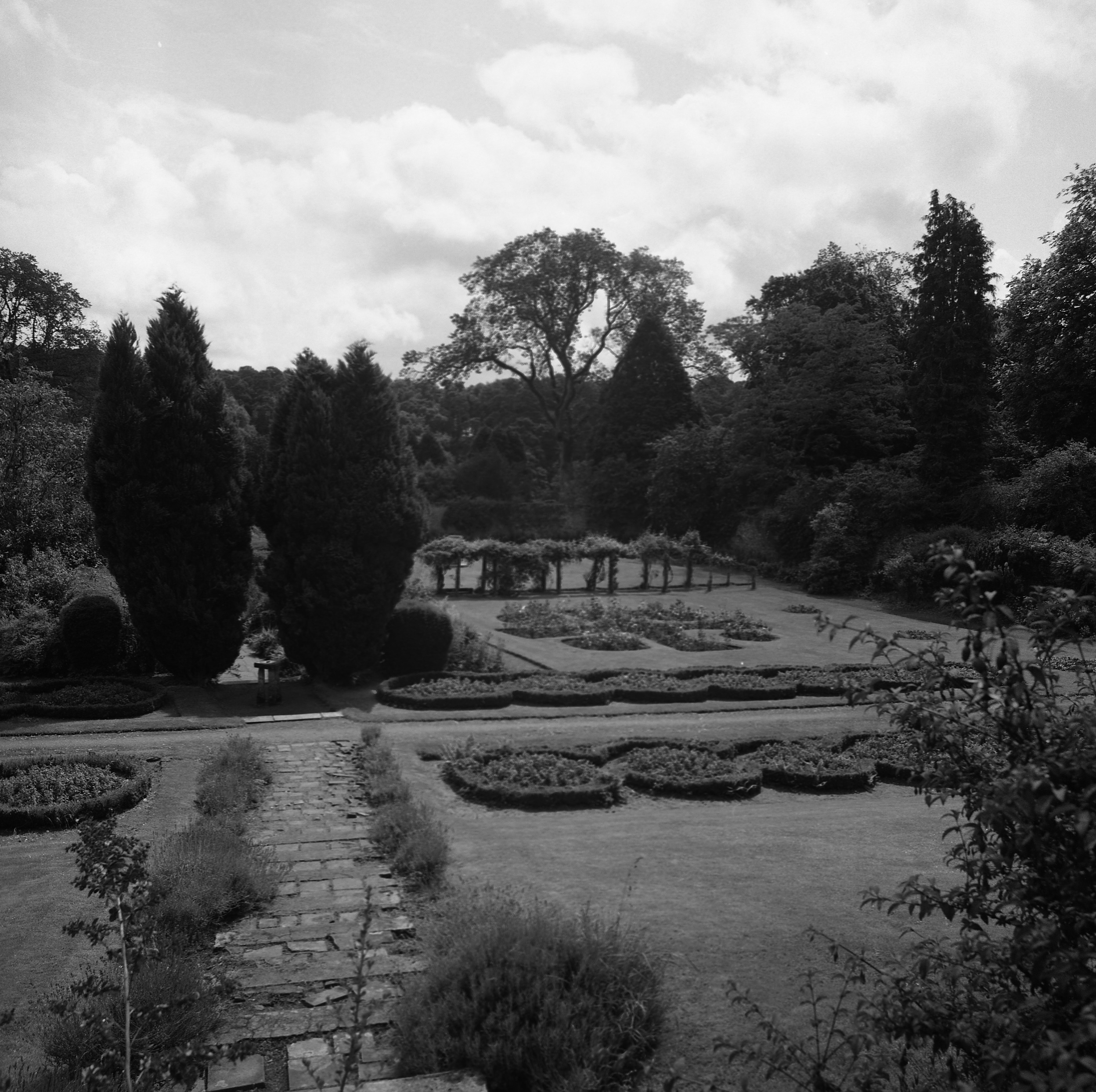
Rear facade of the house with the full height bow. Castlecoote, County Roscommon, August 2025. Photograph © Jennifer Winder-Baggot, www.irishhistorichouses.com
Castlecoote, County Roscommon, August 2025. Photograph © Jennifer Winder-Baggot, www.irishhistorichouses.com
The round window from inside Castlecoote, County Roscommon, August 2025. Photograph © Jennifer Winder-Baggot, www.irishhistorichouses.com
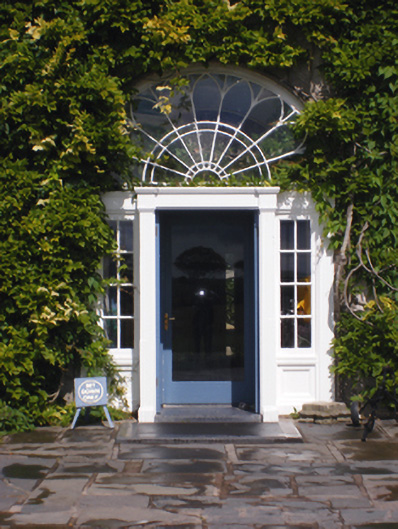
The remains of the other two towers are in the back garden. Castlecoote, County Roscommon, August 2025. Photograph © Jennifer Winder-Baggot, www.irishhistorichouses.com
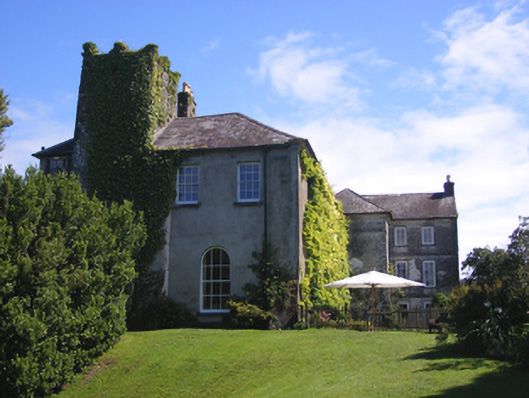
The next family to live in Castlecoote were the Gunning family. The Historic Houses of Ireland website tells us that the family are reputed to have won the estate through a game of cards. [2] Due to their beauty, John Gunning’s daughters Maria and Elizabeth were the toast of 1750s London.

Horace Walpole wrote: “There are two Irish girls, of no fortune, who make more noise than any of their predecessors since the days of Helen, and are declared the two handsomest women alive. I think there being two so handsome, and such perfect figures, is their chief excellence, for singly I have seen much handsomer women than either. However, they can’t walk in the park, or go to Vauxhall, but such mobs follow them that they themselves are driven away.”

Elizabeth Gunning was a famous Irish beauty who married the 6th Duke of Hamilton in 1752. She then married John Campbell, the future 5th Duke of Argyll. The portrait hangs in Malahide Castle and belongs to the National collection.

In an article in the Roscommon Champion newspaper on February 7th 1992, Angela Doyle writes that Bryan Gunning acquired land in Roscommon, including Castlecoote. Theobald Bourke, 6th Viscount Mayo, married Bryan Gunning’s daughter Margaret in 1731.

Bryan Gunning’s son John married Bridget Bourke, a daughter of the 6th Viscount of Mayo by his first wife, Mary Browne, a daughter of one of the drafters of the Treaty of Limerick (Colonel John Browne – d. 1712).

An extract from Notable Irishwomen tells us more about the Gunning family. It tells us that John Gunning, the second son, was a barrister of the Middle Temple in London. He settled at Hemingford Grey, in Huntingdonshire, and here his eldest daughter, Maria, afterwards Countess of Coventry, was born in 1733. Elizabeth, afterwards Duchess of Hamilton, followed the year afterwards, and there were three more daughters, two of whom died young, and then came a son, who subsequently entered the army, fought at Bunker’s Hill (during the American War of Independence), and attained the rank of General. [4]

In 1740, by the death of his elder brother, Mr. Gunning succeeded to the property of Castle Coote. The little family now migrated from Hemingford Grey to Roscommon, a formidable journey in those days of stage coaches and sailing boats. Money was not plentiful at Castle Coote, and no wonder, with such numerous charges as there must have been on it. Mrs. Gunning was a clever, ambitious woman, and as she looked at the wonderful beauty of her daughters, fast growing to maturity, she thought that the girls must be taken out into the world to make their mark there. It would never do for them to be thrown away on country squires or struggling attorneys. So she brought them to Dublin, and took a house in Great Britain Street, at that time quite a fashionable locality, within easy reach of Dominick Street, then the head-quarters of high life. But debts soon accumulated. ..

It was said that Peg Woffington lent the Gunnings dresses from her theatrical wardrobe, in which they appeared at Dublin Castle. Whether this be true or not, it is certain that they were presented to the Lord Lieutenant at a birthright ball, and they made such a sensation there that Lord Harrington, then Viceroy, advised their mother to take them to London. This she was only too eager to do. By hook or by crook she got the money together… The year they went to London, the two girls had their portraits painted by Francis Cotes, R.A. They are represented in low-cut, long-waisted, grey satin gowns, with rows of pink rosettes down each side of the bodice, black hair curled at the back and fastened with a string of pearls. A small black patch, is, according to the fashion of the day, on one cheek.” [4]

Maria Gunning, Countess of Coventry (1733-1760) by Francis Cotes, circa 1751. Picture courtesy of National Gallery of Ireland.
Elizabeth Gunning by Francis Cotes, pastel on blue paper laid down on canvas, courtesy of National Portrait Gallery London, NPG 4890.

They were presented to the King (George II.) one Sunday afternoon, and another Sunday in the Park, such crowds assembled to gaze on them that Lord Clermont with some other gentlemen, had to draw their swords to protect them from the mob…” [4]

A Royal Trust Collection picture of Elizabeth tells us:

Elizabeth Gunning was the second daughter of Col. John Gunning of Castle Coote, County Roscommon, Ireland and his wife, the Hon. Bridget Bourke, daughter of the 6th Viscount Mayo. Born in Hemingford Grey, Huntingdonshire, she was taken to Ireland at the age of three and lived there until 1750 when, with her elder sister Maria, she was brought back to England and presented in London society. Thanks to their beauty and unsophisticated charm the Gunning sisters ‘became the rage and the subject of conversation at every fashionable rout’. Elizabeth became the wife of James, 6th Duke of Hamilton in an extraordinary ceremony, performed with the ring of a bed-curtain at half past midnight on St. Valentine’s Day 1752 after a party at Bedford House at which the Duke had lost £1200 at cards. The Duke of Hamilton, by whom she had three children, died on 17 January 1758 and early in the following year she married John Campbell, Marquis of Lorne, who in 1771 succeeded as 5th Duke of Argyll. She was created Baroness Hamilton of Hambledon in her own right in 1776.   Lady of the Bedchamber to Queen Charlotte from 1761 to 1784, she was appointed Mistress of the Robes in 1778 and died on 20 December 1790. She was one of the most portrayed women in Britain during the period 1750-70.

Elizabeth, Duchess of Argyll and Hamilton by Catherine Read (1723-78). Royal Trust Collection. Even this super-frilly beribboned decking cannot hide her beauty.
A copy of the portrait of Elizabeth Gunning by Joshua Reynolds hangs in Castlecoote. Elizabeth Gunning (Duchess of Hamilton and afterwards Duchess of Argyll), 1734‑1790.
A portrait of Elizabeth, Duchess of Hamilton and Argyle, painted by Gavin Hamilton.
This is my favourite portrait of a Gunning sister: Maria, as painted by Jean-Etienne Liotard.

Elizabeth held the office of Lady of the Bedchamber to Queen Consort Charlotte, wife of King George III, between 1761 and 1784.

Queen Charlotte, wife of King George III. This photograph was taken in Castletown House, County Kildare.

Maria, who married the Earl of Coventry, died aged 27, Robert O’Byrne tells us she most likely died from lead poisoning due to efforts to maintain her pale skin.

Castlecoote changed hands several times until its current owner. When Tony’s father Pat took over the property in the 1930s and farmed the land, he made sure that the house would have a future. However, a fire occurred soon after it was sold by the Convoys in 1989.

Article in the Roscommon Champion, February 7th 1992 by Angela Doyle.

Angela Doyle writes that the brother of the Gunning sisters, Colonel John, married and had a daughter Elizabeth who inherited the Coote good looks. When she forged a letter from a potential suitor, saying that he had changed his mind, her father was outraged and cast out his wife and daughter. He took a mistress and moved to Naples, where he died. His wife Susannah Gunning née Minifie inherited the heavily mortgaged estate at Castlecoote. She was a novelist who wrote romantic and Gothic tales. Her daughter Elizabeth, also a novelist, married Major James Plunkett of Kinnaird, County Roscommon. The literary historian Isobel Grundy tells us in the Oxford Dictionary of National Biography: “Elizabeth Gunning’s early novels are, like her mother’s, sentimental, with heavy-footed humour, trite moralizing, a self-consciously elaborate style, and intense class-consciousness. Each woman wrote more interestingly, with more criticism of society, later in life.” The estate passed out of Coote ownership.

In 1997, when bought by the present owner Kevin Finnerty, the Historic Houses of Ireland website tells us, Castlecoote was a cavernous ruin, without floors, stairs or windows, while the internal walls were crumbling away. The basement was enveloped by earth, the front doorsteps had collapsed, and the surroundings were badly overgrown.

The current owner reinstated the front steps. Castlecoote, County Roscommon, August 2025. Photograph © Jennifer Winder-Baggot, www.irishhistorichouses.com
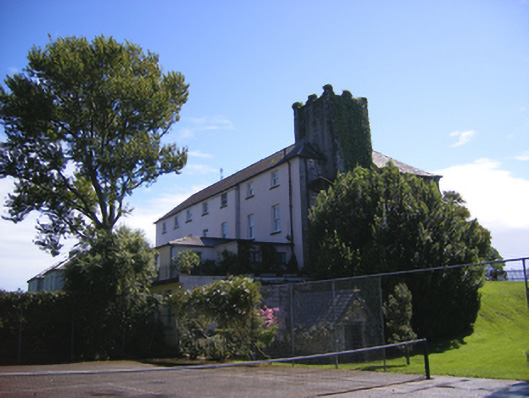
In Kevin’s office in the basement there is a display of photographs of the house as it uderwent repairs.
In Kevin’s office in the basement there is a display of photographs of the house as it uderwent repairs
Castlecoote, County Roscommon. Photograph © Jennifer Winder-Baggot, www.irishhistorichouses.com
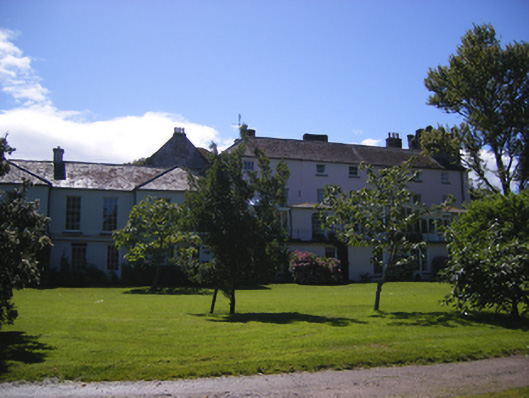
A date stone bears the inscription CBC 1791.
An aerial view of Castlecoote, a photograph in the house.

The Historic Houses of Ireland entry tells us that Kevin began a lengthy period of restoration, which took five years to complete. Work included essential repairs to the structure, underpinning the foundations, consolidating the castle towers, re-roofing and more intricate work such as restoring the plaster ceilings, replacing the chimneypieces, the internal doors and other joinery, and completely redecorating the interior.

The result is beautiful. Kevin gave us a tour inside. Although the historic houses website mentions five years, Kevin says it took twelve years to make the house habitable.

Castlecoote, County Roscommon, August 2025. Photograph © Jennifer Winder-Baggot, www.irishhistorichouses.com
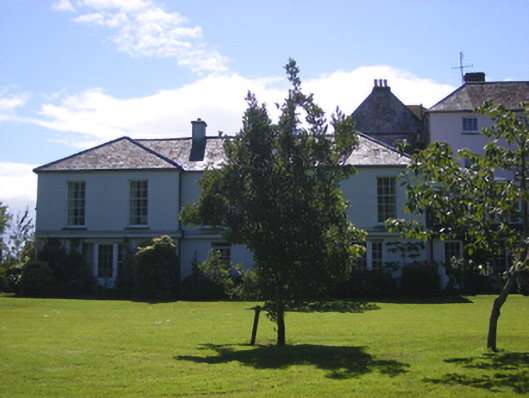
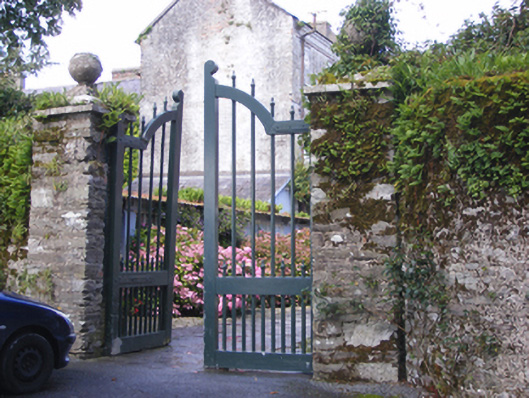
Part of the castle has been let to tenants, so Kevin took us first to the basement to show us the renovations, including lime render on the walls and underfloor heating. There had been no stairs down to the basement and the ones installed are much as the original would have been, of limestone.

The newly made limestone staircase to the basement.
Castlecoote, County Roscommon, August 2025. Photograph © Jennifer Winder-Baggot, www.irishhistorichouses.com

The fireplaces had to have sixteen new chimneypieces installed as the originals had disappeared while the castle was an empty ruin after the fire. Kevin pointed out that the older the chimneypiece, the narrower the mantle shelf. It was the Victorians, I believe, who instigated wide mantlepieces in order to display pieces. Before, the mantle was used to rest a mirror, which was often tilted upward to reflect light and often, a beautiful ceiling.

Castlecoote, County Roscommon, August 2025. Photograph © Jennifer Winder-Baggot, www.irishhistorichouses.com
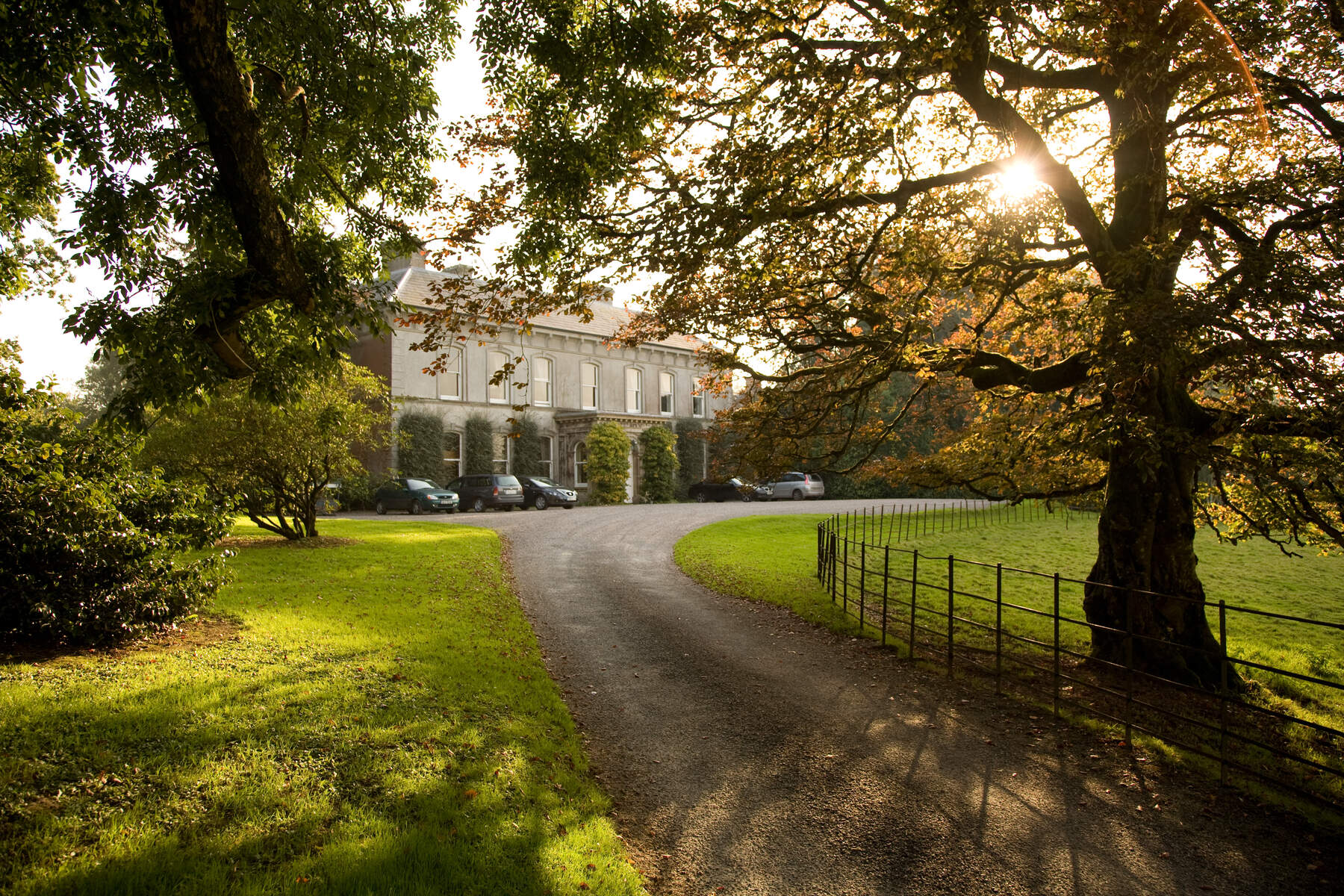
This is an old part of the castle, as you can see from the depth of the walls in the window embrasure.
The window mullions in the basement are original.

Kevin has done the Cootes and the Gunnings and all the former occupants of the house proud, by reinstating its formal splendour in the ceiling plasterwork. With careful attention to detail, he made sure that the windows have the narrow glazing bars of the Georgian period.

Castlecoote, County Roscommon, August 2025. Photograph © Jennifer Winder-Baggot, www.irishhistorichouses.com
Ground floor ceiling plan of Castlecoote.
There is. a dumbwaiter near the corner, that goes down to the kitchen and up to the dining room. Castlecoote, County Roscommon, August 2025. Photograph © Jennifer Winder-Baggot, www.irishhistorichouses.com
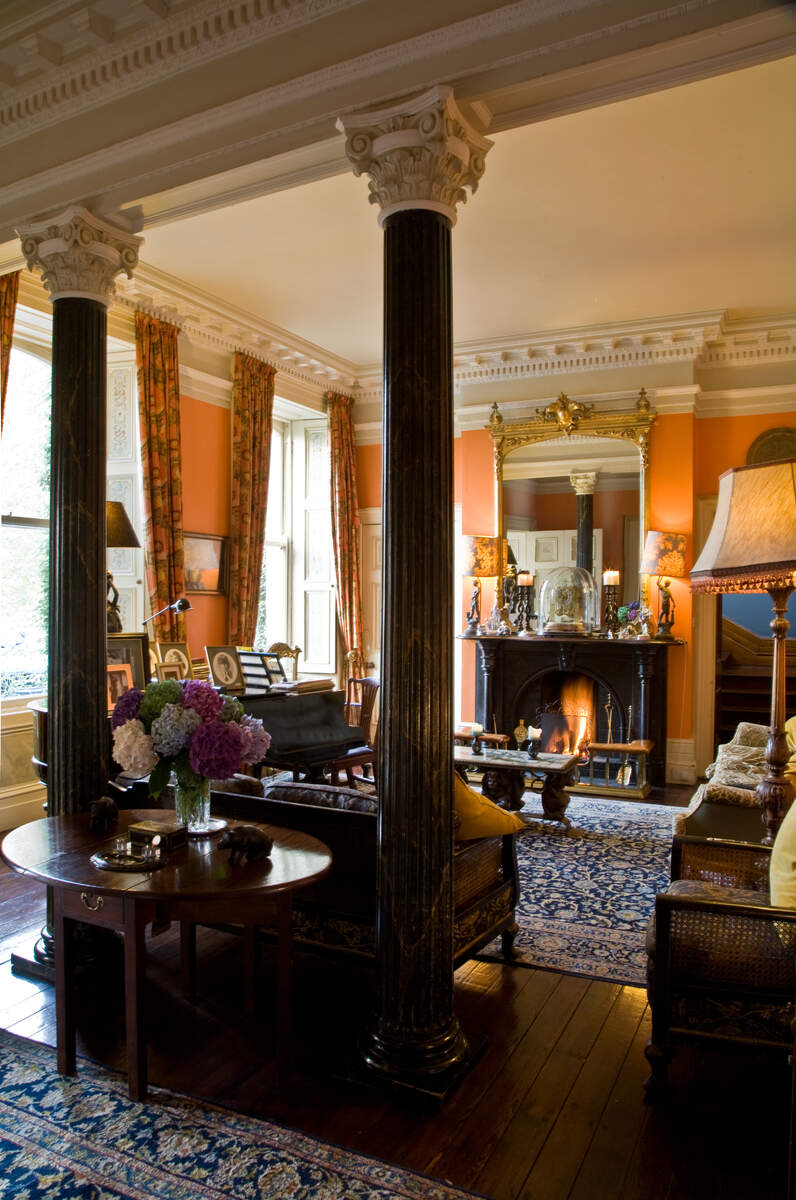
Castlecoote, County Roscommon, August 2025. Photograph © Jennifer Winder-Baggot, www.irishhistorichouses.com
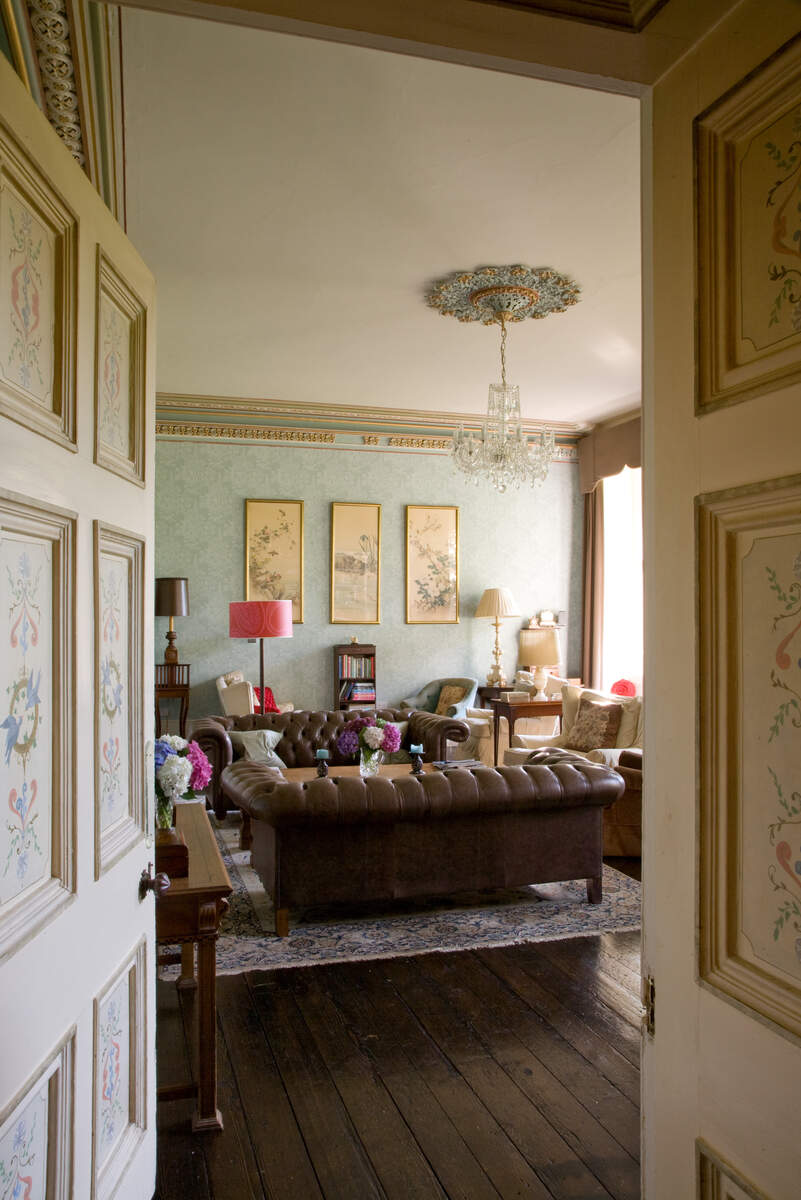
The widowframes are splayed to let in more light. Castlecoote, County Roscommon, August 2025. Photograph © Jennifer Winder-Baggot, www.irishhistorichouses.com
Castlecoote, County Roscommon, August 2025. Photograph © Jennifer Winder-Baggot, www.irishhistorichouses.com
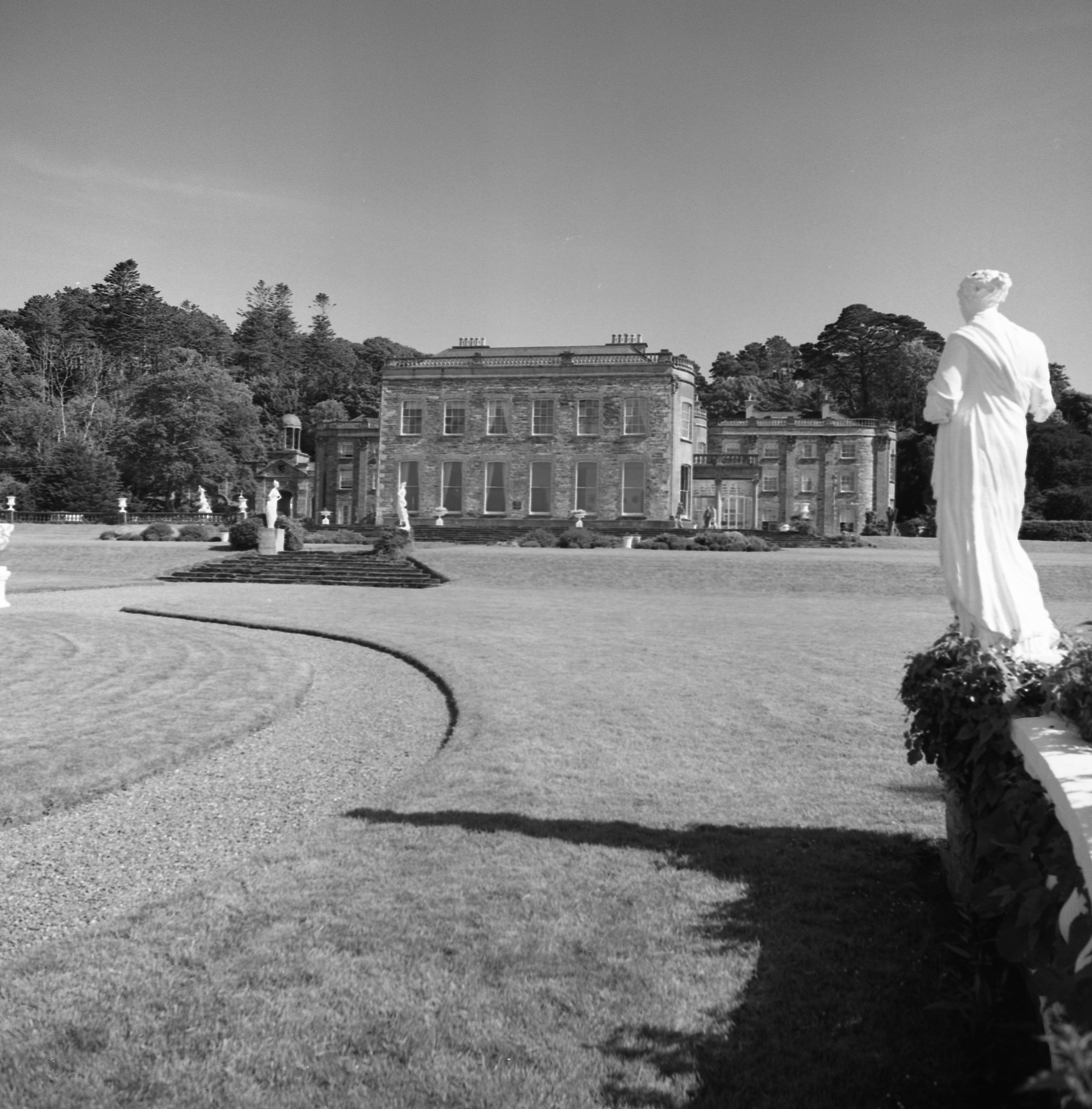
Portrait of Maria Gunning, and the Francis Cotes portrait of Elizabeth by the window. Castlecoote, County Roscommon, August 2025. Photograph © Jennifer Winder-Baggot, www.irishhistorichouses.com
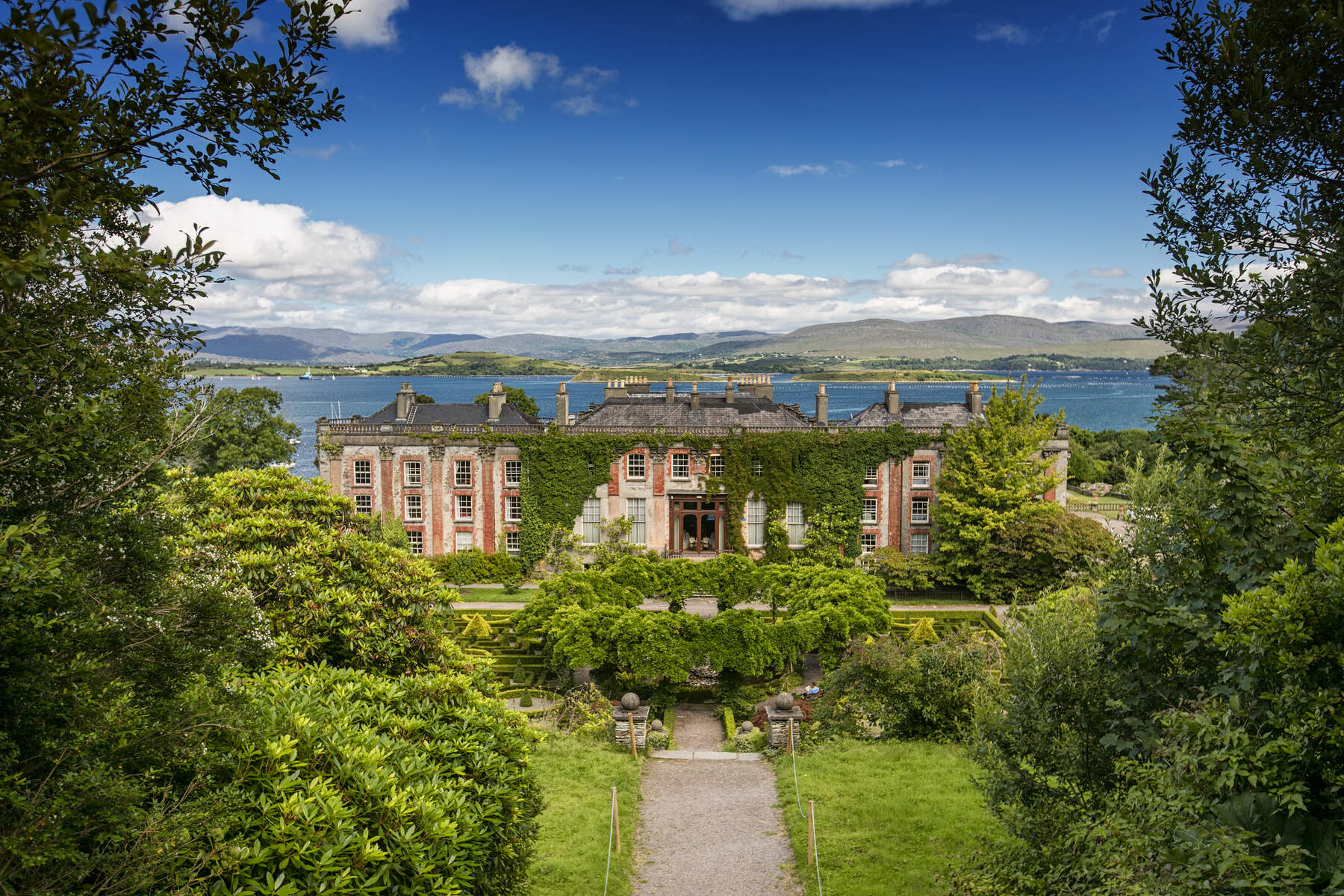
The bookcases in the library have carving to reflect the wall frieze.

Castlecoote, County Roscommon, August 2025. Photograph © Jennifer Winder-Baggot, www.irishhistorichouses.com
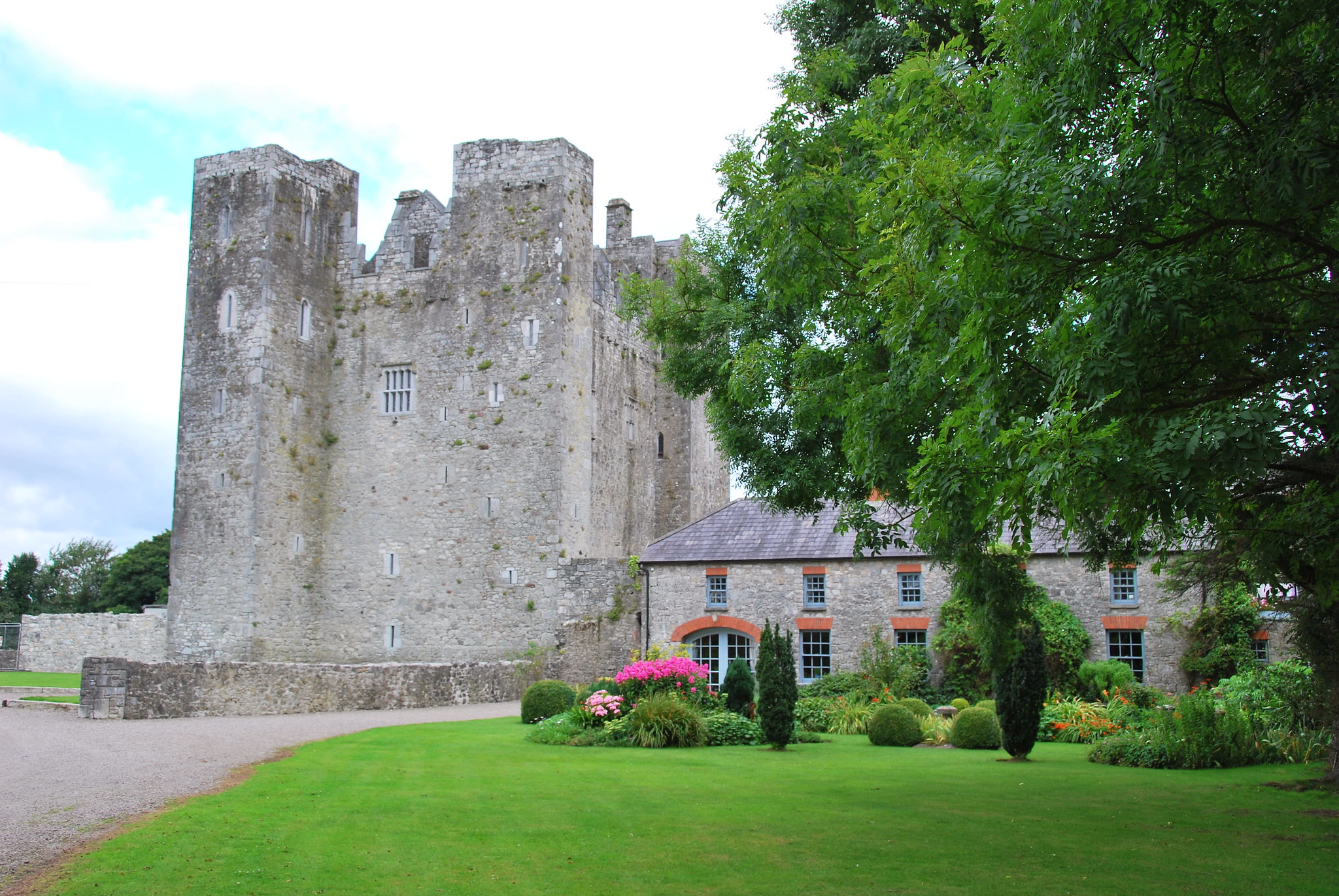
We ended the tour in the grand hall that houses the annual Percy French Summer School. I see that it features very interesting speakers – we must keep a watch for next year’s summer school! The Percy French Summer School began in the 1950s, I believe, and Kevin’s father was one of the founding members. It moved to Castlecoote house in 2009.

Castlecoote, County Roscommon, August 2025. Photograph © Jennifer Winder-Baggot, www.irishhistorichouses.com
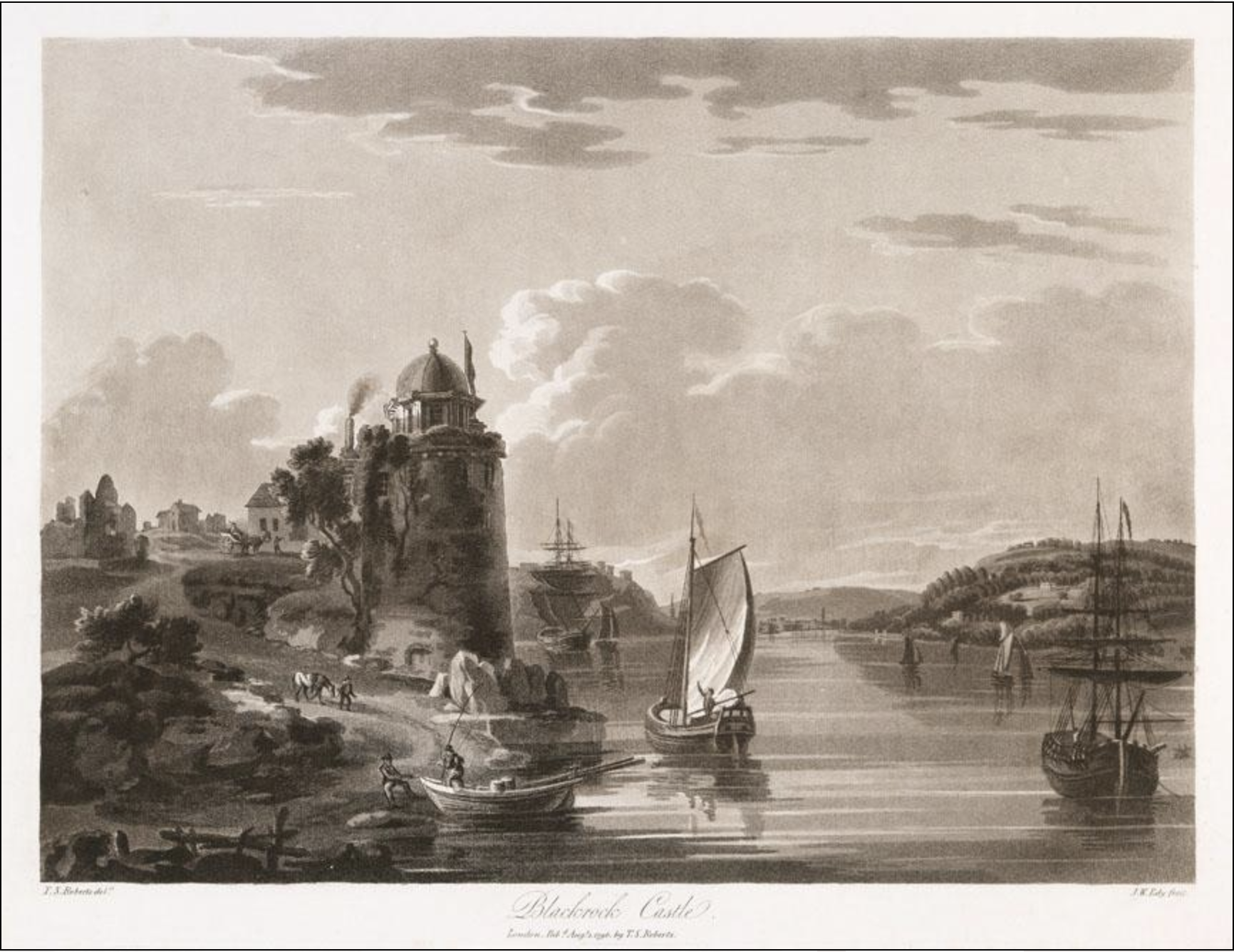
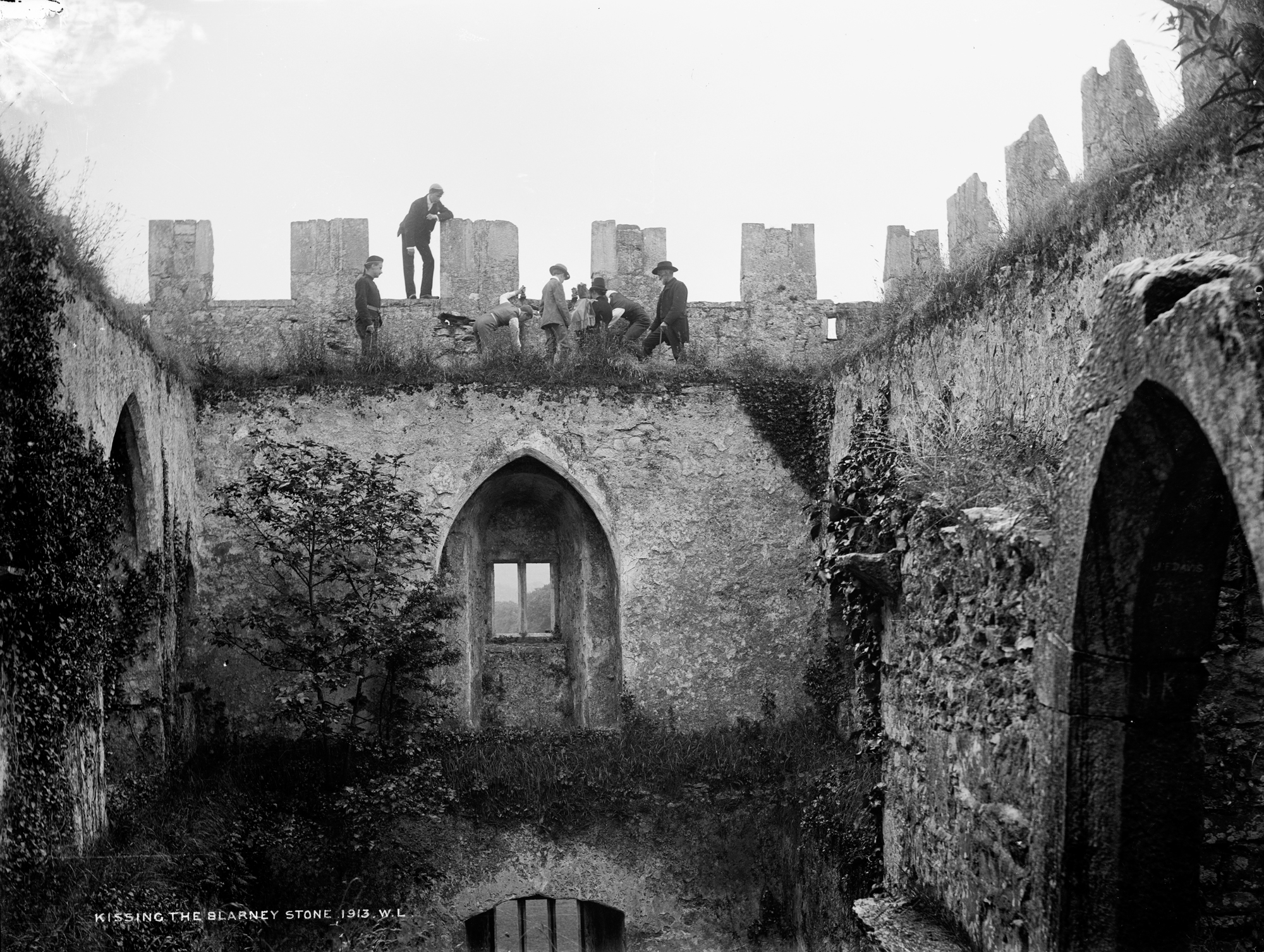
The tour included the grounds. In front of the house alongside the river is a millrace, as the family owned a mill on the river.

View of the River Suck from the bridge. Castlecoote, County Roscommon, August 2025. Photograph © Jennifer Winder-Baggot, www.irishhistorichouses.com
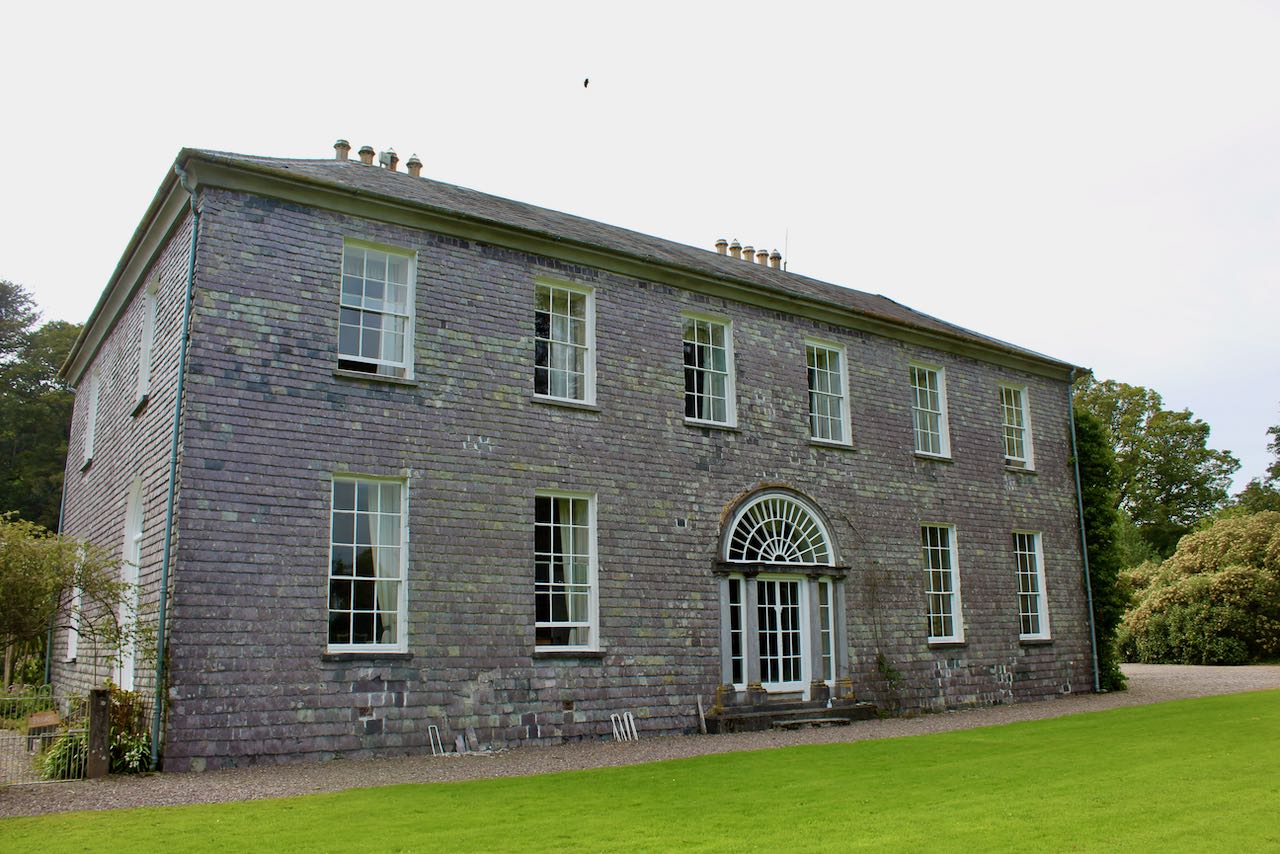
The Millrace wall, Castlecoote, County Roscommon, August 2025. Photograph © Jennifer Winder-Baggot, www.irishhistorichouses.com
At Castlecoote, County Roscommon, August 2025. Photograph © Jennifer Winder-Baggot, www.irishhistorichouses.com
An icehouse, Castlecoote, County Roscommon, August 2025. Photograph © Jennifer Winder-Baggot, www.irishhistorichouses.com
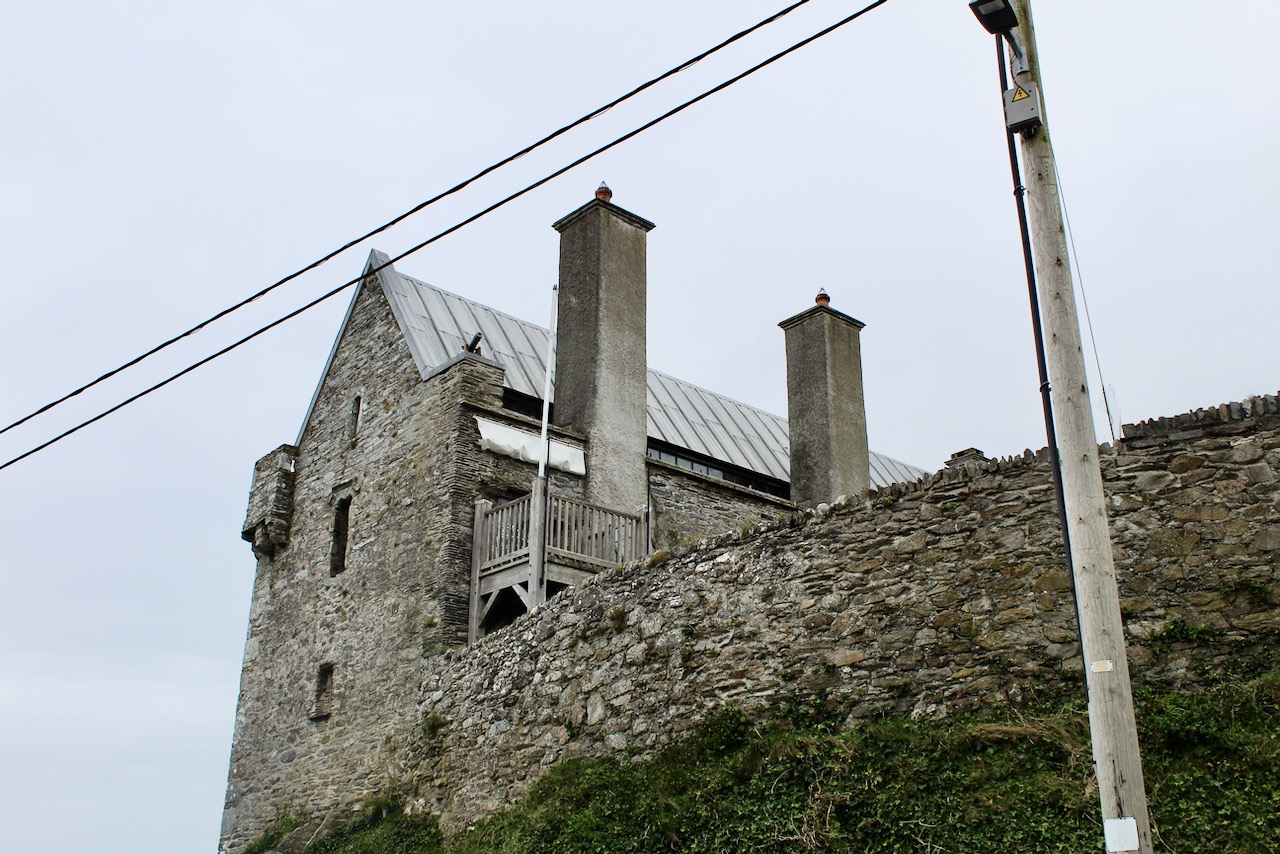
In the back garden is a wonderful apple orchard of heritage specimen trees. Kevin gave us a glass of delicious sweet apple juice.

The house is available for short and long term rent. For booking, see the house website https://www.castlecootehouse.com

The apple orchard.
The back garden, Castlecoote, County Roscommon, August 2025. Photograph © Jennifer Winder-Baggot, www.irishhistorichouses.com
The back garden, Castlecoote, County Roscommon, August 2025. We had a beautiful sunny day for our visit, during the 2025 heatwave! Photograph © Jennifer Winder-Baggot, www.irishhistorichouses.com
A well for the house.

[1] https://www.buildingsofireland.ie/buildings-search/building/31816001/castle-coote-house-castlecoote-castlecoote-co-roscommon

[2] http://www.ihh.ie/index.cfm/houses/house/name/Castlecoote%20House

[2] https://lincolnshirefolktalesproject.com/2024/02/21/the-witches-of-belvoir/

[4] From Notable Irishwomen: https://en.wikisource.org/wiki/Page:Notable_Irishwomen.djvu/26

Heritage Week 2025, our visits

I love Heritage Week, people are so generous with their time. I will be writing about it in the next couple of weeks but here is a quick preview of our week.

We visited Counties Roscommon and Sligo and stayed in the beautiful Andresna House B&B on the shore of Lake Arrow. https://www.andresnahouse.com

Andresna House was probably built as a fishing or hunting lodge, and I will be adding it to my “Places to visit and stay in County Sligo.” Owners Andy and Myriam were unable to determine its precise age, but a nearby house with the same design was built in 1795. I like that the owners run the B&B with an emphasis on organic produce and bed linen – it is a haven of beauty, fine taste and tranquility.

Andresna House on Lough Arrow, photograph courtesy of Andy of Andresna House.

Unfortunately we were only able to stay for one night as we had to get back to Dublin, but while in the area we visited Castlecoote in County Roscommon, Temple House in County Sligo and a property that is not on the Revenue Section 482 list but has been recently renovated and opened for B&B accommodation, Frybrook House in Boyle, County Roscommon https://frybrook.ie.

Castlecoote, County Roscommon, a Revenue Section 482 property. Photograph © Jennifer Winder-Baggot, www.irishhistorichouses.com
Frybrook, Boyle, County Roscommon, available for B&B accommodation. Photograph © Jennifer Winder-Baggot, www.irishhistorichouses.com
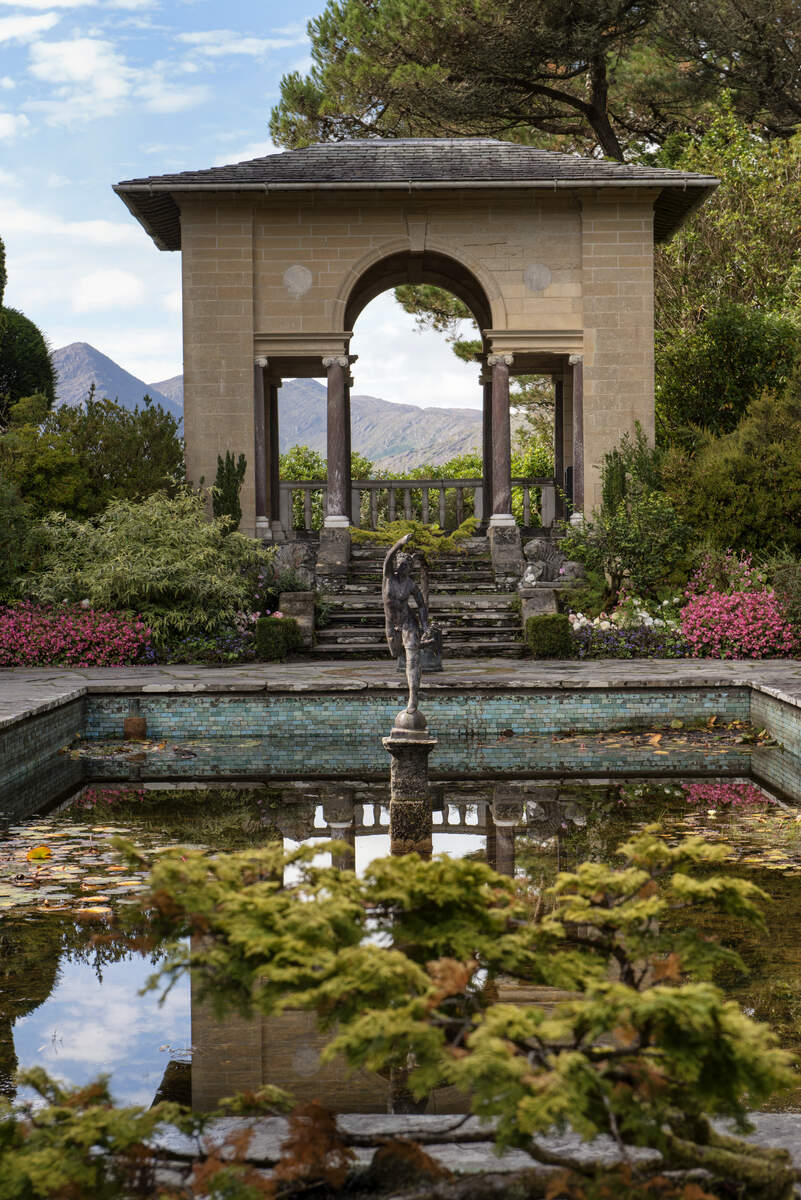
I was disappointed to learn that Temple House is no longer taking bookings for separate bedrooms for overnight guests, and is only available for group rental. I understand that it’s difficult to run a B&B (and they also served dinner) and I think Roderick and his family feel the need to step back from that end of hospitality. What a splendid house it is! The tour confirmed the Perceval links with Burton Park in County Cork, another Section 482 property https://irishhistorichouses.com/2024/02/08/burton-park-churchtown-mallow-county-cork-p51-vn8h/

Temple House, County Sligo. Photograph © Jennifer Winder-Baggot, www.irishhistorichouses.com
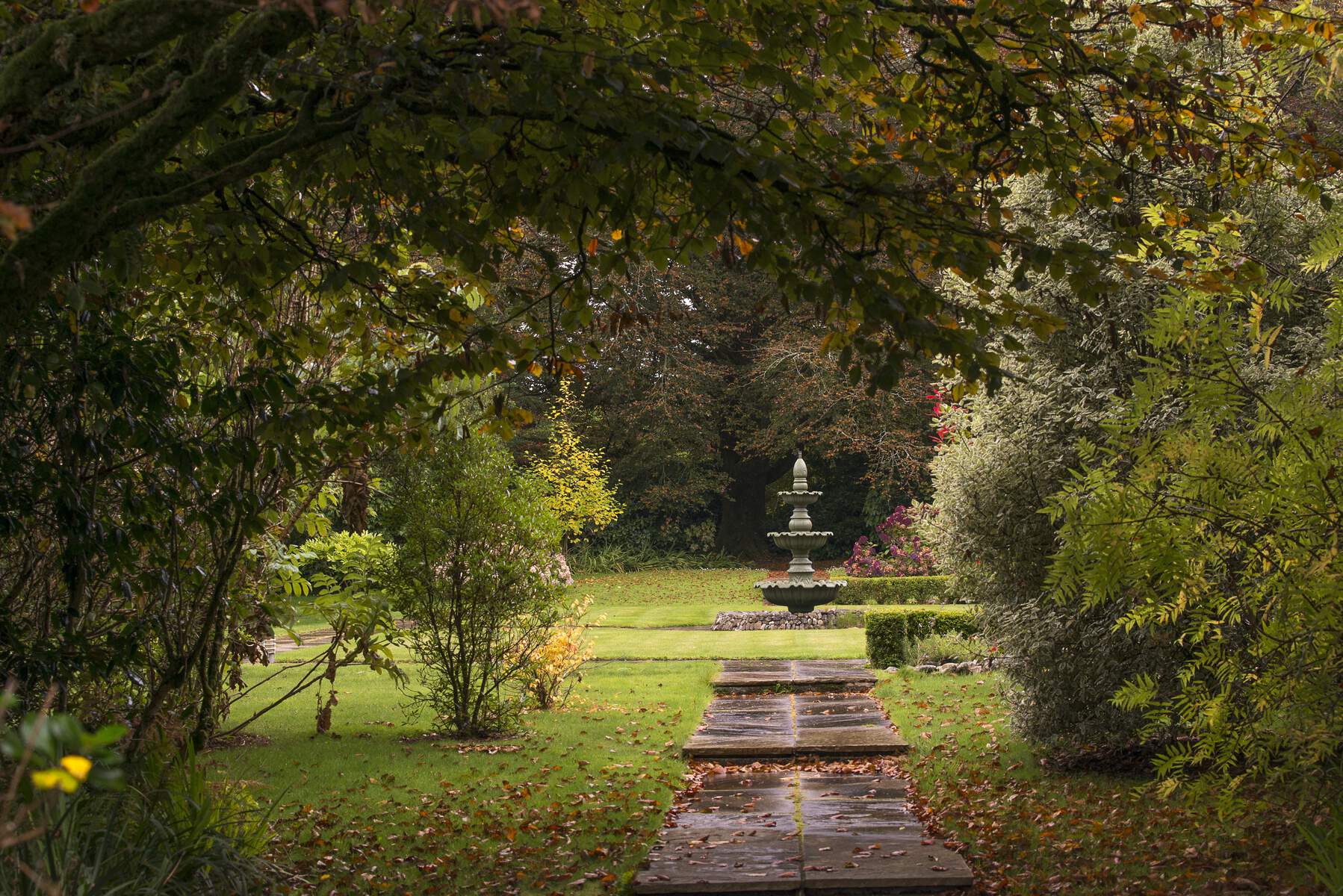
At Temple House I met a historian who had worked in the Jacobean Kiplin Hall in Yorkshire, built in the 1620s for George Calvert, founder of Maryland in the United States. I was thrilled when she told me she is familiar with my website. It was great to receive a vote of confidence. She shared with me photographs of a visit she had made earlier in the week to the beautiful Raford House in Galway, a member of Historic Houses of Ireland which is not normally open to the public. This year the Historic Houses of Ireland participated in the Open Doors initiative, giving visitors an opportunity to explore homes that are not normally open to the public. https://www.ihh.ie I learned of the initiative too late to make plans, unfortunately – I do hope they do it again next year! I would have loved to avail of the opportunity to visit Ballydarton in County Carlow, Lohort Castle and Laurentinum House in Cork, Richmond House in Fermoy, Roundwood and Ballykilcalvan in Laois, Castlegarde in Limerick and Castlecor in Longford.

On Tuesday Stephen and I returned to Birr Castle for another tour – it’s so rich with living history, antiques, portraits, Gothic vaulting, brocades, enormous pelmets, crests and tapestries, I would need hours to take in its splendour and stories.

Stephen strides out at Birr Castle, County Offaly. Photograph © Jennifer Winder-Baggot, www.irishhistorichouses.com

We had a little wander on the grounds to the formal gardens but didn’t have long until our tour at Bellefield House and Gardens nearby. Architect and landscape architect Angela Jupe left her beloved house, renovated outbuildings and nearly two acre walled gardens to the Royal Horticultural Society of Ireland, and the head gardener led tours during Heritage Week. The gardens are often open to the public during the year – check their website for details https://rhsi.ie/rhsi-bellefield/. I was excited that we were allowed to see inside the house as well as the garden on this Heritage Week tour. I love Angela Jupe’s taste in decor and furnishing, and her fondness for architectural salvage. Note that the coach house, renovated by Angela, can be rented as accommodation too. The website tells us that it has an accessible downstairs double bedroom and shower room and an upstairs mezzanine room with a double bed. There’s a fully equipped kitchen and an open plan living room and stove with access directly out onto the lower walled garden. For enquiries for both events in the large open space or accommodation, check the website.

Bellefield House, County Offaly, gifted to the Royal Horticultural Society of Ireland by Angela Jupe. Photograph © Jennifer Winder-Baggot, www.irishhistorichouses.com
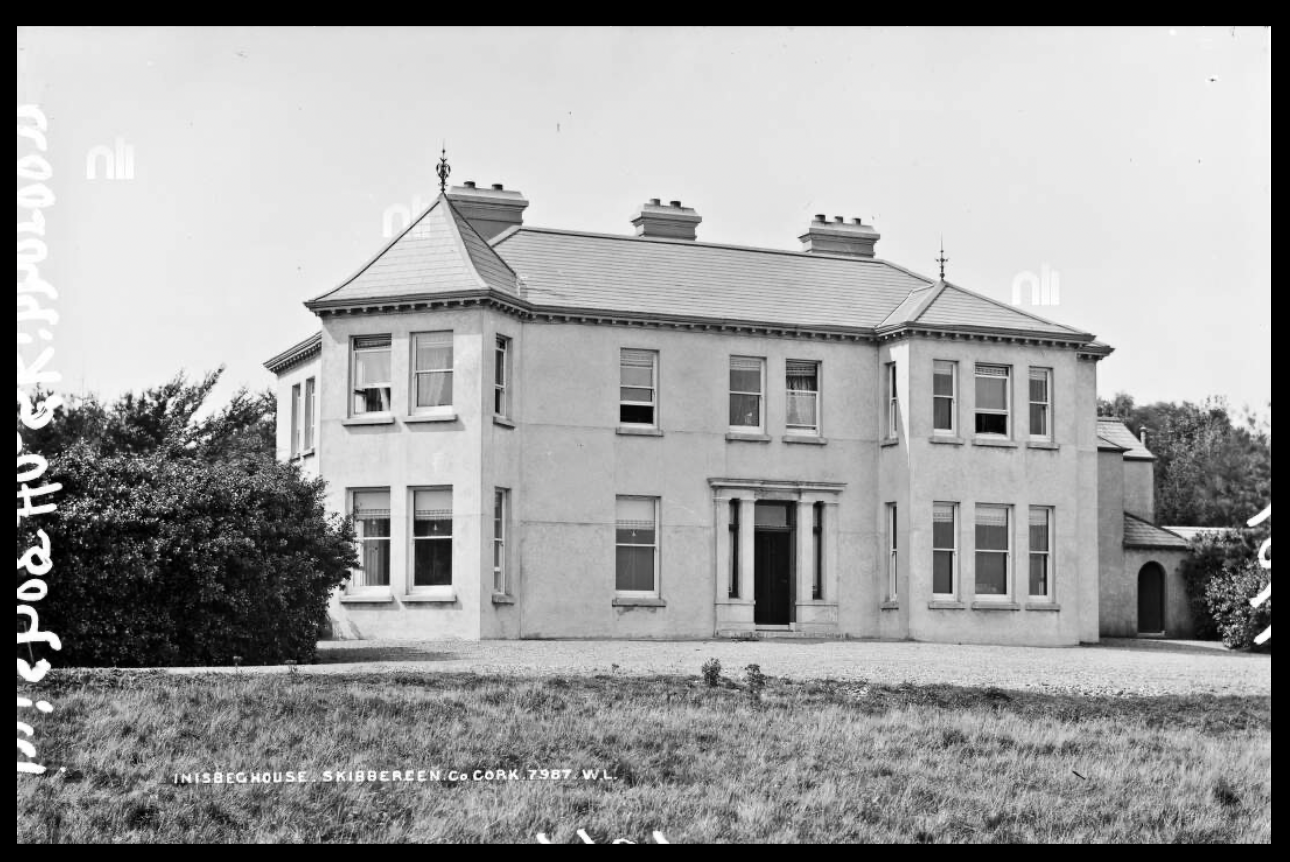
Angela previously owned Fancroft Mill in County Tipperary, another Section 482 property which I look forward to visiting.

We enjoyed the tour of the garden and learned that good garden hygeine should help to cure our apple trees of their black spot infection. For the third time that week we sampled apples – or in the case of Castlecoote, delicious sweet apple juice.

The wonderful garden house folly built with flair by Angela Jupe from architectural salvage. Photograph © Jennifer Winder-Baggot, www.irishhistorichouses.com
Bellefield garden by Angela Jupe. The greenhouse was made from salvage from the old Jervis Street hospital! Photograph © Jennifer Winder-Baggot, www.irishhistorichouses.com
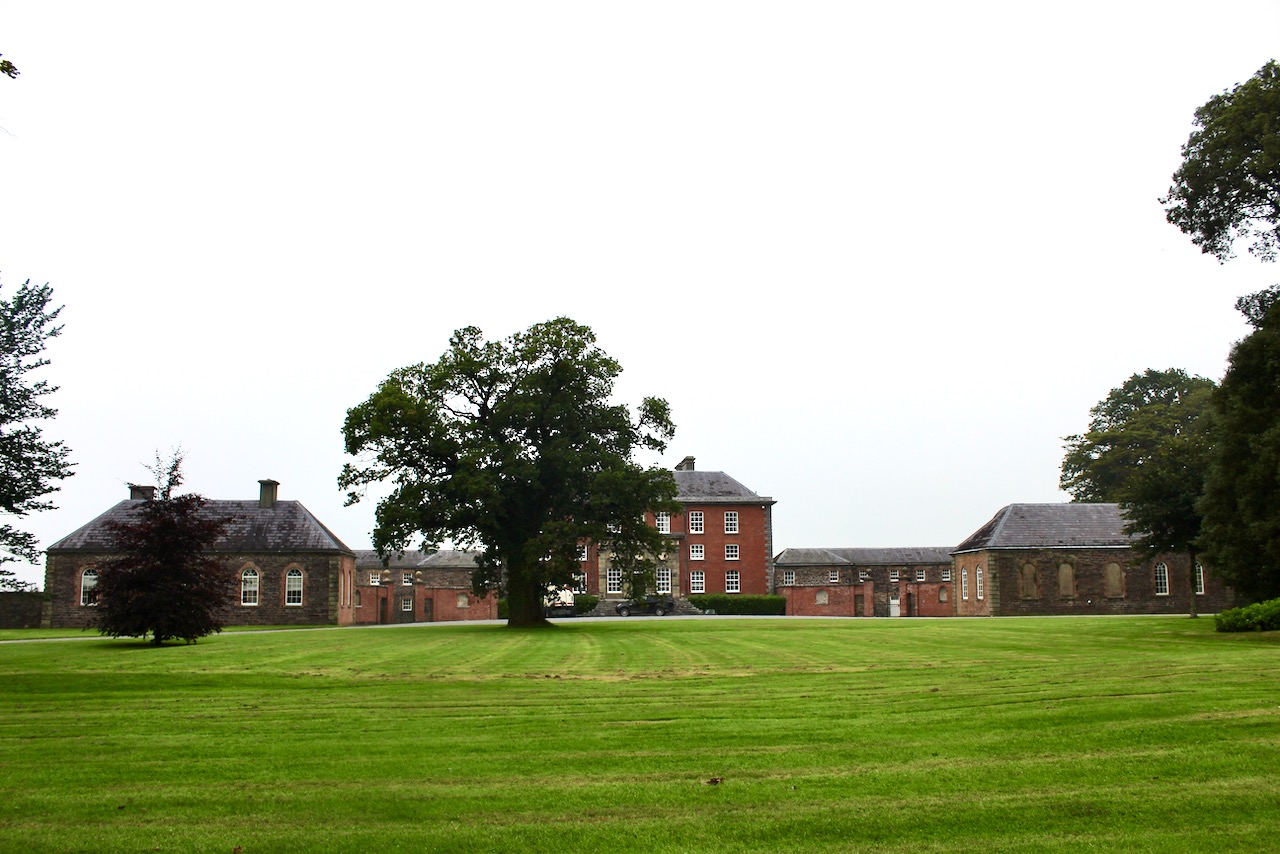
Due to the heatwave we had to take a break from house visits in order to drive down to Wexford to water my vegetable garden. I was disappointed to realise that Ballyhack Castle, a tower house owned by the Office of Public Works but closed most of the time, was open for most of Heritage Week this year but closed on the days we were in Wexford!

My garden in Wexford. Photograph © Jennifer Winder-Baggot, www.irishhistorichouses.com
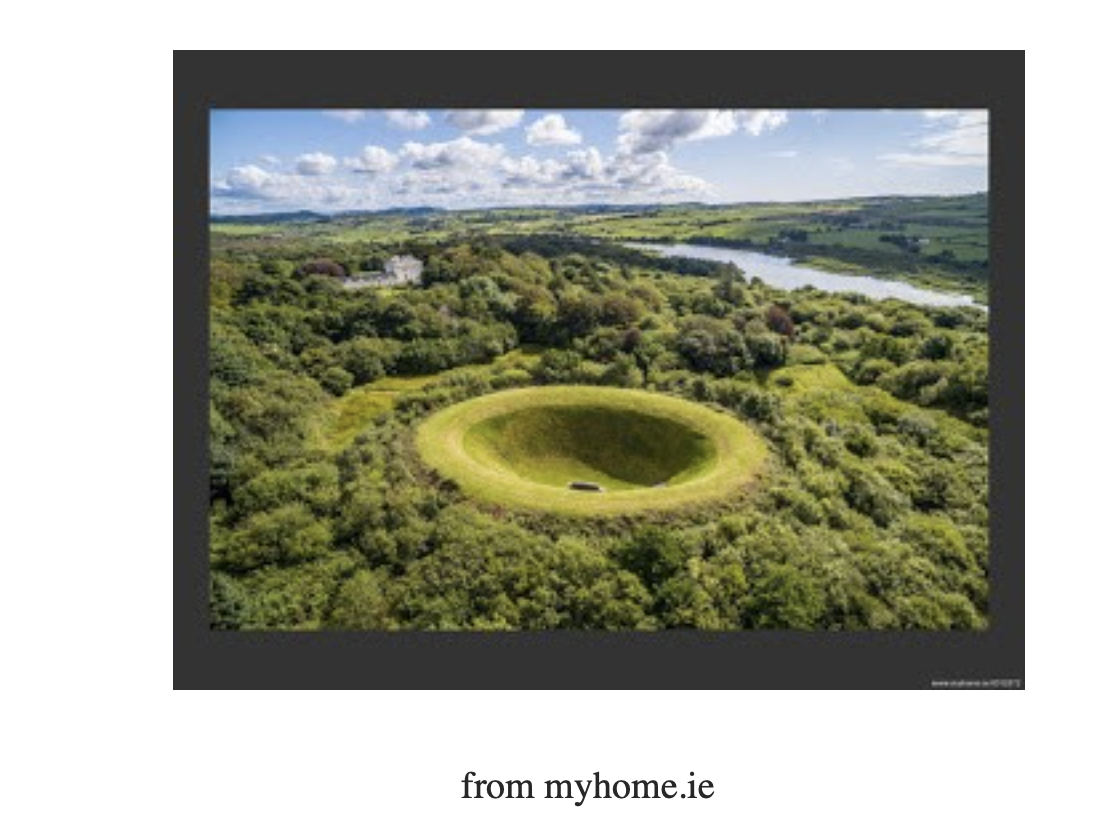
However, we returned to Dublin to visit Howth Castle on Friday. Historian Daniel Eglington-Carey, who currently lives in the castle and gives tours, explained how the forecourt displays the different dates when parts of the castle were built. The St. Lawrence family settled in the location nearly 800 years ago and only moved out recently. None of the original structure remains, but the gate tower dates from 1450. My friend Gary and I really enjoyed the tour, and look forward to returning as a longer tour brings visitors to the Lutyens garden behind the castle. https://howthcastle.ie I’ll be updating my page soon with more about our visit.
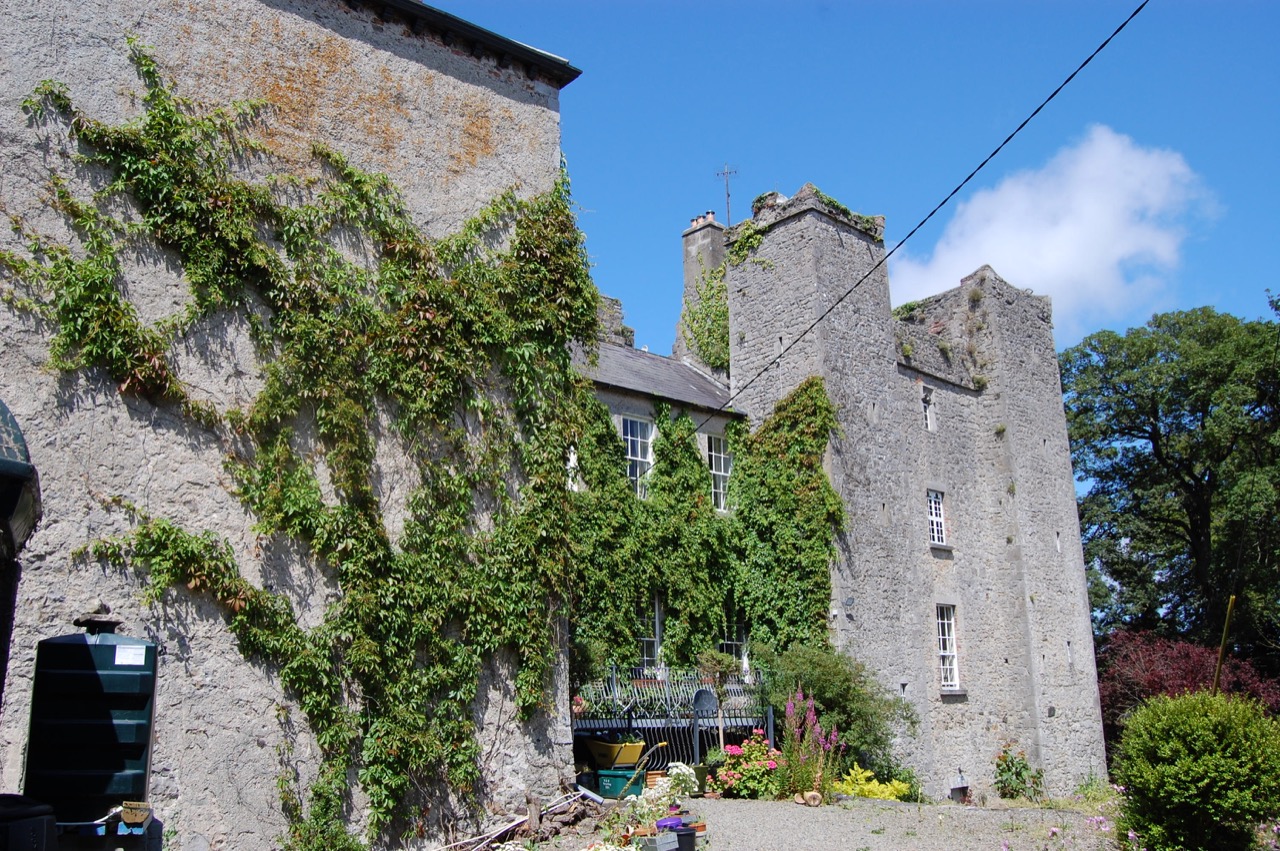
The Gate Tower at Howth Castle, built in 1450. The Gothic windows were inserted when they were removed from the front of the main house in order to install larger sash windows. Photograph © Jennifer Winder-Baggot, www.irishhistorichouses.com