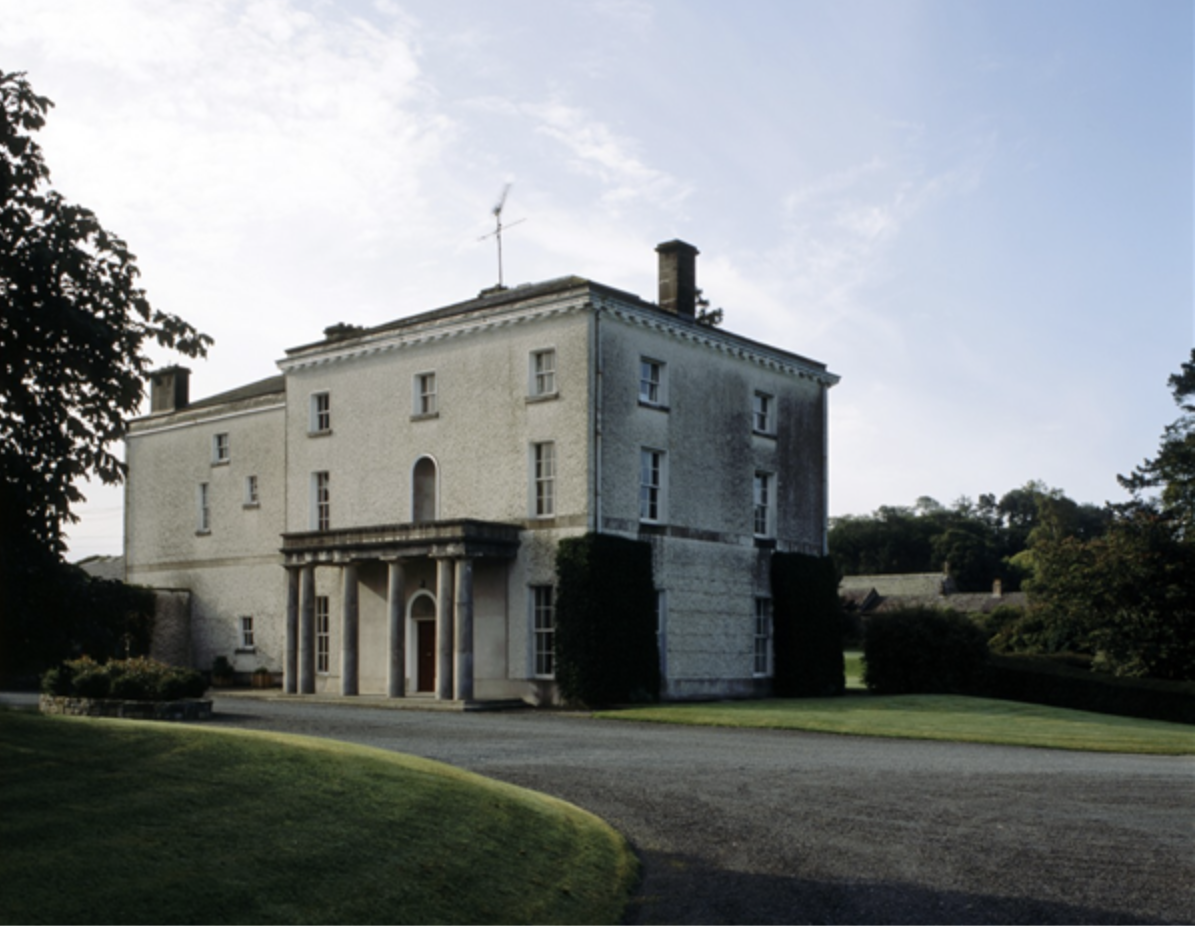
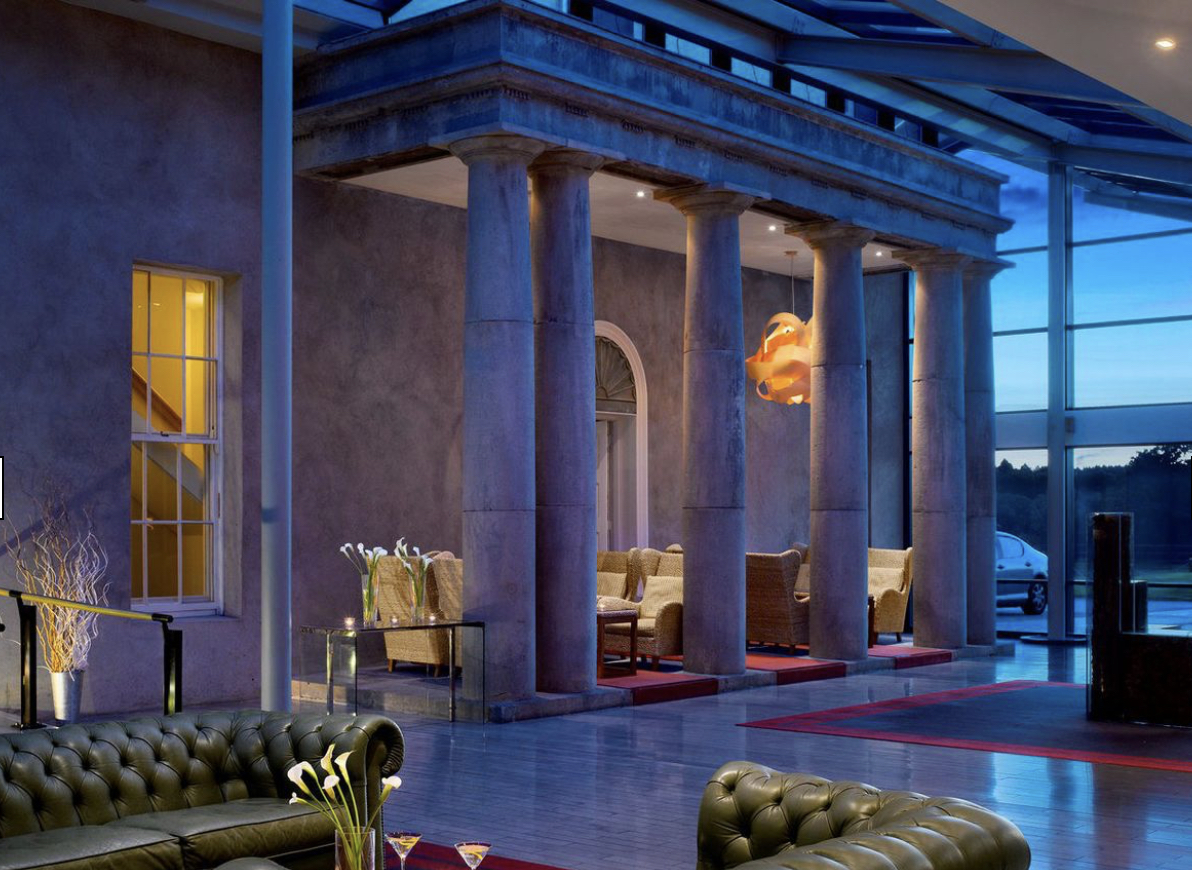
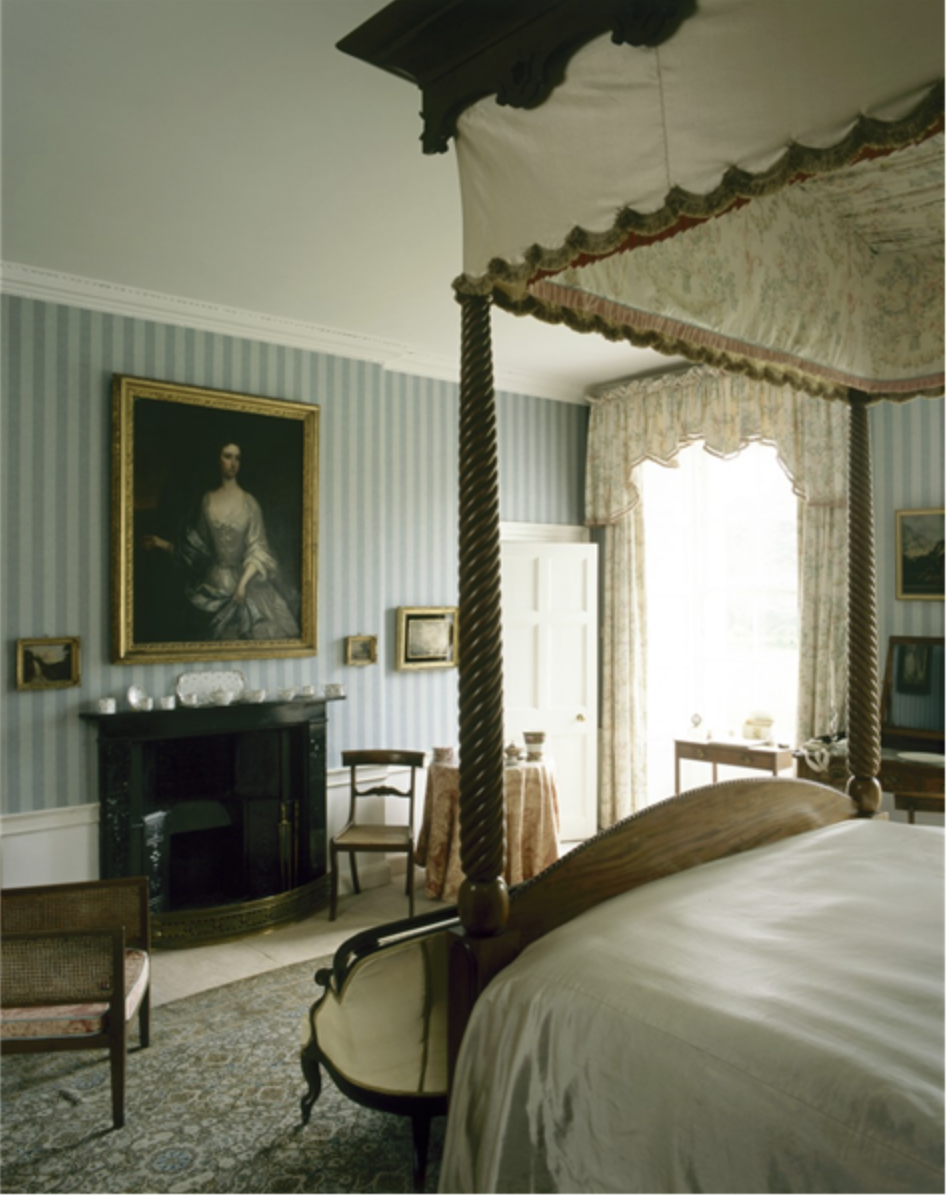
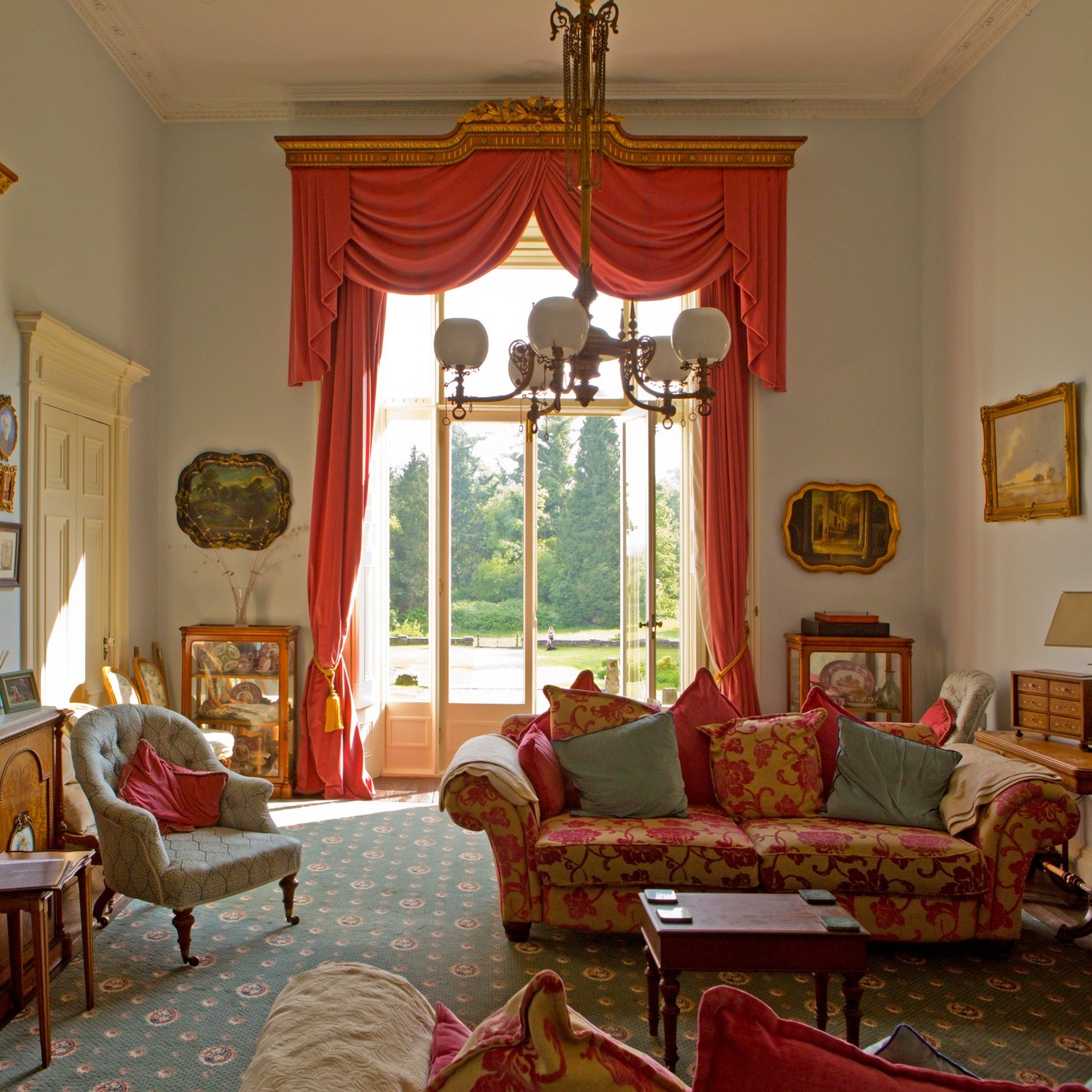
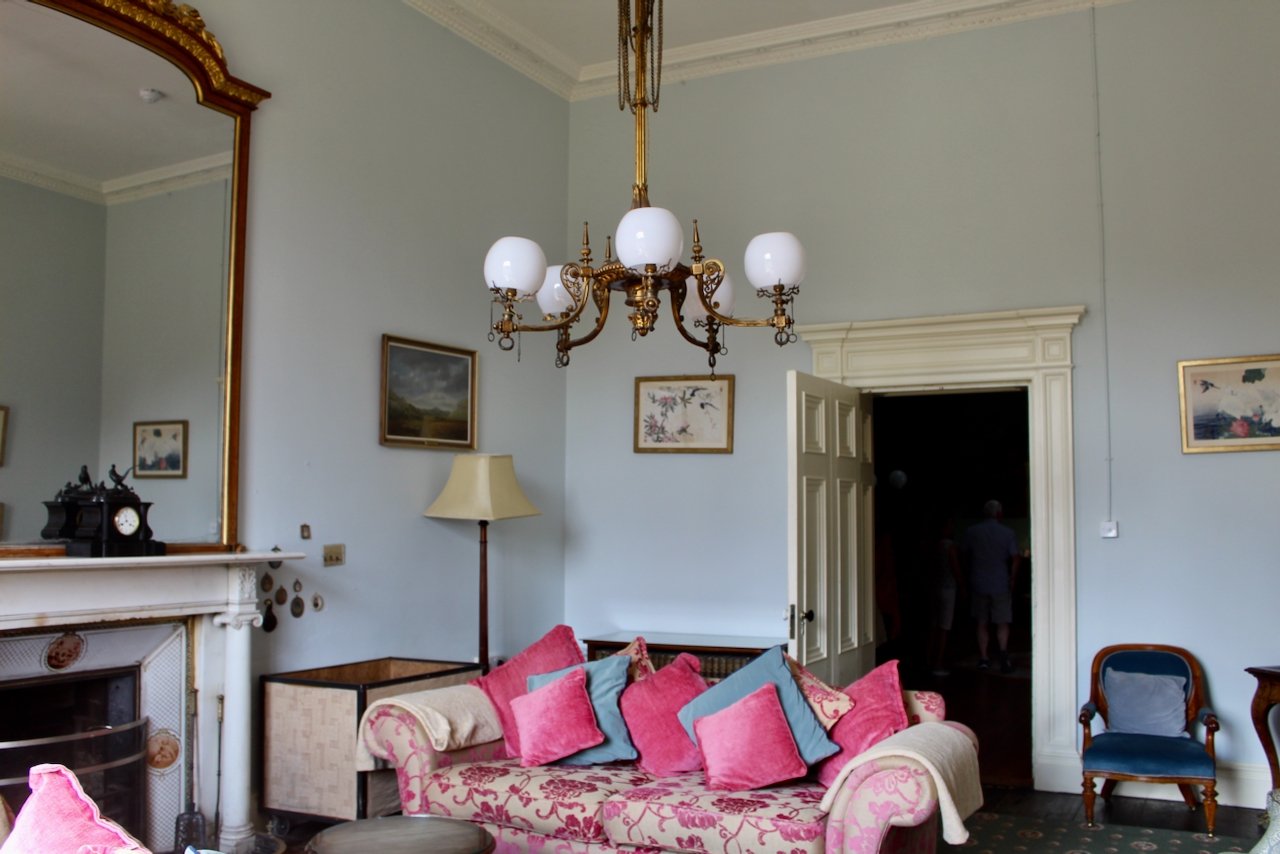
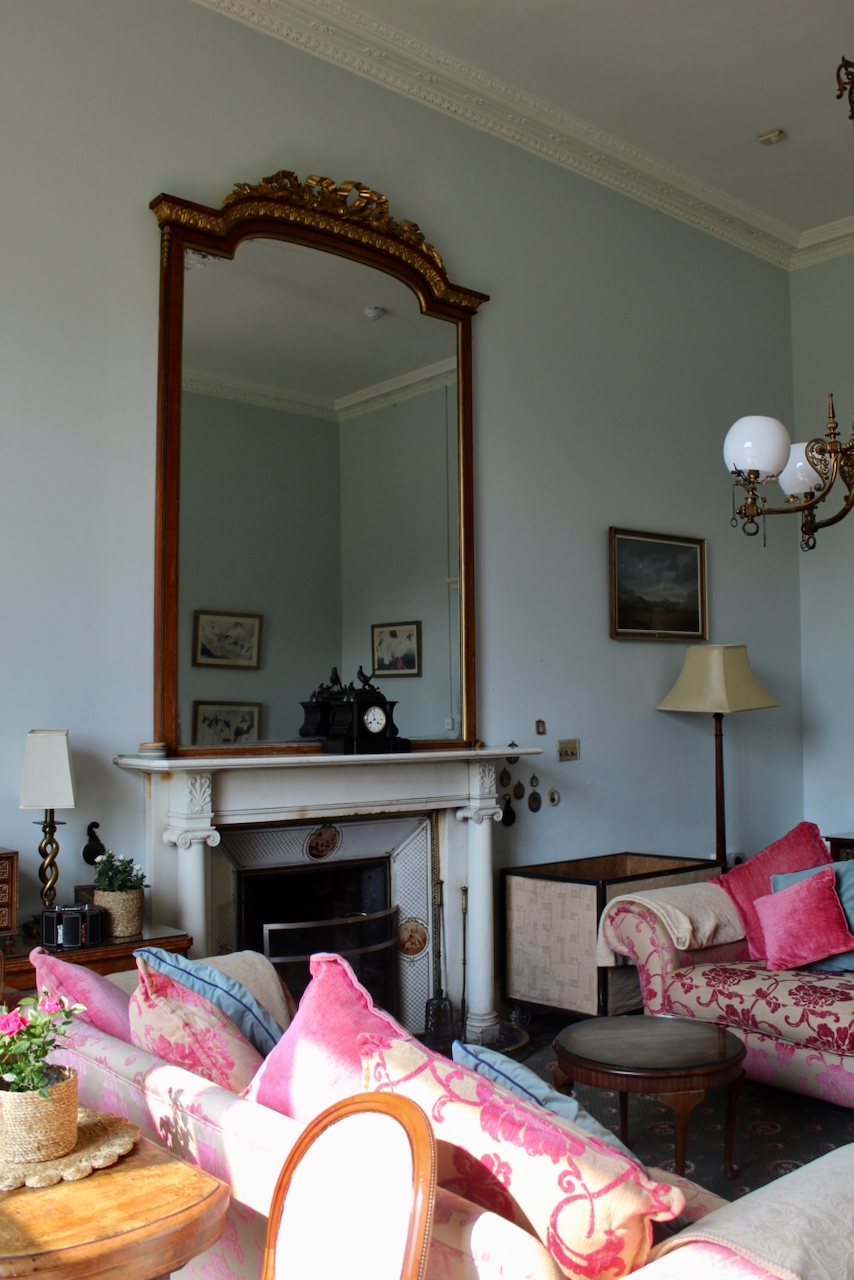
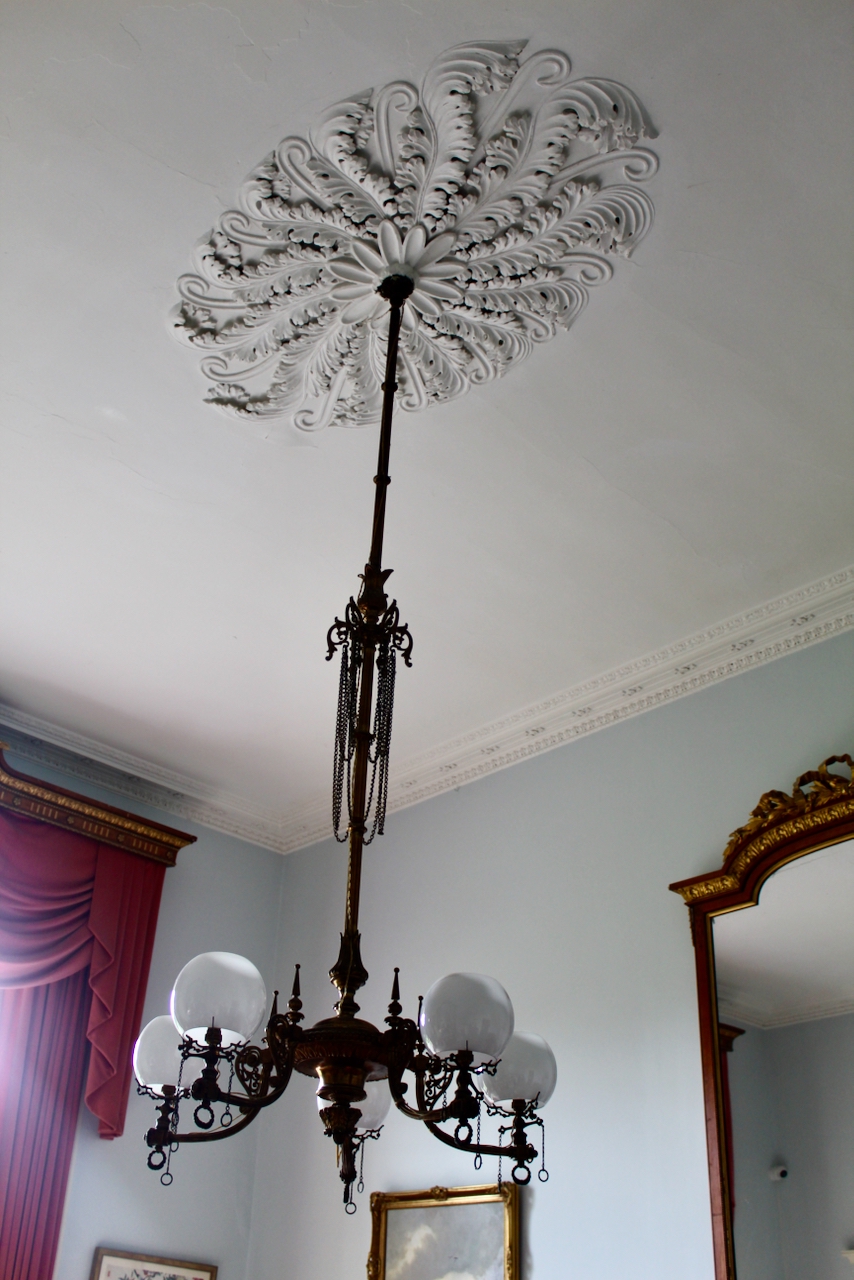
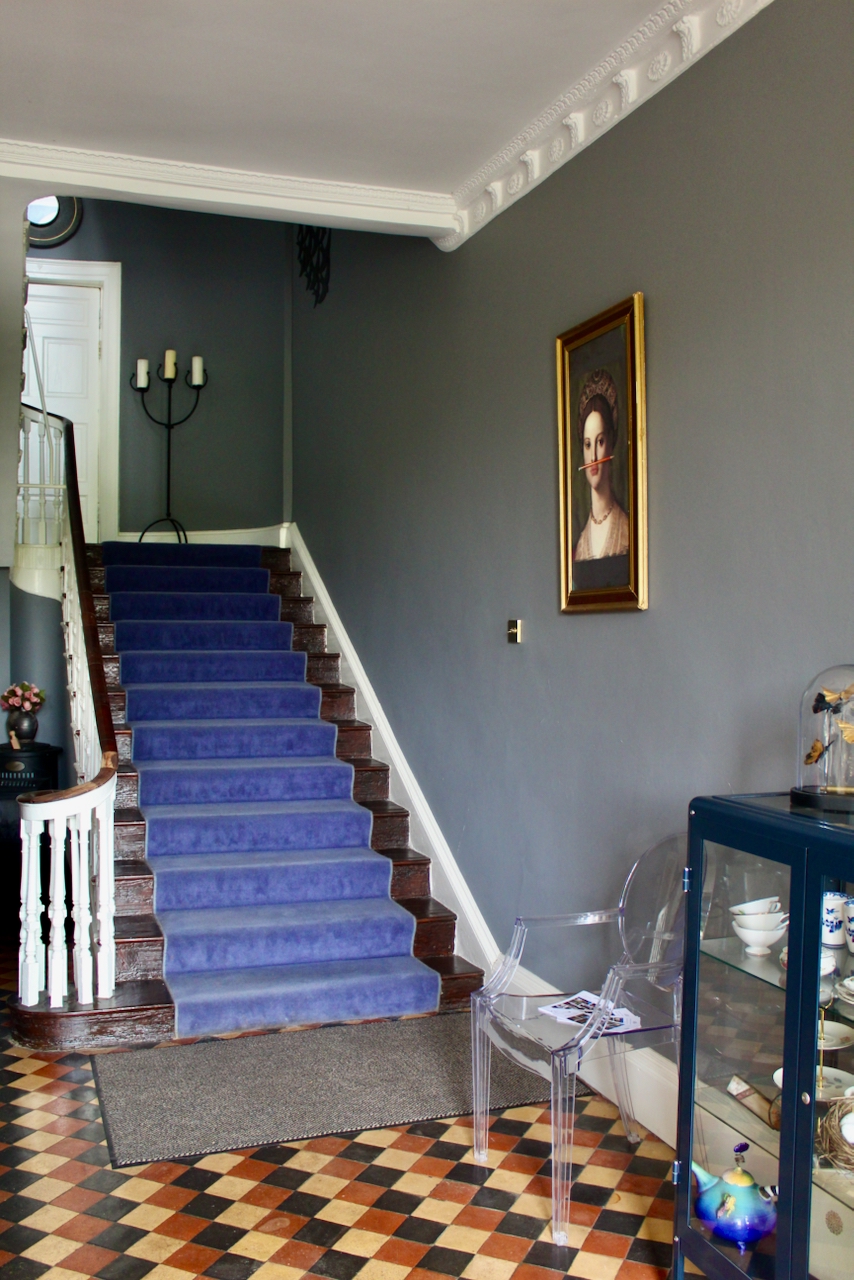
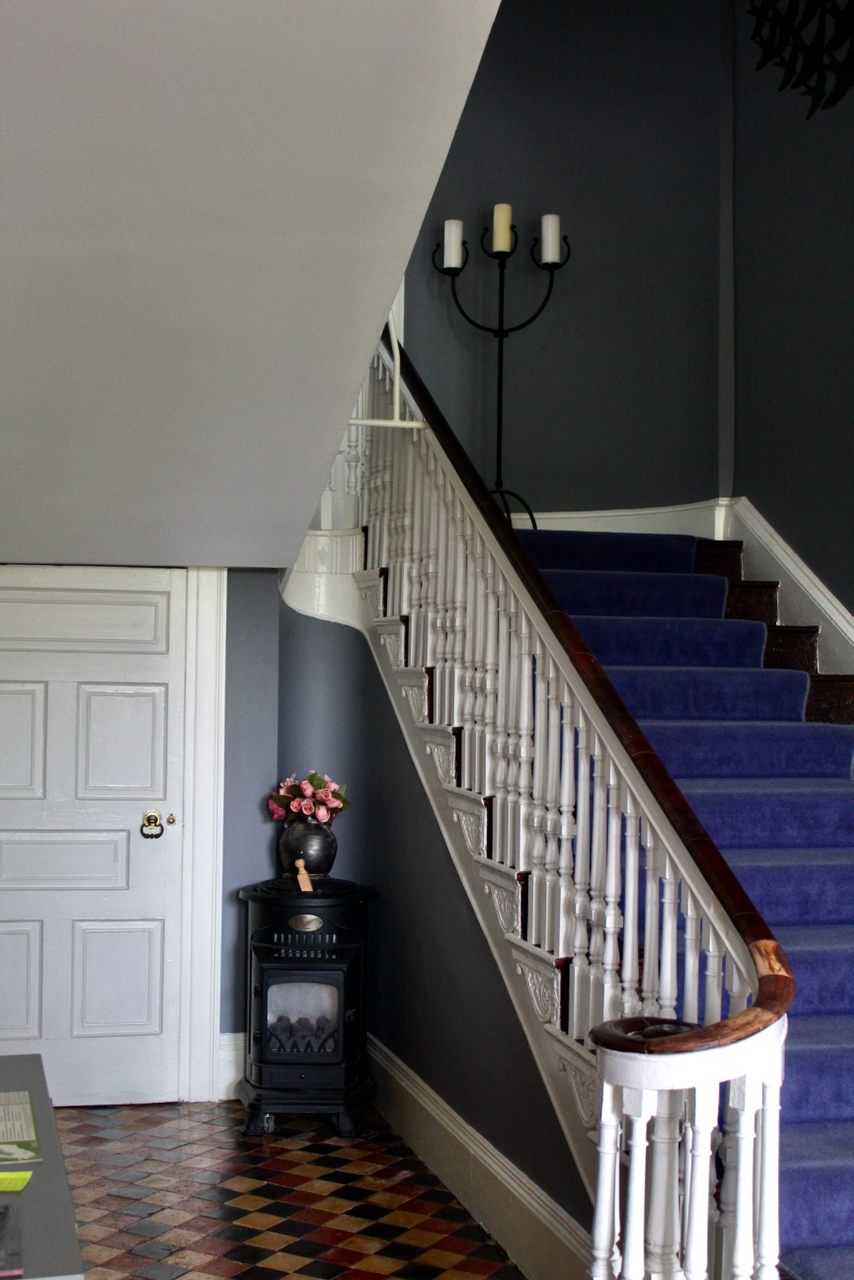
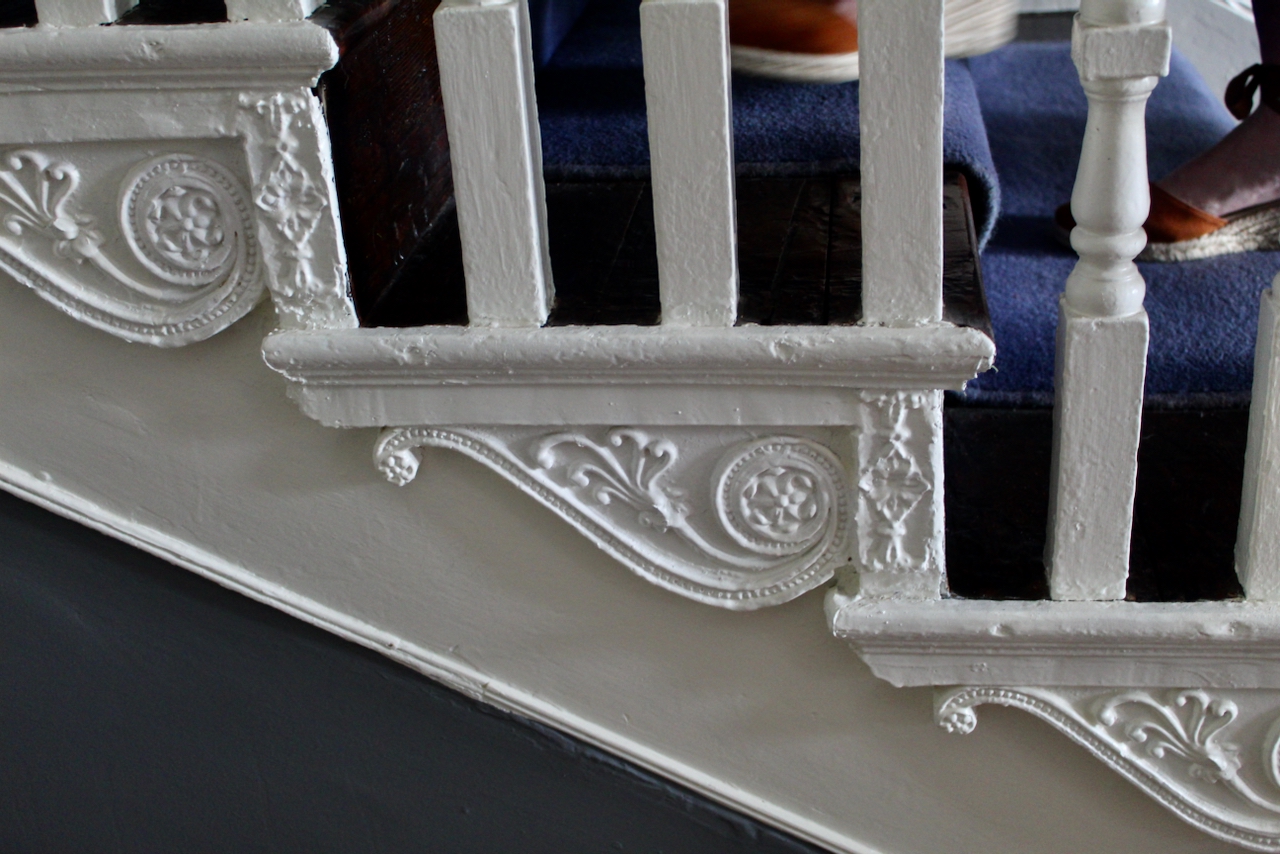
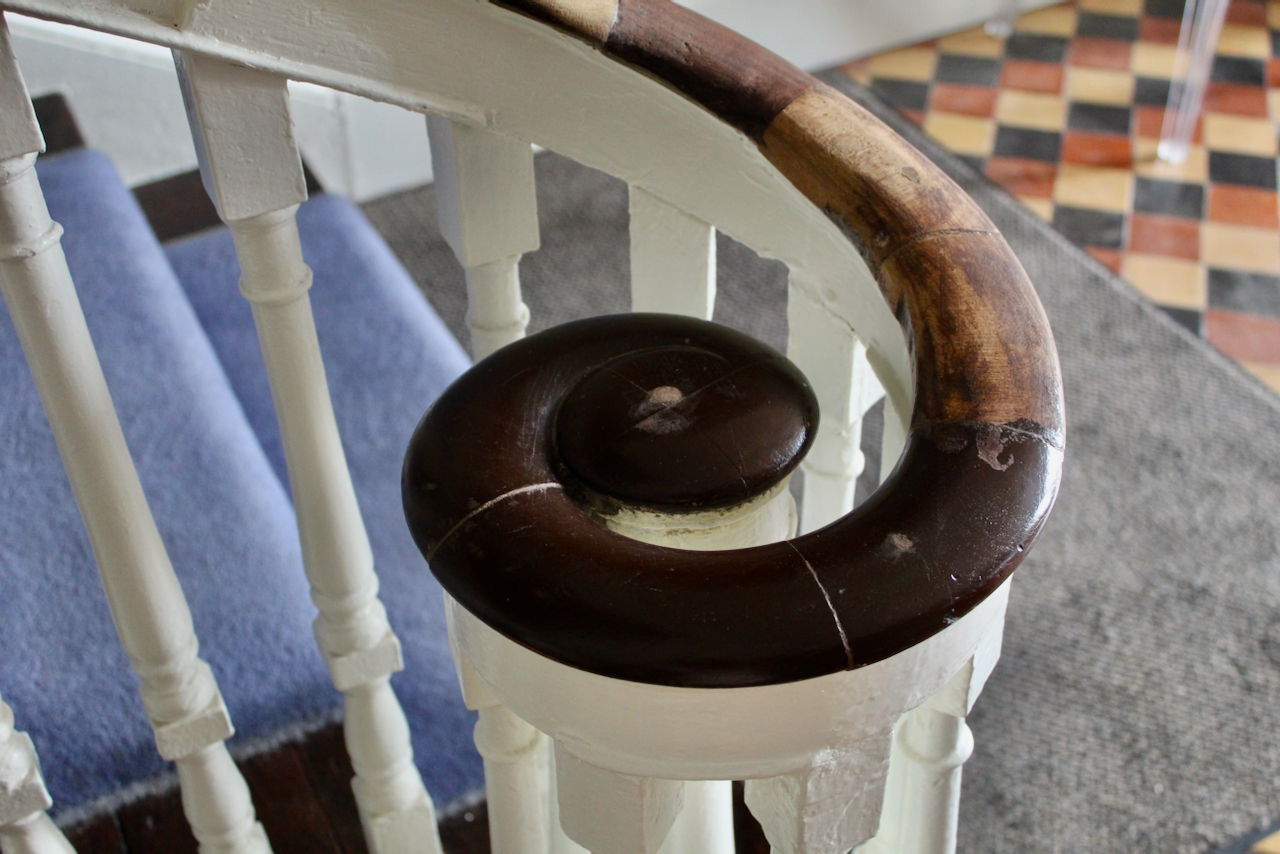
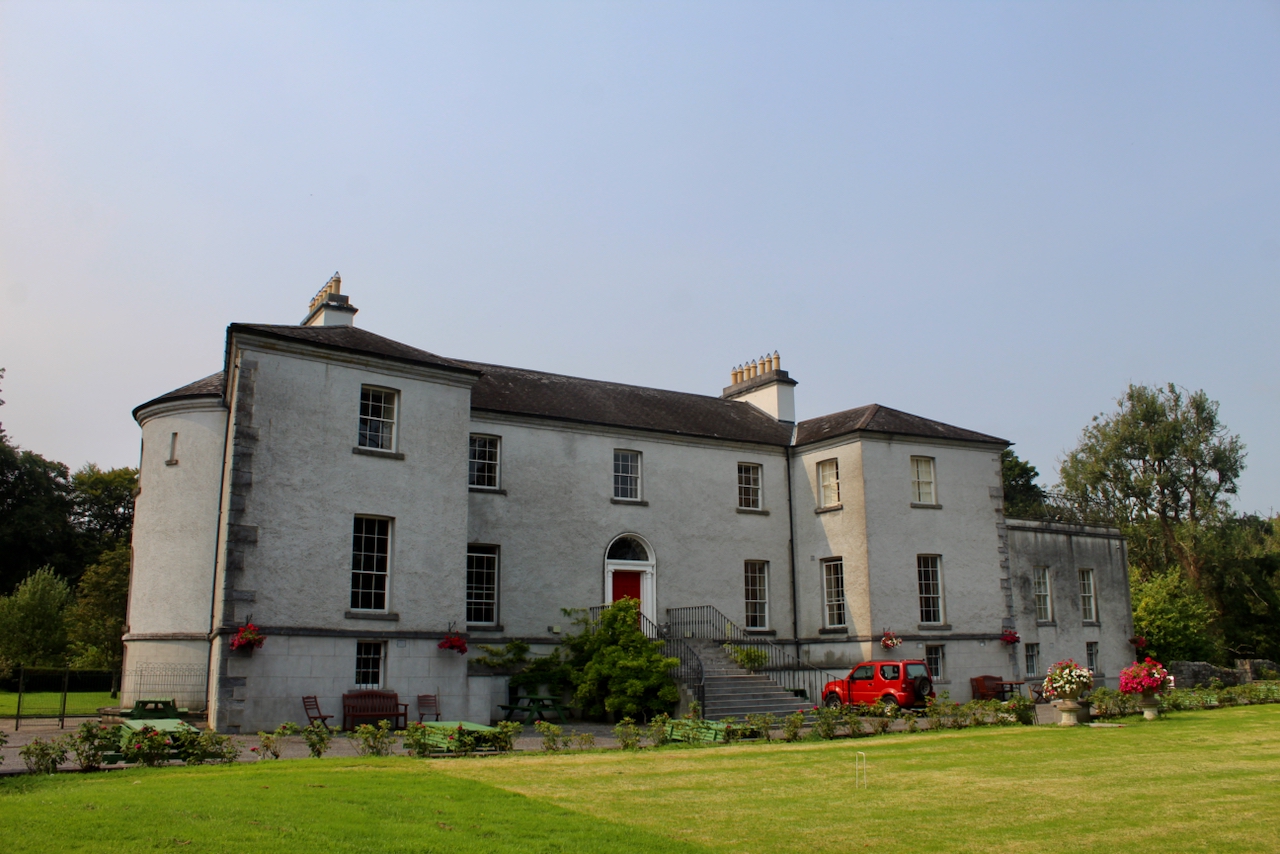
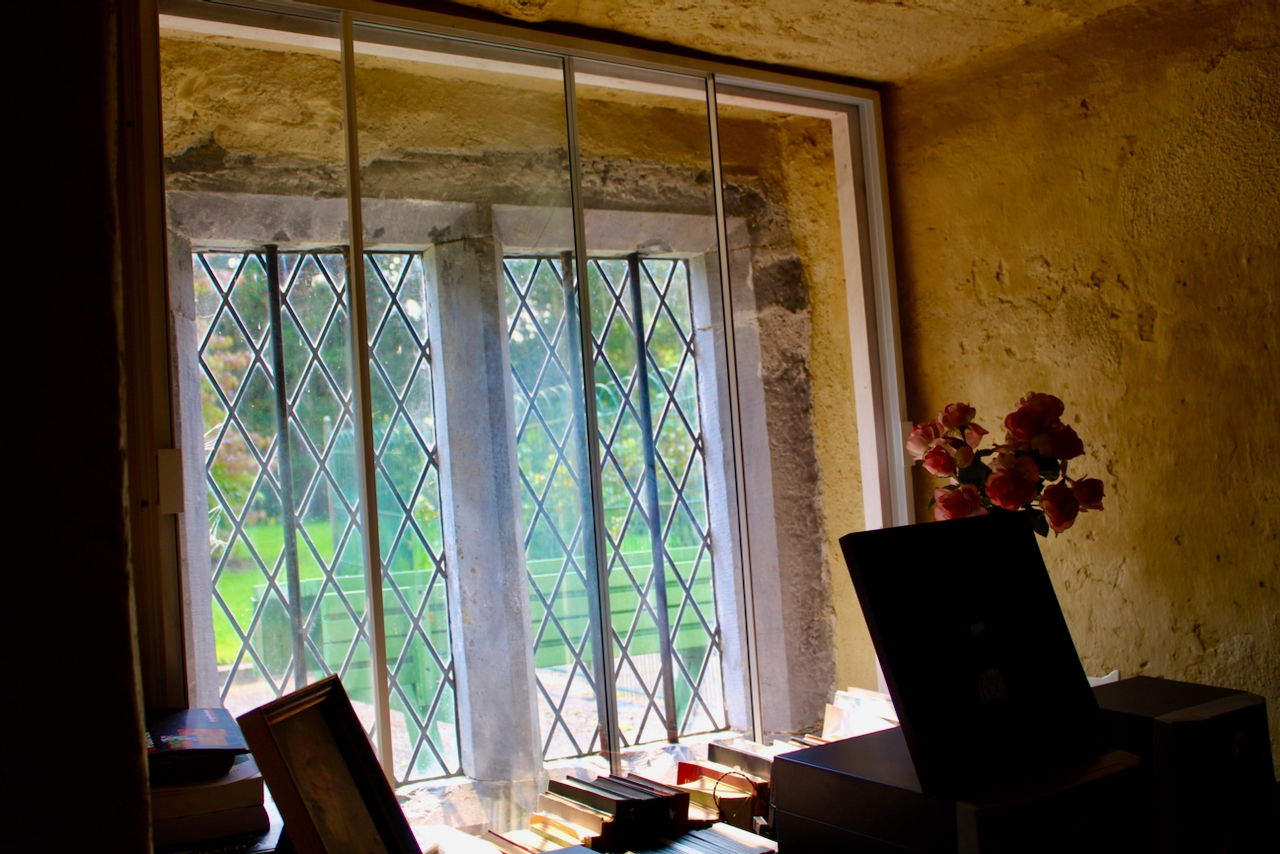
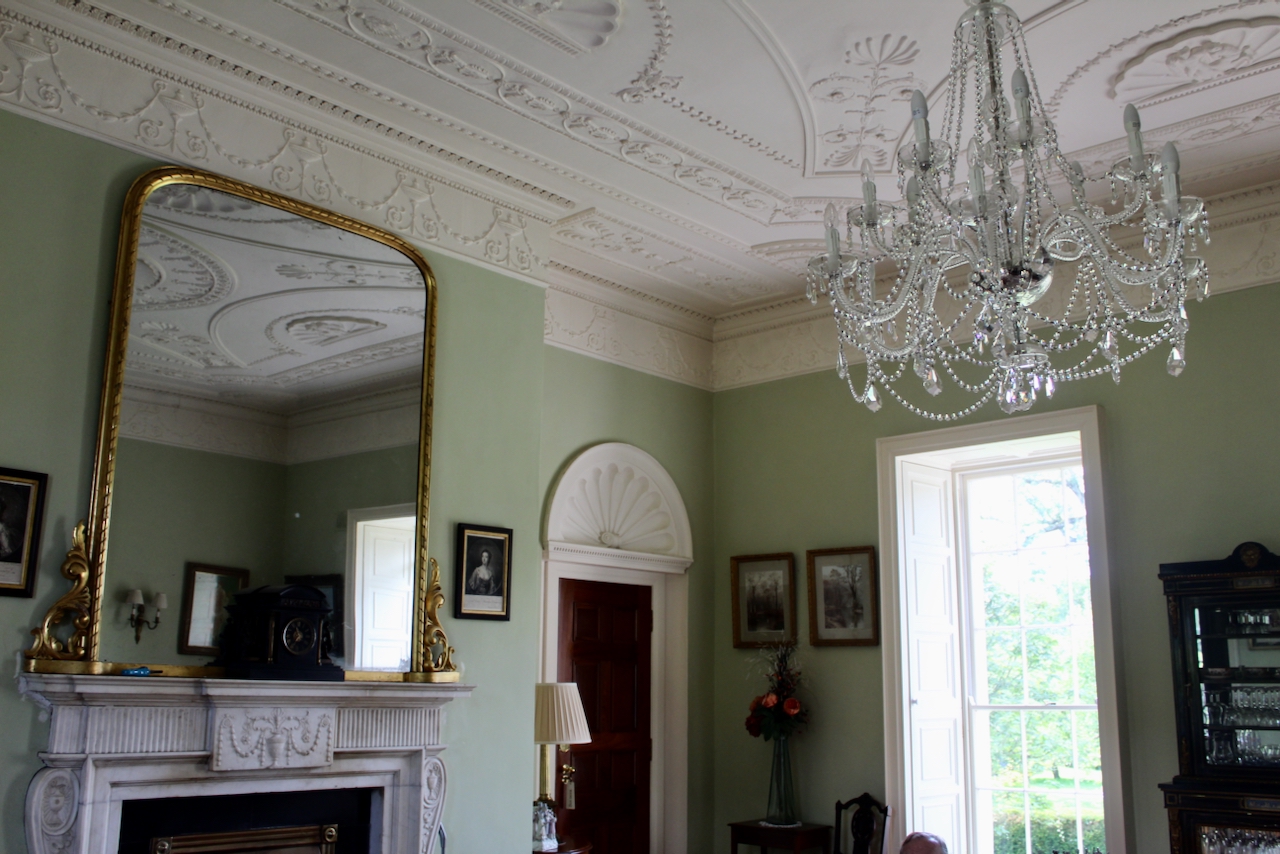
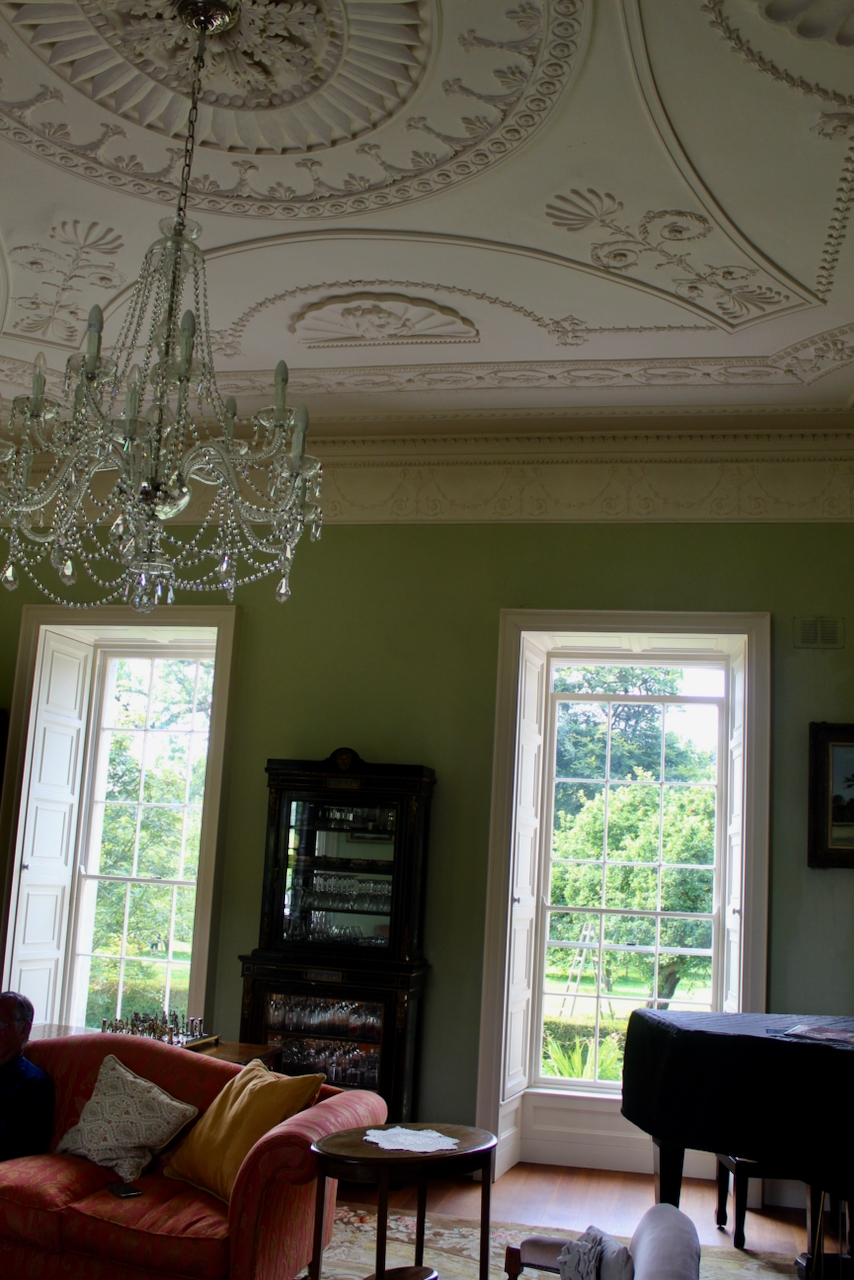
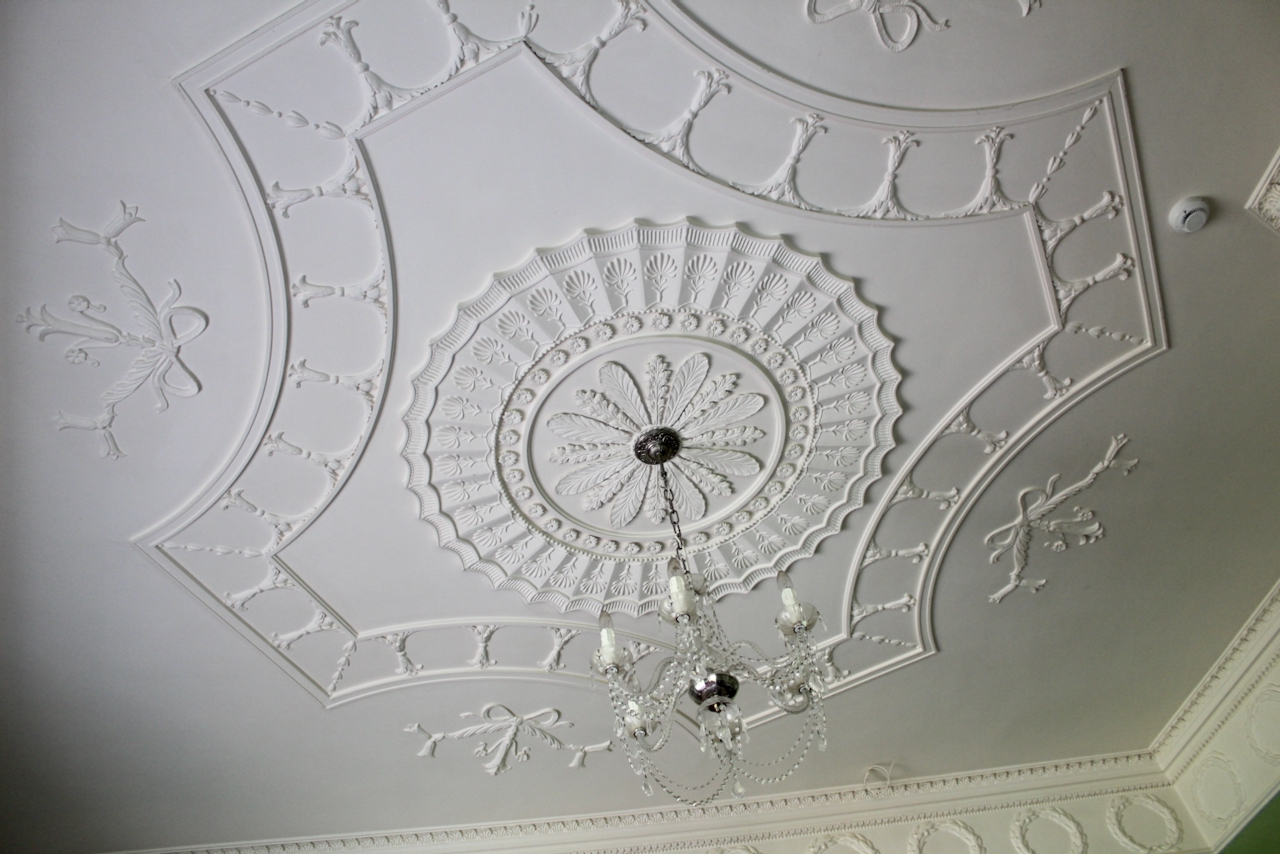
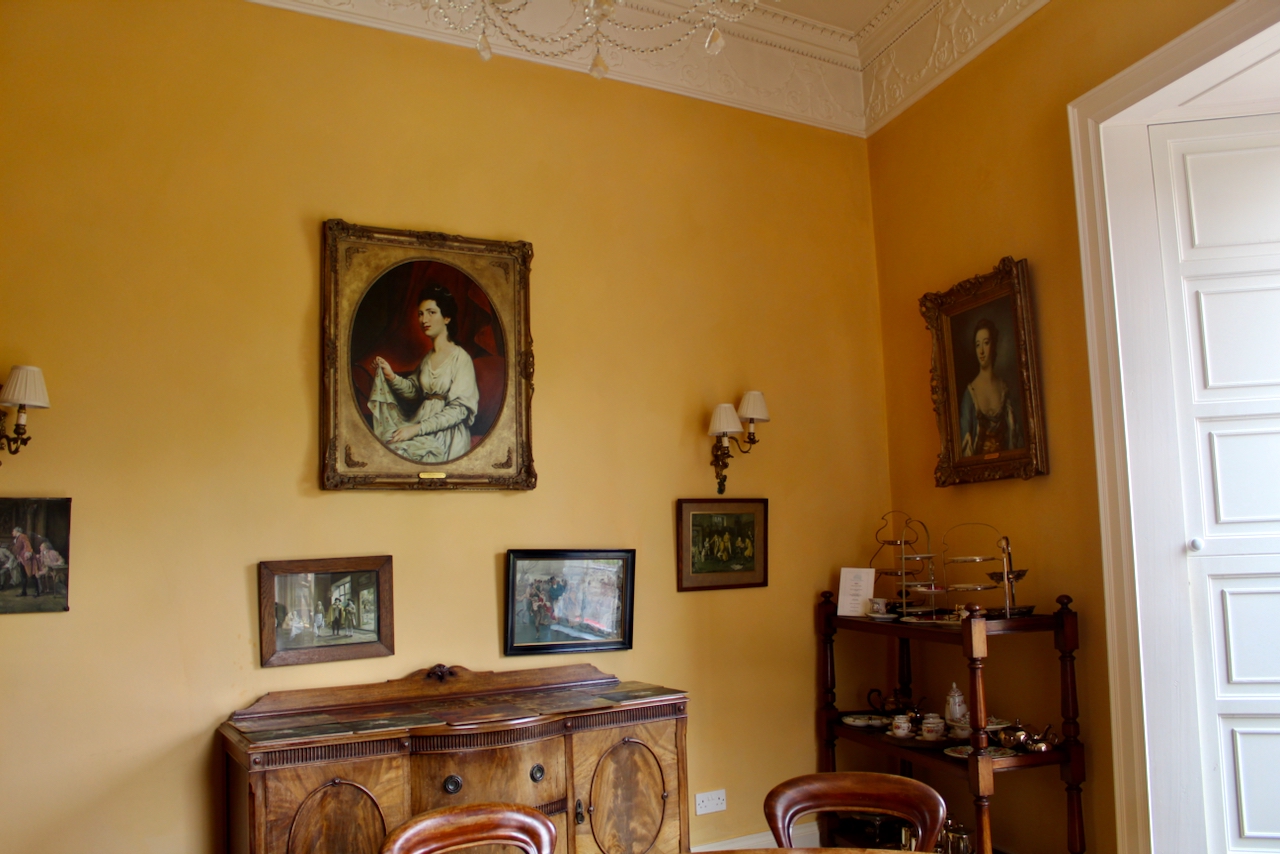
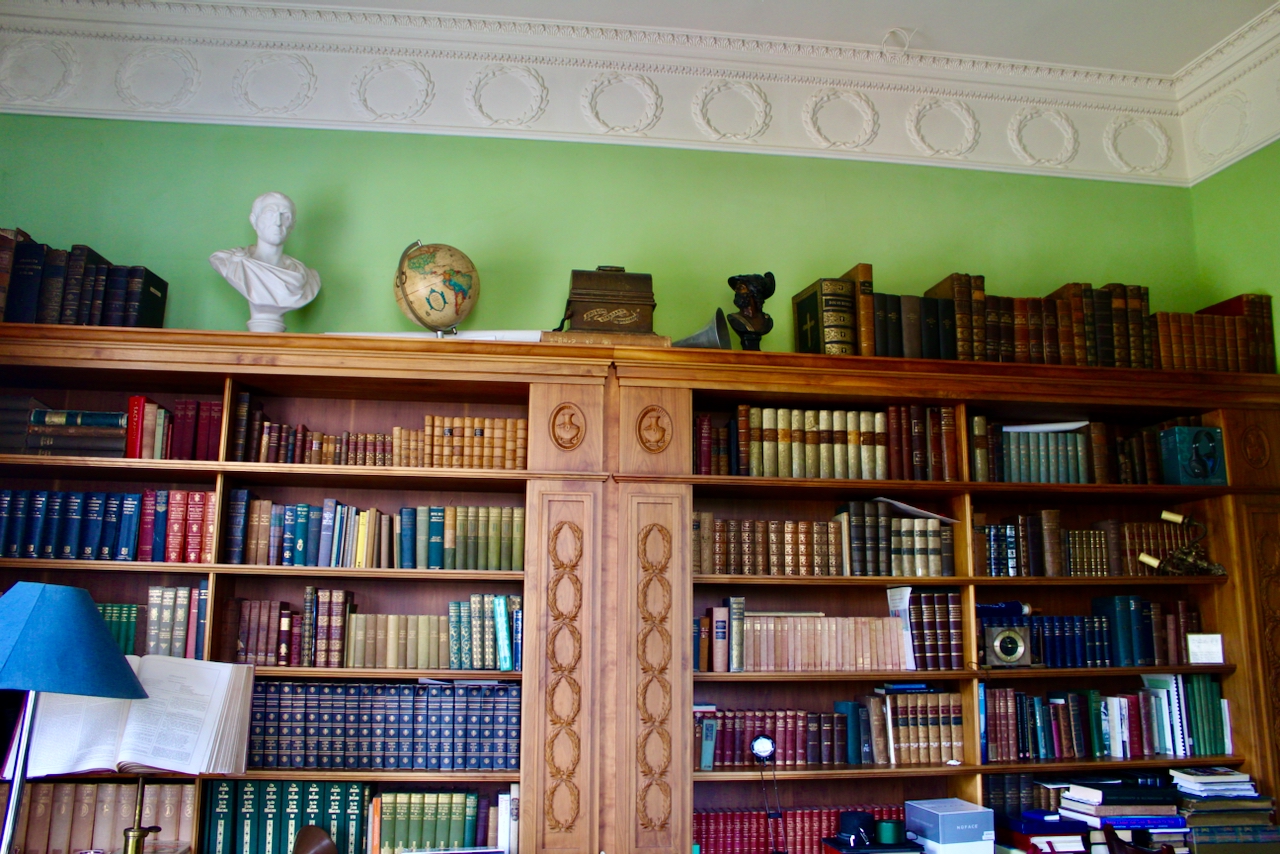
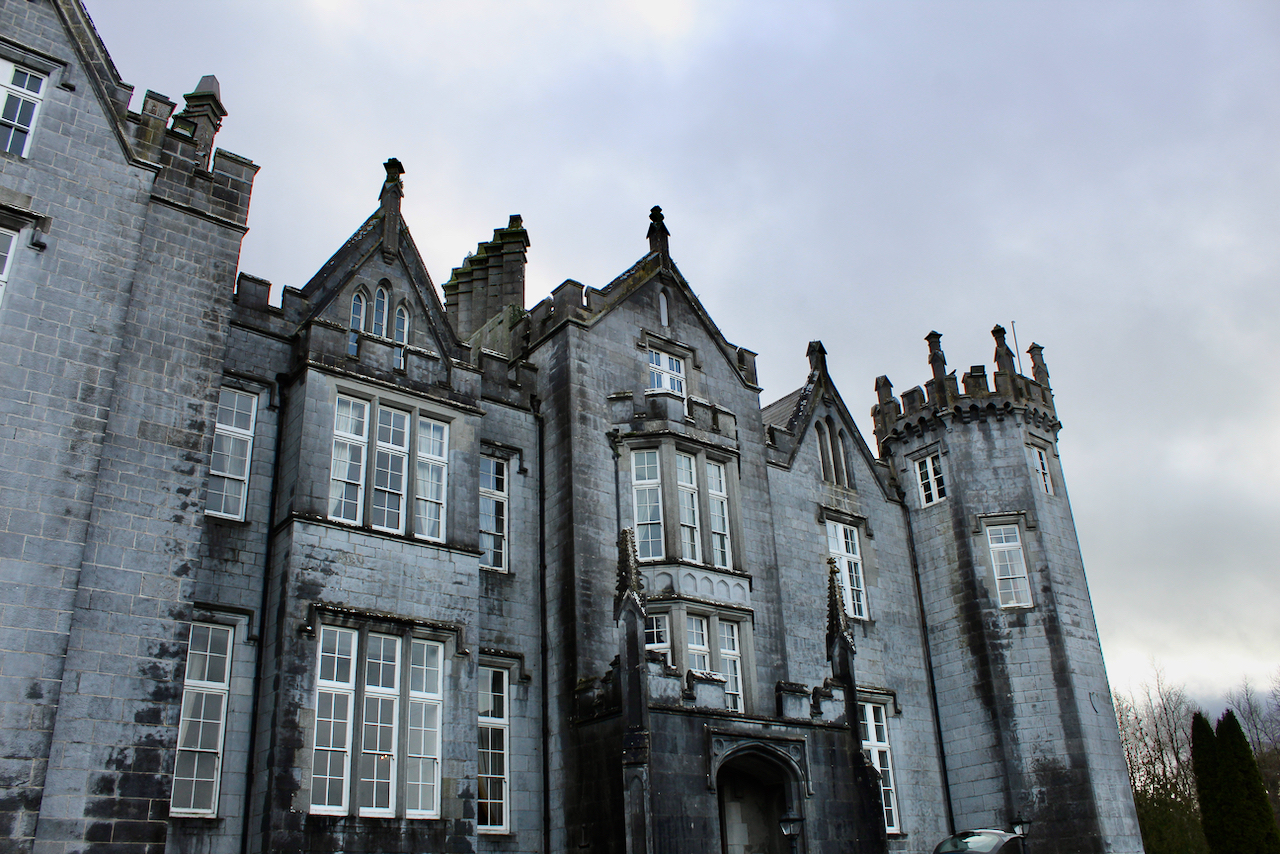
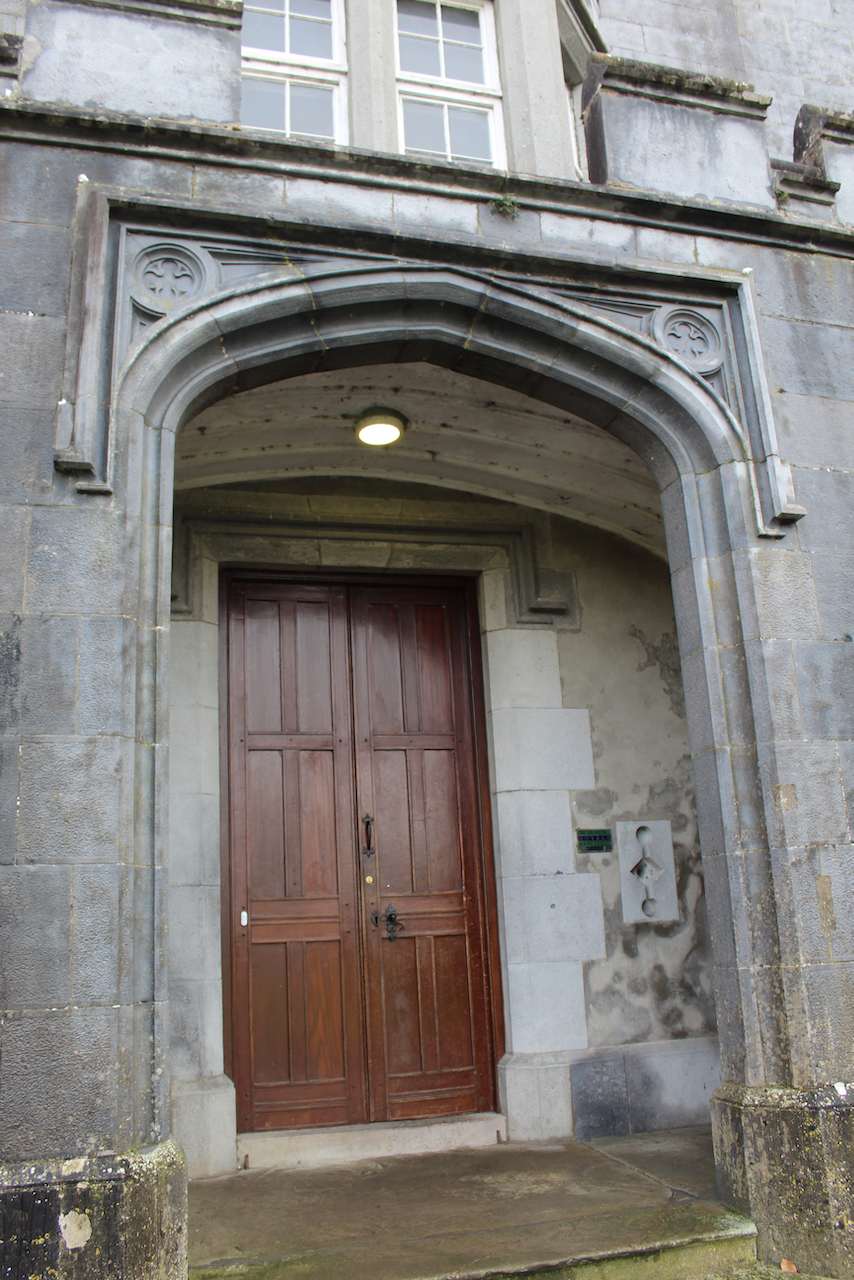
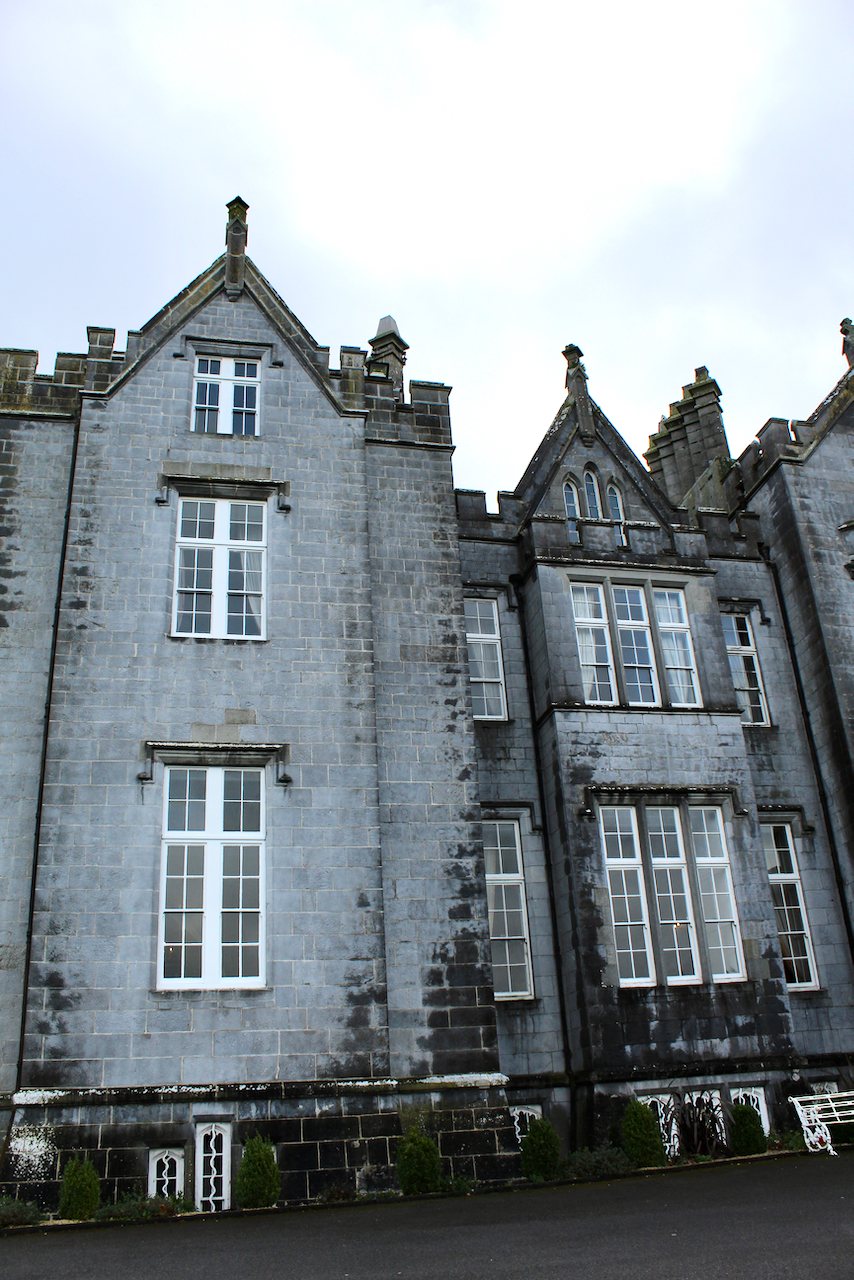
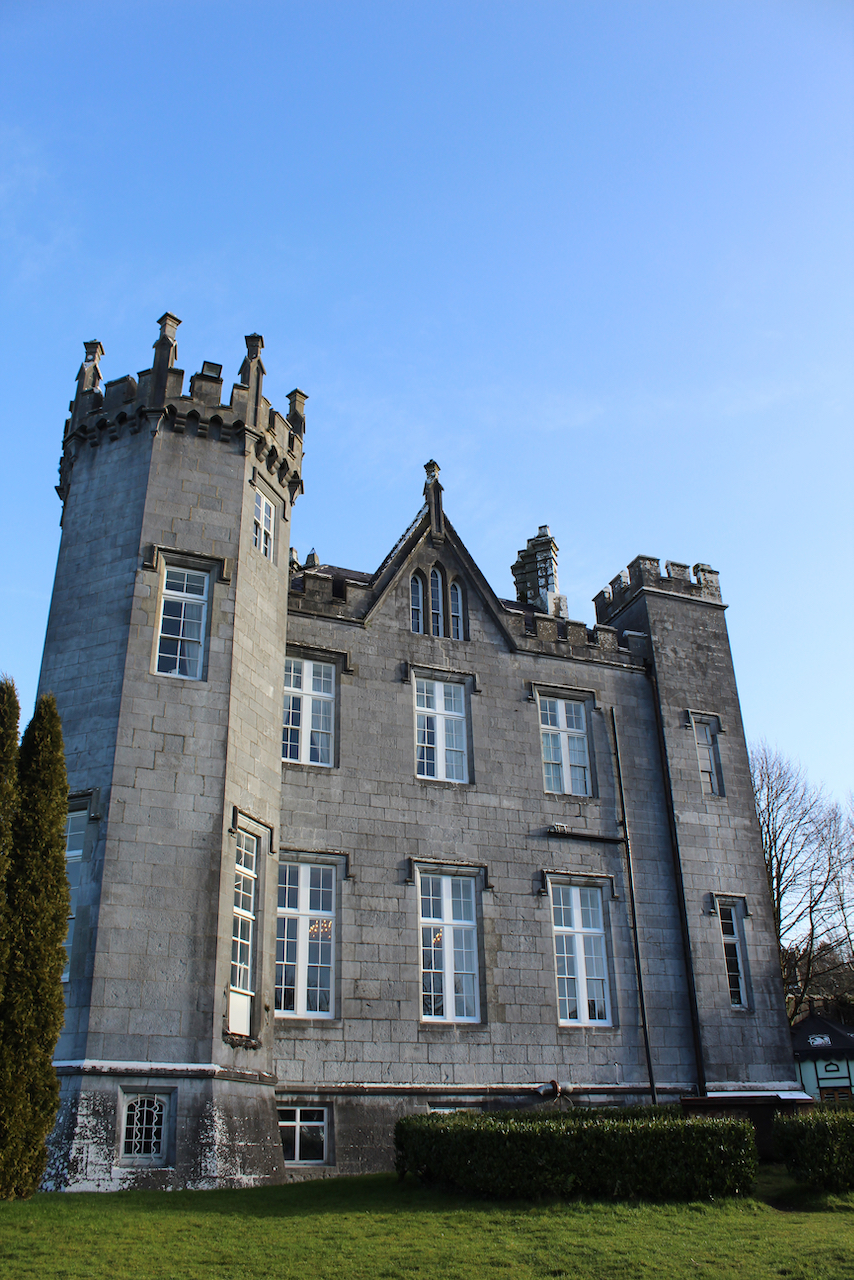
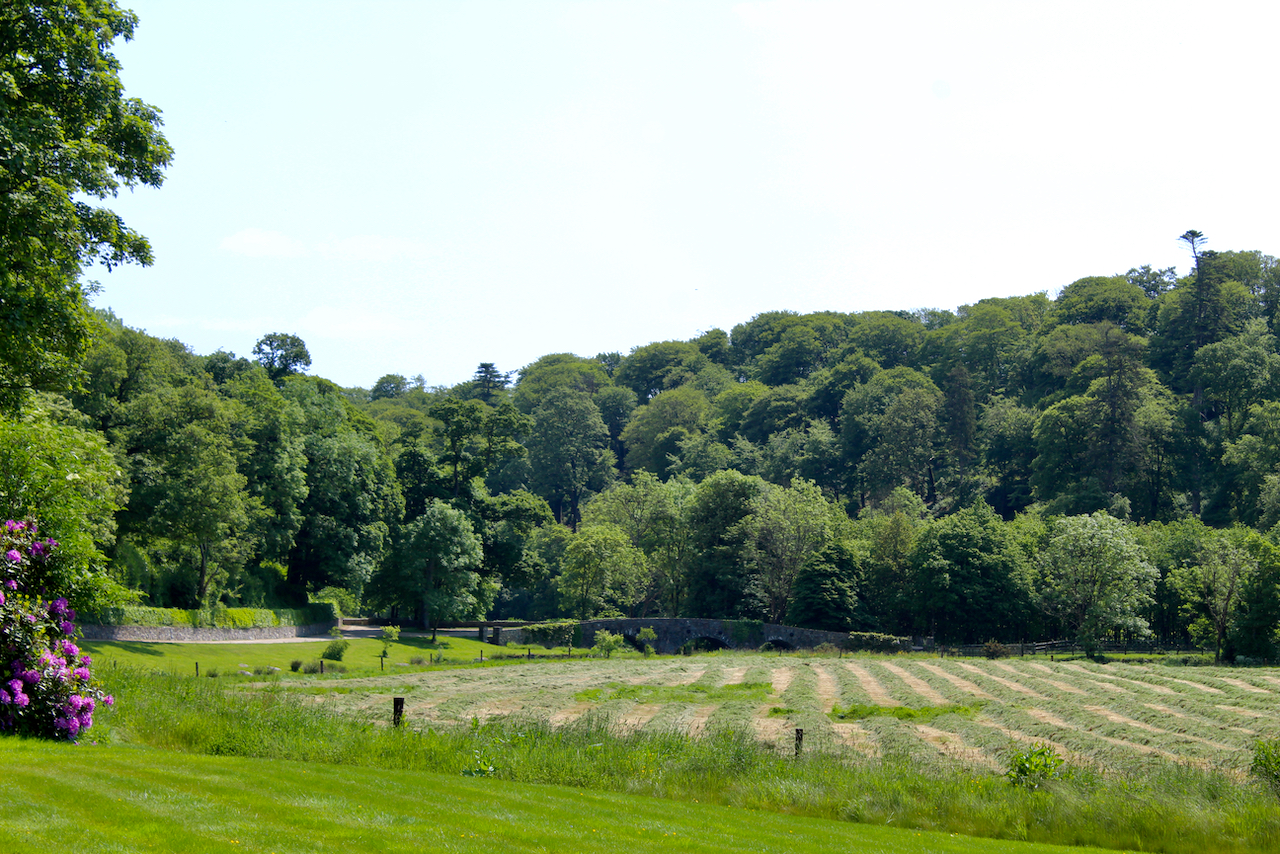
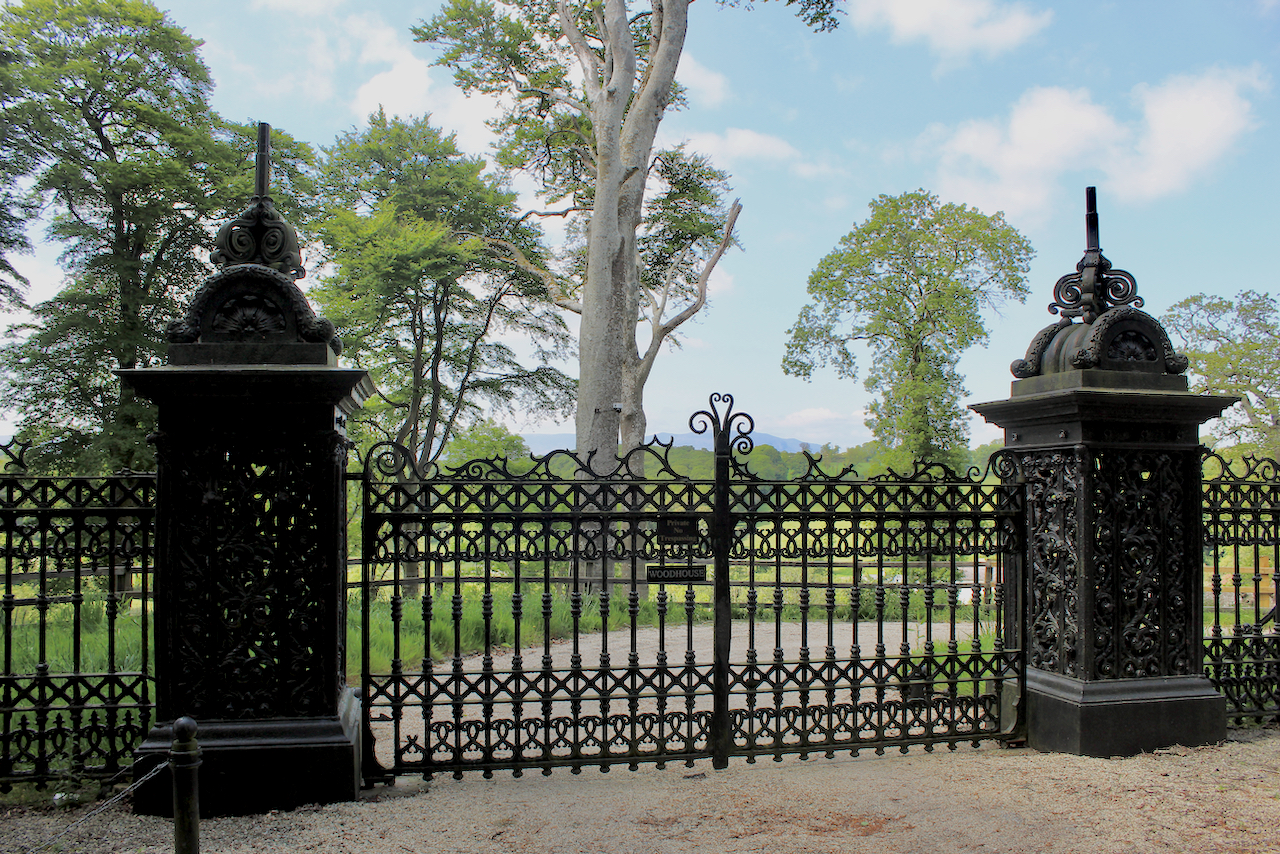
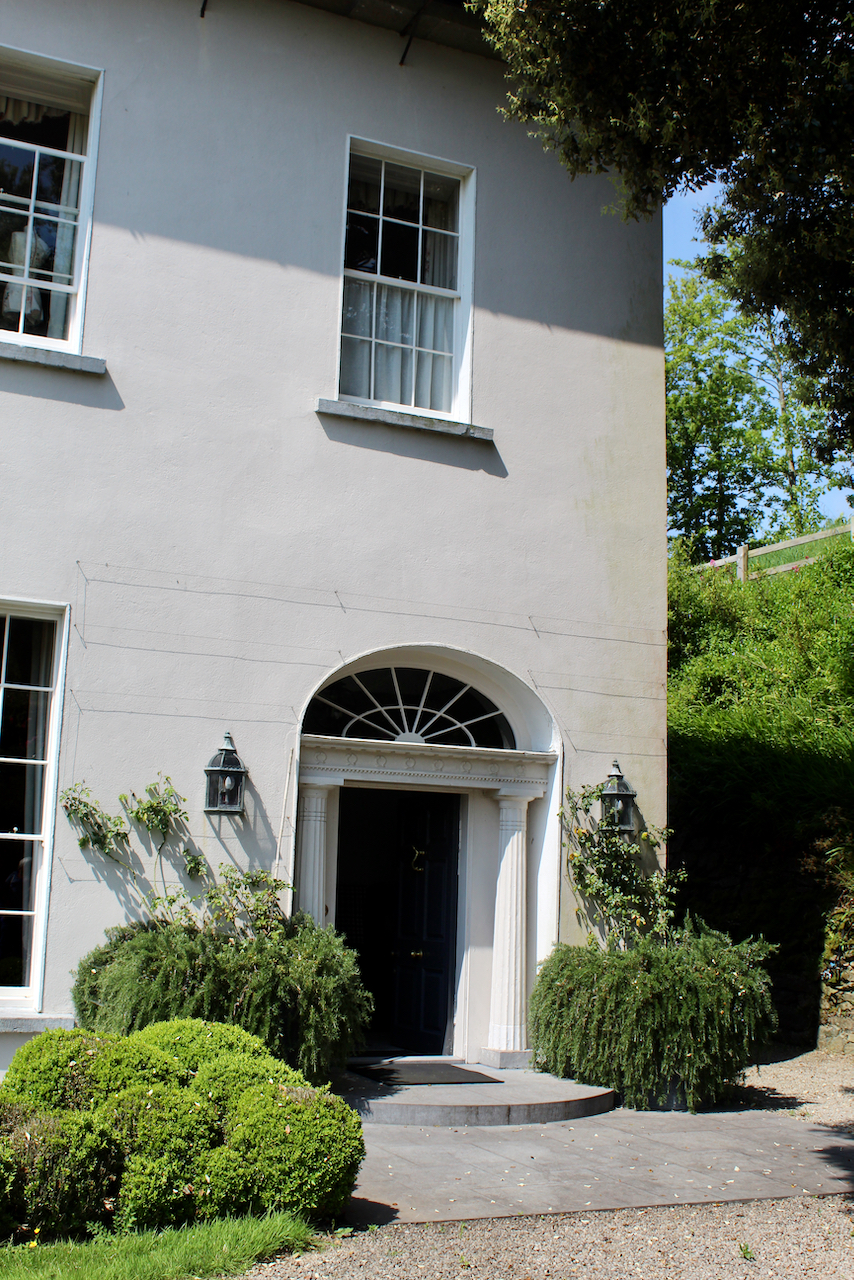
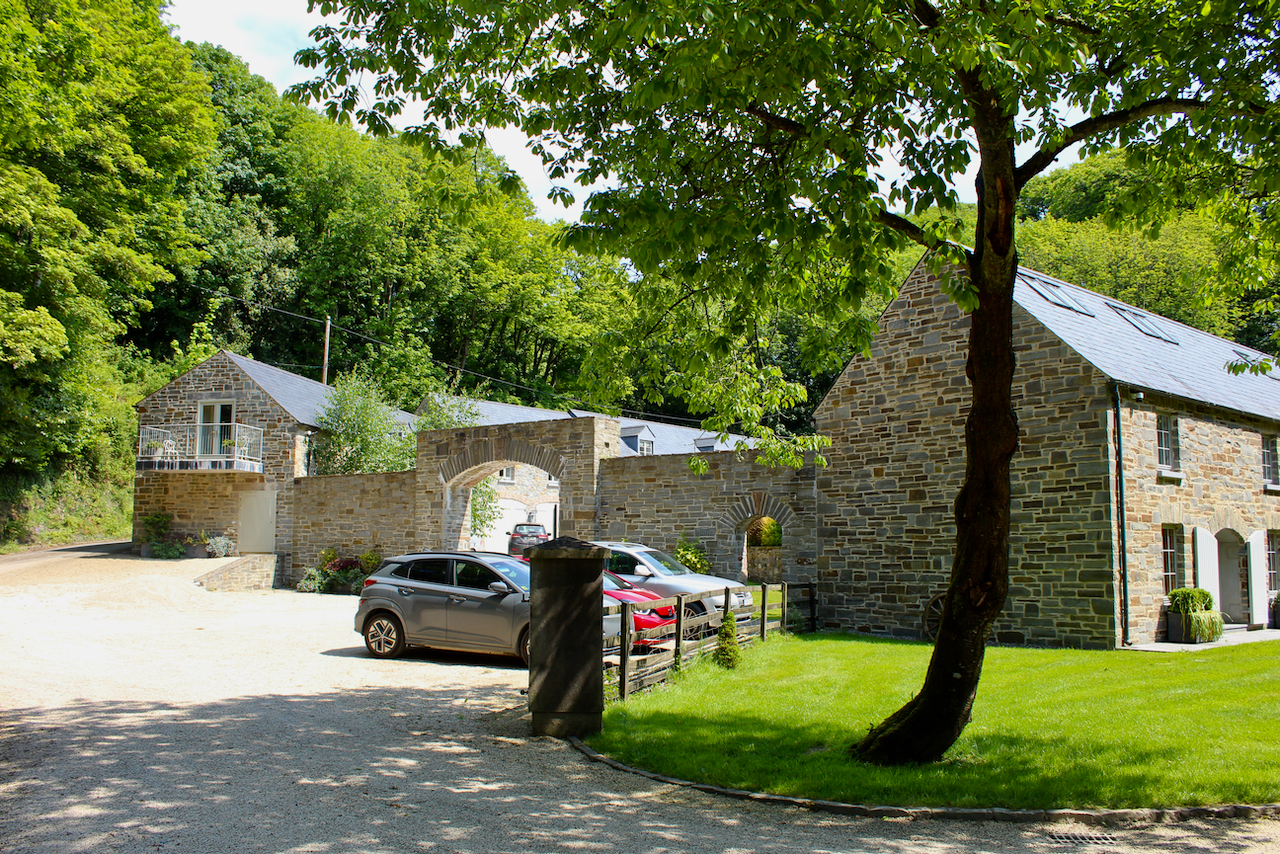
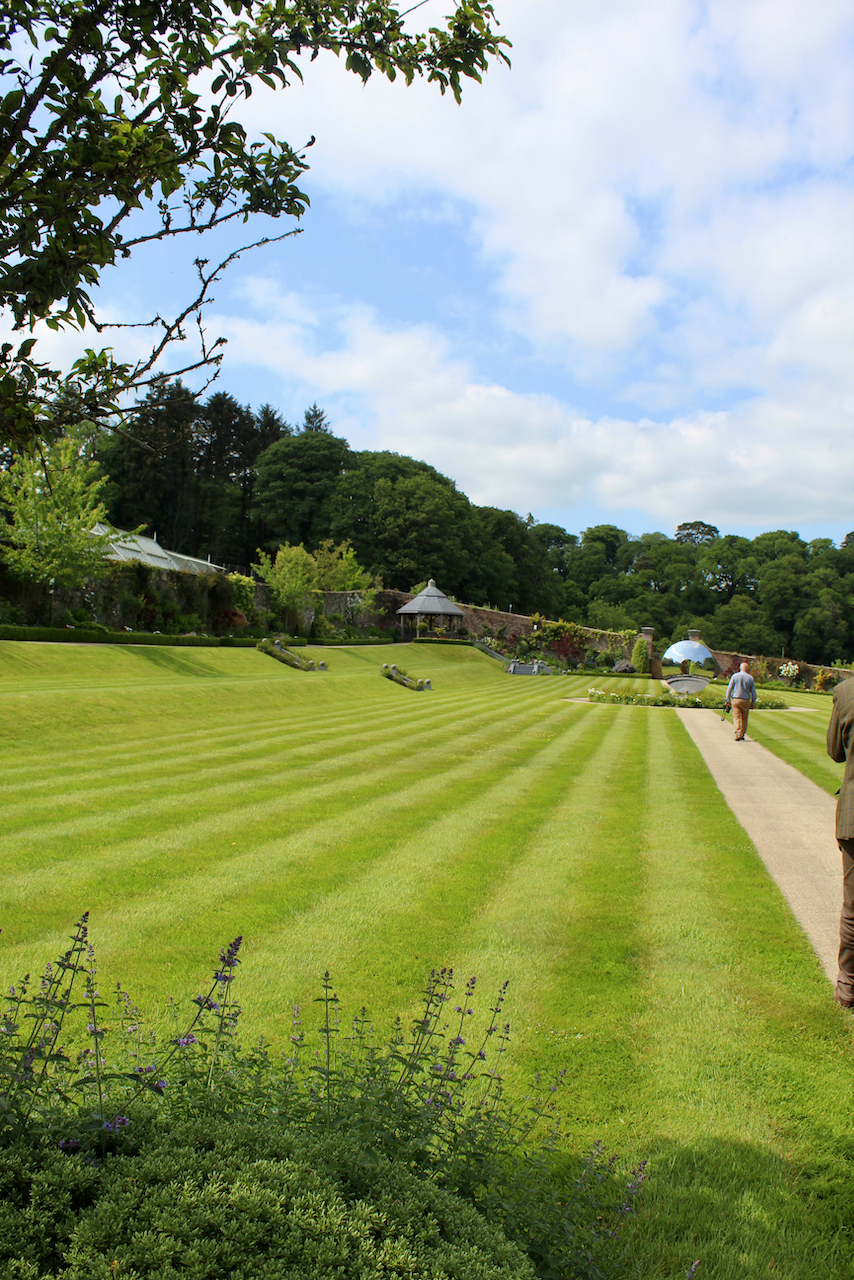
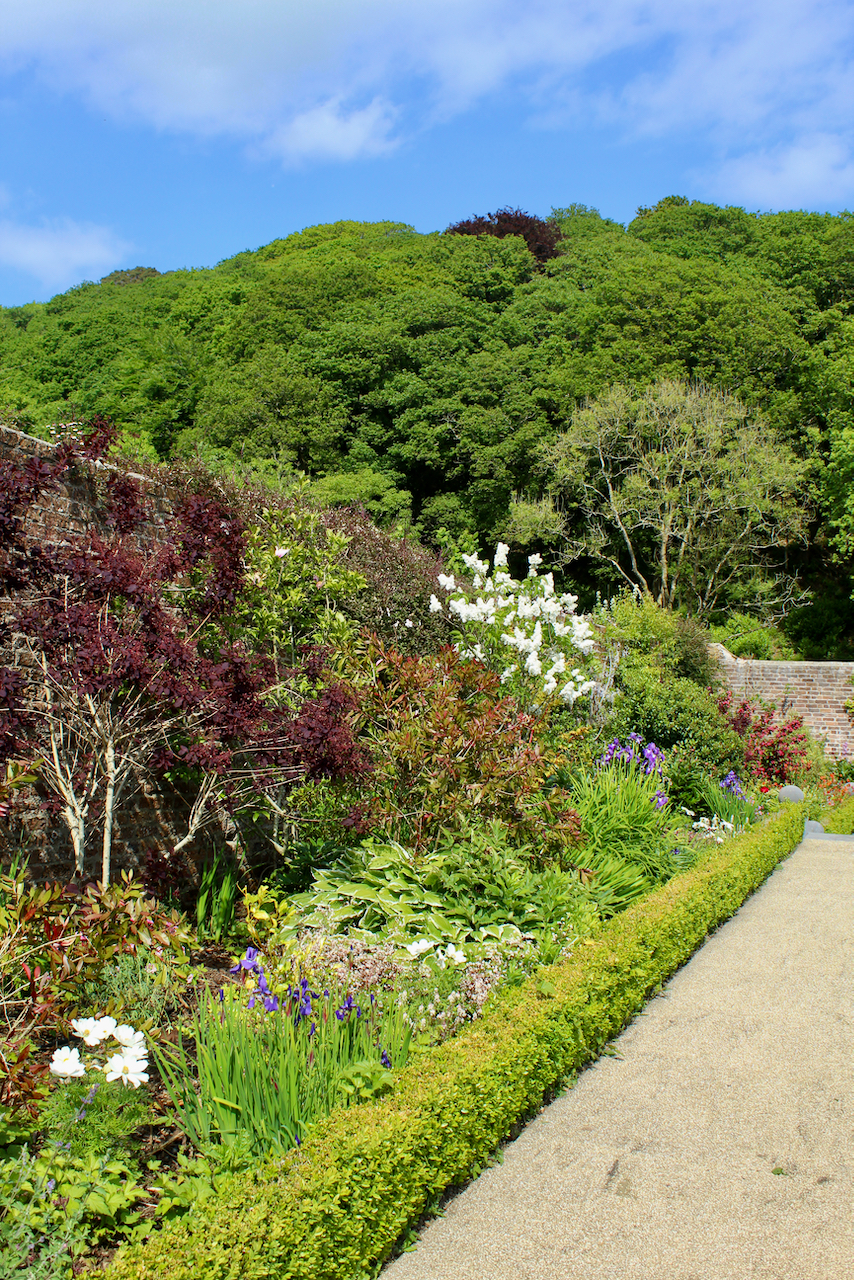
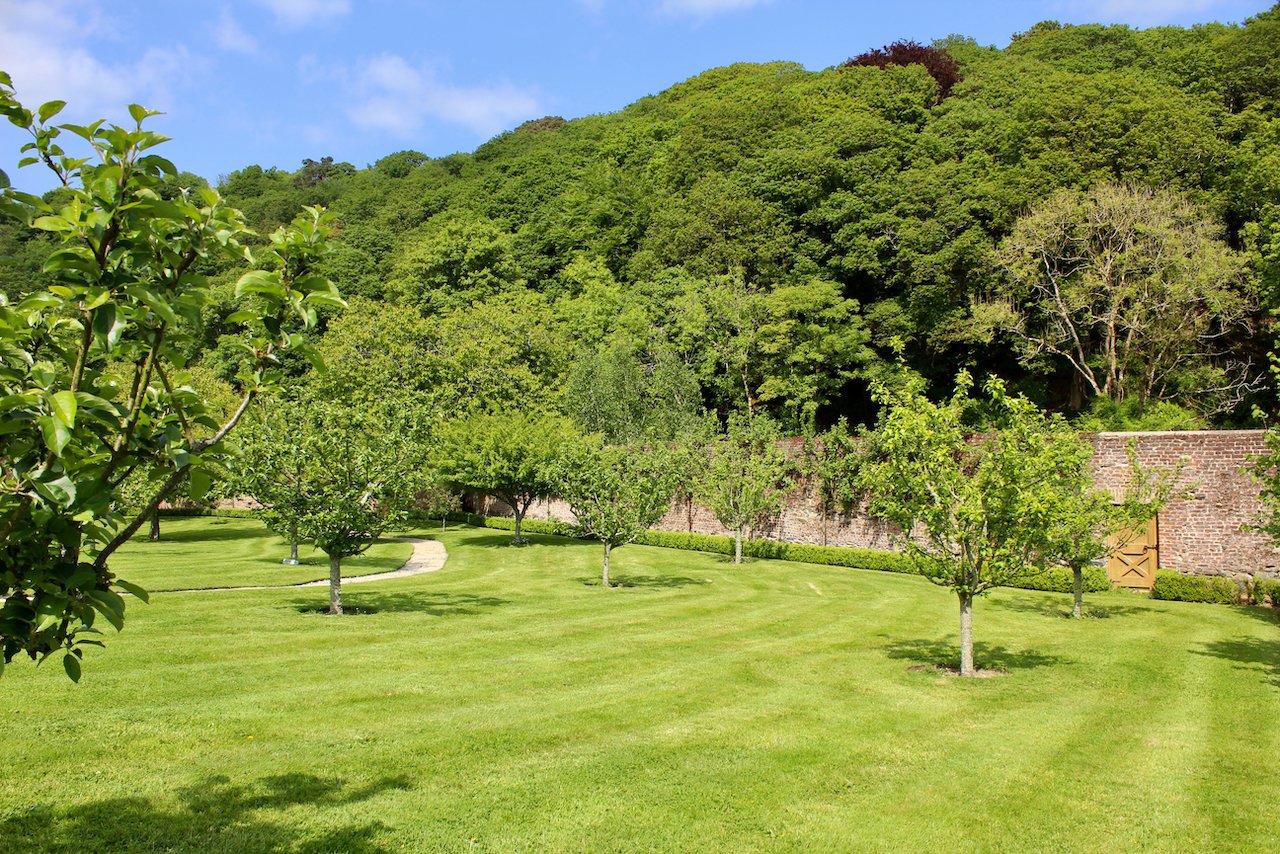
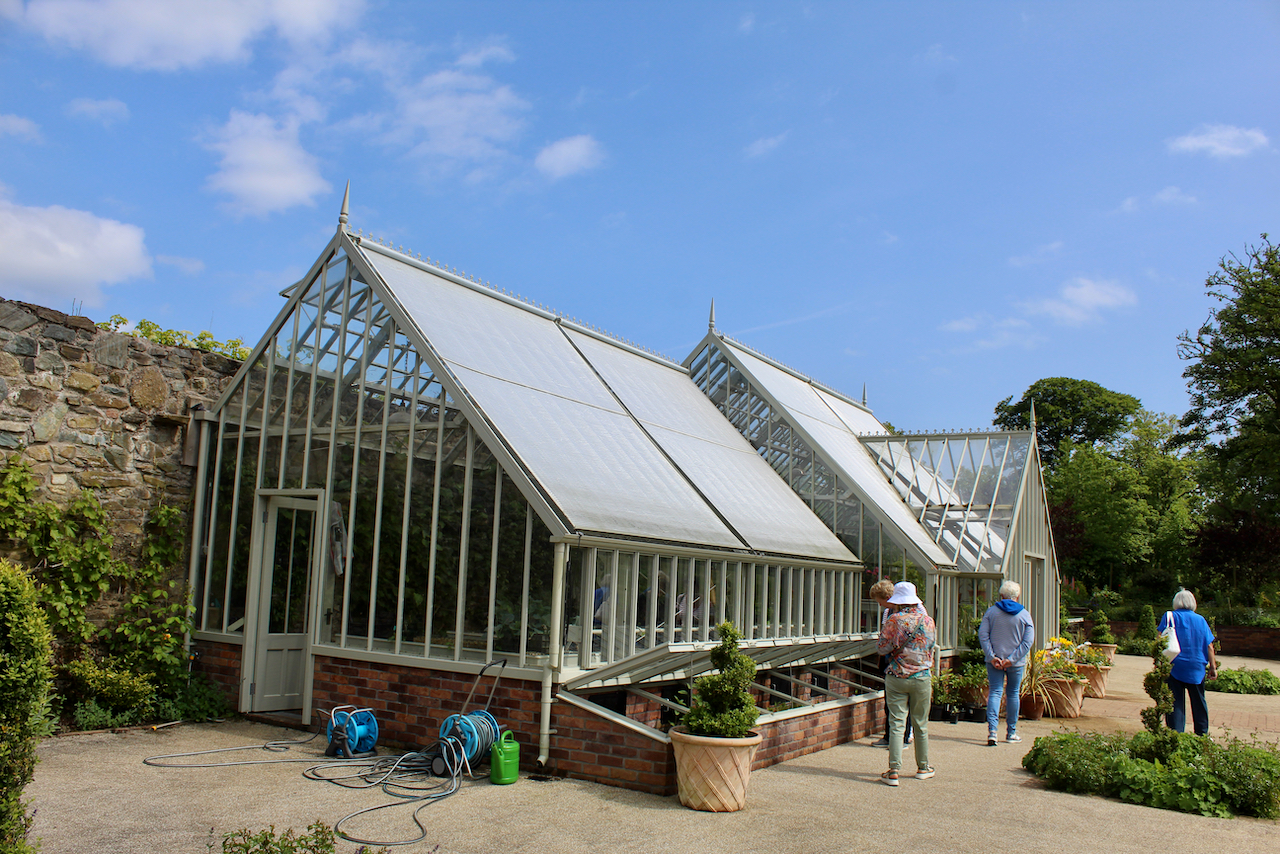
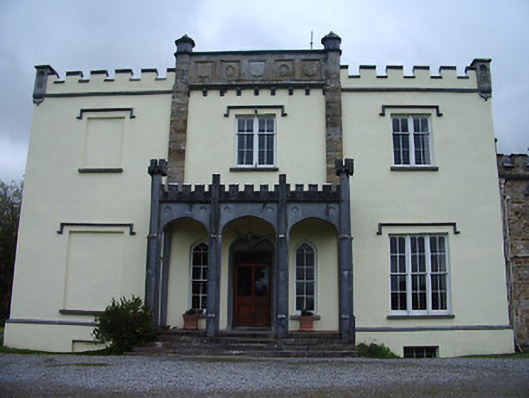
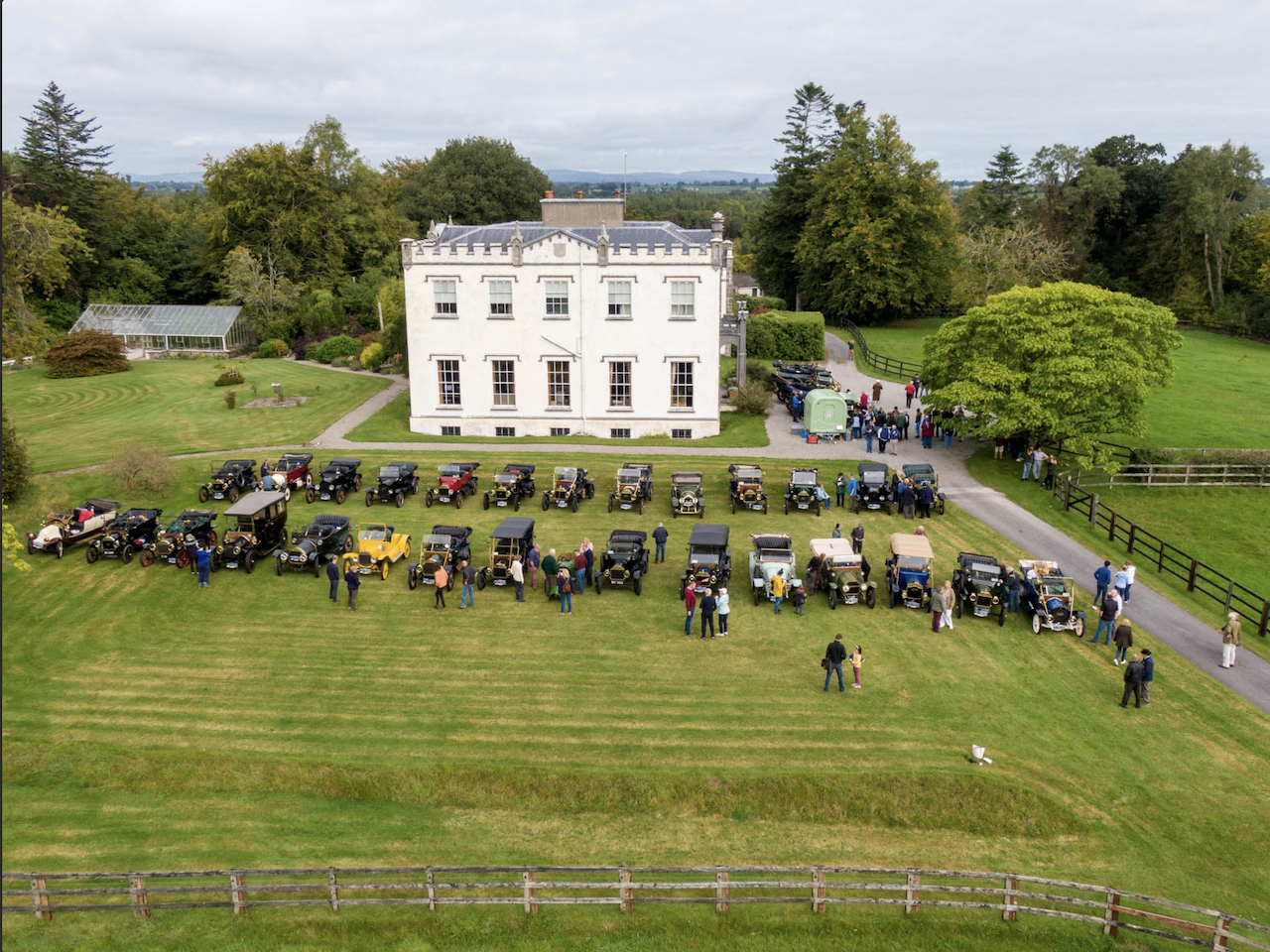
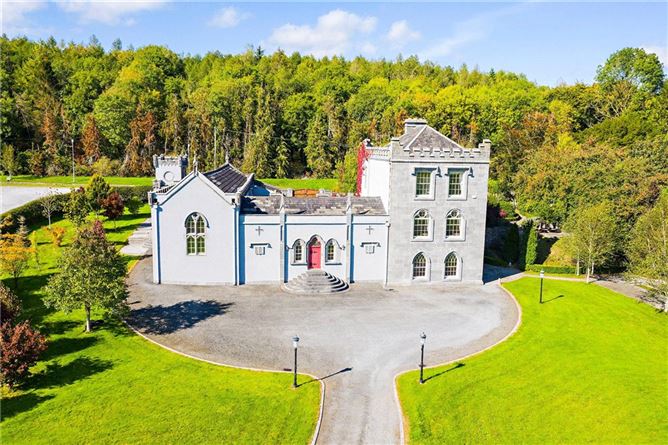
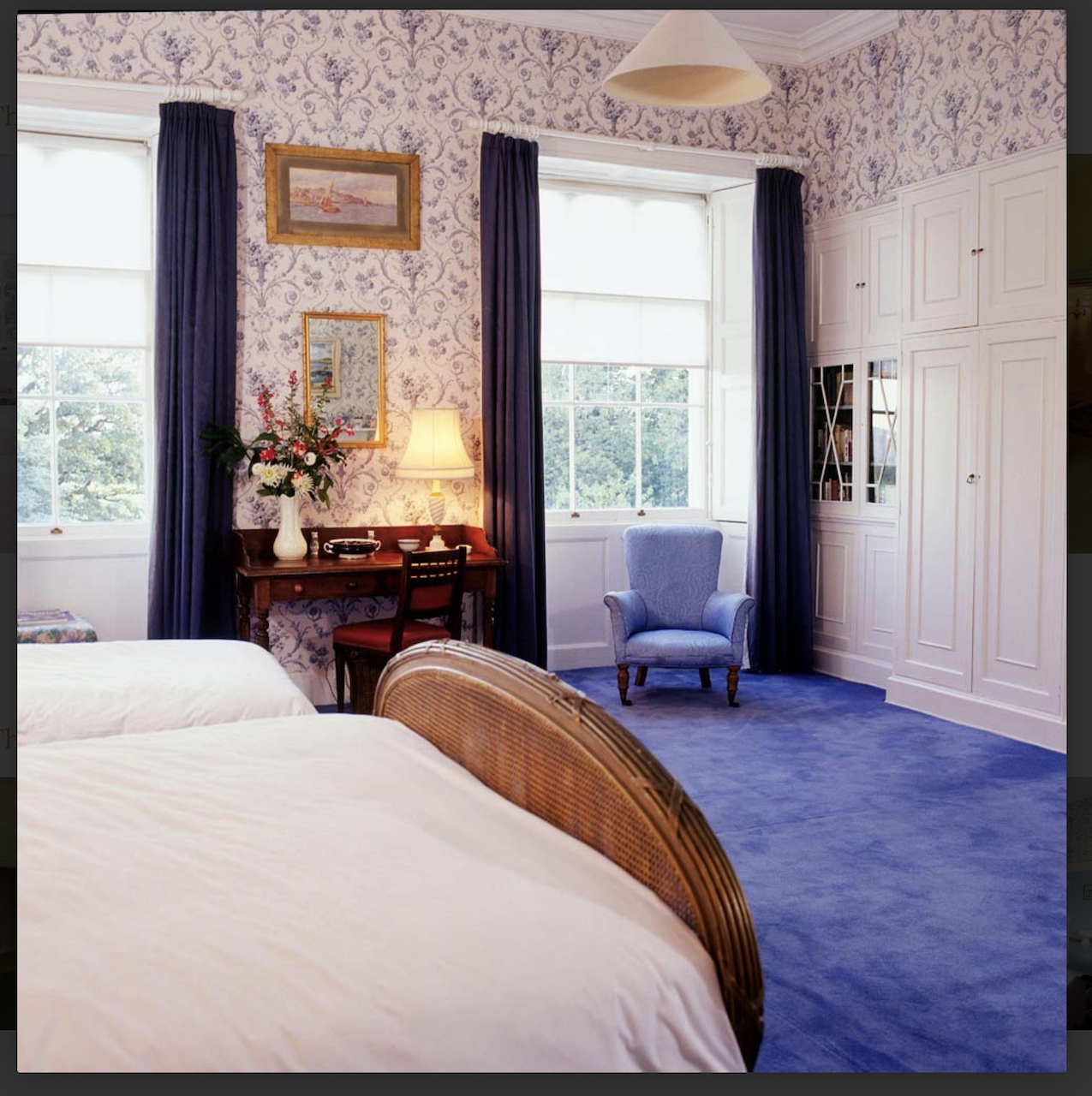
Temple House, Ballymote, County Sligo

www.templehouse.ie

donation

Help me to pay the entrance fee to one of the houses on this website. This site is created purely out of love for the subject and I receive no payment so any donation is appreciated!

€15.00

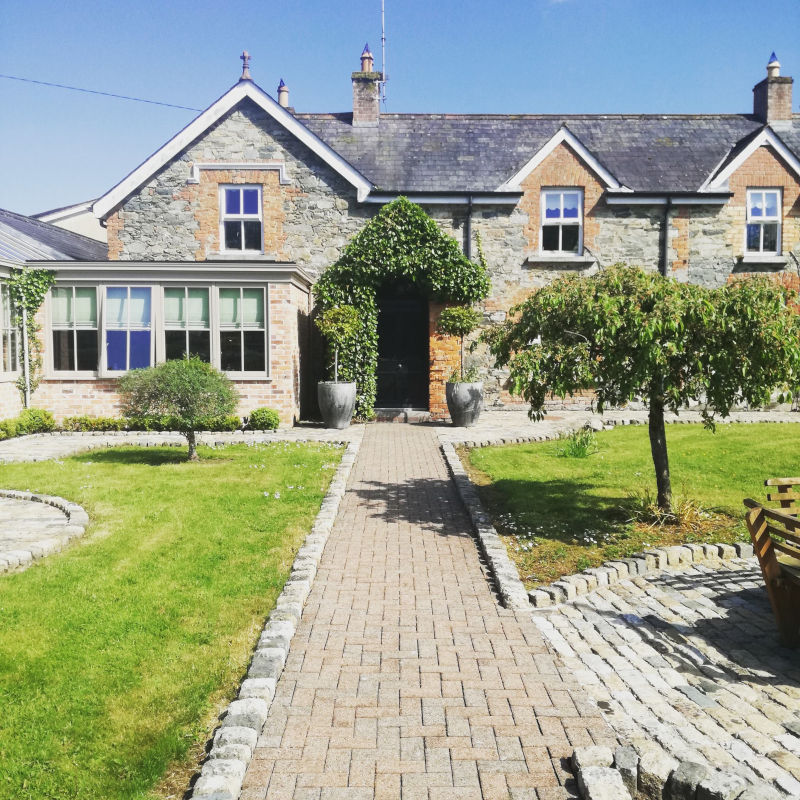
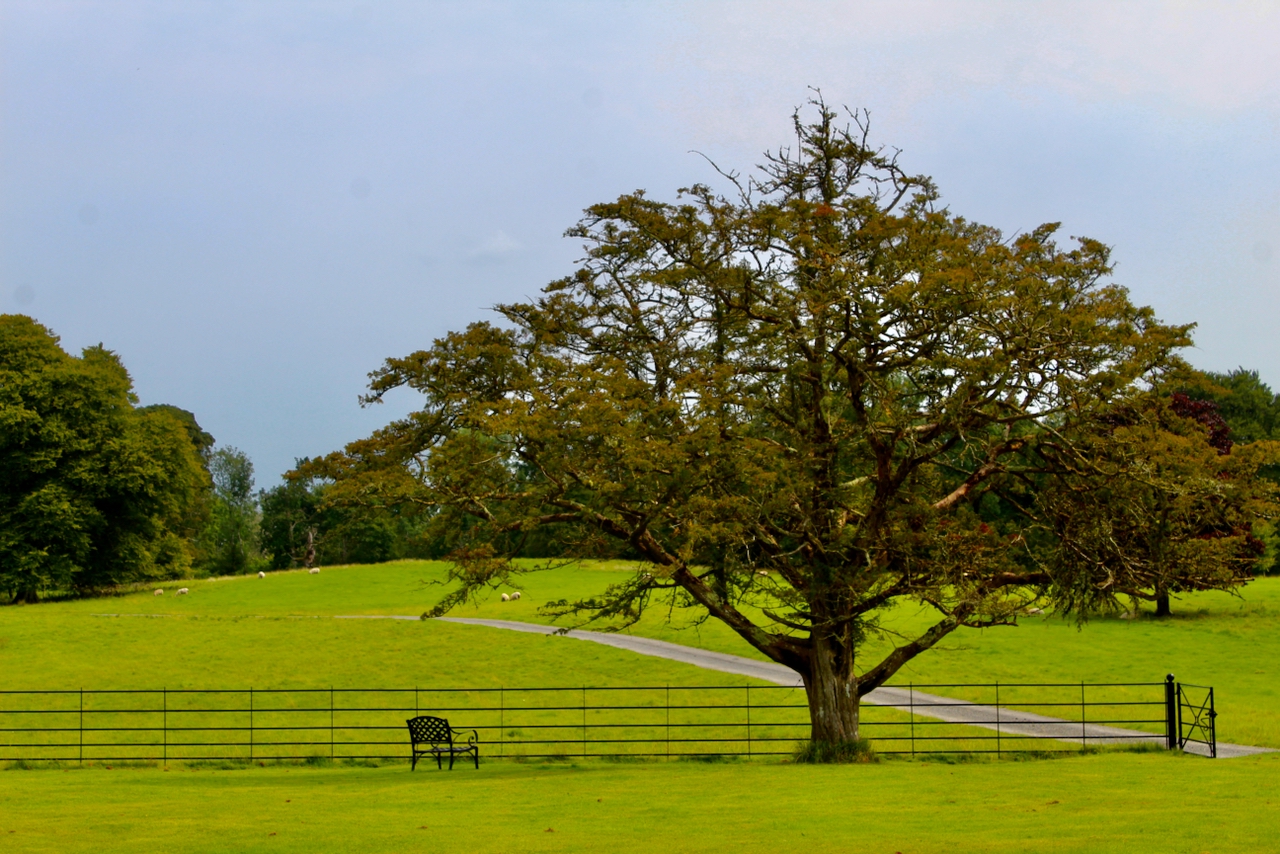
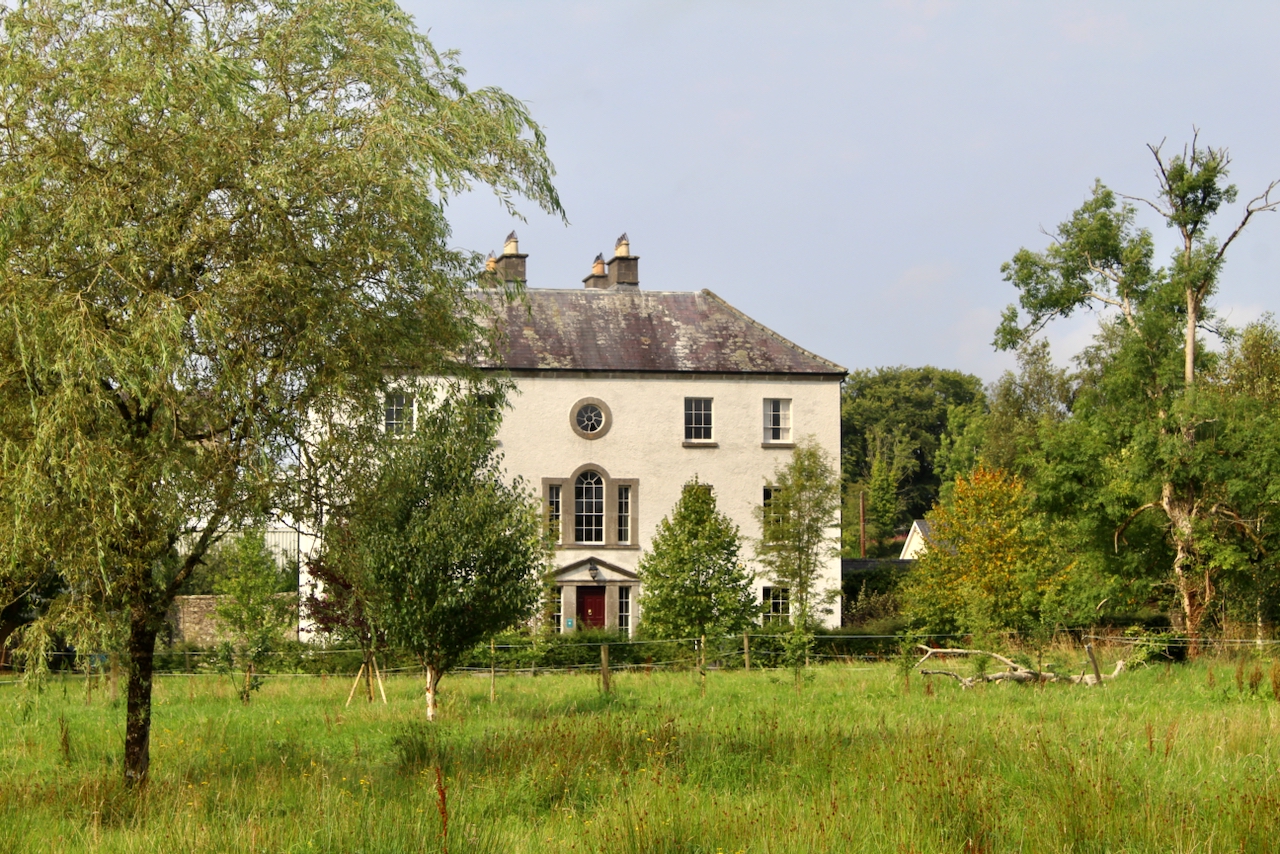
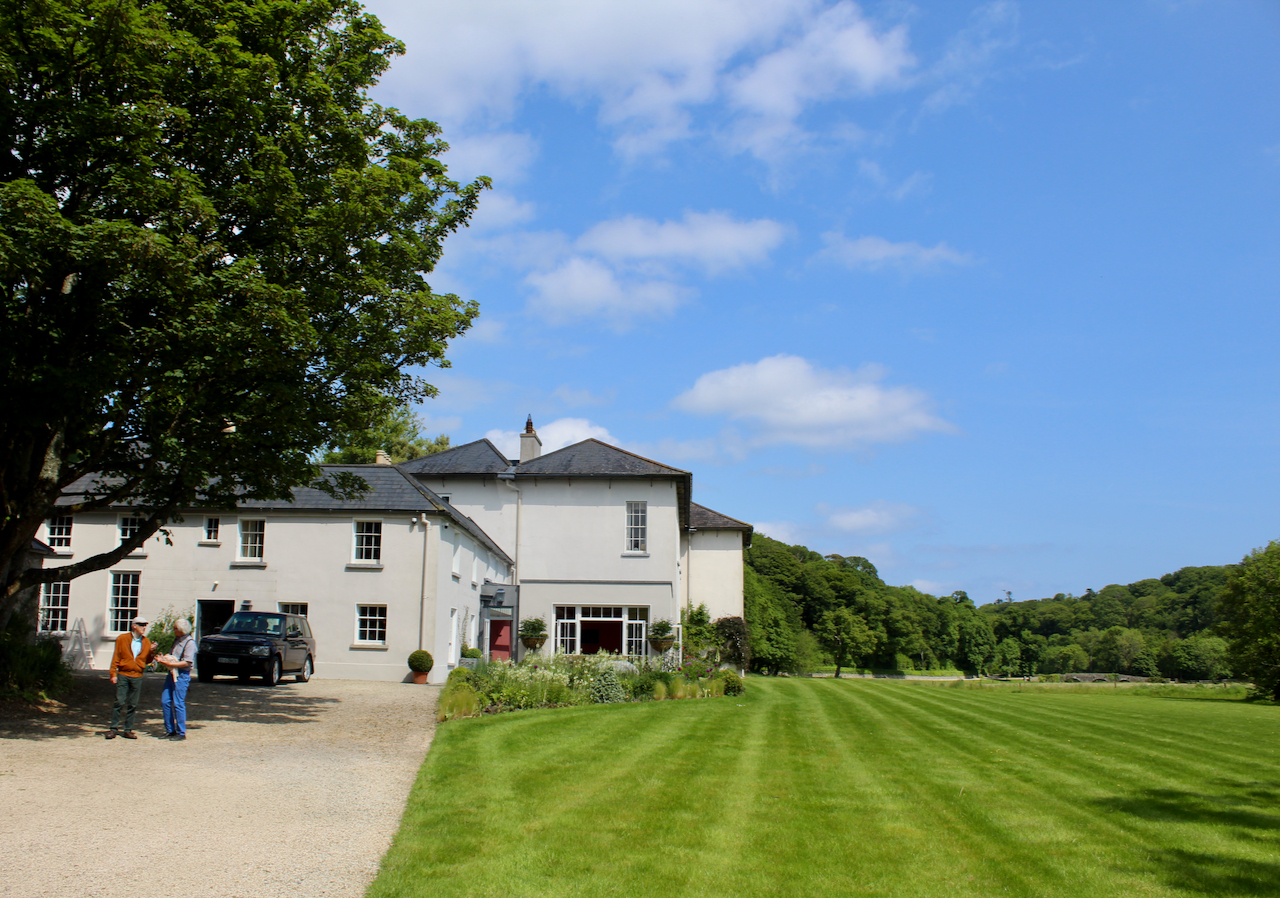
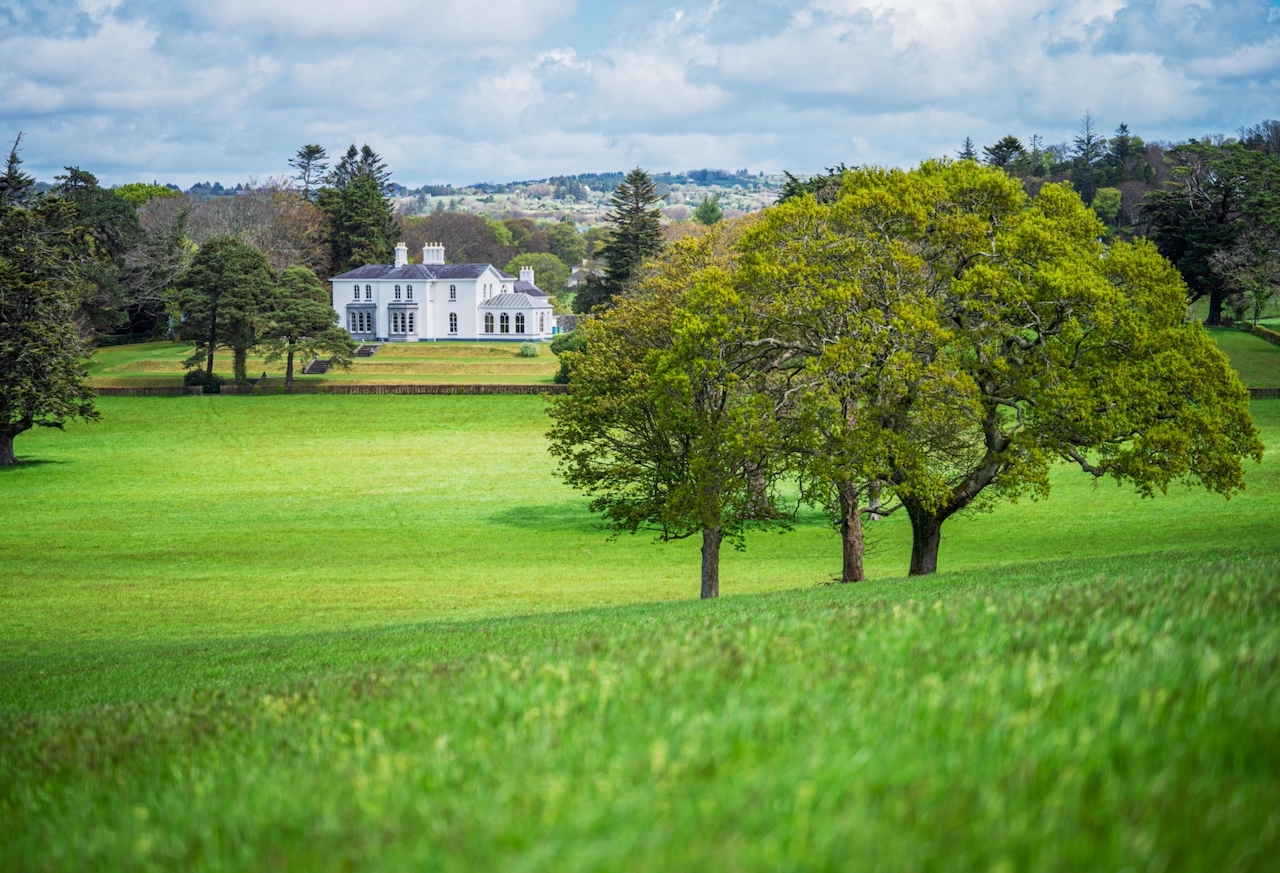
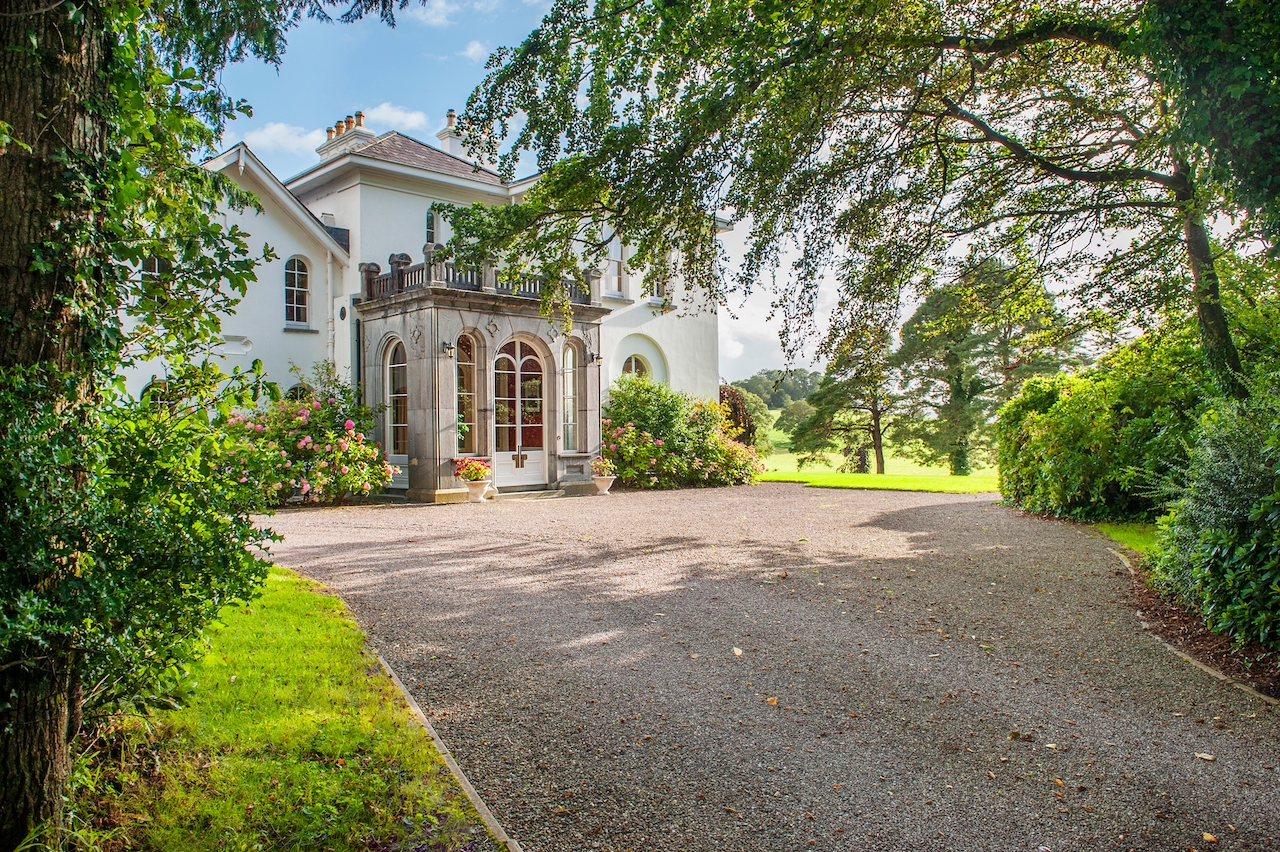
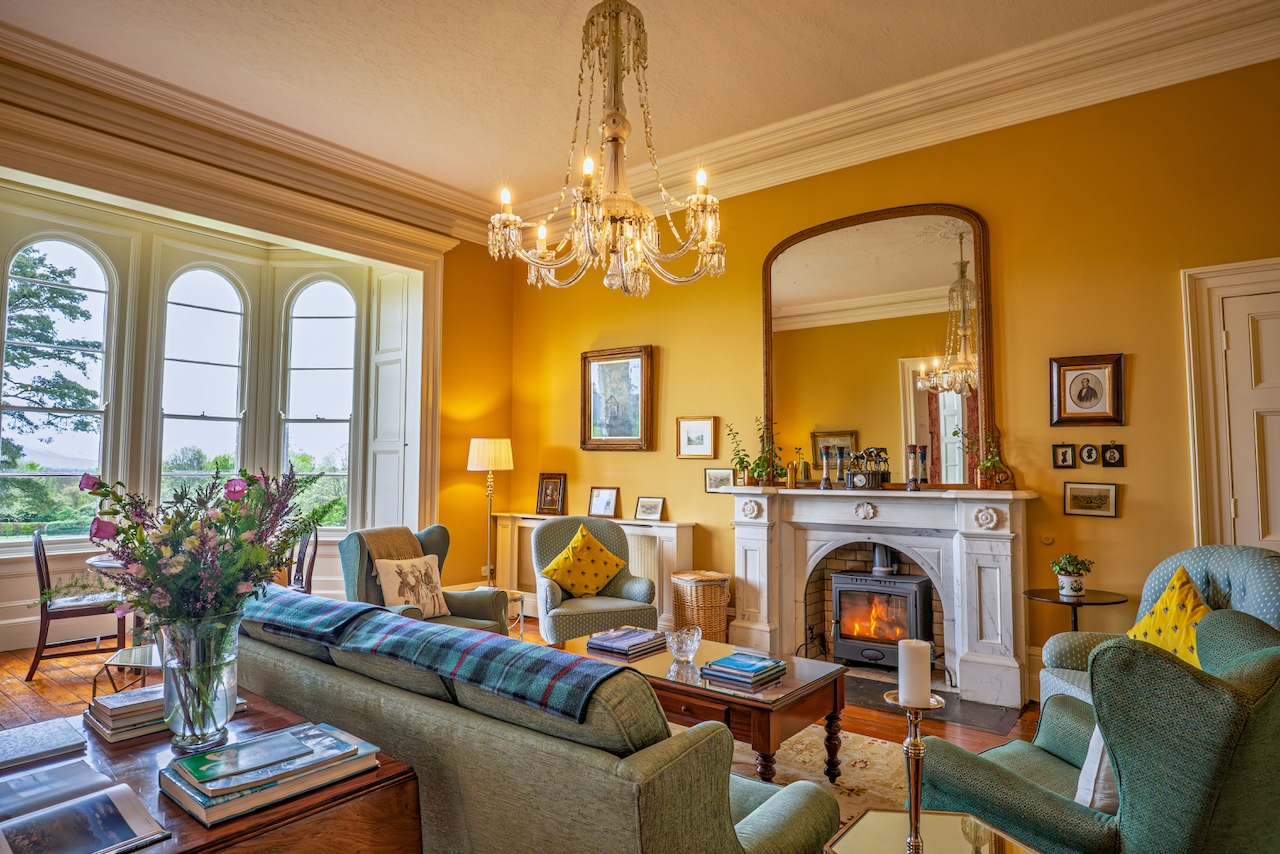
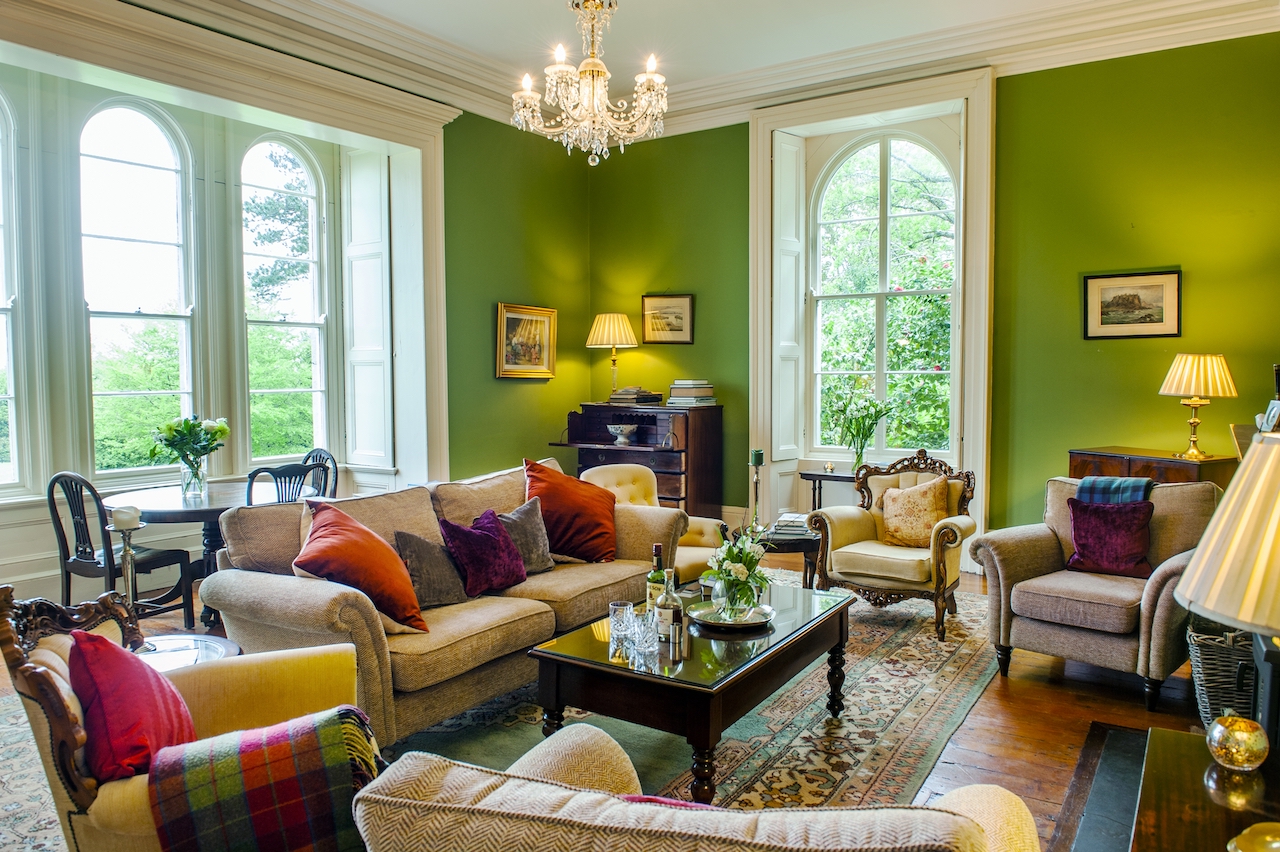
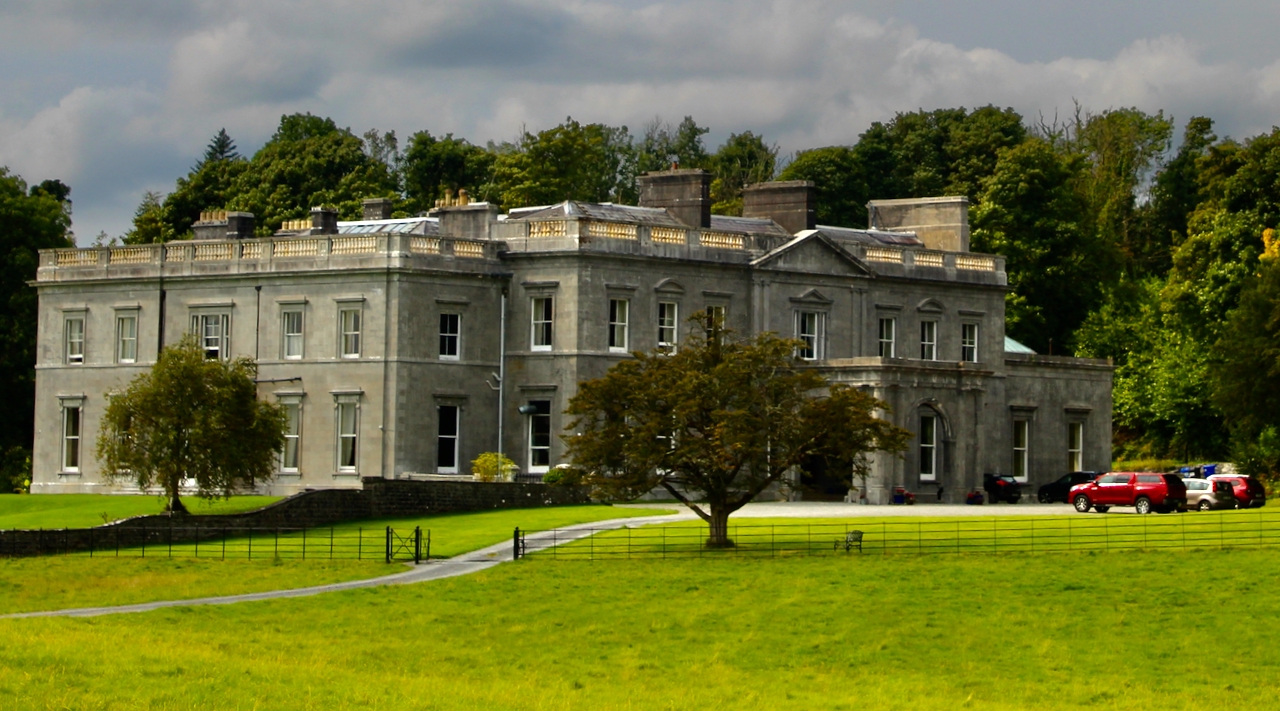
Temple House, County Sligo, August 2025. Photograph © Jennifer Winder-Baggot, www.irishhistorichouses.com
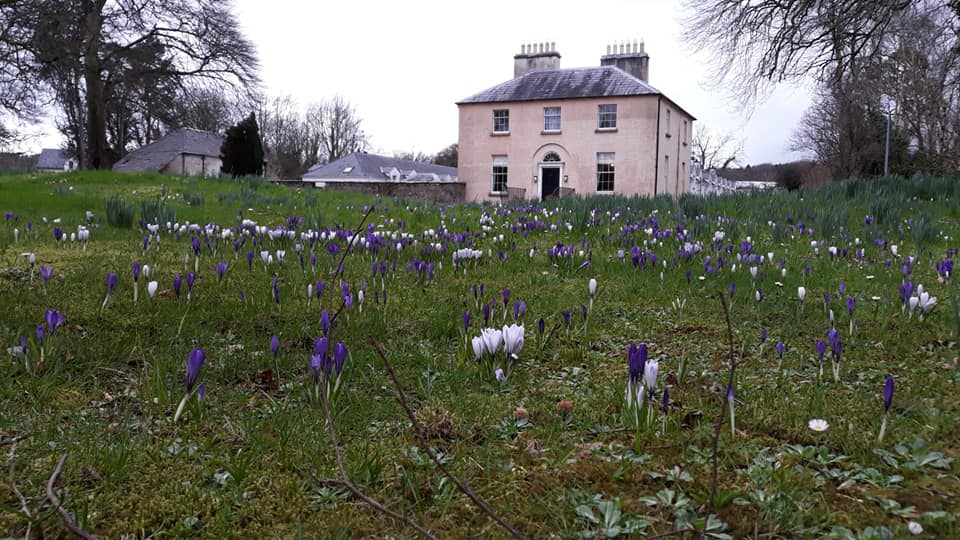
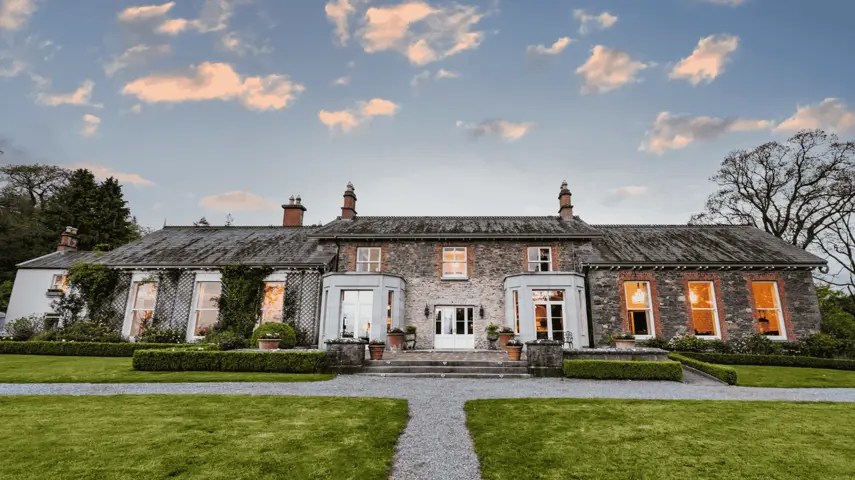
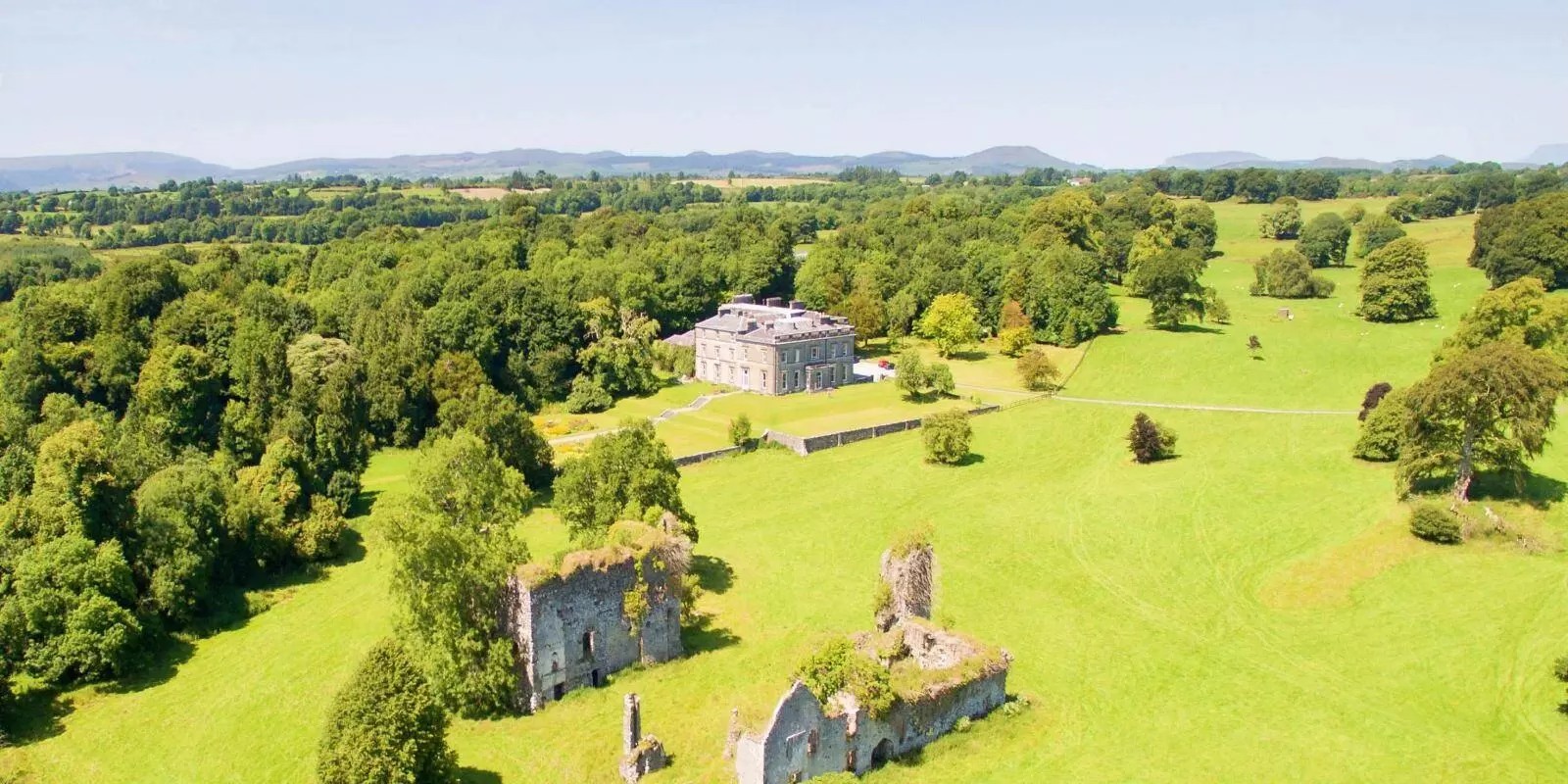
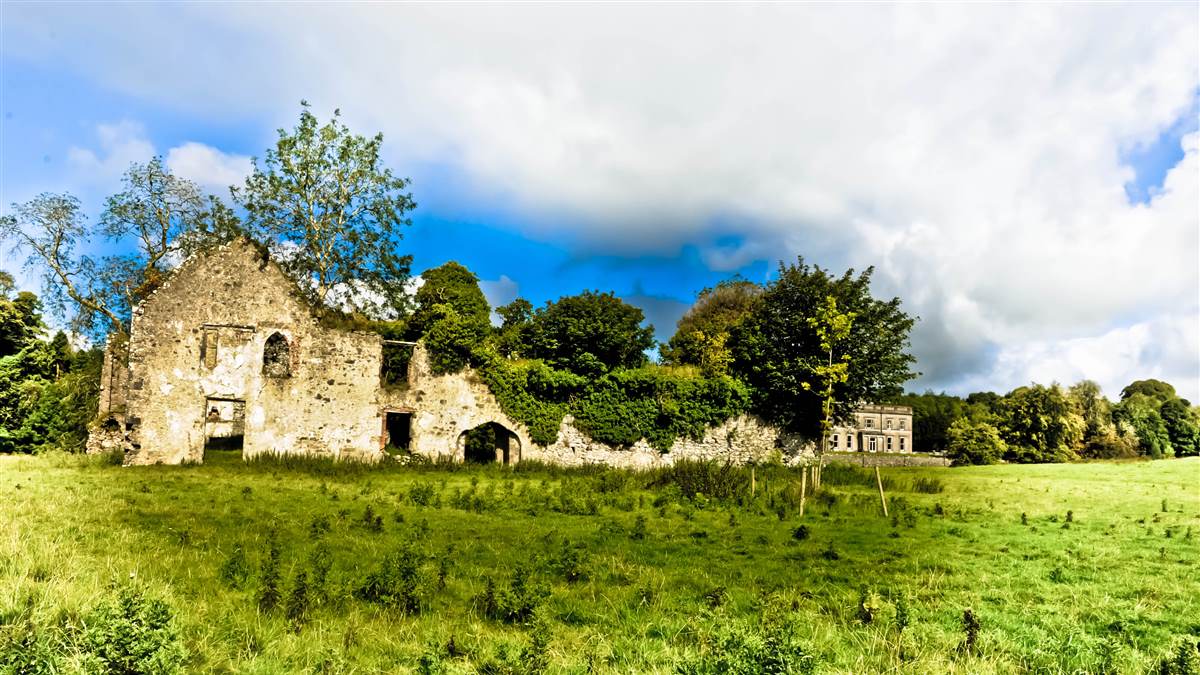
Temple House and ruins, photograph courtesy of Temple House facebook page.

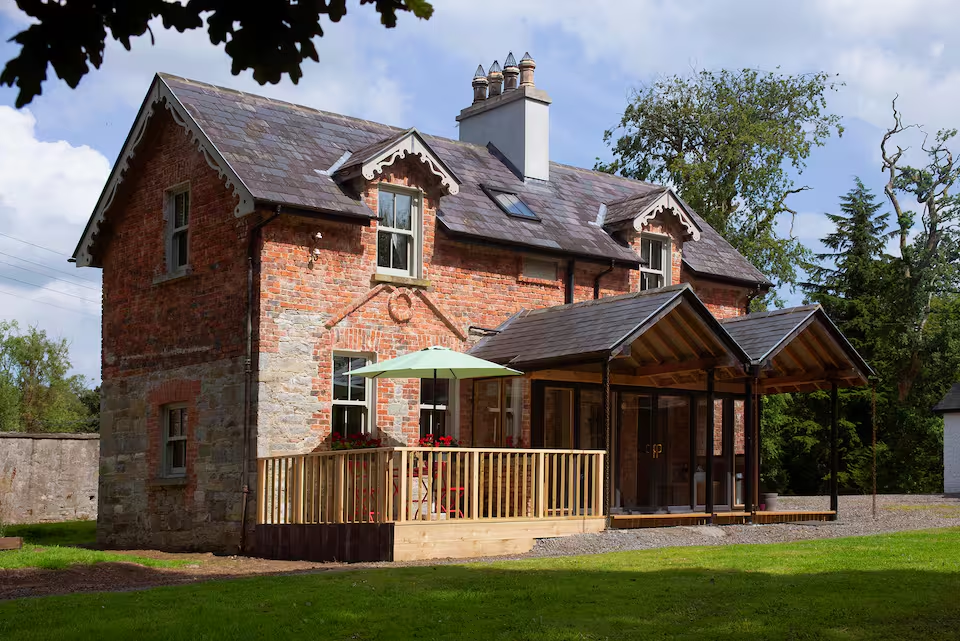
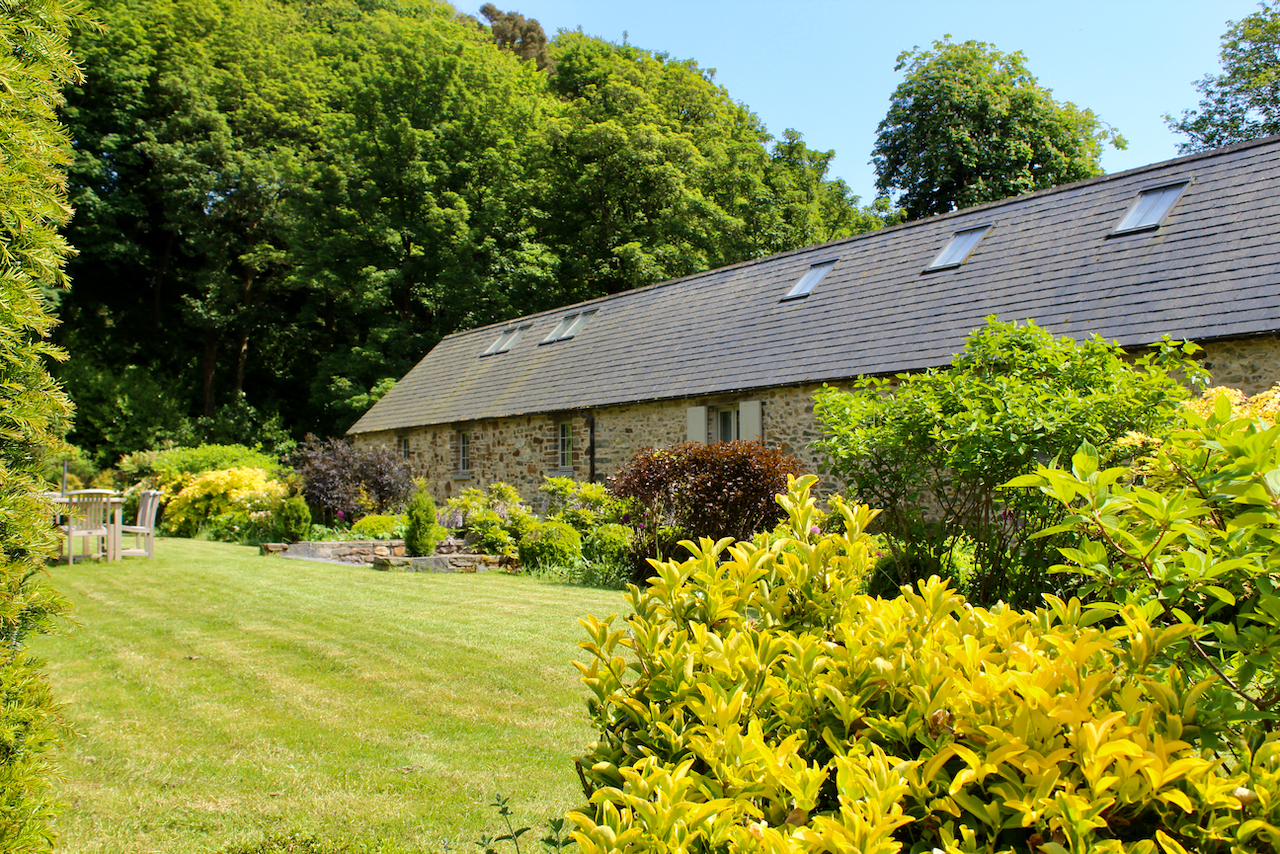
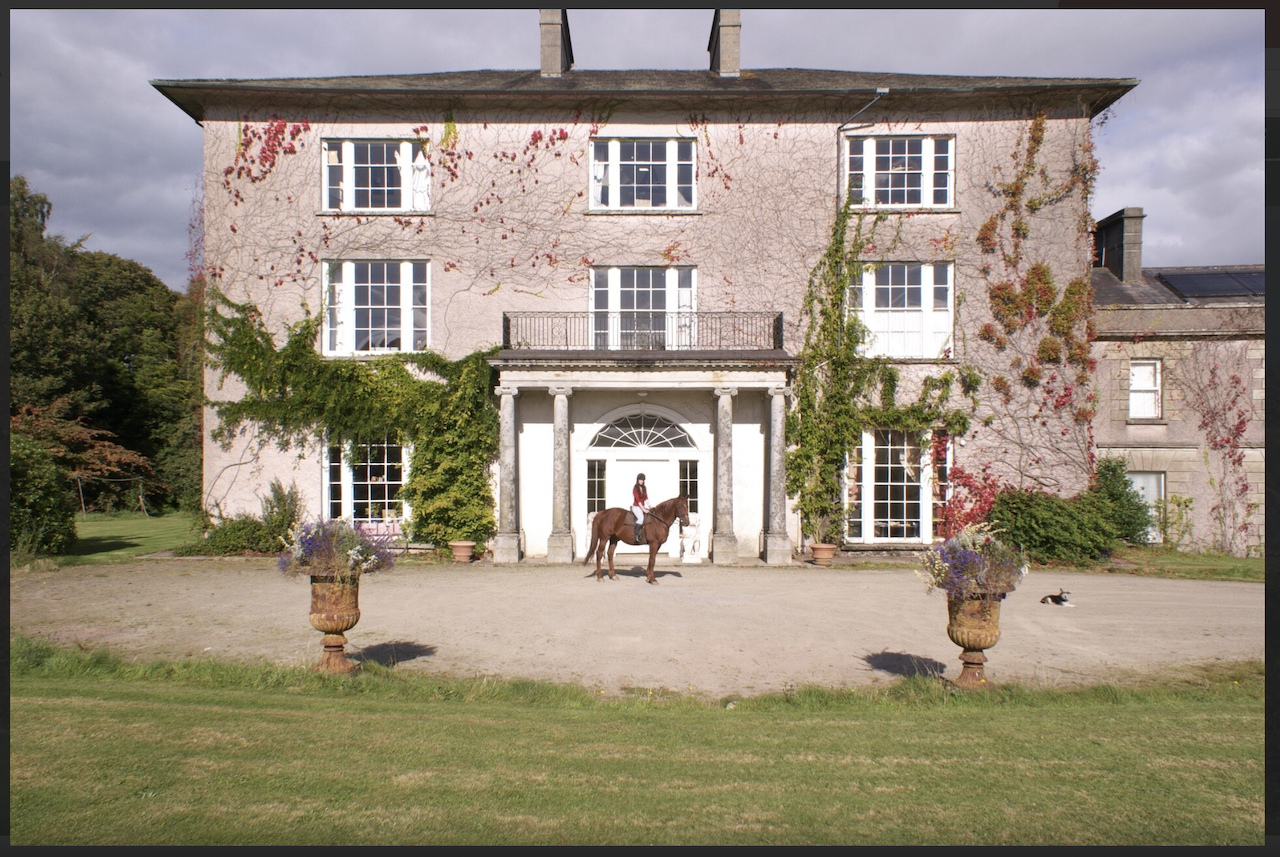
When I saw that Roderick Perceval was giving a tour of his home, Temple House in County Sligo, during Heritage Week 2025, I jumped at the chance to see it and booked straight away. I had booked to stay there in the past but had to cancel, and before this tour, the only way to see this section 482 property was to stay, as it was listed as tourist accommodation. And before you get your hopes up, unfortunately it no longer is providing individual bed and breakfast (with dinner optional) accommodation, as Roderick and his family have decided to focus instead on larger group accommodation and weddings. The website now gives the option to book three or more double rooms for your stay. There is also a self-catering cottage available, which has 4 bedrooms: 1 King, 1 Double, 2 Twin.

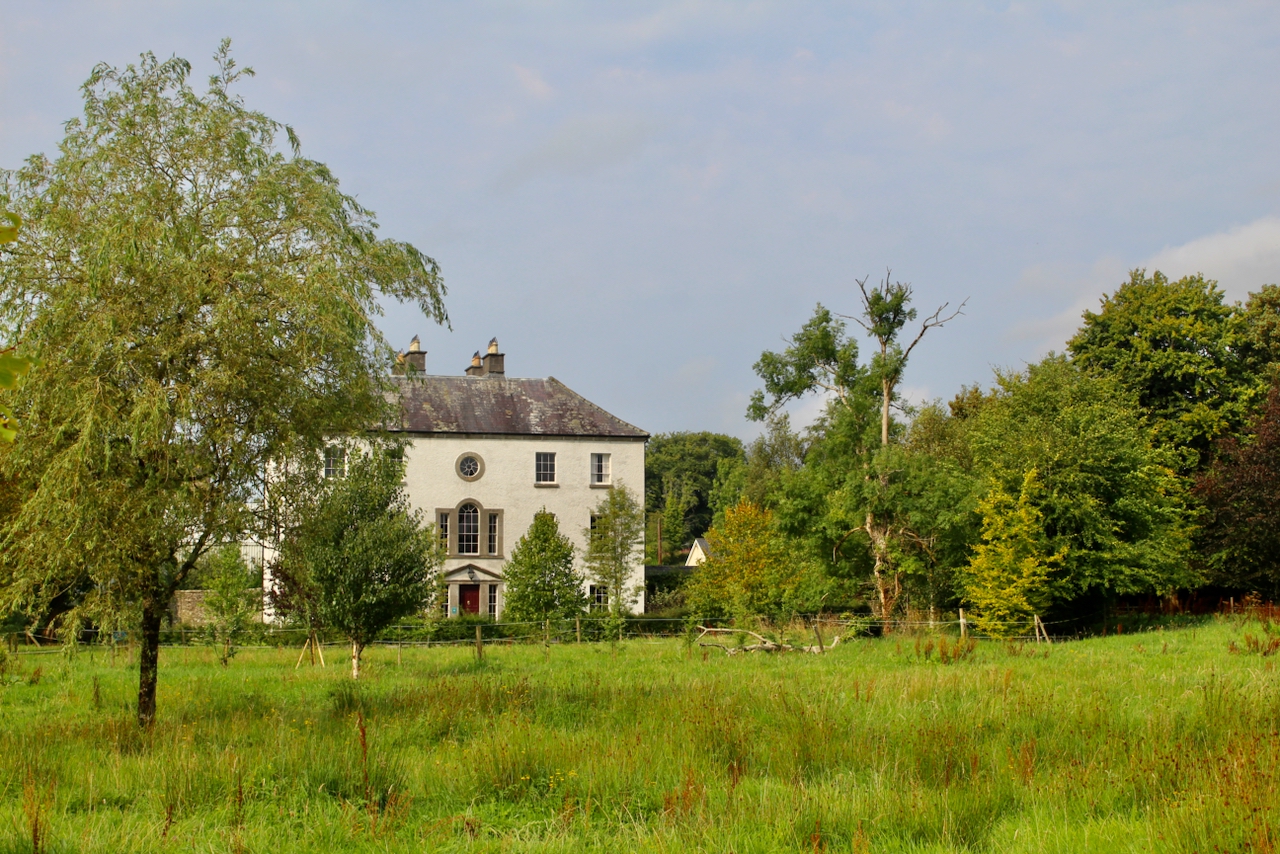
Temple House, County Sligo, August 2025. Photograph © Jennifer Winder-Baggot, www.irishhistorichouses.com
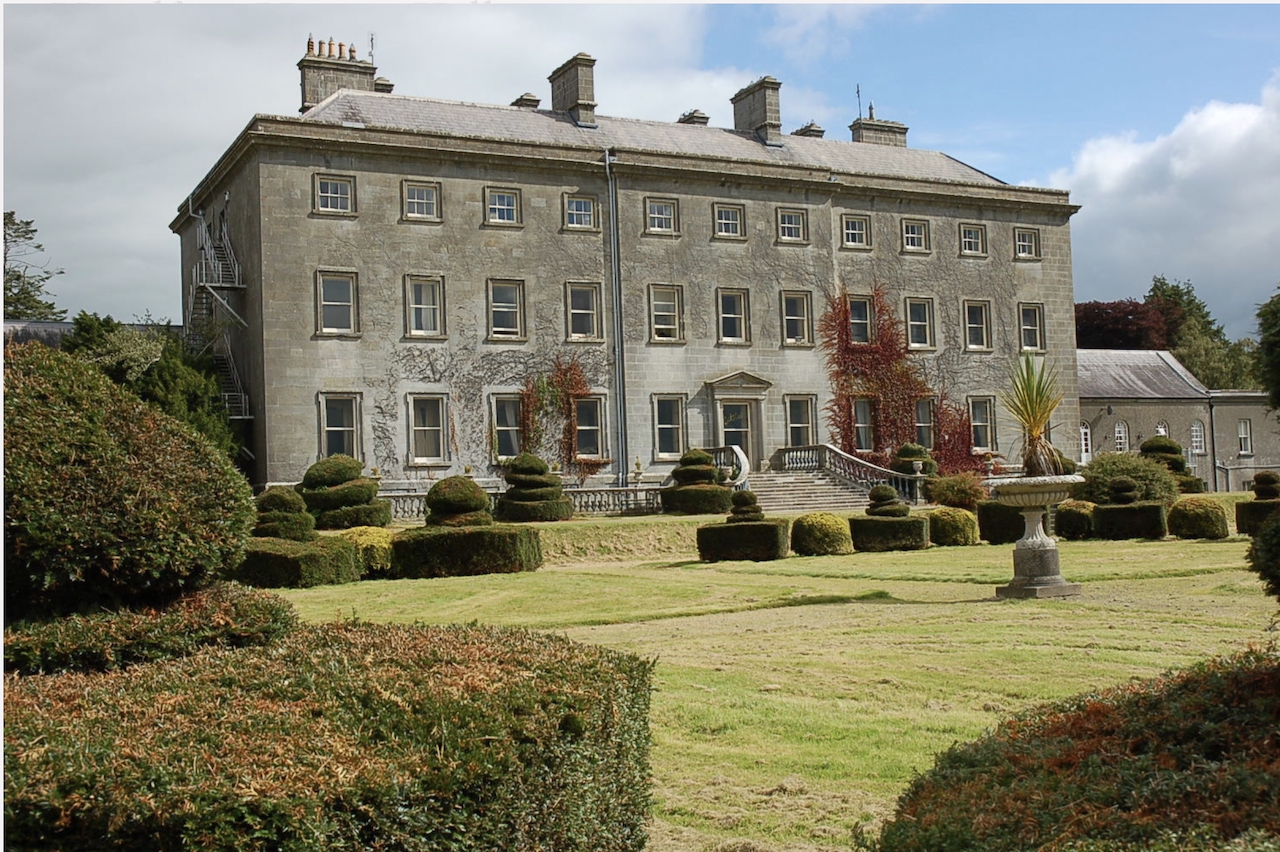
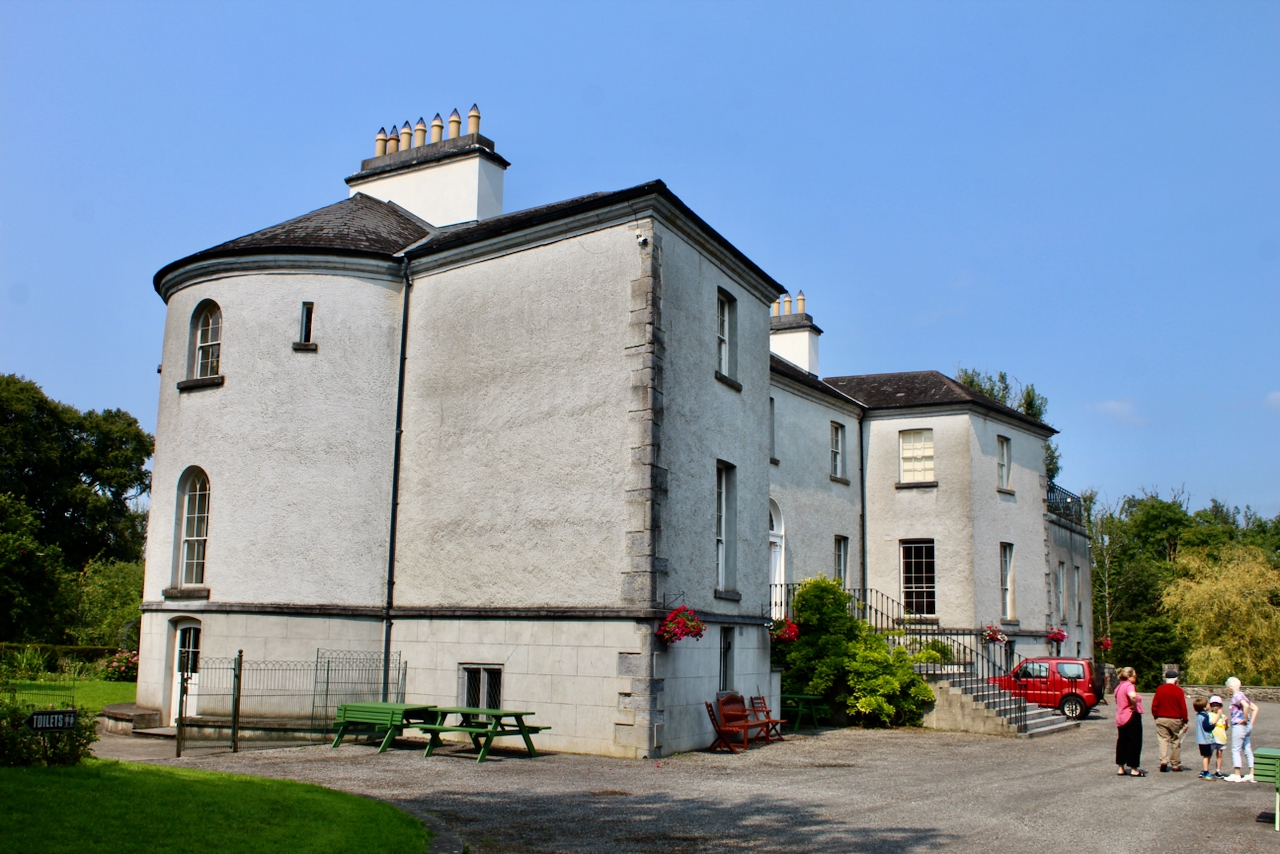
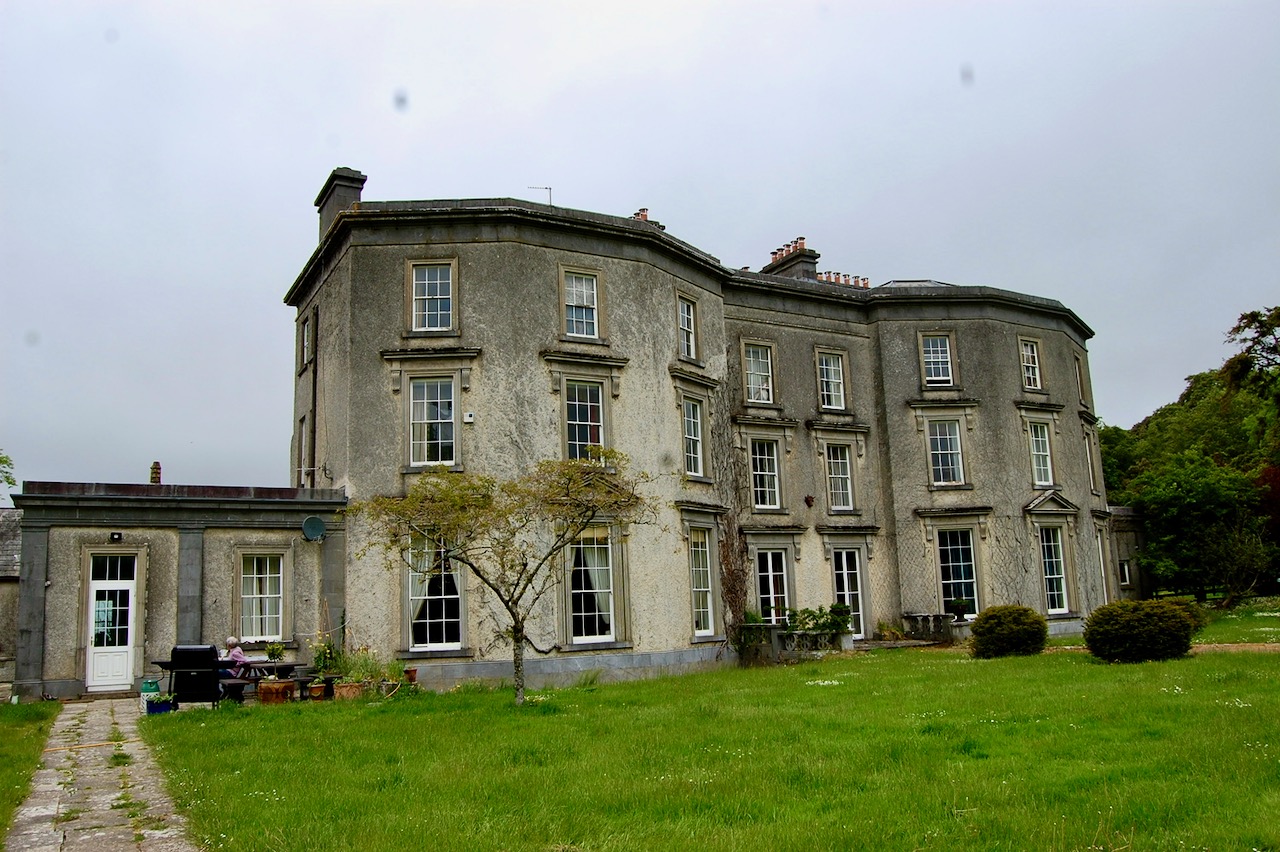
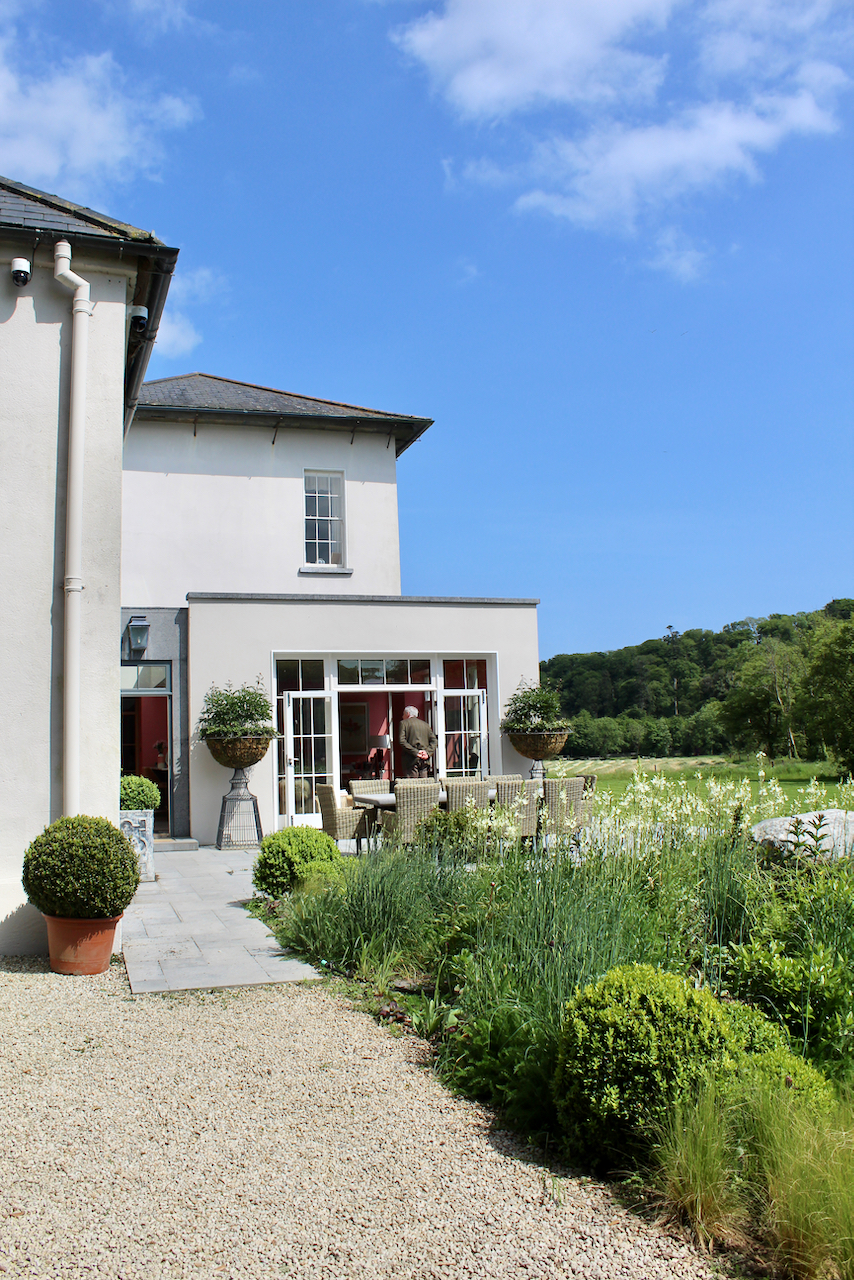
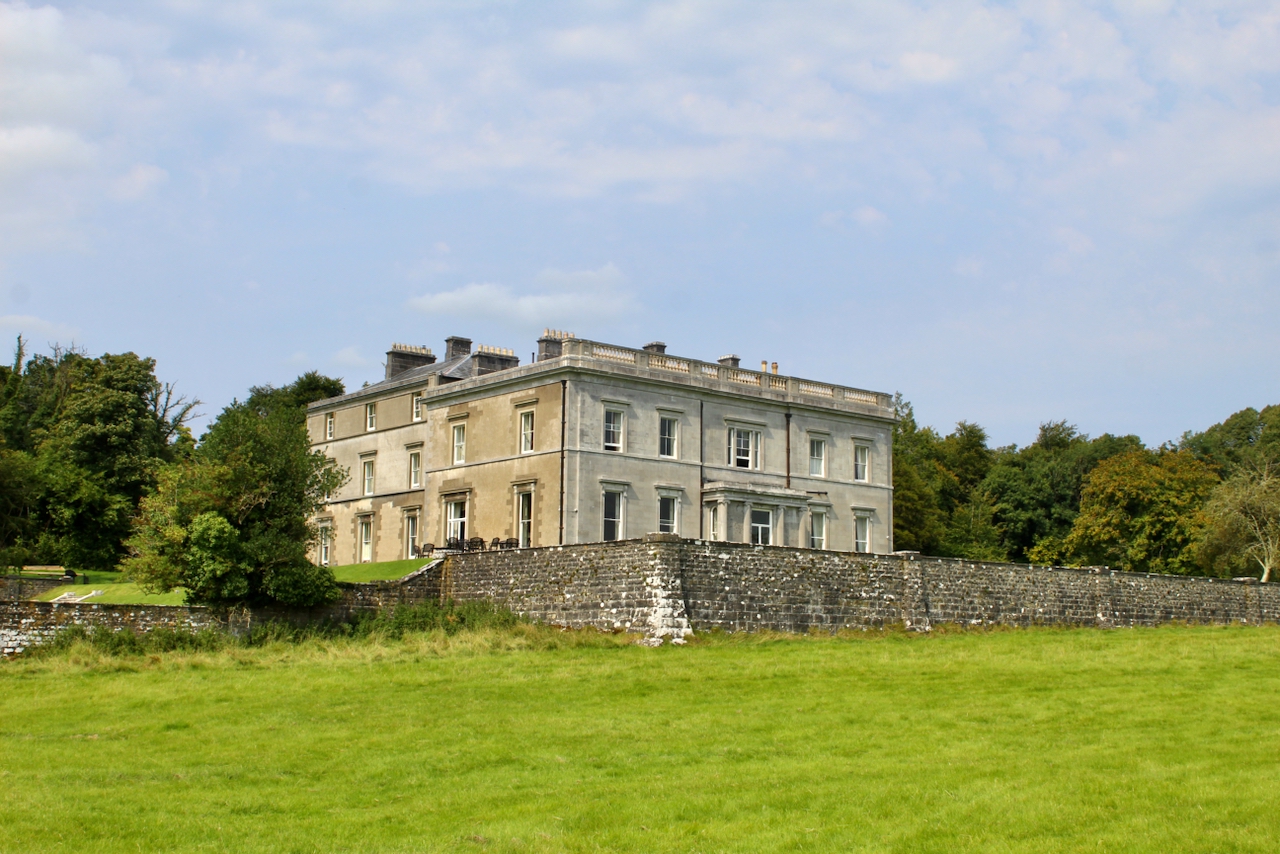
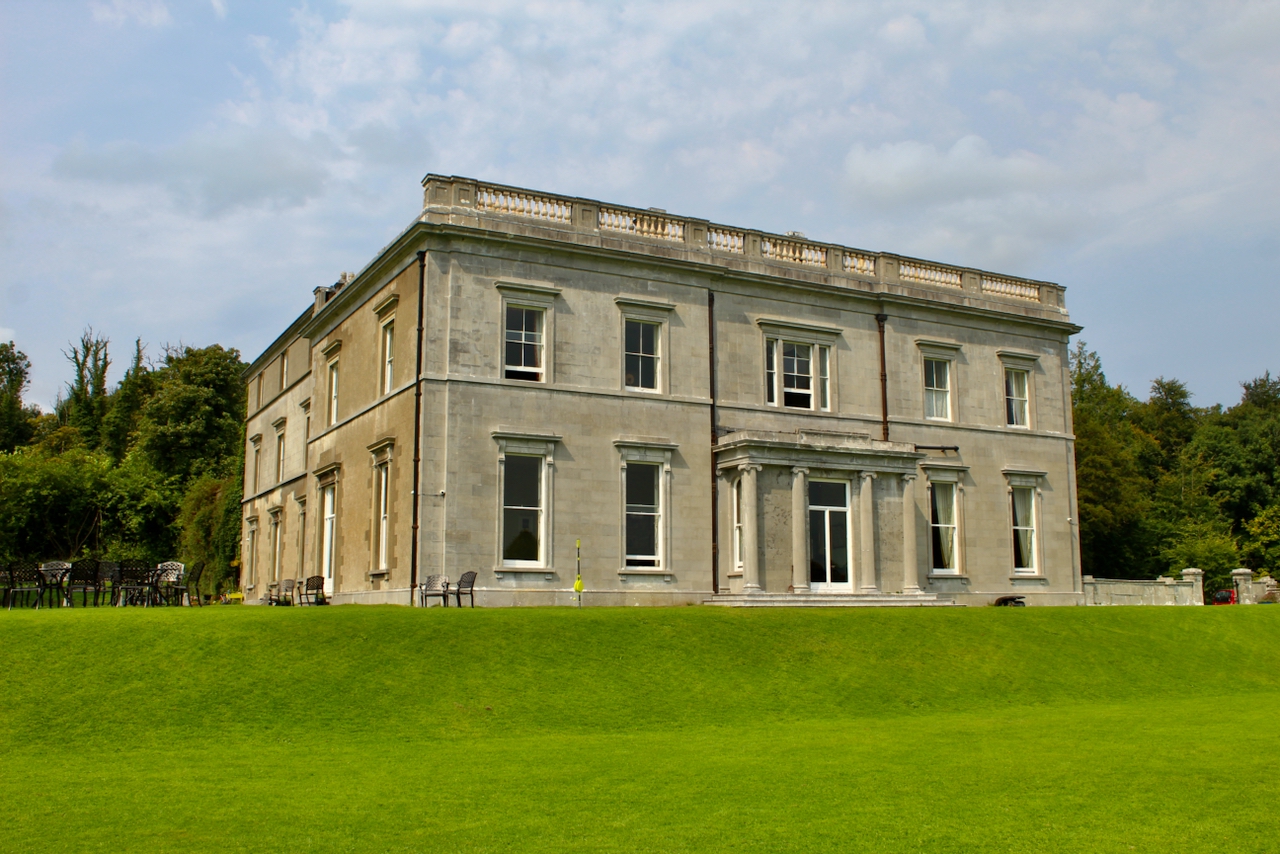
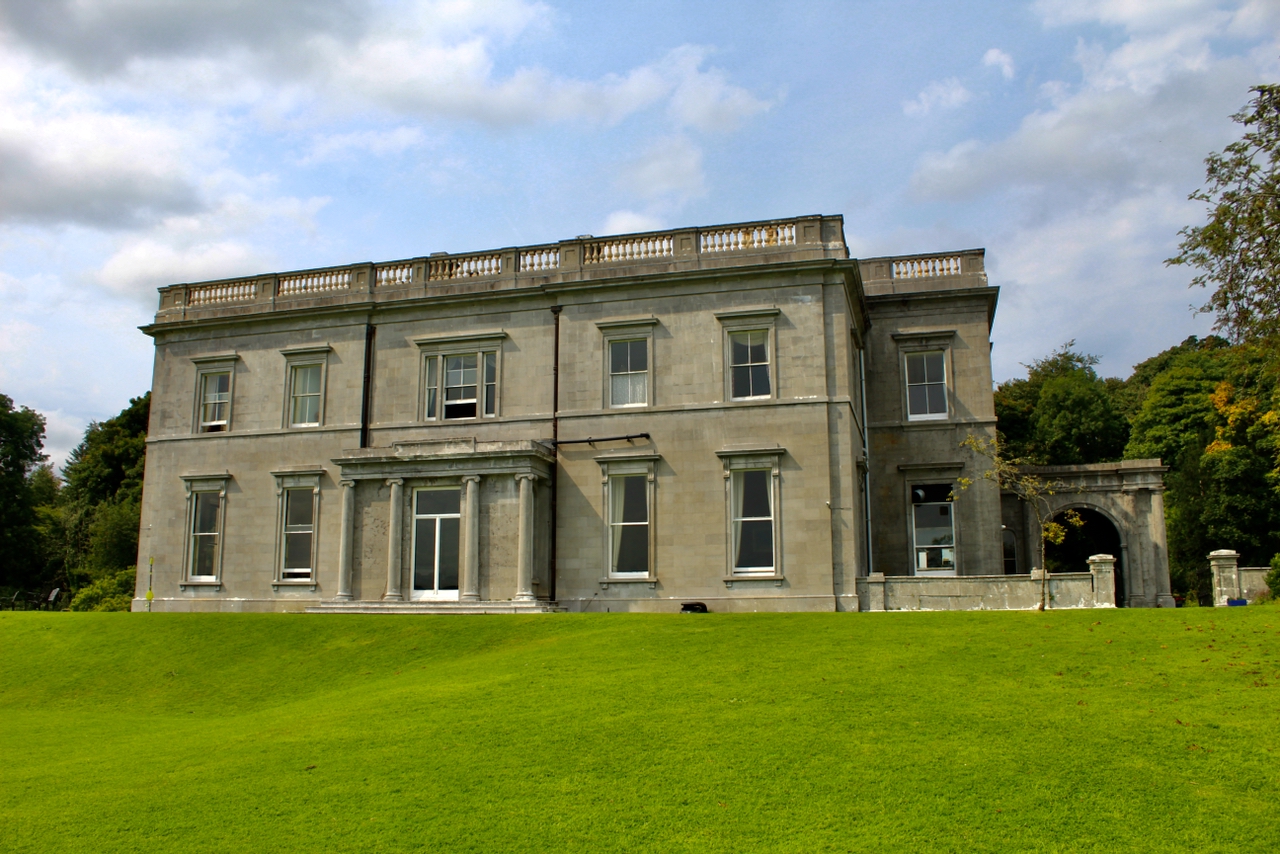
Rear (south) facade, Temple House, County Sligo, August 2025. Photograph © Jennifer Winder-Baggot, www.irishhistorichouses.com
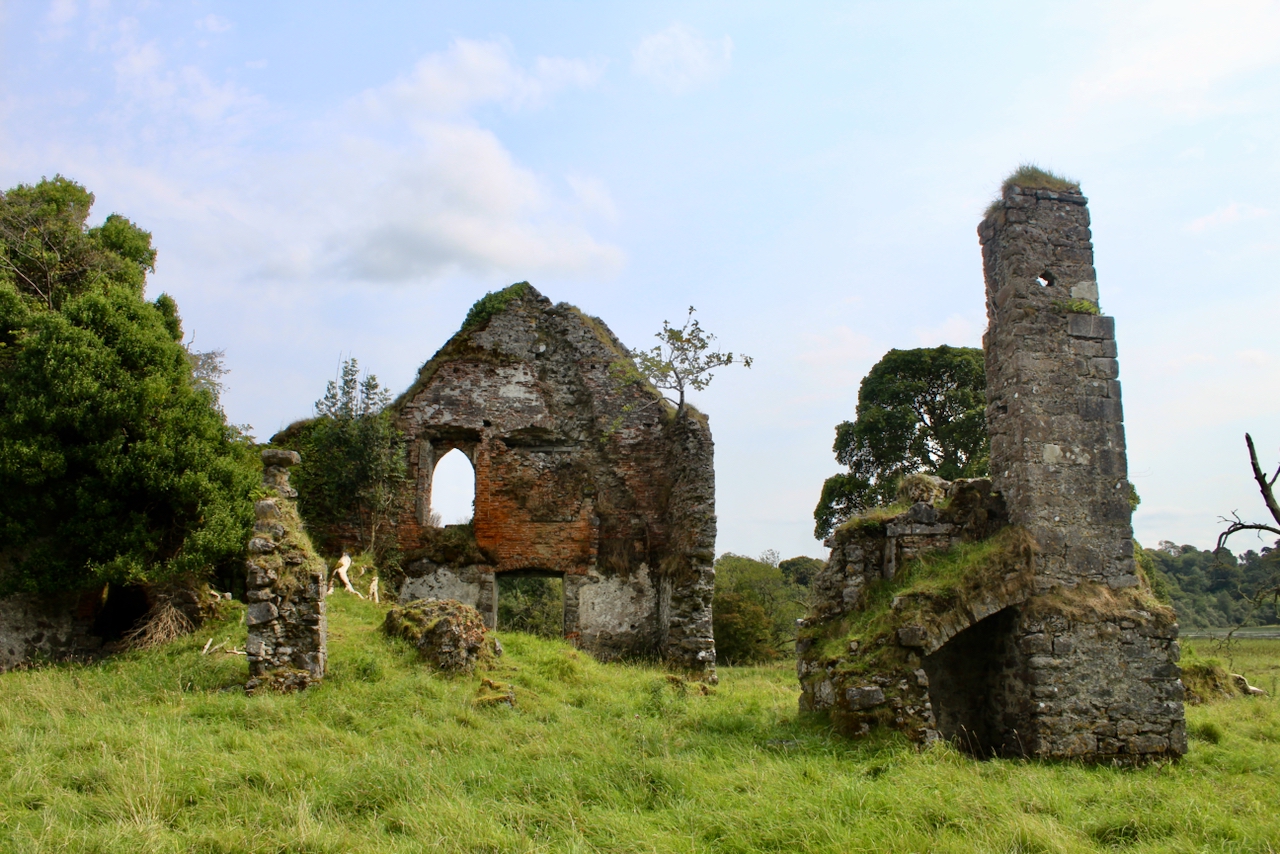
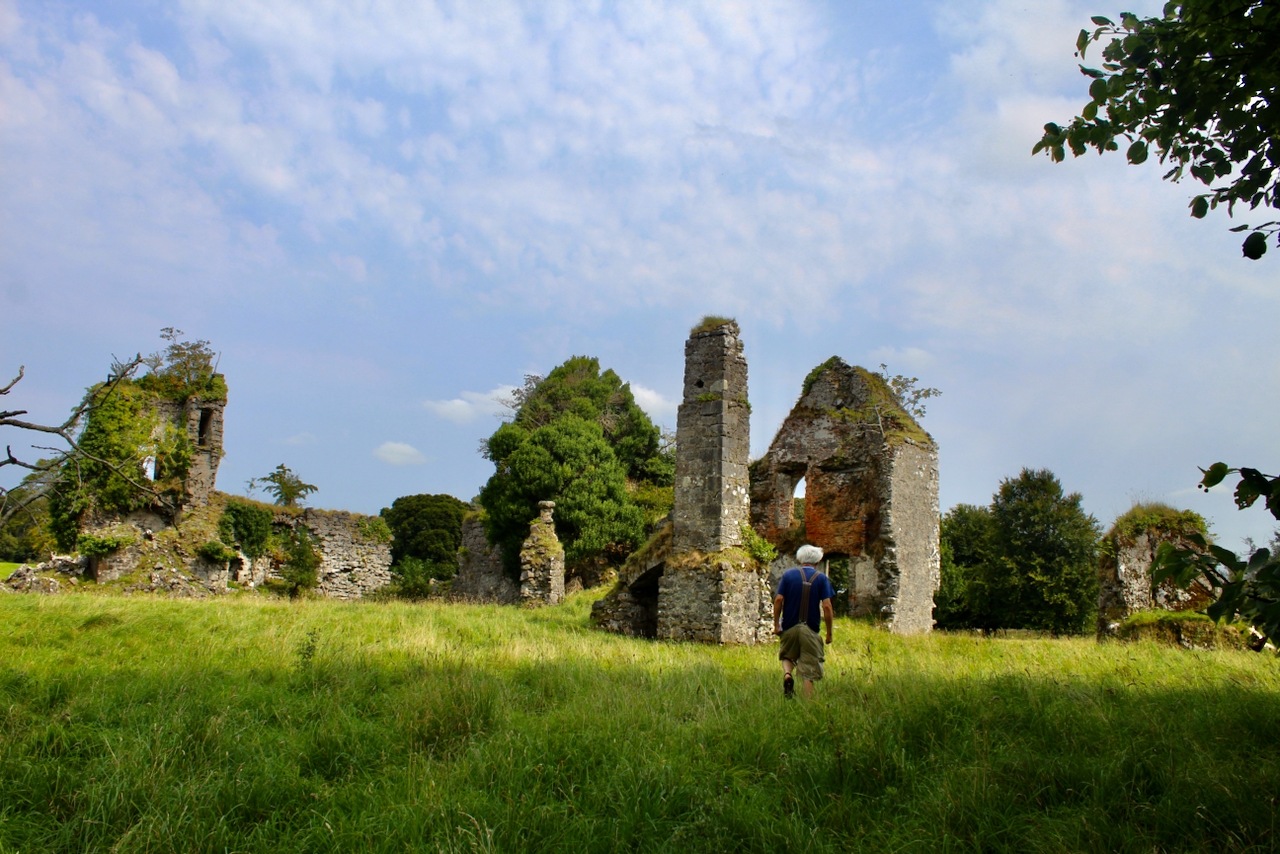
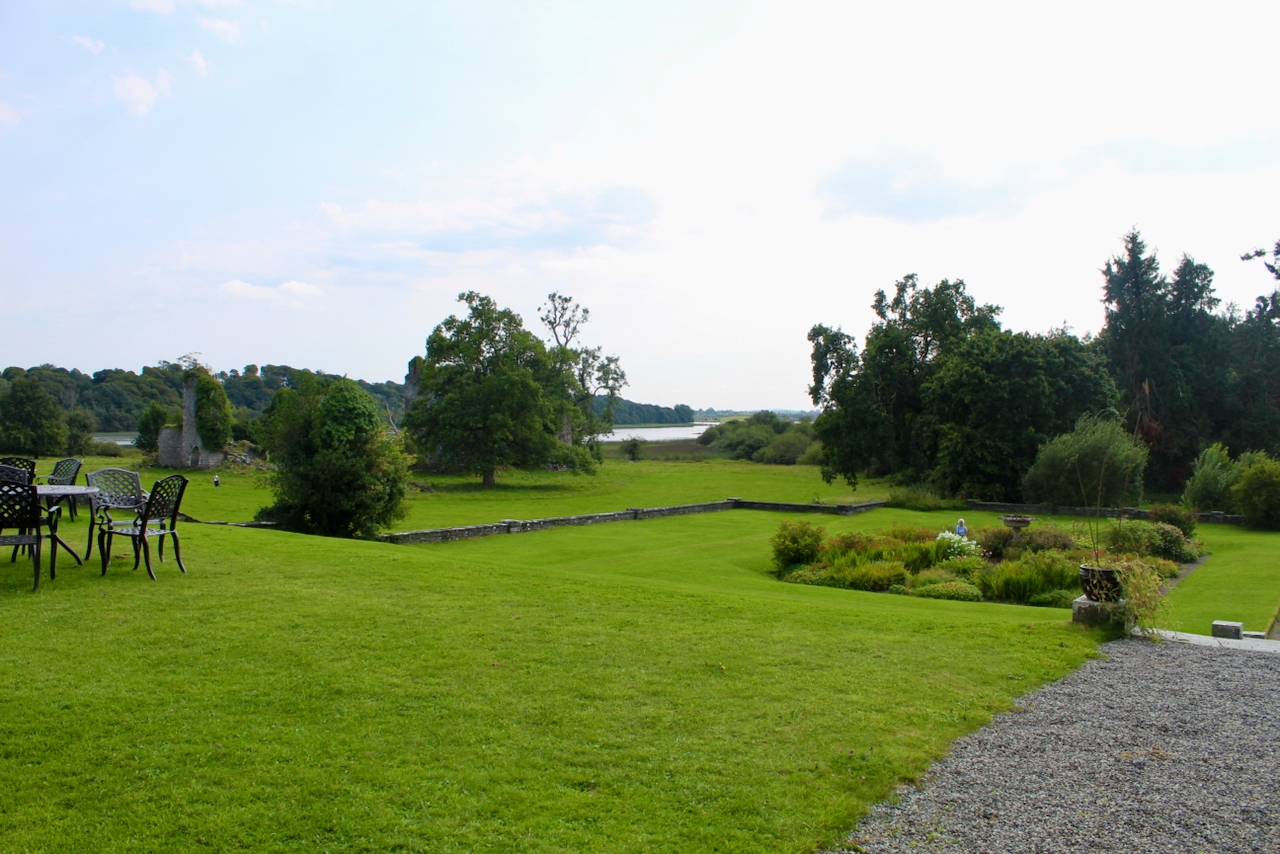
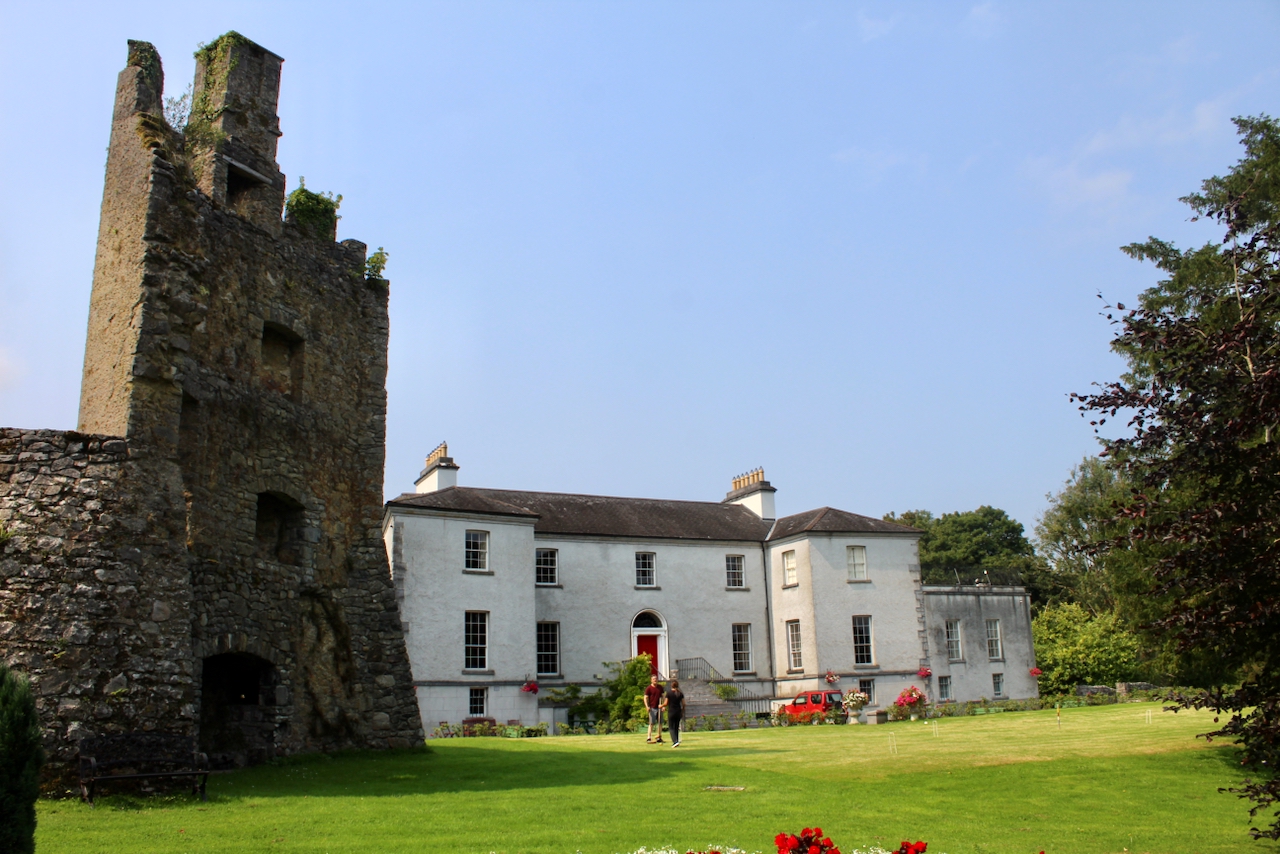
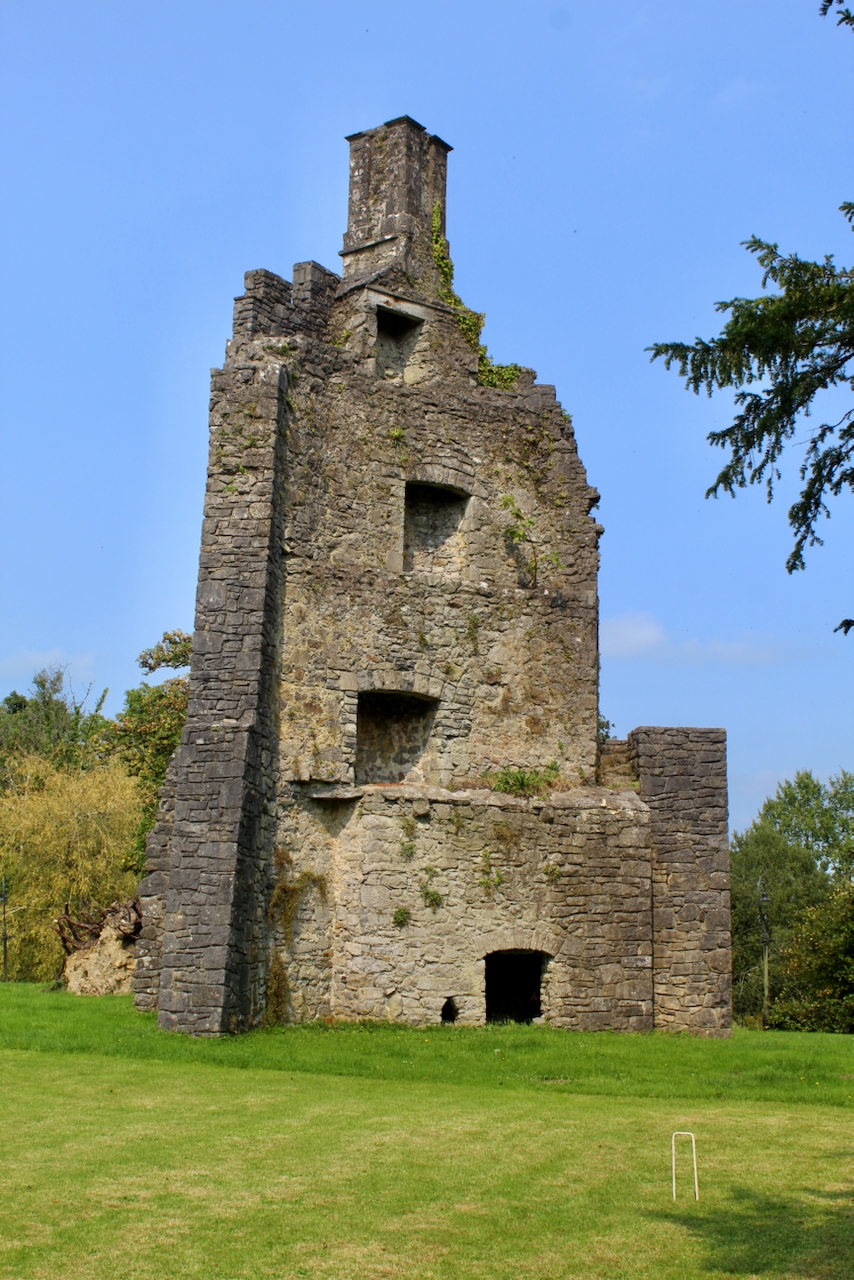
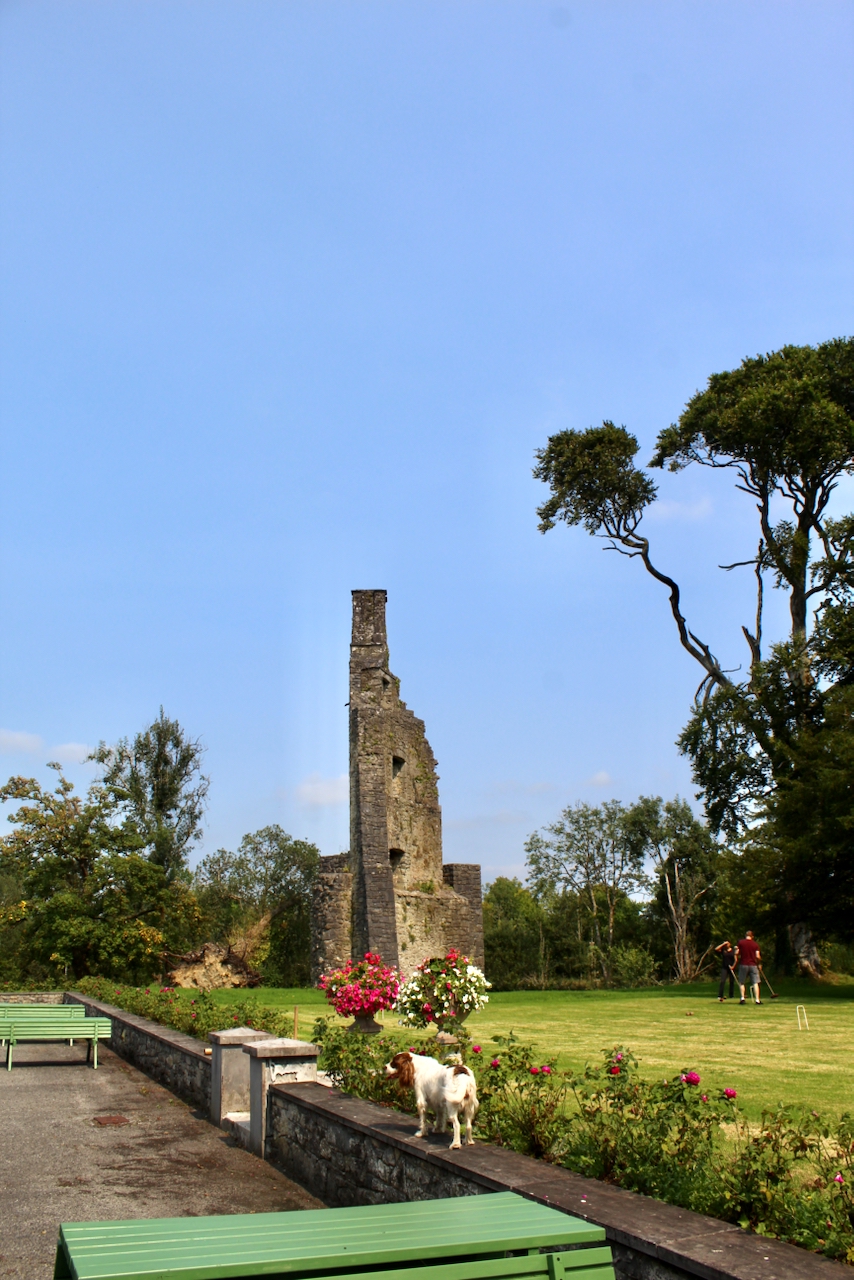
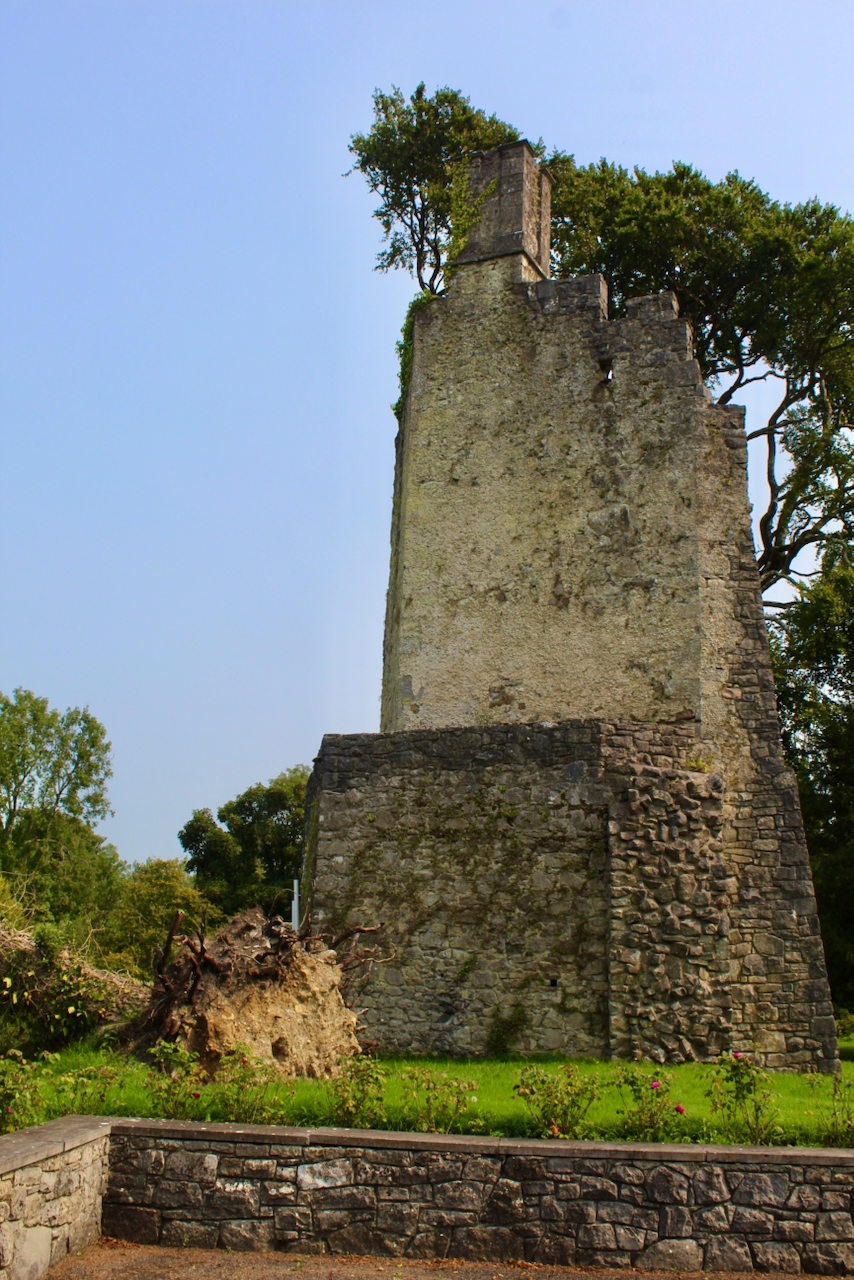
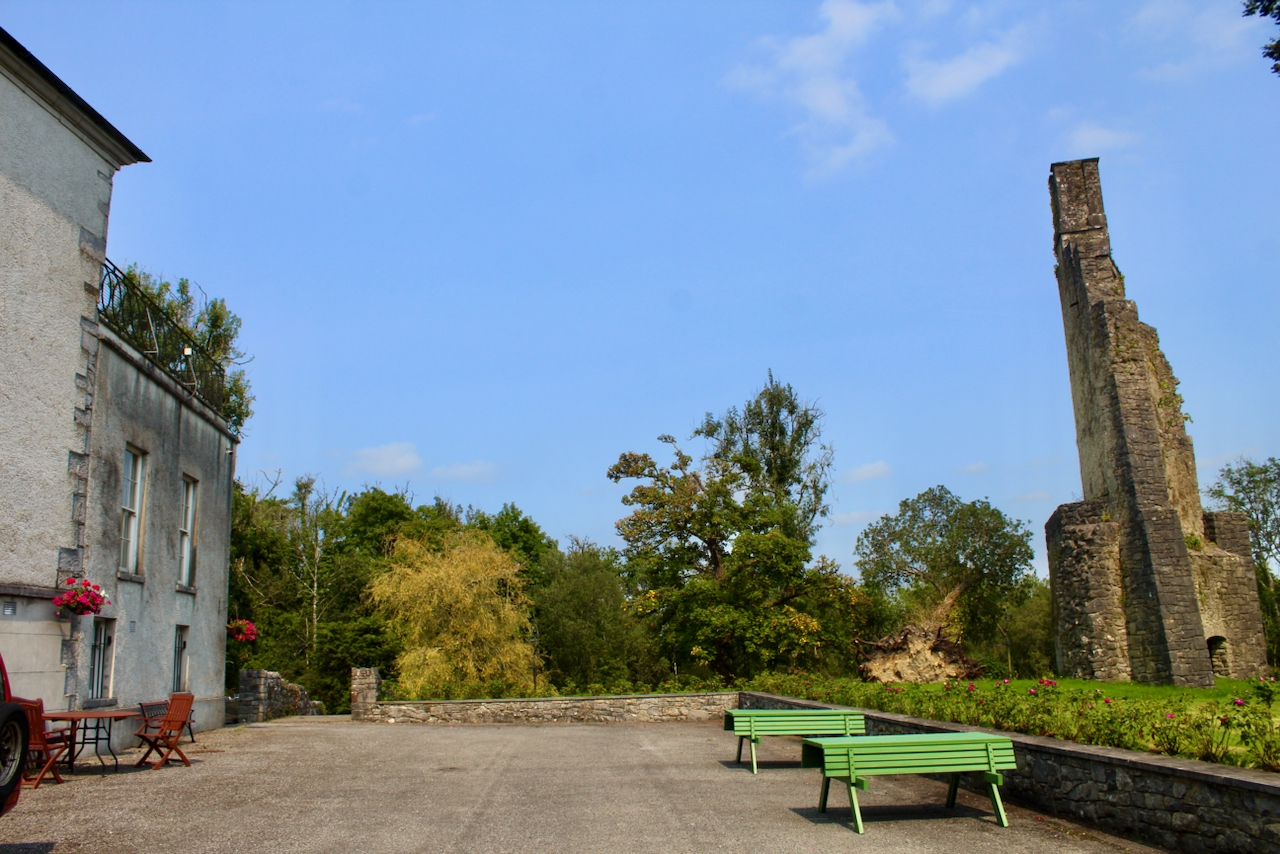
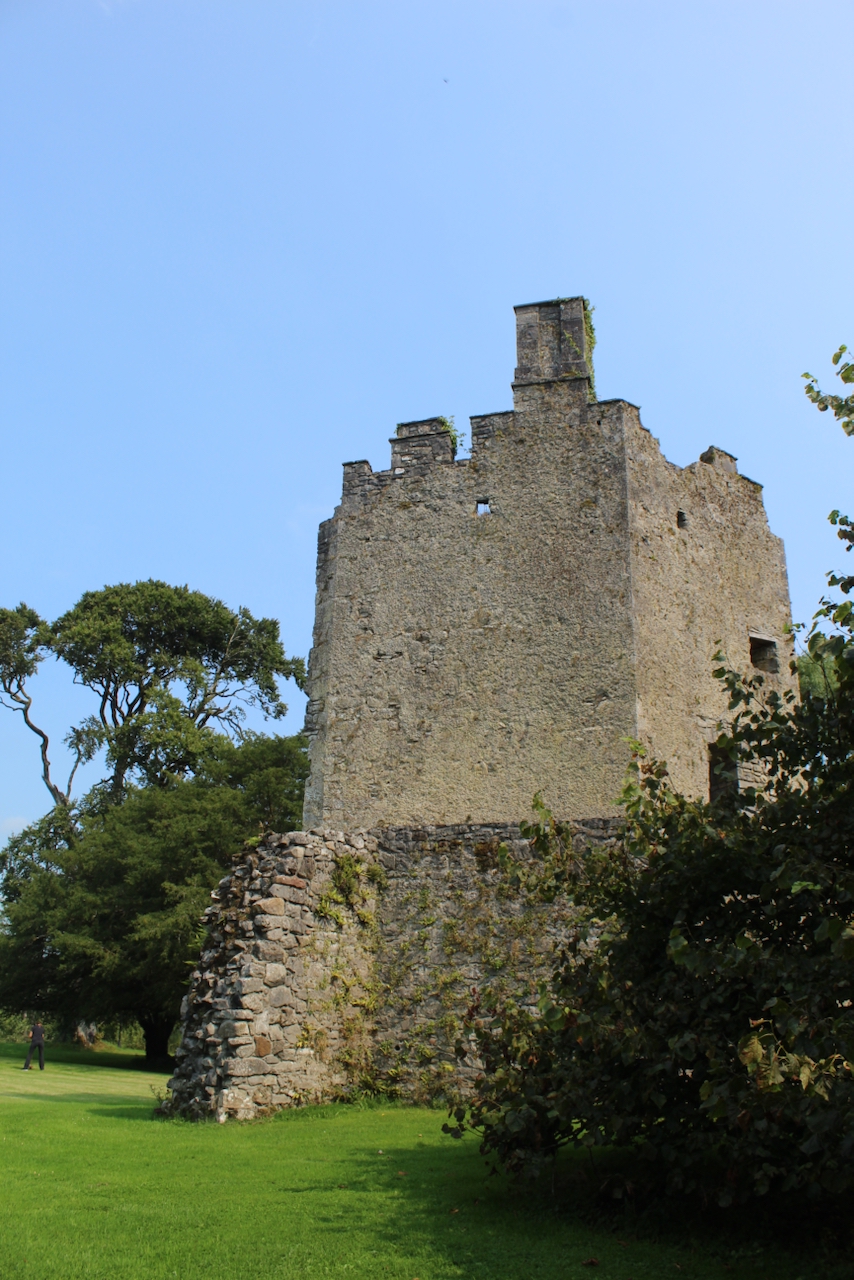
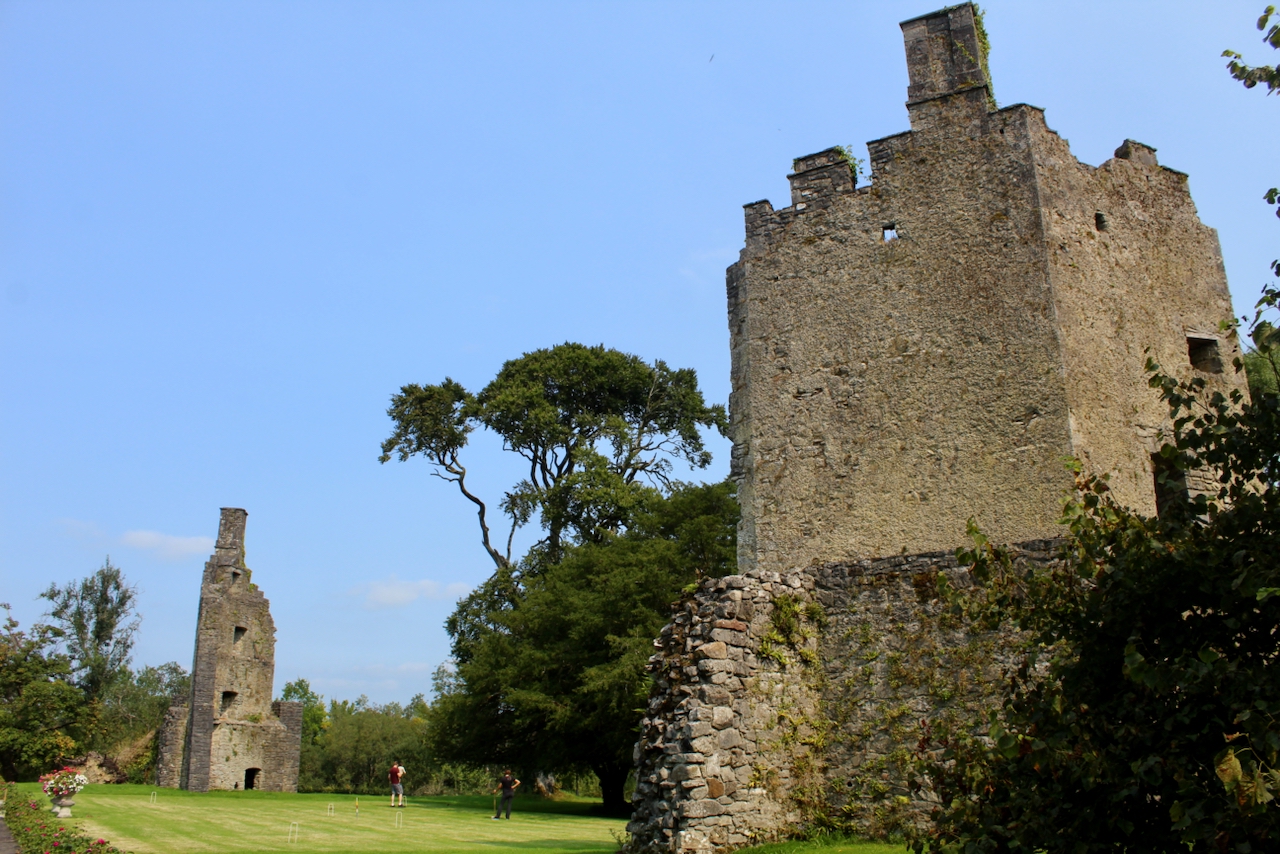
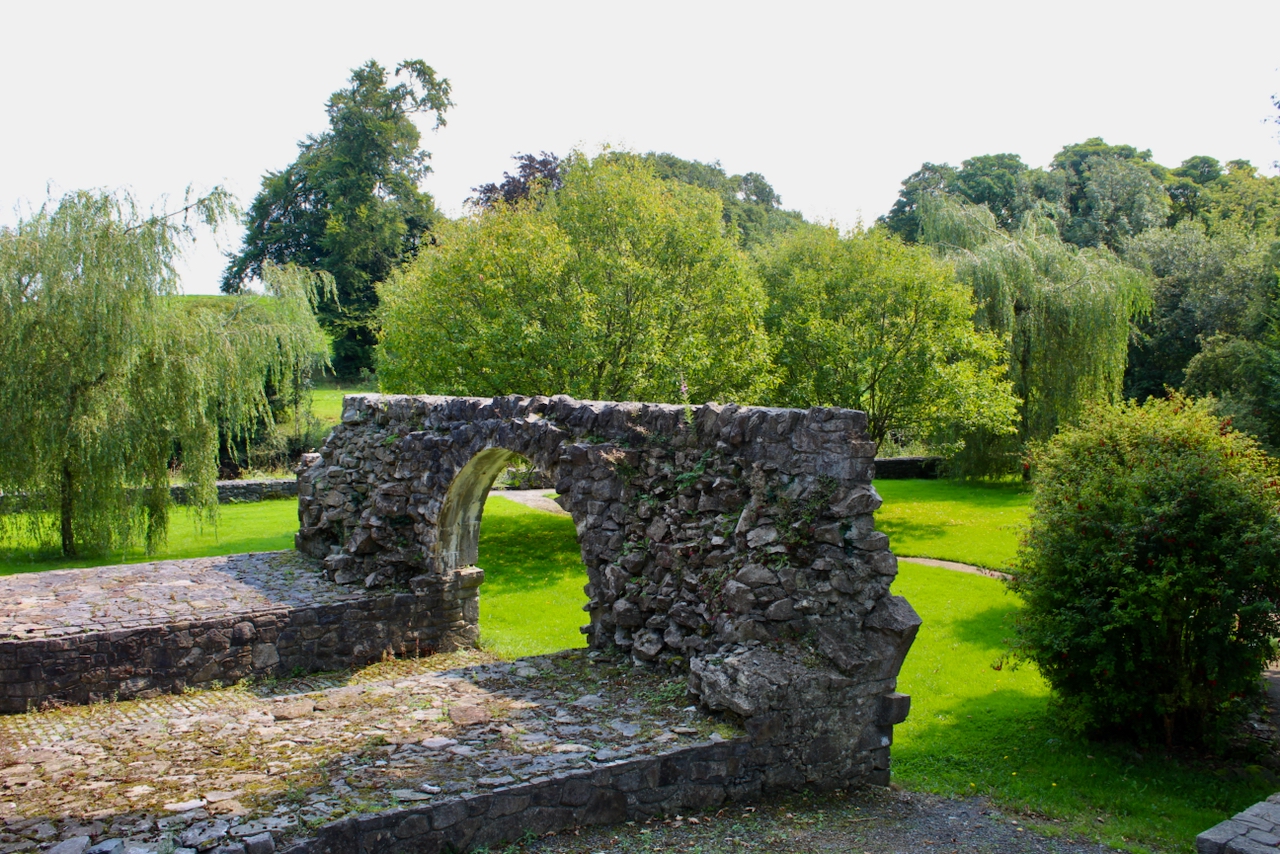
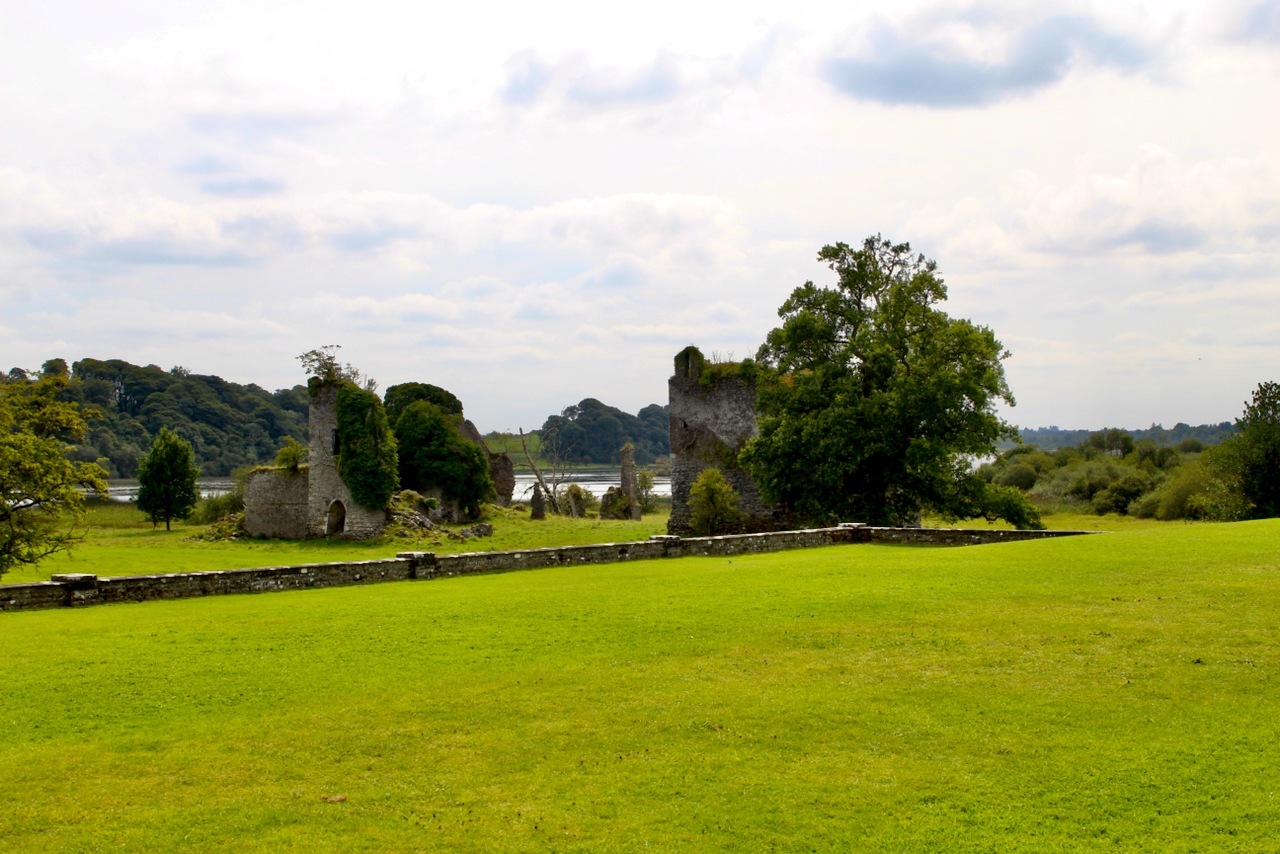
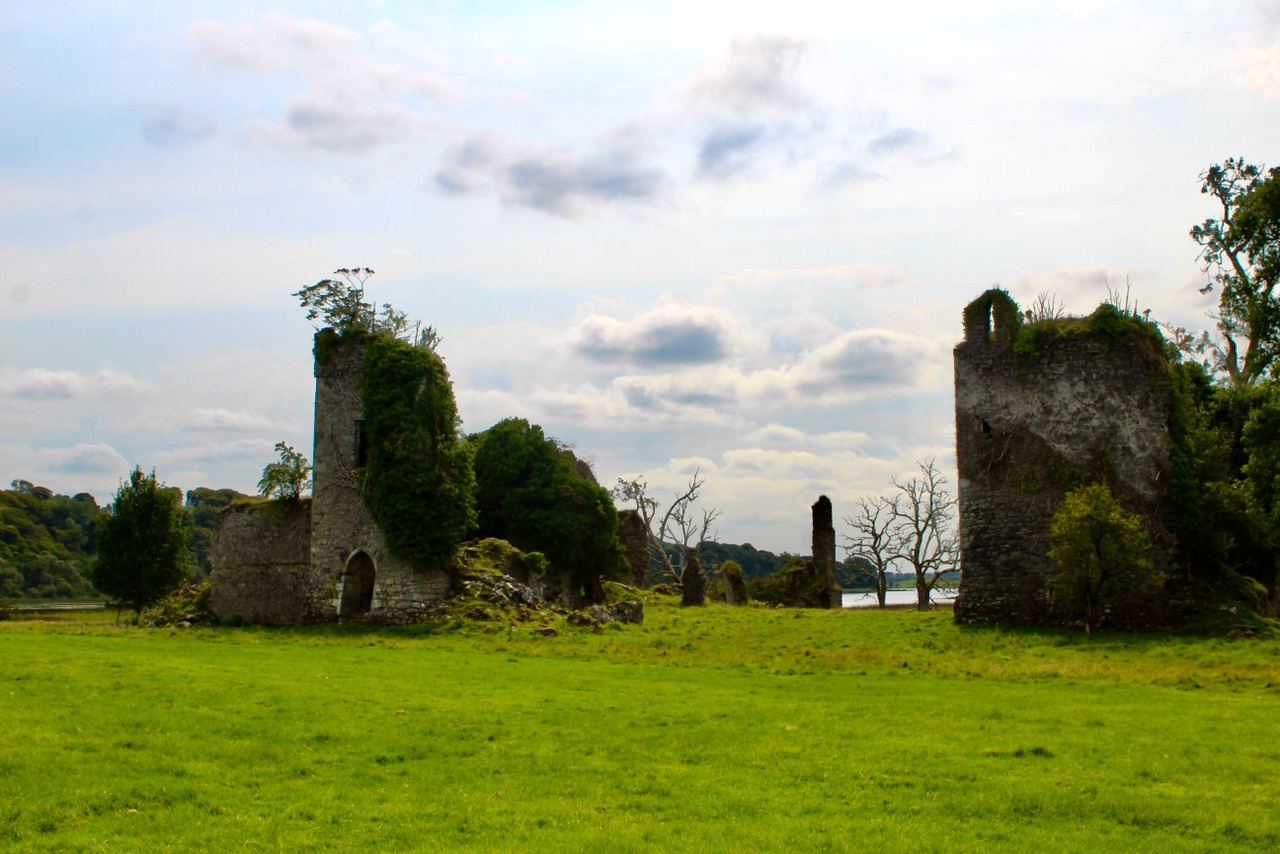
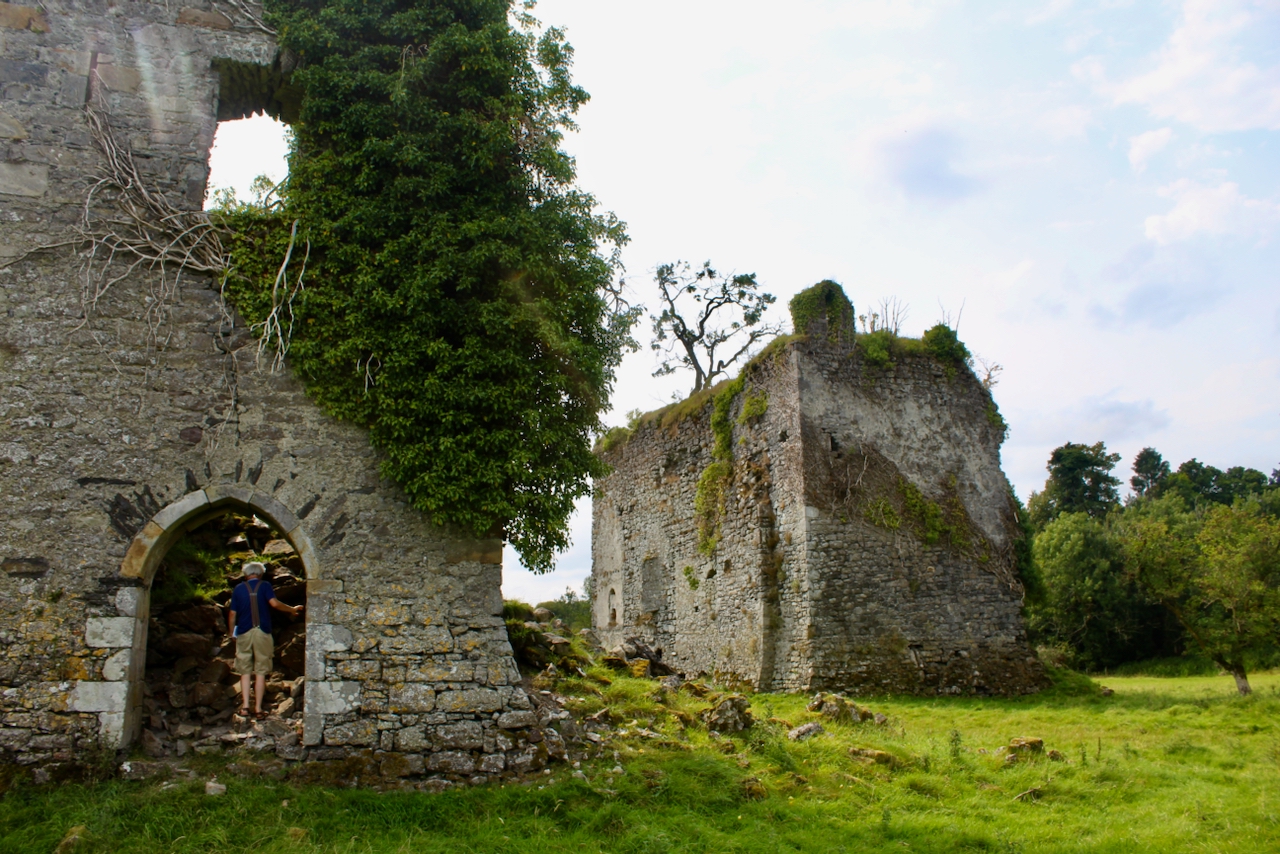
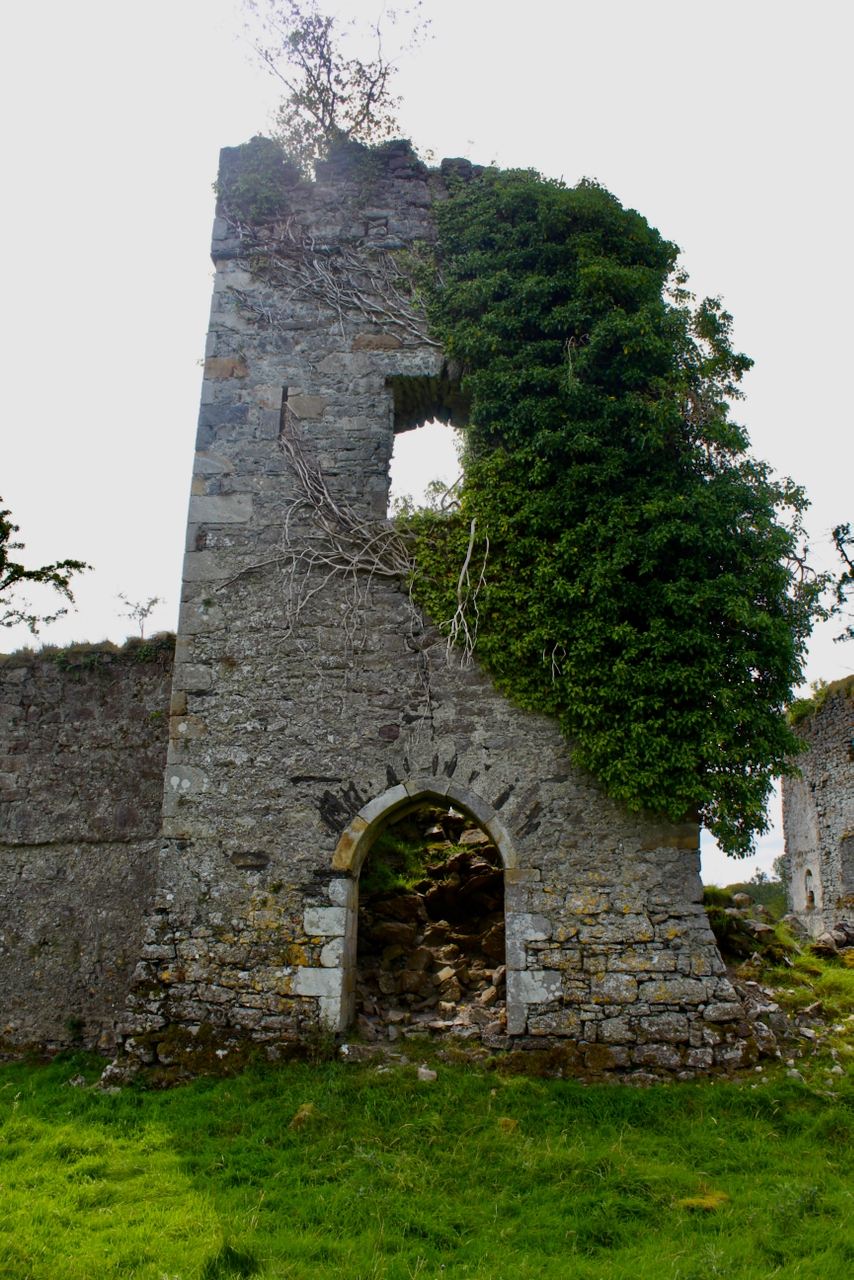
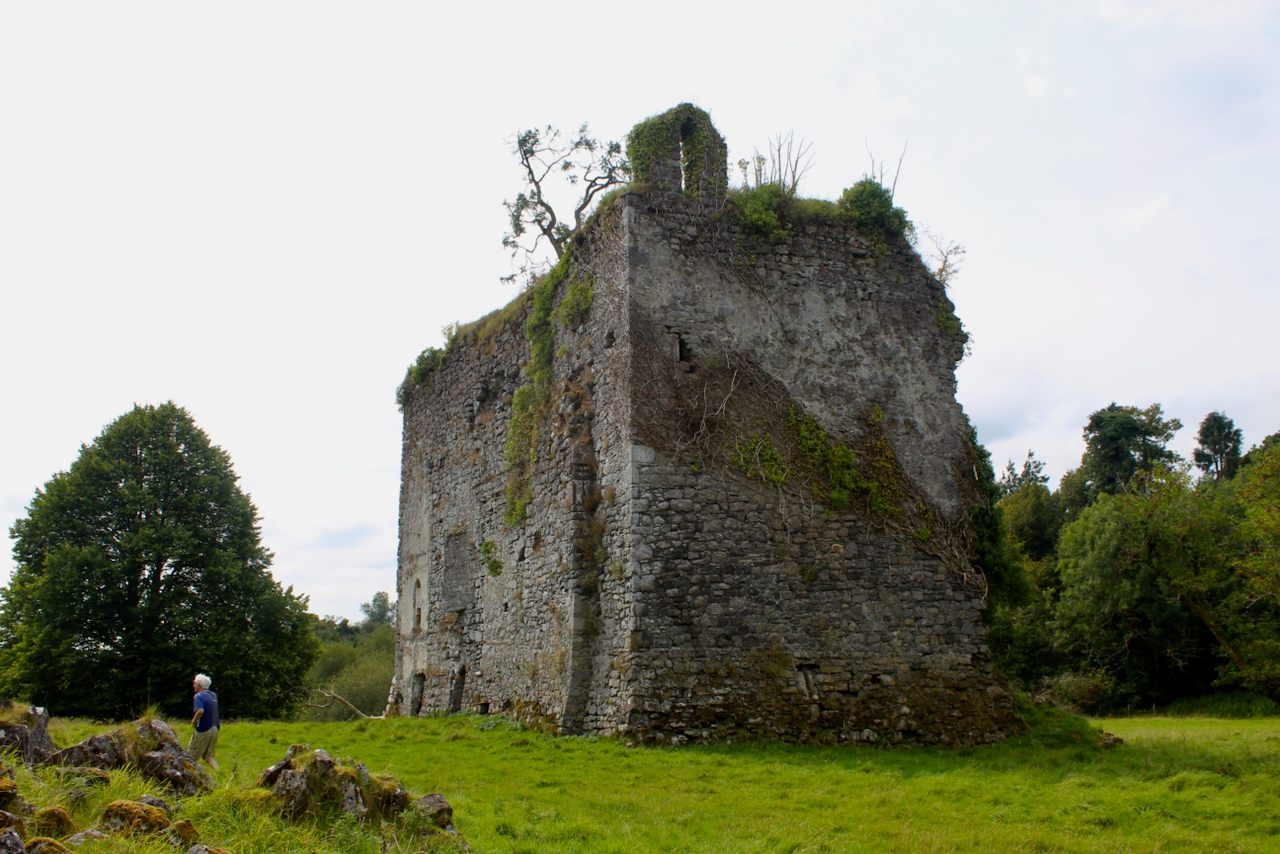
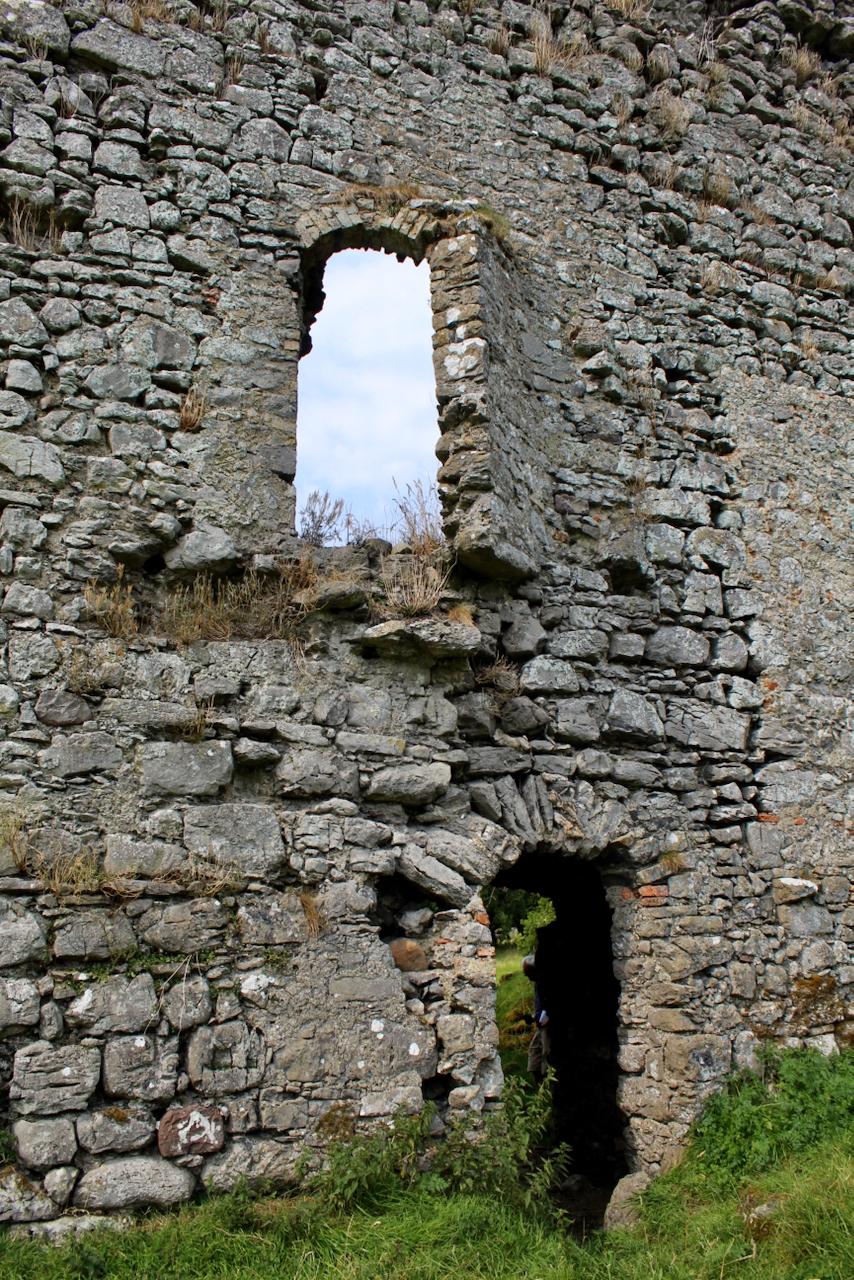
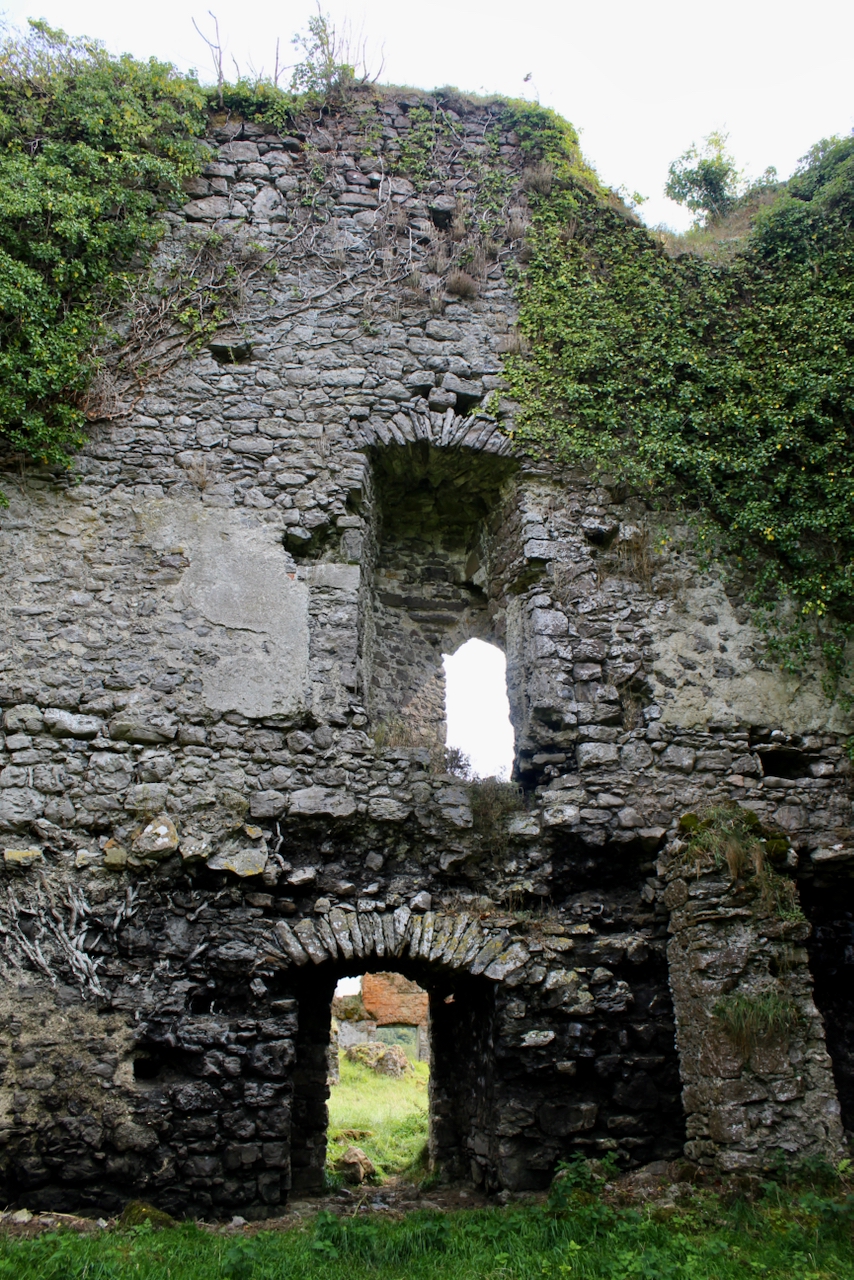
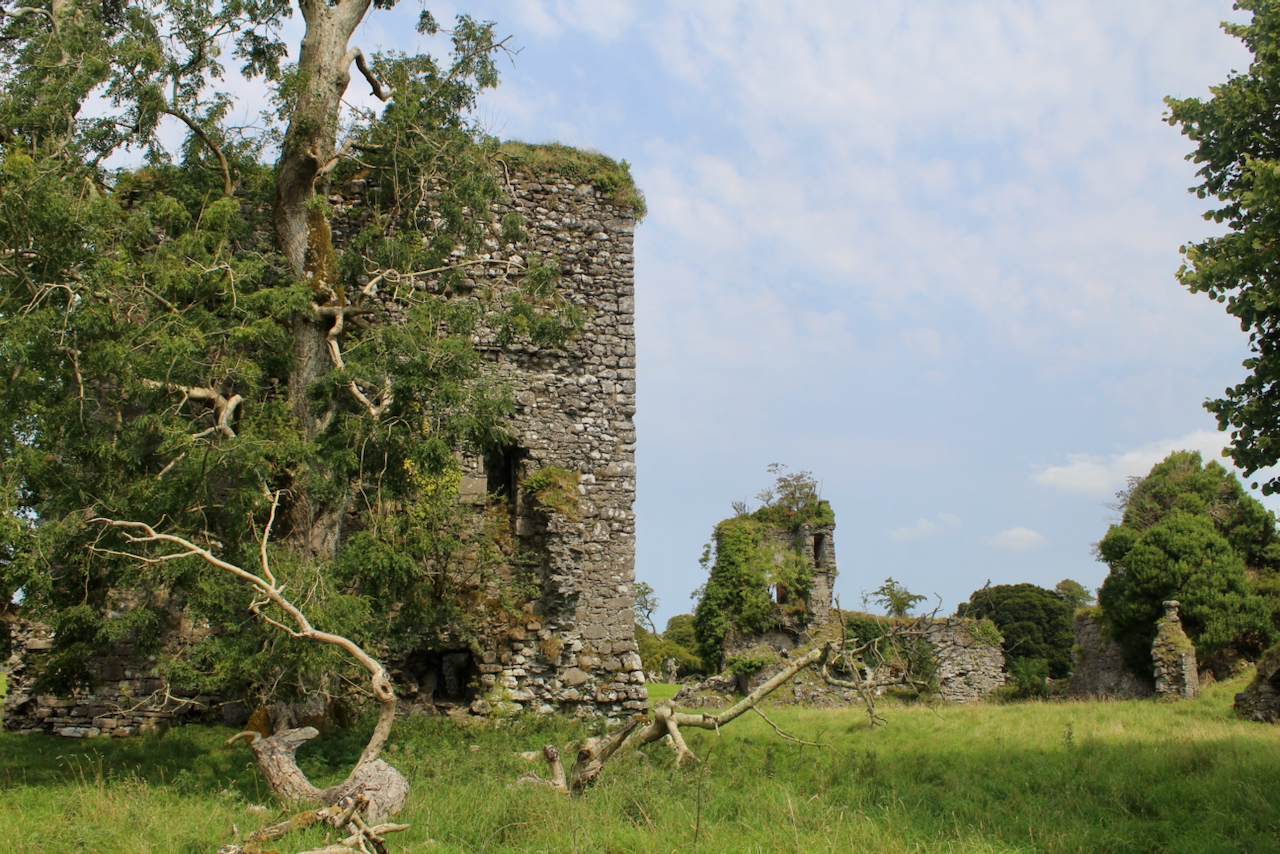
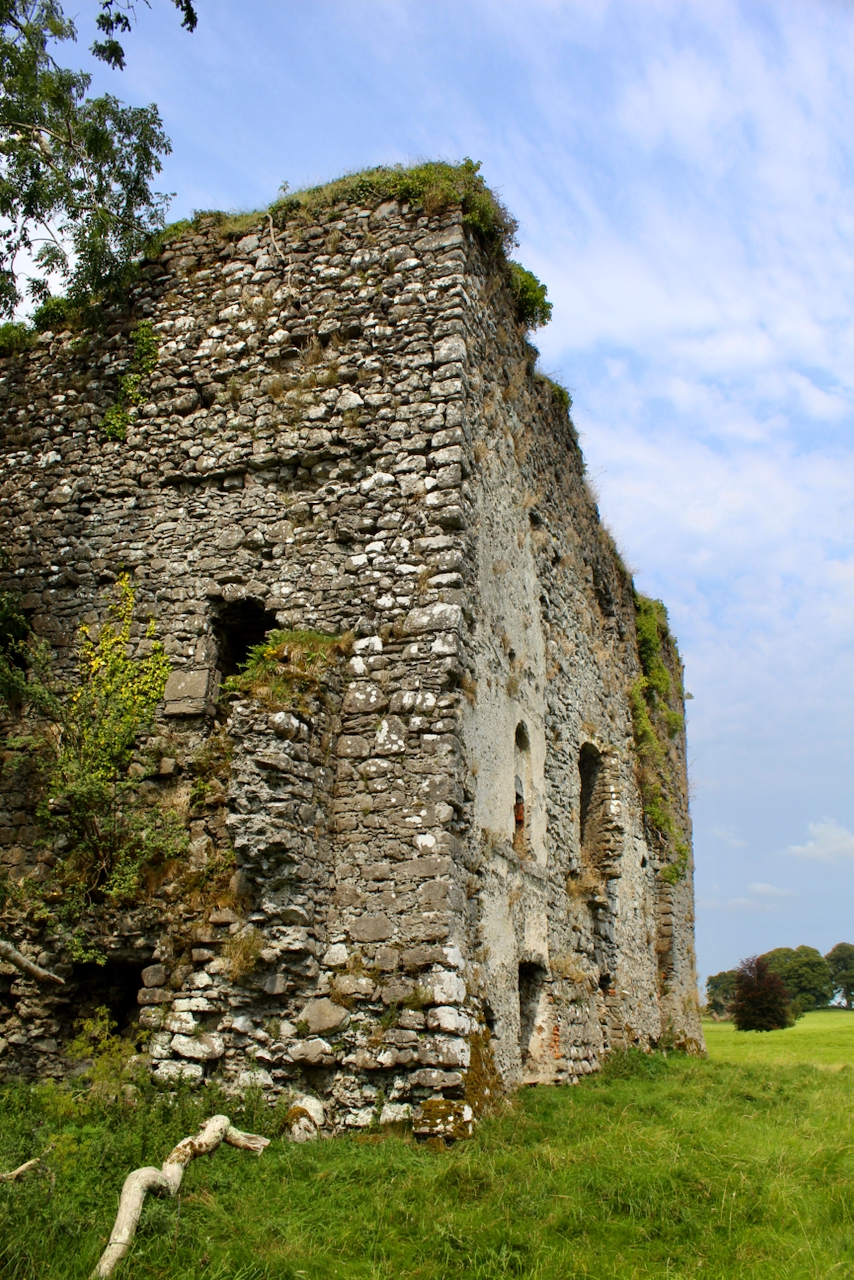
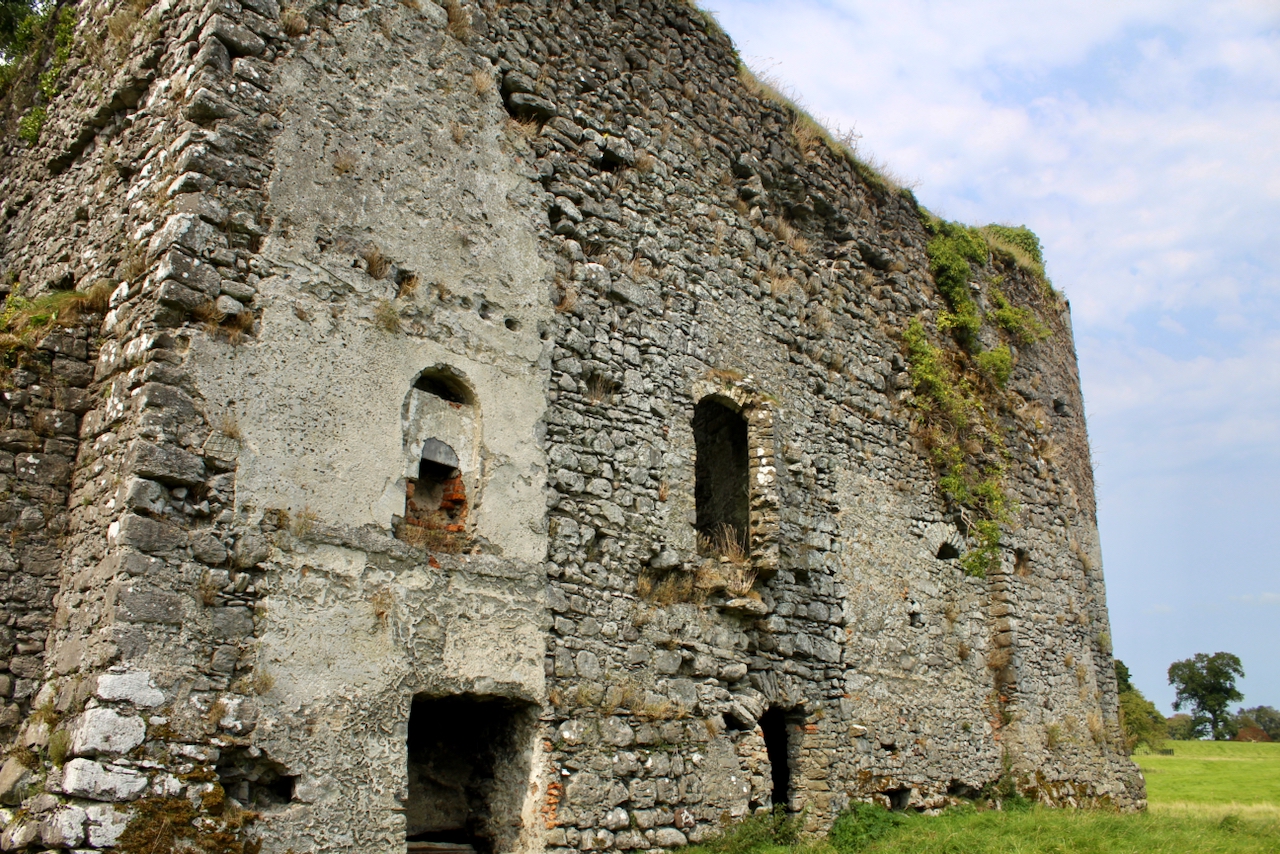
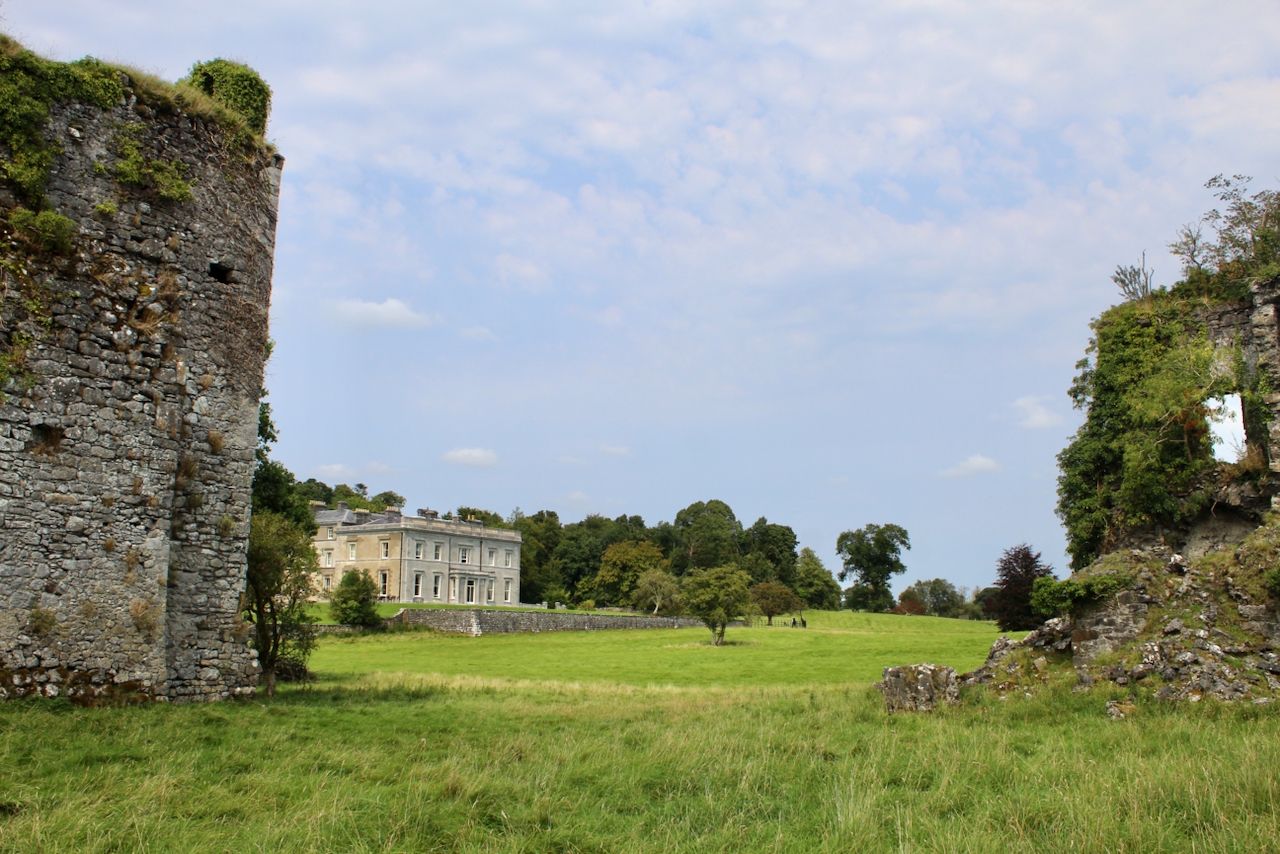
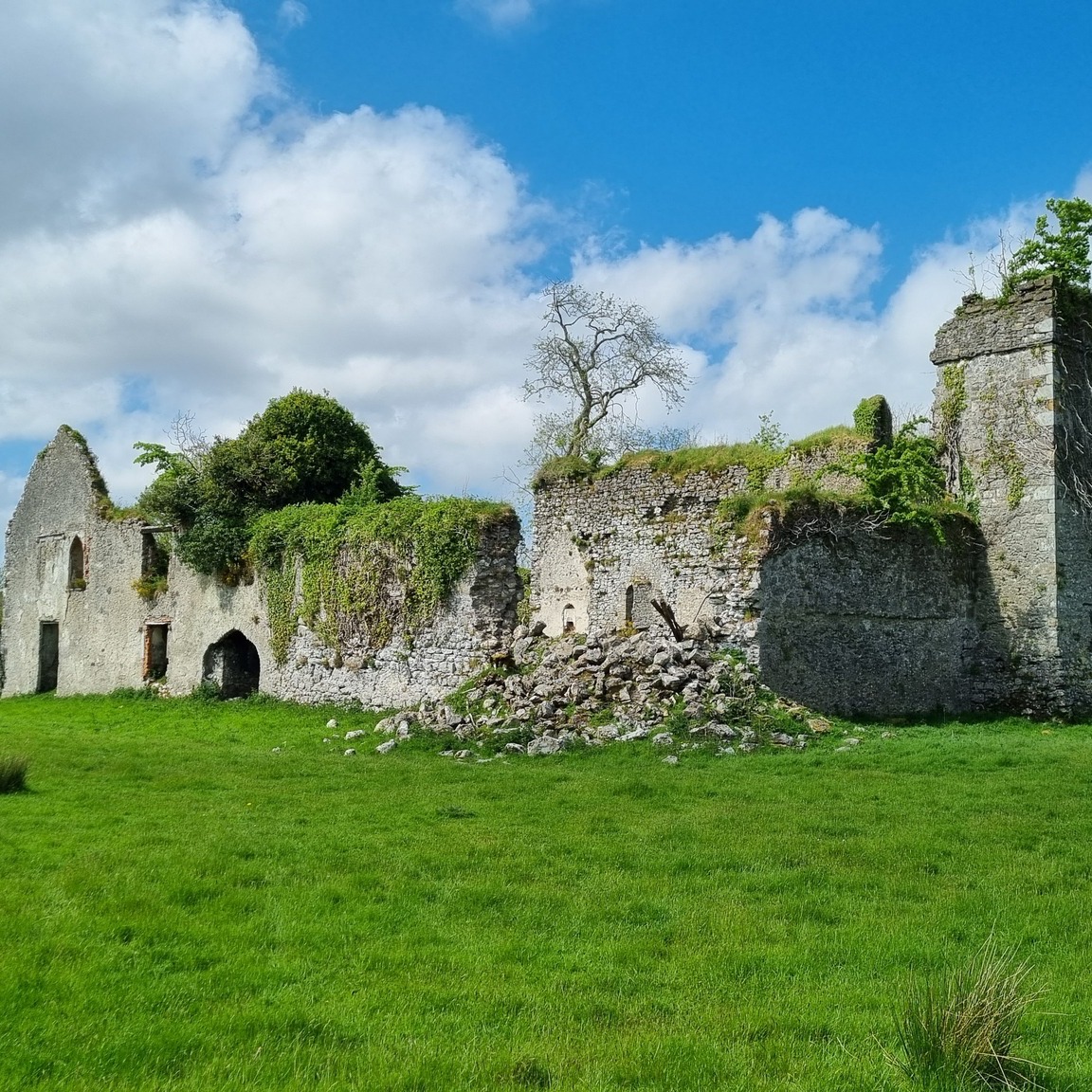
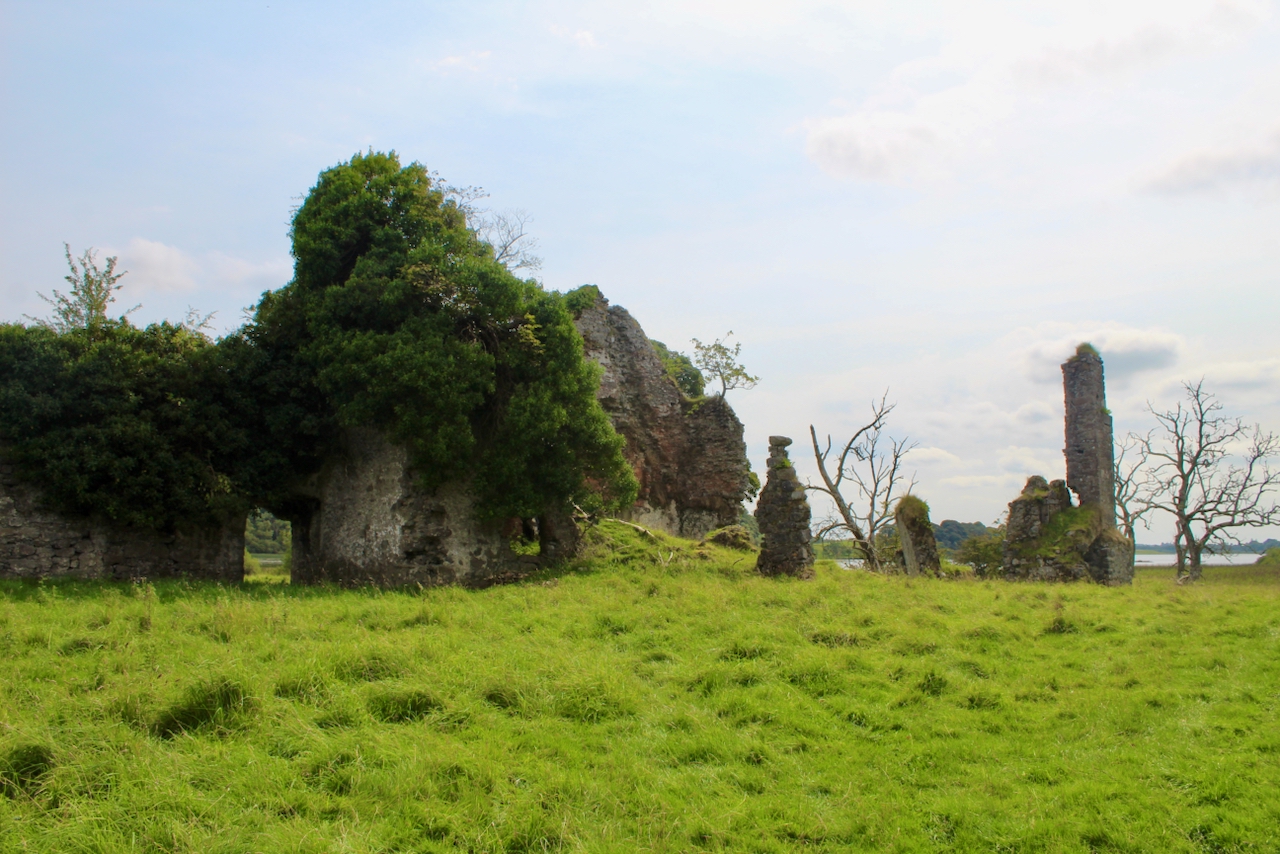
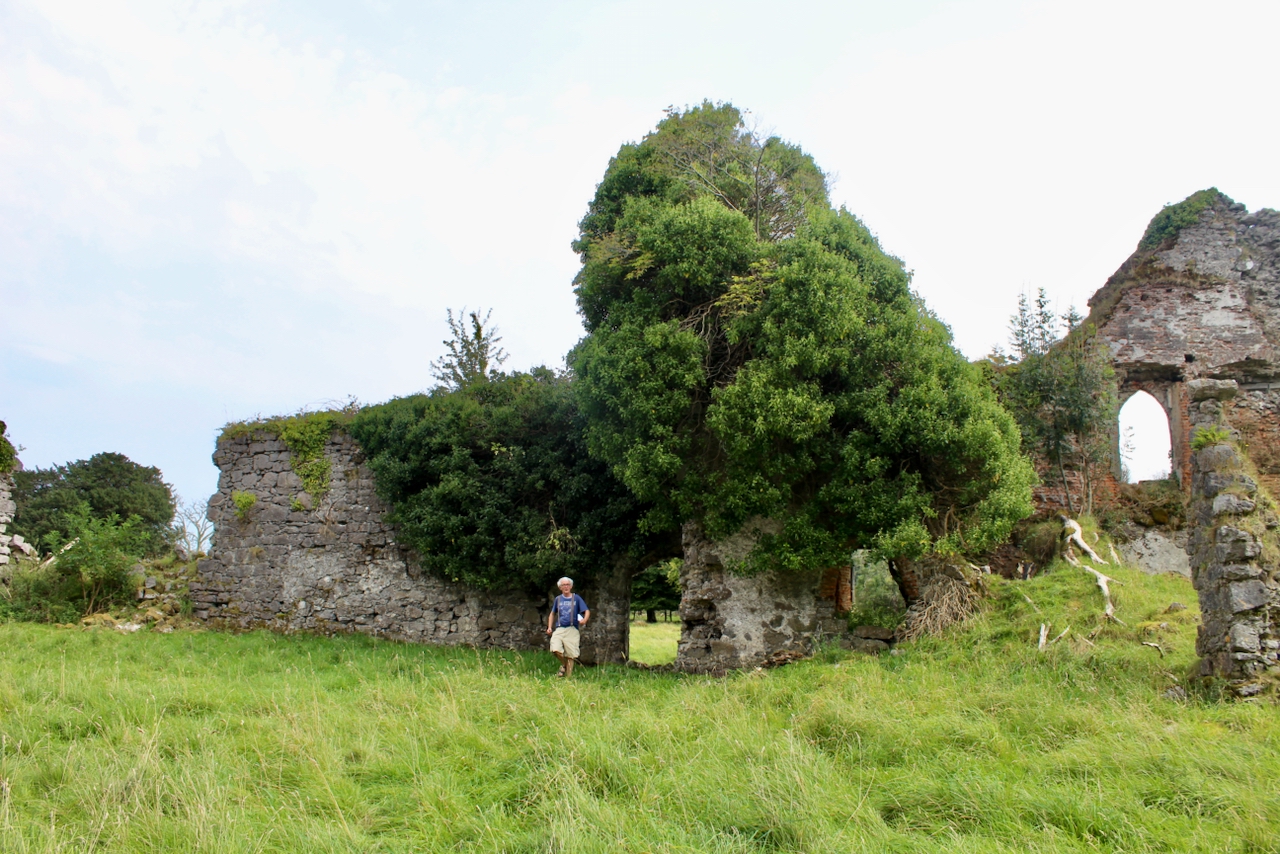
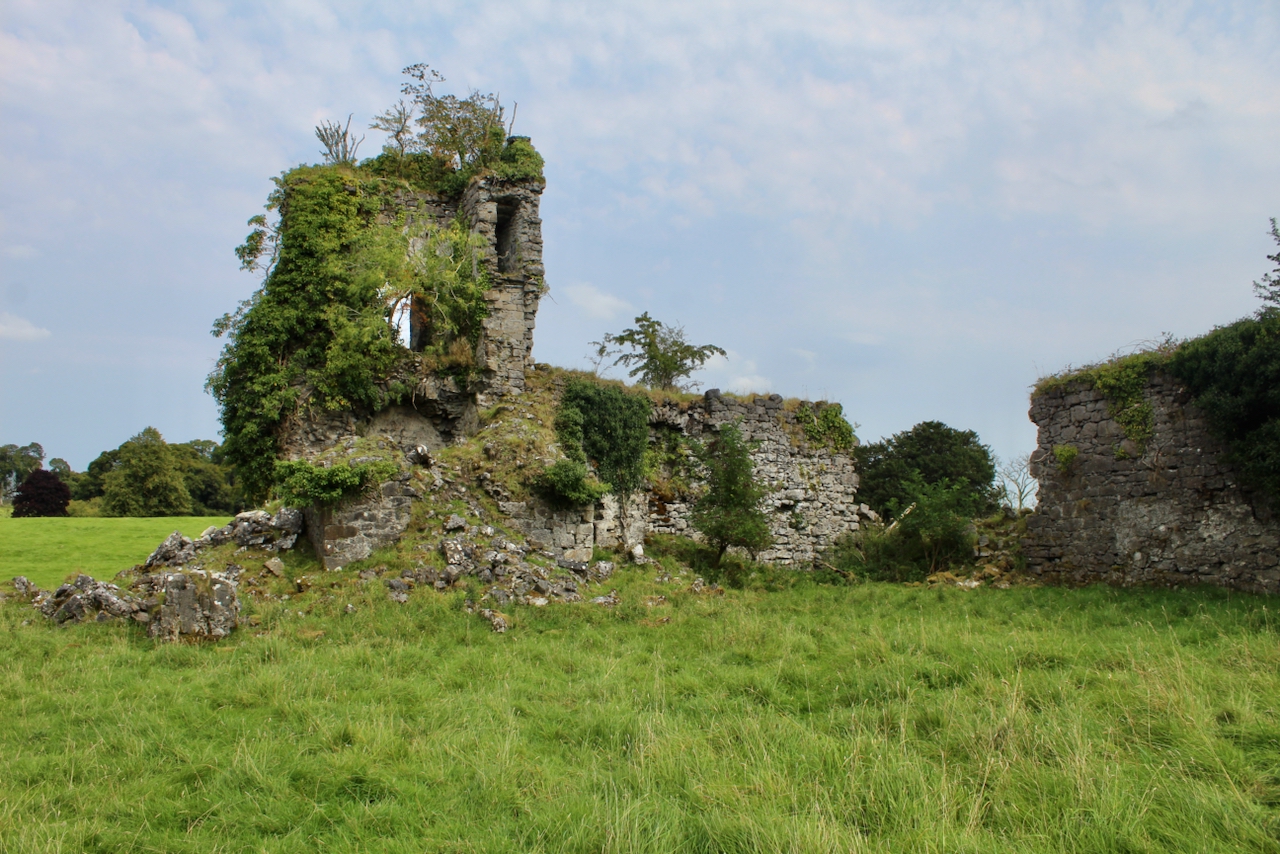
The Percevals have lived at this location since 1665. Before the current house was built, around 1820 according to Mark Bence-Jones, they lived in another property closer to Templehouse Lake, part of the Owenmore River. [1] The remnants of the earlier house sit adjacent to the ruins of a Knights Templar castle from around 1181, after which the property takes its name. [2]

Ruins of the old house and the Knights Templar castle. Photograph © Jennifer Winder-Baggot, www.irishhistorichouses.com
We came across the medieval order of knights when we visited The Turret in County Limerick during Heritage Week in 2022, a house which was built on the foundations of a construction by the Knights Hospitaller, a different branch of religious warriors. The Knights Templar were a religious order established in the eleventh century to protect Jerusalem for Christianity, and were named after Solomon’s Temple in Jerusalem. Like other religious orders, the members took vows of poverty, chastity and obedience.

A book review by Peter Harbison of Soldiers of Christ: the Knights Templar and the Knights Hospitaller in medieval Ireland edited by Martin Brown OSB and Colmán Ó Clabaigh OSB tells us that Templars came into Ireland under the protection of the English crown and acted on behalf of the king against the native Irish. Templar Knights helped govern Ireland and often gained high office. [3]

Ruins of the Knights Templar castle. Photograph © Jennifer Winder-Baggot, www.irishhistorichouses.com
When Stephen and I stayed at nearby Annaghmore house with Durcan O’Hara, he told me that he is related to the Percevals of Temple House. An O’Hara, it is believed, may have joined the Knights Templar and donated the land near Temple House. [see 2]

The Templar castle passed to the Knights of St. John the Hospitallers when the Knights Templar were disbanded in the 1300s. In France, Templars were burnt at the stake and their land seized by the crown but in other countries their property was transferred to the Knights Hospitallers, known today as the Knights of Malta.

Robert O’Byrne tells us in his blog that the land formerly owned by the Knights Templar came into the hands of the O’Haras, and that they built a new castle here around 1360. He adds that in the 16th century the same lands, along with much more beside, were acquired by John Crofton, who had come here in 1565 with Sir Henry Sidney following the latter’s appointment as Lord Deputy of Ireland. [4]

Photograph © Jennifer Winder-Baggot, www.irishhistorichouses.com
The Templar Castle. Photograph © Jennifer Winder-Baggot, www.irishhistorichouses.com
The Castle, in a photograph taken from the house’s website – it looks more complete in this picture than when we visited.
The Castle, in a photograph taken from the house’s facebook page – it looks more complete in this picture than when we visited.

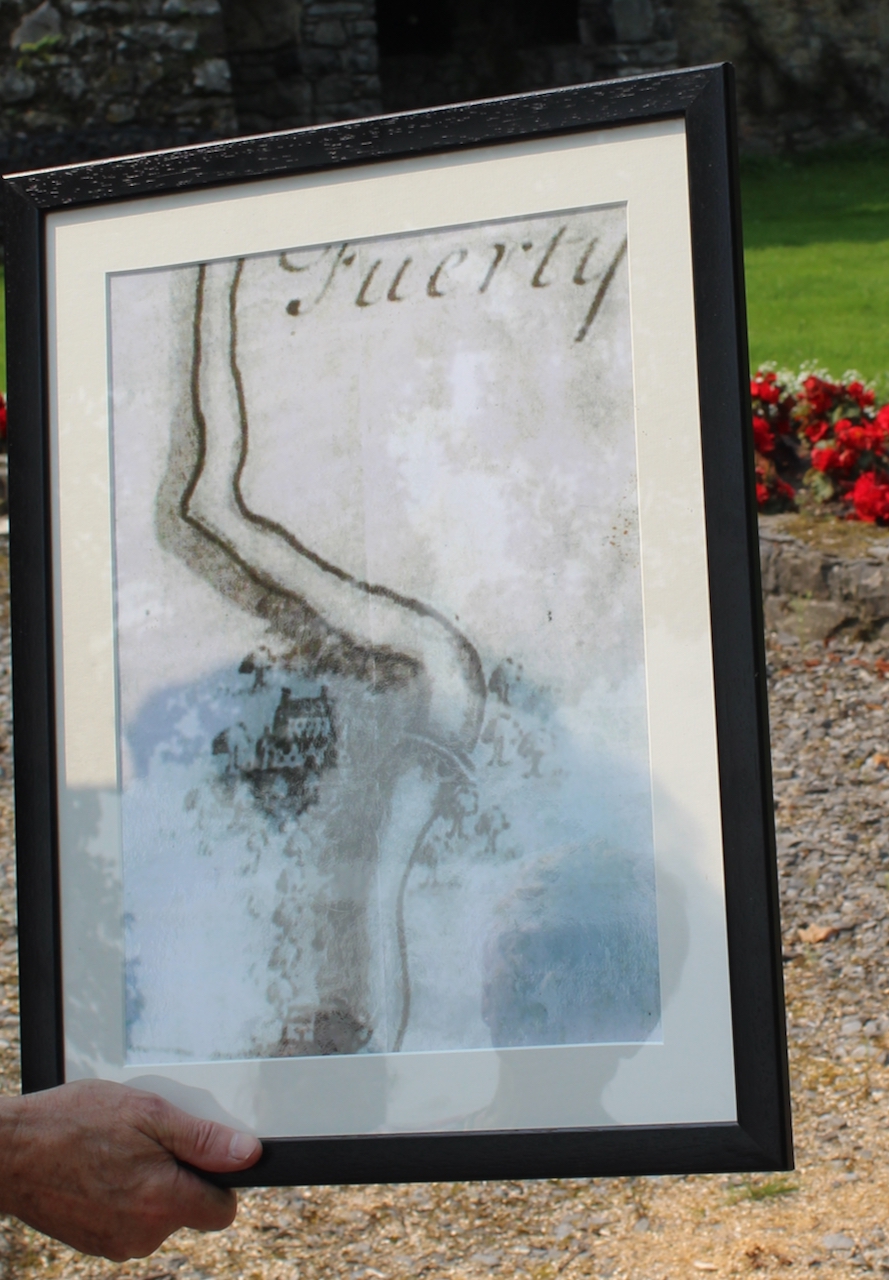
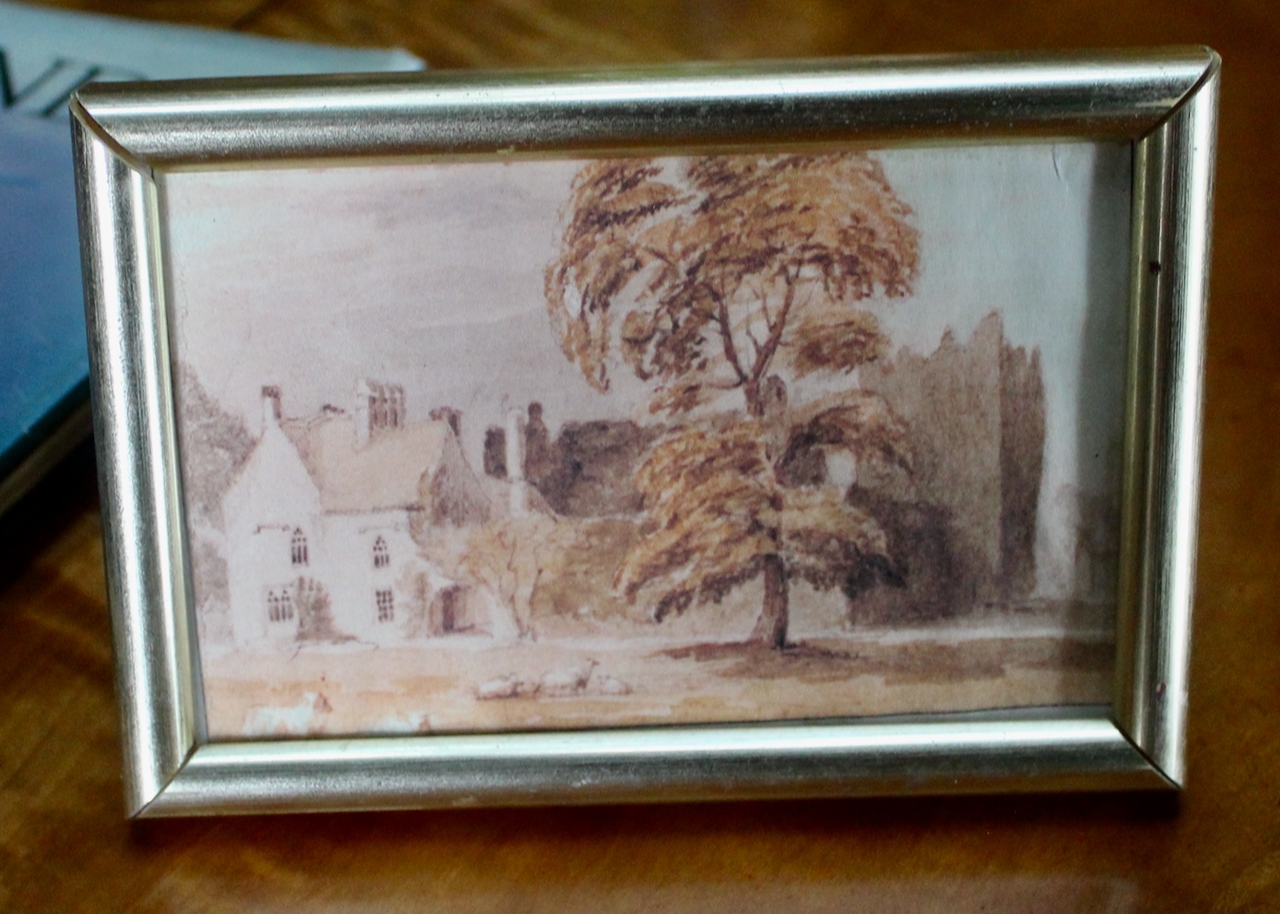
Roderick told us that the Croftons acquired the property around 1609, and that Henry Crofton built a thatched Tudor house around 1627. The National Inventory tells us that the remains of the house near the Templar ruins are of a two-bay two-storey stone house, built c.1650. [5]

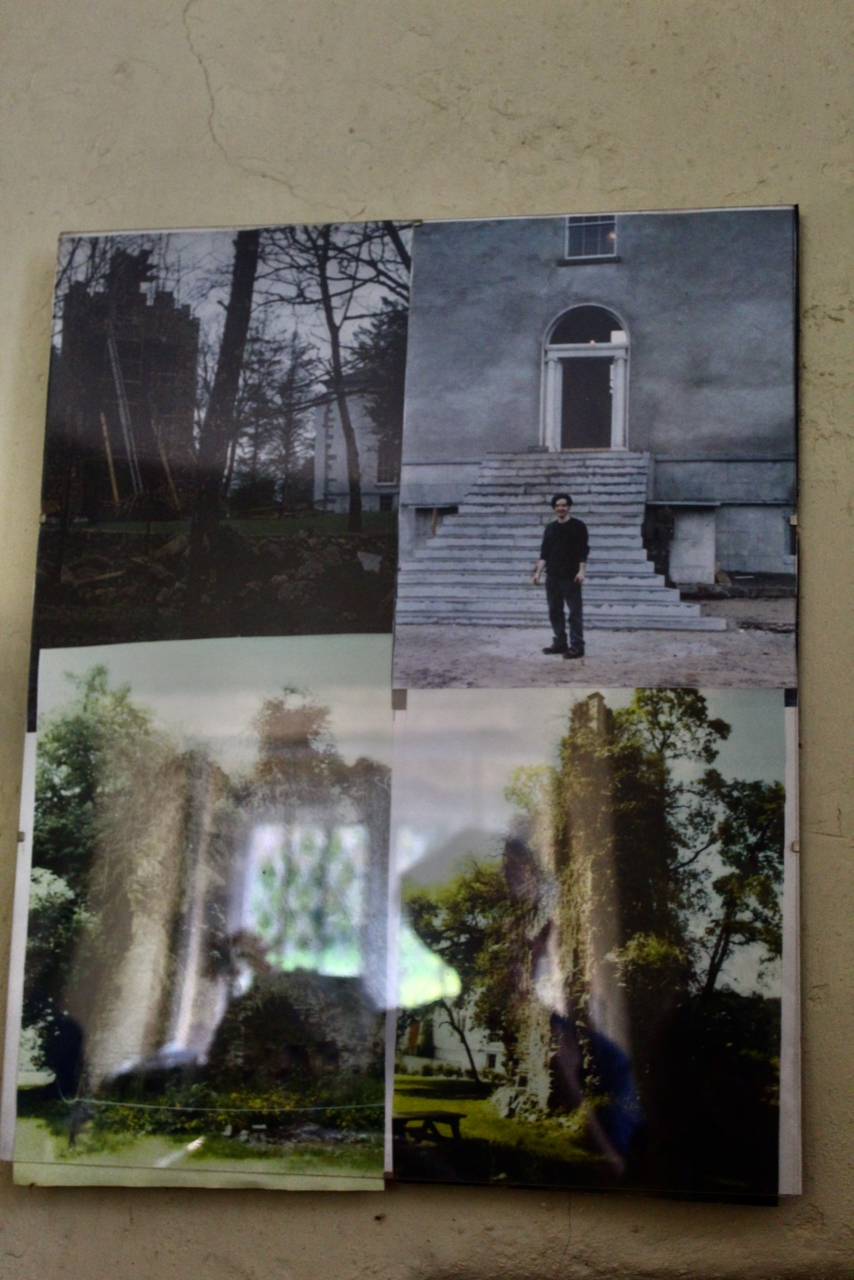
This picture was in the vestibule of the house and I think is of the house that was built in 1627.
Ruins of the old house. Photograph © Jennifer Winder-Baggot, www.irishhistorichouses.com
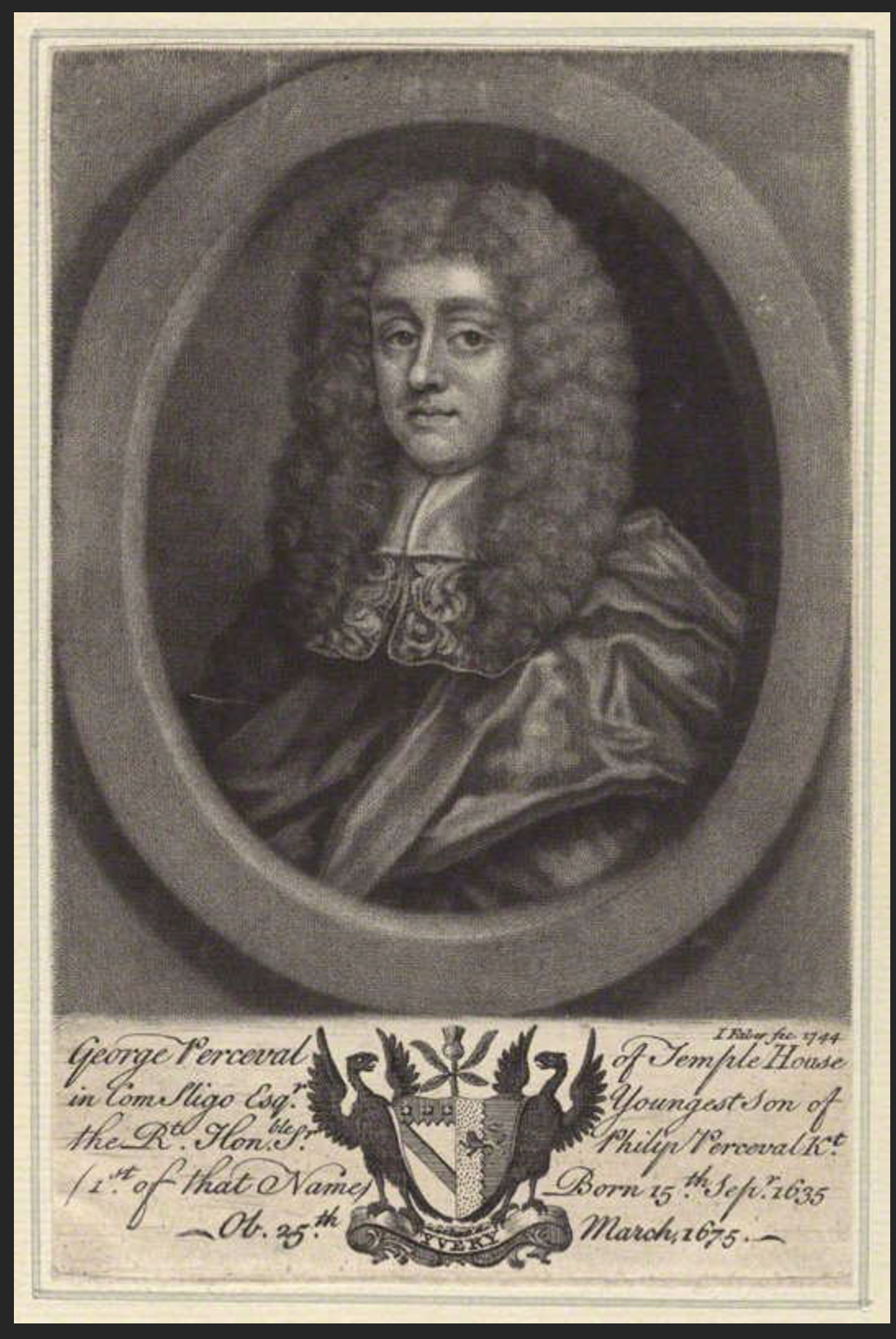
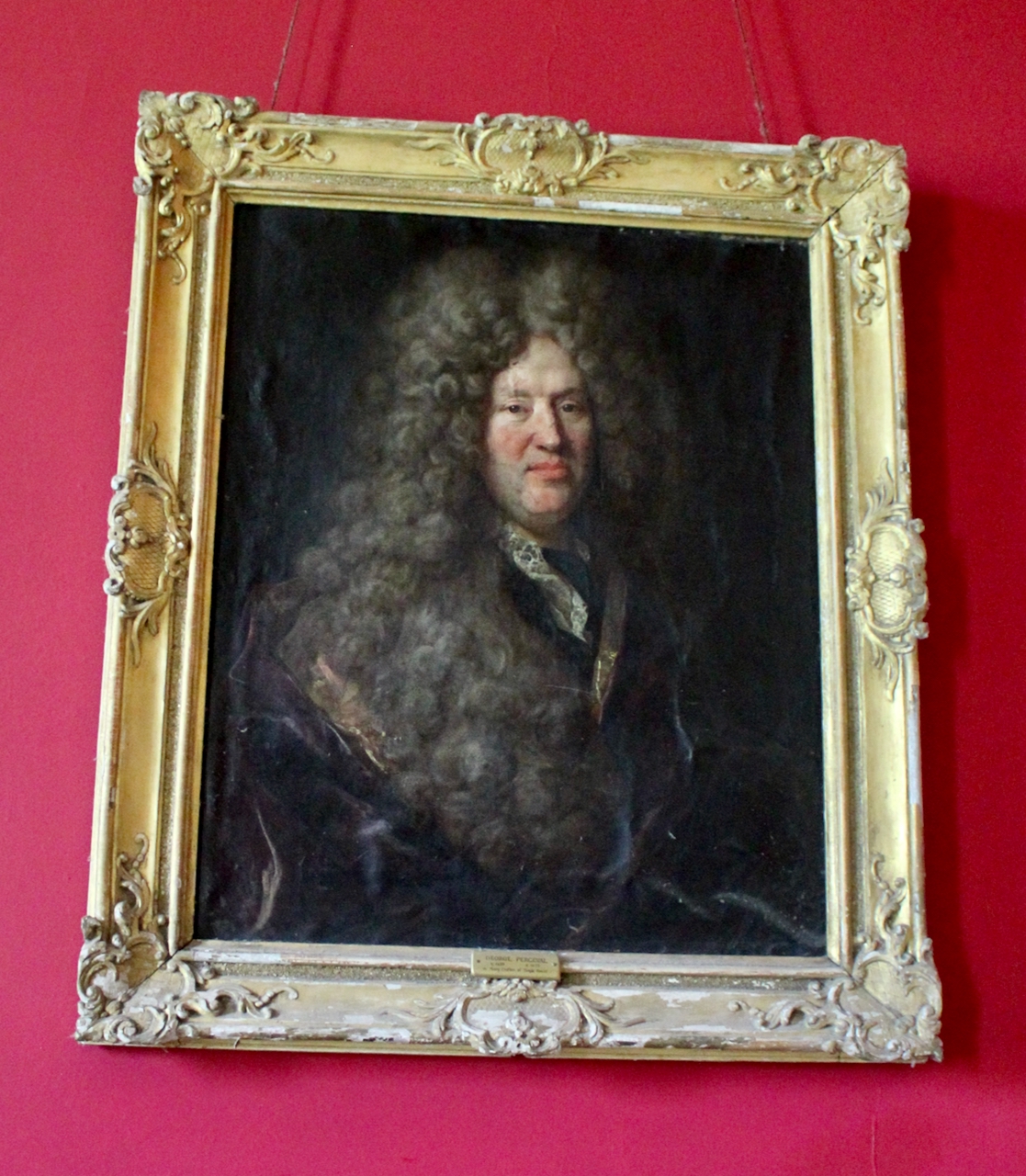
It came into the Perceval family in 1665 when George Perceval (1635-1675) married Mary Crofton.

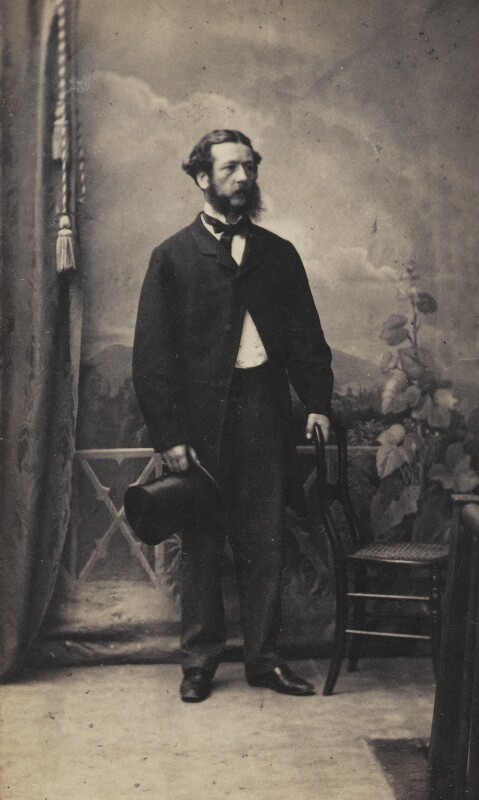
George Perceval (1635-1675) courtesy National Portrait Gallery of London.
George Perceval (1635-1675) of Temple House, County Sligo.

We came across the Percevals when we visited Burton Park in County Cork, another section 482 property in 2025 (see my entry https://irishhistorichouses.com/2024/02/08/burton-park-churchtown-mallow-county-cork-p51-vn8h/ ).

George’s father Philip (1605-1647) came from England to Ireland to serve as registrar of the Irish court of wards, along with his brother Walter. This position would have given him an insight to property ownership in Ireland. When a son inherited property before he came of age, he was made a Ward of the state, and the someone would be chosen to act on the child’s behalf.

When Walter died in 1624, Philip inherited the family estates in England and Ireland. The land at Burton Park was named after his estate in Somerset, Burton.

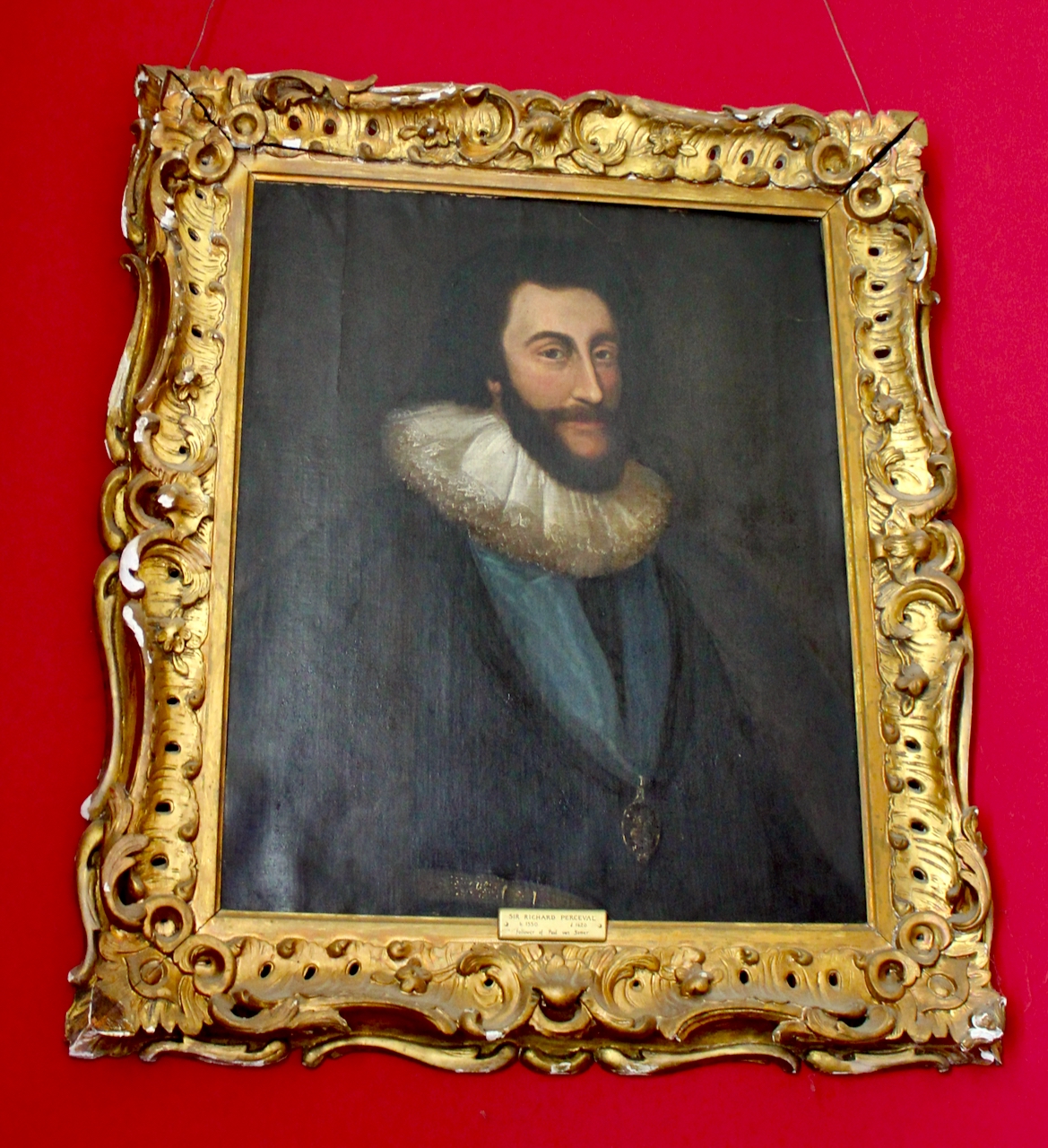
Philip’s grandfather Richard Perceval was ‘confidential agent’ to Queen Elizabeth’s Minister Lord Burleigh. He had correctly identified Spanish preparations for the Armada and this vitally important information was rewarded with Irish estates. [6]

Richard Perceval (1550-1620), agent for Queen Elizabeth and Lord Burleigh, he spotted preparations for the Spanish Armada.

Philip settled in Ireland, and by means of his interest at court he gradually obtained a large number of additional offices. In 1625 he was made keeper of the records in the Birmingham Tower at Dublin Castle.

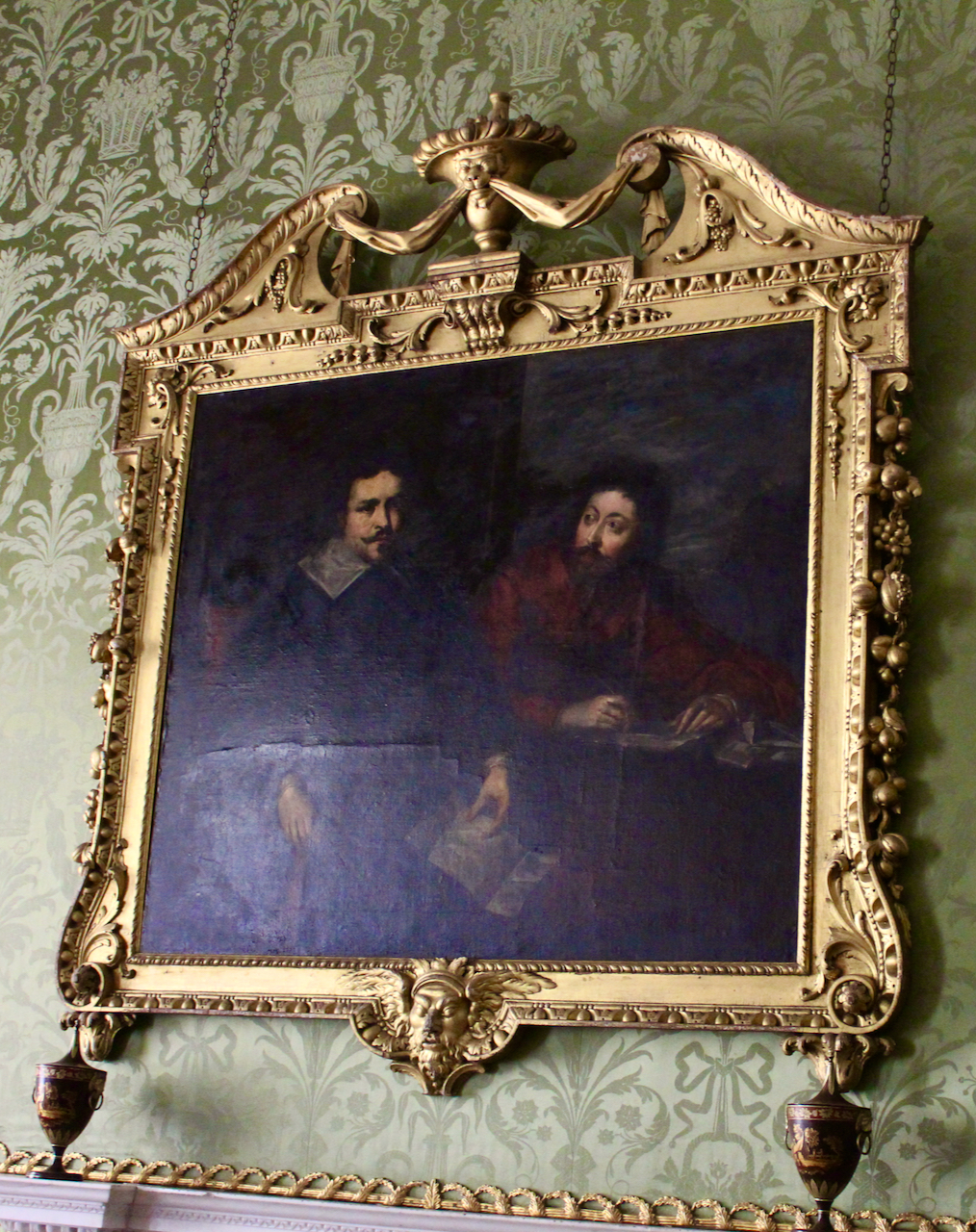
Thomas Wentworth 1st Earl of Strafford (1593-1641) on left, Lord Deputy of Ireland 1632-1640 for King Charles I. This portrait is in Castletown House.

Perceval was close to the Lord Deputy of Ireland, Thomas Wentworth, 1st Earl of Strafford. With the fall and execution of Wentworth in May 1641, Perceval lost his major patron and protector. In September 1641 Perceval narrowly avoided prosecution in England when his part in a shady land transaction was revealed. By that time, Perceval owned over 100,000 acres in Ireland, which he obtained partly through forfeited lands.

Philip Perceval married Catherine Ussher, daughter of Arthur Ussher and Judith Newcomen. She gave birth to their heir, John (1629–1665), who was created 1st Baronet of Kanturk, County Cork in 1661. George (1635-1675) was the younger son. He held the position of Registrar of the Prerogative Court in Dublin.

George Perceval’s wife Mary’s father William Crofton was High Sheriff of County Sligo in 1613  and Member of Parliament for Donegal in 1634, so George and Mary might have met in Dublin. Mary, as heiress, was a good match, and since George was a younger son, marrying into property would have suited him well.

Robert O’Byrne tells us that they lived in the old castle which had been converted by the Croftons into a domestic residence in 1627. [see 4] It is not clear to me whether George and Mary lived in a house next to the Templar castle or in some version of the castle itself. O’Byrne tells us that the castle had been besieged and badly damaged in 1641, but was repaired. [see 4].

Ruins of the old house. Photograph © Jennifer Winder-Baggot, www.irishhistorichouses.com
The old house. Photograph © Jennifer Winder-Baggot, www.irishhistorichouses.com
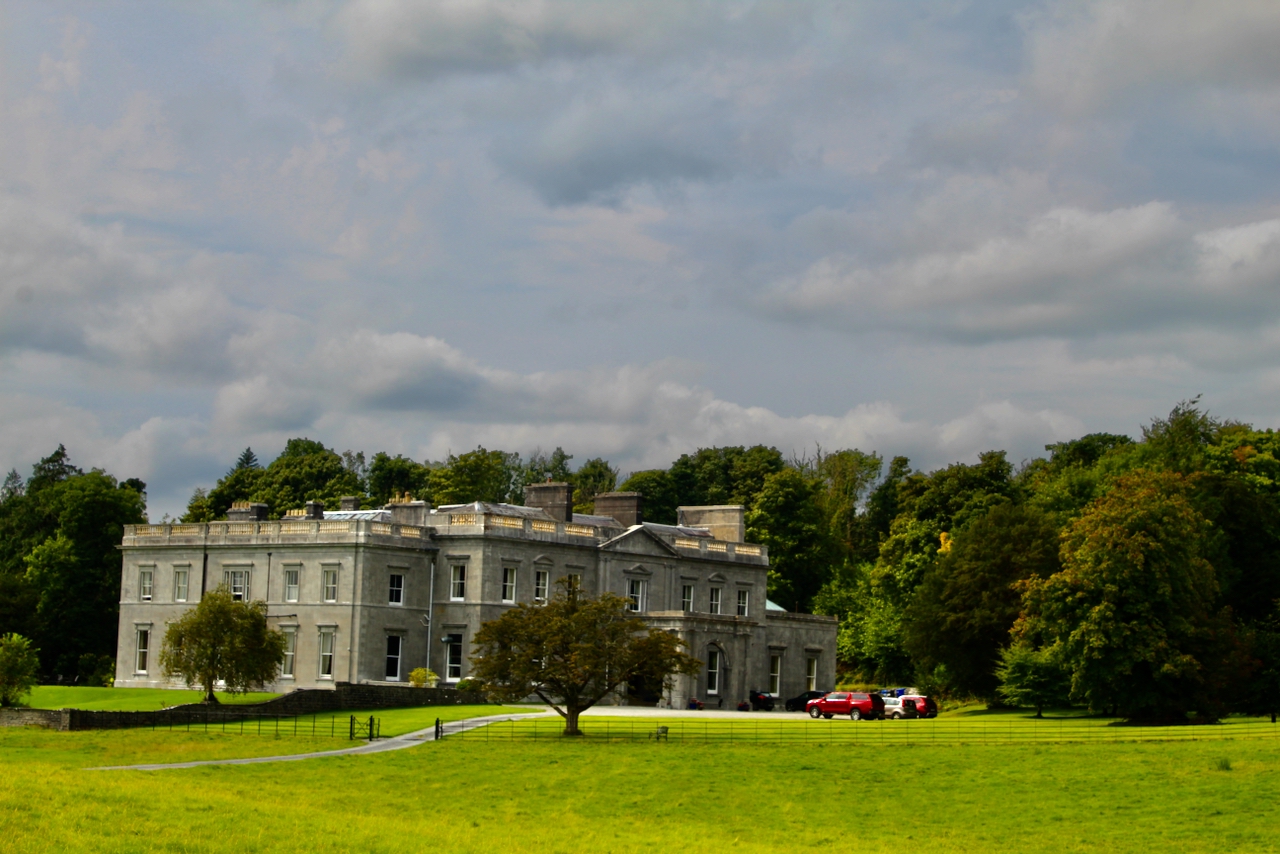
George died at the young age of forty when on a ship crossing to Holyhead, when his son and heir Philip (1670-1704) was only five years old. [7] Philip’s mother remarried, this time to Richard Aldworth, who was Chief Secretary of Ireland. Philip also died young, after marrying and having several children, and the property passed to his son John (1700-1754), who was also minor when his father died.

John (1700-1754) married the daughter of a neighbour, Anne Cooper of Markree Castle, another Section 482 property in 2025 (see my entry https://irishhistorichouses.com/2021/11/06/markree-castle-collooney-co-sligo/). Anne gave birth to their son and heir Philip (1723-87).

Philip Perceval (1723-87) married Mary Carlton of Rossfad, County Fermanagh. Their son and heir Guy died soon after his father so the property passed in 1792 to Guy’s brother Reverend Philip Perceval.

The house is featured in a chapter of Great Irish Houses by Desmond Fitzgerald the Knight of Glin and Desmond Guinness. They tell us that in 1825 Reverend Philip’s son Colonel Alexander Perceval (1787-1858) built a neo-classical two story house up the hill from the castle on the present site.

What is the now the side of the house was once the front.

Temple House, County Sligo, August 2025. Photograph © Jennifer Winder-Baggot, www.irishhistorichouses.com
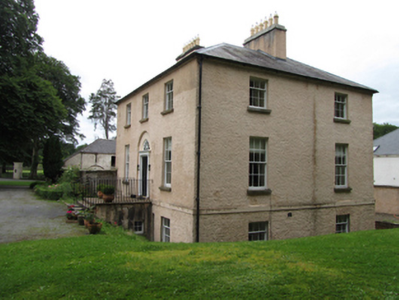
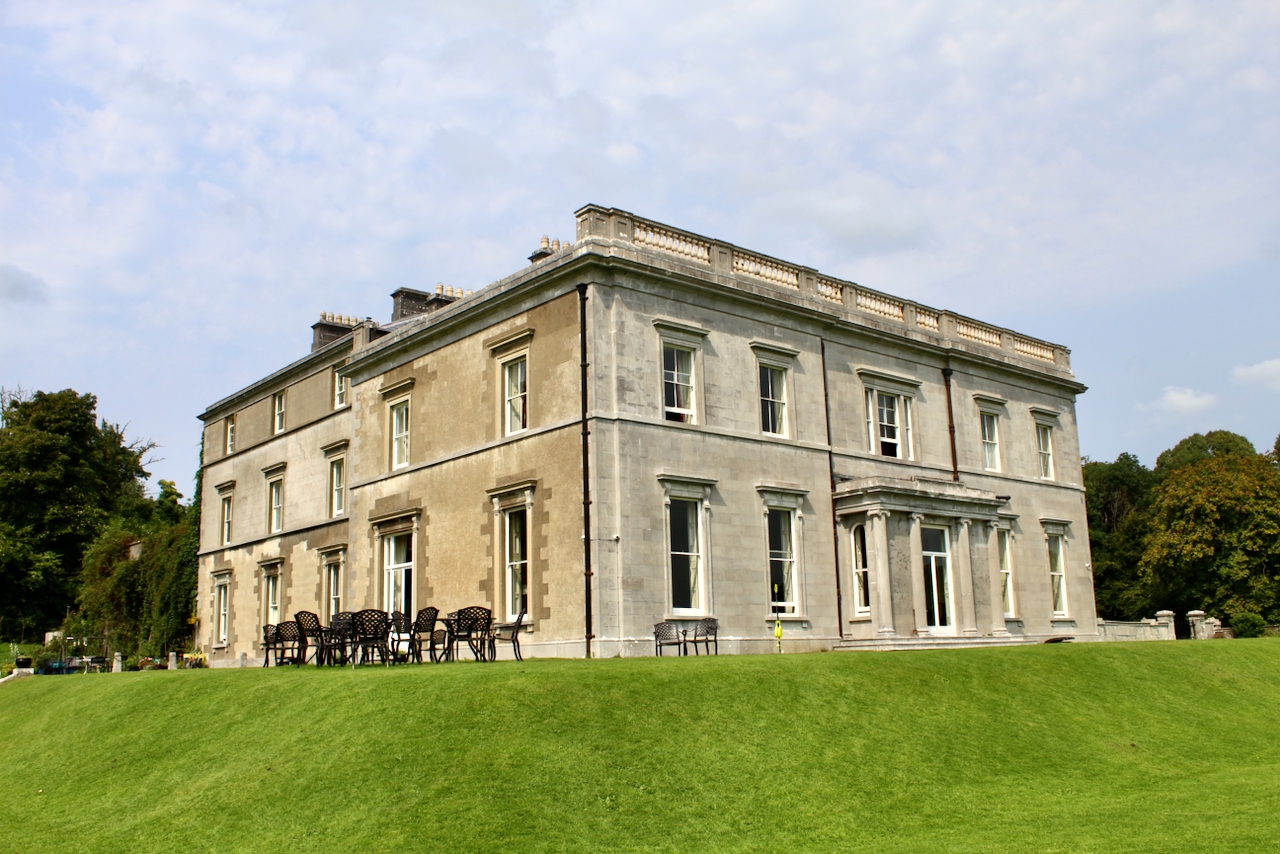
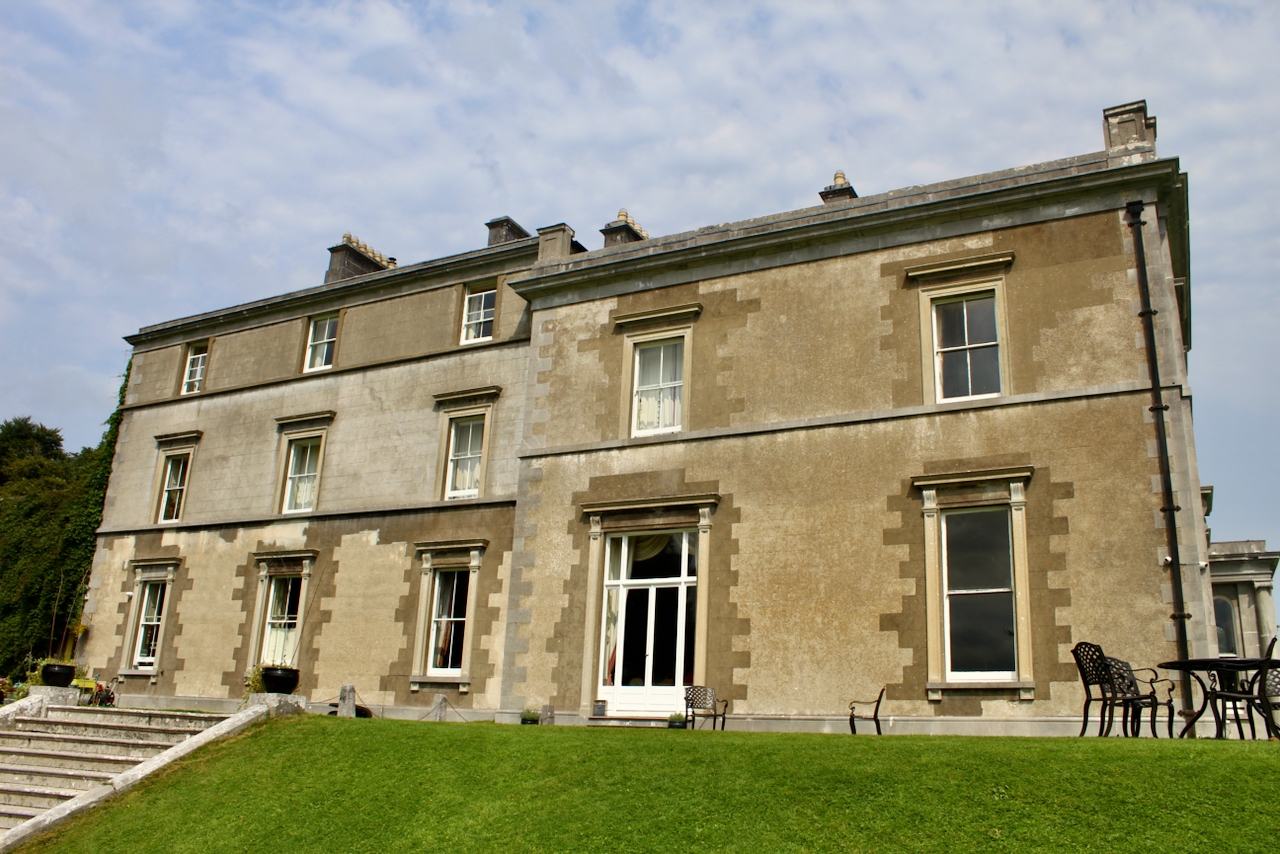
The side facade, which was originally the front of the house, according to Mark Bence-Jones. Temple House, County Sligo, August 2025. Photograph © Jennifer Winder-Baggot, www.irishhistorichouses.com
The house at this time was of two storeys and had five bays on the front, with the centre bay slightly recessed, with an enclosed single storey Ionic porch, and a Wyatt window over the porch.

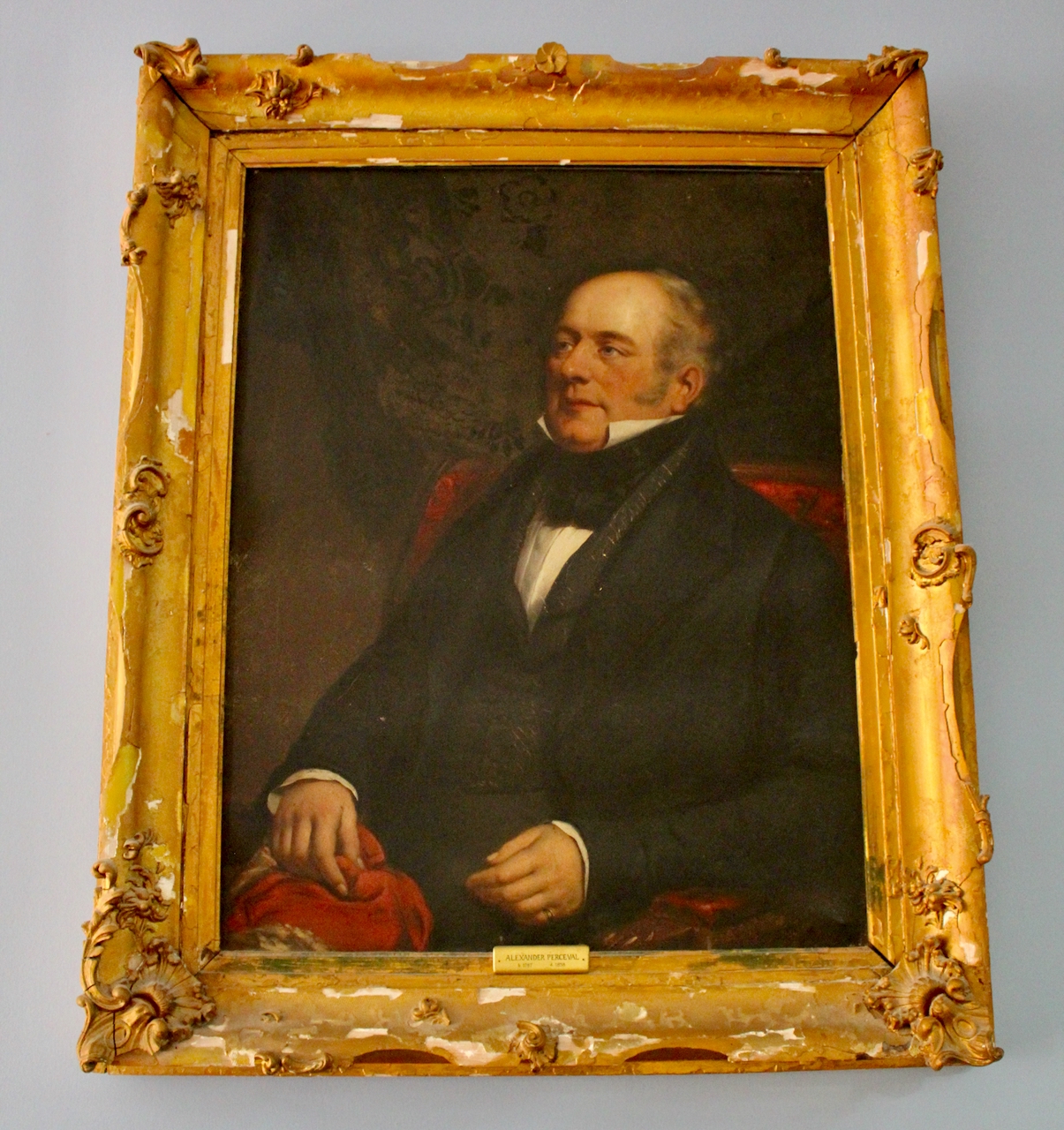
Before building the house, Alexander Perceval (1787-1858), in 1808, married Jane Anne, eldest daughter of Colonel Henry Peisley L’Estrange, of Moystown, King’s County.

Alexander Perceval (1787-1858).

After building the house, Alexander served as MP for Sligo between 1831 and 1841, and from 1841-1858 was sergeant-at-arms to the House of Lords in England.

During the Famine, Alexander’s wife Jane sought to alleviate the suffering of the poor and she died of cholera or typhus in 1847.

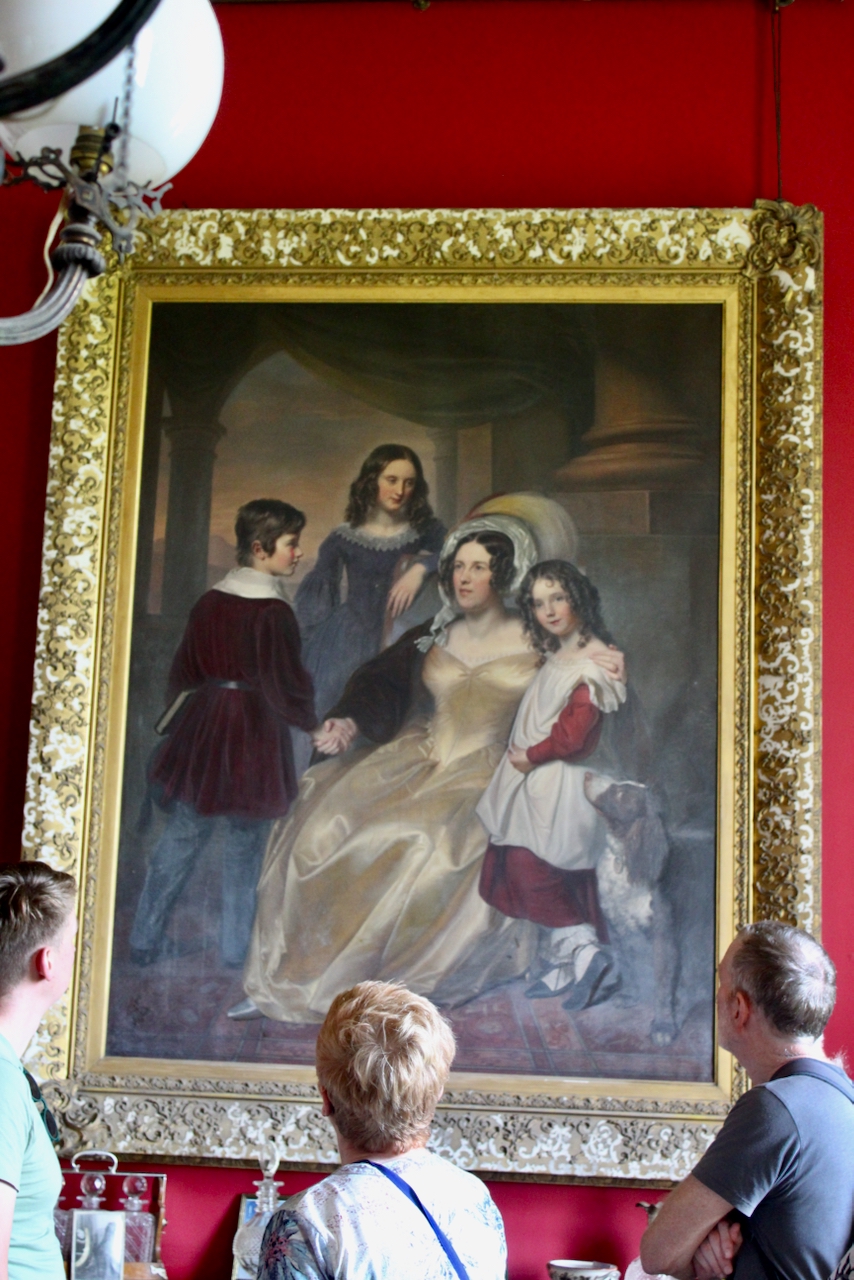
Jane née L’Estrange, with her children. Fitzgerald and Guinness write about this portrait: “Vogel, the artist, depicts her with three of her children while on holiday in Germany in 1842. A touching letter of the time tells of her reminding those around her “not to neglect the tenant families between my death and my funeral.” [see 2]

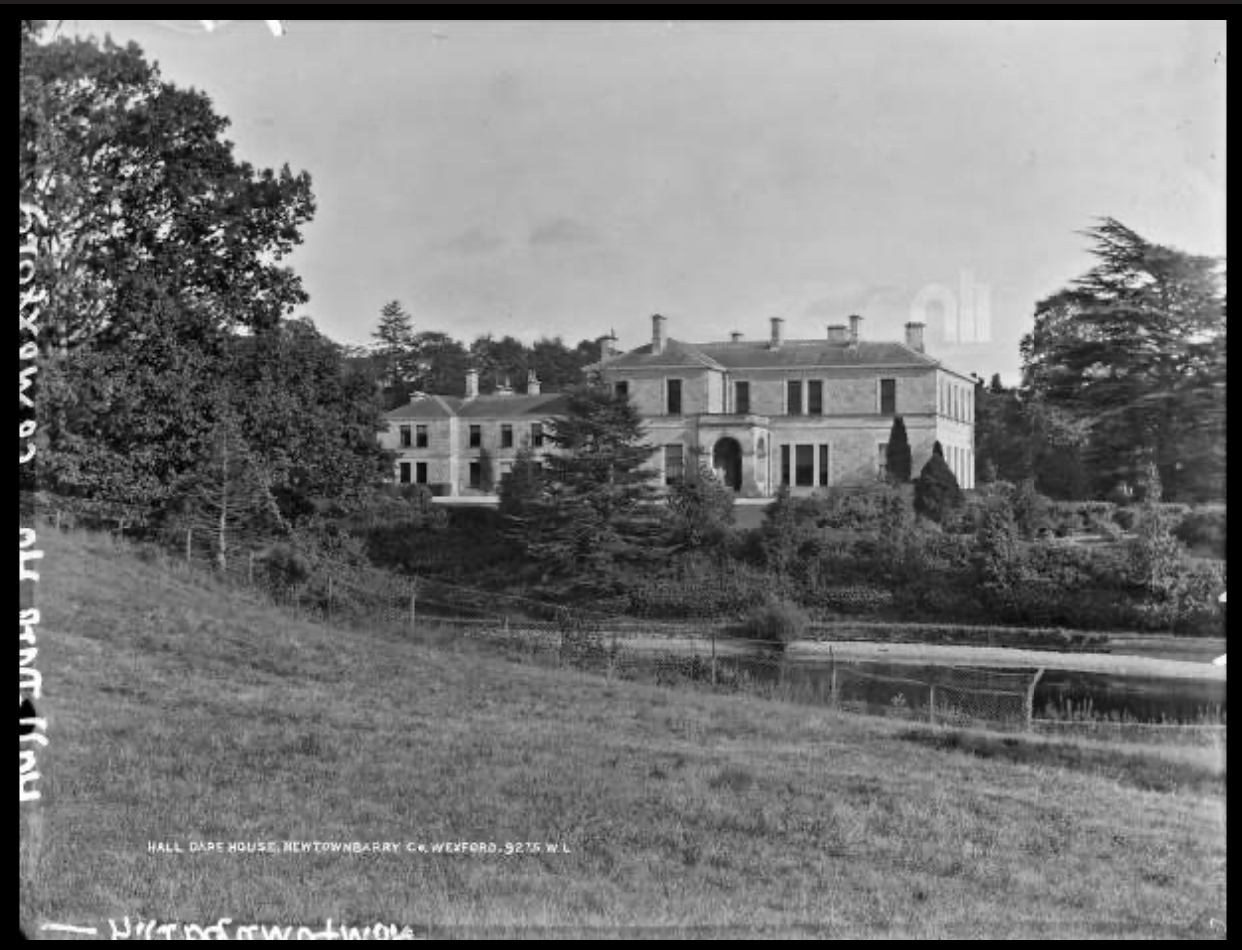
When Alexander died in 1858, his son Philip was unable to afford the death duty tax and he had to sell the property. The house was bought by the Hall-Dares of Newtownbarry, County Wexford.

Newtownbarry House, County Wexford, photograph by Robert French, Lawrence Photograph Collection, National Library of Ireland.

The Hall-Dares did not remain owners for long. After they evicted some tenants, these tenants actively sought the return of the Perceval family. Four years after Philip Perceval’s sale of the house, his brother Alexander, who had made a fortune in business in Hong Kong, re-acquired the property. Philip had married and moved to Scotland. Alexander brought back many of the dispossessed families from America and Britain, gave them back their land and re-roofed their homes. [see 2]

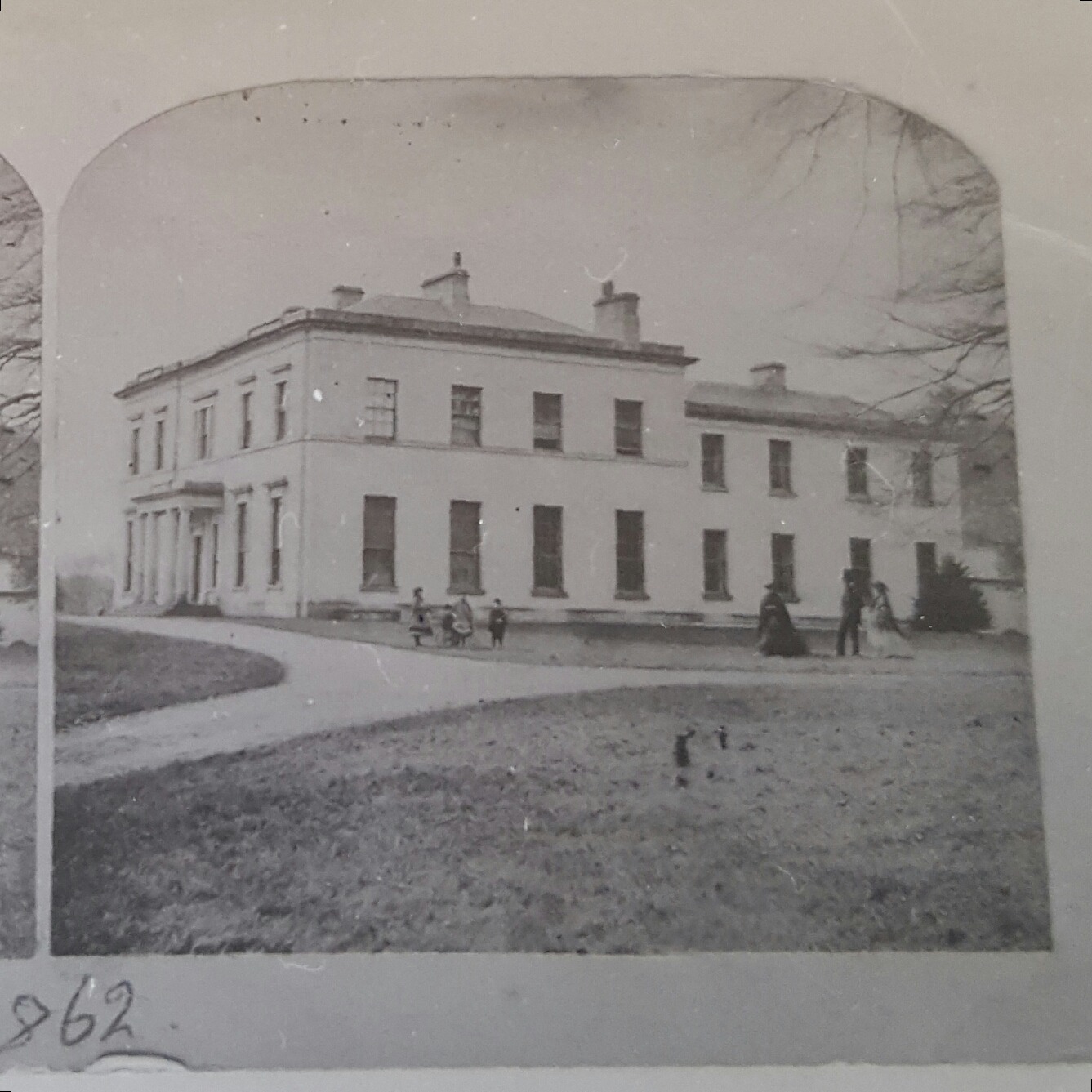
In the 1860s Alexander Perceval enlarged and embellished the house, hiring Johnstone and Jeane of London. He added a higher two storey seven bay block of limestone ashlar on the right (north) side of the house, which formed a new entrance front, knocking down a north wing in the process. [see 2]

Fitzgerald and Guinness tell us that Alexander also commissioned the company to design and build the furniture for the entire house.

The side (east) facade, which was originally the front of the house. Temple House, County Sligo, August 2025. Photograph © Jennifer Winder-Baggot, www.irishhistorichouses.com
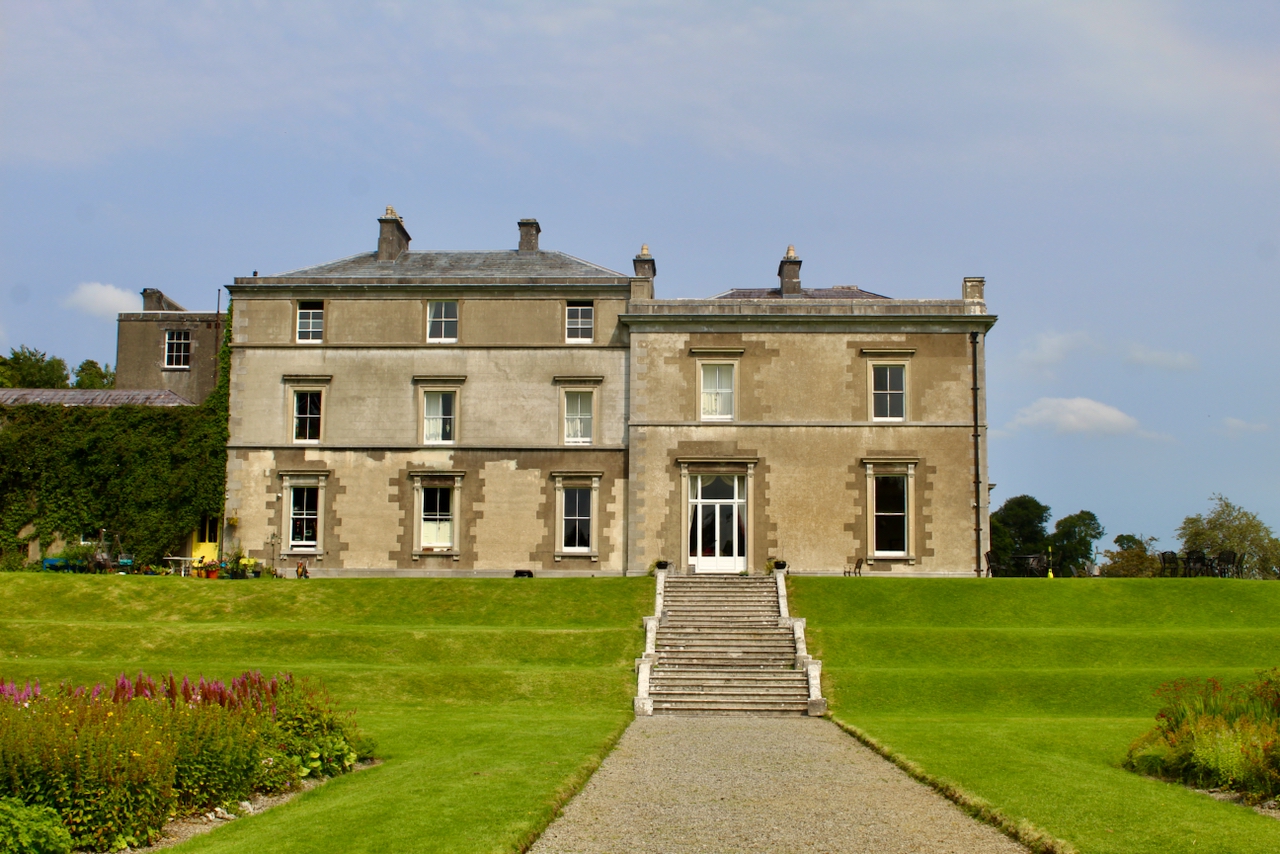
Temple House, County Sligo, August 2025. Photograph © Jennifer Winder-Baggot, www.irishhistorichouses.com
A photograph of Temple House from 1862, before the enlargement! Photograph courtesy of Temple House facebook page.
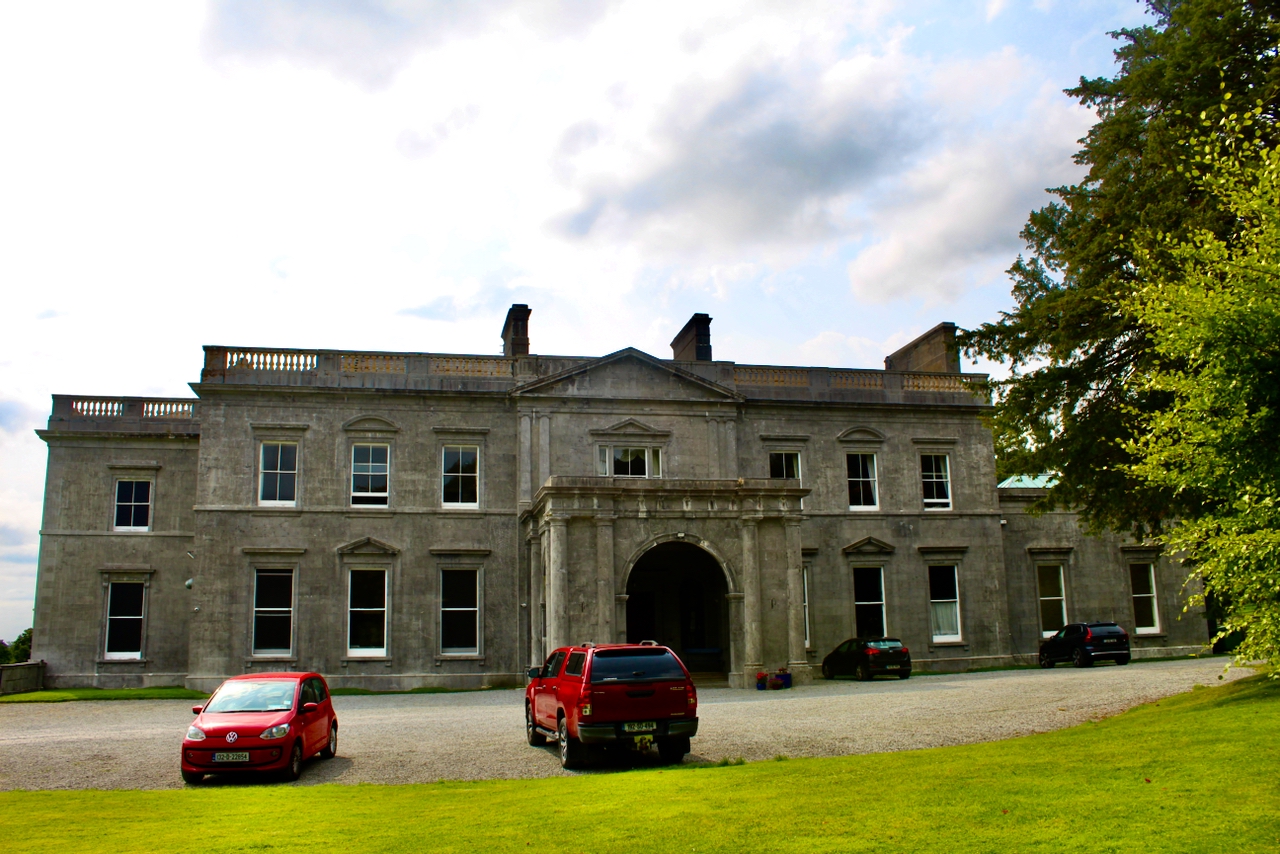
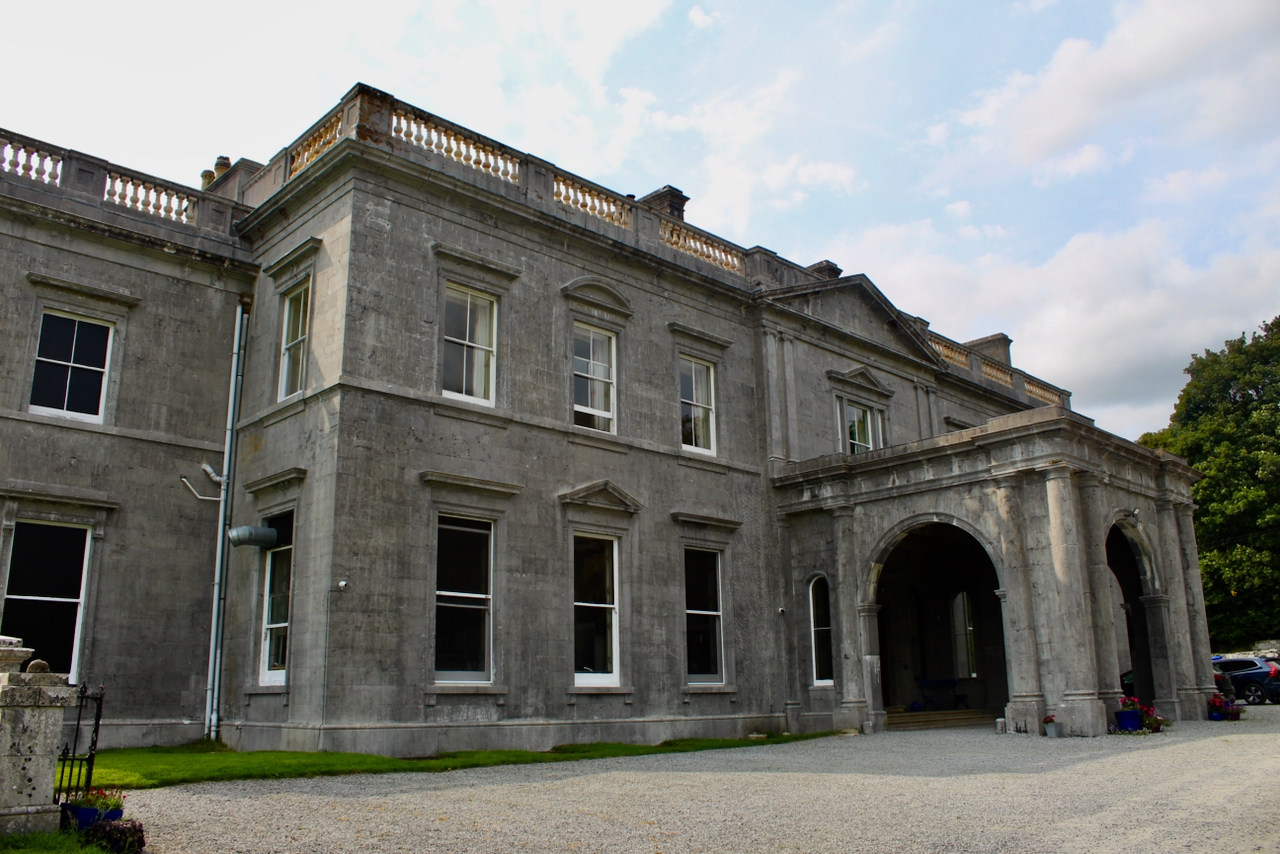
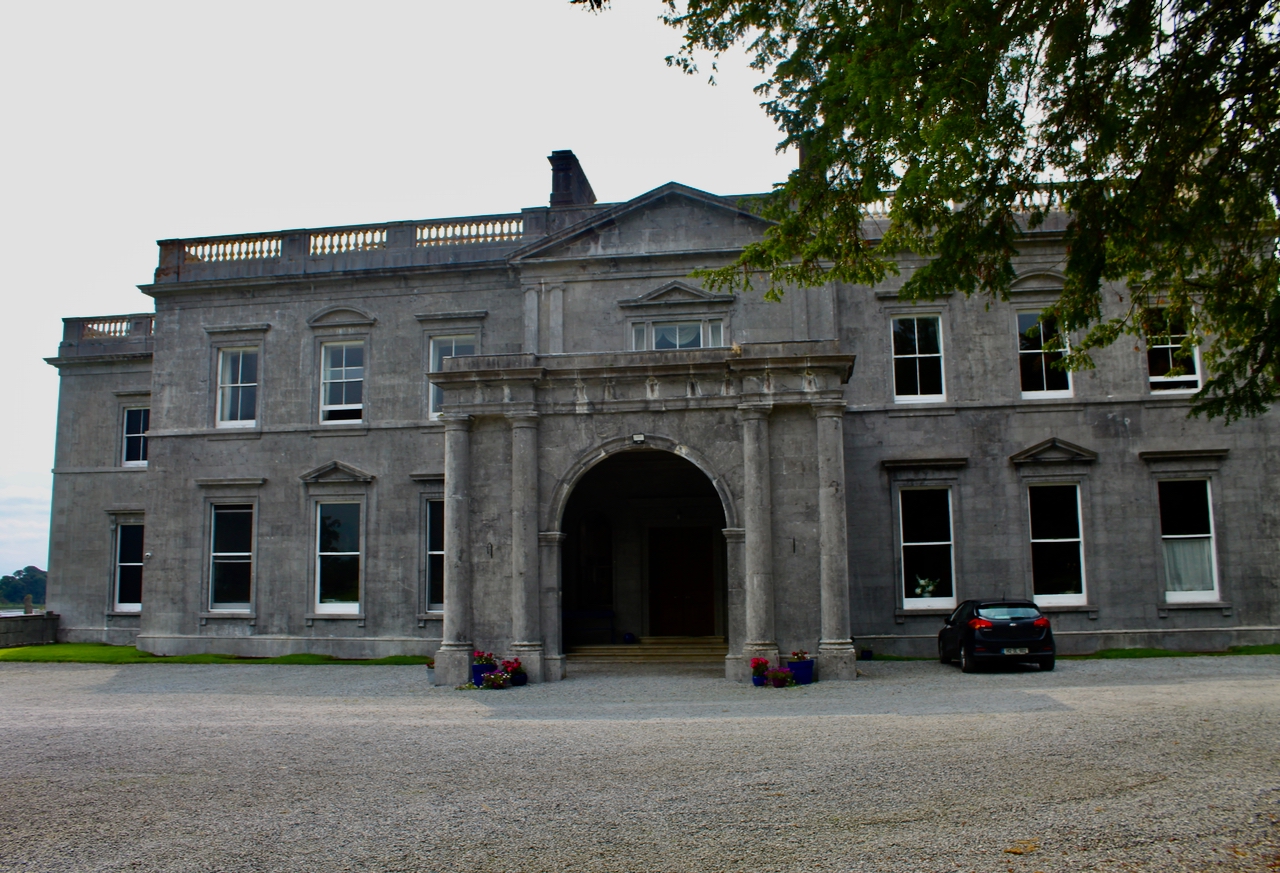
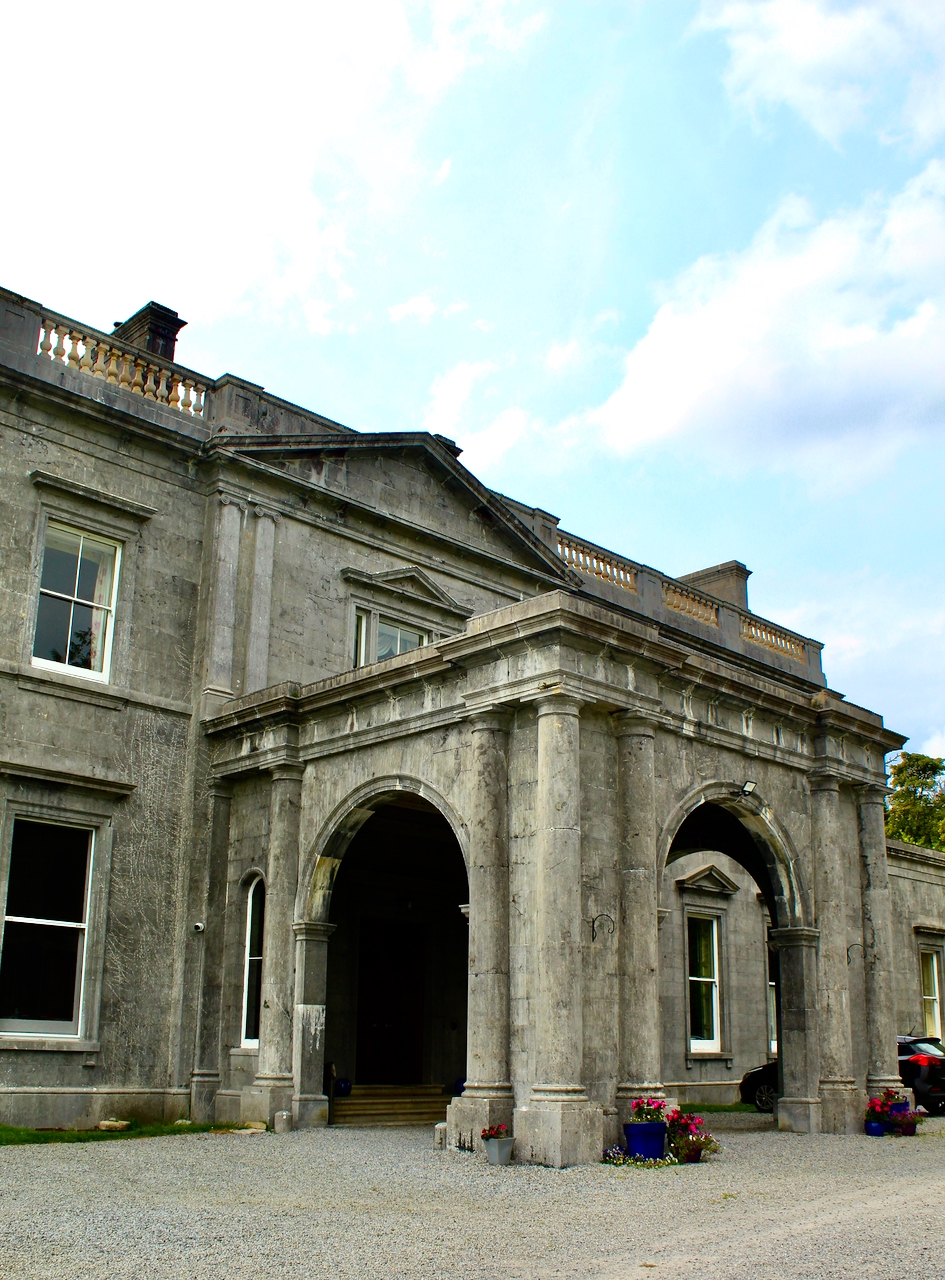
The new seven bay entrance front (north) added in 1860 by Alexander Perceval. Temple House, County Sligo, August 2025. Photograph © Jennifer Winder-Baggot, www.irishhistorichouses.com
The newer entrance has a large arched single-storey porte-cochére with coupled engaged Doric columns at its corners and two small arched side windows. Above is another pedimented Wyatt window in a larger pediment over two pairs of Ionic pilasters. The centre windows on either side of the porte-cochére on the ground floor are pedimented and on the upper storey the centre windows have curved arch pediments. The other windows have flat entablatures.

Temple House, County Sligo, August 2025. Photograph © Jennifer Winder-Baggot, www.irishhistorichouses.com
To the right of the newer front is a single storey two bay wing slightly recessed. The house is topped with a balustraded roof parapet.

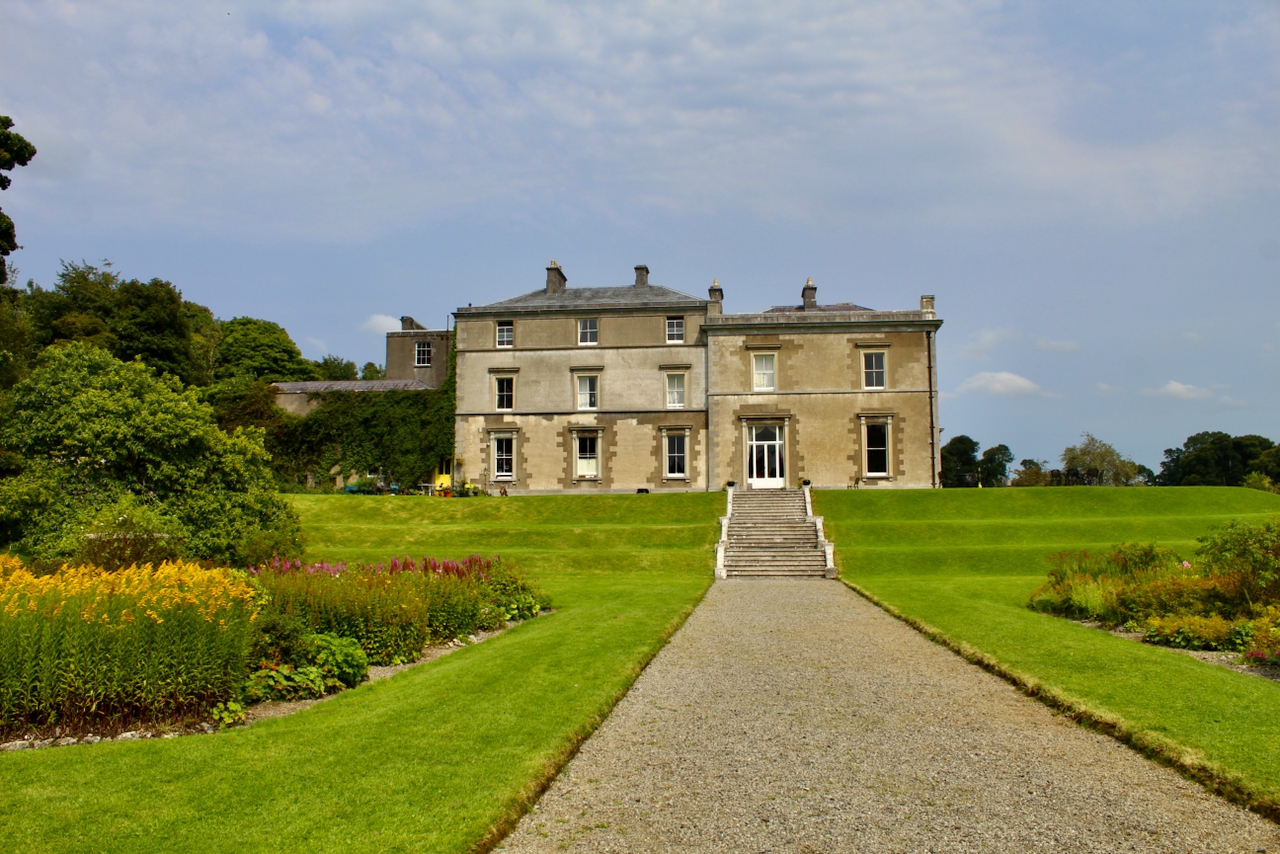
Looking toward the south facade, we see a three-bay three storey section of the house, as well as more beyond to the west. The windows on the ground floor of the east and south elevations have corbelled pilasters.

Rear (south) facade, Temple House, County Sligo, August 2025. Photograph © Jennifer Winder-Baggot, www.irishhistorichouses.com
The house is said to have over ninety rooms!

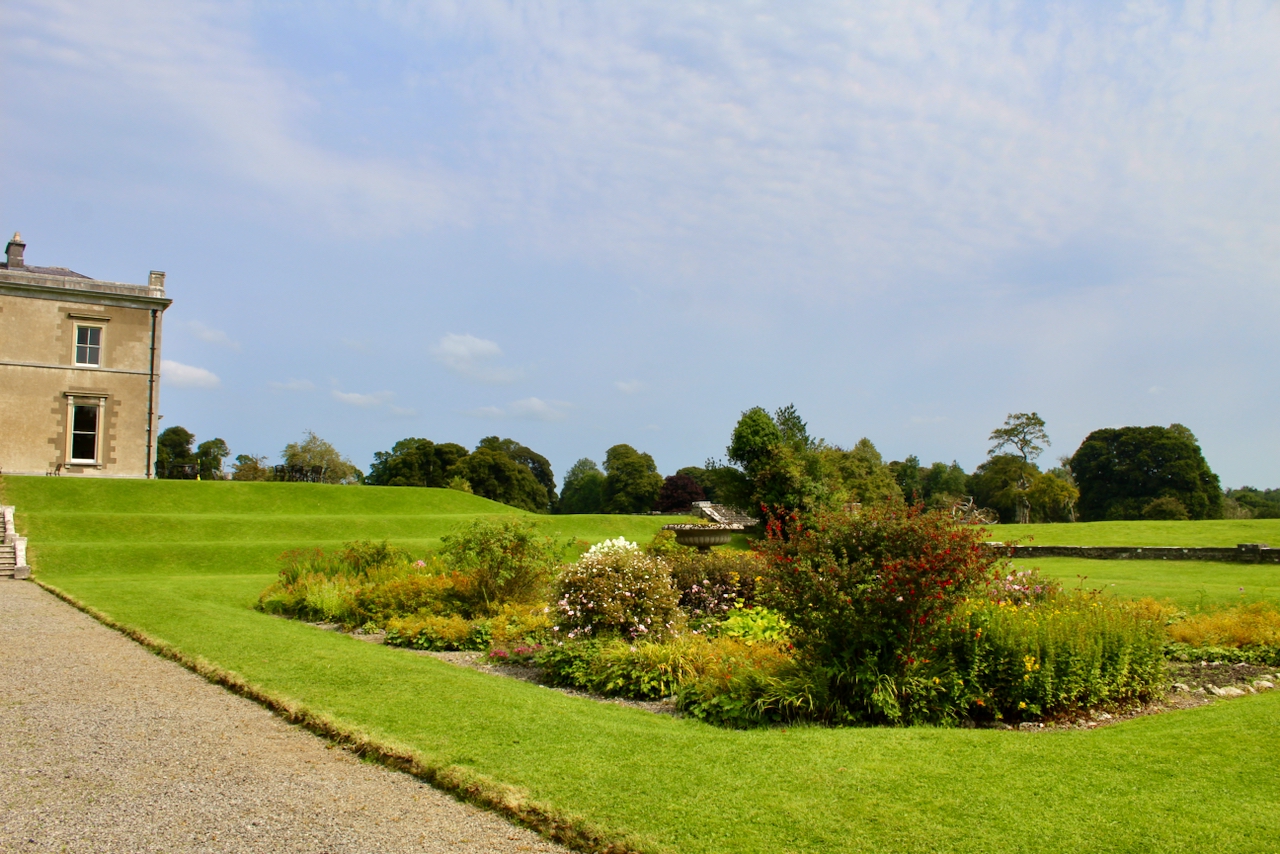
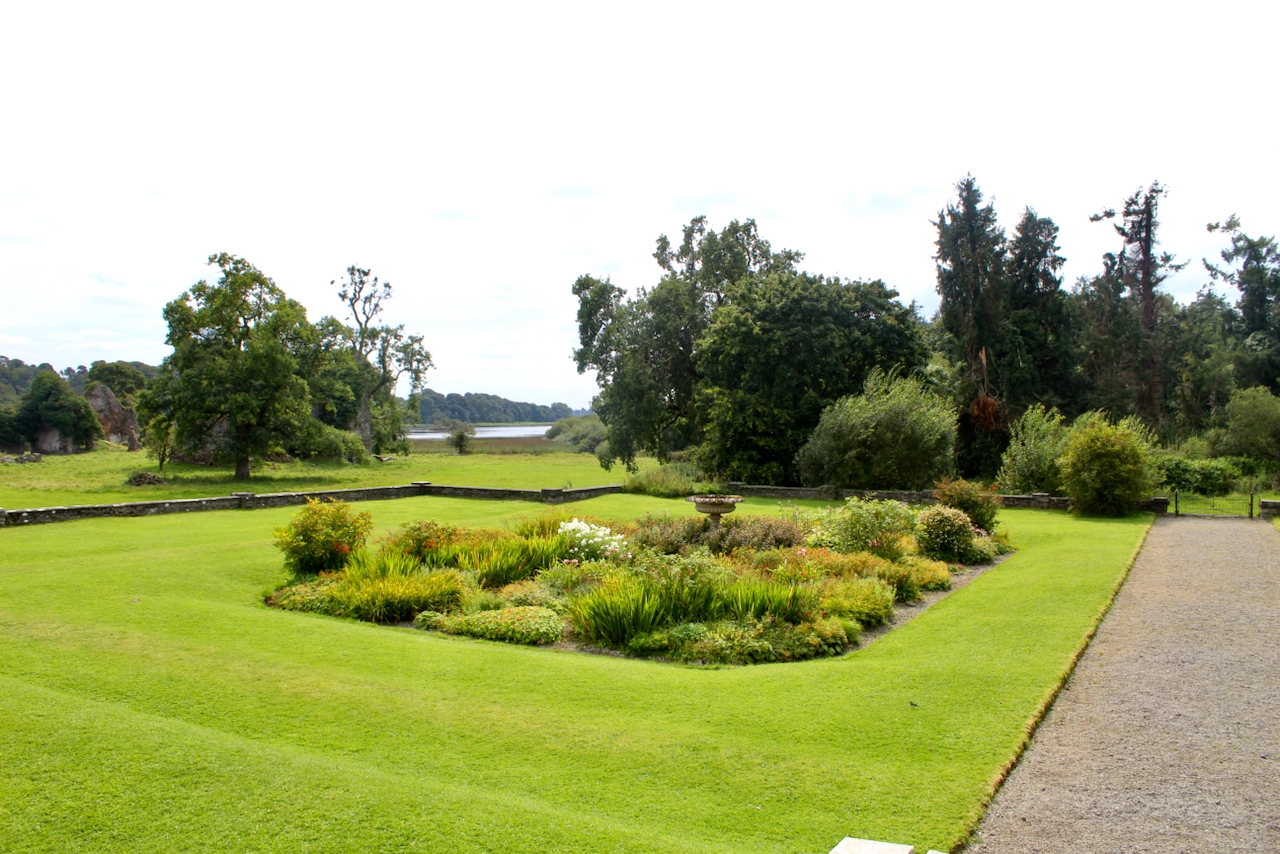
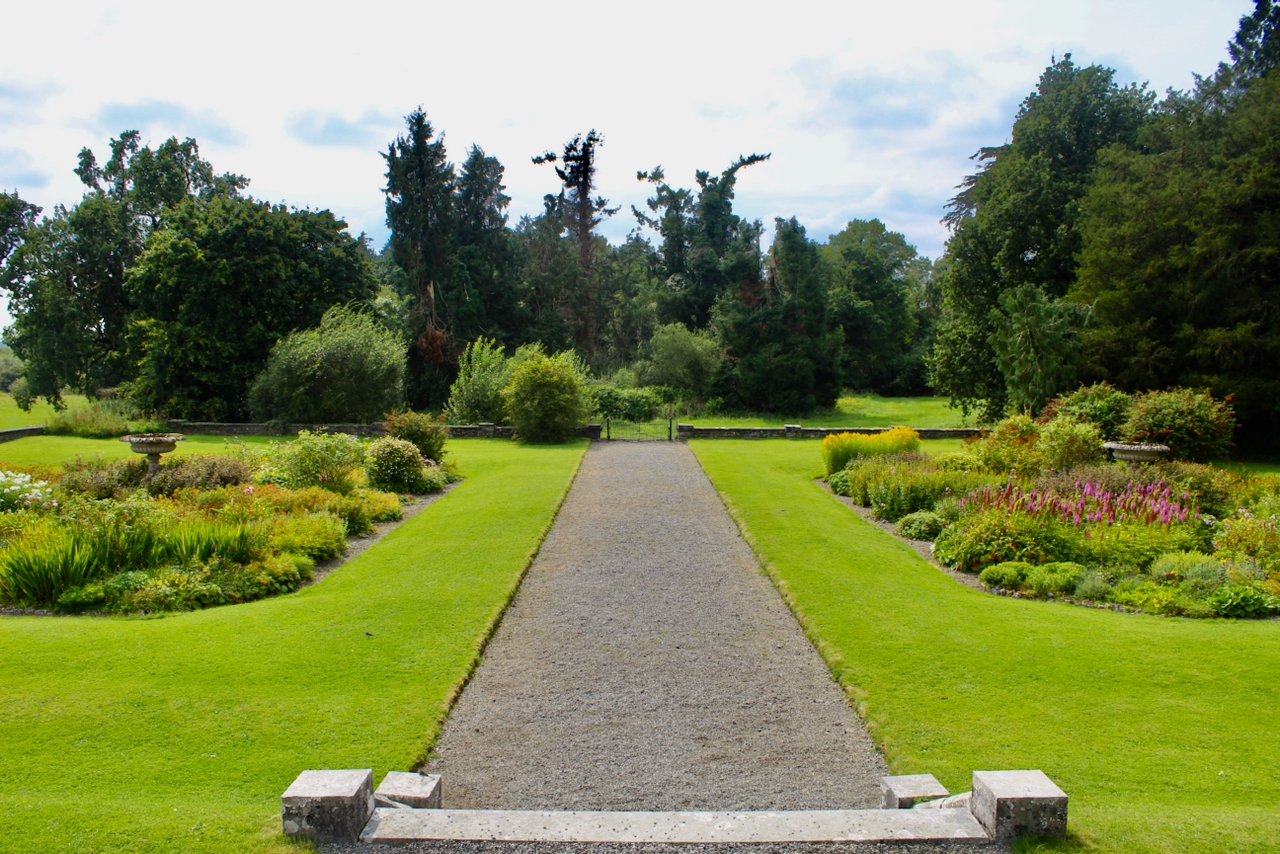
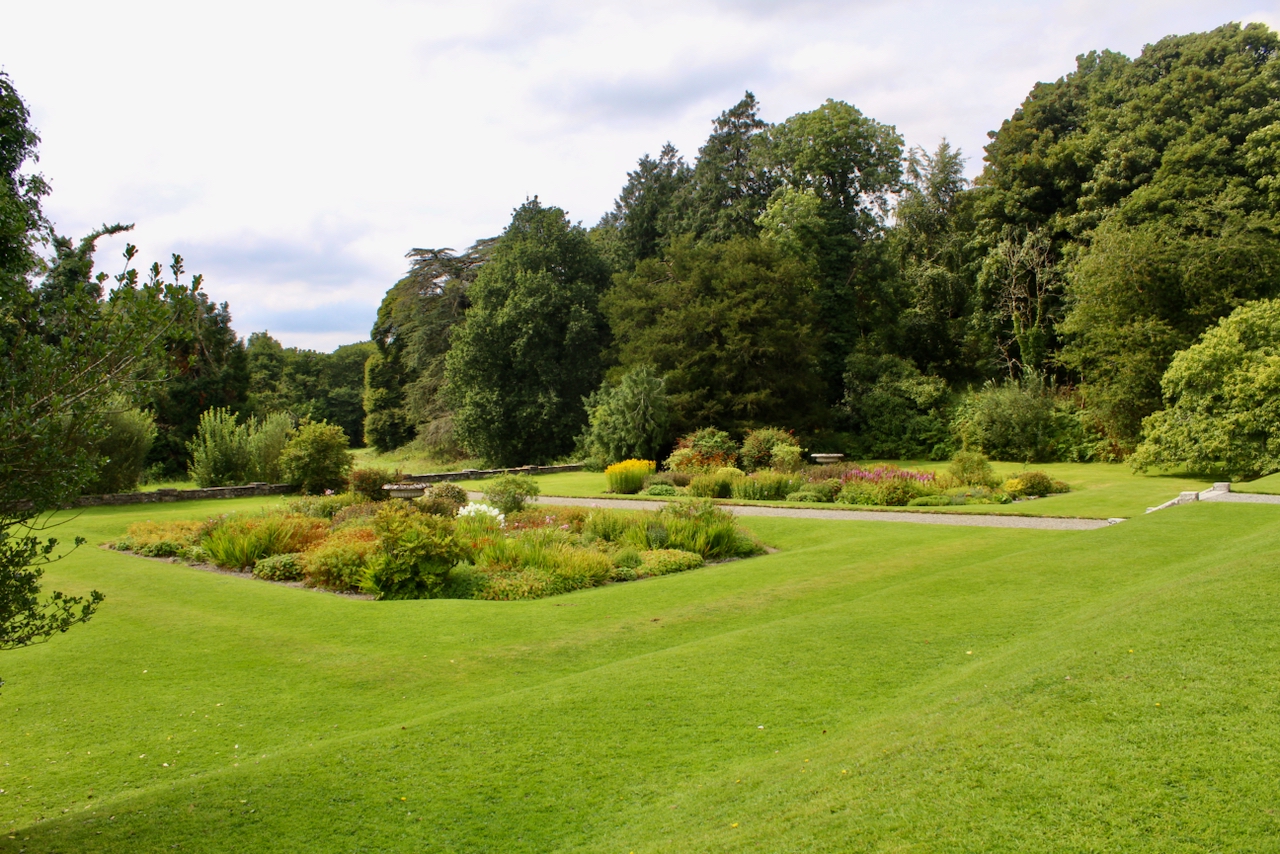
Temple House, County Sligo, August 2025. Photograph © Jennifer Winder-Baggot, www.irishhistorichouses.com
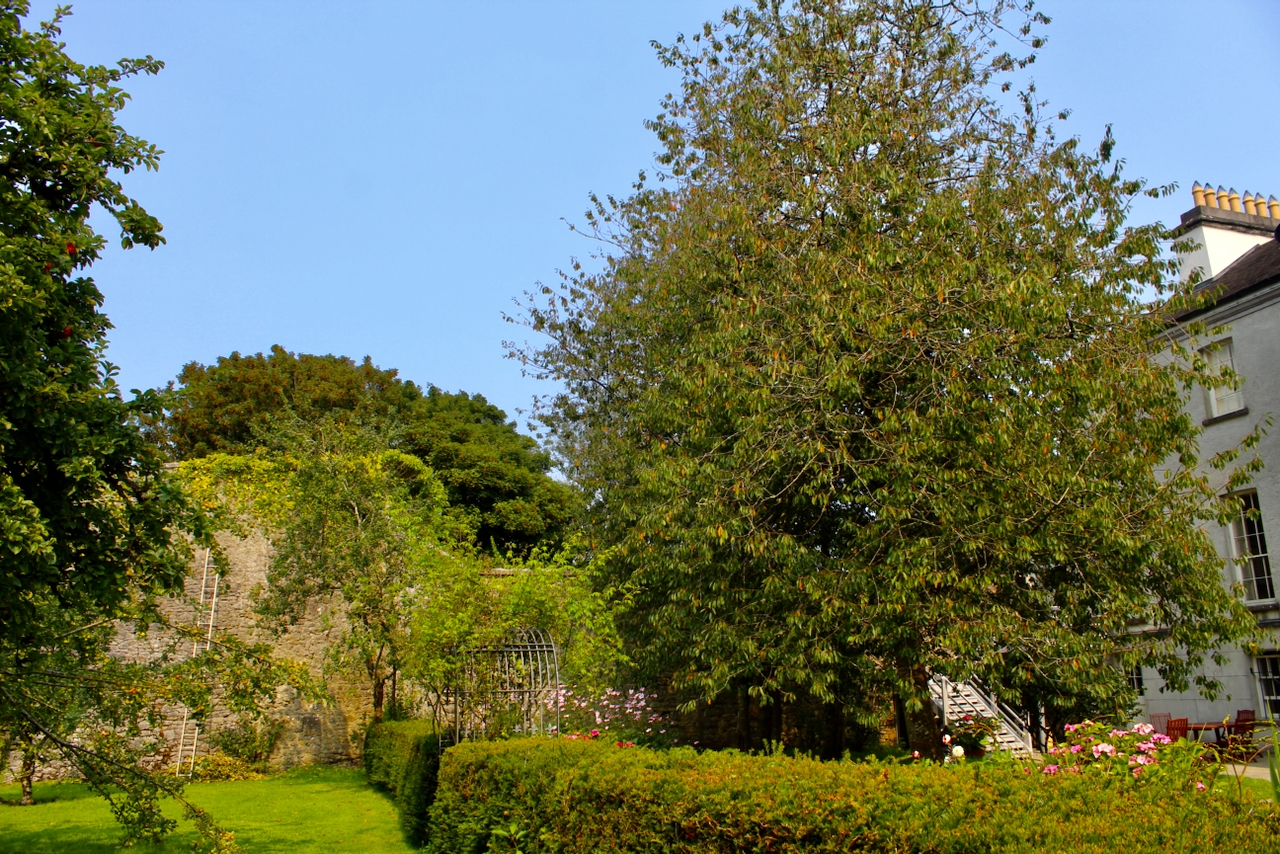
Garden at Temple House, County Sligo, August 2025. Photograph © Jennifer Winder-Baggot, www.irishhistorichouses.com
Restored Italianate terraces at Temple House, County Sligo, August 2025. Photograph © Jennifer Winder-Baggot, www.irishhistorichouses.com
Garden at Temple House, County Sligo, August 2025. Photograph © Jennifer Winder-Baggot, www.irishhistorichouses.com
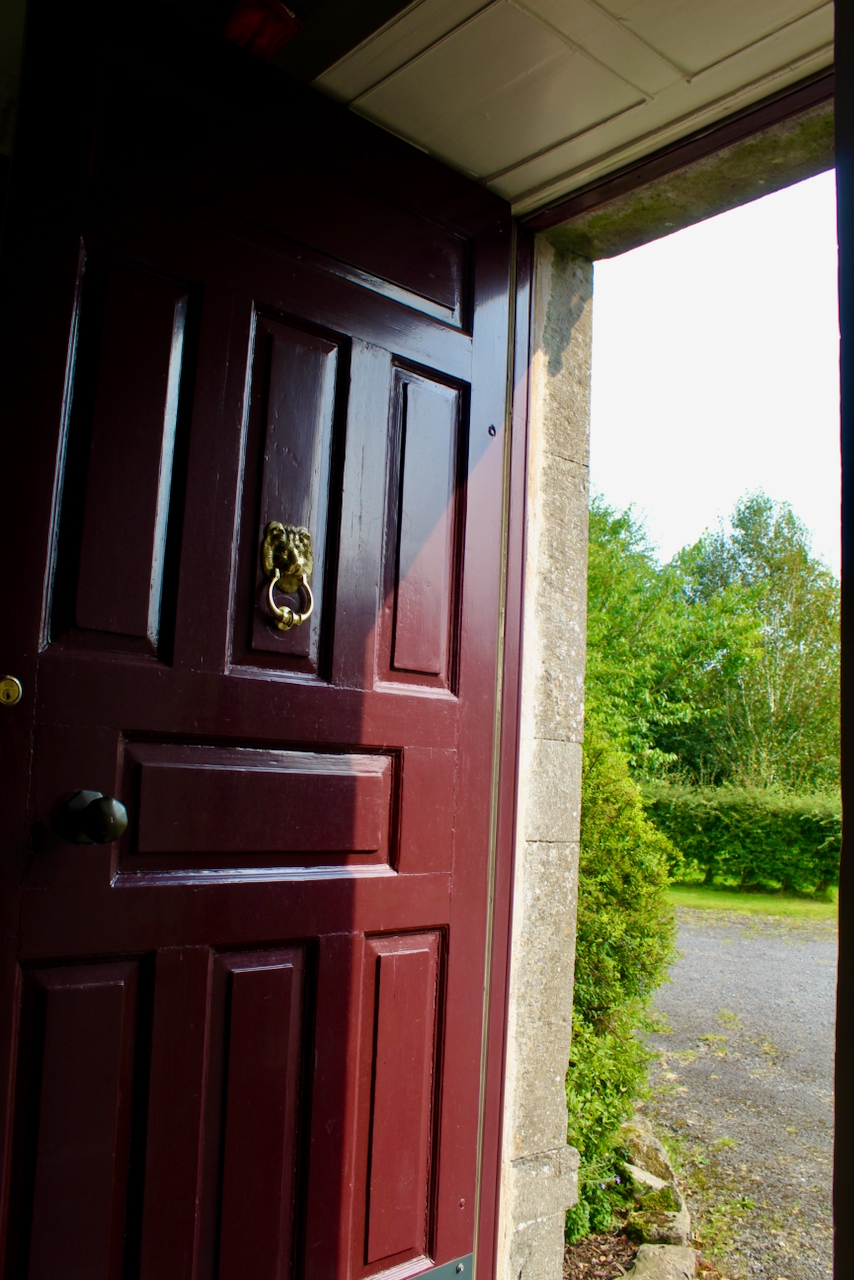
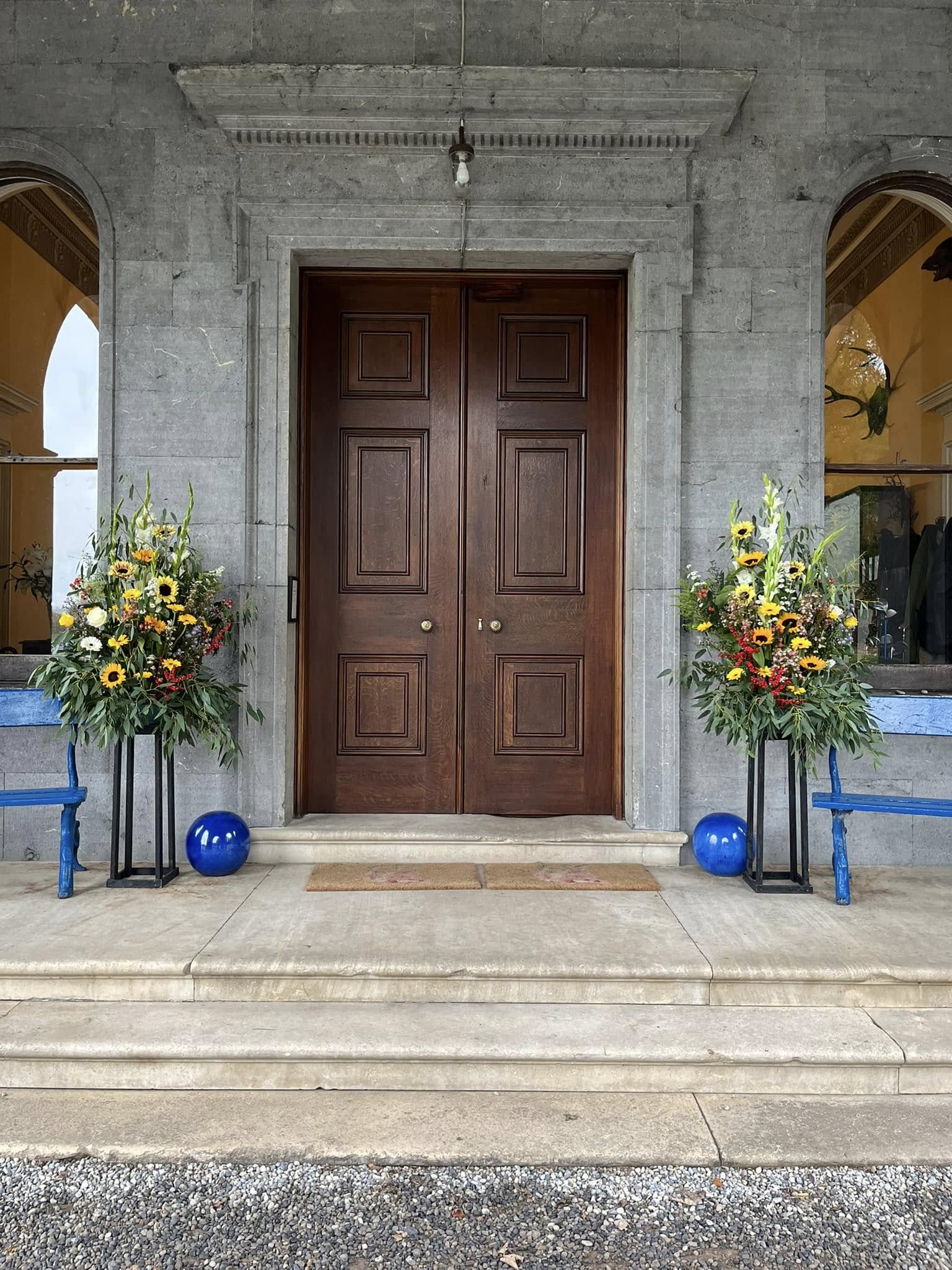
The front door, photograph courtesy of Temple House facebook page.

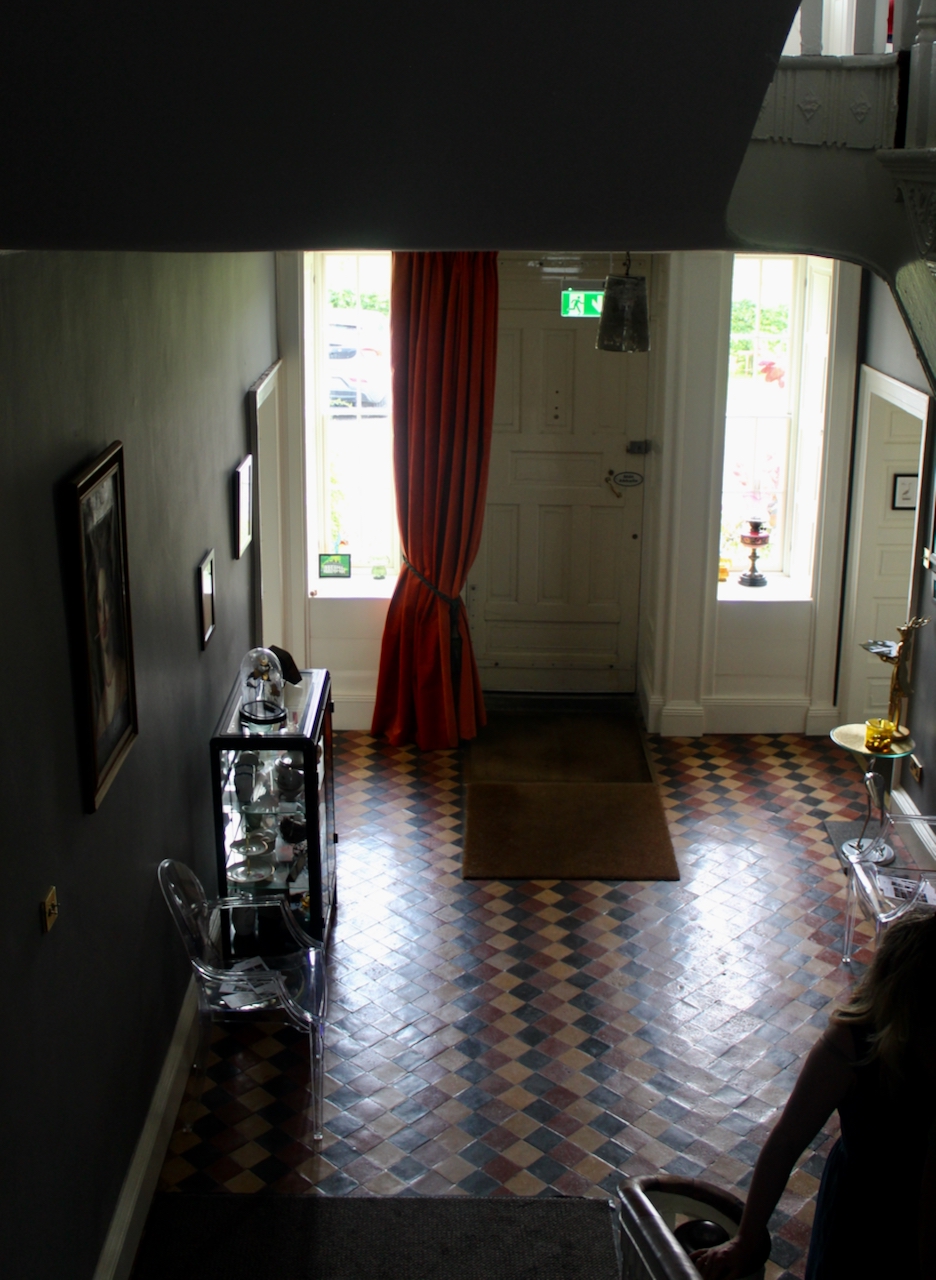
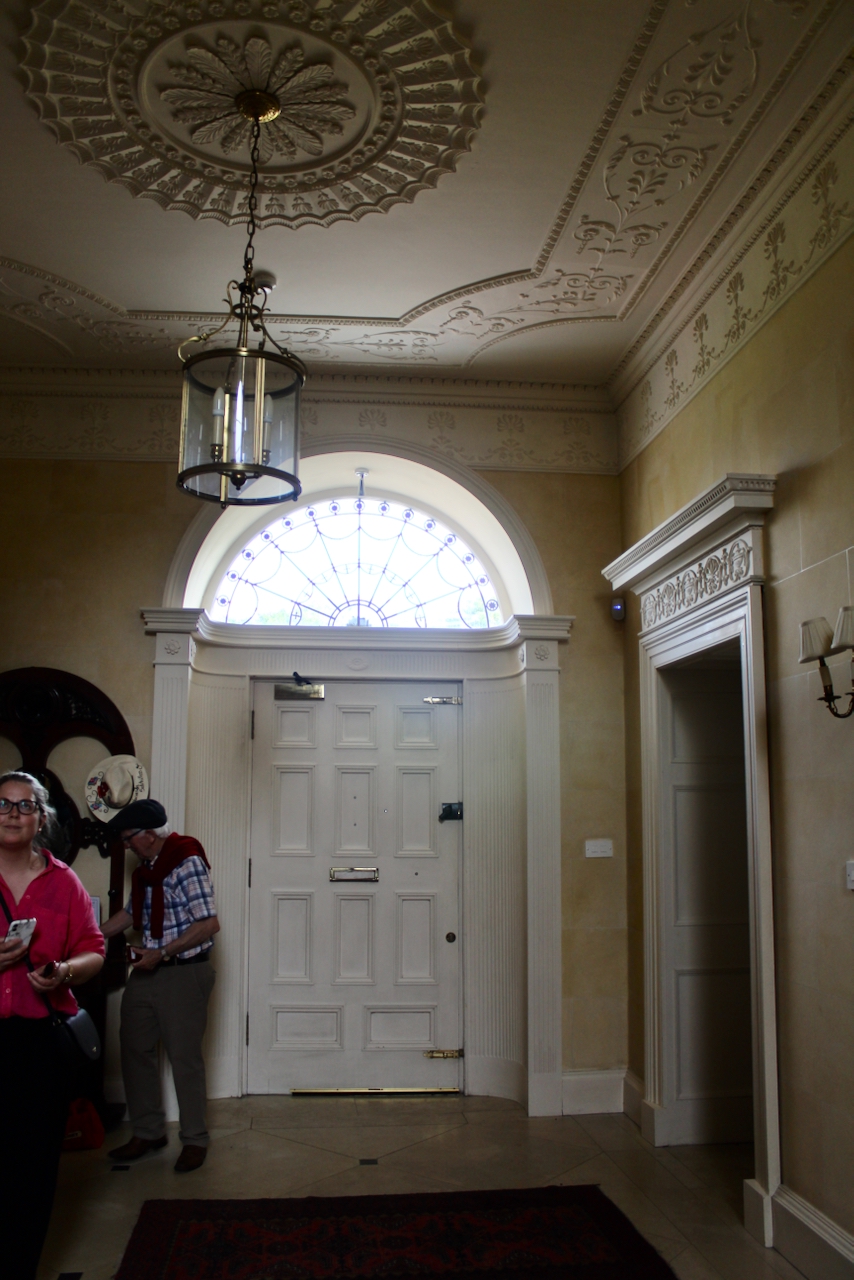
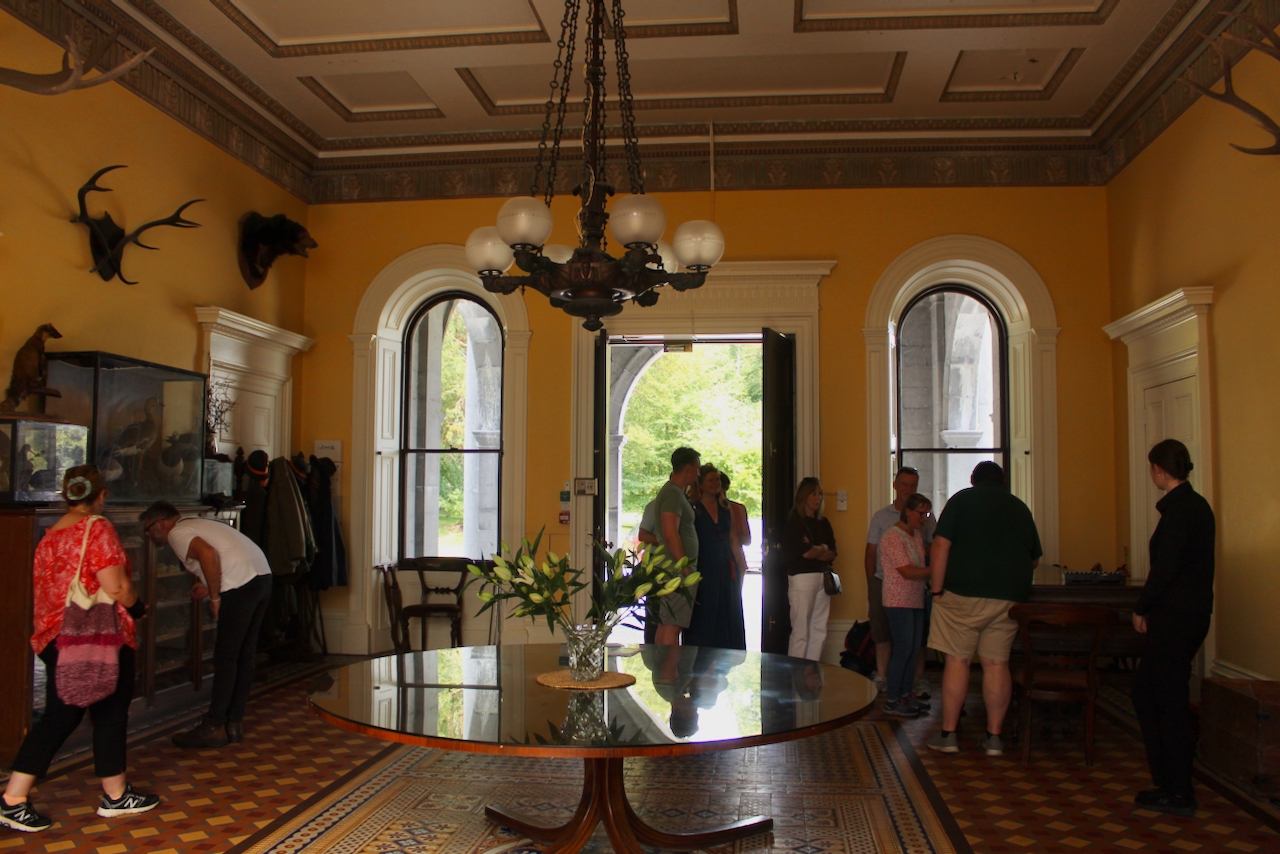
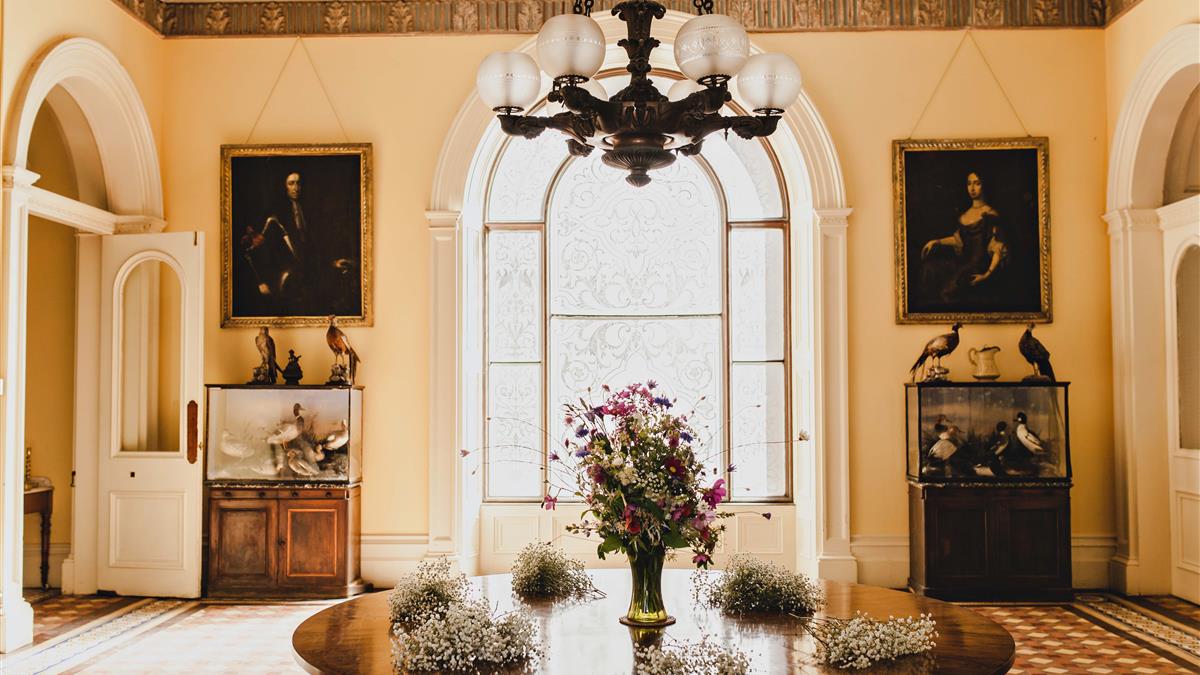
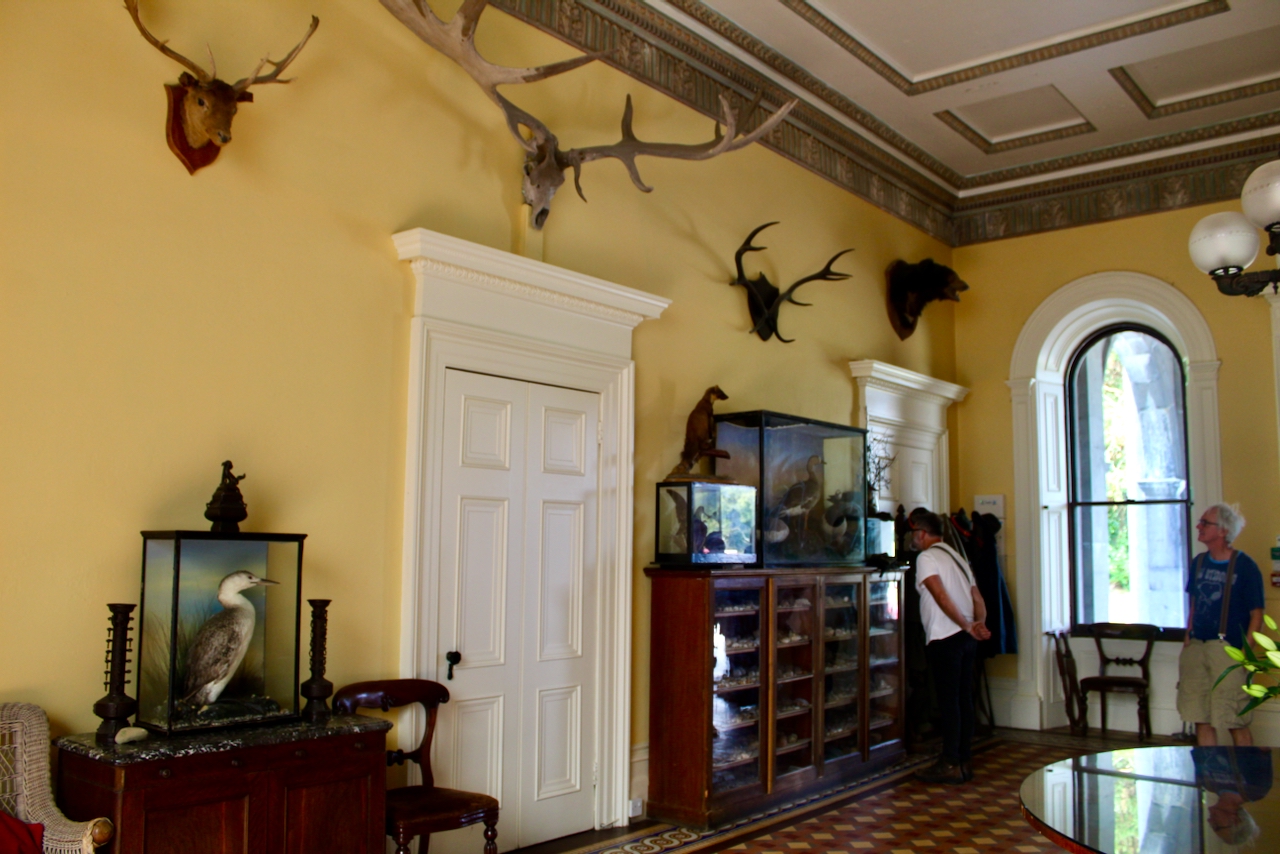
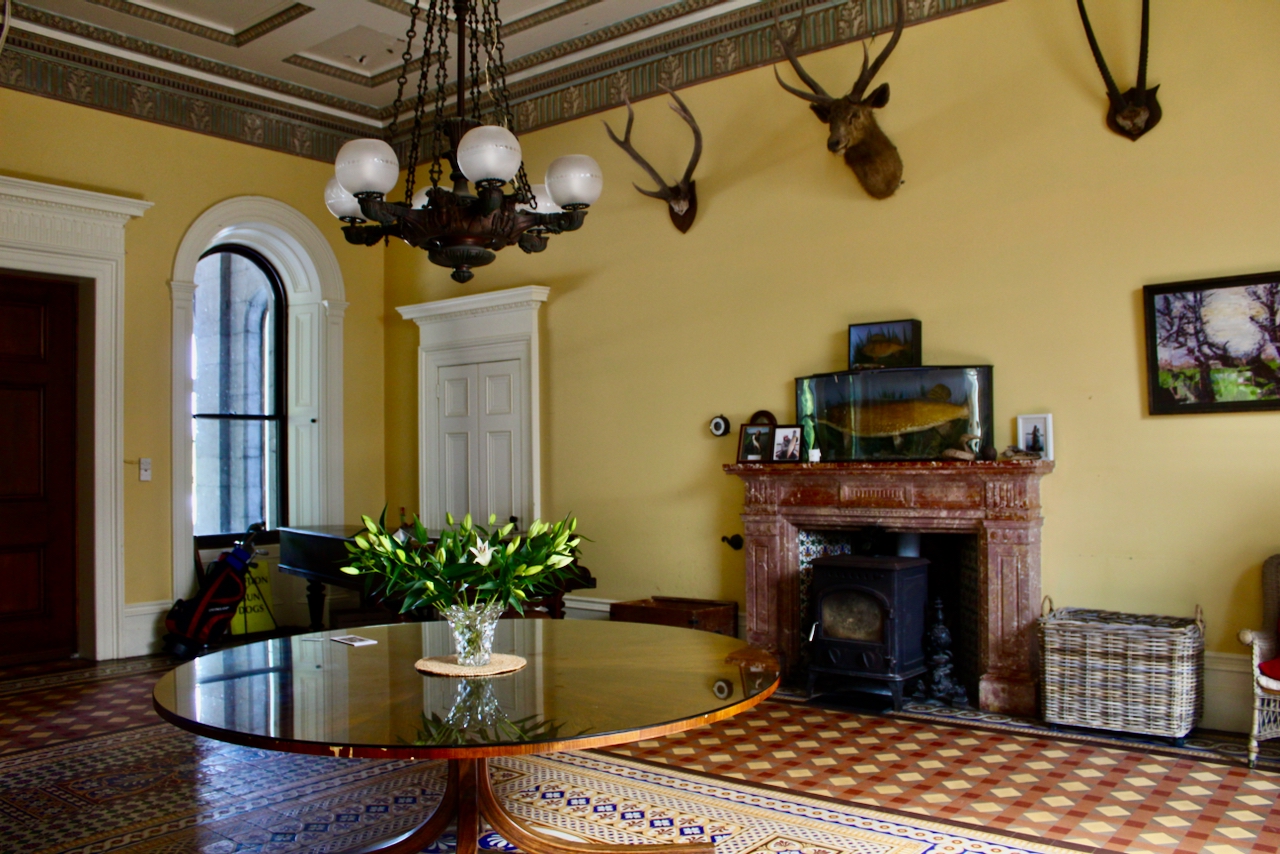
We gathered inside the front hall for the tour, with its impressive tiled floor and geometrically patterned ceiling. It has carved decorative doorcases and arched carved and shuttered side lights by the front door, and a large window facing the front door lights the room.

Front hall at Temple House, County Sligo, August 2025. Photograph © Jennifer Winder-Baggot, www.irishhistorichouses.com
Temple House, Sligo, photograph courtesy of website.

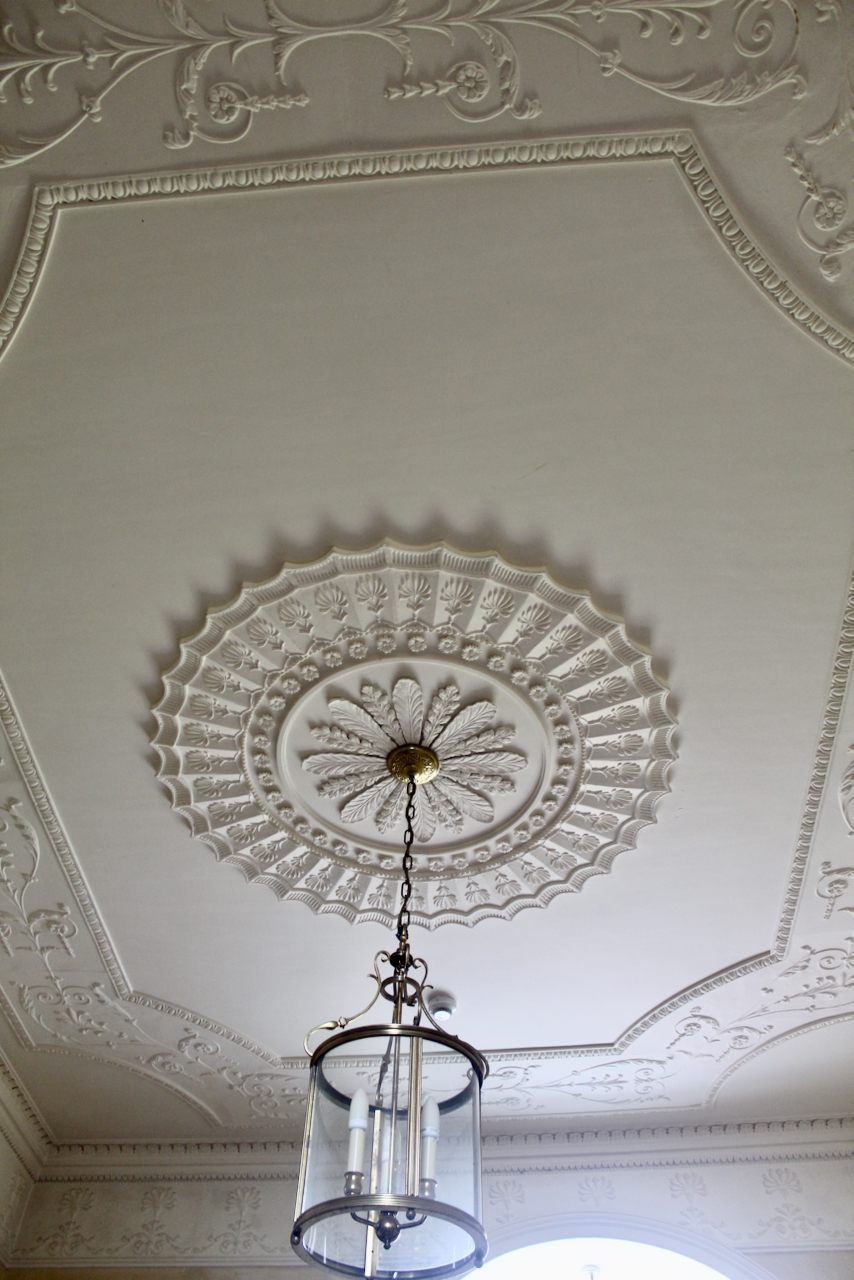
The ceiling has a Doric freize and a rose of acanthus leaves. A collection of stuffed birds and trophies line the wall, and a fine chimneypiece original to the house. [see 2]

Front hall at Temple House, County Sligo, August 2025. Photograph © Jennifer Winder-Baggot, www.irishhistorichouses.com
Temple House, County Sligo, August 2025. Photograph © Jennifer Winder-Baggot, www.irishhistorichouses.com
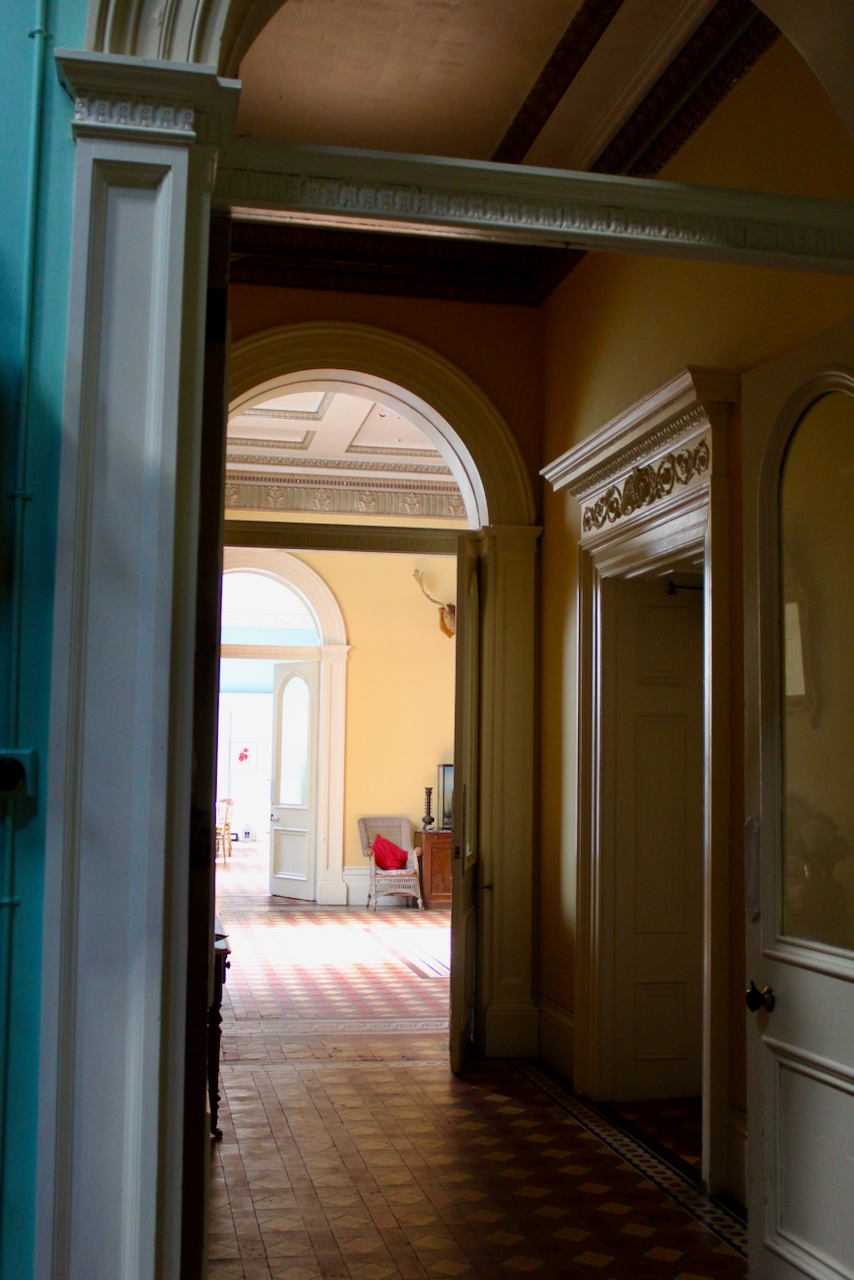
This door leads off the front hall to the newly renovated wing. Temple House, County Sligo, August 2025. Photograph © Jennifer Winder-Baggot, www.irishhistorichouses.com
Alexander did not get to enjoy his renovated home for long, as he died in 1866 of sunstroke, which occurred while fishing in the lake by the house. His wife lived a further twenty years. His son Alec (1859-1887) married a neighbour, Charlotte Jane O’Hara from Annaghmore.

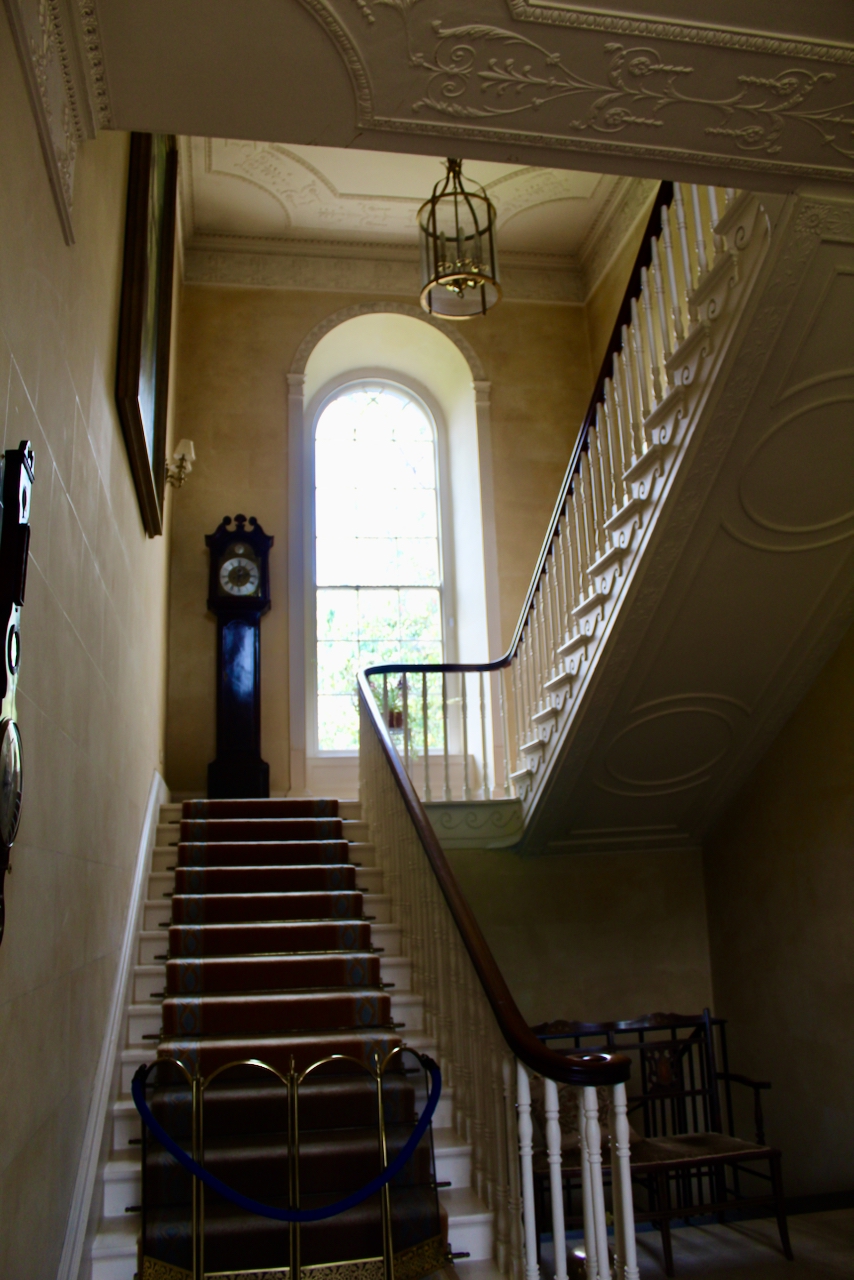
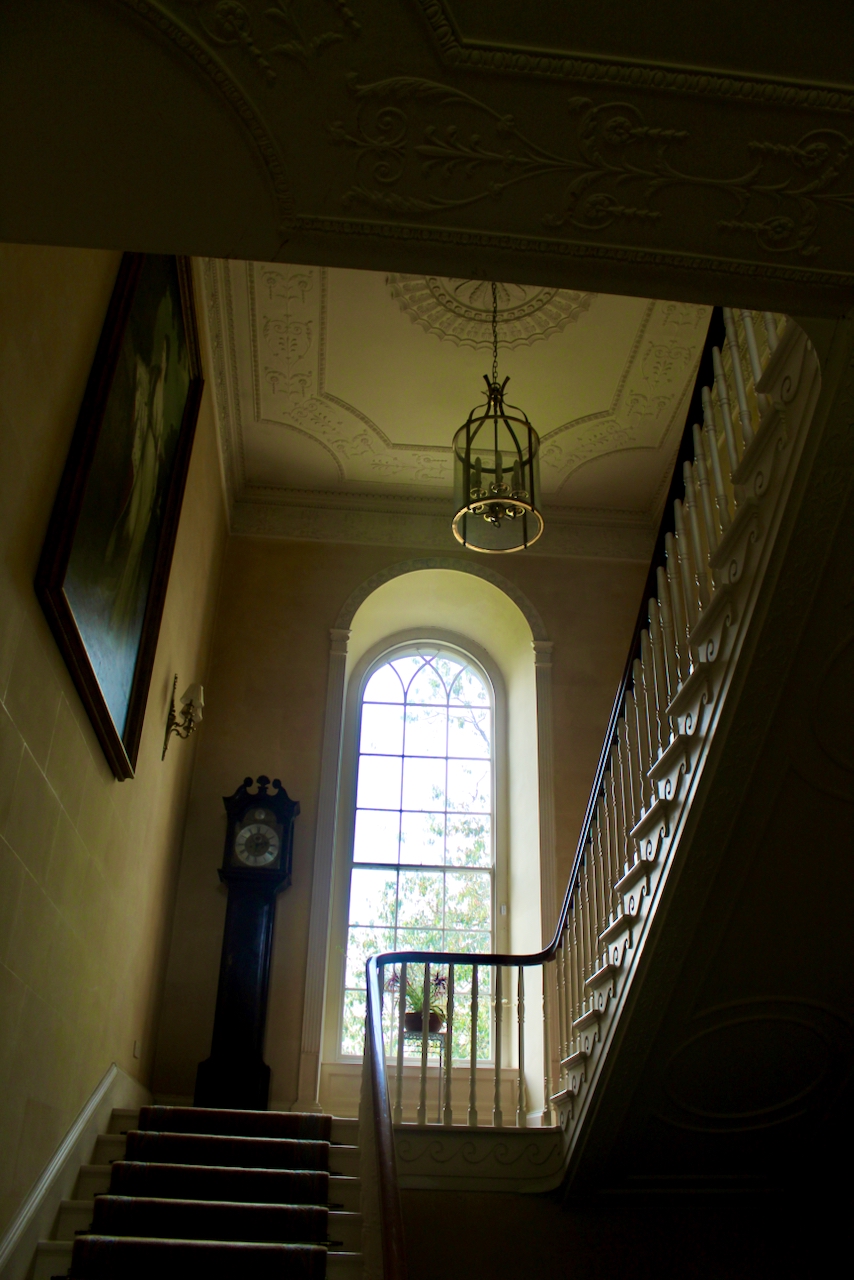
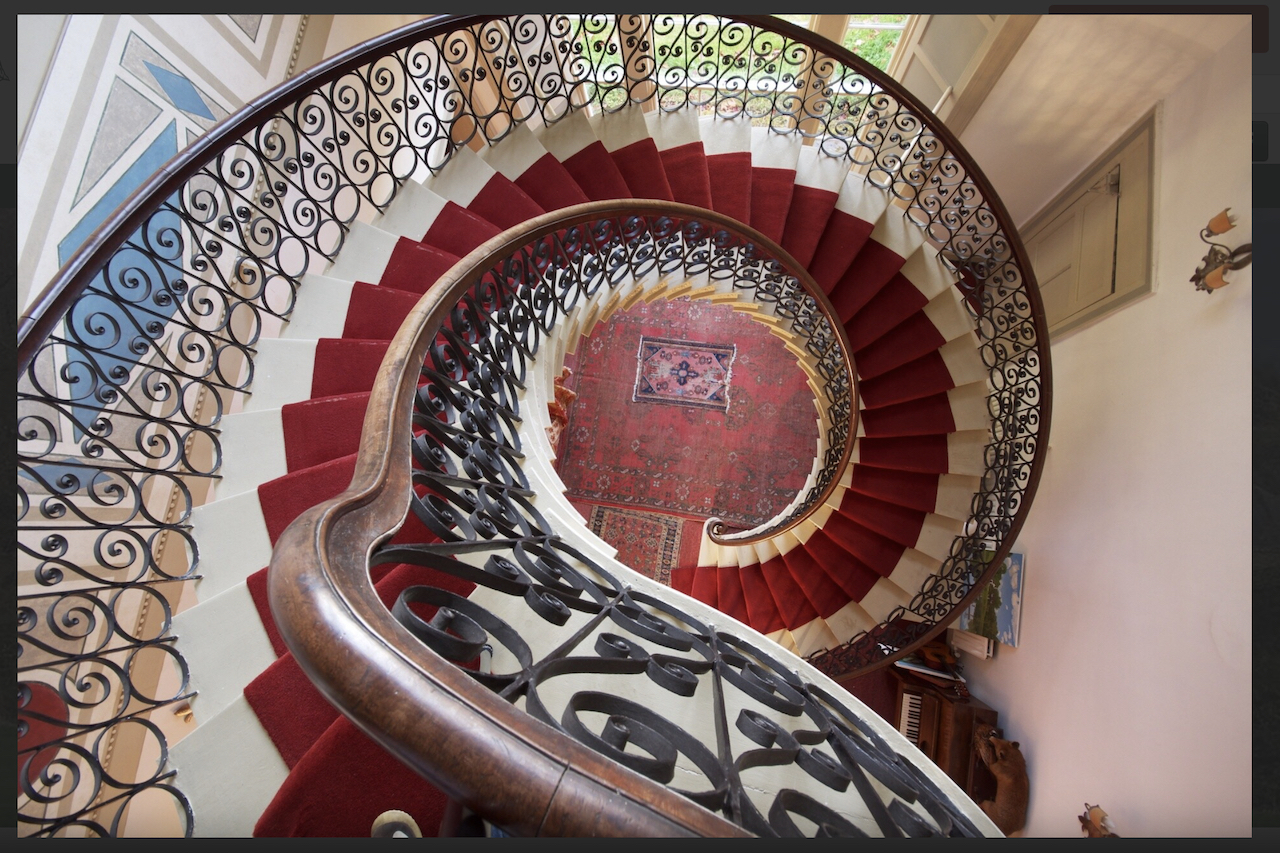
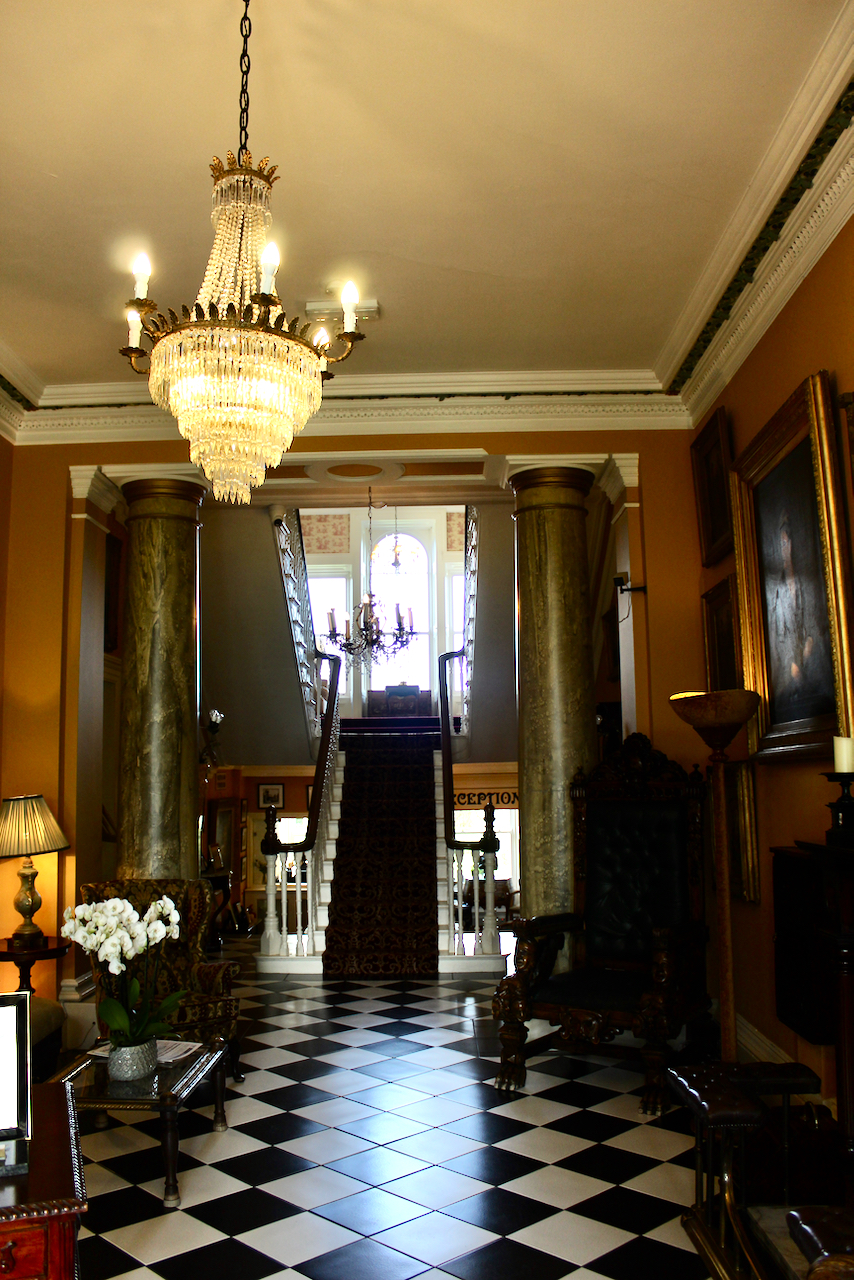
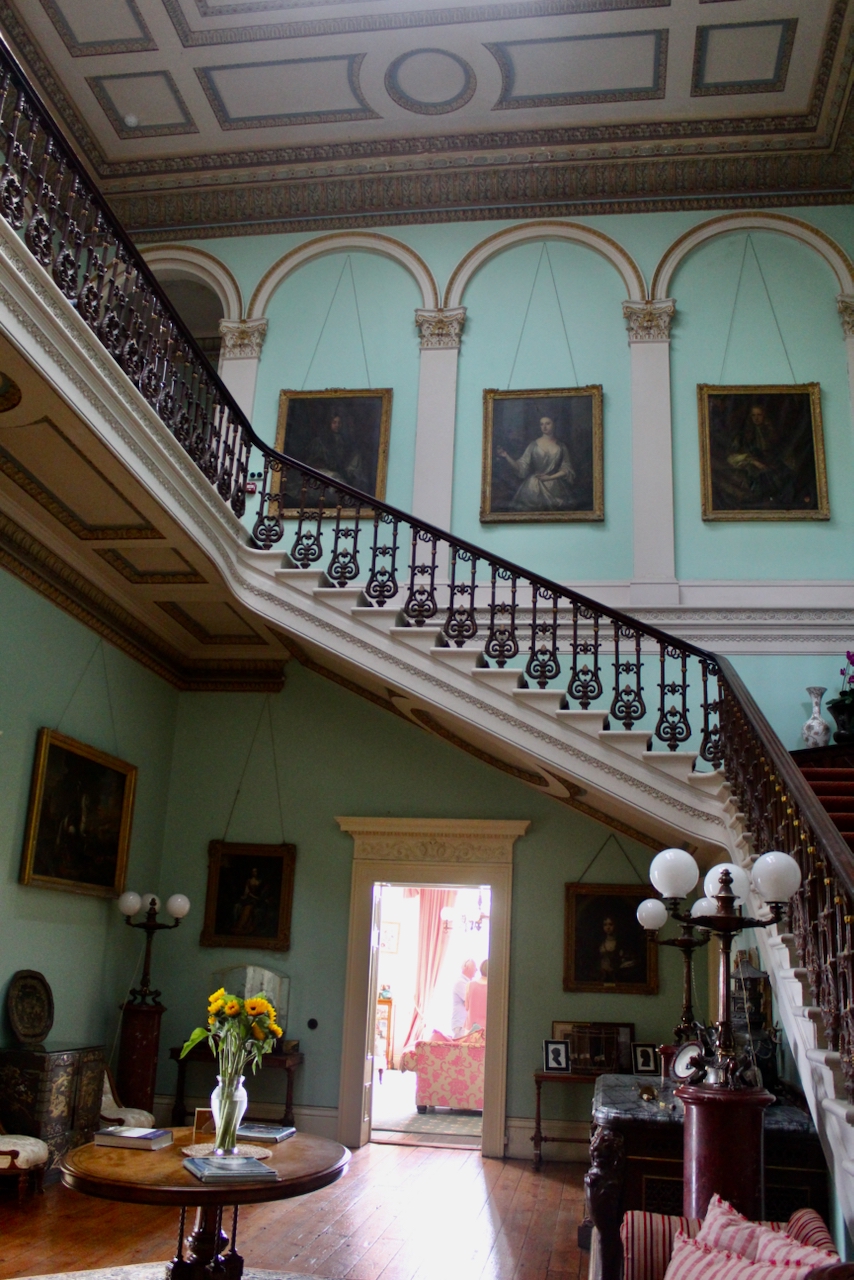
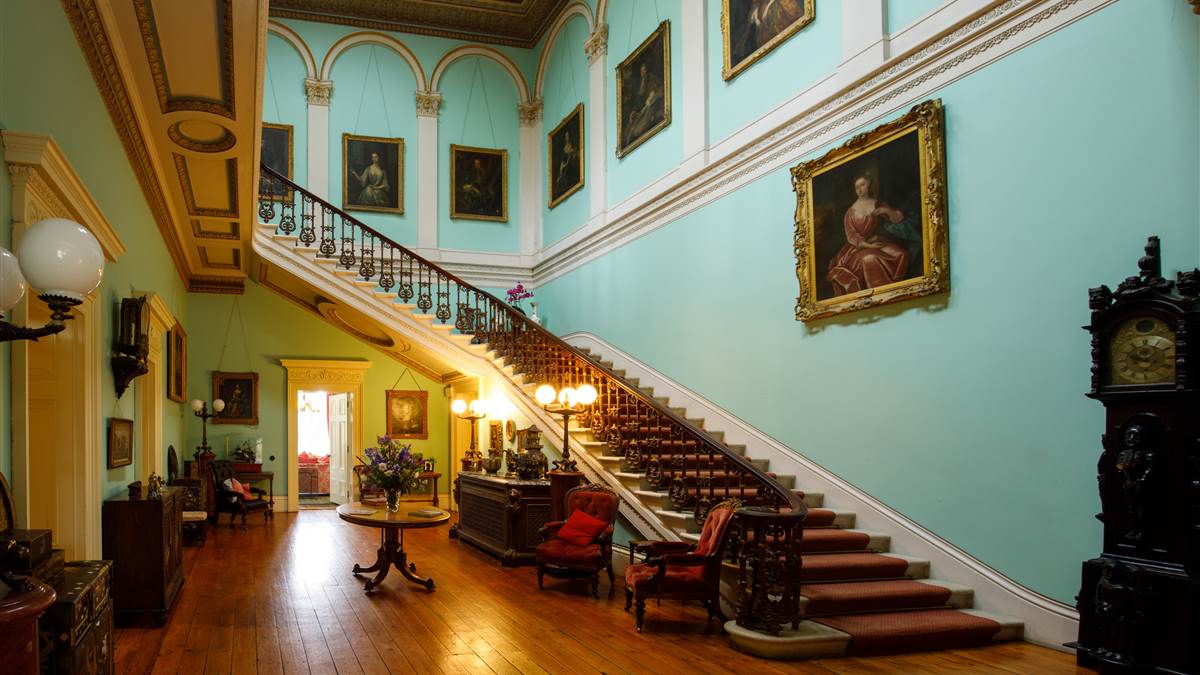
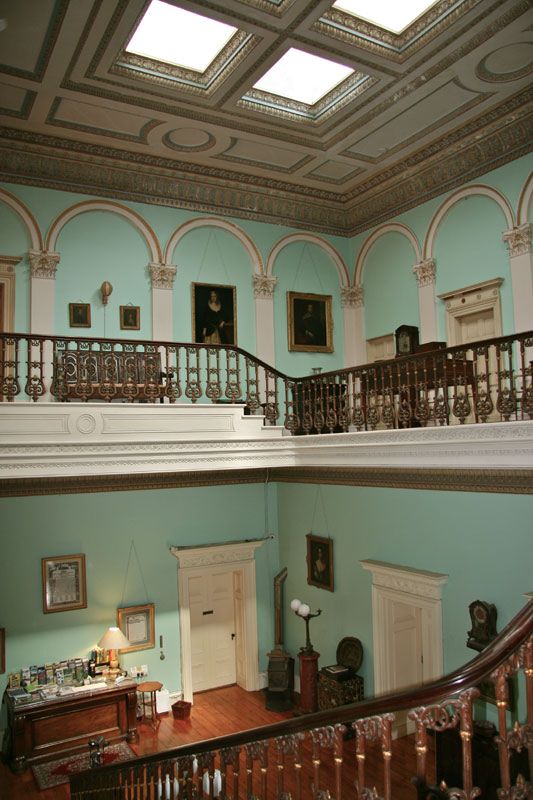
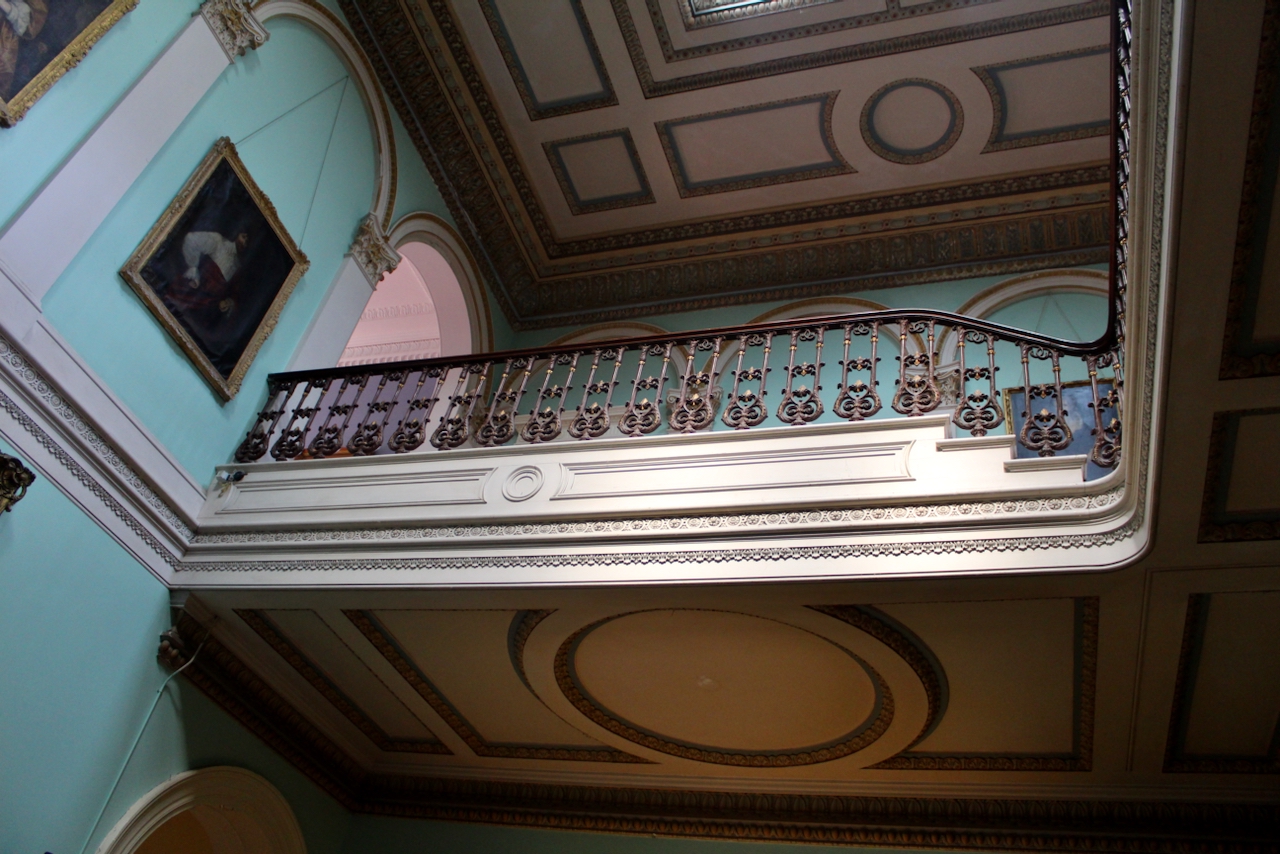
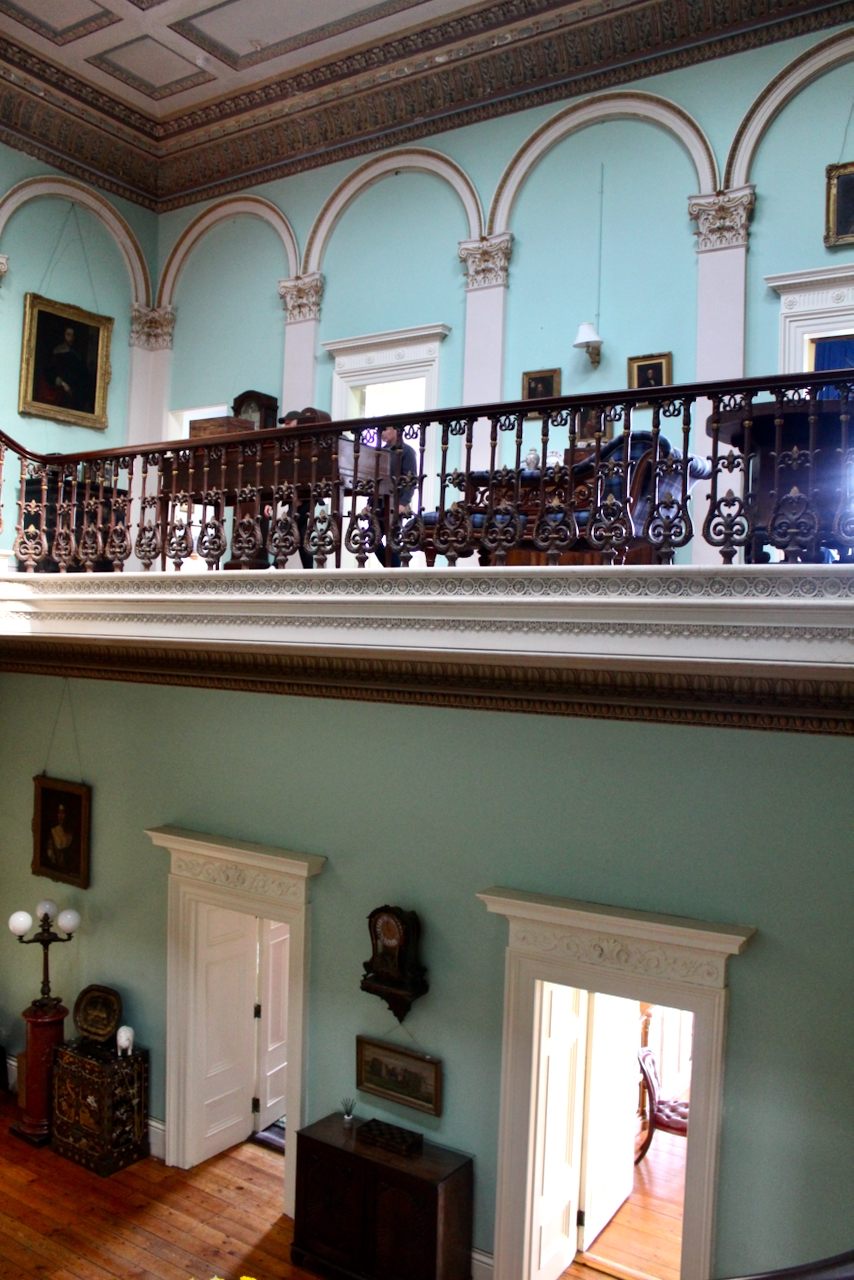
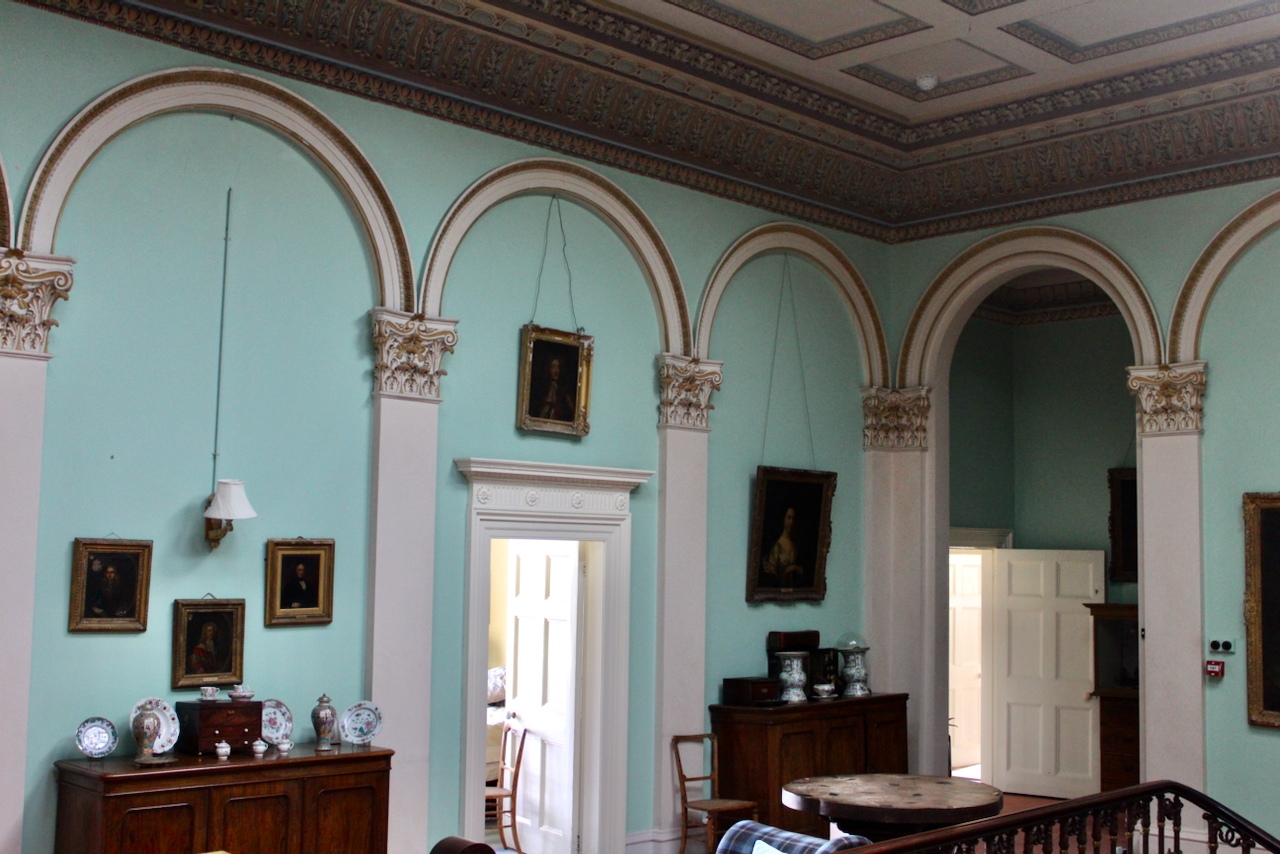
From the front hall we entered the top-lit double-height vestibule with a grand sweeping staircase and gallery lined with paintings of ancestors.

Temple House, County Sligo, August 2025. Photograph © Jennifer Winder-Baggot, www.irishhistorichouses.com
I’m dying to know who features in the wonderful portraits. The vestibule is so impressive, it is hard to know where to look! The ceiling has intricate detail.

Temple House, Sligo, photograph courtesy of website.
Temple House, photograph courtesy of the house facebook page.
The detail in the ceiling is incredible, as seen in this close-up. Temple House, photograph courtesy of the house facebook page.

The upper level of the stair hall is lined with arches and Corinthian pilasters.

Temple House, County Sligo, August 2025. Photograph © Jennifer Winder-Baggot, www.irishhistorichouses.com
Temple House, County Sligo, photograph courtesy Historic Houses of Ireland

When Alec died of meningitis in 1887, Charlotte took over the running of the estate for 30 years. Alec’s son Alexander Ascelin was injured in the first world war. He married the doctor’s daughter, Nora MacDowell. In financial difficulty, he had to sell some of the land. His wife predeceased him and toward the end of his life, he lived alone in this house of about ninety seven rooms, living in only three rooms. The rest of the house was closed up, dustsheets over the furniture.

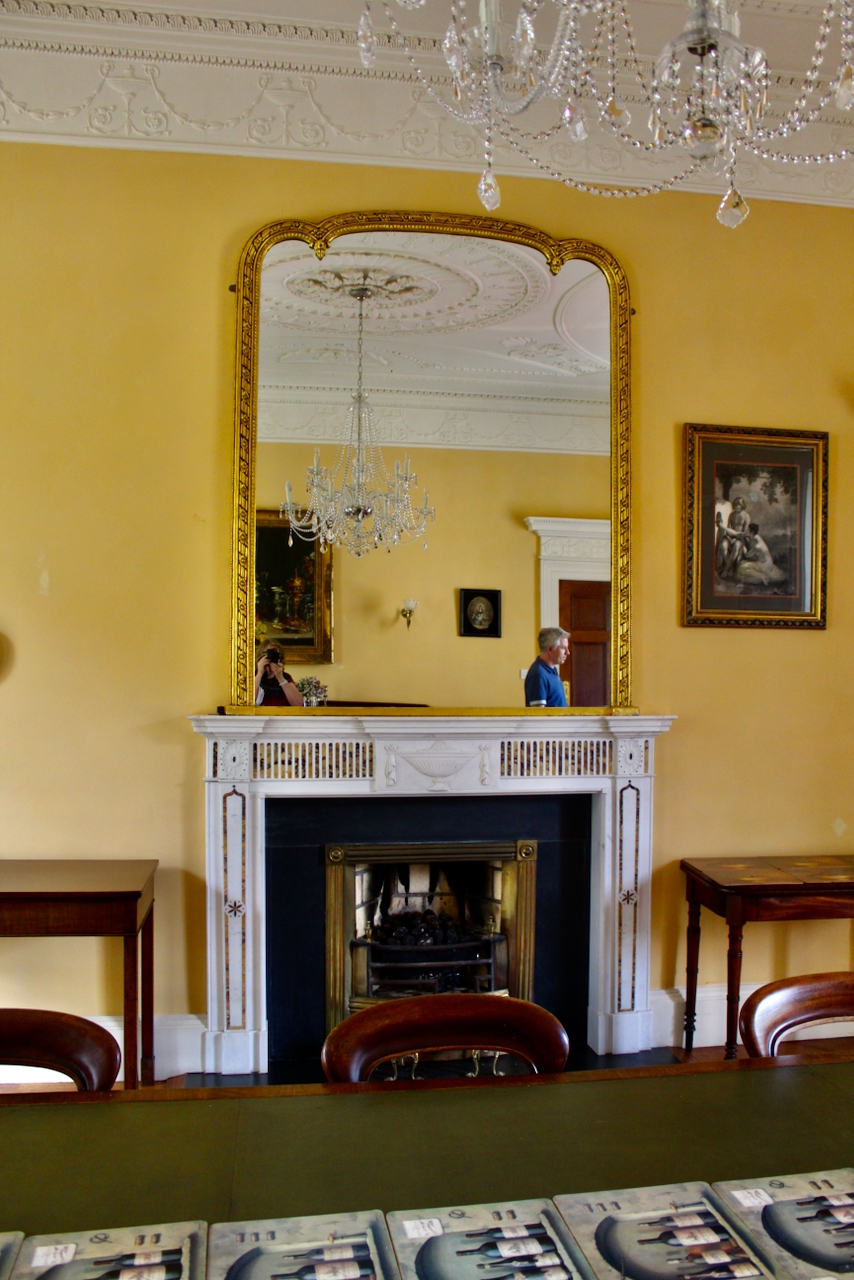
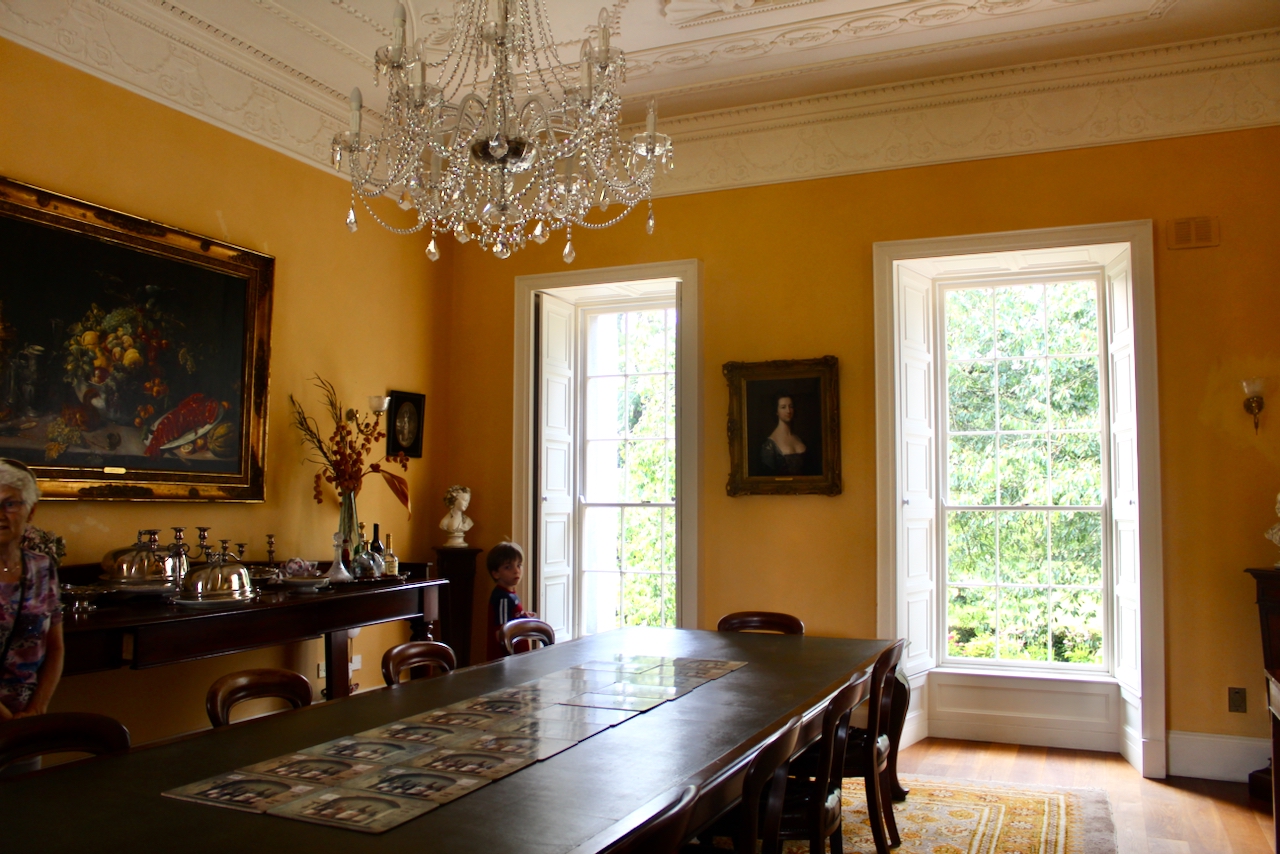
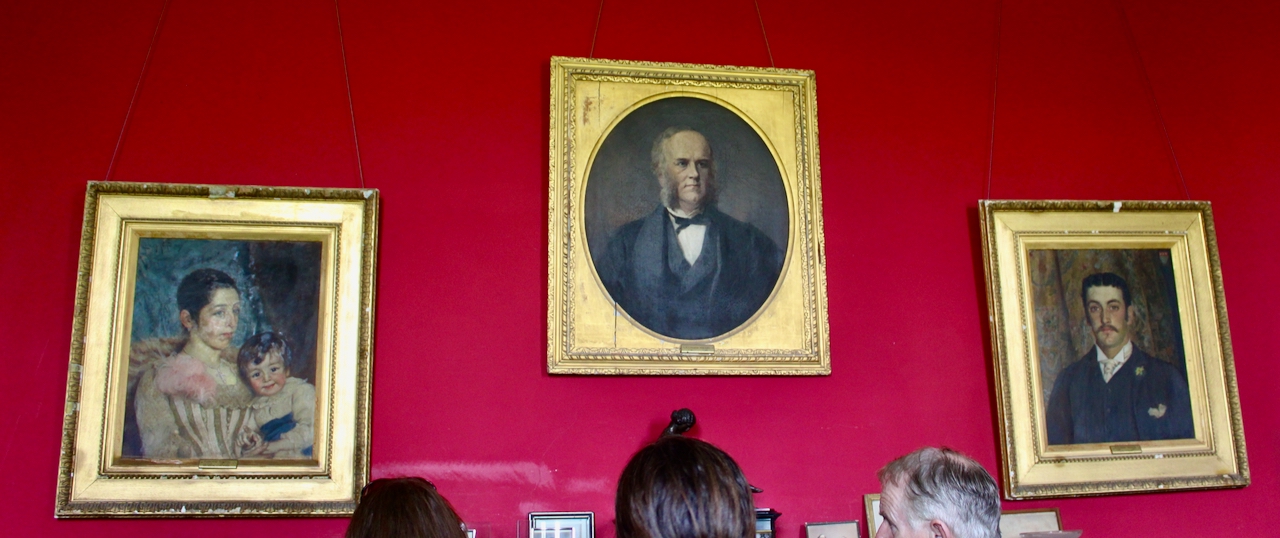
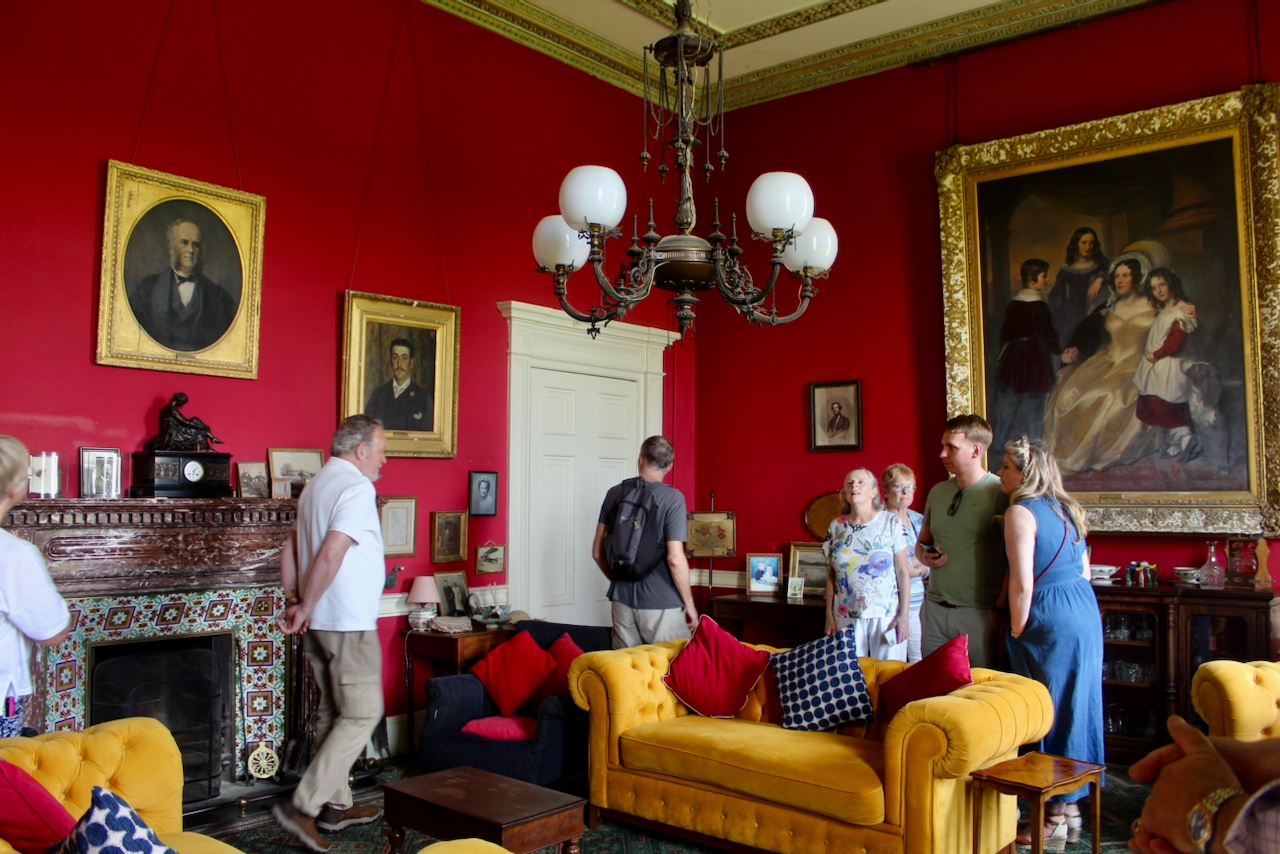
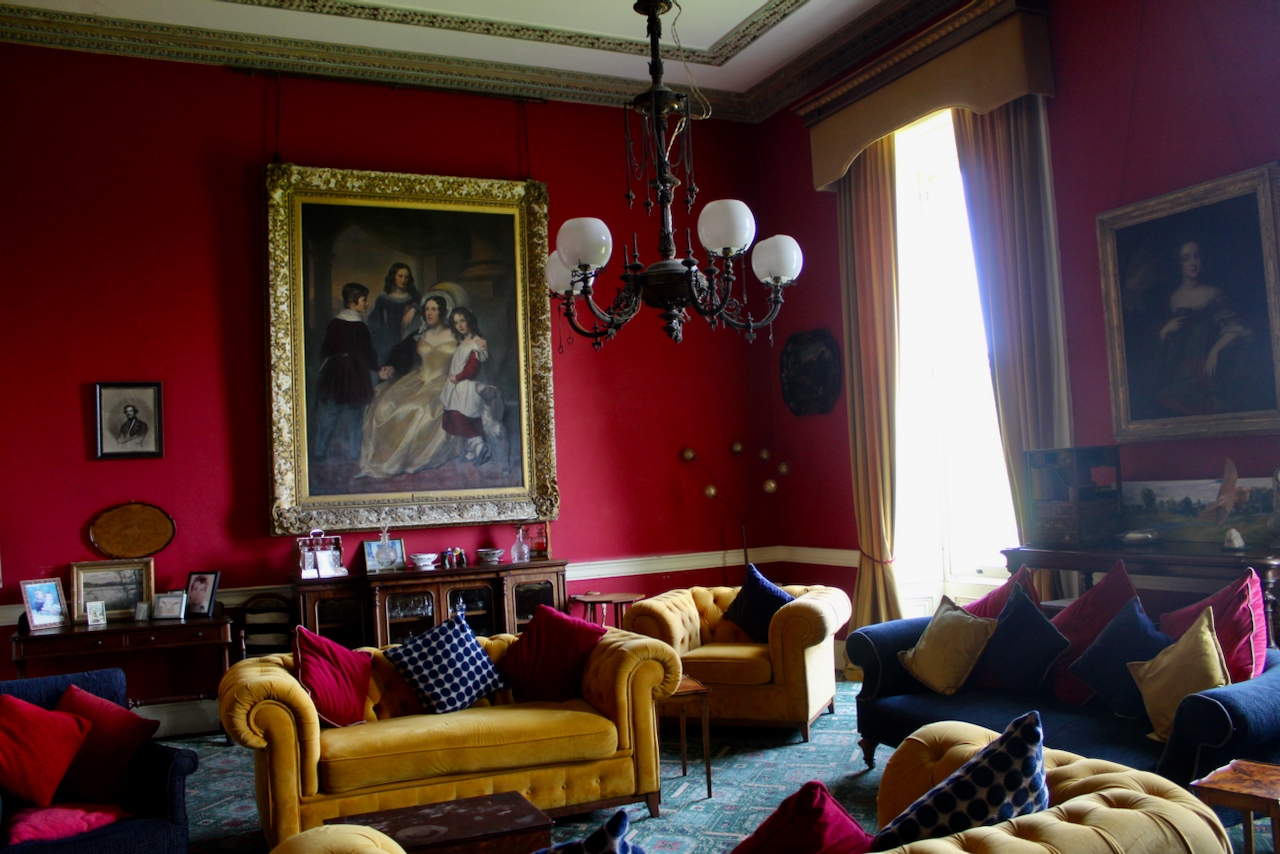
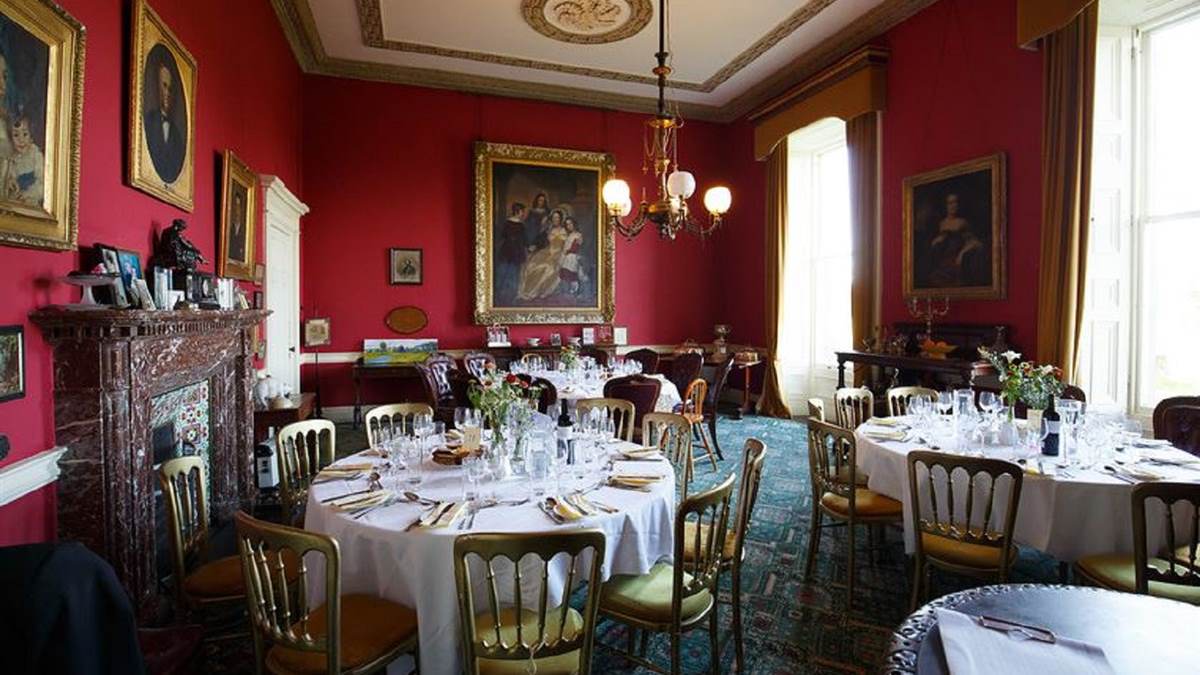
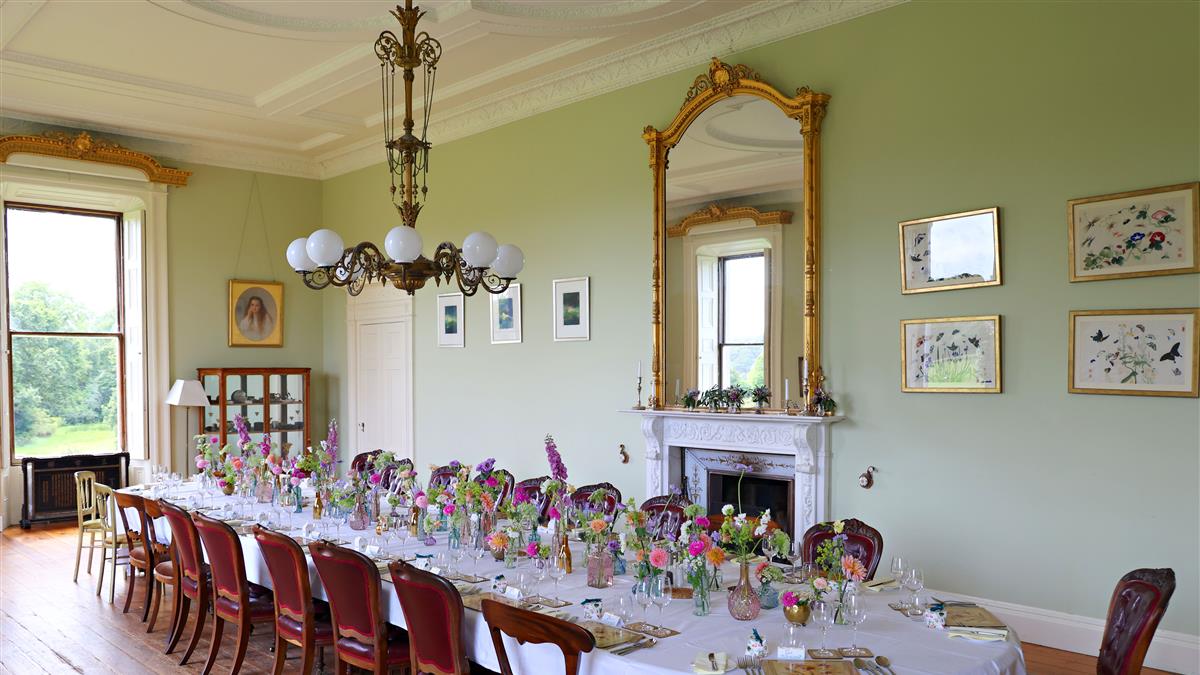
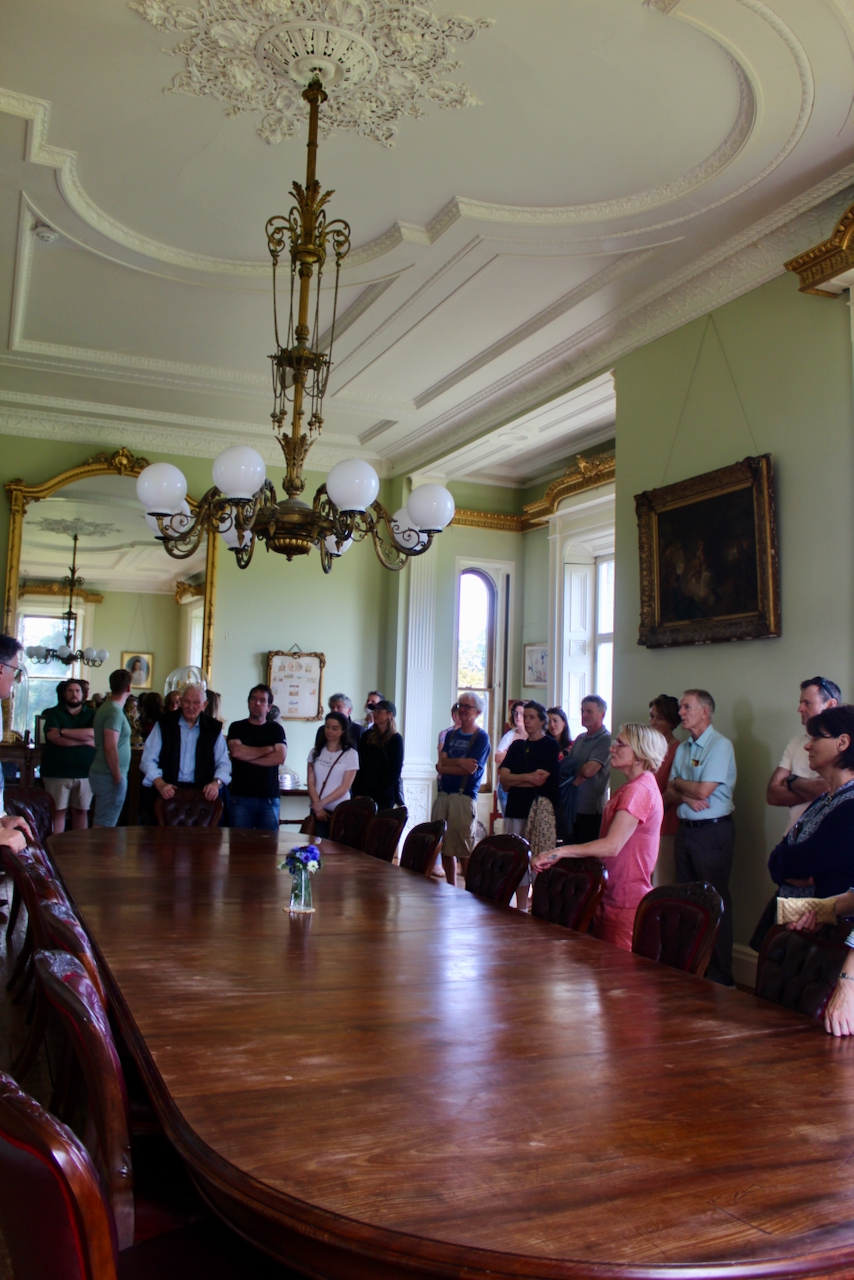
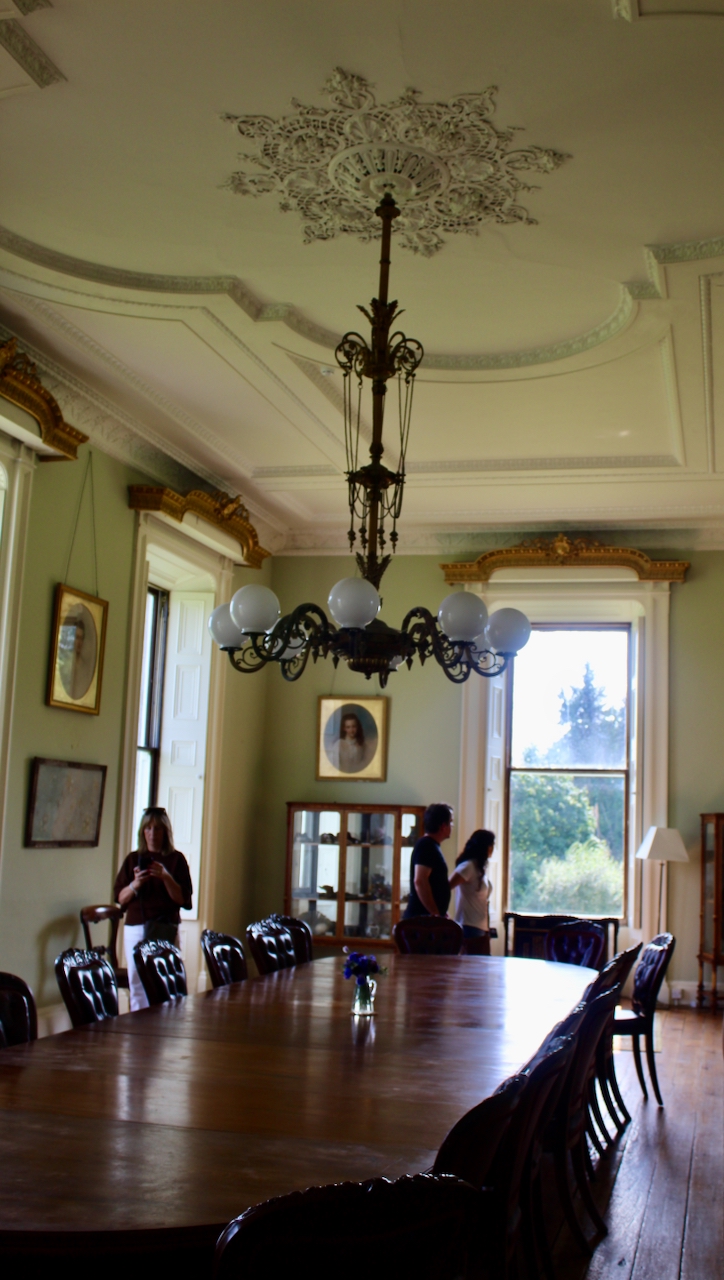
These portraits in the dining room are of Charlotte née O’Hara and her son Alexander, her husband Alec (1859-1887), and in the middle Alec’s father Alexander (1821-1866), of Temple House, County Sligo, August 2025. Photograph © Jennifer Winder-Baggot, www.irishhistorichouses.com
Temple House, County Sligo, August 2025. Photograph © Jennifer Winder-Baggot, www.irishhistorichouses.com
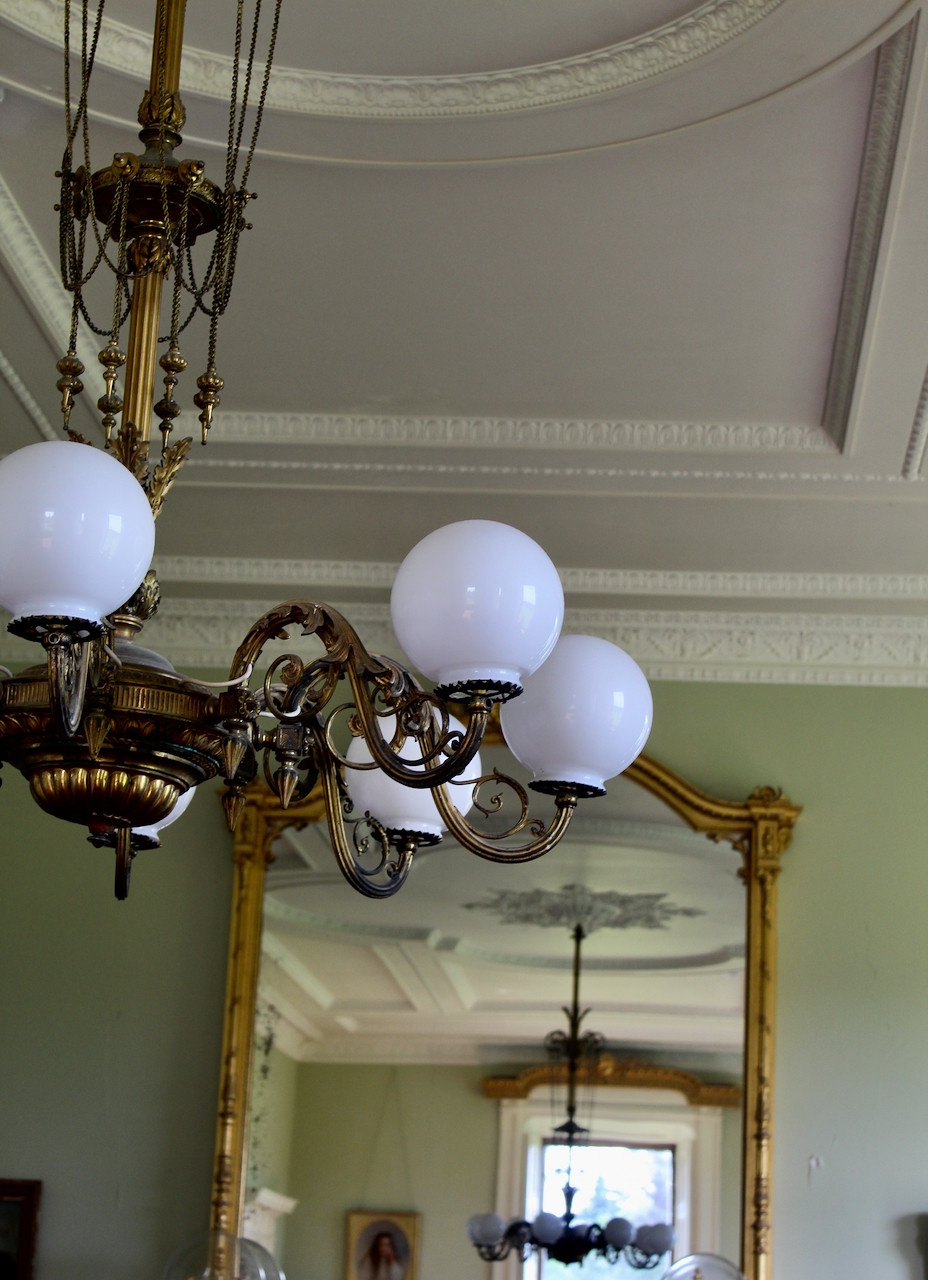
The gasolier lamps remind us that the property generated its own gas at one time.

Temple House, County Sligo, August 2025. Photograph © Jennifer Winder-Baggot, www.irishhistorichouses.com
Temple House, Sligo, photograph courtesy of website.
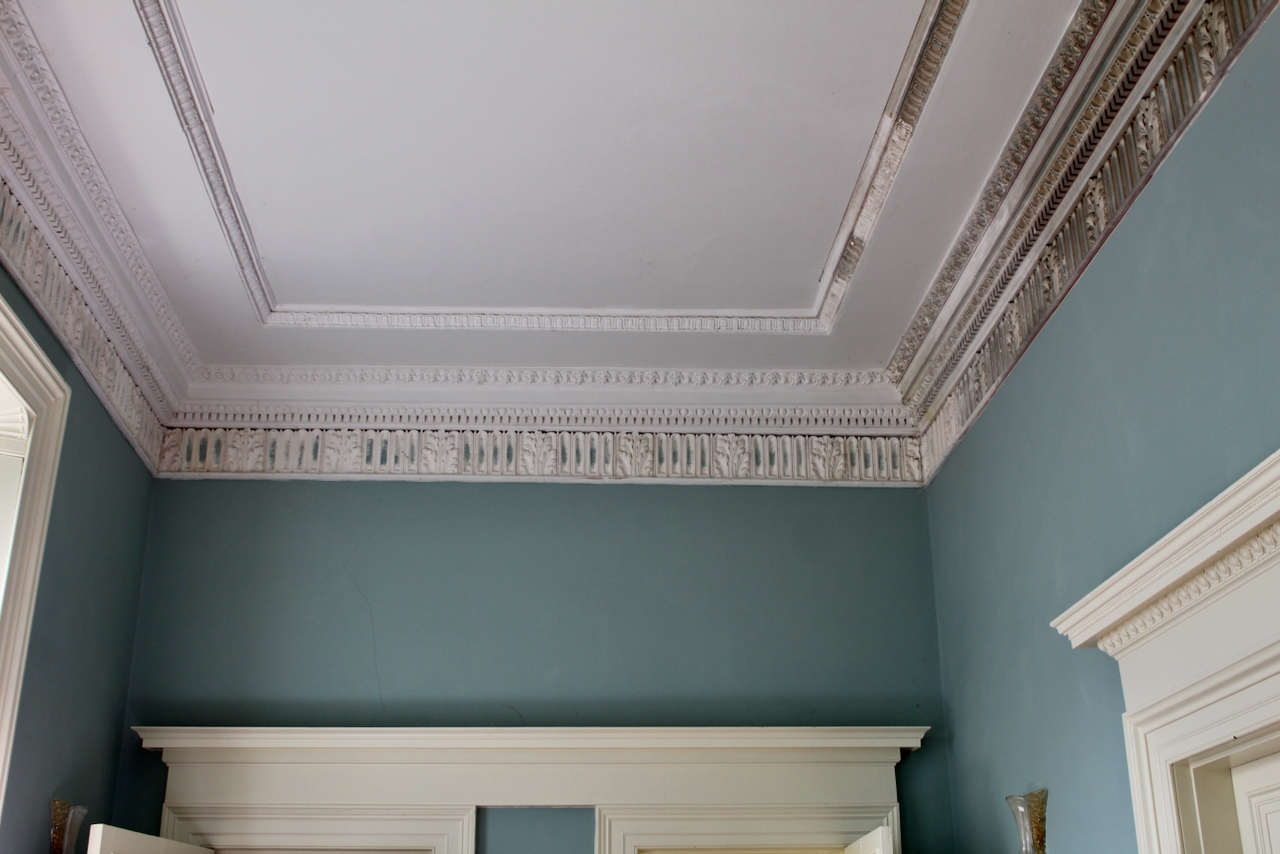
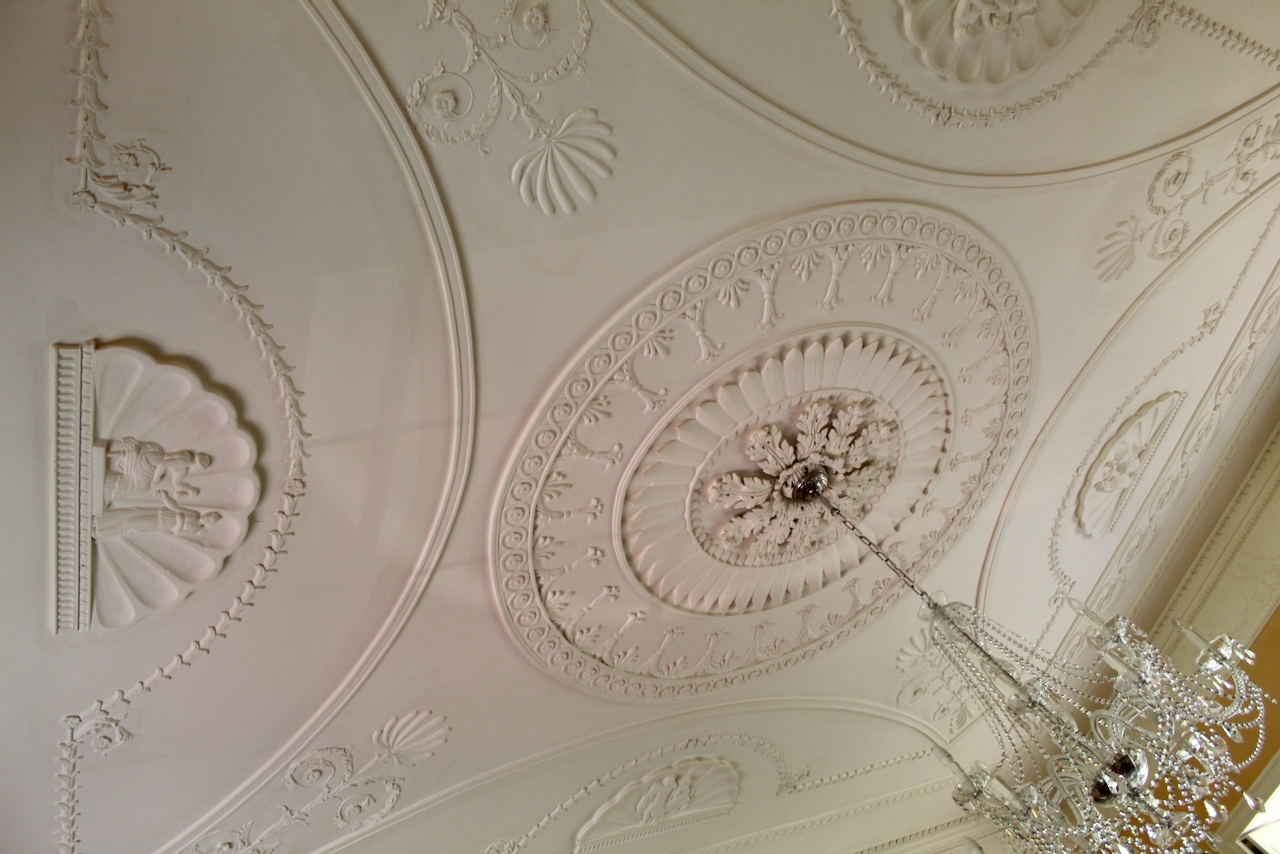
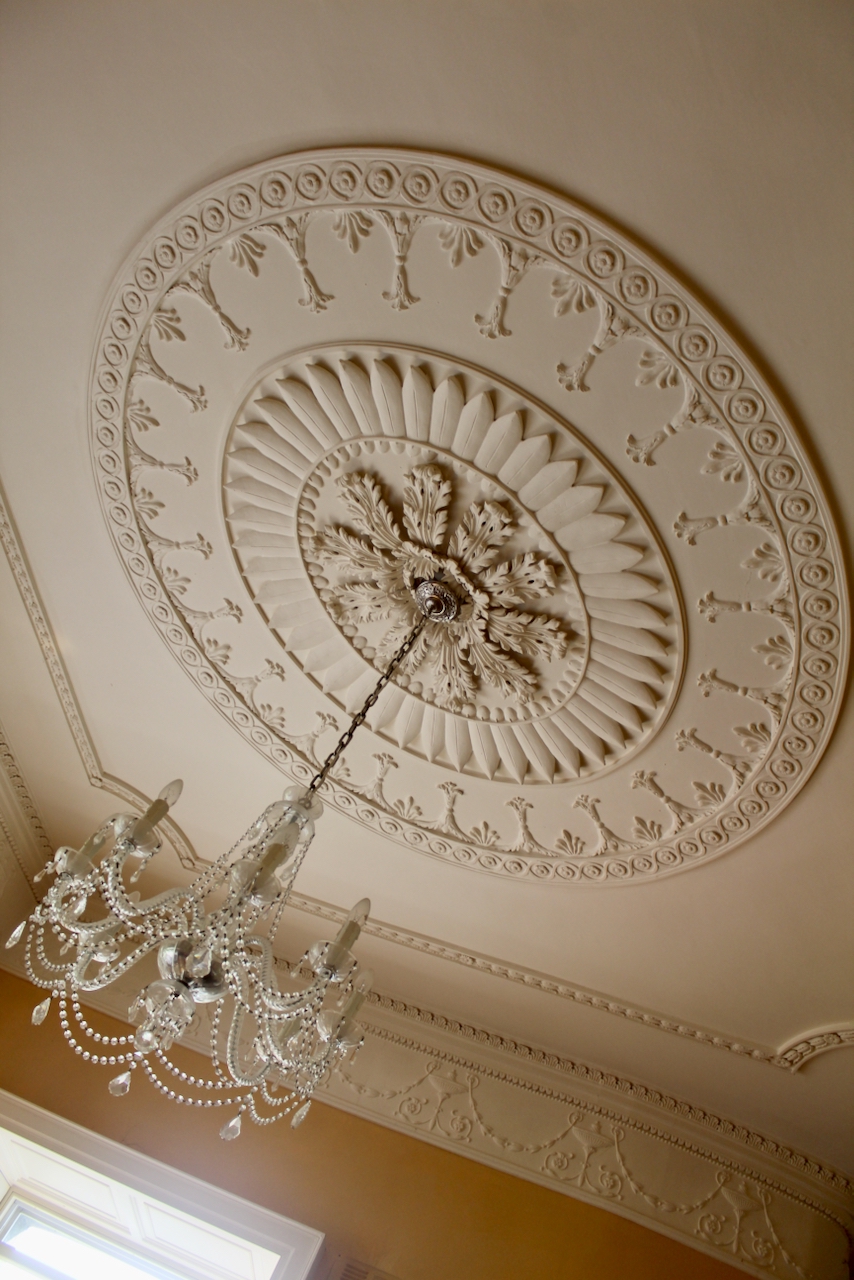
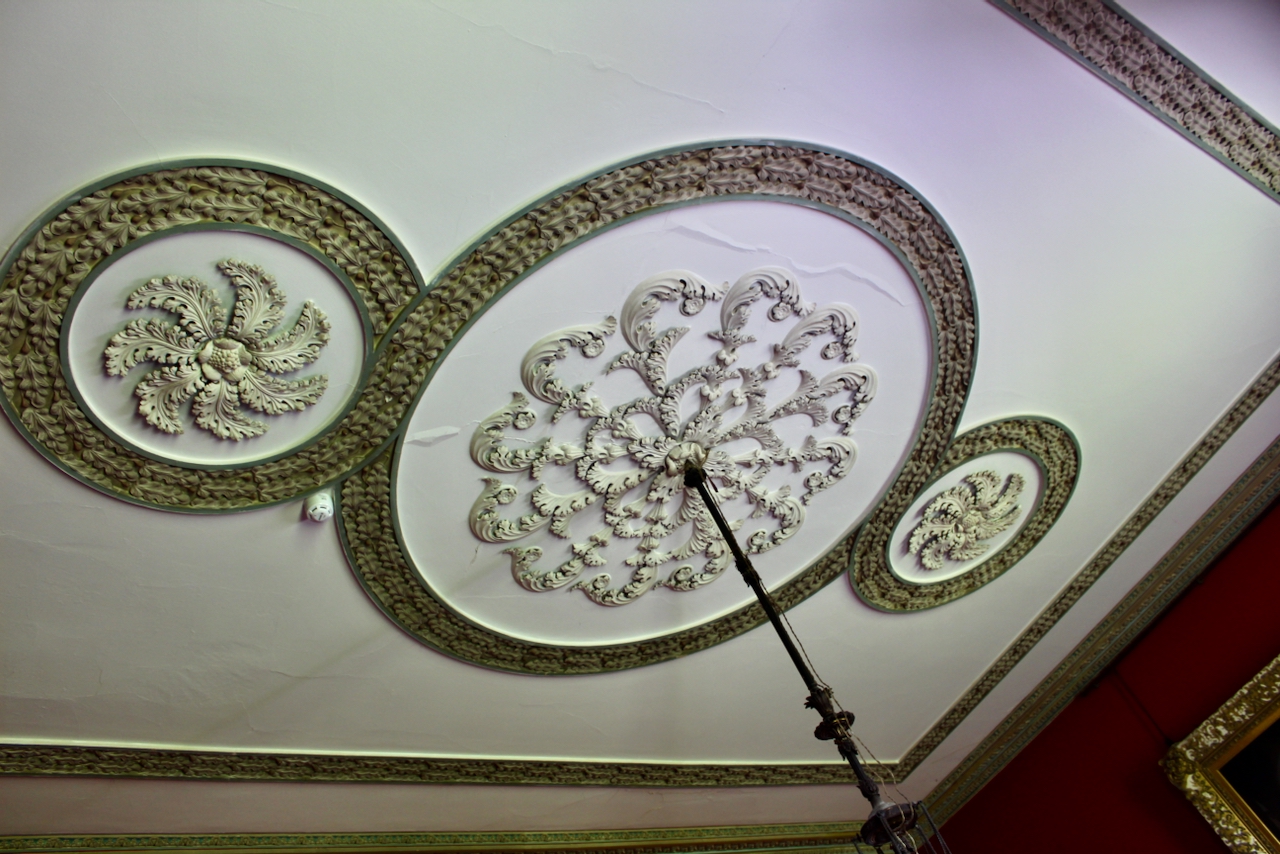
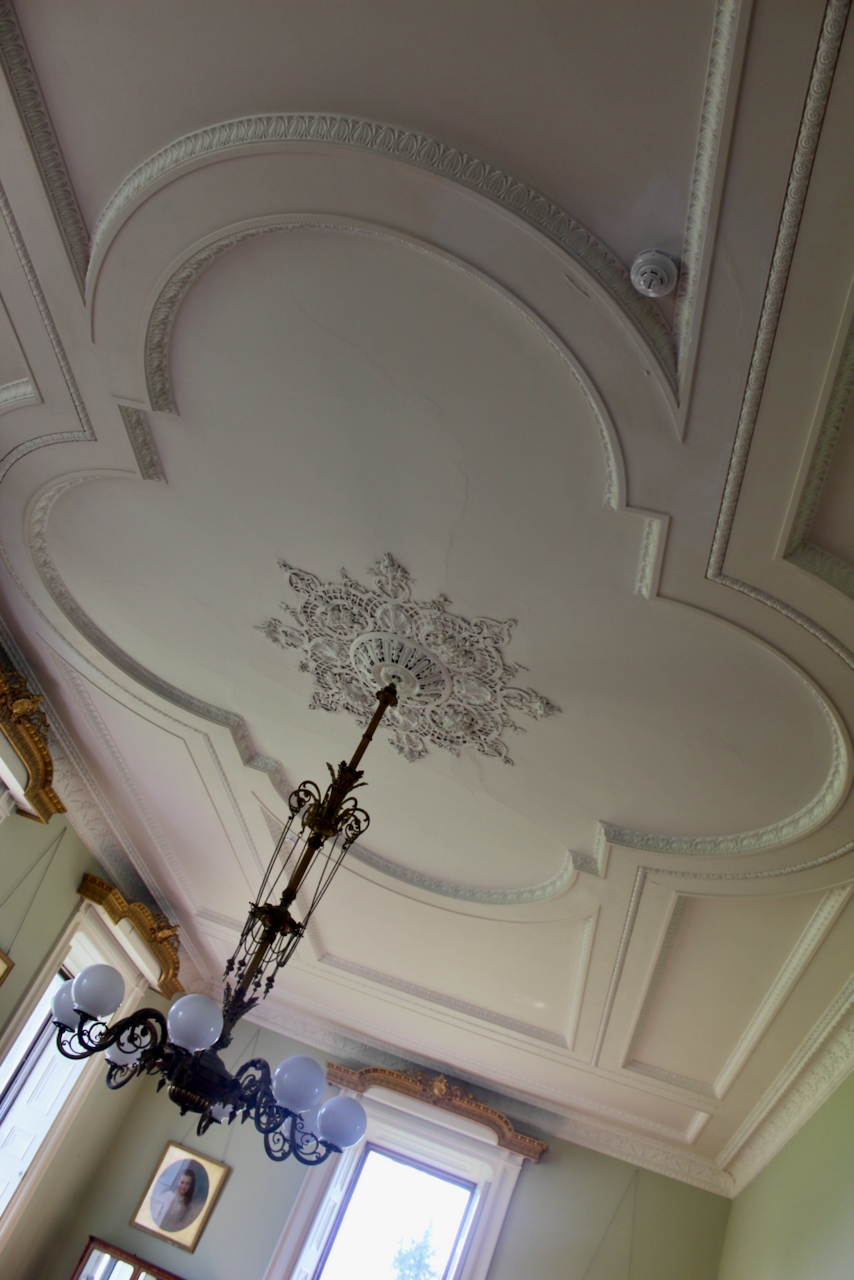
The ceiling of the dining room in Temple House, County Sligo, August 2025. Photograph © Jennifer Winder-Baggot, www.irishhistorichouses.com
Five years after being closed up, in 1953, Ascelin’s son Alex, who had been a tea planter in what was then known as Burma, returned with his wife Yvonne to run the estate. They renovated the house, patched up the roof and installed a new kitchen. Alex modernised the farm.

It was their son Sandy and his wife who decided to take advantage of the size of the house to run a bed and breakfast, which opened in 1980. In 2004 their son Roderick returned to Temple House with his wife and children and took over running the business and the farm.

Photograph courtesy of Temple house website.
Temple House, County Sligo, August 2025. Photograph © Jennifer Winder-Baggot, www.irishhistorichouses.com
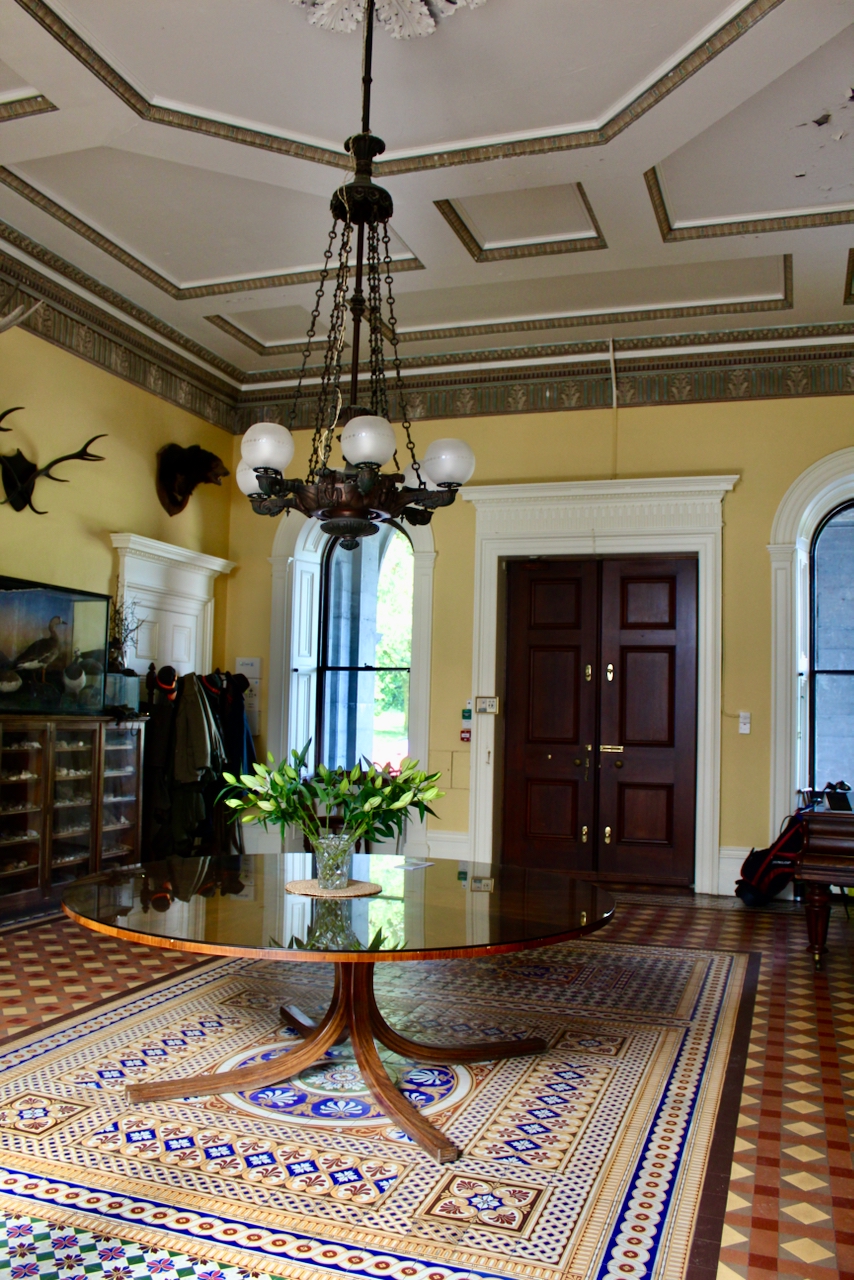
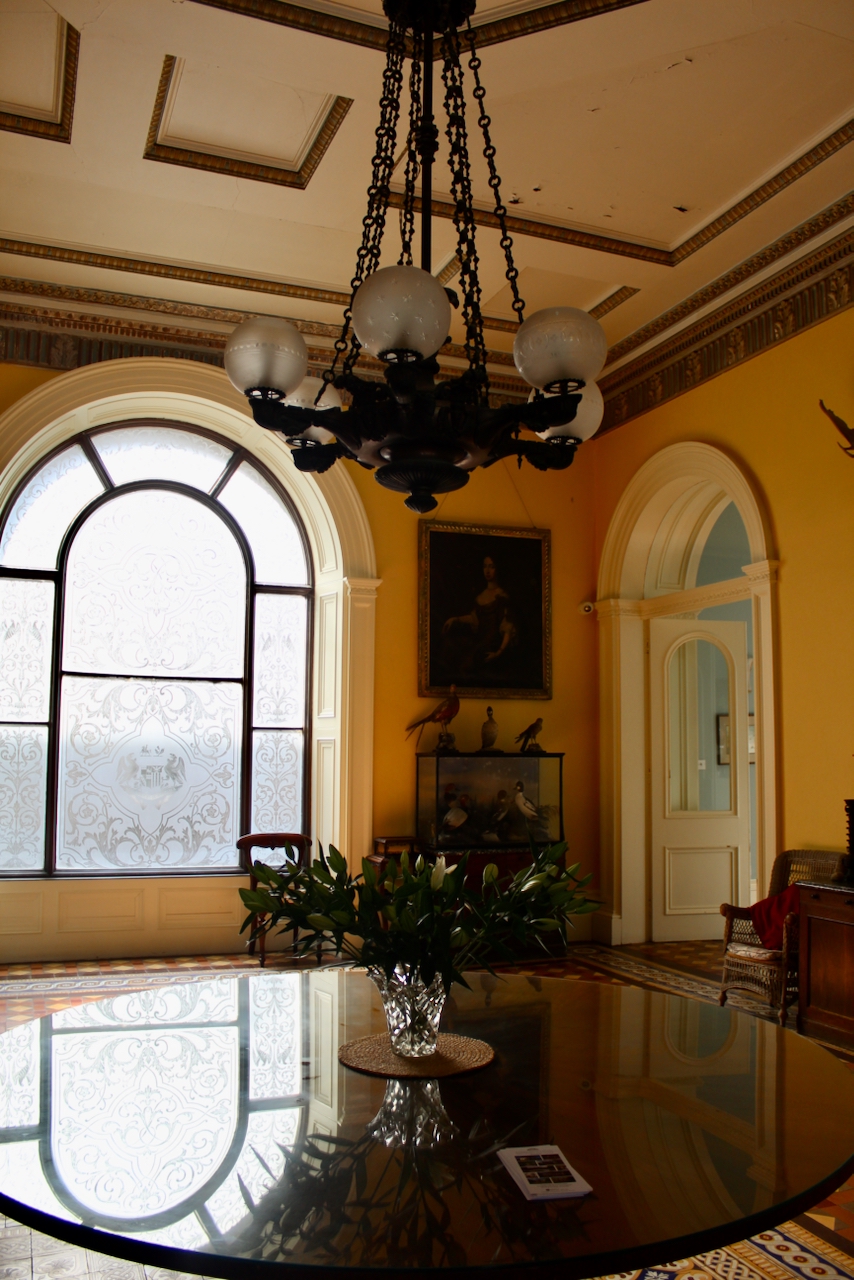
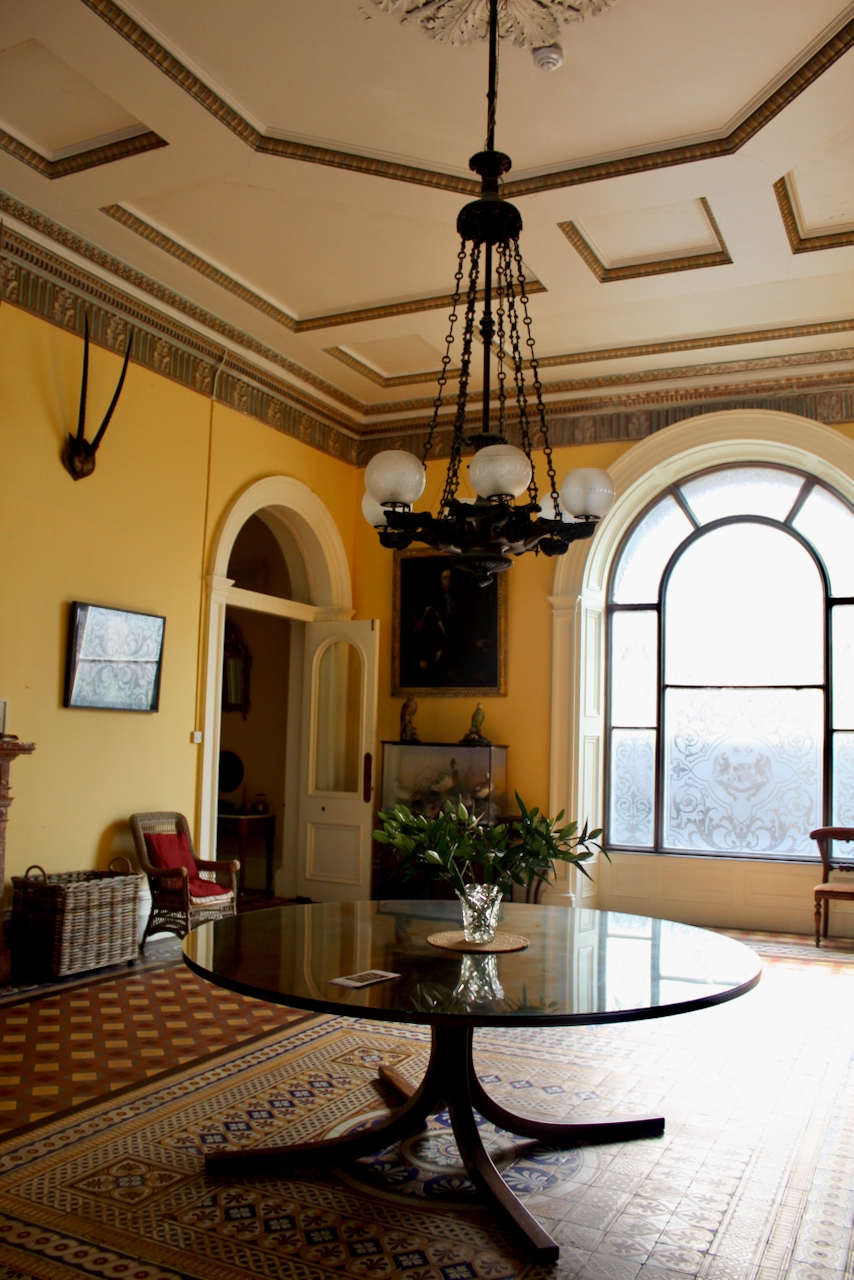
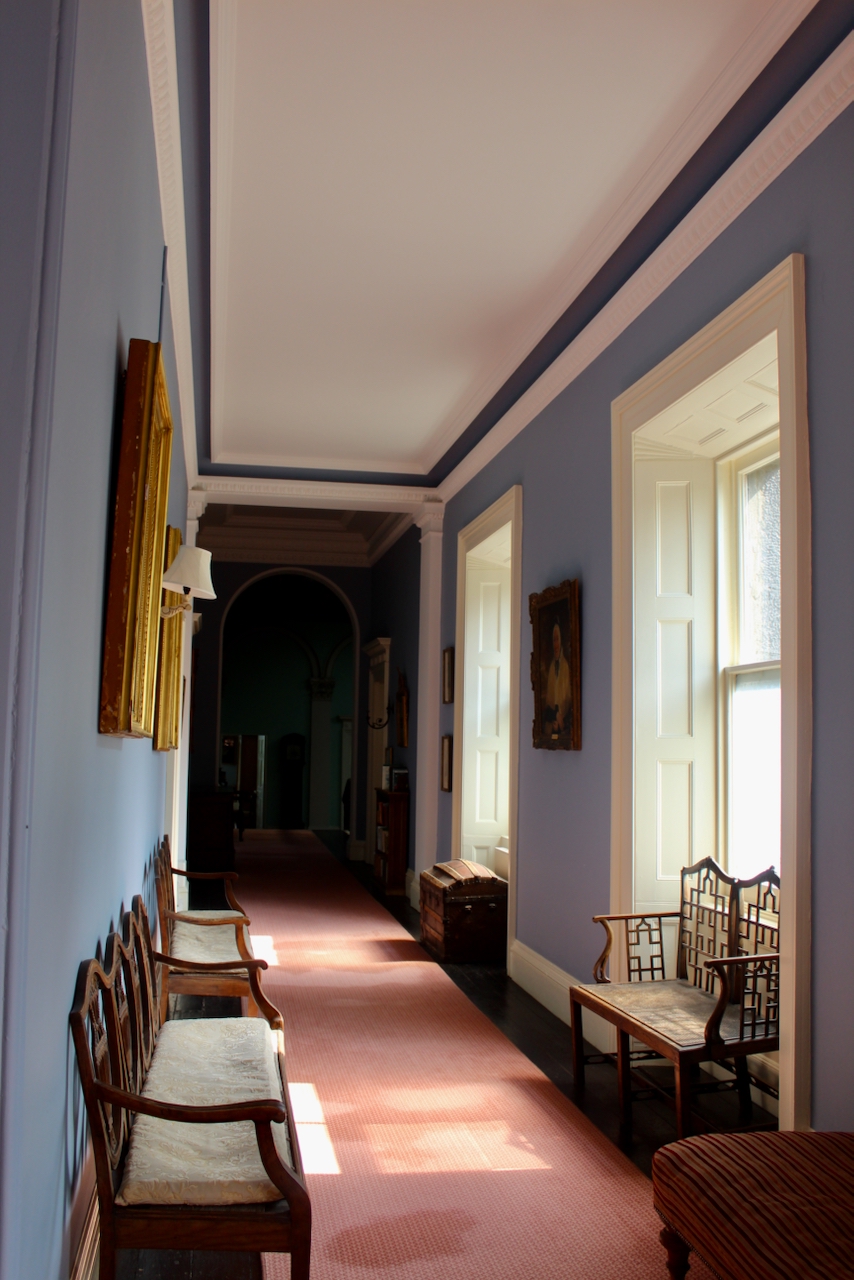
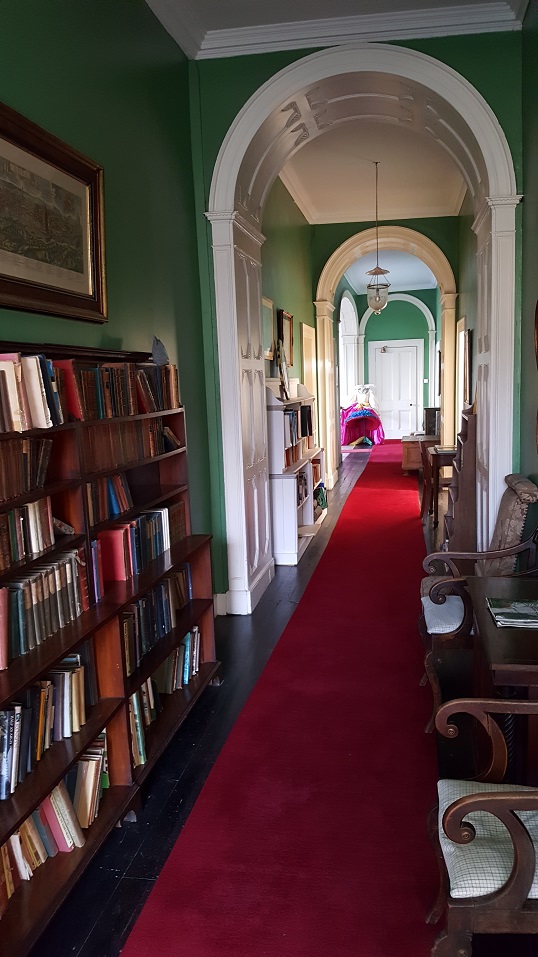
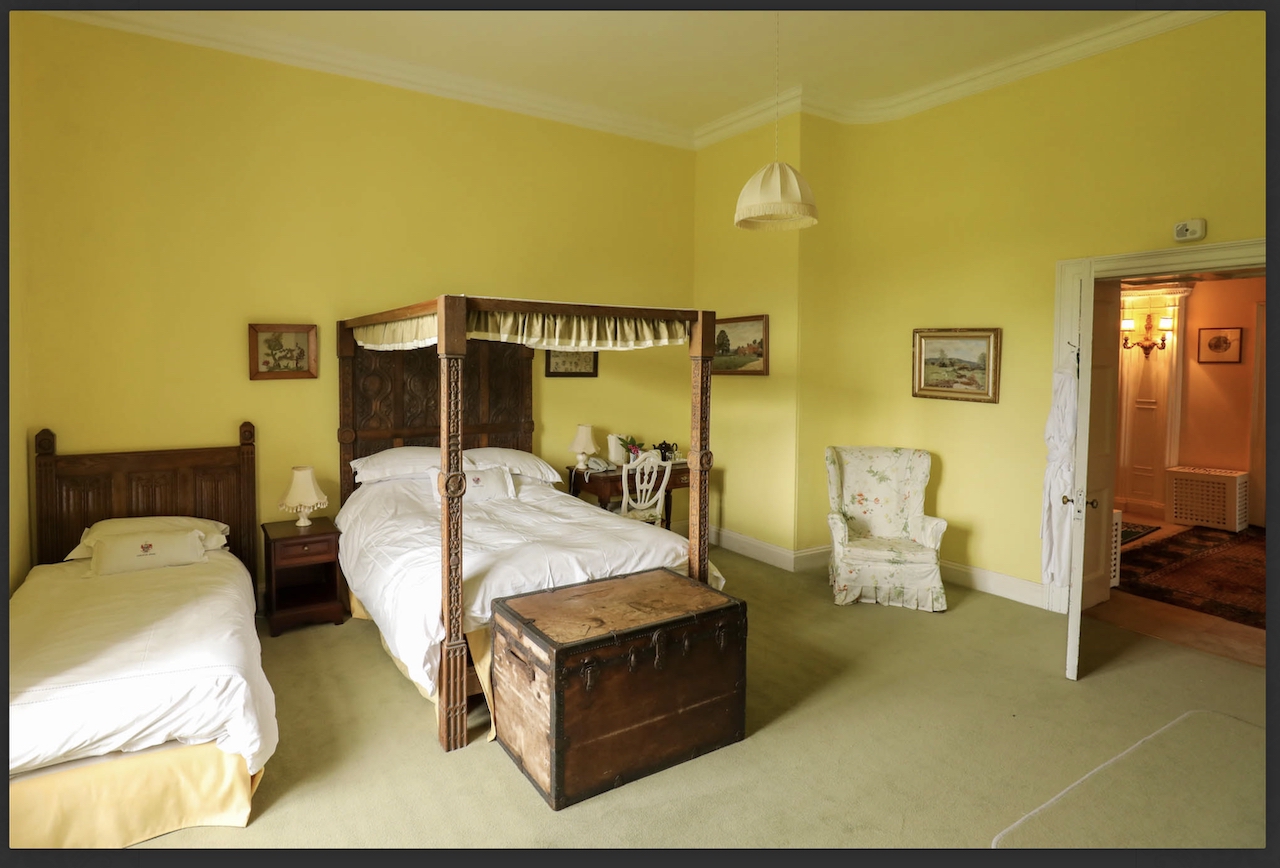
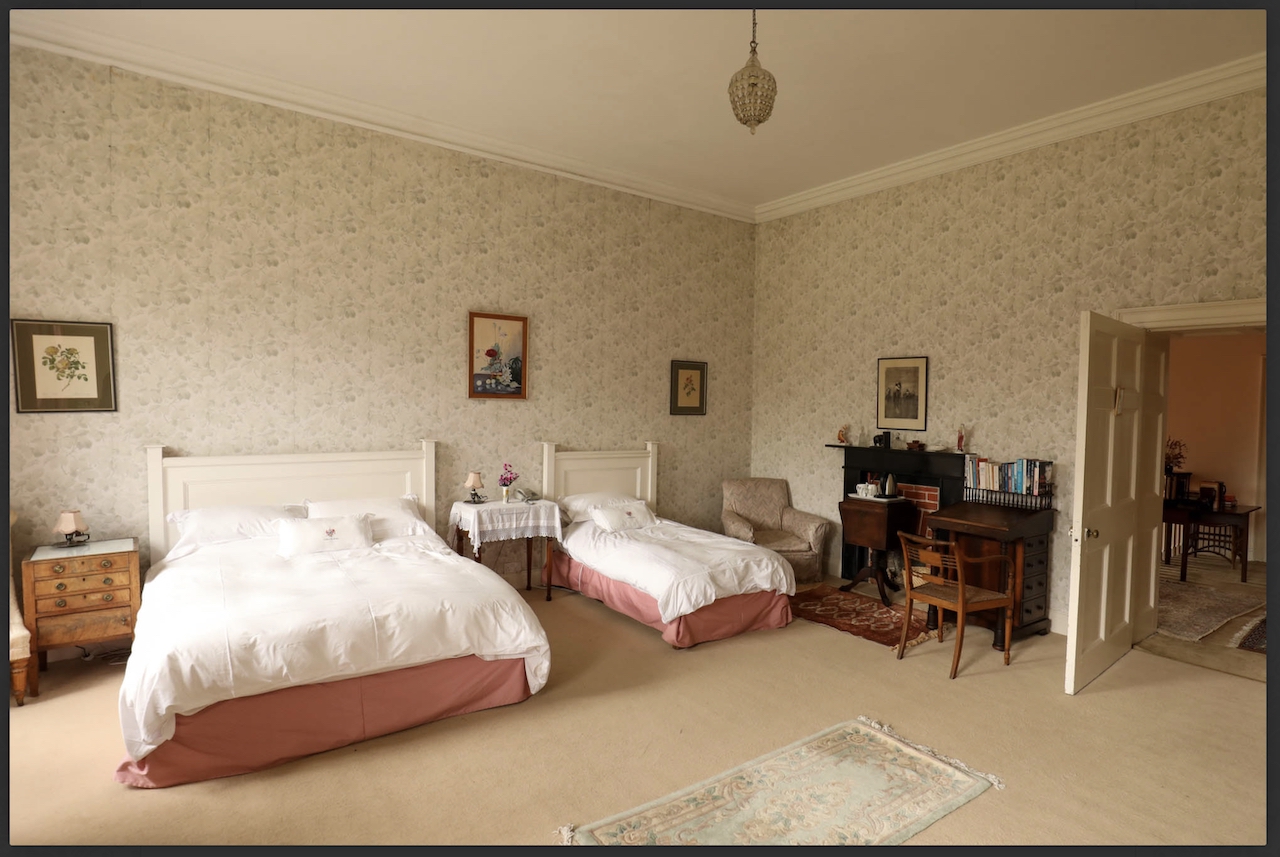
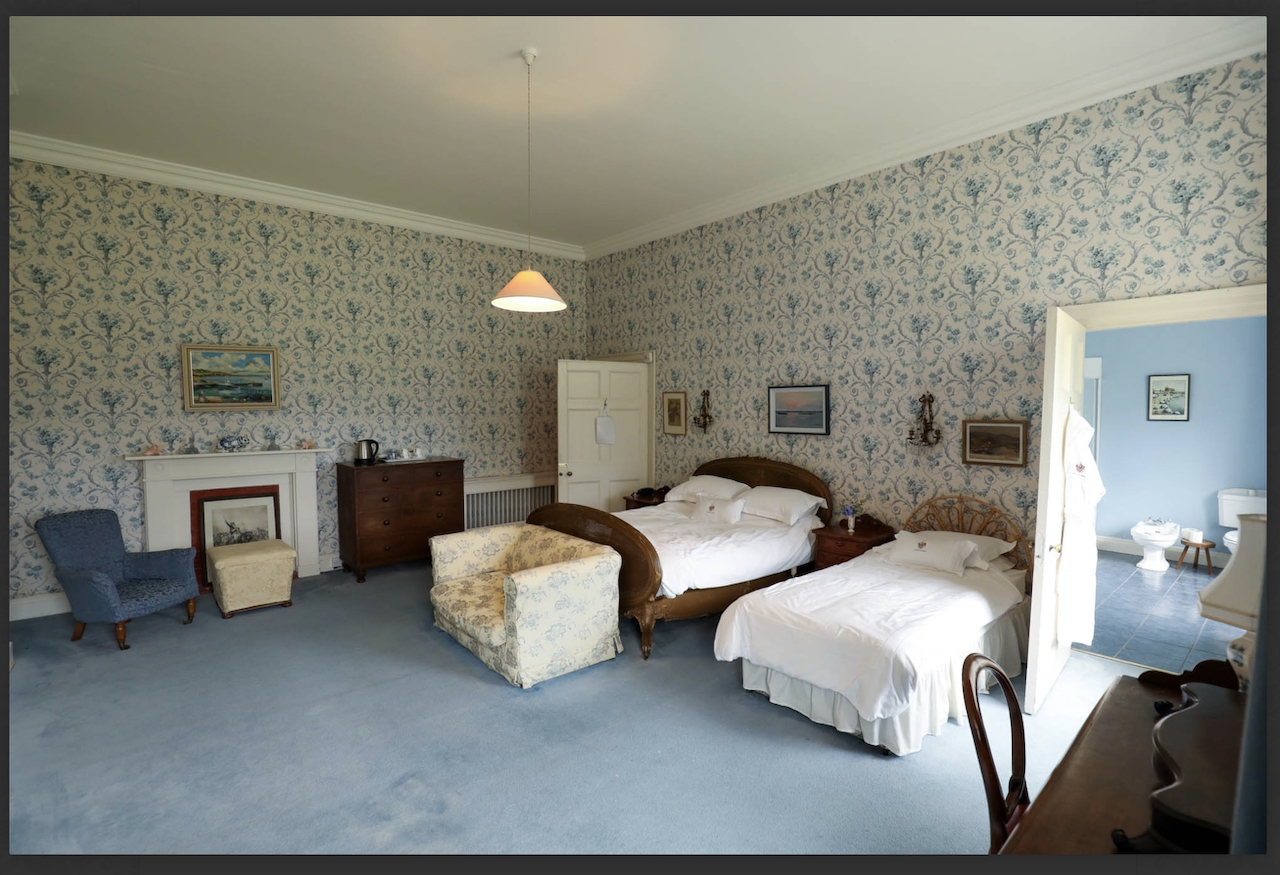
Roderick told us about the family as we toured the stair hall vestibule, drawing room and dining room, then brought us across the front hall to the newly renovated part of the house, which includes a former gun room passage. He managed to find craftsmen to do repairs, including the windows, moulding and plasterwork. After the tour, he kindly let us wander around the house, including up to the bedrooms.

The Gun Room Passage, photograph from the house website.
The wing that is being renovated. Temple House, County Sligo, August 2025. Photograph © Jennifer Winder-Baggot, www.irishhistorichouses.com
Temple House, County Sligo, August 2025. Photograph © Jennifer Winder-Baggot, www.irishhistorichouses.com
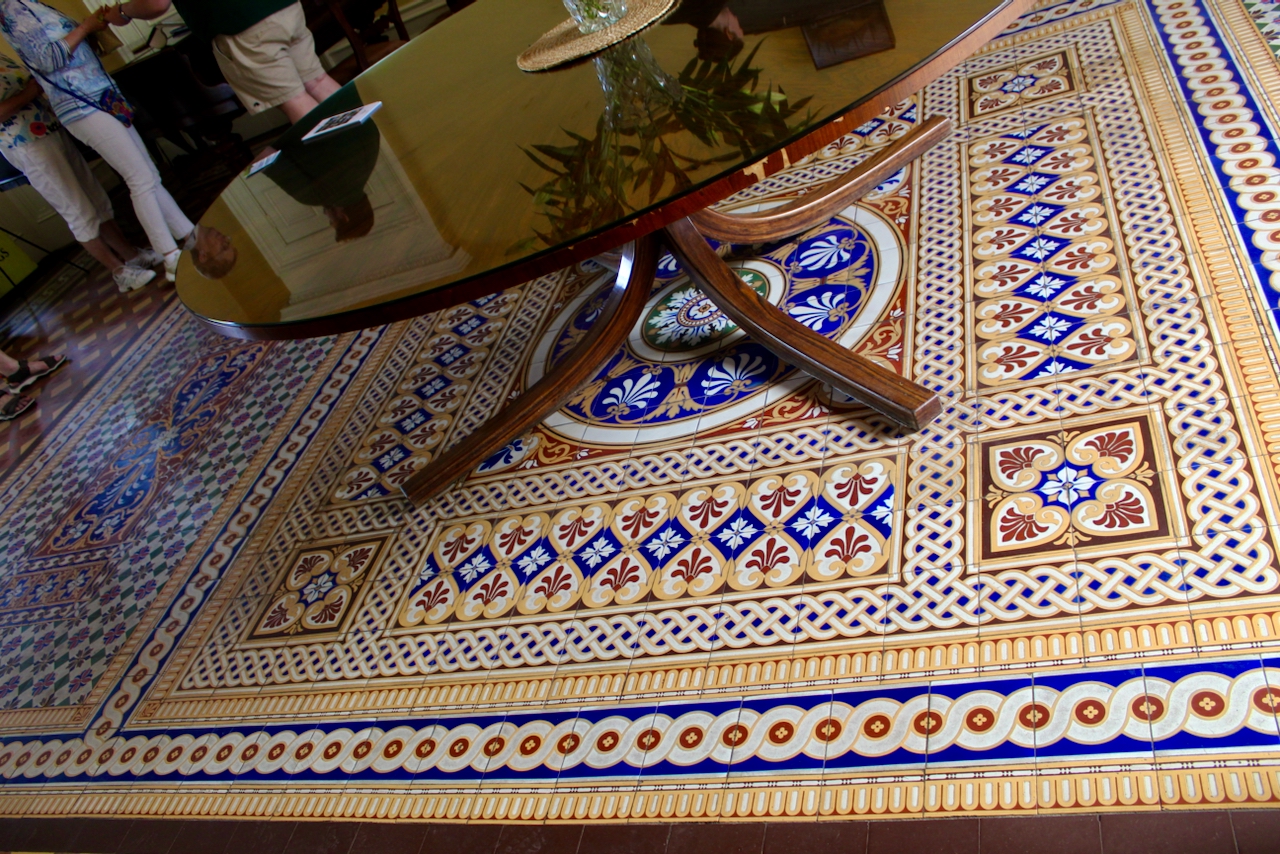
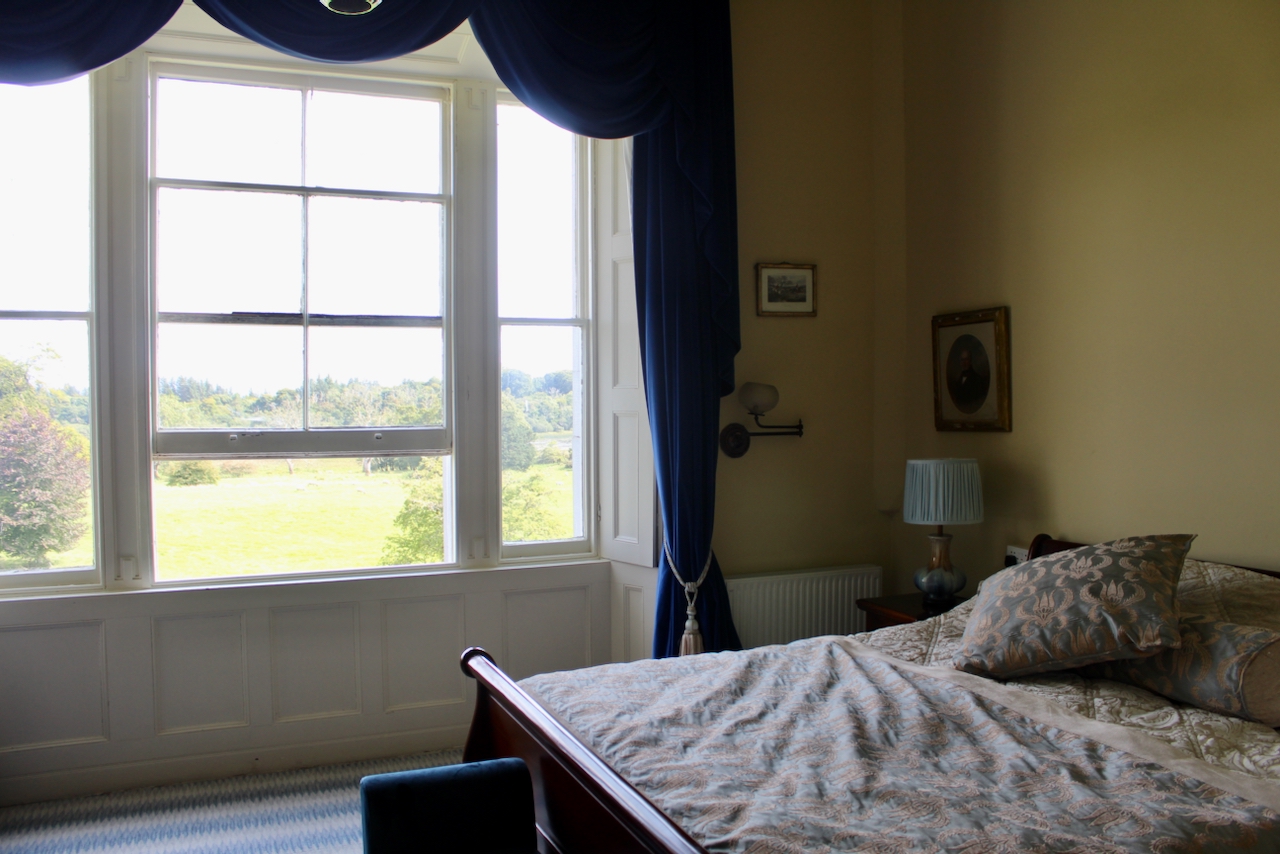
Guinness and Fitzgerald tell us about the bedrooms:

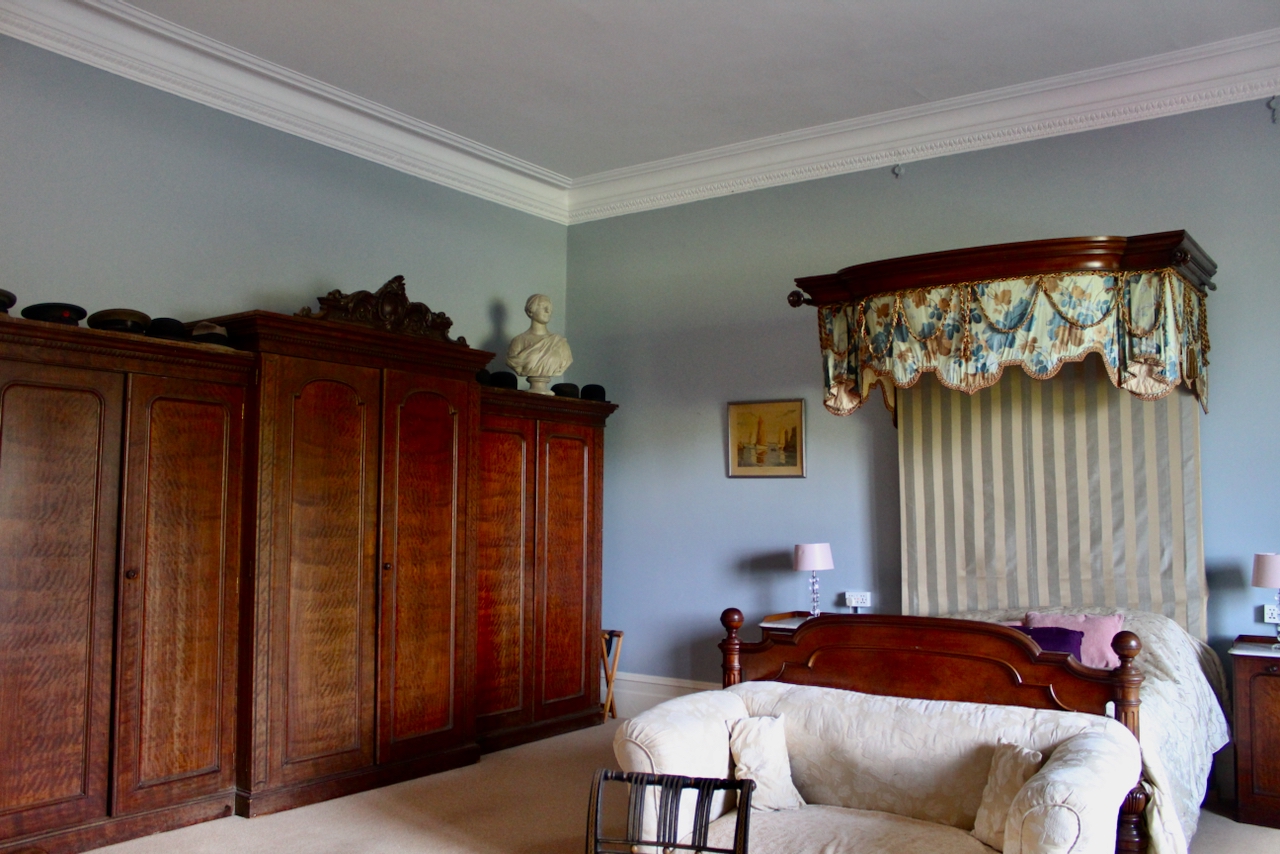
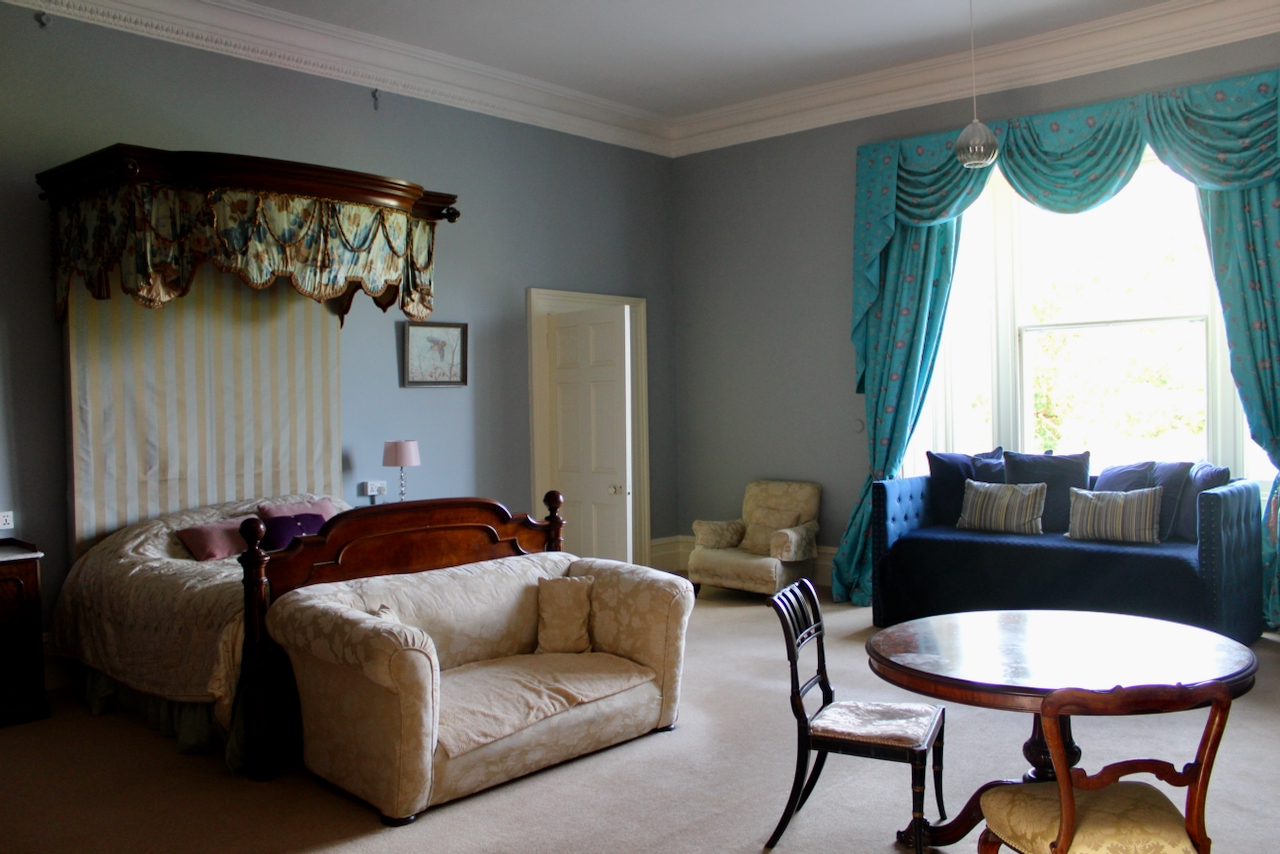
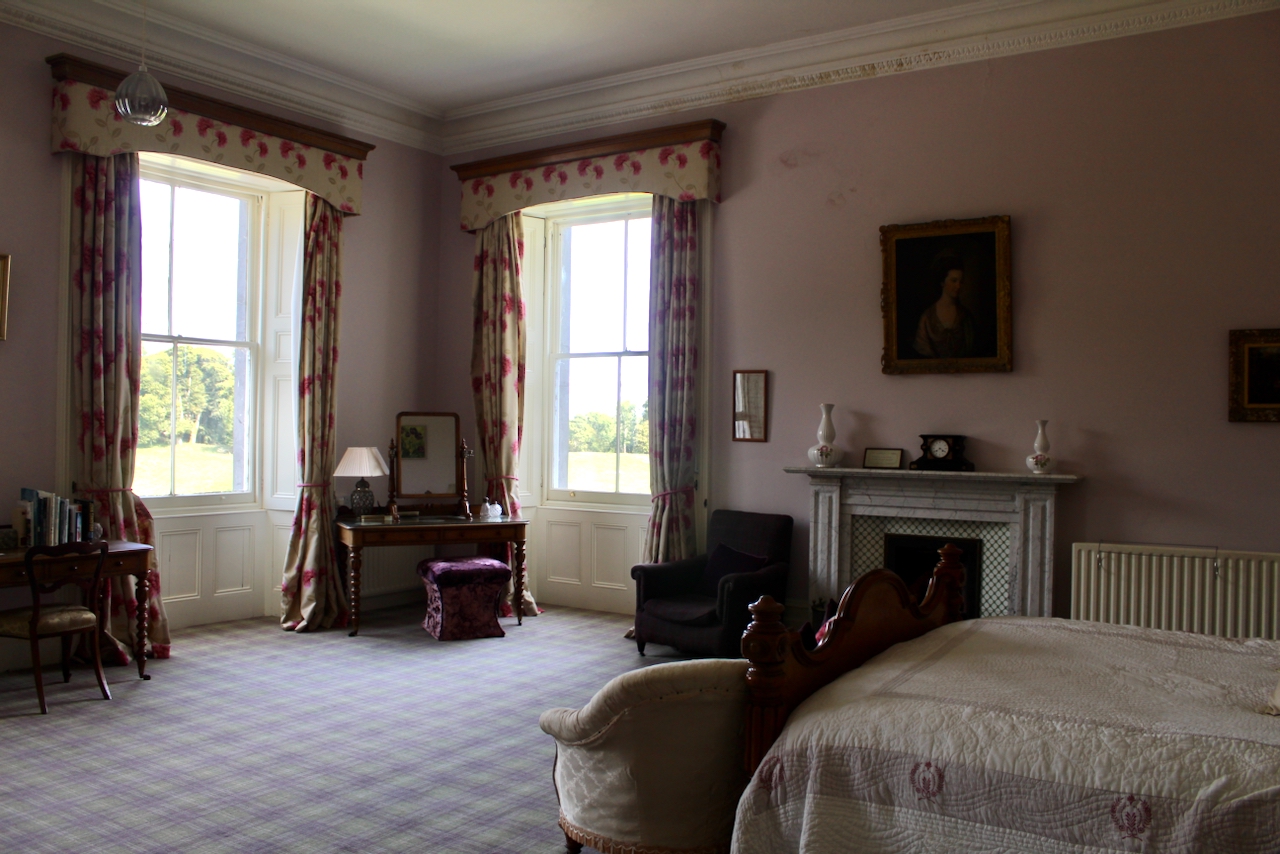
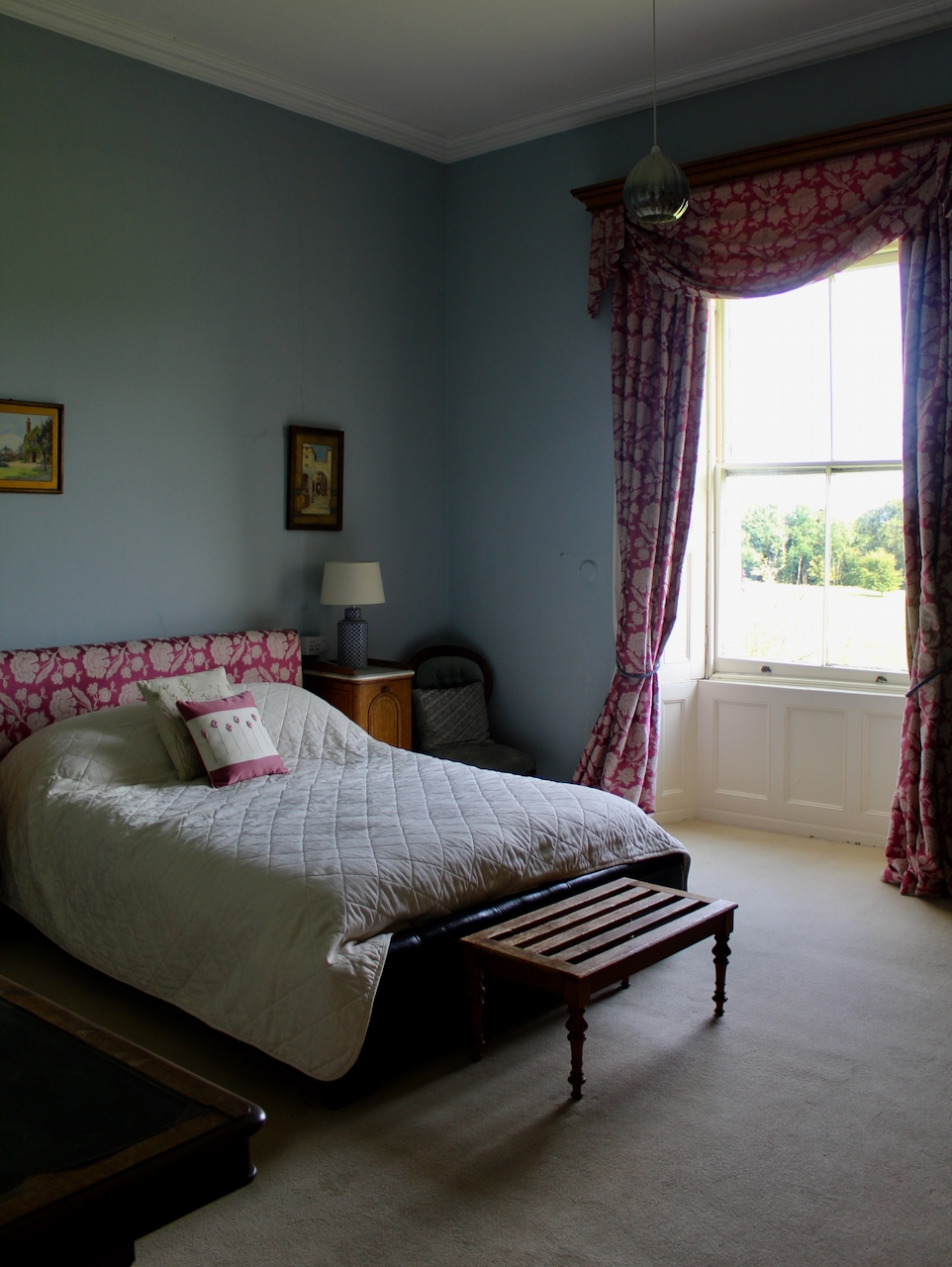
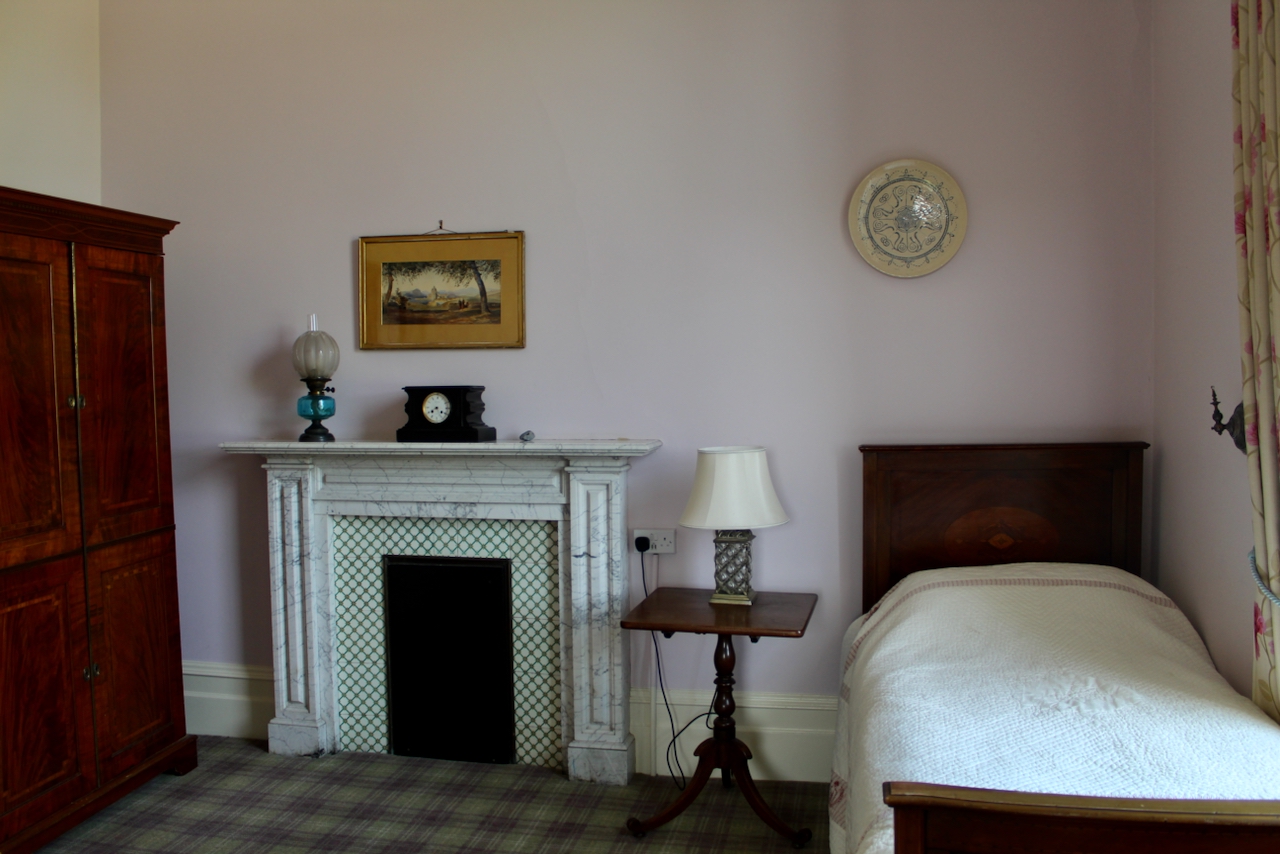
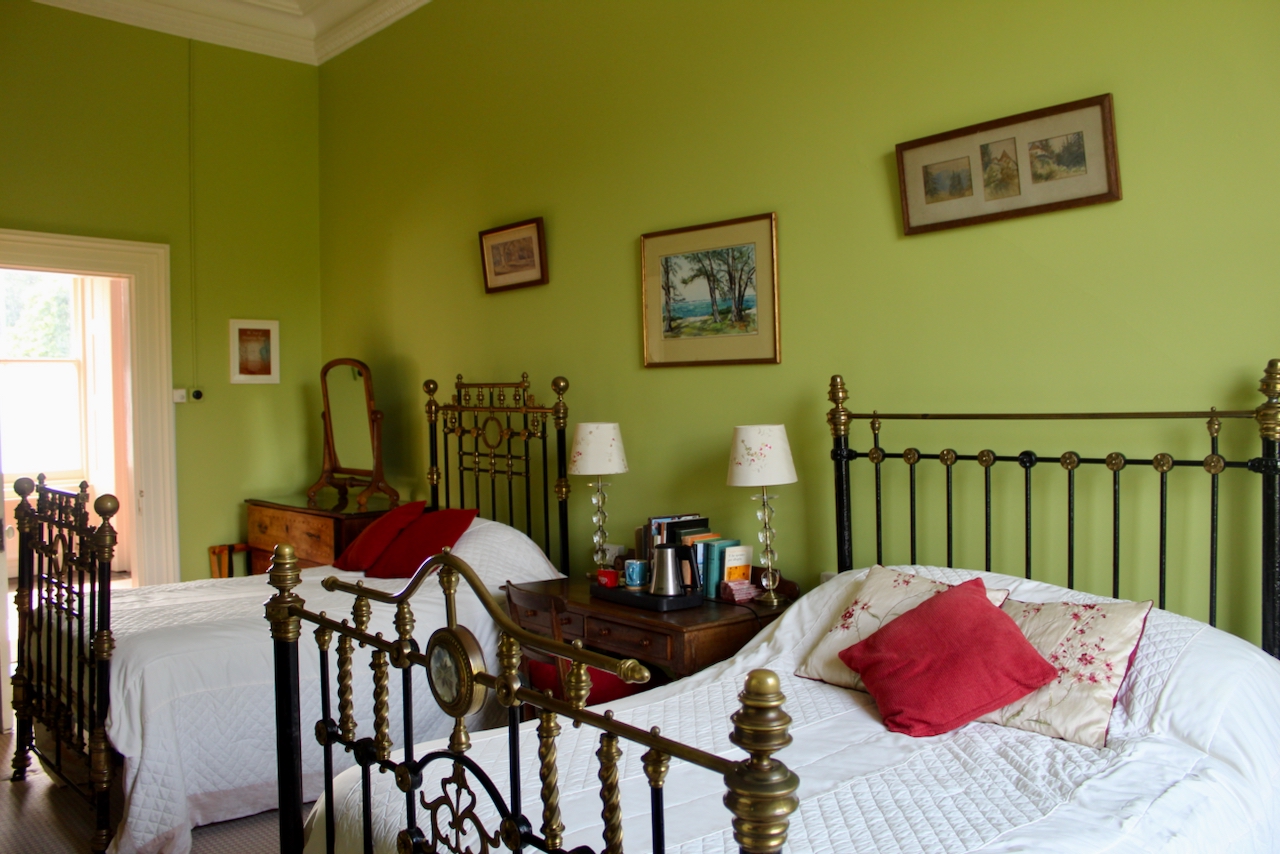
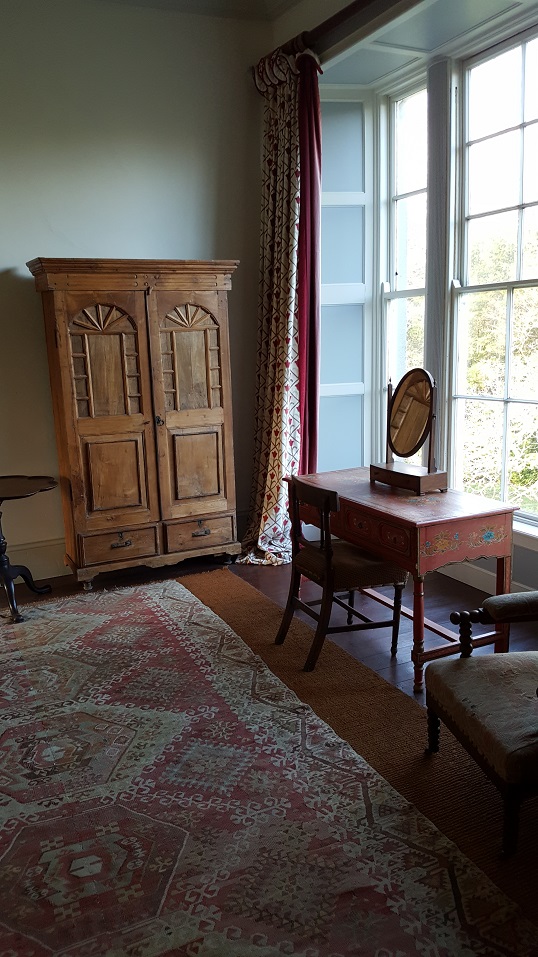
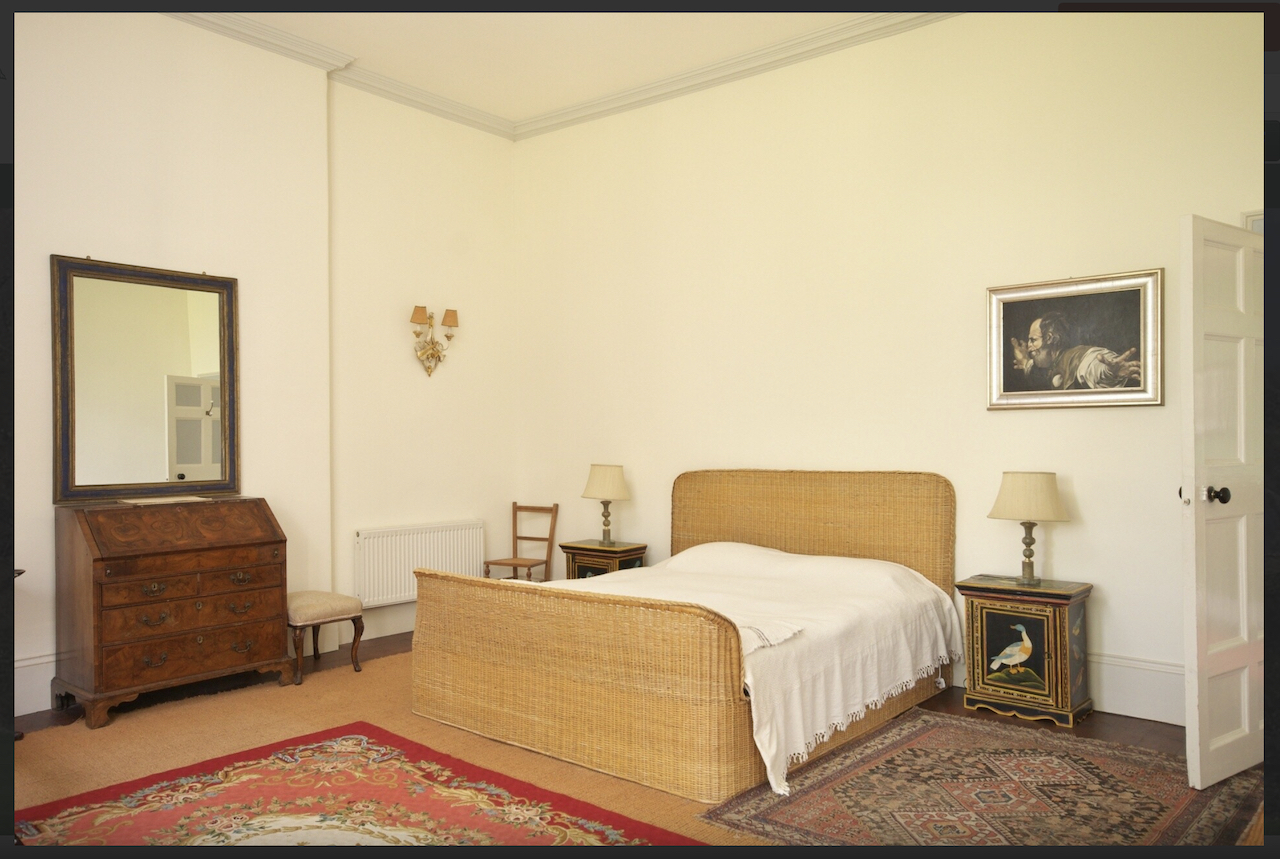
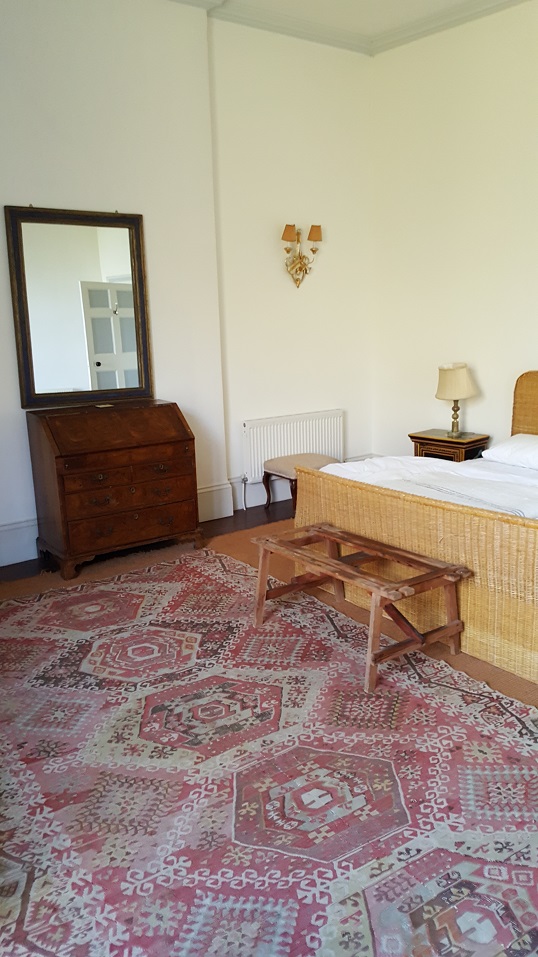
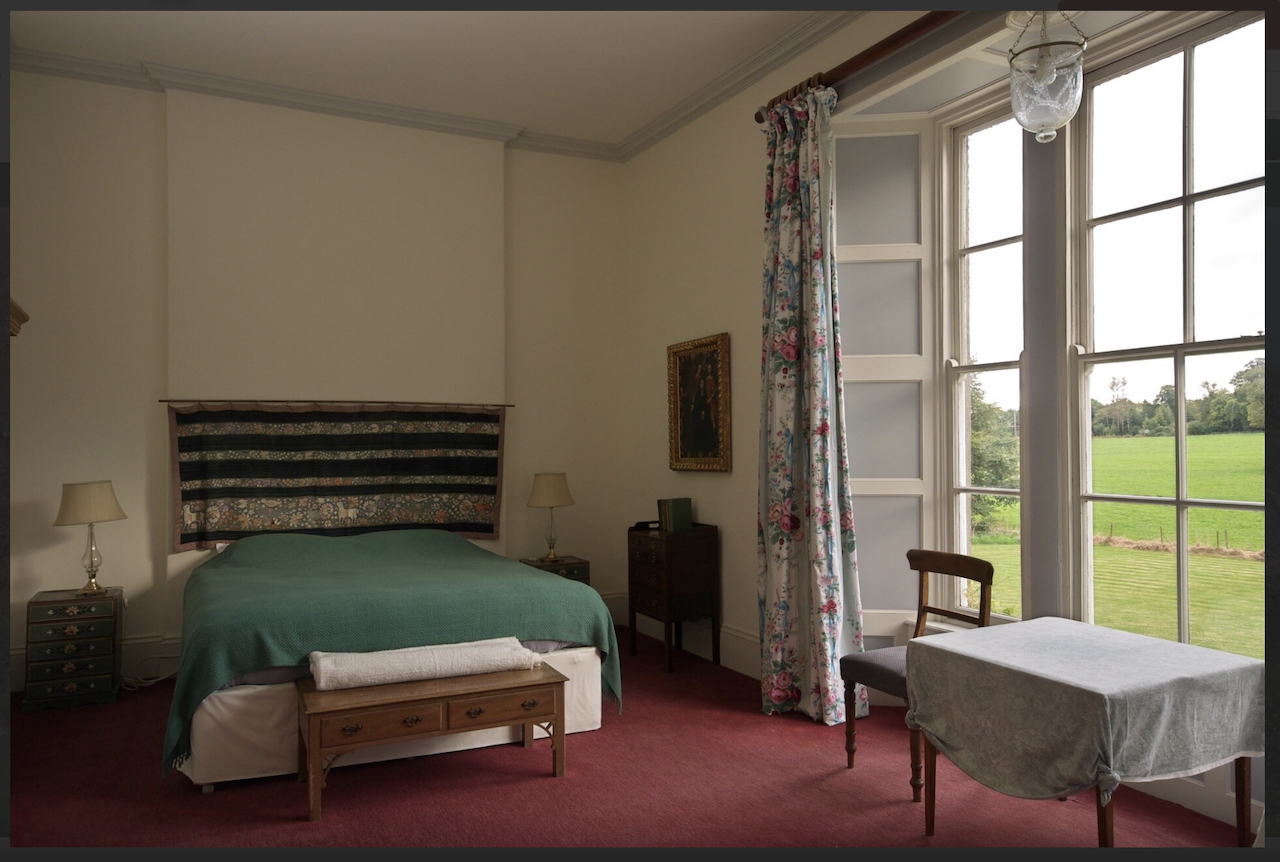
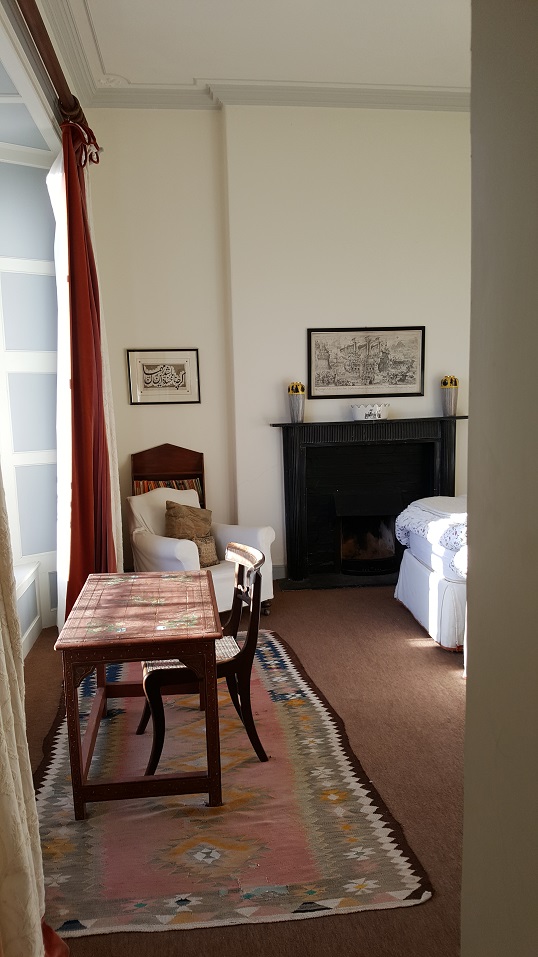
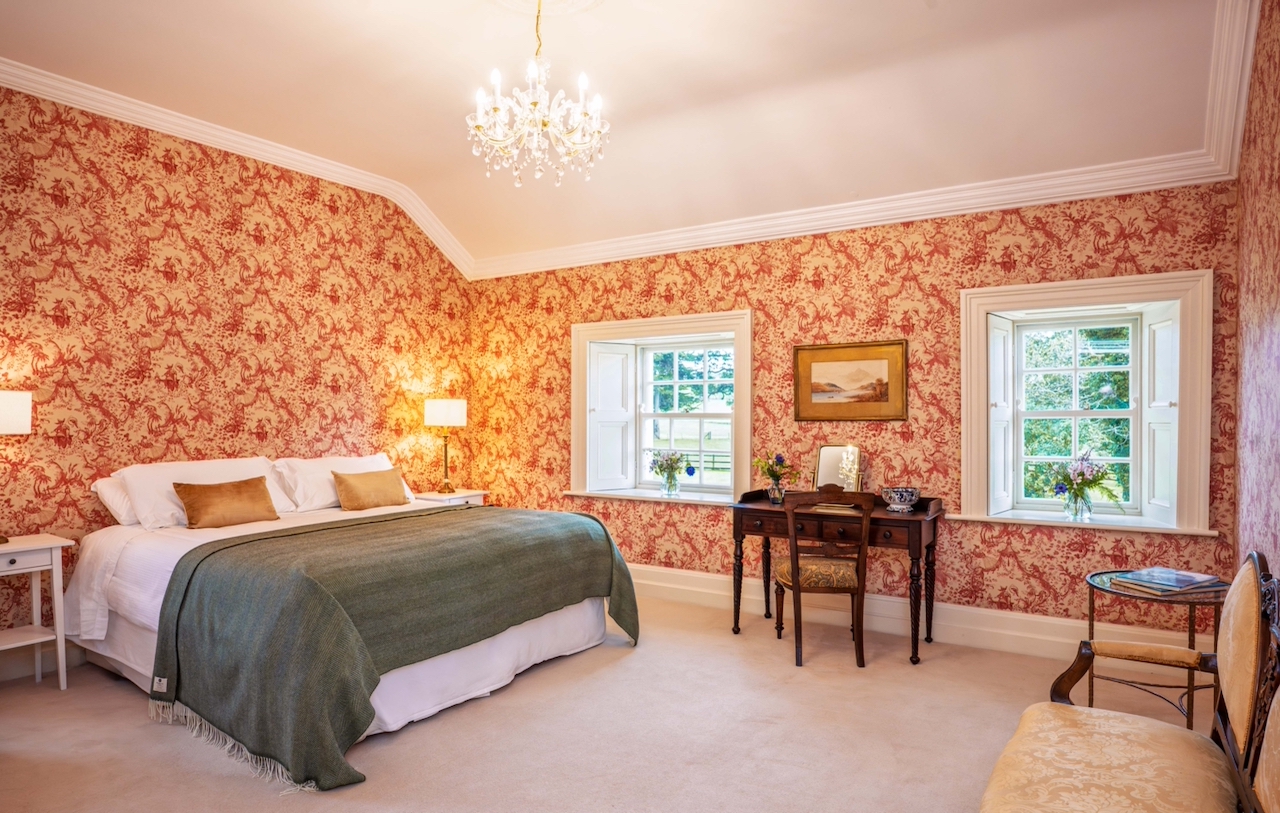
The bedrooms are immense. They all have their own bathrooms and a wonderful collection of matching furniture; in each of them a different wood has been used. The individual character of oak and beech and mahogany and others are evident as you stroll from one bedroom to the next. There are magnificent wardrobes – in one room it is 22 ft long – beds, sideboards, dressing tables, chairs. The largest of the bedrooms is so impressive it is called the “Half Acre.”” [see 2]

Temple House, County Sligo, August 2025. Photograph © Jennifer Winder-Baggot, www.irishhistorichouses.com
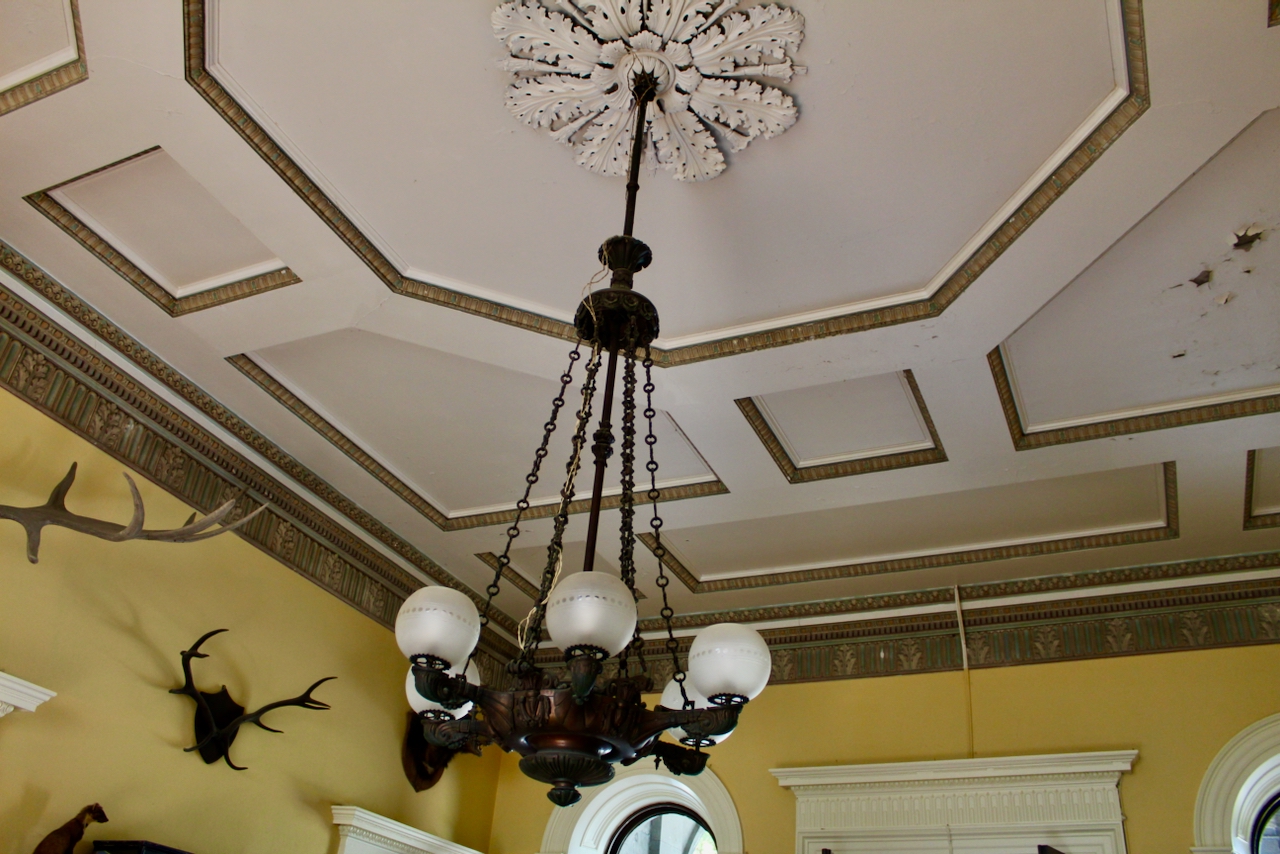
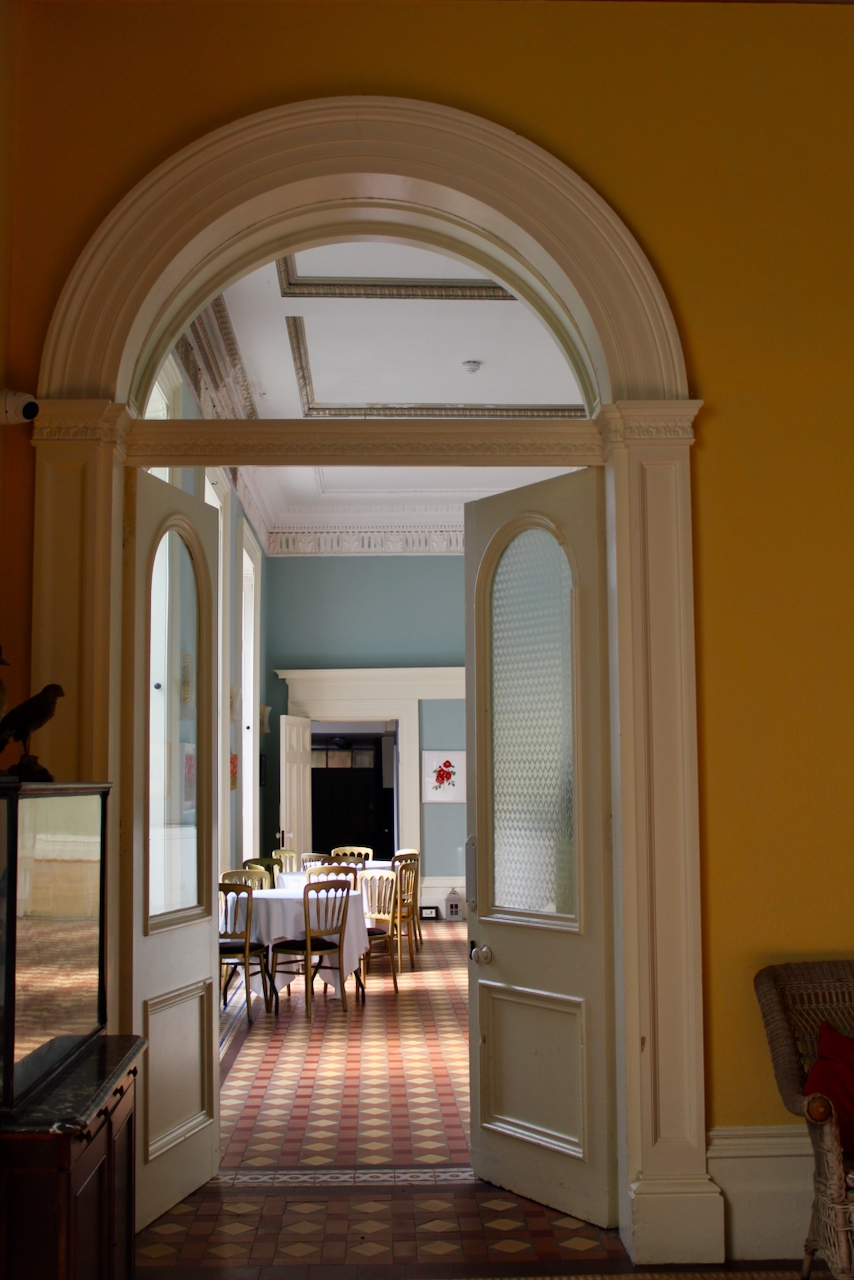
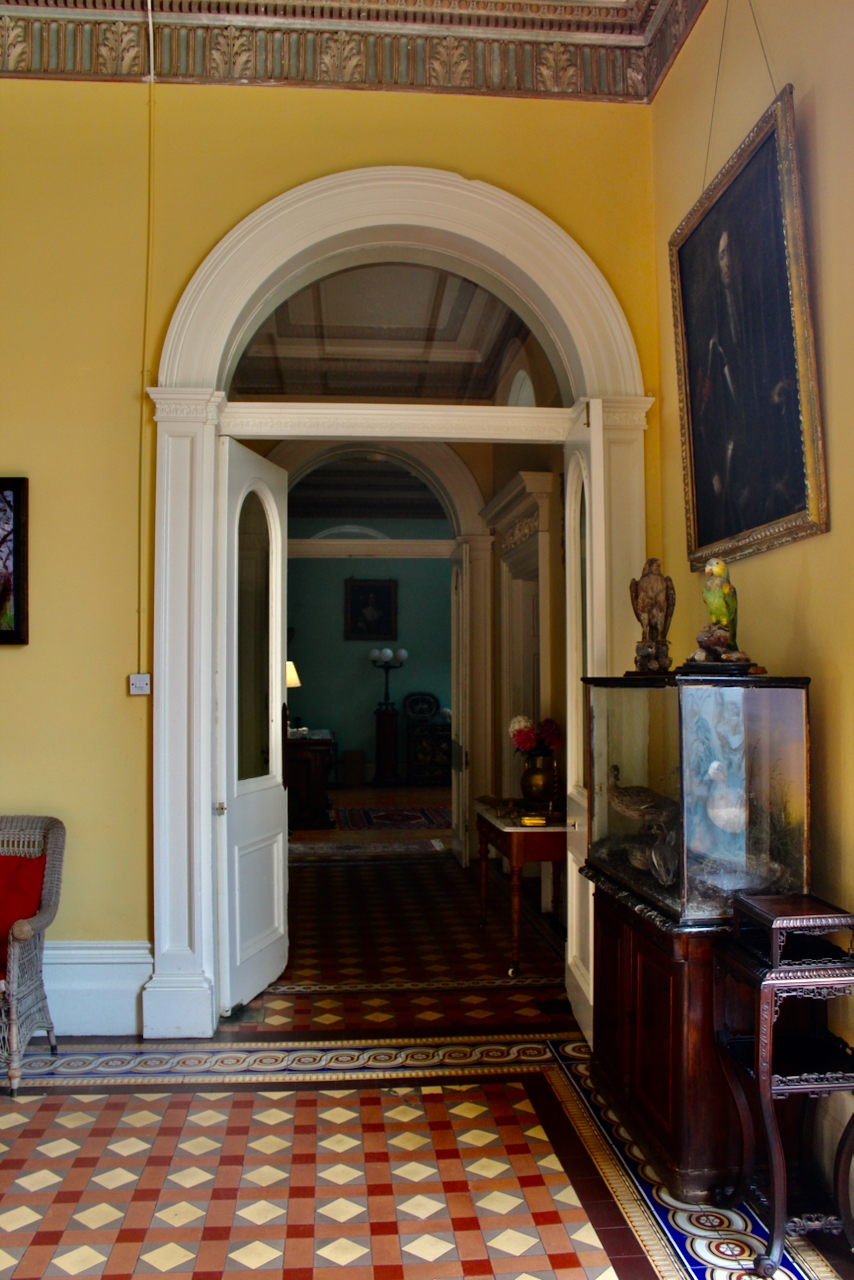
The Half Acre bedroom, Temple House, County Sligo, August 2025. Photograph © Jennifer Winder-Baggot, www.irishhistorichouses.com
Temple House, County Sligo, August 2025. Photograph © Jennifer Winder-Baggot, www.irishhistorichouses.com
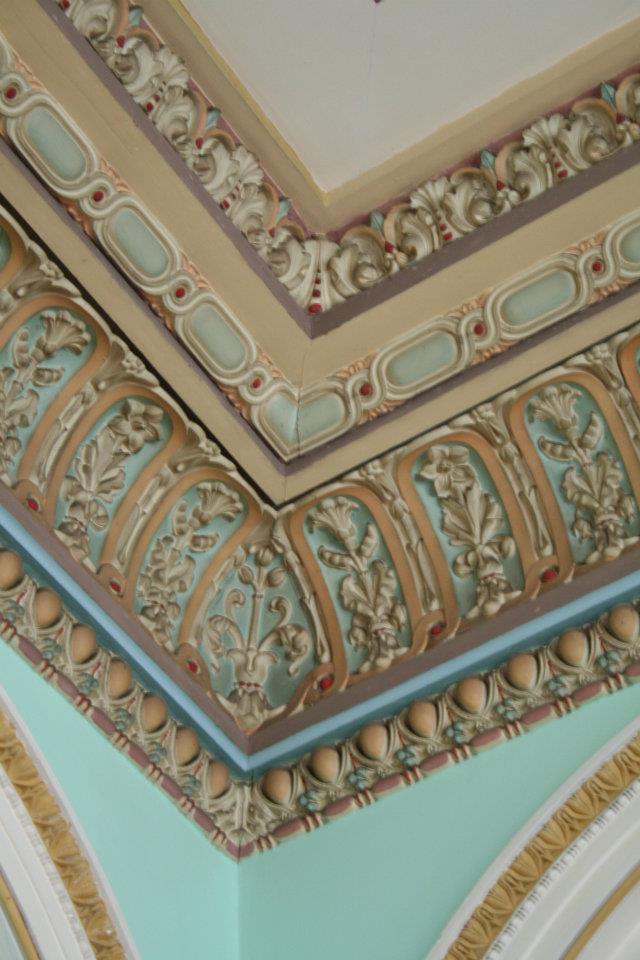
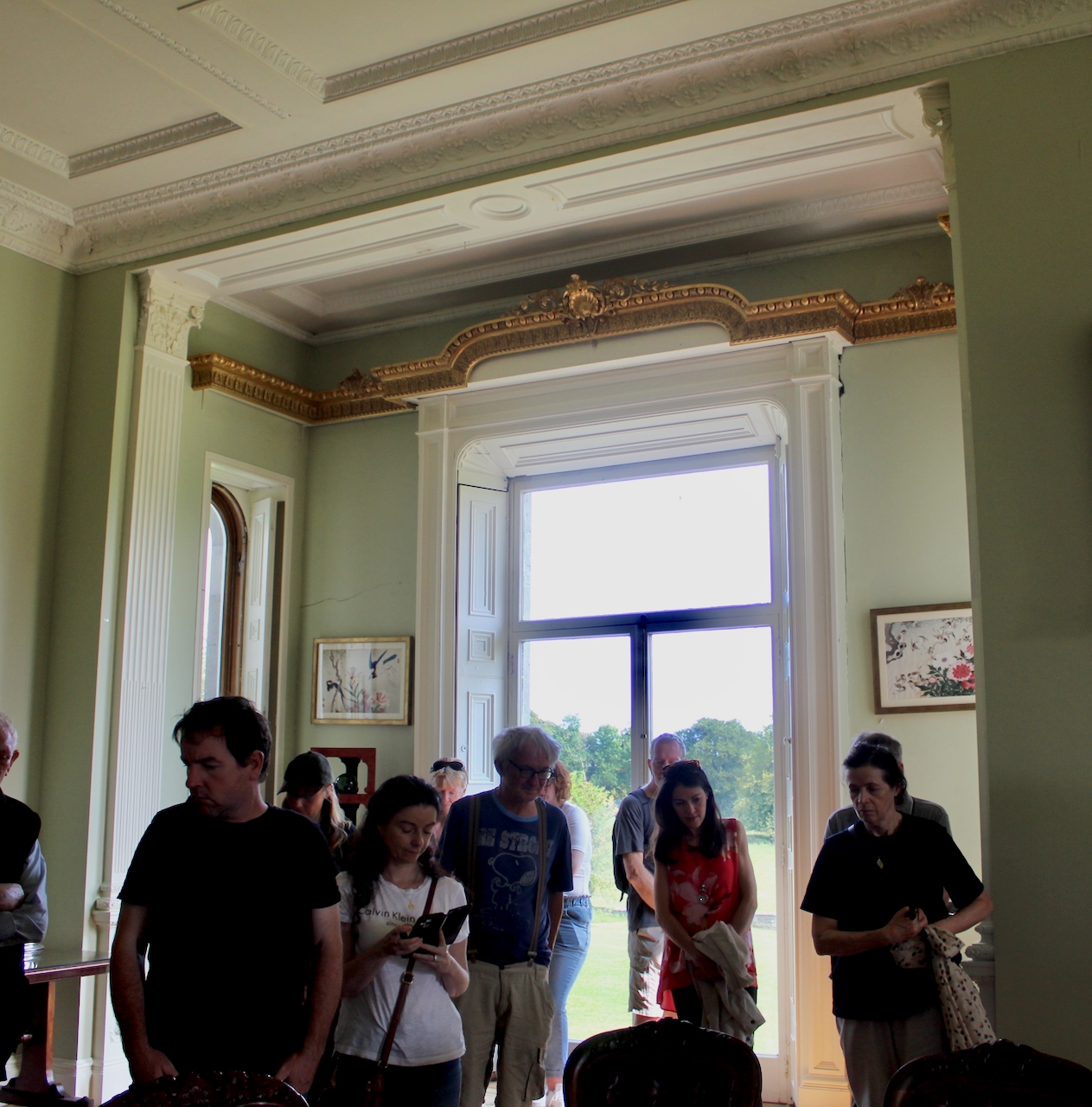
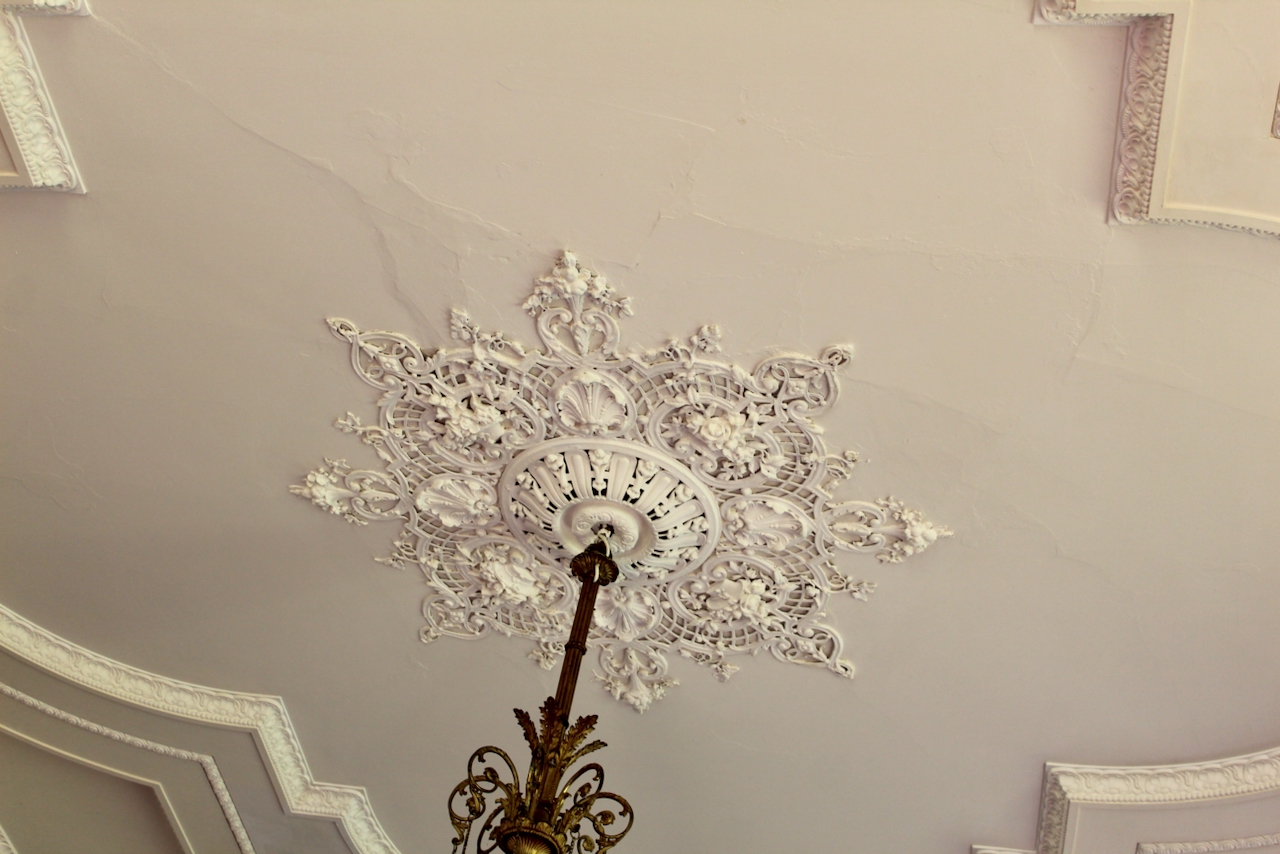
We exited through the morning room, which has a tall glass door, the original marble chimneypiece and impressive acanthus leaf ceiling rose.

The Morning Room, photograph courtesy of the house’s facebook page.
Temple House, County Sligo, August 2025. Photograph © Jennifer Winder-Baggot, www.irishhistorichouses.com
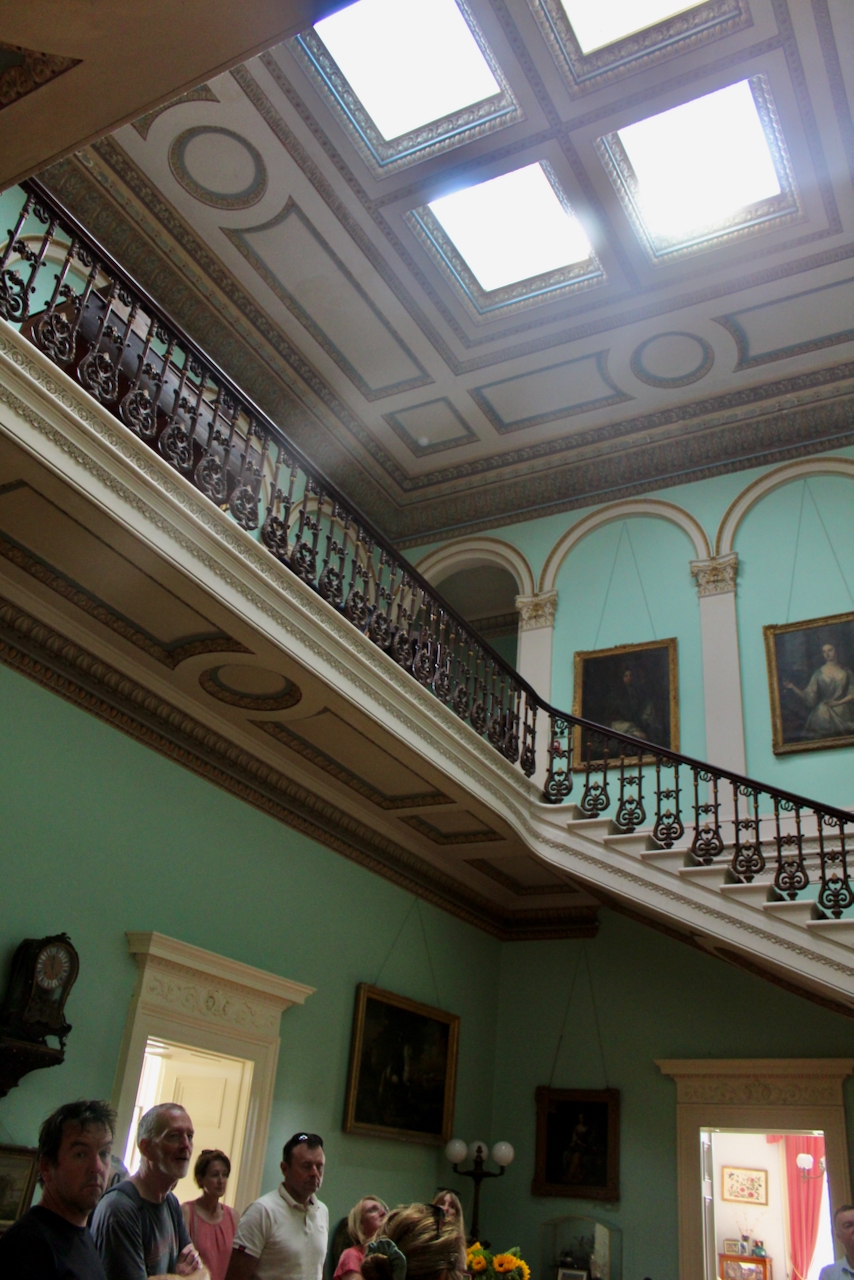
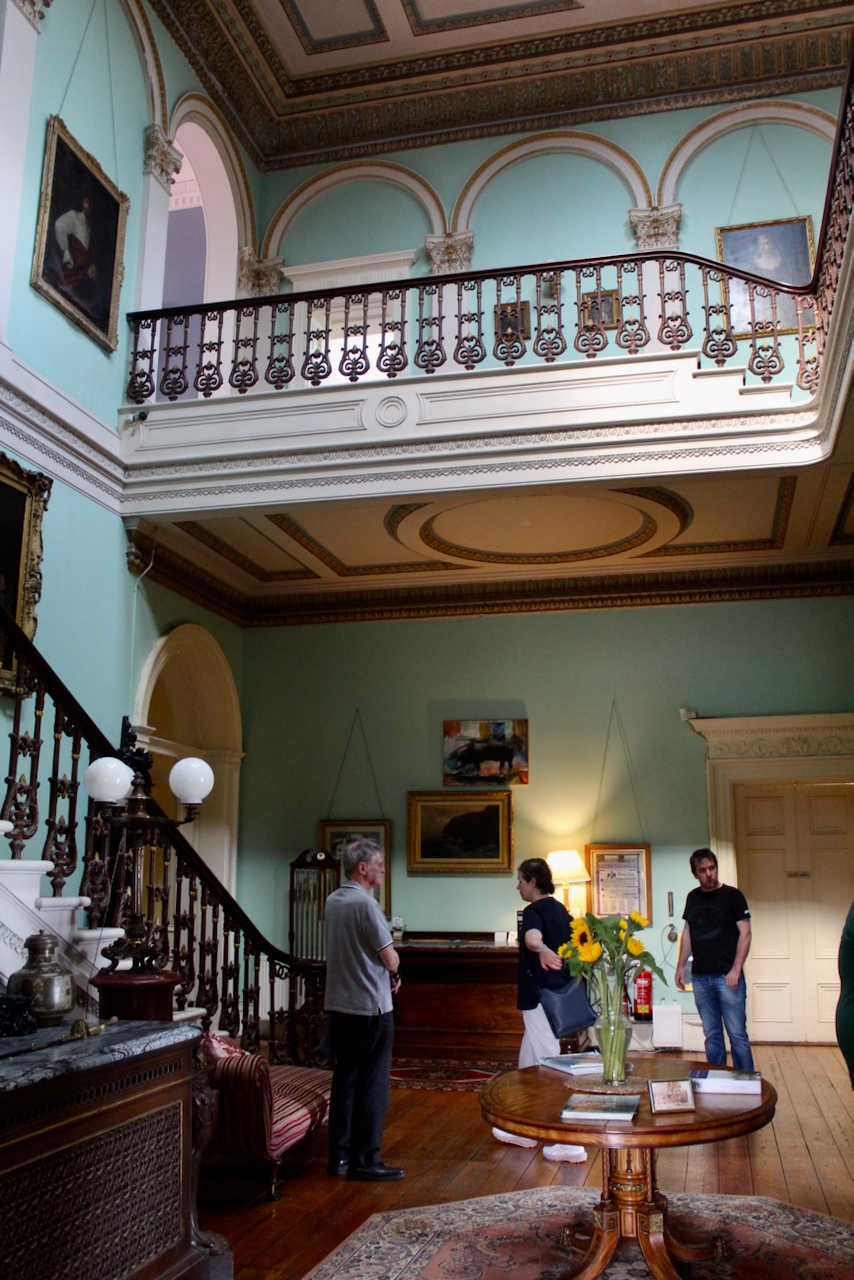
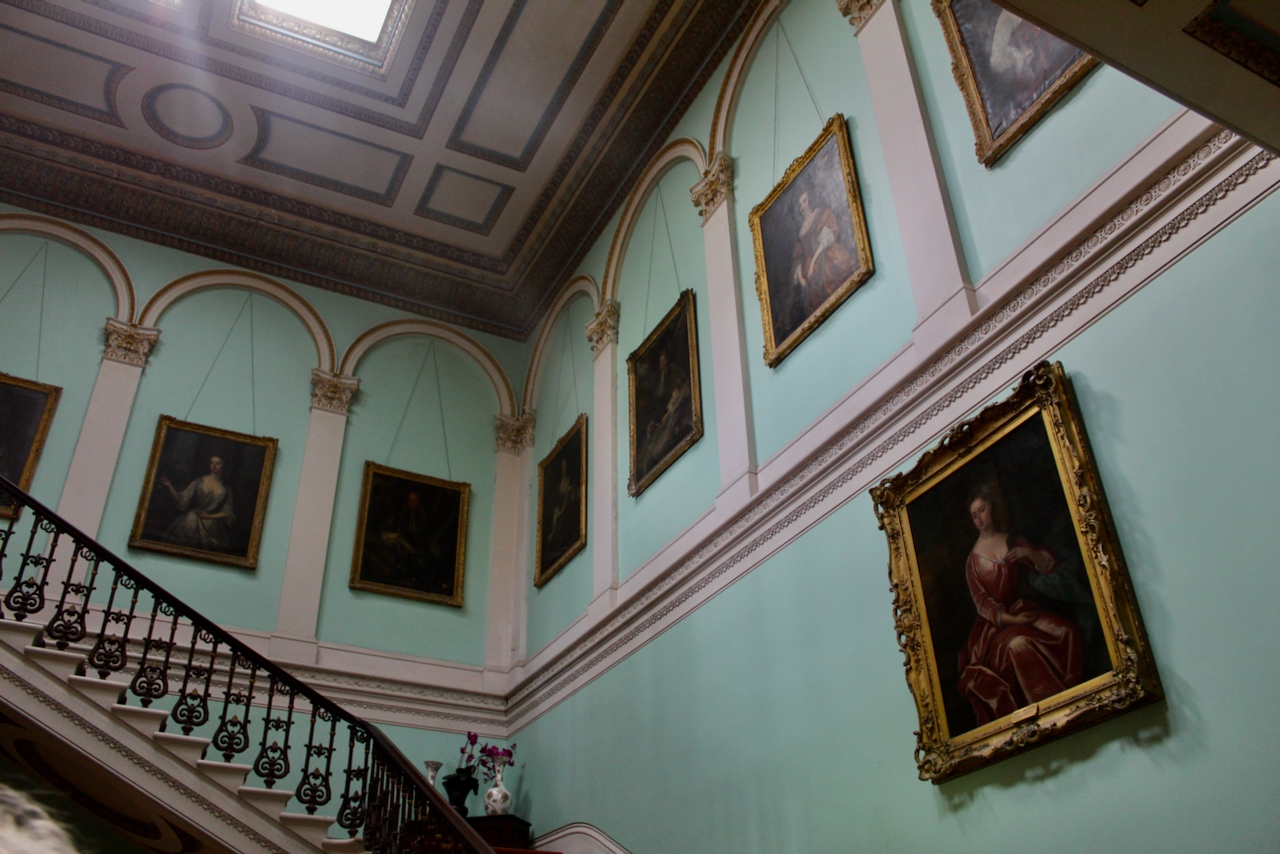
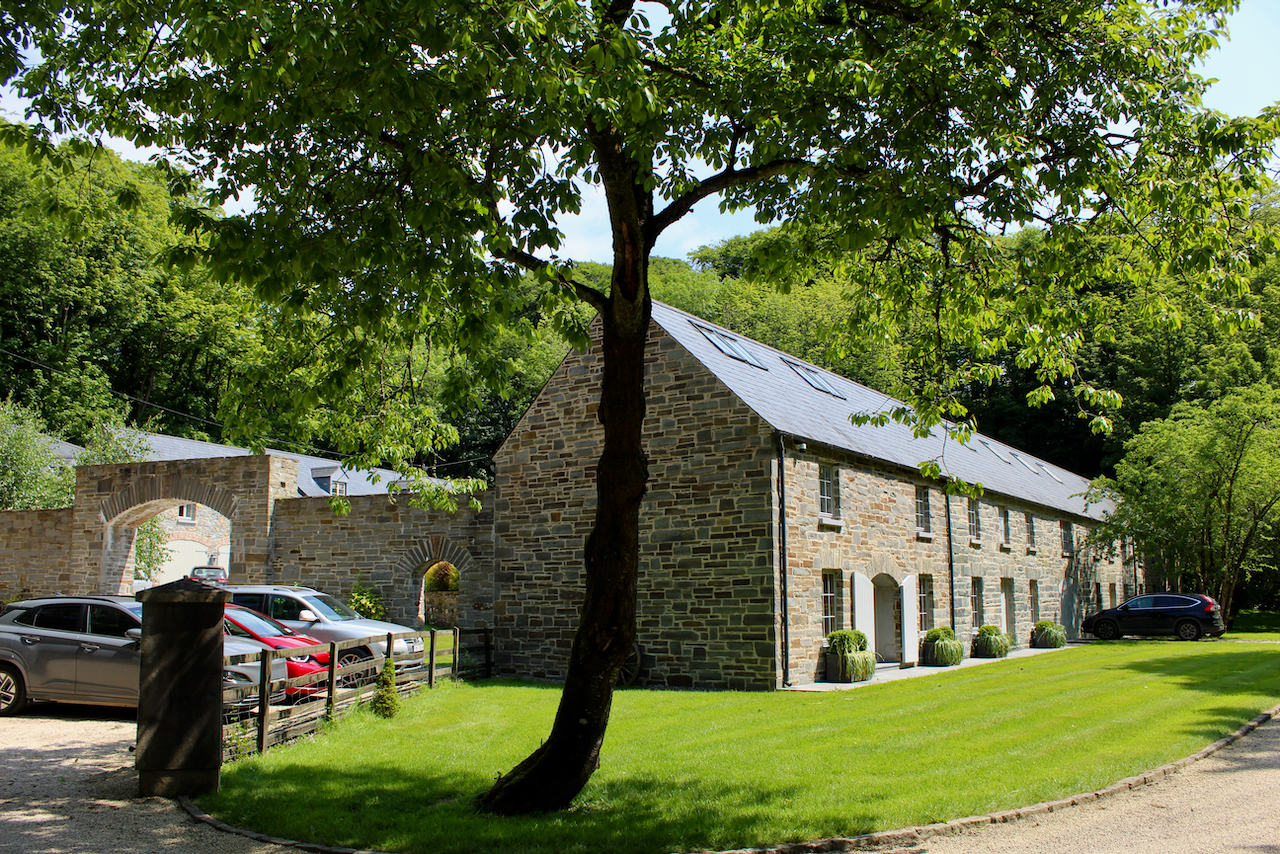
There is a walled kitchen garden which unfortunately we did not get to visit, where food is grown, including old varieties of apple, plum, pear and fig, and a stable yard. The Percevals preserve most of the 600 acres of old woods and the bogs in their natural state, and they also farm a further 600 acres.

Temple House, County Sligo, August 2025. Photograph © Jennifer Winder-Baggot, www.irishhistorichouses.com
[1] Bence-Jones, Mark. A Guide to Irish Country Houses (originally published as Burke’s Guide to Country Houses volume 1 Ireland by Burke’s Peerage Ltd. 1978); Revised edition 1988 Constable and Company Ltd, London.

[2] Great Irish Houses. Forewards by Desmond FitzGerald, the Knight of Glin, and Desmond Guinness. Photographs by Trevor Hart. IMAGE Publications, 2008.

[3] Book Review by Peter Harbison, History Ireland issue 5 (Sept Oct 2016), volume 24.

[4] https://theirishaesthete.com/2018/05/14/thinking-big/

[5] https://www.buildingsofireland.ie/buildings-search/building/32403307/temple-house-templehouse-demesne-co-sligo

[6] http://www.ihh.ie/index.cfm/houses/house/name/Temple%20House

[7] http://lordbelmontinnorthernireland.blogspot.com/2018/01/temple-house.html

Frybrook House, County Roscommon

Frybrook House, County Roscommon

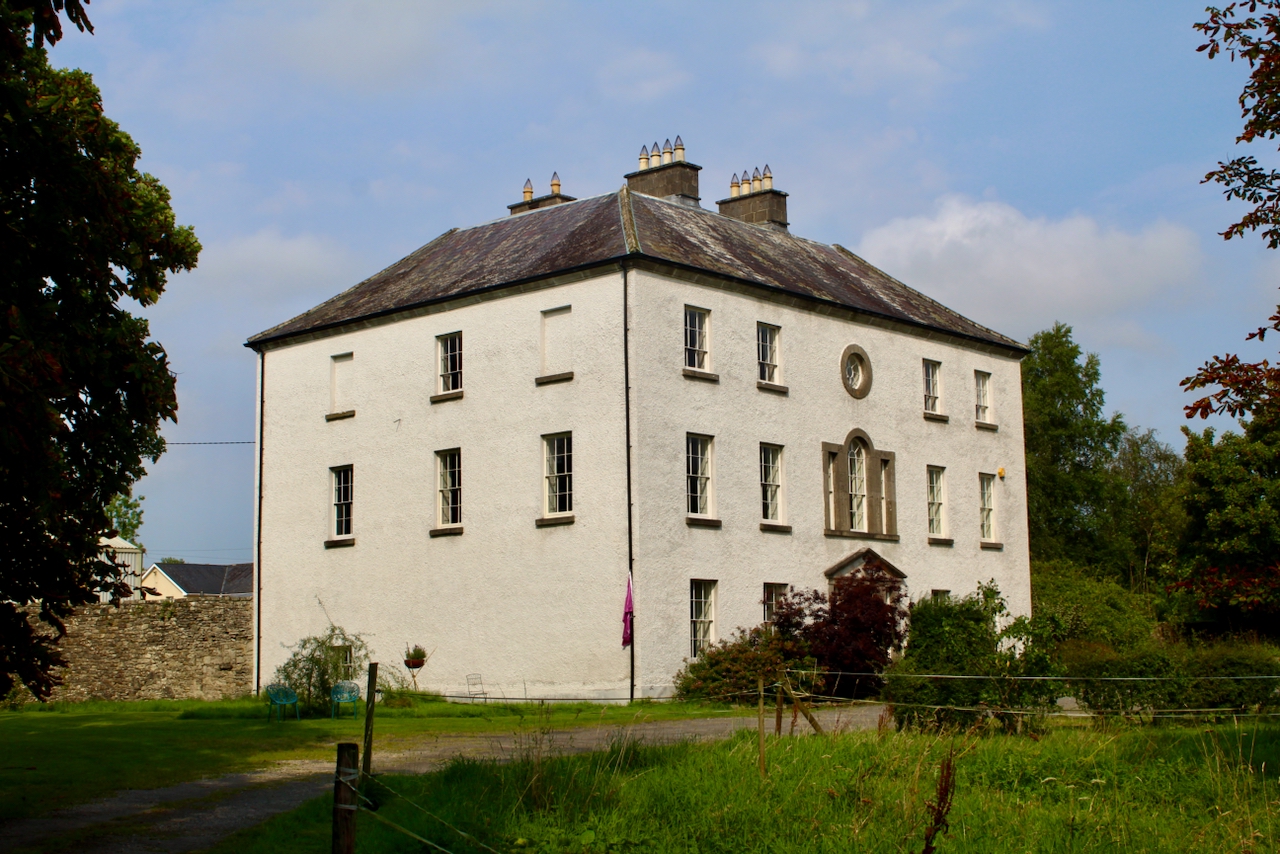
Frybrook, County Roscommon, October 2025. Photograph © Jennifer Winder-Baggot, www.irishhistorichouses.com

I am sad to see that Frybrook House in Boyle, County Roscommon, is once again advertised for sale, with Savills Estate Agent. We visited it recently during Heritage Week this year, 2025, and the owner, Joan, who showed us around gave no indication that she was planning to sell. It was previously sold in 2017, and since then, the owners spent time, effort, money and love renovating and decorating, preparing it for bed and breakfast accommodation. The thirty three windows took a year for a joiner to renovate, and the total renovation took about six years.

They decorated with flair, filling the house with cheeky art and historical elements, researching the history of the house.

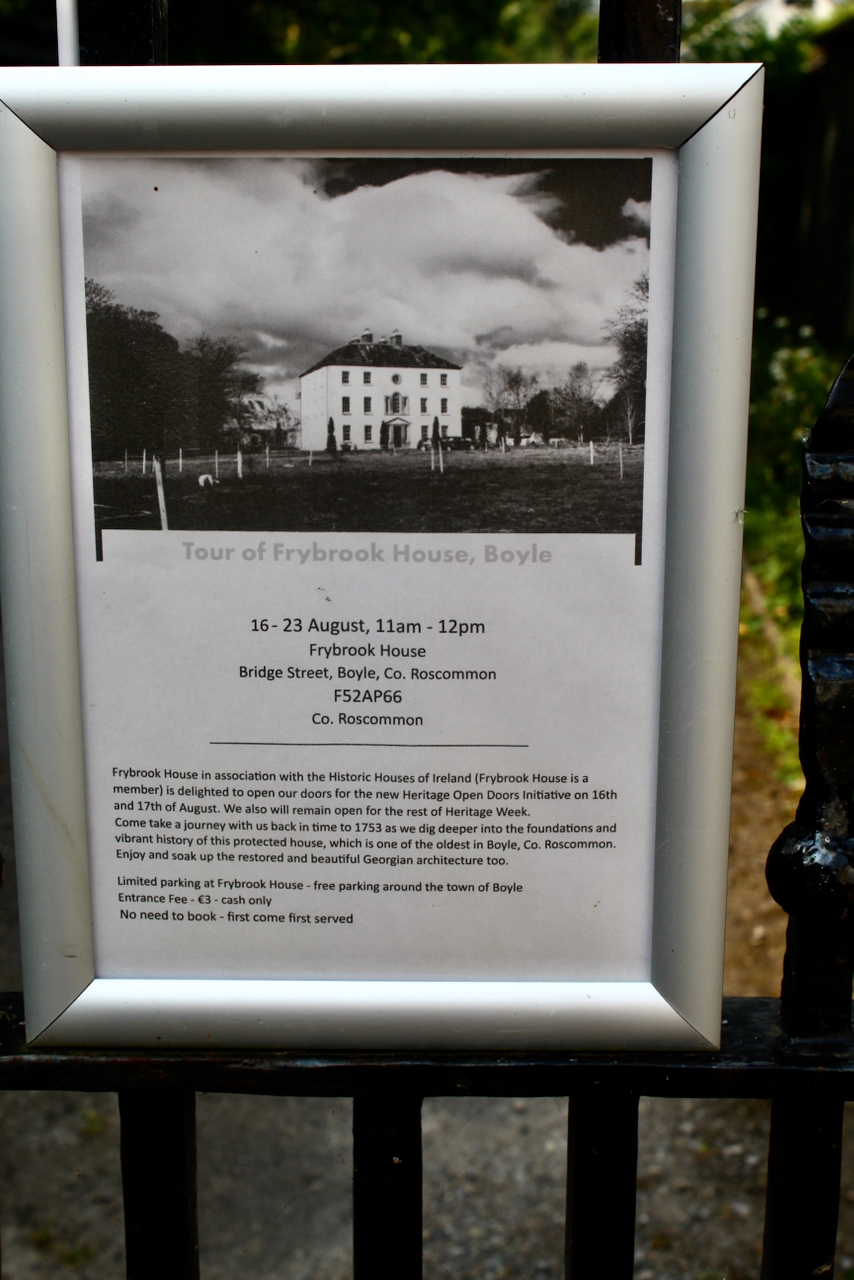
The sign on the gate of Frybrook during Heritage Week 2025.

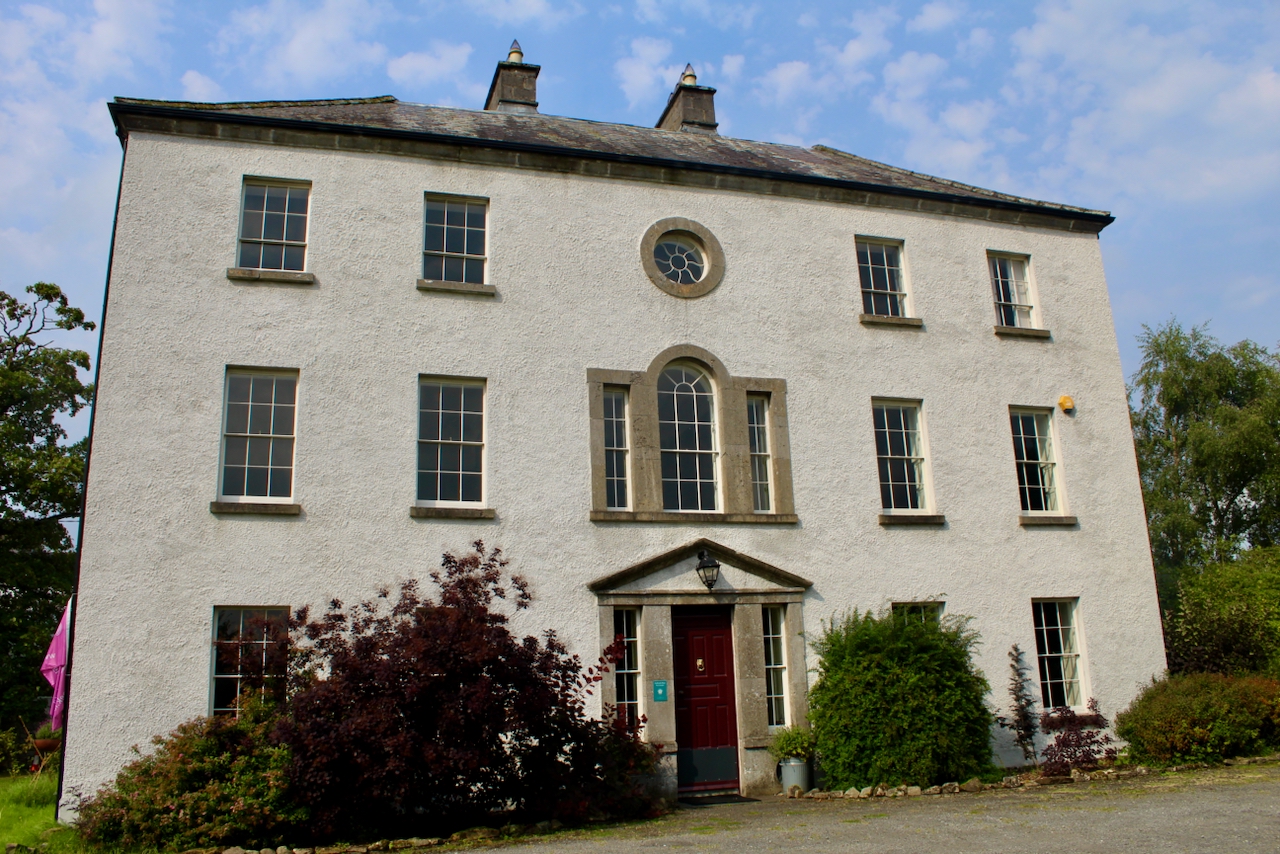
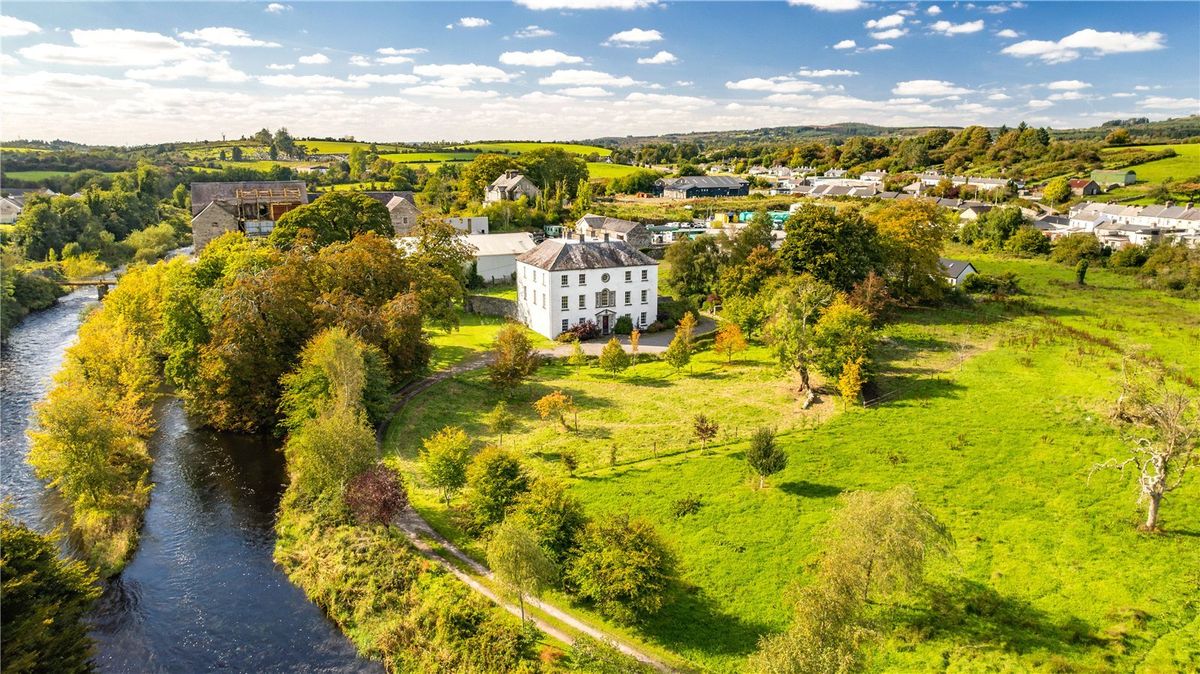
Frybrook is a three storey five bay house built around 1753. [1] A pretty oculus in the centre of top storey sits above a Venetian window, above a tripartite doorcase with a pediment extending over the door and flanking windows. [2] Due to the proximity to the river the house is unusual for a Georgian house in not having a basement.

Frybrook, County Roscommon, October 2025. Photograph © Jennifer Winder-Baggot, www.irishhistorichouses.com
Frybrook House, Bridge Street, Boyle, Co. Roscommon photograph courtesy Savills Estate Agent, 2025.

Henry Fry (1701-1786) built the house for his family and established a weaving industry. The website for the house tells us that in 1743 Lord Kingston, who at that time was James King (1693 – 1761), 4th Baron Kingston, invited Henry Fry, a merchant from Edenderry in County Antrim, to establish the business in Boyle. [3] The Barons Kingston lived in the wonderful Mitchelstown Castle in County Cork and were related to the Kings of King House in Boyle and of Rockingham House, the Baronets of Boyle Abbey (see my entry about King House, https://irishhistorichouses.com/2023/02/02/king-house-main-street-boyle-co-roscommon/.

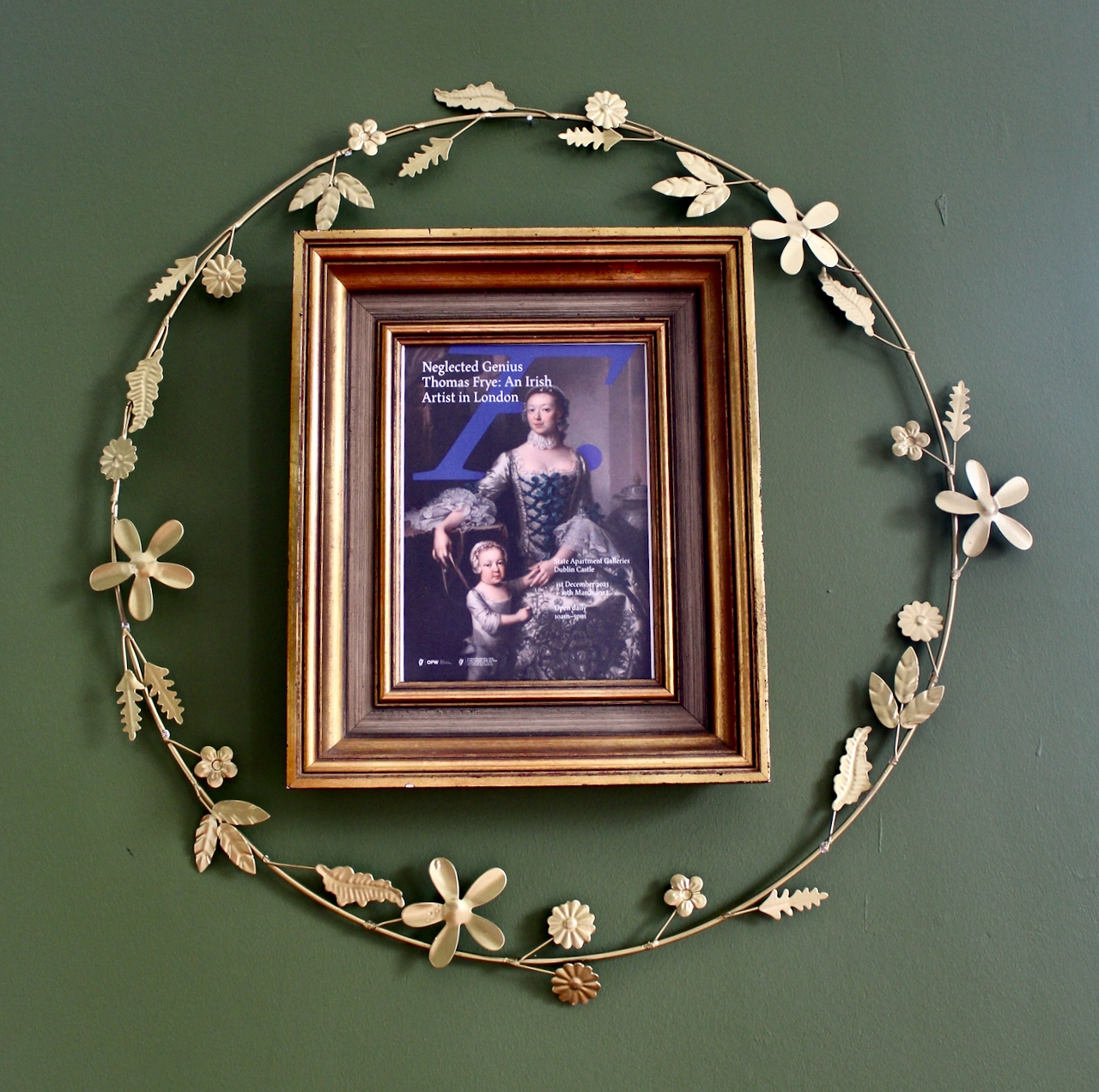
Henry Fry’s grandfather was from the Netherlands. Henry’s brother Thomas  (1710–62) was an artist, recently featured in an exhibition at Dublin Castle.

The “Neglected Genius” Thomas Frye, featured in an exhibition in Dublin Castle.

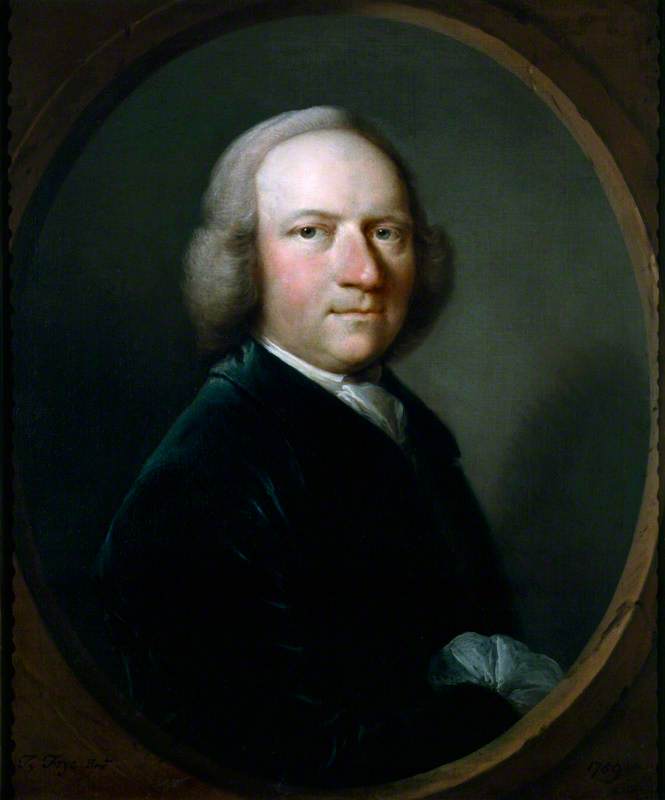
The Dictionary of Irish Biography tells us that by 1736 Thomas Frye was in London and had become sufficiently established to be commissioned to paint the portrait of Frederick, Prince of Wales, on the occasion of his becoming “the perpetual master of the Company of Saddlers.” Thomas also co-founded a porcelain factory, one of the earliest in England, and he experimented with formulas and techniques for making porcelain, obtaining a patent for his work.

Thomas Frye 1759 by Thomas Frye (c.1710–1762) courtesy of the National Portrait Gallery, London; http://www.artuk.org/artworks/thomas-frye-155653

Thomas’s brother Henry Fry (1701-1786) married twice; first to Mary Fuller, with whom he had several children, then after her death in childbirth, to Catherine Mills, with whom he had more children.

Frybrook, County Roscommon, October 2025. Photograph © Jennifer Winder-Baggot, www.irishhistorichouses.com
Joan brought us inside. The house has its original beautiful plasterwork and joinery, and the tiles in the hall too and staircase are probably original to the house.

Frybrook, County Roscommon, October 2025. Photograph © Jennifer Winder-Baggot, www.irishhistorichouses.com
You can immediately see the quirky decor in the front hall, Frybrook, County Roscommon, October 2025. Photograph © Jennifer Winder-Baggot, www.irishhistorichouses.com
The stairs and banister, and hall flooring, are probably original to the house from around 1753. Frybrook, County Roscommon, October 2025. Photograph © Jennifer Winder-Baggot, www.irishhistorichouses.com
Frybrook, County Roscommon, October 2025. Photograph © Jennifer Winder-Baggot, www.irishhistorichouses.com
Plasterwork frieze in the front hall. Frybrook, County Roscommon, October 2025. Photograph © Jennifer Winder-Baggot, www.irishhistorichouses.com
There are formal rooms on both the ground floor and the first floor. They have more beautiful decorative plasterwork.

Frybrook, County Roscommon, October 2025. Photograph © Jennifer Winder-Baggot, www.irishhistorichouses.com
The house had been empty for about ten years before the owners bought it in 2018. Most of the fireplaces had disappeared and had to be replaced. There would have been a fine Adam chimneypiece at one time, which was sold by Richard Fry to a member of the Guinness family, our guide told us.

Frybrook, County Roscommon, October 2025. Photograph © Jennifer Winder-Baggot, www.irishhistorichouses.com
Frybrook House, Bridge Street, Boyle, Co. Roscommon, photograph courtesy Savills Estate Agent, 2025.

The half-landing features the Venetian window.

Frybrook, County Roscommon, October 2025. Photograph © Jennifer Winder-Baggot, www.irishhistorichouses.com
Frybrook House, Bridge Street, Boyle, Co. Roscommon, photograph courtesy Savills Estate Agent, 2025.
Frybrook, County Roscommon, October 2025. Photograph © Jennifer Winder-Baggot, www.irishhistorichouses.com
I love the owners’ choice of art. Frybrook, County Roscommon, October 2025. Photograph © Jennifer Winder-Baggot, www.irishhistorichouses.com
Frybrook, County Roscommon, October 2025. Photograph © Jennifer Winder-Baggot, www.irishhistorichouses.com

Upstairs there is another formal room with fine plasterwork and also timber carving in the window embrasures.

The upstairs drawing room. Frybrook, County Roscommon, October 2025. Photograph © Jennifer Winder-Baggot, www.irishhistorichouses.com
Frybrook, County Roscommon, October 2025. Photograph © Jennifer Winder-Baggot, www.irishhistorichouses.com
The ceiling coving and window embrasure carving. Frybrook, County Roscommon, October 2025. Photograph © Jennifer Winder-Baggot, www.irishhistorichouses.com
The ceiling coving. Frybrook, County Roscommon, October 2025. Photograph © Jennifer Winder-Baggot, www.irishhistorichouses.com
I love the light fitting. Frybrook, County Roscommon, October 2025. Photograph © Jennifer Winder-Baggot, www.irishhistorichouses.com
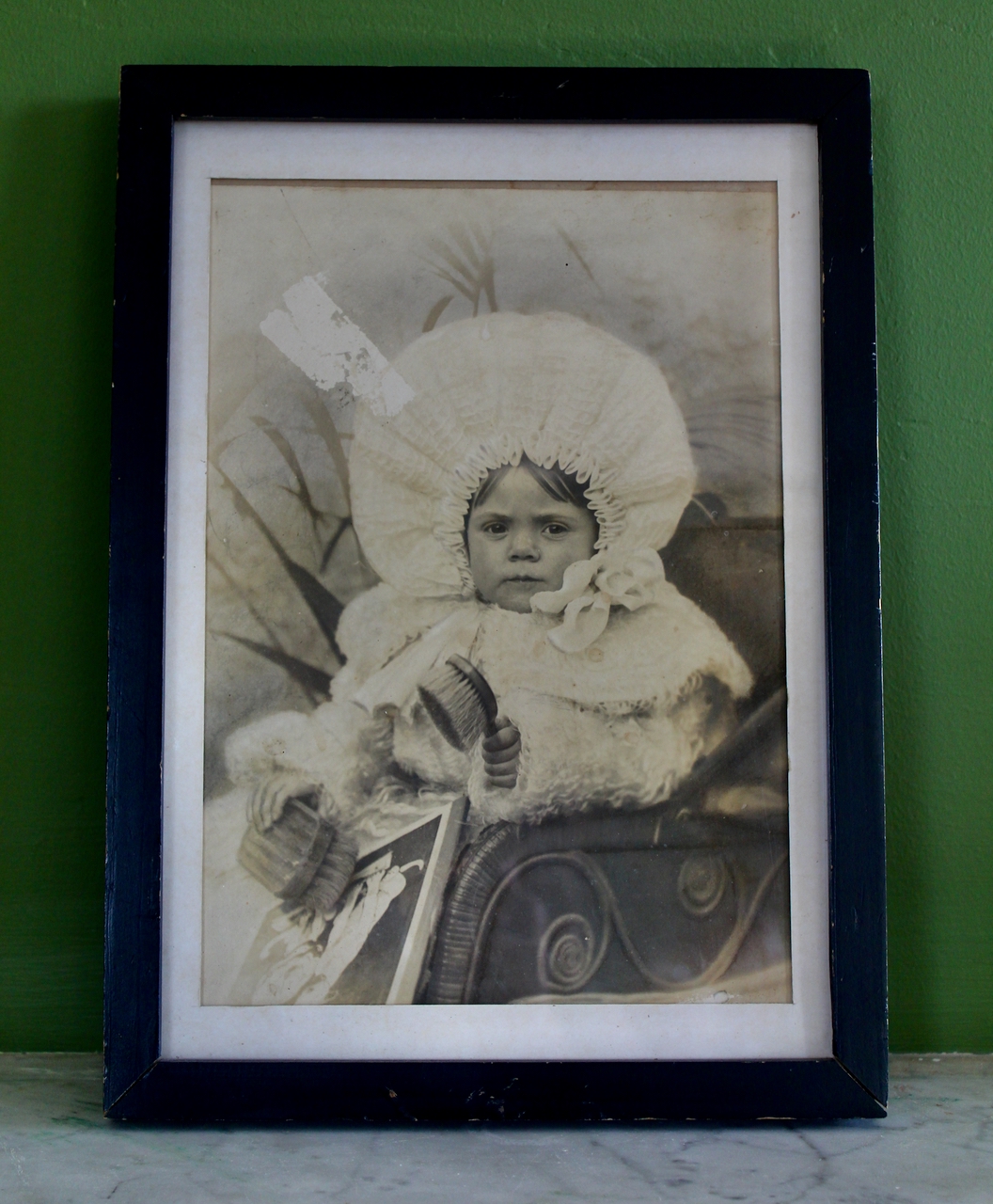
This delightful bonnetted baby sits on the mantlepiece. Frybrook, County Roscommon, October 2025. Photograph © Jennifer Winder-Baggot, www.irishhistorichouses.com

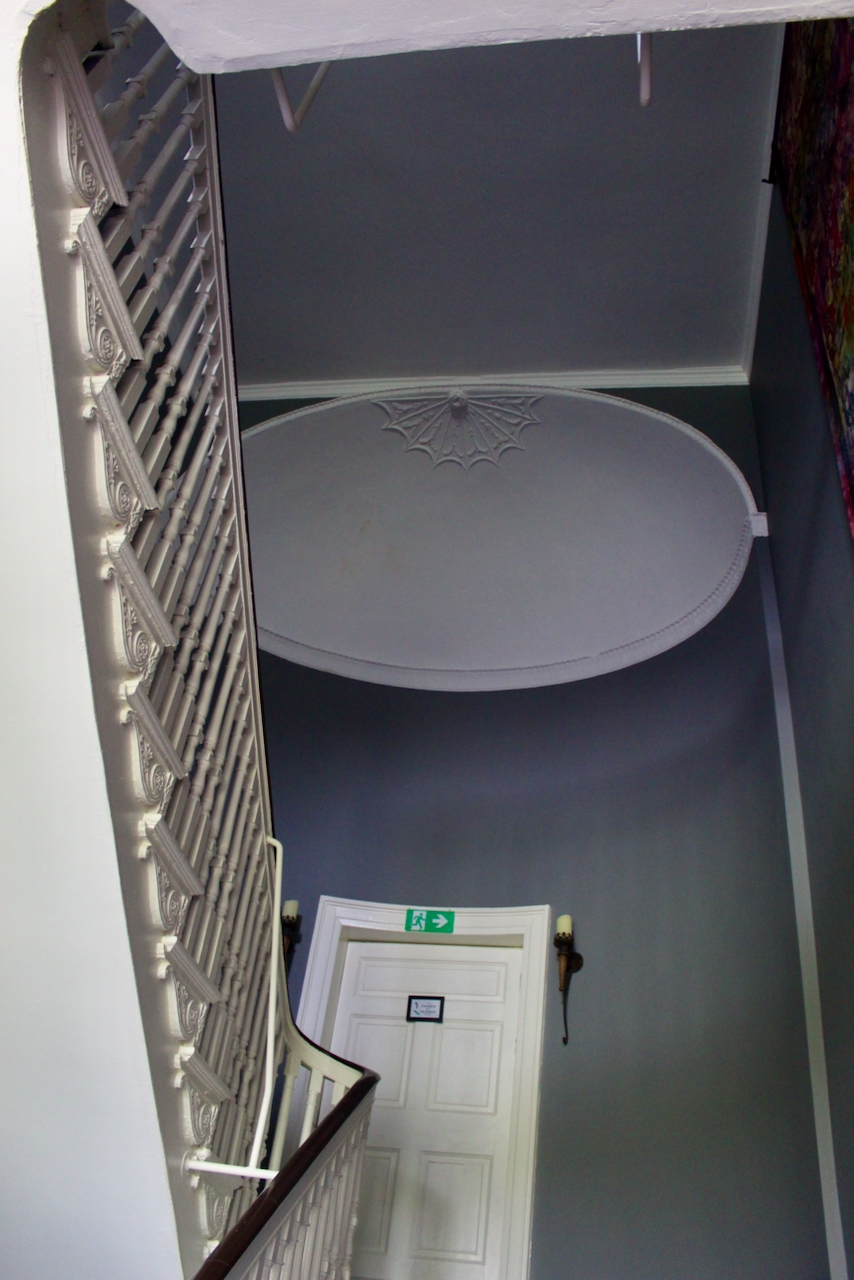
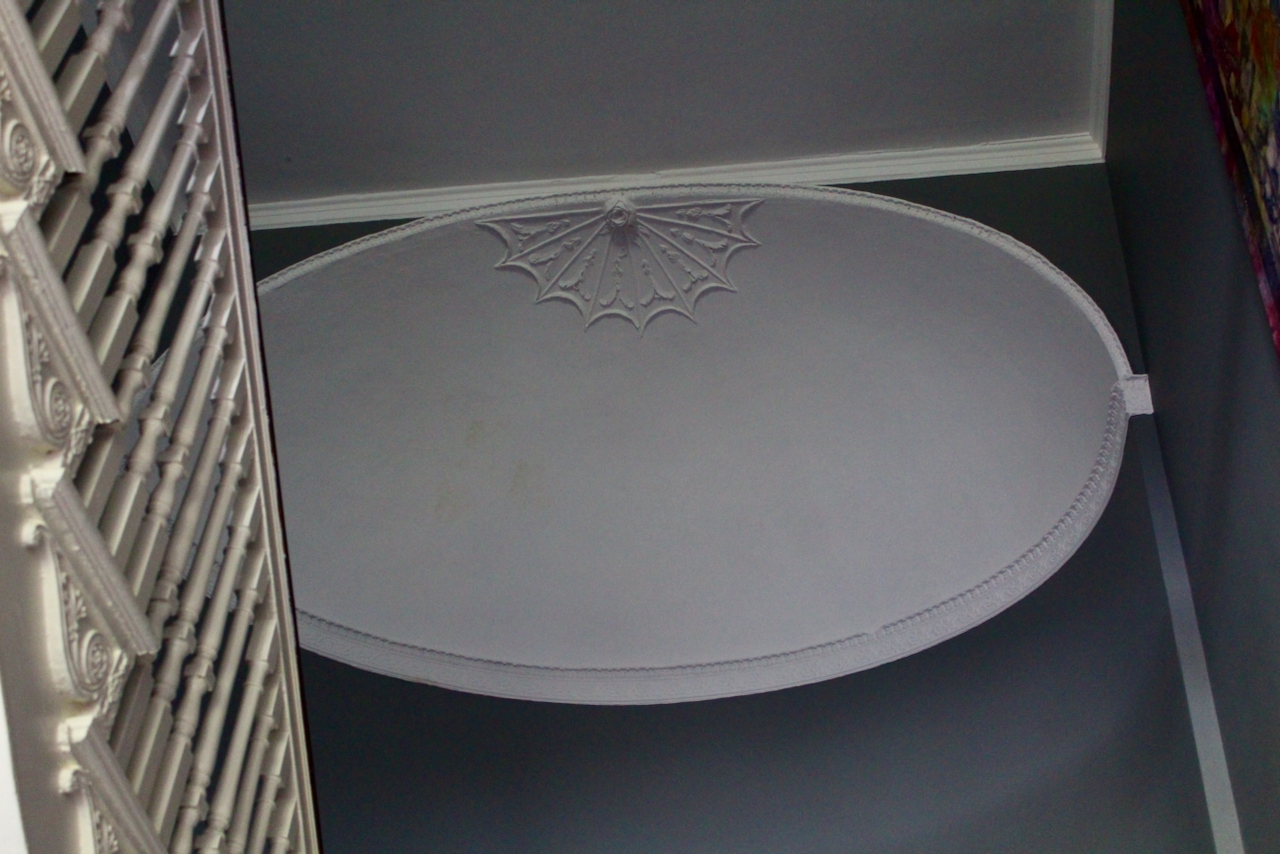
Further up the staircase is another beautiful piece of ceiling detail, a curved ceiling with weblike plasterwork detail, above a curved door frame.

Further up the staircase is another beautiful piece of ceiling detail, an oval curved ceiling with weblike plasterwork detail, above a curved door frame. Frybrook, County Roscommon, October 2025. Photograph © Jennifer Winder-Baggot, www.irishhistorichouses.com
Frybrook, County Roscommon, October 2025. Photograph © Jennifer Winder-Baggot, www.irishhistorichouses.com

Upstairs are the bedrooms. One in particular is gorgeously decorated with sumptuous colours and fittings and has a carved chimneypiece and jewel-like en suite. The owner asked us not to post photographs as it is the guesthouse piéce de resistance. I do hope the new owners, if it is sold, will maintain it as a guest house as it would be a lovely place to stay! Although it would also make a fabulous home for some lucky family. It has seven en-suite bedrooms.

Frybrook House, Bridge Street, Boyle, Co. Roscommon, photograph courtesy Savills Estate Agent, 2025.

Frybrook passed to Henry’s son, another Henry (1757-1847). He married Elizabeth Baker, daughter of William Baker of Lismacue, County Tipperary, a Section 482 property (see my entry https://irishhistorichouses.com/2025/02/10/lismacue-house-bansha-co-tipperary-section-482-accommodation/ ).

Robert O’Byrne tells us that “in  1835, Henry Fry of Frybrook and his relative, also called Henry Fry, of another house in the vicinity, Fairyhill, were founding members of the Boyle branch of the Agricultural and Commercial Bank (although this venture failed nationally after only a couple of years). Successive generations of Frys continued to live in the family home until the 1980s when, for the first time, it was offered for sale.” [4]

Another son of Henry Fry, Magistrate, (1701-1786) was Oliver (1773-1868), major of Royal Artillery, Freemason, Orangeman, and diarist. Our guide on the tour of the house read us an excerpt of his diary. The Dictionary of Irish Biography tells us that in 1793 Oliver had to leave Trinity college to go home to help his brother Henry defend his house from the “Defenders.” The Defenders were a Catholic Agrarian secret society that originated in County Armagh in response to the Protestant “Peep o’ Day Boys.” The Defenders formed Lodges, and in 1798 fought alongside the United Irishmen. In later years they formed the “Ribbonmen.” The Peep o’ Day Boys carried out raids on Catholic homes during the night, ostensibly to confiscate weapons which Catholics under the Penal Laws were not allowed to own. [5] The Defenders formed in response, and oddly, grew to follow the structure of the Freemasons, with Lodges, secrecy and an oath swearing obedience to King George III. The Peep o’ Day Boys became the Orange Order.

The Defenders carried out raids of Protestant homes to obtain weapons. When Britain went to war with France in 1793, small Irish farmers objected to a partial conscription as they needed their young men for labour, which increased membership in the Defenders.

The Dictionary tells us about Oliver Fry:

He was a member of the force of Boyle Volunteers that defeated a large group of Defenders at Crossna and subsequently defended the residence of Lord Kingston (1726–97) at Rockingham. During this latter skirmish he captured the leader of the Defenders, and was later presented with a commission in the Roscommon militia by Lord Kingston.”

Edward King (1726-1797), 5th Baronet of Boyle Abbey and eventually, 1st Earl of Kingston.
Frybrook, County Roscommon, October 2025. Photograph © Jennifer Winder-Baggot, www.irishhistorichouses.com

Oliver served in the Royal Irish Artillery. The Dictionary of Irish Biography entry about him tells us more:

In 1822 Fry wrote a retrospective account of his early life, and thereafter kept a very detailed diary. While some of the accounts of his military service were somewhat exaggerated, his diary remains an invaluable source of information on the major events of the late eighteenth and early nineteenth centuries, including the agrarian disturbances of the 1820s–40s, the repeal movement, the cholera epidemic of 1831, and the Great Famine. Other more colourful events were also described, such as the visits of Queen Victoria, the Crystal Palace exhibition of 1851, and the Dublin earthquake of 1852. He died 28 April 1868 at his Dublin home, Pembroke House, Blackrock, Co. Dublin, and was buried at Mount Jerome cemetery.

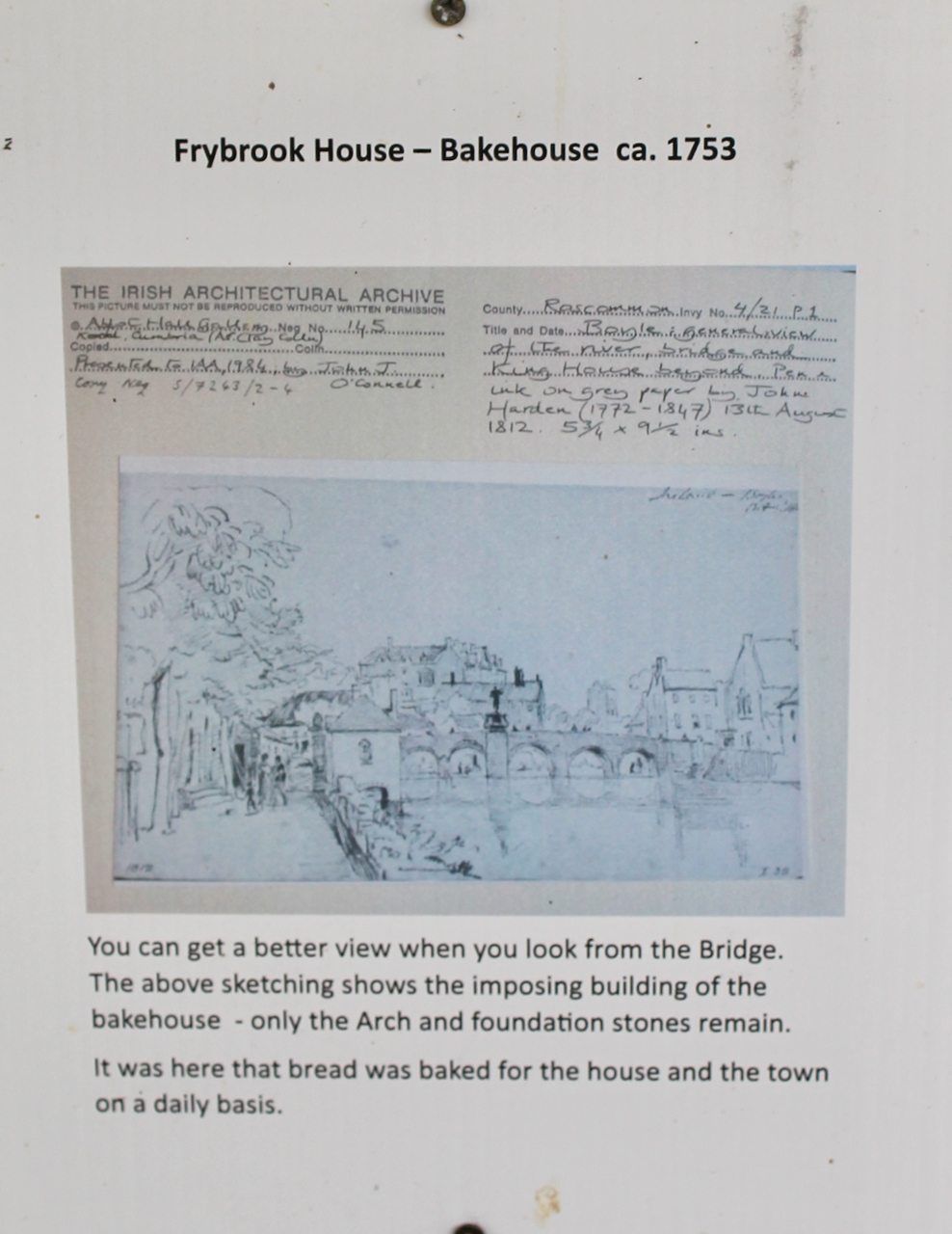
Despite the oppositional stance with Catholics, our guide told us that the family were generous in famine times, as evidenced by the Bakehouse, the remains of which are next to the driveway to the house. However, a bakehouse isn’t evidence that the family gave out the bread for free!

A sign next to the Bakehouse at Frybrook.

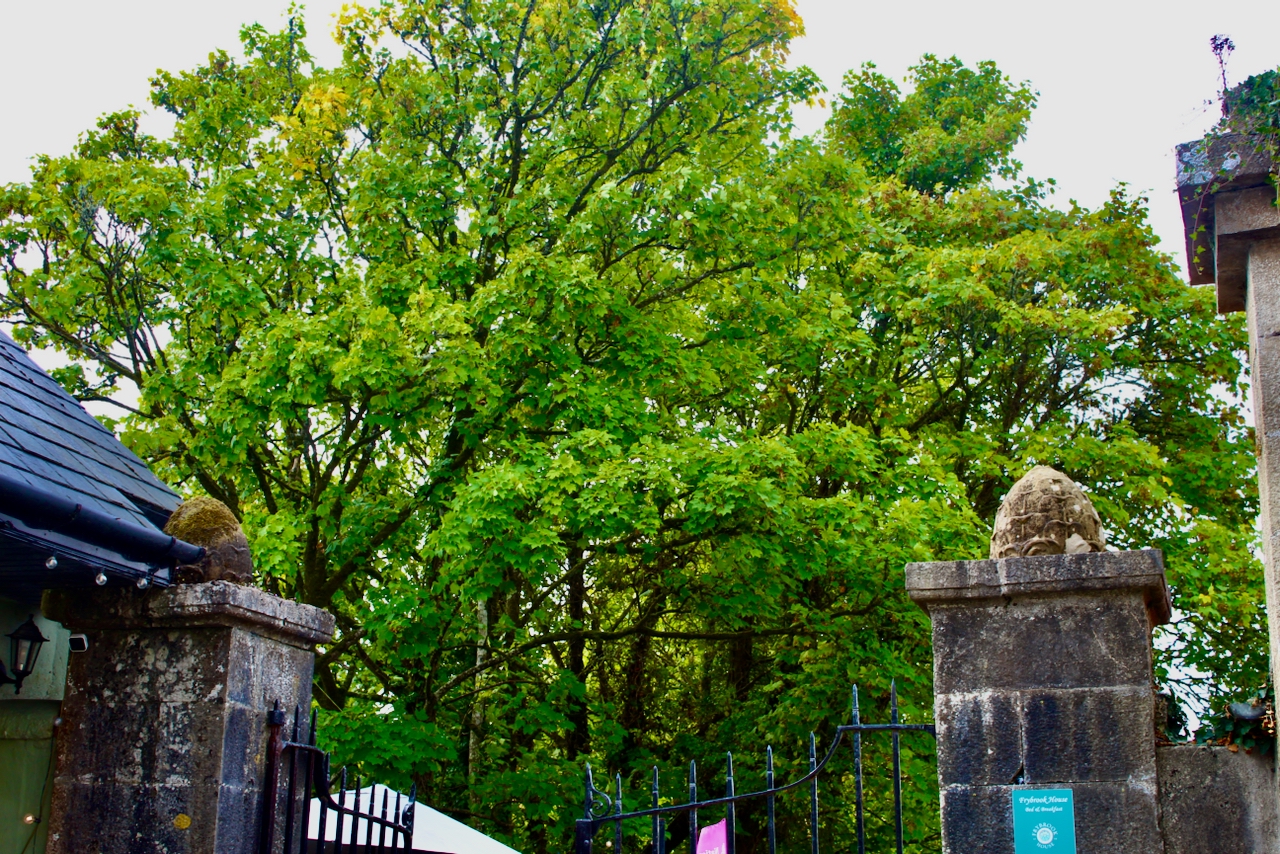
Further evidence of the Fry’s hospitality, Joan told us, are the “hospitality” stones on the piers at the entrance to the house.

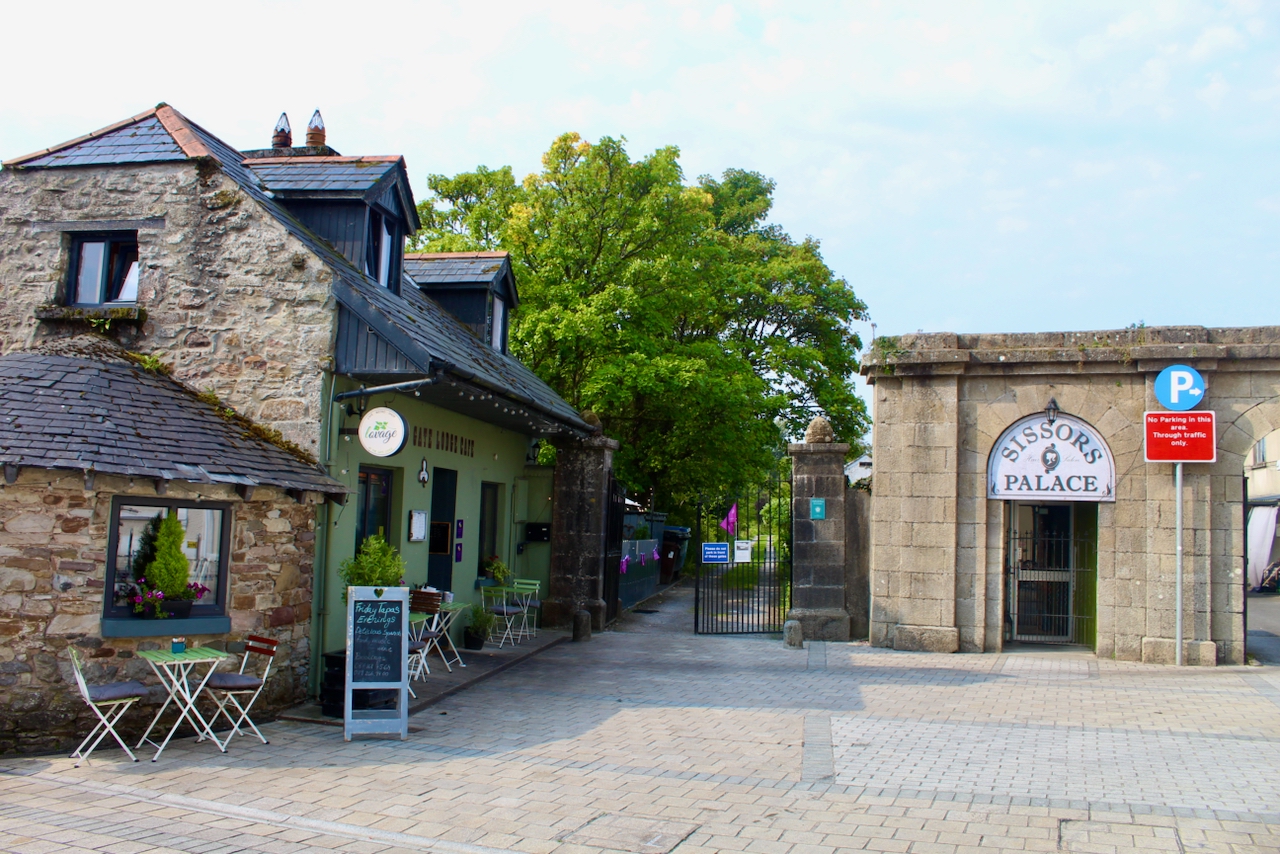
The Entrance Lodge to Frybook, now a cafe, and next to it, the entrance piers to Frybrook House topped with “hospitality stones.” The gate lodge is also thought to date from 1753. Photograph © Jennifer Winder-Baggot, www.irishhistorichouses.com
The entrance piers to Frybrook House topped with “hospitality stones.” Photograph © Jennifer Winder-Baggot, www.irishhistorichouses.com

The pier stones resemble worn pineapples. The only reference I can find to “hospitality stones” in a quick google search is that hospitality stones were like ancient admission tickets: stones with some marking on them given by someone to indicate that the bearer could produce the stone and receive hospitality in return. The stones on the entrance piers resemble worn pineapples. In the eighteenth century pineapples became a symbol of luxury, wealth and hospitality. A blog of the Smithsonian Museum tells us:

The pineapple, indigenous to South America and domesticated and harvested there for centuries, was a late comer to Europe. The fruit followed in its cultivation behind the tomato, corn, potato, and other New World imports. Delicious but challenging and expensive to nurture in chilly climes and irresistible to artists and travelers for its curious structure, the pineapple came to represent many things. For Europeans, it was first a symbol of exoticism, power, and wealth, but it was also an emblem of colonialism, weighted with connections to plantation slavery...

“…the intriguing tropical fruit was able to be grown in cold climates with the development, at huge costs, of glass houses and their reliable heating systems to warm the air and soil continuously. The fruit needed a controlled environment, run by complex mechanisms and skilled care, to thrive in Europe. Pineapples, thus, became a class or status symbol, a luxury available only to royalty and aristocrats. The fruit appeared as a centerpiece on lavish tables, not to be eaten but admired, and was sometimes even rented for an evening.

“…The pineapple became fashionable in England after the arrival in 1688 of the Dutch King, William III and Queen Mary, daughter of James II, who were keen horticulturalists and, not incidentally, accompanied by skilled gardeners from the Netherlands. Pineapples were soon grown at Hampton Court. The hothouses in Great Britain became known as pineries. With its distinctive form, the cult of the pineapple extended to architecture and art. Carved representations sit atop the towers of St. Paul’s Cathedral in London and other prominent buildings, perhaps an adaptation or reference to the pinecones used on ancient Roman buildings.

“…During the 18th century, the pineapple was established as a symbol of hospitality, with its prickly, tufted shape incorporated in gateposts, door entryways and finials and in silverware and ceramics.” [6]

The 37-foot-high Dunmore Pineapple, the north front, showing the entrance (photograph by Keith Salvesen from geograph.org.uk (via Wikimedia Commons) [6]

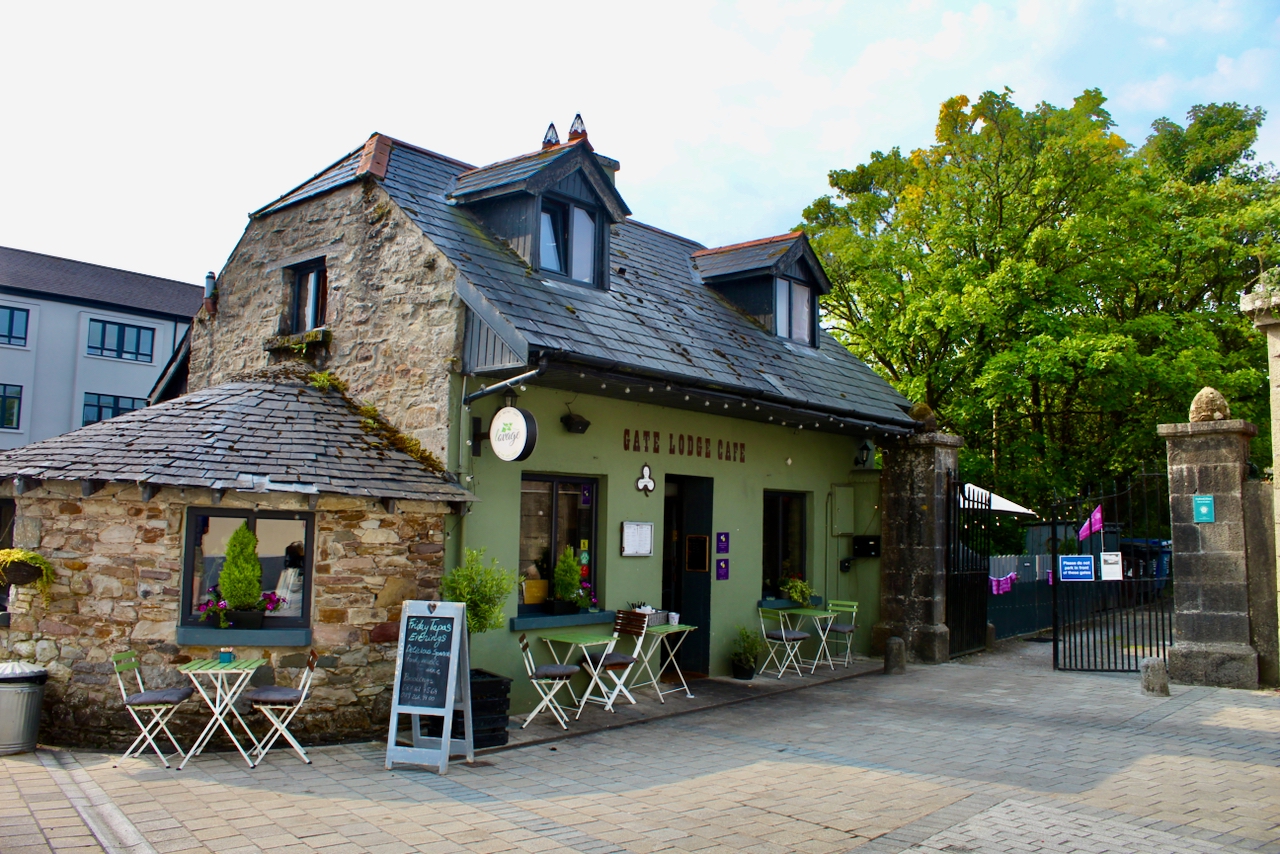
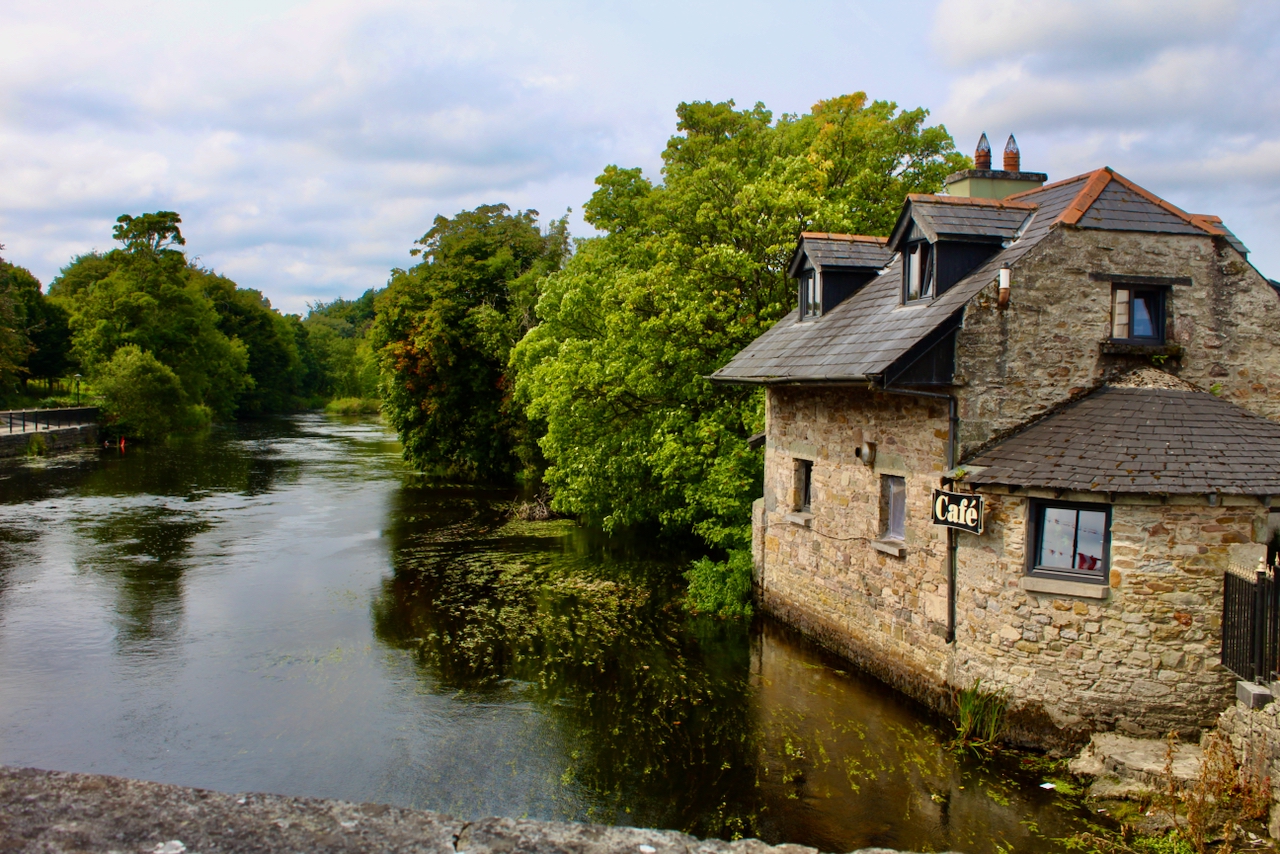
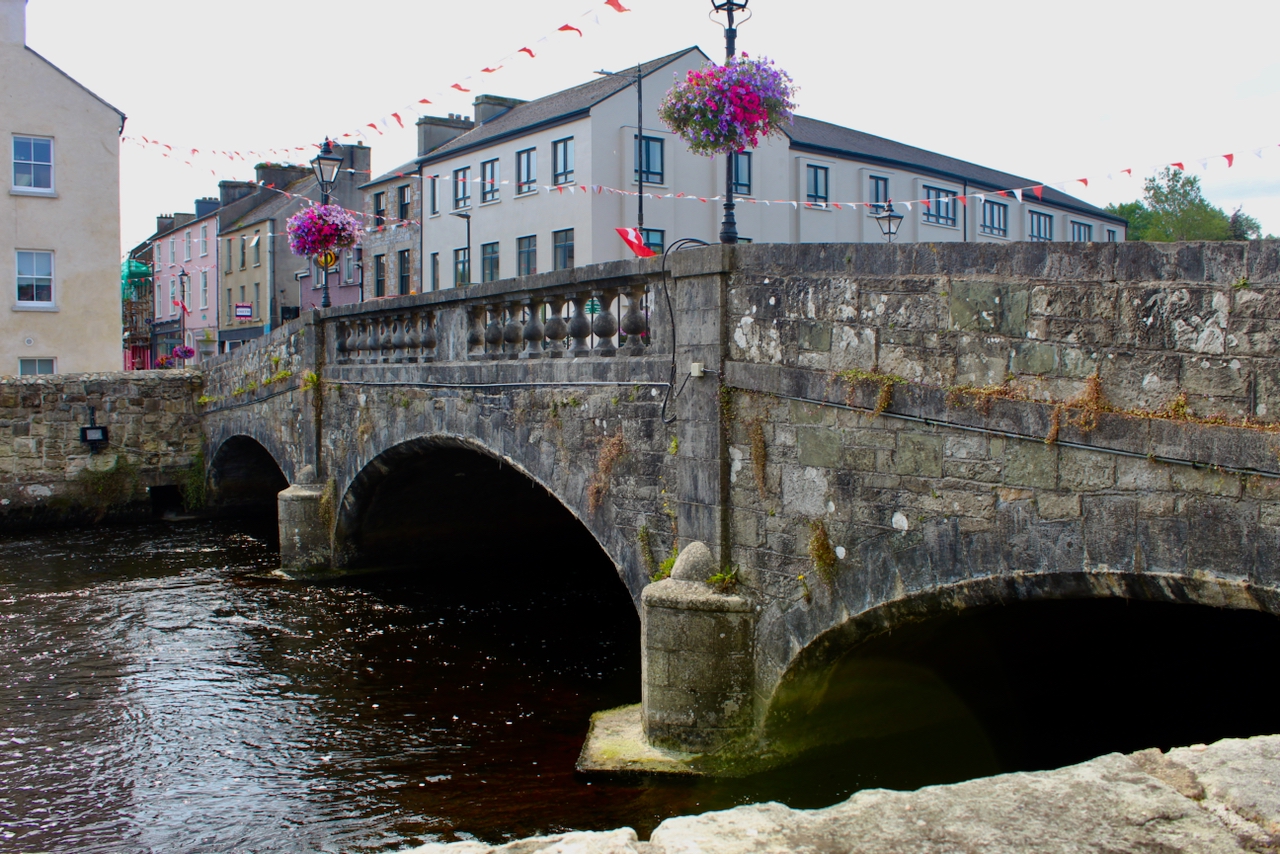
The lovely cafe in the gate lodge is situated on the river, next to the triple arch stone bridge over the River Boyle which was built in 1846 (or 1864, according to the National Inventory). [7]

The Gate Lodge cafe at Frybrook House. Photograph © Jennifer Winder-Baggot, www.irishhistorichouses.com
The Gate Lodge cafe at Frybrook House, photograph taken from the bridge. Photograph © Jennifer Winder-Baggot, www.irishhistorichouses.com
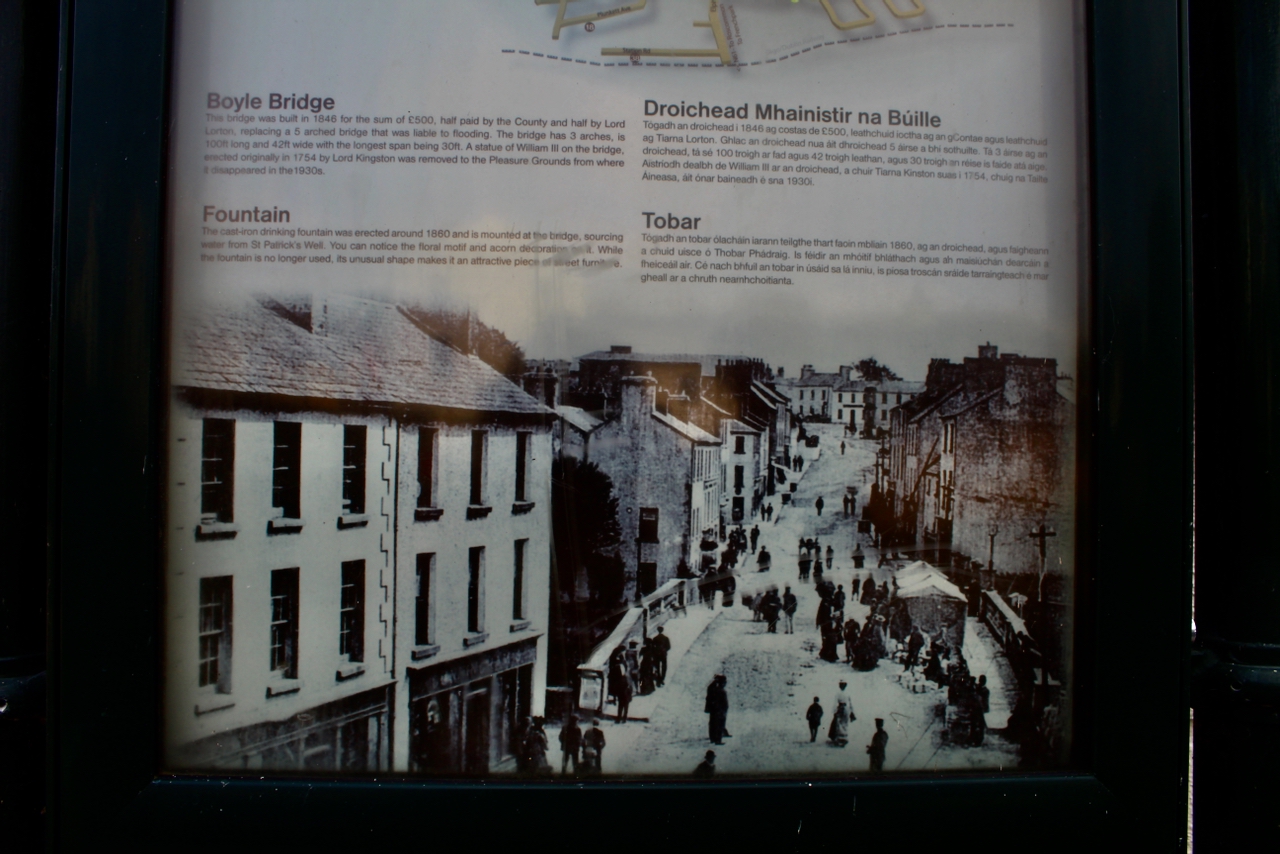
Boyle Bridge, the information sign tells us it was built in 1846. Photograph © Jennifer Winder-Baggot, www.irishhistorichouses.com
Information sign in Boyle. It tells us that the bridge was built for £500, half funded by the county and half by Lord Lorton. Depending on whether it was built in 1846 or 1864, the Lord Lorton at the time was either the 1st or 2nd Viscount Lorton. It replaced a five arched bridge that was prone to flooding.
Boyle Bridge, with the gate lodge cafe on its right. Photograph © Jennifer Winder-Baggot, www.irishhistorichouses.com

The house’s website tells us:

A bell was positioned on the roof of Frybrook house and it rang every day to invite the locals to dine in Frybrook, and when there was no room inside the house, tents were erected on the lawn.

During the 1798 rising (‘Year of the French’) even the officers of the opposing French army were dining in the house.

Frybrook House also supplied soup to the locals during the Great Famine (1845 to 1852), evidenced by a very large Famine Cauldron in the kitchen.

I don’t know how it was that the Frys would host the French when Oliver was serving in the army fighting against the French! Perhaps this information is in Oliver’s diary. It would be a fascinating read. The Dictionary of Irish Biography gives a reference for his diary: William H. Phibbs Fry, Annals of the late Major Oliver Fry, R.A. (1909).

The bell may have been used to serve to tell the time for the weaving employees. The rope ran from the top of the house to the ground floor.

The weaving industry had 22 looms, our guide told us. Frybrook wasn’t a landed estate, and the owners did not make their money from having a large amount of land and tenants. The house had six acres. In later years the Fry family sold vegetables, and Lord Lorton established a market shambles for meat and vegetables.

Not all cauldrons were used to feed the public during the Famine. In the kitchen of the house there is a large cauldron that would have been used for washing clothes. The kitchen of Frybrook has many original features.

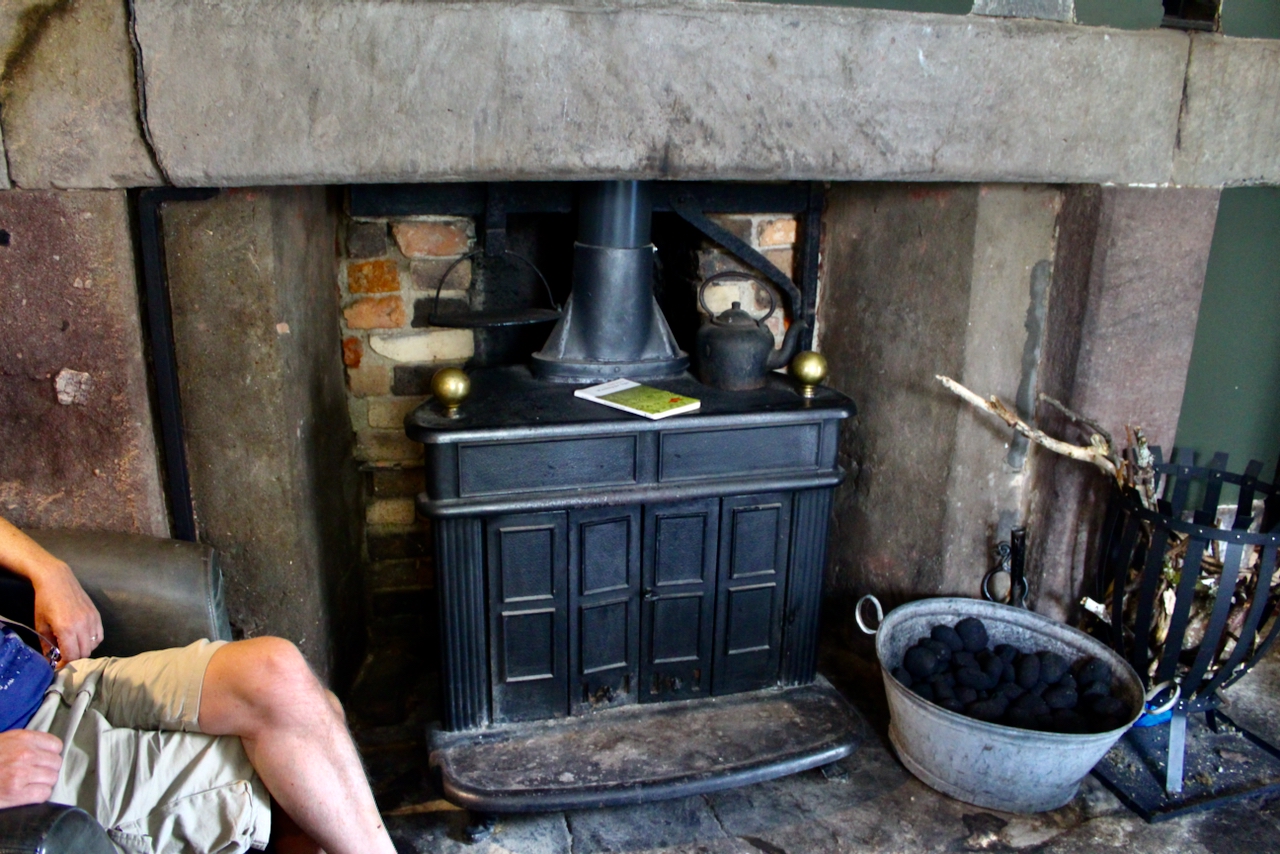
It has a Ben Franklin designed stove, which was invented to be a stove that was safe for children to be around.

Stephen takes a break to hear of the interesting details of this original kitchen. Frybrook, County Roscommon, October 2025. Photograph © Jennifer Winder-Baggot, www.irishhistorichouses.com
Lovely flagstone flooring of the kitchen. Frybrook, County Roscommon, October 2025. Photograph © Jennifer Winder-Baggot, www.irishhistorichouses.com
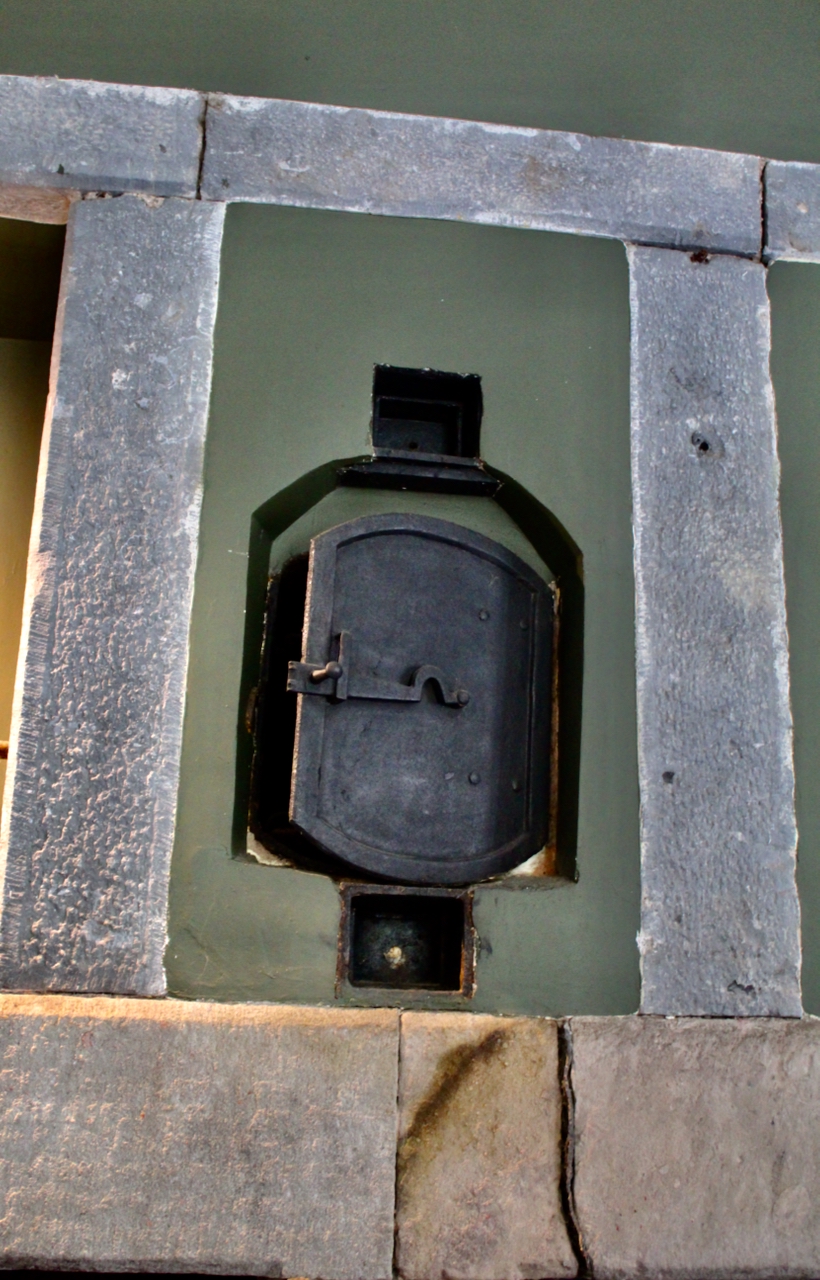
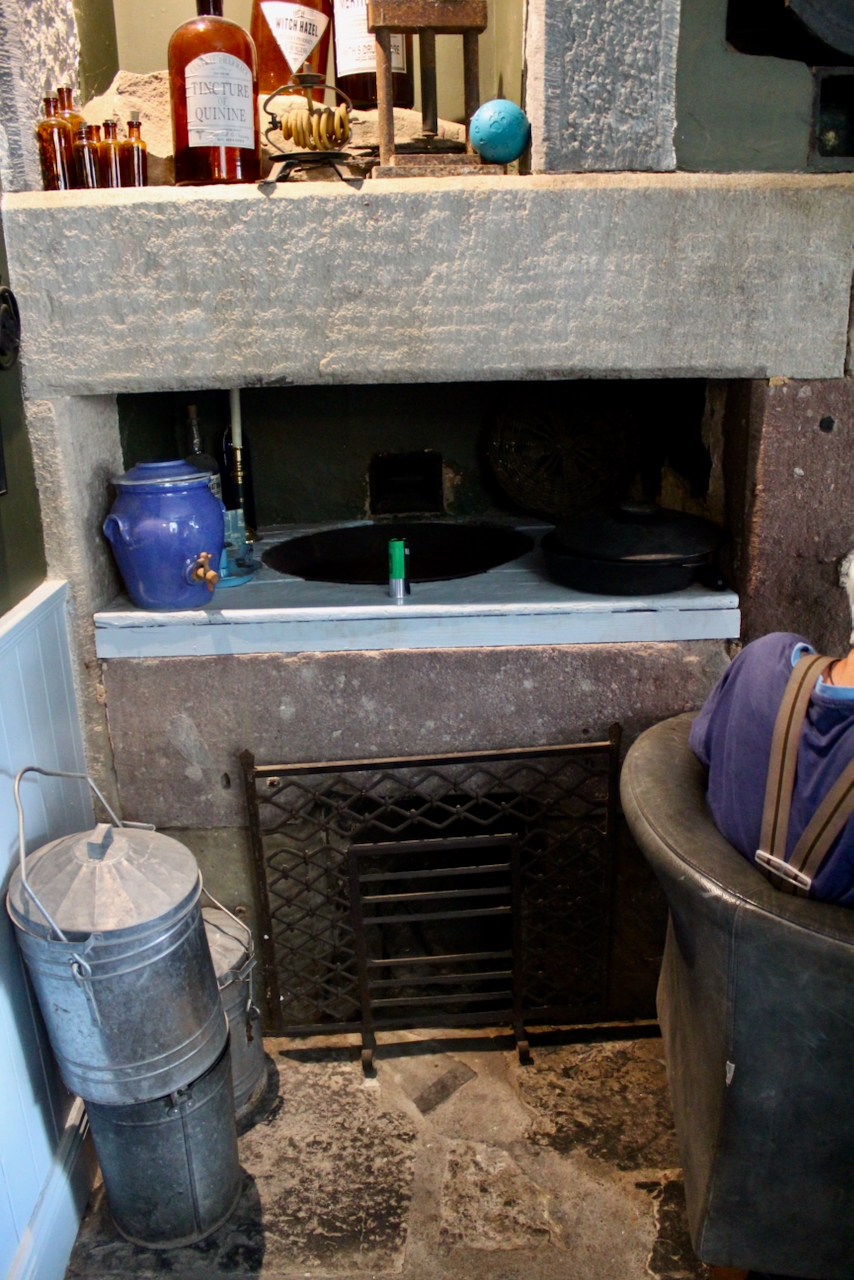
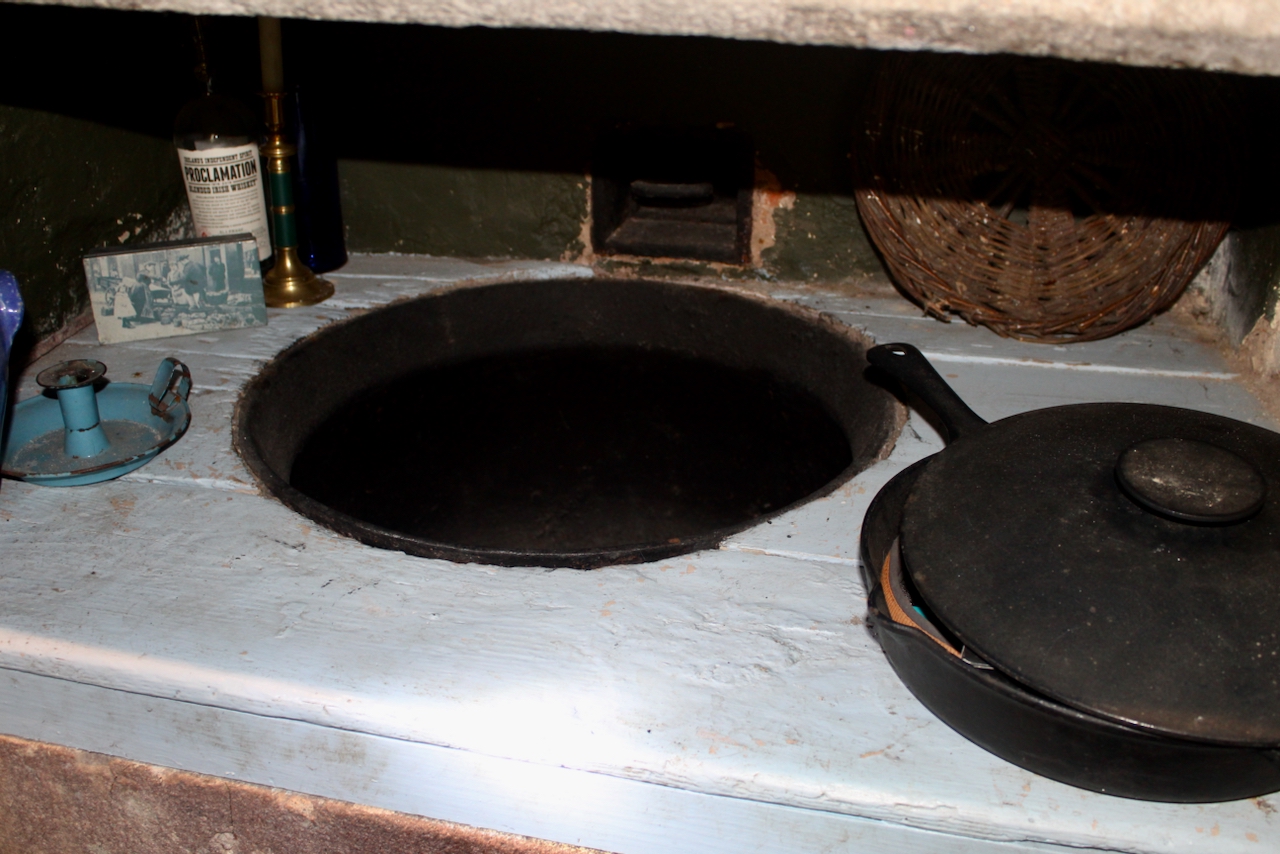
There are various spaces in the wall for the oven and for keeping food hot. Frybrook, County Roscommon, October 2025. Photograph © Jennifer Winder-Baggot, www.irishhistorichouses.com
The Ben Franklin stove at Frybrook, County Roscommon, October 2025. Photograph © Jennifer Winder-Baggot, www.irishhistorichouses.com
Frybrook, County Roscommon, October 2025. Photograph © Jennifer Winder-Baggot, www.irishhistorichouses.com
The clothes “washing machine” of the day – a cauldron over a fire. Frybrook, County Roscommon, October 2025. Photograph © Jennifer Winder-Baggot, www.irishhistorichouses.com
The laundry cauldron is still intact. Frybrook, County Roscommon, October 2025. Photograph © Jennifer Winder-Baggot, www.irishhistorichouses.com

The Famine in the 1840s hit Boyle hard. Information boards in King House tell us about Boyle in famine times. For the King family of Boyle, it was a time of trouble with tenants, as outlined in The Kings of King House by Anthony Lawrence King-Harmon.

This large portrait in the dining room of King House in Boyle is General Robert King (1773-1854), 1st Viscount Lortonwho was the second son of Robert King, 2nd Earl of Kingston.

Robert Edward King (1773-1854) joined the military and distinguished himself in the Caribbean. When he inherited Kingston Hall at Rockingham, Boyle, in 1797, he returned to Ireland and joined the Roscommon Militia and worked his way up to become a General. With Rockingham, however, came debt. In 1799 he married his first cousin, Frances Parsons Harman, daughter of his aunt Jane who had married Lawrence Parsons Harman (1749-1807), who owned the Newcastle Estate in County Longford. Robert worked hard to reduce the debt, and was a tough landlord, evicting many tenants.

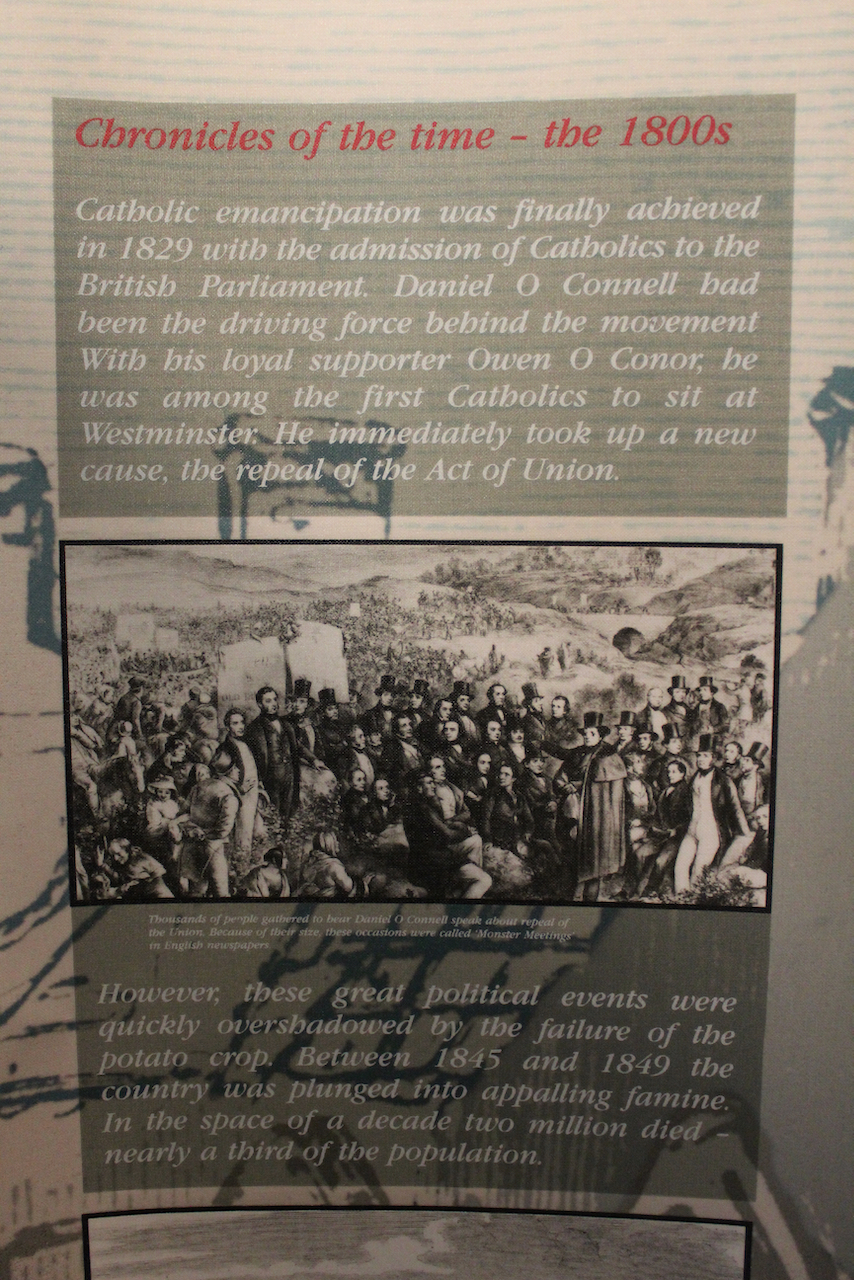
In famine years, however, he lowered rents and provided work. The information boards in King House tell us that in the 1800s, Boyle residents suffered with poverty. One third of the population died of hunger and hundreds went to the workhouse. In the 1830s about 500 men, women and children were evicted from Lord Lorton’s estates around Boyle. Many were paid to emigrate to North America.

King House, 2022.
King House, 2022.
In King House.

The Fry family would have been in the centre of such poverty and hardship, and it must have been a dreadful time. They remained in the town and survived.

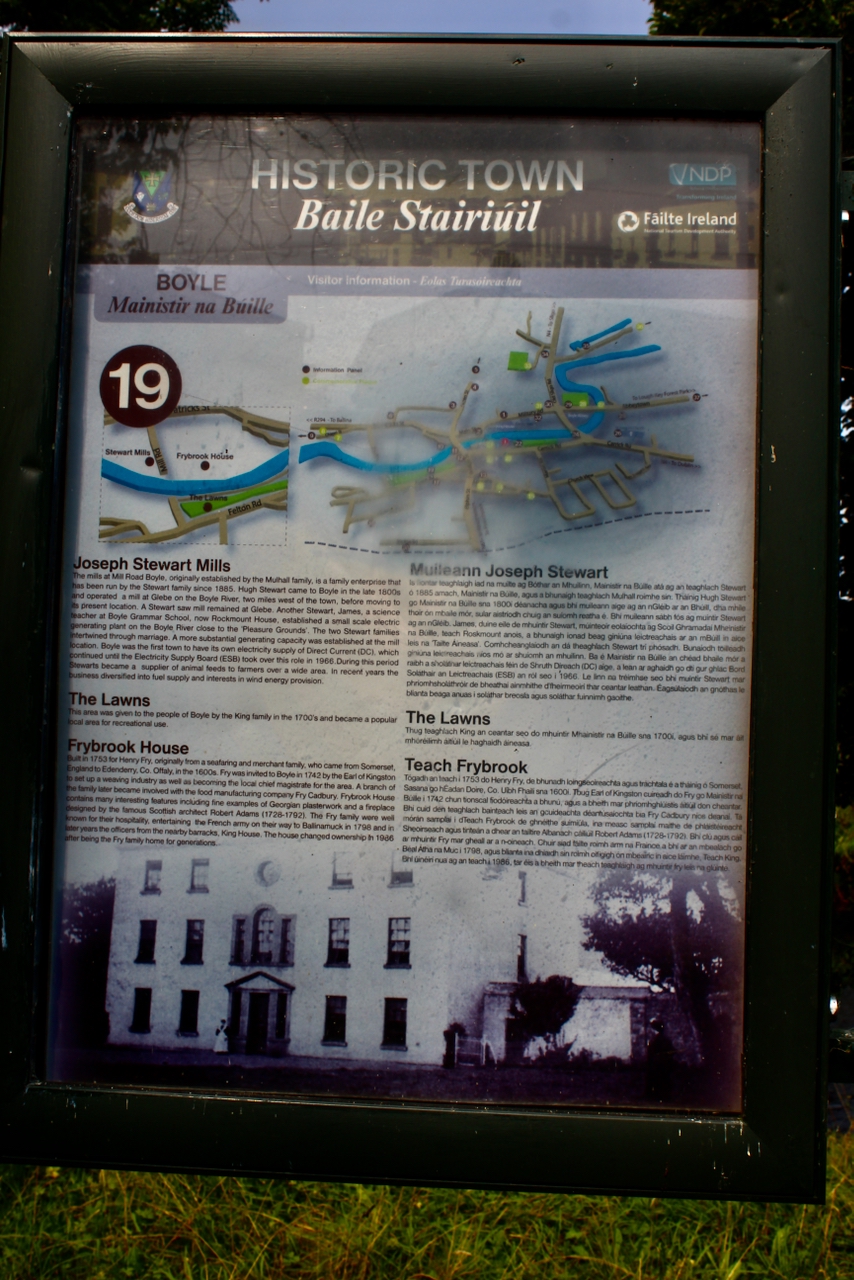
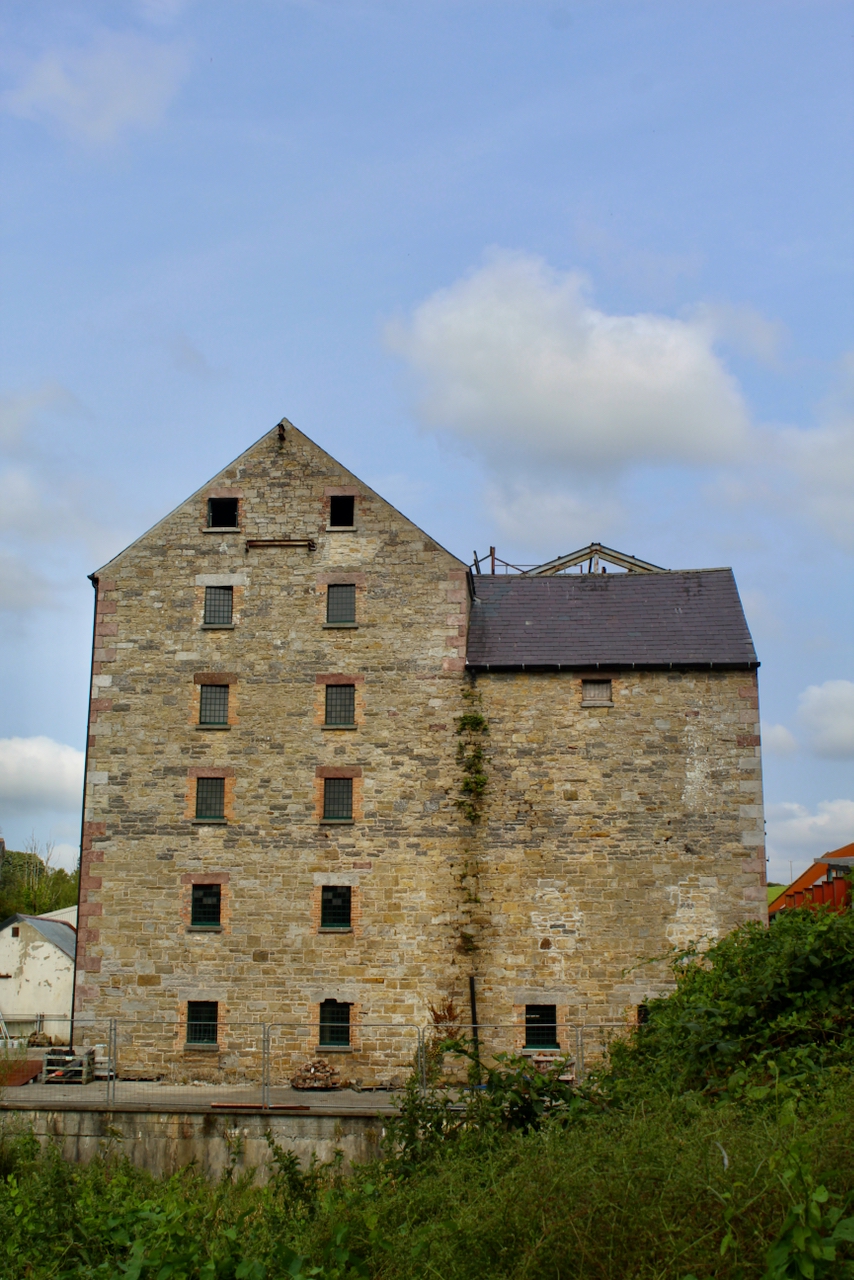
Joan told us that the Frys owned a mill, but the information board for the nearby mill does not mention Fry ownership. The current mill seems to have been built around 1810, according to the National Inventory, and the information board tells us that it was originally established by the Mulhall family and has been run by the Stewart family since 1885.

Information board about the Mill.
The Mill near Frybrook, County Roscommon, October 2025. Photograph © Jennifer Winder-Baggot, www.irishhistorichouses.com

Thank you to Joan for the wonderful tour and for being so generous with her time. She and the owners deserve thanks for bringing Frybrook back so vibrantly to life.

Artwork in Boyle, home of the annual Boyle Arts Festival.

[1] https://www.buildingsofireland.ie/buildings-search/building/31804040/frybrook-house-mocmoyne-boyle-co-roscommon

[2] Bence-Jones, Mark. A Guide to Irish Country Houses (originally published as Burke’s Guide to Country Houses volume 1 Ireland by Burke’s Peerage Ltd. 1978) Revised edition 1988 Constable and Company Ltd, London.

[3] https://frybrook.ie/frybrooks-history/

[4] https://theirishaesthete.com/2023/10/23/frybrook/

[5] Brendan McEvoy (1986). The Peep of Day Boys and Defenders in the County Armagh. Seanchas Ardmhacha: Journal of the Armagh Diocesan Historical Society.

[6] https://blog.library.si.edu/blog/2021/01/28/the-prickly-meanings-of-the-pineapple/

[7] The Inventory says the bridge was built in 1864. https://www.buildingsofireland.ie/buildings-search/building/31804042/bridge-street-mocmoyne-boyle-co-roscommon

Castlecoote House, Castlecoote, Co. Roscommon

www.castlecootehouse.com

Open dates in 2025: May 14-18, 21-25, 28-31, June 1, 4-8, 11-15, 18-22, 25-29, July 2-6, 9-13, 16-20, 23-27, 30-31, Aug 16-24, 2pm-6pm

Fee: adult €12, OAP/student €10, children under 5 years €5
Home of the Percy French Festival, www.percyfrench.ie 

donation

Help me to pay the entrance fee to one of the houses on this website. This site is created purely out of love for the subject and I receive no payment so any donation is appreciated!

€15.00

Castlecoote, County Roscommon, August 2025. Photograph © Jennifer Winder-Baggot, www.irishhistorichouses.com

We visited Castlecoote in County Roscommon during Heritage Week 2025. The owner, Kevin, showed us around, and we were lucky enough to be accompanied on the tour by a previous owner, Tony Convoy, who lived here as a child after the 1920s and moved out in 1988 or 1989.

Castlecoote, County Roscommon, August 2025. Photograph © Jennifer Winder-Baggot, www.irishhistorichouses.com
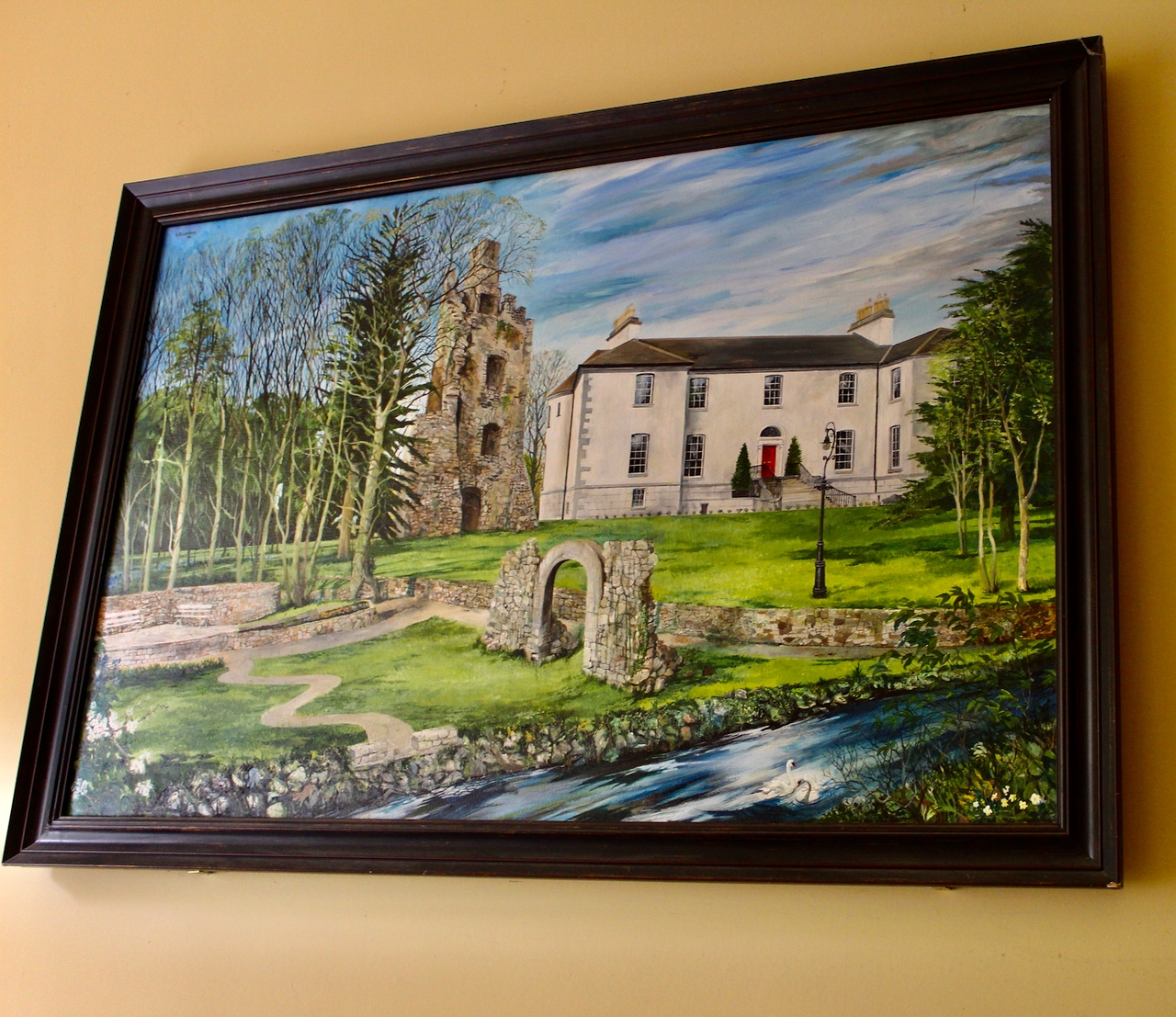
A painting in the house of Castlecoote.
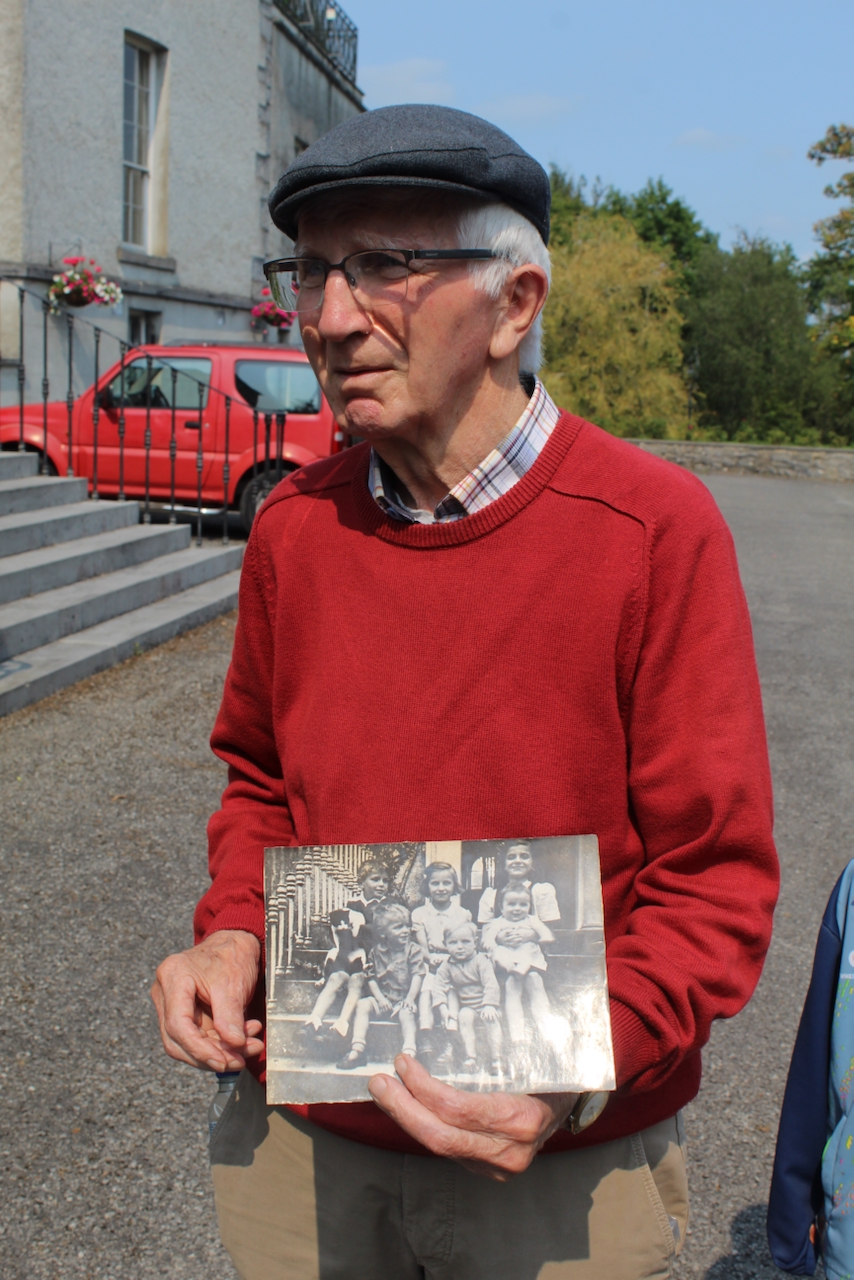
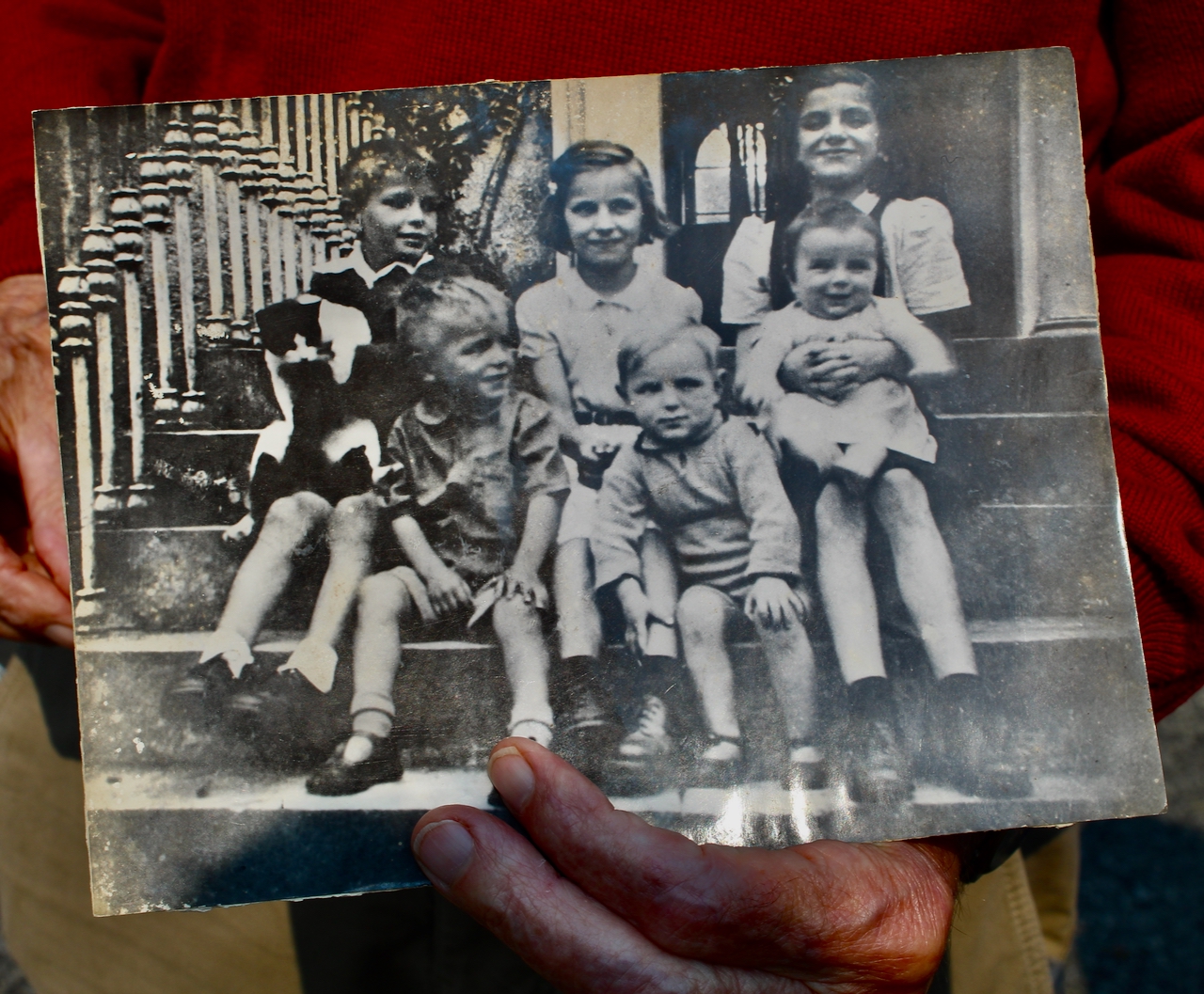
Tony Convoy, with a photograph of him and his siblings sitting on the front steps of their home, Castlecoote.
Tony sits on his sister’s knee – he laughed and said the photograph makes him look like he has long legs! His family farmed the property. His family and grandchildren recreated the photograph the day we visited, sitting on the steps of the house.

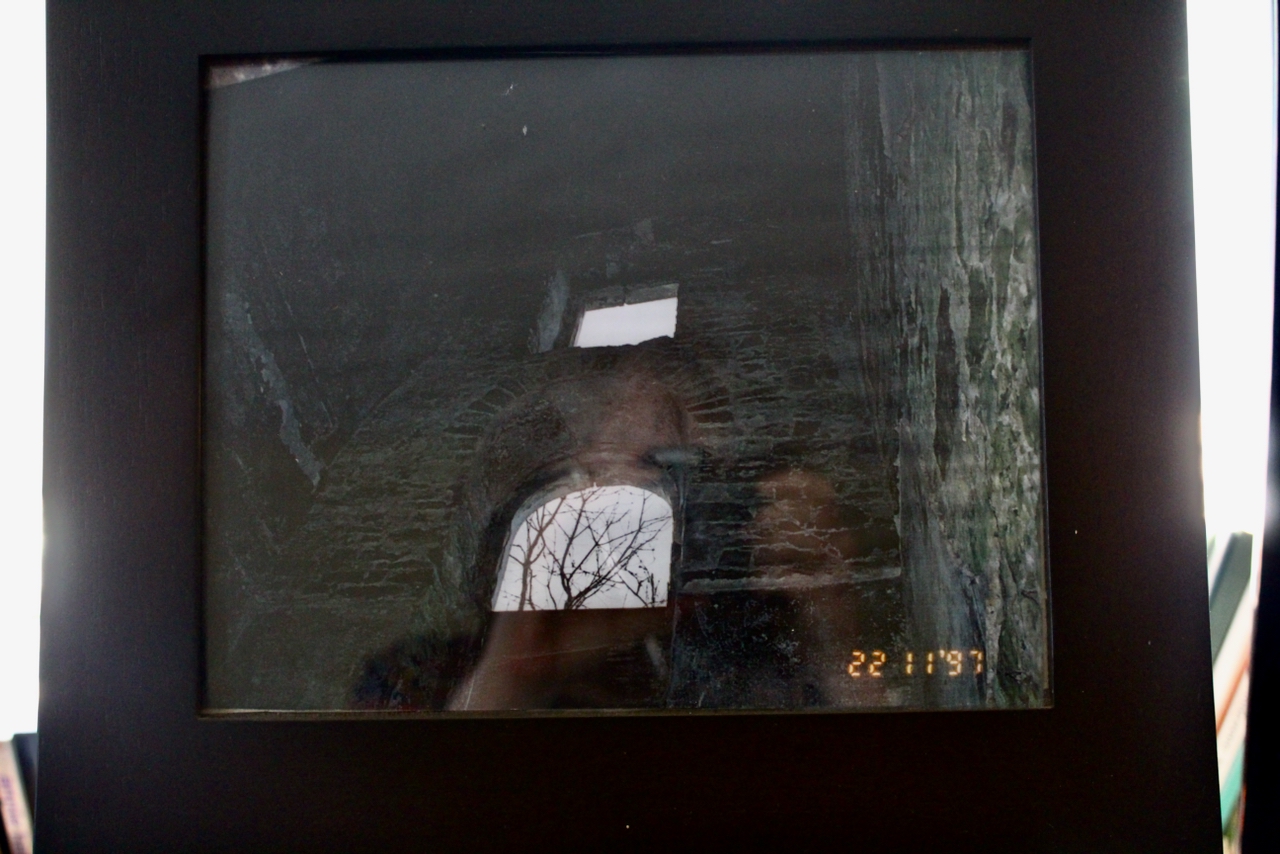
Castlecoote house is situated in the grounds of a 14th or 15th century fort of the Mageraghty clan built on the river Suck. The fort may have been taken over by Nicholas Malby, President of Connaught, in the 1580s. Four towers of the original fort are still standing. The National inventory tells us that the castle was erected in the Raphoe-Rathfarnham star fort plan type with two of the original flanking towers incorporated into the main house. [1] The house was largely destroyed in the 1640s but the flanking towers that now form the wings of the house remained, with their stone flagged floors and musket chambers. Stephen was particularly excited to hear that recently when a tree was blown down in a storm, a skeleton was found underneath, at the bottom of a tower!

Castlecoote, County Roscommon, August 2025. Photograph © Jennifer Winder-Baggot, www.irishhistorichouses.com
14th or 15th century fort tower, Castlecoote, County Roscommon, August 2025. Photograph © Jennifer Winder-Baggot, www.irishhistorichouses.com
Skeletal remains were found under the tree that fell in the recent storm, and have been sent off for analysis and dating.
Castlecoote, County Roscommon, August 2025. Photograph © Jennifer Winder-Baggot, www.irishhistorichouses.com
The remains of one tower of the original castle fort at Castlecoote, County Roscommon, August 2025. Photograph © Jennifer Winder-Baggot, www.irishhistorichouses.com
Castlecoote, County Roscommon, August 2025. Photograph © Jennifer Winder-Baggot, www.irishhistorichouses.com

Charles Coote (1581-1642), a British soldier who came to Ireland to fight in the Nine Years War, when the Irish tried to take Ireland back from British control, took Castlecoote as his base in 1616, and renamed the castle fort Castlecoote. He enlarged and fortified the castle. Kevin showed us a picture of the old house and the bridge. The house seems to have had more upper floors than today.

An early picture of Castlecoote.

Charles Coote fought in the Siege of Kinsale in 1601-2, a battle which ultimately led to rebel Hugh O’Neill’s defeat and the end of the Nine Years’ War. In 1605 Coote was appointed Provost-Marshal of Connaught and in 1613, General Collector and Receiver of the King’s composition money for Connaught.

Sir Charles Coote (1581-1642) 1st Baronet of Castle Cuffe, Queens County, photograph By David Keddie – Own work, Public Domain, https//:commons.wikimedia.org/w/index.php?curid=42005305.jpg
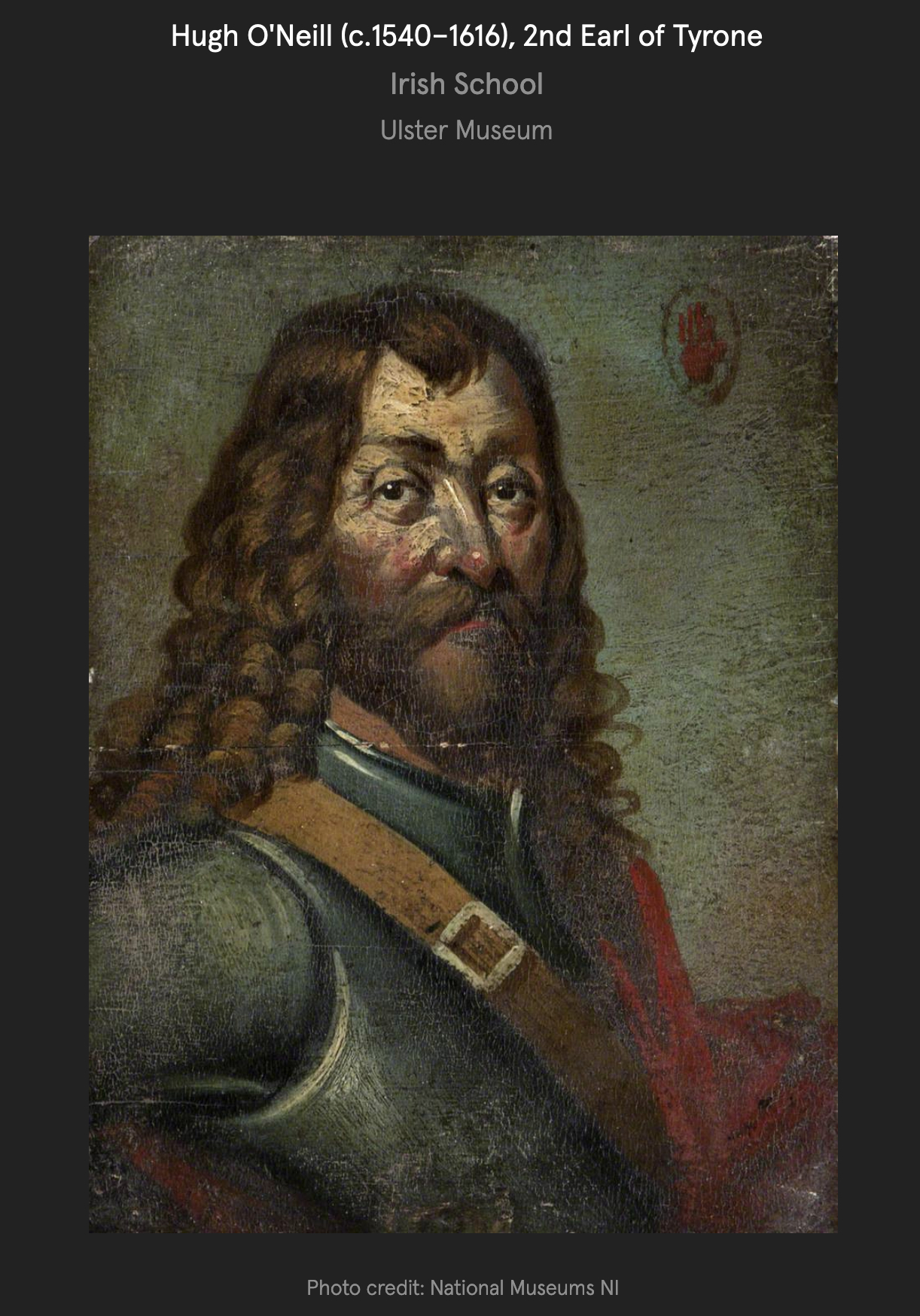
Hugh O’Neill (c. 1540-1616) 2nd Earl of Tyrone, courtesy of National Museums Northern Ireland. In Irish Portraits 1660-1860 by Anne Crookshank and the Knight of Glin, we are told that this was painted during his exile in Rome.

Charles Coote married Dorothea Cuffe in 1617, and in 1620 became Vice President of Connaught. Dorothea brought with her to the marriage land in Counties Cork and Laois. In 1621 Coote was created Baronet of Castle Cuffe in Queen’s County (Laois).

As commissioner to examine and contest Irish land titles, Coote acquired much property. He served as MP for Queens County in 1640.

In 1641, Coote was appointed governor of Dublin and told to raise a regiment to fight against the Catholic uprising. He helped to beat the Irish Confederates in the Battle of Kilrush but was killed by the opposition in 1642.

Castlecoote, County Roscommon, August 2025. Photograph © Jennifer Winder-Baggot, www.irishhistorichouses.com

The castle was attacked by 1200 men during the 1641 rebellion. Coote’s son Charles (c.1609–1661) held the castle successfully, withstanding a siege of around ten days of attack.

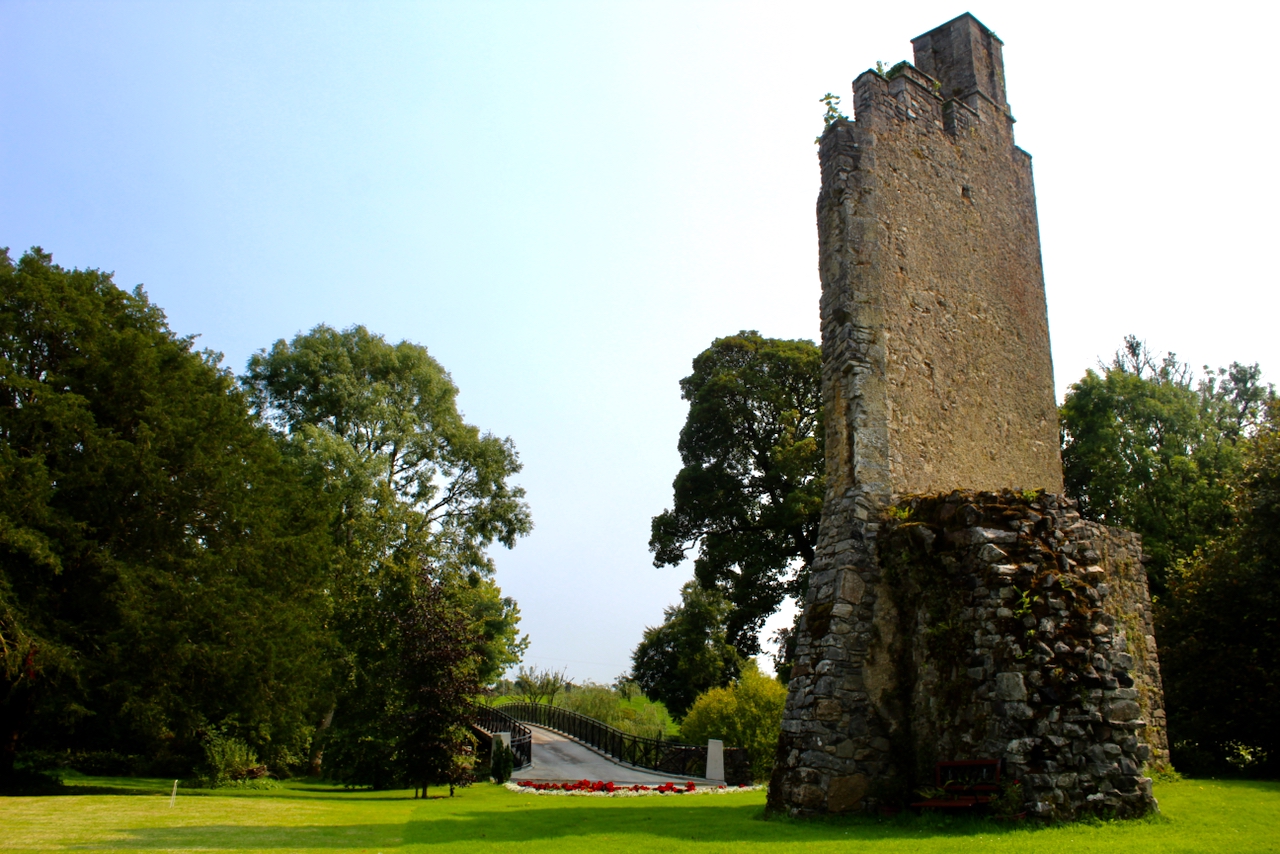
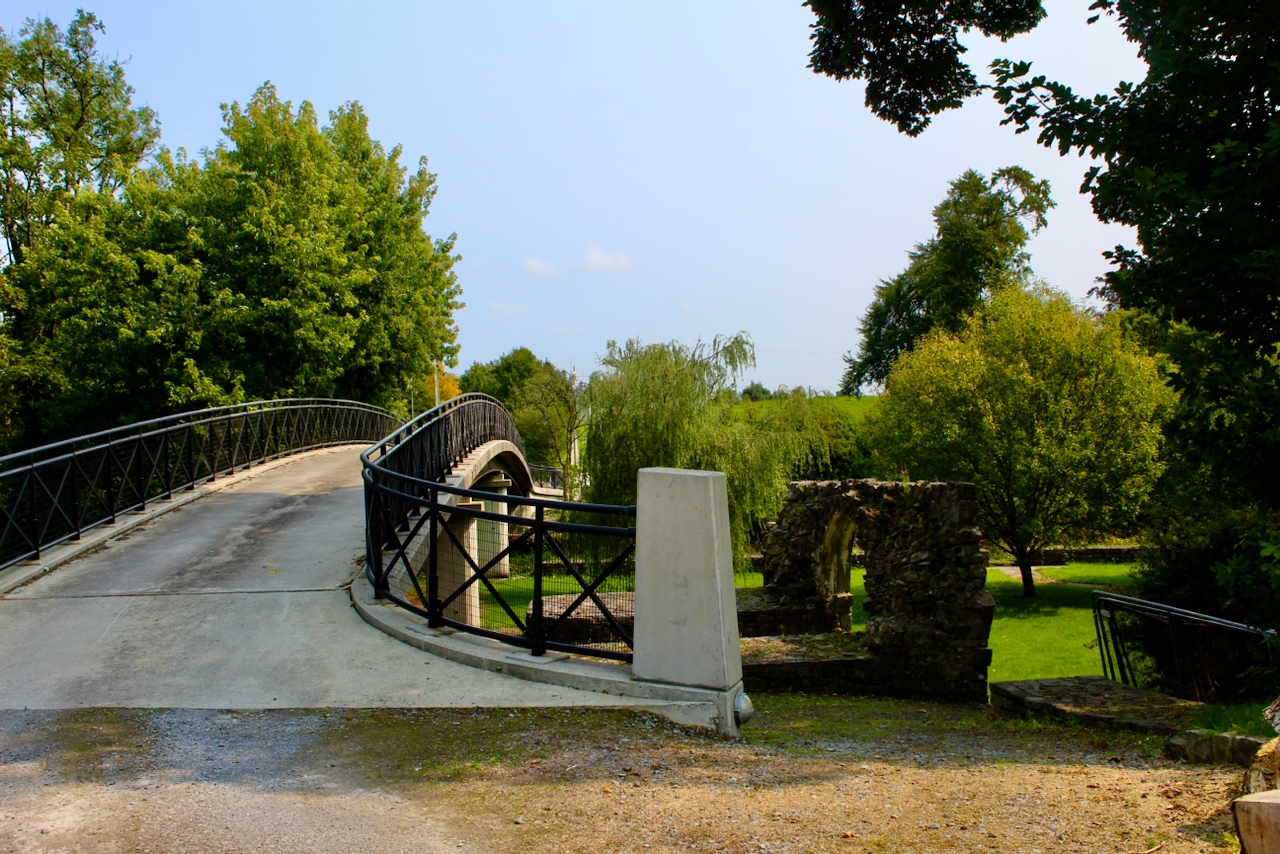
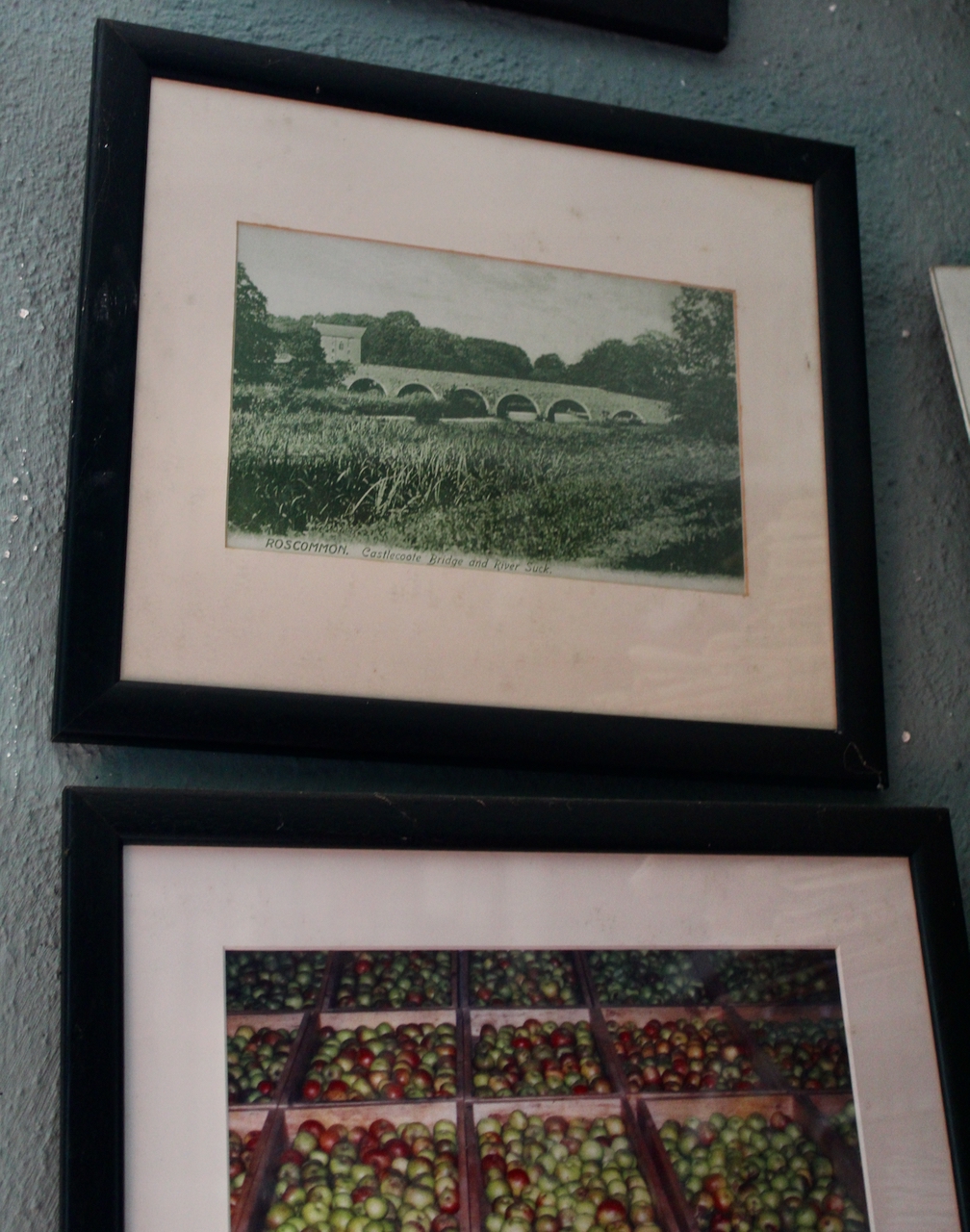
The bridge was destroyed by the attack and was replaced only relatively recently by the current owner, who took great care to have the most suitable bridge designed and built – one with a curved arch that shows the house at its best, much like the original. Kevin told us that the arches from the original bridge were reused to make a new bridge further down the River Suck.

Castlecoote, County Roscommon, August 2025. Photograph © Jennifer Winder-Baggot, www.irishhistorichouses.com
A photograph of the bridge further up the fiver, and one of the apple harvest at Castlecoote below.

The Dictionary of Irish Biography gives an intriguing hint when it tells us that the son Charles Coote was elected to the Irish parliament for Co. Leitrim in 1640 and “appointed in the same year to a commission to examine those accused of bewitching Katherine, sometime duchess of Buckingham, latterly wife of the earl of Antrim.”

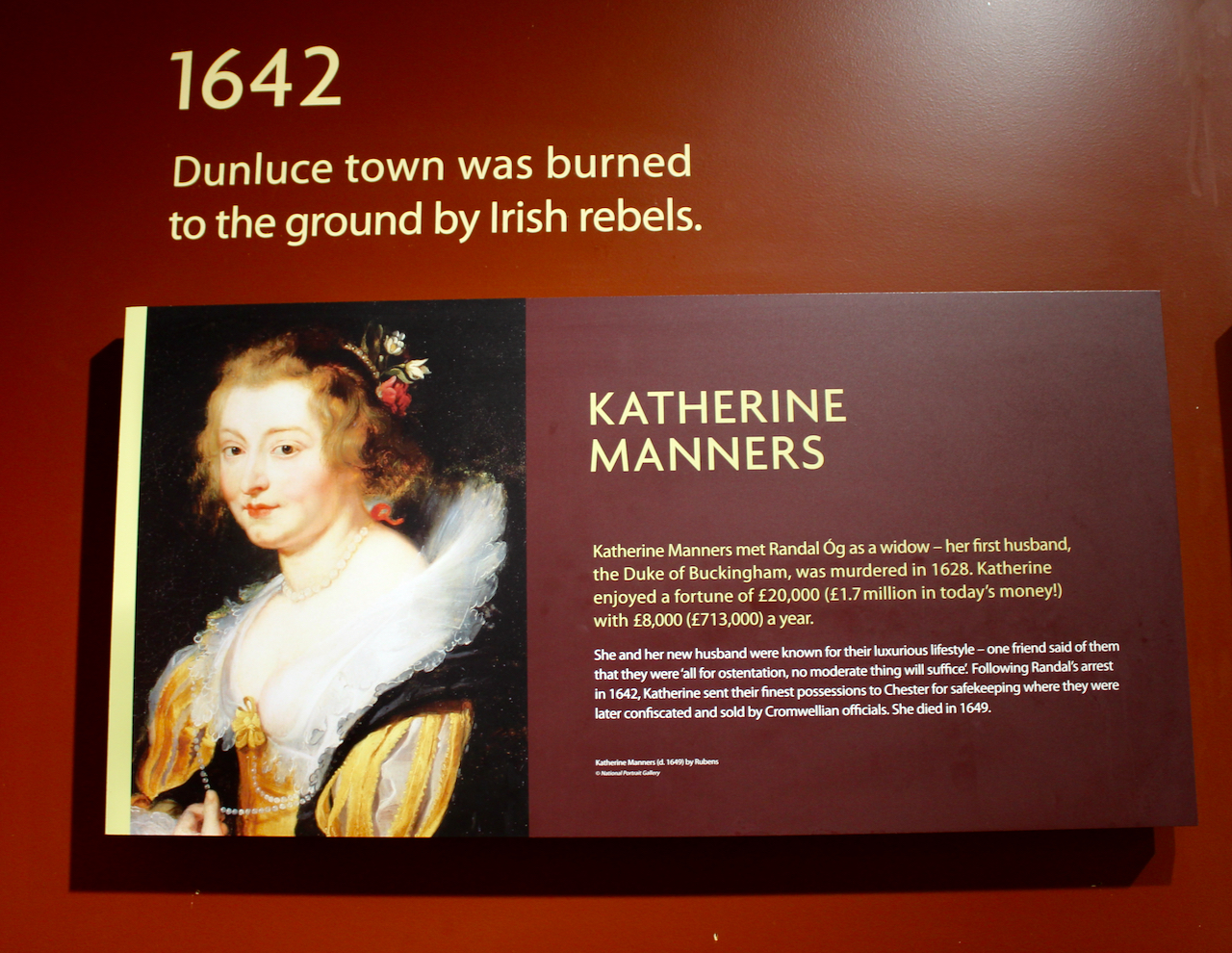
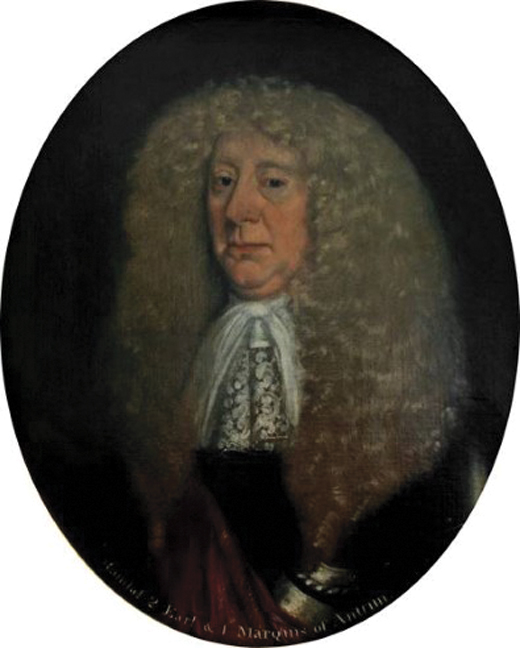
We came across Katherine née Manners who became the Duchess of Buckingham before, when we visited Glenarm, as she married Randal MacDonnell 2nd Earl and 1st Marquess of Antrim. They moved to Ireland after their marriage to live in Dunluce Castle in County Antrim (see my entries https://irishhistorichouses.com/2024/07/04/dunluce-castle-ruin-county-antrim-northern-ireland/ and https://irishhistorichouses.com/2024/07/11/glenarm-castle-county-antrim-northern-ireland-private-can-book-a-tour/ ).

She was the widow of George Villiers, Duke of Buckingham, favourite of King James I. George Villiers and his mother were recently depicted in a tv series “Mary and George,” based on Benjamin Wooley’s book The King’s Assasin.

Katherine was heiress to her mother’s fortune and to extensive unentailed portions of the Manners estates in Northamptonshire and Yorkshire, together with estates in Buckinghamshire and Leicestershire. She renounced her Catholicism to marry George Villiers.

Dunluce, County Antrim, June 2023. Katherine née Manners was painted by Rubens.

Her so-called bewitching occurred before her marriage to George Villiers. The story of the bewitching takes place in 1613 when Katherine and several of her relatives fell ill at their home in Belvoir Castle, and her brother Henry died. It was said that the family were poisoned by some witches. The women accused of witchcraft were from a family who had fallen on hard times, who took work in the castle. They were dismissed, and it was said that in revenge, they poisoned the family. The former servants, Joan, Margaret and Philippa Flower, were known to be herbal healers. They were accused of having used witchcraft to to attack the family, and they became known as “the Belvoir Witches.”

Joan died on route to trial in Lincoln when she choked on a piece of bread: she allegedly requested the bread, saying that if she was guilty it would choke her. If bread blessed by a priest stuck in the woman’s throat, then her crime was an affront to God himself. Her death was taken as evidence of the crime and further incriminated the daughters, who confessed, probably under torture. These ‘witches’ were executed on 11 March 1618. [3]

In 2013, historian Tracy Borman suggested in Witches: A Tale of Sorcery, Scandal and Seduction (Cape, 2013) that the Flower women may have been framed by George Villiers, who may have poisoned Katherine’s brothers in order to inherit the title Duke of Rutland after he married Katherine, sole surviving heir.

George Villiers Duke of Buckingham was assassinated in 1628 and his wife Katherine and her sons inherited an enormous fortune as well as Buckingham’s London mansions – Wallingford House, Walsingham House, and York House – together with nineteen more modest properties on the Strand, a mansion in Chelsea, and another, New Hall, north of Chelmsford in Essex. She was therefore quite a catch for Randal McDonnell.

Randal MacDonnell 2nd Earl and 1st Marquess of Antrim.

After Buckingham’s death she reverted to Catholicism.

Let’s return to Castlecoote. In 1645 Charles Coote (c.1610 –1661) the son was made Lord President of Connaught.

Coote fought on the Cromwellian side in the Civil War but managed to win King Charles II’s favour after the restoration of the monarchy, and was created earl in 1661. After becoming earl, he was made one of the lord justices of Ireland.

Charles Coote 1st Earl of Mountrath (c.1610 –1661), 2nd Baronet, ca. 1642, before he was ennobled, Circle of William Dobson.

Charles chose Mountrath for his earldom because his father had led a very successful advance through the district of Mountrath during the 1641 uprising, riding over forty eight hours on horseback without losing a single man. (see the Dictionary of National Biography)

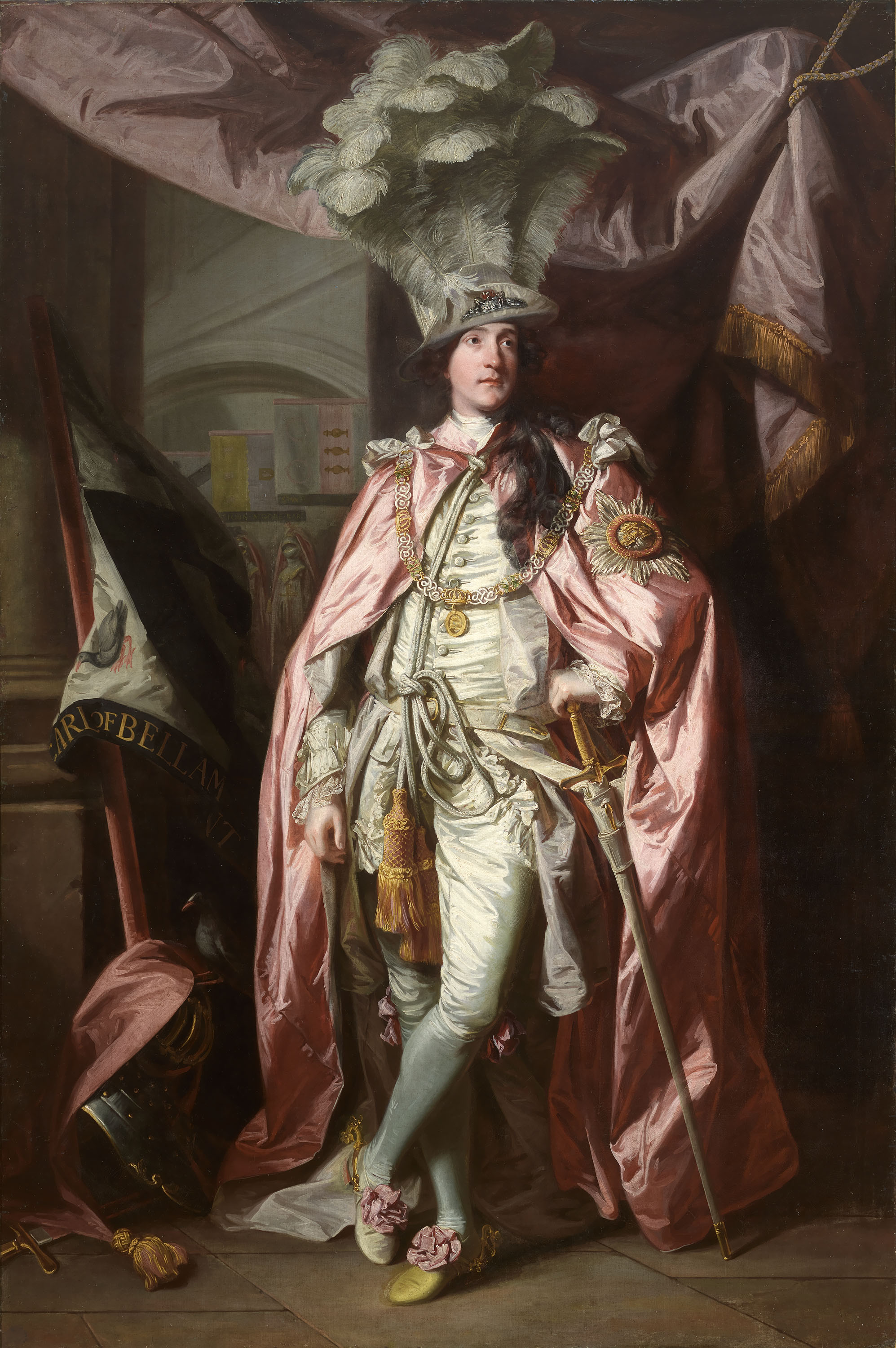
Charles’s brother Chidley Coote (d. 1668) lived at Mount Coote in County Limerick, later Ash Hill, which was a Section 482 property until 2025 and provides beautiful accommodation (see my entry https://irishhistorichouses.com/2023/04/06/ash-hill-kilmallock-co-limerick/. ) Another brother Thomas (d. 1671) lived in Cootehill, County Cavan, and Richard Coote (1620-1683) 1st Baron Coote of Coloony, County Sligo, married Mary St. George and had a son Richard (1636-1700) who became 1st Earl of Bellamont, or he of the splendid pink robe and feathers as I like to think of him.

Charles Coote, 1st Earl of Bellamont by Joshua Reynolds, courtesy of National Gallery of Ireland NGI 216.
Ballyfin, County Laois: The staircase hall of Ballyfin, where hang portraits of many Cootes. The house came into the Coote family in 1813. Country Life 31/08/2011  vol. CCV. Photograph by Paul Barker.

The Historic Houses of Ireland website tells us that the fortified house was remodelled in the Palladian style in the eighteenth century to create the house as we see it today. [2] The National Inventory tells us that this work was carried out around 1770. The house is a three-bay two-storey house over raised basement, with single-bay flanking projecting wings from the fortified house of c.1630. It has full-height bows to the south and west elevations.

Castlecoote, County Roscommon, August 2025. Photograph © Jennifer Winder-Baggot, www.irishhistorichouses.com
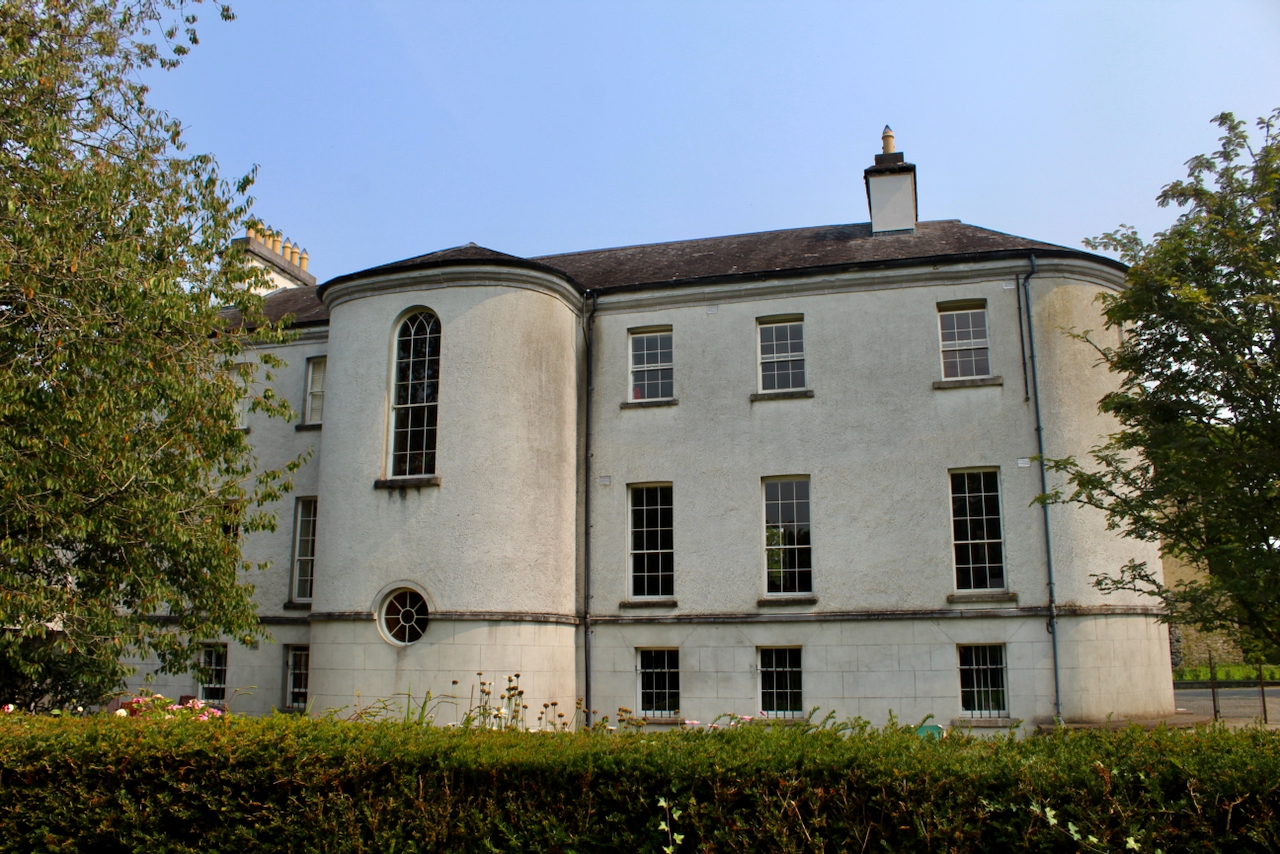
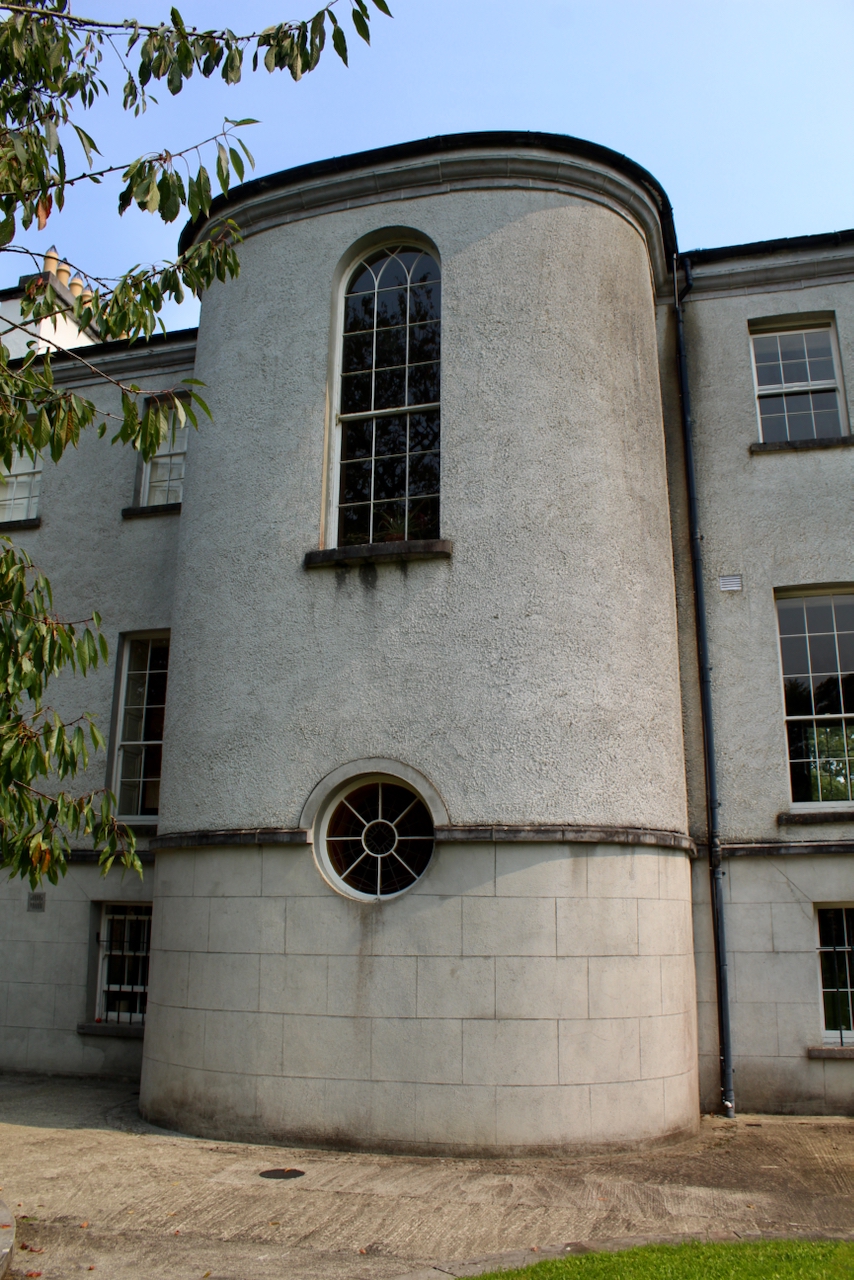
Rear facade of the house with the full height bow. Castlecoote, County Roscommon, August 2025. Photograph © Jennifer Winder-Baggot, www.irishhistorichouses.com
Castlecoote, County Roscommon, August 2025. Photograph © Jennifer Winder-Baggot, www.irishhistorichouses.com
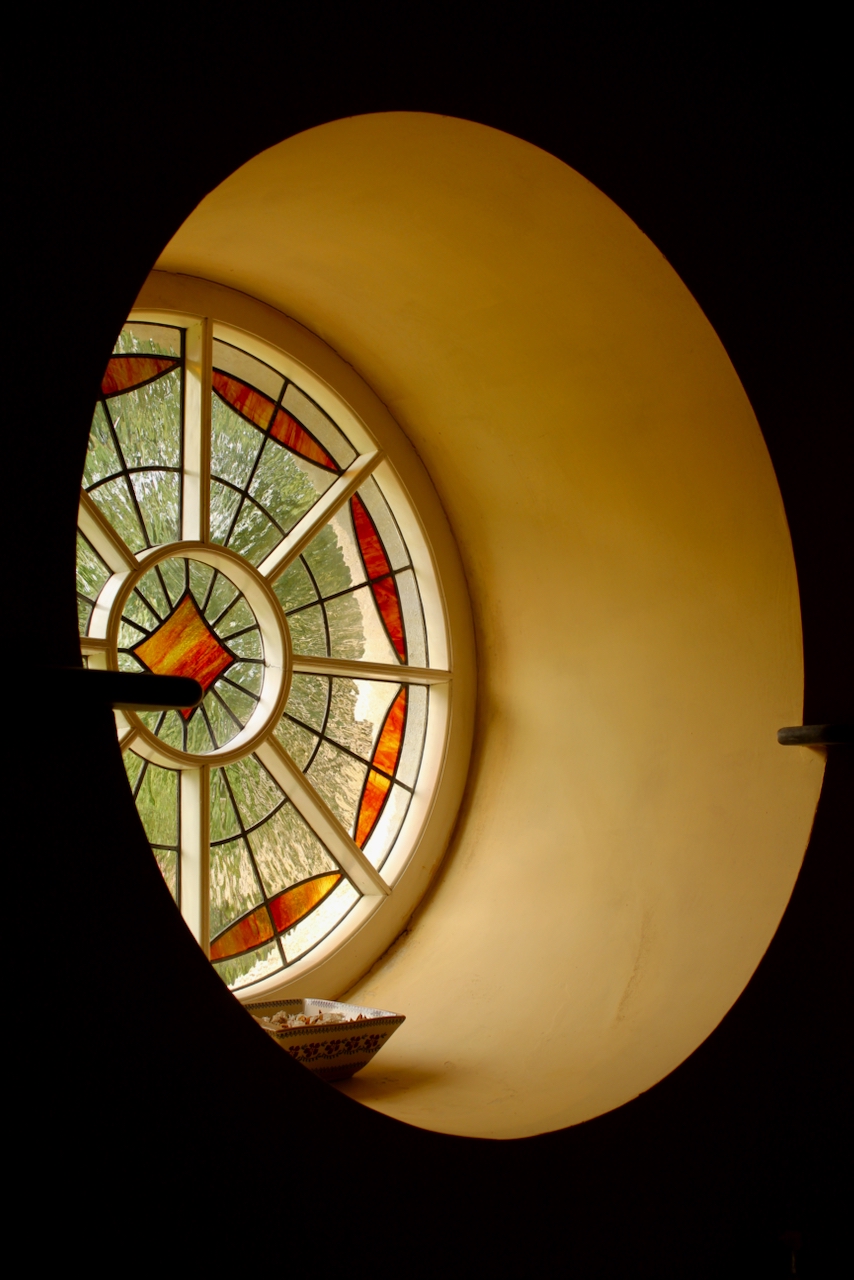
The round window from inside Castlecoote, County Roscommon, August 2025. Photograph © Jennifer Winder-Baggot, www.irishhistorichouses.com
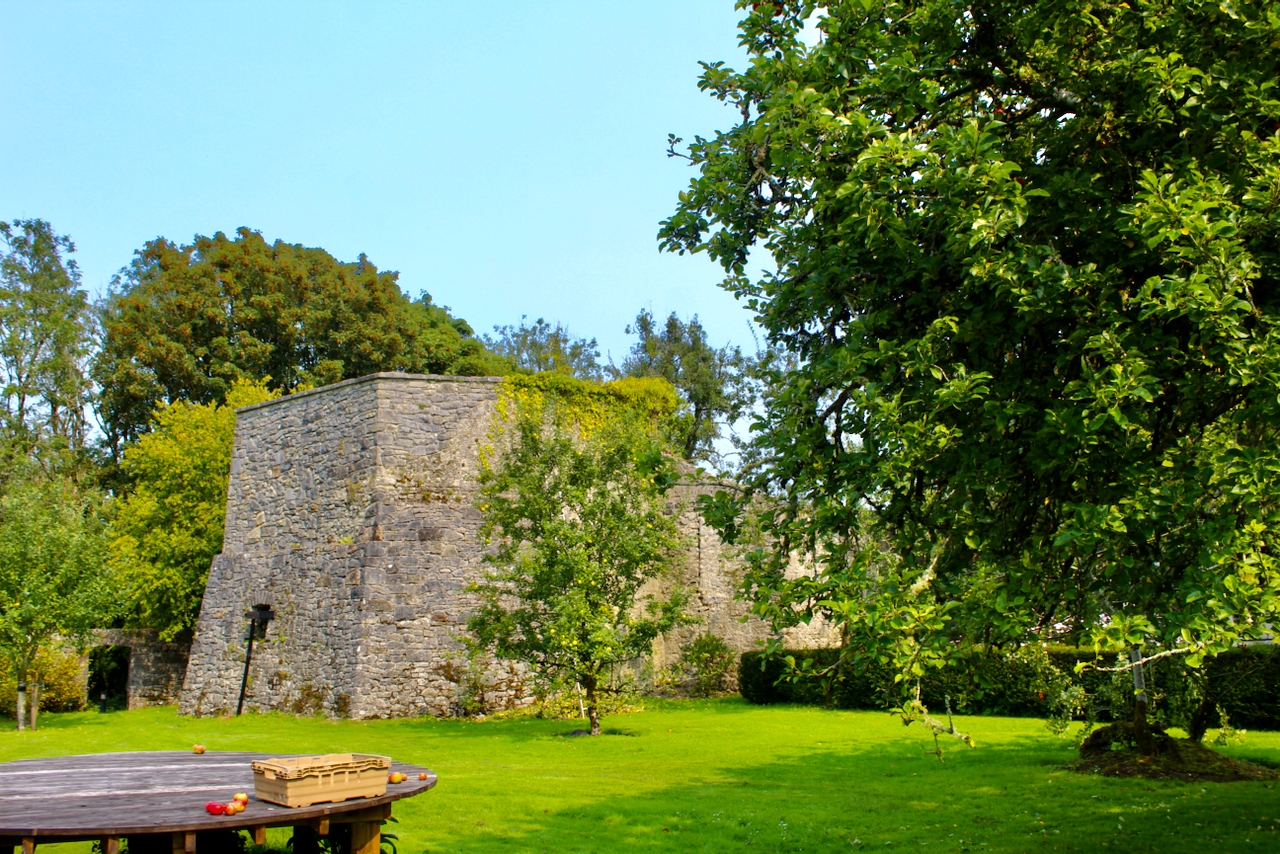
The remains of the other two towers are in the back garden. Castlecoote, County Roscommon, August 2025. Photograph © Jennifer Winder-Baggot, www.irishhistorichouses.com

The next family to live in Castlecoote were the Gunning family. The Historic Houses of Ireland website tells us that the family are reputed to have won the estate through a game of cards. [2] Due to their beauty, John Gunning’s daughters Maria and Elizabeth were the toast of 1750s London.

Horace Walpole wrote: “There are two Irish girls, of no fortune, who make more noise than any of their predecessors since the days of Helen, and are declared the two handsomest women alive. I think there being two so handsome, and such perfect figures, is their chief excellence, for singly I have seen much handsomer women than either. However, they can’t walk in the park, or go to Vauxhall, but such mobs follow them that they themselves are driven away.”

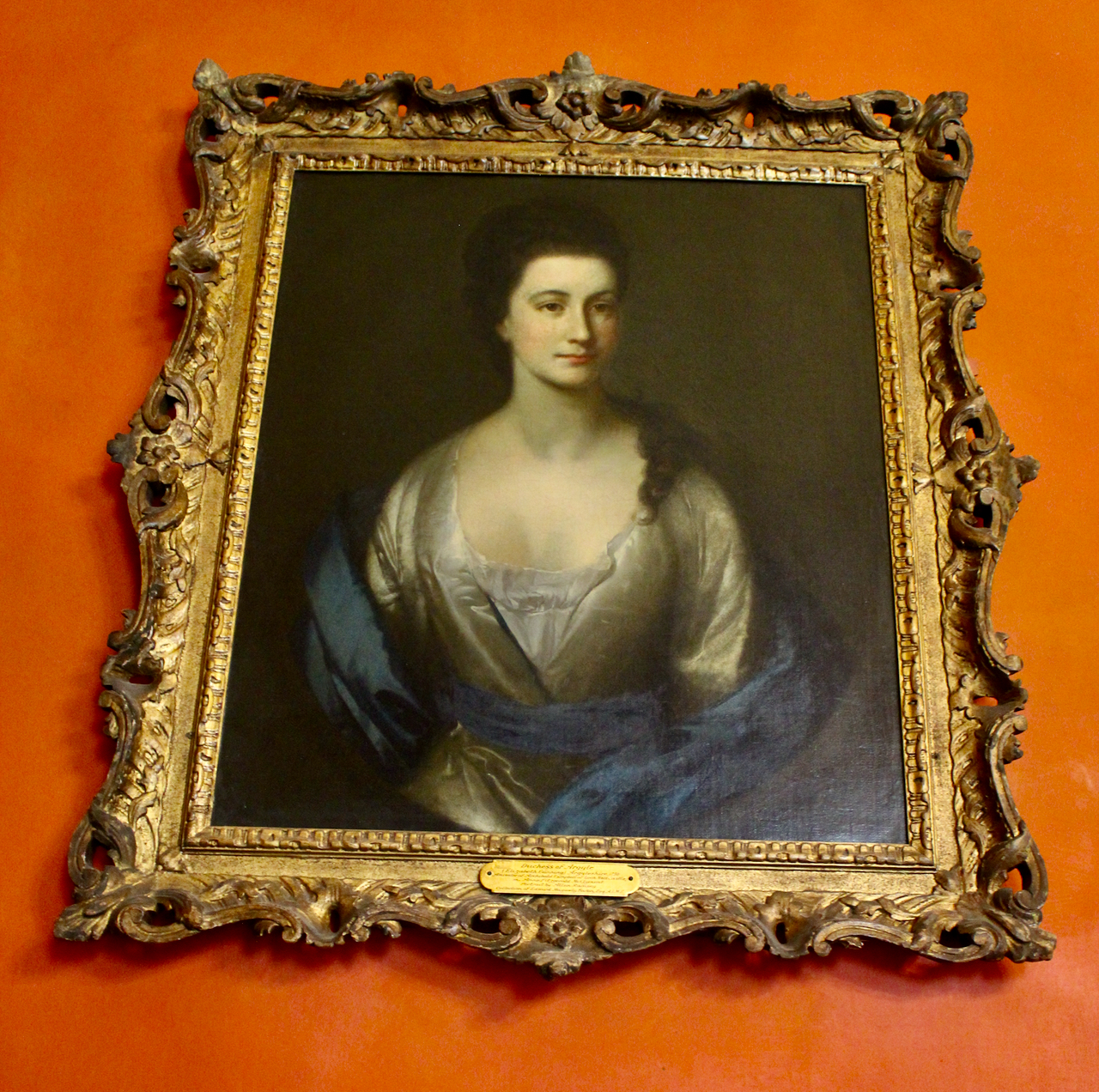
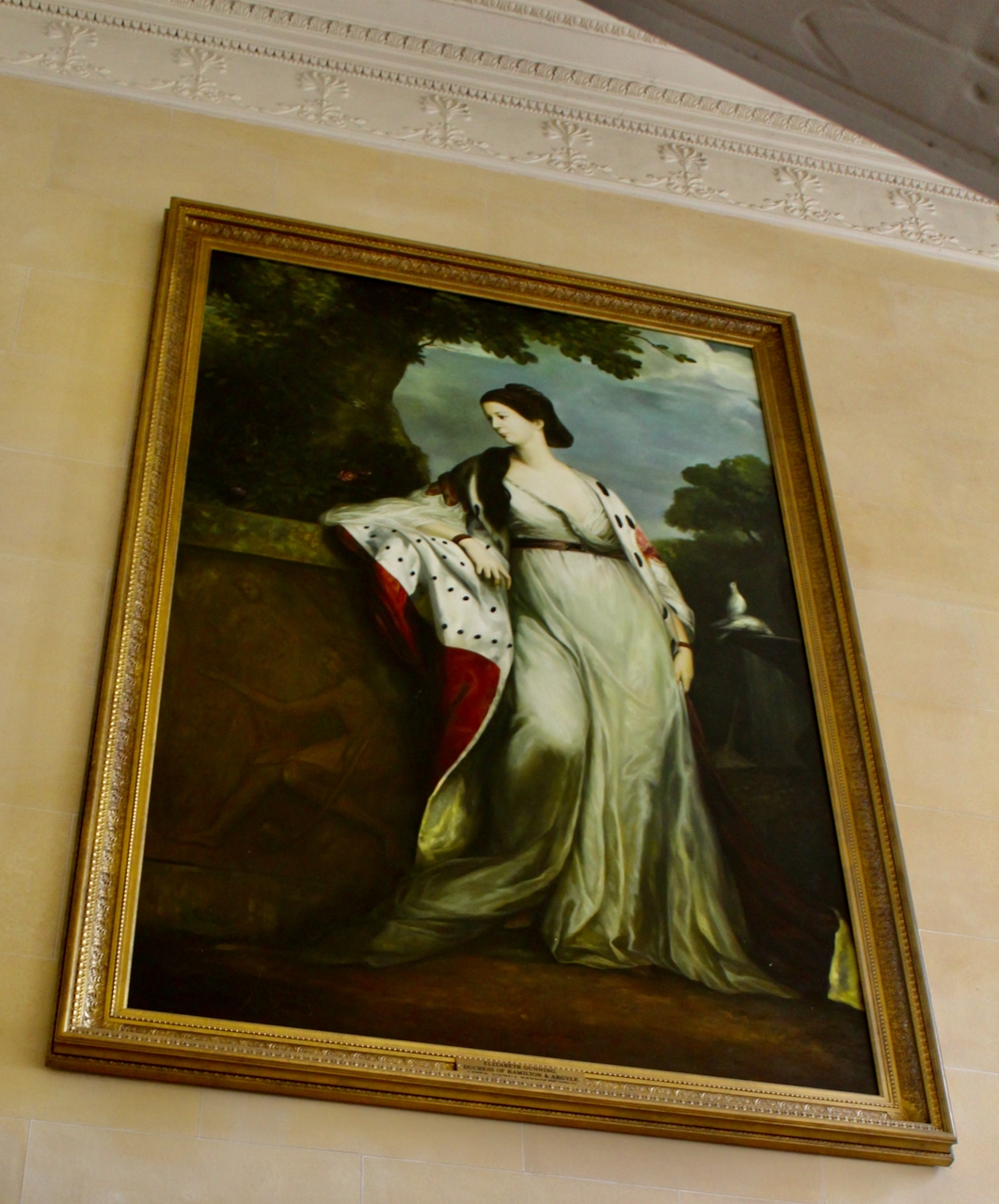
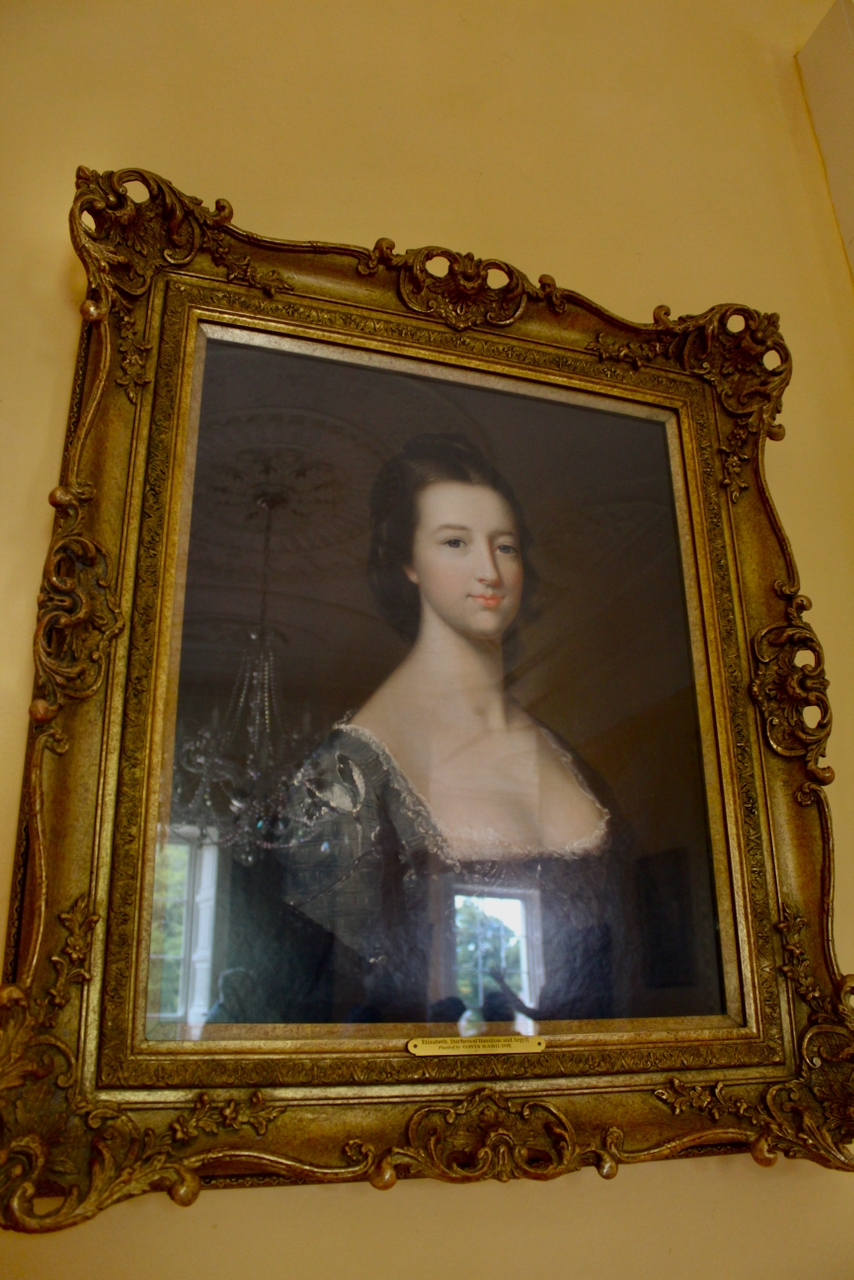
Elizabeth Gunning was a famous Irish beauty who married the 6th Duke of Hamilton in 1752. She then married John Campbell, the future 5th Duke of Argyll. The portrait hangs in Malahide Castle and belongs to the National collection.

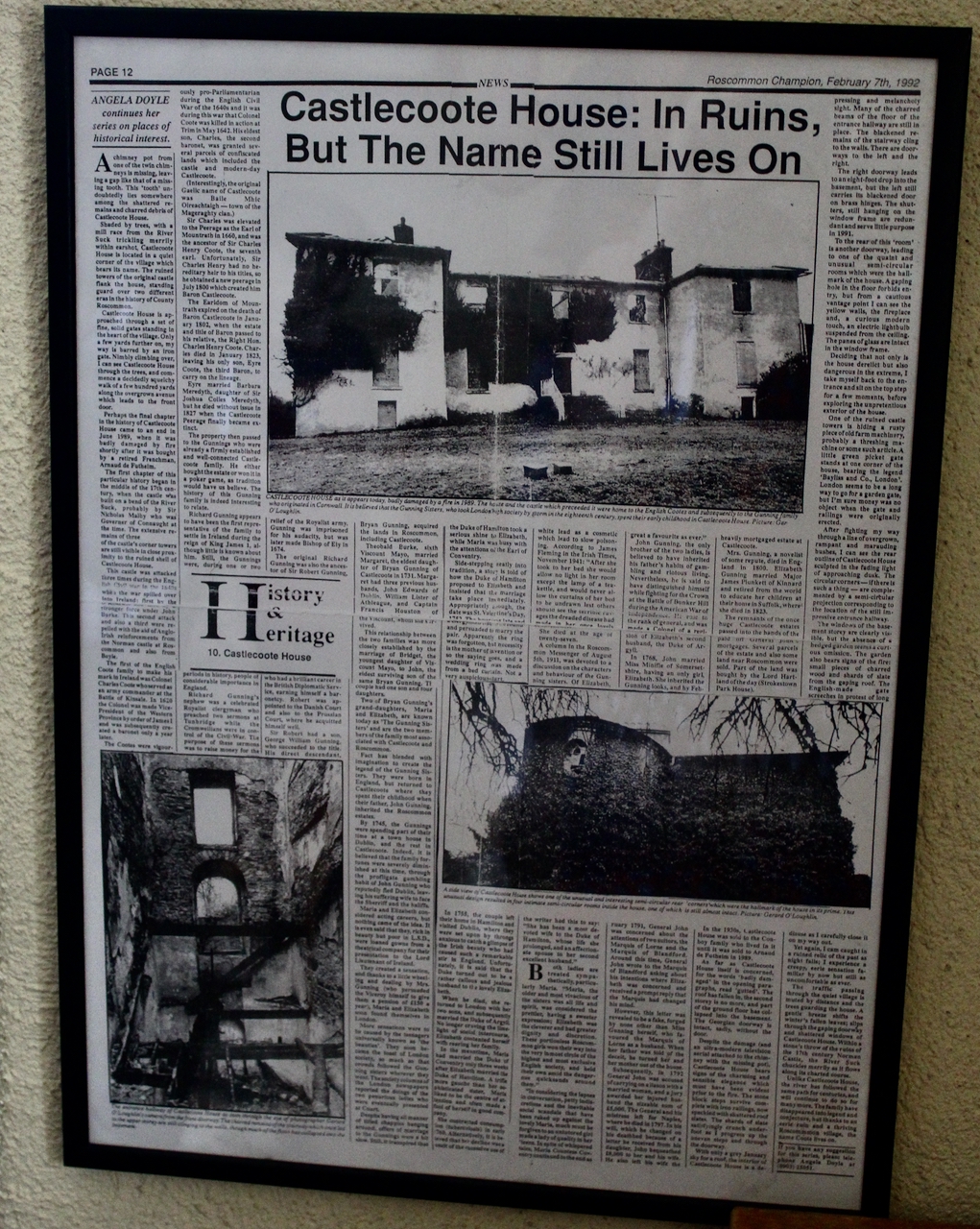
In an article in the Roscommon Champion newspaper on February 7th 1992, Angela Doyle writes that Bryan Gunning acquired land in Roscommon, including Castlecoote. Theobald Bourke, 6th Viscount Mayo, married Bryan Gunning’s daughter Margaret in 1731.

Bryan Gunning’s son John married Bridget Bourke, a daughter of the 6th Viscount of Mayo by his first wife, Mary Browne, a daughter of one of the drafters of the Treaty of Limerick (Colonel John Browne – d. 1712).

An extract from Notable Irishwomen tells us more about the Gunning family. It tells us that John Gunning, the second son, was a barrister of the Middle Temple in London. He settled at Hemingford Grey, in Huntingdonshire, and here his eldest daughter, Maria, afterwards Countess of Coventry, was born in 1733. Elizabeth, afterwards Duchess of Hamilton, followed the year afterwards, and there were three more daughters, two of whom died young, and then came a son, who subsequently entered the army, fought at Bunker’s Hill (during the American War of Independence), and attained the rank of General. [4]

In 1740, by the death of his elder brother, Mr. Gunning succeeded to the property of Castle Coote. The little family now migrated from Hemingford Grey to Roscommon, a formidable journey in those days of stage coaches and sailing boats. Money was not plentiful at Castle Coote, and no wonder, with such numerous charges as there must have been on it. Mrs. Gunning was a clever, ambitious woman, and as she looked at the wonderful beauty of her daughters, fast growing to maturity, she thought that the girls must be taken out into the world to make their mark there. It would never do for them to be thrown away on country squires or struggling attorneys. So she brought them to Dublin, and took a house in Great Britain Street, at that time quite a fashionable locality, within easy reach of Dominick Street, then the head-quarters of high life. But debts soon accumulated. ..

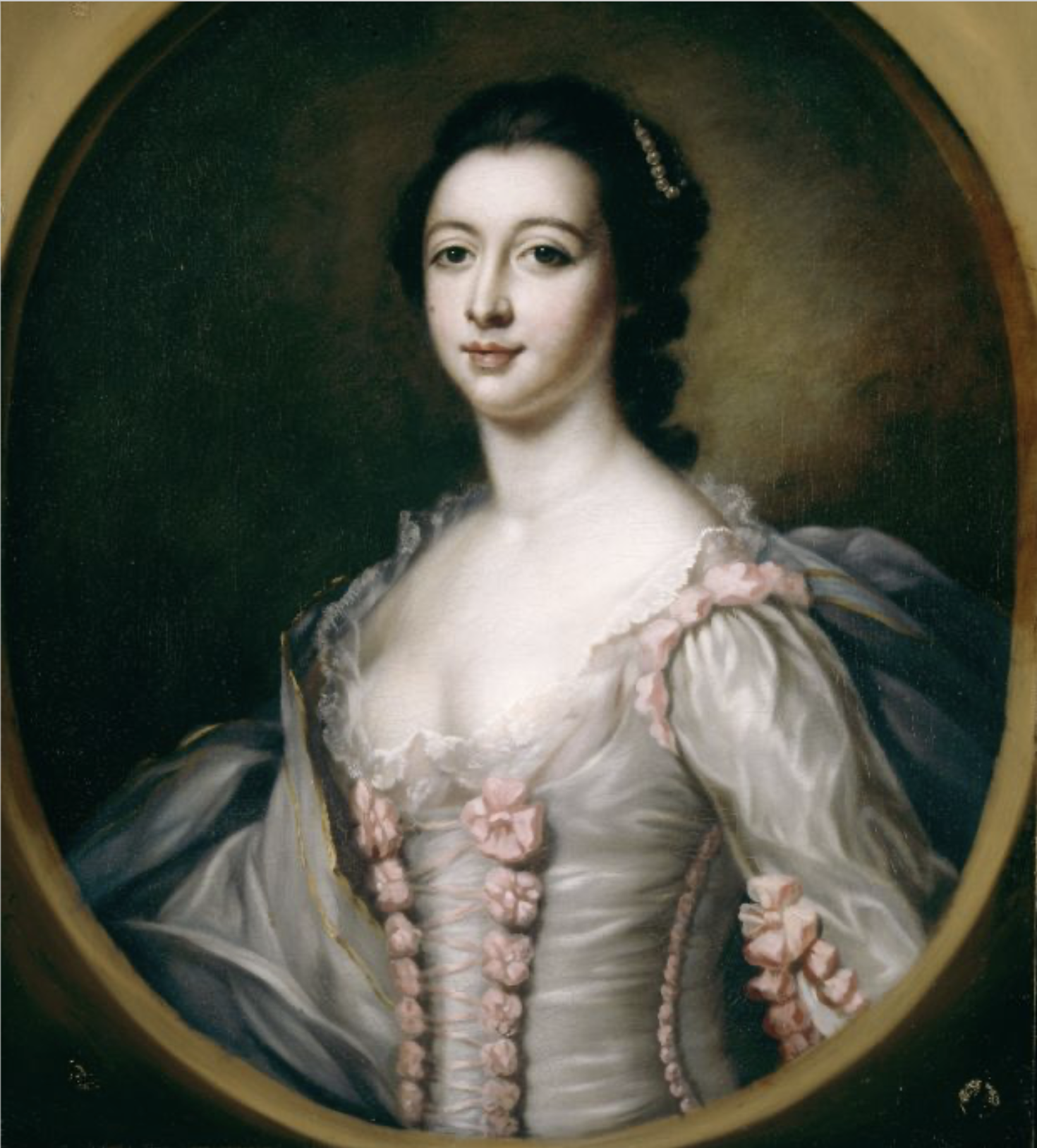
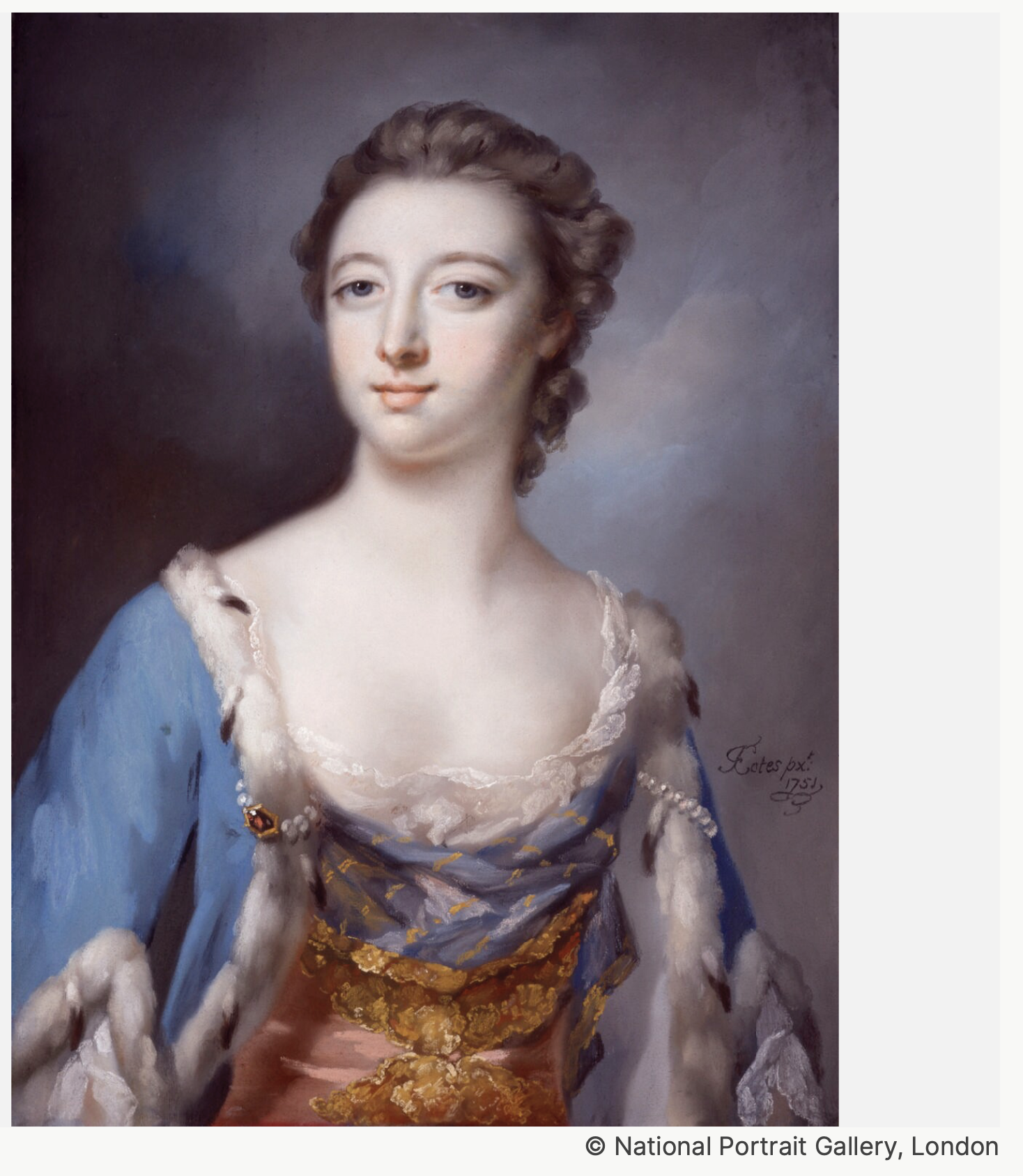
It was said that Peg Woffington lent the Gunnings dresses from her theatrical wardrobe, in which they appeared at Dublin Castle. Whether this be true or not, it is certain that they were presented to the Lord Lieutenant at a birthright ball, and they made such a sensation there that Lord Harrington, then Viceroy, advised their mother to take them to London. This she was only too eager to do. By hook or by crook she got the money together… The year they went to London, the two girls had their portraits painted by Francis Cotes, R.A. They are represented in low-cut, long-waisted, grey satin gowns, with rows of pink rosettes down each side of the bodice, black hair curled at the back and fastened with a string of pearls. A small black patch, is, according to the fashion of the day, on one cheek.” [4]

Maria Gunning, Countess of Coventry (1733-1760) by Francis Cotes, circa 1751. Picture courtesy of National Gallery of Ireland.
Elizabeth Gunning by Francis Cotes, pastel on blue paper laid down on canvas, courtesy of National Portrait Gallery London, NPG 4890.

They were presented to the King (George II.) one Sunday afternoon, and another Sunday in the Park, such crowds assembled to gaze on them that Lord Clermont with some other gentlemen, had to draw their swords to protect them from the mob…” [4]

A Royal Trust Collection picture of Elizabeth tells us:

Elizabeth Gunning was the second daughter of Col. John Gunning of Castle Coote, County Roscommon, Ireland and his wife, the Hon. Bridget Bourke, daughter of the 6th Viscount Mayo. Born in Hemingford Grey, Huntingdonshire, she was taken to Ireland at the age of three and lived there until 1750 when, with her elder sister Maria, she was brought back to England and presented in London society. Thanks to their beauty and unsophisticated charm the Gunning sisters ‘became the rage and the subject of conversation at every fashionable rout’. Elizabeth became the wife of James, 6th Duke of Hamilton in an extraordinary ceremony, performed with the ring of a bed-curtain at half past midnight on St. Valentine’s Day 1752 after a party at Bedford House at which the Duke had lost £1200 at cards. The Duke of Hamilton, by whom she had three children, died on 17 January 1758 and early in the following year she married John Campbell, Marquis of Lorne, who in 1771 succeeded as 5th Duke of Argyll. She was created Baroness Hamilton of Hambledon in her own right in 1776.   Lady of the Bedchamber to Queen Charlotte from 1761 to 1784, she was appointed Mistress of the Robes in 1778 and died on 20 December 1790. She was one of the most portrayed women in Britain during the period 1750-70.

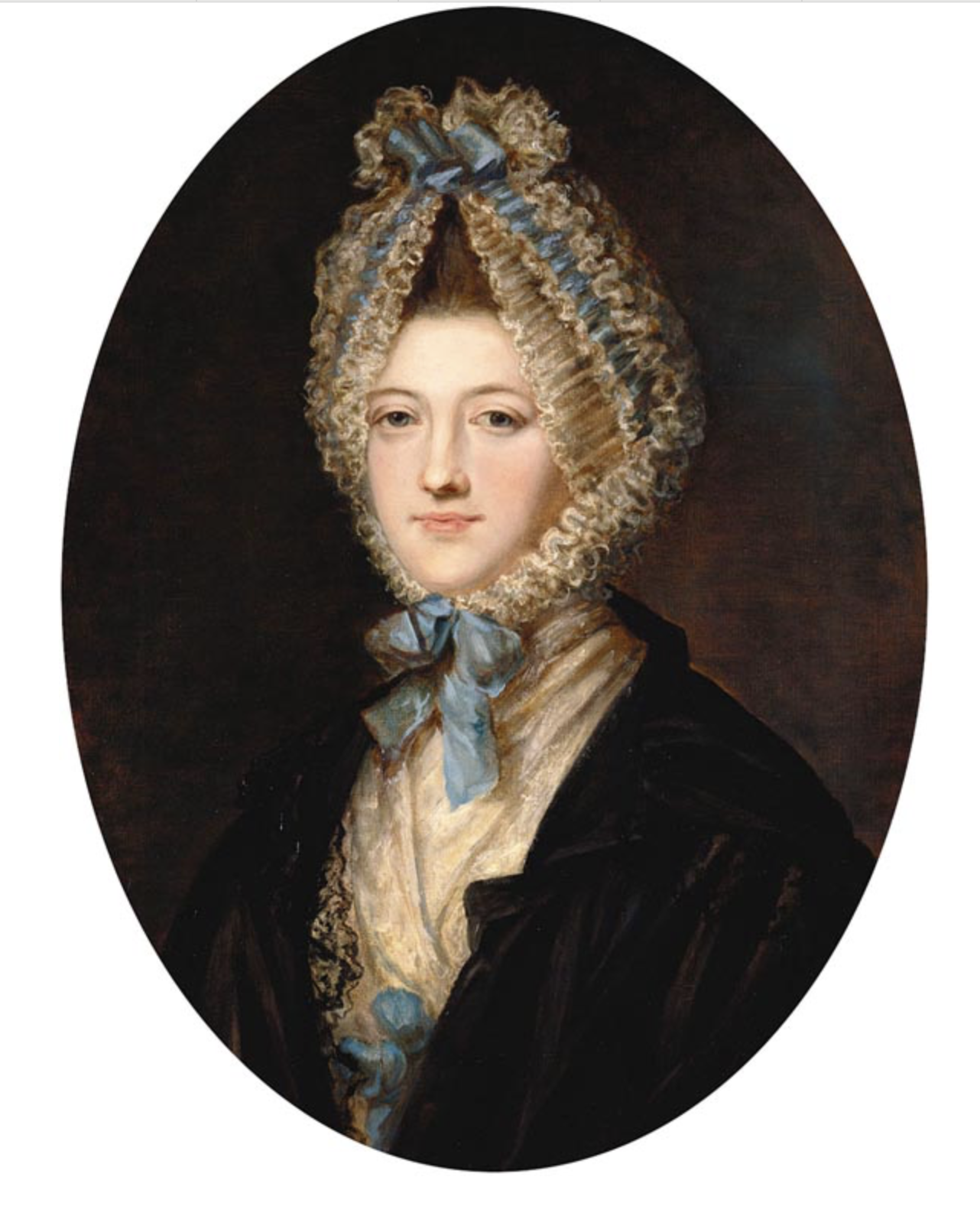
Elizabeth, Duchess of Argyll and Hamilton by Catherine Read (1723-78). Royal Trust Collection. Even this super-frilly beribboned decking cannot hide her beauty.
A copy of the portrait of Elizabeth Gunning by Joshua Reynolds hangs in Castlecoote. Elizabeth Gunning (Duchess of Hamilton and afterwards Duchess of Argyll), 1734‑1790.
A portrait of Elizabeth, Duchess of Hamilton and Argyle, painted by Gavin Hamilton.
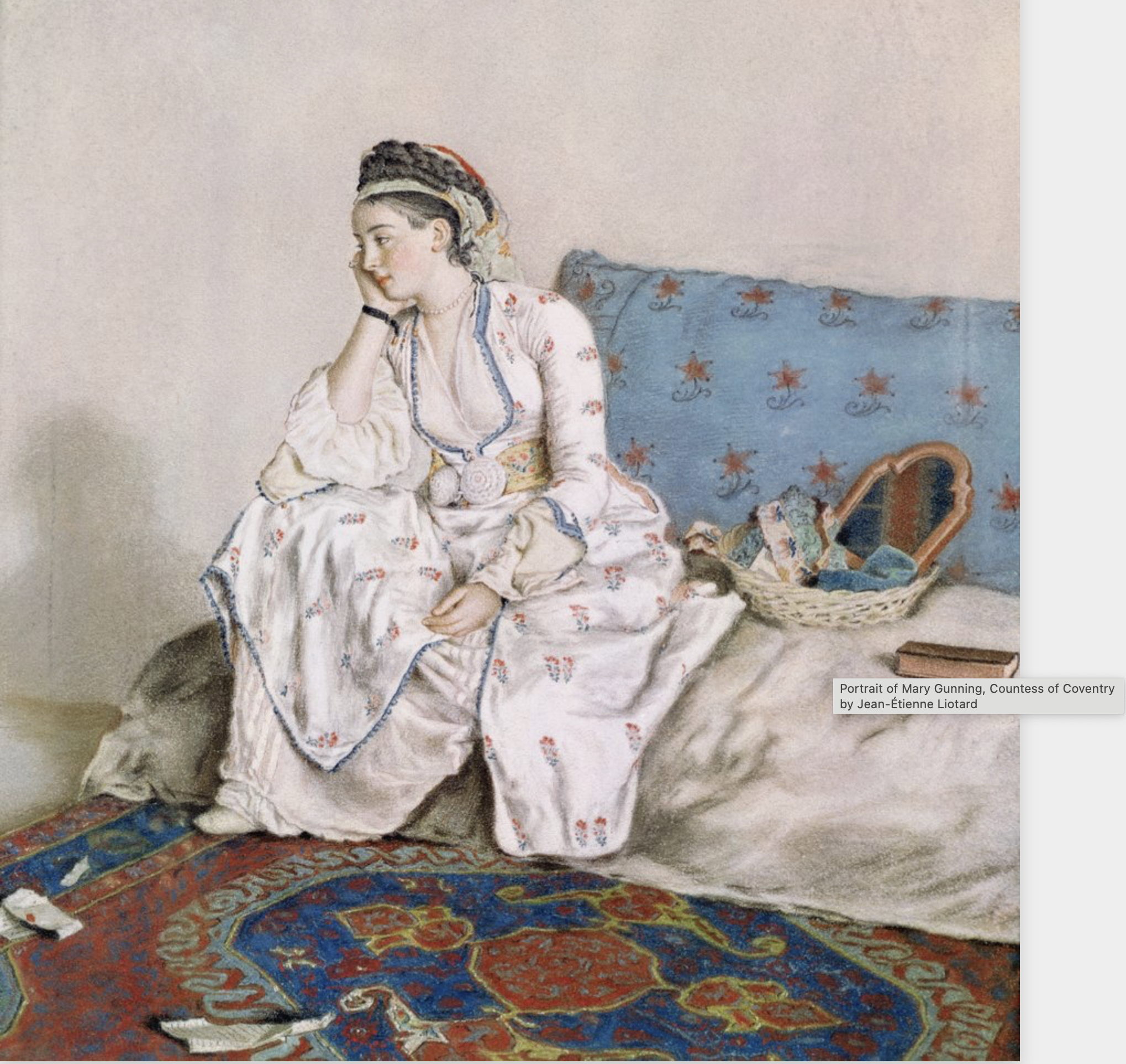
This is my favourite portrait of a Gunning sister: Maria, as painted by Jean-Etienne Liotard.

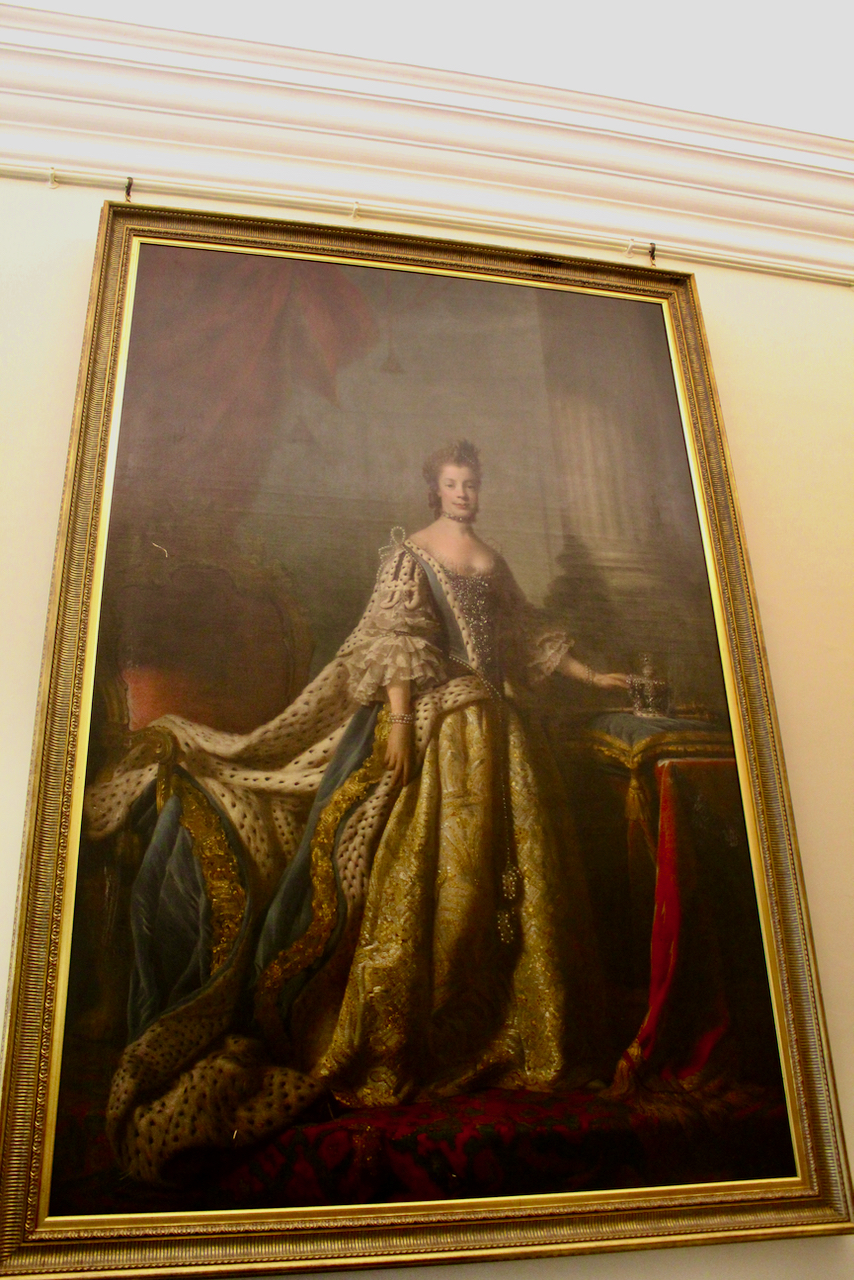
Elizabeth held the office of Lady of the Bedchamber to Queen Consort Charlotte, wife of King George III, between 1761 and 1784.

Queen Charlotte, wife of King George III. This photograph was taken in Castletown House, County Kildare.

Maria, who married the Earl of Coventry, died aged 27, Robert O’Byrne tells us she most likely died from lead poisoning due to efforts to maintain her pale skin.

Castlecoote changed hands several times until its current owner. When Tony’s father Pat took over the property in the 1930s and farmed the land, he made sure that the house would have a future. However, a fire occurred soon after it was sold by the Convoys in 1989.

Article in the Roscommon Champion, February 7th 1992 by Angela Doyle.

Angela Doyle writes that the brother of the Gunning sisters, Colonel John, married and had a daughter Elizabeth who inherited the Coote good looks. When she forged a letter from a potential suitor, saying that he had changed his mind, her father was outraged and cast out his wife and daughter. He took a mistress and moved to Naples, where he died. His wife Susannah Gunning née Minifie inherited the heavily mortgaged estate at Castlecoote. She was a novelist who wrote romantic and Gothic tales. Her daughter Elizabeth, also a novelist, married Major James Plunkett of Kinnaird, County Roscommon. The literary historian Isobel Grundy tells us in the Oxford Dictionary of National Biography: “Elizabeth Gunning’s early novels are, like her mother’s, sentimental, with heavy-footed humour, trite moralizing, a self-consciously elaborate style, and intense class-consciousness. Each woman wrote more interestingly, with more criticism of society, later in life.” The estate passed out of Coote ownership.

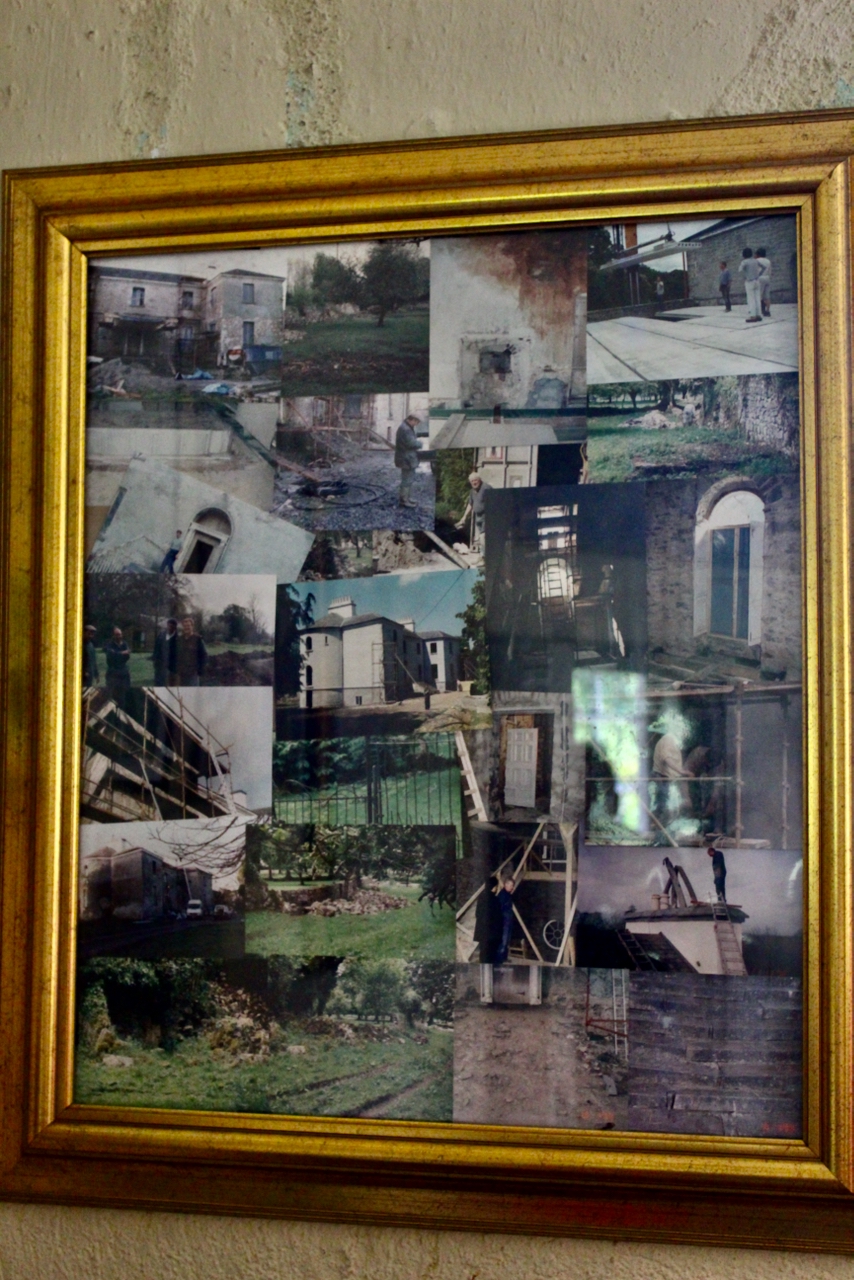
In 1997, when bought by the present owner Kevin Finnerty, the Historic Houses of Ireland website tells us, Castlecoote was a cavernous ruin, without floors, stairs or windows, while the internal walls were crumbling away. The basement was enveloped by earth, the front doorsteps had collapsed, and the surroundings were badly overgrown.

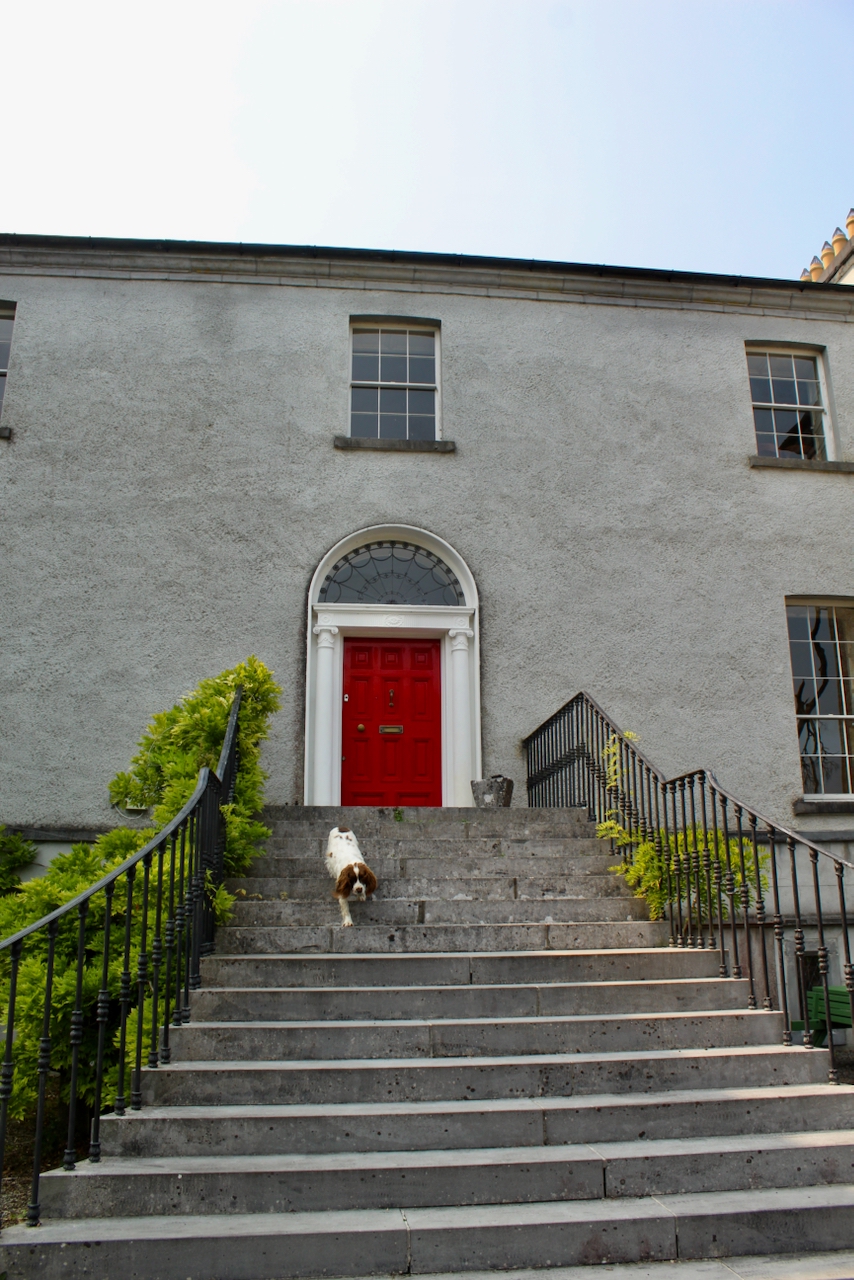
The current owner reinstated the front steps. Castlecoote, County Roscommon, August 2025. Photograph © Jennifer Winder-Baggot, www.irishhistorichouses.com
In Kevin’s office in the basement there is a display of photographs of the house as it uderwent repairs.
In Kevin’s office in the basement there is a display of photographs of the house as it uderwent repairs
Castlecoote, County Roscommon. Photograph © Jennifer Winder-Baggot, www.irishhistorichouses.com
A date stone bears the inscription CBC 1791.
An aerial view of Castlecoote, a photograph in the house.

The Historic Houses of Ireland entry tells us that Kevin began a lengthy period of restoration, which took five years to complete. Work included essential repairs to the structure, underpinning the foundations, consolidating the castle towers, re-roofing and more intricate work such as restoring the plaster ceilings, replacing the chimneypieces, the internal doors and other joinery, and completely redecorating the interior.

The result is beautiful. Kevin gave us a tour inside. Although the historic houses website mentions five years, Kevin says it took twelve years to make the house habitable.

Castlecoote, County Roscommon, August 2025. Photograph © Jennifer Winder-Baggot, www.irishhistorichouses.com

Part of the castle has been let to tenants, so Kevin took us first to the basement to show us the renovations, including lime render on the walls and underfloor heating. There had been no stairs down to the basement and the ones installed are much as the original would have been, of limestone.

The newly made limestone staircase to the basement.
Castlecoote, County Roscommon, August 2025. Photograph © Jennifer Winder-Baggot, www.irishhistorichouses.com

The fireplaces had to have sixteen new chimneypieces installed as the originals had disappeared while the castle was an empty ruin after the fire. Kevin pointed out that the older the chimneypiece, the narrower the mantle shelf. It was the Victorians, I believe, who instigated wide mantlepieces in order to display pieces. Before, the mantle was used to rest a mirror, which was often tilted upward to reflect light and often, a beautiful ceiling.

Castlecoote, County Roscommon, August 2025. Photograph © Jennifer Winder-Baggot, www.irishhistorichouses.com
This is an old part of the castle, as you can see from the depth of the walls in the window embrasure.
The window mullions in the basement are original.

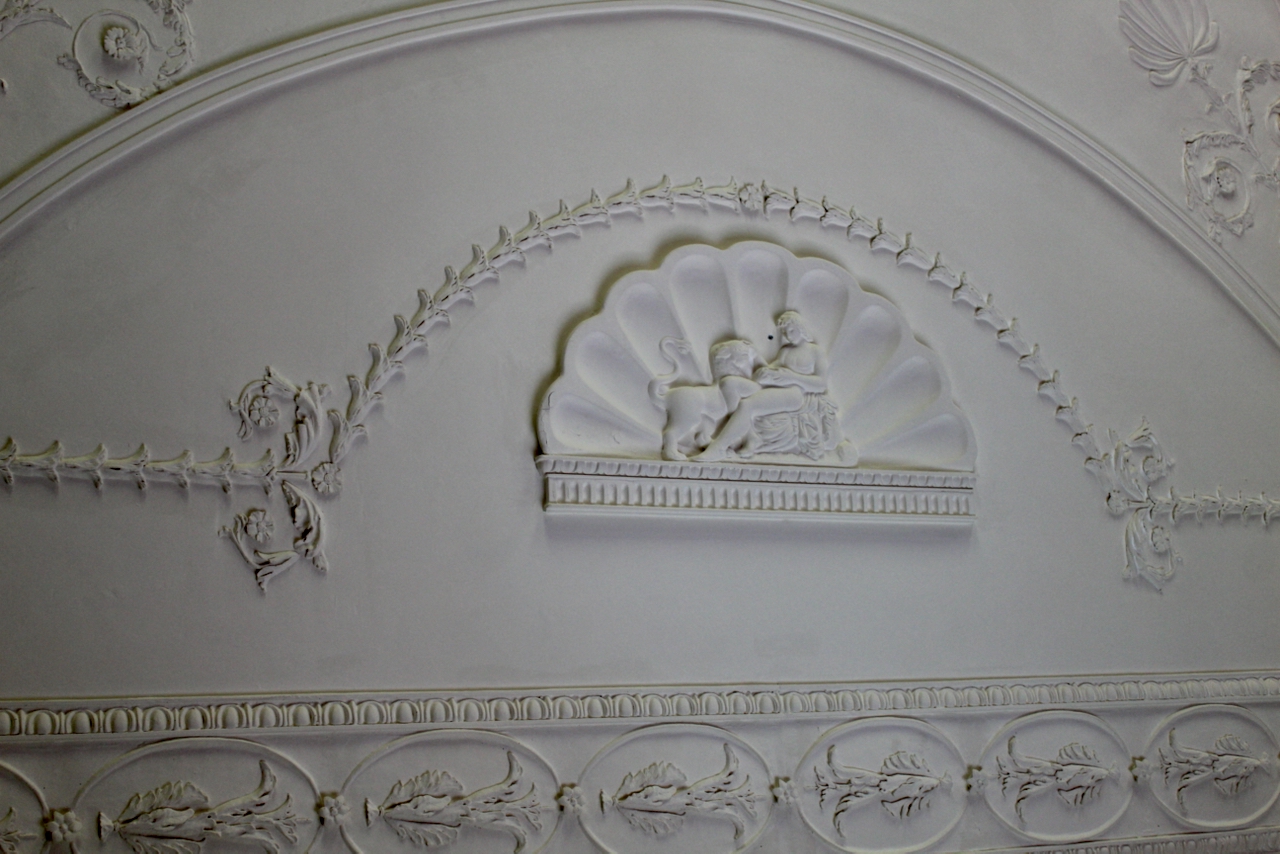
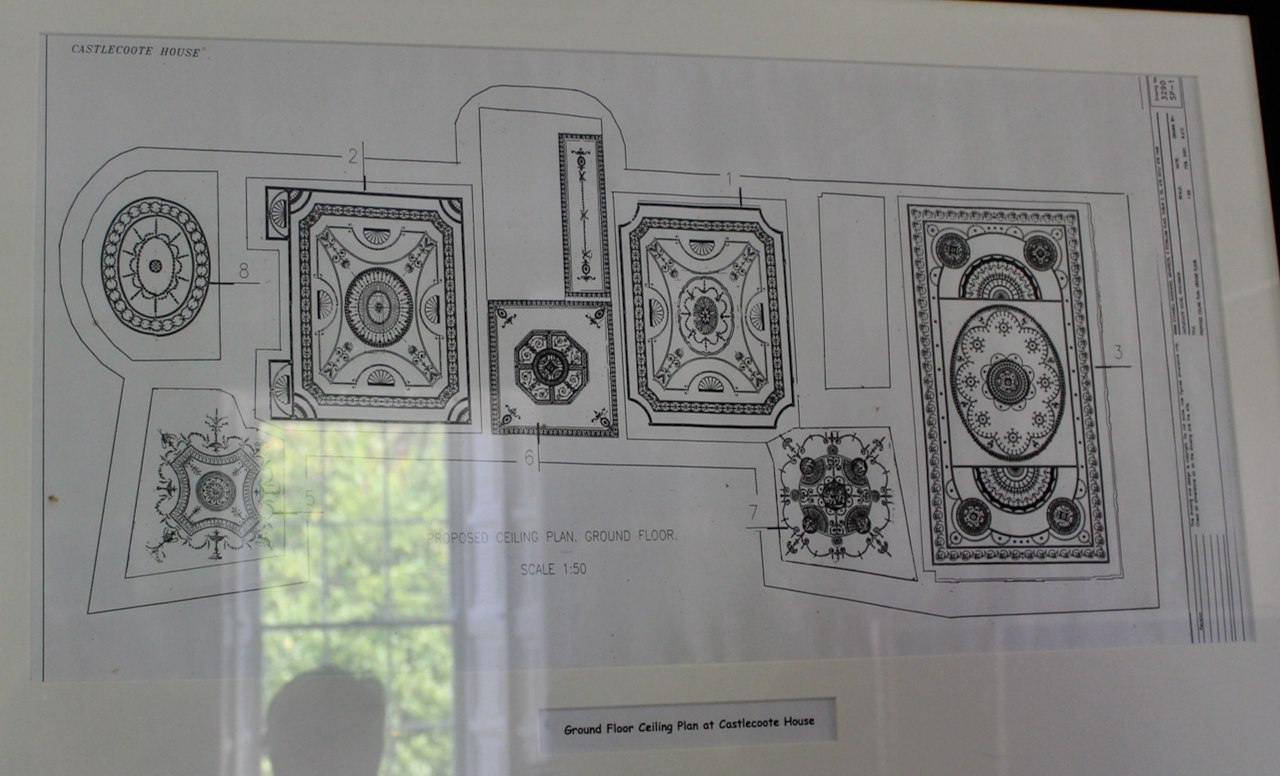
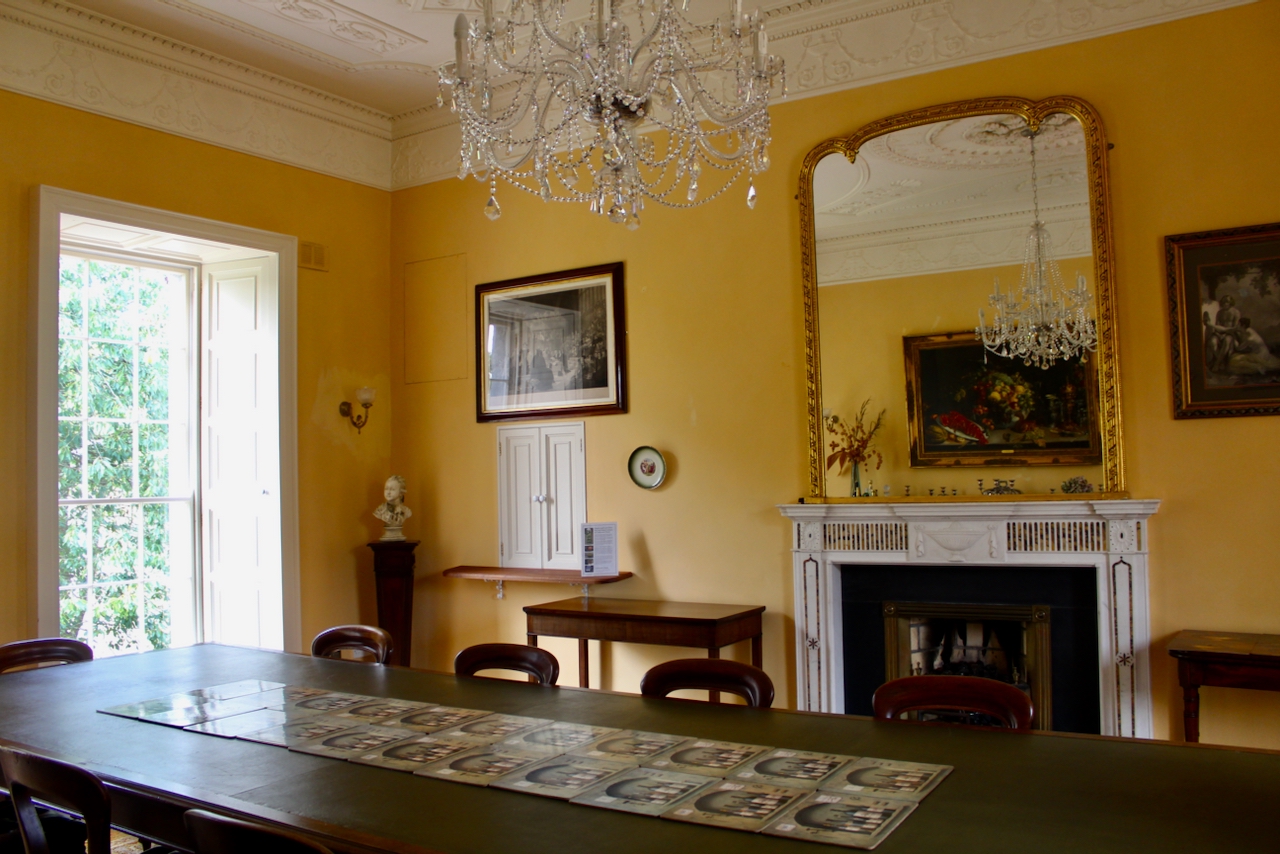
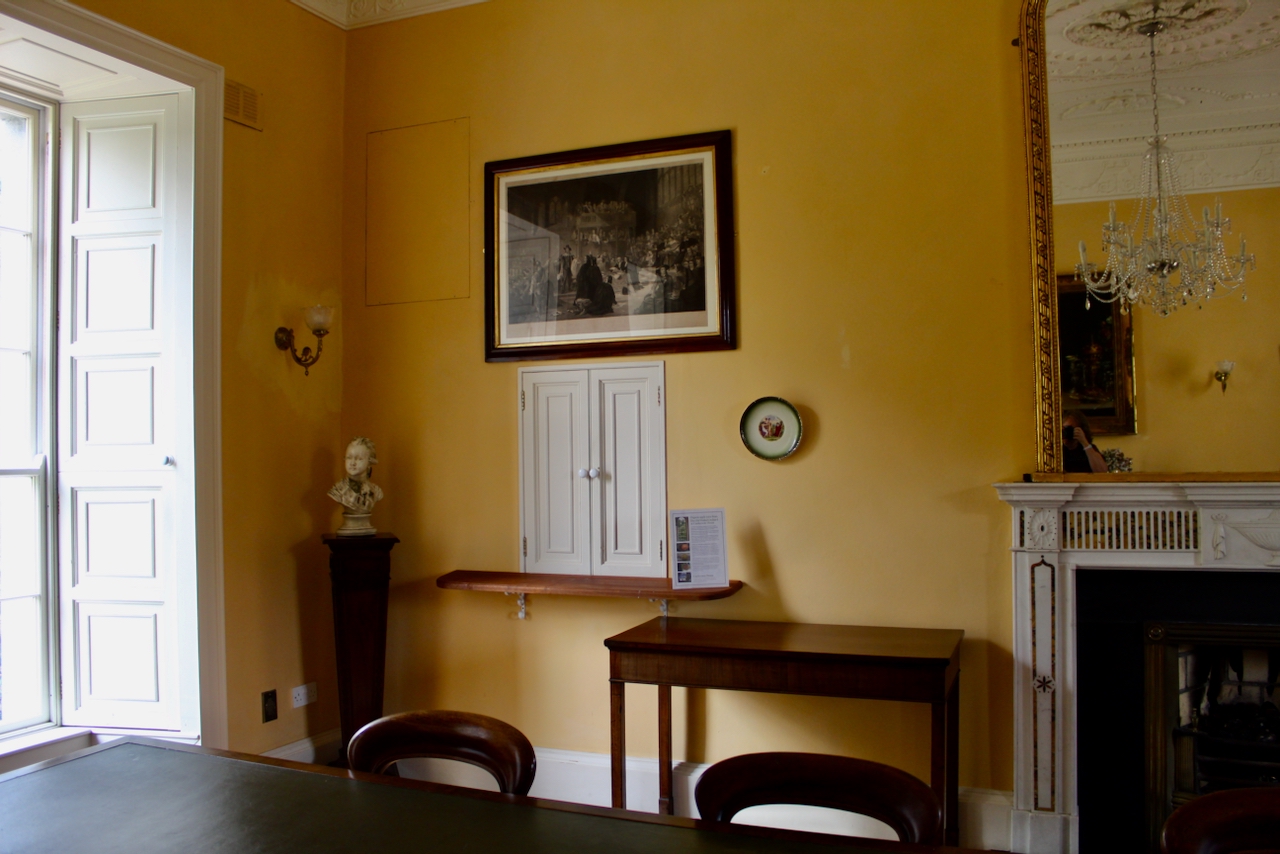
Kevin has done the Cootes and the Gunnings and all the former occupants of the house proud, by reinstating its formal splendour in the ceiling plasterwork. With careful attention to detail, he made sure that the windows have the narrow glazing bars of the Georgian period.

Castlecoote, County Roscommon, August 2025. Photograph © Jennifer Winder-Baggot, www.irishhistorichouses.com
Ground floor ceiling plan of Castlecoote.
There is. a dumbwaiter near the corner, that goes down to the kitchen and up to the dining room. Castlecoote, County Roscommon, August 2025. Photograph © Jennifer Winder-Baggot, www.irishhistorichouses.com
Castlecoote, County Roscommon, August 2025. Photograph © Jennifer Winder-Baggot, www.irishhistorichouses.com
The widowframes are splayed to let in more light. Castlecoote, County Roscommon, August 2025. Photograph © Jennifer Winder-Baggot, www.irishhistorichouses.com
Castlecoote, County Roscommon, August 2025. Photograph © Jennifer Winder-Baggot, www.irishhistorichouses.com
Portrait of Maria Gunning, and the Francis Cotes portrait of Elizabeth by the window. Castlecoote, County Roscommon, August 2025. Photograph © Jennifer Winder-Baggot, www.irishhistorichouses.com

The bookcases in the library have carving to reflect the wall frieze.

Castlecoote, County Roscommon, August 2025. Photograph © Jennifer Winder-Baggot, www.irishhistorichouses.com

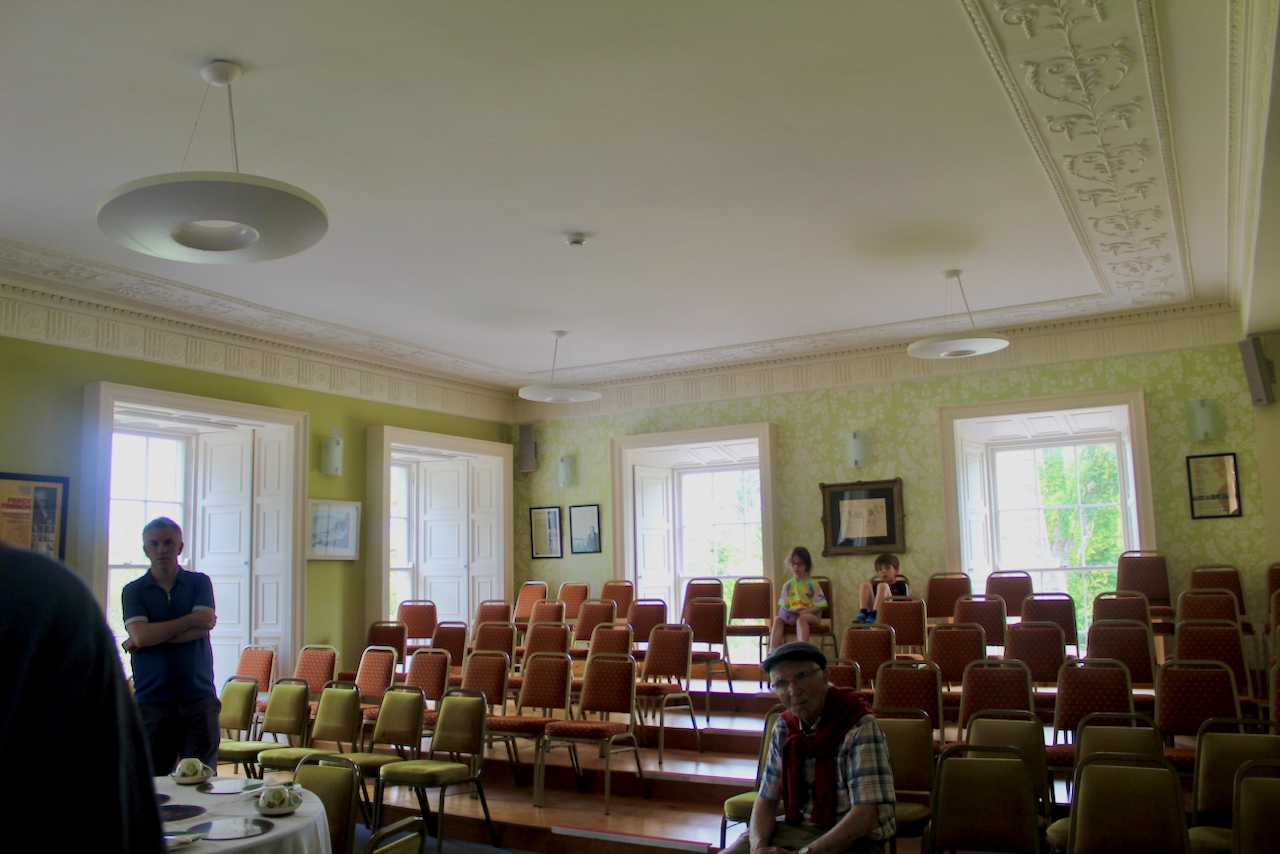
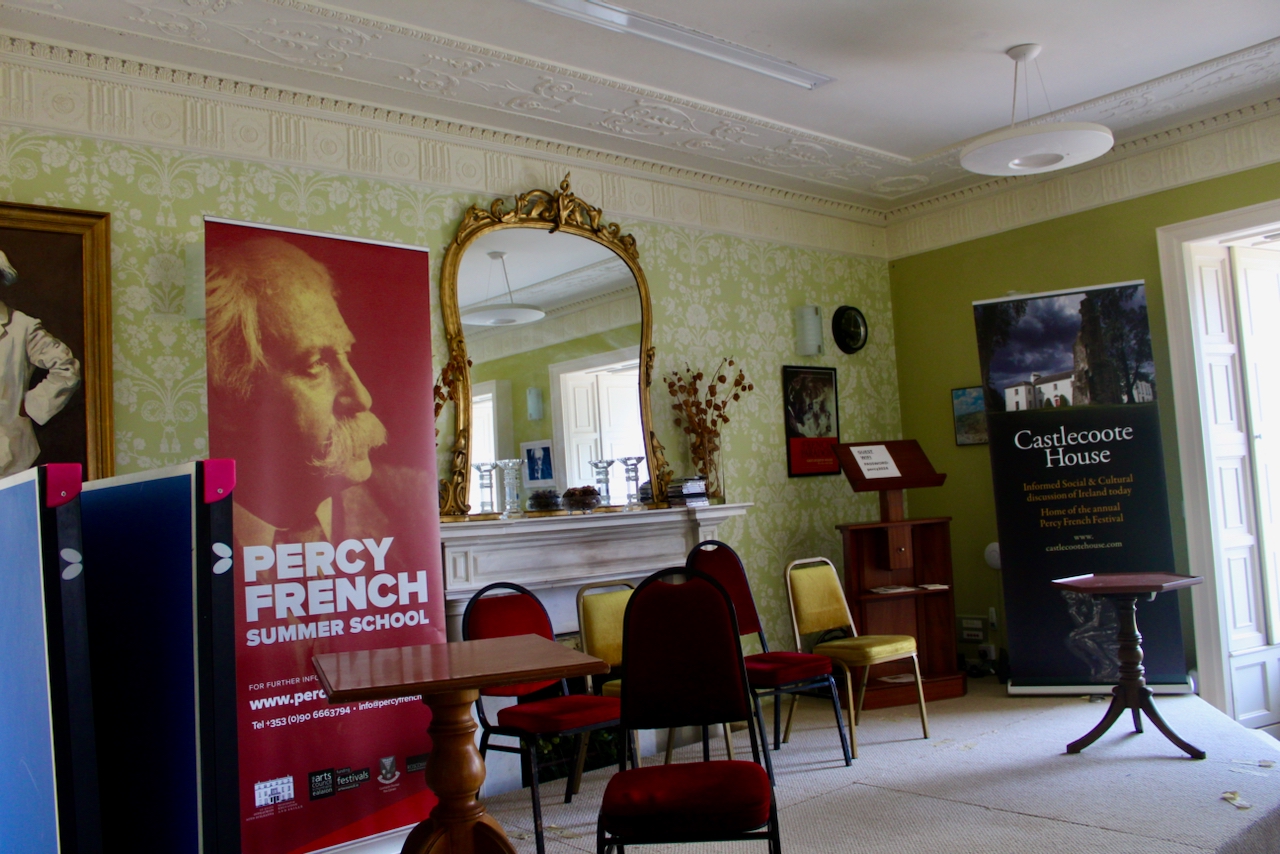
We ended the tour in the grand hall that houses the annual Percy French Summer School. I see that it features very interesting speakers – we must keep a watch for next year’s summer school! The Percy French Summer School began in the 1950s, I believe, and Kevin’s father was one of the founding members. It moved to Castlecoote house in 2009.

Castlecoote, County Roscommon, August 2025. Photograph © Jennifer Winder-Baggot, www.irishhistorichouses.com

The tour included the grounds. In front of the house alongside the river is a millrace, as the family owned a mill on the river.

View of the River Suck from the bridge. Castlecoote, County Roscommon, August 2025. Photograph © Jennifer Winder-Baggot, www.irishhistorichouses.com
The Millrace wall, Castlecoote, County Roscommon, August 2025. Photograph © Jennifer Winder-Baggot, www.irishhistorichouses.com
At Castlecoote, County Roscommon, August 2025. Photograph © Jennifer Winder-Baggot, www.irishhistorichouses.com
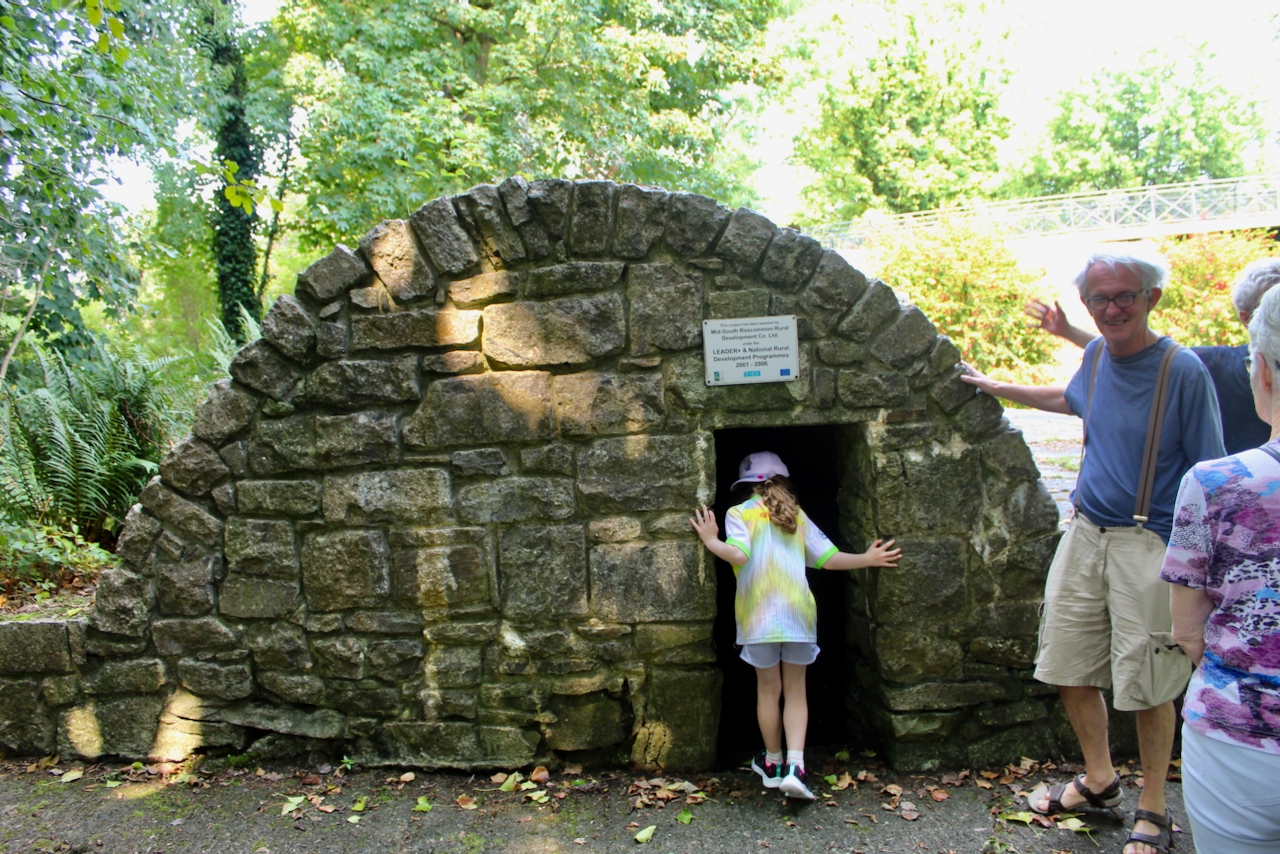
An icehouse, Castlecoote, County Roscommon, August 2025. Photograph © Jennifer Winder-Baggot, www.irishhistorichouses.com

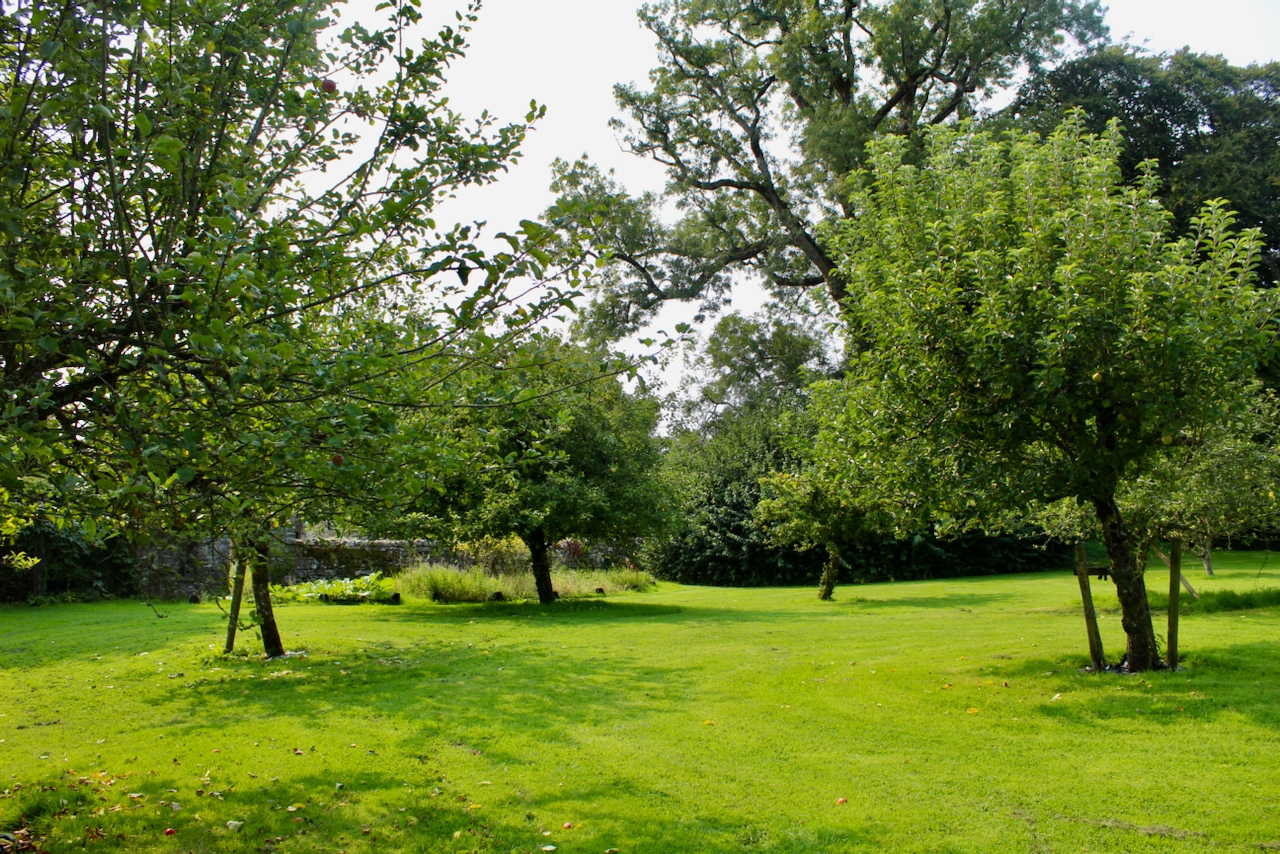
In the back garden is a wonderful apple orchard of heritage specimen trees. Kevin gave us a glass of delicious sweet apple juice.

The house is available for short and long term rent. For booking, see the house website https://www.castlecootehouse.com

The apple orchard.
The back garden, Castlecoote, County Roscommon, August 2025. Photograph © Jennifer Winder-Baggot, www.irishhistorichouses.com
The back garden, Castlecoote, County Roscommon, August 2025. We had a beautiful sunny day for our visit, during the 2025 heatwave! Photograph © Jennifer Winder-Baggot, www.irishhistorichouses.com
A well for the house.

[1] https://www.buildingsofireland.ie/buildings-search/building/31816001/castle-coote-house-castlecoote-castlecoote-co-roscommon

[2] http://www.ihh.ie/index.cfm/houses/house/name/Castlecoote%20House

[2] https://lincolnshirefolktalesproject.com/2024/02/21/the-witches-of-belvoir/

[4] From Notable Irishwomen: https://en.wikisource.org/wiki/Page:Notable_Irishwomen.djvu/26

Kinnitty Castle (formerly Castle Bernard), Kinnity, County Offaly – now a hotel

donation

Help me to pay the entrance fee to one of the houses on this website. This site is created purely out of love for the subject and I receive no payment so any donation is appreciated!

€15.00

Kinnitty Castle (formerly Castle Bernard), Kinnity, County Offaly

https://www.kinnittycastlehotel.com/index.html

Kinnitty Castle Hotel, 2014, photographer unknown, for Tourism Ireland, Ireland’s Content Pool. [1]

We treated ourselves to a stay in Kinnitty Castle in February 2023. Formerly a home, it is now a hotel.

The website used to include a history, which told us that the present building was originally built by William O’Carroll on the site of an old Abbey in 1630. The building we see today, however, received a major reconstruction by architect brothers James (1779-1877) and George Richard Pain (1793-1838) in 1833. You can see traces of the Abbey in the courtyard.

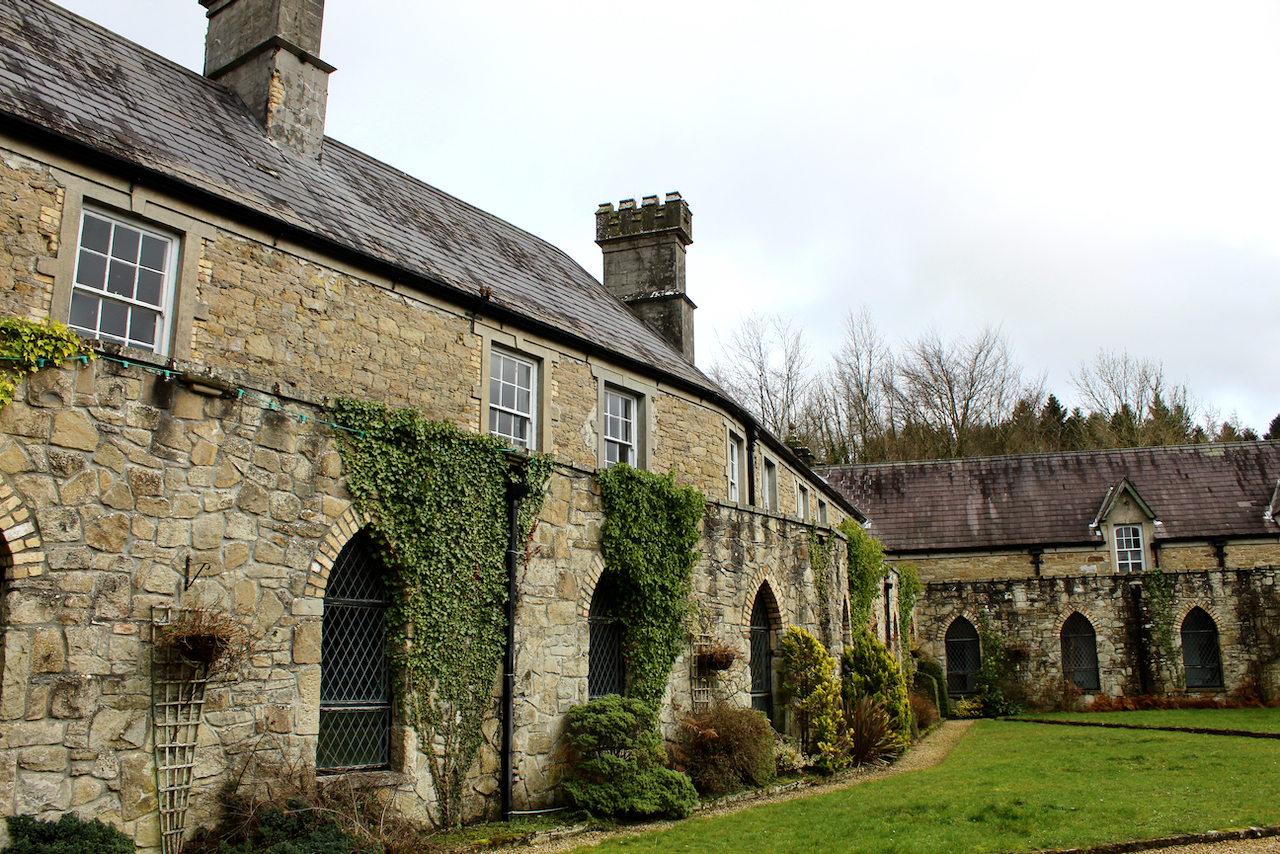
A finely cut ogee-headed window set in the wall, Andrew Tierney tells us, attests to the fact that the site was occupied in medieval times. Pointed arched entrance to former stable yard and screen wall incorporate part of fifteenth-century church. Photograph © Jennifer Winder-Baggot, www.irishhistorichouses.com

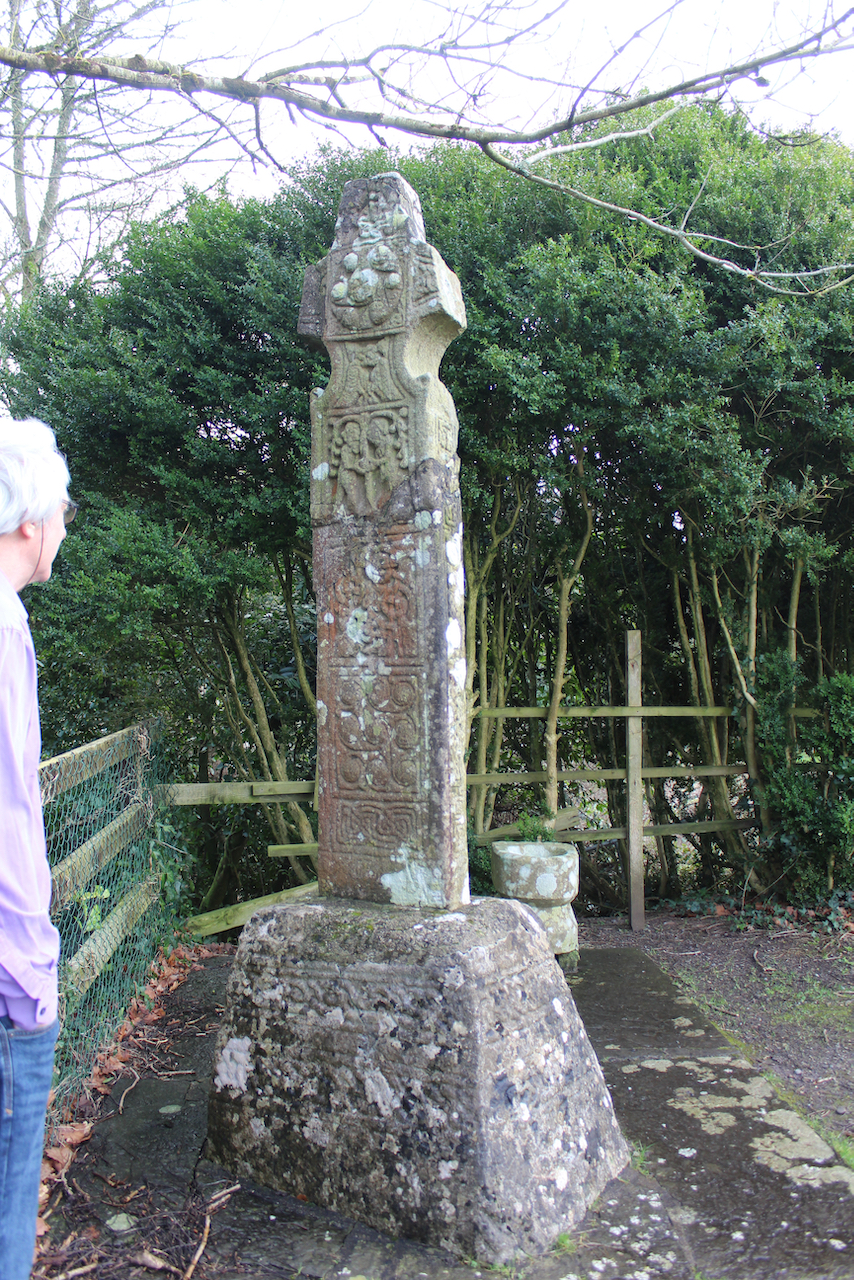
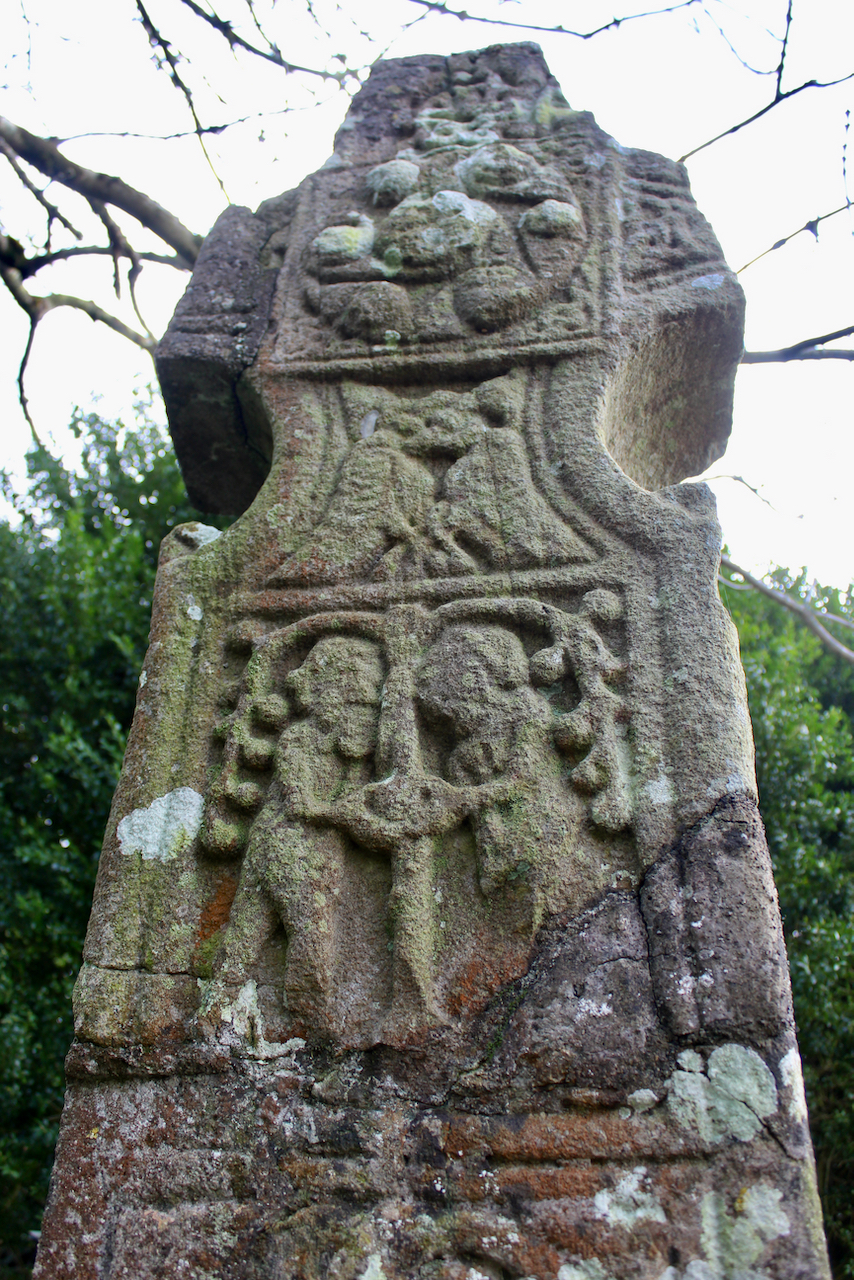
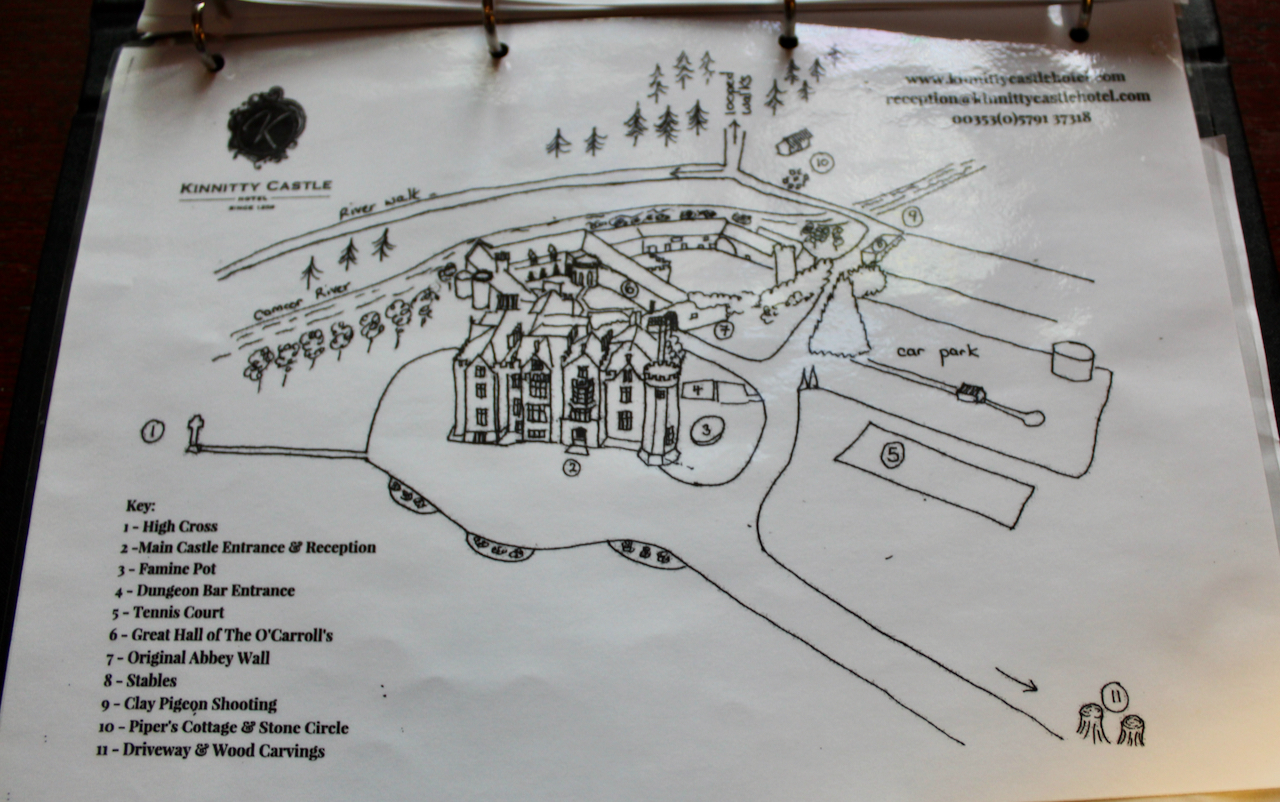
There is a ninth or tenth-century high cross in front of the hotel, which must have been from the grounds of the Abbey.

The ninth or tenth century high cross.
Photograph © Jennifer Winder-Baggot, www.irishhistorichouses.com

In 1641 the castle was confiscated from William O’Carroll, as he must have played a part in the 1641 rebellion. The land was granted in 1663 by King Charles II to Colonel Thomas Winter for his military service.

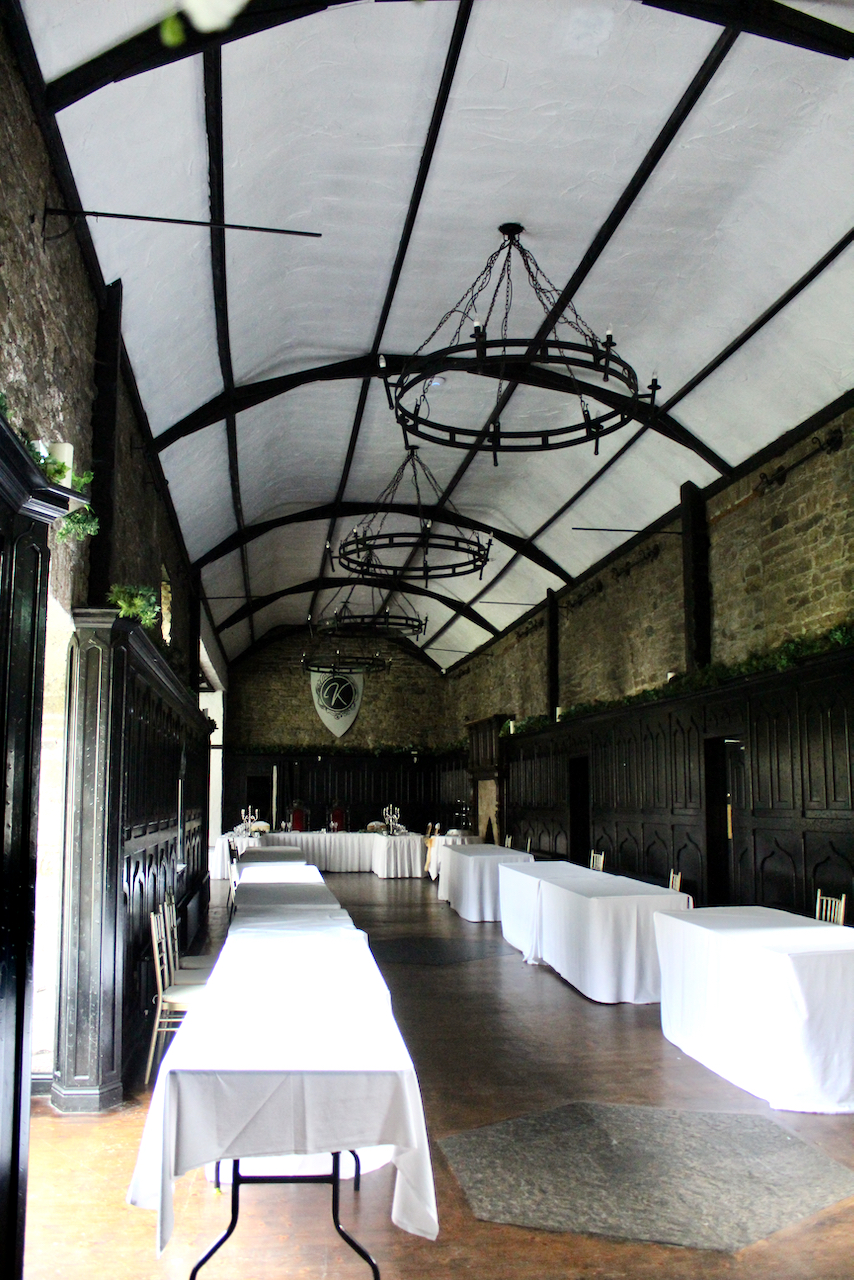
The Stable yard is in use as a banqueting hall, called the Great Hall of the O’Carrolls, and kitchens.

There’s even an arrow loop in the ruins by the stable yard. Photograph © Jennifer Winder-Baggot, www.irishhistorichouses.com
The stableyard of Kinnitty Castle. Photograph © Jennifer Winder-Baggot, www.irishhistorichouses.com
Photograph © Jennifer Winder-Baggot, www.irishhistorichouses.com
The Banqueting Hall in the stable yard of Kinnitty Castle. Photograph © Jennifer Winder-Baggot, www.irishhistorichouses.com
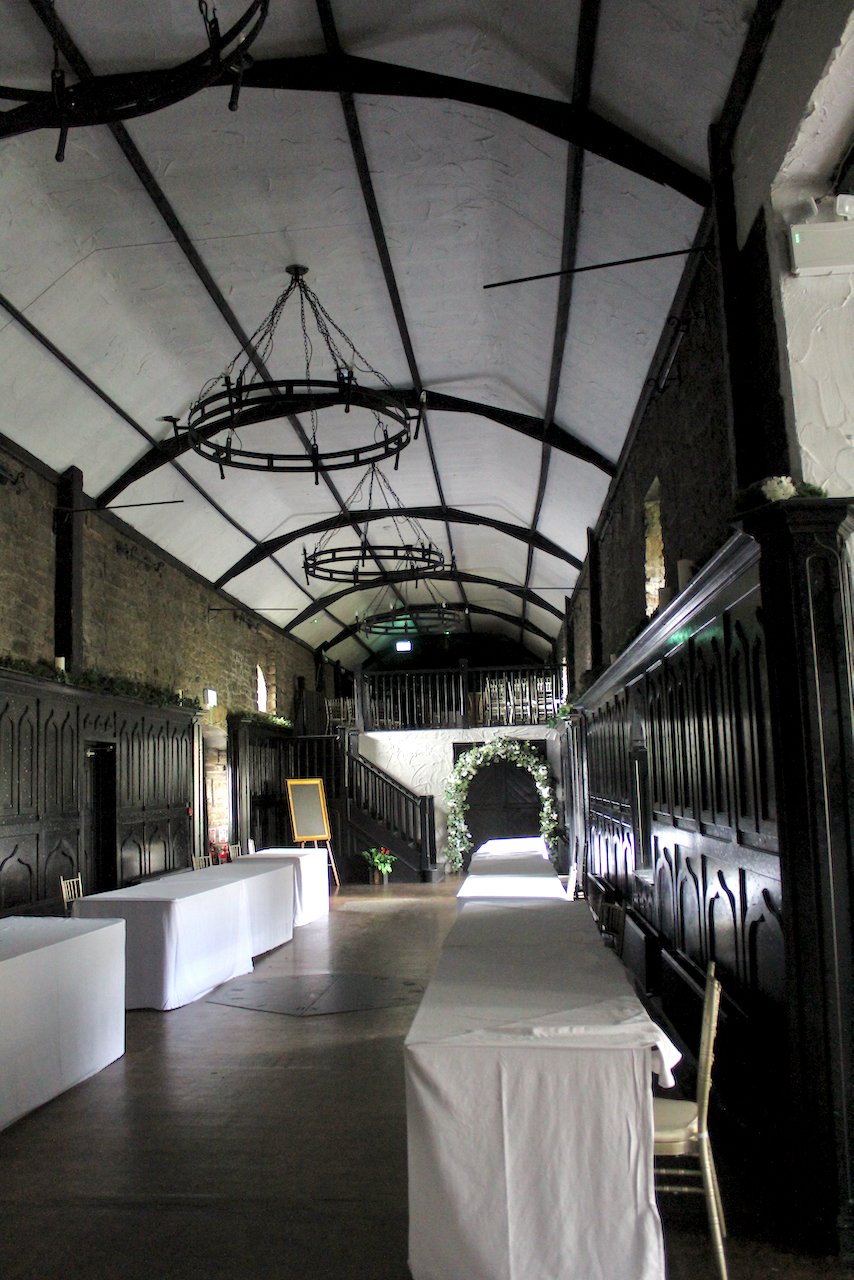
The Banqueting Hall of Kinnitty Castle has a mezzanine, or Minstrels Gallery. Photograph © Jennifer Winder-Baggot, www.irishhistorichouses.com
The Banqueting Hall of Kinnitty Castle. Photograph © Jennifer Winder-Baggot, www.irishhistorichouses.com
There’s an impressive looking fireplace in the banqueting hall. Photograph © Jennifer Winder-Baggot, www.irishhistorichouses.com
Photograph © Jennifer Winder-Baggot, www.irishhistorichouses.com

The website continues, telling us that the Winter family sold the building in 1764 to the Bernards of County Carlow.

Andrew Tierney tells us in his The Buildings of Ireland Central Leinster that Franks Bernard (named after the surname “Franks”), a son of Charles Bernard of Bernard’s Grove, County Laois (now called Blandsfort), leased a small estate here in the early eighteenth century. Either he or his nephew Thomas (d. 1788) probably built the modest T-plan house that forms the core of the castle.

There is another Castle Bernard in County Cork – this seems to have belonged to a different Bernard family.

The castle website tells us that it was Catherine Hely Hutchinson (d. 1844, daughter of Francis Hely Hutchinson, MP for Naas, County Kildare), wife of Colonel Thomas Bernard (d. 1834), who hired the Pain brothers, James and George Pain, to renovate the building, in 1833 (according to Mark Bence-Jones).

Kinnitty Castle, County Offaly, 9th February 2023. The National Inventory tells us that the oriel window over the castellated entrance porch was added at a later date. Photograph © Jennifer Winder-Baggot, www.irishhistorichouses.com

James and George Pain were architects of the impressive Mitchellstown Castle, unfortunately no longer existing.

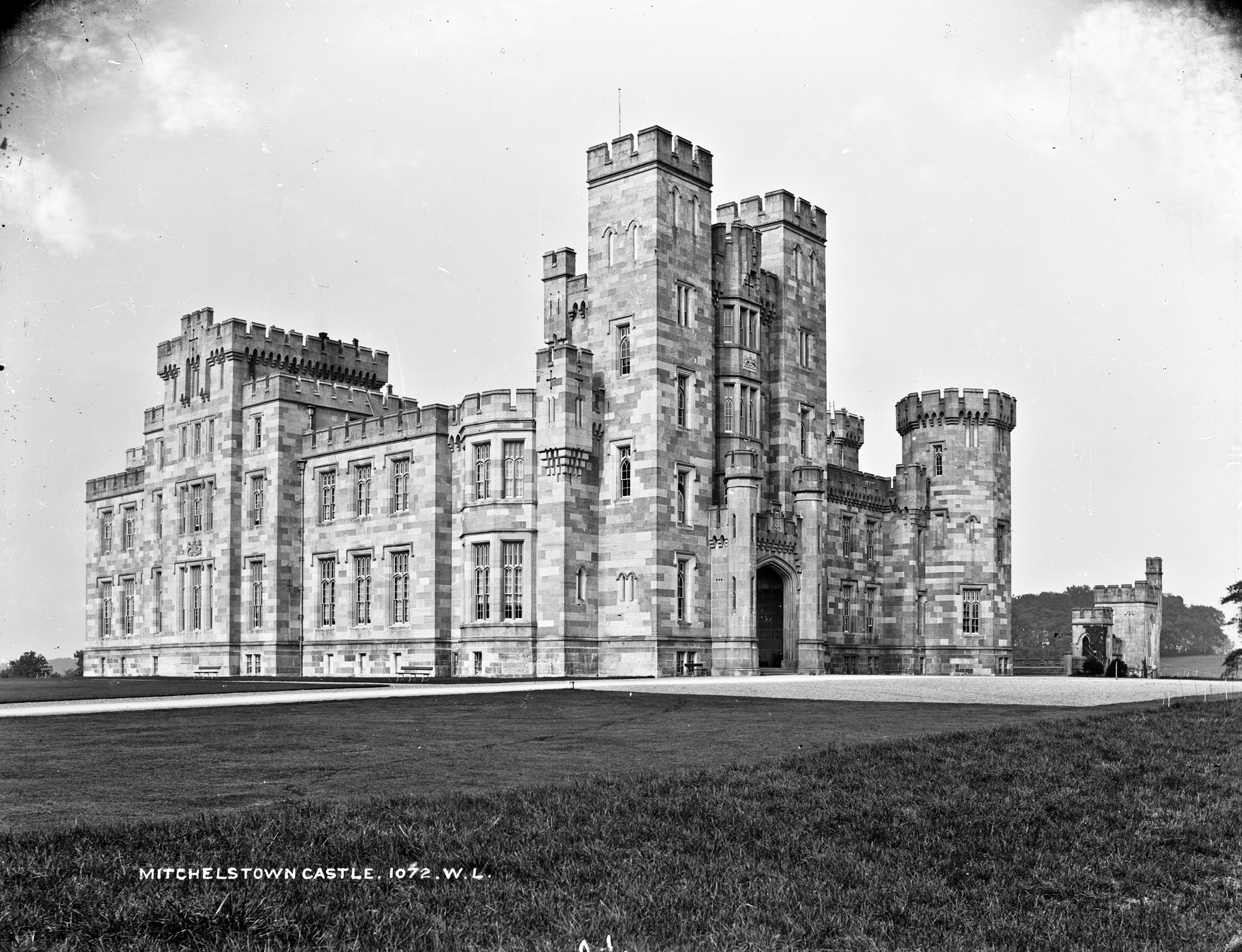
Mitchelstown Castle, County Cork, designed by the Pain brothers, courtesy of the National Library of Ireland, Lawrence PHotographic Collection, photographer Robert French ca. 1865-1914 ref. NLI L_ROY_01072.

We saw work by the Pain brothers on a visit to Revenue section 482 property Loughton in County Offaly – see my entry https://irishhistorichouses.com/2020/11/01/loughton-house-moneygall-county-offaly/ Loughton is not Tudor Gothic like Kinnitty.

Loughton, County Offaly. Photograph © Jennifer Winder-Baggot, www.irishhistorichouses.com

James and George were sons of James Pain, an English builder and surveyor. Their Grandfather William Pain was the author of a series of builder’s pattern books, so they had architecture in the blood. According to the Dictionary of Irish Architects, James and his younger brother George Richard were both pupils of John Nash, one of the foremost British architects of his day, responsible for the design of many important areas of London including Marble Arch, Regent Street and Buckingham Palace. He was architect to the prolific lover of architecture the Prince Regent, later King George IV. When Nash designed Lough Cutra Castle in County Galway for Charles Vereker in 1811, he recommended that the two brothers should be placed in charge of the work, so it was at this time that they came to Ireland. Lough Cutra is an amazing looking castle privately owned which is available for self-catering rental (very expensive, I am sure! But for those of you with oodles of money to spend, or for an event that requires nine bedrooms…). [2]

Lough Cutra castle, County Galway, also designed by the Pain brothers, photograph from Lough Cutra website.

James Pain settled in Limerick and George in Cork, but they worked together on a large number of buildings – churches (both Catholic and Protestant), country houses, court houses, gaols and bridges – almost all of them in the south and west of Ireland. [3] In 1823 James Pain was appointed architect to the Board of First Fruits for Munster, responsible for all the churches and glebe houses in the province.

The Pains Gothicized and castellated Dromoland Castle in County Clare at some time from 1819-1838, now a luxury hotel. [4]

Dromoland Castle, County Clare, which was renvoated by the Pain brothers, photo care of Dromoland Castle, for Tourism Ireland 2019, Ireland’s Content Pool.

The Pains took their Gothicizing skills then to Mitchelstown Castle in 1823-25. In 1825 they also worked on Convamore (Ballyhooly) Castle but that is now a ruin. They also probably worked on Quinville in County Clare and also Curragh Chase in County Limerick (now derelict after a fire in 1941), Blackrock Castle in County Cork (now a science centre, museum and observatory which you can visit [7]), they did some work for Adare Manor in County Limerick (also now a luxury hotel), Clarina Park in Limerick (also, unfortunately, demolished, but you can get a taste of what it must have been like from its gate lodge), Fort William in County Waterford, and they probably designed the Gothicization and castellation of Ash Hill Towers in County Limerick (a section 482 property and with lovely tourist accommodation, see my entry https://irishhistorichouses.com/2023/04/06/ash-hill-kilmallock-co-limerick/), alterations and castellation of Knappogue Castle, County Clare (you can also visit and stay, or attend a medieval style banquet), Aughrane Castle mansion in County Galway (demolished – Bagots used to own it, I don’t know if we are related!), a castellated tower on Glenwilliam Castle, County Limerick and more.

Curragh Chase, County Limerick garden front 1938, also designed by the Pain brothers, like Loughton it is classical rather than Tudor Gothic, photograph from Vanishing Country Houses of Ireland by The Knight of Glin, David J. Griffin and Nicholas K. Robinson, published by The Irish Architectural Archive and The Irish Georgian Society, 1988.
Fortwilliam, Glencairn, Lismore, Co Waterford courtesy Michael H. Daniels and Co., also designed by the Pains in Tudor Gothic style.
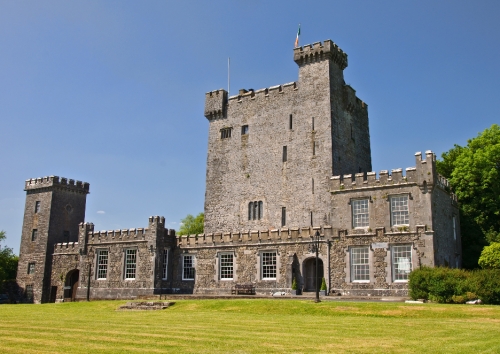
Knappogue, or Knoppogue, Castle, County Clare, also designed by the Pains.
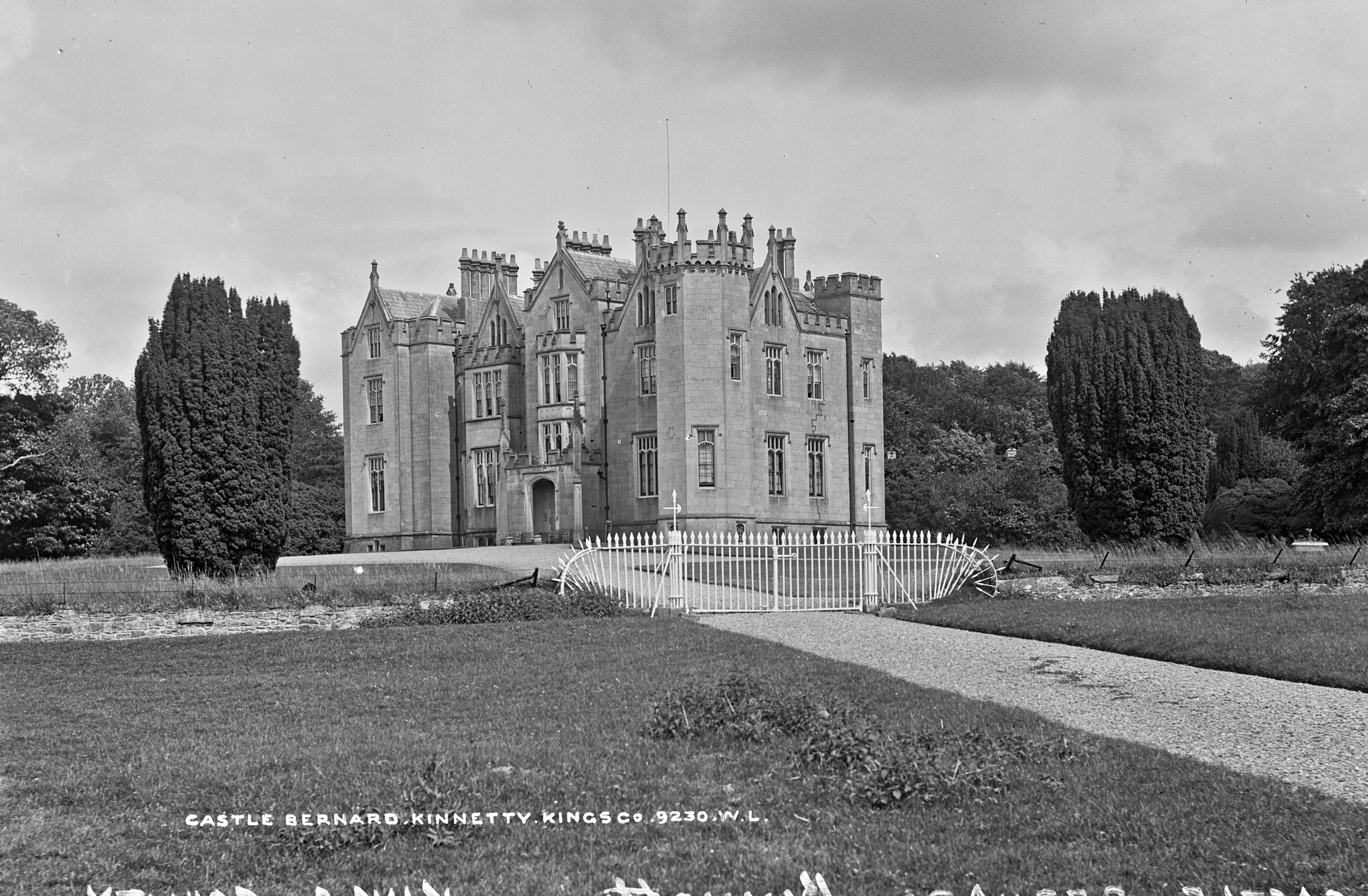
Kinnity Castle (Castle Bernard) County Offaly, photograph by Robert French, Lawrence c. 1865-1914 Photographic Collection National Library of Ireland ref L_Cab_09230.

In his 1988 book A Guide to Irish Country Houses, Mark Bence-Jones writes about Kinnitty Castle, formerly named Castle Bernard, that it is a Tudor-Revival castle of 1833, with impressive entrance front with gables, oriels and tracery windows and an octagonal corner tower with battlements and crockets; all in smooth ashlar. [5]

Kinnitty Castle Hotel, 2014, photographer unknown, for Tourism Ireland, Ireland’s Content Pool. (see [1])

The National Inventory describes it:

Ashlar limestone walls with castellated parapet, carved limestone plinth course and continuous string course to parapet. Battered walls to basement level. Square-headed window openings with tooled limestone and sandstone label mouldings, chamfered surrounds and punched limestone sills. Castellated box bay to second bay from north-east rising from basement level to first floor with chamfered stone mullions. Oriel window above entrance added at later date.”

Battered walls at basement are walls that slant outwards. This was a traditional building feature of castles, so that stones could be dropped from above and they would not fall straight down but hit the battered walls and bounce outwards to hit intruders.

The stone finials on top of the porch are particularly impressive. Photograph © Jennifer Winder-Baggot, www.irishhistorichouses.com

Mark Bence-Jones defines an oriel window as a large projecting window in Gothic, Tudor, Gothic-Revival and Tudor-Revival architecture; sometimes rising through two or more storeys, sometimes in an upper storey only and carried on corbelling. This particular window is not carried on corbels.

Kinnitty Castle, February 2023. Photograph © Jennifer Winder-Baggot, www.irishhistorichouses.com

The National Inventory continues: “Single-storey castellated entrance porch with diagonal buttresses surmounted by pinnacles with crockets and finials. Tudor arched opening to porch with label moulding accessed rendered porch with ribbed ceiling, niches to side walls and tooled limestone bell surround and post box flanking door. Square-headed door opening with chamfered limestone surround and label moulding, sandstone threshold and timber double doors.

The Tudor arch opening to porch with “label moulding” over, and you can see the ribbed ceiling inside. Photograph © Jennifer Winder-Baggot, www.irishhistorichouses.com
I love the rather church-like configuration of the three narrow pointed headed windows at the top arranged to form an arch. Photograph © Jennifer Winder-Baggot, www.irishhistorichouses.com
Side of Kinnitty Castle, February 2023. Photograph © Jennifer Winder-Baggot, www.irishhistorichouses.com

Before he married Catherine, Thomas Bernard, MP for County Offaly, married Elizabeth, daughter of Henry Prittie, 1st Baron Dunalley of Kilboy, County Tipperary. She died in 1802 and he married for a second time in 1814. He began building work on his house in 1833 but died the following year.

Thomas and Catherine had several children. Their heir was Thomas Bernard (1816-1882). Other sons were Francis, Richard Wellesley, and John Henry Scrope, and daughter Margaret.

Thomas Bernard (1816-1882), son of Catherine née Hely Hutchinson and Thomas Bernard (d. 1834).

Nearby the Bernard family have an unusual pyramid-shaped mausoleum. Richard Wellesley Bernard (c. 1822-1877) completed his military training in Egypt. He was an architect and engineer and it is said that he built the pyramid between 1830-34 but he would have been only eight years old, so perhaps it was constructed by an earlier Bernard. It is an exact replica of the Egyptian pyramid of Cheop.

Richard Wellesley Bernard (1822-1877) in early 1860s, National Portrait Gallery of London ref. Ax196557.
The Kinnitty Bernard mausoleum. Photograph © Jennifer Winder-Baggot, www.irishhistorichouses.com

The website continues: “The building was burned in 1922 by Republican forces and rebuilt by means of a Government grant of £32,000 in 1927.

The Buildings of Ireland Central Leinster book by Andrew Tierney tells us that the castle was rebuilt by Joseph John Bruntz. He was born in Dublin. The Dictionary of Irish Architects tells us that he was a pupil in his father’s office for four years and remained as an assistant for a further three years. After starting to practise independently as an architect circa 1915, he moved in 1917 or 1918 to Edenderry, Co. Offaly, where he set up an office. From 1922 he held the position of architect and civil engineer to the Co. Offaly Board of Health.

The website continues: “The building became the property of Lord Decies in 1946. He in turn sold it and the estate to the Government of Ireland on 12th December 1951. The State used the castle as a Forestry Training centre from 1955 until it was purchased in 1994 and turned into a 37 bedroom luxurious hotel for all guests both locally and internationally to enjoy.

Arthur George Marcus Douglas De La Poer Beresford (1915-1992), 6th Lord Decies, bought the property in 1946. He sold it in 1951.

It is a wonderful and affordable hotel, full of character.

The front entrance to Kinnitty Castle. Photograph © Jennifer Winder-Baggot, www.irishhistorichouses.com
A suit of armour stands watch by the door. Photograph © Jennifer Winder-Baggot, www.irishhistorichouses.com
Entrance hall and reception of Kinnitty Castle. Photograph © Jennifer Winder-Baggot, www.irishhistorichouses.com
The impressive staircase of Kinnitty Castle. Photograph © Jennifer Winder-Baggot, www.irishhistorichouses.com
I love the angels on this overhead light. Photograph © Jennifer Winder-Baggot, www.irishhistorichouses.com
The stair hall is toplit. Photograph © Jennifer Winder-Baggot, www.irishhistorichouses.com
Kinnitty Castle, February 2023. Photograph © Jennifer Winder-Baggot, www.irishhistorichouses.com
There’s a lovely fireplace in the blue drawing room and a painting of the castle. Photograph © Jennifer Winder-Baggot, www.irishhistorichouses.com
The Blue drawing room. Photograph © Jennifer Winder-Baggot, www.irishhistorichouses.com
Kinnitty Castle Hotel, 2014, photographer unknown, for Tourism Ireland, Ireland’s Content Pool. (see [1])
This room is now a dining room, 2023. Photograph © Jennifer Winder-Baggot, www.irishhistorichouses.com
The dining room leads to the octagonal tower room. The room has a vaulted ceiling. Photograph © Jennifer Winder-Baggot, www.irishhistorichouses.com
The Library Bar in Kinnitty Castle. Photograph © Jennifer Winder-Baggot, www.irishhistorichouses.com
Kinnitty Castle Hotel, 2014, photographer unknown, for Tourism Ireland, Ireland’s Content Pool. (see [1])
A hallway upstairs at Kinnitty Castle. Photograph © Jennifer Winder-Baggot, www.irishhistorichouses.com
We gravitated toward the bookshelf at the top of the stairs. Photograph © Jennifer Winder-Baggot, www.irishhistorichouses.com
Another hallway in Kinnitty Castle. Photograph © Jennifer Winder-Baggot, www.irishhistorichouses.com
Our lovely bedroom at Kinnitty Castle. Photograph © Jennifer Winder-Baggot, www.irishhistorichouses.com
Photograph © Jennifer Winder-Baggot, www.irishhistorichouses.com

There’s a bar in the cellar of the hotel, called the Dungeon Bar.

The back stairs of the castle. Photograph © Jennifer Winder-Baggot, www.irishhistorichouses.com
The Dungeon Bar in the basement of the hotel. Photograph © Jennifer Winder-Baggot, www.irishhistorichouses.com
The Dungeon Bar at Kinnitty Castle. Photograph © Jennifer Winder-Baggot, www.irishhistorichouses.com
A snug in the Dungeon Bar. Photograph © Jennifer Winder-Baggot, www.irishhistorichouses.com
An old horse trough in the rather ecclesiastical bar looks for a moment like a coffin! Photograph © Jennifer Winder-Baggot, www.irishhistorichouses.com
The atmospheric Dungeon Bar at Kinnitty Castle. Photograph © Jennifer Winder-Baggot, www.irishhistorichouses.com
There are still meat hooks on the vaulted ceiling of the cellar. Photograph © Jennifer Winder-Baggot, www.irishhistorichouses.com
Kinnitty Castle. Photograph © Jennifer Winder-Baggot, www.irishhistorichouses.com

The River Camcor winds through the property.

A map of the Demesne at Kinnitty.
The River Camcor crosses the property at Kinnity Castle, and one can go for lovely walks in the grounds, along the river. Photograph © Jennifer Winder-Baggot, www.irishhistorichouses.com
Single-spire wire suspension footbridge, built c.1840, over the River Camcor within the demesne of Kinnitty Castle. The bridge is hung from cast-iron columns, and is accessed through a wrought-iron gate with iron circular framing. The Manufacturer’s name ‘T & D Roberts’ is on a downstream upright. It is one of only two suspension bridges in Offaly (the other is at Birr Castle demesne) and one of several footbridges with Kinnitty Castle demesne. It is a rare surviving example of a multiple-wire cable suspension bridge, and the National Inventory tells us it is significant because of its association with the Mountmellick Foundry. Photograph © Jennifer Winder-Baggot, www.irishhistorichouses.com
The bridge has odd sunburst decorative iron circular framing at one end. Photograph © Jennifer Winder-Baggot, www.irishhistorichouses.com
Single-span metal lattice footbridge, c.1900, over the River Camcor in the grounds of Kinnitty Castle. Photograph © Jennifer Winder-Baggot, www.irishhistorichouses.com
This could be the “back lodge” referred to by Andrew Tierney. If so, he suggests that it too could have been designed by the Pain brothers, who had supervised the work of John Nash, who designed the Swiss Cottage in County Tipperary (see my entry under Places to Visit and Stay in County Tipperary). Photograph © Jennifer Winder-Baggot, www.irishhistorichouses.com
The gate lodge at Kinnity used to be the Day Spa but is was empty when we visited in February 2023, perhaps a victim of Covid. The National Inventory tells us that it was built around 1835. Photograph © Jennifer Winder-Baggot, www.irishhistorichouses.com

[1] https://www.irelandscontentpool.com/en

[2] http://www.loughcutra.com/

[3] https://www.dia.ie/architects/view/2640/PAIN-JAMES

[4] https://www.dromoland.ie/

[5] p. 62 (under Castle Bernard), Bence-Jones, Mark. A Guide to Irish Country Houses (originally published as Burke’s Guide to Country Houses volume 1 Ireland by Burke’s Peerage Ltd. 1978); Revised edition 1988, Constable and Company Ltd, London.

Woodhouse, County Waterford – private house, tourist accommodation in gate lodge and cottages

donation

Help me to pay the entrance fee to one of the houses on this website. This site is created purely out of love for the subject and I receive no payment so any donation is appreciated!

€15.00

We visited Woodhouse on a day trip with the Cork Chapter of the Irish Georgian Society on a gloriously sunny day on May 24th, 2023. The home owners Jim and Sally Thompson welcomed us into their home, and historian Marianna Lorenc delivered a wonderful talk about the history of the house and the family who lived there.

Woodhouse, May 2023. The house is private but you can stay in cottages. Photograph © Jennifer Winder-Baggot, www.irishhistorichouses.com

You can stay in the gate lodge or cottages.

https://woodhouseestate.com/

The Hayloft, Woodhouse, available for self-catering accommodation.
At Woodhouse, County Waterford. Photograph © Jennifer Winder-Baggot, www.irishhistorichouses.com

The website tells us:

The original house was built in the early part of the 17th century by the Fitzgerald family (a branch of the MacThomas Geraldines of the Decies).

An old estate map of Woodhouse.
An information board in the museum.

While in the ownership of the Uniacke family it was passed by inheritance to the Beresford family and subsequently sold by Lord William Beresford in ca 1970. The House has since been extended over the years to become an impressive six bay window residence with bright and spacious rooms overlooking this private estate with the River Tay flowing through.”

The River Tay. Photograph © Jennifer Winder-Baggot, www.irishhistorichouses.com

The website gives us a detailed description of the history of the house so I will quote it here:

The house of Woodhouse as we see it at present was built in at least three stages.

The first one dates back to early 1600’s and the Munster Plantation, when the Messenger for Court of Wards and Liveries, an English Protestant and Undertaker (in other words Planter), James Wallis Esq., rented the lands of Woodhouse, Carrigcrokie, Stradballymore, Ballykerogue and others from the fellow Elizabethan settler and land distributor Richard Beacon. The latter gentleman was awarded the lands of the Catholic FitzGerald family in Co. Limerick and Co. Waterford (Woodhouse) by the Queen in appreciation for having performed his duties as her majesty’s attorney for the province of Munster. After leasing the land James Wallis had built a fine stone house, a mill, a walled garden accompanied by a numerous outbuildings and weirs (river dams) in the river Tay. The original house was built in an Elizabethan style on a rectangular plan.

James Wallis (ca. 1570-1661).

During the 1641 Rebellion in Ireland, James Wallis Esq. was forced out of Woodhouse by rebels and despite his detailed Deposition made in 1642 describing the damage to his house and the loss of his goods, as well as the favourable court ruling in his favour in 1653, he never returned to the property.

At Woodhouse, County Waterford.

The 1654 Civil Survey states that the owner of Woodhouse was then Thomas FitzGerald. Two generations later his grandson Major Richard MacThomas FitzGerald (then of Prospect House in Kinsalebeg, Co. Waterford) was facing large debts and had no way of paying them back so he had to sell the house and lands in 1724. Richard MacThomas Fitzgerald received over £8000 for this property but could only retain £840 while the rest was required to cover his debts.

The new owner of Woodhouse was Richard MacThomas Fitzgerald’s distant relative and close neighbour Thomas Uniacke Esq. of Ballyvergin, Barnageehy and Youghal. It was then that the second phase of development for Woodhouse started. Thomas’ sons, Borr and Maurice Uniacke, invested heavily into renovating the dilapidated house and completely changed its character by developing it into a Georgian structure. There is no evidence to confirm who the architect of the changes was so it’s quite possible that the wealthy Uniacke family used the “Pattern Books” and hired traveling stonemasons to introduce the changes. The house was substantially enlarged and its functionality vastly changed. At this time the Woodhouse estate was is thought to have consisted of about 2500 acres in total.

What the house looked like, may be seen at one of Borr Uniacke’s granddaughter’s amateur painting which was likely done in the first half of 1800s.

Colonel Robert Uniacke (1756-1802).

Woodhouse remained with the Uniacke family for about 130 years but in 1853 the Estate changed hands again. It did not entirely leave the Uniacke family inasmuch as the last heiress of this branch of the family, Frances Constantia Uniacke, having inherited Woodhouse from her older brother, Robert Borr Uniacke in 1844, married George John Beresford the grandnephew of the 1st Marquess of Waterford. Frances and George John took on the responsibility for the house and had the house and the outbuildings further extended. Owing to his sufferings caused by severe gout, at the back of the main house he had built a Turkish bath. We also know that construction of the boat house in nearby Stradbally Cove (which in contemporary nautical charts was called the Blind Cove) was done at this time.

George John Beresford (1807-1864).

For almost a century after that Woodhouse did not see any major changes and once again it became in need of extensive work to save it. Most of the eight Beresford children of George John and Frances Beresford married but none of them had children of their own. In 1933, the last surviving daughter of the couple, Lady Emily Frances Louisa (Beresford) Hodson bequeathed Woodhouse (the main house, 550 acres of land and the village of Stradbally) to her distant cousin Lt. Lord Hugh Tristram de la Poer Beresford Royal Navy, the sixth child of the 6th Marquess of Waterford. At the time of Lady Hodson’s death Lord Hugh was Aide De Camp to the Governor General of South Africa, yet he still managed to order renovation works including the installation of electricity and running water to the house. There is an extensive written evidence of his endeavours, which describes the works undertaken.

Emily Frances Louisa (née Beresford) Hodson (1861-1934).
At Woodhouse, County Waterford.

In 1936 Lord Hugh Beresford made his last will and testament and bequeathed Woodhouse to his older brother Major Lord William Mostyn de la Poer Beresford. When in 1941 Lt. Cmdr. Lord Hugh Beresford was killed in action during the Battle of Crete, the will and testament were probated and when in 1944 Major Lord William Beresford returned from the war he took on Woodhouse, its lands and the village of Stradbally. Hence the third stage of structural development for Woodhouse began. Until his return however, the Estate was looked after by Arthur Hunt Esq. who had been the agent for the Beresford family since the late 1800s.

Upon his return from the war, Lord William Beresford moved into Woodhouse. He found the Estate to be quite run down and badly in need of repairs.

Lord William introduced considerable changes not only to the structure of the main house, but he also developed the land and garden in such a way that they yielded large crops. Every week he transported the rich surplus of vegetables, fruits and dairy products to Waterford where they were sold in the first Co-Op in town.

There is a beautiful bridge in the distance, on the property. Photograph © Jennifer Winder-Baggot, www.irishhistorichouses.com

Lord William and his wife Rachel are remembered as a good and kind people who successfully ran Woodhouse as a working farm and they put all their energy into making it a self-sufficient establishment.”Lord William and his wife Rachel are remembered as a good and kind people who successfully ran Woodhouse as a working farm and they put all their energy into making it a self-sufficient establishment.

The year 1971 was the year when everything had changed for Woodhouse. It was the first time in 250 years that it was sold outside of the Fitzgerald/Uniacke/Beresford Anglo-Irish family. In that year Lord William sold the Estate to Mr. John McCoubrey who farmed and bred his cattle here and, thanks to the auspicious nature, he succeeded in that enterprise. However only one year later Mr. McCoubrey decided to move on and he, too, sold Woodhouse.

In 1972 Mr. John Rohan bought the house and all the lands. The new owner began extensive renovations to the main house and, being the Master of the Waterford Hunt, built stables for his horses and kennels for his dogs in the walled garden. He also purchased and installed the beautiful black gate at the main entrance to the Estate.

The impressive gates of Woodhouse, purchased and installed by John Rohan. Photograph © Jennifer Winder-Baggot, www.irishhistorichouses.com

Ten years later, in 1983 Woodhouse changed hands again and was purchased as an investment by a company owned by Mr. Mahmoud Fustok and his associates from the Middle East. Mr. Fustok never occupied Woodhouse but chose to make it available to Dr John O’Connell, an Irish parliamentarian, and his friends. The house was adjusted to their style, but no major renovations took place between 1983 and 2006.  

After 23 years under Mr. Fustok’s ownership Woodhouse was purchased by two Irish business partners – Mr. Aidan Farrell and Mr. Charles O’Reilly-Hyland. After their purchase these two owners sold some land parcels of Woodhouse to interested parties and made some improvements to the Estate but did not make it their residence. Eventually in 2012 they decided to sell the entire estate.

The front door to the private house of Woodhouse. Photograph © Jennifer Winder-Baggot, www.irishhistorichouses.com

The new purchasers, Jim Thompson and his wife Sally, took on the task of renovating and modernizing the vastly run-down house, cottages, outbuildings and lands. Their initiative involved an enormous amount of effort and patience but ultimately was successful. The works extended into every part of the large Estate (500 acres) and was achieved over a period of six years with the support and encouragement of the people of Stradbally.

Inside this area is a museum about Woodhouse, a function room, and the Hayloft cottage. Photograph © Jennifer Winder-Baggot, www.irishhistorichouses.com

After many years of being forgotten and with no sufficient means to sustain itself, Woodhouse was brought back to life by various experts – architectural, building, landscape, and farm – who guided the Thompsons through the long renovation process. This commitment to bring Woodhouse back to its former glory proved very successful and as of 2019 – 400 years after the house was originally built – Woodhouse is a vibrant estate once more.

The private home of Woodhouse, the rear entrance, with French doors from the kitchen. Photograph © Jennifer Winder-Baggot, www.irishhistorichouses.com
French doors from the kitchen. Photograph © Jennifer Winder-Baggot, www.irishhistorichouses.com
The beautiful day showed the gardens to perfection. Photograph © Jennifer Winder-Baggot, www.irishhistorichouses.com
These lovely buildings house the museum and a function room. Photograph © Jennifer Winder-Baggot, www.irishhistorichouses.com

We gathered at the ancilliary buildings for coffee and a chat before Marianna’s introduction to the house’s history. She has published a book that was for sale, along with Julian Walton.

This houses the museum and function rooms. Photograph © Jennifer Winder-Baggot, www.irishhistorichouses.com
Ancilliary buildings. Photograph © Jennifer Winder-Baggot, www.irishhistorichouses.com
Woodhouse, County Waterford. Photograph © Jennifer Winder-Baggot, www.irishhistorichouses.com
Ancilliary buildings at Woodhouse. Photograph © Jennifer Winder-Baggot, www.irishhistorichouses.com
The museum, upstairs in the ancilliary buildings. Photograph © Jennifer Winder-Baggot, www.irishhistorichouses.com
This was the walk between the museum and the main house. The gardens everywhere are beautiful and we couldn’t have had a finer day for our visit. Photograph © Jennifer Winder-Baggot, www.irishhistorichouses.com

After our talk, we visited the house and then the walled garden. The website tell us:

When Woodhouse changed hands in 2012 a project was undertaken to bring the walled garden back to its former glory. Today the Walled Garden and Orchard have a wide variety of fruits, vegetables, herbs and many types of flowers and, thanks to Paddy Kiely and his excellent team of skilled workmen, has developed in a place of beauty in tune with nature as it was planned when originally built. An oasis of calm and tranquility situated right in the centre of the Estate, the beautifully restored Walled Garden is a perfect venue for small intimate weddings and gatherings. Completely enclosed and surrounded by high stone walls the walled garden has flowers beds, beautiful green lawns, a raised pergola overlooking the entire garden and a soothing water feature. As well as providing a beautiful backdrop for weddings the Walled Garden is also an ideal venue for a variety of special events.  Whether you are looking to toast a birthday or anniversary or hold a charity event the Walled Garden adds a special atmosphere to any occasion.
For more information please get in touch
1woodhouseestate@gmail.com

The beautiful walled garden of Woodtown. Photograph © Jennifer Winder-Baggot, www.irishhistorichouses.com
Events can be held in the buildings in the walled garden. Photograph © Jennifer Winder-Baggot, www.irishhistorichouses.com
The beautiful walled garden of Woodhouse. Photograph © Jennifer Winder-Baggot, www.irishhistorichouses.com

Beyond the walled garden in a further section is an orchard and greenhouse, and a house for chickens.

The orchard at Woodhouse. Photograph © Jennifer Winder-Baggot, www.irishhistorichouses.com
The greenhouse at Woodhouse. Photograph © Jennifer Winder-Baggot, www.irishhistorichouses.com
At Woodhouse. Photograph © Jennifer Winder-Baggot, www.irishhistorichouses.com

Woodbrook, Killanne, Enniscorthy, Co. Wexford, Y21 TP 92 – section 482 accommodation

(Tourist Accommodation Facility)

www.woodbrookhouse.ie

Woodbrook House, photograph courtesy of Historic Houses of Ireland website.

Today I am going to write about Woodbrook as it is listed in Revenue Section 482 but is only open as accommodation. Open for accommodation: all year 2025

donation

Help me to pay the entrance fee to one of the houses on this website. This site is created purely out of love for the subject and I receive no payment so any donation is appreciated!

€15.00

Then, below my entry, I have listed Section 482 properties that are open for a visit in March 2025!

Woodbrook looks like a lovely place to stay and the hosts Giles and Alexandra Fitzherbert, who have lived there since 1998, serve dinner also if requested. Giles is a former Ambassador in South America and his wife Alexandra is of Anglo-Italian-Irish-Chilean extraction, the Hidden Ireland website tells us.

Woodbrook, County Wexford, courtesy Hidden Ireland. [1]

Woodbrook house was built in the 1770s. It was built by Reverend Arthur Jacob (1717-1786), Archdeacon of Armagh, for his daughter Susan and her husband Captain William Blacker, a younger son of the family at Carrigblacker near Portadown. Arthur Jacob was Rector of Killanne in County Wexford while he was also Archdeacon of Armagh. [2]

The Historic Houses of Ireland website tells us:

Nestling beneath the Backstairs Mountains near Enniscorthy in County Wexford, Woodbrook, which was first built in the 1770s, was occupied by a group of local rebels during the 1798 rebellion. Allegedly the leader was John Kelly, the ‘giant with the gold curling hair’ in the well known song ‘The Boy from Killanne’. It is said that Kelly made a will leaving Woodbrook to his sons but he was hanged on Wexford bridge, along with many others after the rebels defeat at Vinegar Hill. He was later given an imposing monument in nearby Killanne cemetery.” [3]

Another rebel who occupied the house in 1798 was John Henry Colclough (c.1769-98) who was also executed for his participation in the 1798 Insurrection.

The Historic Houses of Ireland site continues:

… The house was badly knocked about by the rebels and substantially rebuilt in about 1820 as a regular three storey Regency pile with overhanging eaves, a correct Ionic porch surmounted by a balcony and three bays of unusually large Wyatt windows on each floor of the facade.” [3]

Woodbrook House, photograph courtesy of Woodbrook website.

The house has tripartite entrance doorcase with large cobweb fanlight under the portico. Mark Bence-Jones writes that the hall has a “rather Soanian vaulted ceiling.” I’m not sure what he means by this – if you can enlighten me, please do let me know! He also comments on the “very spectacular spiral flying staircase of wood, with wrought iron balustrades; a remarkable and brilliant piece of design and construction.” [4] It is called “flying” because it does not touch the walls. The steps look like stone but are timber, and each was carefully made to fit perfectly together. Robert O’Byrne tells us that the stairs bounce slightly as one walks up or down, which sounds disconcerting!

Woodbrook House, photograph courtesy of Woodbrook website.
Woodbrook, County Wexford, courtesy Hidden Ireland. [1]

Woodbrook passed to the son, William Blacker (1790-1831). He married Elizabeth Anne Carew, from Castleboro House in County Wexford, now a splendid ruin.

Castleboro, County Wexford, photograph: Robert French, Lawrence Collection, NLI, Vanishing Country Houses of Ireland by The Knight of Glin, David J. Griffin and Nicholas K. Robinson, published by The Irish Architectural Archive and The Irish Georgian Society, 1988.
William Blacker married Elizabeth Anne Carew, from Castleboro House in County Wexford, now a splendid ruin. The ruins of Castleboro House, County Wexford (geograph_3716684) By Mike Searle, https://commons.wikimedia.org

William and Elizabeth Anne’s son Robert Shapland Carew Blacker (1826-1913) inherited the impressive Carrickblacker house in County Armagh from his relatives, as well as inheriting Woodbrook, from an elder brother, William Jacob, who predeceased him and had no children. William Jacob Blacker served as High Sheriff of County Wexford.

Robert Shapland married, in 1858, Theodosia Charlotte Sophia, daughter of George Meara, of May Park, County Waterford. Carrickblacker house remained in the family until the estate was purchased in 1937 by Portadown Golf Club, which demolished Carrickblacker House in 1958 to make way for a new clubhouse. [5]

Woodbrook House, photograph courtesy of Woodbrook website.

The eldest son, William Robert George Blacker, died at just twenty years old. The next eldest, Edward Carew Blacker, died unmarried in 1932. He also served as High Sheriff of County Wexford. After his death, Woodbrook lay empty for some years, inherited by Edward’s brother Stewart Ward William Blacker, who also owned Carrickblacker. The Irish Historic Houses website tells us that the house was occupied by the Irish army during the Second World War.

The house has a large drawing room with a chimneypiece that is from the original house.

Woodbrook, County Wexford, courtesy Hidden Ireland. [1]
Woodbrook House, photograph courtesy of Woodbrook website.

Stewart’s son Robert Stewart Blacker moved to the house in the 1950s after Carrickblacker was sold, and Woodbrook was then extensively modernised.

Woodbrook House, photograph courtesy of Woodbrook website.
Woodbrook, County Wexford, courtesy Hidden Ireland. [1]
Woodbrook House, photograph courtesy of Woodbrook website.
There are three large guest bedrooms, all en suite. Woodbrook, County Wexford, courtesy Hidden Ireland. [1]
Woodbrook House, photograph courtesy of Woodbrook website.

Also featured in The Wexford Gentry by Art Kavanagh and Rory Murphy. Published by Irish Family Names, Bunclody, Co Wexford, Ireland, 1994.

and The Irish Aesthete: Buildings of Ireland, Lost and Found. Robert O’Byrne. The Lilliput Press, Dublin, 2024.

Donation towards accommodation

I receive no funding nor aid to create and maintain this website, it is a labour of love. I travel all over Ireland to visit Section 482 properties and sometimes this entails an overnight stay. A donation would help to fund my accommodation.

€150.00

[1] https://hiddenireland.com/house-pages/woodbrook-house/

[2] https://theirishaesthete.com/2013/06/24/speaking-of-98/

[3] https://www.ihh.ie/index.cfm/houses/house/name/Woodbrook

[4] Mark Bence-Jones. A Guide to Irish Country Houses (originally published as Burke’s Guide to Country Houses volume 1 Ireland by Burke’s Peerage Ltd. 1978); Revised edition 1988 Constable and Company Ltd, London. 

[5] http://lordbelmontinnorthernireland.blogspot.com/2013/05/house-of-blacker.html

These Section 482 listings are open on certain dates in March 2025, so you might still have time for a visit! I have separated below the places that are listed as Accommodation.

Huntington Castle, Clonegal, Co. Carlow, Y21 K237

Postal address: Huntington Castle, Enniscorthy, Co. Wexford          

www.huntingtoncastle.com

Open: Feb 1-2, 8-9, 15-16, 22-23, Mar 1-2, 8-9, 15-16, 22-23, 29-30, Apr 5-6, 12-30, May 1-31, June 1-30, July 1-31, Aug 1-31, Sept 1-30, Oct 4-5, 11-12, 18-19, 25-31, Nov 1-2, 8-9, 15-16, 22-23, 29-30, Dec 6-7, 13-14, 20-21, 11am-5pm 

Fee: house/garden, adult €13.95, garden €6.95, OAP/student, house/garden €12.50, garden €6, child, house/garden €6.50, garden €3.50, group and family discounts available

Corravahan House & Gardens, Corravahan, Drung, Ballyhaise, Co. Cavan, H12 D860

www.corravahan.com

Open: Jan 3-4, 10-11, 17-18, 24-25, 31, Feb 7-8, 14-15, 21-22, 28, Mar 1, 7-8, 14, May 8-11, 15-18, 22-25, June 12-15, 19-22, 26-29, Aug 8-10, 15-24, 29-31, 2pm-6pm 

Fee: adult €10, OAP/student/child €5 

Newtown Castle, Newtown, Ballyvaughan, Co. Clare

www.newtowncastle.com                                                                                                                                                        

Open: Jan 6-Dec 19 Mon-Fri, National Heritage Week 16-24, 10am-5pm 

Fee: Free

Ashton Grove, Ballingohig, Knockraha, Co. Cork     

Open: Jan 7-10, 14-17, 21-24, Feb 10-14, 18, 25, Mar 4, May 1-5, 8-11, 13, 15-16, 20, 22-23, June 3-8, 10-15, 17-20, Aug 16-24, 8am-12 noon 

Fee: adult €6, child €3, student/OAP free

Blarney Castle & Rock Close, Blarney, Co. Cork

www.blarneycastle.ie

Open: all year, Jan-Mar, Nov, Dec, 9am-5pm, Apr, Oct, 9am-5.30pm, May- Sept 9am-6pm,

Fee: adult €23, OAP/student €18, child €11

Kilshannig House, Rathcormac, Co. Cork, P61 AW77

Open: March 18-19, 21, 24, 26-27, April 2, 4-7, 9, 11-13, 21, 23, 25, May 12, 14, 16-17, 19, 21, 23-26, 28, 30,  June 2, 4, 6-9, 11, 13, 16, 25, 27-29, July 2, 4-7, 14, 16, 18-20, 28, 30, Aug 1- 4, 6, 8, 11, 13, 15-25, Sept 18, 20, 22-25, 27, 29, 8.30am-3pm, 

Fee: adult €14, OAP €12, student €10, child €8

Woodford Bourne Warehouse, Sheares Street, Cork

www.woodfordbournewarehouse.com

Open: all year, except Christmas Eve, Christmas Day, 12 noon-10pm 

Fee: Free

Bewley’s, 78-79 Grafton Street/234 Johnson’s Court, Dublin 2

www.bewleys.com

Open: all year, except Christmas Day, Jan- Nov, 8am-6.30pm, Dec 8am-8pm

Fee: Free

Doheny & Nesbitt, 4/5 Lower Baggot Street, Dublin 2

www.dohenyandnesbitts.ie

Open: all year, except Christmas Day, Mon-Wed, 9am-12 midnight, Thurs-Sat, 9am-1.30am, Sun, 9am-12 midnight

Fee: Free

Hibernian/National Irish Bank, 23-27 College Green, Dublin 2                                                                                                                                                

www.clarendonproperties.ie

Open: all year, except Jan1, and Dec 25, 9am-8pm

Fee: Free 

The Odeon (formerly the Old Harcourt Street Railway Station), 57 Harcourt Street, Dublin 2

www.odeon.ie

Open: all year Tue-Sat, National Heritage Week, Aug 16-24, 12 noon-12 midnight 

Fee: Free

Powerscourt Townhouse Centre, 59 South William Street, Dublin 2

www.powerscourtcentre.ie

Open: all year, except New Year’s Day, Christmas Day, 10am-6pm 

Fee: Free

10 South Frederick Street, Dublin 2, DO2 YT54

Open: all year, 2pm-6pm

Fee: Free

The Church, Junction of Mary’s Street/Jervis Street, Dublin 1

www.thechurch.ie

Open: Jan 1-Dec 23, 27-31, 11am-11pm

Fee: Free

www.clonskeagh.com

Open: Jan 5-9, Feb 28, Mar 1-7, 9, May 1-10, June 1-10, July 1-10, Aug 16-25, Nov 4-6, Dec 2-4, 10am-2pm

Fee: adult €12, student/OAP/groups €8, groups over 4 people €8 each

Martello Tower, Portrane, Co. Dublin

Open: March 1- Sept 21, Sat & Sun, National Heritage Week, Aug 16-24, 9am-1pm

Fee: adult €6, student/OAP €2, child free

Tibradden House, Mutton Lane, Rathfarnham, Dublin 16, D16 XV97

www.selinaguinness.com

Open: Jan 7-17, 24, Feb 3, 10, 17, 24, Mar 3, 10, 21, 24, Apr 4, May 2-3, 9-10, 16-17, 23, 29-30, June 13-15, 19-22, 25-28, Aug 15-24, Sept 3-6, 12-13, 19-20, 26-27, Jan-Apr, May-June, Aug, 2pm-6pm, Feb and Sept, 10am-2pm  

Fee: adult €8, student/OAP/group €5  

Woodville House Dovecote & Walls of Walled Garden, Craughwell, Co. Galway

www.woodvillewalledgarden.com

Open: Feb 1-3, 7-10, 14-17, 21-24, 28, Mar 1-3, 7-10, 14-17, Apr 18-21, May 16-19, June 1-2, 6-9, 13-16, 20-23, 27-30, Aug 1-4, 8-11, 15-25, Feb-May, 12 noon-4pm, June and August, 11am-5pm, last entry 4.30pm    

Fee: adult €10, OAP €9, student, €6, child €4 must be accompanied by adult, family €25 (2 adults and 2 children) 

Derreen Gardens, Lauragh, Tuosist, Kenmare, Co. Kerry

www.derreengarden.com

Open: all year, 10am-6pm

Fee: adult/OAP/student €10, child €5, family ticket €30 (2 adults & all accompanying children under18) 20% discount for groups over 10 people

Kells Bay House & Garden, Kells, Caherciveen, Co. Kerry, V23 EP48 

www.kellsbay.ie

Open: Jan 1-4, Feb 1-Dec 21, 27-31, Jan-Apr, Oct-Dec 9am-5pm, May-Sept 9am-6pm

Fee: adult €9.50, child €7.50, family €30 (2 adults and up to 3 children 17 years or under) concessions 10% on groups up to 20 persons

Farmersvale House, Badgerhill, Kill, Co. Kildare, W91 PP99

Open: Jan 6-21, Mar 3-6, July 18-31, Aug 1-26, 9.30am-1.30pm

Fee: adult €5, student/child/OAP €3, (Irish Georgian Society members free)

Harristown House, Brannockstown, Co. Kildare, W91 E710       

www.harristownhouse.ie

Open: Feb 3-7, 24-28, Mar 10-14, 17-21, May 1-14, July 23-25, 28-31, Aug 1, 5-24, 9am-1pm

Fee: adult €15, OAP/student/child €10

Leixlip Castle, Leixlip, Co. Kildare, W23 N8X6

Open: Feb 17-21, 24-28, Mar 3-7, 10-14, May 12-23, June 9-20, Aug 16-24, Sept 1-7, 9am-1pm

Fee: adult €8, OAP/student/child €4, no charge for local school visits/tours 

Kilkenny Design Centre, Castle Yard, Kilkenny

www.kilkennydesign.com

Open: Jan 1 new year’s day 12 noon-5.30pm, Jan 2-Dec 23, 27-31, Jan, Feb, Mar, Apr, Oct, Nov, Dec, Sun, 11am-6pm, Mon-Sat, 10am-6pm, May, 10am-6pm, June, July, Aug, Sept, Sun, 10am-6pm, Mon- Sat, 9am-6pm,

Fee: Free

Ballaghmore Castle, Borris in Ossory, Co. Laois

www.castleballaghmore.com

Open: all year, except Christmas Day, 11am-5pm

Fee: adult €15 with Guide, child over 7 years /OAP/student €8, family of 4 €30

Manorhamilton Castle (Ruin), Castle St, Manorhamilton, Co. Leitrim

Open: Jan 3, 6, 10, 13, 17, 20, 24, 27, 31, Feb 3, 7, 10, 14, 17, 21, 24, 28,  Mar 3, 7, 10, 14, 17, 21, 24, 28, 31,  Apr 4, 7, 11, 14, 18, 21, 25, 28, May 2-5, 9-12, 16-19, 23, 26, 30, June 2, 6, 9, 13, 16, 20, 23, 27,  July 4, 7, 11, 14, 18, 21, 25,  Aug 1, 4, 8, 15-25, 29, Sept 1, 5, 8, 12, 15, 19, 22, 26, 29, 10am-4pm

Fee: adult €5, child/OAP/student free

Brookhill House, Brookhill, Claremorris, Co. Mayo

Open:  Mar 13-26, Apr 17-25, June 12-26, July 8-24, Aug 15-26, 2pm-6pm

Fee: adult €8, OAP/student €4, National Heritage Week free

Beau Parc House, Beau Parc, Navan, Co. Meath, C15 D2K6

Open: Mar 1-20, May 1-31, Aug 16-24, 10am-2 pm 

Fee: adult €10, OAP/student/child €8

St. Mary’s Abbey, High Street, Trim, Co. Meath

Open: Feb 8-14, 24-28, Mar 3-7, 26-28, May 10-18, June 23-30, July 21-27, Aug 16-24, Sept 14-20, 2pm-6pm

Fee: adult €5, OAP/student/child €2

Swainstown House, Kilmessan, Co. Meath, C15 Y60F

Open: Mar 4-5, 7-8, April 7-8, 10-11, May 5-11, June 2-8, July 7-13, Aug 16-24, Sept 8-12, 15-19, Oct 6-7, 9-10, Nov 3-4, 6-7, Dec 1-2, 4-5, 11am-3pm

Fee: adult €8, OAP/student/child €5, National Heritage Week free

Crotty Church, Castle Street, Birr, Co. Offaly

Open: Jan 1- Dec 31, Mon-Fri, excluding Bank Holidays, National Heritage Week  Aug 16-24, 12 noon-5pm 

Fee: Free

Springfield House, Mount Lucas, Daingean, Tullamore, Co. Offaly, R35 NF89

www.springfieldhouse.ie

Open: Feb 1-3, 22-23, Mar 8-9, 15-17, Apr 5-6, May 3-5,10-11, 17-18, July 5-6, 26-30, Aug 1-24, Sept 29-30, Oct 1-5, 25-27, 2pm-6pm 

Fee: Free

Strokestown Park House, Strokestown, Co. Roscommon

www.strokestownpark.ie www.irishheritagetrust.ie

Open: Jan 10-Dec 24, Jan-Feb, Nov-Dec 10.30am-4pm, Mar-May, Sept-Oct, 10am-5pm, June-Aug, 10am-6pm 

Fee: adult house €14.50, tour of house €18.50, child €7, tour of house €10, OAP/student €12, tour of house €14.50, family €31, tour of house €39

Beechwood House, Ballbrunoge, Cullen, Co. Tipperary, E34 HK00

Open: Feb 25-27, Mar 4-6, 11-13, April 1-11, May 8-11, 15-18, 22-25, June 7-8, 14-15, Aug 16-24, Sept 2-4, 9-11, 16-18, 23-28, 9.15am-1.15pm

Fee: adult €5, OAP/student €2, child free, fees donated to charity

Clashleigh House, Clogheen, Co. Tipperary

Open: Mar 4, 6, 11, 13, 18, 20, 25, 27, Apr 1, 3, 8, 10, 15, 17, 22, 24, 30,  May 6, 8, 10-11, 13, 15, 17-18, 20, 22, 24-25, 27, 29, June 3, 5, 10, 12, 17, 19, 24, 26,  Aug 16-24, Sept 2, 4, 9, 11, 16, 18, 23, 25, 30, Oct  2, 7, 9, 9am-1pm

Fee: adult €8, OAP/student/child €4 

Fancroft Mill , Fancroft, Roscrea, Co. Tipperary

www.fancroft.ie

Open: Feb 3-15, Mar 24-30, May 13-28, June 10-20, Aug 15-27, 10am-2pm 

Fee: adult €8, OAP/student €6, child free under 5 years, one to one adult supervision essential, group rates available 

Cappoquin House & Gardens, Cappoquin, Co. Waterford, P51 D324

www.cappoquinhouseandgardens.com

Open: Apr 7-12, 15-19, 22-26, 28-30, May 1-3, 5-10, 2-17, 19-24, 26-31, June 2-7, Aug 16-24, 9am-1pm  

Gardens open all year  

Fee: adult house €10, house and garden €15, garden only €6, child free

The Presentation Convent, Waterford Healthpark, Slievekeel Road, Waterford City

www.rowecreavin.ie

Open: Jan 2- Dec 23, 29-30, Mon-Fri, National Heritage Week Aug 16-24, closed Bank Holidays, 8.30am-5.30pm

Fee: Free

Lough Park House, Castlepollard, Co. Westmeath

Open: Mar 15-21, 28-31, Apr 18-21, May 1-7, June 1-9, July 12-25, Aug 1-7, 16-24, 2pm-6pm

Fee: adult €6

Tullynally Castle & Gardens, Castlepollard, Co. Westmeath, N91 HV58

www.tullynallycastle.com

Open: Castle, May 1-3, 8-10, 15-17, 22-24, 29-31, June 5-7, 12-14, 19-21, 26-28, July 3-5, 10-12, 17-19, Aug 1-2, 7-9, 14-24, 28-30, Sept 4-6, 11-13, 18-20, 11am-3pm

Garden, Mar 27-Sept 28, Thurs-Sundays, and Bank Holidays, National Heritage Week, Aug 16-24,11am-5pm

Fee: castle adult €16.50, child entry allowed for over 8 years €8.50, garden, adult €8.50, child €4, family ticket (2 adults + 2 children) €23, adult season ticket €56, family season ticket €70, special needs visitor with support carer €4, child 5 years or under is free

Kilcarbry Mill Engine House, Sweetfarm, Enniscorthy, Co Wexford

Open: Jan 1-4, 29-31, Feb 3-5, Mar 5-7, 10-11, Apr 3-4, 11-13, May 10-12, 19-23, July 5-7, Aug 2-31, Dec 19-23, 27-30, 12 noon-4pm

Fee: adult €10, student/OAP €5, child free

Sigginstown Castle, Sigginstown, Tacumshane, Co. Wexford, Y35 XK7D 

www.sigginstowncastle.com

Open: Mar 14-17, 21-23, April 4-6, 11-13, 18-21, May 2-5, 9-11, 16-18, 23-25, June 6-8, 13-15, 20-22, 27-29, July 4-6, 11-13, 18-20, 25-27, Aug 1-4, 8-10, 15-24, Sept 6-7, 13-14, 20-21, 27-28, 1pm-5pm

Fee: adult €10, child/OAP/student €8, groups of 6 or more €8 per person

Altidore Castle, Kilpeddar, Greystones, Co. Wicklow, A63 X227

Open: Mar 10-30, May 1-31, June 1-5, 1pm-5pm, Aug 16-24, 2pm-6pm

Fee: adult €10, OAP/child/student €8

Castle Howard, Avoca, Co. Wicklow

Open: Jan 6-8, Feb 10-14, Mar 3-5, 18-20, June 4-7, 9-11, 23-28, July 7-12, 21-24, Aug 16-24, Sept 1-6, 13, 20, 28-30, Oct 1, 6-8, 9am-1pm

Fee: adult €8.50, OAP/student €6.50, child €5

Mount Usher Gardens, Ashford, Co. Wicklow, A67 VW22

www.mountushergardens.ie

Open: all year, except Christmas Day and St. Stephen’s Day, Jan-Mar, Nov-Dec, 10am-5pm, Apr-Oct, 10am-5.30pm 

Fee: adult €10, student/OAP €8, child over 4 years €5, under 4 years free, group rate (10 or more people) €8 per person 

Powerscourt House & Gardens, Powerscourt Estate, Enniskerry, Co. Wicklow, A98 W0D0

www.powerscourt.com

Open: Jan 1-Dec 24, 27-31, house and garden, 9.30am-5.30pm, ballroom and garden rooms, 9.30am-1.30pm

Fee: Jan-Oct, adult €14, OAP, €12, student €10.50, child €5.50, family €20, Nov- Dec, adult €10.50, OAP €9.50, student €9, child €5.50, Jan- Oct, concessions-family ticket 2 adults and 3 children under 18 years €33, concession-Nov-Dec family 2 adults and 3 children under 18 €25

Russborough, The Albert Beit Foundation, Blessington, Co. Wicklow, W91 W284

enc@russborough.ie

Open: Feb 1-Dec 23, 27-31, Feb, Nov, Dec 9am-5.30pm, Mar-Oct 9am-6pm Fee: adult €14.

Cabra Castle (Hotel), Kingscourt, Co. Cavan, A82 EC64

www.cabracastle.com

Open: all year, except Dec 24, 25, 26, 11am-4pm

Fee: Free

Claregalway Castle, Claregalway, Co. Galway, H91 E9T3 

www.claregalwaycastle.com

Tourist Accommodation Facility

Open: January 2- December 24

Ballyseede Castle, Ballyseede, Tralee, Co. Kerry

www.ballyseedecastle.com

Open: Mar 14-Dec 31, 8am-12 midnight

Fee: Free

Owenmore, Garranard, Ballina, Co. Mayo

www.owenbeag.ie

(Tourist Accommodation Facility)

Open: all year except Jan, Feb, June 15- July 10, Dec   

Cillghrian Glebe now known as Boyne House Slane, Chapel Street, Slane, Co. Meath, C15 P657

www.boynehouseslane.ie

(Tourists Accommodation Facility)

Open: all year, National Heritage Week, Aug 16-24, 9am-1pm

Fee: Free

Loughcrew House, Loughcrew, Old Castle, Co. Meath

www.loughcrew.com

(Tourist Accommodation Facility)

Open: all year

Fee: adult €8, OAP/student €6, child €4, carers free

Slane Castle, Slane, Co. Meath, C15 XP83

(Tourist Accommodation Facility)

Open: January, February, May, June, July, August, (Mar-Apr, Sept-Dec, Mon-Thurs)

Fee: adult €14, OAP/student €12.50, child €8.40 under 5 years free

Tankardstown House, Rathkenny, Slane, Co. Meath, C15 D535

www.tankardstown.ie

Open: all year, National Heritage Week, Aug 16-24, 9am-1pm

Fee: Free

Castle Leslie, Glaslough, Co. Monaghan

www.castleleslie.com

(Tourist Accommodation Facility)

Open: all year, National Heritage Week events August 16-24

Fee: Free

The Maltings, Castle Street, Birr, Co. Offaly

www.canbe.ie

(Tourist Accommodation Facility)

Open: all year

Lismacue House, Bansha, Co. Tipperary

www.lismacue.com

(Tourist Accommodation Facility)

Open: Mar 1-Oct 31

Wilton Castle, Bree, Enniscorthy, Co. Wexford, Y21 V9P9

(Tourist Accommodation Facility)

www.wiltoncastleireland.com   

Open: all year

Woodbrook House, Killanne, Enniscorthy, Co. Wexford, Y21 TP 92

(Tourist Accommodation Facility)

www.woodbrookhouse.ie

Open: all year 

Lisdonagh House, Caherlistrane, Co. Galway – section 482 tourist accommodation

www.lisdonagh.com (Tourist Accommodation Facility) 

Open: May 1-Oct 31 2025

Lisdonagh House, County Galway, photograph from Lisdonagh website.

The 2025 Revenue list still hasn’t been published so today I am writing about Lisdonagh in County Galway. It is another tourist accommodation property that is only available as a whole house rental, so I don’t think I will be able to visit. There are also cottages available for accommodation – perhaps Stephen and I can stay there sometime!

The website tells us:

When looking for an authentic Irish country house to hire, the beautiful 18th century early Georgian Heritage home is the perfect choice. Lisdonagh House is large enough to accommodate families, friends and groups for private gatherings. This private manor house is available for exclusive hire when planning your next vacation or special event. Enchantingly elegant, Lisdonagh Manor House in Galway has been lovingly restored and boasts original features as well as an extensive antiques collection. Peacefully set in secluded woodland surrounded by green fields and magnificent private lake, this luxury rental in Galway is full of traditional character and charm. The tasteful decor pays homage to the history of Lisdonagh Manor with rich and warm colours in each room. The private estate in Galway is perfect for family holidays, celebrations and Board of Director strategy meetings. Lisdonagh is an excellent base for touring Galway, Mayo and the Wild Atlantic Way.

Lisdonagh Estate is set in its own mature woodland with private lake and guests may avail of complimentary horse riding, fishing in our lake and rambling walks through our 200 acres of Irish countryside.

Lisdonagh House, County Galway, photograph from Lisdonagh website.

I would love to be able to stay sometime!

The National Inventory of Architectural Heritage tells us it was built around 1760; Mark Bence-Jones estimated it to be from 1790s. [1] [2] A third date is suggested on the Visit Galway website which tells us that Lisdonagh House is an early Georgian country manor built around the 1720s by the Reddingtons for the St. George family who were prominent landlords in Galway. [3] 

The Landed Estates website tells us:

For fifty years in the middle of the 19th century a branch of the O’Flaherty family leased an estate at Lisdonagh, parish of Donaghpatrick, barony of Clare, county Galway, from the St. George family of Headford. Bernard O’Flaherty of Lisdonagh was agent to Peter Lynch of Ballycurran in the 1830s…In the 1870s Martin O’Flaherty of Lisdonagh owned 2,128 acres in county Galway. He married Mary O’Gorman and their daughter Eva, a founder member of Scoil Acla on Achill Island, was born in 1874. He sold his estate to Peter O’Mahony in the late 19th century and Lisdonagh passed to Henry Palmer of Galway, who married O’Mahony’s daughter. Their daughter Valda Palmer lived at Lisdonagh until the 1990s. In 1885 Martin Francis O’Flaherty was acting as a trustee for the estate of Edward Michael Davies, a bankrupt. Part of this estate at Moneyteigue, barony of Dunkellin, was offered for sale in the Landed Estates court in April 1885.” [4]

The Women’s Museum of Ireland tells us that Eva O’Flaherty studied millinery in Paris at the end of the 19th century, where she knew Countess Markievicz, and had a millinery emporium on Sloane Street, London, in 1913. Prior to World War I Eva was a well known beauty in the Café Royal, mixing with an eclectic intellectual artistic milieu, many of whom visited her in later years in Achill. Eva corresponded with Kathleen Clarke and other notable Republican women such as Dr Kathleen Lynn and Máire Comerford all her life. She moved to Achill in 1910, opening St Colman’s Knitting Industries in Dooagh which would proved much needed employment for local women for almost fifty years and co-founding Scoil Acla with poet, journalist and, later, politician, Darrell Figgis, Colm O’Loughlainn and Anita McMahon. [5]

After her hectic experiences in Dublin, Eva settled back into life in Achill, where artist Paul Henry became a close friend and where writer Graham Green played cards regularly in her home. Such was Eva O’Flaherty’s contribution to the fledgling Irish state that President Eamon De Valera sent Senator Mark Killilea as his government representative to give the oration at her funeral in Donaghpatrick graveyard in April 1963. Her coffin was draped with a tricolour and she received military honours.” [5]

Lisdonagh House, County Galway, photograph from Lisdonagh website.

The house is two storeys over basement. It has five bays, with a central curved bow. The entrance doorway is in the bow, and has an arched fanlight over the door. The doorcase has limestone block-and-start surround, with a keystone in the form of a massive scroll bracket, and a further cornice above and limestone bracket above that in the form of a heraldic bird’s head, with the beak forming a ring for hanging a lantern. [see 1] The door is approached by flight of five limestone steps with wrought-iron railings.

Mark Bence-Jones tells us that on one side of the house is a detached pyramidally-roofed Palladian pavilion with a Venetian window on one face and a niche on the other. Bence-Jones adds that Dr. Craig is doubtful whether a balancing pavilion was ever built.

The house has commanding views over Lough Hackett, a private Lake which forms part of the Estate, and of Knochma hill. 

Lisdonagh House, County Galway, photograph from website.
Lisdonagh House, County Galway, photograph from Lisdonagh website.

The rear elevation is of three bays and three storeys, with a centre flat-roofed canted bay. This rear bay contains a round headed window with cobweb fanlight which lights the stairs.

Mark Bence-Jones writes in his A Guide to Irish Country Houses that the impressive front hall has walls painted with an Ionic order and figures in grisaille by J. Ryan. [2] The Lisdonagh website tells us that the murals depict the four virtues of valour, chastity, beauty and justice.

Lisdonagh House, photograph from website.

The staircase is behind this hall, partly in three sided projection.

The main rooms are beautifully furnished and look invitingly comfortable. The ground floor has a spacious drawing room with open fire, separate Georgian dining room, small study or reading room and fully equipped kitchen. Dining can be self catered or provided by your hosts on request. A sweeping original oak staircase leads to the first floor and 5 en-suite bedrooms with lake or garden views. There are an additional 4 en-suite bedrooms on the lower ground floor as well as Rafferty’s Room which is a stone clad snug with mini bar style facilities. 

Drawing room, Lisdonagh House, County Galway, photograph from Lisdonagh website.
Lisdonagh House library, photograph from Lisdonagh website.
Dining room, Lisdonagh House, County Galway, photograph from Lisdonagh website.
The Bar, Lisdonagh House, County Galway, photograph from Lisdonagh website.
The Kitchen, Lisdonagh House, County Galway, photograph from Lisdonagh website.

The bedrooms look equally enticing.

The Gregory Room: Located in what was originally the kitchens of the Manor, this spacious room features two single beds, marble bathroom and antique period furniture treasures. The two front facing windows are deep set with planted rockery outside. Lisdonagh House, County Galway, photograph from Lisdonagh website.
The Merriman room with four poster bed, and a bathroom with one of the first ever bathtubs in Ireland! Lisdonagh House, County Galway, photograph from Lisdonagh website.
The Sommerville Room: Also on the lower ground floor (opposite the Merriman Room) with double bed and beautiful black and white tiled bathroom. Jacuzzi bath with hand held shower, the Sommerville room has courtyard garden view. Lisdonagh House, County Galway, photograph from Lisdonagh website.
The Synge Room, Lisdonagh House, County Galway, photograph from Lisdonagh website.
The Maud Gonne room, with two windows with garden and courtyard views, Lisdonagh House, County Galway, photograph from Lisdonagh website.
Located centrally over the main entrance, The Carolan Room, Lisdonagh House, photograph from website.
The Yeats Room, Lisdonagh House, County Galway, photograph from Lisdonagh website.
With views of Lough Hackett, The Joyce Bedroom, Lisdonagh House, County Galway, photograph from Lisdonagh website.
The Flaherty Room, located on the lower ground floor, with whitewashed walls and antique brass double bed with mother of pearl headboard. The shuttered window gives a rear view of the courtyard garden area, photograph from Lisdonagh website.

The National Inventory tells us that there is a detached eight-bay two-storey stable block, built c.1760, in yard ancillary to Lisdonagh House. At either end are plain gate piers with wrought-iron gates. The yard has a carriage arch and fountain.

Coach House at Lisdonagh House, photograph from website. Previously the estate’s stables, the two storey, 3 bedroom Coach House is beautifully renovated and has both period features and modern comforts. It comprises a large contemporary kitchen and breakfast room, under floor heating, a spacious sitting room complete with stove and TV including both Irish and UK channels as well as a smaller study or games room. Upstairs there are three en-suite double bedrooms. 

It has two cottages for accommodation also.

Lughnasa Villa at Lisdonagh House, photograph from website: Two storeys with under floor heating on the ground floor as well as a compact galley style kitchen and beautiful antique furnishings. Ideal for friends and families, Lughnasa has two double bedrooms (king size & queen size beds) and two bathrooms. 

As well as Lughasa Villa there is Inisfree Villa. On the ground floor there is a large sitting room with plush period furnishings and wood burning stove. A small but fully fitted galley kitchen is adjacent to the sitting room. Upstairs there are two bedrooms, one very spacious double bedroom and a twin bedroom – both en-suite.

There is a two-bay single-storey gate lodge of c.1830 on the opposite side of the road to the entrance gates, with lime-rendered walls and wide windows. The entrance is through the porch in the south return wall.

Gate Lodge at Lisdonagh House, photograph from website. This self-catering cottage is located at the entrance to Lisdonagh Manor Estate. Set entirely over the ground floor, this holiday rental in Galway can sleep four people in two bedrooms with shared bathroom. The Gate Lodge also has a kitchen with dining area and a sitting room. Oil fired central heating with multi-fuel stove. 

[1] https://www.buildingsofireland.ie/buildings-search/building/30404211/lisdonagh-house-lisdonagh-co-galway

[2] Bence-Jones, Mark. A Guide to Irish Country Houses (originally published as Burke’s Guide to Country Houses volume 1 Ireland by Burke’s Peerage Ltd. 1978); Revised edition 1988 Constable and Company Ltd, London.

[3] https://visitgalway.ie/lisdonagh-house/ 

[4] http://landedestates.nuigalway.ie/LandedEstates/jsp/property-list.jsp?letter=L

[5] https://www.womensmuseumofireland.ie/blog/eva-oflaherty-achills-forgotten-heroine

Lismacue House, Bansha, Co. Tipperary – Section 482 accommodation

Lismacue House, photograph courtesy of Lismacue website.

donation

Help me to pay the entrance fee to one of the houses on this website. This site is created purely out of love for the subject and I receive no payment so any donation is appreciated!

€15.00

(Tourist Accommodation Facility)

Open for accommodation: Mar 1-Oct 31 2025

http://www.lismacue.com

e: info@lismacue.com

Lismacue in County Tipperary was listed in the 2024 Revenue Section 482 list as tourist accommodation. The 2025 Revenue Section 482 list has not yet been published. Under the Revenue rules, a historic property can have an income tax reduction for a percentage of repair and renovation costs if they offer tourist accommodation six months of the year, at least four of those months being between 1st May and 30th September.

There are loopholes in the section 482 scheme, in that it does not specify what sort of accommodation must be provided, nor how much the accommodation costs. Lismacue, for example, can only be rented as an entire house with five bedrooms.

However, you can take a tour of Lismacue with the company Historic Family Home Tours, which brings visitors to three historic houses: twelfth century Castlegarde in County Limerick with its 1820s extension by the Pain brothers, Lismacue and Grenane House (see my entry https://irishhistorichouses.com/2024/04/04/grenane-house-tipperary-co-tipperary-e34-ep22/ )

Their website is https://www.hfhtours.ie/

The tours are quite expensive, however, and require a group, so I don’t think I will be able to visit Lismacue house, so I am going to write about the history of the house today.

Lismacue, photograph courtesy of National Inventory of Architectural Heritage.

Mark Bence-Jones tells us in his A Guide to Irish Country Houses that Lismacue is:

“[Baker/IFR] A late-Georgian house with battlements and other mild Gothic touches. Two storeys; entrance front of three bays with Gothic porch, prolonged by lower wing ending in a gable with tracery window. Side of five bays has a battlemented pediment with pinnacles. Another pediment on the rear facade.” [1]

The Archiseek website tells us that the house was designed by architect William Robertson (1770-1850) and building completed in 1813. [2] William Robertson was born in Kilkenny, where he later ran a busy architectural practice. After some years in London, he returned to Kilkenny, where he designed the Gaol, St. Canice’s Church and the Psychiatric Hospital (“Lunatic Asylum”). Among other private residences, he designed Jenkinstown House in County Kilkenny.

Five bay side of Lismacue House, photograph courtesy of website.
Jenkinstown House, County Kilkenny, courtesy Lisney Sotheby’s 2024. Also designed by William Robertson, it also has hood mouldings, crenellations, and a large Gothic traceried window.

The National Inventory claims that Lismacue was built around 1760. [3] The work by William Robertson was added to the earlier house.

Lismacue has elements of Tudor-Revival with its hood mouldings over the windows and wonderful pinnacles either side of the central breakfront. The house is two storeys over basement. The sides of the house are of five bays, and there is a lower wing to the north with an ecclesiastical-looking Gothic window.

William Baker (d. 1733) purchased Lismacue from Charles Blount in 1705, and the estate remains in the ownership of the same family. The present owners are Kate née Baker and her husband Jim Nicholson. Kate inherited Lismacue from her father, William Baker. The Bakers’ ancestor Thomas Baker (1577-1642) probably came to Ireland in the retinue of Robert Devereux, 2nd Earl of Essex. [4]

William Baker served as High Sheriff for County Tipperary. His father lived at Lattinmore, County Tipperary. In 1700 William married Margaret, daughter of Captain Hugh Massy of Duntrileague, County Limerick.

William and Margaret had several children. The house passed to their oldest son, Hugh (d. 1772). In 1730 Hugh married Catherine, daughter of Robert Ryves, of Ryves Castle, Ballyskiddane, County Limerick. It may be been Hugh who built the first iteration of the house, in time for his new bride.

Reflecting the exterior, the interior features Gothic details. The front hall is divided by a pointed arch with two fluted columns and further fluted pilasters, and quatrefoil circular decorations on the wall over the arch. A large window lights the staircase with its wooden banisters and carved veloute. The staircase leads from the entrance hall to the guest bedrooms.

Lismacue House, photograph courtesy of website.

The Lismacue website tells us that the accommodation includes a classically proportioned drawing room, dining room, breakfast room and library. The house is centrally heated throughout, and the owners provide warm and welcoming log fires in the reception rooms. All windows have the original pine shutters.

Lismacue House, photograph courtesy of website.

Many of the large rooms have decorative plasterwork, and the ground floor rooms have mahogany doors. Several rooms retain wallpaper dating from the 1830s. The dining room features decorative pelmets and a sideboard niche.

The Library, Lismacue House, photograph courtesy of website.
Lismacue House, photograph courtesy of website.

Hugh and Catherine’s son William (1719-1808) served as a Colonel for the Irish Volunteers, the local militia formed in 1778 to protect against invasion, such as the French threat in Bantry Bay.

William married Elizabeth, second daughter of the Very Reverend Charles Massy, Dean of Limerick, and sister of Hugh Dillon Massy 1st Baronet of Doonass, County Limerick. Their son William Baker (1767-1815) inherited, and married Elizabeth daughter of Thomas Roberts, 1st Baronet of Britfieldstown, County Cork.

William hired William Robertson and built the current version of the house in 1813, but he was murdered a few years later in 1815. [5] He was a Justice of the Peace and was murdered on the way home from a meeting in Cashel of the Quarter Sessions held under the Insurrection Act. [see 4] Two men were eventually arrested and one of them was executed, on the testimony of the other. William Blake’s grave in Bansha features quatrefoils similar to those on his house. [6]

After his death William’s wife Elizabeth moved to Cheltenham, taking all the family furniture with her, so none of the original furniture remains in Lismacue. William was succeeded by a son of his brother Hugh, who had died in 1801, also named Hugh (1798-1868). He married Marion, only child of Charles Conyers, of Castletown Conyers, County Limerick.

A bedroom of Lismacue House, photograph courtesy of website.

The Landed Families website tells us:

Hugh Baker seems to have been a considerate and generous landlord, but that did not stop him receiving unwelcome attention from violent elements in the local population in the 1830s on account of the fact that he employed a Protestant steward. At one point he was obliged to leave the estate for the greater safety of Dublin, although he soon returned and was resident throughout the famine years of the 1840s. He had a large family of four sons and five daughters.

Hugh’s son Hugh (1845-1887) inherited but he died young, leaving a widow and two small children. The Landed Families website explains:

The estate passed to his young son, but it was heavily indebted and in an era of falling agricultural prices one of the creditors called in his loan, leading to the estate being vested in trustees for sale. Hugh Baker’s widow, Frances, had meanwhile married again, to Maj. Ralph Hall Bunbury (d. 1898), who bought the house (but not the estate) so that the family could continue to live there. However when he died, rather than leaving the house as might have been expected to his step-son, Hugh Baker (1880-1952), it passed to his unmarried sisters. Hugh, who became a naval officer and a leading figure in the world of fly-fishing, later moved to County Antrim, and died there without issue. The Misses Bunbury sold their unexpected legacy at a generously low valuation to Charles Conyers Massy Baker (1847-1905), the second son of Hugh Baker (1798-1868), who was perhaps looking to retire from his practice as a barrister.

A wonderfully spacious bedroom of Lismacue House, photograph courtesy of website.

Charles Conyers Massy’s son Allen inherited the house and was the grandfather of the current owner Kate. Interestingly, Allen Baker (1881-1959) was the first person to qualify (in 1900) as a veterinary surgeon at the Royal Veterinary College of Ireland! It’s a pity my father is not still alive as he too graduated from the veterinary college and would have found that interesting.

Allan Baker made his home at Lismacue, where he established a stud farm and acted as the local vet. His son and heir William Baker (1913-77) followed in his father’s footsteps and maintained both the stud and the veterinary practice. Unfortunately William died suddenly and there were large death duties to pay. From around 2000, Kate and her husband found the funds to embark on a systematic restoration of the house. They continue to operate the family stud farm, now with the assistance of a manager

A bedroom of Lismacue House, photograph courtesy of website.

Outside is fine open parkland with views of the Galtee Mountains and the Glen of Aherlow, and a long avenue of lime trees said to date from 1760.

[1] Mark Bence-Jones. A Guide to Irish Country Houses (originally published as Burke’s Guide to Country Houses volume 1 Ireland by Burke’s Peerage Ltd. 1978) Revised edition 1988 Constable and Company Ltd, London.

[2] https://www.archiseek.com/2012/lismacue-co-limerick/

[3] https://www.buildingsofireland.ie/buildings-search/building/22109011/lismacue-house-lismacue-bansha-co-tipperary-south

[4] https://landedfamilies.blogspot.com/2018/06/334-baker-of-lismacue.html

[5] https://lordbelmontinnorthernireland.blogspot.com/2017/11/lismacue-house.html

[6] https://www.findagrave.com/memorial/167428499/william-baker

Killeen Mill, Clavinstown, Drumree, Co. Meath – section 482 tourist accommodation

2025 Diary of Irish Historic Houses (section 482 properties)

To purchase an A5 size 2025 Diary of Historic Houses (opening times and days are not listed so the calendar is for use for recording appointments and not as a reference for opening times) send your postal address to jennifer.baggot@gmail.com along with €20 via this payment button. The calendar of 84 pages includes space for writing your appointments as well as photographs of the historic houses. The price includes postage within Ireland. Postage to U.S. is a further €10 for the A5 size calendar, so I would appreciate a donation toward the postage – you can click on the donation link.

€20.00

donation

Help me to pay the entrance fee to one of the houses on this website. This site is created purely out of love for the subject and I receive no payment so any donation is appreciated!

€15.00

A happy new year to all of my readers!

www.killeenmill.ie
Tourists Accommodation Facility – not open to the public

Open for accommodation in 2025: April 1- Sept 30

Killeen Mill, County Meath. Photograph © Jennifer Winder-Baggot, www.irishhistorichouses.com

The five bay four storey mill was built in around 1800. [1] Built on to the side is a house, which is listed on 2024’s Revenue Section 482 as tourist accommodation, although the website link is not working for me today. If interested, you could try ringing (086) 818 2384. The mill was once part of the Killeen estate of the Plunkett Earls of Fingal. Stephen and I drove by the property to see it in July 2022 after a wonderful visit to Dunsany Castle.

A sign on the mill tells us that it was owned by Christopher Plunkett, Earl of Fingal. The only Christopher who was Earl of Fingall is the 2nd Earl (1612-1649). There has been a mill on the site since the seventeenth century, the first record appears in the Civil Survey of 1654.

The sign tells us that the top floor was used for storing grain, the middle for shelling, grinding and “bolting.” The ground floor was used for “shafting” and there was also an office on this level, as well as a small shop. A kiln was used to dry the grain, added in the nineteenth century.

The mill was powered by a horizontal water wheel. Water was channelled to form a millpond. Water passed down a shute to the wheel which ground the flour.

Killeen Mill, County Meath. Photograph © Jennifer Winder-Baggot, www.irishhistorichouses.com

The core of the miller’s house, the sign tells us, could date back to the sixteenth century!

The current owners, Dermot and Fiona Kealy, installed new flagstones inside the cottage and new windows. [2] The also reroofed the mill and made it a safe structure.

The cottage has a kitchen, family room and living room on the ground floor, while upstairs there’s a bathroom and three bedrooms. Fiona told the Irish Times about how restoration had to be done according to regulation for a historic building:  “We even had to have an archaeological dig to make sure we wouldn’t disturb anything of significance. Then everything had to be architecturally correct for the period. When we stripped off the layers of wallpaper, there were holes in the plaster, and our plasterer had to make up plaster with horsehair and lime, the way it would have been done.

It was handy, because the pony was having his hair cut and we used some of his hair. It’s lovely to think you’ve preserved something, and that Cookie the pony is forever enshrined in the walls.” [see 2] At first the family lived in the house, but then they moved to a larger house when their children grew, and they let the cottage for short stays.

[1] https://www.buildingsofireland.ie/buildings-search/building/14403802/killeen-mill-clowanstown-co-meath

[2] https://www.independent.ie/life/home-garden/homes/peek-inside-this-renovated-cottage-attached-to-a-17th-century-mill/35449984.html

Donation towards accommodation

I receive no funding nor aid to create and maintain this website, it is a labour of love. I travel all over Ireland to visit Section 482 properties and sometimes this entails an overnight stay. A donation would help to fund my accommodation.

€150.00

Heritage Week 2024 continued

We continued our outings for Heritage Week this week. We didn’t do our usual travel around to Section 482 properties as we were both too tired this year. As I mentioned in my last post, we went to Charleville Castle in Tullamore on Saturday, which is wonderful. Unfortunately we didn’t linger to wander in the woods as rain threatened and I wanted to visit my aunt who lives in the town.

Charleville Castle, County Offaly, August 2024. Photograph © Jennifer Winder-Baggot, www.irishhistorichouses.com

On Monday we missed our booked visit to Number 6 High Street in Tullamore, unfortunately, but went to see Tullynisk house that afternoon. We were given a wonderful tour by its resident Alicia Clements, daughter of the Earl of Rosse, who married a descendant of Nathaniel Clements who built the Áras an Uachtaráin in the Phoenix Park.

Tullynisk House, County Offaly. Photograph © Jennifer Winder-Baggot, www.irishhistorichouses.com

On Wednesday we went to Emo Court in Laois, an Office of Public Works property, because the OPW opened a few rooms for tours during the week and it is closing again afterwards for more repairs. It is so disappointing it has been closed since 2019. We were not allowed to take photographs inside since the work is unfinished!

Emo Park, County Laois. Photograph © Jennifer Winder-Baggot, www.irishhistorichouses.com
At Emo during this visit we had to wear these shoe covers to protect the floors. Photograph © Jennifer Winder-Baggot, www.irishhistorichouses.com

We found ourselves with spare time after Emo Park as it was too rainy to wander the lush grounds, so we headed to Roscrea for more OPW properties: Damer House and Roscrea Castle. Unfortunately we weren’t allowed to take photographs inside Damer House except in the exhibition rooms. After a tour of Damer House we went across the bawn to tour Roscrea Castle. It is a treasure for the beautiful ancient town of Roscrea. I’ll be writing more about all of these places.

Damer House, Roscrea, 21st August 2024. Photograph © Jennifer Winder-Baggot, www.irishhistorichouses.com
The gardens at Damer house and Roscrea Castle, with the castle in the background. Photograph © Jennifer Winder-Baggot, www.irishhistorichouses.com
Roscrea Castle, August 2024. Photograph © Jennifer Winder-Baggot, www.irishhistorichouses.com
These buildings in Roscrea look impressively ancient. Photograph © Jennifer Winder-Baggot, www.irishhistorichouses.com
Stephen liked hearing of George Thomas, “the Rajah from Tipperary” who minted his own rupees. Photograph © Jennifer Winder-Baggot, www.irishhistorichouses.com

We stayed one night in Birr in the Stables townhouse. The houses along Oxmantown Mall are magnificent!

The Stables, Birr, August 2024. Photograph © Jennifer Winder-Baggot, www.irishhistorichouses.com
Oxmantown Mall, Birr, August 2024. Photograph © Jennifer Winder-Baggot, www.irishhistorichouses.com
A theatre on Oxmantown Mall in Birr, designed by James Franklin Fuller. The idea of creating a theatre for the locality was formally announced on 10th September 1885, reports the Kings County Chronical. The site on Oxmantown Mall was donated by Lawrence Parsons the 4th Earl. Photograph © Jennifer Winder-Baggot, www.irishhistorichouses.com
A theatre on Oxmantown Mall in Birr, designed by James Franklin Fuller. Photograph © Jennifer Winder-Baggot, www.irishhistorichouses.com
St. Brendan’s Church of Ireland, Oxmantown Mall, Birr. Built by the architect John Johnson in 1815, it was extended in 1876 by the renowned architect Sir Thomas Drew who added a new chancel. Further enhancements included the insertion of the east window, which was commissioned from Charles Kempe by the fourth Earl of Rosse in 1891. Photograph © Jennifer Winder-Baggot, www.irishhistorichouses.com
On Oxmantown Mall in Birr. Photograph © Jennifer Winder-Baggot, www.irishhistorichouses.com
Cumberland House, Emmet Square, Birr, built around 1760, decorated with Palladian motifs including Venetian and Diocletian style windows and a surmounting oculus, and Gibbsean doorway. Photograph © Jennifer Winder-Baggot, www.irishhistorichouses.com

We didn’t get to visit the castle this time. Instead we were in the town to attend a talk about the Crotty Schism which took place in the Catholic church in the mid 1800s. I’ll be writing more about that soon, as the Crotty Church is a Section 482 property, although it is not open to the public! It is certainly meant to be open, and The Maltings across the road is meant to have tourist accommodation to earn its Section 482 status, but is also not open and never seems to have been since I started my blog in 2018, as I have often checked it out as a place to stay. For the talk on the Crotty Schism, we had to sit outside, despite rain threatening.

Crotty’s Church, Birr, which despite being a Section 482 property is not open to the public. Photograph © Jennifer Winder-Baggot, www.irishhistorichouses.com
The Maltings, Birr, County Offaly. Despite trying to book several times, this is not available for accommodation, despite being listed as tourist accommodation under Revenue Section 482. Photograph © Jennifer Winder-Baggot, www.irishhistorichouses.com
The Maltings, Birr, County Offaly, Photograph © Jennifer Winder-Baggot, www.irishhistorichouses.com
The Maltings, Birr, County Offaly, June 2023. Photograph © Jennifer Winder-Baggot, www.irishhistorichouses.com

On Saturday we visited Ballybrittan Castle, which we were lucky to see before it changes hands to a new owner. Rosemarie warmly welcomed her visitors, sharing the home she lived in and loved for 27 years along with her late husband Jerry Healy, who served on the boards of the Irish Georgian Society and the Alfred Beit Foundation, which manages Russborough House, Co Wicklow.

Ballybrittan, courtesy of Sherry Fitzgerald Rose de Vere Hunt and myhome.ie