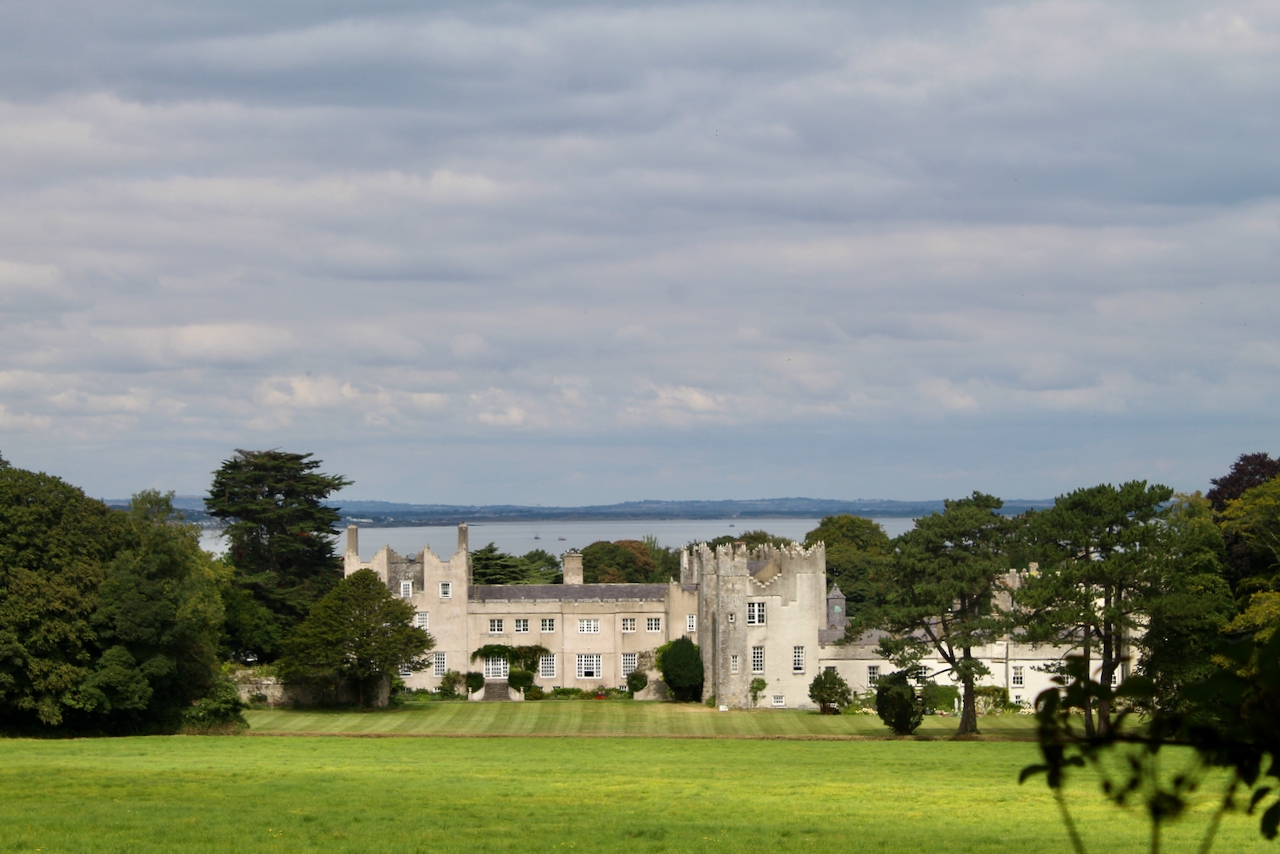
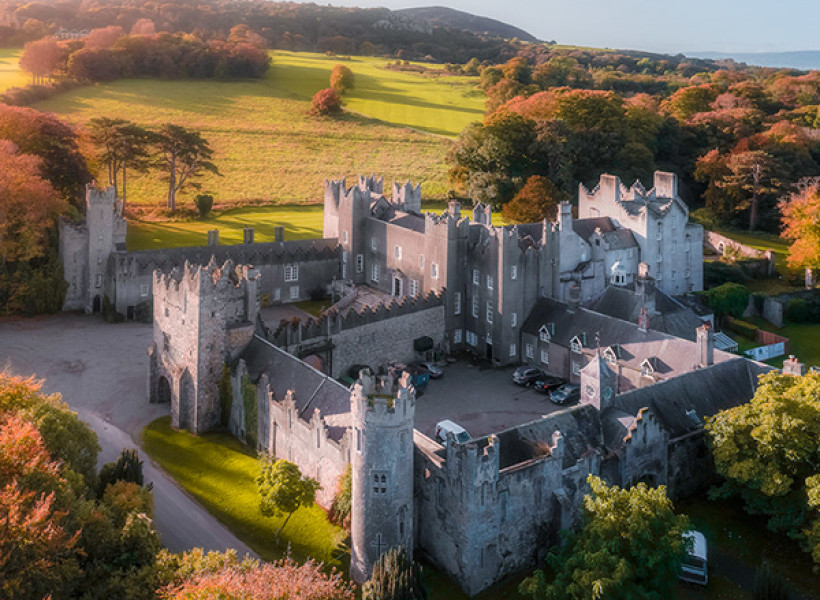
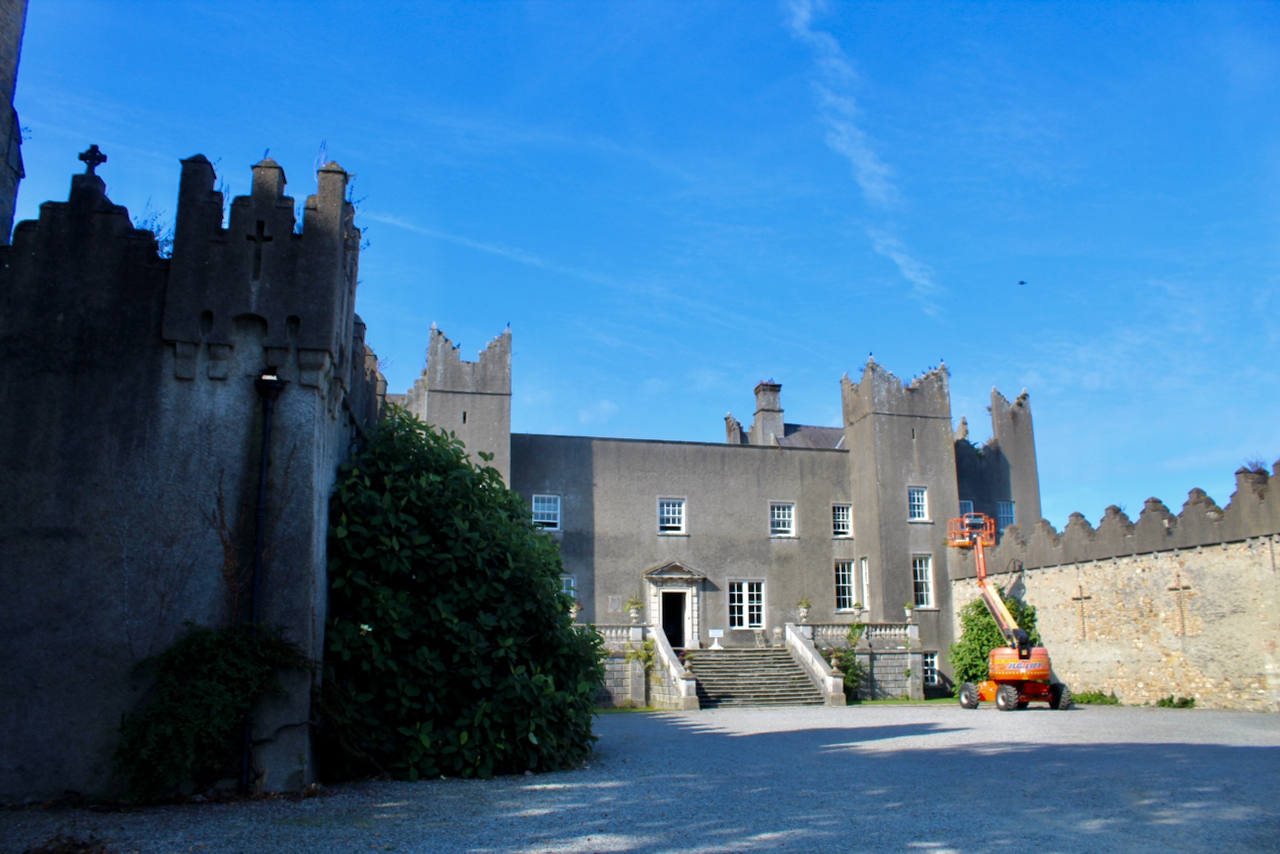
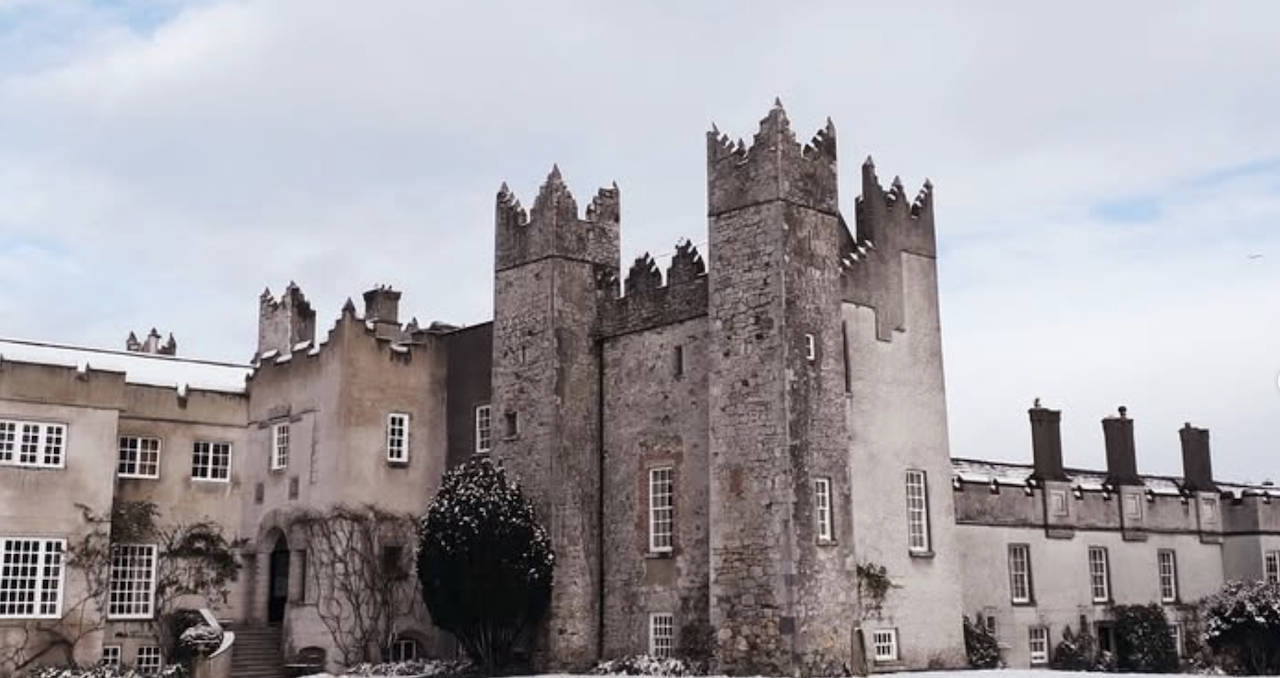
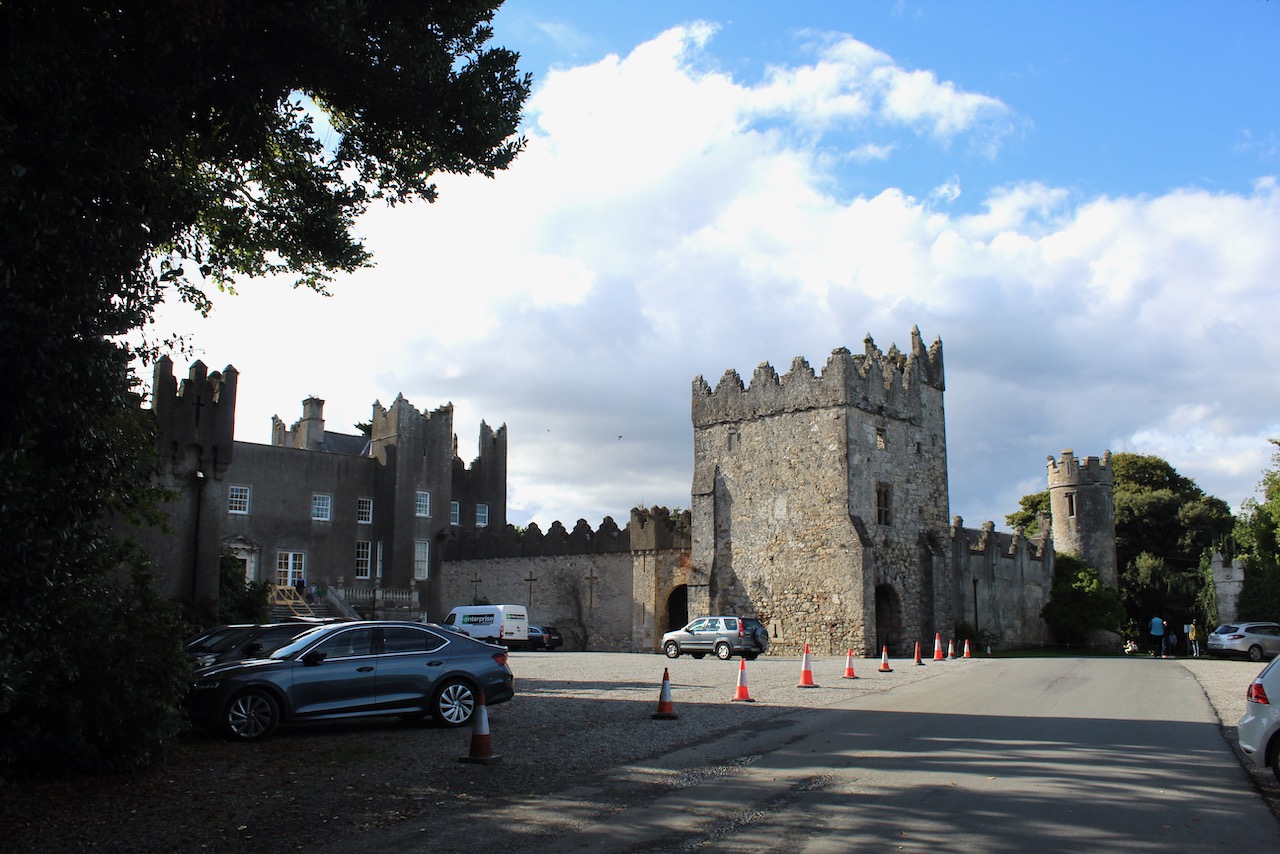
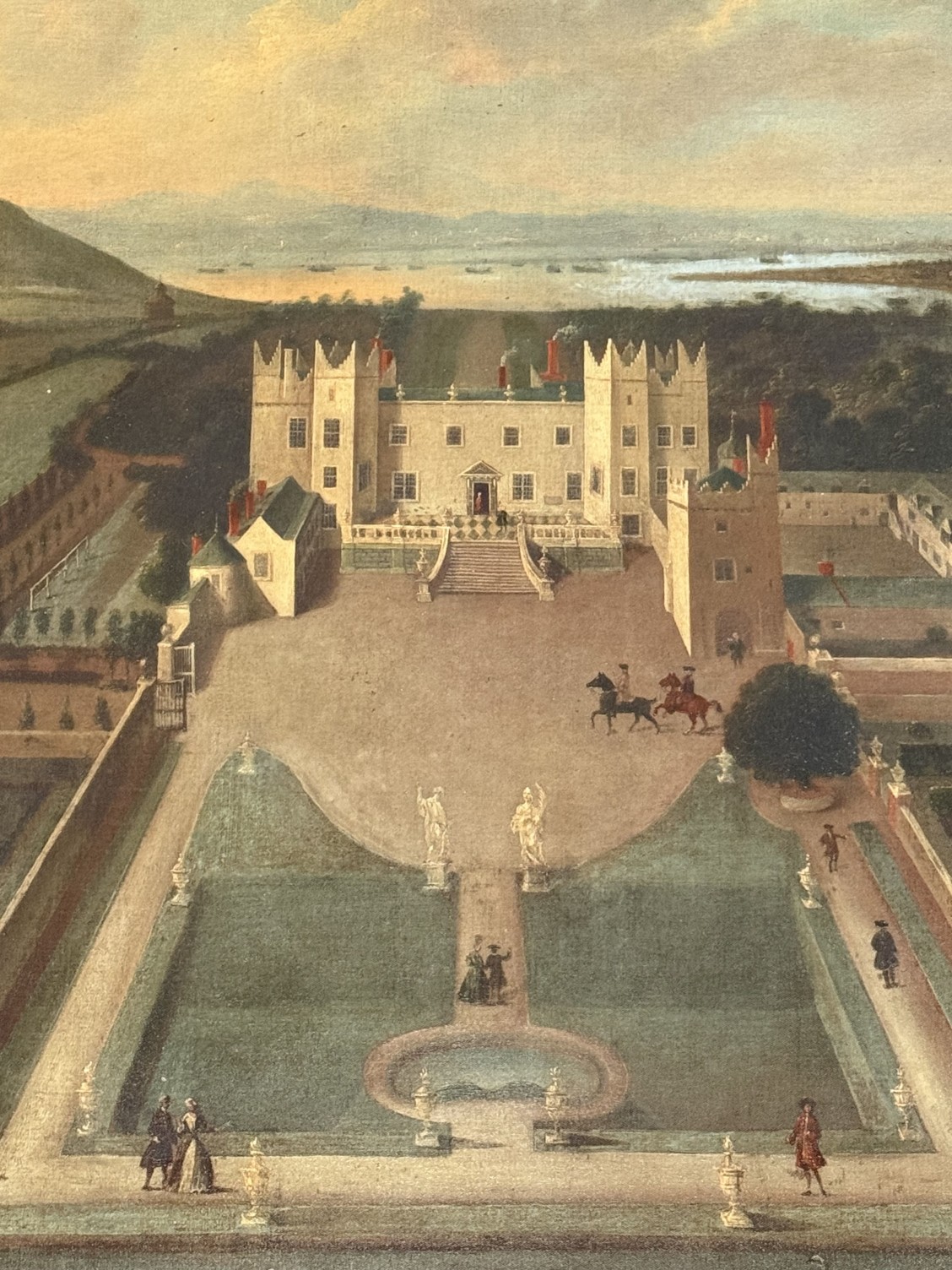
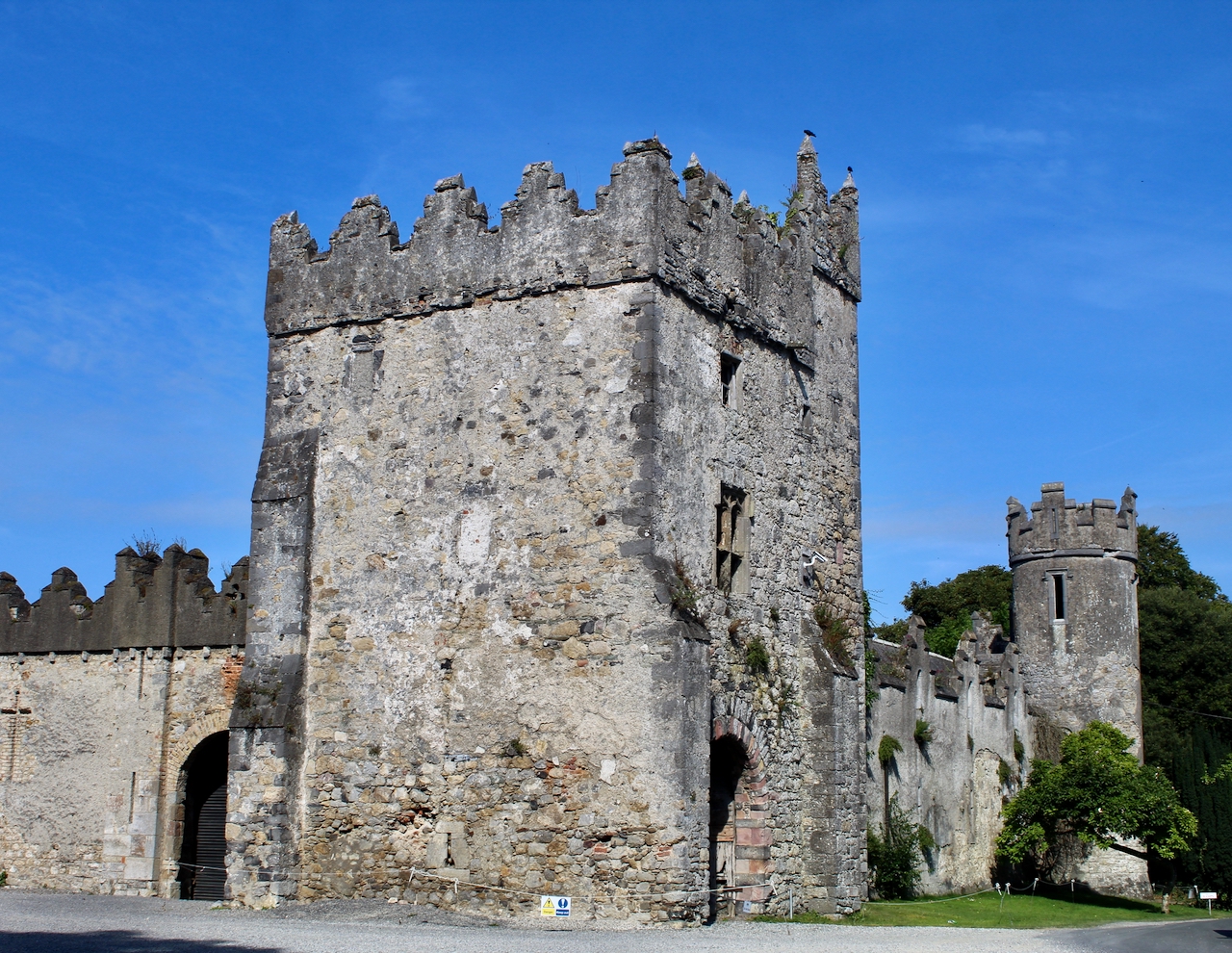
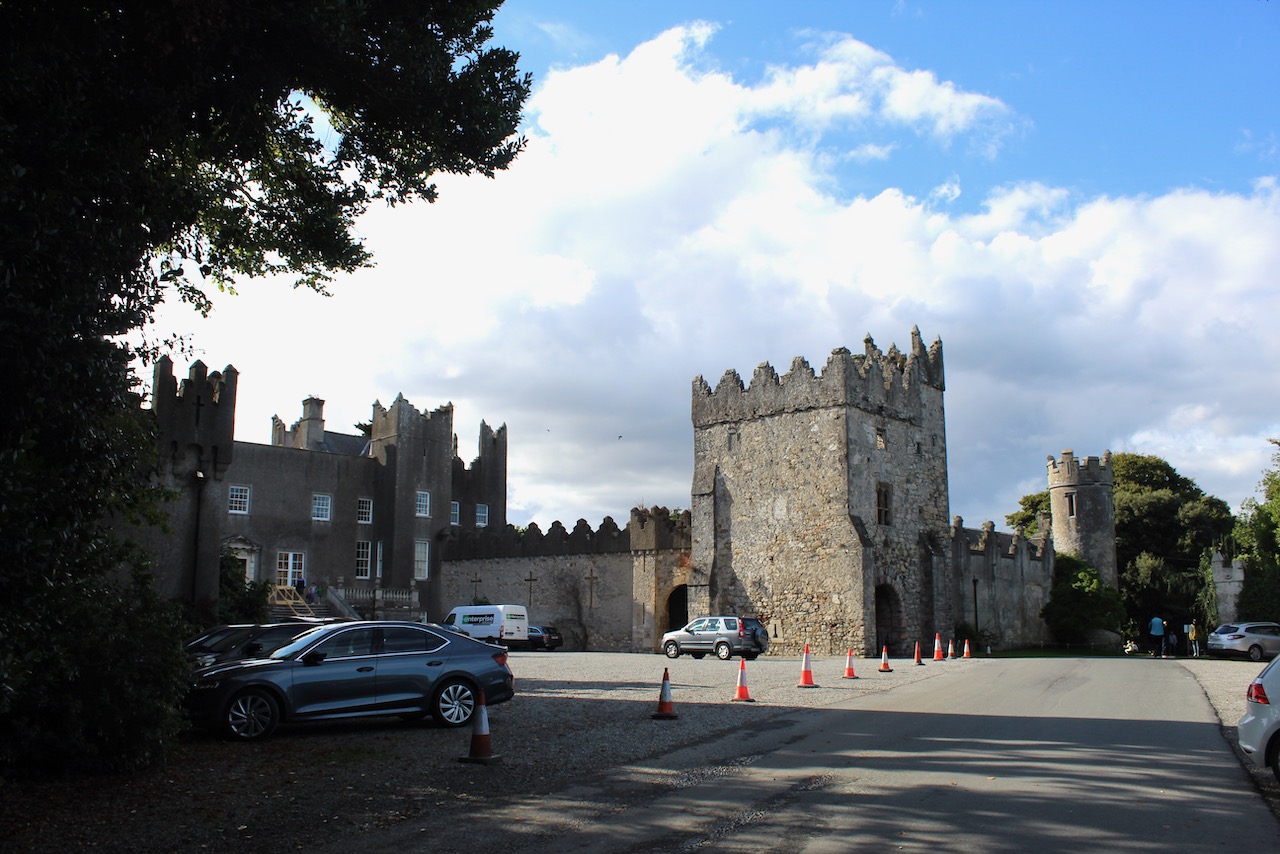
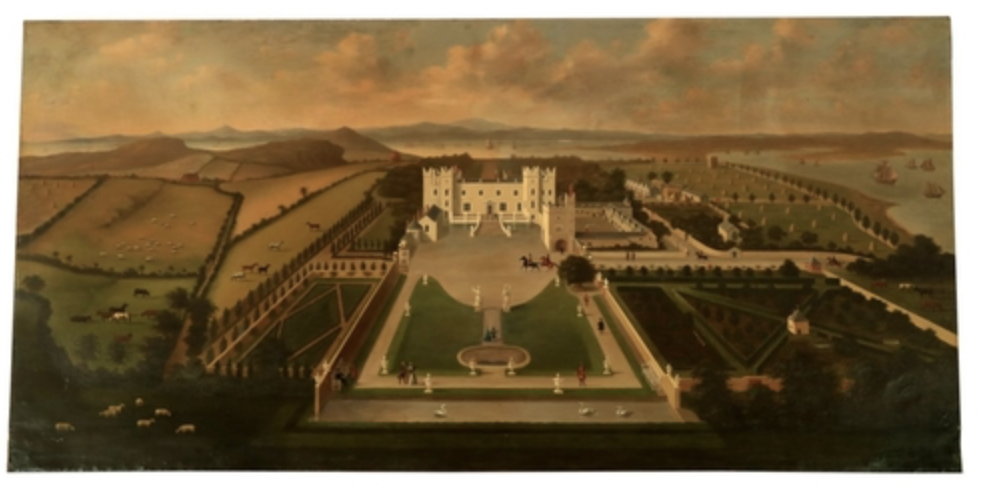
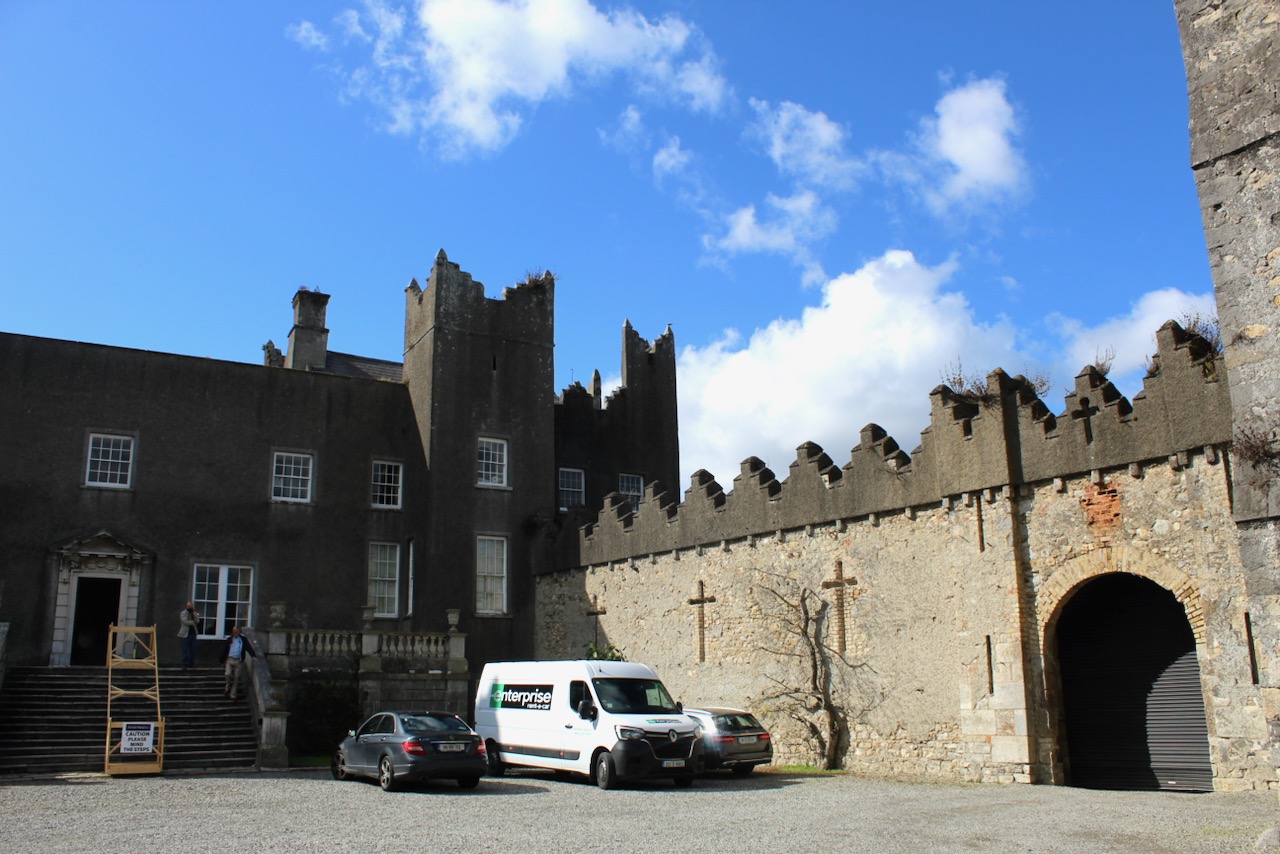
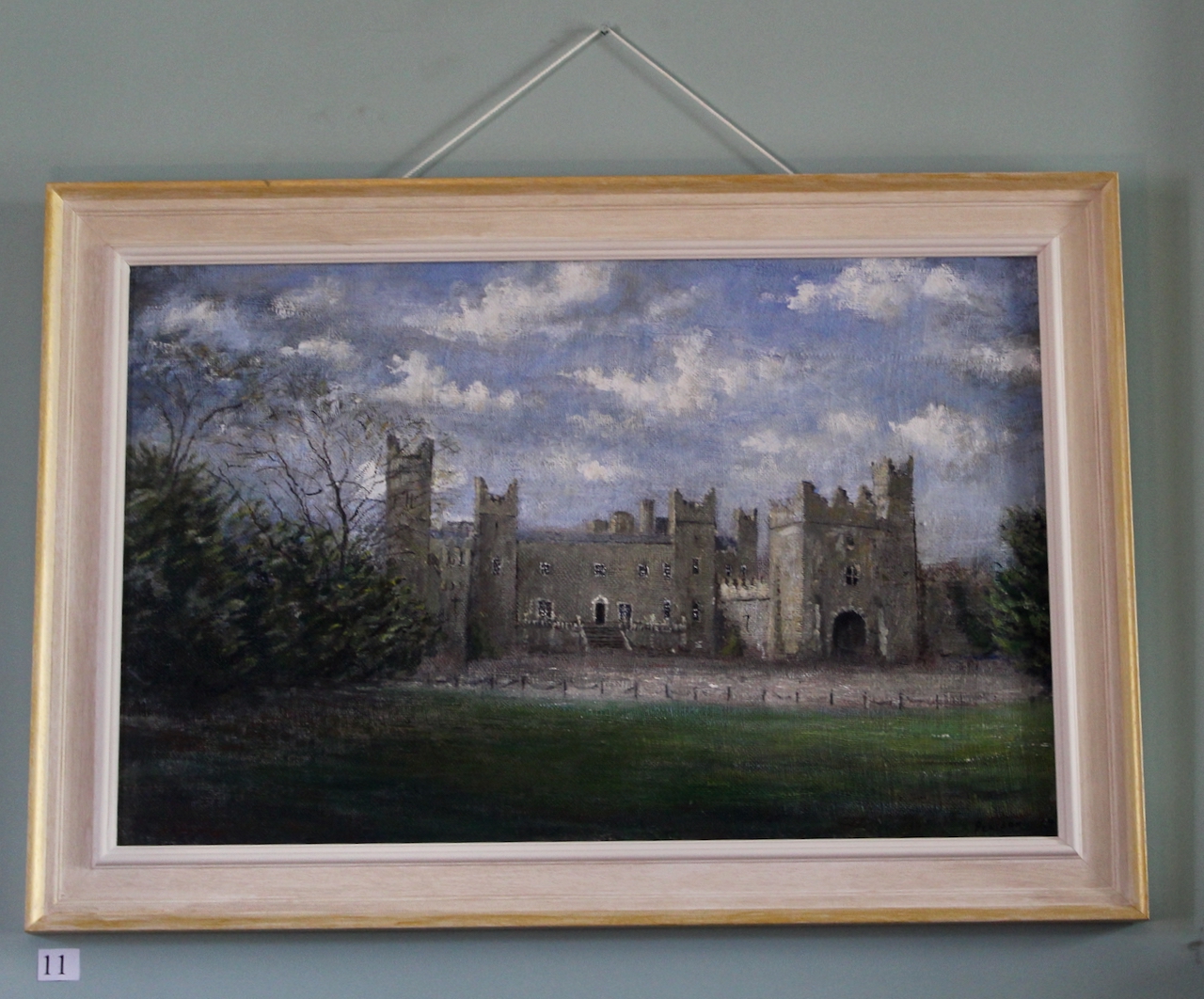
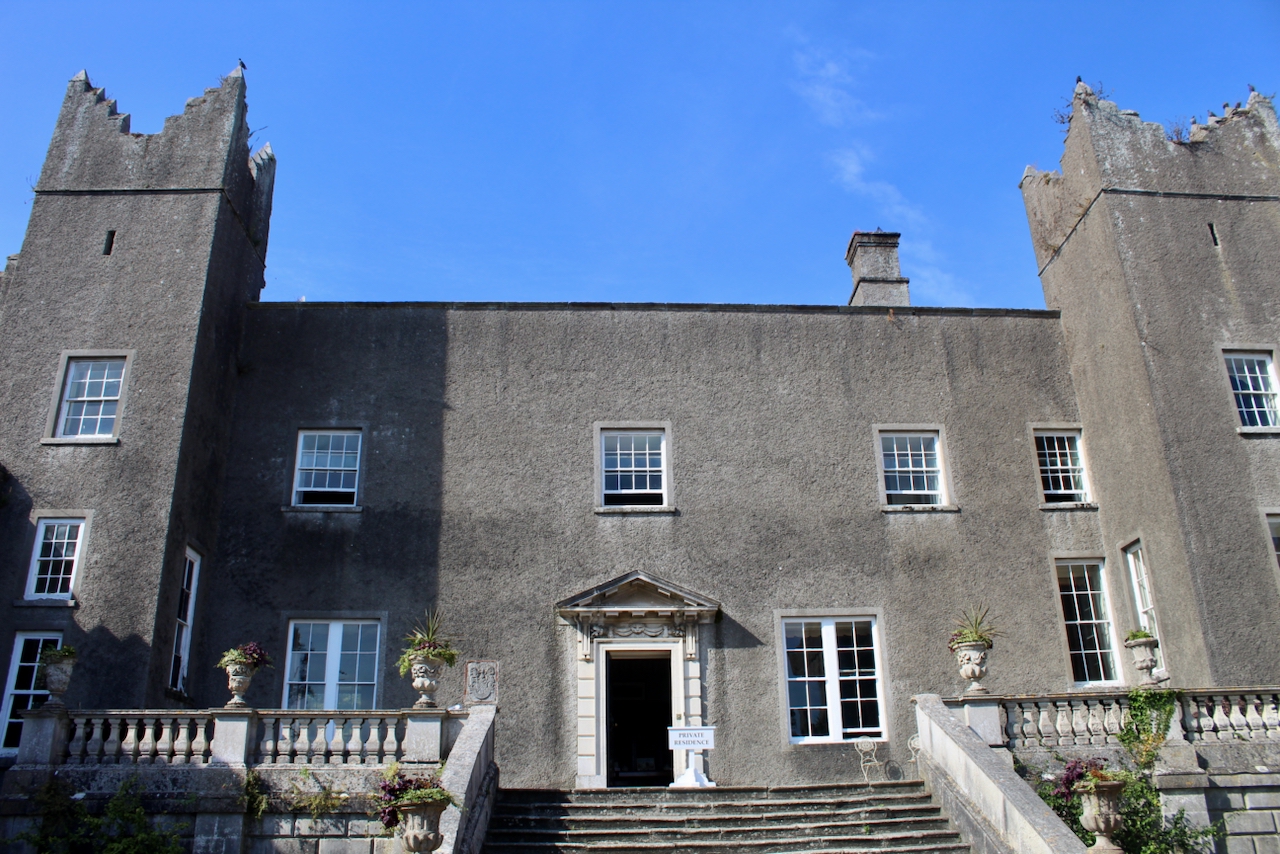
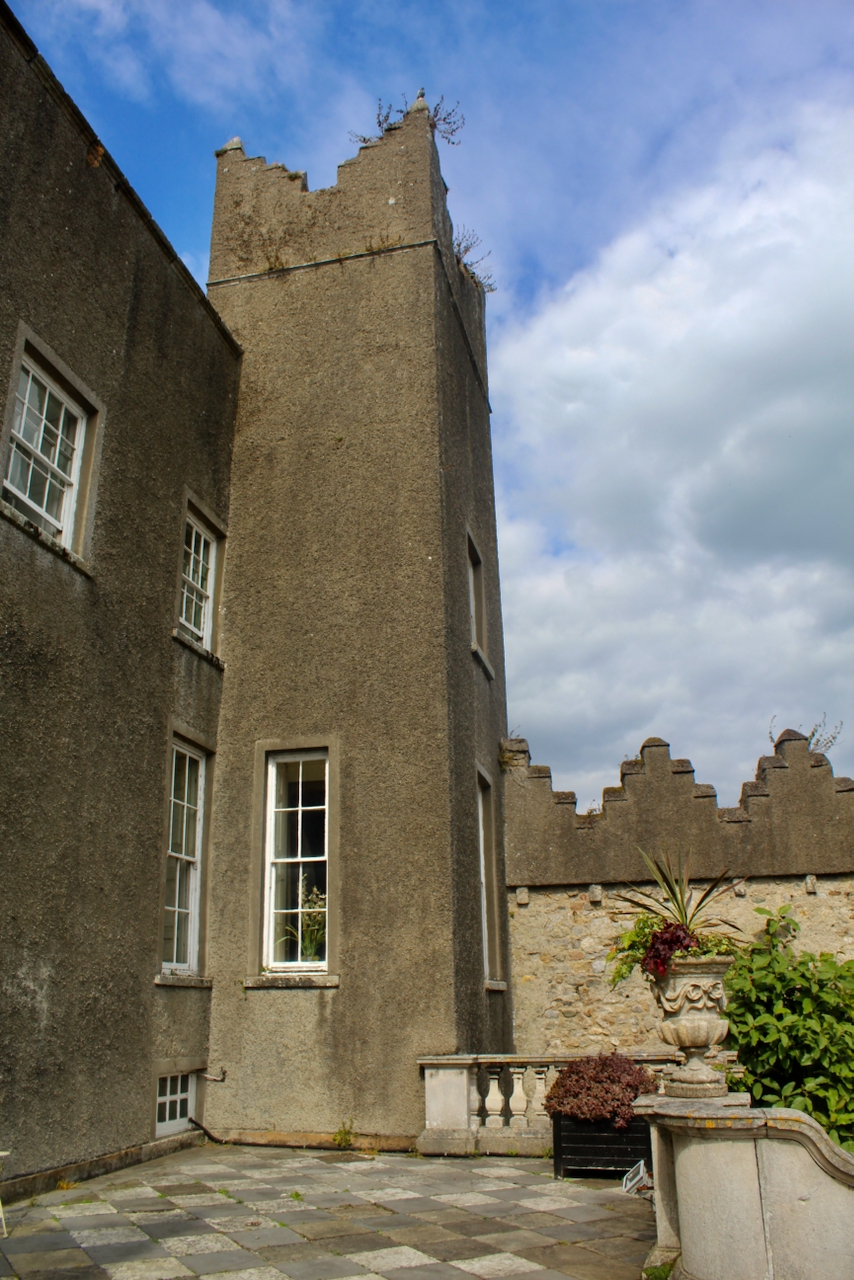
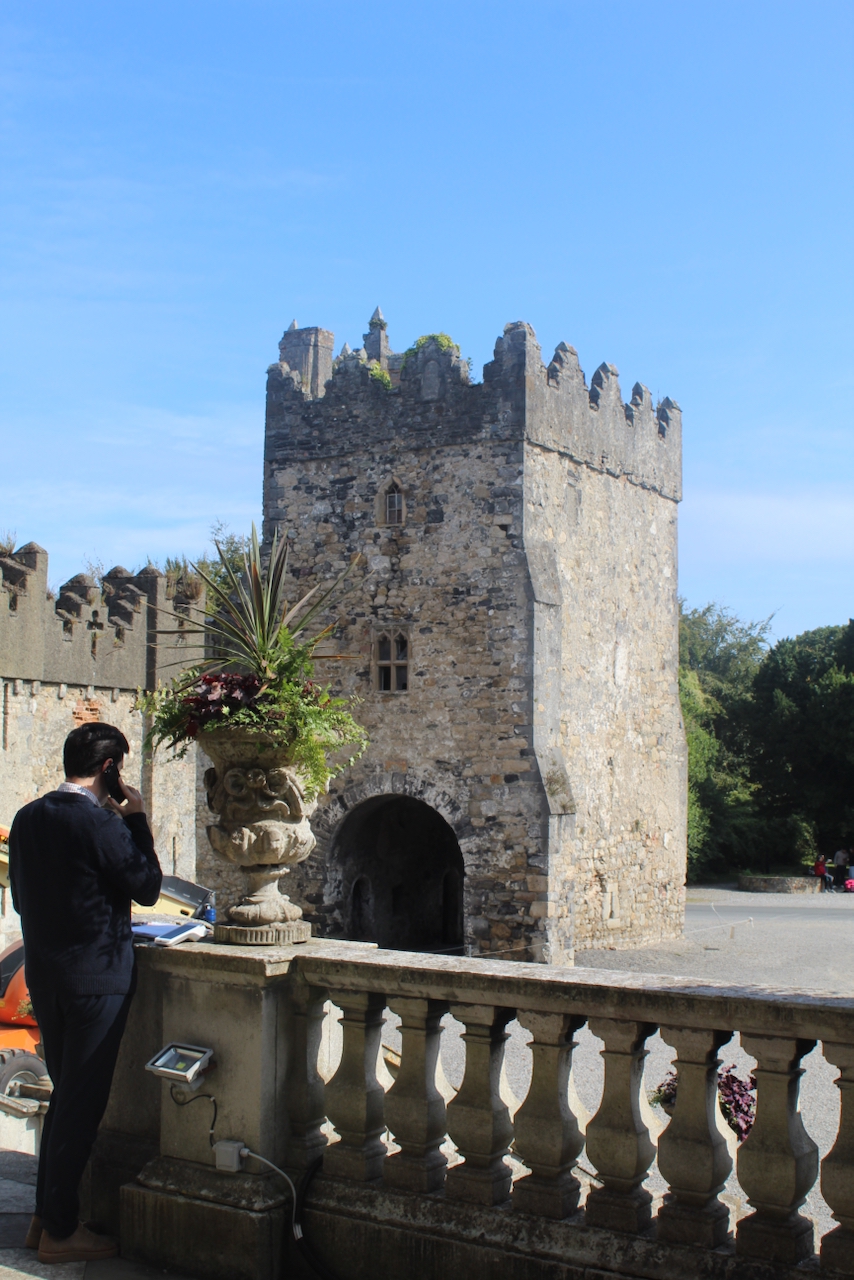
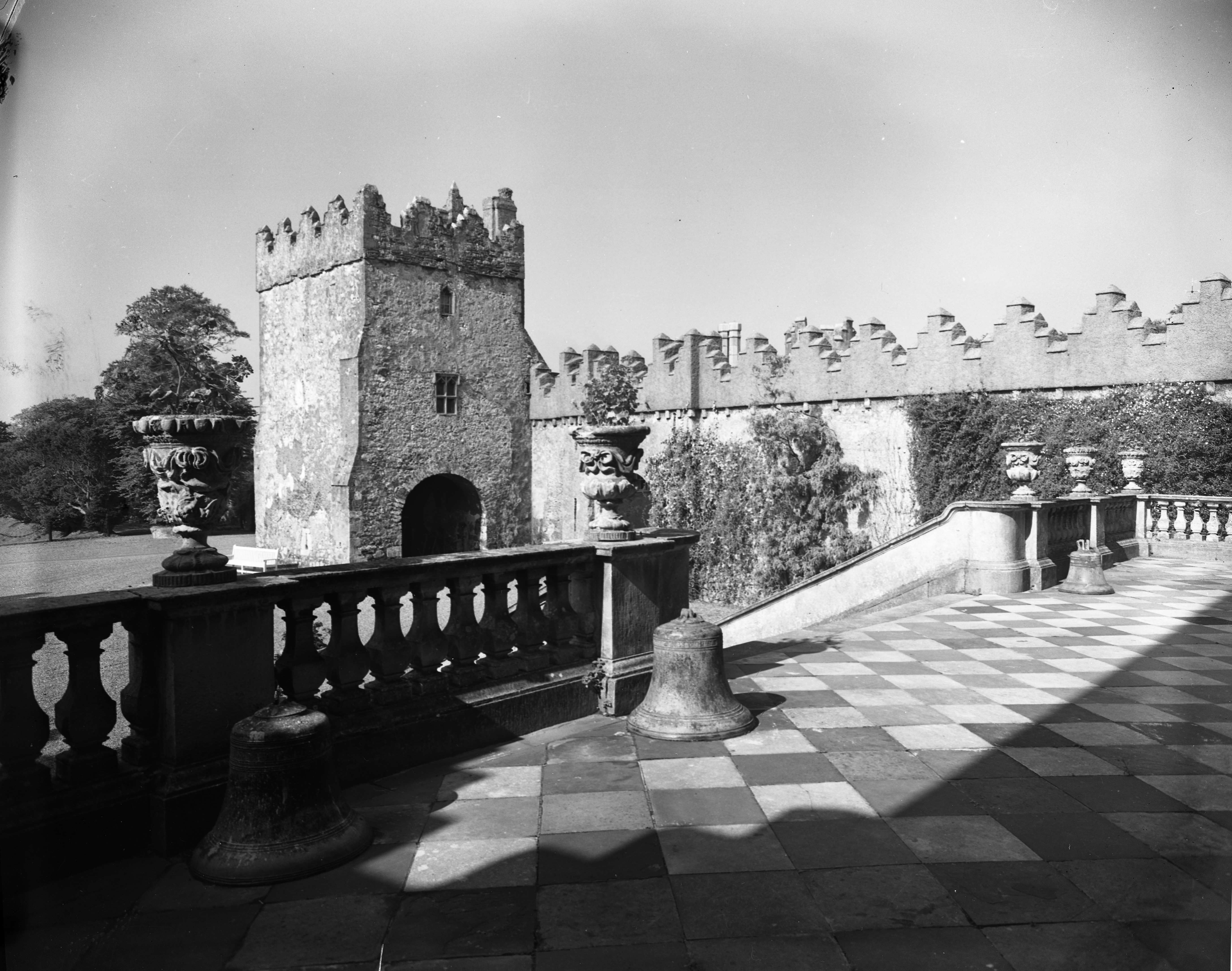
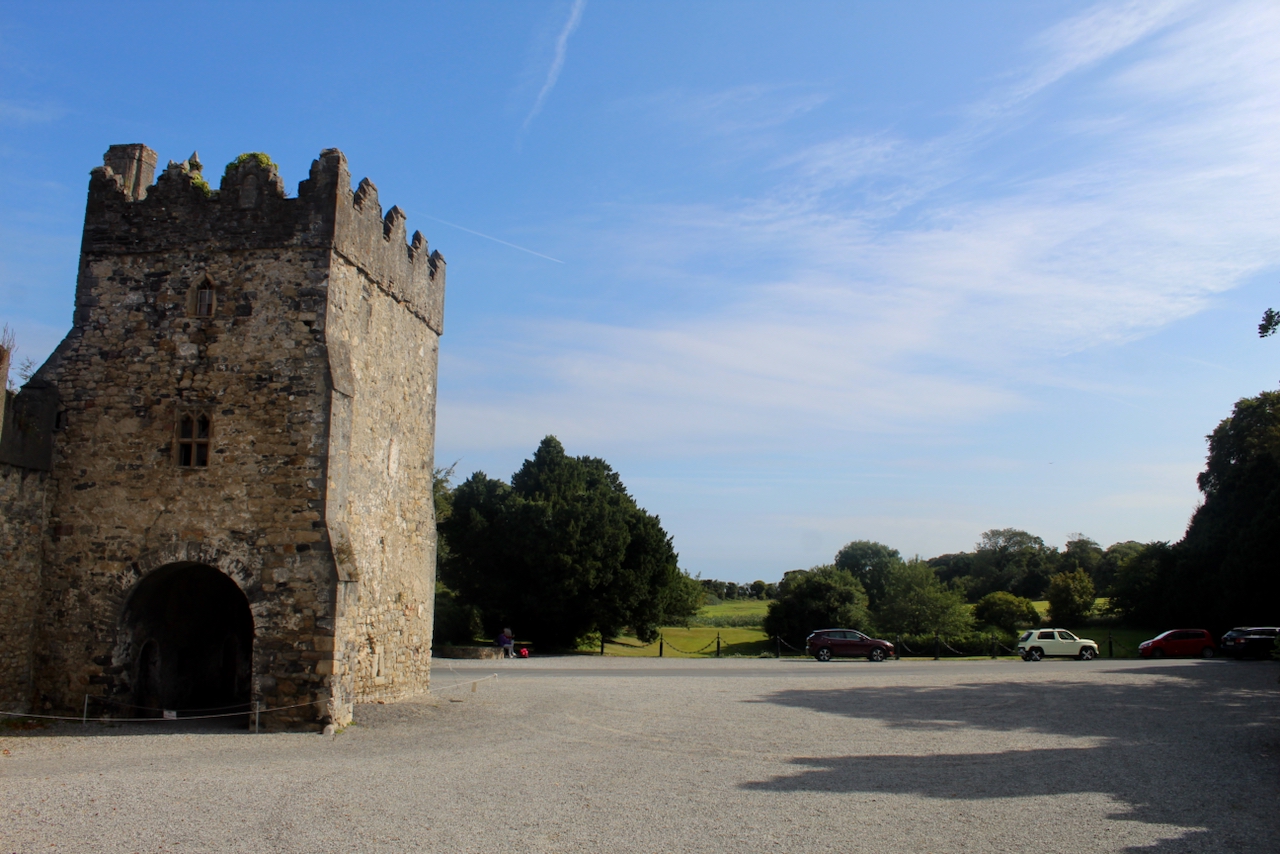
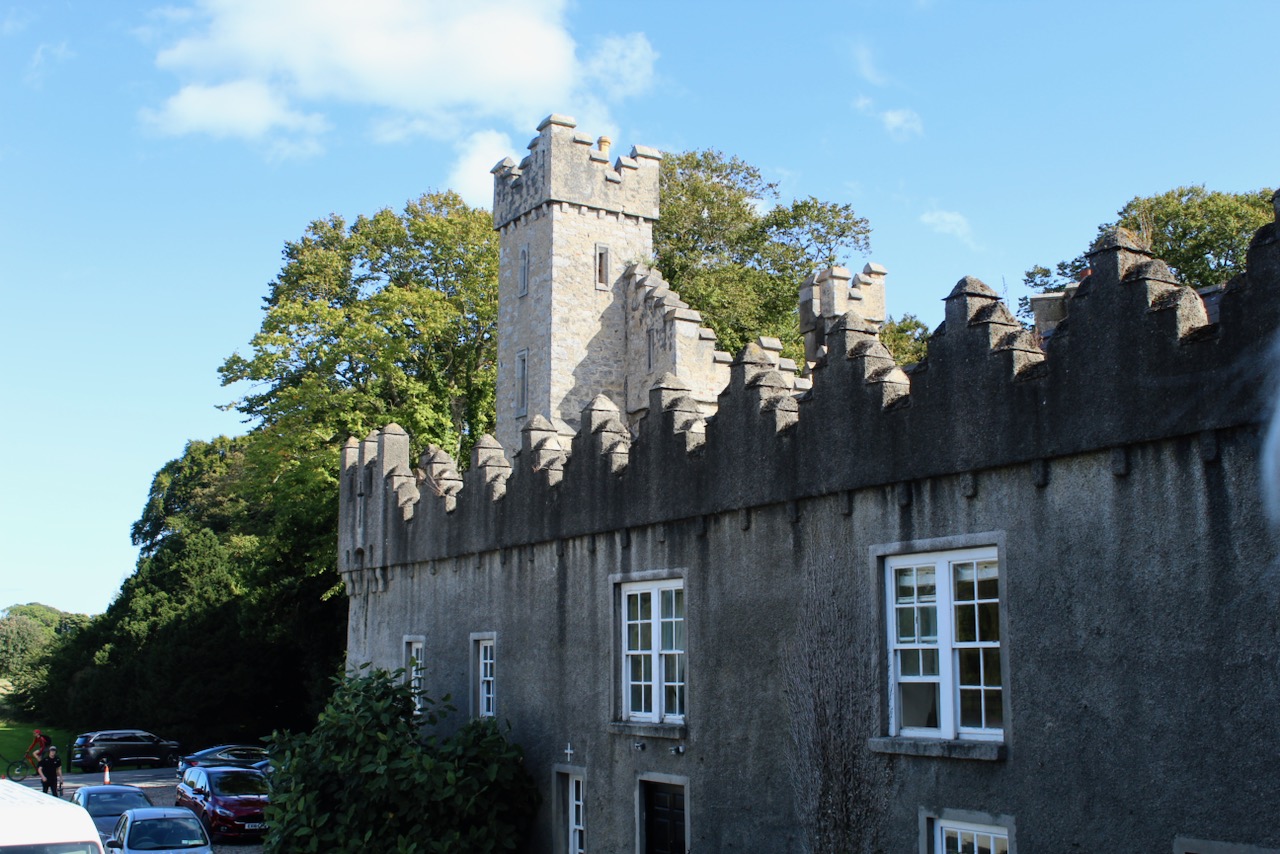
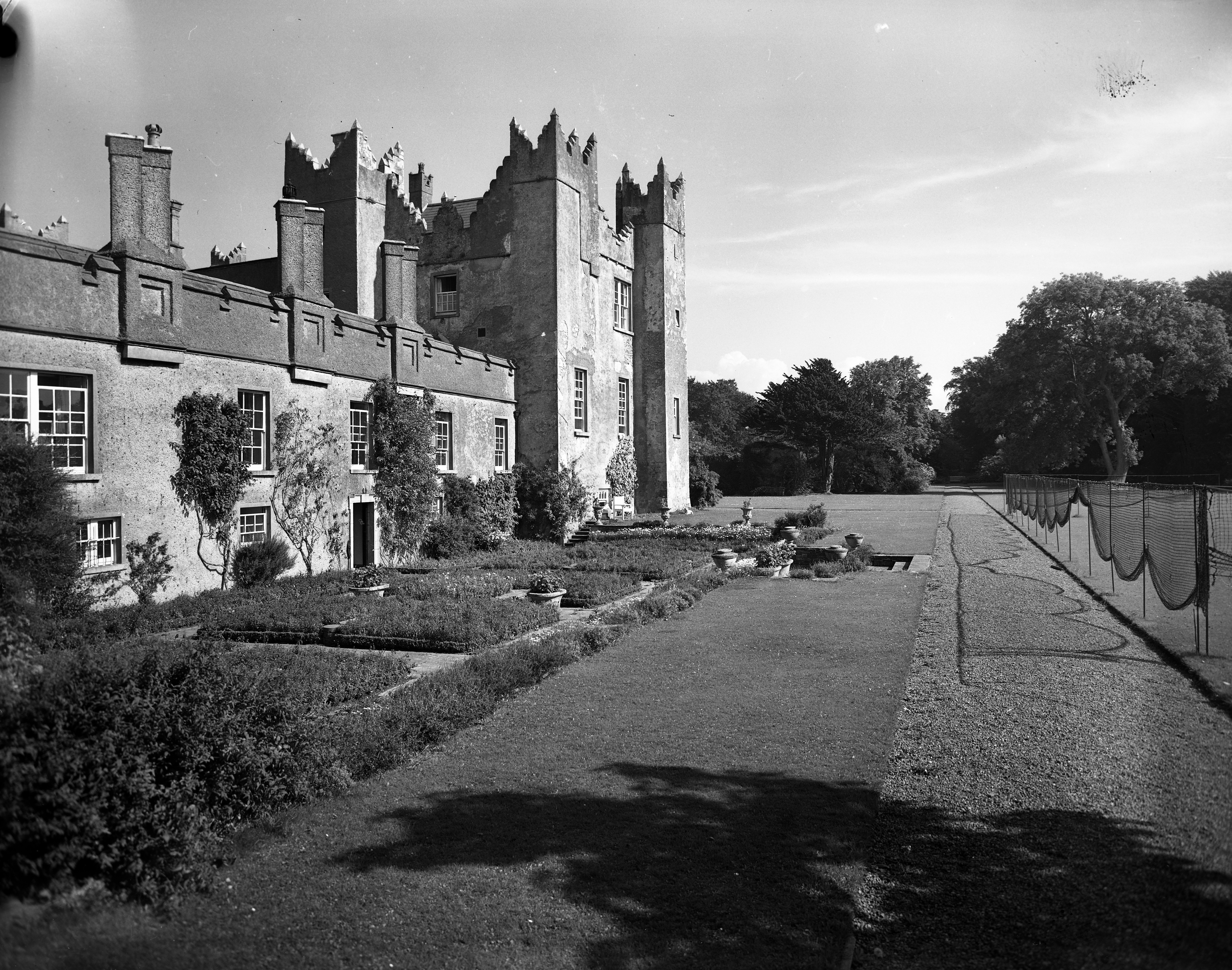
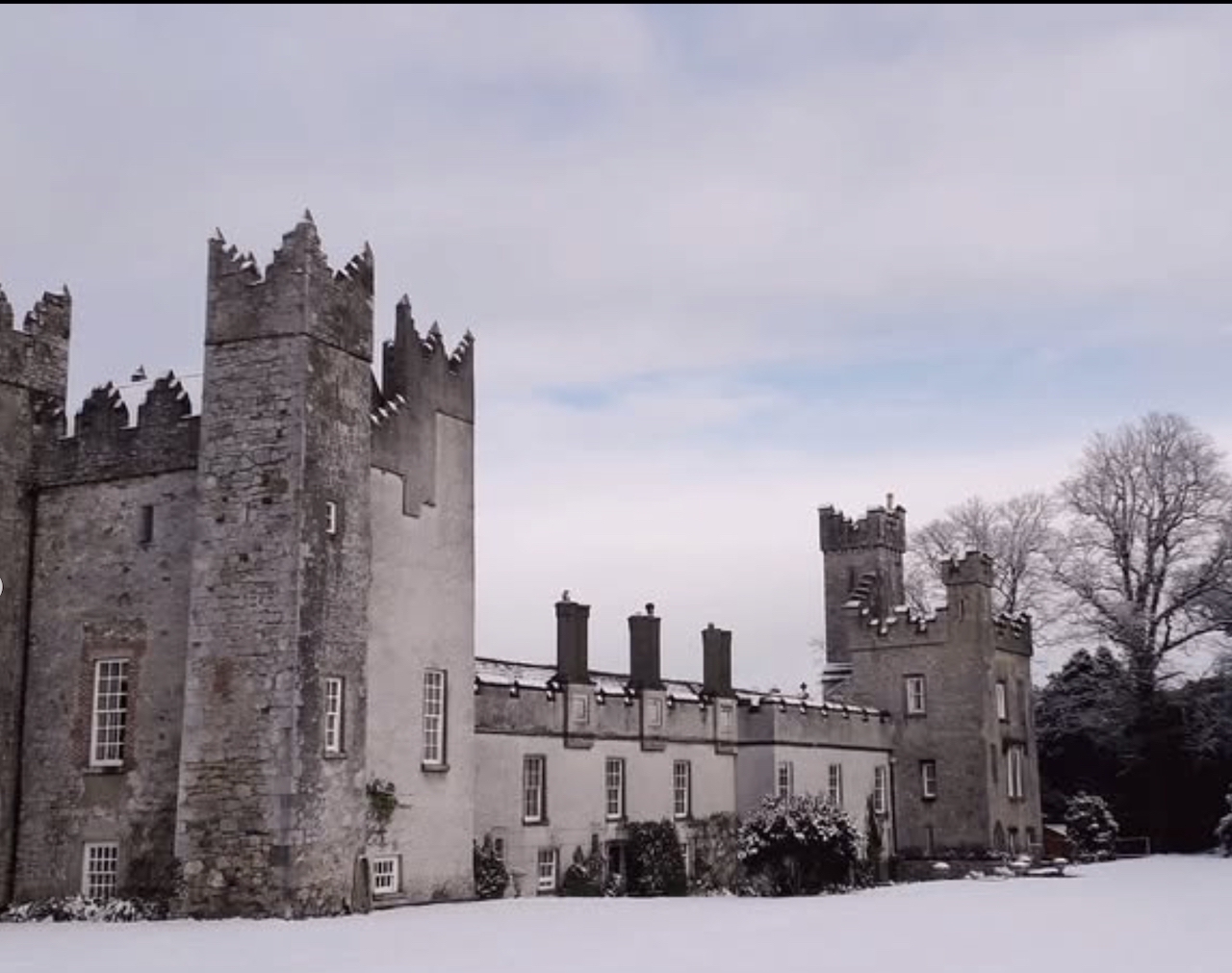
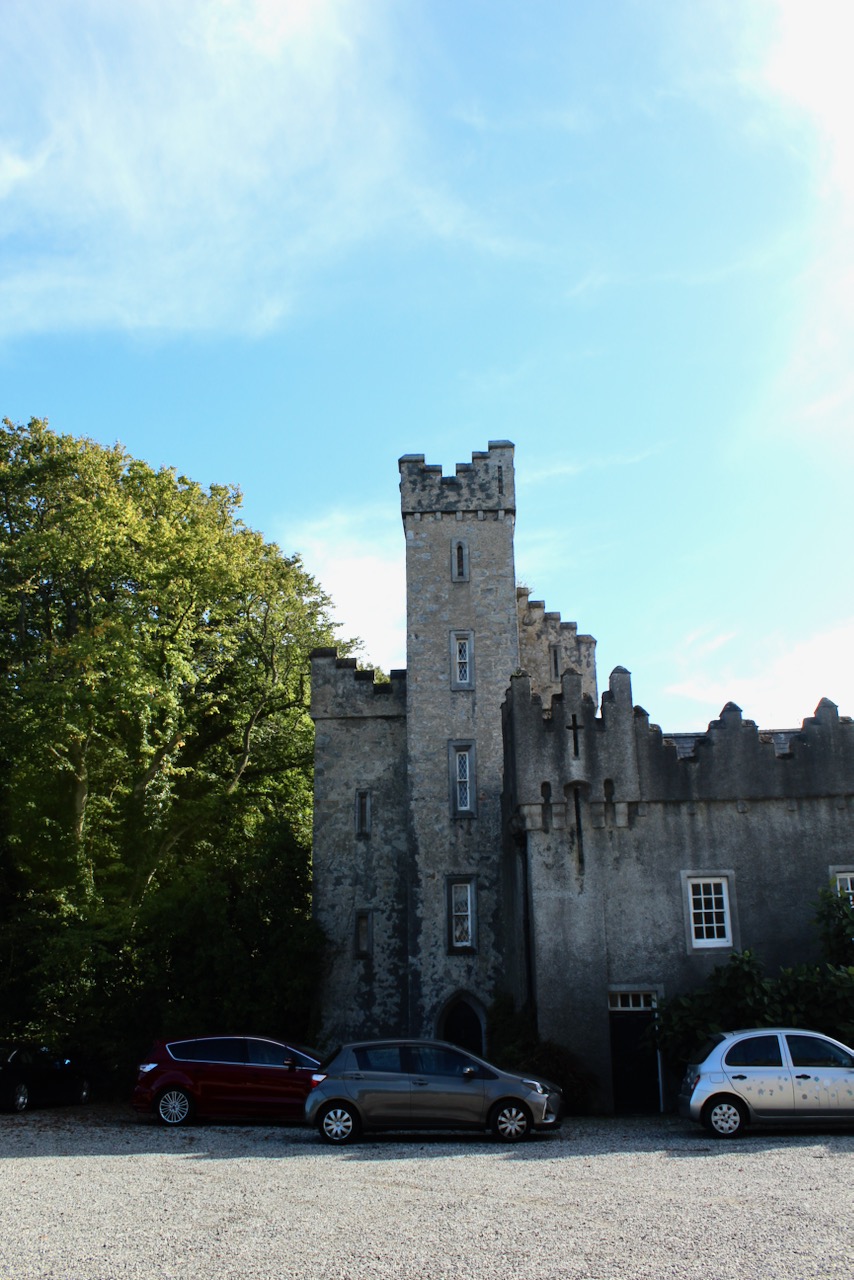
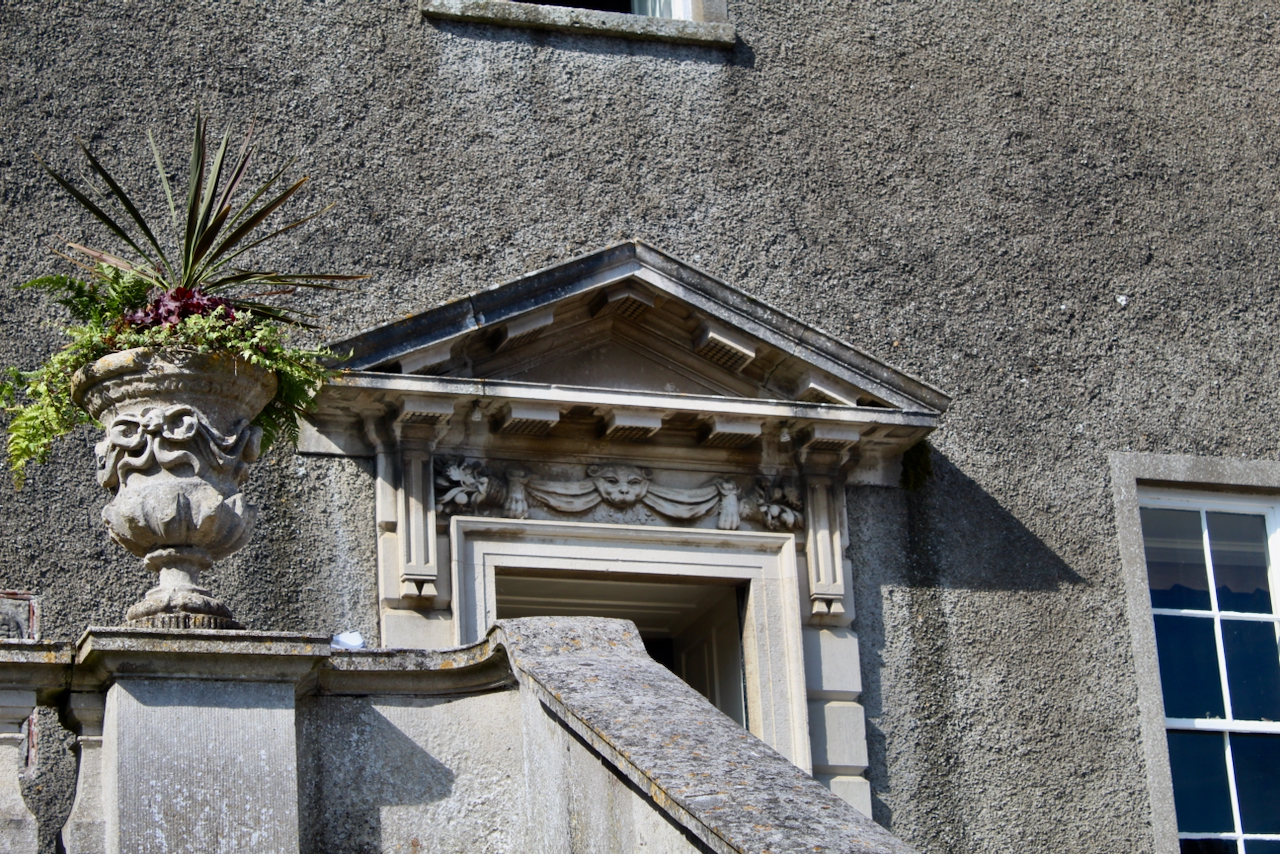
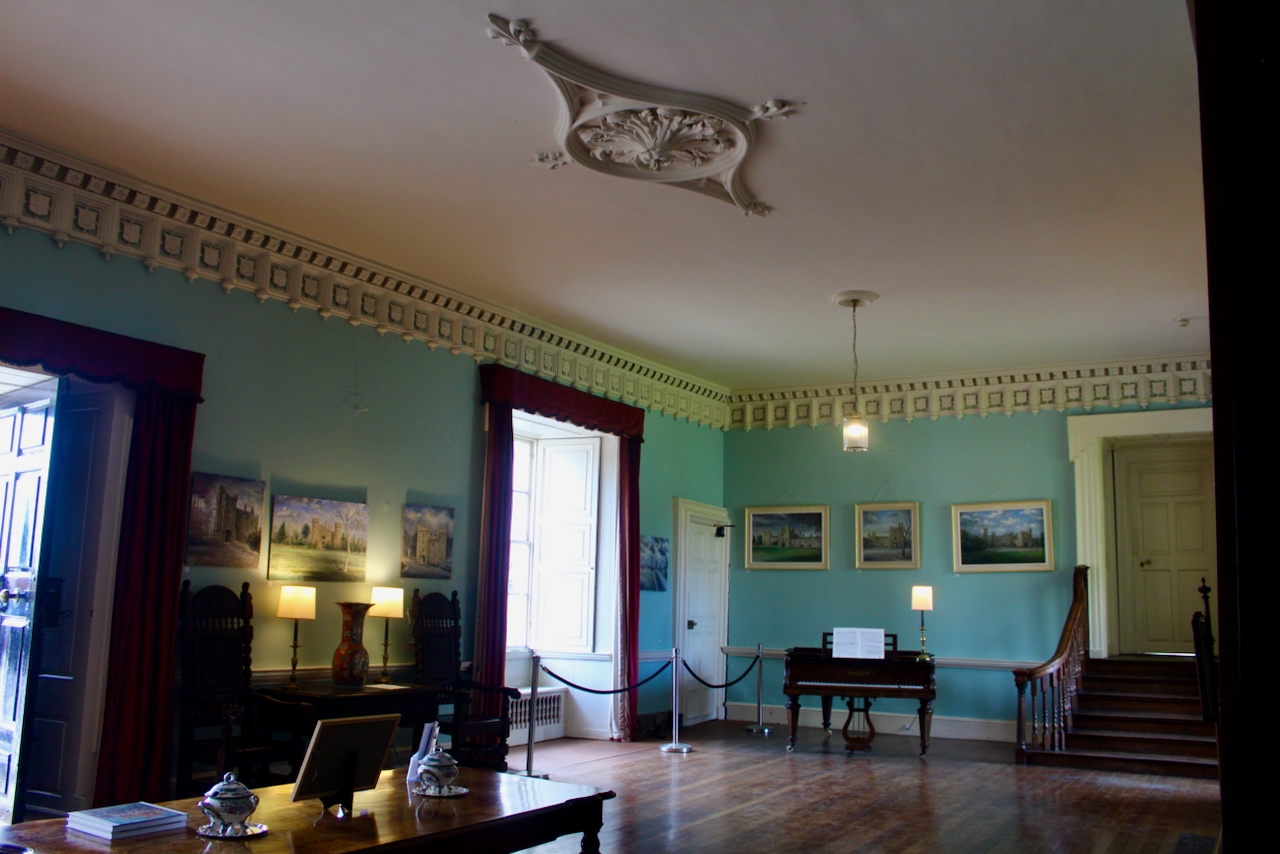
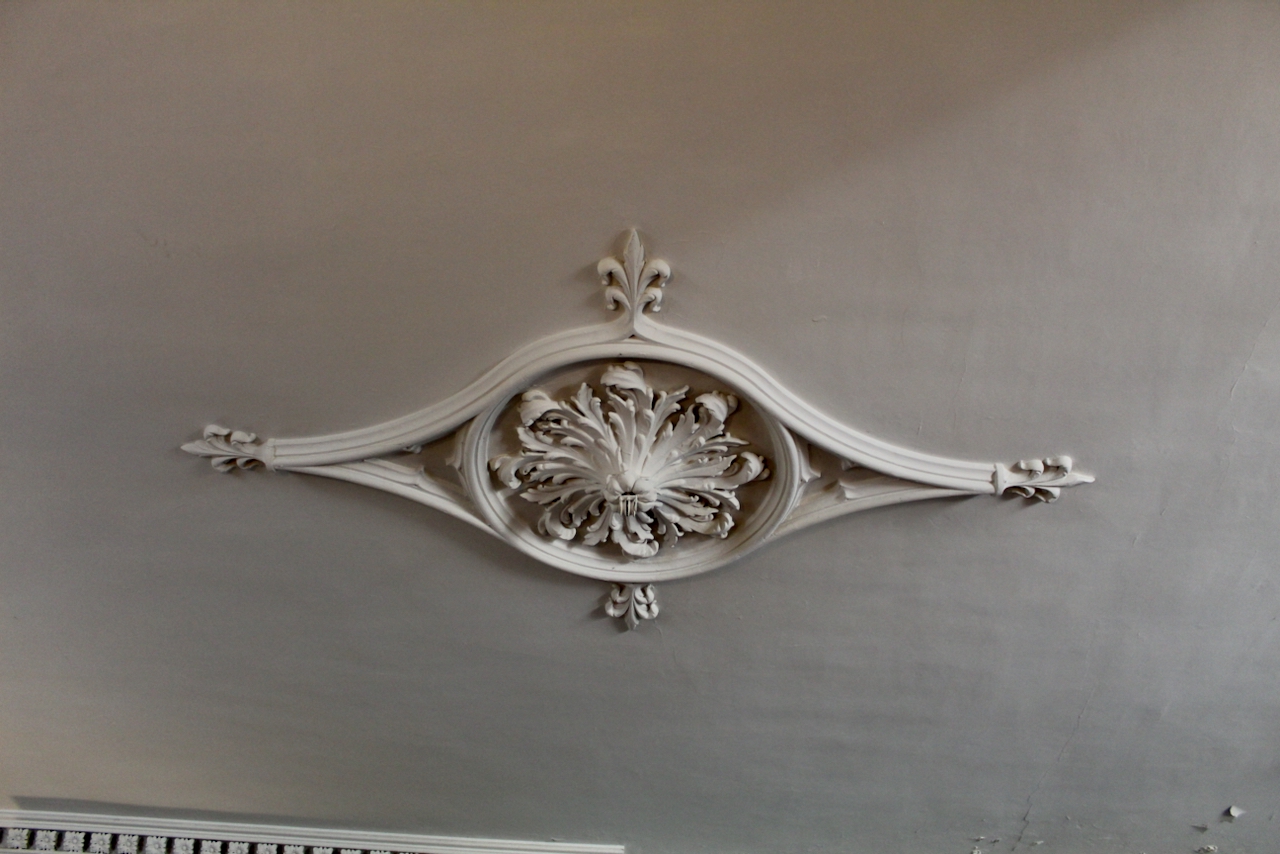
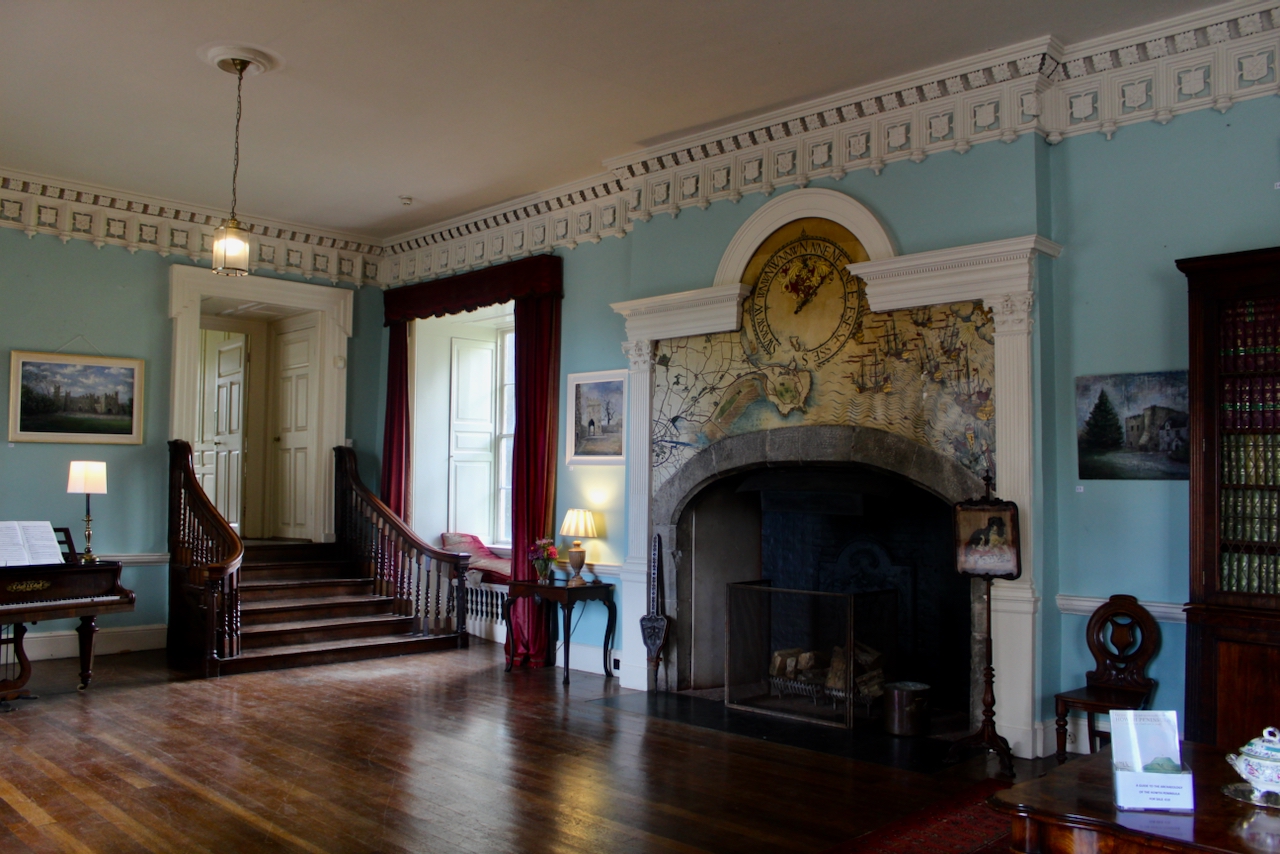
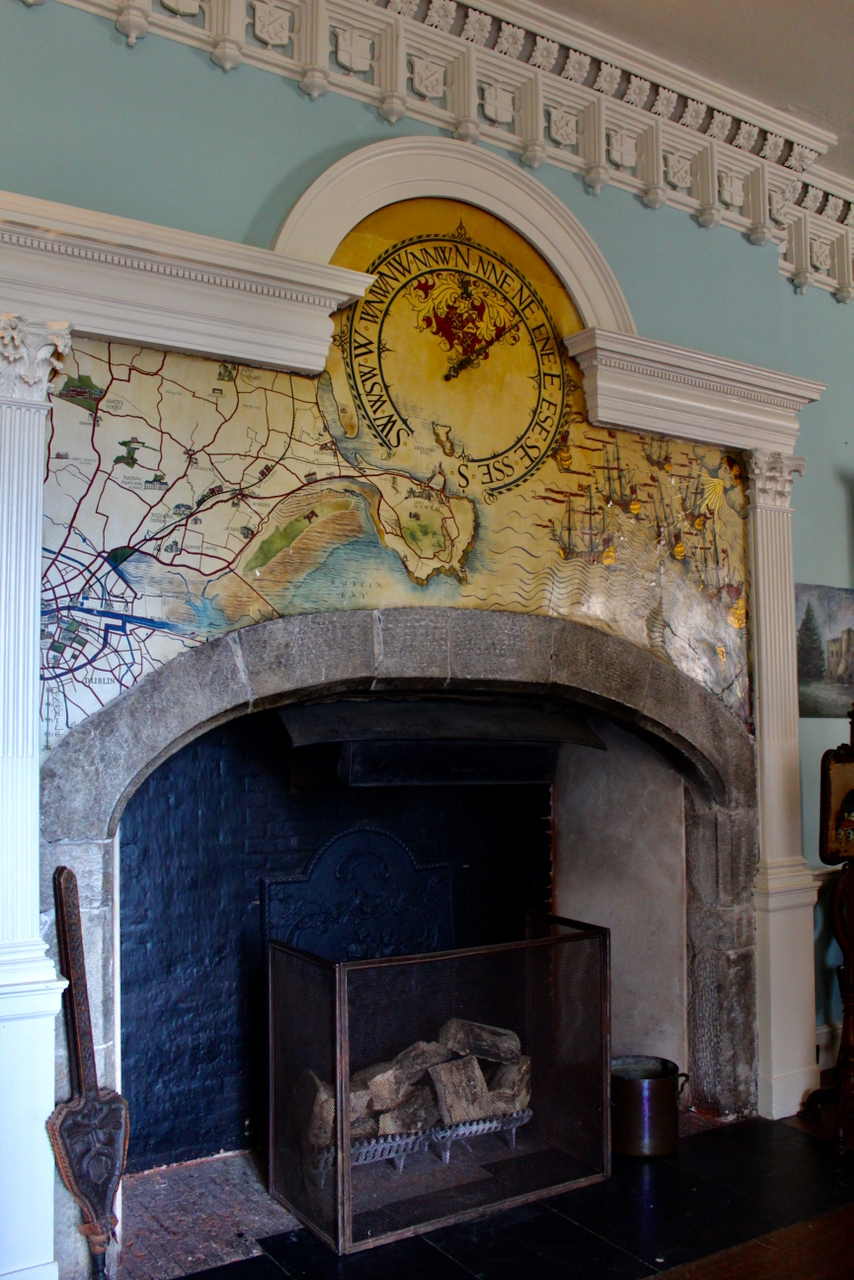
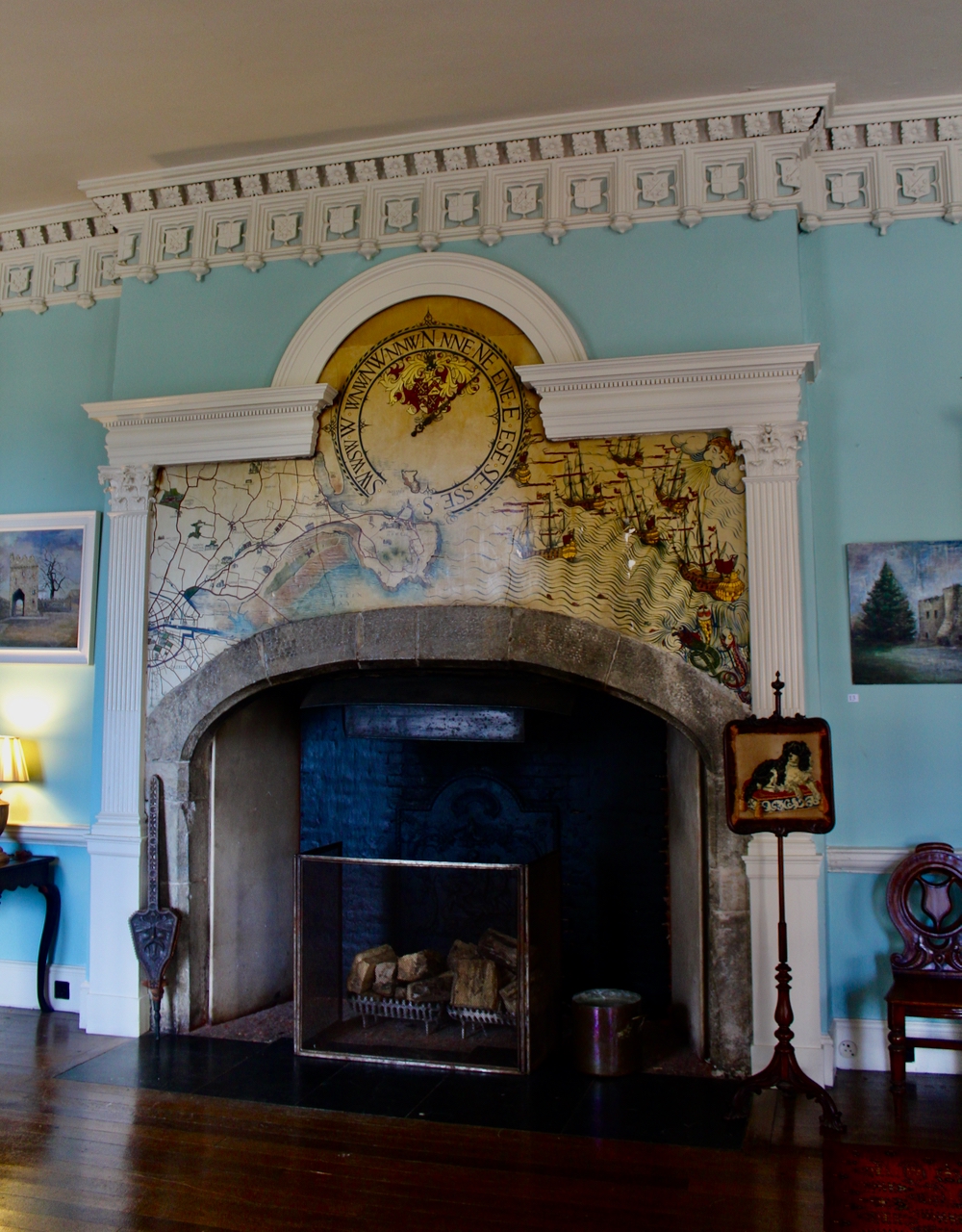
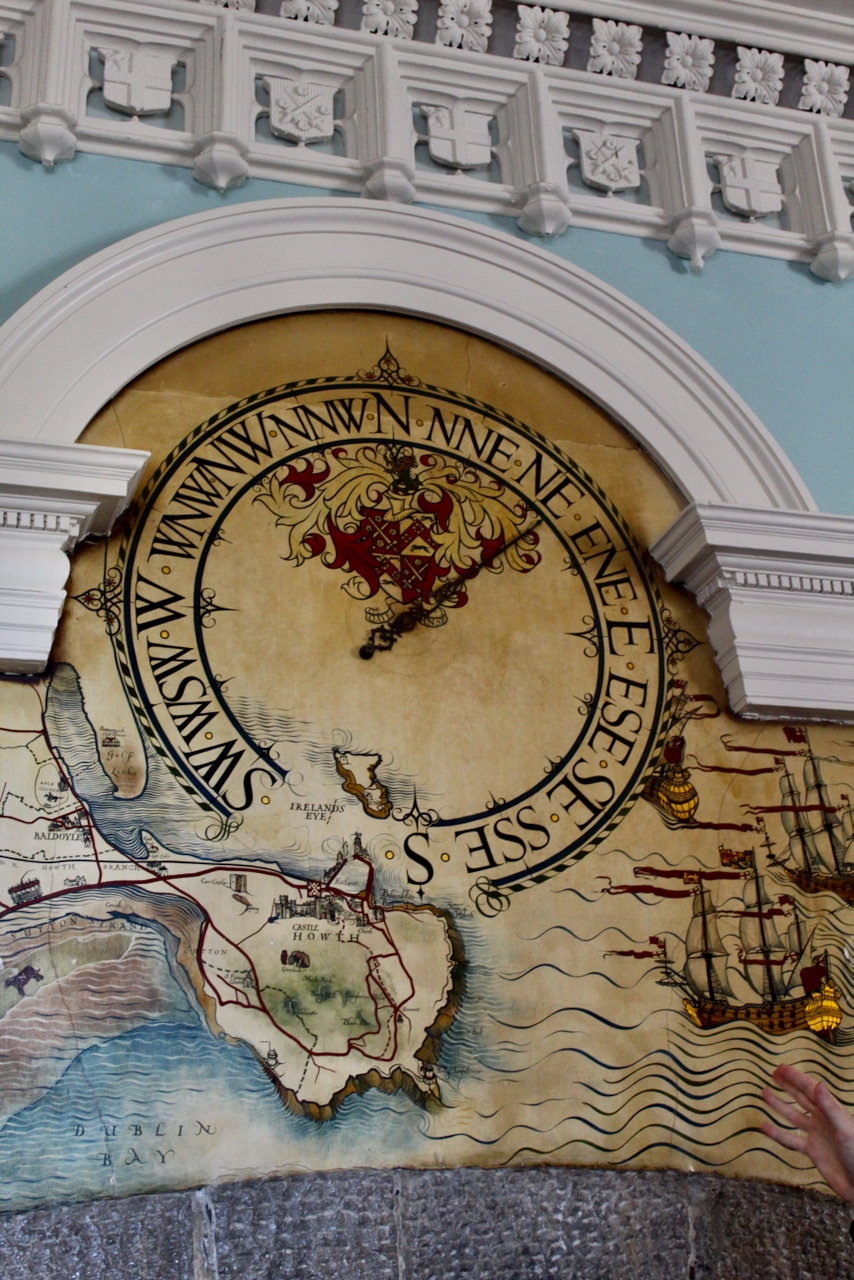
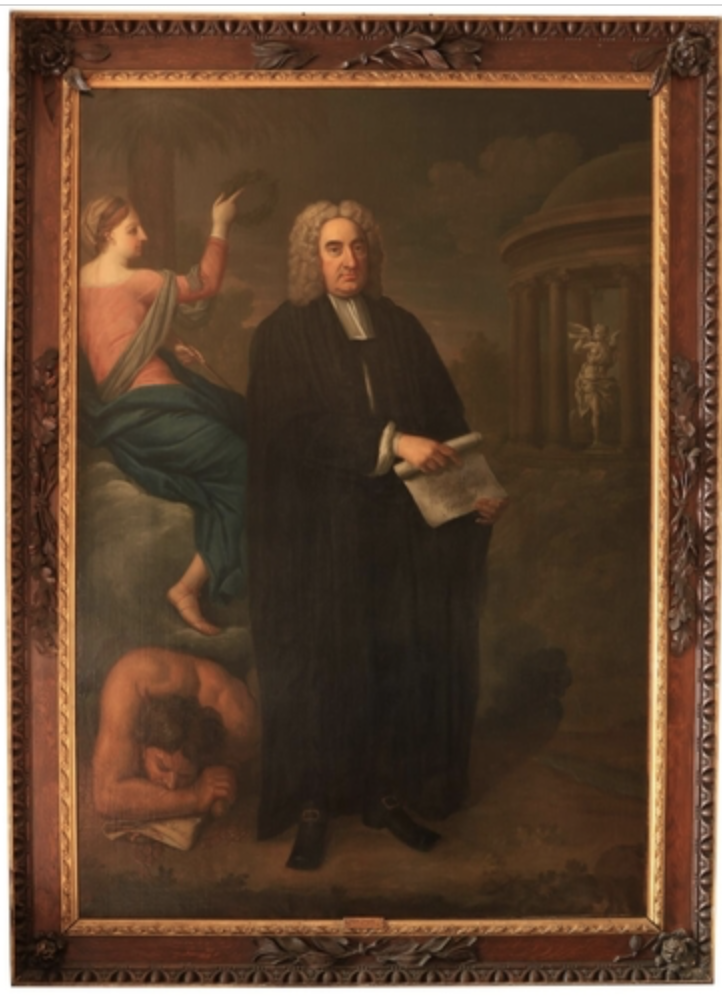
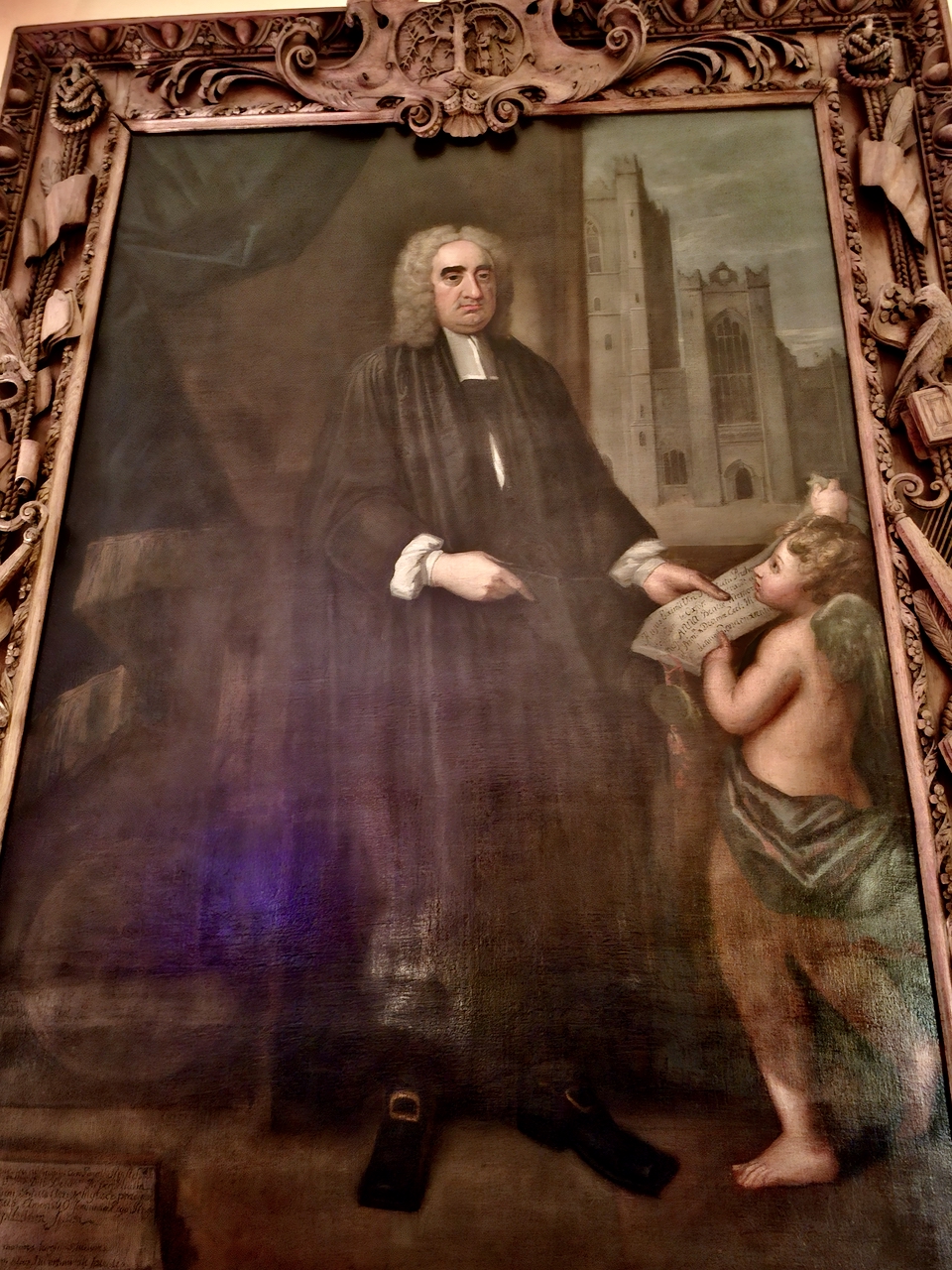
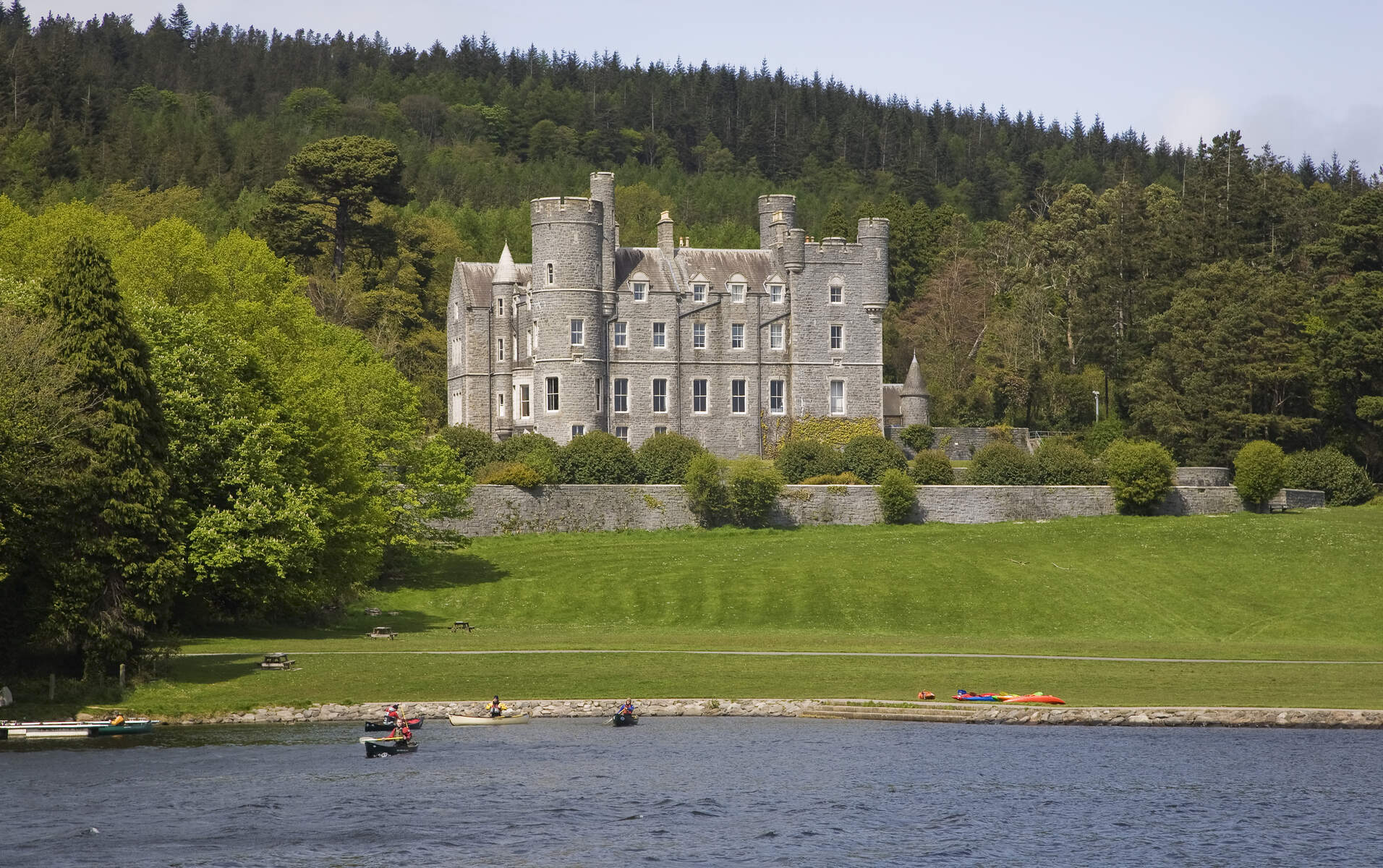
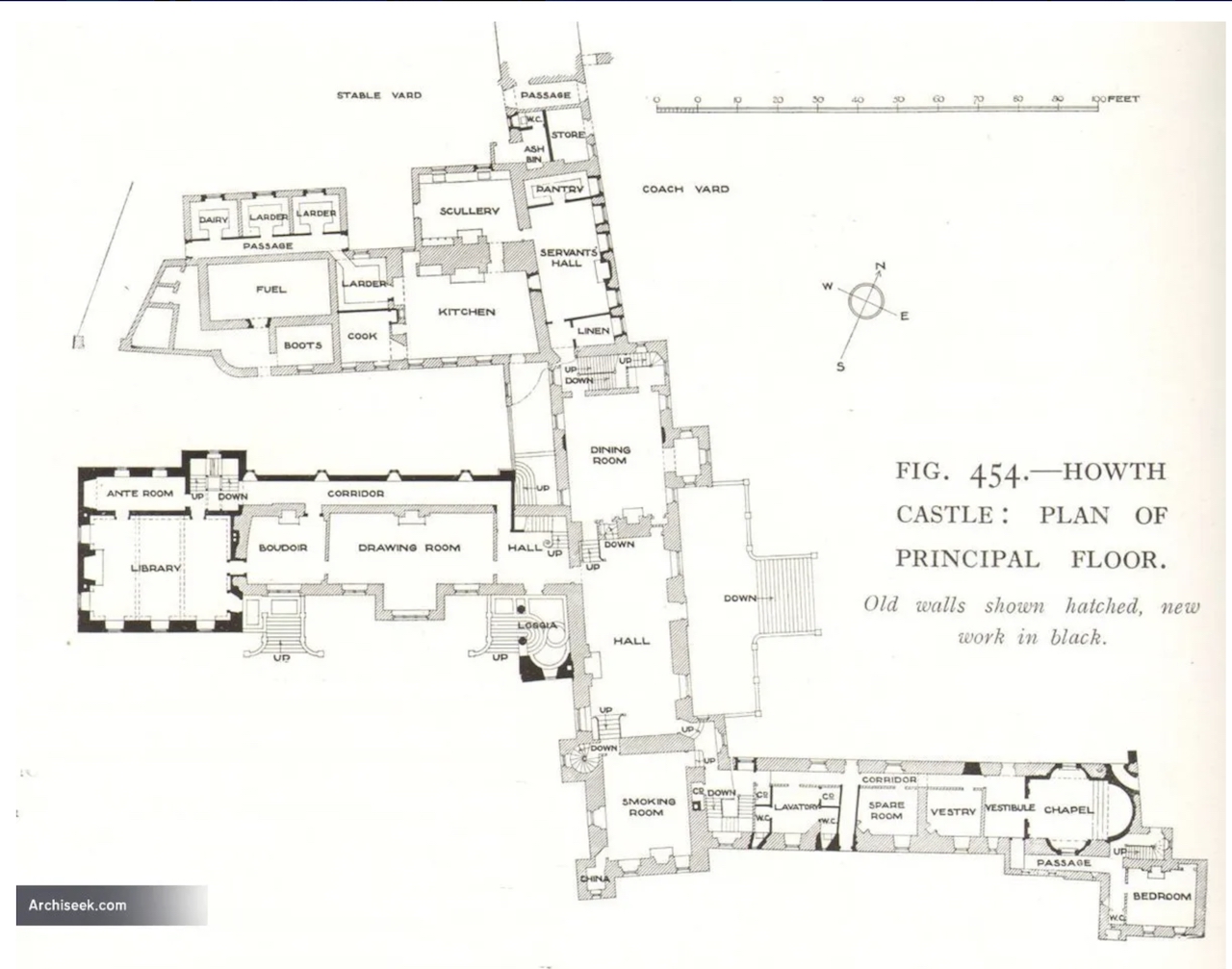
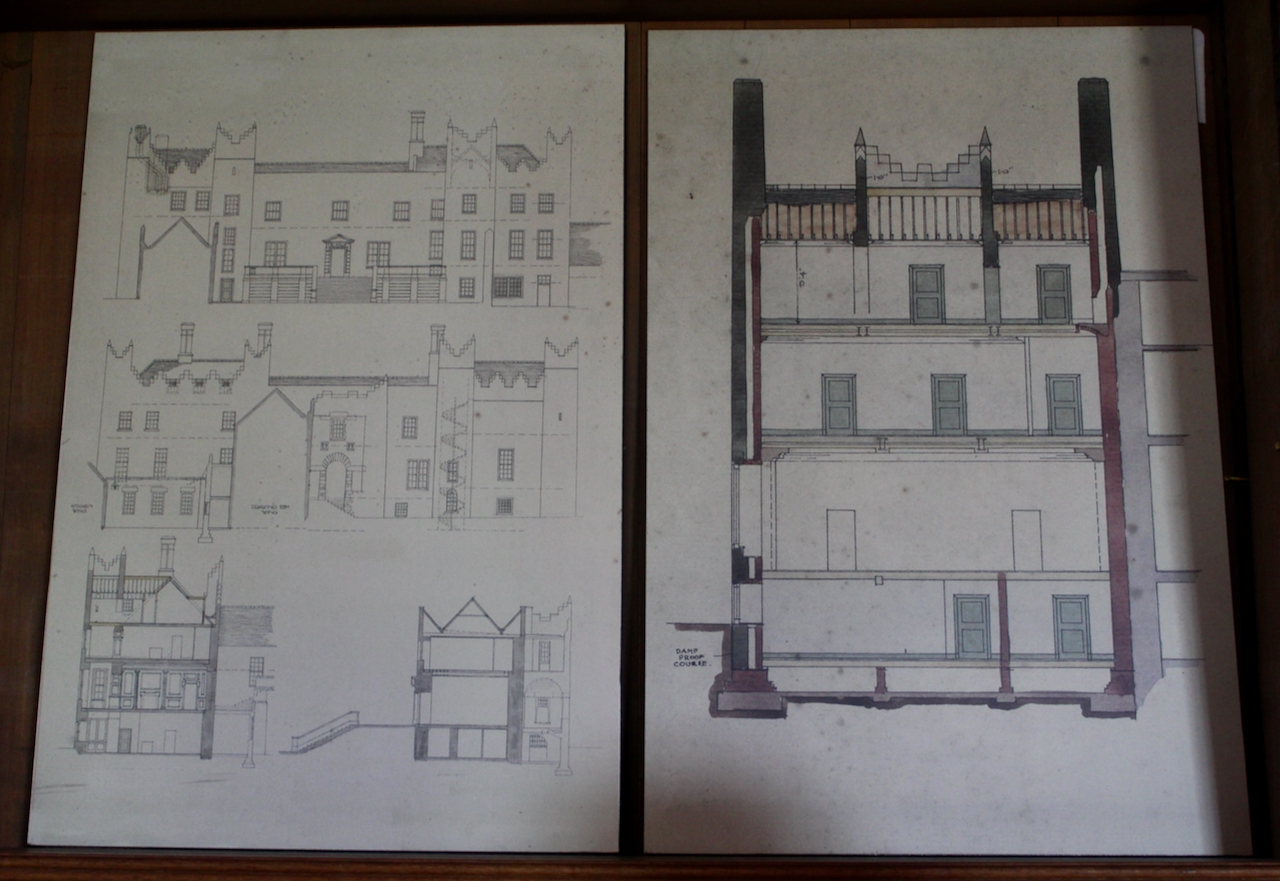
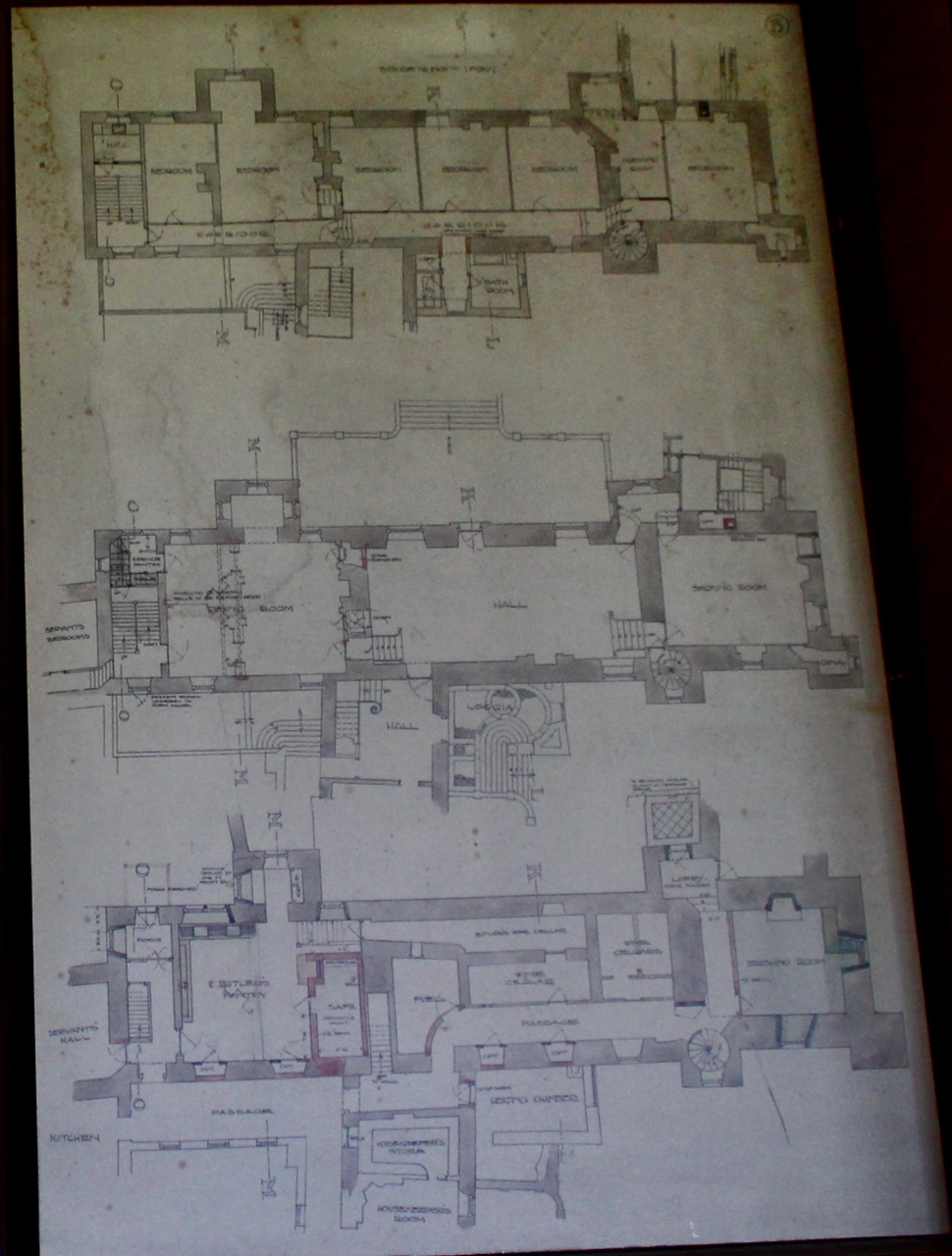
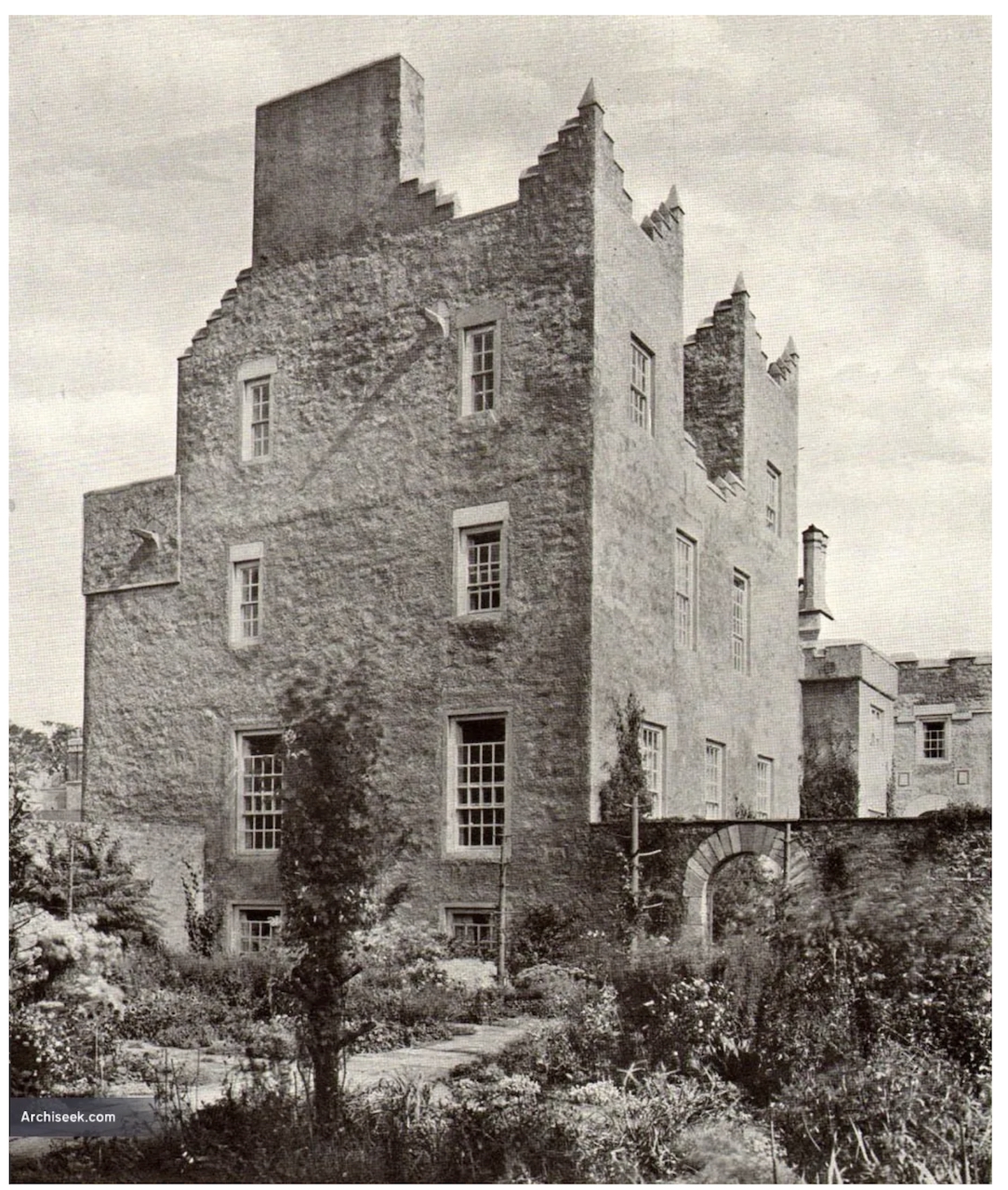
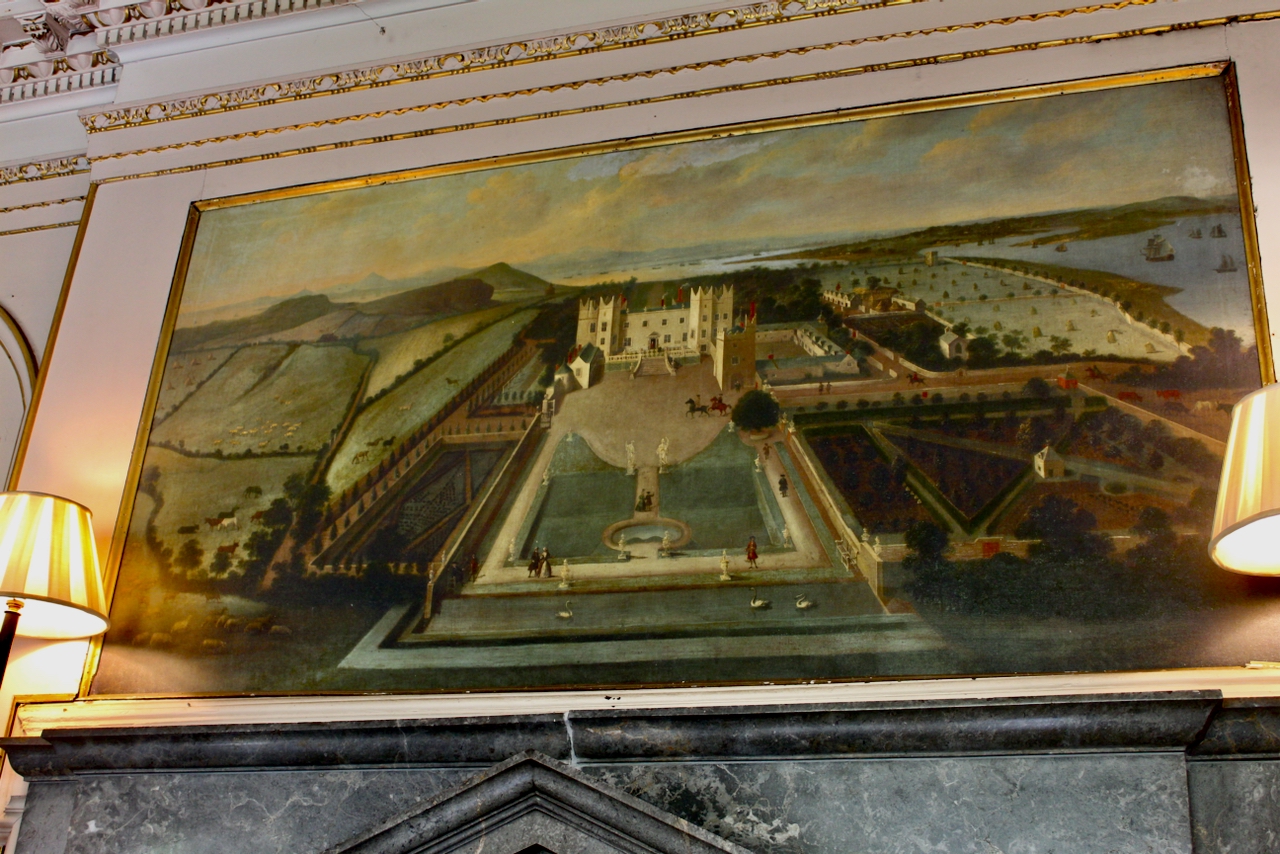
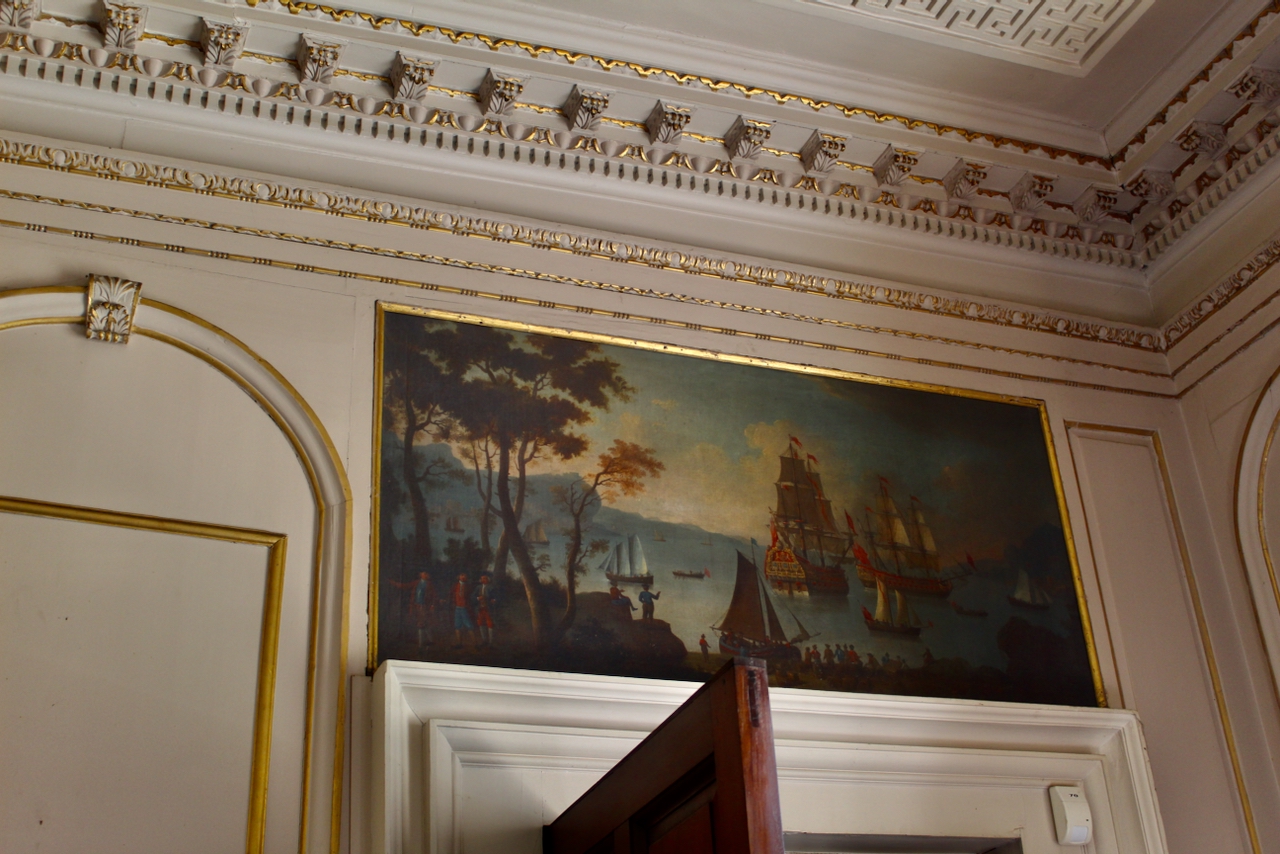
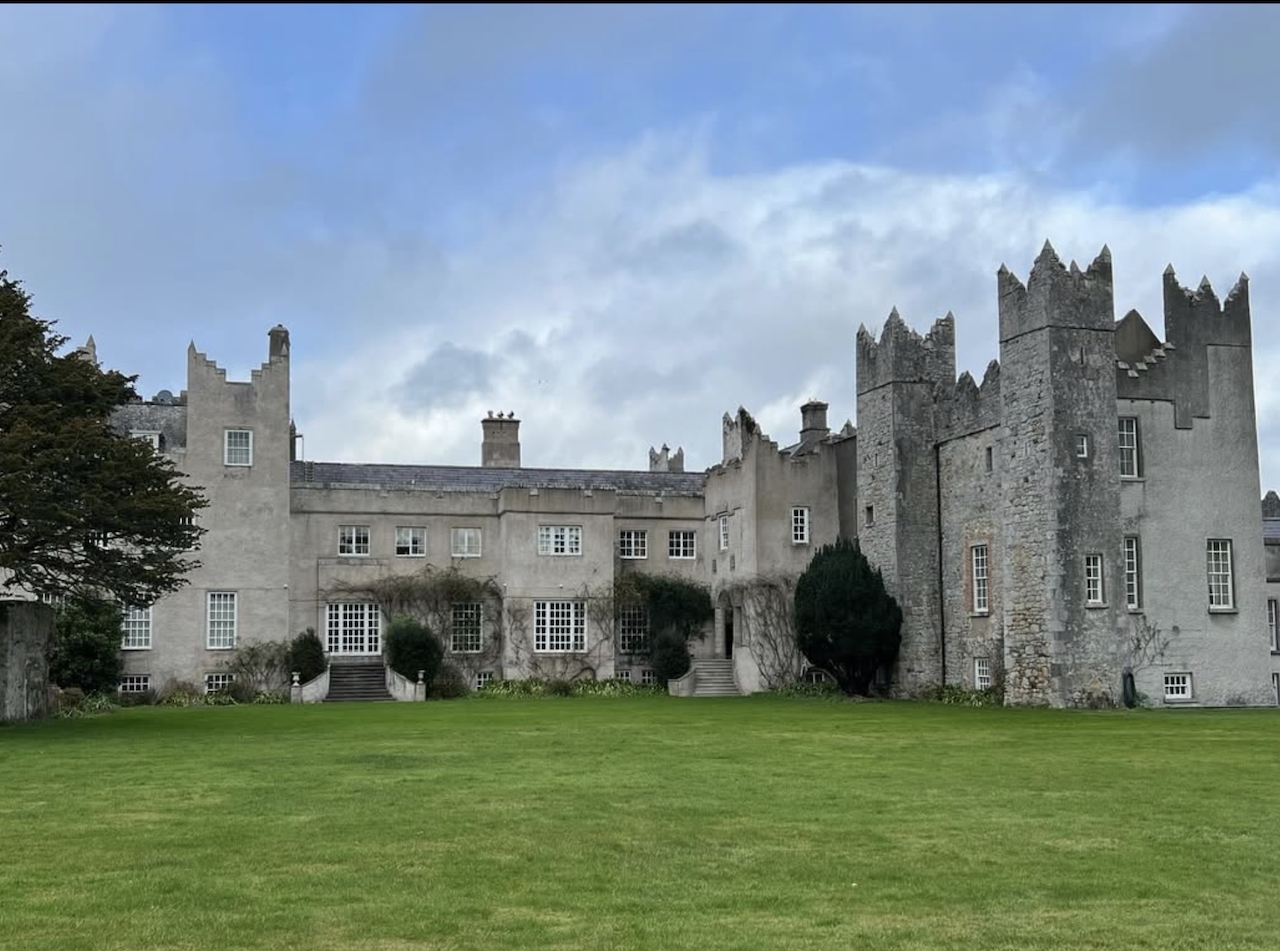
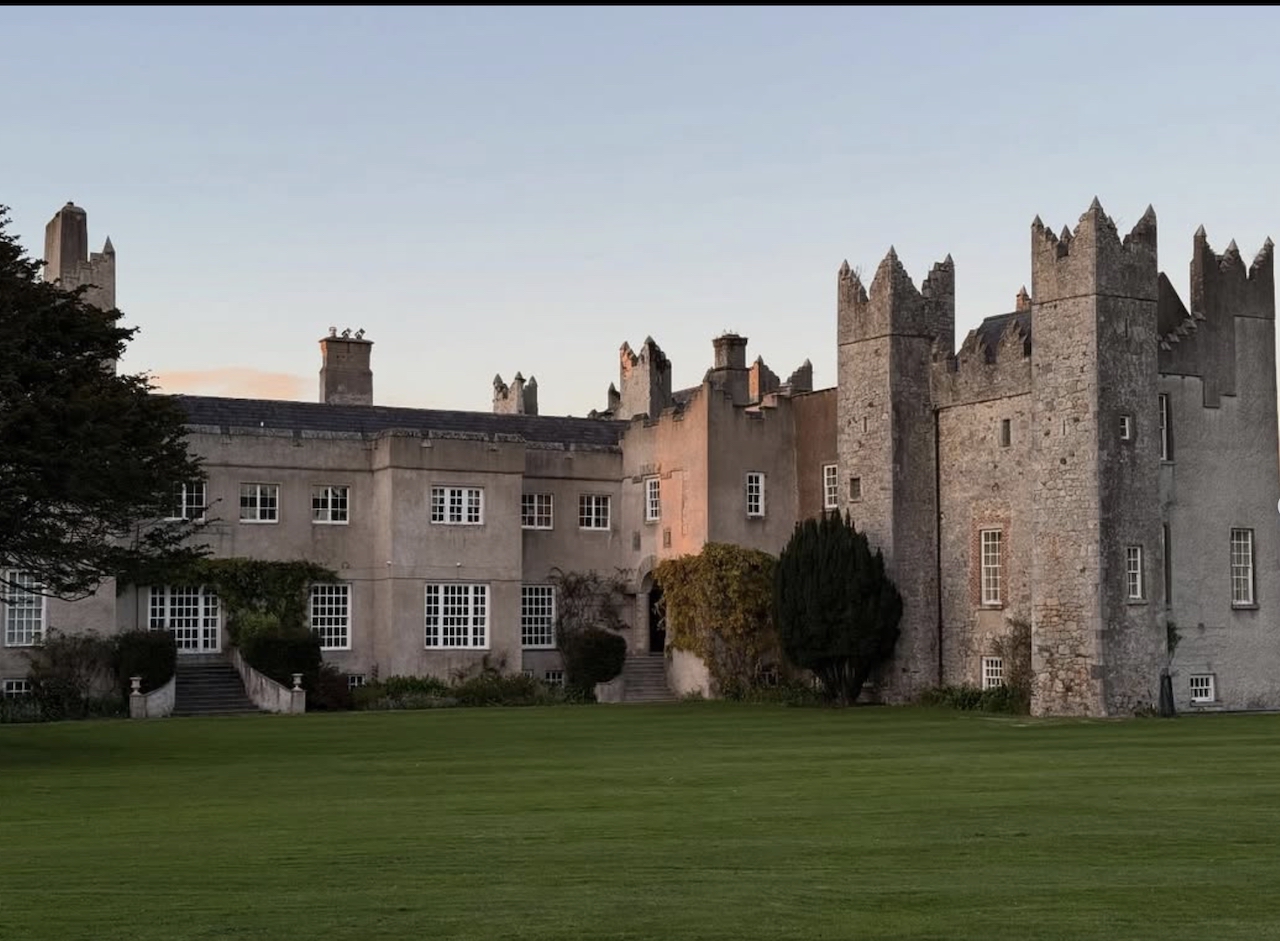
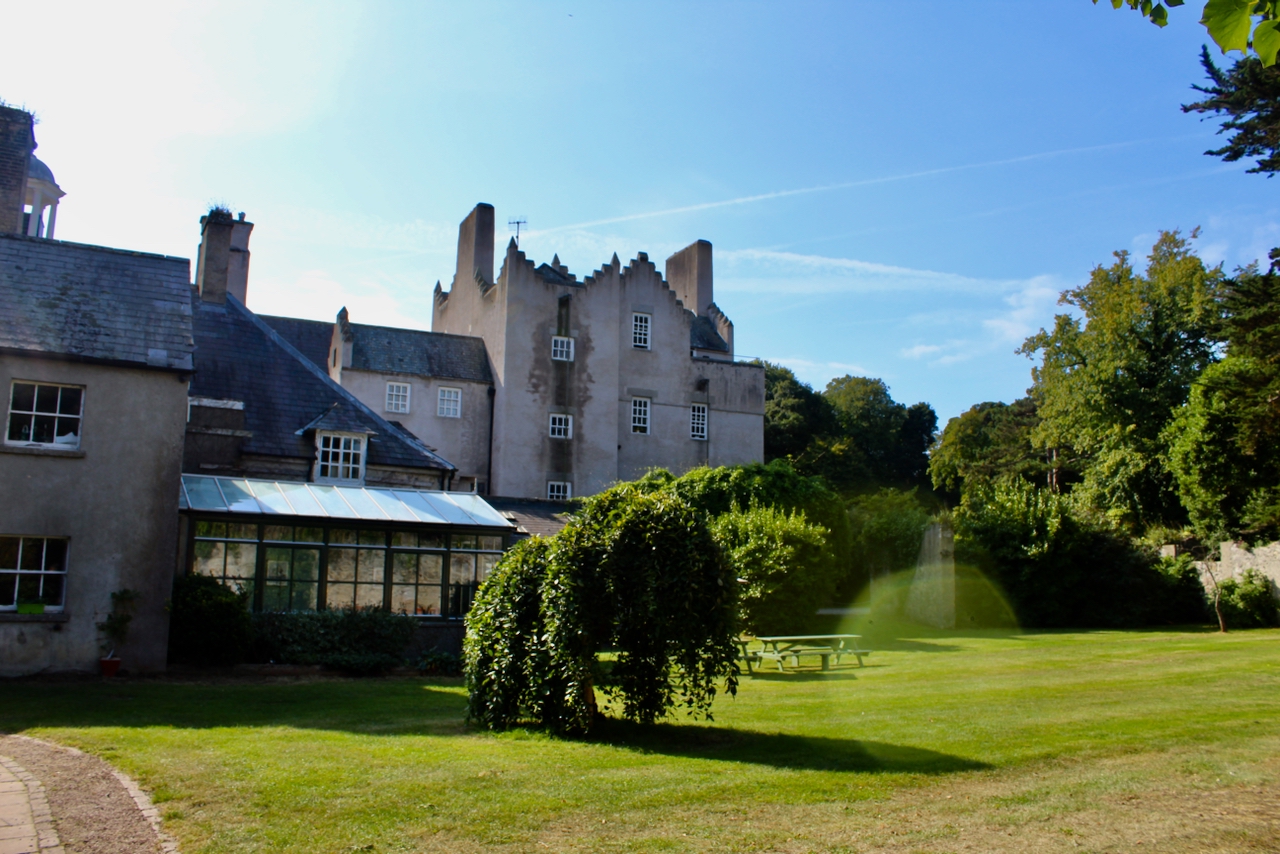
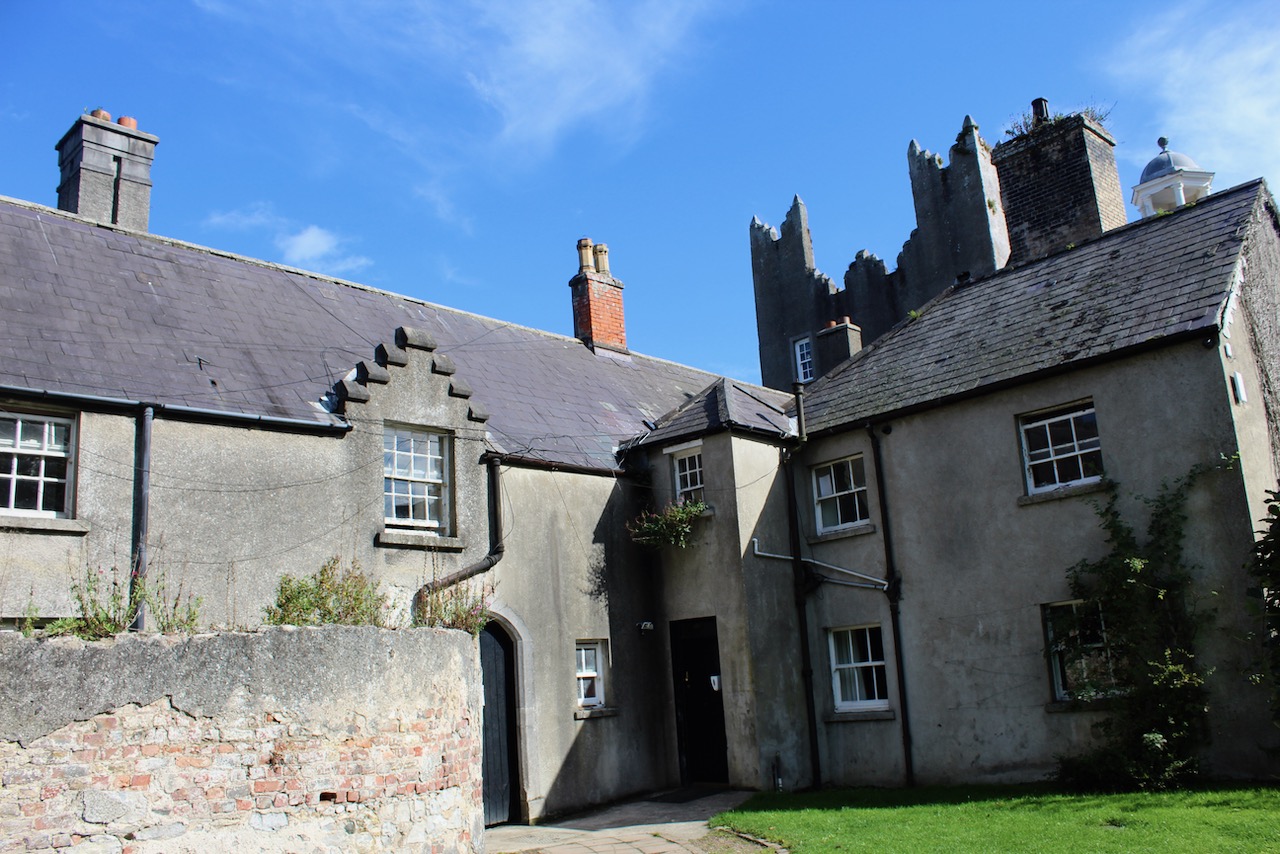
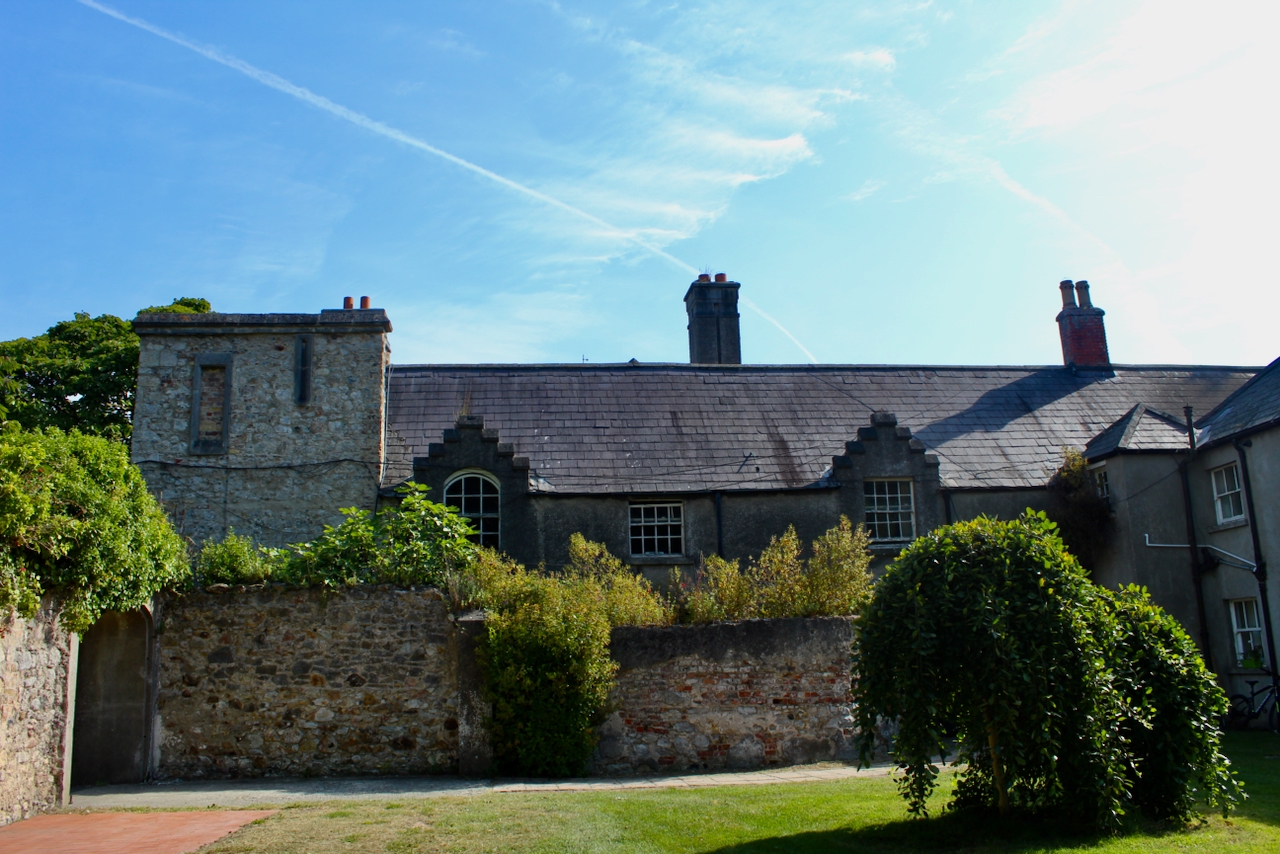
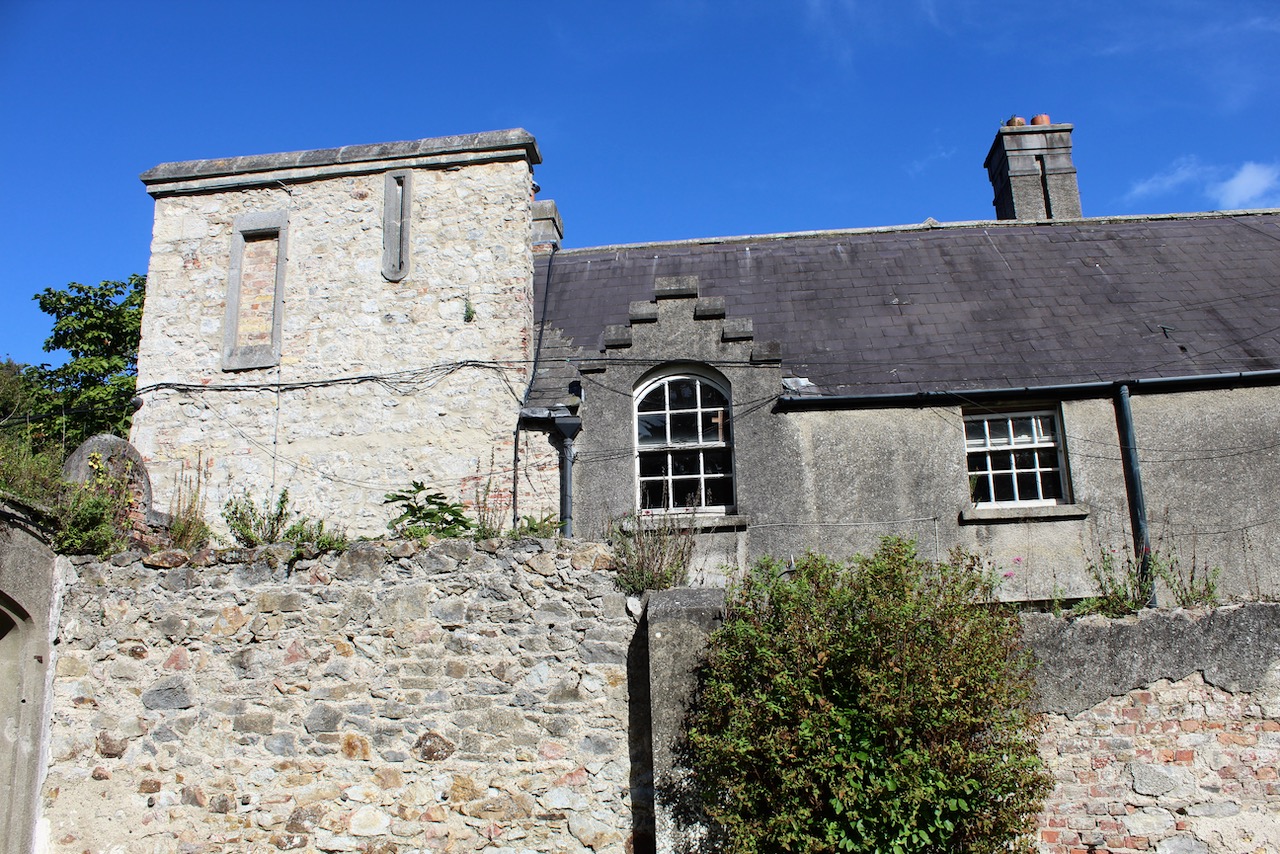
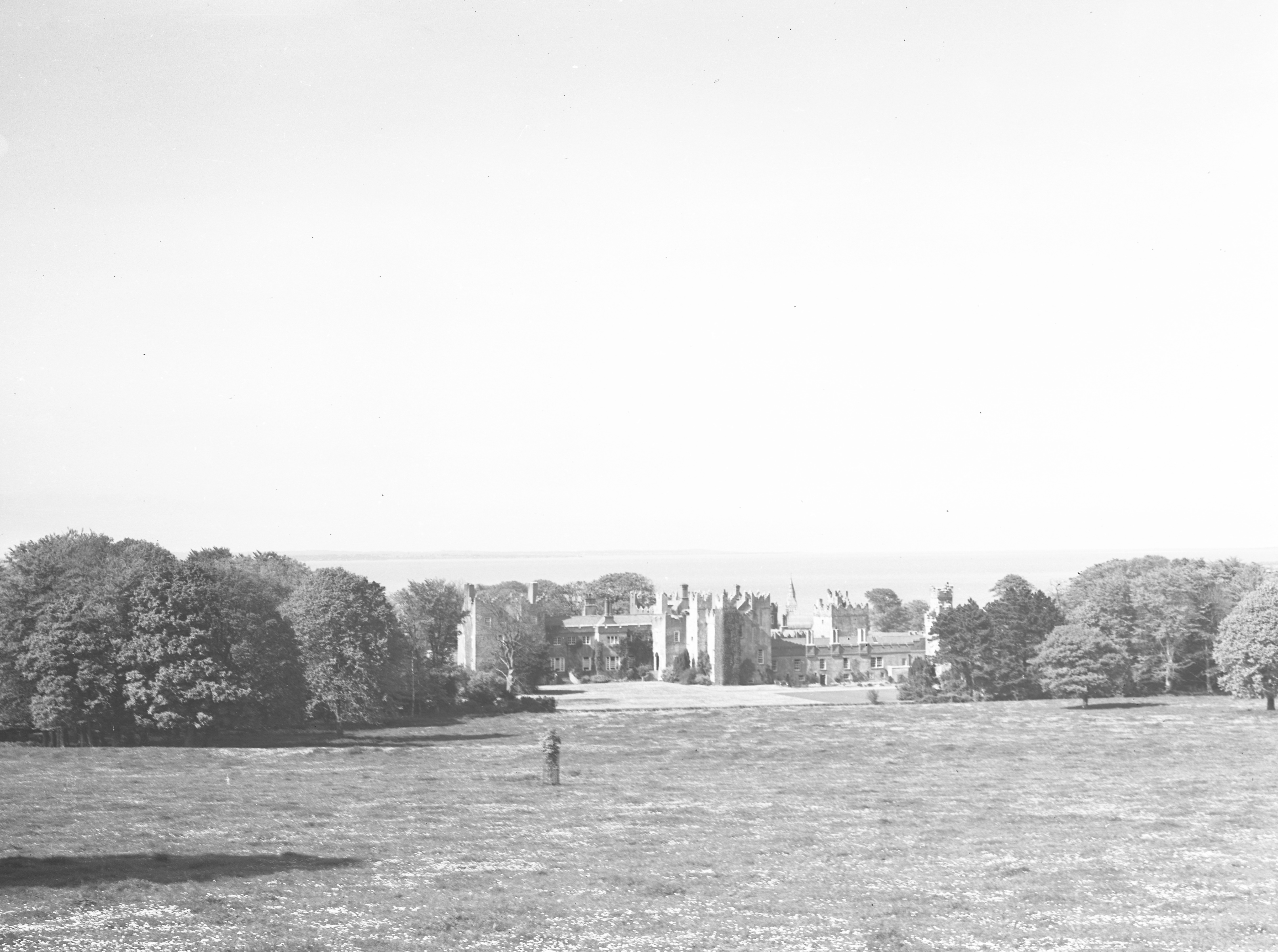
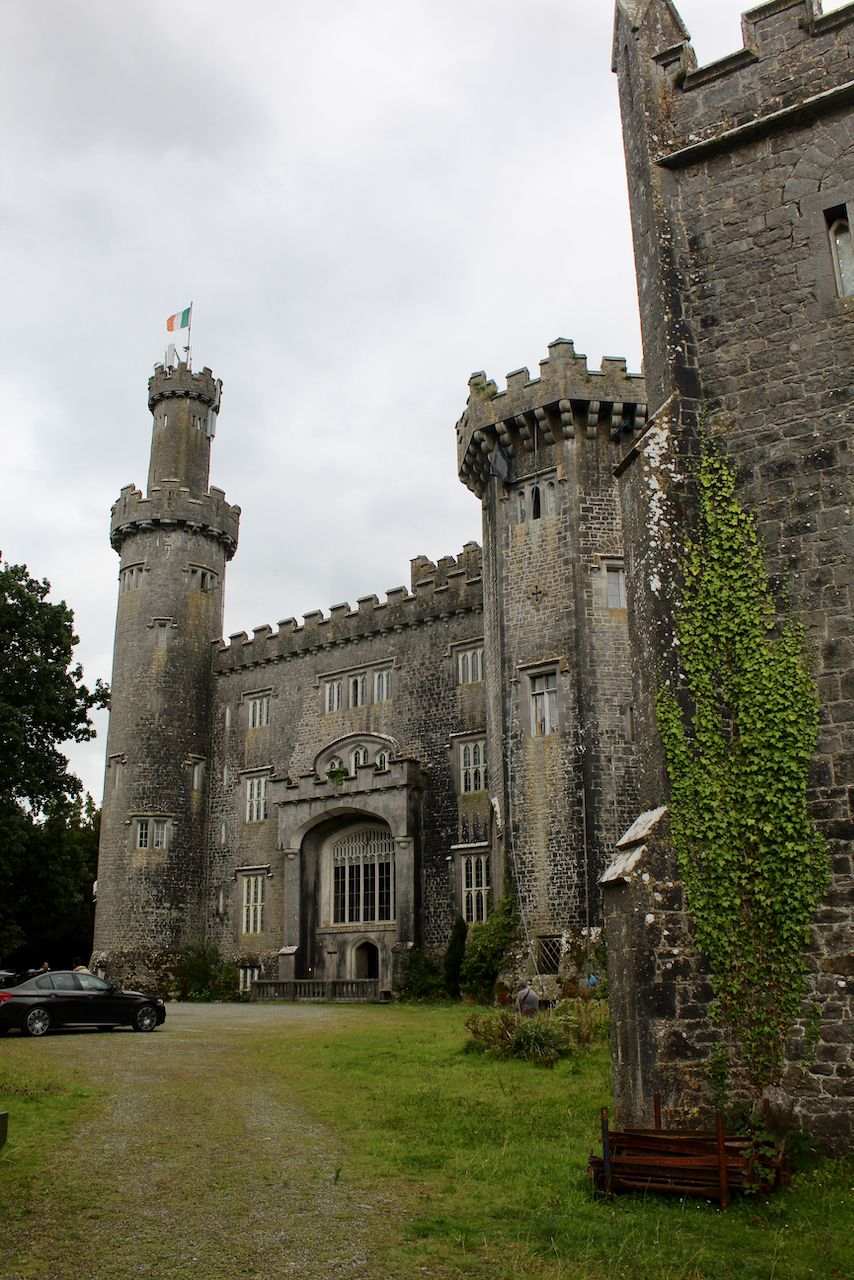
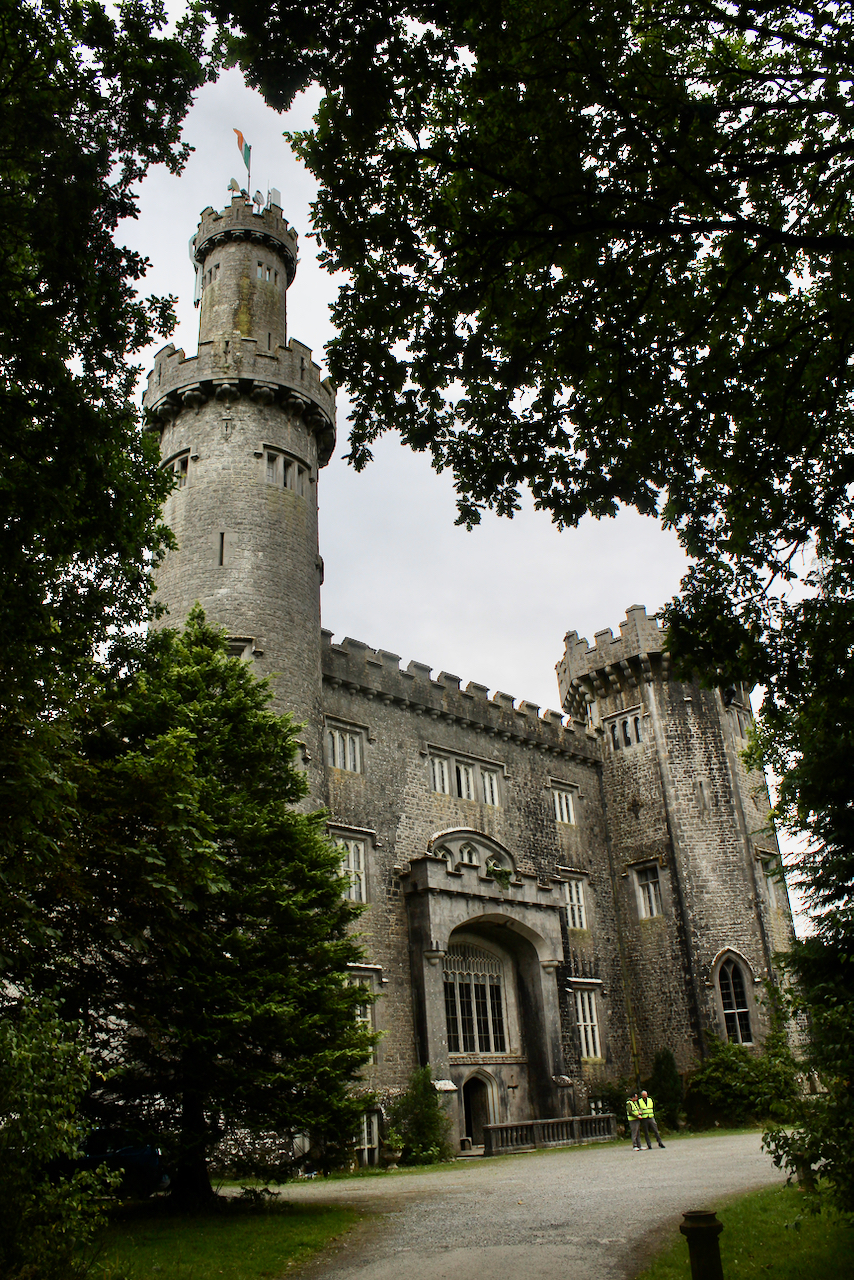
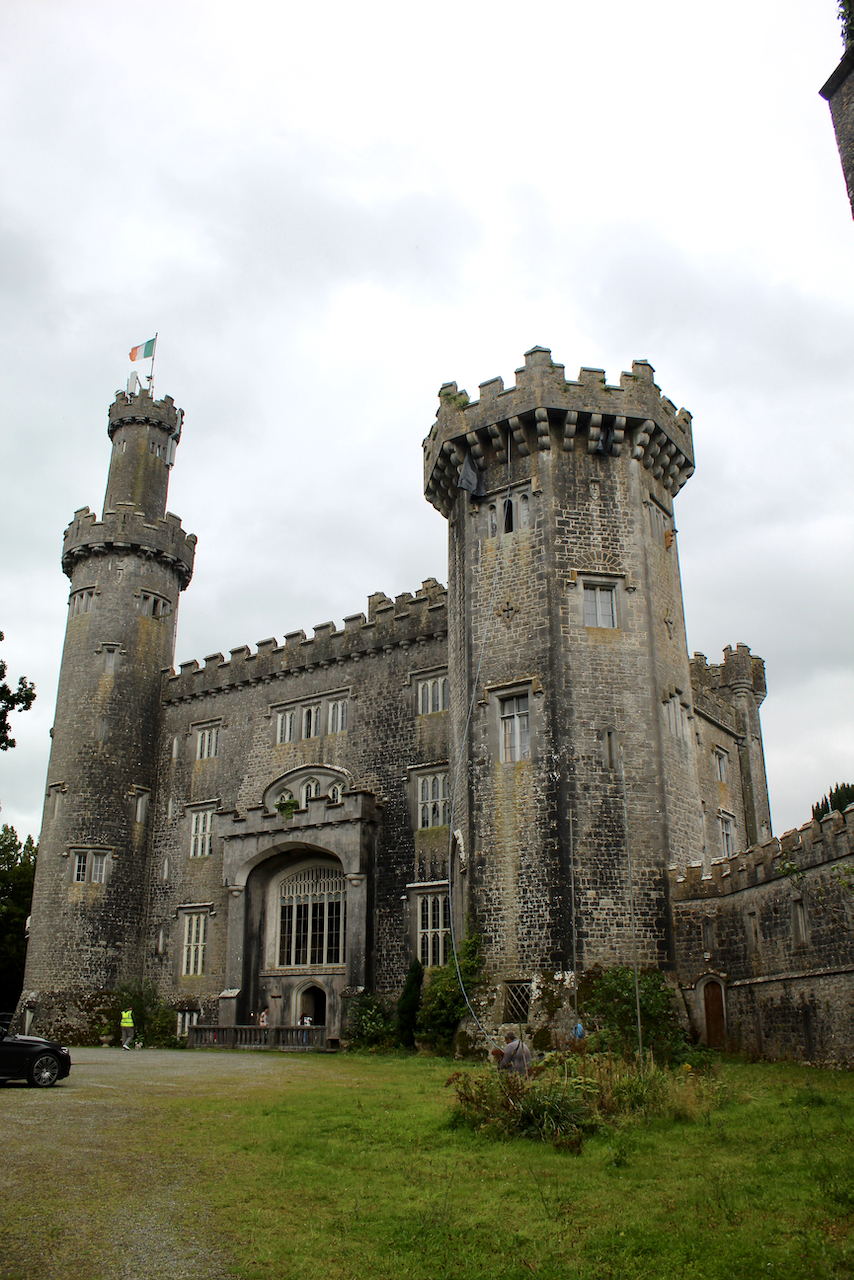
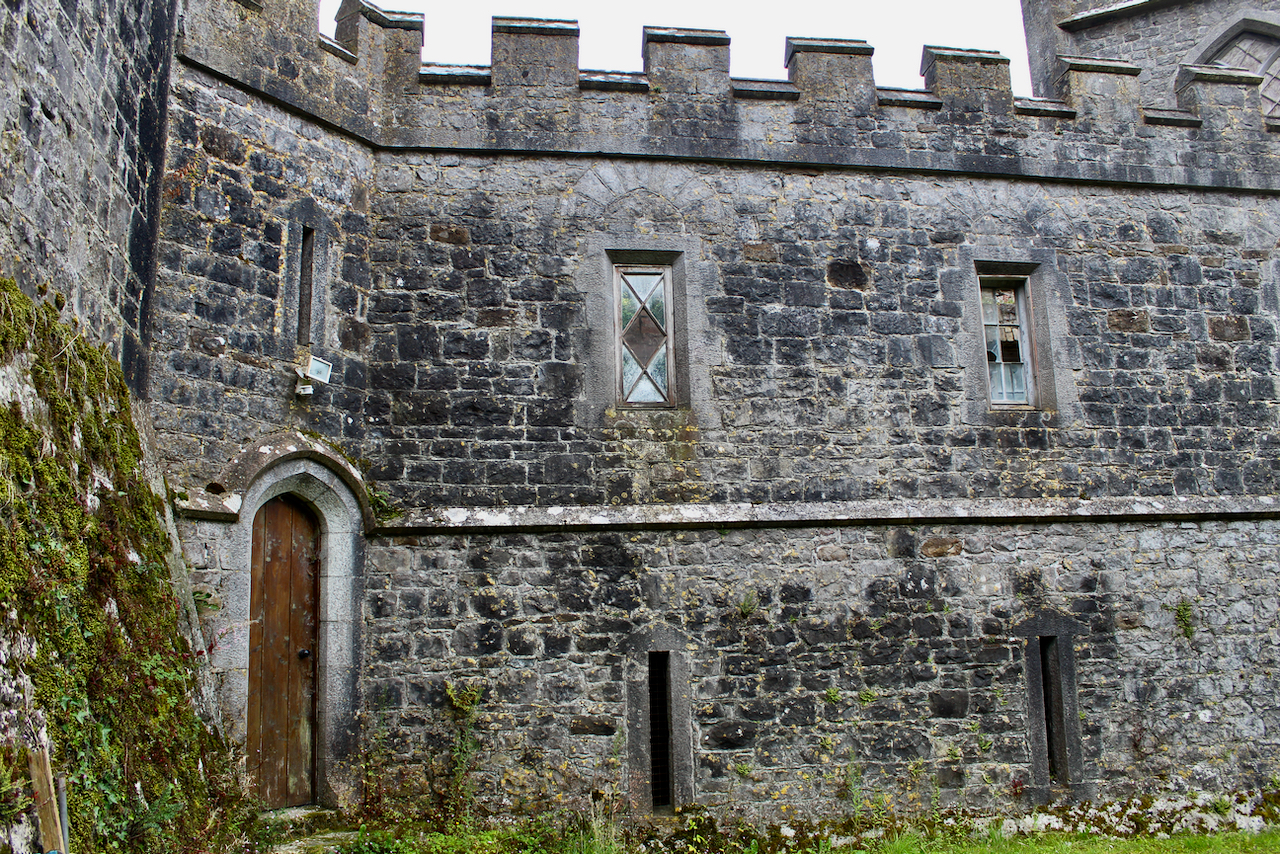
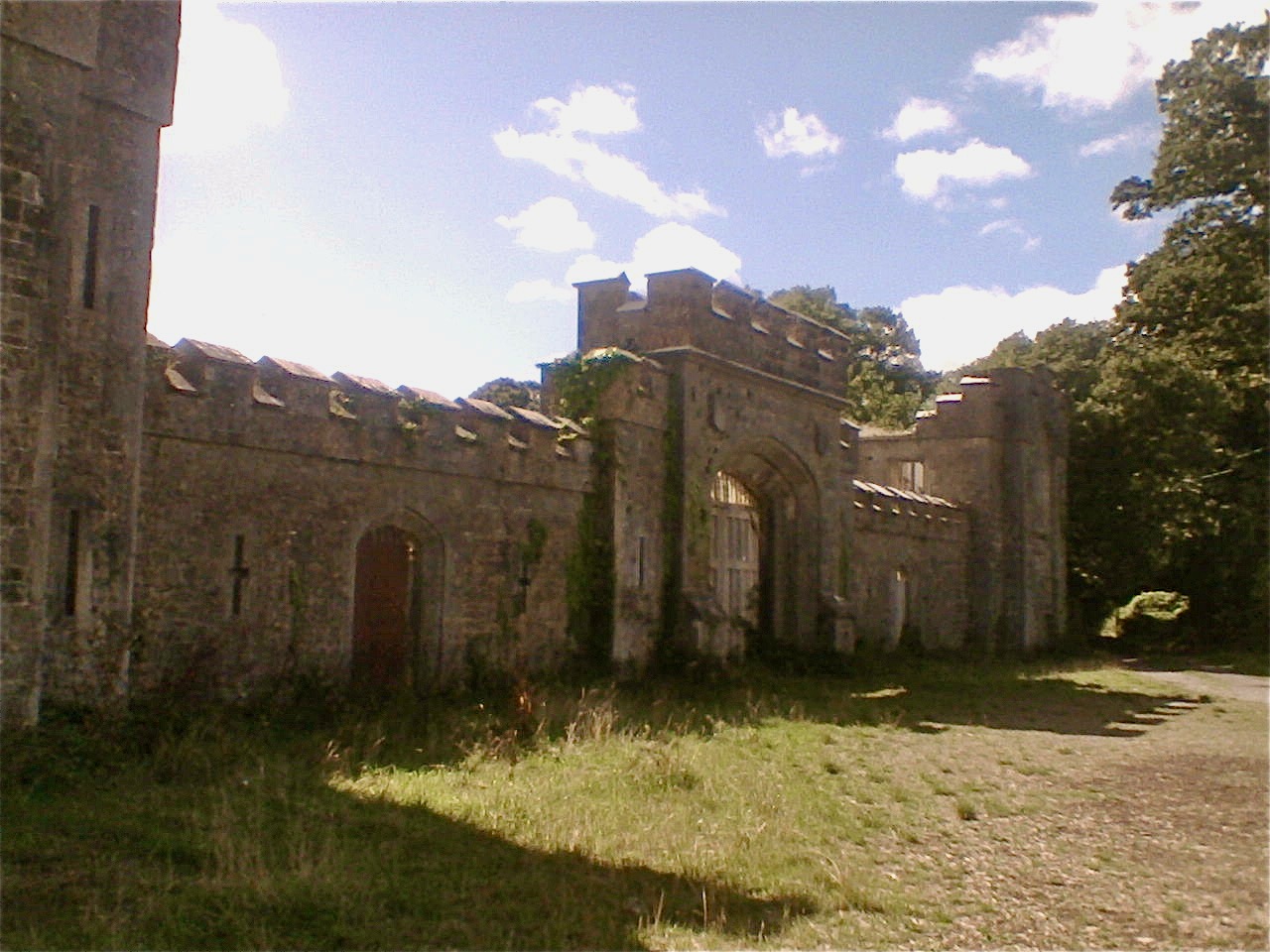
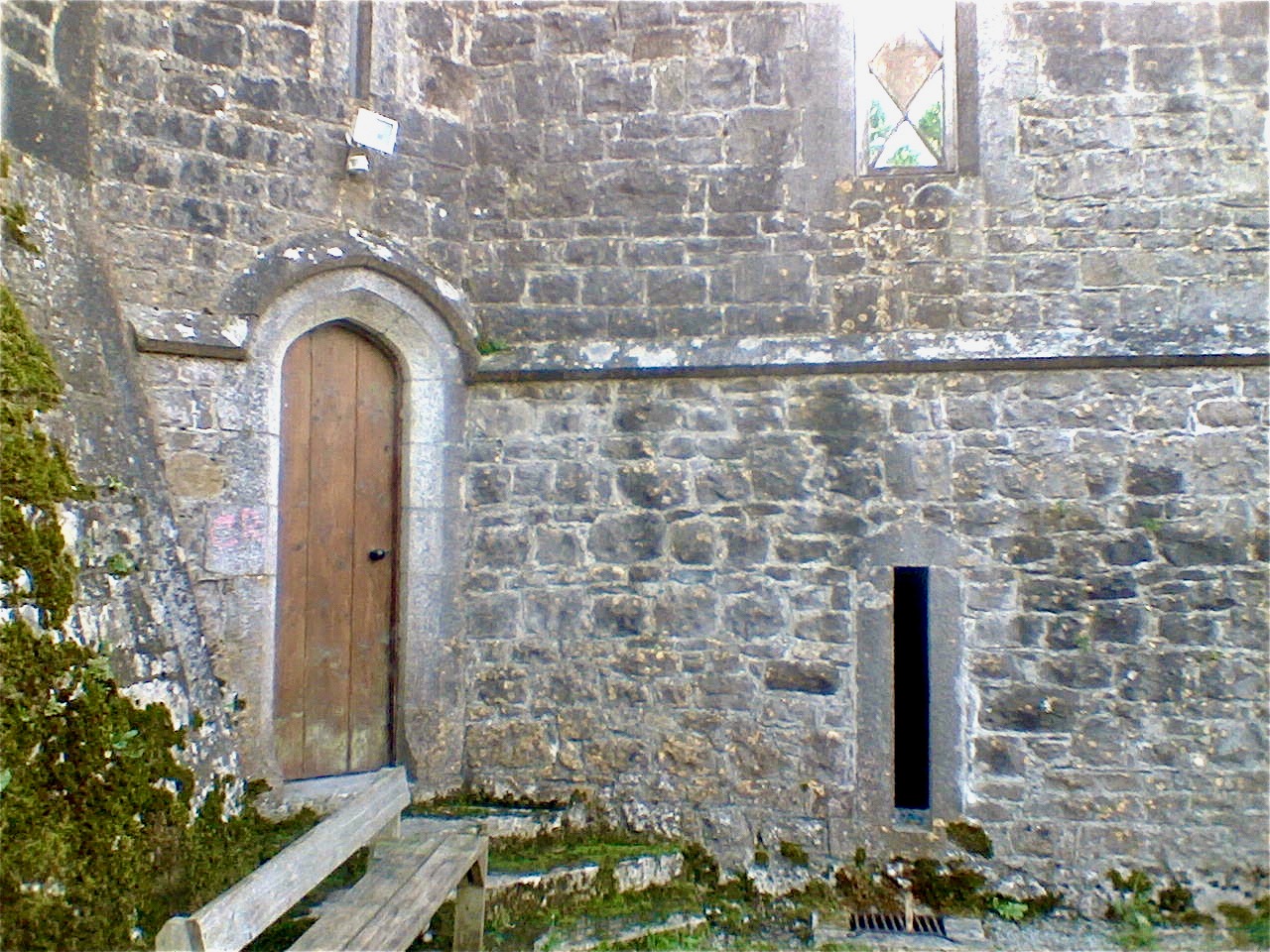
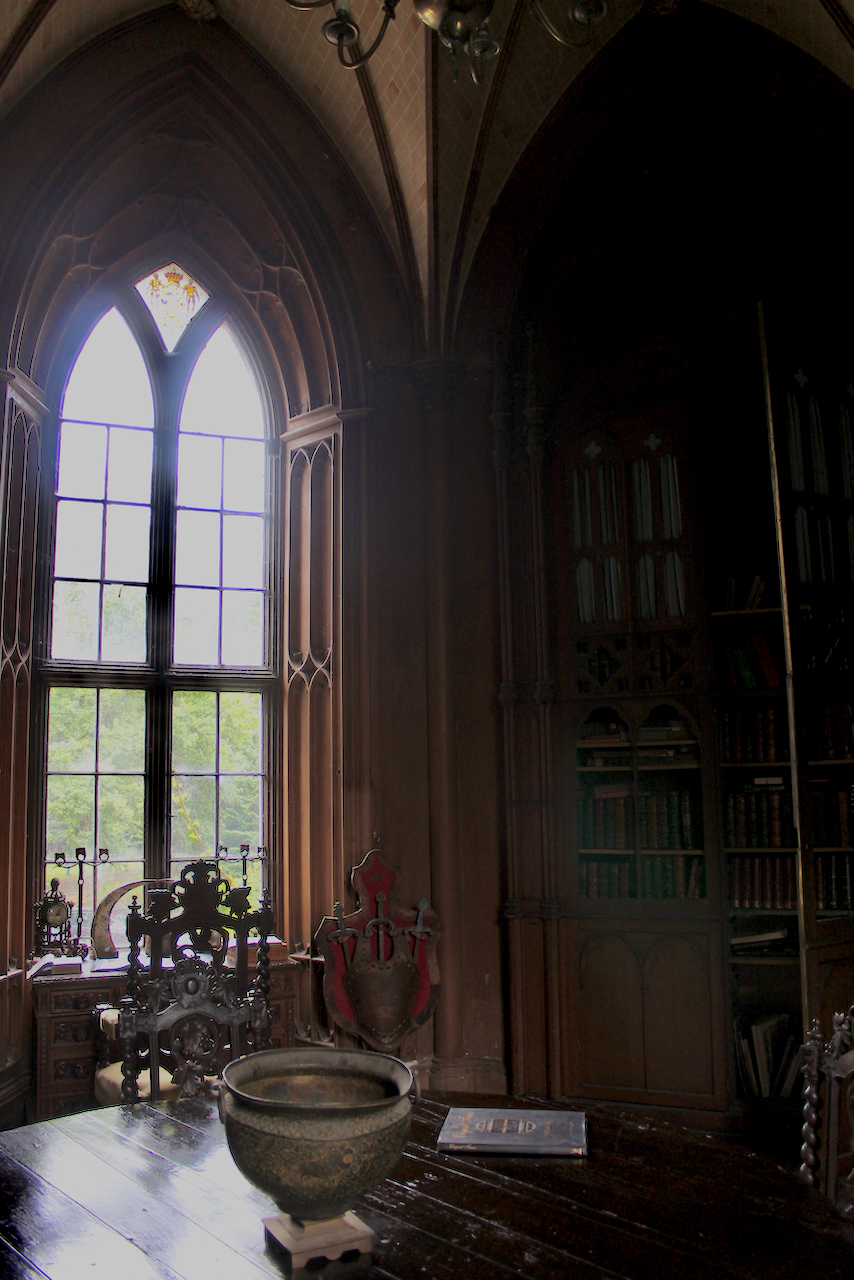
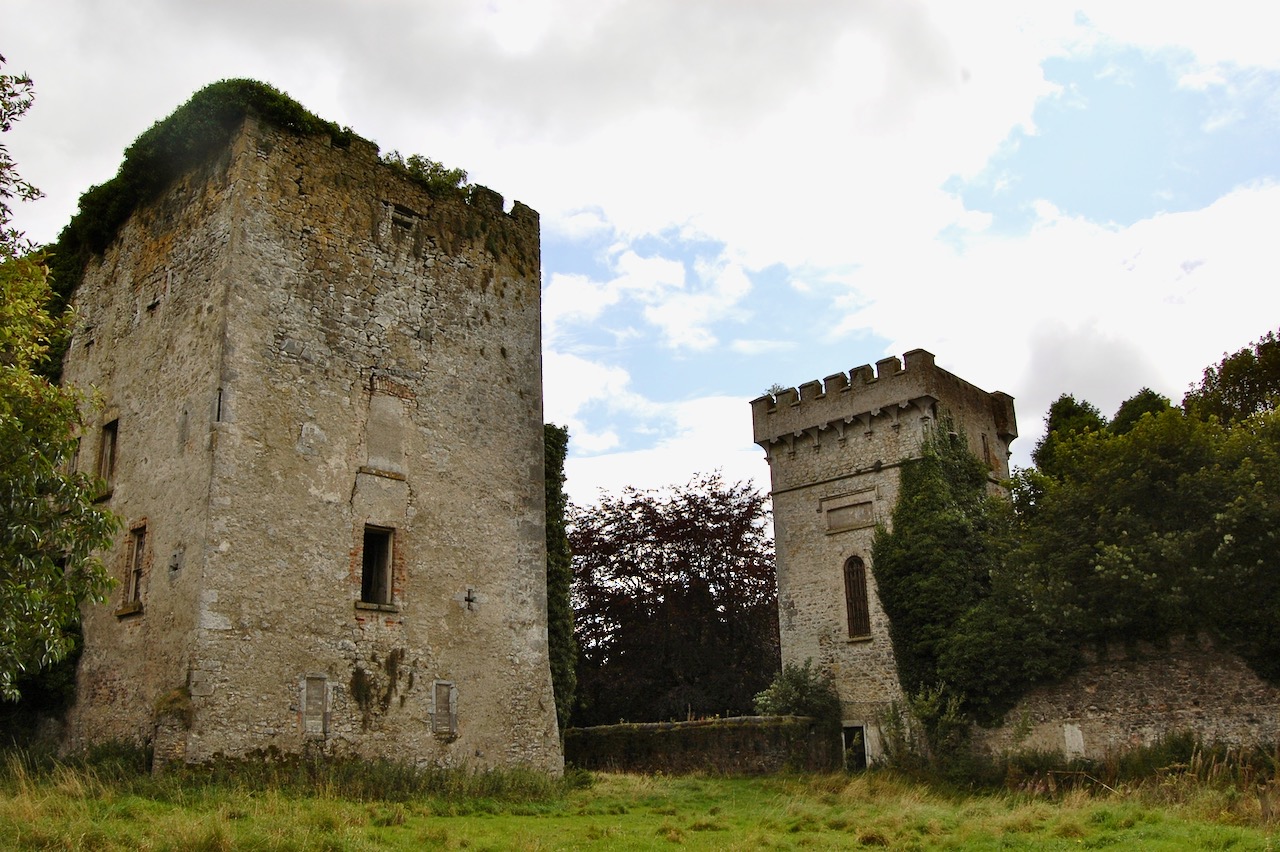
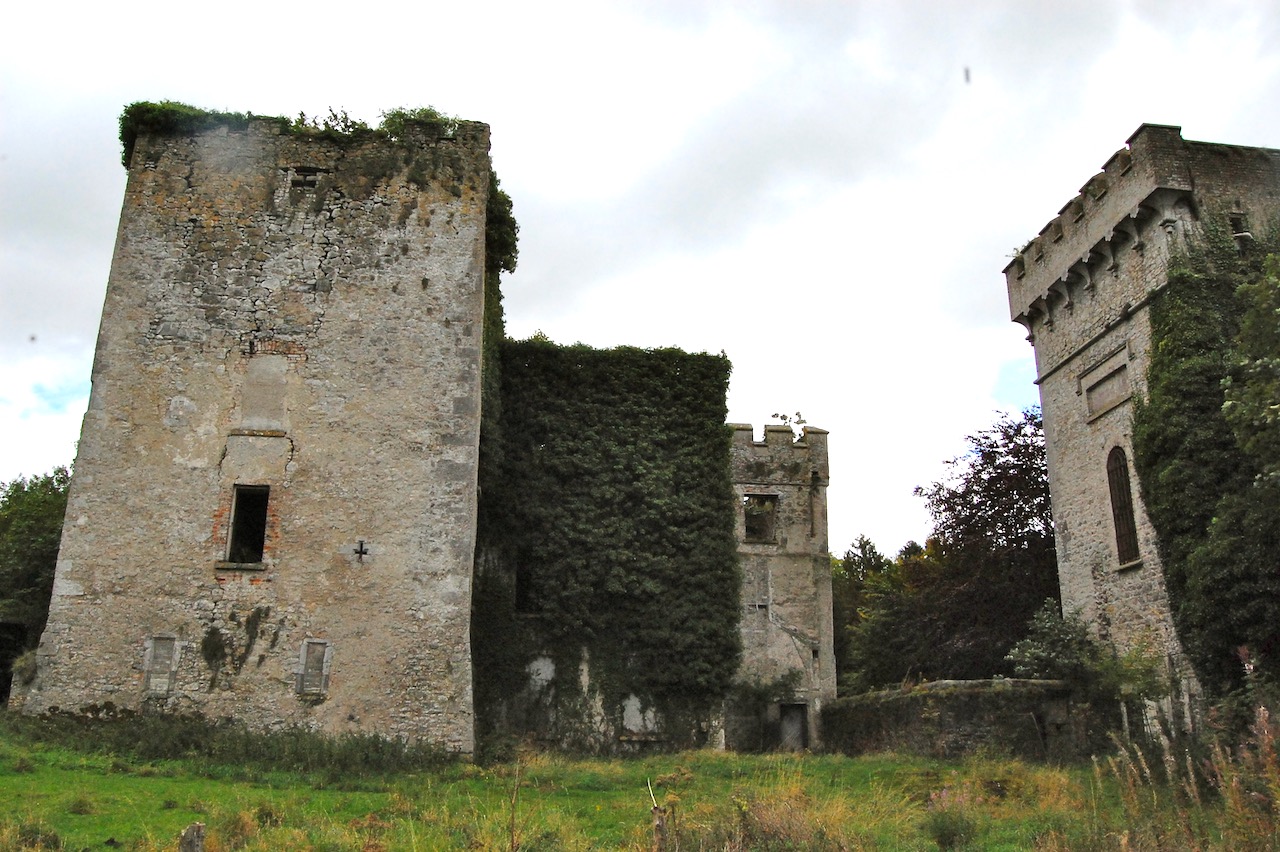
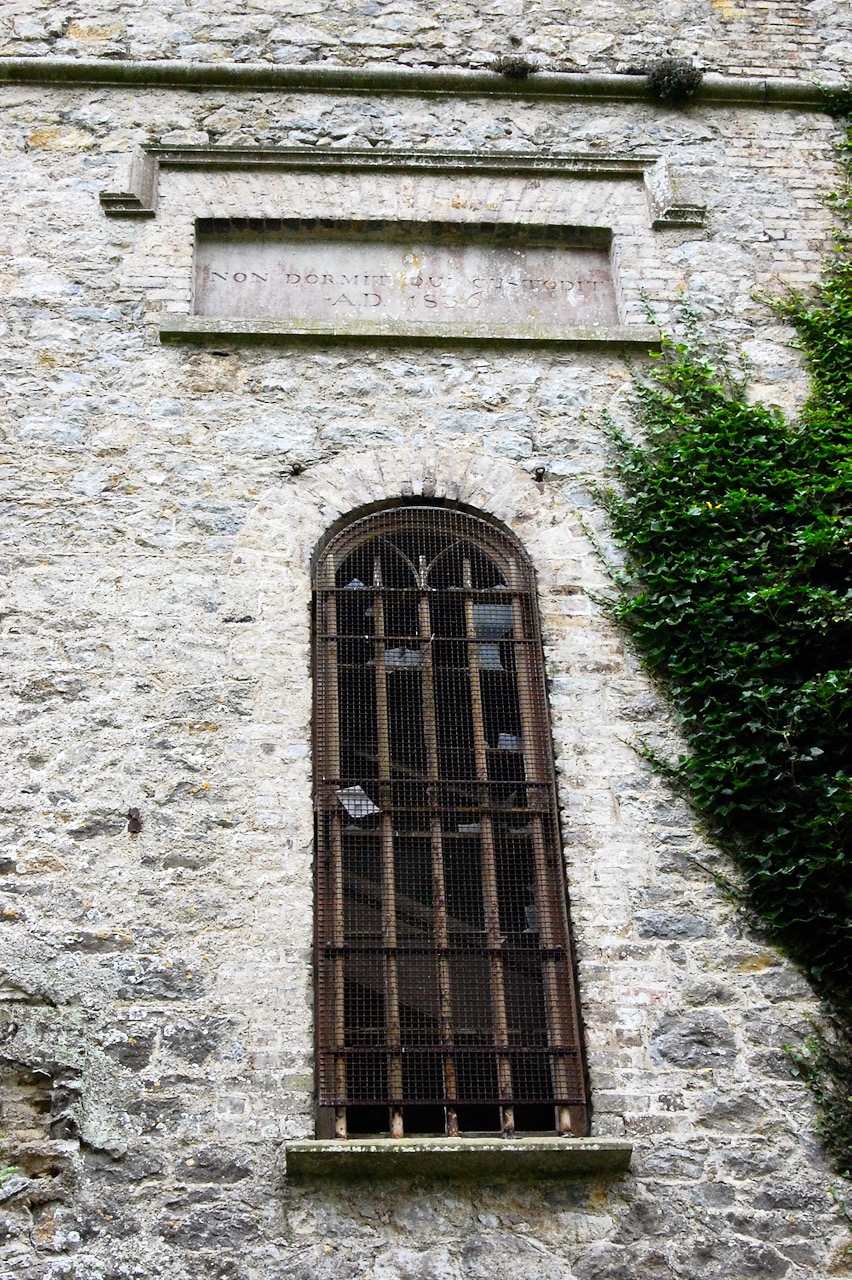
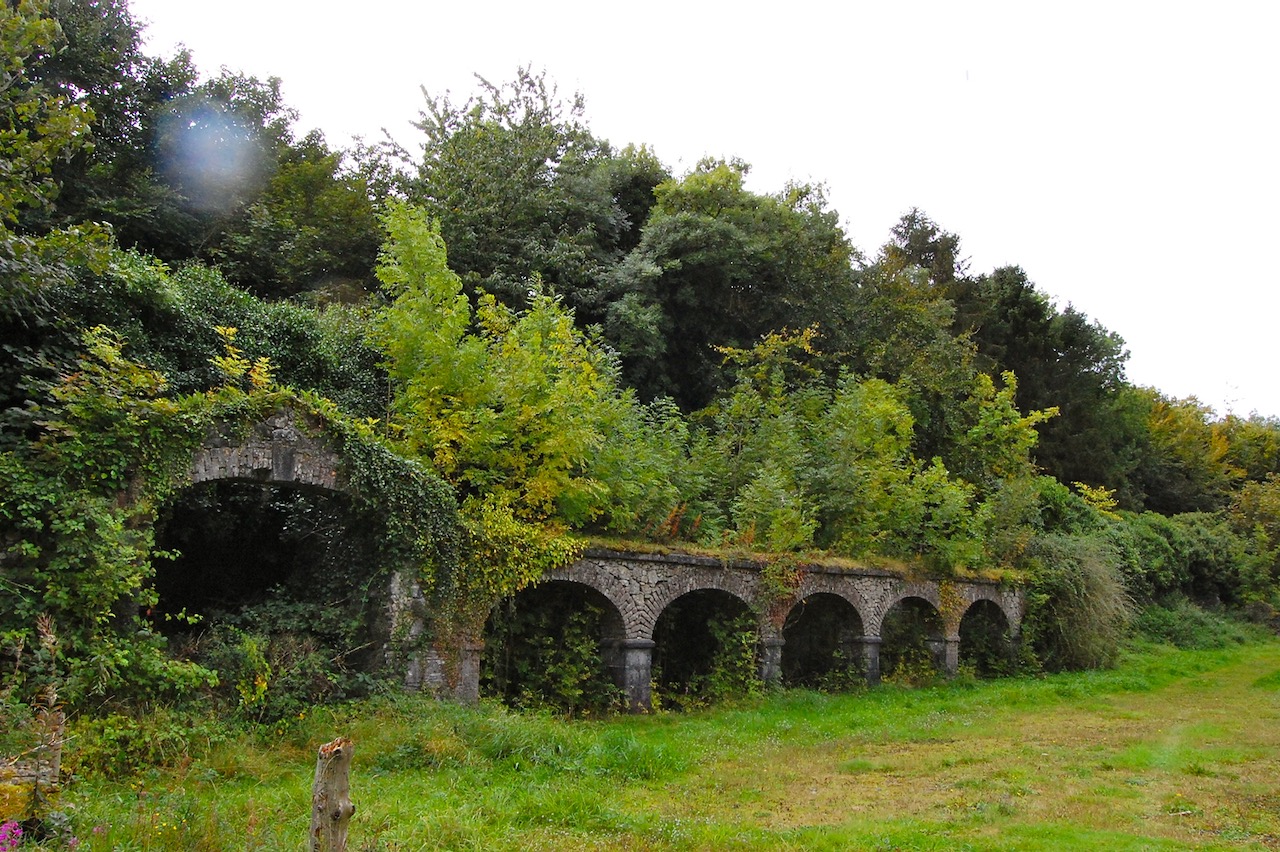
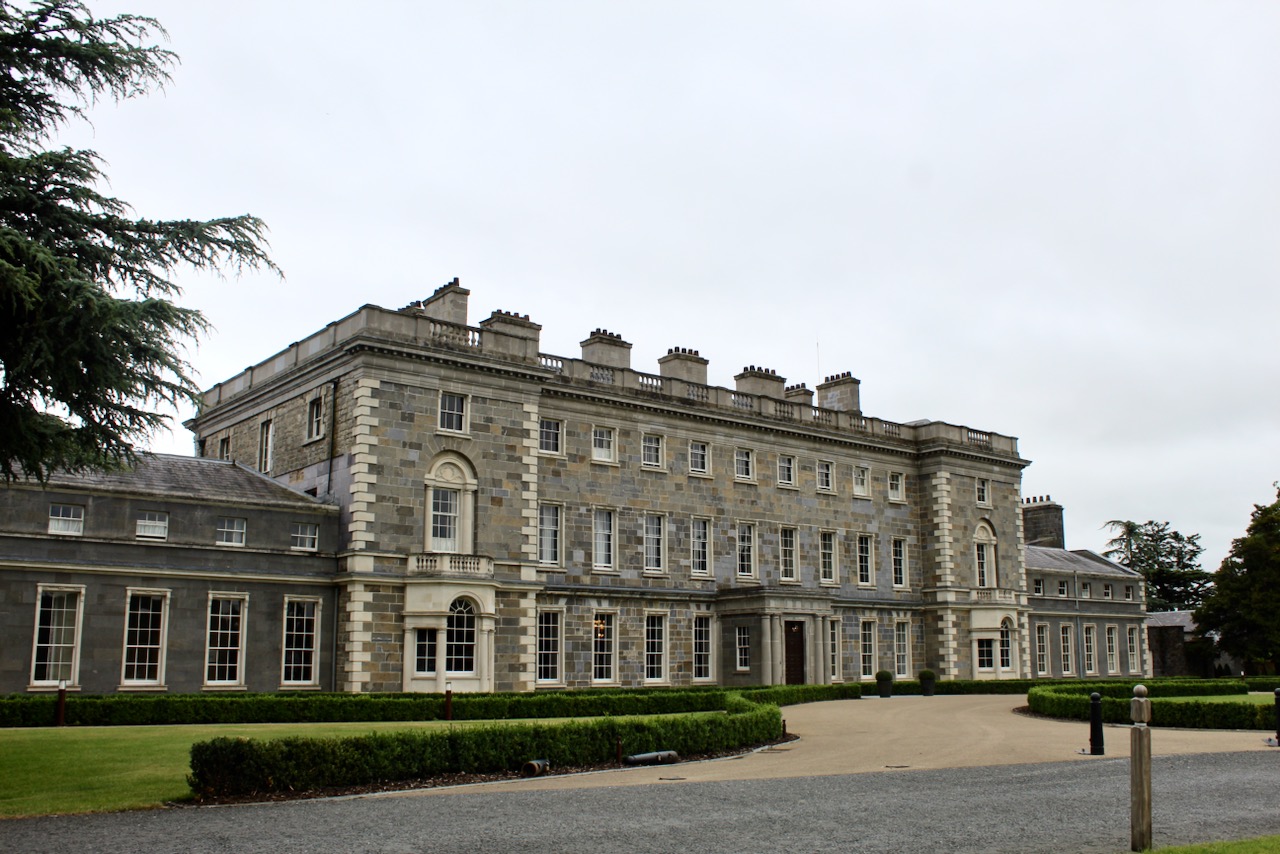
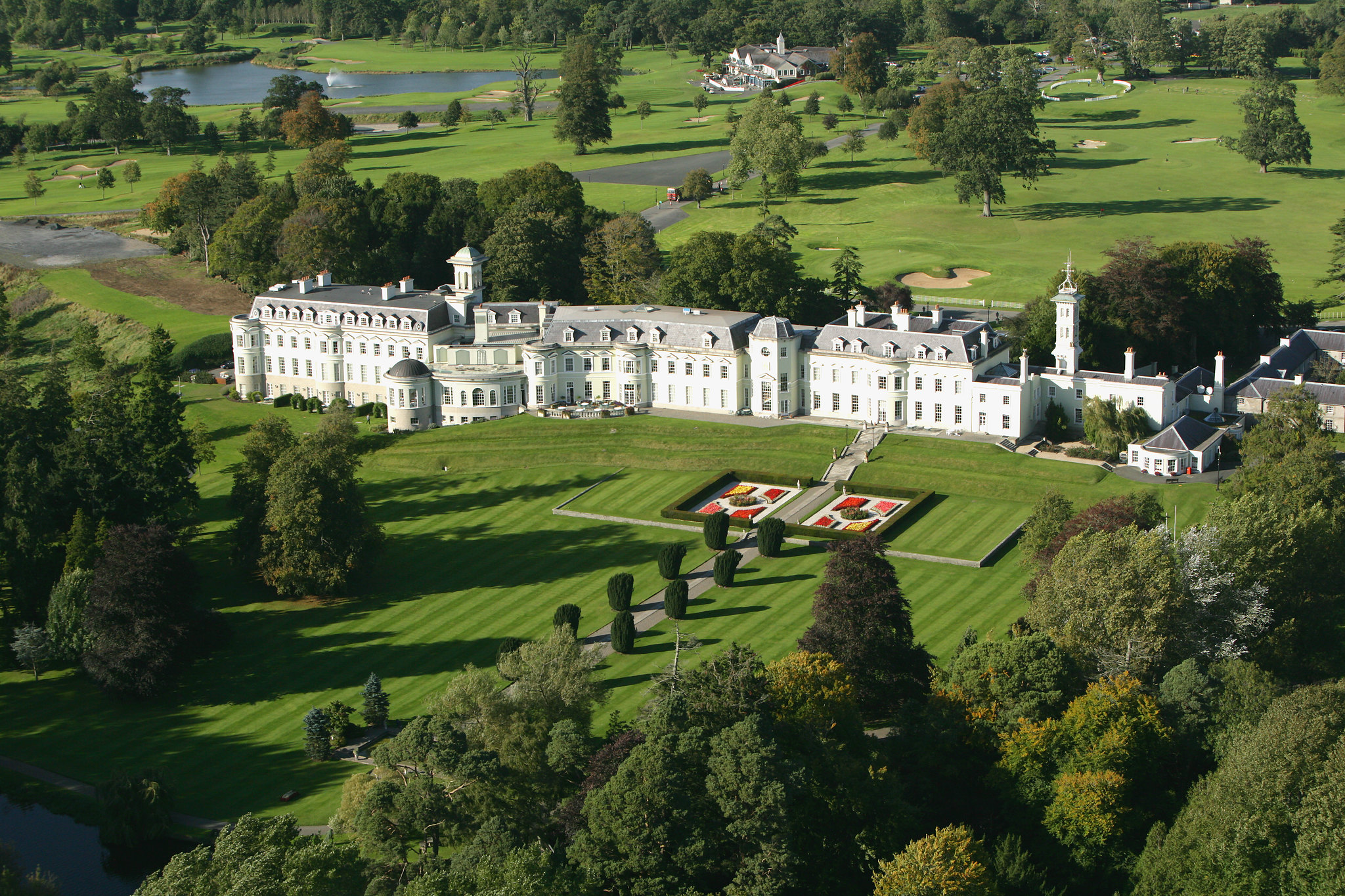
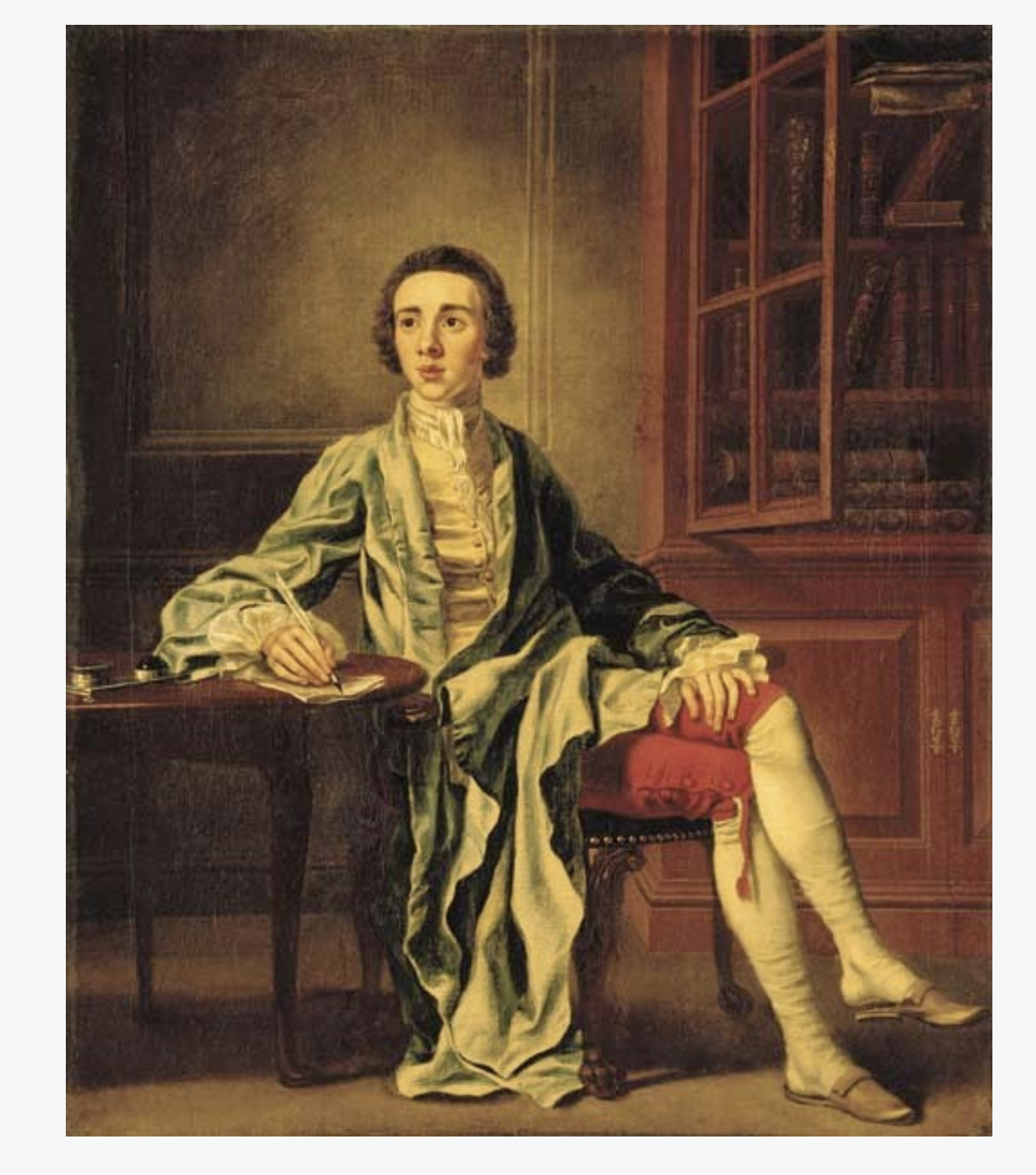
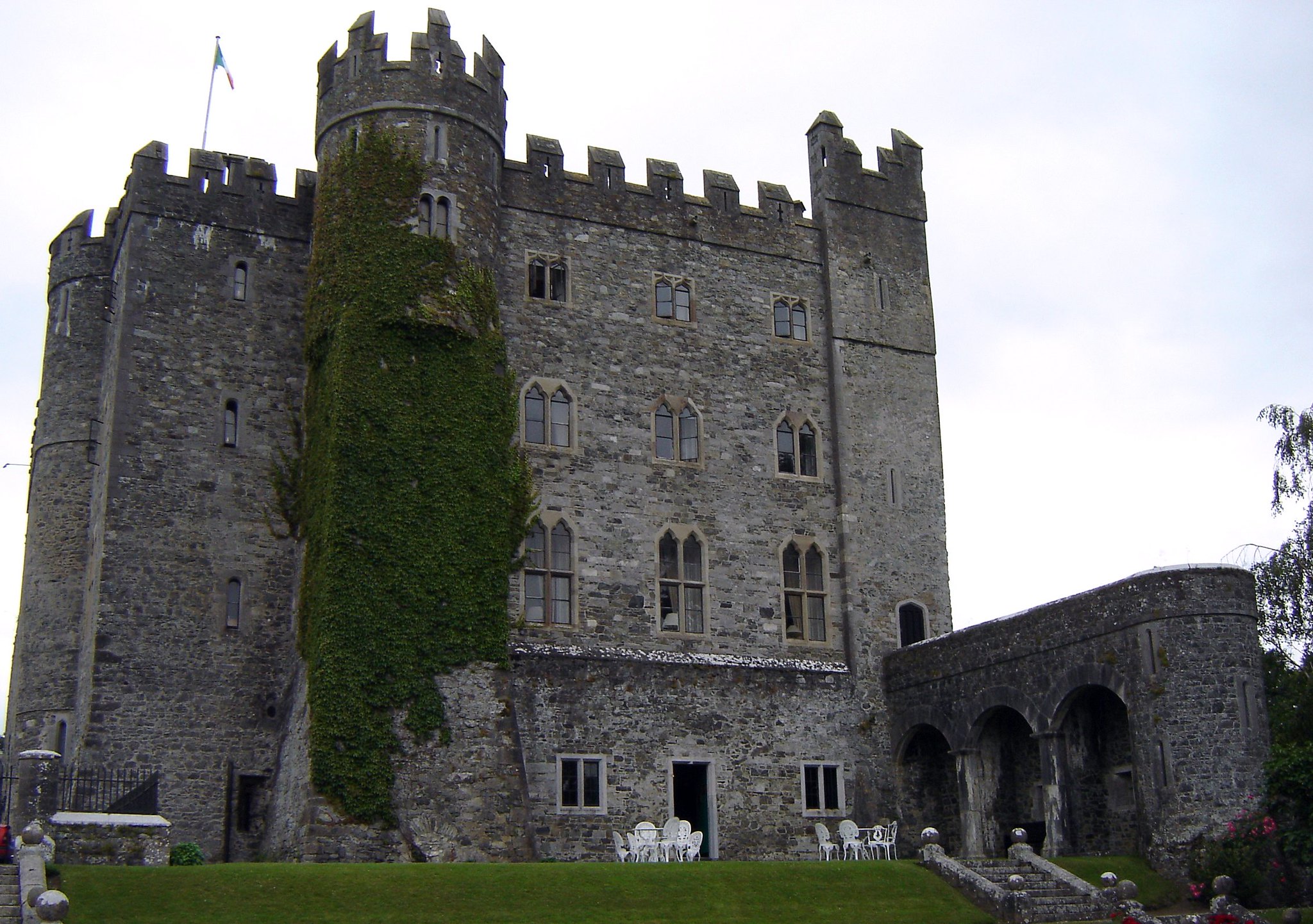
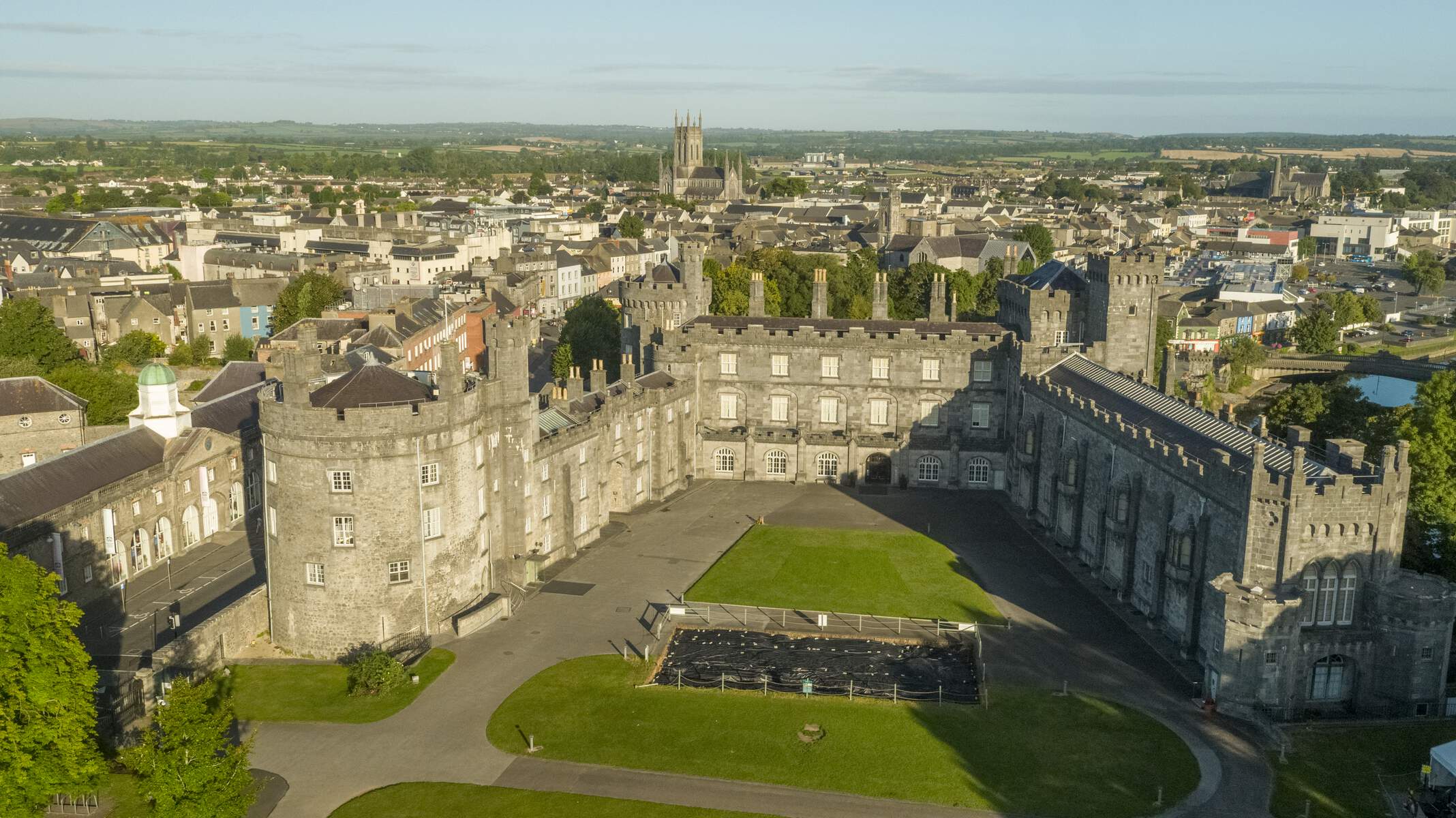
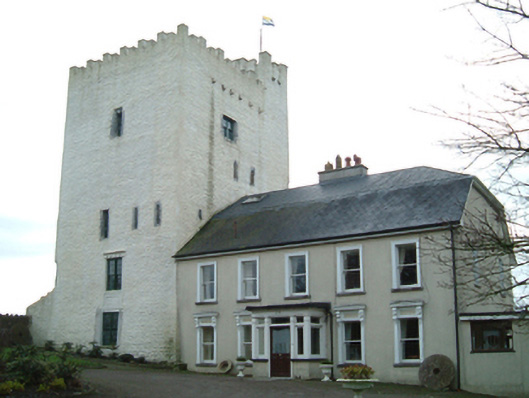
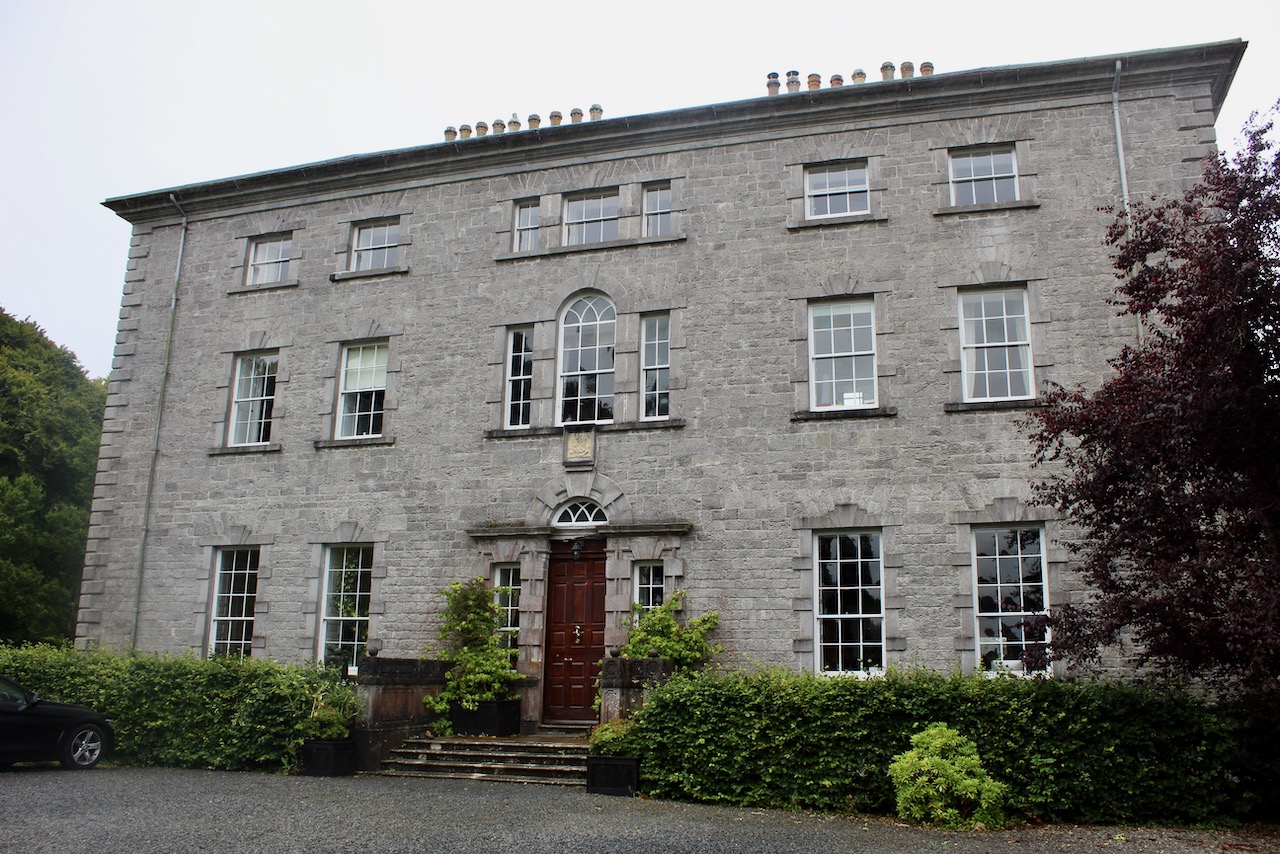
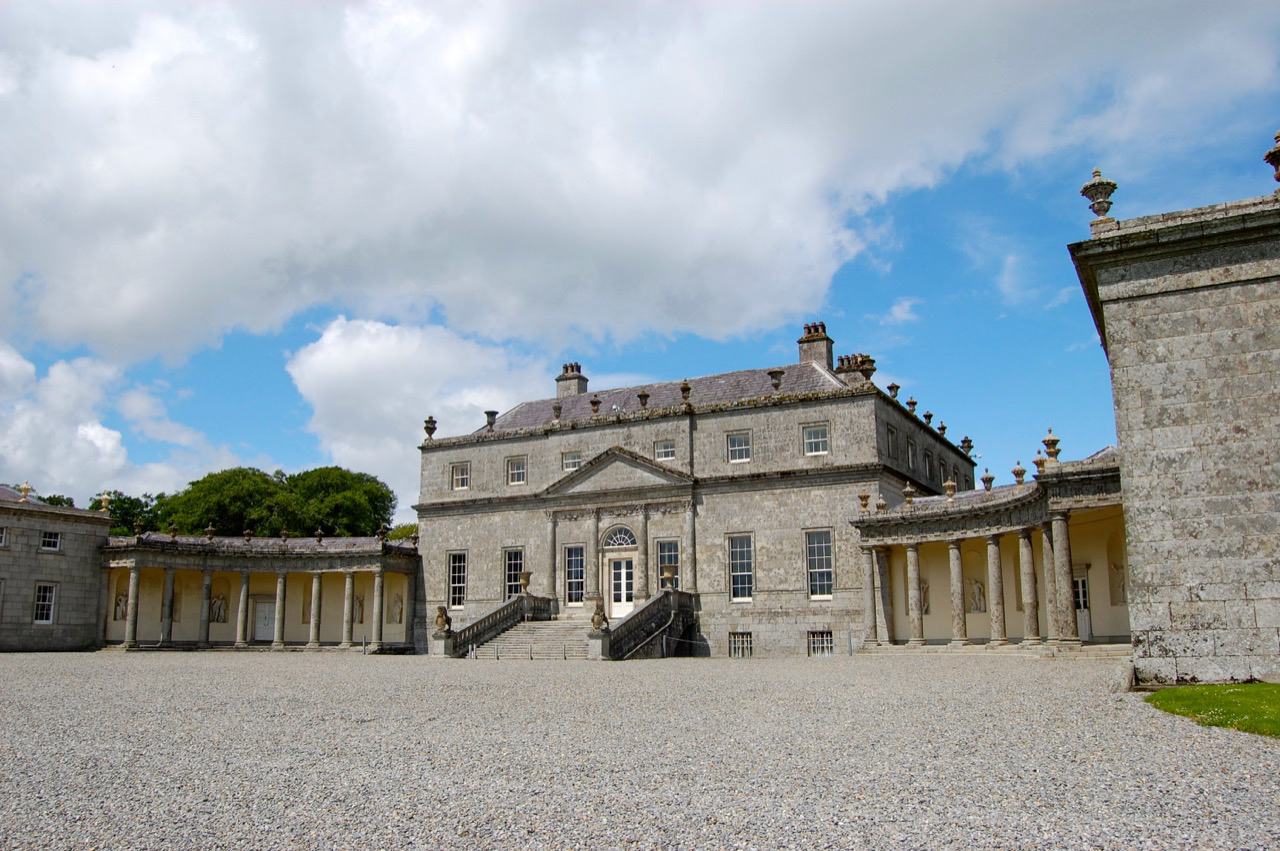
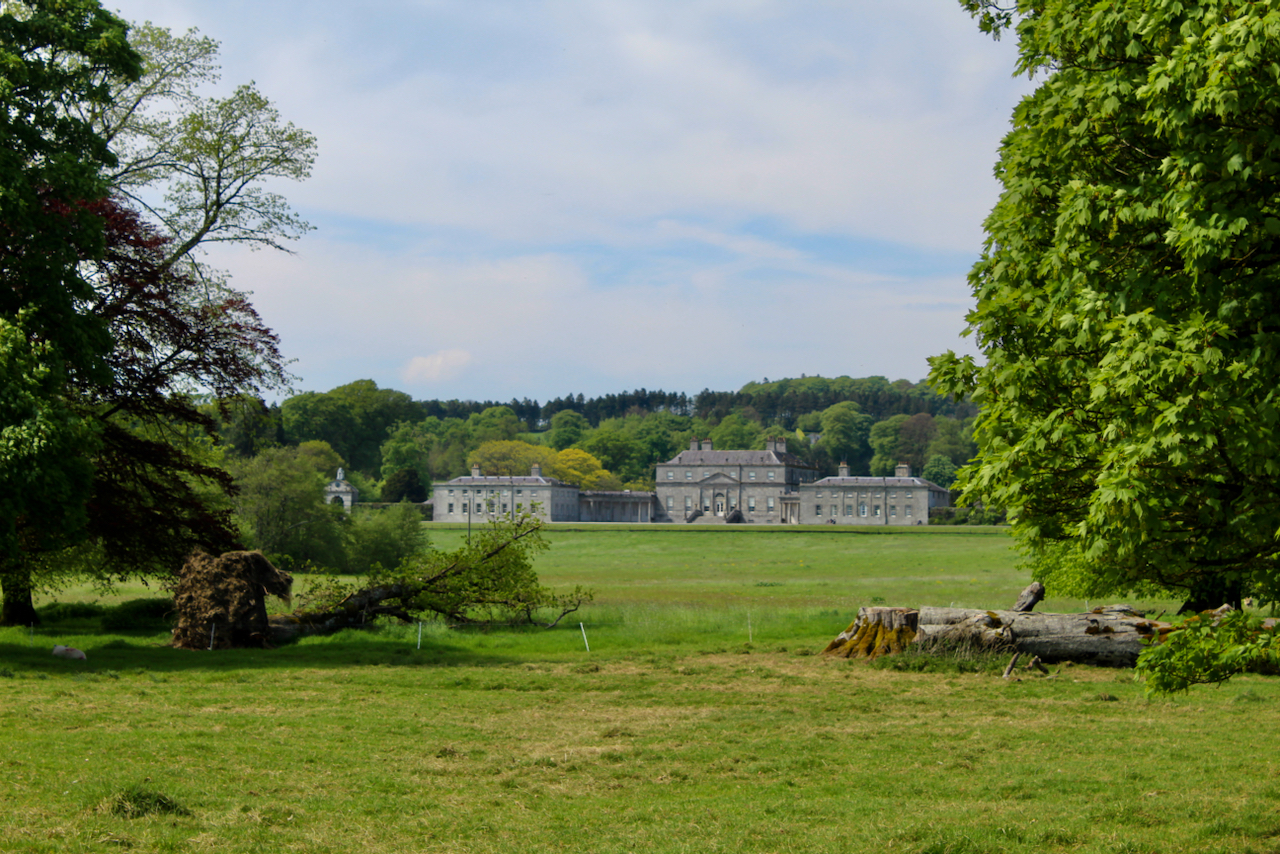
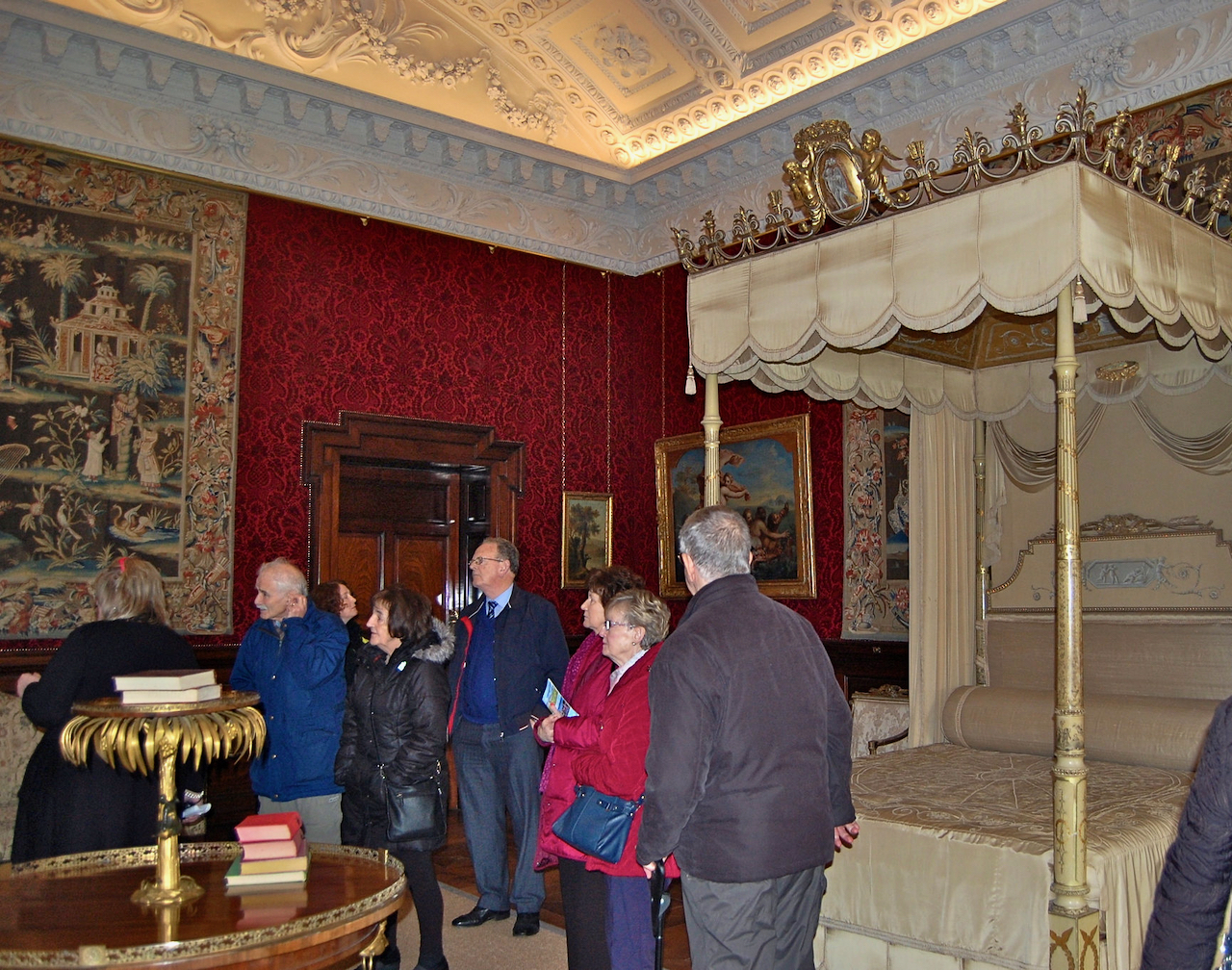
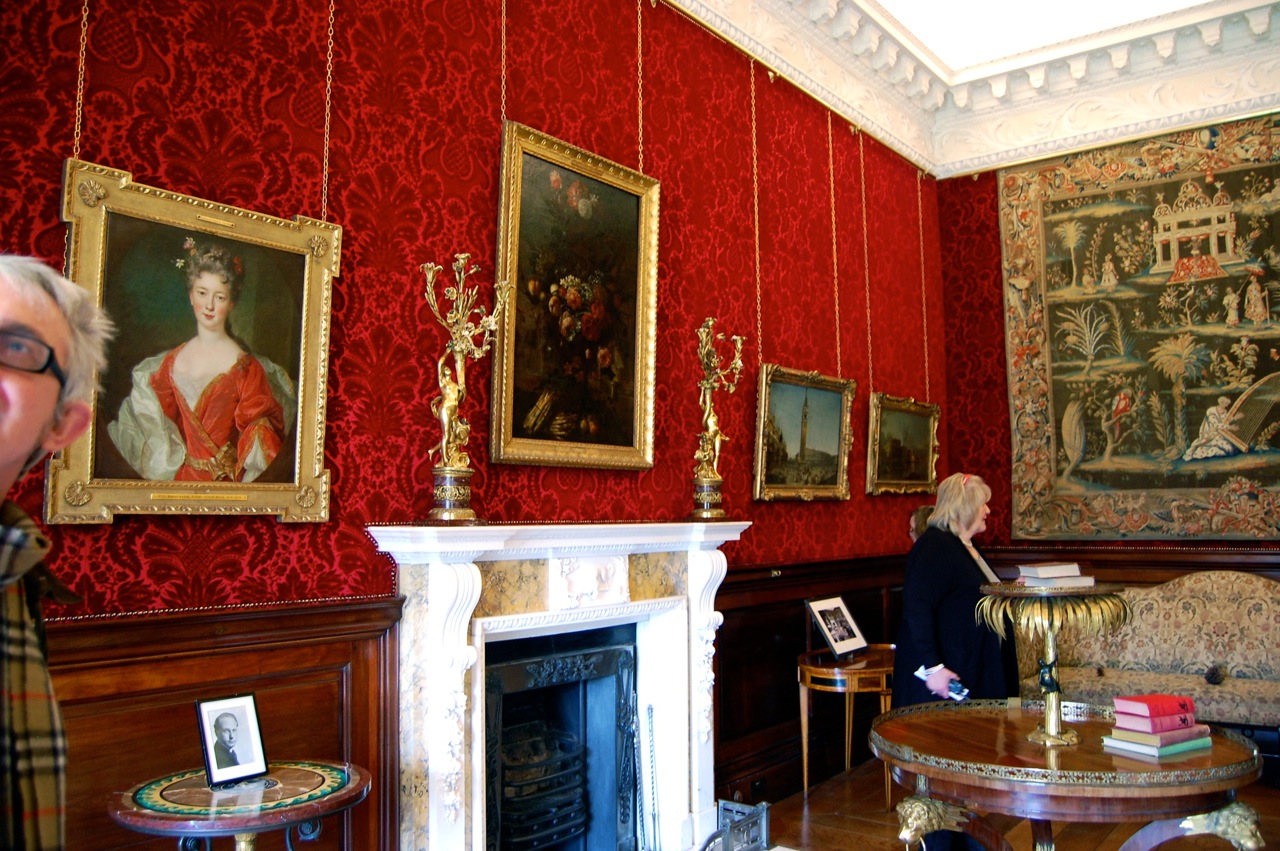
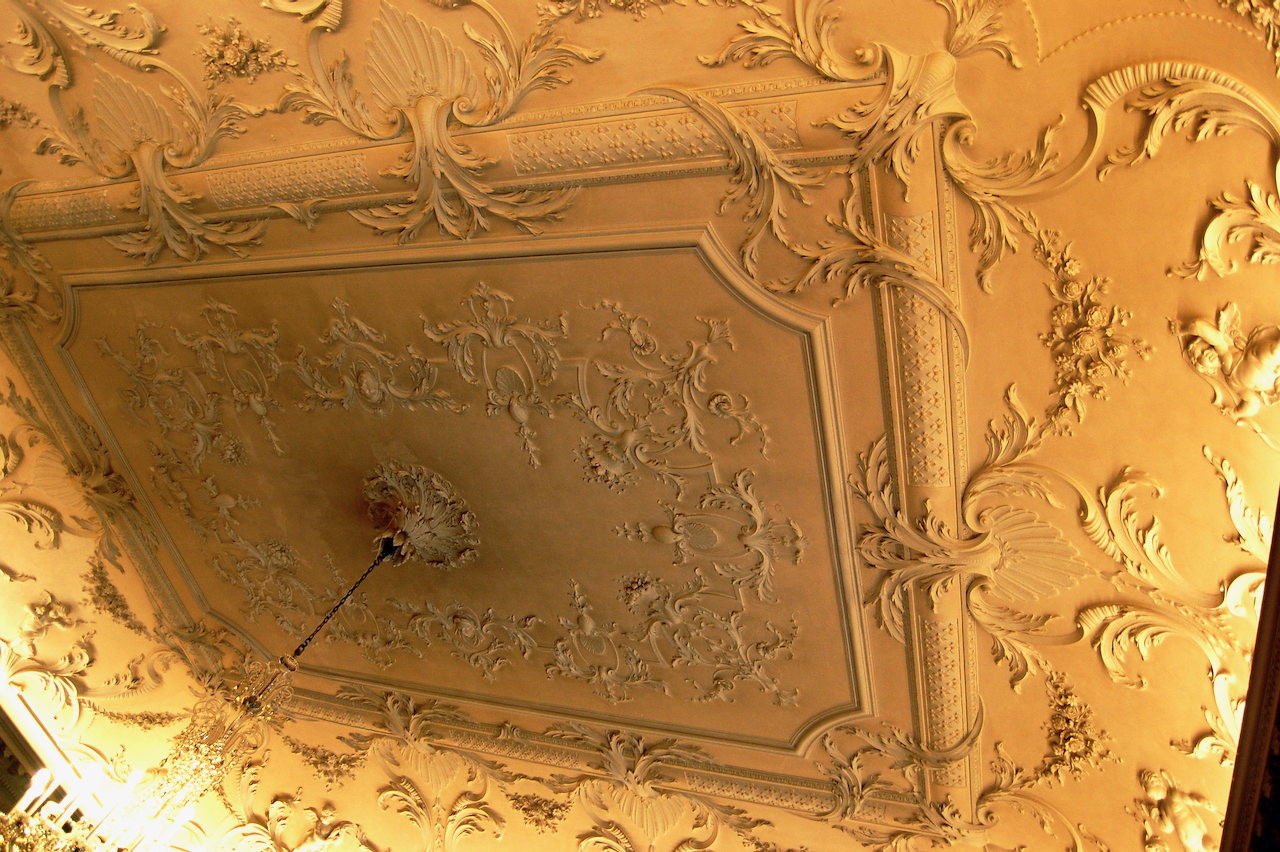
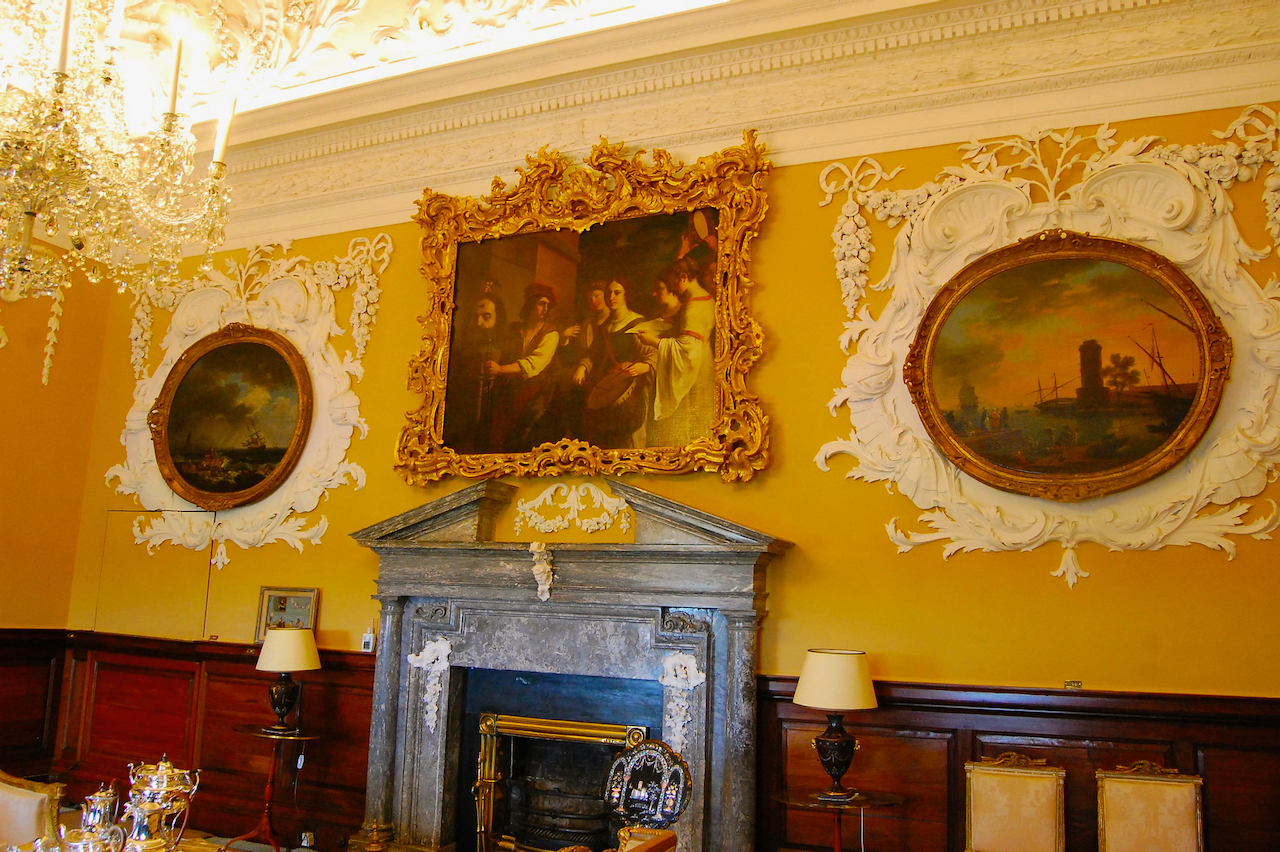
It was built built 1798-1812 for Charles William Bury (1764-1835), later 1st Earl of Charleville, and was designed by Francis Johnston. The castle took 14 years to build, partly because Johnston was busy with other commissions as he was appointed to the Board of Works in 1805. From his work on the castle, Francis Johnston gained many more commissions, and he worked simultaneously on Killeen Castle in County Meath (1802-1812), Markree Castle in County Sligo (1802-1805, see my entry) and Glanmore, County Wicklow (1803-04).
Mark Bence-Jones writes (1988, p. 82) that Charleville Castle is the “finest and most spectacularearly nineteenth century castle in Ireland, Francis Johnston’s Gothic masterpiece, just as Townley Hall, County Louth, is his Classical masterpiece.” [1]
In Irish Houses and Gardens. From the Archives of Country Life, Sean O’Reilly tells us that Charles William Bury and his wife, Catherine Maria née Dawson, had some hand in drawing plans for the building. He tells us: “Bury’s intention, as he wrote in his own unfinished account of the work, was to ‘exhibit specimens of Gothic architecture’ adapted to ‘chimneypieces, ceilings, windows, balustrades, etc.’ but without excluding ‘convenience and modern refinements in luxury.’ This recipe for the Georgian gothic villa had already been used at Horace Walpole’s Strawberry Hill in London, and Bury’s cultivated lifestyle in England certainly would have made him aware of that house and its long line of descendants.” [2]
Charles William Bury was President of the Royal Irish Academy between 1812 and 1822. He saw himself as the castle’s architect.
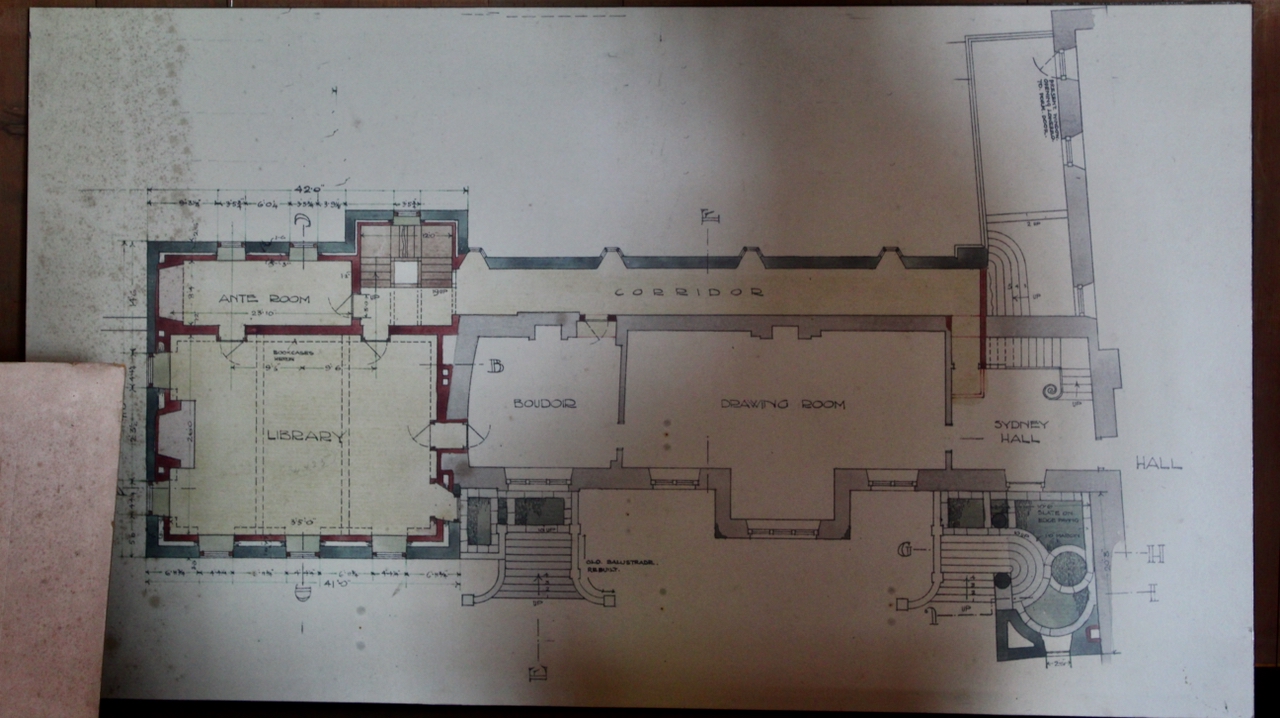
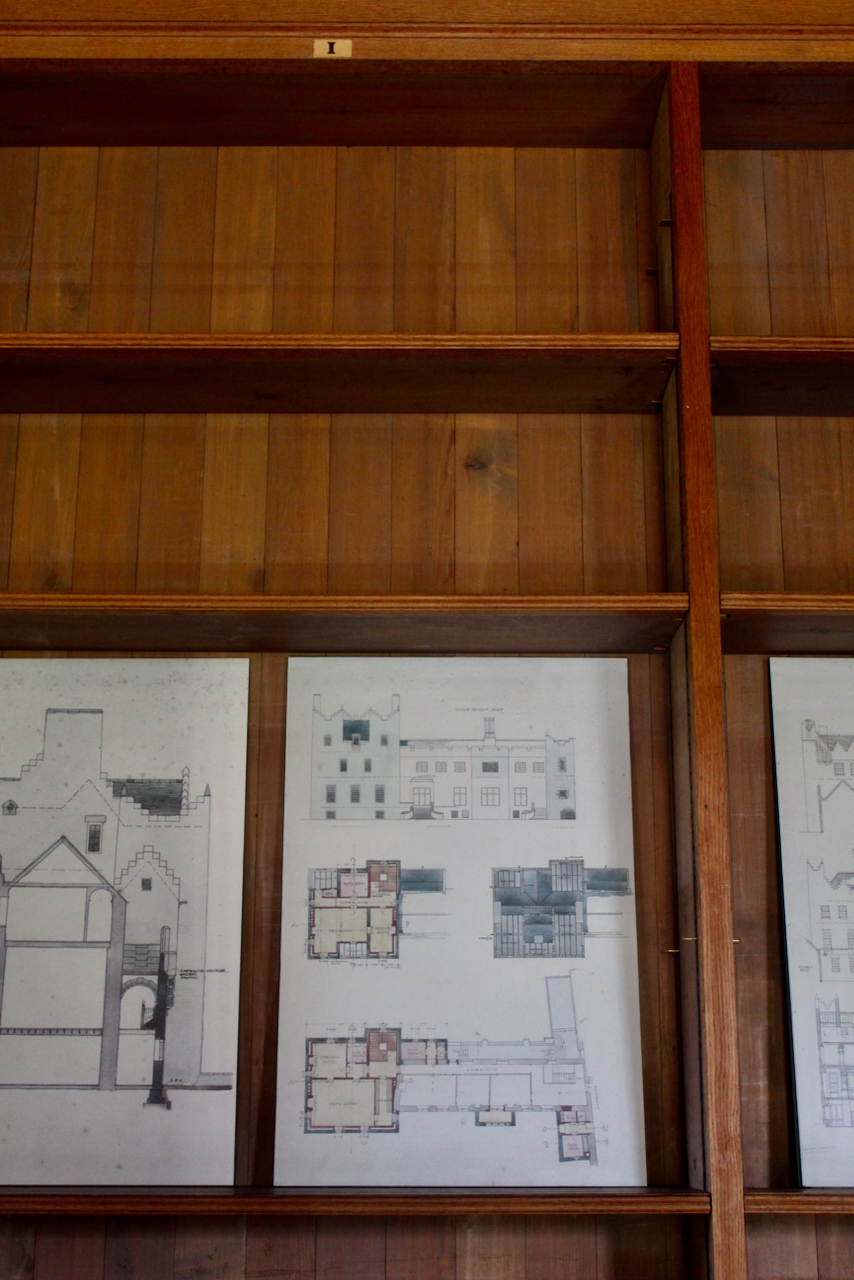
O’Reilly continues: “It may be that Bury himself – possibly with the assistance of his wife – outlined some of the more dramatic features in his new house, as is suggested by a number of drawings relating to the final design which still survive, now in the Irish Architectural Archive in Dublin. These all show the crude hand of an amateur, but equally betray a total freedom of imagination unshackled by the discipline of architectural training. In particular, a drawing of the exterior shows the smaller tower rising up out of the ground like a tree, with its base spreading and separating as it grows into the ground like roots.” [2]
Charleville Forest was written up by Mark Girouard for Country Life in 1962. Just over fifty-three years later Country Life published another article (October 2016), this time by Dr Judith Hill, awarded a doctorate for her work on the Gothic in Ireland.
Hill researched the role that Charles William Bury’s wife Catherine played in the design of Charleville, and shared her findings in a lecture given to the Offaly History Society and published on the Offaly History blog. She tells us:
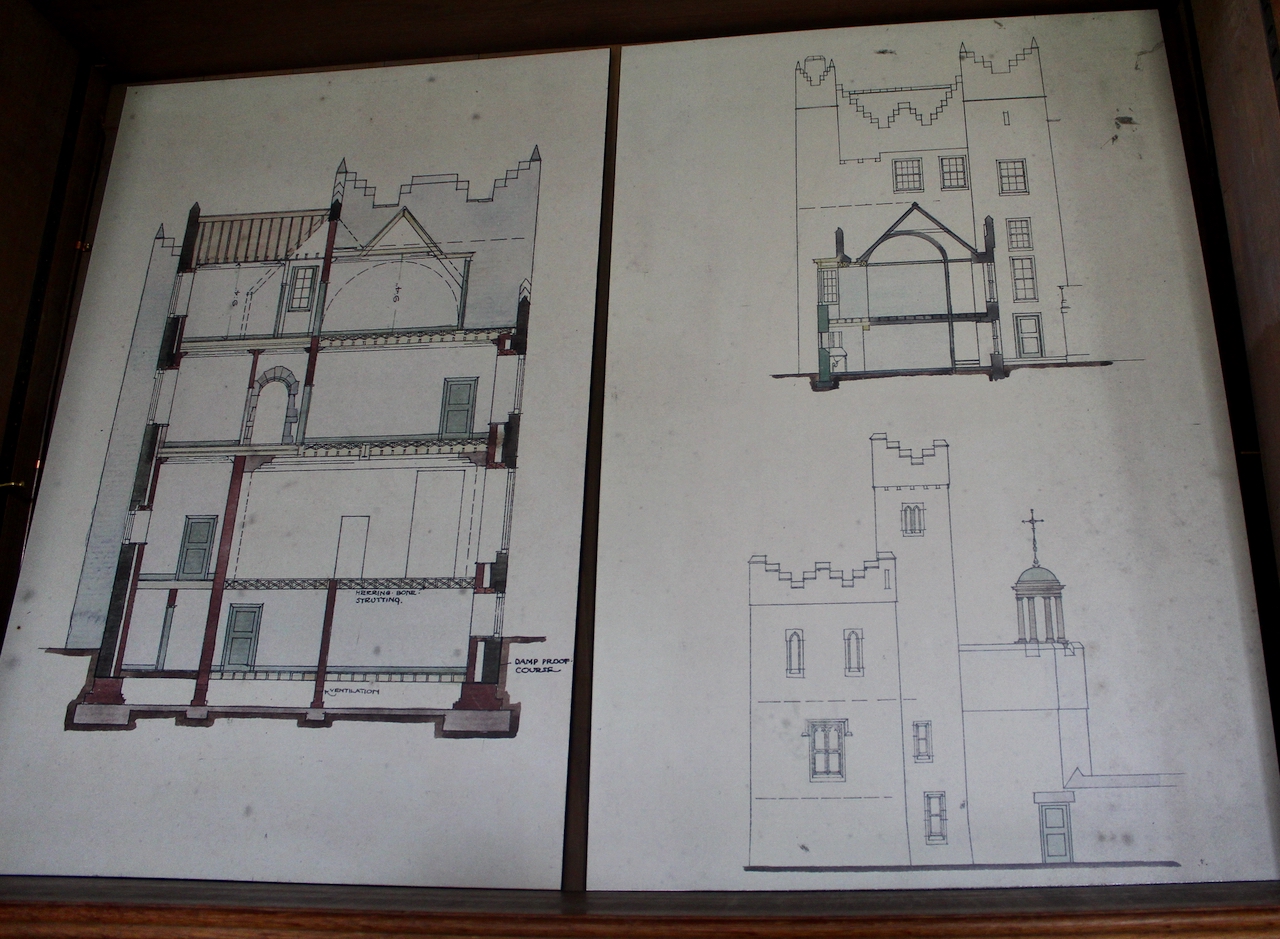
“…it was time to look more closely at the collection of Charleville drawings which had been auctioned in the 1980s. Many of these are in the Irish architectural Archive, and those that were not bought were photographed. Here I found two pages of designs for windows that were signed by Catherine (‘CMC’: Catherine Maria Charleville). There is a sketch of a door annotated in her hand writing. There is a drawing showing a section through the castle depicting the wall decoration and furniture that had been attributed to Catherine. Rolf Loeber had a perspective drawing of the castle which showed the building, not quite as it was built, in a clearing in a wood. The architecture was quite confidently drawn and the trees were excellent. It was labelled ‘Countess Charleville’. I looked again at some of the sketches of early ideas for the castle in the Irish Architectural Archive. In one, the building design was hesitant while the trees were detailed; an architect wouldn’t bother with such good trees for an early design sketch. There was another that had an architect’s stamp; the massing of the building quickly drawn, the surrounding trees extremely shadowy. I could see Catherine and [Francis] Johnston talking about the design in these drawings.” [3]
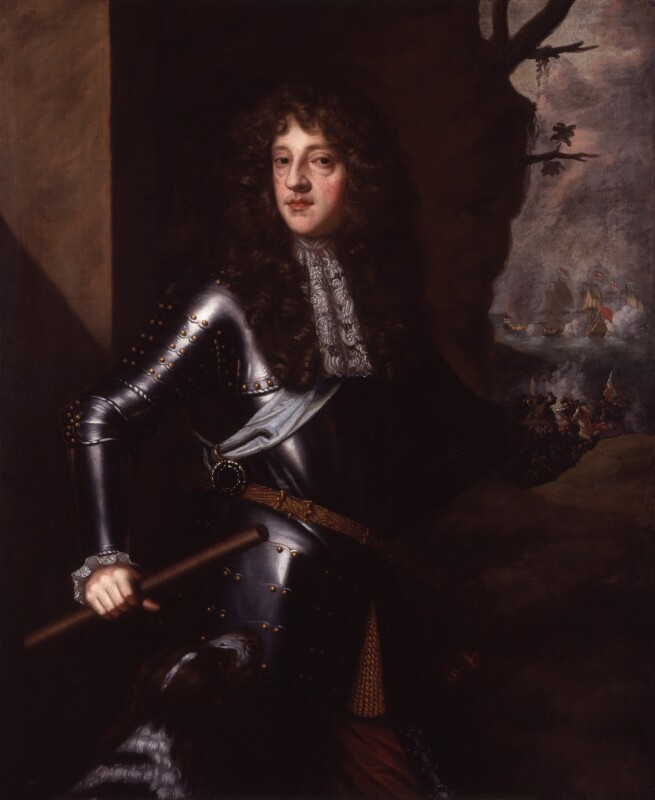
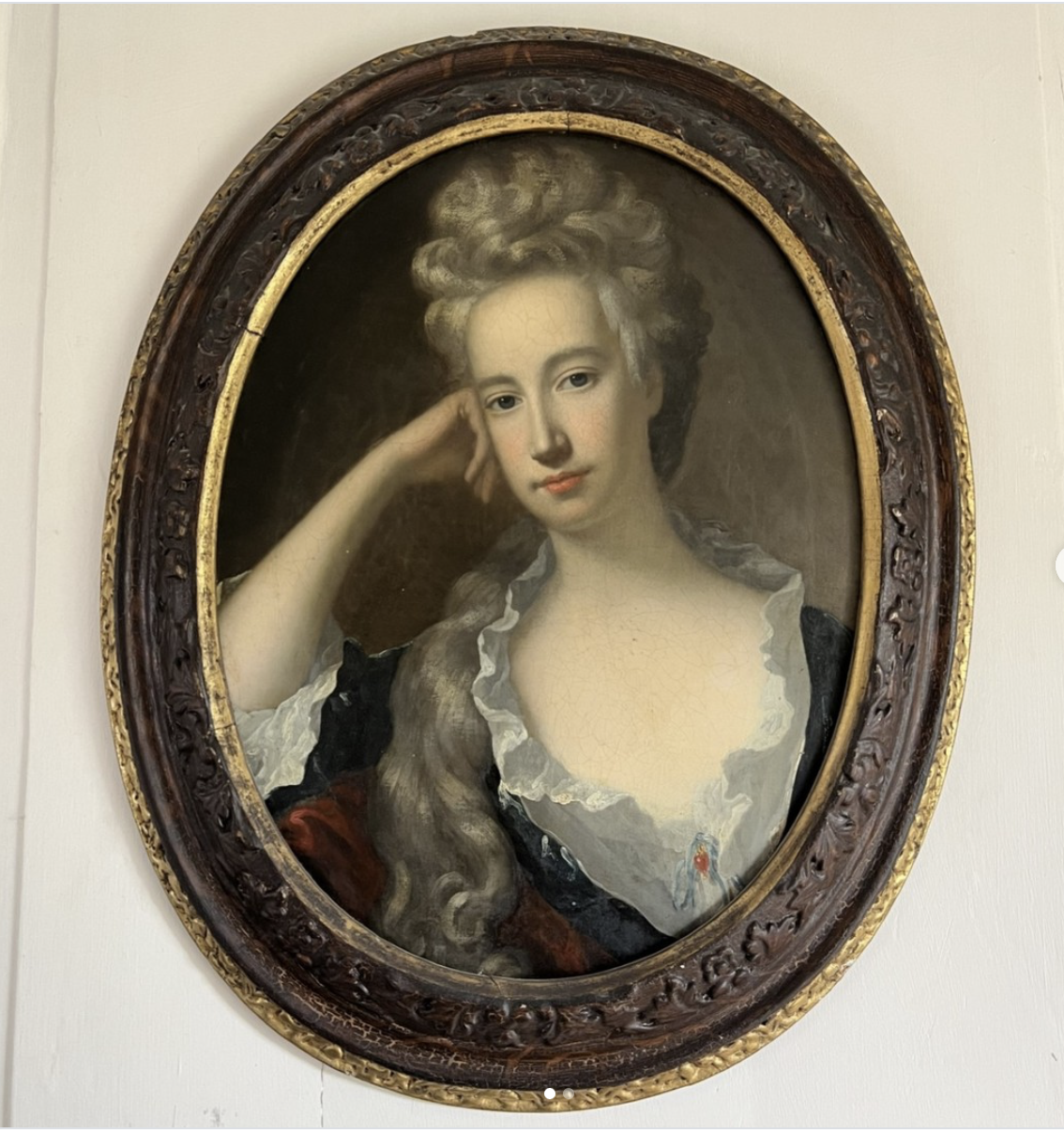
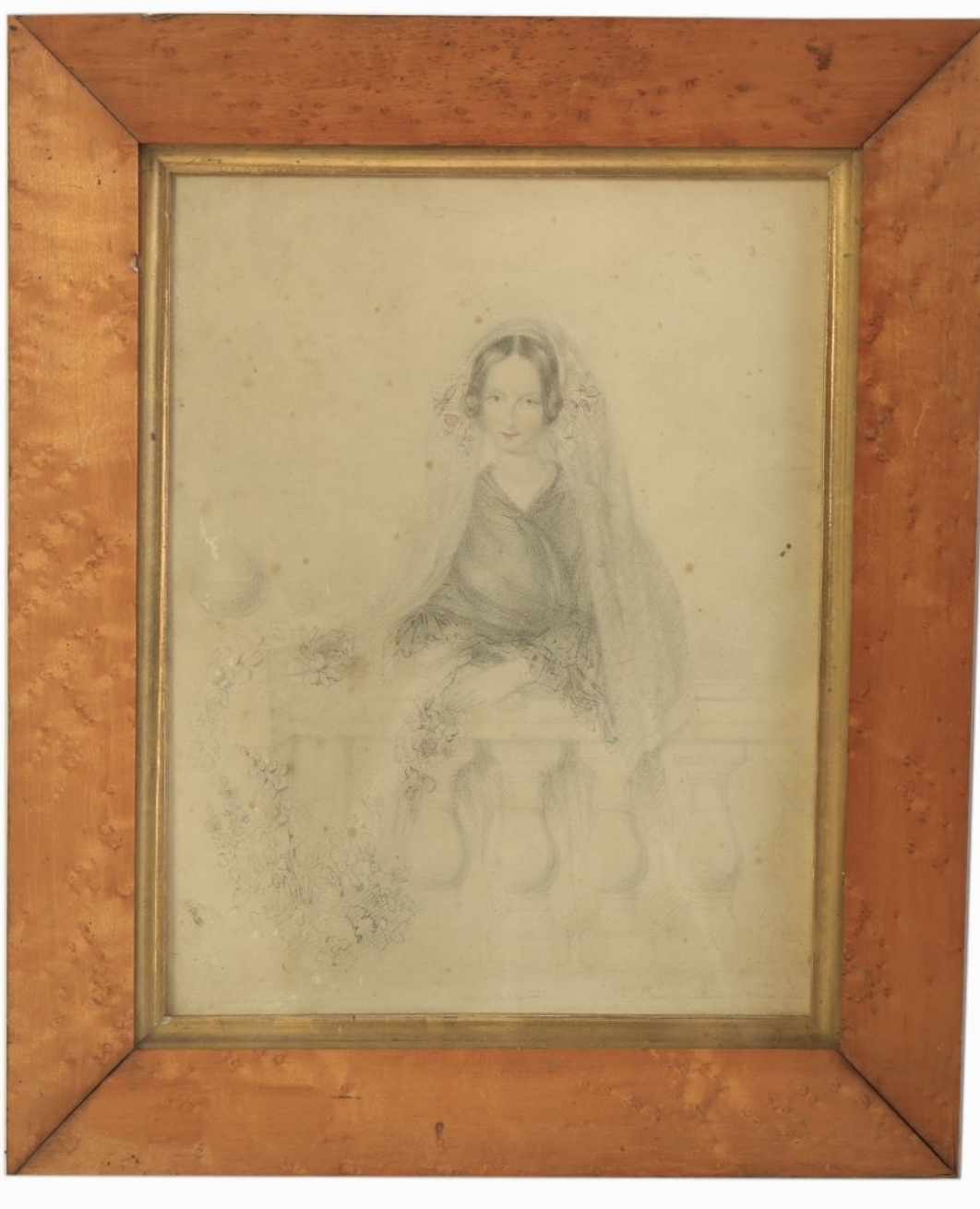
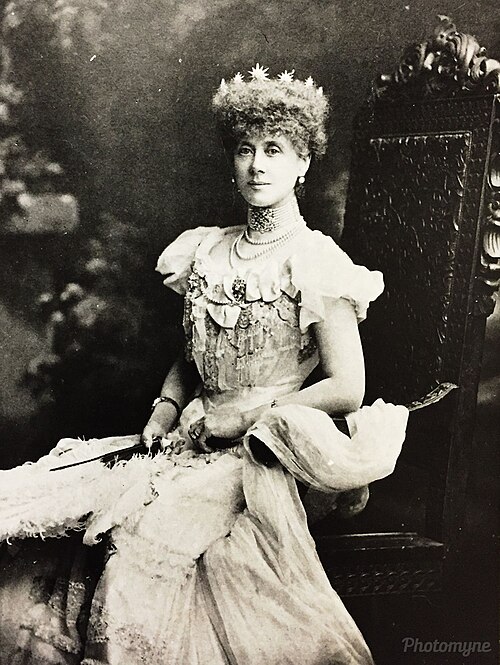
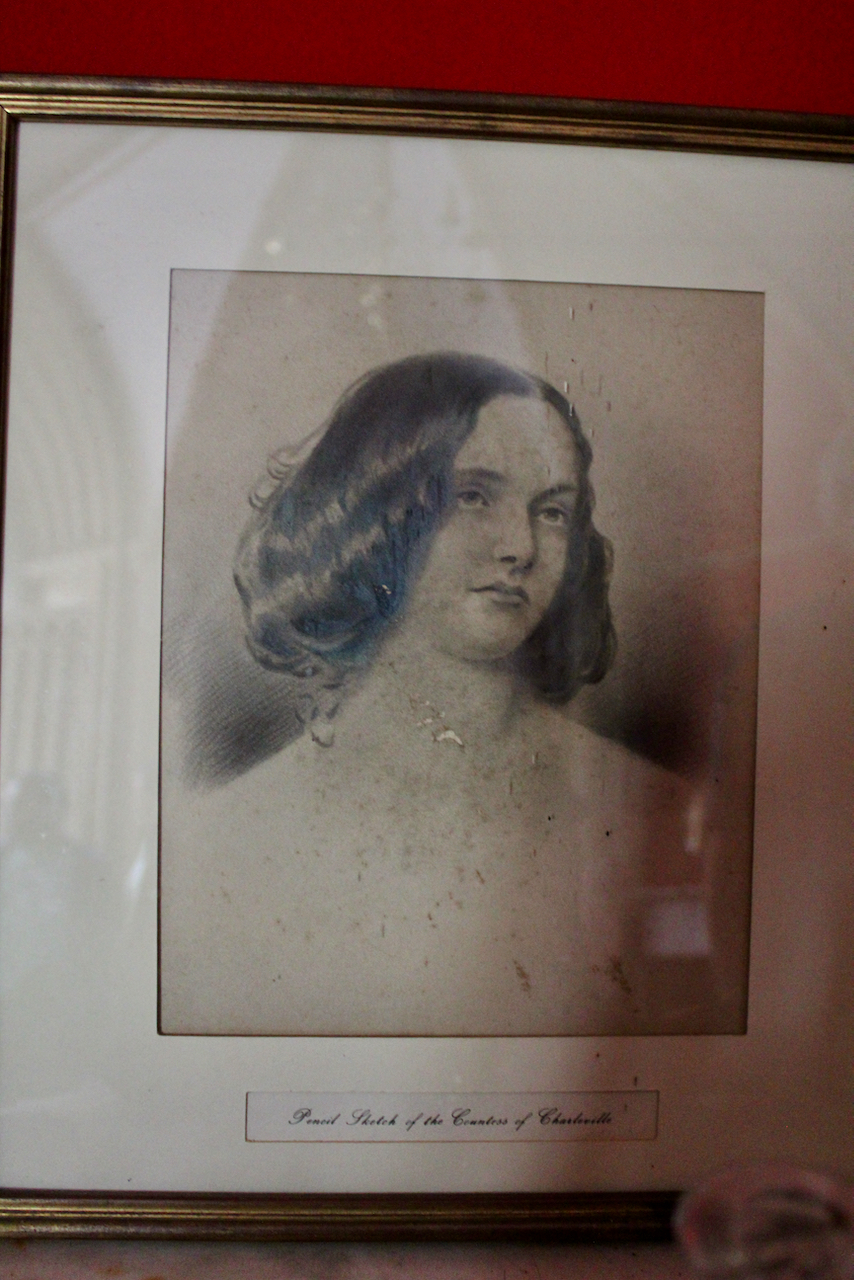
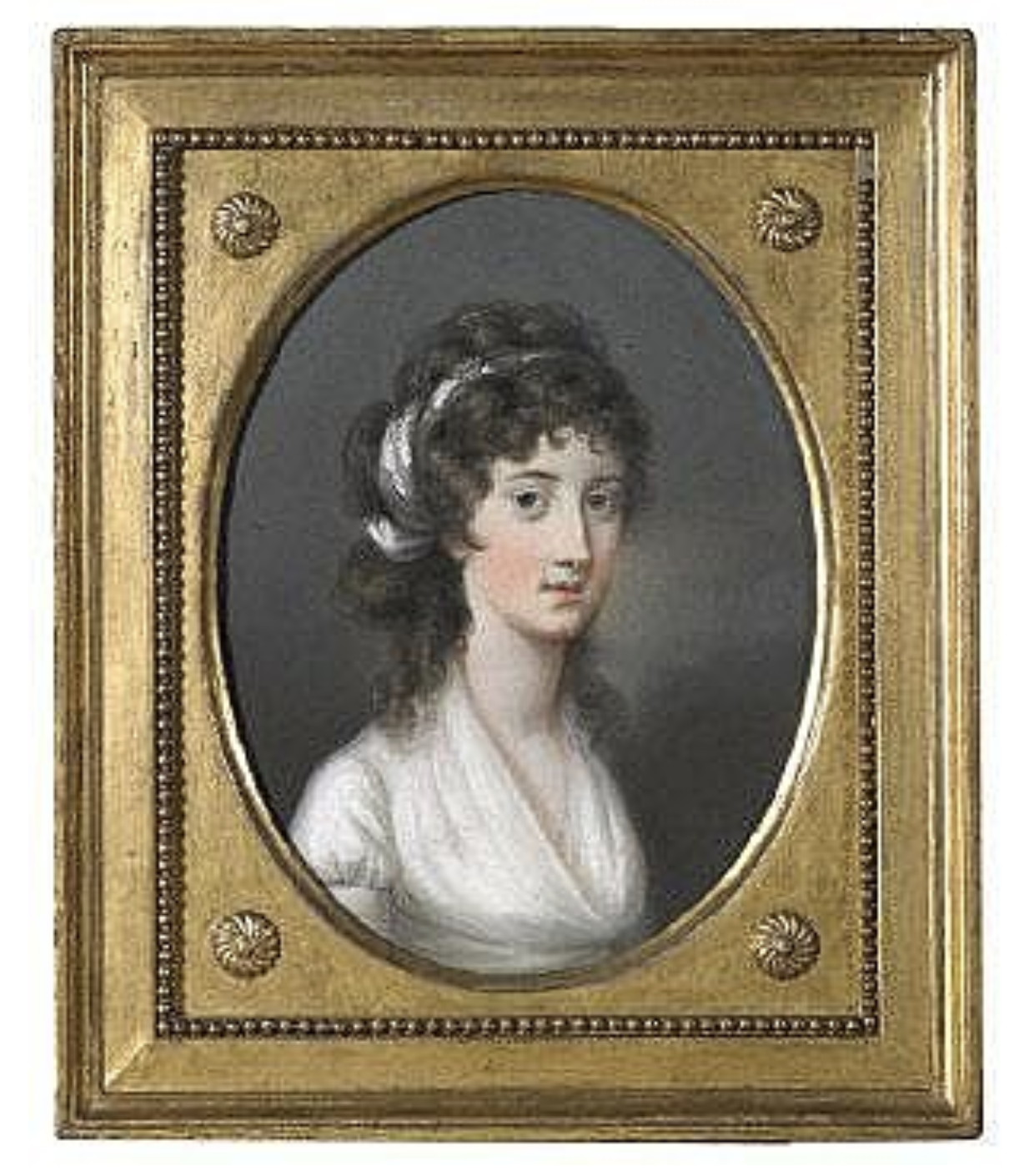
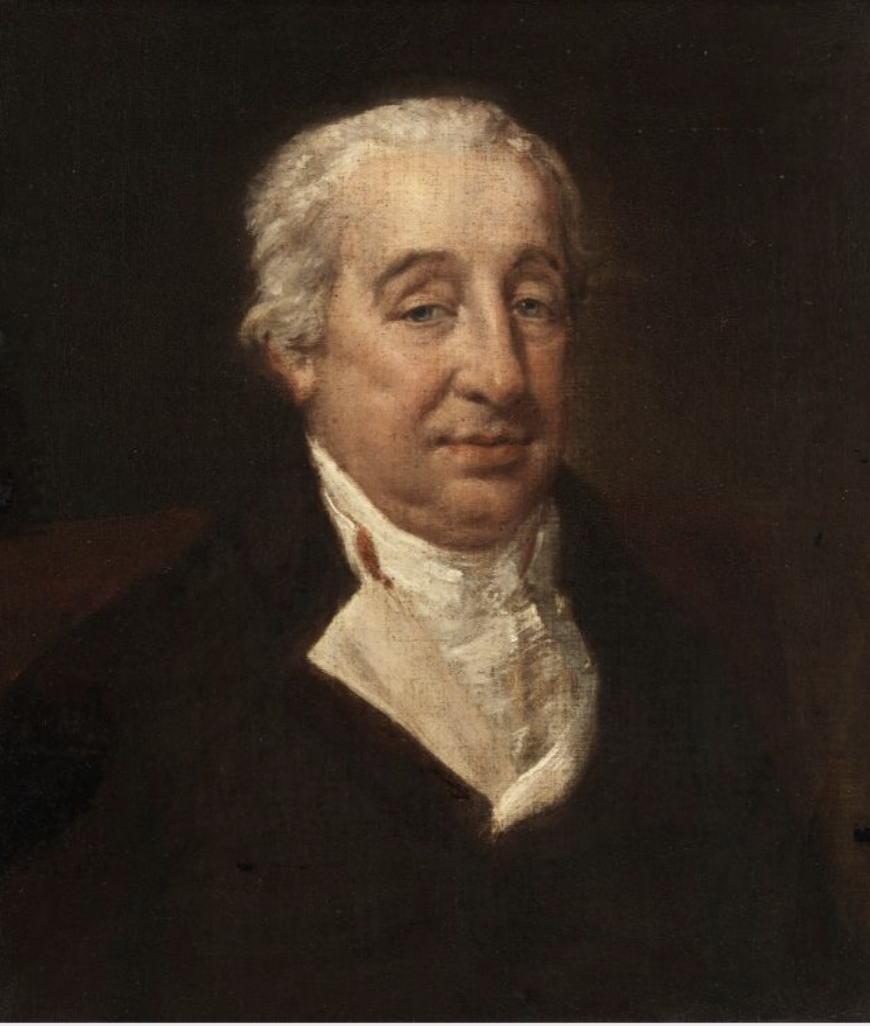
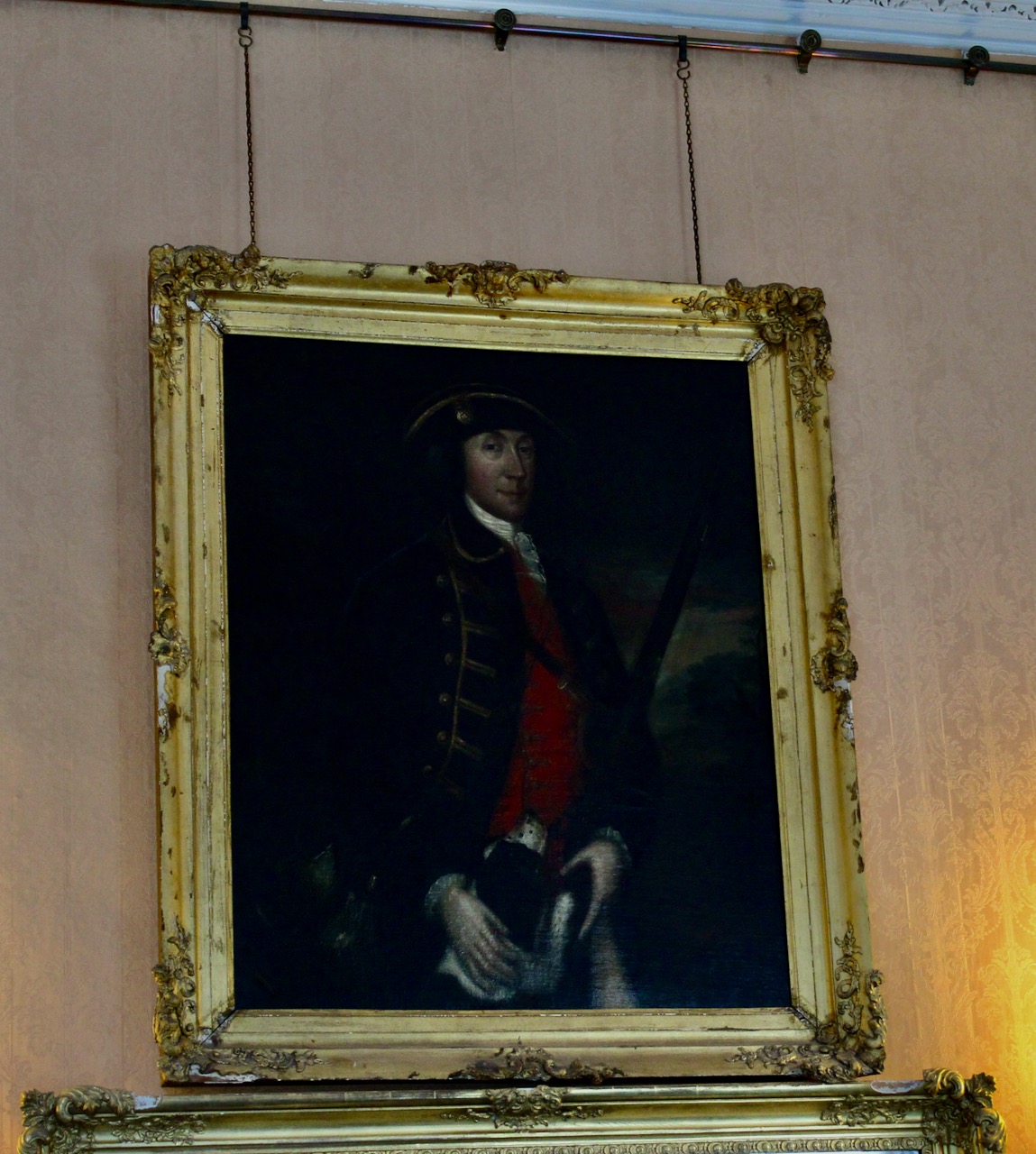
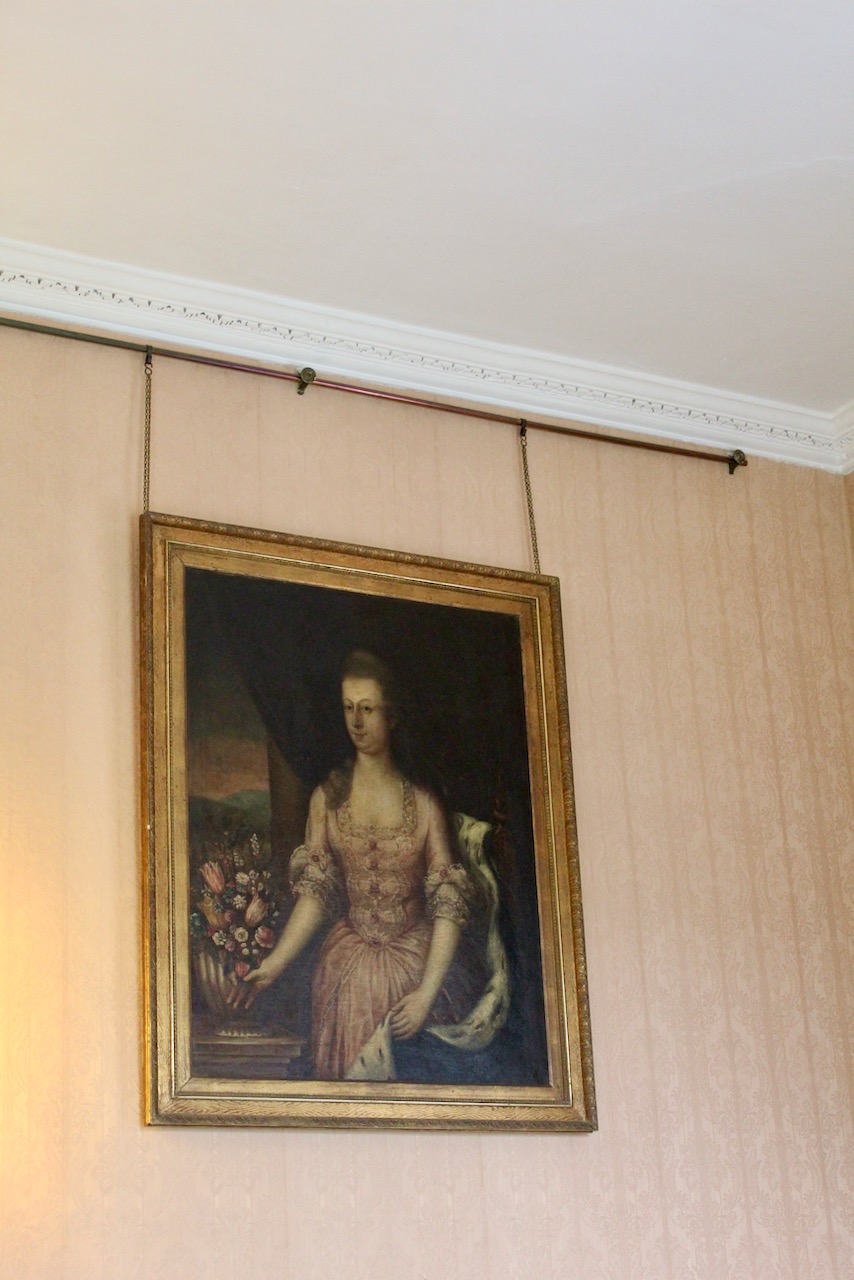
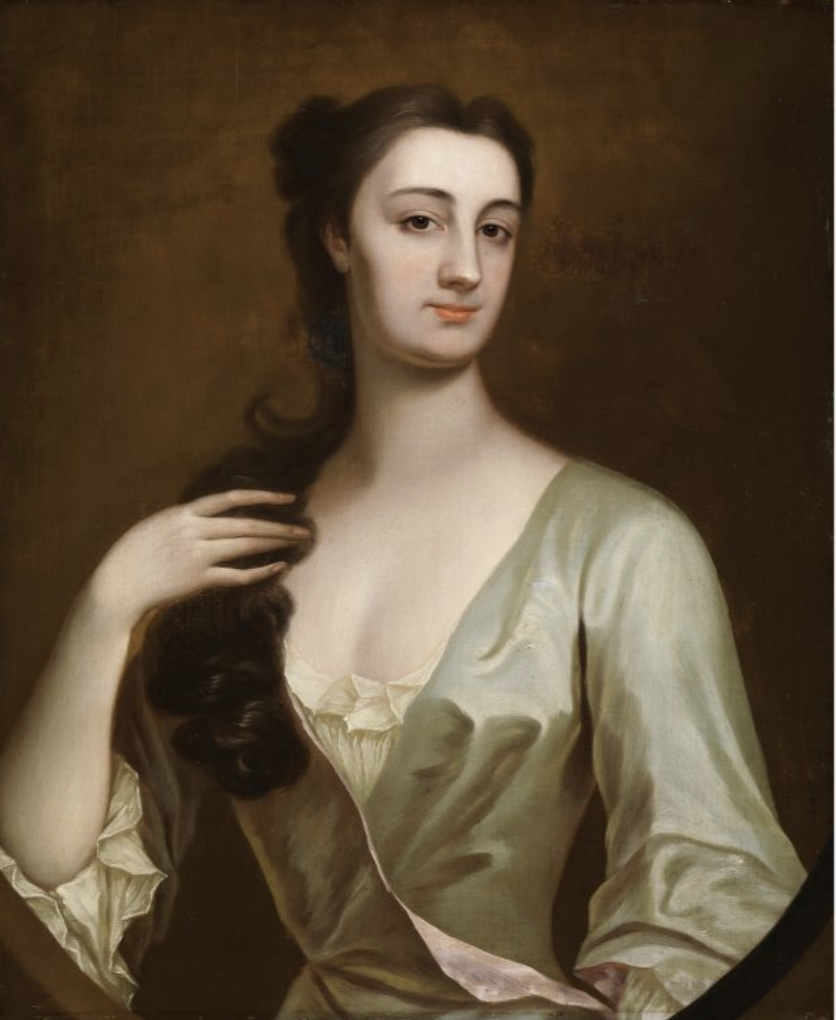
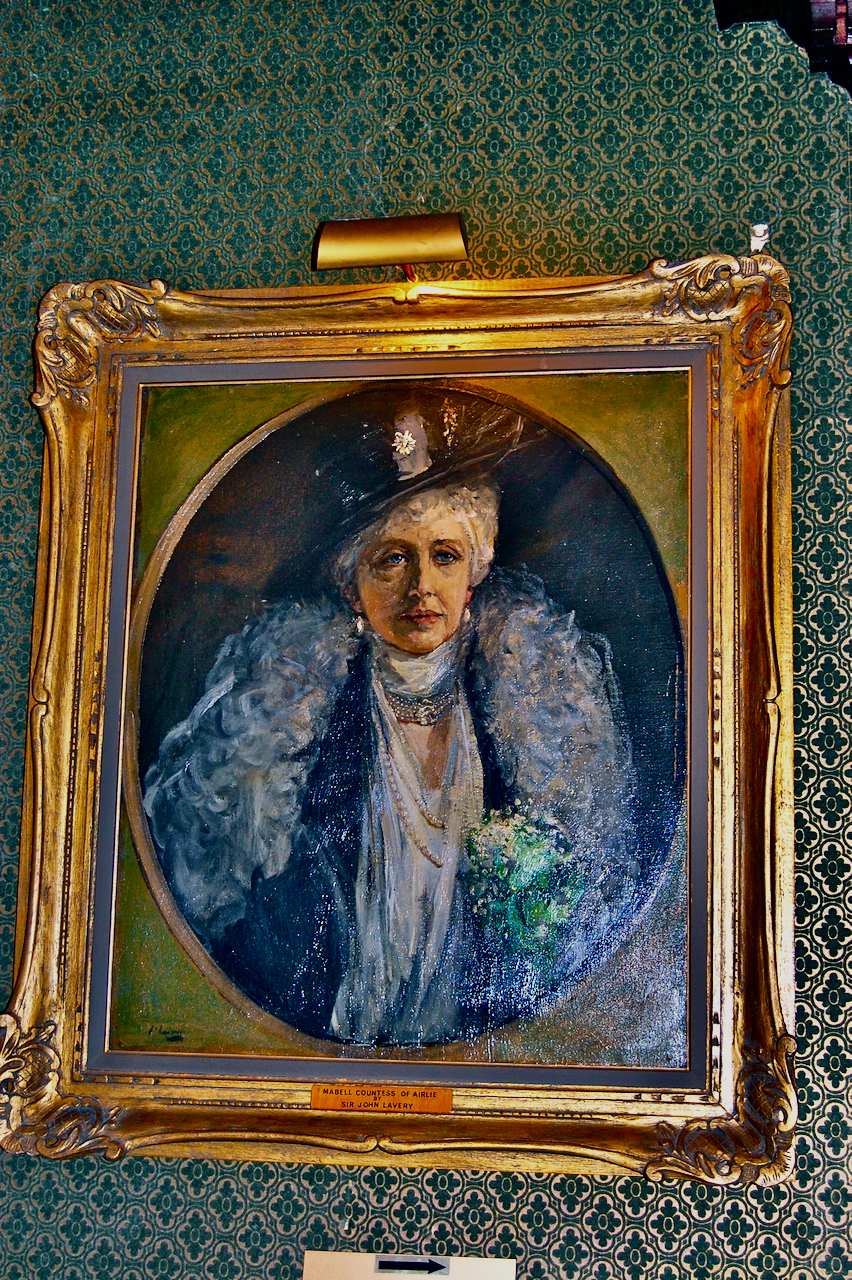
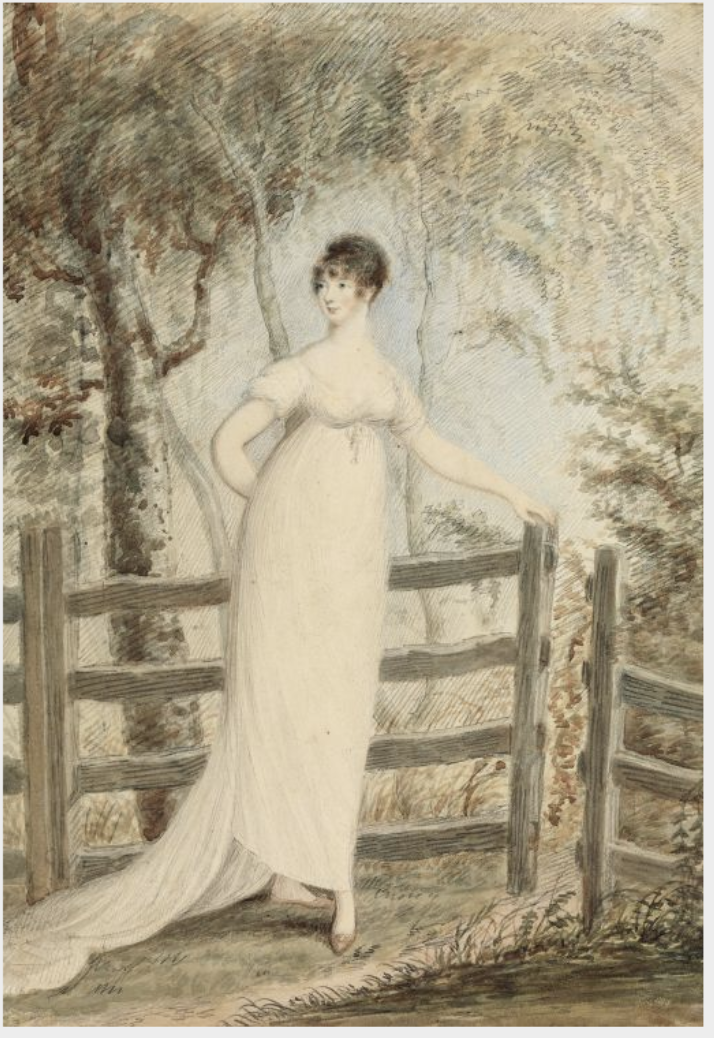
One of the Countesses of Charleville, though I don’t know which one.PossiblyHarriet Charlotte Beaujolois, the third daughter of Col. John Campbell of Shawfield in Scotland and Lady Charlotte Susan Maria Campbell.She was the second countess of Charleville and mother of Beaujolois or Little Beau.
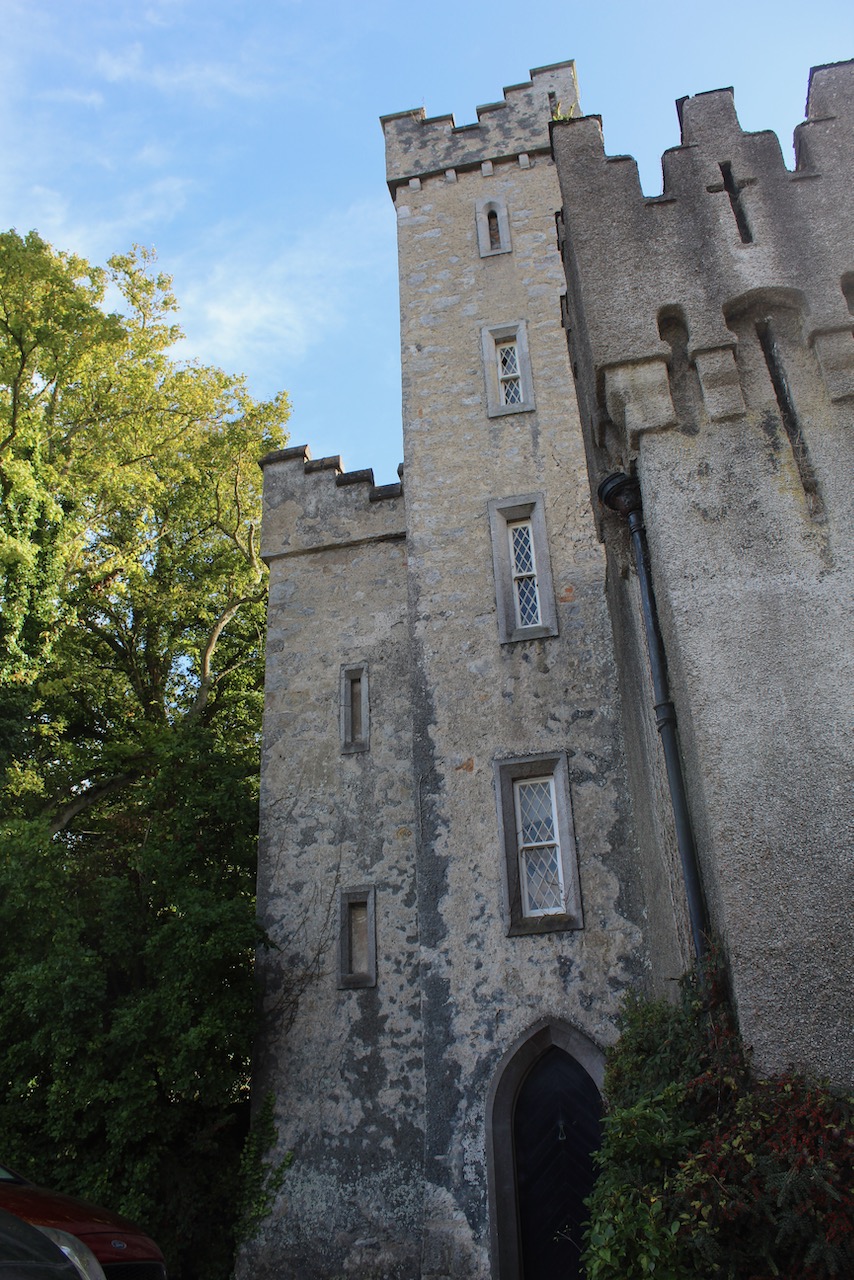
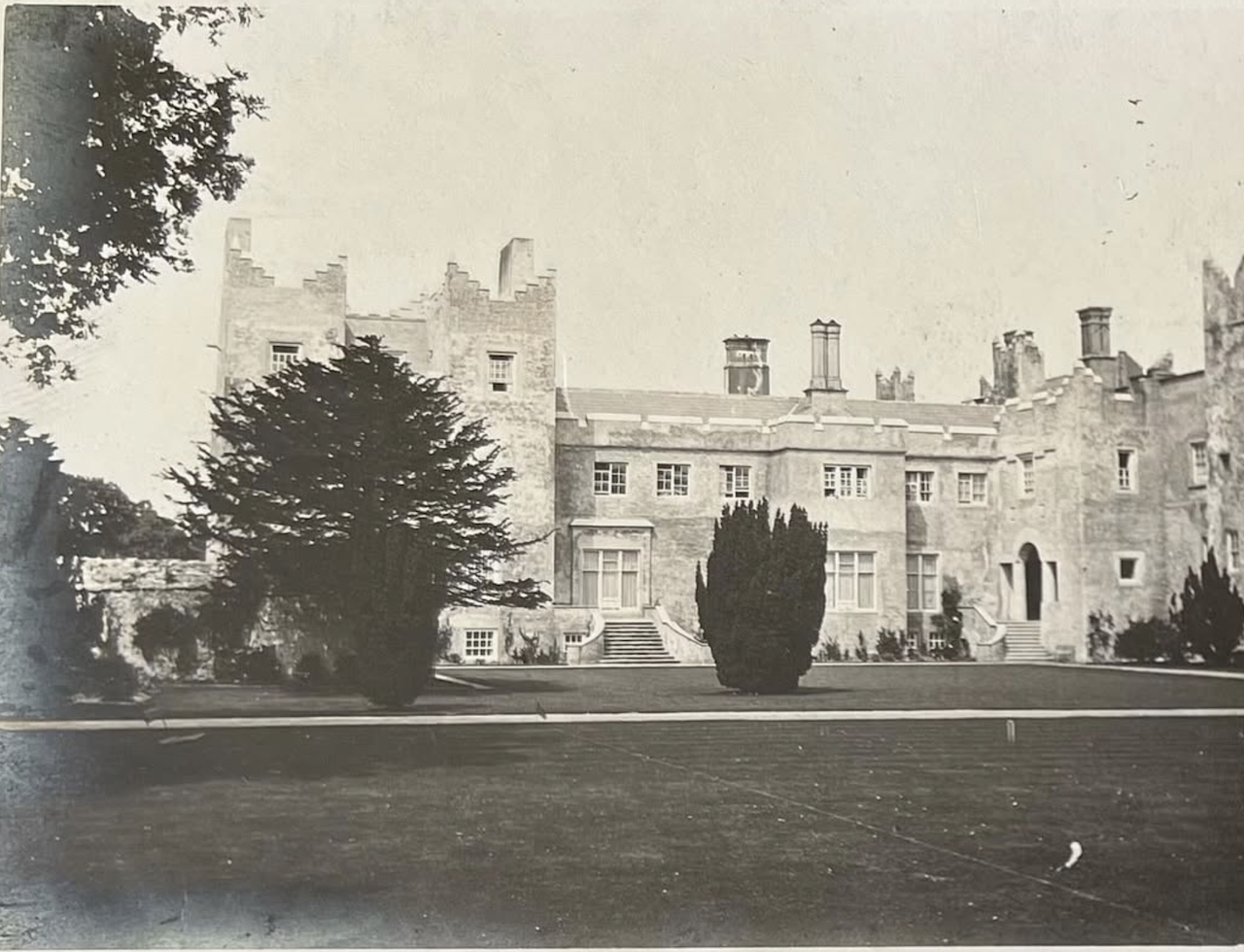
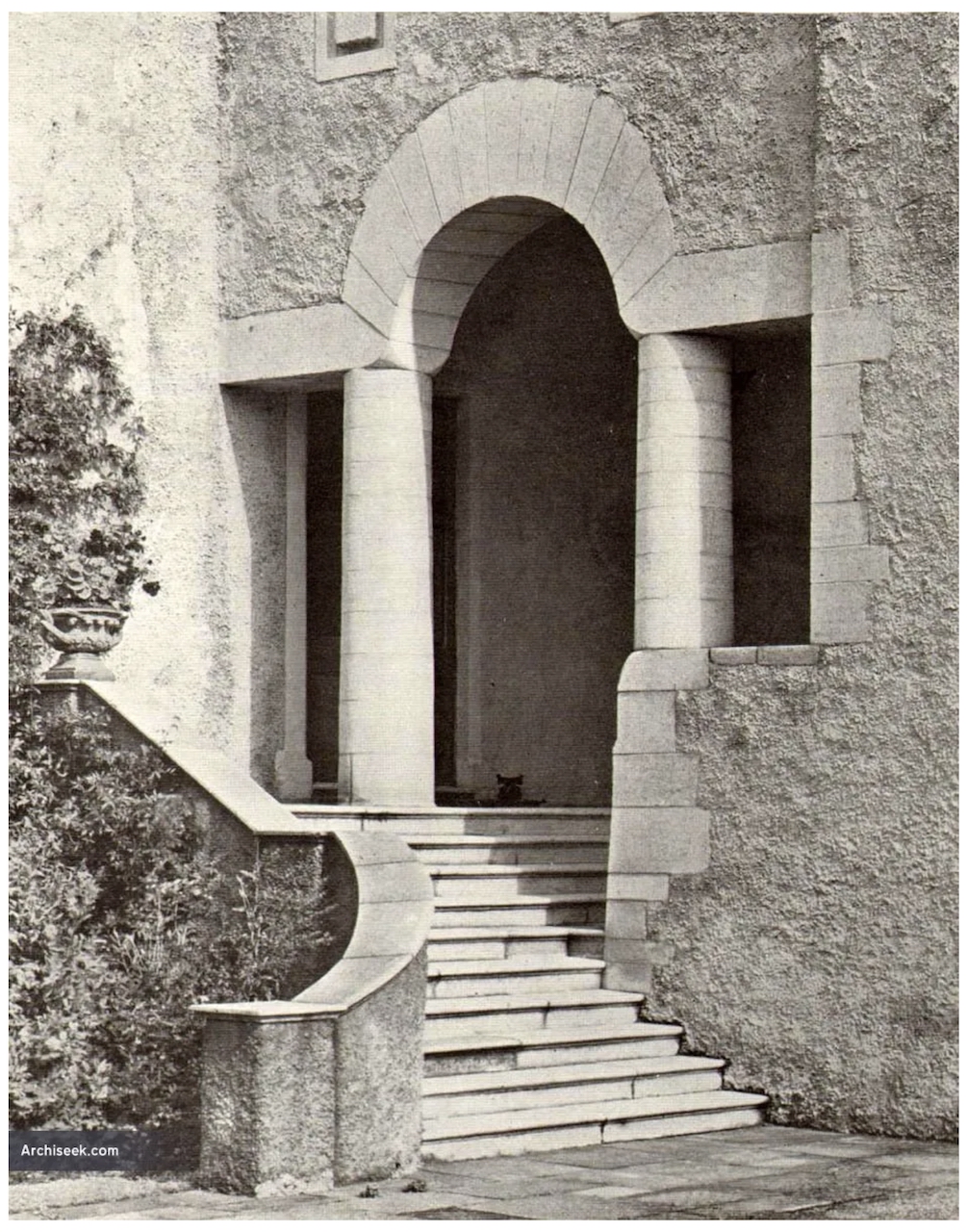
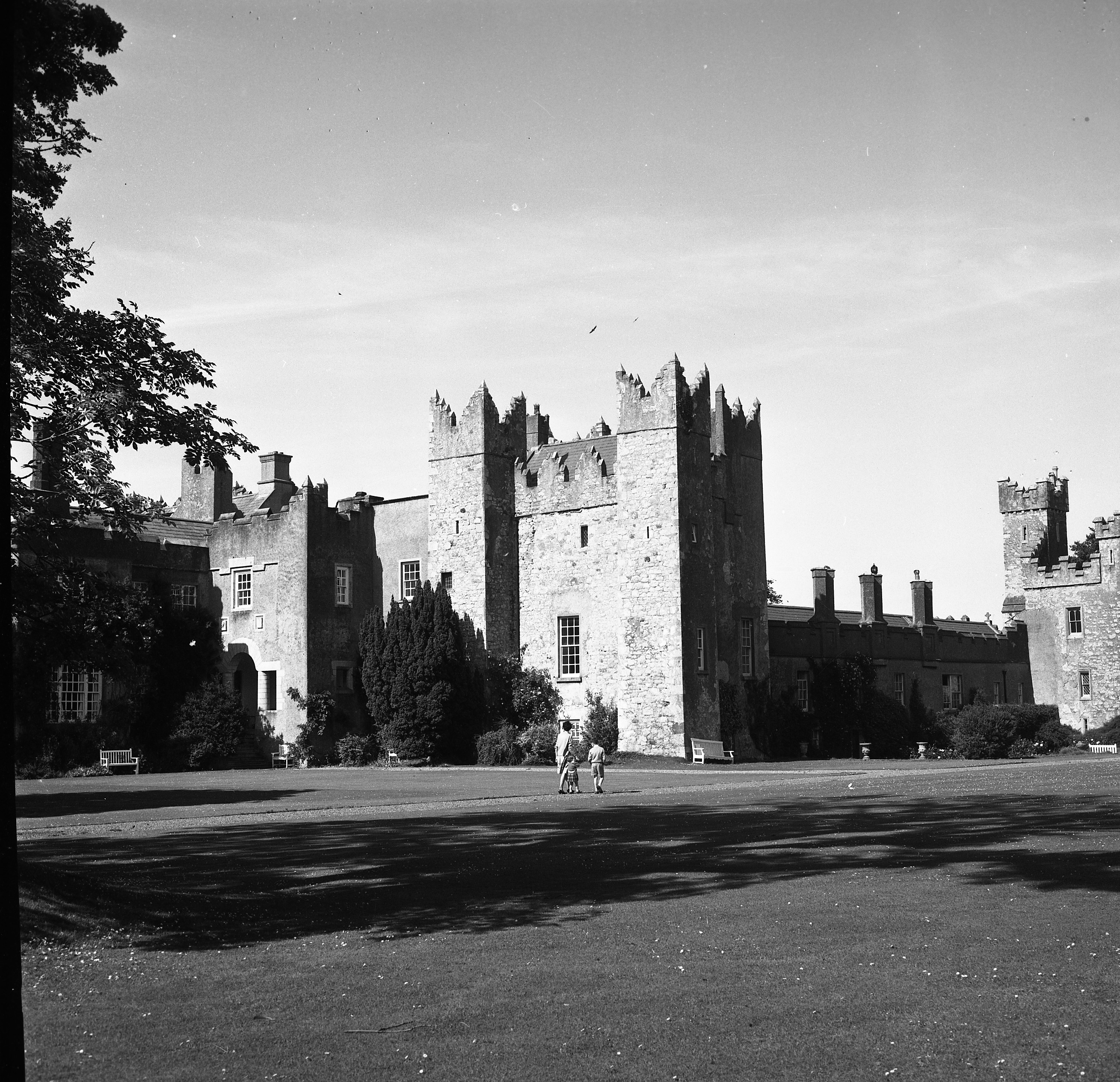
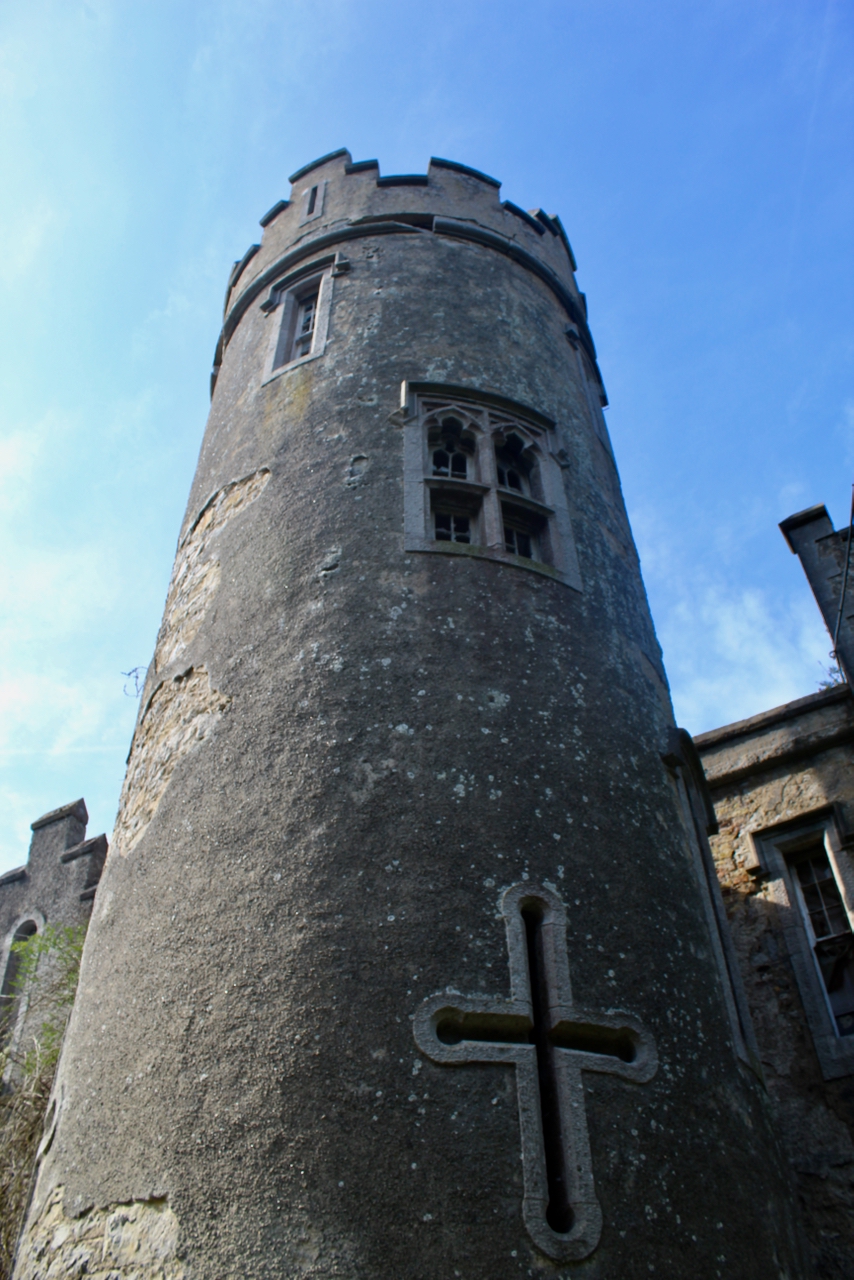
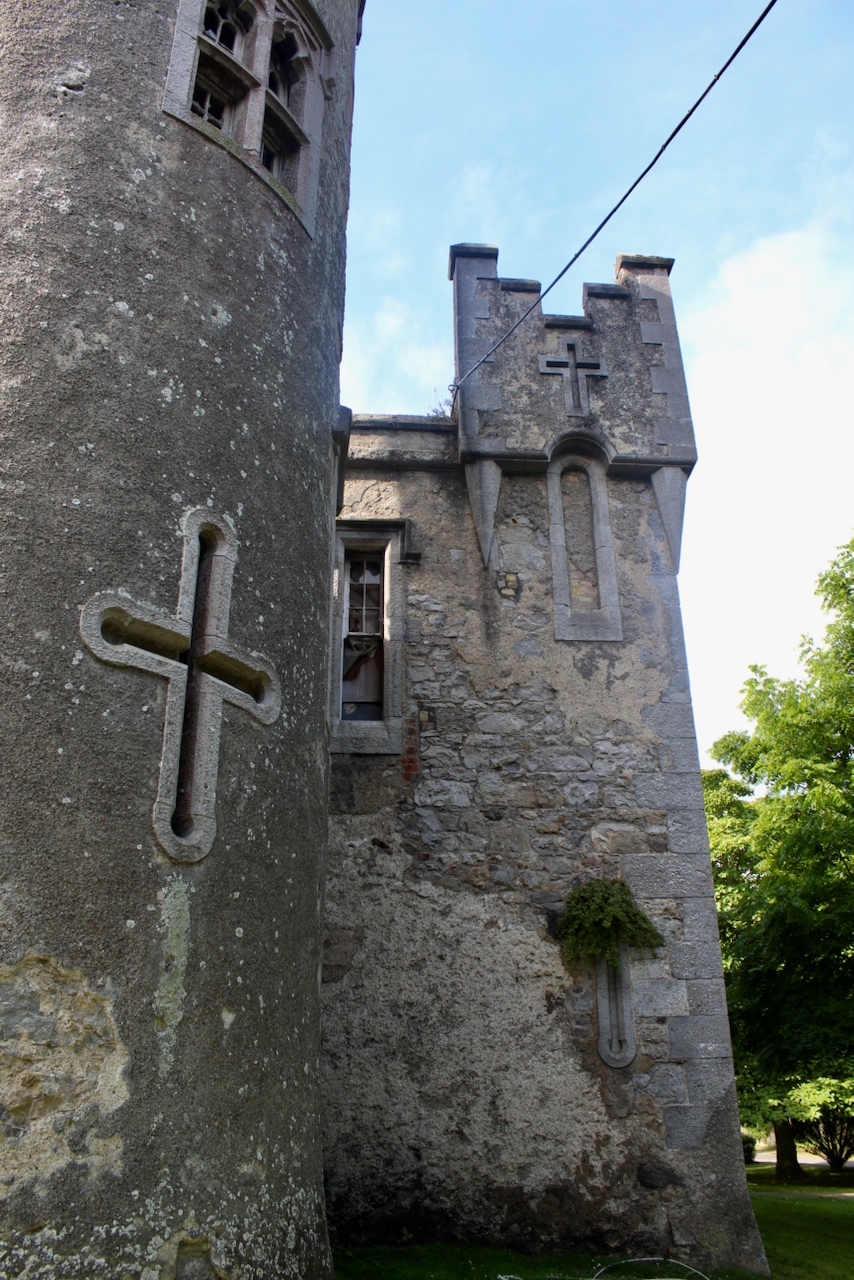
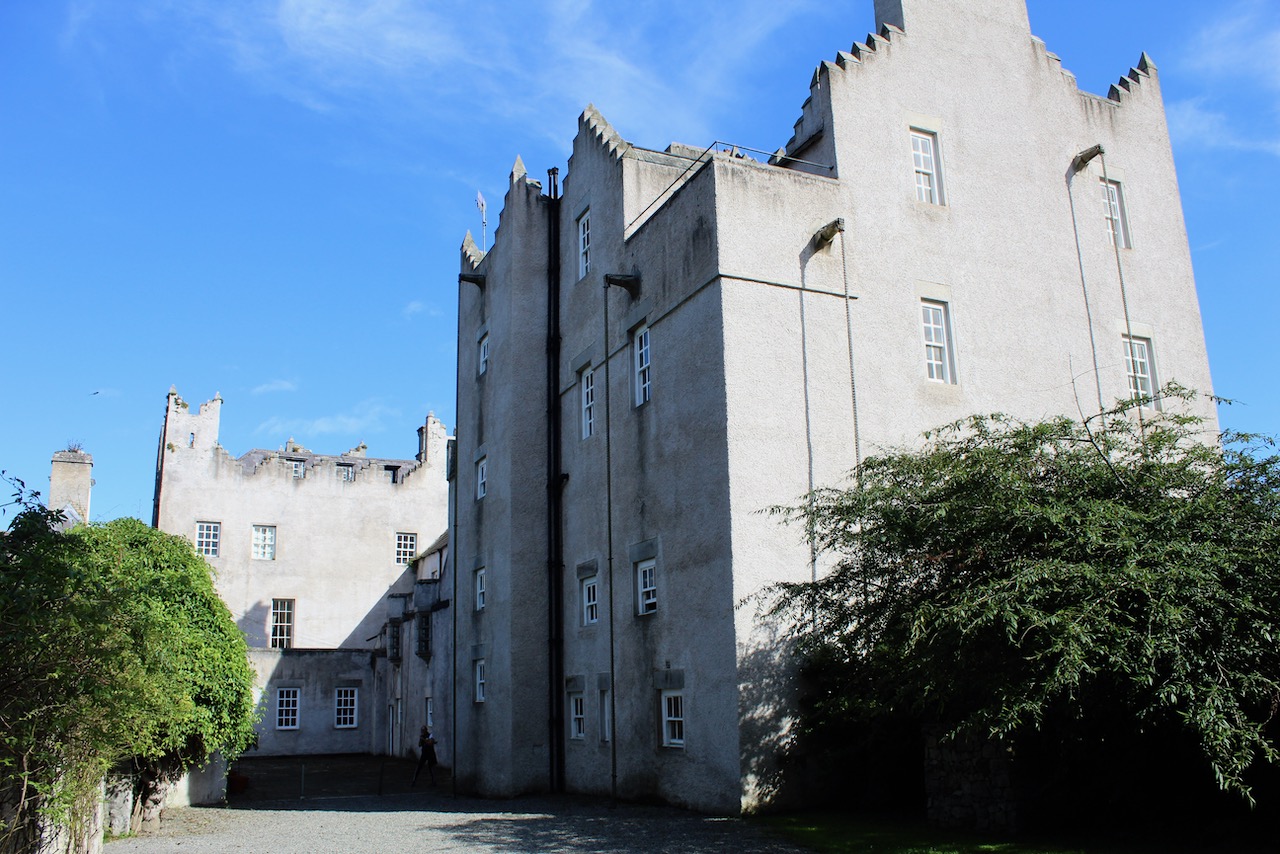
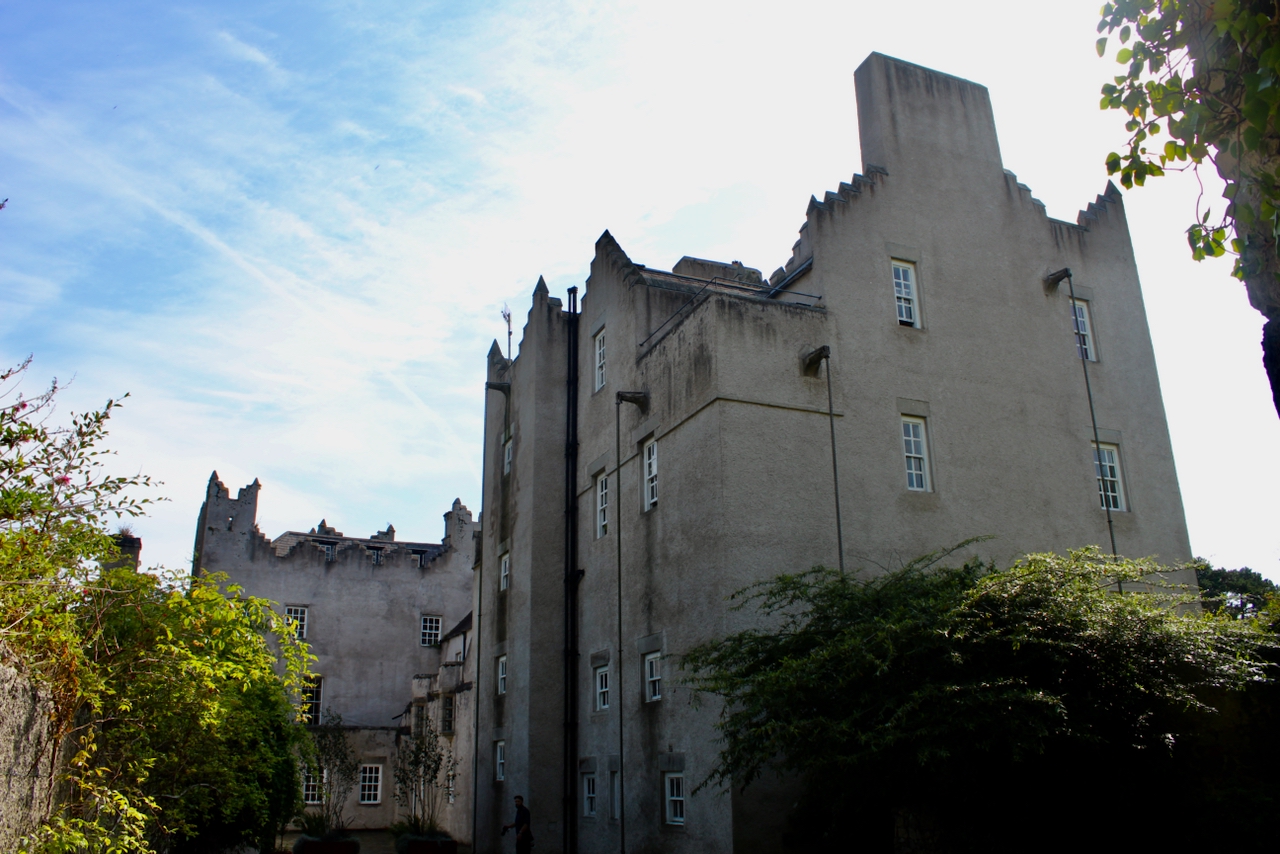
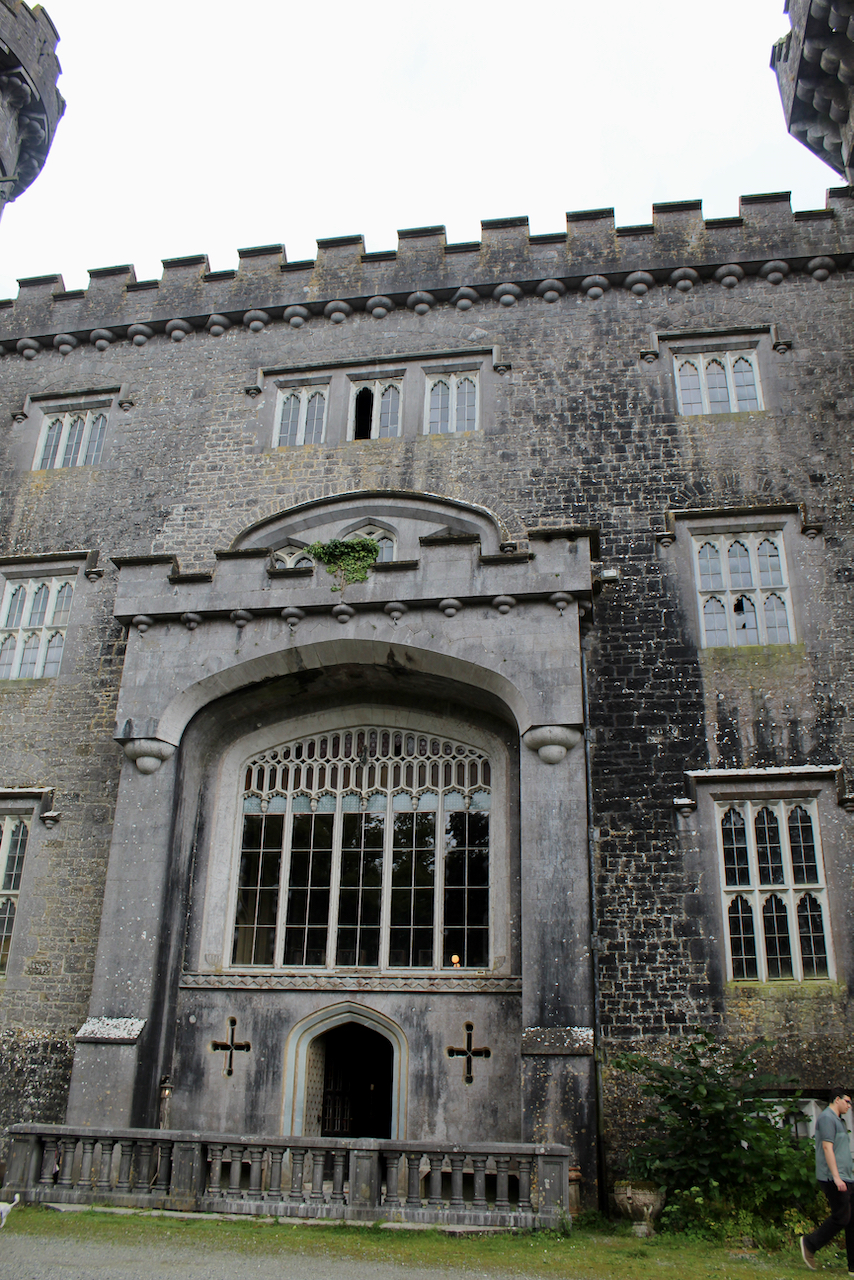
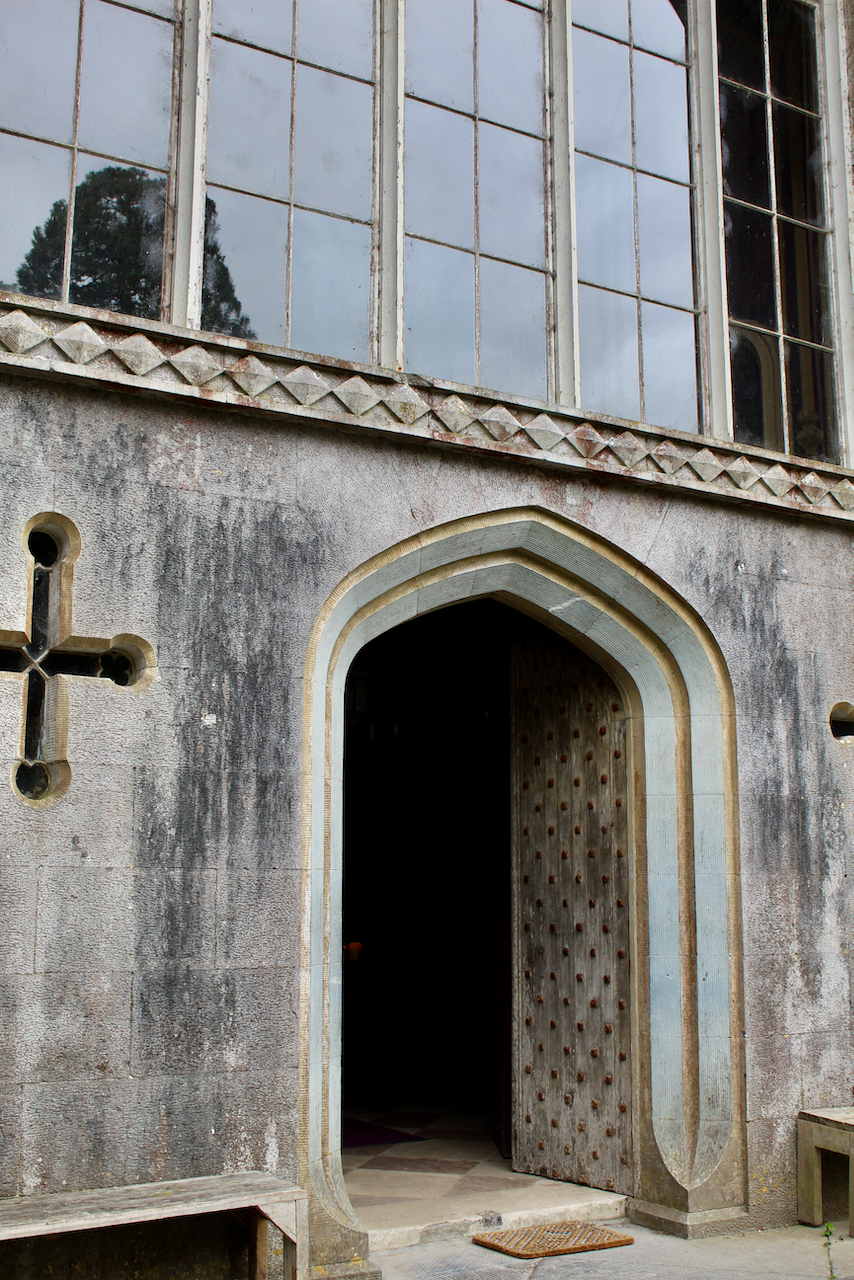
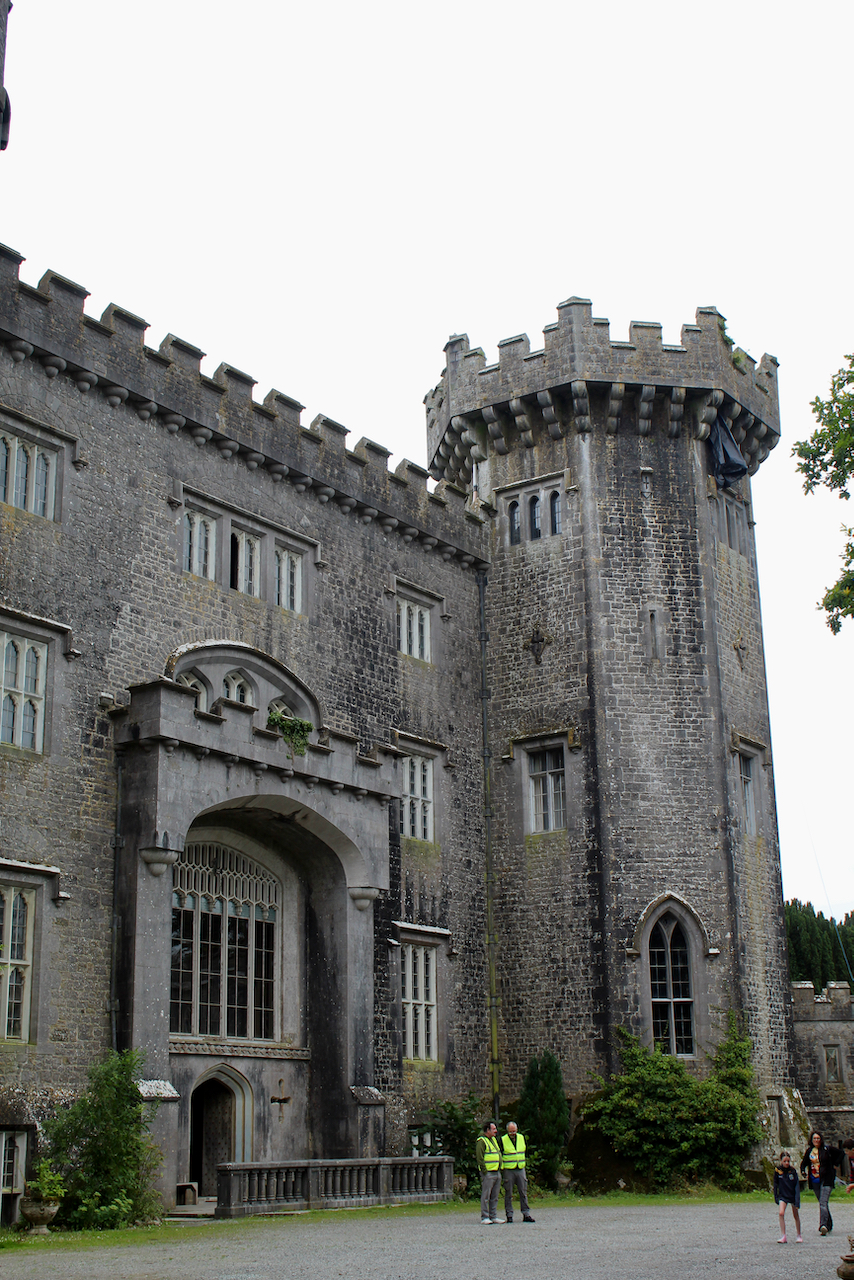
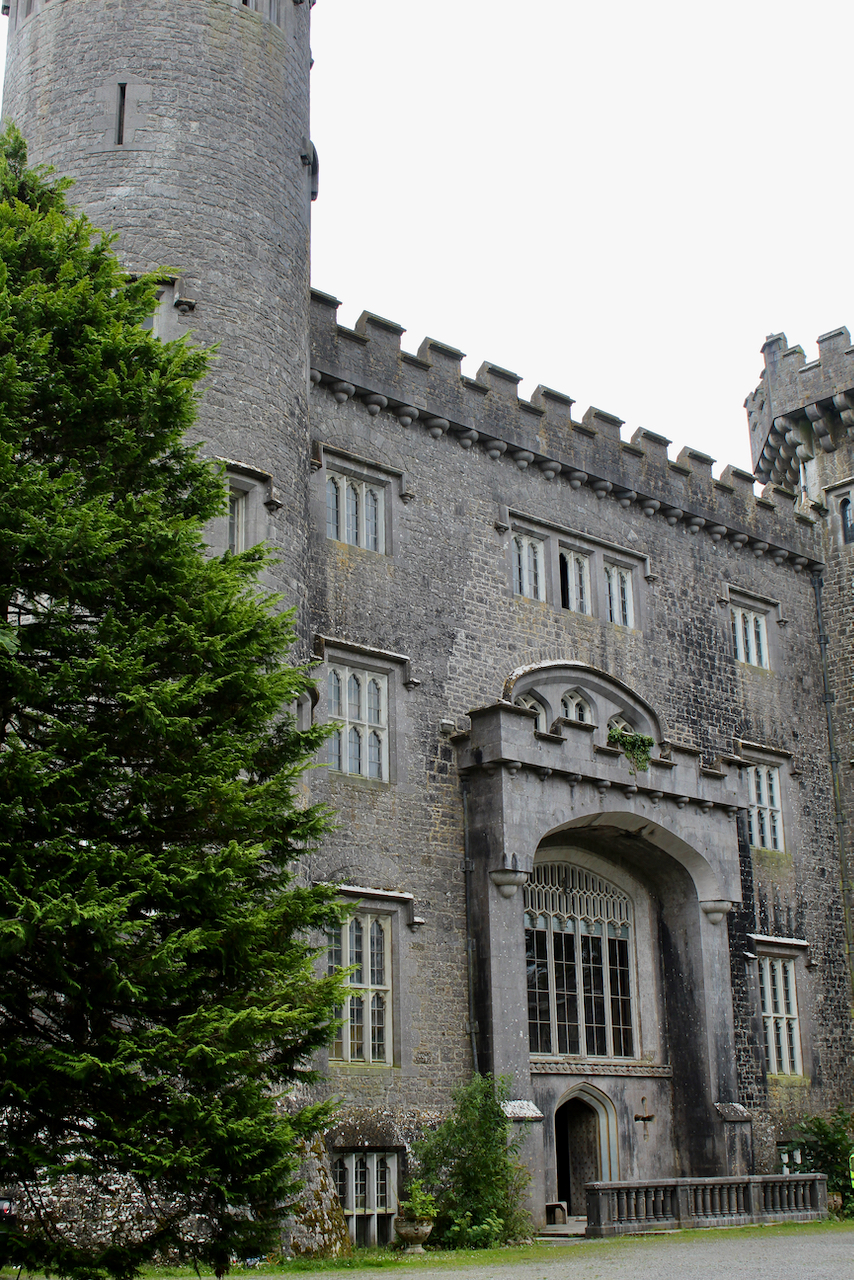
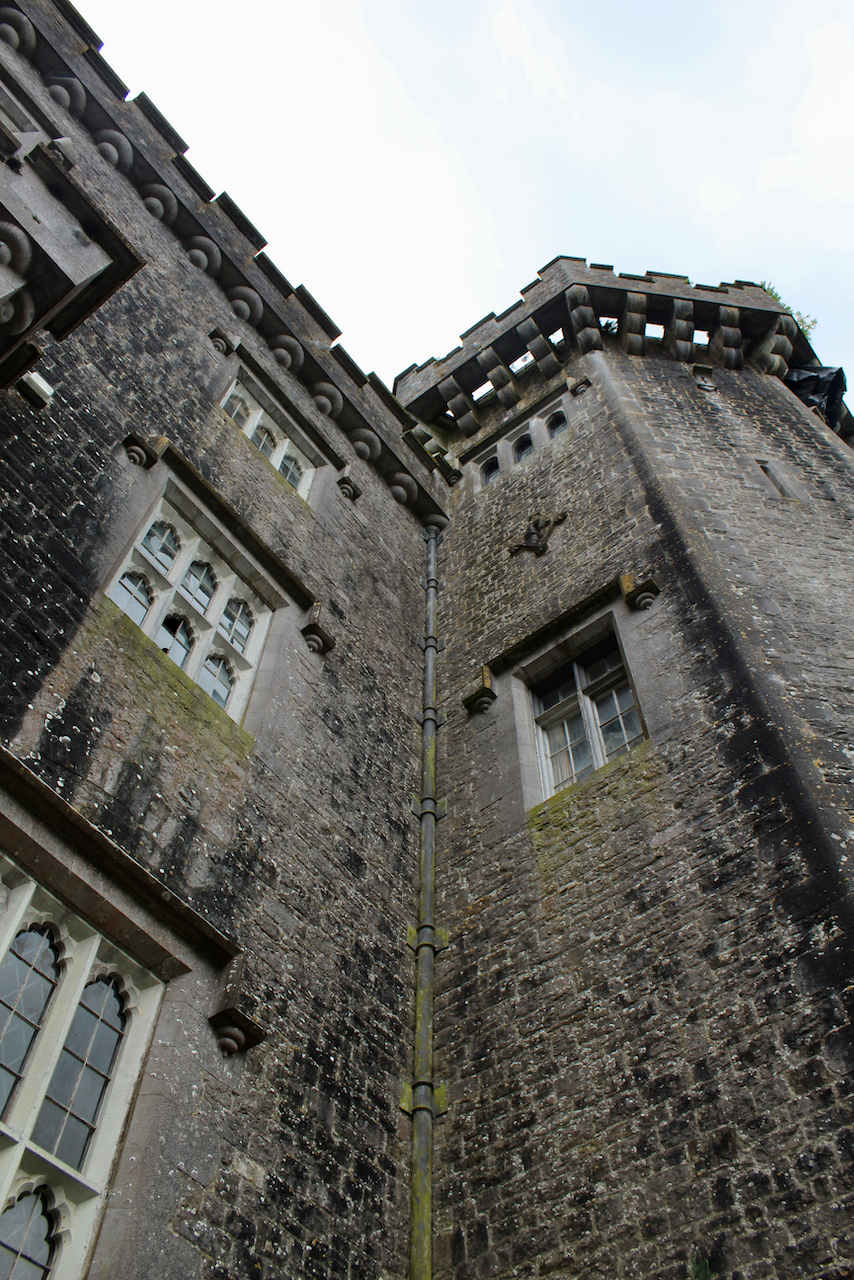
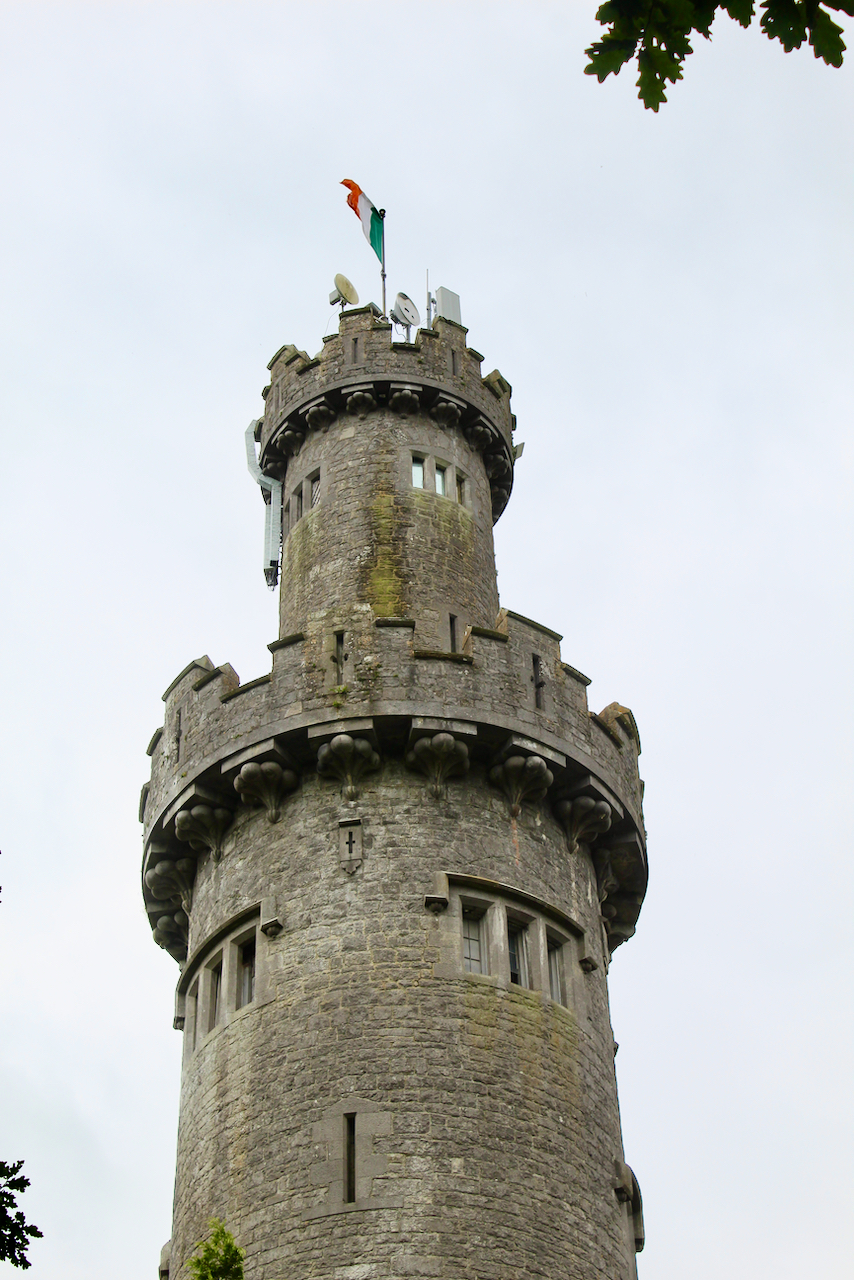
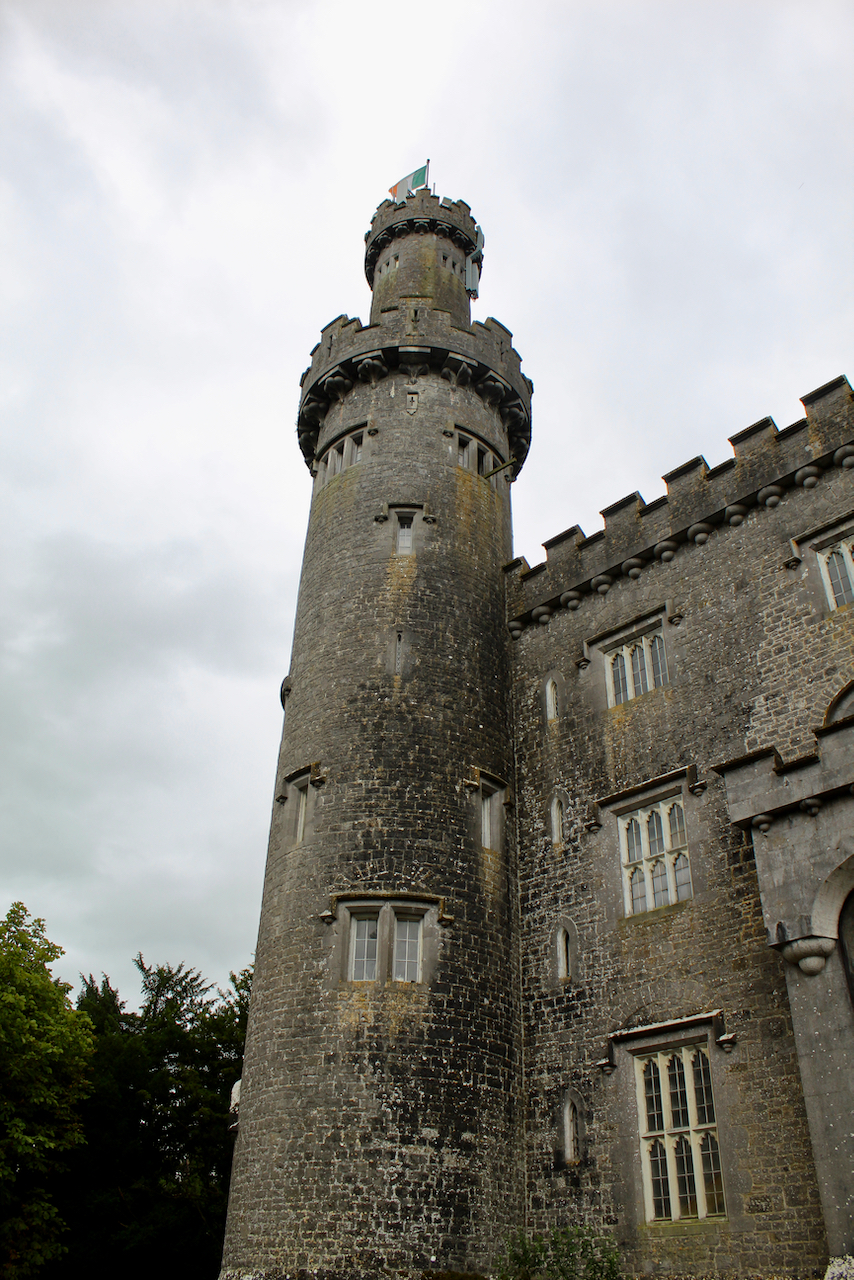
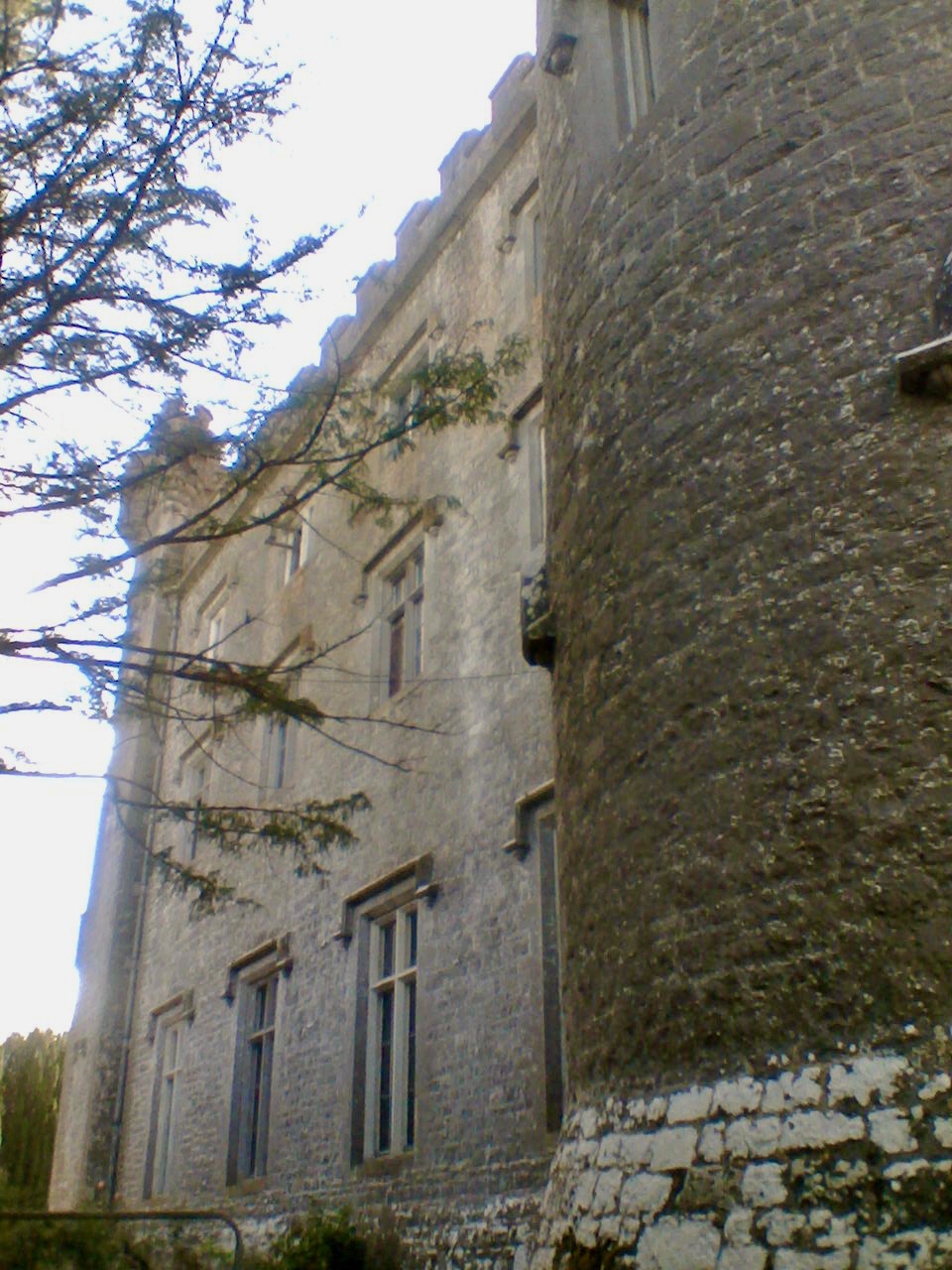
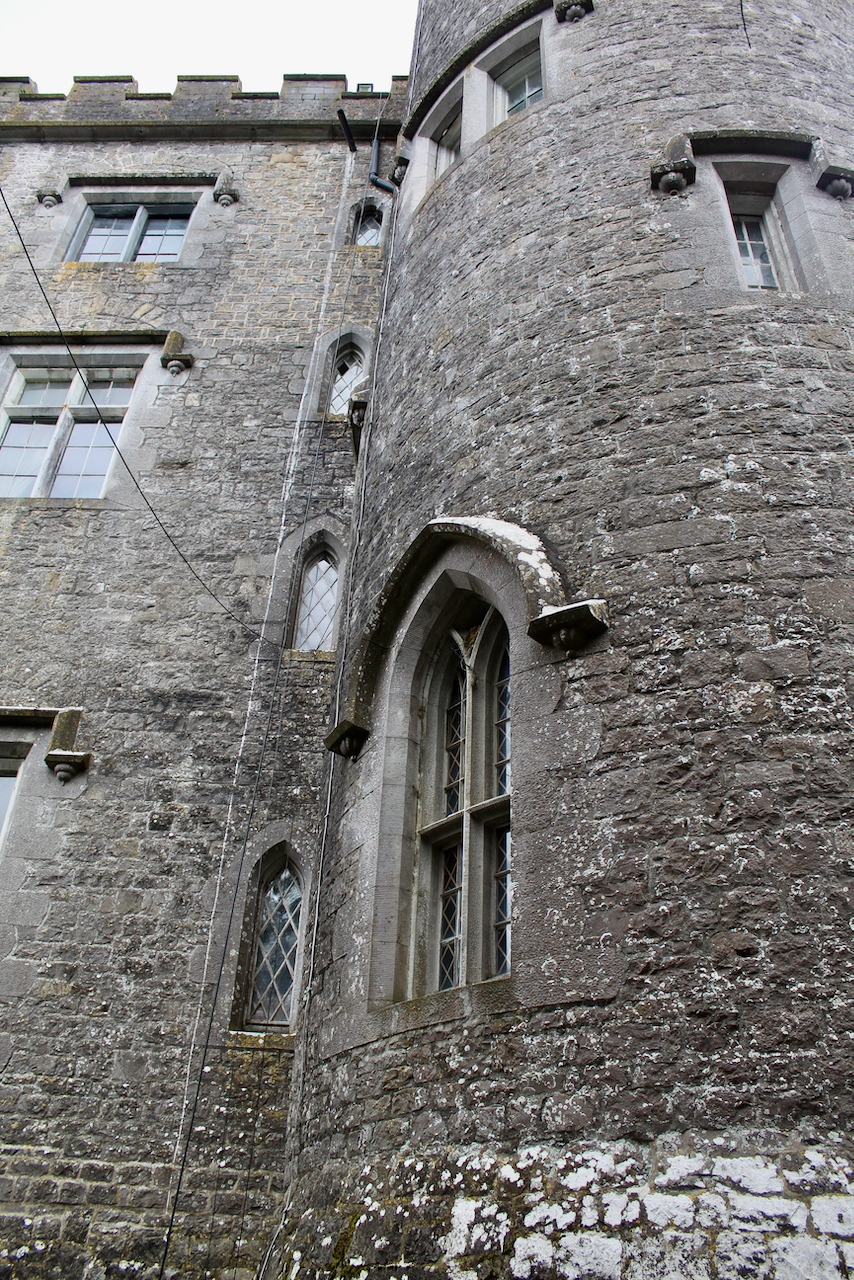
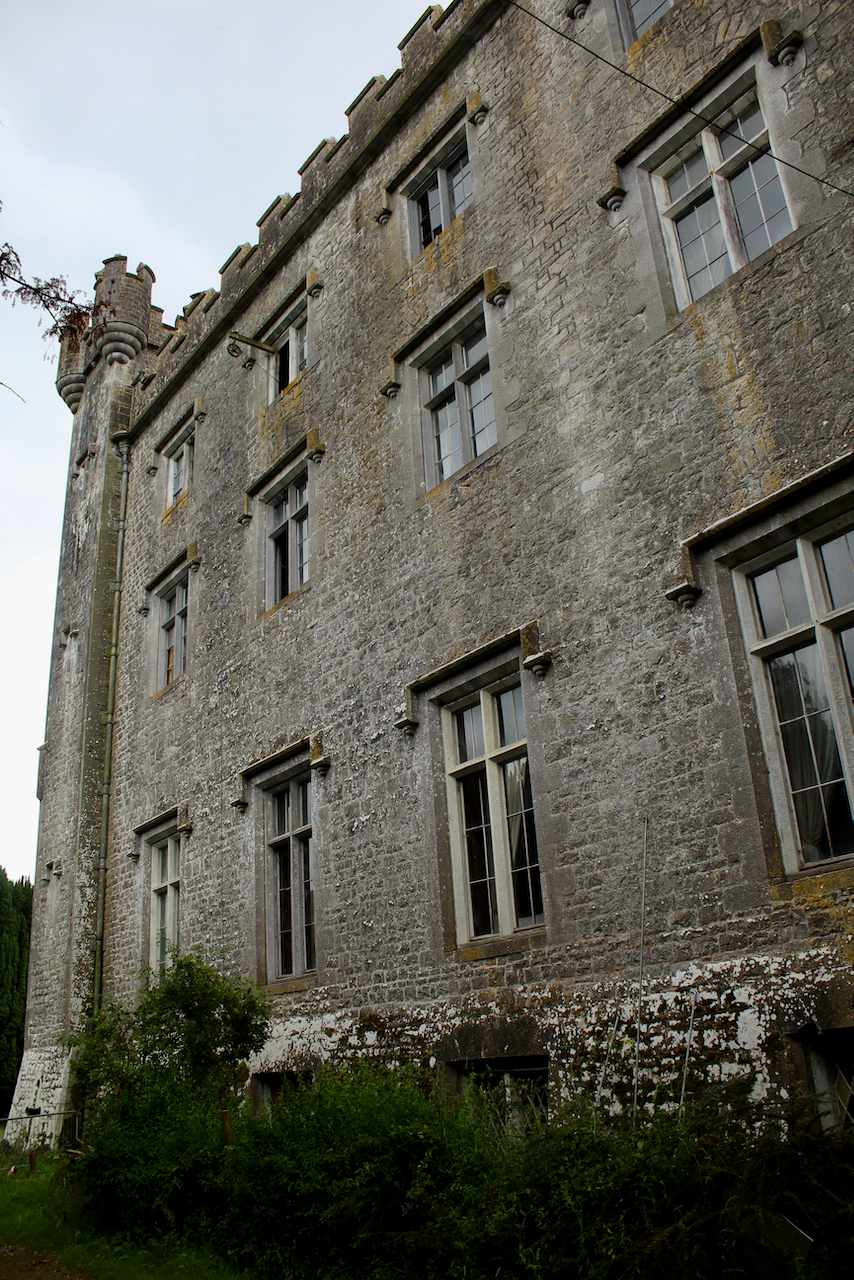
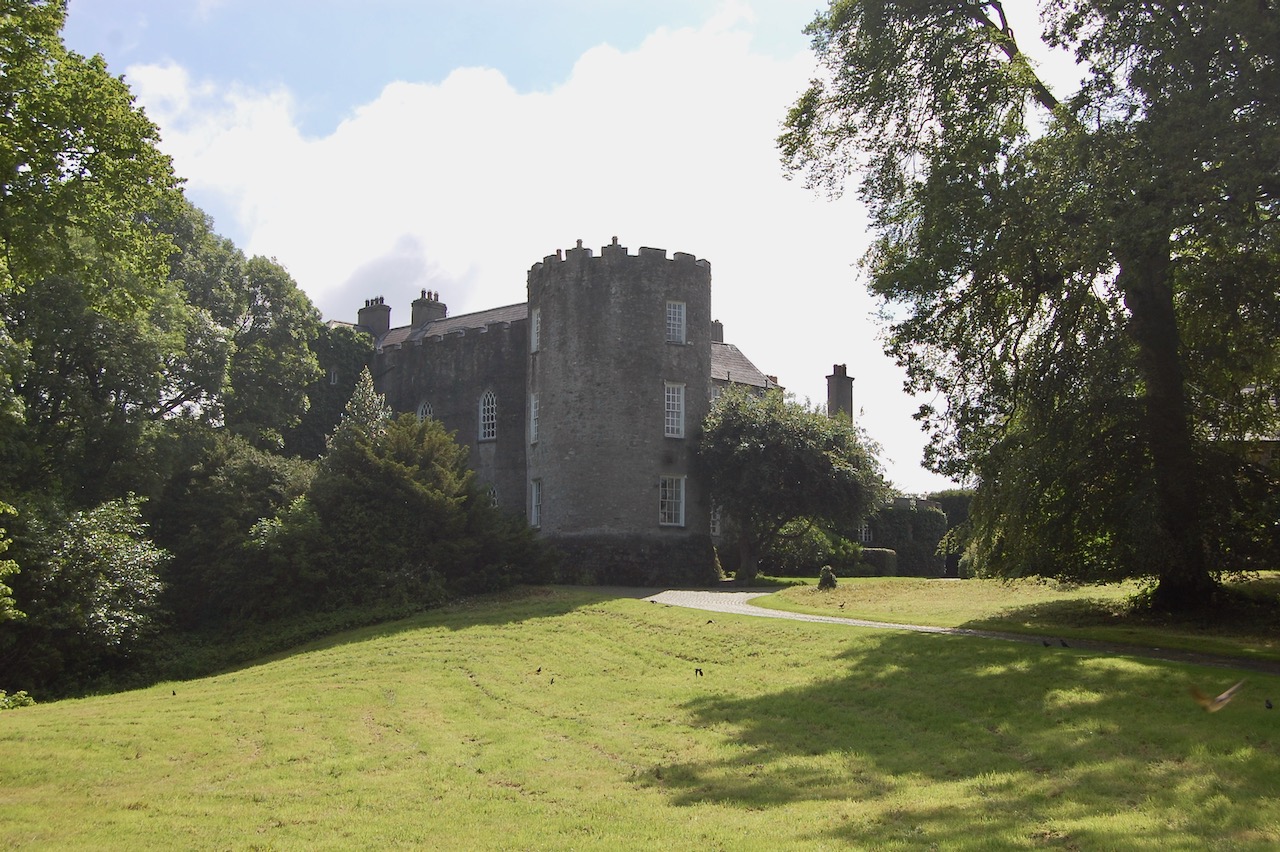
Bence-Jones describes Charleville Forest castle as “a high square battlemented block with, at one corner, a heavily machicolated octagon tower, and at the other, a slender round tower rising to a height of 125 feet, which has been compared to a castellated lighthouse. From the centre of the block rises a tower-like lantern. The entrance door, and the window over it, are beneath a massive corbelled arch. The entire building is cut-stone, of beautiful quality.” [see 1]
Beginning in 1912, with the departure of Lady Emily, the last surviving daughter of the 4th Earl of Charleville, the house was left empty for 68 years.
In 1970 David Hutton-Bury (who owned and lived on the estate adjacent to the castle) granted a 35-year lease for the castle and surrounding 200 acres to Michael McMullen. McMullen lived in the castle and began its restoration in the early 1980s, during which time he restored the six main public rooms. In 1987 Bridget Vance and her mother, Constance Vance-Heavey, took over the leasehold from McMullen and continued the restoration. [4] It is now owned by the Charleville Castle Heritage Trust.
The land of Charleville Forest was inherited by Charles William’s father, John Bury (1725-1764) of Shannongrove, County Limerick. He succeeded to the estates of his maternal uncle, Charles Moore (1712-1764) 1st Earl of Charleville, in February 1764.
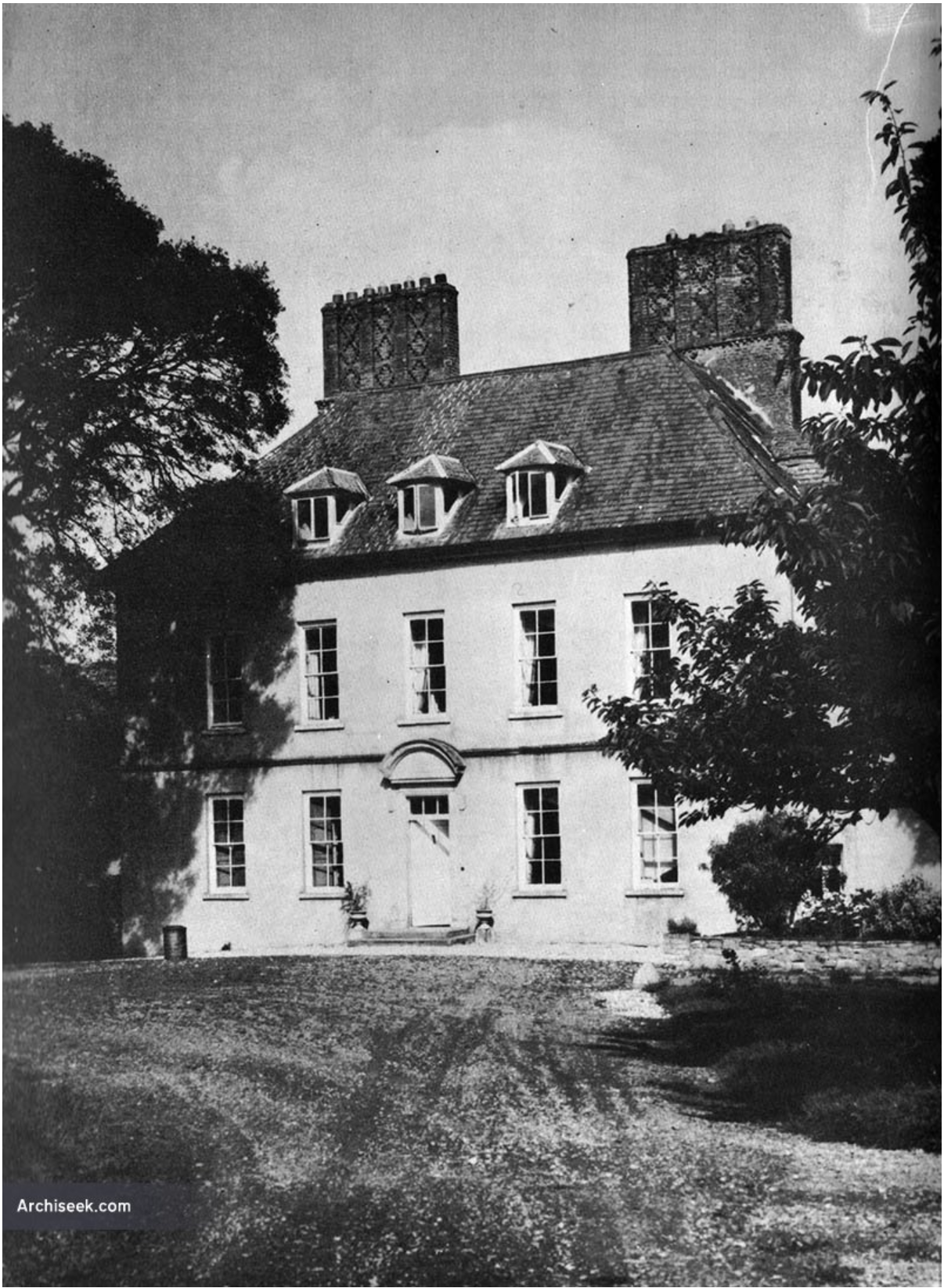
Shannongrove, County Limerick, the home of Charles William Bury’s father, courtesy of Archiseek. [5]
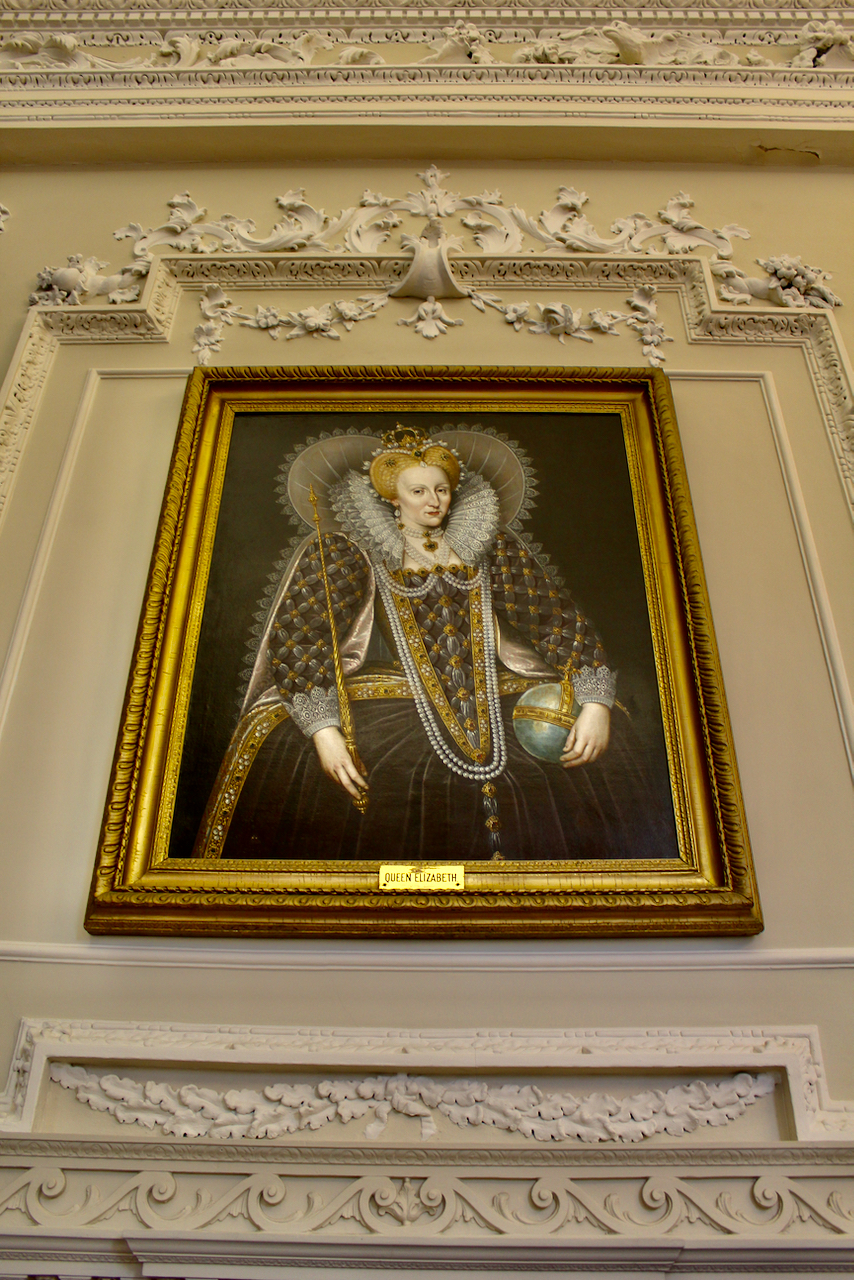
The oak forest and lands were gifted by Queen Elizabeth I to John Moore of Croghan Castle in 1577. Moore leased the land to Robert Forth, who built a house he called Redwood next to the river Clodiagh. In the 1740s Charles Moore 2nd Baron Moore and later 1st Earl of Charleville bought out the lease and made the house the family seat and named it Charleville, after himself.
Due to the lack of male heirs in the Moore family after Charles Moore’s death in 1764, and the fact that John Moore died later that year in 1764, the land was inherited by Charles William Bury who was the grand nephew of the last Earl, at just six months old.
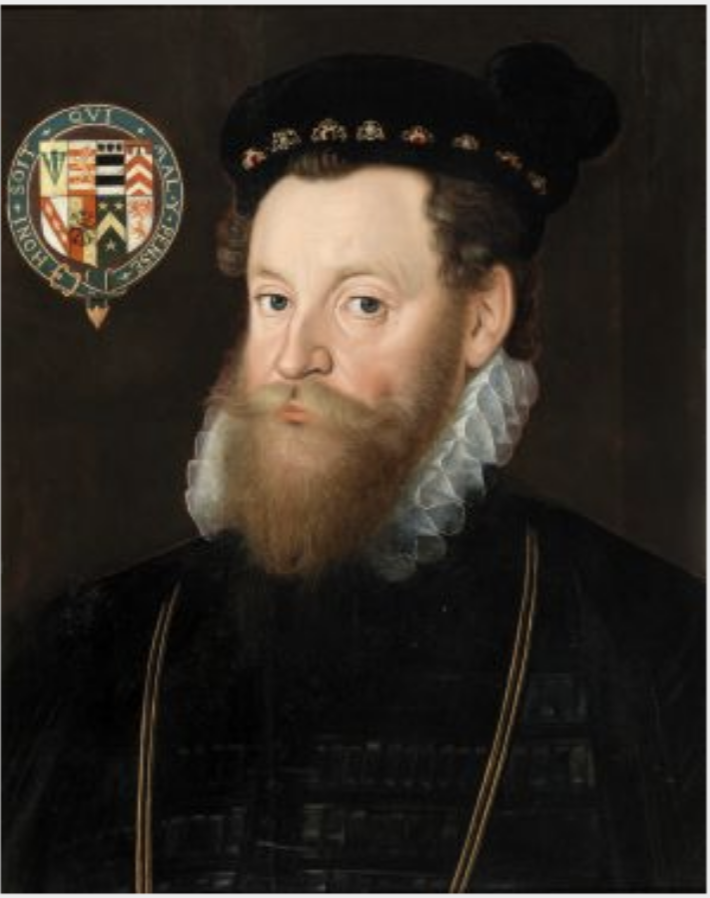
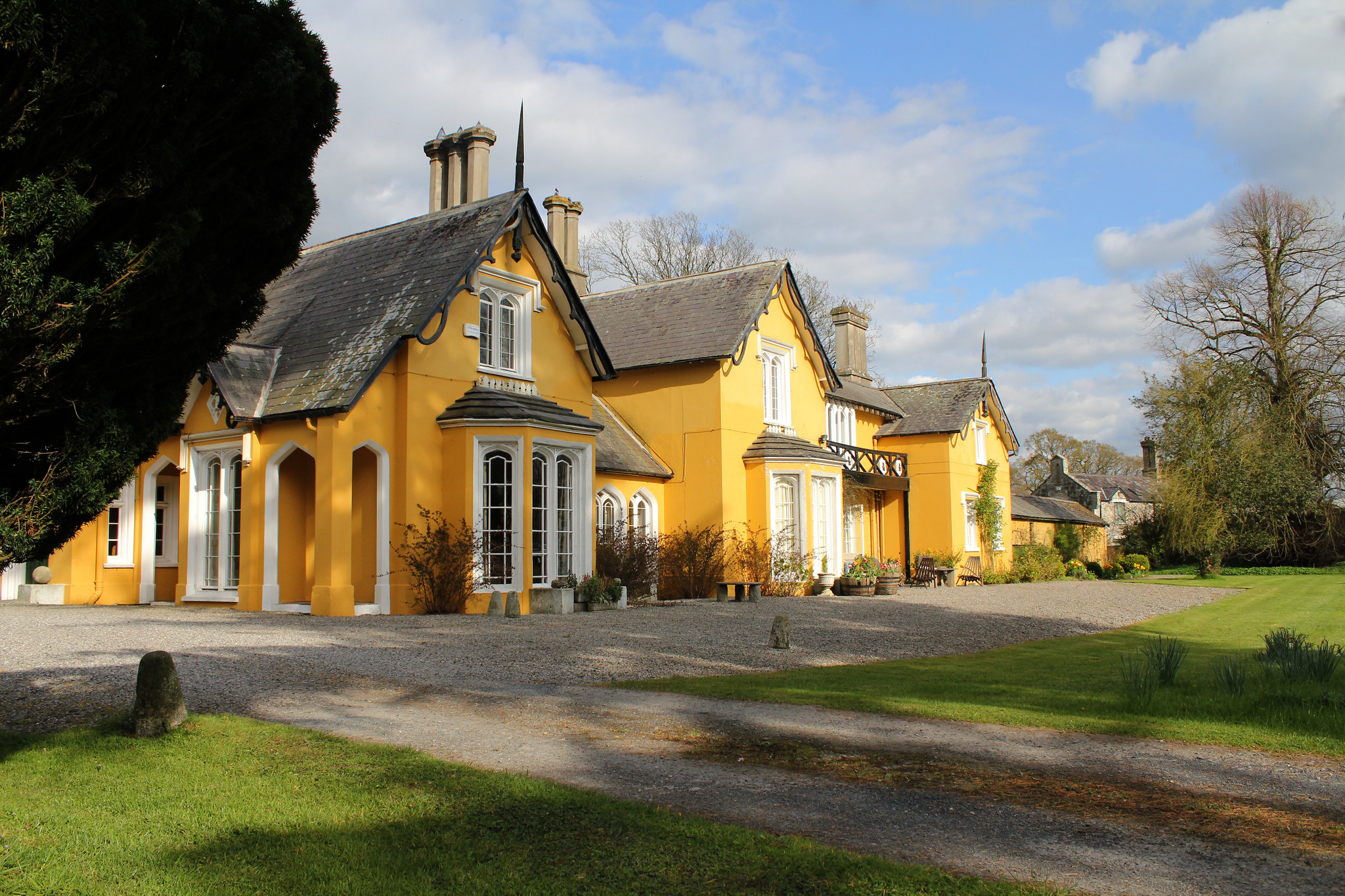
Charles William Bury’s mother Catherine Sadleir was from Sopwell Hall County Tipperary. After her husband John Bury died, she married Henry Prittie (1743-1801) 1st Baron Dunally of Kilboy, which whom she went on to have several more children. The family probably moved to the house he had built called Kilboy House in County Tipperary.
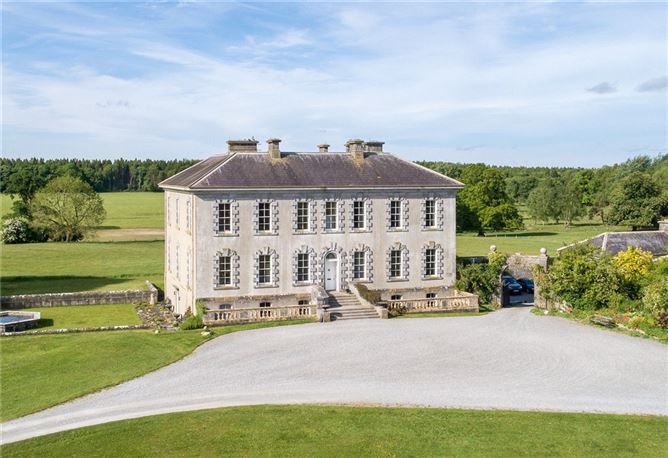
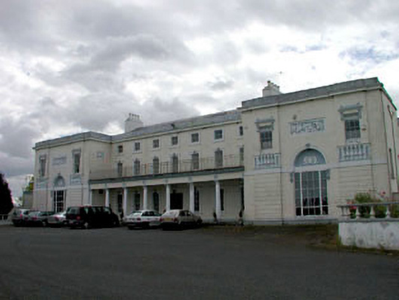
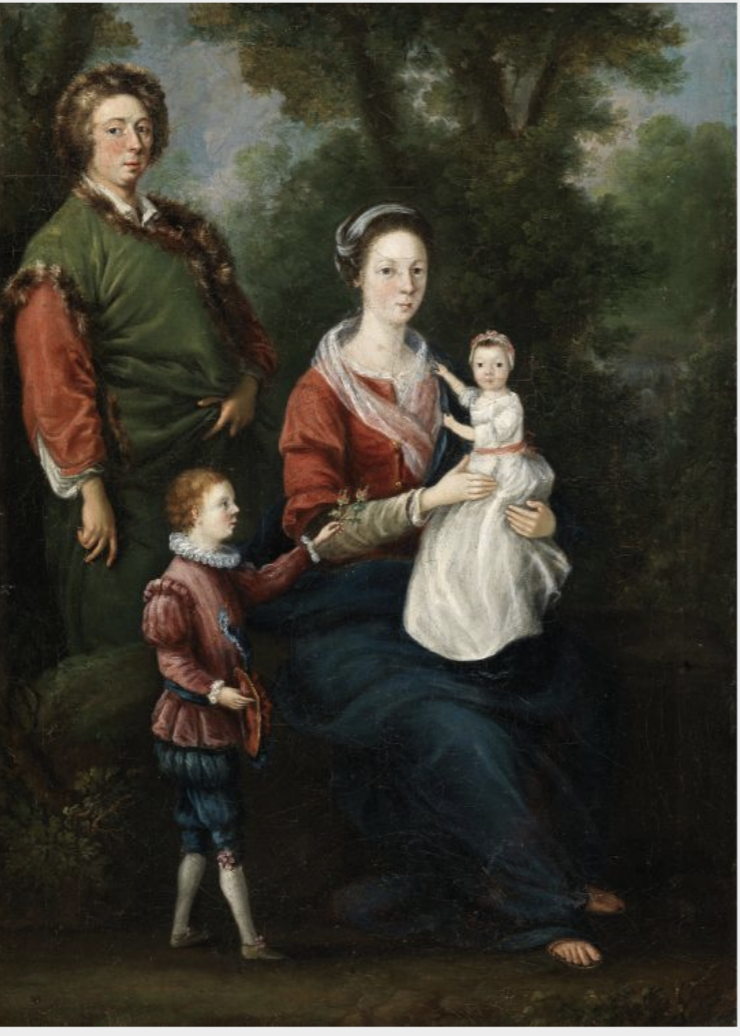
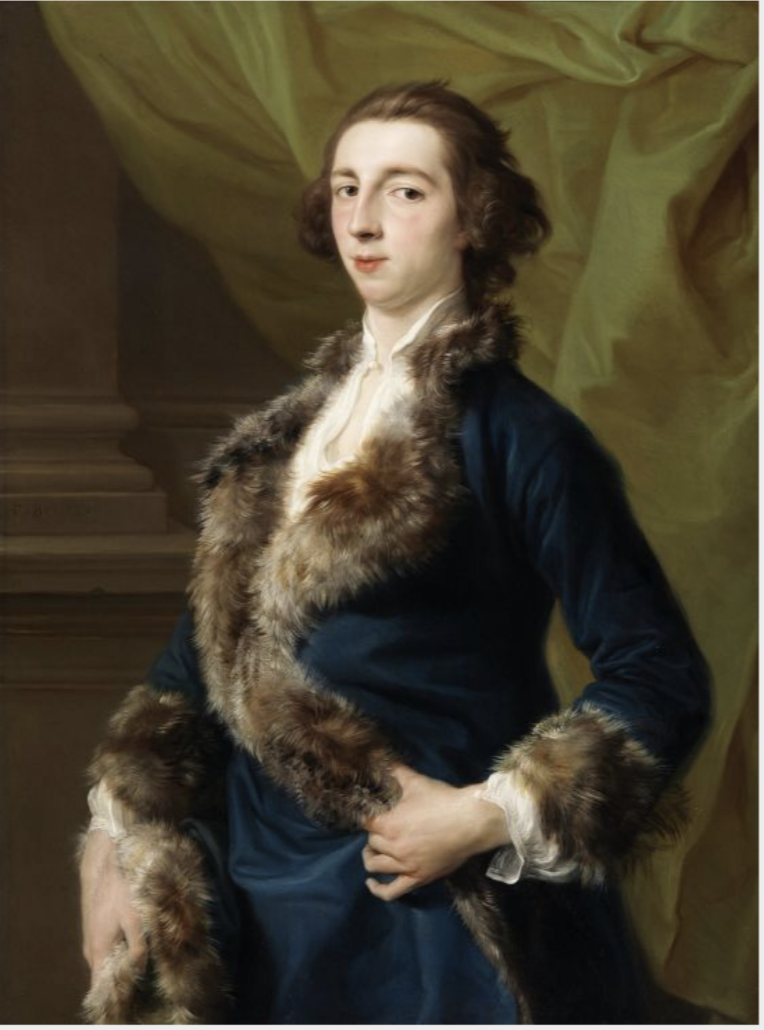
Sopwell Hall, County Tipperary, courtesy of Colliers estate agents and myhome.ie. It was built in 1745 to a design attributed to Francis Bindon.The sale site tells us that in 1745 Francis Sadlier (1709-1797) built Sopwell Hall. The Sopwell Estate ownership passed to the Trench family in 1797 through the marriage of his daughter, Mary. The Trench family remained in ownership until 1985.See more photos in footnotes [6]Henry Prittie, 1st Baron Dunalley (1743-1801), Irish school, courtesy of Christie’s.He was the stepfather of Charles William Bury.
On Charles Moore’s death the title became extinct until Charles William Bury was created 1st Earl of Charleville of the second creation in 1806. Before this, in 1797 he was created Baron Tullamore and in 1800, Viscount Charleville. Bury was returned to the Irish Parliament for Kilmallock in January 1790, but lost the seat in May of that year. He was once again elected for Kilmallock in 1792, and retained the seat until 1797. In 1801 he was elected as an Irish representative to sit in the British House of Lords in England.
Charles William Bury’s wife Catherine was daughter of Thomas Townley Dawson and widow of James Tisdall. From that marriage she had a daughter named Catherine.
Andrew Tierney describes Charleville Forest Castle in The Buildings of Ireland: Central Leinster: Kildare, Laois and Offaly:
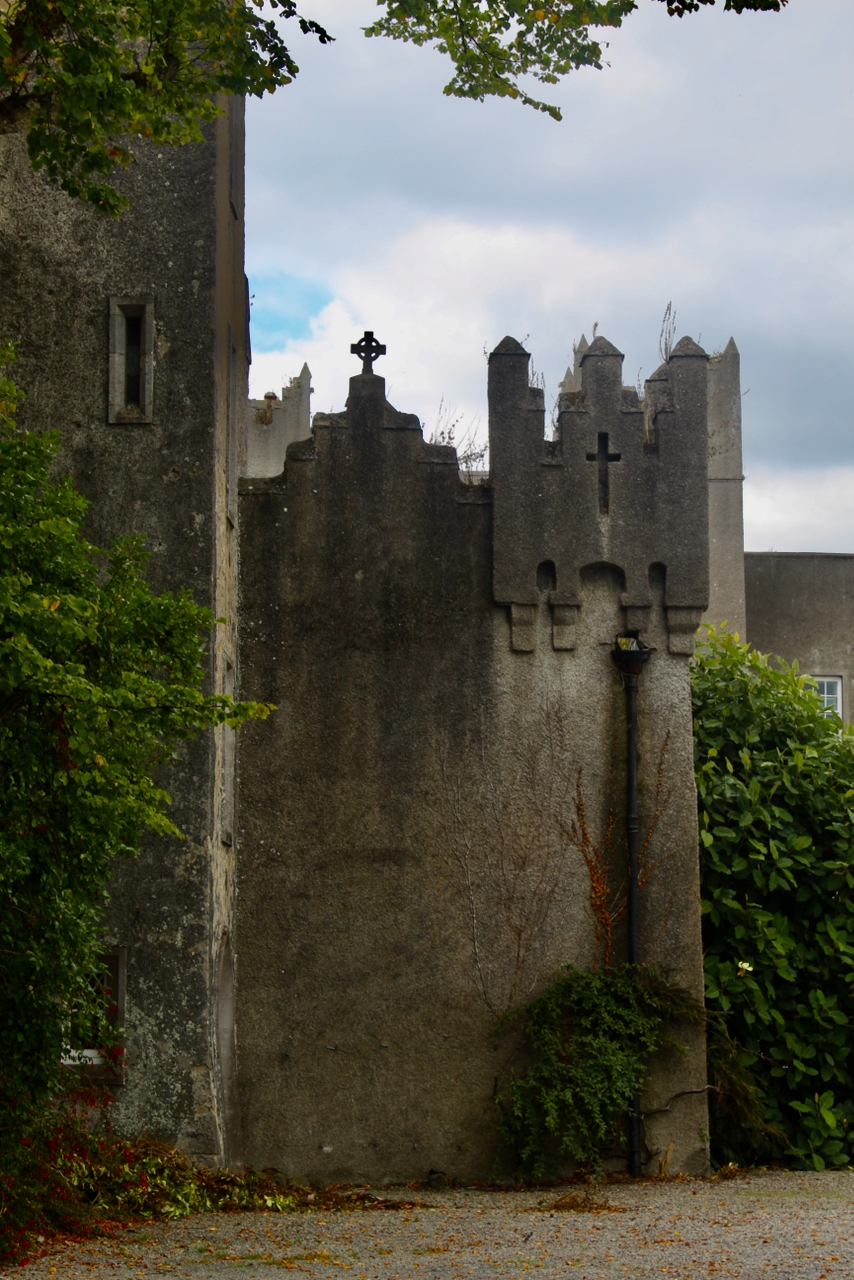
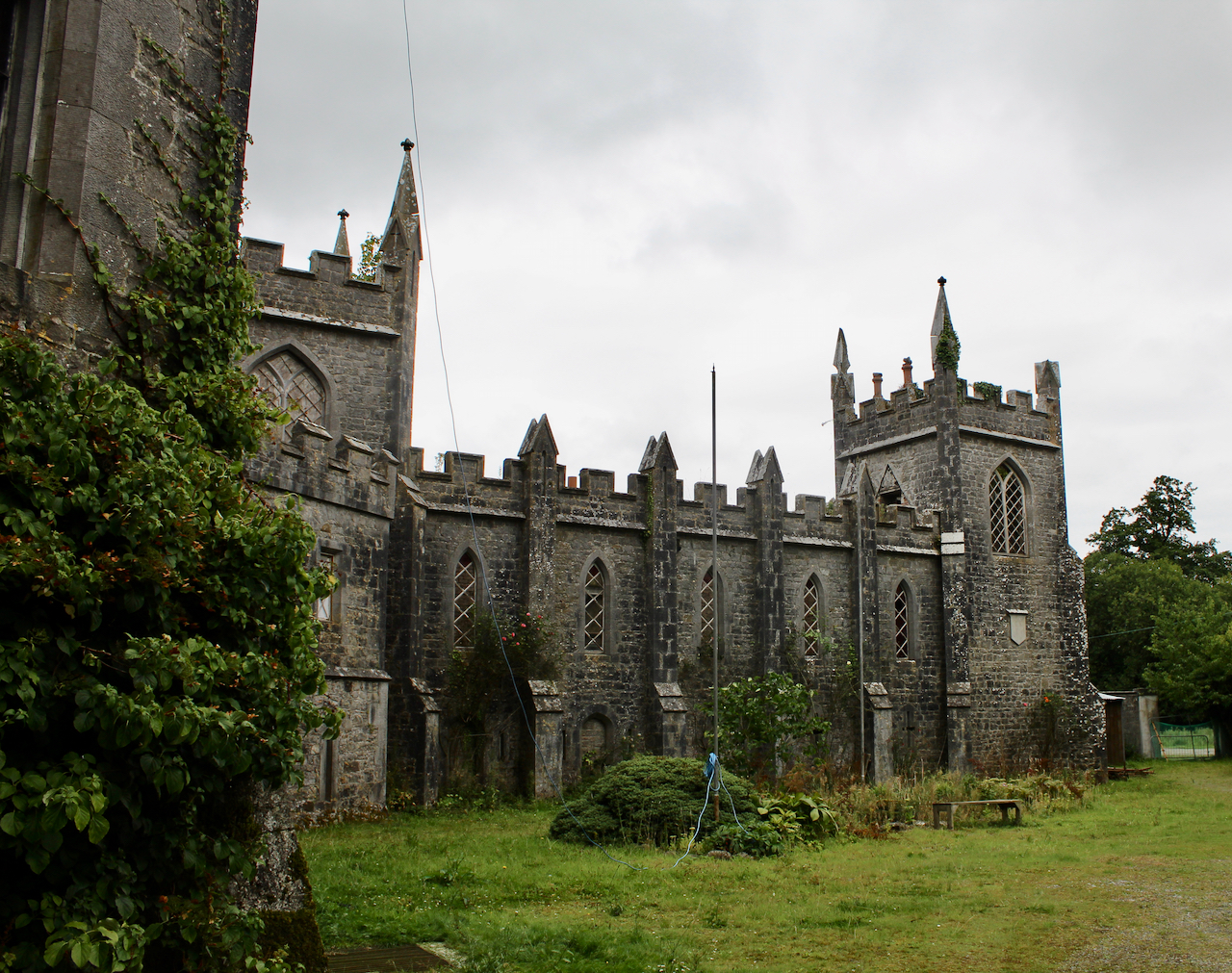
“The castle comprises a tall castellated block of snecked [snecked masonry has a mixture of roughly squared stones of different sizes] limestone rubble with ashlar trim, with a great muscular octagonal tower to the northwest and a narrow round tower with soaring tourelle [small tower] to the NE…The composition breaks out more fully in the collective irregular massing of the towers, the chapel and the stable block, which rambles off to the west.” [7]
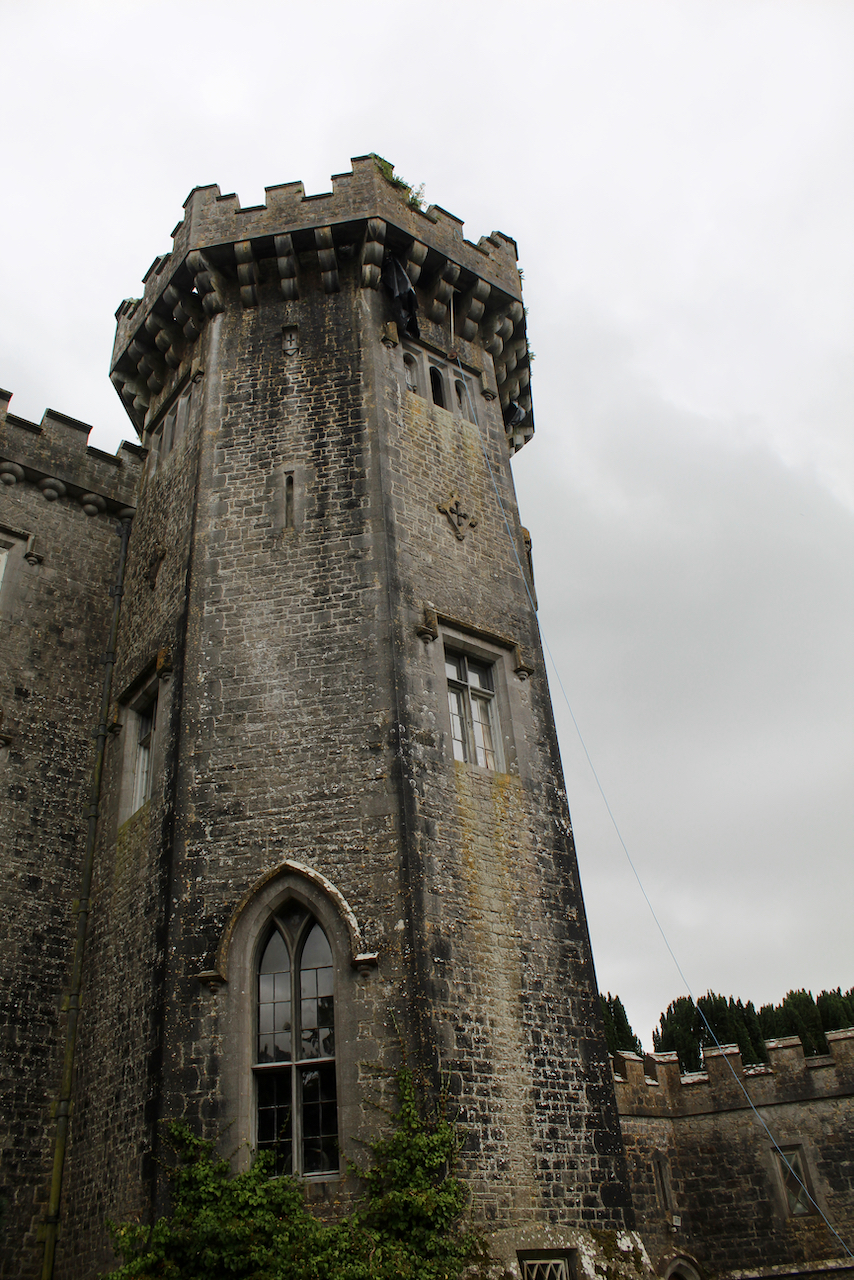
Tierney continues: “The positioning of a great window over the doorway bears comparison with the earlier group of Pale castles, such as Castle Browne (now Clongowes Woods school), attributed to Thomas Wogan Browne. It appears as a portcullis descending from a Gothic arch with a drawbridge in Lord Charleville’s original drawing (which also had a Radcliffean damsel in distress screaming from the battlements). He spent a lot of time drawing a sevenlight panelled window in its stead – the effect is much the same from afar – although the executed window is a more complex Perp design, probably by Johnston. The Tudor arch is employed three times in succession: over the door, in the recess of the great window and in the tripartite window above, which is subdivided into three further arches. This use of the same detailing at varying scales is also seen in the corbelling – a sort pair of intersecting hemispheres. The battlements are simple crenels on the main block but on the towers are rendered in a distinctly Irish fashion (a distinction Johnston would make at Tullynally and Markree), and here the corbelling is also more elaborate, sprouting upwards like cauliflower on the NE tower.“
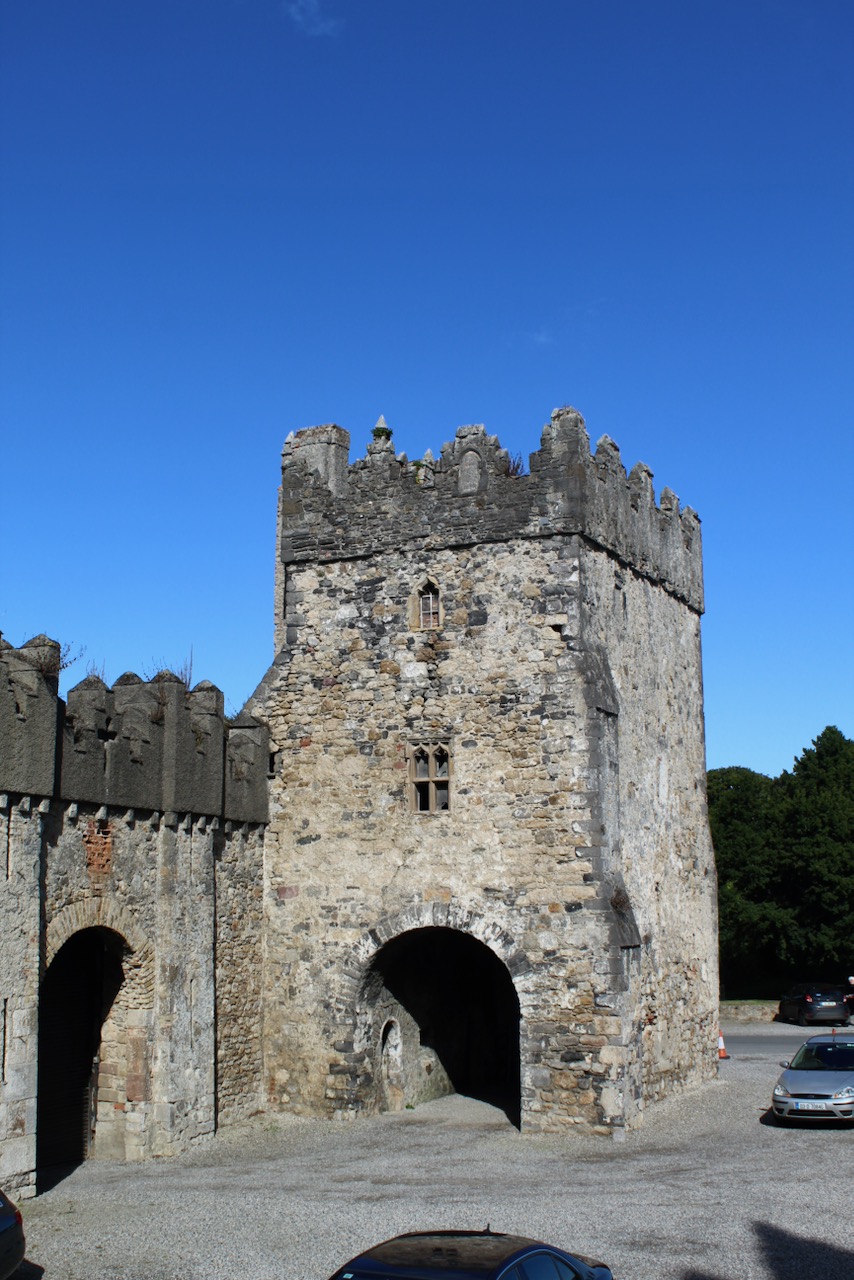
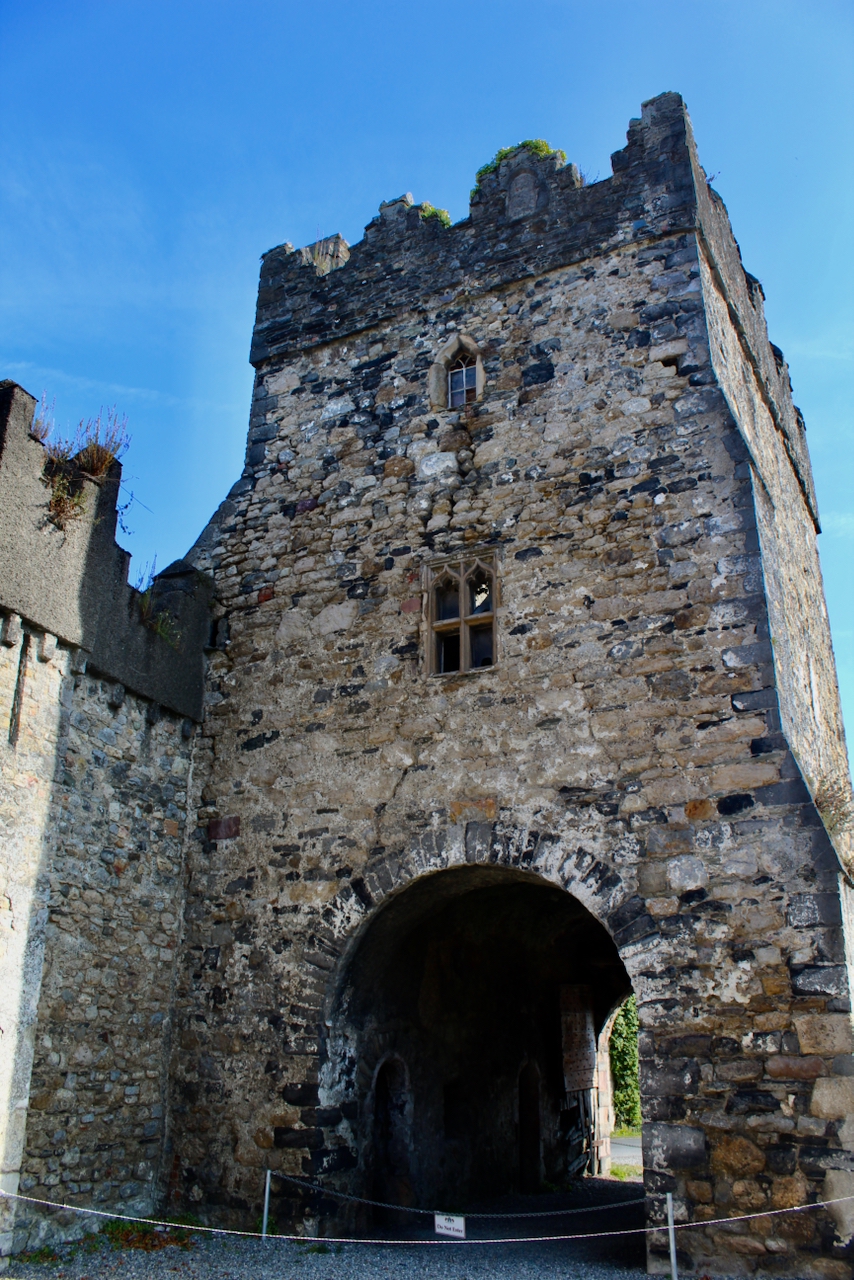
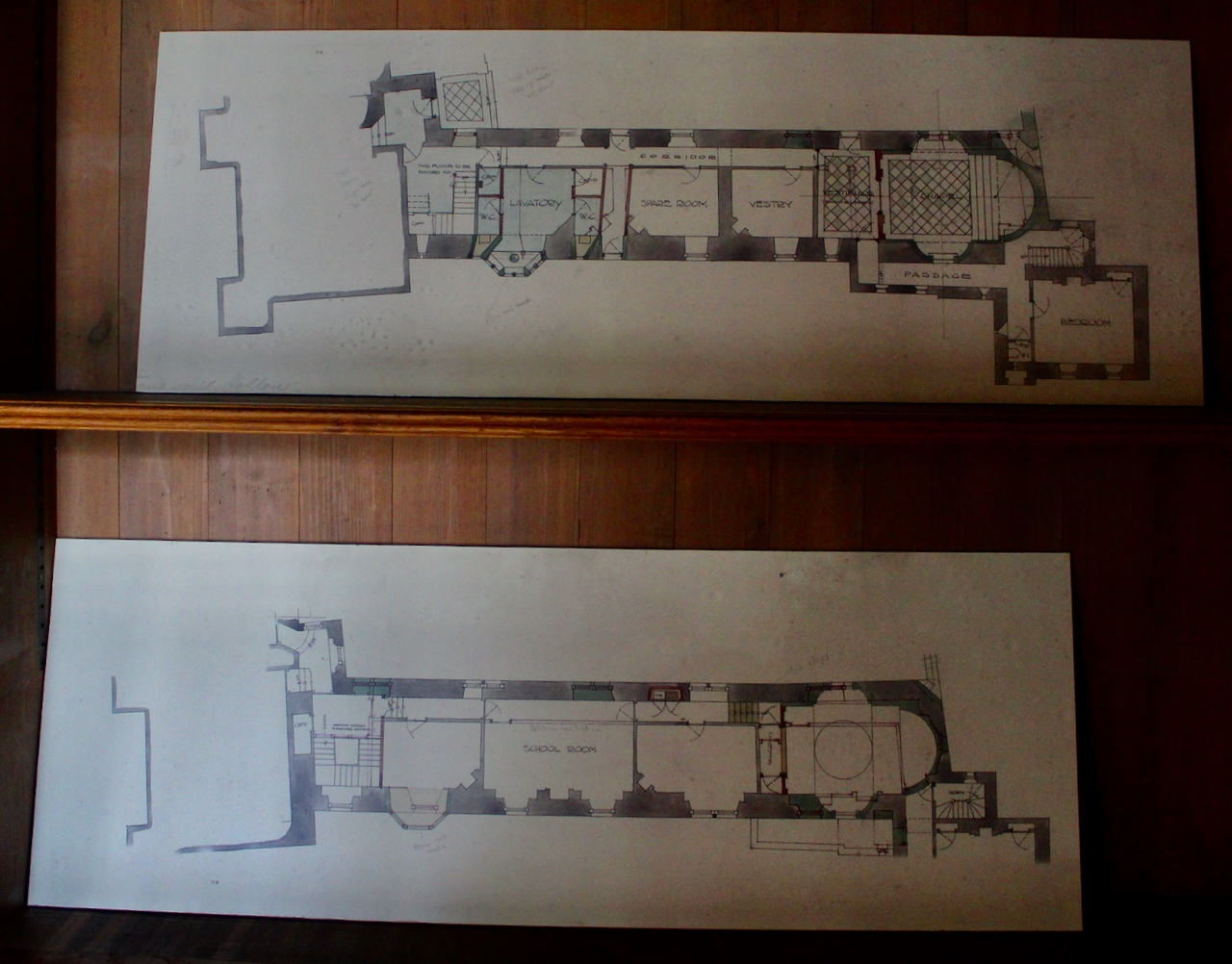
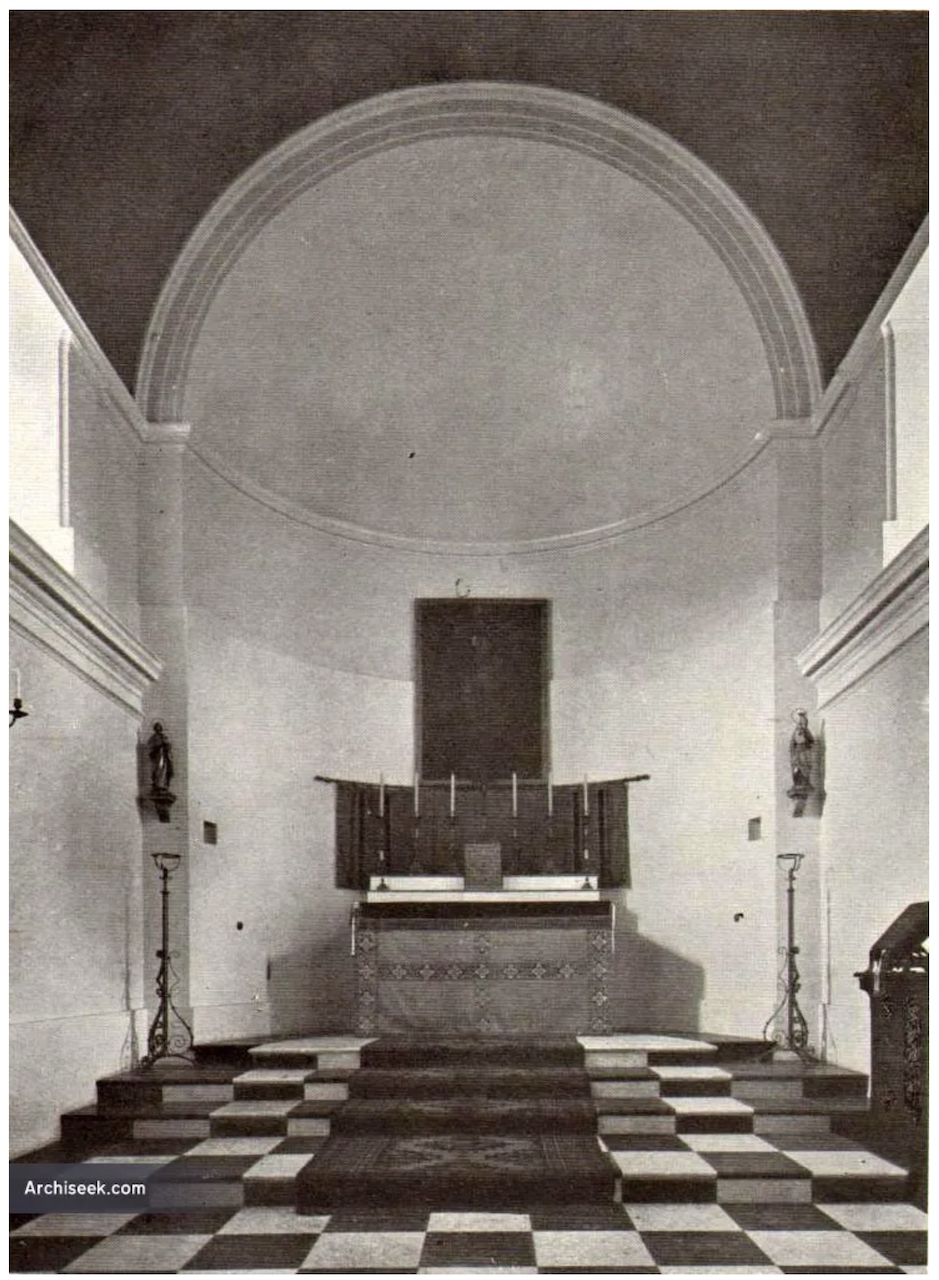
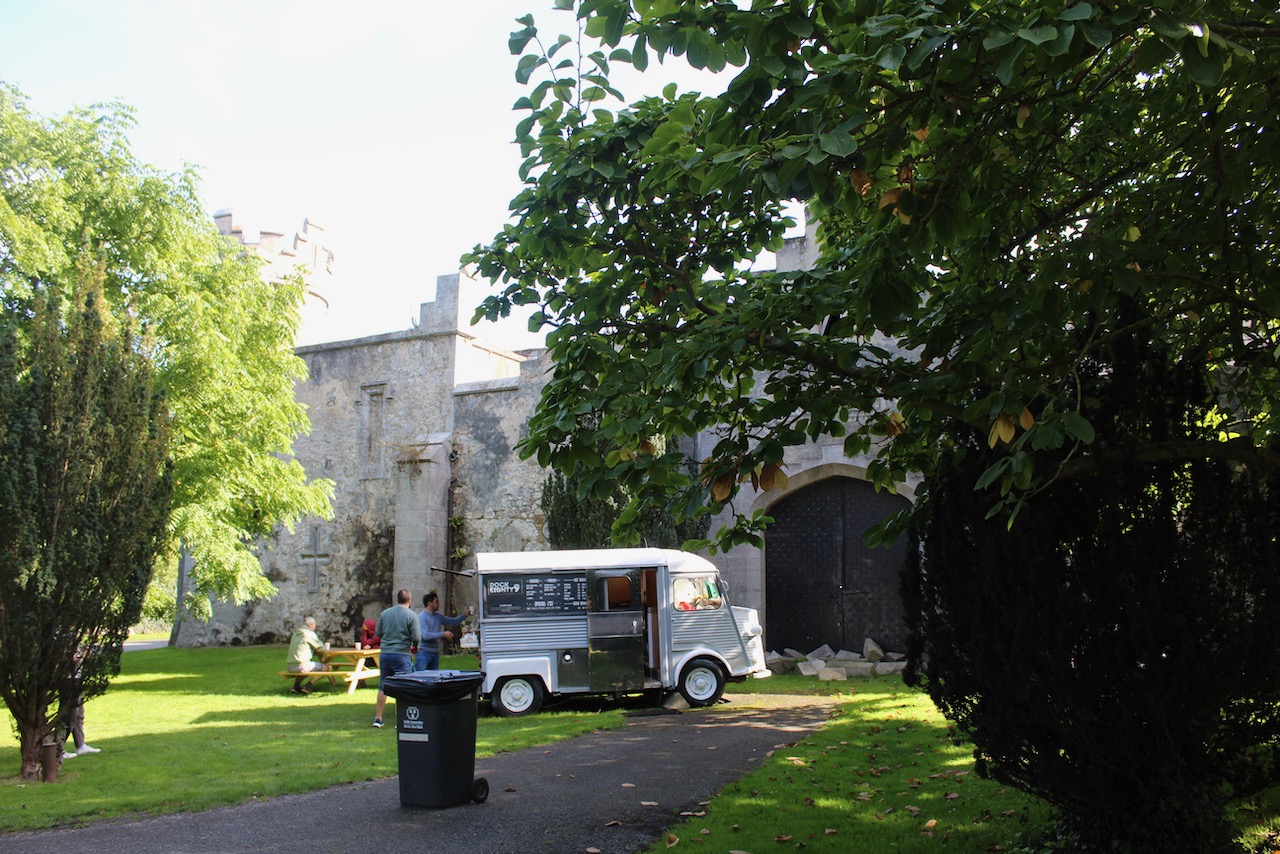
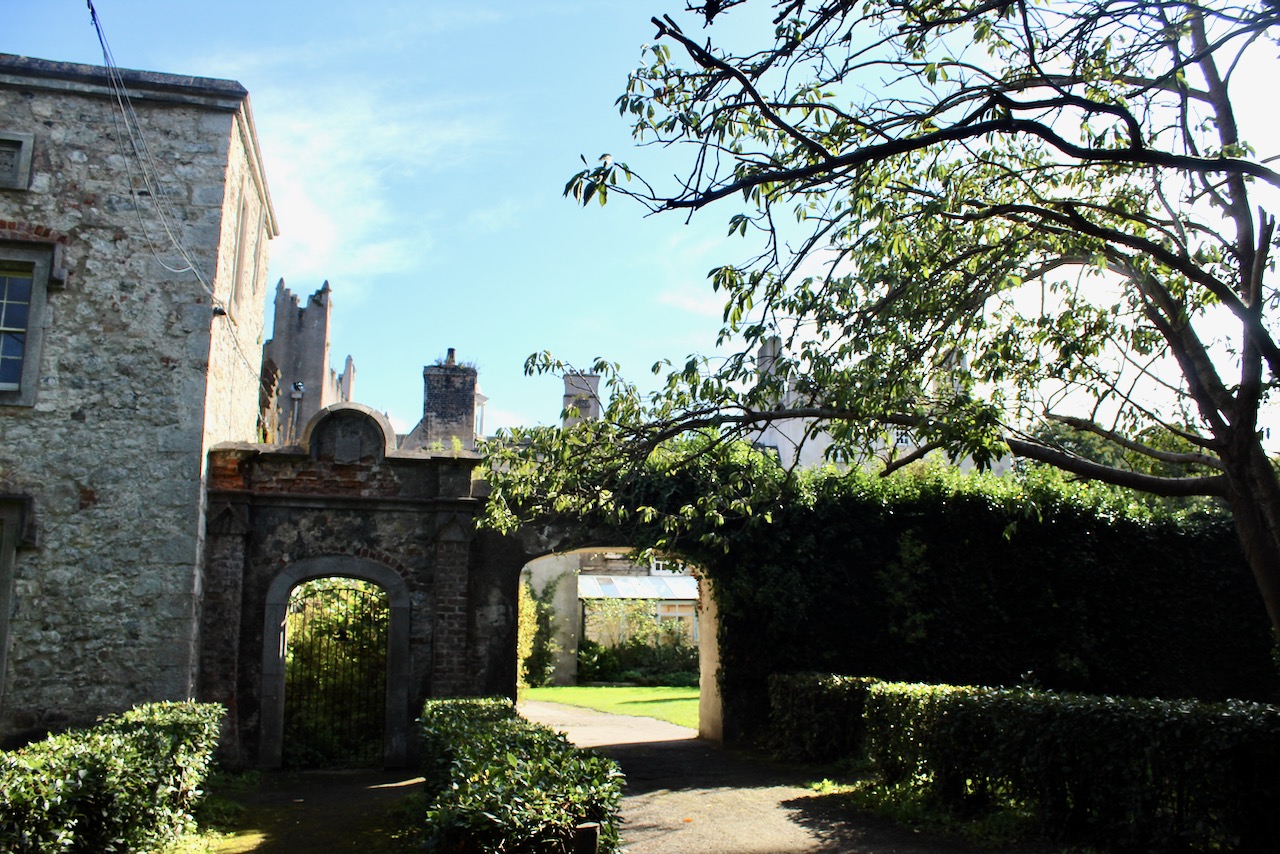
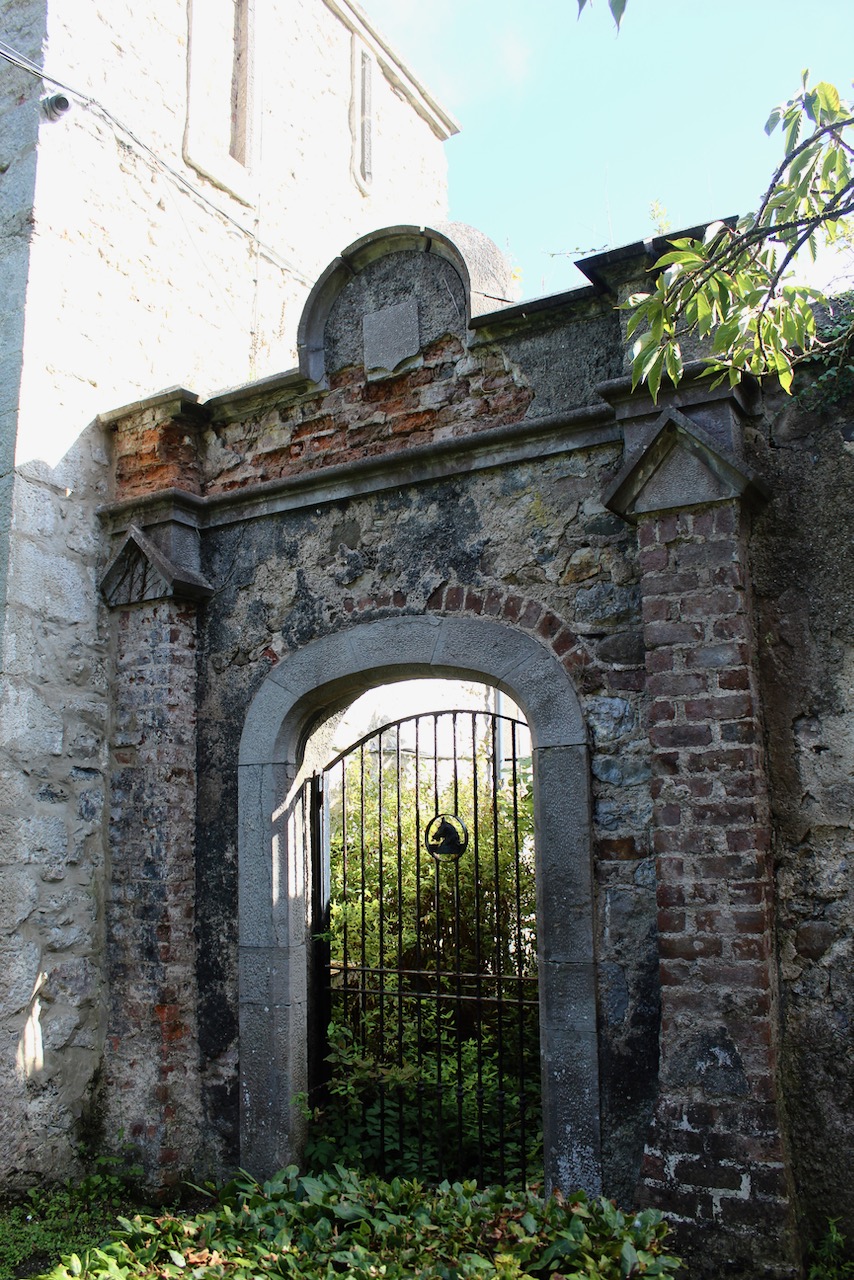
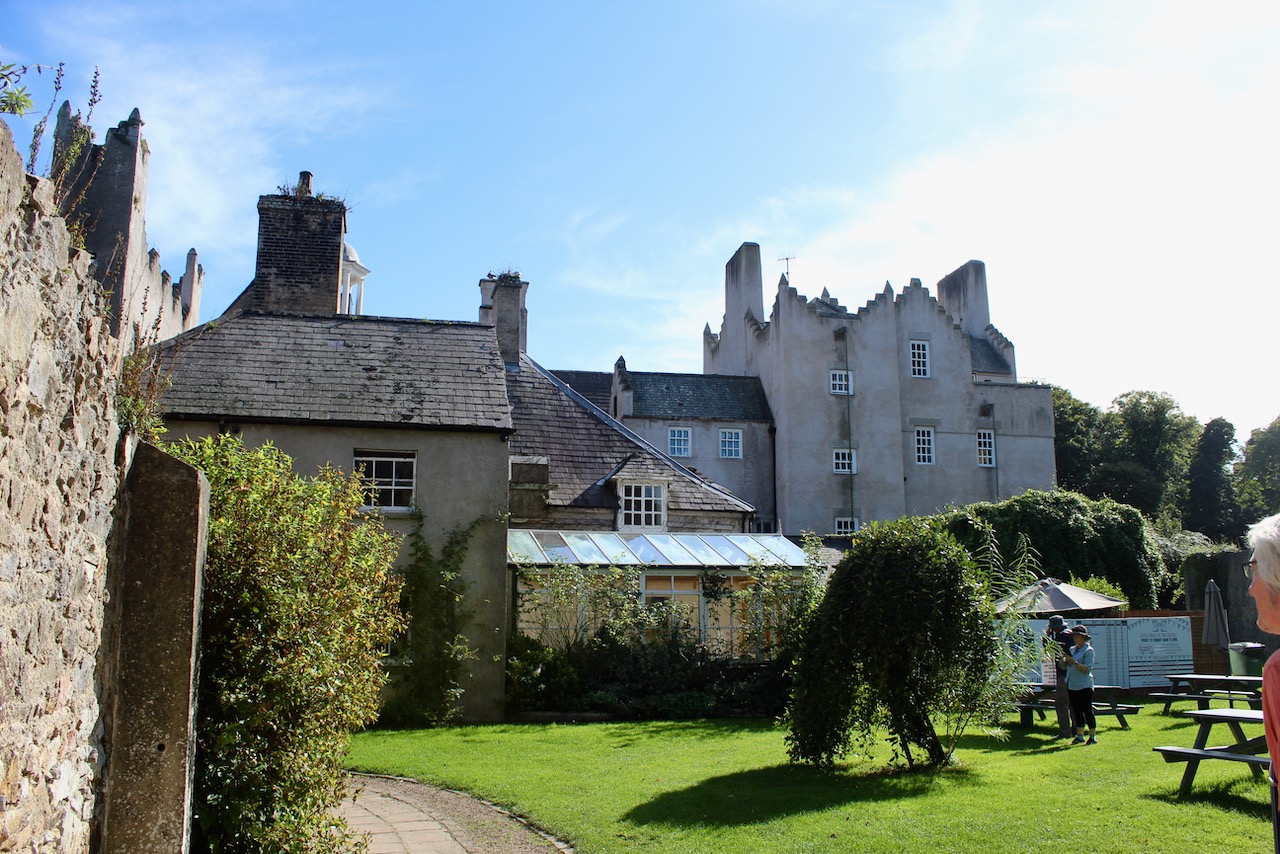
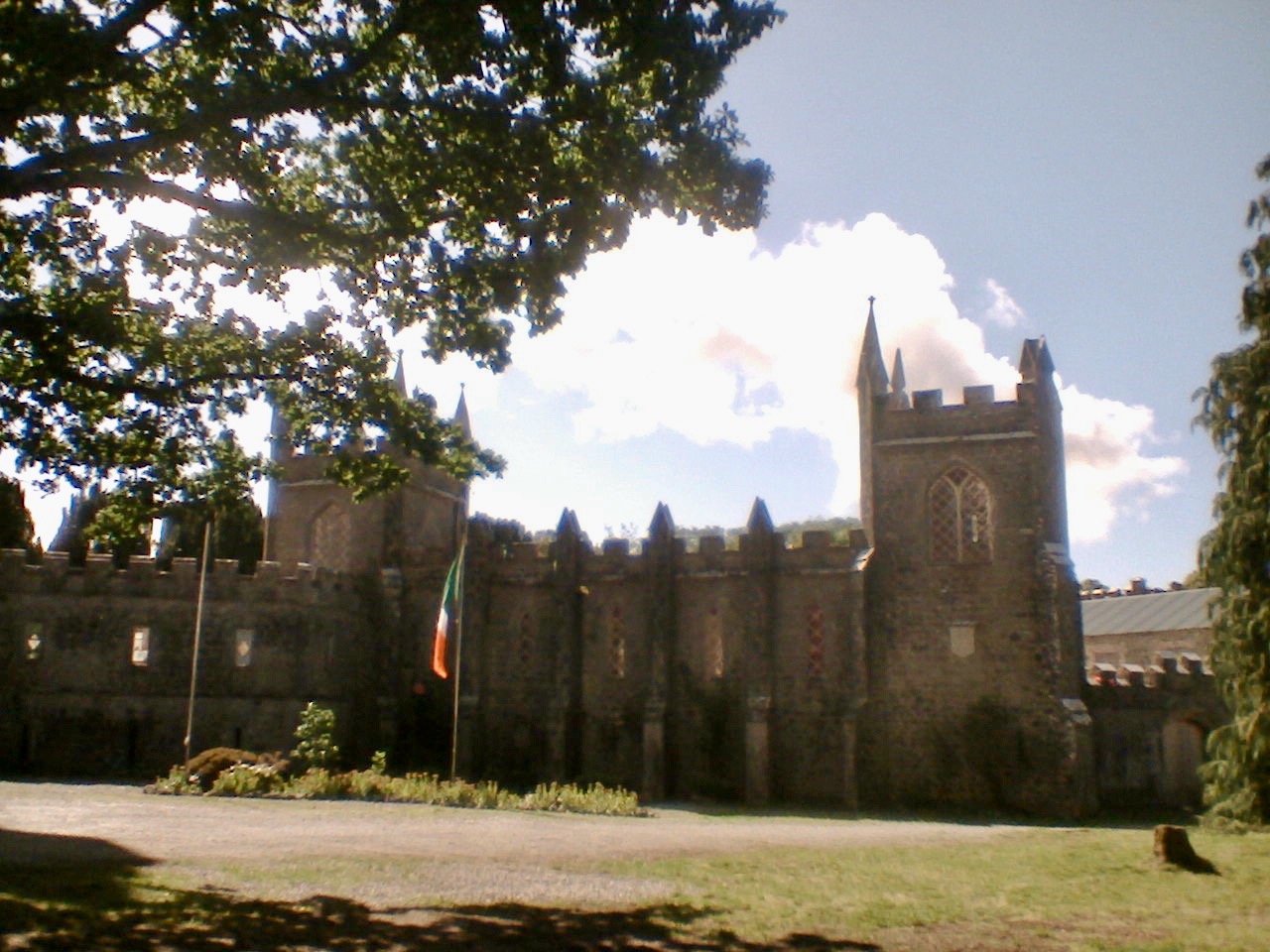
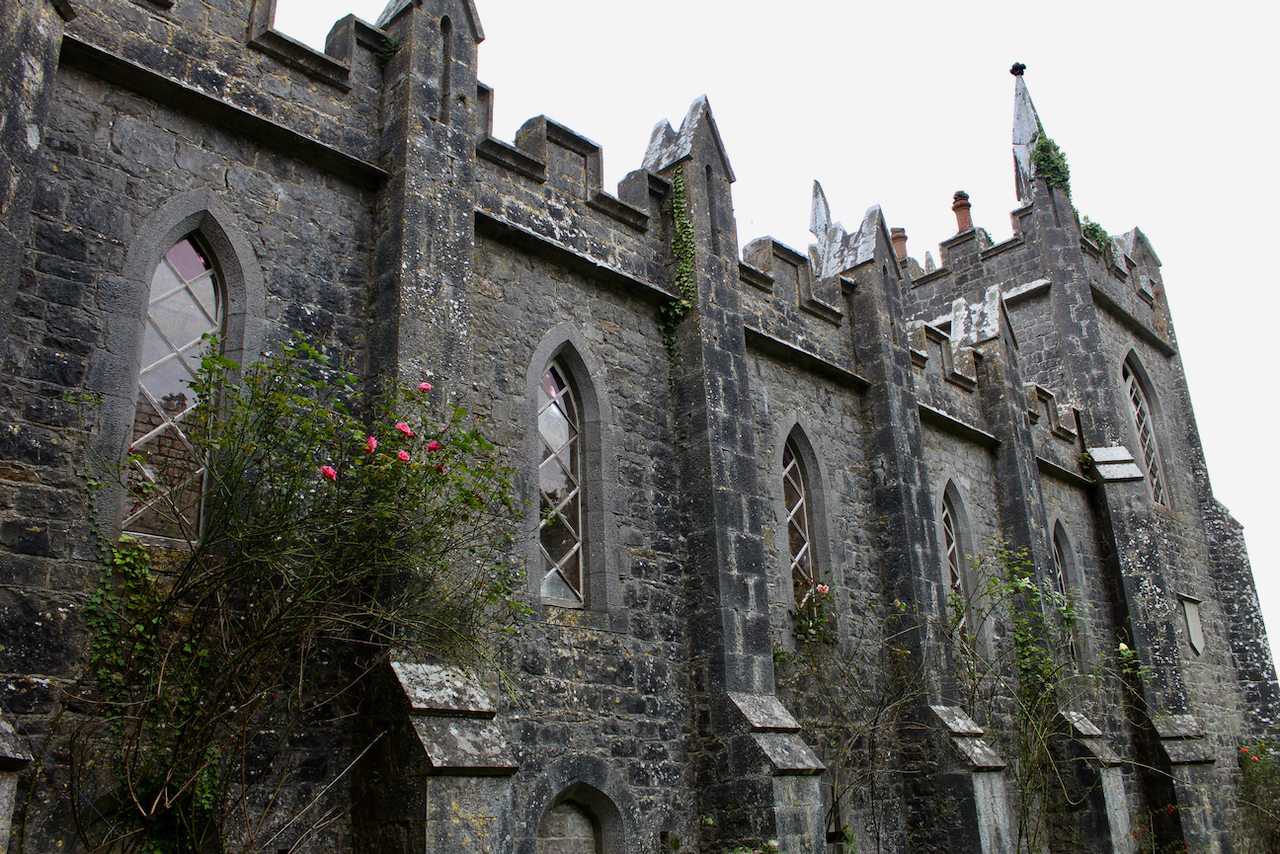
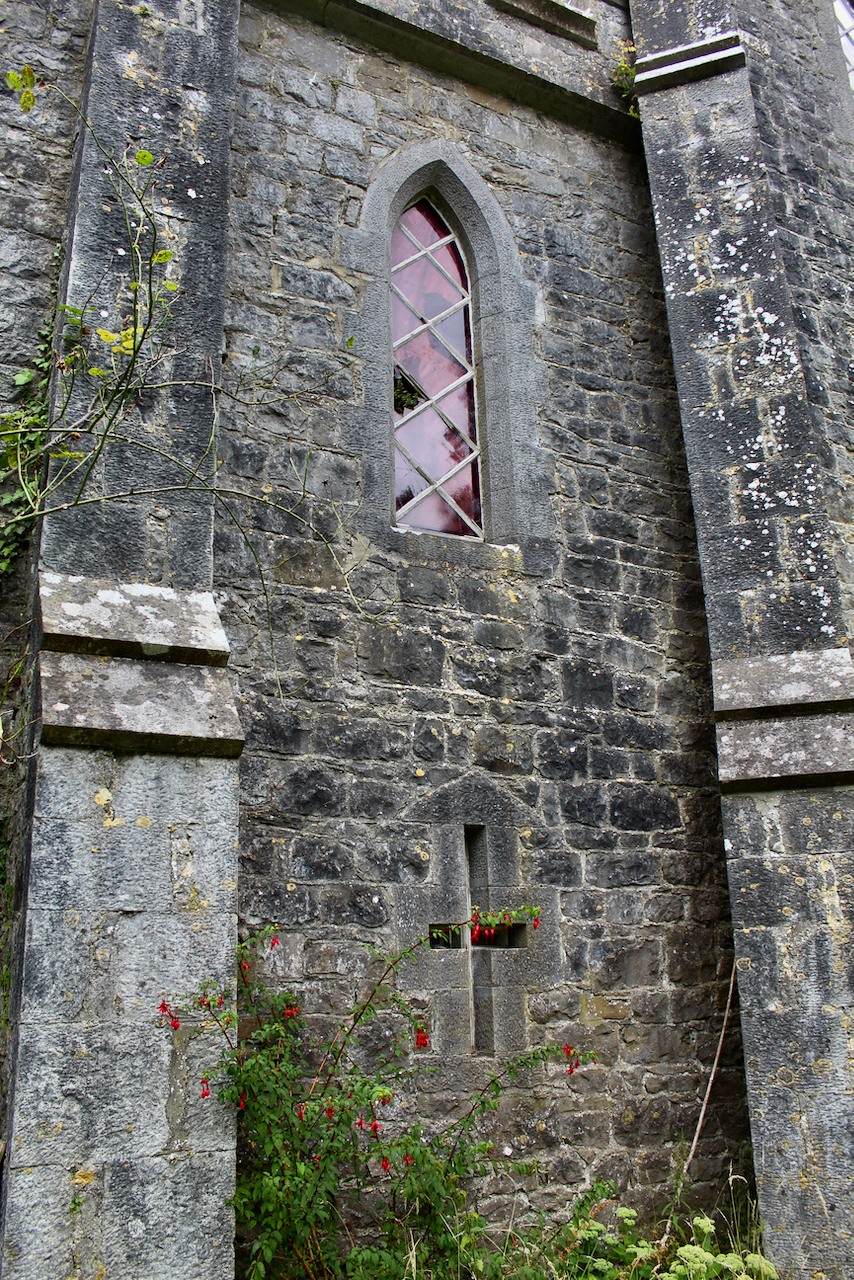
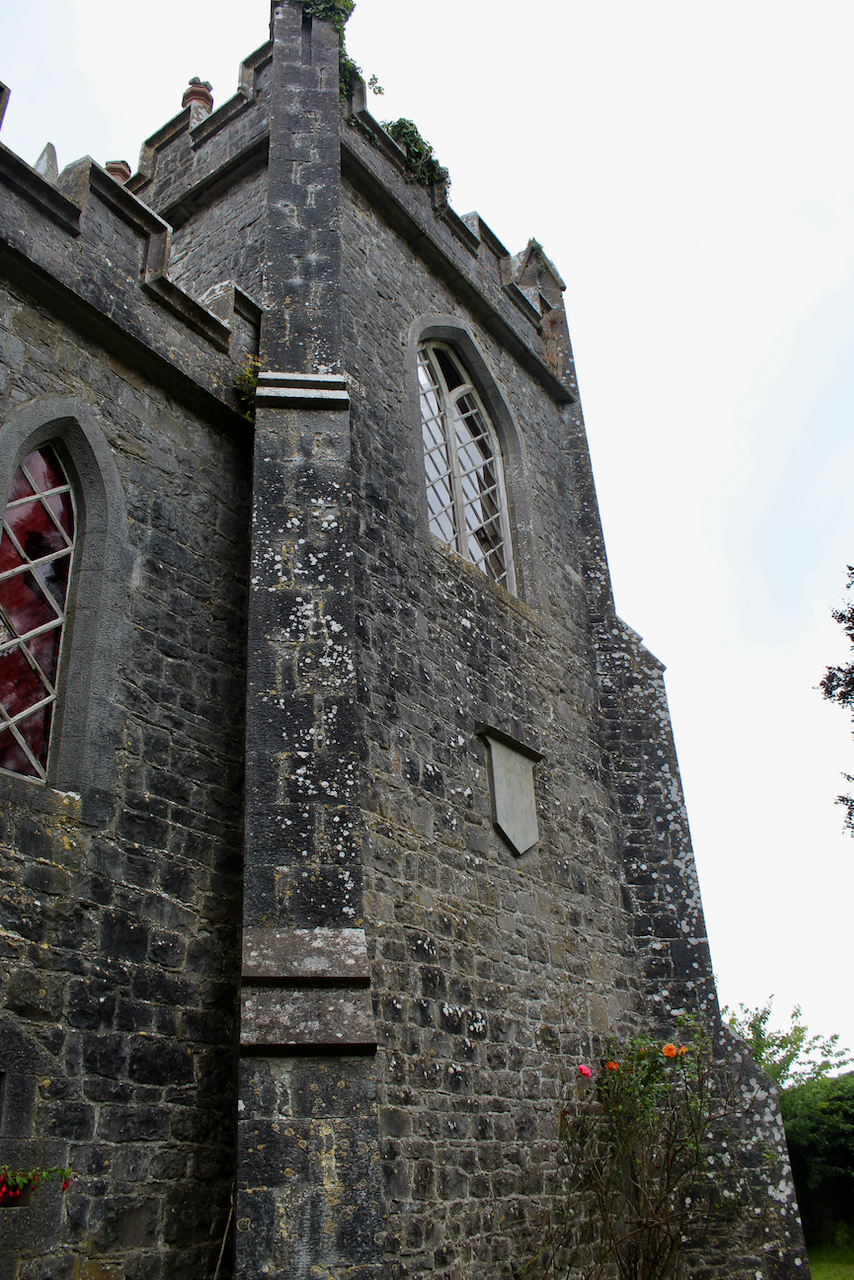
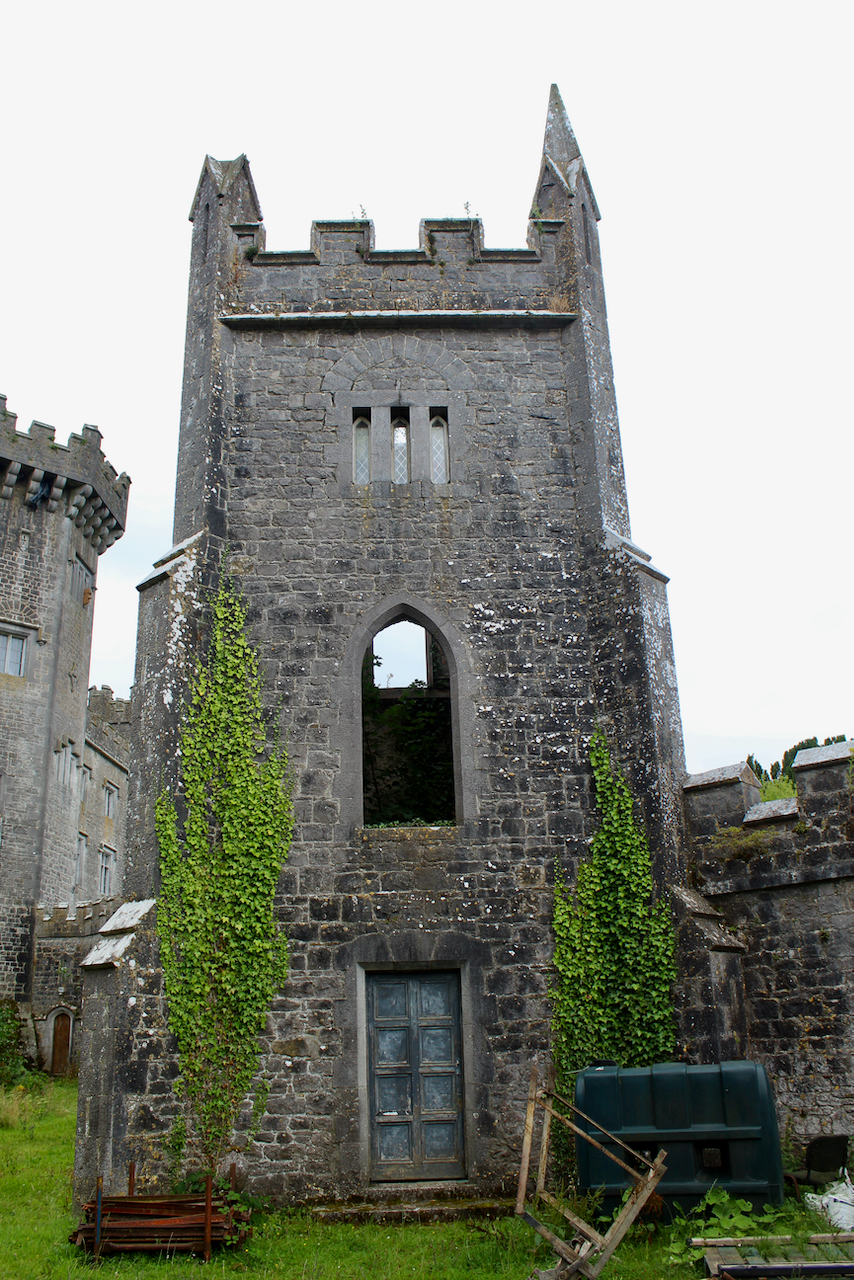
To the right of the entrance front, and giving picturesque variety to the composition, is a long, low range of battlemented offices and a chapel, including a tower with pinnacles and a gateway.
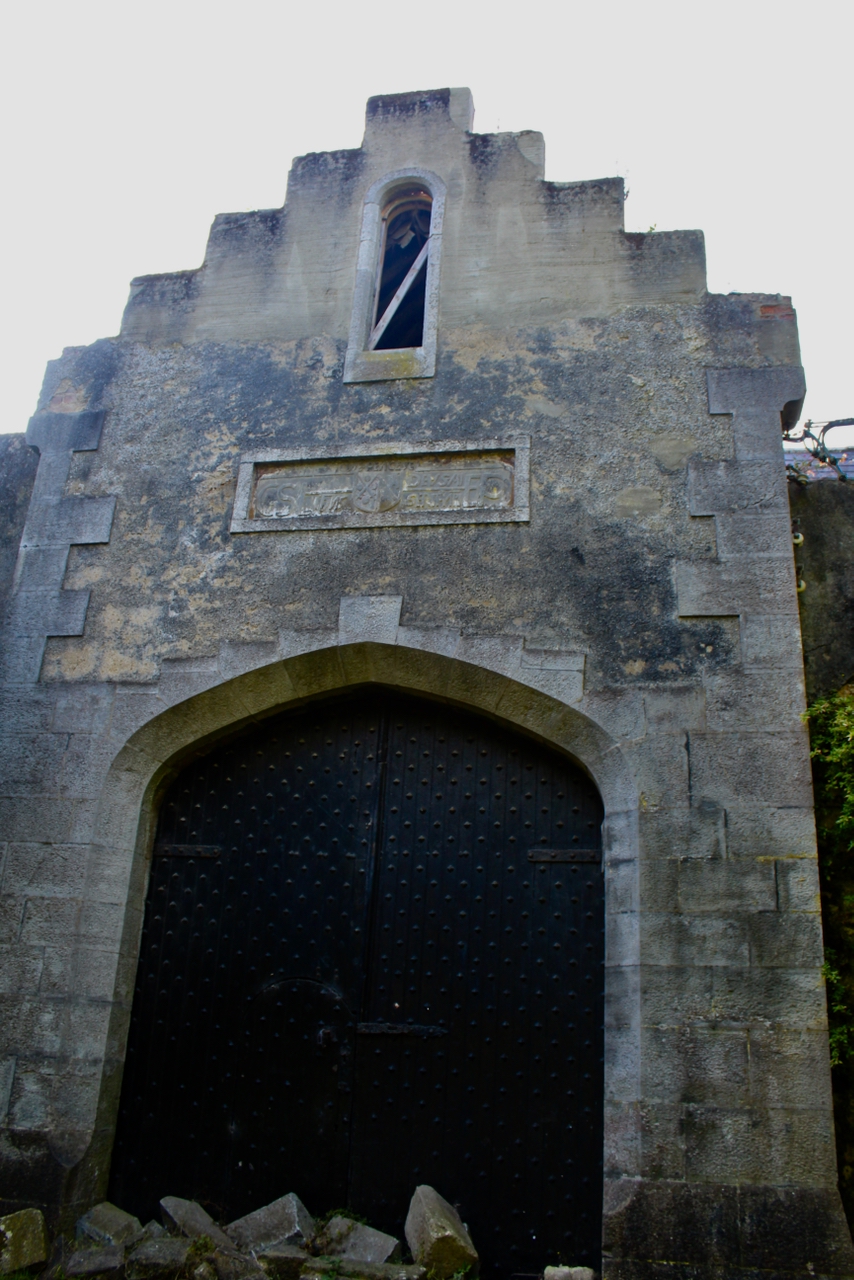
The Stableyard lies beyond the chapel but is not open to the public, which is unfortunate as Tierney describes it as the finest castellated stableyard in Ireland, although now derelict. It is also by Francis Johnston.
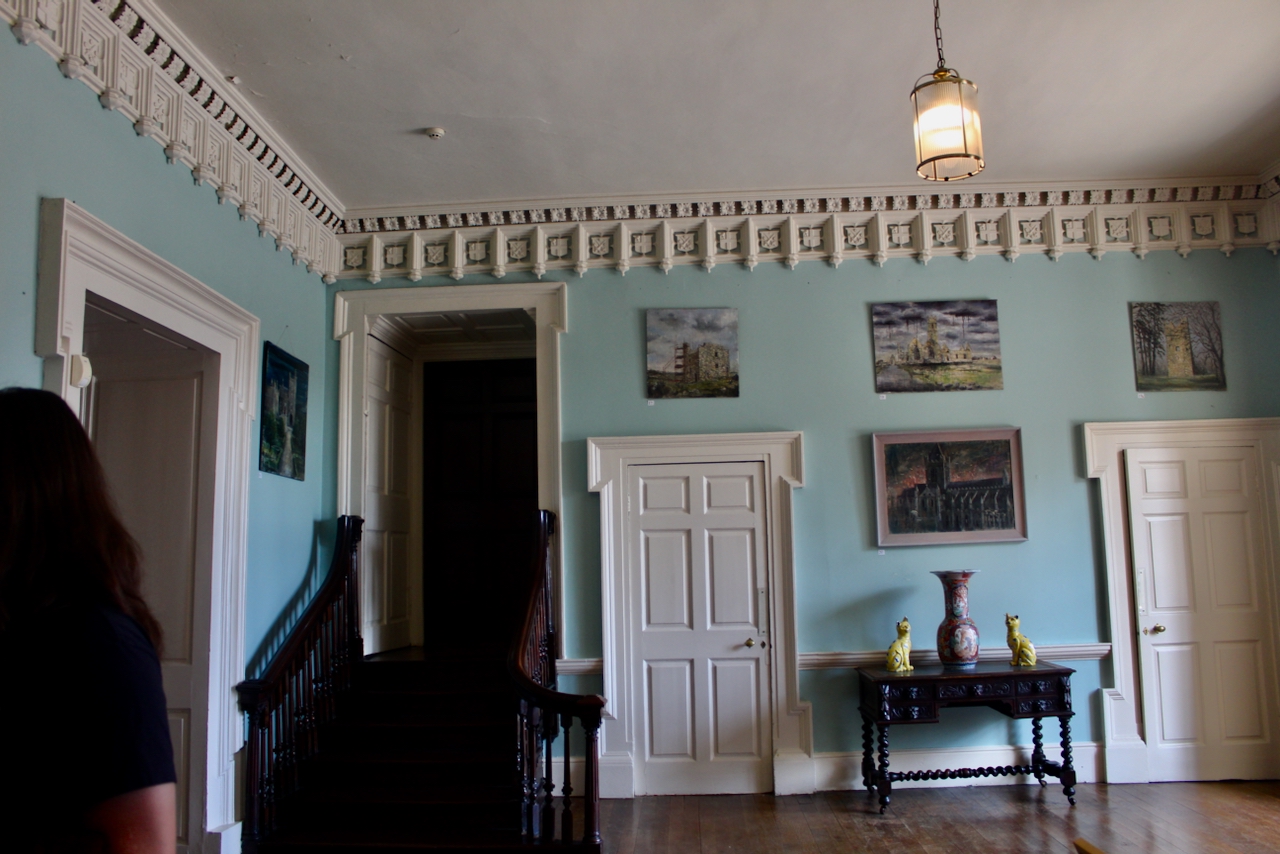
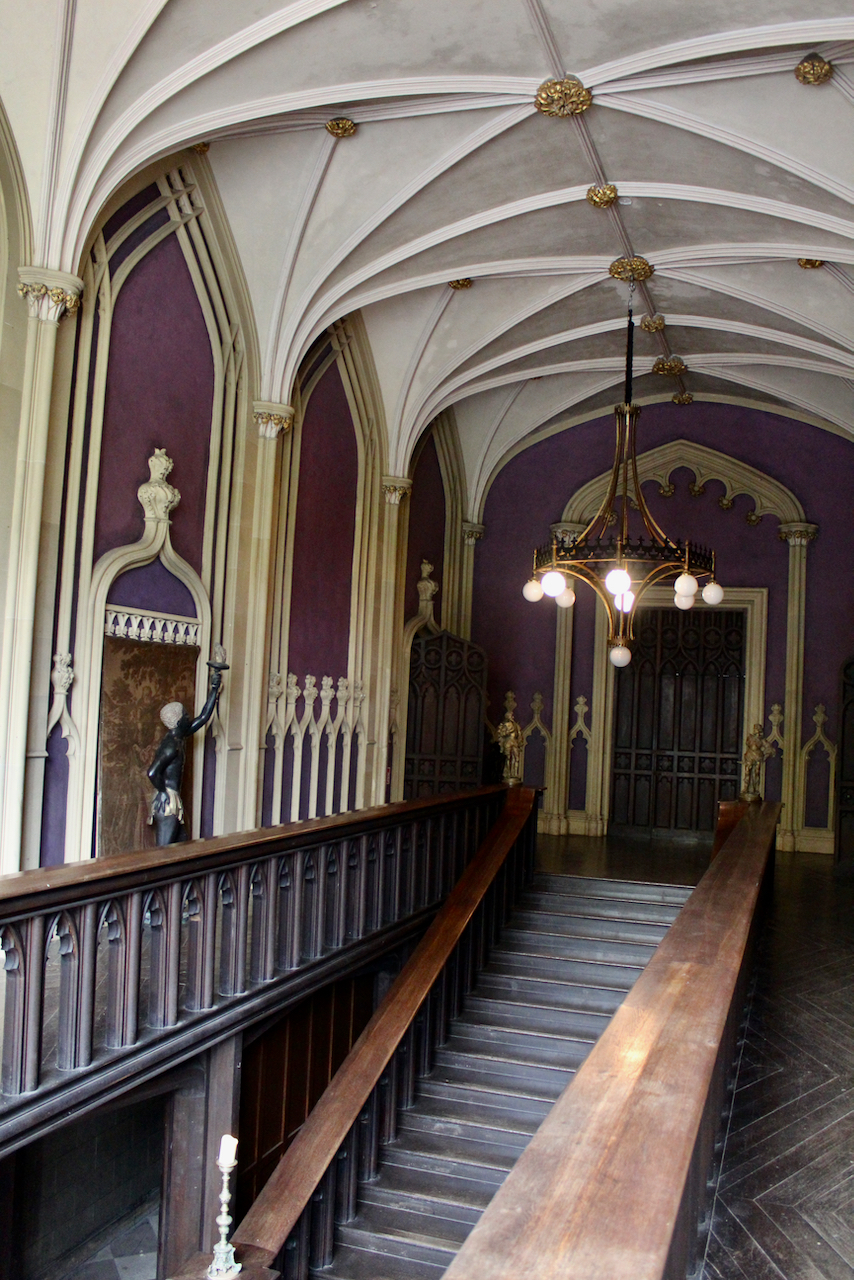
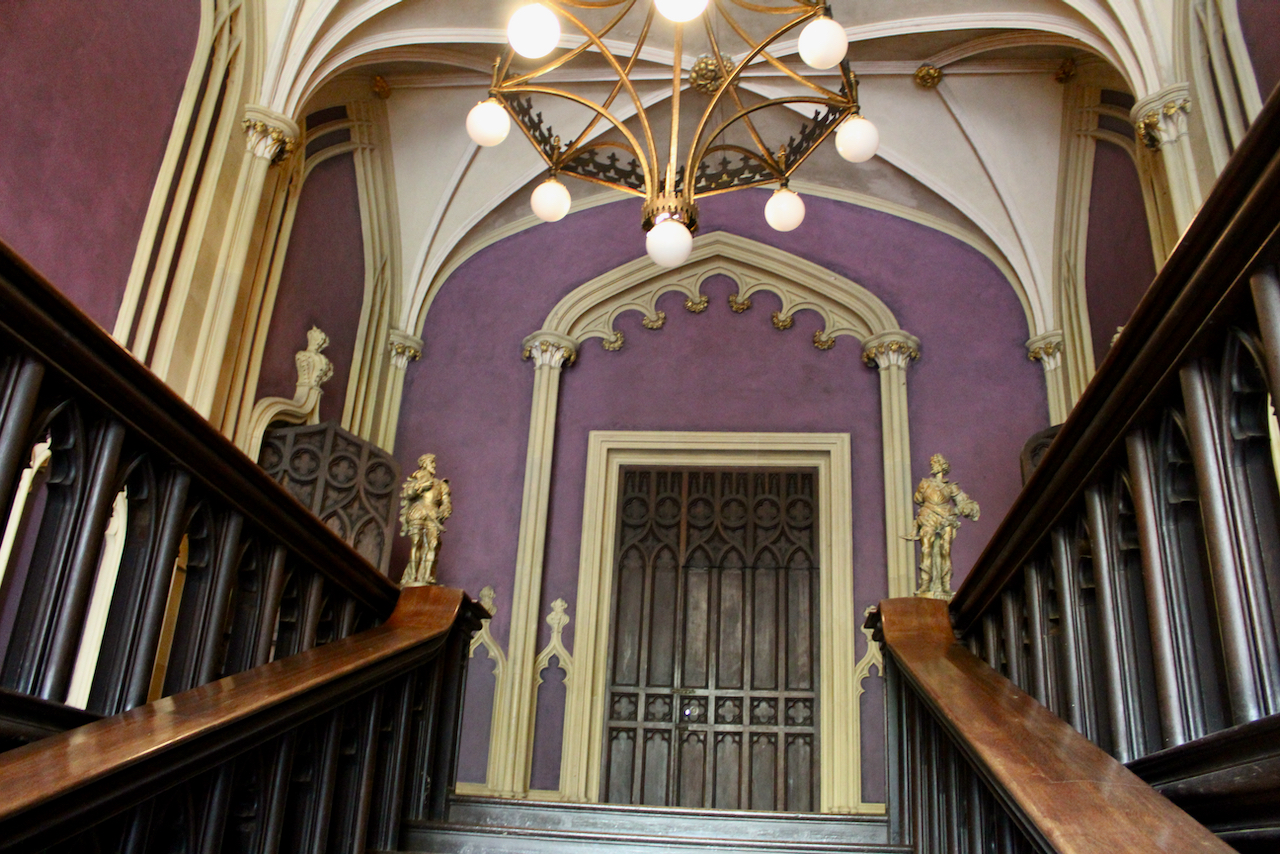
“The interior is as dramatic and well-finished as the exterior. In the hall, with its plaster groined ceiling carried on graceful shafts, a straight flight of stairs rises between galleries to piano nobile level, where a great double door, carved in florid Decorated style, leads to a vast saloon or gallery running the whole length of the garden front.”
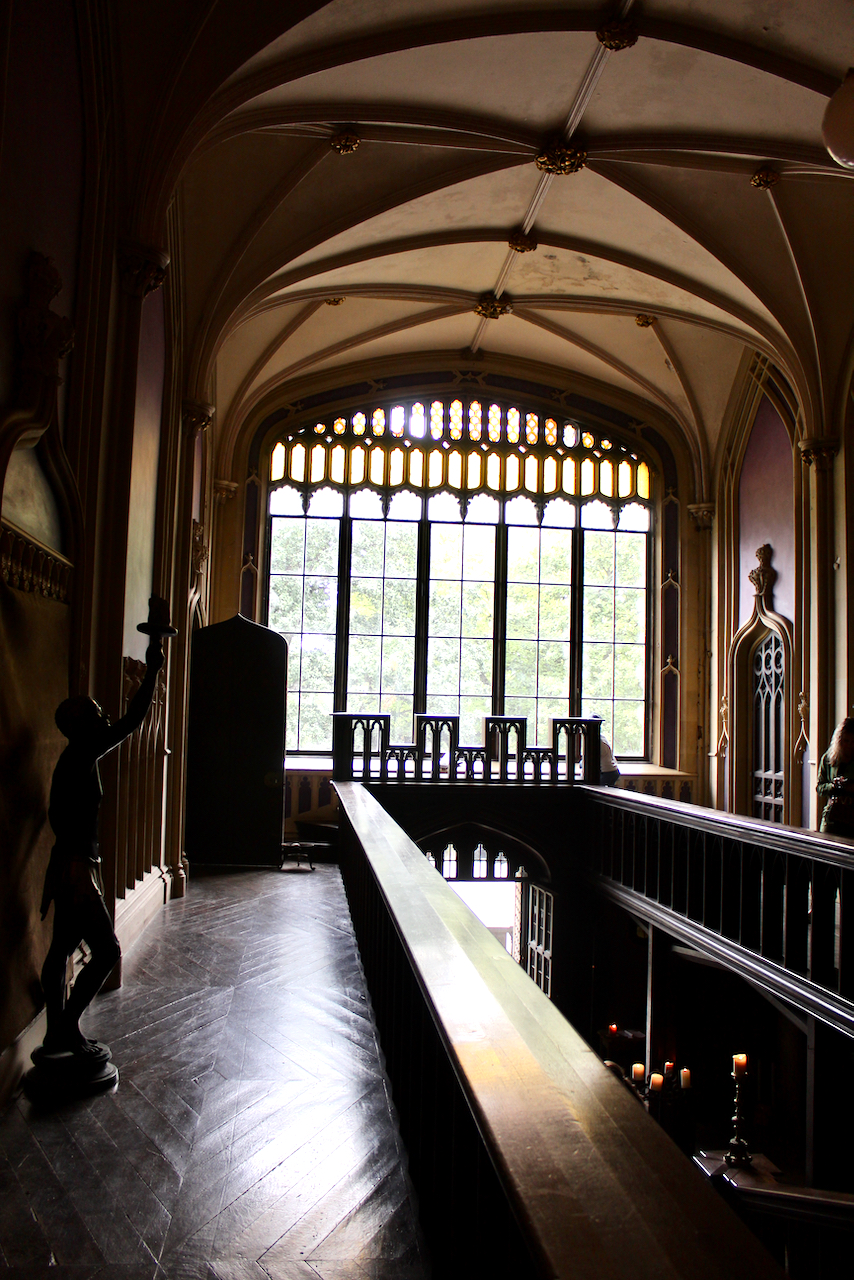
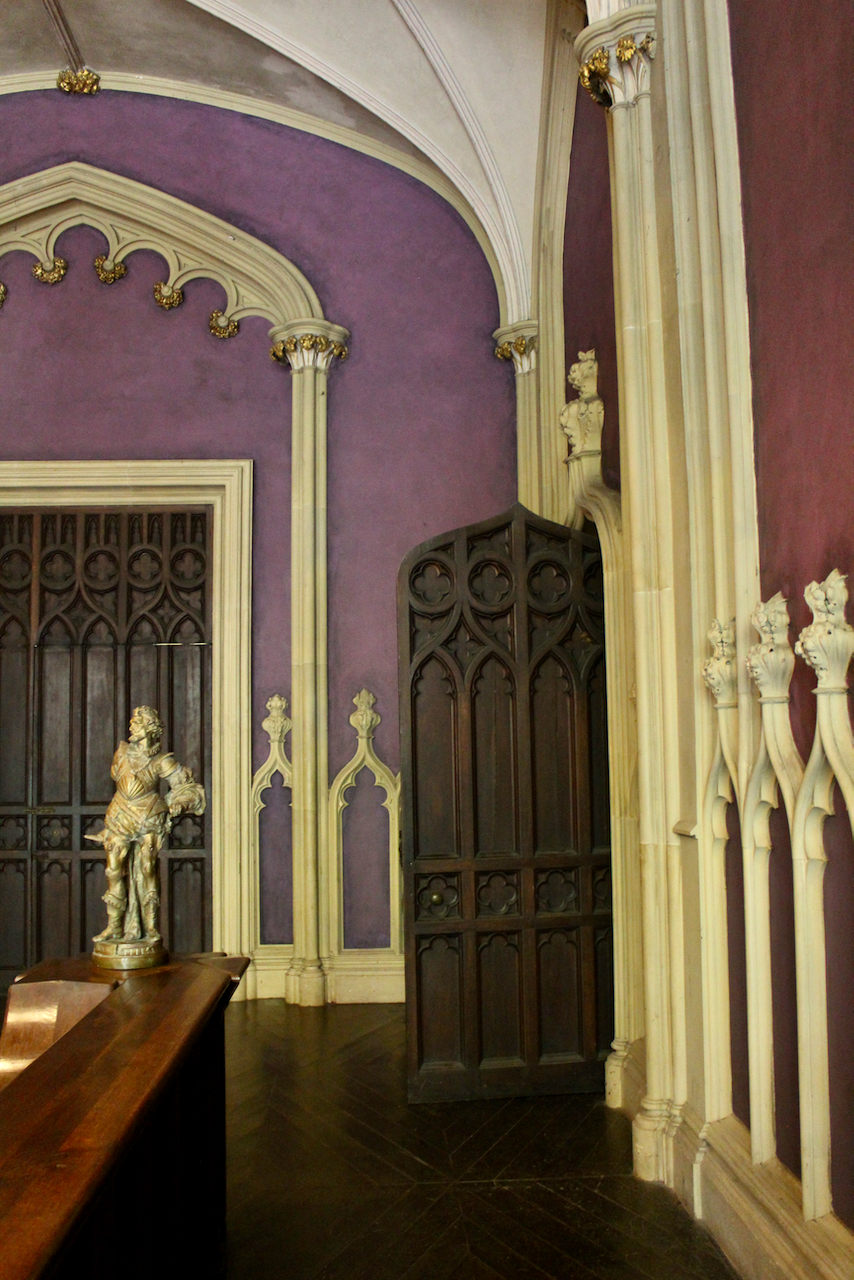
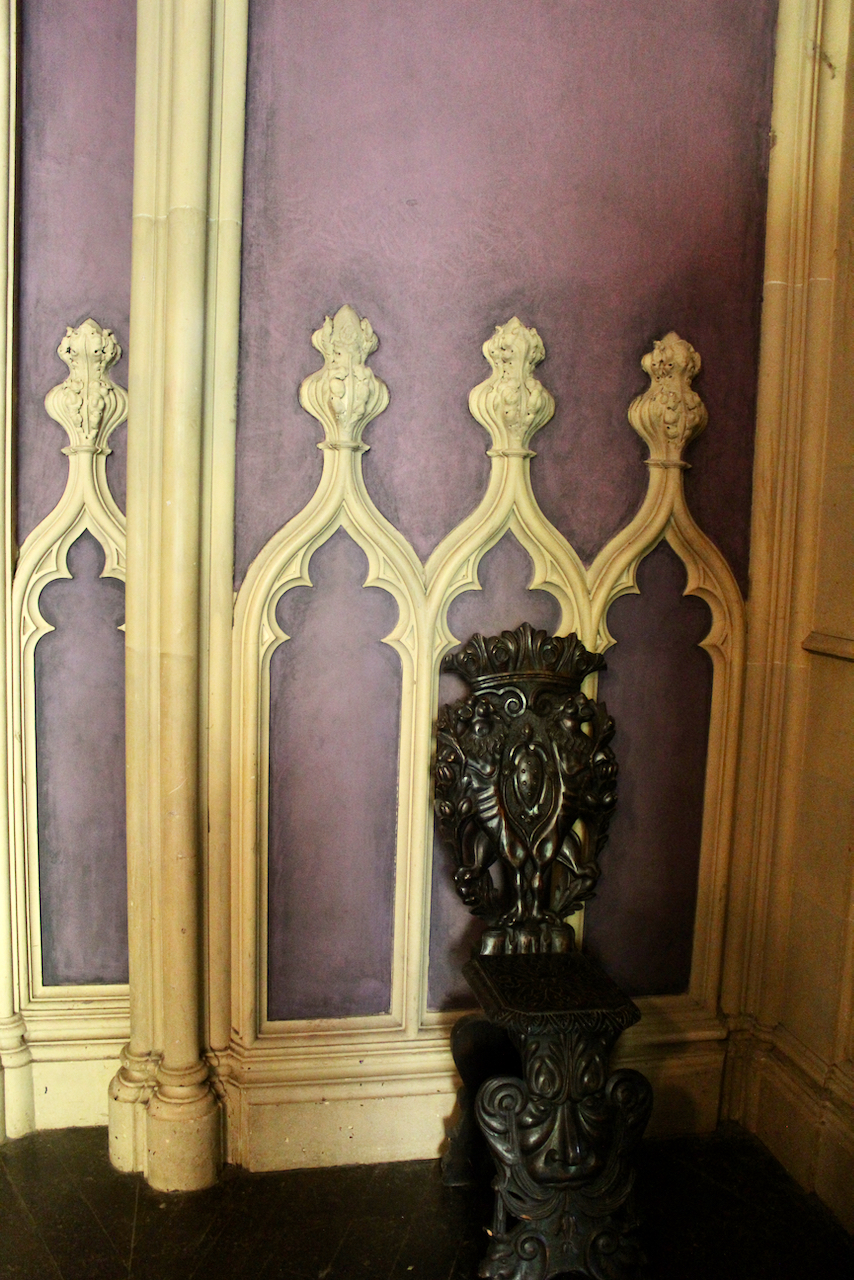
The heavy oak stairs run from the basement to piano nobile. This imitates a similar configuration by James Wyatt at Fonthill and Windsor, which Lord Charleville knew. The upper stage, Tierney describes, has a plaster-panelled dado with ogee-headed niches in the style of Batty Langley, conceived for a parade of suits of armour in drawings by Lady Charleville.
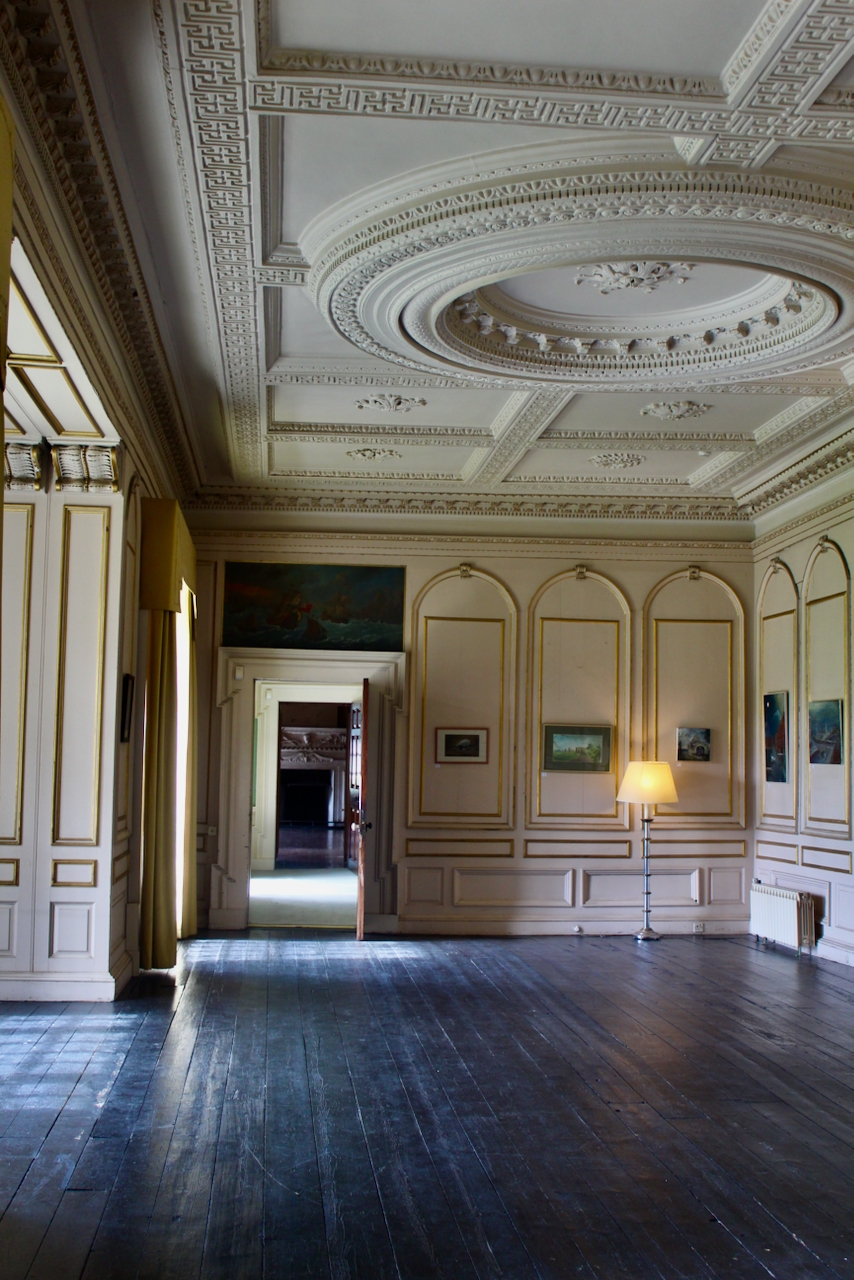
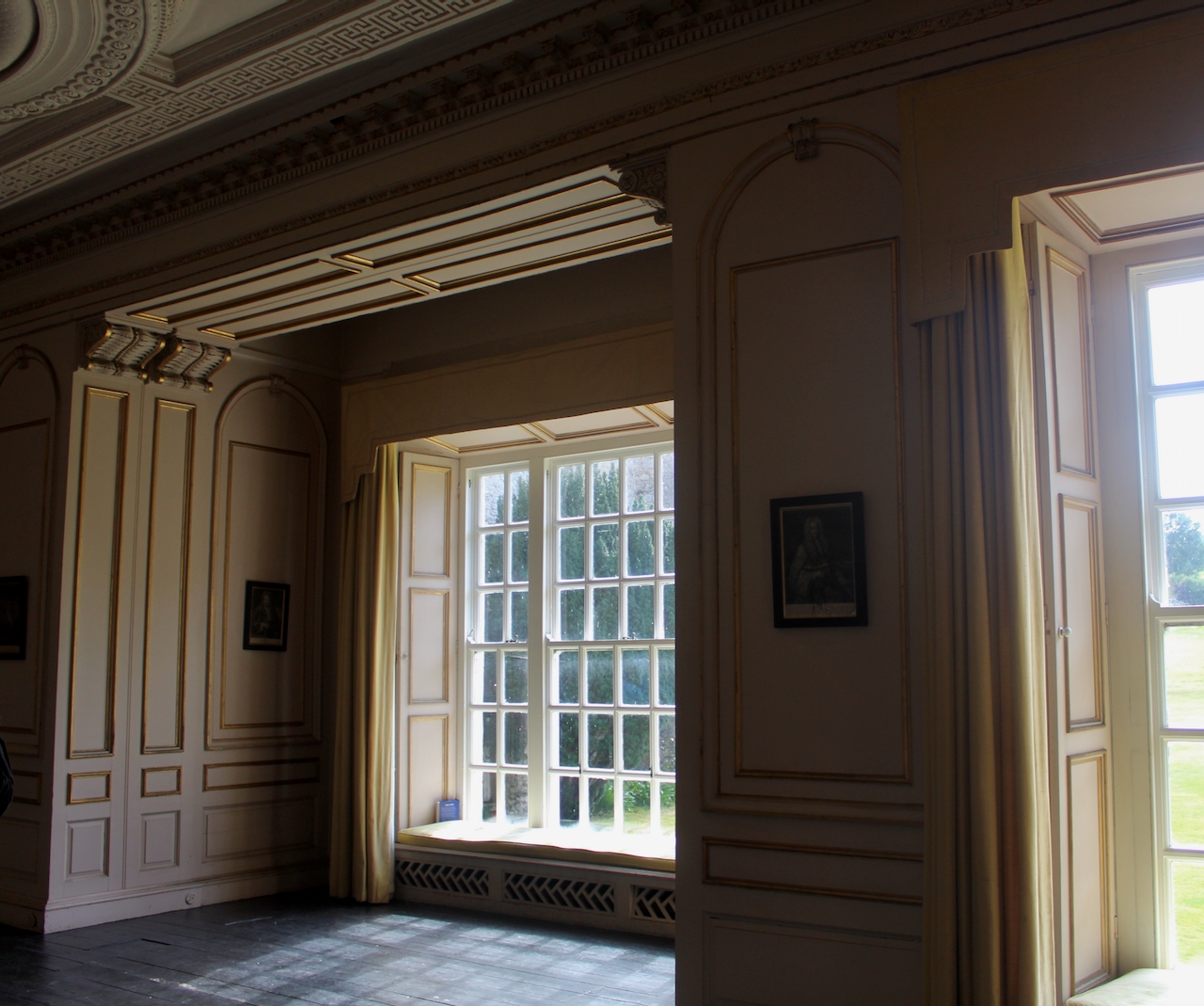
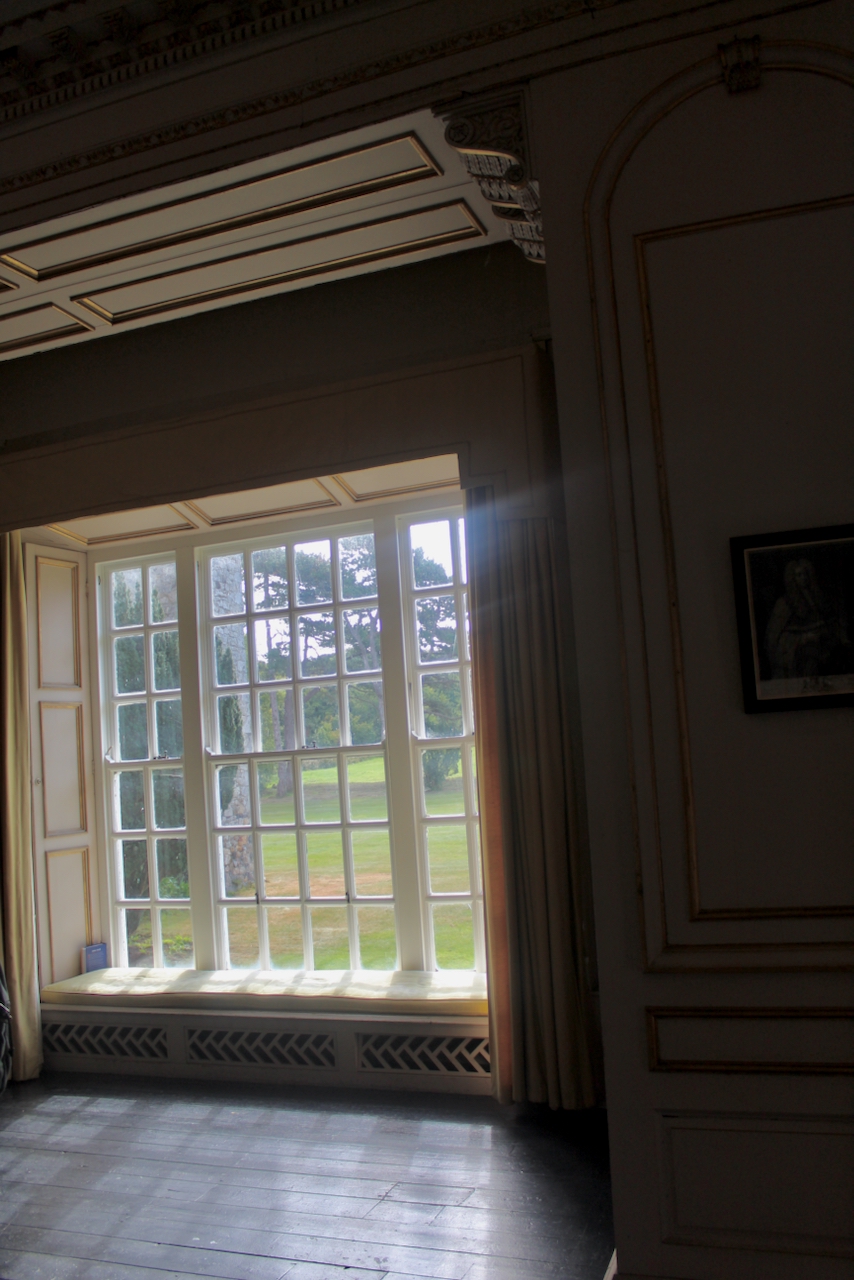
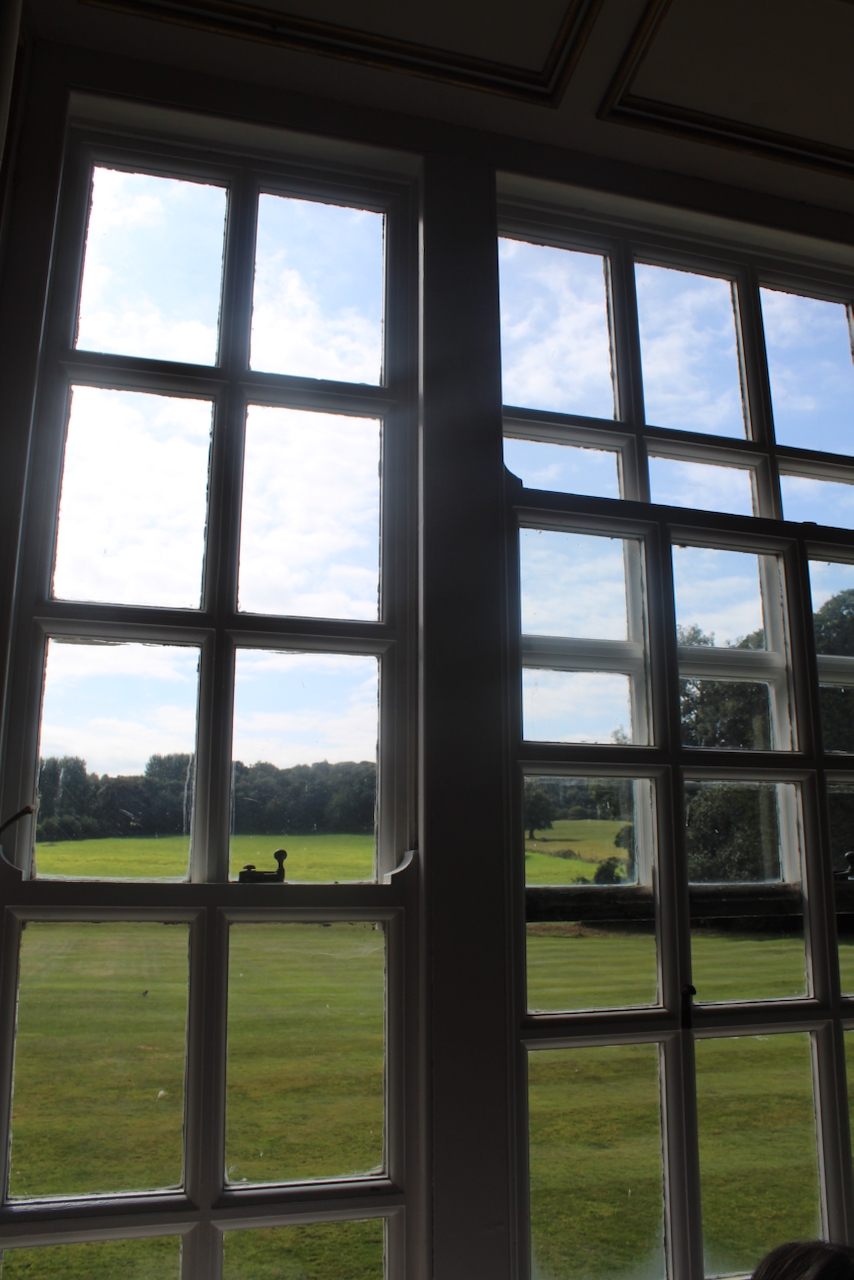
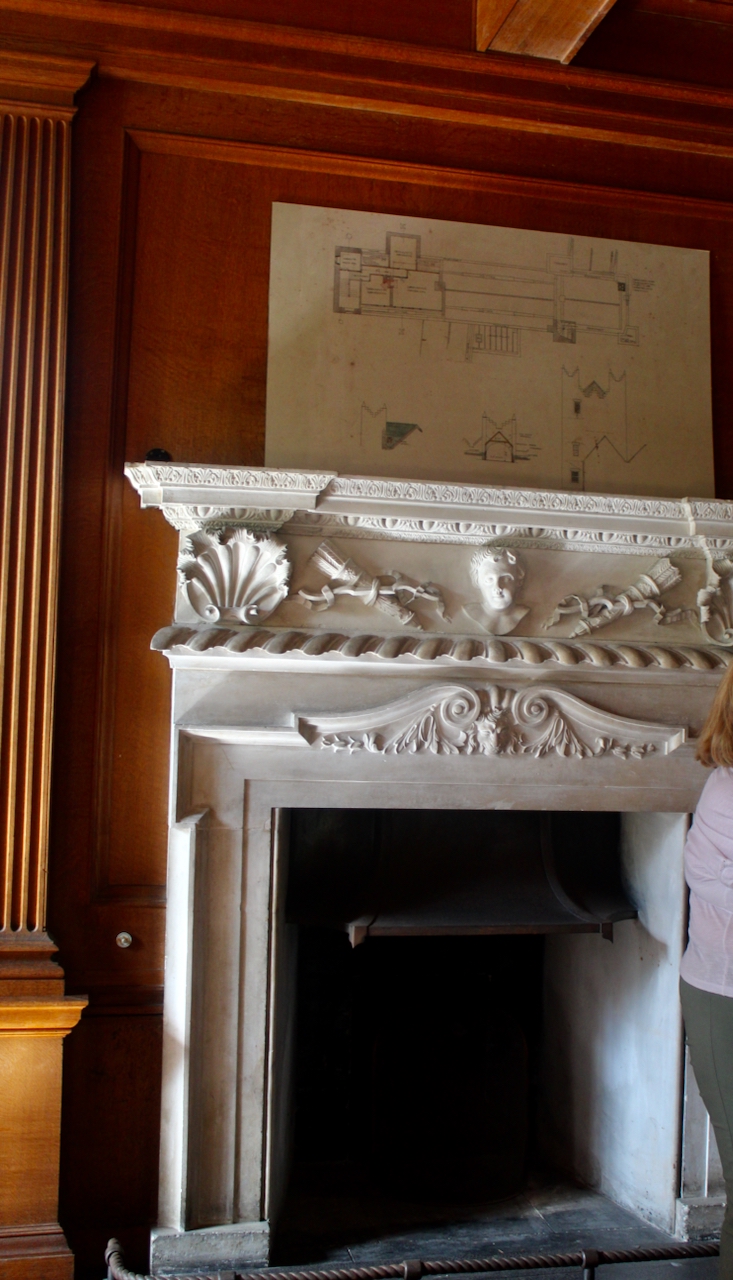
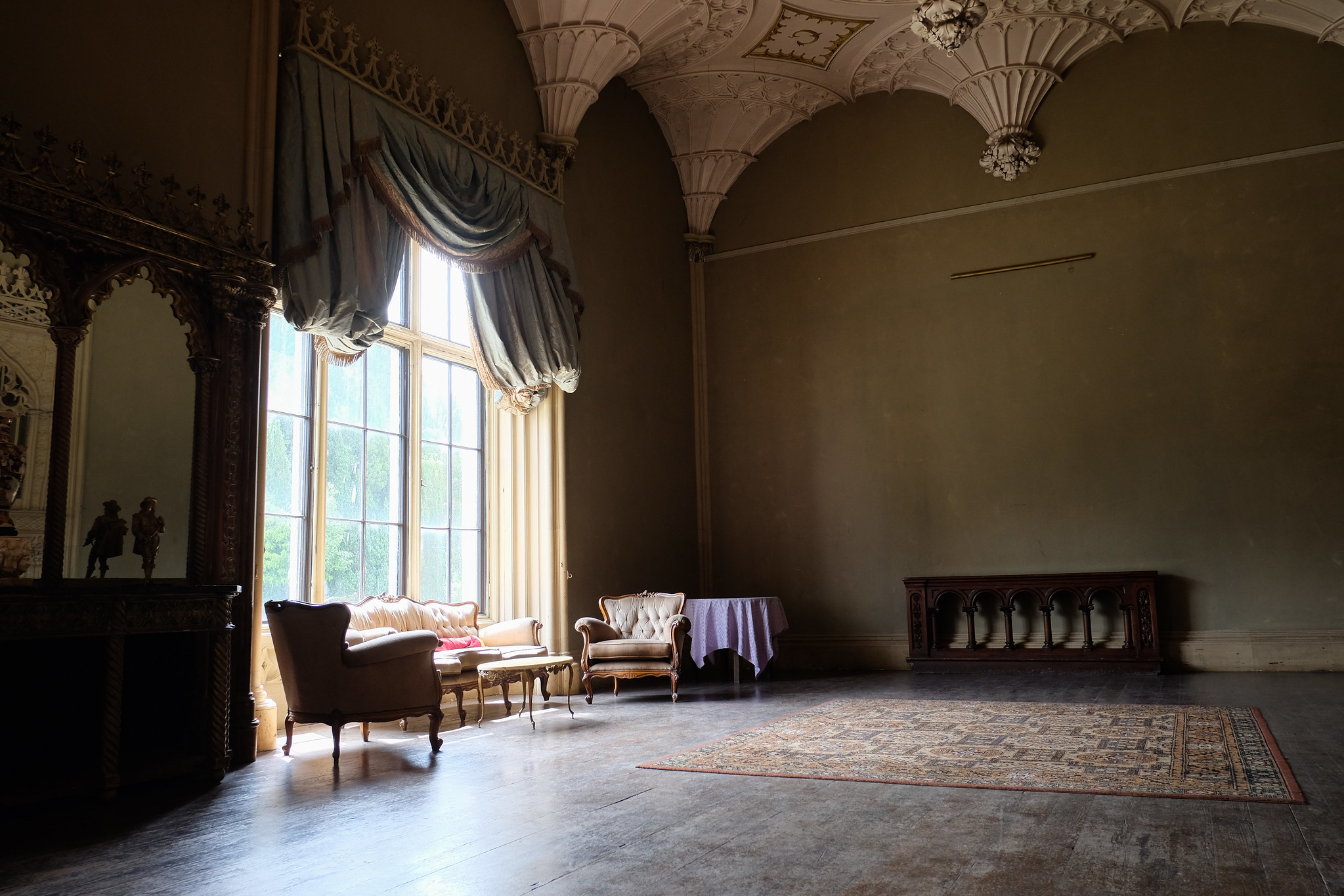
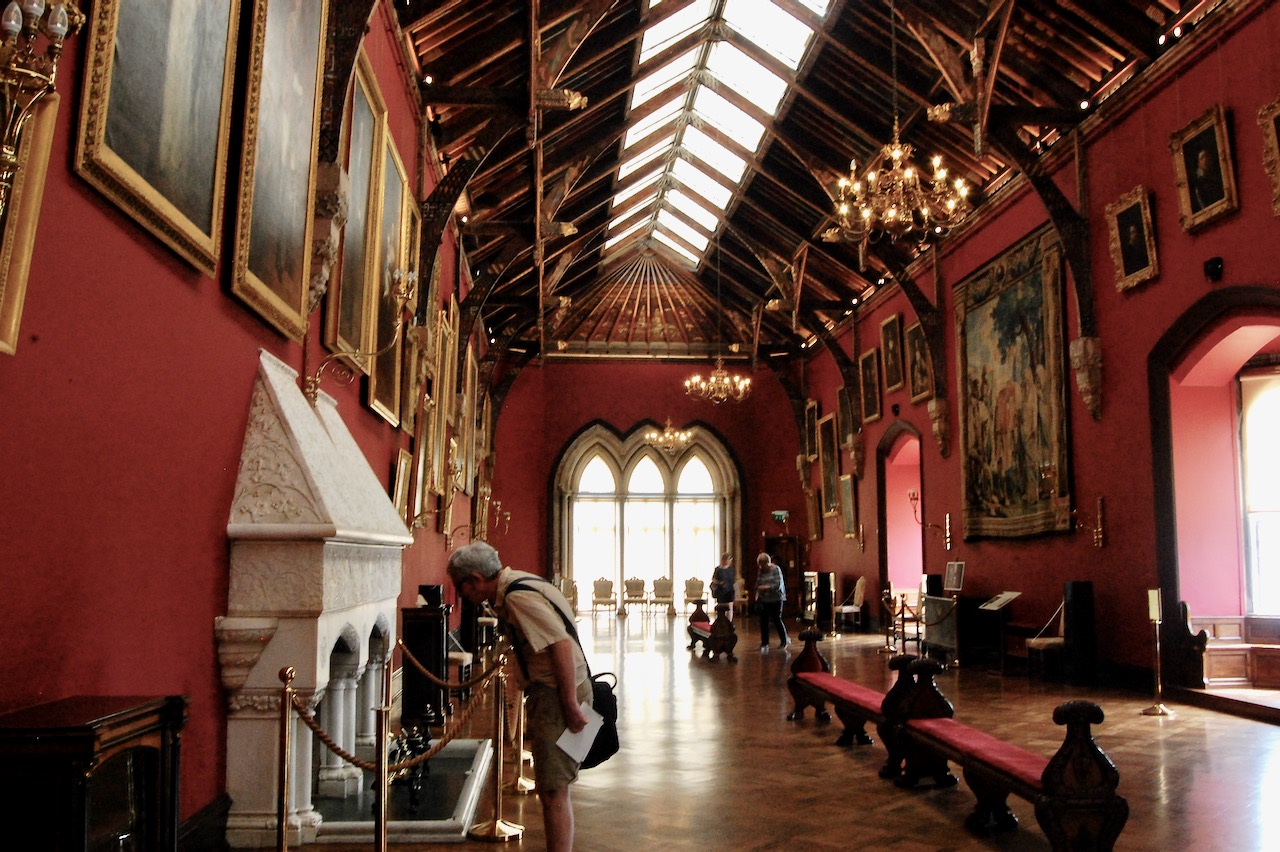
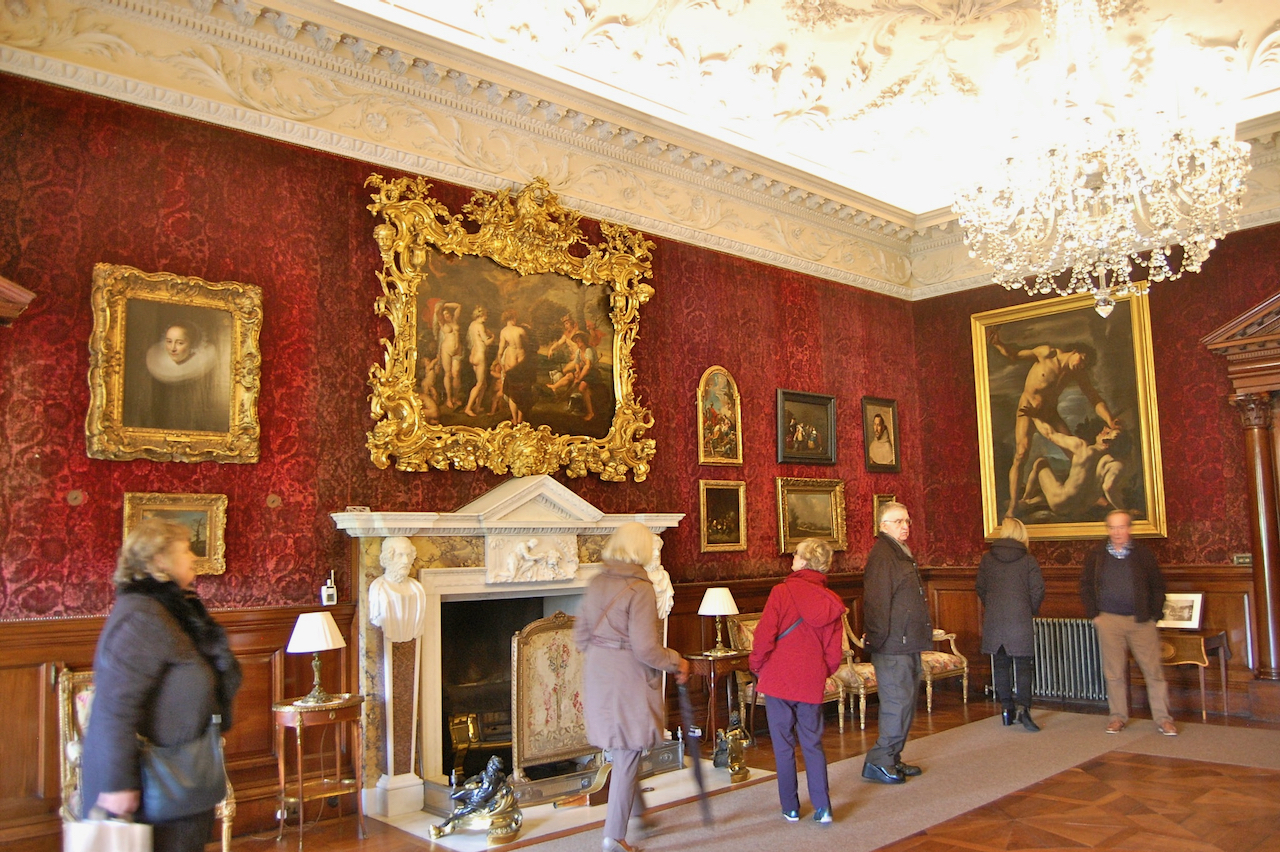
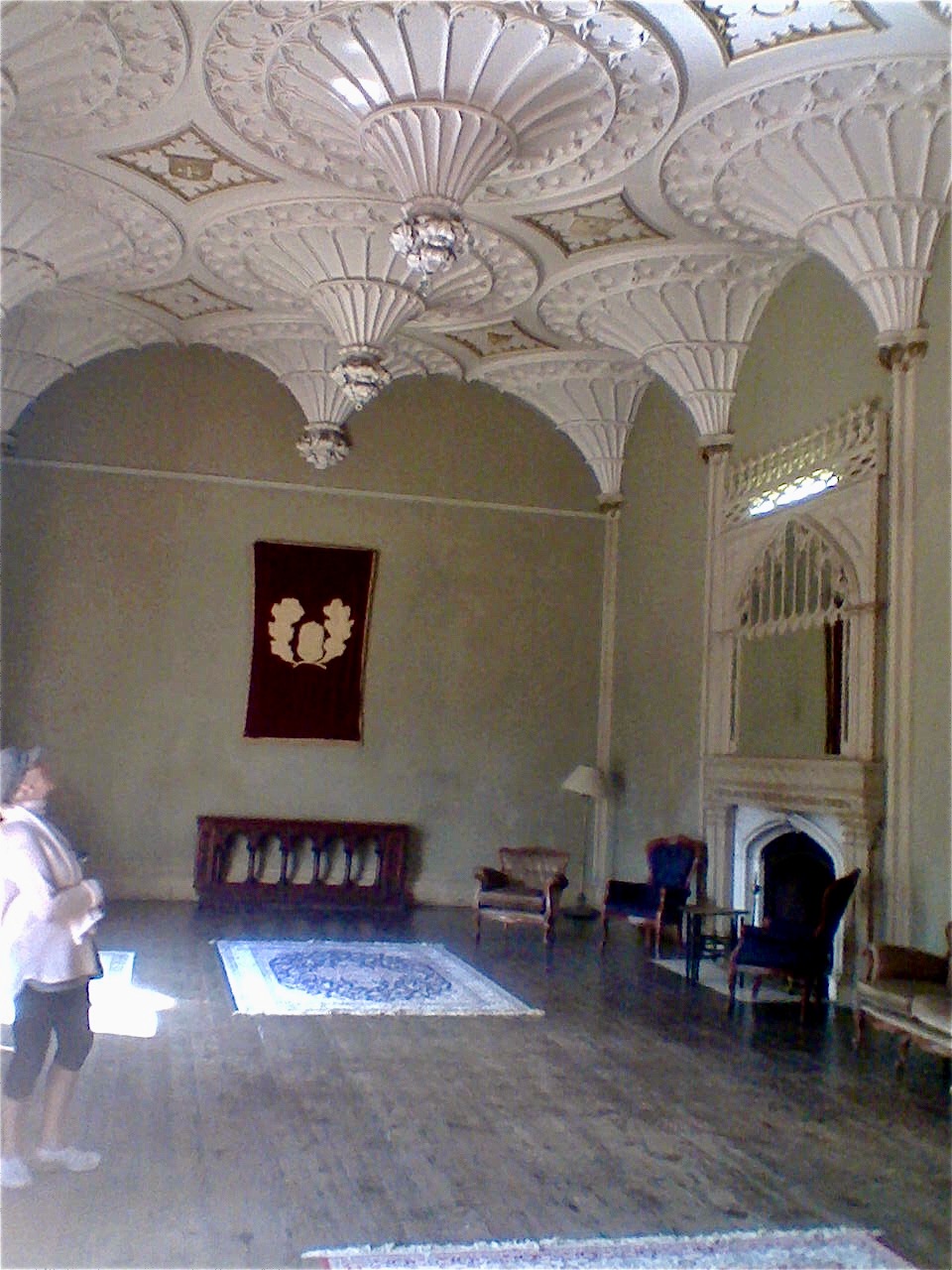
Through the double doors is the most splendid room, the south facing Gallery. Unfortunately this was closed on our Heritage Week visit in 2024 due to filming of the Addams family movie, “Wednesday.” Mark Bence-Jones continues:“This is one of the most splendid Gothic Revival interiors in Ireland; it has a ceiling of plaster fan vaulting with a row of gigantic pendants down the middle; two lavishly carved fireplaces of grained wood, Gothic decoration in the frames of the windows opposite and Gothic bookcases and side-tables to match.“
Charleville Castle Tullamore by Alex Johnson June 2017, courtesy of flickr constant commons.Photograph of Charleville Forest Castle that appeared in 1962 in Country Life. The castle was uninhabited at this time and the furniture was borrowed from Belvedere, County Westmeath.
The fan-vaulted ceiling is inspired by Horace Walpole’s Strawberry Hill, which the Burys visited, which is in turn based on Henry VII’s Chapel at Westminster Abbey, Tierney tells us. The ceiling is thought to have been executed by George Stapleton, who is also responsible for the fan-vaulting in Johnston’s Chapel Royal in Dublin Castle. The ceiling is anchored with clustered shafts along the walls, with bays framing the two Gothic chimneypieces, the doorcase on the north wall, and the Gothic casings of the windows.
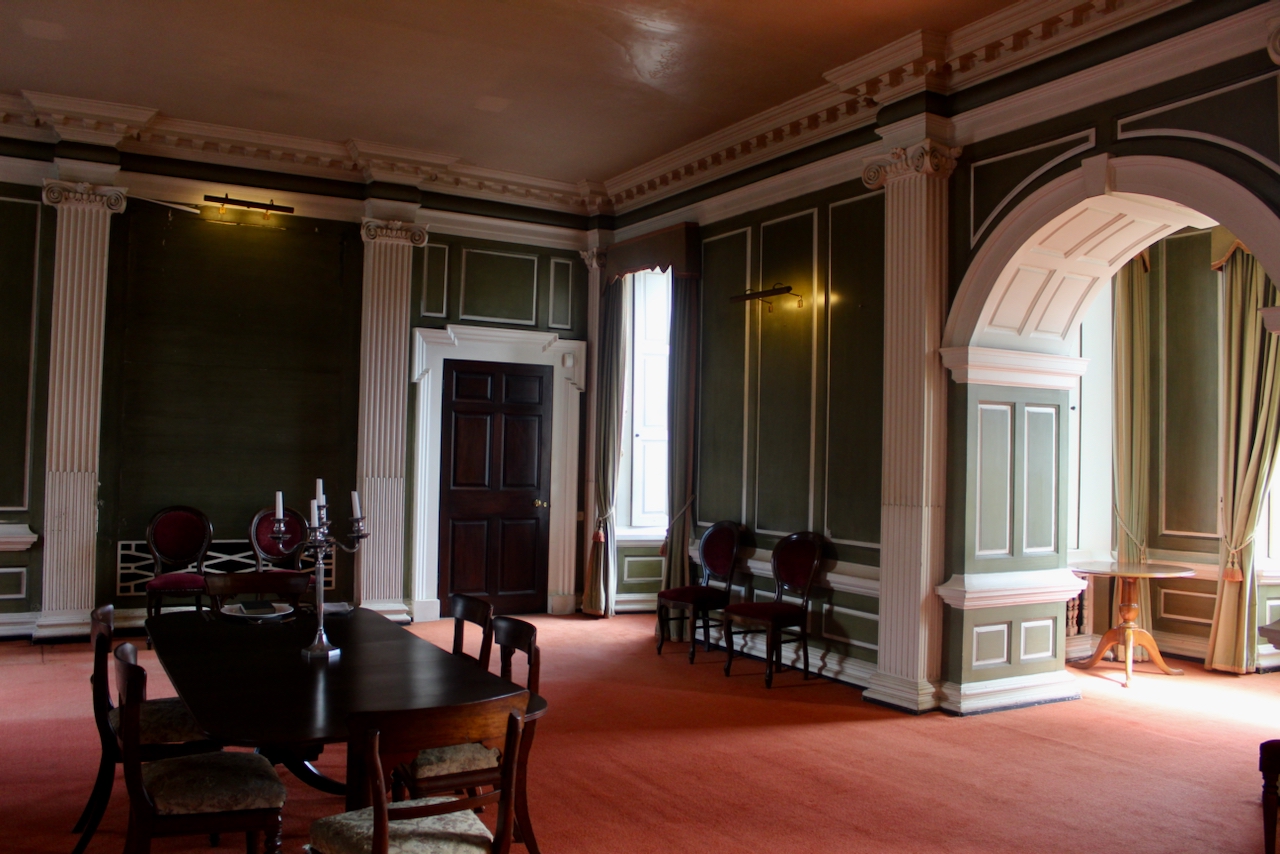
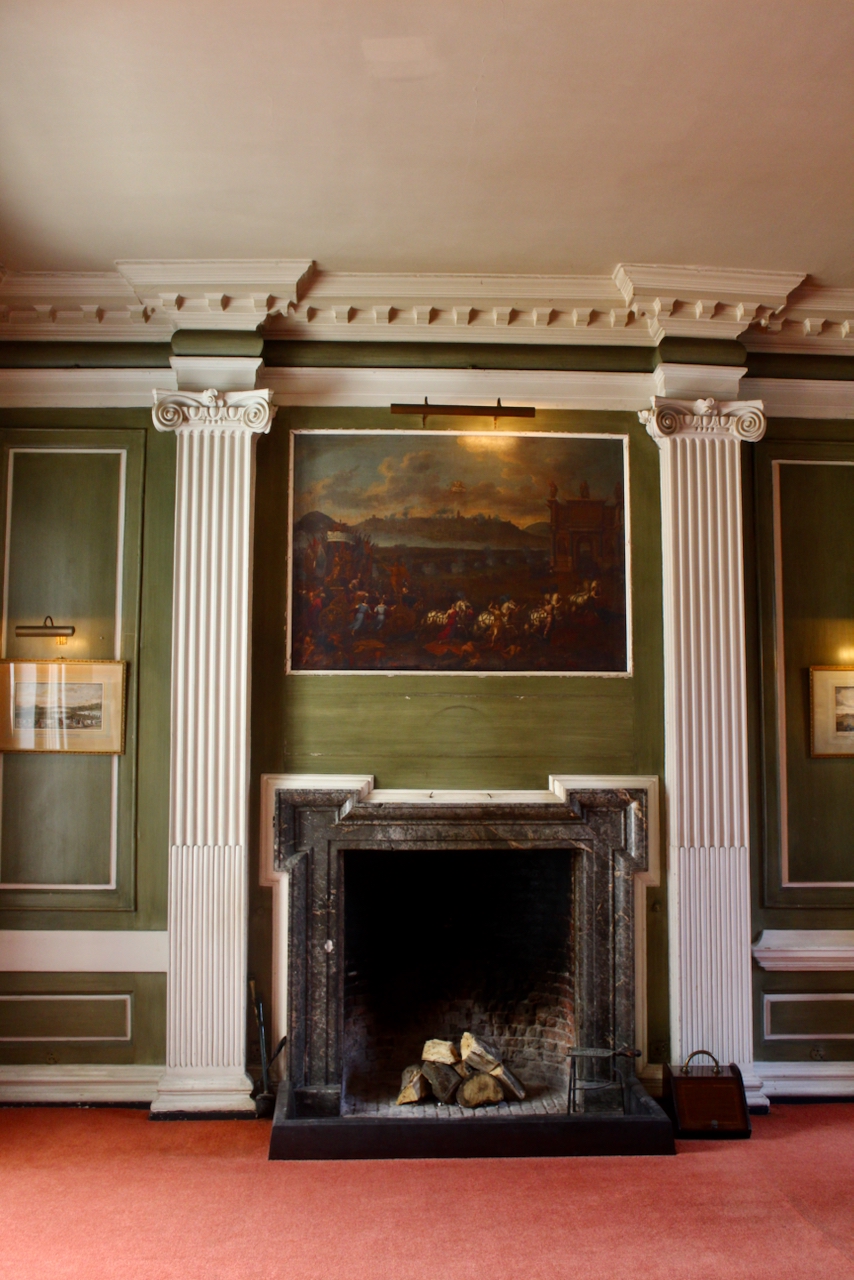
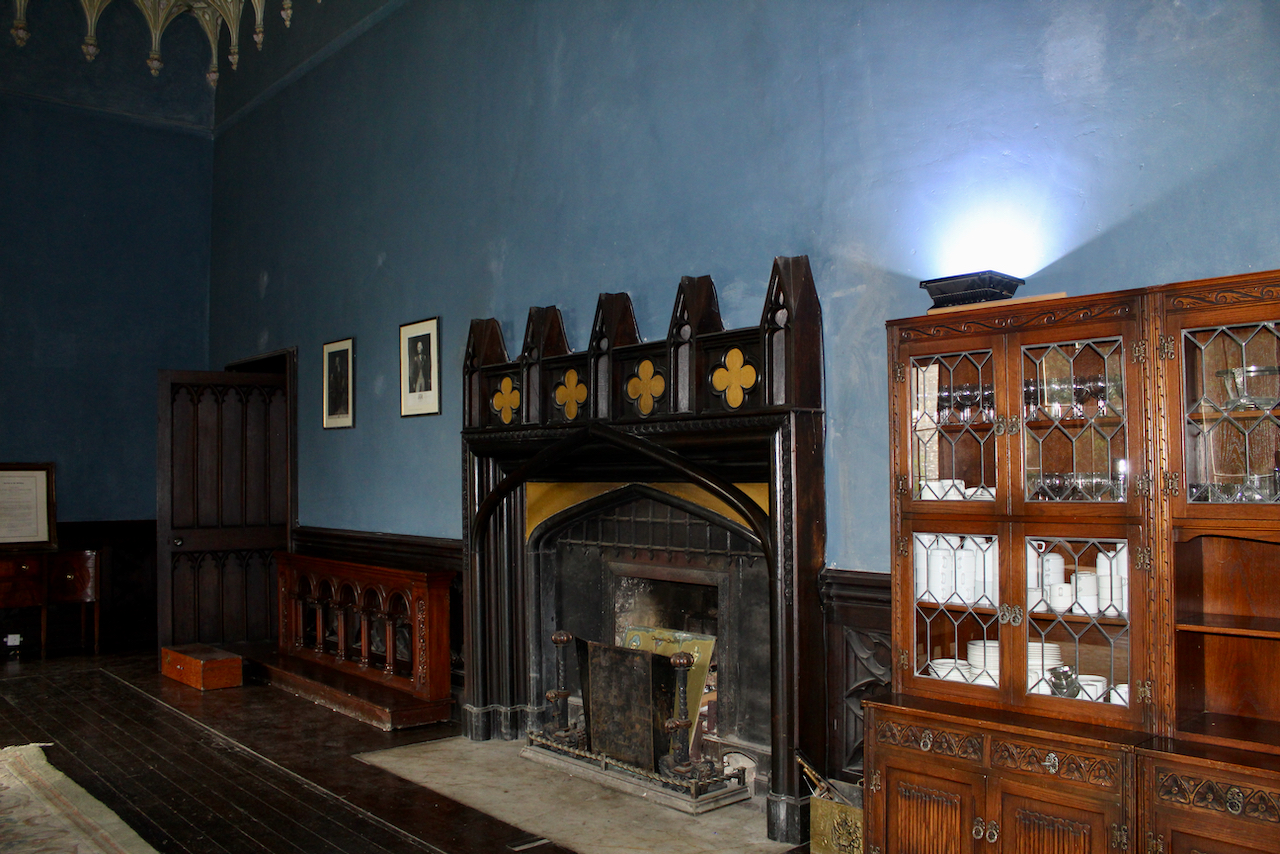
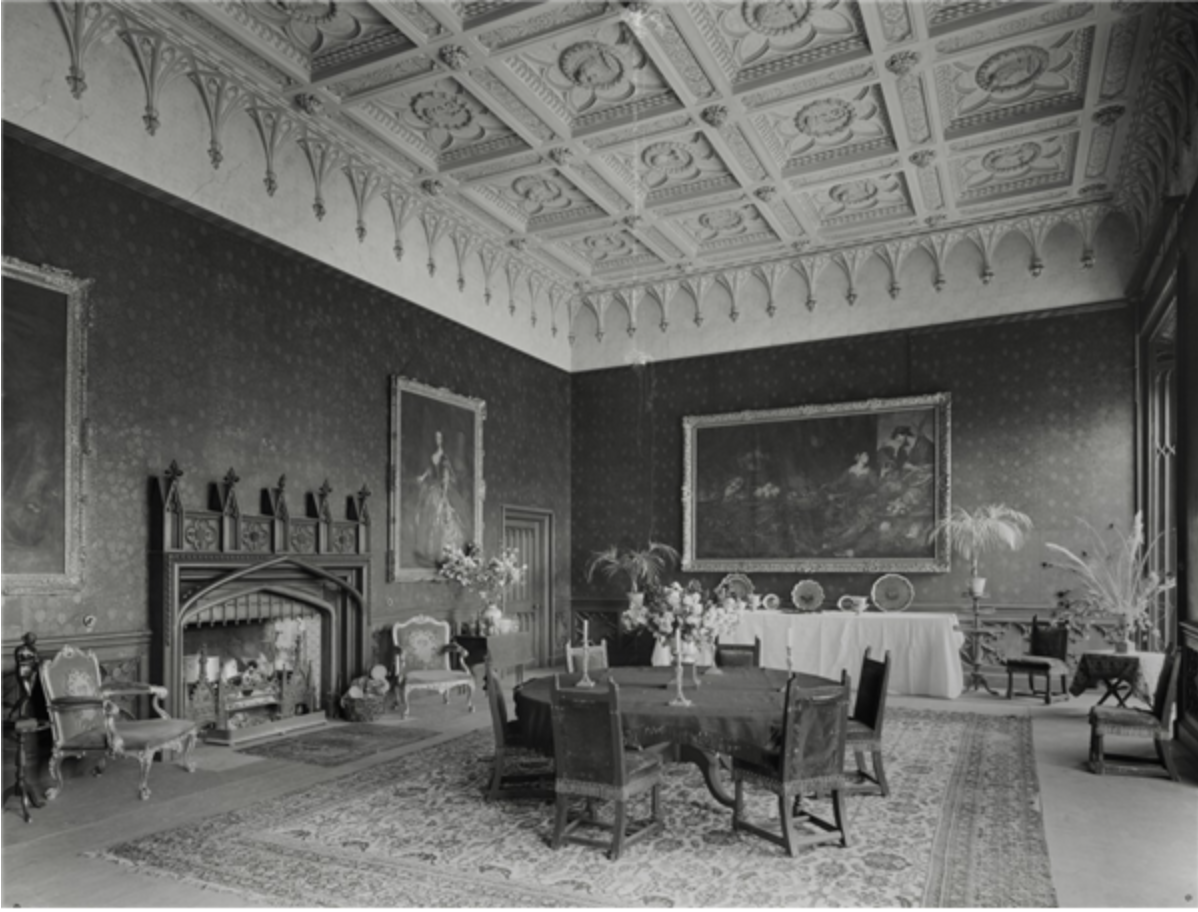
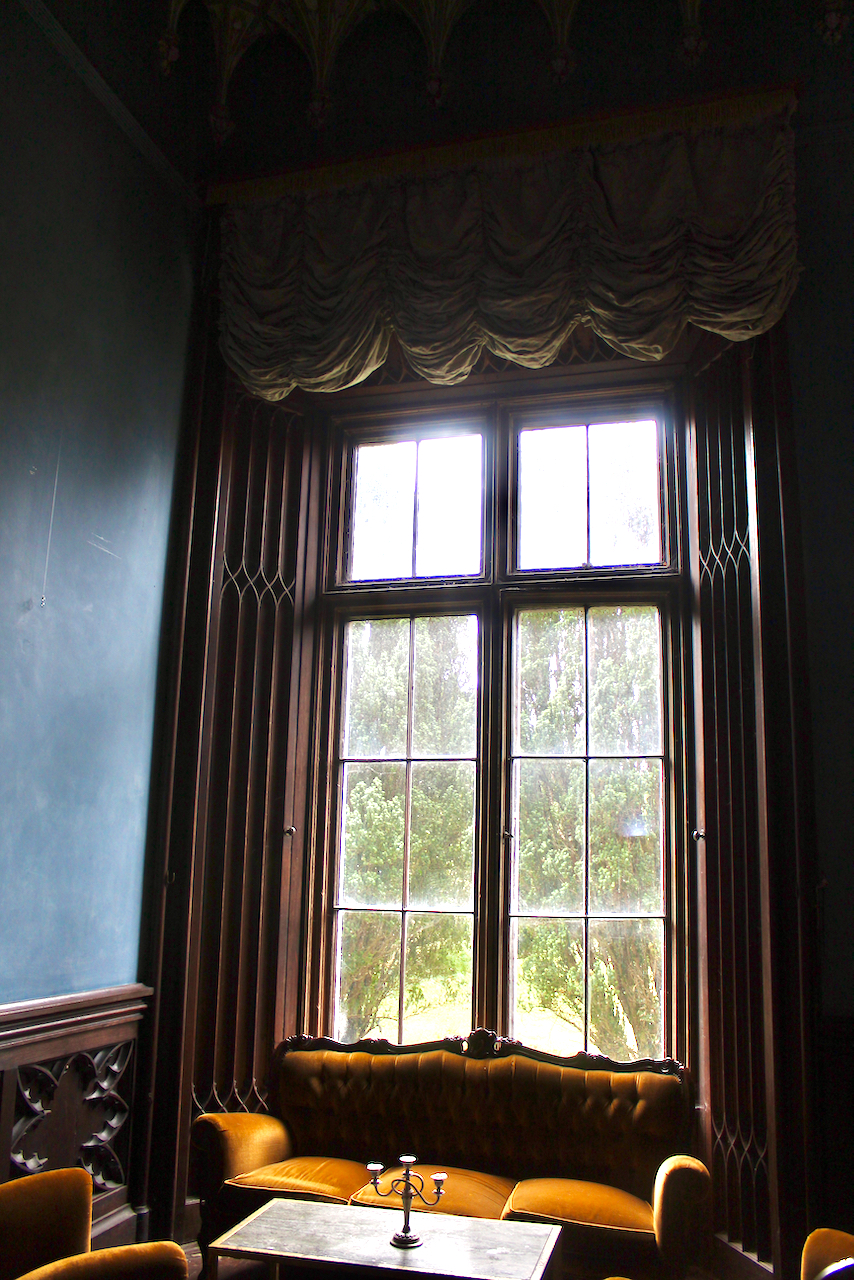
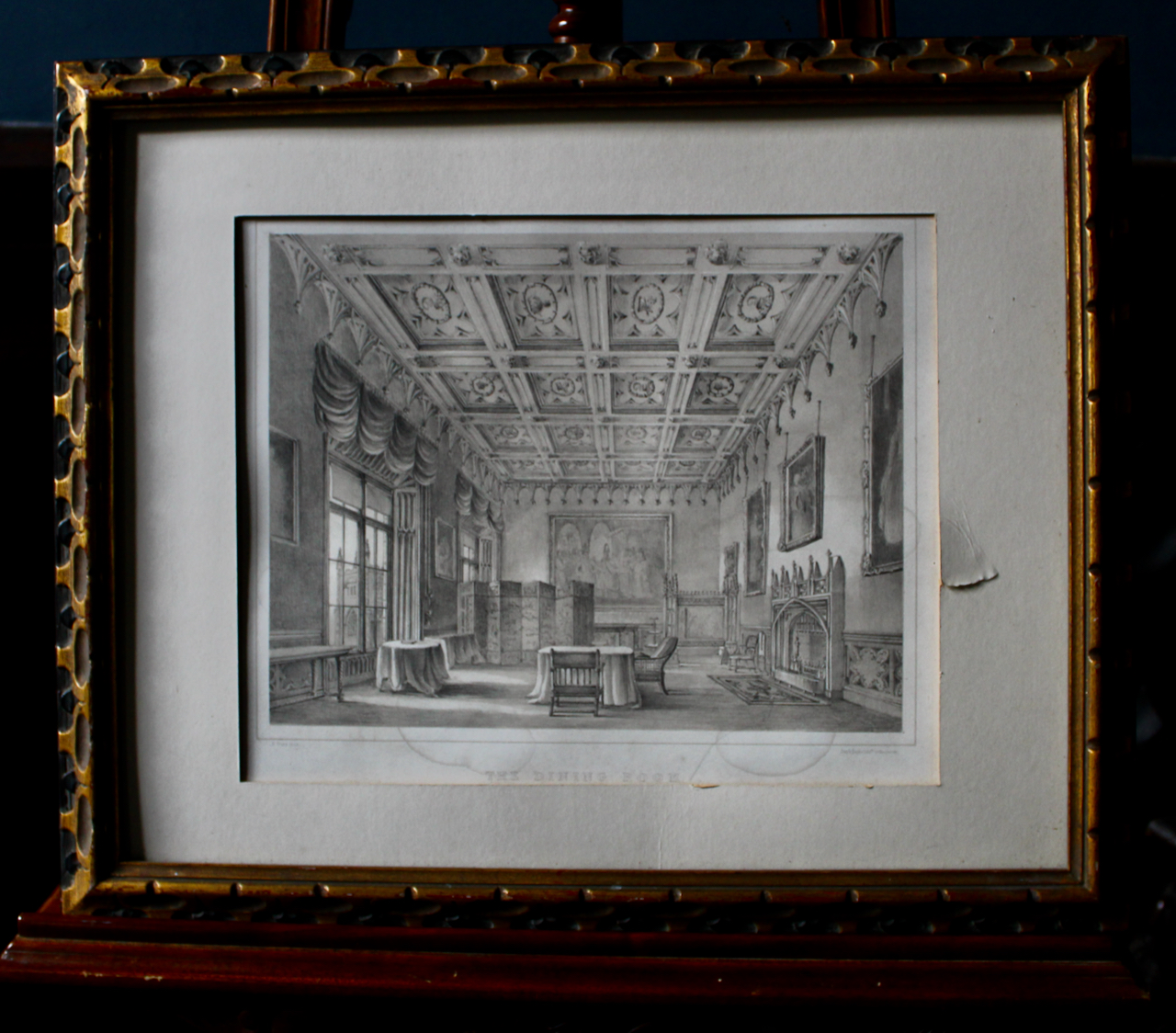
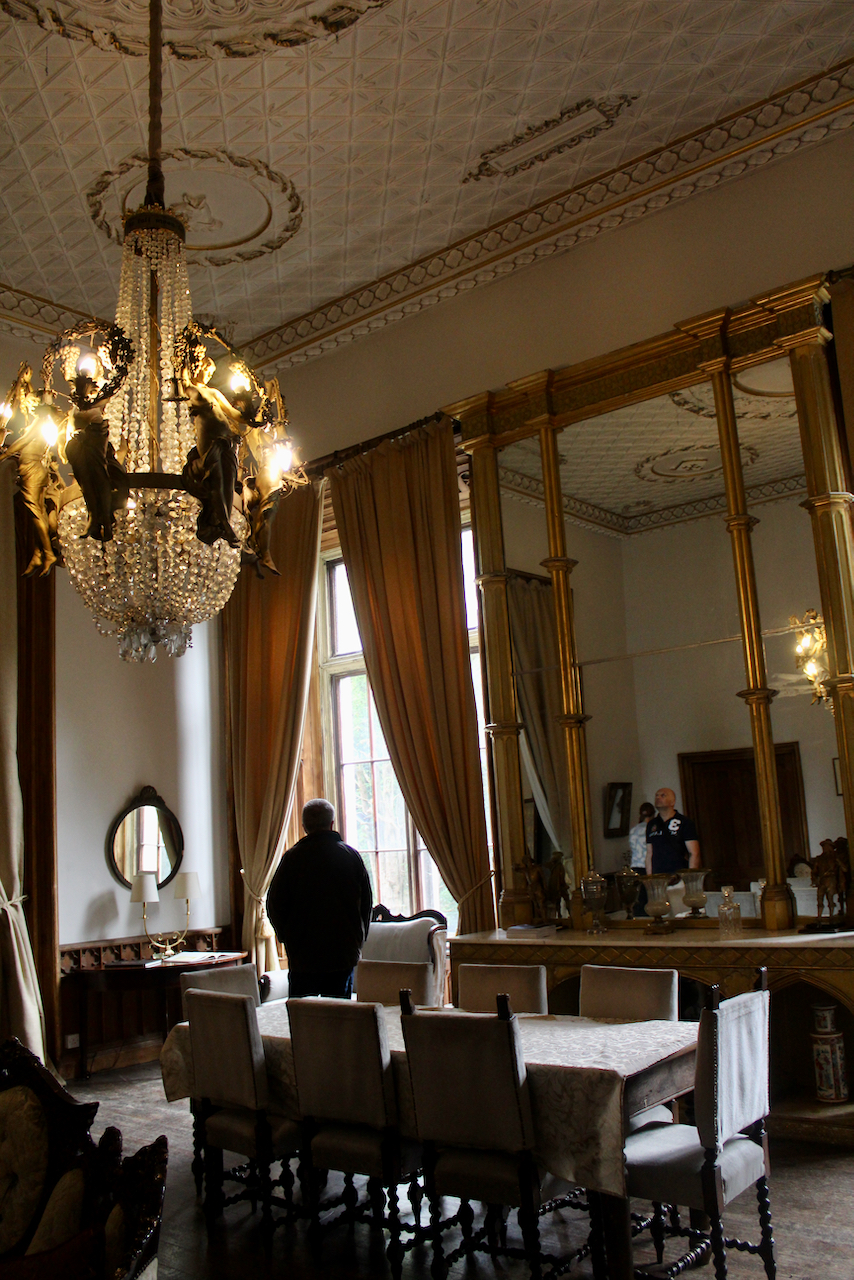
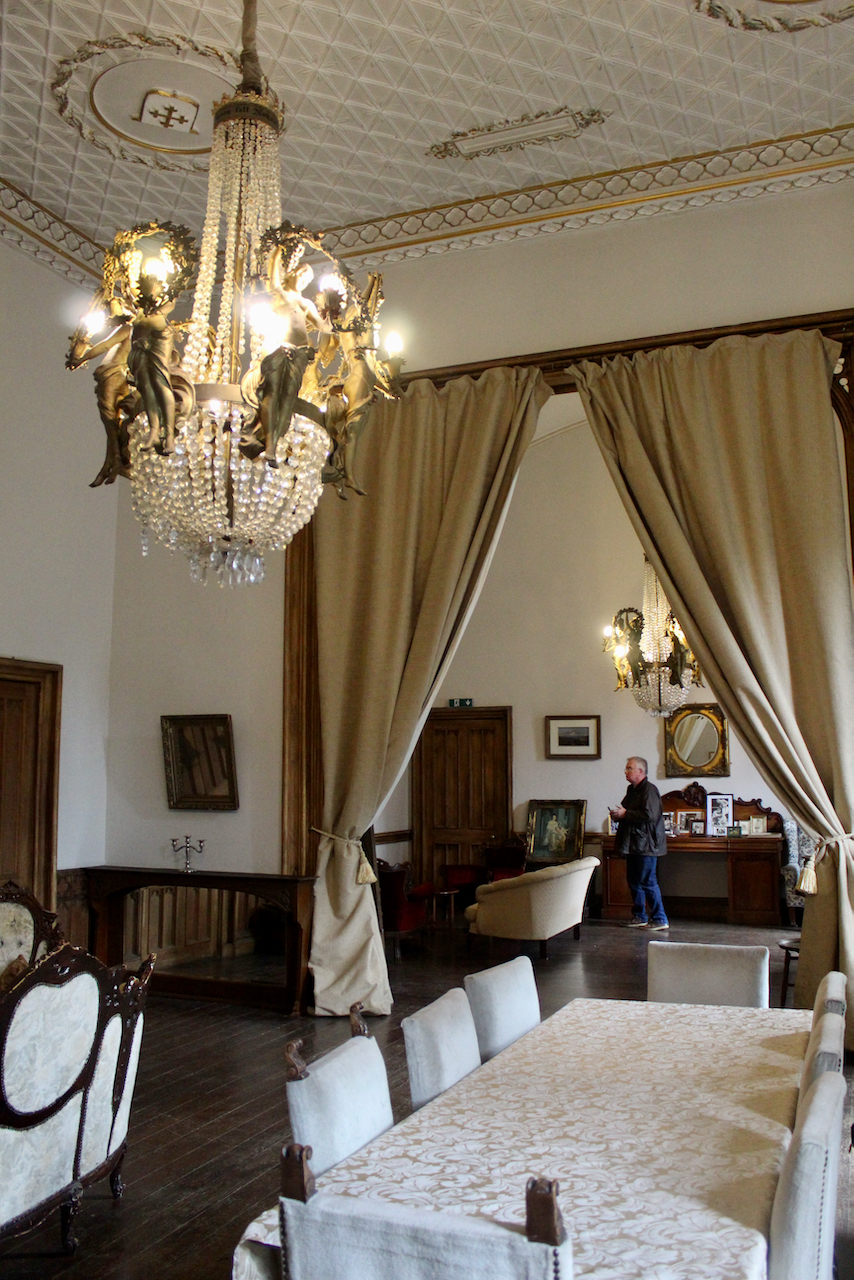
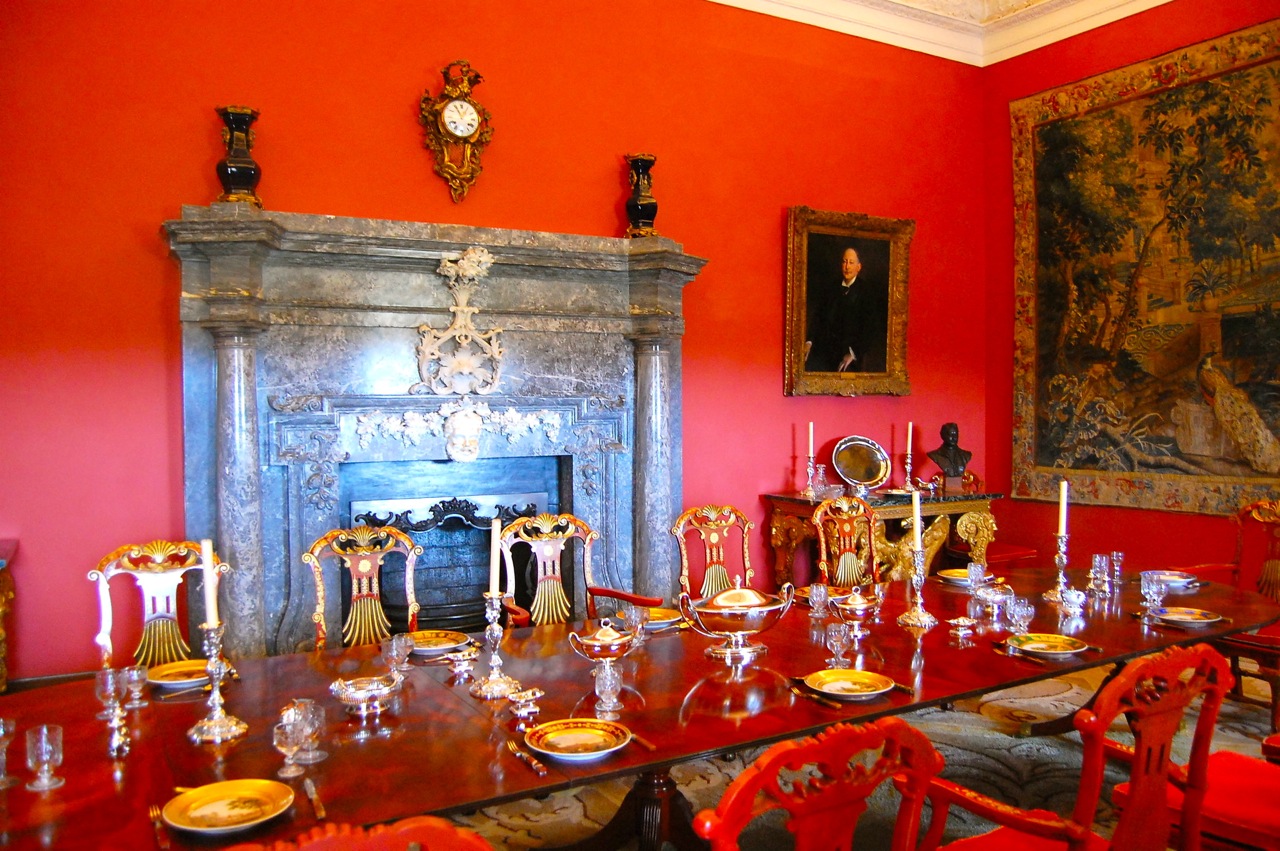
The drawing room and dining room are on either side of the entrance hall. The dining room on the west side has a coffered ceiling and a fireplace which is a copy of the west door of Magdalen College chapel, Oxford.
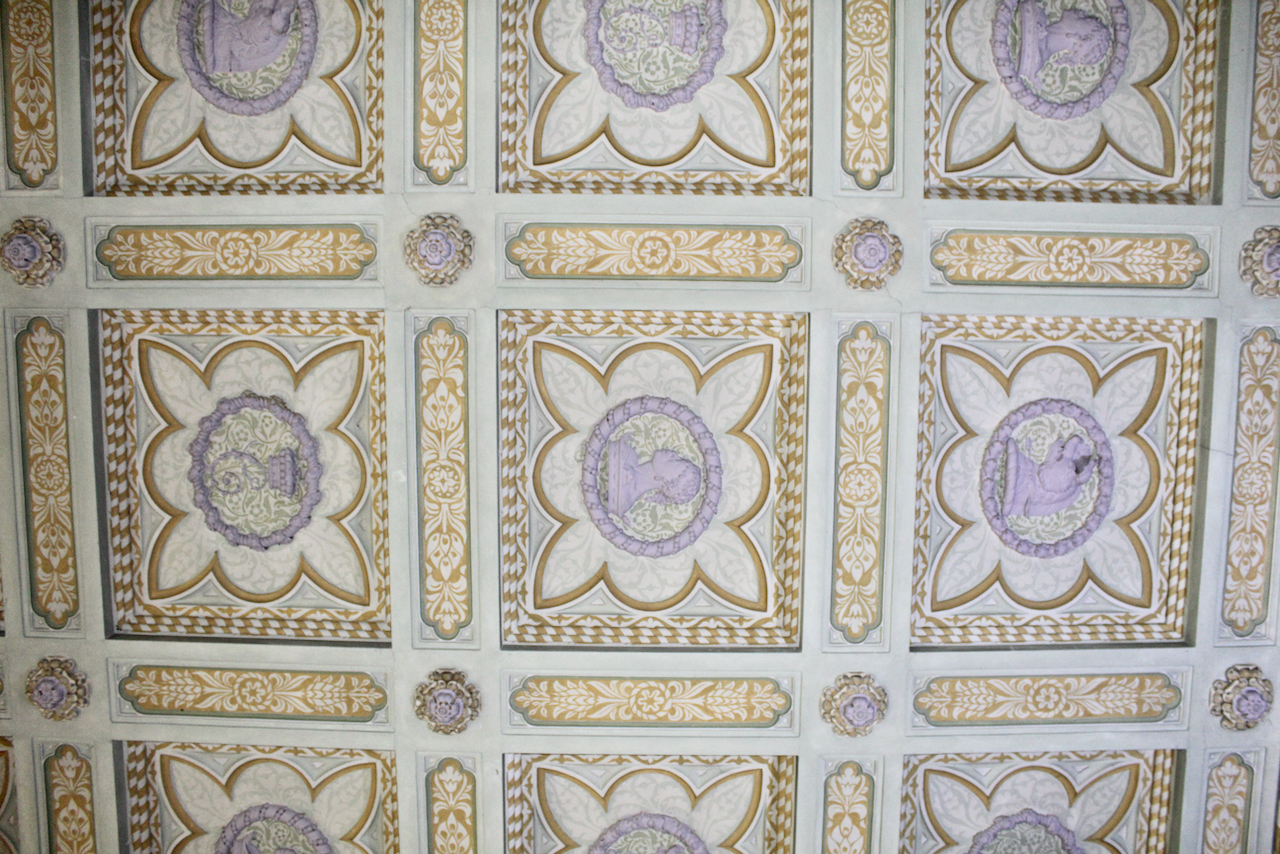
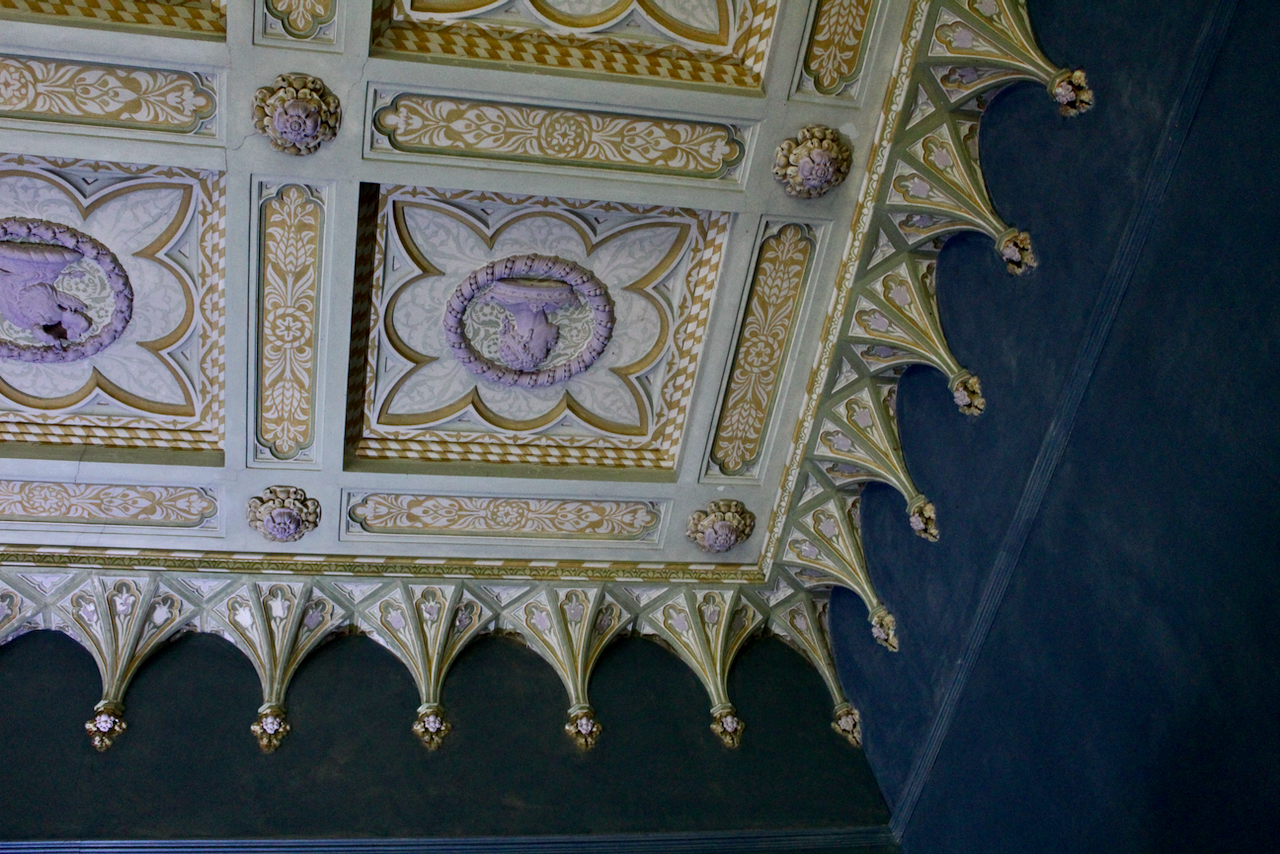
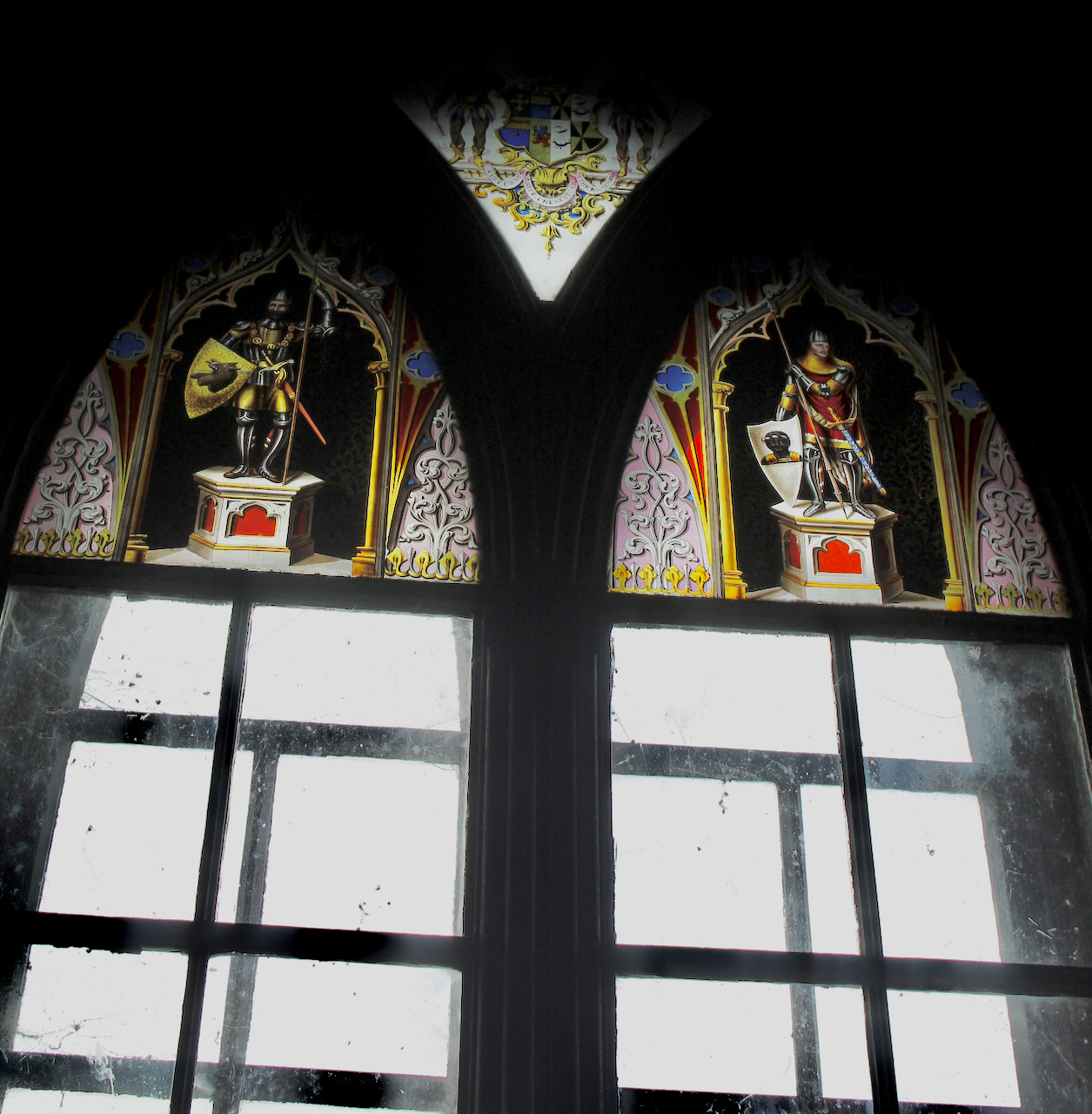
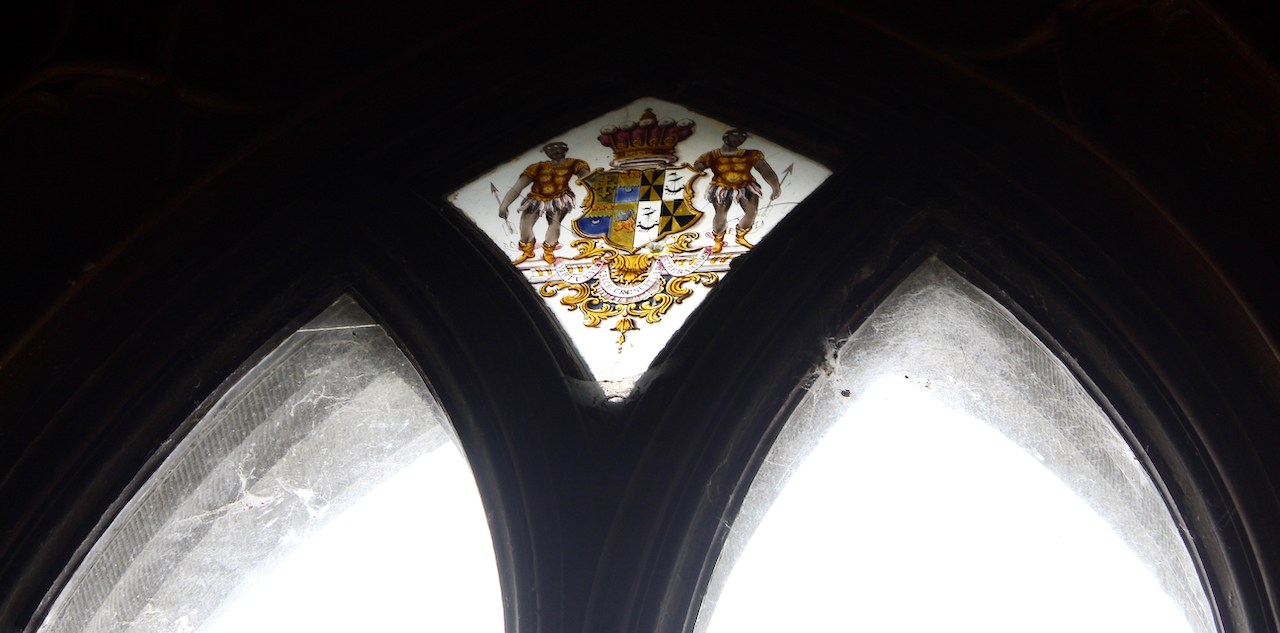
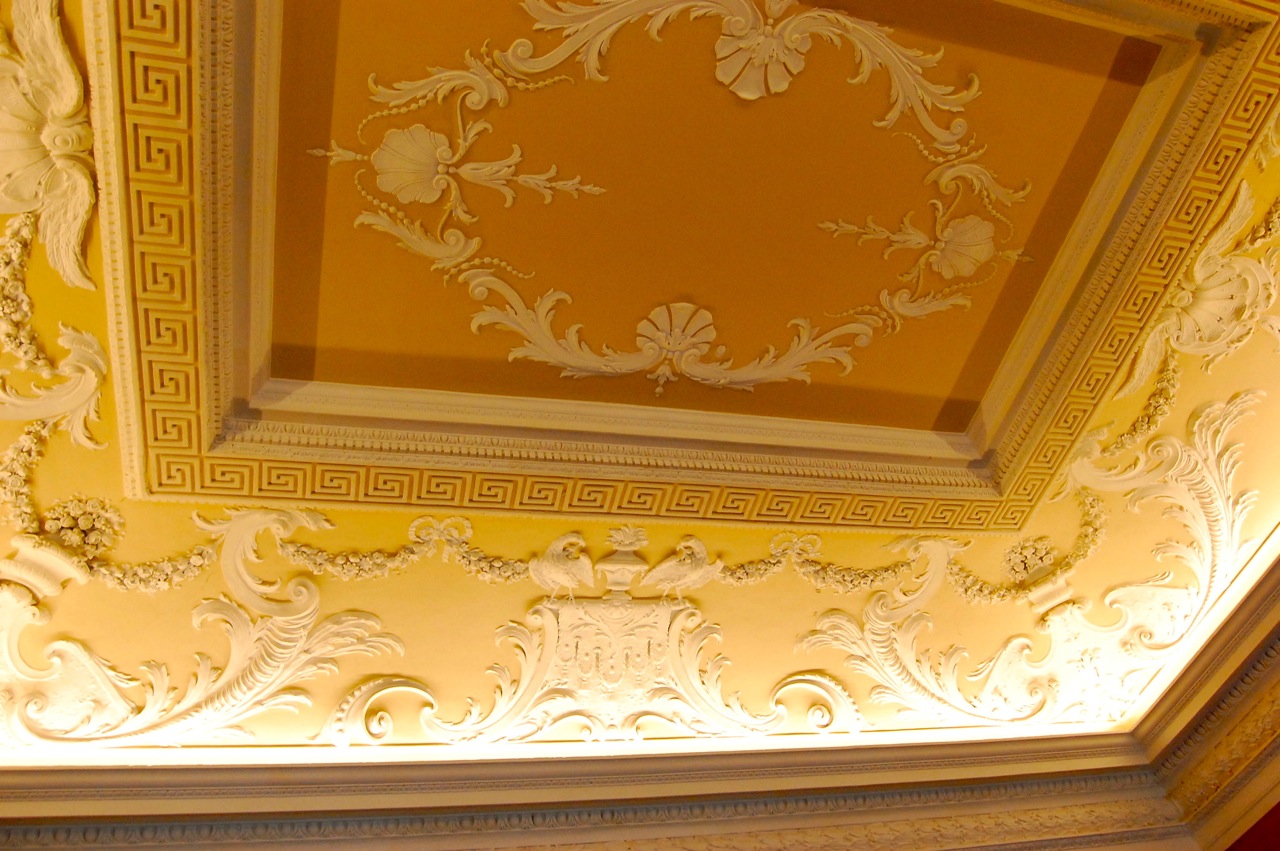
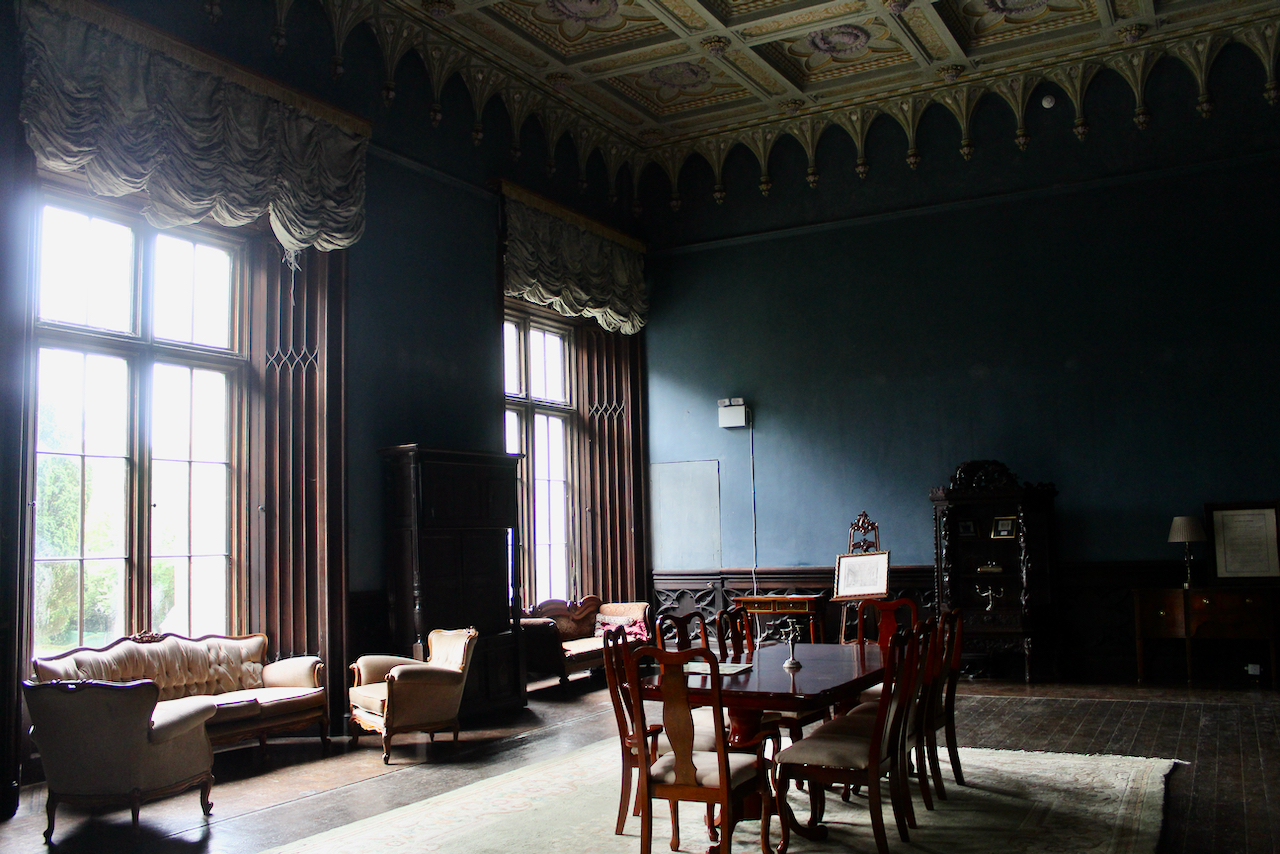
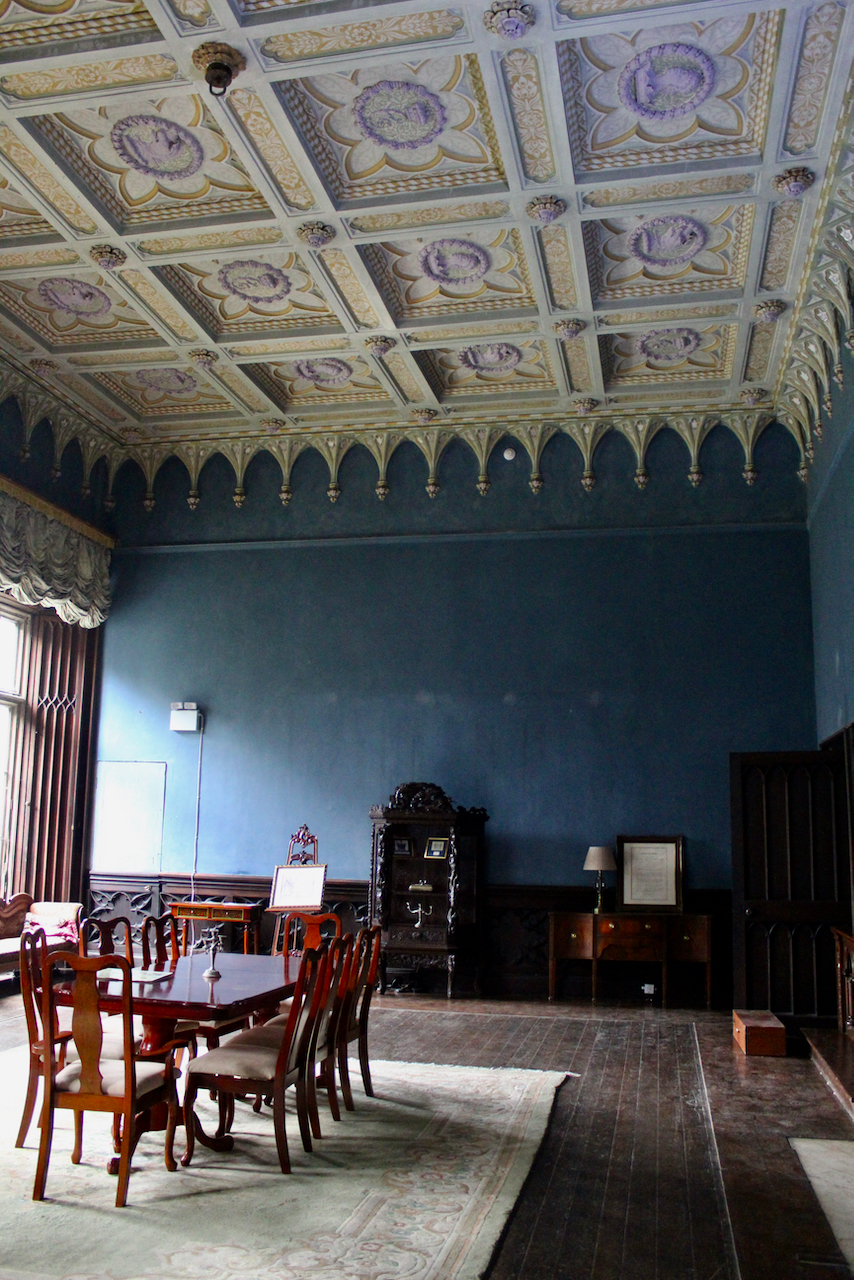
The dining room has, Tierney points out, a Dado of double-cusped panelling derived from the staircase balustrade of Strawberry Hill. The ceiling has crests of the family in the panel, supported by a Gothic frieze in the form of miniature fan vaults. The Moores are represented by a silhouette of a Moorish person, and the Burys by a boar’s head with an arrow through its neck. There are also “C”s for “Charleville.” The volunteers during Heritage Week told us that the ceiling is by William Morris, but Tierney tells us that he redecorated the room in 1875, but the scheme no longer survives. The decoration on the miniature fan vault frieze does look rather William Morris-esque to me, as well as the painting between the crests.
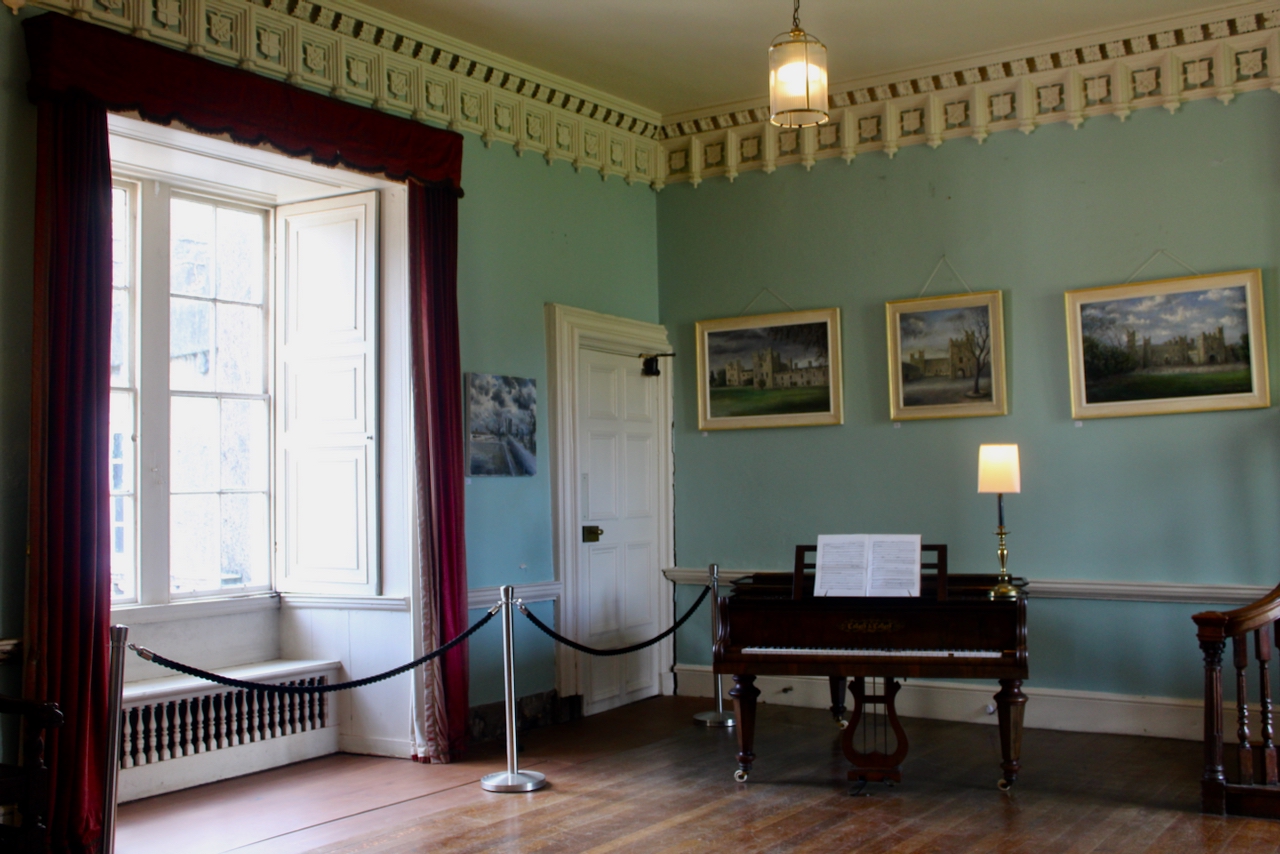
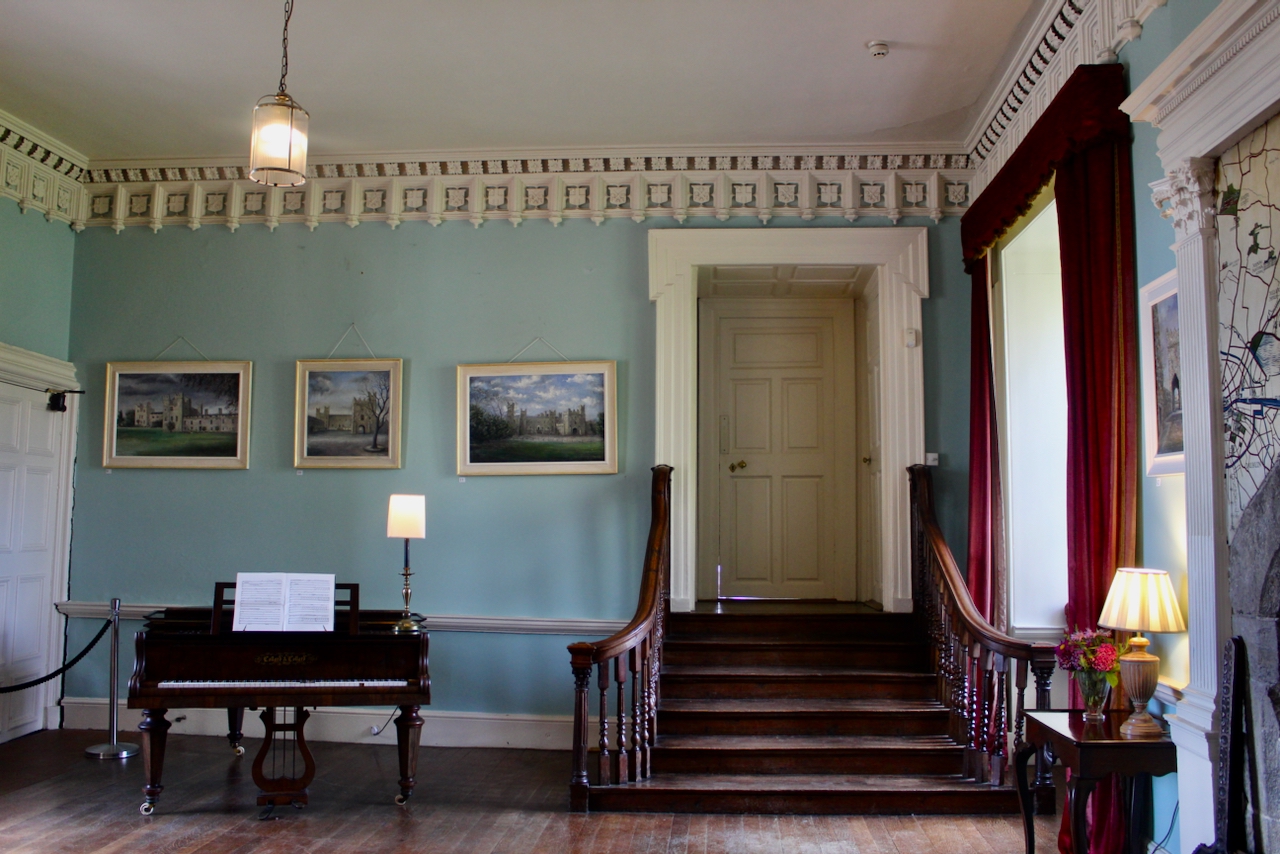
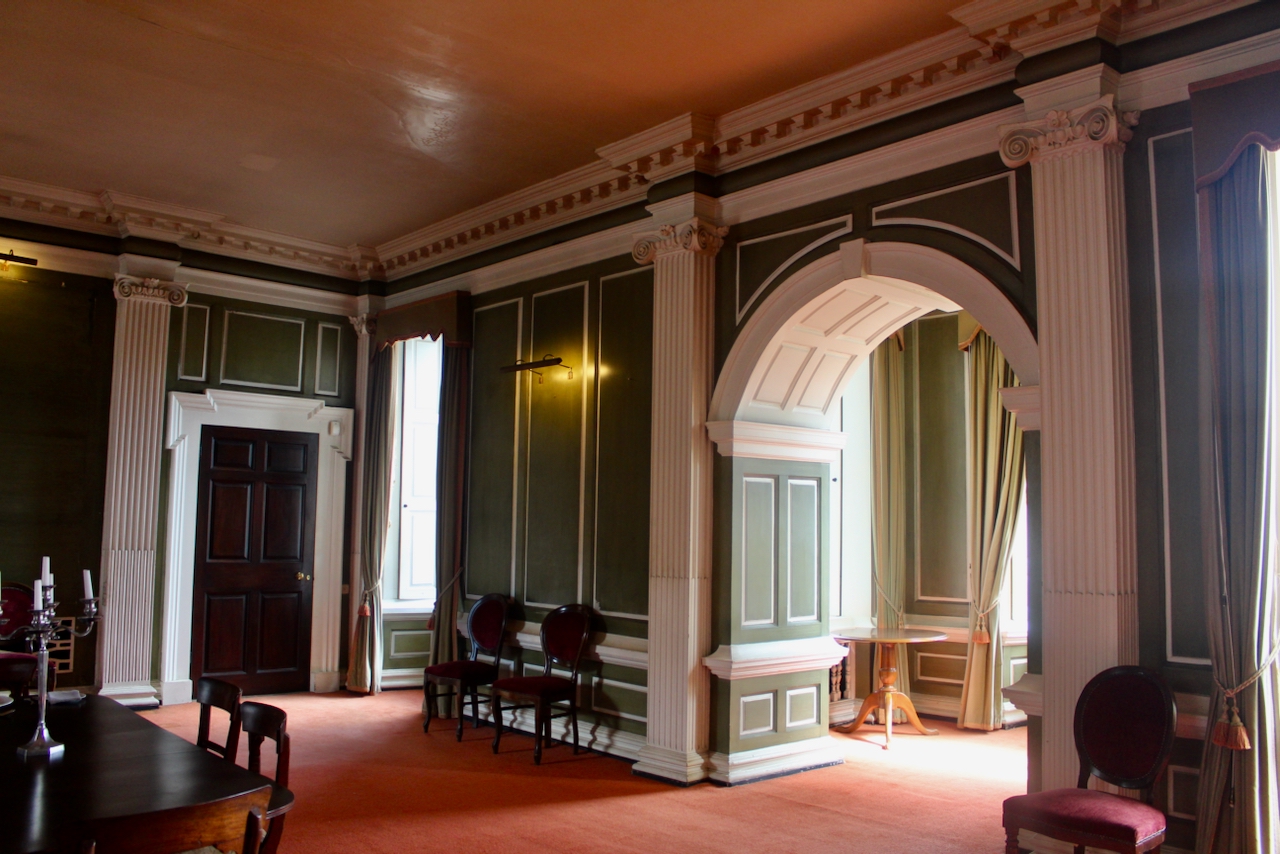
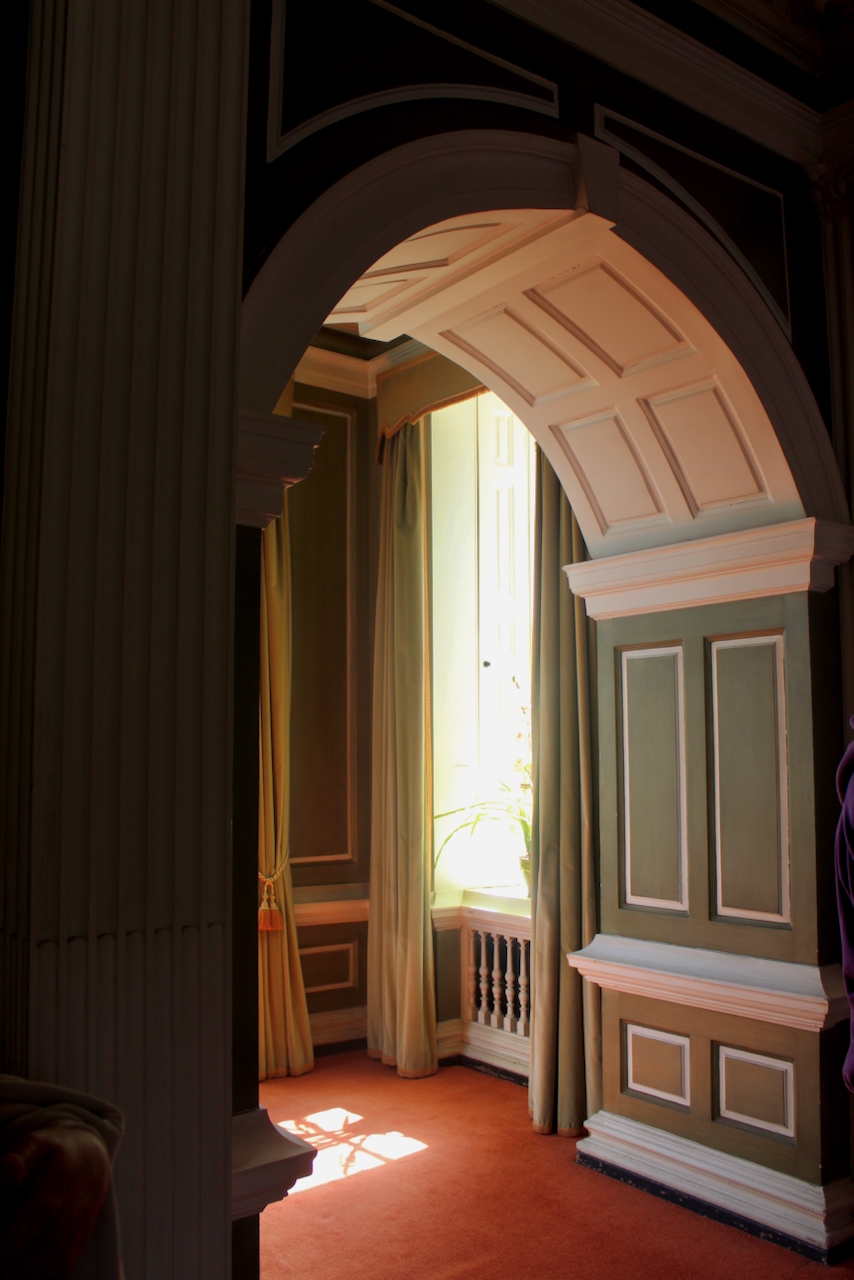
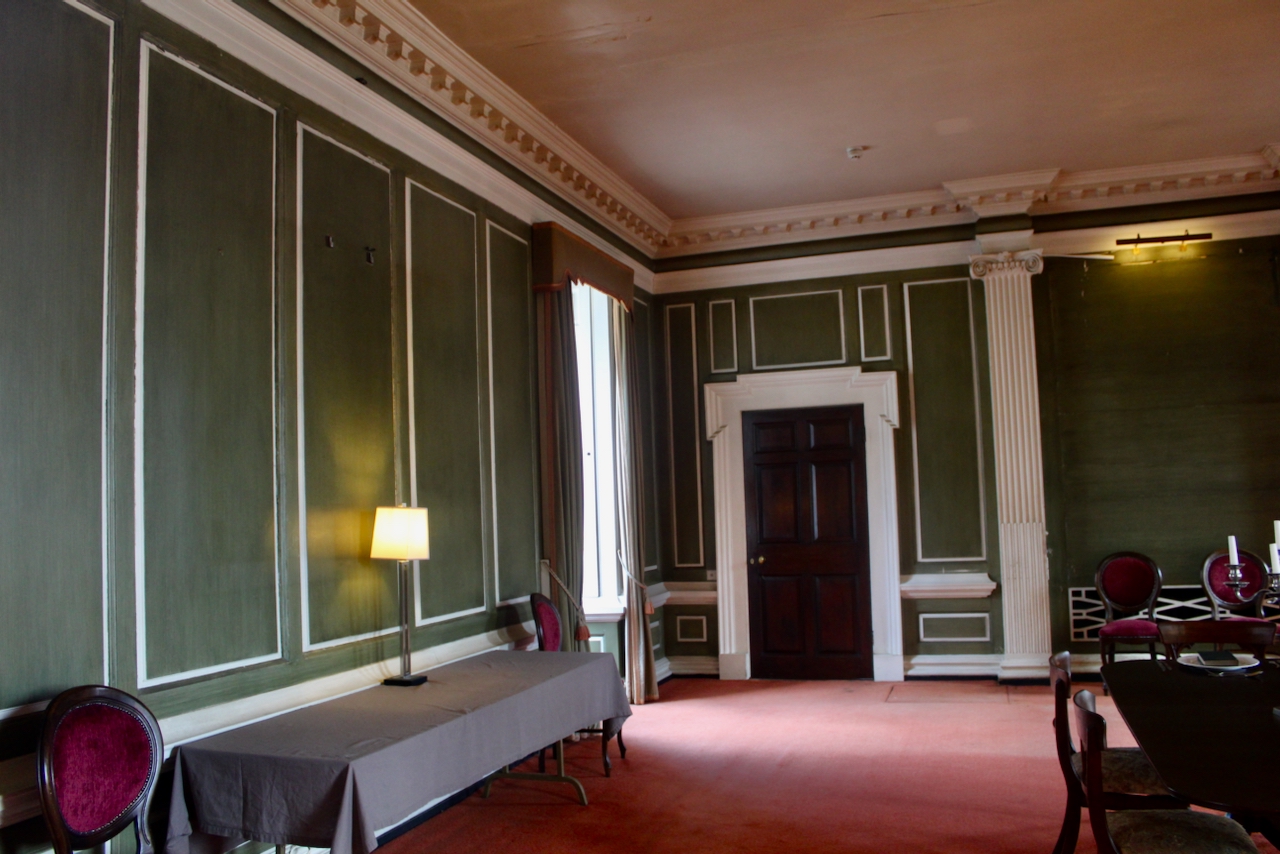
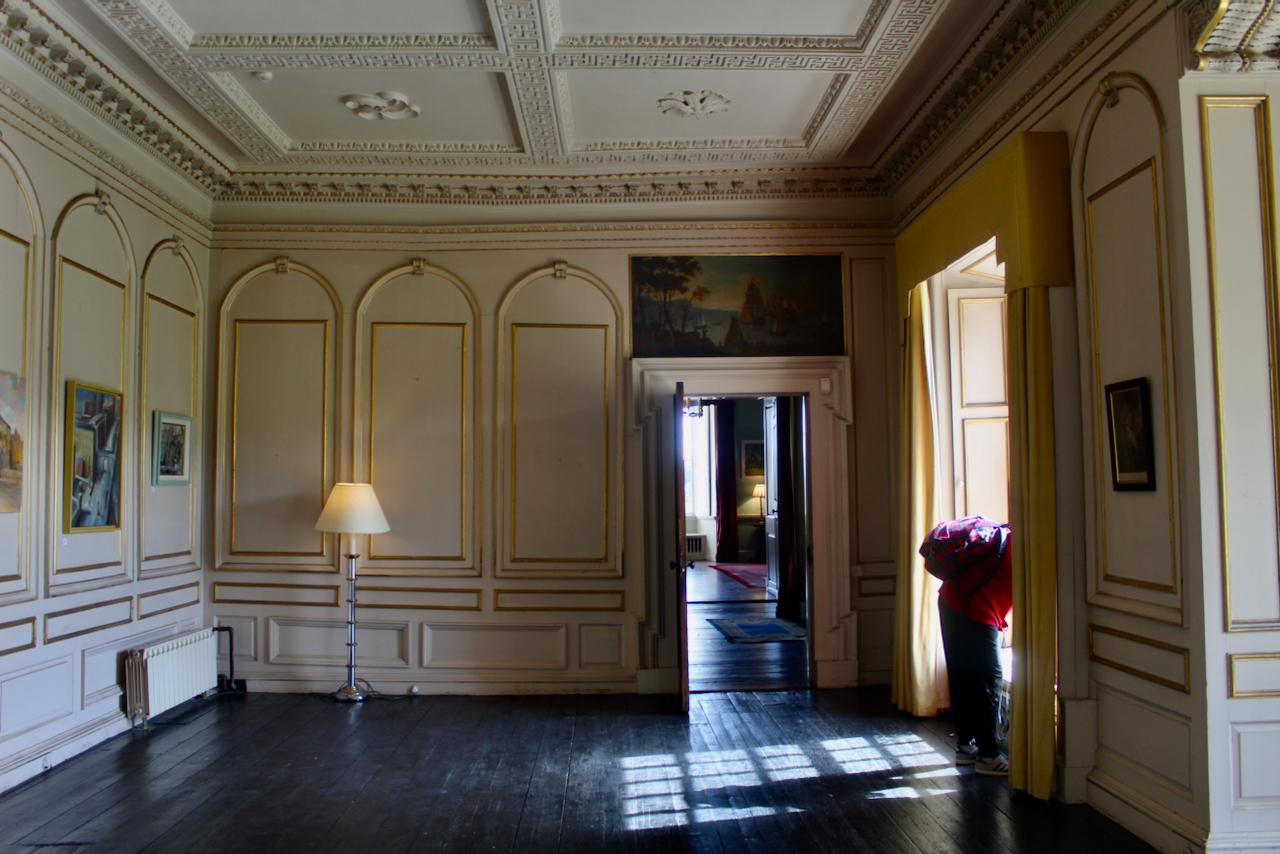
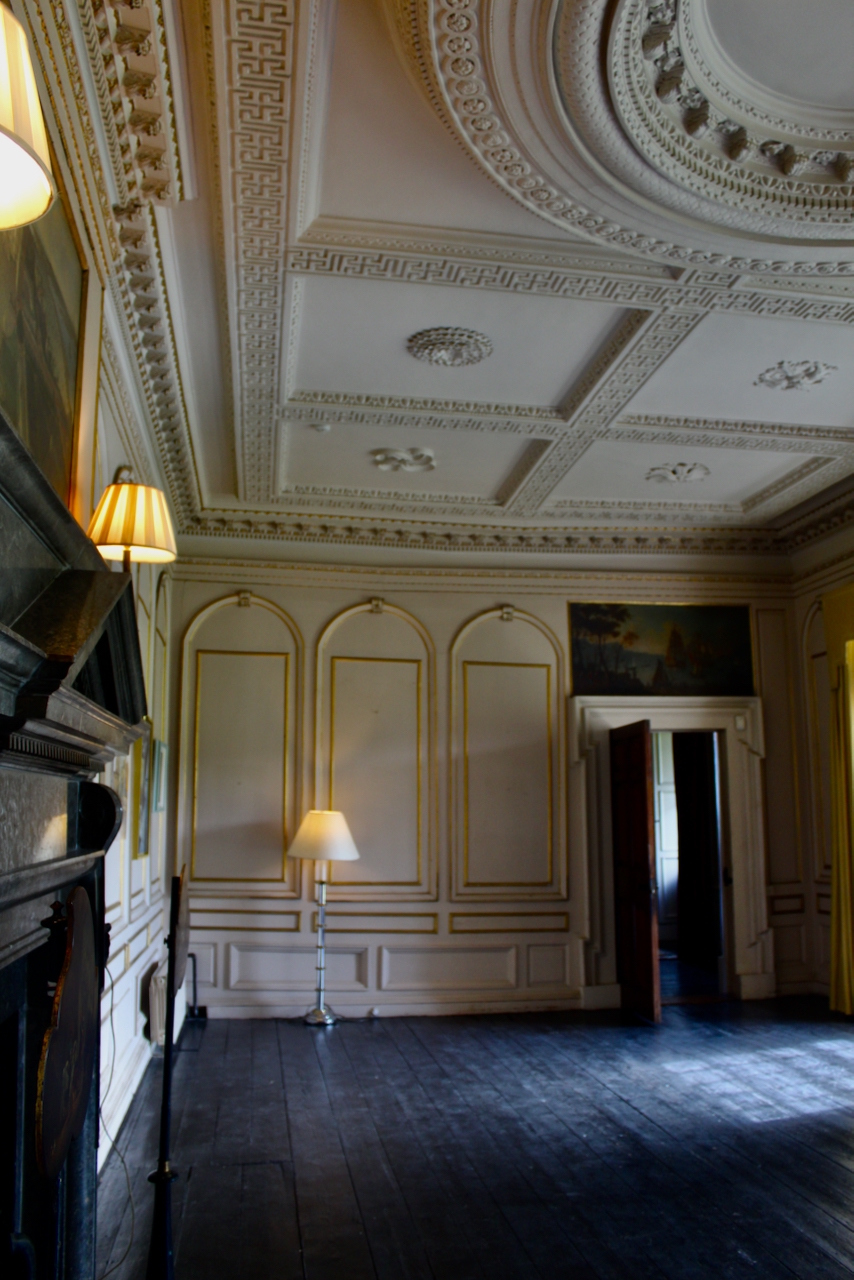
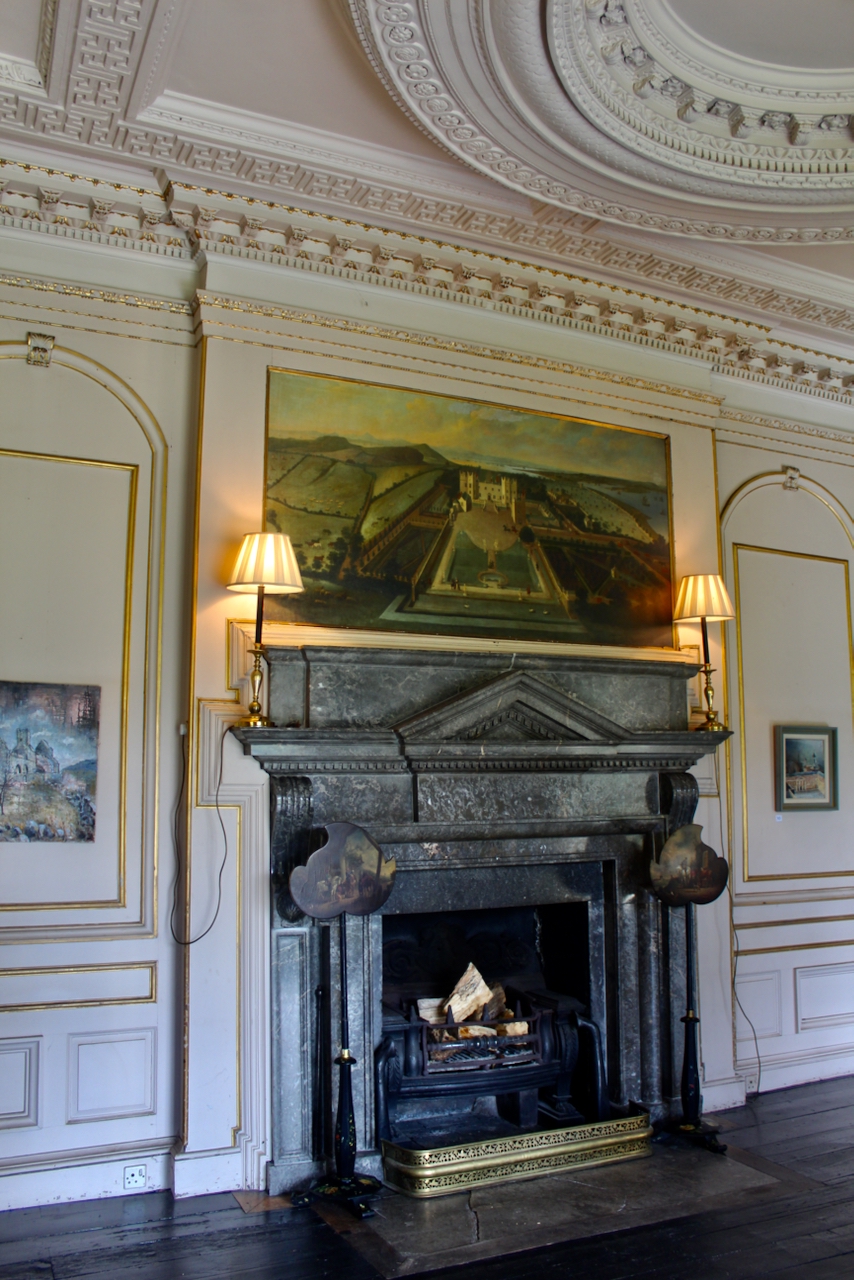
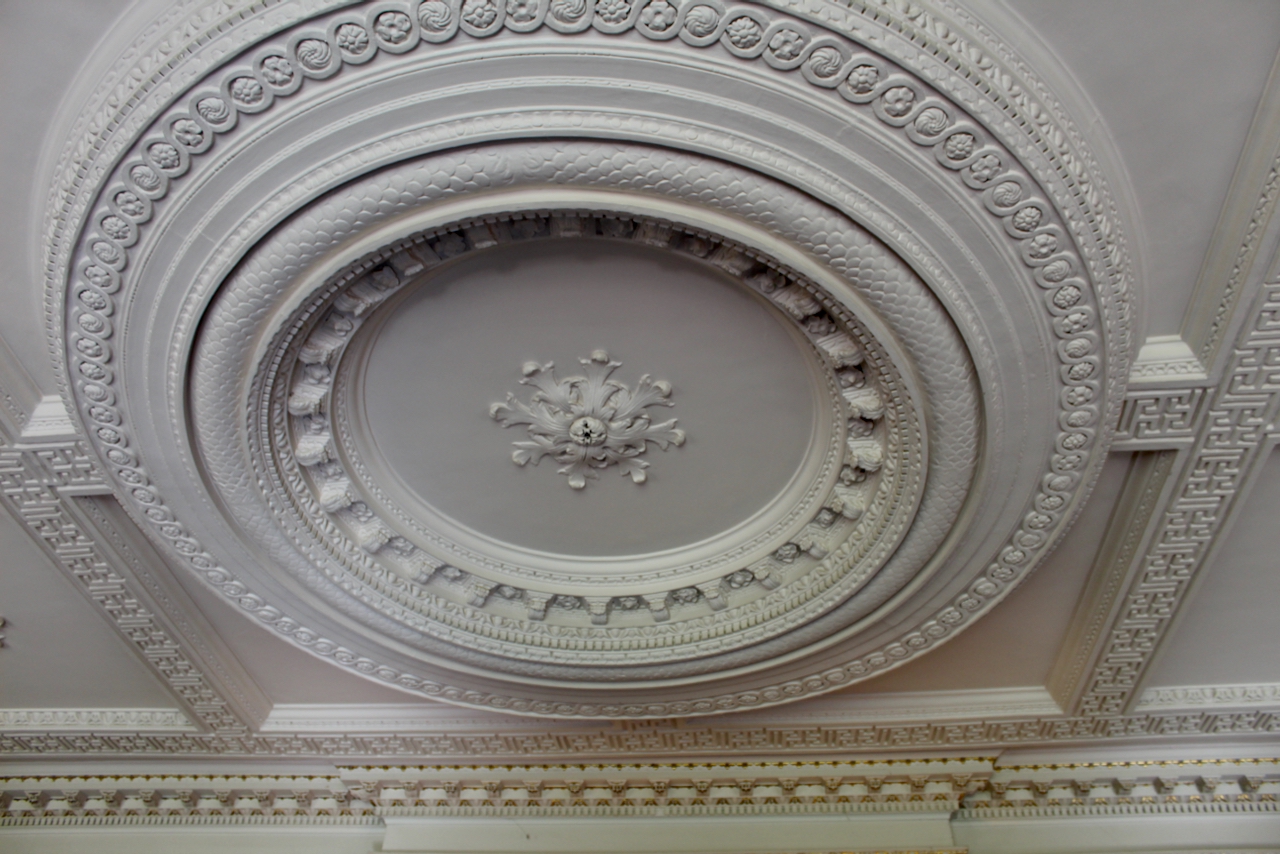
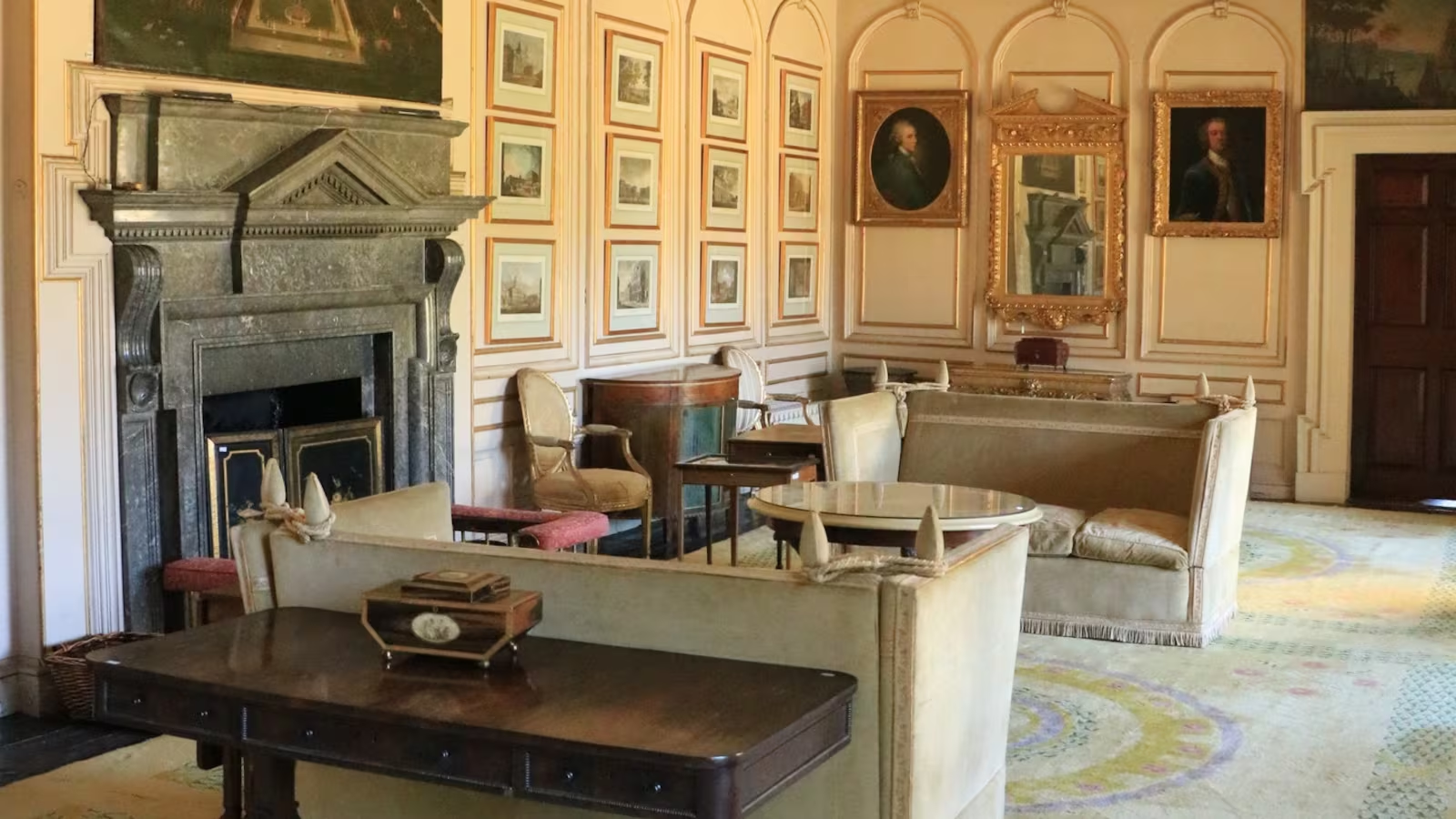
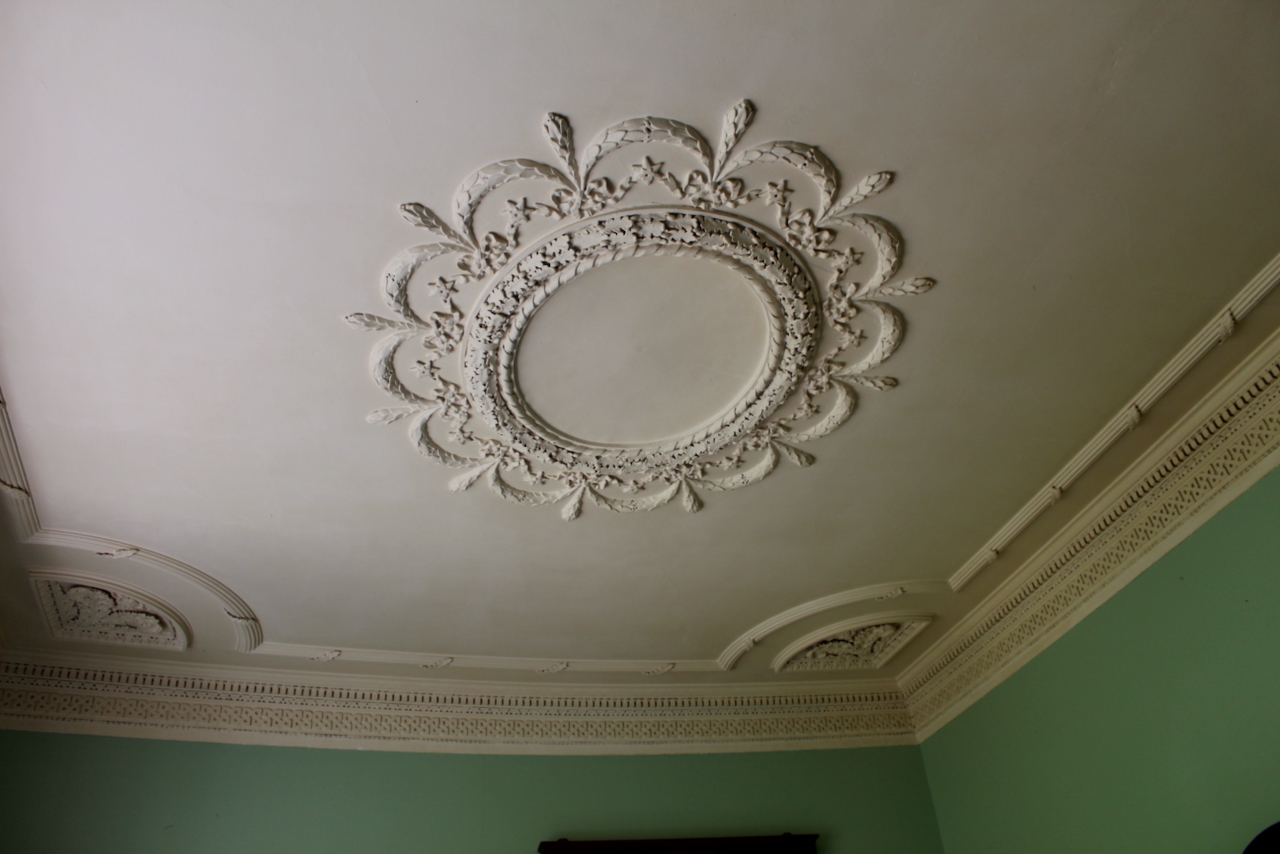
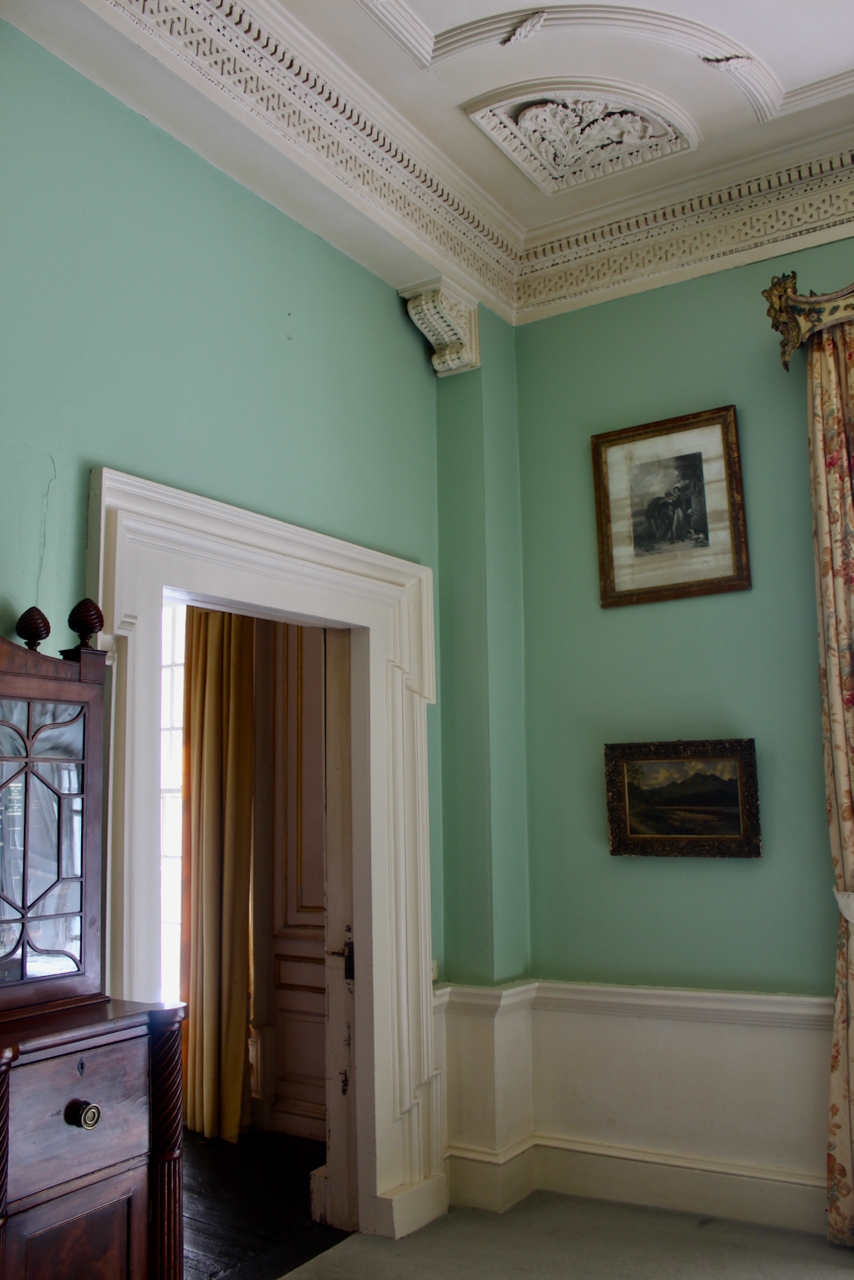
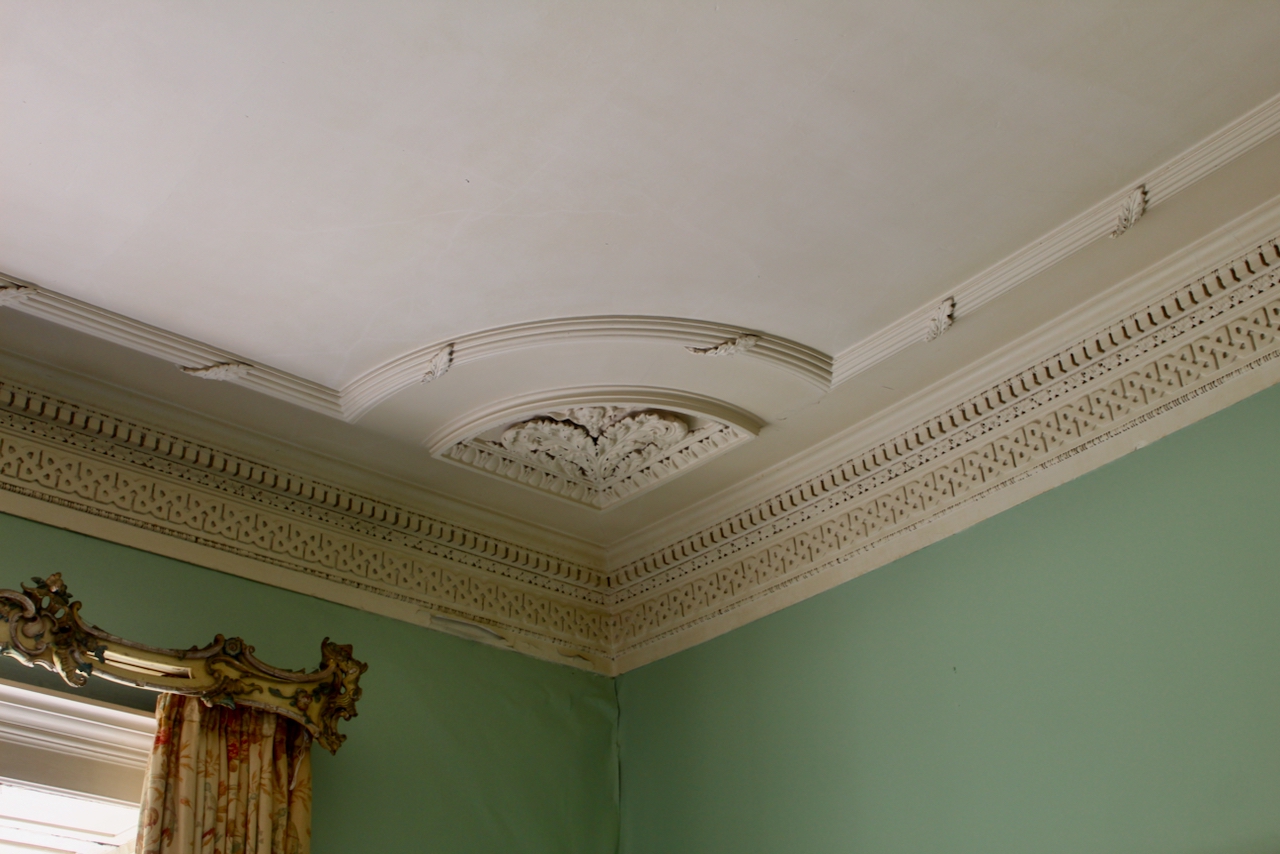
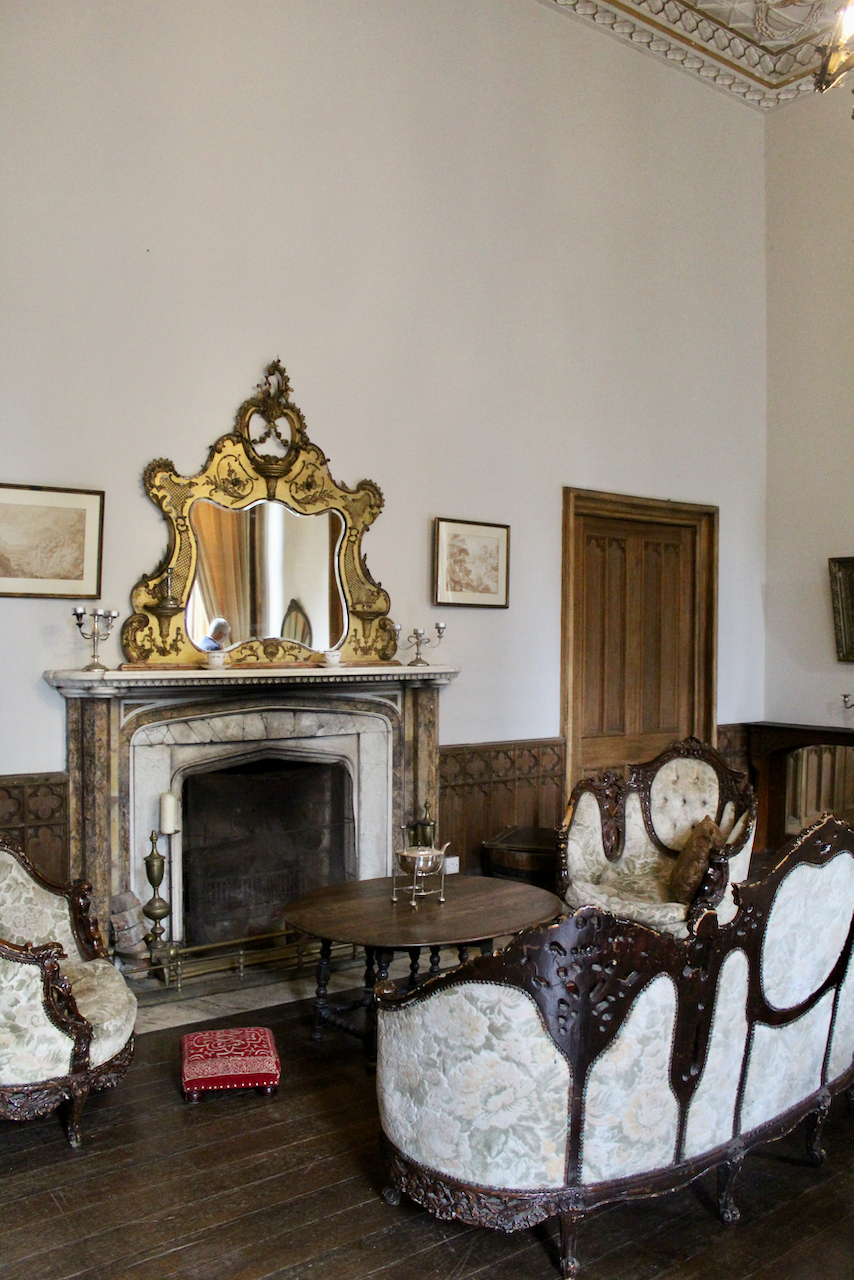
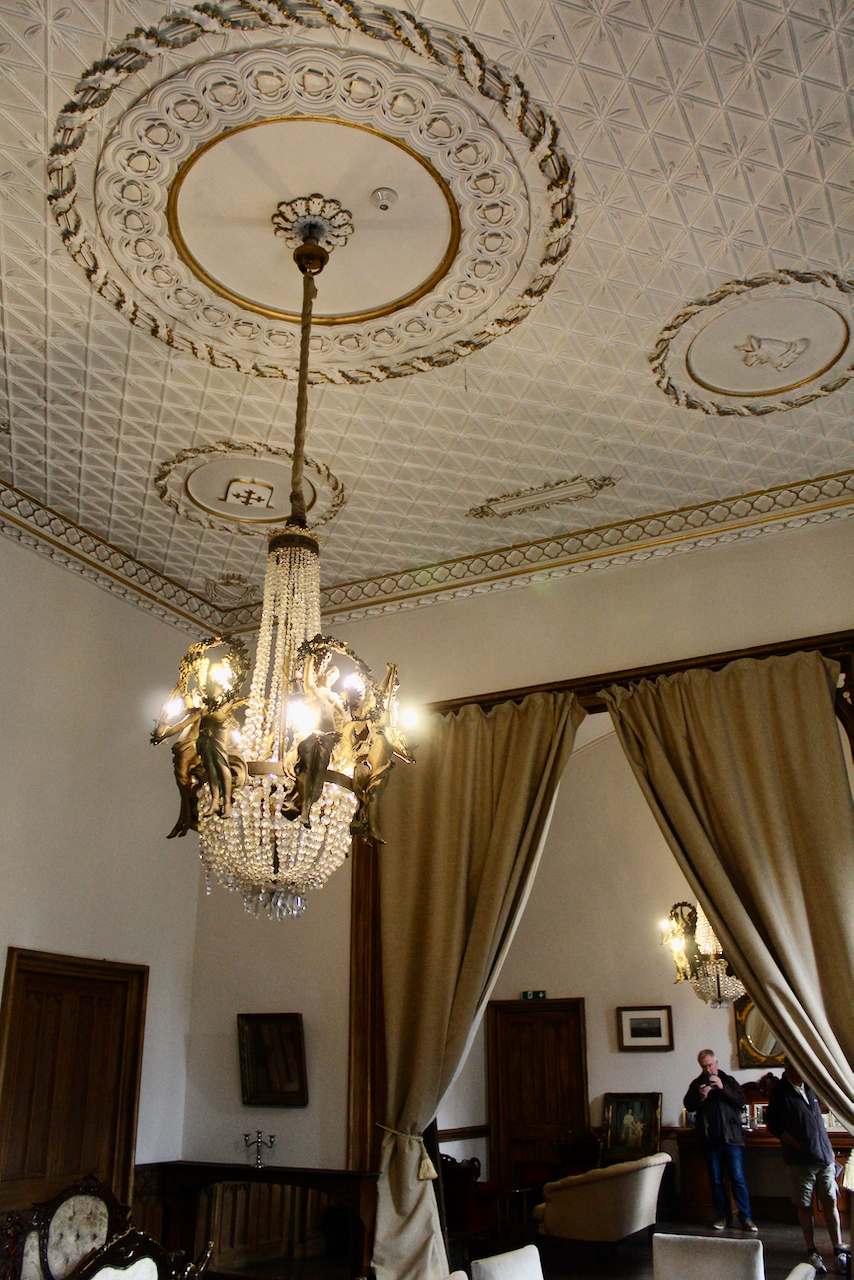
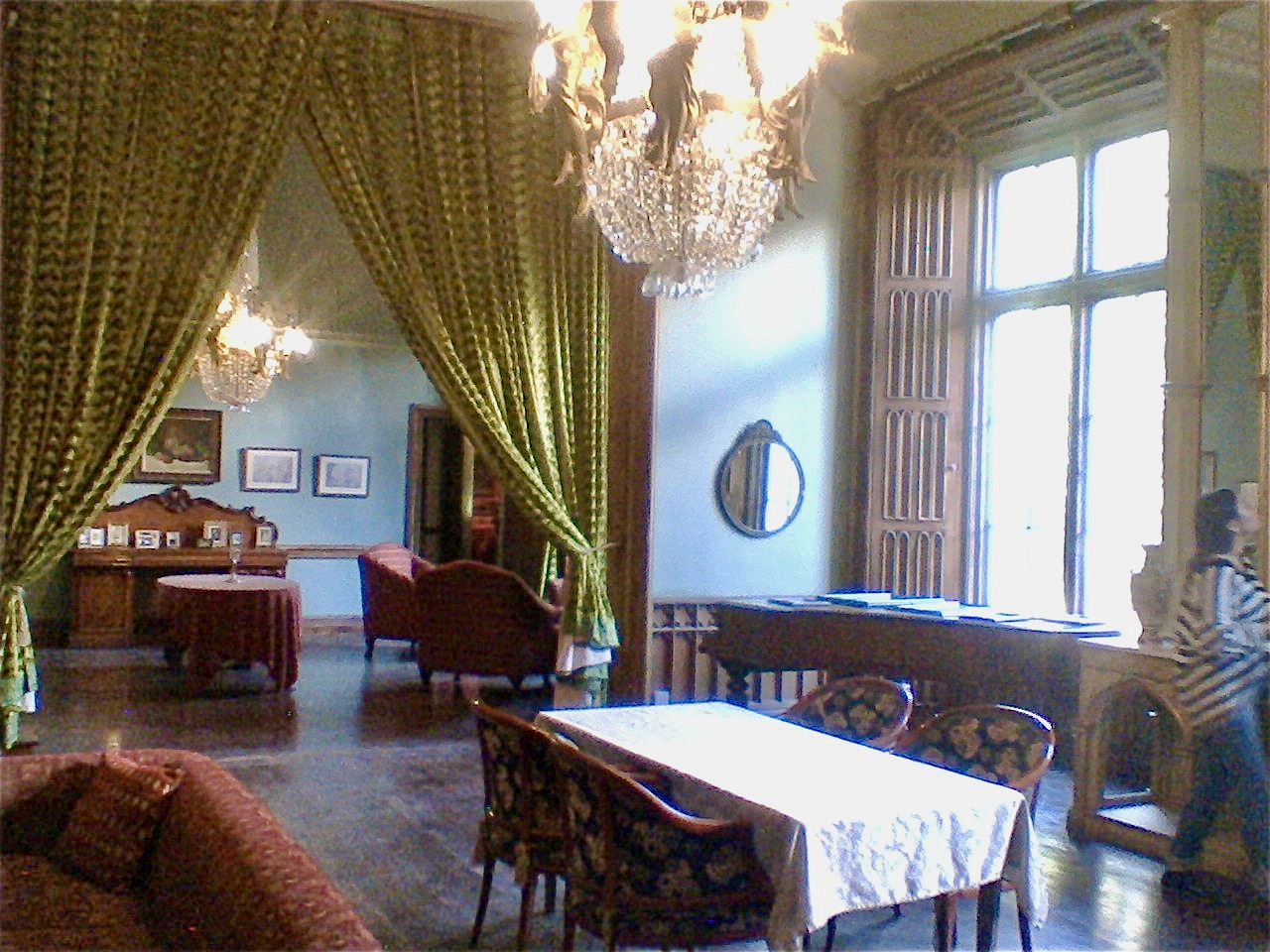
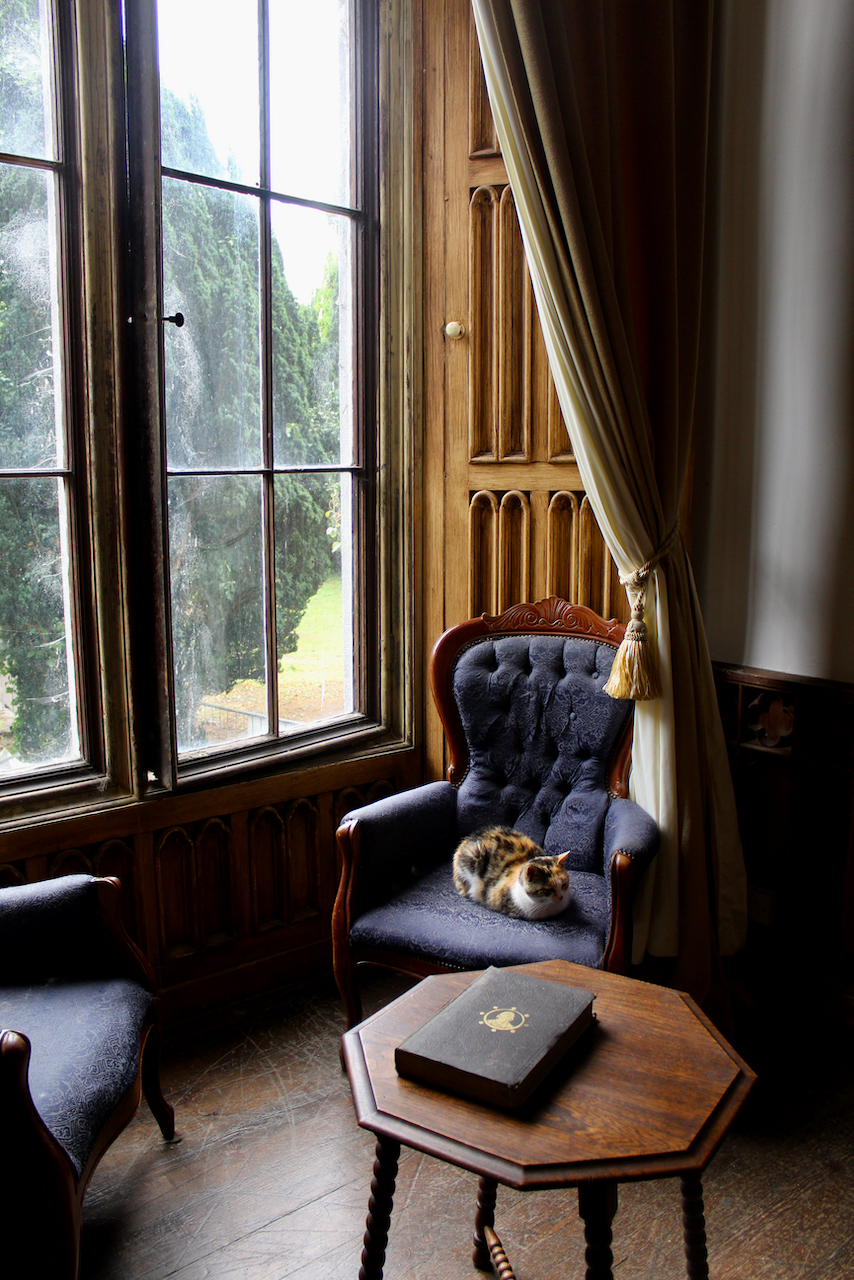
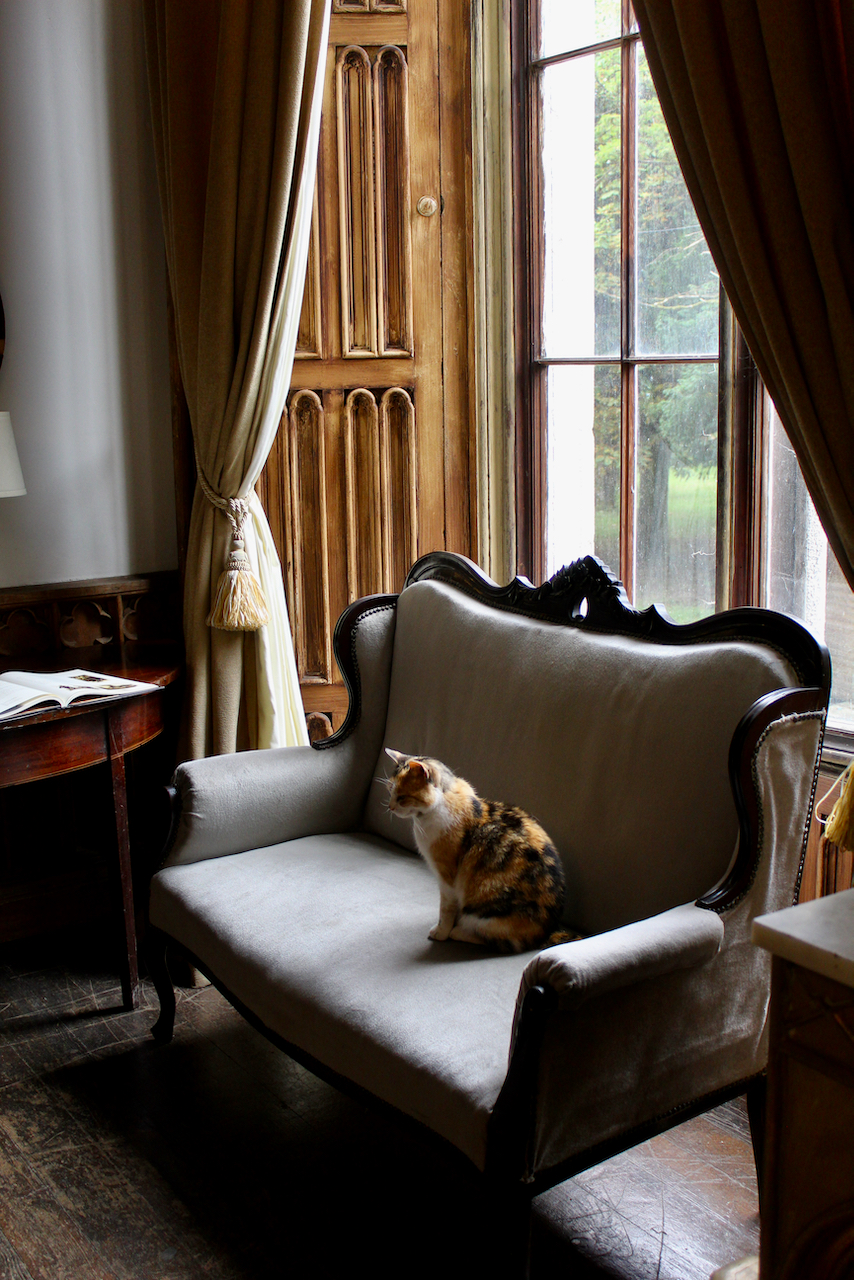
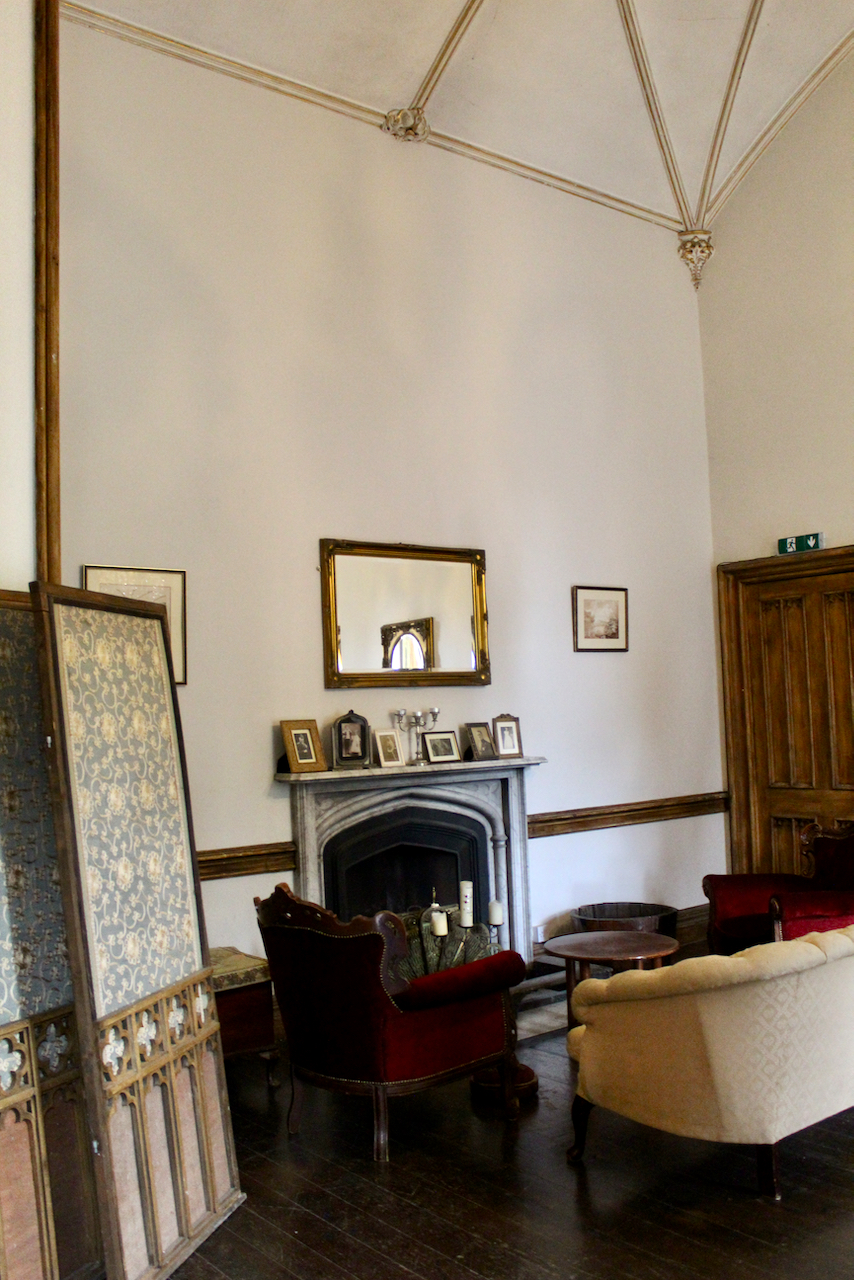
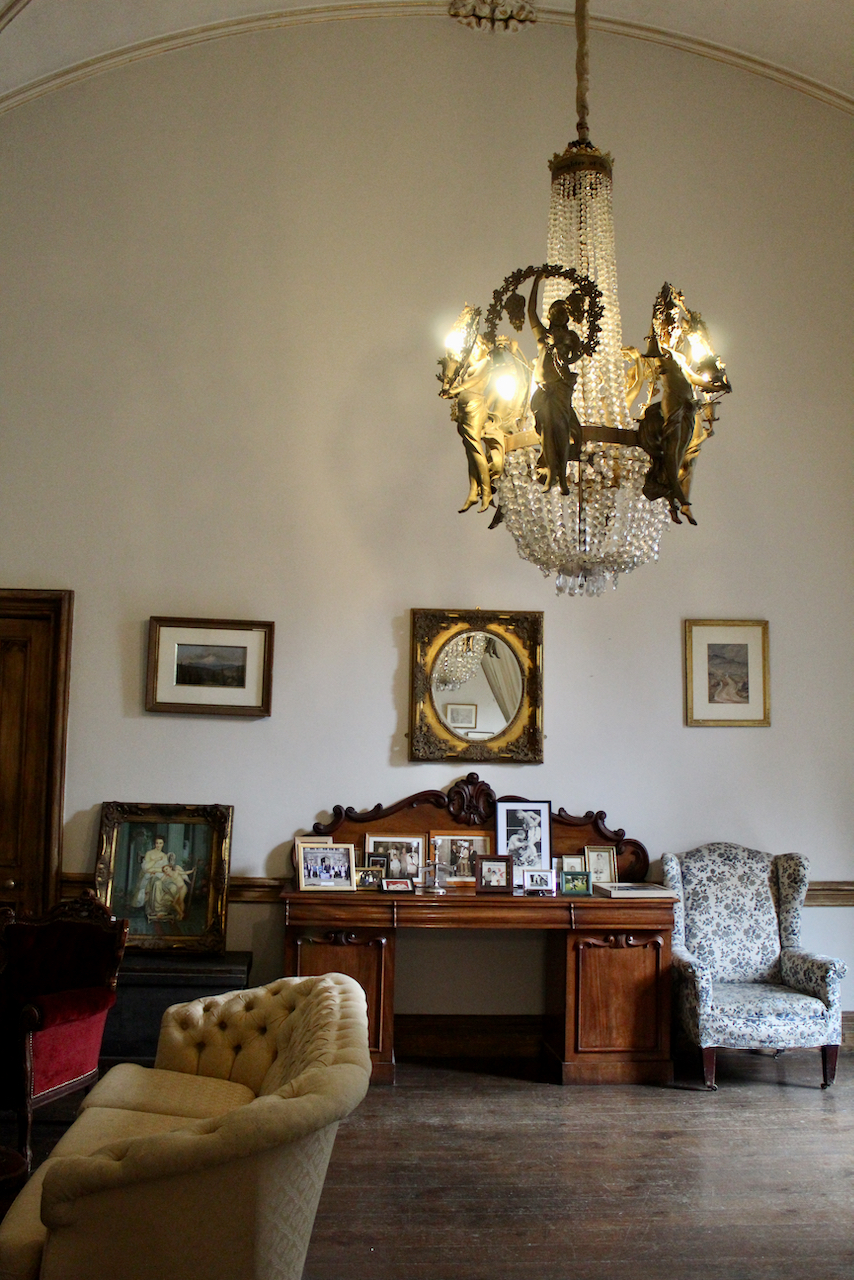
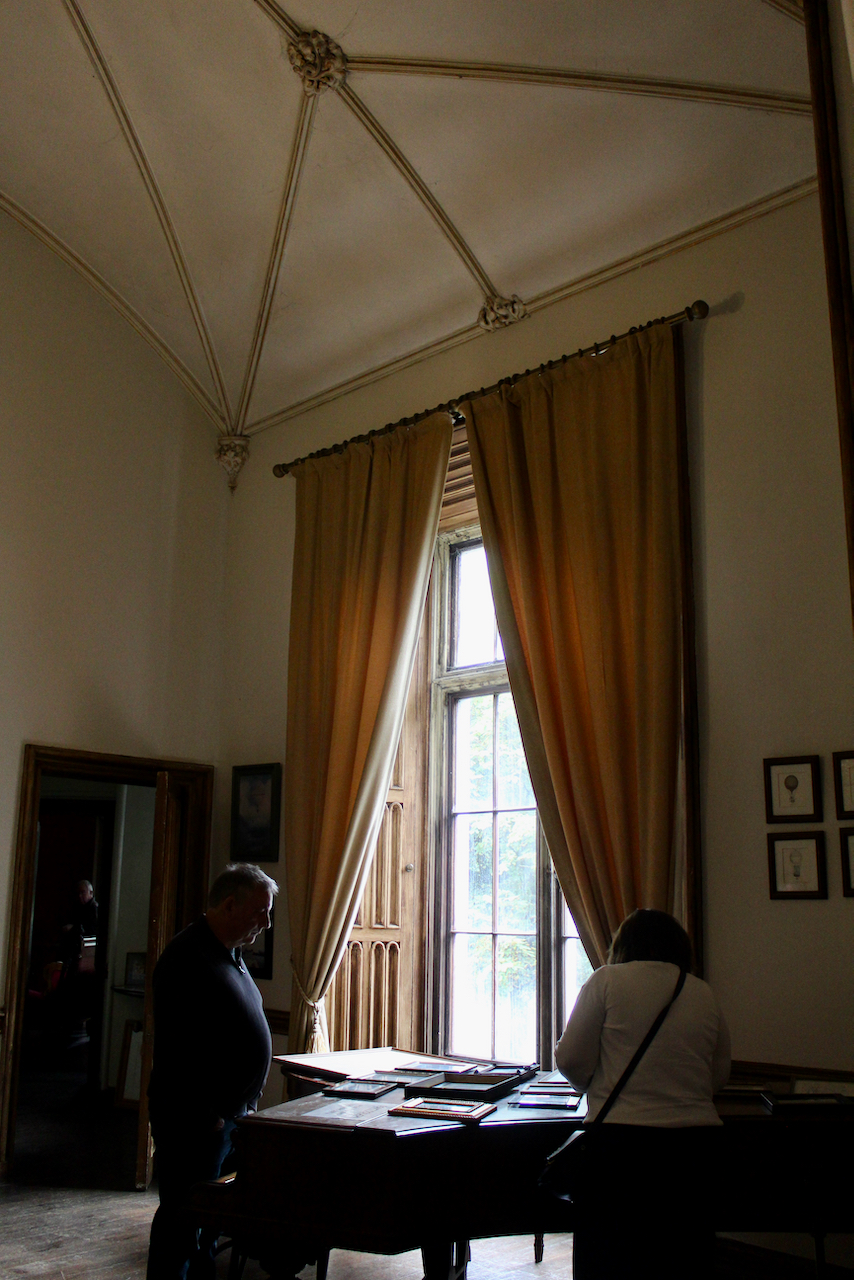
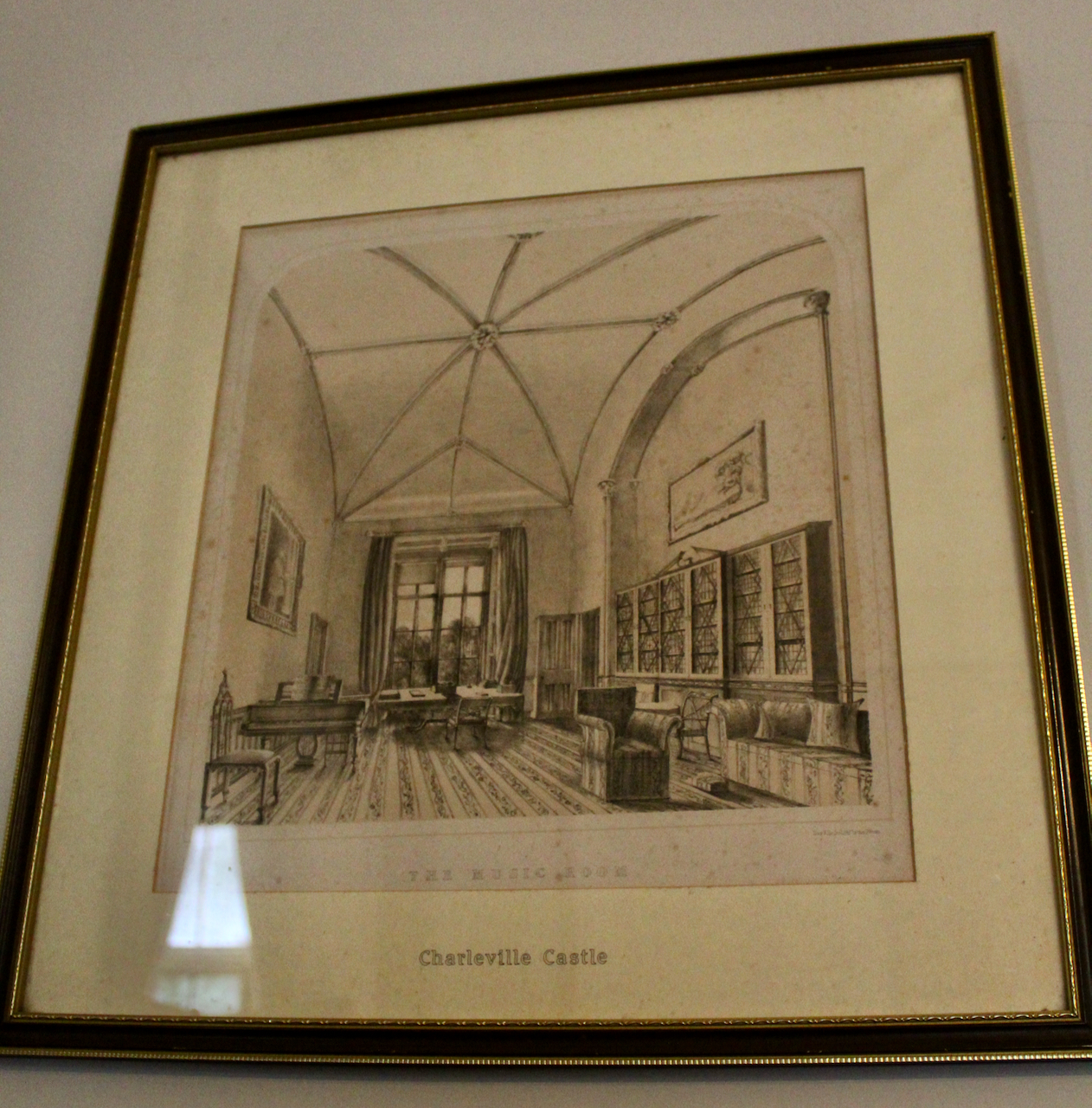
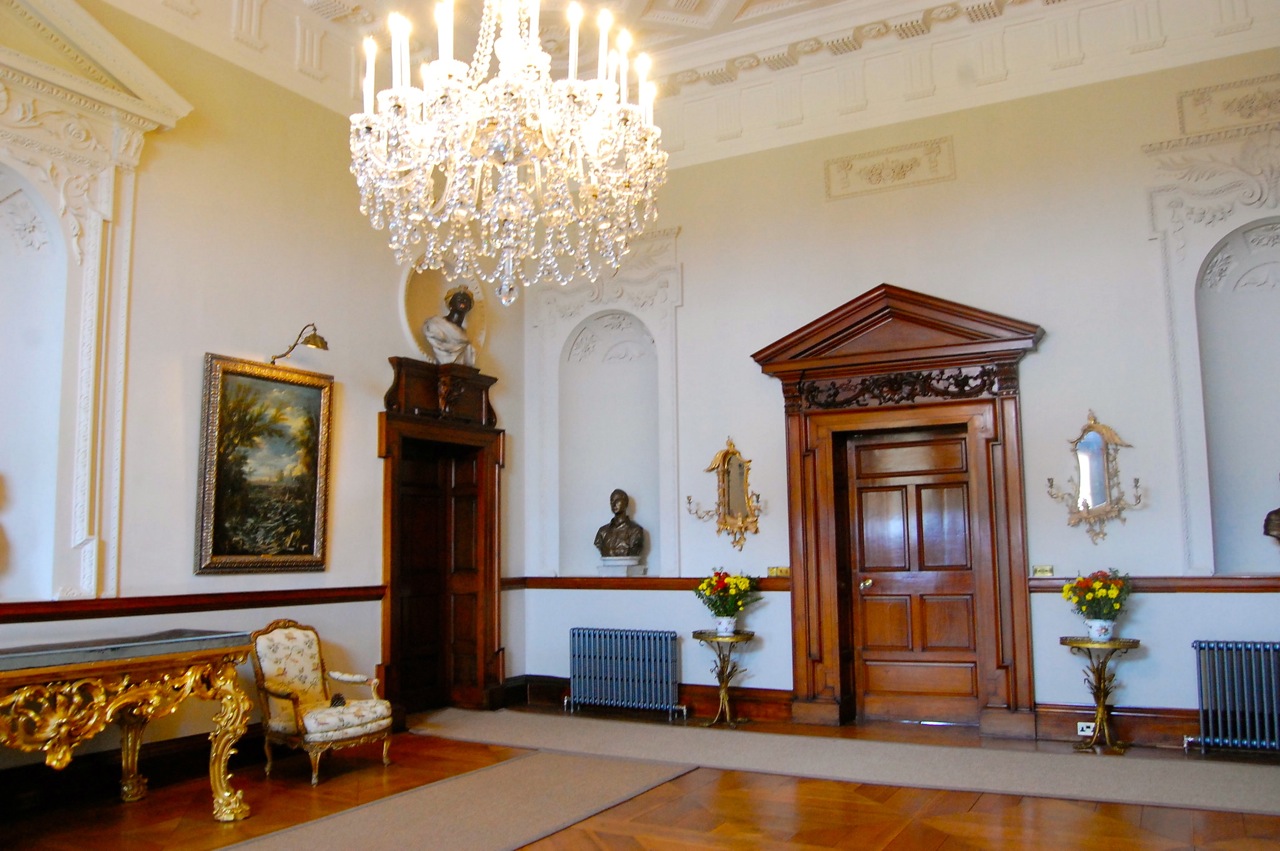
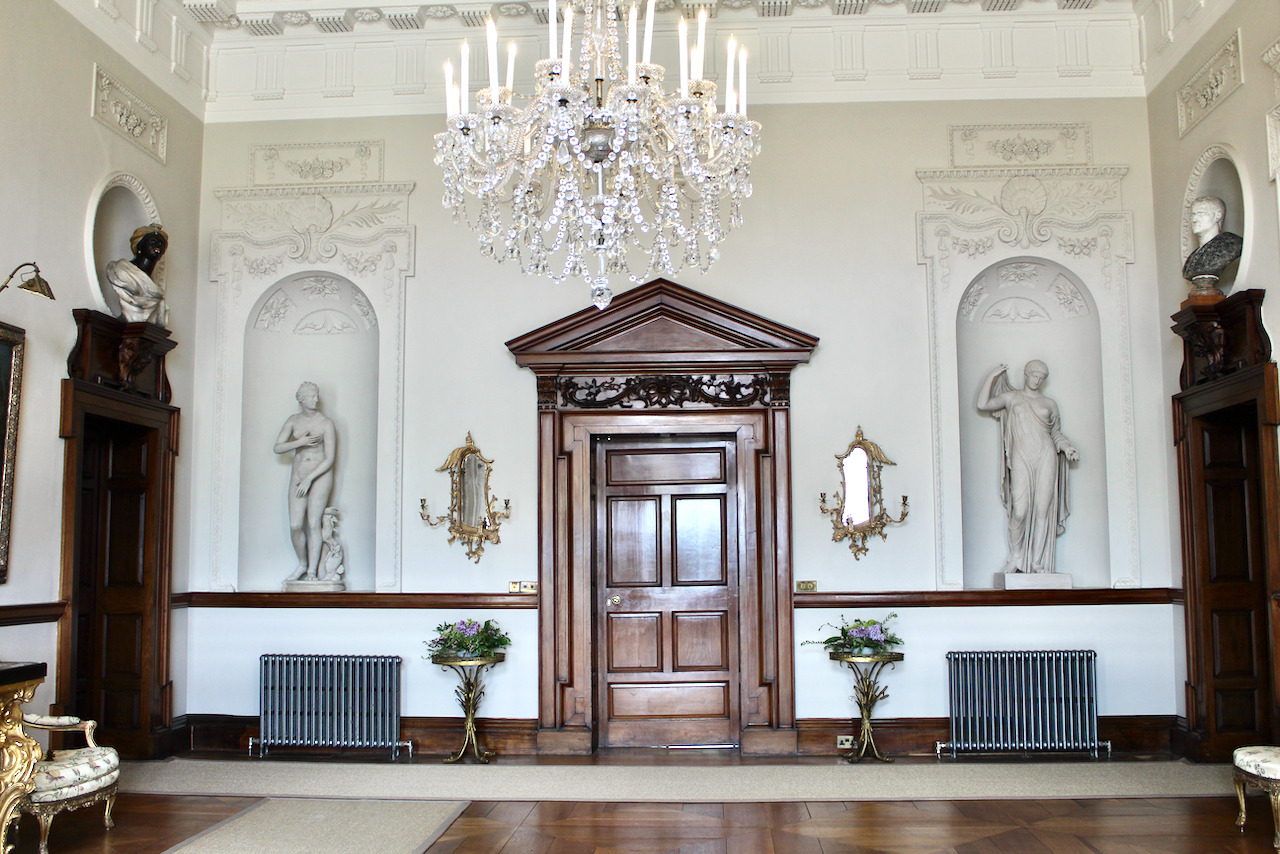
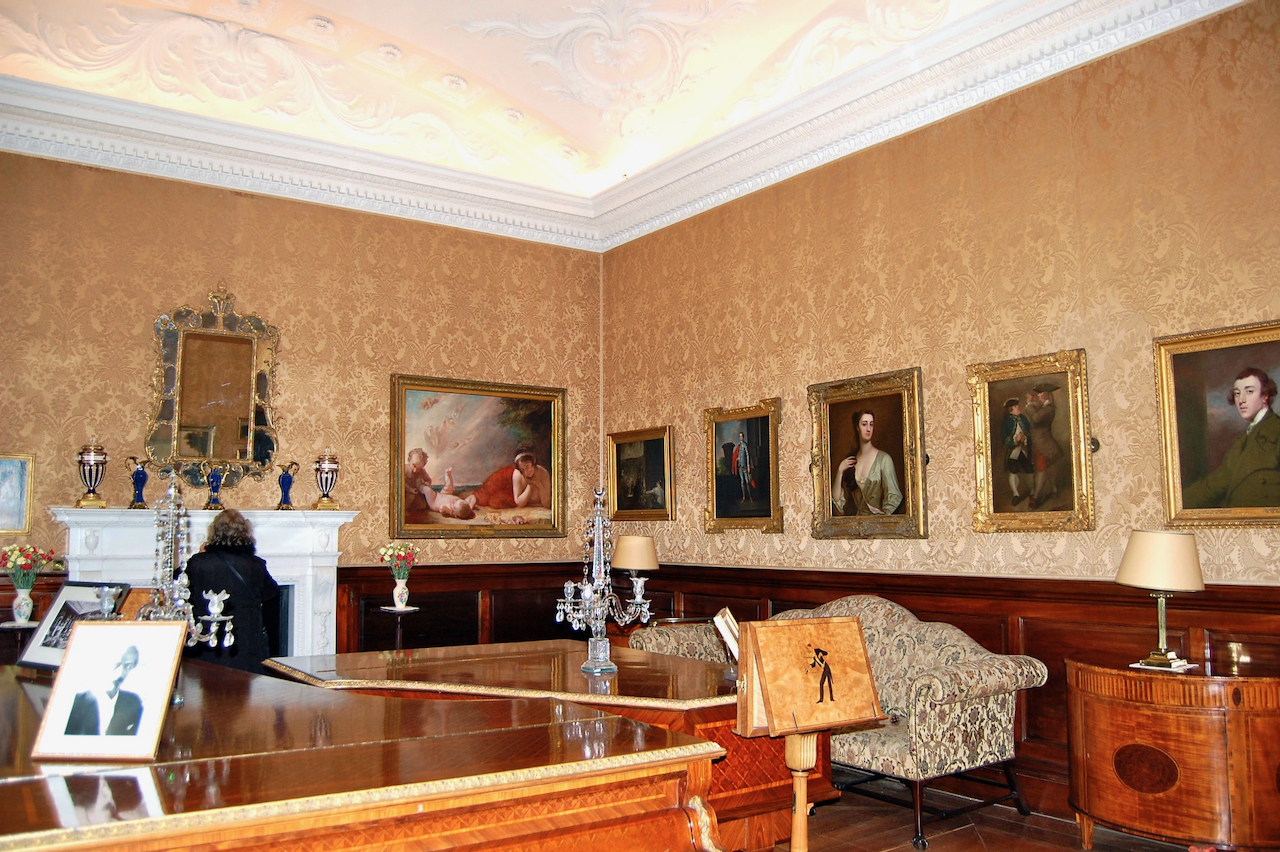
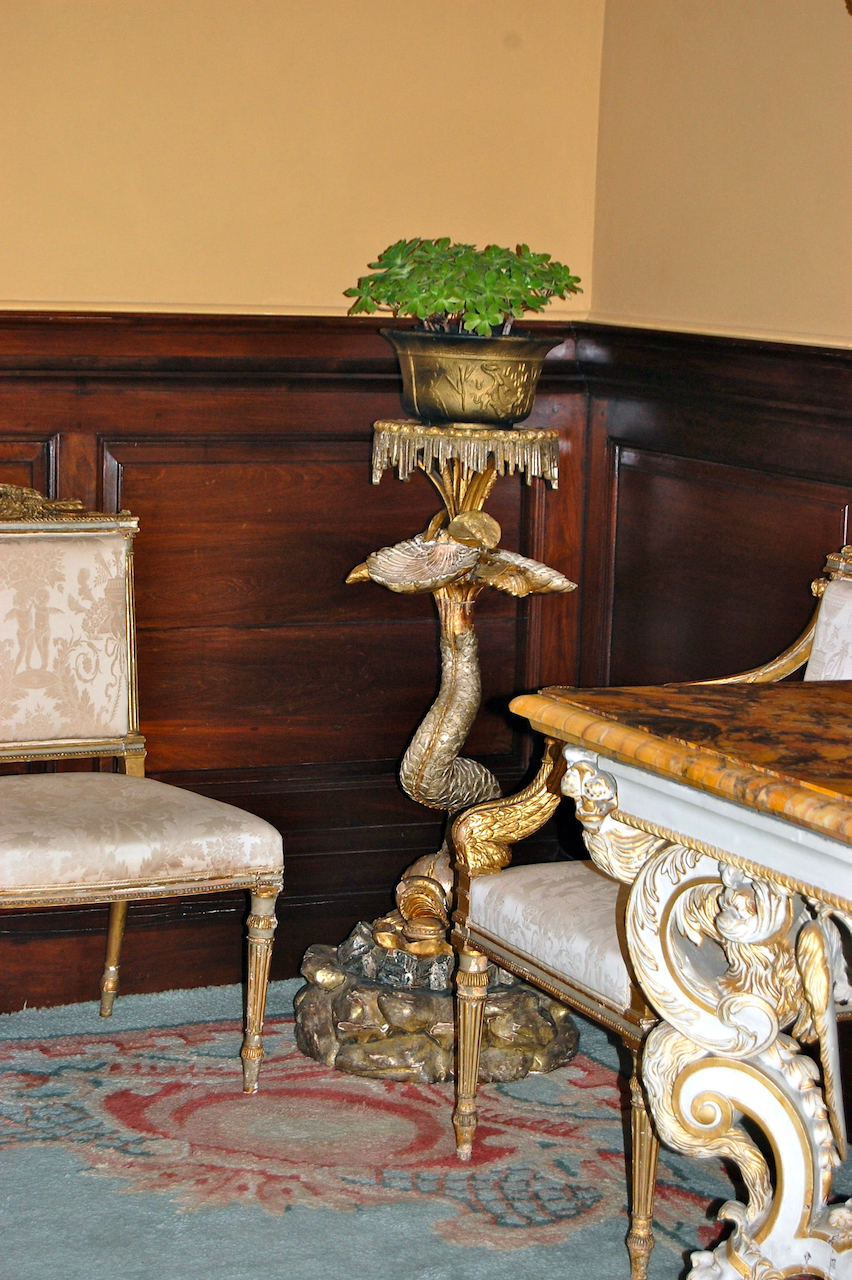
The Drawing Room is on the east side of the house. It has a fretwork ceiling with circular heraldic panels, a panelled dado and quatrefoil cornice. The room connects through a great arch with the rib-vaulted music room to its north. Unfortunately none of the furniture is original to the house but was brought it by the current owners.
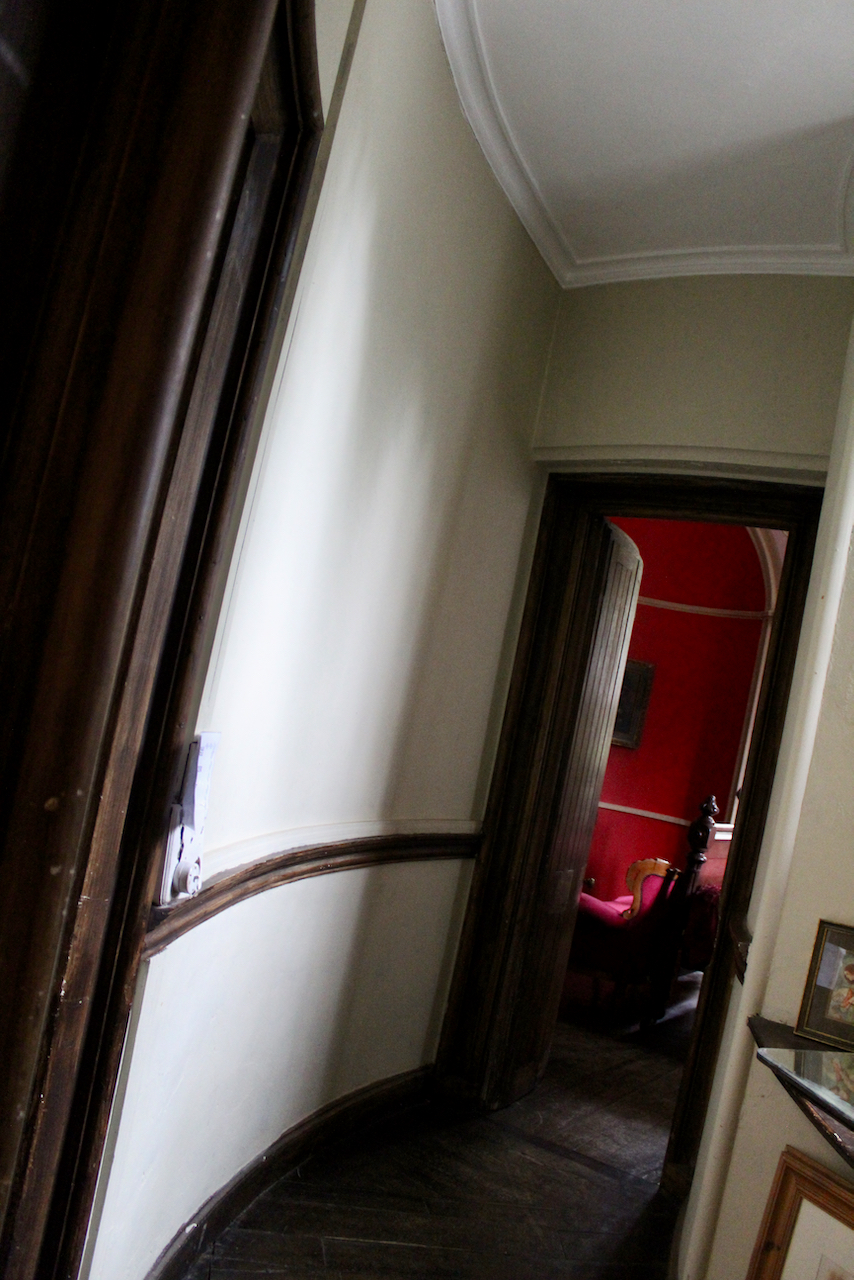
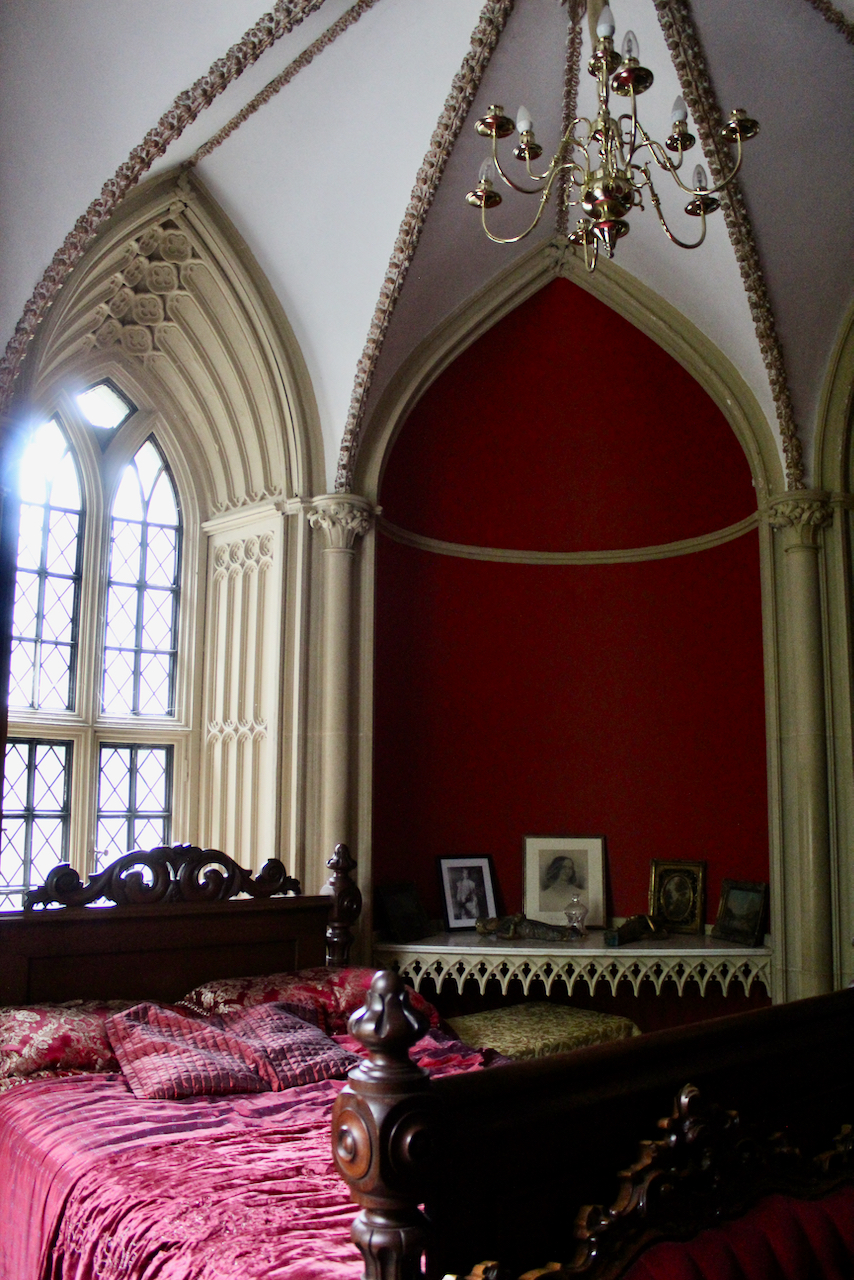
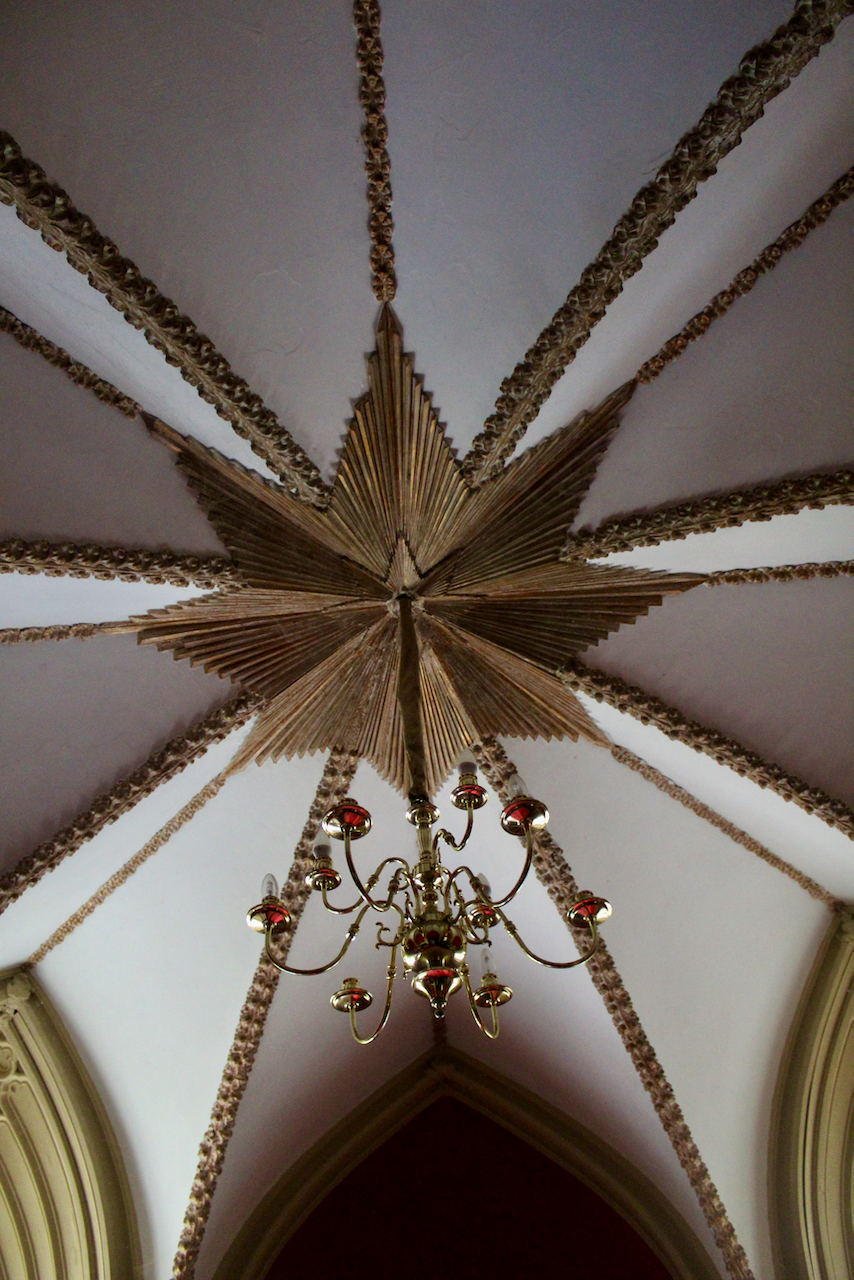
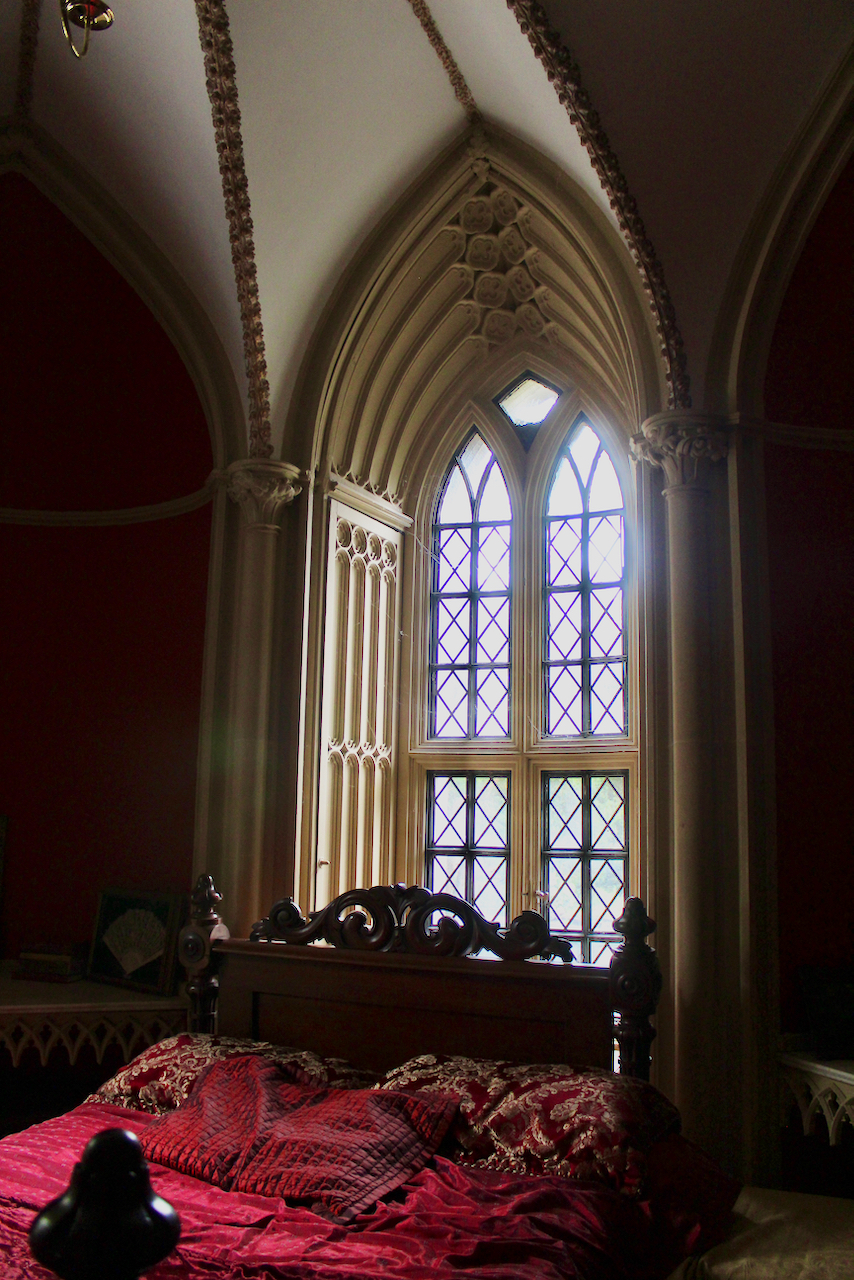
The Music Room connects via a curved short corridor to the Boudoir in the northeast tower, a homage to Walpole’s Tribune in Strawberry Hill, Tierney tells us. This used to be my friend Howard Fox’s bedroom when he was staying as a guest, leading mushroom foraging walks in Charleville Woods! It is a star-vaulted circular room, with bays alternating between four wide round niches and smaller openings for windows, door and fireplace. Above was Lord Charleville’s dressing room, but we did not get to go there.
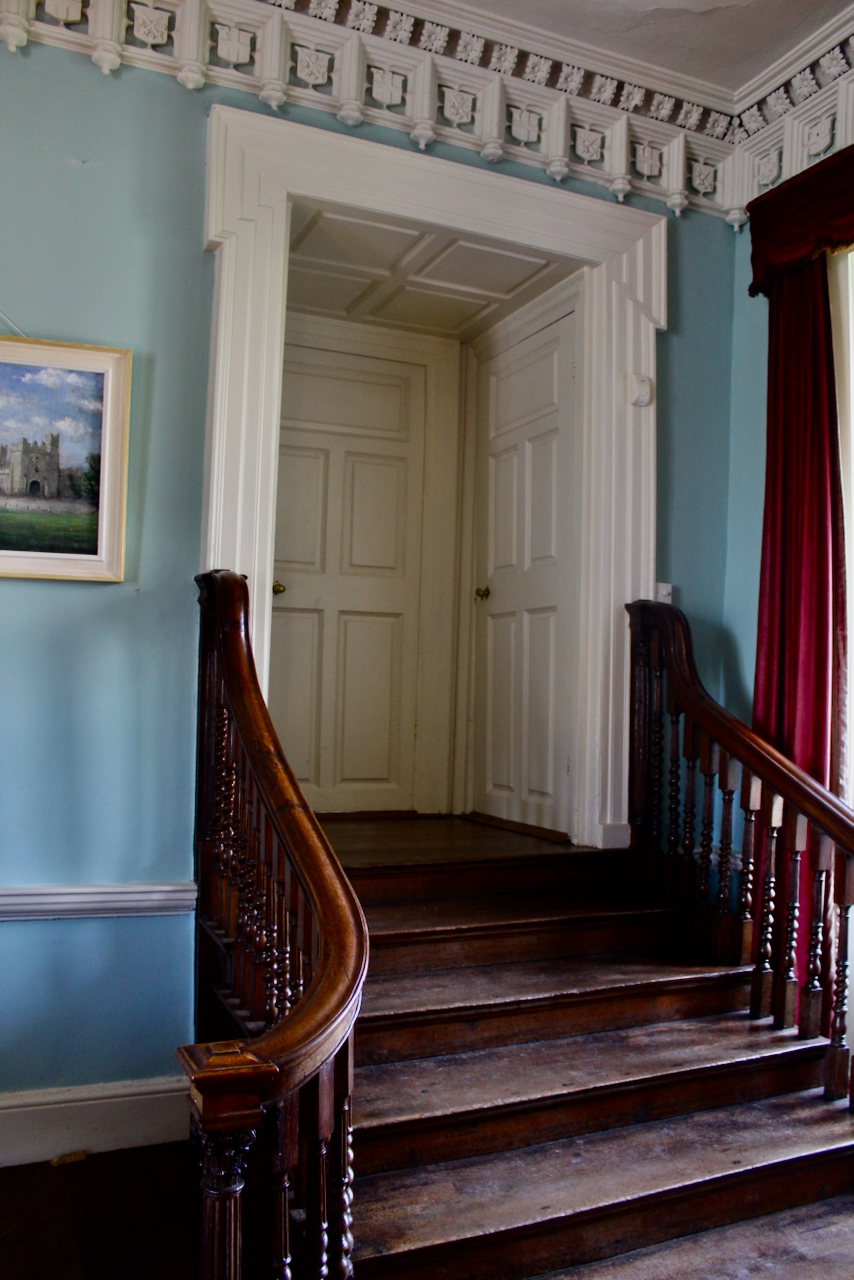
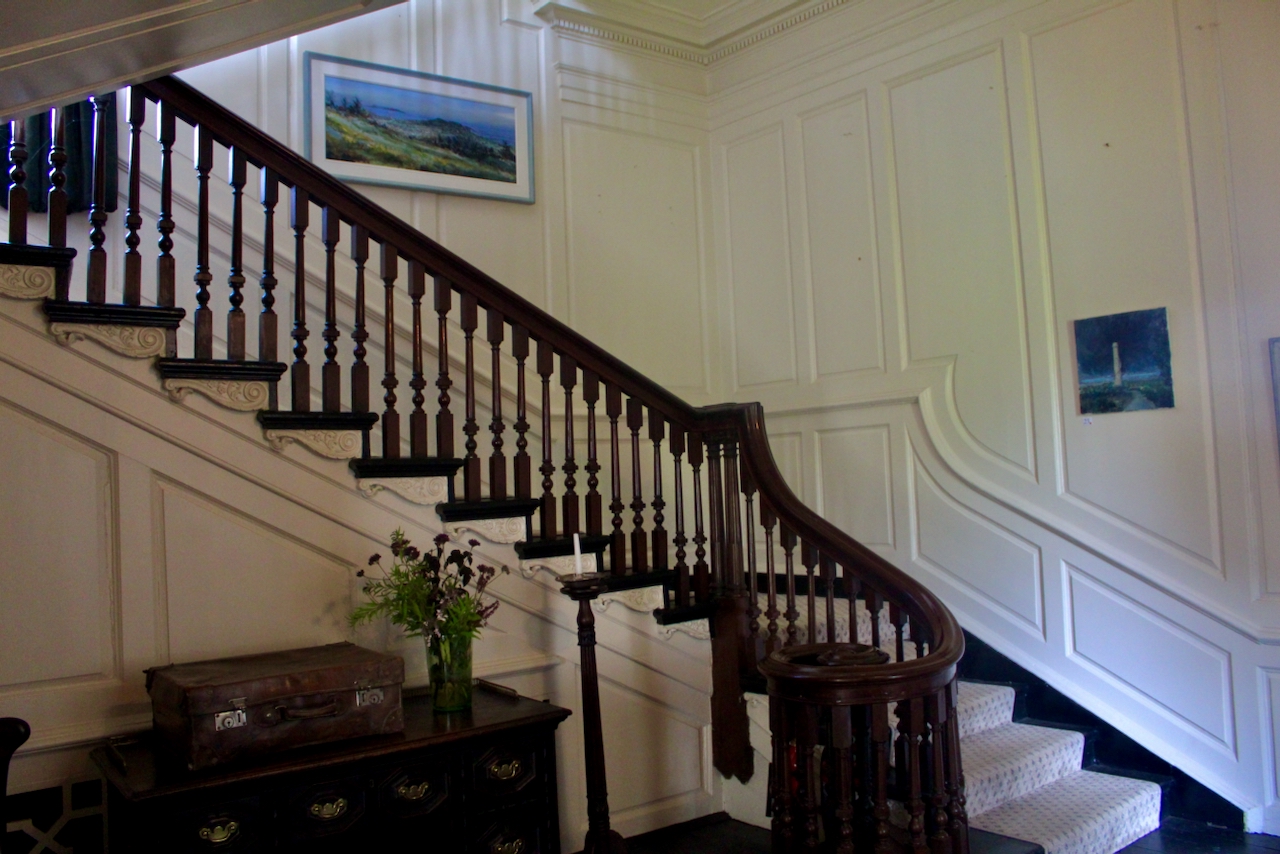
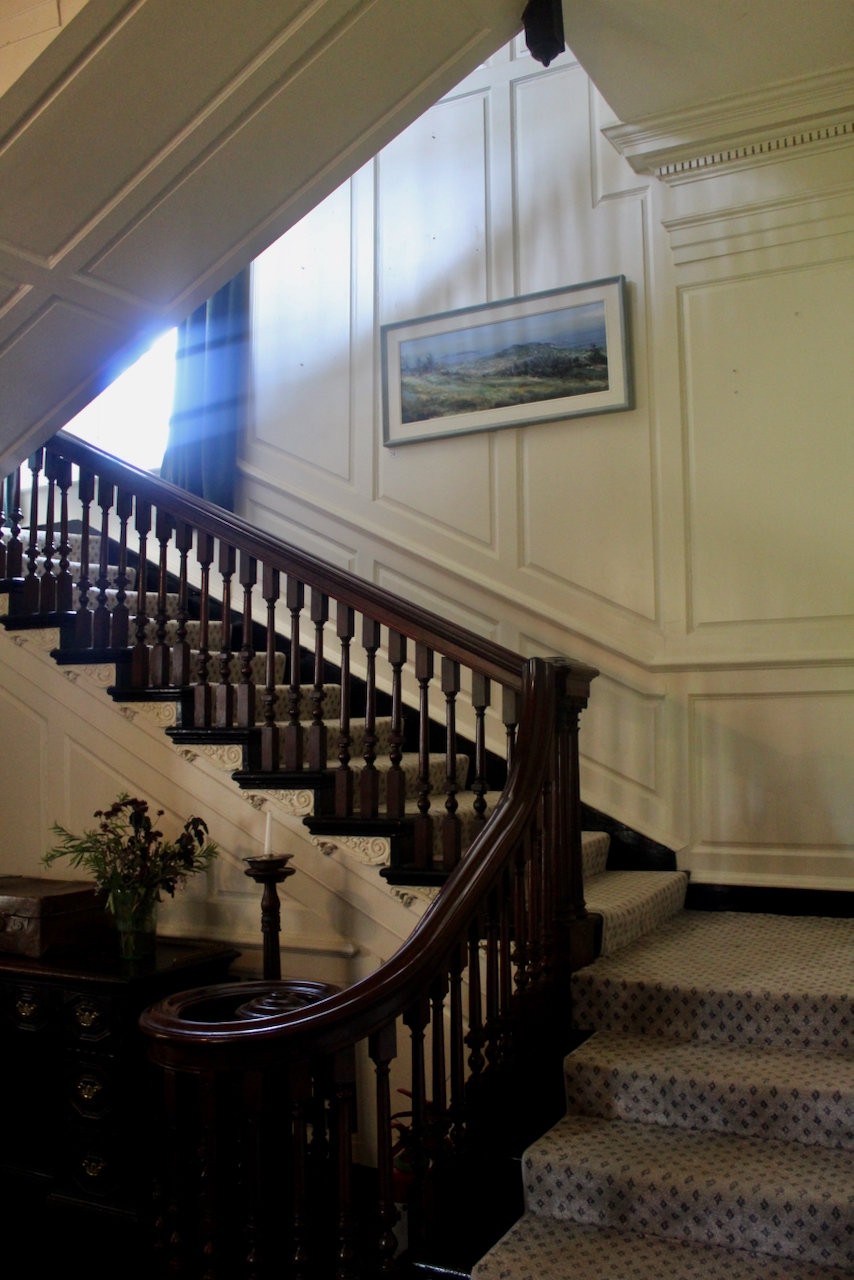
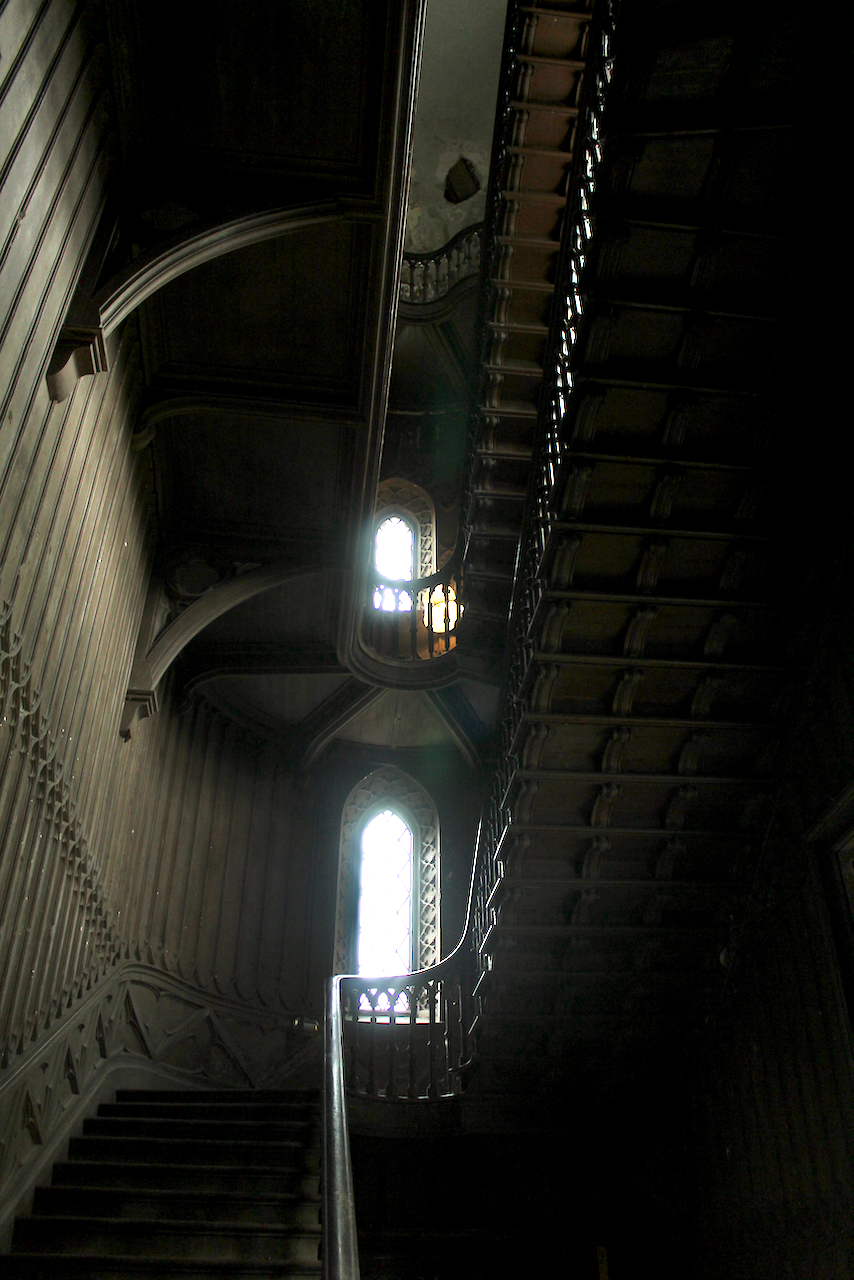
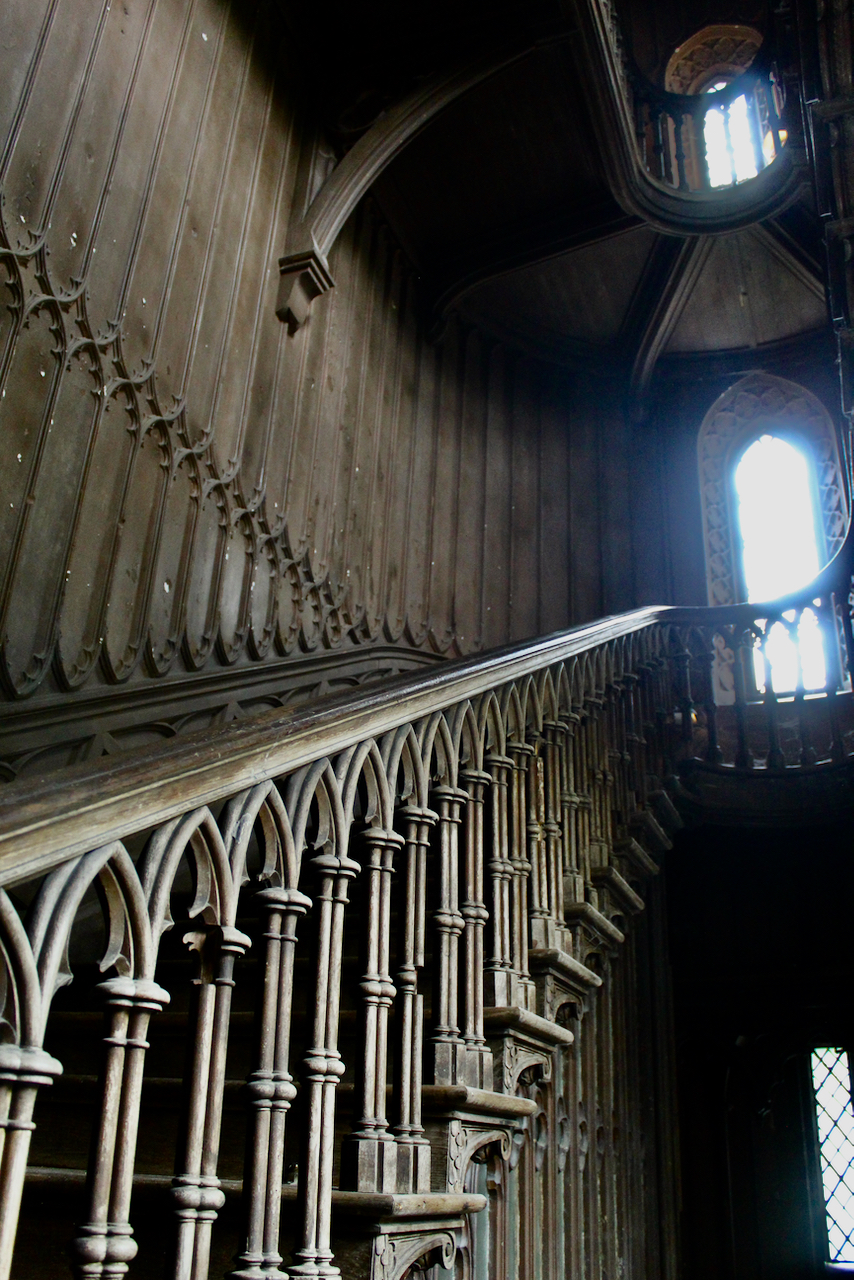
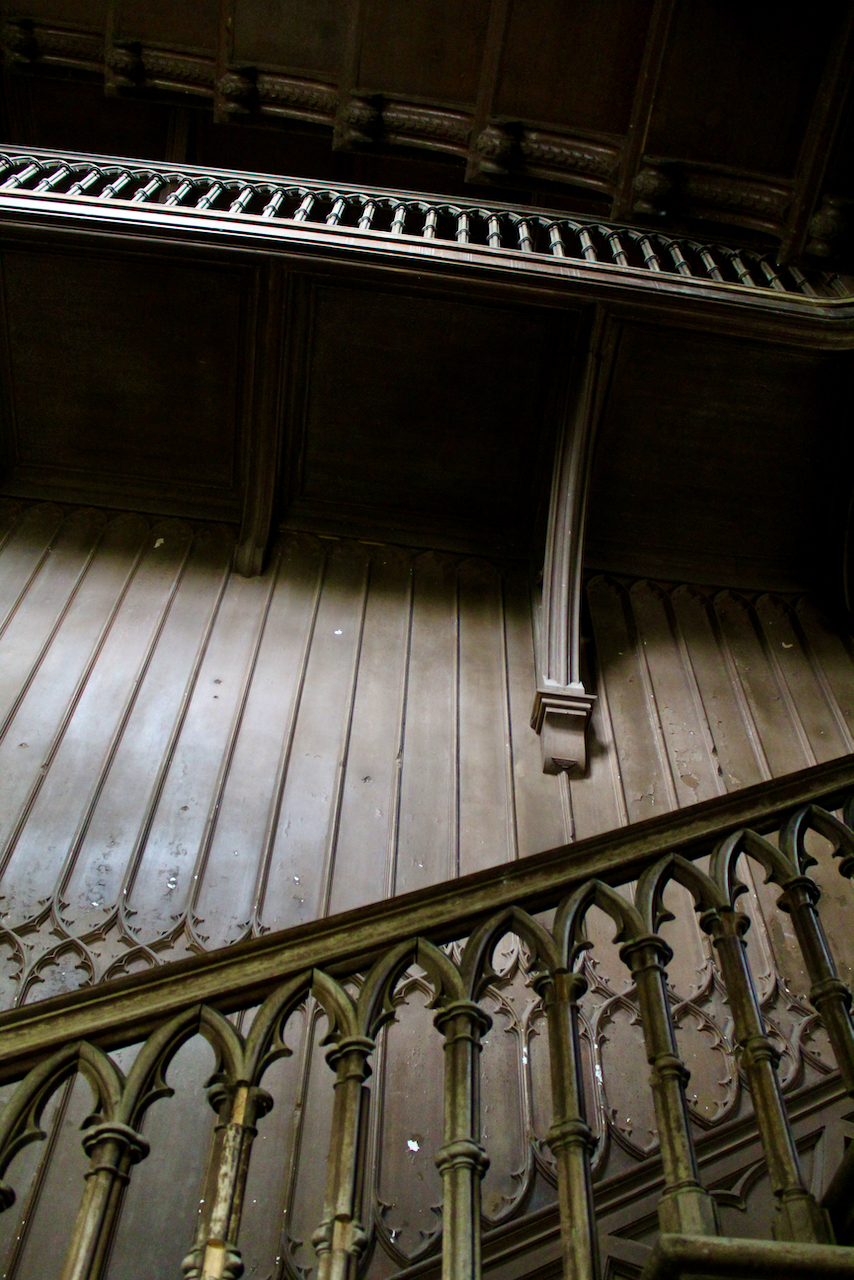
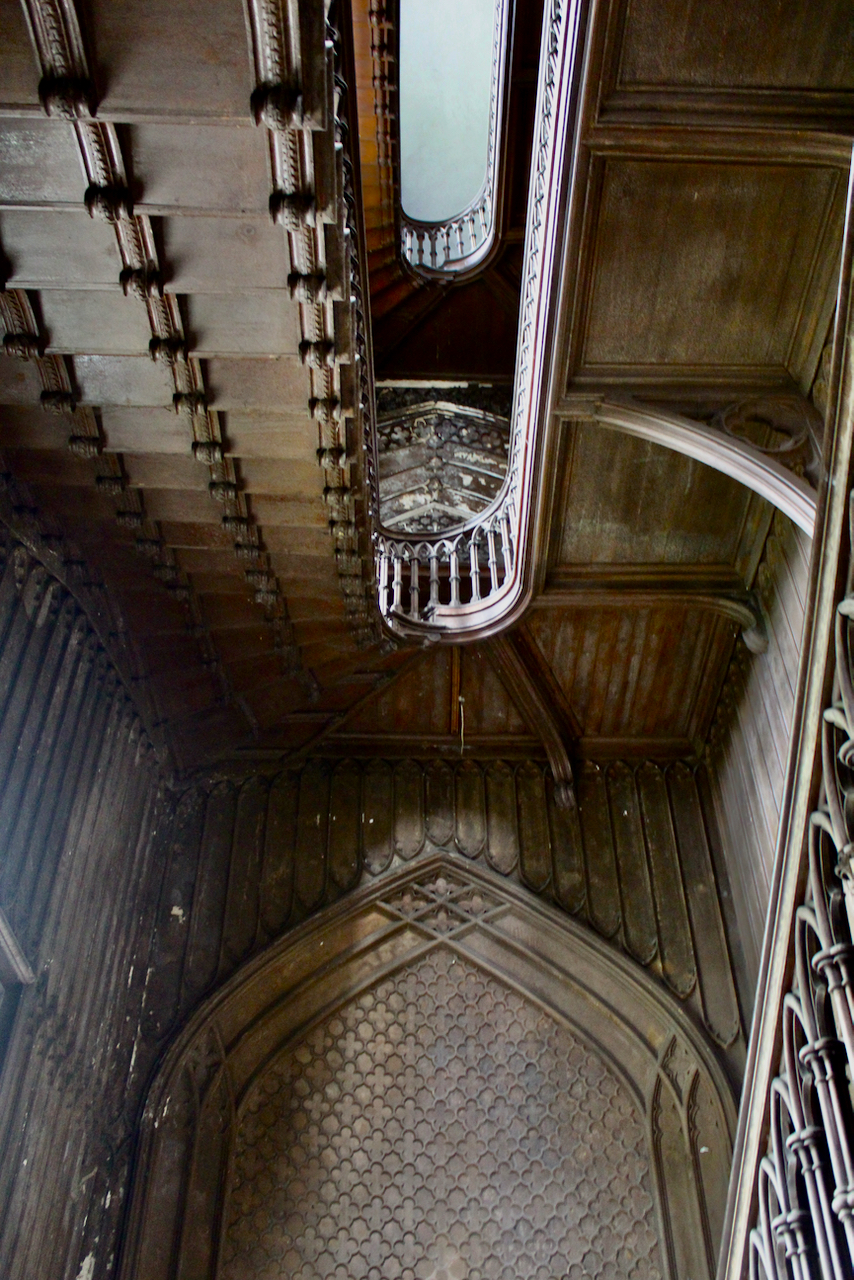
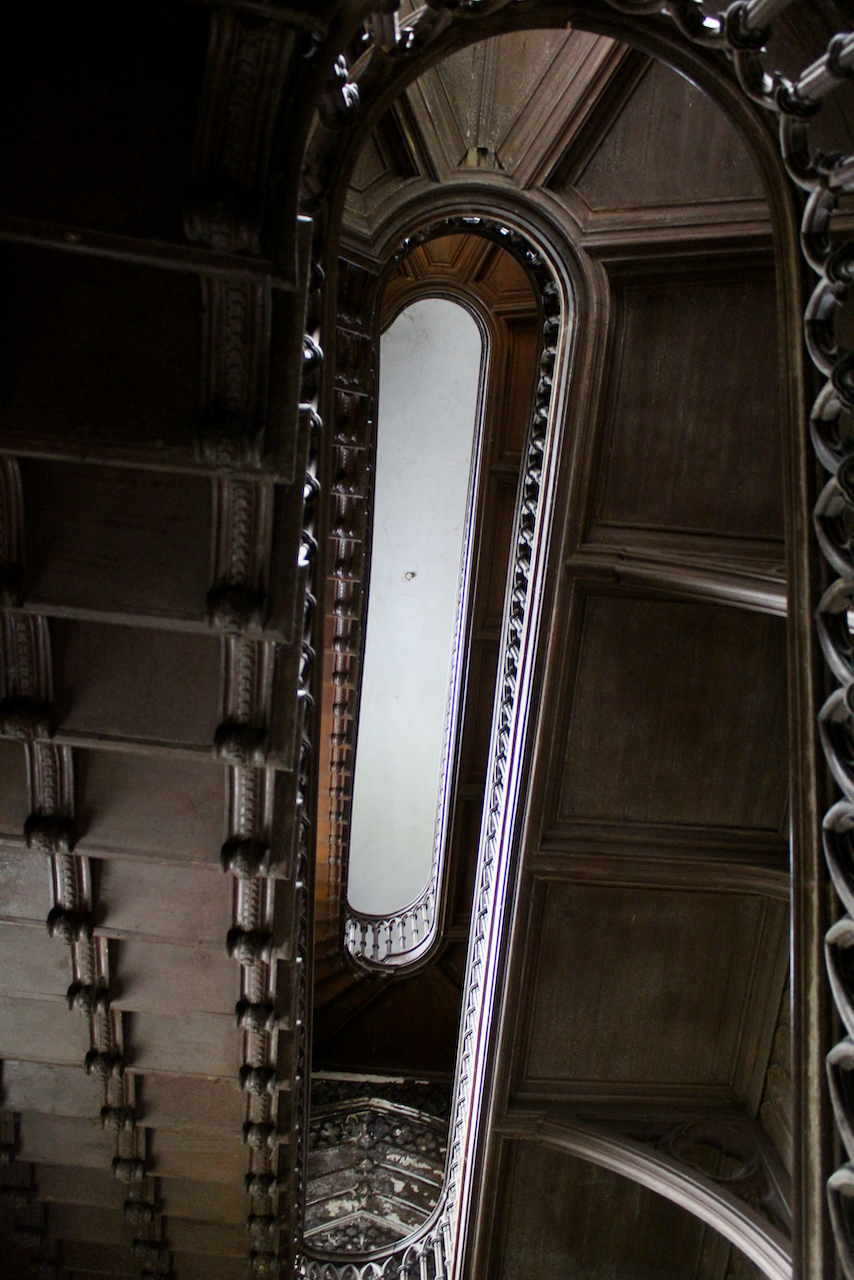
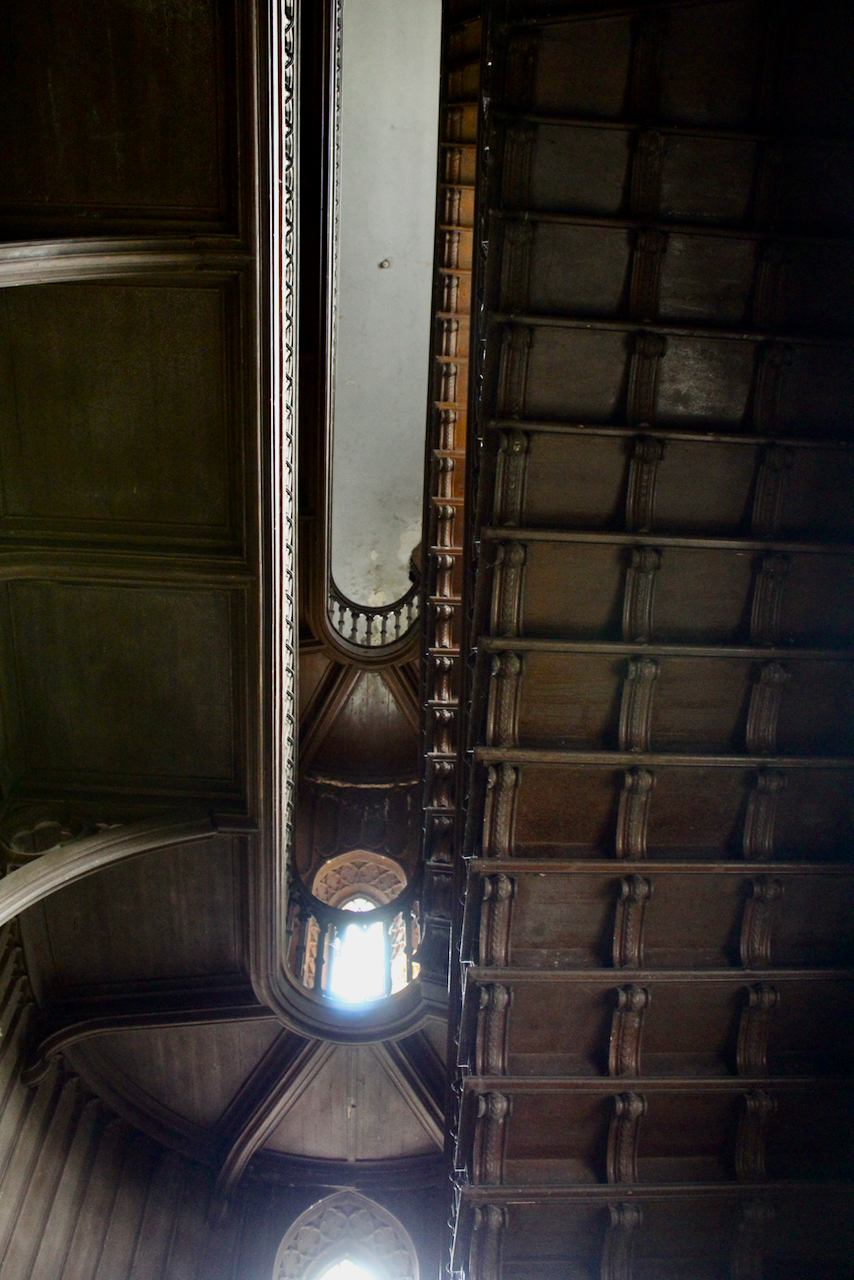
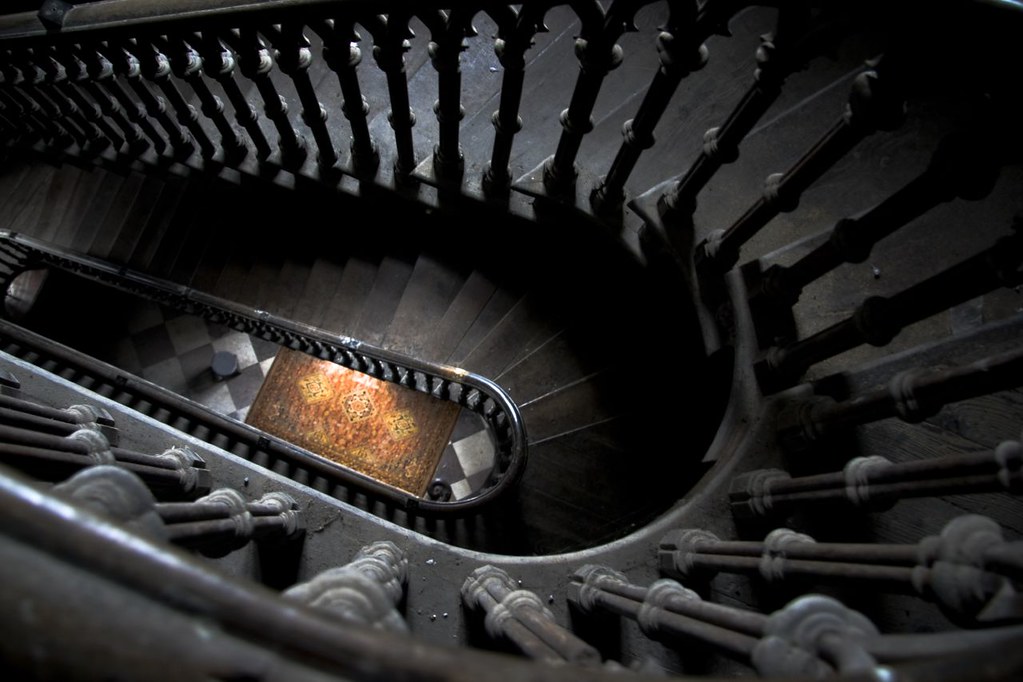
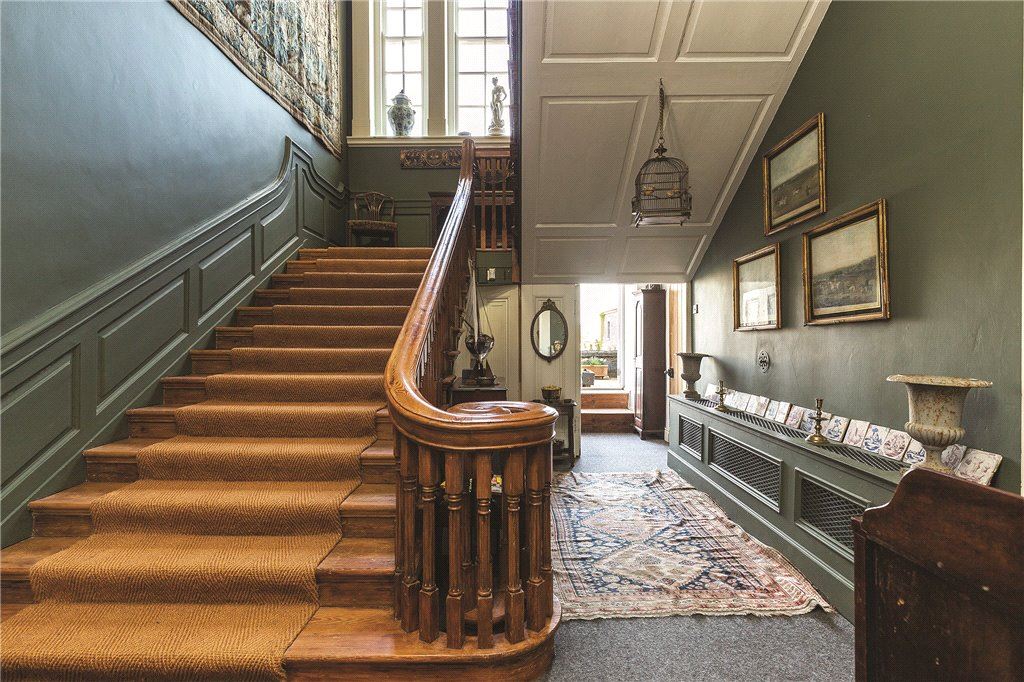
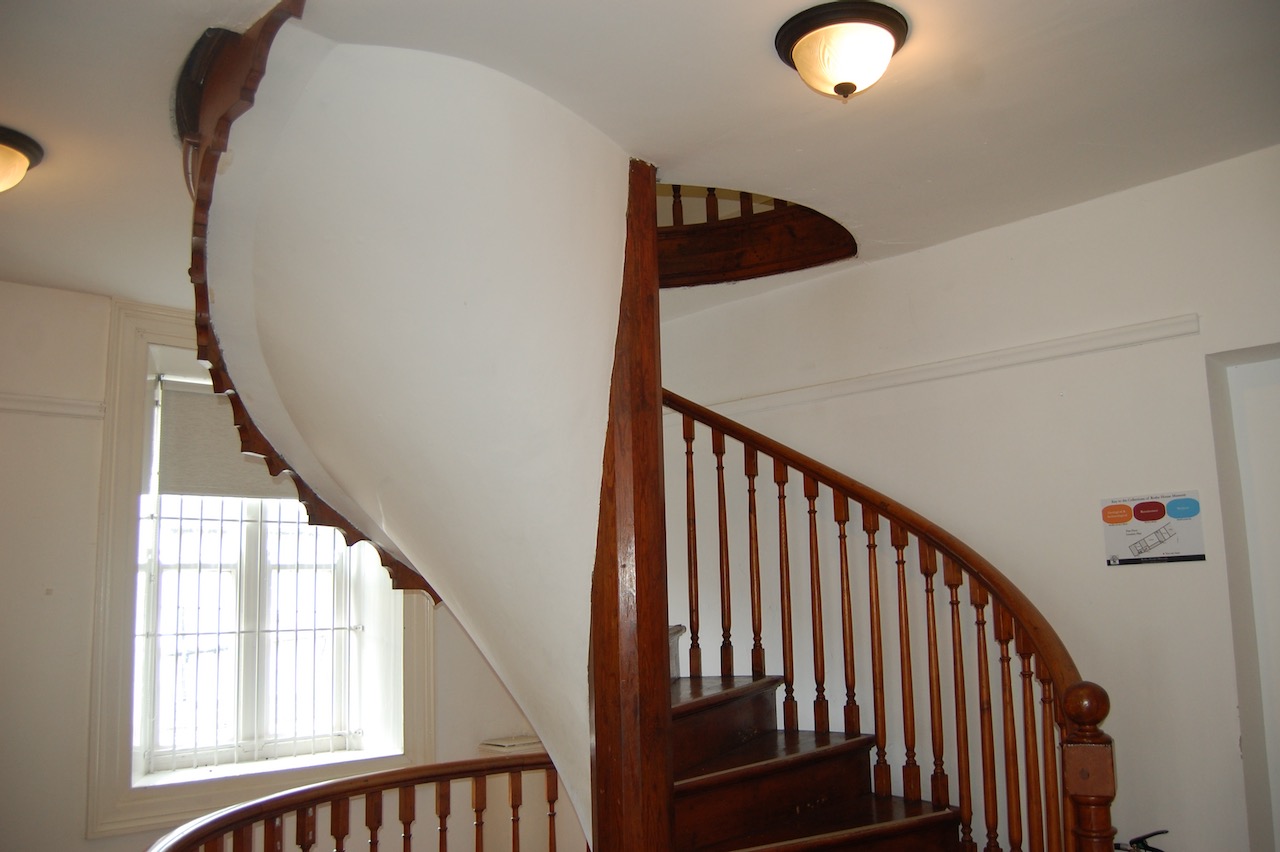
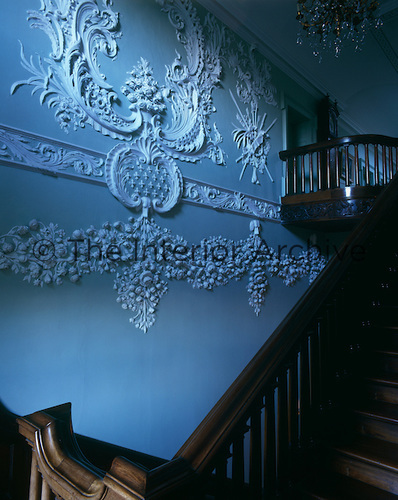
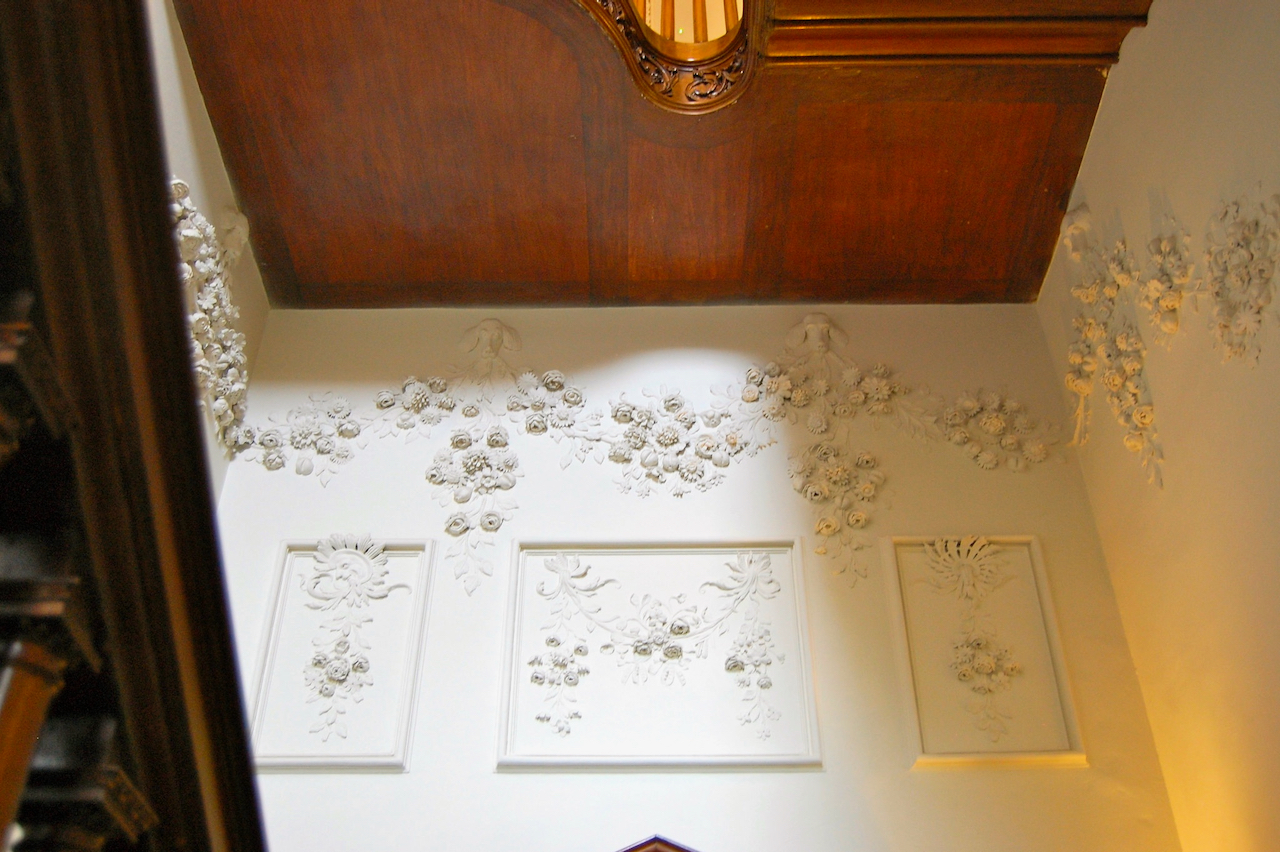
The stairs is tucked away in an odd place, behind a door off the northwest corner of the entrance hall. It is an intricate tightly curved staircase of Gothic joinery leading to the upper storeys, with Gothic mouldings on walls. The wall panelling is plaster painted and grained to look like oak. It rises through three storeys.
Tierney tells us that at the top of each flight, there is a great cavetto-moulded doorcase enriched with quatrefoil fretwork in plaster. The cavetto is a concave molding with a profile approximately a quarter-circle, quarter-ellipse, or similar curve. I find the staircase thrilling. Tierney writes: “Its dark colouring is in tune with the “gloomth” of its north facing aspect, and no Gothic room in Ireland rivals its Hmmer Horror atmosphere“!
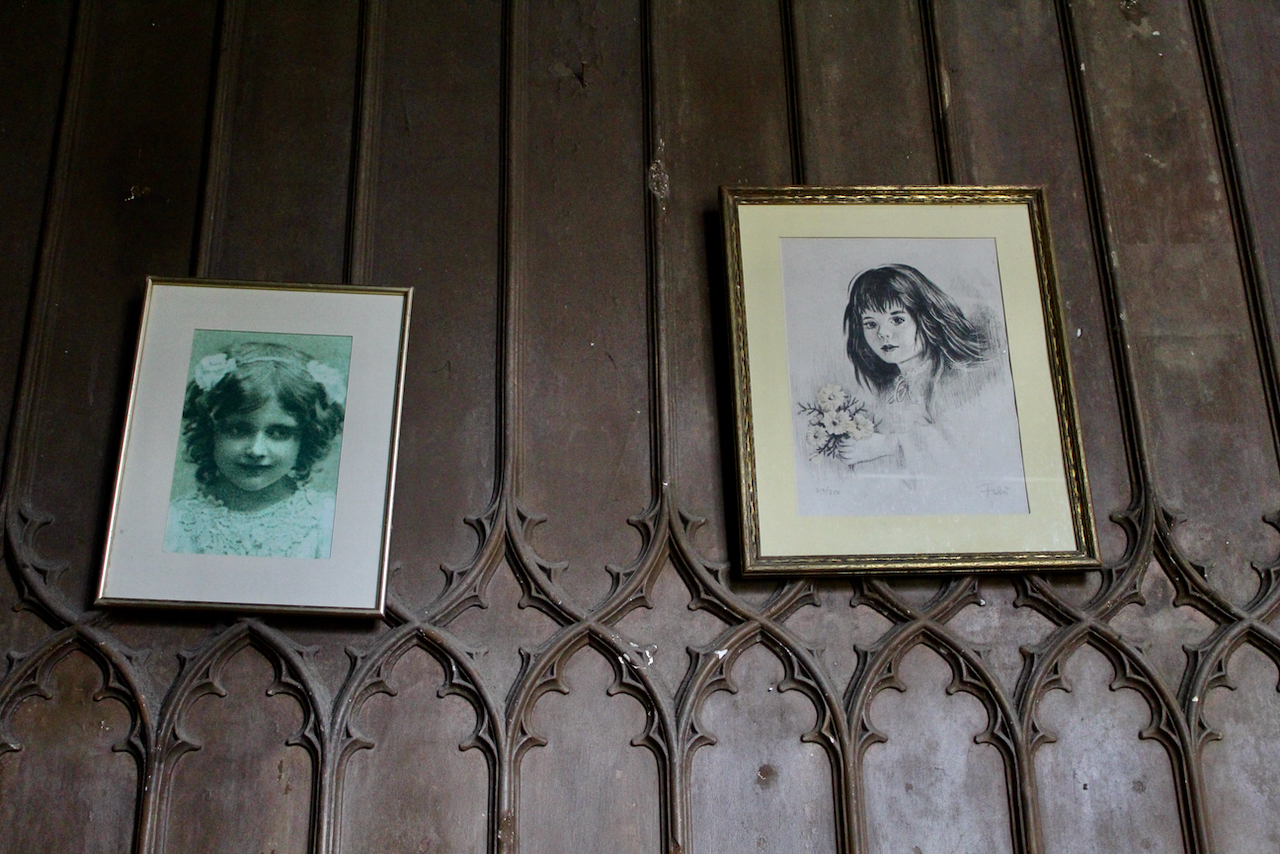
A tragic accident occurred in 1861 when the 5th Earl’s young sister Harriet was sliding down the balustrade of the Gothic staircase from the nursery on the third floor and fell. She is said to haunt the staircase and to be heard singing.
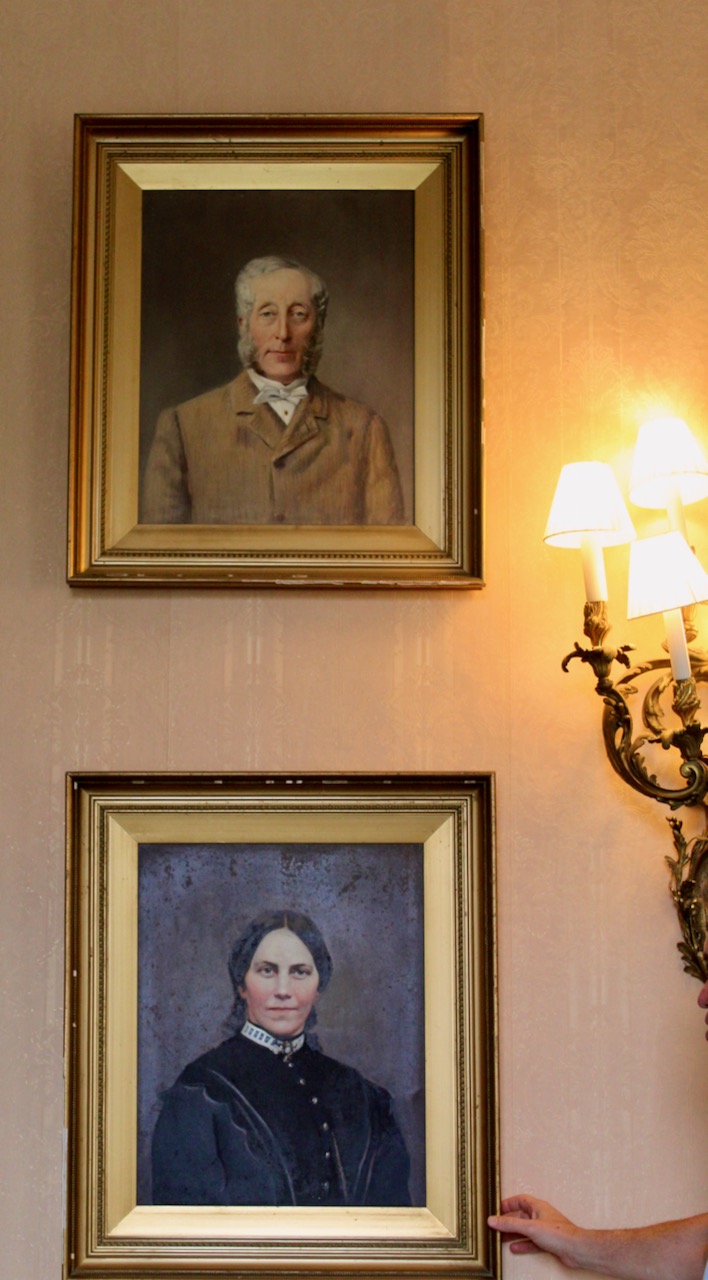
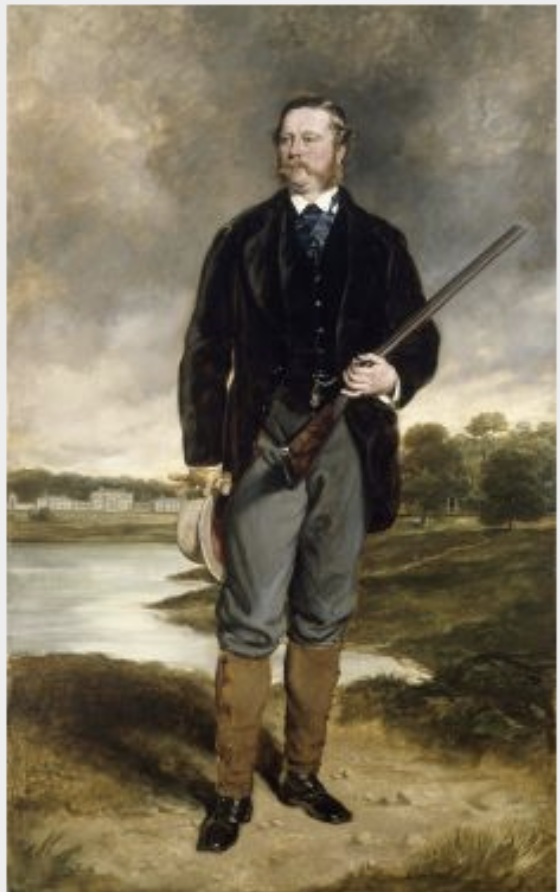
I’m not sure if this is a photograph of Harriet who died falling from the staircase.
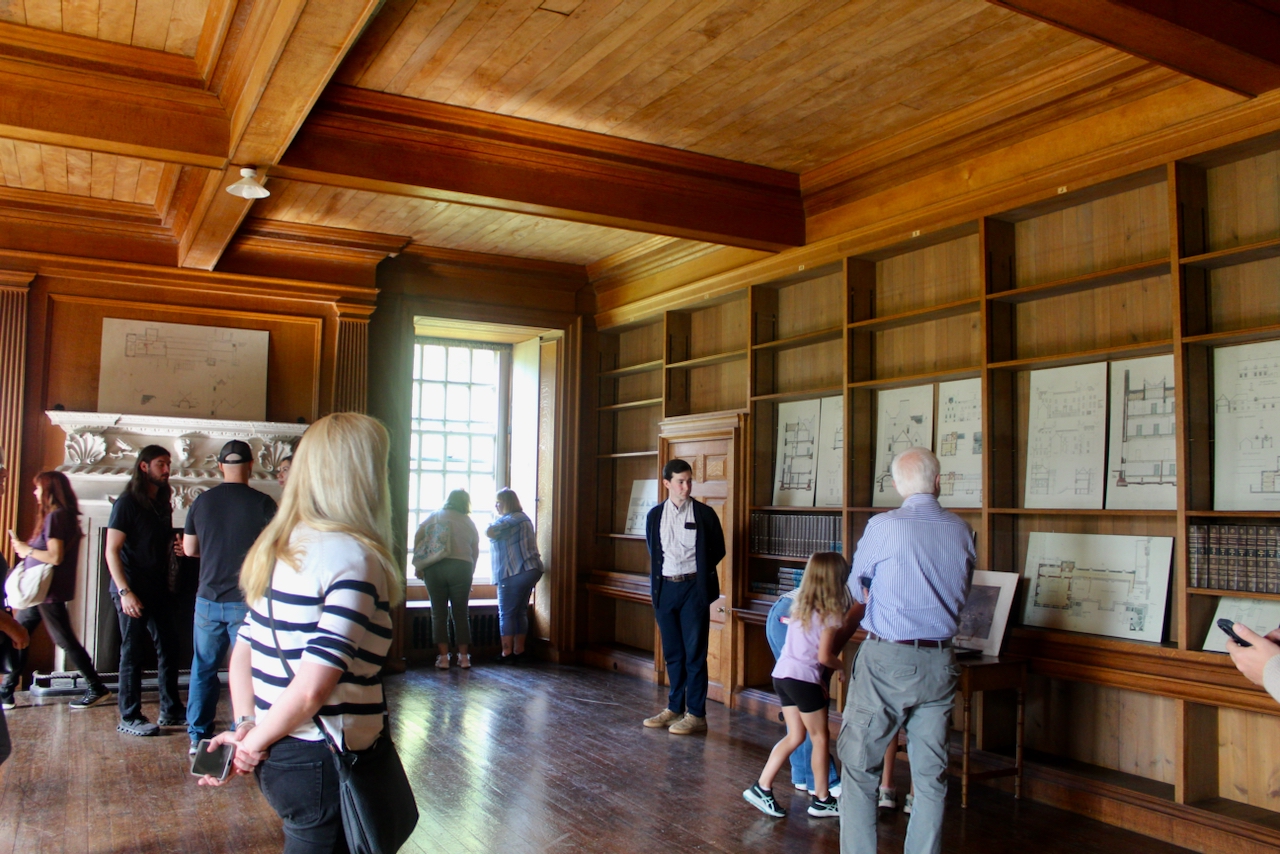
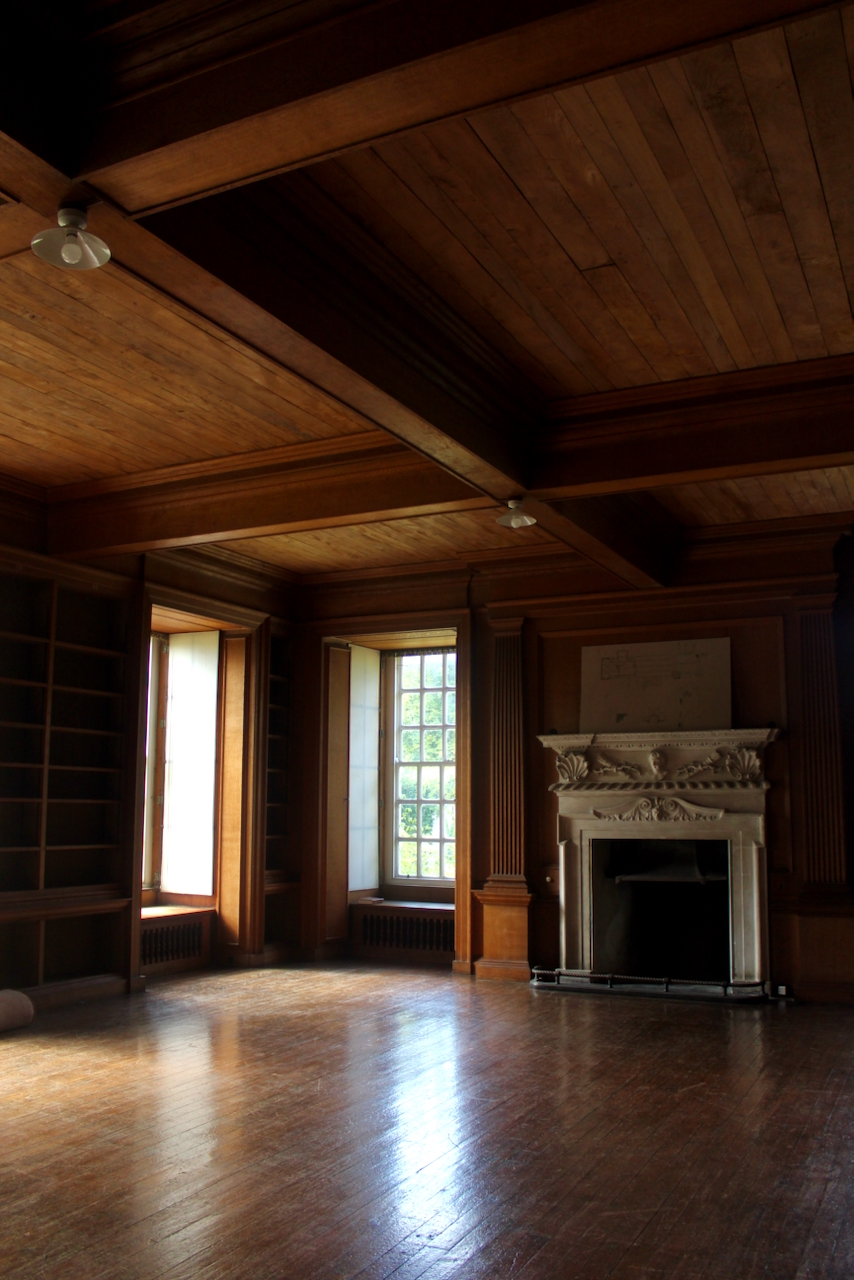
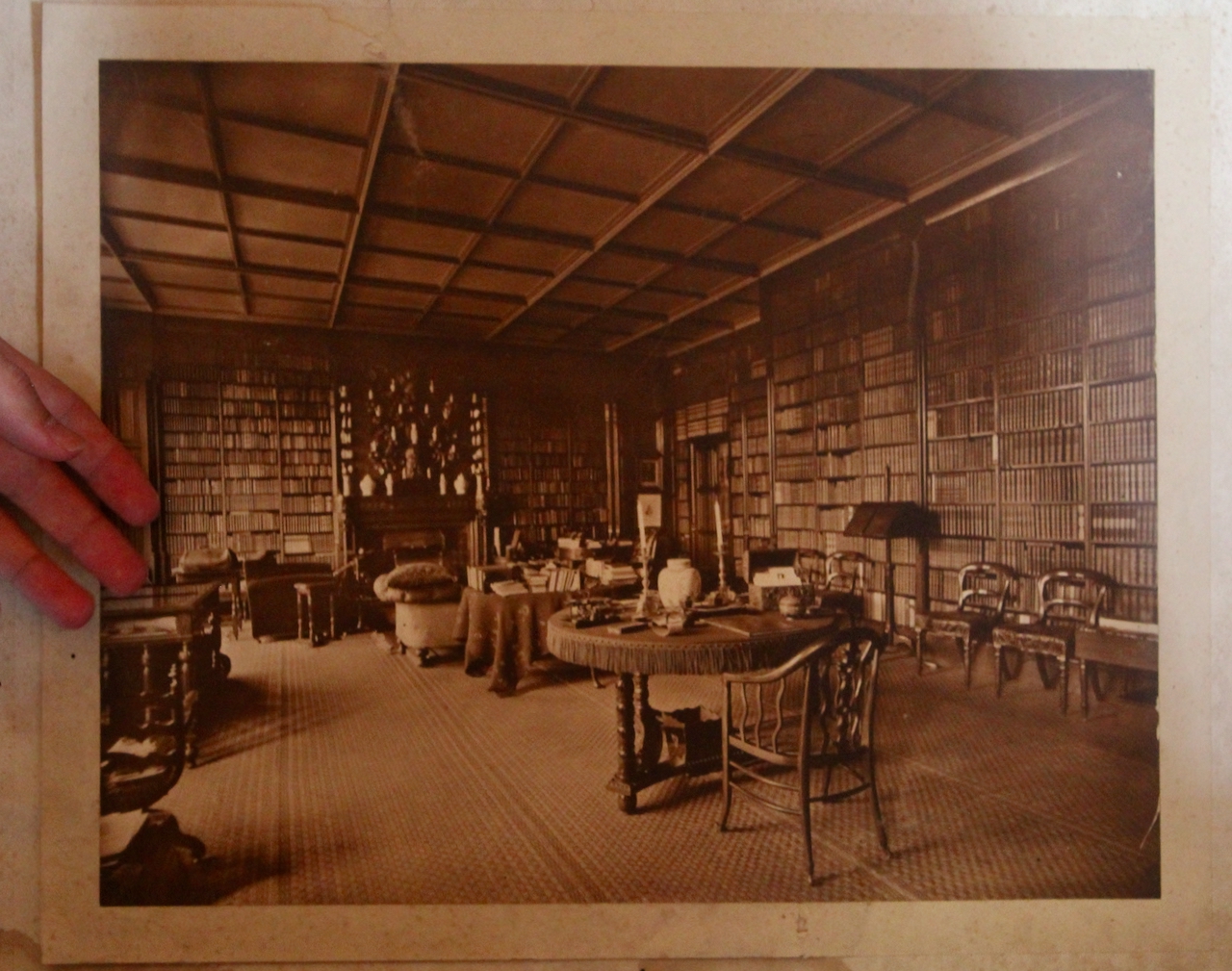
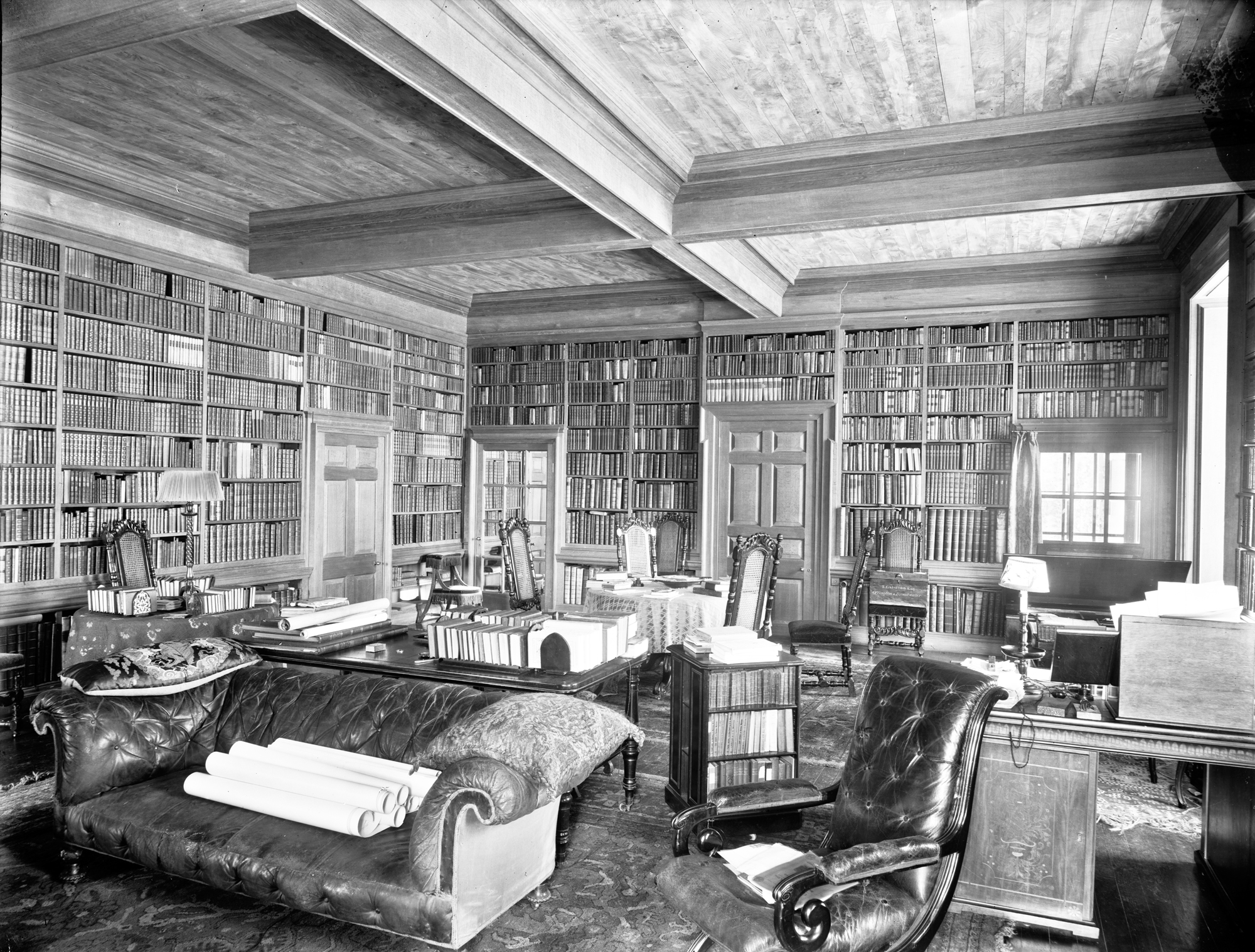
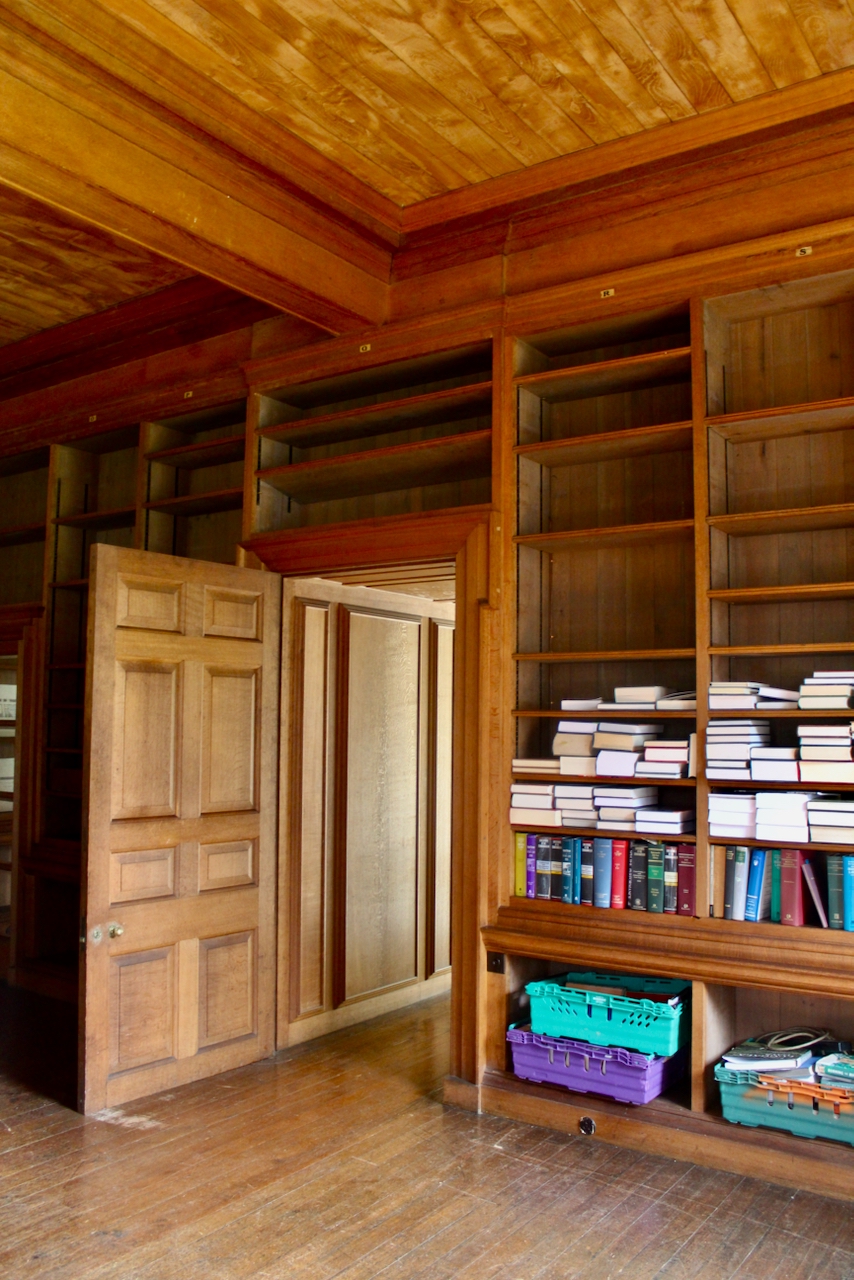
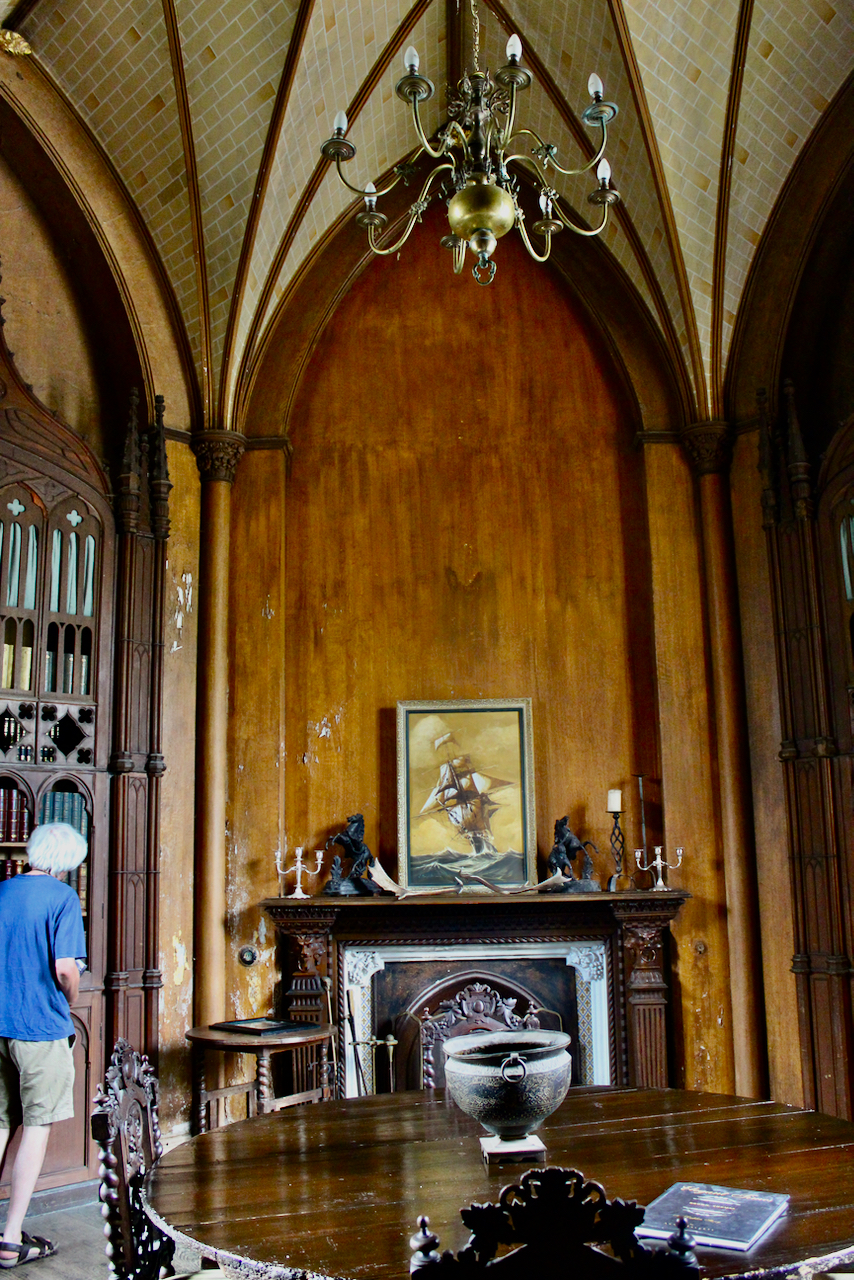
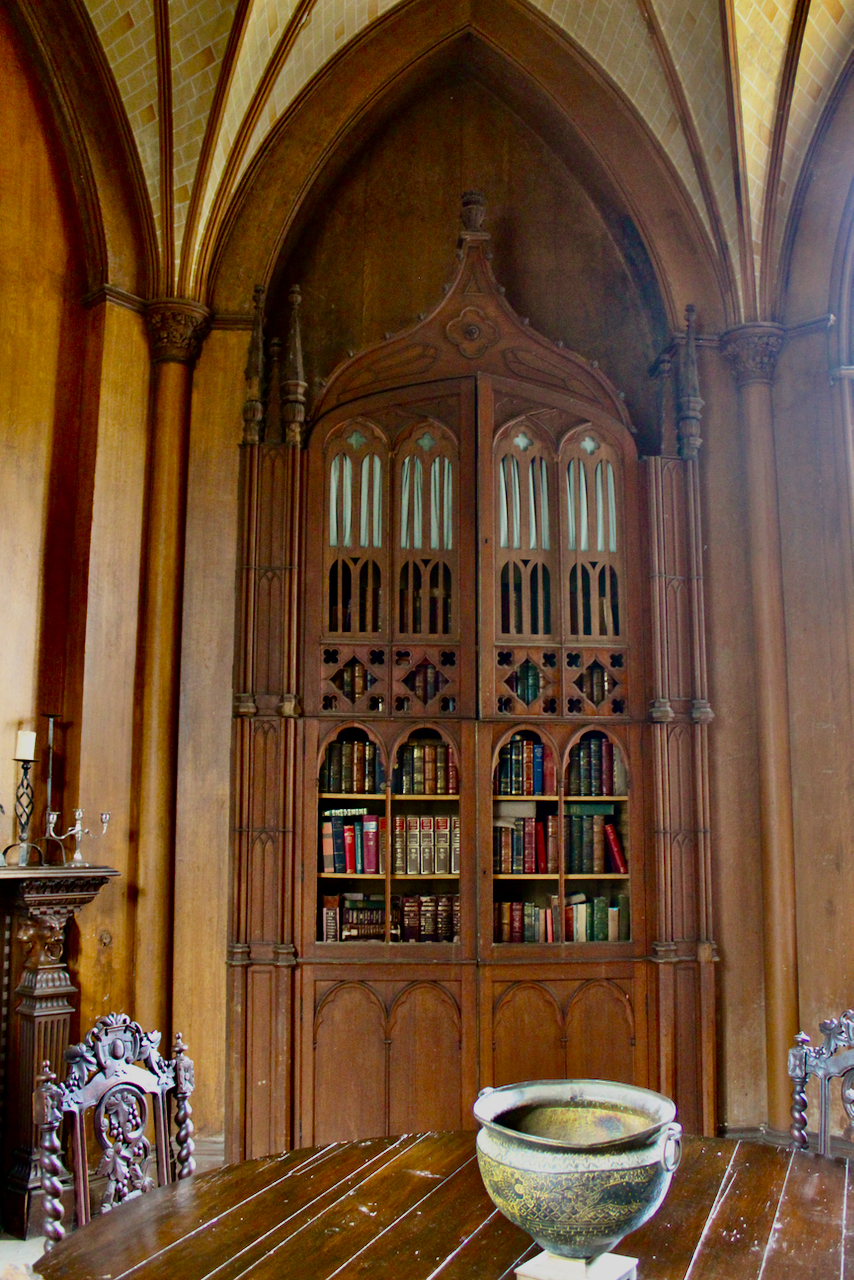
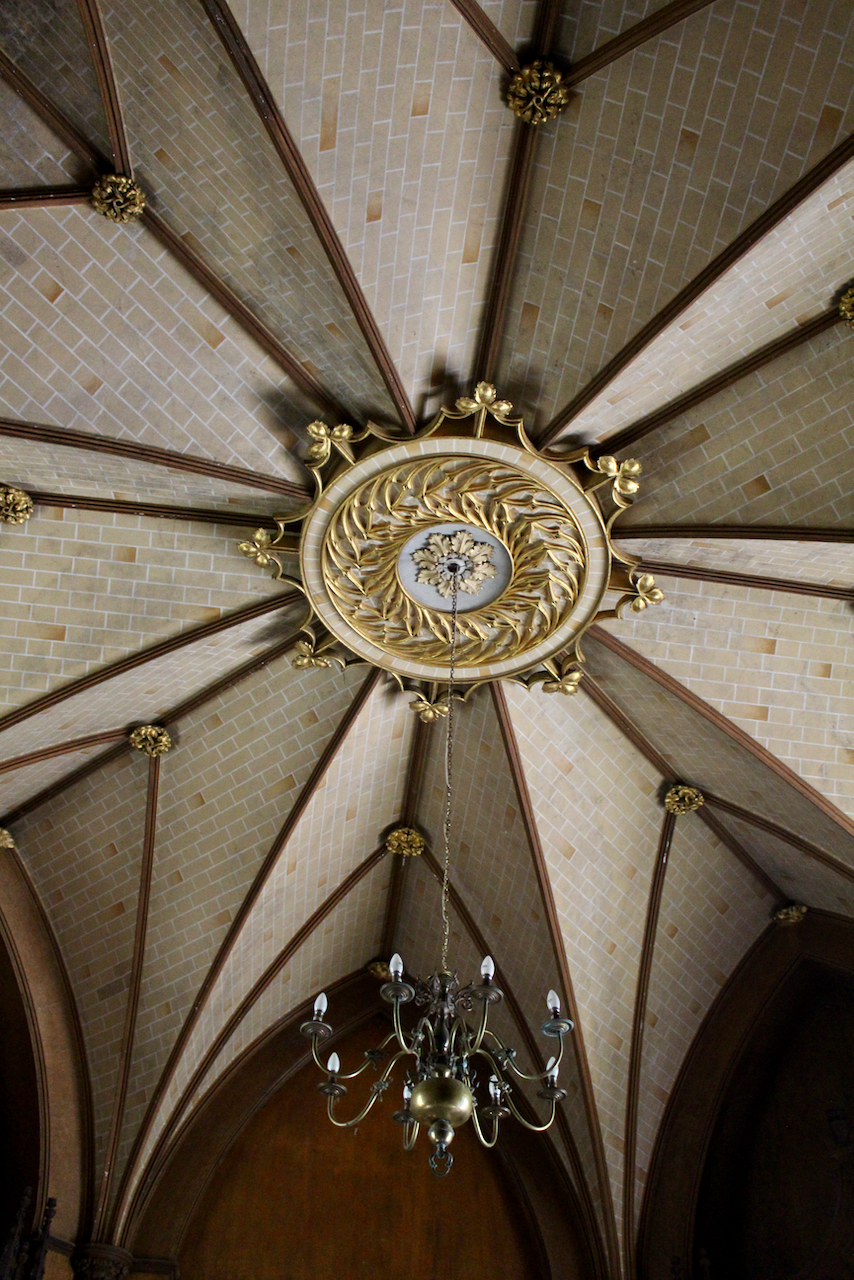
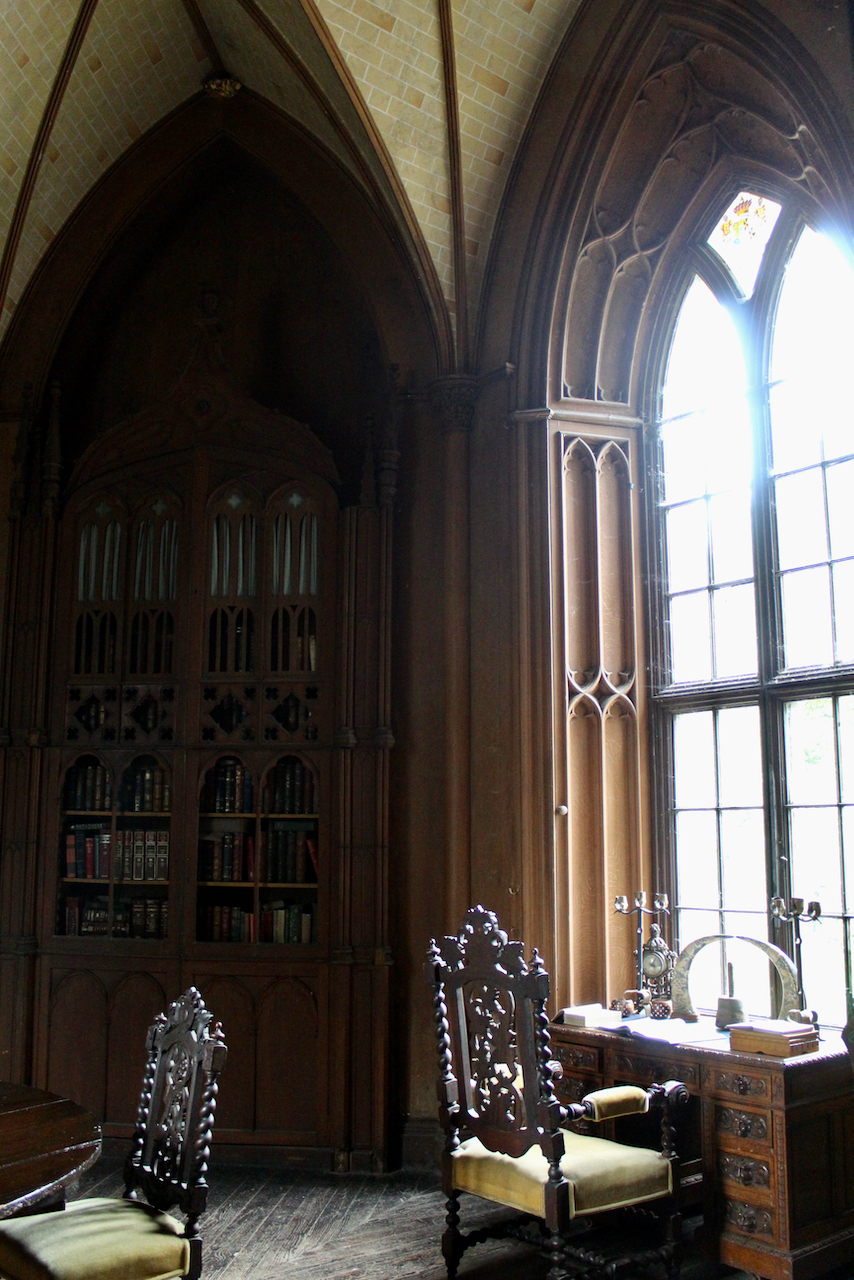
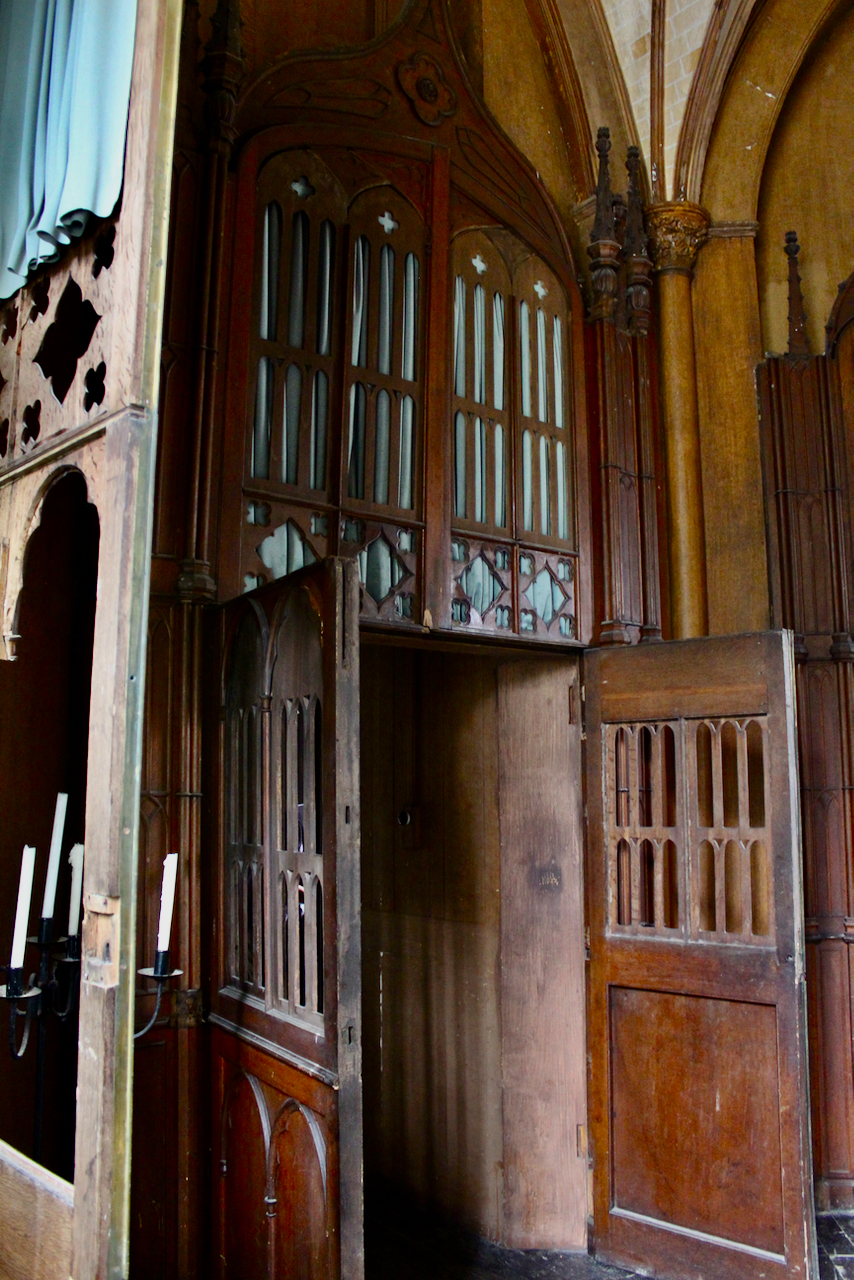
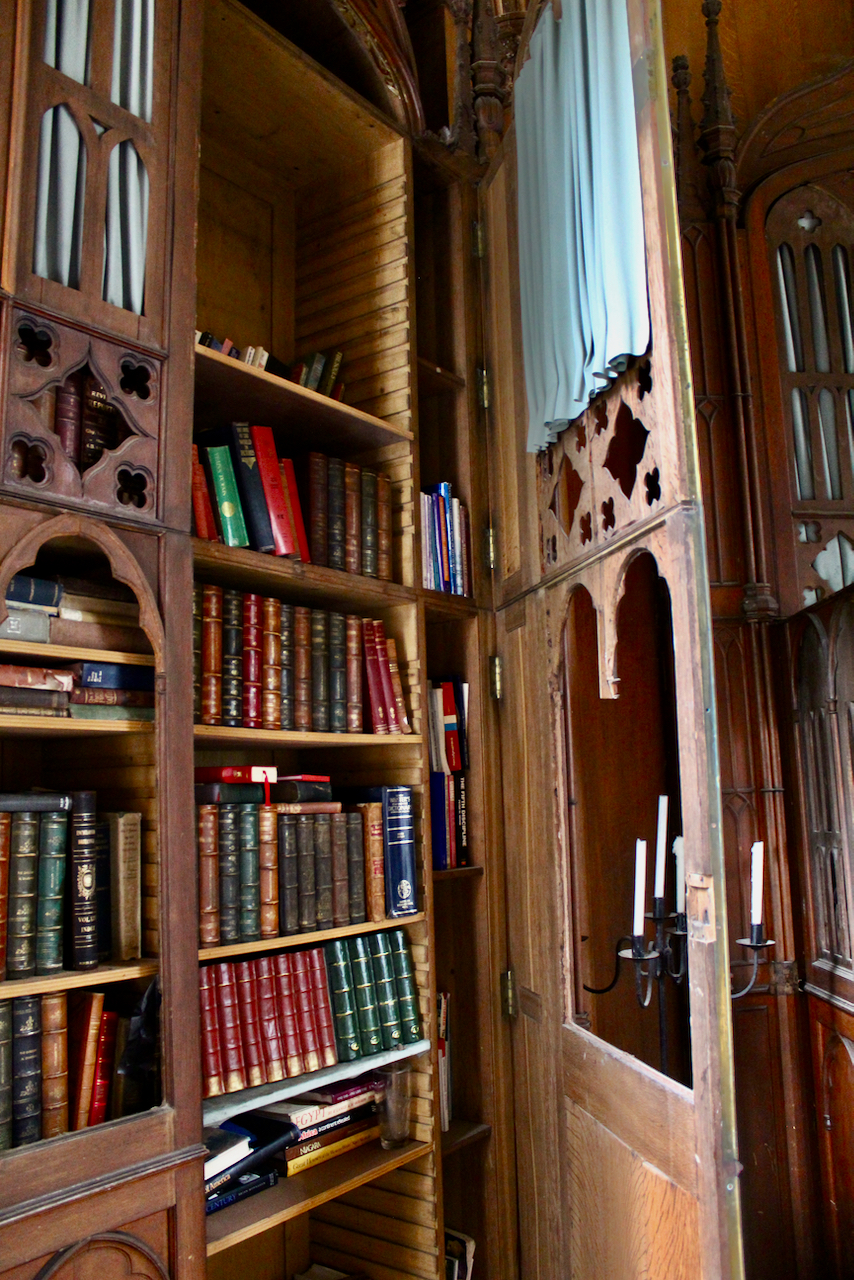
Beyond the staircase on the primary level is a small library with rib vaulted ceiling and Gothic bookcases.
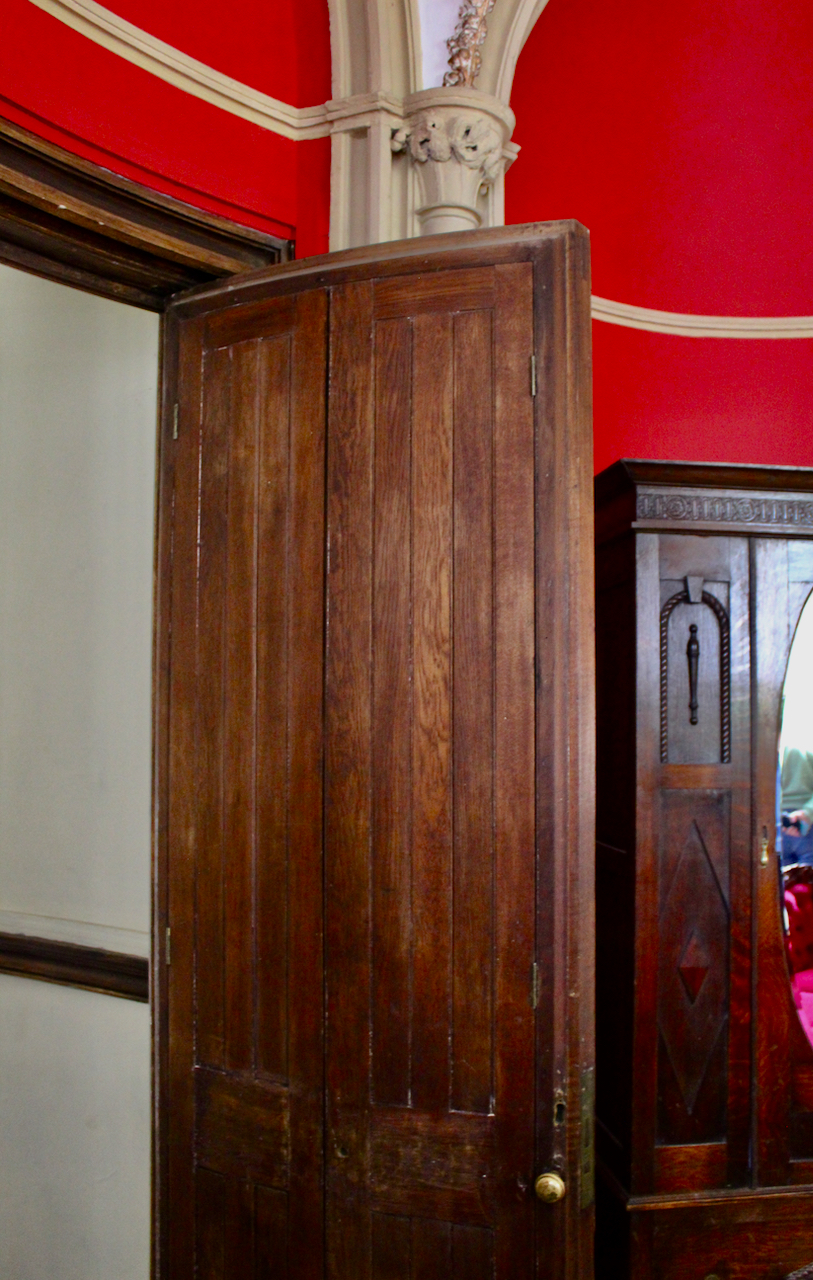
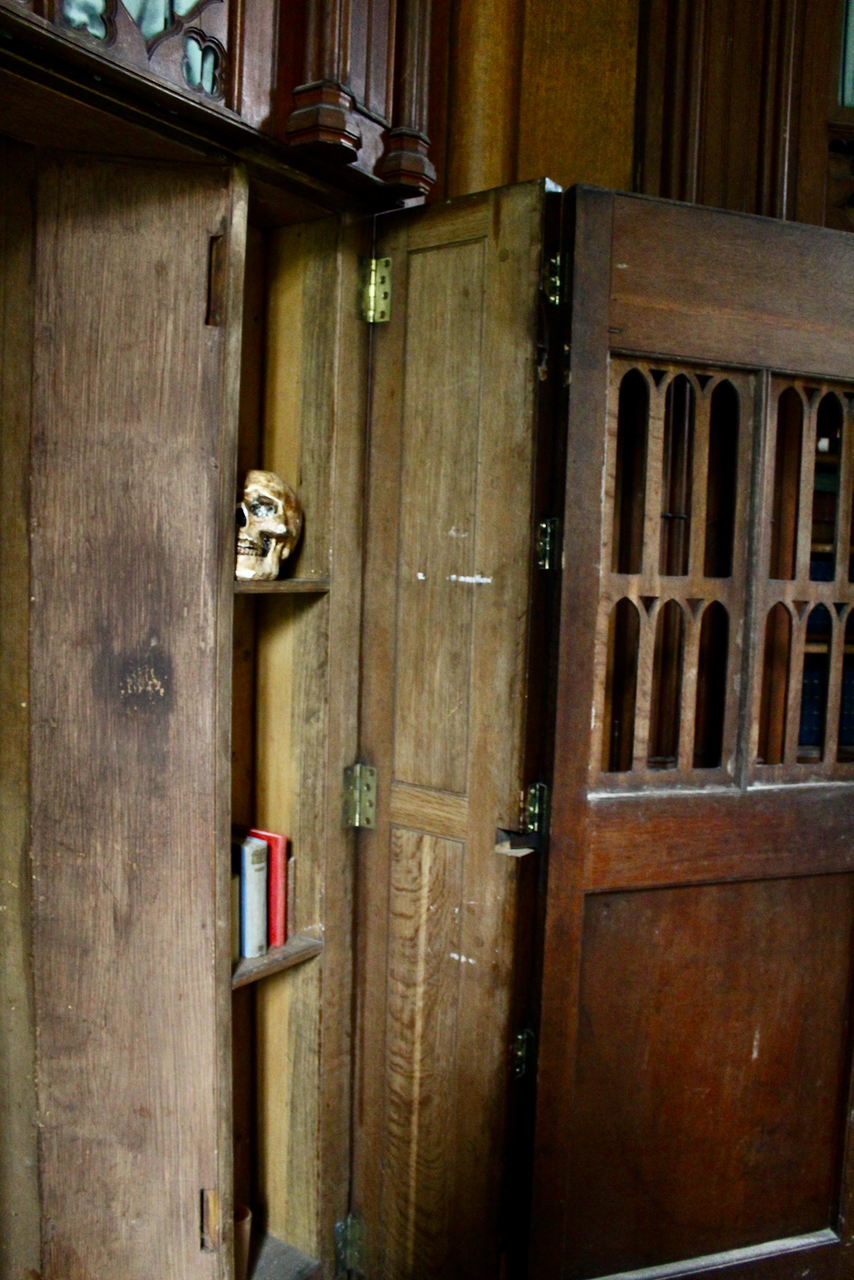
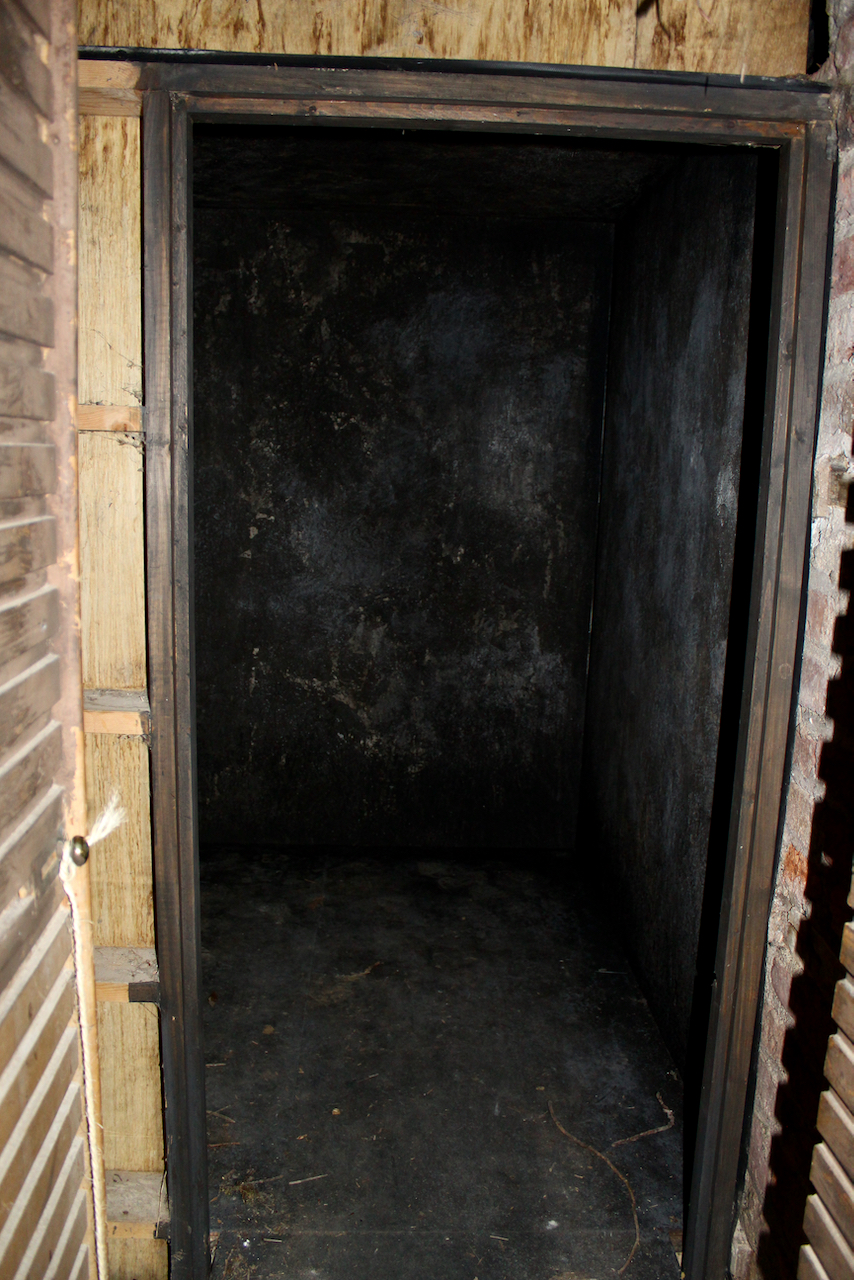
The panelling by each bookcase can be opened to reveal more space, and behind one secret door is a small room which leads out to the chapel, the guide told us.
O’Reilly tells us: “Charleville Forest’s patron, Charles William Bury, from 1800 Viscount and from 1806 Earl of Charleville, was a man well versed in contemporary English taste and style. He inherited lands in Limerick, through his father’s maternal line, and in Offaly. His great wealth, lavish lifestyle and generous nature allowed him simultaneously to distribute largesse in Ireland, live grandly in London and travel widely on the continent…[p. 139] Charleville’s lack of success in his search for a sinecure proved ill for the future of the family fortunes for, continuing to live extravagantly above their means, they advanced speedily towards bankruptcy. On Charleville’s death in 1835, the estate was ‘embarrassed’ and by 1844, the Limerick estates had to be sold and the castle shut up, while his son and heir, ‘the greatest bore the world can produce’ according to one contemporary, retired to Berlin.“
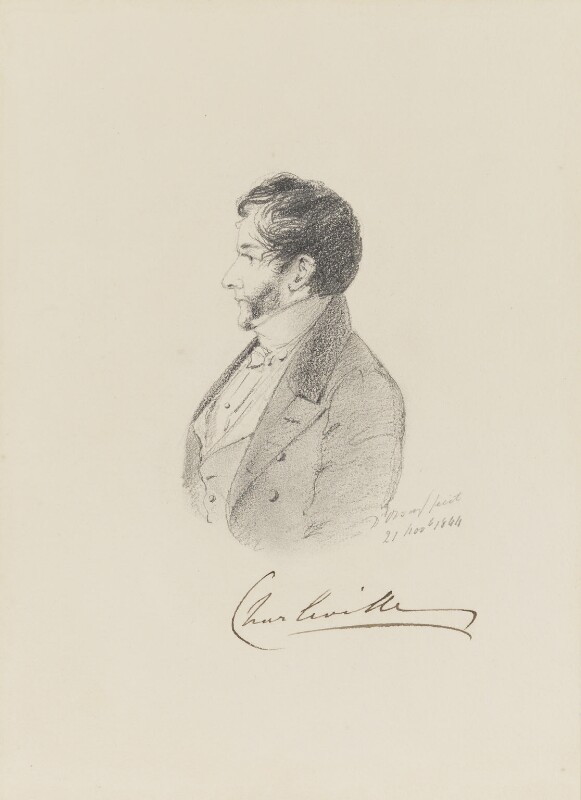
“The greatest bore the world can produce,” Charles William Bury (1801-1851), 2nd Earl of Charleville by Alfred, Count D’Orsay 1844, courtesy of National Portrait Gallery NPG 4026(12).
The 2nd Earl held the office of Representative Peer [Ireland] between 1838 and 1851.
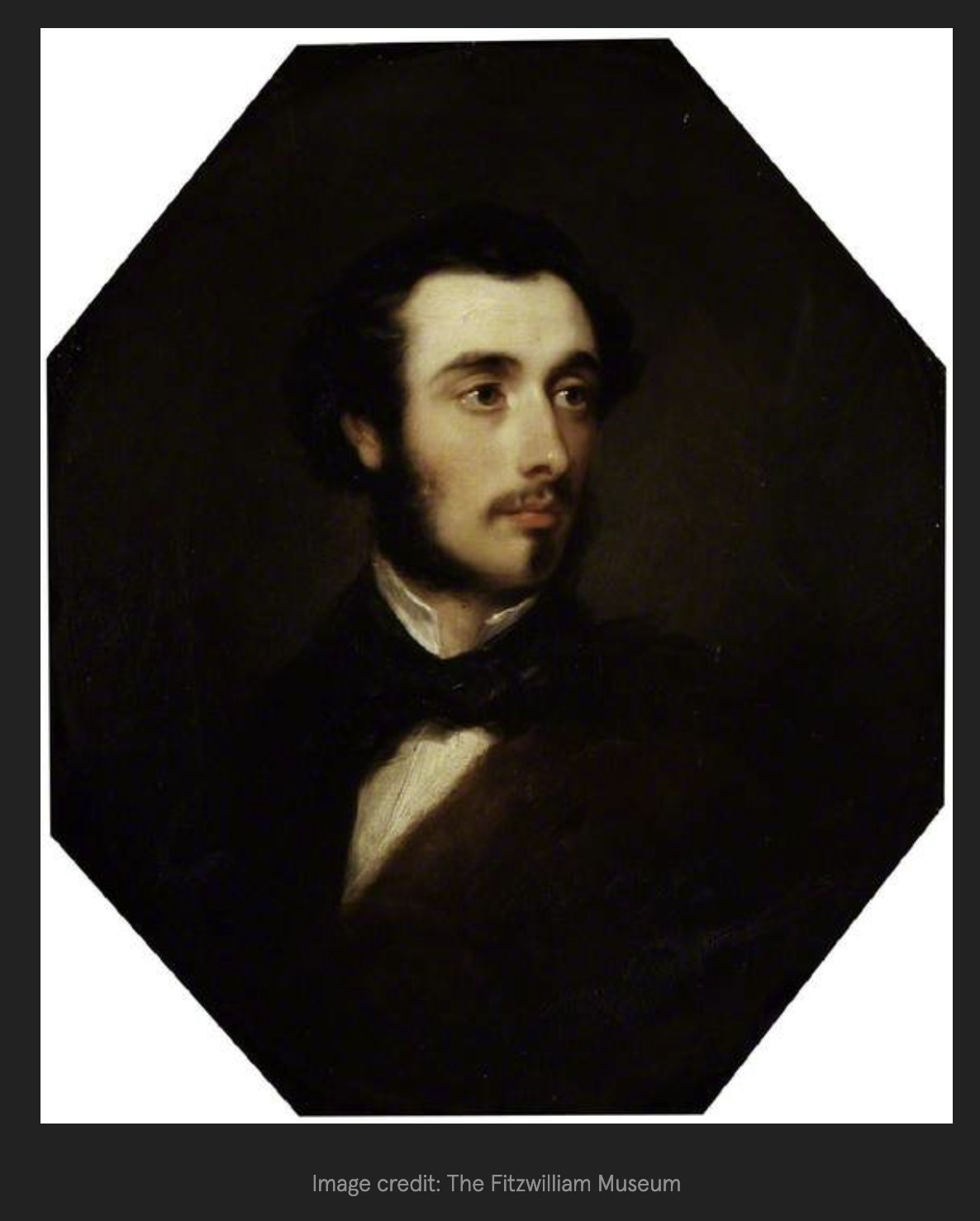
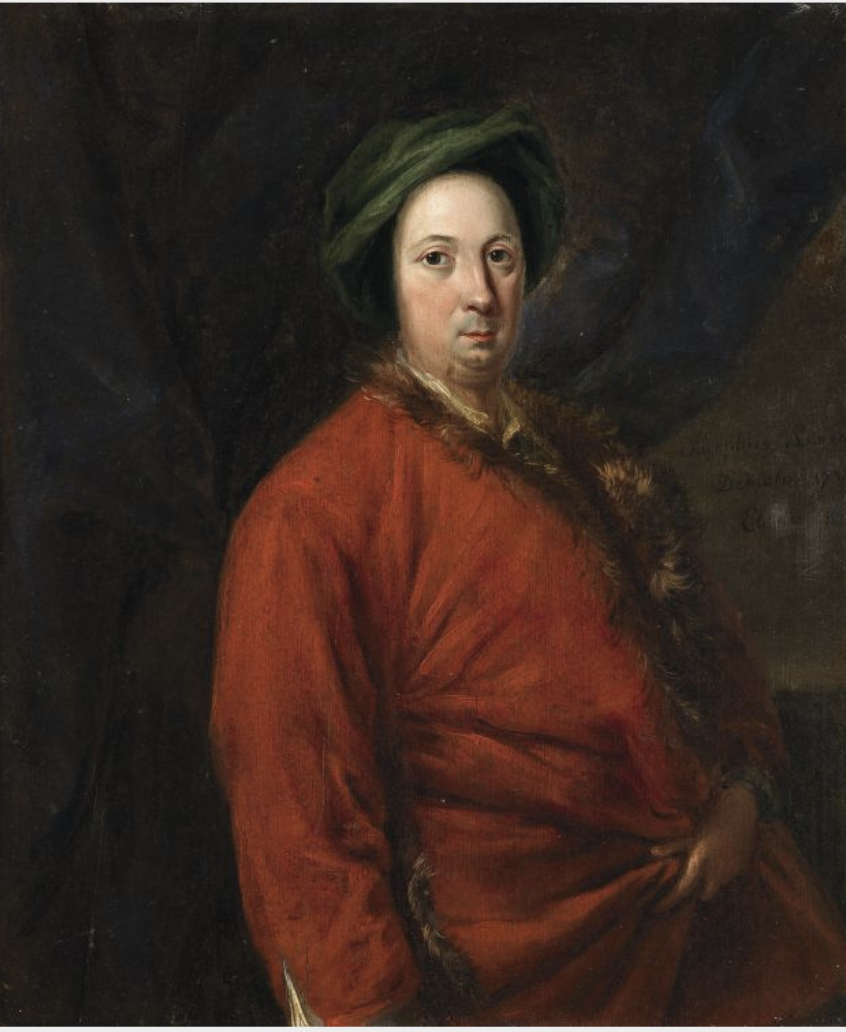
Charles William Bury, 2nd Earl of Charleville, seated in red cloak before a curtain, portrait by Henry Pierce Bone, 1835.
The 3rd Earl, Charles William George Bury (1822-1859), returned to the house in 1851, but with a much reduced fortune. He died young, at the age of 37, and his son, also named Charles William (1852-1874), succeeded as the 4th Earl at the age of just seven years old. His mother had died two years earlier. It seems that many of the Bury family were fated to die young.
The 4th Earl died at the age of 22 in 1874, unmarried, so the property passed to his uncle, Alfred, who succeeded as 5th Earl of Charleville but died the following year in 1875, without issue. The young 4th Earl had quarrelled with his sister who was next in line, so the property passed to a younger sister Emily.
In 1881 Emily married Kenneth Howard (1845-1885), son of the 16th Earl of Suffolk and of Louisa Petty-FitzMaurice, daughter of Henry Petty-FitzMaurice, 3rd Marquess of Lansdowne. On 14 December 1881 his name was legally changed to Kenneth Howard-Bury by Royal Licence, after his wife inherited the Charleville estate. He held the office of High Sheriff of King’s County in 1884.
After Emily’s death in 1931 the castle remained unoccupied. Her son Charles Kenneth Howard-Bury (1883-1963) preferred to live at another property he had inherited, Belvedere in County Westmeath (see my entry), which he inherited from Charles Brinsley Marlay. He auctioned the contents in 1948.
The house stood almost empty, with a caretaker, for years. When Charles Kenneth died in 1963, the property passed to a cousin, the grandson of the 3rd Earl’s sister with whom he had quarrelled. She had married Edmund Bacon Hutton and her grandson William Bacon Hutton legally changed his surname to Hutton-Bury when he inherited in 1964. The castle remained empty, until it was leased for 35 years to Michael McMullen in 1971. It had been badly vandalised at this stage. He immediately set to restore the castle.
More repairs were carried out by the next occupants, Bridget “Bonnie” Vance and her parents, who planned to run a B&B and wedding venue. Today the castle is run by Charleville Castle Heritage Trust.
[1] Bence-Jones, Mark. A Guide to Irish Country Houses (originally published as Burke’s Guide to Country Houses volume 1 Ireland by Burke’s Peerage Ltd. 1978); Revised edition 1988 Constable and Company Ltd, London.
[2] p. 136. O’Reilly, Sean. Irish Houses and Gardens. From the Archives of Country Life. Aurum Press Ltd, London, 1998.
Sopwell Hall, County Tipperary, courtesy of Colliers estate agents and myhome.ieSopwell Hall, County Tipperary, courtesy of Colliers estate agents and myhome.ieSopwell Hall, County Tipperary, courtesy of Colliers estate agents and myhome.ieSopwell Hall, County Tipperary, courtesy of Colliers estate agents and myhome.ieSopwell Hall, County Tipperary, courtesy of Colliers estate agents and myhome.ieSopwell Hall, County Tipperary, courtesy of Colliers estate agents and myhome.ie
[7] p. 232-8. Tierney, Andrew. The Buildings of Ireland: Central Leinster: Kildare, Laois and Offaly. Yale University Press, New Haven and London, 2019.
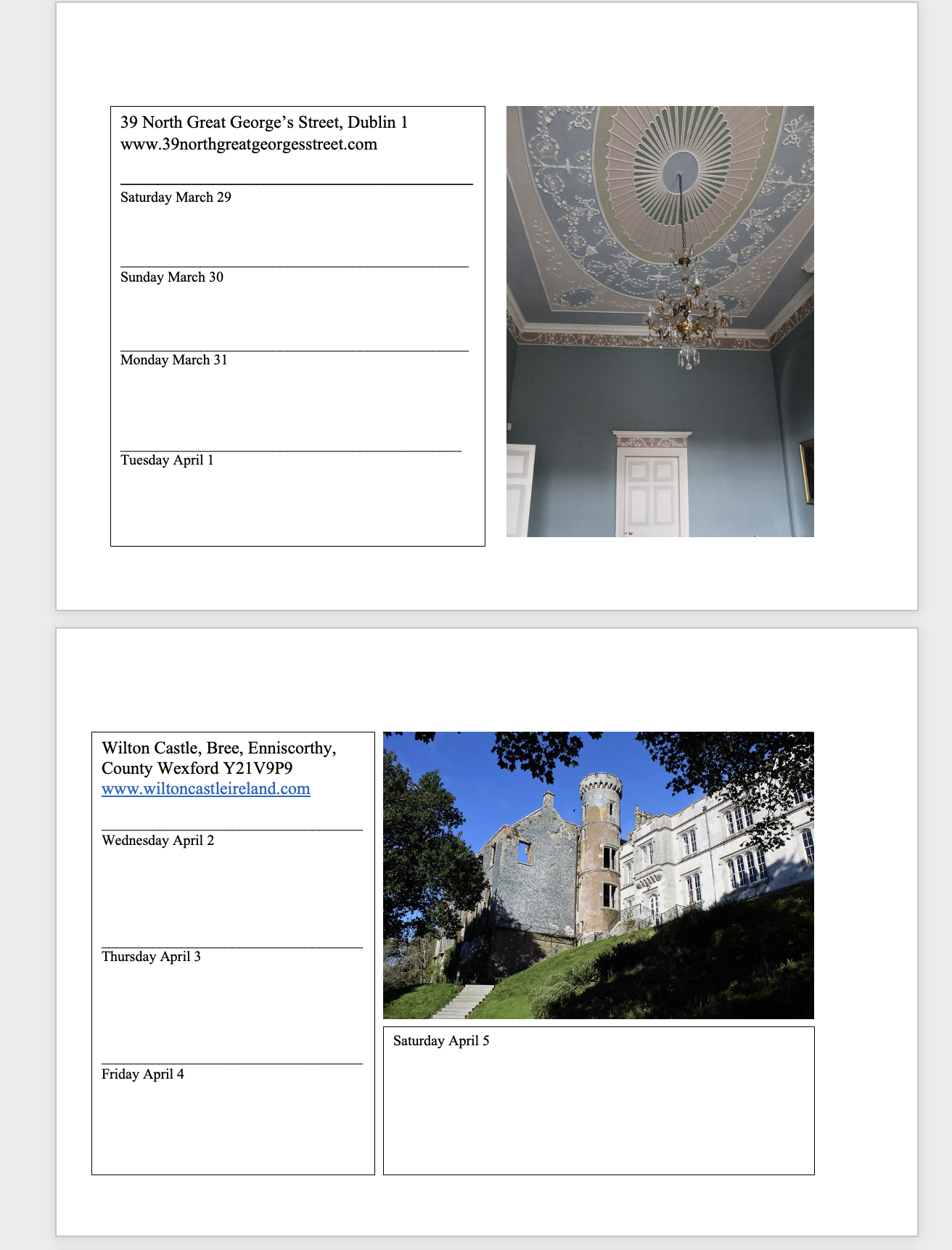
2025 Diary of Irish Historic Houses (section 482 properties)
To purchase an A5 size 2025 Diary of Historic Houses (opening times and days are not listed so the calendar is for use for recording appointments and not as a reference for opening times) send your postal address to jennifer.baggot@gmail.com along with €20 via this payment button. The calendar of 84 pages includes space for writing your appointments as well as photographs of the historic houses. The price includes postage within Ireland. Postage to U.S. is a further €10 for the A5 size calendar, so I would appreciate a donation toward the postage – you can click on the donation link.
€20.00
donation
Help me to pay the entrance fee to one of the houses on this website. This site is created purely out of love for the subject and I receive no payment so any donation is appreciated!
€15.00
I have been working to save all my photographs on USB sticks so do not have a new property to post, although I have lots to write up. I am therefore reposting this entry.
On the map above:
blue: places to visit that are not section 482
purple: section 482 properties
red: accommodation
yellow: less expensive accommodation for two
orange: “whole house rental” i.e. those properties that are only for large group accommodations or weddings, e.g. 10 or more people.
green: gardens to visit
grey: ruins
Carlow, Dublin, Kildare, Kilkenny, Laois, Longford, Louth, Meath, Offaly, Westmeath, Wexford and Wicklow are the counties that make up the Leinster region.
As well as places to visit, I have listed separately places to stay, because some of them are worth visiting – you may be able to visit for afternoon tea or a meal.
For places to stay, I have made a rough estimate of prices at time of publication:
€ = up to approximately €150 per night for two people sharing (in yellow on map);
www.burtownhouse.ie Open dates in 2025: June 4-7, 11-14, 18-21, 25-28, July 2-5, 9-12, 16-19, 23-26, 30-31, August 1-2, 6-9, 13-24, 27-30, Sept 3-6, 10am-2pm
Fee: adult €10, OAP/student/child €5
Burtown House and Gardens, Athy, Co Kildare, photograph by Sonder Visuals, 2022, Courtesy Failte Ireland.
The Historic Houses of Ireland website tells us:
“Ballytore, in County Kildare, was a stronghold of the Irish Quakers and the centre of a sizeable Quaker community. One of their members, Robert Power, built Burtown House as the hub of a two thousand acre farming enterprise in the 1720s. His Georgian villa, shown on early maps as “Power’s Grove,” was only one room deep so wings were added later in the century. These were subsequently removed, though their faint outlines can still be identified and Burtown was further extended in the early nineteenth century when a full height bow was added on the garden front.
“The new extension provided a bow ended room on the garden front, a large bedroom above and a grand staircase, lit by a tall round-headed window. Pretty plasterwork in the manner of James Wyatt was also introduced at the time, most notably in an arched alcove in the bow-ended room, which is likely to have been the original dining room. The alcove is filled with a shallow fan, and delightfully cursive sprays of vine leaves, and is flanked by a pair of classical vases on pilasters of foliage with naive Corinthian capitals.
“Burtown has never been sold in all its three hundred years. The house passed from the Power family to the Houghtons and thence to the Wakefields, who gave it a new roof with widely projecting eaves in the early nineteenth century. They also lengthened the sash windows, installed a new front door with a fanlight in a deep recess, and carried out a number of other alterations.
“When Mr. Wakefield was killed playing cricket Burtown passed to his sister, who had married a fellow Quaker from County Tipperary, William Fennell. Their son, William James was a keen horseman but “was asked to leave the Quaker congregation because of his fondness for driving a carriage with two uniformed flunkeys on the back”.
“Today Burtown is in the midst of two hundred acres of parkland, including ten acres of lush flower, vegetable and woodland gardens with many fine walks. The house has now been home to five generations of the Fennell family, and to the acclaimed botanical artist and illustrator, Wendy Walsh. Coincidentally, the leading Irish botanical artist of the early twentieth century, Lydia Shackleton, also came from the same small Quaker community.” [1]
“Donadea Forest Park includes Donadea Castle and estate, the former home of the Aylmer family up until 1935. There are many historical features including the remains of the castle and walled gardens, St. Peter’s church, an ice house and boat house. The Lime tree avenue planted in the 19th century formed the original entrance to the estate. Another feature of the park is the 9/11 Memorial, a scaled replica of the twin towers carved in limestone. The small lake is brimming with ducks, waterhens and has a beautiful display of water lilies in the summer. There is a café open throughout the year.“
In 1581 Gerald Aylmer, (1548-1634), Knight, of Donadea, son of George Aylmer, of Cloncurry, and grandson of Richard Aylmer, of Lyons, built a new tower in Donadea, not fully completed until 1624 and it is now the oldest part of the Castle. [2]
In 1626, he repaired the medieval Church in Donadea and built a new extension in which he established his family burial plot. In the extension he also constructed an Altar Tomb monument as a burial memorial for his family. Gerald was titled by the Crown and became the first Baronet of Donadea.
The Aylmers were connected with the various conflicts and rebellions over the next two centuries. During the wars of the 1640s, Sir Andrew, 2nd Baronet (c. 1610-c. 1671), supported the rebels and was imprisoned at the beginning of the war.
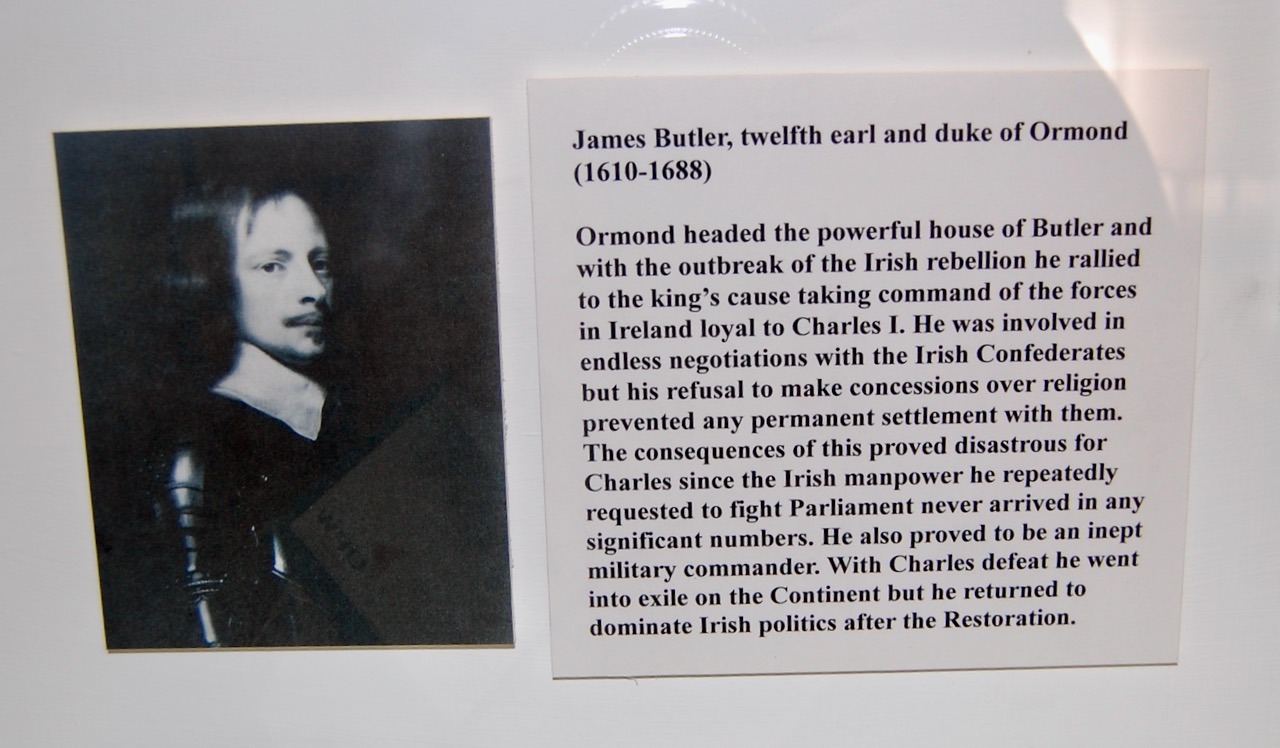
Although he was a brother-in-law of the Lord Lieutenant of Ireland, James Butler, 1st Duke of Ormond, there were no favours granted to him. The Aylmers rebuilt the castle after it was burned by James Butler’s troops.
In 1689, after the battle of the Boyne, Lady Helen Aylmer, widow of the 3rd Baronet, (born Plunkett, daughter of Luke Plunkett 3rd Earl of Fingall) was in charge of the Castle. She was outlawed due to her support for James II, but she managed to hold on to the Castle and lands under the terms of the Treaty of Limerick.
In 1736, Sir Gerald, 5th Baronet, died leaving an only son FitzGerald who became the 6th Baronet.
He was only one year old when his father died and was subsequently raised by his mother (Ellice or Ellen, daughter of Gerald Aylmer, 2nd Baronet of Balrath, County Meath) and her relatives who were members of the established church. FitzGerald subsequently conformed to the established religion. In 1773, he built a new house in front of the Castle and incorporated the Tower in his new residence.
Gerald, 8th Baronet, held the lands of Donadea between 1816 and 1878 and he is accredited with most of the construction work that is visible in Donadea demesne today. He began his building program in the 1820s by re-routing the roads away from the Castle and the construction of a high wall enclosing the demesne. Gate lodges were then built at all the entrances.
He also built a new grand entrance known as the Lime Avenue.
In 1827 he completely remodelled the front of the Castle which gave it an attractive bow shaped appearance. It has been suggested that he employed the renowned architect Richard Morrison to design this new structure.
The older cabin-type dwellings close to the castle were demolished and new estate houses built at the Range. To the west of the Castle he built an eight acre area of gardens and paddocks, surrounded and sub-divided by walls. In the Castle yard he built dwellings for staff and elaborative farm buildings. He also constructed the artificial lake and the Ice House. Large areas of the demesne were planted and, by the time of his death, Donadea demesne was listed as one of the finest parkland settings in the county.
Outside the demesne he was involved in numerous construction projects including the famous ‘Aylmer Folly’, viz. the Tower on the summit of the hill of Allen. (see [2]) Sir Gerald’s grandson Justin, 10th Baronet, died unmarried in 1885. His sister Caroline inherited the castle and much of the demesne, while the baronetcy passed to a cousin. Caroline Maria Aylmer, who was the daughter of Sir Gerald George Aylmer, 9th Baronet, was the last Aylmer to live at Donadea. She died in 1935, leaving the estate to the Church of Ireland who, in turn, passed it bequeathed to the Irish state.
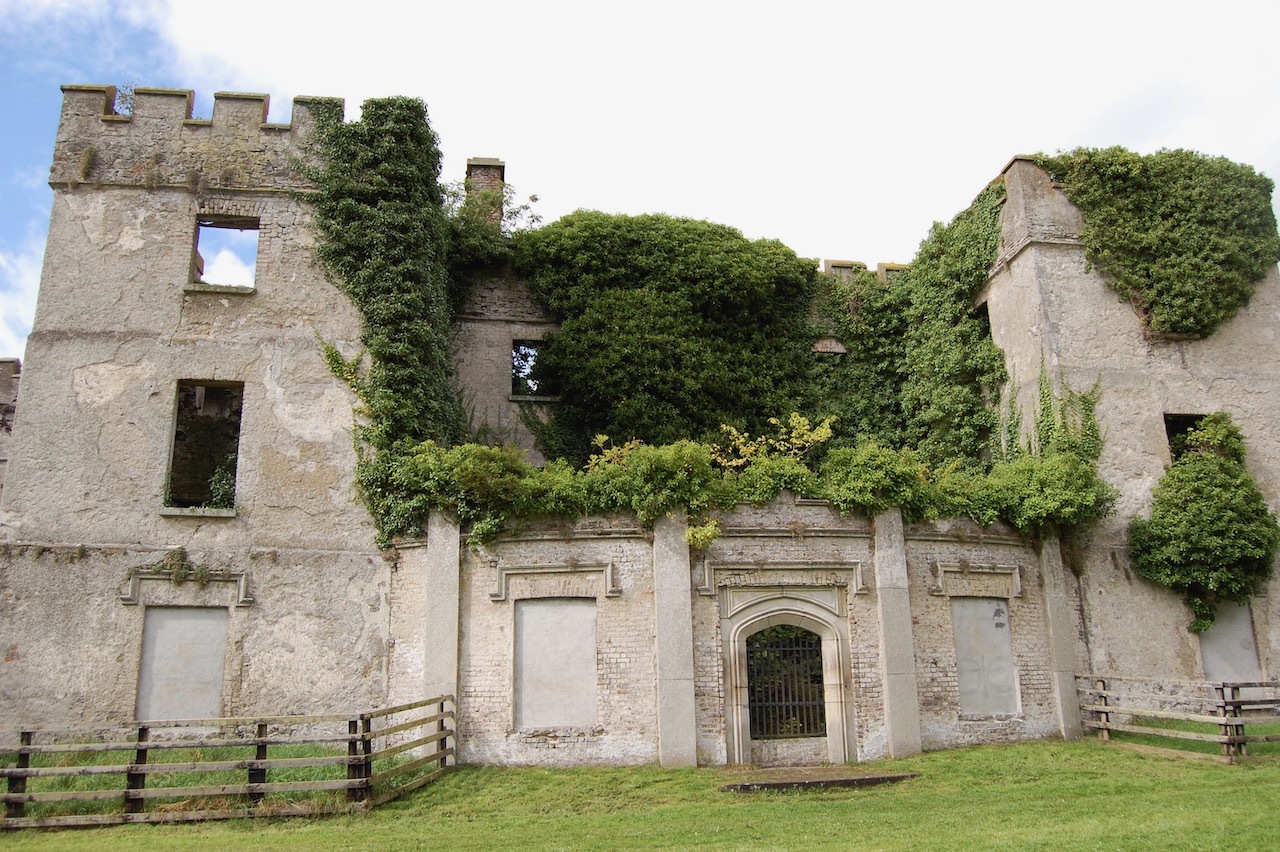
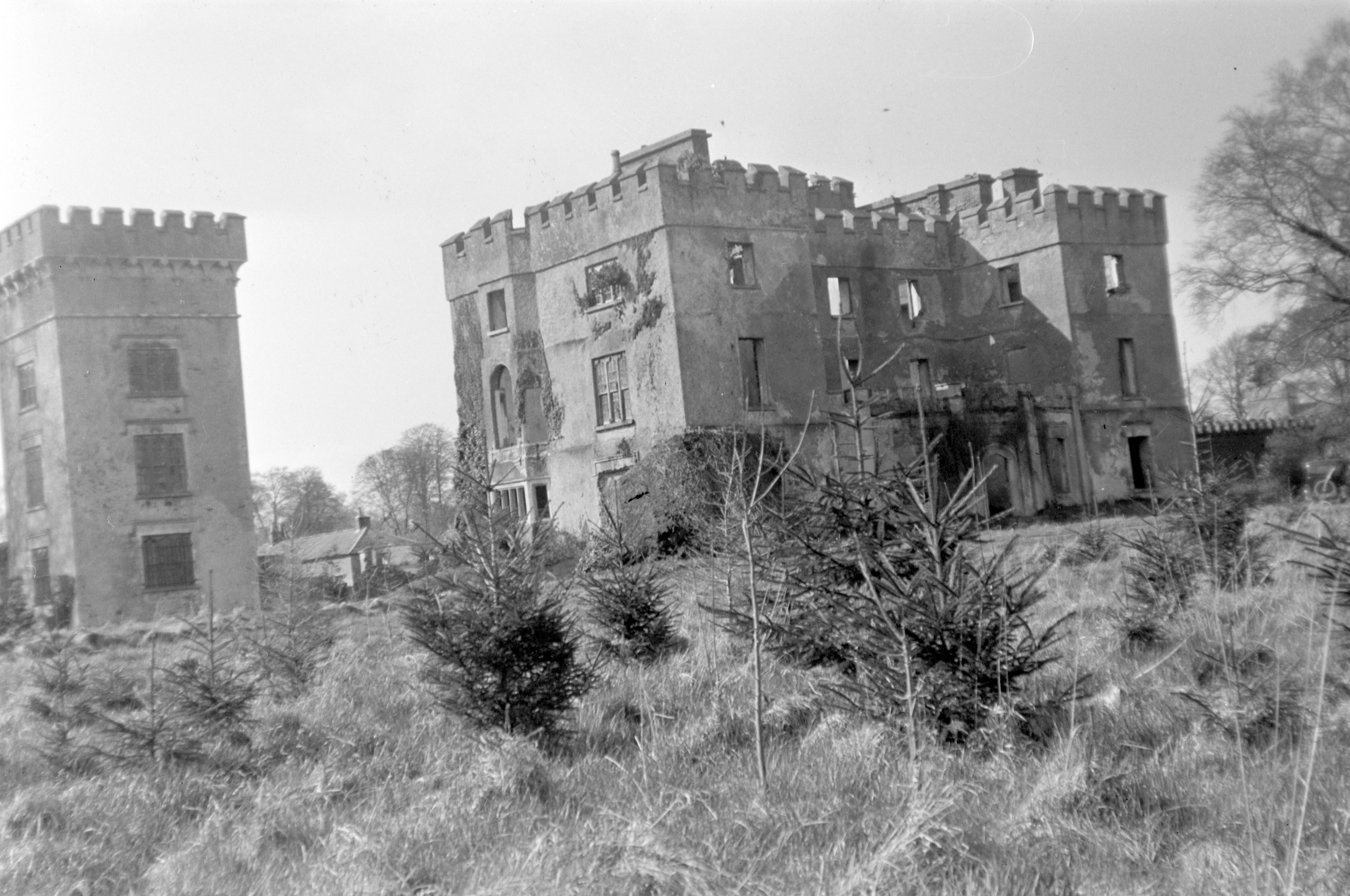
The castle remained unoccupied and its roof was removed in the late 1950s.
For more on the Aylmer family, see The Landed Gentry & Aristocracy of County Kildare by Turtle Bunbury & Art Kavanagh (published by Irish Family Names, 2004).
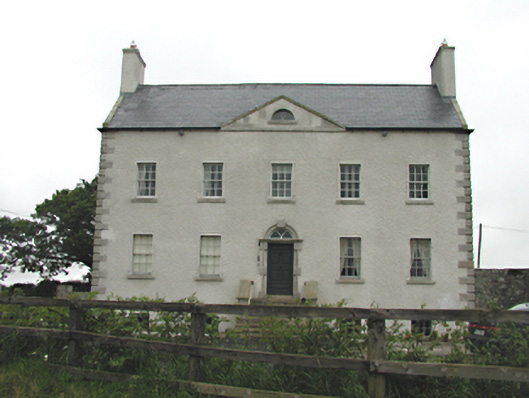
Farmersvale House, County Kildare, photograph from National Inventory of Architectural Heritage.
Open dates in 2025: Jan 6-21, Mar 3-6, July 18-31, Aug 1-26, 9.30am-1.30pm
Fee: adult €5, student/child/OAP €3, (Irish Georgian Society members free)
7. Griesemount House, Ballitore, Co KildareR14 WF64– section 482
www.griesemounthouse.ie Open dates in 2025: Feb 9-28, May 11-30, June 23-30, July 1-4, Aug 16-24, 2pm-6pm
Fee: adult €6, OAP/child/student €5
The Historic Houses of Ireland website tells us:
“In 1685, the village of Ballitore on the river Griese in the southern corner of County Kildare became the first planned Quaker village in England and Ireland. The Shackleton family from Yorkshire settled here some decades later and besides establishing wool and corn mills, founded the famous village school in 1726. Thanks to an entry by Mary (née Shackleton) Leadbetter in her ‘Annals of Ballitore’, we know that the first stone of Griesemount House (also known as Ballitore Hill House) was laid on Midsummer Day in 1817. While the three-bay side elevation is symmetrical, the two-bay front façade with the front door under the left window is quite modest, as was often the case with Quaker houses. It was built by George Shackleton, who had grown up in Griesebank House beside the now-ruinous Ballitore Mills on the river just below. He married Hannah Fisher and they raised 13 children in the new house, including the noted botanical artist Lydia Shackleton, the first artist-in-residence at the Botanic Gardens in Dublin. One of her first recorded sketches is of the house. The family lived here until the early 20th century; the house then changed hands several times. It was briefly owned and restored by the mother of mezzosoprano Frederica von Stade, and has recently come into new ownership.” [3]
Open in 2025: May 17-31, Aug 12-31, Sept 7-16, Dec 17-31, 9am-1pm
Fee: adult €8, student/OAP/child €5
The Historic Houses of Ireland website tells us:
“The forebears of the Greenes of Millbrook House in the far south of County Kildare lived at Kilmanaghan Castle and Moorestown Castle [now a ruin] in County Tipperary. A great grandson of the family patriarch Captain Godfrey Greene moved up to settle near Carlow. William Nassau Greene (1714-1781) was a businessman and magistrate, and built a residence known as Kilkea Lodge (c. 1740) adjacent to the ancient Fitzgerald seat at Kilkea Castle, where his descendants are still resident. A younger son, John (1751-1819), who became High Sheriff of Kildare and Captain of the Castledermot Yeomanry, built a neighbouring house at Millbrook with the help of his father. It was completed in 1776 with its attendant mill and millrace off the River Griese, which had replaced an earlier mill in the nearby Kilkea Castle demesne. The house passed through generations of the family until finally the mill ceased operating under Thomas Greene (1843-1900), a poet and author who was made High Sheriff of Kildare in 1895. The house was left by inheritance to one of the cousins from Kilkea Lodge, father of the present owner. Throughout WWII, he had served as a frontline doctor in the 4th Indian Division in North Africa, Italy and Greece, and returned with his wife in 1950 to an utterly neglected house. Millbrook is still in the process of being restored to its former state.” [5]
Open dates in 2025: Jan 13-17, 20-24, 27-31, Feb 4-7, 10, May 1-2, 6-18, 26-30, July 1-11, Aug 16-24, 8am-12 noon
Fee: adult €6, OAP/student/child €3
16. Steam Museum Lodge Park Heritage Centre, Lodge Park, Straffan, Co. Kildare– section 482
www.steam-museum.com Open dates in 2025: Apr 19-21, 26-27, May 3-5, 10-11, 17-18, 24-25, 31, June 12, 14-15, 18, 21-22, 28-29, July 5-6, 12-13, 19-20, 26-27, Aug 2-4, 9-10, 16-24, 30-31, Sept 6-7, 13-14, 20-21, 27-28, Oct 5,12, 19, 26-27, 1pm-5pm
Fee: Garden and Museum, adult/OAP €15, €20 with steam, student/child free
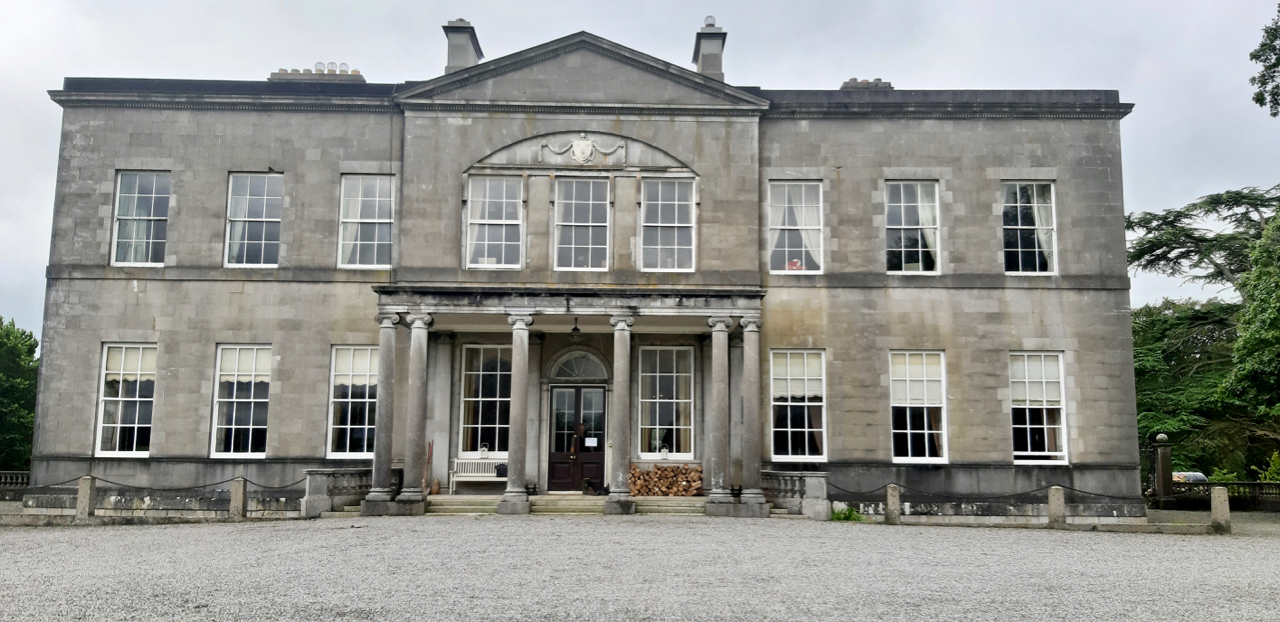
Lodge Park, photograph courtesy of Historic Houses of Ireland.
The Historic Houses of Ireland website tells us about Lodge Park:
“Lodge Park, overlooking a fine stretch of the River Liffey, was built by Hugh Henry who had married his cousin, Lady Anne Leeson from Russborough [daughter of Joseph Leeson 1st Earl of Milltown]. Completed in about 1776, the centre block forms the core of an unusual composition with curved quadrants leading to a pair of two-storey wings, both attached to two further pavilions by curtain walls to form a unique elongated ensemble of five interconnected buildings, “perhaps the most extreme example of the Irish Palladian style.”
“Henry’s father was the merchant banker Hugh Henry, who had purchased the entire Straffan estate with 7,000 acres. Lodge Park was long thought to be the last building by Nathaniel Clements, who died in 1777, but has now been attributed to John Ensor. The hipped roof is surrounded by a granite-topped parapet, and the walls are finished in rough cast, with ashlar block quoins and granite window surrounds with detailing. It is Ireland’s best exampe of concatenation, having curtain walls attached to the main house, leading to two pavilions, attached by two gateways to two further buildings. Hugh’s son Arthur built the Victorian walled garden, now beautifully restored and open to the public, as well as the fine gate lodge. The house was bought by the Guinness family in 1948.
The walled garden has been beautifully restored while a disused Victorian church has been re-erected in the grounds to house a magnificent Steam Museum with early inventor’s models, scientific engineering models and historic works of mechanical art. The Power Hall displays six huge stationary steam engines, which are run on special occasions.” https://www.ihh.ie/index.cfm/houses/house/name/Lodge%20Park
“Balyna House lies to the south of Moyvalley Bridge over the Grand Canal, about half way between Enfield and Kinnegad on the old Dublin — Galway road. The house lies in the centre of the estates 500 acres. Balyna Estate was granted in 1574 by Queen Elizabeth I to the O’Moore family because they had lost their land in Laois and were reinstated in Balyna.
“Major Ambrose O’Ferrall married Letitia More in 1796. Their eldest son Richard More O’Ferrall was born in 1797. [ I don’t think this is correct. I believe that Letitia More married Richard O’Ferrall (1729-1790) and that their son was Ambrose More O’Ferrall who married Ann Baggot daughter of John Baggot of Castle Baggot, Rathcoole. Richard More O’Ferrall (1797-1880) was their son]. He is reputed for having been responsible for the erection of the Celtic cross which now stands to the rear of the house. It is said that this Cross, along with another was transported from Europe, the two being encased in wooden crates and towed behind the ship on a barge. Legend has it that one was lost at sea, but its twin survives to this day.“
p. 30. [More O’Ferrall] “The ancestral home of the O’More family, the land having been granted to them by Eliz I as a small compensation for their forfeited territories in Laois… A new house was built 1815, which was burnt 1878; this was replaced by the present house, built 1880s. It is slightly Italianate, with a Mansard roof carried on a bracket cornice; of 2 storeys with a dormered attic. Entrance front with two 3 sided bows and a single-storey Ionic portico, 5 by garden front with pediment, the windows on either side being larger than those in the centre. Imposing staircase with handrail of decorative ironwork; ceiling of staircase hall has modillion cornice. Chapel in garden. Sold 1960s, subsequently owned by Bewleys Oriental Cafe Ltd” [6]
The website continues: “The first real record of any house dates from 1815 when Ambrose built a large mansion. That Georgian house was burned down and replaced in the 1880’s by the present Italianate mansion.
“The estate was a refuge for bishops and priests for centuries and Dr. Forstall, Bishop of Kildare, ordained priests here in the year 1678 — 1680. For this loyalty, the family was granted Papal permission to build a private Chapel on the estate (located to the rear of the house) and up to approximately 1914 Sunday Mass was offered. It was only used intermittently after that, with the last occasion being in the summer of 1959.
“The estate remained in the More O’Ferrall family until May 1960 when it was sold to the Bewley family (of Café fame). The wonderful milk and cream in the Cafes came from the pedigree Jersey herd at Balyna. In 1984 the estate was sold to Justin Keating; it was sold again in 1990-1991 to George Grant. Moyvalley was developed into a Hotel & Golf Resort in 2007.
“Balyna House consists of 10 luxurious ensuite bedrooms, 3 reception rooms to cater for up to 100 guests, Balyna Bar and Cellar Bar. The house is available exclusively for private events and weddings.
“In 2014 the resort was purchased by the late Oliver Brady (well-known horse trainer from Co. Monaghan) with his business partner a well know entrepreneur Rita Shah owner of Shabra Recycling Plastic’s Group, Thai business woman Jane Tripipatkul and her son Mark McCarthy who are based in London.
“It is likely that several Irish and European military campaigns were discussed and argued over at Balyna, as apart from the fierce-some O’More’s and the well documented Irish battles in which they took part, several later generations saw service in European armies. All three sons of Richard and Letitia O’Ferrall saw service abroad. The eldest, Ambrose, and his youngest brother, Charles, rose to the rank of Major in the Royal Sardinian Army, while the middle brother, James attained the rank of Major General in the Austrian Hohenzollern Army.“
Incidentally, there was a Bagot family of “Castle Baggot” in Rathcoole, and neither son had children so all the Bagot property, which included land around Smithfield in Dublin and extensive property in County Carlow, passed to the daughter, Ann, who married the above-mentioned Ambrose More O’Ferrall.
“As a digression, it is worth noting that Rory O’ More’s eldest daughter, Anne, married Patrick Sarsfield, 1st Earl of Lucan and famous military leader. His father in law was the man behind the Irish Rebellion of 1641.
“King James had adopted the policy of remodelling the Irish army so as to turn it from a Protestant-led force to a Roman Catholic led one, and Sarsfield, whose family were Roman Catholics, was selected to assist in this reorganisation. Colonel Sarsfield went to Ireland with Richard Talbot, 1st Earl of Tyrconnell , who was appointed commander-in-chief by the king.“
Barberstown Castle, photograph courtesy of barberstowncastle.ie
Mark Bence-Jones writes (1988): p. 31. “A tower-house with a long plain 2 storey wing attached. In 1814, the residence of Jos Atkinson, in 1837, of Capt Robinson.”
The website gives a timeline:
“1288: Nicholas Barby built the original Castle towards the end of the 13th Century on the land which was originally owned by the Great Norman family the Fitzgerald’s.
“1310: The Castle was built as a fortress to protect the village and people of Barberstown from the attack of the rebellious Ui Faolain tribesmen who tried to burn the town (among others) in 1310. It has traditionally found itself in the middle of political struggle and local wars which generally resulted in change of ownership.
“Retaining Ownership: Some of its previous owners have gone to extreme lengths to retain ownership. Just how far some went is illustrated by the story of the body that is said to be interred in the tower of the Castle Keep (the original part of the Castle). His fate can be explained by reading the lease on the Castle at the time in which was written that the lease would expire when he was buried underground (ie. his death). The ending of a lease normally resulted in an increase in rent so after the man’s death he was buried in the tower above the earth which ensured the family continued to hold the lease to the Castle!
“The walls of the Castle Keep walls slope inwards so as to prevent an enemy getting out of range by closing up to the building. Ironically however the rooms on the upper floors of the Castle are larger than those on the ground level as their walls are somewhat thinner.
“Penal Times: The neighbouring village of Straffan is named after St. Straffan, one of the early sixth century missionaries. Its close linkages with the local town and people were proven when an underground tunnel from the Church in Straffan to the Castle was found in 1996 during renovations. A ‘Priest’s Hole’ can be also found in the Castle which was originally made to protect the priests of the town during Penal Times.
“1630: William Sutton of one of the most important families in the area owned the property. The population of Barberstown at the time was 36!
“1689: Lord Kingston [I’m not sure who they mean here – Robert King (d. 1693) was the 2nd Baron of Kingston at the time] had his ownership confiscated by Earl of Tyrconnell after the accession to power of James 11 of England. It was around this time that it fell into the less glamorous hands of the Commissioners of the Revenue who let it out to a Roger Kelly for £102 annual rent in the late 1600s.
“1703: It was purchased by Bartholomew Van Homreigh in 1703 for £1,033 the sixth owner in six years. At the time the property was 335 acres. Van Homreigh had been mayor of Dublin in 1697 and his greatest ‘claim to fame’ lies in the fact that he was the father of Vanessa of whom Swift wrote so passionately about. He sold it to the Henrys who were prone to excessive spending at the time….
“1830: The Henry’s had no option but to sell it to Mr. Hugh Barton [1766-1854] who completed the last wing of the house in the 1830s which added to the present day unique architectural status of Barberstown. He is also famed for constructing Straffan House known today at the K-Club.
“1900: As the property became too expensive to retain as a residence, the Huddlestons who owned Barberstown Castle in the 1900s sold it to Mrs. Norah Devlin who converted it into a hotel in 1971. Barberstown was one of the first great Irish country houses to display its splendour to the outside world when it opened as a hotel in 1971. It has maintained the elegance of design over the centuries by sympathetically blending its Victorian and Elizabethan extensions with the original Castle Keep.
“1979: The acclaimed Musician, Singer, Songwriter & Record Producer Mr. Eric Clapton CBE purchased the property in 1979 and lived in the property until 1987. Music sessions took place in the Green Room and original Castle Keep during the time Eric lived here with many famous Rockstars from all over the world coming here to stay.
“1987 to Present Day: Upon purchasing Barberstown Castle from Eric Clapton in 1987, this beautiful historic house has since been transformed from a 10-bedroom property with three bathrooms to a 55-bedroom Failte Ireland approved 4 Star Hotel. They are a proud member of Ireland’s Blue Book of properties and Historic Hotels of Europe.
“Since 1288 Barberstown has had 37 owners all of whom had the foresight to protect its heritage and character. Look out for the names of all the owners of Barberstown Castle painted on the bedroom doors of the hotel!“
3. Batty Langley Lodge, Celbridge, County Kildare€€
One of the entrances to the Castletown demesne has a Gothic lodge, from a design published by Batty Langley (1696-1751) 1741. Batty Langley was an English garden designer who produced a number of engraved “Gothick” designs for garden buildings and seats. He was named “Batty” after his father’s patron, David Batty. He also published a wide range of architectural books.
“The Village at Lyons, County Kildare is often described as a restoration but to be frank it is more a recreation. By the time the late Tony Ryan bought the estate in 1996, the buildings beside the Grand Canal, which had once included a forge, mill and dwelling houses, were in a state of almost total ruin. Therefore the work undertaken here in the years prior to his death in 2007 involved a great deal of architectural salvage, much of it brought from France, although some Irish elements were incorporated such as a mid-19th century conservatory designed by Richard Turner, originally constructed for Ballynegall, County Westmeath. Today the place primarily operates as a wedding venue, providing an alluring stage set for photographs but bearing little resemblance to what originally stood here.”[9]
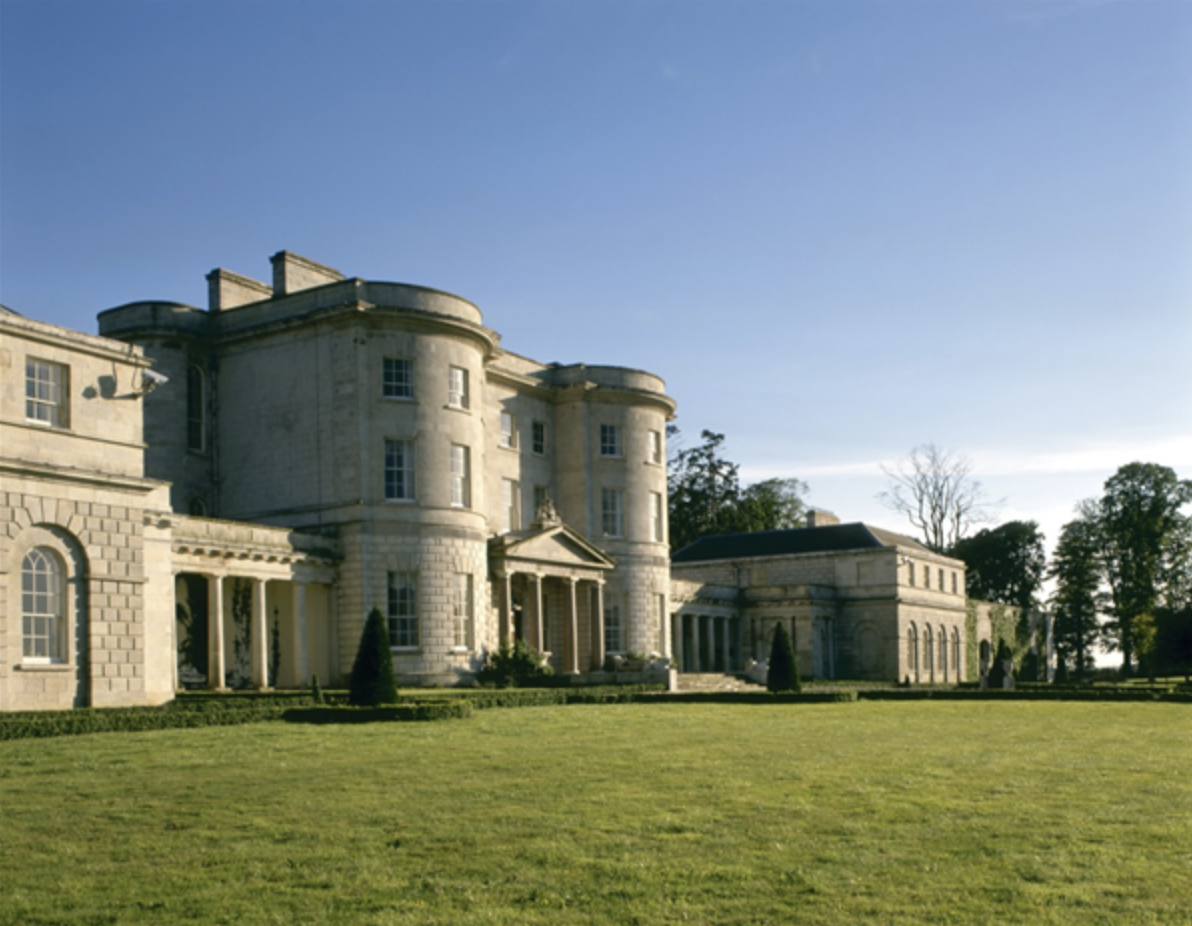
The entrance front of Lyons House, designed by Oliver Grave for Nicholas Lawless, 1st baron Cloncurry circa 1786 and remodelled by his son Richard Morrison in 1802-05. Pub Orig Country Life 16/01/2003, vol. CXCVII by Photographer Paul Barker. (see[7])
Mark Bence-Jones writes of Lyons:
p. 196. “(Alymer/IFR; Lawless, Cloncurry, B/PB1929; Winn, sub St. Oswalds, B/PB) Originally the seat of the Aylmer family. Sold 1796 by Michael Aylmer to Nicholas Lawless,the 1st Lord Cloncurry, son of a wealthy blanket manufacturer, who had a new house built in 1797, to the design of an architect named Grace.
“Three storey block with a curved bow on either side of its entrance front, joined to two-storey wings by curved sweeps. About 1801, shortly after his release from the Tower of London, where he had been imprisoned for two years on account of his advanced political views and friendship wiht some of the United Irishmen, the 2nd Lord Cloncurry hired Richard Morrison to undertake improvements and alterations to his father’s house, work continuing till 1805.
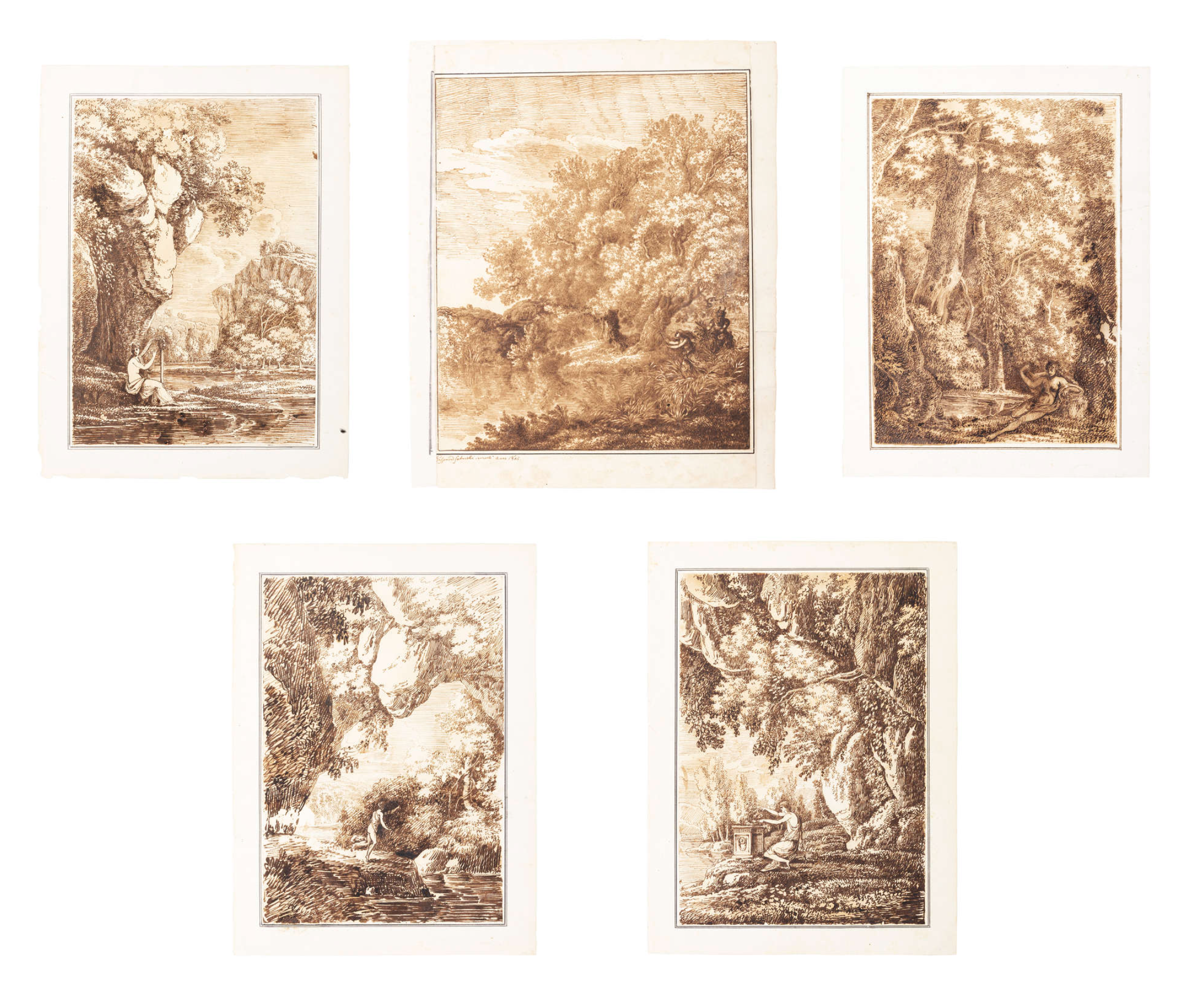
“During this period, Lord Cloncurry was in Italy, collecting antiques and modern sculpture for the house; he also acquired three antique columns of red Egyptian granite from the Golden House of Nero, afterwards at the Palazzo Farnese, which were used as three of the four columns in a single-storey portico at Lyons, with a triangular pediment surmounted by a free-standing coat-of-arms.The other notable alteration made to the exterior of the house at this time was the substitution of straight colonnades for the curved sweeps linking the main block to the winds, a change similar to that which Morrison made a few years later at Carton. Also the main block and wings were faced with rusticated ashlar up to the height of one storey on the entrnace front. The hall was given a frieze of ox-skulls and tripods based on the Temple of Fortuna Virilis in Rome, doorcases with fluted entablatures and overdoor panels with classical reliefs; a pair of free-standing antique marble Corinthian columns were set against one wall, and vaarous items from Lord Cloncurry’s collection fo sculpture disposed around the other walls. The walls of the dining room and music rom were painted with Irish waterfalls – and other enchanting decoration by Gaspare Gabrielli, an artist brought by Lord Cloncurry from Rome. The bow-ended dining room was also decorated with a wall painting, of Dublin Bay; and was adorned with reliefs of the story of Daedalus.”
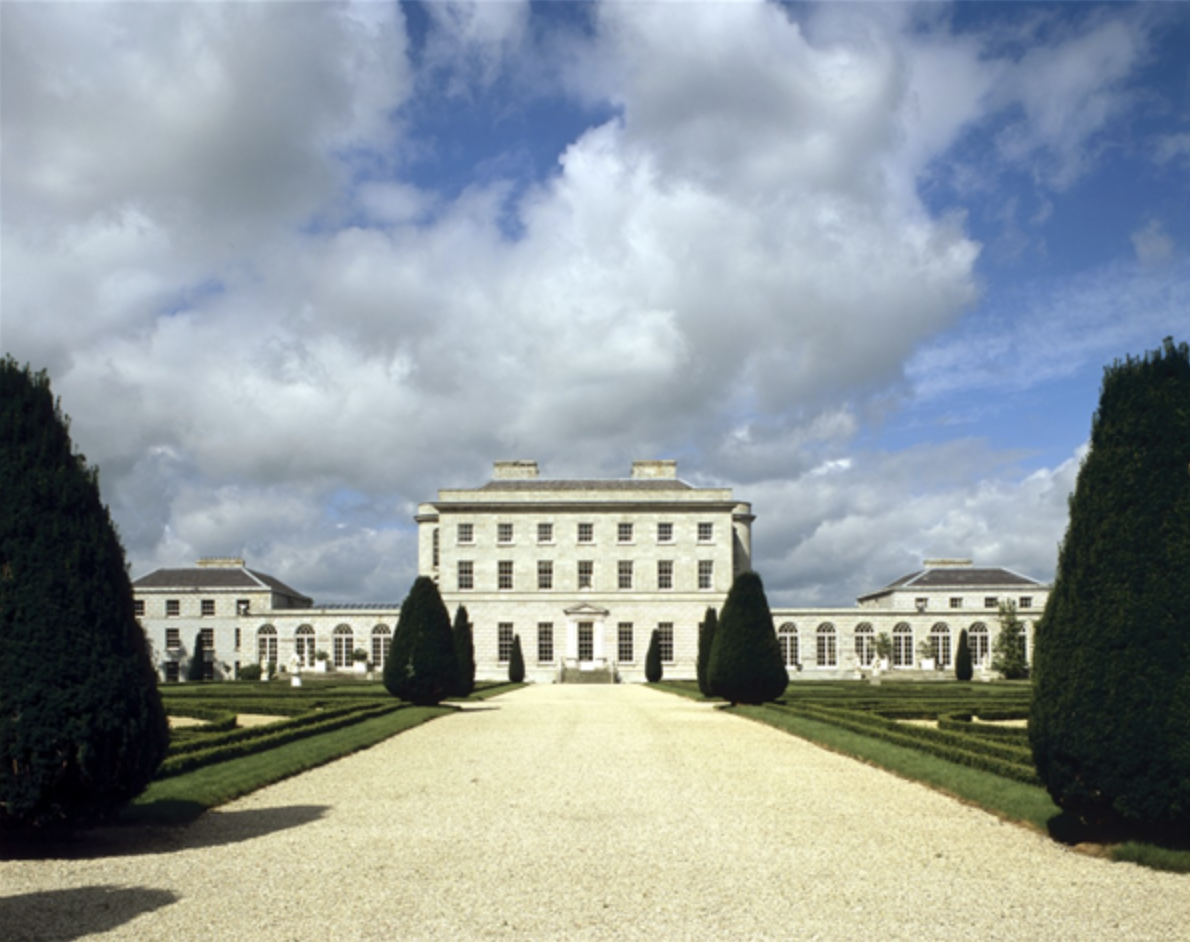
The garden front of Lyons House, The new orangery and pool house are the single-storey buildings flanking the central block. Pub Orig Country Life 16/01/2003, vol. CXCVII by Photographer Paul Barker. (see [7])GASPARE GABRIELLI A Group of Five Mythological Landscapes a preparatory scheme for the murals at Lyons, County Kildare courtesy Adams Irish Old Masters 15 May 2025
Bence-Jones continues: “The seven-bay garden front was left fairly plain, but before it a vast formal garden was laid out, with abundant statuary and urns and an antique column supporting a statue of Venus half way along the broad central walk leading from the house to what is the largest artificial lake in Ireland. Beyond the lake rises the wooded Hill of Lyons.
“The Grand Canal passes along one side of the demesne, and there is a handsome Georgian range of buildings beside it which would have been Lord Cloncurry’s private canal station. A daughter of 3rd Lord Cloncurry was Emily Lawless, the poet, a prominent figure in the Irish Revival of the early yars of the present century. Her niece, Hon Kathleen Lawless, bequeathed the Lyons estate to a cousin, Mr G M V Winn, who sold it about 1962 to University College, Dublin, which has erected a handsome pedimented arch from Browne’s Hill, Co Carlow at one of the entrances to the demesne.”
Art Kavanagh’s book on the Landed Gentry and Aristocracy: Meath, volume 1, tells us more about the Aylmers of Balrath. During the reign of Henry VI, Richard Aylmer of Lyons was a Keeper of the Peace for both Dublin and Kildare. He was in charge of protecting the settler community from attack by the neighbouring O’Toole and O’Byrne septs. The family rose to become one of the most prominent families in Meath and Kildare and key figures in the Dublin administration. Before the end of the 16th century they had established two independent branches at Donadea in Kildare and Dollardstown in County Meath.
The first Aylmer of real significance, Art Kavanagh tells us, was John Aylmer (c. 1359 – c. 1415) who married Helen Tyrell of Lyons, an heiress, at the end of the 14th century, and so the family acquired Lyons. [p. 1, Kavanagh, published by Irish Family Names, Dublin 4, 2005]
9. The K Club, Straffan House, County Kildare
Straffan House, the K Club, courtesy of the K Club Resort, 2005.
The Straffan estate formed part of the original land grant bestowed upon Maurice Fitzgerald by Strongbow for his role in the Anglo-Norman invasion of 1169. In 1679, the property was purchased by Richard Talbot, the Duke of Tyrconnell who commanded the Jacobite army in Ireland during the war between James II and William of Orange. Tyrconnell’s estates were forfeited to the crown in the wake of the Williamite victory. In about 1710, the property was purchased by Hugh Henry, a prosperous merchant banker, who also owned Lodge Park. He married Anne Leeson, a sister of Joseph Leeson, 1st Earl of Milltown. Straffan passed to their son, Joseph, who travelled in Europe and collected art. In April 1764 he married Lady Catherine Rawdon, eldest daughter of the 1st Earl of Moira.
Joseph Henry of Straffan, Co. Kildare by Francis Hayman, R.A. (c. 1708-1776) courtesy of Christies Irish Sale 2001.
Their son John Joseph (1777-1846) married Lady Emily Fitzgerald, the 23-year-old daughter of the 2nd Duke of Leinster. He was an extravagant spender and had to sell Straffan in 1831.
Hugh Barton (1766-1854) acquired Straffan House from the Henry family in 1831 and his descendents remained there until the 1960s. The Barton family were part of the Barton & Guestier winemakers. Hugh soon commissioned Dublin architect, Frederick Darley, to build a new house, based on Madame Dubarry’s great Château at Louveciennes to the west of Paris. [10] The house passed through many hands subsequently.
Mark Bence-Jones writes of Straffan House (1988):
p. 266. “(Barton/IFR) An imposing C19 house in a style combining Italianate and French chateau. Main block of two storeys with an attic of pedimented dormers in a mansard roof; seven bay entrance front, the centre bay breking forward and having a tripartite window above a single-storey balustraded Corinthian portico. Entablatures on console brackets over ground-floor windows; triangular pediments over windows above and segmental pediment of central window. Decorated band between storeys; balustraded roof parapet; chimneystacks with recessed panels and tooth decoration. The main block prolonged at one side by a lower two storey wing, from which rises a tall and slender campanile tower, with two tiers of open belvederes. Formal garden with elaborate Victorian fountain. Capt F.B. Barton sold Straffan ca 1949 to John Ellis. It was subsequently the home of Kevin McClory, the film producer, and later owned by Mr Patrick Gallagher, who restored the main block to its original size.”
10. Kilkea Castle, Castledermot, Kildare – hotel
Kilkea Castle County Kildare by Elena on flickr constant commons 2005.
p. 167. “(Fitzgerald, Leinster, D/PB) A medieval castle of the FitzGeralds, Earls of Kildare, especially associated with C16 11th Earl of Kildare, the most famous “wizard Earl.” [Gerald (1525-1585)] After Carton became the family seat in C18, it was leased to a succession of tenants; one of them being the Dublin silk merchant, Thomas Reynolds, friend of Lord Edward Fitzgerald through whom he became a United Irishman, only to turn informer when he realised the full aims of the movement. His role as informer did not prevent the unhappy Reynolds from having the castle, which he had only recently done up in fine style, sacked by the military; who tored up the floorboards and tore down the panelling on the pretext of searching for arms. Subsequent tenants caused yet more damage and there was a serious fire 1849; after which the third Duke of Leinster resumed possession of the castle and restored and enlarged it as a dower-house for his family. The work was sympathetically done, so that the tall grey castle keeps its air of medieval strength with its bartizans and its massively battered stone walls; though its battlements and its rather too regularly placed trefoil headed windows are obviously C19. AT one side of the caslte a long, low, gabled office range was added, in a restrained Tudor Revival style. The interior is entirely of 1849, for the lofty top storey, where the principal rooms were originally situated, was divided to provide a storey extra. The ceilings are mostly beamed, with corbels bearing the Leinster saltire. In 1880s the beautiful Hermione, Duchess of Leinster (then Marchioness of Kildare) lived here with her amiable but not very inspiring husband [Gerald the 5th Duke of Leinster]; finding the life not much to her taste, she composed the couplet “Kilkea Castle and Lord Kildare/are more than any woman can bear.” After the sale of Carton 1949, Kilkea became the seat of the 8th and Present Duke of Leinster (then Marquess of Kildare), but it was sold ca 1960 and is now an hotel.”
11. Leixlip Manor hotel (formerly Liffey Valley House hotel, formerlySt. Catherine’s Park), Leixlip, Co Kildare
The house that stood before the current Manor House was taller and was tenanted by the Earl of Lanesborough. Then in 1792, it was occupied by David La Touche, of the Huguenot banking family. It shortly thereafter burned to the ground and in around 1798 a new house, also called St Catherine’s Park, was built in the same townland to the design of Francis Johnston; it is now Leixlip Manor Hotel & Gardens.
Rt. Hon. David La Touche of Marlay (1729-1817) Date c.1800 by Hugh Douglas Hamilton, Irish, 1740-1808, courtesy of National Gallery of Ireland.
12. Martinstown House, Kilcullen, Co Kildare – accommodation
Martinstown House 2012, photograph courtesy of Martinstown House on flickr constant commons.
featured in Great Irish Houses. Forewards by Desmond FitzGerald, Desmond Guinness. IMAGE Publications, 2008.
p. 232. “Martinstown House is one of the finest cottage ornee style buildings in Ireland today. Originally part of the huge estates of the Dukes of Leinster, this fine house was commissioned by Robert Burrowes [d. 1850, son of Kildare Dixon Borrowes, 5th Baronet] and completed by the Burrowes family between 1832 and 1840, when decorative effects such as thatched roofs, undressed stonework and verandahs made of free growing branches were being incorporated into rural Irish dwellings. While experts feel the house was built in 1833, it may have been started years earlier, with many of the outbuildings including stables and also the walled gardens dating to some time between 1815 and 1820.” The book’s authors add that Decimus Burton was involved in the creation of this house.
“Beautiful self catering, Georgian Manor centrally located in the hearth of Kildare in a very private setting. De Burgh Manor comprises of 15 bedrooms all ensuite. The ground floor consists of a double reception room, drawing room, dining room, bar, library , breakfast room and kitchen. Situated on c. 6 acres of grounds overlooking the River Barrow.“
The website also tells us about the history:
“De Burgh Manor was built circa 1709 [the National Inventory says it was built around 1780] by Thomas Burgh [1670-1730] of Oldtown [built ca 1709 by Thomas Burgh (1670-1730), MP, Engineer and Surveyor-General for Ireland, to his own design. The centre block was burned 1950s. A house has now been made out of one of the wings. He also designed Kildrought house, a Section 482 property] for his brother William Burgh later known as Captain William De Burgh and who became Comptroller and Auditor General for Ireland. Thomas Burgh was Barracks Overseer for Ireland from 1701 and was also responsible for [building] – the Library at Trinity College Dublin, Collins Barracks Dublin – now a museum – and Dr Steeven Hospital Dublin.
“William De Burgh was born in 1667 and had a son, Thomas, and a daughter, Elisabeth. Thomas, born in 1696, eventually became a Member of Parliament for Lanesboro, Co. Longford. Freeman of Athy Borough and Sovereign of Athy, in 1755 he married Lady Ann Downes, daughter of the Bishop of Cork & Ross. Her mother was a sister to Robert Earl of Kildare. Her brother, Robert Downes, was the last MP for Kildare in 1749 and was Sovereign of Athy.
“Thomas had two sons, William and Ulysses [Ulysses was actually the grandson of Thomas, son of another Thomas]. William born in 1741 went on to represent Athy as an MP in Parliament between 1768 and 1776. A monument to his memory by Sculptor Sir Richard Westmacott, a statue of faith, which depicts him with a book in one hand and a scroll in the other and stands in York Minster. He wrote two books on religion and faith.
“Ulysses, born in 1788succeeded to the title of Lord Downes [2nd Baron Downes of Aghanville] on the death of his cousin William Downes who was made Lord Chief Justice in 1803 and created Lord Downes on his retirement in 1822. It was Ulysses De Burgh who presented the Town Hall Clock to Athy in 1846 and it was he who had the wings added to Bert House. [Mark Bence-Jones writes of Bert: “enlarged early in C19 by the addition of two storey Classical overlapping wings, of the same height as the centre block; which is of three storeys over basement with two seven bay fronts.”]
“Ulysses’ daughter Charlotte was the last of the De Burgh’s to call Bert House home with her husband Lt. General James Colbourne [2nd Baron Seaton of Seaton, co. Devon]. Charlotte and James came to Bert House in 1863 as Lord and Lady Seaton after the death of Lord Downes. It was sold by them in 1909 to Lady Geoghegan who then sold it onto her cousin, Major Quirke.“
2. Firmount, Clane, County Kildare – whole house or weddings
“Firmount House is a unique and stunning venue just outside Clane in County Kildare, only 40minutes from Dublin city centre. Lovingly restored by the owners, the house is known for flexibility and creativity and is now open for weddings, private parties, film shoots, yoga retreats and corporate events. Enjoy visiting the Firmount website and see for yourself the lifelong journey these restoration warriors have taken to provide you with the perfect location in a wonderful, natural setting.
“This fabulous house consists of a sitting room, breakfast room and dining room downstairs reached from a large hallway, alongside a commercial kitchen and butlers pantry. The first floor consists of seven large and sumptuous bedrooms – five doubles and two twin rooms with plenty of room for two travel cots which are also provided. There are also six bathrooms. Heated by oil fired radiators, there are also two stoves in the main entertaining space.
“Firmount House has a colourful history dating from the 13th century when there was reputed to be a fortified house on the current site. The Down Survey of 1655 seems to show a house on the land (then known as Keapock). In the 18th century the house was owned by the Warburtons and sat on extensive grounds. The story of the current house really begins in 1878 when Hugh Henry Snr having married his cousin Emily Henry (of Lodge Park, site of the current K-club) bought Firmount house and renovated it extensively. It seems he took what was a Georgian house, wrapped it in concrete (one of the first houses of it’s kind) and added a Victorian wing to the South.
“The estate consisted of 409 acres at that point. Hugh Henry’s son, imaginatively named Hugh Jr, inherited the house in 1888 and lived there until 1917. It is rumoured that his wife, Eileen, had nightmares of the house going down in flames – although given it was made of concrete, we think she would have been ok. The house became a WWI hospital in 1917 and 390 soldiers were treated there until 1919, with no deaths registered – thank goodness for that. However the next decades were not so lucky for the house. In 1929 the house was bought by Kildare County Council and turned into a TB sanatorium. It ran as such until 1961. There are local stories of movies being run in the ballroom for patients with the now Mayor of Clane, at the projector. And of patients sitting on the elevated banks at the very front of the house on the roadside, watching life on the road go by but being unable to participate. 1964 brought the purchase of the house by the Department of Defence who ran it as a Control Centre for Nuclear Tracking and named it Section Seven Regional Control.
“Here things get really interesting as the basement of the house was intended to house senior officials, media and communications personel in the event of nuclear fall out. It is rumoured the Taoiseach (Irish prime-minister) was supposed to have a bunker on site and the house can still be found on Russian nuclear maps! This picture shows one of the several signs found in the house. The downside of government and county council ownership is that many original period features were lost through ignorance, neglect and the reinforcement of windows, floors, porticos and doors with concrete.
“The current “madthings” bought the house in 2012 with the aim of slowly bringing Firmount house back to life, window by window and floor by floor aswell as bringing Firmount forward into a gathering place with a welcome for all.“
3. Griesemount House, County Kildare, whole house rentals– see above
[6] Bence-Jones, Mark. A Guide to Irish Country Houses (originally published as Burke’s Guide to Country Houses volume 1 Ireland by Burke’s Peerage Ltd. 1978); Revised edition 1988 Constable and Company Ltd, London.
orange: “whole house rental” i.e. those properties that are only for large group accommodations or weddings, e.g. 10 or more people.
green: gardens to visit
grey: ruins
Carlow, Dublin, Kildare, Kilkenny, Laois, Longford, Louth, Meath, Offaly, Westmeath, Wexford and Wicklow are the counties that make up the Leinster region.
As well as places to visit, I have listed separately places to stay, because some of them are worth visiting – you may be able to visit for afternoon tea or a meal.
For places to stay, I have made a rough estimate of prices at time of publication:
€ = up to approximately €150 per night for two people sharing (in yellow on map);
Help me to pay the entrance fee to one of the houses on this website. This site is created purely out of love for the subject and I receive no payment so any donation is appreciated!
€15.00
Places to visit in County Kilkenny:
1. Aylwardstown, Glenmore, Co Kilkenny– section 482
6. Kilkenny Design Centre, Castle Yard, Kilkenny– Design Centre on 482
www.kilkennydesign.com Open dates in 2025: Jan 1 new year’s day 12 noon-5.30pm, Jan 2-Dec 23, 27-31, Jan, Feb, Mar, Apr, Oct, Nov, Dec, Sun, 11am-6pm, Mon-Sat, 10am-6pm, May, 10am-6pm, June, July, Aug, Sept, Sun, 10am-6pm, Mon- Sat, 9am-6pm, Fee: Free
7. Kilrush House, County Kilkenny, ihh member, by appt.
Kilrush House, photograph courtesy of National Inventory of Architectural HeritageKilrush House, photograph courtesy of National Inventory of Architectural Heritage.
The Historic Houses of Ireland website tells us:
“William Robertson (1777 – 1850) was a native of Kilkenny where the patronage of Lord Ormonde stood him in good stead, since most of his work can be found in Kilkenny and the neighbouring counties of Laois, Tipperary and Waterford. When Richard St. George wished to move from his medieval castle at Kilrush near Freshford in 1820, Robertson was the obvious choice. His work is less exuberant than that of his namesake Daniel but he was a talented architect and produced an interesting early nineteenth century reinterpretation of the typical late-Georgian country house.
“The St Georges are a Norman family who ‘came over to England with the Conqueror’ and arrived in Ireland in the sixteenth century. They quickly became established here, with several branches in County Kilkenny and others in Galway, Leitrim and Roscommon.
“The St Georges of Kilrush were active in political and cultural circles in the seventeenth and eighteenth centuries. Richard St George was an M.P. in the Irish Parliament, with a town house at No. 8 Henrietta Street, while his cousin St George Ashe was the Provost of Trinity College and a close friend of Dean Swift. St. George was also a founding member of the Dublin Philosophical Society, which encouraged his numerous publications of scientific and national interest.
“Richard considered moving out of his tower-house at Kilrush in the middle of the eighteenth century but this decision was left to his heirs, who built the existing house in the early nineteenth century. Kilrush has a three bay façade, a five bay garden front, a hipped roof with widely overhanging eaves, a single very large, central chimney-stack into which all the flues are diverted, and an interesting ground plan.
“The cut-stone door case is a handsome arrangement of Doric half-columns and pilasters, supporting a deep entablature with swags beneath a semi-circular leaded fanlight. The ground floor windows to either side are set in shallow recesses with elliptical heads; otherwise the elevations are quite plain.
“The most interesting internal space is the landing, a perfect Doric rotunda supporting a delicately glazed dome. This partly lights the inner hall below through a circular well in the floor. The dining and drawing rooms are both finely proportioned apartments, with many original fittings and furnishings, and their original wallpaper.
“Kilrush looks out over mature parkland to a large mill, almost half a mile off. The gardens contain a stupendous collection of snowdrops, there is a tower house, the former residence of the family in the attached yard, while an interesting early garden layout with connected canals has recently been identified and is currently in the course of restoration.” [1]
8. Rothe House, Kilkenny, County Kilkenny
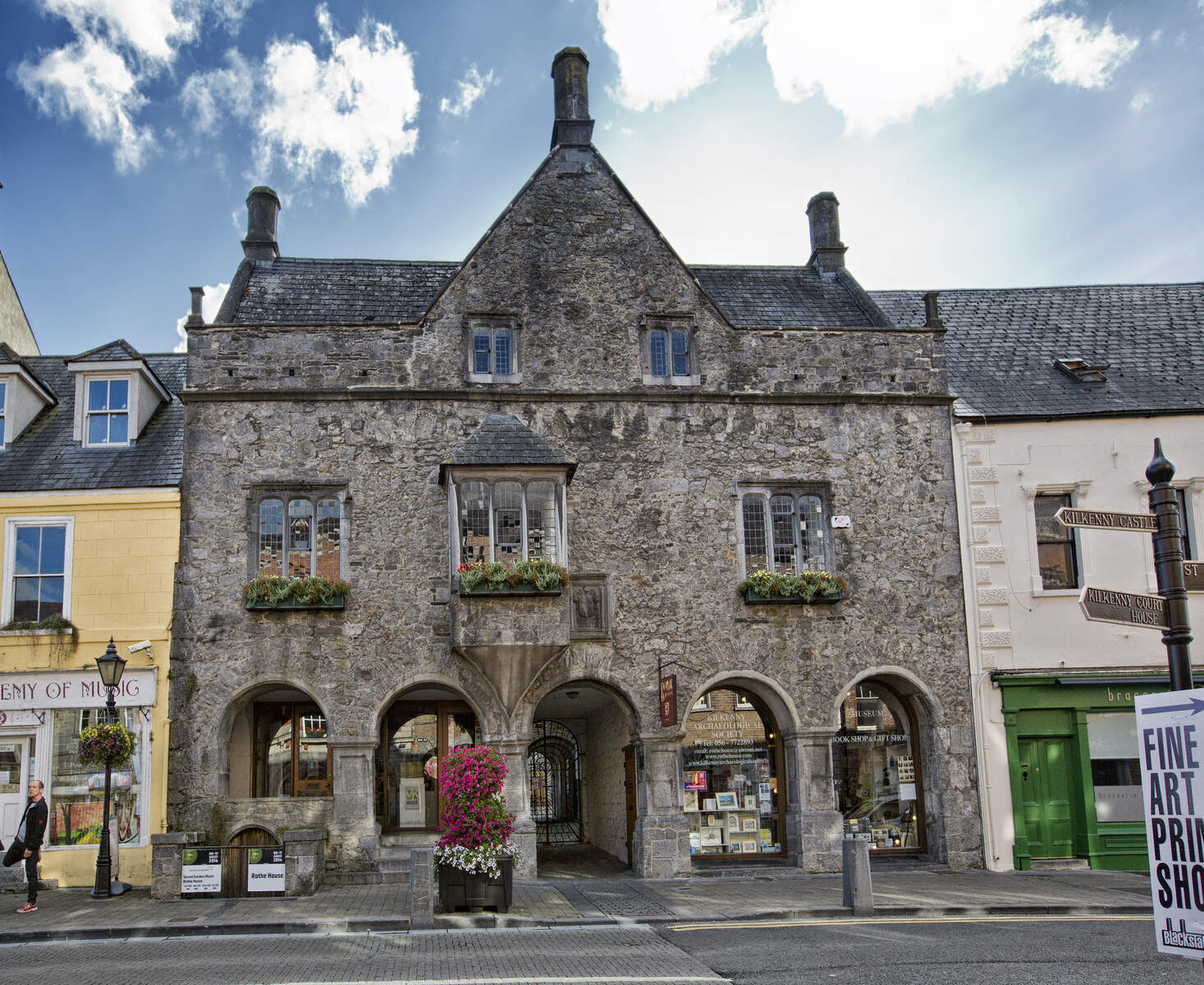
Rothe House, Kilkenny, photograph by Brian Morrison 2015 for Tourism Ireland [2]
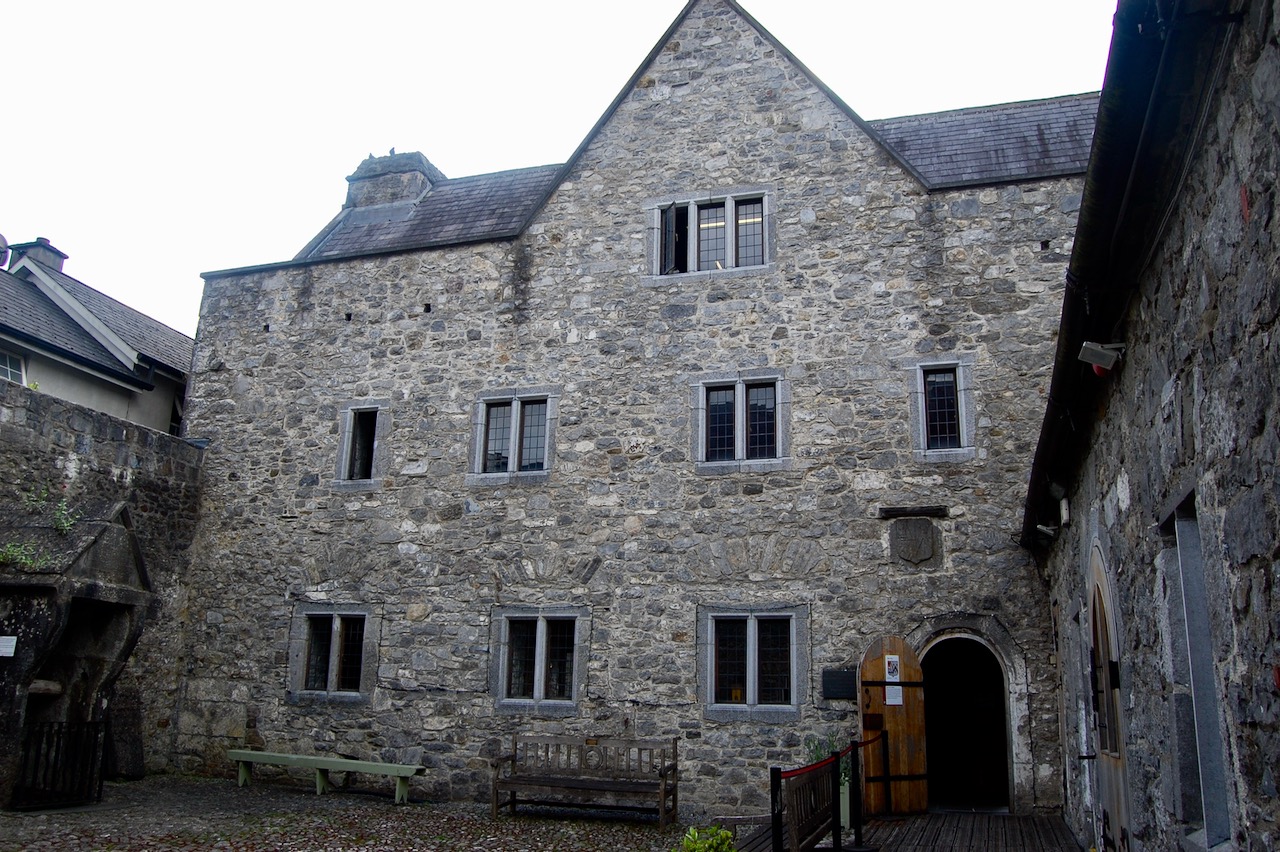
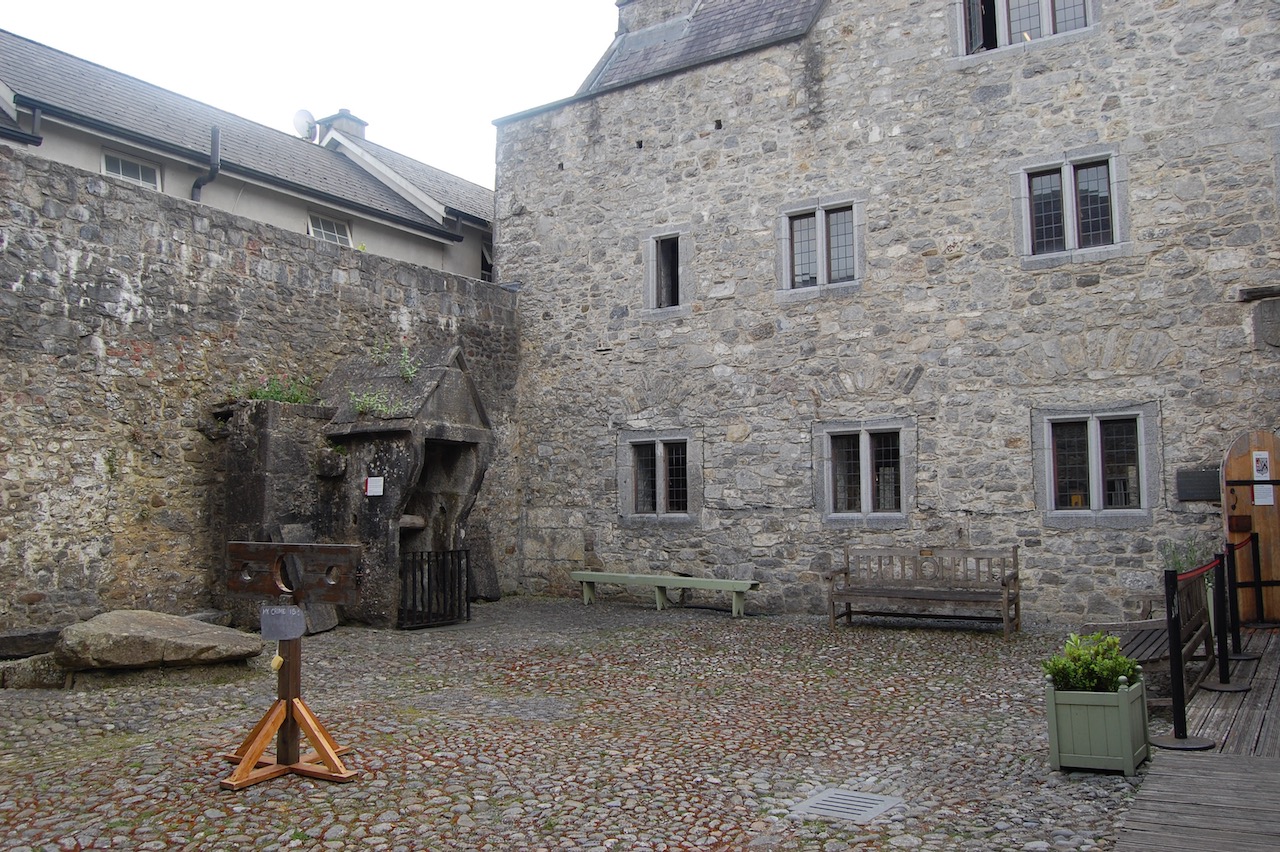
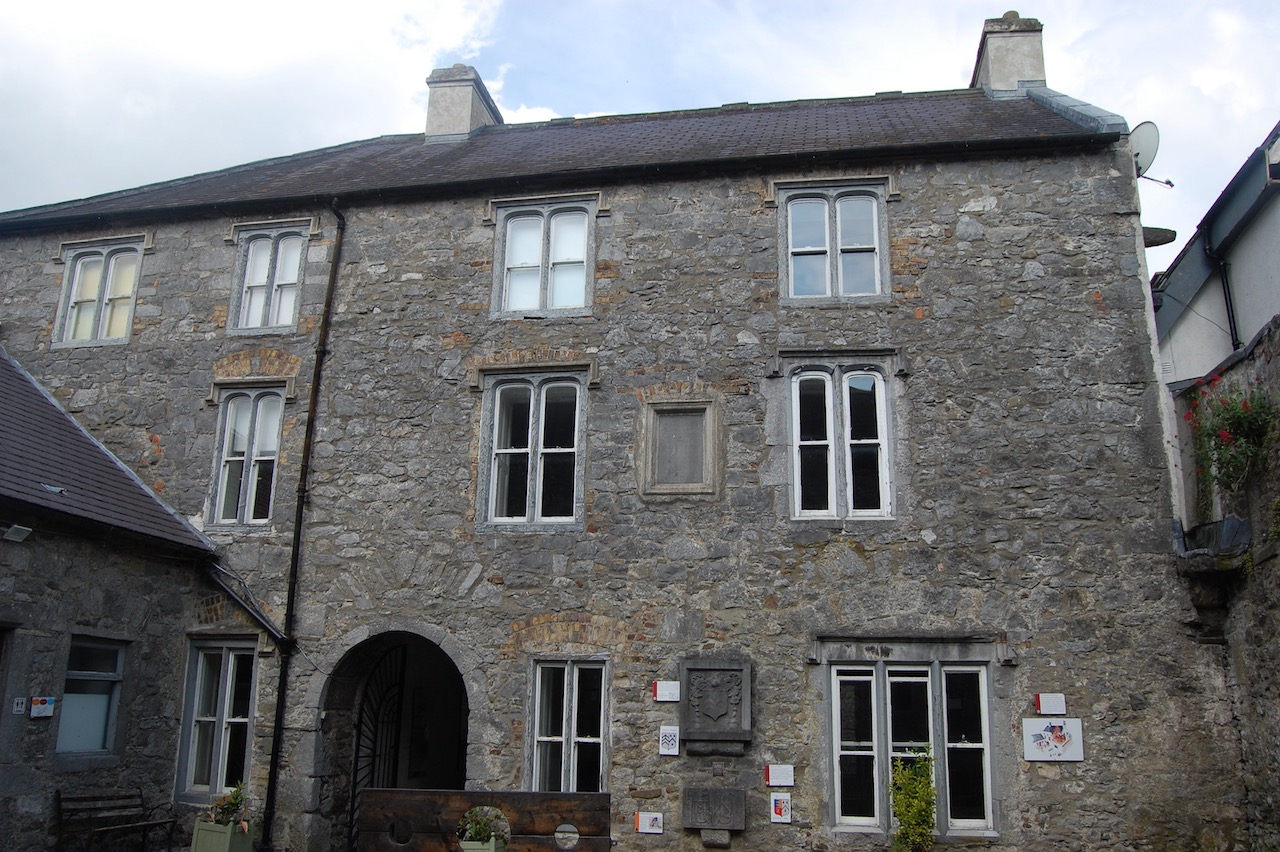
Rothe House is a treasure, older than any house in Dublin! It was built around 1594-1610, by John Rothe FitzPiers (1560-1620) for his wife Rose Archer, and is the last merchant’s townhouse in Kilkenny surviving from the early post-medieval period. [3] The house, purchased by Kilkenny Archaeological Society in 1962, is open to the public as a museum displaying a selection of the historic artefacts collected by the Society since its founding in 1947. The artefacts relate to Kilkenny heritage throughout the ages and some date from prehistoric times. The adjoining garden has since 2008 been open to the public and is a faithful reconstruction of an early seventeenth-century urban garden.
“Terraced five-bay two-storey over basement house with dormer attic on a U-shaped plan about a stone cobbled (east) courtyard with two-bay two-storey gabled central bay having jettied box oriel window to first floor, series of five round-headed openings to ground floor forming arcade, single-bay three-storey linking range to north-west, and three-bay three-storey parallel range to west (completing U-shaped plan about a courtyard) originally three-bay two-storey having round-headed carriageway to right ground floor. In use as school, c.1750. Restored, 1898, to accommodate use as Gaelic League house. Converted to use as museum, 1963-5. Restored, 1983. Restored, 1999, to accommodate use as offices.”
“In 1594 a wealthy merchant called John Rothe built this magnificent Tudor mansion. Second and third generation houses were built around the cobelled courtyards and a well dating to 1604. The façade houses shops, one of them was John Rothe’s own. During the Confederation of Kilkenny, many dignitaries were entertained here by John Rothe and his cousin, the Bishop of Ossory. The building has been restored magnificently and is now home to Kilkenny Archaeological Society.” [4]
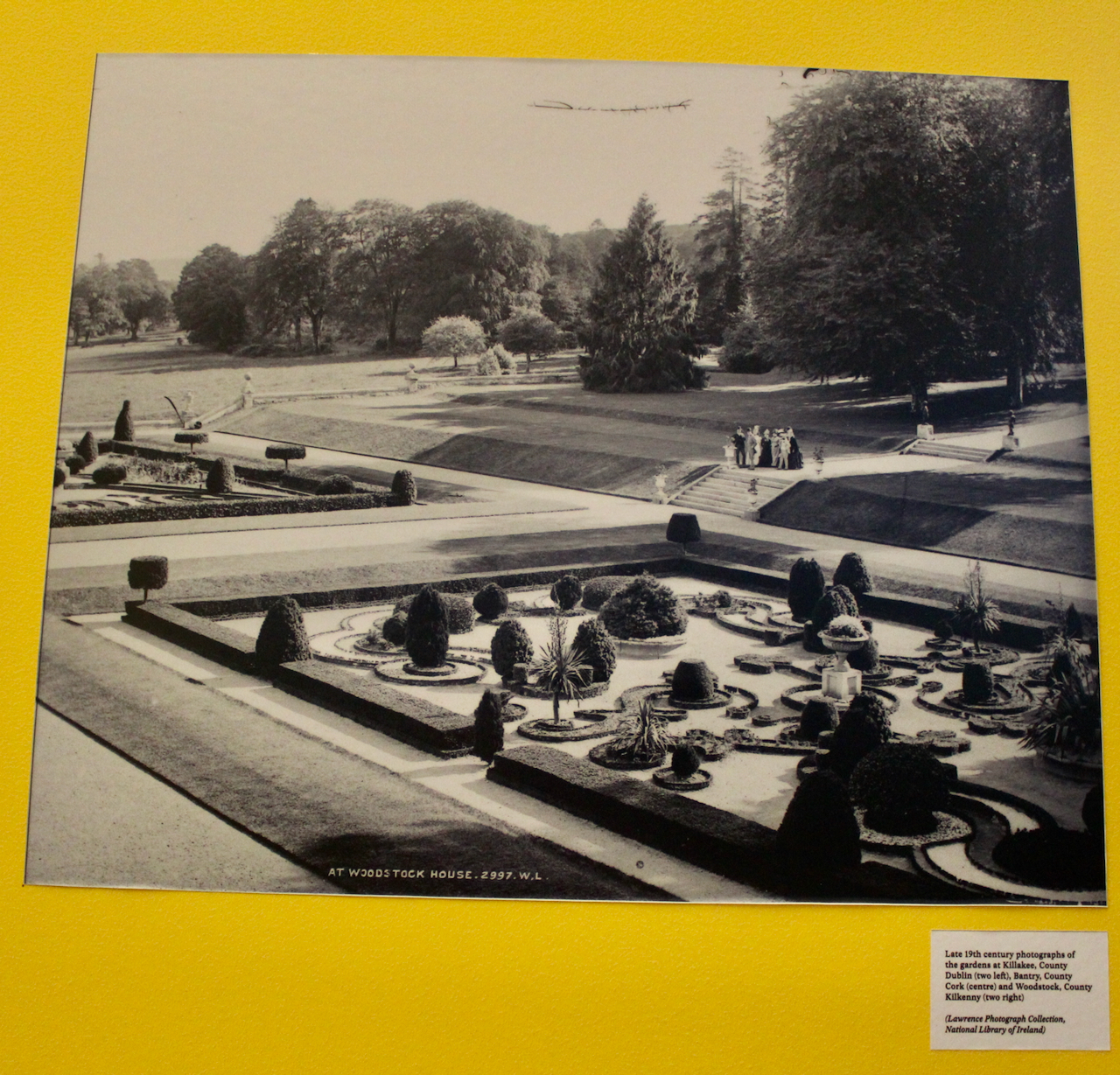
Woodstock Gardens, photograph from Lawrence Photograph Collections, National Library of Ireland, photograph from “In Harmony with Nature” exhibition at the Irish Georgian Society curated by Robert O’Byrne.
Mark Bence-Jones writes about Woodstock (1988):
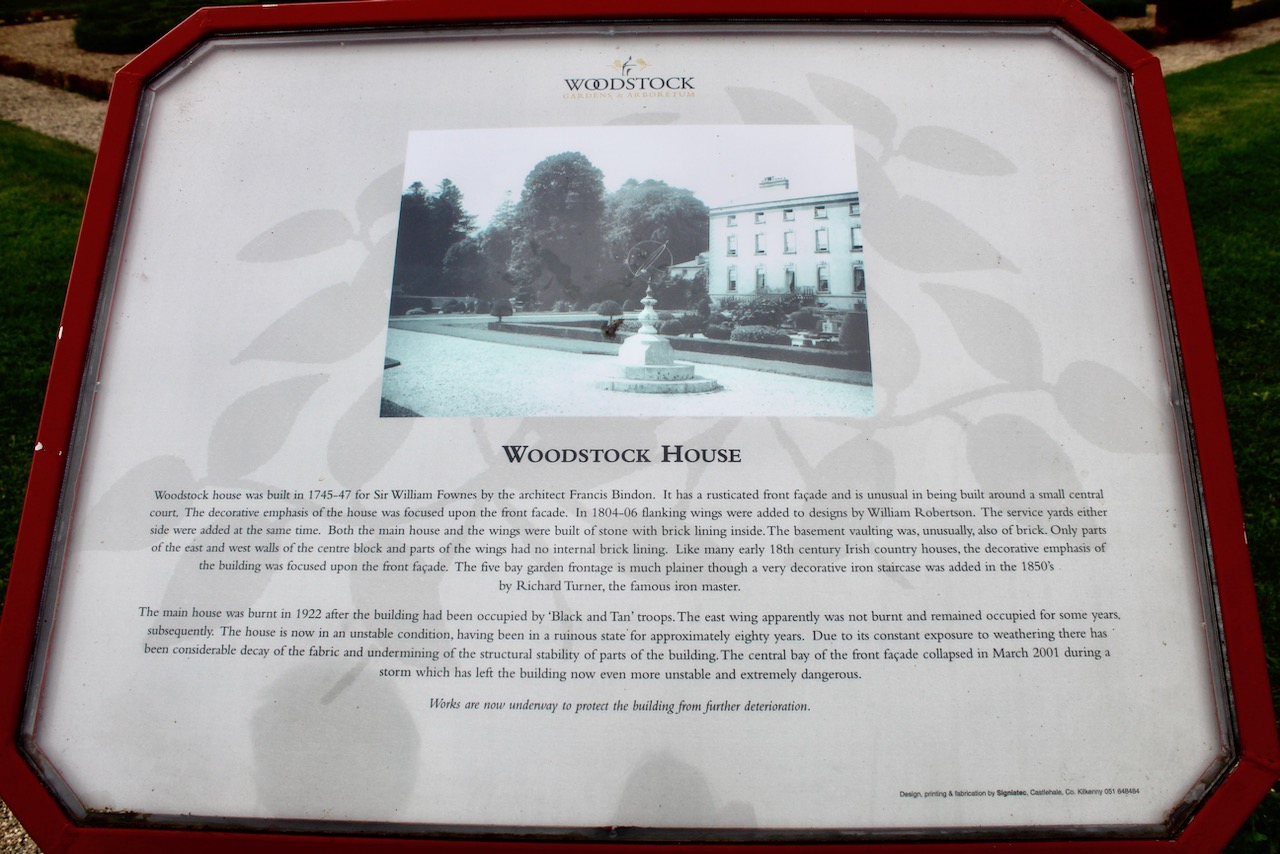
p. 286. “(Fownes, Bt/EDB; Tighe/IFR) A house by Francis Bindon [for William Fownes, 2nd Baronet], probably dating from 1740s, which is unusual in being built round a small inner court, or light-shaft. Three storeys; handsomely rusticated entrance front of six bays with a central niche and statue above the entrance doorway…In 1770s Sarah Ponsonby lived here with her cousins, Sir William and Betty Fownes [born Elizabeth Ponsonby]; her friend, Eleanor Butler, having escaped from Borris, co Carlow, where she was being kept in disgrace, was let into Woodstock through a window, hiding herself in Sarah’s room for 24 hours before being discovered; shortly afterwards, the two friends left for Wales, where they subsequently became famous as the “Ladies of Llangollen.” Woodstock passed to the Tighes with the marriage of the daughter and heiress of Sir William Fownes to William Tighe, whose daughter-in-law was Mary Tighe, the poet, author of Psyche; she died at Woodstock 1810 aged 37, and Flaxman’s monument to her is in a small neo-Classical mausoleum behind the Protestant church in the village of Inistioge, at the gates of the demesne. There was also a statue of her in one of the rooms in the house. Woodstock was burnt ca 1920, and is now a ruin, but the demesne, with its magnificent beechwoods, still belongs to the Tighes.” [6]
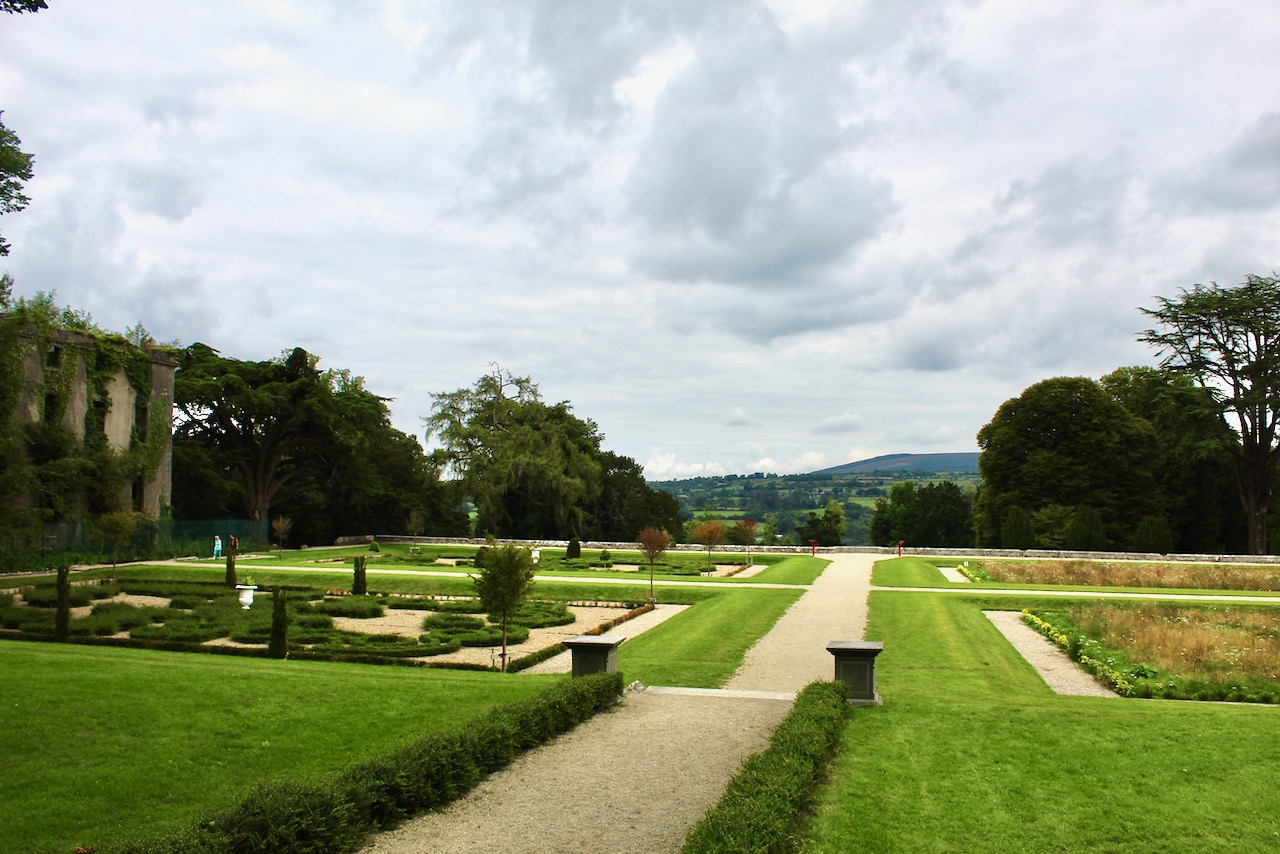
The formal parterres were created in the 1860s by a Scotsman, Charles McDonald, for Colonel William Tighe (1794-1878) and his wifeLady Louisa née Lennox (1803-1900, daughter of Charles, 4th Duke of Richmond – she is not to be confused with Louisa Lennox (1743-1817) daughter of Charles 2nd Duke of Richmond, who married Thomas Conolly of Castletown, County Kildare). The parterre incorporates a shamrock motif. Robert O’Byrne tells us in his exhibition “In Harmony with Nature” at the Irish Georgian Society July 2022 that creating the parterres involved removing 200,000 cubic yards of earth and retention by a wall of cut granite quarried on the estate and ornamented by local craftsmen with stone finials, balls and vases.
Woodstock Gardens, photograph from Lawrence Photograph Collections, National Library of Ireland, photograph from “In Harmony with Nature” exhibition at the Irish Georgian Society July 2022 curated by Robert O’Byrne.
The estate passed to the daughter, Sarah, of William Fownes and Elizabeth Ponsonby, and Sarah married William Tighe (1738-1872) of Rossana, County Wicklow.
Ballyduff House, courtesy of National Inventory of Architectural Heritage.
The website tells us:
“Ballyduff House is a classic Georgian country house with a 14th century castle, steeped in Irish history and full of the warmest of welcomes.
“The River Nore sparkles as it runs along Ballyduff’s riverbank while sheep and cattle graze the pasture either side.
“Open fires, the book lined library and the comfortable bedrooms furnished with Irish antiques capture an early 18th century experience tempered by discreet 21st century comfort.
“This is real Ireland – calm, green and beautiful, set alongside the picturesque village of Inistioge with Dublin only an hour away.“
The National Inventory tells us:
“A country house representing an important component of the mid eighteenth-century domestic built heritage of County Kilkenny with the architectural value of the composition, one abutting a “roofed down” tower house, confirmed by such attributes as the deliberate alignment maximising on panoramic vistas overlooking broad parkland and the wooded River Nore; the compact rectilinear plan form centred on a restrained doorcase showing a simple radial fanlight; the diminishing in scale of the openings on each floor producing a graduated visual impression with the principal “apartments” or reception rooms defined by Wyatt-style tripartite glazing patterns; and the slightly oversailing roofline. Having been well maintained, the elementary form and massing survive intact together with substantial quantities of the original fabric, both to the exterior and to the interior, including crown or cylinder glazing panels in hornless sash frames: meanwhile, contemporary joinery; restrained chimneypieces; and sleek plasterwork refinements, all highlight the artistic potential of the composition. Furthermore, an adjacent farmyard complex ; and a walled garden (extant 1839), all continue to contribute positively to the group and setting values of a self-contained estate having historic connections with the Coghill family including Sir Josiah Coghill (1773-1850), third Baronet (Lewis 1837 II, 18); the Connellans of nearby Coolmore House (see 12403210); and Lieutenant-Colonel Frederick William John Shore (1844-1916), fourth Baron Teignmouth (NA 1901; NA 1911). NOTE: Given as the birthplace of Sir John Joscelyn Coghill (1826-1905) of Glen Barrahane in Castletownshend, County Cork (Dod’s Peerage Baronetage and Knightage 1865, 186); and George Leopold Bryan (1828-80) of Jenkinstown (Dod’s Parliamentary Companion 1875, 174).“
2. Blanchville Coachyard, Dunbell, County Kilkenny €
Blanchville Coachyard, Dunbell, County Kilkenny, photograph from websitehttps://blanchville.ie/
“The Coach Houses & Gardener’s Cottage are, as the name suggests, part of the beautiful old stone building that was originally the Coach House at Blanchville. The building has been sensitively and extensively refurbished and now offers guests comfortable and inviting Self-Catering Accommodation in three self-contained Holiday Homes.
“These Heritage Holiday Lets feature a cosy woodburning stove or open fire, fully fitted modern kitchen and relaxing bedrooms – the perfect requisite for an enjoyable weekend break or holiday in Kilkenny.“
3. Butler House, Kilkenny, co Kilkenny– accommodation
View to Butler House and Garden, Kilkenny Leo Byrne Photography 2015. (see [2])
The National Inventory tells us about Butler house: “Semi-detached three-bay three-storey over basement house, built 1786, with pair of three-bay full-height bowed bays to rear (east) elevation. Extended, 1832, comprising two-bay three-storey perpendicular block to right. Renovated, 1972. Now in use as hotel. One of a pair…An elegantly-composed Classically-proportioned substantial house built either by Walter Butler (1713-83), sixteenth Earl of Ormonde or John Butler (1740-95), seventeenth Earl of Ormonde as one of a pair of dower houses…Distinctive attributes including the elegant bowed bays to the Garden (east) Front contribute positively to the architectural design value of the composition while carved limestone dressings with particular emphasis on the well-executed doorcase displaying high quality stone masonry further enliven the external expression of the house in the streetscape.”
The house was home to Lady Eleanor Butler who lived here after the death of her husband Walter in 1783. Lady Eleanor Butler was the mother of John, the 17th Earl of Ormonde and her daughter, also Eleanor, was one of the famous “Ladies of Langollen”.
James, Earl of Ormonde (1777-1838, and 1st Marquess) resided in the house while the Castle was under reconstruction in 1831. A soup kitchen was run from here during the cholera epidemic of 1832.
The Royal Historical and Archaeological Association of Ireland held their meetings in Butler House in 1870. Kilkenny Design, the state design agency, restored Butler House in 1972. The decor and furnishings reflect a certain 1970s Art Deco style, which because of the muted colours and natural fabrics used, proved sympathetic to the original features of the house. In 1989, the Kilkenny Civic Trust acquired both Butler House and the Castle Stables.
4. Clomantagh Castle, Co Kilkenny – accommodation, whole house on airbnb: €€ for two, € for 3-8
Clomantagh Castle, courtesy of National Inventory of Architectural Heritage.
The National Inventory tells us it is a farmhouse erected by John Shortal (d. 1857) or Patrick Shortal (d. 1858) representing an integral component of the mid nineteenth-century domestic built heritage of County Kilkenny with the architectural value of the composition, one occupying the site of a hall adjoining the fifteenth-century Clomantagh Castle.
Clomantagh Castle - was home to the [8th] Earl of Ormond, Pierce Ruadh (1467-1539). When he died in 1539 the castle along with other properties was passed to his son Richard Butler, first Viscount Mountgarret (1500-1571). The castle and its estate stayed in the Butler family until it was forfeited during the war with Cromwell to Lieutenant Arthur St. George [ancestor of the Kilrush family]. After the war the castle changed hands twice more and a farmhouse was added by the Shortall family, the owners in the 1800’s, before its last owner Willie White a local vet. The property is now owned by a non profit making charity called the Landmark Trust who preserve historic buildings.
The Landmark site tells us:
“The name Clomantagh comes from the Irish “cloch mantaigh”, meaning missing tooth or gappy smile. Locals gave this name to the castle as the irregular castellation reminded them of someone smiling with missing teeth.
“It has been established that the tower and bawn were built in the 15th century (c.1430). The tower house has been modified and extended over the centuries, and in the early 19th century a farmhouse was added providing accommodation with comfort, rather than defence, in mind. In recent times, the bawn walls have sheltered the buildings of a 20th century working farm. It also has a rare clochán (small dome-roomed structure) knit into the bawn walls. Five other tower houses can be seen from the roof of Clomantagh Castle, and they were all strategically aligned for defence purposes.
“Clomantagh followed mainstream castle design, emerging as an almost square building, six storeys high, with massive walls built from local limestone, and a corner staircase. Inserted high on the south wall is a Sheela-na-Gig. This pagan symbol was adopted by medieval builders and incorporated as the building was erected. High up the remains of the stepped battlement walls, the merlons can be seen – a specifically Irish feature whose inspiration is considered to be Venetian. Inside the battlements a wide walkway gave access to all sides of the building. In the north east corner, a high watchtower has been built. This is knows as Moll Gearailt’s Chair, after the particularly ferocious original mistress of the house, Maighréad nhee Gearóid, who used to sit watching over her fields to ensure that her labourers were not slacking at their work. The walkway, or Alure, was sloped outward to allow run off water through drainage holes and stone spouts. Generally, battlement walls have not survived well, their thinner construction and unstable sloping bases have contributed to their disappearance from tower houses.” [6]
5. Cullintra House, The Rower, Inistioge, County Kilkenny
The website tells us: “A countryside retreat in the heart of Co Kilkenny, Ireland – surrounded by acres of woodland, farmland and secret places to explore, Cullintra House offers guests a unique accommodation experience.
“The house is furnished with your host Patricia Cantlon’s artistic style to the fore – each room has unique pieces of furniture or bespoke decorative touches that make Cullintra House a special find in Co Kilkenny.“
6. Lyrath House, near Kilkenny, County Kilkenny– hotel
Lyrath Estate by Colin Whittaker 2009, flickr creative commons.
p. 184. “(Wheeler-Cuffe, Bt/PB1934; Tupper/LGI1958) Originally a Tobin castle, acquired by the Wheeler family C17. By 1826, the house here consisted of a simple two storey five bay pedimented front facing west, with two wings running back from it to enclose a small three sided office court; the entrance door being on the south side; under a Regency veranda. In 1861, Sir Charles Wheeler-Cuffe, 2nd Bt, married Pauline Villiers-Stuart, daughter of Lord Stuart de Decies [of Dromana House, County Waterford – see my entry], whose parents did not regard this house as grand enough for her; so in that same year he rebuilt the main western block on a larger scale and in a rich Italianate style, while leaving the two storey wings more of less as they were.; his architect being John McCurdy. The entrance was moved from the south side to the new west front, which is pedimented and of five bays like its predecessor, but not entirely symmetrical; having a pair of windows on the ground floor to the left of centre, but a single window on the right. Entrance door framed by Ionic columns carrying a balustrade, above which is a Venetian window framed by an aedicule with a segmental pediment. All the ground floor windows have semi-circular heads, while the heads of the windows of the upper storey – apart from the central Venetian windows – are cambered. The garden front to the north has two single-storey balustraded curved bows, the windows of which are treated as arcades supported by Romanesque columns of sandstone. There is another Romanesque column separated the pair of windows in the centre of the front. The windows in the bow are glazed with curved glass. The roof is carried on a deep bracket cornice and there are prominent string courses, which give the elevations a High Victorian character. Hall with imposing imperial staircase, the centre ramp of which rises between two fluted Corinthian columns. There is a similarity between the staircase here and that at Dromana, Co Waterford, Pauline Lady Wheeler-Cuffe’s old home; except that the Dromana staircase was of stone, whereas that at Leyrath is of wood, with ornate cast-iron balustrades. On the centre ramp of the staircase there is still a chair with its back legs cut down to fit the steps; this was put there in 1880s for Pauline when she became infirm. Hall has a ceiling cornice of typical C19 plasterwork in a design of foliage, and door with entablatures which still have their original walnut graining. To the left of the hall, in the garden front, are the drawing room, ante-room and dining room, opening into each other with large double doors’ they have ceiling cornices similar to that in the hall, and good C19 white chimneypieces, enriched with carving; the drawing room and ante-room keep their original white and gold wallpaper. In the south wing there are smaller and lower rooms surviving from before the rebuilding; while first floor rooms in this wing have barrel ceilings throughout and contain some C18 chimneypieces of black marble.”
The website tells us more about the history:
“The name Lyrath is thought to date back to Norman times when “Strongbow” settled in Ireland during the Norman invasion. The area was originally called Le Rar or Le Rath by the French speaking De Ponte family who during the 12th century lived in the Monastery which was once located within the grounds. There is also a mention of a castle which was once said to have been situated within the grounds.
“Prior to 1653 the lands were owned by the Shortall family, who then rented the ‘old castle in repair’ and land to Thomas Tobin, Constable of the Barony of Gowran. In 1664, a gentleman named Thomas Mances, paid a sum of 4s ‘hearth money’ for the old castle.
“Later in the Seventeenth Century the property was acquired by Richard Wheeler through his kinship to Jonah Wheeler the Bishop of Ossary. By then the original ‘Tobin’ castle had been demolished.
“Richard Wheeler’s son, Jonah Wheeler, married Elisabeth Denny-Cuffe, a descendant of the Desart-Cuffe family who had extensive landed property in the Counties of Carlow and Kilkenny, on his marriage Jonah decided to adopt the name Cuffe.
“In 1814 the grandson of Jonah, also named Jonah, was living in the house with his with Elisabeth Browne, from Brownes Hill in neighbouring Carlow. Sir Jonah died in 1853 and his elder son, Sir Charles Denny Wheeler-Cuffe succeeded him.
“To redesign the house Sir Charles engaged the services of John McCurdy, a Dublin born Architect, whose other commissions with his partner, William Mitchell, include Kilkenny’s Knocktopher Abbey, Dublin’s famous ‘Shelbourne Hotel’ and the South City Markets.
“The current house is one of the most important surviving country houses built by John McCurdy.
“Sir Charles and Pauline had no children, so on the death of Sir Charles, his nephew Sir Ottway Fortesque Luke Wheeler-Cuffe inherited the baronetcy and demesne of Lyrath and became the primary resident. Sir Ottaway married Charlotte Isabel Williams in 1897. Lady Charlotte was the earliest known botanical explorer to reach the remote areas Burma and it was during these trips that she discovered several plants including two new species of Rhododendrons, Burmanicum, and Cuffianum (named after her). Cuffianum, the white rhododendron is extremely rare and has not been collected by any botanist since Lady Wheeler-Cuffe found in 1911.
“Sir Ottway and Lady Charlotte stayed in Burma until Sir Ottway’s retirement in August 1921 when they finally returned to live at Lyrath. On her return to Lyrath, Lady Charlotte redesigned the gardens. The Conservatory adjacent to Tupper’s Bar in the new Hotel overlooks the Victorian garden designer by her which has been carefully restored to her original design (based on family records and drawings), they are also home to the ancient yew trees which are now protected by a preservation order.
“Lady Charlotte lived in the house until her death in 1966 in her 100th year.
“Following the death of Lady Charlotte, in 1967 the property was inherited by Lieutenant-Colonel G.W. Tupper whose grandfather had married Sir Charles’ sister in 1846. Reginald’s great nephew, Captain Anthony Tupper and his wife moved into the house and ran it as a traditional estate farm with a herd of Jersey cows, hens, and geese in the yard, calves in the haggard field and a big old-fashioned kitchen with dogs and cats which rambled in and out at will.
“The Tuppers remained in the house until 1997.
“When the Tuppers left, there was an auction at the house of all the furniture and the bits and pieces accumulated over several lifetimes laid out and labelled for sale. Fortunately, Xavier McAuliffe managed to obtain many of the items on auction that day, these items are now on display in the house and include to original large portraits hanging in the hallway and other paintings on display.
“Xavier purchased the Estate in 2003 and developed the house into Lyrath Estate Hotel and Convention Centre, which opened its doors to the public in 2006.“
7. Mount Juliet, Thomastown, County Kilkenny– hotel
Mount Juliet Gardens, Thomastown, Co Kilkenny, photograph by Finn Richards 2015 for Tourism Ireland, Ireland’s Content Pool. (see [2])Drawing room of Mount Juliet, County Kilkenny, Date 2 November 1920 courtesy of National Library of Ireland NLI Ref. P_WP_2886.
p. 214. “(Butler, Carrick, E/PB; McCalmont/IFR) A mid to late C18 house built by the 1st Earl of Carrick [Somerset Hamilton Butler, 8th Viscount Ikerrin and 1st Earl of Carrick (1719-1774)] across the River Nore from the former family seat, Ballylinch Castle on an estate which he had bought ca 1750 from Rev Thomas Bushe [1727-1795], of Kilmurry; traditionally named by him after his wife [Juliana Boyle, daugher of the 1st Earl of Shannon]. Of three storeys over basement, front of seven bays between two shallow curved bows, each having three windows. One bay central breakfront, with Venetian windows in the two upper storeys above tripartite pedimented and fanlighted doorway. Centre window in two lower storeys of bows roundheaded. Perron and double steps in front of entrance door, with iron railings. High pitched roof and massive stacks. Sold 1914 by 6th Earl of Carrick to the McCalmonts who had leased the house for some years. Major Dermot McCalmont made a new entrance in what had formerly been the back of the house, where the main block is flanked by two storey wings, extending at right angles from it to form a shallow three sided court, and joined to it by curved sweeps. The interior of the house was richly decorated by 2nd Earl of Carrick 1780s with plasterwork in the manner of Michael Stapleton. The hall, which is long and narrow, is divided by an arcade carried on fluted Ionic columns, beyond which rises a bifurcating staircase with a balustrade of plain slender uprights; the present entrance being by way of a porch built out at the back of the staircase. The rooms on either side of the hall in what was formerly the entrance front and is now the garden front have plasterwork ceilings; one with a centre medallion of a hunting scene, another with a medallion of a man shooting. One of these rooms, the dining room, also has plasterwork on the walls, incorporating medallions with Classical reliefs. One of the wings flanking the present entrance front contains a ballroom made by Major Dermot McCalmont 1920s, with a frieze of late C18 style plasterwork; it is reached by way of a curving corridor. The demesne of Mount Juliet is one of the finest in Ireland, with magnificent hardwoods above the River Nore ; it includes the Ballylinch demesne across the river. There is a series of large walled gardens near the house Mount Juliet is famous for its stud, founded by Major Dermot McCalmont 1915. Sold 1987.”
Reverend Thomas McCalmont, 2nd Son of Hugh McCalmont, of Abbey Lands, Belfast. Born 1809, Died 1872, courtesy Sheppard’s Nov 7 2023.
8. Tubbrid Castle, County Kilkenny€€€ for two, € for 8
“Tubbrid Castle is a unique 15th-century tower house, uninhabited for the last century and now restored to its former glory. We’ve highlighted original features to let you step back in time and added luxury touches so you can indulge your inner prince or princess.
Heritage
“Tubbrid Castle stands at an important point on the borders of the ancient kingdoms of Laighean and Mumhan. Built as a defensive structure to protect the territory of the Butlers of Ormond, the tower house was home to generations of families allied to the Butlers of Kilkenny Castle. The architectural significance of Tubbrid Castle is denoted by its designation as a National Monument and a Protected Structure.
“In 942 AD, Muircheartach, King of modern-day Ulster, marched his army of 1000 Leather Cloaks south to avenge his allies, who had been attacked by Callaghan, King of Cashel. Muircheartach’s bard, Colmanach, recorded the journey in an epic poem, Circuit of Ireland, in which he praised the beauty of Osraí (now Kilkenny), and the hospitality of its people. At the edge of enemy territory and on the cusp of battle, Muircheartach’s army set up camp in Tubbrid, on a plain that a millennium later is still called Bán an Champa (the Field of the Encampment). The King himself is thought to have slept at the fort where Tubbrid Castle now stands. A thousand years later, the people of Kilkenny still pride ourselves on our warm hospitality and from the top floor bedroom of Tubbrid Castle you can survey Bán an Champa and enjoy lodgings befitting a king.“
The website tells us that Margeret Fitzgerald, 8th Countess of Ormond, is supposed to have had the castle built. When the Countess visited Tubbrid, she is said to have slept at the castle’s highest point, to keep her safe from enemy attackers. She is buried with her husband Piers Butler (8th Earl of Ormond) under elaborate effigies at St Canice’s Cathedral, in Kilkenny City.
“A detailed written description of the castle comes from James Mease in 1851, writing for the Transactions of the Kilkenny Archaeological Society. Mease claims that, according to locals at the time, there were three ditches surrounding the castle, which had been dug away for manure. Supposedly a cannon ball was found during these works. No trace of these outer fortifications survives today. Mease believed that the castle may have been built on an ancient mound or rath, and perhaps at an old habitation site that might have been the location where the King of Aileach, mentioned in the poem of 971 camped. The ground and second floor were wicker-vaulted and at the time this paper was written, some of the wicker was still in place. We know from the Griffith Valuation that this castle was owned at the time by Arthur St. George, Esq. and leased to Catherine Campion.
“Around the turn of the 19th century, the roof was removed from Tubbrid Castle, leaving it open to the elements and accelerating structural decay. By the turn of the millenium, the corners were crumbling and floors were sagging.
“John Campion Snr began working on the tower house, aiming at first simply to prevent its collapse. Over several years he repointed the facade and applied a traditional lime mortar, known as harling. The tower house was re-roofed in green oak, in the same style as the original, with no nails or screws.
“In 2016, John Campion Jnr took over the restoration of Tubbrid Castle. Following archaeological impact reports, and with input from the National Monuments Office, John completed the restoration and fit-out of the tower house, turning it into a three-bedroom home.”
9. Waterside Guest House, Graiguenamanagh, County Kilkenny
“Annamult County House Estate is a lovely Grade I listed ancient Manor House in the heart of the countryside in Kilkenny with parts dating back to the 16th century. But unlike other grand old homes, Annamult Country House Estate is warm, friendly and welcoming with unlimited hot water, central heating and log fires throughout with beautiful antiques. A uniquely beautiful Country Estate. It’s light, bright and airy. And the moment you step through the door it feels like home.“
The website describes the accommodation as 7 Bedrooms, 1 on the lower ground floor, 1 wheelchair accessible bedroom on the ground floor and 4 very large formal bedrooms upstairs and our Japanese Bedroom at the heart of the house . 4 Bedrooms are ensuite with the Bed 1 and 2 sharing a Bathroom nestled between them
Annamult House, courtesy of Annamult website.
The National Inventory describes Annamult: “Detached four-bay two-storey double gable-fronted Tudor-style country house, c.1825, incorporating fabric of earlier house, pre-1771, with three-bay single-storey flat-roofed projecting open porch to centre ground floor, three-bay two-storey side elevations, and five-bay three-storey lower wing to left having single-bay (two-bay deep) two-storey connecting return to east...Forming a picturesque landmark rising above a mature wooded setting on a bank at the confluence of the Kings River and the River Nore a large-scale country house exhibiting a robust Tudor theme represents an important element of the architectural heritage of County Kilkenny. Having origins in an eighteenth-century range the architectural design value of the composition is identified by elegant attributes including the porch displaying high quality stone masonry reminiscent of a similar treatment at the contemporary (c.1825) Shankill Castle (12306002/KK-16-06-02), the Classically-inspired Wyatt-style tripartite openings, the enriched parapet, and so on: the wing incorporating minimal surface detailing is comparatively demure in quality. Having been carefully maintained to present an early aspect the house makes a significant contribution to the character of the locality. The house remains of additional importance for the associations with the Prim, the Nevill (Neville), and the Bayley families.“
Annamult House, courtesy of Annamult website.Annamult House, courtesy of Annamult website.Annamult House, courtesy of Annamult website.
“You can dine inside or outside in luxury you can picnic on the island , the riverside or in the woods . You can relax or play on the lawns . Climb trees Boules on the lawns Croquet on the lawns You can swim in the river You can fish in the river You can walk in the woods You can relax in the silence You can star gaze at the firepit You can play loud music Great exploration for kids you can birdwatch and spot some fab wildlife like our buzzards and hawks . You may come across the deer in the woods Watch out for badgers … Its ok they are nocturnal only . Various local suppliers will run group activities on the grounds from yoga to tag archery.”
Annamult House, courtesy of Annamult website.Annamult House, courtesy of Annamult website.
2. Ballybur Castle, County Kilkenny€€€ for two, € for 10
Castle Blunden courtesy of National Inventory of Architectural Heritage.
The Historic Houses of Ireland website tells us:
“A few miles from the cathedral city of Kilkenny, Castle Blunden stands on an elevated site in the midst of mature parkland. Dating from the 1750s, and still owned by the Blunden family, this pretty seven-bay building is typical of County Kilkenny houses from the mid-Georgian period. The house is rendered, with a profusion of cut limestone decoration and details, and a handsome sprocketed roof, while the later Doric porch compliments the symmetry of the facade. The basement is concealed by a ramped gravel approach, which makes the house appear both lower and wider than is actually the case, while the small lakes to either side add to the overall air of enchantment.” [7]
The National Inventory tells us:
“Representing an important element of the mid eighteenth-century architectural legacy of County Kilkenny a Classically-composed substantial country house built to designs attributed to Francis Bindon (c.1698-1765) in a manner reminiscent of the contemporary (1737) Bonnettstown Hall (12401909/KK-19-09) nearby has been very well maintained to present an early aspect with the original composition attributes surviving in place together with most of the historic fabric both to the exterior and to the interior. Sparsely-detailed the external expression of the house is enlivened by limestone dressings including a somewhat squat portico displaying high quality stone masonry. Forming the centrepiece of a large-scale estate the resulting ensemble having long-standing connections with the Blunden family makes a pleasant contribution to the visual appeal of the local landscape.”
[5] Bence-Jones, Mark. A Guide to Irish Country Houses (originally published as Burke’s Guide to Country Houses volume 1 Ireland by Burke’s Peerage Ltd. 1978); Revised edition 1988 Constable and Company Ltd, London.
While we stayed in Annaghmore [1] during Heritage Week in August 2021 with Durcan O’Hara and his wife Nicola, we first visited Durcan’s cousin in nearby Newpark [2], then another cousin, Simon O’Hara, at Coopershill.
The O’Haras were a Gaelic family who managed to keep their position of importance through changes in sovereignty, from the invasion of the Normans through the Tudor and Stuart monarchy, the Cromwellian Parliament and the overthrow of King James II. The O’Haras of Coopershill and Annaghmore are of descendants of the “O’Hara Boy” family – the other O’Hara family of Sligo is the O’Hara Reogh family.
An ancestor, Tadgh O’Hara, encouraged his sons, Tadgh and Kean, to convert to Protestantism in order to be better able to hold on to their land. On Tadgh’s death in 1616 his sons, still minors, became Wards of Court. The eldest son, Tadgh, was raised by Sir Charles Coote (1581-1642), 1st Baronet Coote of Castle Cuffe, Queen’s County, who was Provost Marshal of Connaught and had much land in the area. Edward Cooper of Markree, another property which we visited, was a cornet in Sir Charles Coote’s dragoons. Tadgh died in 1634 and his property passed to his brother Kean. Some of the O’Hara relatives were implicated in the Rebellion of 1641 but Kean, as an Irish Protestant, was able to hold on to his property [3]. Coopershill belonged to the Cooper family but passed by marriage to the O’Hara family, as we will see below.
According to the Historic Houses of Ireland website, Arthur Cooper (born around 1716) and his wife Sarah (born Carleton, from Enniskillen, County Fermanagh) lived in a sixteenth century fortified house on the River Unsin (or Unshin), near the village of Riverstown. This house still exists as a ruin on the property of Coopershill, and we passed it as we approached the main house.
The pre-1700s house is attached to a farm building which was built in about 1830, according to the National Inventory of Architectural Heritage. The ruin is evocative and may have been retained in order to embody the picturesque notion of nostalgic antiquity. The newer house was positioned to been seen from a bridge, in a deliberately created picturesque view. The grounds were landscaped with plantings of trees and a deerpark, which remains today.
Legend has it that in the early 1750s, Arthur and Sarah Cooper engaged an architect and placed two buckets of gold sovereigns on the ground, instructing him to build a suitable house on a hill in the middle of their County Sligo estate, Cooper’s Hill. [5] The architect’s plans overshot the budget and the sovereigns ran out even before the walls were built! Arthur Cooper was forced to sell some of his land to continue building, and the house was completed around twenty years after it was started, in 1774. The completion date is noted on the keystone over the front door.
The stone, a high quality local ashlar, took eight years to quarry. [6] One would assume that the Coopers of Markree Castle and the Coopers of Coopershill are related, but Durcan told us that he has not found the connection.
The house has been attributed by Desmond FitzGerald, the Knight of Glin, to Francis Bindon, who also designed Woodstock in County Kilkenny (1740), which we visited later in the week. [7] Bindon also painted portraits, including those of Jonathan Swift and Charles Cobbe, Archbishop of Dublin. FitzGerald writes:
“Perhaps Bindon’s very last mansion is Coopershill, County Sligo, although like most of these houses, no documentary evidence exists for it. Tower-like and stark, of similar proportions to Raford [County Galway], it is made up of two equivalent fronts composed with a central rusticated Venetian window and door, and a third floor three-light window. The fenestration is reminiscent of [Richard] Castle’s demolished Smyth mansion in Kildare Place, Dublin. Coopershill is sited particularly well and stands high above a river reminding one of the feudal strength of the 17th century towerhouse. As at Raford, the roof is overlapping and 19th century.” [8]
The front has two bays on either side of the Gibbsian doorcase (a Gibbsian doorcase usually has “blocking” where rectangular blocks stick out at intervals). A “Gibbsian surround” is an eighteenth century treatment of a door or window, seen particularly in the work of James Gibbs (1682-1754); it usually has columns or pilasters with an architrave, that is, a lintel resting on columns, and voussoirs (wedge shaped elements, usually stones, forming an arch), a keystone (wedge shaped stone at the top of an arch) and pediment (a formalized gable derived from that of a temple). [9] Above the doorcase of Coopershill is a rusticated Venetian window (which Bence-Jones describes as “a window with three openings, that in the centre being round-headed and wider than those on either side; a very familiar feature of Palladian architecture”), and a three-light window on the centre of the top storey. All of the other windows in the front have rusticated surrounds (that is, a particular treatment of joints or faces of masonry to give an effect of strength).
There is a hardwood door with fifteen raised-and-fielded panels, an interlaced fanlight, and sandstone steps with dressed limestone parapet walls bridging the basement area. [10]
To reach the house we drove across a lovely bridge, pictured above, which was built at the same time as the house, in 1771. The foundation stones kept sinking into the mud and eventually sheepskin was laid on the ground, which stopped the stones sinking. This same technique is being used nowadays in the bog to create paths for walking. One’s first view of the house is attained when crossing the bridge.
Simon welcomed us, the seventh generation of the family to live here. Arthur and Sarah Cooper’s son, Arthur Brooke Cooper (1775-1854) (“Brooke” was Sarah’s mother’s maiden name), inherited Coopershill and married Jane Frances O’Hara, the daughter of Charles Edward O’Hara (1746-1822) from nearby Annaghmore.
Their eldest son, also named Arthur Brooke Cooper, predeceased his father in 1845, so their second son, Charles William (1817-1898), inherited Coopershill on the death of his father in 1854. He also inherited Annaghmore on the death in 1860 of Jane Frances’s brother, Charles King O’Hara (1784-1860), on condition that Charles William take the name “O’Hara.”
Fortunately Charles William Cooper O’Hara married well by marrying Anne Charlotte Streatfeild, daughter of Richard Shuttleworth Streatfeild of the Rocks, Uckfield, Sussex. They moved to Annaghmore and Charles William’s sisters, Margaret Sarah and Mary Jane Caroline Cooper, remained living in Coopershill.
Stephen and I were excited to learn that an ancestor of Simon’s and Durcan’s who had lived at Annaghmore (albeit an earlier house), Charles O’Hara (c.1705-1776), was not only a friend of Edmund Burke, politician, writer and philosopher who wrote Reflections on the Revolution in France and A Philosophical Enquiry into the Origin of Our Ideas of the Sublime and Beautiful, but also of Stephen’s ancestor George Macartney (1737-1806).
Charles William and Anne Charlotte’s eldest son, Charles Kean O’Hara (1860-1947) inherited Annaghmore, and the second son, Arthur Cooper O’Hara (1862-1934), inherited Coopershill.
Charles Kean O’Hara of Annaghmore also did not marry and had no children, so when he died in 1947, Annaghmore passed to his nephew, Donal, eldest son of his brother, Frederick William O’Hara (1875-1949).
Charles Kean O’Hara had many brothers and sisters. His sister Charlotte Jane O’Hara married Alexander Perceval of Temple House, County Sligo, another section 482 property which unfortunately we did not visit on this trip to Sligo. Charles Kean’s brother Richard Edward had meanwhile purchased Newpark, another section 482 property which we visited. Another brother, Alexander, moved to the United States. Although his brother Frederick was not the next eldest, his son inherited Annaghmore because his older brother, Richard Edward, only had a daughter. As we were told when we visited Newpark, if Richard Edward’s daughter had been a son instead, that child would have inherited Annaghmore!
Arthur Cooper O’Hara (1862-1934) also did not have any children, so Coopershill passed to his nephew, Francis Cooper O’Hara (1906-1982), second son of his brother Frederick. Francis had married an English woman, Joan Bridgeman, during his career of tea planting in India. After his father’s death in 1947, Frank and Joan moved to Coopershill to start a new life in agriculture.
The front hall has decorative plasterwork and carved door surrounds, with two doorcases on either side and one leading to the stair hall, with niches on either side. There is a nice contrast in the yellow of the walls, darker in the niches and plasterwork for emphasis. The hall features a large portrait of Thomas Wentworth, 1st Earl of Strafford (1593-1641). From 1632 to 1640 he was Lord Deputy of Ireland. He was a loyal supporter of King Charles I and was condemned to death by the Parliament and like Charles I himself, executed. He is not to be confused with the later Thomas Wentworth, 1st Earl of Strafford of a later creation (1672-1739) whose daughter Anne married William James Conolly, father of Thomas Conolly of Castletown, County Kildare.
After Frank and Joan’s family of six children had grown up, they began to take paying guests into their home. The website tells us some families came year after year for the childrens’ riding as the stables had several ponies. Frank died in 1982, and Joan continued for another four years on her own, joining a growing group of owners of large manor houses from all over Ireland who could only keep their houses in shape with the aid of income generated by taking paying guests.
Frank and Joan’s son Brian Cooper O’Hara and his wife Lindy took over the Country House Hotel in early 1987, and continued until their retirement in 2007. They now live in a new stone house beside the stables and their son Simon lives in Coopershill continues the business.
The Historic Houses of Ireland entry about Coopershill points out that the service staircase is of stone but the principal staircase is constructed from timber in a reversal of the usual fashion. There is good decorative plasterwork of the 1770s in the reception rooms and especially over the main staircase.
The staircase hall has another niche, and portraits of William and Mary hang either side of the door. It’s unusual to have the Royalist Wentworth as well as William and Mary – Stephen says the family are keeping in with both sides! (normally a monarchist supporter of Charles I would be a supporter of King James II, who was overthrown by William). In fact the O’Hara ancestor, Kean O’Hara, was careful to keep in with both the Jacobites and the Williamites.
Upstairs are the bedrooms, available for accommodation. All are en suite and several have canopied beds. You can see photographs of all of the bedrooms on the website.
After our tour upstairs, Simon took us down to the basement. Here he showed us some wonderful leather ammunition pouches that must be very old as they bear the initials of Arthur Brooke Cooper.
He also showed us the laundry, which still contains an beautiful old washing unit as well as the new ones. There is also a working, certified abbatoir, for processing the deer in the deer park for venison, which can be purchased (along with Coopershill honey, from their own bees).
Help me to pay the entrance fee to one of the houses on this website. This site is created purely out of love for the subject and I receive no payment so any donation is appreciated!
[6] Mark Bence-Jones. A Guide to Irish Country Houses (originally published as Burke’s Guide to Country Houses volume 1 Ireland by Burke’s Peerage Ltd. 1978); Revised edition 1988, Constable and Company Ltd, London.
[7] FitzGerald, Desmond, “Francis Bindon (c. 1690-1765) His Life and Works,” Quarterly Bulletin of the Irish Georgian Society April-Sept 1967.
Open dates in 2025: Feb 1-Dec 23, 27-31, Feb, Nov, Dec 9am-5.30pm, Mar-Oct 9am-6pm
Fee: adult €14.50 OAP/student €12, child €6.50, group rates on request
donation
Help me to pay the entrance fee to one of the houses on this website. This site is created purely out of love for the subject and I receive no payment so any donation is appreciated!
In his A Guide to Irish Country Houses, Mark Bence-Jones calls Russborough House “arguably the most beautiful house in Ireland.” [1] We are lucky that Russborough House is open to the public, thanks to the Beit Foundation. Sir Alfred and Lady Clementine Beit left the property to the state in 1978, to be cared for by a Trust established for the purpose. The Irish Aesthete Robert O’Byrne tells us about the Beits: “The couple had no immediate connection with Ireland, although Lady Beit’s maternal grandmother had been raised in this country and being a Mitford, she was first cousin of the Hon Desmond Guinness’s mother.” [2]
Russborough House was built for Joseph Leeson (1701-1783) in 1741 when he inherited a fortune from his father, also named Joseph (1660-c. 1741), and purchased land owned by John Graydon, and it was designed by Richard Castle.
Leeson went to great expense creating the grounds for the building of his house: “Leeson’s development of the garden terraces was extravagant. The house gained its fine prominence from sitting on an embankment created by the opening of the lakes and ponds, all reputedly costing some £30,000.” [3]
We came across Richard Castle (c.1690-1751) (or Cassels, as his name is sometimes spelled) in Powerscourt in County Wicklow. The Dictionary of Irish Architects tells us that, oddly, he was born David Riccardo, and it is not known when or why he changed his name. [4]
Castle originally trained as an engineer. He worked in London, where he was influenced by Lord Burlington. Richard Boyle, 3rd Earl of Burlington and 4th Earl of Cork, is credited with bringing the Palladian style of architecture to Britain and Ireland, after Grand Tours to Europe. [5] Palladian architecture is a style derived from the designs of the Venetian architect Andrea Palladio (1508-1580). Palladio’s work was strongly based on the symmetry, perspective, and values of the formal classical temple architecture of the ancient Greeks and Romans.
Portrait of Richard Boyle, 3rd Earl of Burlington (1694-1753) by Jonathan Richardson, courtesy of London’s National Portrait Gallery NPG 4818.
Castle came to the attention of Sir Gustavus Hume of County Fermanagh, who invited Castle to Ireland in 1728 to build him a home on the shores of Lough Erne, Castle Hume, which unfortunately no longer exists. [6] Castle was a contemporary of Edward Lovett Pearce, and early in his career in Dublin worked with him on the Houses of Parliament in Dublin. Both Lovett Pearce and Castle favoured the Palladian style, and when Lovett Pearce died at the tragically young age of 34, in 1733, Castle took over all of Lovett Pearce’s commissions.
The Dictionary of Irish Architects gives us a flavour of what Castle was like as a person:
“According to the short biography in Anthologia Hibernica for October 1793, Castle was a man of integrity, of amiable though somewhat eccentric manners, kept poor by his improvidence and long afflicted by gout resulting from intemperance and late hours. The same source states that he often pulled down those of his works which were not to his liking, ‘and whenever he came to inspect them … required the attendance of all the artificers who followed him in a long train’. “
Castle began work on Powerscourt House in County Wicklow in 1730, finishing in 1741. He also began work on Westport House in County Mayo in 1730. He worked on Carton House, in County Kildare, which is now an upmarket hotel, from 1739-1744. In Dublin City he built Tyrone House (which now houses the Department of Education) for Marcus Beresford, Earl of Tyrone (we came across him at Curraghmore in County Waterford) [7]. He designed and built the hunting lodge called Belvedere in County Westmeath around 1740, and began to work on Russborough House around 1742. He was still working on Russborough House when he died suddenly, while at Carton House, in 1751, while writing a letter to a carpenter employed at Leinster House (begun in 1745 for James FitzGerald, the 20th Earl of Kildare, the house was at initially called Kildare House, and now houses the government in Dublin). Desmond FitzGerald, the Knight of Glin, wrote about Richard Castle and his work, and attributes another section 482 property to him, Strokestown House in County Roscommon. FitzGerald attributes many more buildings to Castle. [8]
Joseph Leeson (1711-1783) was the grandson of Hugh Leeson, who came to Ireland from England as a military officer in 1680, and settled in Dublin as a successful brewer. Hugh married Rebecca, daughter of Dublin Alderman Richard Tighe. Joseph inherited the brewing fortune from his father, another Joseph, who had married the daughter, Margaret, of a Dublin Alderman and Sheriff, Andrew Brice.
Margaret Leeson née Brice wife of Joseph Leeson (1660-1741), c. 1772 by unknown artist, courtesy of National Gallery of Ireland NGI 1649.
As well as young Joseph, his father Joseph and Margaret née Brice had a daughter, Anne, who married Hugh Henry (d. 1743) of Straffan House in County Kildare and Lodge Park in County Kildare, the latter also a section 482 property. Another daughter, Joyce, married Robert Blackwood, 1st Baronet Blackwood, of Ballyleidy, County Down.
Young Joseph Leeson entered politics and from 1743 sat in the House of Commons. By this time, he had already married, been widowed by his first wife, Cecelia Leigh, and remarried, to Anne Preston (daughter of Nathaniel Preston, ancestor of the owners of a house we have visited, Swainstown in County Meath – which was built later than the start date of Russborough, in 1750, and which Richard Castle may also have designed), and inherited his fortune from his brewer father, and started building Russborough House. He was raised to the peerage first as Baron Russborough in 1756, and as Earl of Milltown in 1763.
Cecilia Leeson (born Leigh) (d.1737) Date 1735-1737 by Anthony Lee, Irish, fl.1724-1767. First wife of Joseph Leeson. Photograph courtesy of the National Gallery of Ireland.
Anne died on 17 January 1766, and Leeson married thirdly Elizabeth French, daughter of the Very Reverend William French, Dean of Ardagh, on 10 February 1768.
Photo taken by Jeremy Hylton, showing the extent of the centre block with the curving Doric colonnades and two-storey seven bay wings. Beyond the wings on either side of the central block, one can see the arches with cupolas. The full stretch contains kitchen and stable wings.
The entrance front of Russborough stretches for over 700 feet, reputedly the longest house in Ireland, consisting of a seven bay centre block of two storeys over a basement, joined by curving Doric colonnades to wings of two storeys and seven bays which are themselves linked to further outbuildings by walls with rusticated arches surmounted by cupolas. In this structure, Russborough is rather like Powerscourt nearby in Wicklow, and like Powerscourt, it is approached from the side.
The residential part of the house is quite small, and is entirely housed in the central block. Of seven bays across, it houses three rooms along its front. It is made of local granite from Golden Hill quarry rather than the more expensive Portland stone often imported from Britain. In Sean O’Reilly’s discussion of the house in his Irish Houses and Gardens (from Country Life), he explains the styles used on the facade of the house:
“the different functions of the building’s elements are appropriately distinguished though Castle’s frank, if unsubtle, use of the orders: Corinthian for the residence, Doric for the colonnades, Ionic for the advancing wings, and a robust astylar threatment for the ranges beyond.” [9]
The lions at the foot of the entrance steps carry the heraldic shield of the Milltowns, which must have been put in place after 1763 when Joseph Leeson was promoted to be Earl of Milltown. Photo by Jeremy Hylton.Photograph by Jeremy Hylton of central block.
The main central block has a pediment on four Corinthian columns, with swags between the capitals of the columns. Above the entrance door is a semi-circular fanlight window.
The garden front of the centre block has a few urns on the parapet, and a pair of Corinthian columns with an entablature framing a window-style door in the lower storey which opens onto broad balustraded stone steps down to the garden.
Inside, we see Castle’s difference from Edward Lovett Pearce, in his fondness for the Baroque, which is described in wikipedia:
“The Baroque style used contrast, movement, exuberant detail, deep colour, grandeur and surprise to achieve a sense of awe. The style began at the start of the 17th century in Rome, then spread rapidly to France, northern Italy, Spain and Portugal, then to Austria, southern Germany and Russia…excess of ornamentation…The classical repertoire is crowded, dense, overlapping, loaded, in order to provoke shock effects.“
The Baroque effect is most obvious in the wonderful plasterwork. The plasterwork may be by the Francini brothers – it is not definite who carried it out but the Francini brothers certainly seem to have had a hand in some of the beautiful stucco work.
In his book, Big Irish Houses, Terence Reeves-Smyth describes the entrance hall:
“Ascending the broad flight of granite steps guarded by a pair of carved lions, the visitor enters the front hall – a well-proportioned room with a floor of polished oak and an ornate but severe compartmental ceiling with Doric frieze quite similar to the one Castle deigned for Leinster House. The monumental chimneypiece is of black Kilkenny marble, much favoured by Castle for entrance halls, while above it hangs a striking painting by Oudry of Indian Blackbuck with Pointers and Still Life, dated 1745.” [11]
The principal reception rooms lead from one to the other around the central block: the saloon, drawing-room, dining-room, tapestry room and the grand staircase. They retain their original doorcases with carved architraves of West Indian mahogany, marble chimneypieces and floors of inlaid parquetry.
The house took ten years to complete, and development of the house followed Leeson’s trips to Europe, where he bought items to populate his house. In 1744 and in 1751 he travelled to Rome and purchased extensive Roman materials, as well as many artworks. He had his portrait painted by Pompeo Batoni, and was aided in his purchases by dealers including an Irishman named Robert Wood. A book details his collection, as well as later owners of Russborough, Russborough: A Great Irish House, its Families and Collections by William Laffan and Kevin V Mulligan.
The Saloon occupies the three central bays of the north front of the house. It has a coved ceiling with rococo plasterwork incorporating flowers, garlands, swags and putti bearing emblems of the Seasons and the Elements, which on stylistic grounds can be attributed to the Francini brothers of Italy. [Rococo is the asymmetrical freely-modelled style of decoration originating in France and popular in Ireland from about 1750 to 1775. Craig, Maurice and Knight of Glin, Ireland Observed, A Handbook to the Buildings and Antiquities. Mercier Press, Dublin and Cork, 1970]. Terence Reeves-Smyth describes the room:
“The walls are covered with a crimson cut Genoese velvet dating from around 1840 – an ideal background for paintings which include many pictures from the Beit collection. The room also has Louis XVI furniture in Gobelins tapestry signed by Pluvinet, a pair of Japanese lacquer cabinets from Harewood House and a chimney-piece identical to one at Uppark in Sussex, which must be the work of Thomas Carter (the younger) of London.
“A striking feature of the room is the inlaid sprung mahogany floor with a central star in satinwood. This was covered with a green baize drugget when the house was occupied by rebels during the 1798 rebellion. The potential of the drugget for making four fine flags was considered but rejected, lest “their brogues might ruin his Lordship’s floor.” The rebels, in fact, did virtually no damage to the house during their stay, although the government forces who occupied the building afterwards were considerably less sympathetic. It is said that the troops only left in 1801 after a furious Lord Milltown challenged Lord Tyrawley to a duel “with blunderbusses and slugs in a sawpit.” [11]
Next to the Saloon is the music room with another wonderful rococo ceiling, and then the library, which was formerly the dining room, both have ceilings probably by the Francini brothers. There aren’t records to tell us who created the stucco work of the house, and stylistically different parts of the house have been done by different hands.
“The coffered and richly decorated barrel-vaulted ceiling of the tapestry room, to the south of the music room, is by a less experienced artist, though the room is no less impressive than the others and contains an English state bed made in London in 1795 and two Soho tapestries of Moghul subjects by Vanderbank.“
“Infused with a restless energy the plasterwork of the adjacent drawing-room spills onto the walls, where fantastic plaster frames surround the four oval marine scenes by Vernet representing morning, noon, evening and night. Although part of the patrimony of the house, these pictures were sold in 1926 and only after a determined search were recovered 43 years later by Sir Alfred Beit. [12]
“Beyond lies the boudoir, a charming little panelled apartment with a Bossi chimney-piece dating around 1780. From here visitors pass into the tapestry-hung corridor leading to the pavilion, formerly the bachelor’s quarters. The dining-room, formerly the library, on the opposite side of the hall has a monumental Irish chimney-piece of mottled grey Sicilian marble. The walls are ornamented both by paintings from the Beit collection and two magnificent Louis XIV tapestries.” [11]
Reeves-Smyth goes on to say that “No one who visits Russborough is likely to forget the staircase with its extraordinary riot of exuberant plasterwork; there is nothing quite like it anywhere else in the British Isles.
“In later years the decorator Mr. Sibthorpe is reported to have remarked that it represented “the ravings of a maniac,” adding that he was “afraid the madman was Irish.”
Sean O’Reilly tells us that the Knight of Glin pointed out that Castle “cribbed the idea of the balustraded upper landing lit by a lantern window at Russborough from Pearce’s superb Palladian villa of Bellamont Forest, Co Cavan, built circa 1730 for his uncle Lord Justice Coote (and recently immaculately restored by the designer John Coote from Australia)”. Sadly since this was written, John Coote has died. I did not take a photograph of the upper landing, but you can see it on the Russborough website or better yet, during a visit to the house. The rooms off the this top-lit lobby would have been the bedrooms.
Joseph the 1st Earl of Milltown and his first wife Cecelia had several children including the heir, Joseph (1730-1801), who succeeded as 2nd Earl of Milltown, and his brother Brice (1735-1807) who succeeded as 3rd Earl. They also had a daughter, Mary (1734-1794) who married John Bourke, 2nd Earl of Mayo. Joseph 1st Earl and his second wife, Anne Preston, had a daughter, also named Anne, who married her cousin Hugh Henry, son of Hugh Henry (d. 1743) and her aunt Anne Leeson.
Joseph the 1st Earl of Milltown died in 1783, and his bachelor son Joseph succeeded to the peerages and to Russborough. The first Earl’s third wife and widow, Elizabeth French, lived on to a very great age until 1842. She and the 1st Earl had a daughter Cecelia who married Colonel David La Touche of Marlay. They als had a daughter Frances Arabella who married Marcus de la Poer Beresford, son of John the 1st Marquess of Waterford (of Curraghmore House, which we visited, another section 482 property). They also had sons Robert (1773-1842) and William (1770-1819).
Joseph Leeson, 1st Earl of Milltown with his third Wife Elizabeth, their daughter Cecilia and his grandson Joseph, later 3rd Earl of Milltown Date c.1772 after Pompeo Batoni. Photograph courtesy of National Gallery of Ireland.Joseph Leeson, later 2nd Earl of Milltown (1730-1801) Date 1751 by Pompeo Batoni, Italian, 1708-1787, photograph courtesy of the National Gallery of Ireland.
When the 2nd Earl of Milltown died in 1801, his brother Brice succeeded to Russborough and to the title to become the 3rd Earl of Milltown.
Cecilia La Touche née Leeson (about 1769-1848).She was the daughter of Joseph 1st Earl of Milltown and she married Colonel David la Touche.
Russborough remained in the possession of the Earls of Milltown until after the 6th Earl’s decease – the 5th, 6th and 7th Earls of Milltown were all sons of the 4th Earl of Milltown. The 6th Earl’s widow, the former Lady Geraldine Stanhope, daughter of the 5th Earl of Harrington, Co. Northampton in England, lived on at Russborough until 1914.
Emily Douglas (d.1841) by James Dowling Herbert courtesy of National Gallery of Ireland NGI 6271. She was wife of Joseph Leeson (1766-1800) mother of 4th Earl of Milltown.Edward Nugent Leeson, 6th Earl of Milltown (1835-1890), 1875 by Francis Grant, Courtesy of National Gallery of Ireland NGI.1036.
The family collection of pictures in the house was given by Lady Geraldine to the National Gallery of Ireland, in 1902 (the Milltown wing was thus created in the National Gallery). [13] On the death of Lady Milltown in 1914, it passed to a nephew, Sir Edmund Turton (the son of the 4th Earl’s daughter Cecelia), who rarely stayed there, as he lived in Yorkshire and was an MP in the British Parliament. After Turton’s death in 1928, his widow sold the house to Captain Denis Bowes Daly (of the Dalys of Dunsandle, County Galway – now a ruin) in 1931.
Alfred Beit, heir to a fortune made in gold and diamond mining by his uncle in South Africa, saw Russborough in an article in Country Life in 1837. He was so impressed that he had the dining room chimneypiece copied for a chimney in his library in his home in Kensington Palace Gardens in London. [see 13] In 1952 he bought Russborough from Captain Daly to house his art collection and in 1976 established the Alfred Beit Foundation to manage the property. The foundation opened the historic mansion and its collections to the Irish public in 1978.
Sir Alfred died in 1994 but Lady Beit remained in residence until her death in 2005. [14] The Beits donated their art collection the National Gallery of Ireland in 1986, and a wing was dedicated to the Beits.
Russborough House is now a destination for all the family. Inside, rooms have been filled with information about the Beits, their life and times. They entertained many famous friends, travelled the world, and collected music, photographs and films, all now on display.
The Russborough website tells us: “In 1939 Sir Alfred joined the Royal Air Force. In this room, extracts can be heard from some of the many romantic letters that Sir Alfred Beit wrote to his wife during the Second World War.”
“The exhibition includes a short film that starts in 2D and then moves to the third dimension. We display 3D images taken by Sir Alfred on his world travels in the 1920s and 1930s.
“This private auditorium is arguably one of the most interesting rooms in the house, and was created by Sir Alfred himself when he bought Russborough so that he could share his adventures with friends and enjoy movies on the silver screen.
“Visitors can also sit and watch fascinating footage from around the world in the glamorous 1920s at the touch of a button.”
Outside near the former riding arena, hedges have been shaped into a maze.
[1] Mark Bence-Jones. A Guide to Irish Country Houses (originally published as Burke’s Guide to Country Houses volume 1 Ireland by Burke’s Peerage Ltd. 1978); Revised edition 1988, Constable and Company Ltd, London.