Glenveagh Castle, County Donegal, photograph by Robert French, Lawrence Photograph Collection, National Library of Ireland.
You can take a virtual tour online on the website. Sorry for the cut and paste entry today – I published this previously under “Places to visit and stay in County Donegal.” Stephen and I are still in the throes of buying and selling a property so I still haven’t had time to visit Section 482 properties. I shall try to put all of that on hold in order to take advantage of Heritage Week, August 17-25th, 2024! See https://www.heritageweek.ie/
Glenveagh Castle, County Donegal, photograph by Gareth Wray, 2020 for Tourism Ireland, Ireland’s Content Pool [see 2]
Mark Bence-Jones writes in A Guide to Irish Country Houses (1988):
p. 139. “(Adair/LG1863) A Victorian Baronial castle of rough-hewn granite at the end of a wooded promontory jutting out into Lough Veagh, surrounded by the bare and desolate hills of a deer-forest, so large as to seem like a world apart. Built 1870 [the website tells us 1857-9] by J.G. [John George] Adair, of Bellegrove, Co Leix, whose wife was a rich American heiress [Cornelia Wadsworth]; designed by his cousin, J.T. Trench. The castle consists of a frowning keep with Irish battlements, flanked by a lower round tower and other buildings; the effect being one of feudal strength. The entrance is by way of a walled courtyard. Glenveagh has always had an American connection; after the death of Mrs Adair, it was bought by the distinguished American archaeologist, Prof Kingsley Porter; then, in 1938, it was bought by its late owner, Mr Henry McIlhenny, of Philadelphia. Mr McIlhenny, whose hospitality was legendary, decorated and furnished the interior of the castle in a way that combined the best of the Victorian age with Georgian elegance and modern luxury; and which contrasted splendidly with the rugged medievalism of the exterior and the wildness of the surrounding glen. He also made what is now one of the great gardens of the British Isles. There are terraces with busts and statues, there is a formal pool by the side of the lough, an Italian garden, a walled garden containing a Gothic orangery designed by M. Philippe Jullian; while the hillside above the castle is planted with a wonderful variety of rare and exotic trees and shrubs.” [1]
Glenveagh Castle, County Donegal, photograph by Gareth Wray, 2020 for Tourism Ireland, Ireland’s Content Pool [2]Glenveagh Castle, County Donegal, photograph by Robert French, Lawrence Photograph Collection, National Library of Ireland.
The website tells us:
“The estate of Glenveagh was created in 1857-9 by the purchase of several smaller holdings by John George Adair, a wealthy land speculator from Co. Laois. John Adair was to later incur infamy throughout Donegal and Ireland by ruthlessly evicting some 244 tenants in the Derryveagh Evictions.
“After marrying his American born wife Cornelia, Adair began the construction of Glenveagh Castle in 1867, which was completed by 1873. Adair however was never to fulfil his dream of creating a hunting estate in the highlands of Donegal and died suddenly in 1885 on return from a business trip to America.
“After her husband’s death Cornelia took over the running of the estate and introduced deer stalking in the 1890’s. She continually sought to improve the castle’s comforts and the beauty of its grounds, carrying out major improvements to the estate and laying out the gardens. Over the next 30 years she was to become a much noted society hostess and continued to summer at the castle until 1916.
“Following the death of Mrs Adair in London in 1921, Glenveagh fell much into decline and was occupied by both the Anti-treaty and Free State Army forces during the Irish civil war.
“Glenveagh’s next owner was not to be until 1929 when purchased by Professor Arthur Kingsley Porter of Harvard University who came to Ireland to study Irish archaeology and culture. The Kingsley Porters mainly entertained Irish literary and artistic figures including close friend AE Russell whose paintings still hang in the library of the castle. Their stay was to be short however as Arthur Kingsley Porter mysteriously disappeared from Inishbofin Island in 1933 while visiting the island.
“The last private owner was Mr Henry McIlhenny of Philadelphia who bought the estate in 1937. Henry McIlhenny was an Irish American whose Grandfather John McIlhenny grew up in Milford a few miles north of Glenveagh. After buying the estate Mr McIlhenny devoted much time to restoring the castle and developing its gardens.
“Eventually Henry McIlhenny began to find travelling to and from Ireland too demanding and the upkeep of the estate was also becoming a strain. In 1975 he agreed the sale of the estate to the Office of Public Works allowing for the creation of a National Park. In 1983 he bestowed the castle to the nation along with its gardens and much of the contents.
“Glenveagh National Park opened to the public in 1984 while the castle opened in 1986. Today as under private ownership Glenveagh continues to attract and inspire visitors from all over the world.”
“The two major elements of the Garden, the Pleasure Gardens and the Walled Garden were constructed in the late 1880’s. The original Victorian Garden layout remains intact. It was for Mrs. Cornelia Adair that the gardens were constructed. Mrs. Adair had a Gardener’s House constructed at the top of the Walled Garden and employed a Kew trained gardener to lay out the gardens. Some of the planting in the Pleasure Grounds such as the purple maples and the shelter belt of Scots pine trees were planted at this time.
“In 1929 Lucy and Arthur Kingsley-Porter became the new owners. They were also keen gardeners and Mrs Porter introduced the dahlia seed from which was grown the unique cultivar known as Dahlia ‘Matt Armour’ to Glenveagh.
“The last private owner, Henry P McIlhenny began to develop the gardens in the late 1940’s with the assistance of Jim Russell of Sunningdale Nurseries and Lanning Roper his Harvard classmate, both well-known garden design consultants. From the late 1950’s through to the early 1980’s the design and layout of the garden was developed and refined to include the Gothic Orangery, the Italian Terrace, the Tuscan Garden, an ornamental Jardin Potager and the development of the plant collection.
“Glenveagh is well known today for its rich collection of trees and shrubs specialising in southern hemisphere species and a diverse Rhododendron collection. Displays of Rhododendrons are at their best from late March to the end of May. A large collection of old narcissi varieties from Donegal gardens fills the walled garden in March and April. Displays of colour in the Walled Garden are at their best through the summer months. Fine specimens of the white flowered Eucryphia adorn the gardens in late summer. Dramatic autumn colour follows in October.“
[1] Bence-Jones, Mark. A Guide to Irish Country Houses (originally published as Burke’s Guide to Country Houses volume 1 Ireland by Burke’s Peerage Ltd. 1978); Revised edition 1988 Constable and Company Ltd, London.
The website tells us that Larchfield extends to 600 acres and includes peaceful forest and woodland alongside picturesque river banks. Steeped in history, Larchfield’s heritage dates back to the 1600’s with many remarkable ups and downs throughout its 350-year history.
“The current owners (Gavin and Sarah Mackie) were married themselves at Larchfield in 2007, and moved back to take on the estate from Gavin’s parents. The estate was opened up for weddings and events around this time and in 2010, as part of its renovation, the Stables was re-built and re-roofed for hire for ceremonies and smaller functions downstairs.
In 2012, Rose Cottage was the first of the onsite accommodation to be restored, leading to the development of accommodation for up to 37 guests. Late 2019 saw the completion of the redevelopment of an 1800s railway style building facing the Larchfield Estate cottages. Harkening back to its history as a piggery, The Old Piggery was officially launched in 2020 as a new offering for experiences, dining, special celebrations and corporate retreats. This project was kindly supported by the Rural Development Programme.“
“The stunning Magheramorne Estate, conveniently located just 23 miles from Belfast, is one of the most exclusive venues available for private hire in Northern Ireland. From weddings, family parties, corporate meetings and events to occasion meals, this coastal estate offers a variety of unique indoor and outdoor spaces to fulfil your dreams.
Built as a grand family home around 1880, the house has recently enjoyed sympathetic and elegant restoration in keeping with its Grade B1 listed status.
The Allen family have made significant investments to ensure the house meets modern expectations while carefully retaining the welcoming warmth of genuine domestic comfort.
Designed circa 1878 by Samuel P Close, it was built by James Henry for Sir James Hogg to mark his rise to the peerage of Baron Magheramorne in 1880. It replaced Ballylig House, an earlier and more modest residence originally constructed in 1817.
“Elmfield Estate has been a family home for generations and of the Shaw family for the last 60 years. It has evolved through the years, from a modest dwelling house and stable yard in the 18c to an impressive Victorian Scottish baronial style house with turrets and ziggurat balustrades, built by the wealthy linen barons in the mid-1800s. The estate ran into disrepair after the second world war but was saved by the Shaws who have lovingly restored the house, farm, and gardens room by room lawn by lawn. Elmfield has certainly been a place of transformation and vision over the last 60 years. When Derek and Ann’s three children were little, they enjoyed the freedom and wildness that only a semi-derelict estate can offer. To turn that into what you see today is down to Derek’s vision.
“Killeavy Castle is a Grade A listed historical building originally designed in 1836 by architect George Papworth of Dublin. Formally known as Killeavy Lodge, the Foxall family had their home rebuilt in the style of the pre-Victorian Gosford Castle with towers, Tudor windows and a medieval-style door transforming the modest farmhouse into a home fit for a king.
Situated on the eastern base of Slieve Gullion, the original castle and surrounding grounds brought a new element to the beautiful landscape. The building contained a basement level with a kitchen, store rooms, servant’s quarters and an underground tunnel to allow servants to enter and exit the building unseen. Above was a parlour and wine cellar, with an adjoining drawing room, library and conservatory. On the top level were six bedrooms, four dressing rooms and bathrooms. There was a beautiful walled garden and an ornamental water wheel.
The Bell family took ownership of the property in 1881, but in recent years the building fell into disrepair. Fortunately, the facade remained intact and, surrounded by fir plantations and lush farmland, it has been returned to its former glory.
The Architect
George Papworth (1781-1855) was the younger brother of English architect John Buonarotti Papworth. He established himself in Ireland and designed many notable buildings including Sir Patrick Dun’s Hospital and the King’s Bridge in Dublin. His drawings of Killeavy were exhibited in the Royal Hibernian Academy in 1836.“
County Carlow venues:
1. Huntington Castle, County Carlow €
Huntington Castle and Gardens, by Daniel O’Connor 2021 for Tourism Ireland.
Lisnavagh, County Carlow, photograph taken October 2019.
Lisnavagh is a wedding venue, and there are buildings with accommodation, including the farm house, converted courtyard stables, the groom’s cottage, schoolhouse, farm and blacksmiths cottages and the bothy.
The National Inventory tells us that it was designed around 1847 by Daniel Robertson. It was built for William McClintock-Bunbury (1800-1866). Around 1953, it was truncated and reordered, to make it more liveable, and this was designed by Alan Hope.
The website tells us that Sandbrook is a handsome period country house, originally built in the early 1700s in Queen Anne style [the National Inventory says 1750], and sits in 25 acres of mature parkland on the Wicklow/Carlow border in the heart of the Irish Countryside with views toward Mount Leinster and the Wicklow Mountains. The National Inventory further describes it:
“five-bay two-storey over basement house with dormer attic, c. 1750, with pedimented central breakfront having granite lugged doorcase, granite dressings, two-bay lateral wings, Palladian style quadrant walls and pavilion blocks. Interior retains original features including timber panelled hall and timber staircase.“
The website tells us: “Barnabrow Country House: in idyllic East Cork is discreet – it is like a secret garden that beckons. Visitors may happen upon it nestled in the rolling hills of East Cork with distant but tantalising glimpses of Ballycotton Bay. At first glance it appears contained – its banqueting hall, high on the hill, is not obvious, the twenty-two bedrooms are tucked away in various courtyards and the cottages are not apparent.“
“A medieval Castle for rent in Ireland, the spectacular home of the former Viscount of Fermoy and Lords of the Barony of Fermoy, is a truly unique heritage site of international significance. Blackwater Castle, with a history extending back some 10,000 years to the Mesolithic period, is available to hire as a private Castle experience for exclusive Castle weddings, private parties, and family gatherings.
The Castle was first erected in the twelfth century on the site of the Bronze Age fortress of Dún Cruadha, an inland promontory fort which was established some 2,500 years ago or more on a rocky outcrop on the banks of the River Awbeg. Beautifully appointed suites, welcoming reception rooms, historical tours, and extensive activities from zip-lining to fly fishing are all on offer at one of Ireland’s more interesting and best preserved castles set on a 50 acre estate of mature native Irish trees with a private stretch of the River Awbeg.“
Nestled in beautiful parkland where you will find our grand Georgian Mansion House which is perfect for weddings, family get togethers, corporate events and much more.
“Steeped in history, the house was originally built in 1789 by Dr Knox of Lifford. The house and grounds have now been beautifully restored by the present owner and offer luxury accommodation as well as a unique, private location for a variety of functions including weddings and corporate events.
Drumhalla House offers superior 5 star accommodation and is a much sought after and unique wedding venue.
Panoramic views over Lough Swilly and the renowned Kinnegar beach provide the perfect backdrop for your wedding day. The beautifully maintained grounds and lawns at Drumhalla House make it perfect for your guests to enjoy and explore.
Allow our Country Manor House, complete with 5 star accommodation at Drumhalla to transform your wedding ideas into the fairytale you always dreamed of.
All of our bedrooms are individual and unique and everything one would expect in a much loved Manor House. The rooms are very comfortable and traditional in style and filled with carefully chosen furnishings. They are located on the 1st floor of the house and provide varied views over the gardens and beach.“
2. Dunmore, Carrigans, Co Donegal – accommodation and weddings
Narrow Water, photograph by Chris Hill 2005 for Tourism Ireland, Ireland’s Content Pool.
The website tells us:
“Narrow Water Castle is the private home of the Hall family who have lived at Narrow Water since 1670, originally in the Old Narrow Water Keep situated on the shoreline of Carlingford Lough which is now a national monument.
As a private home the castle is not open for public admission. It does however occasionally open its doors for weddings and exclusive events.
In 1816 construction began on the new Castle by Thomas Duff, a well-known Newry architect who also designed the Cathedrals in Newry, Armagh and Dundalk. The Elizabethan revival style castle is made from local granite and built next to the existing house, Mount Hall (1680). It was completed in 1836.
Event Venues Dublin
1. Luttrellstown Castle, (known for a period as Woodlands), Clonsilla, Co Dublin
Luttrellstown Castle Resort, photograph by Colm Kerr 2018, Ireland’s Content Pool. The National Inventory describes it: “Detached seven-bay two-storey castle, incorporating fabric of earlier castle. Extended and remodelled c.1810, with battlements and turrets. Two wings to rear, with several later additions. Farmyard quadrangle mostly dating to c.1840. Demesne with lake, cascades, ice-house, gate lodges, obelisk, tower, bridges, rustic pavilion, and Doric temple. Now in use as hotel.”
The castle dates from around 1420, according to Timothy William Ferrars.
Luttrellstown Castle, courtesy of Luttrellstown Castle Resort for Failte Ireland 2019, Ireland’s Content Pool.Luttrellstown Castle, courtesy of Luttrellstown Castle Resort for Failte Ireland 2019, Ireland’s Content Pool.Luttrellstown Castle, courtesy of Luttrellstown Castle Resort for Failte Ireland 2018, Ireland’s Content Pool.Gothic Hall, Luttrellstown Castle, courtesy of Luttrellstown Castle Resort for Failte Ireland 2018, Ireland’s Content Pool.The National inventory describes the interior: “Octagonal entrance hall; Gothic vaulting; ballroom with Adamesque plasterwork.”Inner Hall: the staircase hall with a painted ceiling by Thornhill,Luttrellstown Castle, courtesy of Luttrellstown Castle Resort for Failte Ireland 2018, Ireland’s Content Pool.Luttrellstown Castle Resort, Van Stry Ballroom, photograph by Colm Kerr 2018.Luttrellstown Castle Resort, The Kentian Room: “birds and swags and foliage of stucco in high relief on the walls, and a painted ceiling by de Wit. The room was designed by Mr Felix Harbord, who also designed an Adamesque drawing room decorated with grisaille paintings by Peter de Gree fro Oirel Temple, and transformed the staircase hall with a painted ceiling by Thornhill”, photograph by Colm Kerr, 2019, Ireland’s Content Pool.
“A Georgian mansion built by Dublin snuff merchant Lundy Foot back in 1790. Frequent visitors to the house included the Great Emancipator Daniel O’Connell, Eoin Mac Neill, Padraig Pearse and William Smith O’Brian, among many other famous figures from Anglo-Irish history.
A truly unique house set on 45 acres in the foothills of the Dublin Mountains, with spectacular views over Dublin City and stretching out as far as the Irish Sea. We are only 25 minutes from Dublin Airport and from Dublin city centre. The house has been lovingly and tastefully restored in recent years, with large drawing and reception rooms and open fires. Our beautiful dining room sits 20 people at our regency table. There is a large games room in the basement of the house with table tennis, pool table, and a full-sized snooker table.
There is lots to do in the immediate area including numerous hiking trails both on the estate and in proximity including the Dublin Way and the Wicklow Way. We have an equestrian centre next door with reduced rates for guests and some of Dublin’s most infamous pubs are within 10 minutes of the house, with great local food, traditional music, and Irish dancing.
The house really is one-of-a-kind.
WEDDINGS
Orlagh house is the perfect location for couples who want something different from the norm, a unique and truly personal day to remember. Exclusively yours for your wedding day with a second day optional, we also have 14 bedrooms to offer your guests.
We have an in-house catering team who can create your perfect menu, from sit down formal dining to a more laid-back BBQ’. Choose from our indoor ballroom or numerous outside garden areas. Our wedding team are there to help you with everything you may need.“
Whole House Accommodation and Weddings, County Galway:
1. Cloghan Castle, near Loughrea, County Galway – whole castle accommodation and weddings, €€€ for two.
“An air of historic grandeur and authenticity is the initial impression upon arrival at Cloughan Castle. Follow the long sweeping driveway surrounded with breath-taking countryside views, to the beautifully restored castle with its ornamental stonework & imposing four storey tower. Sitting within several acres of matured woodlands with striking panoramic countryside views, this lovingly restored 13th-century castle holds its historic past with a character that blends effortlessly with elegance and comfort.
Find yourself immersed in unrivalled castle comfort with the ultimate mix of homeliness & grandeur, the most appealing destination for those seeking exclusivity & privacy. A combination of seven magnificently appointed bedrooms, two versatile reception rooms, complete with an idyllic backdrop, ensures a truly memorable occasion to be long remembered. Cloughan Castle offers complete exclusivity for all occasions, from an intimate family getaway to a private party celebration, to a truly magical wedding location.“
Glenlo Abbey Hotel & Estate, Co Galway Kelvin Gillmor Photography 2020,for Tourism Ireland, Ireland’s Content Pool.Glenlo Abbey Hotel & Estate, Co Galway Courtesy Glenlo Abbey Hotel and Estate, Galway 2017, for Tourism Ireland, Ireland’s Content Pool.Glenlo Abbey Hotel 2020 Courtesy Glenlo Abbey Hotel and Estate, Galway, for Tourism Ireland, Ireland’s Content Pool.Palmer Bar, Glenlo Abbey Hotel & Estate, Courtesy Glenlo Abbey Hotel and Estate, Galway 2020, for Tourism Ireland, Ireland’s Content Pool.
“Nestled into the Northern corner of the courtyard, this beautifully appointed self catering cottage can sleep up to six guests – with private entrance and parking. Built during 1846 as part of a programme to provide famine relief during the Great Potato Famine of the time, it originally housed stabling for some of the many horses that were needed to run a large country estate such as Lough Cutra. In the 1920’s the Gough family, who were the then owners of the Estate, closed up the Castle and converted several areas of the courtyard including Cormorant into a large residence for themselves. They brought with them many original features from the Castle, such as wooden panelling and oak floorboards from the main Castle dining room and marble fireplaces from the bedrooms.
We have furnished and decorated the home to provide a luxuriously comfortable and private stay to our guests. Each unique courtyard home combines the history and heritage of the estate and buildings with modern conveniences.“
The website tells us: “Resting on the quiet shores of Ballinakill Bay, and beautifully secluded within 30 acres of its own private woodland, Rosleague Manor in Connemara is one of Ireland’s finest regency hotels.“
The National Inventory tells us: “Attached L-plan three-bay two-storey house, built c.1830, facing north-east and having gabled two-storey block to rear and multiple recent additions to rear built 1950-2000, now in use as hotel…This house is notable for its margined timber sash windows and timber porch. The various additions have been built in a sympathetic fashion with many features echoing the historic models present in the original house.”
“Beautifully situated on a private estate on the edge of Killarney National Park, our luxury four-star hotel is located just twenty minutes’ walk from Killarney town centre. The entrance to the hotel is framed by a tunnel of greenery which unfurls to reveal the beauty of this imposing manor house, constructed in 1877 and formerly home to the Herbert Family.
Cahernane House Hotel exudes a sense of relaxation and peacefulness where you can retreat from the hectic pace of life into a cocoon of calmness and serenity. The only sounds you may hear are the lambs bleating or the birds singing.
Cahernane House was built as the family residence of Henry Herbert in 1877 at a cost of £5,992. The work was carried out by Collen Brothers Contractors. The original plans by architect James Franklin Fuller, whose portfolio included Ballyseedy Castle, Dromquinna Manor and the Parknasilla Hotel, was for a mansion three times the present size.“
The website tells us: “If you are looking for the perfect hideaway which offers peace, tranquility, plus a wonderful restaurant on the lake, Carrig House on the Ring of Kerry and Wild Atlantic Way is the place for you. The beautifully appointed bedrooms, drawing rooms and The Lakeside Restaurant, overlooking Caragh Lake and surrounded by Kerry’s Reeks District mountains, rivers and lakes create the perfect getaway.
Carrig House was built originally circa 1850 as a hunting lodge, it was part of the Blennerhassett Estate. It has been mainly owned and used by British Aristocracy who came here to hunt and fish during the different seasons.
The house was purchased by Senator Arthur Rose Vincentin the early 20th. Century. Vincent moved here after he and his wealthy Californian father in law Mr. Bowers Bourne gave Muckross House & Estate in Killarney to the Irish Government for a wonderful National Park.
Bourne had originally purchased Muckross House from the Guinness family and gave it to his daughter Maud as a present on her marriage to Arthur Rose Vincent. However, Maud died at a young age prompting Bourne and Vincent to donate the estate to the Irish State.
Vincent remarried a French lady and lived at Carrig for about 6 years, they then moved to the France. The country house history doesn’t end there, Carrig has had many other illustrious owners, such as Lady Cuffe , Sir Aubrey Metcalfe, who retired as the British Viceroy in India and Lord Brocket Snr, whose main residence was Brocket Hall in England.
Frank & Mary Slattery, the current owners purchased the house in 1996. They are the first Irish owners of Carrig since it was originally built and have renovated and meticulously restored the Victorian residence to its former glory.
For over two decades Frank & Mary have operated a very successful Country House & Restaurant and have won many rewards for their hospitality and their Lakeside Restaurant. They are members of Ireland’s prestigious Blue Book.
Carrig House has 17 bedrooms, each individually decorated in period style with antique furniture. Each room enjoys spectacular views of Caragh Lake and the surrounding mountains. All rooms are en suite with bath and shower. Those who like to indulge can enjoy the sumptuous comfort of the Presidential Suite with its own separate panoramic sitting room, male and female dressing rooms and bathroom with Jacuzzi bath.
The restaurant is wonderfully situated overlooking the lake. The atmosphere is friendly, warm and one of total relaxation. The menu covers a wide range of the freshest Irish cuisine.
Irish trout and salmon from the lake and succulent Kerry lamb feature alongside organic vegetables. Interesting selections of old and new world wines are offered to compliment dinner whilst aperitifs and after-dinner drinks are served in the airy drawing room beside open peat fires.
Within the house, chess, cards and board games are available in the games room.“
It was constructed for Sir John Columb around 1889-90. The website tells us:
“There are many elements to Dromquinna Manor. Firstly it is a stunning waterside estate unlike anything else. Set on 40 acres of parkland planted in the 1800s, the Estate offers an abundance of activities and facilities.
The Manor, dating from the 1890s, is dedicated to catering for Weddings and events. The Oak Room is the heart of the Manor and is classical in every sense. Stylish beyond words with views of Kenmare Bay celebrations here are truly memorable. The Drawing Rooms and Terrace all make for a very special and memorable occasion for all. It is a real family and friends party as opposed to a hotel ballroom function.
The garden front of Carton House. The house was built in 1739 to designs by Richard Castle and remodelled in 1815 by Richard Morrison. Not Used Country Life archives, 18/02/2009. Photographer Paul Barker.Carton House 2014, for Failte Ireland.
Carton, Image for Country Life, byPaul Barker.The Gold Saloon at Carton House, which was originally known as the Eating Parlour. The organ case was designed by Lord Gerald FitzGerald in 1857. Not Used Country Life archives 18/02/2009, Photographer Paul Barker.
“The Village at Lyons, County Kildare is often described as a restoration but to be frank it is more a recreation. By the time the late Tony Ryan bought the estate in 1996, the buildings beside the Grand Canal, which had once included a forge, mill and dwelling houses, were in a state of almost total ruin. Therefore the work undertaken here in the years prior to his death in 2007 involved a great deal of architectural salvage, much of it brought from France, although some Irish elements were incorporated such as a mid-19th century conservatory designed by Richard Turner, originally constructed for Ballynegall, County Westmeath. Today the place primarily operates as a wedding venue, providing an alluring stage set for photographs but bearing little resemblance to what originally stood here.” [9]
The entrance front of Lyons House, designed by Oliver Grave for Nicholas Lawless, 1st baron Cloncurry circa 1786 and remodelled by his son Richard Morrison in 1802-05. Pub Orig Country Life 16/01/2003, vol. CXCVII by Photographer Paul Barker.
“Firmount House is a unique and stunning venue just outside Clane in County Kildare, only 40minutes from Dublin city centre. Lovingly restored by the owners, the house is known for flexibility and creativity and is now open for weddings, private parties, film shoots, yoga retreats and corporate events. Enjoy visiting the Firmount website and see for yourself the lifelong journey these restoration warriors have taken to provide you with the perfect location in a wonderful, natural setting.
This fabulous house consists of a sitting room, breakfast room and dining room downstairs reached from a large hallway, alongside a commercial kitchen and butlers pantry. The first floor consists of seven large and sumptuous bedrooms – five doubles and two twin rooms with plenty of room for two travel cots which are also provided. There are also six bathrooms. Heated by oil fired radiators, there are also two stoves in the main entertaining space.
The house that stood before the current Manor House was taller and was tenanted by the Earl of Lanesborough. Then in 1792, it was occupied by David La Touche, of the Huguenot banking family. It shortly thereafter burned to the ground and in around 1798 a new house, also called St Catherine’s Park, was built in the same townland to the design of Francis Johnston; it is now Leixlip Manor Hotel & Gardens.
8. Moyvalley (formerly Balyna), Co Kildare – weddings, accommodation
“Balyna House lies to the south of Moyvalley Bridge over the Grand Canal, about half way between Enfield and Kinnegad on the old Dublin — Galway road. The house lies in the centre of the estates 500 acres. Balyna Estate was granted in 1574 by Queen Elizabeth I to the O’Moore family because they had lost their land in Laois and were reinstated in Balyna.“
Balyna House consists of 10 luxurious ensuite bedrooms, 3 reception rooms to cater for up to 100 guests, Balyna Bar and Cellar Bar. The house is available exclusively for private events and weddings.“
“Ballyduff House is a classic Georgian country house with a 14th century castle, steeped in Irish history and full of the warmest of welcomes.
The River Nore sparkles as it runs along Ballyduff’s riverbank while sheep and cattle graze the pasture either side.
Open fires, the book lined library and the comfortable bedrooms furnished with Irish antiques capture an early 18th century experience tempered by discreet 21st century comfort.
This is real Ireland – calm, green and beautiful, set alongside the picturesque village of Inistioge with Dublin only an hour away.“
2. Butler House, Kilkenny, co Kilkenny– accommodation
Ballintubbert is a five-bay two-storey over basement rectory, c. 1835. It was previously owned by actor John Hurt, and poet Cecil Day-Lewis.
The Manor House has five double bedrooms and the Garden Wing has four additional double bedrooms. A beautiful country style kitchen, two stunning living rooms and a dining room that sits twenty. The house has six bathrooms.
4. Preston House, Abbeyleix, County Laois– whole house rental
“We are delighted that you have found our beautifully restored 18th Century Georgian House, with a private courtyard and wooded garden, located on the Main Street of the picturesque Heritage Town of Abbeyleix.“
Newcastle House (now a hotel), County Longford, photograph from the National Inventory of Architectural Heritage.
Newcastle House is a 300-year-old manor house, set on the banks of the River Inny near Ballymahon, in Co. Longford.
The website tells us; “Standing on 44 acres of mature parkland and surrounded by 900 acres of forest, Newcastle House is only one and half hour’s drive from Dublin, making it an excellent base to see, explore and enjoy the natural wonders of Ireland. So whether you are looking for a peaceful place to stay (to get away from it all) or perhaps need a location to hold an event, or that most important wedding, give us a call.”
Newcastle House (now a hotel), County Longford, photograph from the National Inventory of Architectural Heritage.
Ballymascanlon House, County Louth, photograph from National Inventory of Architectural Heritage.
The website tells us: “The Ballymascanlon House is set on 130 acres of beautiful parkland, this impressive Victorian House forms the heart of this Hotel. It is one of the most remarkable historical estates in Ireland dating back to 833 A.D. Steeped in history, Ballymascanlon estate is located in Ireland’s North East on the Cooley Peninsula in close proximity to the Irish Sea and Mourne Mountains. Less than 1 hour from Dublin and Belfast, and 20 minutes from the medieval town of Carlingford. We are delighted to welcome you to our beautiful luxurious venue, ideal for both Business and Leisure.”
“At Bellingham Castle, the welcome is warm, the facilities luxurious and the memories, eternal. Nestled in the medieval village of Castlebellingham in County Louth along Ireland’s Ancient East, Bellingham Castle is an elegant and spacious 17th Century authentic Irish Castle available for exclusive hire, to allow you become King or Queen of your very own castle for a truly memorable experience. The Castle opens for overnight stays on select dates throughout the year, but is predominantly a venue for spectacular Weddings, conferences or events.“
Castle Bellingham, County Louth, November 2022.Castle Bellingham, County Louth, November 2022.
The website tells us: “Unrivalled service, warm Irish hospitality and five-star luxury await at Ashford Castle, part of The Red Carnation Hotel Collection. Situated in a spectacular 350-acre estate, discover sumptuous rooms and suites, splendid interiors brimming with antique furniture, fine fabrics and unique features at every turn.“
It was built originally by the Norman De Burgo family around 1228.
Ashford Castle, photograph by Brian Morrison 2015 for Tourism Ireland, Ireland’s Content Pool.Afternoon tea, Ashford Castle, Co Mayo Courtesy Kelvin Gillmor 2014.Ashford Castle, photograph by Brian Morrison 2015 for Tourism Ireland, Ireland’s Content Pool.
2. Belleek Castle and Ballina House, originally Belleek Castle, Ballina, Mayo –€€
The website tells us: “Owned and run by Adrian & Geraldine Noonan, Knockranny House Hotel & Spa is one of Ireland’s finest 4 star hotels in Westport.
Set in secluded grounds on a hillside, this luxury hotel stands proudly overlooking the picturesque town of Westport and enjoys breathtaking views of Croagh Patrick and Clew Bay’s islands to the west and the Nephin Mountains to the north, one of the best Westport hotels locations.
The welcoming atmosphere at Knockranny House Hotel Westport begins with the open log fires in the reception hall, and is carried throughout the property with its antique furniture, excellent spa facilities, superb cuisine and friendly service, creating a genuine sense of relaxed warmth and hospitality. Previously voted as AA Irish hotel of the year. “
Mount Falcon Estate, Co Mayo_by Mount Falcon 2020 for Tourism Ireland, Ireland’s Content Pool.
The website tells us:
“Mount Falcon Estate is a luxury 32 bedroom 4-star deluxe hotel with 45 luxury lodges located on the west bank of the River Moy and is situated perfectly for exploring the 2500km of rugged Irish coastline called The Wild Atlantic Way. Mount Falcon hotel offers 100 acres of magical woodlands, between Foxford and Ballina, in North County Mayo, the most beautiful part of the West of Ireland. Situated in the heart of the Moy Valley (which encompasses Mayo North and Co. Sligo) this Victorian Gothic manor house (est. 1876) exudes understated elegance from a bygone era. Originally constructed as a wedding gift, Mount Falcon Estate has subsequently become known as the most romantic house in Ireland.“
Bellinter House, photograph for Tourism Ireland, Ireland’s Content Pool.
The website tells us:
“A magnificent 18th century Georgian house, located in the heart of the Boyne Valley, less than 5 minutes of the M3 and under 30 minutes from Dublin City centre and Dublin airport.
A property designed originally by Richard Castles for John Preston [1700-1755], this house was once used as a country retreat for the Preston Family, to abscond from the city for the summer months.
Following over 270 years of beautiful history the purpose of Bellinter House remains the same, a retreat from ones daily life.
On arriving, you will find yourself succumb to the peacefulness and serenity that is Bellinter House.“
“The original manor – or The Johnstown House as it was known – is as storied as many other large country house in Ireland. Luckily, the house itself has stood the test of time and is the beating heart of the hotel and all its facilities which together form The Johnstown Estate.
Built in 1761, The Johnstown House (as it was then known) was the country residence of Colonel Francis Forde [1717-1769], his wife Margaret [Bowerbank] and their five daughters. Colonel Forde was the 7th son of Matthew Forde, MP, of Coolgraney, Seaforde County Down, and the family seat is still in existence in the pretty village of Seaforde, hosting Seaforde Gardens.“
“Set in 38 acres of pretty gardens and parklands and just 35 minutes from Dublin, this stunning country house estate becomes your very own private residence for your special day.“
“Durhamstown Castle is 600 years old inhabited continuously since 1420. Its surrounded by meadows, dotted with mature trees. We take enormous pleasure in offering you our home and hospitality.“
“Built in 1766, The Millhouse and The Old Mill Slane, the weir and the millrace were once considered the largest and finest complex of its kind in Ireland. Originally a corn mill powered by two large water wheels, the harvest was hoisted into the upper floor granaries before being dried, sifted and ground.
Over time, the Old Mill became a specialised manufacturer of textiles turning raw cotton into luxury bed linen. Times have changed but this past remains part of our history, acknowledged and conserved.
In 2006, The Millhouse was creatively rejuvenated, transformed into a hotel and wedding venue of unique character – a nod to the early 1900’s when it briefly served as a hotel-stop for passengers on pleasure steamer boats.”
Kinnitty Castle Hotel, 2014, photographer unknown, for Tourism Ireland, Ireland’s Content Pool.
Mark Bence-Jones writes in his 1988 book of Kinnitty Castle, formerly named Castle Bernard: p. 62. [Castle Bernard]: “[Bernard 1912; De la Poer Beresford, Decies] A Tudor-Revival castle of 1833 by James and George Pain [built for T. Bernard]. Impressive entrance front with gables, oriels and tracery windows and an octagonal corner tower with battlements and crockets; all in smooth ashlar. Subsequently the home of 6th Lord Decies [Arthur George Marcus Douglas De La Poer Beresford (1915-1992)], by whom it was sold ca. 1950. Now a forestry centre.”
Kinnitty Castle Hotel, 2014, photographer unknown, for Tourism Ireland, Ireland’s Content Pool.
Amazingly, when this was photographed for the National Inventory, it was a ruin! It has now been completely renovated. https://www.kilronancastle.ie
The website tells us:
“Kilronan Castle Estate & Spa should be on your list of castles to stay at in Ireland. The luxury 4 star castle hotel is situated in County Roscommon in a secluded corner of the idyllic West of Ireland. Built in the 18th century, the Kilronan Castle resort welcomes its guests through a set of magnificent medieval gates at the top of a meandering driveway through an ancient forest which is surrounded by fifty acres of lush green estate and next to a beautiful lough making the castle look like something straight out of a fairytale.“
The website tells us: “Welcome to Castle Dargan Estate, a magnificent, rambling country estate on 170 rolling acres in W.B. Yeats’ beloved County Sligo. The great poet was inspired to write of its charms in The King of The Great Clock Tower and a hundred years later we invite you to be enchanted by a timeless elegance and unique atmosphere that will stay with you forever.
Accommodation at Castle Dargan Estate offers guests a diverse range of 4-star hotel accommodation including luxury suites in the 18th century Castle Dargan House, one and two bed Walled Garden Suites which are perfect for family breaks, and self-catering lodges available for holiday rentals. With a rich history brought in to 21st century, Castle Dargan Estate offers more to our guests than hospitality and fantastic settings, it offers classic grandeur that remains timeless.“
Ashley Park, County Tipperary, December 2016.Ashley Park, County Tipperary, December 2016.
The Hidden Ireland website tells us:
“Ashley Park House has a magical quality that is particularly appealing. The avenue winds along the shore, through deep woods of oak and beech, until–suddenly–you reach the Georgian house, surrounded by tall trees, with beautiful views over a private lake. Inside, the rooms are large, comfortable and well equipped so offering a truly relaxing break away from the busyness of modern life.
Ashley Park, County Tipperary, December 2016.Ashley Park, County Tipperary, December 2016.
The owners, Margaret & David McKenzie run their home in a relaxed and informal way in the style of the traditional Irish country house, ideal for family and friends taking a break to celebrate a special occasion. Guests like nothing more than losing themselves in the woods and gardens, or rowing around the lake and exploring the ruins of the ancient fort on the island.“
2. Cashel Palace Hotel, Cashel, County Tipperary – €€€
The website tells us it is: “A Palladian manor, in the heart of Ireland, Cashel Palace is a luxury hideaway, meticulously restored and exquisitely reimagined. Spectacularly located by the Rock of Cashel in picturesque Co. Tipperary, the hotel is enveloped in nature and overlooked by ancient history.“
Cashel Palace hotel, County Tipperary, photograph by Brian Morrison 2014 for Tourism Ireland, Ireland’s Content Pool.
The website tells us of the history:
“Built in 1732, as the home of Church of Ireland Archbishop Theophilus Bolton, Cashel Palace was designed by the eminent architect Sir Edward Lovett Pearce. Lovett Pearce was one of the most celebrated architects of the time, and would go on to design Dublin’s impressive Parliament House – now the Bank of Ireland in College Green.“
3. Clonacody House, County Tipperary – whole houseor B&B €
“Clonacody has six spacious bedrooms, all boasting genuine antique interiors. Expect the good-old fashioned hospitality of the bygone days, curious family history, artwork and photographs to pour over. Curl up on our squishy sofas with a good book while enjoying an open fire on our ground floor, or have a bath beside an open window taking in the glorious surrounding views of Co. Tipperary’s mountains for endless relaxation. All include quality bedlinen, towels and toiletries.“
“Lissanisky House is a listed Irish Georgian country house just outside Nenagh in Tipperary, Ireland. Built in approx. 1770 on the site of the 12th century O’Meara castle, it boasts a pedimented breakfront, five bays and three storeys over the basement. It is also renowned for its glorious cobweb fanlight above the front door. It was once a huge estate, but this was carved up by the land commission and now retains 10 acres of the original grounds, including the Victorian walled garden. The trees planted in the walled garden are still producing the tastiest apples, pears, quinces, plums and hazelnuts. If you’re around at the right time, you’ll get to enjoy one of our scrumptious homemade apple and toffee puddings with fresh cream. Delicious!
The house itself is full of history, with some interesting previous owners, like Dr Barry O’Meara, Napoleon’s doctor in St Helena and author of the definitive book on Napoleon, ‘Napoleon in Exile’; The Hon Otway Fortescue Graham-Toler, son of the second Earl of Norbury and relation of John Toler, the infamous ‘hanging judge’ and R Smithwick who is believed to be of the Kilkenny brewing family. We also recently discovered that former owners, the Cleeve family, were related to a member of the Guinness brewing family via the matriarch Heath Otway Waller of Priory Park.
THE FUTURE
We fell in love with Lissanisky House and made it our joint life goal to ensure that it would be restored to its full potential and secure it for future generations. By staying with us in our bed and breakfast or celebrating your wedding here, you are helping to fund all future restoration work to the house and outbuildings, making a huge contribution to the preservation of such an important building.“
7. Raheen House Hotel, Clonmel, County Tipperary €€
“Raheen House Hotel is one of the leading hotels in the vibrant town of Clonmel, County Tipperary. This captivating hotel, with a history dating back to the 17th century, offers visitors the opportunity to relax and luxuriate in exquisite surroundings.
The Hotel offers 15 elegant bedrooms within the tranquillity of its own 3.5 acre gardens. The refinement extends throughout the whole house; have a drink in front of the open fire in the bar, take afternoon tea in the sumptuous Drawing Room or enjoy a delicious formal dinner in our restaurant.”
8.Kilshane, Tipperary, Co Tipperary – whole house rental:
Kilshane, County Tipperary, photograph from the National Inventory of Architectural Heritage.
The National Inventory tells us this impressive country house was built by the architect C.F. Anderson for John Lowe.
Kilshane, County Tipperary: the impressive conservatory – see the website for a better picture, photograph from the National Inventory of Architectural Heritage.
The Faithlegg website tells us that the house was probably built by John Roberts (1714-1796): “a gifted Waterford architect who designed the Waterford’s two Cathedrals, City Hall, Chamber of Commerce and Infirmary. He leased land from Cornelius Bolton at Faithlegg here he built his own house which he called Roberts Mount. He built mansions for local gentry and was probably the builder of Faithlegg House in 1783.”
Waterford Castle Hotel, photo by Shane O’Neill 2010 for Tourism Ireland.
The Archiseek website tells us that Waterford Castle is: “A small Norman keep that was extended and “restored” in the late 19th century. An initial restoration took place in 1849, but it was English architect W.H. Romaine-Walker who extended it and was responsible for its current appearance today. The original keep is central to the composition with two wings added, and the keep redesigned to complete the composition.“
Waterford Castle Hotel and Golf Resort 2021 County Waterford, from Ireland’s Content Pool.Photograph Courtesy of Waterford Castle Hotel and Golf Resort, 2021, Ireland’s Content Pool.Waterford Castle Hotel, photo by Shane O’Neill 2016 for Tourism Ireland.
Middleton Park House featured in The Great House Revival on RTE, with presenter (and architect) Hugh Wallace. The website tells us:
“Carolyn and Michael McDonnell, together with Carolyn’s brother Henry, joined together to purchase this expansive property in Castletown Geoghegan. Built during the famine, the property was last in use as a hotel but it had deteriorated at a surprisingly fast rate over its three unoccupied years.
Designed by renowned architect George Papworth, featuring a Turner-designed conservatory, Middleton Park House stands at a palatial 35,000sq. ft. and is steeped in history. Its sheer scale makes it an ambitious restoration.
The trio’s aim is to create a family home, first and foremost, which can host Henry’s children at the weekends and extended family all year-round. Due to its recent commercial use, the three will need to figure out how to change industrial-style aspects to make it a welcoming home that is economical to run.
Henry will be putting his skills as a contractor and a qualified chippy to use, and Michael will be wearing his qualified engineer’s hat to figure out an effective heating system. Carolyn will be using her love of interiors to work out the aesthetic of the house, and how to furnish a property the size of 35 semi-detached houses in Dublin.“
The trio have now made the house available for accommodation and as a wedding venue.
Monart Spa Wexford Annica Jansson 2016, for Tourism Ireland, Ireland’s Content Pool.
Nestled in over 100 acres of lush countryside in County Wexford, Monart offers two types of accommodation, 68 deluxe bedrooms with lake or woodland views and two luxurious suites located in the 18th century Monart House.
“Horetown House is a private country house wedding venue in County Wexford in the South-East corner of Ireland. Situated among rolling hills in the heart of rural Wexford, Horetown House is the perfect venue for a stylish, laid back wedding. Our charming country house is yours exclusively for the duration of your stay with us.
Family owned and run, we can take care of everything from delicious food, bedrooms and Shepherds huts, to a fully licensed pub in the cellar. Horetown House is perfect for couples looking for something a little bit different, your very own country house to create your dream wedding.“
“Relax and unwind at The Wells Spa, a designated ‘resort spa’. Dine at The Strawberry Tree, Ireland’s first certified Wild and Organic Restaurant, or La Taverna Armento, a Southern Italian style bistro. We also host Actons Country Pub, The Orchard Café, an Organic Bakery, a Smokehouse and a Wild Food Pantry and much more. Macreddin Golf Course designed by European Ryder Cup Captain Paul McGinley is a short stroll from BrookLodge.
Macreddin Village has twice won AA Hotel of the Year, Ireland’s Culinary Hotel of the Year and Ireland’s Luxury Eco-Friendly Hotel. Other recent awards for The Strawberry Tree Restaurant include titles such as Best Restaurant and Best Organic Restaurant.“
2. Druid’s Glen hotel and golf club(formerly Woodstock), Newtownmountkennedy, Co Wicklow
It was built around 1750 as stables and converted in 1798. The range consists of four wings based around a large courtyard with the main wing to the front (west) having two-storey projections to its north and south ends.
The website tells us: “Rathsallagh House has been owned and run by the O’Flynn family for over 30 years, it has a happy and relaxed atmosphere with log and turf fires in the bar and drawing rooms. The food at Rathsallagh is country house cooking at its best, Game in season and fresh fish are specialities. Breakfast in Rathsallagh is an experience in itself and has won the National Breakfast Awards a record four times.
Rathsallagh also has conference and meeting rooms, Spa room, billiard room, and tennis court and is surrounded by the magnificant Rathsallagh Golf Club.“
The website tells us: “Summerhill House Hotel is where glamour and the countryside blend in one of Ireland’s prettiest villages. Our location in the cosy village of Enniskerry is a gloriously refreshing antidote to city living or stressful lives. Reconnect with family and friends and let the kids run free. Lose track of time as you breathe in clean air, stride for miles through nature walks on your doorstep, stargaze under big skies, and, most importantly – relax, with a dose of the finest Wicklow hospitality.“
5. Tinakilly House, Rathnew, Co Wicklow – country house hotel
“Set in 14 acres of mature landscaped gardens overlooking the Irish Sea Tinakilly offers peace and tranquillity yet is only 45 minutes from Dublin. This stunning award winning Country House Hotel in Wicklow is steeped in history and oozes charm and sophistication.“
The website tells us: “Tulfarris Hotel & Golf Resort is a luxury 4 star retreat situated in the garden of Ireland, County Wicklow. Perched on the banks of the Blessington Lakes against the backdrop of the Wicklow mountains, yet only 45 minutes drive from Dublin. Offering delicious food, relaxed bars and deluxe guest accommodation, the views are breathtaking and the golf course is immense. Step back in time as you enter the 18th century Manor House which stands imposingly at the heart of our 200 acre resort. Get married, get your colleagues together or get some rest and relaxation. Tulfarris Hotel in Wicklow is yours to enjoy.“
Help me to pay the entrance fee to one of the houses on this website. This site is created purely out of love for the subject and I receive no payment so any donation is appreciated!
We visited Oakfield Park in July, on a trip to County Donegal. Unfortunately the house is not open to the public, but there is plenty to see in the grounds, and it has been created as a family-friendly destination complete with steam train! There’s also a shop and café.
The National Inventory of Architectural Heritage tells us that the house at Oakfield Park is a five-bay two-storey over basement former Church of Ireland deanery with dormer attic, built c. 1739, having courtyard of outbuildings to the north with curved screen walls to the north-west and north-east of the house. [1]
“This impressive, well-maintained and well-proportioned mid-eighteenth century country house retains its early form. It has recently been extensively conserved and retains its original character. It was originally built as the deanery for the Church of Ireland Diocese of Raphoe in 1739 at a cost of £1,680. Its form with dormer attic level and Tuscan pedimented porch was slightly old fashioned for its construction date and it has the appearance of the house dating to the second half of the seventeenth century or to the start of eighteenth century. This is something it shares with the contemporary Bogay House, which is located a few kilometres to the north-east of Oakfield.“
Bogay House, courtesy of daft.ieCantilevered staircase, Bogay House, courtesy of daft.ieCantilevered staircase, Bogay House, courtesy of daft.ie
The reason that the Inventory calls the style “old fashioned for its construction date” is because, according to Alistair Rowan in his Buildings of Ireland: North West Ulster, the elevation has a seventeenth century character, or at latest, Queen Anne. It is “not essentially different from Inigo Jones’s design for Lord Maltravers at Lothbury in the City of London of 1638.”
It was William Cotterell, Dean of Raphoe, who commissioned the building of Oakfield Park. Robert O’Byrne tells us:
“Oakfield is of interest for many reasons, not least its links to one of the loveliest estates in England: Rousham, Oxfordshire. The main house at Oakfield, built in 1739 at a cost of £1,680, was commissioned by William Cotterell, then-Dean of Raphoe. Cotterell was a younger son of Sir Charles Lodowick Cotterell who, like his father before him (and several generations of the same family thereafter) held the court position of Master of Ceremonies. In 1741 Dean Cotterell’s brother, Sir Clement Cotterell who performed the same role in the royal household, inherited the Rousham estate from a cousin. William Kent had already been working on the gardens at Rousham but now also undertook improvements to the house. Clearly the Cotterell brothers were men of taste and this can also be seen at Oakfield even if Kent did not work there. In fact the house’s elevations are stylistically somewhat anachronistic and seem to harp back to the late 17th century. Nevertheless, it is a handsome building in an admirably chosen setting: on a bluff offering views across to Croaghan Hill some five miles away.” [3]
The Inventory continues with more particulars about Oakfield Park:
“The detail of Oakfield is kept to a minimum with plain sandstone eaves course while the impressive pedimented Tuscan porch provides an effective central focus. The ranges of outbuildings are hidden behind quadrant screen walls to the north-west of the house in a vaguely Palladian fashion, a style that was en vogue at the time of construction. The house is composed of graceful classical proportions with a rigid simplicity and order to all the three main elevations with the architectural composition defined by the diminishing size of openings on the upper levels, the raised ground floor, overhanging eaves and the central entrance doorway.
“Oakfield remained in use as a deanery until 1869 when it was purchased by Captain Thomas Butler Stoney of the Donegal Militia. Captain Stoney further built up the estate by acquiring additional land in Raphoe including the ruins of the Bishops Palace.“
Robert O’Byrne tells us that Thomas Butler Stoney was a younger son of James Stoney of Rossyvera, County Mayo and that as well as being a Captain in the Donegal Artillery Militia, Stoney also occupied all the other positions expected of someone in his position: County High Sheriff, Deputy Lieutenant of the county, Justice of the Peace. Following his death in 1912 Oakfield was inherited by his only son, Cecil Robert Vesey Stoney, a keen ornithologist who eventually moved to England in the early 1930s.
Rossyvera House, County Mayo, former home of Thomas Butler Stoney. Photograph courtesy of National Inventory of Architectural Heritage.
The National Inventory continues: “It was later the home of Captain George B. Stoney in 1881 and a Captain Thomas Butler Stoney in 1894 (Slater’s Directory). When Captain Stoney died in 1912 the house was inherited by his son Cecil who retained it and some land, letting it out during the 1920s and 30s.“
Robert O’Byrne tells us that the house and surrounding lands thereafter passed through several hands. The Oakfield Park website tells us it belonged to several local families, including the Morrows, Mc Elhinneys and Pattersons. Twenty-six years ago it was purchased by businessman Gerry Robinson who together with his wife Heather has since undertaken an extensive restoration of the property. The website tells us of their renovations:
“Alterations made during Victorian times and earlier were reversed and where possible the house returned to its original design. Wherever possible, the existing floorboards, stairs and panelling internally were retained and restored. The gardens have matured quickly and to-date more than 40,000 trees have been planted. An international collection of Oaks (Quercus) has been established in recent years. A Victorian Ram Pump which was installed at Oakfield Park in 1864 is still in operation. It was used to pump water from a nearby stream up to the main house. For any Donegal sightseeing visitors, this pump has been restored and is still in use today, supplying fresh water to the formal ponds in the walled garden.“
The Inventory continues: “Occupying attractive mature grounds with extensive recent alterations and additions, Oakfield Park is an important element of the built heritage of the Raphoe area and is an integral element of the social history as a former Church of Ireland deanery. It forms the centrepiece of a ground of related structures along with the walled garden (see 40906218) to the north-east, the complex of outbuildings (see 40906214) to the north-west, and the icehouse (see 40906219) to the south-east.“
Unfortunately we arrived too late in the day to see the upper gardens, which are only accessible via a guided tour. They include a clipped box parterre, planned by Tony and Elizabeth Wright, based on a design by Sebastiano Serlio, and a semi-circular pergola.
Robert O’Byrne tells us:
“Over the past two decades, not only have the Robinsons restored the residence at the centre of Oakfield, but they have created a 100-acre parkland around it. Some of this is based in the old walled gardens immediately adjacent to the house but the rest is spread over two areas bisected by a road. This division applies also to the spirit of the two sections, the upper garden having a more classical aspect thanks to elements such as a Nymphaeum on one side of the lake. The lower garden’s principal architectural feature is a newly-created castellated tower house overlooking another stretch of water. Between this pair of substantial structures are other, smaller buildings to engage a visitor’s interest. Oakfield is an admirable demonstration of what imaginative vision allied with sound taste can achieve. Walking around the grounds, it is hard to believe this is County Donegal. But that is what sets Oakfield apart: like Rousham on the other side of the Irish Sea, once inside the gates one is temporarily transported to Arcadia.“
The website tells us that there are many kilometres of designated walking paths through the gardens, which pass under native woodland, alongside sculpture, over natural wetland and via many beautiful viewpoints and features.
“Over 4.5km of narrow-gauge railway track weaves its way through the trees, around the lakes and along the meadows, revealing many pleasing vistas throughout the park – both sculpture and nature. Tickets and departure times are available at the gate on arrival, in Buffers restaurant or in the ice cream truck. No booking is required except for group visits. The trip will take about 15 minutes.
One of three locomotives in Oakfield Park, The Duchess of Difflin steam engine, with her carriages in the traditional red and cream livery of the Wee Donegal is a nostalgic delight that runs on the last Sunday of each month in the season – Steam Sunday. This is a family attraction in Donegal like no other.
At least one of the two diesels run every other day, at least on the hour. The Earl of Oakfield blue diesel engine, delights children, Thomas the Tank Engine fans and train enthusiasts alike and the green locomotive, Bishop Twysden is the first full locomotive ever built in Donegal.”
In the Lower Gardens, there are many sculptures. “The Longsleeper” by Lockie Morris is the largest, constructed from oak and steel. Other sculptures include “The Keepers of the Knowledge” and “Serene” by Owen Crawford, the “Love Seat” and a number of expertly crafted chainsaw sculptures by local carver, Gintas Poderys. Other garden sculpture in Oakfield park includes “Reading Chaucer” by sculptor Philip Jackson, known for his bronze sculptures depicting life-sized elongated figures. Then there is “Deer” by Rupert Till, two life-size mesh statues by one of the leading contemporary wire sculptors in the UK.
The website tells us about a maze, which unfortunately we did not get to try:
““A Maze” is a really popular addition to the park and offers hours of endless fun. The maze was designed by Jennifer Fisher and set out and planted by our team of gardeners at Oakfield Park.
The maze a must do family activity in Donegal suitable for both children and adults alike, working you way into the centre toward the imposing 10-metre-tall brick tower – then spend the afternoon trying to work your way out again! If you get stuck just look up the free Oakfield Park app where you can use the map to guide you out.“
orange: “whole house rental” i.e. those properties that are only for large group accommodations or weddings, e.g. 10 or more people.
green: gardens to visit
grey: ruins
donation
Help me to pay the entrance fee to one of the houses on this website. This site is created purely out of love for the subject and I receive no payment so any donation is appreciated!
Glenveagh Castle, County Donegal, photograph by Gareth Wray, 2020 for Tourism Ireland, Ireland’s Content Pool
The website tells us about the gardens:
“The two major elements of the Garden, the Pleasure Gardens and the Walled Garden were constructed in the late 1880’s. The original Victorian Garden layout remains intact. It was for Mrs. Cornelia Adair that the gardens were constructed. Mrs. Adair had a Gardener’s House constructed at the top of the Walled Garden and employed a Kew trained gardener to lay out the gardens. Some of the planting in the Pleasure Grounds such as the purple maples and the shelter belt of Scots pine trees were planted at this time.…”
“…Glenveagh is well known today for its rich collection of trees and shrubs specialising in southern hemisphere species and a diverse Rhododendron collection. Displays of Rhododendrons are at their best from late March to the end of May. A large collection of old narcissi varieties from Donegal gardens fills the walled garden in March and April. Displays of colour in the Walled Garden are at their best through the summer months. Fine specimens of the white flowered Eucryphia adorn the gardens in late summer. Dramatic autumn colour follows in October.“
“Open all year round, Bruckless House Gate Lodge is available to rent for self-catering holidays. Situated on 18 acres of parkland, the Gate Lodge is surrounded by its own garden just off the private driveway leading to Bruckless House. Guests can stroll down the avenue to reach the rocky shoreline of Bruckless Bay. They are always welcome to call at Bruckless House with its informal gardens and cobbled yard, where poultry wander between the Connemara Ponies.
“The Gate Lodge is comprised of four rooms in total. Bruckless Gate Lodge has an open plan living room and kitchen with an open fireplace, a full-sized bathroom and two bedrooms. There is a television set provided and all rooms have electric storage heating. Free wireless Internet connection is also available to guests at Bruckless Gate Lodge.
“Bruckless House was built in mid-18th century by a Plantation family, Nesbitt, but quickly passed into the hands of an Irish family, the Cassidys. It remained with them right into the 20th century. Legend has it that a Gate Lodge was built along with the House and that it was located at the then main entrance, near the River Stank off the present-day main road. Today there are no signs of this building – it was probably demolished to make way for the tracks of the County Donegal Railway. By 1894 the main entrance had been removed to the present location, using a bridge to cross the railway, but no Gate Lodge was built until the new century.“
2. Castle Grove, County Donegal – hotel
Castlegrove, County Donegal. Photograph from National Inventory of Architectural Heritage.
Mark Bence-Jones writes in his A Guide to Irish Country Houses (1988):
p. 70. “(Campbell-Grove/IFR) A two storey Georgian house, repaired and modernized by Thomas Brooke (nee Grove) ca. 1825. Tripartite pedimented doorcase, with Doric columns and pilasters. Attractive early C19 conservatory of glass and wood flanking entrance front.”
Photograph from National Inventory of Architectural Heritage.
The website tells us:
“Castle Grove Country House Hotel is one of the few remaining family run private estates in the North West of Ireland. Located six miles north of Letterkenny, it provides the perfect base to explore the beautiful scenery of Donegal and the Wild Atlantic way.
“This near-original Georgian house was built in 1695 and is situated at the end of a mile-long avenue on the shores of Lough Swilly. The 250 acre grounds are made up of farmland and extensive gardens that were designed by Capability Brown.
“The Grove family estate dates to 1656 when William Grove resided at Castle Shanaghan, approximately 1 mile from the current location. During the ‘Siege of Derry’, James II lauded William Grove for his military knowledge, which led to the family house being burnt down after the siege.
“After the ‘Siege of Derry’ in 1690, Castle Grove House was built in 1695 nearer Lough Swilly and was later added to between 1750 and 1780.
“The ownership of Castle Grove throughout the years is as significant as the history of the house. It remained in the Grove family until 1970 when the last of the family died.
“The Grove/Boyton family played a pivotal role in the election of Daniel O’Connell to Parliament in 1828. Another famous son who left Castle Grove to achieve greatness was General Richard Montgomery who left the British Army in 1772 and emigrated to America where he later led the cavalry in the Battle of Quebec where he was slain in 1775. His bravery was later honoured by having his remains interred at St. Pauls cathedral in New York City.
“In 1970 Castle Grove passed to a relative who used it as a private home until 1989 when it was sold to the current owners, The Sweeney’s.“
“Cavangarden House, a spacious Georgian period residence offering B&B accommodation dates back to 1750 when it was built by the Atkinson family and it still retains the character of that by-gone age, with antique furniture, majestic gardens and a private tree-lined entrance.
“Located in the tranquil Donegal countryside the house is now owned by the Mc Caffrey family and is surrounded by a working farm of 380 acres.“
Mark Bence-Jones writes in his A Guide to Irish Country Houses (1988):
p. 81. “Atkinson/LFI1958) A two storey gable ended house built 1781 by John Atkinson. Entrance front of one bay on either side of a central bow, to which an enclosed pillared porch was later added. Attic lit by windows in gable-ends; gable-ends truncated, making the roof partly hipped.”
Dunmore House, County Donegal.Photograph from National Inventory of Architectural Heritage.The Suite, Dunmore Gardens, County Donegal, photograph courtesy of Dunmore Gardens.
The website tells us that Dame Agatha Christie (1890-1976) apparently visited Dunmore and enjoyed its gardens on a few occasions as a guest of the McClintocks of Dunmore, to whom she was related through marriage! The website informs us that the siege of Derry is a key event in the history of the area and that the army of King James II may have burnt the original house as it retreated.
In 1709 the McClintocks demolished the ruins of Dunmore although the cellars remained and thus predate the existing house. The house as we know it was built in 1742.
The house was purchased by the current owner’s grandfather, and was turned into a guest house and wedding venue in 2017. There is also a log cabin for accommodation.
The bedroom suite, Dunmore, photograph courtesy of Dunmore Gardens.Log Cabin accommodation, Dunmore.
“The history of Dunmore starts with the Ulster plantations. Dunmore is situated just outside Carrigans, near Derry. It overlooks the Foyle and is just down the road from the castle of Mongavlin, where Red Hugh O’Donnell was born. After the flight of the Earls in 1607, when the O’Neills and the O’Donnells fled, the estates of these great Gaelic lords were confiscated and distributed among planters. Carrigans was a planter town. And it was the Scottish Stewarts and Cunninghams who settled in the area.
“The Harveys of Malin Head, who had been merchants in Bristol, originally owned Dunmore. Their daughter, Elizabeth, married William McClintock [1657-1724], apparently in 1685.“
A gatepost shows four key dates associated with Dunmore:
1620
1678 dh (David Harvey)
1709 wm (William McClintock)
1742 jm (John McClintock).
Mark Bence-Jones describes Dunmore House in Burke’s Guide to Country Houses 1978 as “A gable ended mid C18 house which Dr Craig considers may be by Michael Priestly. 2 storey with an attic lit by windows in the gable ends, 5 bay front with central venetian window above tripartite doorway later obscured by a porch. Lower 2 storey wing added later. Staircase extending into central projection at the back of house.”
Entrance to Dunmore House, County Donegal. Photograph from National Inventory of Architectural Heritage.
“Robert McClintock, 1804 -1859 [grandson of William], built the walls of the walled garden in the early 19th century. Certainly there was work on the walls as famine relief. There is a plague on the wall of the garden with the date of 1845.
“The oldest known picture of Carrigans village shows a mill. The mill was apparently built on the ruins of Carrigans castle.
“In the 20th century Robert McClintock lived at Dunmore. He was a keen and talented engineer. He built a series of interconnected ponds and a collection of sundials, scattered through the walled gardens. He also invented the Bangalore torpedo while in the British Indian Army unit, the Madras Sappers and Miners, at Bangalore, India, in 1912. They were a means of exploding booby traps and barricades left over from the Boer and Russo-Japanese Wars and were used at the Battle of the Somme.“
Photograph from National Inventory of Architectural Heritage.Photograph from National Inventory of Architectural Heritage.
5. Frewin, Ramelton, Co Donegal – B&B and self-catering cottage accommodation
Frewin House, County Donegal, Photograph from National Inventory of Architectural Heritage.Detached multiple-bay two-storey with attic level former Church of Ireland rectory on complex L-shaped plan, built c. 1890.
“Frewin is an important, unaltered Victorian house, in mature wooded grounds, on the outskirts of the historic town of Ramelton in County Donegal. Located in one of the most beautiful parts of Ireland, it is within easy reach of many amenities, e.g., golf, deep-sea angling, river & lake fishing, pubs and many fine restaurants.
“Opening its doors in 1999 as an historic Irish house offering guests accommodation (bed and breakfast), in an atmosphere of comfort and relaxation. Our priority at Frewin is to provide an ambience in which our guests may completely unwind.”
Formerly a rectory. The National Inventory tells us:
“This fine and well-maintained late nineteenth-century\late Victorian former Church of Ireland rectory retains its early form and character, and is one of the most attractive examples of its type and date in County Donegal. Its complex and eclectic form with advanced bays, canted bays, gablets, gable-fronted bays, half-dormers, irregular fenestration pattern, and a variety of differently-shaped window openings helps to create a varied composition of some picturesque appeal. The deliberate asymmetry to the main elevations is a characteristic feature of many late Victorian and Edwardian middle class domestic houses and structures found throughout Ireland. Its visual appeal and integrity is enhanced by the retention of all its salient fabric including natural slate roof, a variety of timber sliding sash windows, and timber panelled door. Although probably originally rendered (rubble stone masonry), the contrast between the pale dimension stone and the extensive red sandstone and red brick trim adds textural interest to this unusual house on the outskirts of Ramelton. Interest is added at roofscape level by the tall, well-detailed red brick chimneystacks, the terracotta ridge tiles and finial, and the detailing to the gable-fronted bay and half-dormers….It appears to have been built by 1894 (Slater’s Directory) when a Revd. H.F. McDonald was the rector.“
Frewin House, County Donegal, Photograph from National Inventory of Architectural Heritage.Frewin House, County Donegal, Photograph from National Inventory of Architectural Heritage.Entrance to Frewin House, County Donegal, Photograph from National Inventory of Architectural Heritage.
6. Lough Eske Castle, near Donegal, Co Donegal – 5 * hotel
Lough Eske Castle in County Donegal, photograph by Robert French, Lawrence Photograph Collection, National Library of Ireland.
The Castle was largely gutted by fire in 1939, but has been rebuilt and renovated and is now an upscale hotel.
Mark Bence-Jones writes in his A Guide to Irish Country Houses (1988):
p. 192. “(Brooke, sub Brookeborough, V/PB; White/LGI1912) A Tudor-Baronial castle of 1866 by FitzGibbon Louch, built for the Donegal branch of the Brookes whose progenitor built Donegal Castle. Of ashlar; two storeys built over high basement, with four storey square tower at one end. Imposing Gothic porch betwen two oriels; battlemented parapet with two curvilinear blind gables. Tower with machicolations, crow-step battlements and curved corbelled oriels. Lower two storey battlemented range with corner turret at other end of front. Sold 1894, after the death of Thomas Brooke, to Major-Gen H.G. White. Largely gutted by fire 1939; but one wing remains intact and is still occupied.”
Lough Eske Castle, County Donegal, Photograph from National Inventory of Architectural Heritage.
The National Inventory tells us that after the fire in 1939 Lough Eske wasunoccupied and derelict until c. 2007. Now rebuilt (2007) and in use as a hotel with multiple modern extensions to the rear (north-west) and to the south-west elevation.
David Hicks has a chapter about Lough Eske Castle in his book Irish County Houses: Chronicle of Change (Collins Press, Cork, 2012). He tells us that it was built for Thomas Young, who inherited the property from his mother’s brother, Thomas Grove, who had taken the name Brooke when he inherited the Lough Eske property from his uncle Henry Vaughan Brooke (1743-1807). As a condition of inheriting the property, Thomas Young also had to adopt the Brooke name and coat of arms, so he became Thomas Young Brooke.
The family are descended from Basil Brooke (1567-1633) who lived in Brooke Manor in County Donegal. He was granted Donegal Castle and large amounts of land in Donegal, including the land on which Lough Eske was built.
Lough Eske Castle in County Donegal, photograph by Robert French, Lawrence Photograph Collection, National Library of Ireland.
His son Henry (d. 1671) lived in Brookeborough, County Fermanagh. He was granted land in Fermanagh after he fought to suppress the 1641 uprising. He married three times and had several children. Henry’s son Basil Brooke (1638-1692) married and had a son, Henry Brooke (1692-abt. 1725). He married Elizabeth Vaughan, daughter of Colonel George Vaughan of Buncrana, County Donegal. They had a son, Basil Brooke (abt. 1705-1768), who married Jane Wray from Castle Wray, County Donegal. Their children were Henry Vaughan Brooke and Rose Vaughan Brook.
Henry Vaughan Brooke (1743-1807) inherited Lough Eske. His sister was Rose Vaughan Brooke. She married James Grove (1725-1793) of Castle Grove, County Donegal. It was their son Thomas Grove who took the name Brooke. He, however, died childless in 1830, so the property passed to Thomas Young, son of Jane Grove (Thomas Grove Brooke’s sister) and Thomas Young.
Thomas Young Brooke (1804-1884) placed the Brooke coat of arms over the front door of the castle which he had built. It was built on the site of an old Jacobean house. His architect, Fitzgibbon Louch was from Derry. The National Inventory tells us that the present edifice replaced earlier houses on the same site, which where built in 1621 and 1751. It is possible that the building retains fabric from the earlier 1751 house as the south-east part of the house occupies much the same footprint as the earlier building. The 1621 house, the Inventory tells us, “was probably built for the Knox family, who owned the Lough Eske Castle until 1717 when it passed, through marriage, into the ownership of the Brooke family.” I’m not sure about this, I can’t find the Knox family who owned the property nor can see what married this refers to.
Lough Eske Castle hotel, photograph by Brian Morrison, 2014 for Tourism Ireland, Ireland’s Content Pool (see [3]).Lough Eske Castle, County Donegal, Photograph from National Inventory of Architectural Heritage.Lough Eske Castle, County Donegal, Photograph from National Inventory of Architectural Heritage.
The entrance front of the castle is 130 feet long, and the front door is under a carved stone porch.
Lough Eske Castle, County Donegal, Photograph from National Inventory of Architectural Heritage.Lough Eske Castle, County Donegal, Photograph from National Inventory of Architectural Heritage.
The National Inventory description continues:
“Set back from road in extensive mature wooded and landscaped grounds to the south-west corner of Lough Eske, and to the north-east of Donegal Town. Mature parkland to the south and wooded grounds to the west and the south-west. Modern gravel forecourt to the south-east. Associated outbuildings to the rear, walled garden to the north-east, gate lodges to the east and to the south/south-west , memorial cross to the east, and two-storey building to the north. Rubble stone boundary wall to estate, now largely ruinous. Remains of earlier castle in grounds to the east. [this is an O’Donnell castle]
“This rambling Elizabethan-style or Tudor Revival house, with its dramatic roofline of Tudoresque chimneystacks, turrets, curvilinear gables, machicolations and crenellated parapets, is one of the more important elements of the built heritage of County Donegal. It is well-built using local ashlar sandstone masonry and it is extensively detailed with carved and cut sandstone of the highest quality (the sandstone is apparently from Monaghan’s Quarry near Frosses, and was transported to the site along a road specifically constructed for the task). The central three-storey block with the entrance porch flanked by canted-bay windows is symmetrical, but the other elevations of the main block, the tower, and the ancillary wings are irregular, which creates an interesting and complex plan with contrasting elevations and perspectives.““
Lough Eske Castle, County Donegal, Photograph from National Inventory of Architectural Heritage.Lough Eske Castle, County Donegal, Photograph from National Inventory of Architectural Heritage.Lough Eske Castle, County Donegal, Photograph from National Inventory of Architectural Heritage.
The National Inventory continues: “Lough Eske Castle is a notable example of the nineteenth century penchant for dramatic architecture, and is built in a highly effective revivalist fifteenth/sixteenth/early seventeenth-century architectural idiom that compliments the spectacular site and perhaps references the history of the surrounding area (the history of the Brooke family who arrived as part of the Plantation at the start of the seventeenth century and of Donegal Castle in particular). Lough Eske Castle was originally built to designs by Fitzgibbon Louch (1826 – 1911) for Thomas Brooke. The main contractor involved was Albert Williams, and the clerk of works was a Michael Stedman. The finely carved coat-of-arms/family crest over the main doorway is of the Brooke family.”
Lough Eske Castle, County Donegal, Photograph from National Inventory of Architectural Heritage.Lough Eske Castle, County Donegal, Photograph from National Inventory of Architectural Heritage.Lough Eske Castle, County Donegal, Photograph from National Inventory of Architectural Heritage.Lough Eske Castle, County Donegal, Photograph from National Inventory of Architectural Heritage.
When Thomas Young Brooke died in 1884 the castle was advertised for sale. It was purchased by Major General Henry George White in 1894, who moved his family here from Wales. His son Major Henry White (d. 1936) inherited the castle in 1906. A Celtic high cross marks his father’s grave on the property.
Henry extended the castle in 1911, adding a ballroom wing, and he modernised it with electricity and new plumbing.
Lough Eske Castle, County Donegal, Photograph from National Inventory of Architectural Heritage.
The family left the castle during the Irish Civil War, since many big houses were being burned down. The contents were sold and the house placed on the market.
The National Inventory continues: “The estate later passed into the ownership of the Knee family who ran a hotel here from 1930 until 1939. The castle was largely burnt-out during a disastrous fire in 1939, and remained derelict until c. 2007 when it was renovated and extended to form a hotel. The façade was re-created in these works using the original designs. This fine edifice forms the centrepiece of an extensive collection of related structures along with the outbuildings to the rear, the walled garden to the north-east, gate lodges to the east and to the south/south-west , memorial cross to the east, and a two-storey building to the north, and represents an important element of the built heritage and history of the local area.”
The castle was sold after the fire to Scott Swan, David Hicks tells us, who renovated and lived in one of the wings. It was sold again and lay empty for years until Donegal man Pat Doherty, CEO, chairman and founder of Harcourt Developments, who renovated it to be a five star hotel.
Rathmullan House, photograph courtesy of National Inventory of Architectural Heritage.
The website tells us:
“The original house was built in typical Georgian style around 1760s and was part of the Knox family estates. Bishop Knox of Derry and Raphoe built the house as a bathing place when he left the priory in Rathmullan to move to Prehen in Derry. Later in the 18oo’s it became the country residence of the Batt family who were linen brokers and founders of the Belfast bank, now the Northern and Northern Irish Bank. The Batt family townhouse in Belfast is now Purdysburn Hospital.
“Thomas Batt’s substantial renovations in 1870 doubled the house in size. The three bay windows were added and the grounds extensively planted. The Batt family resided here until the 1940’s. After the war the Holiday Fellowship used the house as a centre for walking holidays until the train service to Buncrana ceased.
“Bob and Robin Wheeler bought the house in 1961. After lovingly transforming the dormitories back into the original bedrooms, they opened the house in 1962 as a 22 bedroom hotel. The original pavilion dining room designed by the late Dr Liam Mc Cormick was built in 1969 with a swimming pool and a new bedroom wing added in the 1990’s. In 2004, the new regency bedroom wing opened along with The Gallery Room and the Cook & Gardener restaurant was renovated and redesigned.
“Mark and Mary are now the second generation to run the house and take pride in keeping as many original features whilst adding in modern comforts for their guests.“
8. Railway Crossing Cottage near Donegal town – Irish Landmark property
The website tells us of the history of Rockhill House:
“Rockhill House can trace its roots to the 17th Century plantation of Ulster. Seat of the Chambers family for 172 years, the property was acquired in 1832 by the aristocratic ornithologist, John Vandeleur Stewart. Stewart engaged famed Dublin architect, John Hargrave [c. 1788-1833], to design a radical extension and remodelling of the house, and the new owner carried out comprehensive draining, planting and cultivation of the lands to create the lush, Georgian idyll that remained in his family until the 1936 break-up of the Estate and sale of the property and 100 acres to the Commissioner of Public Works.
“A headquarters of the Irish Defence Forces through to early 2009, the Army’s exit began a period of vacancy that allowed Rockhill House to slip into disrepair and decay. The Estate, too, was a shadow of what it was during its days of care and plenty under the Stewarts.
“When today’s owners, the Molloy family, got the keys in 2014, a vast task met them. When they first stepped into the house, it was possible to stand in the basement and see the roof, three storeys above!
“This began a three-year labour of love for the Molloys, whose sensitive restoration, while being true to Rockhill’s rich past, now takes it into a great new heyday. Once again, the great halls and galleries of the Big House are filled with light and the colours and textures of its Georgian tastemakers.
“Original features – from cornices, ceiling roses, and spiral staircases to picture rails, ironwork and fireplaces – have been salvaged where possible, and historically replicated wherever the original has been lost to time. The Estate is springing back to life, with verdant gardens adorned with Temple and fountain; and lost woodland walks uncovered for new exploration.”
Rockhill House, photograph courtesy of National Inventory of Architectural Heritage.
10. St. Columb’s, St Mary’s Road, Buncrana, Co Donegal B&B
“St Columbs House B&B is a beautifully restored 6 bedroom period house located on the Wild Atlantic Way in the historic seaside town of Buncrana on the Inishowen peninsula. It has a Catholic Church across the road and on its doorstep is a variety of bustling restaurants, bars and a variety of shopping, all just a short walk away.“
11. St John’s Point Lighthouse cottage, Dunkineely, County Donegal – Irish Landmark property
SJ Schooner: “Schooner is located on St. John’s Point Lighthouse station in Co. Donegal. It’s quite a thrill driving down to St. John’s Point Lighthouse, to see it looming at the end of one of the longest peninsulas in Ireland. Stay at Schooner and enjoy all that St. John’s Point, Donegal and surrounds have to offer.” Sleeps 4. From €442 for 2 nights.
and SJ Clipper: “Clipper is located on St. John’s Point Lighthouse station in Co. Donegal. It’s quite a thrill driving down to St. John’s Point Lighthouse, to see it looming at the end of one of the longest peninsulas in Ireland. Stay at Clipper and enjoy all that St. John’s Point, Donegal and surrounds have to offer.” Sleeps 4. From €442 for 2 nights.
Termon House, a former 18th century land agent’s house in Maghery, near Dungloe, is located in the heart of the Gaeltacht area. Sleeps 6. From €487 for 2 nights.
“Woodhill House is an historic coastal manor house dating back in parts to the 17th century. The 6th century religious relic, St. Conal’s Bell, was mysteriously stolen from Woodhill House in 1845.
“The house which overlooks the beautiful Donegal Highlands is set in its own grounds with an old walled garden. It is half a mile from the sea and a quarter of a mile from the coastal town of Ardara on the ‘Wild Atlantic Way’. The house offers unusual and interesting accommodation with private bathrooms, 3 star rated. There is a fully licensed lounge bar, which has occasional music sessions for tourists and locals alike. Woodhill House is well known for its high quality and reasonably priced restaurant which accommodates house guests and the general public. The menu is French/Contemporary Irish based using fresh Irish produce, especially seafood from nearby Killybegs.”
Whole House Rental, County Donegal
1. Drumhalla House, Rathmullen, County Donegal– whole house rental and wedding venue
“Steeped in history, the house was originally built in 1789 by Dr Knox of Lifford. The house and grounds have now been beautifully restored by the present owner and offer luxury accommodation as well as a unique, private location for a variety of functions including weddings and corporate events.Drumhalla House offers superior 5 star accommodation and is a much sought after and unique wedding venue.
“Panoramic views over Lough Swilly and the renowned Kinnegar beach provide the perfect backdrop for your wedding day. The beautifully maintained grounds and lawns at Drumhalla House make it perfect for your guests to enjoy and explore.
“Allow our Country Manor House, complete with 5 star accommodation at Drumhalla to transform your wedding ideas into the fairytale you always dreamed of.
“All of our bedrooms are individual and unique and everything one would expect in a much loved Manor House. The rooms are very comfortable and traditional in style and filled with carefully chosen furnishings. They are located on the 1st floor of the house and provide varied views over the gardens and beach.“
I am compiling a list of Historic Houses open for visits.
I am working on fuller descriptions with photographs of places that may not be Section 482 but may be open to the public on specific dates, and will be publishing these soon, probably by Province, as I did for the Office of Public Works properties.
Some big houses are now hotels or b&bs, and may be possible to visit, so I am including them on this list [in red]. This list is neither exhaustive nor necessarily accurate – check listing in advance to see if they are still open to the public.
Here is the Summary List – I hope it will be useful for you for trips around the country, including Northern Ireland which is a treasure trove! Let me know if you have any other recommendations!
I am listing the Section 482 properties in purple to distinguish them from other places to visit. On the map, what I call “whole house accommodation,” by which I mean for 10 or more guests, such as wedding venues, are marked in orange.
For places to stay, I have made a rough estimate of prices at time of publication:
€ = up to approximately €150 per night for two people sharing;
€€ – up to approx €250 per night for two;
€€€ – over €250 per night for two.
Antrim:
1. Antrim Castle and Clotworthy House, County Antrim – estate and gardens open to the public, the Castle was destroyed by fire. The stable block, built in the 1840s and now known as Clotworthy House, is used as an arts centre.
The website tells us Colloden was originally built as an official palace for the Bishops of Down. The Culloden Estate and Spa stands in twelve acres of secluded gardens and woodland.
“A 19th century coach house adjacent to Ballyhannon Fortress Castle. Take a step back in time, and enjoy the unique experience of this historic landmark, at our bed and breakfast. We are at the end of a private drive, so no one will be “passing by” to interfere with your peace and tranquility.”
“Rising bluntly out of the craggy landscape, Ballyportry is the finest example in Ireland of a complete medieval Gaelic Tower House. Built in the 15th century it has been beautifully restored with careful attention being paid to retaining all its original features and style, yet with the comforts of the 21st century.”
4. Dromoland Castle, Newmarket-on-Fergus, Co. Clare – hotel €€€
2. Ashton Grove, Ballingohig, Knockraha, Co. Cork – section 482
contact: Gerald McGreal Tel: 087-2400831 Open: Feb 10-13, 19-27, Mar 10- 13, May 5-8, 19-22, 26-29, June 9-12, 23-26, July 21-24, Aug 13-21, 25-28, Sept 1-4, 22-25, 8am-12 noon
Fee: adult €6, OAP/student/child €3
3. Ballymaloe House, Cloyne, County Cork
4. Ballynatray, Youghal, County Cork (also Waterford) – section 482
contact: Julie Shelswell-White Tel: 027-50047 www.bantryhouse.com Open: Apr 1-Oct 31, 10am-5pm Fee: adult €14, OAP/student €11.50, child €5, groups over 8-20, €8 and groups of 21 or more €9
Bantry House, County Cork, photograph by George Karbus, 2016 for Tourism Ireland, Ireland’s Content Pool. (see [1])
contact: Charles Colthurst Tel: 021-4385252 www.blarneycastle.ie Open: all year except Christmas Eve & Christmas Day, Jan-Feb, Nov-Dec, 9am-4pm, Mar-Oct, 9am-5pm
Fee: adult €18, OAP/student €15, child €10, family and season passes
contact: Charles Colthurst Tel 021-4385252 www.blarneycastle.ie Open: June 1-Aug 31, Mon-Sat, National Heritage Week, Aug 13-21, 10am-2pm Fee: adult €10, OAP/student €7, concession joint with castle
contact: Denis Mawe Tel: 021-4778156 www.garrettstownhouse.com Open: May 15-Sept 5, 12 noon-5pm Fee: adult €8, OAP/student/child €5, groups of 10+ adults €5 per person
22. Ilnacullin, Garanish Island, County Cork – OPW
Estate Cottage 1 – The Coach House – up to 7 people – Self Catering – from €1,200 A 3 bedroom/4 bathroom separate 1,200 square foot home with a private outdoor dining terrace. This building has been renovated from the original coach house for the main manor house – and perfect for up to 7 people.
Estate Cottage 2 – The Stone Cottage – up to 10 people – Self Catering – from €2,200 A stand-alone 1,800 square foot home with 4 bedrooms/4.5 bathrooms with its own private garden. This building was the original gardener’s cottage for the main manor house – now fully renovated that will sleep up to 10 people comfortably.
Manor House (Partial) – up to 20 people – Self Catering – from €8,800 You will enjoy private use of Two Wings of the Manor House including 8 ensuite bedrooms and a range of living rooms, dining rooms, country style kitchen and outdoor dining options (can be catered or staffed by request).
Manor House (Whole) – from 28 to 36 people – Full Catered & Staffed Only – on request There are 14 Bedrooms in the Manor House that can accommodate up to 36 adults + 3 children sharing and a whole range of living and entertainment spaces. Due to the numbers, this is only available on a fully catered and staffed basis.
Whole Estate – from 44 to 54 people – Fully Catered & Staffed Only – on request The entire Estate consisting of the Manor House, Stone Cottage and Coach House for your private and exclusive use. A total of 22 ensuite bedrooms which is fully staffed and catered. This can cater for up to 54 adults + 4 children sharing.
3. Ballinterry House, Rathcormac, Co Cork – accommodation
The website tells us: “Ballymacmoy is the estate of origin of the wild geese family, the Hennessy’s of Cognac and is still owned and inhabited by their descendants. 40 kilometres from Cork International Airport, Ballymacmoy is a 23 acre estate located at the edge of the little village of Killavullen (200 inhabitants). It is made up of grasslands and wooded areas with 3.5 miles of exclusive fishing rights along the Blackwater river, it includes a 1 acre walled garden and a unique prehistoric private cave reserved for guests.”
a. the Coach House: The two storey Coach House takes centre stage in the stable yard and has been transformed into a beautiful, luxurious 4 bedroom self catering property. Downstairs there is a very relaxing style open plan kitchen & dining area with comfortable couches which allow for great conversations even while you prepare a bite of lunch or dinner.
b. the Garden Flat is located in the stable yard and is suitable for those looking for a self-catering holiday. There are two double bedrooms on the ground floor which would ideally suit two couples or if the need arises one of the bedrooms can be changed to be a twin room.
c. The Garden House is a quaint little cottage that sits at the bottom of the walled garden next to the beautiful Ballynatray House. Set across two floors the Garden House boasts a beautiful double room complete with comfortable armchairs either side of the open fire that fills the complete upstairs area. This is an ideal adult only location where romantic notions are never very far away.
d. Renovated & situated in the stable yard the Groom’s Flat is an ideal self catering option for two people.
8. Ballyvolane, Castlelyons, Co Cork – Hidden Ireland accommodation €€€
Once one of a number of bothies stretching along this quiet country lane, Killee Cottage and its neighbour are now the only two thatched cottages remaining.
Careysville House sits on an escarpment overlooking the fishery, with stunning views of the Blackwater valley. Guests can look out of their bedroom window and see one of the most stunning stretches of salmon fishing in Ireland, not to mention watch the salmon jumping in the pools below. It was built in 1812 in the Georgian style, on the site of the old ruined Ballymacpatrick Castle.
8. Drishane House whole house rental and holiday cottages – see above
This beautiful holiday house and cottage are set on stunning Lough Ine sometimes spelt Lough Hyne – which is well known as one of the most romantic spots in West Cork.
14. Rincolisky Castle, Whitehall, co Cork – renovated, whole house. €€€ for 2, € for 5.
Built around 1619 by Sir Baptist Jones, Bellaghy Bawn is a fortified house and bawn (the defensive wall surrounding an Irish tower house). What exists today is a mix of various building styles from different periods with the main house lived in until 1987.
Springhill has a beguiling spirit that captures the heart of every visitor. Described as ‘one of the prettiest houses in Ulster’, its welcoming charm reveals a family home with portraits, furniture and decorative arts that bring to life the many generations of Lenox-Conynghams who lived here from 1680. The old laundry houses one of Springhill’s most popular attractions, the Costume Collection with some exceptionally fine 18th to 20th century pieces.
Dating back to 1830, this sympathetically restored Georgian property offers a tranquil rural setting midway between Portstewart and Portrush. Whilst retaining many of the original features and charm, the open plan extension has been adapted to suit modern living. The accommodation comprises three main reception areas, a Magnificent Family Kitchen /Living and Dining area, a cosy and tastefully decorated Snug with open fire, access to south facing Orangery and large secluded cottage gardens. Upstairs are four well proportioned bedrooms sleeping up to eight guests and a spacious first floor balcony with sea views. Minimum 3 night stay.
Postal address Woodbrook, Bray, Co. Wicklow contact: Alfred Cochrane Tel: 087-2447006 www.corkelodge.com Open: June 21-Sept 8, Tue-Sat, National Heritage Week Aug 13-21, 9am-1pm Fee: €8
Believe it or not, I did my Leaving Certificate examinations in this building!! I was extremely lucky and I loved it and the great atmosphere helped me to get the points/grades I wanted!
contact: Paul Harvey Tel: Paul 086-3694379 www.fahanmura.ie Open: May 5-15, June 13-19, July 4-12, Aug 13-25, Sept 10-24, Oct 10-14, 9am-1pm Fee: adult €5, student €2, OAP/child free
39. 81 North King Street, Smithfield, Dublin 7 – section 482
contact: James Kelly Tel: 086-8597275 Open: Apr 1-30, June 1-30, July 1-30, National Heritage Week 13-21 Aug, closed Sundays except Aug 14 & 21, Mon-Fri, 9am-4.30, Sat, 12.30pm-4.30pm
Fee: Free
40. The Odeon(formerly the Old Harcourt Street Railway Station), 57 Harcourt Street, Dublin 2 – section 482
contact: Mary Lacey Tel: 01-6727690 www.odeon.ie Open: March-December, 12 noon to midnight Fee: Free
41. The Old Glebe, Upper Main Street, Newcastle, Co. Dublin – section 482
See my write-up:
https://irishhistorichouses.com/2019/12/31/the-old-glebe-newcastle-lyons-county-dublin/ contact: Hugh F. Kerins, Martin Connelly Tel: Frank 087-2588356, and Martin 087-6686996 Open: May 3-31, June 1-30, Mon-Sat, Aug 13-22, 10am-2pm, 4 tours daily during National Heritage Week, 10am, 11am, 12 noon, 1pm, tour approx. 45 minutes Fee: adult €5, student €3, child/OAP free, no charge during National Heritage Week
42. Powerscourt Townhouse Centre, 59 South William Street, Dublin 2 – section 482
contact: Selina Guinness Tel: 01-4957483 www.selinaguinness.com Open: Jan 6-10, 14, 17, 21, 24, 28, Feb 4, 7, 11, 14, 28, Mar 7, 11, 14, 25, 28, May 3-6, 10-13, 17-22, 24-29, June 8-11, 13, 17-19, 21-23, Aug 13-21, Jan, May, June, 10am-2pm, Feb, Mar, 2.30pm-6.30pm, National Heritage Week, 2pm-6pm Fee: adult/OAP €8 student/child free, Members of An Taisce and The Irish Georgian Society €6
“The Cottage has a great history and has stood here for over 200 years looking down over the City boundaries, Dublin Bay and beyond.
This unique Irish Cottage has been tastefully restored to the highest modern standards so as to provide four star comforts within its two foot thick walls. The Cottage is a great place from which to explore.“
15. Tibradden Farm Cottages, Rathfarmham, Dublin 16 € for 4-8
Waterloo House is situated in Ballsbridge Dublin 4, just off the bustling Baggot Street and only a few minutes walk from St. Stephen’s Green, Grafton Street and many of Dublin’s key places of interest.
14. The Grammer School, College Road, Galway – section 482
contact: Terry Fahy www.yeatscollege.ie Tel: 091-533500 Open: May 7-8, 14-15, 21-22, 28-29, June 11-12, July 1-31, Aug 1-21, 9am-5pm Fee: adult/OAP/student €5, child under 12 free
contact: Michael Mullen Tel: 087-2470900 www.aranislands.ie Open: June-Sept, 9am-5pm. Fee: adult €2.50, child €1.50, family €5, group rates depending on numbers
19. Thoor Ballylee, County Galway
20.Woodville House Dovecote & Walls of Walled Garden – section 482, garden only Craughwell, Co. Galway
Margarita and Michael Donoghue Tel: 087-9069191 www.woodvillewalledgarden.com Open: Jan 28-31, Feb 4-7, 11-14, 18-21, 25-28, June 1-30, Aug 13-22, 12 noon-4pm Fee: adult €10, OAP €8, student, €6, child €3 must be accompanied by adult, family €20-2 adults and 2 children
John Daly Tel: 087-1325665 https://www.derreengarden.com/ Open: all year, 10am-6pm Fee: adult/OAP/student €8, child €3, family ticket (2 adults and all children and 2 maps) €20
contact: Patricia Orr Tel: 086-2552661 Open: May 1-18, Aug 1-22, Dec 1-20, 9.30am-1.30pm Fee: adult €5, student/child/OAP €3, (Irish Georgian Society members free)
6. Griesemount House, Ballitore, Co Kildare – section 482
contact: Katharine Bulbulia Tel: 087-2414556 www.griesemounthouse.ie Open: April 4-8, 25-29, May 3-17, June 7-10, 13-26, July 4-8, 11-15, Aug 13-21, 10am-2pm
8. Kildrought House, Celbridge Village, Co. Kildare – section 482
contact: June Stuart Tel: 01-6271206, 087-6168651 Open: Jan 15-31, Feb 1-3, May 16-31, June 1-3, Aug 11-31, 10am-2pm Fee: adult €6, OAP/student/child €3, child under 5 years free, school groups €2 per head
9. Larch Hill, Kilcock, Co. Kildare – section 482
contact: Michael De Las Casas Tel: 087-2213038 www.larchill.ie Open: May 1-20, 23-31, June 1-10, 14-17, 21-24, 28-30, Aug 13-21, 27-28, 10am- 2pm Fee: adult/OAP/student €8, child €4, concession for groups
2. Griesemount House, County Kildare, whole house rentals – see above
Kilkenny:
1. Aylwardstown, Glenmore, Co Kilkenny – section 482
contact: Nicholas & Mary Kelly Tel: 051-880464, 087-2567866 Open: Aug 1-31, Sept 1-30, 9am-5pm Fee: adult €5, OAP €3, child/student free
2. Ballysallagh House, Johnswell, Co Kilkenny – section 482
contact: Geralyn & Kieran White Tel: 087-2906621, 086-2322105 Open: Feb 1-20, May 1-31, Aug 13-21, 9am-1pm Fee: adult €7.50, OAP/student €5, child free, groups by arrangement
3. Creamery House, Castlecomer, Co Kilkenny – 482
contact: John Comerford Tel: 056-4400080 www.creameryhouse.com Open: May 14-Sept 30, Friday, Saturday, and Sundays, National Heritage Week, Aug 13-21, 12 noon-5pm
Fee: adult/OAP/student €5, child under 18 free
4. Kilfane Glen & Waterfall Garden, Thomastown, County Kilkenny – 482 – garden only
contact: Thomas Cosby Tel: 086-8519272 www.stradballyhall.ie Open: May 1-31, June 1-9, Aug 13-21, Oct 1-14, 9am-1pm Fee: adult €10, OAP/student €5, child free
contact: Kate Hayes and Colm McCarthy Tel: 087-6487556 Open: Jan 4-7, 10-14, 17-21, 24-28, 31, Aug 13-22, Sept 1-30, Mon-Fri, 5.30pm- 9.30pm, Sat-Sun, 8am-12 noon
Discover this boutique gem, a secret tucked away in the heart of Ireland. This magnificent 17th century manor is complemented by its incredible countryside surroundings, and by the four acres of meticulously-maintained garden that surround it. Within the manor you’ll find a place of character, with open fires, beautiful furniture, fresh flowers and Irish literature. The manor retains its stately, historic charm, and blends it with thoughtful renovation that incorporates modern comfort.
1. Belleek Castle and Ballina House, originally Belleek Castle, Ballina, Mayo – hotel and gives tours
2. Brookhill House, Brookhill, Claremorris, Co. Mayo – section 482
contact: Patricia and John Noone Tel: 094-9371348, 087-3690499, 086-2459832 Open: Jan 13-20, Apr 13-20, May 18-24, June 8-14, July 13-19, Aug 1-25, 2pm-6pm Fee: adult €6, OAP/child/student €3, National Heritage Week free
3. Enniscoe House & Gardens, Castlehill, Ballina, Co. Mayo – section 482
4. Old Coastguard Station, Rosmoney, Westport, Co. Mayo – section 482
contact: James Cahill Tel: 094-9025500 www.jamescahill.com/coastguardstation.html Open: July 1-Sept 9 closed Sundays, National Heritage Week Aug 13-21, 11am-4pm Fee: €1
5. Owenmore, Garranard, Ballina, Co. Mayo – section 482
contact: Randall Plunkett Tel: 046-9025169 www.dunsany.com Open: June 24-30, July 1-31, Aug 1-22, 10am-2pm Fee: adult €25, OAP/student/12-18 years €15, child under 12 years free, National Heritage Week €10, under 12 years free
contact: Charles Hamilton Tel: 086-3722701 www.hamwood.ie Open: Apr 1-Sept 25, Fri-Sun, National Heritage Week, Aug 13-21, 10am-7pm Fee: adult €10, child under 12 free
8. Kilgar Gardens, Kilgar house, Gallow, Kilcock, Co Meath W23E7FKwww.kilgargardens.com
https://irishhistorichouses.com/2019/07/19/slane-castle-county-meath/ contact: Jemma Smith Tel: 041-9884477 www.slanecastle.ie Open: Jan 16, 23, 30, Feb 6, 13, 20, 27, Mar 5-6, 12-13, 19-20, 26-27, April 2-3, 9- 10, 16-18, 23-24, 30, May 1-2, 6-8, 13-15, 20-23, June 3, 6, 10, 17, 24, July 1, 7-8, 14-15, 22, 28, 31, Aug 1, 4-5, 11-21, 25-26, 28, Sept 4,18, 25, Jan- Apr, and June 10am-4pm, May, Fri-Sat, 10am-4pm, Sunday, 12 noon 4pm, July, Thurs-Sat, 10am- 4pm, Sunday, 12 noon-4pm, Aug, Mon-Sat, 10am-4pm, Sunday, 12 noon-4pm, Sept, Sunday, 12 noon-4pm
Fee: adult €14, OAP/student €12.50, child €7.50, concession family ticket (2 adults and 2 children €39, additional adults €1, additional children €6
14. St. Mary’s Abbey, High Street, Trim, Co. Meath – section 482
contact: Peter Higgins Tel: 087-2057176 Open: Jan 24-28, 31, Feb 1-4, 28, Mar 1-4, 7-11, May 7-22, June 27-30, July 1, 4-8, Aug 13-22, Sept 27-30, 2pm-6pm
Fee: adult €5, OAP/student/child €2
15. The Former Parochial House, Slane, Co. Meath – section 482
contact: Alan Haugh Tel: 087-2566998 www.parochialhouseslane.ie Open: May 1-Sept 30, Mon-Sat, National Heritage Week, Aug 13-21, 9am-1pm Fee: adult 5, child/OAP/student €3
“Our 18th century riverside cottage has been converted into an elegant one bedroom hideaway for a couple.Set in blissful surroundings of gardens and fields at the entrance to a small Georgian house, the cottage is surrounded by ancient oak trees, beech and roses. It offers peace and tranquillity just one hour from Dublin.
A feature of the cottage is the comfy light filled sitting room with high ceiling,windows on three sides, an open fire, bundles of books and original art. The Trimblestown river, once famous for its excellent trout, runs along the bottom of its secret rose garden. Garden and nature lovers might enjoy wandering through our extensive and richly planted gardens where many unusual shrubs and trees are thriving and where cyclamen and snowdrops are massed under trees.The Girley Loop Bog walk is just a mile down the road.
The bedroom is luxurious and the kitchen and bathroom are well appointed. There is excellent electric heating throughout.“
2. Hilton Park House, Clones, Co. Monaghan – section 482
contact: Fred Madden Tel 047-56007 www.hiltonpark.ie (Tourist Accommodation Facility) Open: April- Sept House and garden tours available for groups Jan 31, Feb 1-4, 7-11, 28, Mar 1-4, 7-11, May 3-6, 8-20, June 2, 13-17, 20-24, National Heritage Week, Aug 13-21, Sept 11, 18, 25, weekdays, 9am-1pm, Sunday, 1pm-5pm Fee: adult €10, OAP/student €8, child €5
3. Mullan Village and Mill, Mullan, Emyvale, Co. Monaghan – section 482
contact: Michael Treanor Tel: 047-81135 www.mullanvillage.com Open: Aug 1-31, Sept 1-30, 2pm-6.30pm Fee: €6
contact: Kevin Finnerty Tel: 087-2587537 www.castlecootehouse.com Open: July1-31, Aug 1-31 Garden-guided tours, 2pm-6pm Home of the Percy French Festival, www.percyfrench.ie
contact: Elizabeth O’Callaghan Tel: 086-8185334 Open: April 5-28, May 3-31, Tues & Thurs, June 2-30, Tue, Thurs, Sat & Sun, Aug 13-21, Sept 1-29, Oct 4-27, Tues & Thurs, 9am-1pm
contact: Sarah Baker Tel: 085-2503344 www.cloughjordanhouse.com Open: May 2-31, June 1-30, Sept 5-30 Mon- Sat, National Heritage Week Aug 13-21, 9.30am-1.30pm
Open: May 11-31, June 1-2, 9-30, Aug 13-22, Oct 3-7, 10am-2pm Fee: adult €8, OAP/student €6, child free under 5 years, adult supervision essential, group rates available
“Birdhill House & Gardens offers the ultimate mix of homeliness and grandeur. The perfect place to reflect and re-energize. Enjoy the welcoming warmth of this mid 1700’s Georgian country house. Nestled in the Suir valley with panoramic views of Knockmealdown and Comeragh mountains.
Explore the tranquil and breathtaking beauty of the gardens. Take the time to relax on one of the many terraces. Sip a glass of wine or dine al fresco around the fire pit. If you feel like a little exercise you might stroll along the river bank, be tempted to take out the rowing boat/kayak. Or maybe enjoy an energetic game of tennis. On a chilly day sit by a roaring fire in the drawing room or gather friends and family around the kitchen table to play games. Hide away in the library for a quiet read surrounded by relaxed elegance. Retire to the delightfully decorated bedrooms and snuggle down for sweet dreams, but be warned: the morning chorus here at Birdhill House & Gardens is quite spectacular. Oh! And watch out for Millie and her daughter Hettie, the sweetest of dogs.
Birdhill House and Gardens offers guests luxury accommodation with the option to add breakfast and dinner if you wish.
The west wing of the house also can be exclusively rented where guests can enjoy the freedom of self-catering and is an ideal house for family breaks. Contact the house directly to check availability for the exclusive rental of Birdhill House & Gardens.”
“Cahir House Hotel is a Historical Town House and the leading hotel in Cahir, County Tipperary. This former manor house offers luxury hotel accommodation in Cahir and is the ideal base for your hotel break in the South East of Ireland.“
This was the home of Richard Butler (1775-1819), 10th Baron Cahir and 1st Earl of Glengall and his wife, Emilia Jefferyes of Blarney Castle, when they moved from Cahir Castle. It was they who built the Swiss Cottage.
5. Cashel Palace Hotel, Cashel, County Tipperary €€€
“Crocanoir is a home away from home tucked away down a leafy boreen. This beautifully restored house offers a truly relaxing holiday where hospitality and a traditional Irish experience is offered in abundance. It enjoys stunning views of Slievenamon mountain and there are lovely countryside walks only a stroll from the doorstep. Guests are welcome to wander the woodland paths and leave the world behind. The Old House has oodles of character and is ideal for large families or groups of friends.“
7. Dundrum House, County Tipperary – hoteland self-catering cottages €€
4. Cappagh House (Old and New), Cappagh, Dungarvan, Co Waterford – section 482
contact: Charles and Claire Chavasse Tel: 087-8290860, 086-8387420 http://www.cappaghhouse.ie Open: April, June, & August, Wednesday & Thursday, May & September Wednesday Thursday & Saturday, National Heritage Week, August 13-21, Oct 1, 9.30am-1.30pm Fee: adult/OAP/student/€5, child under 12 free
“The Earl of Cork built Richmond House in 1704. Refurbished and restored each of the 9 bedrooms feature period furniture and warm, spacious comfort. All rooms are ensuite and feature views of the extensive grounds and complimentary Wi-Fi Internet access is available throughout the house. An award winning 18th century Georgian country house, Richmond House is situated in stunning mature parkland surrounded by magnificent mountains and rivers.
Richmond House facilities include a fully licensed restaurant with local and French cuisine. French is also spoken at Richmond House. Each bedroom offers central heating, direct dial telephone, television, trouser press, complimentary Wi-Fi Internet access, tea-and coffee-making facilities and a Richmond House breakfast.”
“A classic Georgian house in a unique setting. Lough Bawn house sits high above Lough Bane with amazing sweeping views. Nestled in a 50 acre parkland at the end of a long drive, Lough Bawn House is a haven of peace and tranquillity.“
3. Mornington House, County Westmeath – accommodation
“Mornington House, a historic Irish Country Manor offering luxury country house accommodation located in the heart of the Co. Westmeath countryside, just 60 miles from Ireland’s capital city of Dublin. Tranquility and warm hospitality are the essence of Mornington, home to the O’Hara’s since 1858.“
Whole House Rental/Wedding Venue County Westmeath:
“Kilmokea is a former Georgian rectory, in a quiet, rural location where the Three Sister Rivers, the Suir, Nore and Barrow, meet before flowing out into Waterford Harbour. It’s rightly renowned for its seven acres of award-winning gardens, with a wide range of unusual sub-tropical plants and wonderful organic vegetables. Nearby is beautiful Hook Peninsula, with excellent coastal walks and magnificent Blue Flag beaches, or you can stay at home and relax in our private indoor pool or with a soothing aromatherapy treatment.
Kilmokea in County Wexford, was originally a simple late Georgian Church of Ireland rectory built in 1794 and bought by Colonel and Mrs. David Price, who planned and planted a seven acre garden between 1950 and the mid 1980s with determination and taste. The mild, frost-free climate allowed them to plant a wide range of unusual plants from all around the world, including a number of sub-tropical species. These all flourished at Kilmokea and the garden became justly famous.“
The Festina Lente non-profit Walled Victorian Gardens are one of the largest working Victorian Walled Garden in Ireland and contains many beautiful features and stunning fauna and flora.
The Ornamental Formal Garden, Pool Garden & Kitchen Garden have been restored all within the original Victorian walls from 1780’s.
9. Greenan More, Rathdrum, Co Wicklow – section 482
contact: Paul Arnold Tel: 087-2563200 www.greenanmore.ie Open: May 1-31, June 1-12, Aug 12-31, Sept 1-18, Wed- Sun, National Heritage Week Aug 13-21, 10am-3pm
contact: Anthony Ardee Tel: 01-2863405 www.killruddery.com Open: Apr 1-Oct 31, Tue-Suns and Bank Holidays. National Heritage Week 13-21, 9am-6pm, Fee: adult €8.50, garden and house tour €15.50, OAP/student €7.50, garden and house tour €13, garden and house tour €13, child €3, 4-16 years, garden and house tour €5.50
14. Knockanree Garden, Avoca, Co Wicklow – section 482, garden only
contact: Peter Campion and Valerie O’Connor Tel: 085-8782455 www.knockanreegardens.com Open: May 20-21, 23-28, 30-31, June 1-4, 6-11, 13-18, 20-25, 27-30, July 1-3, Aug 13-21, Oct 1, 3-8, 10-14, 9.30am-1.30pm Fee: adult €3, OAP/student €2
Wicklow Head Lighthouse has safeguarded the scenic Wicklow coastline since 1781. It is a peace seeker’s haven with inspiring and refreshing views of the Irish Sea. The landscape and scenery surrounding the lighthouse provide a perfect backdrop for a unique and memorable break.
The province contains counties Antrim, Armagh, Cavan, Donegal, Down, Fermanagh, Derry, Monaghan and Tyrone. Since the OPW operates in the Republic of Ireland, the Ulster counties in the OPW are Cavan, Donegal and Monaghan. Only Donegal contains OPW properties, and so far, I have only visited one of them.
I have noticed that an inordinate amount of OPW sites are closed ever since Covid restrictions, if not even before that (as in Emo, which seems to be perpetually closed) I must write to our Minister for Culture and Heritage to complain.
Donegal:
1. Doe Castle, County Donegal – grounds only open.
2. Donegal Castle, County Donegal
3. Glebe Art Museum, County Donegal
4. Newmills Corn and Flax Mills, County Donegal – site closed at present
“Nestled in an inlet of Sheephaven Bay in County Donegal, skirting the wild waters of the Atlantic, stands Doe Castle – the medieval stronghold of the MacSweeneys.
The fortress was built in the 1420s. For almost 200 years it served as home, refuge and bastion for at least 13 MacSweeney chiefs – some of whom were party and witness to the most seismic events of Irish history.
For example, MacSweeney chief Eoghan Og II gave shelter to survivors of the 1588 Spanish Armada fleet at Doe. The last chief of the castle, Maolmhuire an Bhata Bhui, marched out with Red Hugh O’Donnell, lord of Tyrconnell, to the Battle of Kinsale in 1601.
An exquisite carved and ornamented Mac Sweeney grave-slab, dating from 1544, is on show inside the tower house. Display panels onsite chronicle the castle’s history in fascinating detail.” [2]
Doe Castle, Donegal, photograph from Ireland’s Content Pool, photograph by Chris Hill, 2017, for Tourism Ireland.
The MacSweeneys were originally Gallowglasses or mercenaries, from Scotland. The castle tower is believed to have been built in the 1420s; the bawn walls and two storey hall beside the tower in the 1620s. In the 1790s, the castle came into the possession of Retired General, George Vaughan Hart, who raised the bawn walls and built the new entrance beside the tower where his initials can still be seen. Doe was later purchased by a neighbouring landlord, Stewart of Ards, and was occupied until the 1890s. It came under government control in the 1930s. The deeply carved and highly ornamented Mac Sweeney grave-slab from the nearby Ballymacsweeney graveyard, now inside the tower house, dates from 1544. [3]
In 1761 the Court of Chancery confirmed George Vaughan of Buncrana to be the owner of Doe Castle. Towards the end of the 18th century General George Vaughan Hart (grandson of George Vaughan) acquired the castle and began to renovate it. He repaired the bawn wall and placed on the seaward section a number of cannon captured at Seringapatam, India. He erected a ground floor annex and a staircase against the southern wall of the keep and altered the interior of the keep by inserting arched recesses and fireplaces. The barbican across the trench at the western entrance is a nineteenth century Hart addition.
I found in the Dictionary of National Biography a George Vaughan Hart (1752-1832) who was fifth in descent from General Henry Hart, military governor of Londonderry and Culmore forts in the seventeenth century. He fought in the American War, West Indies and India. He represented Donegal county in parliament from 23 October 1812 till the dissolution of 1831. Hart died at his seat at Kilderry, Donegal, 14 June 1832. He married Charlotte, daughter of John Ellerker of Ellerker, in 1792, and by her had five sons and three daughters. [4]
General Hart’s descendants owned Doe Castle until 1864 when William Edward Hart sold Doe Castle in the Landed Estate Courts and the Stewart family of nearby Ards purchased it. From then on Doe Castle was rented to tenants. In 1932 Doe Castle was sold to the Irish Land Commission and is now a National Monument.
General Enquiries: 074 972 2405, donegalcastle@opw.ie
The OPW website states:
“In the very heart of the county town, towering over the River Eske, stands Donegal Castle. Red Hugh O’Donnell [Lord of Tyrconnell, died in 1602] himself built it as his personal fortress in the fifteenth century. It is said that, leaving to seek succour in Spain in the wake of the Battle of Kinsale [in the Flight of the Earls], Hugh determined to make sure his castle would never ever fall into English hands – by setting it on fire.
“But he was to be disappointed. English captain Sir Basil Brooke became the castle’s new lord in 1616. As part of a massive programme of improvements, Brooke built a handsome manor house beside the tower. He also commissioned the magnificent chimney-piece, finely decorated with carved fruit and his own imperious coat of arms.
“The building complex fell into ruin in the twentieth century, but was brought back to its former glory in the 1990s. Currently, a suite of information panels illuminates the chequered history of the castle and its disparate owners.“
The Brooke family had the castle until the 1670s, when they moved to Brookeborough, County Fermanagh, and sold it to the Gore family, who later became Earl of Arran. In 1898 the 5th Earl of Arran gave it to the state, and the OPW has partially restored it.
“This elegant Regency house, dating from 1828, is set in woodland gardens near the town of Letterkenny in County Donegal. The celebrated painter Derek Hill lived and worked here from the 1950s until the 1980s, when he presented the house to the Irish state – along with an extraordinary collection of art.
“Hill was a man of exquisite taste. The house itself, is as he left it – beautifully decorated with William Morris textiles and furniture of oriental design. His collection includes hundreds of works by some of the leading lights of the art world, such as Pablo Picasso, Georges Braque, Louis le Brocquy and Auguste Renoir. There are also choice pieces from further afield, including Japan and the Islamic world.
“Hill’s studio, which adjoins the house, has been transformed into a modern and stylish gallery, which now plays host to changing exhibitions.“
The Glebe House was originally known as St. Columb’s. The OPW website tells us:
“It was built in the Regency style in 1828 as the rectory to St Columba’s (Church of Ireland), Churchill, in the Parish of Gartan. The first Rector lived in the house for less than three years to be succeeded, in 1831, by the Rev. Henry Maturin.
“In 1861, Reverend Maturin was closely involved in the event that brought the names of Gartan and Church Hill to national prominence. John George Adair, owner of the Glenveagh Estate, believed that his tenants were stealing his sheep, had killed his steward, John Murray, and were even threatening his own life. Consequently, he was determined to evict them. Maturin acted as mediator and joined with Father Kerr, the Catholic Parish Priest, in sending an open letter to Adair appealing for clemency for the tenants. Their appeal fell on deaf ears and in April 1861, 244 people from 46 families were evicted. For his ecumenical action Reverend Maturin was censured by the Dublin Protestant press.
“Reverend Maturin died in 1880. Following this, the Glebe, now too large and expensive for the Church to keep up, was leased to tenants for some years before eventually being sold. After renovations, it opened in 1898 as St Columb’s Hotel, taking guests for the salmon and trout fishing in spring and summer and for the shooting in the autumn. Apart from the years 1916-1922, when the hotel was taken over for a short while by the IRA and later by the Royal Irish Constabulary, the hotel was open every year until the death of its Owner, Mrs Kitty Johnstone in 1950. It was then run by her daughter until it was acquired by Derek Hill.” [5]
“Take a short trip out of Letterkenny for a first-hand look at the technology that powered the Industrial Revolution.
“The oldest surviving building at Newmills is 400 years old and there have been mills at Newmills since the early nineteenth century. In Victorian times a flax mill lay at the core of the complex, providing crucial supplies to the linen industry, the backbone of Ulster’s economy at the time. A corn mill ground barley, oats and imported maize.
“Newmills steadily expanded to include a public house, a scutcher’s cottage and a forge. By the early 1900s Newmills was also exporting food – the earliest supplies of butter, bacon and eggs for Sir Thomas Lipton’s nascent grocery empire in Glasgow came from there.
“The waterwheel that drove the corn mill can still be seen in action. It is one of the largest working waterwheels in the country.“
I love starting a new year. The new listing for Section 482 properties won’t be published until February or March, so at the moment we will have to rely on 2021 listings (January listings below).
I had an amazing 2021 and visited lots of properties! As well as those I’ve written about so far, I am hoping to hear back for approval for a few more write-ups. Last year Stephen and I visited thirteen section 482 properties, thirteen OPW properties, and some other properties maintained by various groups.
The Section 482 properties we visited were Mount Usher gardens and Killruddery in County Wicklow; Killineer House and gardens in County Louth; Salthill Gardens in County Donegal; Stradbally Hall in County Laois; Enniscoe in County Mayo; Tullynally in County Westmeath; Kilfane Glen and Waterfall in County Kilkenny; Killedmond Rectory in County Carlow; Coopershill, Newpark and Markree Castle in County Sligo and Wilton Castle in County Wexford.
The OPW properties we visited were Dublin Castle, the Irish National War Memorial Gardens, National Botanic Gardens, Rathfarnham Castle, St. Stephen’s Green, Iveagh Gardens, Phoenix Park and Royal Hospital Kilmainham in Dublin; Emo Court, County Laois; Portumna Castle, County Galway; Fore Abbey in County Westmeath; Parke’s Castle, County Leitrim; and Ballymote Castle, County Sligo.
We also visited Duckett’s Grove, maintained by Carlow County Council; Woodstock Gardens and Arbortetum maintained by Kilkenny County Council; Johnstown Castle, County Wexford maintained by the Irish Heritage Trust (which also maintains Strokestown Park, which we have yet to visit – hopefully this year! it’s a Section 482 property – and Fota House, Arboretum and Gardens, which we visited in 2020); Dunguaire Castle, County Clare, which is maintained by Shannon Heritage, as well as Newbridge House, which we also visited in 2021. Shannon Heritage also maintains Bunratty Castle, Knappogue Castle and Cragganowen Castle in County Clare, King John’s Castle in Limerick, which we visited in 2019, Malahide Castle in Dublin which I visited in 2018, GPO museum, and the Casino model railway museum. We also visited Belvedere House, Gardens and Park – I’m not sure who maintains it (can’t see it on the website).
Open dates in 2021: Jan 4-5, 11-12, 18-19, 25-26, Feb 1-2, 8-9, 15-16, 22-23, Mar 1-2, 8-9, May 4- 5, 9-12, 16-19, 23-26, 30-31, June 1-4, Aug 14-31, Sept 1-2, 9am-1pm, Sundays 2pm- 6pm Fee: adult €10, OAP/student/child €5
Open dates in 2021: all year except Christmas Eve, Christmas Day, 1pm-11pm
Fee: Free
Donegal
Portnason House
Portnason, Ballyshannon, Co. Donegal Madge Sharkey Tel: 086-3846843 Open dates in 2021: Jan 18-22, 25-29, Feb 1-5, 8-12, Aug 14-30, Sept 1-17, 20-23, 27-28, Nov 15- 19, 22-26, Dec 1-3 6-10, 13-14, 9am-1pm
Open dates in 2021: all year, except Dec 25, Wed-Fri 9.30am-8pm, Sun 11am-7pm, Sat, Mon, Tue, 9.30-7pm
Fee: Free
Powerscourt Townhouse Centre
59 South William Street, Dublin 2
Mary Larkin
Tel: 01-6717000
Open dates in 2021: All year except New Year’s Day, Easter Sunday, Easter Monday, Christmas Day, St. Stephen’s Day & Bank Holidays, Mon-Sat, 10am-6pm, Thurs, 10am-8pm, Sundays, 12 noon-6pm
Open dates in 2021: Jan 14-17, 23-24, 28-29, Feb 4-7, 11-12, 19-21, 26-28, May 3-13,16, 18-20, 23-27, June 2-4, 8-10, 14-16, 19-20, Aug 14-22, weekdays 2.30pm-6.30pm, weekends 10.30am-2.30pm Fee: adult/OAP €8 student €5, child free, Members of An Taisce the The Irish Georgian Society (with membership card) €5
Galway
Woodville House Dovecote & Walls of Walled Garden
Craughwell, Co. Galway Margarita and Michael Donoghue Tel: 087-9069191 www.woodvillewalledgarden.com Open dates in 2021: Jan 29-31, Feb 1-28, Apr 1-13, 11am- 4.30pm, June 1, 6-8, 13-15, 21-22, 27- 29, July 10-11, 17-18, 24-25, 31, Aug 1-2, 6-8, 13-22, 27-29, Sept 4-5, 11am-5pm Fee: adult/OAP €6, child €3, student, €5, family €20, guided tours €10
Castletown, Kilpatrick, Navan, Co. Meath Brian McKenna Tel: 087-2520523 Open dates in 2021: Jan 1-13, May 10-30, June 1-20, Aug 14-22, 9am-1pm Fee: adult €6, OAP/student/child €3
Open dates in 2021: Jan 3-4, 10-11, 17-18, 23-24, 30-31, Feb 6-7, 13-14, 20-21, 27-28, Mar 6-7,13- 14, 20-21, 27-28, May 1-2, 8-9, 15-16, 22-23, June 12-13,19-20, 26-27, July 3-4,10- 11,17-18, 24-25, 31, Aug 14-22, Sept 4-14, 2pm-6pm.
Fee: free – except in case of large groups a fee of €5 p.p.
Corolanty House
Shinrone, Birr, Co. Offaly
Siobhan Webb
Tel: 086-1209984
Open dates in 2021: Jan, Feb, July, Aug, Sept, daily 2pm-6pm
Fee: Free
Crotty Church
Castle Street, Birr, Co. Offaly
Brendan Garry
Tel: 086-8236452
Open dates in 2021: All year, except Dec 25, 9am-5pm
Open dates in 2021: Jan 2-Dec 20, Jan, Feb, Mar 1-16, Nov, Dec,10.30am-4pm, March 17-Oct 31, 10.30am-5.30pm, Fee: adult €14, €12.50, €9.25, OAP/student €12.50, child €6, family €29, groups €11.50
Tipperary
Beechwood House
Ballbrunoge, Cullen, Co. Tipperary
Maura & Patrick McCormack
Tel: 083-1486736
Open dates in 2021: Jan 4-8, 18-22, Feb 1-5, 8-12, May 1-3, 14-17, 21-24, June 11-14, 18-21, Aug 14-22, Sept 3-6, 10-13, 17-20, 24-27, 10.15am-2.15pm
Open dates in 2021: Jan 11-13, Feb 1-5, Mar 1-3, 22-24, June 10-12, 14-15, 19, 21-26, 28, July 5-9, 19-22, Aug 13-22, Sept 6-11, 18, 25, Oct 4-6, 11-13, 9am-1pm
Open dates in 2026: May 1-2, 8-9, 15-16, 22-23, 29-30, June 5-6, 12-13, 19-20, 26-27, July 2-4, 8-11, 15-18, 22-25, 29-31, Aug 1, 5-8, 12-23, 26-29, Sept 4, 11, 18, 25, 2pm-6pm
Fee: adult/OAP/student €8, child 10 years and under €2
donation
Help me to pay the entrance fee to one of the houses on this website. This site is created purely out of love for the subject and I receive no payment so any donation is appreciated!
In July 2021, Stephen and I dropped in to Salthill Garden on our way up to visit his mum in Donegal. Salthill Garden is just outside Donegal town. The gardens are listed in the Revenue Section 482 list, but the house is not, although the house was built in approximately 1770 and might have been designed by Thomas Ivory (1732 – 1786), who built the beautiful Blackhall Place in Dublin, which now houses the Law Society.
Salthill House was the house for Agent to Conyngham family of The Hall, Mountcharles. The Conynghams of Slane Castle are descendants of the Conynghams of Mountcharles. [1]
The Conynghams lived in Donegal possibly as early as 1660, when Albert Conyngham purchased land there. [2] The first Conyngham to move to Ireland was Alexander (1610-1660), who joined the clergy and was appointed in 1611 to be the first Protestant minister of Enver and Killymard, County Donegal. [3] He was appointed to the deanery of Raphoe in Donegal in 1630. His son Albert lived at Mountcharles.
It was Albert’s son Henry (1664-1705), a military man who also served as MP for County Donegal, who moved to Slane Castle in County Meath. I thought the Mountcharles was named after a Charles Conyngham, but since there are no Charles’s in the early Conynghams of Mountcharles, I believe Mountcharles may have been named in honour of King Charles of England.
The gardens are a great achievement, recreating a flourishing walled garden. It is a good example of a walled garden that has been brought back to life to provide fruits and vegetables for the home owners, as well as flowers, and a place of beauty and tranquility for any visitor. There is an information centre but it and the toilet facilities were closed due to the Covid pandemic. There is a cafe nearby at the nearby Salthill Pier, the Salthill Cabin.
Slane Castle was originally owned by the Flemings, who became Lords of Slane. The Fleming estates were forfeited in 1641 (after a rebellious uprising), from William 14th Baron Slane and his son Charles, 15th Baron Slane, but restored to them in 1663 (after the Restoration of Charles II to the throne, who restored land to those who were loyal to the monarchy through the time of Cromwell and the Parliamentarians). The 15th Baron had left Ireland after his land was confiscated and fought in Louis XIVth’s French army, and died in 1661. It was his brother Randall Fleming the 16th Baron Slane who was restored to his estate under the Act of Settlement and Distribution. [5] However, the Flemings’ land was forfeited again, in 1688, with the coming to the throne of William III. It was in 1703 that Henry Conyngham purchased land in Slane.
Henry Conyngham’s son Henry (1705-1781) was created 1st Earl Conyngham of Mountcharles, County Donegal but he died without issue. His sister Mary married Francis Burton and their son William Burton took the name of Conyngham to inherit his uncle’s estates. William Burton Conyngham (1733-1796) was a member of the Irish parliament and did much to create employment in County Donegal.
Conyngham planned a settlement on the previously unpopulated island of Rutland, and installed, from 1784, a street of residences and business premises, post office, school house and a fish landing and processing facility. The island remained inhabited into the 1960s. The village which developed around the mainland pier which served Rutland, Burtonport, still bears his name.
William Burton Conyngham (1733–1796) by Anton Raphael Mengs c. 1754-58, courtesy of wikipedia.
The Conynghams were one of the largest landowners in Donegal: by 1876 the third Marquess Conyngham (George Henry, 1825-1882; the 3rd Baron became the 1st Marquess) and the wider family owned four separate estates in the county amounting to over 122,300 acres of land, as well as extensive landholdings in Clare (centred around Kilkee) and Meath (centred around Slane), and in Kent in the south-east of England.
The Conyngham’s agent’s house was called Salthill because the area was known in Irish as Tamhnach an tSalainn (‘the Field of Salt’). The anglicization of this is “Tawnyfallon,” as Salthill was also known. The fields along the coast flooded and when they dried, the salt could be collected. This provided an income for the locals and for the Conynghams.
Salthill House was the residence for Hugh Montgomery, Esq. according to the 1777 – 83 Taylor and Skinner map of the area [6]. There is a record of the renewal of a lease on ‘Tawnyfallon, otherwise Salthill’ from Henry Conyngham (1st Marquess) to a Francis Montgomery in 1824 (Conyngham Papers). The National Inventory adds that Salthill was the home of a Leonard Cornwall, Esq., in 1838 (marriage record) and 1846 (Slater’s Directory), and a Robert Russell in 1857 – c. 1881 (latter date in Slater’s Directory). The Hall, belonging to the Conynghams, was sold after World War II by the 6th Marquess.
The walled garden of Salthill House was built around 1800. [7] The National Inventory of Architectural Heritage tells us that the walls are constructed of coursed rubble and random rubble stone masonry, and that the South-east wall abuts main outbuilding to the rear of the house.
More recently, the house was the home of John and Nancy McCaffrey until the early 1980s, when it was purchased by Lynn Temple of Magees, the manufacturers and promoters of Donegal Tweed, and his wife Elizabeth. The Irish Historic Houses website describes the work that the current owner, Elizabeth Temple, has carried out in the garden:
“During the last thirty years Elizabeth has re-created the walled garden, which is sheltered by the house and yards, slowly and patiently. She complimented the original gravel paths with hedges and grass paths to provide additional structure, and concentrated on plants that thrive in this northernly environment. The result is an authentic country house walled garden, skilfully planted with a combination of perennials and shrubs, interspersed with vegetables, herbs and fruit trees…the gravel avenue, curved sweep and yards are skilfully raked into swirling curvilinear patterns that recall the abstract la Tène ornamentation that influenced Irish early Christian art.” [see 6]
We were greeted at the gate by Elizabeth Temple. I asked her about the curvilinear patterns mentioned in the Historic Houses of Ireland website, but instead she explained that she likes to plant in such a way that there are several layers to see, of graduated heights, in each direction you look. There were several visitors that day so we did not get to chat as much as I may have wished but the day was a little rainy also, so we did not linger for as long as the gardens deserve. We shall have to visit again!
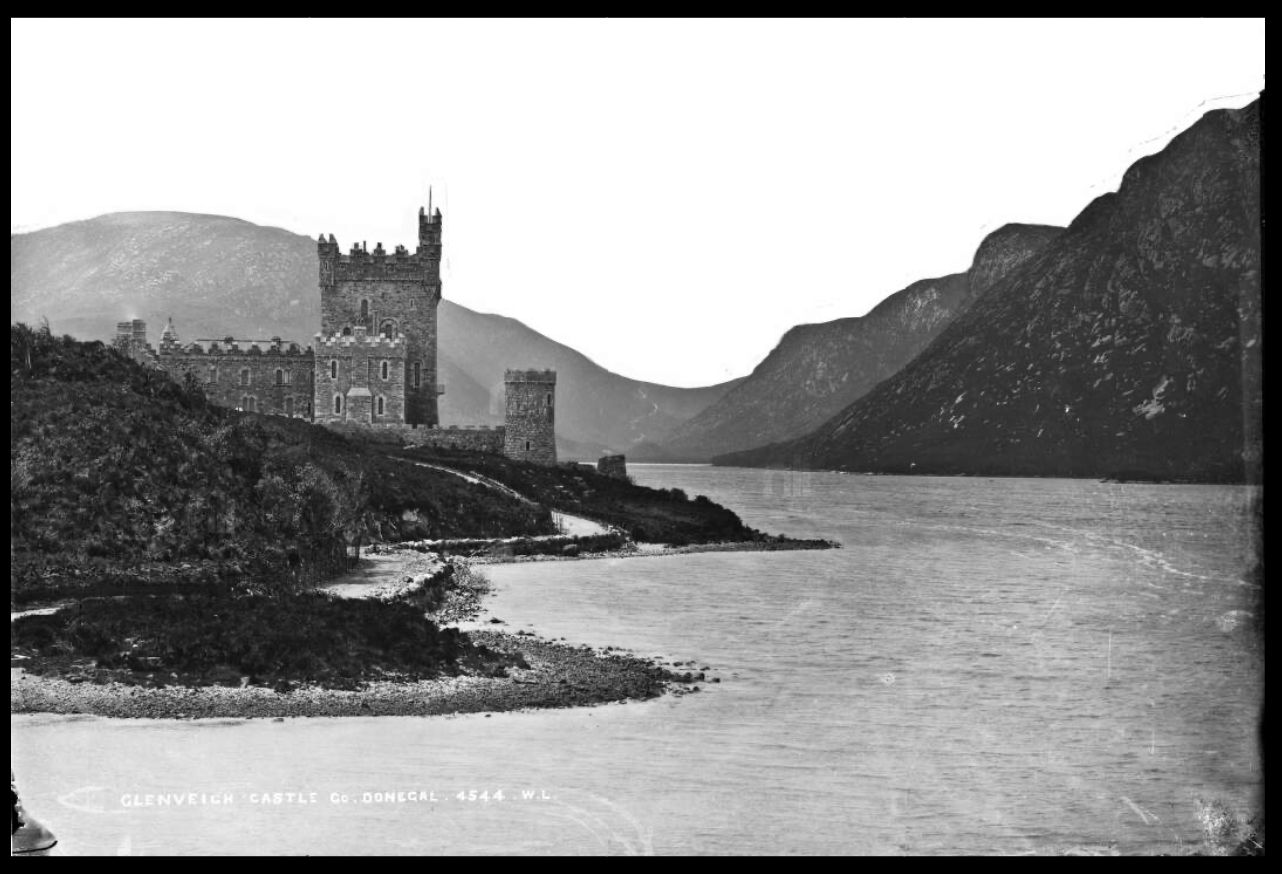
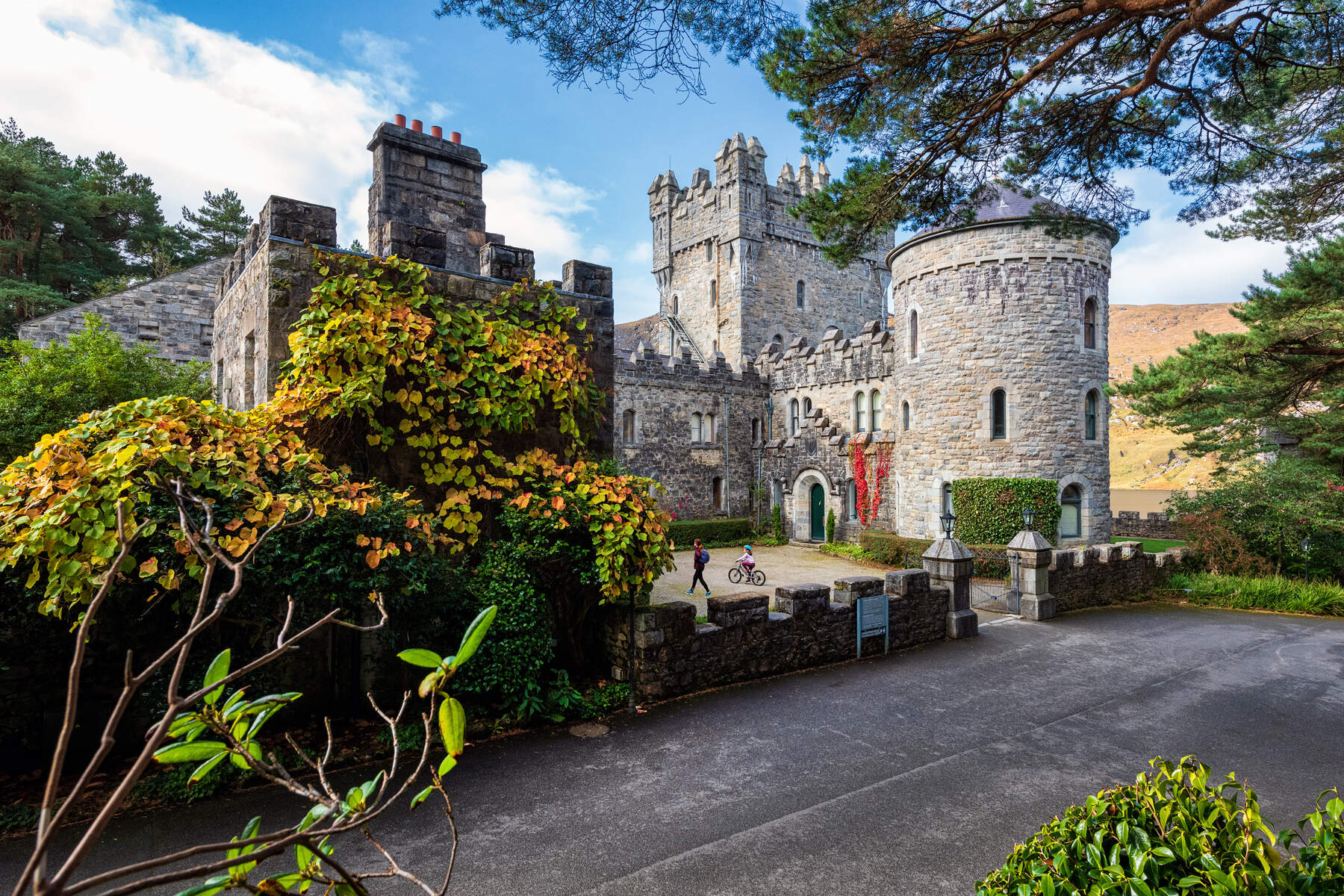
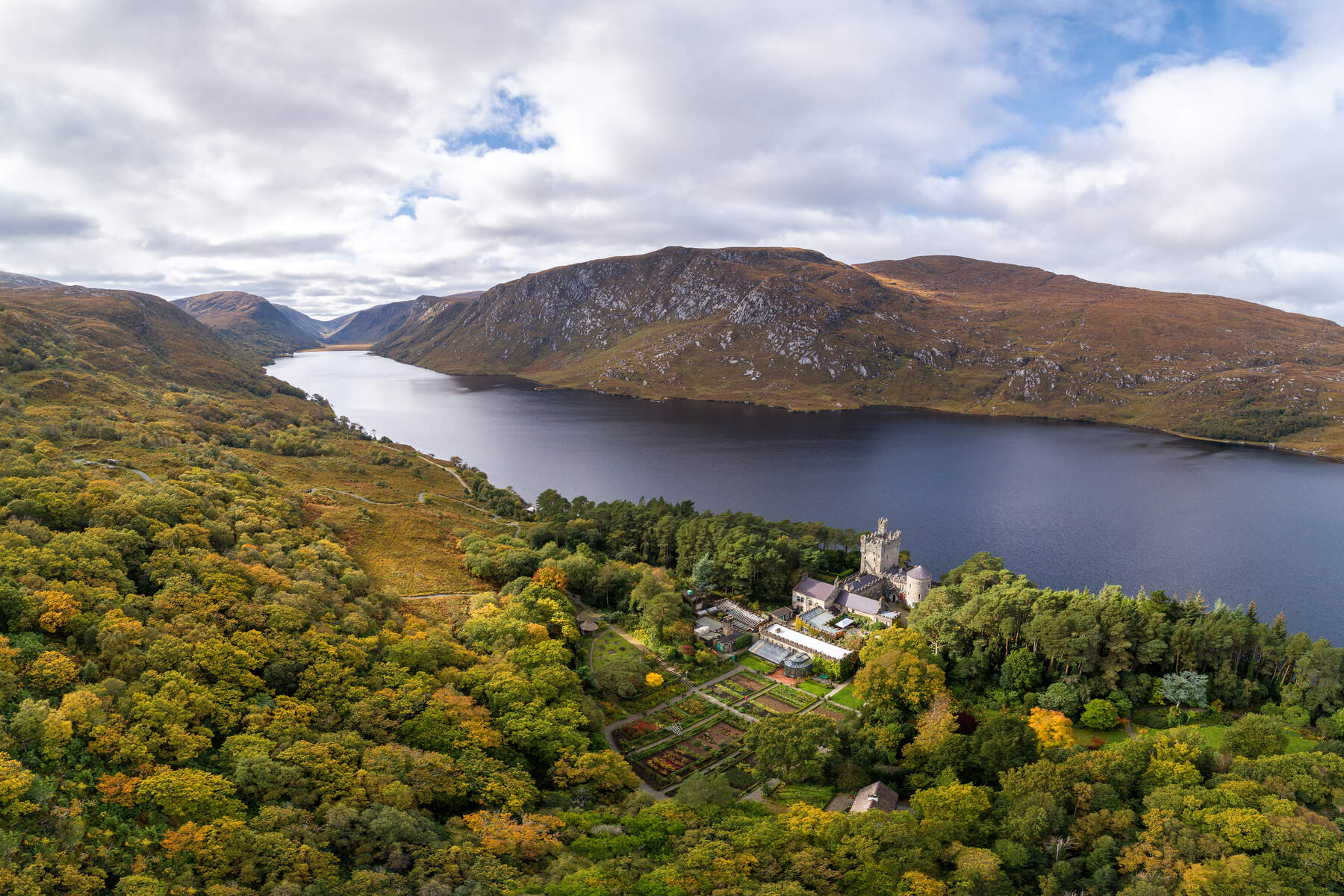
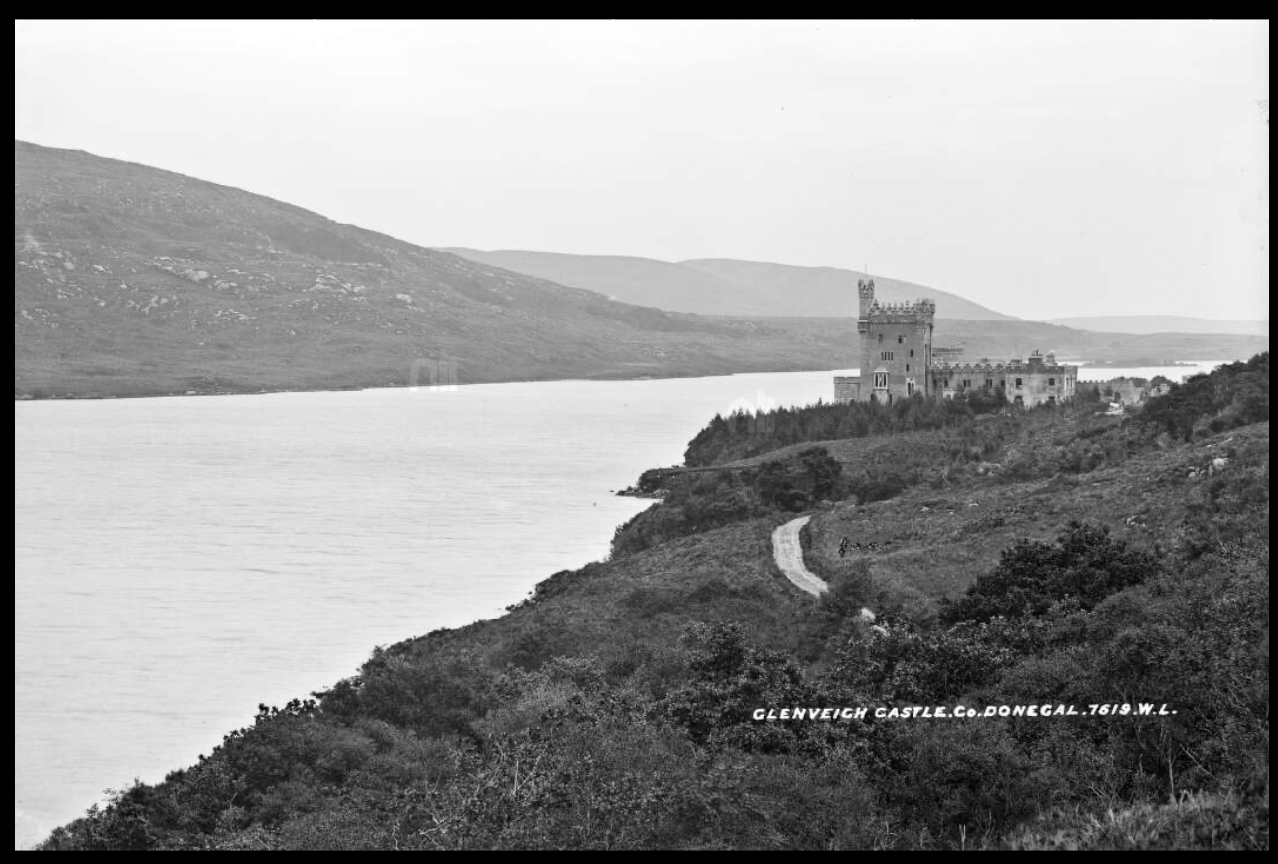
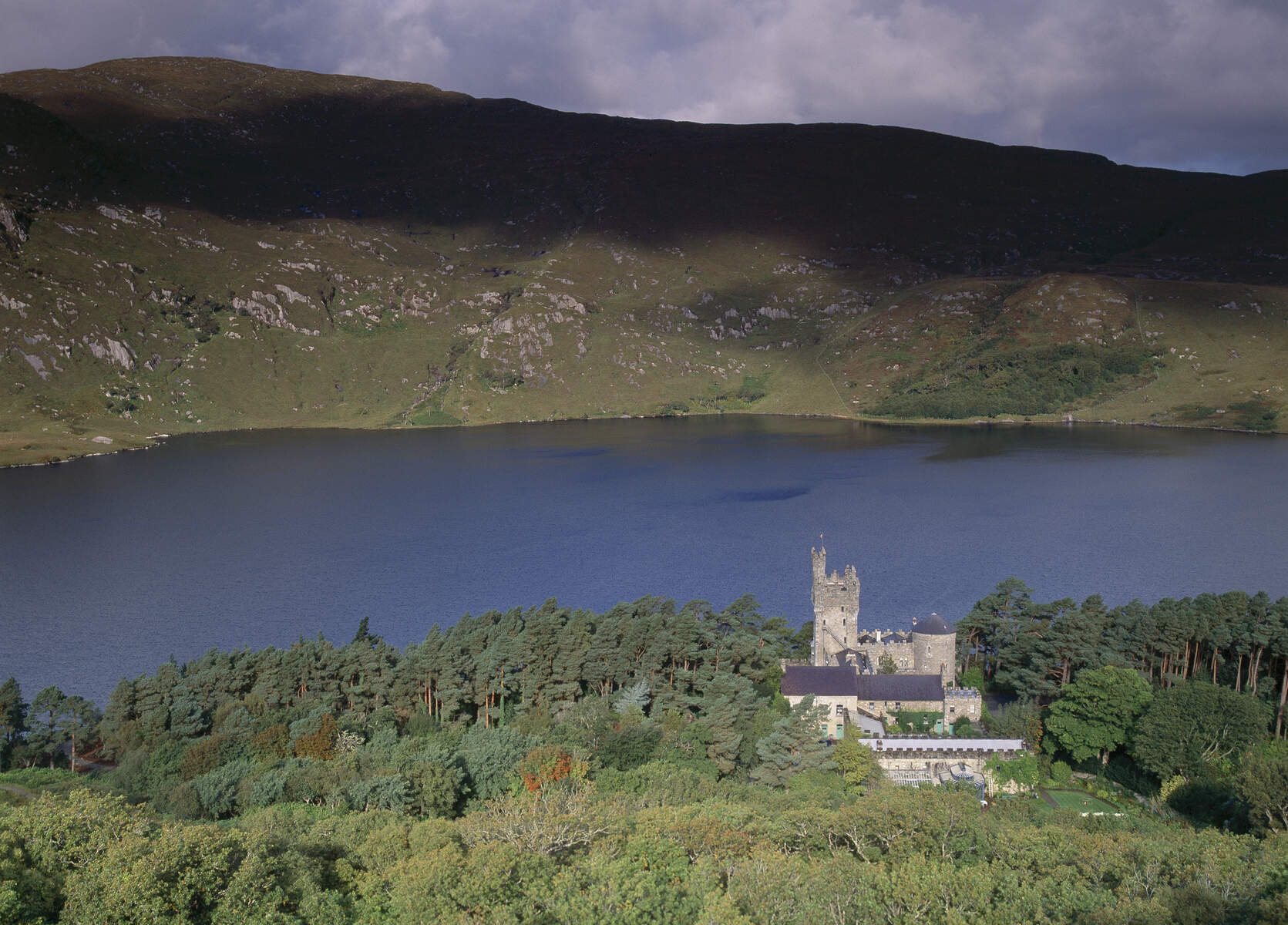
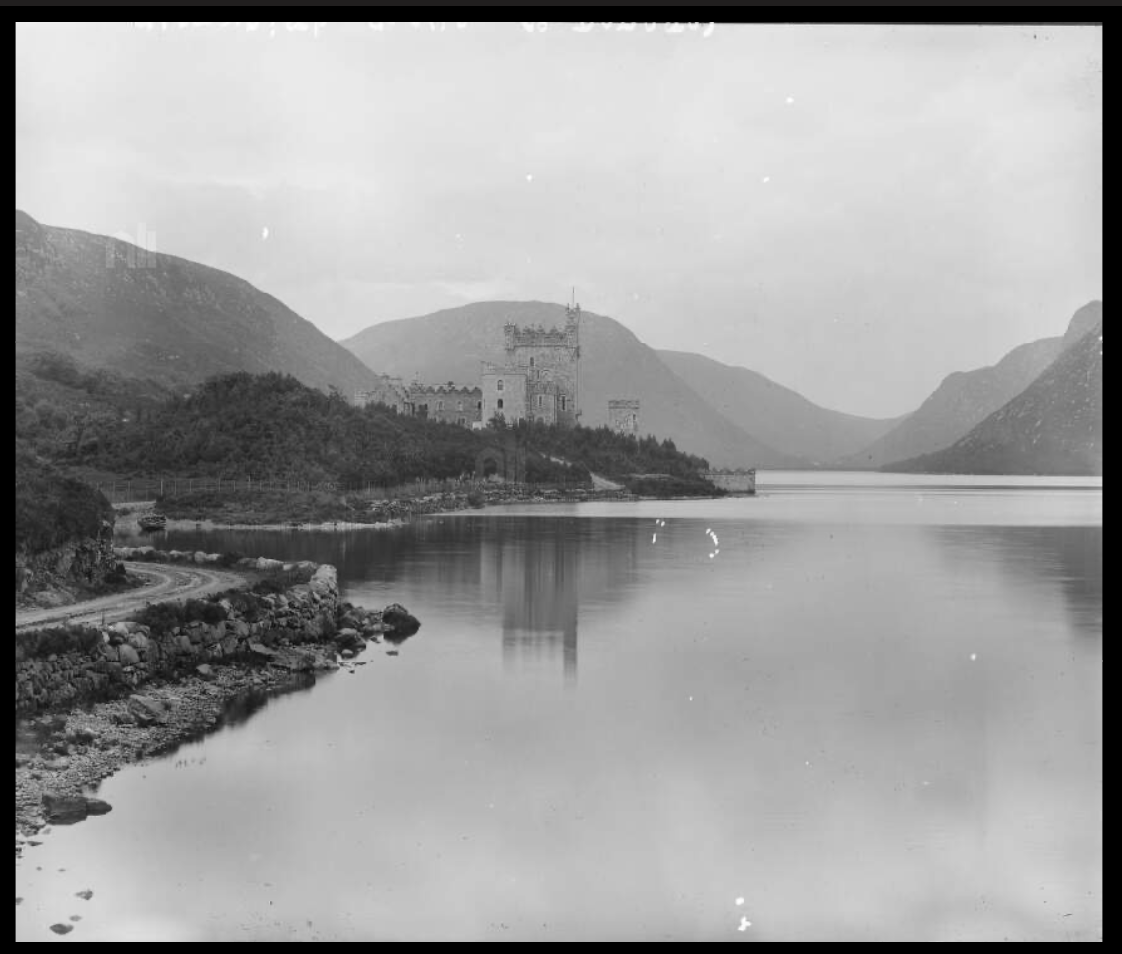
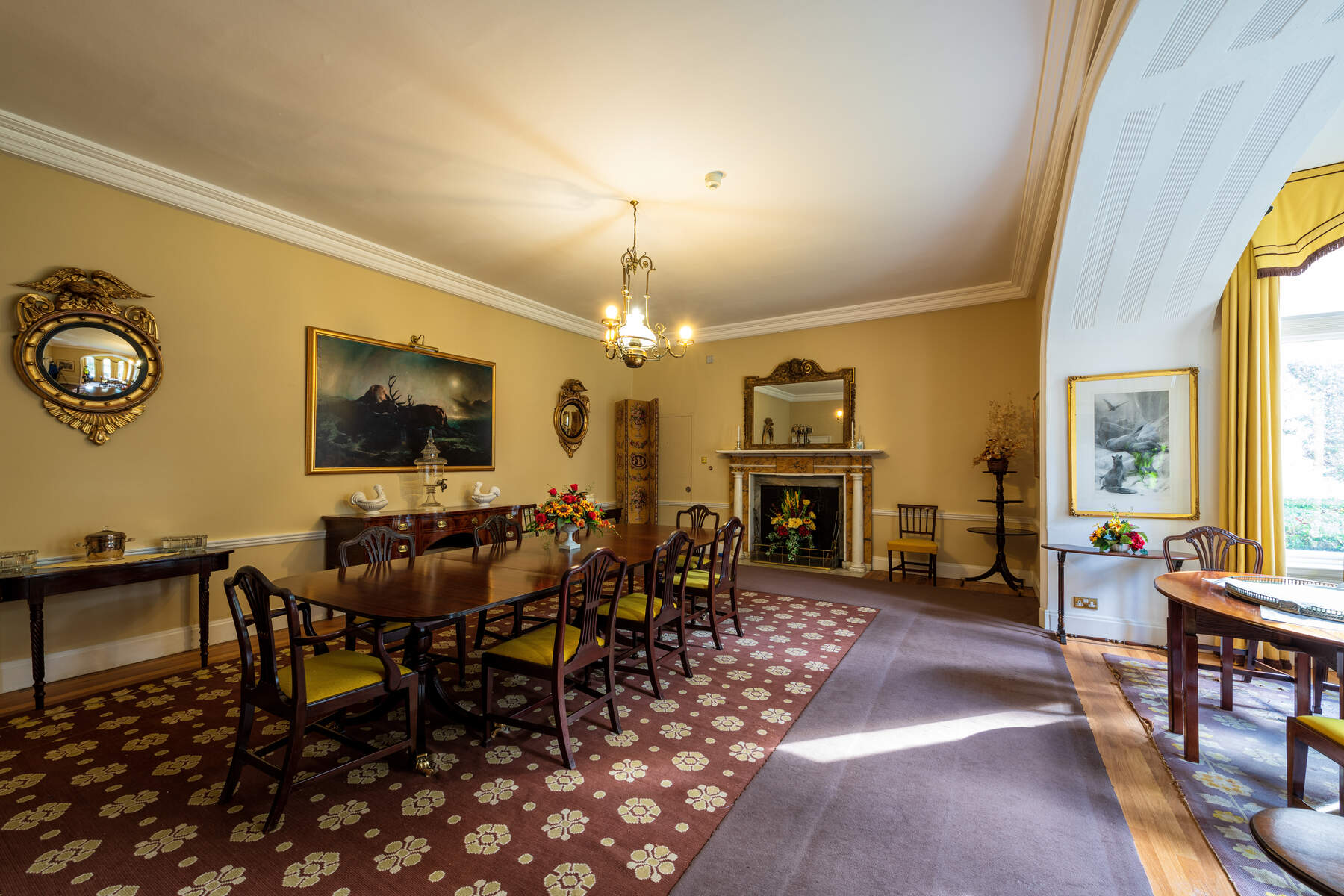
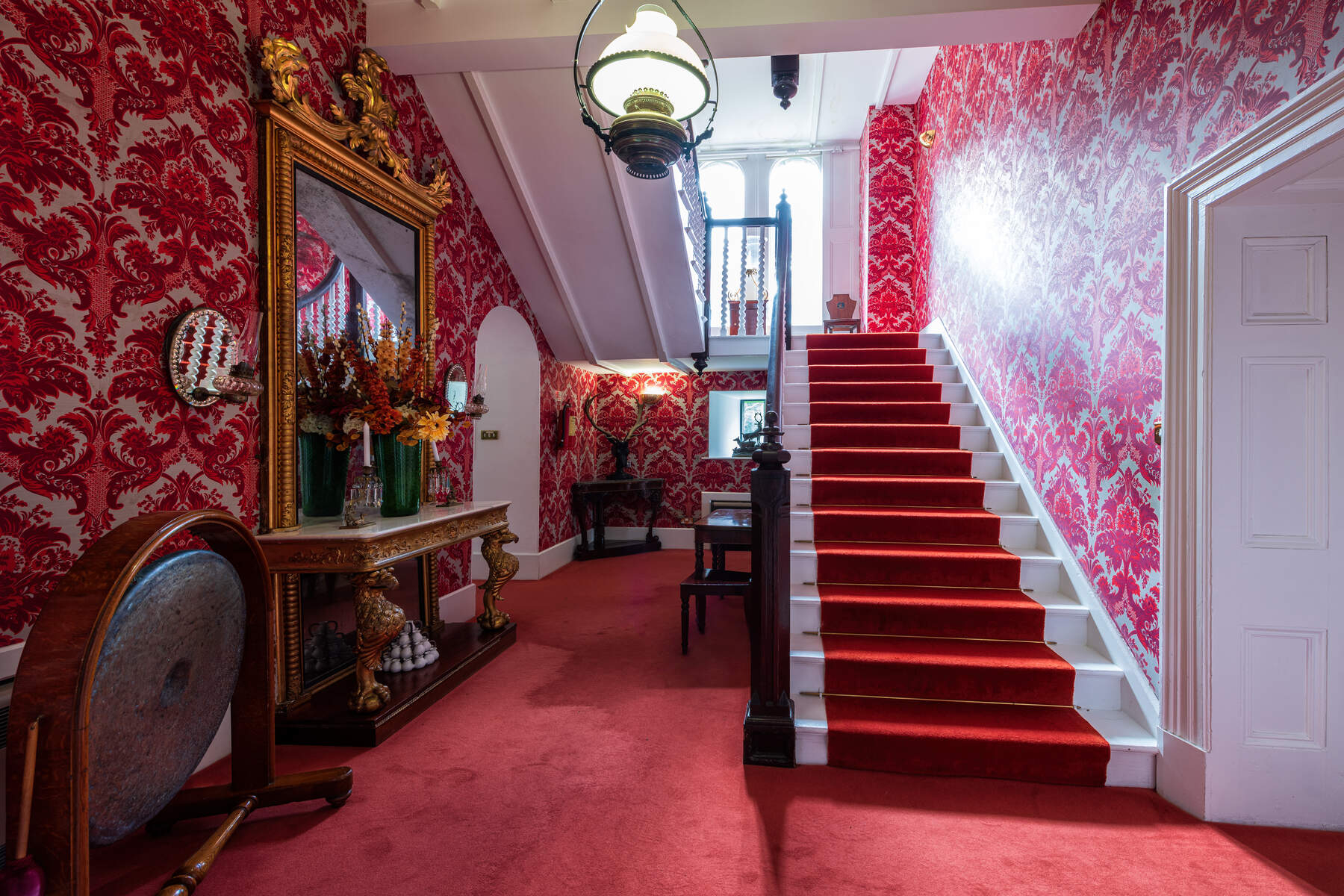
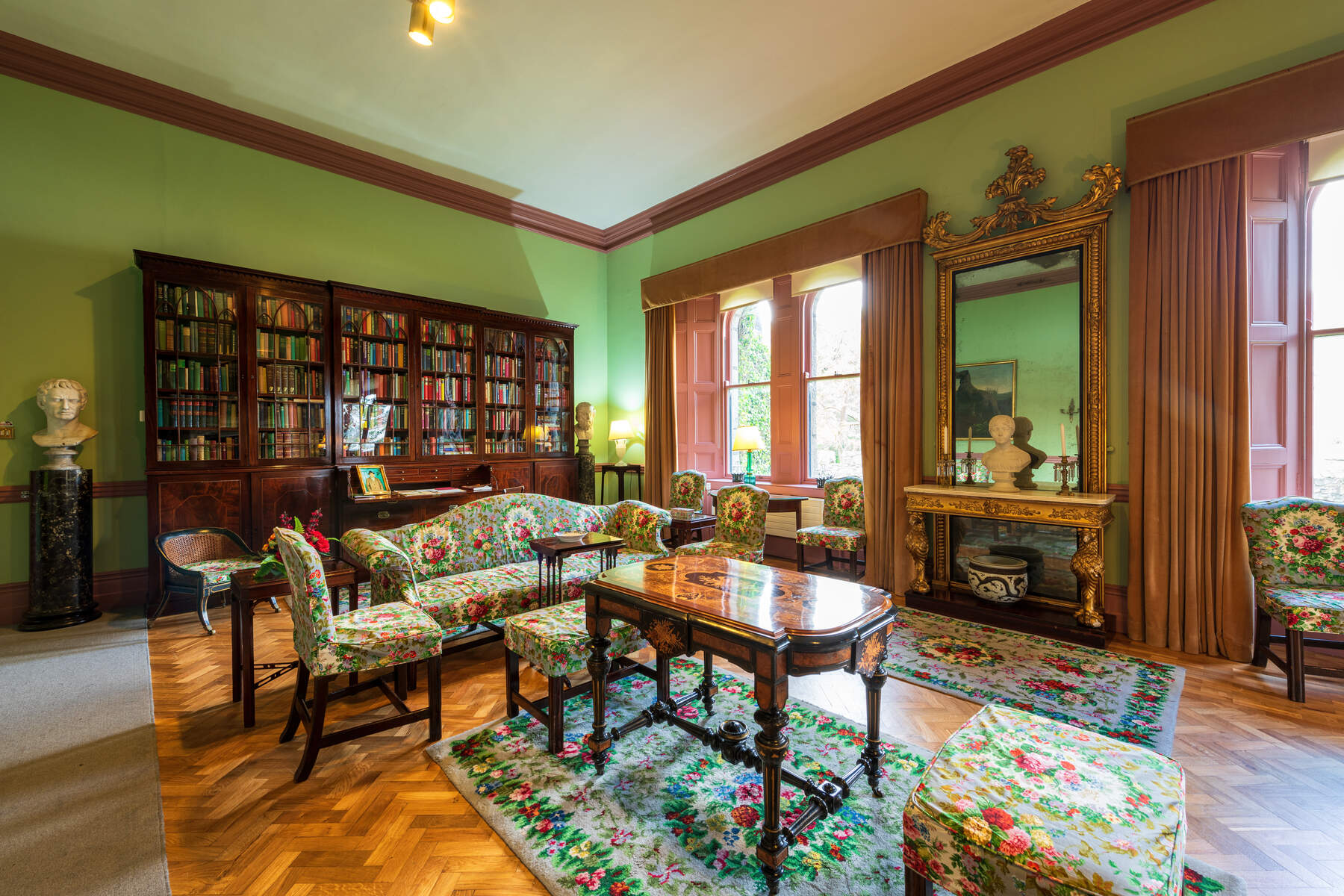
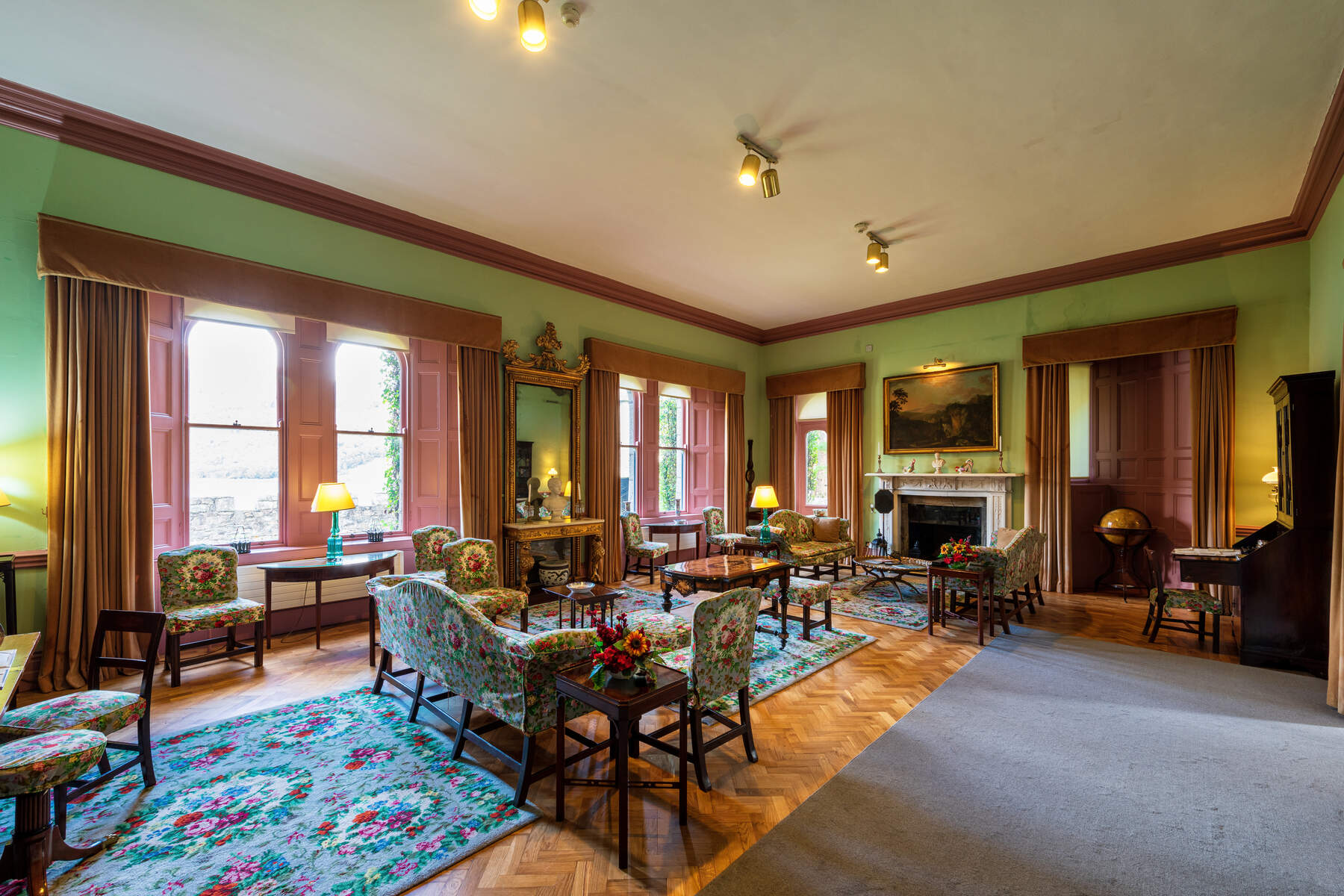
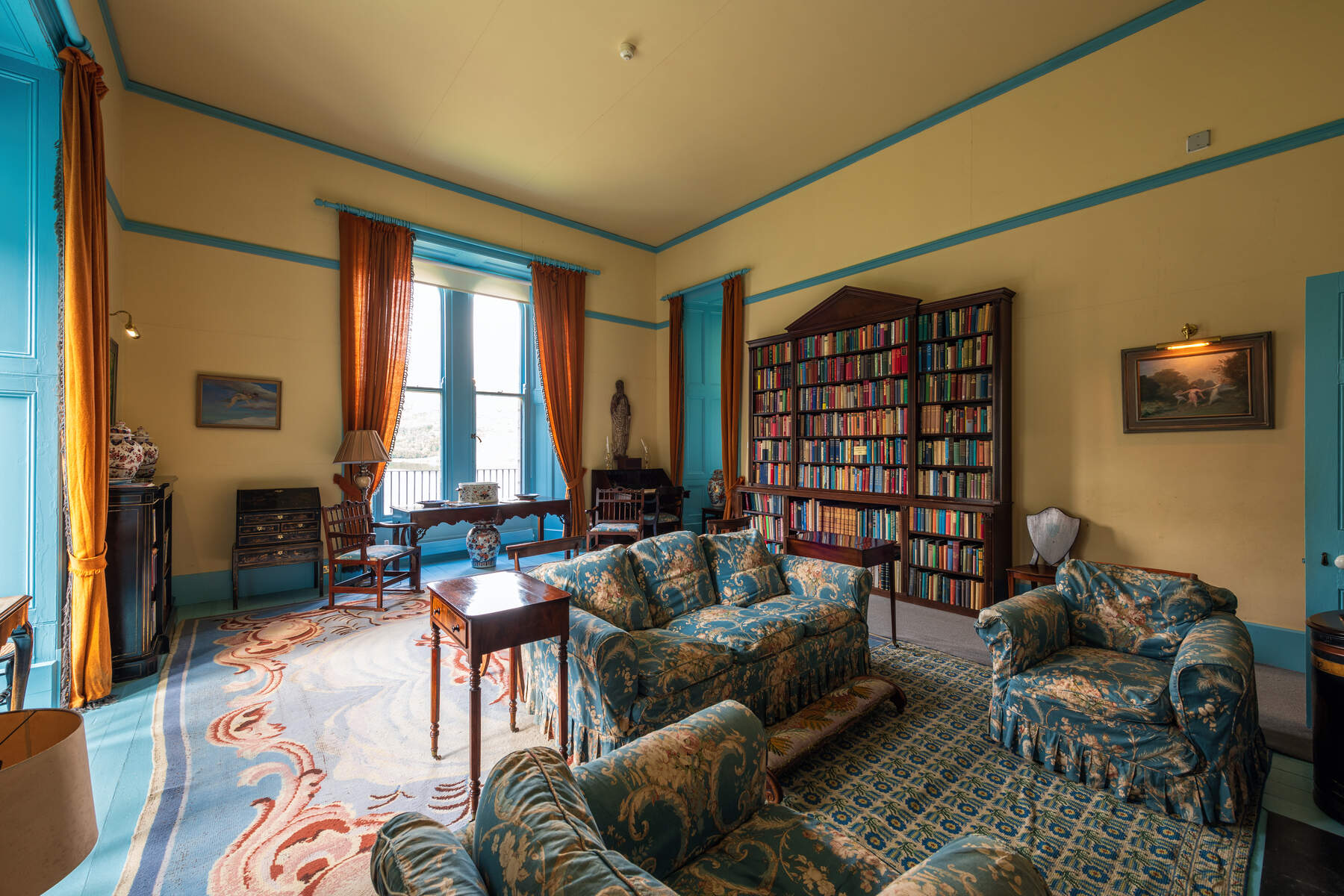
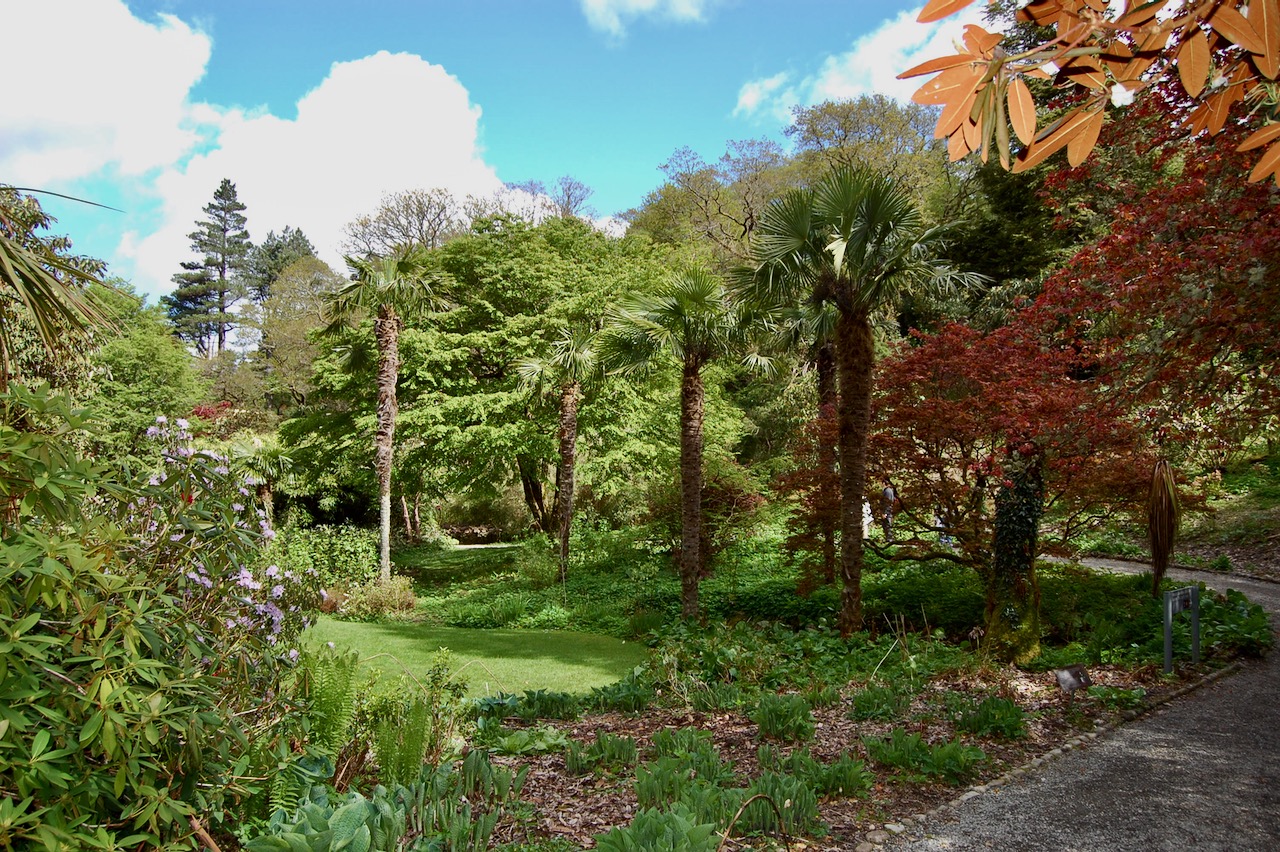
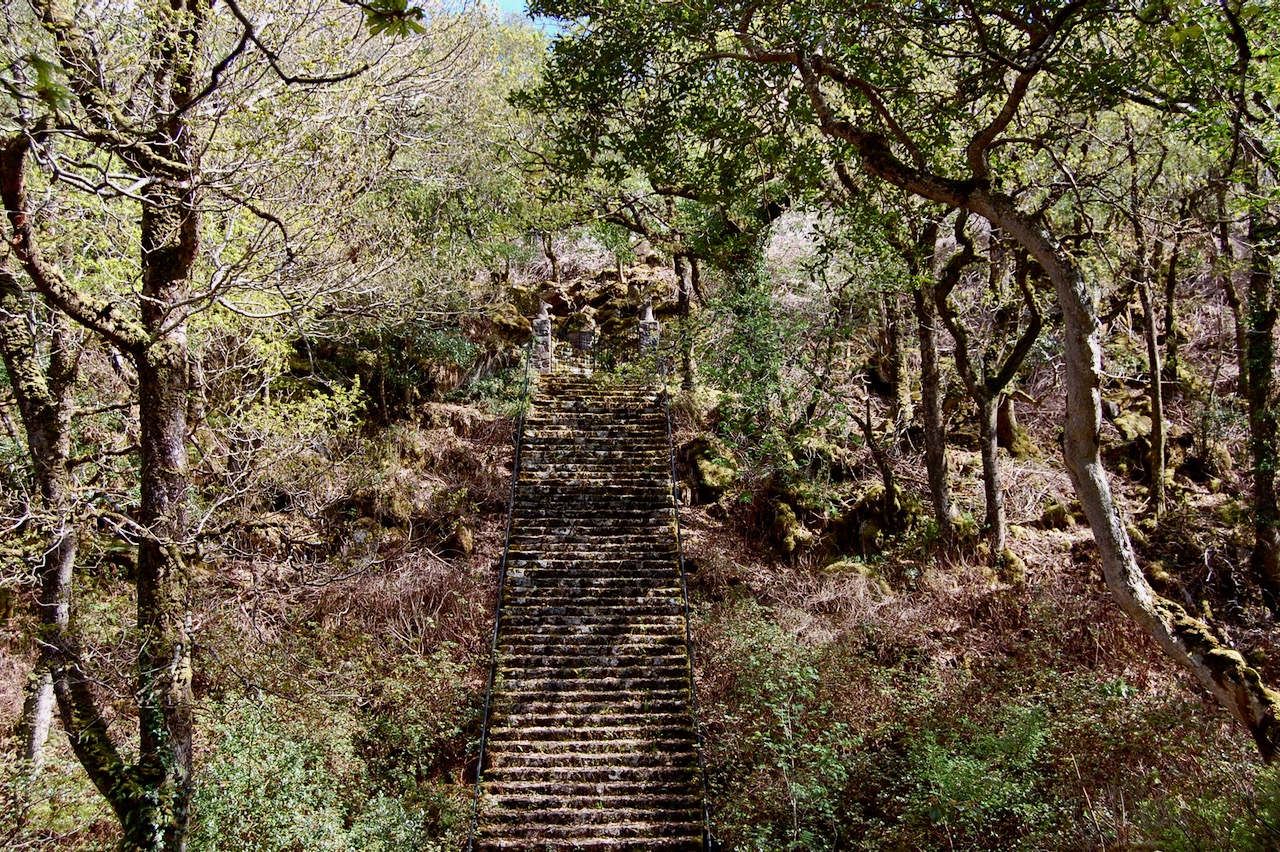
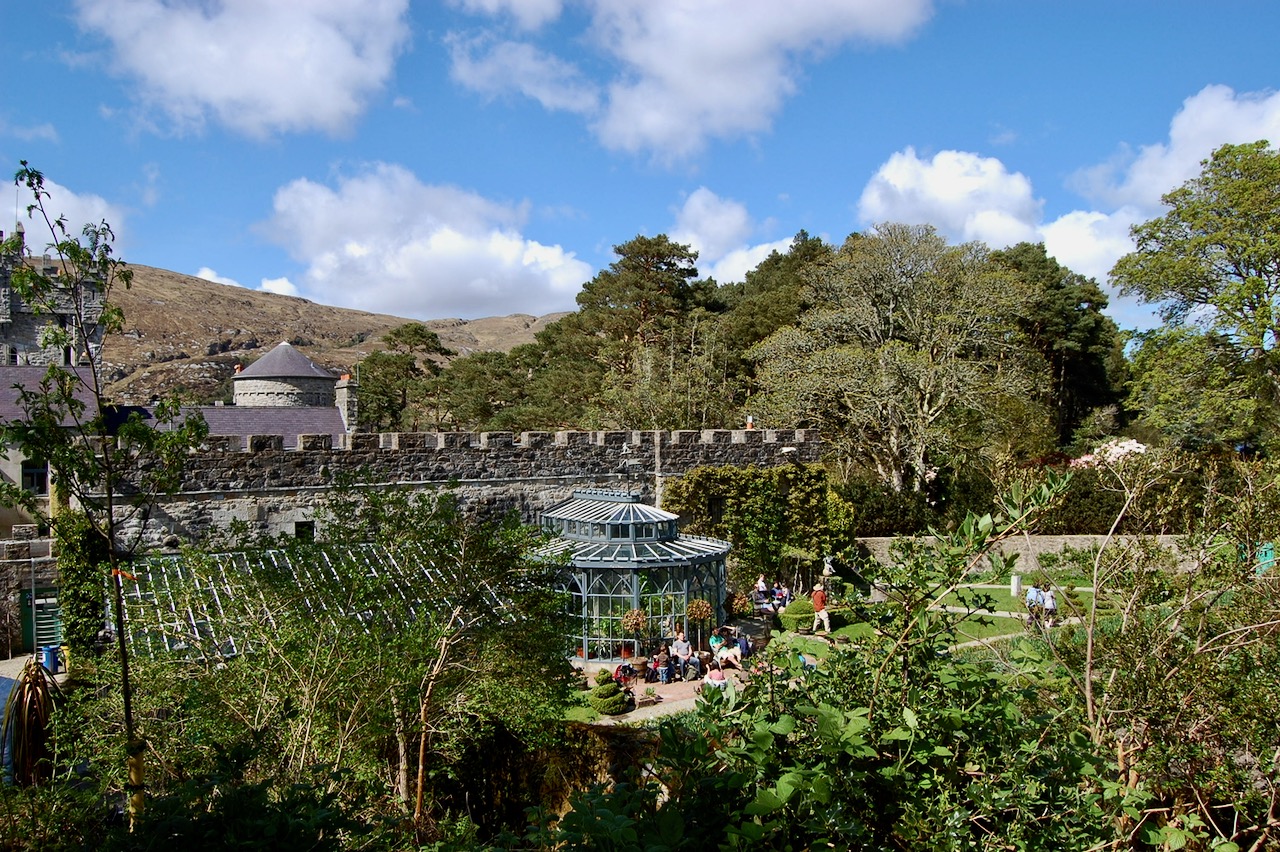
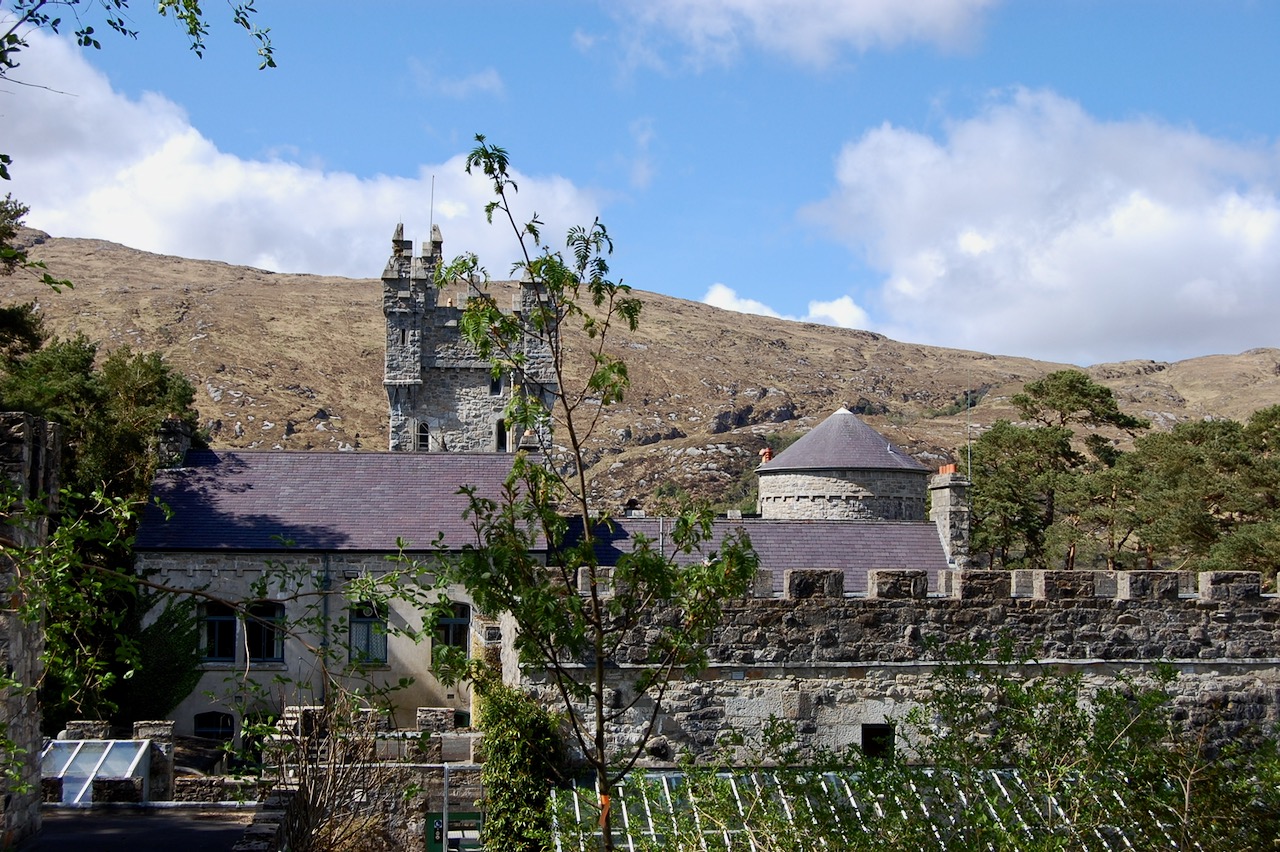
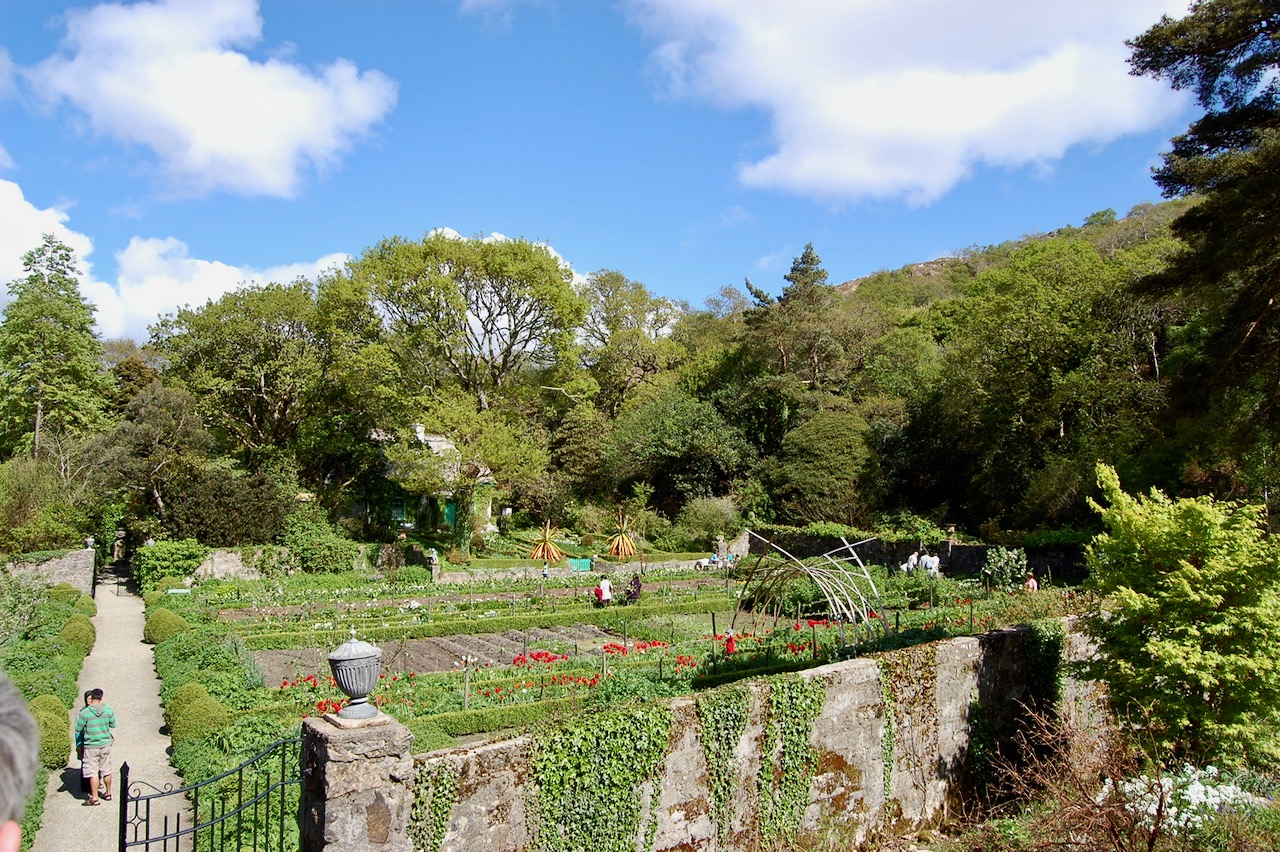
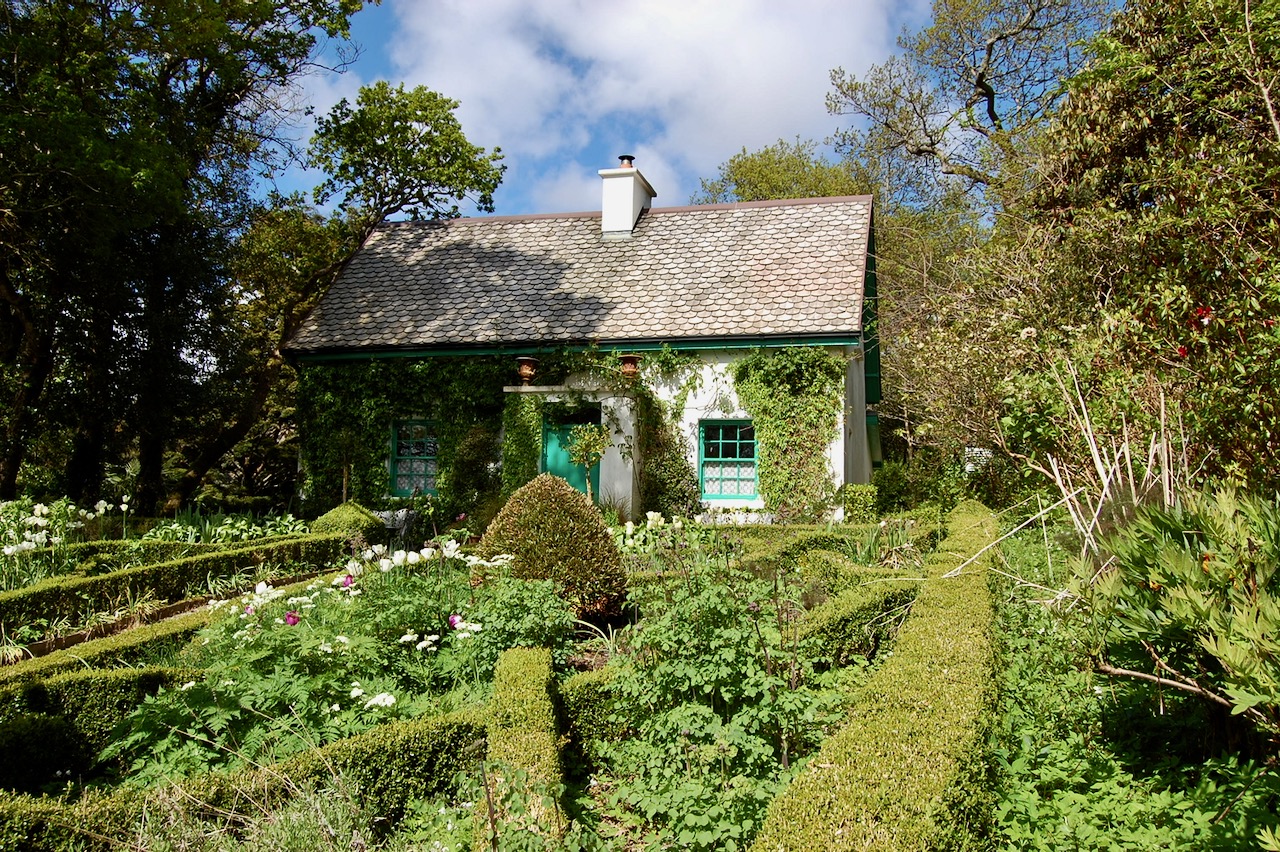

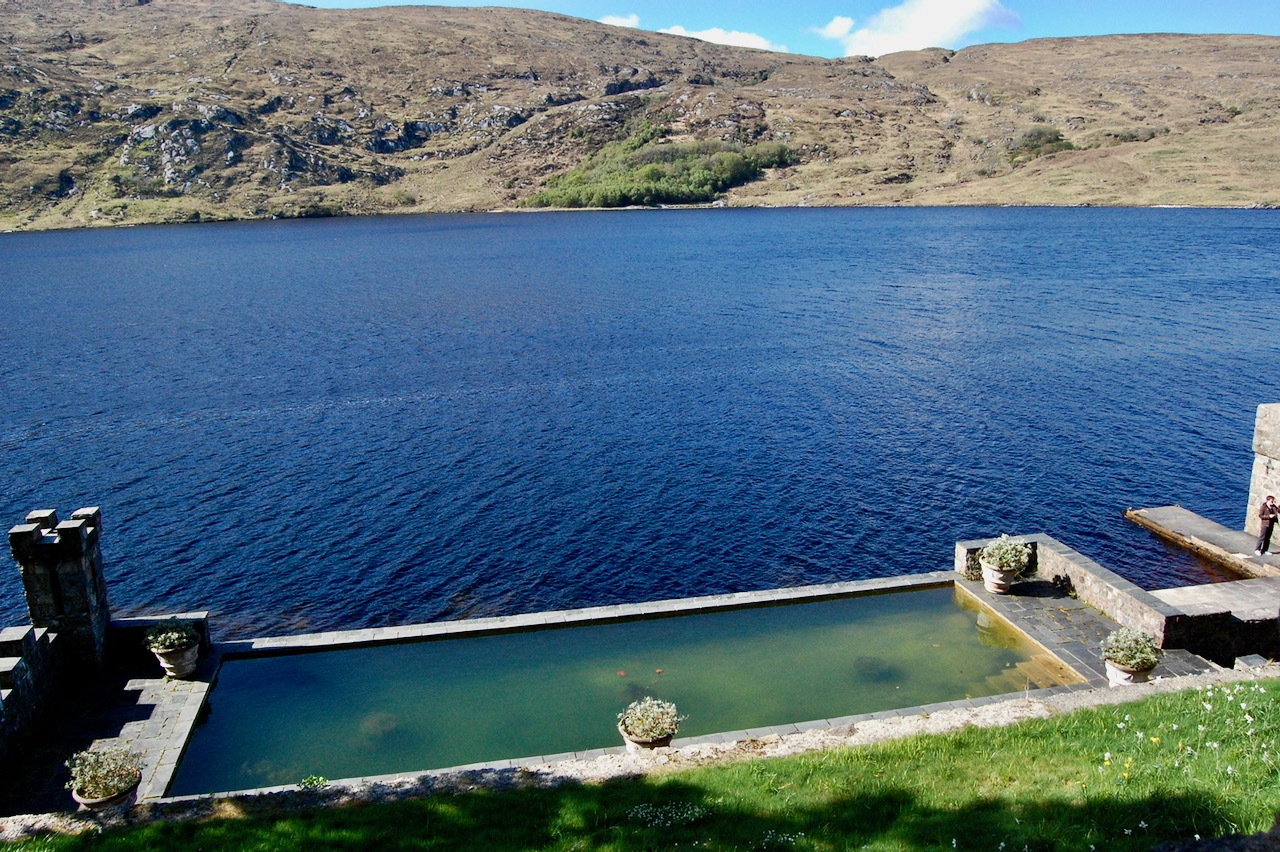
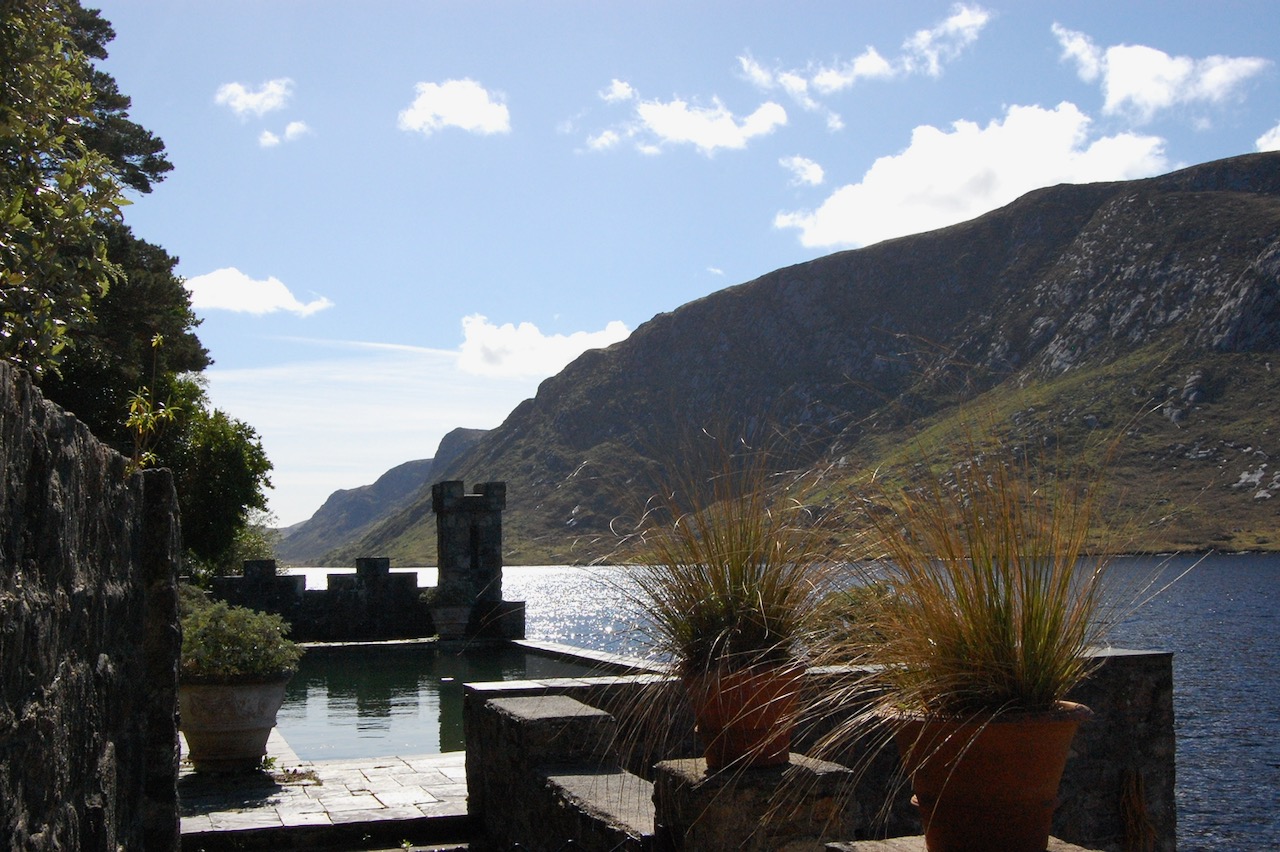
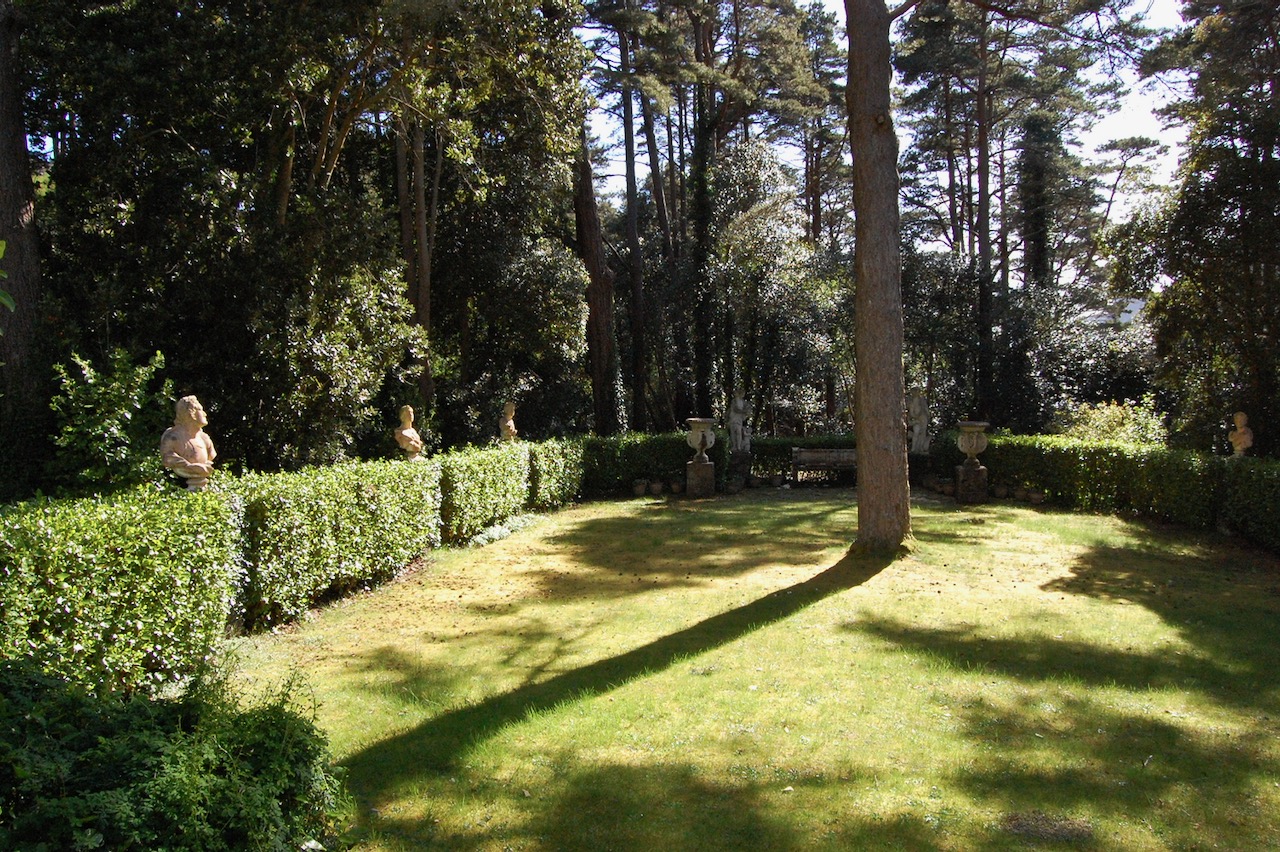
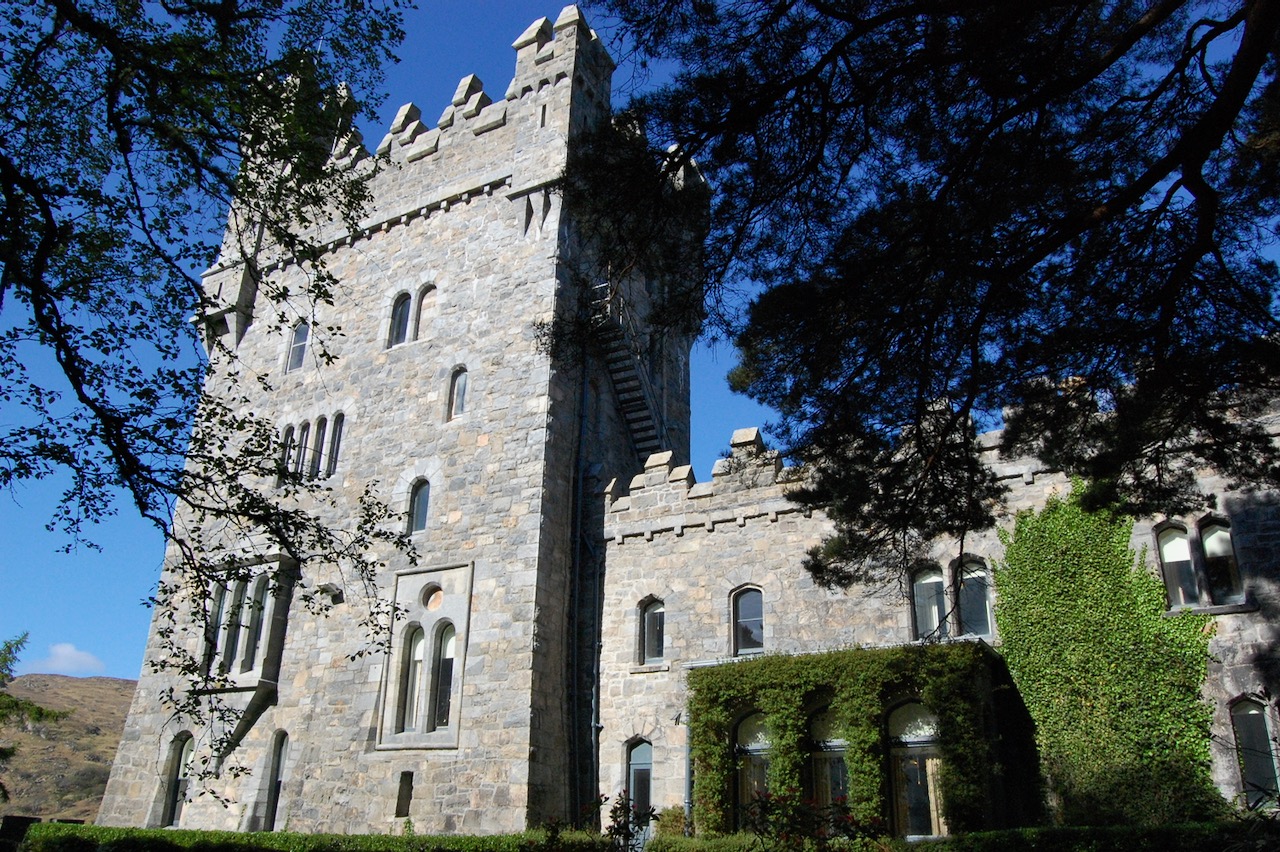
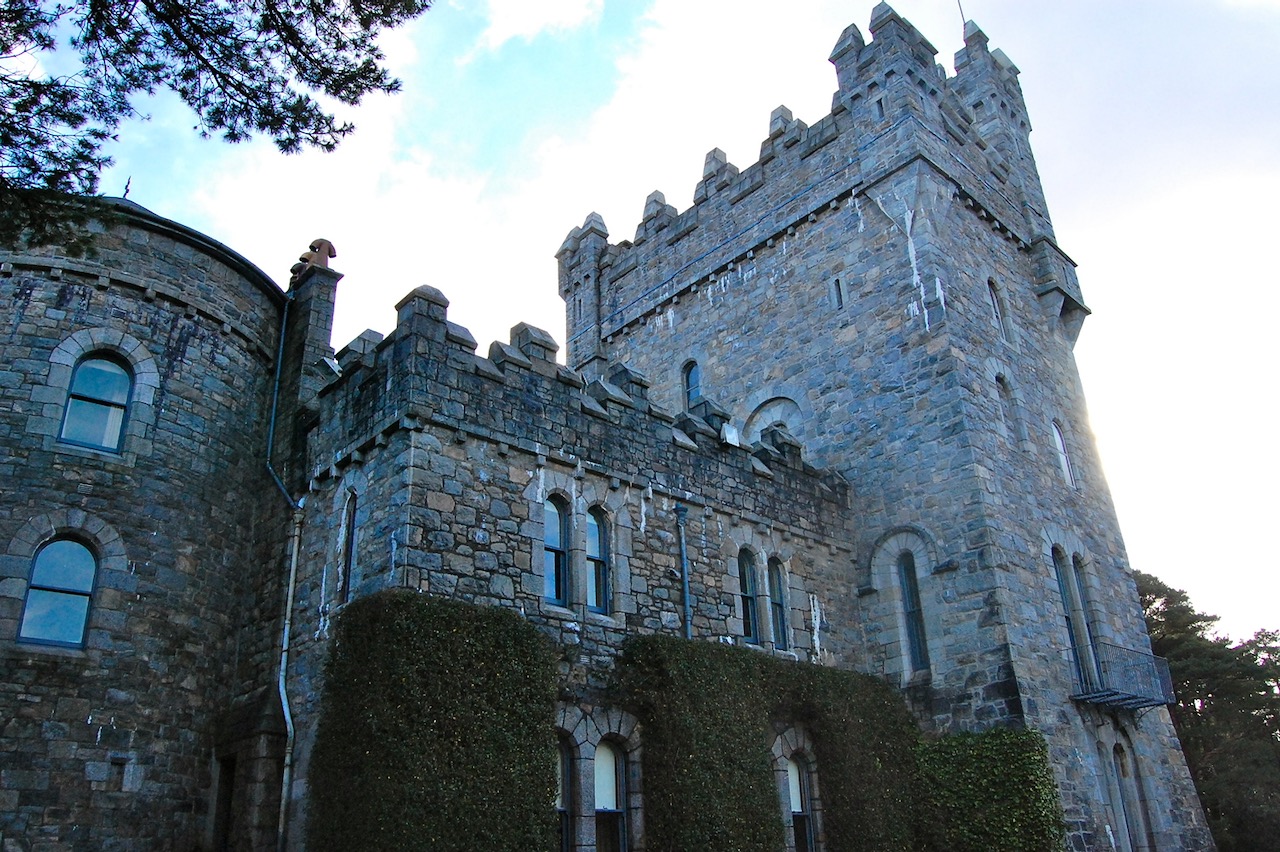
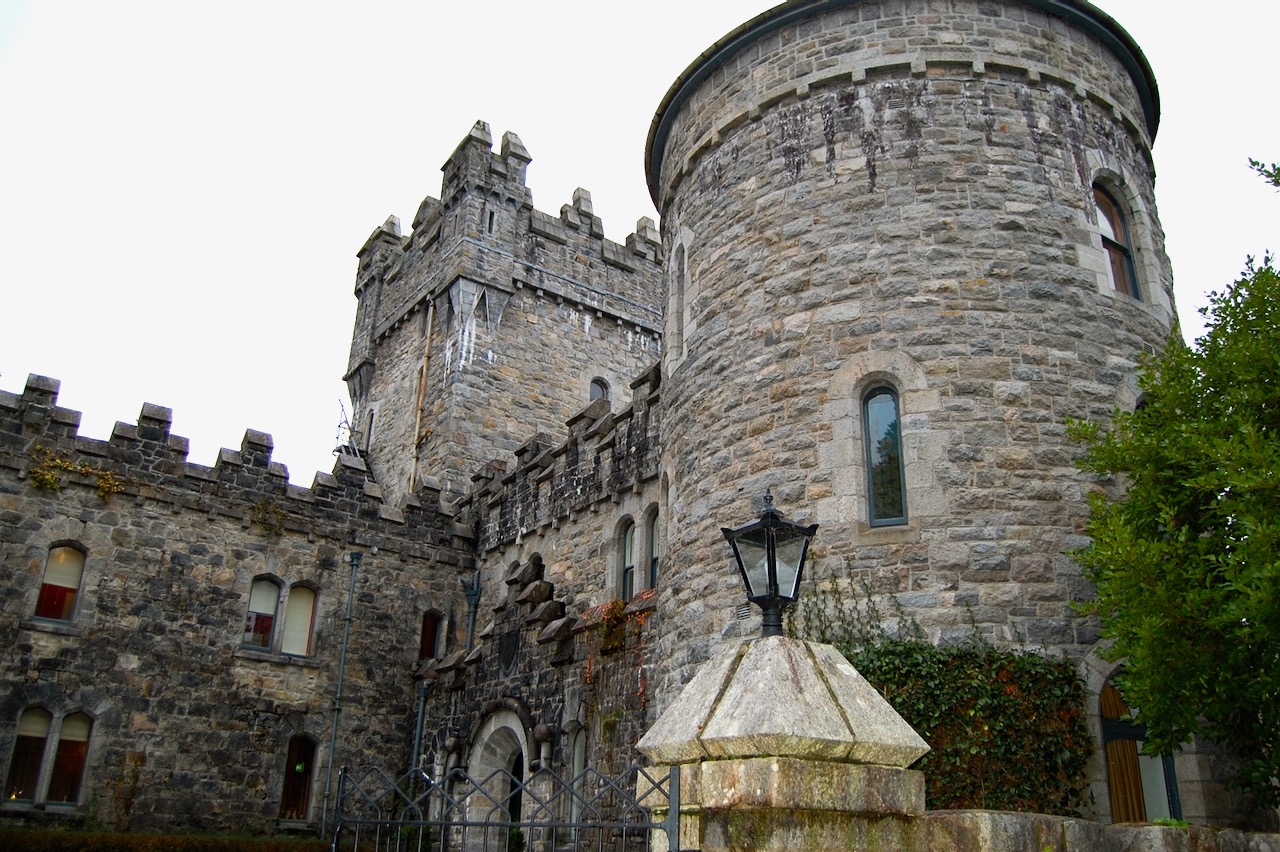
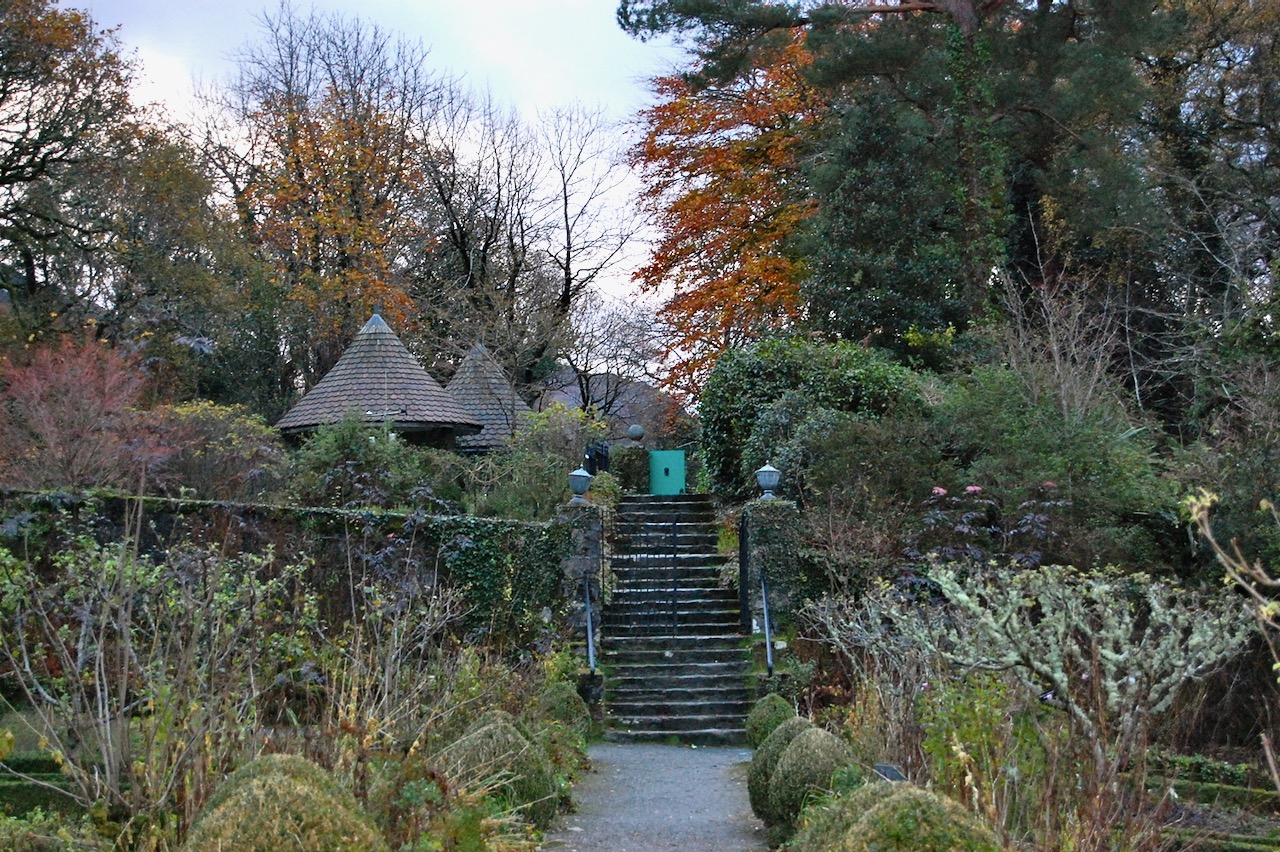
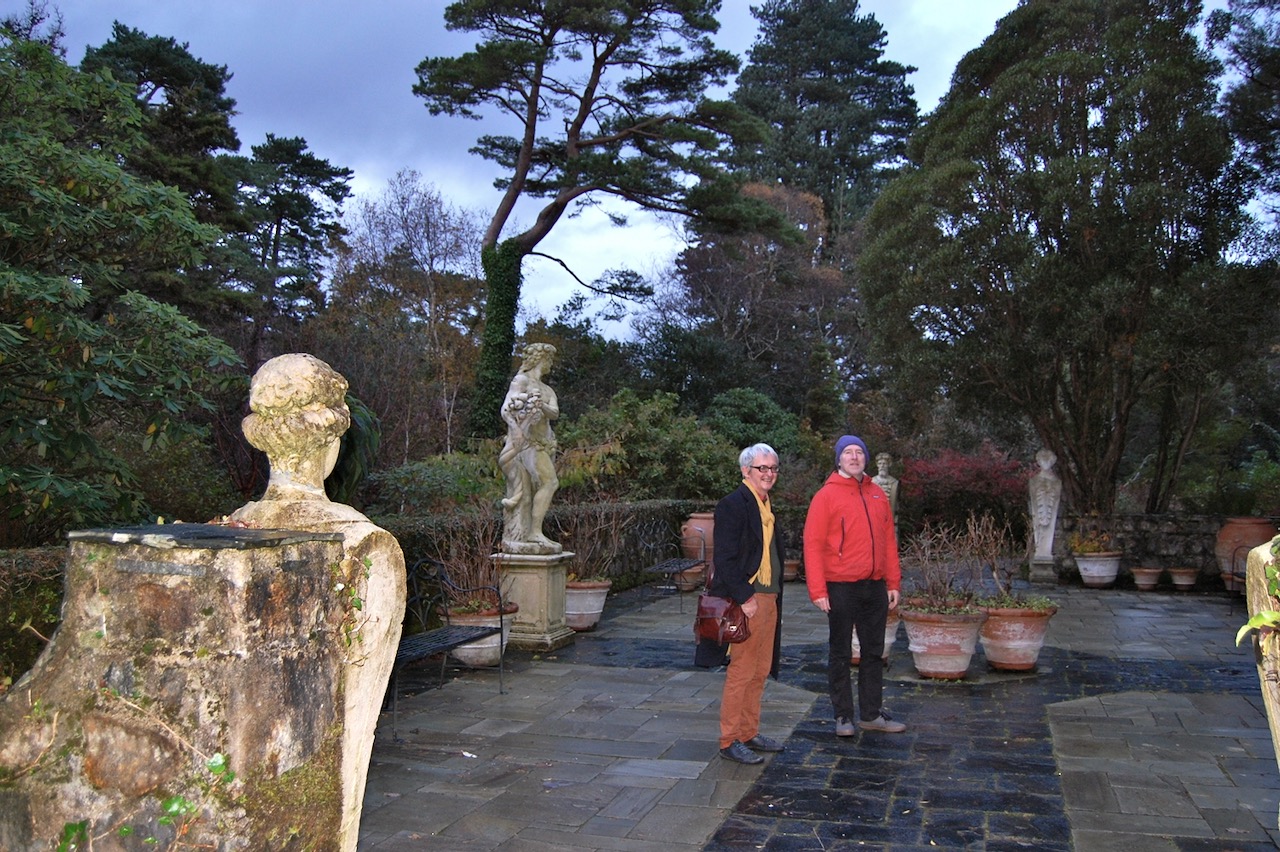


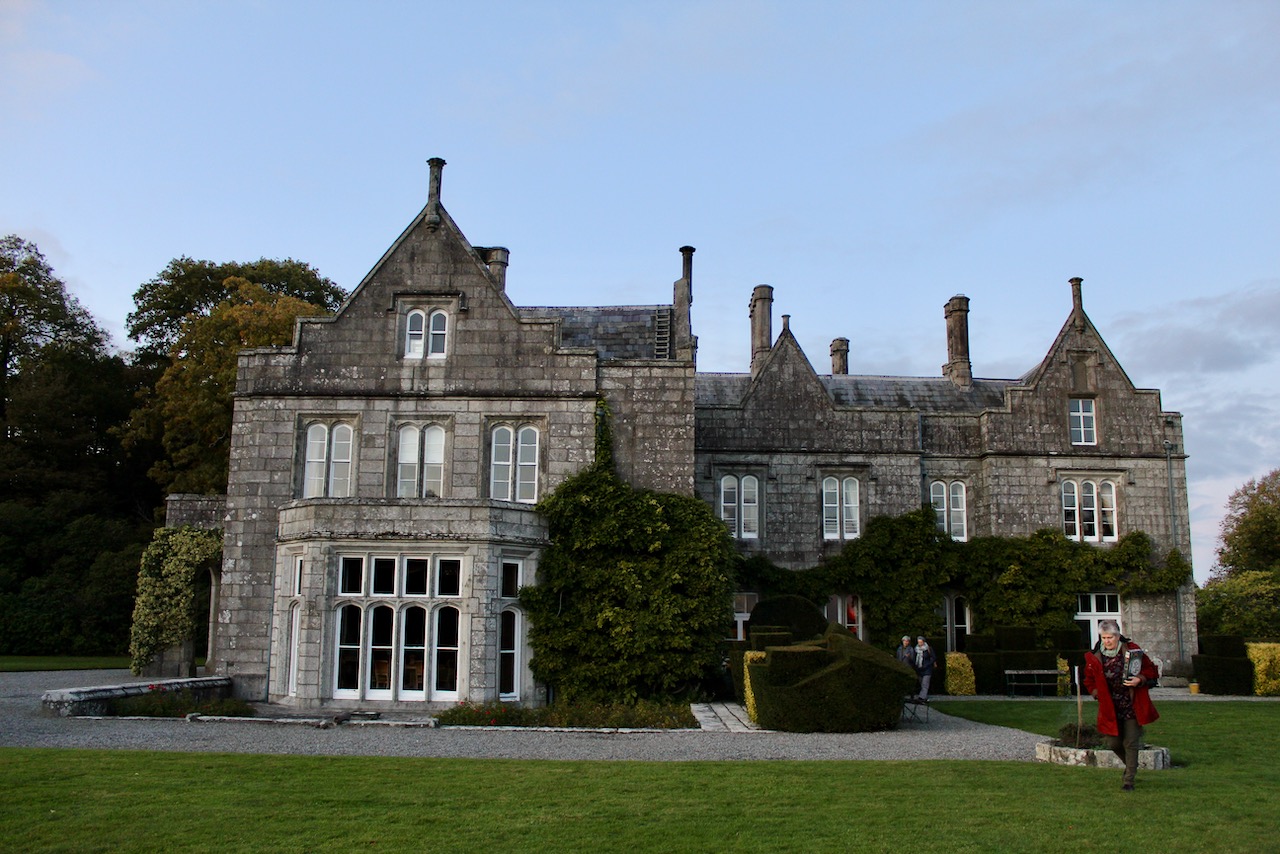
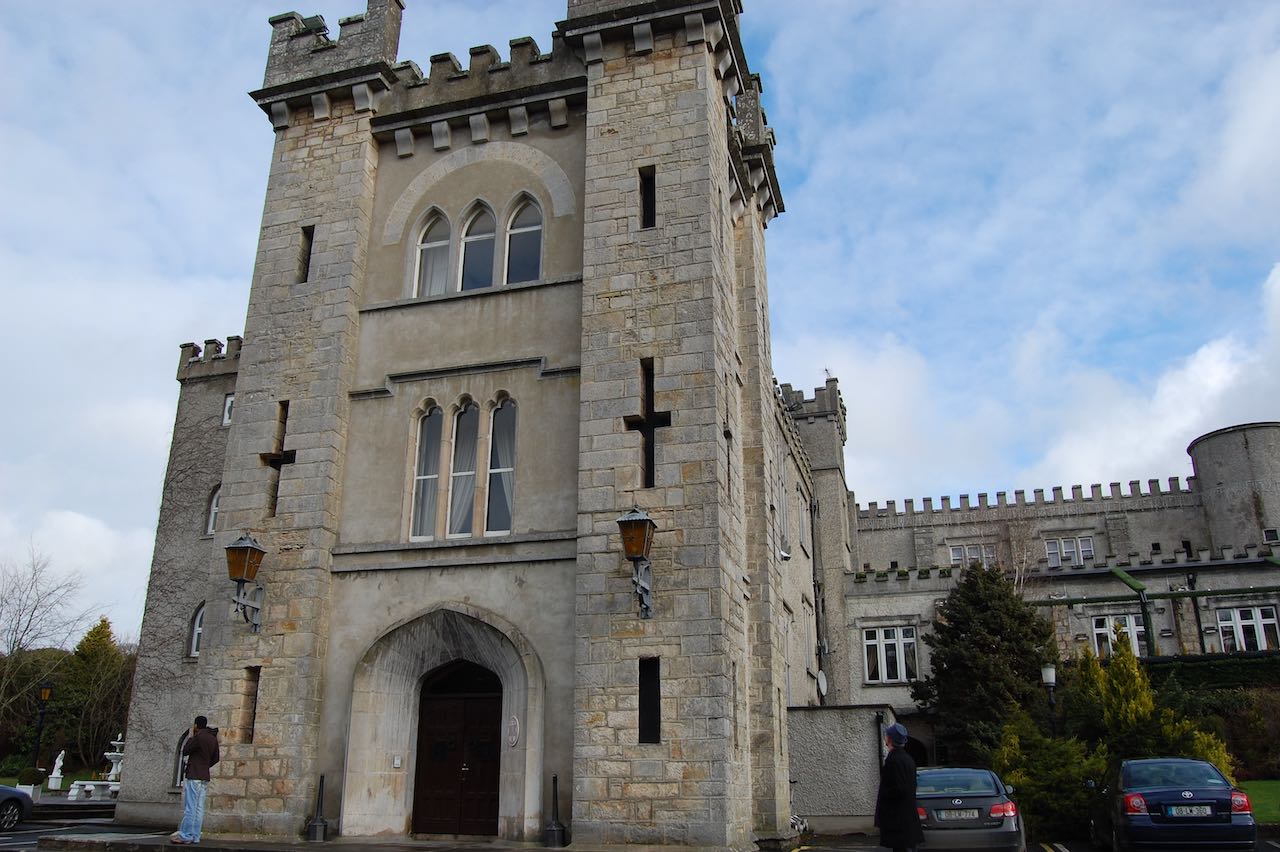


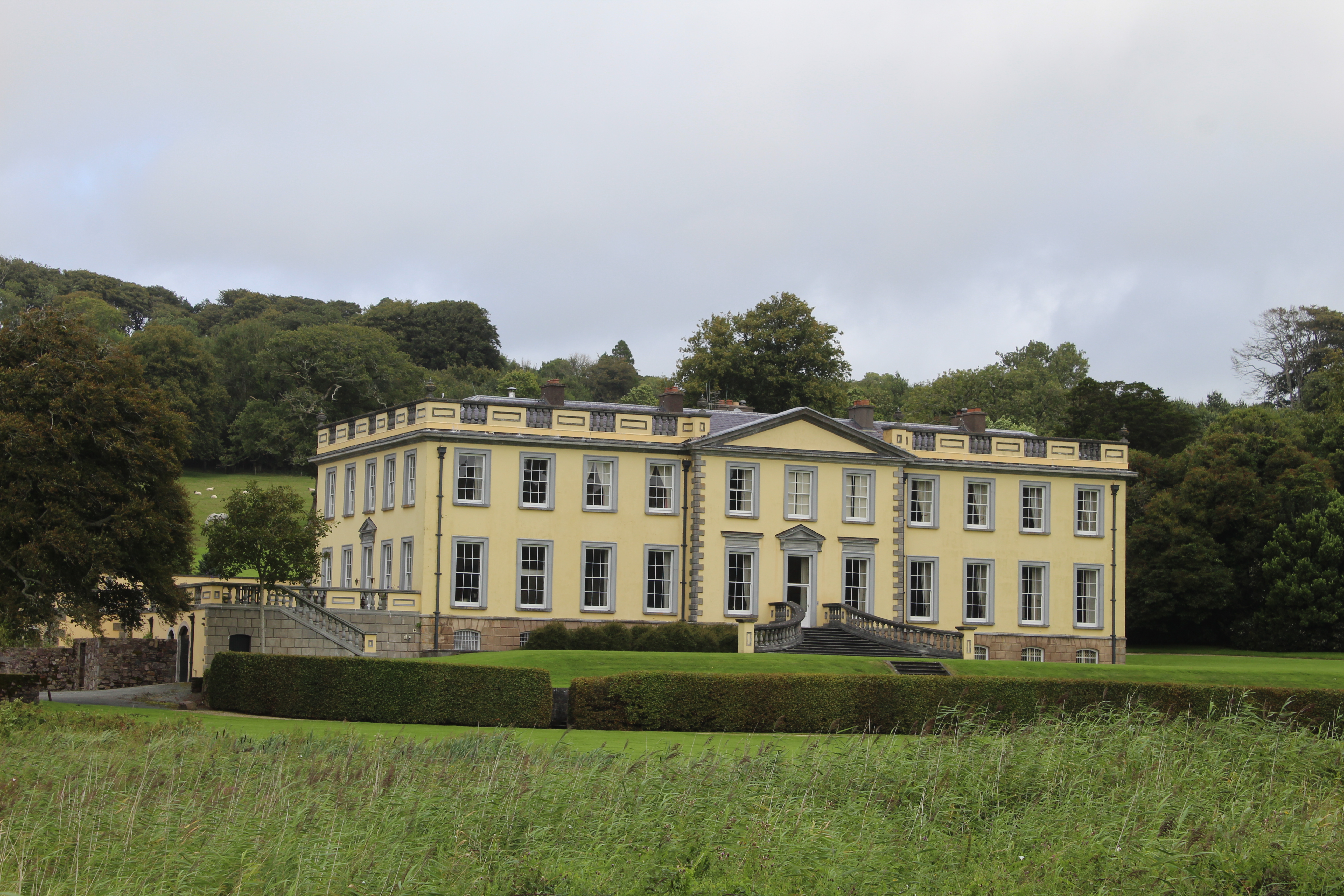
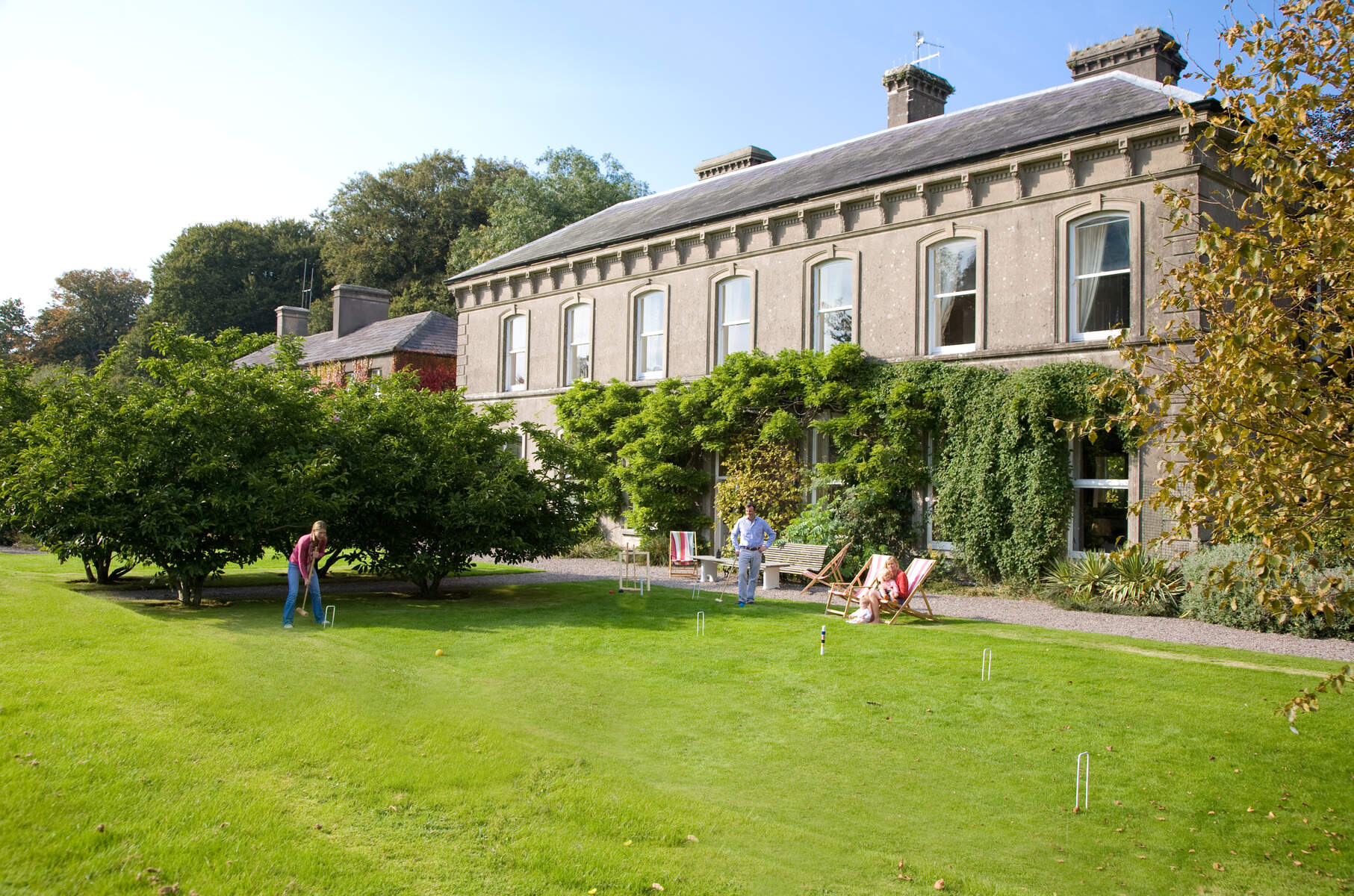
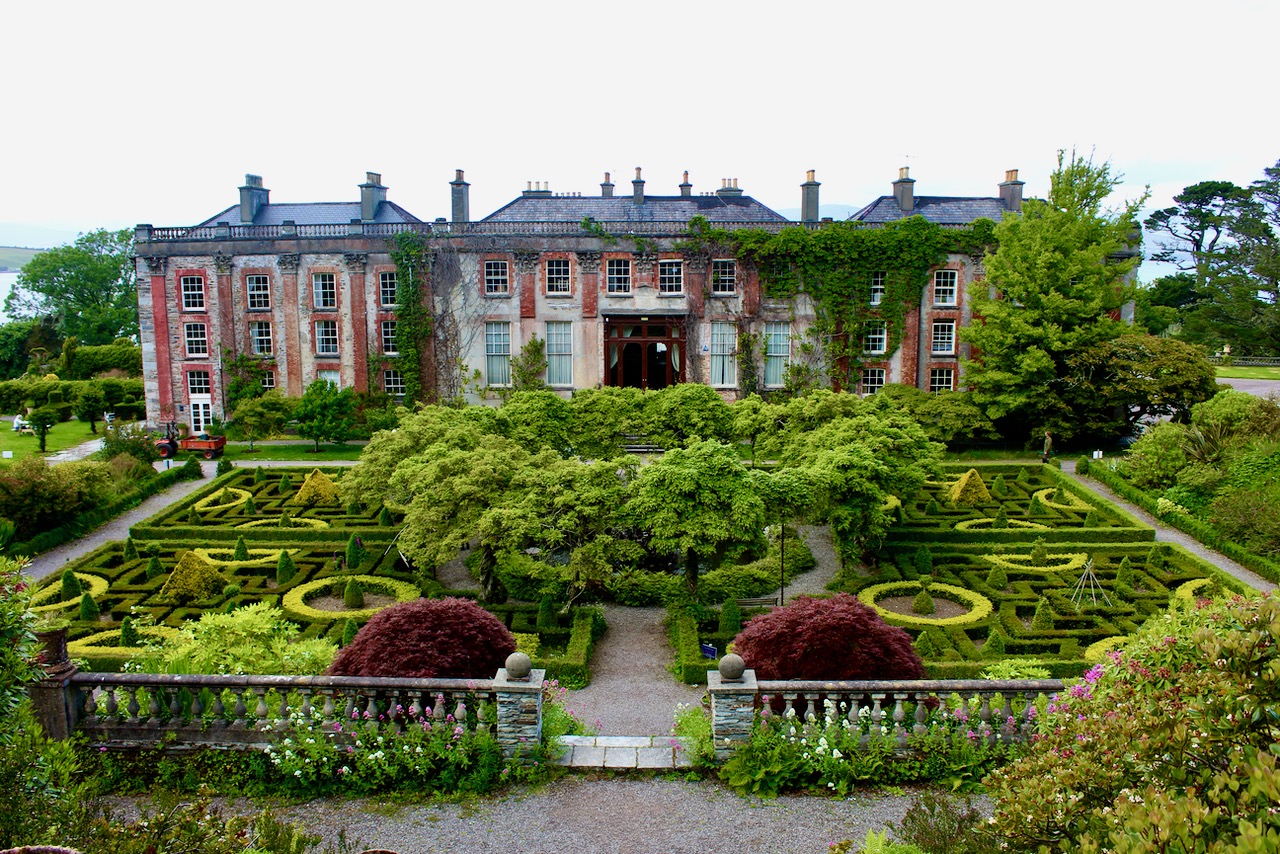


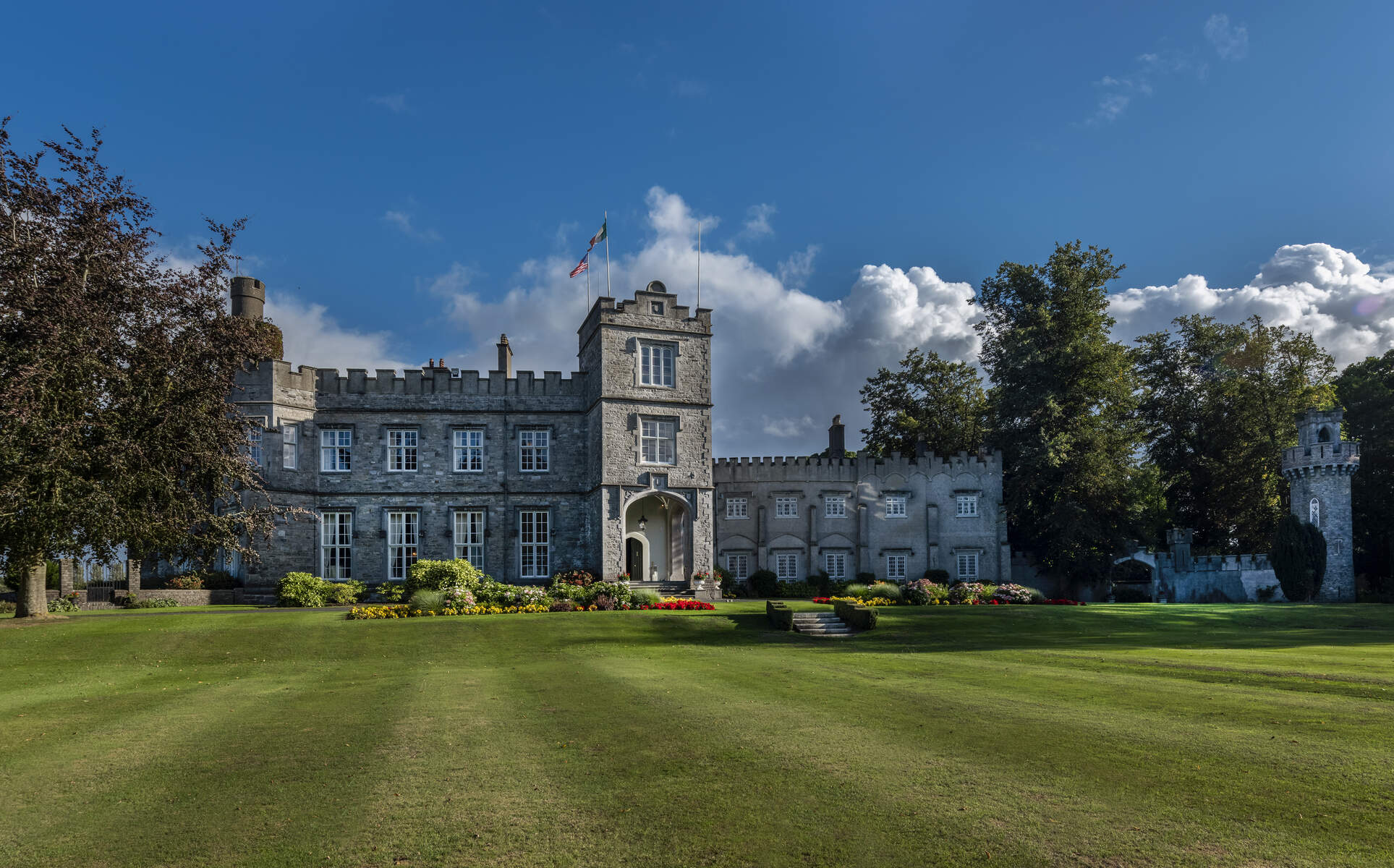


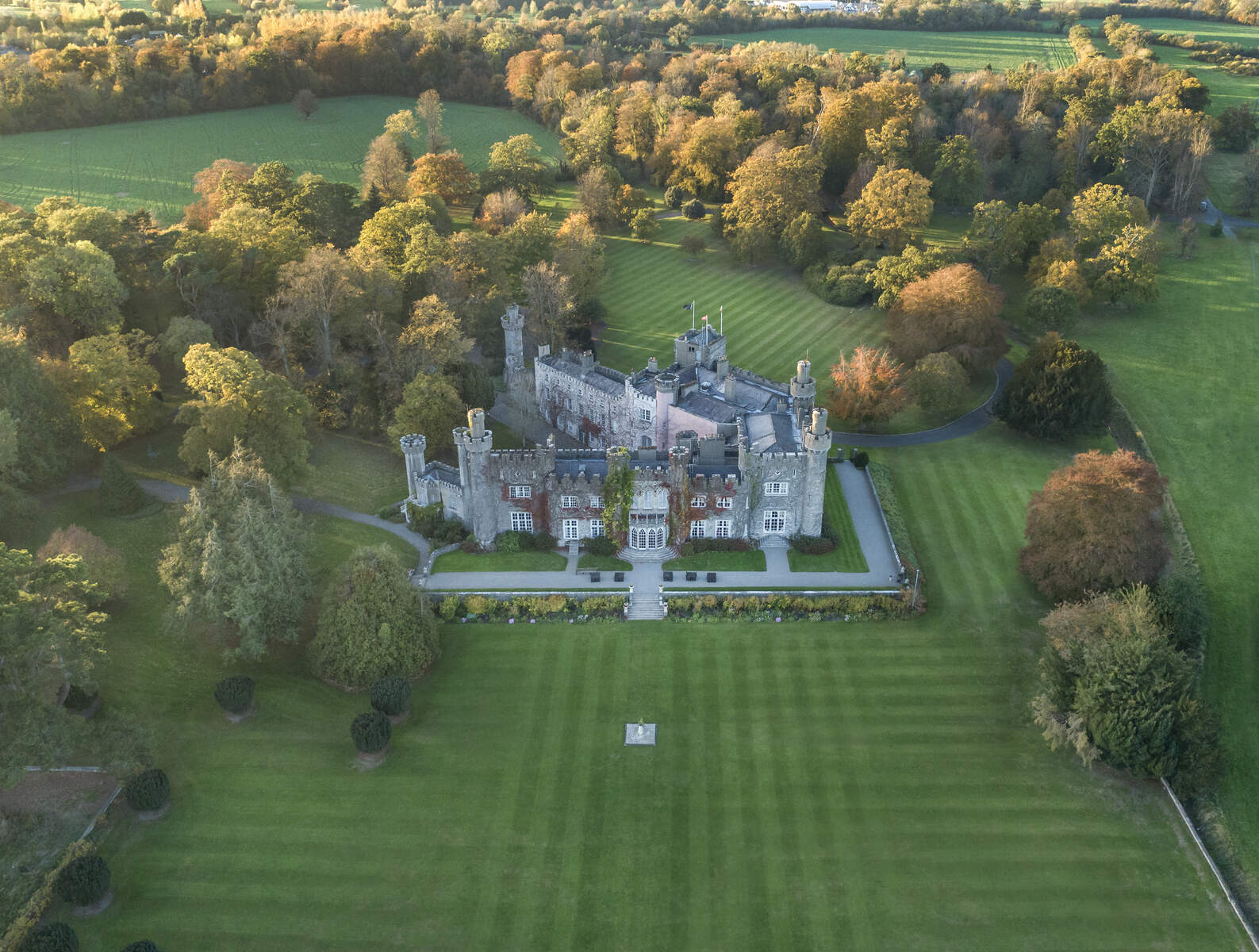
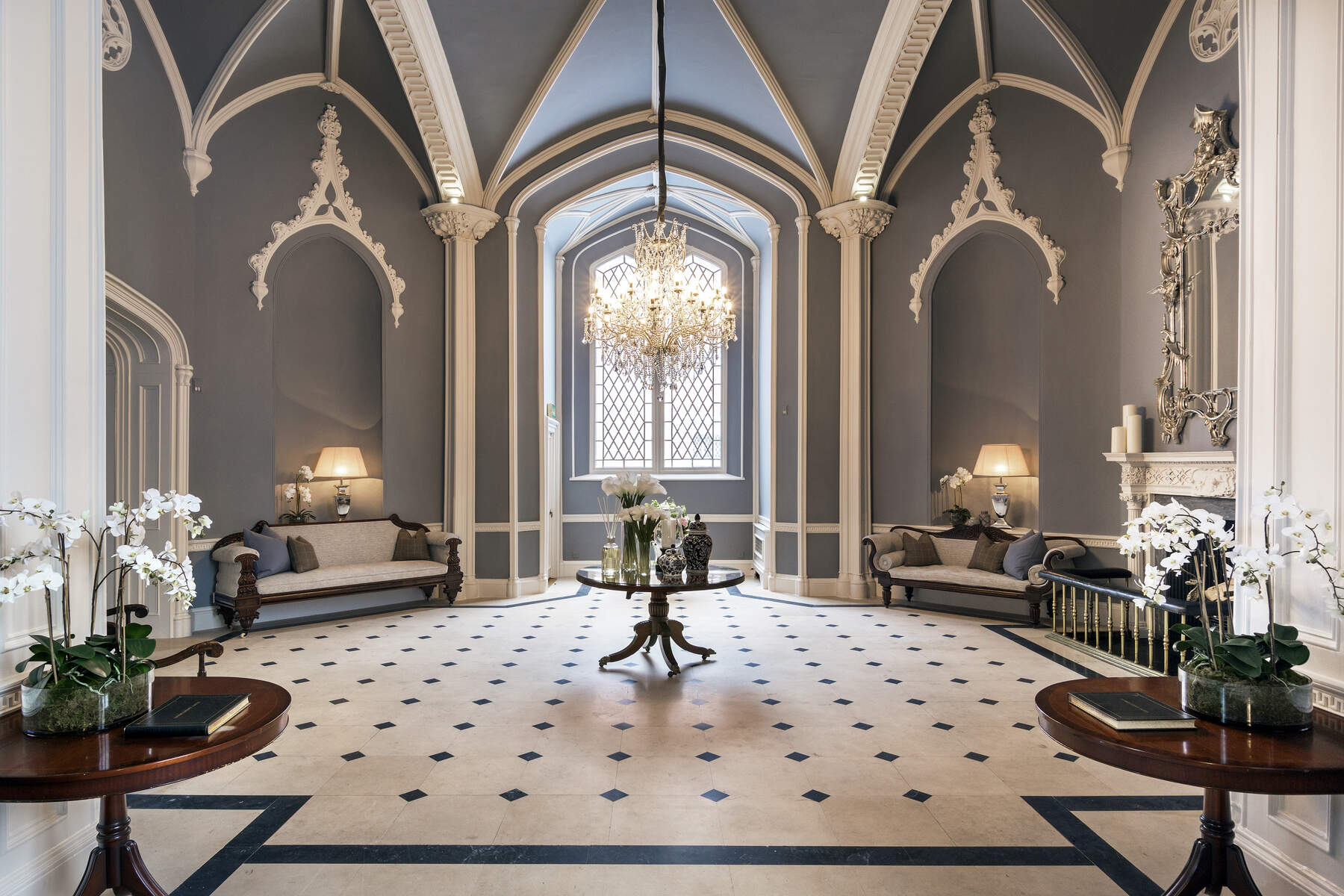


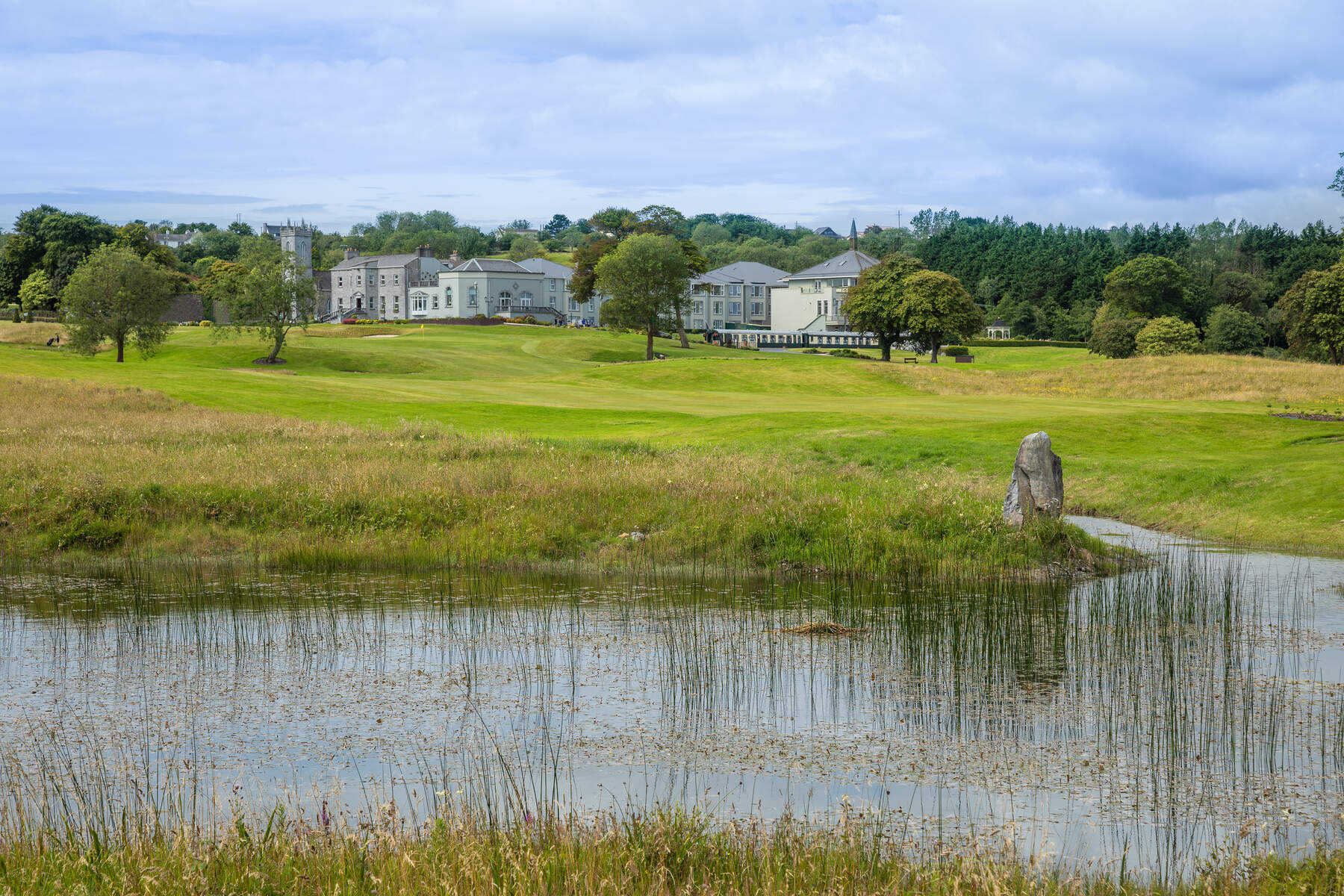


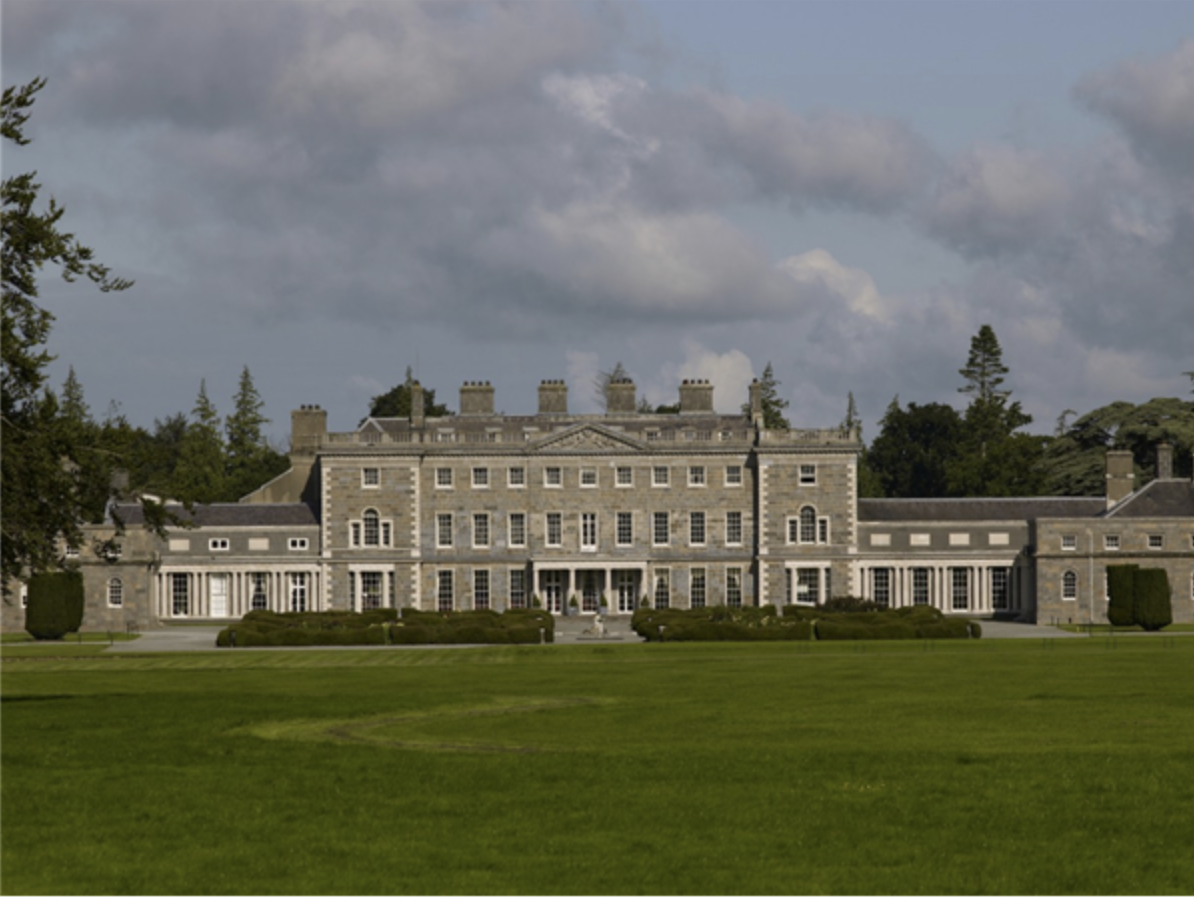
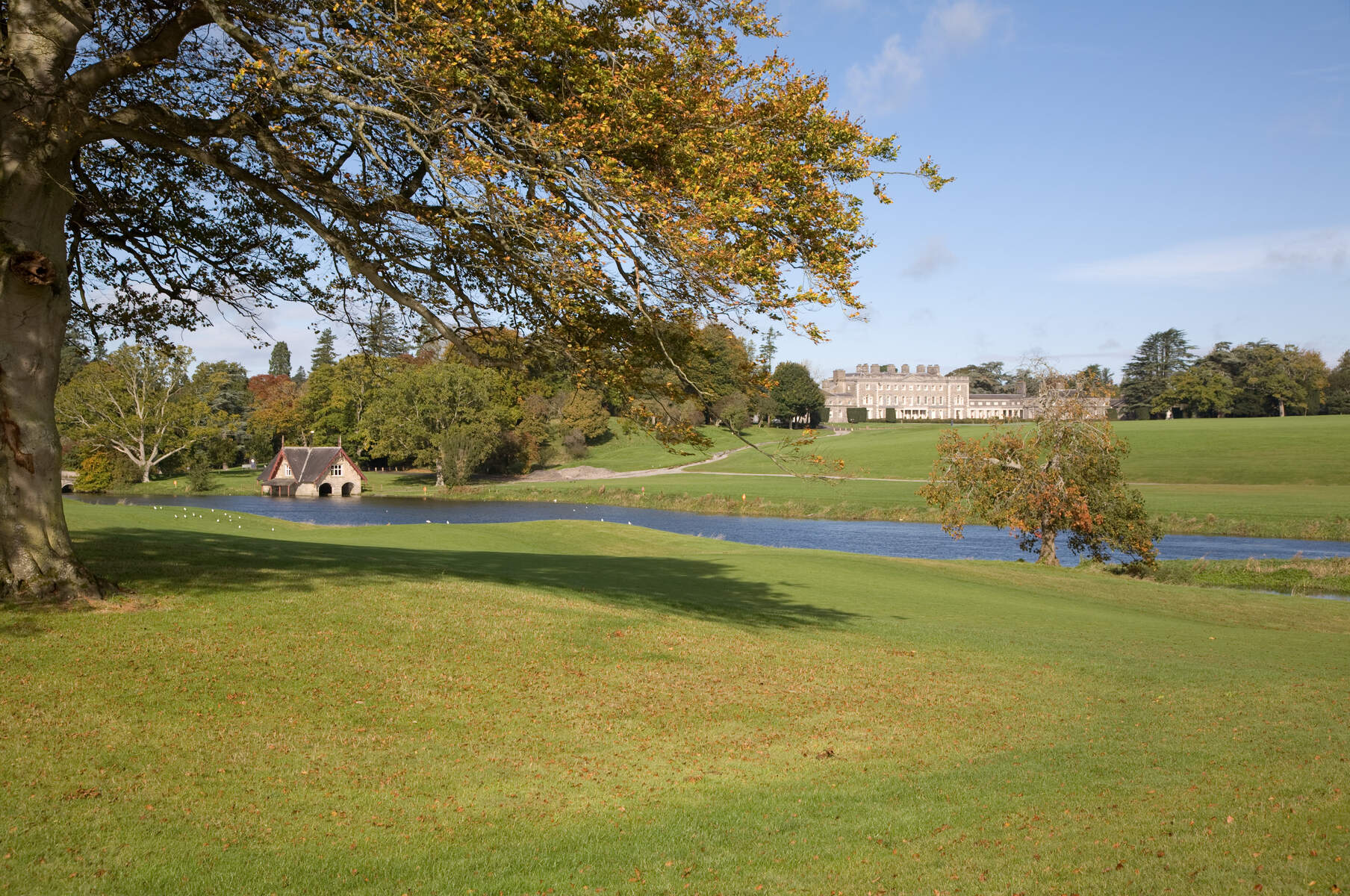

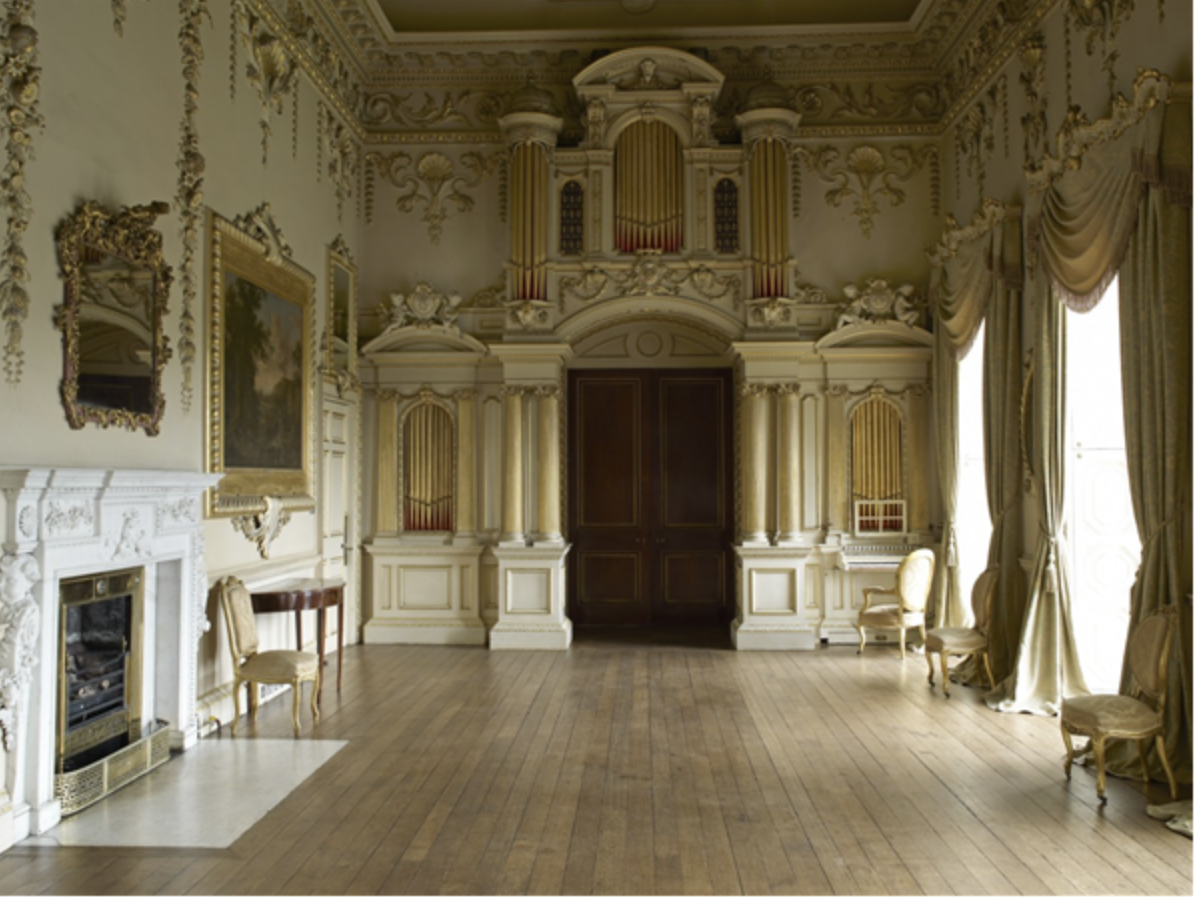
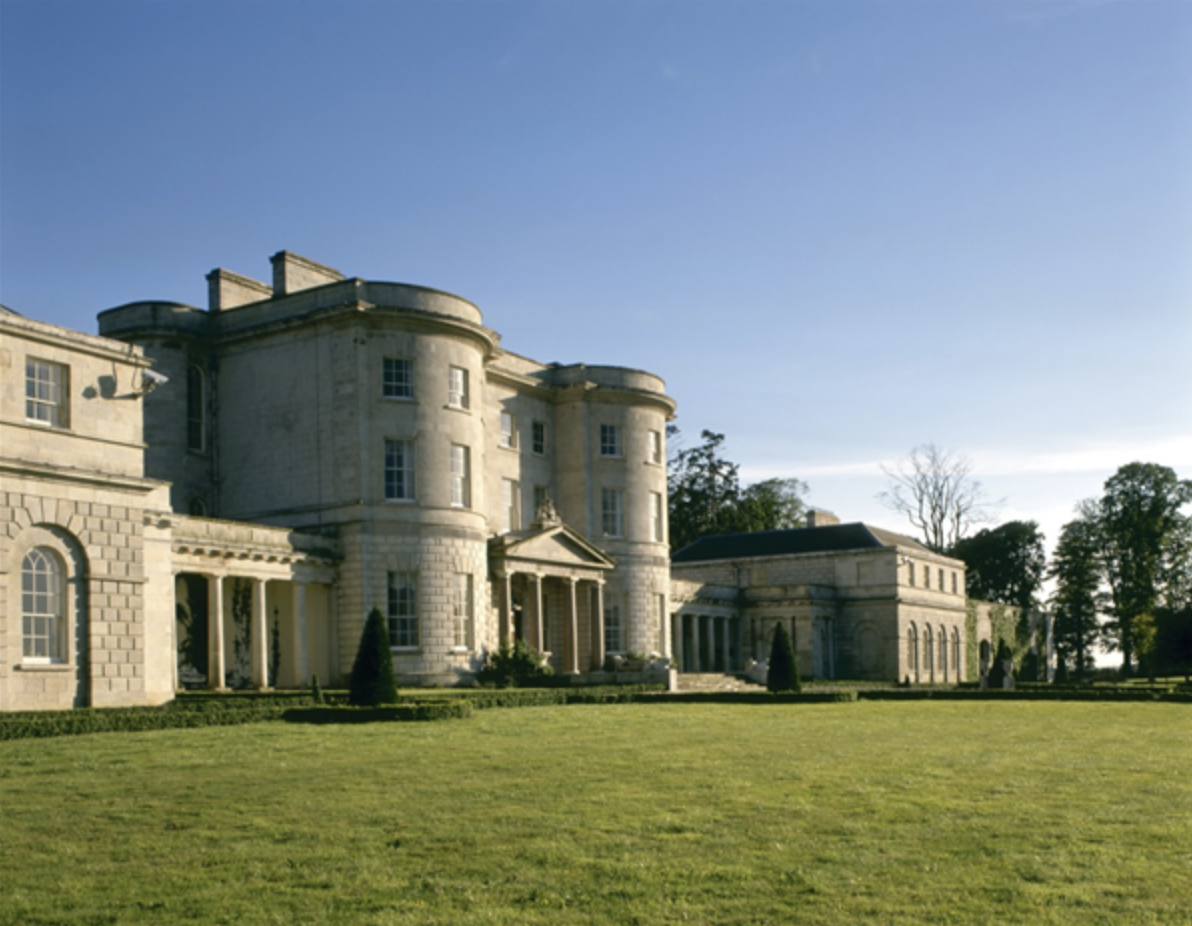

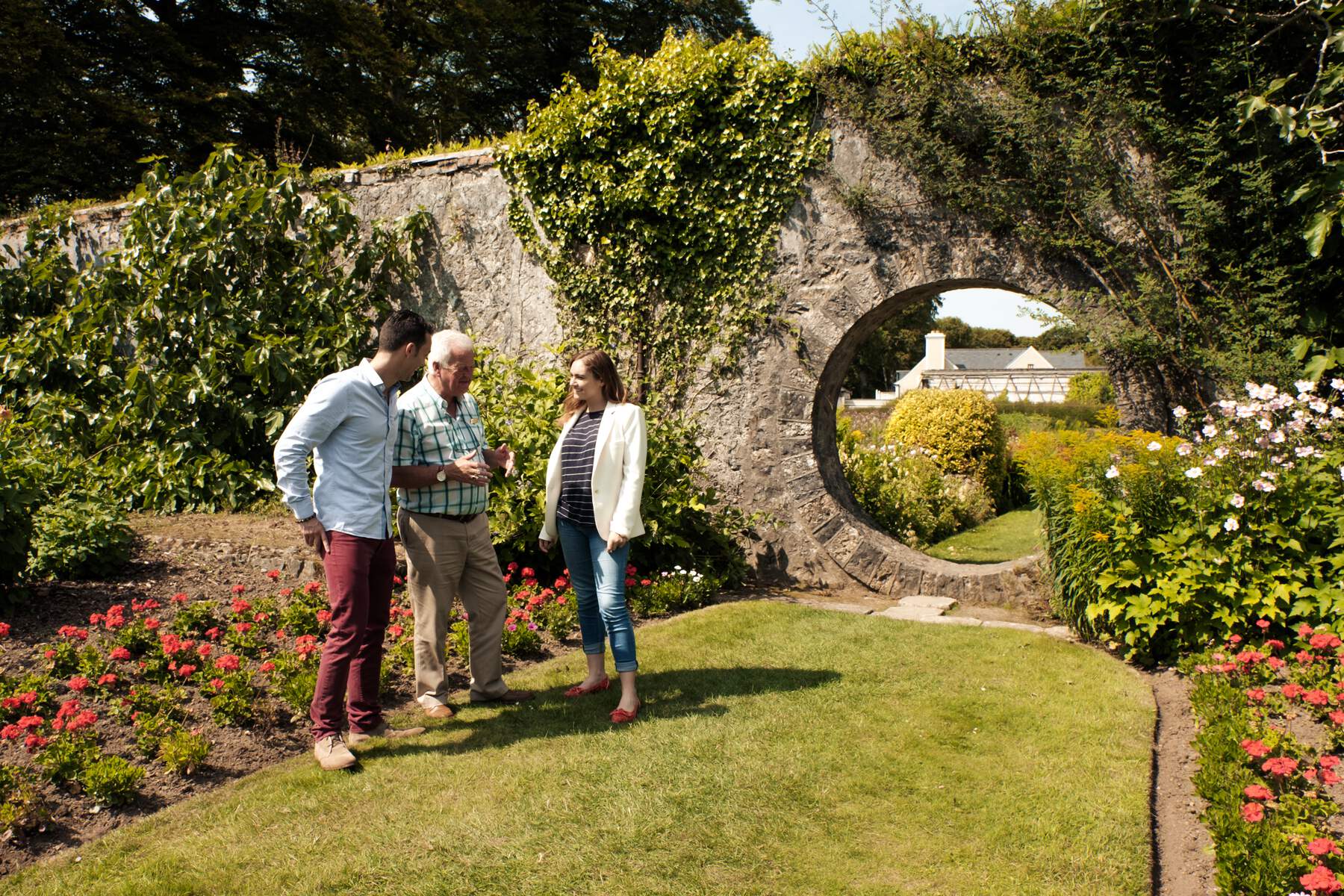
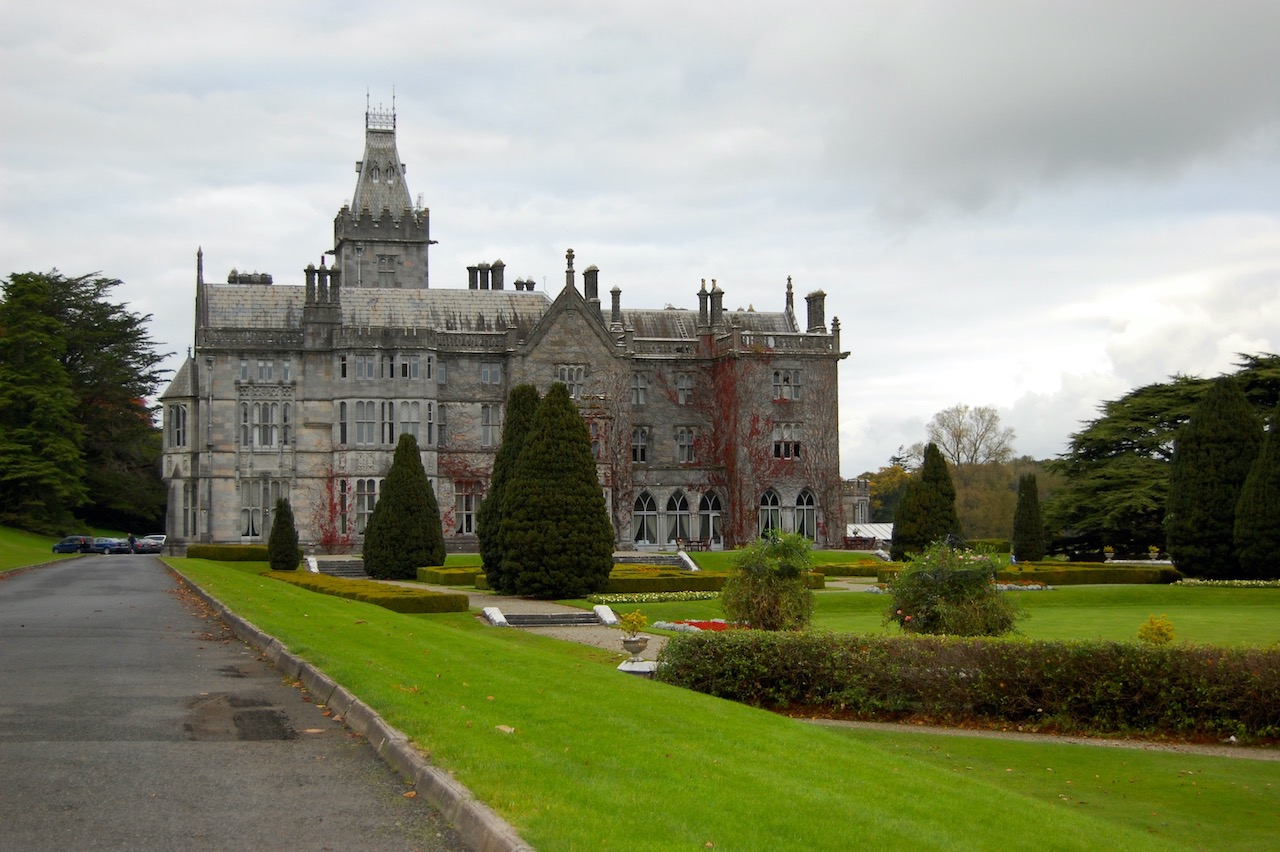



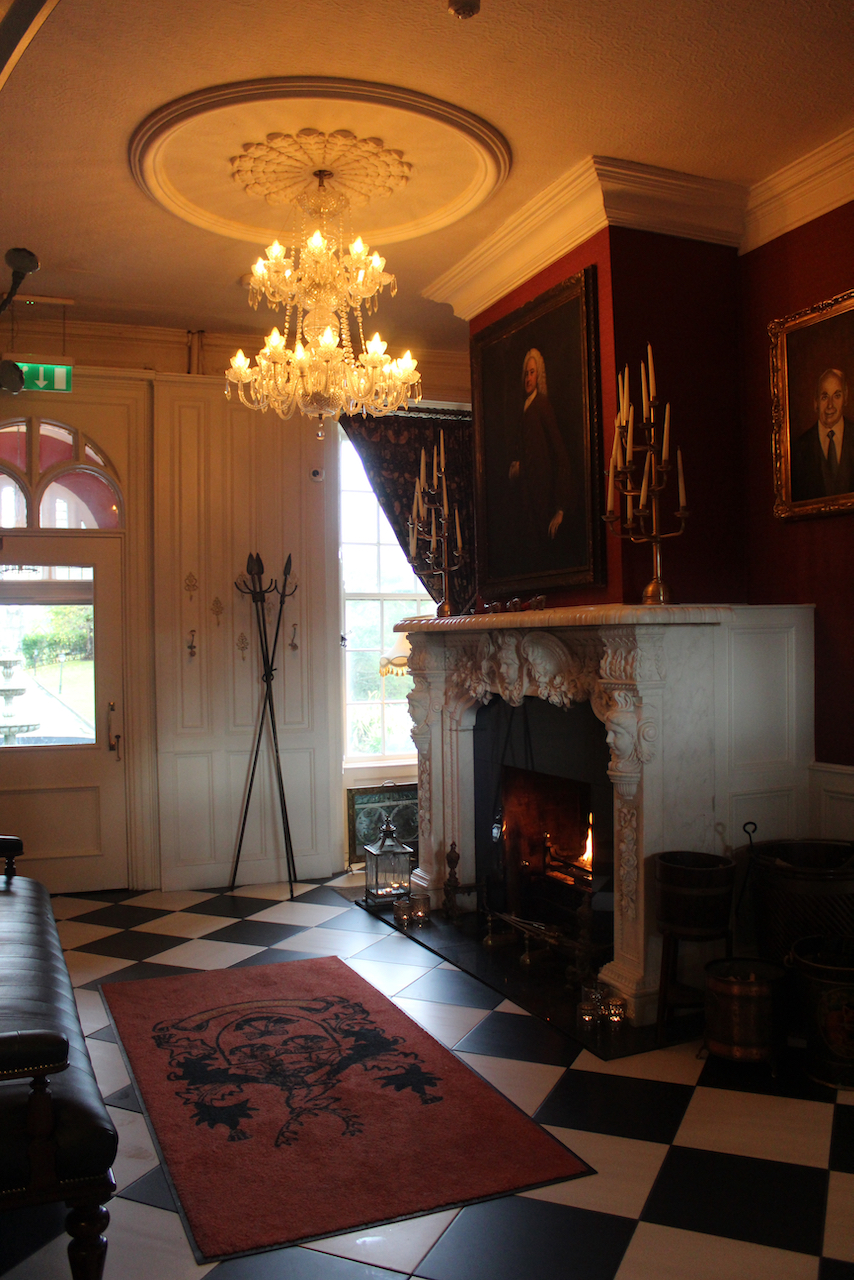


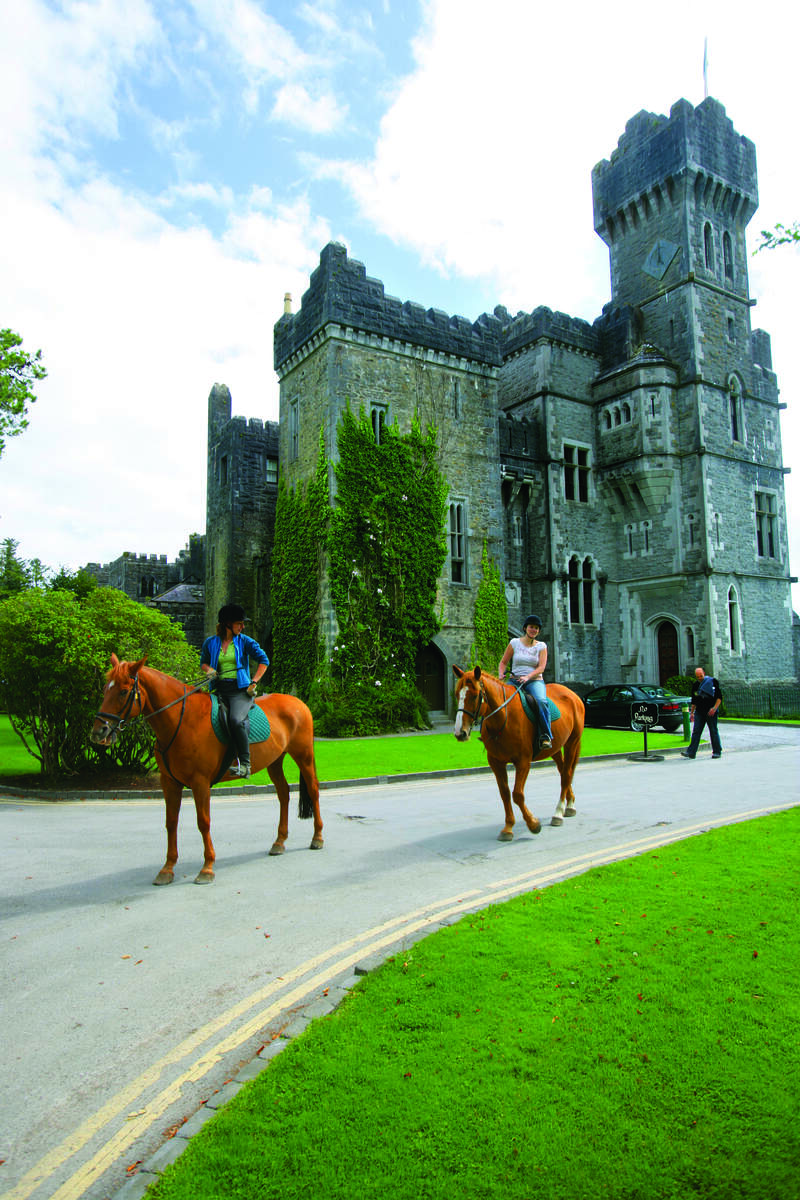
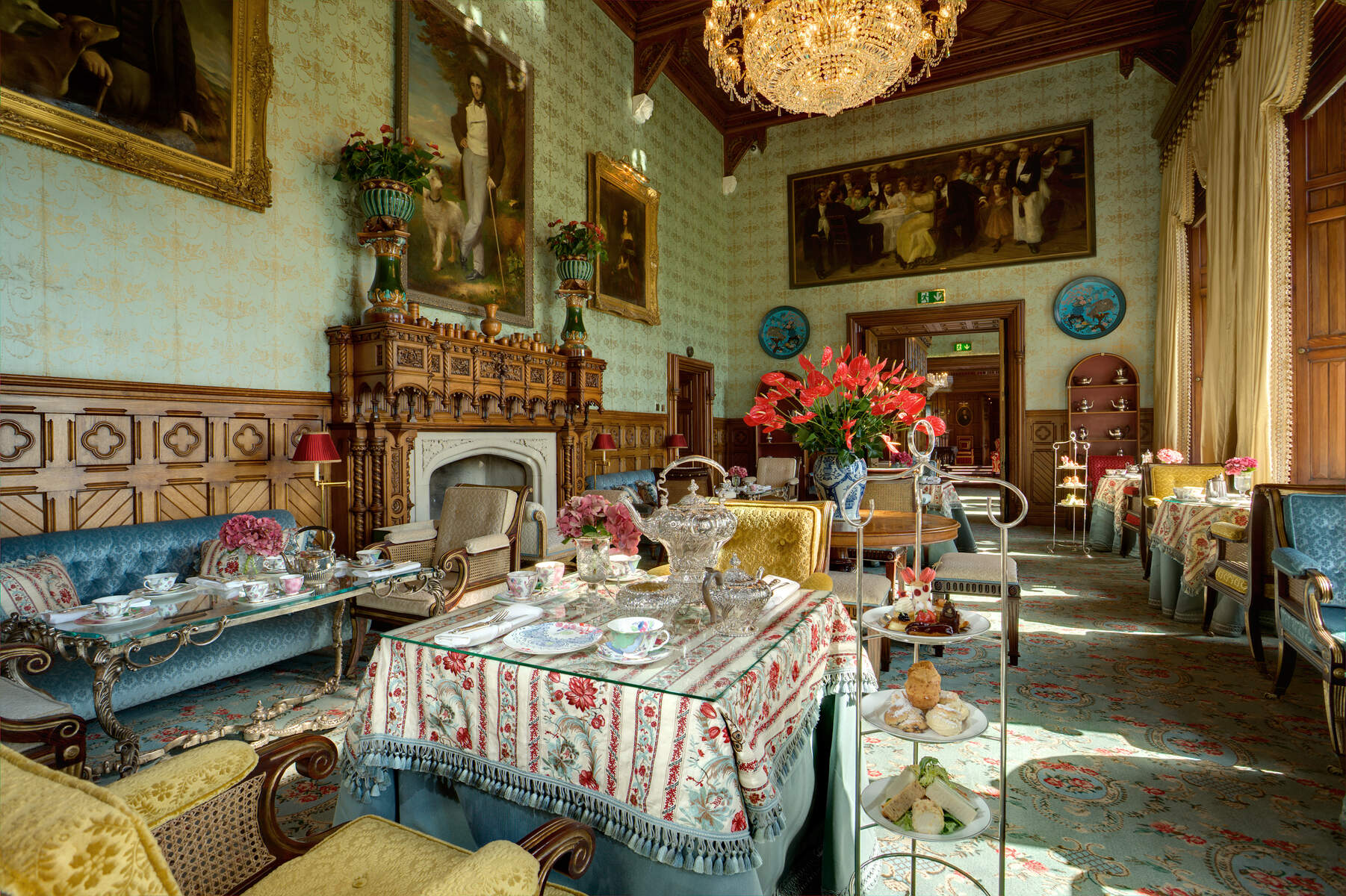

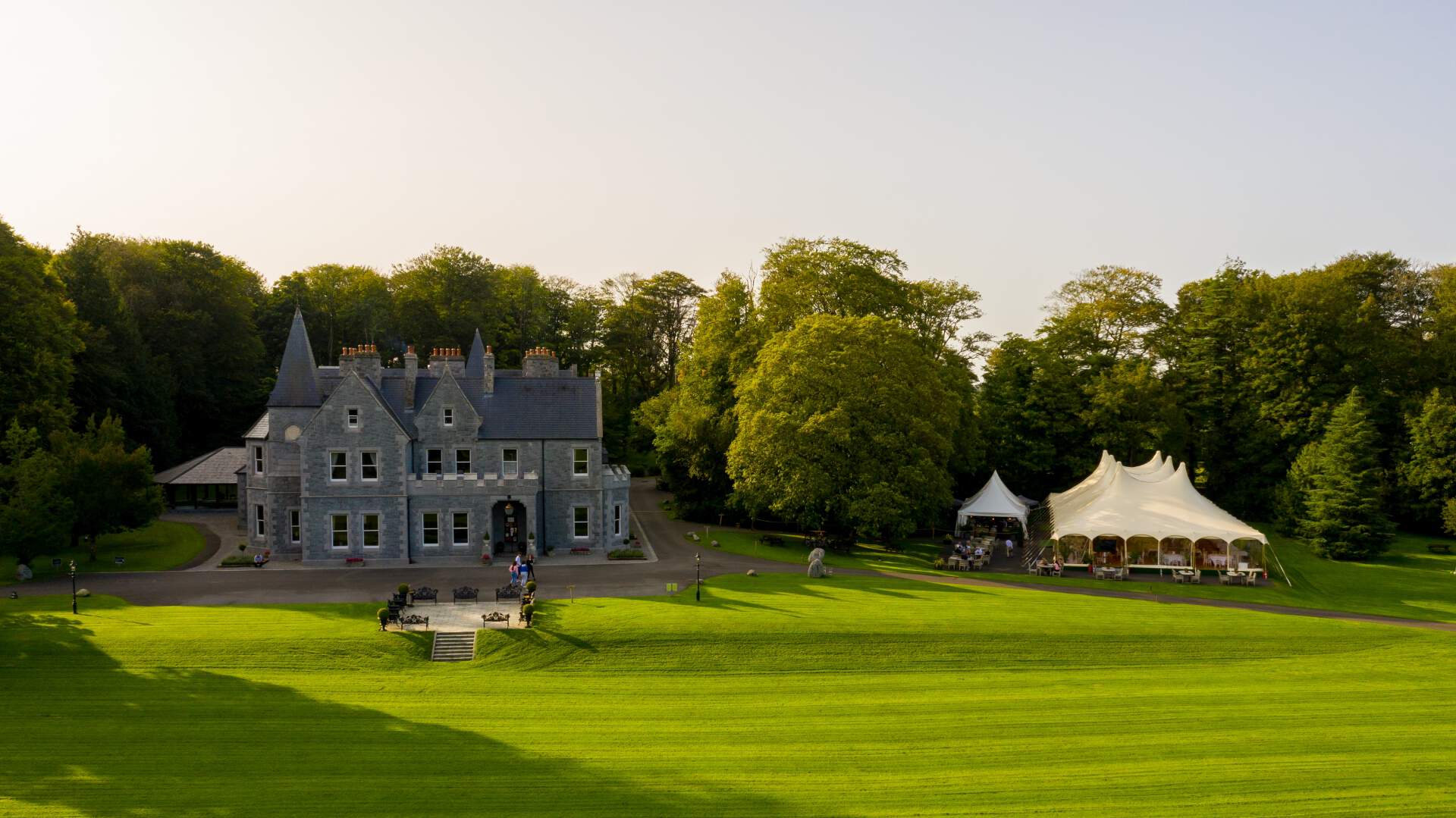
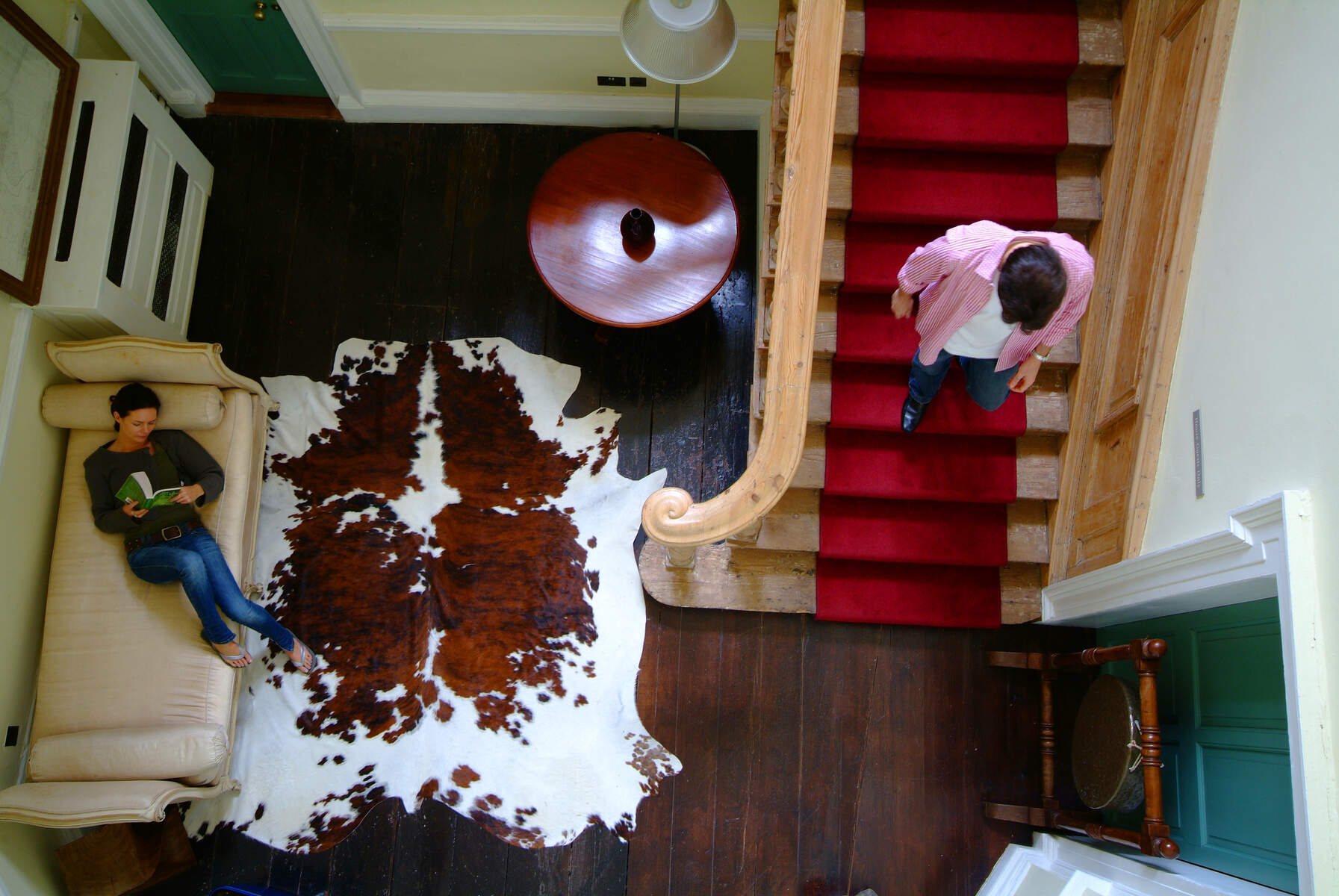
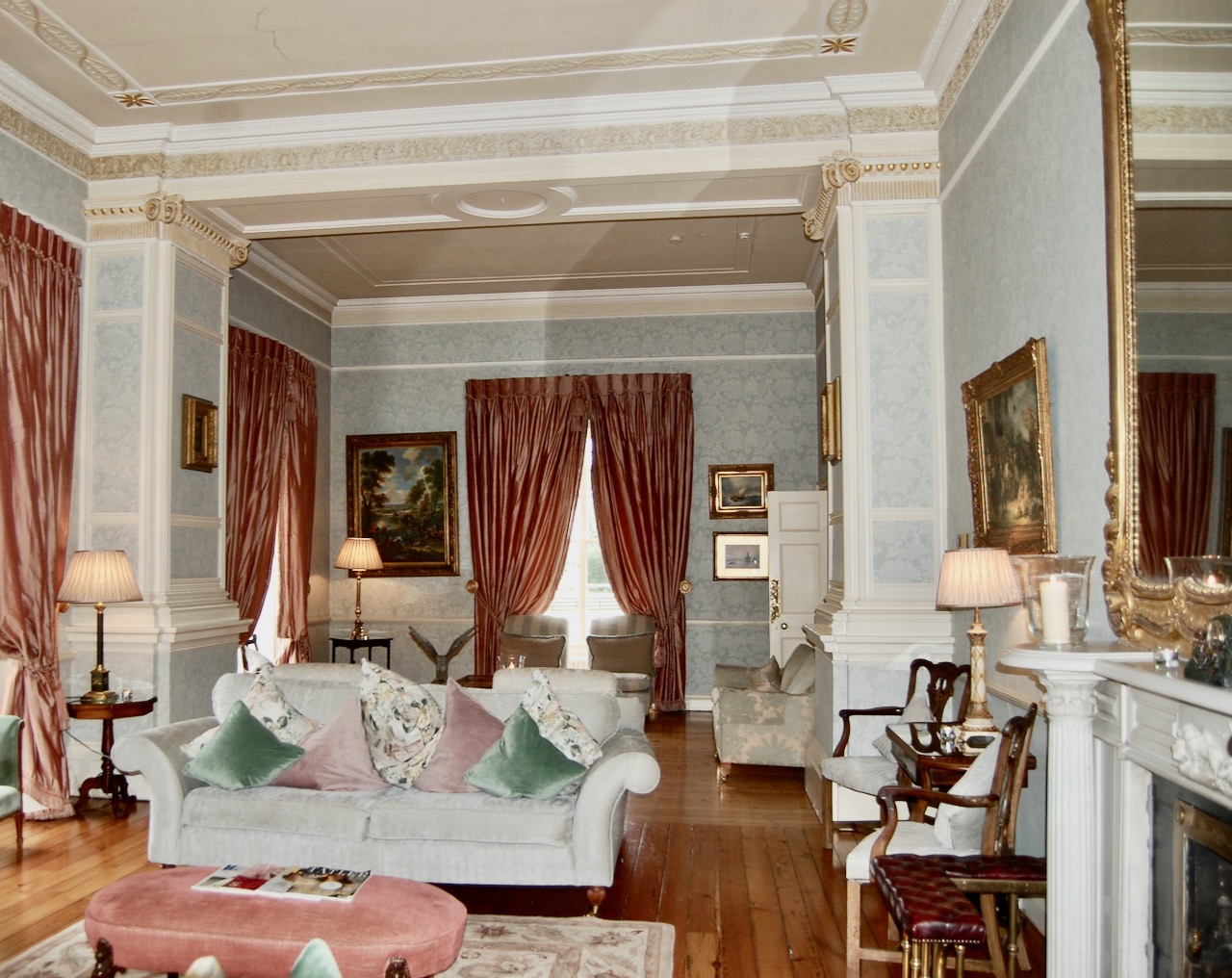
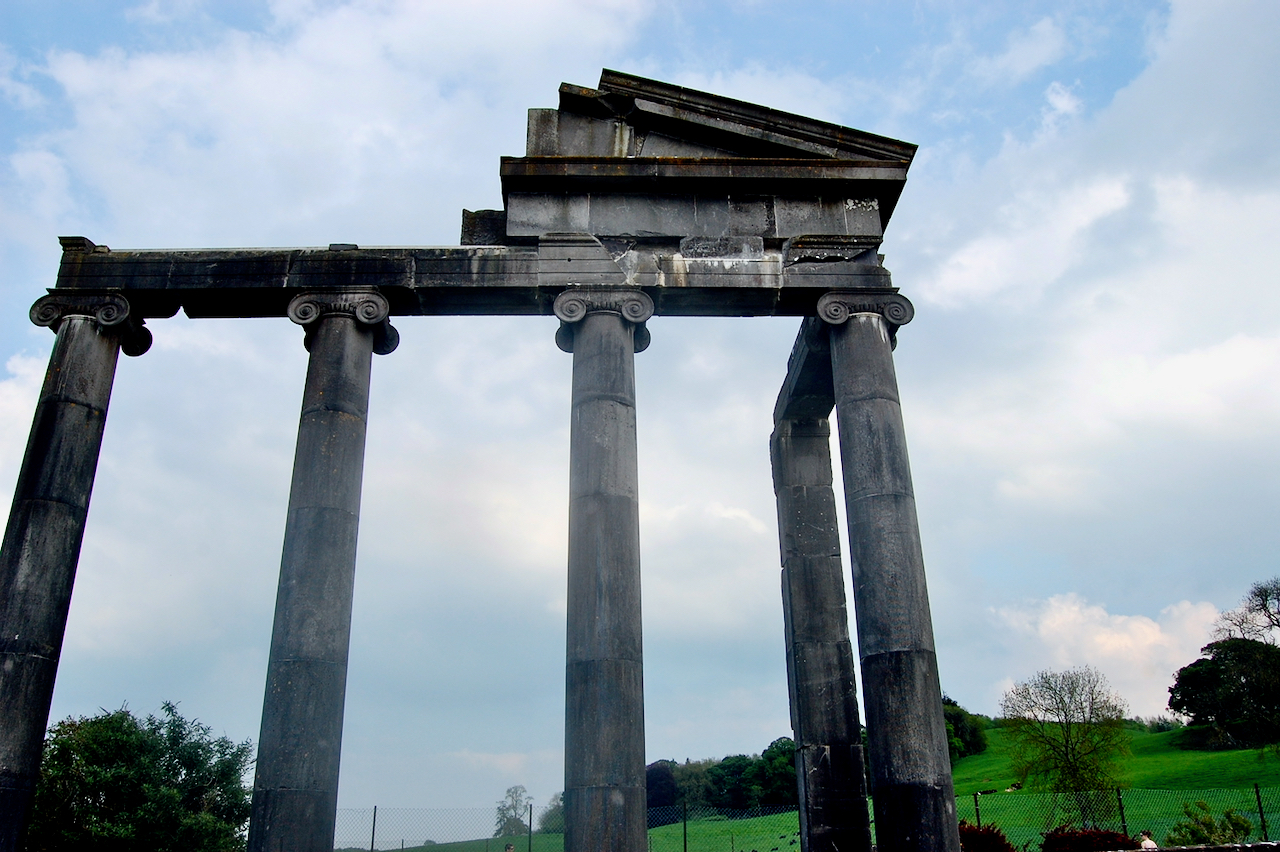


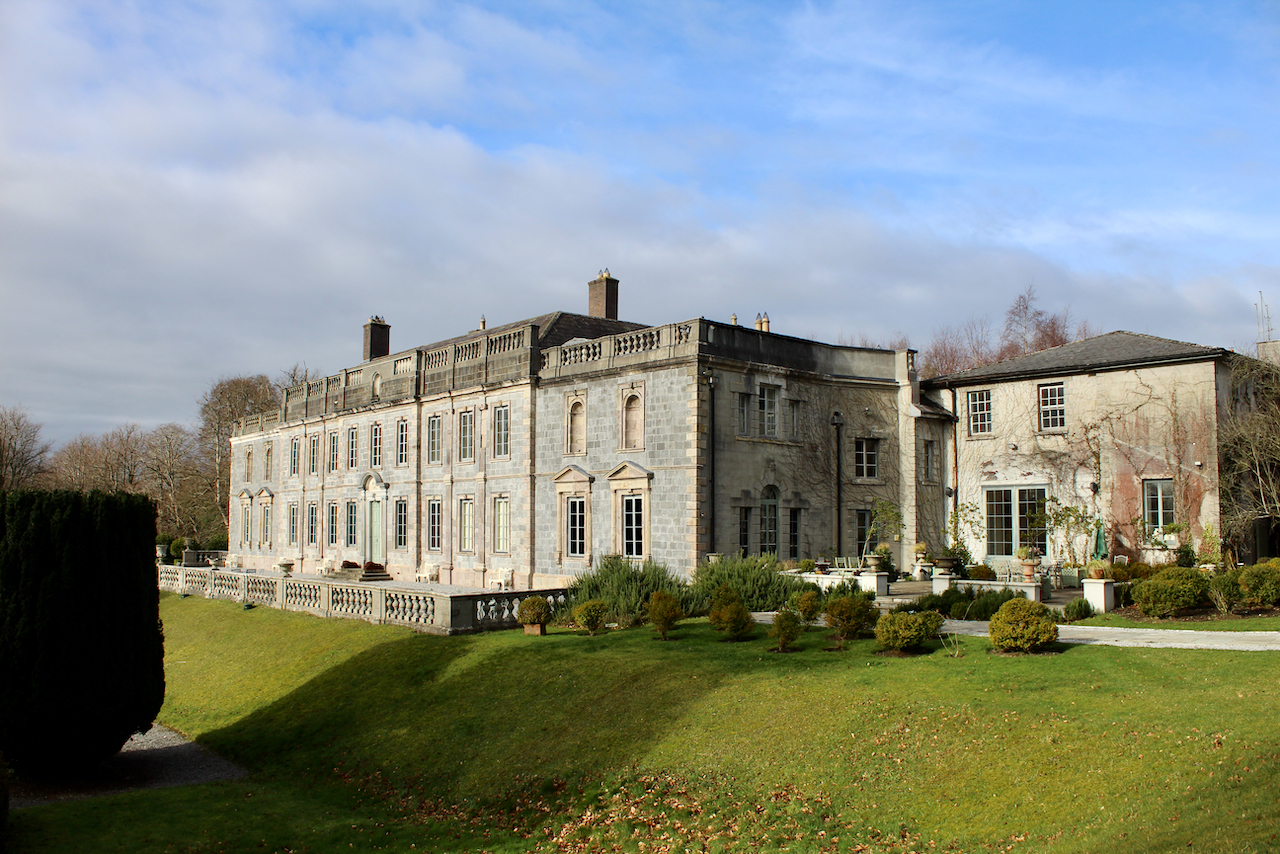


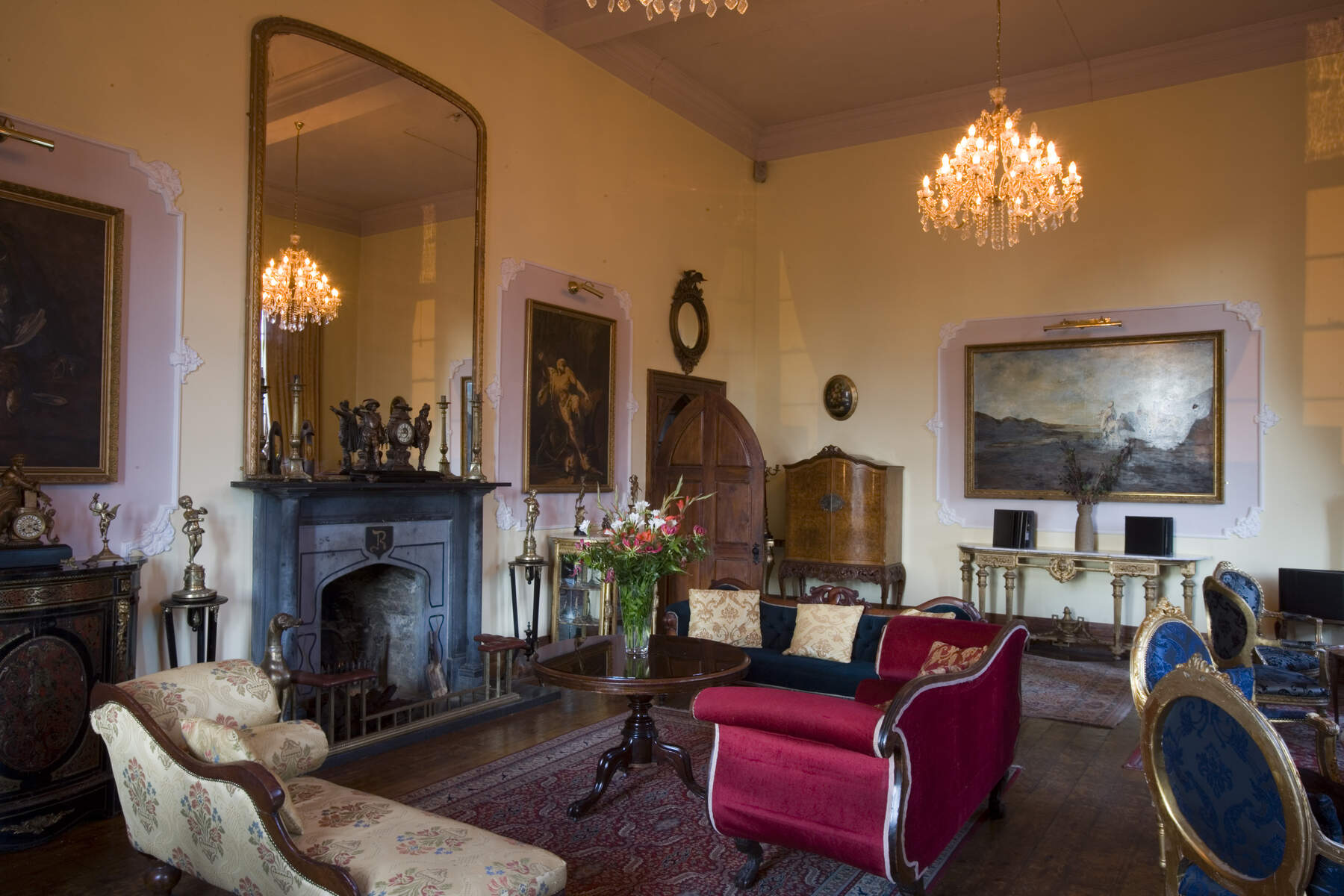
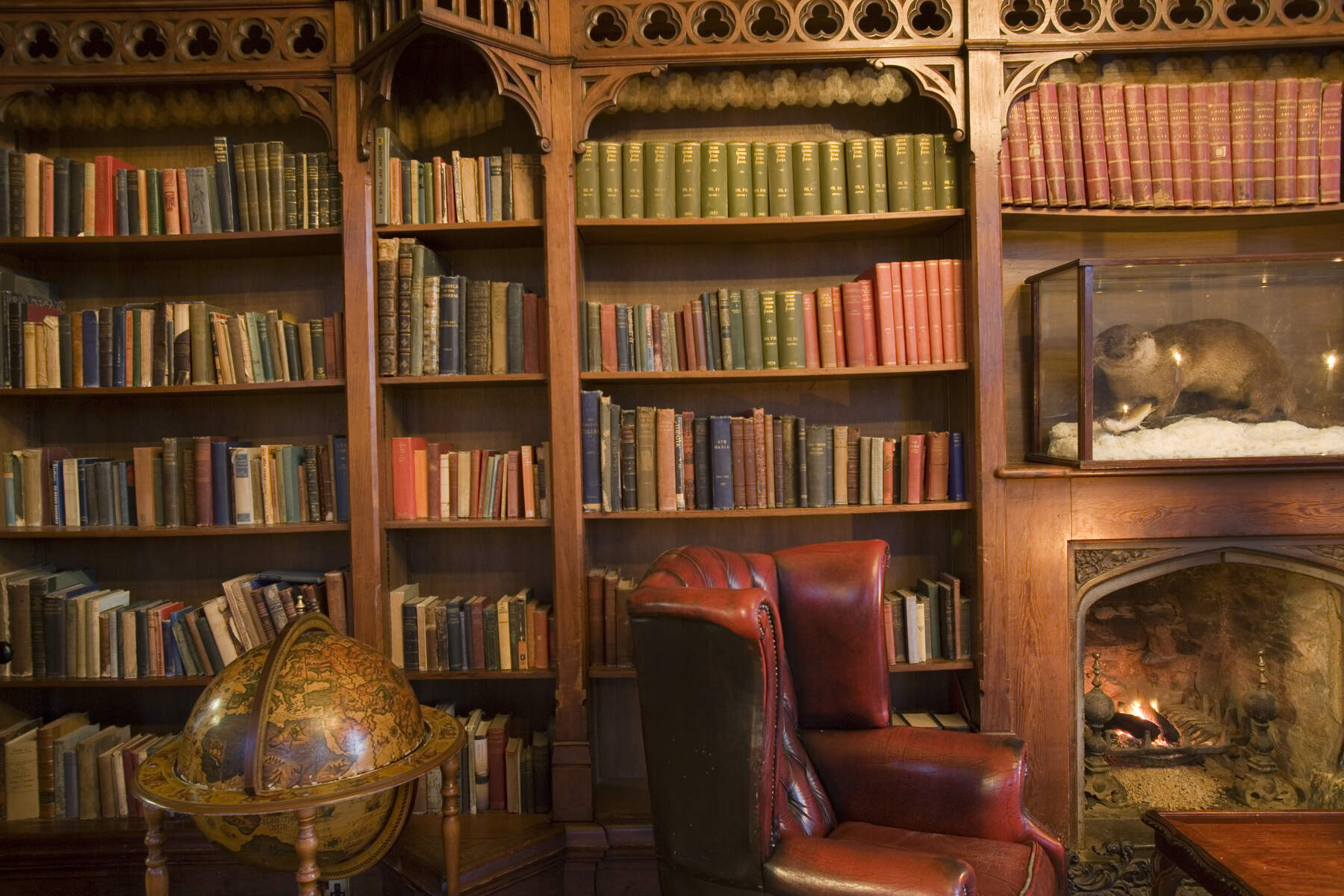
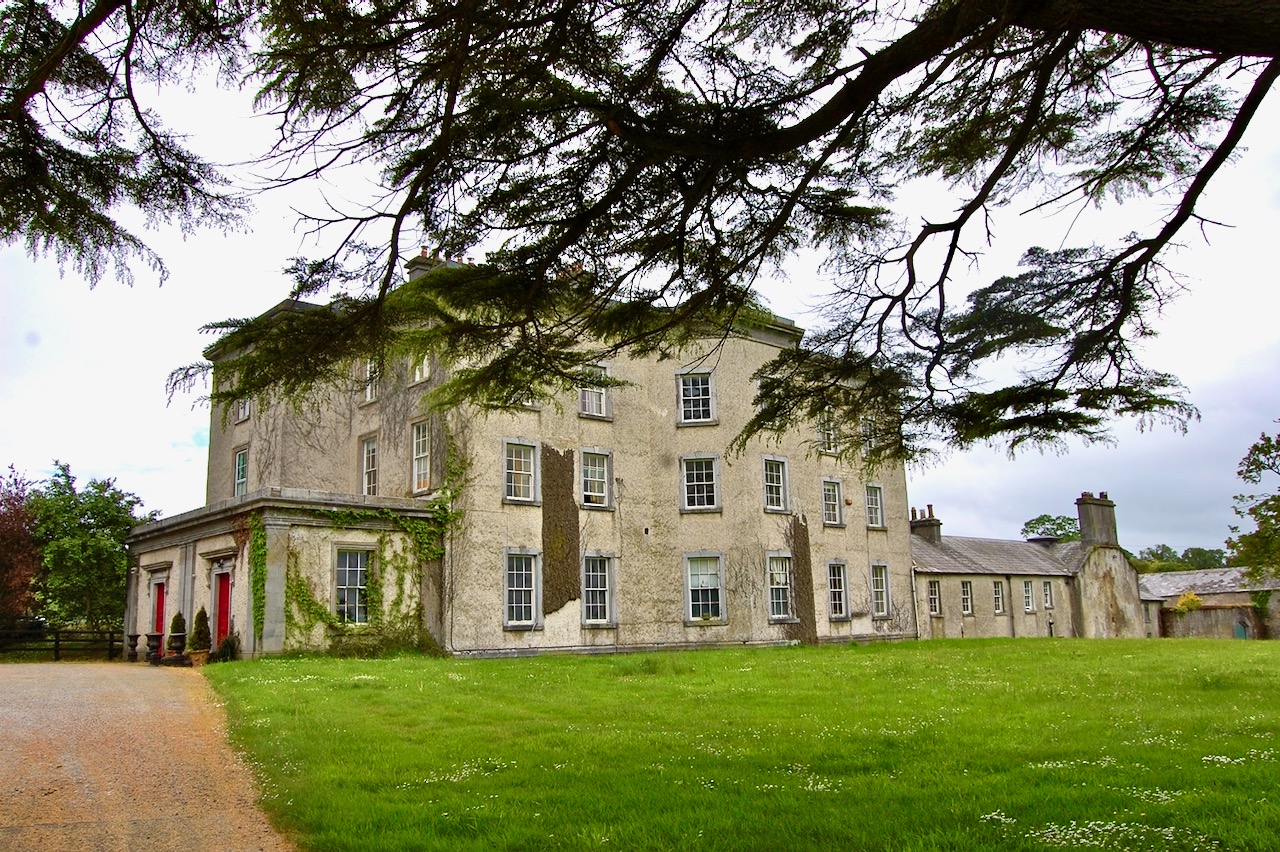
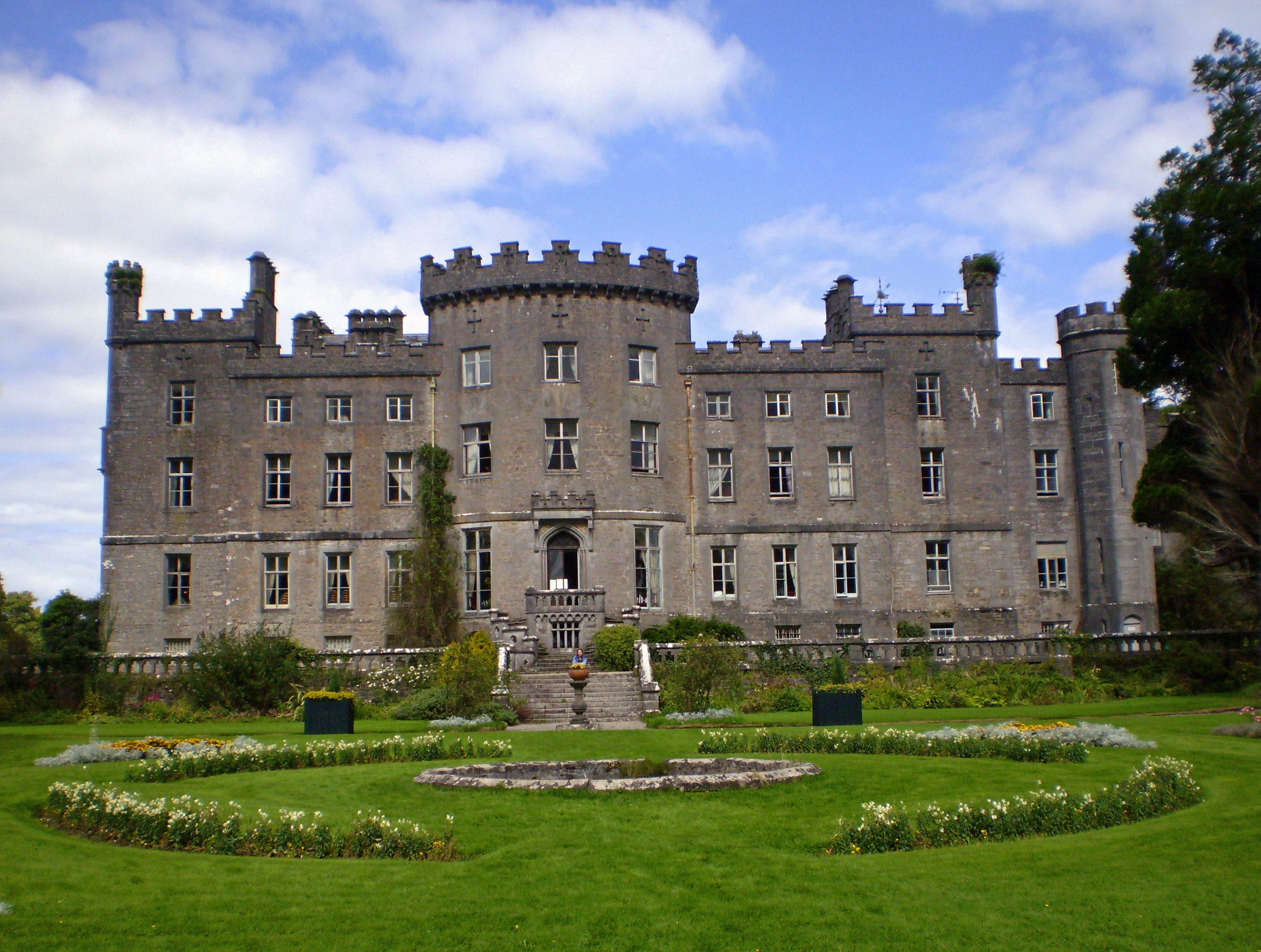


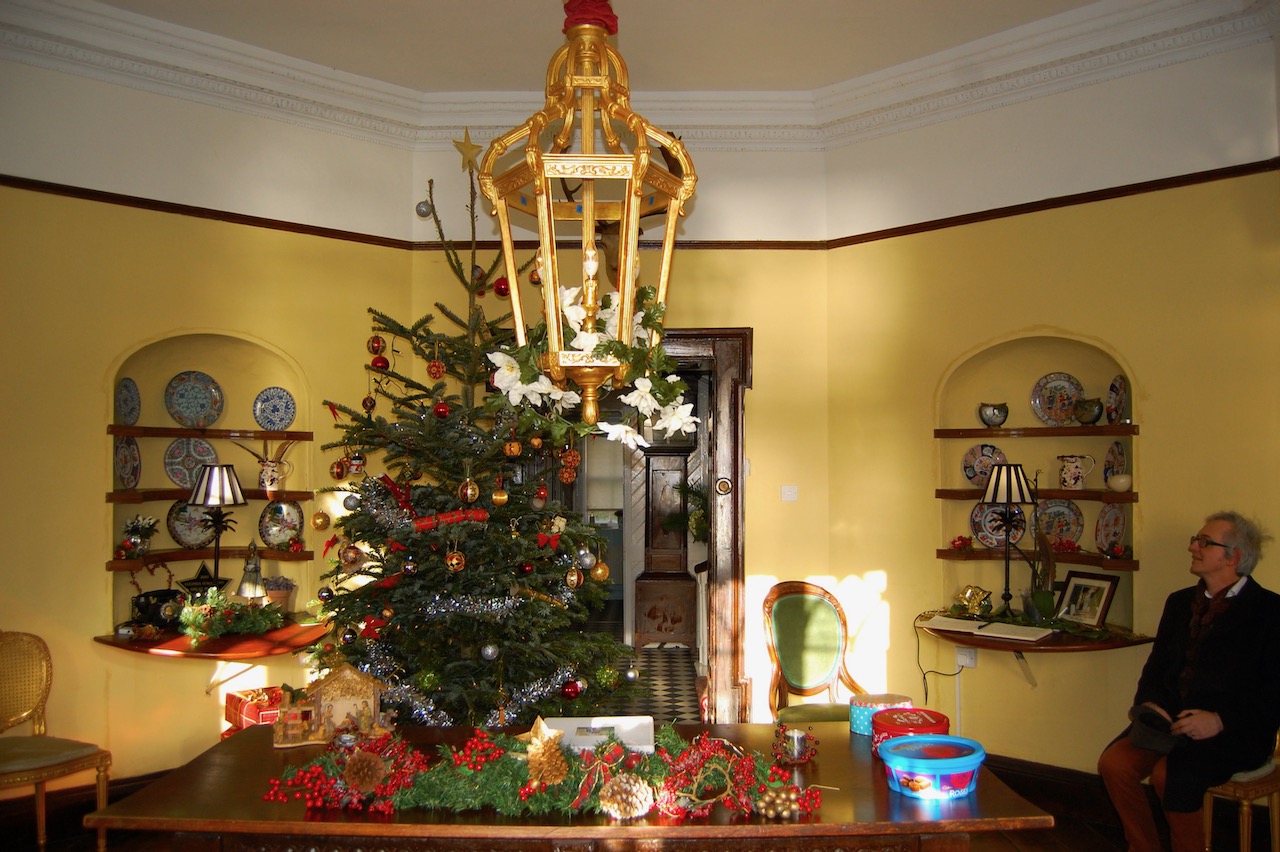
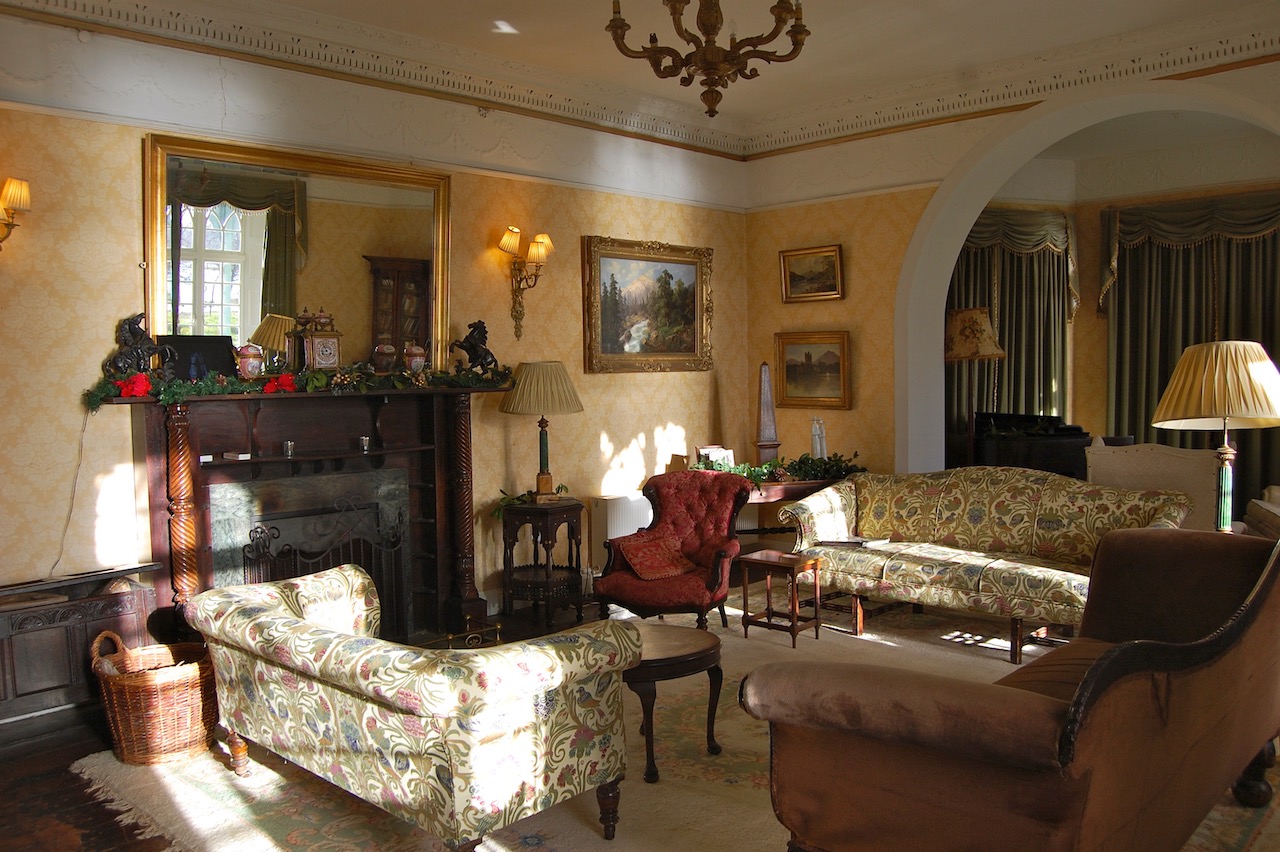
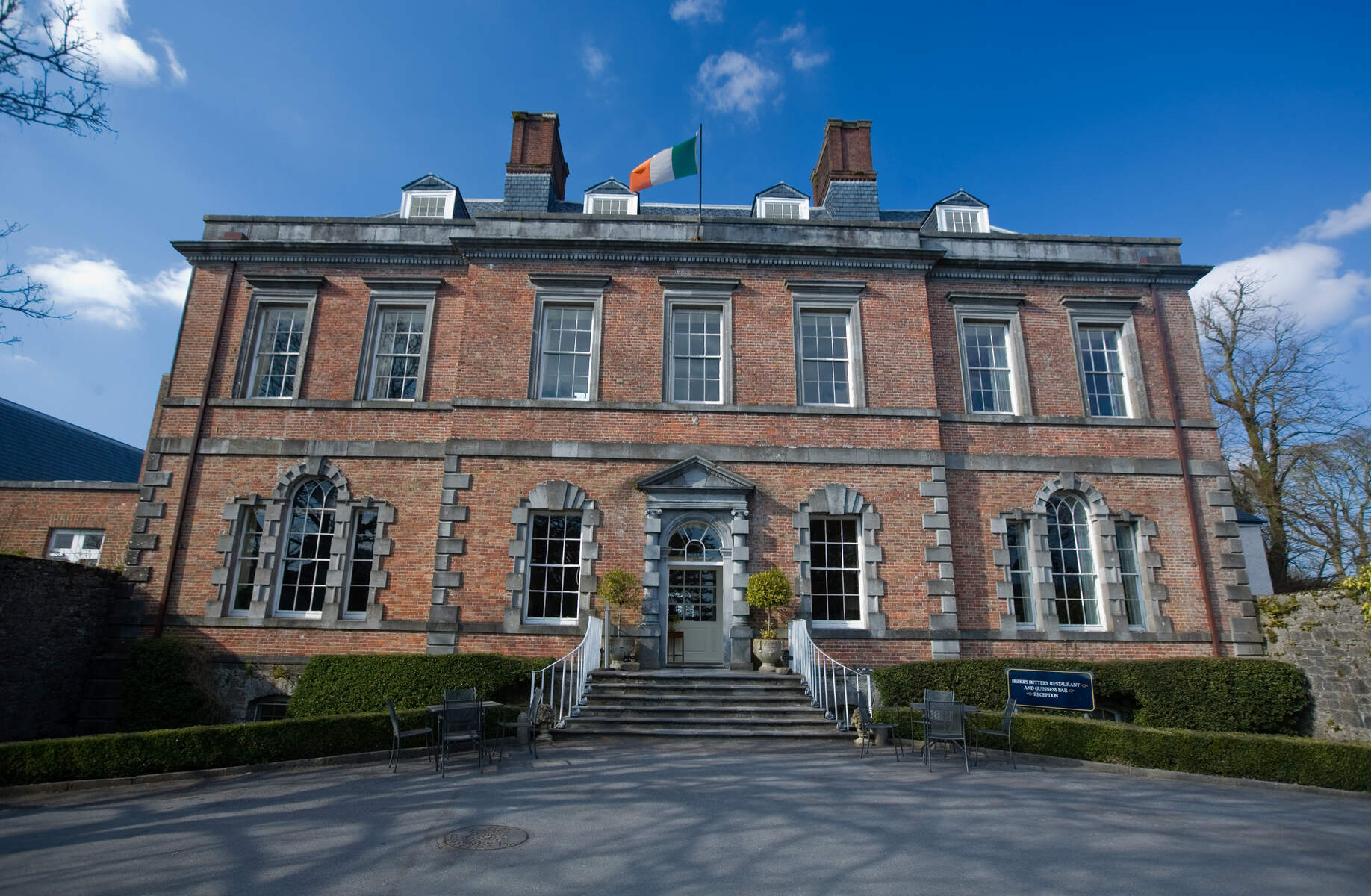
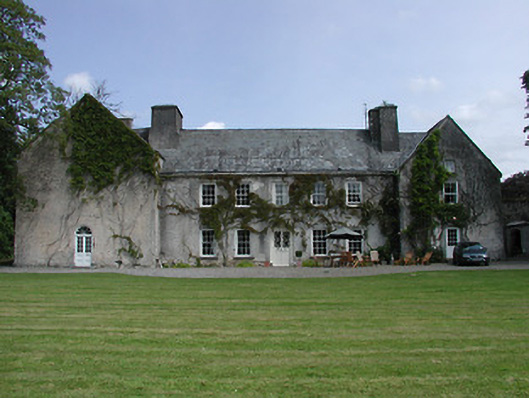
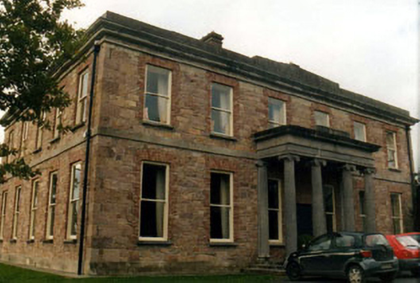

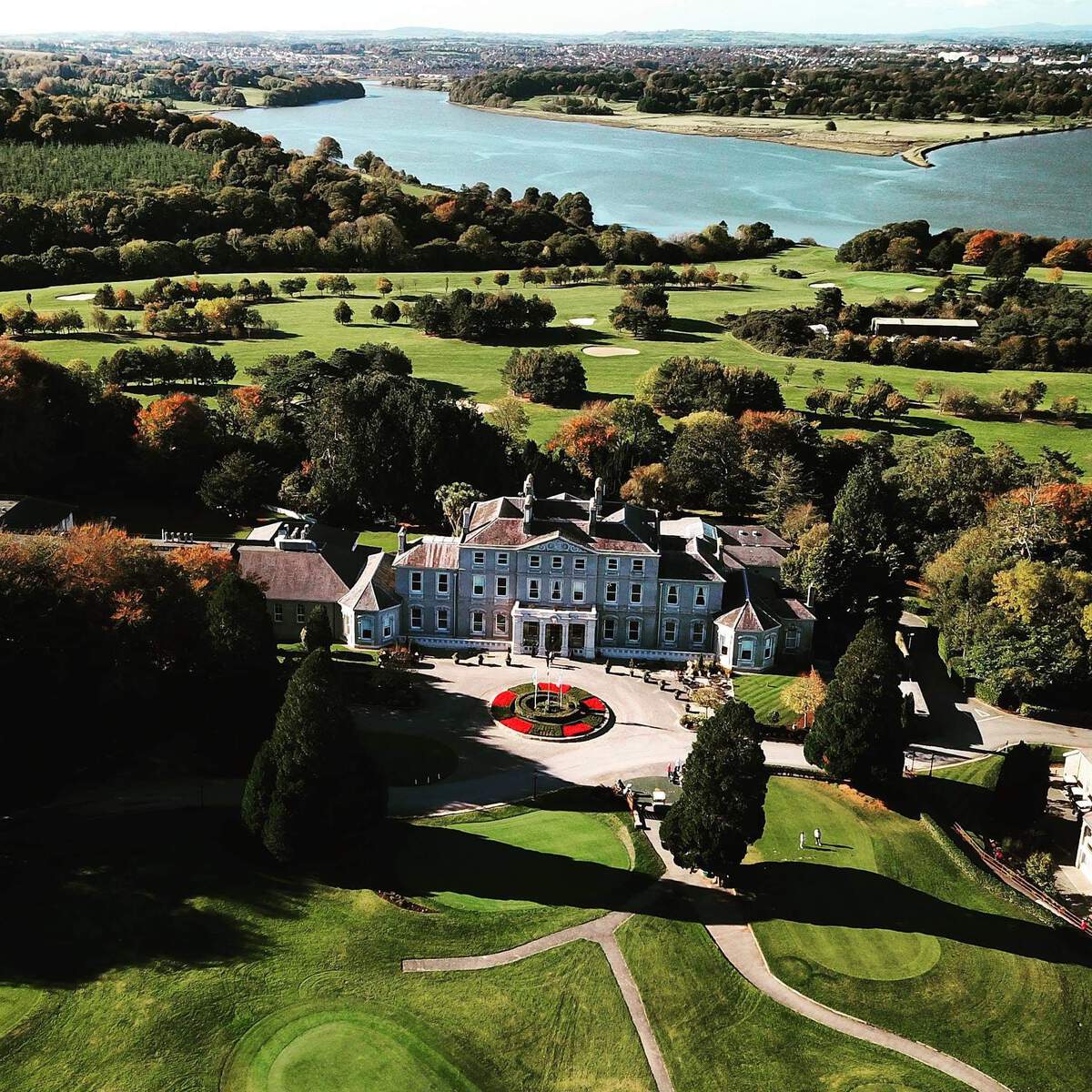

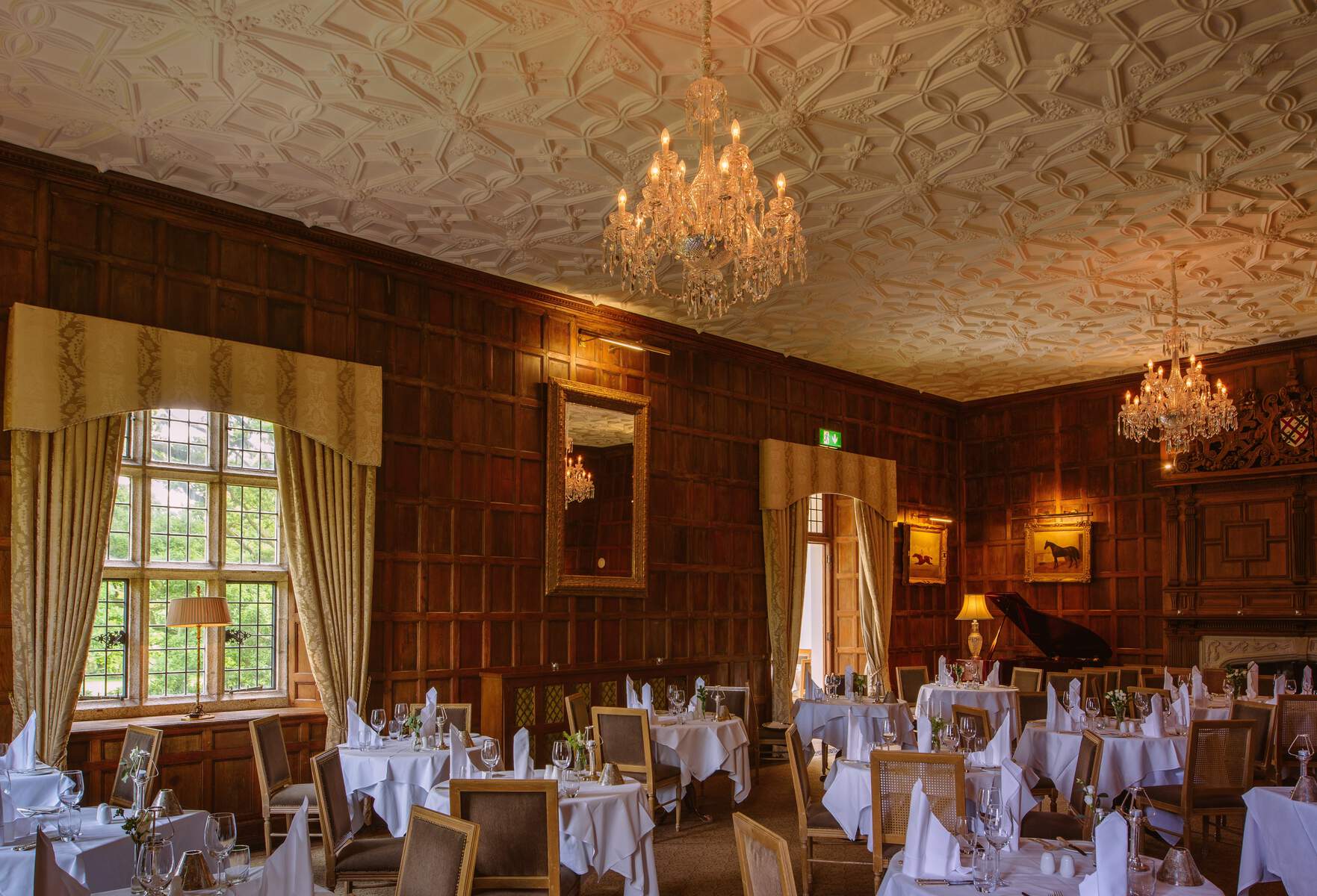

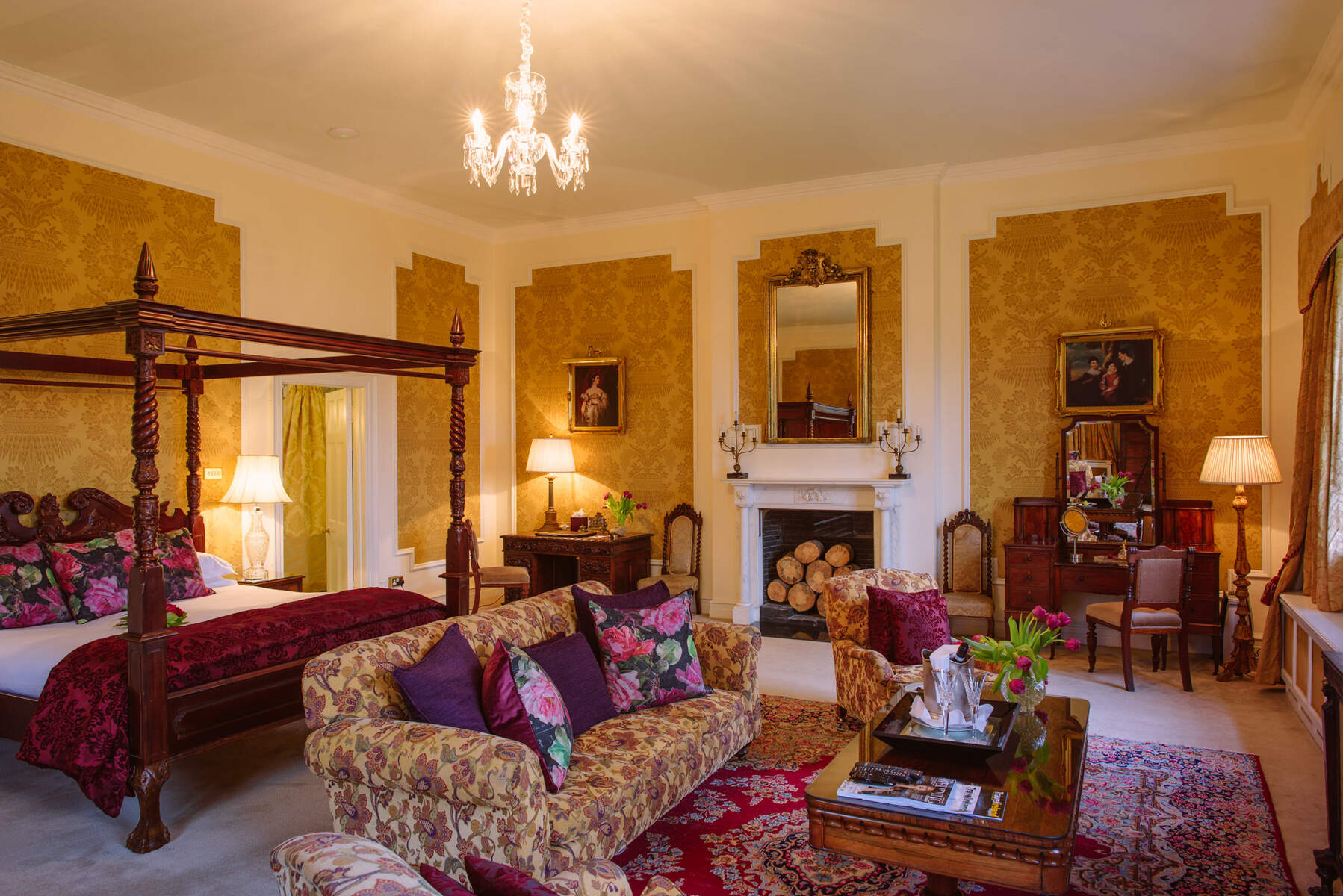
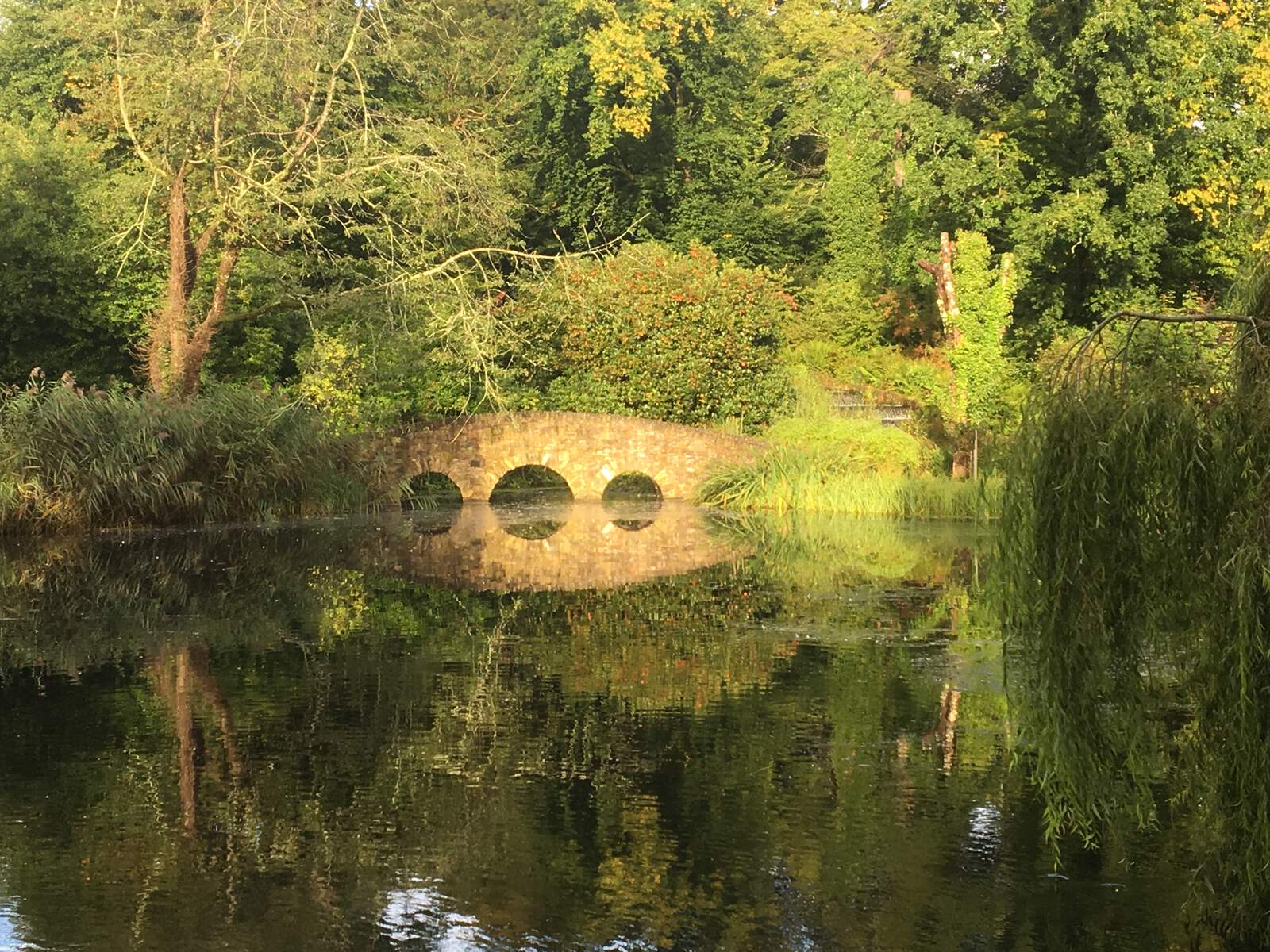

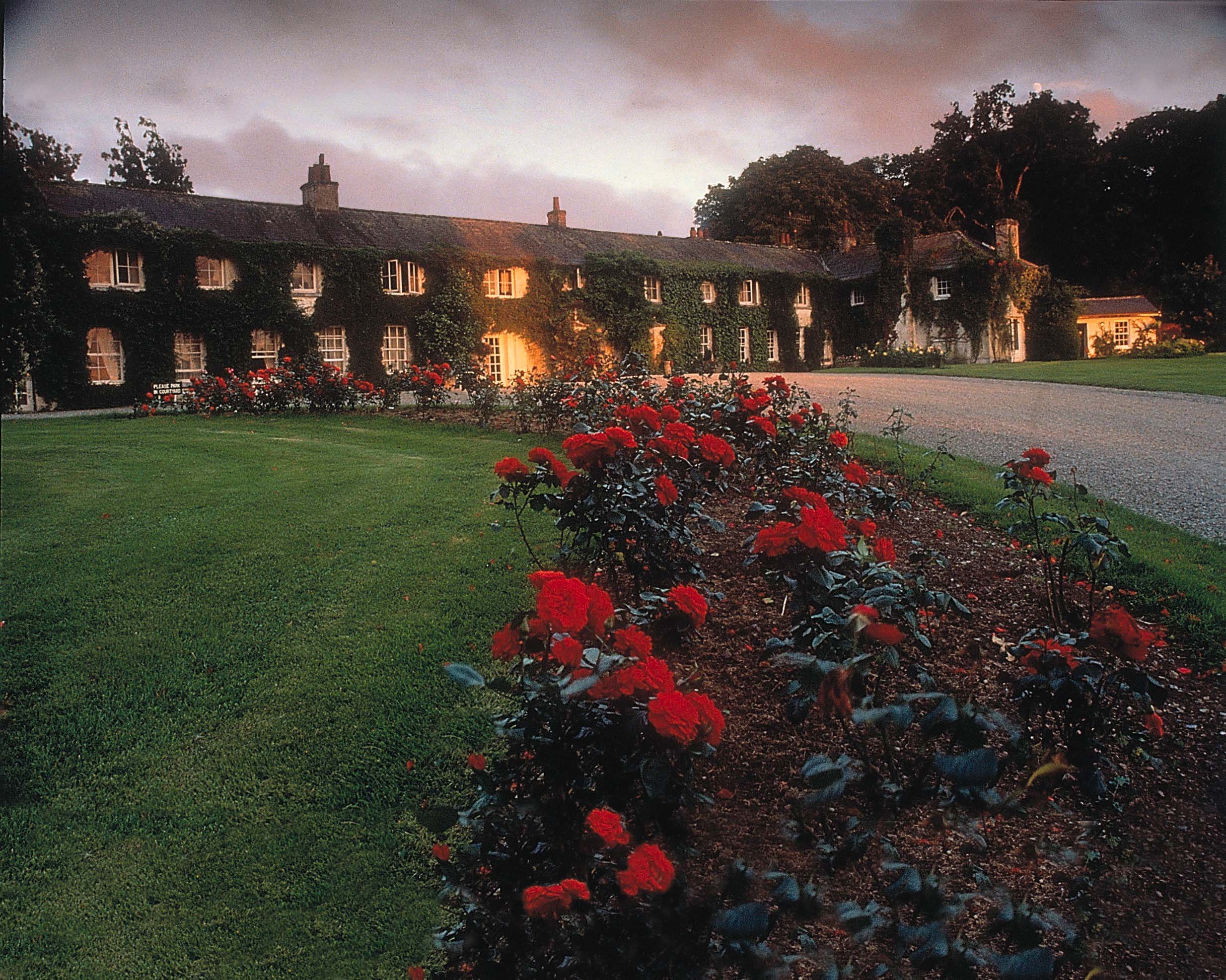


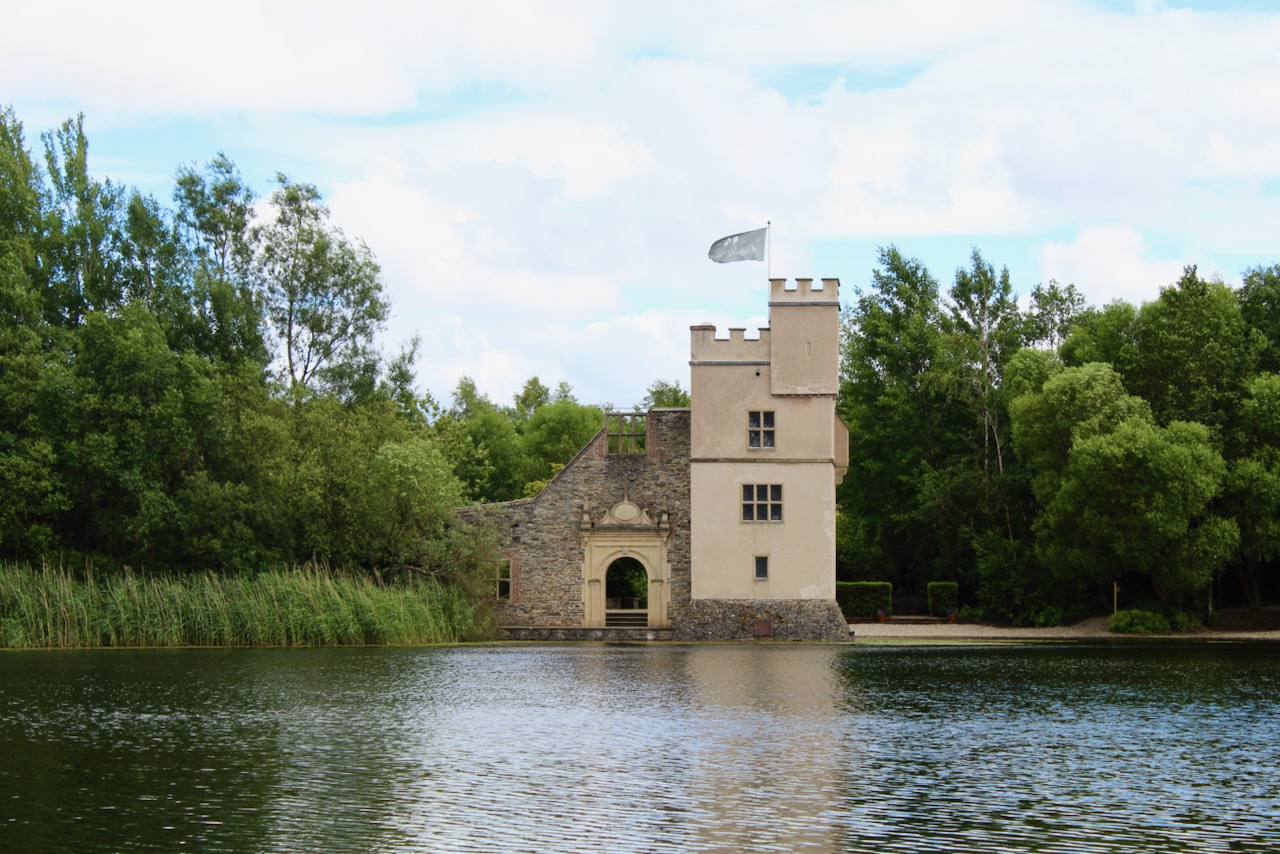
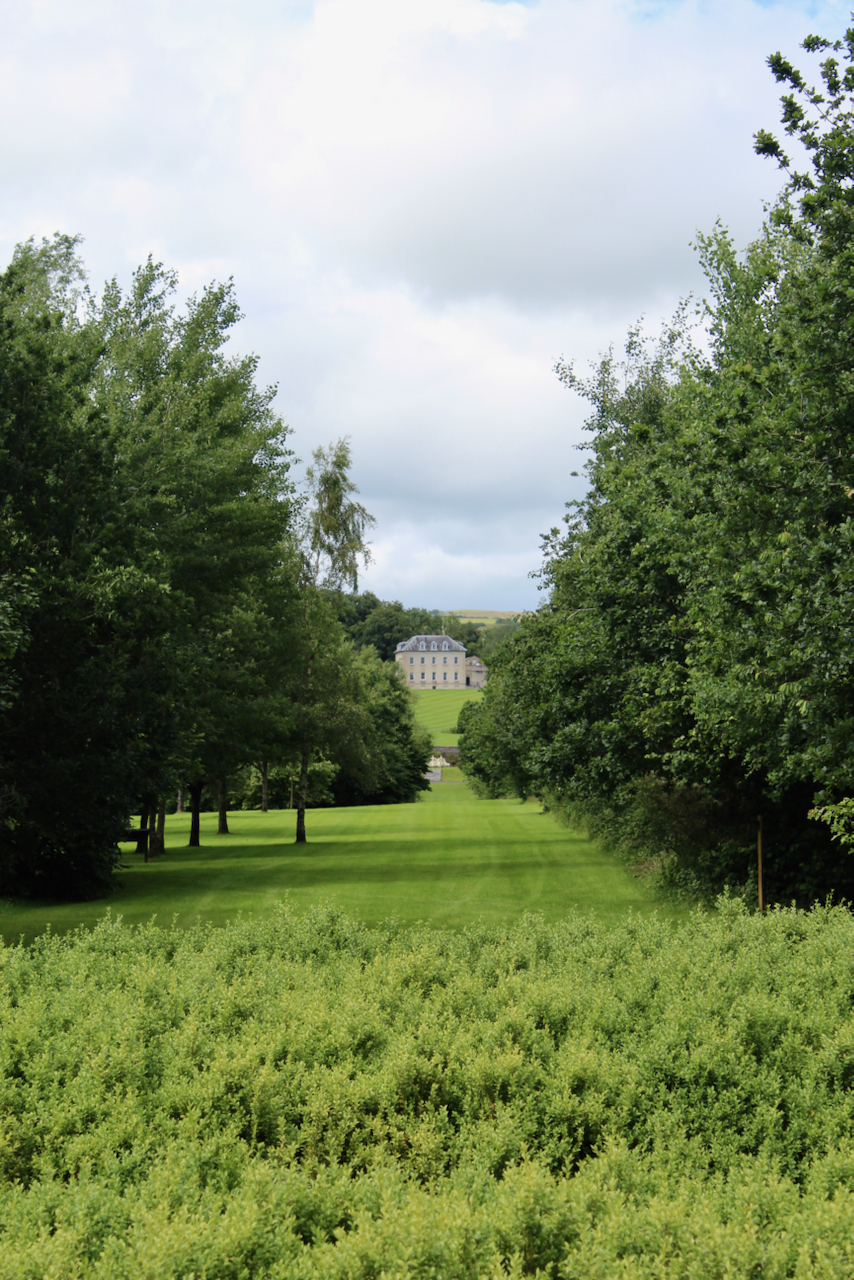
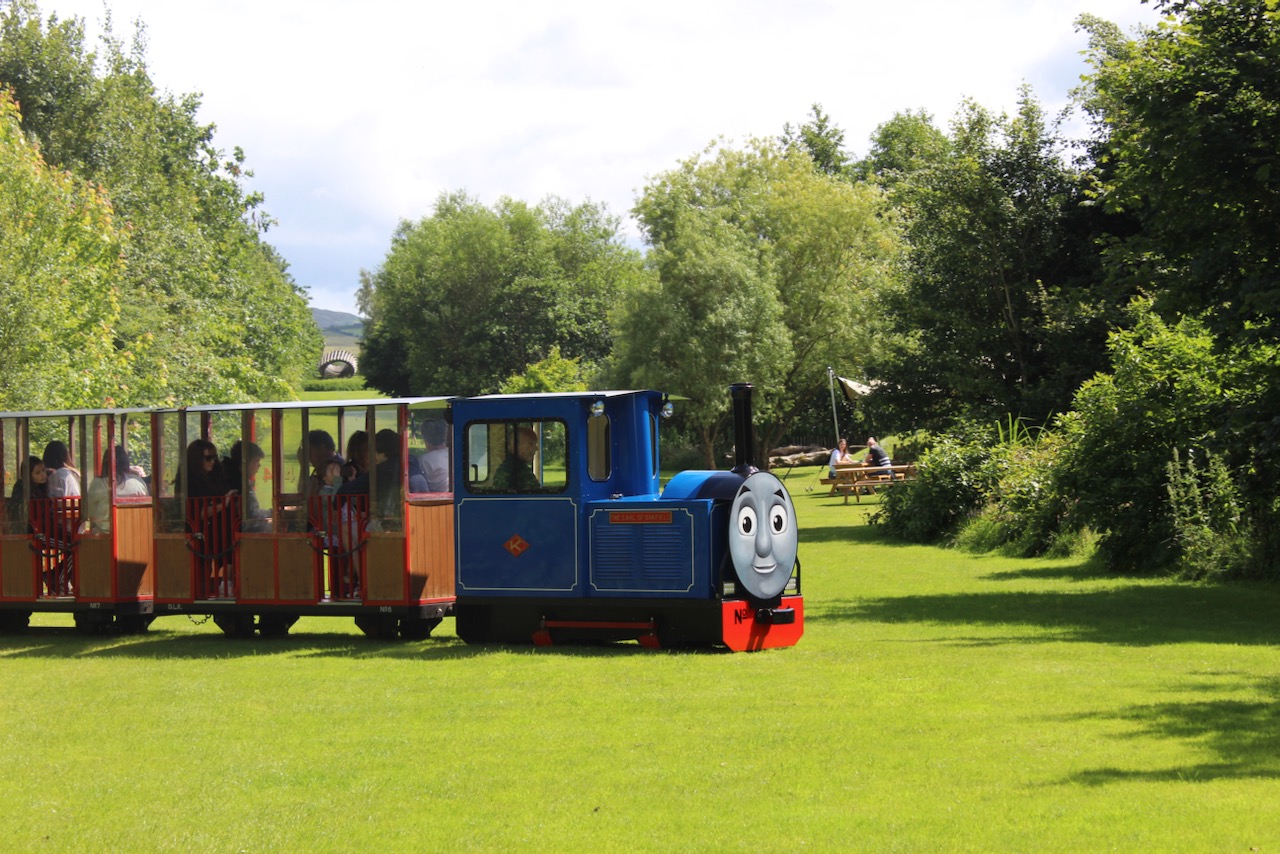
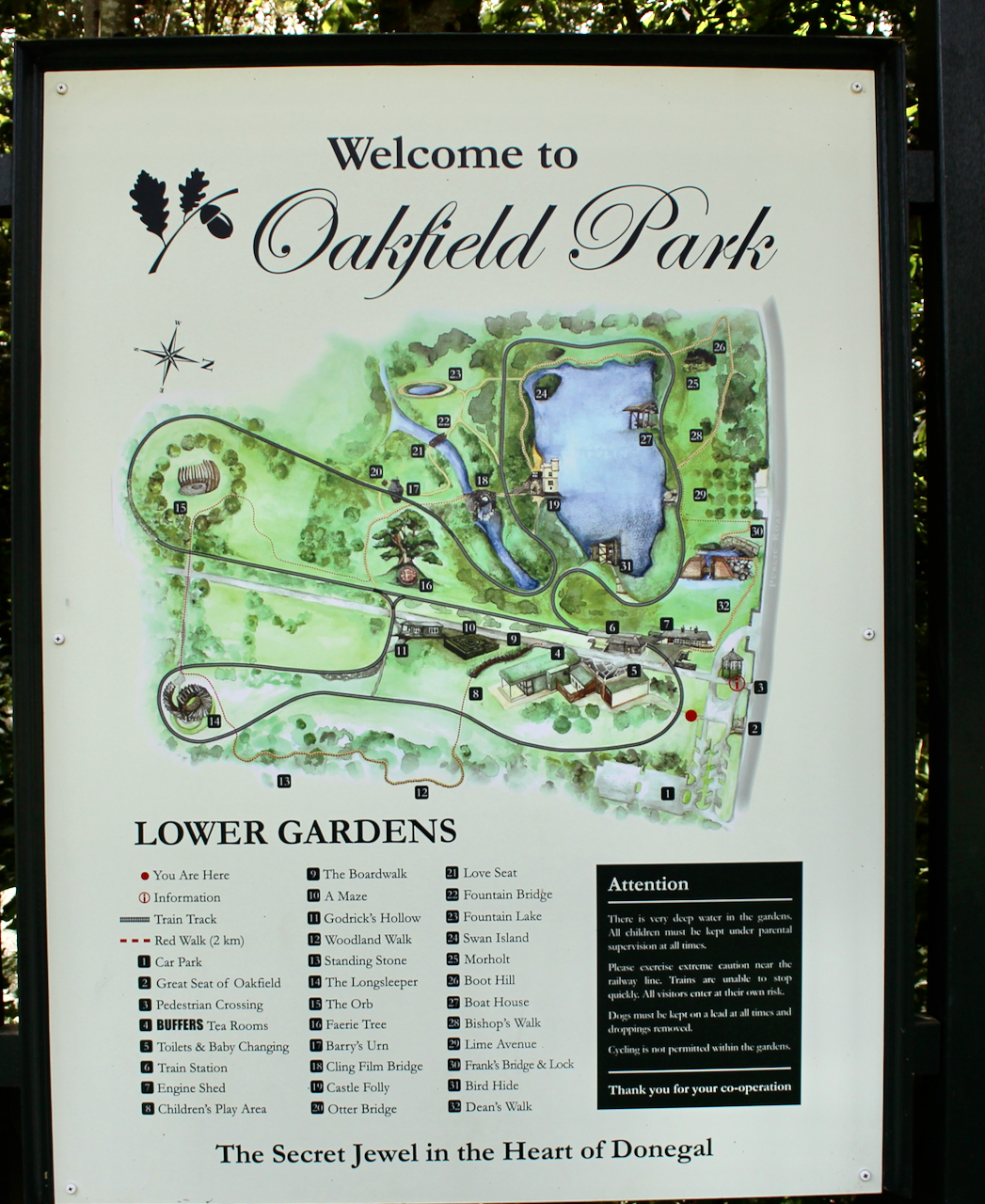
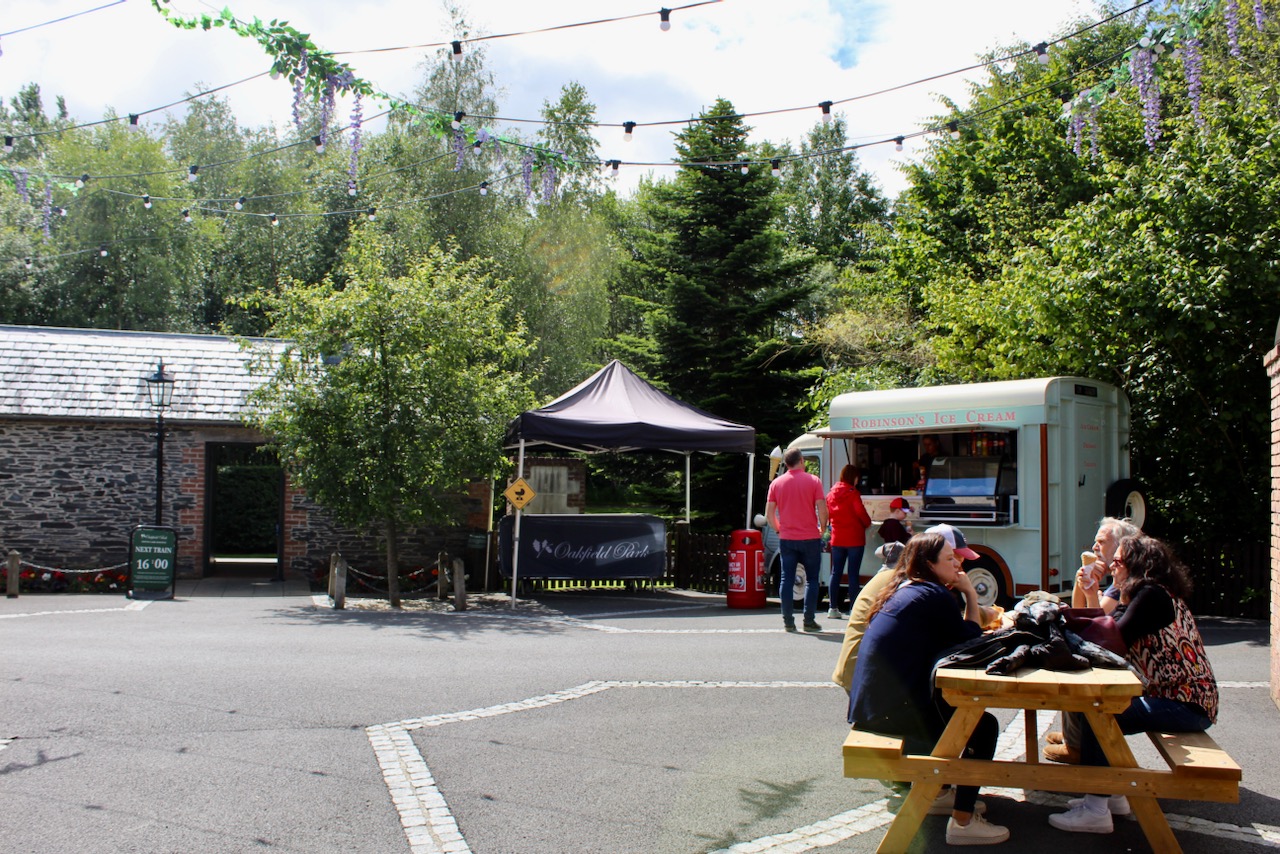
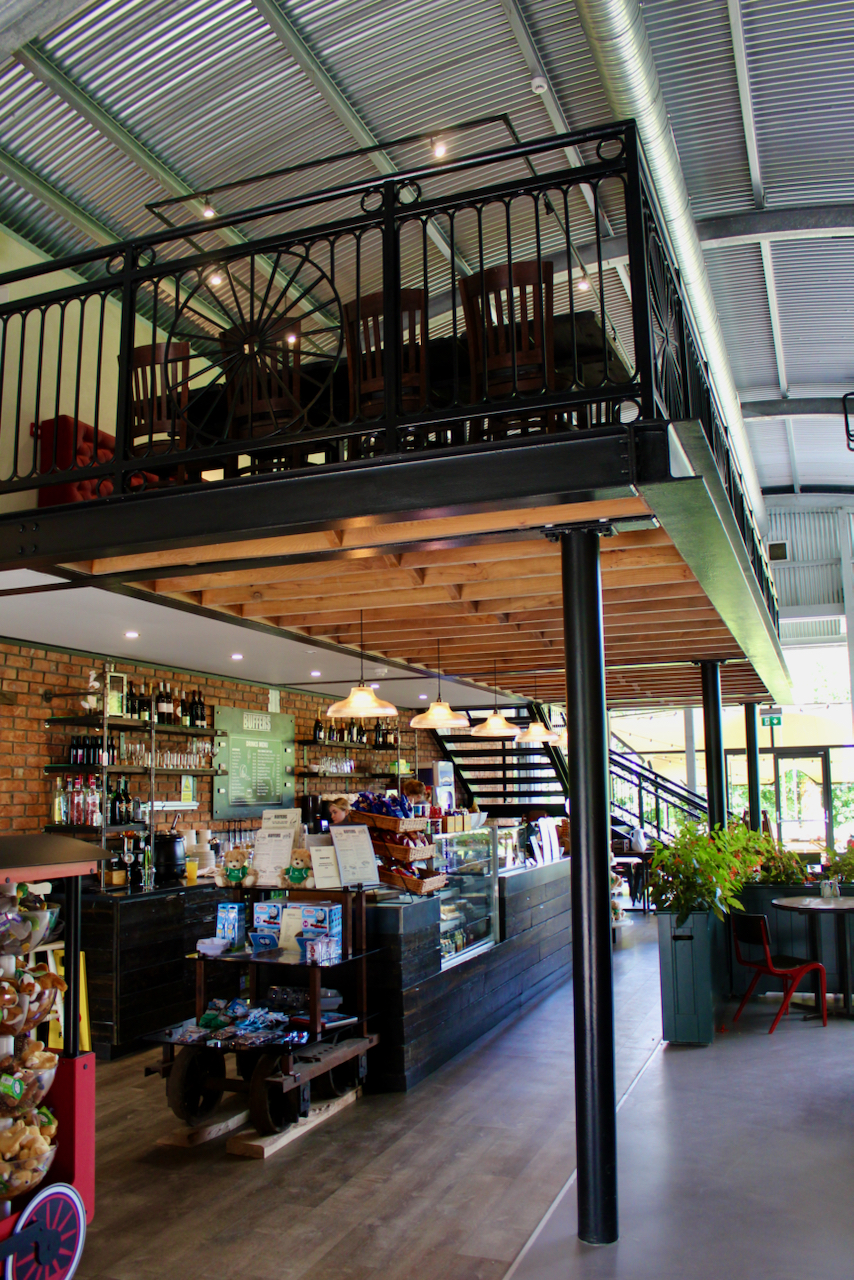

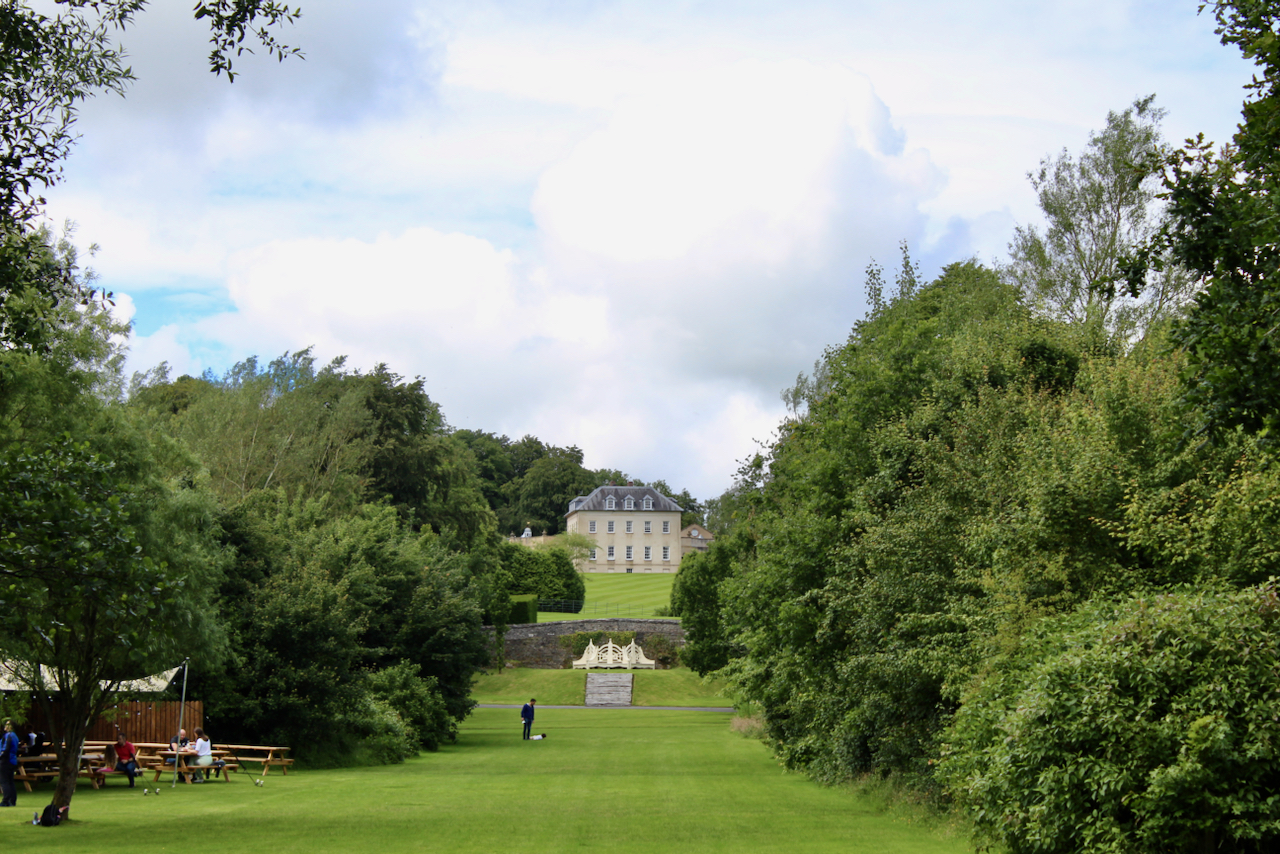
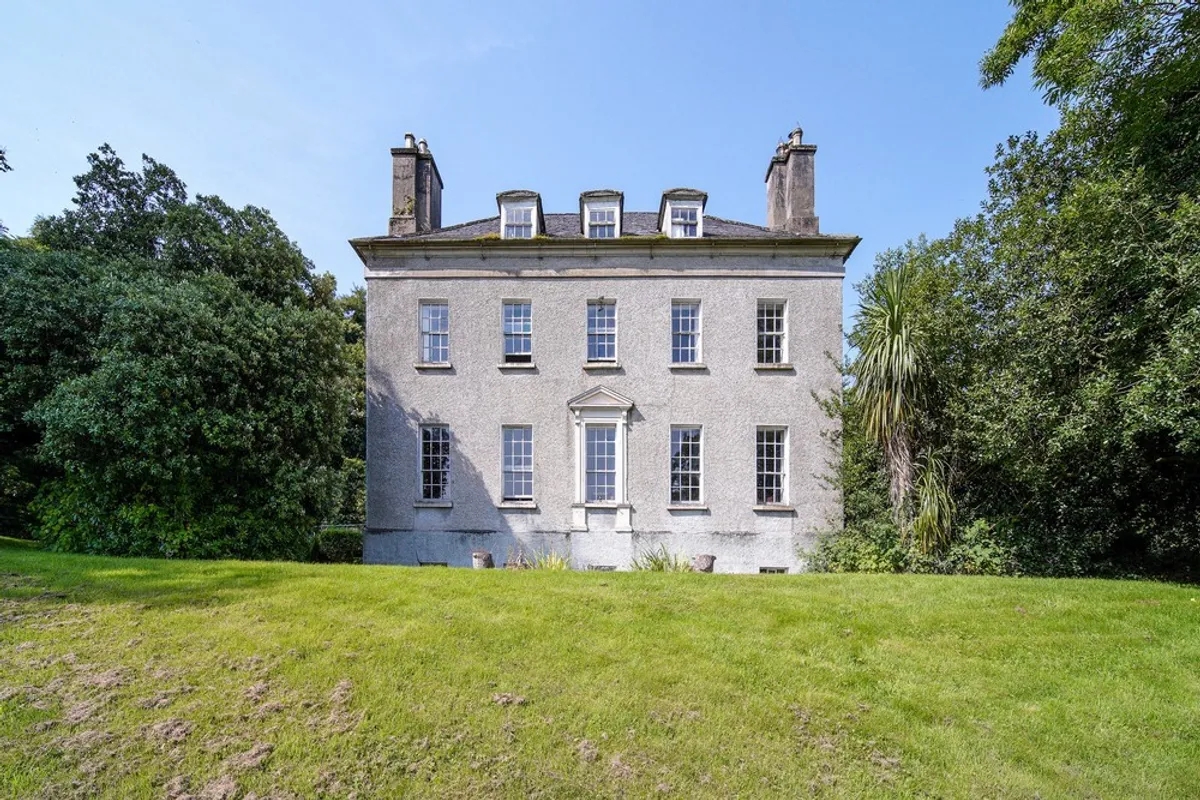
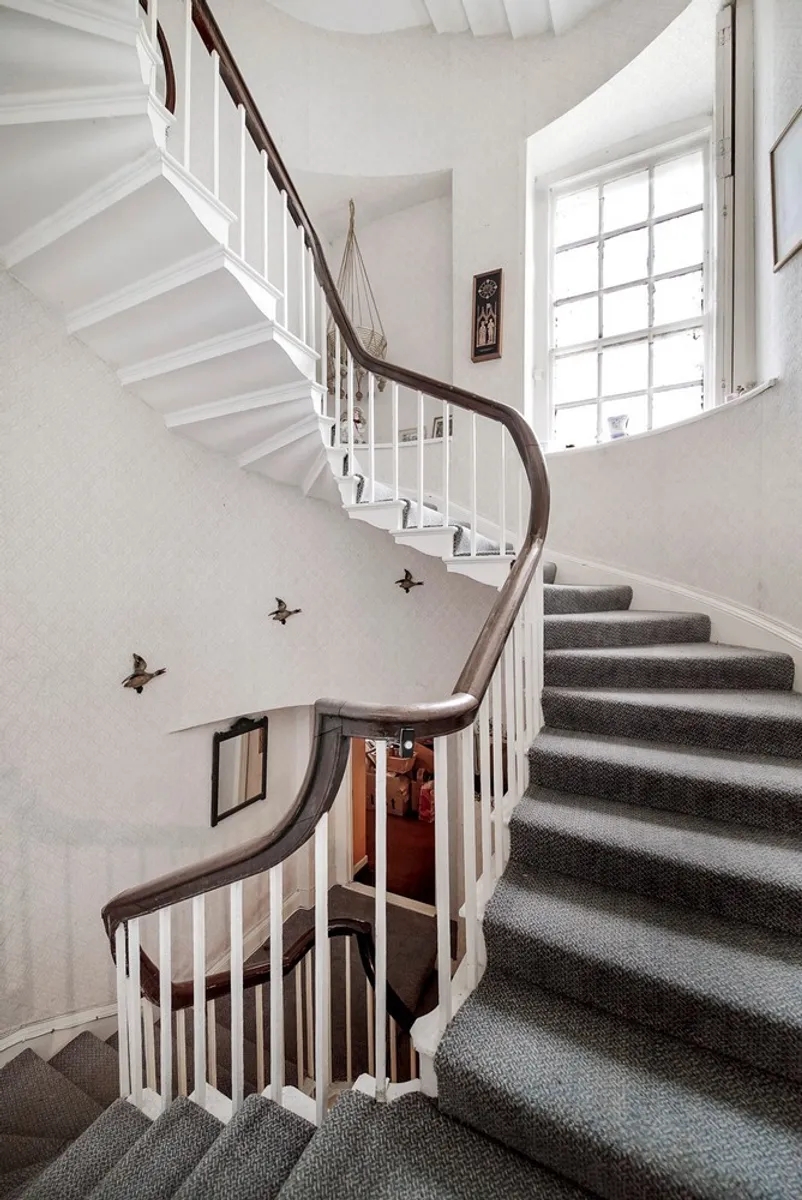
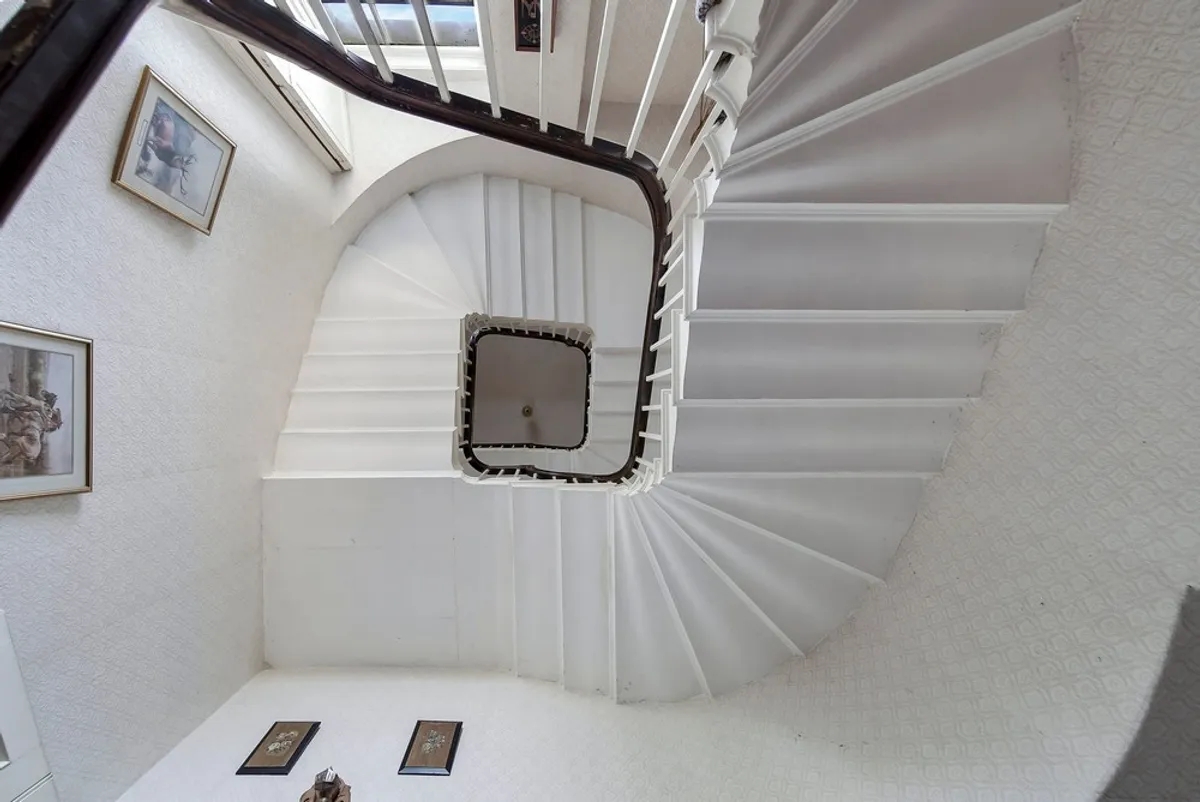
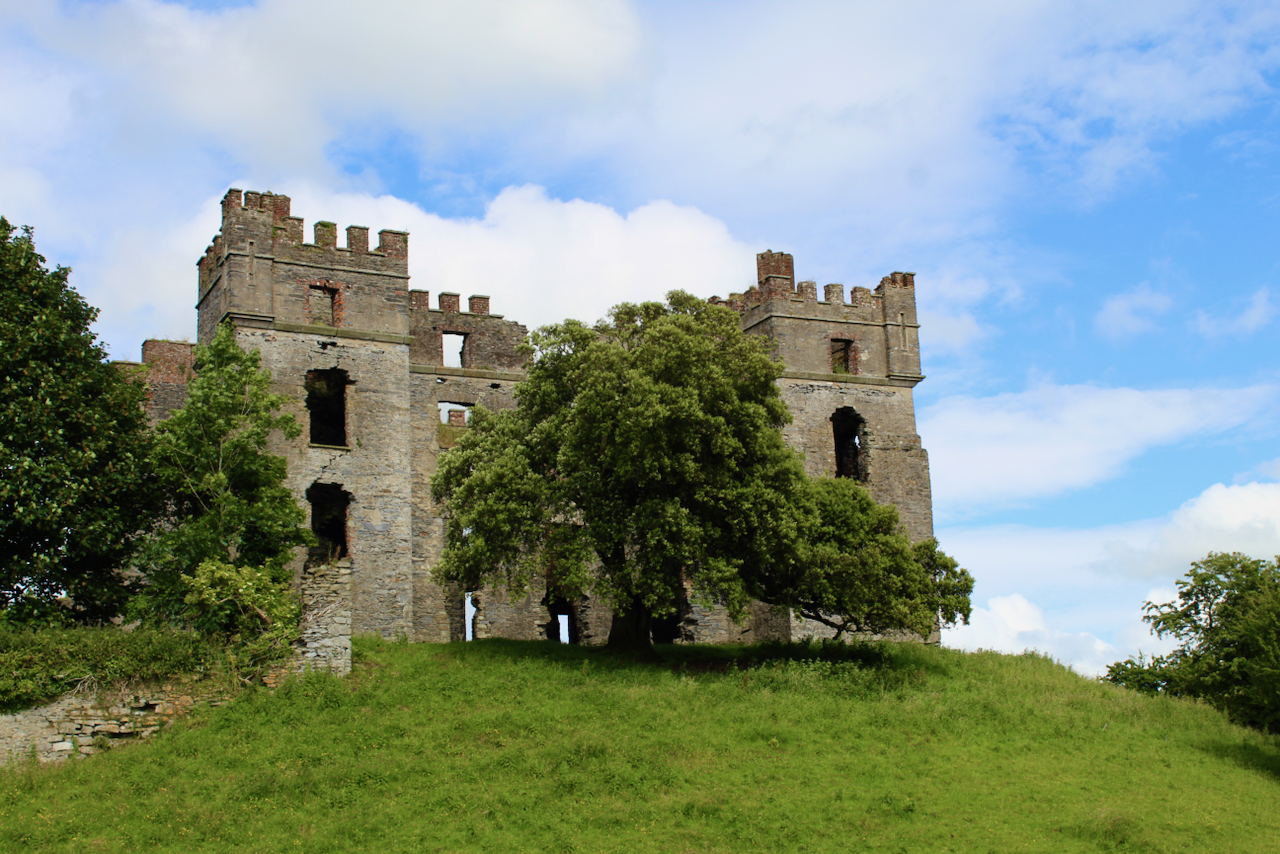
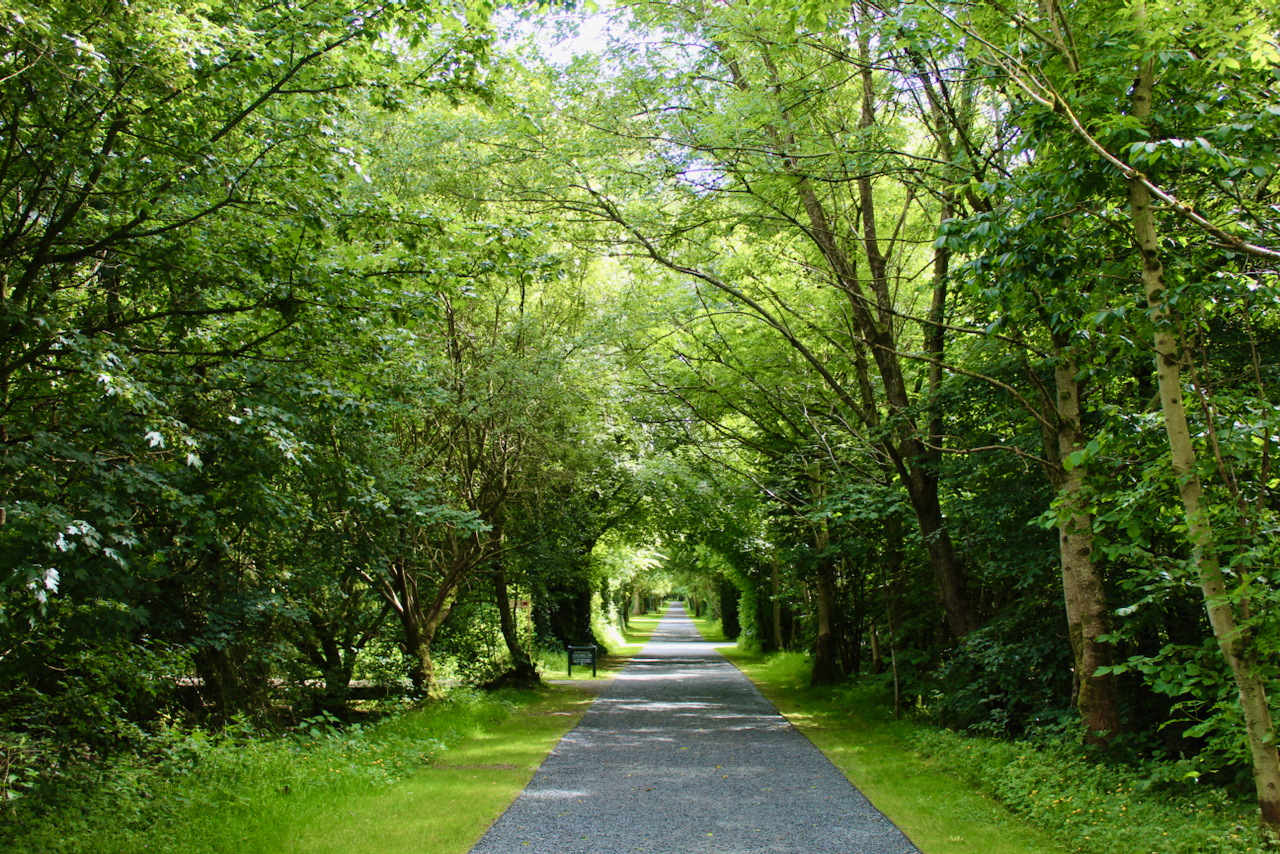
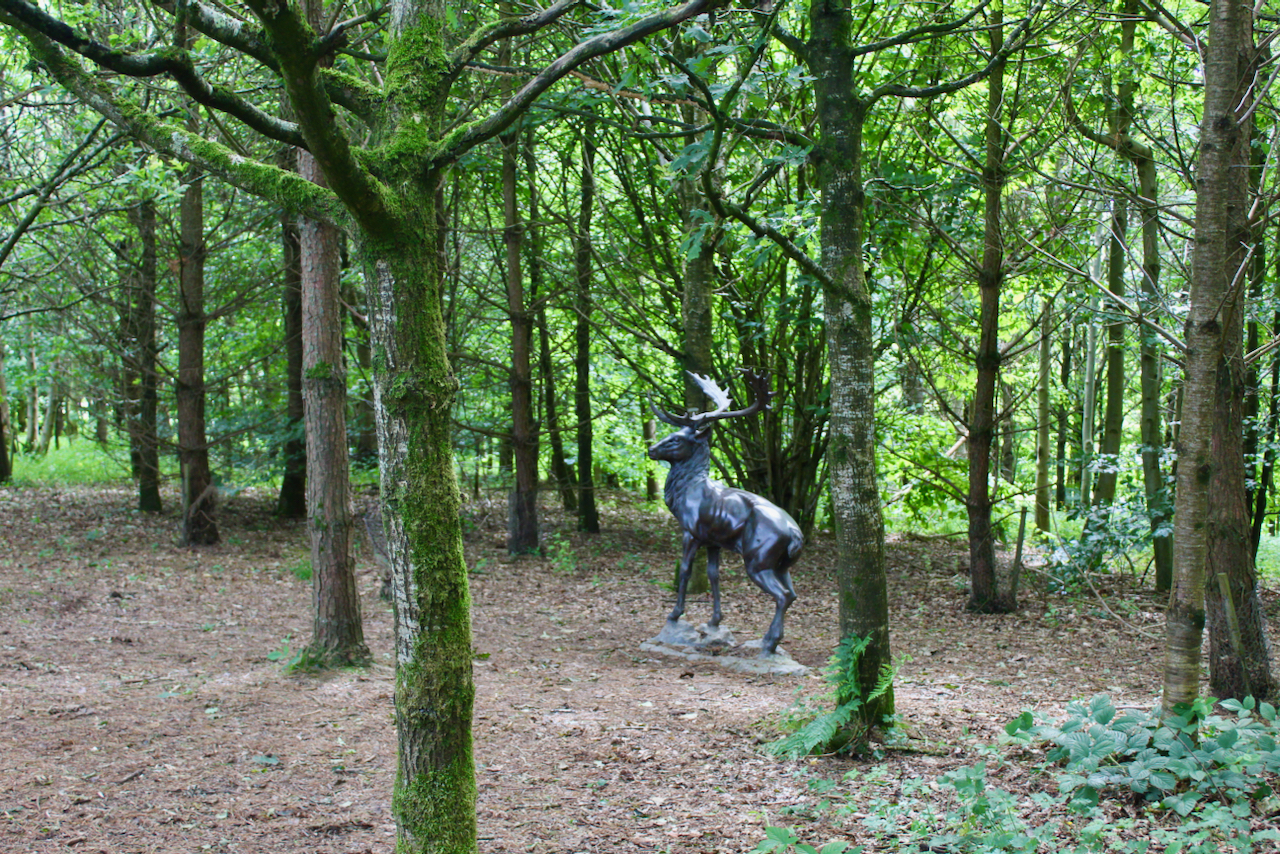
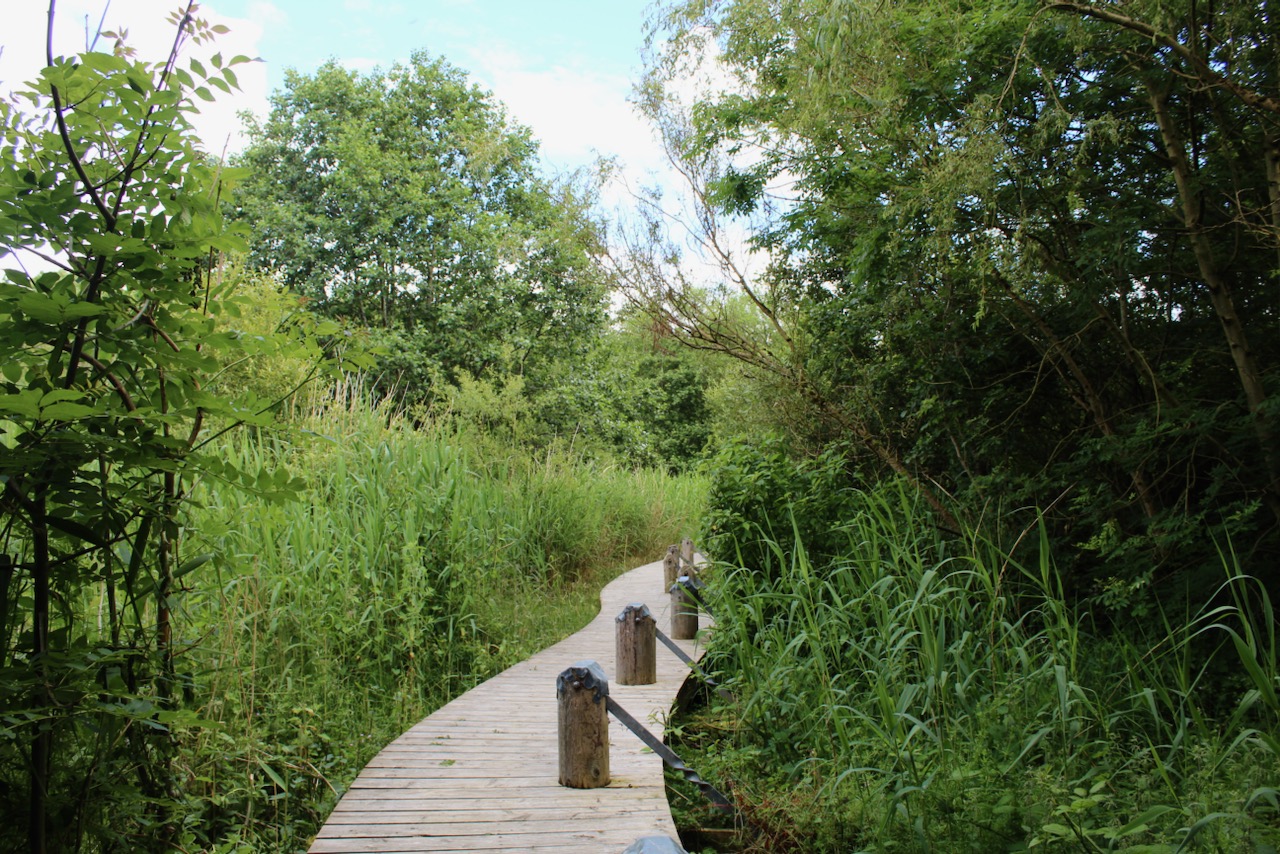

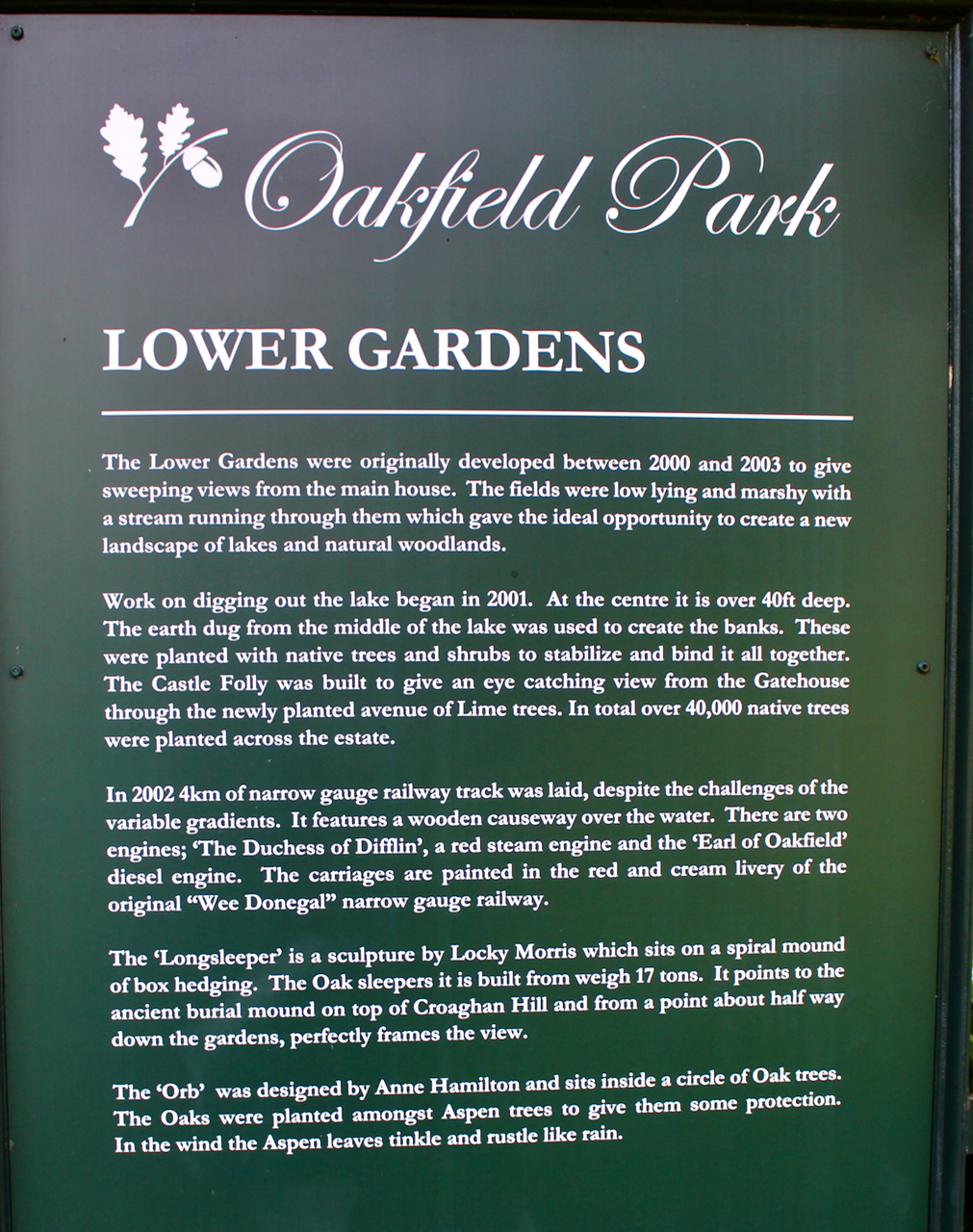
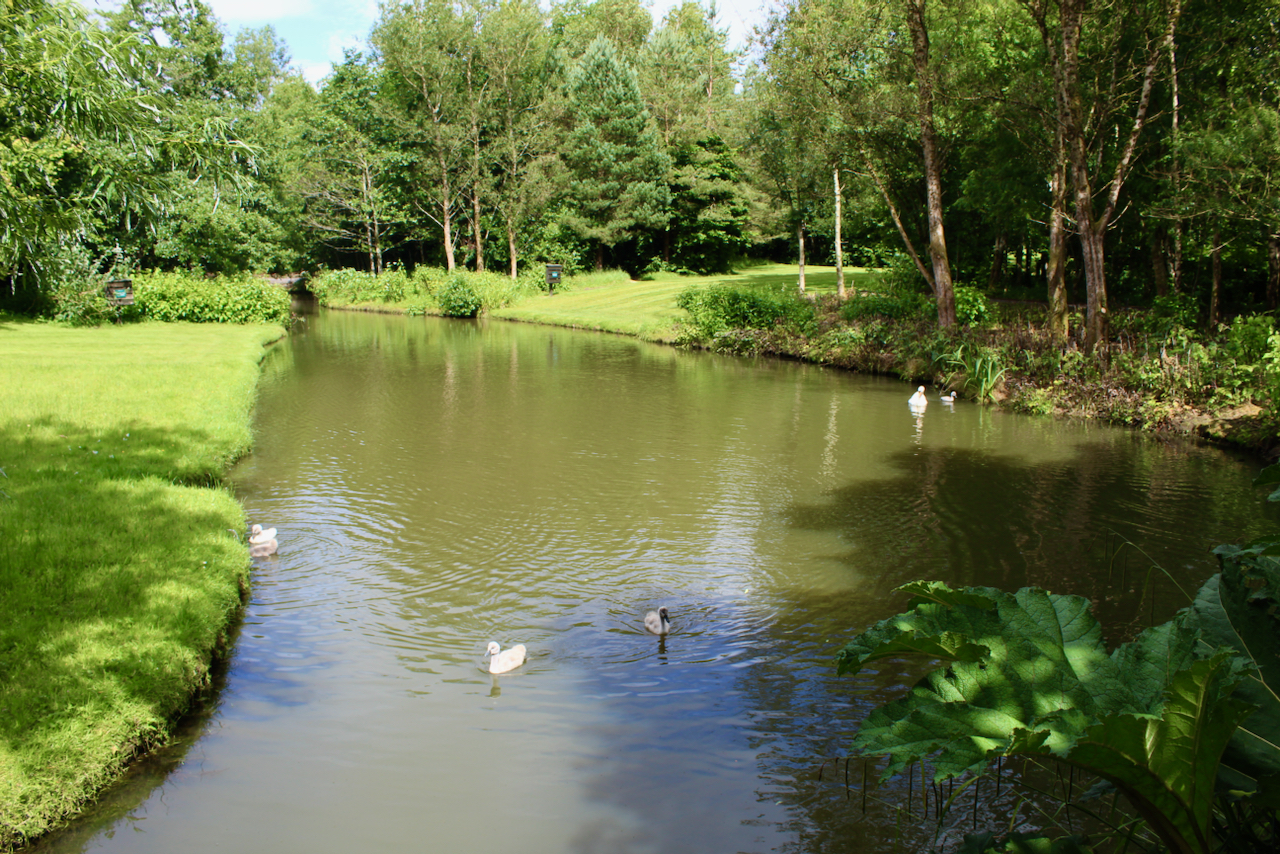
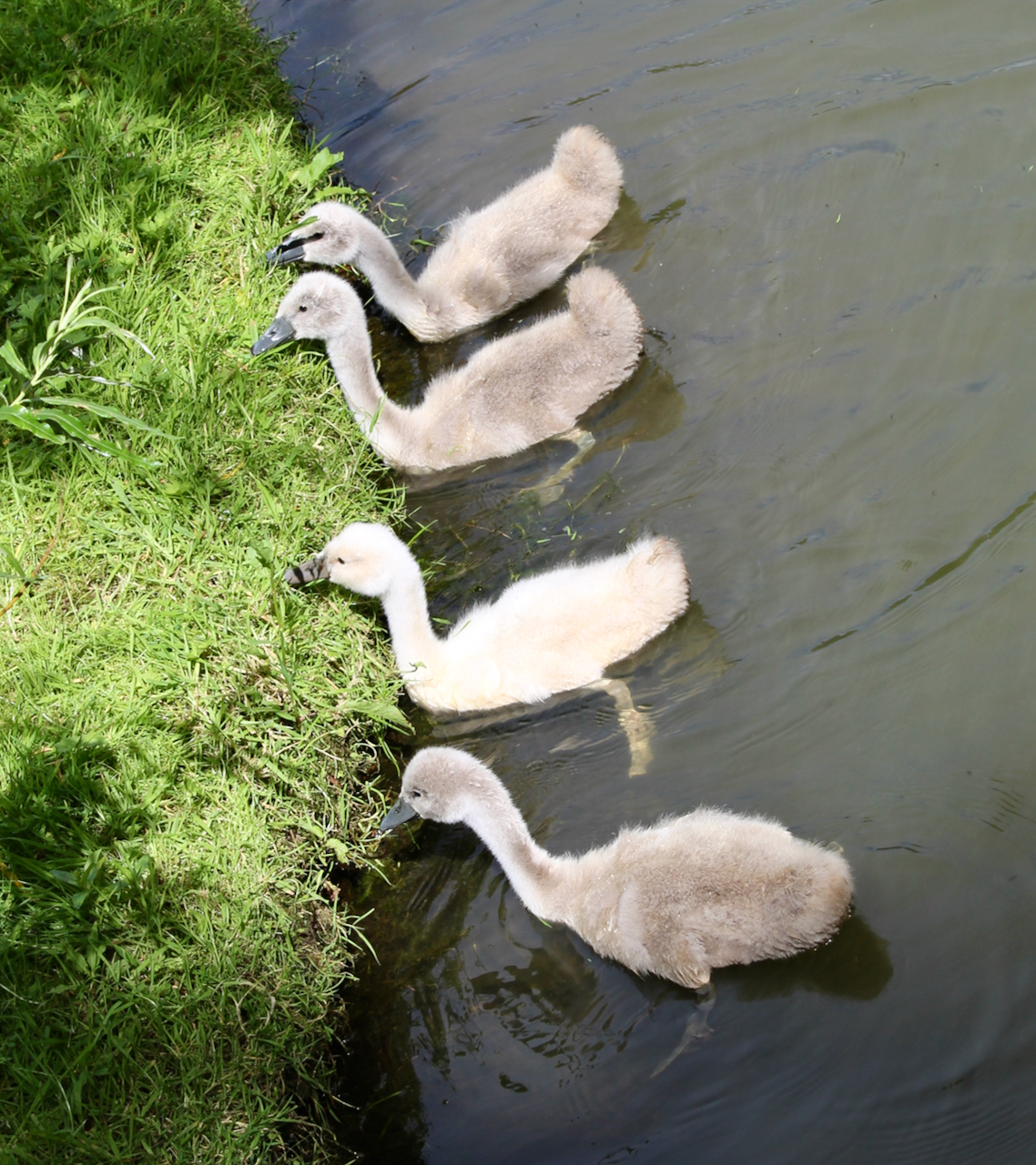
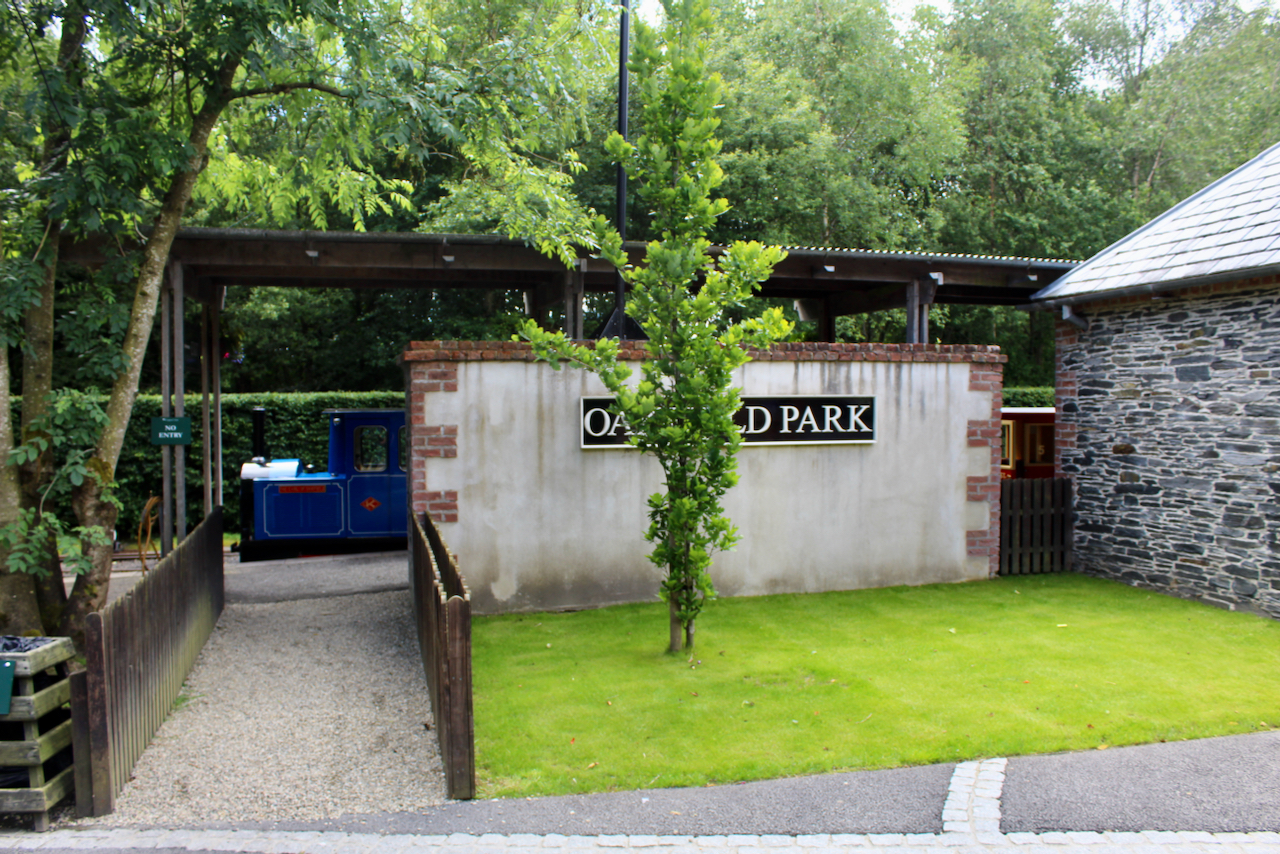
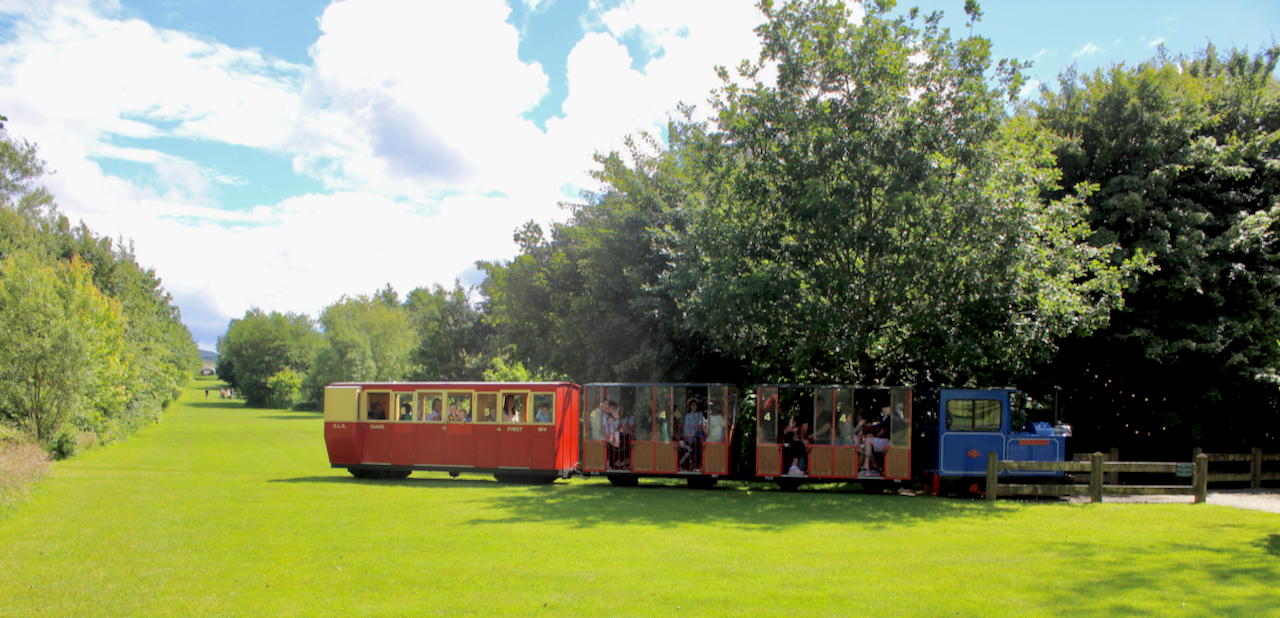
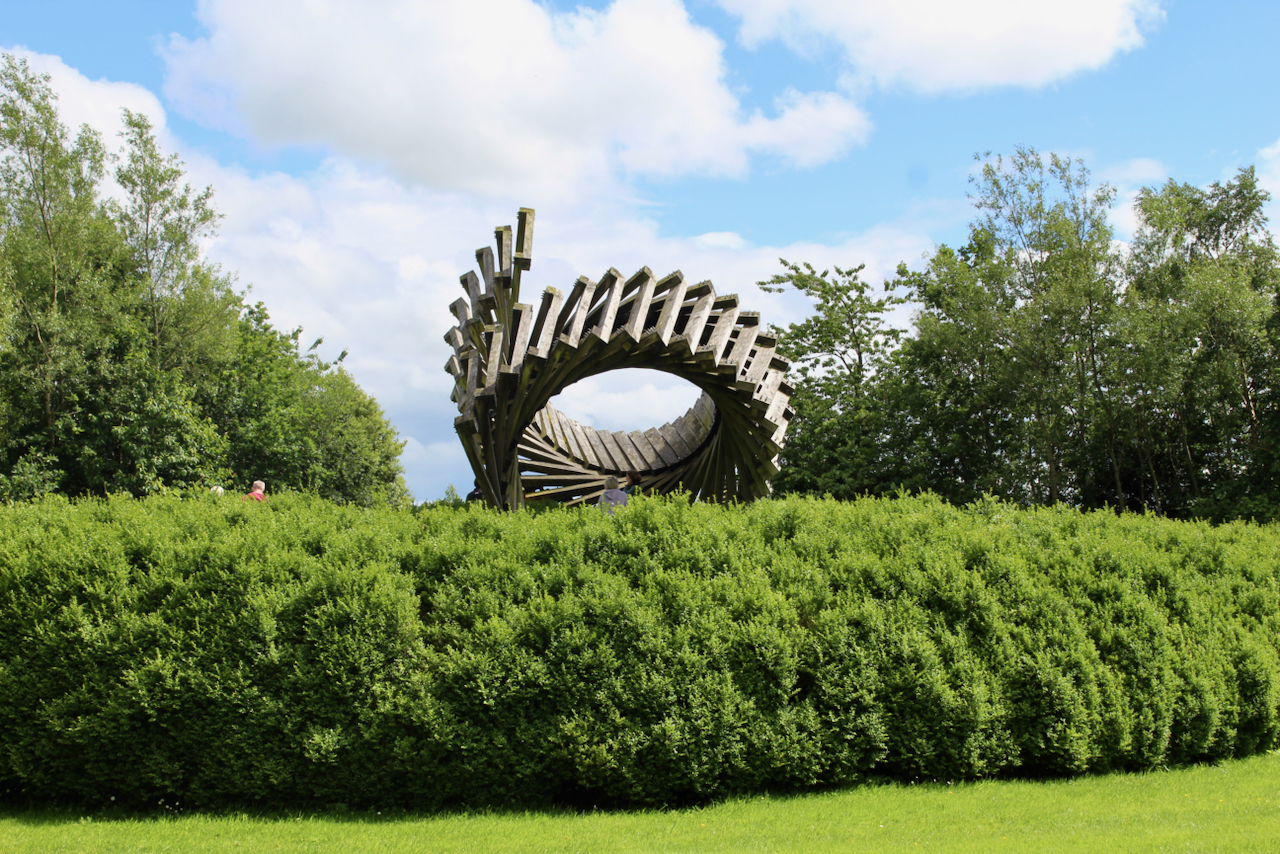
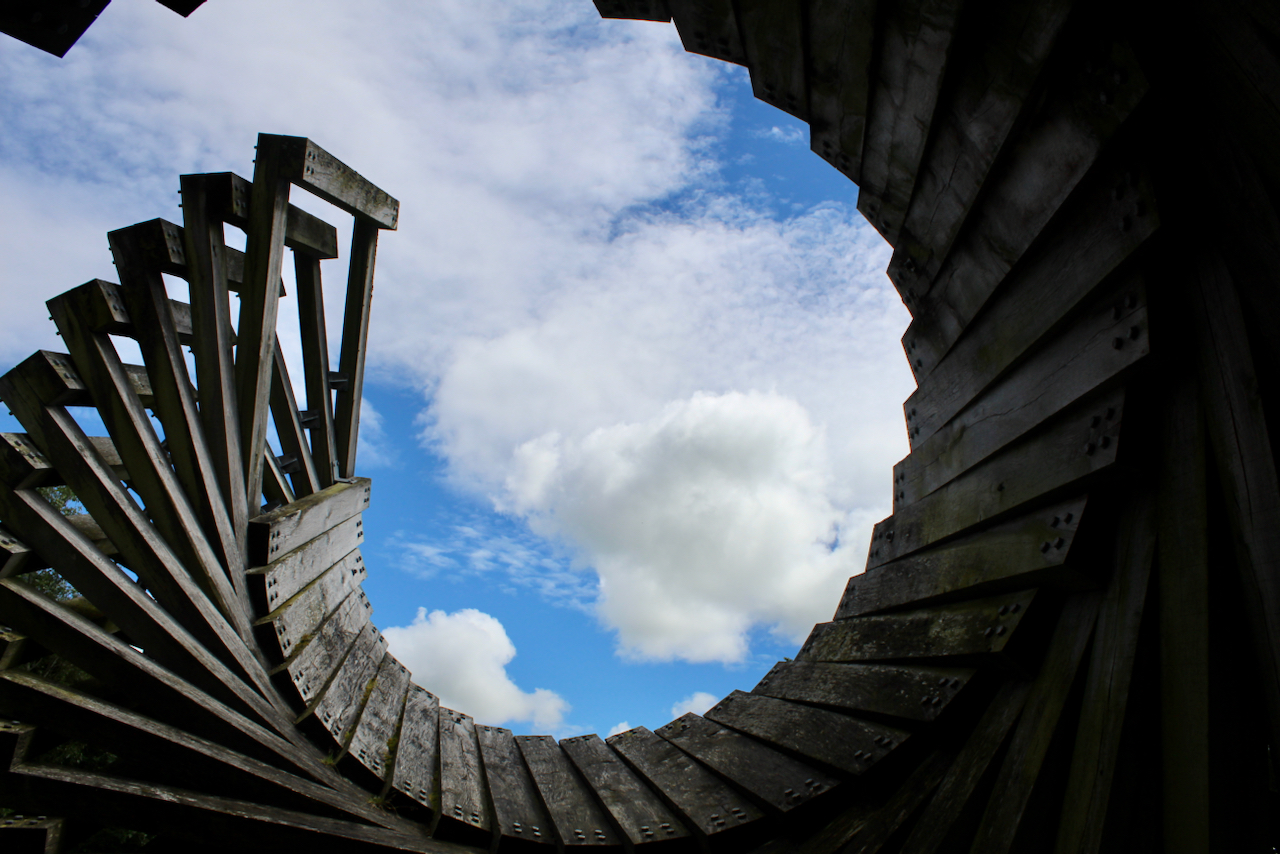
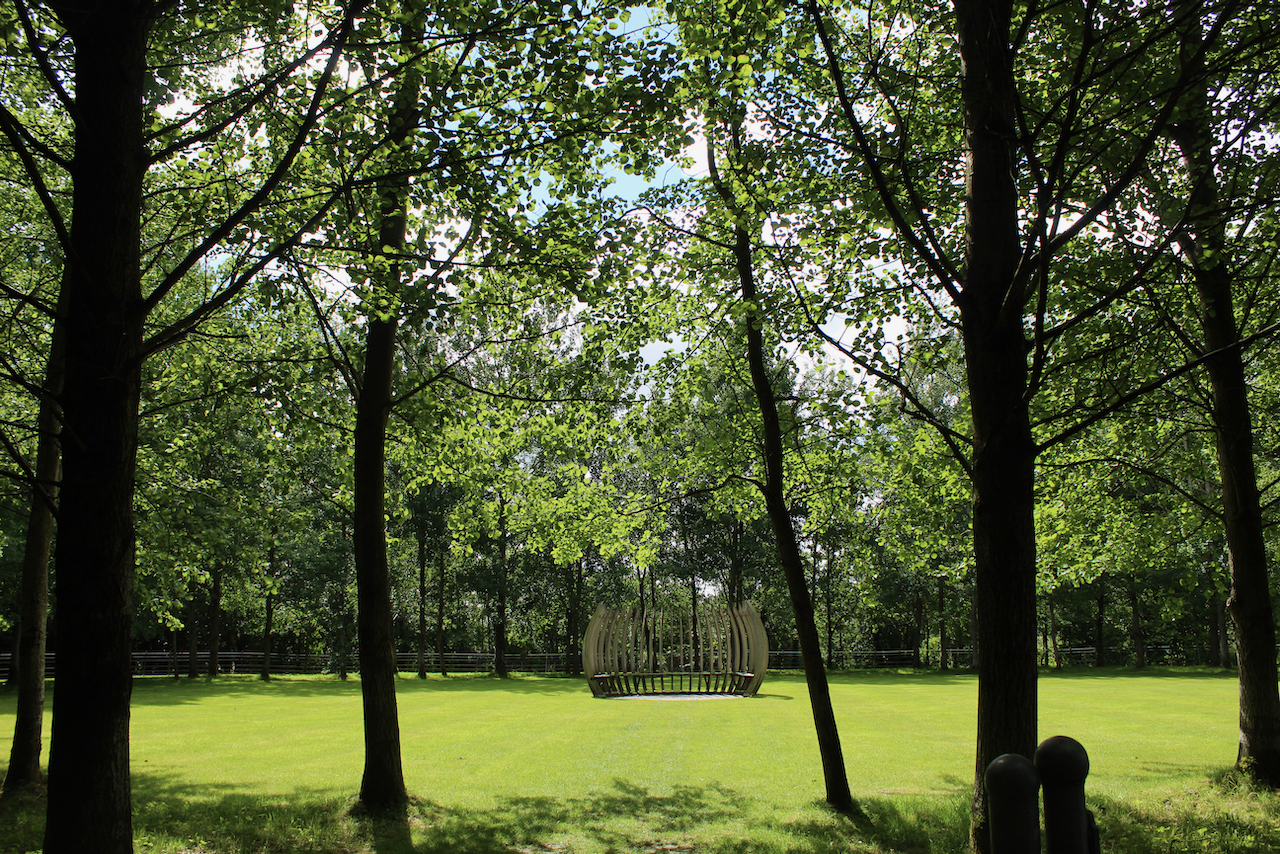
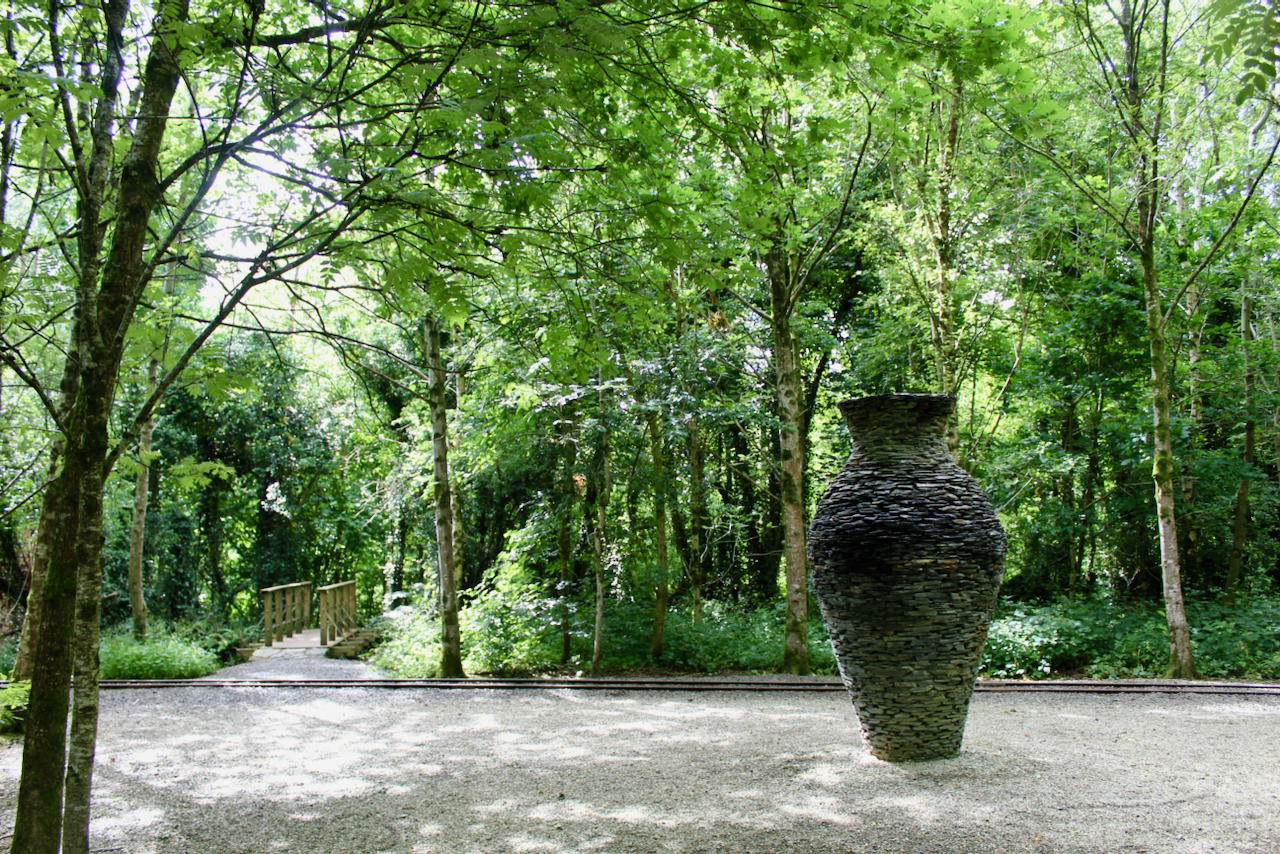
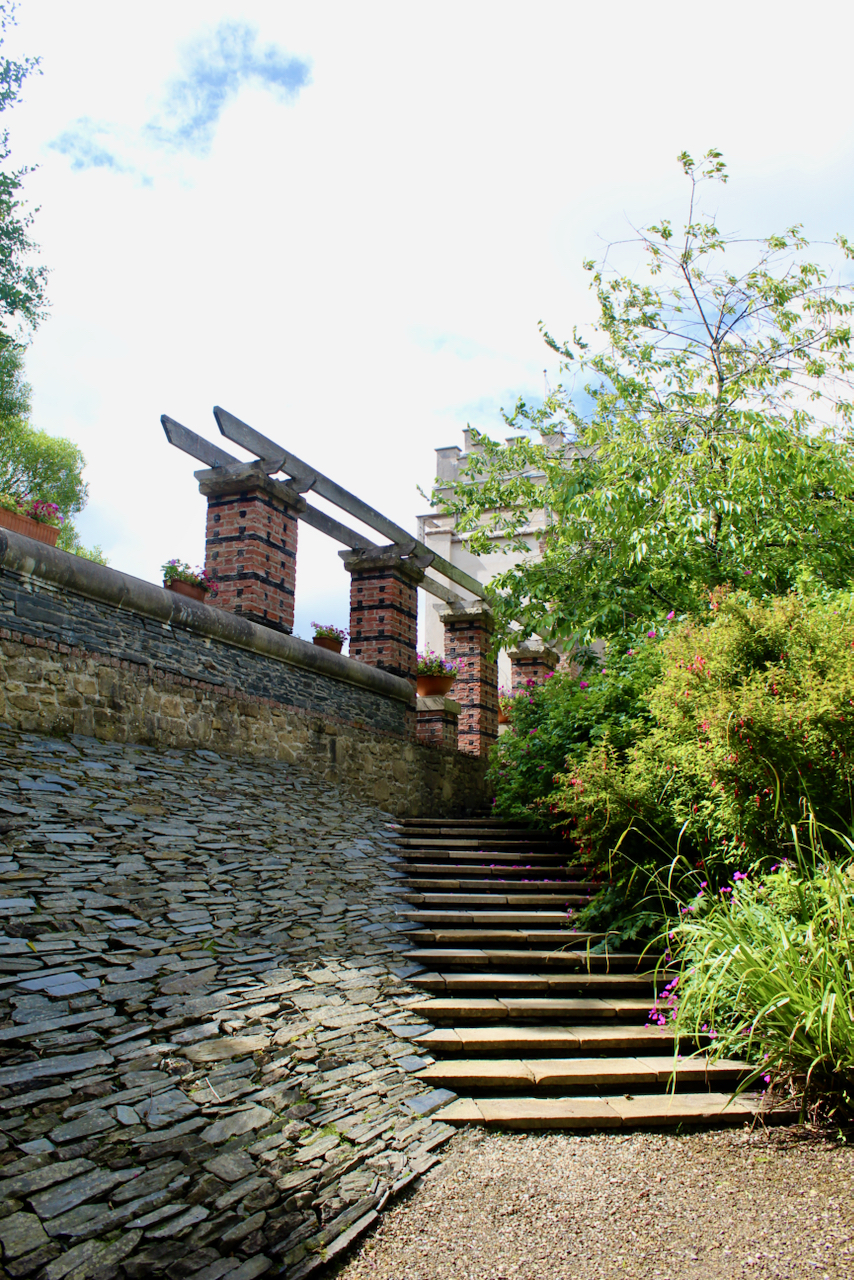
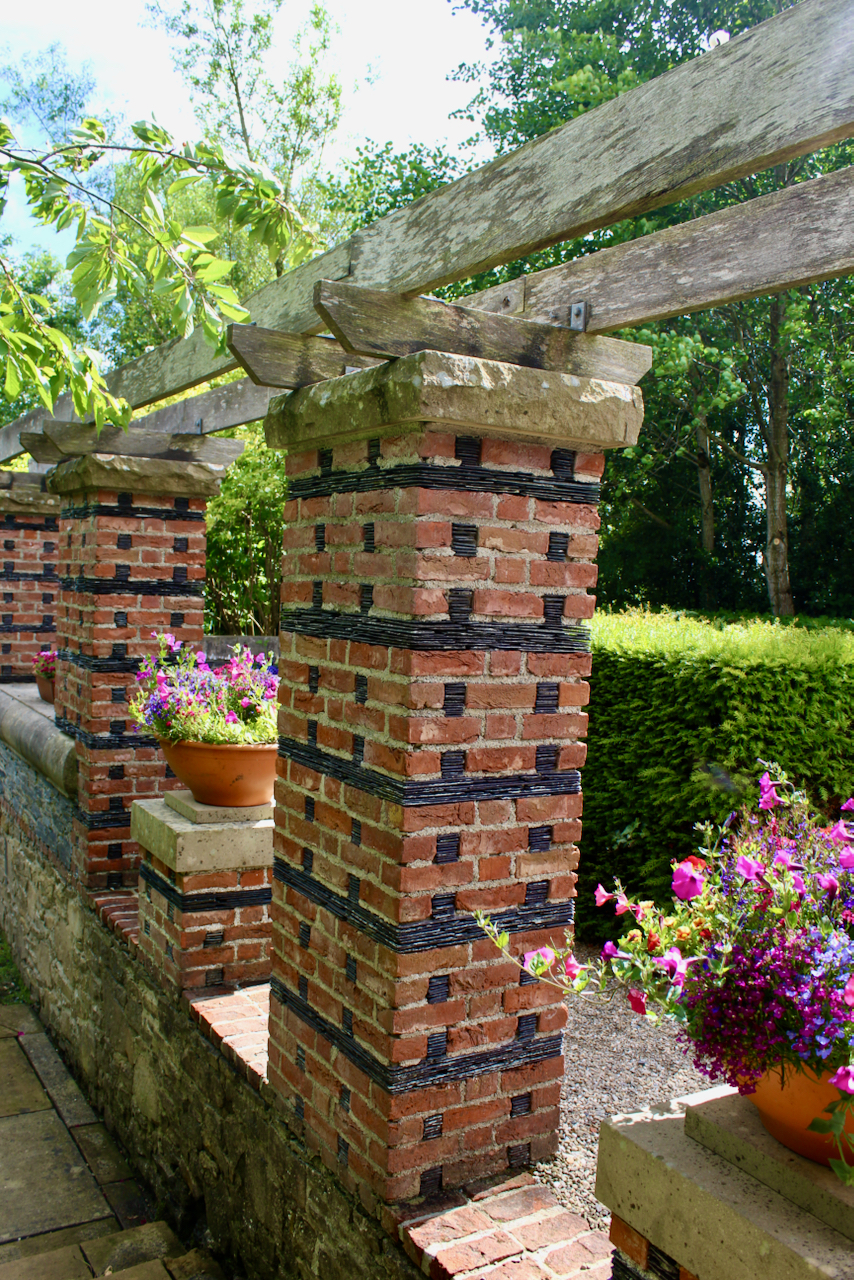
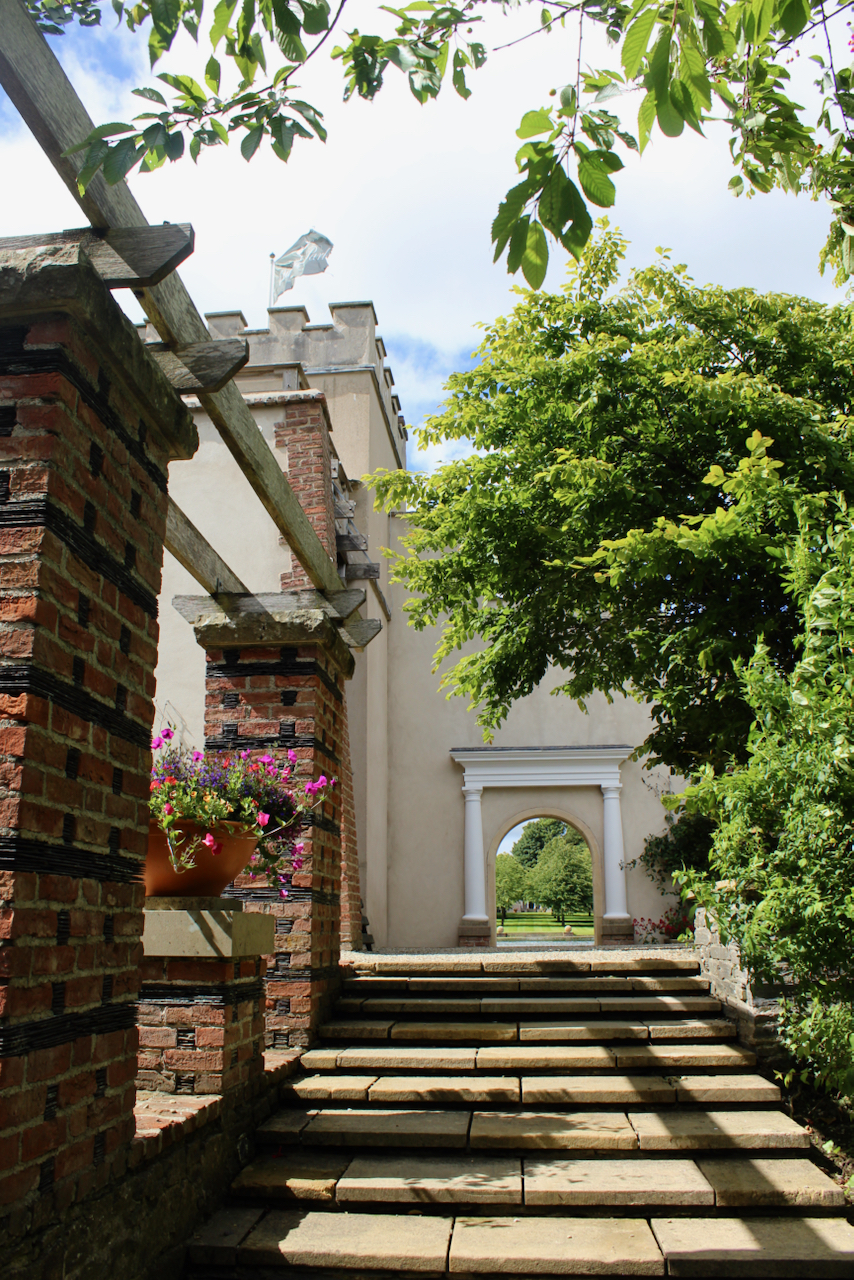
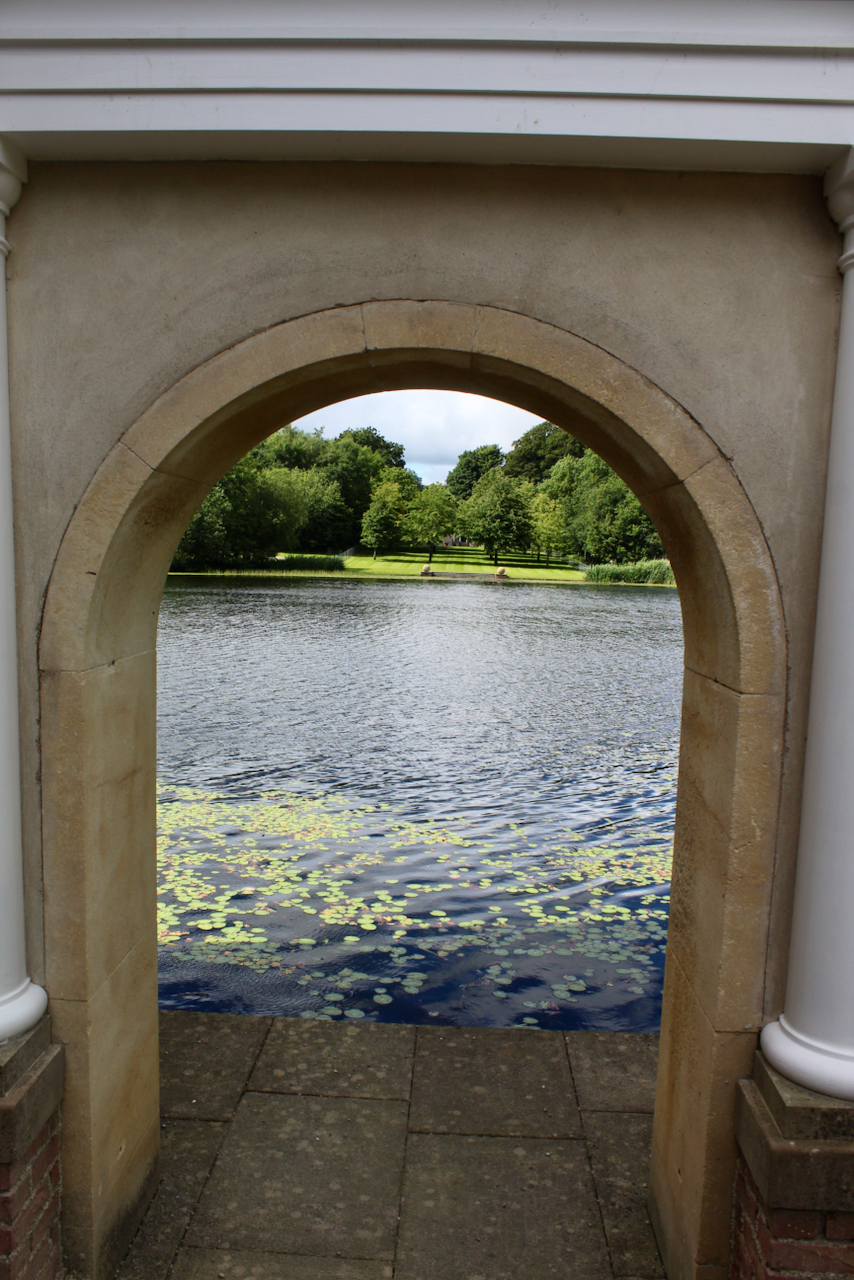
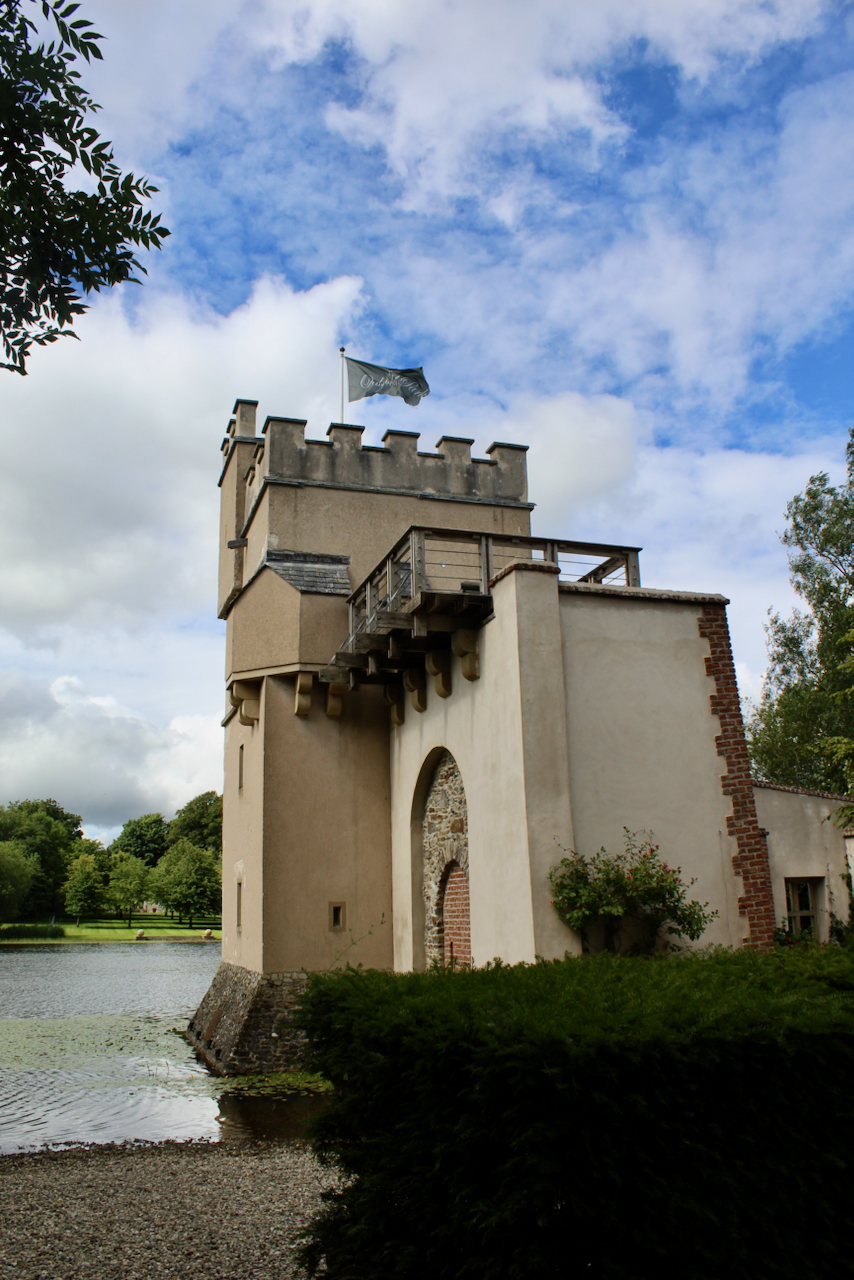
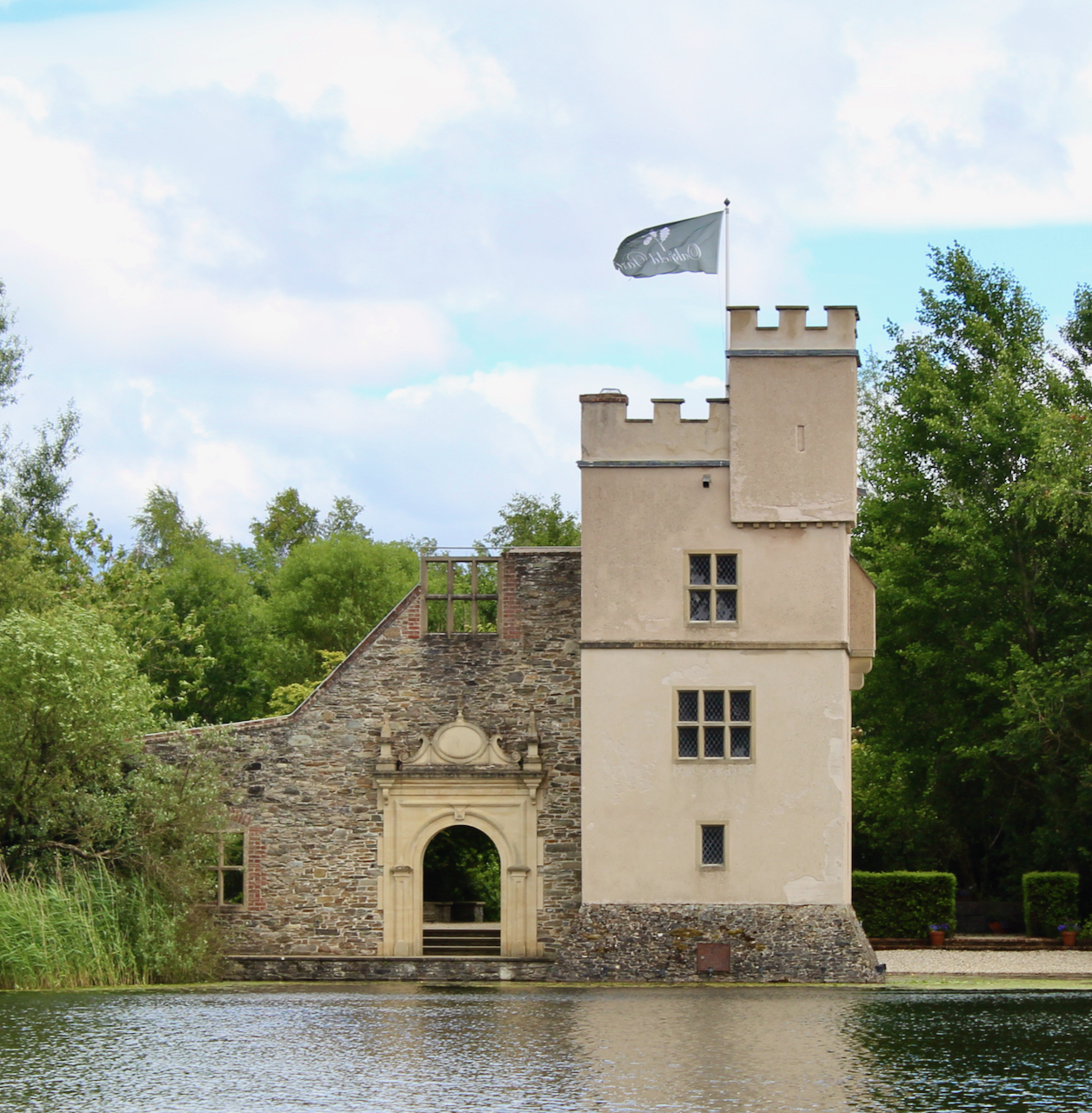
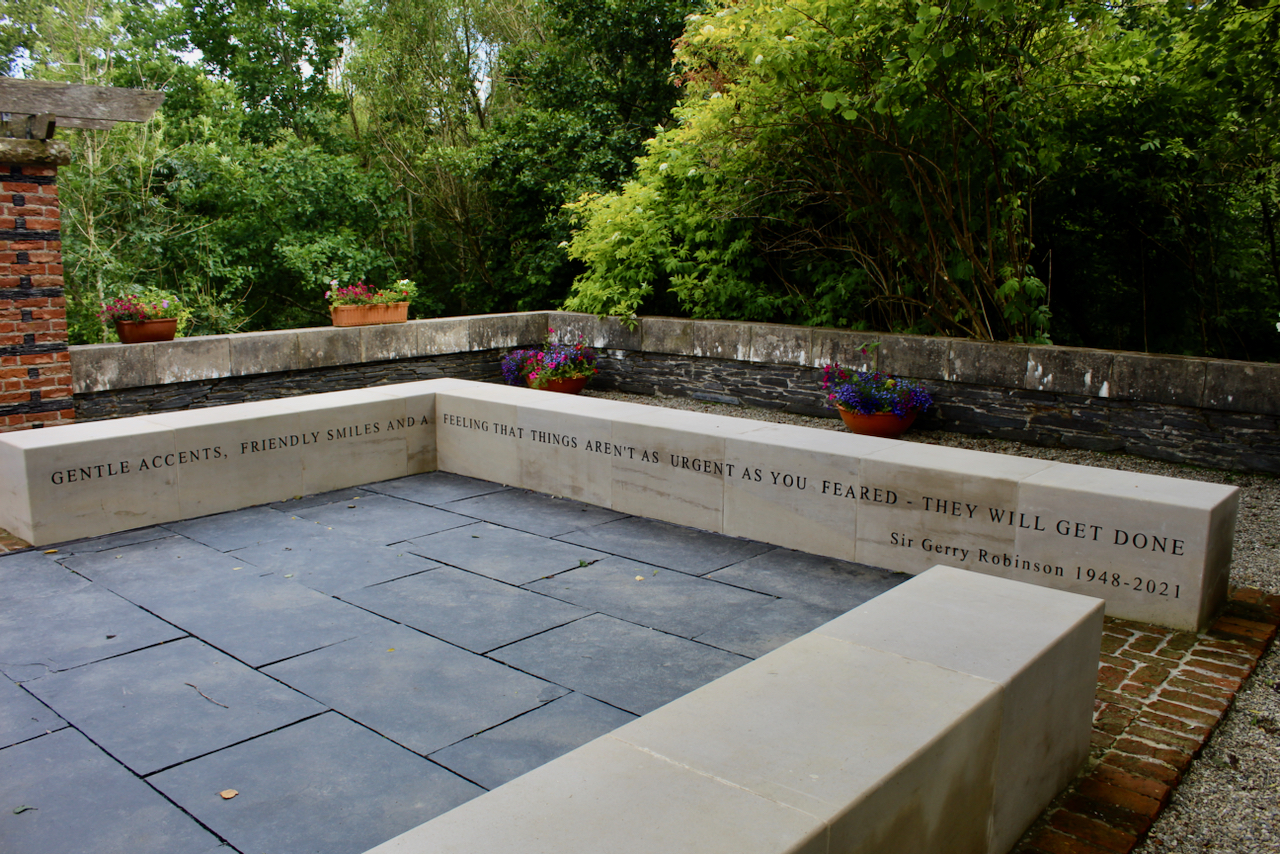
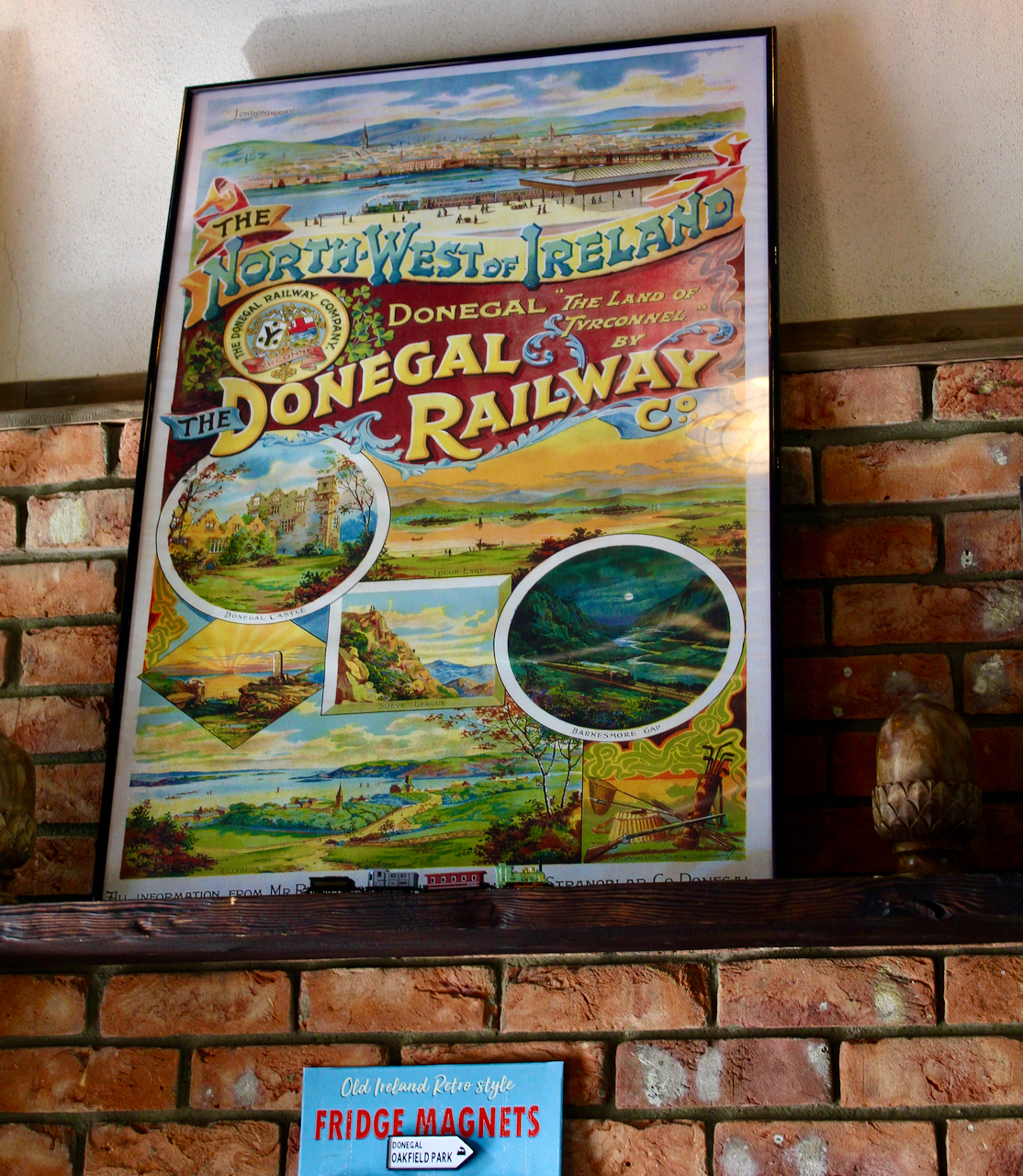
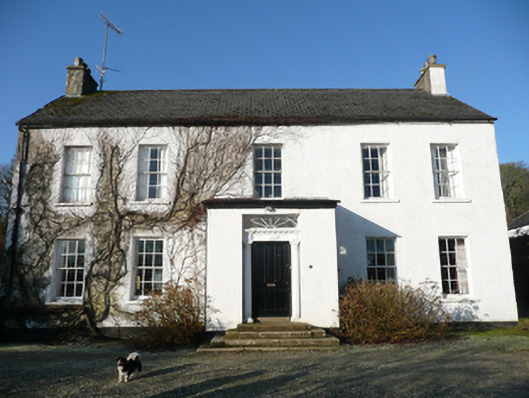
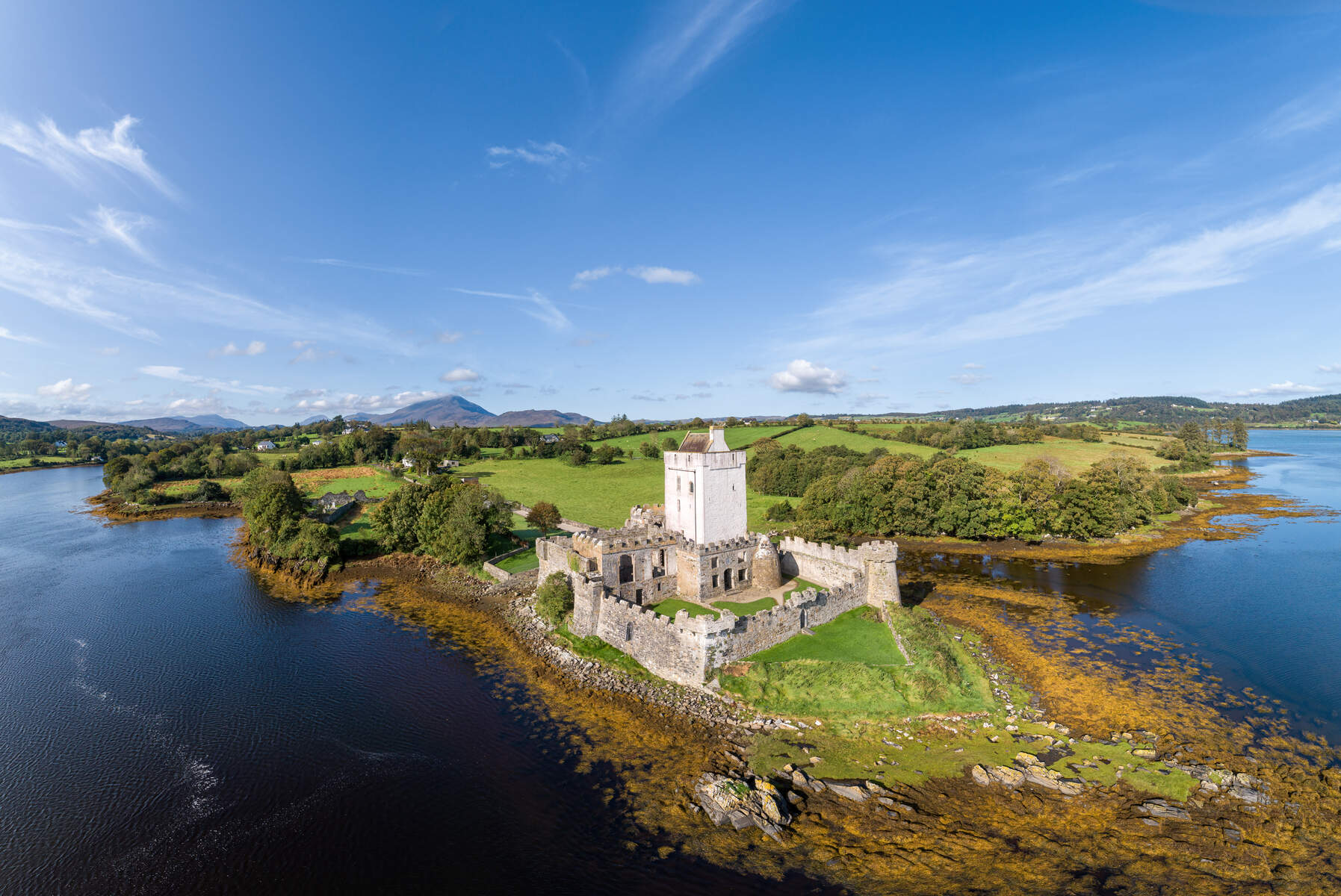
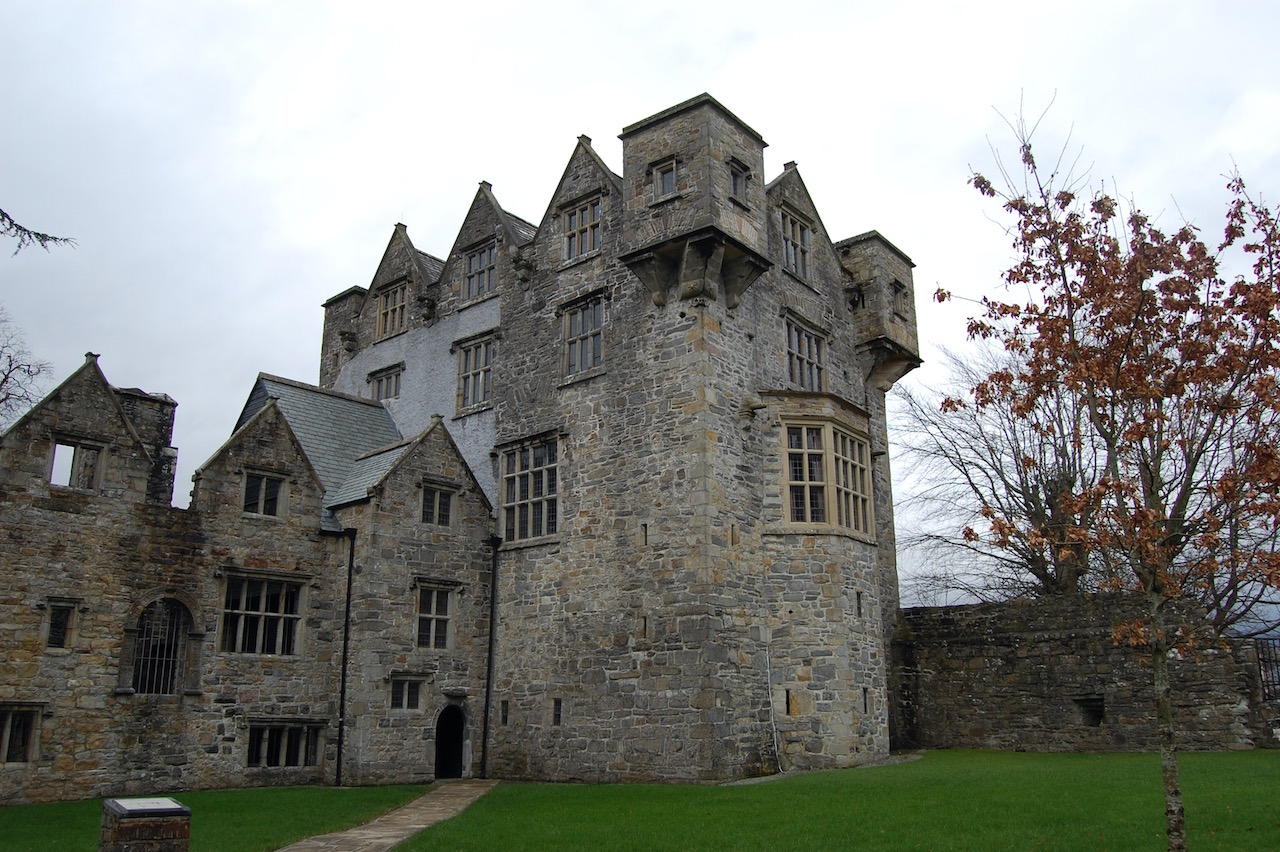
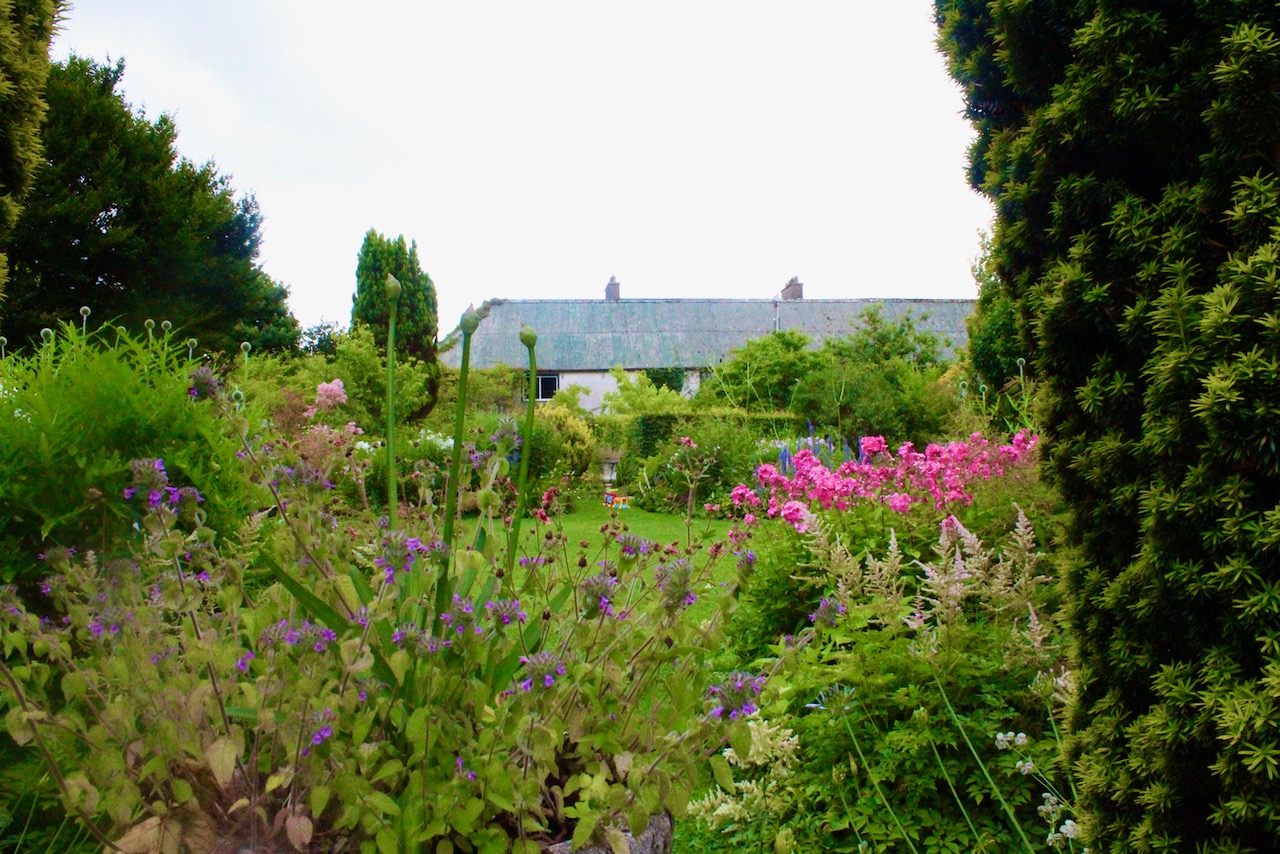
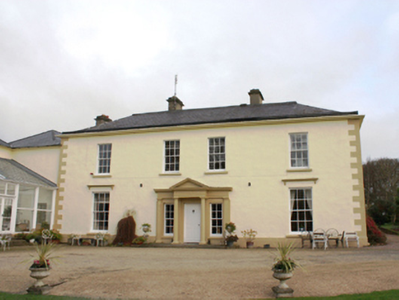
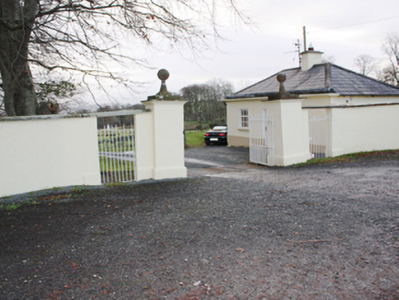
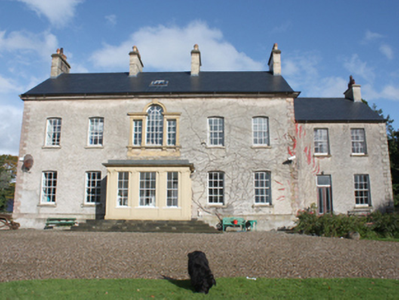
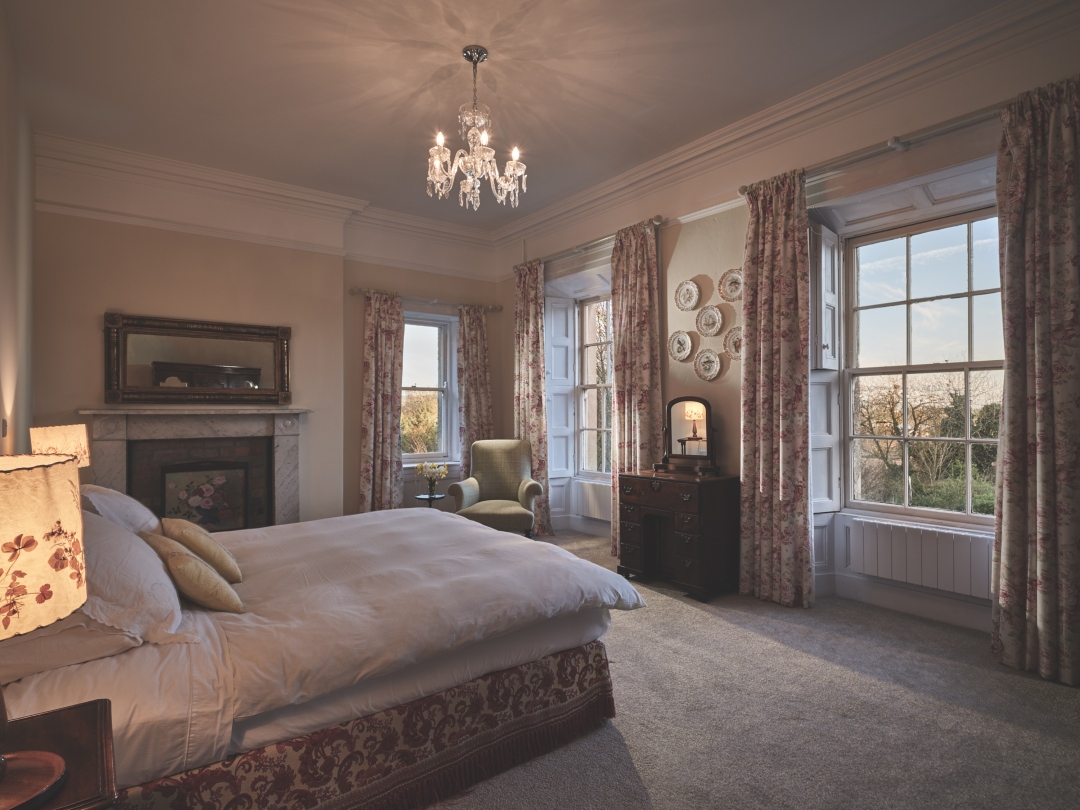
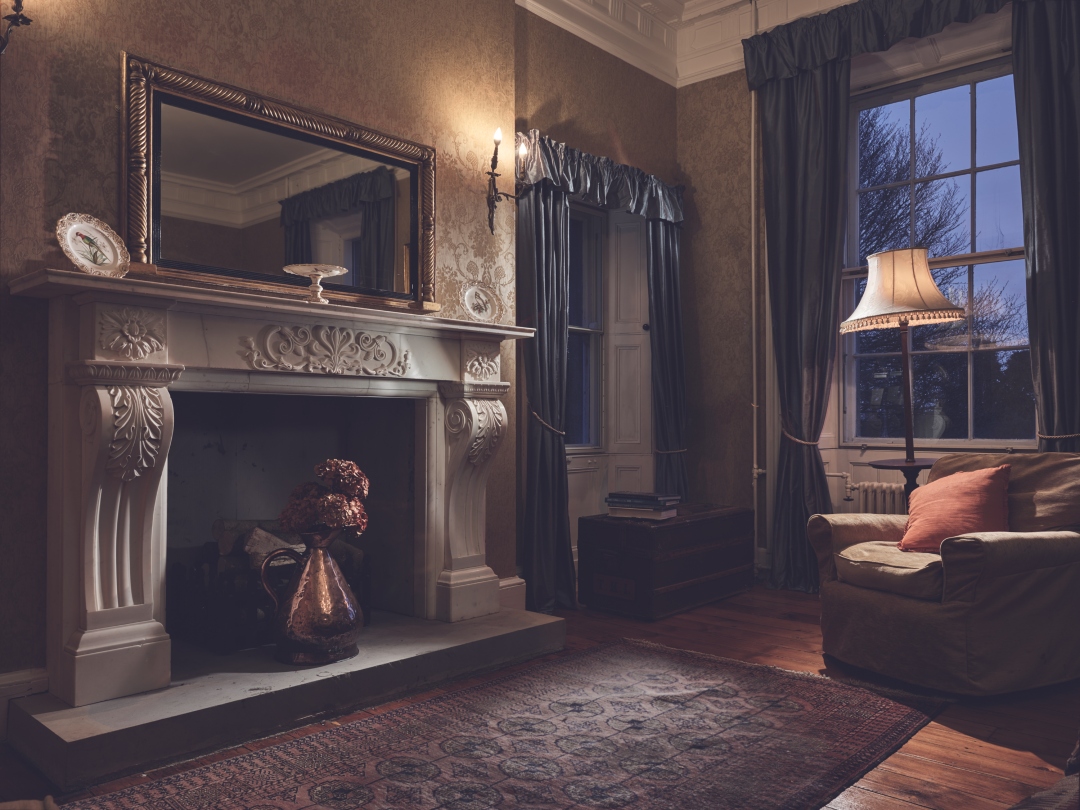
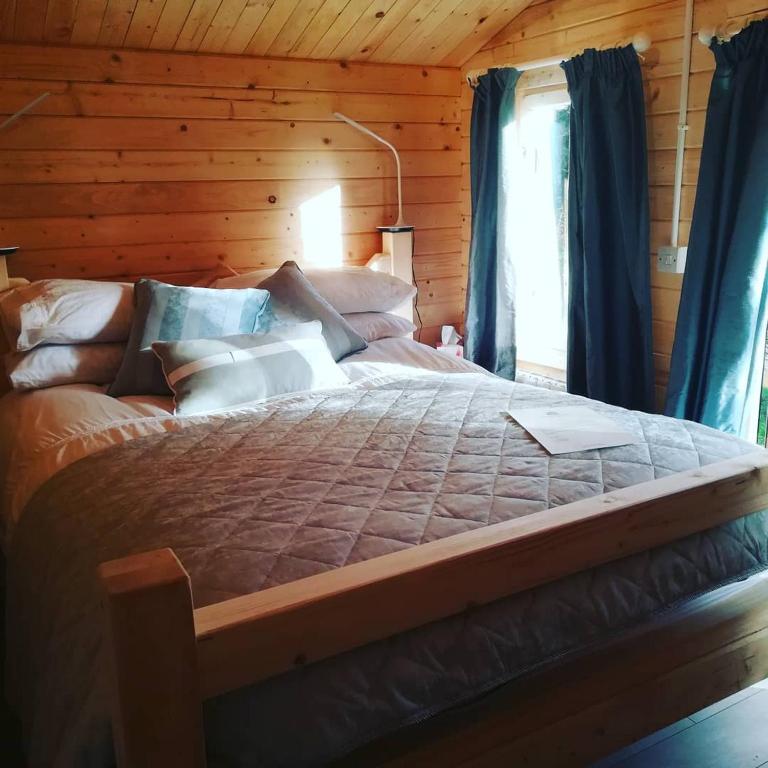
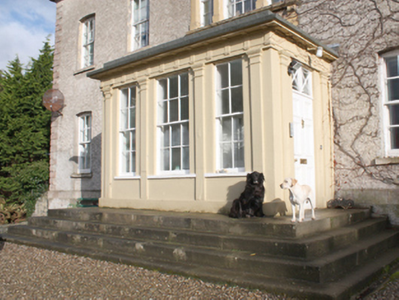
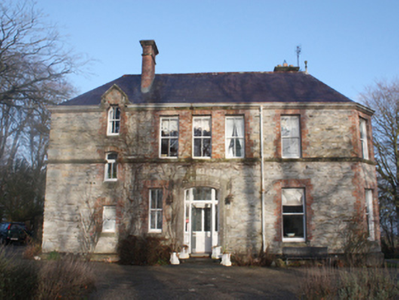
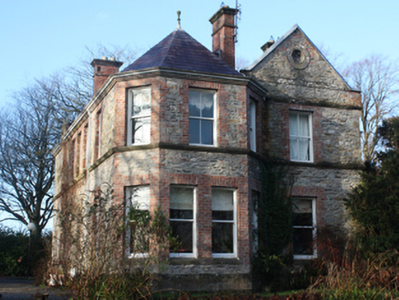
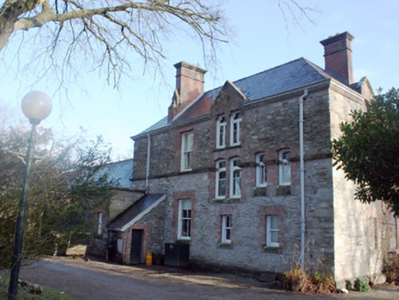
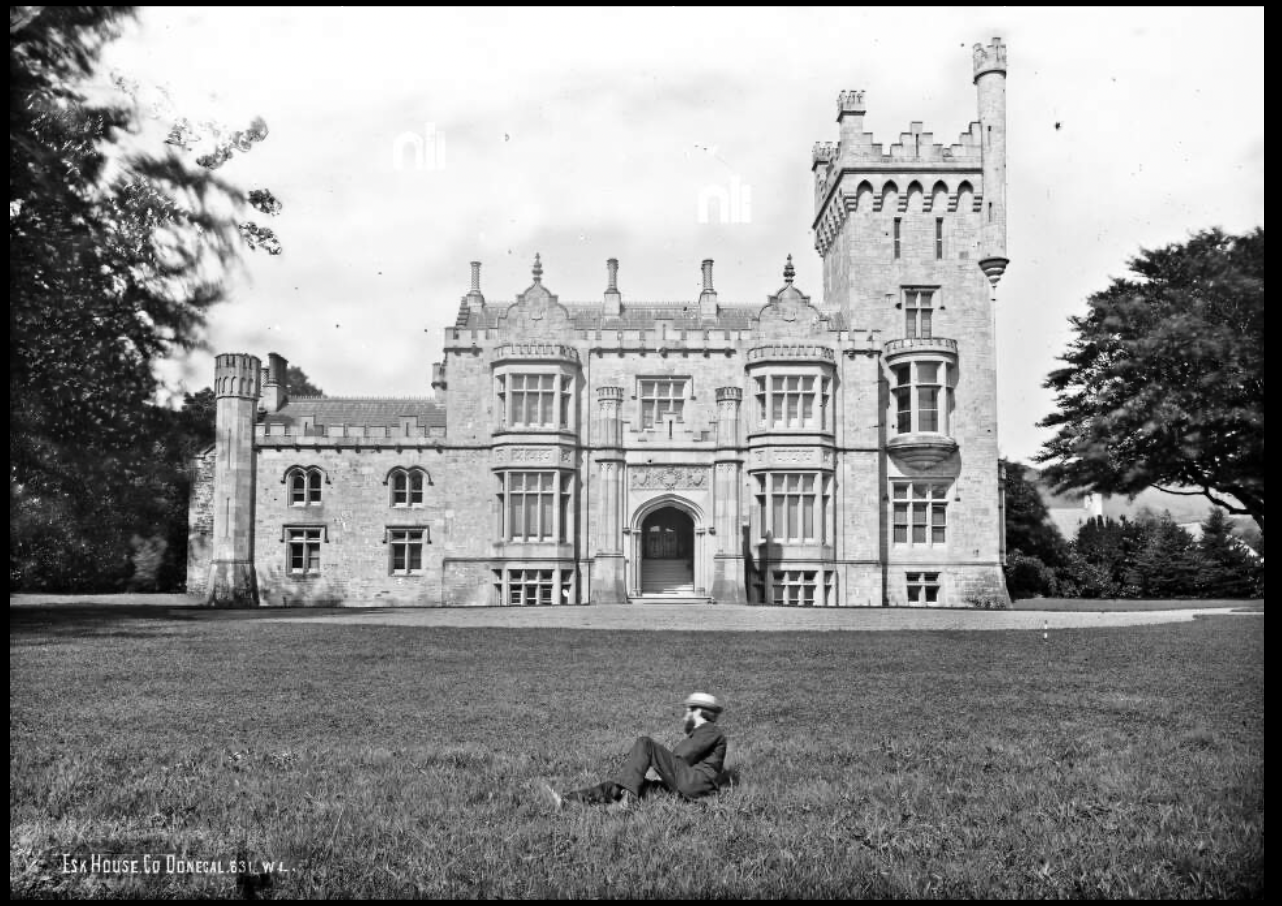
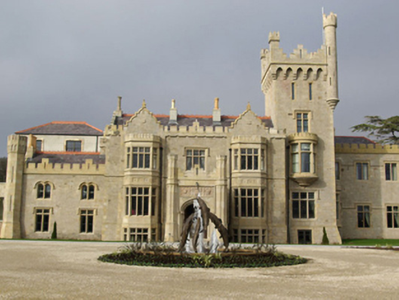
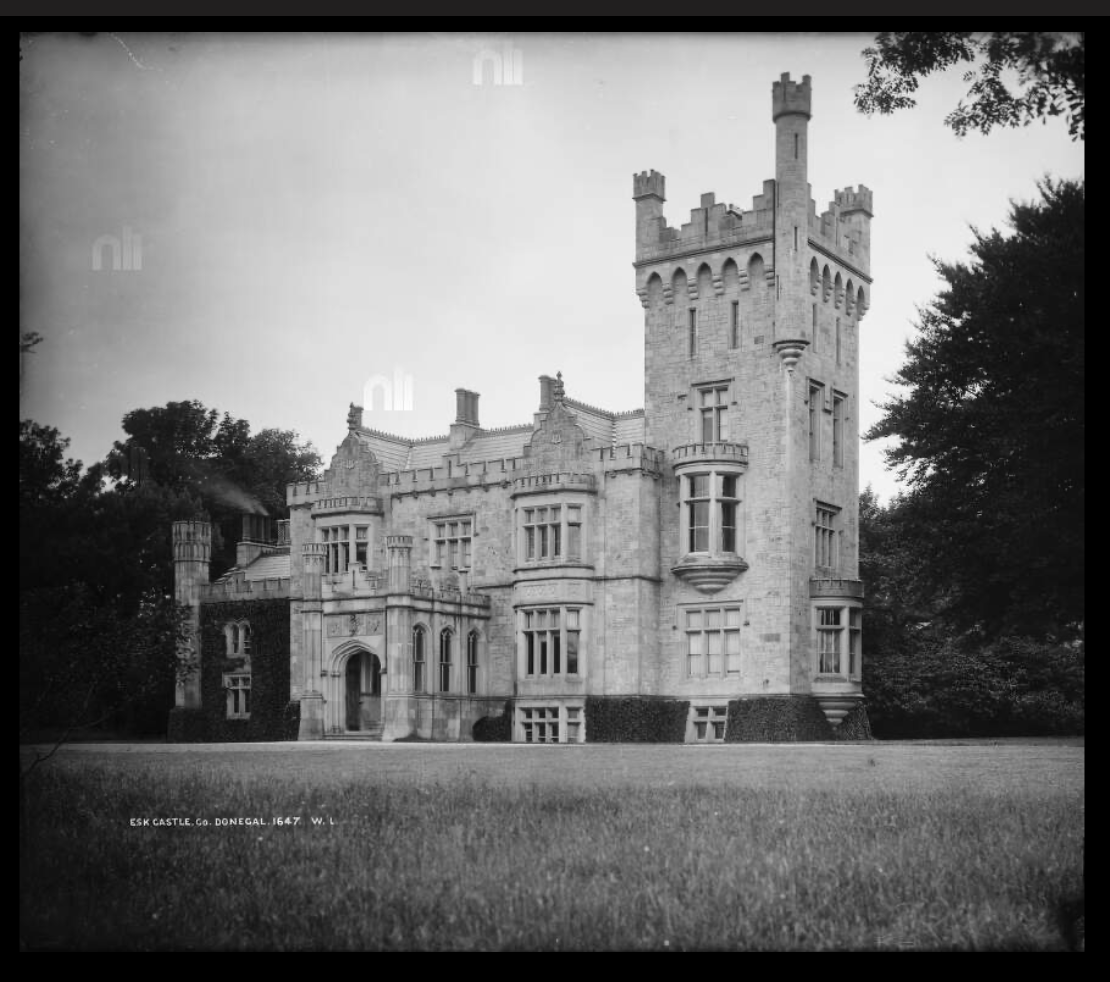
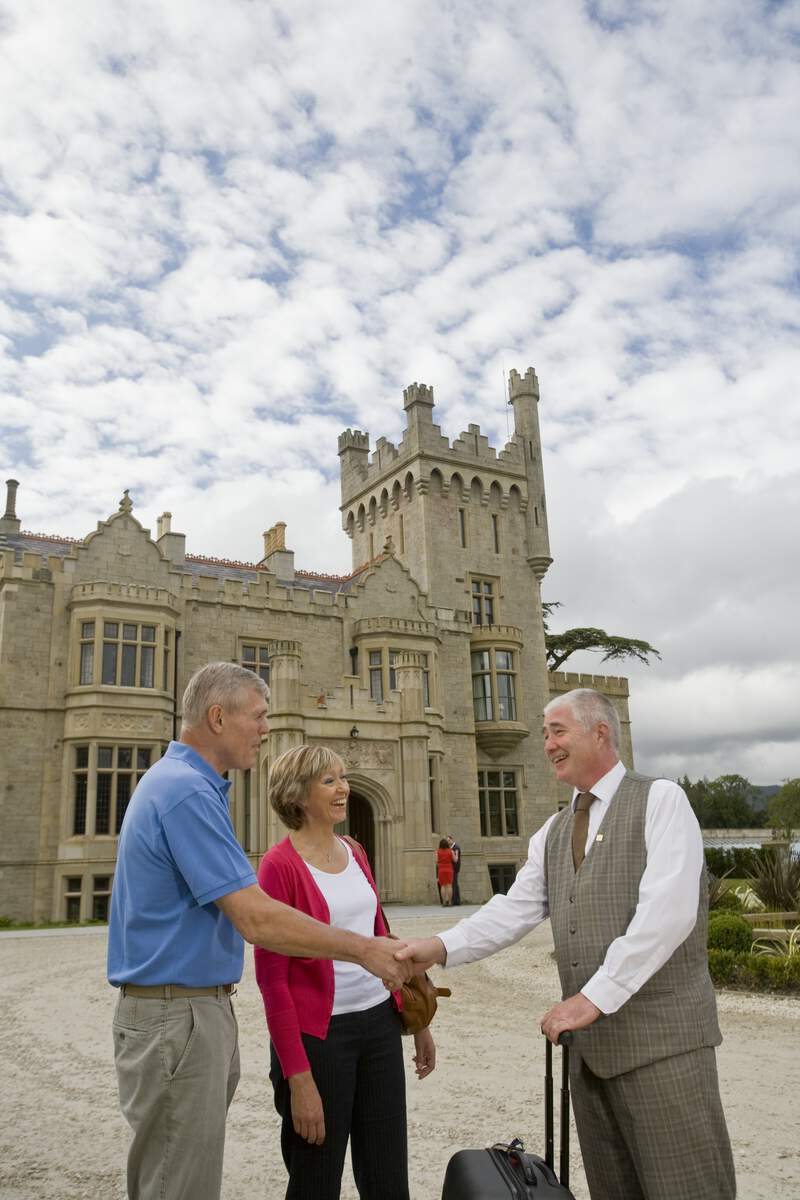
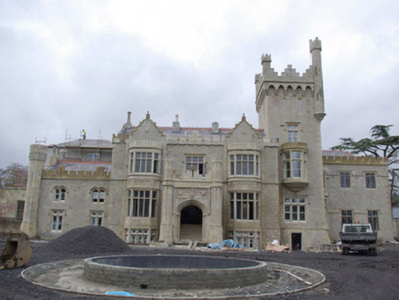
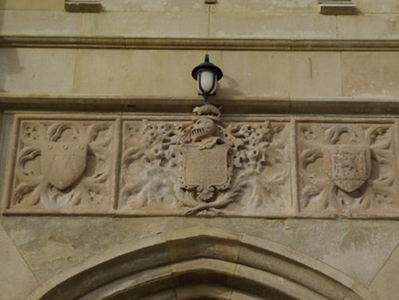
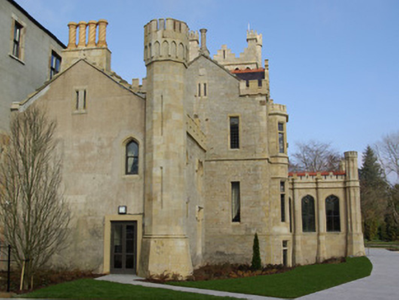
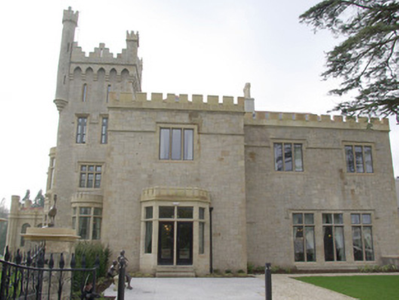
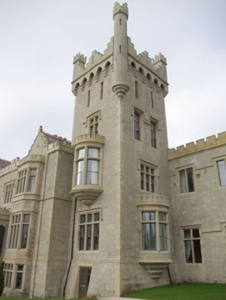
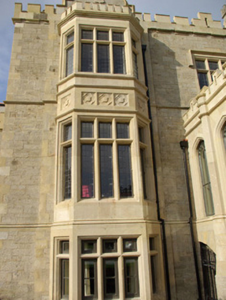
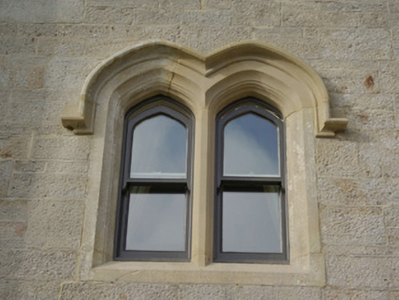
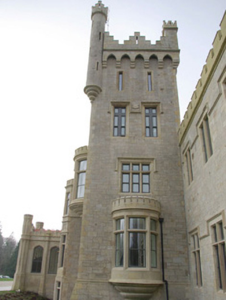
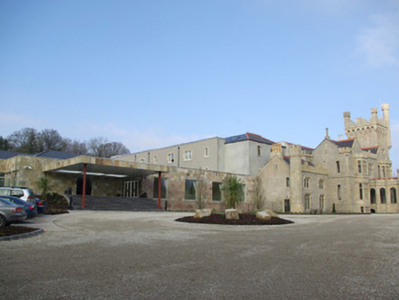
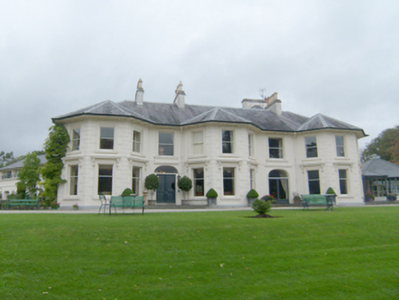
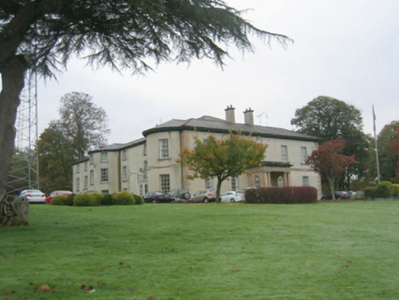
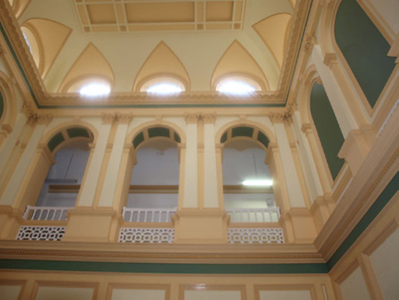
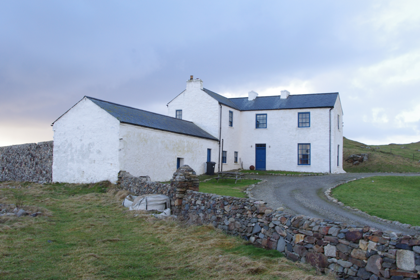
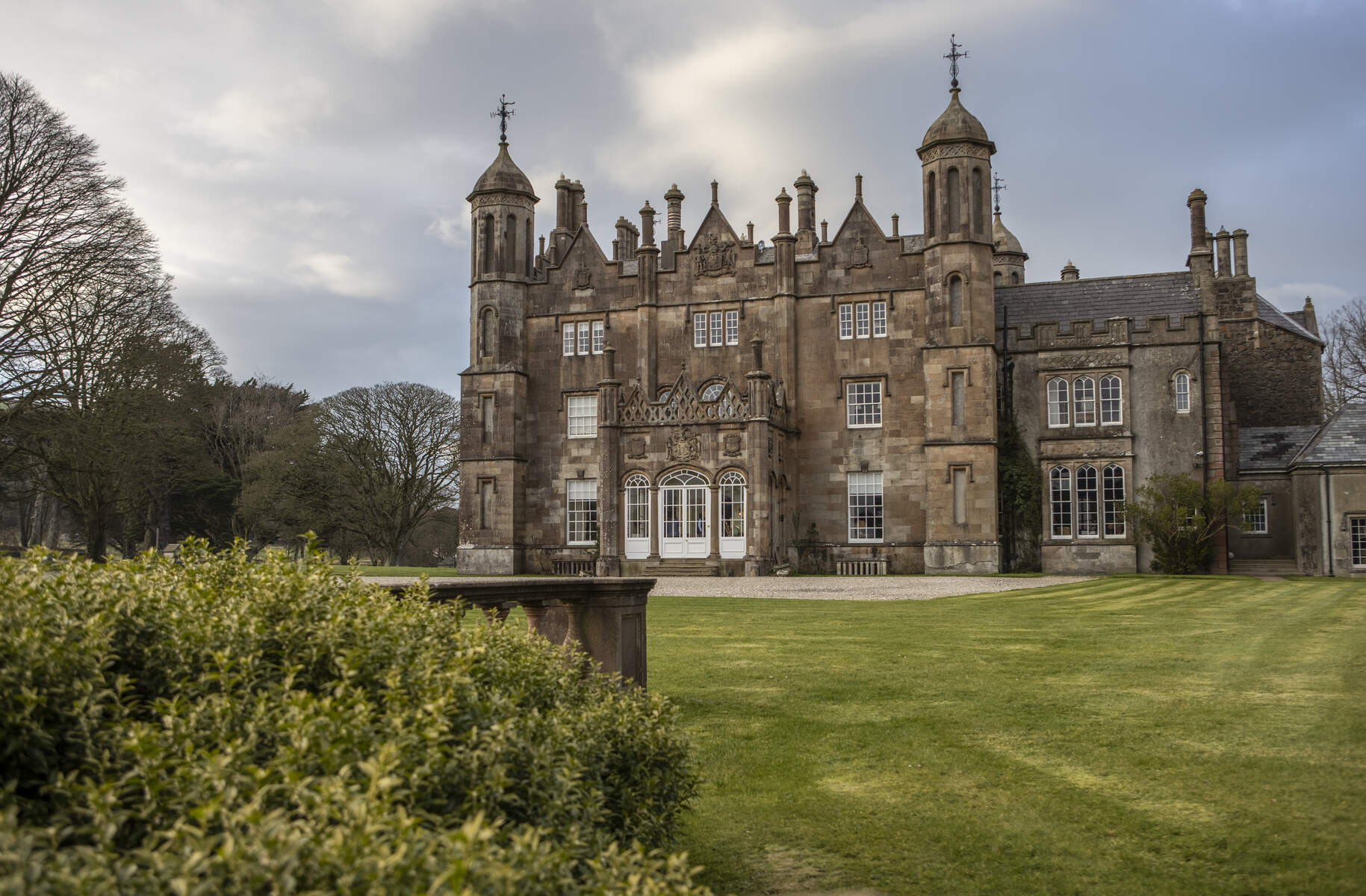
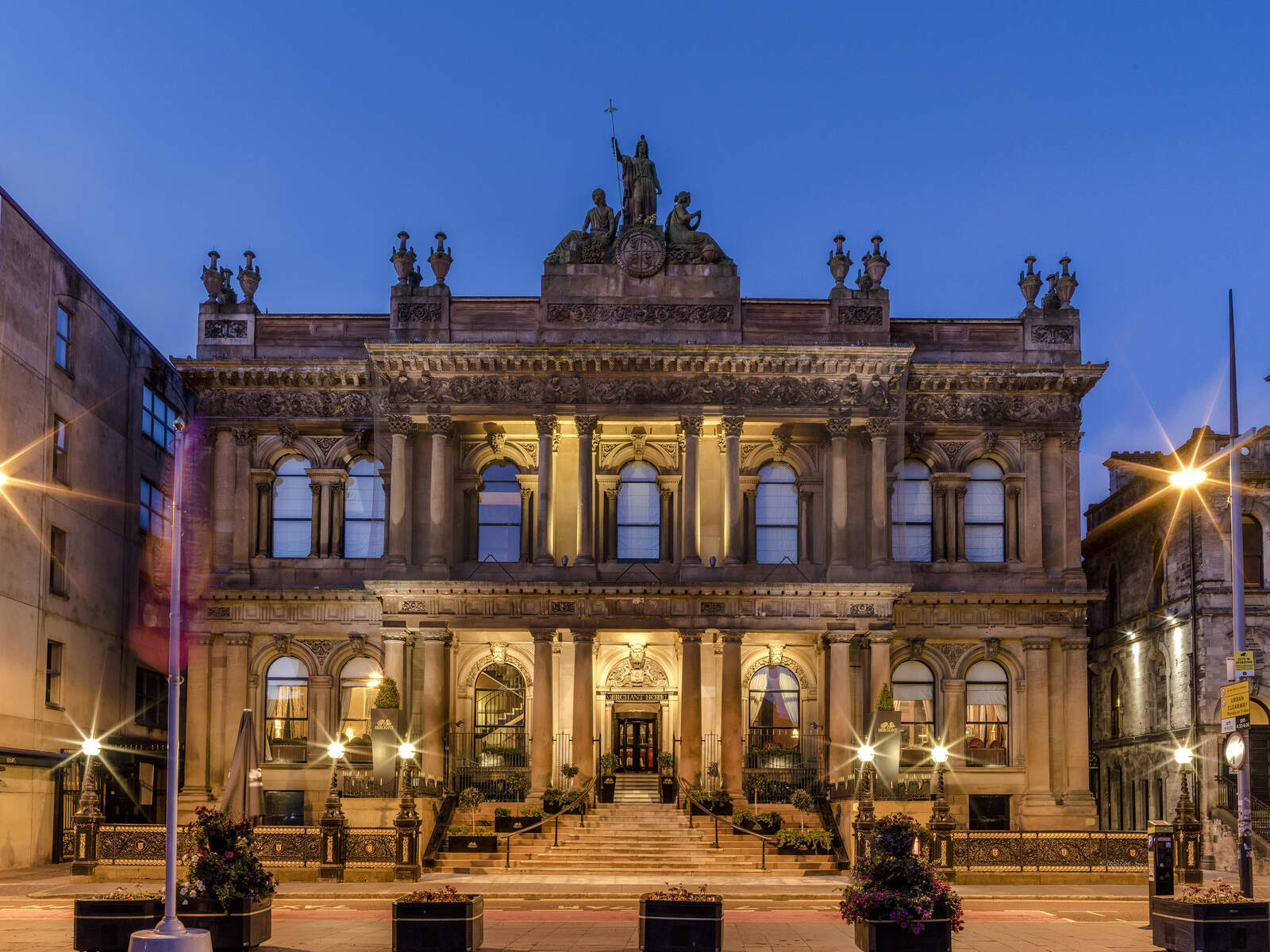

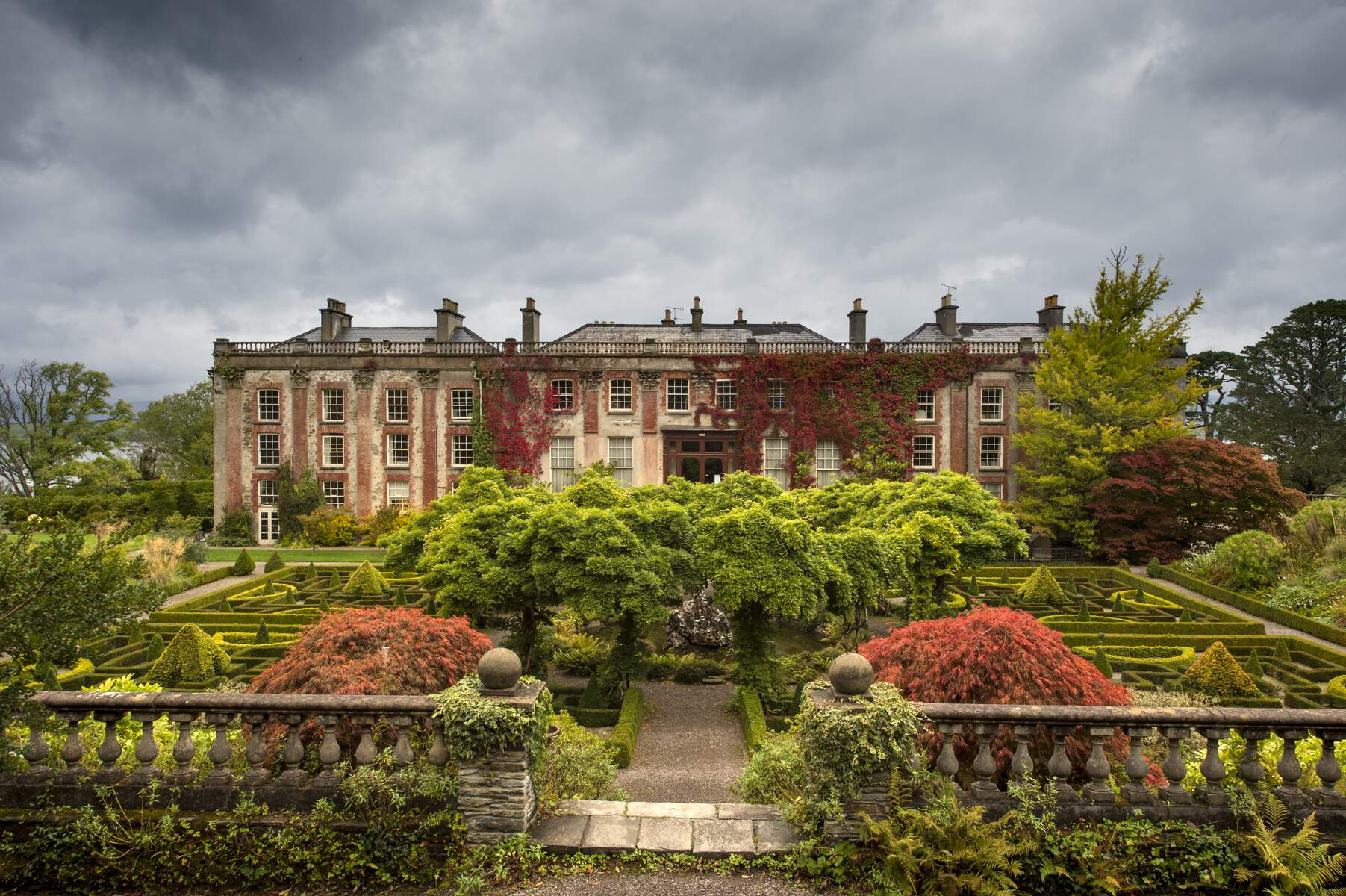


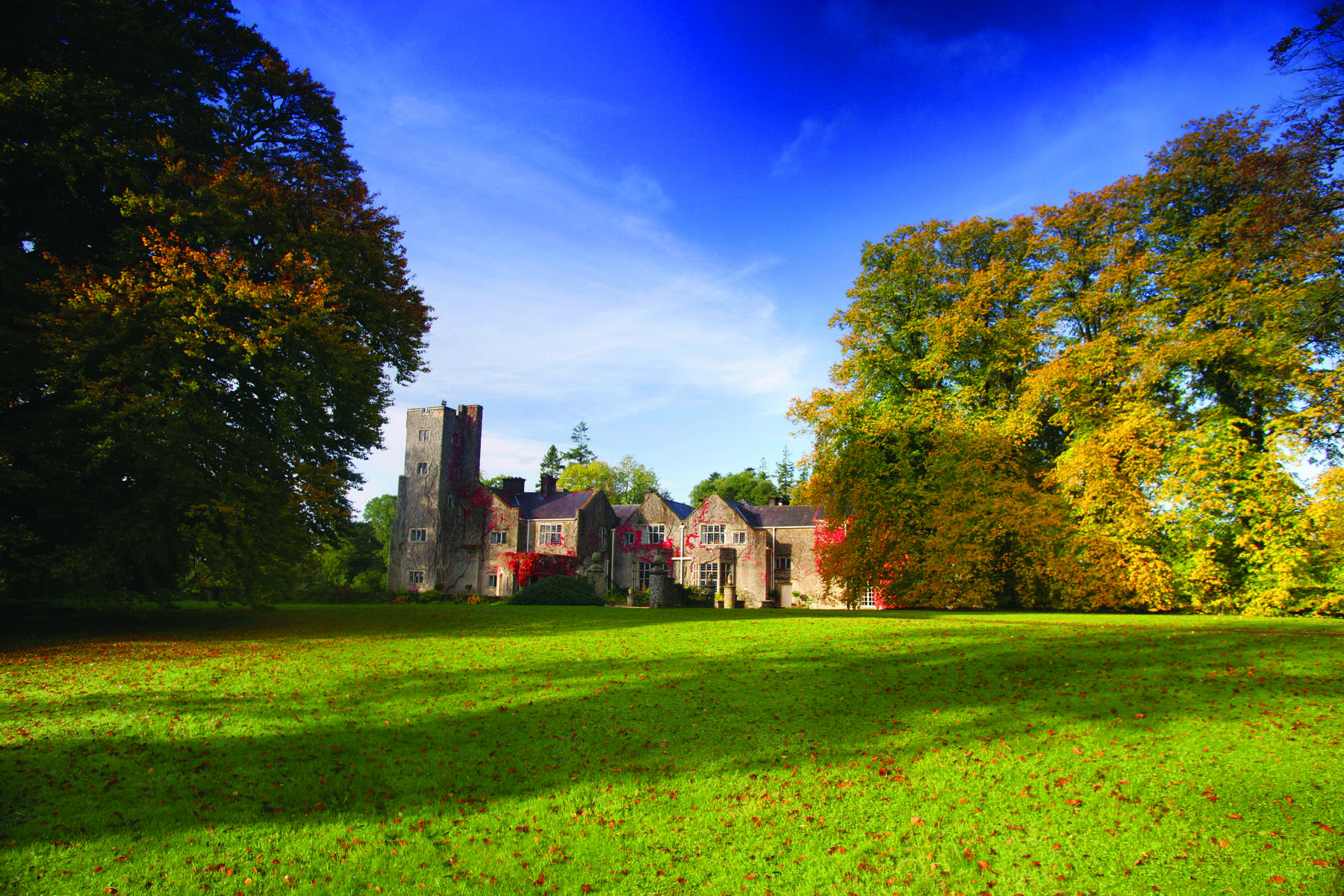

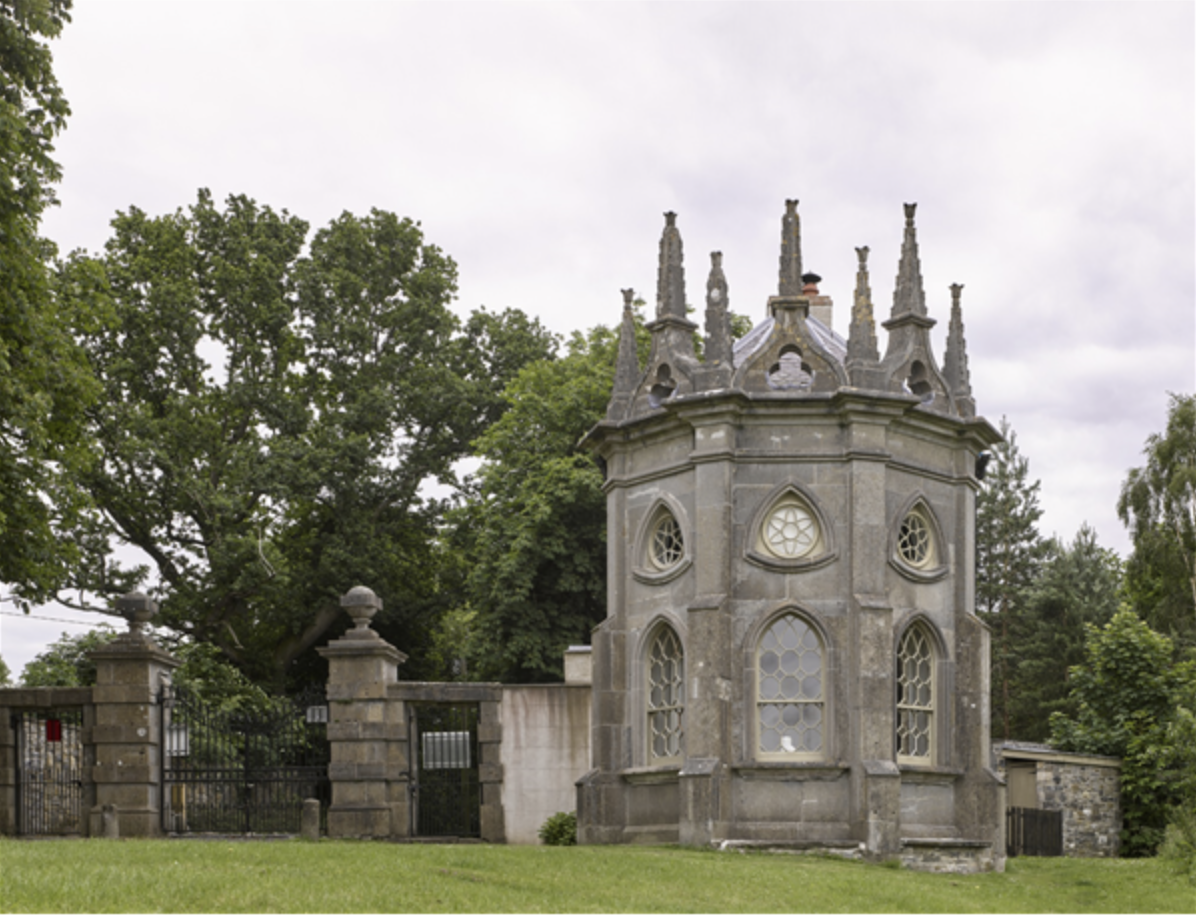
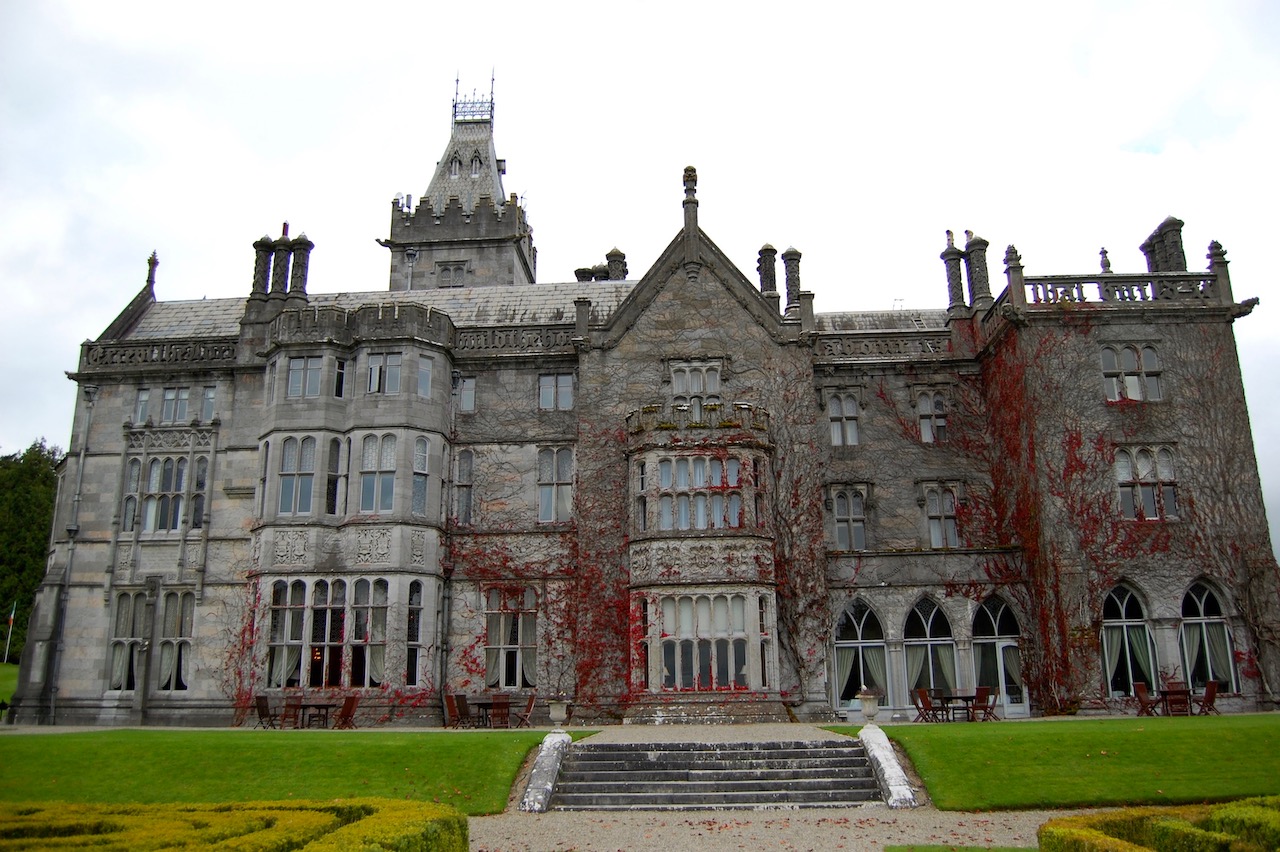
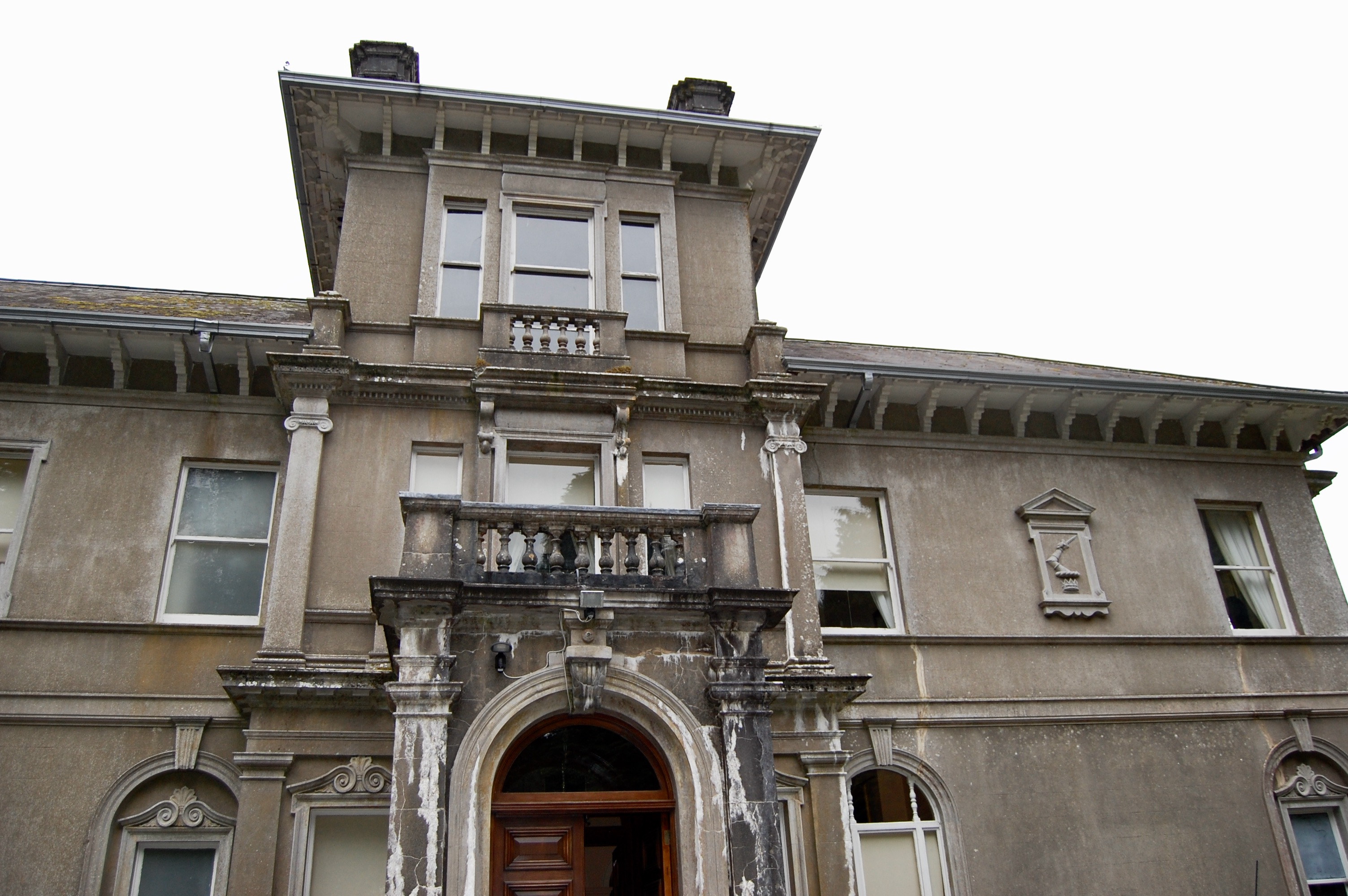
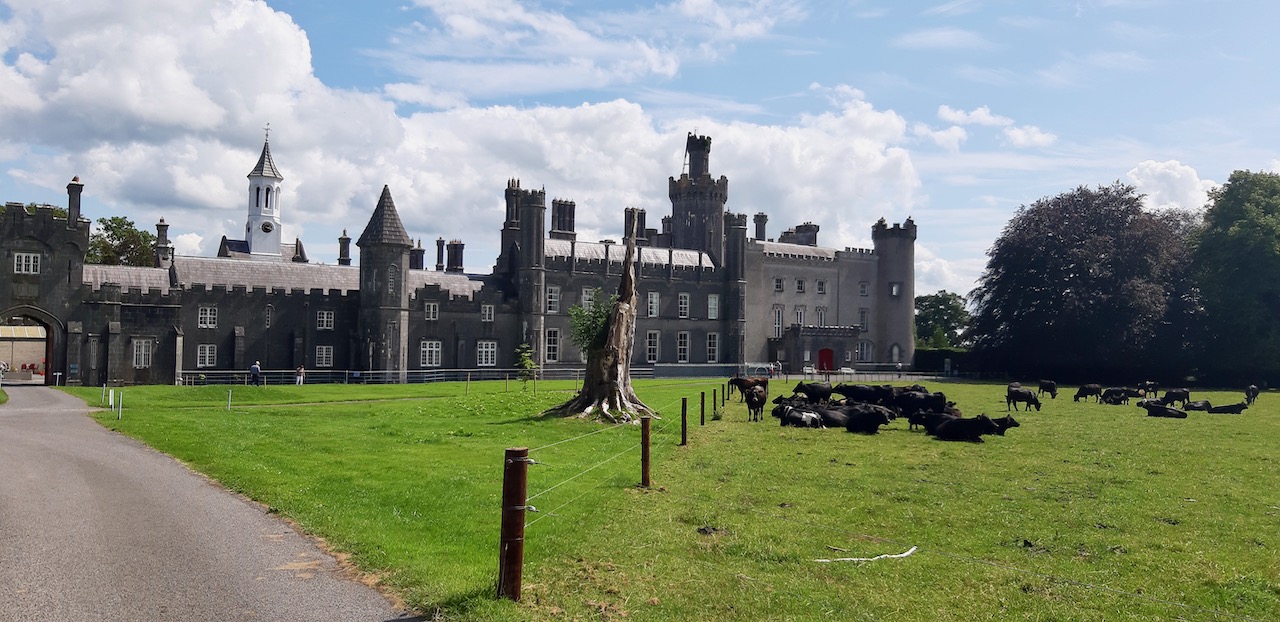

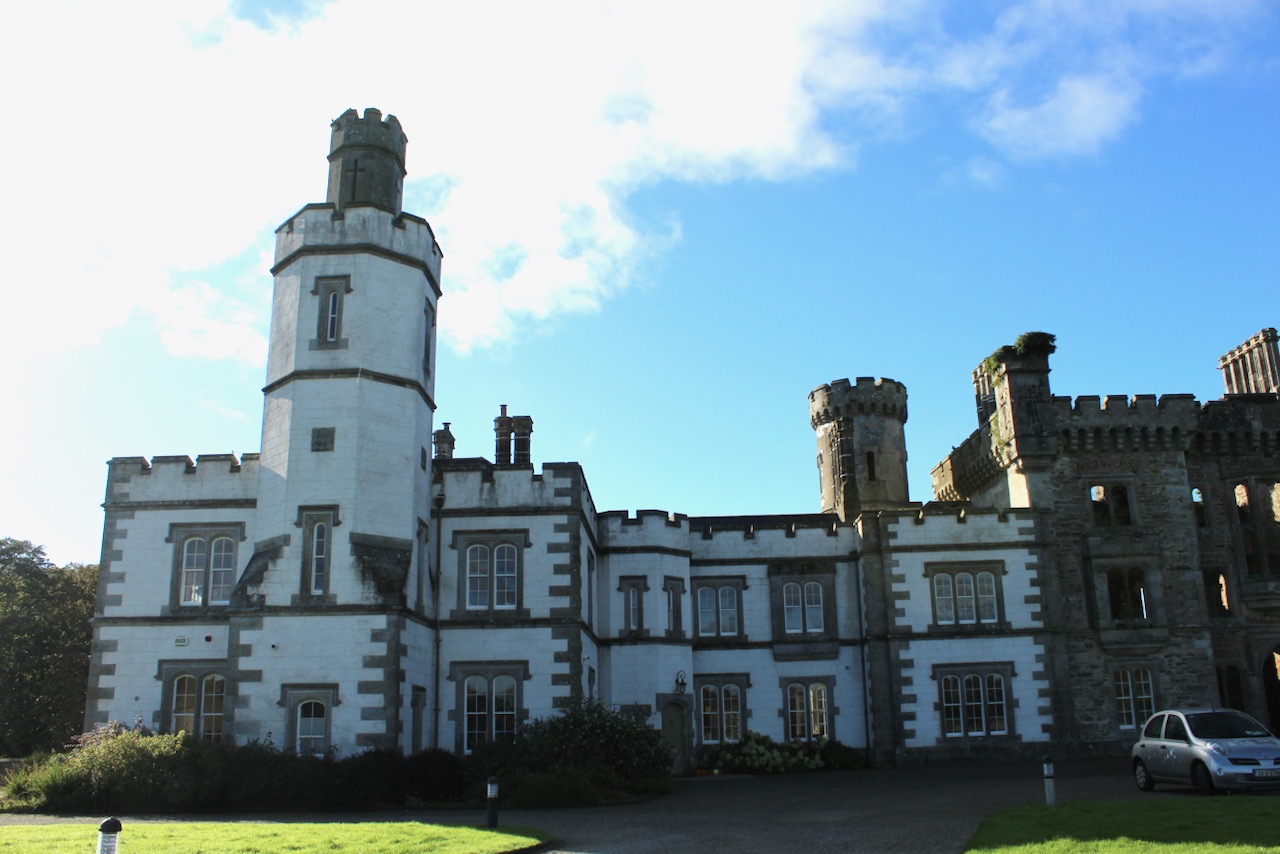
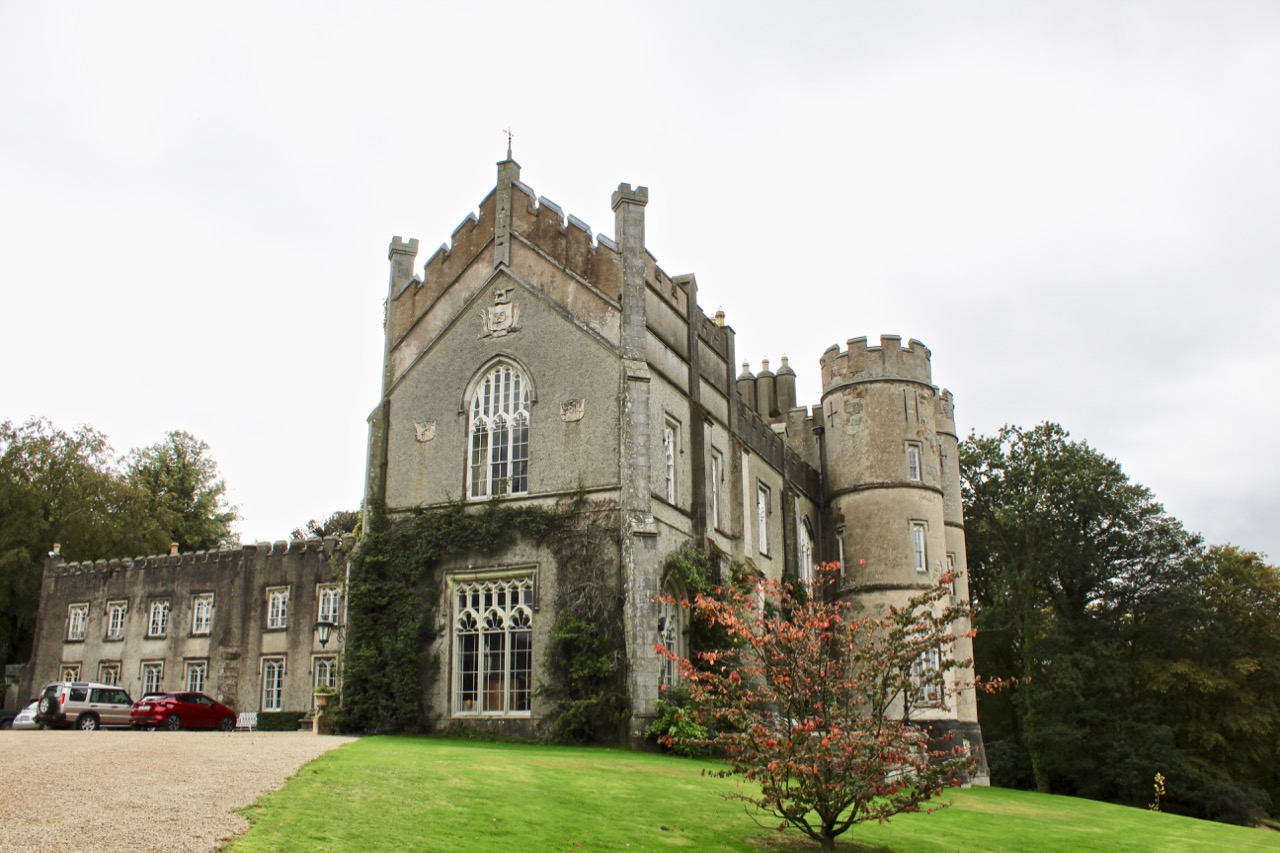
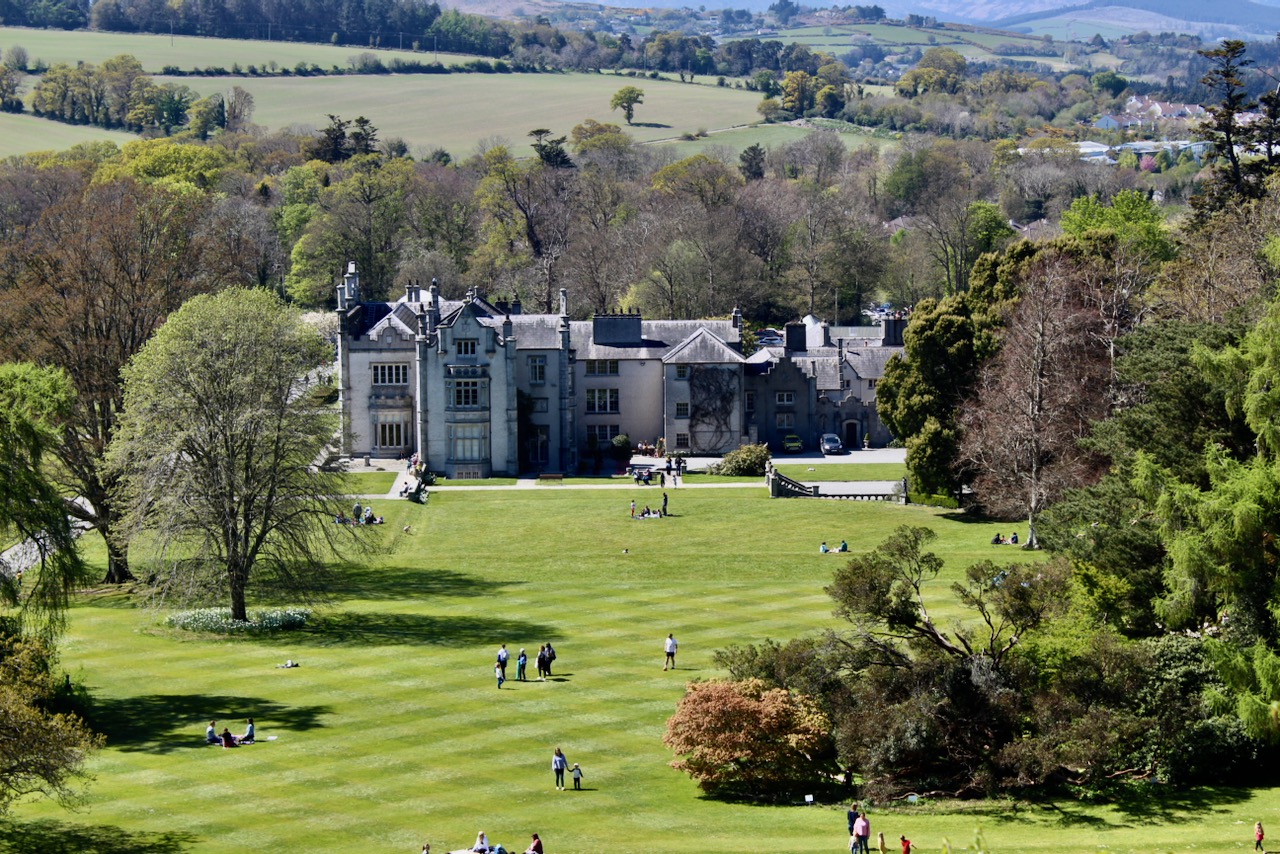
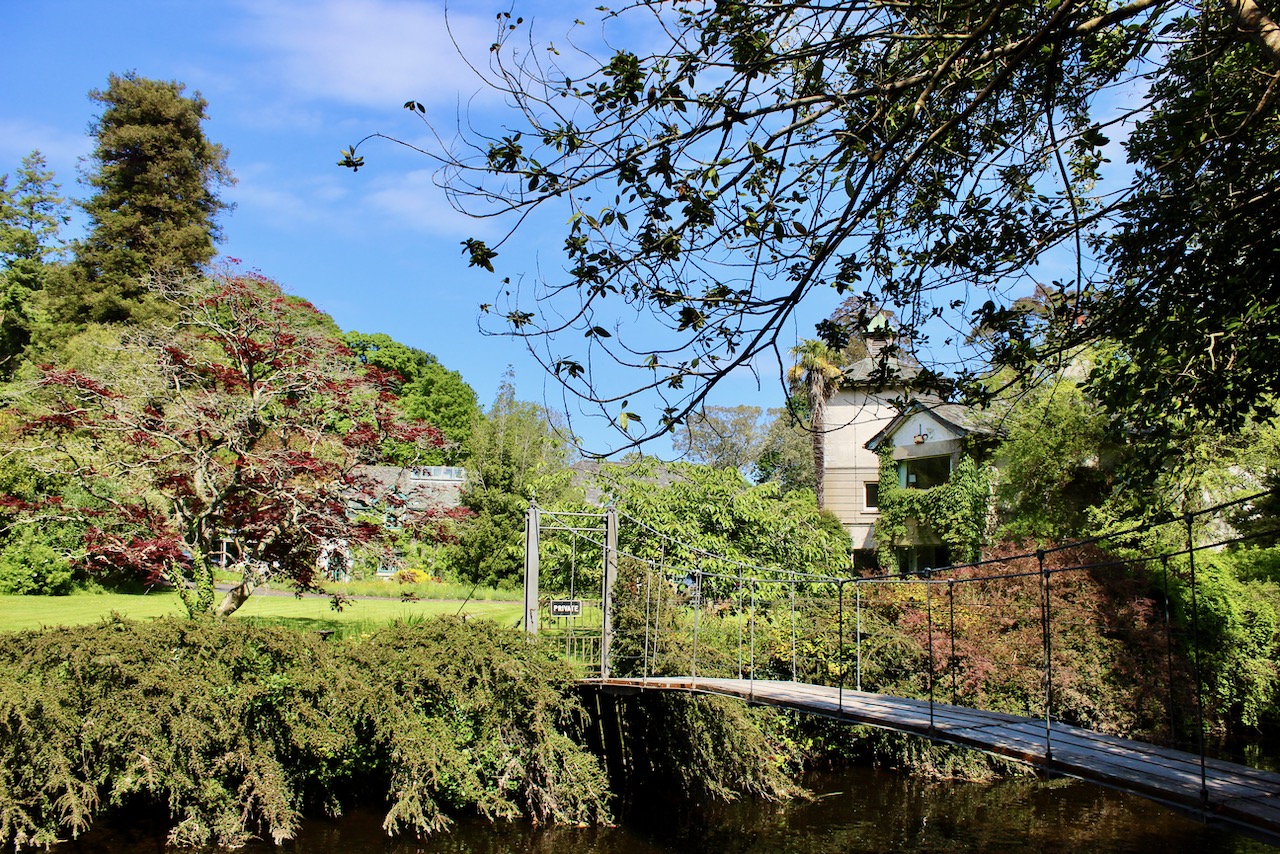
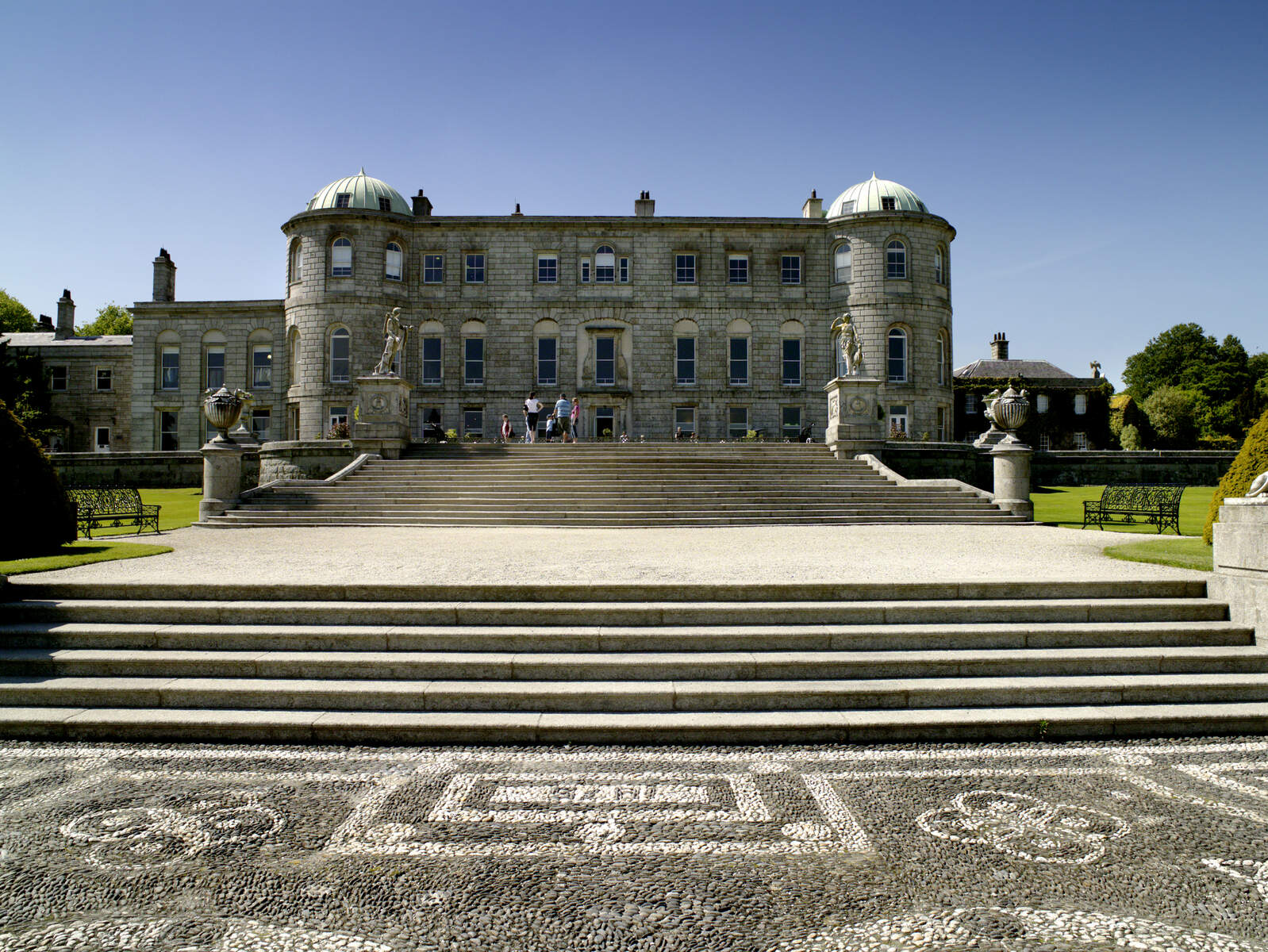
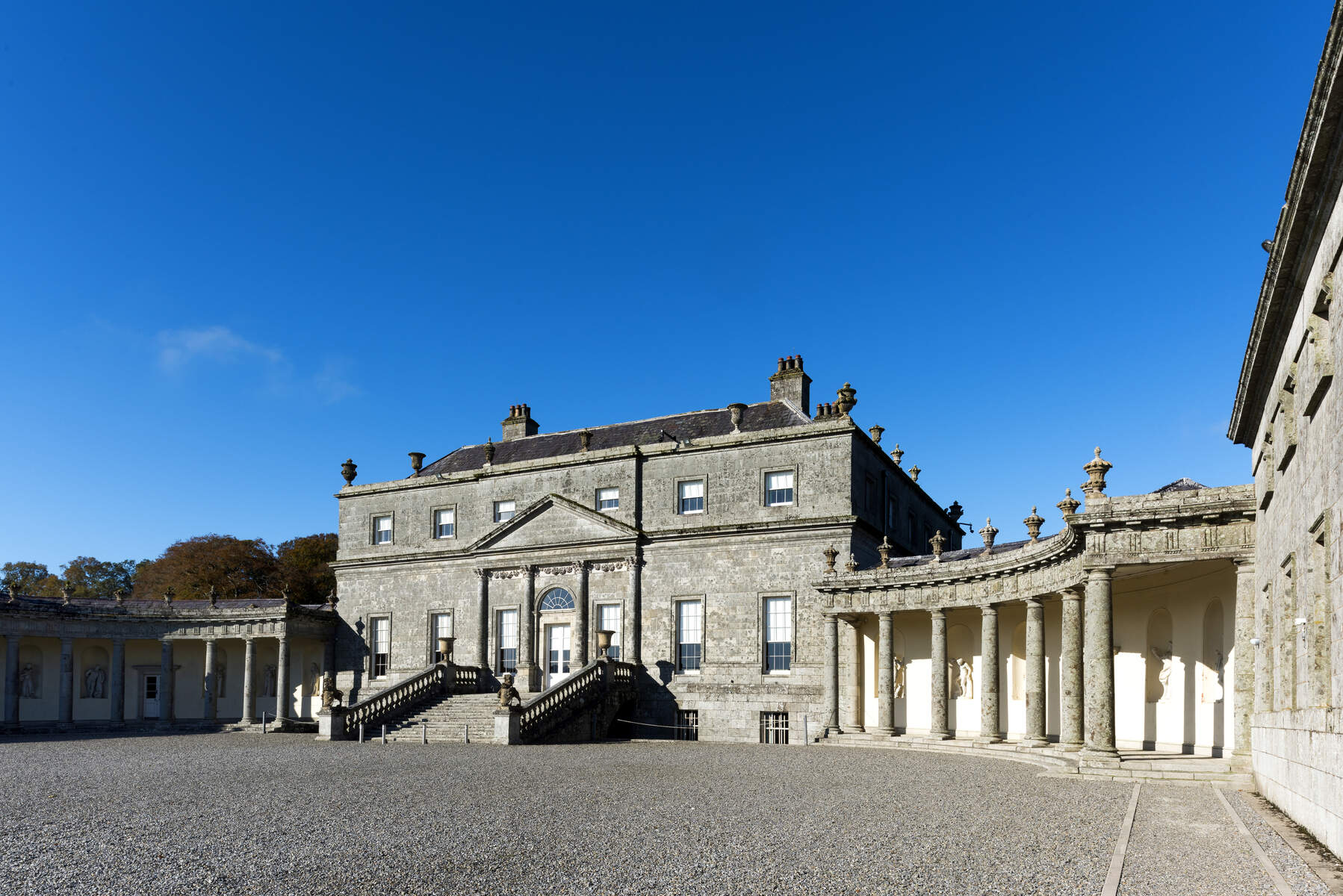

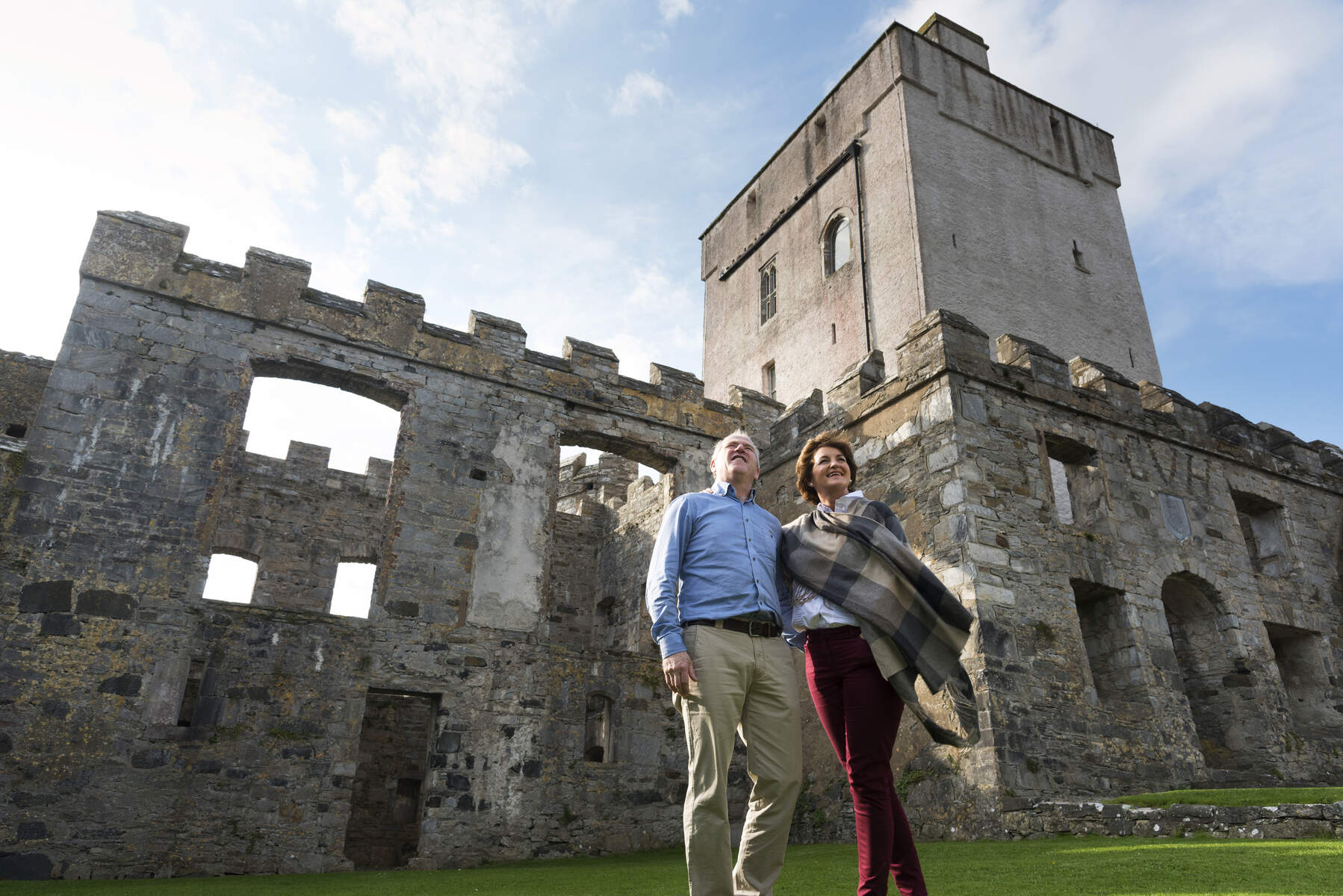

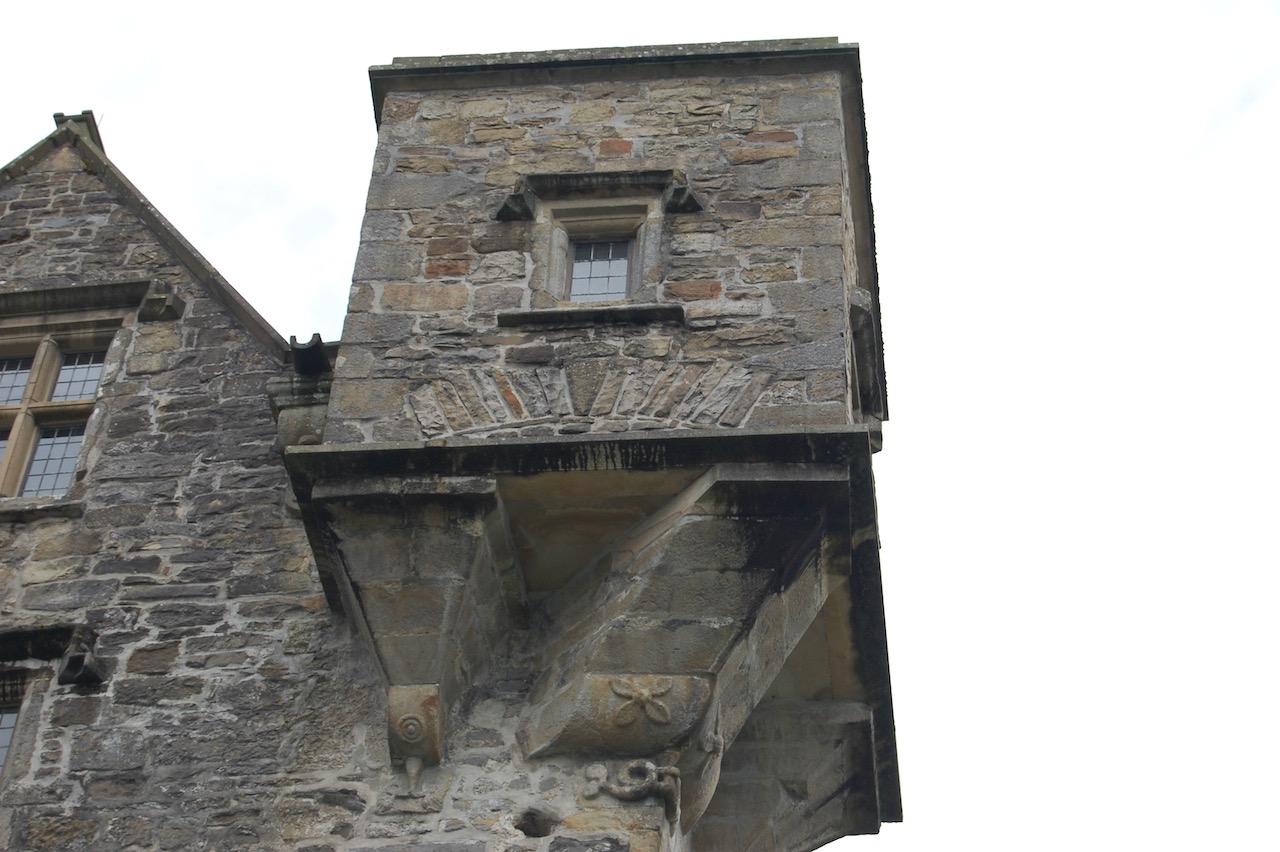
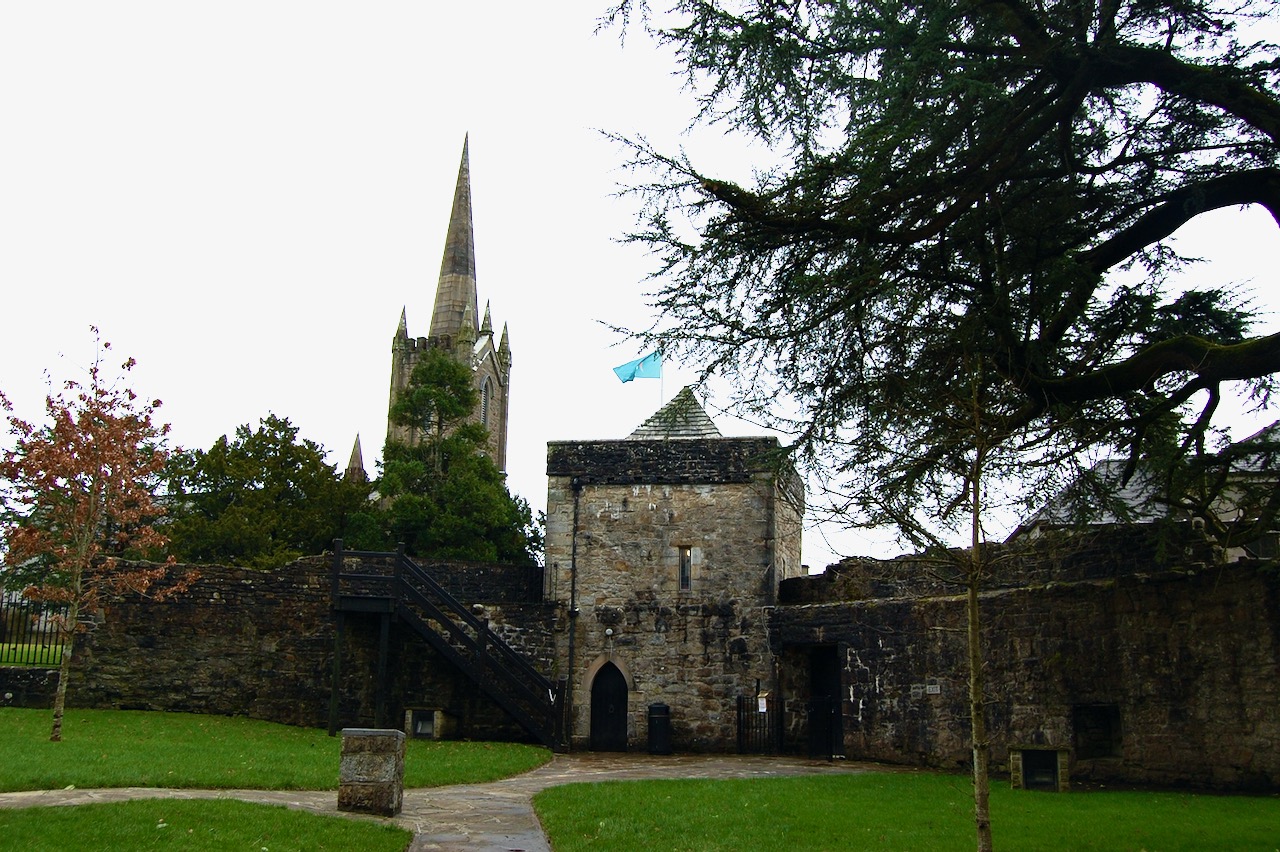

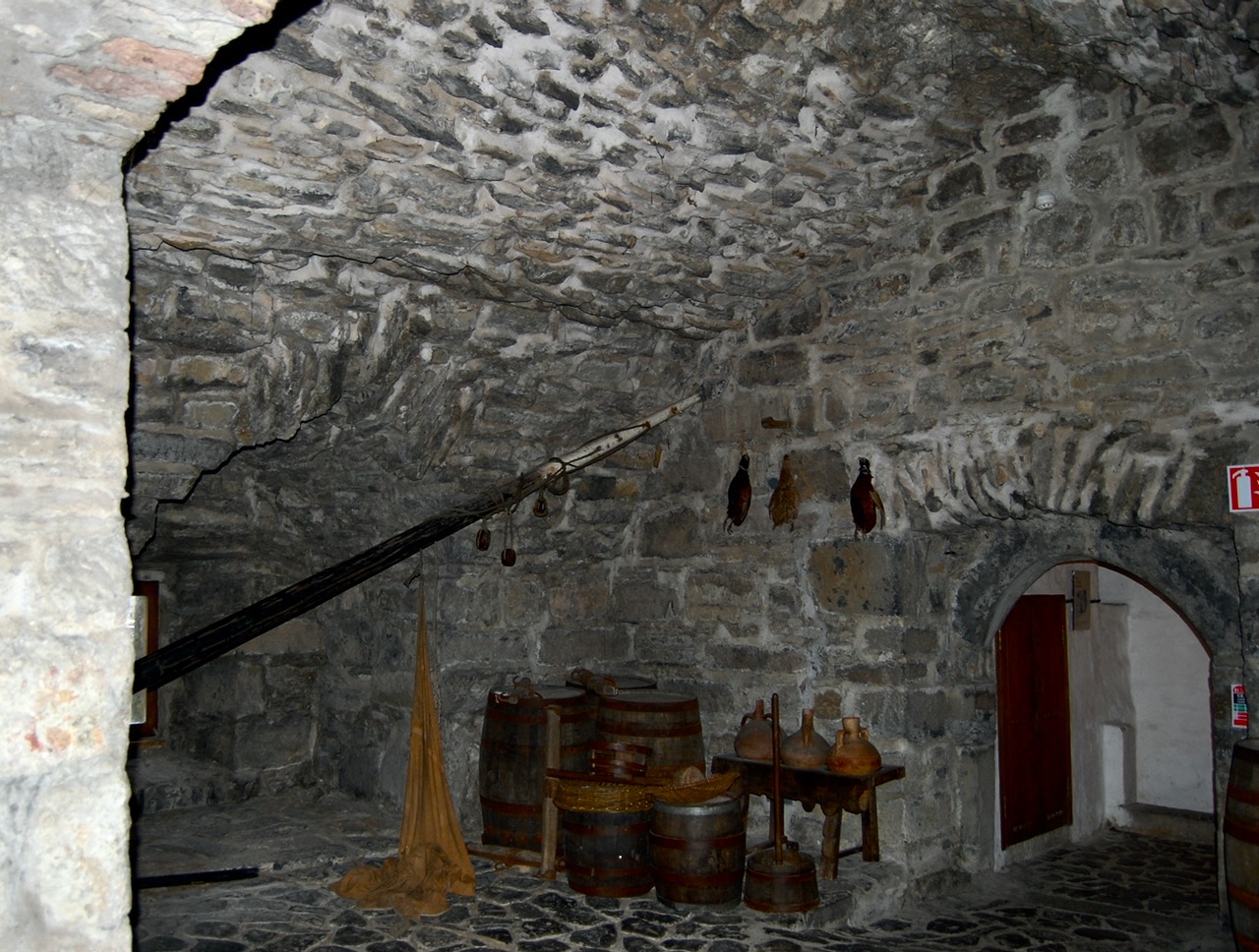
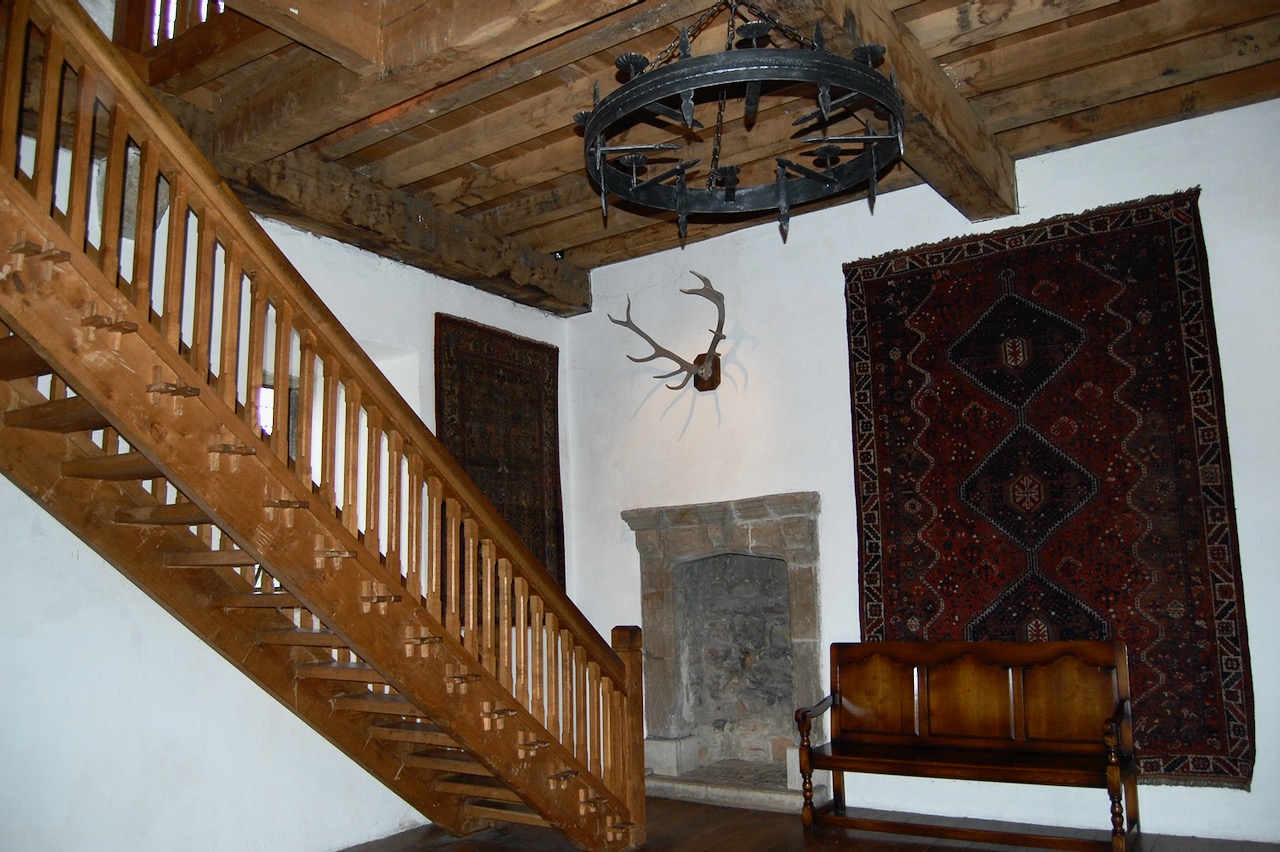
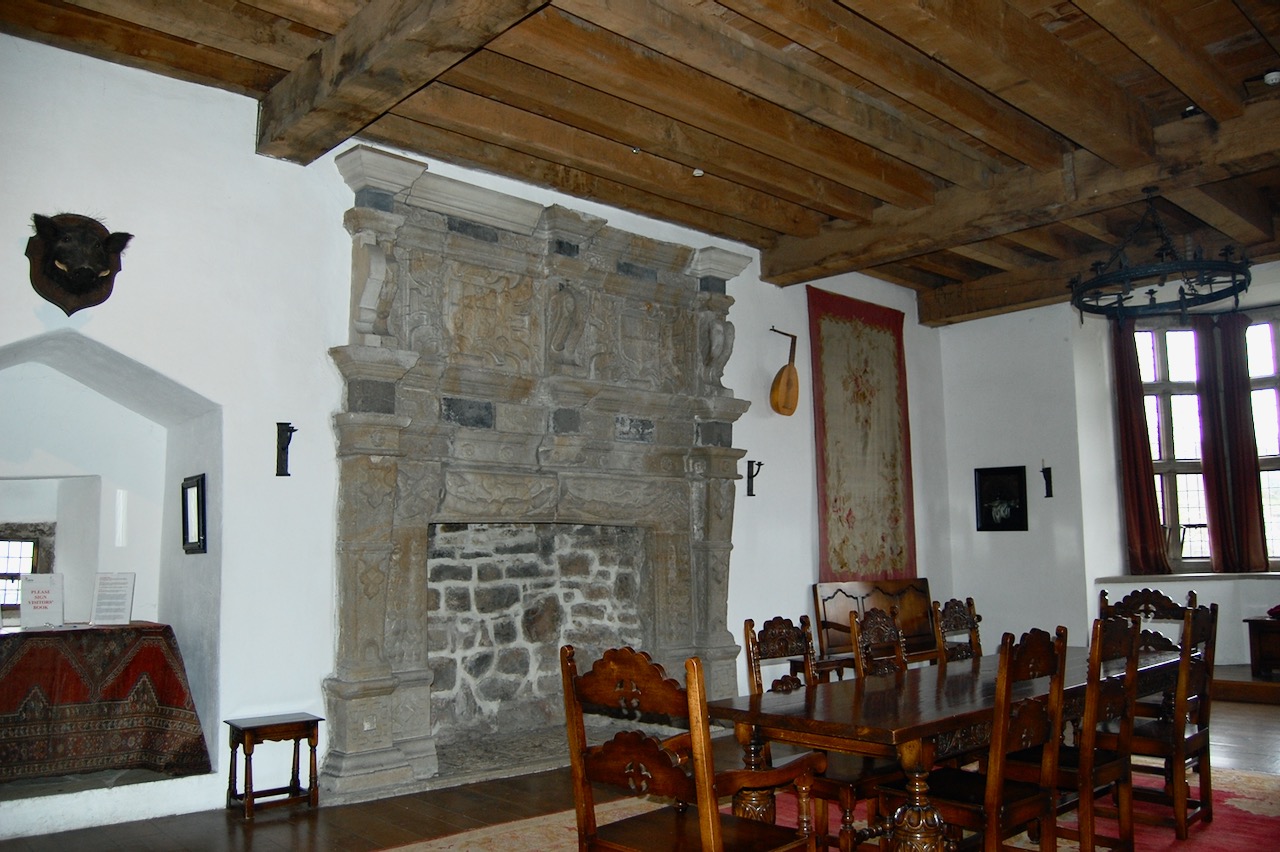
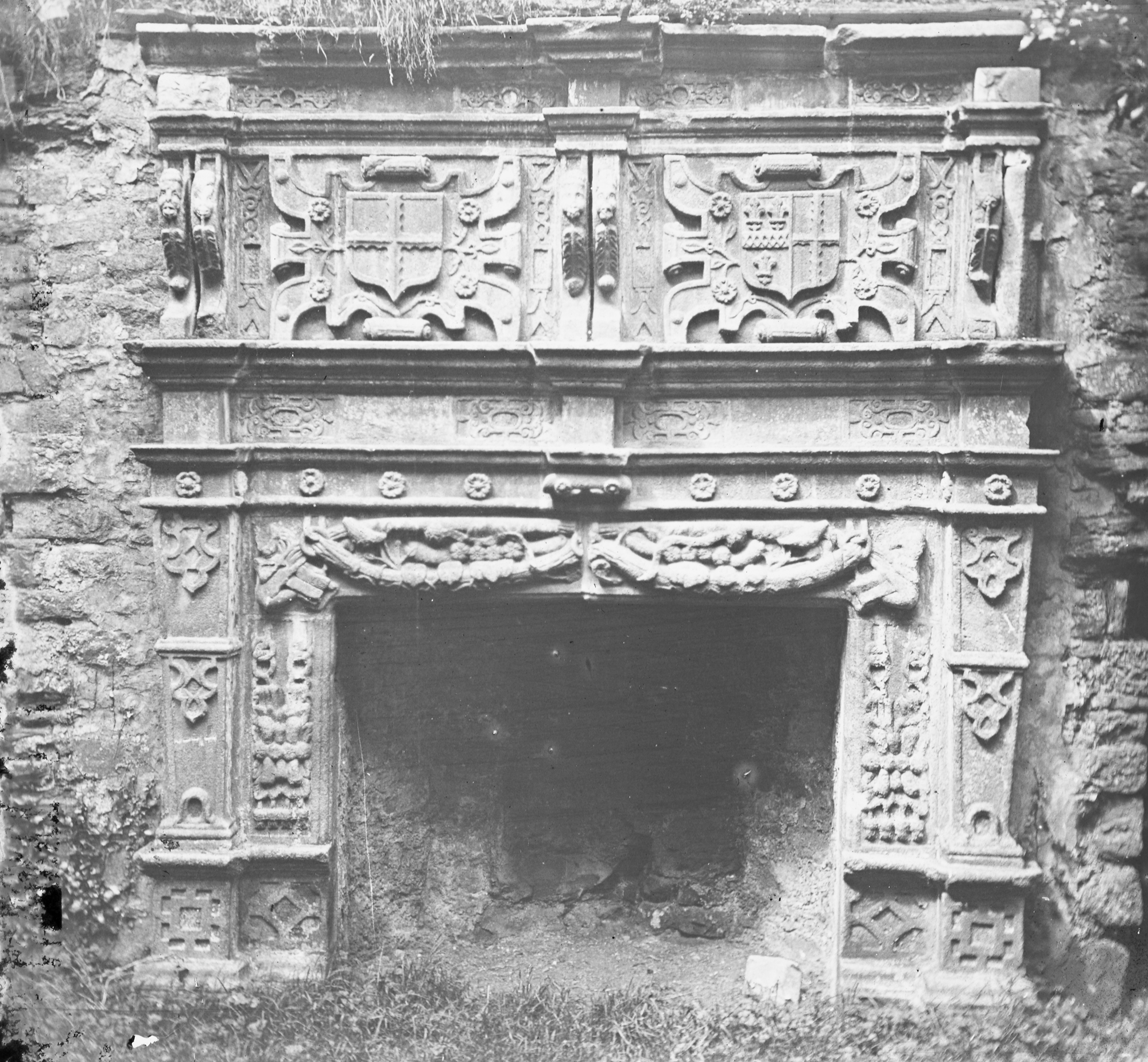
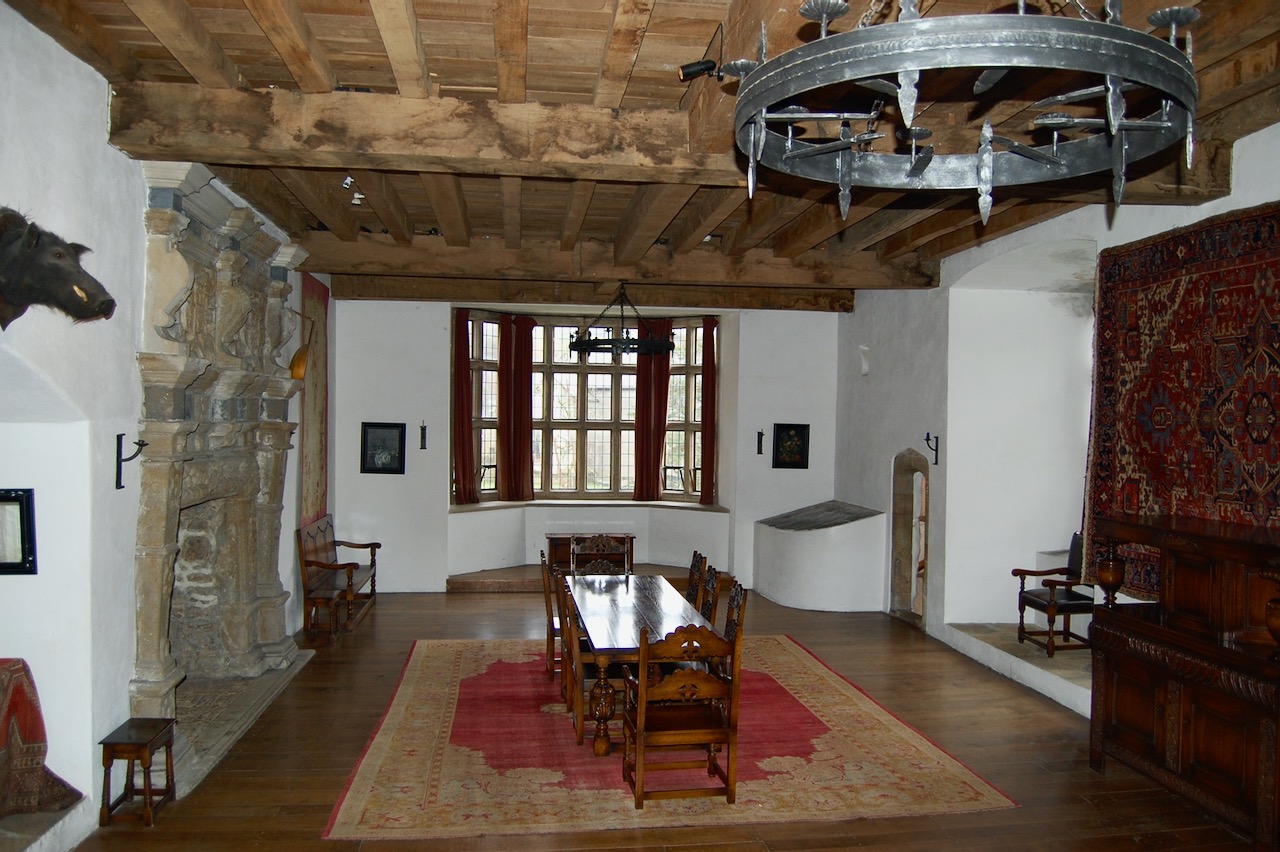
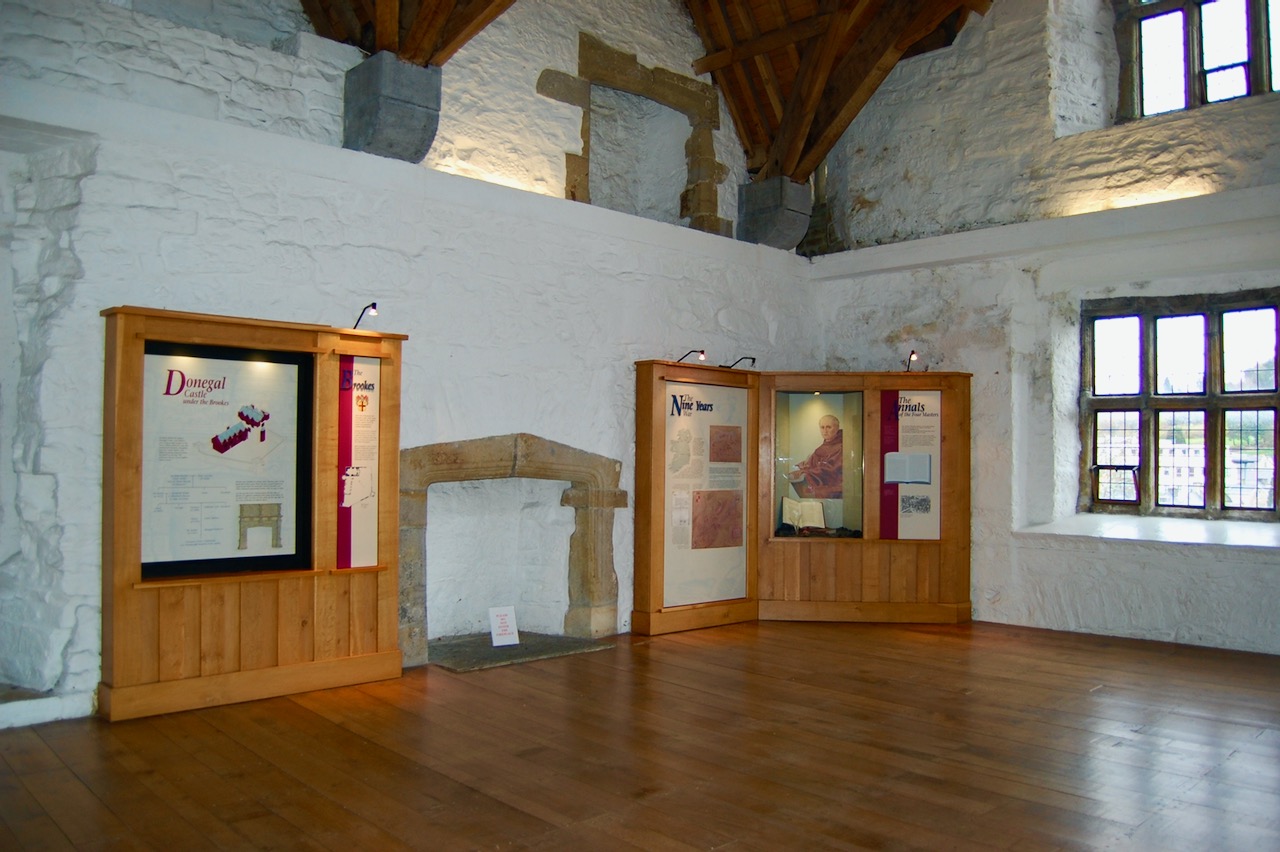
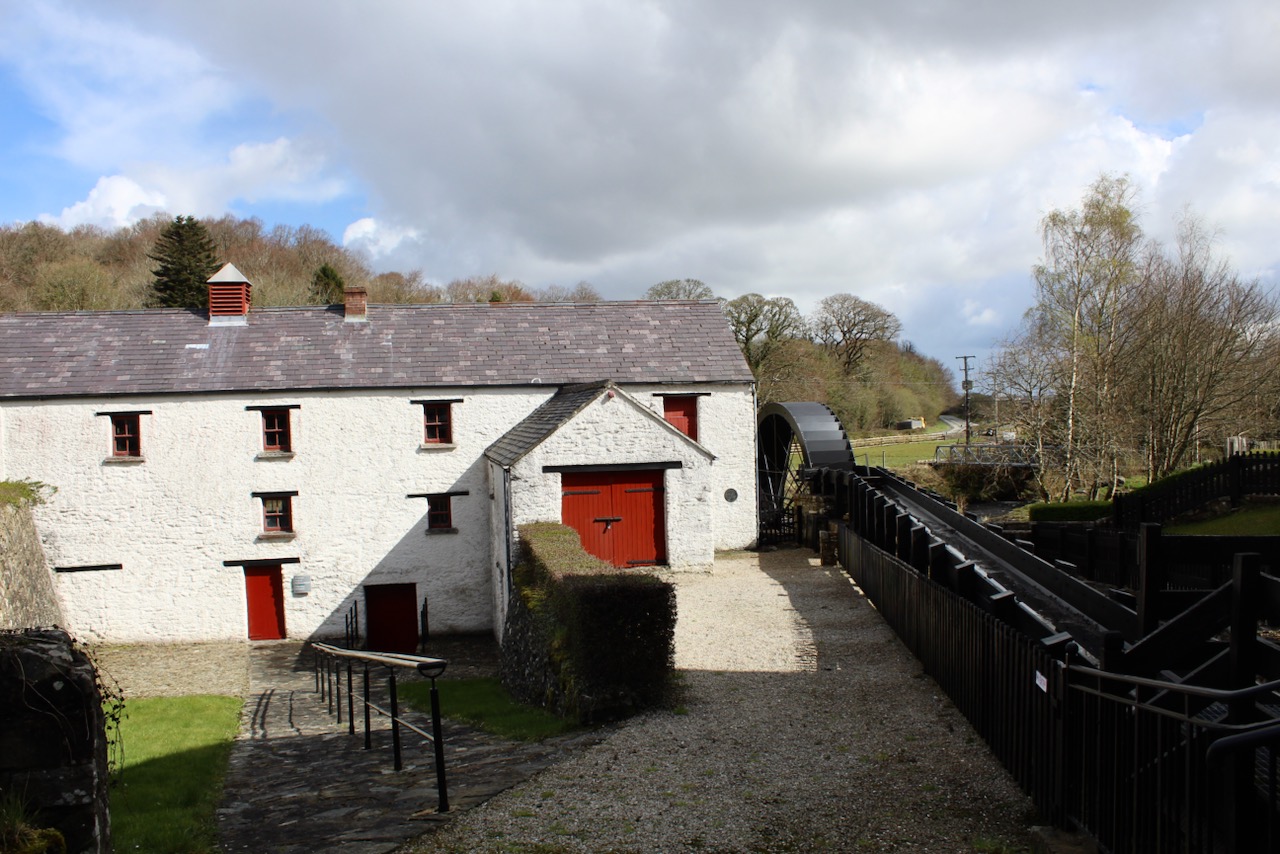
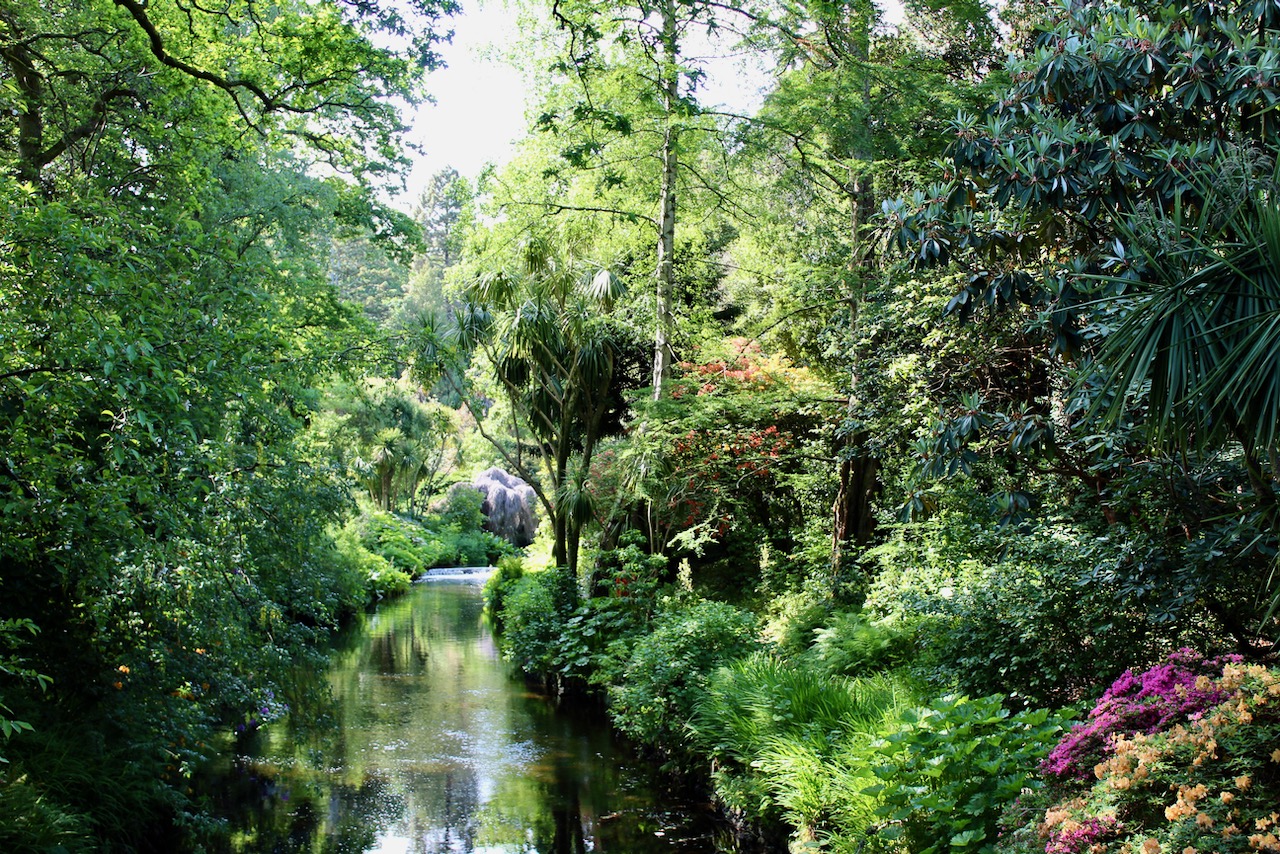
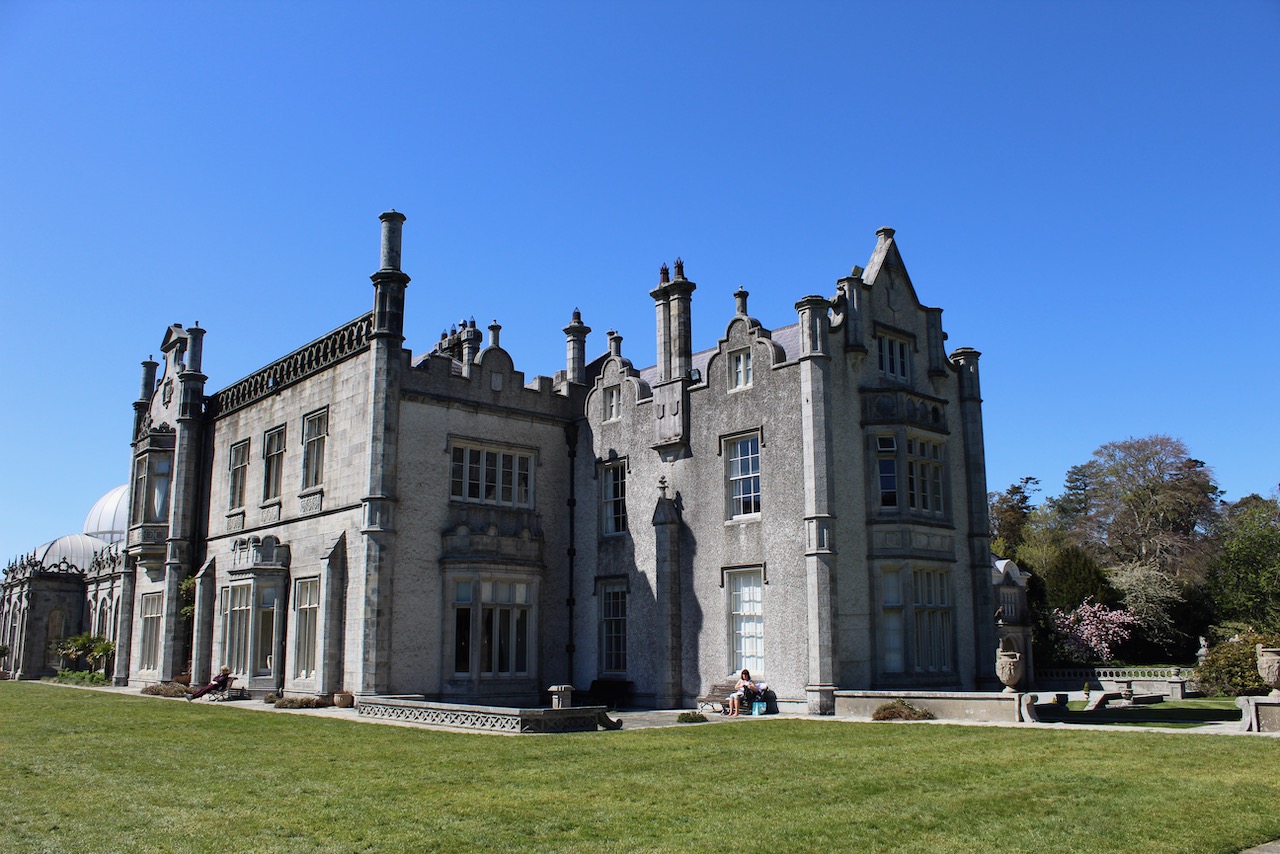

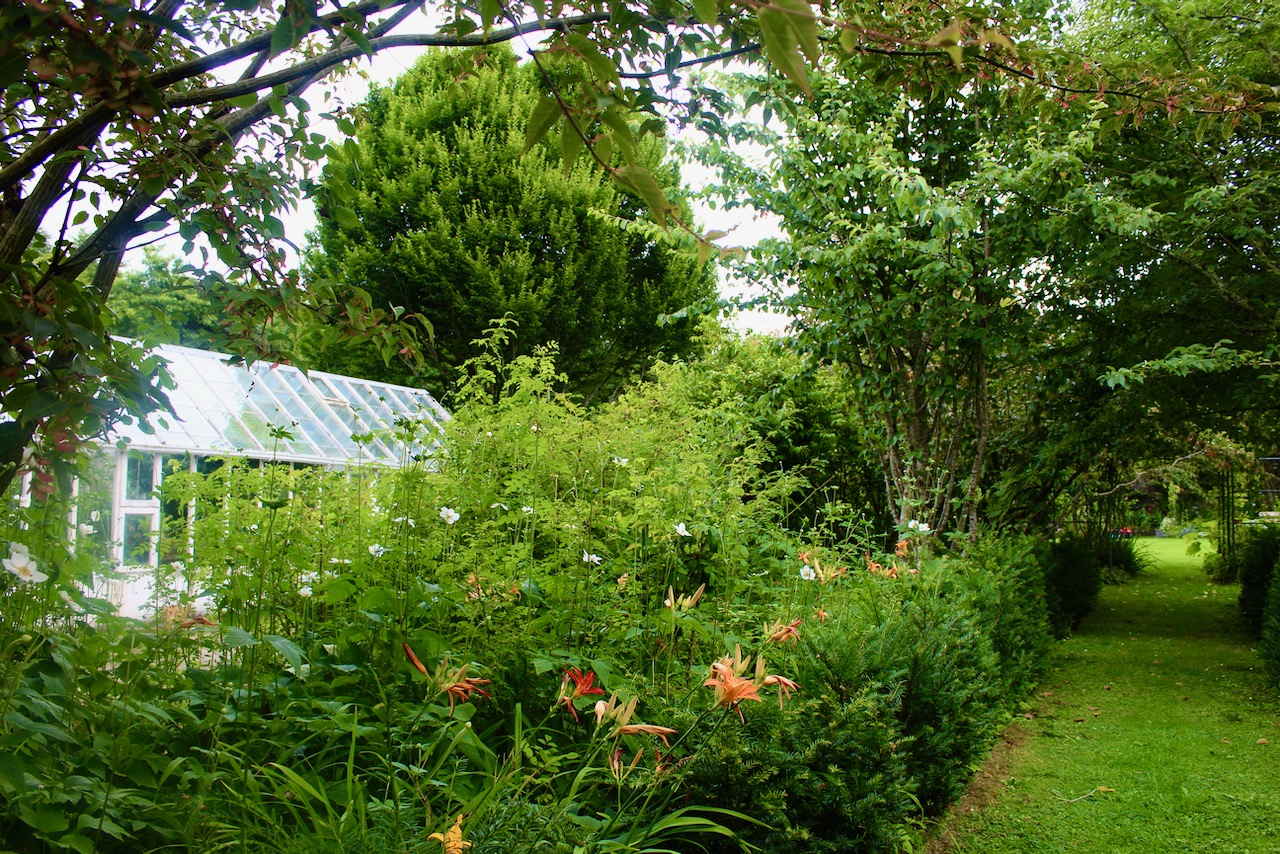
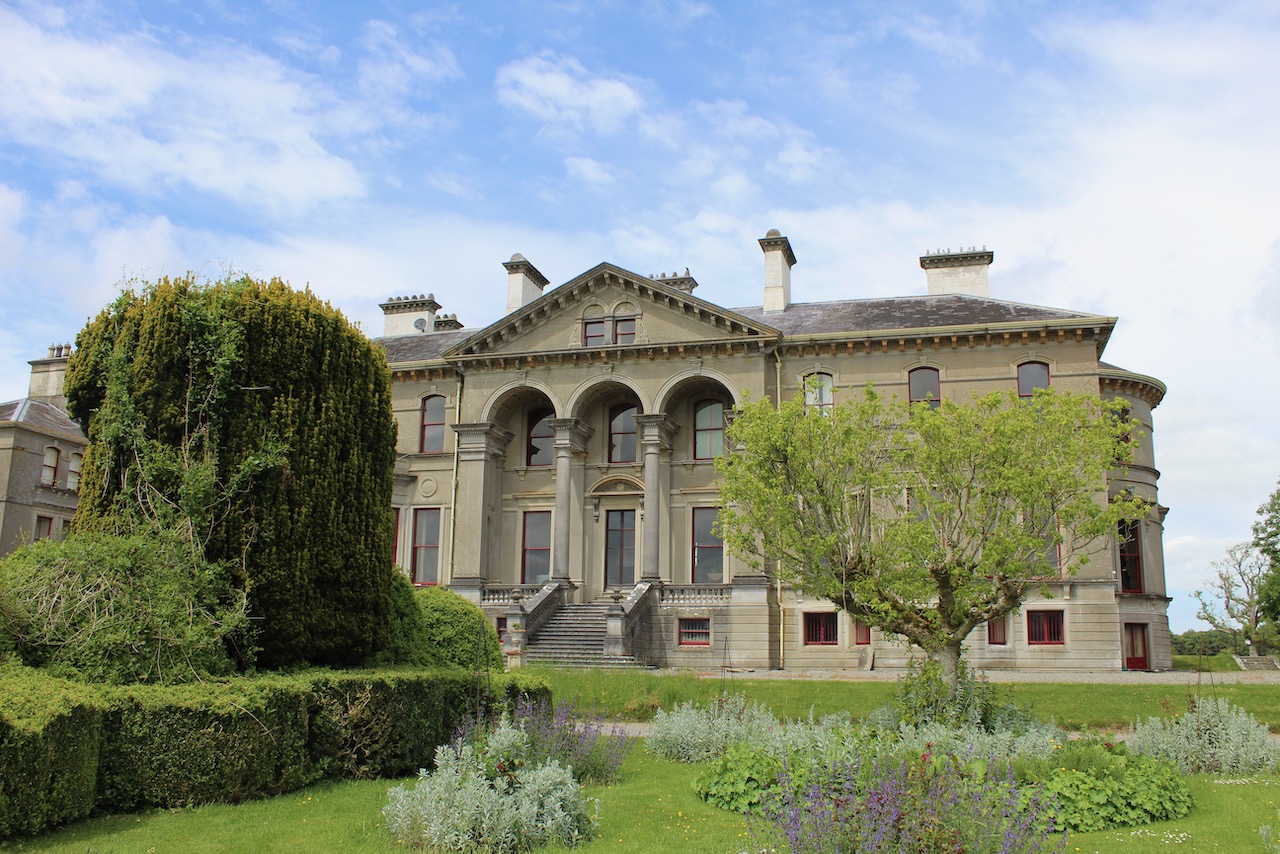

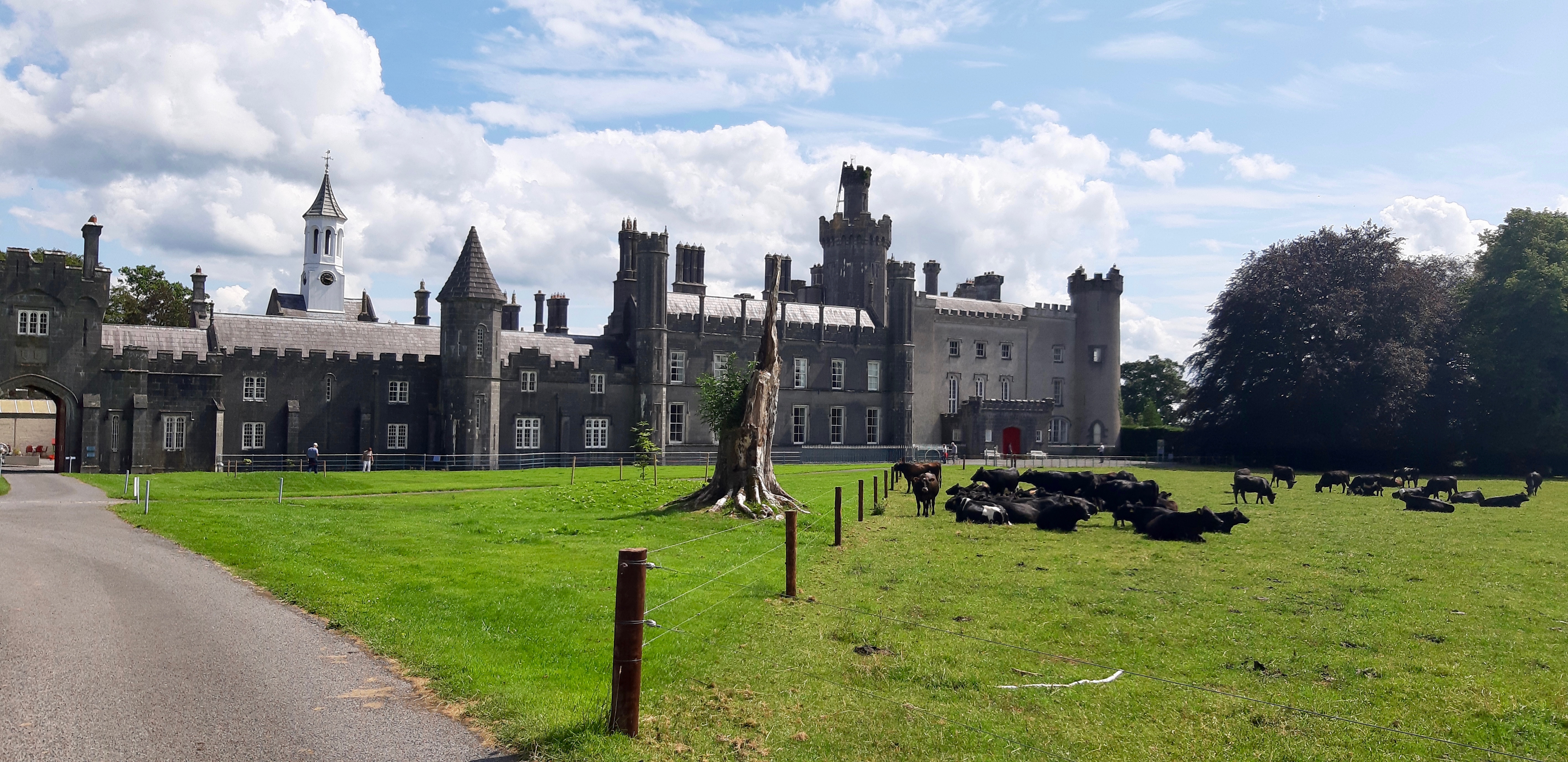
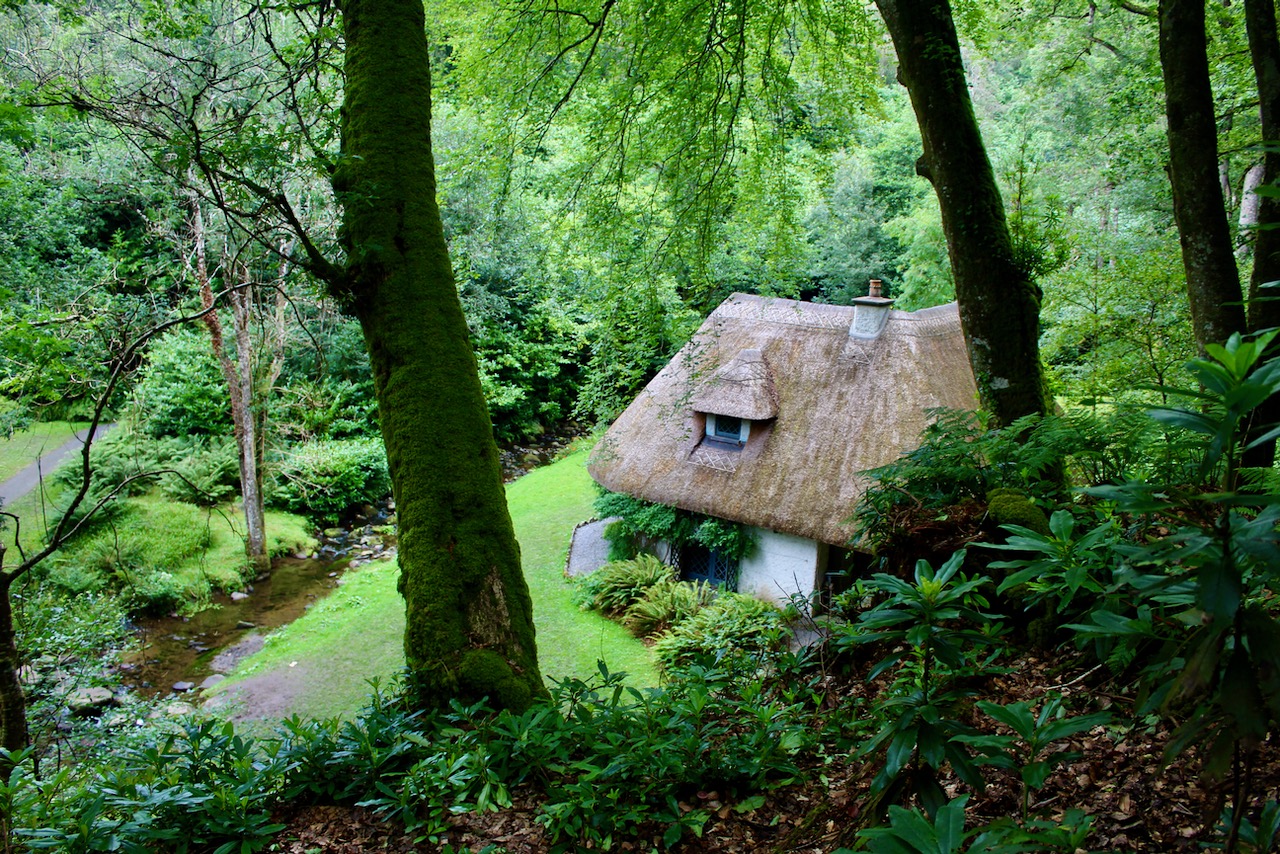


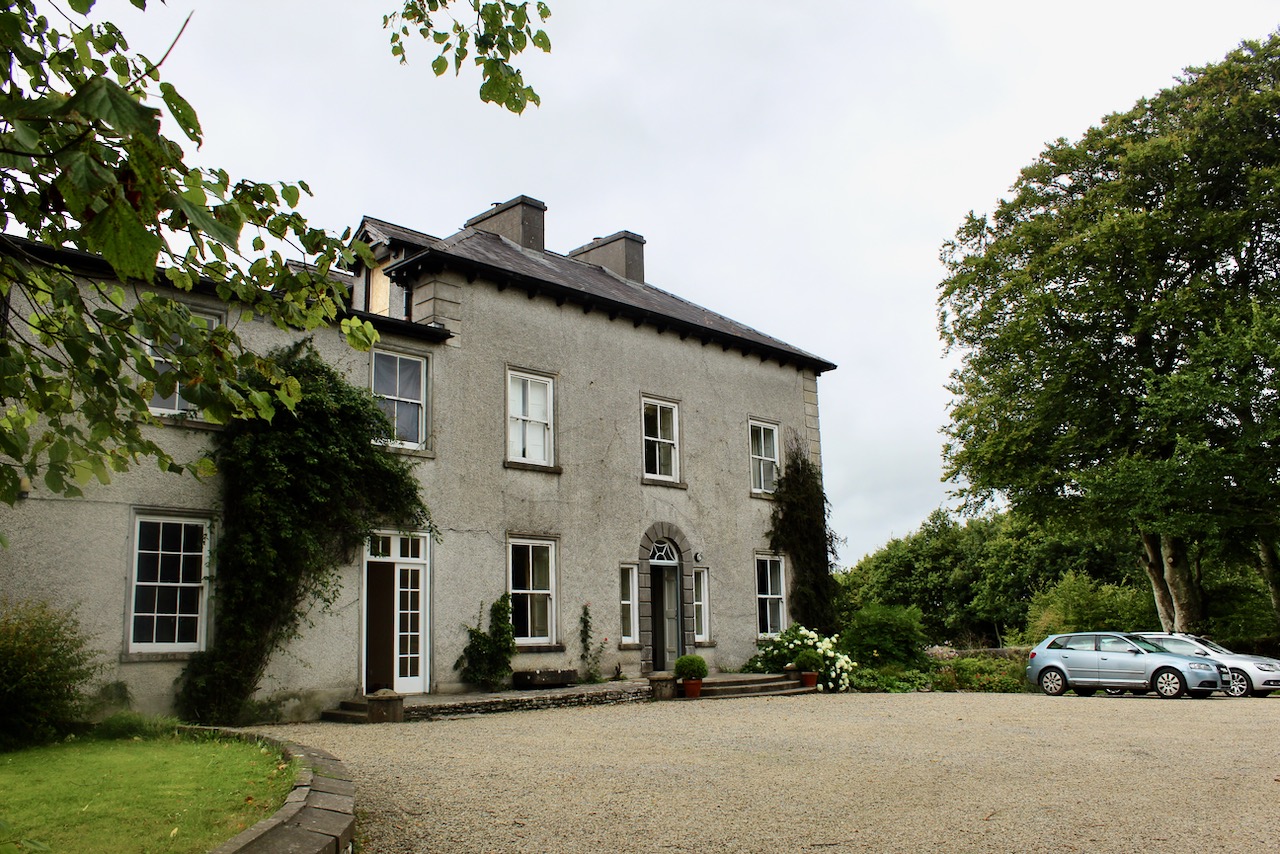
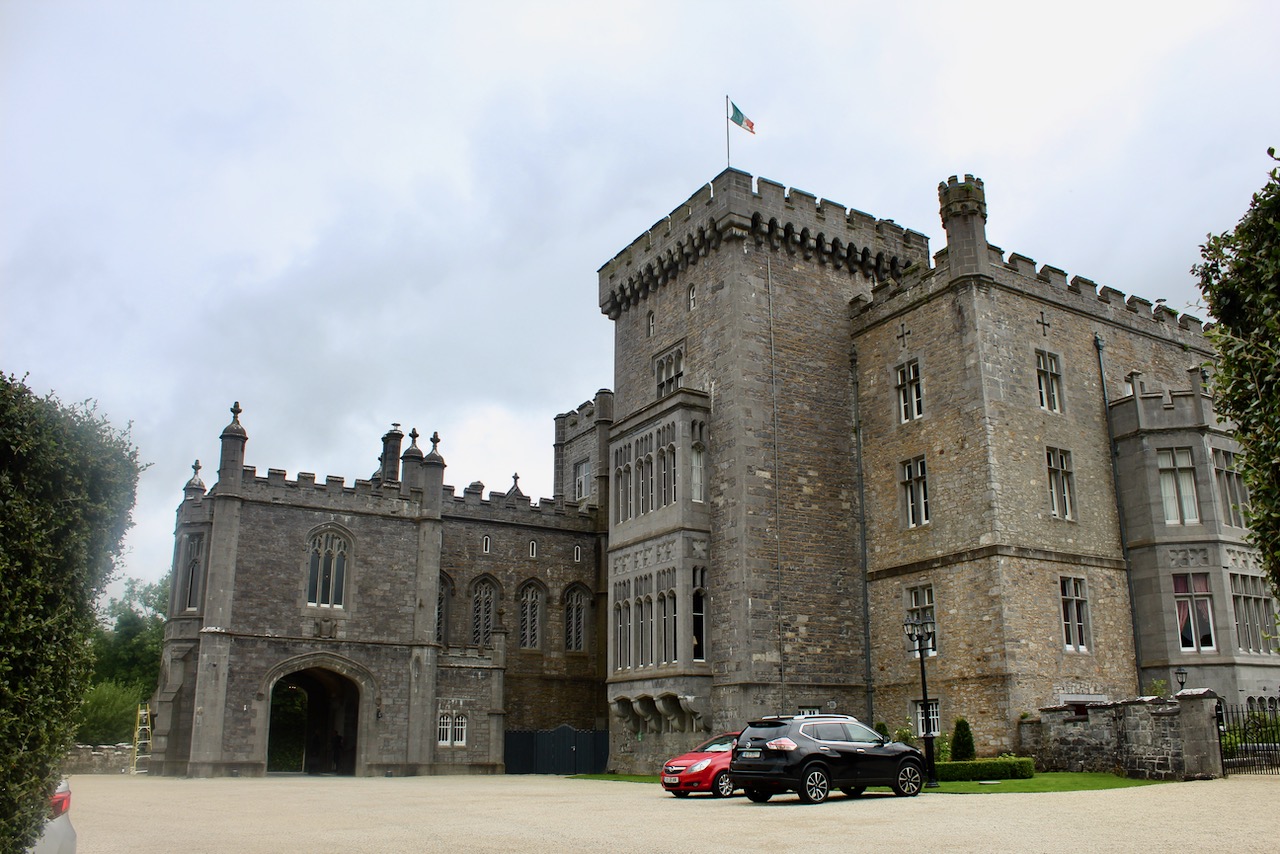


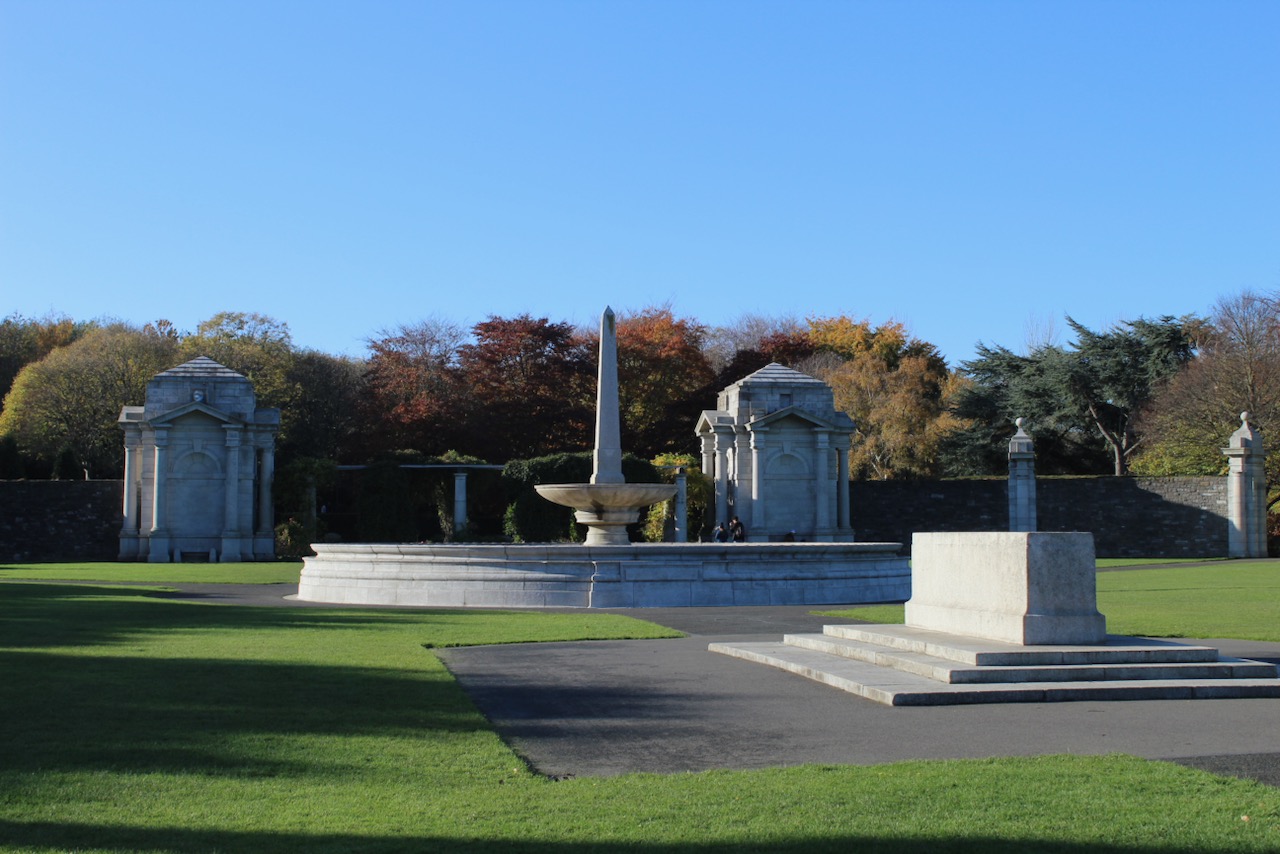
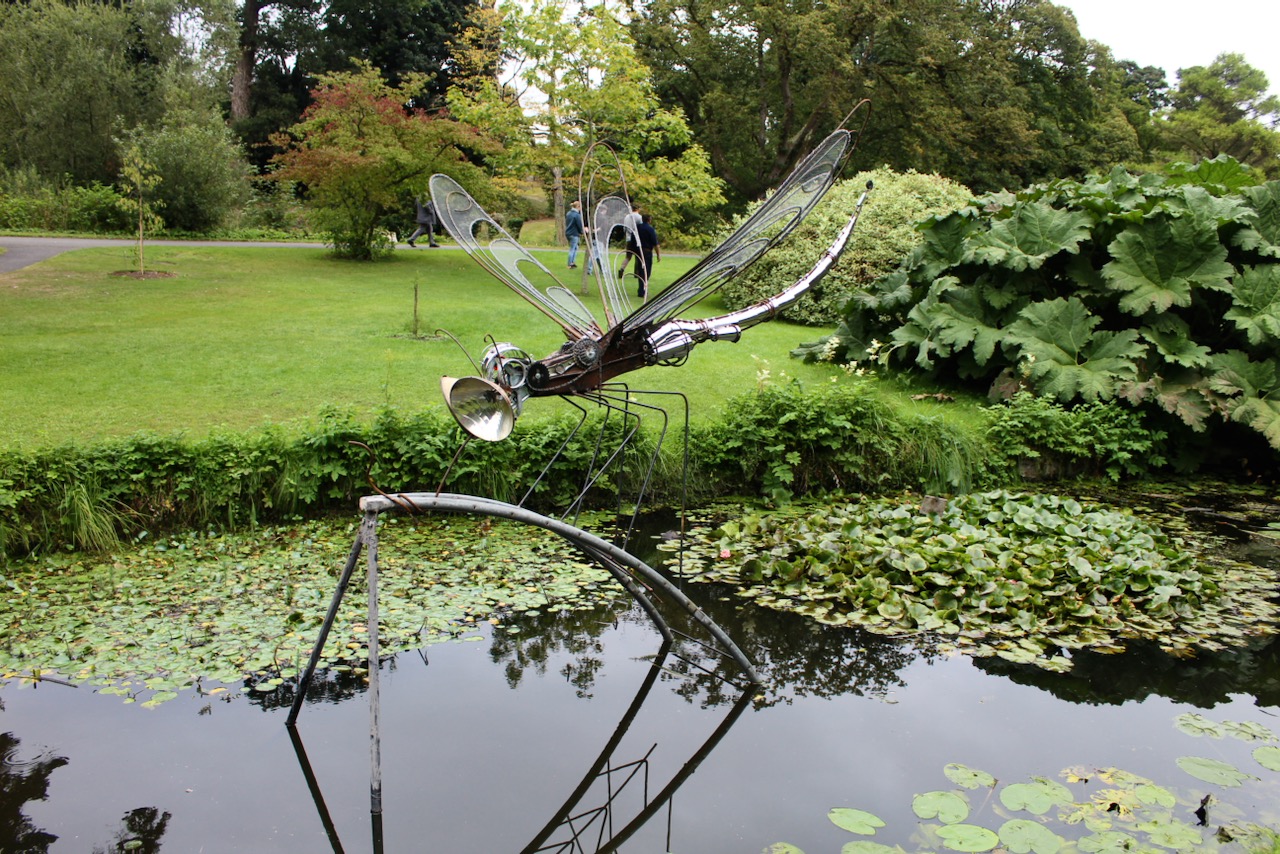

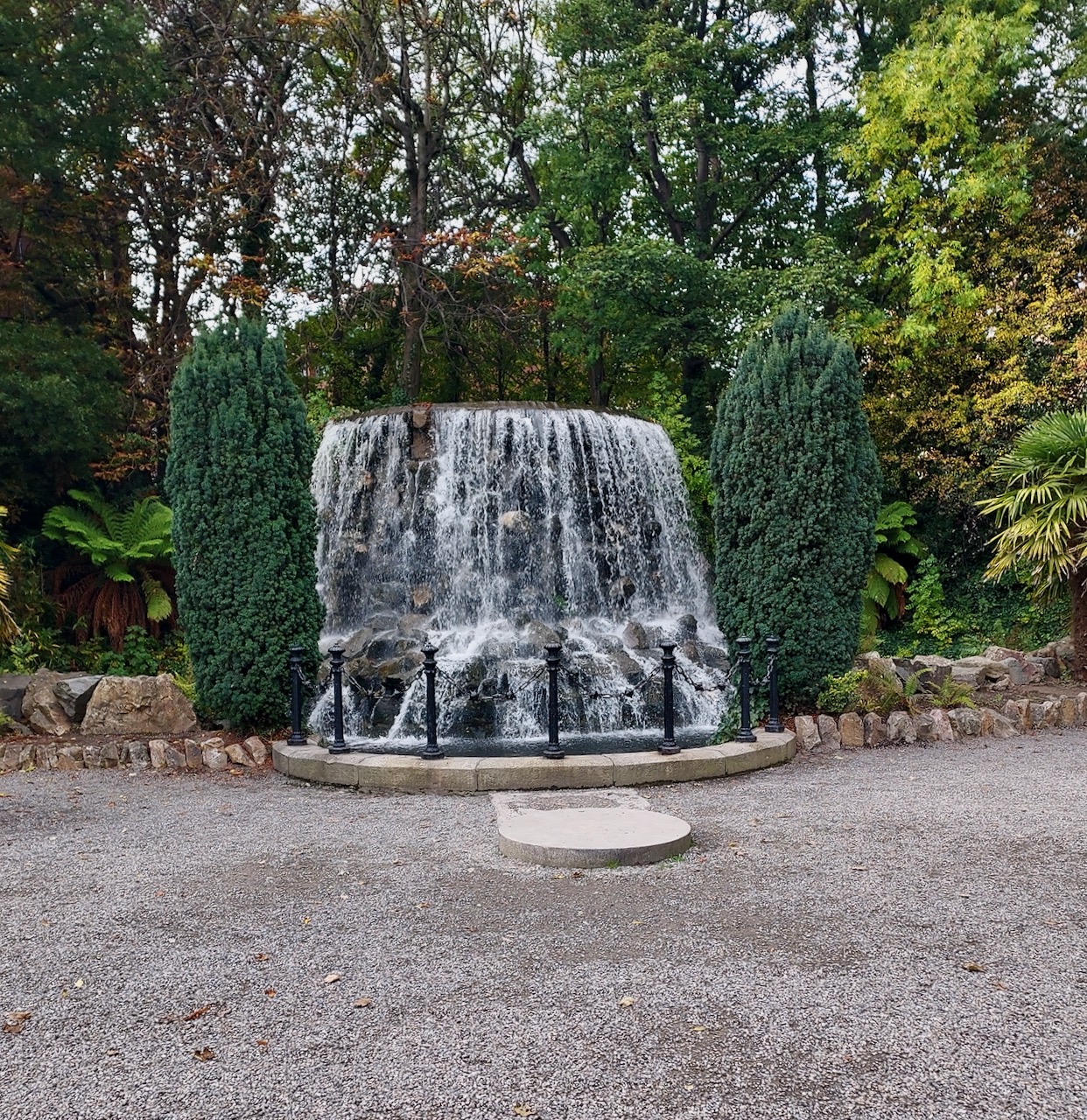

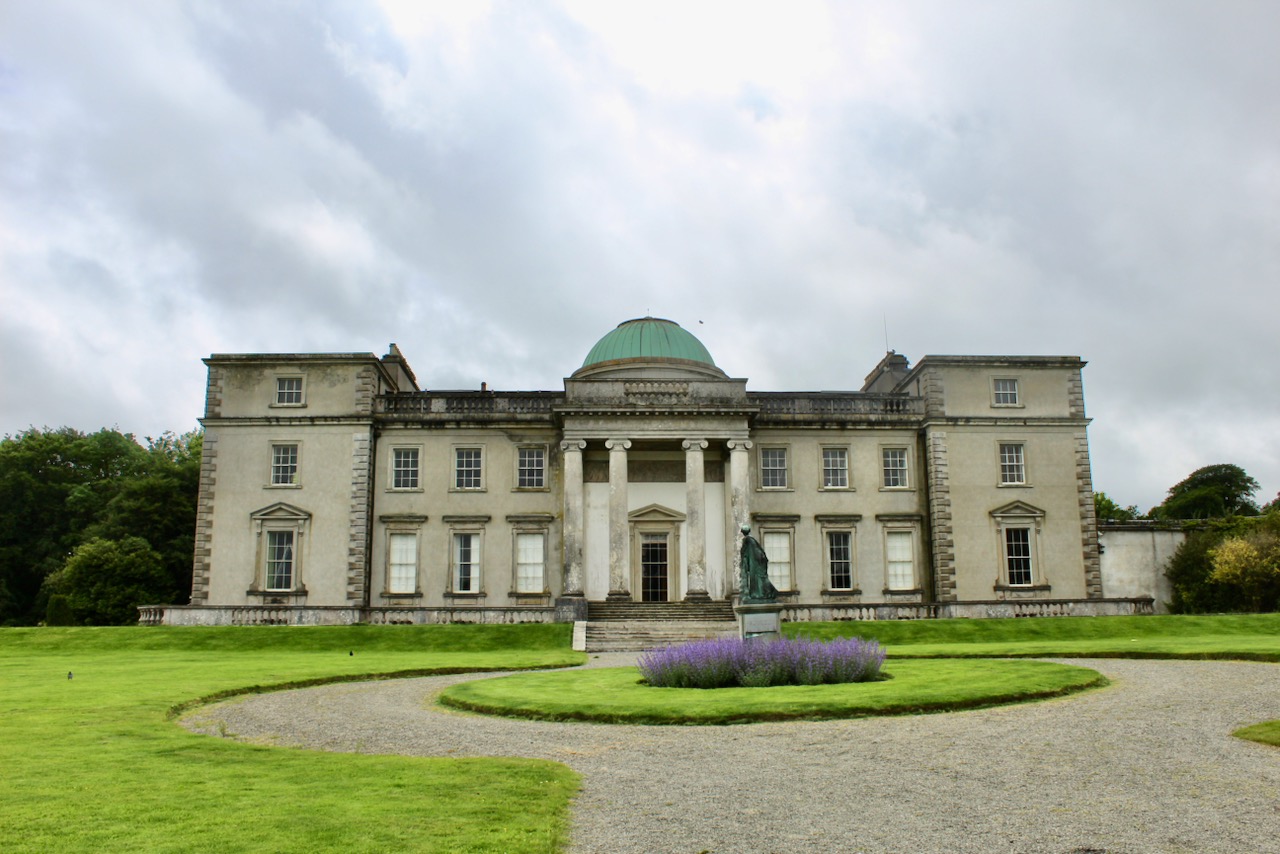

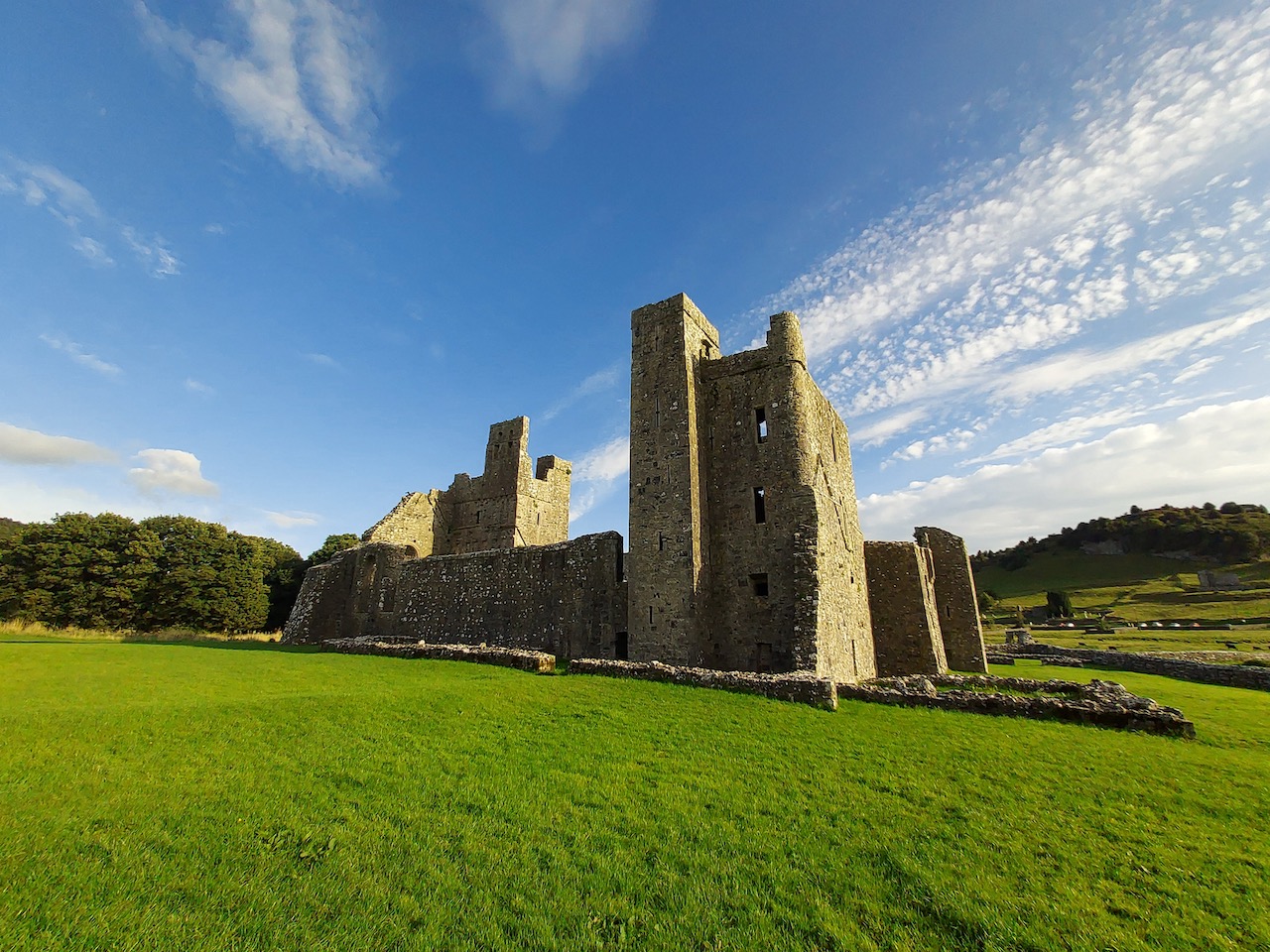
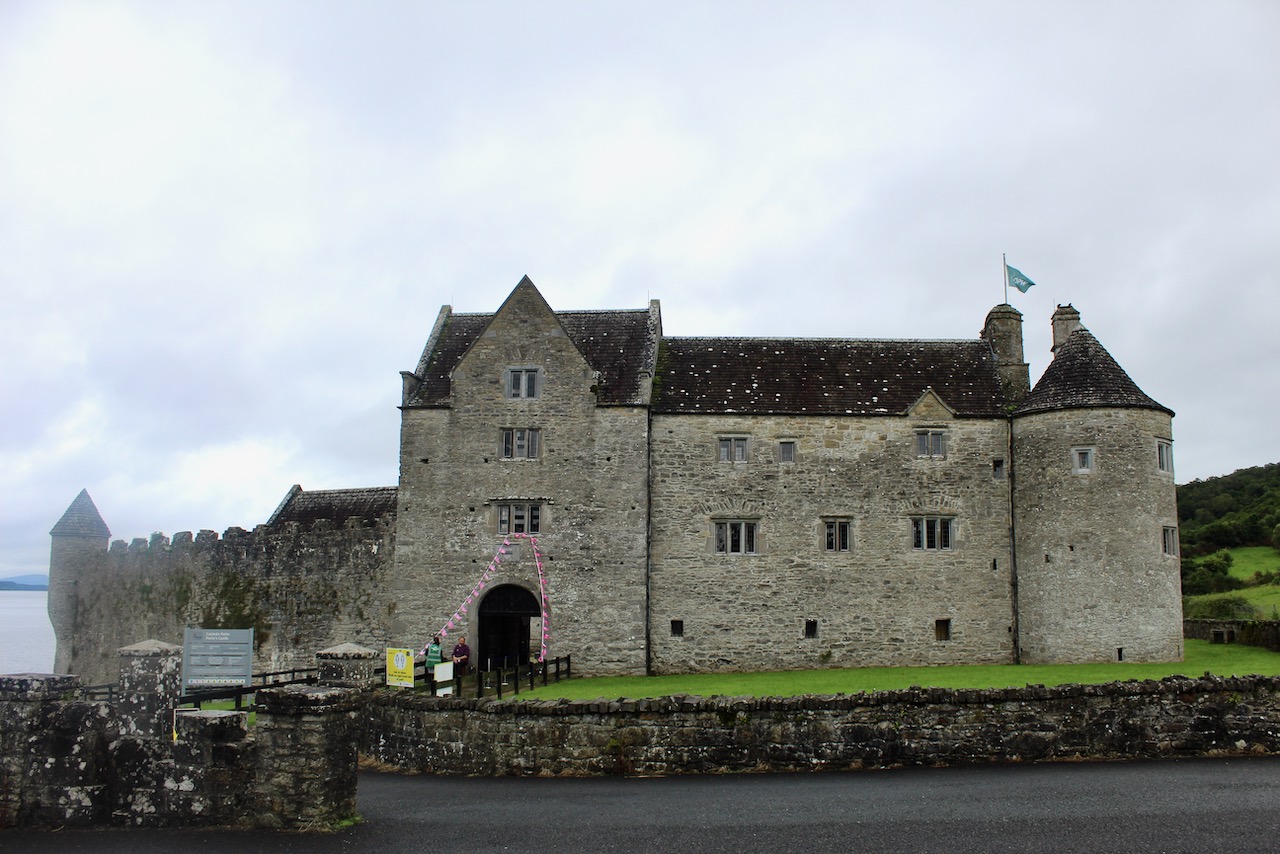
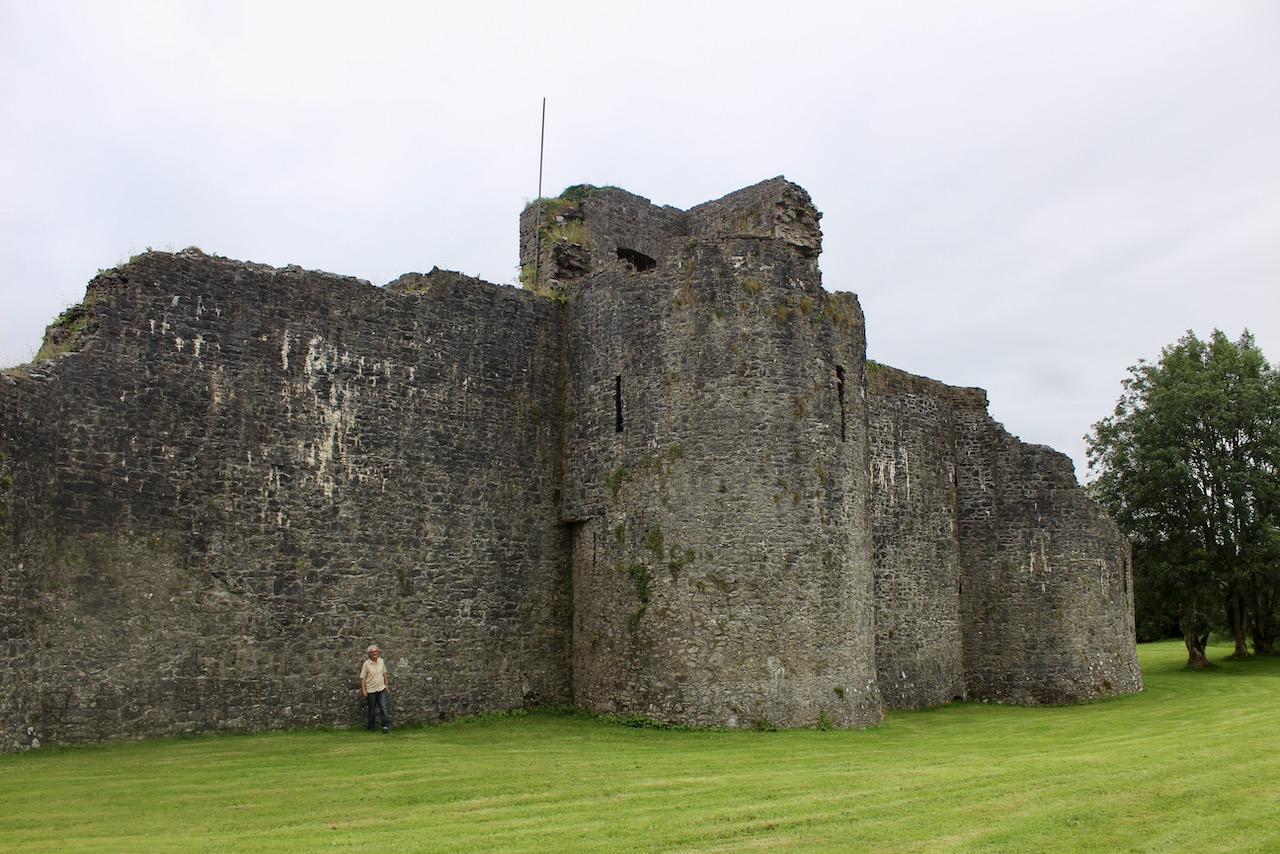
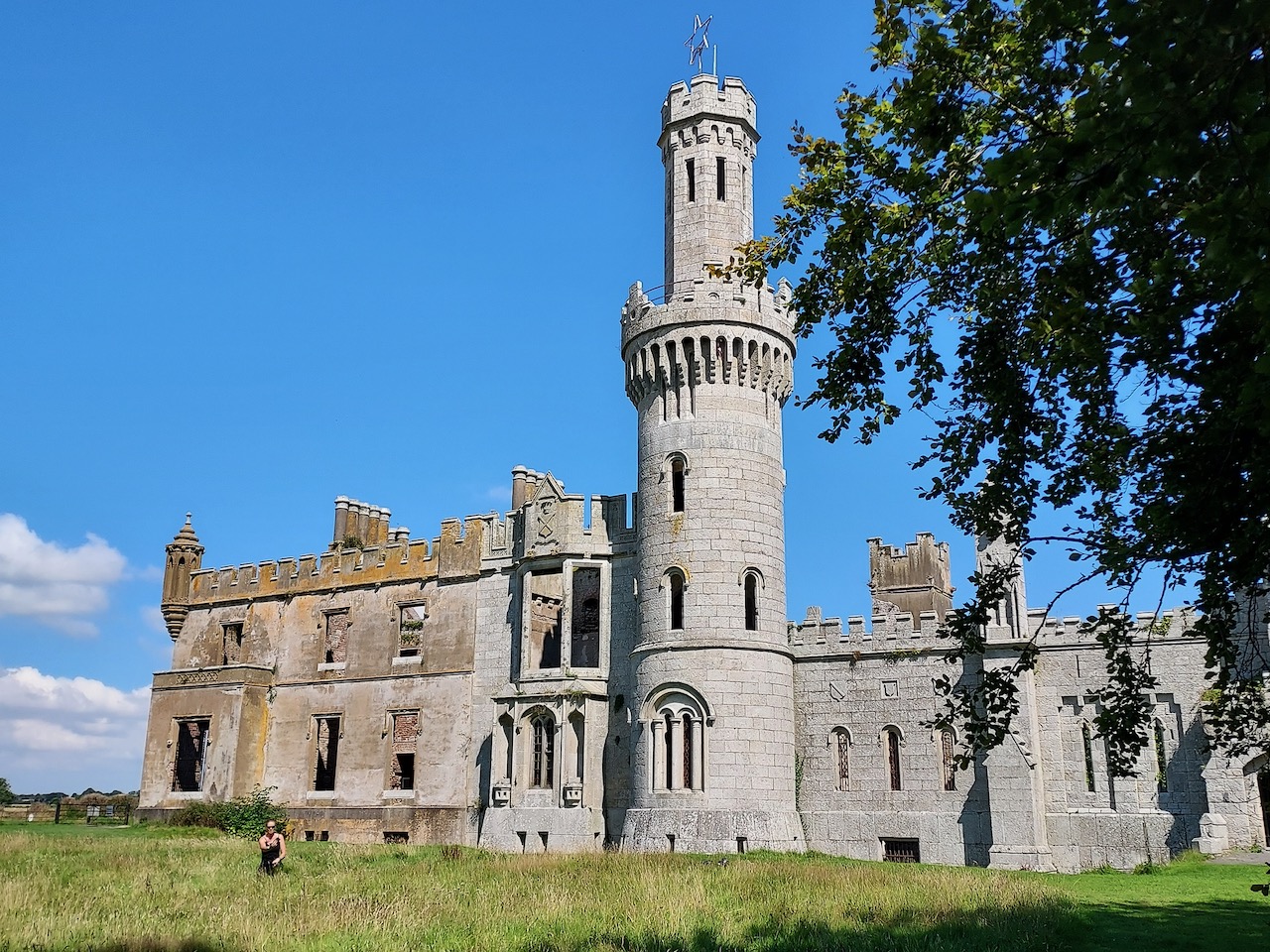


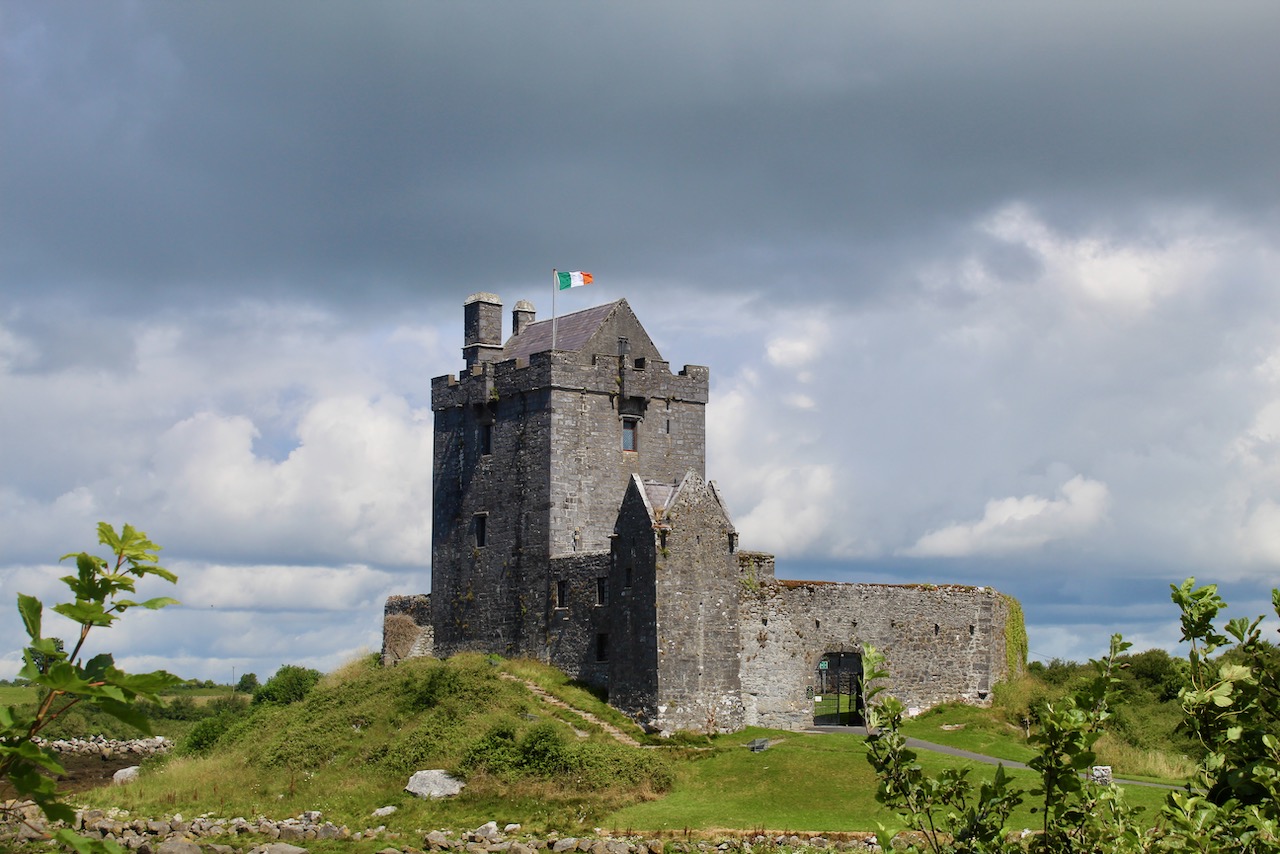

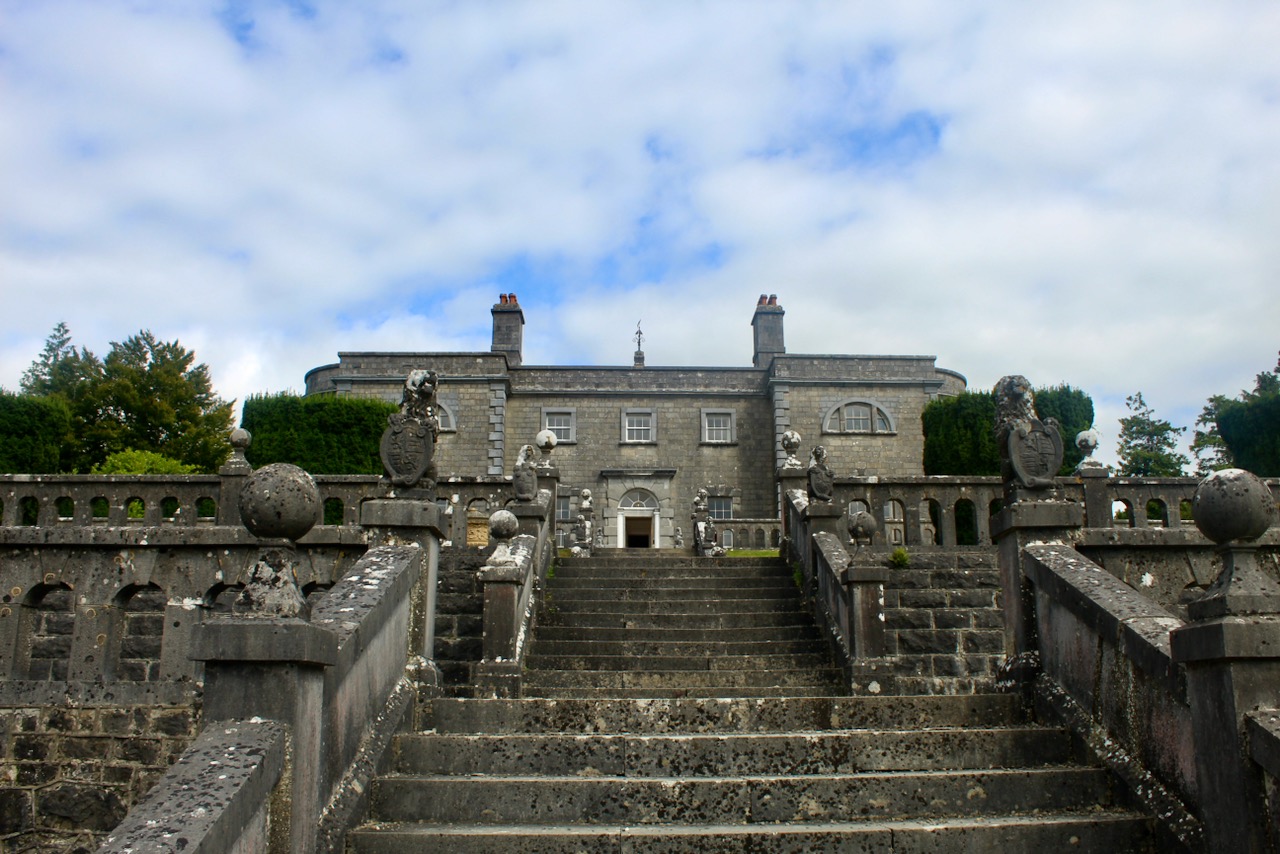
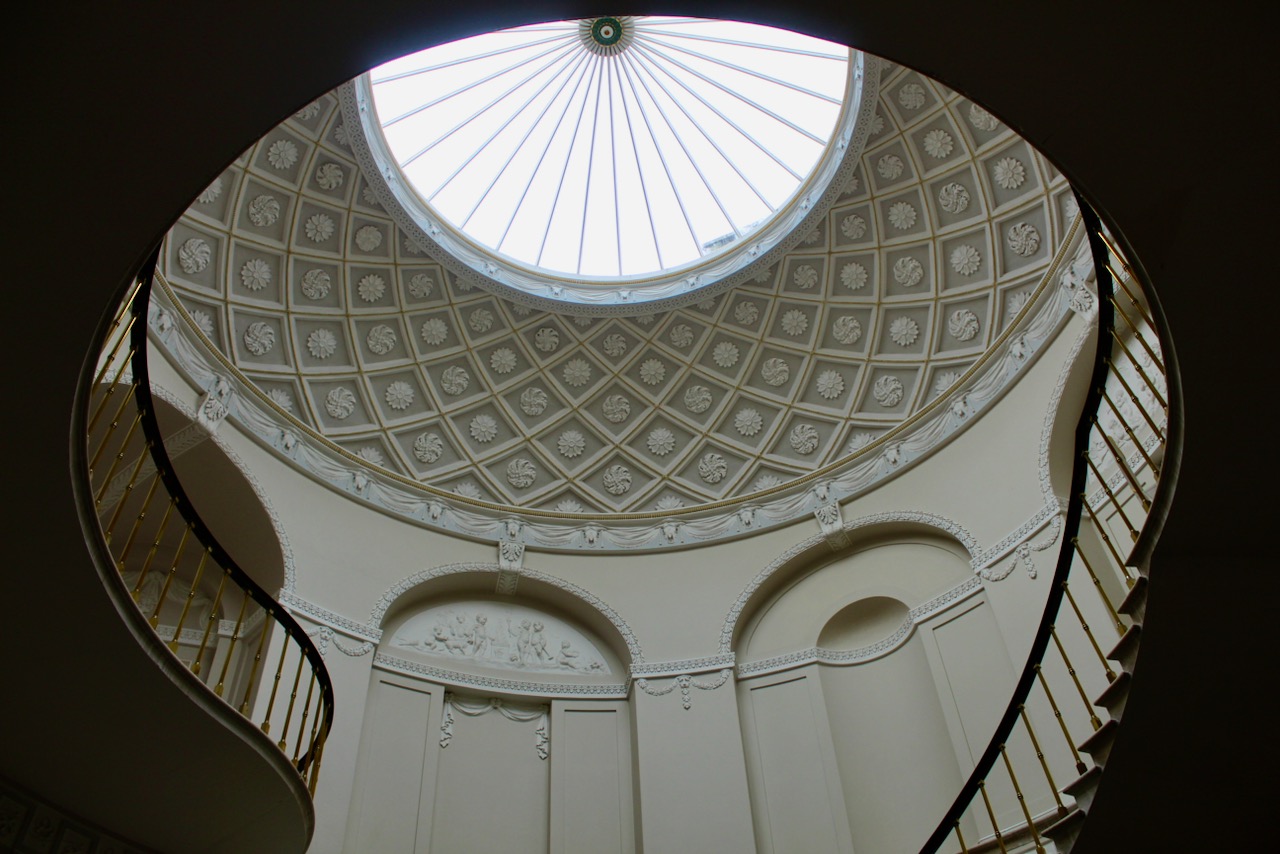


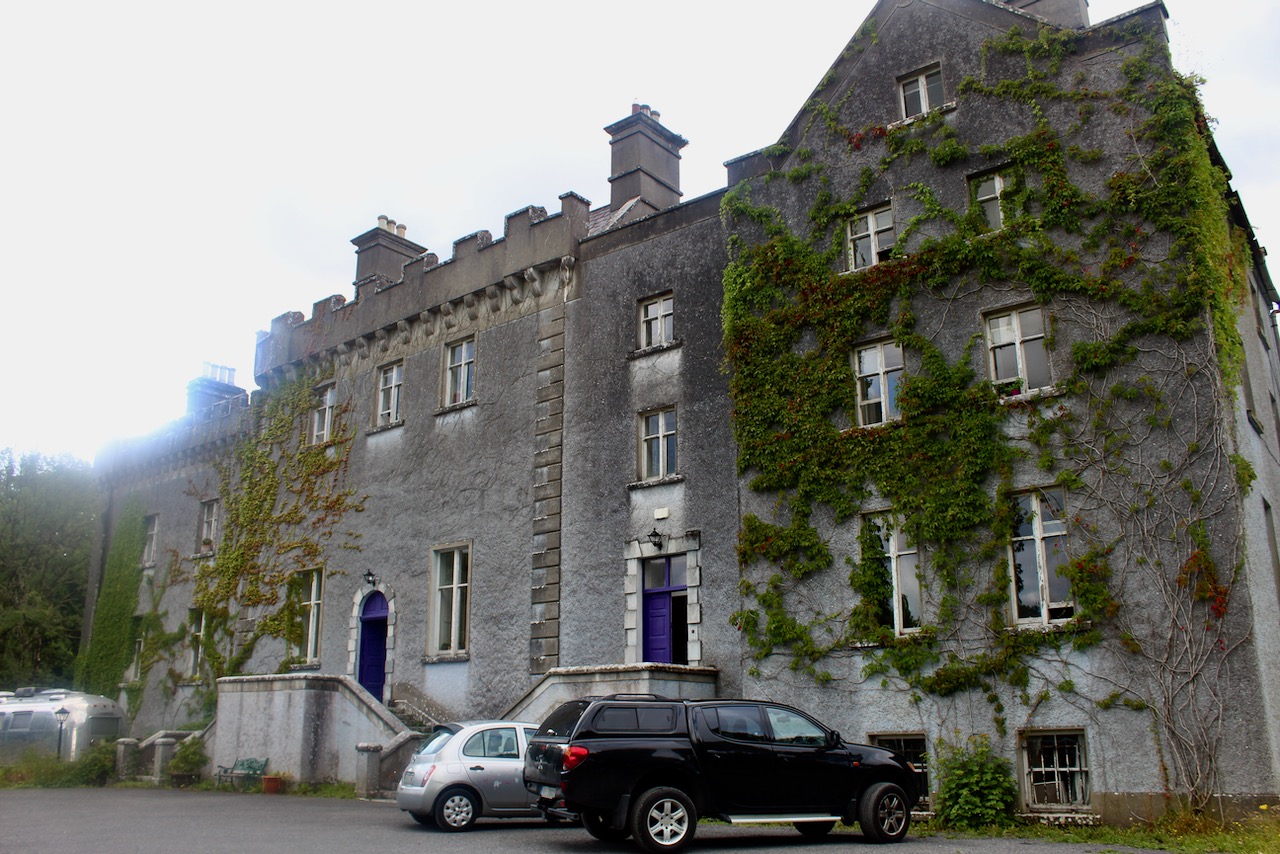

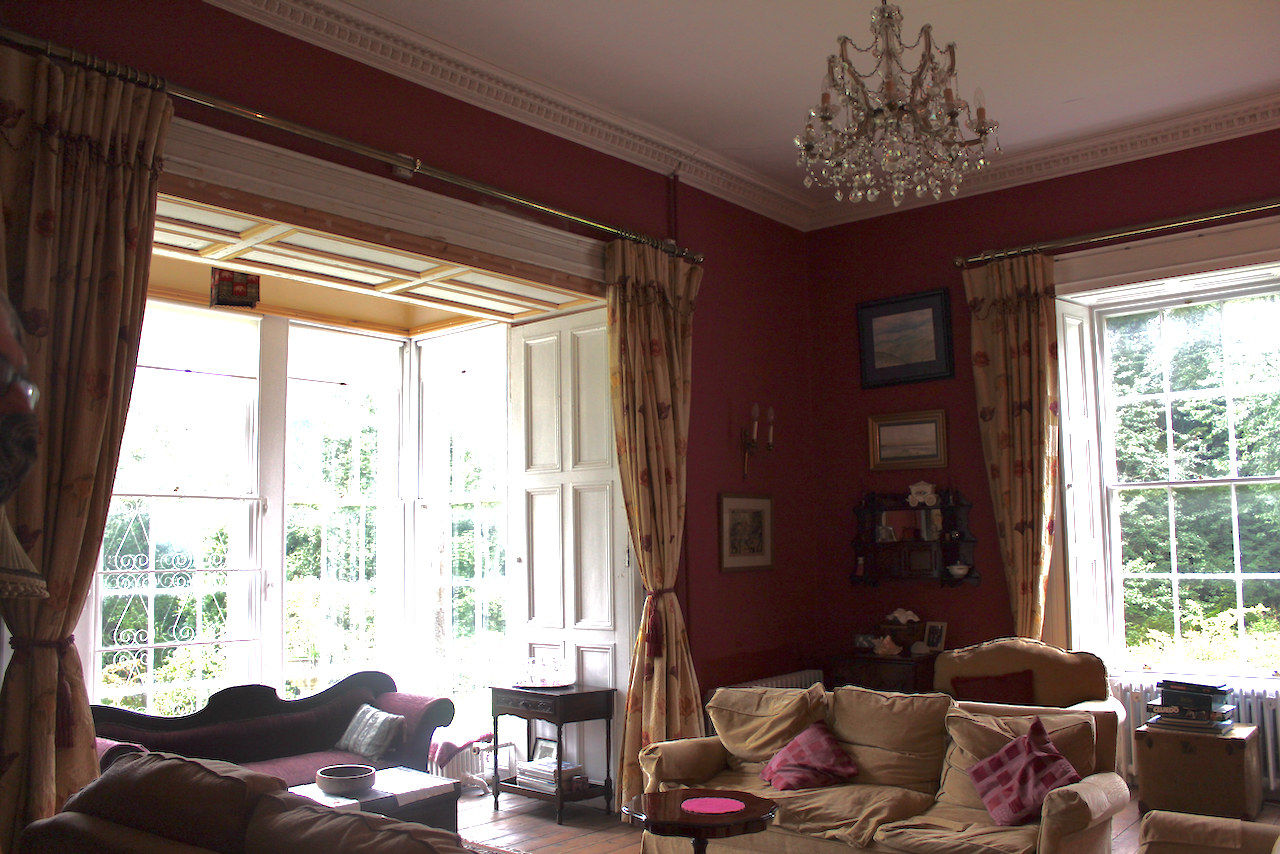

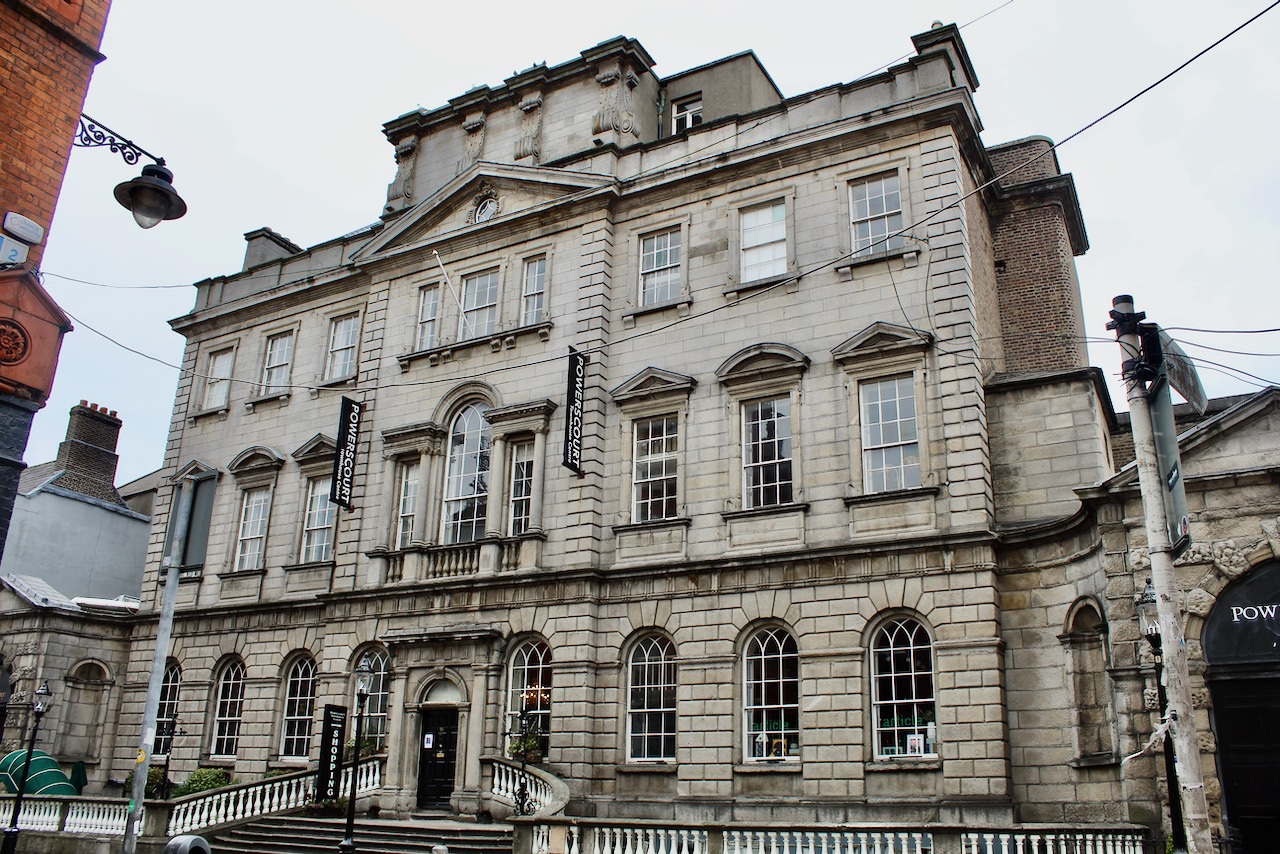
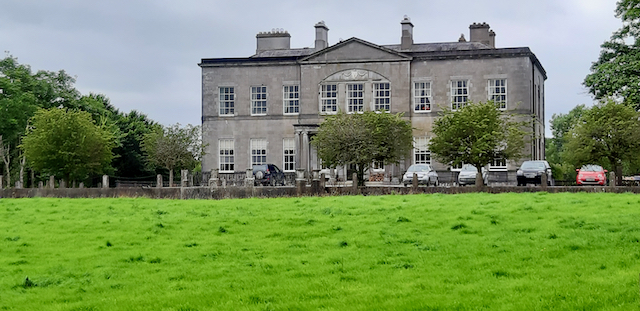
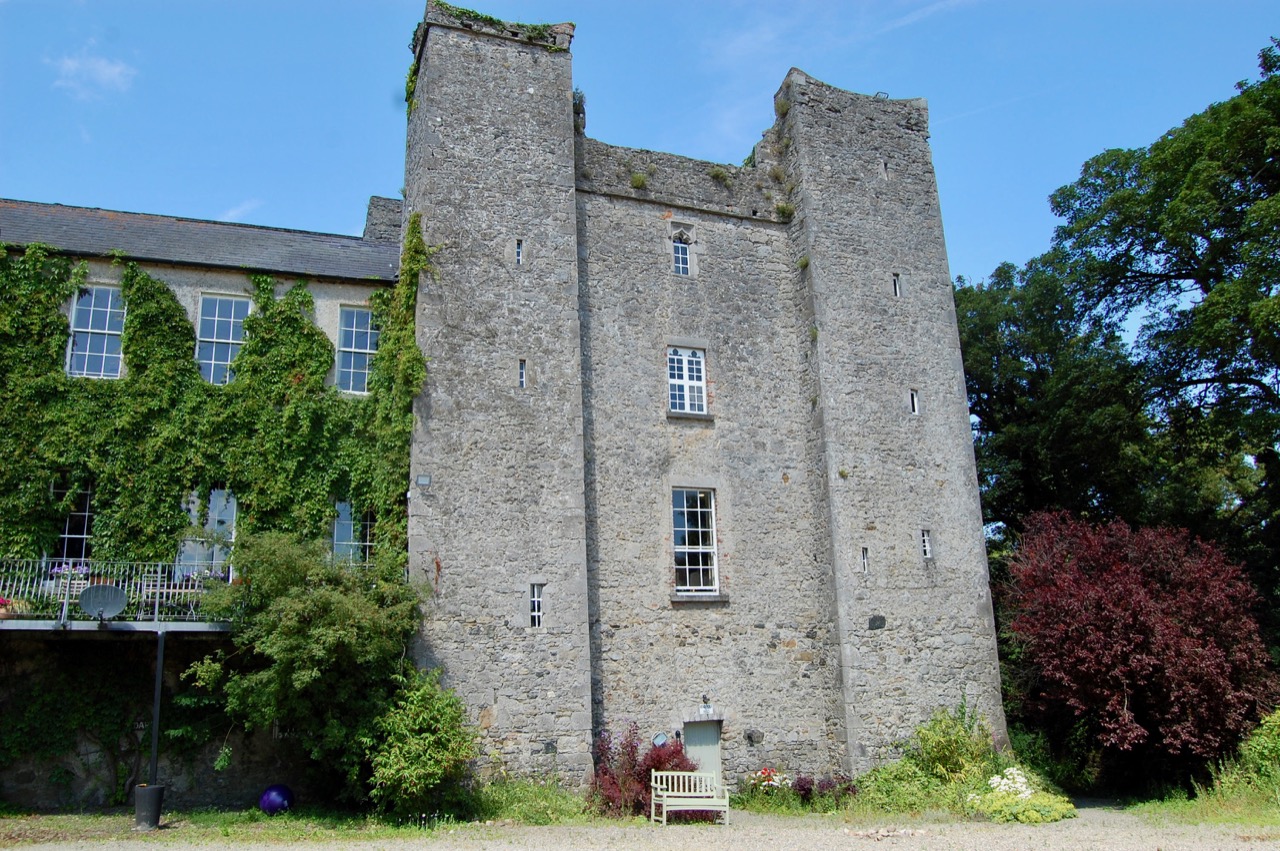
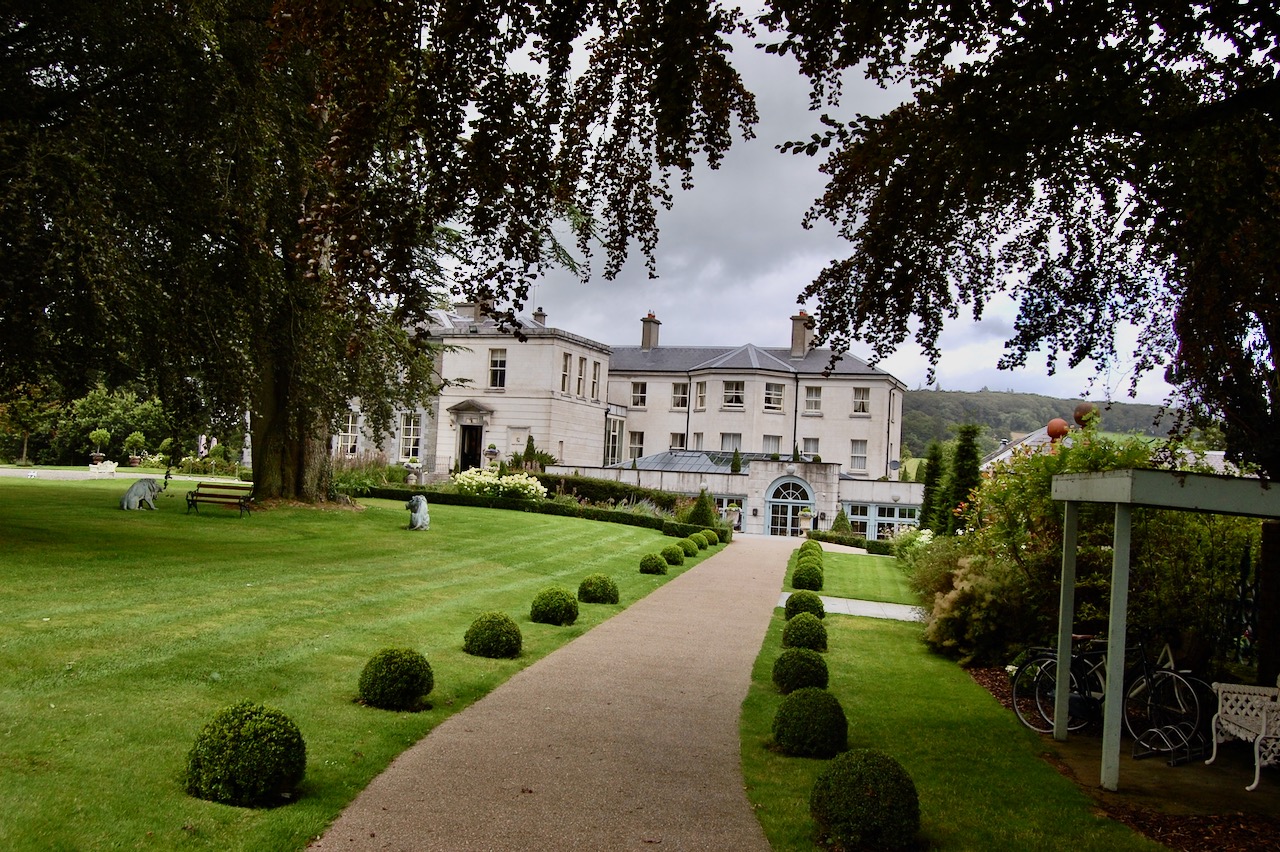
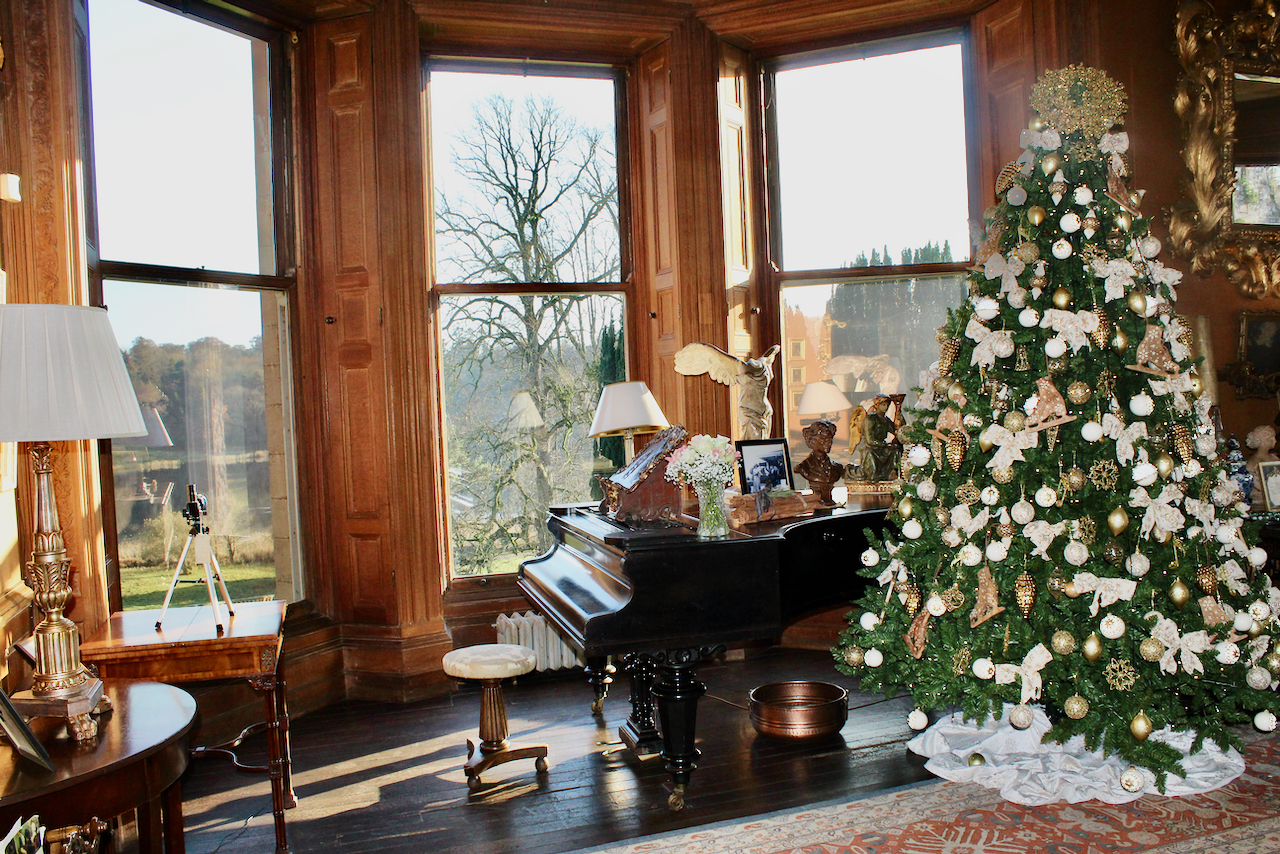

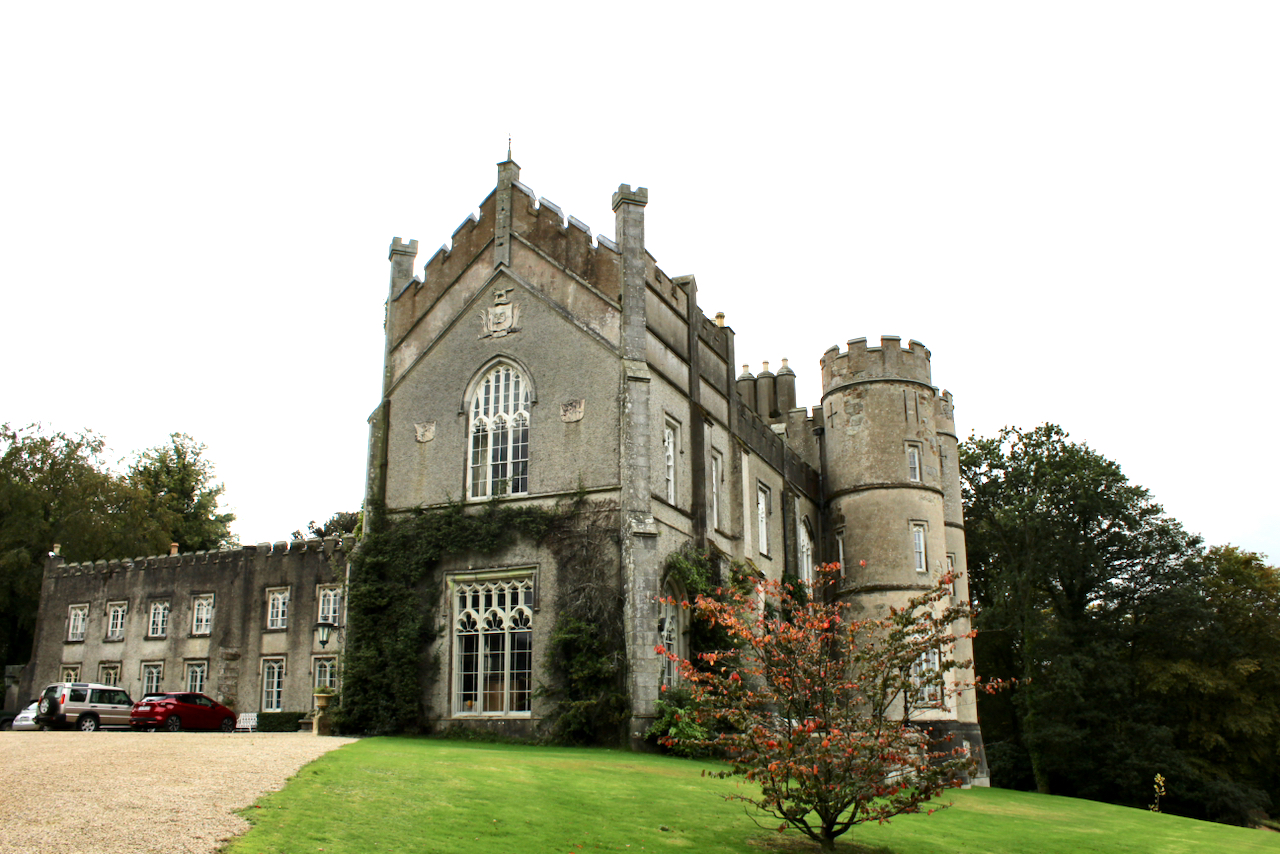
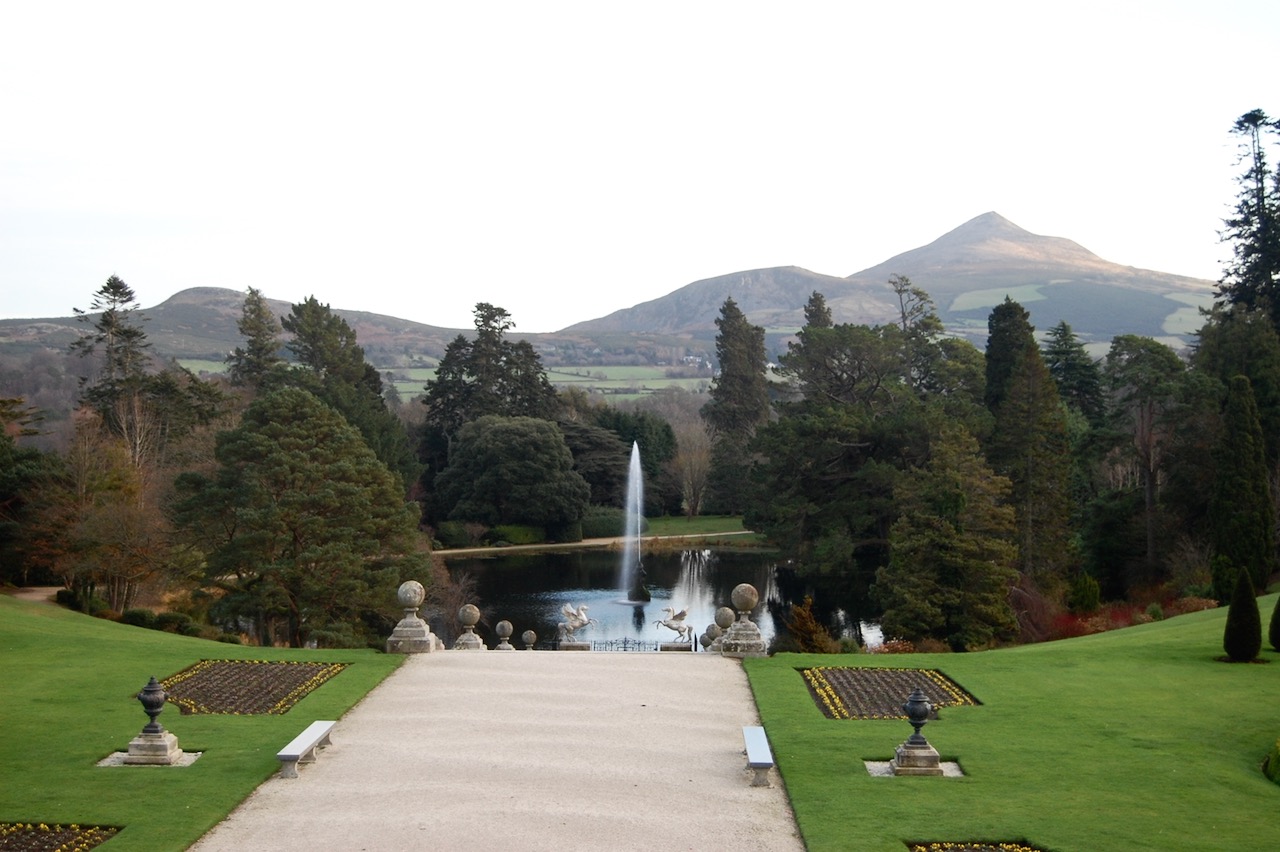

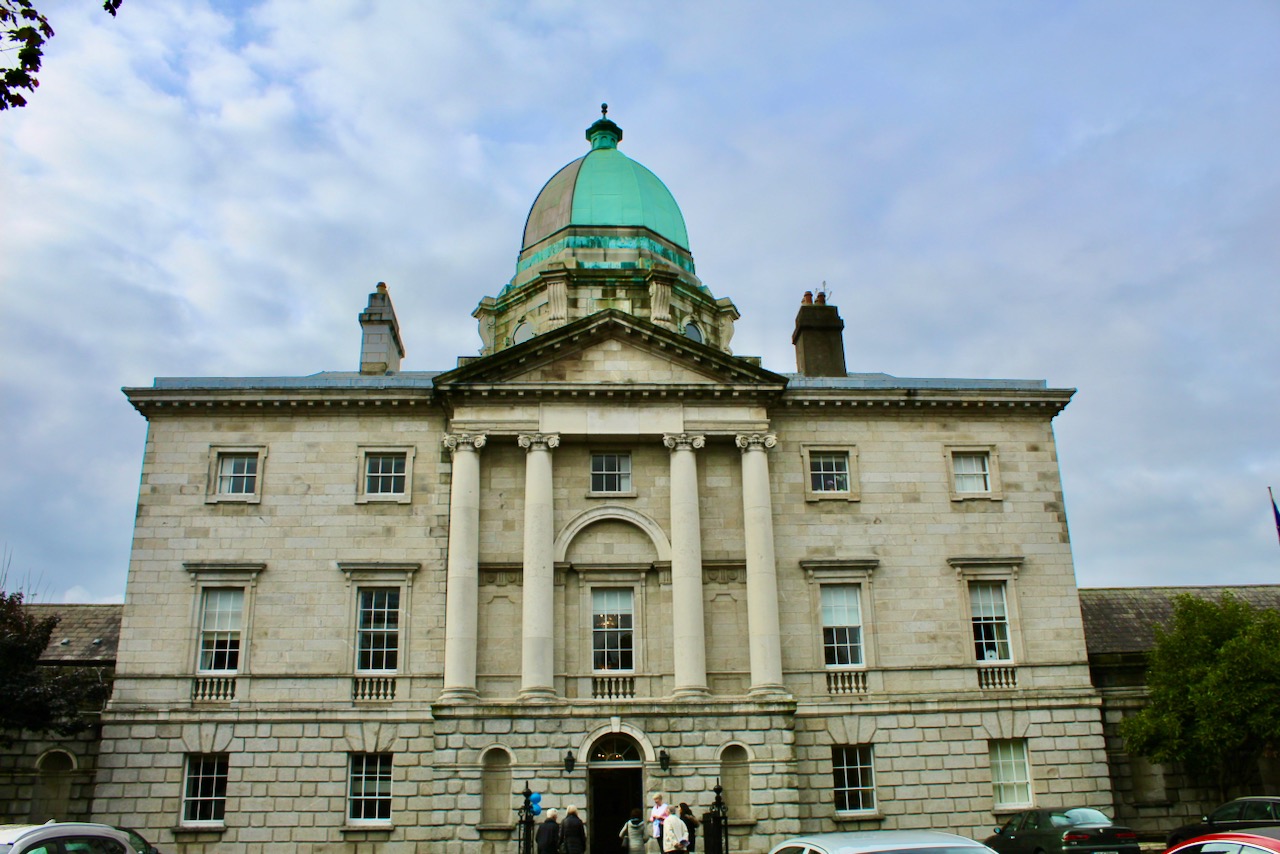

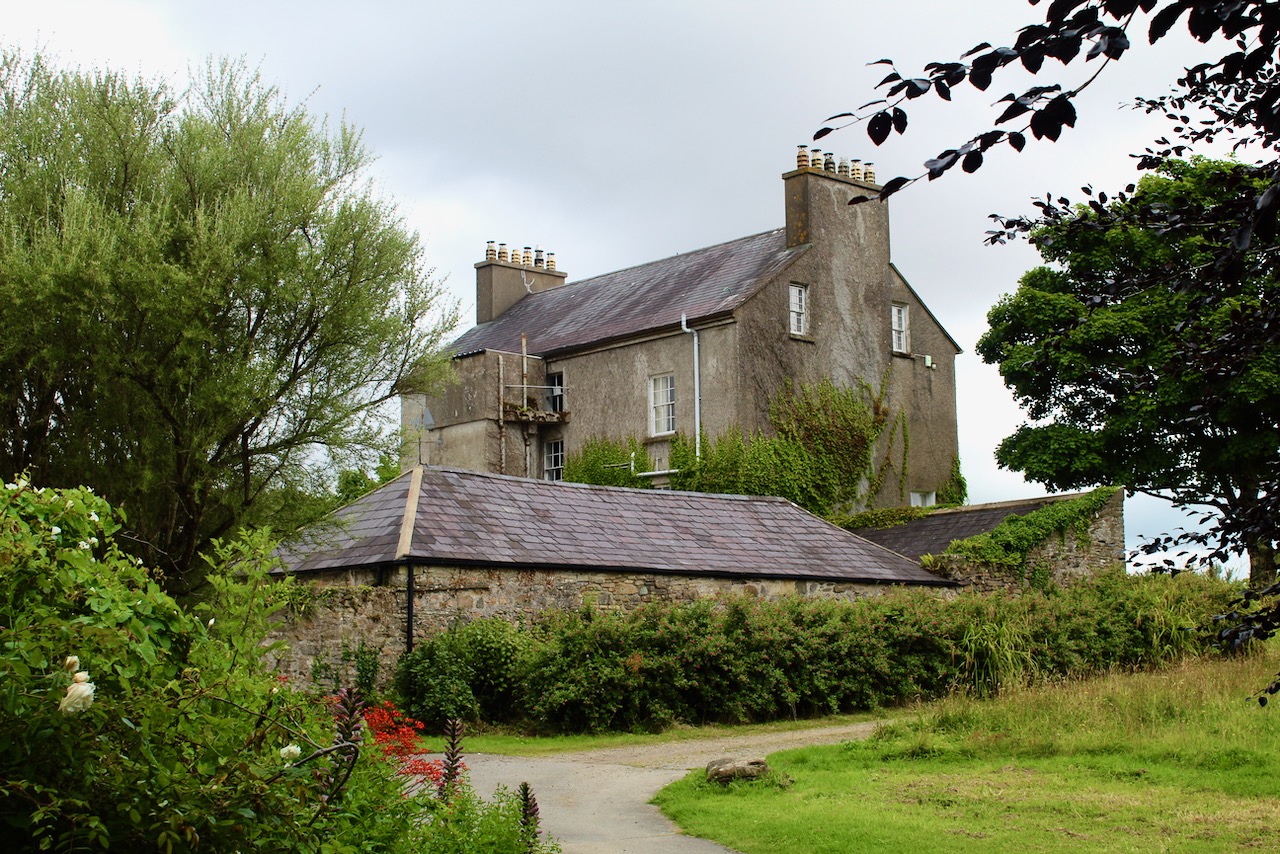

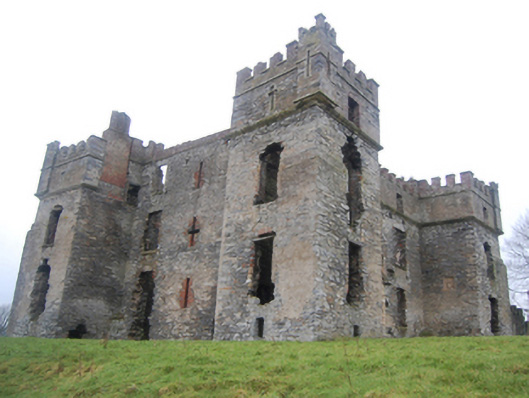
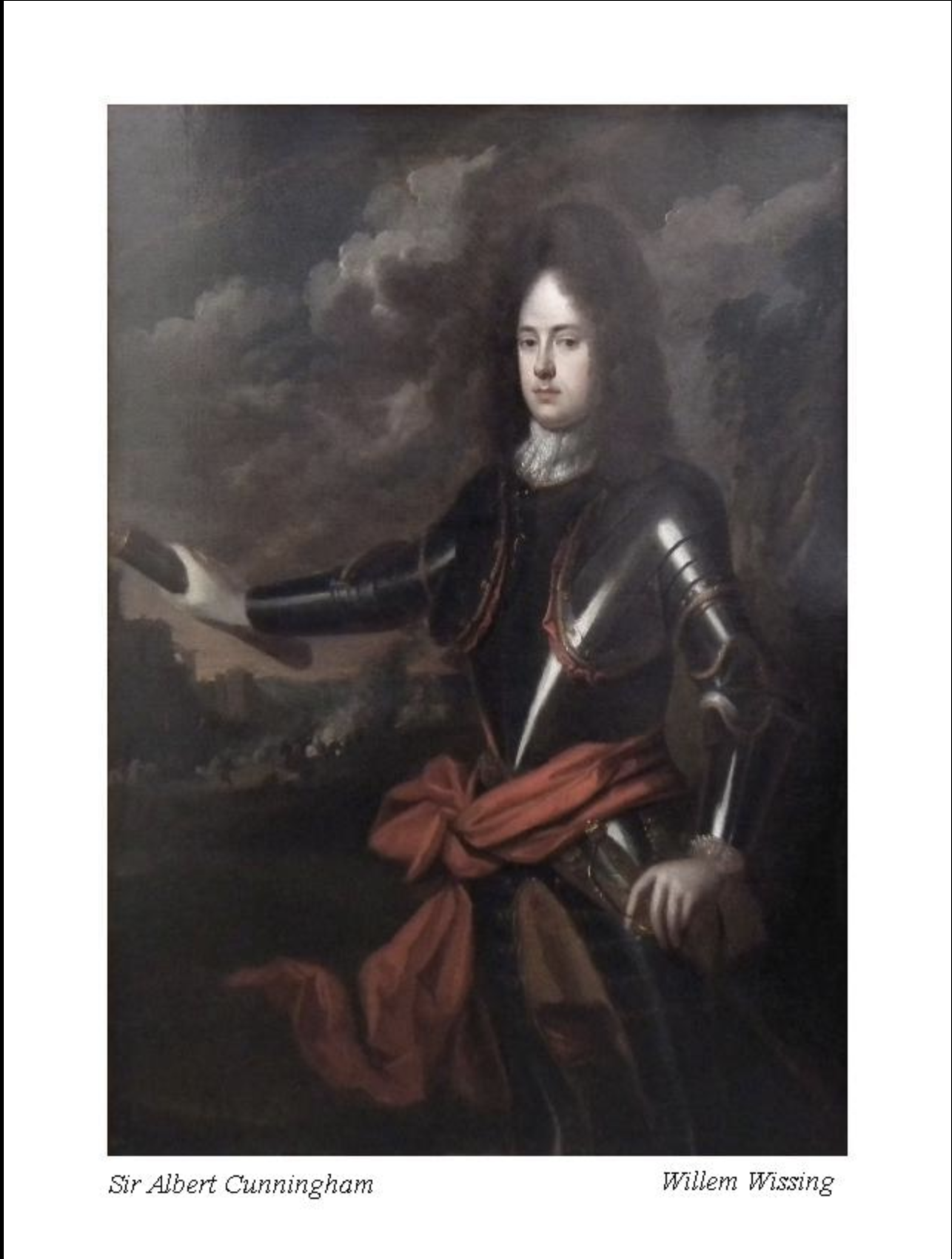

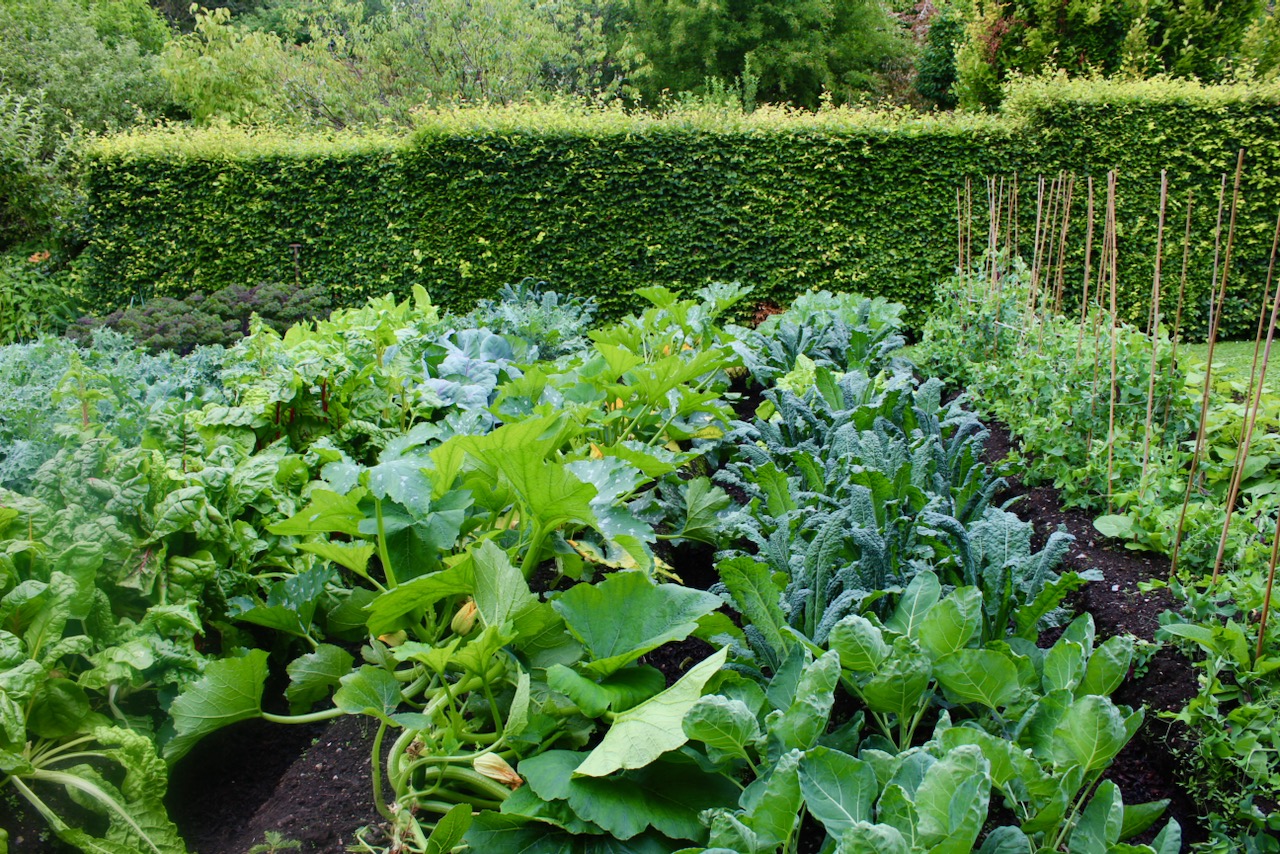


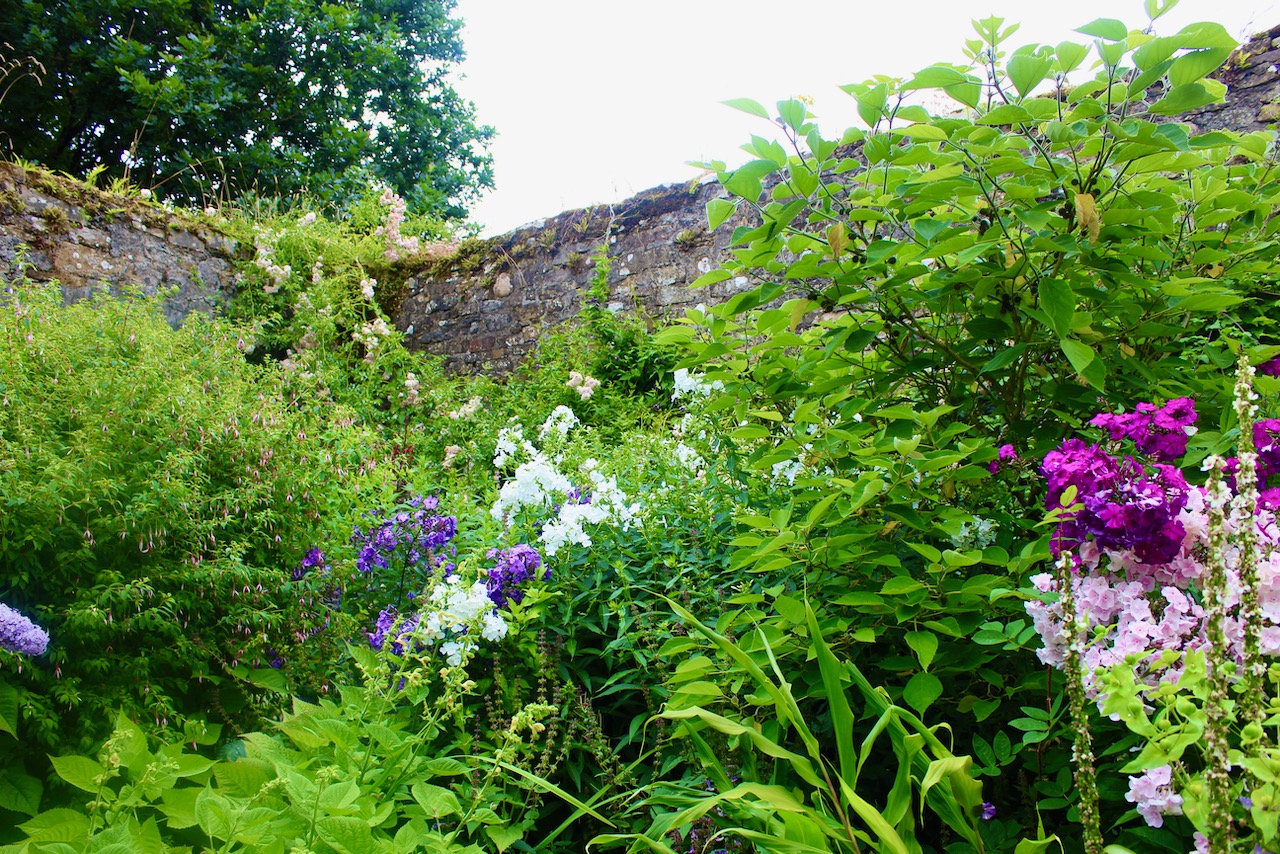
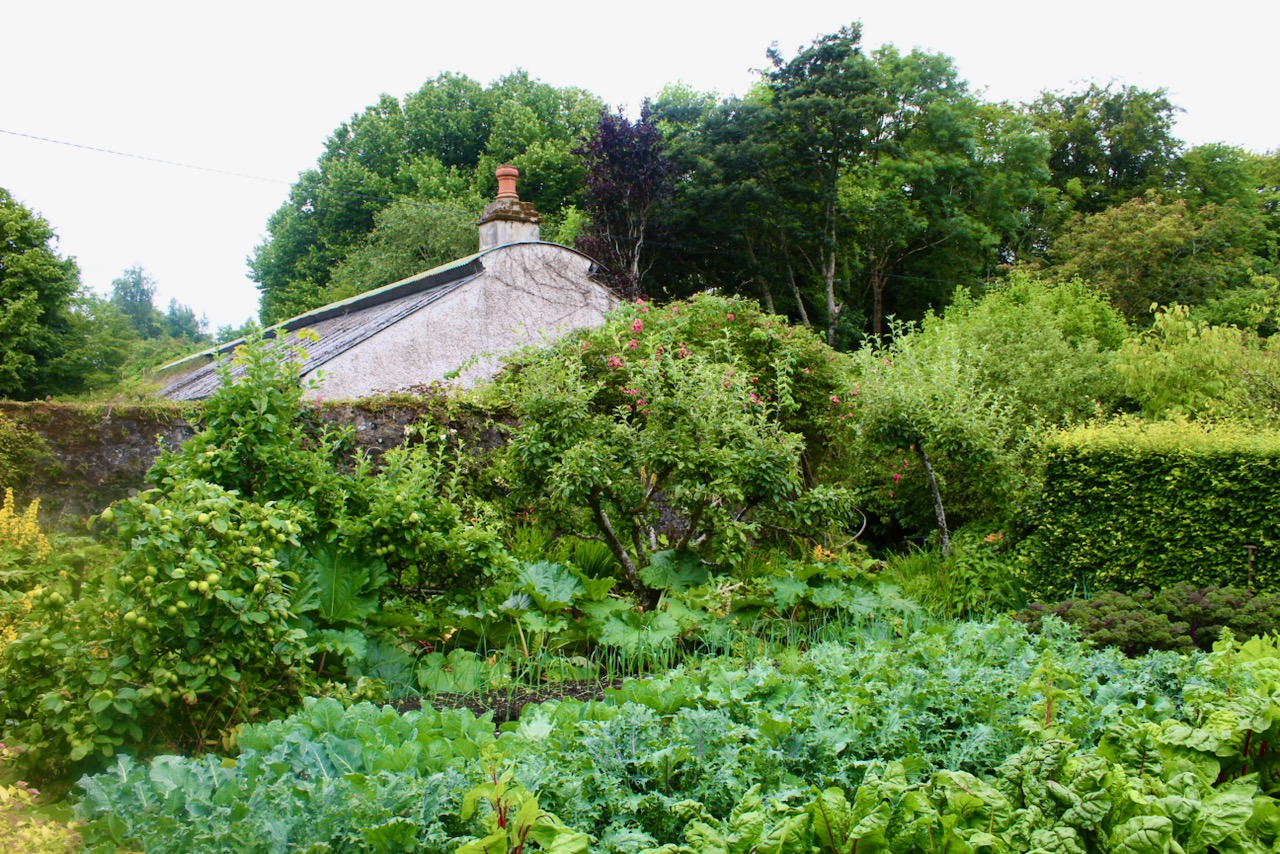

 Irish Historic Houses


