Open dates in 2026: Jan 23-25, Feb 13-15, Mar 7-8, 21-22, Apr 18-19, 25-26, May 16-17, June 6-7, 20-21, 27-28, July 4-5, 11-12, 18-19, Aug 1-23, Sept 28-30, Oct 1-4, 31, Nov 1, 2pm-6pm
Fee: Free
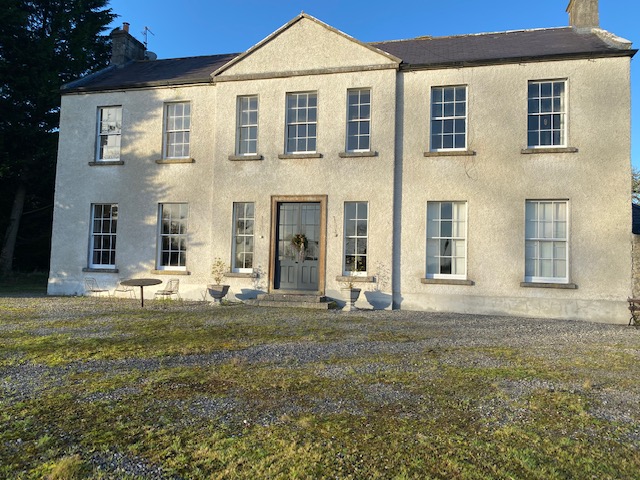
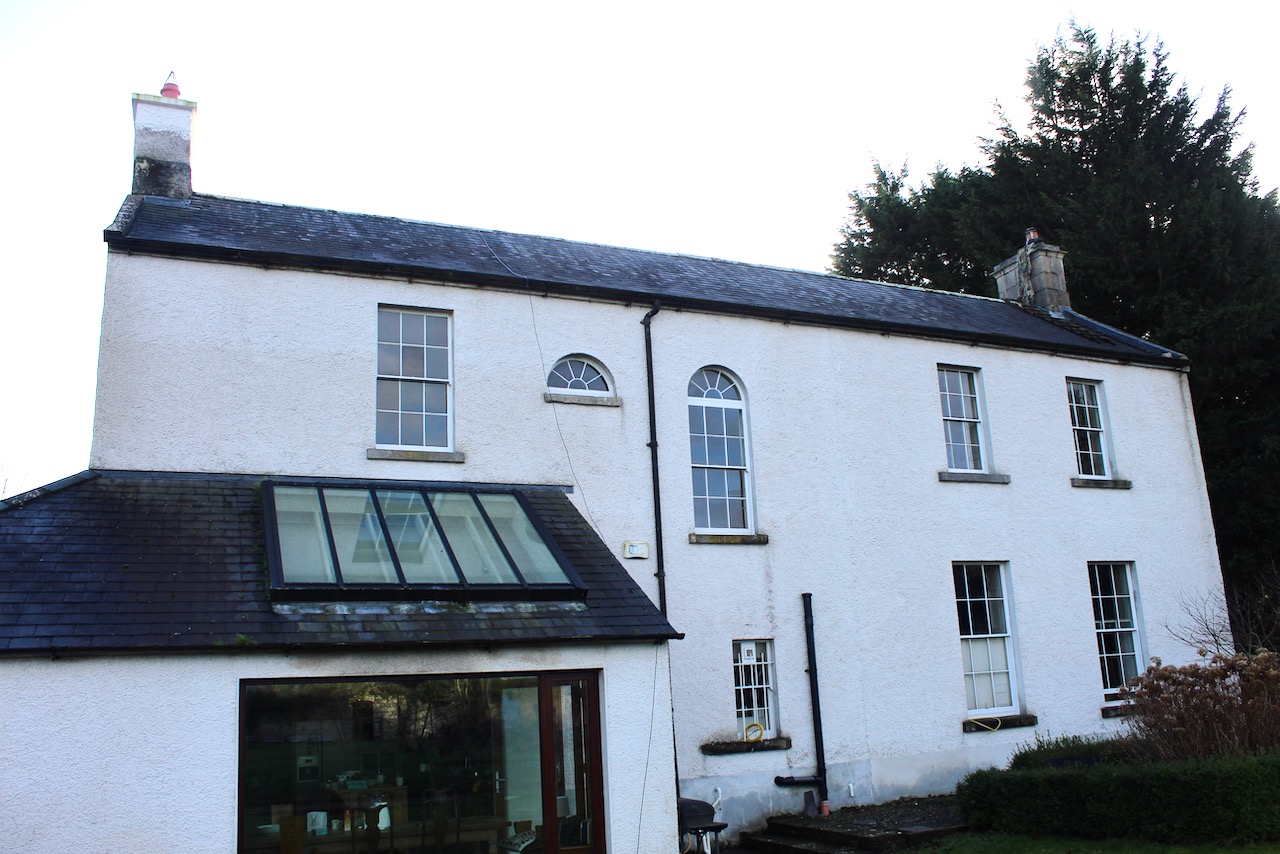
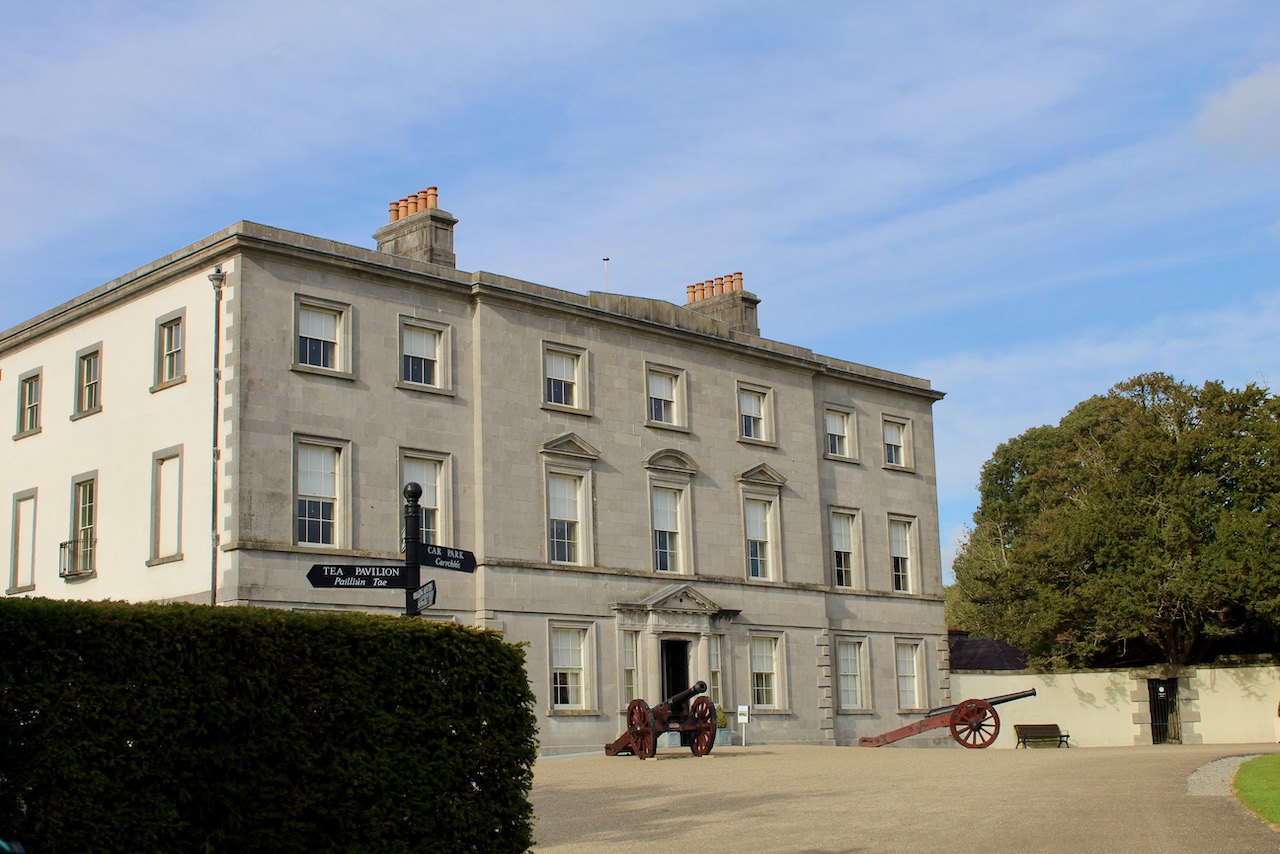
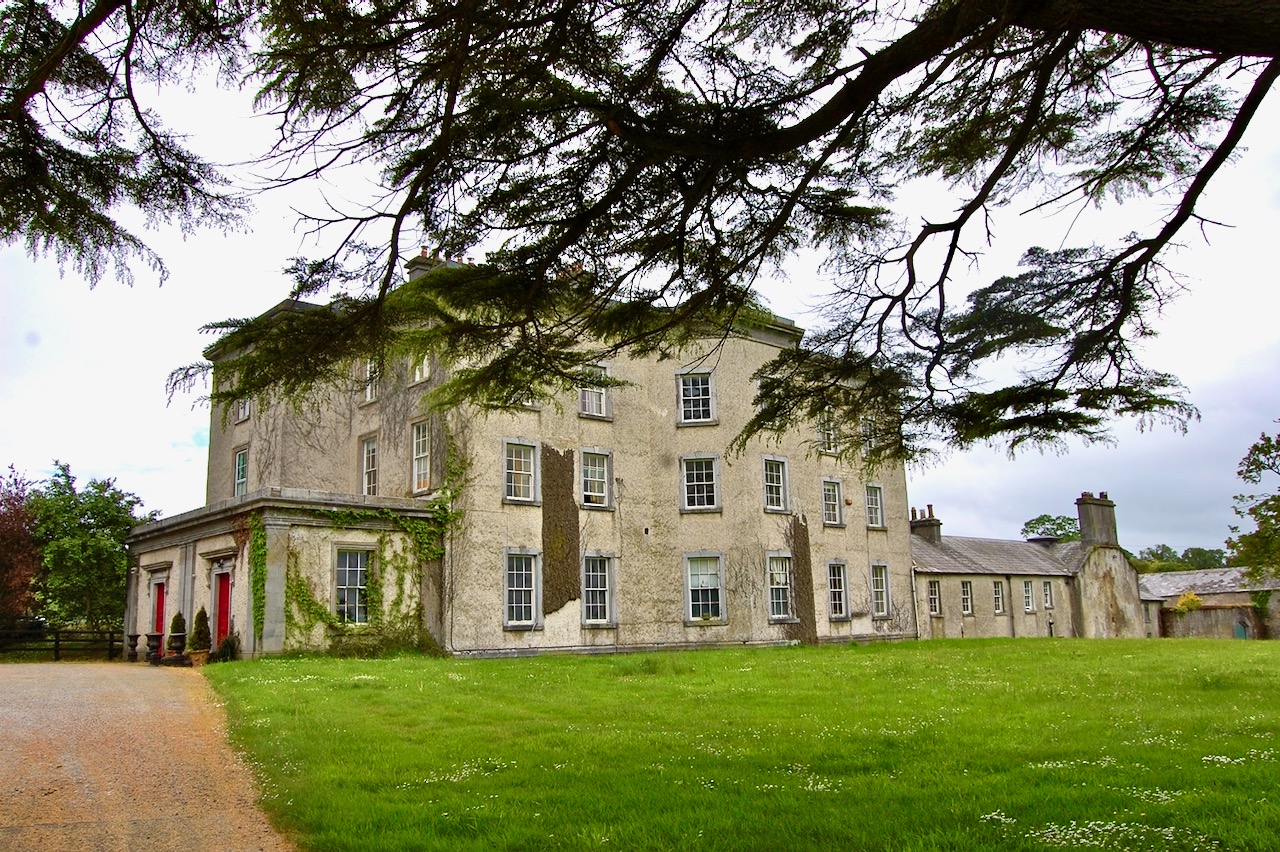
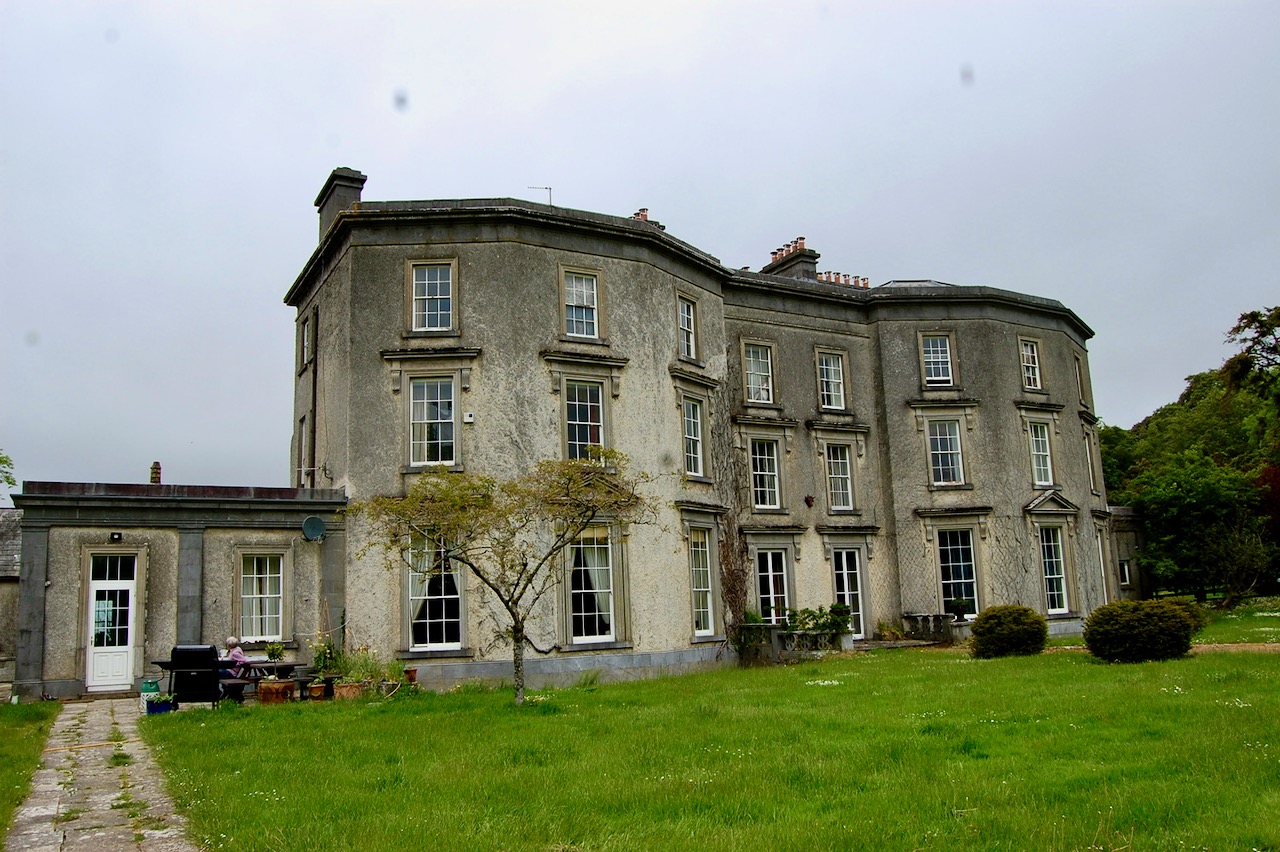
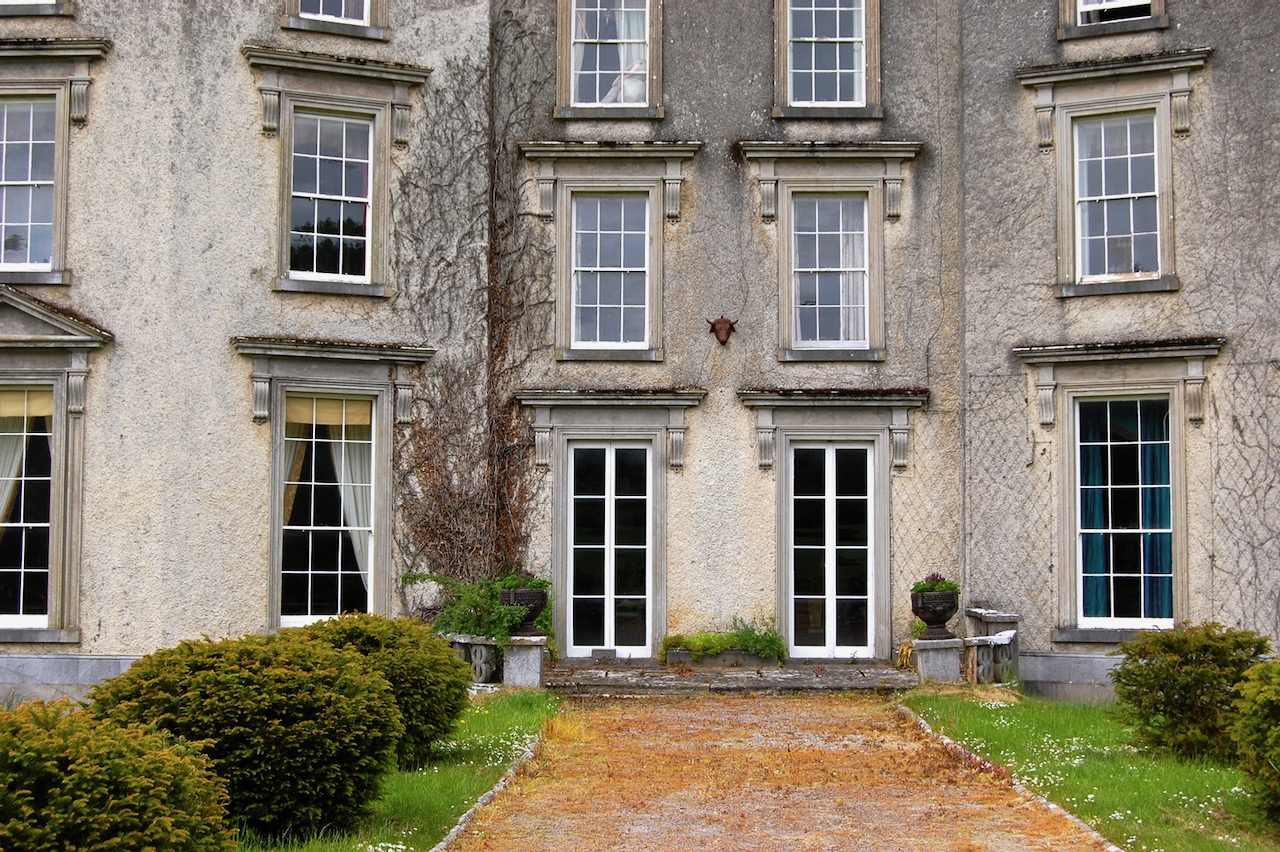
Springfield House, photograph courtesy of Muireann Noonan.
Owners Muireann and Tony, who purchased Springfield in 2005, were kind enough to let us visit their home in January 2022, when Covid was still going strong. I was intrigued to see it as the National Inventory of Architectural Heritage dates its building to around 1750 [1]!
It was not the “big house” of an estate but is related to the nearby Mount Lucas estate, whose house, unfortunately, is there no longer.
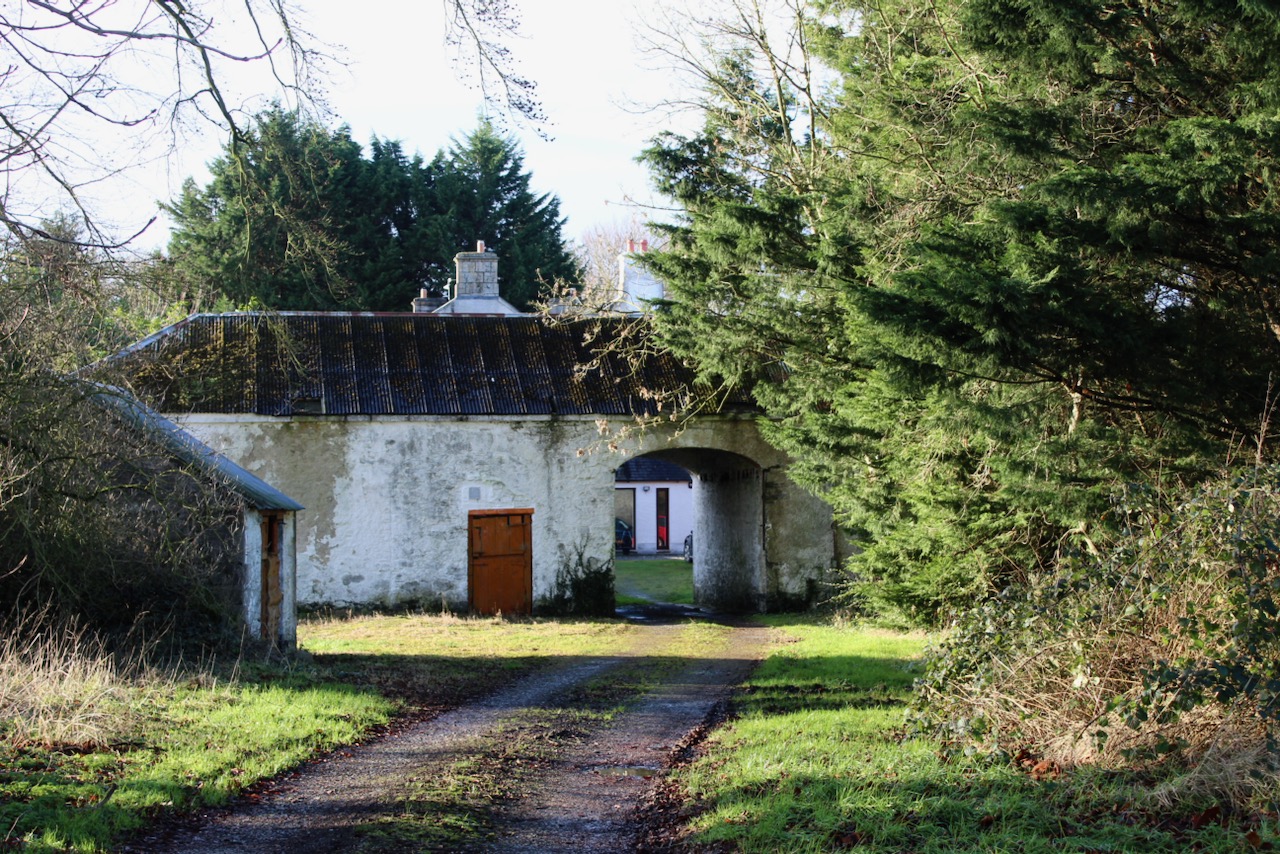
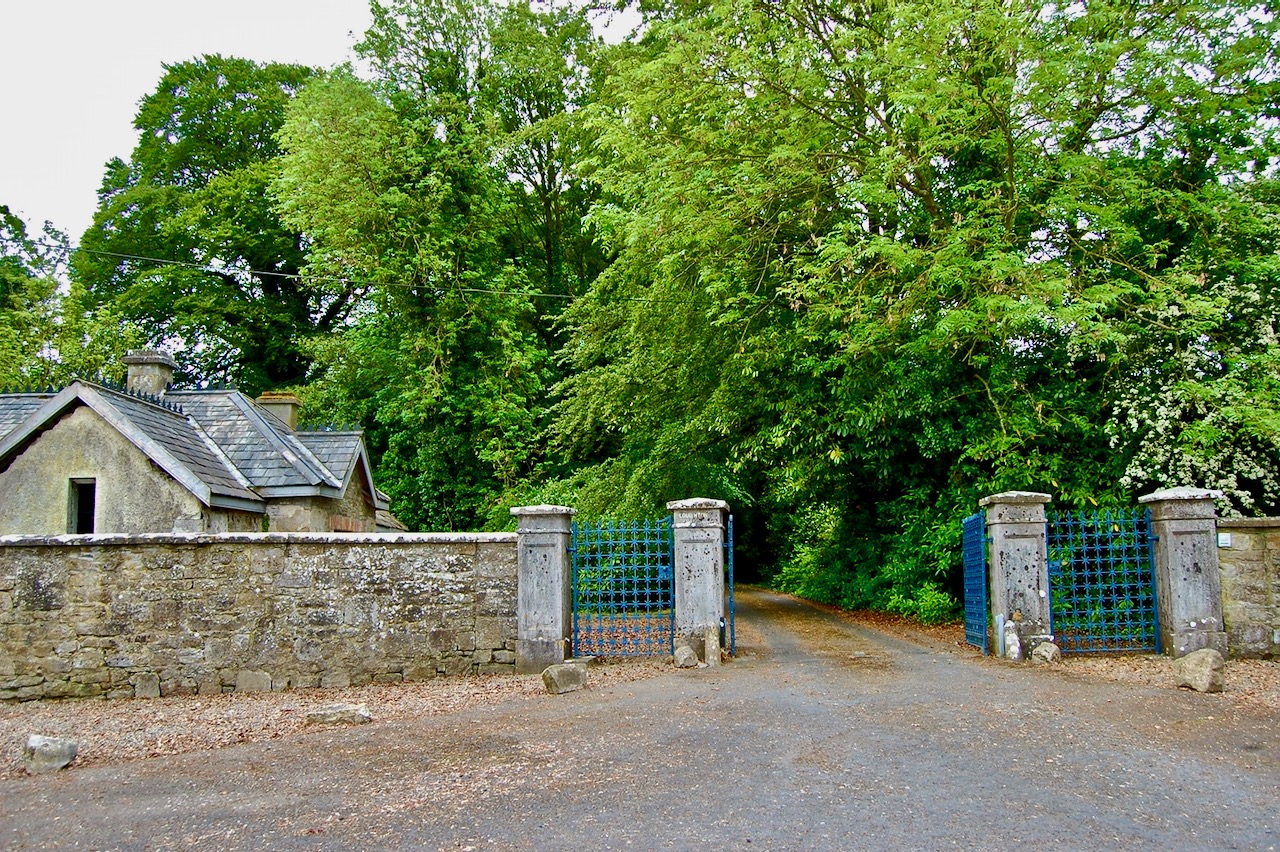
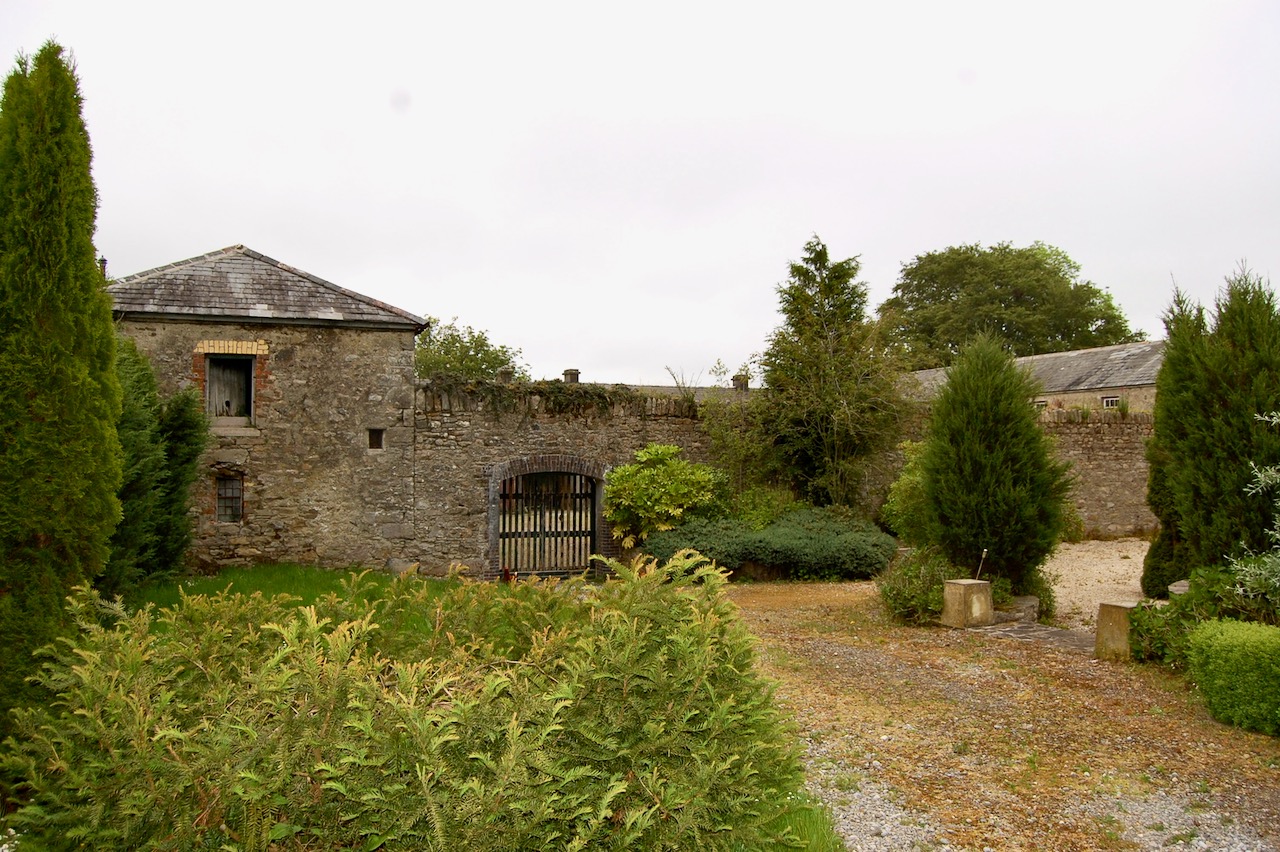
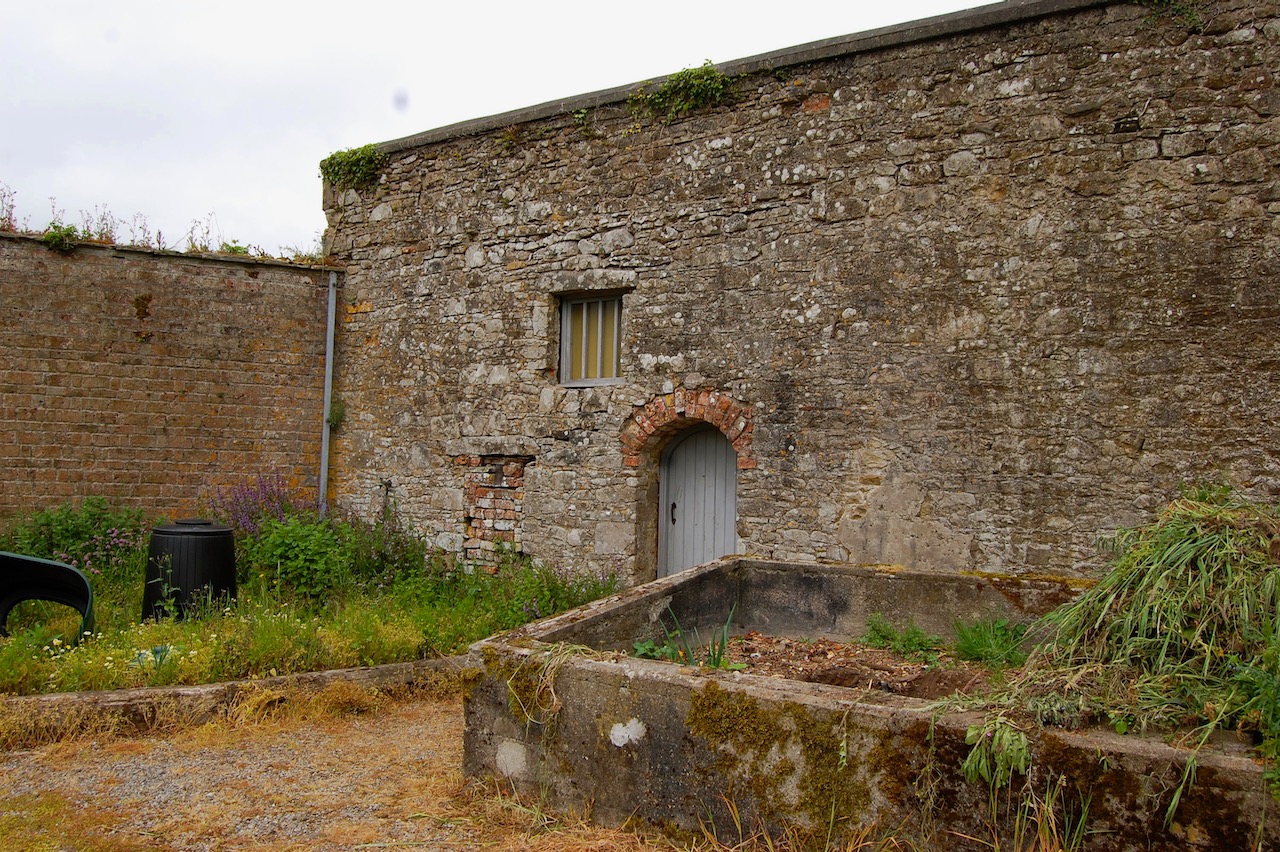
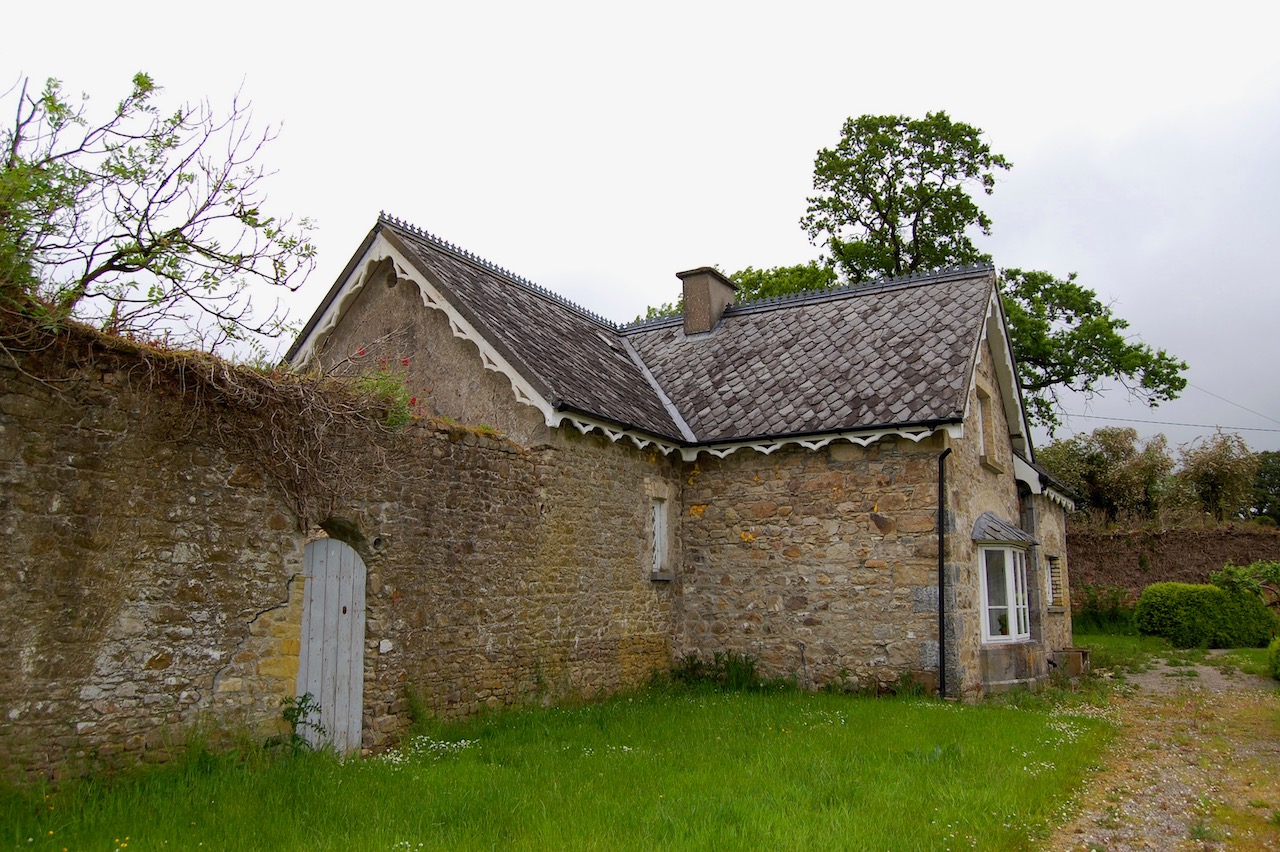
The main entrance is closed off so one enters into the yard through some outbuildings, with a lovely old arch. This leads into a yard and the door into the kitchen area.
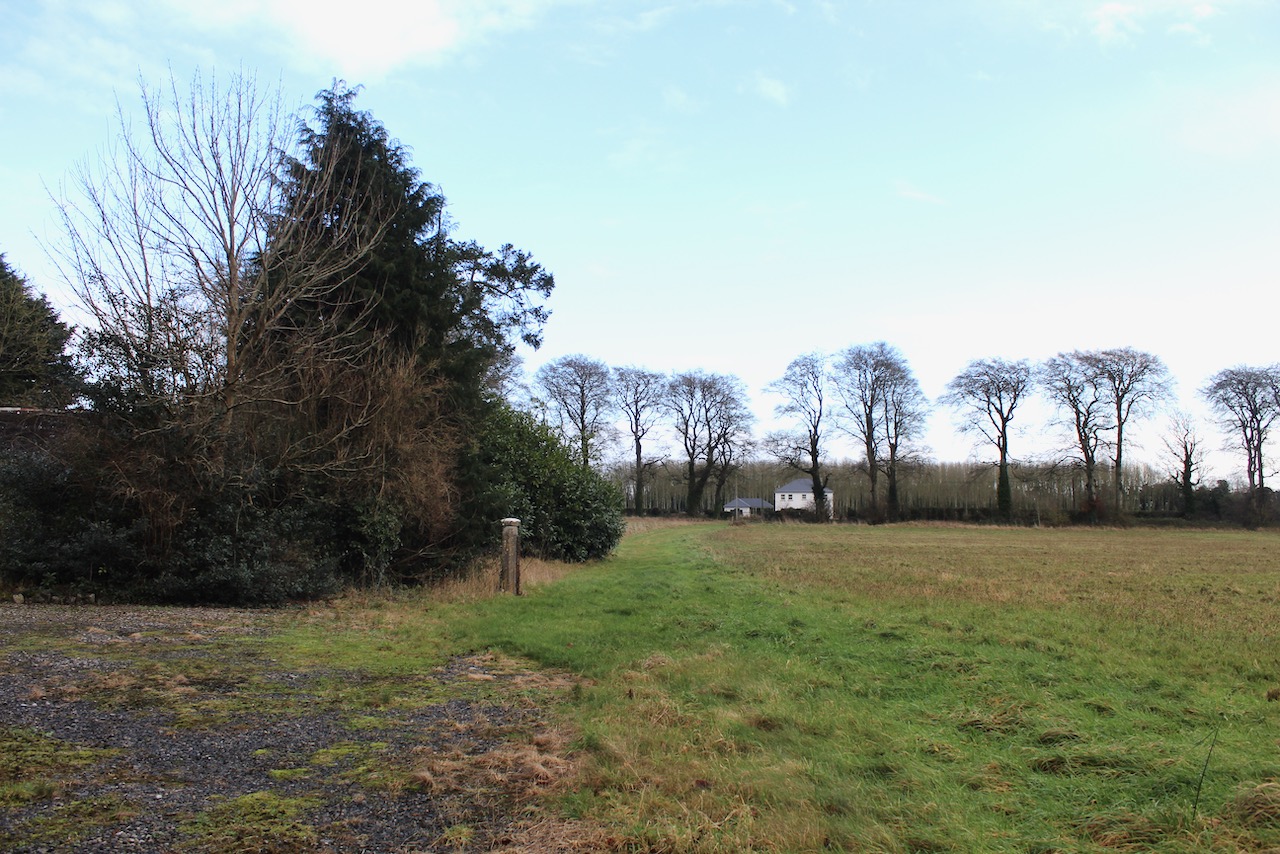
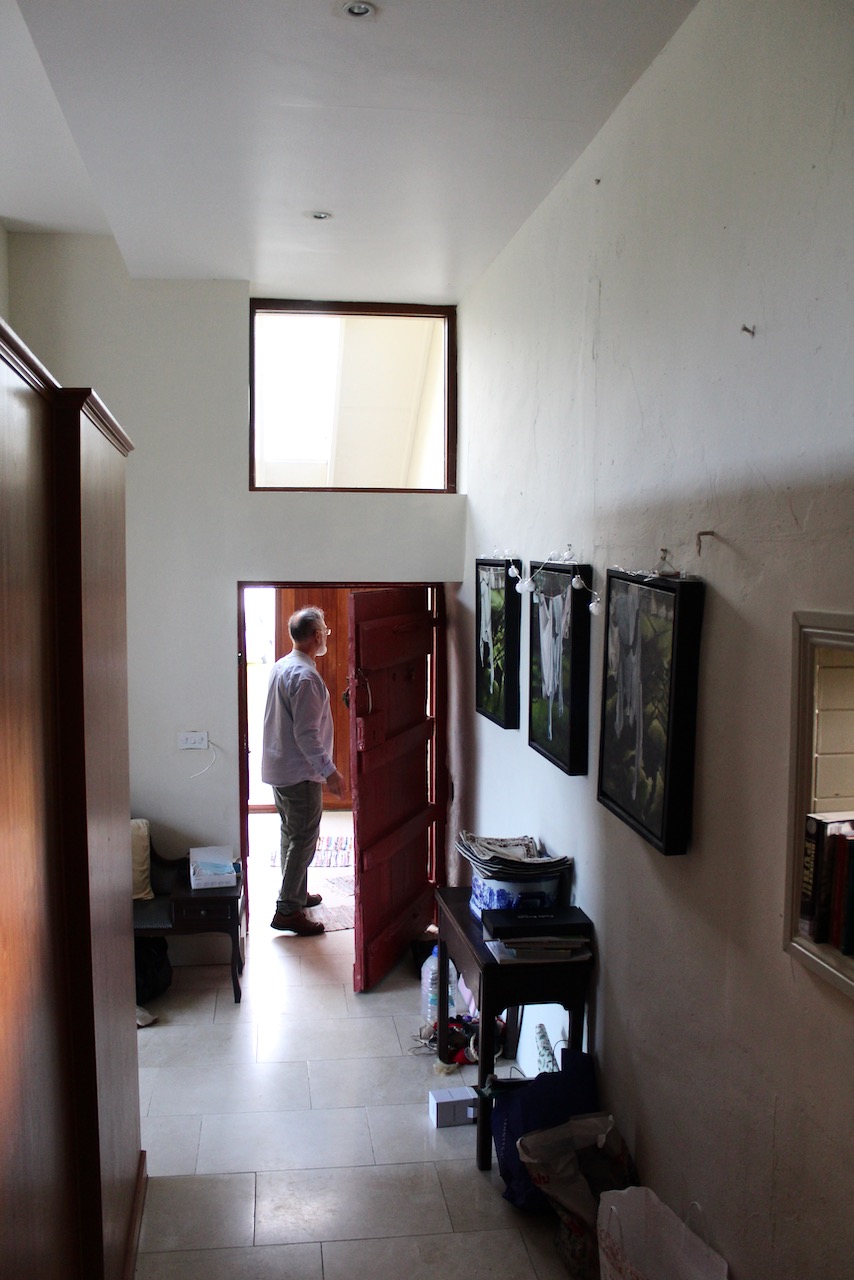
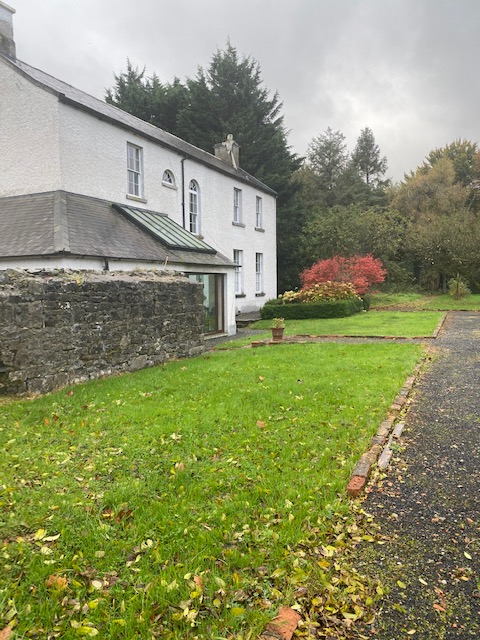
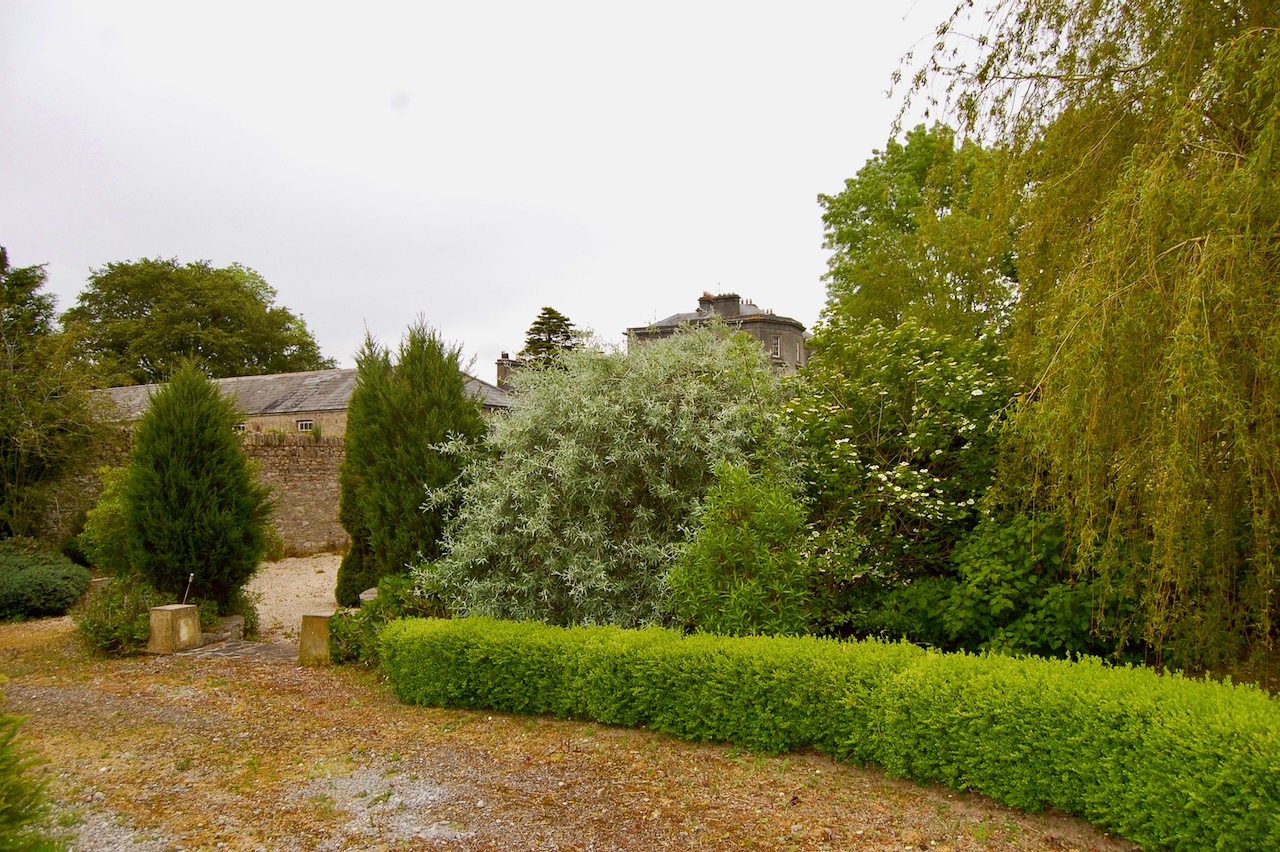
The house is of seven bays and two storeys, with outbuildings to the east and with the remains of a walled garden to the north. We walked through the house from the kitchen to go out the front door, which is no longer used as the front door as the old drive to the house is no longer used.
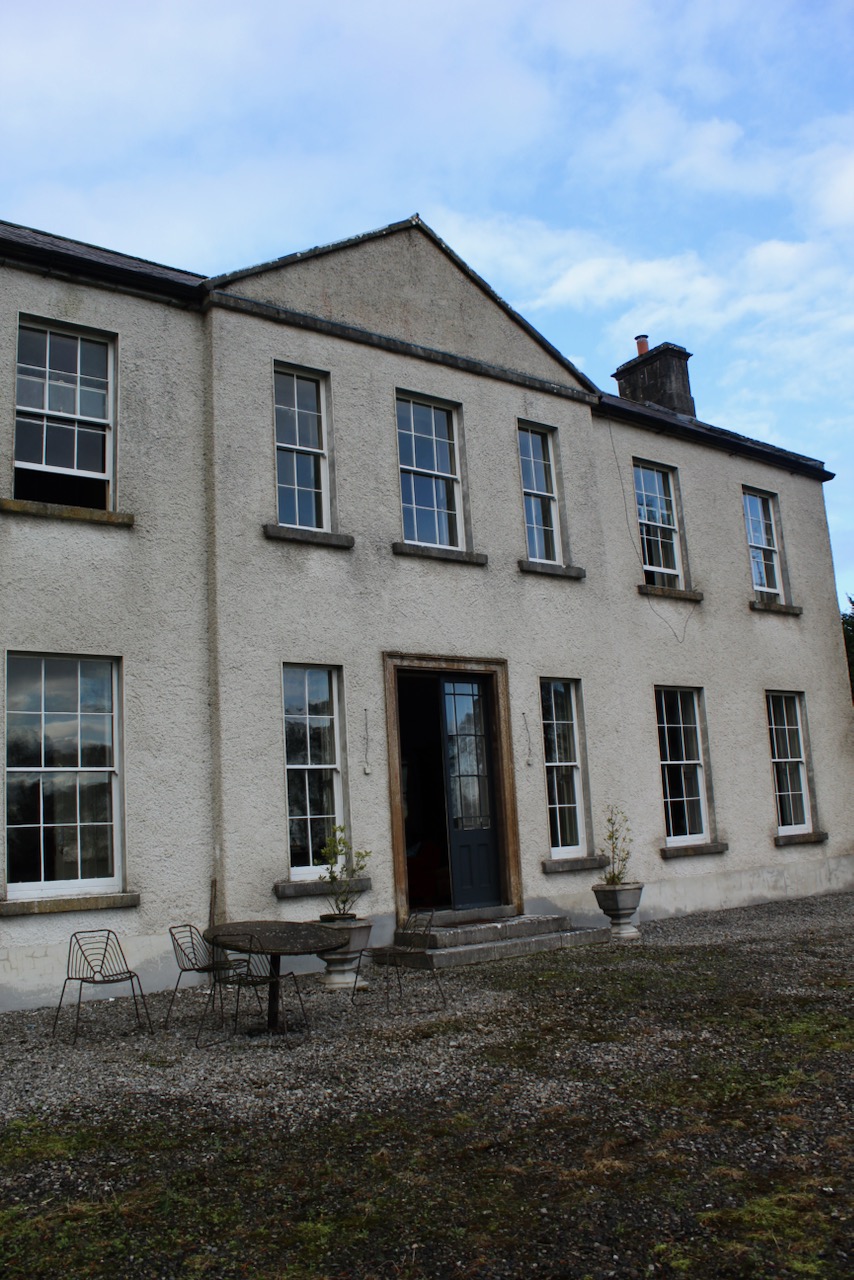
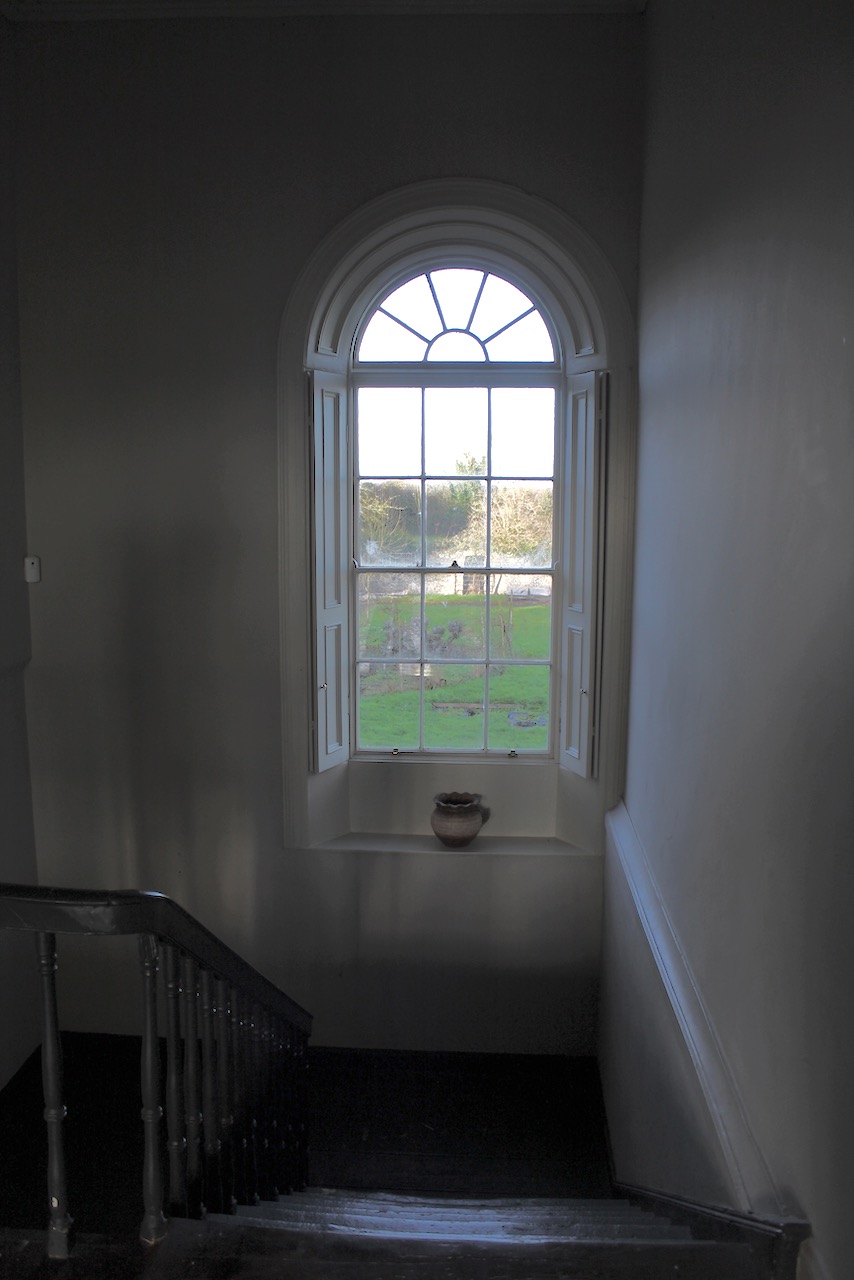
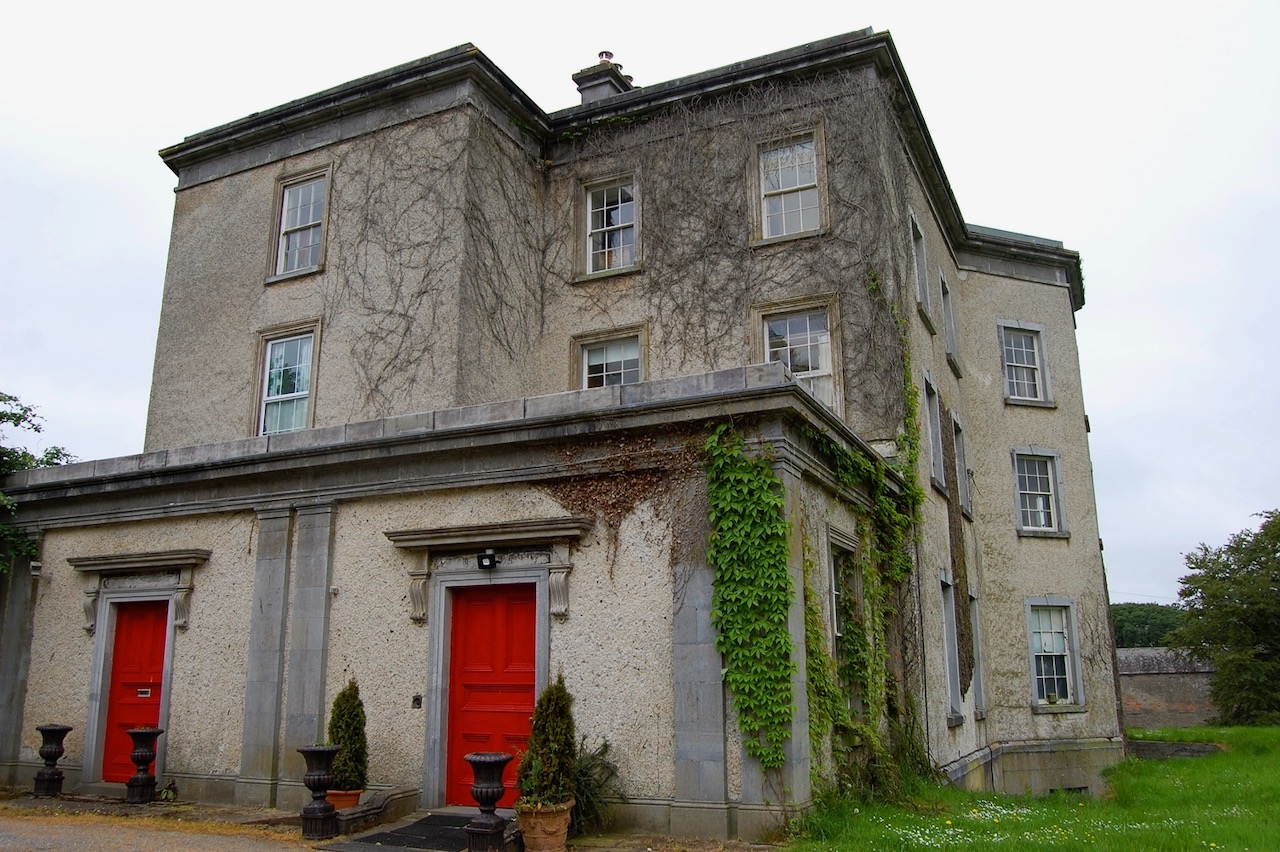
The house has a pedimented breakfront of three bays wide, containing the front door flanked by two narrow windows. The timber sash windows have stone sills. The garden front has a round-headed window that lights the staircase, and next to that, a Diocletian window.
Springfield House, photograph courtesy of Muireann Noonan.
The National Inventory tells us that this country house, situated within extensive grounds, was built for the third son of the Lucas family who lived at the nearby Mount Lucas estate. Andrew Tierney suggests the house was built or rebuilt in 1764 by Samuel Lucas of Mount Lucas (1.2km sw, demolished) for his son, Samuel. [2]
There is an entry in Burke’s Genealogical and Heraldic Dictionary of the Landed Gentry of Great Britain and Ireland about the Lucas family of Mount Lucas. Benjamin Lucas (1704-1774), a Lieutenant Colonel in the army received sometime in the seventeenth century extensive grants of land in the counties of Clare, Limerick, Tipperary and King’s County (Offaly). He was father of Nathaniel Lucas, who married Eleanor Cooke of Cookesborough, County Westmeath. They had several daughters and six sons: Samuel, who died unmarried, John, Samuel, Robert, Cooke and Richard. The second son, John, inherited Mount Lucas. The first Samuel must have died and the next, third, son, must be Samuel, who built the house for his son Samuel.
The Lucas family lived at Mount Lucas until 1922, when they moved following an attack on the house. At that time Mount Lucas had been occupied by Deborah Elizabeth Ball, daughter of Benjamin Manly Ball and the Mount Lucas heiress Elizabeth Lucas. Deborah lived in Mount Lucas along with her aunt, Eleanor Lucas. The 1922 attack was traumatic, and Deborah was stripped and tied to a tree. [3]
You can read more about Mount Lucas in the book Mount Lucas a Quiet Hamlet by Kenneth Smyth and Damien Smyth. [4]
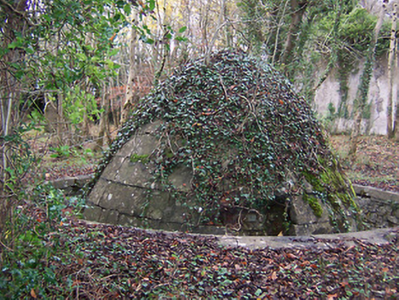
I could not find much information about the Cookes of Cookesborough, County Westmeath, except for stories about a later Cooke of Cookesborough, the eccentric Adolphus (1792-1876) who believed in reincarnation and that his father or grandfather had come back to life as a turkey-cock, or that his father might come back as a bee which explains the beehive structure of Adolphus’s father’s tomb, built around 1835. [5] Adolphus was the illegitimate son of Robert Cooke of Cookesborough, and since Robert’s sons predeceased him, Adolphus inherited Cookesborough.
Photograph from the National Inventory of Architectural Heritage of Robert Cooke’s Mausoleum, located within the grounds of St. John the Baptist’s Church of Ireland church in the countryside to the southwest of Delvin.
Adolphus thought he himself might be reincarnated as a fox and had massive fox holes/covert built around his estate of Cookesborough, but also created a mausoleum with fireplace and library for himself for after his death in which, however, the local priest refused to bury him and he was instead interred in the beehive structure. [6]
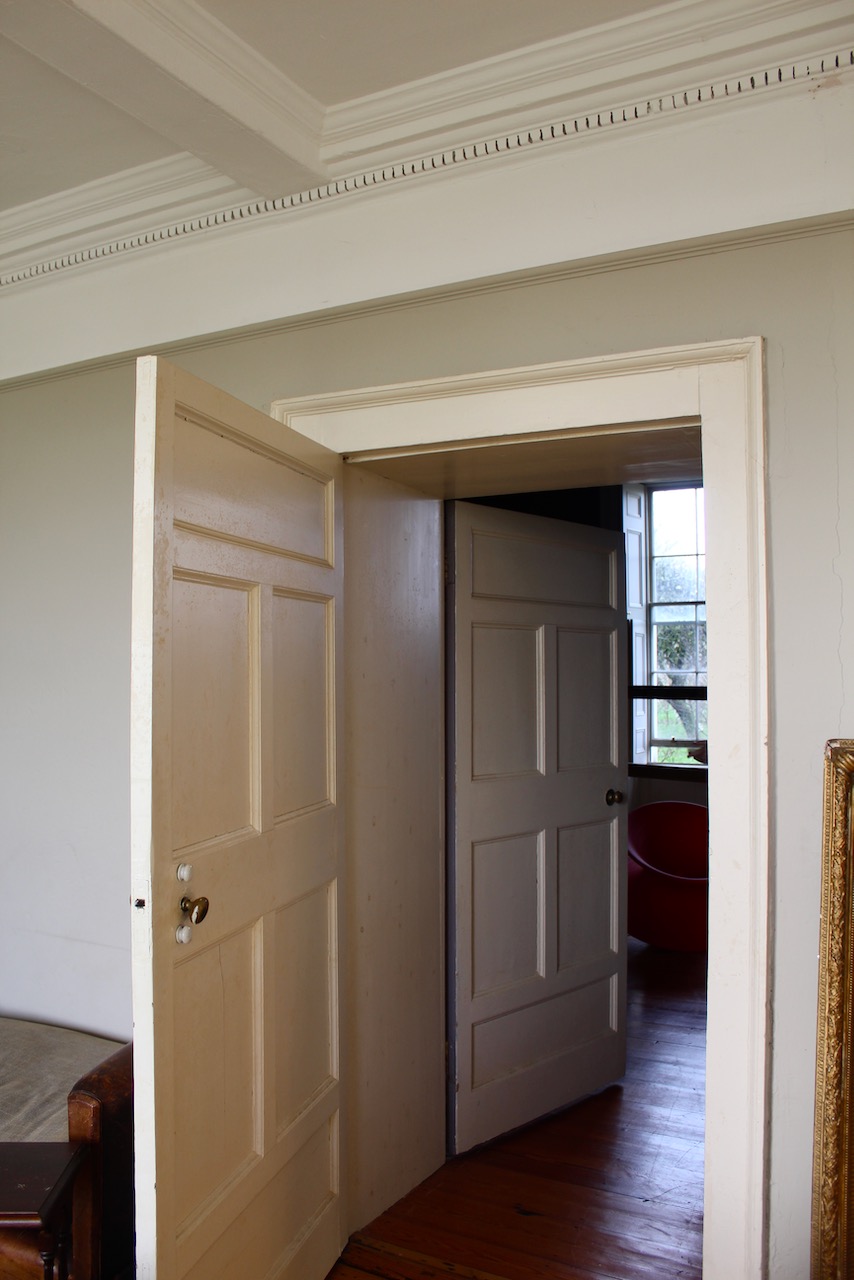
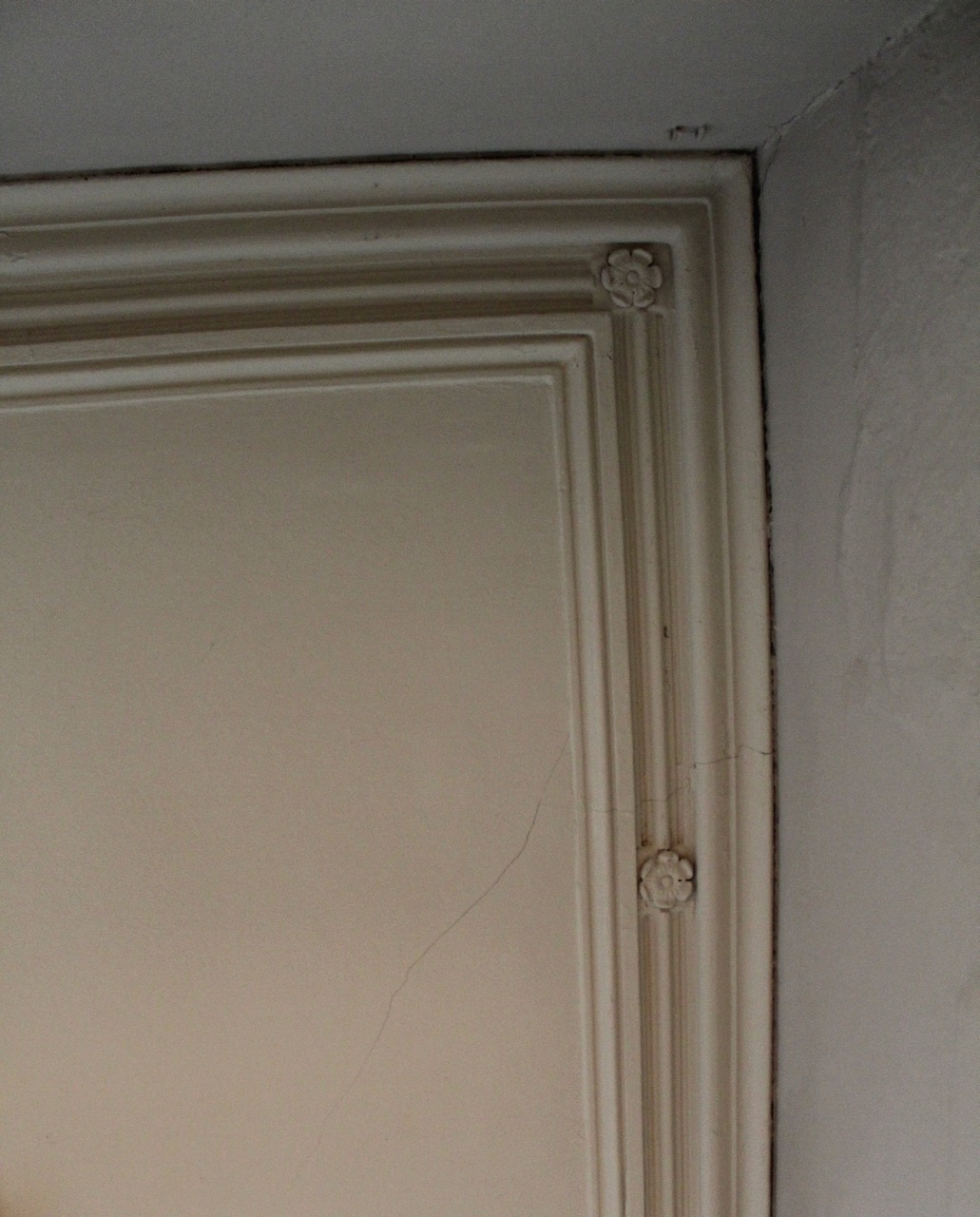
The Springfield website, created by its current owners, tells us that the house was extensively modernised circa 1857 and all the joinery in the principal rooms date from this time, as do the chimneys and stone coping to gables. Andrew Tierney tells us that the house changed hands in 1857. [see 2] The western bays of the rear pile also appear to be an addition of this date. [7] Tony and Muireann showed us different parts of the house which led them to their conclusions. The house had been largely unaltered since the 1857 renovations until the current owners, who have undertaken considerable sensitive renovation and updating. The work included applying new lime render to the walls which were crumbling, and fixing the roof, and also the space under the house. They also lined one chimney – the other hasn’t been done yet as it is filled with a bees nest! – and renovated or replaced timber flooring and modernised and installed new bathrooms.
The house is “double pile” which means that it is two rows of rooms thick, each row consisting of two or more rooms. When someone refers to a house as a “pile” this is an architectural term! A “pile” is a row of rooms and is usually used in the term “double pile.” [7]
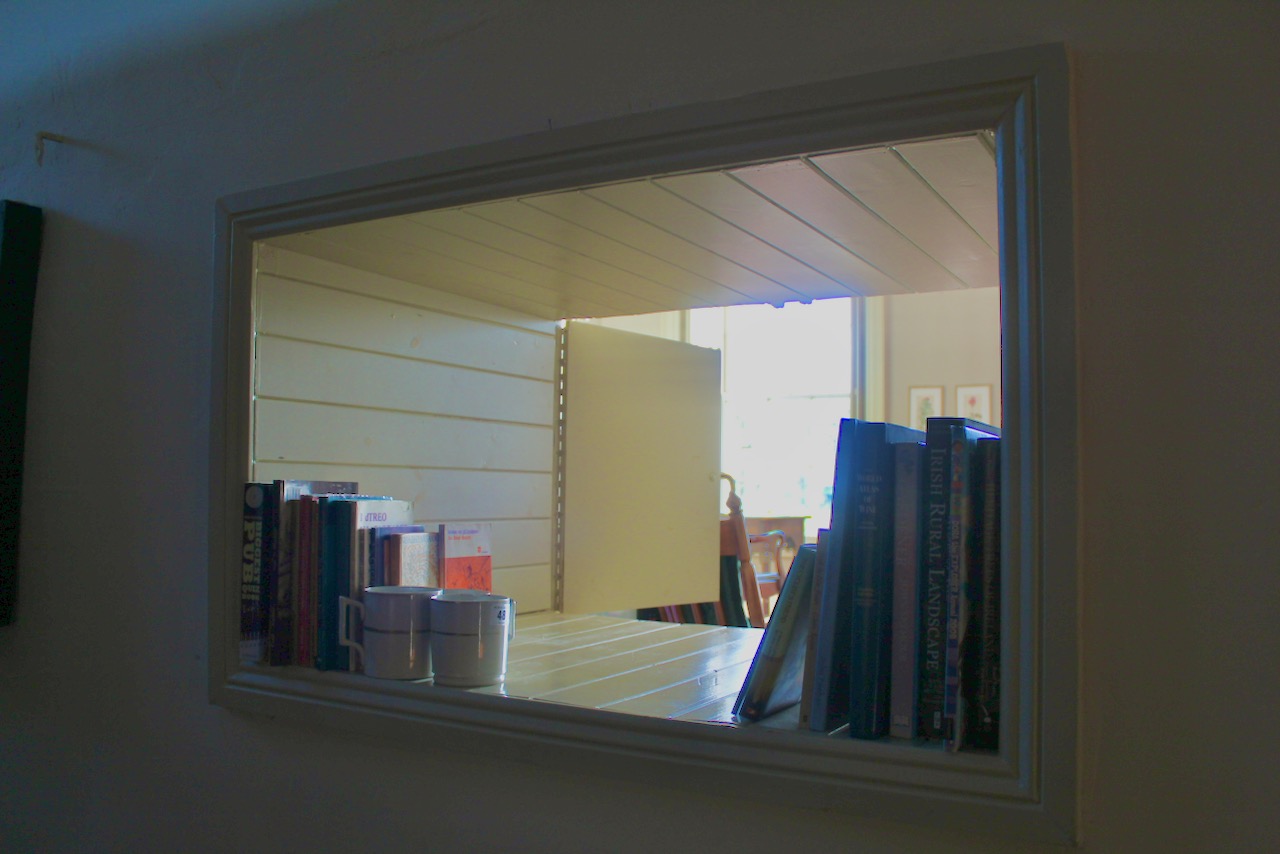
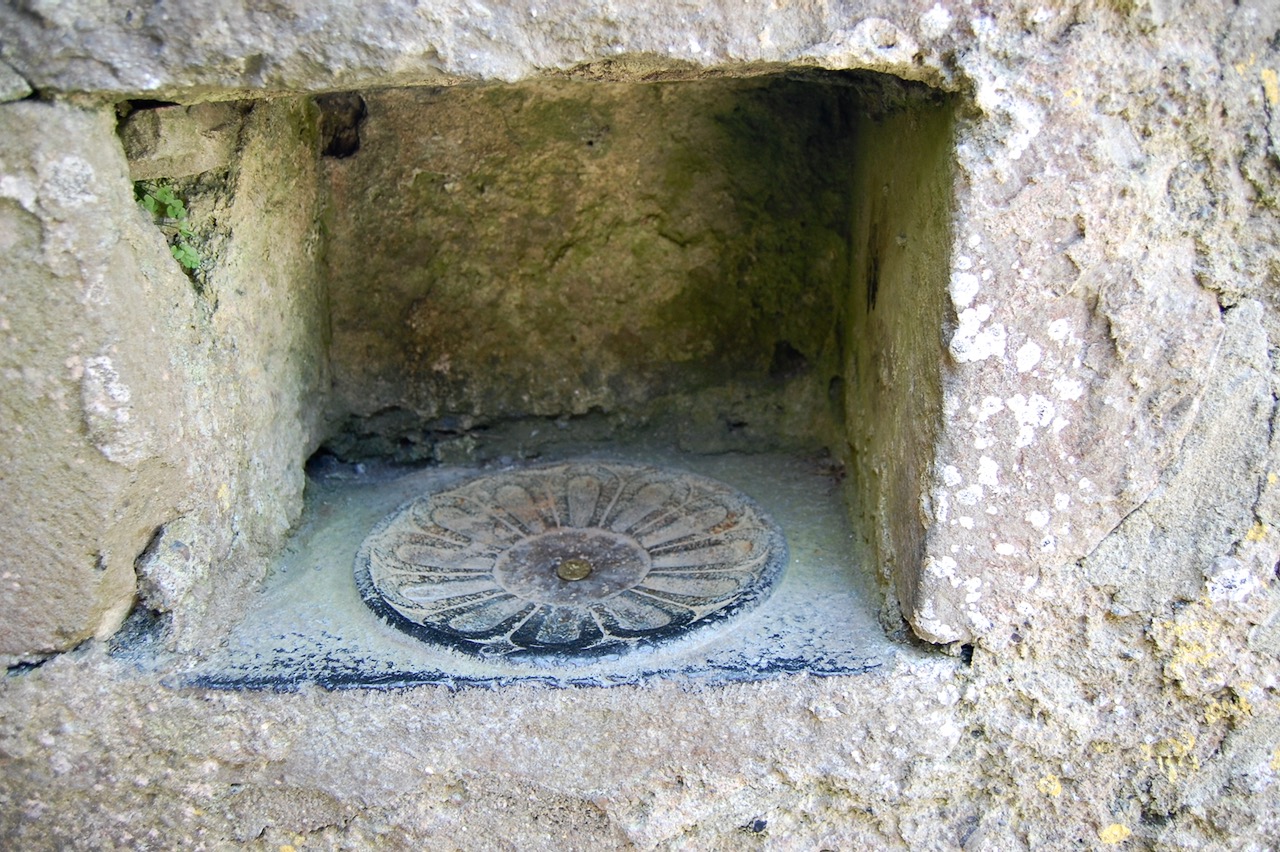
Muireann showed us the width of the wall via a lovely opening, which is part of what led her and Tony to believe that the rear pile was added later than the original build.
This opening can be used to pass dishes from the kitchen into the dining room. At the moment it serves as a lovely nook for books!
The website describes the house:
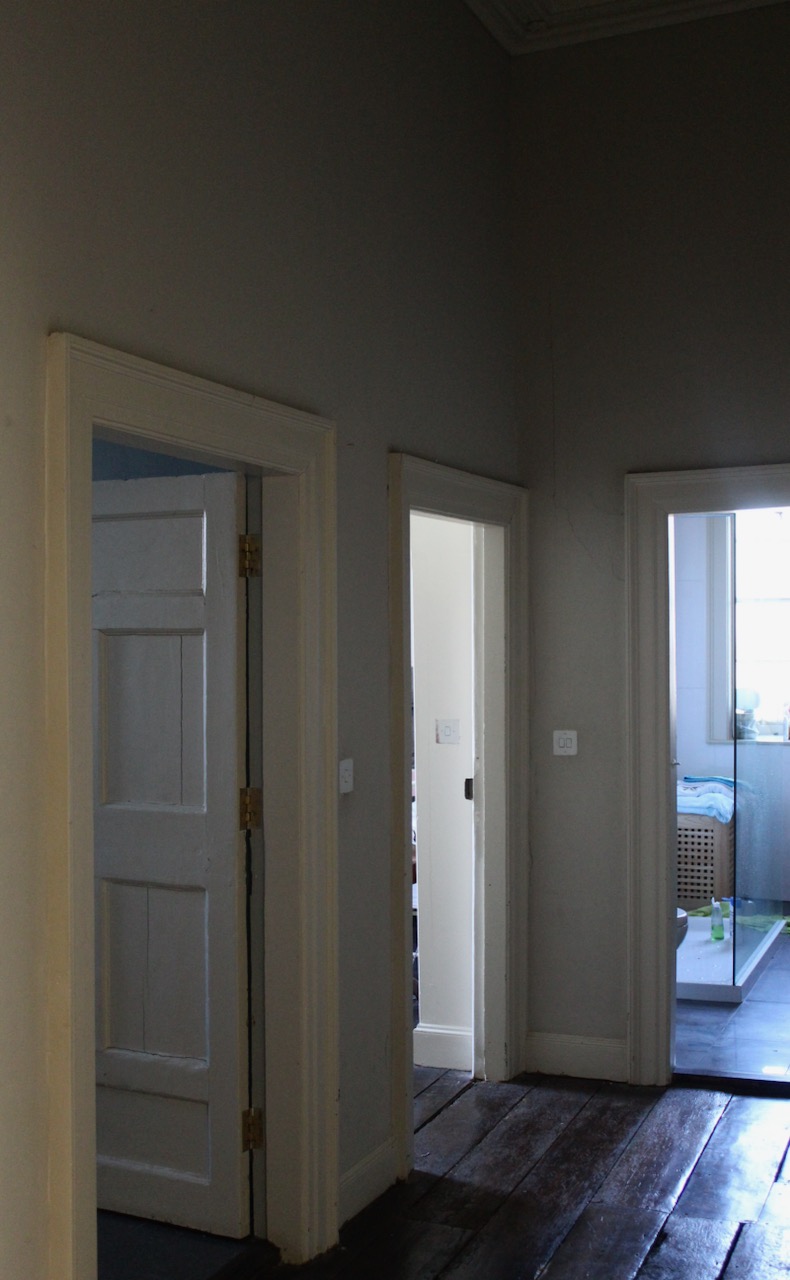
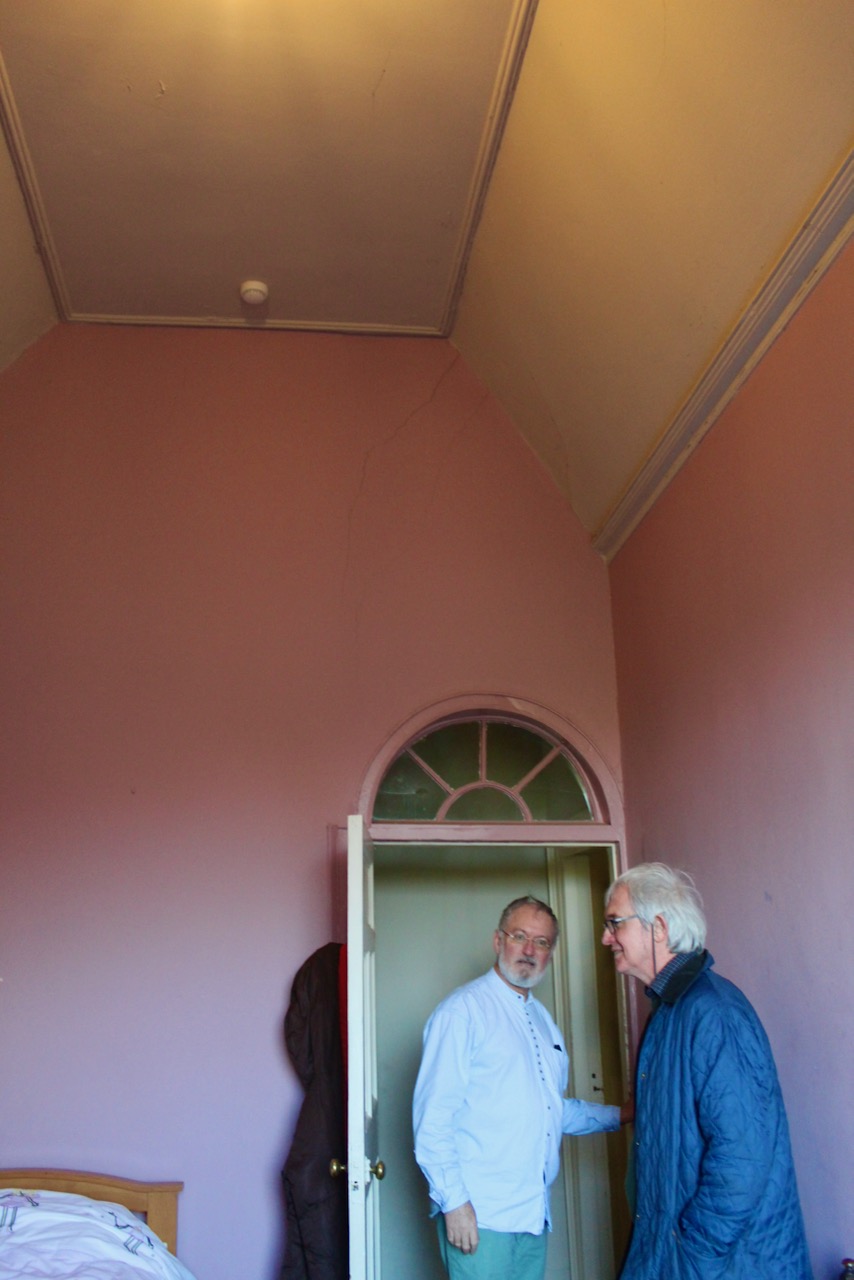
“The plan of the house comprises a central hall flanked by Drawing and Dining Rooms on the front, with above them the Upper Hall leading to the two principal bedrooms. To the rear is the Stair Hall, slightly off centre with a somewhat crude wreathed and ramped staircase with cut brackets and turned spindles. Flanking this there is a narrow bay which probably housed the service stair and in the corner, over the Kitchen, are two bedrooms (one very small) served by a short corridor, and in the 19th century addition, over what may have been a billiards room with a considerably higher ceiling, are again two bedrooms.”
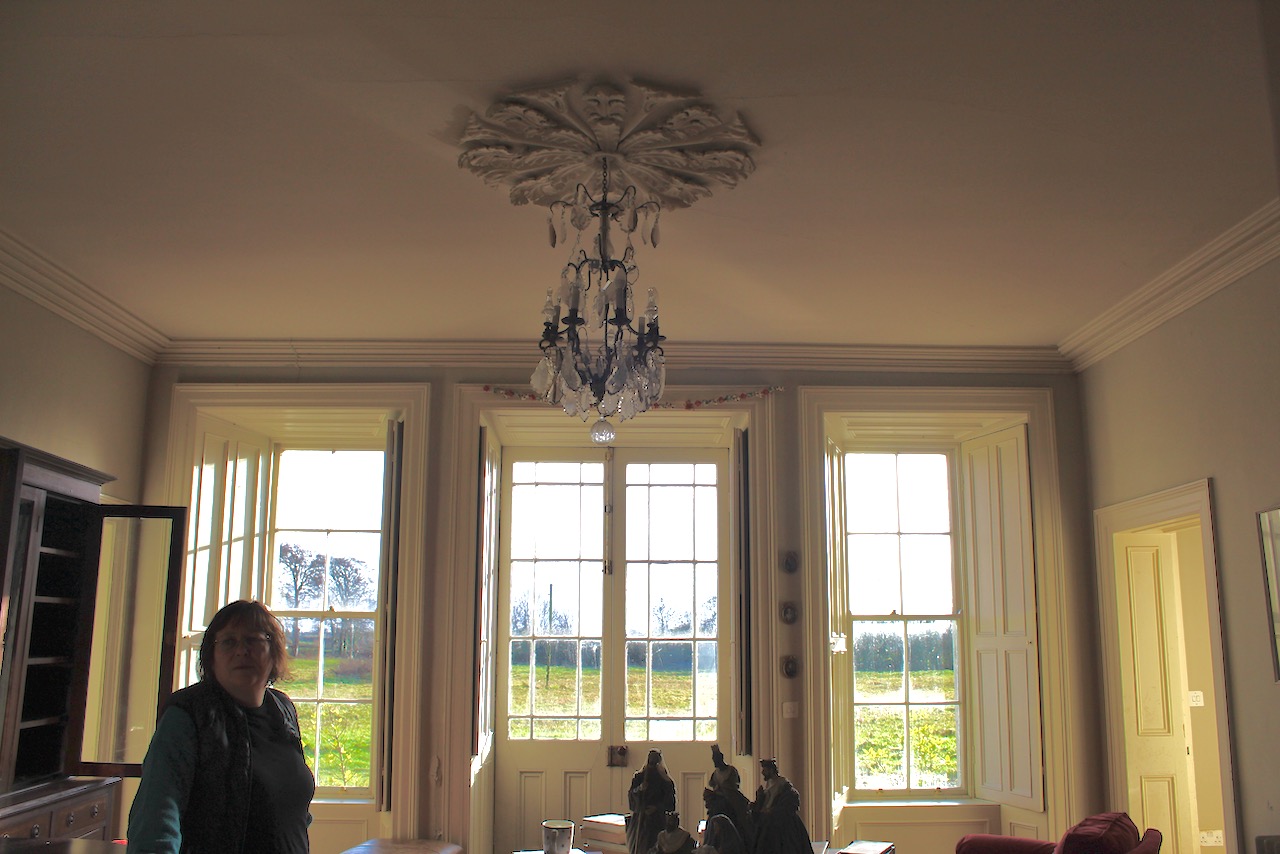
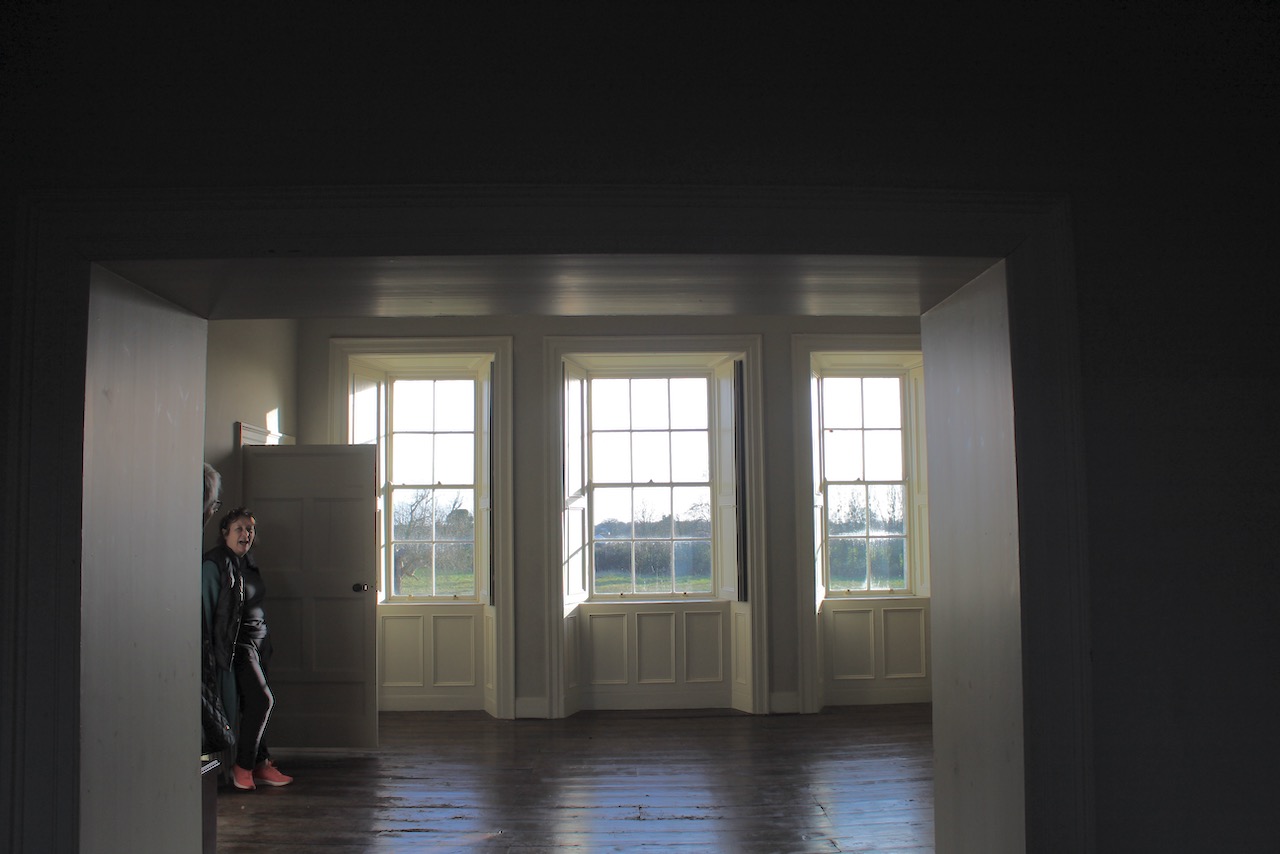
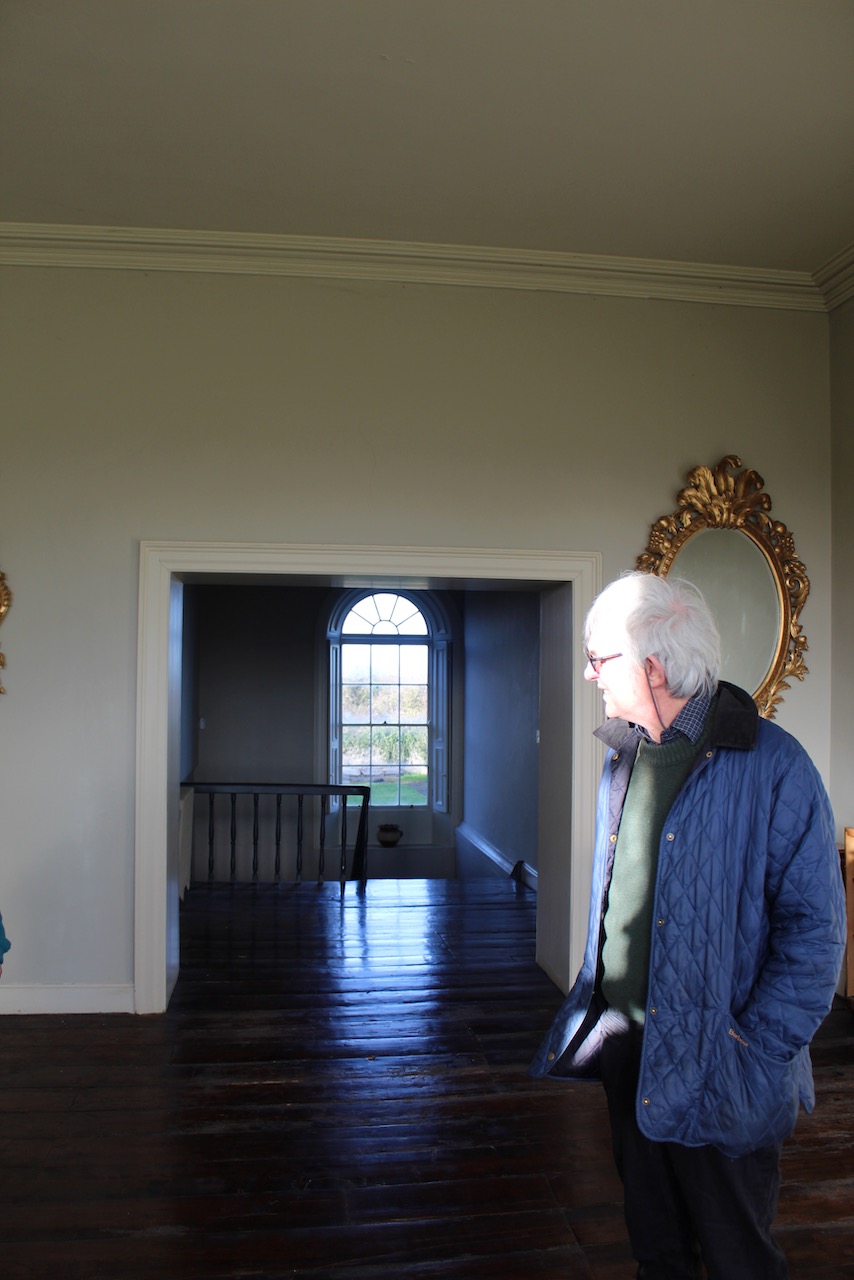
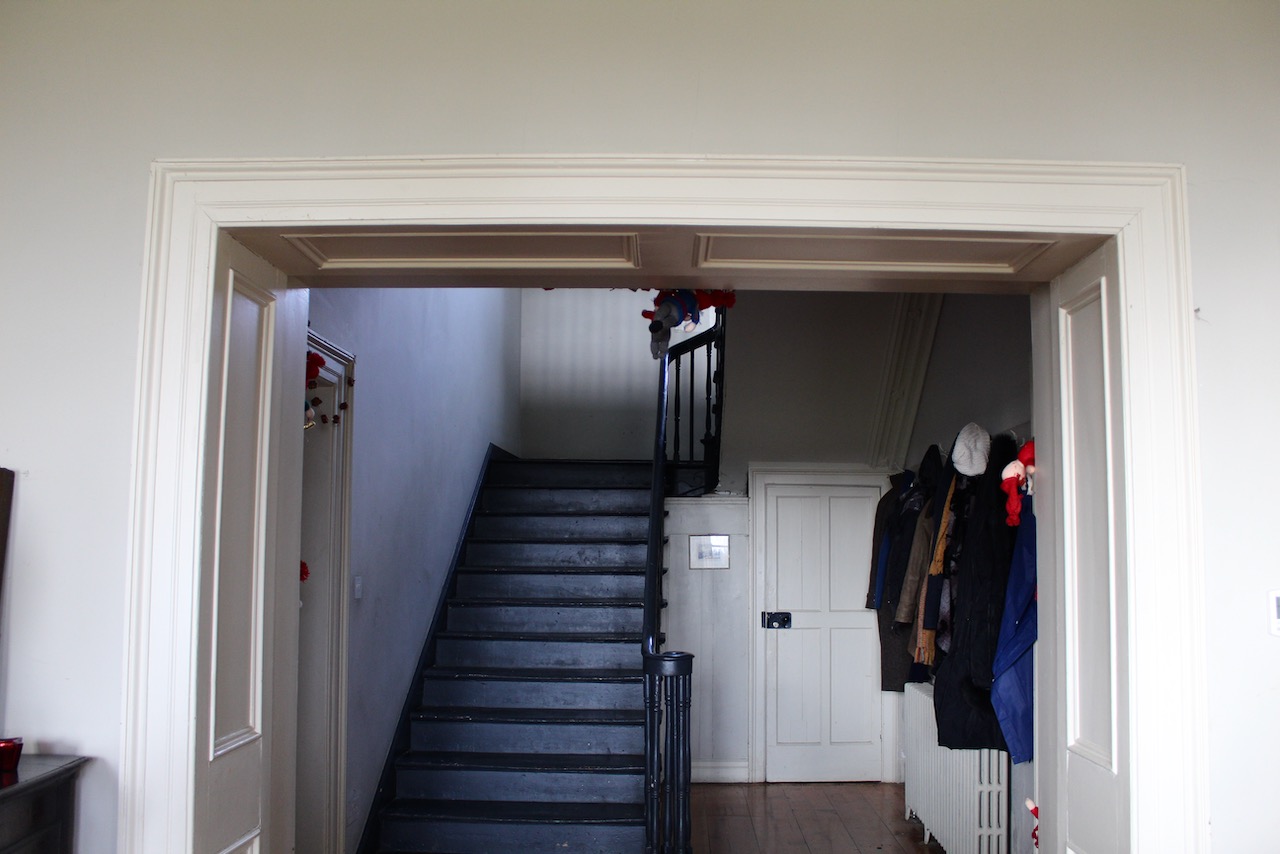
It is such a beautifully solid house and I particularly love the large windows with their shutters, especially in the front hall and upstairs in the Upper Hall. The Upper Hall causes my heart to catch – there is something about the vastness of the space, with its lovely wooden floorboards and current emptiness, which struck a deep chord in me!
The ceilings in different rooms of the ground floor are of different heights, which also leads to the theory that the two piles were built at different times.
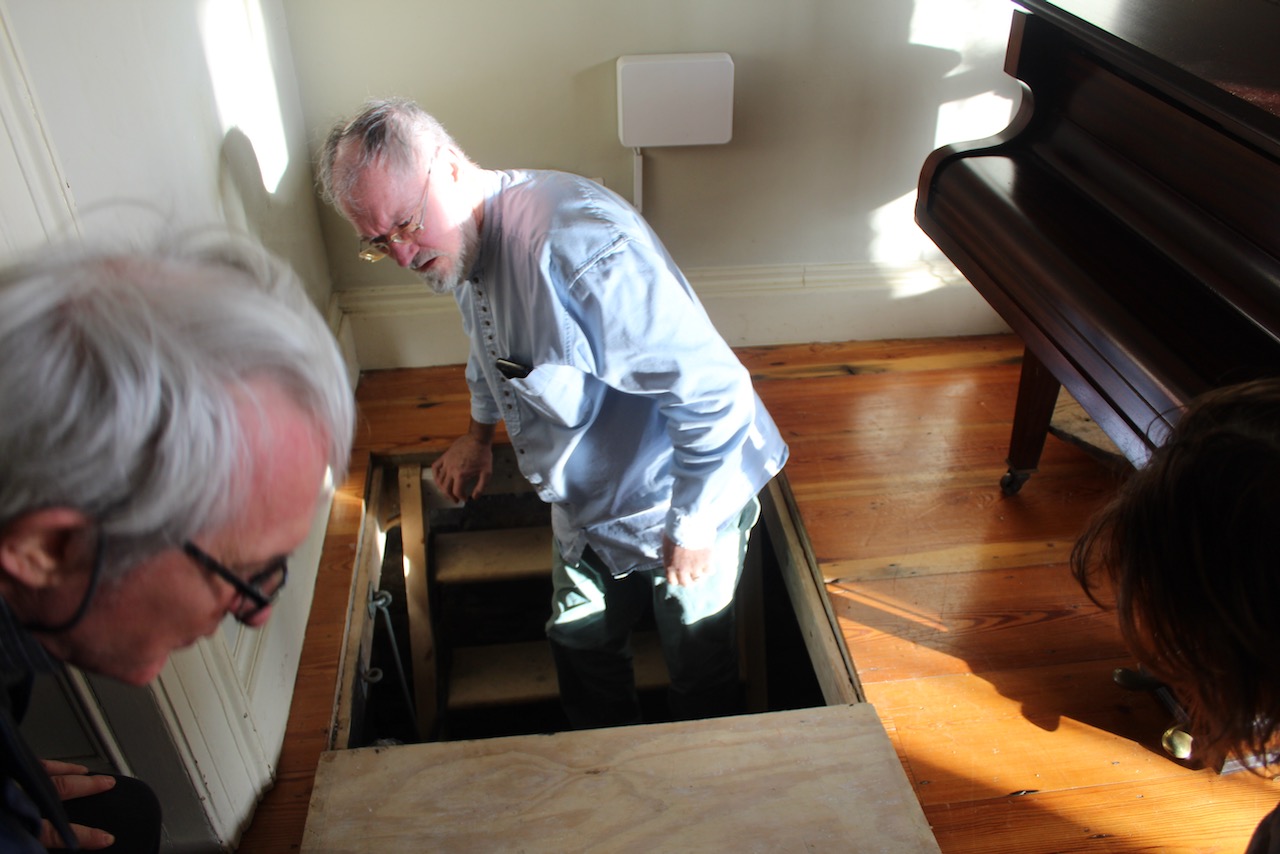
There is a cellar under the western part of the front pile which may originally have been a basement. Tony opened the hatch for us which is in the floor of the Drawing Room, and we climbed down into the basement. The basement only extends under the western part of the front pile.
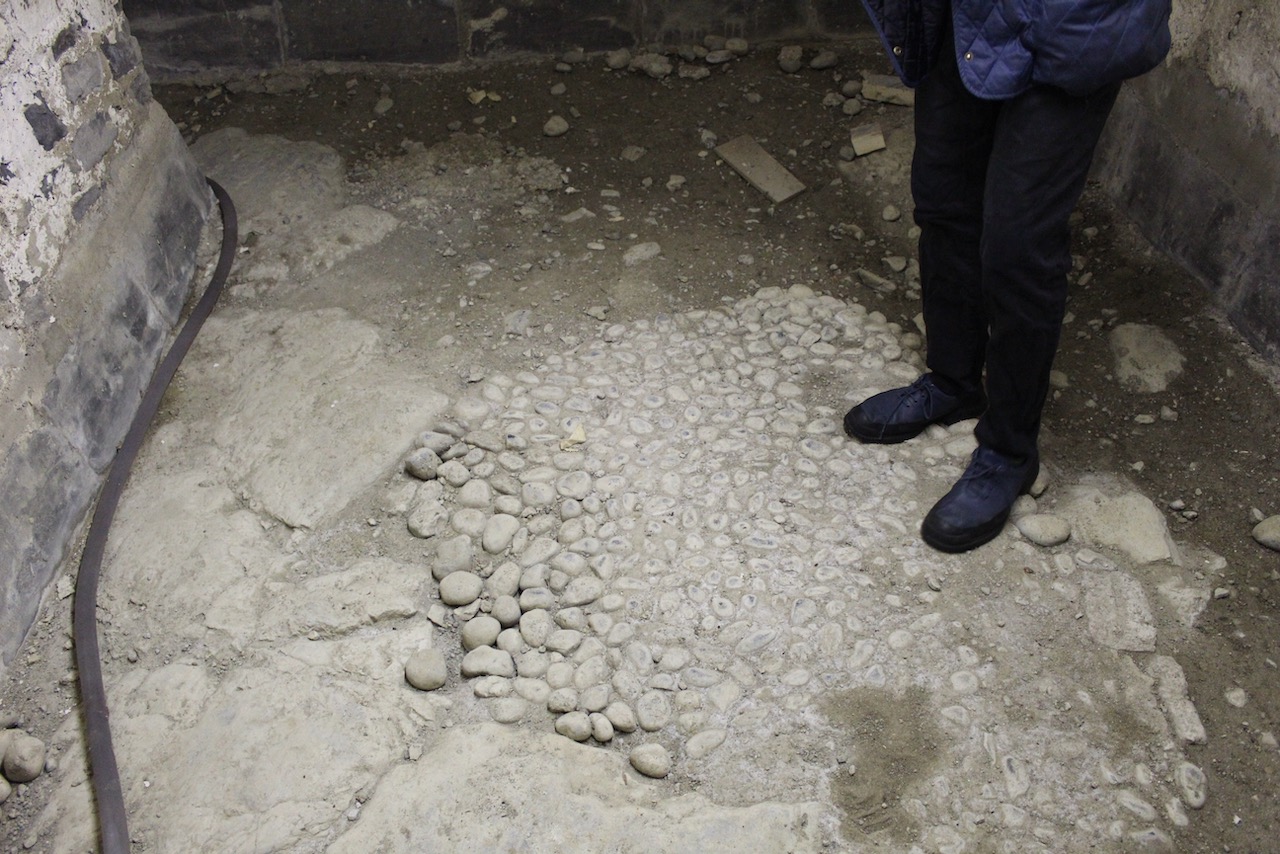
The basement area has an earthen floor. In one area was a circle of cobblestones and we speculated as to why they were so placed – I suggested that maybe there was a well. As Tony pointed out, the house is called “spring” field.
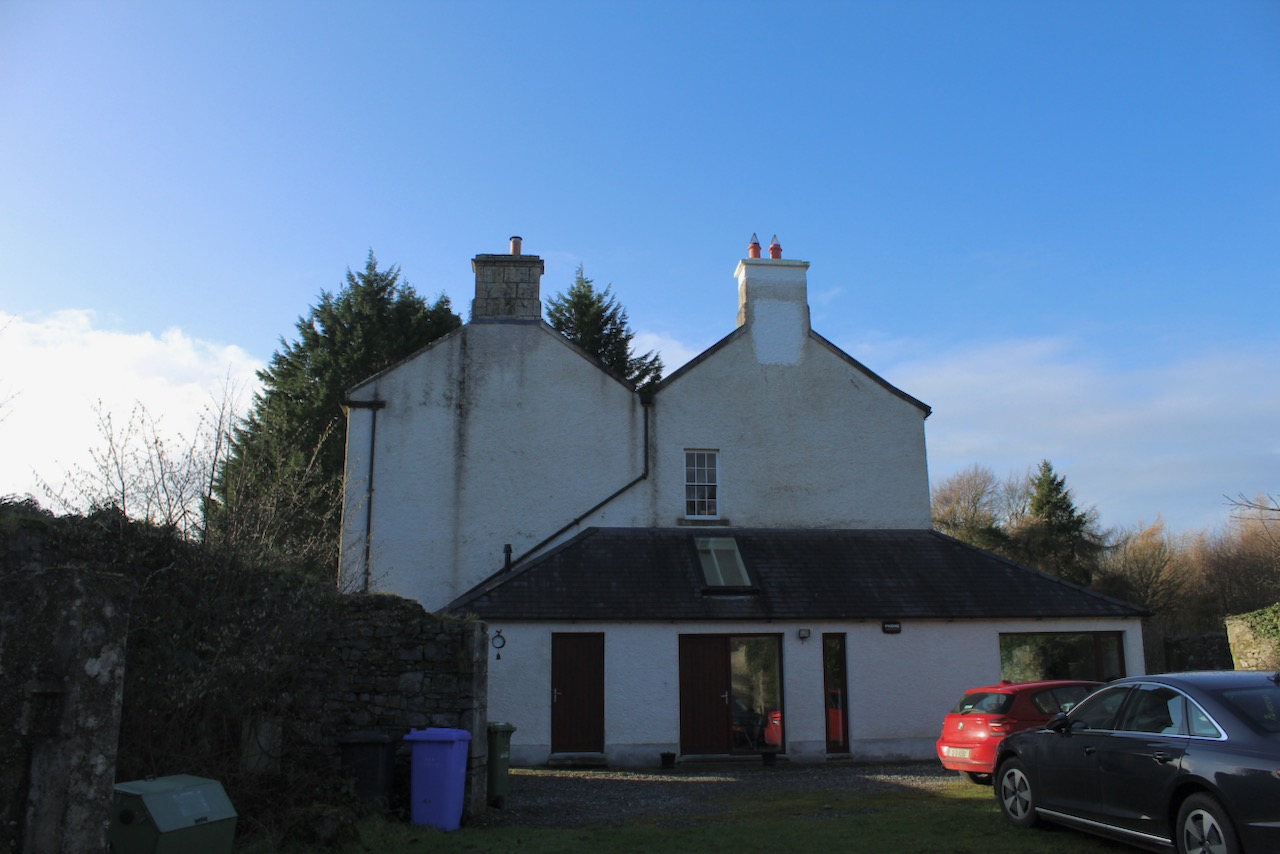
Unfortunately I didn’t take a photograph in the kitchen but it is modern and spacious, and it extends out to a single storey enlargement with ceiling windows. It is where the original kitchen used to be. The flagstones which were originally on the floor are now outside forming a path.
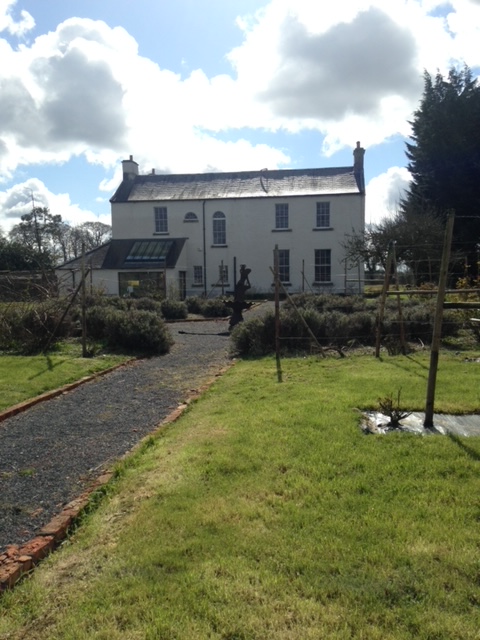
Springfield House, photograph courtesy of Muireann Noonan.
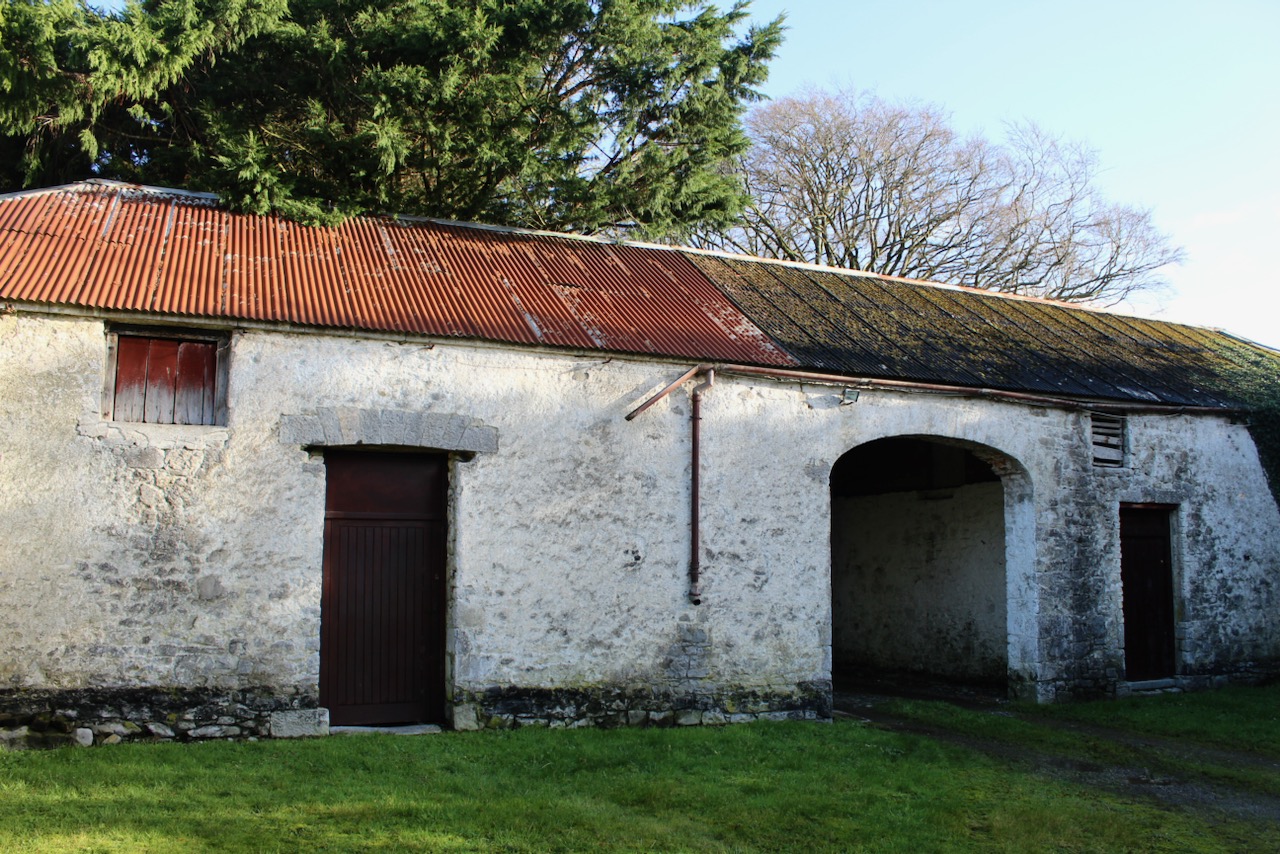
There is a lean-to building outside the kitchen housing domestic offices. This area was overgrown and tumble-down when Muireann and Tony began to renovate. Muireann described discovering the “extra room”! It even has a fireplace, and has become a cosy reading room.
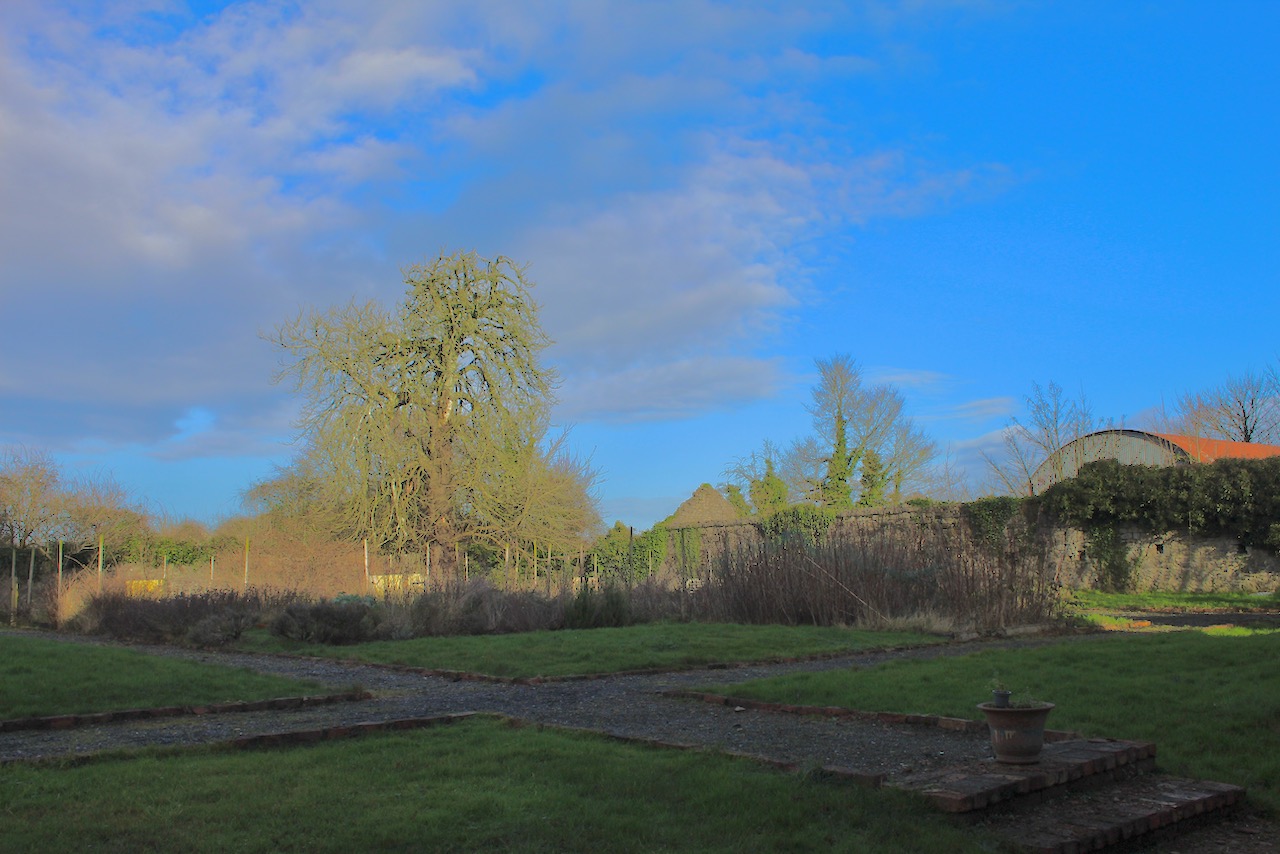
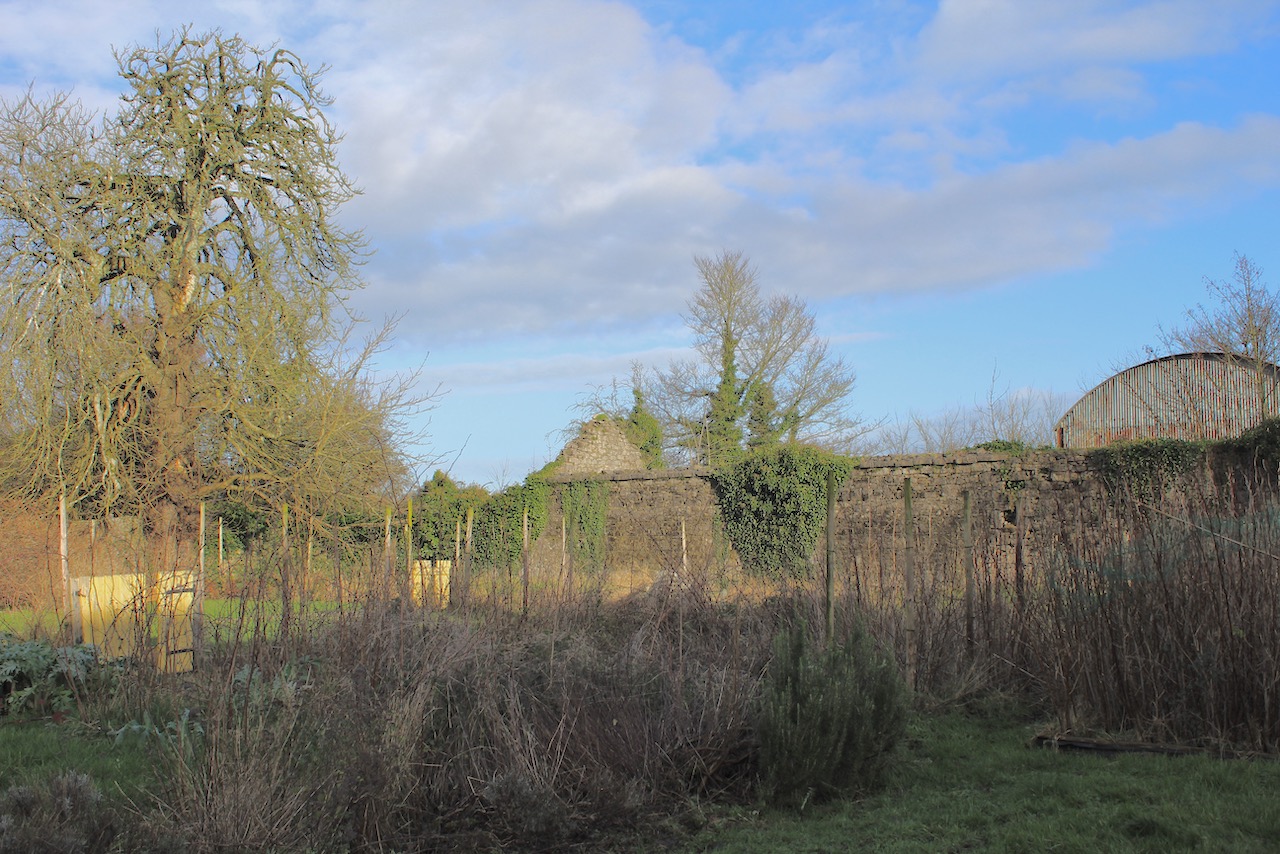
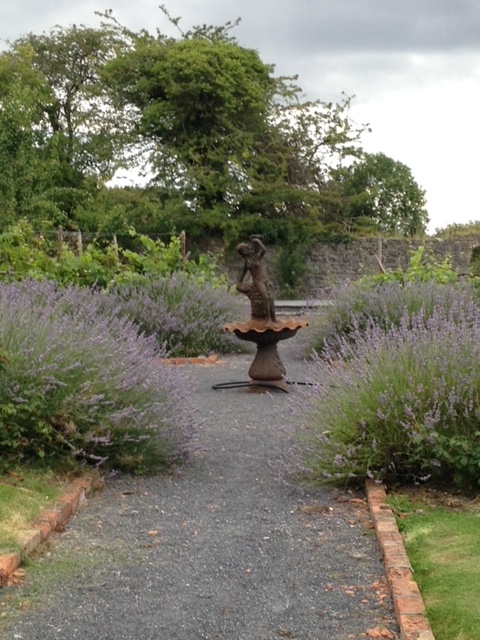
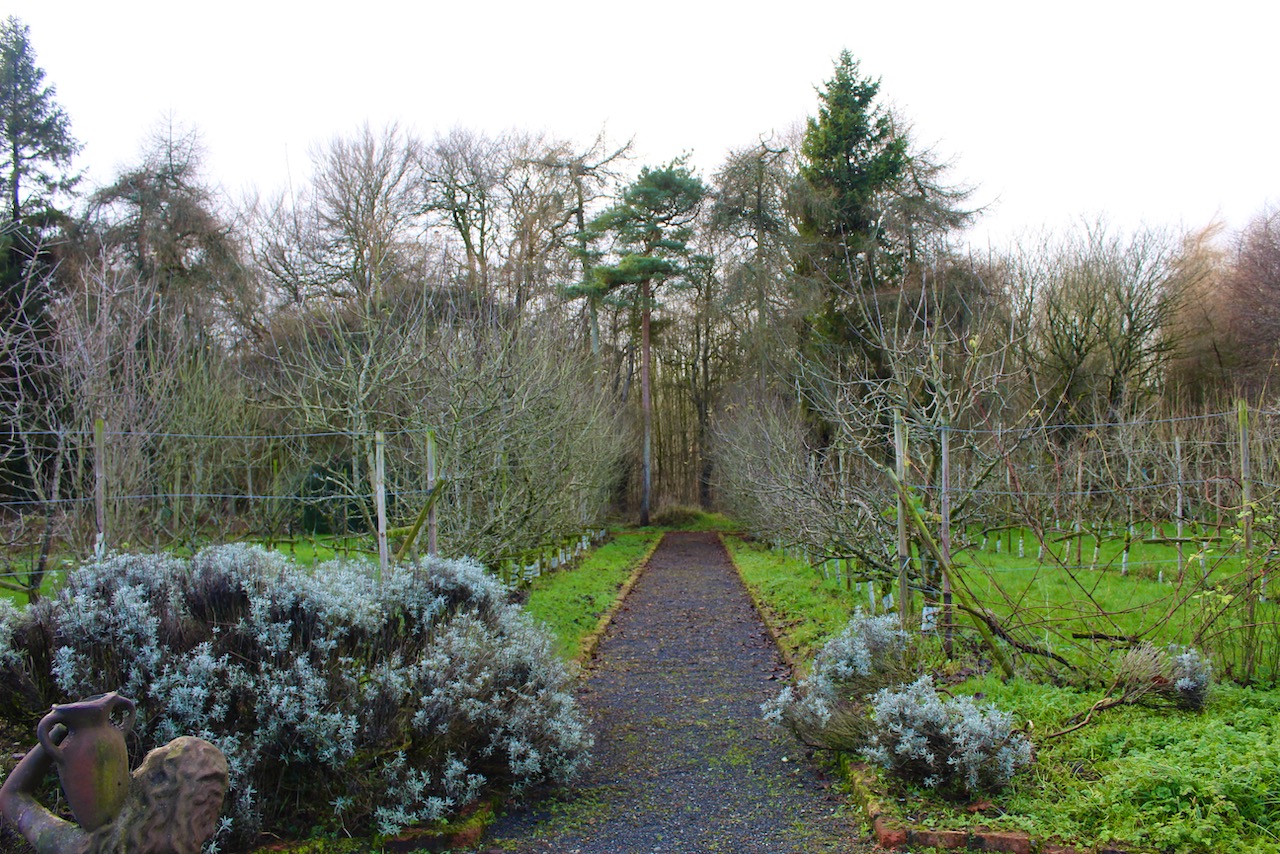
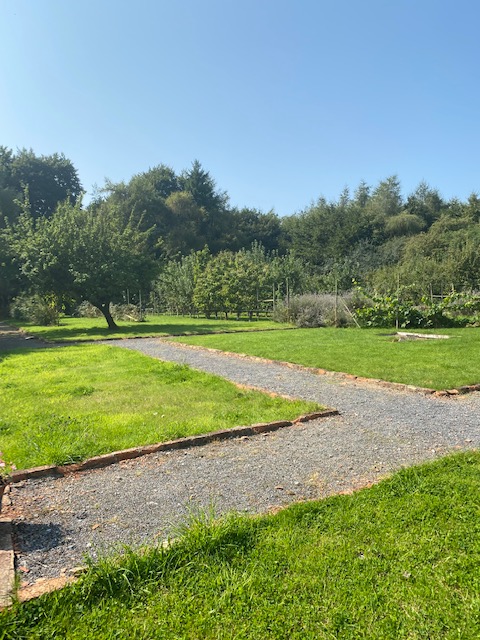
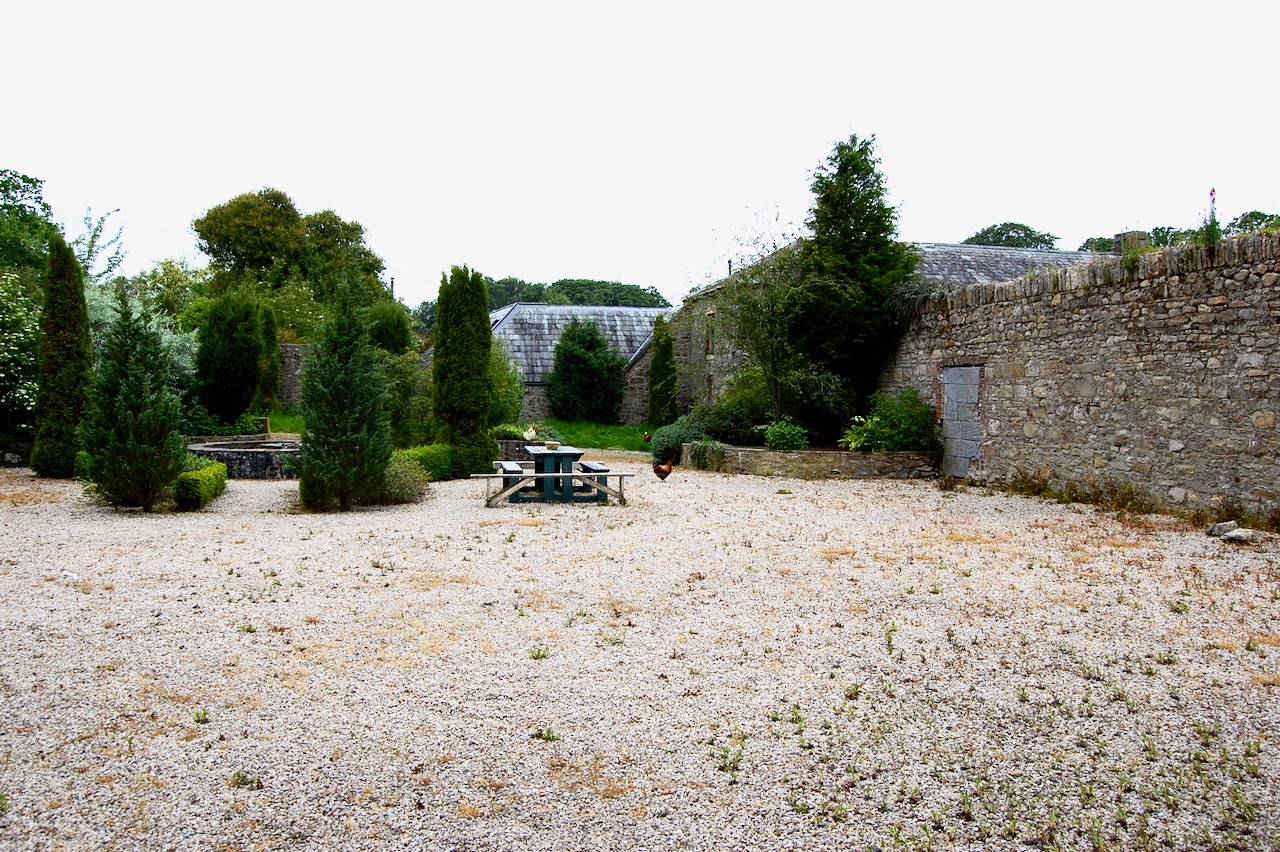
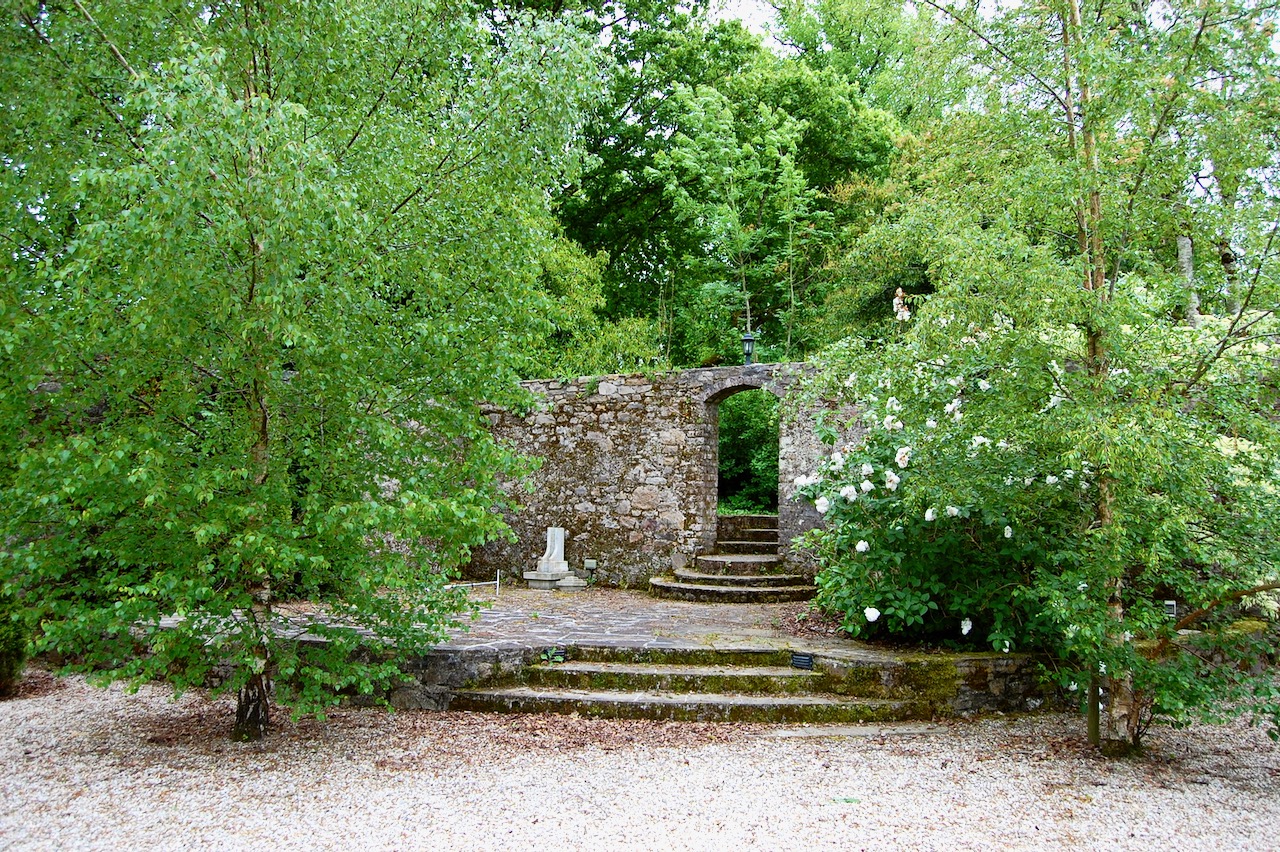
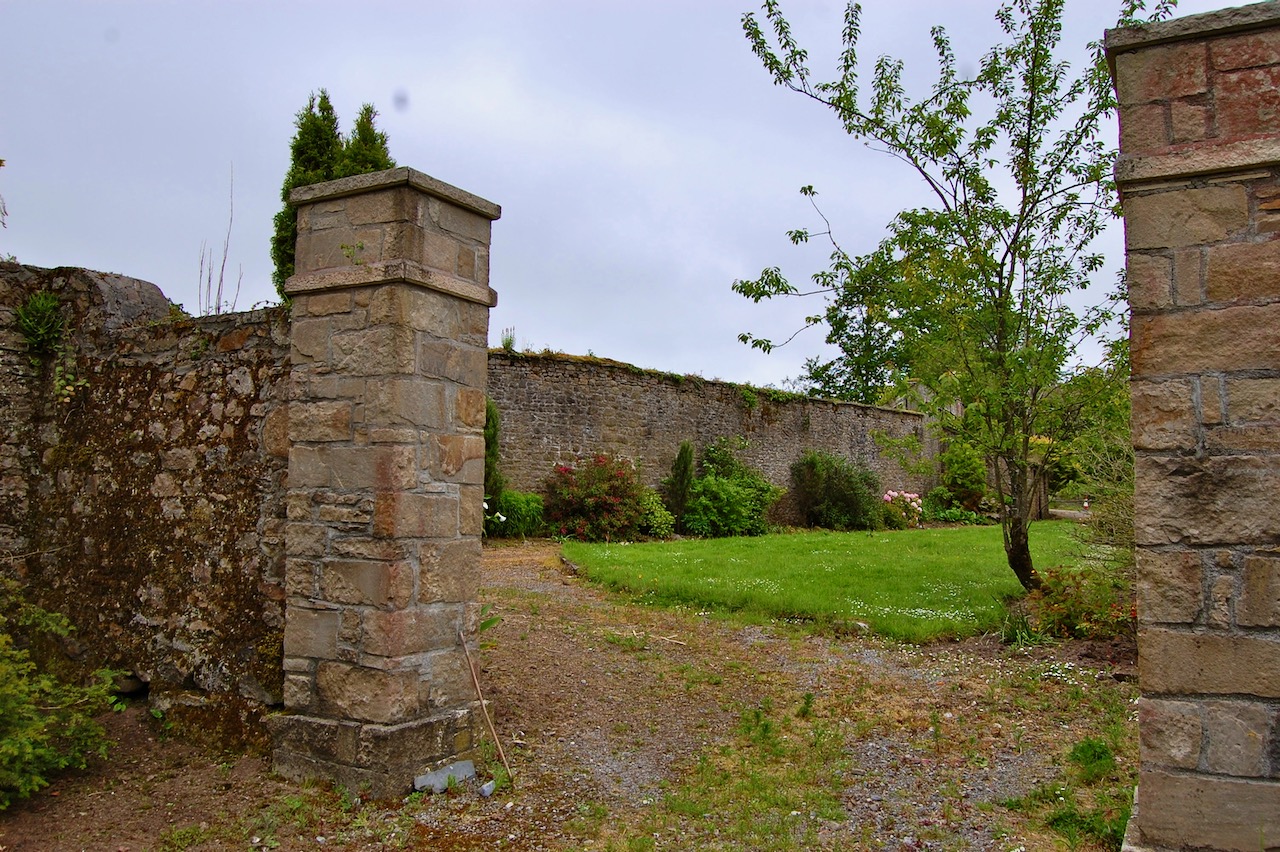
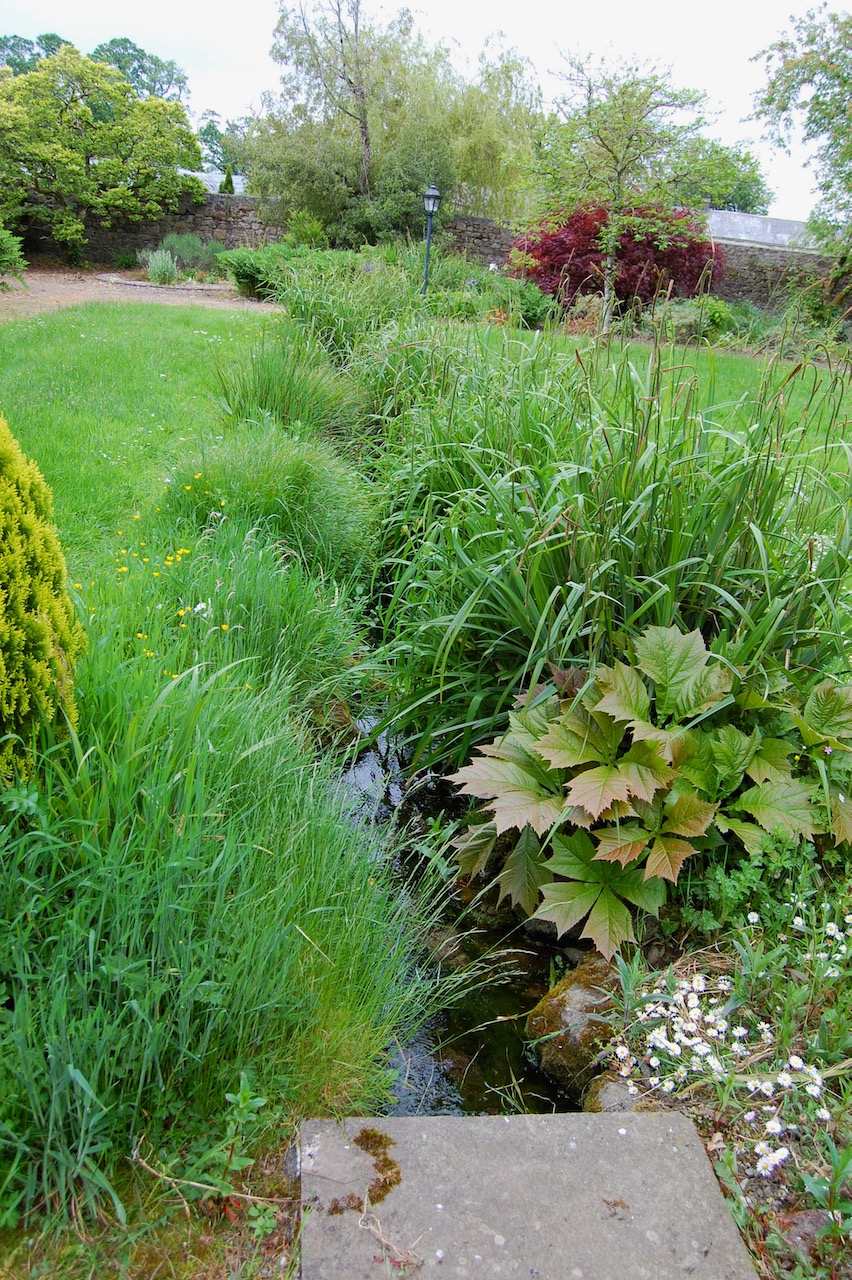
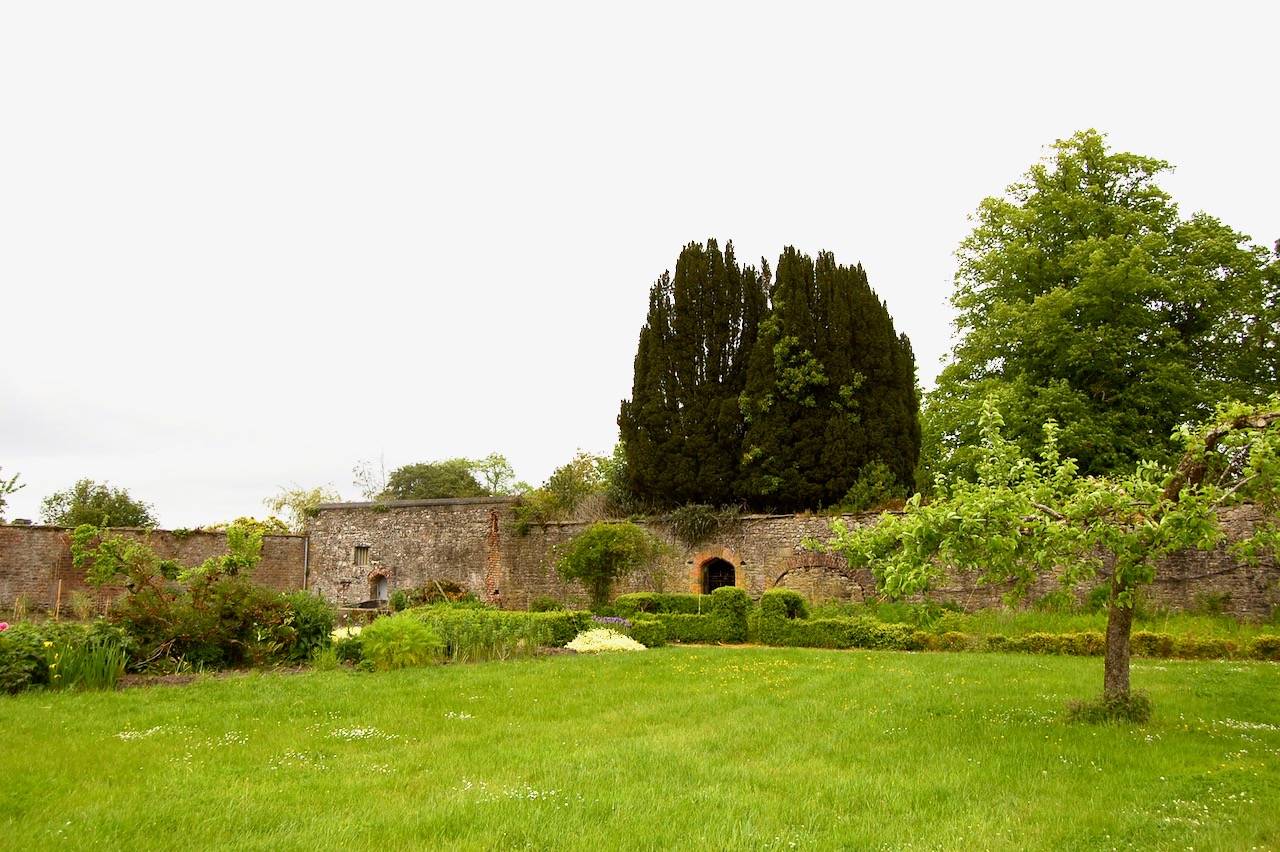
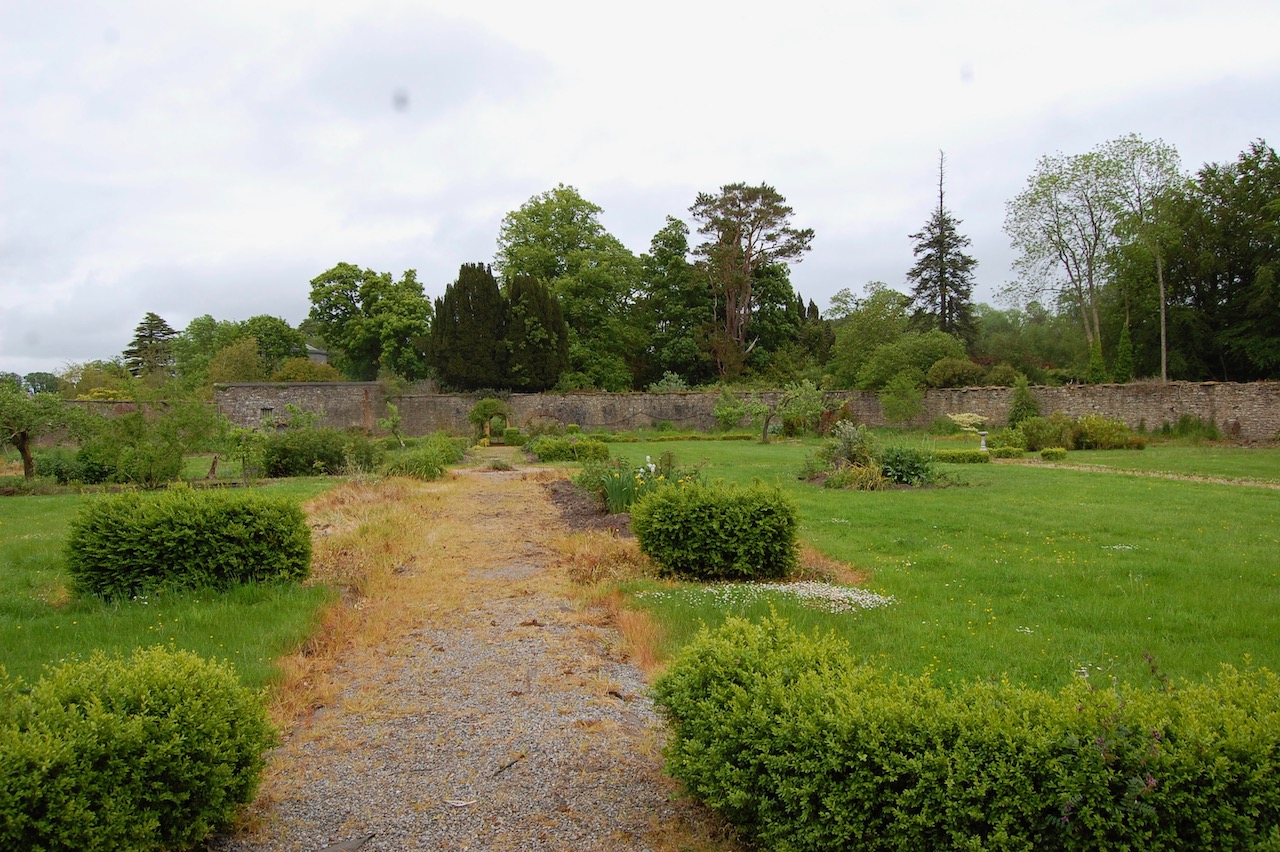
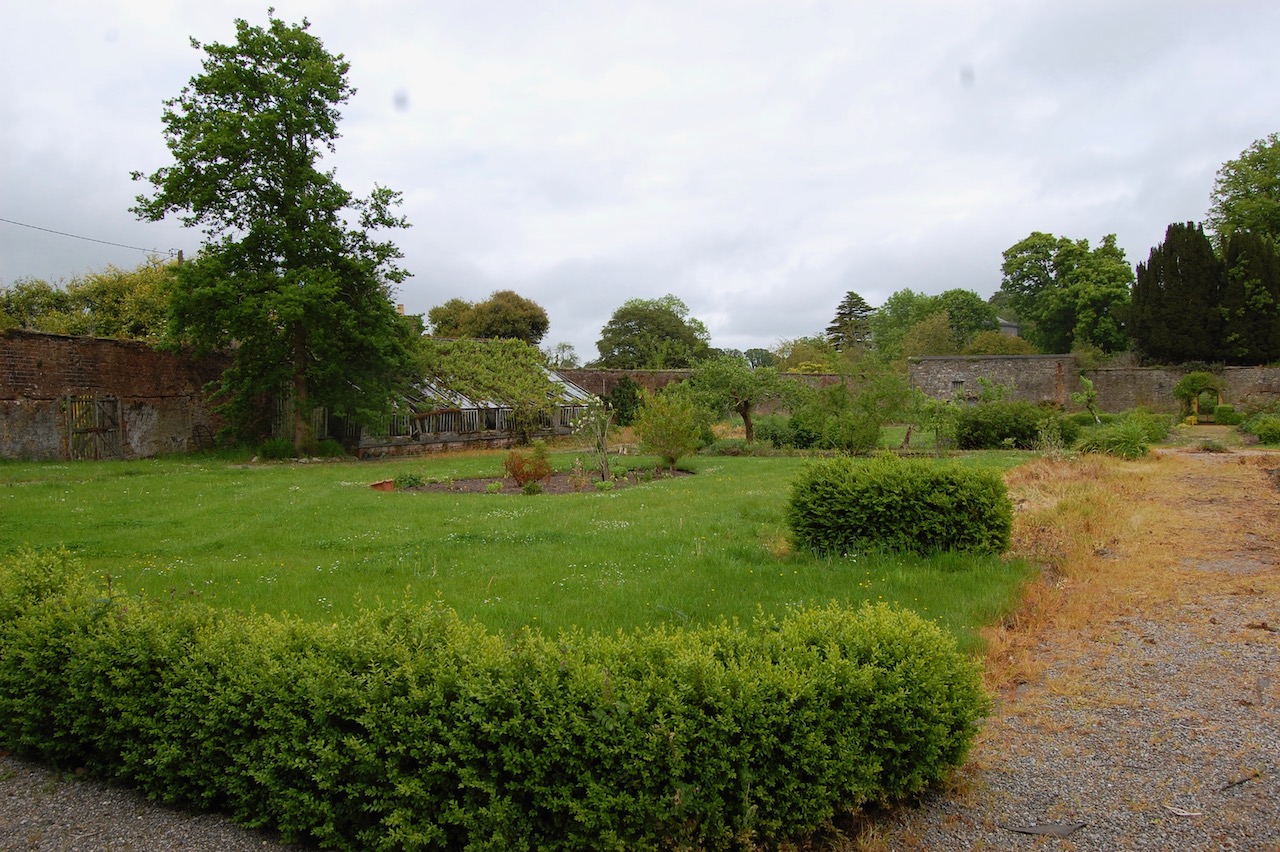
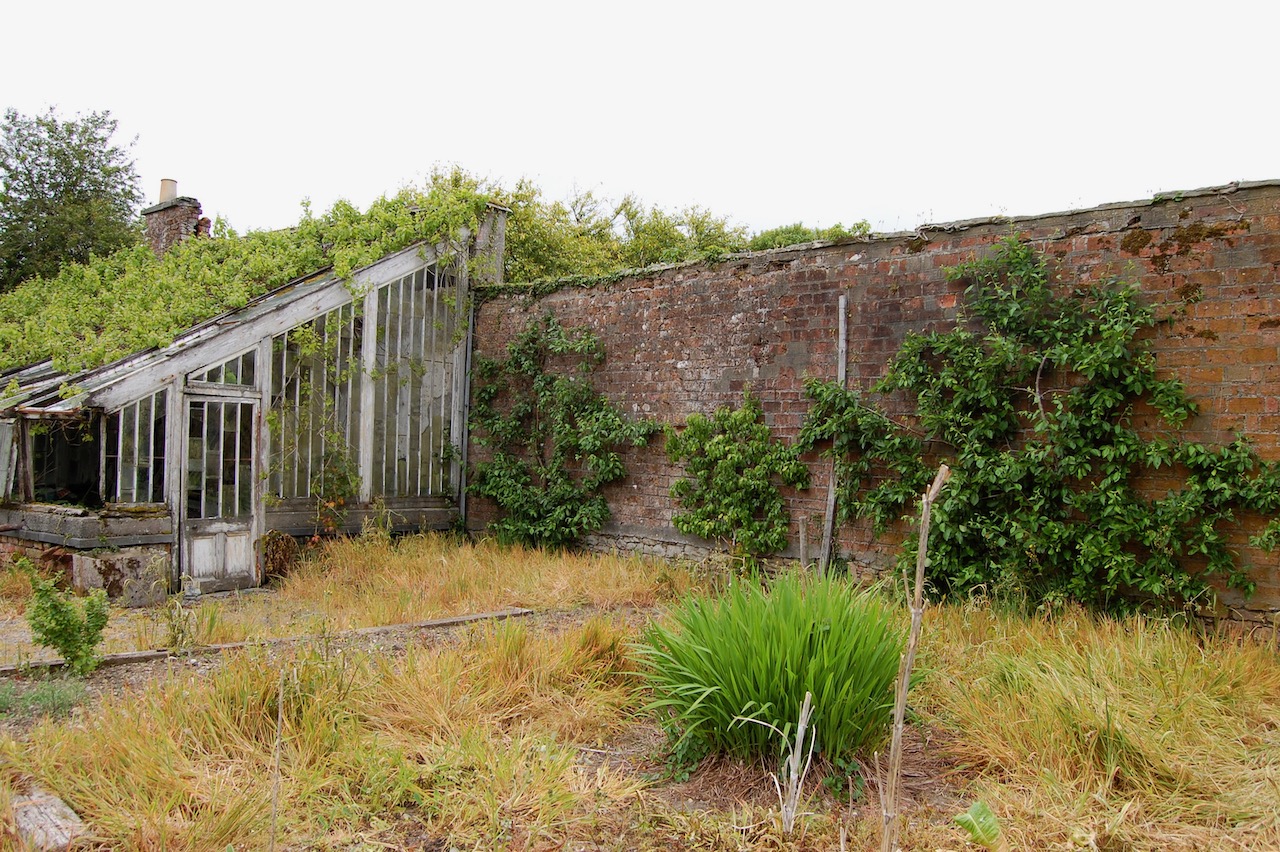
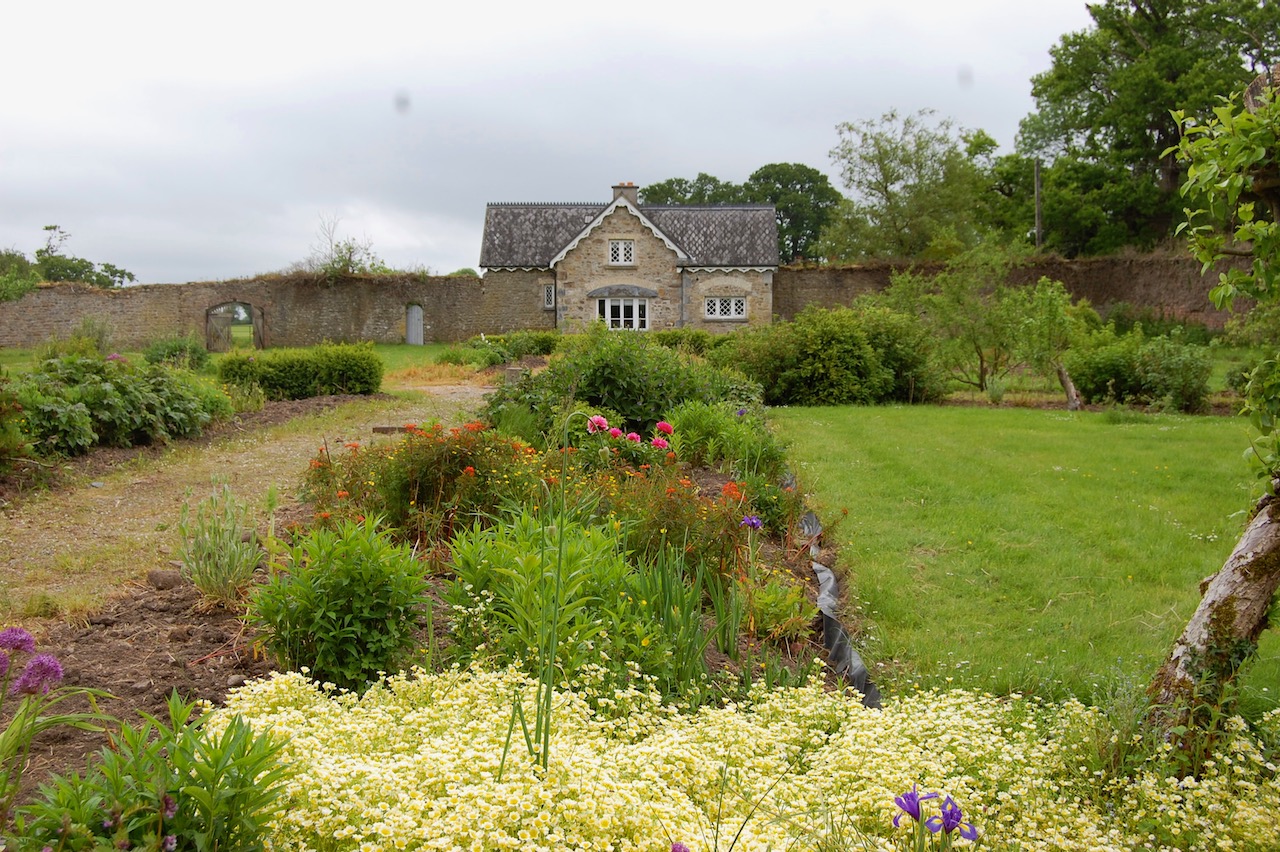
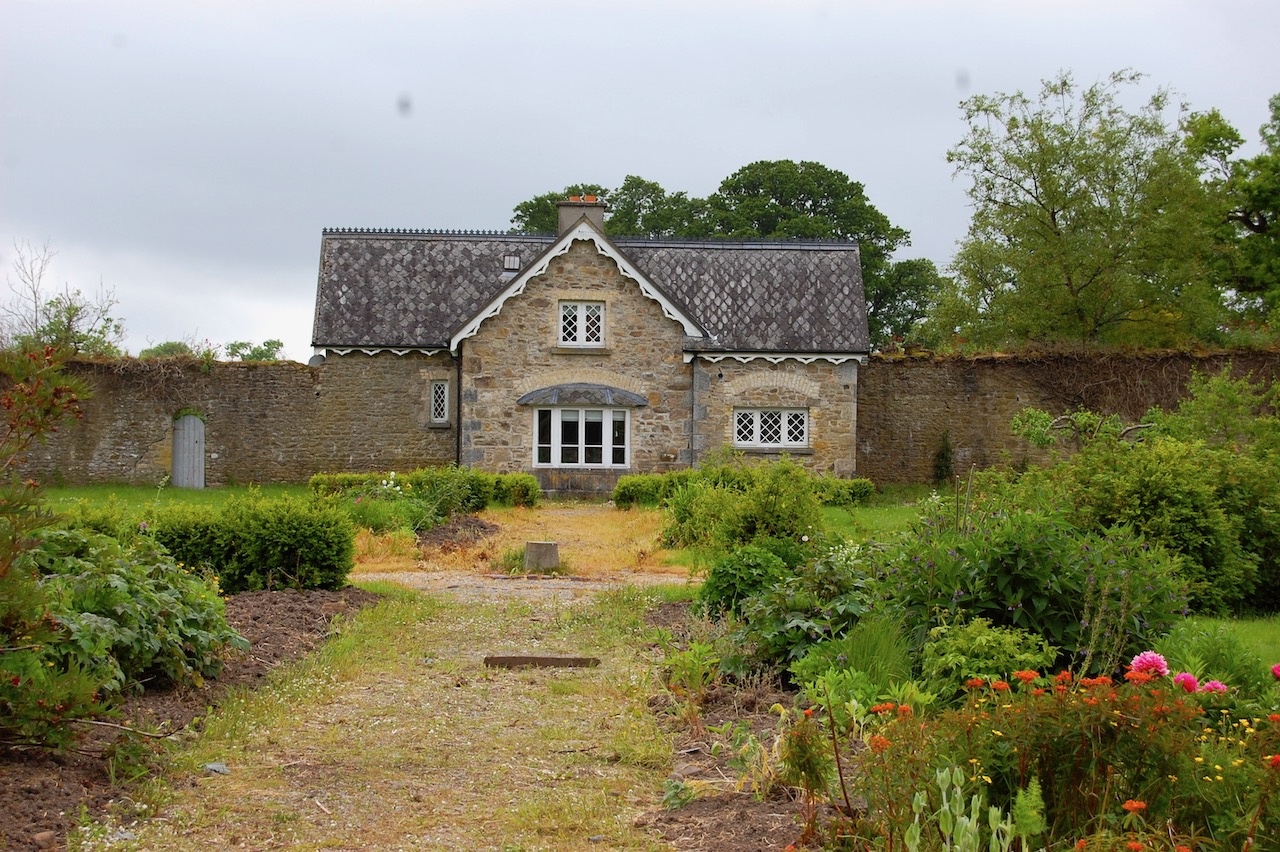
The back garden opens directly to the walled garden. Tony has done a lot of work to create a vegetable garden but it is not shown to best effect in cold January! They have also started an orchard.
Muireann and her family have done terrific work creating their home, and we wish them best of luck in the future!
donation
Help me to pay the entrance fee to one of the houses on this website. This site is created purely out of love for the subject and I receive no payment so any donation is appreciated!
[2] p. 305, Tierney, Andrew. The Buildings of Ireland: Central Leinster, the Counties of Kildare, Laois and Offaly. Yale University Press, New Haven and London, 2019.
[8] p. 652, Tierney, Andrew. The Buildings of Ireland: Central Leinster, the Counties of Kildare, Laois and Offaly. Yale University Press, New Haven and London, 2019.
Carlow, Dublin, Kildare, Kilkenny, Laois, Longford, Louth, Meath, Offaly, Westmeath, Wexford and Wicklow are the counties that make up the Leinster region.
I have noticed that an inordinate amount of OPW sites are closed ever since Covid restrictions, if not even before that (as in Emo, which seems to be perpetually closed) [these sites are marked in orange here]. I must write to our Minister for Culture and Heritage to complain.
Laois:
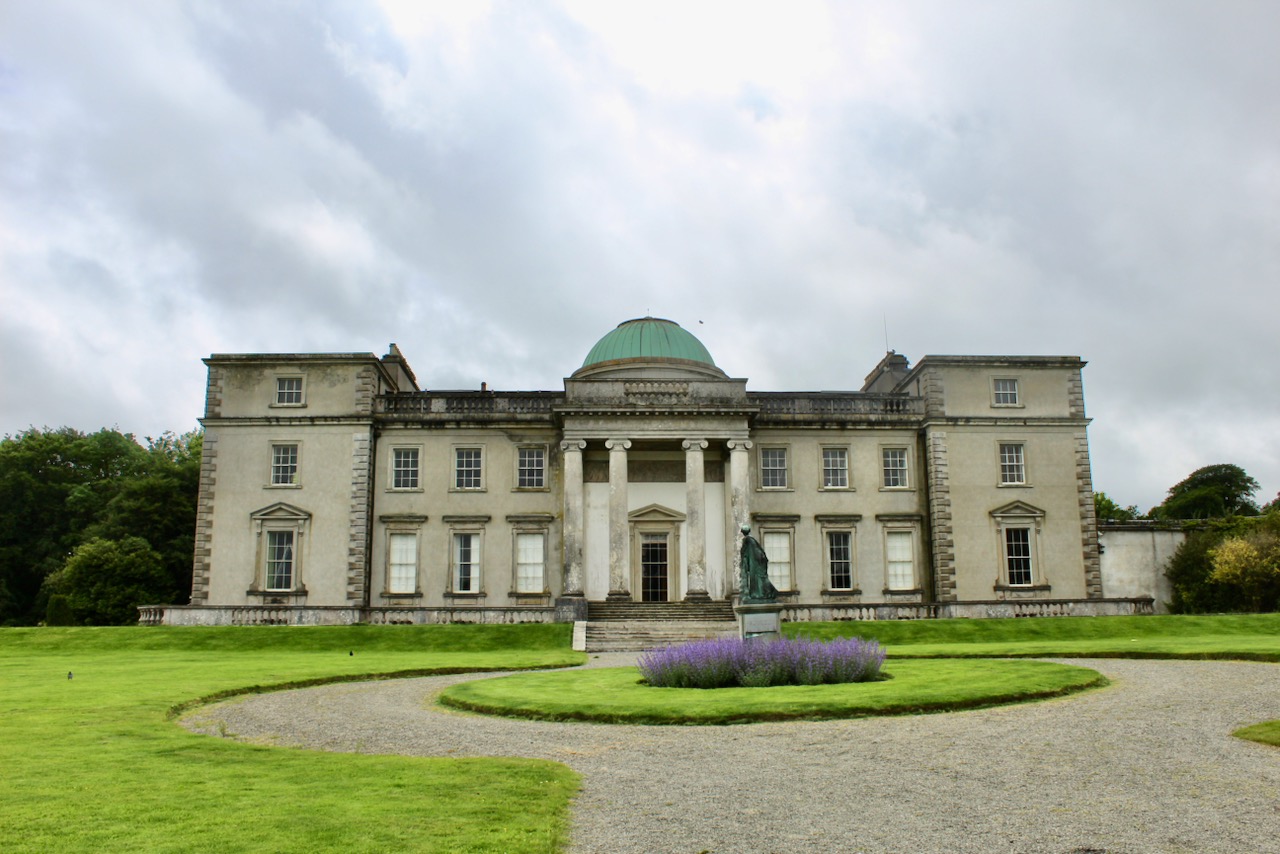
1. Emo Court, County Laois – house closed at present
2. Heywood Gardens, County Laois
Longford:
3. Corlea Trackway Visitor Centre, County Longford
Louth:
4. Carlingford Castle, County Louth
5. Old Mellifont Abbey, County Louth – closed at present
Meath:
6. Battle of the Boyne site, Oldbridge House, County Meath
7. Hill of Tara, County Meath
8. Loughcrew Cairns, County Meath – guides on site from June 16th 2022
9. Newgrange, County Meath
10. Trim Castle, County Meath
Offaly:
11. Clonmacnoise, County Offaly
donation
Help me to pay the entrance fee to one of the houses on this website. This site is created purely out of love for the subject and I receive no payment so any donation is appreciated!
“Emo Court is a quintessential neo-classical mansion, set in the midst of the ancient Slieve Bloom Mountains. The famous architect James Gandon, fresh from his work on the Custom House and the Four Courts in Dublin, set to work on Emo Court in 1790. However, the building that stands now was not completed until some 70 years later [with work by Lewis Vulliamy, a fashionable London architect, who had worked on the Dorchester Hotel in London and Arthur & John Williamson, from Dublin, and later, William Caldbeck].
“The estate was home to the earls of Portarlington until the War of Independence forced them to abandon Ireland for good. The Jesuits moved in some years later [1920] and, as the Novitiate of the Irish Province, the mansion played host to some 500 of the order’s trainees.
“Major Cholmeley-Harrison took over Emo Court in the 1960s and fully restored it [to designs by Sir Albert Richardson]. He opened the beautiful gardens and parkland to the public before finally presenting the entire estate to the people of Ireland in 1994.
“You can now enjoy a tour of the house before relaxing in its charming tearoom. The gardens are a model of neo-classical landscape design, with formal lawns, a lake and woodland walks just waiting to be explored.” [2]
[1] p. 336. Tierney, Andrew. The Buildings of Ireland: Central Leinster: Kildare, Laois and Offaly. Yale University Press, New Haven and London, 2019.
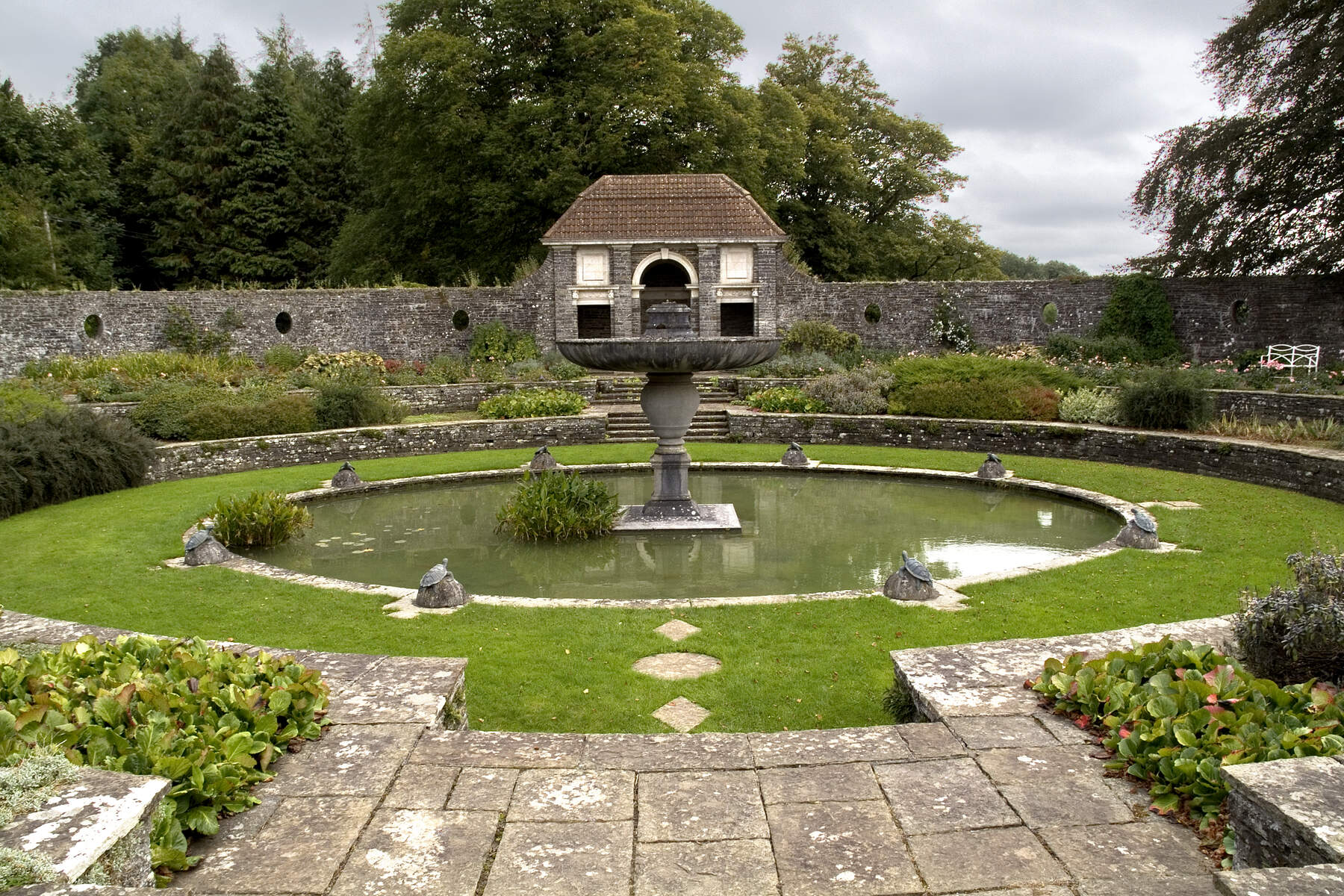
“The entrancing eighteenth-century landscape at Heywood Gardens, near Ballinakill, County Laois, consists of gardens, lakes, woodland and some exciting architectural features. The park is set into a sweeping hillside. The vista to the south-east takes in seven counties.
“The architect Sir Edwin Lutyens designed the formal gardens [around 1906], which are the centrepiece of the property. It is likely that renowned designer Gertrude Jekyll landscaped them.
“The gardens are composed of elements linked by a terrace that originally ran along the front of the house. (Sadly, the house is no more.) One of the site’s most unusual features is a sunken garden containing an elongated pool, at whose centre stands a grand fountain.
“The Heywood experience starts beside the Gate Lodge. Information panels and signage will guide you around the magical Lutyens gardens and the surrounding romantic landscape.“
Longford:
3.Corlea Trackway Visitor Centre, Kenagh, County Longford:
Corlea Trackway Visitor Centre, Co. Longford, photograph by Chris Hill 2018 for Tourism Ireland, Ireland’s Content Pool. [see 6]Corlea Trackway Visitor Centre, Co. Longford, photograph by Chris Hill 2018 for Tourism Ireland, Ireland’s Content Pool. [see 6]
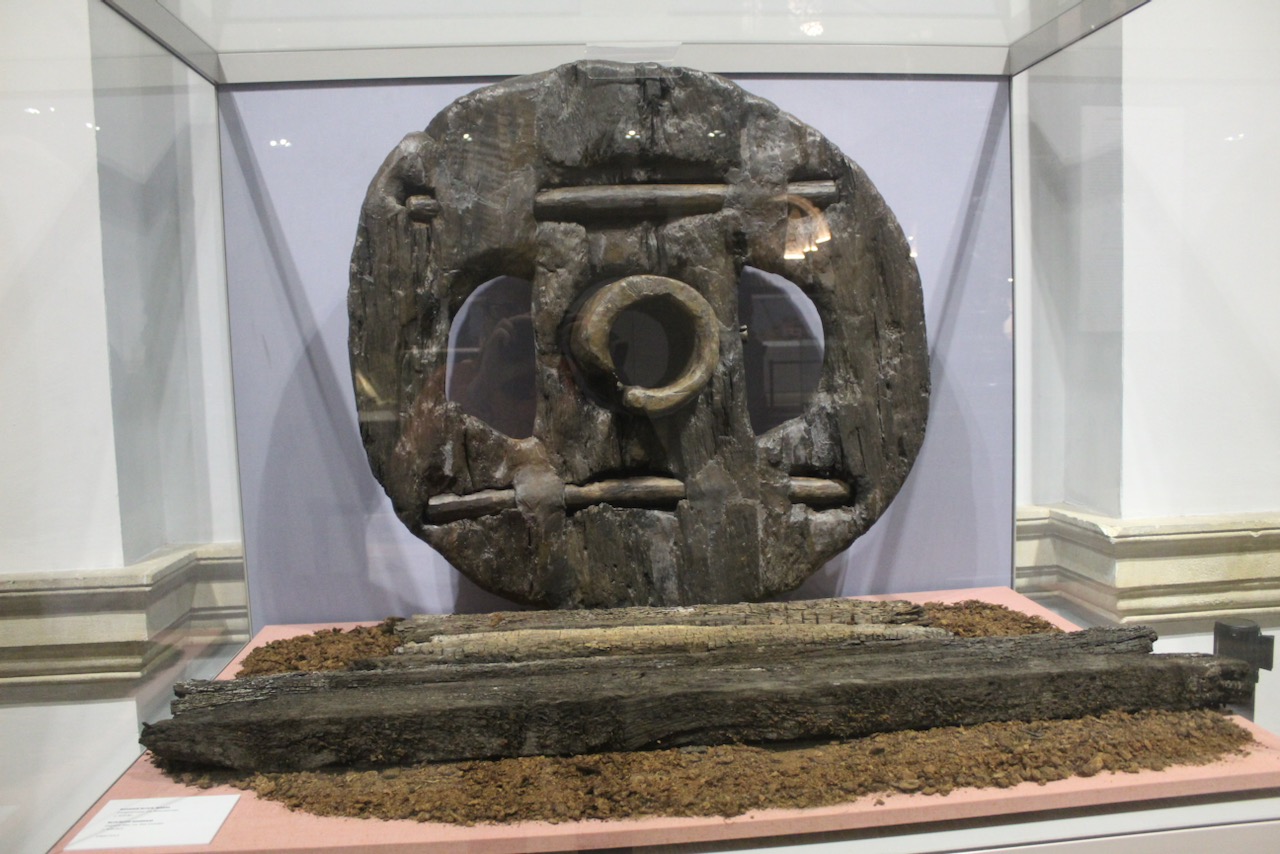
“Hidden away in the boglands of Longford, not far from Kenagh village, is an inspiring relic of prehistory: a togher – an Iron Age road – built in 148 BC. Known locally as the Danes’ Road, it is the largest of its kind to have been uncovered in Europe.
“Historians agree that it was part of a routeway of great importance. It may have been a section of a ceremonial highway connecting the Hill of Uisneach, the ritual centre of Ireland, and the royal site of Rathcroghan.
“The trackway was built from heavy planks of oak, which sank into the peat after a short time. This made it unusable, of course, but also ensured it remained perfectly preserved in the bog for the next two millennia.
“Inside the interpretive centre, an 18-metre stretch of the ancient wooden structure is on permanent display in a hall specially designed to preserve it. Don’t miss this amazing remnant of our ancient past.“
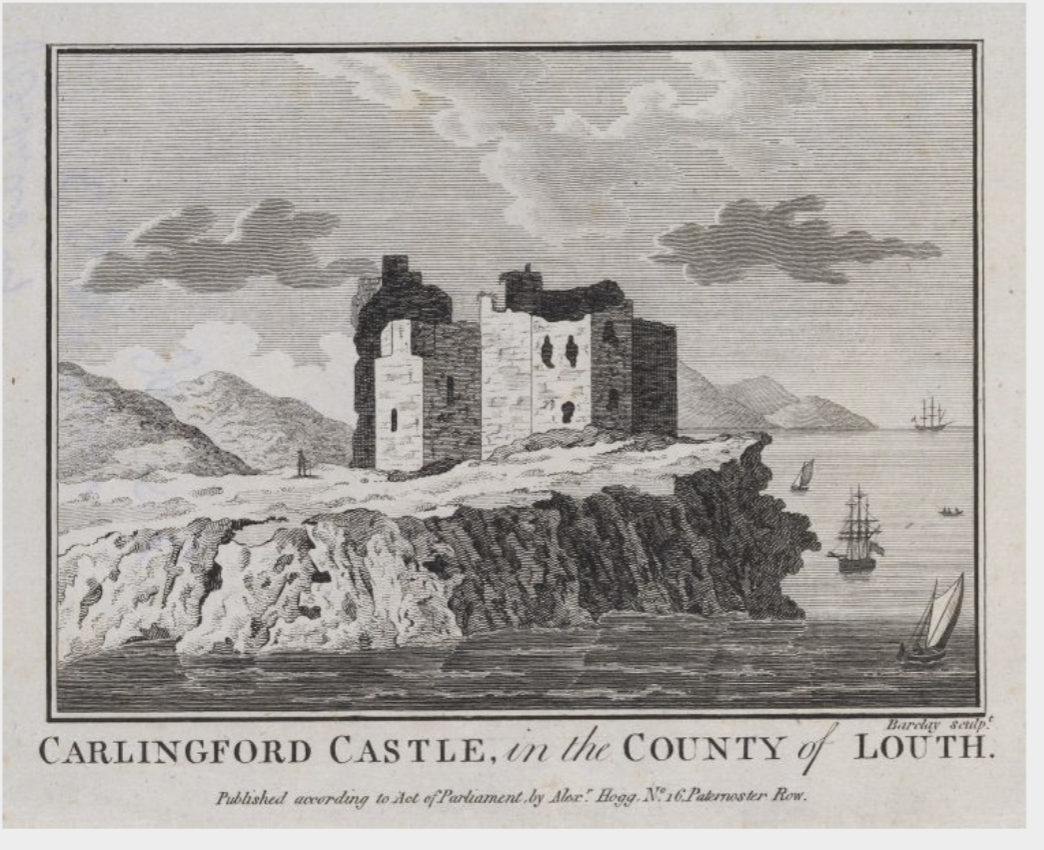
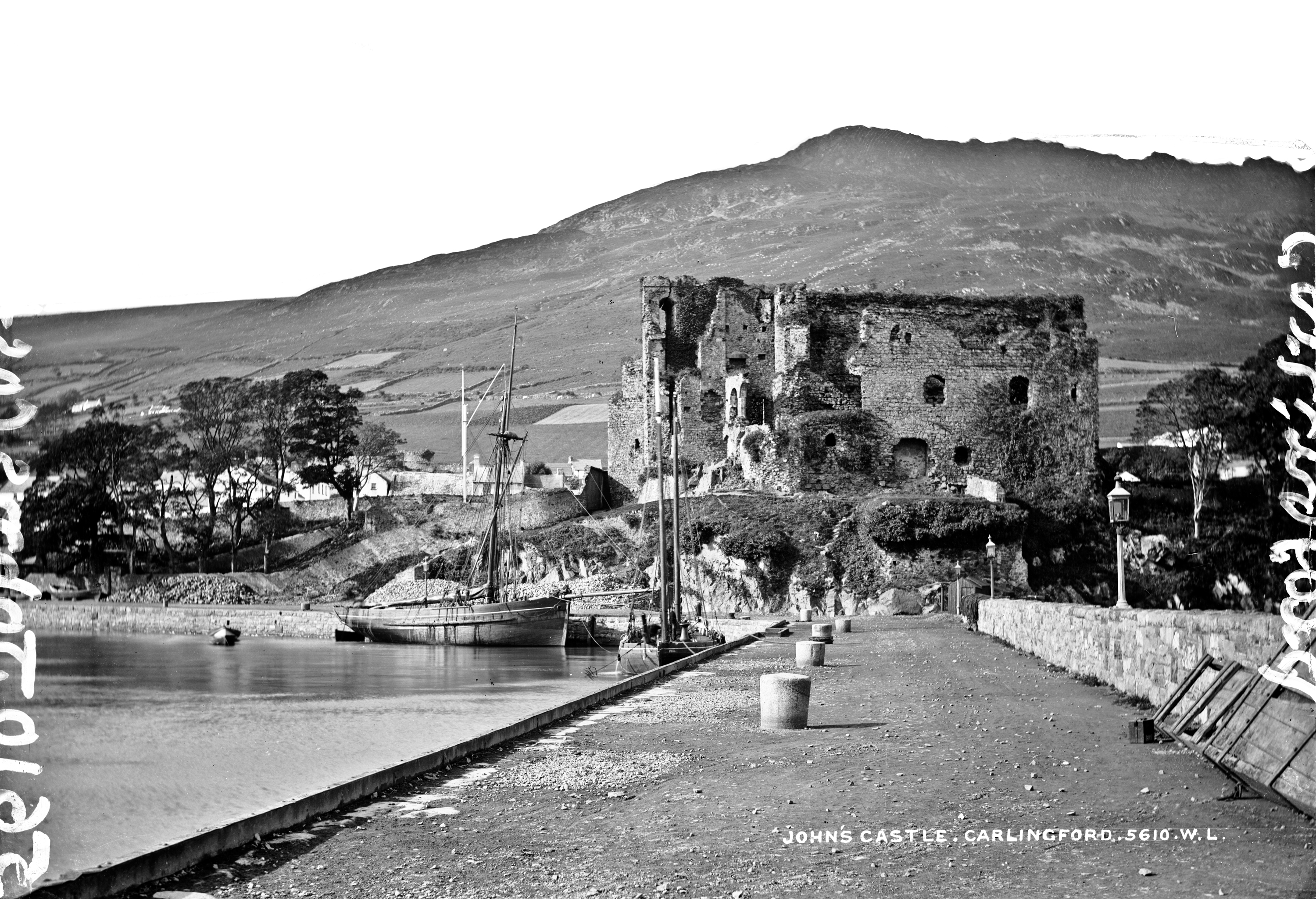
Carlingford Castle, also known as King John’s Castle (not to be confused with the one in Limerick), County Louth, photograph by Brenda Harris 2021 for Fáilte Ireland, Ireland’s Content Pool. [see 6]
“Carlingford lies in the shade of Slieve Foye, a mountain that in legend takes its form from the body of the sleeping giant Finn MacCumhaill. The castle dominates the town and overlooks the lough harbour. It was a vital point of defence for the area for centuries.
“Carlingford Castle was built around 1190, most likely by the Norman baron Hugh de Lacy. By this time Hugh’s family had grown powerful enough to make King John of England uneasy. John forced them into rebellion and seized their property in 1210. He reputedly stayed in his new castle himself. It is still known as King John’s Castle.“
Carlingford Castle, County Louth
“The Jacobites fired on the castle in 1689; William of Orange is said to have accommodated his wounded soldiers there following the Battle of the Boyne.
“Carlingford Lough Heritage Trust provides excellent guided tours of this historic Castle from March to October.“
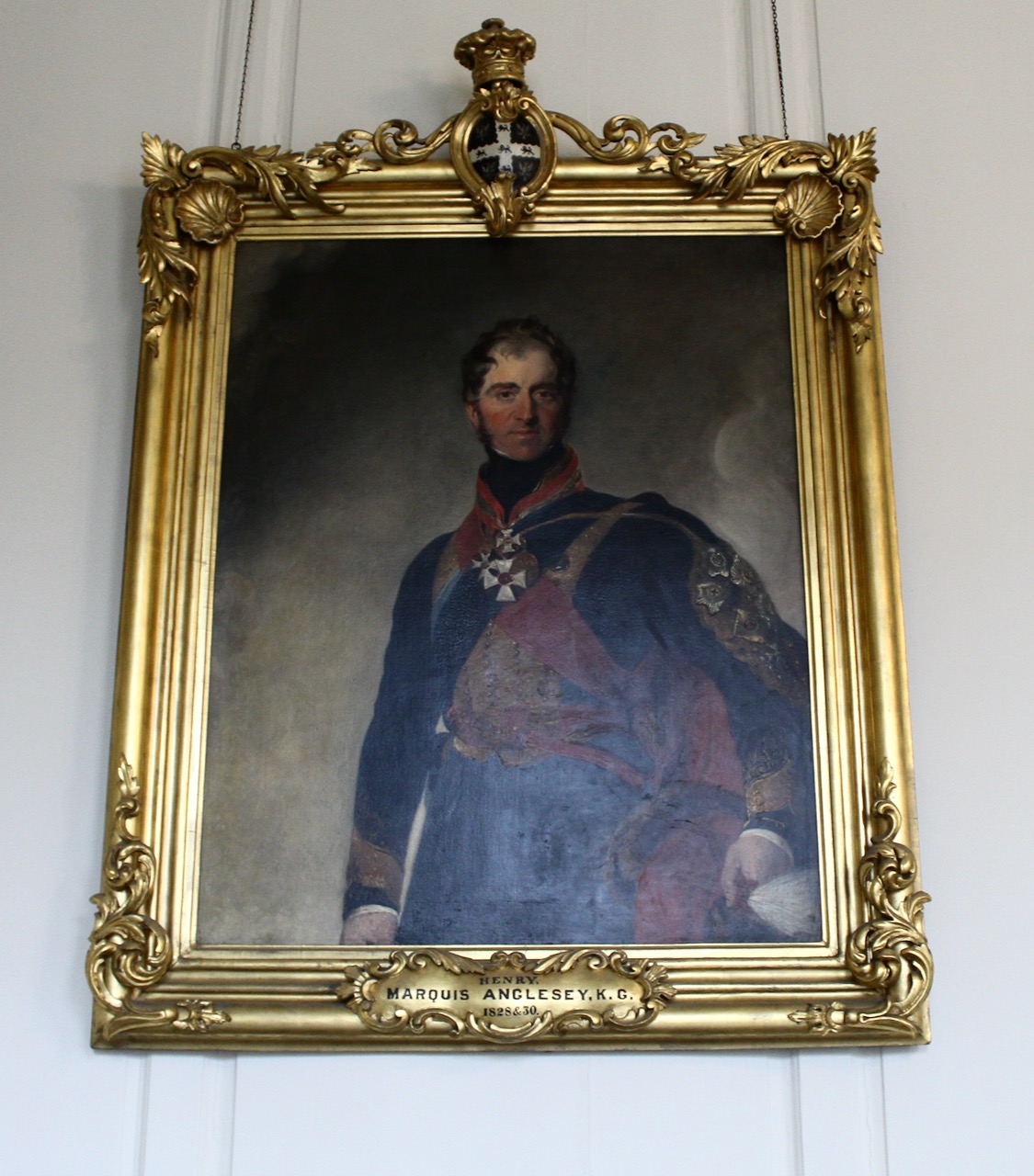
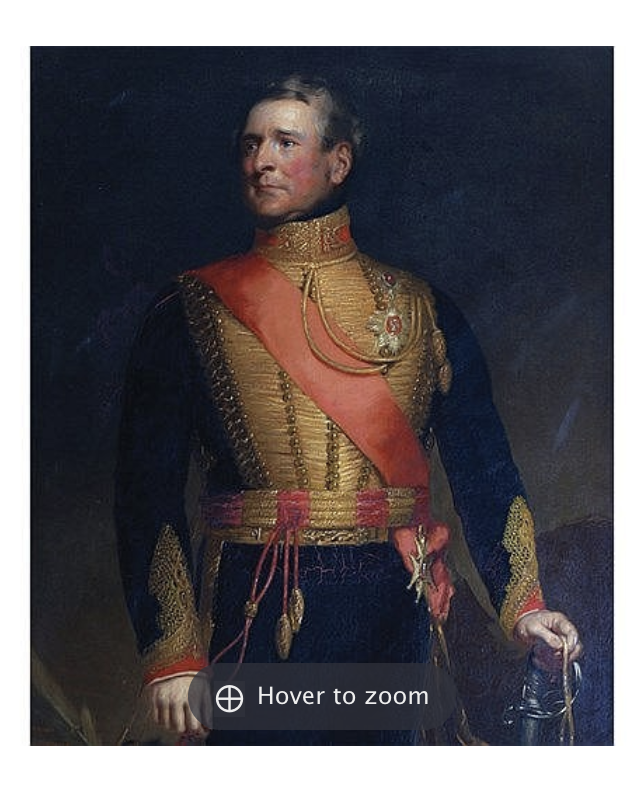
By 1778 the building was ruinous. The task of repair and preservation was begun by the Henry Paget the 1st Marquess of Anglesey in the later nineteenth century (he served as Lord Lieutenant of Ireland from 1848, and as Master General of the Ordinance), and has been continued by the OPW. [13]
Carlingford Castle Co Louth National Library of Ireland by Robert French, Lawrence Photograph Collection.Henry Paget, 1st Marquess of Anglesey (1768-1854), Viceroy in 1828 and 1830.
5. Old Mellifont Abbey, Tullyallen, Drogheda, County Louth:
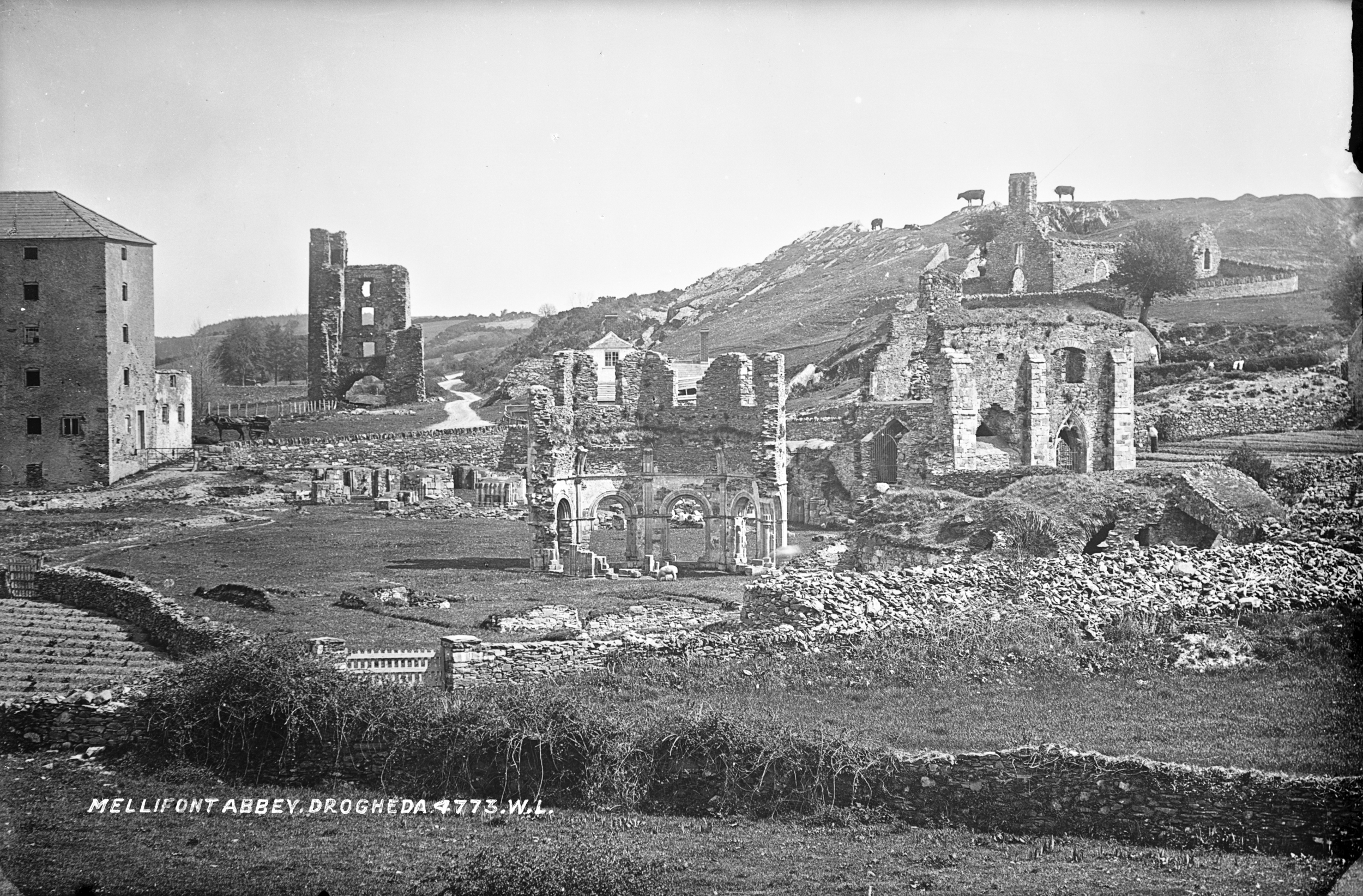
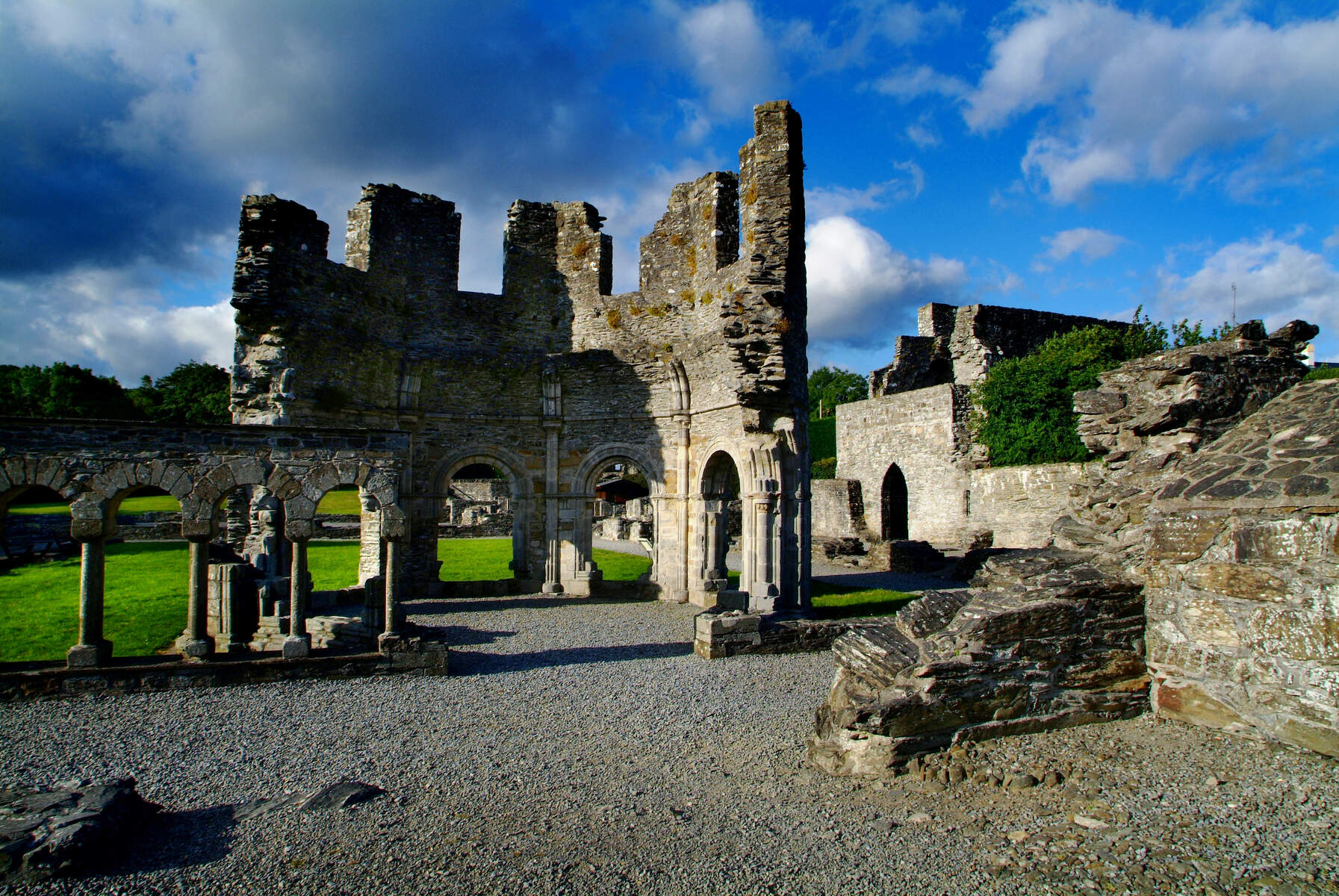
Old Mellifont Abbey, photograph by Eilish Tierney, 2020 for Fáilte Ireland, Ireland’s Content Pool. [see 6]Mellifont Abbey from National Library of Ireland Lawrence photograph collection, flickr constant commons.
General enquiries: 041 982 6459, mellifontabbey@opw.ie. Mellifont means “fountain of honey.”
“Mellifont Abbey was the first Cistercian monastery in Ireland. St Malachy of Armagh created it in 1142 with the help of a small number of monks sent by St Bernard from Clairvaux [and with the aid of Donough O’Carroll, King of Oriel – see 14]. The monks did not take well to Ireland and soon returned to France, but the abbey was completed anyway and duly consecrated with great pomp.
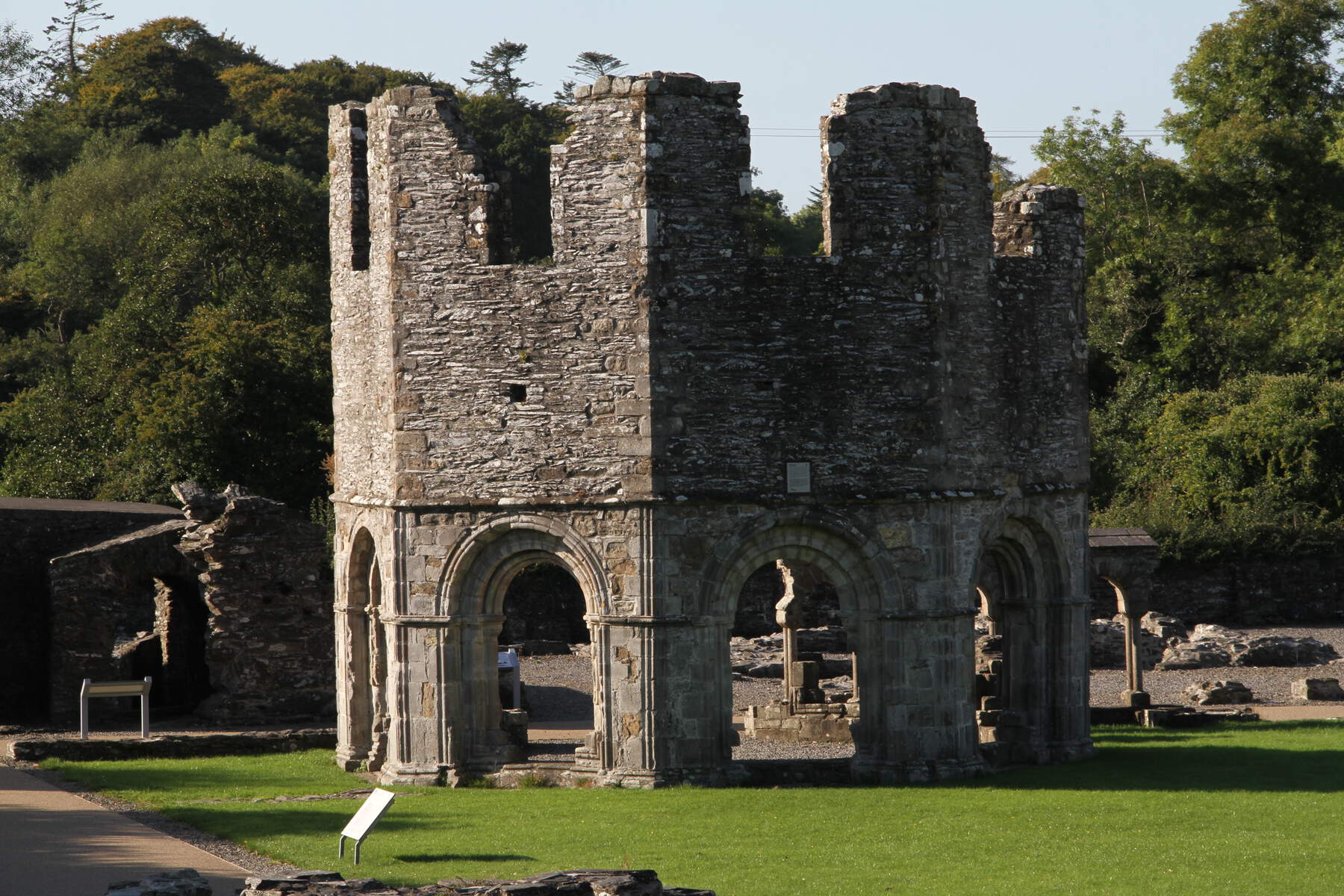
“It has several extraordinary architectural features, the foremost of which is the two-storey octagonal lavabo [the monk’s washroom].
“The monks at Mellifont hosted a critical synod in 1152. The abbey was central to the history of later centuries, too, even though it was in private hands by then. The Treaty of Mellifont, which ended the Nine Years War, was signed here in 1603, and William of Orange used the abbey as his headquarters during the momentous Battle of the Boyne.“
Mellifont Abbey ruins, the octagonal lavabo, built in around 1200, photograph by Brian Harte, 2015 for Tourism Ireland, Ireland’s Content Pool. [see 6]
The ruins contain the medieval gatehouse, parish church, chapter house and lavabo. The octagonal lavabo was designed as a freestanding structure of two storeys, with an octagonal cistern to supply the water located at the upper level over the wash room. Wash basins were arranged around a central pier, now gone, which supported the weight of the water above. [14] The entire monastery was surrounded by a defensive wall. After the dissolution of the monasteries, Mellifont was acquired in 1540 by William Brabazon (died 1552), Vice Treasurer of Ireland, and passed later to Edward Moore (Brabazon’s wife Elizabeth Clifford remarried three times after Brabazon’s death, and one of her husbands was Edward Moore), who established a fortified house within the ruins around 1560. His descendents (Viscounts of Drogheda) lived there until 1727 (until the time of Edward Moore, 5th Earl of Drogheda), after which the house, like the abbey, fell into disrepair.
Garret Moore, 1st Viscount of Drogheda, hosted the negotiations which led to the Treaty of Mellifont in 1603.
Mellifont Abbey ruins, photograph by Chris Hill, 2014 for Tourism Ireland, Ireland’s Content Pool. [see 6]
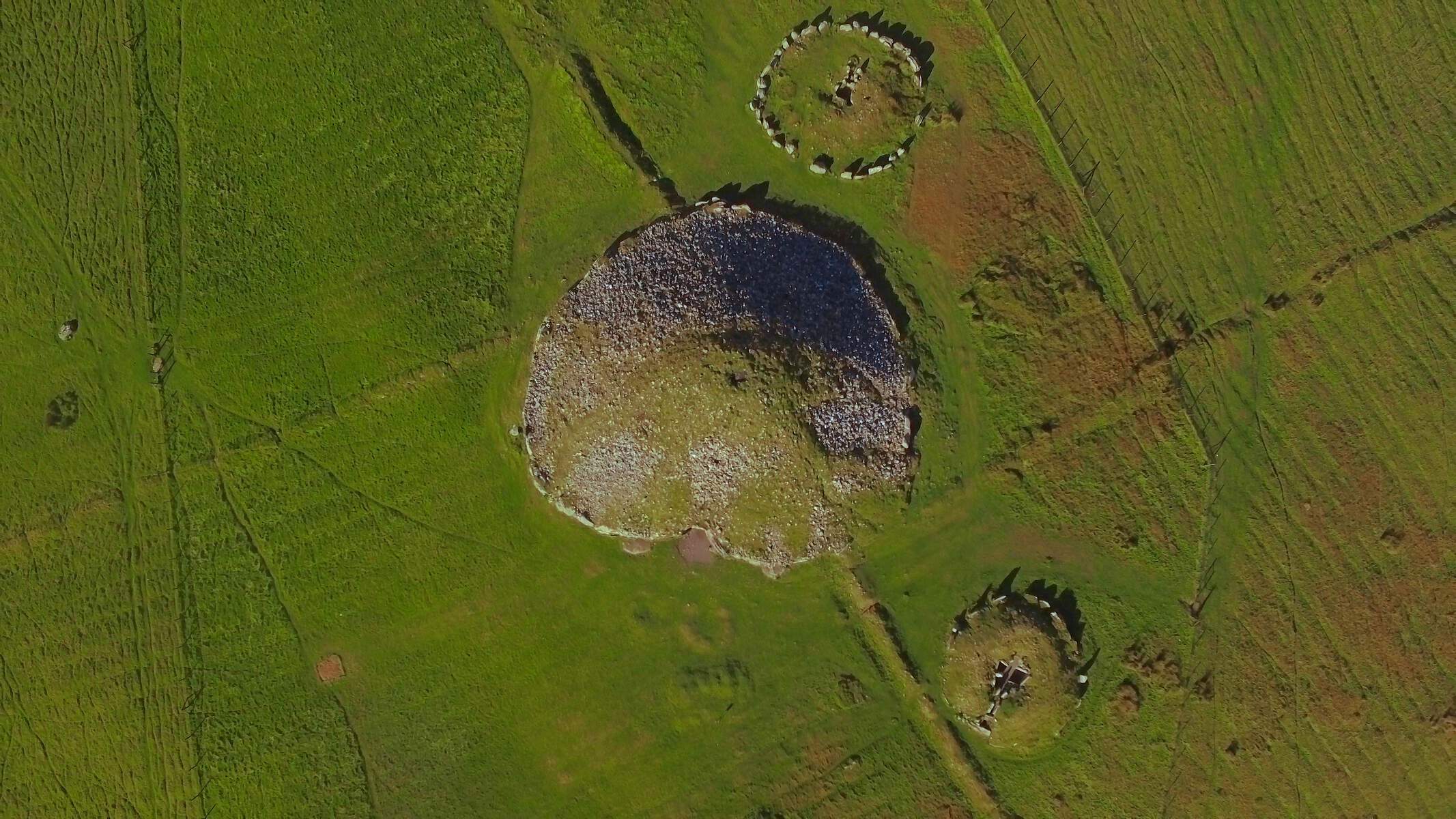
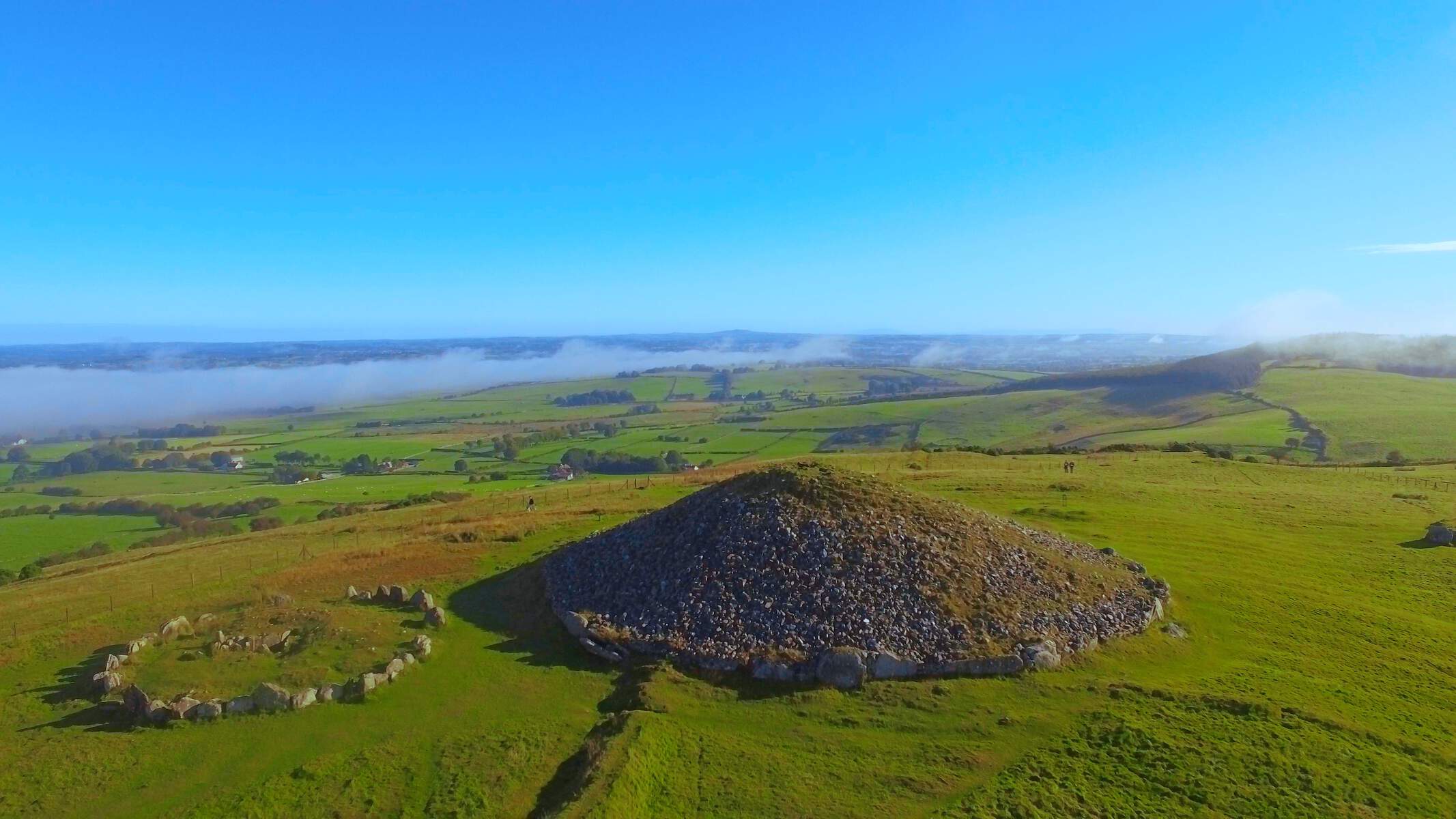
“The Loughcrew cairns, also known as the Hills of the Witch, are a group of Neolithic passage tombs near Oldcastle in County Meath. Spread over four undulating peaks, the tombs are of great antiquity, dating to 3000 BC.
“Cairn T is one of the largest tombs in the complex. Inside it lies a cruciform chamber, a corbelled roof and some of the most beautiful examples of Neolithic art in Ireland. The cairn is aligned to sunrise at the spring and autumn equinoxes and at these times people gather there to greet the first rays of the sun.“
8. Brú na Bóinne Visitor Centre, Newgrange and Knowth, County Meath.
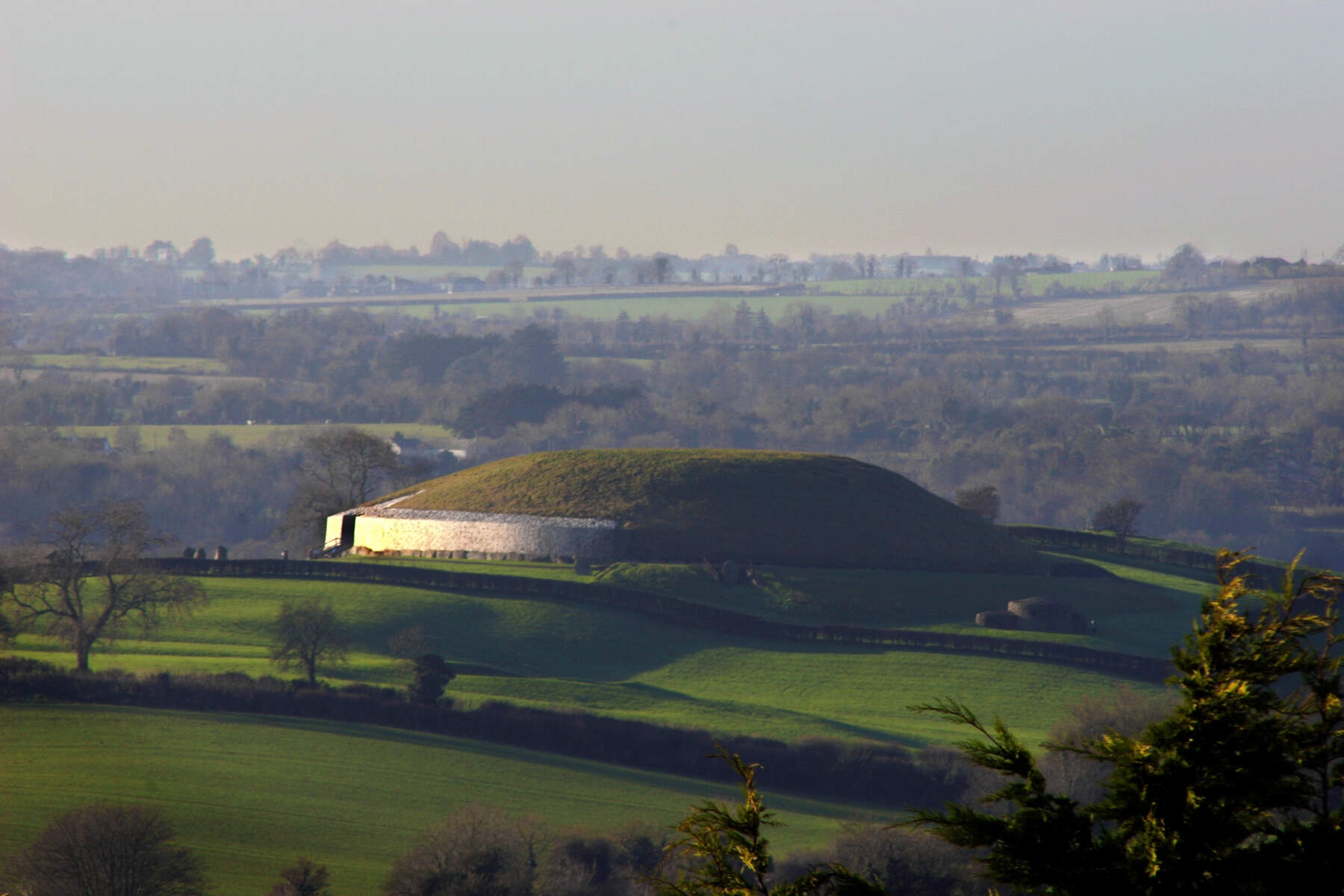
Newgrange, seen from the top of another nearby tumulus, Dowth. Newgrange is a UNESCO World Heritage Site, and dates to some 5,000 years ago…Photograph by Dave Walsh, 2004 for Tourism Ireland. [see 6]
General Information: 041 988 0300, brunaboinne@opw.ie
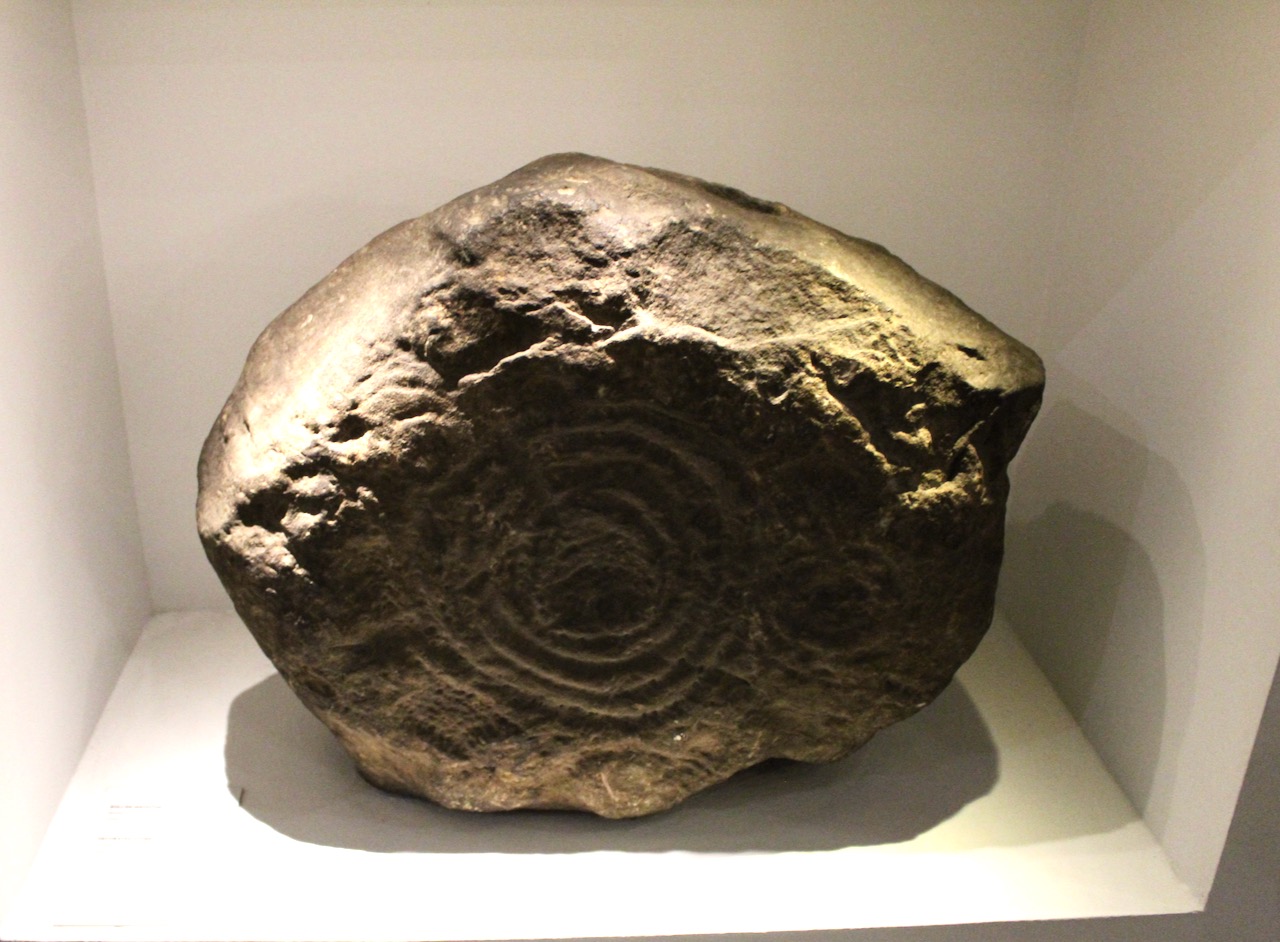
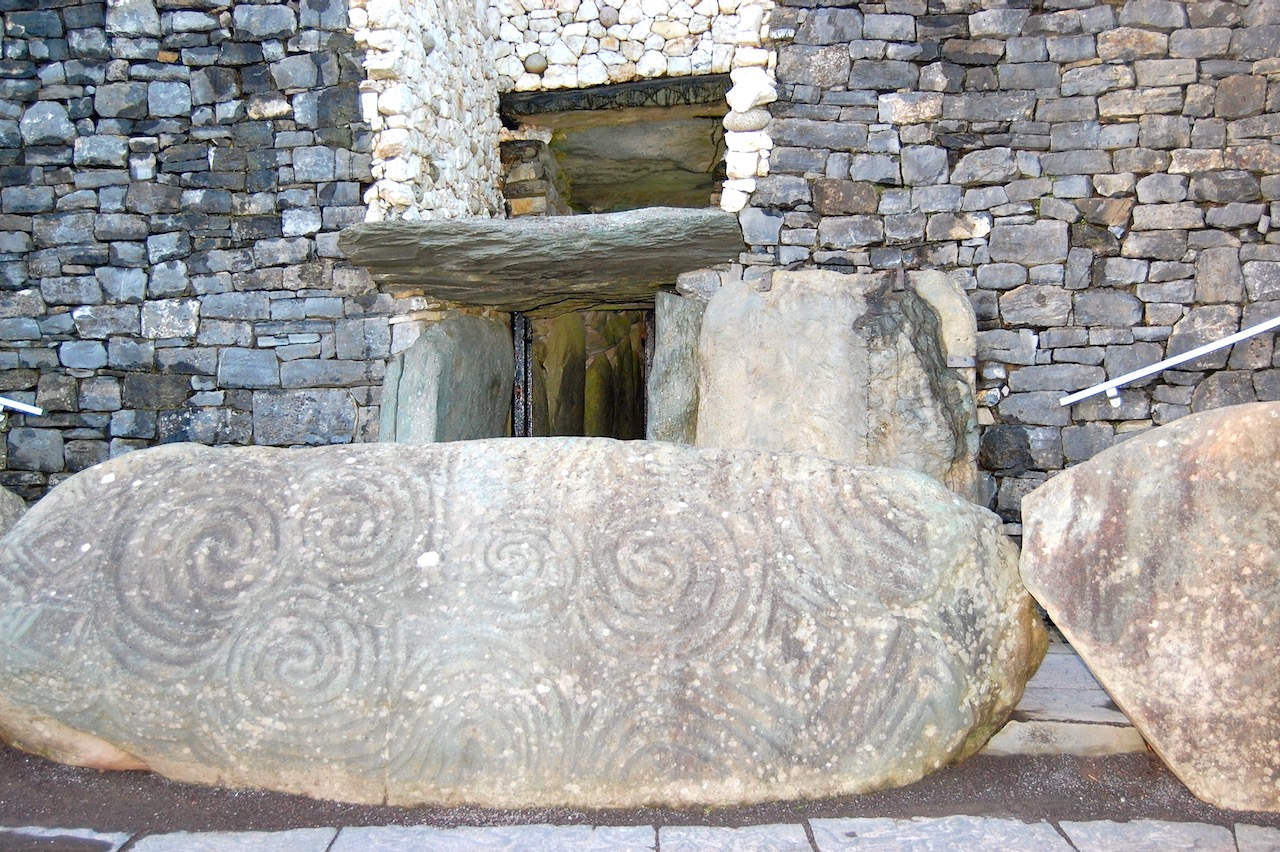
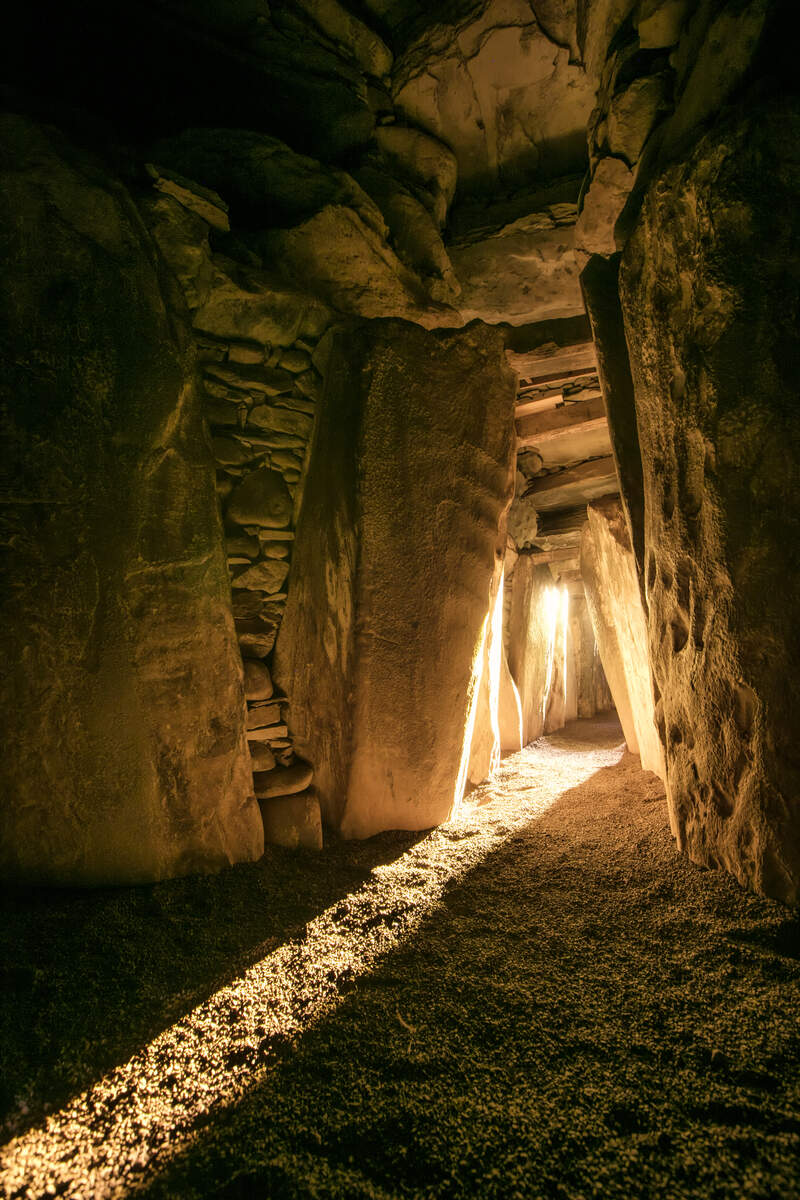
“The World Heritage Site of Brú na Bóinne is Ireland’s richest archaeological landscape and is situated within a bend in the River Boyne. Brú na Bóinne is famous for the spectacular prehistoric passage tombs of Knowth, Newgrange and Dowth which were built circa 3200BC. These ceremonial structures are among the most important Neolithic sites in the world and contain the largest collection of megalithic art in Western Europe.“
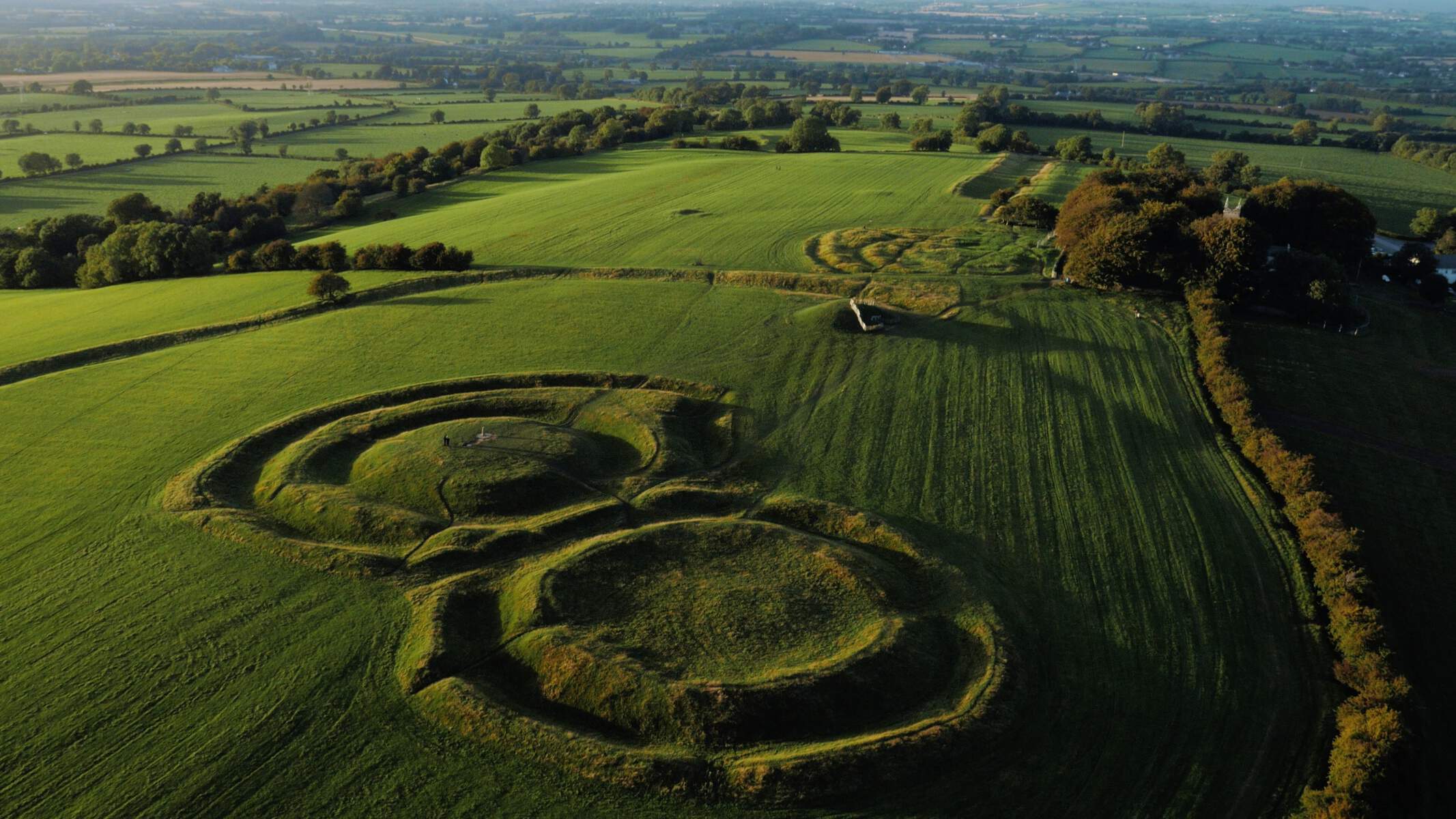
Hill of Tara, County Meath, photograph by macmillan media 2015 for Tourism Ireland, Ireland’s Content Pool. [see 6]Diorama of Tara in the National Museum of Ireland, Kildare Street, Dublin, 2022.Key: 2. Rath/Fort of the Kings, a hilltop enclosure; 3: Royal Seat, a barrow; 4. Cormac’s House, a ringfort; 5. Stone of Destiny, Liah Fail, a standing stone; 6. Mound of the Hostages, a passage tomb; 7. Rath of the Synods, an enclosure; 8. Banqueting Hall, a linear earthwork.
General information: 046 902 5903, hilloftara@opw.ie
From the OPW website:
“The Hill of Tara has been important since the late Stone Age, when a passage tomb was built there. However, the site became truly significant in the Iron Age (600 BC to 400 AD) and into the Early Christian Period when it rose to supreme prominence – as the seat of the high kings of Ireland. All old Irish roads lead to this critical site.
“St Patrick himself went there in the fifth century. As Christianity achieved dominance over the following centuries, Tara’s importance became symbolic. Its halls and palaces have now disappeared and only earthworks remain.
“There are still remarkable sights to be seen, however. Just one example is the Lia Fáil – the great coronation stone and one of the four legendary treasures of the Tuatha Dé Danann – which stands proudly on the monument known as An Forradh.
“Guided tours of the site will help you understand the regal history of this exceptional place and imagine its former splendour.“
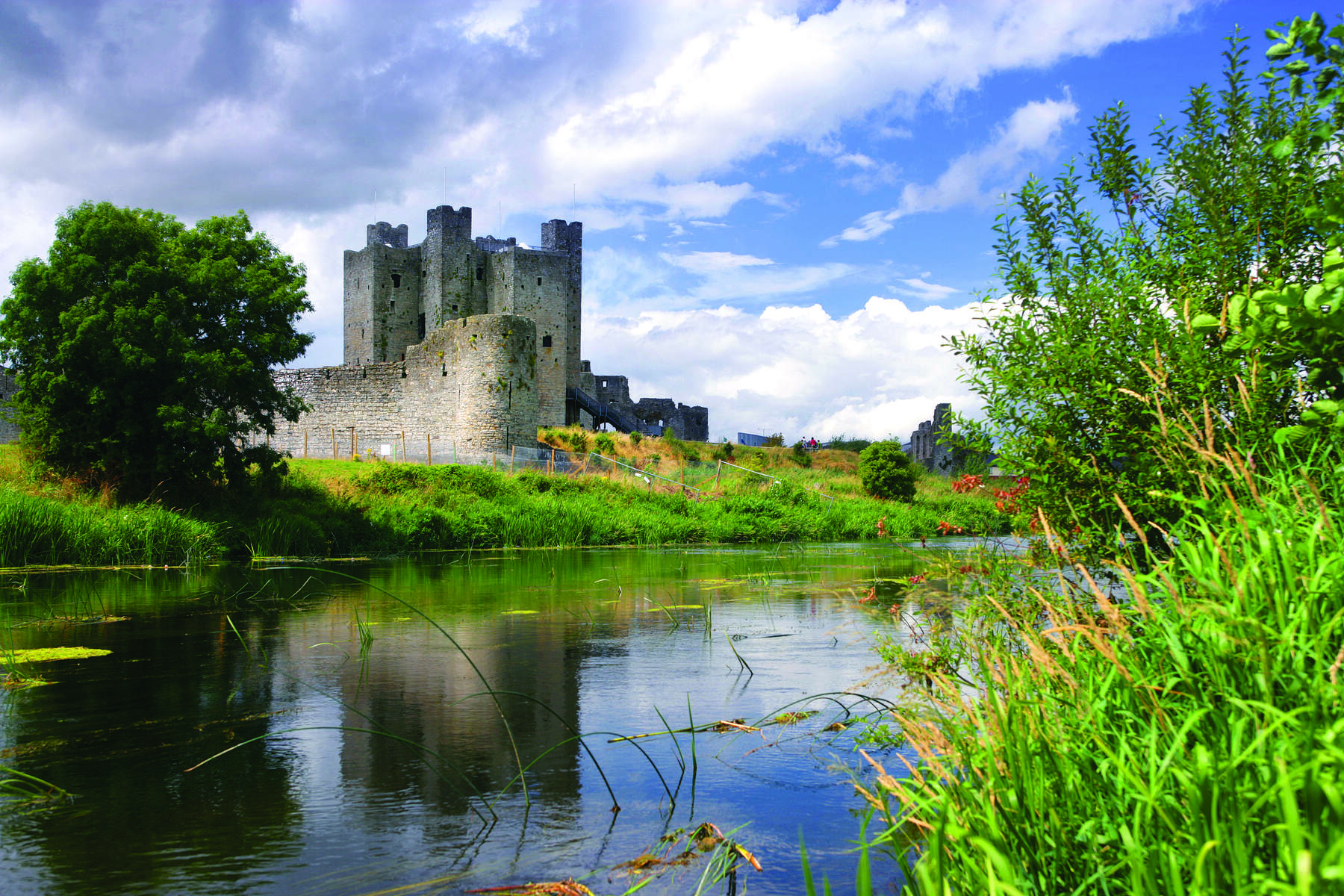
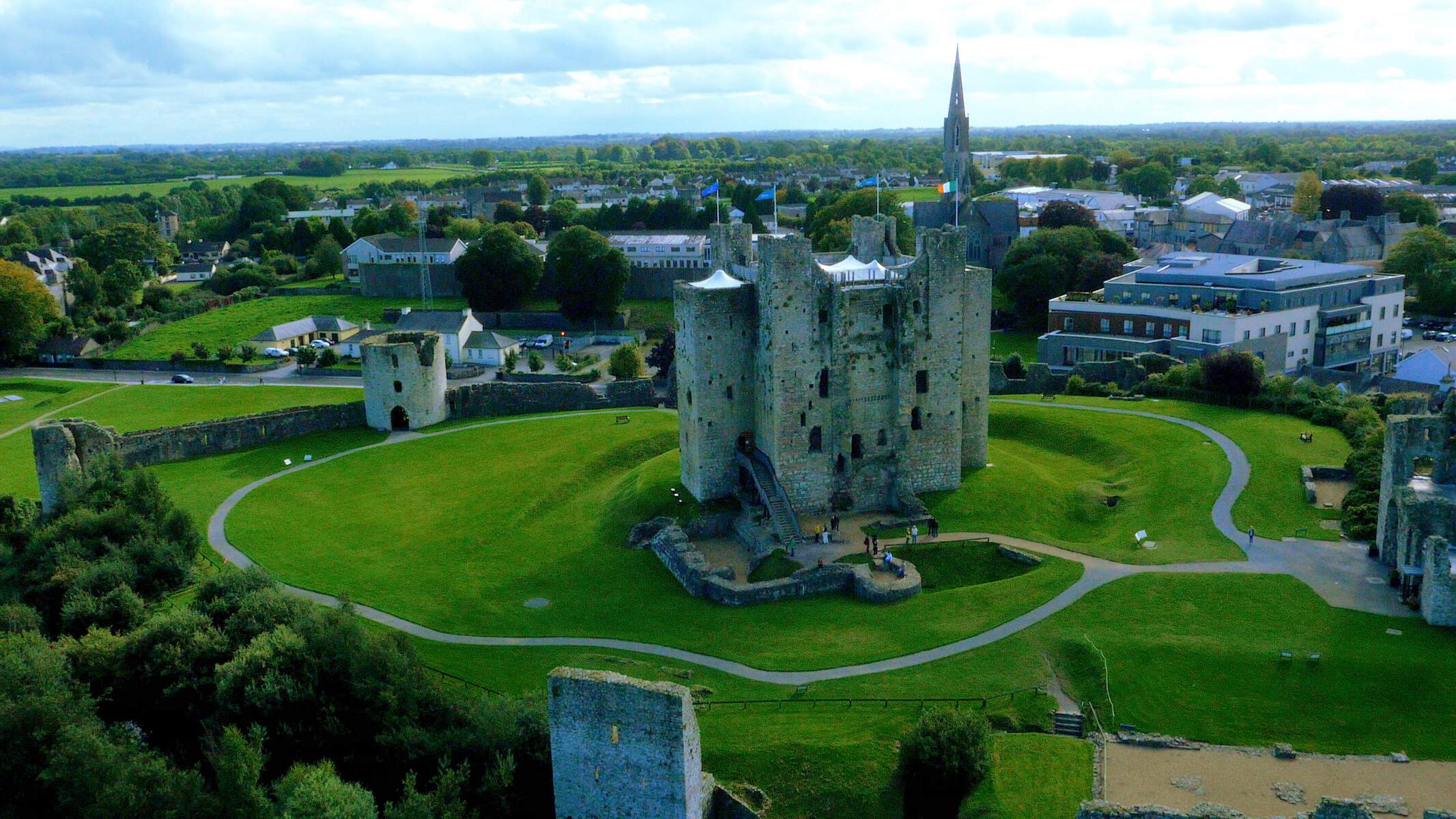
Trim Castle and the River Boyne, photograph by Brian Morrison, 2015 for Tourism Ireland, Ireland’s Content Pool. [see 6]Trim Castle and the River Boyne, photograph by macmillan media, 2015 for Tourism Ireland, Ireland’s Content Pool. [see 6]
General information: 046 943 8619, trimcastle@opw.ie
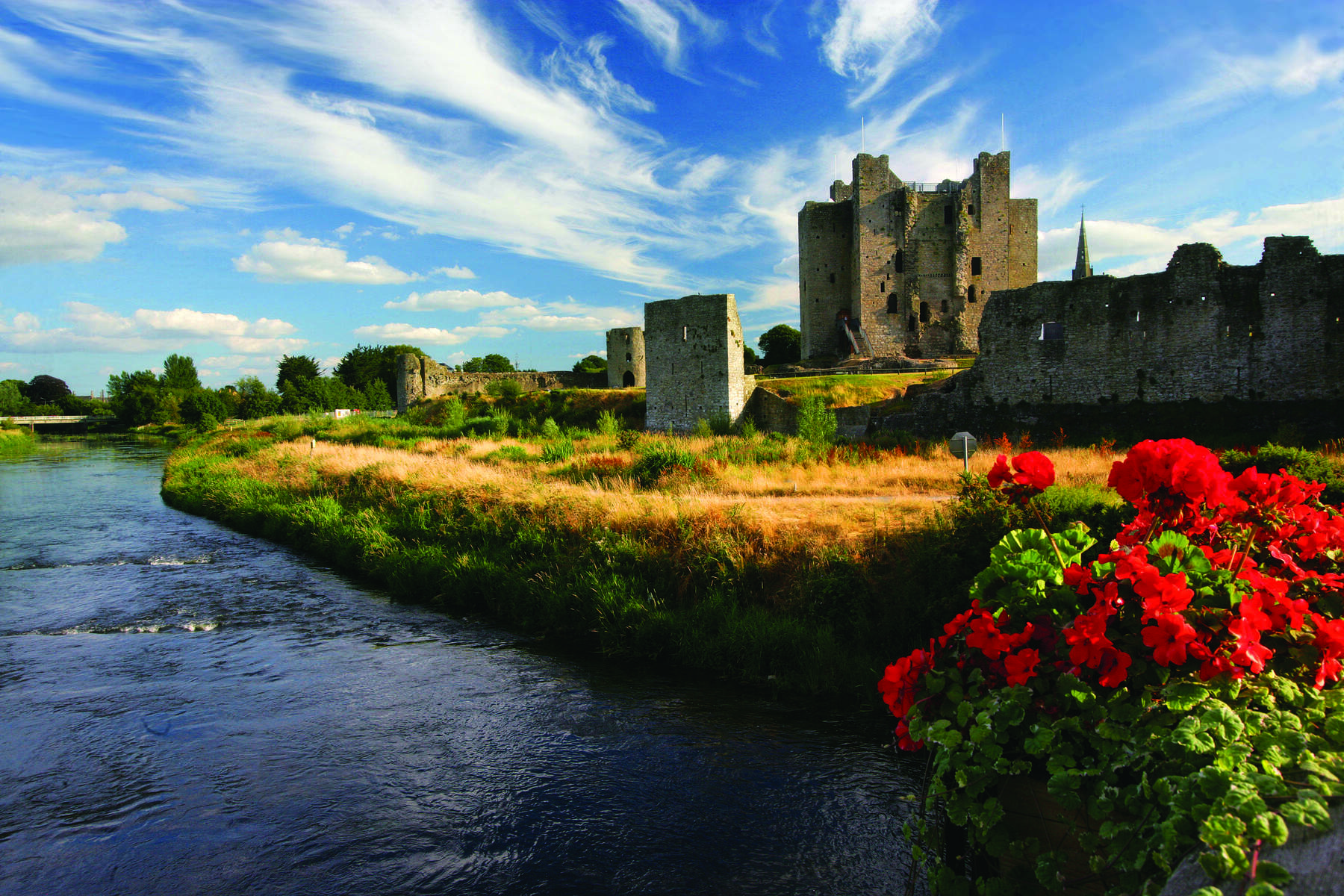
“Few places in Ireland contain more medieval buildings than the heritage town of Trim. Trim Castle is foremost among those buildings.
“In fact, the castle is the largest Anglo-Norman fortification in Ireland. Hugh de Lacy and his successors took 30 years to build it.
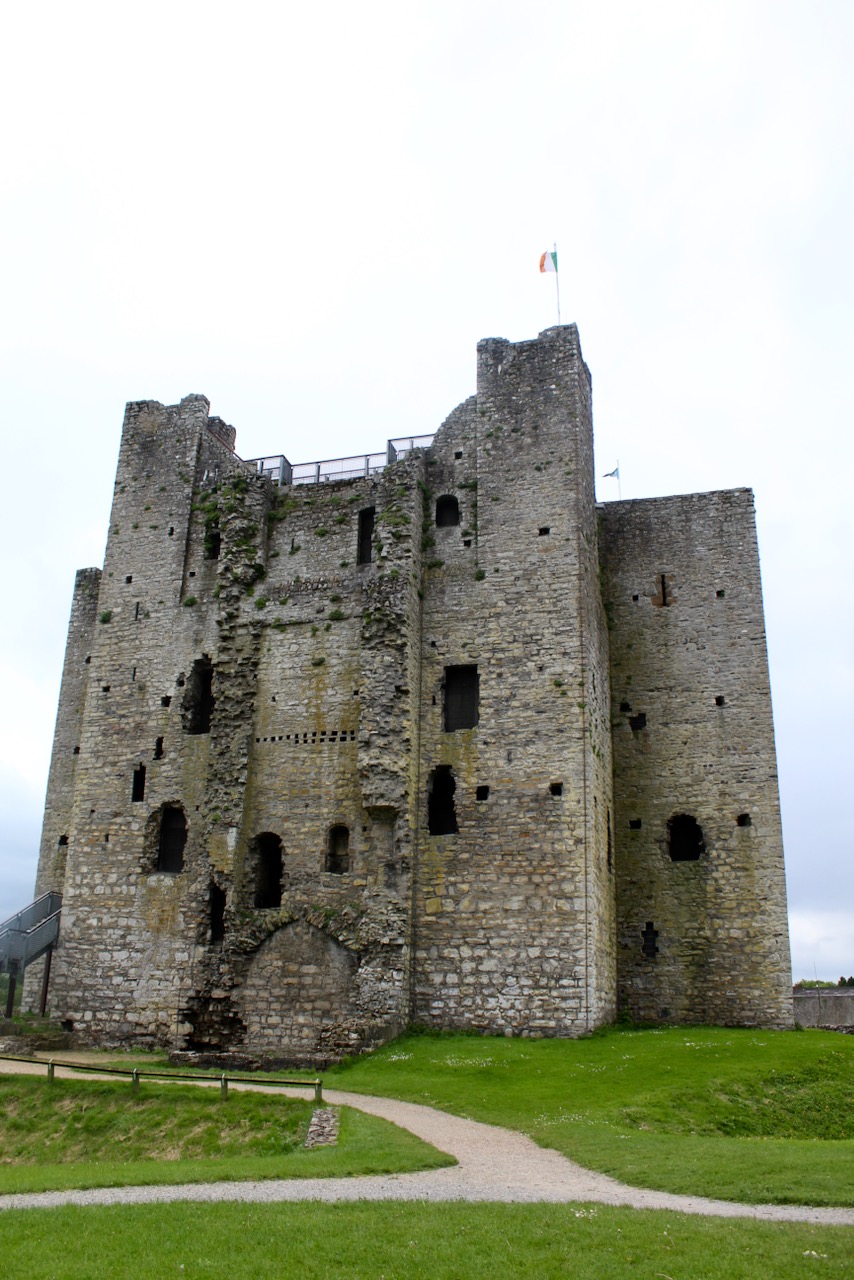
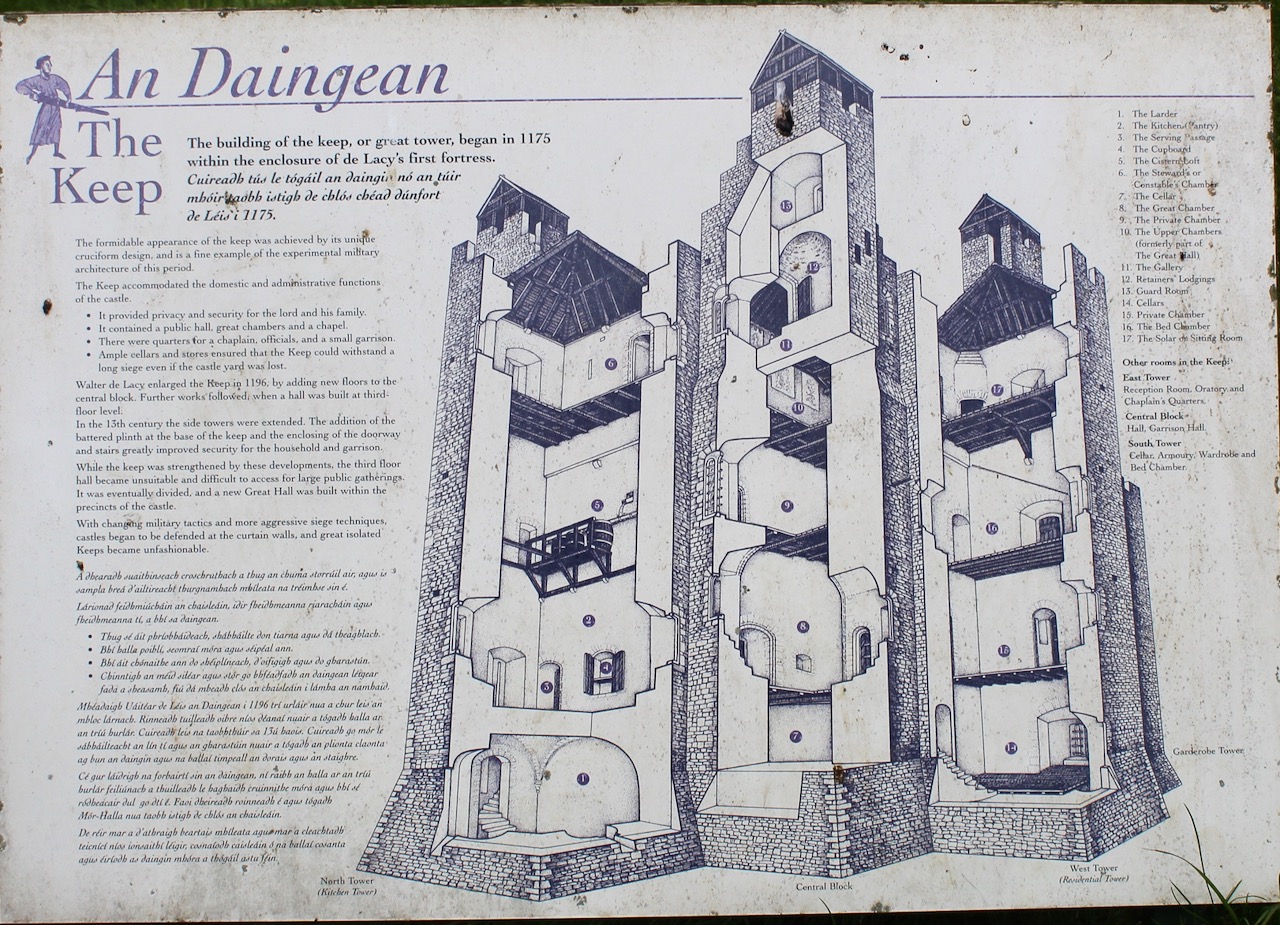
“The central fortification is a monumental three-storey keep. This massive 20-sided tower, which is cruciform in shape, was all but impregnable in its day. It was protected by a ditch, curtain wall and water-filled moat.
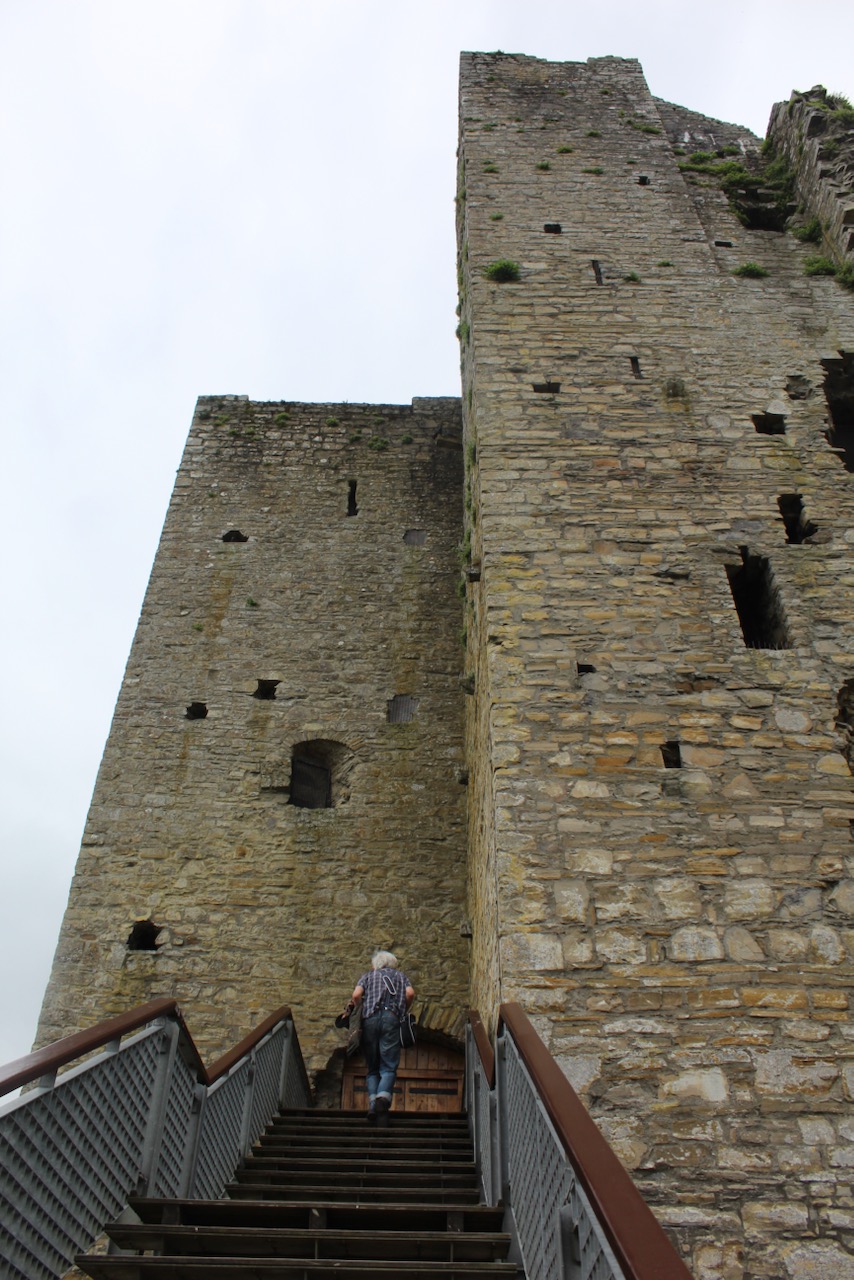
“Modern walkways now allow you to look down over the interior of the keep – a chance to appreciate the sheer size and thickness of the mighty castle walls.
“The castle is often called King John’s Castle although when he visited the town he preferred to stay in his tent on the other side of the river. Richard II visited Trim in 1399 and left Prince Hal later Henry V as a prisoner in the castle.” I never knew we had such a link to King Henry V and Shakespeare’s play, Henry IV!
Trim Castle and the River Boyne, photograph by Brian Morrison, 2006 for Tourism Ireland, Ireland’s Content Pool. [see 6]
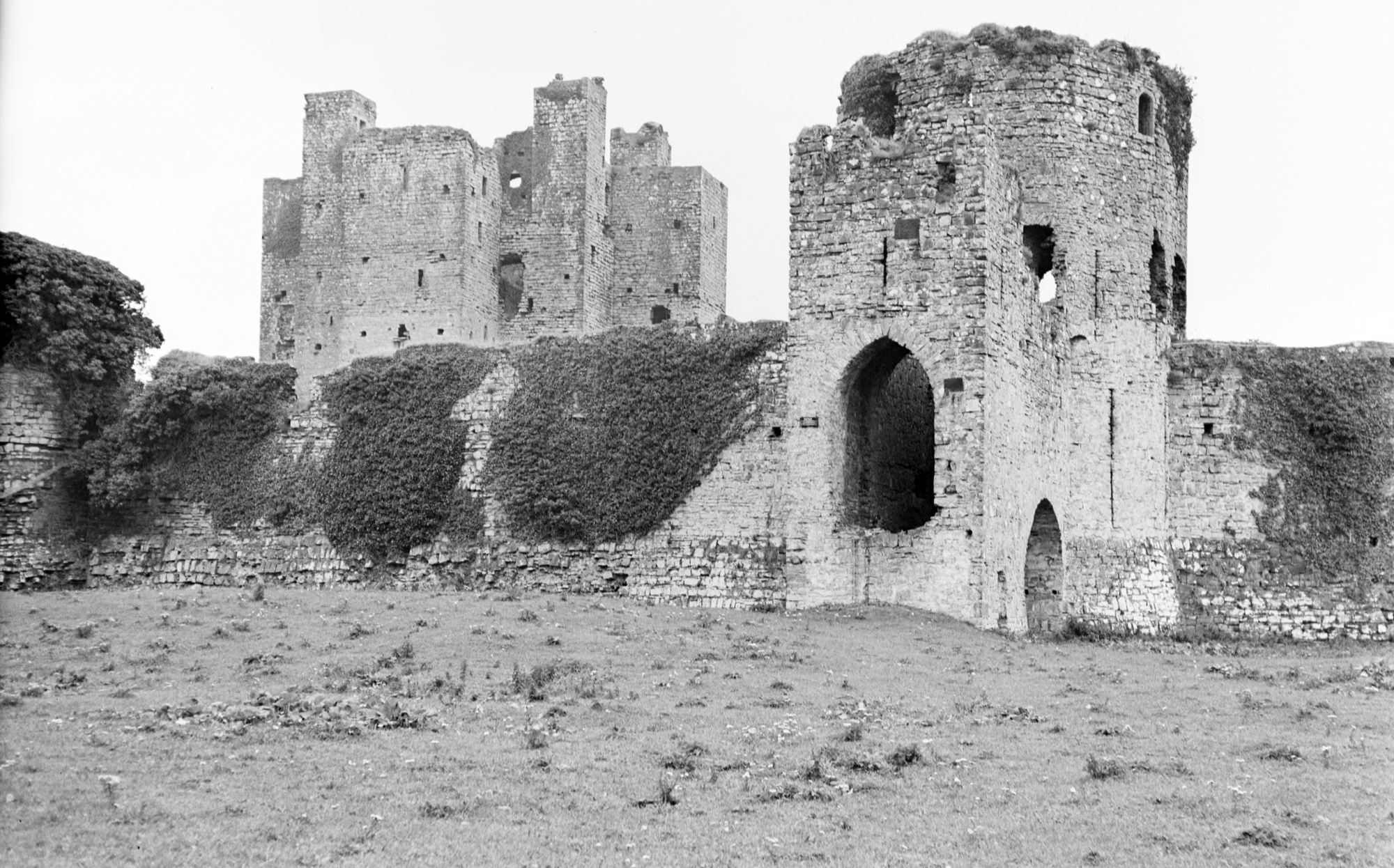
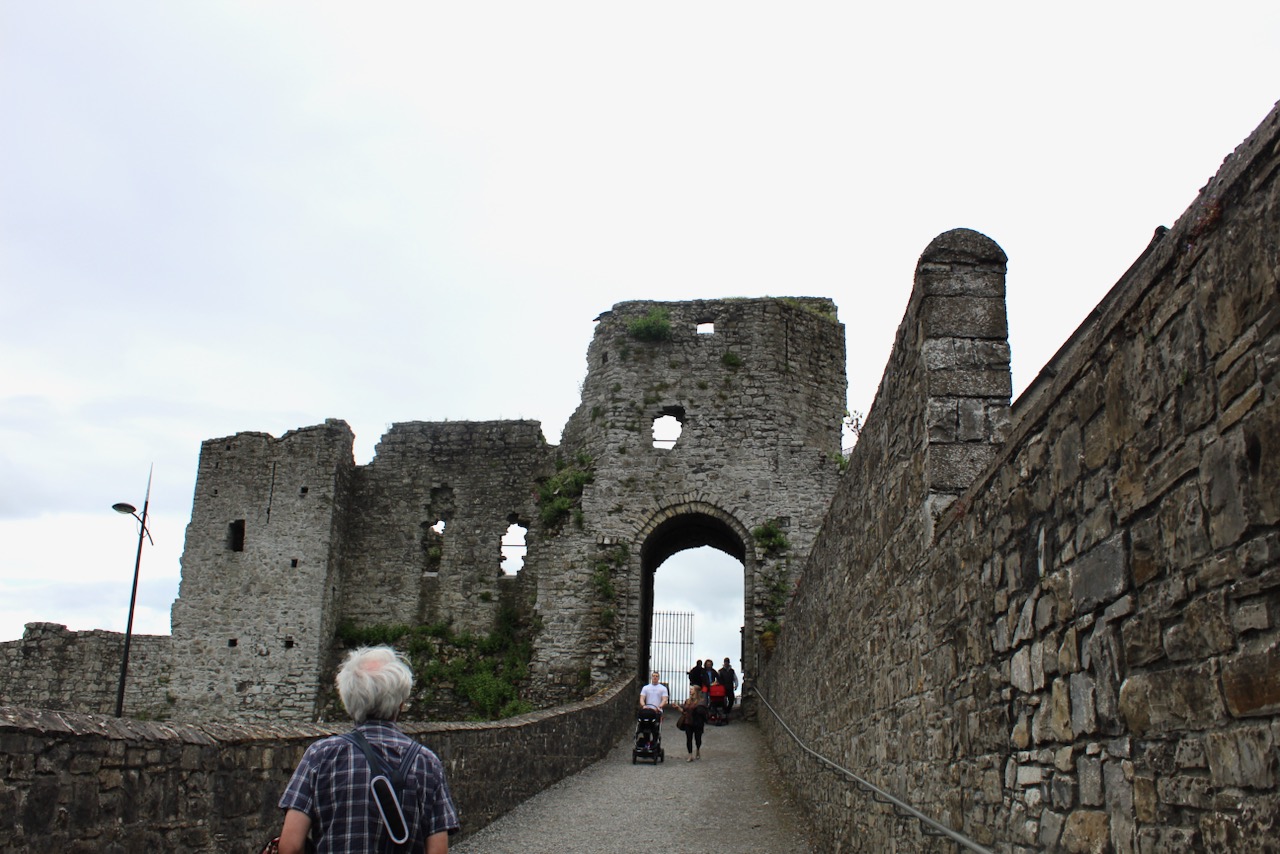
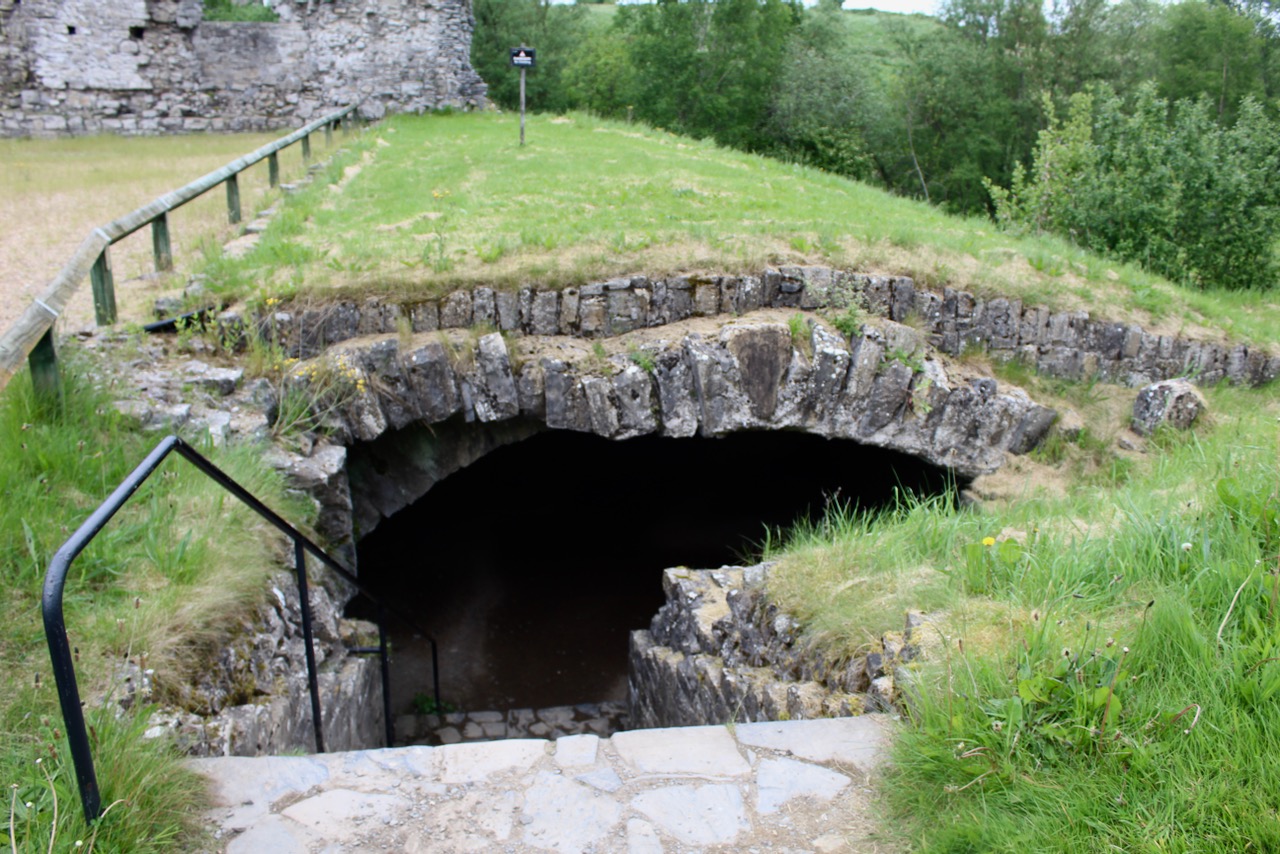
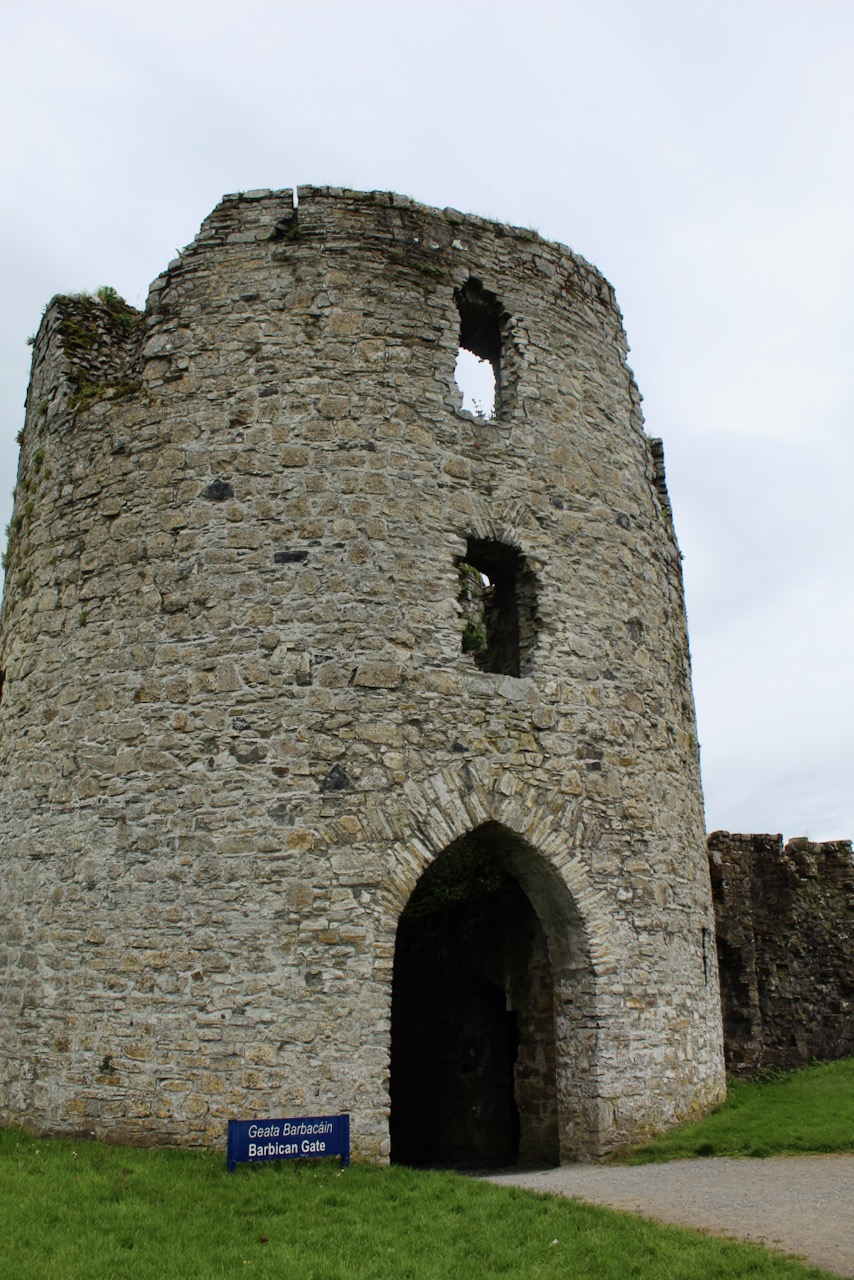
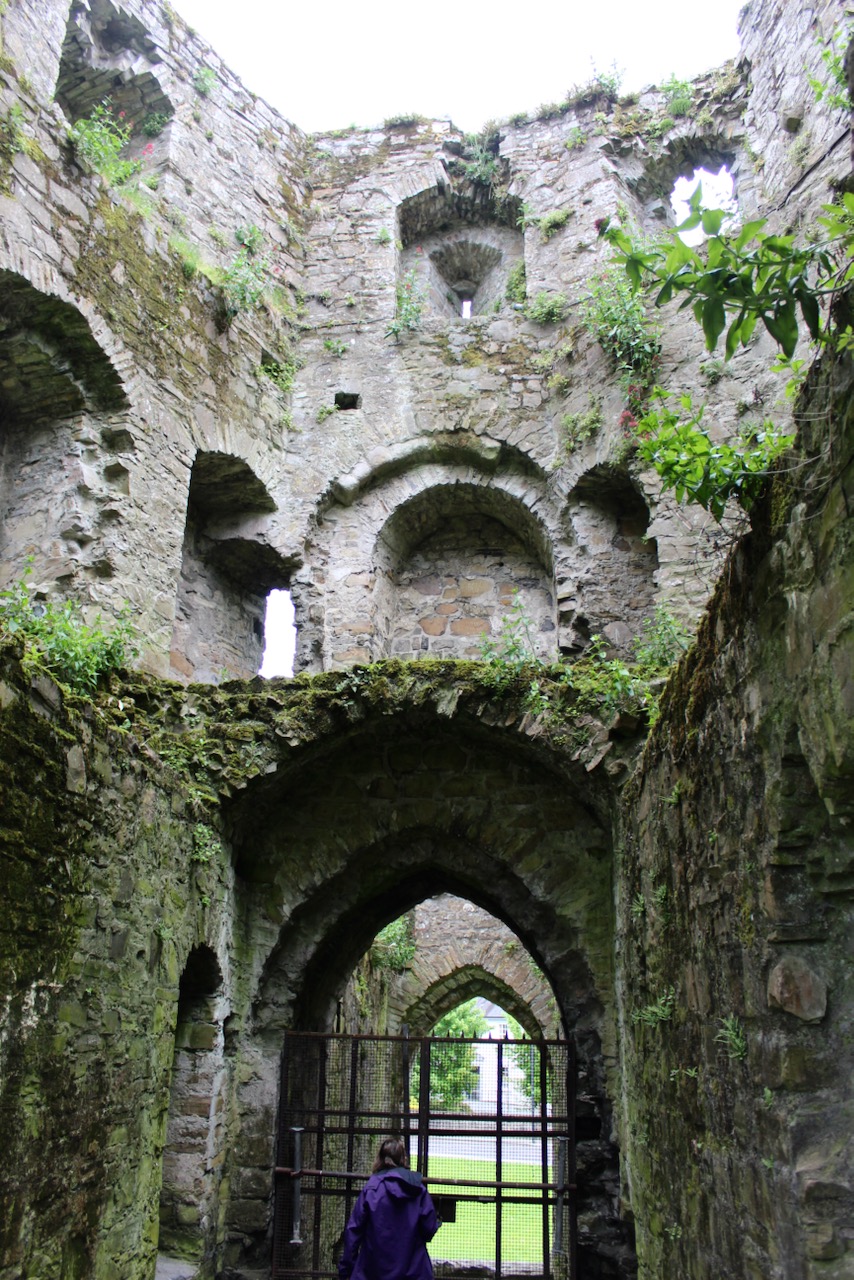
Patrick Comerford gives an excellent history of Trim Castle in his blog. [18] The castle stands within a three acre bailey, surrounded by a defensive perimeter wall. The curtain wall of the castle is fortified by a series of semicircular open-back towers. There were two entrances to Trim Castle, one, beside the car park, is flanked by a gatehouse, and the second is a barbican gate and tower. [19]
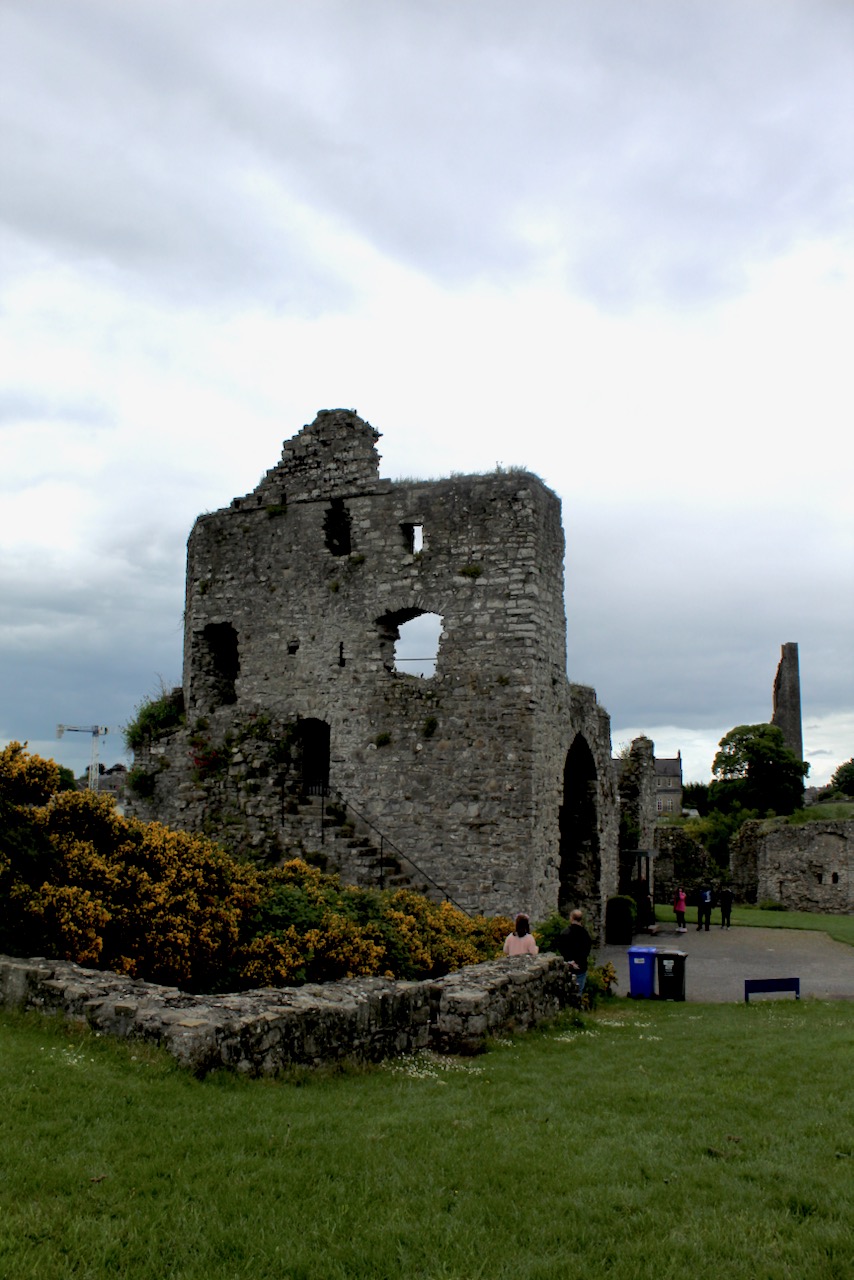
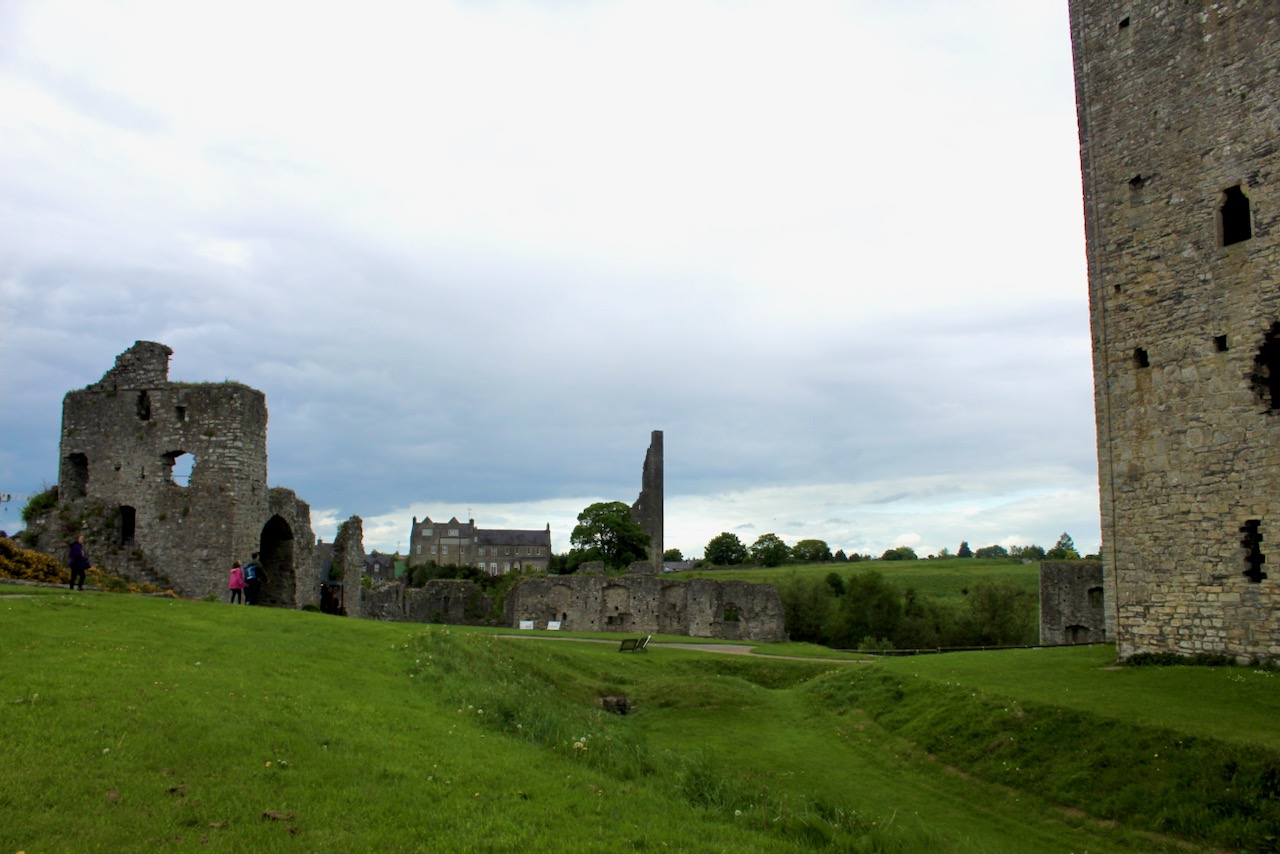
We visited in May 2022, after visiting St. Mary’s Abbey (also called Talbot’s Castle) – more on that soon. We were late entering so the entry to inside the castle was closed, unfortunately – we shall have to visit again!
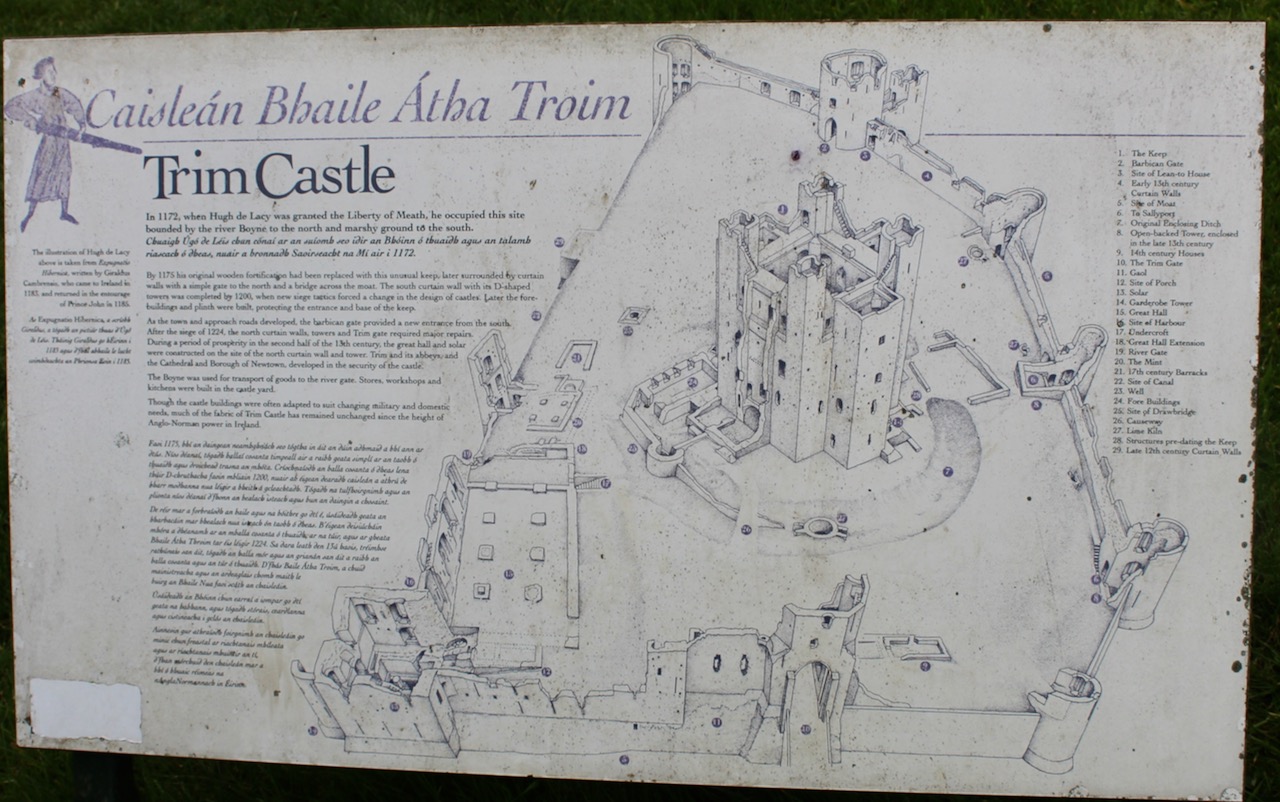
The information board tells us that in 1182 when Hugh de Lacy was granted the Liberty of Meath, he occupied this site bounded by the River Boyne to the north and marshy ground to the south. By 1175 his original wooden fortification had been replaced by this unusual keep, later surrounded by curtain walls with a simple gate to the north and a bridge across the moat. The south curtain wall with its D shaped buildings was completed by 1200, when new siege tactics forced a change in the design of castles. Later, the forebuildings and plinth were built, protecting the entrance and base of the keep.
Trim Castle, May 2022.
Sometime before 1180, Hugh de Lacy replaced the timber palisade fence enclosing the keep with a stone enclosure. The fore-court enclosed stables and stores and protected the stairway and door to the keep. The new entrance was on the north side of the enclosure and had a drawbridge over the deepened ditch.
With the development of the curtain walls, the inner enclosure became obsolete.
The ditch was filled and three defensive towers – two survive – were built on its site. The drawbridge was replaced by a stone causeway leading to an arched gate and entrance stairway. A reception hall was built to accommodate visitors before they entered the Keep.
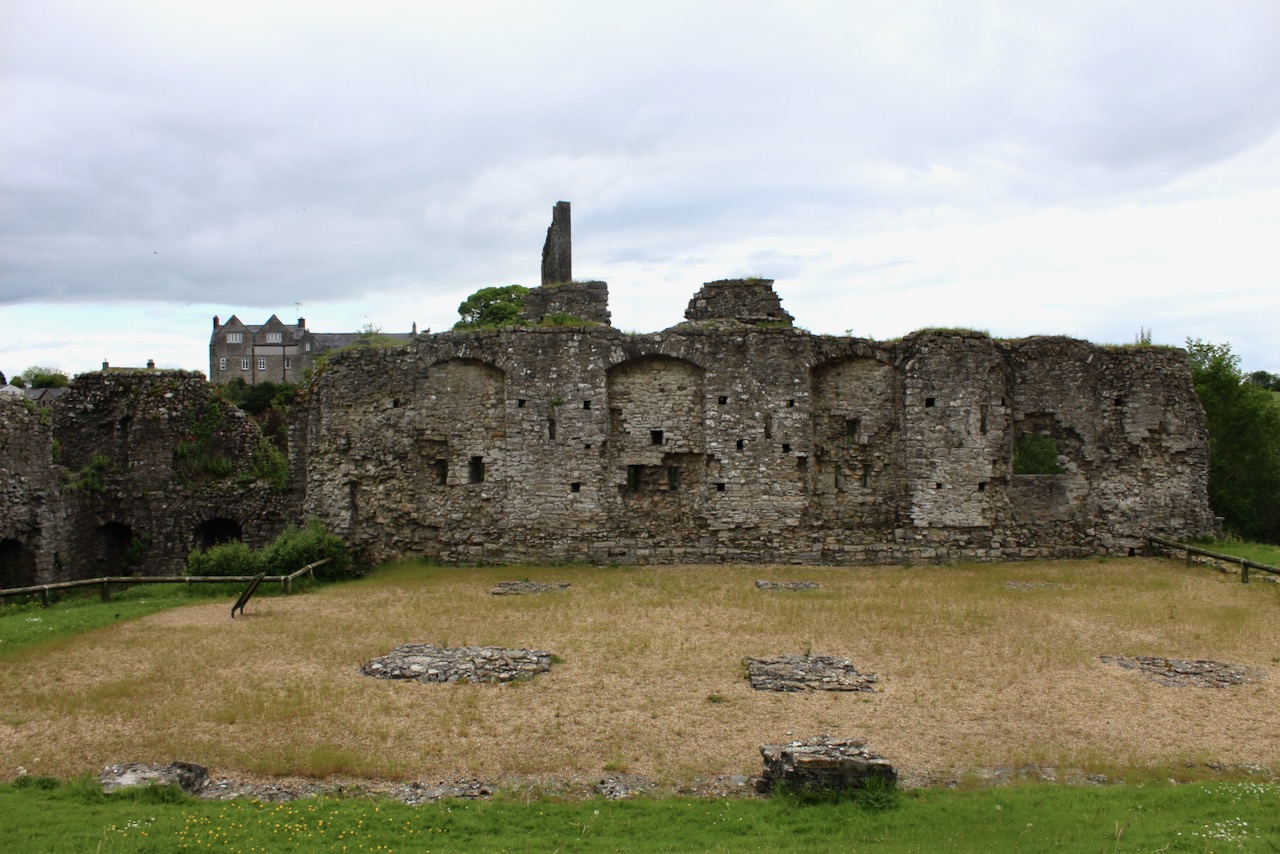
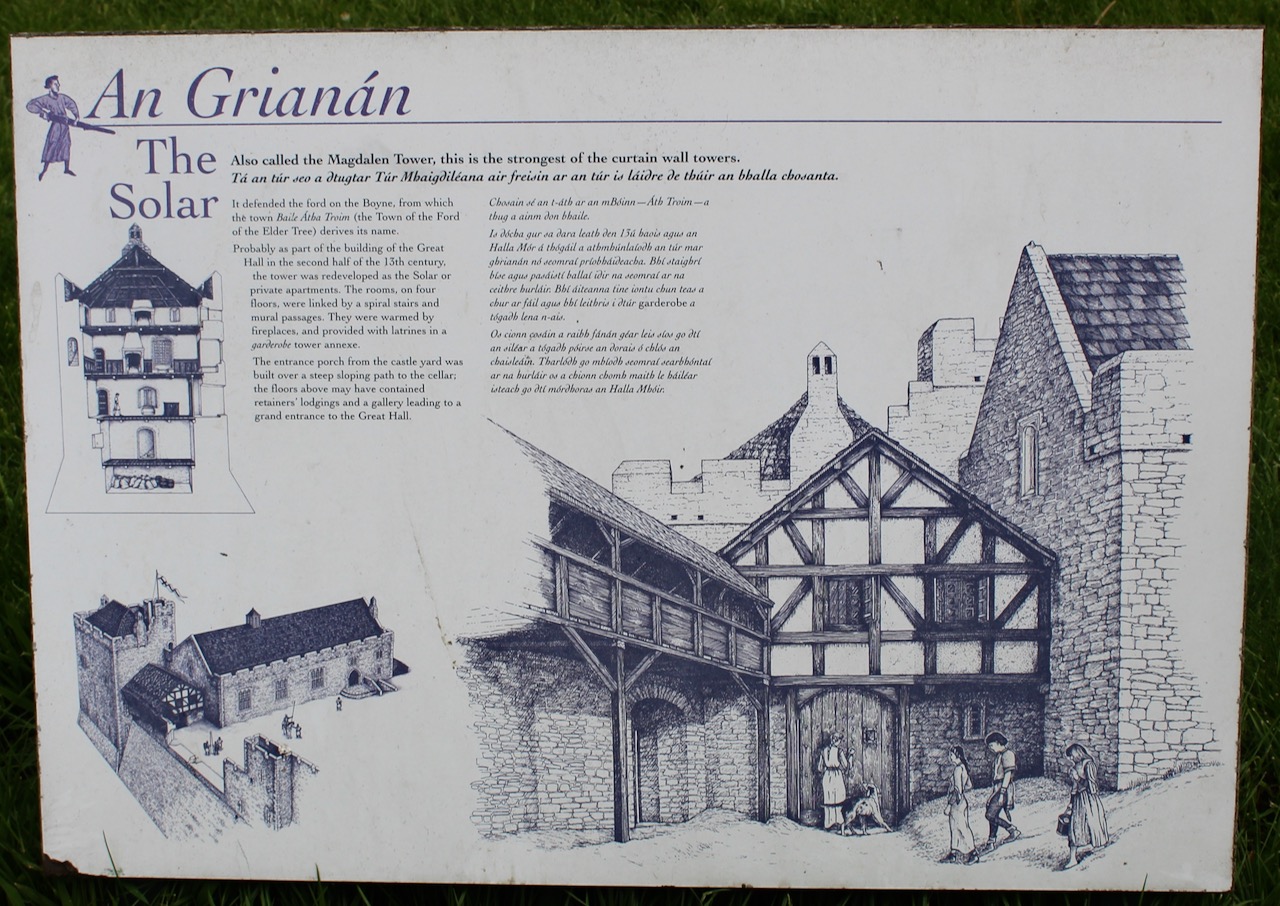
As the town and approach roads developed, the barbican gate provided a new entrance from the south. After the siege of 1224, the north curtain walls, towers and Trim gate required major repairs. During a period of prosperity in the second half of the 13th century, the great hall and solar were constructed on the site of the north curtain wall and tower. Trim and its abbeys and the Cathedral and borough of Newtown developed in the security of the castle.
The Boyne was used for transport of goods to the river gate. Stores, workshops and kitchens were built in the castle yard.
Though the castle buildings were often adapted to suit changing military and domestic needs, much of the fabric of Trim Castle has remained unchanged since the height of Anglo-Norman power in Ireland.
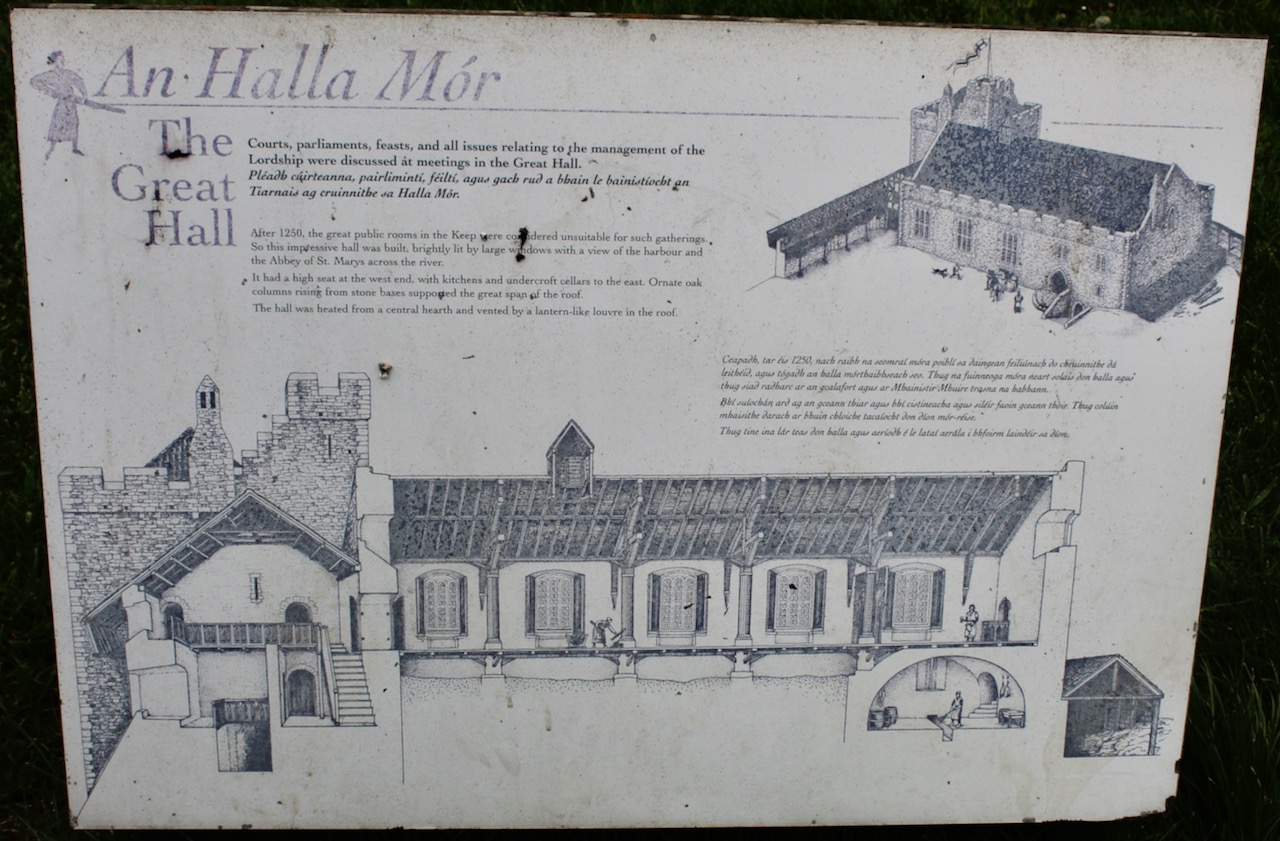
The information board tells us that courts, parliaments, feasts and all issues relating to the management of the Lordship were discussed at meetings in the Great Hall. After 1250, the great public rooms in the Keep were considered unsuitable for such gatherings, so this hall was built, lit by large windows with a view of the harbour and the Abbey of St. Mary’s across the river. The hall had a high seat at the west end, with kitchens and undercroft cellars to the east. Ornate oak columns rising from stone bases supported the great span of the roof.
The hall was heated from a central hearth and vented by a lantern-like louvre in the roof.
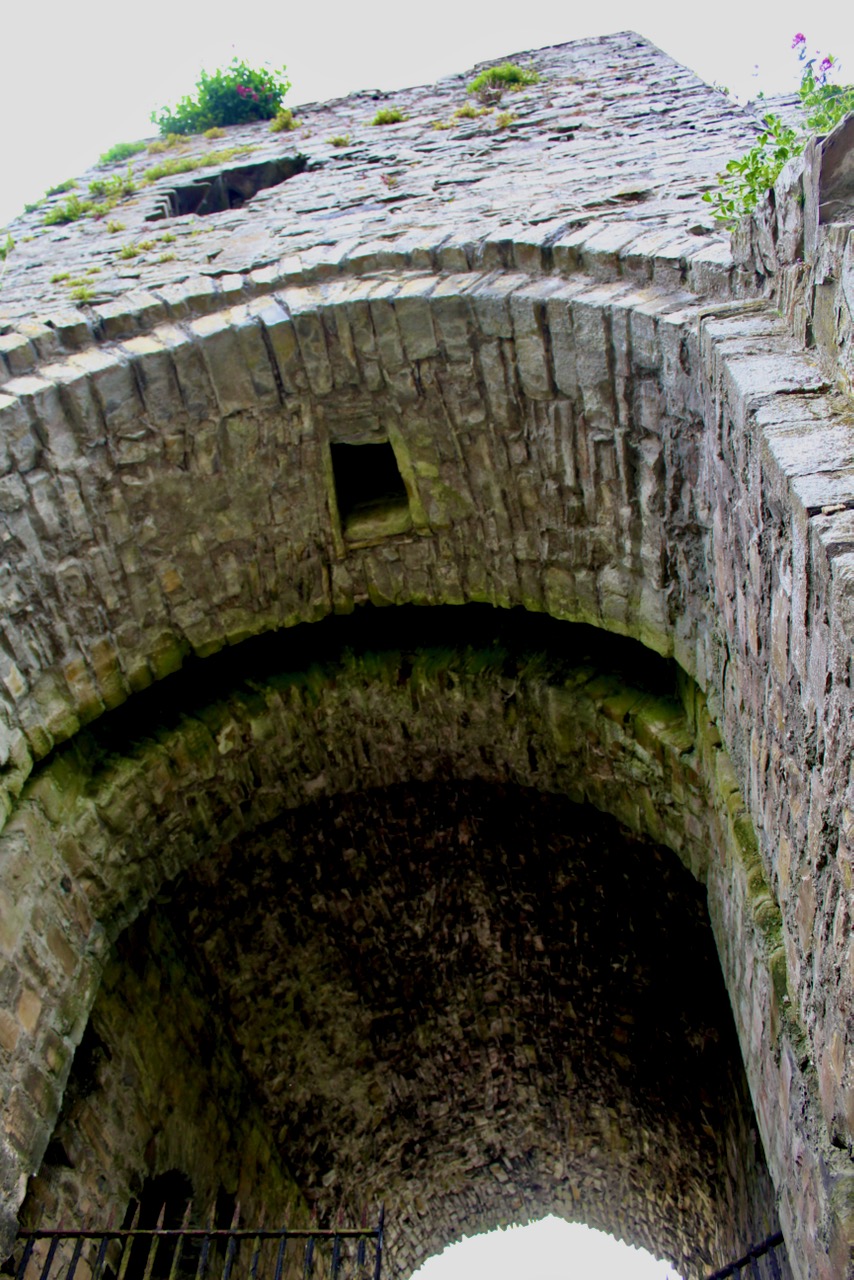
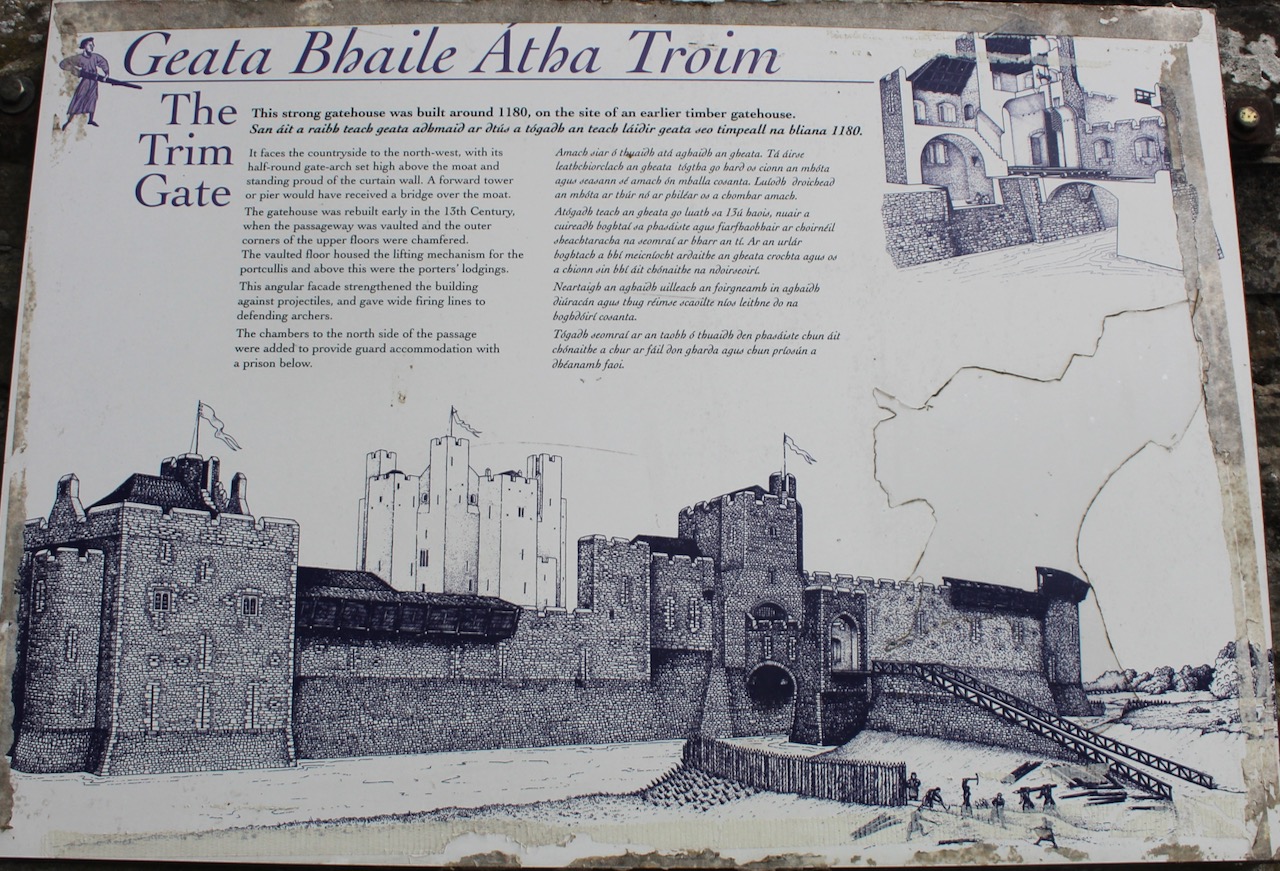
Early in the 13th century the weirs were completed on the Boyne, allowing the moat to be flooded, and the Leper River was channelled along the south curtain wall. A new gate was constructed guarding the southern approaches to the castle. This gatehouse, of a rare design, was built as a single cylindrical tower with a “barbican,” defences of a forward tower adn bridge. An elaborate system of lifting bridges, gates and overhead traps gave the garrison great control over those entering the castle. The arrangement of plunging loops demonstrates the builders’ knowledge of the military requirements of defending archers.
By the middle of the 13th century, the design of castle gates was further developed and a twin tower gatehouse with a passage between the two towers became standard.
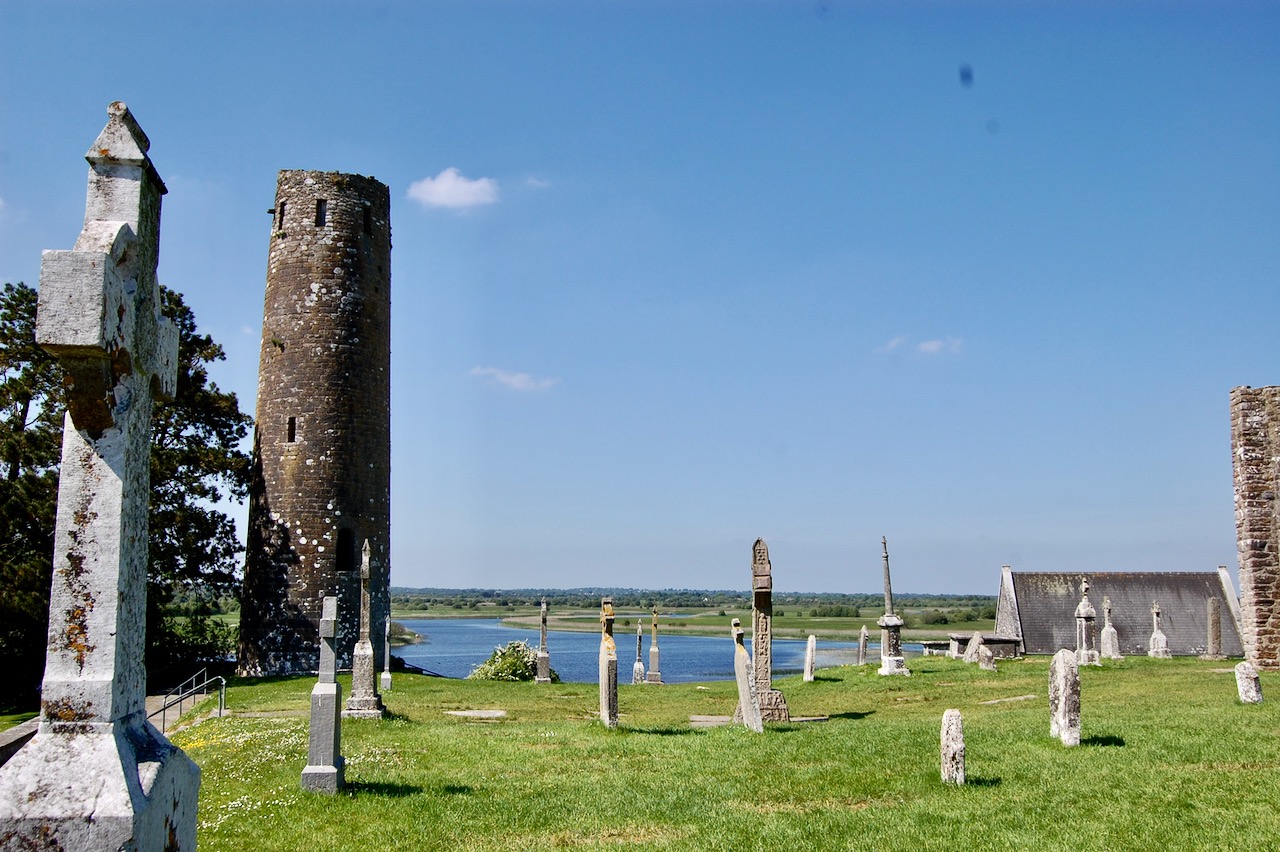
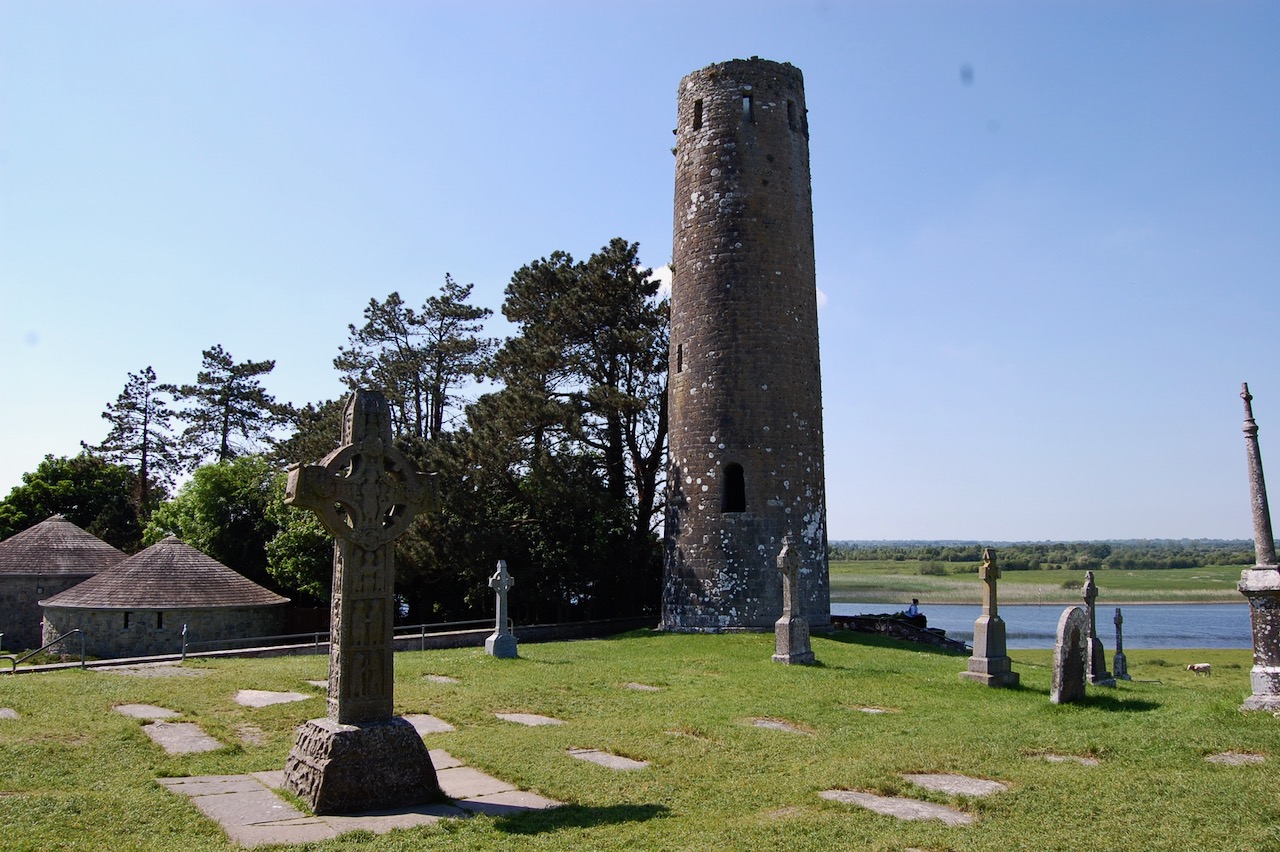
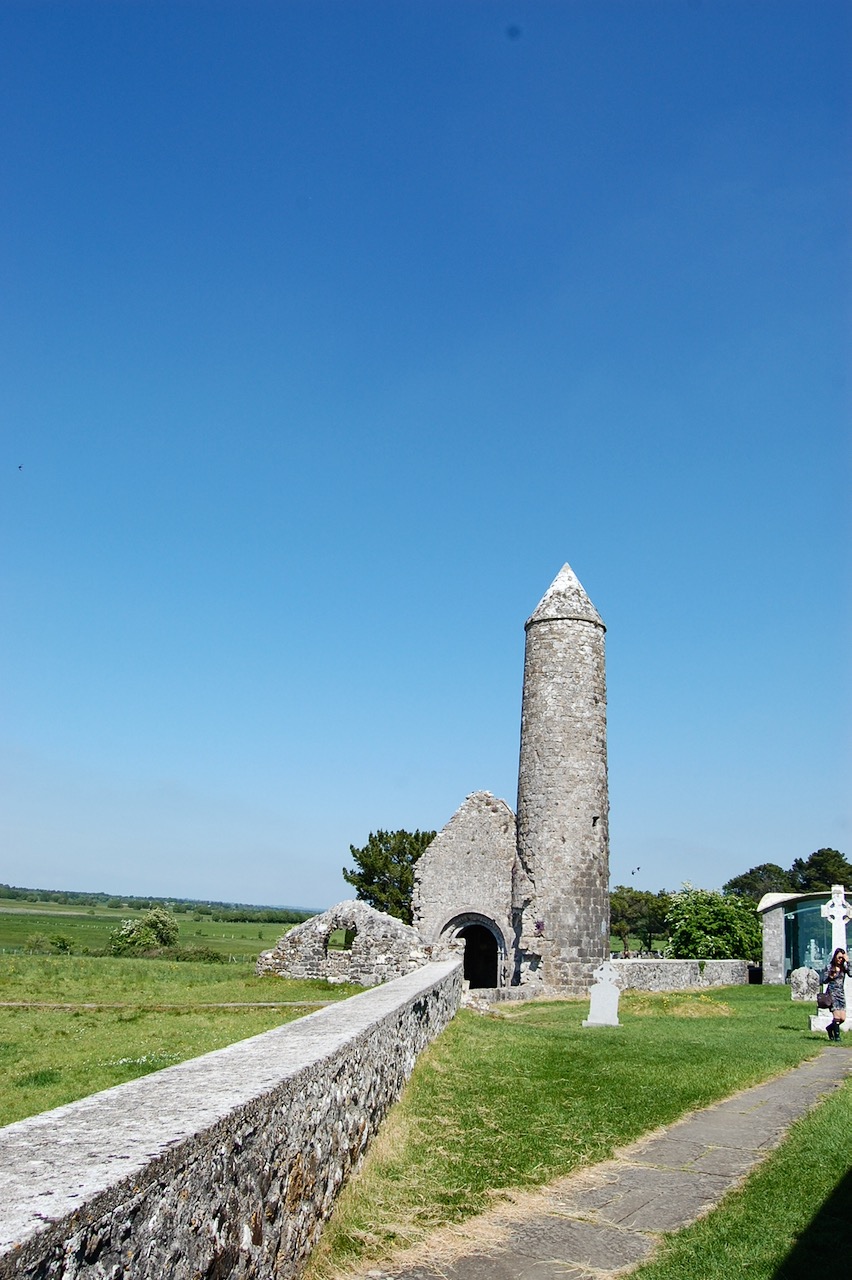
“St Ciarán founded his monastery on the banks of the River Shannon in the 6th Century. The monastery flourished and became a great seat of learning, a University of its time with students from all over Europe.
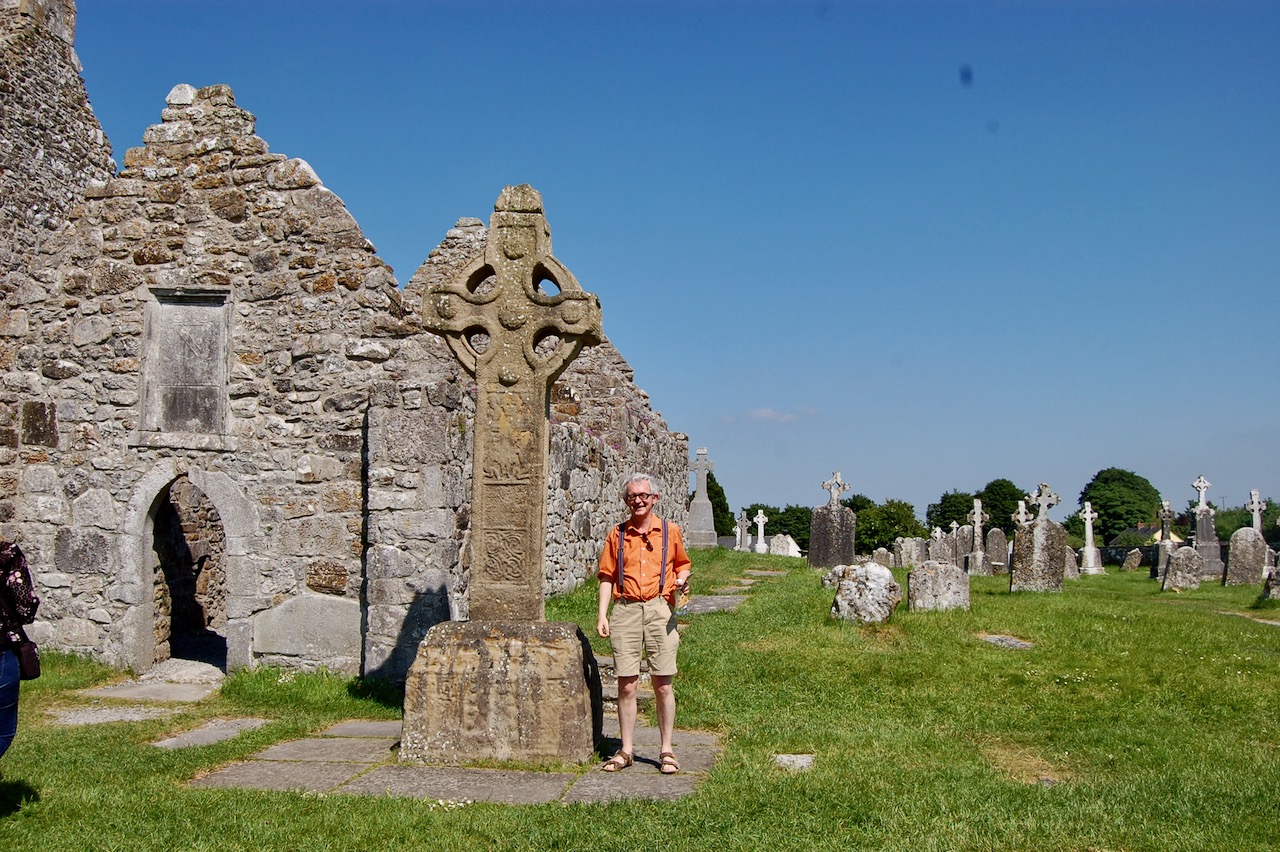
“The ruins include a Cathedral, two round Towers, three high crosses, nine Churches and over 700 Early Christian graveslabs.
“The original high crosses, including the magnificent 10th century Cross of the Scriptures area on display in a purpose built visitor centre adjacent the monastic enclosure.
“An audiovisual presentation will give you an insight into the history of this hallowed space.“
[3] p. 119. Bence-Jones, Mark. A Guide to Irish Country Houses (originally published as Burke’s Guide to Country Houses volume 1 Ireland by Burke’s Peerage Ltd. 1978); Revised edition 1988, Constable and Company Ltd, London.
Canonbrook, Lucan: “Detached multiple-bay two-storey over basement house, c.1800, on an L-plan. A handsome, substantial rural Georgian house which, though altered, retains its imposing form and feel, and is situated in mature grounds. Historically important as the former home of James Gandon.”Gandon is also said to have designed Primrose Hill House in Lucan, which is a section 482 property.
[9] p. 96. Sadleir, Thomas U. and Page L. Dickinson. Georgian Mansions in Ireland with some account of the evolution af Georgian Architecture and Decoration. Dublin University Press, 1915.
[10] p. 356. Tierney, Andrew. The Buildings of Ireland: Central Leinster: Kildare, Laois and Offaly. Yale University Press, New Haven and London, 2019.
[11] p. 61. O’Reilly, Sean. Irish Houses and Gardens. From the Archives of Country Life. Aurum Press Ltd, London, 1998.
[13] p. 175, Casey, Christine and Alistair Rowan. The Buildings of Ireland: North Leinster: the counties of Longford, Louth, Meath and Westmeath. Penguin Books, London, 1993.
[14] p. 387, Casey, Christine and Alistair Rowan. The Buildings of Ireland: North Leinster: the counties of Longford, Louth, Meath and Westmeath. Penguin Books, London, 1993.
[19] p. 511, Casey, Christine and Alistair Rowan. The Buildings of Ireland: North Leinster: the counties of Longford, Louth, Meath and Westmeath. Penguin Books, London, 1993.
I love starting a new year. The new listing for Section 482 properties won’t be published until February or March, so at the moment we will have to rely on 2021 listings (January listings below).
I had an amazing 2021 and visited lots of properties! As well as those I’ve written about so far, I am hoping to hear back for approval for a few more write-ups. Last year Stephen and I visited thirteen section 482 properties, thirteen OPW properties, and some other properties maintained by various groups.
The Section 482 properties we visited were Mount Usher gardens and Killruddery in County Wicklow; Killineer House and gardens in County Louth; Salthill Gardens in County Donegal; Stradbally Hall in County Laois; Enniscoe in County Mayo; Tullynally in County Westmeath; Kilfane Glen and Waterfall in County Kilkenny; Killedmond Rectory in County Carlow; Coopershill, Newpark and Markree Castle in County Sligo and Wilton Castle in County Wexford.
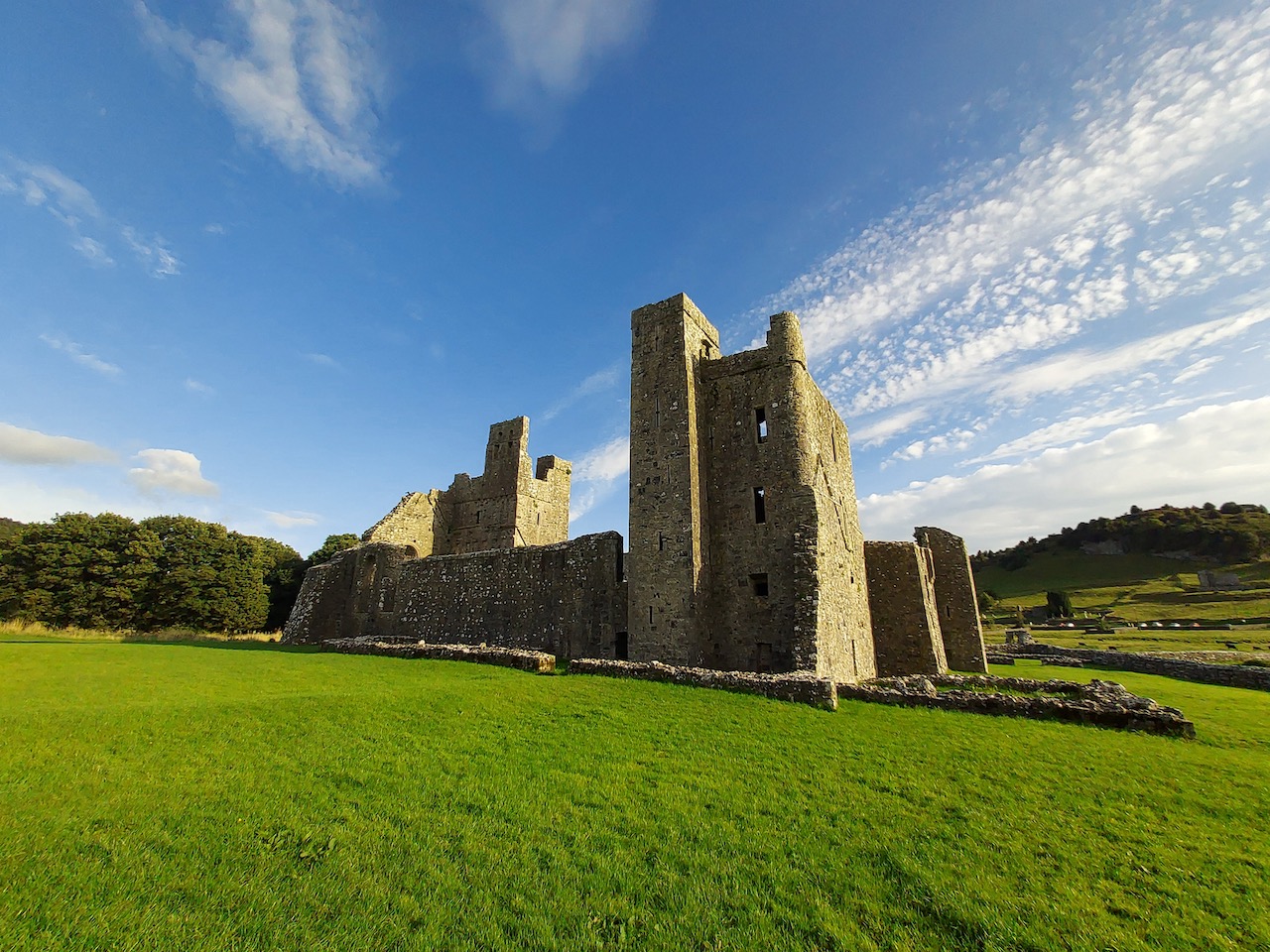
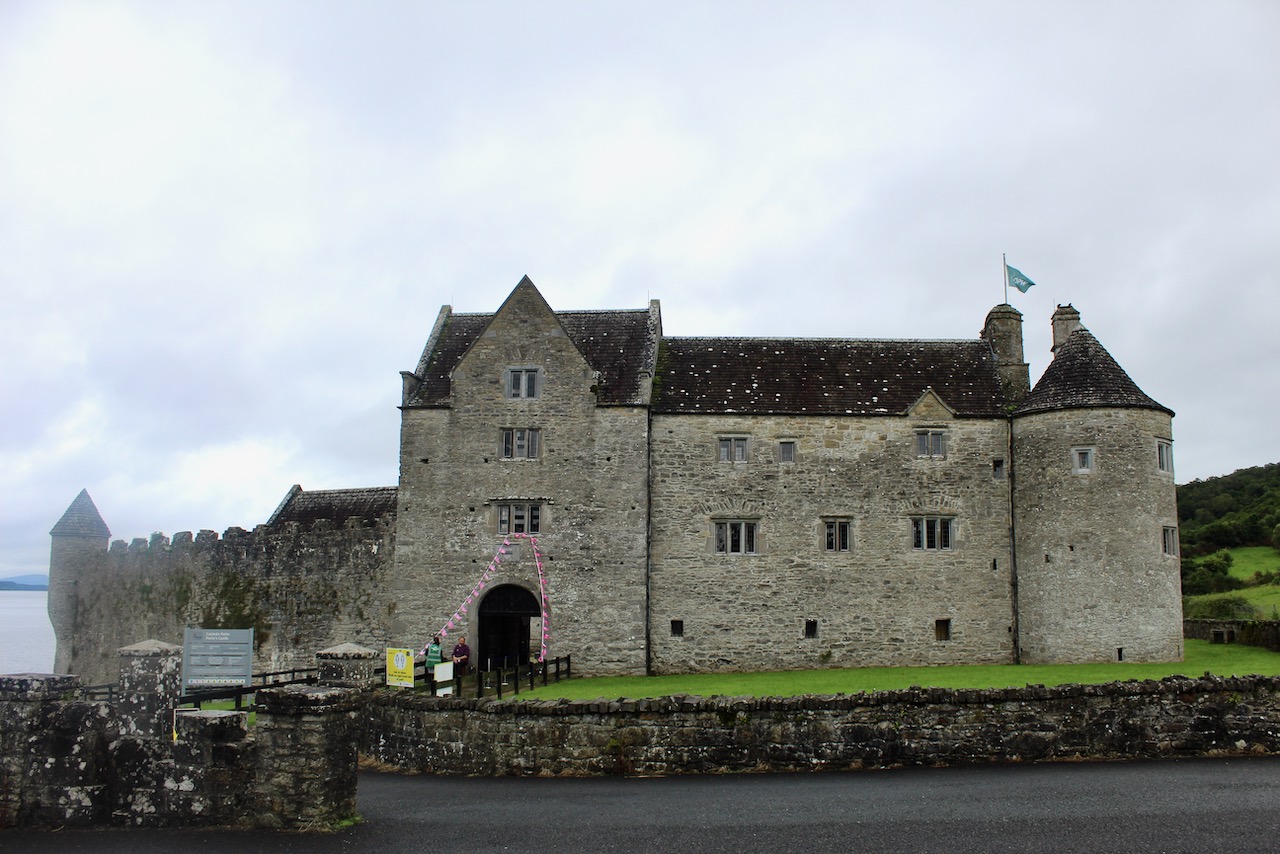
The OPW properties we visited were Dublin Castle, the Irish National War Memorial Gardens, National Botanic Gardens, Rathfarnham Castle, St. Stephen’s Green, Iveagh Gardens, Phoenix Park and Royal Hospital Kilmainham in Dublin; Emo Court, County Laois; Portumna Castle, County Galway; Fore Abbey in County Westmeath; Parke’s Castle, County Leitrim; and Ballymote Castle, County Sligo.
We also visited Duckett’s Grove, maintained by Carlow County Council; Woodstock Gardens and Arbortetum maintained by Kilkenny County Council; Johnstown Castle, County Wexford maintained by the Irish Heritage Trust (which also maintains Strokestown Park, which we have yet to visit – hopefully this year! it’s a Section 482 property – and Fota House, Arboretum and Gardens, which we visited in 2020); Dunguaire Castle, County Clare, which is maintained by Shannon Heritage, as well as Newbridge House, which we also visited in 2021. Shannon Heritage also maintains Bunratty Castle, Knappogue Castle and Cragganowen Castle in County Clare, King John’s Castle in Limerick, which we visited in 2019, Malahide Castle in Dublin which I visited in 2018, GPO museum, and the Casino model railway museum. We also visited Belvedere House, Gardens and Park – I’m not sure who maintains it (can’t see it on the website).
Open dates in 2021: Jan 4-5, 11-12, 18-19, 25-26, Feb 1-2, 8-9, 15-16, 22-23, Mar 1-2, 8-9, May 4- 5, 9-12, 16-19, 23-26, 30-31, June 1-4, Aug 14-31, Sept 1-2, 9am-1pm, Sundays 2pm- 6pm Fee: adult €10, OAP/student/child €5
Open dates in 2021: all year except Christmas Eve, Christmas Day, 1pm-11pm
Fee: Free
Donegal
Portnason House
Portnason, Ballyshannon, Co. Donegal Madge Sharkey Tel: 086-3846843 Open dates in 2021: Jan 18-22, 25-29, Feb 1-5, 8-12, Aug 14-30, Sept 1-17, 20-23, 27-28, Nov 15- 19, 22-26, Dec 1-3 6-10, 13-14, 9am-1pm
Open dates in 2021: all year, except Dec 25, Wed-Fri 9.30am-8pm, Sun 11am-7pm, Sat, Mon, Tue, 9.30-7pm
Fee: Free
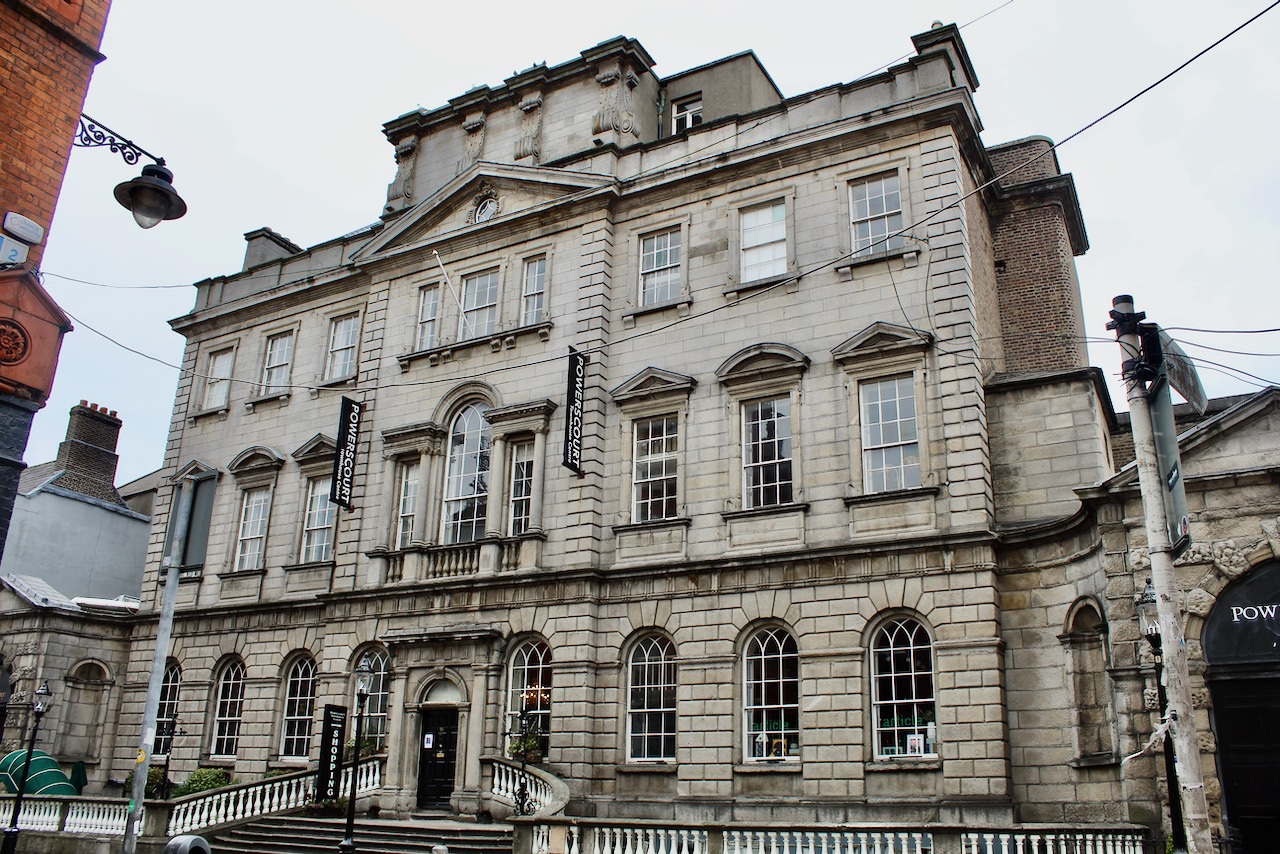
Powerscourt Townhouse Centre
59 South William Street, Dublin 2
Mary Larkin
Tel: 01-6717000
Open dates in 2021: All year except New Year’s Day, Easter Sunday, Easter Monday, Christmas Day, St. Stephen’s Day & Bank Holidays, Mon-Sat, 10am-6pm, Thurs, 10am-8pm, Sundays, 12 noon-6pm
Open dates in 2021: Jan 14-17, 23-24, 28-29, Feb 4-7, 11-12, 19-21, 26-28, May 3-13,16, 18-20, 23-27, June 2-4, 8-10, 14-16, 19-20, Aug 14-22, weekdays 2.30pm-6.30pm, weekends 10.30am-2.30pm Fee: adult/OAP €8 student €5, child free, Members of An Taisce the The Irish Georgian Society (with membership card) €5
Galway
Woodville House Dovecote & Walls of Walled Garden
Craughwell, Co. Galway Margarita and Michael Donoghue Tel: 087-9069191 www.woodvillewalledgarden.com Open dates in 2021: Jan 29-31, Feb 1-28, Apr 1-13, 11am- 4.30pm, June 1, 6-8, 13-15, 21-22, 27- 29, July 10-11, 17-18, 24-25, 31, Aug 1-2, 6-8, 13-22, 27-29, Sept 4-5, 11am-5pm Fee: adult/OAP €6, child €3, student, €5, family €20, guided tours €10
Castletown, Kilpatrick, Navan, Co. Meath Brian McKenna Tel: 087-2520523 Open dates in 2021: Jan 1-13, May 10-30, June 1-20, Aug 14-22, 9am-1pm Fee: adult €6, OAP/student/child €3
Open dates in 2021: Jan 3-4, 10-11, 17-18, 23-24, 30-31, Feb 6-7, 13-14, 20-21, 27-28, Mar 6-7,13- 14, 20-21, 27-28, May 1-2, 8-9, 15-16, 22-23, June 12-13,19-20, 26-27, July 3-4,10- 11,17-18, 24-25, 31, Aug 14-22, Sept 4-14, 2pm-6pm.
Fee: free – except in case of large groups a fee of €5 p.p.
Corolanty House
Shinrone, Birr, Co. Offaly
Siobhan Webb
Tel: 086-1209984
Open dates in 2021: Jan, Feb, July, Aug, Sept, daily 2pm-6pm
Fee: Free
Crotty Church
Castle Street, Birr, Co. Offaly
Brendan Garry
Tel: 086-8236452
Open dates in 2021: All year, except Dec 25, 9am-5pm
Open dates in 2021: Jan 2-Dec 20, Jan, Feb, Mar 1-16, Nov, Dec,10.30am-4pm, March 17-Oct 31, 10.30am-5.30pm, Fee: adult €14, €12.50, €9.25, OAP/student €12.50, child €6, family €29, groups €11.50
Tipperary
Beechwood House
Ballbrunoge, Cullen, Co. Tipperary
Maura & Patrick McCormack
Tel: 083-1486736
Open dates in 2021: Jan 4-8, 18-22, Feb 1-5, 8-12, May 1-3, 14-17, 21-24, June 11-14, 18-21, Aug 14-22, Sept 3-6, 10-13, 17-20, 24-27, 10.15am-2.15pm
Open dates in 2021: Jan 11-13, Feb 1-5, Mar 1-3, 22-24, June 10-12, 14-15, 19, 21-26, 28, July 5-9, 19-22, Aug 13-22, Sept 6-11, 18, 25, Oct 4-6, 11-13, 9am-1pm
Open dates in 2026: May 1–31, June 1- 30, Aug 1–23, 11am-3pm
Fee: adult €5, OAP €4, child/student free, family €10
donation
Help me to pay the entrance fee to one of the houses on this website. This site is created purely out of love for the subject and I receive no payment so any donation is appreciated!
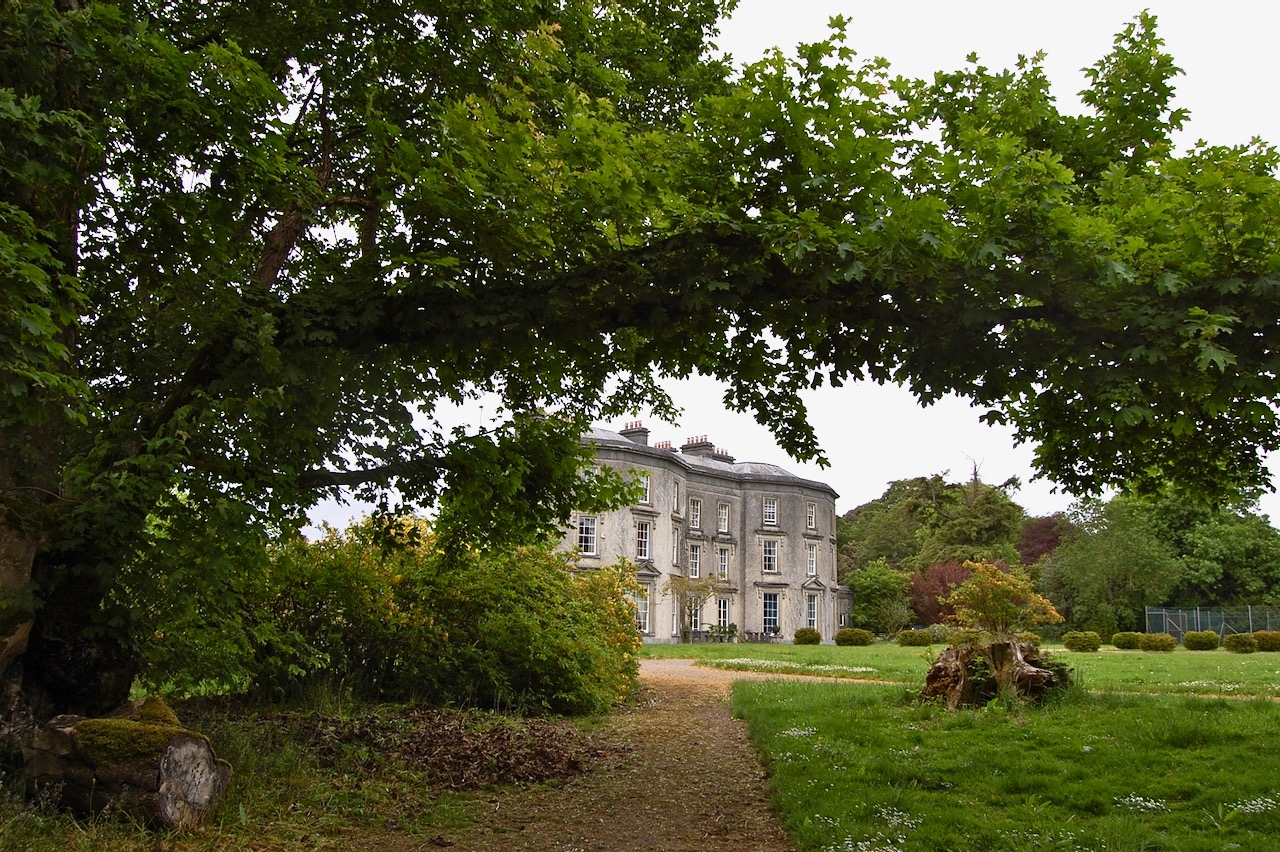
We drove up a long tree-lined avenue to Loughton House. Stephen rang from the car on our way and spoke to Michael Lyons, who was out chopping wood, so told us that Andrew would be at the house to meet us.
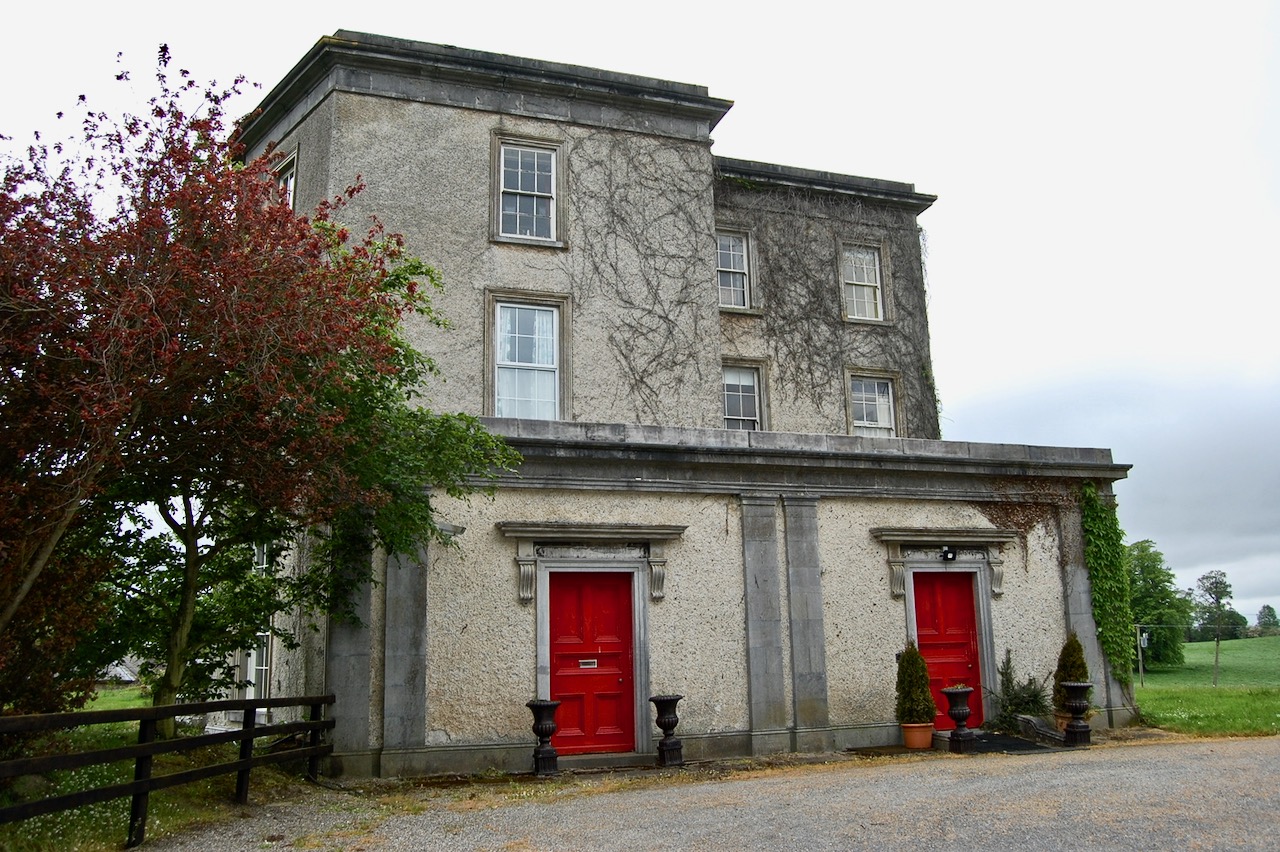
Loughton House was built on the site of a previous house, in 1777. When we arrived, we wondered why there were two front doors. I think Andrew Vance, who greeted us, explained, but we were so busy introducing ourselves and immediately got along so well, that I forget what he told me about the two doors. That’s a question for next time!
According to the website, alterations were made to the house in 1835 by James and George Pain. I don’t know who the architect of the 1777 house is, but originally the house faced north, with a shallow full-height half hexagon bow in the centre.
Mark Bence-Jones describes the house in his A Guide to Irish Country Houses:
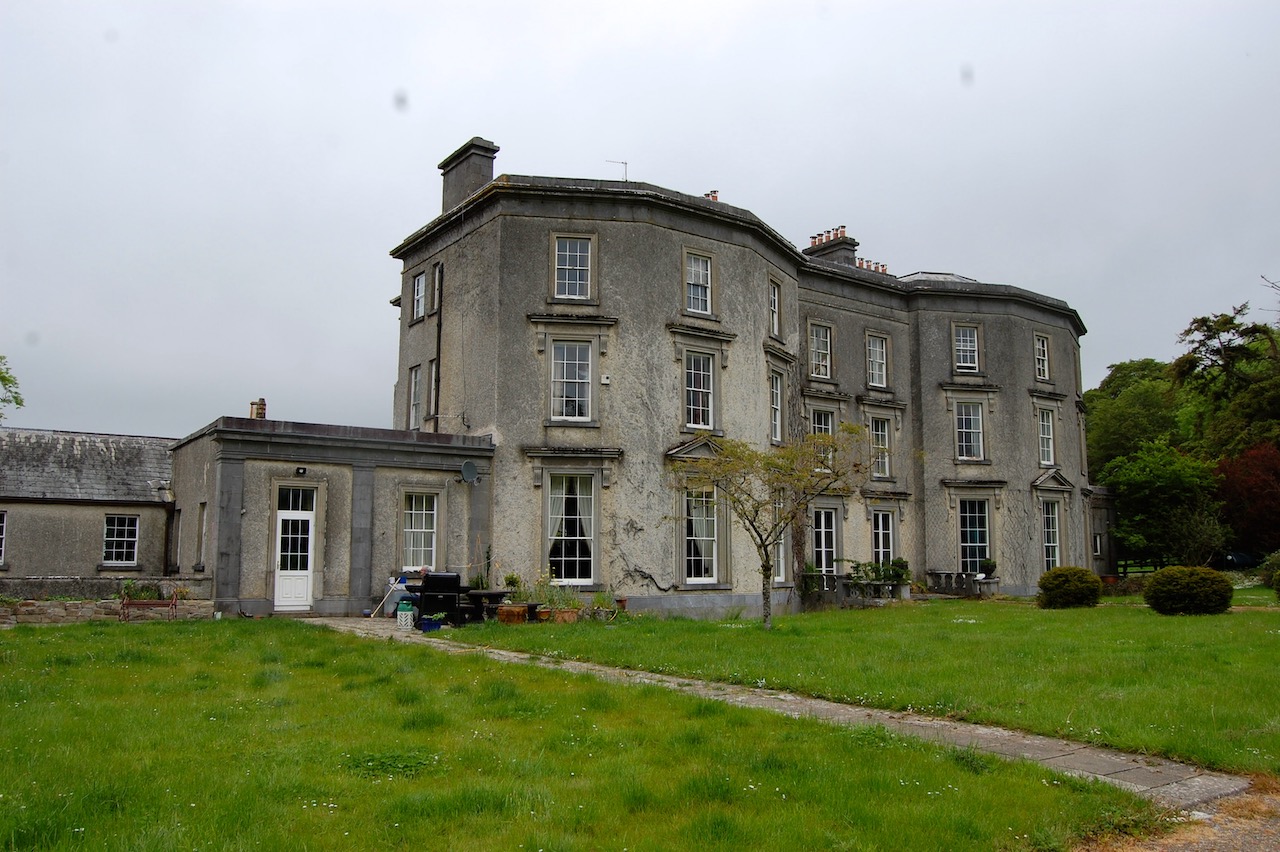
“Of elegant and restrained late-Georgian character, the main front consisting of two wide and shallow three sided bows of three bays each, with a two bay centre between them. Single storey wing of two bays, adorned with pilasters. Pediments and entablatures on console brackets over ground floor and first floor windows. Parapeted roof. Very handsome Georgian stables.” [1]
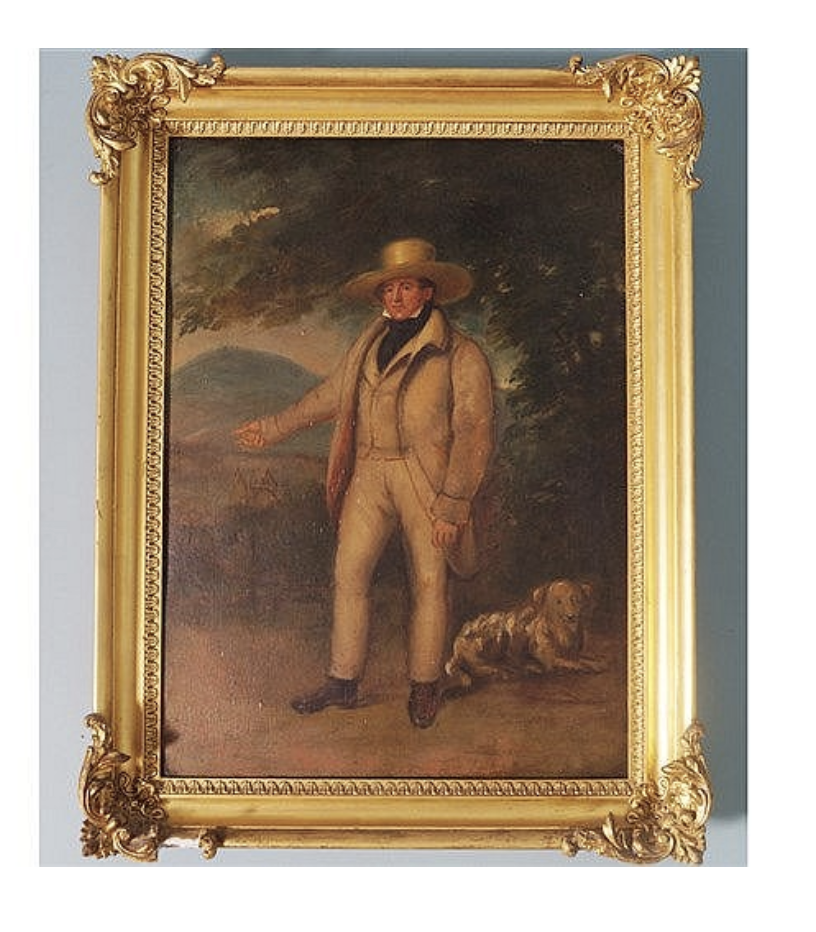
The 1777 house was built for Major Thomas Pepper. Thomas, born around 1735, of Ballygarth, Julianstown, Co Meath, son of Lambert Pepper and Jane Otway, was Major in the 14th Light Dragoons. The Peppers acquired Ballygarth Castle (now a ruin) and lands in County Meath after the Restoration of Charles II to the British throne in 1660, for their loyalty to the Stuart monarchy. [2] Thomas Pepper married Mary Ryder, daughter of John Ryder, the Archbishop of Tuam, County Roscommon. The 14th Light Dragoons was originally called James Dormer’s Dragoons, and were raised in the south of England in 1715 in response to the Jacobite Rebellion. They were sent to Ireland in 1717. In 1747 they were renamed the 14th Regiment of Dragoons, and became the Light Dragoons in 1776 [3]. Loughton House passed to their son Thomas Ryder Pepper (1760-1828), who in 1792 married Anne Bloomfield, daughter of John Benjamin Bloomfield and Charlotte Anne Waller, of Newport, County Tipperary. The Bloomfield family had originally settled at Eyrecourt, County Galway.
Thomas Ryder Pepper (1760-1828) with The Old Castle, Loughton in the background from Loughton house auction, 2016, Shepphards.
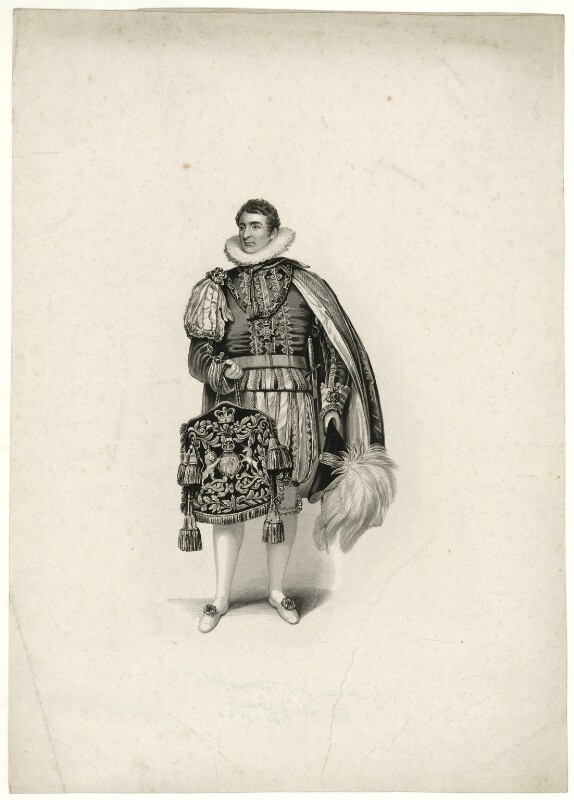
When Thomas Ryder Pepper died, the house passed to his brother-in-law, Benjamin Bloomfield, 1st Baron Bloomfield (1815) of Oakhampton and Redwood (1768-1846). Redwood House in County Tipperary no longer exists. Oakhampton, also in Tipperary, still stands. He was Lieutenant General in the British Army and fought the rebels in 1798 at Vinegar Hill, County Wexford. He rose in the ranks to become Keeper of the Privy Purse for King George IV. This was a particularly difficult job – we came across King George IV before at several houses listed in the Revenue Section 482 Property list. The king enjoyed a romance with Elizabeth Conyngham of Slane Castle, and relished the good life: food, drink and beauty in the form not only of women but in architecture, with the help of John Nash. He was therefore rather a Big Spender. Naturally, therefore, he came to resent Benjamin Bloomfield and his efforts to tighten the purse strings.
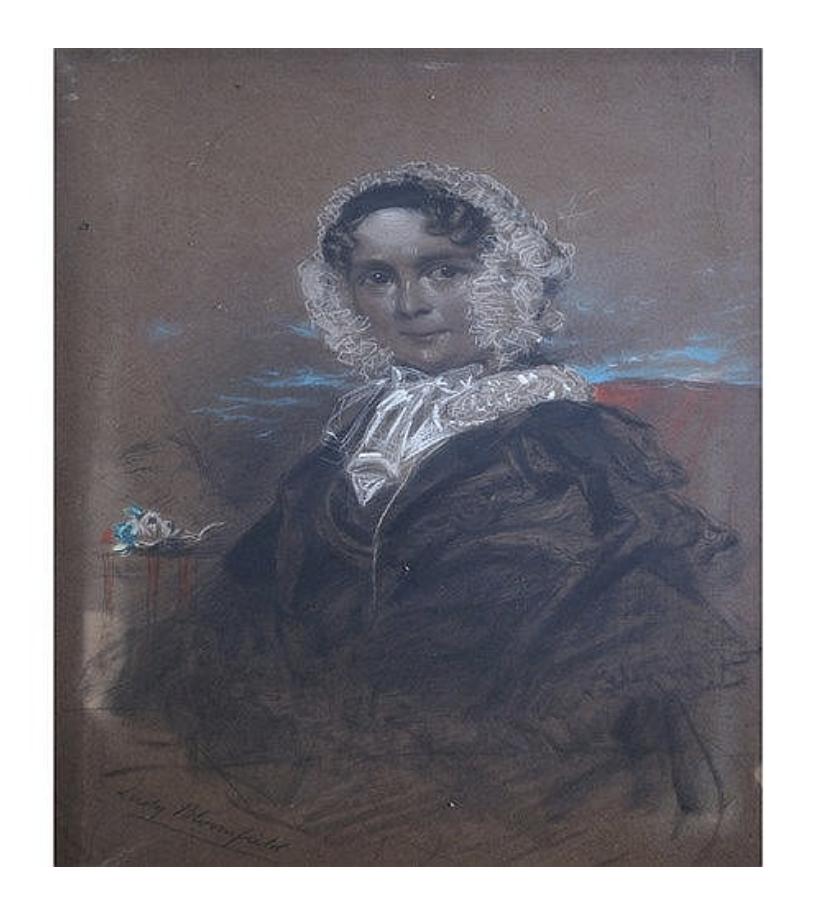
Benjamin Bloomfield (1768-1846) 1st Baron Bloomfield as Keeper of His Majestys Privy Purse at the Coronation of George IV, by Henry Meyer, after Philip Francis Stephanoff 1826, NPG D31893.Benjamin Bloomfield (1768-1846) 1st Baron Bloomfield, by John Lilley, from Loughton house auction catalogue, 2016, ShepphardsBenjamin Bloomfield (1768-1846) 1st Baron Bloomfield, Irish school, 19th c, from Loughton house sale, 2016, Shepphards.Portrait of Lady Bloomfield, from Loughton house sale, 2016, Shepphards
We have already seen that several houses underwent alterations in expectation of a visit from King George IV in 1821. In Charleville, County Wicklow, a new floor was installed at great expense. Here in Loughton, a bedroom was done up for the King. Unfortunately, the King never made it to Loughton.
It was later that Bloomfield hired James and George Richard Pain to renovate Loughton House, in 1835.
James and George were sons of James Pain, an English builder and surveyor. Their Grandfather William Pain was the author of a series of builder’s pattern books, so they had architecture in the blood. According to the Dictionary of Irish Architects, James and his younger brother George Richard were both pupils of John Nash, one of the foremost British architects of his day responsible for the design of many important areas of London including Marble Arch, Regent Street and Buckingham Palace. He was architect to the prolific lover of architecture the Prince Regent, later King George IV. When Nash designed Lough Cutra Castle in County Galway for Charles Vereker in 1811, he recommended that the two brothers should be placed in charge of the work, so it was at this time that they came to Ireland. Lough Cutra is an amazing looking castle privately owned which is available for self-catering rental. [4] James Pain settled in Limerick and George in Cork, but they worked together on a large number of buildings – churches (both Catholic and Protestant), country houses, court houses, gaols and bridges – almost all of them in the south and west of Ireland. [5] In 1823 James Pain was appointed architect to the Board of First Fruits for Munster, responsible for all the churches and glebe houses in the province.
The Pains Gothicized and castellated Dromoland Castle in County Clare at some time from 1819-1838, now a luxury hotel. [6] They took their Gothicizing skills then to Mitchelstown Castle in 1823-25, but that is now a ruin. In 1825 they also worked on Convamore (Ballyhooly) Castle but that too is now a ruin. They also probably worked on Quinville in County Clare and also Curragh Chase in County Limerick (now derelict after a fire in 1941), Blackrock Castle in County Cork (now a science centre, museum and observatory which you can visit [7]), they did some work for Adare Manor in County Limerick (also now a luxury hotel), Clarina Park in Limerick (also, unfortunately, demolished, but you can get a taste of what it must have been like from its gate lodge), Fort William in County Waterford, probably they designed the Gothicization and castellation of Ash Hill Towers in County Limerick (also a section 482 property!), alterations and castellation of Knoppogue Castle, County Clare (you can also visit and stay, or attend a medieval style banquet), Aughrane Castle mansion in County Galway (demolished – Bagots used to own it, I don’t know if we are related!), a castellated tower on Glenwilliam Castle, County Limerick and more.
The Pain brothers reoriented Loughton House to face south, and the main doorcase was put to the east end, the Loughton House website tells us. In his Buildings of Ireland: Central Leinster. Counties of Kildare, Laois and Offaly, Andrew Tierney tells us that this oblique approach of typical of James Pain. [8]
The National Inventory of Architectural Heritage claims that Loughton House is probably the Pain’s finest Classical work [9]. The exterior is relatively plain, with limestone window dressings with keystones. The north facing side is the original house, whereas the south facing side, of eight bays instead of the seven in the north side, is by the Pain brothers. The windows on this side have moulded cement detailing: architrave, cornice and consoles, and pediments. We saw more of the Pains’ work inside, in the Drawing and Dining Rooms which date from their renovation, and the wonderful curved stone cantilevered staircase.
The current owners, who acquired the house in 2016, are both medical doctors, as was the previous owner, Dr. James Reilly, who was also a former Minister for Health in the Irish government. When we visited, the house exuded a comfortable quirky chic, with marble busts on pillars in the front hall and a touch of whimsy, with a stag’s head draped in a fur at the bottom of the sweeping cantilevered staircase.
The Loughton House website tells us:
“The house has very fine detailing – traces of the late eighteenth-century decoration can be seen in the house as well as early nineteenth-century changes in internal layout.
“The ground floor is laid out with bright and generously proportioned formal reception rooms with magnificent decorative cornicing and ceilings, ornate plaster work and large original period fireplaces. The original wood floors remain throughout and the grand sash bay windows permit torrents of light into the house. Most notable are the wood-carved shutters and door panels in the original Billiard room.” [10]
Loughton passed to Bloomfield’s son, John Arthur Douglas Bloomfield (1802-1879). He succeeded as 2nd Baron Bloomfield on his father’s death. He was a diplomat and travelled widely, was envoy to St. Petersburg and Ambassador to Austria. He was appointed Privy Counsellor on 17 December 1860. He was created 1st Baron Bloomfield of Ciamhaltha, Co. Tipperary on 7 August 1871. In 1834 his father had a hunting lodge built, Ciamhaltha House, County Tipperary, so the new title referred to this house [11]. He and his wife Georgiana Liddell had no son and the titles ended with his death. Georgina served as a Maid of Honour to Queen Victoria between 1841-45. Upon Georgiana’s marriage to Baron Bloomfield in 1845, when Georgiana left her position in the house of the Queen, Victoria gave her a cutting from a vine, which still grows at Loughton House today. Georgiana wrote the book Reminiscences of Court and Diplomatic Life, published 1883. It sounds fascinating!
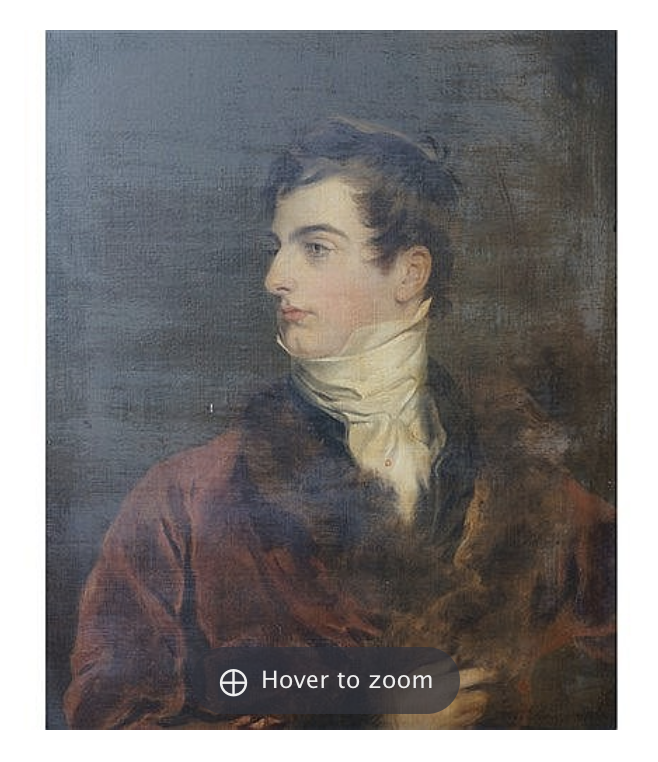
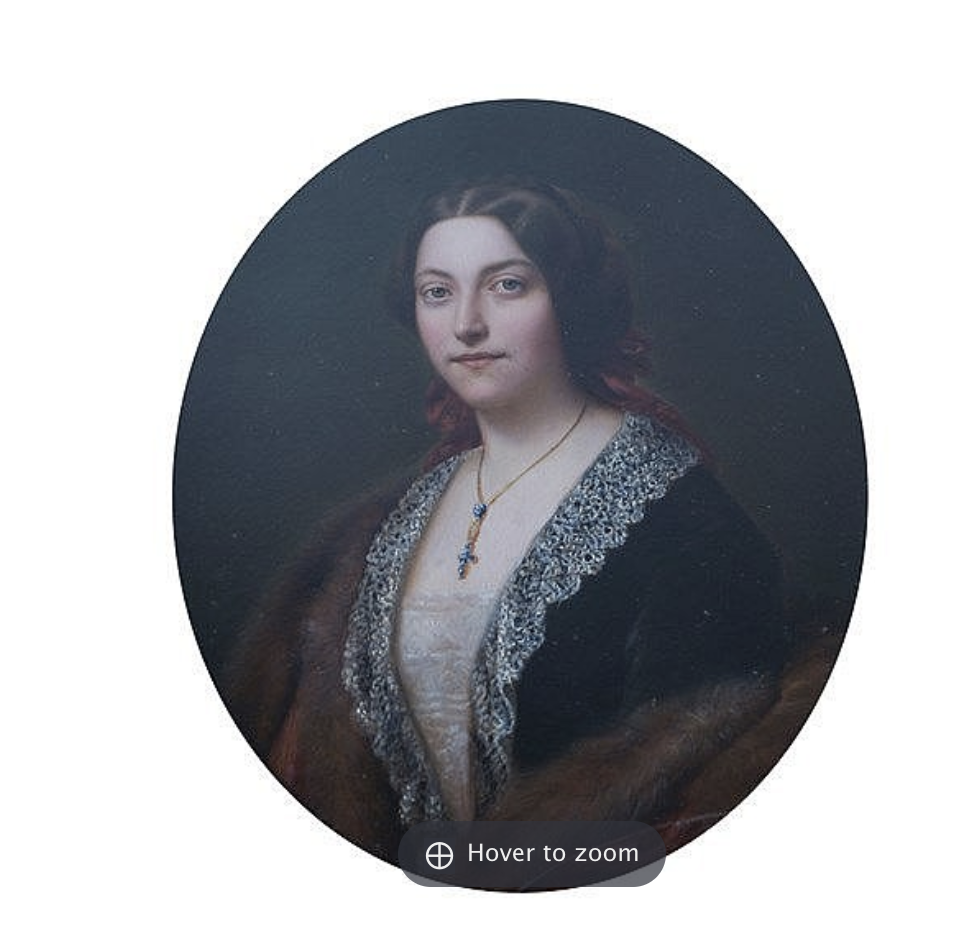
John Arthur Douglas Bloomfield (1802-1879) 2nd Baron Bloomfield, wearing a burgundy red jacket and fur collar, Painting After Sir Thomas Lawrence, from Loughton house auction catalogue, 2016, ShepphardsGeorgiana Bloomfield née Liddell, Lady Bloomfield from Loughton house auction catalogue, 2016, Shepphards.
The house passed to the Baron’s sister, Georgiana, and her husband, Henry Trench, of Cangort Park, County Offaly (still standing, privately owned). The Landed Estates website tells us that in the 1870s, Henry Trench owned 4,707 acres in county Tipperary, 2,113 acres in county Offaly, 1,926 acres in county Limerick, 1,581 acres in county Galway, 704 acres in county Clare and 432 acres in county Roscommon. [12]
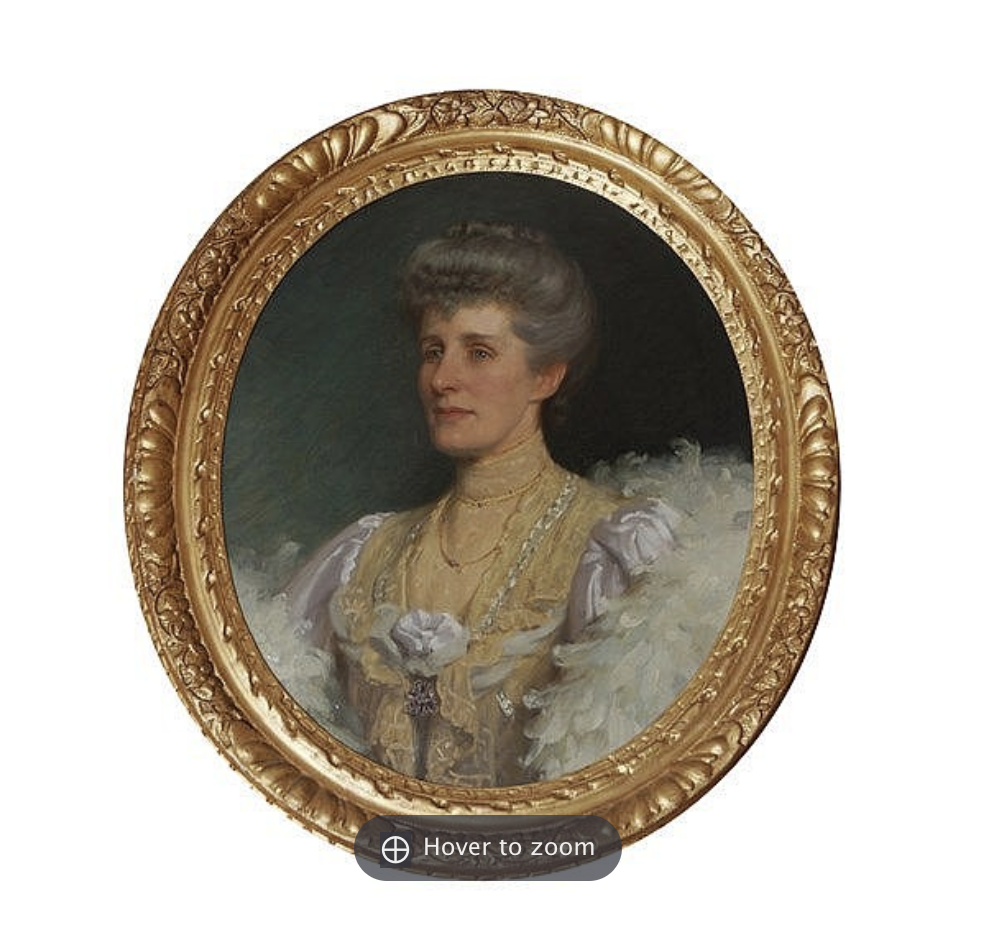
Frederick Trench (1755-1840) 1st Baron Ashtown from Loughton sale Sept 2016 by Shepphards. He was an uncle of Henry Trench who married Georgiana Bloomfield.A portrait of Blanche Trench (1852-1937), from Loughton house sale, 2016, Shepphards. She was a daughter of Henry Trench and Georgiana née Bloomfield.
When James Reilly sold Loughton House, he unfortunately sold its contents, including an archive of family papers. Michael Parsons of The Irish Times wrote of the auction:
“Lot 2066, The Loughton Papers circa 1749-1960 – an archive of documents including correspondence, diaries, journals, sketch books and recipe books created by the various families who had lived at Loughton House – sold for €12,000 (above the estimate of €5,000-€8,000).“
“Sheppard’s said the buyer was Galway businessman Pat McDonagh, founder and managing director of the Supermac’s fast-food chain and owner of the Barack Obama Plaza – a services area on the M8 motorway just outside the village of Moneygall built following the visit of the US president.”
Fortunately, the article continues to reassure the readers that the documents will be properly preserved and accessible:
“In a statement issued via the auction house, Mr McDonagh described the archive “part of a tapestry of history” and that his “first priority” was its “preservation for historians, the community and the country”.
“The statement said: “Mr McDonagh commended Offaly County Council for their interest in working with Supermac’s for the preservation of the papers” which will be digitised, and that “historians owe a debt of gratitude to the owners of Loughton House, Dr James Reilly and his wife Dorothy”.
“Mr McDonagh “confirmed also that the visitor centre at the Barack Obama Plaza will host a Loughton House section, where extracts from the archive will be displayed on a rolling basis.” He said the plaza would work to ensure that the heritage of the house was not lost to the community, adding that he would encourage local and expert input to ensuring that the archive would be educational, appropriate and accessible.” [13]
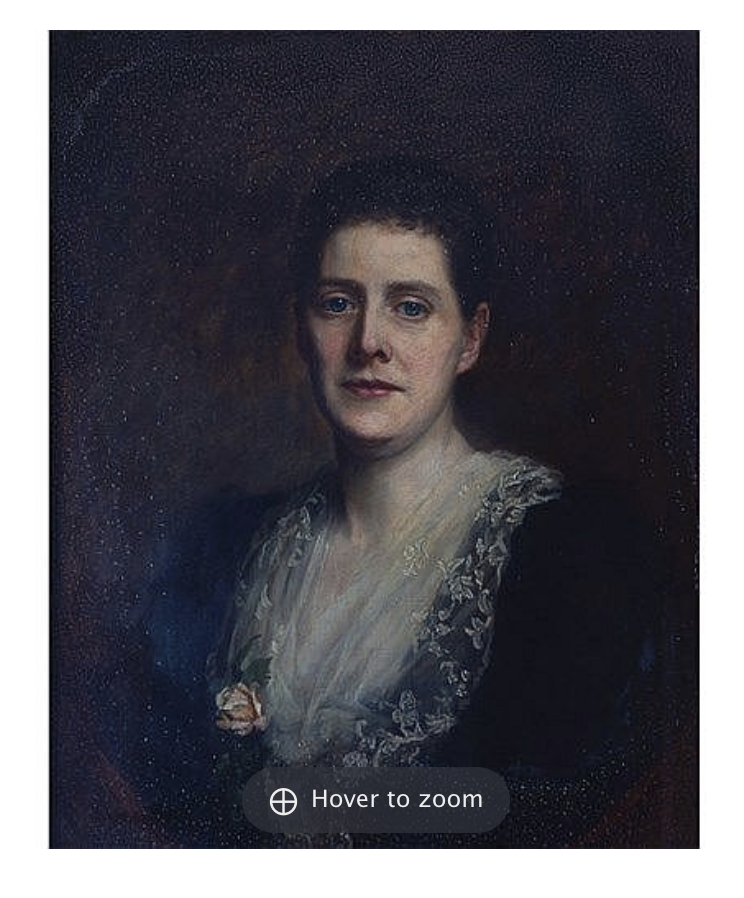
A portrait of Dora Agnes Caroline Trench (1858-1899) née Turnor, wife of Benjamin Bloomfield Trench, from Loughton house sale, 2016, Shepphards. A portrait of Mr Trench, dated 1920, from Loughton house sale, 2016, Shepphards.
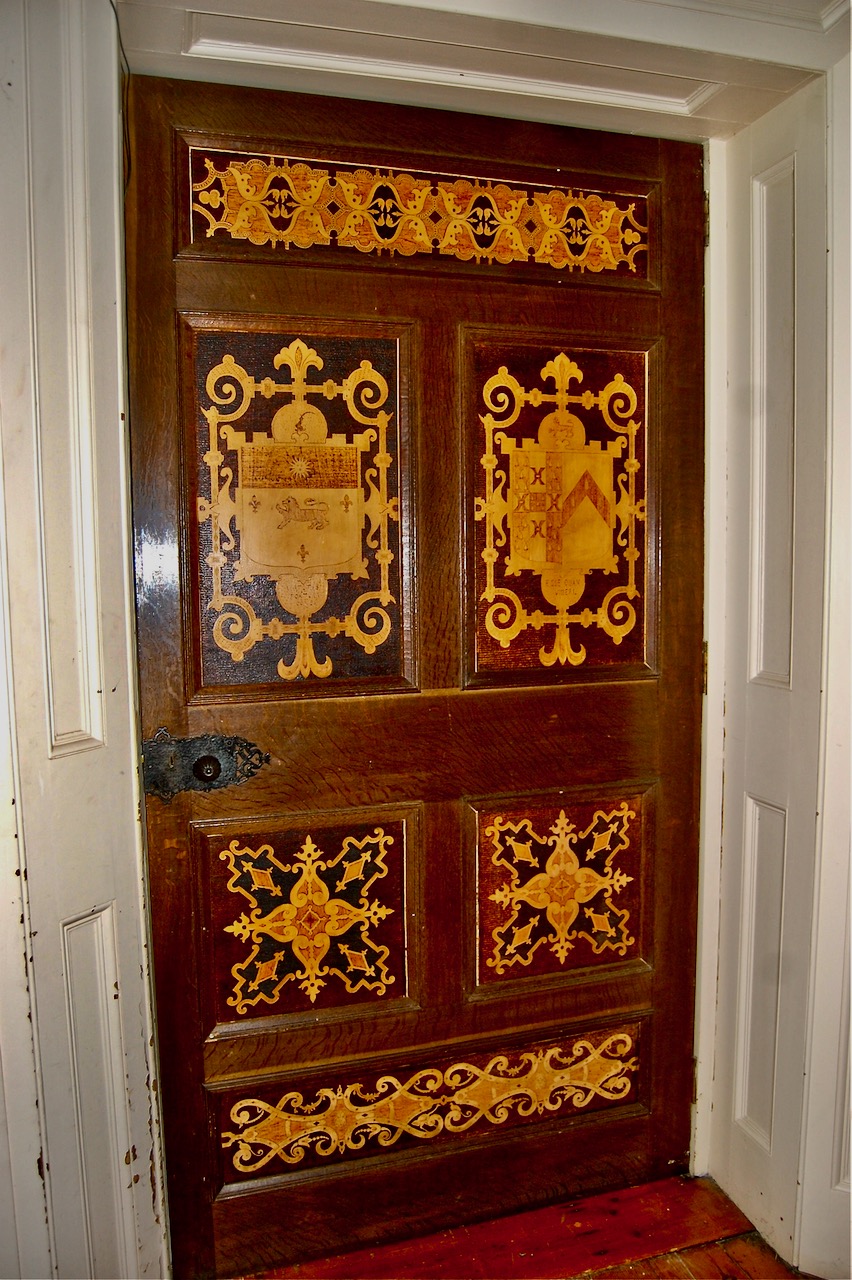
The wood carved panels shutters and door panels in the billiards room, now a dining room, were decorated by one of the Trenches, Dora. The form of decoration, with details rendered by a hot poker, is exquisitely done. The portrait of the artist, Dora, hangs next to the doors. Dora was Henry Trench’s son Benjamin Bloomfield Trench’s wife, Dora Agnes Caroline Turnor. Dora Trench died in 1899, after a brief illness. Benjamin and Dora had two daughters, Sheelagh Georgiana Bertha and Theodora Caroline. [14]
Dora illustrated the doors with crests and intricate patterns, and all of the doors from the room are decorated, along with the shutters. I was delighted when Stephen asked if I could take a photograph of the door – I didn’t like to ask, knowing that most section 482 houses forbid indoor photography. Andrew’s assent typified his warm welcome. You can see photographs of the room, called Dora’s Room, on the Loughton website, along with photographs of the other reception rooms, the Library, Dining and Drawing Rooms. “Dora’s Room” contains a long table and chairs, and an intricately carved fireplace.
The fireplace in Dora’s Room can be seen on the Loughton website. It is, Andrew Tierney tells us in his Buildings of Ireland: Central Leinster, it is Tudor Revival, of 1862. The male caryatid figure on the right is the original, Andrew thinks, whereas the figure on the left is a copy. It’s strange how such fireplaces are carved in wood and manage to survive the fire they contain. Andrew said it throws out great heat. It has a second flue behind, from which the fire can draw its oxygen, rather than drawing from the warmed air inside the room.
The Loughton website tells us that the Trenches remained in residence until 1973 when the property was passed to the Atkinson family.
Major Anthony Guy Atkinson (b. 1909) inherited Loughton in 1970 from his cousins Thora and Sheelah Trench (Dora’s daughters). Henry Trench, Georgina Bloomfield’s husband, had a sister, Anne Margaret Trench. She married Guy Caddell Atkinson. They inherited Cangort Park in County Tipperary and Major Anthony Guy Atkinson was a descendant of Anne Margaret Trench. [15] He made Loughton over to his son, Guy Nevill Atkinson (b. 1950), who sold it in 2001.
From Dora’s Room we came upon the hallway with the sweeping floating stone cantilever staircase. This was originally the entrance hall, before James Pain added the staircase and moved the entrance to the east end.
Andrew drew our attention to an old tall clock with barometer. It was from Lissadell House, and, appropriately, was made by a man named Yates – not the poet Yeats who frequented the house, note the different spelling, but in a nice touch, the picture hanging beside it was of the poet. Incidentally, one of the Trench family, a sister of Benjamin Bloomfield Trench who inherited Loughton, Louisa Charlotte, married Colonel James Gore-Booth, of the Lissadell family. The owners have taken their time to populate the house appropriately, with respect for its history and a dash of humour.
I was most enamoured with the next room, the library, with its floor to ceiling built in bookshelves. It retains original wallpaper, worn but still in situ.
“This is where we sit in the evenings, with a glass of wine,” Andrew told us. I could just see myself there too, in the well-worn couches, facing the fireplace. You can also see this room on the website, with its comfy leather armchairs. The Equine pictures are appropriate as Andrew is Master of the local Hunt!
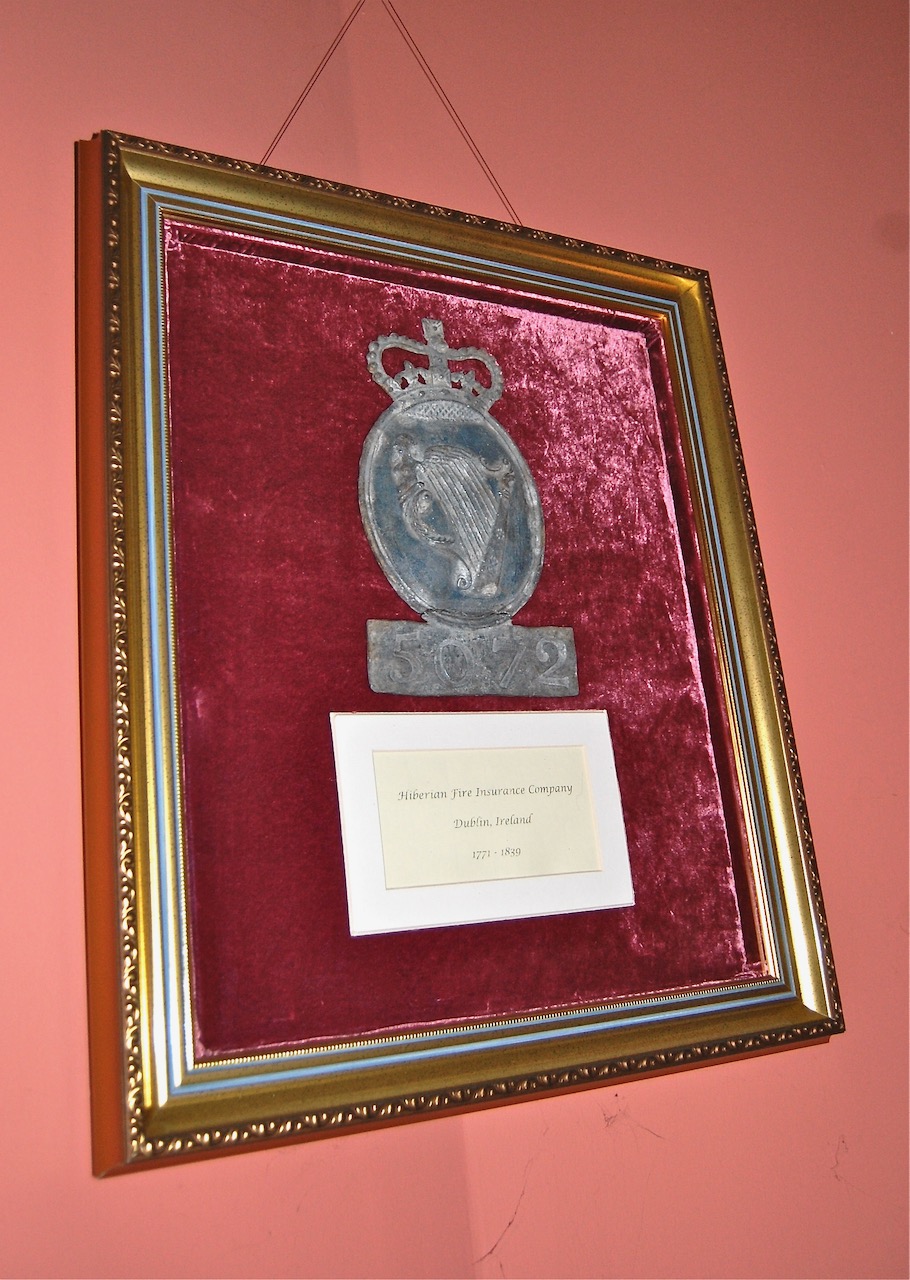
In the Drawing Room, a formal room with sofas, carpets and lovely salmon pink walls, gorgeous cabinets, piano and ornate gilt overmantel mirror, Andrew pointed out another treasure: the fire insurance plaque from a building. The various insurance companies had their own firetrucks and teams, and they only put out fires of the buildings insured by them. Unfortunate neighbours burned down. I was excited to see the plaque as I had seen one on the Patriot Inn in Kilmainham, one of the few remaining, and learned about them in a lecture in Warrenmount in Dublin.
Loughton, May 2019.
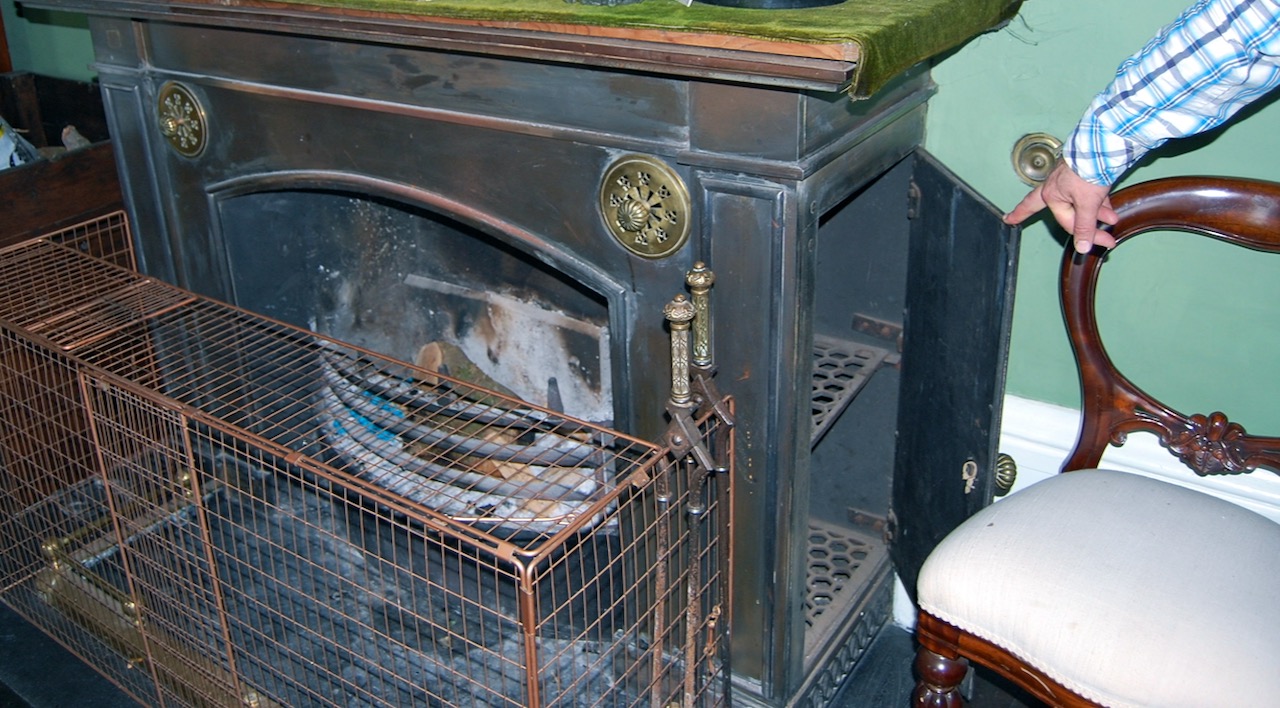
We then entered the second dining room (if we consider Dora’s Room, the former Billiards room, to be a dining room also, as it is currently furnished), a larger room than the first. This dining room also has a clever fireplace, this one of steel, with secret cabinets at the sides to keep the plates and dishes hot. It also had vents, and further vents built into the walls of the room, to control temperature and air flow.
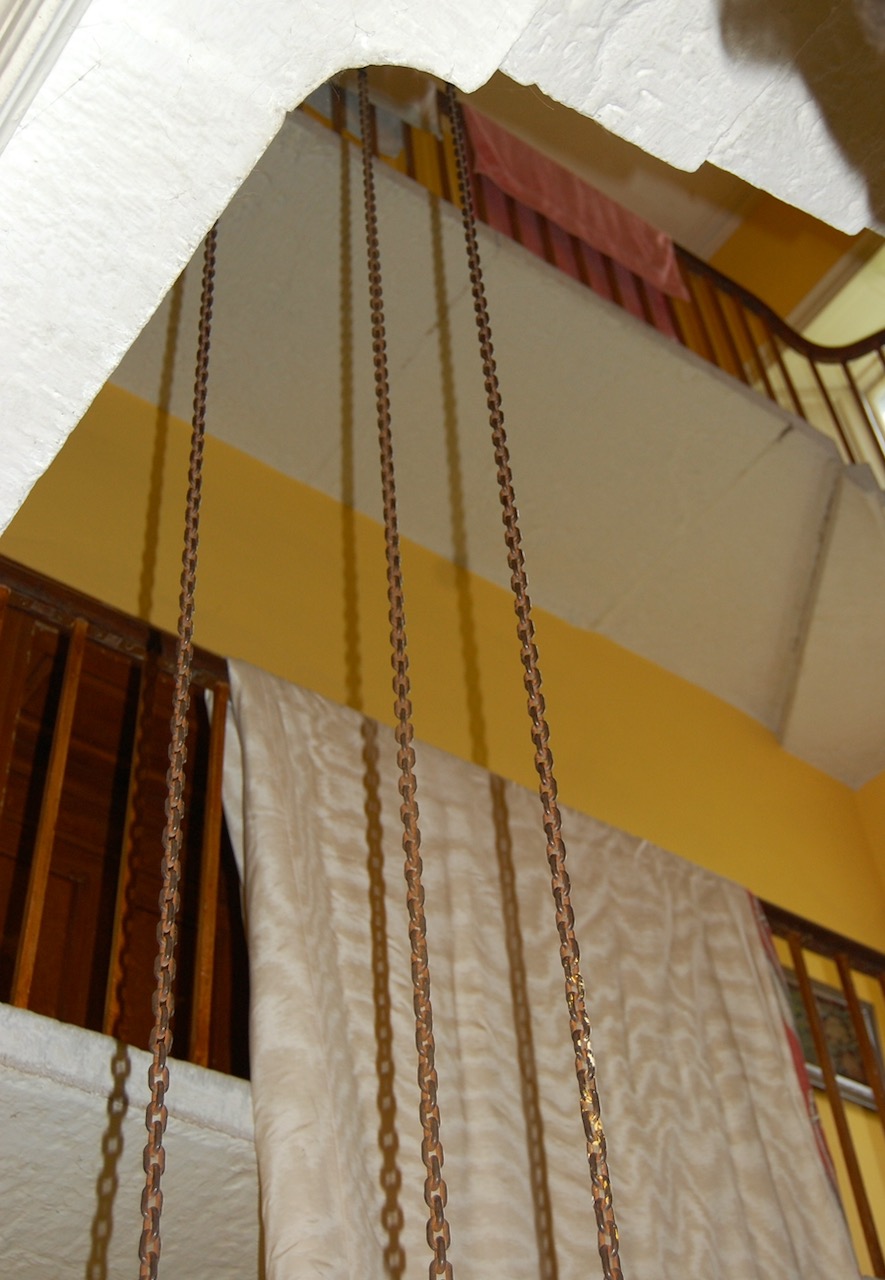
A painting above the door is by Sarah, Lady Langham, an artist, who has also applied her creative skills to the house, and who manages the day-to-day operation of the house. She has made curtains and even the wallpaper of The King’s Bedroom. On our way to the back staircase we ran into Sarah herself, as I was photographing the chain that was used to pull the coal to the upper floors.
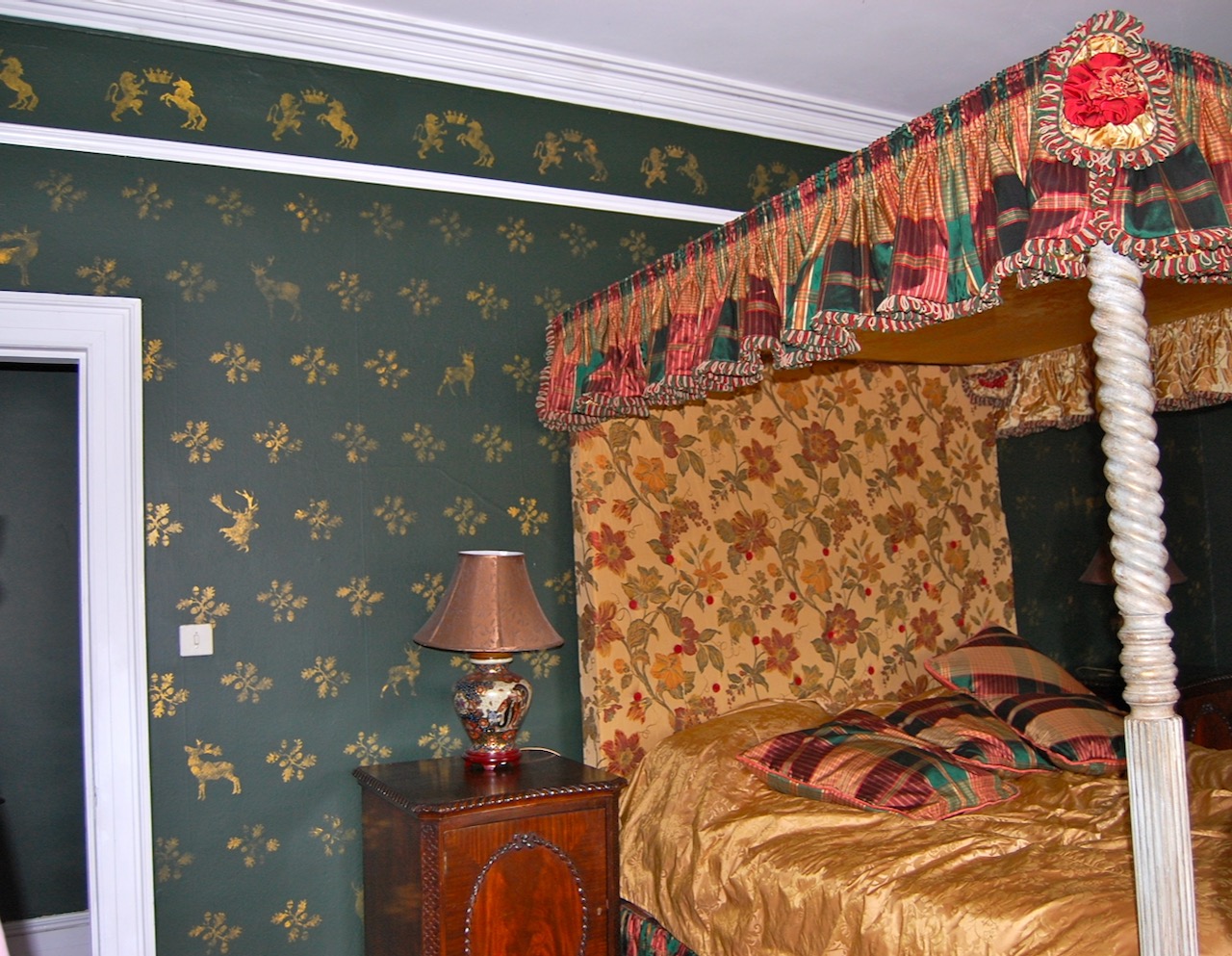
The final rooms we viewed are Sarah’s piece de resistance, “the King’s Suite,” which comprises two rooms – the room where George IV was meant to sleep, and a room next to it also furnished with a bed, which might have been his dressing room or a parlour.
Sarah created the wallpaper. It features a crest of a unicorn and a lion around the top – and a stag that is pictured in the recurring motifs below. She also made the magnificant curtains and pelmet.
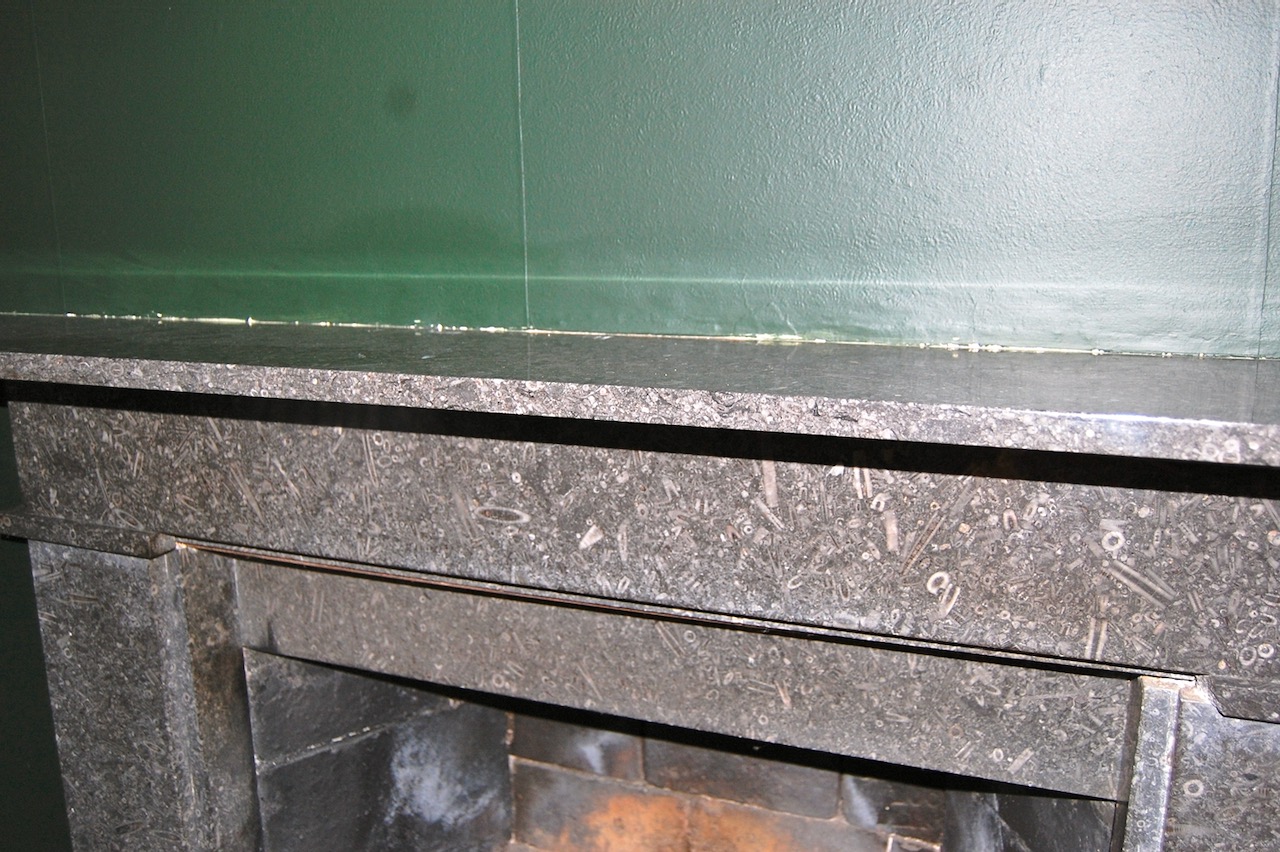
The fireplace is interesting. It is made of limestone, which contains fossils of tubular sea creatures:
This, along with other rooms, is available for guest accommodation.
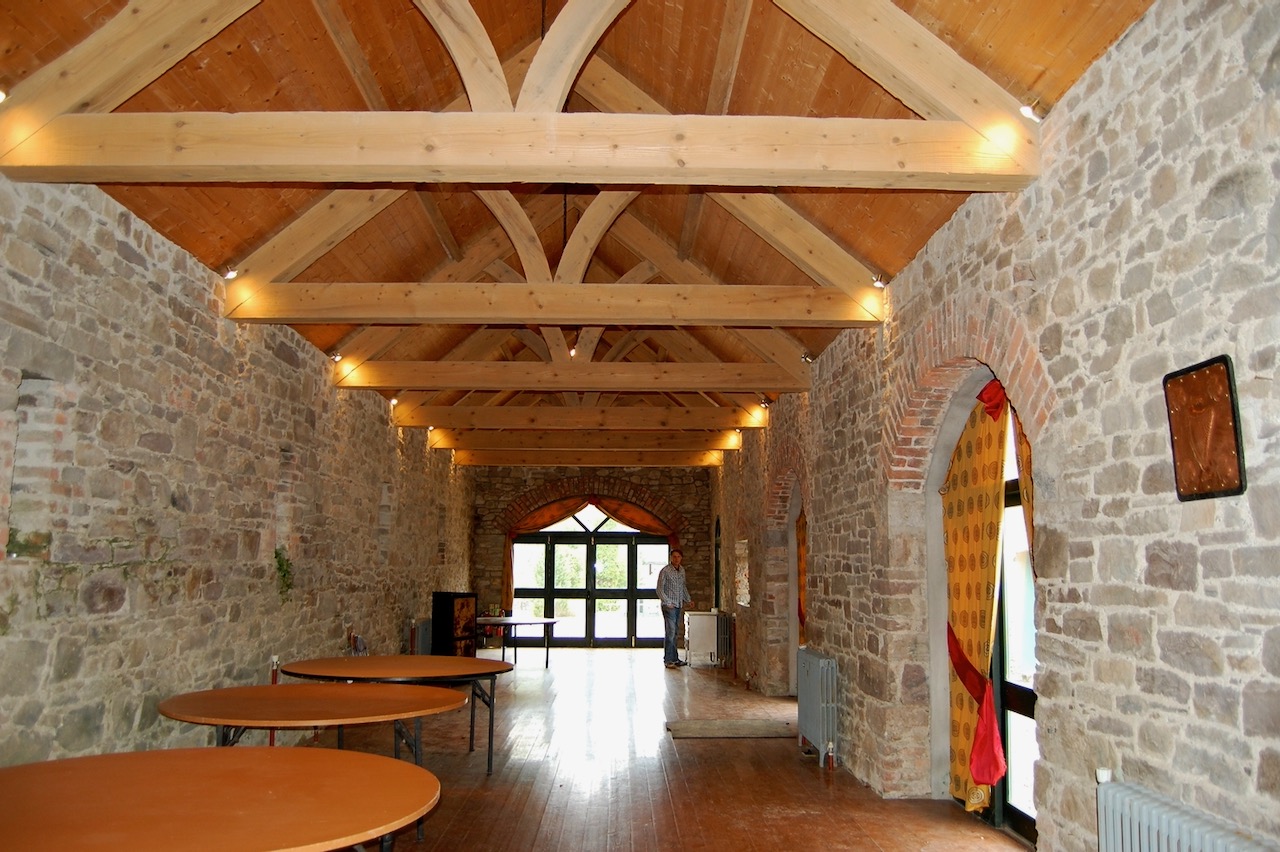
There is a stable complex to one side of the house. Andrew brought us out to show us the function room, which was originally a coal shed. It’s huge, and would be wonderful for parties, and is available for hire. The garden outside it, which would also be available for the functions, is romantic and beautiful, with a pond and stone walls.
Michael joined us briefly and shared with us a photograph he had found in the national archives in England, of a group gathered at what is now the back of the house.
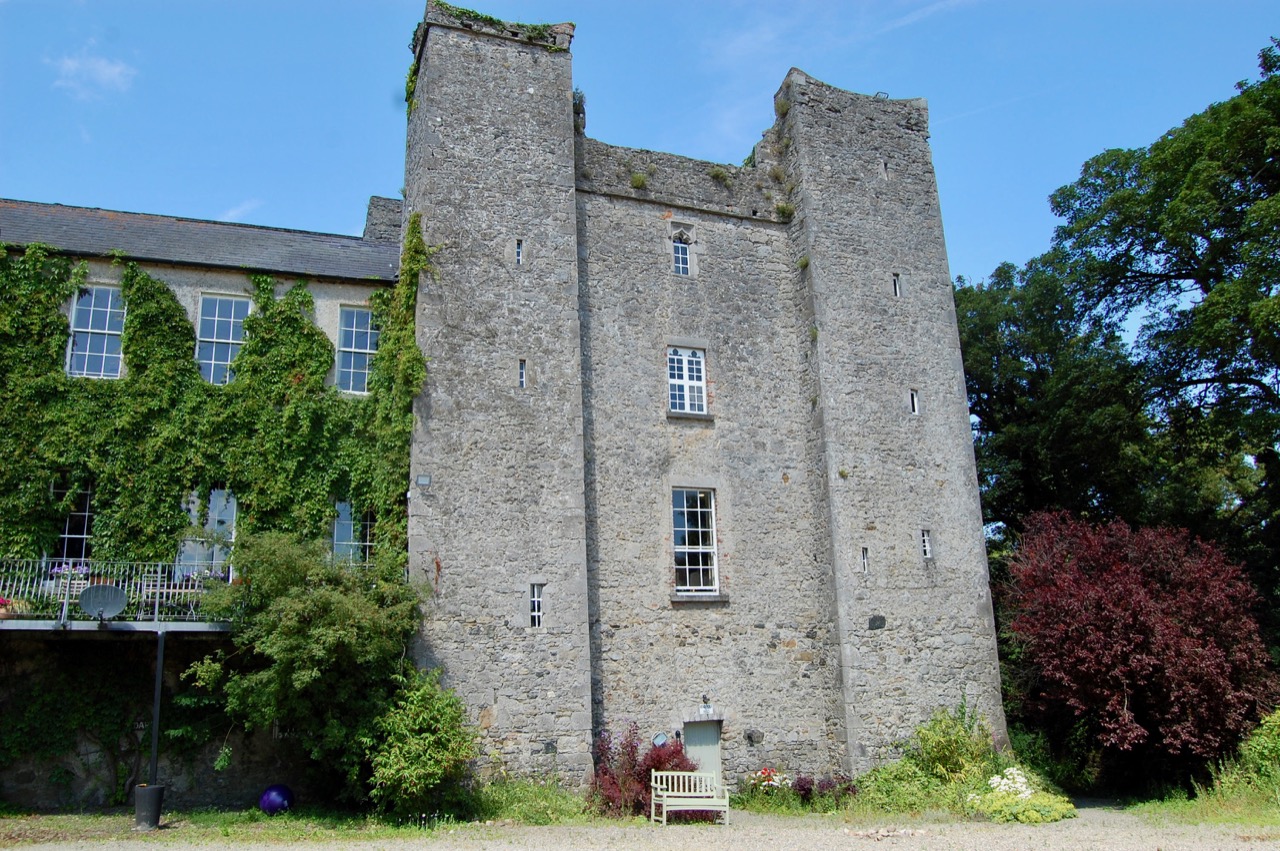
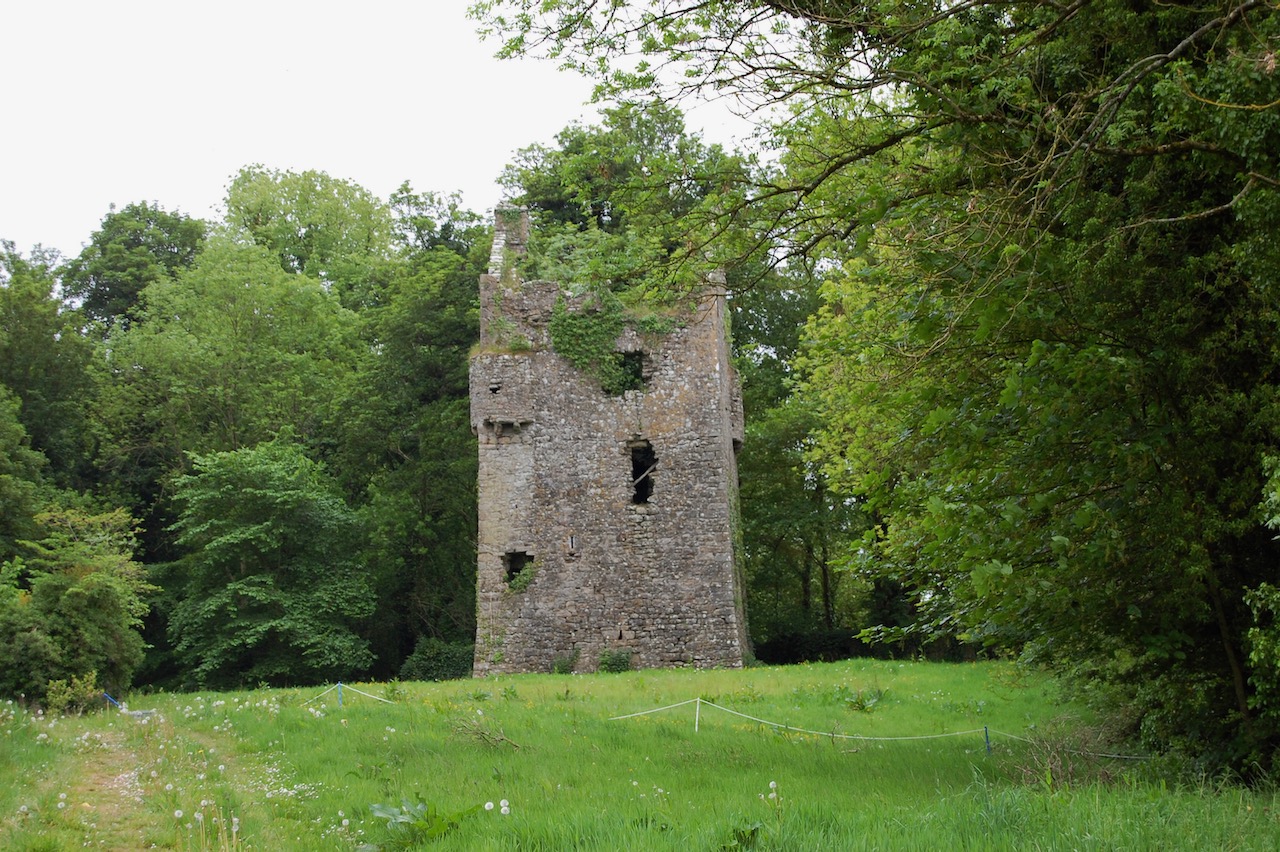
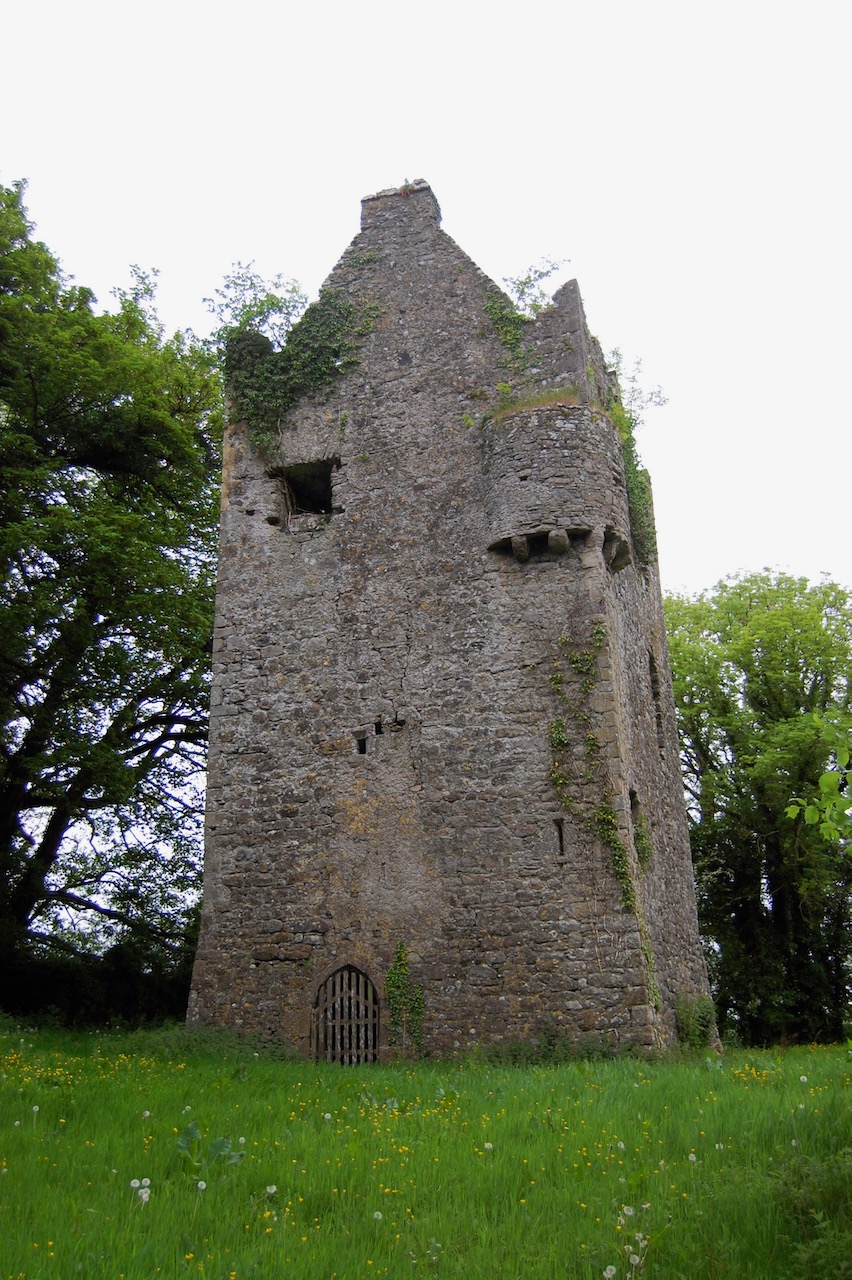
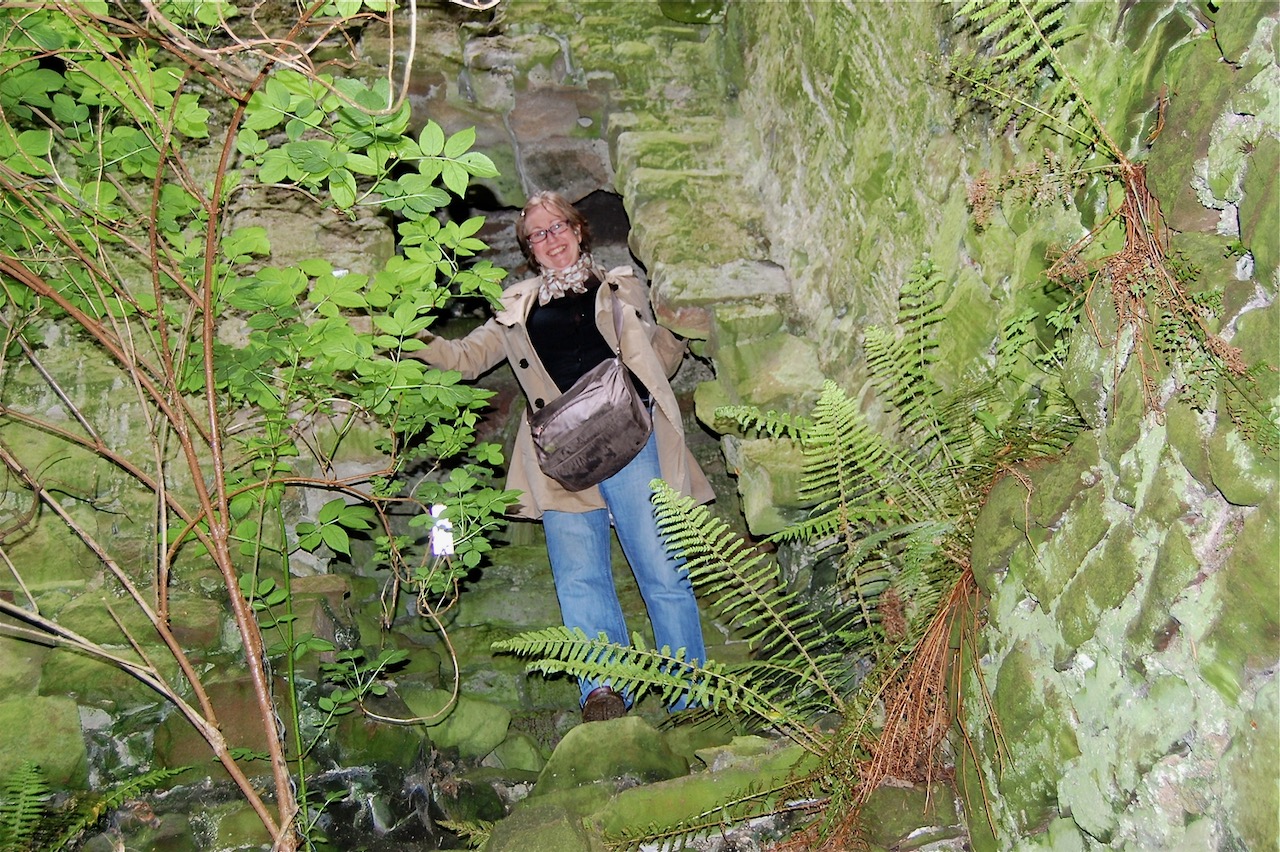
Andrew then urged us to wander in the gardens. We walked over to what looks like a Norman keep. It is Ballinlough Castle (not to be confused with Ballinlough Castle of County Westmeath), which dates back to the early seventeeth century, and belonged to the O’Carroll family. I climbed nearly all the way to the top (at my own peril!)!
[1] Mark Bence-Jones. A Guide to Irish Country Houses. (originally published as Burke’s Guide to Country Houses volume 1 Ireland by Burke’s Peerage Ltd. 1978); Revised edition 1988 Constable and Company Ltd, London.
[8] p. 472. Tierney, Andrew. Buildings of Ireland: Central Leinster. The Counties of Kildare, Laois and Offaly. Yale University Press, New Haven and London, 2019.

















































 Irish Historic Houses
