Help me to pay the entrance fee to one of the houses on this website. This site is created purely out of love for the subject and I receive no payment so any donation is appreciated!
When I saw that Roderick Perceval was giving a tour of his home, Temple House in County Sligo, during Heritage Week 2025, I jumped at the chance to see it and booked straight away. I had booked to stay there in the past but had to cancel, and before this tour, the only way to see this section 482 property was to stay, as it was listed as tourist accommodation. And before you get your hopes up, unfortunately it no longer is providing individual bed and breakfast (with dinner optional) accommodation, as Roderick and his family have decided to focus instead on larger group accommodation and weddings. The website now gives the option to book three or more double rooms for your stay. There is also a self-catering cottage available, which has 4 bedrooms: 1 King, 1 Double, 2 Twin.
The Percevals have lived at this location since 1665. Before the current house was built, around 1820 according to Mark Bence-Jones, they lived in another property closer to Templehouse Lake, part of the Owenmore River. [1] The remnants of the earlier house sit adjacent to the ruins of a Knights Templar castle from around 1181, after which the property takes its name. [2]
We came across the medieval order of knights when we visited The Turret in County Limerick during Heritage Week in 2022, a house which was built on the foundations of a construction by the Knights Hospitaller, a different branch of religious warriors. The Knights Templar were a religious order established in the eleventh century to protect Jerusalem for Christianity, and were named after Solomon’s Temple in Jerusalem. Like other religious orders, the members took vows of poverty, chastity and obedience.
A book review by Peter Harbison of Soldiers of Christ: the Knights Templar and the Knights Hospitaller in medieval Ireland edited by Martin Brown OSB and Colmán Ó Clabaigh OSB tells us that Templars came into Ireland under the protection of the English crown and acted on behalf of the king against the native Irish. Templar Knights helped govern Ireland and often gained high office. [3]
When Stephen and I stayed at nearby Annaghmore house with Durcan O’Hara, he told me that he is related to the Percevals of Temple House. An O’Hara, it is believed, may have joined the Knights Templar and donated the land near Temple House. [see 2]
The Templar castle passed to the Knights of St. John the Hospitallers when the Knights Templar were disbanded in the 1300s. In France, Templars were burnt at the stake and their land seized by the crown but in other countries their property was transferred to the Knights Hospitallers, known today as the Knights of Malta.
Robert O’Byrne tells us in his blog that the land formerly owned by the Knights Templar came into the hands of the O’Haras, and that they built a new castle here around 1360. He adds that in the 16th century the same lands, along with much more beside, were acquired by John Crofton, who had come here in 1565 with Sir Henry Sidney following the latter’s appointment as Lord Deputy of Ireland. [4]
Roderick told us that the Croftons acquired the property around 1609, and that Henry Crofton built a thatched Tudor house around 1627. The National Inventory tells us that the remains of the house near the Templar ruins are of a two-bay two-storey stone house, built c.1650. [5]
George’s father Philip (1605-1647) came from England to Ireland to serve as registrar of the Irish court of wards, along with his brother Walter. This position would have given him an insight to property ownership in Ireland. When a son inherited property before he came of age, he was made a Ward of the state, and the someone would be chosen to act on the child’s behalf.
When Walter died in 1624, Philip inherited the family estates in England and Ireland. The land at Burton Park was named after his estate in Somerset, Burton.
Philip’s grandfather Richard Perceval was ‘confidential agent’ to Queen Elizabeth’s Minister Lord Burleigh. He had correctly identified Spanish preparations for the Armada and this vitally important information was rewarded with Irish estates. [6]
Richard Perceval (1550-1620), agent for Queen Elizabeth and Lord Burleigh, he spotted preparations for the Spanish Armada.
Philip settled in Ireland, and by means of his interest at court he gradually obtained a large number of additional offices. In 1625 he was made keeper of the records in the Birmingham Tower at Dublin Castle.
Thomas Wentworth 1st Earl of Strafford (1593-1641) on left, Lord Deputy of Ireland 1632-1640 for King Charles I. This portrait is in Castletown House.
Perceval was close to the Lord Deputy of Ireland, Thomas Wentworth, 1st Earl of Strafford. With the fall and execution of Wentworth in May 1641, Perceval lost his major patron and protector. In September 1641 Perceval narrowly avoided prosecution in England when his part in a shady land transaction was revealed. By that time, Perceval owned over 100,000 acres in Ireland, which he obtained partly through forfeited lands.
Philip Perceval married Catherine Ussher, daughter of Arthur Ussher and Judith Newcomen. She gave birth to their heir, John (1629–1665), who was created 1st Baronet of Kanturk, County Cork in 1661. George (1635-1675) was the younger son. He held the position of Registrar of the Prerogative Court in Dublin.
George Perceval’s wife Mary’s father William Crofton was High Sheriff of County Sligo in 1613 and Member of Parliament for Donegal in 1634, so George and Mary might have met in Dublin. Mary, as heiress, was a good match, and since George was a younger son, marrying into property would have suited him well.
Robert O’Byrne tells us that they lived in the old castle which had been converted by the Croftons into a domestic residence in 1627. [see 4] It is not clear to me whether George and Mary lived in a house next to the Templar castle or in some version of the castle itself. O’Byrne tells us that the castle had been besieged and badly damaged in 1641, but was repaired. [see 4].
George died at the young age of forty when on a ship crossing to Holyhead, when his son and heir Philip (1670-1704) was only five years old. [7] Philip’s mother remarried, this time to Richard Aldworth, who was Chief Secretary of Ireland. Philip also died young, after marrying and having several children, and the property passed to his son John (1700-1754), who was also minor when his father died.
Philip Perceval (1723-87) married Mary Carlton of Rossfad, County Fermanagh. Their son and heir Guy died soon after his father so the property passed in 1792 to Guy’s brother Reverend Philip Perceval.
The house is featured in a chapter of Great Irish Houses by Desmond Fitzgerald the Knight of Glin and Desmond Guinness. They tell us that in 1825 Reverend Philip’s son Colonel Alexander Perceval (1787-1858) built a neo-classical two story house up the hill from the castle on the present site.
What is the now the side of the house was once the front.
The house at this time was of two storeys and had five bays on the front, with the centre bay slightly recessed, with an enclosed single storey Ionic porch, and a Wyatt window over the porch.
Before building the house, Alexander Perceval (1787-1858), in 1808, married Jane Anne, eldest daughter of Colonel Henry Peisley L’Estrange, of Moystown, King’s County.
Alexander Perceval (1787-1858).
After building the house, Alexander served as MP for Sligo between 1831 and 1841, and from 1841-1858 was sergeant-at-arms to the House of Lords in England.
During the Famine, Alexander’s wife Jane sought to alleviate the suffering of the poor and she died of cholera or typhus in 1847.
Jane née L’Estrange, with her children.Fitzgerald and Guinness write about this portrait: “Vogel, the artist, depicts her with three of her children while on holiday in Germany in 1842. A touching letter of the time tells of her reminding those around her “not to neglect the tenant families between my death and my funeral.” [see 2]
When Alexander died in 1858, his son Philip was unable to afford the death duty tax and he had to sell the property. The house was bought by the Hall-Dares of Newtownbarry, County Wexford.
Newtownbarry House, County Wexford, photograph by Robert French, Lawrence Photograph Collection, National Library of Ireland.
The Hall-Dares did not remain owners for long. After they evicted some tenants, these tenants actively sought the return of the Perceval family. Four years after Philip Perceval’s sale of the house, his brother Alexander, who had made a fortune in business in Hong Kong, re-acquired the property. Philip had married and moved to Scotland. Alexander brought back many of the dispossessed families from America and Britain, gave them back their land and re-roofed their homes. [see 2]
In the 1860s Alexander Perceval enlarged and embellished the house, hiring Johnstone and Jeane of London. He added a higher two storey seven bay block of limestone ashlar on the right (north) side of the house, which formed a new entrance front, knocking down a north wing in the process. [see 2]
Fitzgerald and Guinness tell us that Alexander also commissioned the company to design and build the furniture for the entire house.
The newer entrance has a large arched single-storey porte-cochére with coupled engaged Doric columns at its corners and two small arched side windows. Above is another pedimented Wyatt window in a larger pediment over two pairs of Ionic pilasters. The centre windows on either side of the porte-cochére on the ground floor are pedimented and on the upper storey the centre windows have curved arch pediments. The other windows have flat entablatures.
To the right of the newer front is a single storey two bay wing slightly recessed. The house is topped with a balustraded roof parapet.
Looking toward the south facade, we see a three-bay three storey section of the house, as well as more beyond to the west. The windows on the ground floor of the east and south elevations have corbelled pilasters.
We gathered inside the front hall for the tour, with its impressive tiled floor and geometrically patterned ceiling. It has carved decorative doorcases and arched carved and shuttered side lights by the front door, and a large window facing the front door lights the room.
The ceiling has a Doric freize and a rose of acanthus leaves. A collection of stuffed birds and trophies line the wall, and a fine chimneypiece original to the house. [see 2]
Alexander did not get to enjoy his renovated home for long, as he died in 1866 of sunstroke, which occurred while fishing in the lake by the house. His wife lived a further twenty years. His son Alec (1859-1887) married a neighbour, Charlotte Jane O’Hara from Annaghmore.
From the front hall we entered the top-lit double-height vestibule with a grand sweeping staircase and gallery lined with paintings of ancestors.
I’m dying to know who features in the wonderful portraits. The vestibule is so impressive, it is hard to know where to look! The ceiling has intricate detail.
Temple House, Sligo, photograph courtesy of website.Temple House, photograph courtesy of the house facebook page.The detail in the ceiling is incredible, as seen in this close-up. Temple House, photograph courtesy of the house facebook page.
The upper level of the stair hall is lined with arches and Corinthian pilasters.
When Alec died of meningitis in 1887, Charlotte took over the running of the estate for 30 years. Alec’s son Alexander Ascelin was injured in the first world war. He married the doctor’s daughter, Nora MacDowell. In financial difficulty, he had to sell some of the land. His wife predeceased him and toward the end of his life, he lived alone in this house of about ninety seven rooms, living in only three rooms. The rest of the house was closed up, dustsheets over the furniture.
Five years after being closed up, in 1953, Ascelin’s son Alex, who had been a tea planter in what was then known as Burma, returned with his wife Yvonne to run the estate. They renovated the house, patched up the roof and installed a new kitchen. Alex modernised the farm.
It was their son Sandy and his wife who decided to take advantage of the size of the house to run a bed and breakfast, which opened in 1980. In 2004 their son Roderick returned to Temple House with his wife and children and took over running the business and the farm.
Roderick told us about the family as we toured the stair hall vestibule, drawing room and dining room, then brought us across the front hall to the newly renovated part of the house, which includes a former gun room passage. He managed to find craftsmen to do repairs, including the windows, moulding and plasterwork. After the tour, he kindly let us wander around the house, including up to the bedrooms.
Guinness and Fitzgerald tell us about the bedrooms:
“The bedrooms are immense. They all have their own bathrooms and a wonderful collection of matching furniture; in each of them a different wood has been used. The individual character of oak and beech and mahogany and others are evident as you stroll from one bedroom to the next. There are magnificent wardrobes – in one room it is 22 ft long – beds, sideboards, dressing tables, chairs. The largest of the bedrooms is so impressive it is called the “Half Acre.”” [see 2]
There is a walled kitchen garden which unfortunately we did not get to visit, where food is grown, including old varieties of apple, plum, pear and fig, and a stable yard. The Percevals preserve most of the 600 acres of old woods and the bogs in their natural state, and they also farm a further 600 acres.
[1] Bence-Jones, Mark. A Guide to Irish Country Houses (originally published as Burke’s Guide to Country Houses volume 1 Ireland by Burke’s Peerage Ltd. 1978); Revised edition 1988 Constable and Company Ltd, London.
[2] Great Irish Houses. Forewards by Desmond FitzGerald, the Knight of Glin, and Desmond Guinness. Photographs by Trevor Hart. IMAGE Publications, 2008.
[3] Book Review by Peter Harbison, History Ireland issue 5 (Sept Oct 2016), volume 24.
The website tells us that Larchfield extends to 600 acres and includes peaceful forest and woodland alongside picturesque river banks. Steeped in history, Larchfield’s heritage dates back to the 1600’s with many remarkable ups and downs throughout its 350-year history.
“The current owners (Gavin and Sarah Mackie) were married themselves at Larchfield in 2007, and moved back to take on the estate from Gavin’s parents. The estate was opened up for weddings and events around this time and in 2010, as part of its renovation, the Stables was re-built and re-roofed for hire for ceremonies and smaller functions downstairs.
In 2012, Rose Cottage was the first of the onsite accommodation to be restored, leading to the development of accommodation for up to 37 guests. Late 2019 saw the completion of the redevelopment of an 1800s railway style building facing the Larchfield Estate cottages. Harkening back to its history as a piggery, The Old Piggery was officially launched in 2020 as a new offering for experiences, dining, special celebrations and corporate retreats. This project was kindly supported by the Rural Development Programme.“
“The stunning Magheramorne Estate, conveniently located just 23 miles from Belfast, is one of the most exclusive venues available for private hire in Northern Ireland. From weddings, family parties, corporate meetings and events to occasion meals, this coastal estate offers a variety of unique indoor and outdoor spaces to fulfil your dreams.
Built as a grand family home around 1880, the house has recently enjoyed sympathetic and elegant restoration in keeping with its Grade B1 listed status.
The Allen family have made significant investments to ensure the house meets modern expectations while carefully retaining the welcoming warmth of genuine domestic comfort.
Designed circa 1878 by Samuel P Close, it was built by James Henry for Sir James Hogg to mark his rise to the peerage of Baron Magheramorne in 1880. It replaced Ballylig House, an earlier and more modest residence originally constructed in 1817.
“Elmfield Estate has been a family home for generations and of the Shaw family for the last 60 years. It has evolved through the years, from a modest dwelling house and stable yard in the 18c to an impressive Victorian Scottish baronial style house with turrets and ziggurat balustrades, built by the wealthy linen barons in the mid-1800s. The estate ran into disrepair after the second world war but was saved by the Shaws who have lovingly restored the house, farm, and gardens room by room lawn by lawn. Elmfield has certainly been a place of transformation and vision over the last 60 years. When Derek and Ann’s three children were little, they enjoyed the freedom and wildness that only a semi-derelict estate can offer. To turn that into what you see today is down to Derek’s vision.
“Killeavy Castle is a Grade A listed historical building originally designed in 1836 by architect George Papworth of Dublin. Formally known as Killeavy Lodge, the Foxall family had their home rebuilt in the style of the pre-Victorian Gosford Castle with towers, Tudor windows and a medieval-style door transforming the modest farmhouse into a home fit for a king.
Situated on the eastern base of Slieve Gullion, the original castle and surrounding grounds brought a new element to the beautiful landscape. The building contained a basement level with a kitchen, store rooms, servant’s quarters and an underground tunnel to allow servants to enter and exit the building unseen. Above was a parlour and wine cellar, with an adjoining drawing room, library and conservatory. On the top level were six bedrooms, four dressing rooms and bathrooms. There was a beautiful walled garden and an ornamental water wheel.
The Bell family took ownership of the property in 1881, but in recent years the building fell into disrepair. Fortunately, the facade remained intact and, surrounded by fir plantations and lush farmland, it has been returned to its former glory.
The Architect
George Papworth (1781-1855) was the younger brother of English architect John Buonarotti Papworth. He established himself in Ireland and designed many notable buildings including Sir Patrick Dun’s Hospital and the King’s Bridge in Dublin. His drawings of Killeavy were exhibited in the Royal Hibernian Academy in 1836.“
County Carlow venues:
1. Huntington Castle, County Carlow €
Huntington Castle and Gardens, by Daniel O’Connor 2021 for Tourism Ireland.
Lisnavagh, County Carlow, photograph taken October 2019.
Lisnavagh is a wedding venue, and there are buildings with accommodation, including the farm house, converted courtyard stables, the groom’s cottage, schoolhouse, farm and blacksmiths cottages and the bothy.
The National Inventory tells us that it was designed around 1847 by Daniel Robertson. It was built for William McClintock-Bunbury (1800-1866). Around 1953, it was truncated and reordered, to make it more liveable, and this was designed by Alan Hope.
The website tells us that Sandbrook is a handsome period country house, originally built in the early 1700s in Queen Anne style [the National Inventory says 1750], and sits in 25 acres of mature parkland on the Wicklow/Carlow border in the heart of the Irish Countryside with views toward Mount Leinster and the Wicklow Mountains. The National Inventory further describes it:
“five-bay two-storey over basement house with dormer attic, c. 1750, with pedimented central breakfront having granite lugged doorcase, granite dressings, two-bay lateral wings, Palladian style quadrant walls and pavilion blocks. Interior retains original features including timber panelled hall and timber staircase.“
The website tells us: “Barnabrow Country House: in idyllic East Cork is discreet – it is like a secret garden that beckons. Visitors may happen upon it nestled in the rolling hills of East Cork with distant but tantalising glimpses of Ballycotton Bay. At first glance it appears contained – its banqueting hall, high on the hill, is not obvious, the twenty-two bedrooms are tucked away in various courtyards and the cottages are not apparent.“
“A medieval Castle for rent in Ireland, the spectacular home of the former Viscount of Fermoy and Lords of the Barony of Fermoy, is a truly unique heritage site of international significance. Blackwater Castle, with a history extending back some 10,000 years to the Mesolithic period, is available to hire as a private Castle experience for exclusive Castle weddings, private parties, and family gatherings.
The Castle was first erected in the twelfth century on the site of the Bronze Age fortress of Dún Cruadha, an inland promontory fort which was established some 2,500 years ago or more on a rocky outcrop on the banks of the River Awbeg. Beautifully appointed suites, welcoming reception rooms, historical tours, and extensive activities from zip-lining to fly fishing are all on offer at one of Ireland’s more interesting and best preserved castles set on a 50 acre estate of mature native Irish trees with a private stretch of the River Awbeg.“
Nestled in beautiful parkland where you will find our grand Georgian Mansion House which is perfect for weddings, family get togethers, corporate events and much more.
“Steeped in history, the house was originally built in 1789 by Dr Knox of Lifford. The house and grounds have now been beautifully restored by the present owner and offer luxury accommodation as well as a unique, private location for a variety of functions including weddings and corporate events.
Drumhalla House offers superior 5 star accommodation and is a much sought after and unique wedding venue.
Panoramic views over Lough Swilly and the renowned Kinnegar beach provide the perfect backdrop for your wedding day. The beautifully maintained grounds and lawns at Drumhalla House make it perfect for your guests to enjoy and explore.
Allow our Country Manor House, complete with 5 star accommodation at Drumhalla to transform your wedding ideas into the fairytale you always dreamed of.
All of our bedrooms are individual and unique and everything one would expect in a much loved Manor House. The rooms are very comfortable and traditional in style and filled with carefully chosen furnishings. They are located on the 1st floor of the house and provide varied views over the gardens and beach.“
2. Dunmore, Carrigans, Co Donegal – accommodation and weddings
Narrow Water, photograph by Chris Hill 2005 for Tourism Ireland, Ireland’s Content Pool.
The website tells us:
“Narrow Water Castle is the private home of the Hall family who have lived at Narrow Water since 1670, originally in the Old Narrow Water Keep situated on the shoreline of Carlingford Lough which is now a national monument.
As a private home the castle is not open for public admission. It does however occasionally open its doors for weddings and exclusive events.
In 1816 construction began on the new Castle by Thomas Duff, a well-known Newry architect who also designed the Cathedrals in Newry, Armagh and Dundalk. The Elizabethan revival style castle is made from local granite and built next to the existing house, Mount Hall (1680). It was completed in 1836.
Event Venues Dublin
1. Luttrellstown Castle, (known for a period as Woodlands), Clonsilla, Co Dublin
Luttrellstown Castle Resort, photograph by Colm Kerr 2018, Ireland’s Content Pool. The National Inventory describes it: “Detached seven-bay two-storey castle, incorporating fabric of earlier castle. Extended and remodelled c.1810, with battlements and turrets. Two wings to rear, with several later additions. Farmyard quadrangle mostly dating to c.1840. Demesne with lake, cascades, ice-house, gate lodges, obelisk, tower, bridges, rustic pavilion, and Doric temple. Now in use as hotel.”
The castle dates from around 1420, according to Timothy William Ferrars.
Luttrellstown Castle, courtesy of Luttrellstown Castle Resort for Failte Ireland 2019, Ireland’s Content Pool.Luttrellstown Castle, courtesy of Luttrellstown Castle Resort for Failte Ireland 2019, Ireland’s Content Pool.Luttrellstown Castle, courtesy of Luttrellstown Castle Resort for Failte Ireland 2018, Ireland’s Content Pool.Gothic Hall, Luttrellstown Castle, courtesy of Luttrellstown Castle Resort for Failte Ireland 2018, Ireland’s Content Pool.The National inventory describes the interior: “Octagonal entrance hall; Gothic vaulting; ballroom with Adamesque plasterwork.”Inner Hall: the staircase hall with a painted ceiling by Thornhill,Luttrellstown Castle, courtesy of Luttrellstown Castle Resort for Failte Ireland 2018, Ireland’s Content Pool.Luttrellstown Castle Resort, Van Stry Ballroom, photograph by Colm Kerr 2018.Luttrellstown Castle Resort, The Kentian Room: “birds and swags and foliage of stucco in high relief on the walls, and a painted ceiling by de Wit. The room was designed by Mr Felix Harbord, who also designed an Adamesque drawing room decorated with grisaille paintings by Peter de Gree fro Oirel Temple, and transformed the staircase hall with a painted ceiling by Thornhill”, photograph by Colm Kerr, 2019, Ireland’s Content Pool.
“A Georgian mansion built by Dublin snuff merchant Lundy Foot back in 1790. Frequent visitors to the house included the Great Emancipator Daniel O’Connell, Eoin Mac Neill, Padraig Pearse and William Smith O’Brian, among many other famous figures from Anglo-Irish history.
A truly unique house set on 45 acres in the foothills of the Dublin Mountains, with spectacular views over Dublin City and stretching out as far as the Irish Sea. We are only 25 minutes from Dublin Airport and from Dublin city centre. The house has been lovingly and tastefully restored in recent years, with large drawing and reception rooms and open fires. Our beautiful dining room sits 20 people at our regency table. There is a large games room in the basement of the house with table tennis, pool table, and a full-sized snooker table.
There is lots to do in the immediate area including numerous hiking trails both on the estate and in proximity including the Dublin Way and the Wicklow Way. We have an equestrian centre next door with reduced rates for guests and some of Dublin’s most infamous pubs are within 10 minutes of the house, with great local food, traditional music, and Irish dancing.
The house really is one-of-a-kind.
WEDDINGS
Orlagh house is the perfect location for couples who want something different from the norm, a unique and truly personal day to remember. Exclusively yours for your wedding day with a second day optional, we also have 14 bedrooms to offer your guests.
We have an in-house catering team who can create your perfect menu, from sit down formal dining to a more laid-back BBQ’. Choose from our indoor ballroom or numerous outside garden areas. Our wedding team are there to help you with everything you may need.“
Whole House Accommodation and Weddings, County Galway:
1. Cloghan Castle, near Loughrea, County Galway – whole castle accommodation and weddings, €€€ for two.
“An air of historic grandeur and authenticity is the initial impression upon arrival at Cloughan Castle. Follow the long sweeping driveway surrounded with breath-taking countryside views, to the beautifully restored castle with its ornamental stonework & imposing four storey tower. Sitting within several acres of matured woodlands with striking panoramic countryside views, this lovingly restored 13th-century castle holds its historic past with a character that blends effortlessly with elegance and comfort.
Find yourself immersed in unrivalled castle comfort with the ultimate mix of homeliness & grandeur, the most appealing destination for those seeking exclusivity & privacy. A combination of seven magnificently appointed bedrooms, two versatile reception rooms, complete with an idyllic backdrop, ensures a truly memorable occasion to be long remembered. Cloughan Castle offers complete exclusivity for all occasions, from an intimate family getaway to a private party celebration, to a truly magical wedding location.“
Glenlo Abbey Hotel & Estate, Co Galway Kelvin Gillmor Photography 2020,for Tourism Ireland, Ireland’s Content Pool.Glenlo Abbey Hotel & Estate, Co Galway Courtesy Glenlo Abbey Hotel and Estate, Galway 2017, for Tourism Ireland, Ireland’s Content Pool.Glenlo Abbey Hotel 2020 Courtesy Glenlo Abbey Hotel and Estate, Galway, for Tourism Ireland, Ireland’s Content Pool.Palmer Bar, Glenlo Abbey Hotel & Estate, Courtesy Glenlo Abbey Hotel and Estate, Galway 2020, for Tourism Ireland, Ireland’s Content Pool.
“Nestled into the Northern corner of the courtyard, this beautifully appointed self catering cottage can sleep up to six guests – with private entrance and parking. Built during 1846 as part of a programme to provide famine relief during the Great Potato Famine of the time, it originally housed stabling for some of the many horses that were needed to run a large country estate such as Lough Cutra. In the 1920’s the Gough family, who were the then owners of the Estate, closed up the Castle and converted several areas of the courtyard including Cormorant into a large residence for themselves. They brought with them many original features from the Castle, such as wooden panelling and oak floorboards from the main Castle dining room and marble fireplaces from the bedrooms.
We have furnished and decorated the home to provide a luxuriously comfortable and private stay to our guests. Each unique courtyard home combines the history and heritage of the estate and buildings with modern conveniences.“
The website tells us: “Resting on the quiet shores of Ballinakill Bay, and beautifully secluded within 30 acres of its own private woodland, Rosleague Manor in Connemara is one of Ireland’s finest regency hotels.“
The National Inventory tells us: “Attached L-plan three-bay two-storey house, built c.1830, facing north-east and having gabled two-storey block to rear and multiple recent additions to rear built 1950-2000, now in use as hotel…This house is notable for its margined timber sash windows and timber porch. The various additions have been built in a sympathetic fashion with many features echoing the historic models present in the original house.”
“Beautifully situated on a private estate on the edge of Killarney National Park, our luxury four-star hotel is located just twenty minutes’ walk from Killarney town centre. The entrance to the hotel is framed by a tunnel of greenery which unfurls to reveal the beauty of this imposing manor house, constructed in 1877 and formerly home to the Herbert Family.
Cahernane House Hotel exudes a sense of relaxation and peacefulness where you can retreat from the hectic pace of life into a cocoon of calmness and serenity. The only sounds you may hear are the lambs bleating or the birds singing.
Cahernane House was built as the family residence of Henry Herbert in 1877 at a cost of £5,992. The work was carried out by Collen Brothers Contractors. The original plans by architect James Franklin Fuller, whose portfolio included Ballyseedy Castle, Dromquinna Manor and the Parknasilla Hotel, was for a mansion three times the present size.“
The website tells us: “If you are looking for the perfect hideaway which offers peace, tranquility, plus a wonderful restaurant on the lake, Carrig House on the Ring of Kerry and Wild Atlantic Way is the place for you. The beautifully appointed bedrooms, drawing rooms and The Lakeside Restaurant, overlooking Caragh Lake and surrounded by Kerry’s Reeks District mountains, rivers and lakes create the perfect getaway.
Carrig House was built originally circa 1850 as a hunting lodge, it was part of the Blennerhassett Estate. It has been mainly owned and used by British Aristocracy who came here to hunt and fish during the different seasons.
The house was purchased by Senator Arthur Rose Vincentin the early 20th. Century. Vincent moved here after he and his wealthy Californian father in law Mr. Bowers Bourne gave Muckross House & Estate in Killarney to the Irish Government for a wonderful National Park.
Bourne had originally purchased Muckross House from the Guinness family and gave it to his daughter Maud as a present on her marriage to Arthur Rose Vincent. However, Maud died at a young age prompting Bourne and Vincent to donate the estate to the Irish State.
Vincent remarried a French lady and lived at Carrig for about 6 years, they then moved to the France. The country house history doesn’t end there, Carrig has had many other illustrious owners, such as Lady Cuffe , Sir Aubrey Metcalfe, who retired as the British Viceroy in India and Lord Brocket Snr, whose main residence was Brocket Hall in England.
Frank & Mary Slattery, the current owners purchased the house in 1996. They are the first Irish owners of Carrig since it was originally built and have renovated and meticulously restored the Victorian residence to its former glory.
For over two decades Frank & Mary have operated a very successful Country House & Restaurant and have won many rewards for their hospitality and their Lakeside Restaurant. They are members of Ireland’s prestigious Blue Book.
Carrig House has 17 bedrooms, each individually decorated in period style with antique furniture. Each room enjoys spectacular views of Caragh Lake and the surrounding mountains. All rooms are en suite with bath and shower. Those who like to indulge can enjoy the sumptuous comfort of the Presidential Suite with its own separate panoramic sitting room, male and female dressing rooms and bathroom with Jacuzzi bath.
The restaurant is wonderfully situated overlooking the lake. The atmosphere is friendly, warm and one of total relaxation. The menu covers a wide range of the freshest Irish cuisine.
Irish trout and salmon from the lake and succulent Kerry lamb feature alongside organic vegetables. Interesting selections of old and new world wines are offered to compliment dinner whilst aperitifs and after-dinner drinks are served in the airy drawing room beside open peat fires.
Within the house, chess, cards and board games are available in the games room.“
It was constructed for Sir John Columb around 1889-90. The website tells us:
“There are many elements to Dromquinna Manor. Firstly it is a stunning waterside estate unlike anything else. Set on 40 acres of parkland planted in the 1800s, the Estate offers an abundance of activities and facilities.
The Manor, dating from the 1890s, is dedicated to catering for Weddings and events. The Oak Room is the heart of the Manor and is classical in every sense. Stylish beyond words with views of Kenmare Bay celebrations here are truly memorable. The Drawing Rooms and Terrace all make for a very special and memorable occasion for all. It is a real family and friends party as opposed to a hotel ballroom function.
The garden front of Carton House. The house was built in 1739 to designs by Richard Castle and remodelled in 1815 by Richard Morrison. Not Used Country Life archives, 18/02/2009. Photographer Paul Barker.Carton House 2014, for Failte Ireland.
Carton, Image for Country Life, byPaul Barker.The Gold Saloon at Carton House, which was originally known as the Eating Parlour. The organ case was designed by Lord Gerald FitzGerald in 1857. Not Used Country Life archives 18/02/2009, Photographer Paul Barker.
“The Village at Lyons, County Kildare is often described as a restoration but to be frank it is more a recreation. By the time the late Tony Ryan bought the estate in 1996, the buildings beside the Grand Canal, which had once included a forge, mill and dwelling houses, were in a state of almost total ruin. Therefore the work undertaken here in the years prior to his death in 2007 involved a great deal of architectural salvage, much of it brought from France, although some Irish elements were incorporated such as a mid-19th century conservatory designed by Richard Turner, originally constructed for Ballynegall, County Westmeath. Today the place primarily operates as a wedding venue, providing an alluring stage set for photographs but bearing little resemblance to what originally stood here.” [9]
The entrance front of Lyons House, designed by Oliver Grave for Nicholas Lawless, 1st baron Cloncurry circa 1786 and remodelled by his son Richard Morrison in 1802-05. Pub Orig Country Life 16/01/2003, vol. CXCVII by Photographer Paul Barker.
“Firmount House is a unique and stunning venue just outside Clane in County Kildare, only 40minutes from Dublin city centre. Lovingly restored by the owners, the house is known for flexibility and creativity and is now open for weddings, private parties, film shoots, yoga retreats and corporate events. Enjoy visiting the Firmount website and see for yourself the lifelong journey these restoration warriors have taken to provide you with the perfect location in a wonderful, natural setting.
This fabulous house consists of a sitting room, breakfast room and dining room downstairs reached from a large hallway, alongside a commercial kitchen and butlers pantry. The first floor consists of seven large and sumptuous bedrooms – five doubles and two twin rooms with plenty of room for two travel cots which are also provided. There are also six bathrooms. Heated by oil fired radiators, there are also two stoves in the main entertaining space.
The house that stood before the current Manor House was taller and was tenanted by the Earl of Lanesborough. Then in 1792, it was occupied by David La Touche, of the Huguenot banking family. It shortly thereafter burned to the ground and in around 1798 a new house, also called St Catherine’s Park, was built in the same townland to the design of Francis Johnston; it is now Leixlip Manor Hotel & Gardens.
8. Moyvalley (formerly Balyna), Co Kildare – weddings, accommodation
“Balyna House lies to the south of Moyvalley Bridge over the Grand Canal, about half way between Enfield and Kinnegad on the old Dublin — Galway road. The house lies in the centre of the estates 500 acres. Balyna Estate was granted in 1574 by Queen Elizabeth I to the O’Moore family because they had lost their land in Laois and were reinstated in Balyna.“
Balyna House consists of 10 luxurious ensuite bedrooms, 3 reception rooms to cater for up to 100 guests, Balyna Bar and Cellar Bar. The house is available exclusively for private events and weddings.“
“Ballyduff House is a classic Georgian country house with a 14th century castle, steeped in Irish history and full of the warmest of welcomes.
The River Nore sparkles as it runs along Ballyduff’s riverbank while sheep and cattle graze the pasture either side.
Open fires, the book lined library and the comfortable bedrooms furnished with Irish antiques capture an early 18th century experience tempered by discreet 21st century comfort.
This is real Ireland – calm, green and beautiful, set alongside the picturesque village of Inistioge with Dublin only an hour away.“
2. Butler House, Kilkenny, co Kilkenny– accommodation
Ballintubbert is a five-bay two-storey over basement rectory, c. 1835. It was previously owned by actor John Hurt, and poet Cecil Day-Lewis.
The Manor House has five double bedrooms and the Garden Wing has four additional double bedrooms. A beautiful country style kitchen, two stunning living rooms and a dining room that sits twenty. The house has six bathrooms.
4. Preston House, Abbeyleix, County Laois– whole house rental
“We are delighted that you have found our beautifully restored 18th Century Georgian House, with a private courtyard and wooded garden, located on the Main Street of the picturesque Heritage Town of Abbeyleix.“
Newcastle House (now a hotel), County Longford, photograph from the National Inventory of Architectural Heritage.
Newcastle House is a 300-year-old manor house, set on the banks of the River Inny near Ballymahon, in Co. Longford.
The website tells us; “Standing on 44 acres of mature parkland and surrounded by 900 acres of forest, Newcastle House is only one and half hour’s drive from Dublin, making it an excellent base to see, explore and enjoy the natural wonders of Ireland. So whether you are looking for a peaceful place to stay (to get away from it all) or perhaps need a location to hold an event, or that most important wedding, give us a call.”
Newcastle House (now a hotel), County Longford, photograph from the National Inventory of Architectural Heritage.
Ballymascanlon House, County Louth, photograph from National Inventory of Architectural Heritage.
The website tells us: “The Ballymascanlon House is set on 130 acres of beautiful parkland, this impressive Victorian House forms the heart of this Hotel. It is one of the most remarkable historical estates in Ireland dating back to 833 A.D. Steeped in history, Ballymascanlon estate is located in Ireland’s North East on the Cooley Peninsula in close proximity to the Irish Sea and Mourne Mountains. Less than 1 hour from Dublin and Belfast, and 20 minutes from the medieval town of Carlingford. We are delighted to welcome you to our beautiful luxurious venue, ideal for both Business and Leisure.”
“At Bellingham Castle, the welcome is warm, the facilities luxurious and the memories, eternal. Nestled in the medieval village of Castlebellingham in County Louth along Ireland’s Ancient East, Bellingham Castle is an elegant and spacious 17th Century authentic Irish Castle available for exclusive hire, to allow you become King or Queen of your very own castle for a truly memorable experience. The Castle opens for overnight stays on select dates throughout the year, but is predominantly a venue for spectacular Weddings, conferences or events.“
Castle Bellingham, County Louth, November 2022.Castle Bellingham, County Louth, November 2022.
The website tells us: “Unrivalled service, warm Irish hospitality and five-star luxury await at Ashford Castle, part of The Red Carnation Hotel Collection. Situated in a spectacular 350-acre estate, discover sumptuous rooms and suites, splendid interiors brimming with antique furniture, fine fabrics and unique features at every turn.“
It was built originally by the Norman De Burgo family around 1228.
Ashford Castle, photograph by Brian Morrison 2015 for Tourism Ireland, Ireland’s Content Pool.Afternoon tea, Ashford Castle, Co Mayo Courtesy Kelvin Gillmor 2014.Ashford Castle, photograph by Brian Morrison 2015 for Tourism Ireland, Ireland’s Content Pool.
2. Belleek Castle and Ballina House, originally Belleek Castle, Ballina, Mayo –€€
The website tells us: “Owned and run by Adrian & Geraldine Noonan, Knockranny House Hotel & Spa is one of Ireland’s finest 4 star hotels in Westport.
Set in secluded grounds on a hillside, this luxury hotel stands proudly overlooking the picturesque town of Westport and enjoys breathtaking views of Croagh Patrick and Clew Bay’s islands to the west and the Nephin Mountains to the north, one of the best Westport hotels locations.
The welcoming atmosphere at Knockranny House Hotel Westport begins with the open log fires in the reception hall, and is carried throughout the property with its antique furniture, excellent spa facilities, superb cuisine and friendly service, creating a genuine sense of relaxed warmth and hospitality. Previously voted as AA Irish hotel of the year. “
Mount Falcon Estate, Co Mayo_by Mount Falcon 2020 for Tourism Ireland, Ireland’s Content Pool.
The website tells us:
“Mount Falcon Estate is a luxury 32 bedroom 4-star deluxe hotel with 45 luxury lodges located on the west bank of the River Moy and is situated perfectly for exploring the 2500km of rugged Irish coastline called The Wild Atlantic Way. Mount Falcon hotel offers 100 acres of magical woodlands, between Foxford and Ballina, in North County Mayo, the most beautiful part of the West of Ireland. Situated in the heart of the Moy Valley (which encompasses Mayo North and Co. Sligo) this Victorian Gothic manor house (est. 1876) exudes understated elegance from a bygone era. Originally constructed as a wedding gift, Mount Falcon Estate has subsequently become known as the most romantic house in Ireland.“
Bellinter House, photograph for Tourism Ireland, Ireland’s Content Pool.
The website tells us:
“A magnificent 18th century Georgian house, located in the heart of the Boyne Valley, less than 5 minutes of the M3 and under 30 minutes from Dublin City centre and Dublin airport.
A property designed originally by Richard Castles for John Preston [1700-1755], this house was once used as a country retreat for the Preston Family, to abscond from the city for the summer months.
Following over 270 years of beautiful history the purpose of Bellinter House remains the same, a retreat from ones daily life.
On arriving, you will find yourself succumb to the peacefulness and serenity that is Bellinter House.“
“The original manor – or The Johnstown House as it was known – is as storied as many other large country house in Ireland. Luckily, the house itself has stood the test of time and is the beating heart of the hotel and all its facilities which together form The Johnstown Estate.
Built in 1761, The Johnstown House (as it was then known) was the country residence of Colonel Francis Forde [1717-1769], his wife Margaret [Bowerbank] and their five daughters. Colonel Forde was the 7th son of Matthew Forde, MP, of Coolgraney, Seaforde County Down, and the family seat is still in existence in the pretty village of Seaforde, hosting Seaforde Gardens.“
“Set in 38 acres of pretty gardens and parklands and just 35 minutes from Dublin, this stunning country house estate becomes your very own private residence for your special day.“
“Durhamstown Castle is 600 years old inhabited continuously since 1420. Its surrounded by meadows, dotted with mature trees. We take enormous pleasure in offering you our home and hospitality.“
“Built in 1766, The Millhouse and The Old Mill Slane, the weir and the millrace were once considered the largest and finest complex of its kind in Ireland. Originally a corn mill powered by two large water wheels, the harvest was hoisted into the upper floor granaries before being dried, sifted and ground.
Over time, the Old Mill became a specialised manufacturer of textiles turning raw cotton into luxury bed linen. Times have changed but this past remains part of our history, acknowledged and conserved.
In 2006, The Millhouse was creatively rejuvenated, transformed into a hotel and wedding venue of unique character – a nod to the early 1900’s when it briefly served as a hotel-stop for passengers on pleasure steamer boats.”
Kinnitty Castle Hotel, 2014, photographer unknown, for Tourism Ireland, Ireland’s Content Pool.
Mark Bence-Jones writes in his 1988 book of Kinnitty Castle, formerly named Castle Bernard: p. 62. [Castle Bernard]: “[Bernard 1912; De la Poer Beresford, Decies] A Tudor-Revival castle of 1833 by James and George Pain [built for T. Bernard]. Impressive entrance front with gables, oriels and tracery windows and an octagonal corner tower with battlements and crockets; all in smooth ashlar. Subsequently the home of 6th Lord Decies [Arthur George Marcus Douglas De La Poer Beresford (1915-1992)], by whom it was sold ca. 1950. Now a forestry centre.”
Kinnitty Castle Hotel, 2014, photographer unknown, for Tourism Ireland, Ireland’s Content Pool.
Amazingly, when this was photographed for the National Inventory, it was a ruin! It has now been completely renovated. https://www.kilronancastle.ie
The website tells us:
“Kilronan Castle Estate & Spa should be on your list of castles to stay at in Ireland. The luxury 4 star castle hotel is situated in County Roscommon in a secluded corner of the idyllic West of Ireland. Built in the 18th century, the Kilronan Castle resort welcomes its guests through a set of magnificent medieval gates at the top of a meandering driveway through an ancient forest which is surrounded by fifty acres of lush green estate and next to a beautiful lough making the castle look like something straight out of a fairytale.“
The website tells us: “Welcome to Castle Dargan Estate, a magnificent, rambling country estate on 170 rolling acres in W.B. Yeats’ beloved County Sligo. The great poet was inspired to write of its charms in The King of The Great Clock Tower and a hundred years later we invite you to be enchanted by a timeless elegance and unique atmosphere that will stay with you forever.
Accommodation at Castle Dargan Estate offers guests a diverse range of 4-star hotel accommodation including luxury suites in the 18th century Castle Dargan House, one and two bed Walled Garden Suites which are perfect for family breaks, and self-catering lodges available for holiday rentals. With a rich history brought in to 21st century, Castle Dargan Estate offers more to our guests than hospitality and fantastic settings, it offers classic grandeur that remains timeless.“
Ashley Park, County Tipperary, December 2016.Ashley Park, County Tipperary, December 2016.
The Hidden Ireland website tells us:
“Ashley Park House has a magical quality that is particularly appealing. The avenue winds along the shore, through deep woods of oak and beech, until–suddenly–you reach the Georgian house, surrounded by tall trees, with beautiful views over a private lake. Inside, the rooms are large, comfortable and well equipped so offering a truly relaxing break away from the busyness of modern life.
Ashley Park, County Tipperary, December 2016.Ashley Park, County Tipperary, December 2016.
The owners, Margaret & David McKenzie run their home in a relaxed and informal way in the style of the traditional Irish country house, ideal for family and friends taking a break to celebrate a special occasion. Guests like nothing more than losing themselves in the woods and gardens, or rowing around the lake and exploring the ruins of the ancient fort on the island.“
2. Cashel Palace Hotel, Cashel, County Tipperary – €€€
The website tells us it is: “A Palladian manor, in the heart of Ireland, Cashel Palace is a luxury hideaway, meticulously restored and exquisitely reimagined. Spectacularly located by the Rock of Cashel in picturesque Co. Tipperary, the hotel is enveloped in nature and overlooked by ancient history.“
Cashel Palace hotel, County Tipperary, photograph by Brian Morrison 2014 for Tourism Ireland, Ireland’s Content Pool.
The website tells us of the history:
“Built in 1732, as the home of Church of Ireland Archbishop Theophilus Bolton, Cashel Palace was designed by the eminent architect Sir Edward Lovett Pearce. Lovett Pearce was one of the most celebrated architects of the time, and would go on to design Dublin’s impressive Parliament House – now the Bank of Ireland in College Green.“
3. Clonacody House, County Tipperary – whole houseor B&B €
“Clonacody has six spacious bedrooms, all boasting genuine antique interiors. Expect the good-old fashioned hospitality of the bygone days, curious family history, artwork and photographs to pour over. Curl up on our squishy sofas with a good book while enjoying an open fire on our ground floor, or have a bath beside an open window taking in the glorious surrounding views of Co. Tipperary’s mountains for endless relaxation. All include quality bedlinen, towels and toiletries.“
“Lissanisky House is a listed Irish Georgian country house just outside Nenagh in Tipperary, Ireland. Built in approx. 1770 on the site of the 12th century O’Meara castle, it boasts a pedimented breakfront, five bays and three storeys over the basement. It is also renowned for its glorious cobweb fanlight above the front door. It was once a huge estate, but this was carved up by the land commission and now retains 10 acres of the original grounds, including the Victorian walled garden. The trees planted in the walled garden are still producing the tastiest apples, pears, quinces, plums and hazelnuts. If you’re around at the right time, you’ll get to enjoy one of our scrumptious homemade apple and toffee puddings with fresh cream. Delicious!
The house itself is full of history, with some interesting previous owners, like Dr Barry O’Meara, Napoleon’s doctor in St Helena and author of the definitive book on Napoleon, ‘Napoleon in Exile’; The Hon Otway Fortescue Graham-Toler, son of the second Earl of Norbury and relation of John Toler, the infamous ‘hanging judge’ and R Smithwick who is believed to be of the Kilkenny brewing family. We also recently discovered that former owners, the Cleeve family, were related to a member of the Guinness brewing family via the matriarch Heath Otway Waller of Priory Park.
THE FUTURE
We fell in love with Lissanisky House and made it our joint life goal to ensure that it would be restored to its full potential and secure it for future generations. By staying with us in our bed and breakfast or celebrating your wedding here, you are helping to fund all future restoration work to the house and outbuildings, making a huge contribution to the preservation of such an important building.“
7. Raheen House Hotel, Clonmel, County Tipperary €€
“Raheen House Hotel is one of the leading hotels in the vibrant town of Clonmel, County Tipperary. This captivating hotel, with a history dating back to the 17th century, offers visitors the opportunity to relax and luxuriate in exquisite surroundings.
The Hotel offers 15 elegant bedrooms within the tranquillity of its own 3.5 acre gardens. The refinement extends throughout the whole house; have a drink in front of the open fire in the bar, take afternoon tea in the sumptuous Drawing Room or enjoy a delicious formal dinner in our restaurant.”
8.Kilshane, Tipperary, Co Tipperary – whole house rental:
Kilshane, County Tipperary, photograph from the National Inventory of Architectural Heritage.
The National Inventory tells us this impressive country house was built by the architect C.F. Anderson for John Lowe.
Kilshane, County Tipperary: the impressive conservatory – see the website for a better picture, photograph from the National Inventory of Architectural Heritage.
The Faithlegg website tells us that the house was probably built by John Roberts (1714-1796): “a gifted Waterford architect who designed the Waterford’s two Cathedrals, City Hall, Chamber of Commerce and Infirmary. He leased land from Cornelius Bolton at Faithlegg here he built his own house which he called Roberts Mount. He built mansions for local gentry and was probably the builder of Faithlegg House in 1783.”
Waterford Castle Hotel, photo by Shane O’Neill 2010 for Tourism Ireland.
The Archiseek website tells us that Waterford Castle is: “A small Norman keep that was extended and “restored” in the late 19th century. An initial restoration took place in 1849, but it was English architect W.H. Romaine-Walker who extended it and was responsible for its current appearance today. The original keep is central to the composition with two wings added, and the keep redesigned to complete the composition.“
Waterford Castle Hotel and Golf Resort 2021 County Waterford, from Ireland’s Content Pool.Photograph Courtesy of Waterford Castle Hotel and Golf Resort, 2021, Ireland’s Content Pool.Waterford Castle Hotel, photo by Shane O’Neill 2016 for Tourism Ireland.
Middleton Park House featured in The Great House Revival on RTE, with presenter (and architect) Hugh Wallace. The website tells us:
“Carolyn and Michael McDonnell, together with Carolyn’s brother Henry, joined together to purchase this expansive property in Castletown Geoghegan. Built during the famine, the property was last in use as a hotel but it had deteriorated at a surprisingly fast rate over its three unoccupied years.
Designed by renowned architect George Papworth, featuring a Turner-designed conservatory, Middleton Park House stands at a palatial 35,000sq. ft. and is steeped in history. Its sheer scale makes it an ambitious restoration.
The trio’s aim is to create a family home, first and foremost, which can host Henry’s children at the weekends and extended family all year-round. Due to its recent commercial use, the three will need to figure out how to change industrial-style aspects to make it a welcoming home that is economical to run.
Henry will be putting his skills as a contractor and a qualified chippy to use, and Michael will be wearing his qualified engineer’s hat to figure out an effective heating system. Carolyn will be using her love of interiors to work out the aesthetic of the house, and how to furnish a property the size of 35 semi-detached houses in Dublin.“
The trio have now made the house available for accommodation and as a wedding venue.
Monart Spa Wexford Annica Jansson 2016, for Tourism Ireland, Ireland’s Content Pool.
Nestled in over 100 acres of lush countryside in County Wexford, Monart offers two types of accommodation, 68 deluxe bedrooms with lake or woodland views and two luxurious suites located in the 18th century Monart House.
“Horetown House is a private country house wedding venue in County Wexford in the South-East corner of Ireland. Situated among rolling hills in the heart of rural Wexford, Horetown House is the perfect venue for a stylish, laid back wedding. Our charming country house is yours exclusively for the duration of your stay with us.
Family owned and run, we can take care of everything from delicious food, bedrooms and Shepherds huts, to a fully licensed pub in the cellar. Horetown House is perfect for couples looking for something a little bit different, your very own country house to create your dream wedding.“
“Relax and unwind at The Wells Spa, a designated ‘resort spa’. Dine at The Strawberry Tree, Ireland’s first certified Wild and Organic Restaurant, or La Taverna Armento, a Southern Italian style bistro. We also host Actons Country Pub, The Orchard Café, an Organic Bakery, a Smokehouse and a Wild Food Pantry and much more. Macreddin Golf Course designed by European Ryder Cup Captain Paul McGinley is a short stroll from BrookLodge.
Macreddin Village has twice won AA Hotel of the Year, Ireland’s Culinary Hotel of the Year and Ireland’s Luxury Eco-Friendly Hotel. Other recent awards for The Strawberry Tree Restaurant include titles such as Best Restaurant and Best Organic Restaurant.“
2. Druid’s Glen hotel and golf club(formerly Woodstock), Newtownmountkennedy, Co Wicklow
It was built around 1750 as stables and converted in 1798. The range consists of four wings based around a large courtyard with the main wing to the front (west) having two-storey projections to its north and south ends.
The website tells us: “Rathsallagh House has been owned and run by the O’Flynn family for over 30 years, it has a happy and relaxed atmosphere with log and turf fires in the bar and drawing rooms. The food at Rathsallagh is country house cooking at its best, Game in season and fresh fish are specialities. Breakfast in Rathsallagh is an experience in itself and has won the National Breakfast Awards a record four times.
Rathsallagh also has conference and meeting rooms, Spa room, billiard room, and tennis court and is surrounded by the magnificant Rathsallagh Golf Club.“
The website tells us: “Summerhill House Hotel is where glamour and the countryside blend in one of Ireland’s prettiest villages. Our location in the cosy village of Enniskerry is a gloriously refreshing antidote to city living or stressful lives. Reconnect with family and friends and let the kids run free. Lose track of time as you breathe in clean air, stride for miles through nature walks on your doorstep, stargaze under big skies, and, most importantly – relax, with a dose of the finest Wicklow hospitality.“
5. Tinakilly House, Rathnew, Co Wicklow – country house hotel
“Set in 14 acres of mature landscaped gardens overlooking the Irish Sea Tinakilly offers peace and tranquillity yet is only 45 minutes from Dublin. This stunning award winning Country House Hotel in Wicklow is steeped in history and oozes charm and sophistication.“
The website tells us: “Tulfarris Hotel & Golf Resort is a luxury 4 star retreat situated in the garden of Ireland, County Wicklow. Perched on the banks of the Blessington Lakes against the backdrop of the Wicklow mountains, yet only 45 minutes drive from Dublin. Offering delicious food, relaxed bars and deluxe guest accommodation, the views are breathtaking and the golf course is immense. Step back in time as you enter the 18th century Manor House which stands imposingly at the heart of our 200 acre resort. Get married, get your colleagues together or get some rest and relaxation. Tulfarris Hotel in Wicklow is yours to enjoy.“
Open dates in 2026: June 1, 3-7, 10-14, 17-21, 24-28, July 1-5, 8-12, 15-19, 22-26, 29-31, Aug 1-3, 5-9, 12-23, 26-30,
10.30am-6pm
Fee: adult €16, OAP/student €14, child €8, tour groups of over 30 persons who pay in advance receive a discount Fee: adult €16, OAP/student €14, child €8, tour groups of over 30 persons who pay in advance receive a discount
donation
Help me to pay the entrance fee to one of the houses on this website. This site is created purely out of love for the subject and I receive no payment so any donation is appreciated!
€15.00
Lissadell House and Gardens County Sligo Ireland, Photograph created by Peter McCabe, Tourism Ireland, 2015, taken from Ireland’s Content Pool care of Failte Ireland.This south elevation, facing the sea, has a three-bay central bow with a raised parapet and three-bays either side of the full height bow.Lissadell House, County Sligo circa 1865-1914 by Robert French, Lawrence Collection NLI L_IMP_0936.
We visited Lissadell during Heritage Week 2022. I had been looking forward to seeing it as it has some amazing internal Classical architecture. It is most famous as the birthplace of Constance Markievicz, née Gore-Booth, the first woman senator in Ireland and fighter in the 1916 uprising, and also more recently as the host of a concert of Leonard Cohen. It was only sold out of the Gore-Booth family in 2004.
It was built in 1830-35 for Robert Gore-Booth (1805-1876), 4th Baronet, to the Greek Revival design of Manchester architect Francis Goodwin (1784-1835). It replaced an earlier house nearer the shore which itself replaced an old castle. It is a nine-bay two-storey over basement house built of Ballisodare limestone. [1]
The entrance front (north) elevation has a three-bay pedimented central projection flanked by three-bay side sections. When one approaches on the path one can see that the lower storey is open to the east and west to form a porte-cochere. The house was described by Maurice Craig as being ‘…distinguished more by its solidity than by its suavity and more by its literary associations than by either.’ I find the crafted stone and the massive squareness of it beautiful.
The east elevation which faces the sea has a five-bay central section between two-bay projections. The five-bay section contains a three-bay central breakfront with tall framing pilasters. Above the upper floor windows is a stepped stone feature that runs around three sides of the house.
Other former residents of the house deserve to be as famous as Constance.
Dermot James in his book The Gore-Booths of Lissadell tells us that the Gore-Booths are descended from Paul Gore of Manor Gore, County Donegal. He was MP for Ballyshannon in Donegal, and was created 1st Baronet Gore, of Magherabegg, County Donegal in 1621/22. He married a niece of the 1st Earl of Strafford, Isabella Wickliffe.
Paul Gore of Manor Gore had seven sons, and all married well. His oldest son, Ralph, 2nd Baronet, became the ancestor of the earls of Rosse, who are in Birr Castle[another section 482 property I visited]. Arthur, the second son, became the ancestor of the Earls of Arran, a family that subsequently inherited the very large Saunders Court estate near Ferrycarrig in County Wexford. He was MP for County Mayo and became 1st Baronet Gore, of Newtown Gore, Co. Mayo. A third son, Henry, married the eldest daughter of Robert Blaney of Monaghan and was the ancestor of the earls of Kingston. Two further sons settled in County Kilkenny, giving the family name to Goresbridge, and the seventh son settled in County Mayo and, according to a memorial tablet in Killala Cathedral, married Ellinor St. George of Carrick, County Leitrim, and he died at his residence, Newtown Gore, later named Castle Gore and Deel Castle, near Killala, County Mayo in 1697.
The fourth son, Francis Gore (1612-1712), lived in Ardtarman, County Sligo, which still stands and has been renovated for habitation and self-catering accommodation. [2]
Dermot James tells us that Francis managed to keep on good terms with both the Cromwellians and Royalists during the Civil War, avoiding an engagement with either cause. After the Restoration of Charles II, he was rewarded with grants of land in Sligo, Mayo and Kilkenny, and in 1661 he was knighted and also became M.P. for Sligo. He settled at Ardtarmon, two miles west of Lissadell. He fought for the crown in Lieutenant-Colonel Coote’s Regiment.
Francis and Anne had a son, Robert (1645-1720). He married Frances Newcomen and they had a son, Nathaniel (1692-1737). He married Letitia (or Lettice) Booth, only daughter and heiress of Humphrey Booth, of Dublin. [3] She must have inherited quite a bit since later generations added her surname “Booth” to their surname. In fact, the prosperous Booth estates in the English midlands were added to the Sligo property.
Robert and Lettice named their son “Booth” (1712-1773). In 1760 Booth Gore was created 1st Baronet Gore of Lissadell, County Sligo.
Booth married Emilia Newcomen, daughter of Brabazon Newcomen, and they had several children. Their first son, also named Booth, who became 2nd Baronet, died unmarried, and his brother Robert Newcomen inherited and added Booth to his surname in 1804, when he succeeded as the 3rd Baronet.
Robert Newcomen Gore-Booth inherited in his 60s, and only then married Hannah Irwin from Streamstown, County Sligo (ninety years later this property became part of the Gore-Booth estate). Their daughter Anne married Robert King, 6th Earl of Kingston, son of the 1st Viscount Lorton.
The eldest son, Robert (1805-1876) became the 4th Baronet, and he built the house at Lissadell which we see now. He was Lord Lieutenant for County Sligo and also MP for Sligo.
The 4th Baronet married Caroline King, daughter of Robert Edward King, 1st Viscount Lorton, whom we came across in King House in County Roscommon. Sadly, she died the following year in 1828. Two years later he married Caroline Susan Goold, daughter of Thomas Goold (or Gould). Her sister Augusta married Edwin Richard Wyndham-Quin, 3rd Earl of Dunraven, of Adare Manor in Limerick.
According to Dermot James, “Henry Coulter described Lissadell before Robert inherited the estate as ‘wild and miserable and poor looking.’ But within a few decades Sir Robert had demonstrated ‘the immense improvement which may be made in the appearance of the country and the quality of the soil by the judicious expenditure of capital.’ Coulter continued, considering the estate to be “one of the most highly cultivated and beautiful in the United Kingdom… If the excellent example set by Sir Robert Booth as a resident country gentleman – living at home and devoting himself to the improvement of his property – were more generally followed by Irish landlords then indeed the cry of distress which is so often raised… would never more be heard, even in the west of Ireland.” [Henry Coulter, The West of Ireland published 1862]. [4]
Lissadell, 2022.
Robert was in situ at the time of the Great Famine in the 1840s. He did send some tenants to North America, and was later criticised for the evictions, but on the whole he was a generous landlord. He ran a soup kitchen and provided seed for crops. When his first wife Caroline died the Sligo Journal called her “a ministering angel among the people, her charitie was unbounded and her exertions to relieve the wants and sufferings of the distressed excited the admiration of all classes” when “the dark clouds of pestilence and death covered the land.”
Lissadell, 2022.
Dermot James writes: “If the exterior of Lissadell House is seen by some to be disappointingly plain, Goodwin’s design ensured that the entrance to the interior is all the more unexpected and dramatic. The visitor is met by a spectacularly high entrance hall decorated with Doric and Ionic columns from which there is an impressive staircase in Kilkenny marble with cast iron balustrade leading to the building’s most important feature, the great gallery, lit by sky-lights high above. On Goodwin’s plans, the gallery is marked as the music room, reflecting one of Sir Robert’s tastes, where an organ was installed. In the main, the house then remained largely unaltered for more than a century and a half.“
Mark Bence-Jones describes the entrance stair hall in his Guide to Irish Country Houses (1988) as a lofty two storey hall, partly top-lit, with square Doric columns below and Ionic columns above and double staircase of Kilkenny marble.
In the book Great Irish Houses, with forewards by Desmond FitzGerald, and Desmond Guinness published by IMAGE Publications in 2008, we are told that the scale of the stair hall is such that, unusually, a large fireplace was added to the return landing. The iron balusters are adorned with golden eagles.
Sir Robert took an interest also in the garden and Lord Palmerston of nearby Classiebawn would send him seeds from overseas. He sold some of the property in England and expanded his property in Ireland.
Dermot James tells us that when serving as MP Robert went regularly to London and brought his family and also servants. His servant Kilgallon wrote about the packing up: “They took all the silver plate. It was quite a business packing all up. They had boxes specially made for them. The housekeeper did not go as there was a housekeeper for the London house, a Mrs Tigwell. They took the first and second housemaids, house steward, groom chambers, under butler, and first and second footmen and steward’s room boy. All the other servants were put on board [reduced] wages [but] they were allowed milk and vegetables.” [6]
Kilgallon also described some details about how the Lissadell household was then being run, which is described by Dermot James: “The servants were managed by the house steward, Mr Ball, who engaged all the servants, paid their wages, and dismissed them when necessary. His duties included ordering all the wine for the house and acting as wine waiter at dinners. Ball supervised a small army of footmen, grooms, maids, etc. The groom chambers carved, and with the footmen, waited at all meals, despatched the post, opened the newspapers and ironed them. Their other duties included attending the hall door and polishing the furniture in the main rooms. One of the footmen was also the under-butler who kept the dinner silver in order and laid the dinner table, making sure that plates intended to be hot were kept warm in a special iron cupboard heated by charcoal kept outside the dining room door.”
The maids had to be up at 4am to prepare for carrying hot water to the bedrooms. There was a cook, pastry cook, kitchen maid, scullery maid and some kitchen boys. Kilgallon describes the meals, serving order and seating, and entertainment – there was a small dance in the servants hall once or twice a week, with beer and whiskey punch provided!
Henry William Gore-Booth (1843-1900) inherited in 1876 and became the 5th Baronet. He held the offices of High Sheriff of County Sligo, Deputy Lieutenant of County Sligo and Justice of the Peace for County Sligo. He was also a keen fisherman and Arctic explorer.
His sister Fanny Stella married Owen Wynne of nearby Hazelwood, County Sligo (which was designed by Richard Cassells and was recently owned by Lough Gill Distillery, until sold to American alcohol company Sazerac, which plans to save the house from dereliction).
Lissadell, 2022.
From the entrance hall, we were brought by the tour guide into the Billiards Room full of Gore-Booth memorabilia, including Henry’s fishing equipment. Kilgallon stayed on for the next generation, and he accompanied Henry the 5th Baronet on all of his fishing adventures and Arctic explorations. Kilgallon became Sir Henry’s personal valet as well as his close companion and confidant. At one point he saved Henry from an attacking bear, and the bear was then stuffed and brought back to Lissadell. It used to stand in the front hall, alarming arriving guests!
Kilgallon, with young Angus Gore-Booth.
The original wallpaper has been replaced by David Skinner, an expert on wallpapers of the great houses of Ireland, with hand-blocked period copies.
It is said that Sir Henry’s wife Georgina built the artificial lake at Lissadell in the vain hope that he might stay at home and fish in it, but as the harpoons and whale bones in the billiard room testify, Sir Henry continued to travel.
Robert was President of the Sligo Agricultural Society, and he and his eldest son founded three co-operative societies in the area. He also took over the Sligo Shirt Factory to prevent it from closing and made it flourish again. He was also involved in mining locally, and played a role in setting up the railway connecting Sligo with Enniskillen, subsequently becoming the company’s chairman. He also continued the oyster fishery his father had set up – his father was one of the pioneers in creating artificial oyster beds. Henry married Georgina Mary Hill, daughter of Colonel John Hill of Tickhill Castle, Yorkshire.
Upstairs is the music gallery. Mark Bence-Jones describes it as a vast apse-ended gallery (an apse is an area with curved walls at the end of a building, usually at the the east end of a church), lit by a clerestory (a clerestory is a high section of wall that contains windows above eye level) and skylights, with engaged Doric piers along one side, and Ionic columns along the other. It was hard to capture in a photograph since we were on a tour.
In Great Irish Houses, forewards by Desmond FitzGerald and Desmond Guinness, we are told that the gallery is 65 foot long. It still has its original Gothic chamber organ, which was made by Hull of Dublin in 1812 and is pumped by bellows in the basement! Two Grecian gasoliers by William Collins, a renowned Regency maker of chandeliers, hang on chains from the ceiling. As late as 1846 Lissadell generated gas from its own gasometer.
Lissadell was the first house in Ireland to be lit by its own gas supply. This was produced in a plant installed by Sir Robert about a quarter of a mile to the west of the mansion, complete with a house for the manager in charge of the works.
A team led by Kevin Smith, from the internationally renowned Windsor House Antiques of London, undertook the major task of restoring the gasoliers.
The 4th Baronet and Georgina Mary Hill had five children. The eldest son, Josslyn (1869-1944) was to inherit the property. There was a younger son, Mordaunt, and three daughters, Constance, Eva and Mabel.
It was with Josslyn that Henry William set up the co-operatives. When Josslyn was young, he had socialist ideals, much like his sisters Eva and Constance. He joined Horace Plunkett in his efforts to help the farmers to help themselves, by cutting out the middle man. It took a while for farmers to trust the motivation of Plunkett and Gore-Booth in setting up the co-operatives, thinking that “no good thing could come from a man who was at once a Protestant, a landlord and a Unionist.” Catholic priests even denounced the co-operatives as a “Protestant plot.” Eventually, however, they flourished, and helped the farmers.
Lissadell, 2022.
Josslyn continued to develop the estate, so that it became one of the most progressive and best run in Ireland.
Lissadell, 2022.
Josslyn was a keen gardener and plant breeder. At Lissadell he established one of the finest horticultural enterprises in Europe. By 1906, his gardens provided employment for more than 200 people. The head gardener, Joseph Sangster, became head gardener of the Royal Horticultural Society in England. An advocate of land reform, he let more than 1000 tenants buy out 28,000 acres of the property under the Wyndham Land Act of 1903. The final payments under the scheme were not received until the 1970s. Until he died in 1944, the estate was famous the world over for its varieties of old and new flowers. [7] The current owners are working to re-establish the gardens.
Next we enter a room that is in the bow of the house, and features in a poem by W. B. Yeats. Mark Bence-Jones tells us:
“The rather monumental sequence of hall and gallery leads to a lighter and more intimate bow room with windows facing towards Sligo Bay – the windows Yeats had in mind when he wrote, in his poem on Eva Gore-Booth and her sister, Constance Markievizc:
“The light of evening, Lissadell
Great windows open to the South.”
This room, and all other principal receptions rooms, have massive marble chimney-pieces in the Egyptian taste. The ante-room has a striped wallpaper of lovely faded rose.”
“In memory of Eva Gore Booth and Constance Markiewicz” This is the first part of this poem:
The light of evening, Lissadell, Great windows open to the south, Two girls in silk kimonos, both Beautiful, one a gazelle.
But a raving autumn shears Blossom from the summer’s wreath; The older is condemned to death, Pardoned, drags out lonely years Conspiring among the ignorant. I know not what the younger dreams – Some vague Utopia – and she seems, When withered old and skeleton-gaunt, An image of such politics.
Many a time I think to seek One or the other out and speak Of that old Georgian mansion, mix pictures of the mind, recall That table and the talk of youth, Two girls in silk kimonos, both Beautiful, one a gazelle.”
Constance went to art school in the Slade School of Art in London 1892-1894. She lived in Cheyne Walk, Chelsea, where many of London’s bohemians and writers gathered: George Eliot had lived there, Whistler, Henry James and Erskine Childers. At the age of 25 went to Paris to continue her studies, and met and married a fellow artist, the Polish Casimir Markievicz. Many of Constance’s paintings still hang on the walls, as well as some work by Casimir. Their only child, Maeve Allys, was born in Lissadell in 1901.
Constance Gore-Booth (left) and her sister, Eva, in 1895.Lissadell, 2022.Lissadell, 2022.Painting of Countess Markievicz (1868-1927) by Casimir Markievicz (1874-1932), hanging in the National Gallery of Ireland. Constance Gore-Booth studied art in London and Paris, and in 1900 married Count Markievicz-Dunin, a Polish aristocrat. Lissadell, 2022.Casimir Markievicz.Lissadell, 2022.Lissadell, 2022.Lissadell, 2022.Lissadell, 2022.Lissadell, 2022.Lissadell, 2022.
Constance had a strong social conscience, and became involved in the 1913 Lockout, where workers went on strike for better pay. She was then involved in the 1916 Rising, and was jailed for her activity. When the new state was born, she was elected to Dáil Eireann, where she served as Minister for Labour. She was also the first woman to be elected to the House of Commons at Westminster, London, but like many other Irish politicians, she declined to take her seat – members of Sinn Fein in Northern Ireland continue in this tradition and refuse to take their seats in Westminster.
Lissadell, 2022.
Eva was a suffragist and poet, and lived in meagre circumstances in England with her partner Esther Roper.
Lissadell, 2022.
Eva fought for Women’s Rights and clashing with the young Winston Churchill over barmaids’ rights in 1908. She spent many years in Manchester working to alleviate the condition of working women.
Lissadell, 2022.Lissadell, 2022.Lissadell, 2022.
Eva wrote:
The little waves of Breffny
The grand road from the mountain goes shining to the sea And there is traffic on it and many a horse and cart, But the little roads of Cloonagh are dearer far to me And the little roads of Cloonagh go rambling through my heart.
A great storm from the ocean goes shouting o’er the hill, And there is glory in it; and terror on the wind: But the haunted air of twilight is very strange and still, And the little winds of twilight are dearer to my mind.
The great waves of the Atlantic sweep storming on their way, Shining green and silver with the hidden herring shoal; But the little waves of Breffny have drenched my heart in spray, And the little waves of Breffny go stumbling through my soul.
There is also a collection of paintings by a friend of W.B. Yeats, “A.E.” i.e. George William Russell, who was also part of the farming Co-operative movement and, like Yeats, a mystic.
The anteroom still has an engraving that Constance made with her sister Mabel in a windowpane with a diamond in 1898. Drawings from Constance’s sketchbook are displayed also.
I had been particularly looking forward to seeing the dining room as I had seen pictures of it before and it has rather eccentric paintings which I love! Again, it was hard to take photographs because the room was crowded with the tour. Casimir painted portraits onto the pillars. He painted some of the servants, including Kilgallon. The bear shot by Kilgallon stands now beside his portrait.
The long tunnel provides access to a sunken courtyard and the coach house and stable block, which was one of the largest in Ireland. This limestone complex of stables, tack rooms, grain stores and rooms once for staff and guests is now almost completely restored. Today it houses tea rooms, a gallery for exhibitions and lecture rooms.
In the 20th century the family fortunes took a turn for the worse. Constance and Eva died in their 50s. Constance died in 1927 and Eva in 1926.
In June 1927 Constance fell seriously ill. She was admitted to a public ward in Sir Patrick Dun’s hospital (at her own insistence). She had peritonitis, and although she had surgery, it was too late. Constance Markievicz died at 1:25 a.m. on the morning of 15th July, 1927. She was attended by her husband, Casimir. Her brother, Sir Josslyn Gore Booth, had received daily bulletins from the Matron, and immediately arranged to attend the funeral in Dublin.
Lissadell, 2022.
Her brother Josslyn would have preferred a private, family funeral, but this was not to be. In death Constance Markievicz was even more openly appreciated and acclaimed than in life. Three hundred thousand people attended the funeral to pay tribute to “the friend of the toiler, the lover of the poor”, the words of Eamon de Valera, who delivered the funeral oration, and with whom she had founded the Fianna Fáil Party.
Lissadell, 2022.
Two of Josslyn’s sons, Hugh and Brian, were killed in WWII. Hugh, the younger brother, studied estate management in England to run the estate. Brian joined the Navy. The third son, Michael, suffered from mental illness that made him incapable of running the family estate. Josslyn was still alive at this stage, and his four daughters continued to live on the estate – three of them never married. When their father died in 1944, the government assumed responsibility for the administration of the estate when Sir Josslyn’s eldest son was made a ward of the court after a nervous breakdown. Gabrielle took over the responsibility of running the estate at the age of just 26. [8] There was a youngest son also, Angus Josslyn, who succeeded as 8th Baronet. When Gabrielle died, Aideen took over the estate. For decades, the family struggled to maintain the house and the gardens became neglected and overgrown.
The family migrated to live in the bow-room and a small suite of rooms behind when the family of Gore-Booth siblings were living in near poverty in the 1960s and 70s, when the remainder of the house was uninhabited.
During this time the estate went into sharp decline, resulting in the felling of much fine woodland and the compulsory sale in 1968 of 2,600 acres by the Land Commission, leaving only 400 acres around the house.
Terence Reeves-Smyth tells us in Irish Big Houses: “The Lissadell estate had fallen into decline after the death of Josslyn Gore Booth in 1944. Indeed, writing about Lissadell for the Sunday Times around forty years ago, the BBC’s Anne Robinson observed that “the garden is overgrown, the greenhouses are shattered and empty, the stables beyond repair, the roof of the main block leaks badly and the paintings show patches of mildew.” It also featured in the documentary “The Raj in the Rain.”
In 2003 Lissadell was put on the market by the 9th Baronet, Josslyn Henry Robert Gore-Booth (b. 1950), son of Angus the 8th Baronet. You can listen to his memories of Lissadell online, part of the Irish Life and Lore series. [9] It was purchased by Edward Walsh and his wife Constance Cassidy, to become home for them and their seven children.
In the Image publication Great Irish Houses we are told that Edward and his wife Constance commissioned David Clarke, an architect with Moloney O’Beirne, to prepare a conservation plan and restoration of the house began in 2004. Assistance and expert advice was received from Laurence Manogue, a consultant to Sligo County Council. [10]
Lissadell, 2022.Lissadell, 2022.
The Image publications book tells us that there has been a great focus on the gardens, with regeneration of the flower and pleasure gardens. The alpine nurseries with its “revetment walls” (limestone and sandstone), terraces, and ornamental ponds had been neglected for half a century. Now the gardens are cleared and the orchards and two-acre kitchen garden have been reseeded. The plan, in many ways, is to resurrect the horticultural enterprise of Henry and Josslyn Gore Booth. Thirty-eight of an original seventy-eight daffodil narcissus cultivars developed by Sir Josslyn are now back in the ground at Lissadell.
This collection includes Patrick Annesley b. 1943 speaking about Annes Grove in County Cork; Valerie Beamish-Cooper b. 1934; Bryan and Rosemarie Bellew of Barmeath Castle County Louth; Charles and Mary Cooper about Markree Castle in Sligo; Leslie Fennell about Burtown in Kildare; Maurice Fitzgerald 9th Duke of Leinster and Kilkea Castle, County Kildare; Christopher and Julian Gaisford St. Lawrence and Howth Castle; George Gossip and Ballinderry Park; Nicholas Grubb and Dromana, County Waterford, into which he married, and Castle Grace, County Tipperary, where he grew up; Caroline Hannick née Aldridge of Mount Falcon; Mark Healy-Hutchinson of Knocklofty, County Tipperary; Michael Healy-Hutchinson, Earl of Donoughmore, son of Anita Leslie of Castle Leslie; Susan Kellett of Enniscoe; Nicholas and Rosemary MacGillycuddy of Flesk Castle, County Kerry and Aghadoe Heights; Harry McCalmont of Mount Juliet, County Kilkenny; Nicholas Nicolson of Balrath Estate; Durcan O’Hara of Annaghmore, County Sligo; Sandy Perceval of Temple House, County Sligo; Myles Ponsonby, Earl of Bessborough; Benjamin and Jessica Bunbury of Lisnavagh, County Carlow; Philip Scott of Barnfield House, Gortaskibbole, Co. Mayo; George Stacpoole of Edenvale House, Co. Clare; Christopher Taylour, Marquess of Headfort; Richard Wentges of Lisnabin Castle and Philip Wingfield of Salterbridge, County Waterford.
[10] p. 218, Image publications.
[11] Lissadell features in Irish Castles and Historic Houses. ed. by Brendan O’Neill, intro. by James Stevens Curl. Caxton Editions, London, 2002.
Featured in Mark Bence Jones, Life in an Irish Country House. Constable, London. 1996.
Featured in Irish Country Houses, Portraits and Painters. David Hicks. The Collins Press, Cork, 2014.
Featured in Irish Big Houses by Terence Reeves-Smyth
My entry for all of the OPW sites in Connaught was too long, so since it is mainly about Portumna Castle in Galway, I have separated my Galway OPW entry from the other counties in Connaught.
Leitrim:
1. Parke’s Castle, County Leitrim
2. Sean MacDiarmada Cottage, County Leitrim
Mayo:
3. Ceide Fields, County Mayo
Roscommon:
4. Boyle Abbey, County Roscommon
5. Rathcroghan, County Roscommon
Sligo:
6. Ballymote Castle, County Sligo
7. Carrowmore Megalithic Cemetery, County Sligo
8. Sligo Abbey, County Sligo
donation
Help me to pay the entrance fee to one of the houses on this website. This site is created purely out of love for the subject and I receive no payment so any donation is appreciated!
“Parke’s Castle occupies a striking setting on the northern shores of Lough Gill in County Leitrim.
A restored castle of the early seventeenth century, it was once the home of English planter Robert Parke. There is evidence of an earlier structure on the site, a tower house once owned by Sir Brian O’Rourke, lord of West Breifne [The Kingdom of Breifne, or Breffny, was what is now Leitrim and parts of Cavan and other neighbouring counties]. O’Rourke, whom one English governor described as ‘the proudest man this day living on the earth’, resisted crown rule and fled Ireland, but ended up in the hands of Queen Elizabeth’s forces. He was thrown into the Tower of London, tried and finally hanged at Tyburn.“
By the 11th century Breifne was ruled by the O’Rourke or Ua Rairc dynasty. Brian O’Rourke assumed the leadership of Breifne after assassinating his older brothers, apparently! His daughter Mary married The O’Conor Don, Hugh O’Conor (1540-1627) – for more on the O’Conor Don, see my entry about Clonalis, County Roscommon. Sir Brian O’Rourke was indicted in 1591 for sheltering Francisco de Cueller, an officer of the shipwrecked Armada in 1588, who later wrote about his time in Ireland.
The land was then given to Robert or Roger Parke. It passed to his son Robert (1585-1671).
The OPW website continues: “Tragedy struck in 1677, when two of Parke’s children drowned on the lake. The castle then fell into disrepair. Only in the late twentieth century was it restored, using traditional Irish oak and craftsmanship.”
Robert Parke’s daughter Anne married Francis Gore of Ardtarmon, County Sligo, a brother of Arthur Gore, ancestor to the Earls of Arran.
Unfortunately although we visited during Heritage Week in 2021, the castle was closed due to Covid restrictions. We were able to enter the courtyard and courtyard buildings, and to wander around the castle, but did not get to go inside, which is normally open to the public.
The last member of the Parke family left the castle in 1691.
“The homestead of the 1916 leader Seán Mac Diarmada in Kiltyclogher, County Leitrim is the jewel in the county’s historic crown.
The cottage is the only original existing homeplace of any of the seven signatories of the Proclamation of the Irish Republic. It offers an unparalleled insight into the origins of a key figure in one of the most explosive episodes of Irish history. It is also an authentic traditional Irish cottage and as such gives us a glimpse of what life was like for ordinary people a hundred years ago.
The cottage has been maintained in its original condition for decades. Regular tours allow visitors to experience the authentic atmosphere of this incredible historical resource.“
Mayo:
3. Ceide Fields, Glenurla, Ballycastle, County Mayo:
Ceide Fields, photograph by Alison Crummy, 2015, for Tourism Ireland, Ireland’s Content Pool. [1]
General Information: 096 43325, ceidefields@opw.ie
“Beneath the wild boglands of north Mayo lies a system of fields, dwelling areas and megalithic tombs which together make up the most extensive Stone Age monument in the world.
The stone-walled fields, extending over hundreds of hectares, are the oldest known globally, dating back almost 6,000 years. They are covered by a natural blanket bog with its own unique vegetation and wildlife.
The award-winning visitor centre is set against some of the most dramatic rock formations in Ireland. A viewing platform on the edge of the 110-metre-high cliff will help you make the most of the breathtaking scenery. Come prepared with protective clothing and sturdy footwear, though. The terrain – and the weather – can be challenging.“
Day break over the Visitors centre overlooking the Ceide Fields and the Atlantic Coast County Mayo Ireland, photo from Ireland’s Content Pool by Failte Ireland. [see 1]
“This Cistercian monastery was founded in the twelfth century by monks from Mellifont Abbey under the patronage of the local ruling family, the MacDermotts. It was one of the most powerful of the early Cistercian foundations in Ireland and among the foremost in Connacht.
Cromwellian forces wreaked devastation when they occupied the abbey in 1659. It was further mutilated during the following centuries, when it was used to accommodate a military garrison. Despite all the violence it has suffered over the centuries, Boyle Abbey is well preserved and retains its ability to impress.
A sixteenth/seventeenth-century gatehouse has been restored and turned into an interpretive centre, where you can learn more about the abbey’s gripping history.“
“Tightly packed into a few square kilometres of the Roscommon landscape at Rathcroghan lie over 240 archaeological sites. These include Stone Age tombs and royal burial mounds, great ringforts and places of ceremonial inauguration. The legendary Oweynagat (Cave of the Cats), for example, is regarded as the origin-place of the festival of Samhain. Fearful Christian scribes described Oweynagat as Ireland’s Gate to Hell.
A two-metre standing stone, meanwhile, is said to mark the grave of King Dathi, the last pagan king of Ireland, who died when he was struck by lightning in the Alps.
Perhaps most impressively, the great warrior Queen Medb ruled all of Connacht from her home at Rathcroghan. Experience Rathcroghan’s rich archaeology, mythology and history through our interpretive rooms and expertly guided tours. The Rathcroghan Visitor Centre, the home of our museum, is located in the medieval village of Tulsk, Co. Roscommon. (This is a Communities Involvement Initiative Project, supported by the OPW.)“
We went to the Visitor Centre when in County Roscommon during Heritage week 2022, but did not go to the actual site.
I found the timeline in the Visitor’s Centre very helpful for seeing the age of various archaeological sites. Rathcroghan is mainly a bronze age site, and so is from around 1000BCE. Newgrange is Neothilic and therefore over 2000 years before the Bronze Age, created around 3200BCE.
It’s really interesting to see other events on the timeline in relation to archaeological sites in Ireland. Newgrange is older than the pyramids of Egypt which were built in the Chalcolithic age, and both pre-date the Bronze Age and Iron Age.Before the Iron Age was the Bronze Age, which is where we can chronologically place much of Rathcroghan.The Visitor Centre in Rathcroghan has some Bronze Age artefacts on loan from the National Museum of Ireland. We can even see a tiny arrow head older than the Bronze Age items, which is from the Neolithic period.I find it incredible that this Bronze Age bowl, which could be as old as 4500 years, is still intact.
After the Bronze age came the Iron Age, which was around the year zero. The visitor centre has a model dressed in Iron age clothing:
He wears a yellow linen shirt, or leine dyed with saffron. Over this he wears a red tunic or ionar. The cape or brat is trimmed with fur.These Irish items of dress were worn for centuries. This man would have been a warrior of high rank. The sword would have been made of bronze in Ireland but imitates the steel sword of a type made in Grundlingen in Germany. The shield would be made of wood covered in leather with a metal handgrip.
The rath gives the place its name, while the area is called in Irish Cruachan Ai.
The OPW information board at the site tells us that Ballymote, taken from an Irish word meaning “town of the mound,” was built by the Norman Richard de Burgo, the “Red Earl” of Ulster in around 1300. It was probably the strongest castle in Connacht, but was captured by the O’Connor family in 1317 and from then on it changed hands many times. In 1598 it was sold for £400 and 300 cows to Red Hugh O’Donnell (1572-1602) and it was from here that he assembled his army for the Battle of Kinsale (1601). He was beaten in this battle by Charles Blount, 8th Baron Mountjoy (who served as Lord Deputy of Ireland under Queen Elizabeth I and Lord Lieutenant of Ireland under James I), and he left for Spain to seek support from King Philip III, but died abroad in 1602.
Charles Blount (1563-1606), 8th Baron Mountjoy, photograph courtesy of National Gallery of Ireland.
Nearly 100 years later it was surrendered to Lord Granard after an artillery attack, and fell into ruin. The information board also tells us that the Book of Ballymote was partly compiled at the caste in around 1400. It is a manuscript including sections on the invasions of Ireland, the creation of the world and a study of the old Irish Ogham style of writing.
“Carrowmore – the largest cemetery of megalithic tombs in Ireland. It lies just south-west of Sligo town, right at the heart of the Cúil Írra Peninsula, an area alive with prehistoric significance.
Packed together at Carrowmore are more than 30 stone tombs, many of which are still visible. Most are passage tombs and boulder circles. There are various forts and standing stones in the area too. The origins of these monuments reach far into prehistory – the most ancient among them is close to 6,000 years old.
A restored cottage houses an exciting new exhibition that will satisfy the curiosity of even the most demanding visitors. Come prepared for a hike across rugged terrain.“
“This Dominican friary has dominated Sligo town centre since the mid-thirteenth century, when it was created by Maurice FitzGerald, the founder of the town itself. Some of the building from that period has survived the next nine centuries of turmoil.
The abbey was partially destroyed by burning in 1414, when it fell foul of an unattended candle, and suffered further mutilation following the Rebellion of 1641. According to legend, worshippers salvaged the abbey’s silver bell at that time and threw it into Lough Gill. You can hear it peal even now – provided, that is, that you are wholly free from sin.
Despite the ravages of history, the abbey contains a great wealth of carvings, including Gothic and Renaissance tomb sculpture, a well-preserved cloister and a sculptured fifteenth-century high altar – the only such altar to survive in an Irish monastic church.“
orange: “whole house rental” i.e. those properties that are only for large group accommodations or weddings, e.g. 10 or more people.
green: gardens to visit
grey: ruins
donation
Help me to pay the entrance fee to one of the houses on this website. This site is created purely out of love for the subject and I receive no payment so any donation is appreciated!
€15.00
Sligo:
1. Ballymote Castle, County Sligo (OPW)
2. Ballynafad Castle (or Ballinafad), Co Sligo – a ruin, OPW
Open dates in 2026: June 1, 3-7, 10-14, 17-21, 24-28, July 1-5, 8-12, 15-19, 22-26, 29-31, Aug 1-3, 5-9, 12-23, 26-30,
10.30am-6pm
Fee: adult €16, OAP/student €14, child €8, tour groups of over 30 persons who pay in advance receive a discount Fee: adult €16, OAP/student €14, child €8, tour groups of over 30 persons who pay in advance receive a discount
“The O’Hara’s were Chiefs of Luighne, an extensive territory in the County of Sligo, and maintained an independent position down to the time of Oliver Cromwell. The family have always had a residence on the present site, as well as castles at Castlelough, Memlough and other parts of Leyne prior to the modern Annaghmore house being built in the 1790s. The house was dramatically added to in the 1830s and again in the 1870s by architect James Franklin Fuller, to form the unusually restrained classical house it is today. We are one of the very few original old Gaelic families to still live in the family seat. Over generations The O’Haras have made a profound contribution to Irish history both at home and abroad; holding important roles in politics, the military, religious, cultural and sporting arenas. Annaghmore is a living testimony to the family’s achievements and steadfast commitment and love for the people of Sligo, well documented through manuscripts, paintings, personal diaries, maps and photographs still very much visible within the house today.“
Annaghmore, County Sligo, photograph by Robert French, Lawrence Photographic Collection, National Library of Ireland.Some of the house was taken down.
Mark Bence-Jones tells us (1988):
p. 4. “[O’Hara] A house of ca. 1820, consisting of a 2 storey 3 bay centre with single-storey Ionic portico and single-storey 2 bay wings, greatly enlarged ca. 1860-70 by C. W. O’Hara to the design of James Franklin Fuller; the additions being in the same late-Georgian style as the original house. The wings were raised a storey and extended back so that the house had a side elevation as high as the front and as long, or longer, consisting of 1 bay, curved bow, 3 further bays and a three-sided bow. At the same time, the fenestration of the original centre was altered, paired windows being inserted into the two outer bays instead of the original single window above a Wyatt window. All the ground floor windows except for those in the three sided bow have plain entablatures over them. Parapeted roof. Short area balustrade on either side of centre. Curved staircase behind entrance hall. Doorcases with reeded architraves and rosettes.” [1]
2. Schoolhouse at Annaghmore, County Sligo– Irish Landmark accommodation
The website tells us: “Spend Your Holidays or your Honeymoon in a Castle at Seaside in Ireland – All Apartments in our Castle are South Facing with view to the Sea – Self Catering Holiday and Honeymoon Apartment in an Irish Castle.“
The National Inventory tells us Ardtarmon is multiple-bay two-storey rendered castle built c. 1640. Oblong plan, circular towers to north and south ends of main east elevation and centre of west elevation, seven-bay two-storey extension c.1995 with corner turret to south-west, bawn to west. “This national monument is a transitional early-seventeenth century semi-fortified house. Although extensively renovated for residential use, the castle has retained many of its original features.
“… Ardtarmon Castle which commanded the sea approaches to Sligo town when first built around 1648. Its founder Sir Francis Gore was a distant ancestor of Constance Gore-Booth and founder of the Gore Booth family. It was the original home of the Gore-Booths before they moved to Lissadell in the early 18th century after a fire burned Ardtarmon to the ground. It is one of the two buildings built in the style of the Cromwell period that survive in the area. The other is Park’s Castle on the Shores of Lough Gill in Co. Leitrim.
“Rebuilt in the late 20th century to its former glory by Holger & Erika Schiller the castle now offers state of the art luxury self-catering accommodation, with design and interiors faithful to the original but with modern day comfort including under floor heating and dishwashers in all apartments.”
The website tells us: “Welcome to Castle Dargan Estate, a magnificent, rambling country estate on 170 rolling acres in W.B. Yeats’ beloved County Sligo. The great poet was inspired to write of its charms in The King of The Great Clock Tower and a hundred years later we invite you to be enchanted by a timeless elegance and unique atmosphere that will stay with you forever.
“Accommodation at Castle Dargan Estate offers guests a diverse range of 4-star hotel accommodation including luxury suites in the 18th century Castle Dargan House, one and two bed Walled Garden Suites which are perfect for family breaks, and self-catering lodges available for holiday rentals. With a rich history brought in to 21st century, Castle Dargan Estate offers more to our guests than hospitality and fantastic settings, it offers classic grandeur that remains timeless.“
The website also tells us about Castle Dargan’s history:
“Castle Dargan: I liked the place for its romance.” – W.B.Yeats
“Beautifully situated, having delightful views of the surrounding scenery and the mansion house being suitable for the residence of a gentleman of the highest respectability.” – Patrick E. O’Brien
“Such was the description of Castle Dargan prior to public auction in 1875, lands that has been residence to many during five millenia. Extensive archaeological remains bear witness to a continuity; stone age burial sites on the heights of Sliabh Daeane to the north, a possible henge ritual site, bronze age cooking and washing sites, and until recently unknown souterrain – the underground refuge and foodstore of early medieval farmers, and ring forts beside the 5th fairway and on the high ground above the 18th hole. The old castle area, a complex of habitation from the 15 to 18 centuries and built on an earlier cashel or stone-built ring fort, has not yet been interpreted satisfactorily.
“By the early 14 century, the MacDonaghs ruled the barony of Tirerrill, that eastern half of Sligo that stretches from the southern shores of Lough Arrow to Castle Dargan. In a dispute of 1422 over the strategic construction of a castle by Conor MacDonagh of Collooney – Castle Dargan was subject to Collooney – the castle was captured by an army of O’Neill and O’Donnell forces, allies of the Castledargan MacDonaghs; which having partaken of overnight hospitality in Castle Dargan, returned north the following day. On a return visit in 1516 another O’Donnell raided Sligo taking several castles, among them and took hostages.
“Following the submission of O’Conor Sligo to Queen Elizabeth in 1585, the MacDonaghs found themselves paying fees to the Crown and liable to fines or confiscation. The Collooney family became one of the leading Gaelic families representing Sligo in the early 1600s, a period which ended with the death in rebellion of its leader Brian Óg MacDonagh in 1643.
“In the aftermath of the subsequent Cromwellian Wars, the MacDonaghs withdrew into modest circumstances or returned to a tradition of military service in continental armies. Castle Dargan lands were split between three owners, Coote, Crofton and the Strafford & Radcliffe estate which later sold its interest to the Burton family, ancestors of the Cunninghams of Slane. The new ownership provided the opportunity in 1687 for the arrival in Castle Dargan of Stephen Ormsby, great-grandson of an Elizabethan soldier, Thomas Ormsby of Lincolnshire, who had married well in Mayo.
“The Castle Dargan Ormsbys leased rather than owned land for several generations. William, Stephen’s grandson, married well during the 1740s, his wife bringing the 408 acres of nearby Knockmullen as a dowry. Having renewed the lease of Drumnamackin ‘called commonly the name of Castle Dargan’ in 1749 he was recorded as paying a chief rent of £3 for it in 1775; during those intervening years Castle Dargan had obviously come into full Ormsby ownership. Subsequently, he took out a lease on three townlands for 400 years in 1781.
“Reflecting these improved circumstances, William built the original Castle Dargan House in the second half of the eighteenth century. He also developed the demesne, its farmlands and, probably, the walled and ornamental gardens in the castle area. He died in 1784 ‘deservedly lamented’ and was succeeded in turn by each of his sons, Nicholson and Thomas, both of whom died unmarried, and William who was in turn succeeded by his son, John.
“John, the most public person of the Castle Dargan Ormsbys was elected a Burgess of Sligo Borough in 1824, appointed Provost in 1829 and 1839, High Sheriff of the county in 1834 and was regularly a Grand Juror of the Assizes. He was a founder member of and contributed to the first Famine Relief Committee of 1846 and served over many years as a Resident Magistrate. He died in 1870 and was succeeded by his son, Nicholson, who survived him by one year only and by his grandson, John Robert, the last Ormsby of Castle Dargan House.
“In John Robert’s time, the young W.B. Yeats visited Castle Dargan House ‘where lived a brawling squireen’, married to one of his Middleton cousins; Mary Middleton was married to John Robert. It was, as he said, “the last household where I could have found the reckless Ireland of a hundred years ago in final degradation. But I liked the place for the romance of its two castles facing one another across a little lake, Castle Dargan and Castle Furey”; the Ormsbys were well-known for their country pursuits.
“They had historically taken a dramatic place in Irish folklore when it is recorded that a group of Elizabethan adventurers, arriving by boat on a western shore, were promised a grant of land to the first to set foot on land. Ormsby, a veteran of the continental wars cast his cork-leg ahead of him, wading ashore at his leisure.
“Cock-fighting in the Sligo of 1781 was noted in reporting the rivalry of Nicholson Ormsby and Philip Perceval of Temple house, in which Ormsby lost the princely prize of two hundred guineas. Nicholson’s reputation was such that, Archdeacon O’Rorke, writing his otherwise sober in 1889, made an exception in the case of Nicholson Ormsby, recounting tales of his practical jokes, for which he had some notoriety.
“Over many years the Ormsbys had participated in Sligo horse-racing, its gentlemen and young ladies remarked upon among the attendance of the ‘beauty and fashion of the County’ at such gatherings, their racing successes beginning at the first festival of racing at Bowmore in Rosses Point in September 1781. This love of horses continued with the hunt and the hosting of several times a season. Ormsby hospitality was once remarked upon when, following ‘as good a run on so fine a day as any could wish for’, the hunting party ‘came to lunch at Castle Dargan House, where the usual hospitality of the owner was taken every advantage of’.
“Inevitably, stories of Castle Dargan and Ormsby exploits made their way into Yeats’s works. Reflecting the folklore of spectral dancers in well-lit ruins; the royal attendant of, more than half a century later, sang –
O, but I saw a solemn sight;
Said the rambling, shambling travelling-man;
Castle Dargan’s ruin all lit,
Lovely ladies dancing in it.
High over Castle Dargan on Sliabh Daeane – the mountain of the two birds – is the passage tomb of Its name recalls the legend of The Old Woman of Beara – Bird Mountain Clooth-na-BareThe Hosting of the Sidhe
The host is riding from Knocknarea
And over the grave of Clooth-na-bare;
Caoilte tossing his burning hair,
And Niamh calling Away, come away …
“An event, not recalled in genealogies, in which an Ormsby daughter is said to have eloped with a groom, married and happily raised a family in nearby Coolaney, is reputedly evoked in; an event which may be reflected when the old man tells his son;
“My mother that was your grand-dam owns it, This scenery and this countryside kennel and stables, horse and hound –She had a horse at the Curragh, and there met my father, a groom in a training stable, looked at him and married him.Her mother never spoke to her again,
“By March 1875 a series of financial reversals finally forced the sale by the Landed Estates Court of the various Ormsby interests in almost 2000 acres. Castle Dargan was bought for £12,000 by William Middleton, Mary Ormsby’s father, with a five year £10,000 loan from Andrew Hosie, a successful miller of Dromahair.
“William Middleton died in 1882, the loan unpaid and John Robert Ormsby having departed unexpectedly and alone for the United States. The 959 acres of Castle Dargan were auctioned in September 1883, Andrew Hosie being the sole bidder and Mary Ormsby and her family of seven children retired to Elsinore, a Middleton property in Rosses Point. A daughter, Amy Frances Vernon, subsequently achieved fame as a County Sligo lady golfer winning Irish and South African Ladies’ Championships; Larry (Arthur) Vernon, her husband, won the inaugural West of Ireland Championship at County Sligo Golf Club in 1923.
“Andrew Hosie died in1888, having already vested Castle Dargan in his nephew, John, in December 1883. Following extensive repairs to the house in 1884, the current hall-door entrance and bay-windows were added in 1895. The demesne was farmed by John’s son, James, and grandson, John, until the death of John C. Hosie in November 1997. With the sale of the mountain lands in 1894 to the Coopers of Markree Castle, and of several smaller sections in the intervening years, the remaining 145 acres of Castle Dargan demesne and the nineteen acres of Carrigeenboy near the gate-lodge were sold in 1998 by Mrs Kathleen Hosie to Dermot Fallon of Ballinacarrow, Co. Sligo.
“With that, the continuous occupation of three families over almost six centuries was finally drawn to a close.”
5. Carrowcullen old Irish Farmhouse, County Sligo– whole house accommodation
“Carrowcullen: The Old Irish Farmhouse is an 1880s six room stone traditional farmhouse, with a low hipped slate roof which drew from earlier building traditions of the 1820s/1830s and offers a ‘walk back in time’ experience so that when visitors arrive they enter the farmhouse kitchen, as they would have in the past and find themselves at centre the house as would have happened traditionally.
“On the first floor, the Carrowcullen: Old Irish Farmhouse offers a master bedroom, twin bedroom, a small bedroom and a bathroom with Victorian cast-iron bath with overhead shower and cast-iron cistern. On the ground floor is the kitchen, flanked on either side by the parlour and sitting room. The master and twin bedrooms have sinks. On the ground floor the sitting room also has a single bed, sink and toilet, in the event that guests may not be able to manage the narrow and irregular original stairs. The kitchen has a Stanley 8 stove (matching the original), gas cooker, microwave and toaster. An under-stairs cloakroom is off the kitchen provides additional flexibility for guests. An immersion heater provides hot water when the boiler is not being used for heating.
“The Old Irish Farmhouse offers a ‘walk back in time’ experience: the fridge, microwave, dishwasher are hidden, so that when visitors arrive they enter the farmhouse kitchen, as they would the centre the house traditionally. Antique furniture, furnishings and sanitary ware are appropriate with the house’s age and some are original to the house.
“Situated in Co Sligo, Carrowcullen: The Old Irish Farmhouse is set today on the fourteen acres of rugged farmland along the Wild Atlantic Way and set well back from a quiet country lane, the farmhouse is accessed by a private lane (with public access) which links with a forestry lane, providing for an easy ‘loop’ walk. Two natural springs are in the east and west pastures, and a river, the Ardnaglass runs on two sides of the east pasture; it runs from Loch Acree on Ladies Brae ultimately flowing to Dunmoran Sands. The farmhouse has spectacular views of the Ox Mountain ranges & Knocknarea. Intentionally , the Old Irish Farmhouse is embodied as a living house – as it always had been– not a ‘replica’ which would arbitrarily ‘assign’ ‘a ‘date’ to the house, from which eliminating decisions and associations would cascade. As a living house, it contains artwork associated with my family and with my family’s and my connections with American artists from the 1970 onwards and with the Swedish arts and crafts traditions. (I crochet lace using my Swedish grandmother’s patterns and paint ordinary objects with flowers inspired by those on Carrowcullen’s pastures, in the Swedish tradition; Carrowcullen gifts are available to purchase).
“Carrowcullen: The Old Irish Farmhouse meets with the ‘Fáilte Ireland Welcome Standard’ and promotes sustainability and recycling as an integral part of the ‘message’ and ‘dialogue’ of Carrowcullen as re-envisioned since 2016. Biodiversity projects record plant, animal and bird species and precise times of year they appear and guests may contribute to this recording, should they so wish.
“Come stay and experience late 19th c objects and farmhouse life at Carrowcullen!
“Carrowcullen: The Old Irish Farmhouse is set on an east west axis with its south gabled end facing Ladies Brae, a dramatic steep passage on the Ox Mountains, from which fierce winds and rain sweep. The Sligo walking trails are directly accessible from the house and the quiet country lane. Beaches such as Dunmoran Strand and Aughris Head (with the Beach Bar) are minutes drive away. Nearby, Beltra Country Market on Saturday mornings offers home-produced food and vegetables in addition to crafts and activities. Other activities in the area include Surfing and horseriding. Local shops (Collery’s and Ardabrone) service the area. The anticipated nearby Coolaney National Mountain Bike Centre will soon be opening. The Skreen Dromard guild of the Irish Countrywomen’s Association meets on Wednesday evenings and welcomes guest visitors! With prior arrangement, guests may experience the daily sheep herding and checks. Carrowcullen also offers visitors an opportunity to engage with our roaming hens and quails who provide fresh eggs which are available to purchase and not forgetting the flock of Japanese and Jumbo Italian quails.“
Temple House, photograph courtesy of Temple House website.Vestiblue of Temple House, photograph courtesy of Temple House website.Temple House,photograph courtesy of Temple House website.Temple House,photograph courtesy of Temple House website.Vestibule of Temple House, photograph courtesy of Temple House website.Stair hall of Temple House, photograph courtesy of Temple House website.Stair hall of Temple House,photograph courtesy of Temple House website.Dining room at Temple House, photograph courtesy of Temple House website.Temple House,photograph courtesy of Temple House website.Morning Room at Temple House, photograph courtesy of Temple House website.Temple House,photograph courtesy of Temple House website.Wedding at Temple House, County Sligo, photograph from website.
Gardens at Temple House, photograph courtesy of Temple House website.The Knights Templar ruin at Temple House,photograph courtesy of Temple House website.
1. Coopershill House, Riverstown, Co. Sligo– section 482 group accommodation
[1] Bence-Jones, Mark. A Guide to Irish Country Houses (originally published as Burke’s Guide to Country Houses volume 1 Ireland by Burke’s Peerage Ltd. 1978); Revised edition 1988 Constable and Company Ltd, London.
While we stayed in Annaghmore [1] during Heritage Week in August 2021 with Durcan O’Hara and his wife Nicola, we first visited Durcan’s cousin in nearby Newpark [2], then another cousin, Simon O’Hara, at Coopershill.
The O’Haras were a Gaelic family who managed to keep their position of importance through changes in sovereignty, from the invasion of the Normans through the Tudor and Stuart monarchy, the Cromwellian Parliament and the overthrow of King James II. The O’Haras of Coopershill and Annaghmore are of descendants of the “O’Hara Boy” family – the other O’Hara family of Sligo is the O’Hara Reogh family.
An ancestor, Tadgh O’Hara, encouraged his sons, Tadgh and Kean, to convert to Protestantism in order to be better able to hold on to their land. On Tadgh’s death in 1616 his sons, still minors, became Wards of Court. The eldest son, Tadgh, was raised by Sir Charles Coote (1581-1642), 1st Baronet Coote of Castle Cuffe, Queen’s County, who was Provost Marshal of Connaught and had much land in the area. Edward Cooper of Markree, another property which we visited, was a cornet in Sir Charles Coote’s dragoons. Tadgh died in 1634 and his property passed to his brother Kean. Some of the O’Hara relatives were implicated in the Rebellion of 1641 but Kean, as an Irish Protestant, was able to hold on to his property [3]. Coopershill belonged to the Cooper family but passed by marriage to the O’Hara family, as we will see below.
According to the Historic Houses of Ireland website, Arthur Cooper (born around 1716) and his wife Sarah (born Carleton, from Enniskillen, County Fermanagh) lived in a sixteenth century fortified house on the River Unsin (or Unshin), near the village of Riverstown. This house still exists as a ruin on the property of Coopershill, and we passed it as we approached the main house.
The pre-1700s house is attached to a farm building which was built in about 1830, according to the National Inventory of Architectural Heritage. The ruin is evocative and may have been retained in order to embody the picturesque notion of nostalgic antiquity. The newer house was positioned to been seen from a bridge, in a deliberately created picturesque view. The grounds were landscaped with plantings of trees and a deerpark, which remains today.
Legend has it that in the early 1750s, Arthur and Sarah Cooper engaged an architect and placed two buckets of gold sovereigns on the ground, instructing him to build a suitable house on a hill in the middle of their County Sligo estate, Cooper’s Hill. [5] The architect’s plans overshot the budget and the sovereigns ran out even before the walls were built! Arthur Cooper was forced to sell some of his land to continue building, and the house was completed around twenty years after it was started, in 1774. The completion date is noted on the keystone over the front door.
The stone, a high quality local ashlar, took eight years to quarry. [6] One would assume that the Coopers of Markree Castle and the Coopers of Coopershill are related, but Durcan told us that he has not found the connection.
The house has been attributed by Desmond FitzGerald, the Knight of Glin, to Francis Bindon, who also designed Woodstock in County Kilkenny (1740), which we visited later in the week. [7] Bindon also painted portraits, including those of Jonathan Swift and Charles Cobbe, Archbishop of Dublin. FitzGerald writes:
“Perhaps Bindon’s very last mansion is Coopershill, County Sligo, although like most of these houses, no documentary evidence exists for it. Tower-like and stark, of similar proportions to Raford [County Galway], it is made up of two equivalent fronts composed with a central rusticated Venetian window and door, and a third floor three-light window. The fenestration is reminiscent of [Richard] Castle’s demolished Smyth mansion in Kildare Place, Dublin. Coopershill is sited particularly well and stands high above a river reminding one of the feudal strength of the 17th century towerhouse. As at Raford, the roof is overlapping and 19th century.” [8]
The front has two bays on either side of the Gibbsian doorcase (a Gibbsian doorcase usually has “blocking” where rectangular blocks stick out at intervals). A “Gibbsian surround” is an eighteenth century treatment of a door or window, seen particularly in the work of James Gibbs (1682-1754); it usually has columns or pilasters with an architrave, that is, a lintel resting on columns, and voussoirs (wedge shaped elements, usually stones, forming an arch), a keystone (wedge shaped stone at the top of an arch) and pediment (a formalized gable derived from that of a temple). [9] Above the doorcase of Coopershill is a rusticated Venetian window (which Bence-Jones describes as “a window with three openings, that in the centre being round-headed and wider than those on either side; a very familiar feature of Palladian architecture”), and a three-light window on the centre of the top storey. All of the other windows in the front have rusticated surrounds (that is, a particular treatment of joints or faces of masonry to give an effect of strength).
There is a hardwood door with fifteen raised-and-fielded panels, an interlaced fanlight, and sandstone steps with dressed limestone parapet walls bridging the basement area. [10]
To reach the house we drove across a lovely bridge, pictured above, which was built at the same time as the house, in 1771. The foundation stones kept sinking into the mud and eventually sheepskin was laid on the ground, which stopped the stones sinking. This same technique is being used nowadays in the bog to create paths for walking. One’s first view of the house is attained when crossing the bridge.
Simon welcomed us, the seventh generation of the family to live here. Arthur and Sarah Cooper’s son, Arthur Brooke Cooper (1775-1854) (“Brooke” was Sarah’s mother’s maiden name), inherited Coopershill and married Jane Frances O’Hara, the daughter of Charles Edward O’Hara (1746-1822) from nearby Annaghmore.
Their eldest son, also named Arthur Brooke Cooper, predeceased his father in 1845, so their second son, Charles William (1817-1898), inherited Coopershill on the death of his father in 1854. He also inherited Annaghmore on the death in 1860 of Jane Frances’s brother, Charles King O’Hara (1784-1860), on condition that Charles William take the name “O’Hara.”
Fortunately Charles William Cooper O’Hara married well by marrying Anne Charlotte Streatfeild, daughter of Richard Shuttleworth Streatfeild of the Rocks, Uckfield, Sussex. They moved to Annaghmore and Charles William’s sisters, Margaret Sarah and Mary Jane Caroline Cooper, remained living in Coopershill.
Stephen and I were excited to learn that an ancestor of Simon’s and Durcan’s who had lived at Annaghmore (albeit an earlier house), Charles O’Hara (c.1705-1776), was not only a friend of Edmund Burke, politician, writer and philosopher who wrote Reflections on the Revolution in France and A Philosophical Enquiry into the Origin of Our Ideas of the Sublime and Beautiful, but also of Stephen’s ancestor George Macartney (1737-1806).
Charles William and Anne Charlotte’s eldest son, Charles Kean O’Hara (1860-1947) inherited Annaghmore, and the second son, Arthur Cooper O’Hara (1862-1934), inherited Coopershill.
Charles Kean O’Hara of Annaghmore also did not marry and had no children, so when he died in 1947, Annaghmore passed to his nephew, Donal, eldest son of his brother, Frederick William O’Hara (1875-1949).
Charles Kean O’Hara had many brothers and sisters. His sister Charlotte Jane O’Hara married Alexander Perceval of Temple House, County Sligo, another section 482 property which unfortunately we did not visit on this trip to Sligo. Charles Kean’s brother Richard Edward had meanwhile purchased Newpark, another section 482 property which we visited. Another brother, Alexander, moved to the United States. Although his brother Frederick was not the next eldest, his son inherited Annaghmore because his older brother, Richard Edward, only had a daughter. As we were told when we visited Newpark, if Richard Edward’s daughter had been a son instead, that child would have inherited Annaghmore!
Arthur Cooper O’Hara (1862-1934) also did not have any children, so Coopershill passed to his nephew, Francis Cooper O’Hara (1906-1982), second son of his brother Frederick. Francis had married an English woman, Joan Bridgeman, during his career of tea planting in India. After his father’s death in 1947, Frank and Joan moved to Coopershill to start a new life in agriculture.
The front hall has decorative plasterwork and carved door surrounds, with two doorcases on either side and one leading to the stair hall, with niches on either side. There is a nice contrast in the yellow of the walls, darker in the niches and plasterwork for emphasis. The hall features a large portrait of Thomas Wentworth, 1st Earl of Strafford (1593-1641). From 1632 to 1640 he was Lord Deputy of Ireland. He was a loyal supporter of King Charles I and was condemned to death by the Parliament and like Charles I himself, executed. He is not to be confused with the later Thomas Wentworth, 1st Earl of Strafford of a later creation (1672-1739) whose daughter Anne married William James Conolly, father of Thomas Conolly of Castletown, County Kildare.
After Frank and Joan’s family of six children had grown up, they began to take paying guests into their home. The website tells us some families came year after year for the childrens’ riding as the stables had several ponies. Frank died in 1982, and Joan continued for another four years on her own, joining a growing group of owners of large manor houses from all over Ireland who could only keep their houses in shape with the aid of income generated by taking paying guests.
Frank and Joan’s son Brian Cooper O’Hara and his wife Lindy took over the Country House Hotel in early 1987, and continued until their retirement in 2007. They now live in a new stone house beside the stables and their son Simon lives in Coopershill continues the business.
The Historic Houses of Ireland entry about Coopershill points out that the service staircase is of stone but the principal staircase is constructed from timber in a reversal of the usual fashion. There is good decorative plasterwork of the 1770s in the reception rooms and especially over the main staircase.
The staircase hall has another niche, and portraits of William and Mary hang either side of the door. It’s unusual to have the Royalist Wentworth as well as William and Mary – Stephen says the family are keeping in with both sides! (normally a monarchist supporter of Charles I would be a supporter of King James II, who was overthrown by William). In fact the O’Hara ancestor, Kean O’Hara, was careful to keep in with both the Jacobites and the Williamites.
Upstairs are the bedrooms, available for accommodation. All are en suite and several have canopied beds. You can see photographs of all of the bedrooms on the website.
After our tour upstairs, Simon took us down to the basement. Here he showed us some wonderful leather ammunition pouches that must be very old as they bear the initials of Arthur Brooke Cooper.
He also showed us the laundry, which still contains an beautiful old washing unit as well as the new ones. There is also a working, certified abbatoir, for processing the deer in the deer park for venison, which can be purchased (along with Coopershill honey, from their own bees).
Help me to pay the entrance fee to one of the houses on this website. This site is created purely out of love for the subject and I receive no payment so any donation is appreciated!
[6] Mark Bence-Jones. A Guide to Irish Country Houses (originally published as Burke’s Guide to Country Houses volume 1 Ireland by Burke’s Peerage Ltd. 1978); Revised edition 1988, Constable and Company Ltd, London.
[7] FitzGerald, Desmond, “Francis Bindon (c. 1690-1765) His Life and Works,” Quarterly Bulletin of the Irish Georgian Society April-Sept 1967.
I love starting a new year. The new listing for Section 482 properties won’t be published until February or March, so at the moment we will have to rely on 2021 listings (January listings below).
I had an amazing 2021 and visited lots of properties! As well as those I’ve written about so far, I am hoping to hear back for approval for a few more write-ups. Last year Stephen and I visited thirteen section 482 properties, thirteen OPW properties, and some other properties maintained by various groups.
The Section 482 properties we visited were Mount Usher gardens and Killruddery in County Wicklow; Killineer House and gardens in County Louth; Salthill Gardens in County Donegal; Stradbally Hall in County Laois; Enniscoe in County Mayo; Tullynally in County Westmeath; Kilfane Glen and Waterfall in County Kilkenny; Killedmond Rectory in County Carlow; Coopershill, Newpark and Markree Castle in County Sligo and Wilton Castle in County Wexford.
The OPW properties we visited were Dublin Castle, the Irish National War Memorial Gardens, National Botanic Gardens, Rathfarnham Castle, St. Stephen’s Green, Iveagh Gardens, Phoenix Park and Royal Hospital Kilmainham in Dublin; Emo Court, County Laois; Portumna Castle, County Galway; Fore Abbey in County Westmeath; Parke’s Castle, County Leitrim; and Ballymote Castle, County Sligo.
We also visited Duckett’s Grove, maintained by Carlow County Council; Woodstock Gardens and Arbortetum maintained by Kilkenny County Council; Johnstown Castle, County Wexford maintained by the Irish Heritage Trust (which also maintains Strokestown Park, which we have yet to visit – hopefully this year! it’s a Section 482 property – and Fota House, Arboretum and Gardens, which we visited in 2020); Dunguaire Castle, County Clare, which is maintained by Shannon Heritage, as well as Newbridge House, which we also visited in 2021. Shannon Heritage also maintains Bunratty Castle, Knappogue Castle and Cragganowen Castle in County Clare, King John’s Castle in Limerick, which we visited in 2019, Malahide Castle in Dublin which I visited in 2018, GPO museum, and the Casino model railway museum. We also visited Belvedere House, Gardens and Park – I’m not sure who maintains it (can’t see it on the website).
Open dates in 2021: Jan 4-5, 11-12, 18-19, 25-26, Feb 1-2, 8-9, 15-16, 22-23, Mar 1-2, 8-9, May 4- 5, 9-12, 16-19, 23-26, 30-31, June 1-4, Aug 14-31, Sept 1-2, 9am-1pm, Sundays 2pm- 6pm Fee: adult €10, OAP/student/child €5
Open dates in 2021: all year except Christmas Eve, Christmas Day, 1pm-11pm
Fee: Free
Donegal
Portnason House
Portnason, Ballyshannon, Co. Donegal Madge Sharkey Tel: 086-3846843 Open dates in 2021: Jan 18-22, 25-29, Feb 1-5, 8-12, Aug 14-30, Sept 1-17, 20-23, 27-28, Nov 15- 19, 22-26, Dec 1-3 6-10, 13-14, 9am-1pm
Open dates in 2021: all year, except Dec 25, Wed-Fri 9.30am-8pm, Sun 11am-7pm, Sat, Mon, Tue, 9.30-7pm
Fee: Free
Powerscourt Townhouse Centre
59 South William Street, Dublin 2
Mary Larkin
Tel: 01-6717000
Open dates in 2021: All year except New Year’s Day, Easter Sunday, Easter Monday, Christmas Day, St. Stephen’s Day & Bank Holidays, Mon-Sat, 10am-6pm, Thurs, 10am-8pm, Sundays, 12 noon-6pm
Open dates in 2021: Jan 14-17, 23-24, 28-29, Feb 4-7, 11-12, 19-21, 26-28, May 3-13,16, 18-20, 23-27, June 2-4, 8-10, 14-16, 19-20, Aug 14-22, weekdays 2.30pm-6.30pm, weekends 10.30am-2.30pm Fee: adult/OAP €8 student €5, child free, Members of An Taisce the The Irish Georgian Society (with membership card) €5
Galway
Woodville House Dovecote & Walls of Walled Garden
Craughwell, Co. Galway Margarita and Michael Donoghue Tel: 087-9069191 www.woodvillewalledgarden.com Open dates in 2021: Jan 29-31, Feb 1-28, Apr 1-13, 11am- 4.30pm, June 1, 6-8, 13-15, 21-22, 27- 29, July 10-11, 17-18, 24-25, 31, Aug 1-2, 6-8, 13-22, 27-29, Sept 4-5, 11am-5pm Fee: adult/OAP €6, child €3, student, €5, family €20, guided tours €10
Castletown, Kilpatrick, Navan, Co. Meath Brian McKenna Tel: 087-2520523 Open dates in 2021: Jan 1-13, May 10-30, June 1-20, Aug 14-22, 9am-1pm Fee: adult €6, OAP/student/child €3
Open dates in 2021: Jan 3-4, 10-11, 17-18, 23-24, 30-31, Feb 6-7, 13-14, 20-21, 27-28, Mar 6-7,13- 14, 20-21, 27-28, May 1-2, 8-9, 15-16, 22-23, June 12-13,19-20, 26-27, July 3-4,10- 11,17-18, 24-25, 31, Aug 14-22, Sept 4-14, 2pm-6pm.
Fee: free – except in case of large groups a fee of €5 p.p.
Corolanty House
Shinrone, Birr, Co. Offaly
Siobhan Webb
Tel: 086-1209984
Open dates in 2021: Jan, Feb, July, Aug, Sept, daily 2pm-6pm
Fee: Free
Crotty Church
Castle Street, Birr, Co. Offaly
Brendan Garry
Tel: 086-8236452
Open dates in 2021: All year, except Dec 25, 9am-5pm
Open dates in 2021: Jan 2-Dec 20, Jan, Feb, Mar 1-16, Nov, Dec,10.30am-4pm, March 17-Oct 31, 10.30am-5.30pm, Fee: adult €14, €12.50, €9.25, OAP/student €12.50, child €6, family €29, groups €11.50
Tipperary
Beechwood House
Ballbrunoge, Cullen, Co. Tipperary
Maura & Patrick McCormack
Tel: 083-1486736
Open dates in 2021: Jan 4-8, 18-22, Feb 1-5, 8-12, May 1-3, 14-17, 21-24, June 11-14, 18-21, Aug 14-22, Sept 3-6, 10-13, 17-20, 24-27, 10.15am-2.15pm
Open dates in 2021: Jan 11-13, Feb 1-5, Mar 1-3, 22-24, June 10-12, 14-15, 19, 21-26, 28, July 5-9, 19-22, Aug 13-22, Sept 6-11, 18, 25, Oct 4-6, 11-13, 9am-1pm
Open dates in 2026: Jan 12-16, 26-30, Feb 9-13, 23-27, May 1-2, 5-9, 11-15, 17, 25-29, June 2-7, 15-21, Aug 15-23 9.30am-1.30pm
Fee: adult €7, OAP/student €5, child free
donation
Help me to pay the entrance fee to one of the houses on this website. This site is created purely out of love for the subject and I receive no payment so any donation is appreciated!
We visited Newpark House during Heritage Week, when we went on holidays to Sligo. We were delighted to discover that the owner, Christopher, is a cousin of Durcan O’Hara, with whom we were staying at Annaghmore in nearby Collooney.
Burke’s A Genealogical and Heraldic History of the Landed Gentry of Ireland tells us that Newpark was built for Robert King Duke (1770-1836), Justice of the Peace and Deputy Governor of Sligo, but the Historic Houses of Ireland website points out that he was only a boy of ten in 1780 when the house was built, so it was probably built for his father Robert (1732-1792). The Duke family descends from John Duke, who came to Sligo at the time of Oliver Cromwell and was granted land in Sligo in 1662. One can still see traces of their presence in the decorative plasterwork in the house. [1]
In 1910, the In 1910, the Duke family left Newpark, and it was purchased by Richard O’Hara, a younger son from nearby Annaghmore and Coopershill.
The house may have been designed by John Roberts of Waterford, who also may have designed Enniscoe in County Mayo, another house we visited during Heritage Week [2].
The house has a main rectangular block of three bays and two storeys, with a basement and dormer attic, built in 1780. The house was extended in the 1870s and lost some of its original features, but the original staircase remains.
A two-bay two-storey over basement wing was added around 1920.
The house is lime rendered with a tripartite entrance: a round-headed door-case flanked by narrow rectangular sidelights. There is another door in the front in the newer section of the house.
The Historic Houses of Ireland website tells us that architect and writer Jeremy Williams observed of Newtown: “What strikes one is the harmony of the whole ensemble. Entrance gates and lodge, lime avenue, house, carriage-house, farm yard and partly walled demesne are all proportionate to each other and reveal the unpretentious lifestyle of a typical west of Ireland squireen, a rare survival today.”
The gate lodge is available for hired accommodation. [3]
Robert Duke (1732-1792) of Newtown married Lucinda Parke, daughter of William Parke of Dunally, County Sligo. The Parkes of Dunally were a branch of the Parkes who owned Parkes Castle in County Leitrim, which we also visited during Heritage Week.
Robert King Duke (1770-1836) also married a Parke from Dunally, Anne. Newpark passed down through the family and it must have been his great-grandson, Roger Philip Duke (1874-1944), who sold Newpark.
Richard Edward O’Hara (1863-1948) who purchased Newpark in 1913 was the son of Charles William Cooper (1817-1898) of Coopershill, who took the name O’Hara when he inherited Annaghmore from his uncle, Charles King O’Hara (1784-1860) (the “King” may have been from Charles King O’Hara’s mother’s mother, whose maiden name was King). Charles William Cooper O’Hara married Anne Charlotte Streatfield, a wealthy heiress, and they lived in Annaghmore. They had many children, one of whom, Richard Edward O’Hara (1863-1948), purchased Newpark. He moved to Queensland, Australia, where he farmed, and married Ethel Fisken in 1911. They returned to live in Ireland and he purchased Newpark.
They had a daughter, Sheela, who married Finlay Kitchin, grandfather of the current owner, Christopher. Christopher’s parents moved out of Newpark only a few years ago to a house built on the property, yielding the house to their son and his wife, Dorothy-Ellen. Our week took a serendipitous turn when we learned that Dorothy-Ellen is the daughter of Mary White of The Old Rectory, Killedmond in Carlow, where we were going to be staying later that week! [5]
Dorothy and Christopher had arranged for a special event for Heritage Week, so Stephen and I purchased tickets for this: a nature talk and walk by Michael Bell of Naturelearn [6]. Christopher told us that the house would be open to visitors during the event.
Christopher greeted us and was kind enough to take time from his busy preparations for the Heritage Week event to give us a tour of the house. He pointed out that the geometrical plan is most unusual, and reminded the architectural historian Maurice Craig of a swastika, with four principal rooms of unequal size arranged around a small central hall. Another Section 482 property, Oakfield Park in County Donegal, also has this arrangement.
Above the fireplace the frieze of plasterwork has a shield with the arms of the Duke family, a chevron between three terns. The frieze also features the crest of the Dukes, a sword plunged in a plume of nine ostrich feathers. Robert O’Byrne points out that there is a cornet with plumes rising from it, and that this may represent the coat of arms of Lucinda Parke, wife of Robert Duke. [7]
Dorothy and Christopher have converted their barns into a beautiful event space which they call the Juniper Barn. [8] They run it according to eco-conscious principals very like those of Dorothy-Ellen’s mother, a former Green party TD. We headed over to the barns to attend the nature talk.
Help me to pay the entrance fee to one of the houses on this website. This site is created purely out of love for the subject and I receive no payment so any donation is appreciated!
During Heritage Week in 2021, Stephen and I went to County Sligo. This was a Section 482 property but Markree Castle is no longer on the Revenue Section 482 list. We stayed in wonderful B&B accommodation in a historic house, Annaghmore, near Collooney, owned by the O’Haras, who have owned the estate in County Sligo for centuries.
We learned that the O’Haras and the Coopers, who own Coopershill, another section 482 property which we visited during Heritage Week, are related, and Coopers also owned Markree Castle until very recently. In 1989, Charles Cooper, having worked in the hotel business all his life, came back to Markree to renovate the castle and run it as a hotel. In 2015, the Corscadden family purchased the castle and undertook further renovations. This is the same Corscadden family who own Cabra Castle in County Cavan, who so generously upgraded Stephen and me to the honeymoon suite when we stayed! The Corscaddens also own Ballyseede Castle hotel in Tralee, County Kerry (also section 482) and Bellingham Castle in County Louth, which is available as a venue for weddings and events, with accommodation. Unfortunately Markree Castle is too expensive for us to stay in, except perhaps as a very luxurious treat, but I contacted the hotel and we made a date for my visit. When we arrived, however, we were told that they were in the middle of an event and we were asked to return in an hour or two. We took the time to explore the outside, although we were unable to access the gardens, which seem to be only accessible through the castle.
We wandered across the Unsin River to the stable complex, which has also been renovated for rental accommodation. We learned later that this accommodation is not part of Markree Castle hotel. In Mark Bence-Jones’s entry in his A Guide to Irish Country Houses (published in 1988), he writes in the supplement that Edward Cooper and his wife moved into a new Georgian style house in the yard. The stables are now called Markree Homefarm Apartments and are available for rental accommodation. [2]
The castle replaced an earlier residence, which the Landed Estates website of National University of Ireland Galway tells us was called Mercury. [3] The first Cooper to own the property was Edward Cooper (died 1676), an officer in Lord Collooney Richard Coote’s regiment in Oliver Cromwell’s army. He was given the land at Markree, previously owned by the McDonaghs, as payment for his soldiering. He married the widow of an O’Brien killed by Cromwell’s army. She was called Mary “Rua” (Red Mary), and she probably married Cooper in order to protect her sons from the Cromwellians. According to the history board outside the castle, Red Mary and Edward Cooper lived first in Luimneach Castle (Luimneach is the Irish for Limerick), which one of her sons inherited, while the other inherited Markree. In his online blog, Patrick Comerford identifies Mary Rua’s husband as Conor O’Brien, and writes that it was Dromoland Castle that Mary Rua’s son inherited. [4] In the family tree on the information boards, Edward Cooper also married Margaret Mahon, from County Roscommon. This accords with The Peerage website, but according to that website, Arthur, Edward’s son who inherited Markree, was Margaret Mahon’s son and not the son of Red Mary. According to The Peerage, Edward’s son Richard lived in Knocklong, County Limerick. [5]
During the Williamite wars at the end of the 17th century, Markree Castle was occupied by the army of James II. The Coopers returned after William III’s victory at the Battle of the Boyne in 1690.
The Coopers intermarried with other prominent local families, including the Cootes, Wynnes and Synges, and by the 1720s, Joshua Cooper (1694-1757) was one of the largest landowners in Co Sligo, with over 40,000 acres.
Arthur Cooper, who inherited Markree from his father Edward who fought in Cromwell’s army, had a daughter named Anne who married John Perceval (1700-1743) of Temple House in County Sligo, another Section 482 property, which unfortunately we did not get to visit this year. I hope to be able to visit next year! In 1881 Alexander Perceval of Temple House married Charlotte Jane O’Hara of Annaghmore, so the owners of our accommodation are cousins of the owners of Temple House. Furthermore, we visited two other Section 482 properties in Sligo during Heritage Week: Coopershill and Newpark, both of which are also owned by cousins of the O’Haras of Annaghmore!
An information board outside the hotel gives a history of Markree Castle.According to this family tree on the information board outside Markree Castle, Edward Cooper married Maire Rua O’Brien and also Margaret Mahon.Markree Castle hotel, 2021.Máire Rua O’Brien née McMahon (1615/1616 – 1686) daughter of Turlough Roe McMahon Baronet, wearing Felemish bobbin lace with O’Brien coat of arms.She married first Colonel Neylan, then in 1639, Colonel Conor O’Brien of Lemeneagh, ancestor of Barons Inchiquin, but he was slain in battle in 1651. The Markree Castle information board says she married Edward Cooper then, but Irish Portraits 1660-1860 by Anne Crookshank and the Knight of Glin, published by the Paul Mellon Foundation for British Art 1969, say she then married, to keep the family property, Captain John Cooper of Ireton’s army, whom she is said to have murdered! It’s a rare example of a portrait almost certainly painted in Ireland in the first half of the seventeenth century – see Irish Portraits 1660-1860 by Anne Crookshank and the Knight of Glin, published by the Paul Mellon Foundation for British Art 1969.
It was Arthur’s great-great-grandson Joshua Edward Cooper (about 1759-1837) who built the castle in 1802 around an earlier structure. Arthur’s son Joshua (1694-1757) married Mary Bingham from Newbrook, County Mayo. His son, another Joshua (1730-1800), was MP for County Sligo and opposed the Act of Union, which abolished the Irish Parliament, so that Ireland was run by the Parliament in London. He married Alicia Synge, daughter and heiress of Edward Synge, Bishop of Elphin, and she brought him a large fortune. [6]
His son Joshua Edward Cooper (about 1759-1837) was also MP for County Sligo in the Irish House of Commons, and after the Act of Union he sat in the House of Commons in London until 1806. According to the Dictionary of Irish Biography, he replaced Catholic leaseholders with Protestants to acquire more voting power, which caused considerable resentment and which may have been the reason that his house was sacked in 1798 during the Rebellion. This may be why he commissioned Francis Johnston to enlarge Markree in 1802, to make it into a castle – it may have needed repair. We came across the work of Francis Johnston (1760-1829) when we visited Rokeby in County Louth. Johnston had been a pupil of the architect Thomas Cooley. At the time when he was commissioned by Joshua Edward Cooper, Johnston had been working on Townley Hall in County Louth, which I was lucky enough to visit recently during the annual Adams auction viewing that is held in the house. It has an amazing staircase and domed rotunda.
Johnston also Gothicized Tullynally Castle in County Westmeath, 1801-1806, and enlarged Killeen Castle in County Meath 1802-1813. He also designed Ballynegall House (1808-1816) in County Westmeath, sadly now just a ruin, and Ballycurry House, County Wicklow (1807), along with many ecclesiastical and civic buildings, including the General Post Office on O’Connell Street in Dublin, in 1814.
The castle is a stone twelve-bay, three-storey over raised basement mansion which contains parts of earlier houses. [7] The bays are easier to count at the back (i.e. the garden front) of the castle. According to Mark Bence-Jones, the original seventeenth century house was rebuilt in the eighteenth century as a three storey block, with a five bay front and a three bay breakfront, and a garden front of one bay on either side of a curved bow. The castle was enlarged in 1802 to a design by Francis Johnston, and then in 1866 enlarged again, to a design by James Maitland Wardrop of Edinburgh. I found it impossible to work out what part of the castle was built when, so I defer to Mark Bence-Jones:
In 1802, Joshua Cooper commissioned Francis Johnston toenlarge this house and transform it into a castle of the early, symmetrical kind. Johnston extended the front of the house to more than twice its original length to form a new garden front with a central curved and Irish battlemented tower; the end bay of the original front and the corresponding bay at the end of Johnston’s addition being raised to give the impression of square corner-towers. The entrance was in the adjoining front, where Johnston added a porch; the garden front, with its bow, was not altered as far as its plan went; but an office wing was built at one side of it, joined to it by a canted link. In 1866, the castle was further enlarged and remodelled by Lt-Col. E.H. Cooper, MP, to the design of Wardrop, of Edinburgh. The garden front bow was replaced by a massive battlemented and machiocolated square tower, increasing the side of the dining room; a new entrance was made at this side of the castle, under a porte-cochere at the end of a 2 storey wing with Gothic windows which was built jutting out from this front. Johnston’s porch was replaced by a 2 storey battlemented oriel, and mullioned windows to match were put in on this and the new entrance front. A Gothic chapel was built where Johnston’s office wing had been. [8]
One enters through the arched doorway in the battlemented vaulted stone portico. The doorway leads to a straight flight of stone stairs leading up to the main floor, under an impressive vaulted ceiling.
Joshua Edward Cooper (1761-1837) became unwell and his brother Edward Synge Cooper (1762-1830) took over the running of the estate in Sligo and became MP for County Sligo in 1806. Joshua Edward Cooper and his wife Elizabeth Lindsay, daughter of Robert Lindsay, MP, from County Tyrone, had no children, so Edward Synge Cooper’s son, Edward Joshua Cooper (1798-1863), inherited Markree when Joshua Edward Cooper died in 1837. As well as serving in the House of Commons in the UK, Edward Joshua Cooper was an astronomer, who created Markree Observatory. He was influenced by childhood visits to the Armagh Observatory.
Remnant of the Observatory at Markree. Photograph from the National Inventory of Architectural Heritage.
Edward Joshua Cooper (1798-1863) had no son, only daughters, so his nephew Edward Henry Cooper (1827-1902), son of his brother Richard Wordsworth Cooper (1801-1850), inherited Markree. When he inherited, he then put his stamp on the castle by having it further enlarged (the Wardrop enlargement).
Edward Henry Cooper (1827-1902) was an Irish officer in the British Army, and a Conservative politician in the House of Commons in the UK. He was defeated in the 1868 election by the Liberal candidate Denis Maurice O’Conor from Clonalis in County Roscommon (another section 482 property still owned by its original family). When he died, Markree was inherited by his grandson Bryan Ricco Cooper (1884-1930), who was born in Simla in India. He was an MP for South Country Dublin (1910) at Westminster, and was involved in the Gallipoli landings during World War I. During the Irish Civil War in the 1920s, Markree Castle was occupied briefly by the Irish Free State army. Bryan Ricco Cooper was elected to Dail Eireann after Independence. He sold much of the estate’s land but continued to live at Markree.
The Castle stood empty and derelict for several years after World War II, and featured on the front cover of The Vanishing Country Houses of Ireland in 1988, illustrating the decay of many great houses at the time. Charles Philip Cooper, a grandson of Bryan Ricco, who had worked in the hotel industry, converted Markree into a hotel in 1989.
The reception hall is surrounded by a carved wooden gallery and contains a Victorian double staircase of oak, lit by a heraldic stained glass window illustrating the family tree with portraits of ancestors and monarchs.
The large drawing room in Johnston’s round-faced tower in the middle of the garden front, and the ante-room adjoining it, which are now the dining room, were redecorated between 1837 and 1863 by Edward Joshua Cooper, MP, in an ornate Louis Quatorze style, with much gilding and “well-fed” putti in high relief supporting cartouches and trailing swags of flowers and fruits.
Unfortunately nobody could explain the fabric of the building and its stages of renovation and enlargement and the manager was unable to identify the portraits on the walls. However, we asked to see inside a bedroom, and were taken down to the basement to see the honeymoon suite. The basement is the oldest part of the castle.
[8] p. 201. Mark Bence-Jones. A Guide to Irish Country Houses. Originally published as Burke’s Guide to Country Houses volume 1 Ireland by Burke’s Peerage Ltd. 1978; Revised edition 1988 Constable and Company Ltd, London.

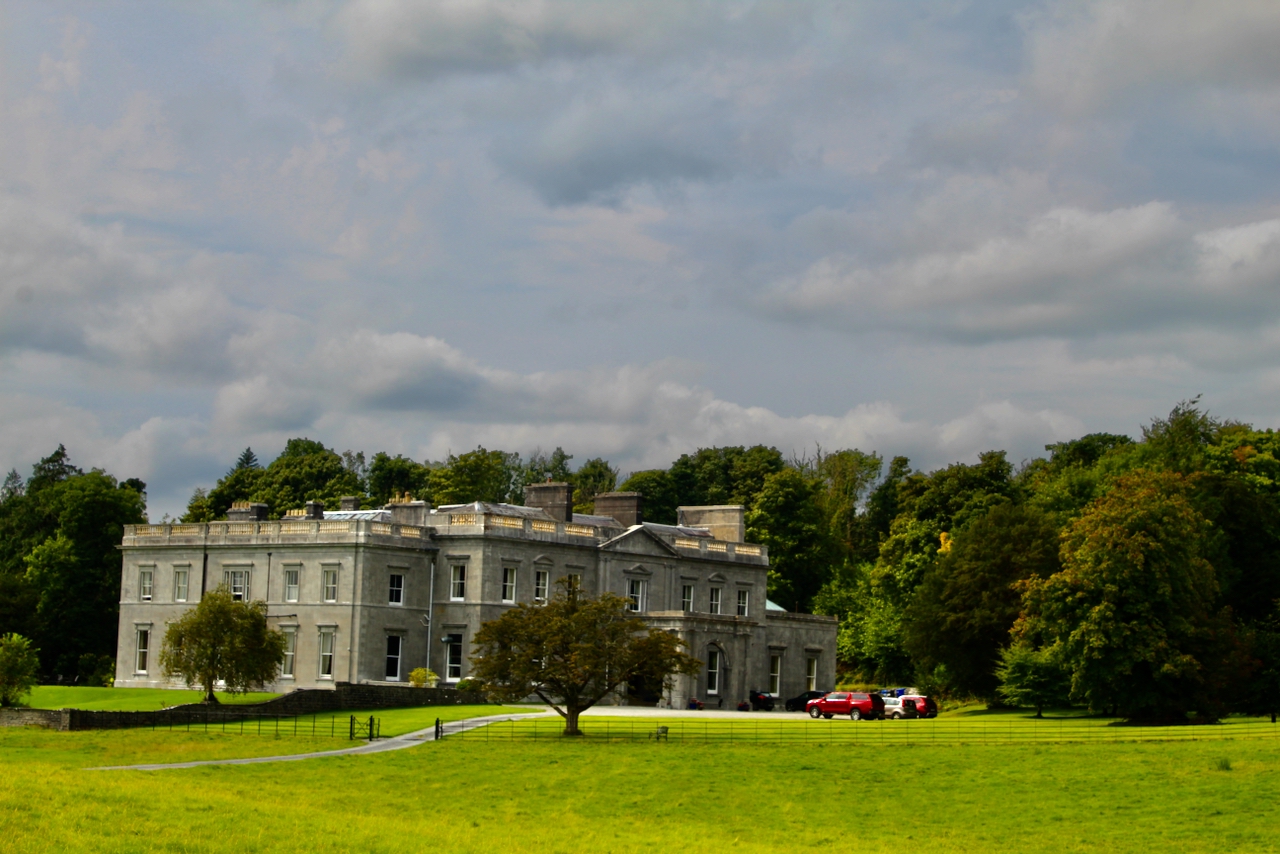
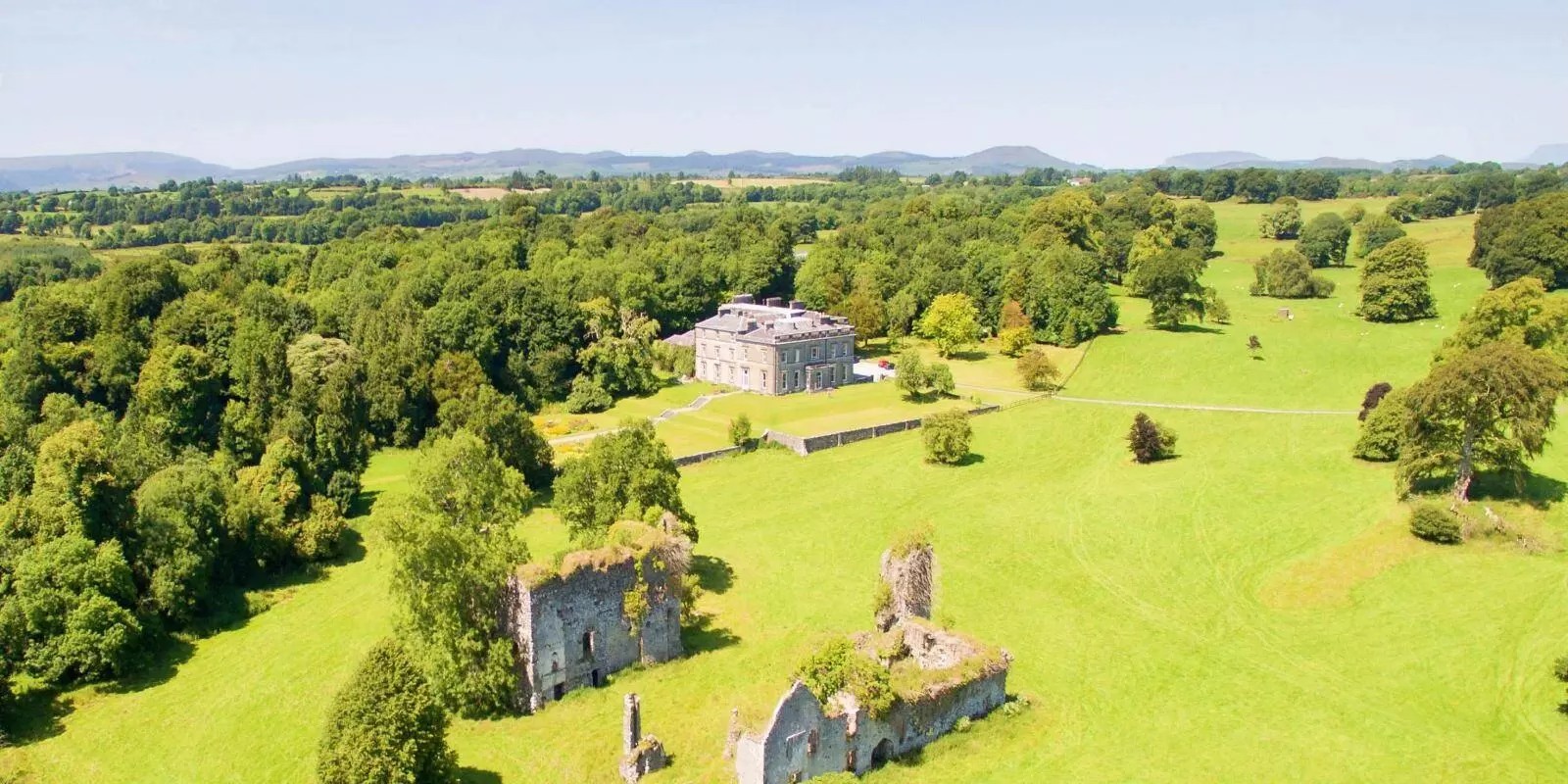
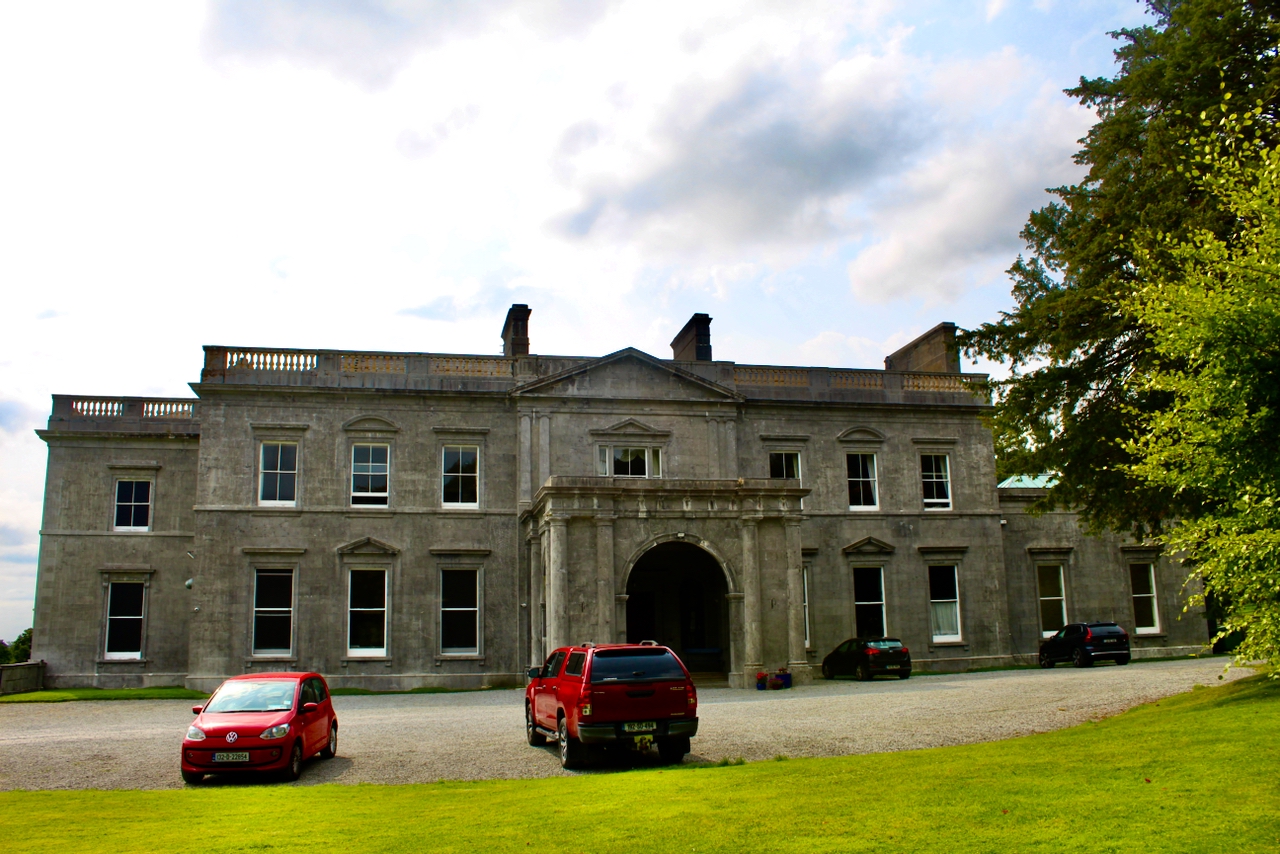
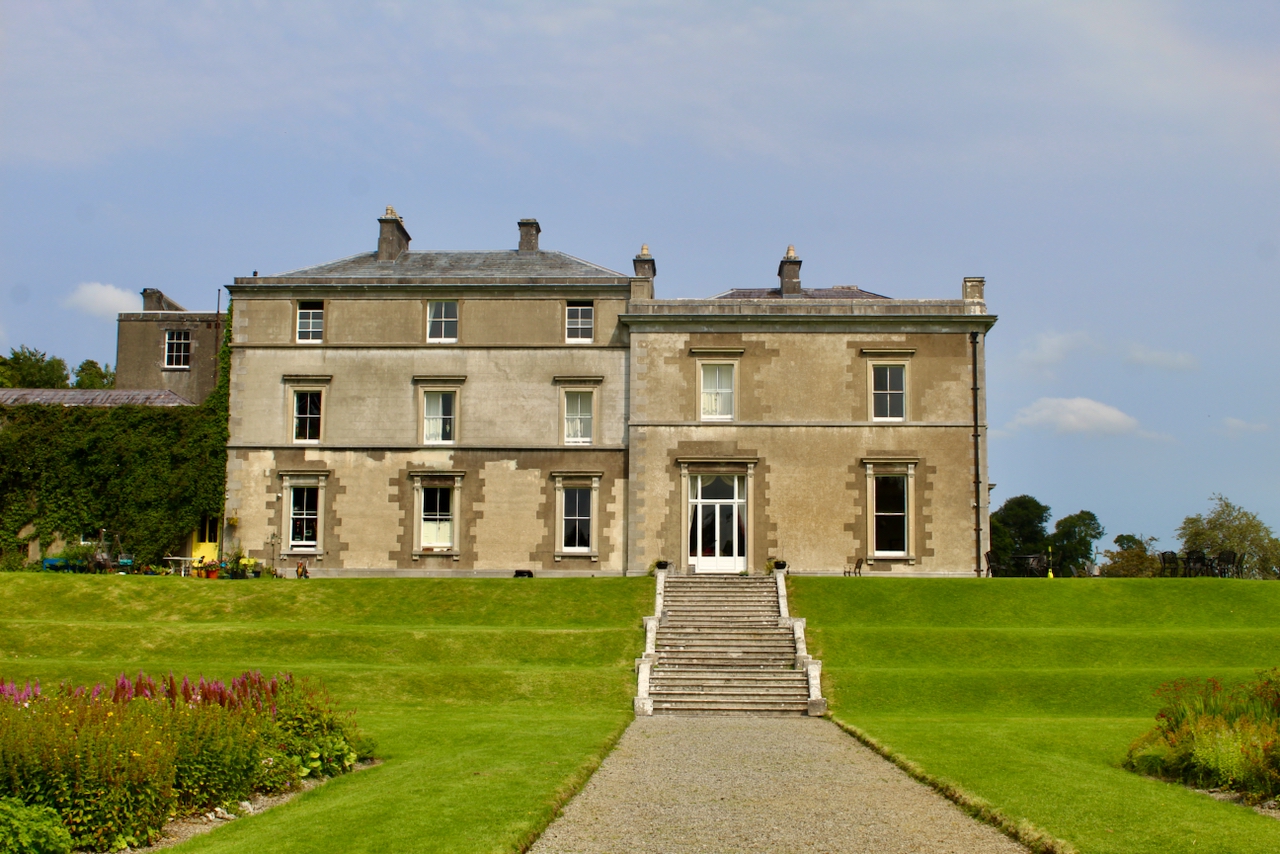
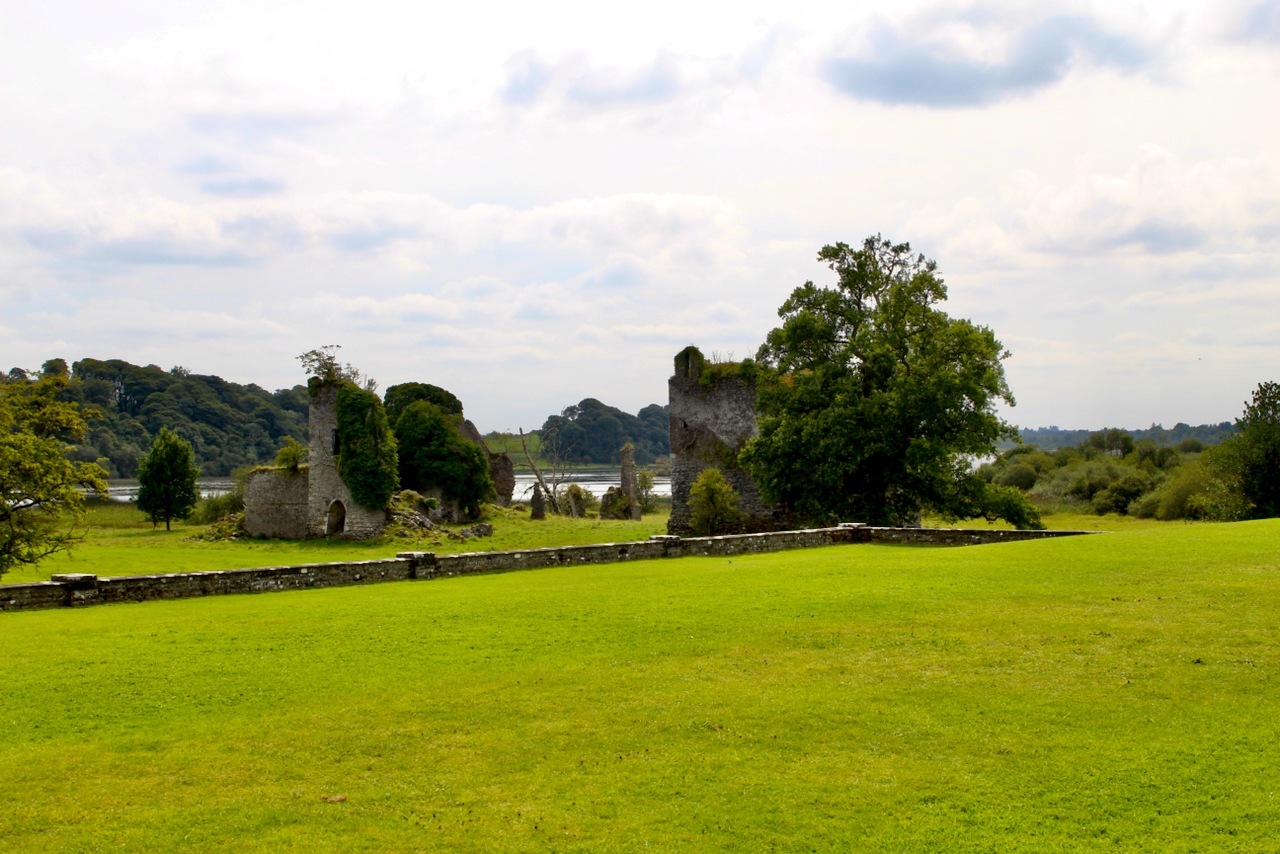
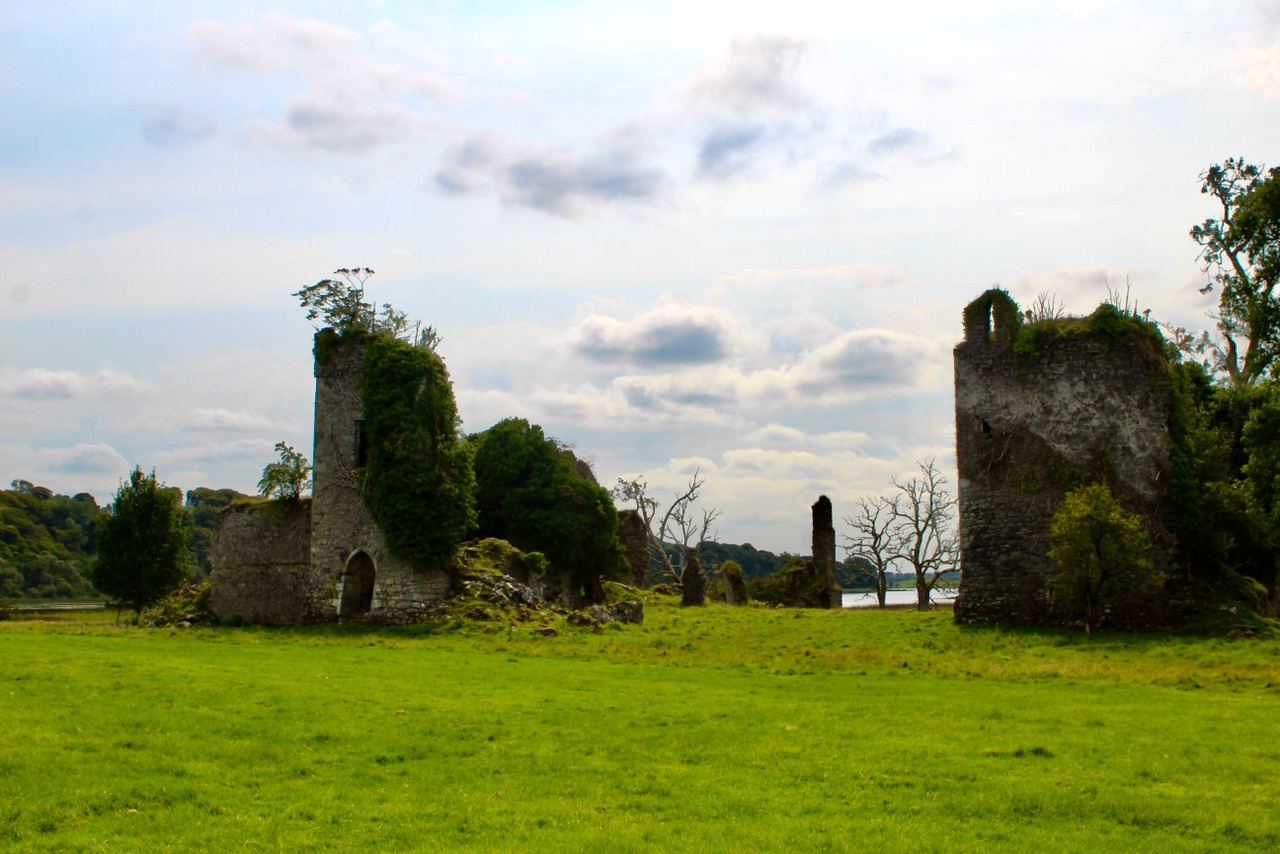
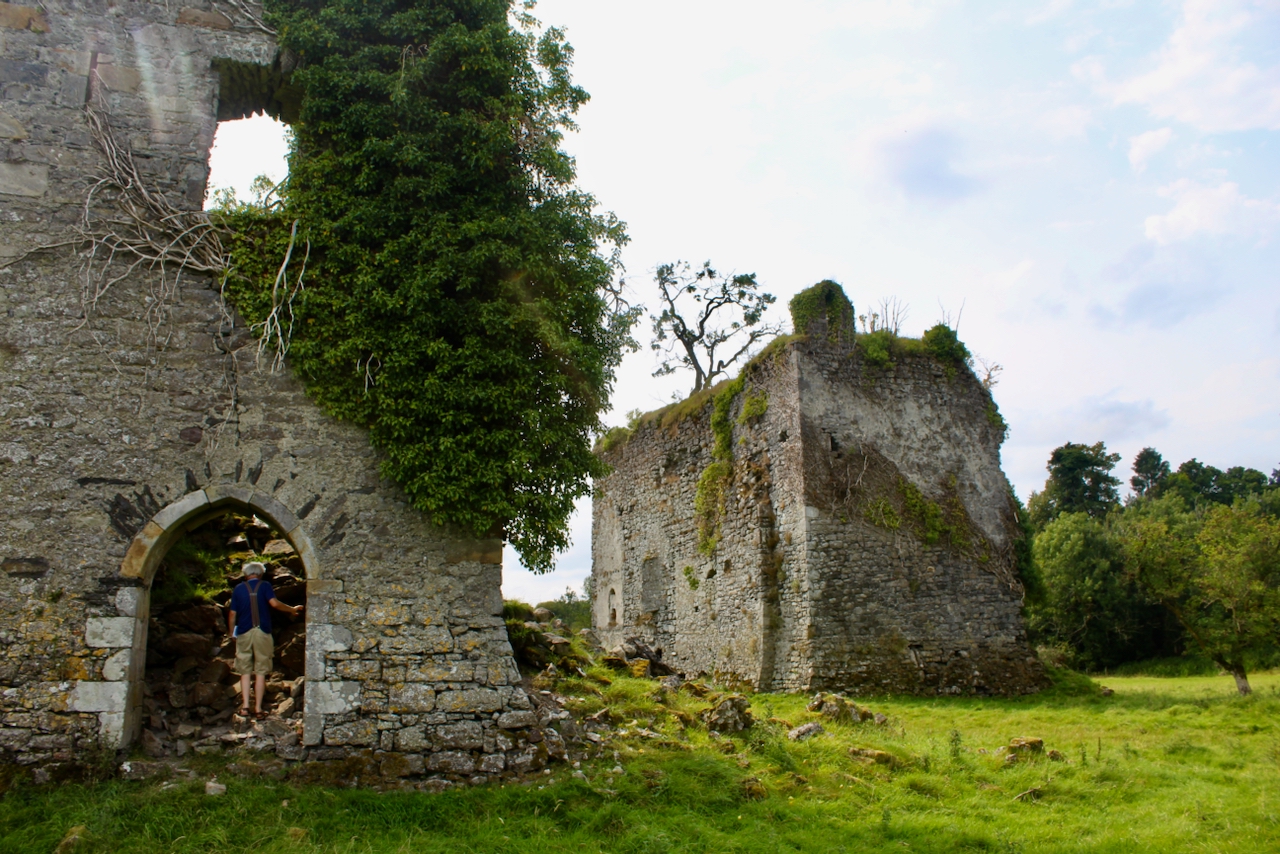
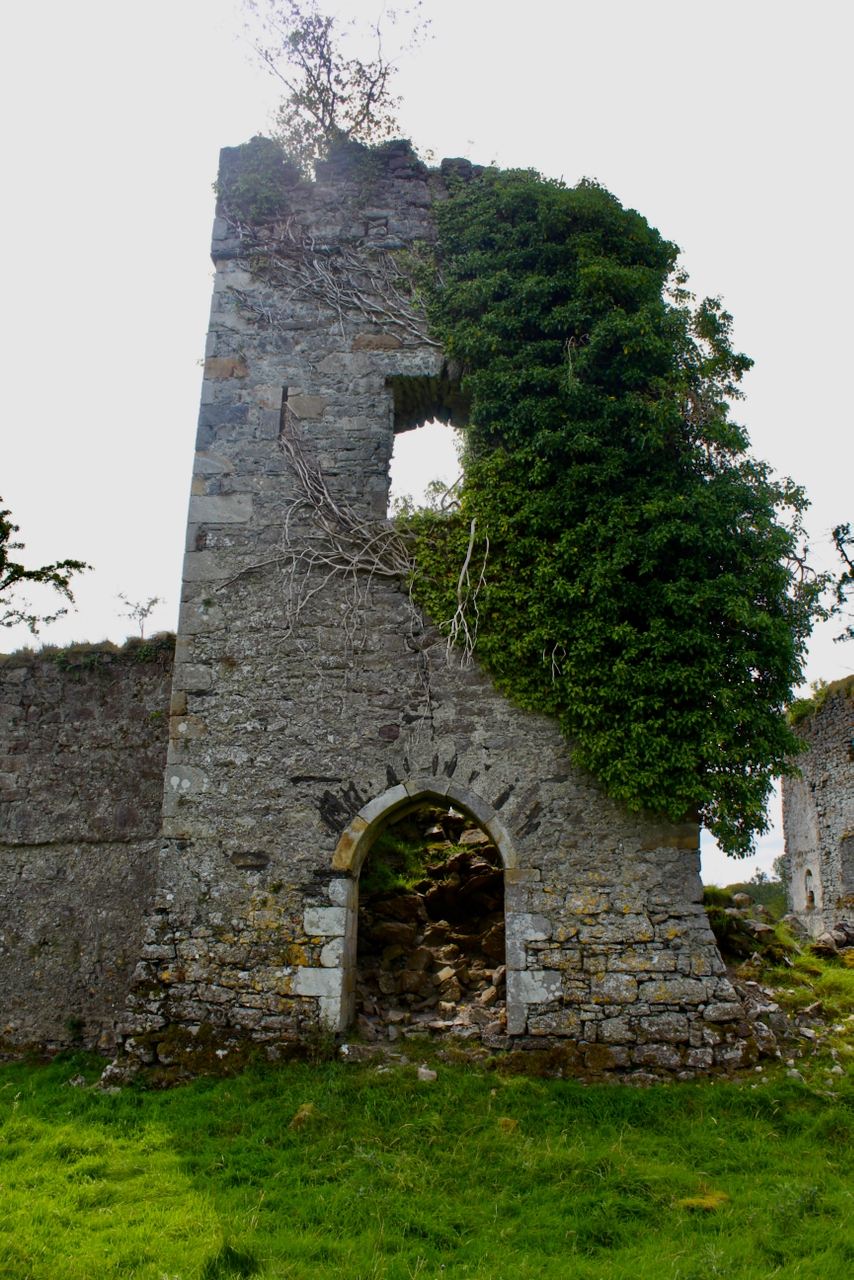
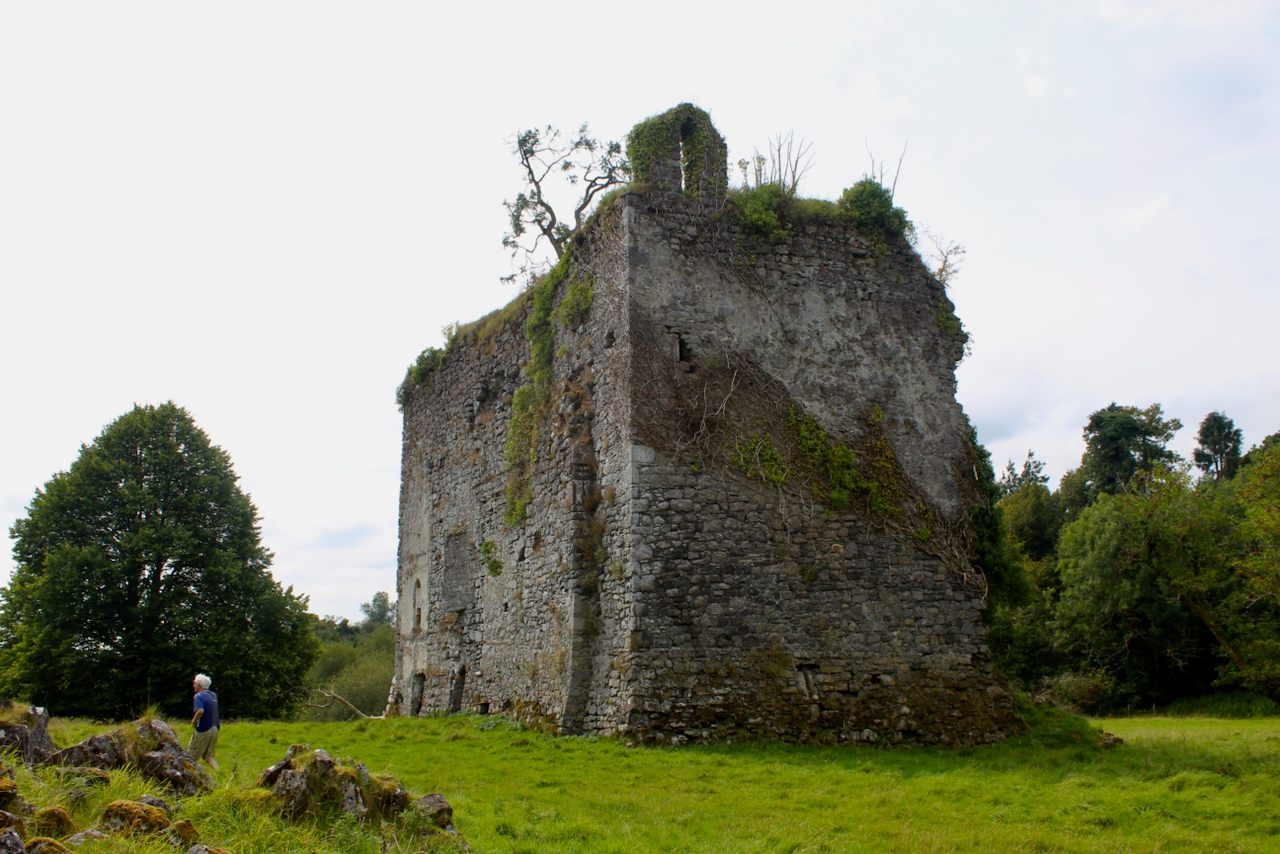
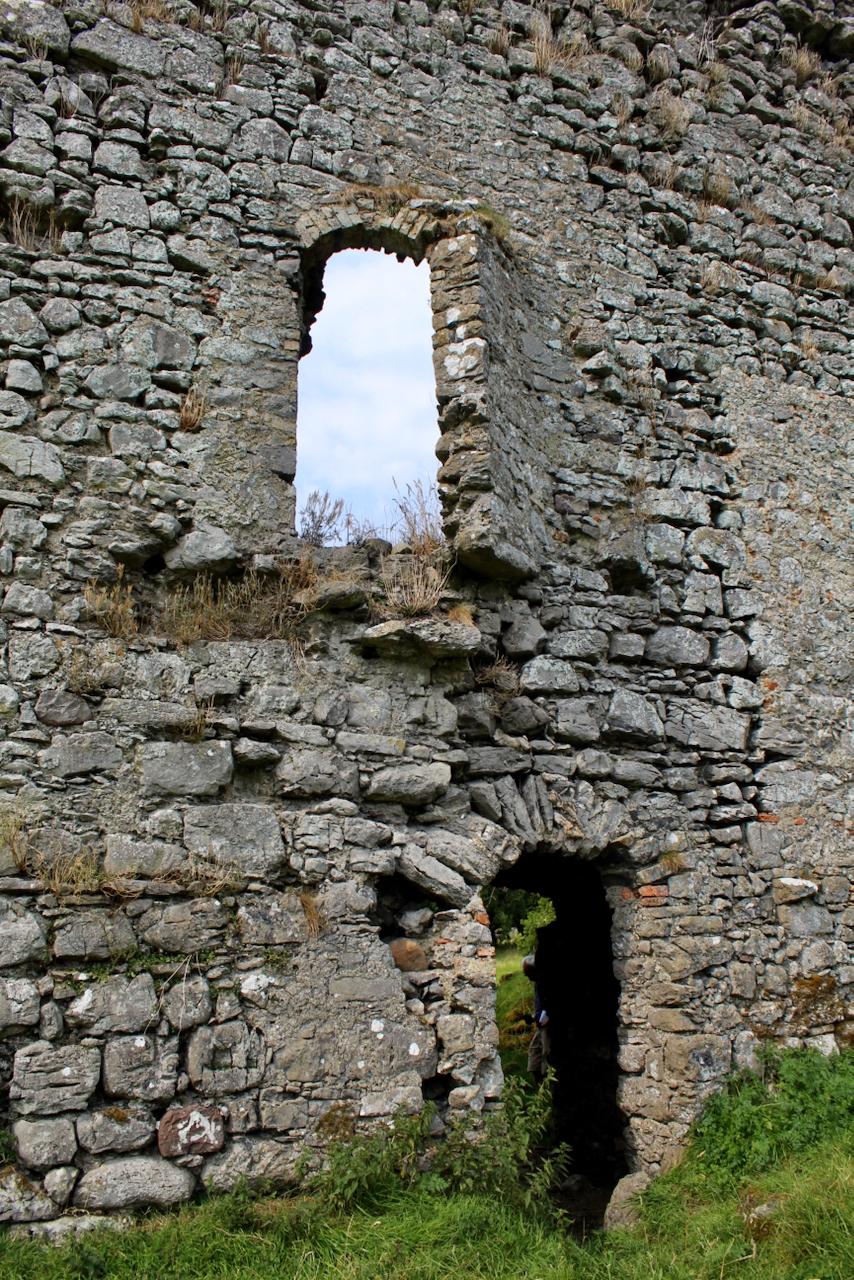
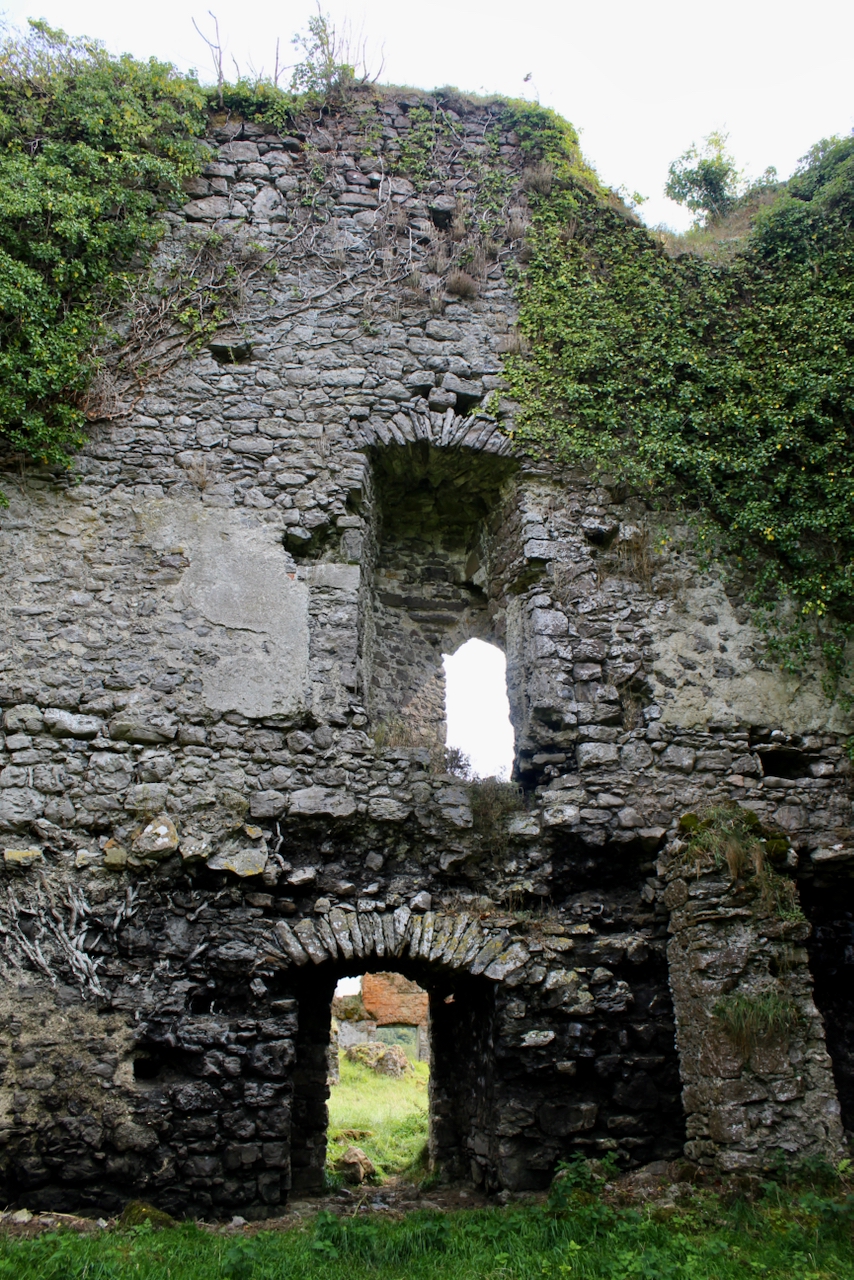
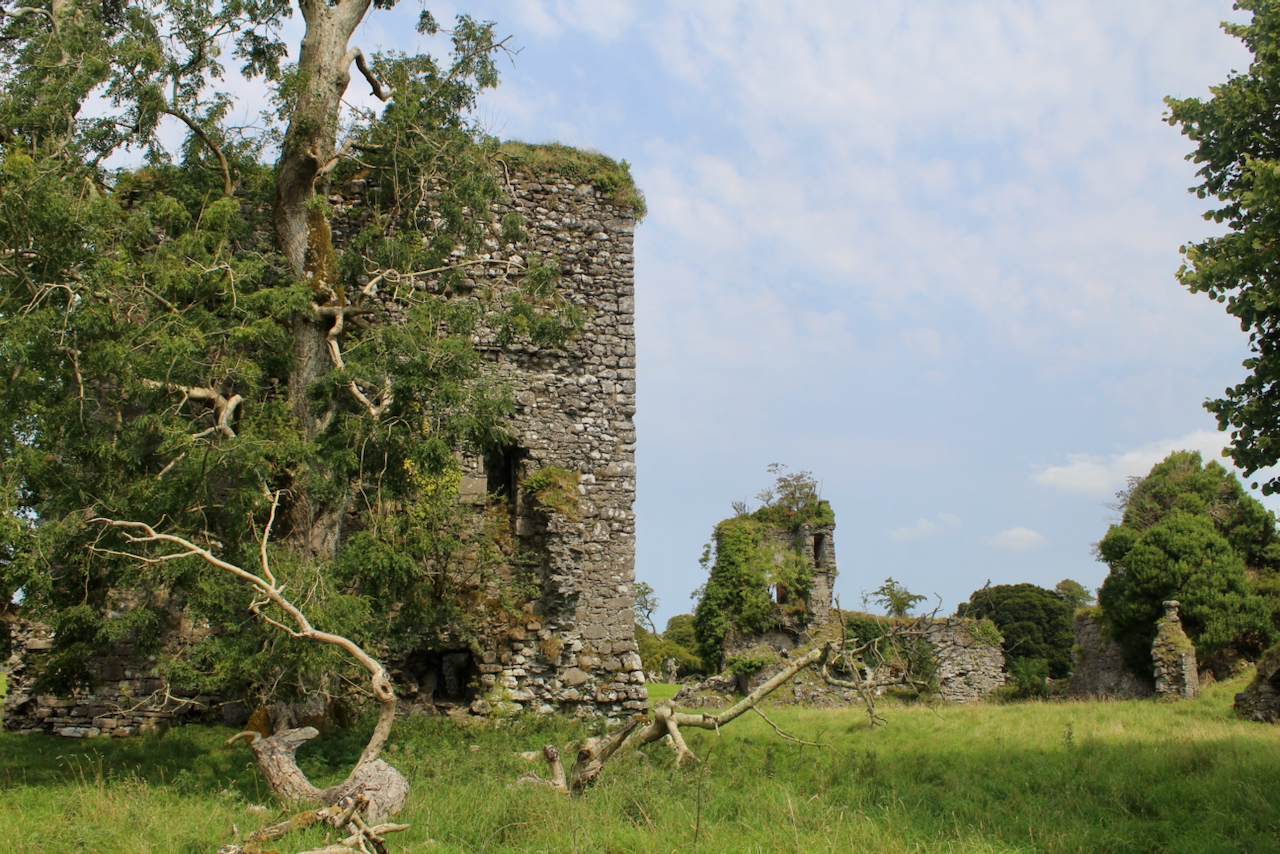
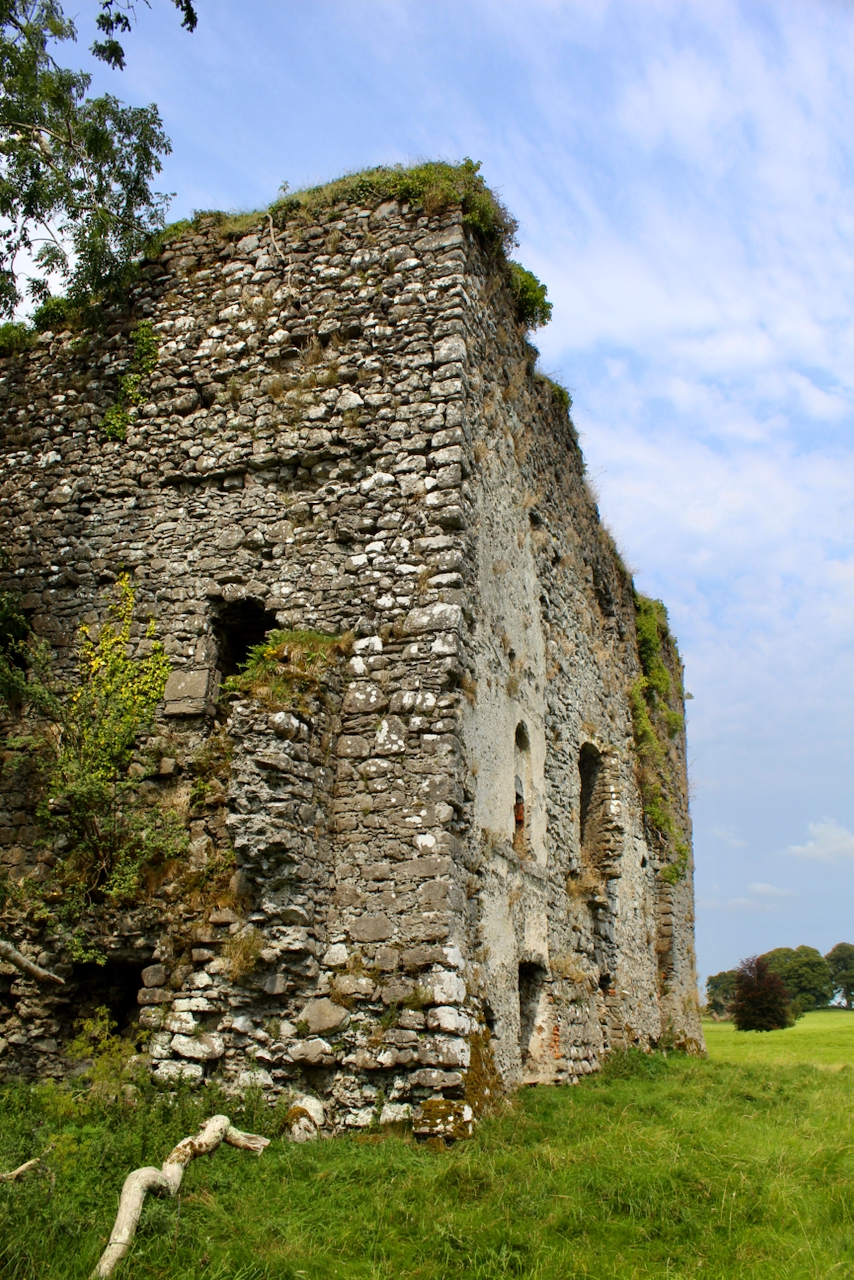
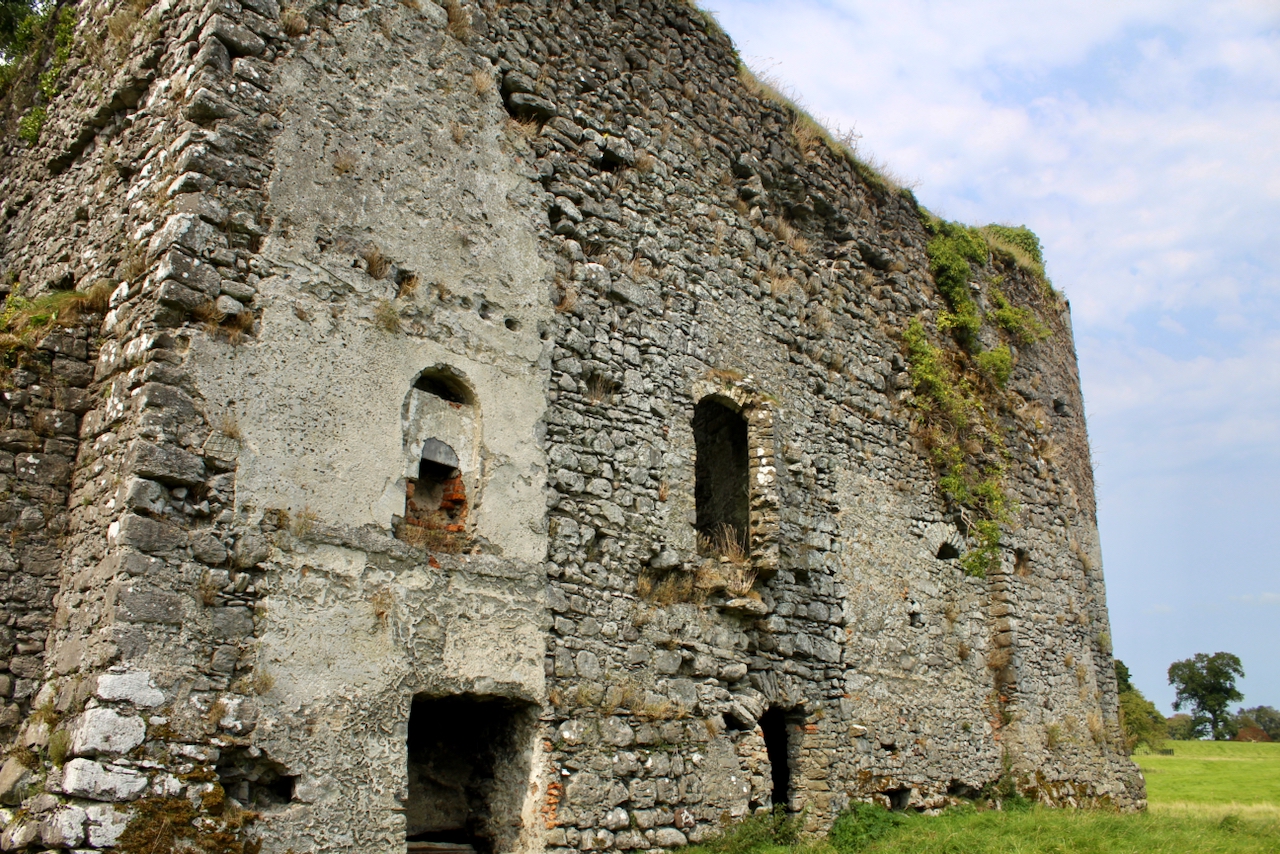
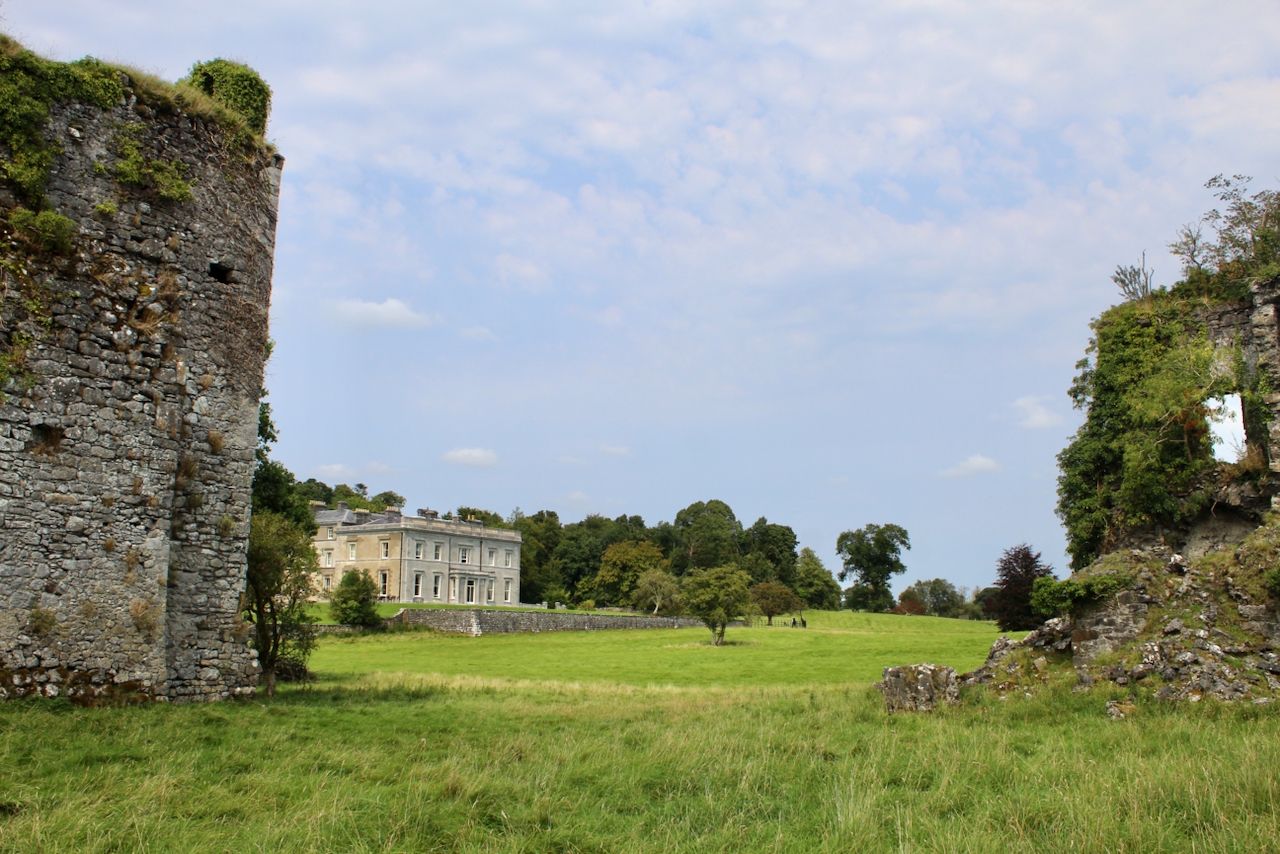
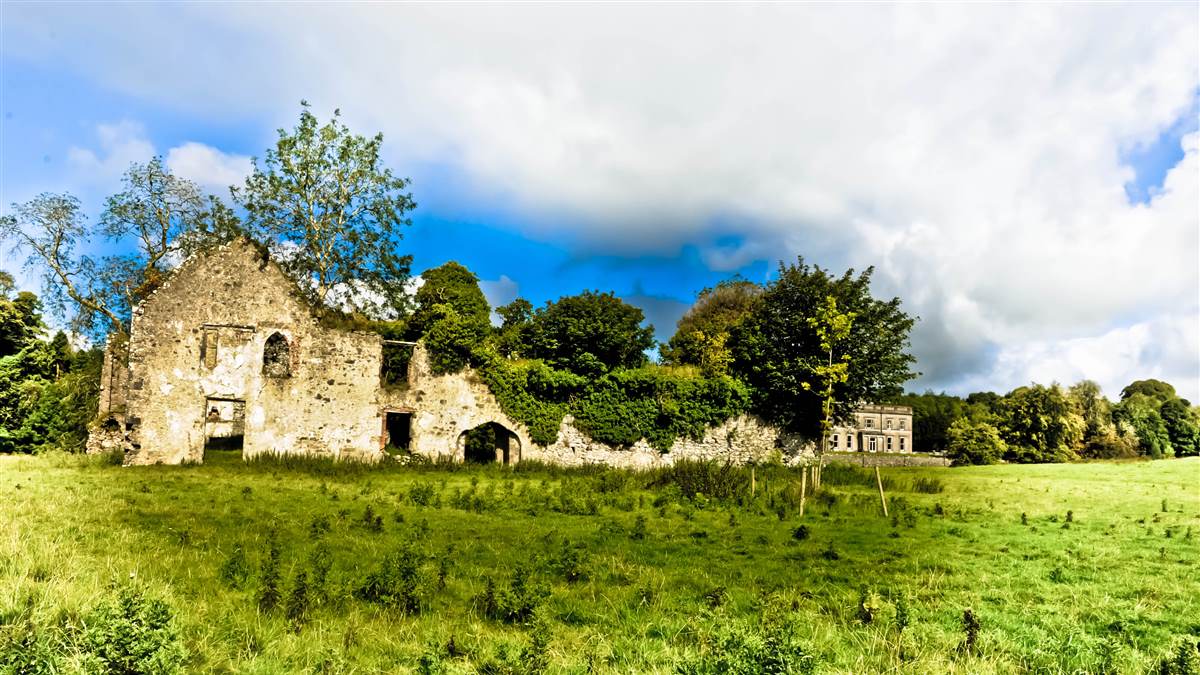
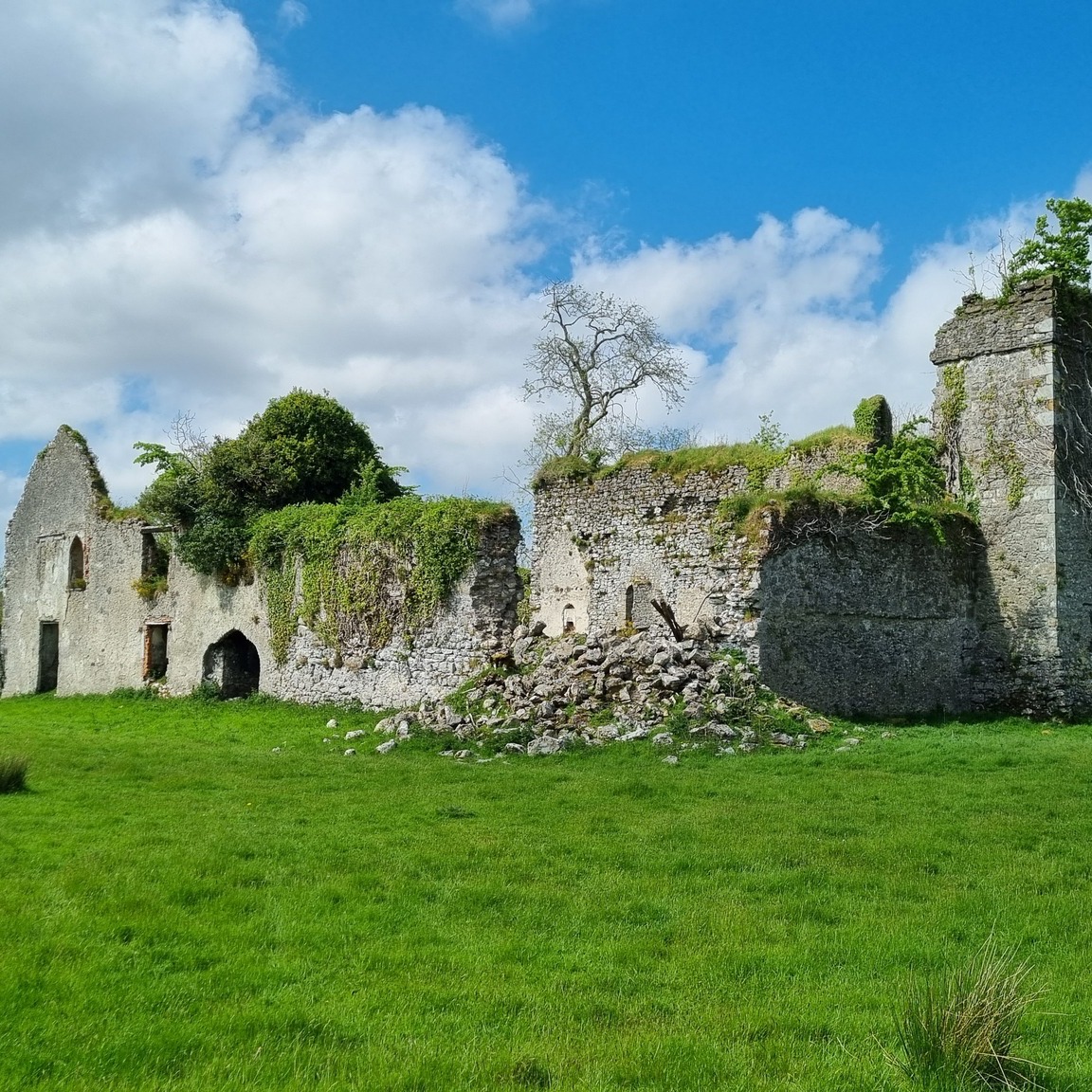
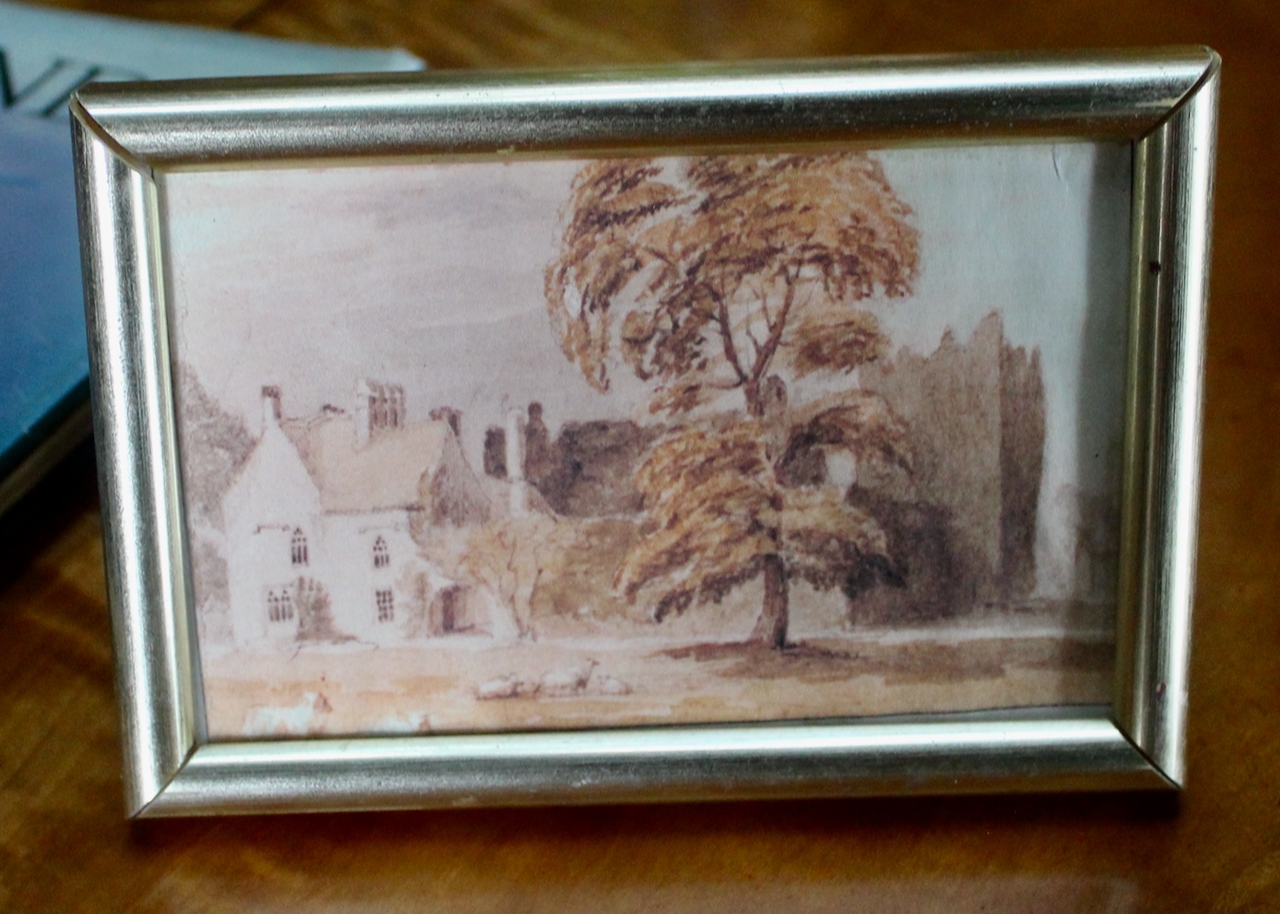
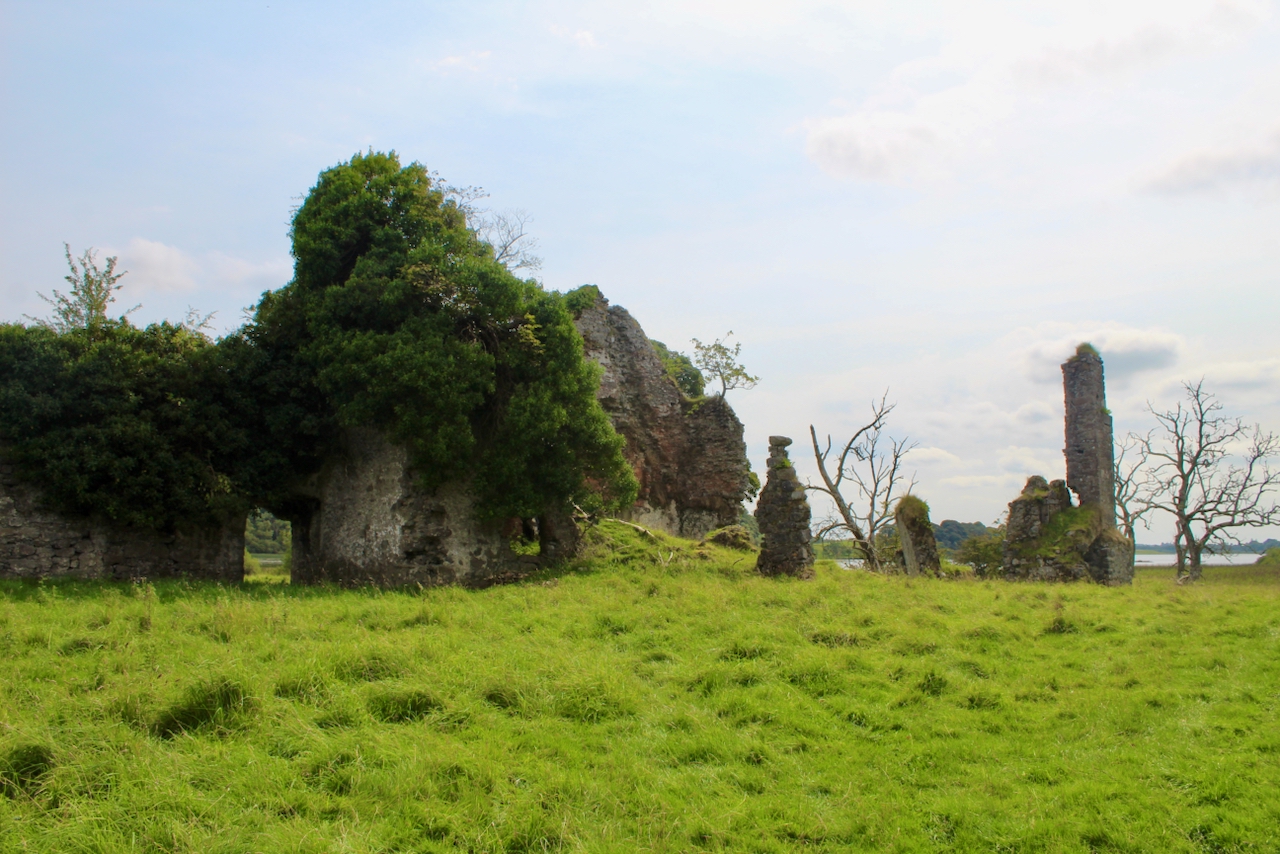
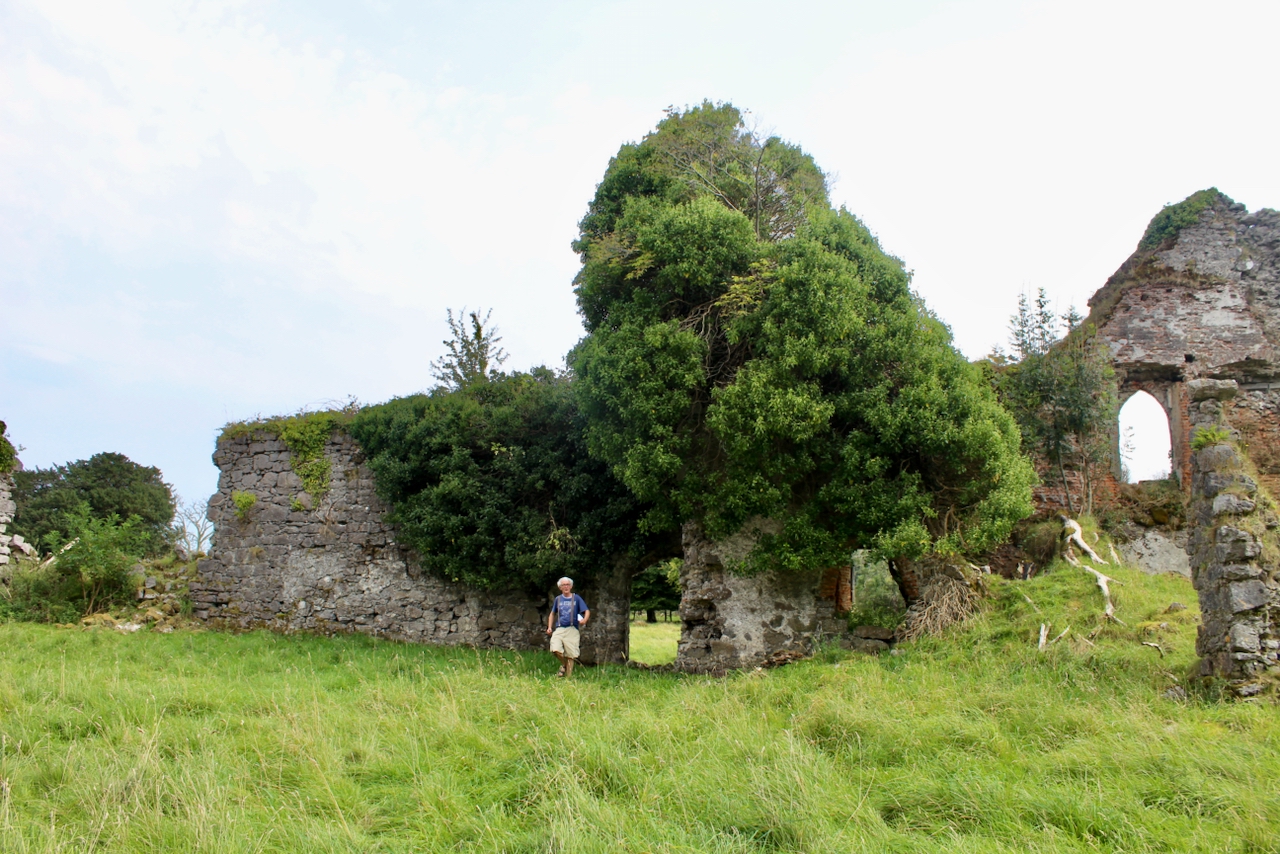
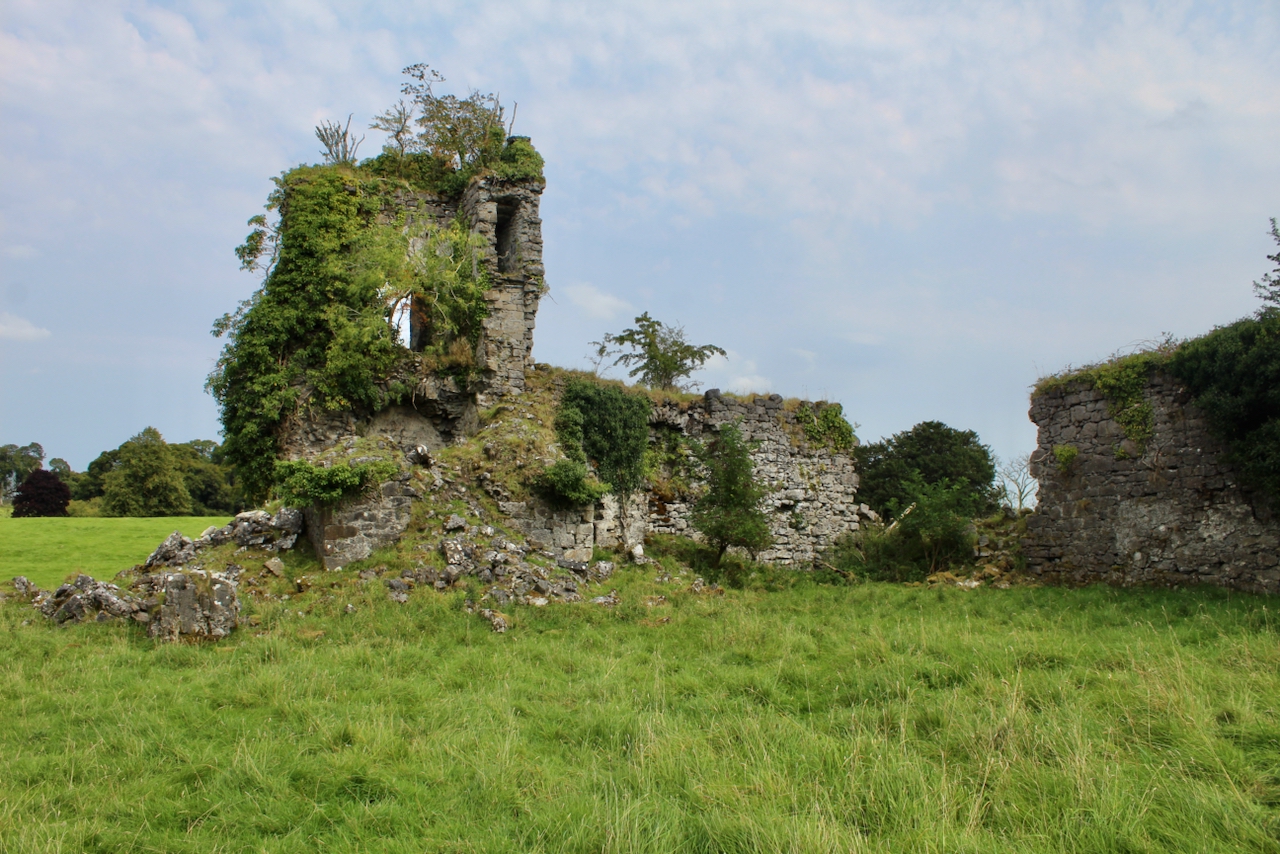
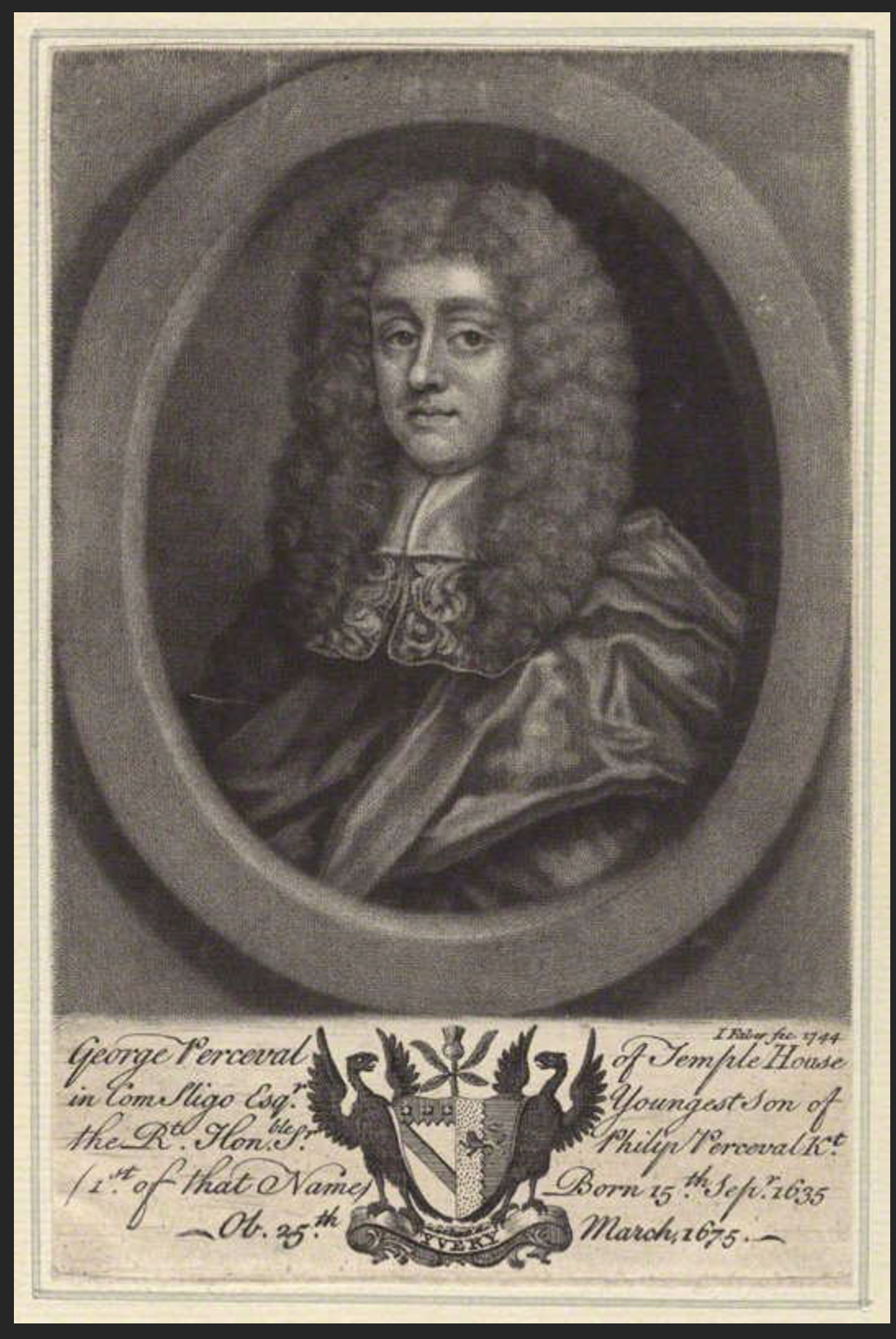
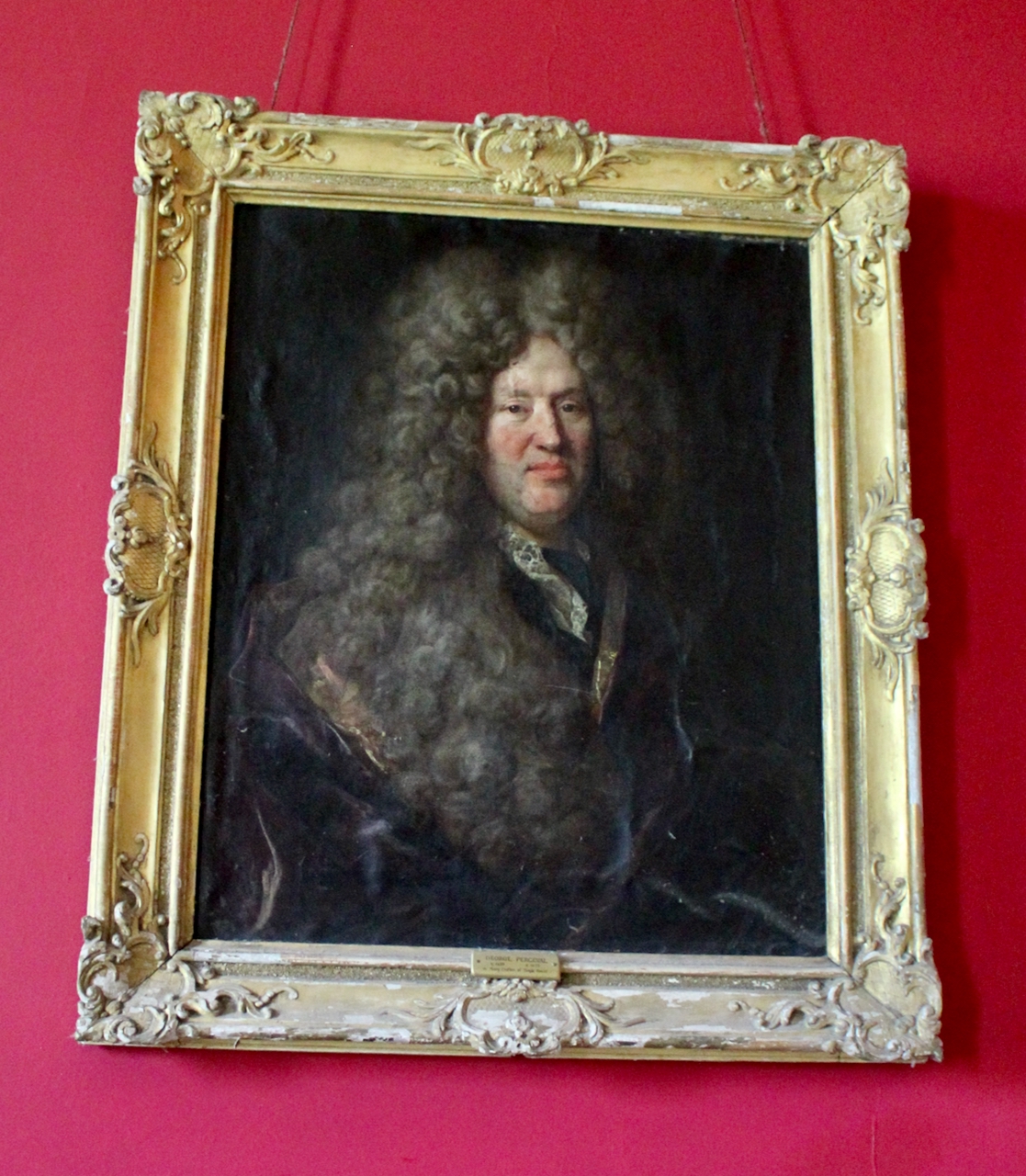
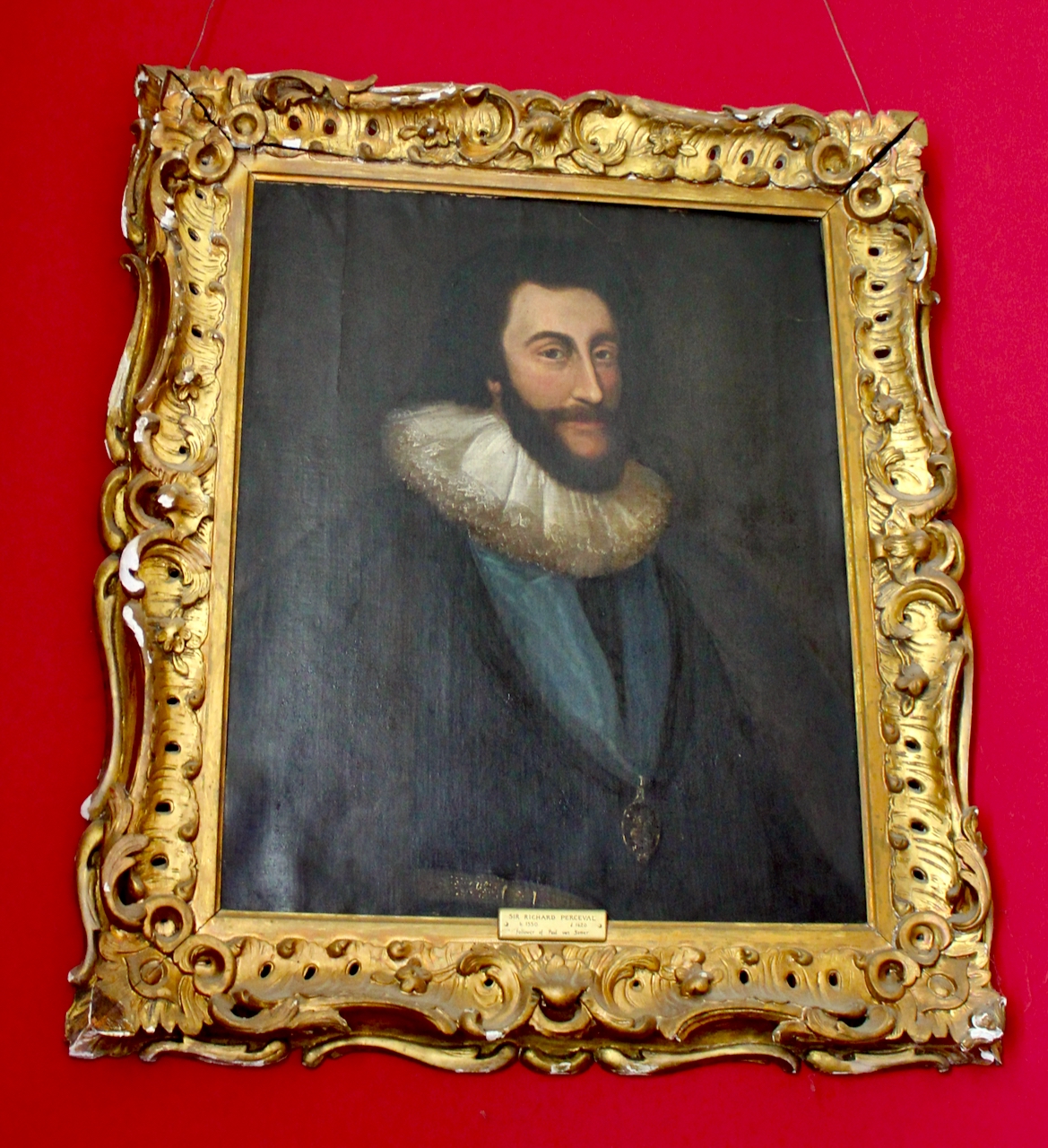
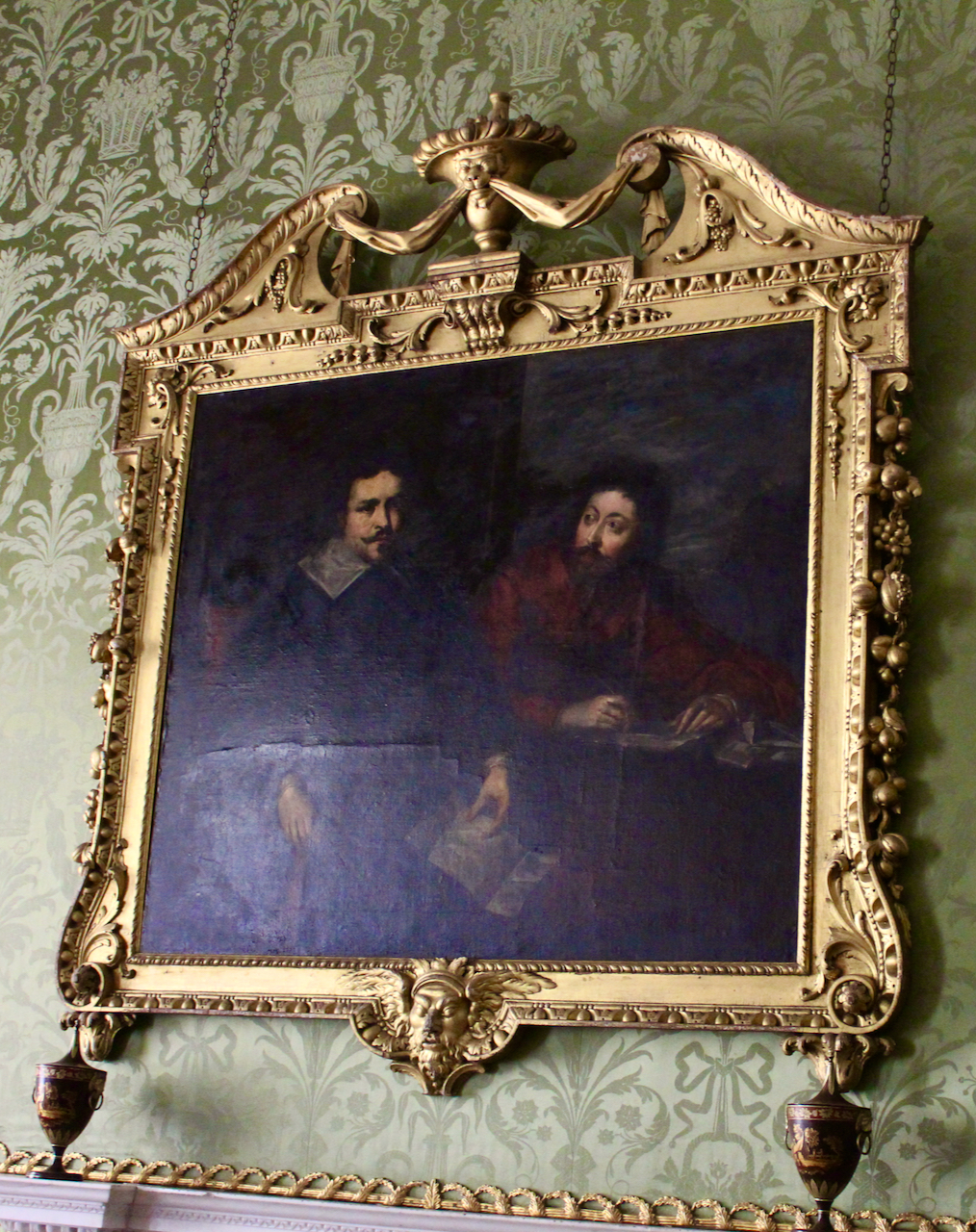
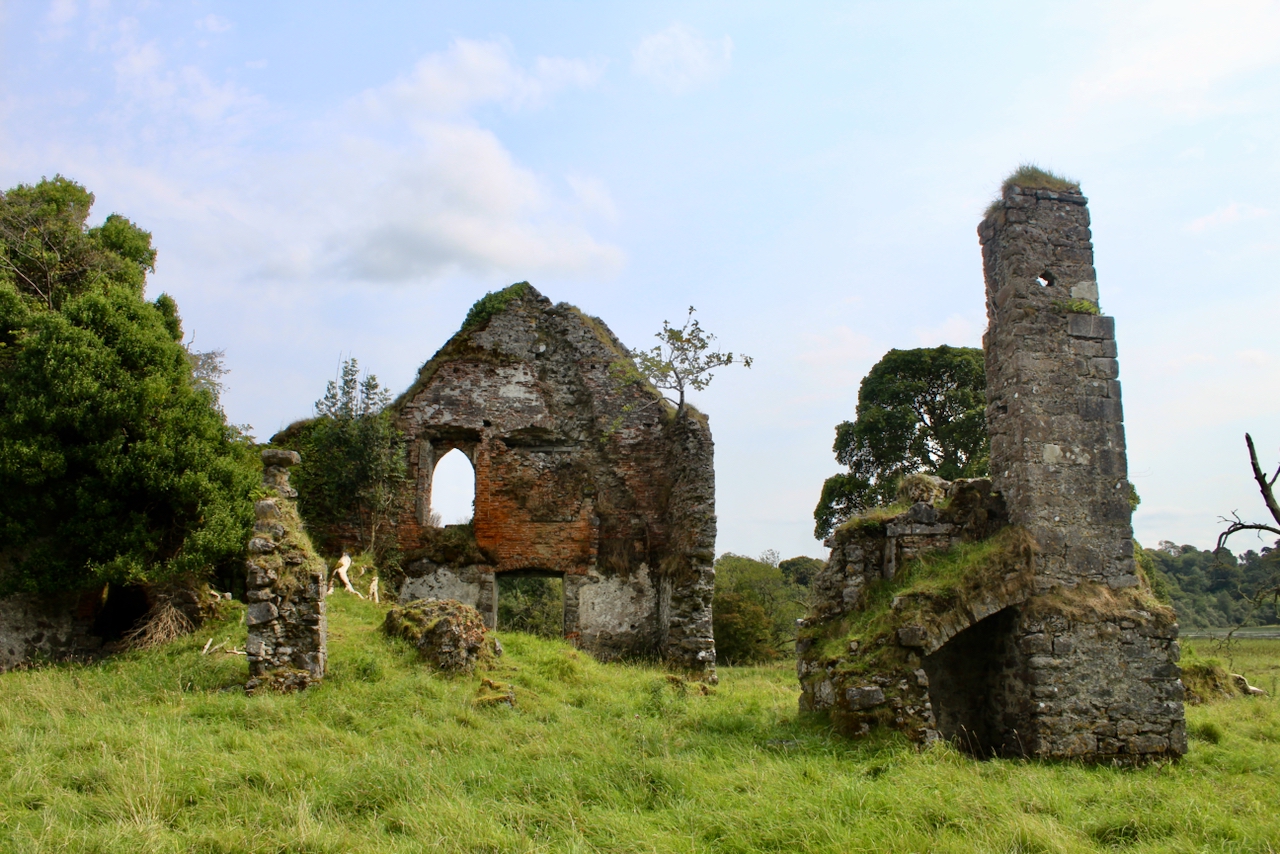
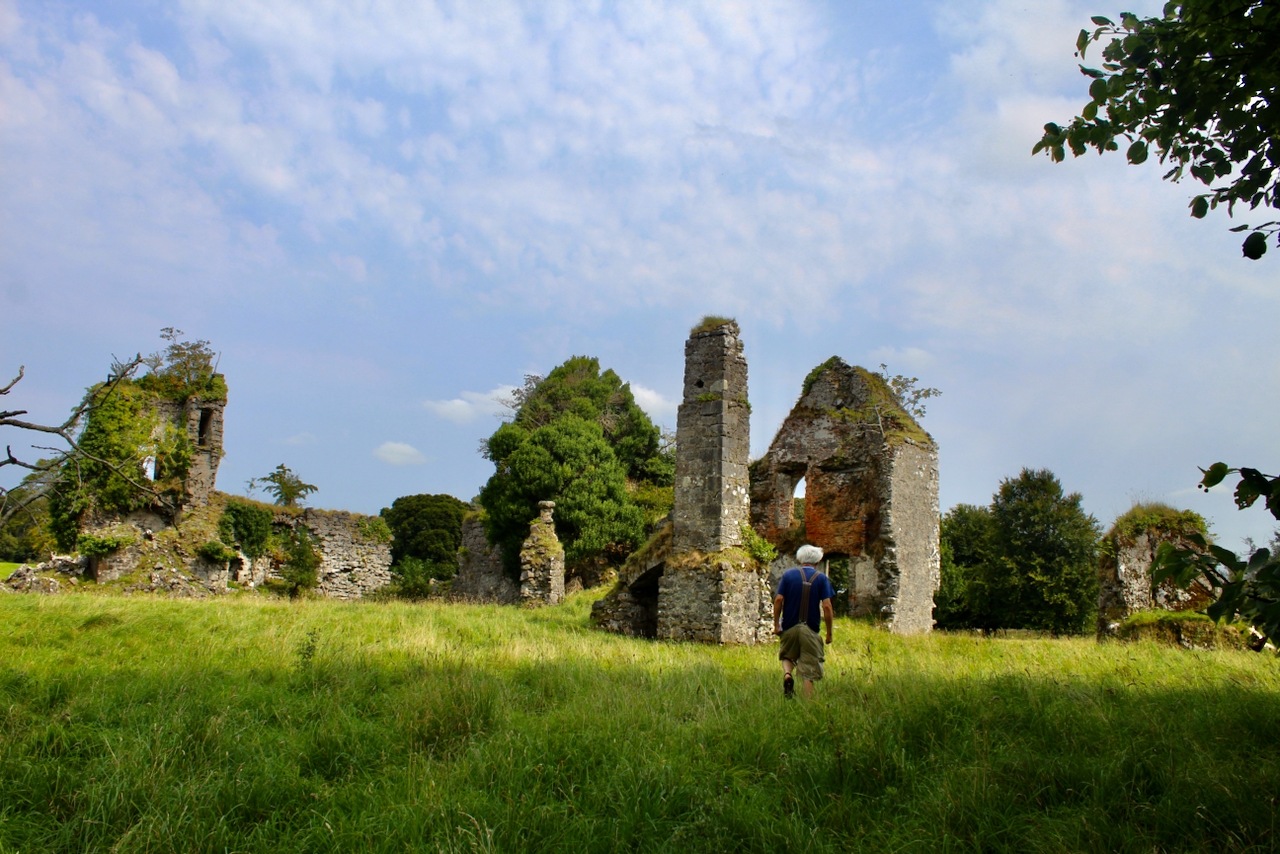
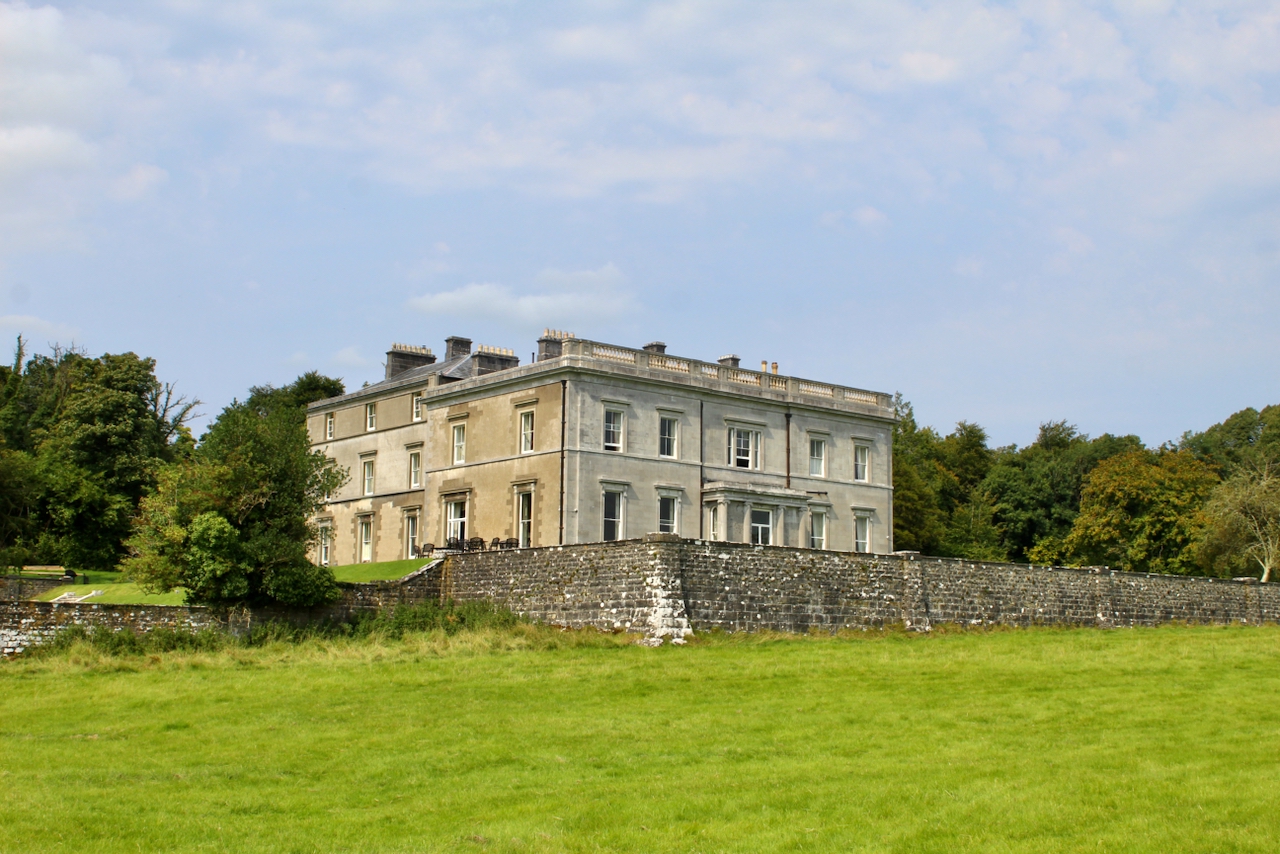
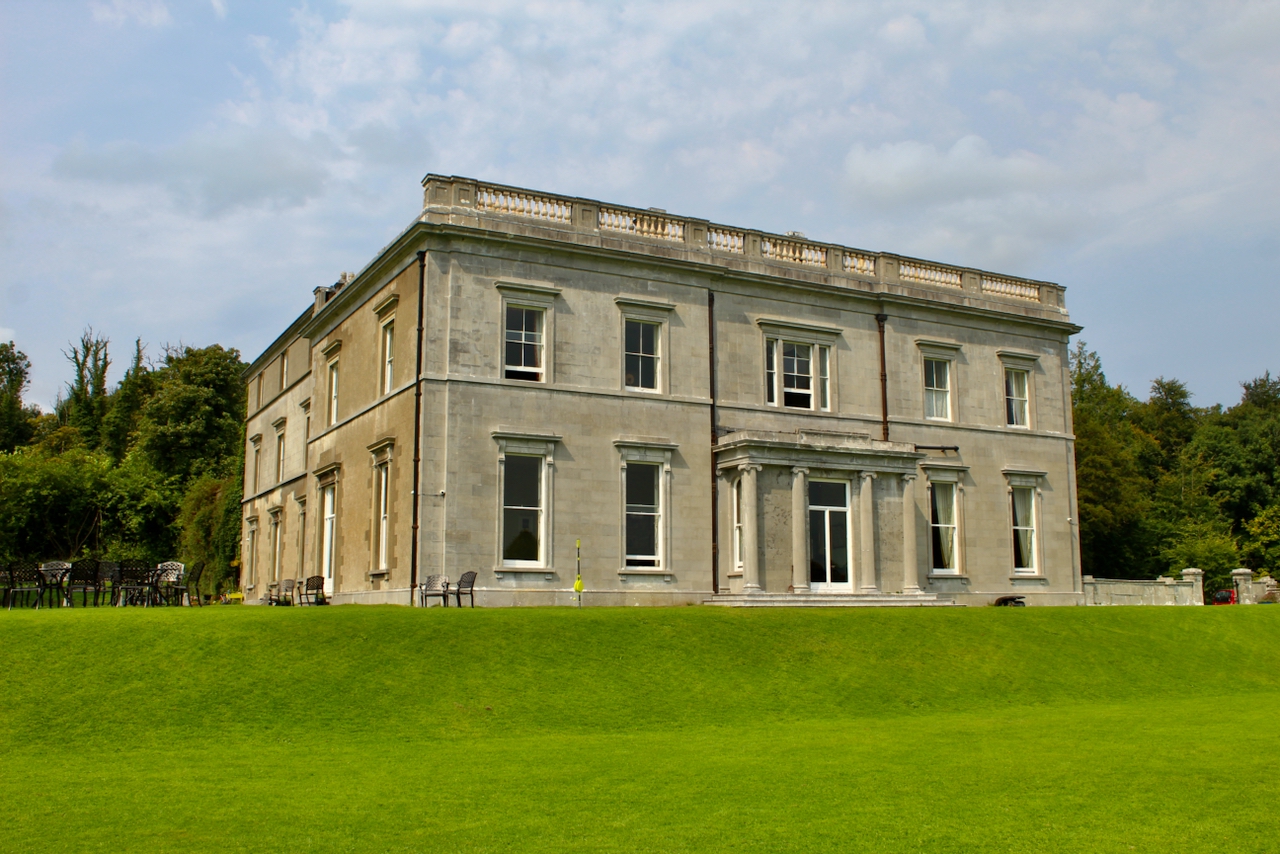
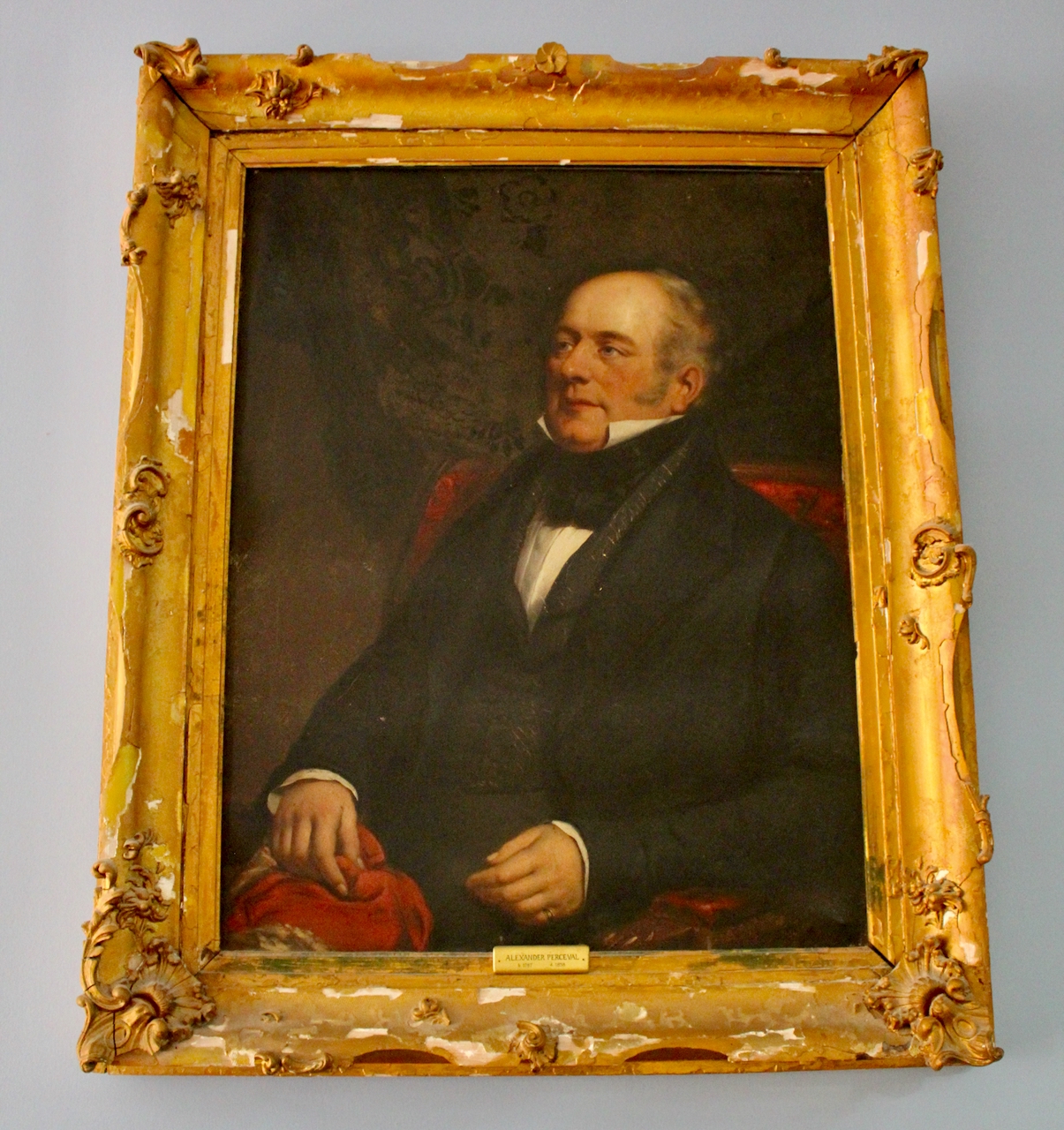
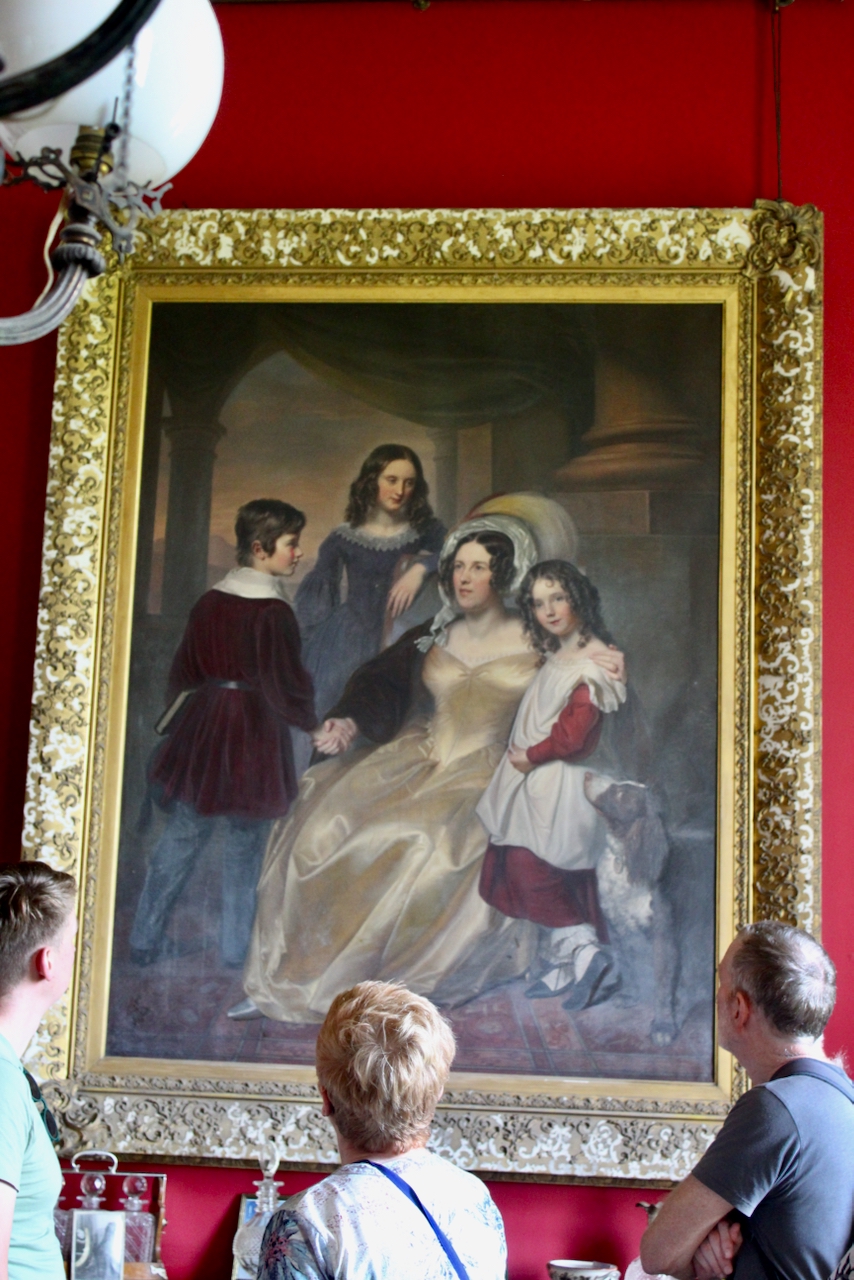
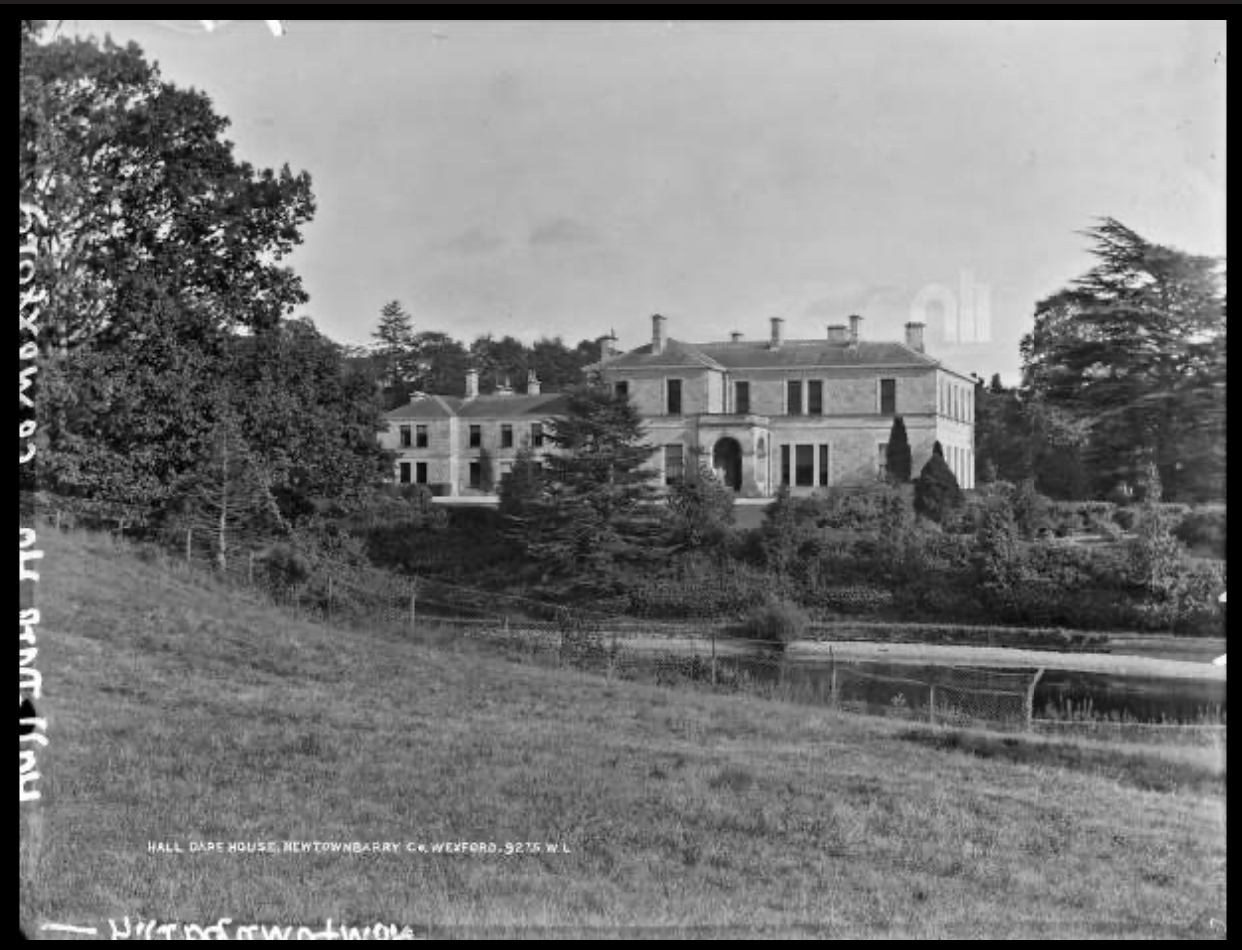
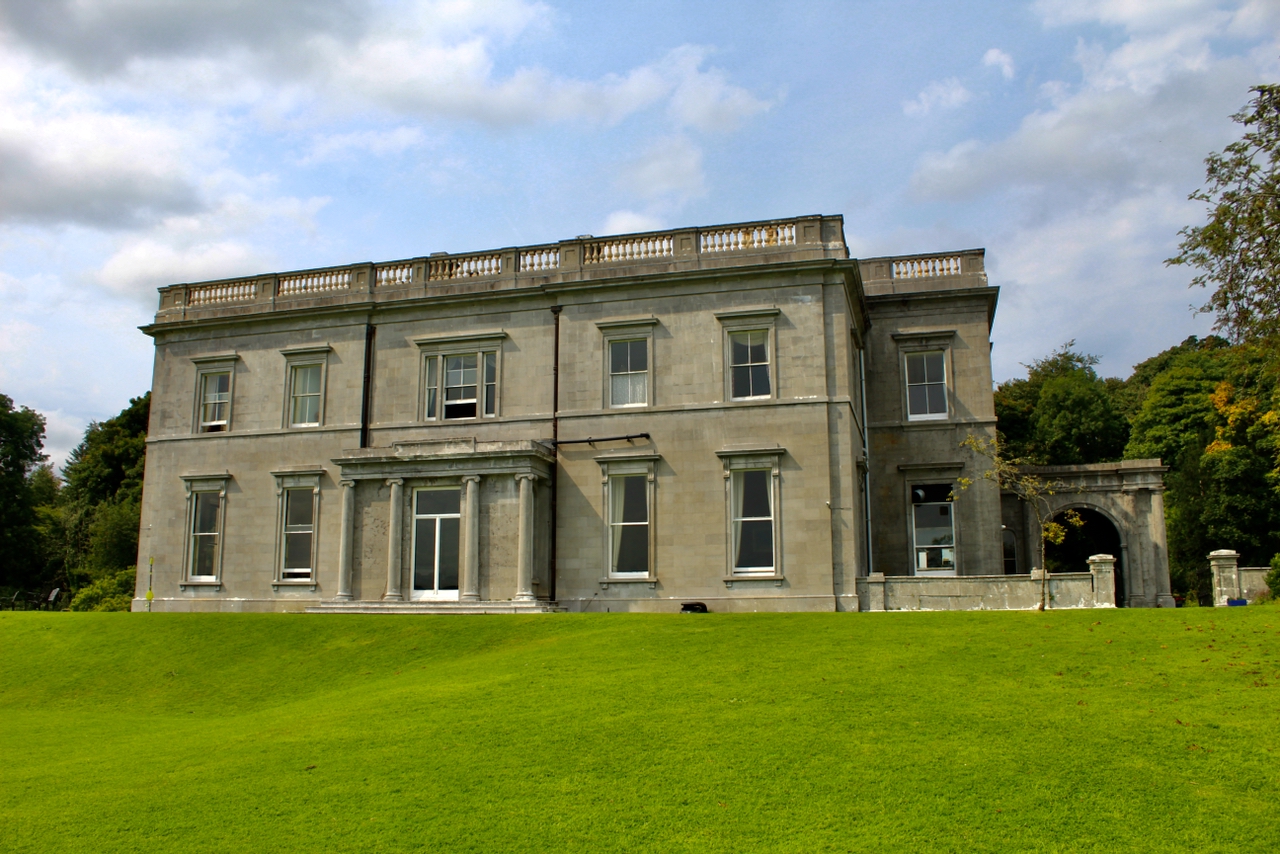
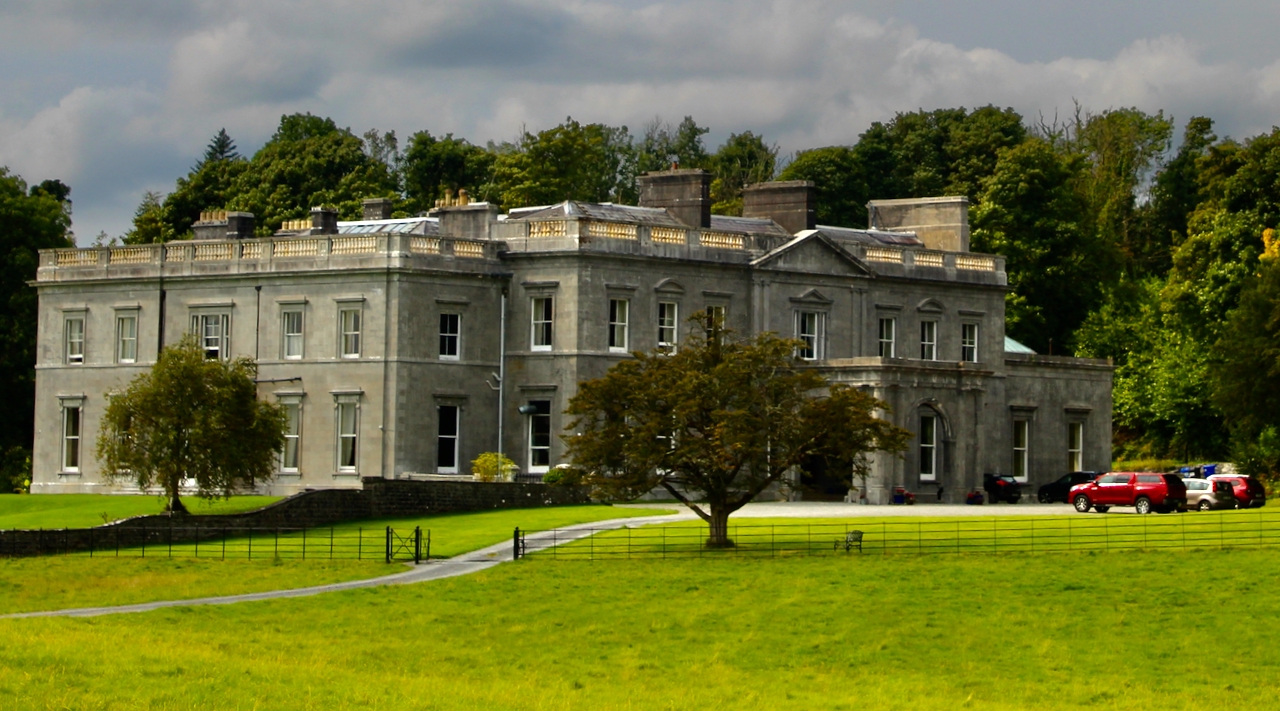
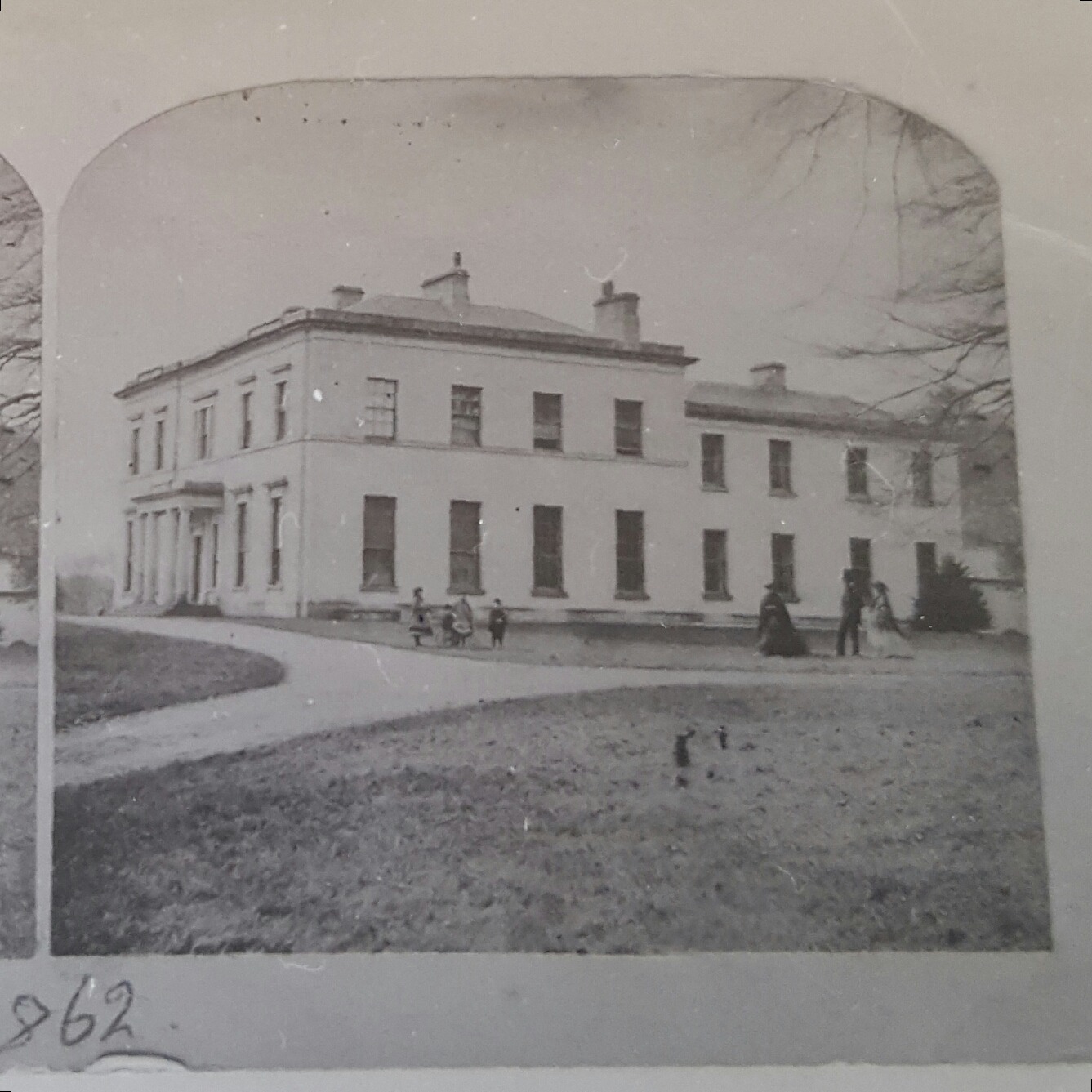
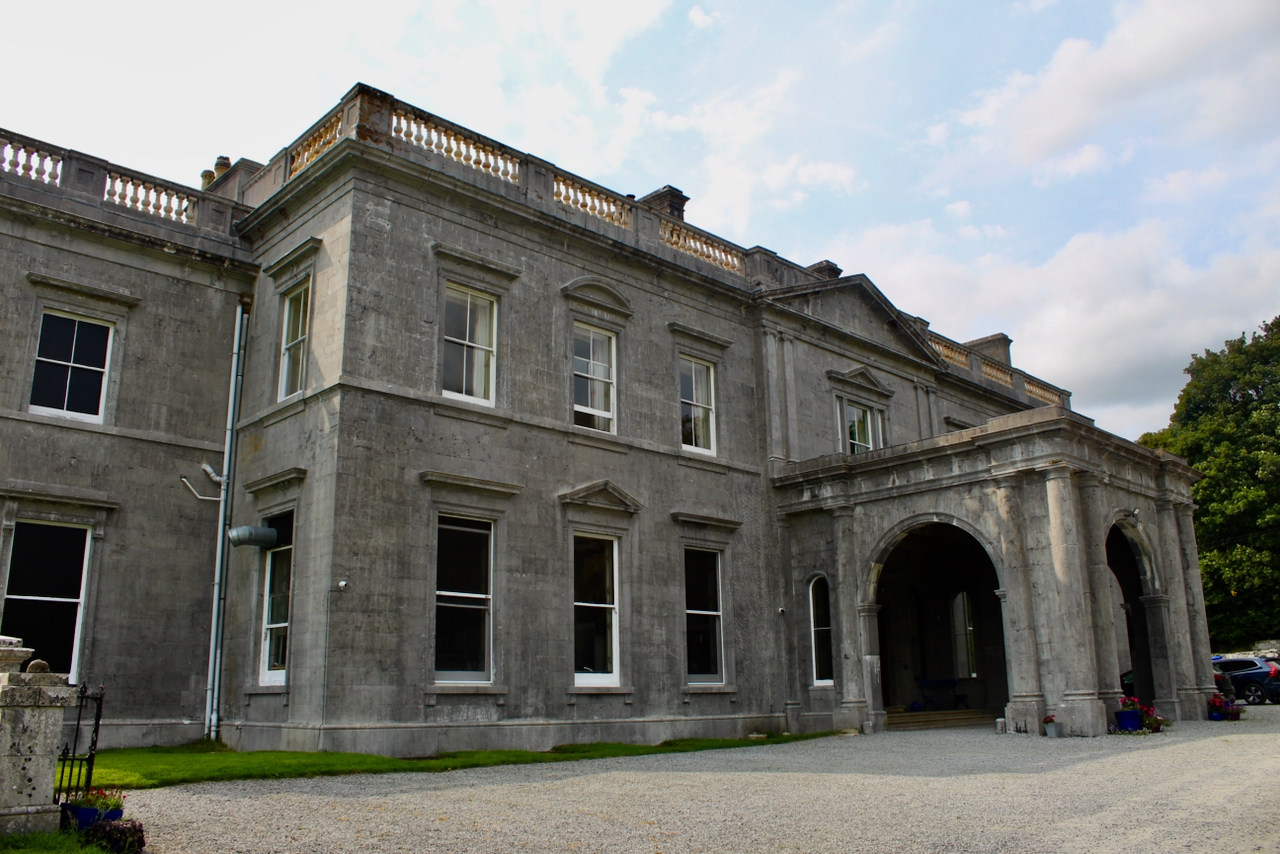
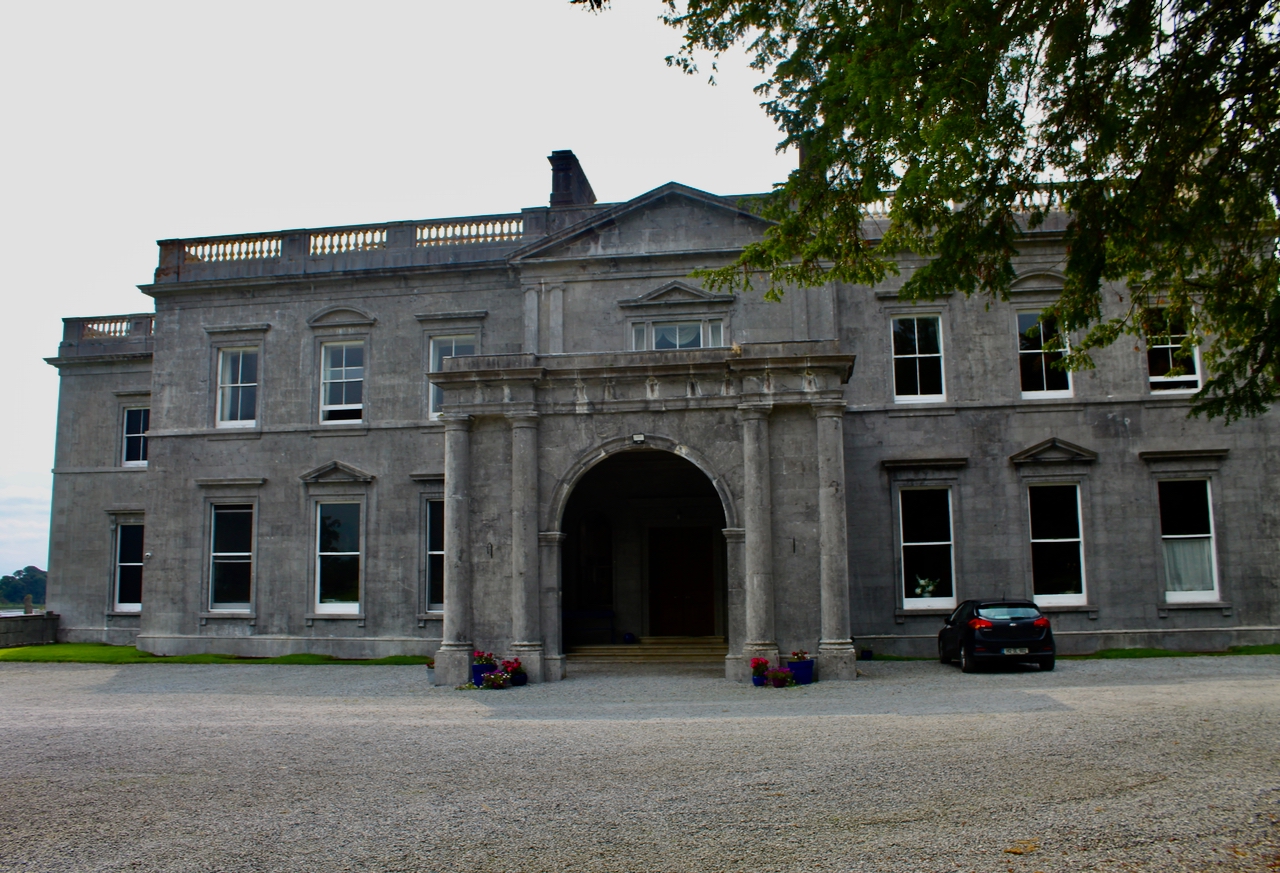
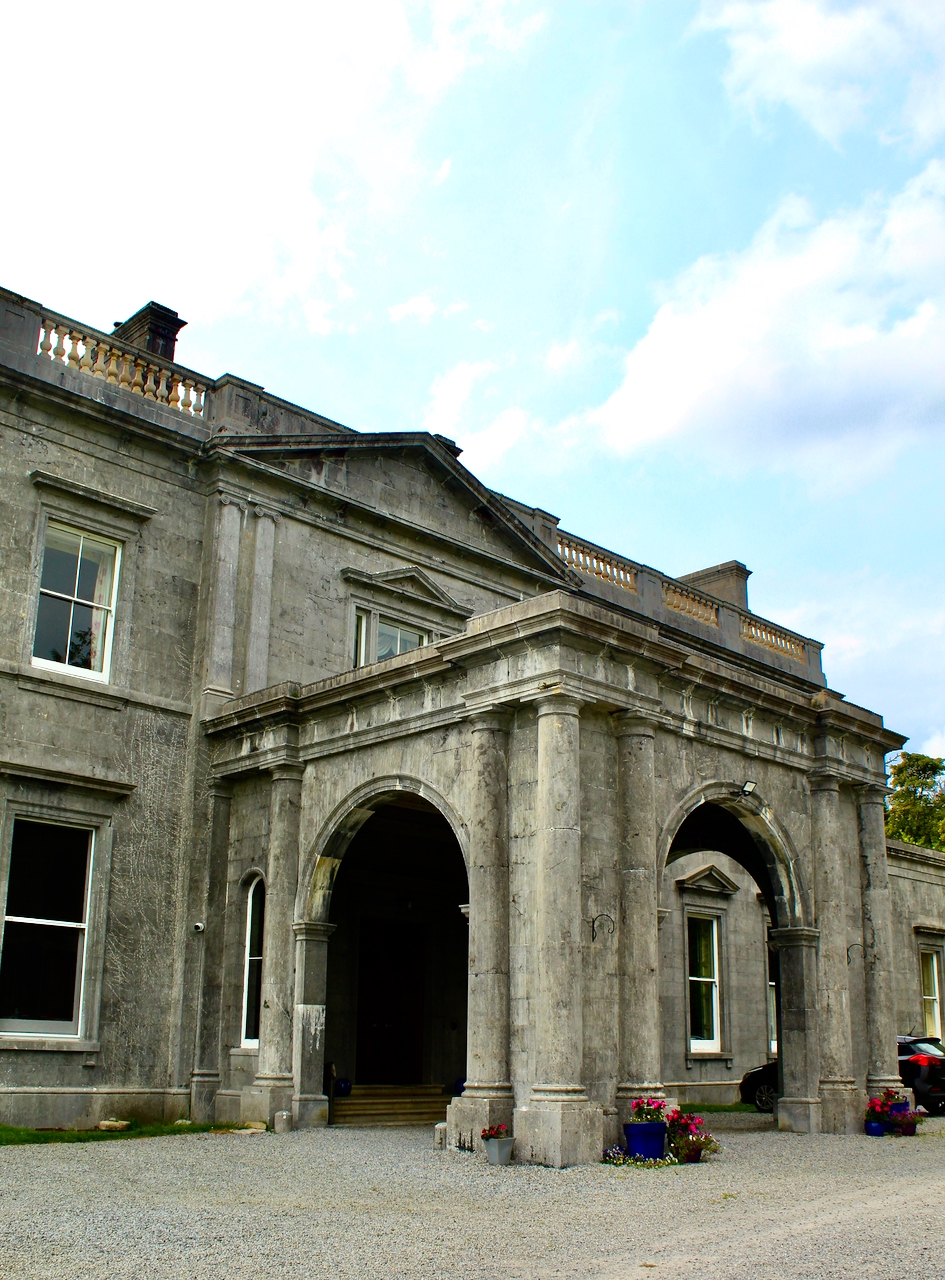
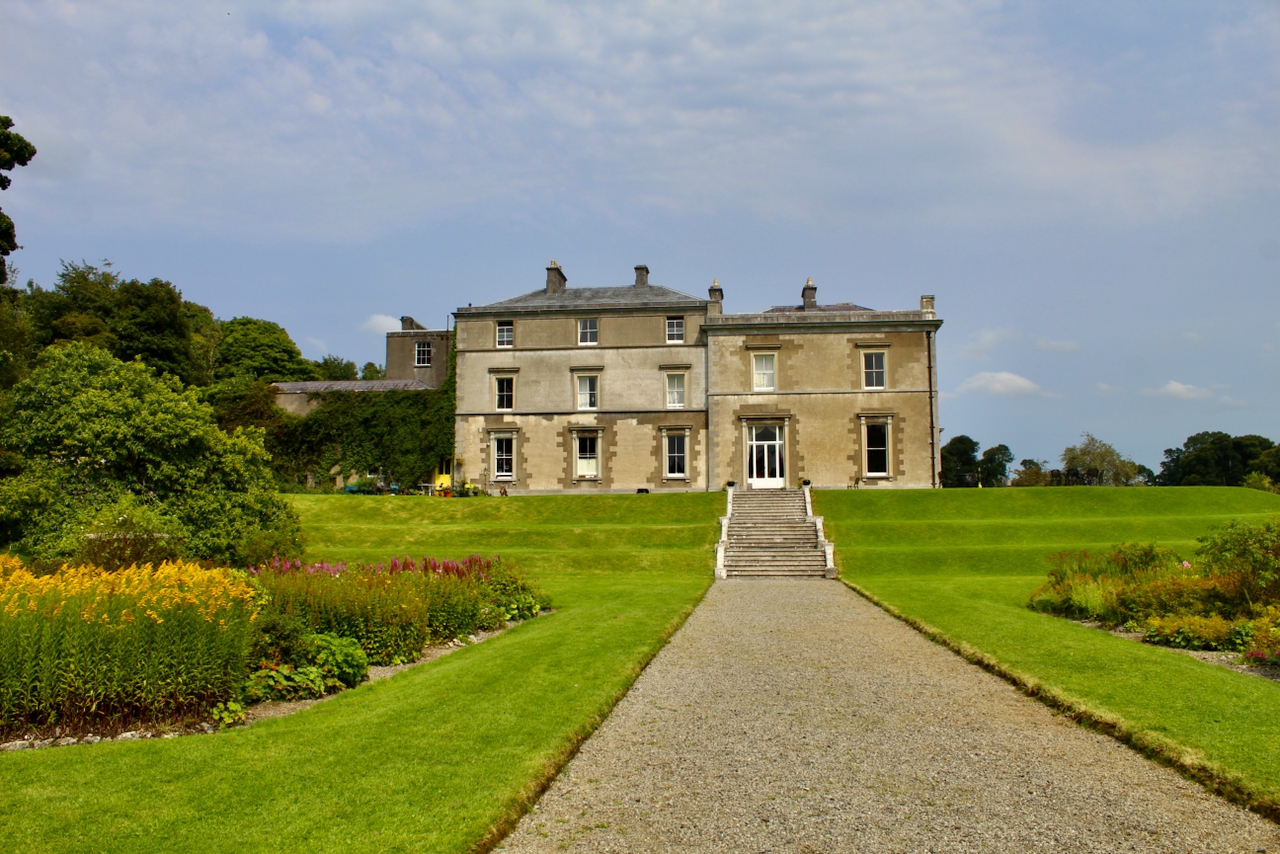
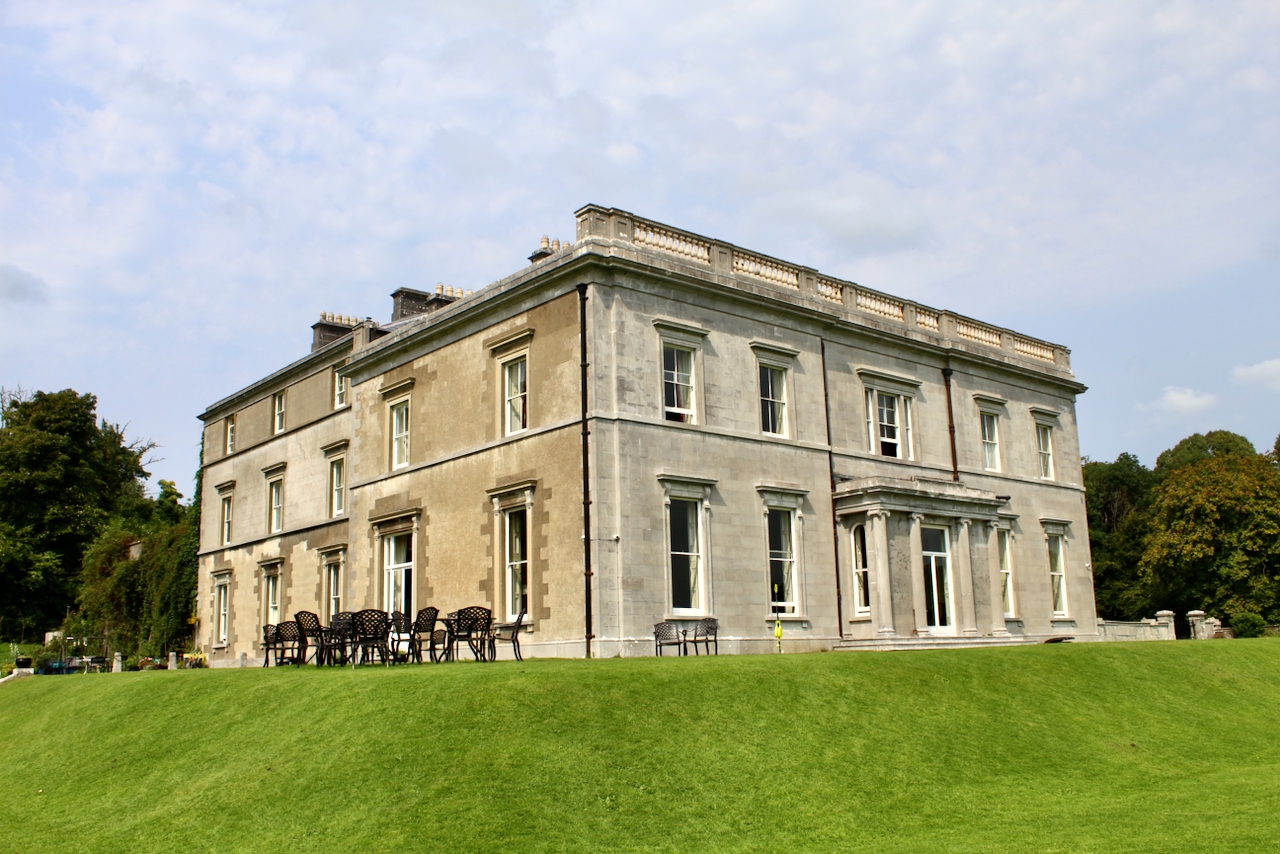
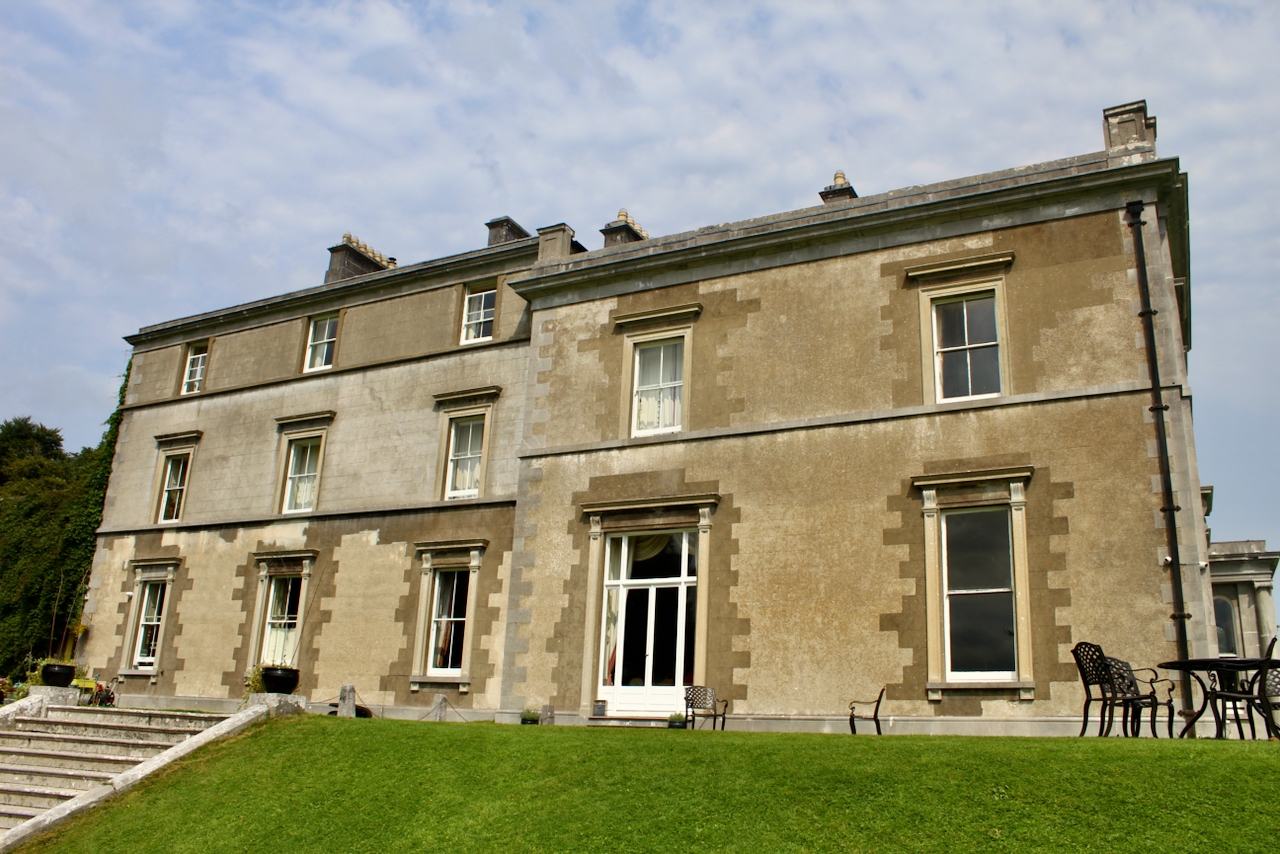
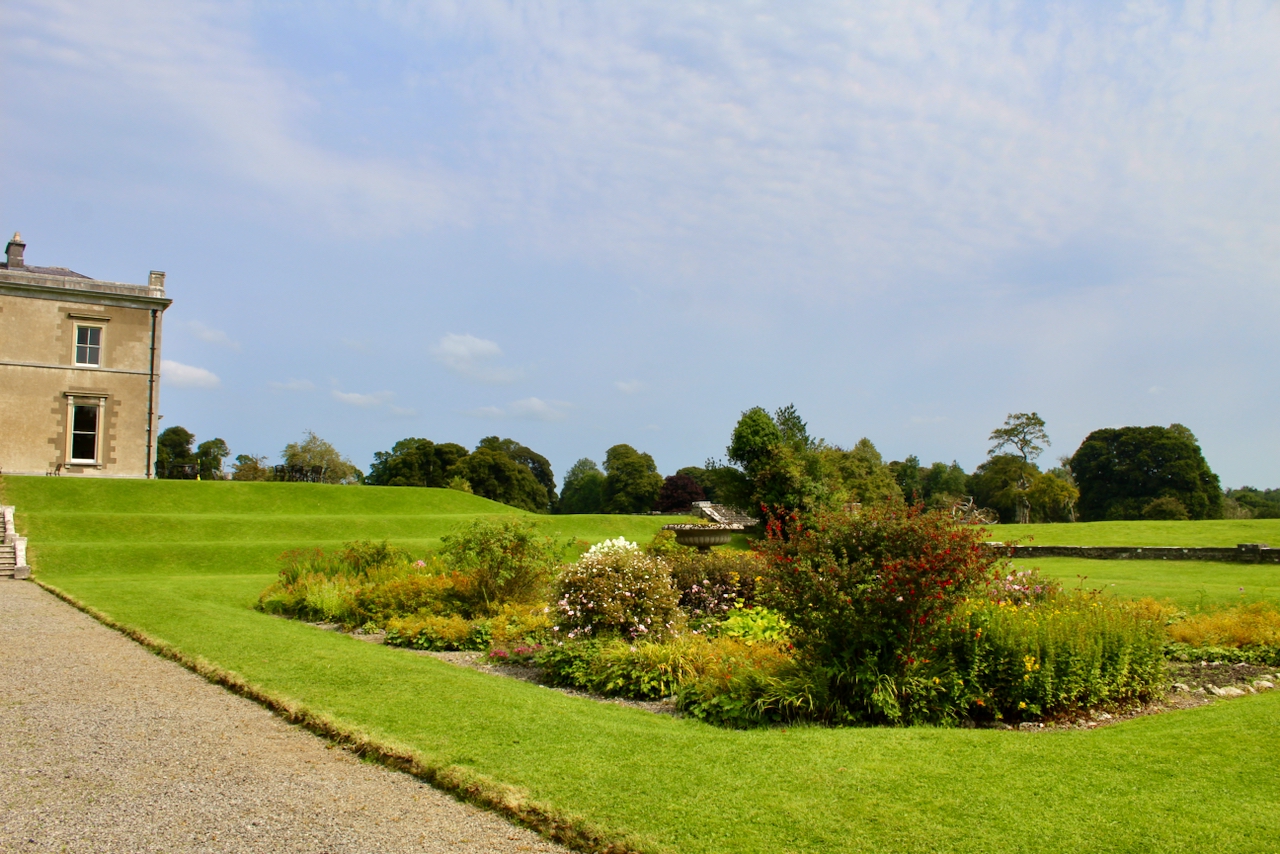
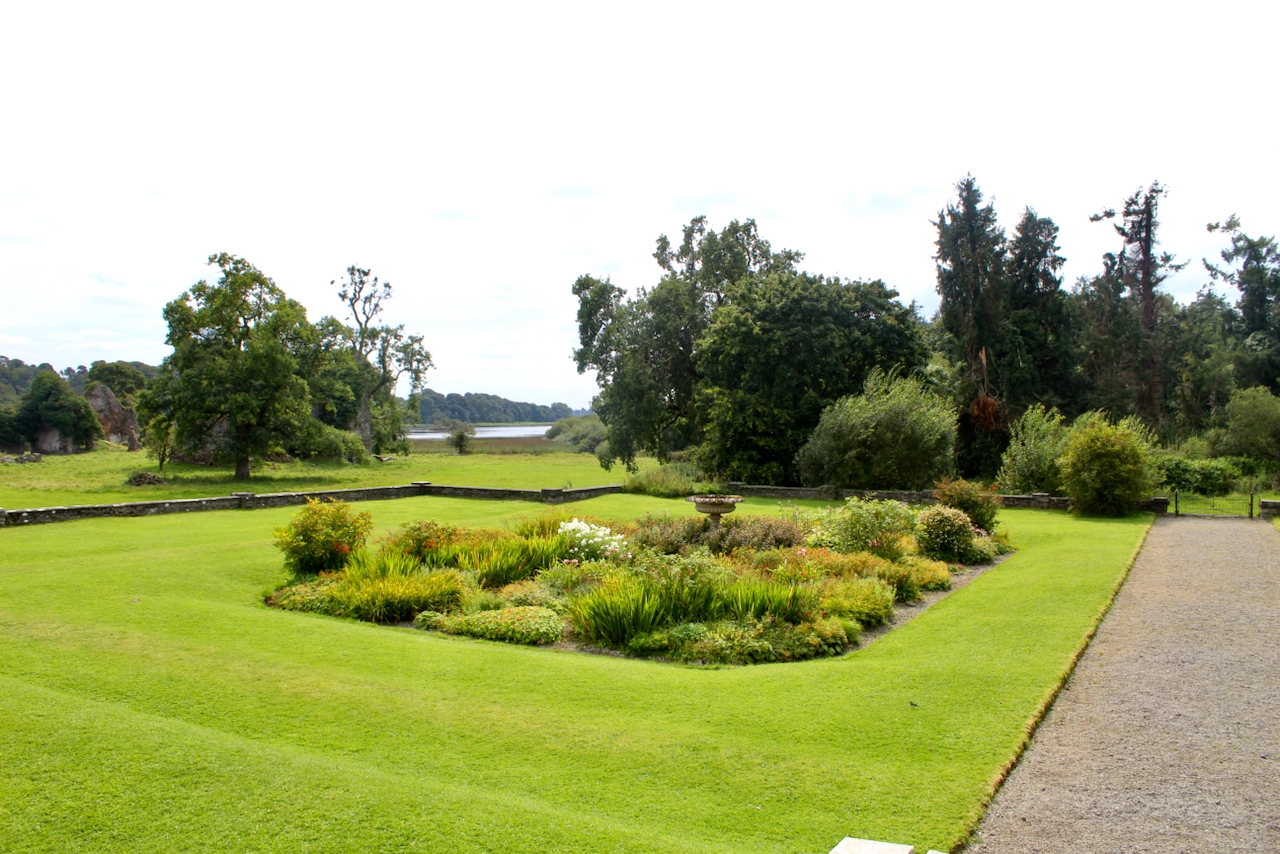
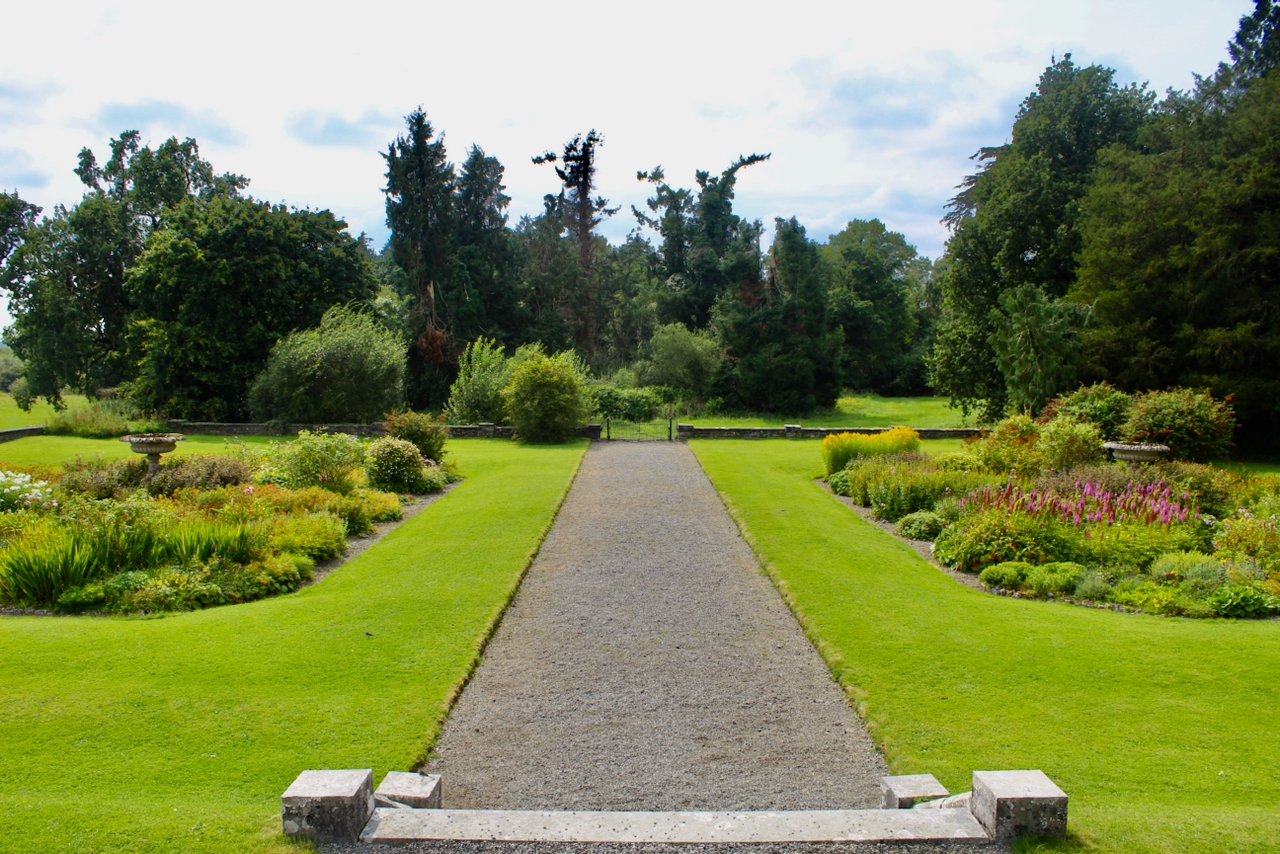
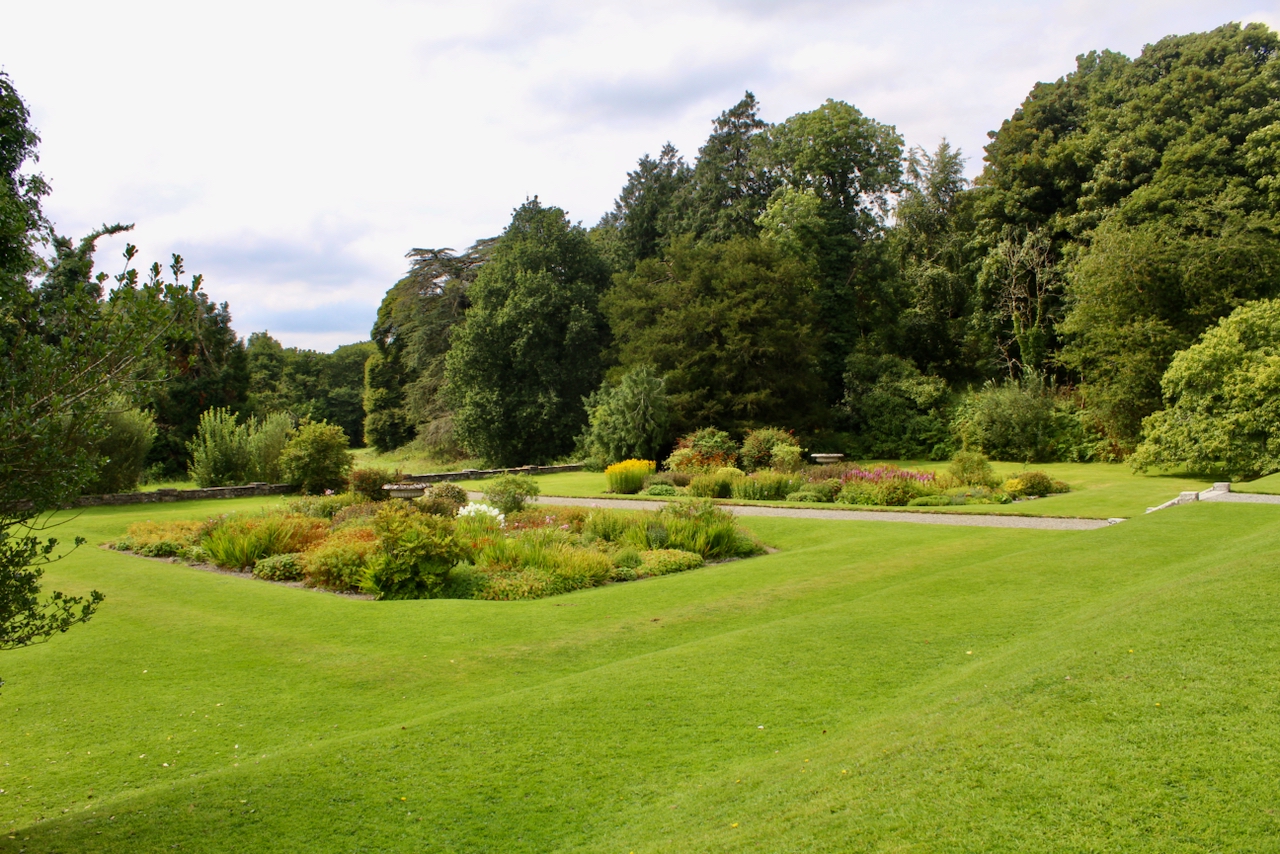
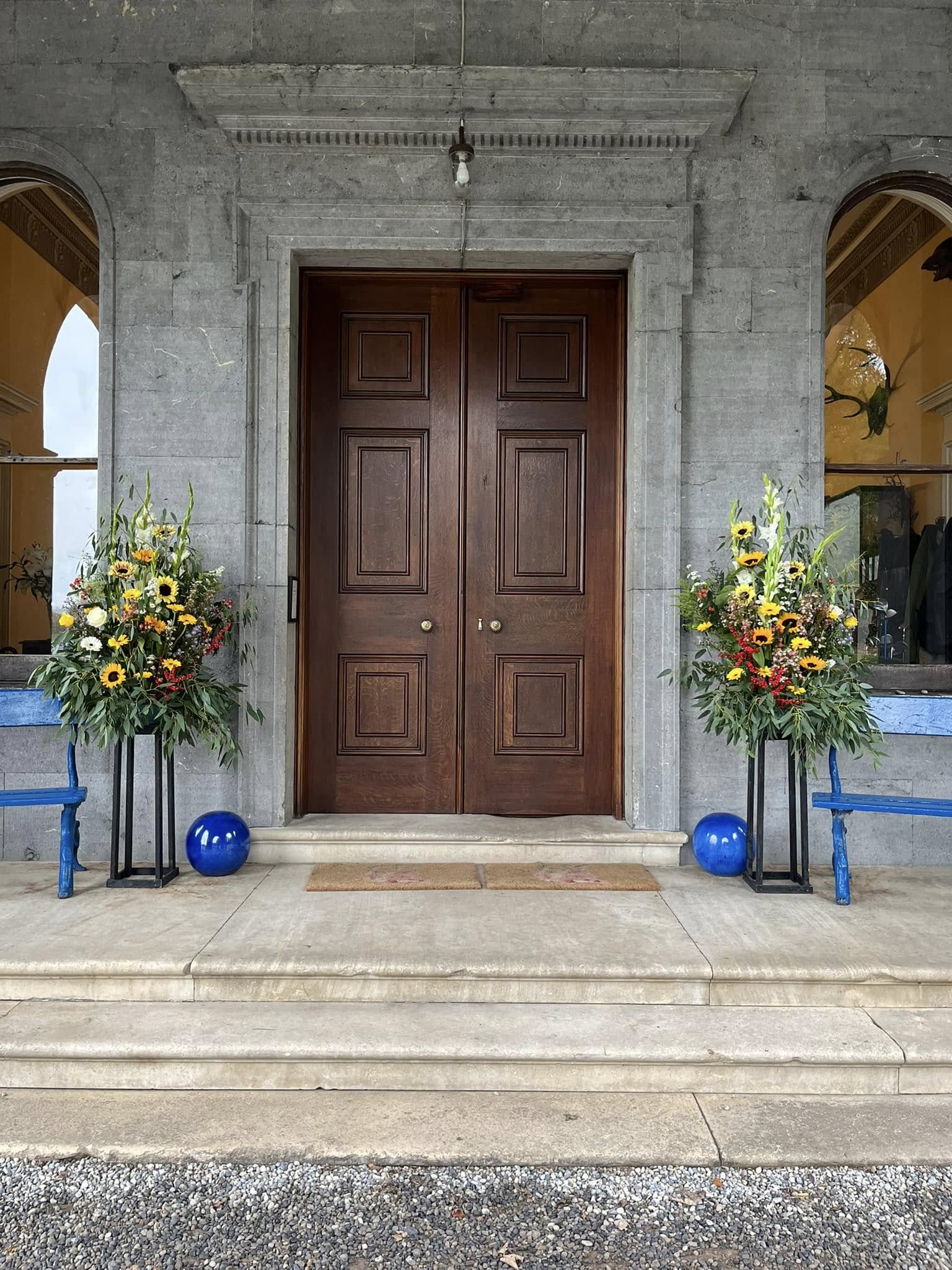
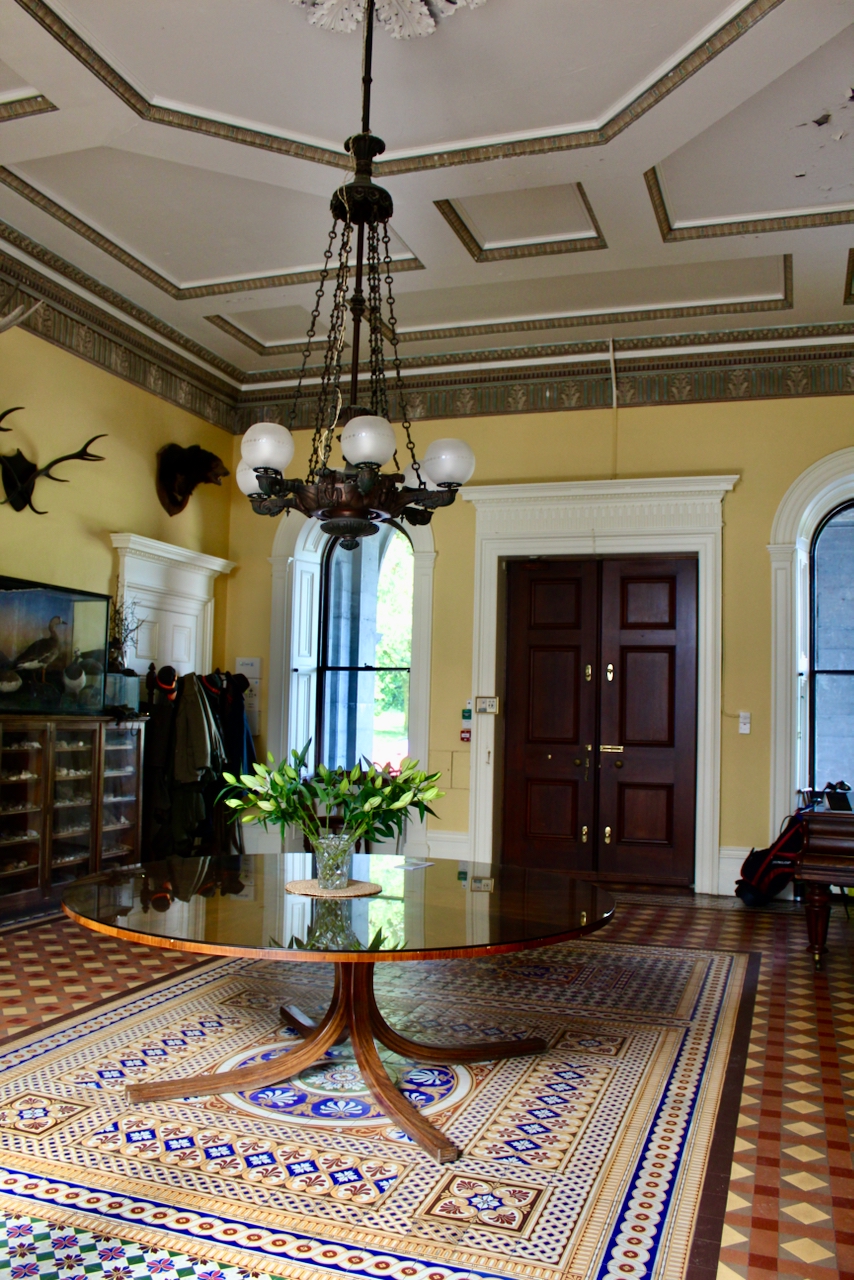
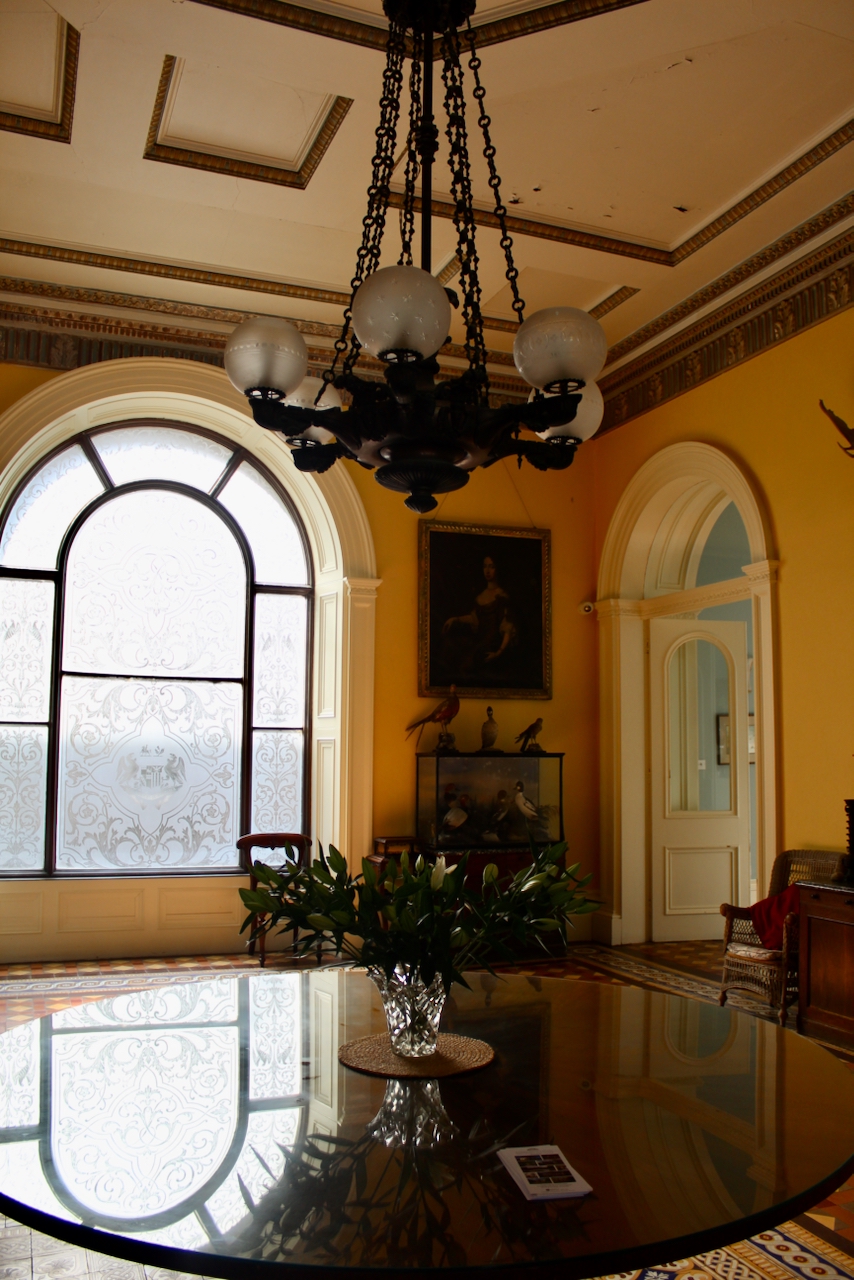
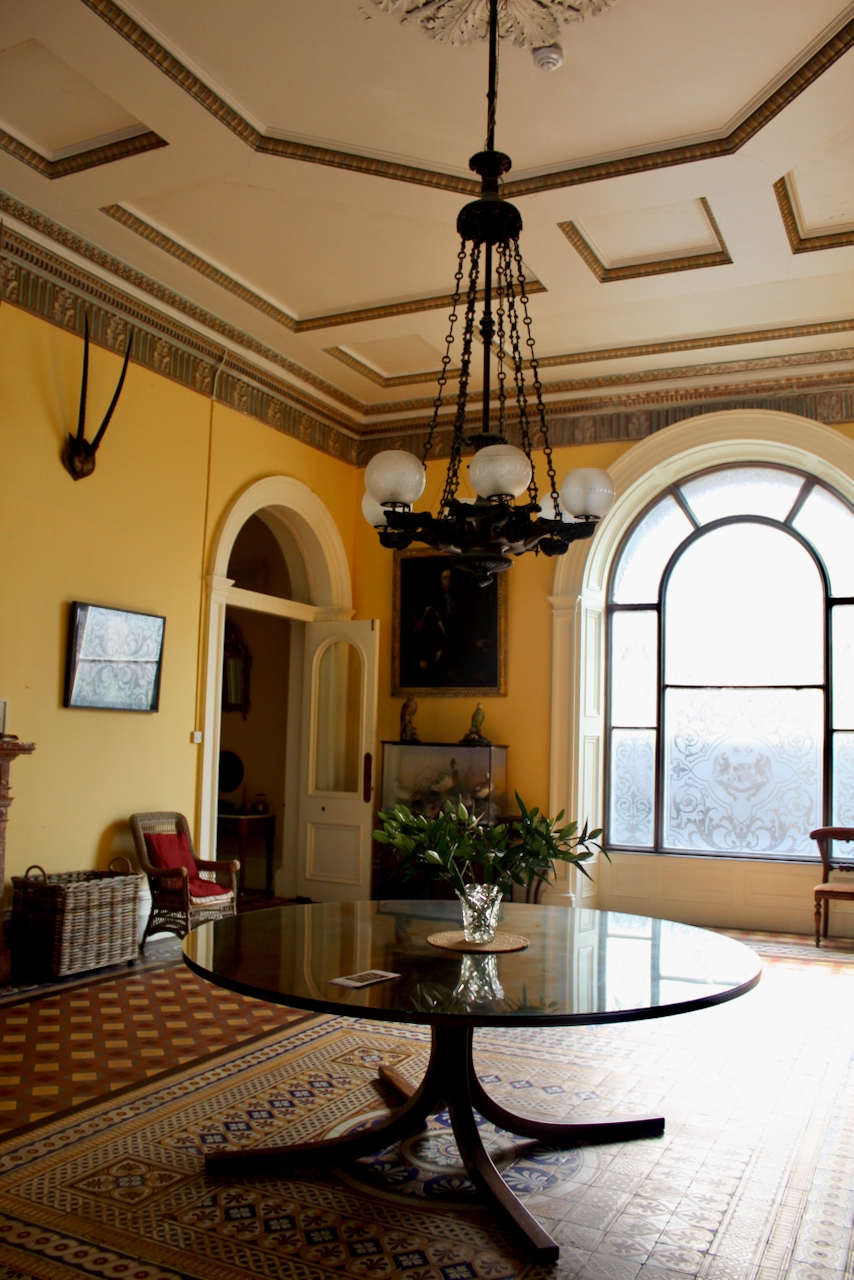
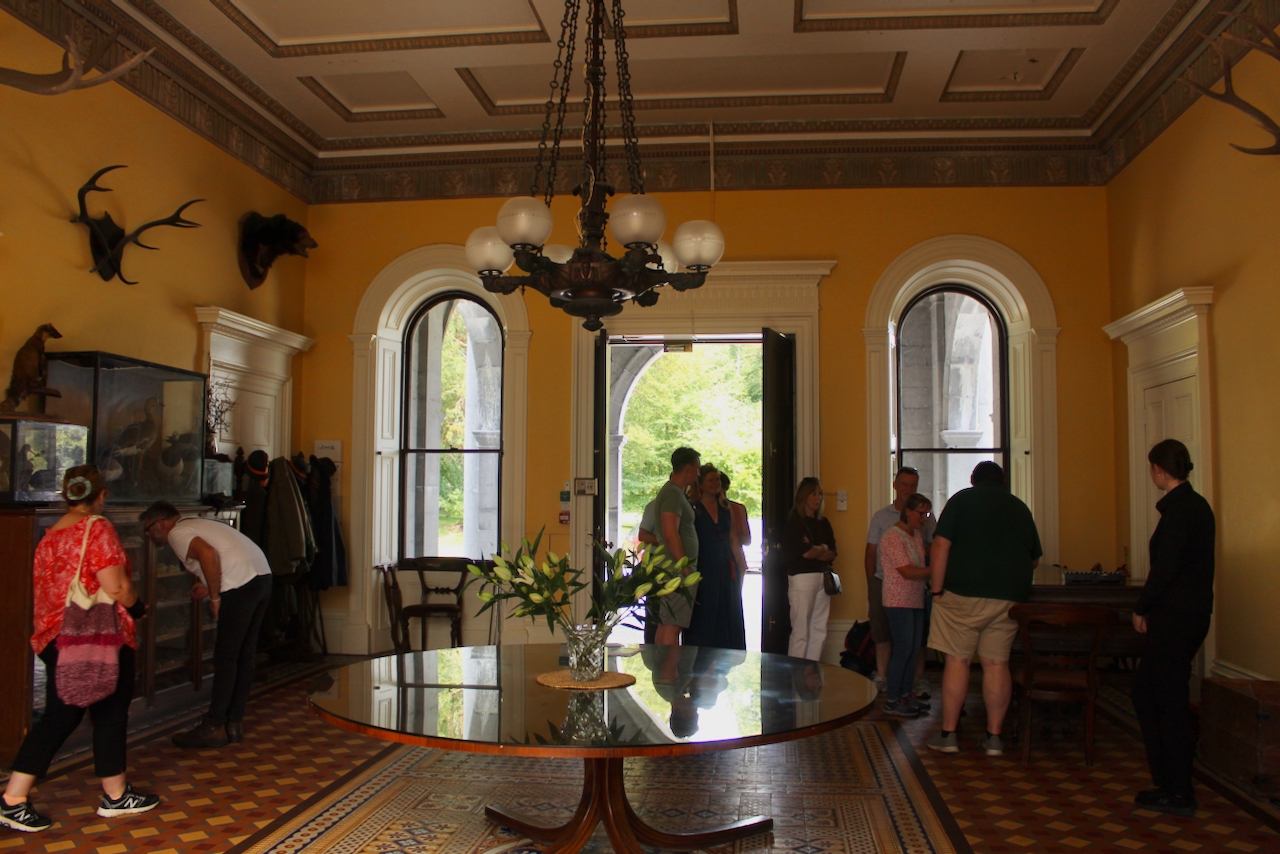
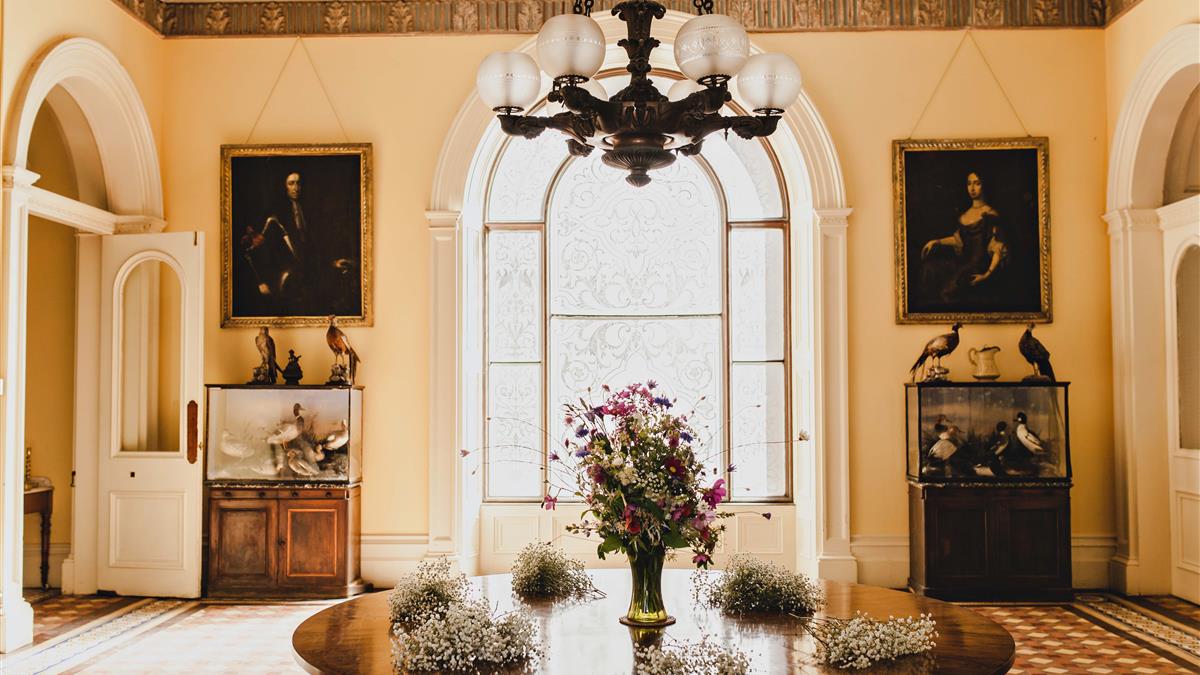
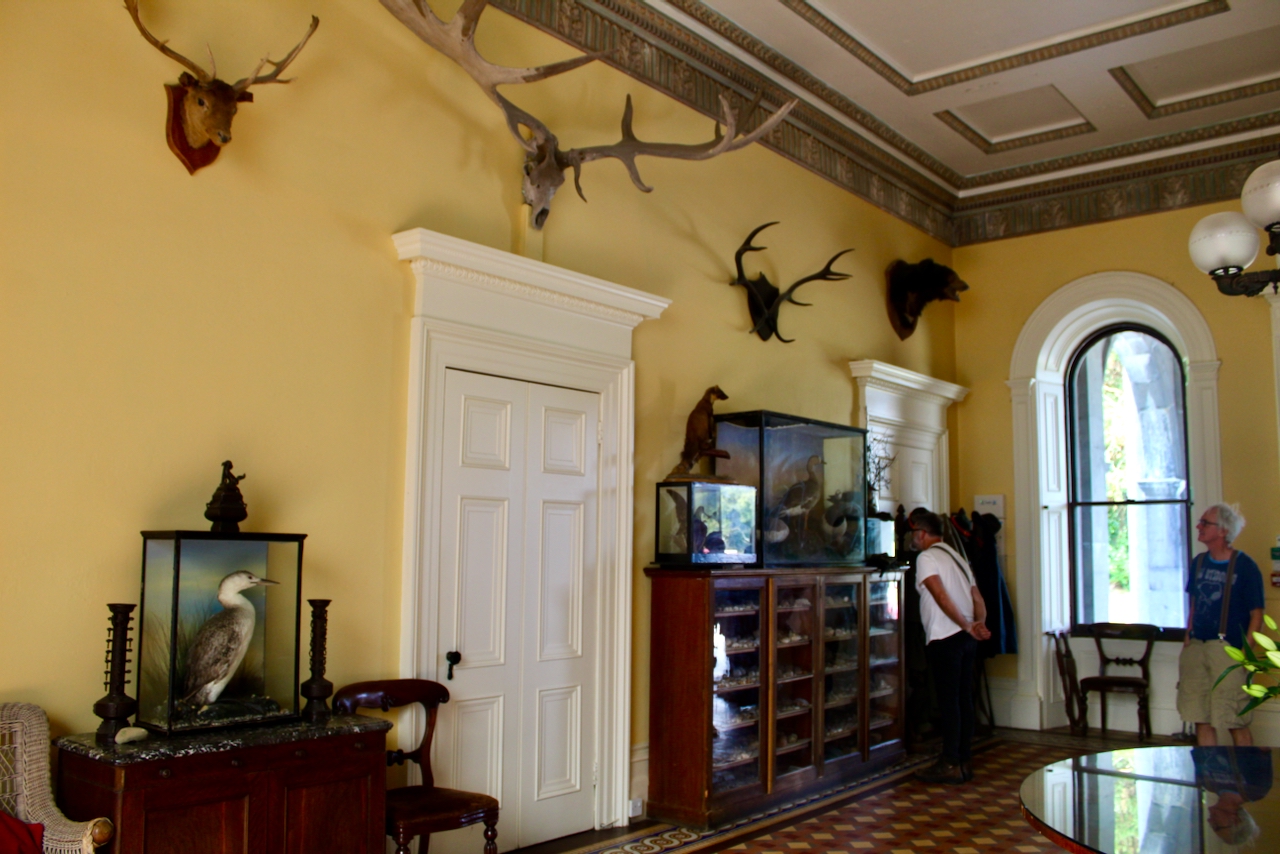
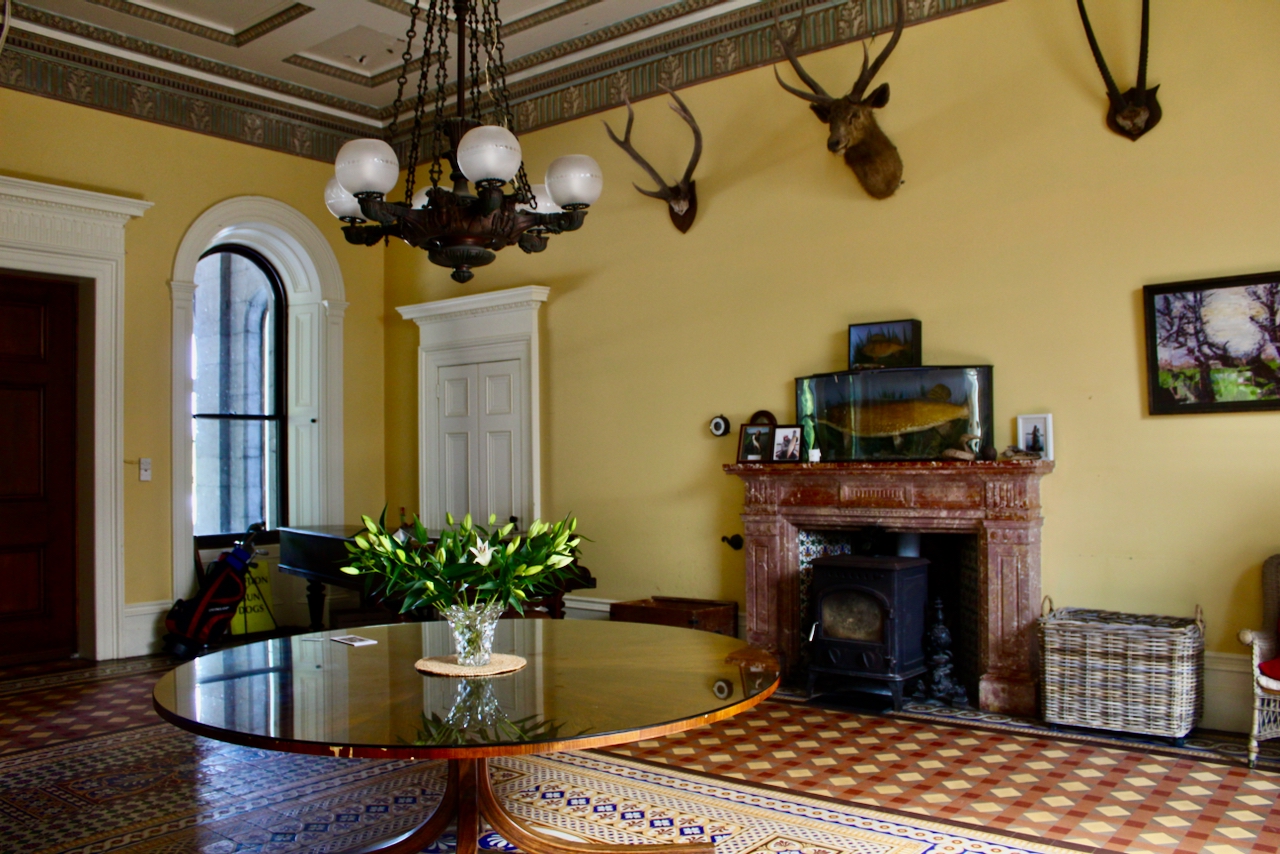
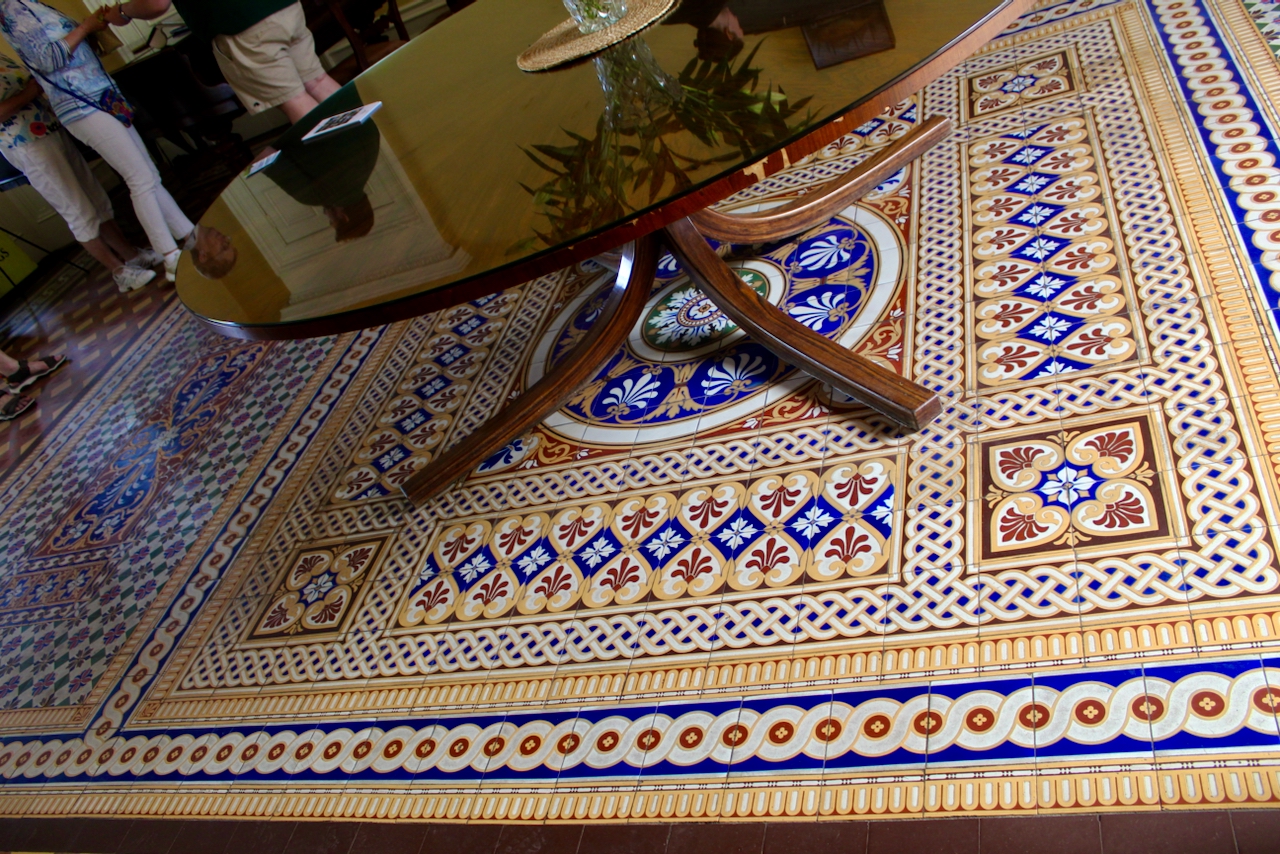
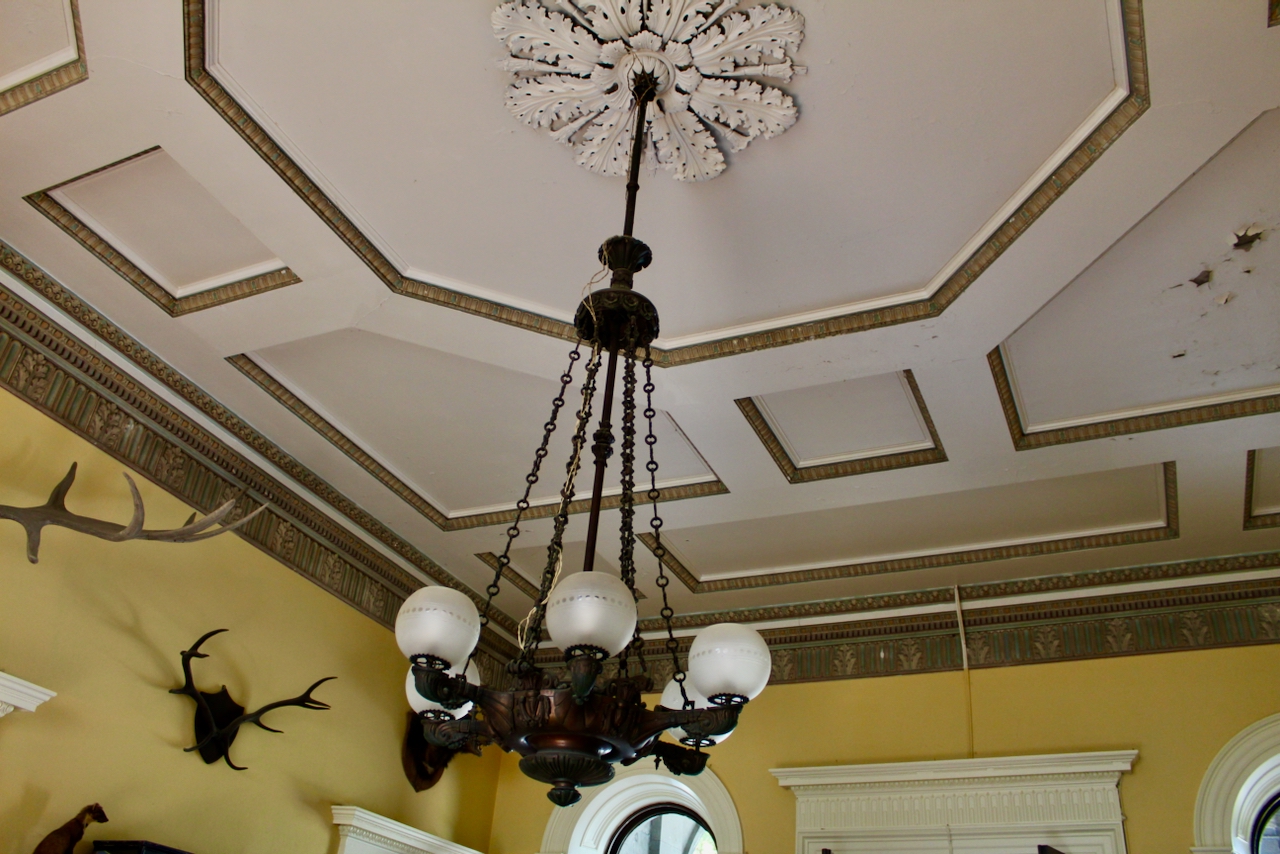
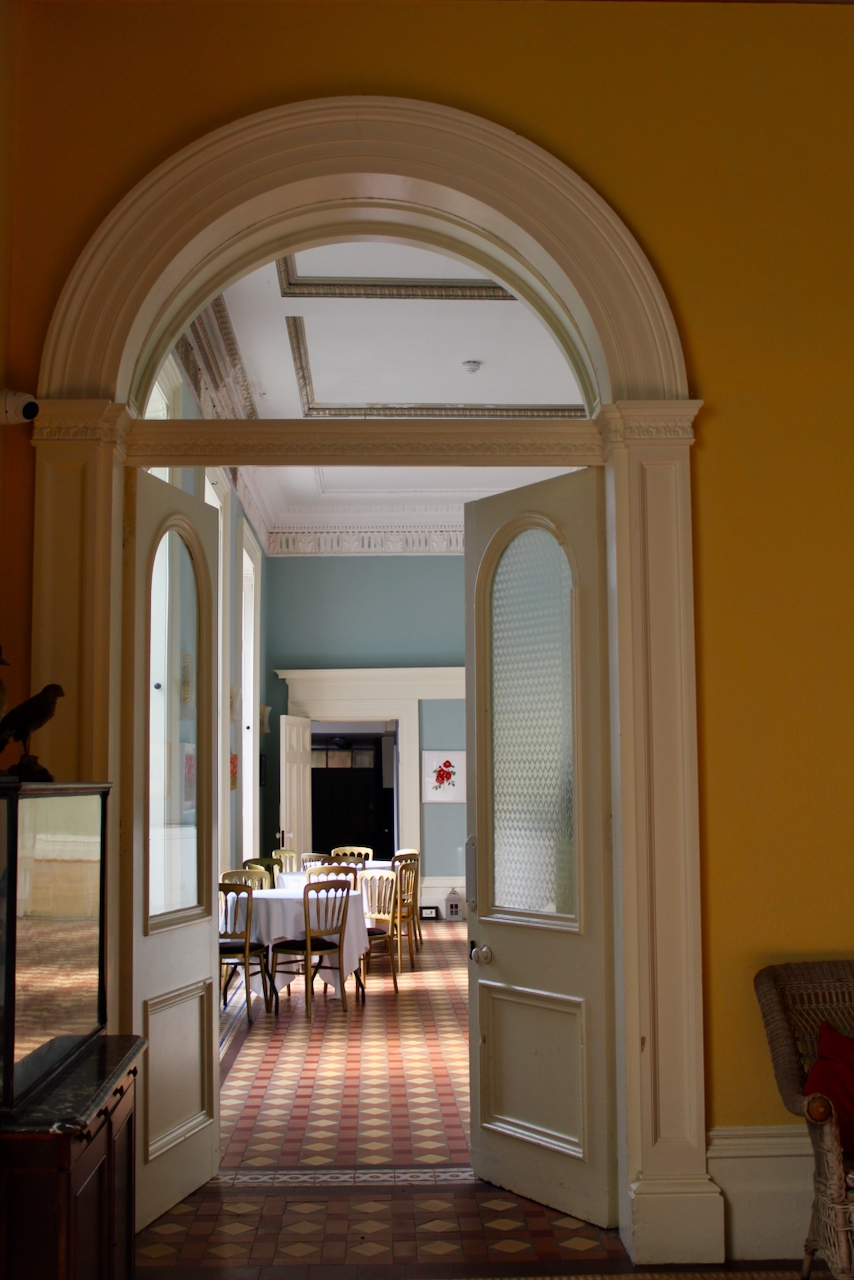
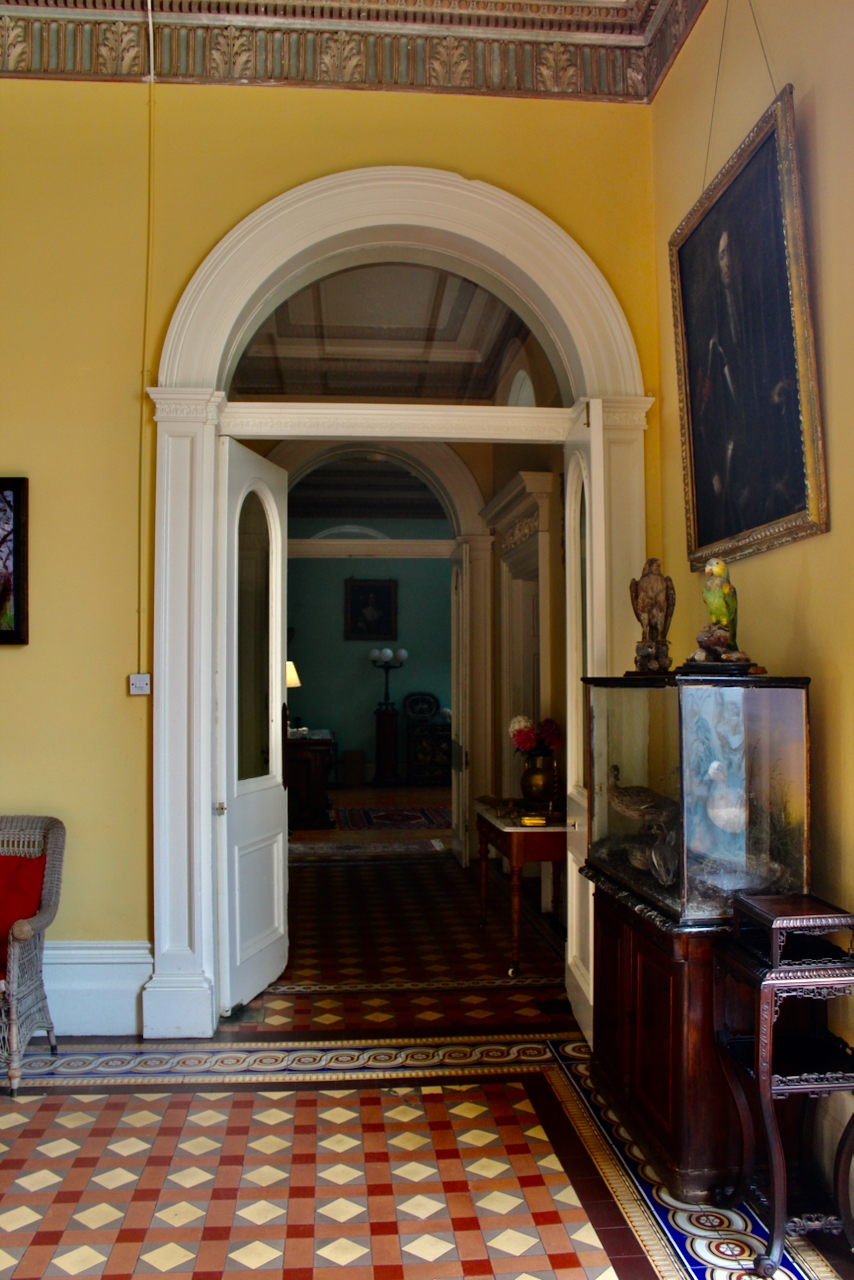
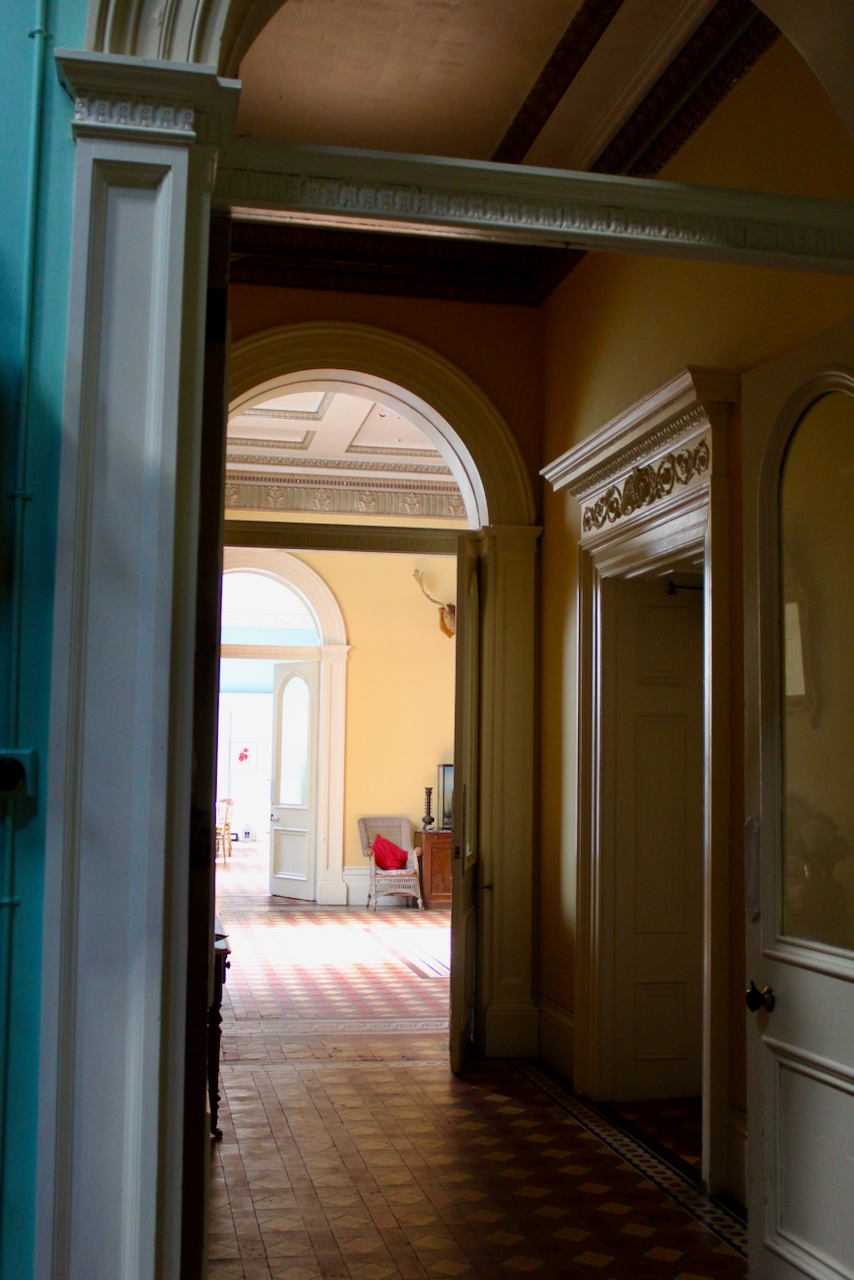
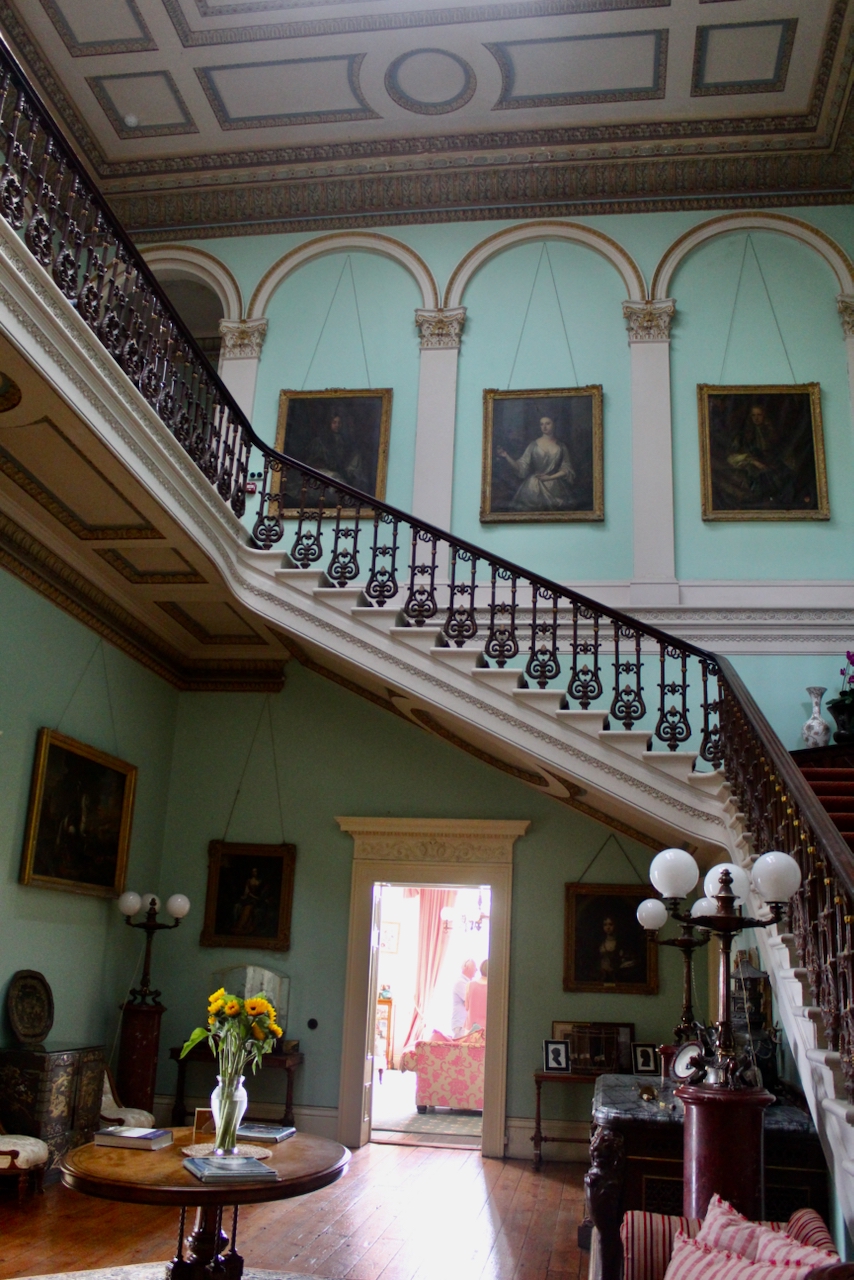
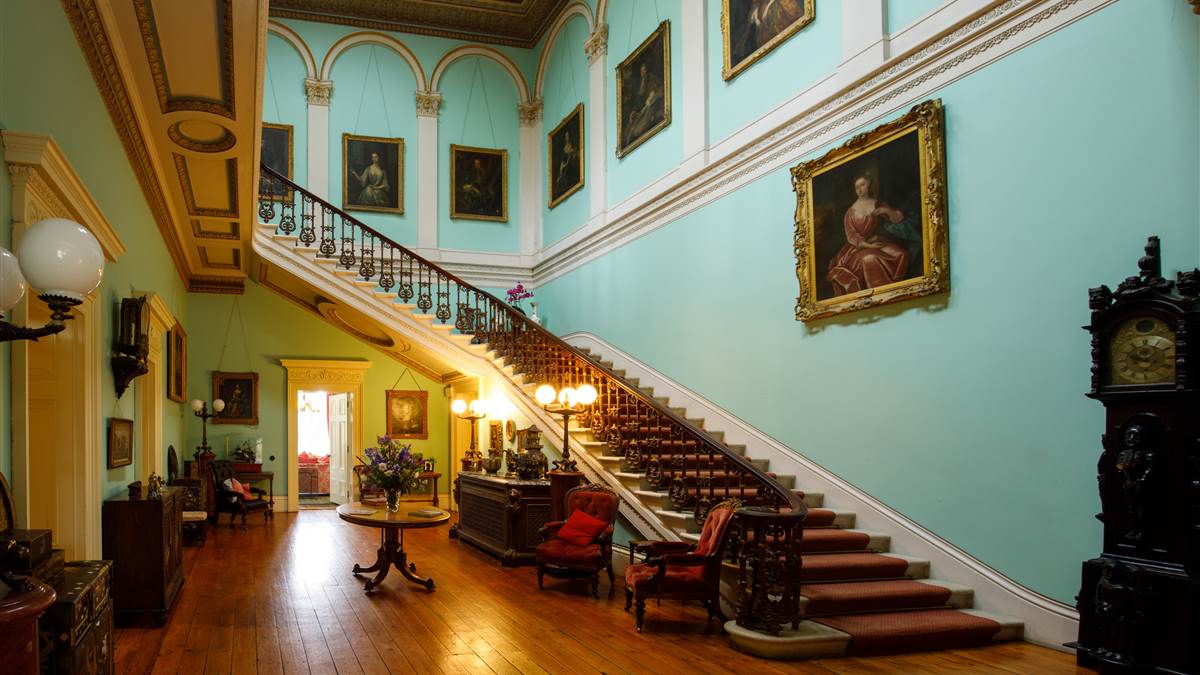
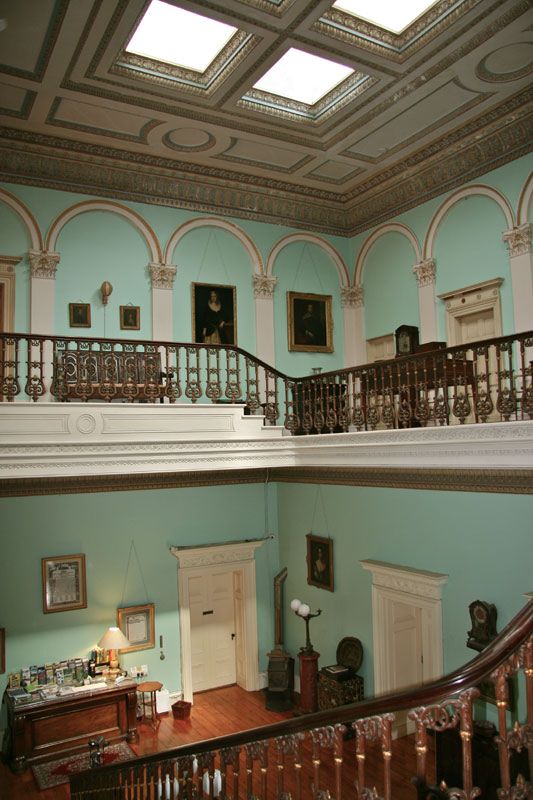
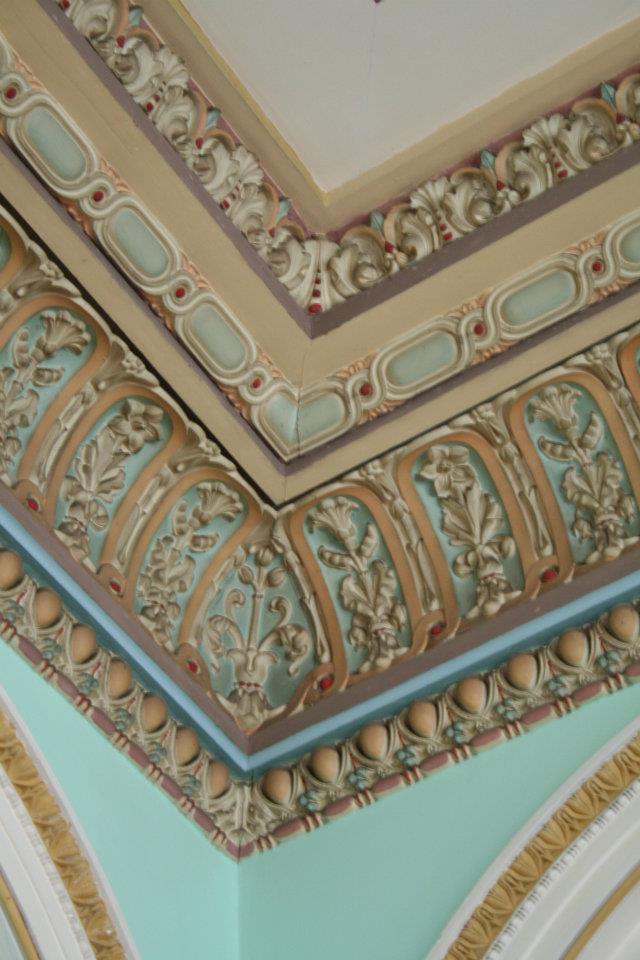
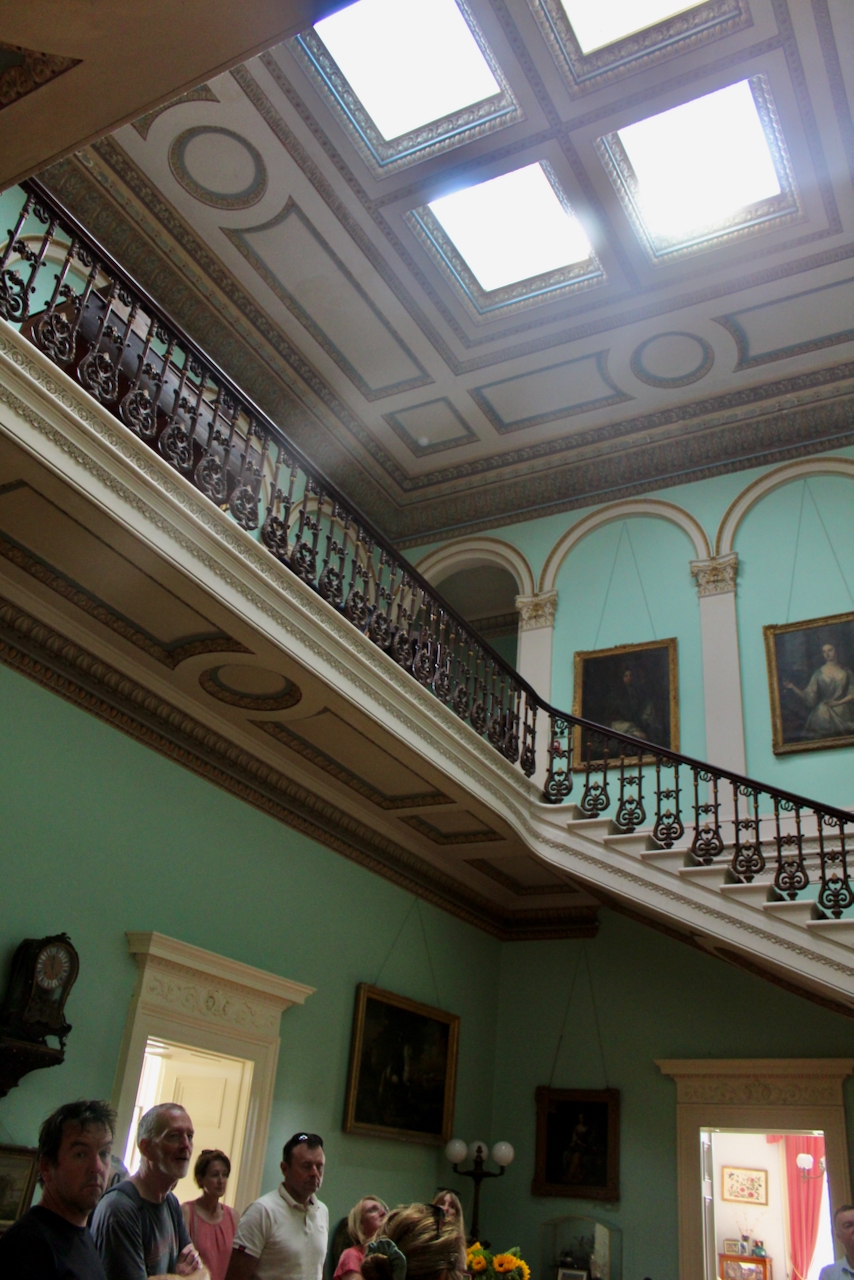
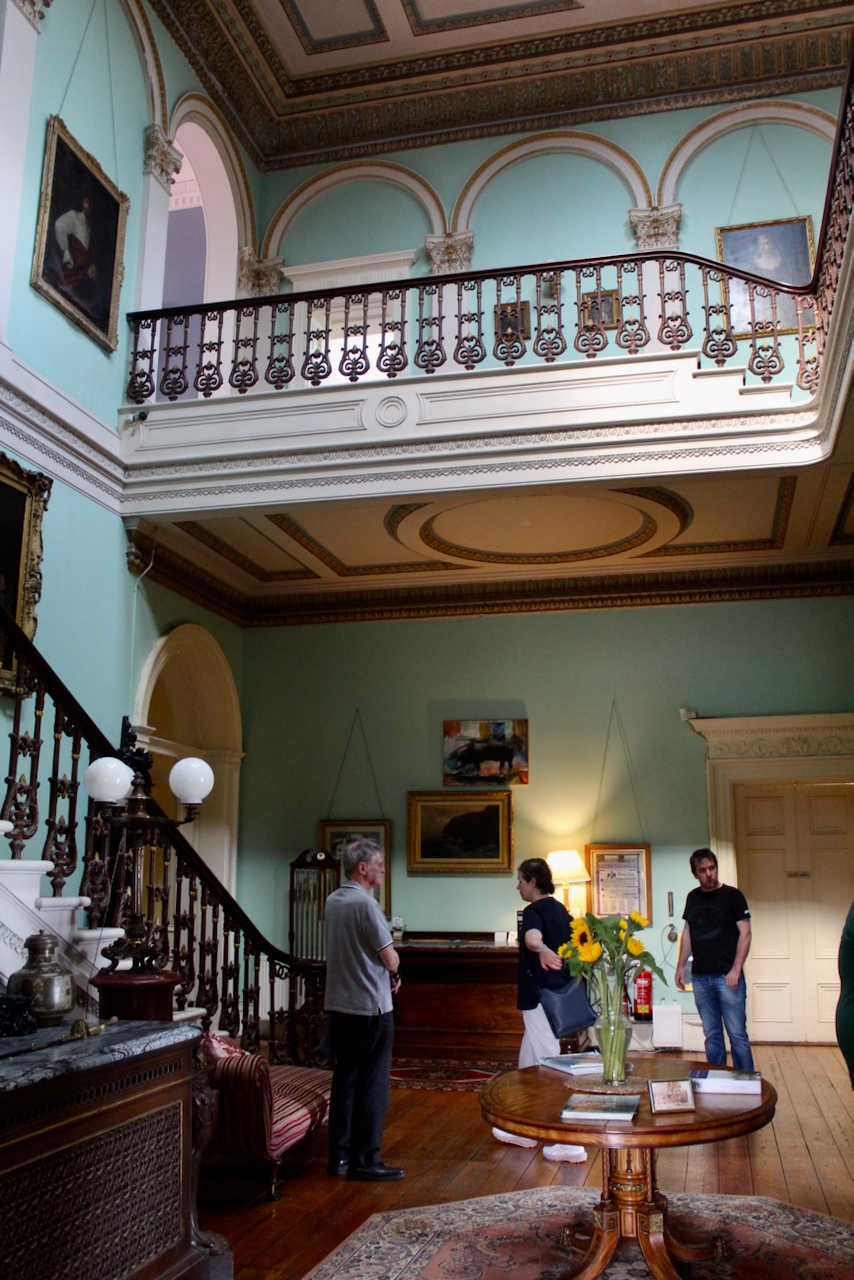
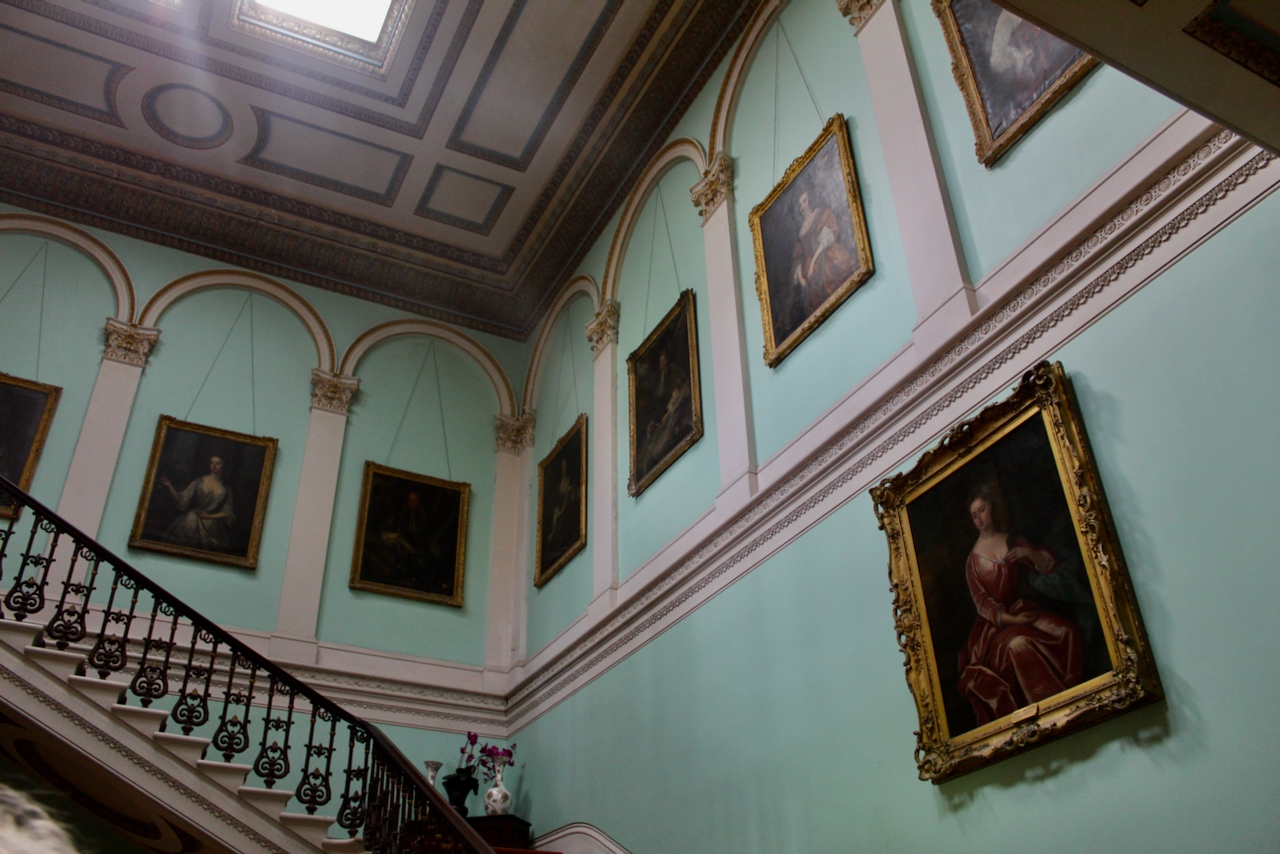
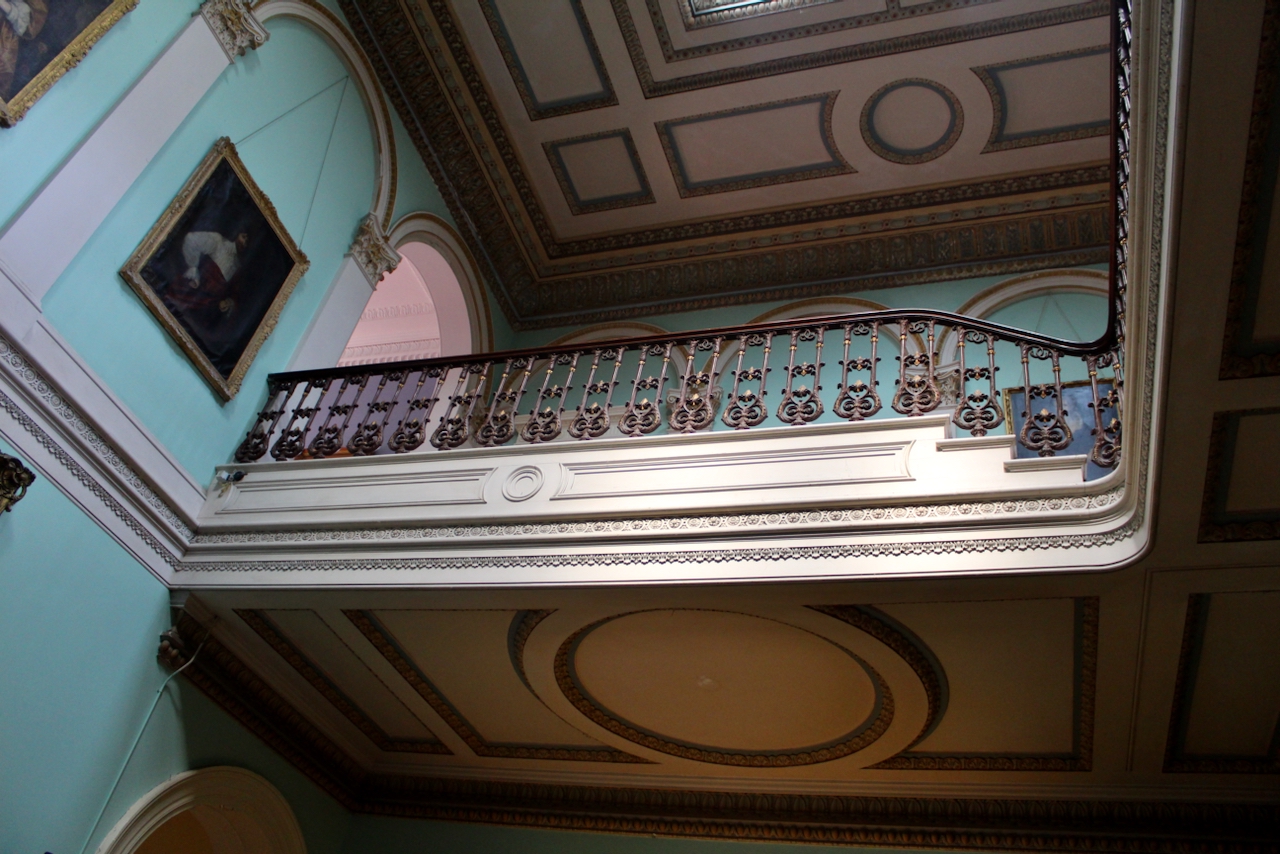
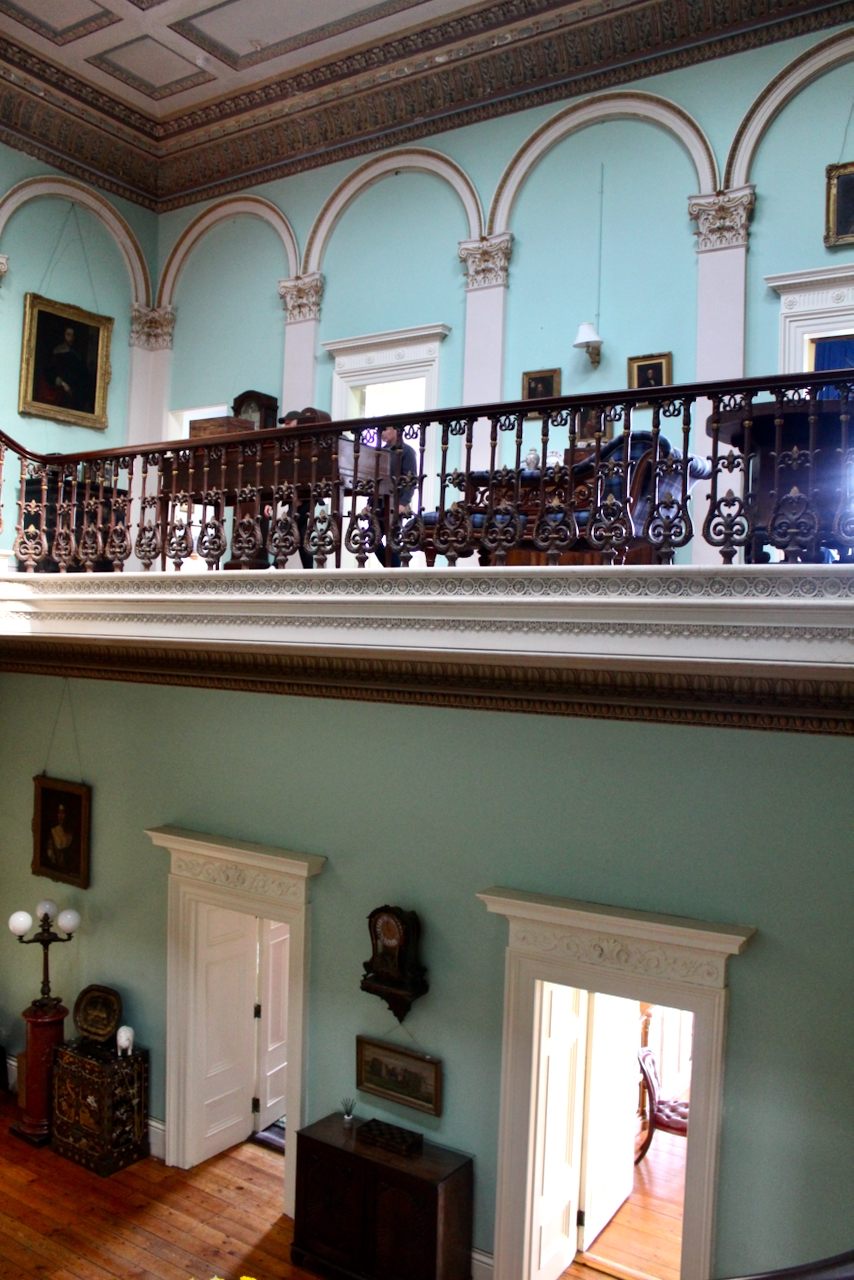
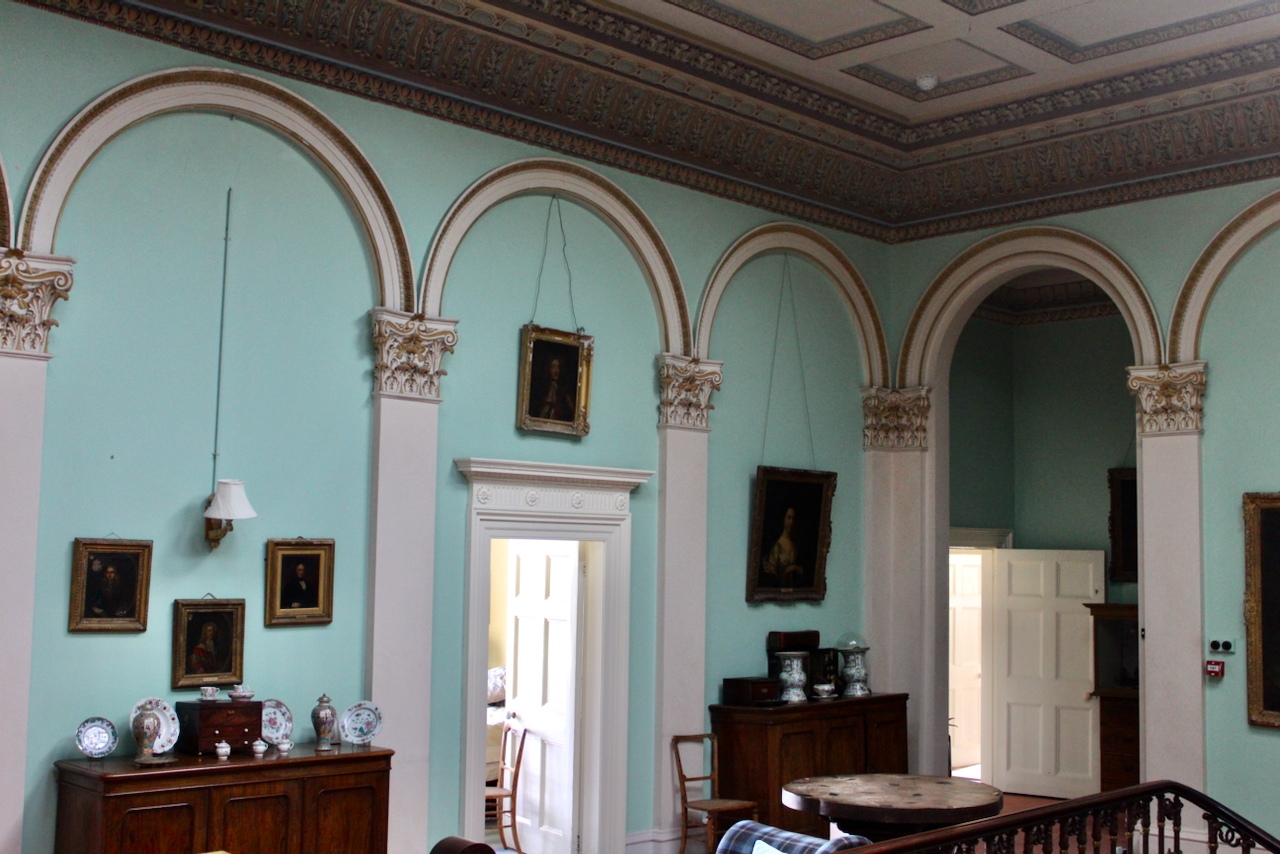

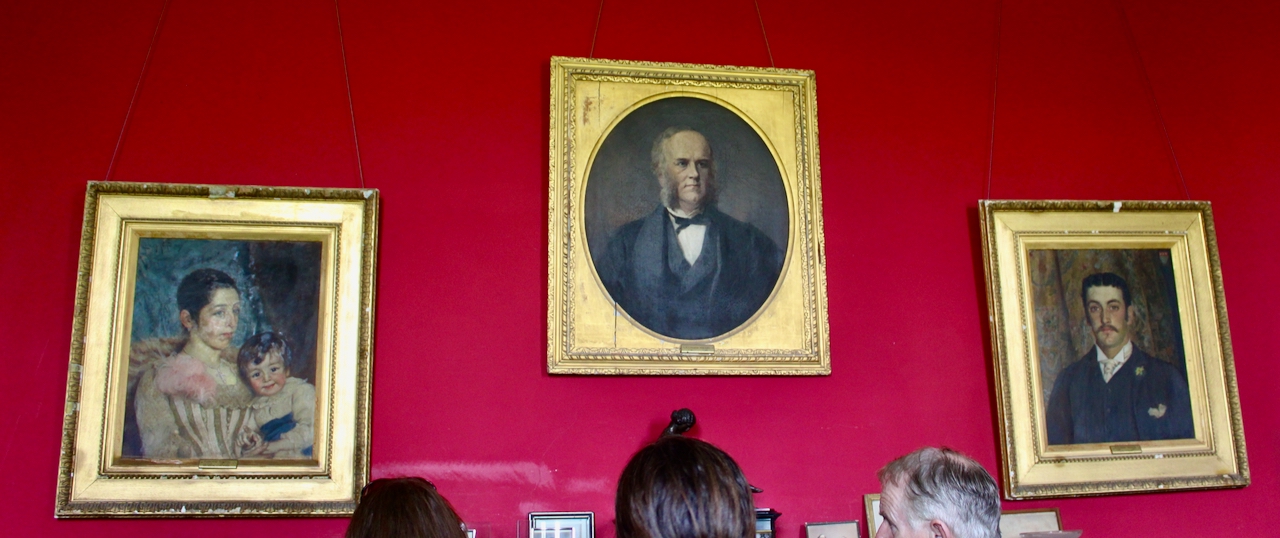
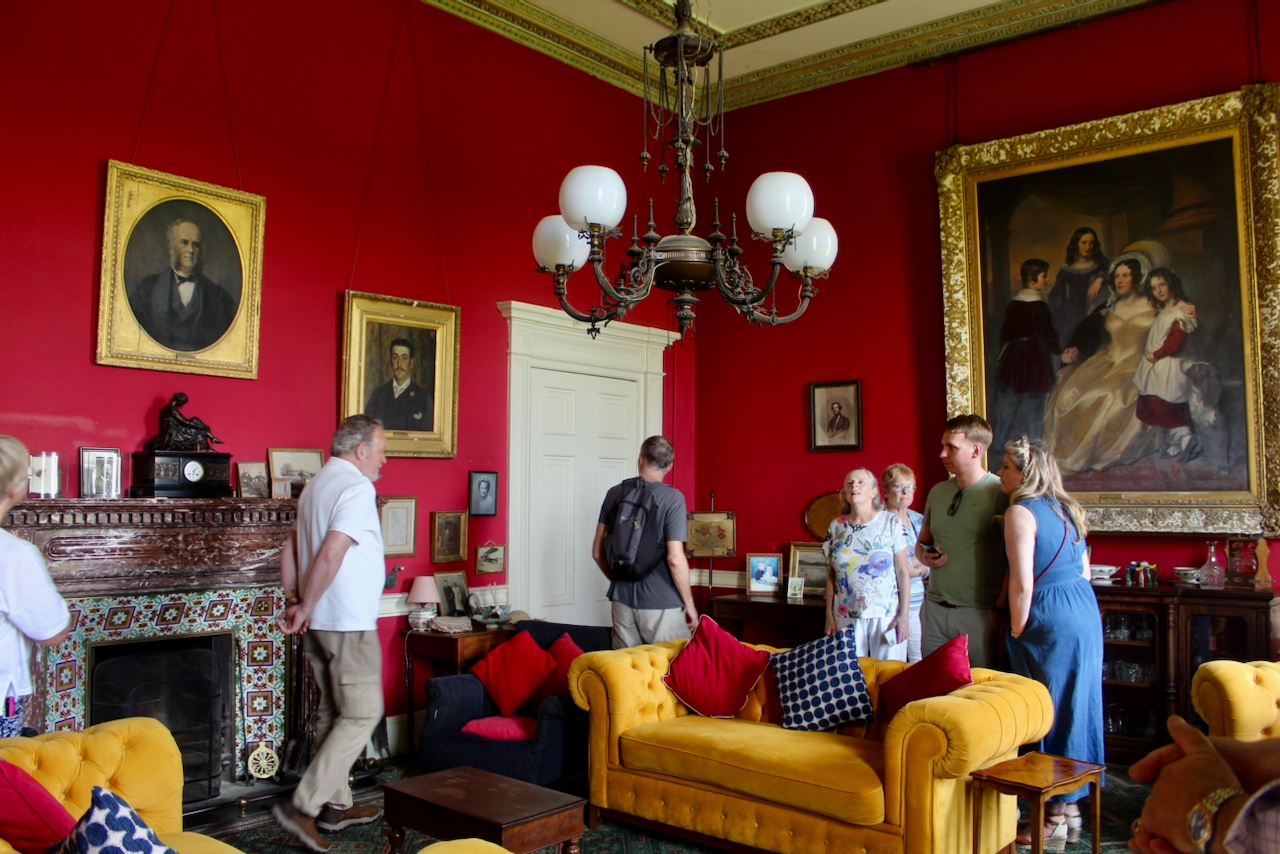
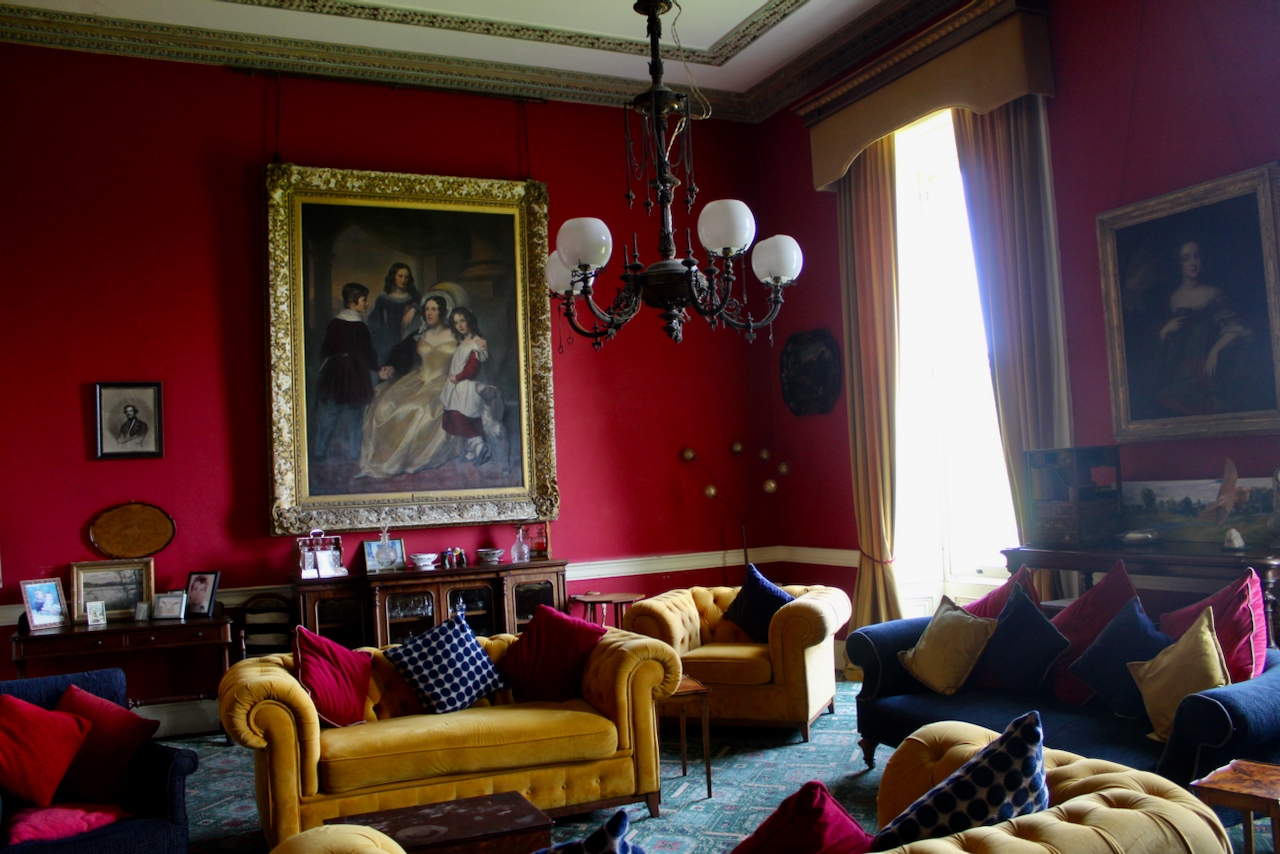

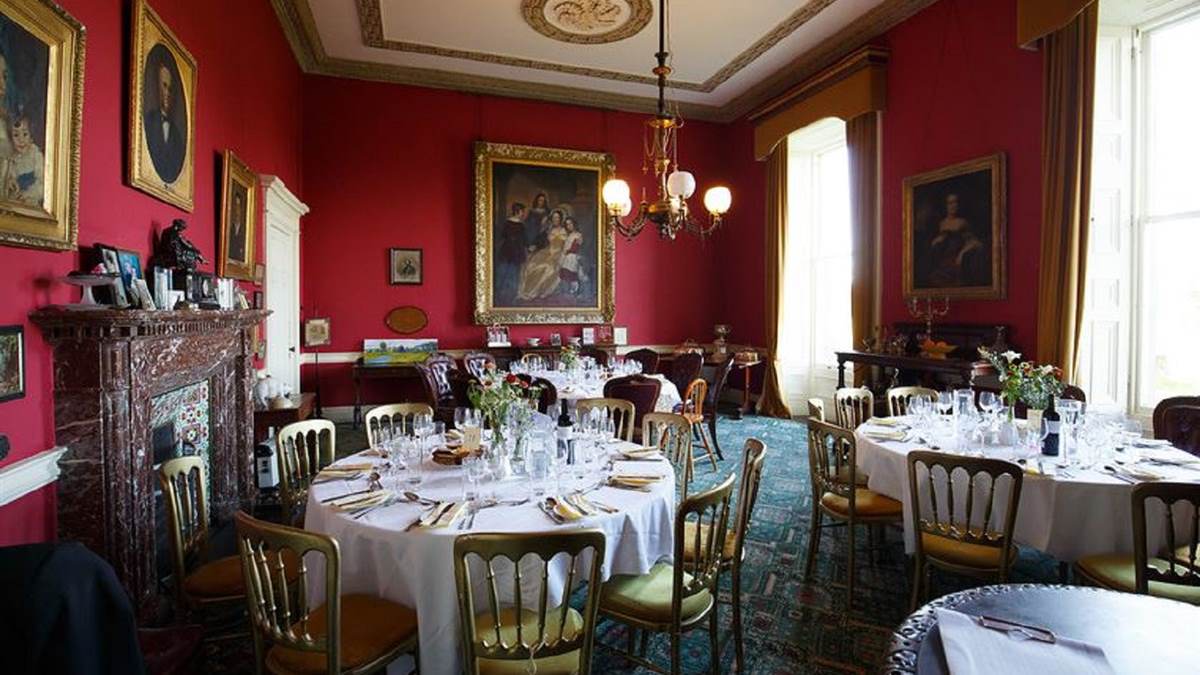
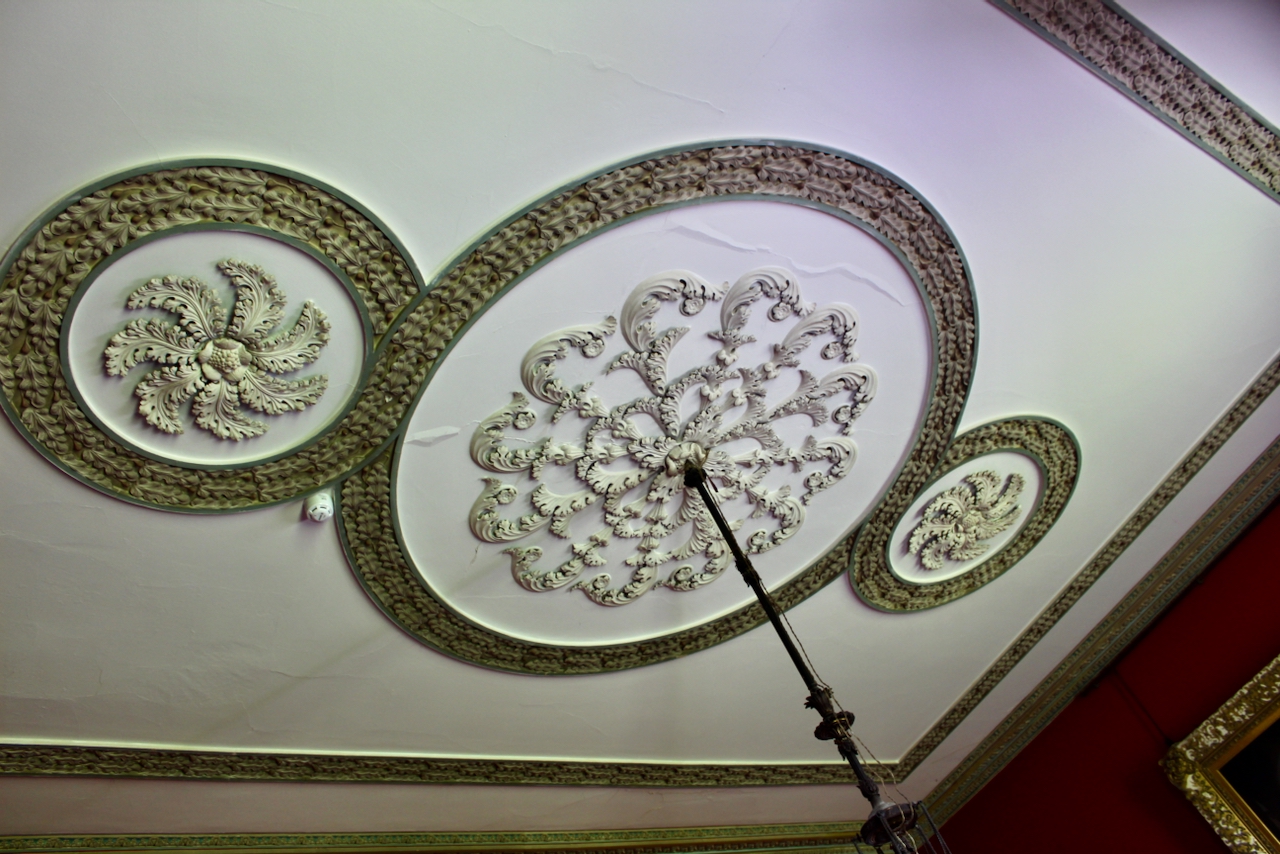
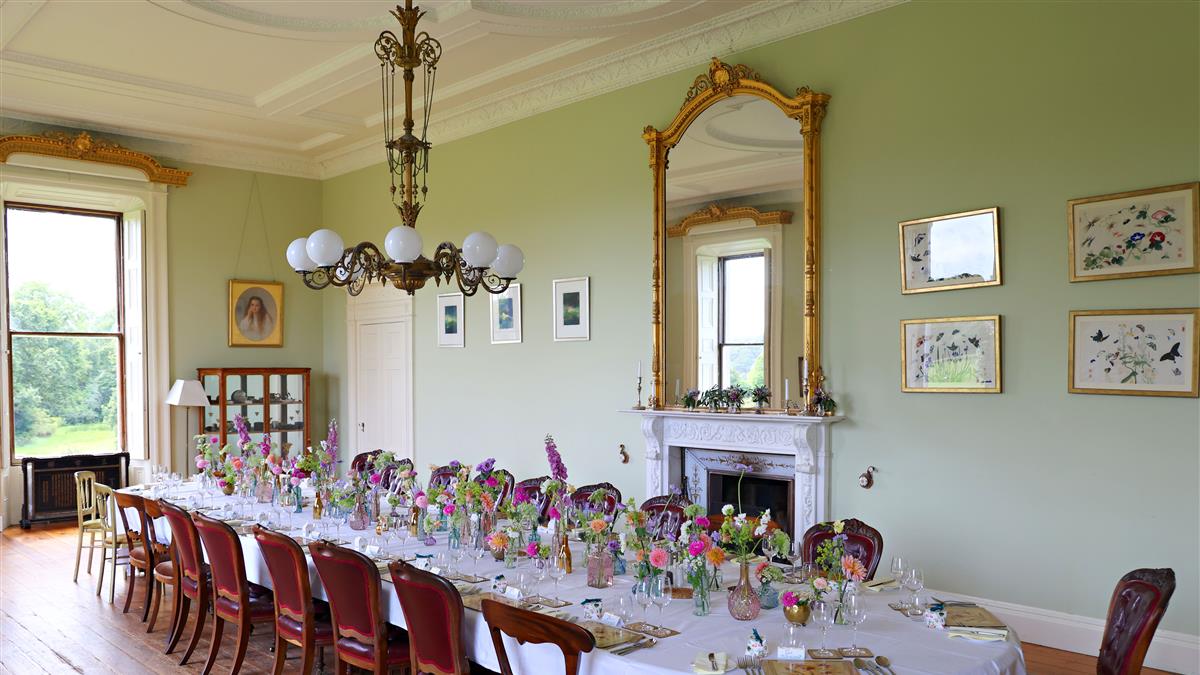
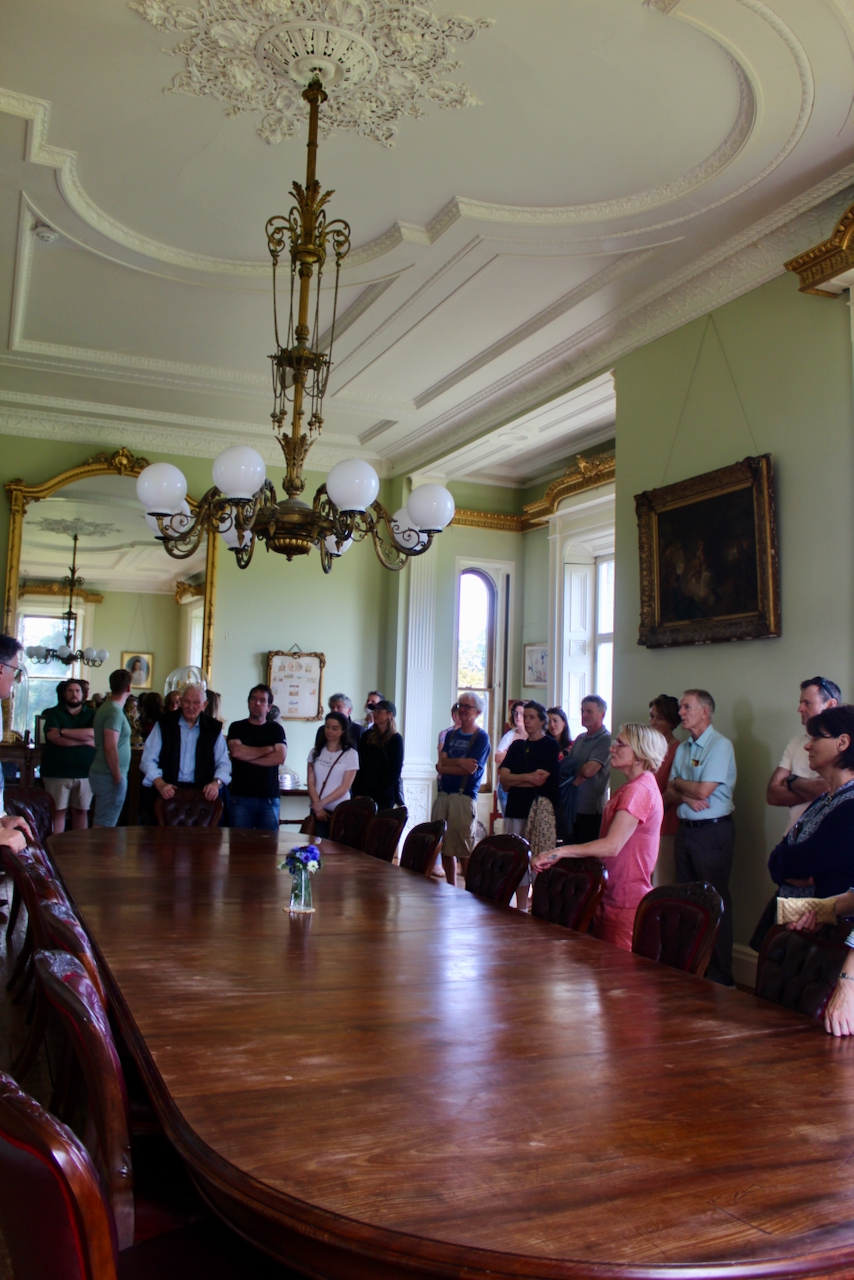
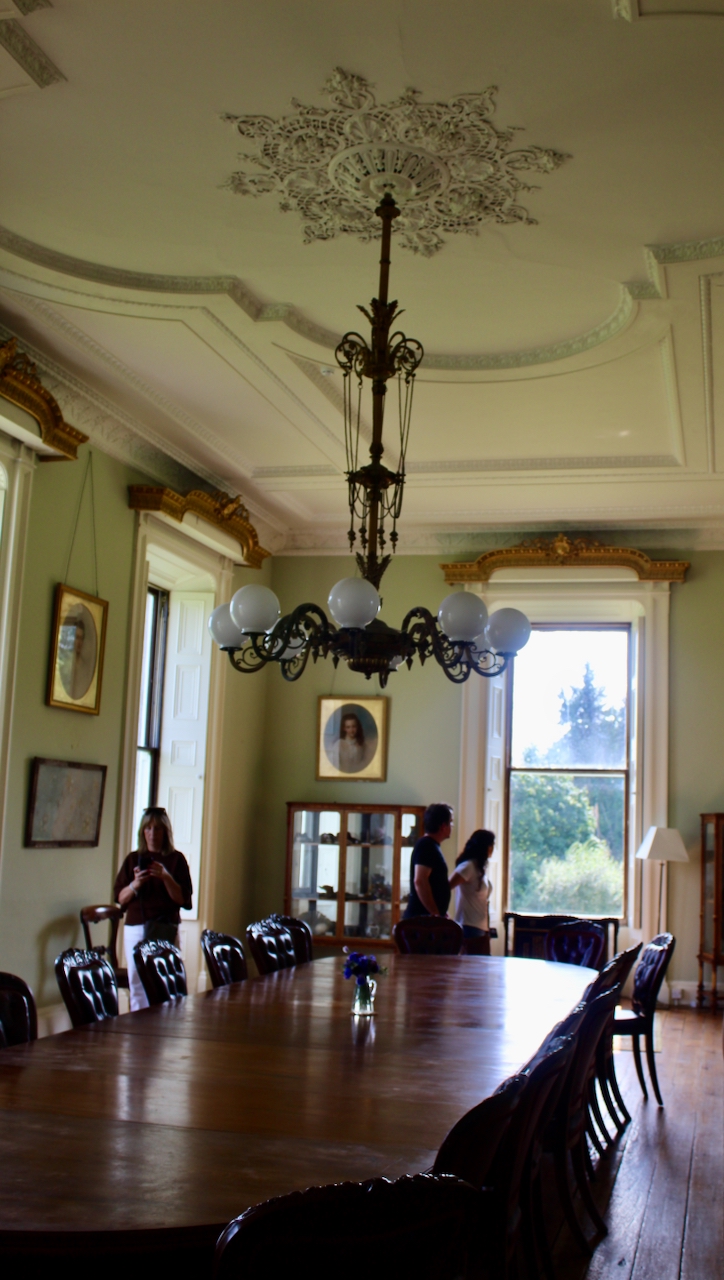
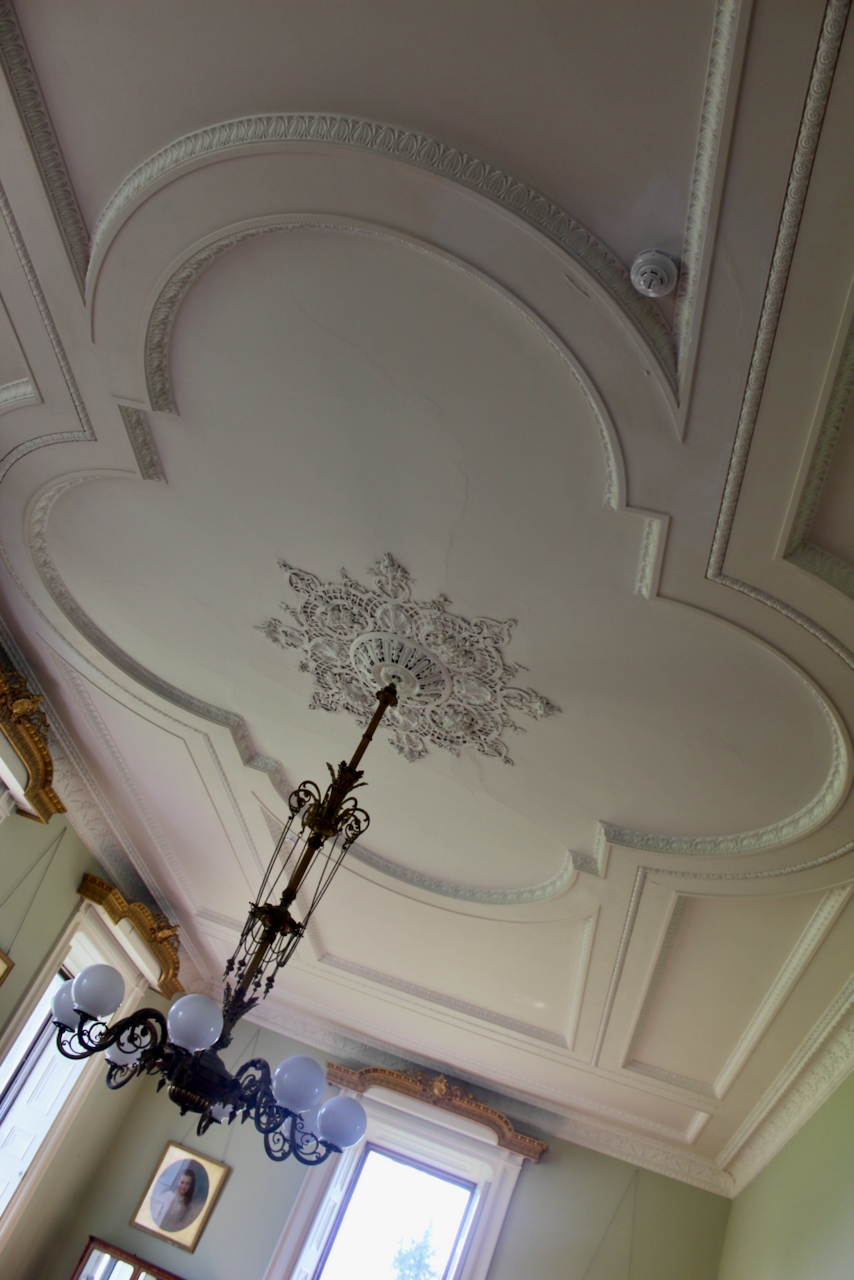
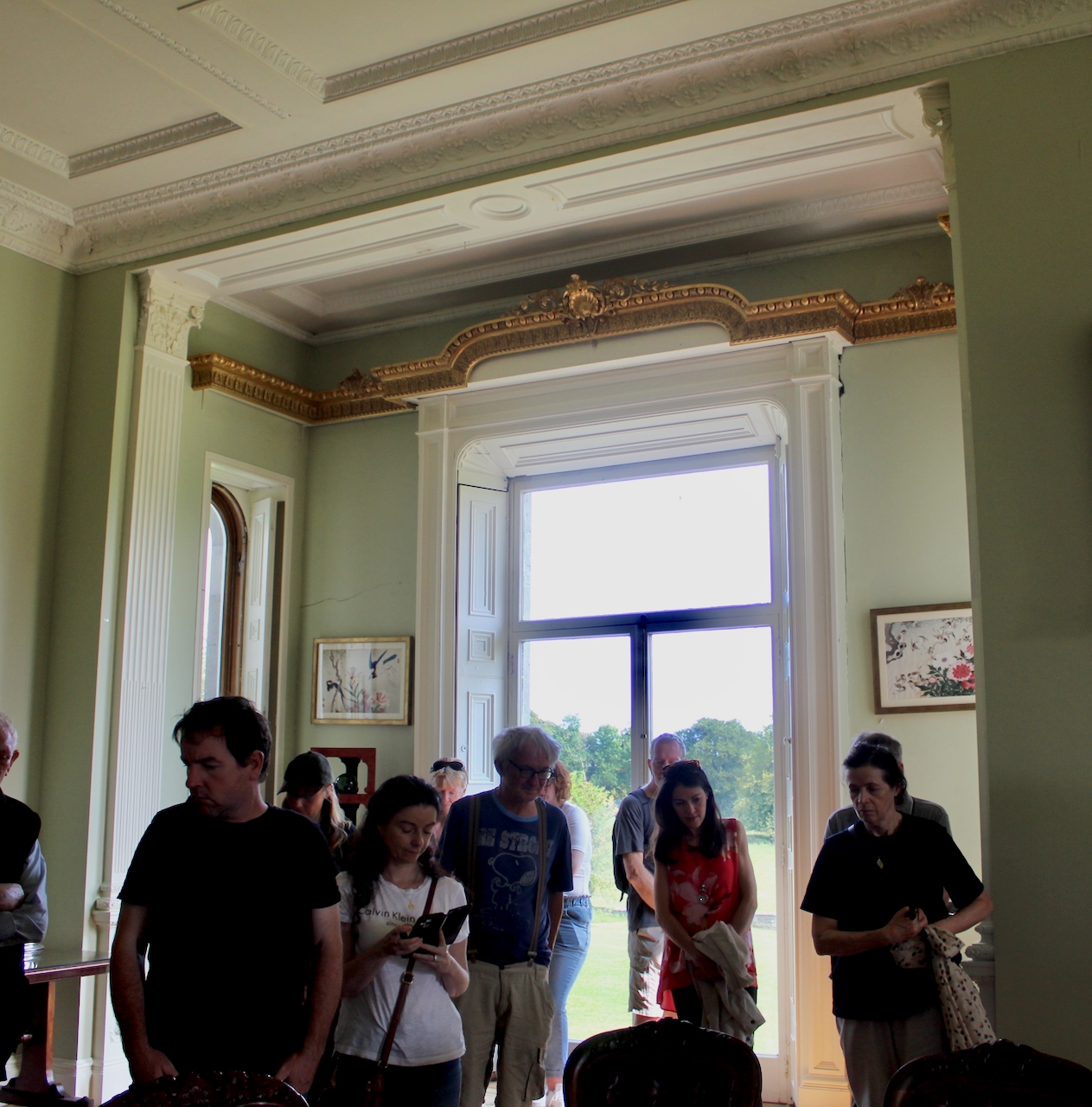
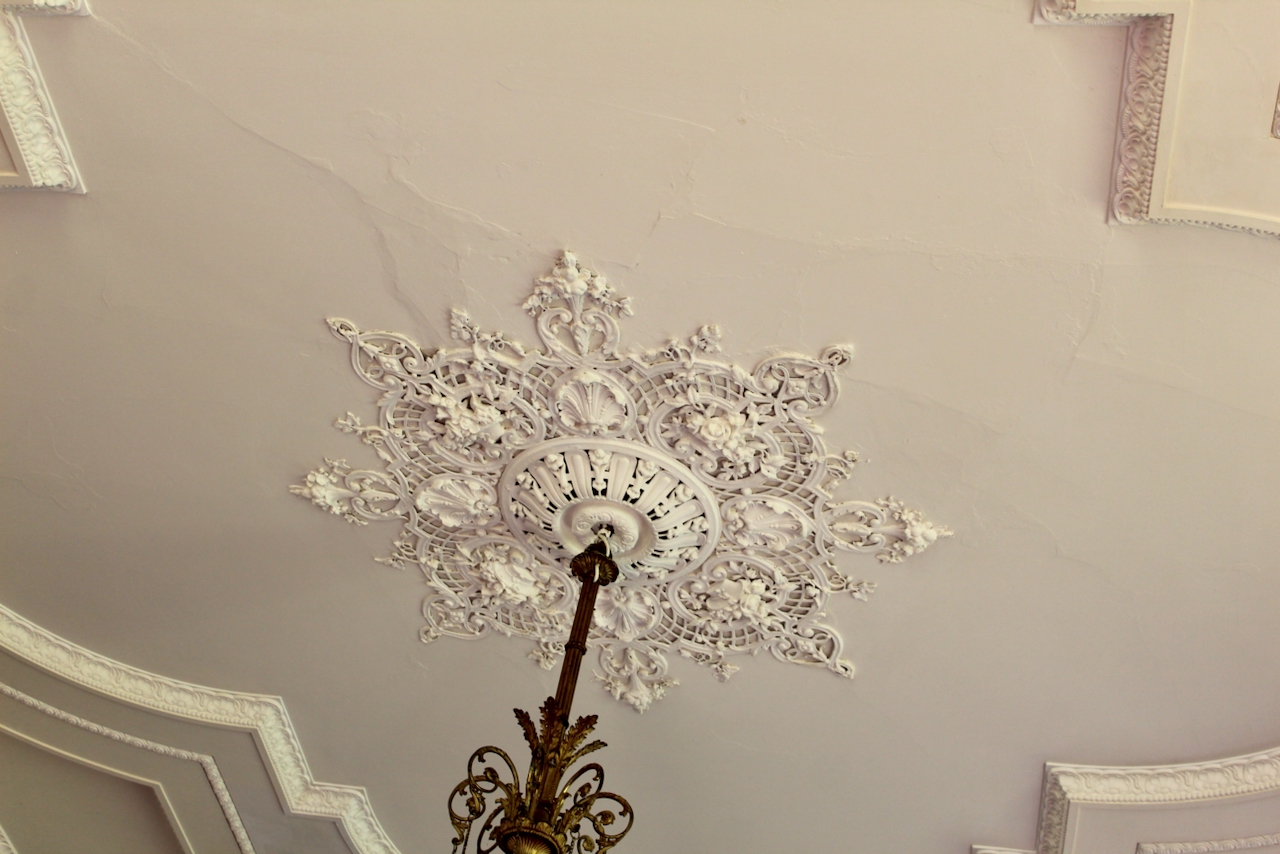
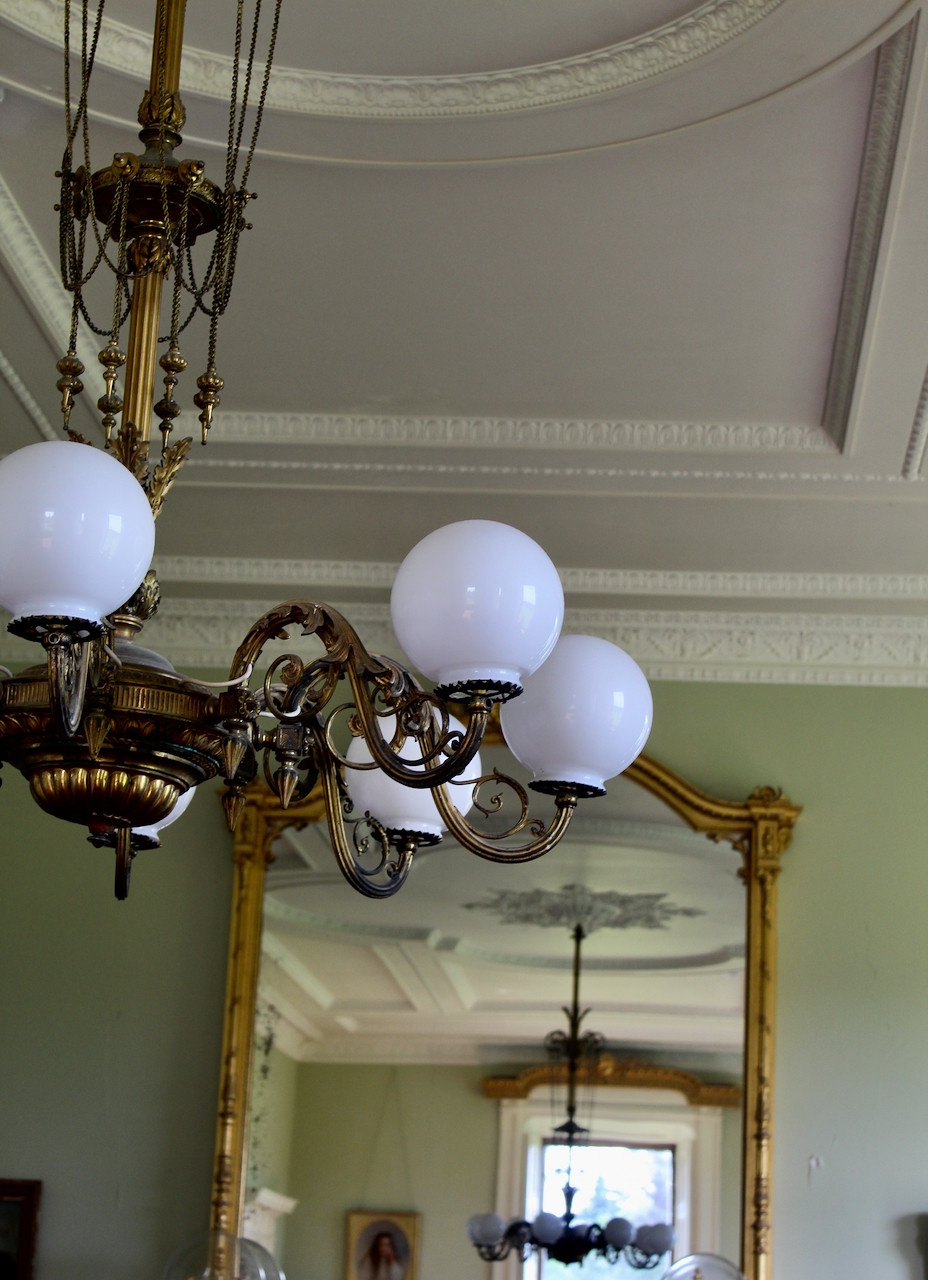
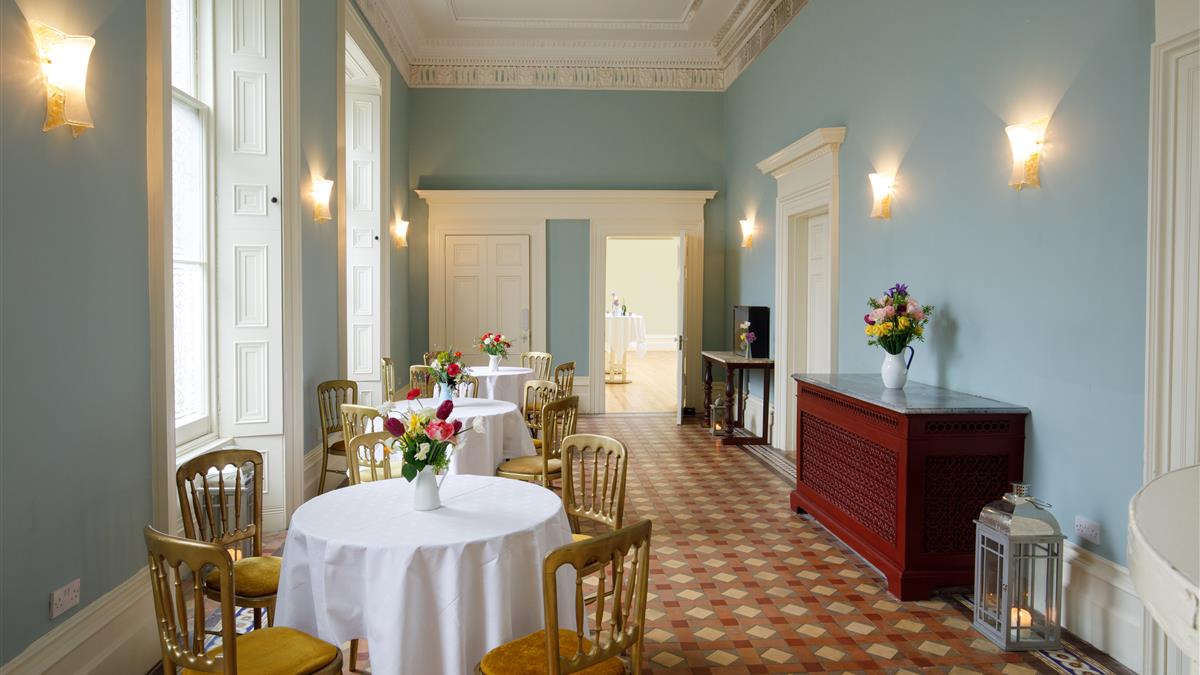
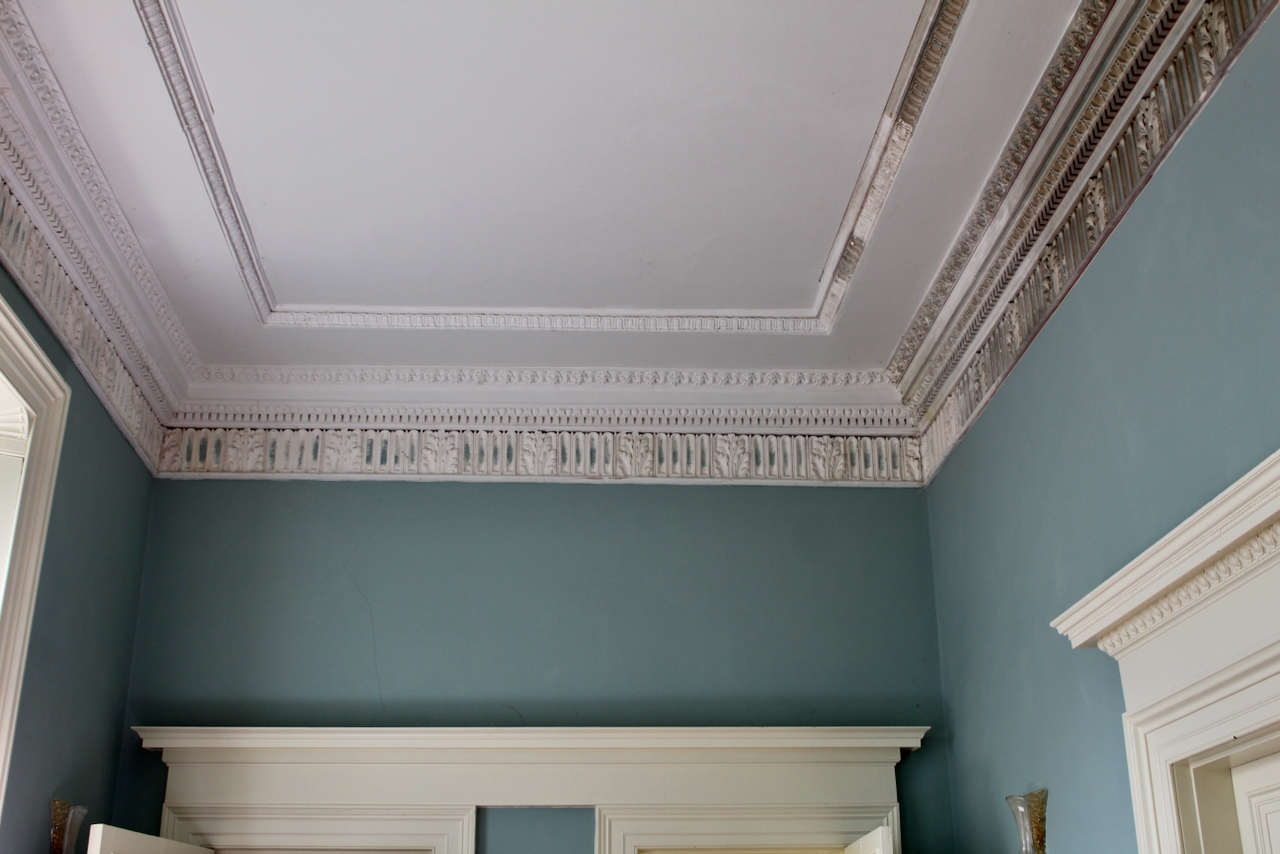
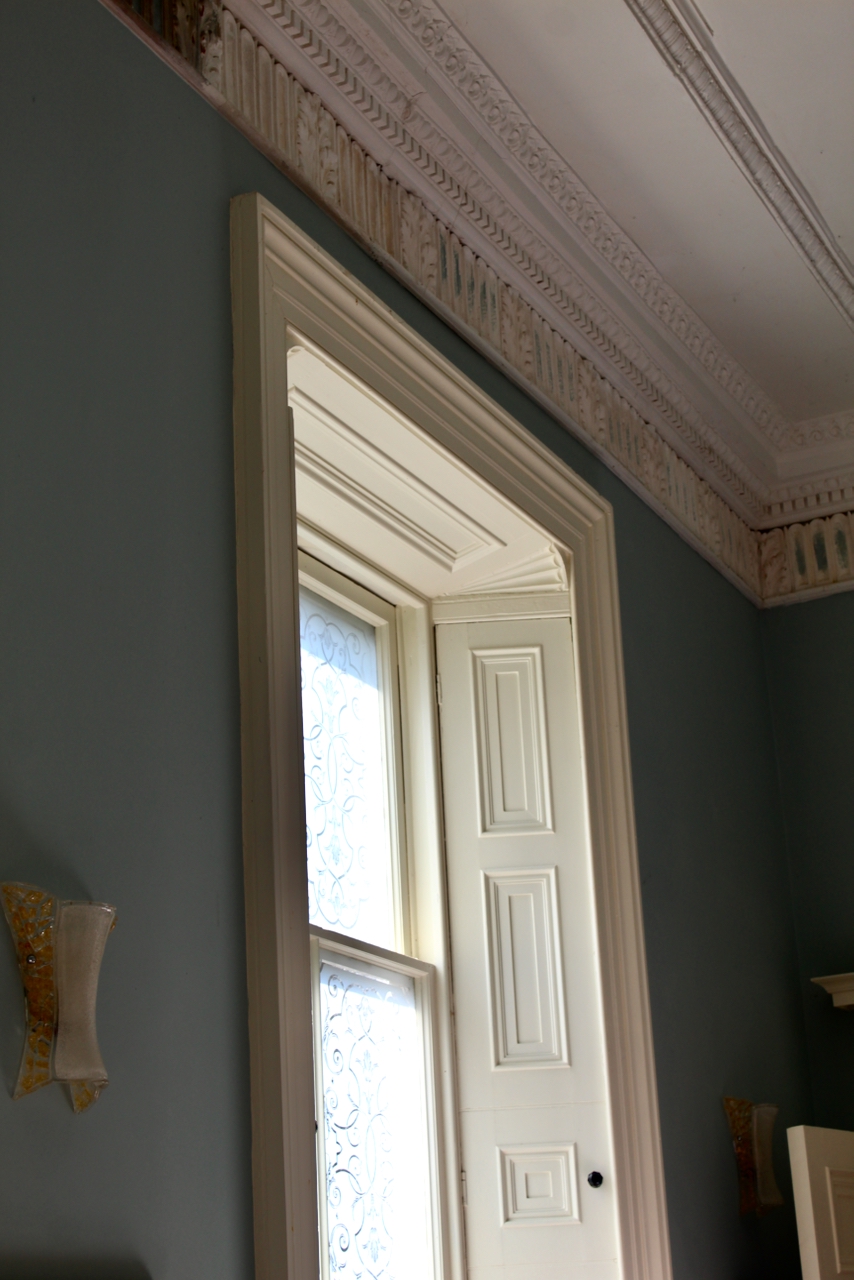
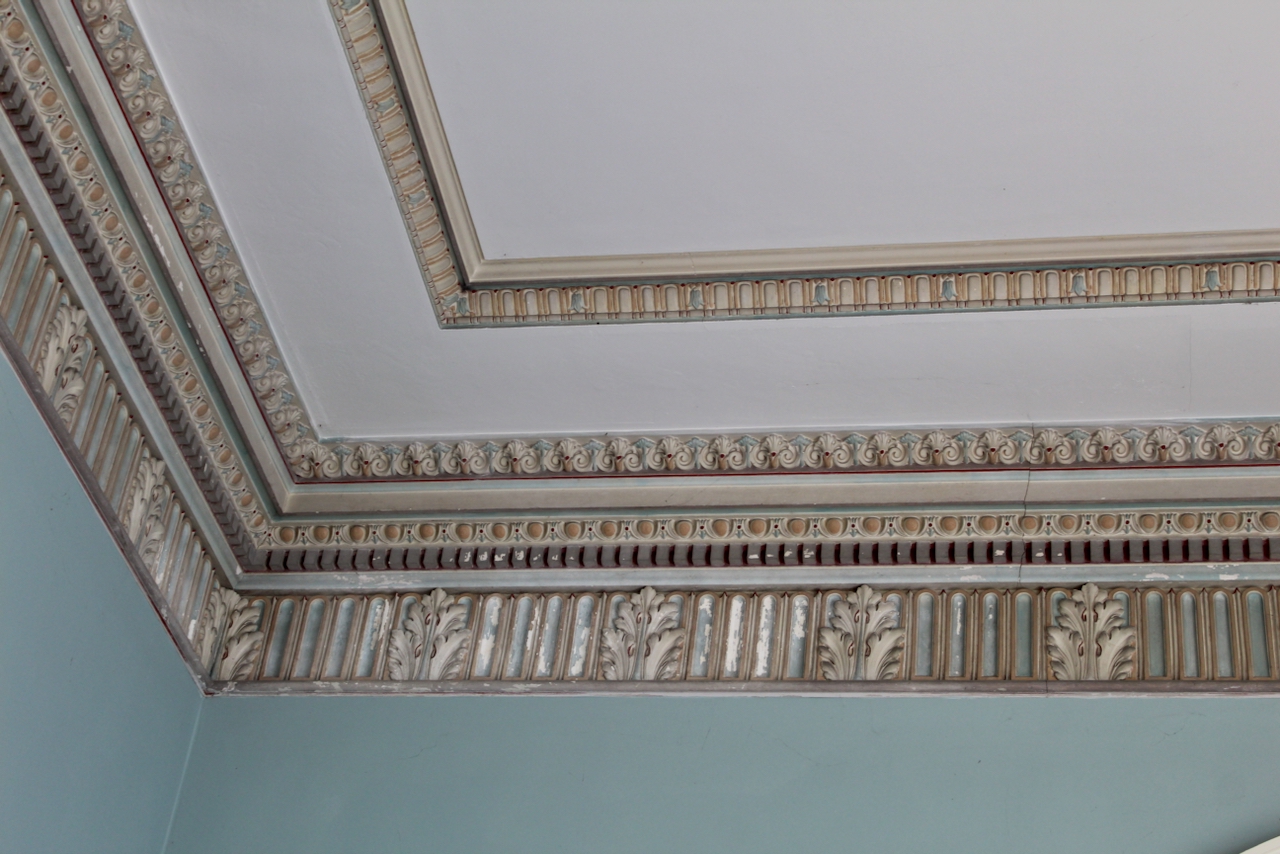
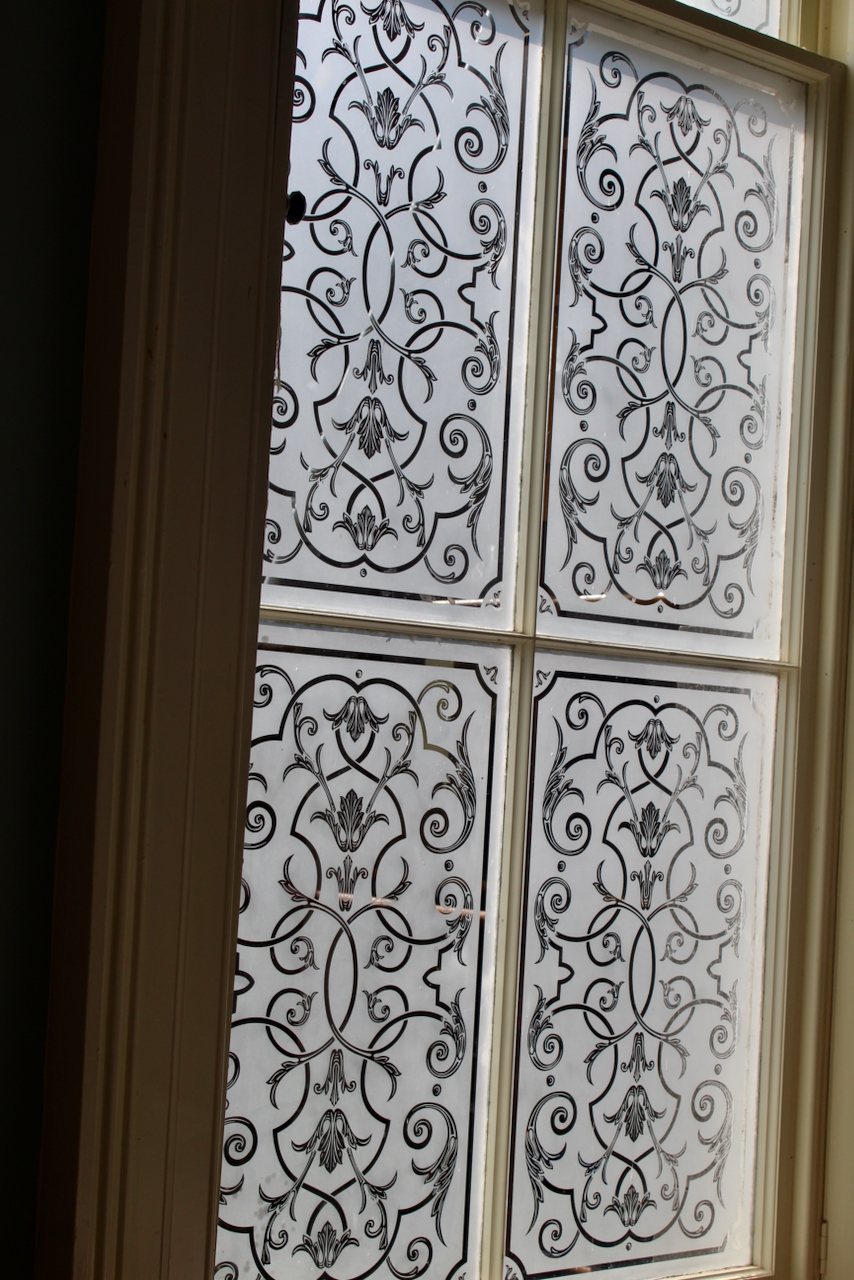
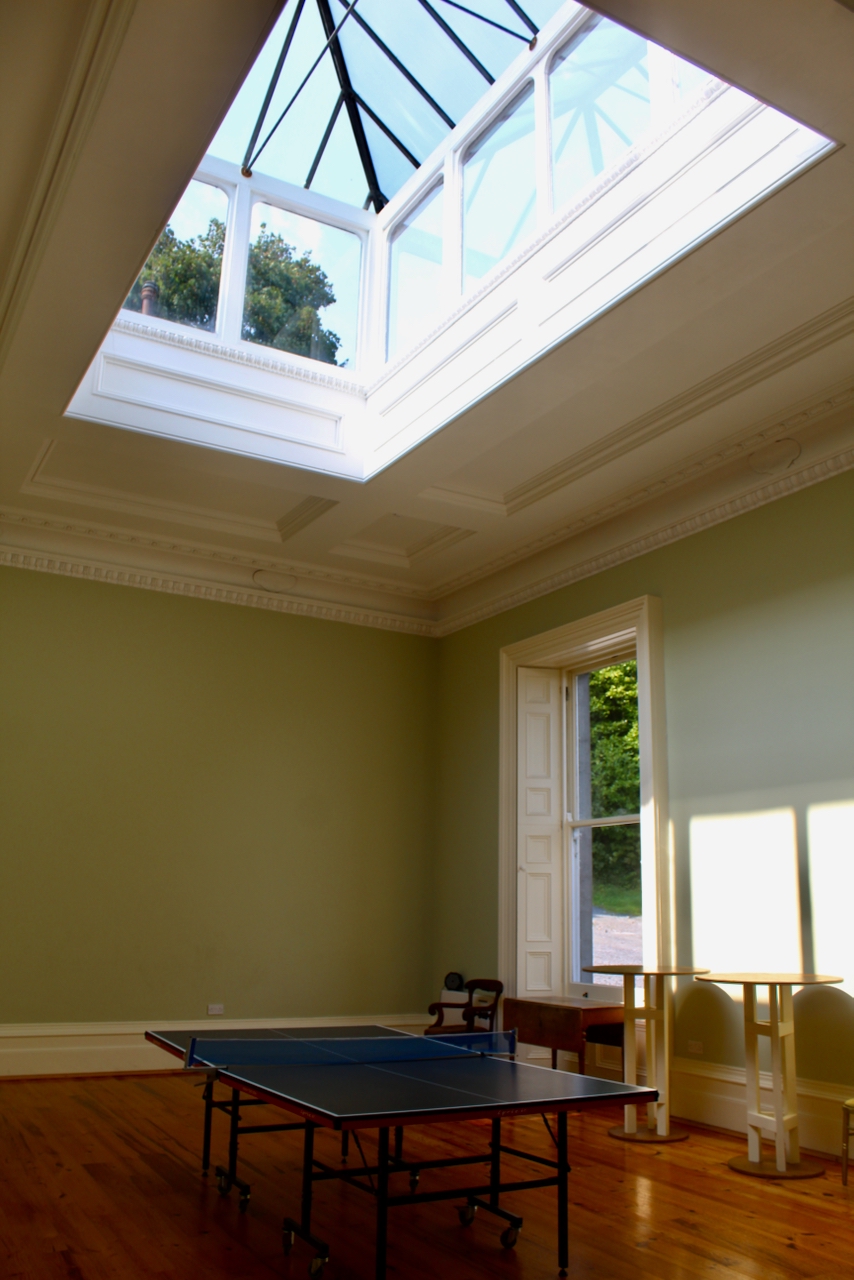
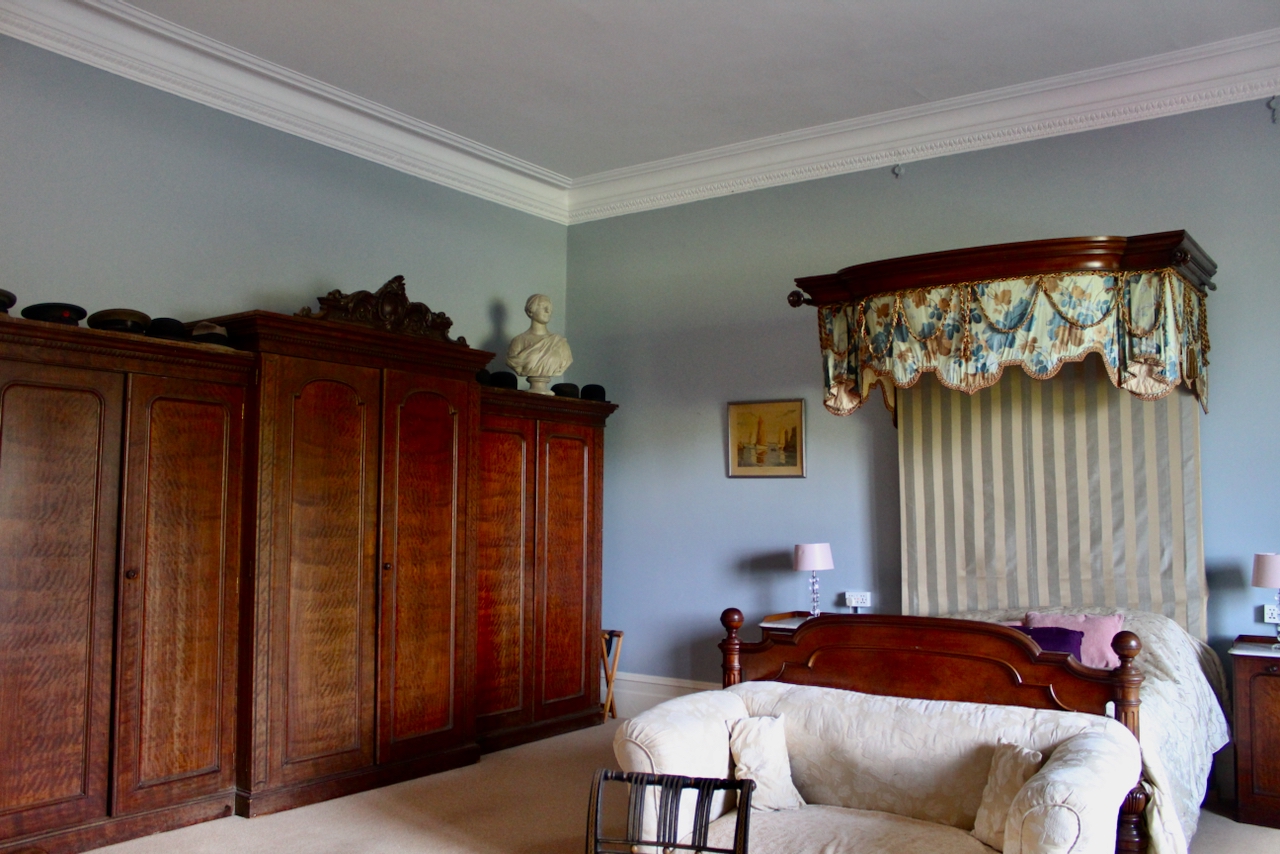
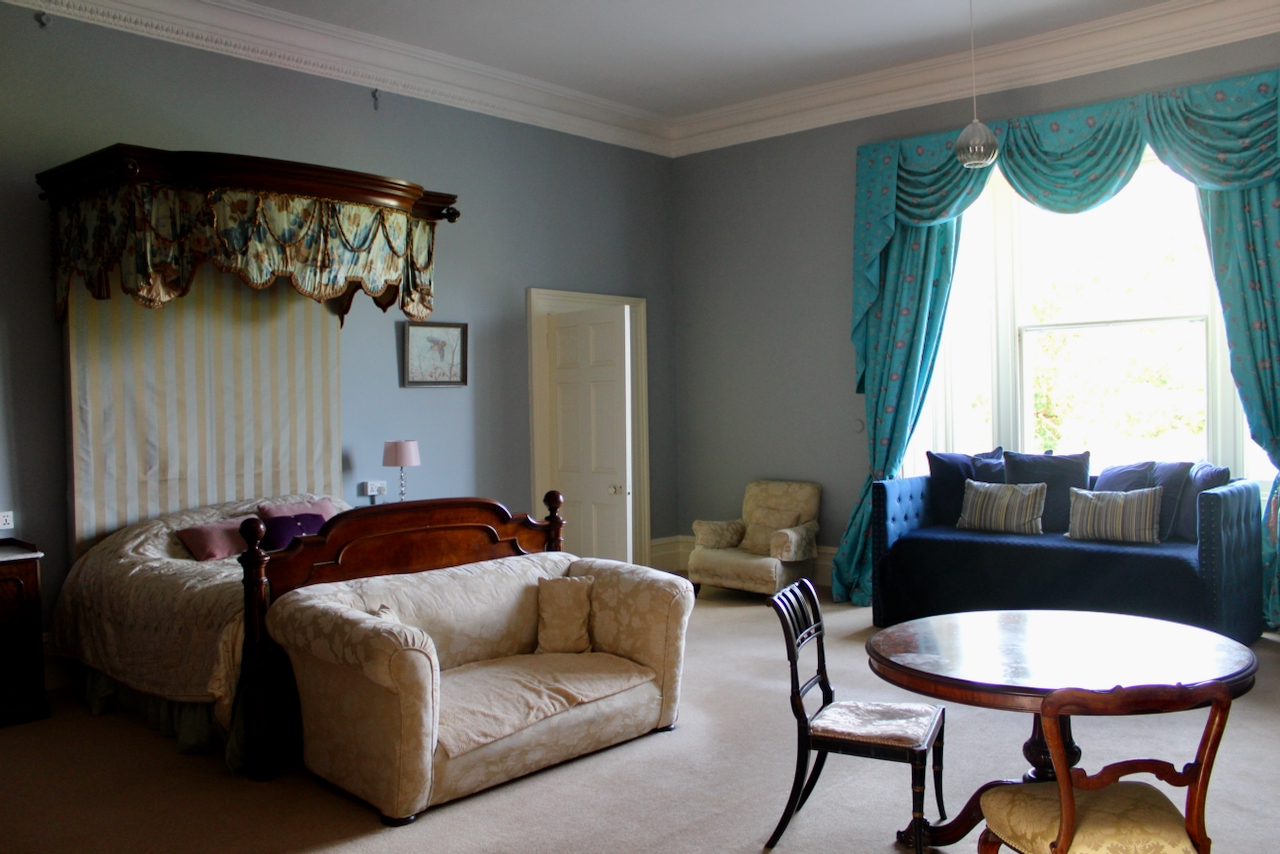
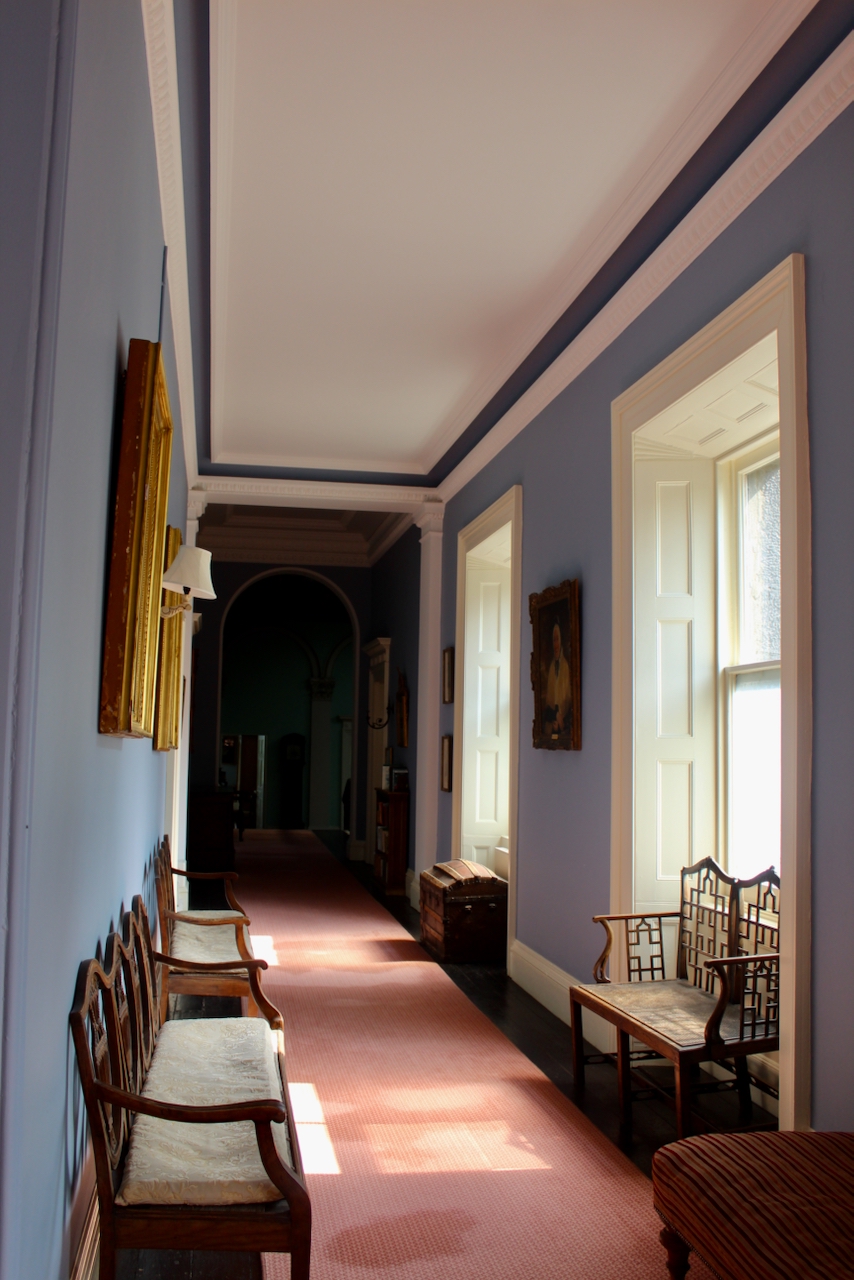
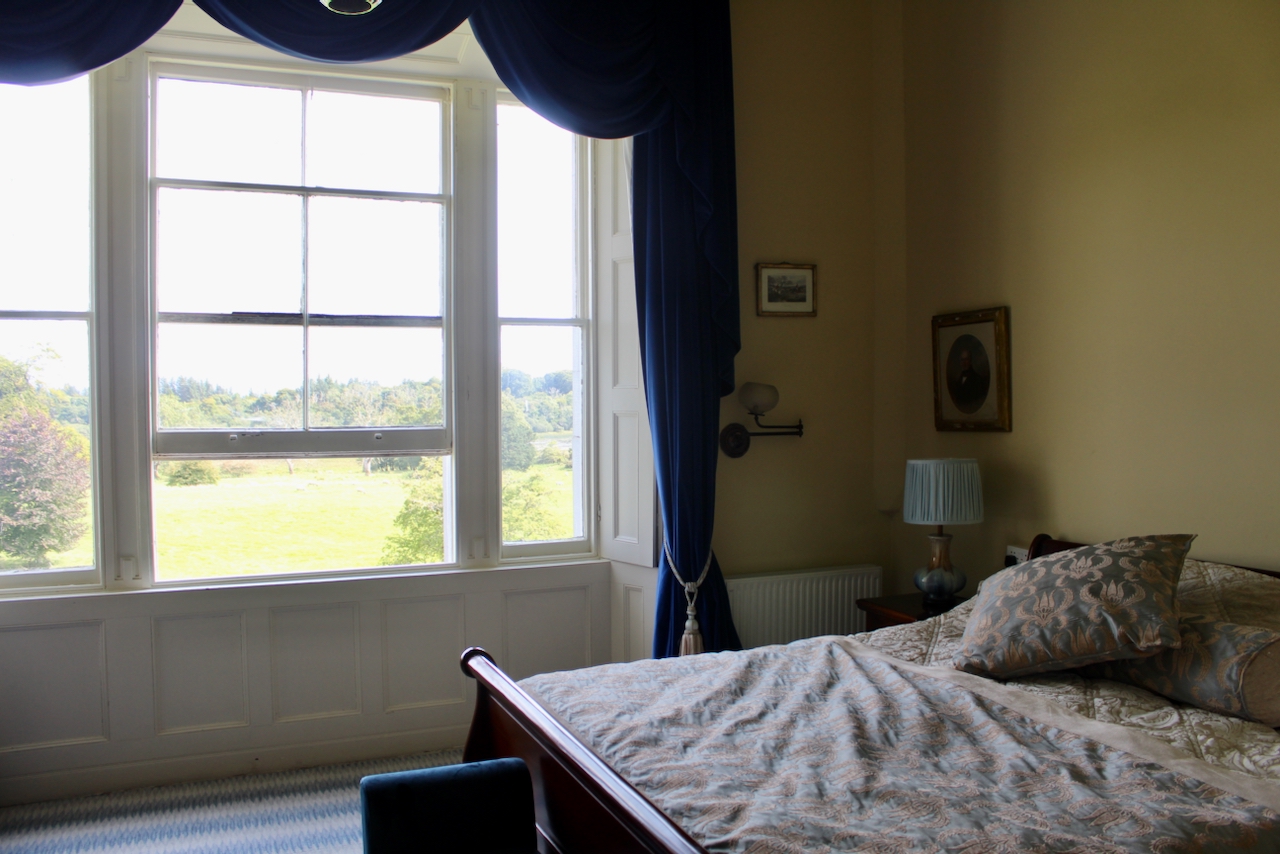
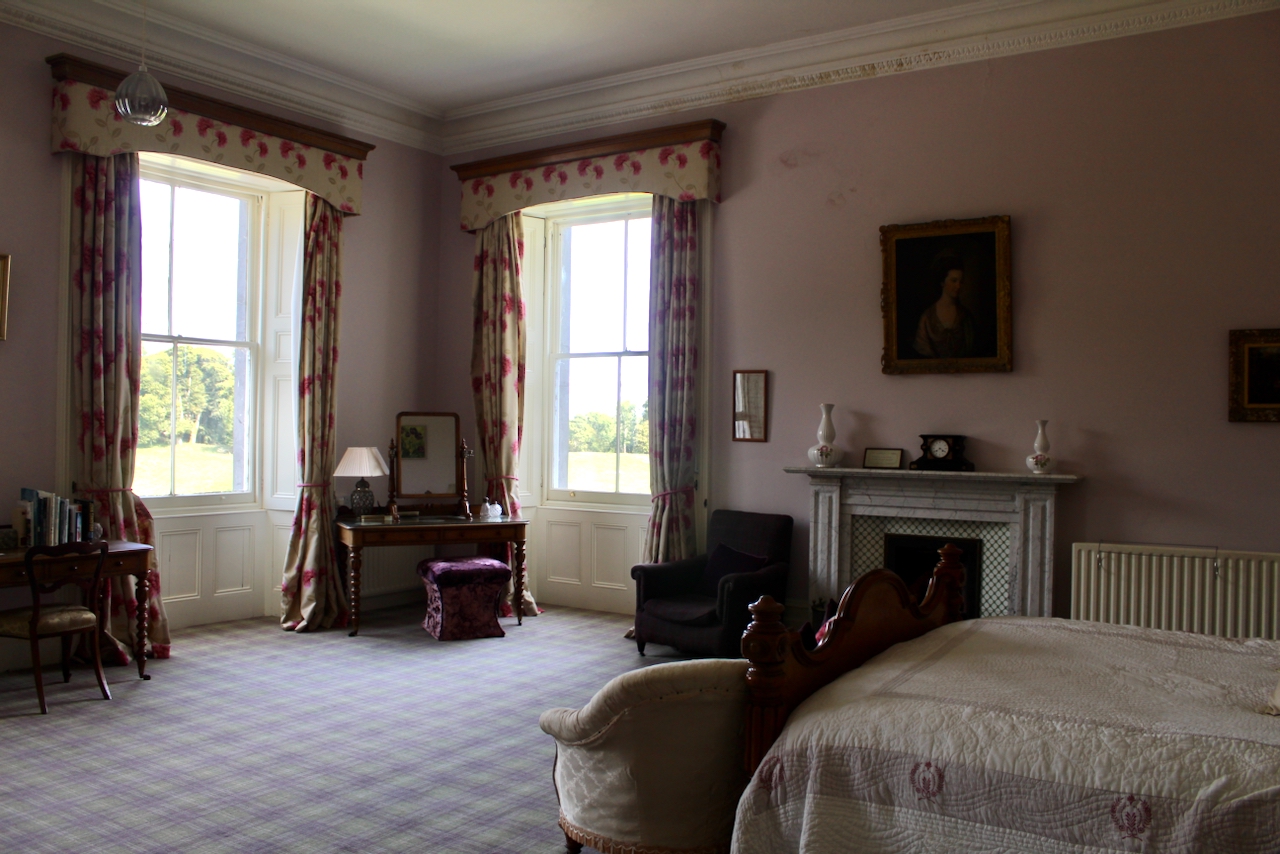
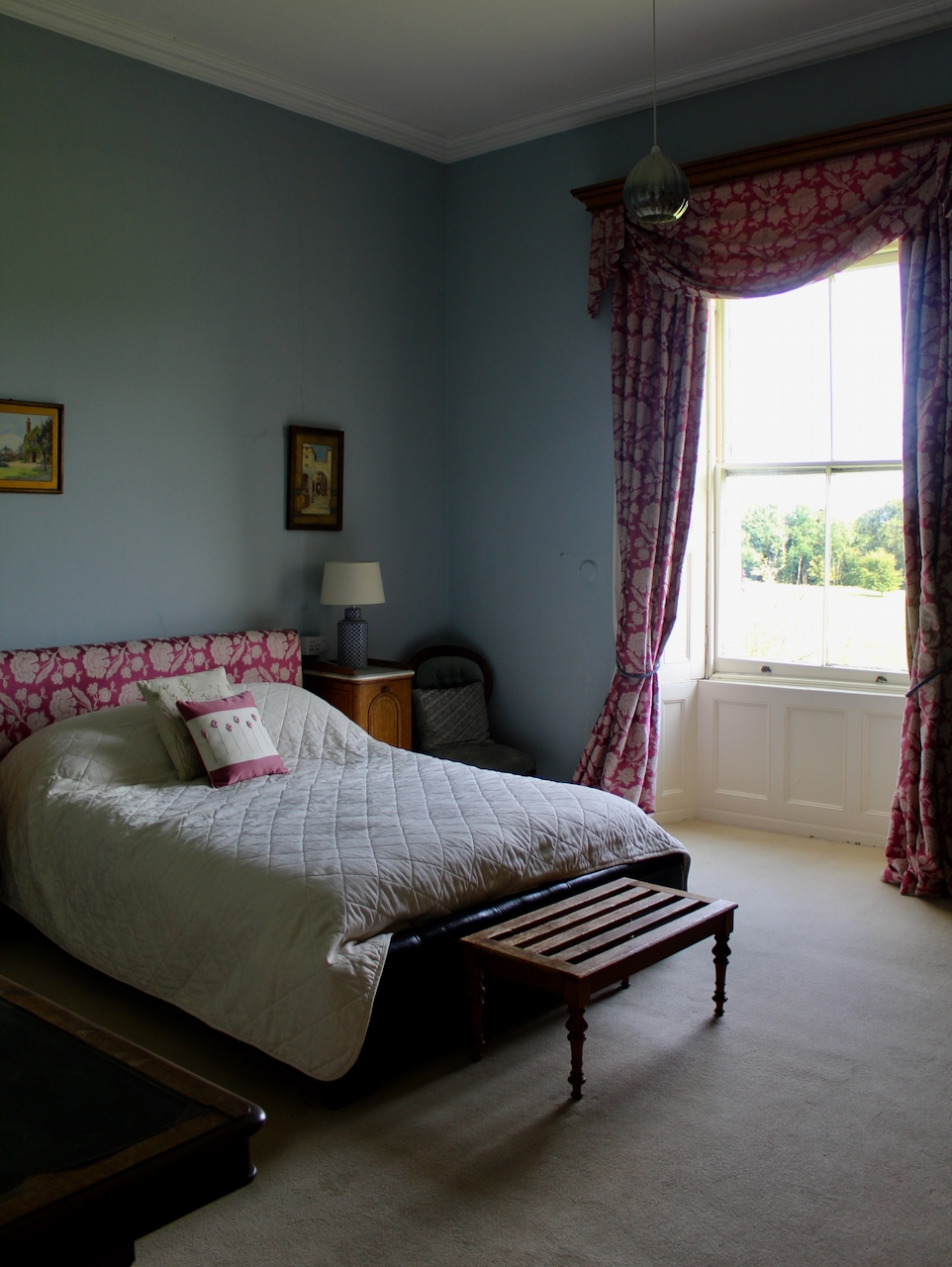
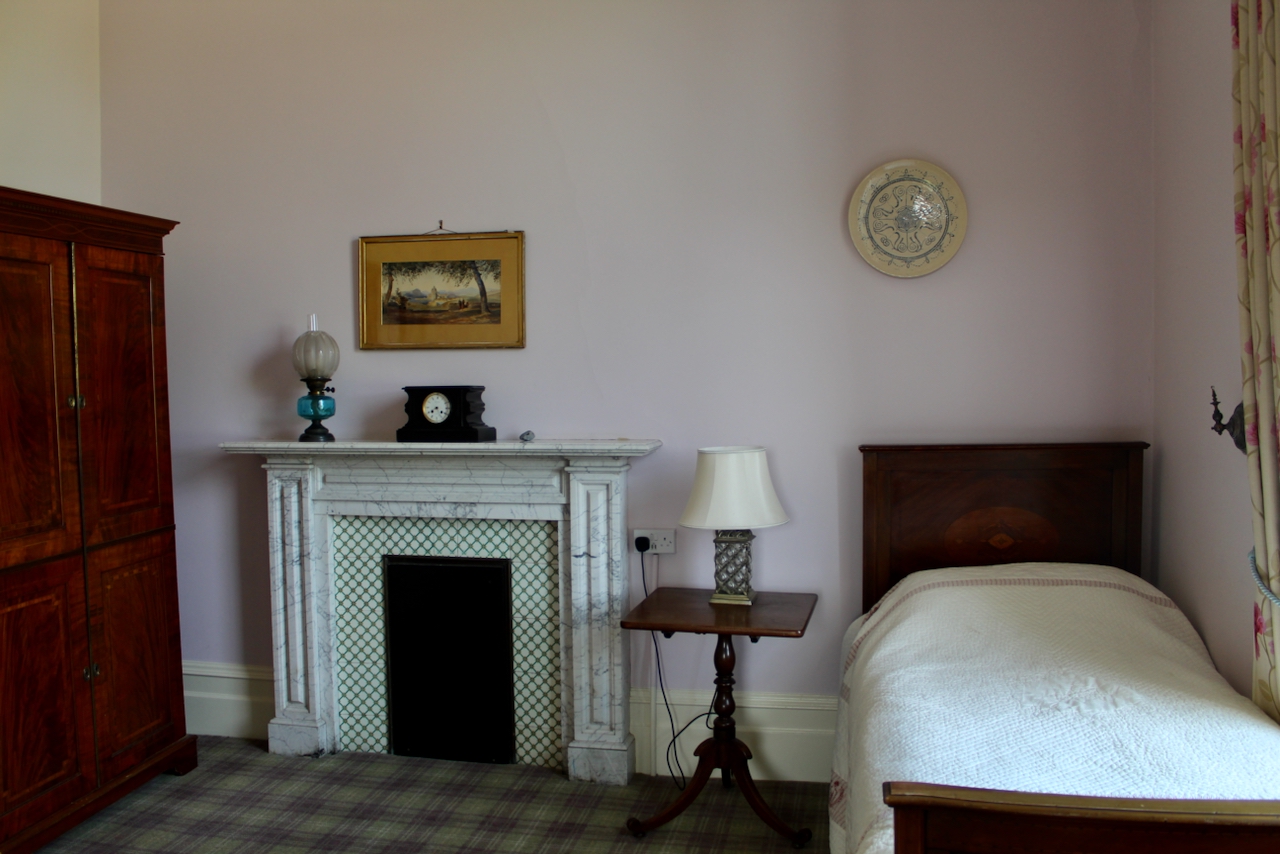
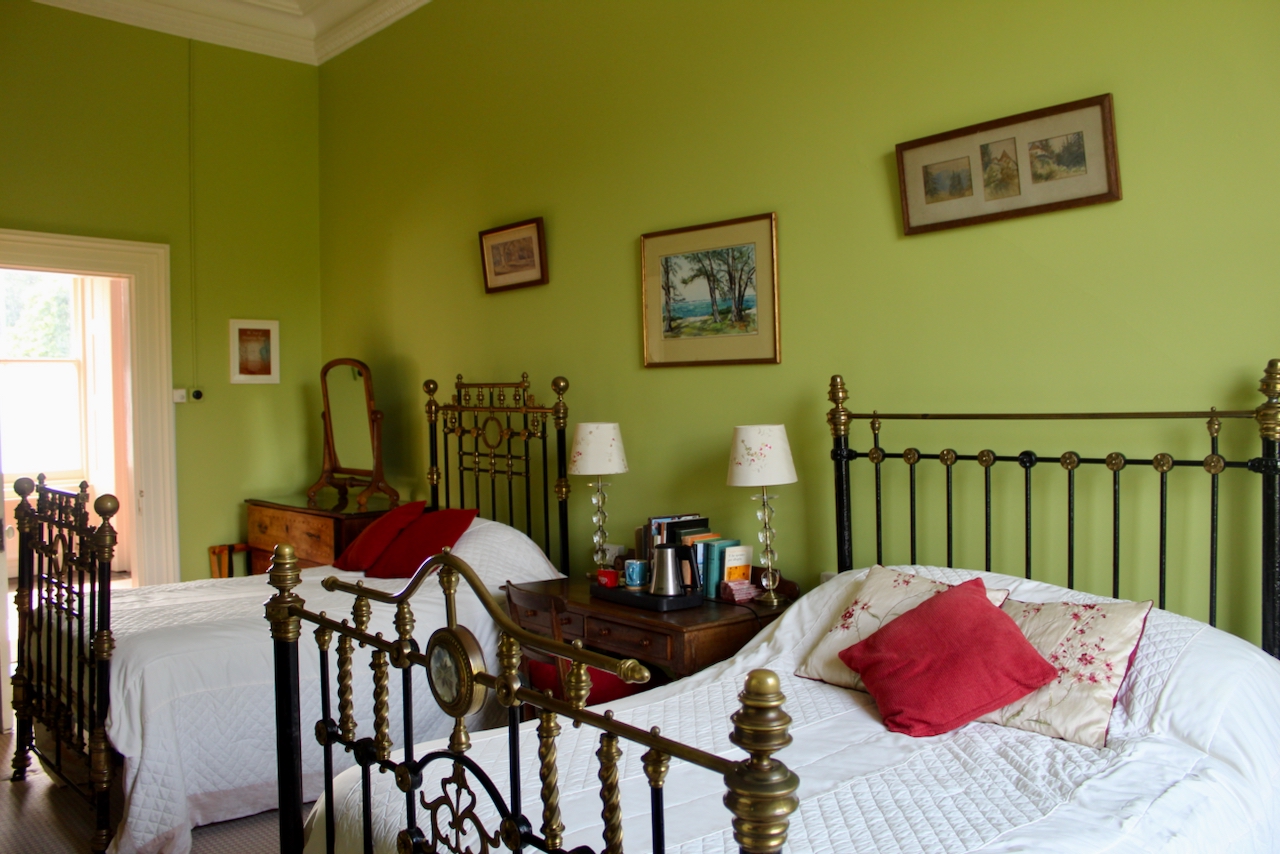
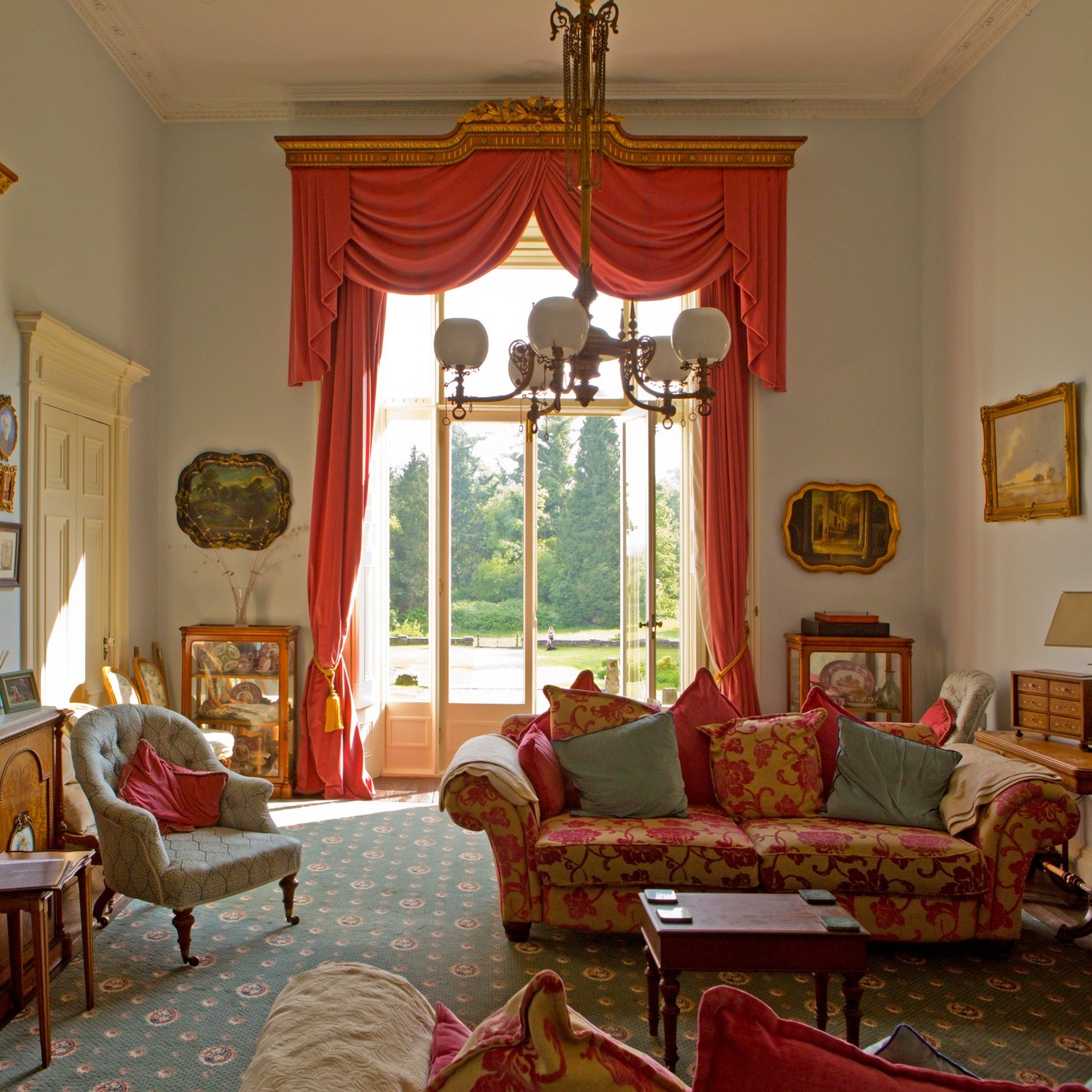
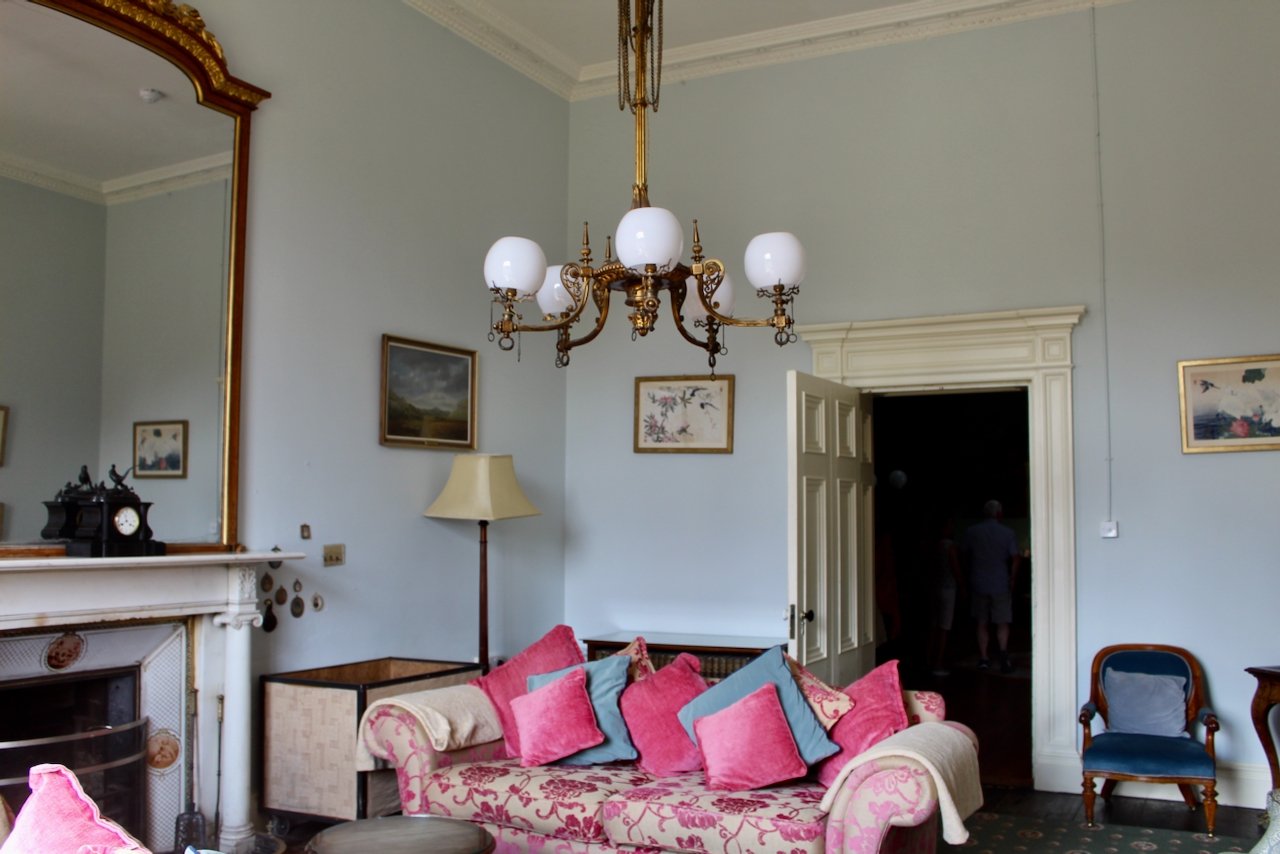
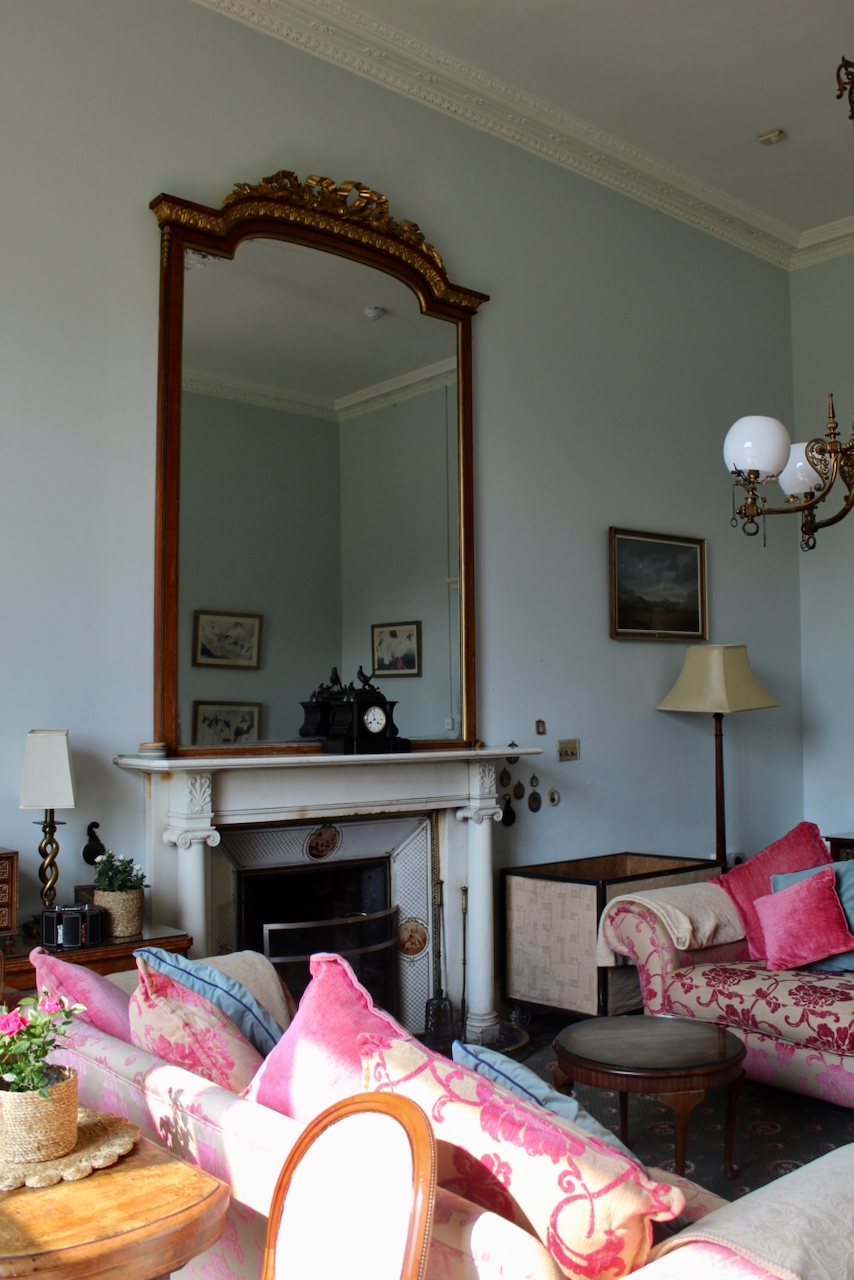
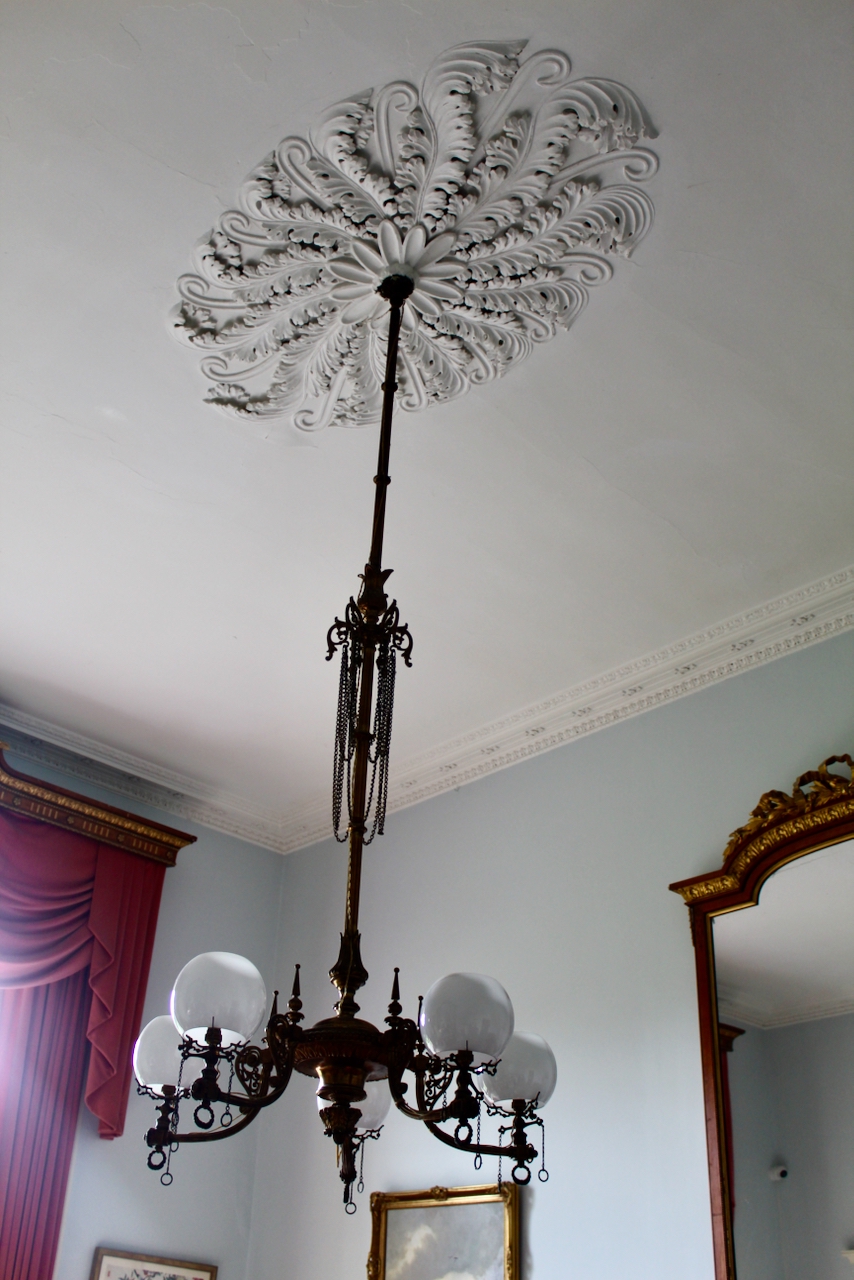
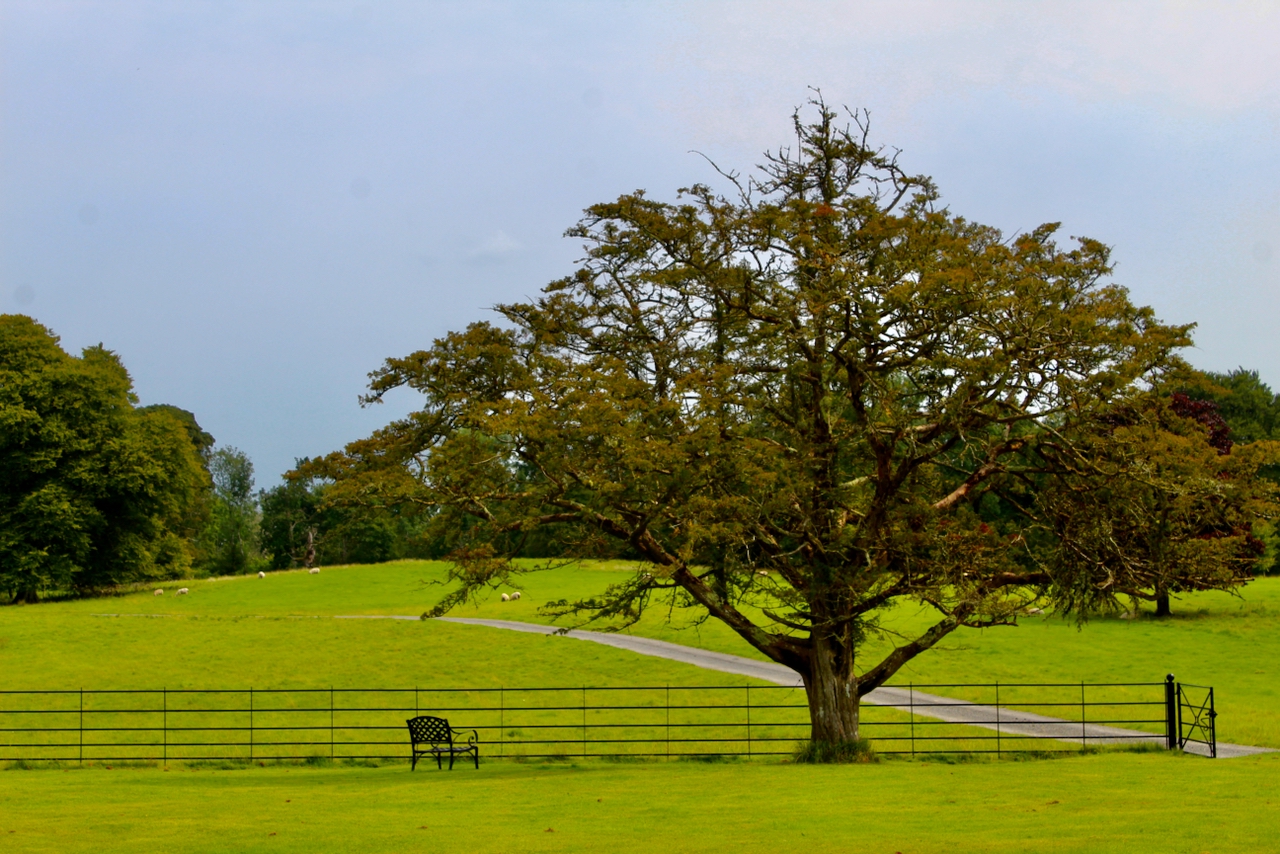
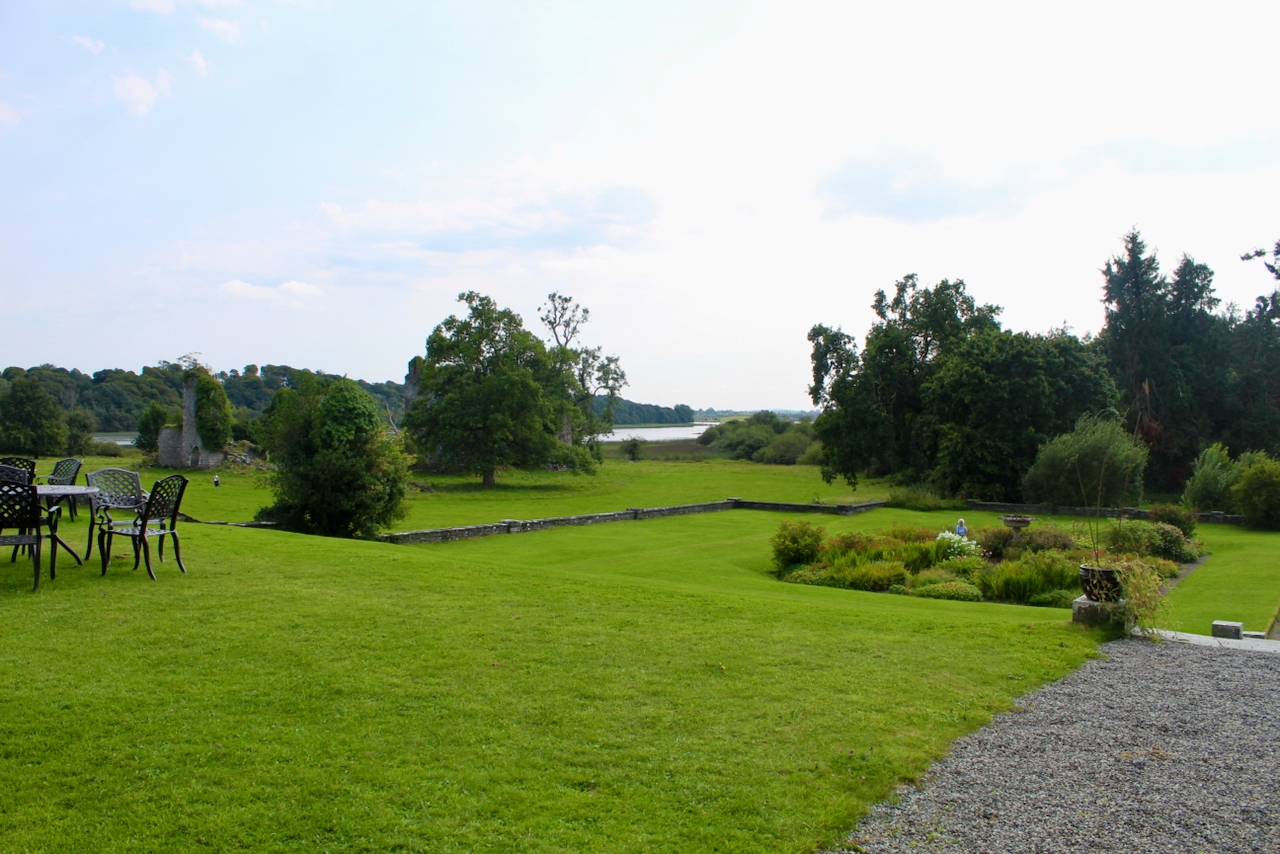


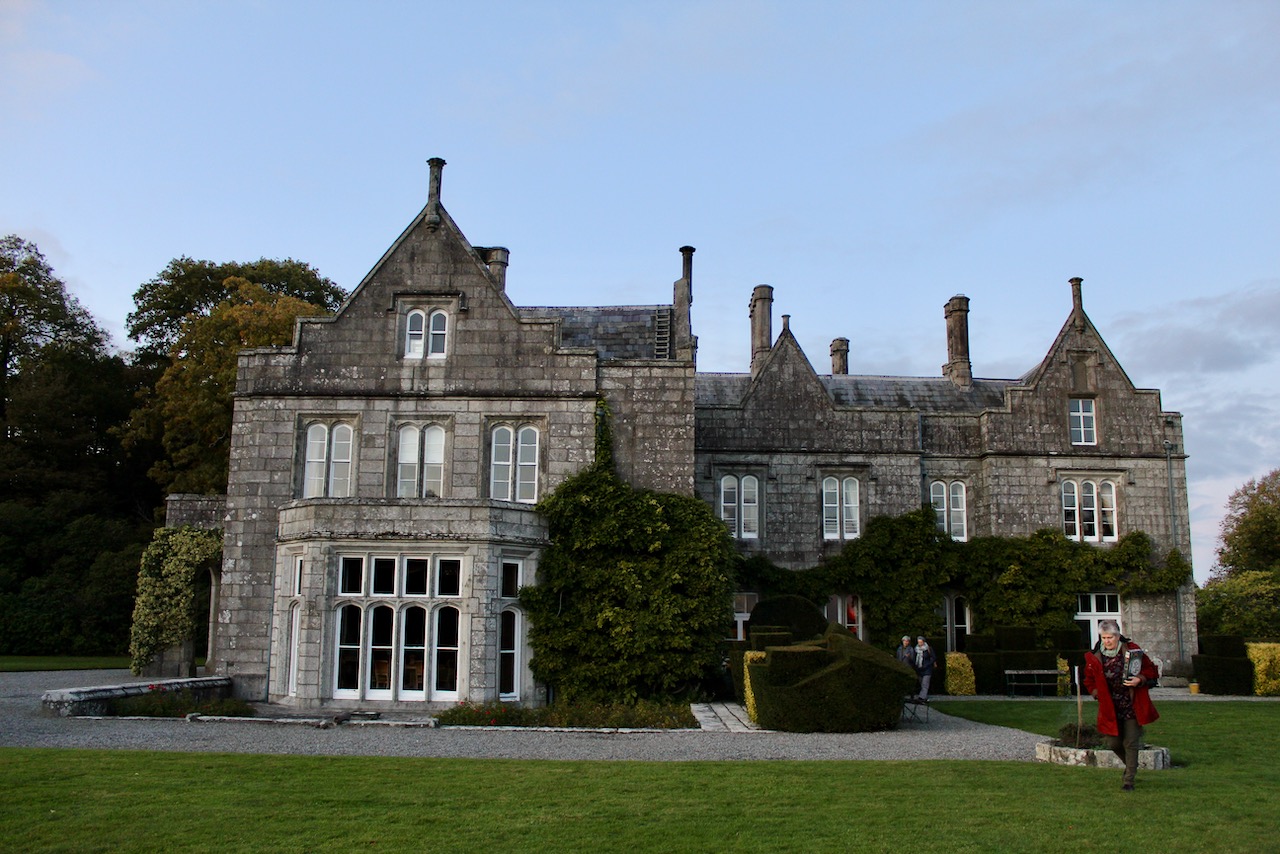
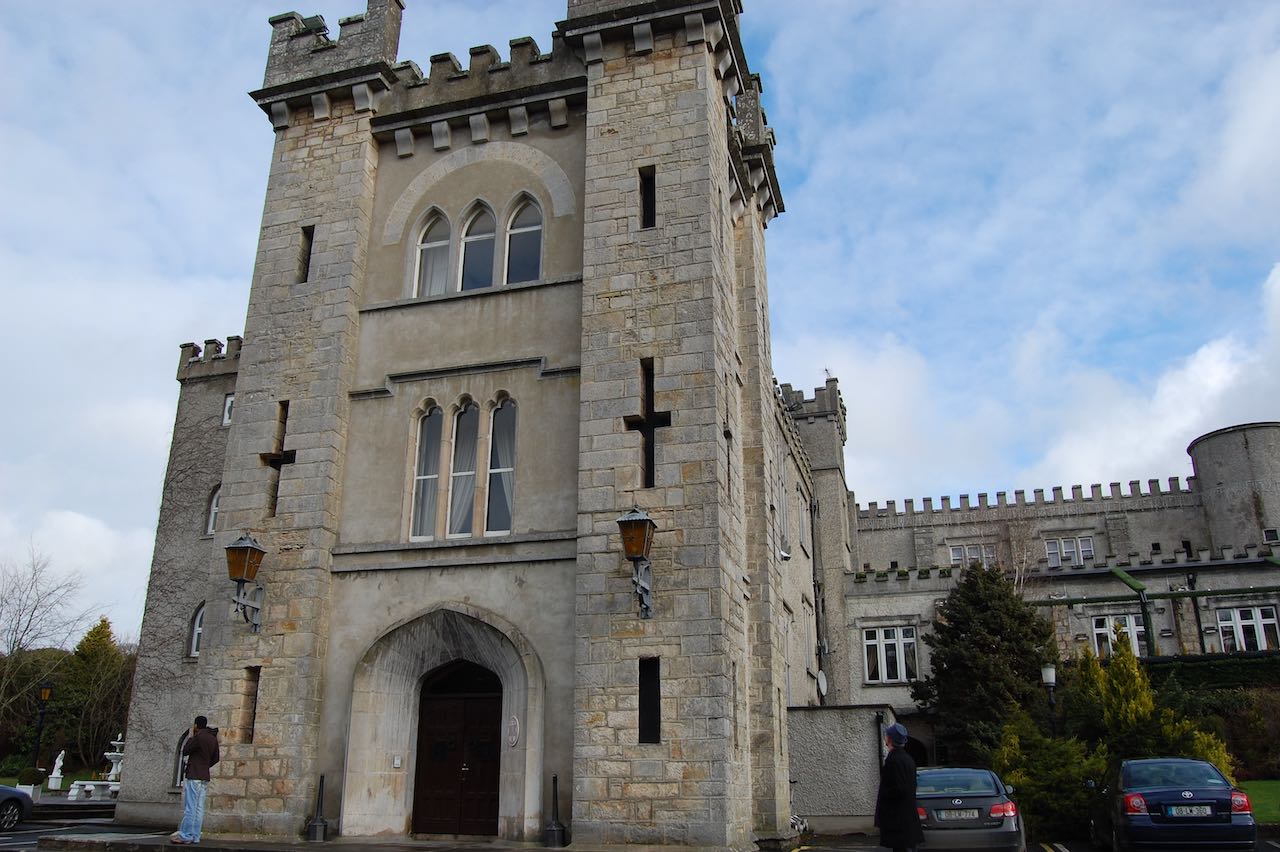


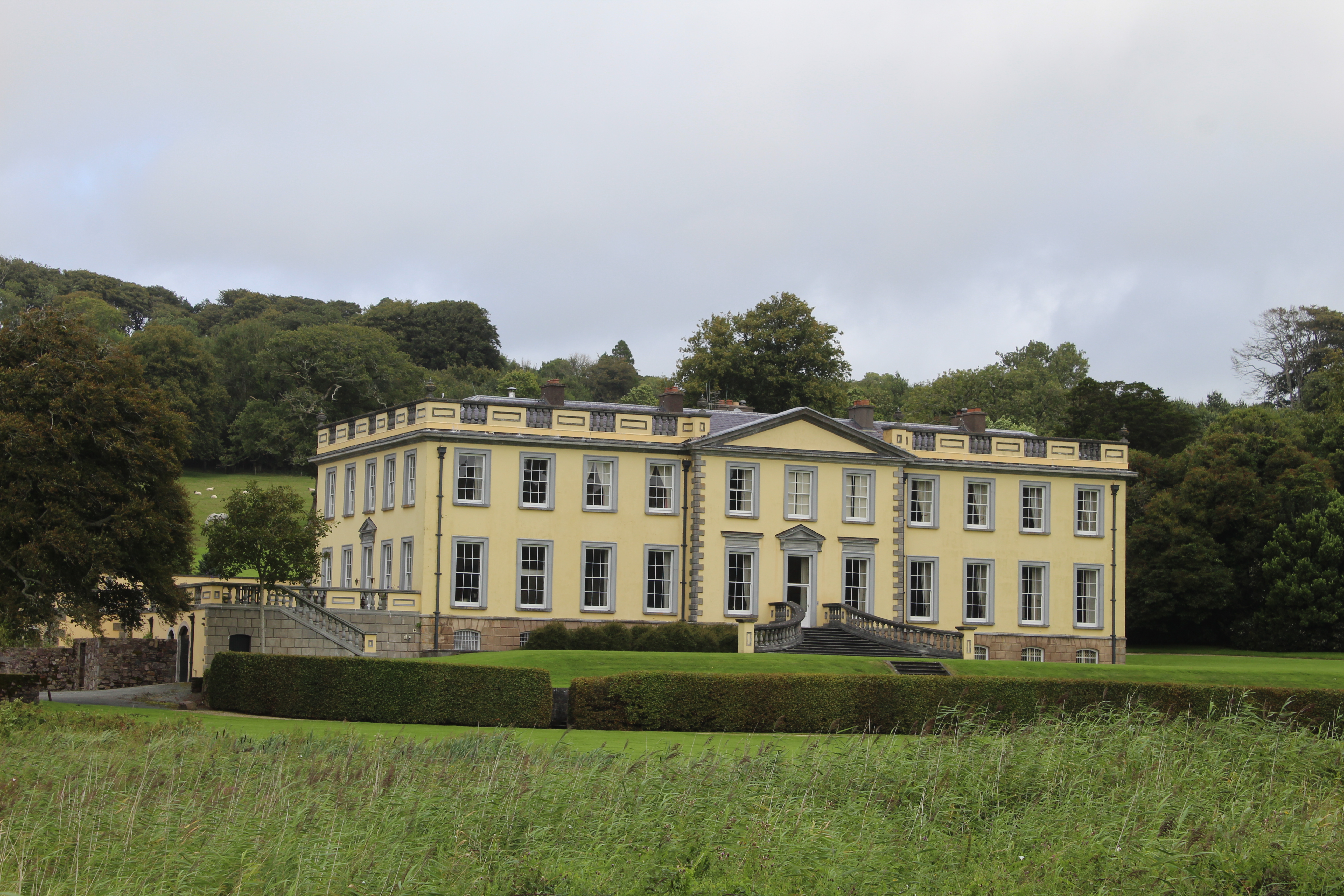
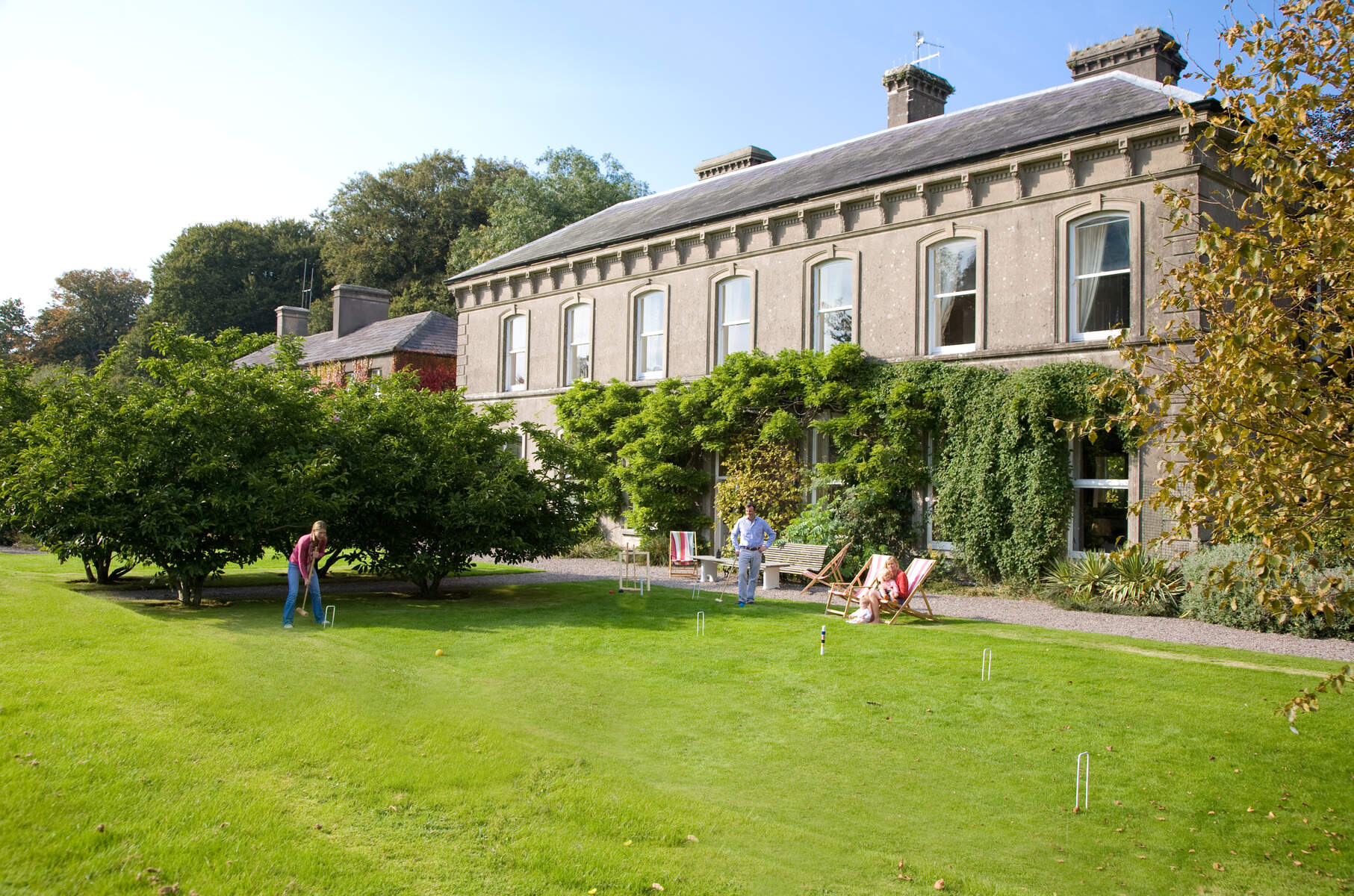
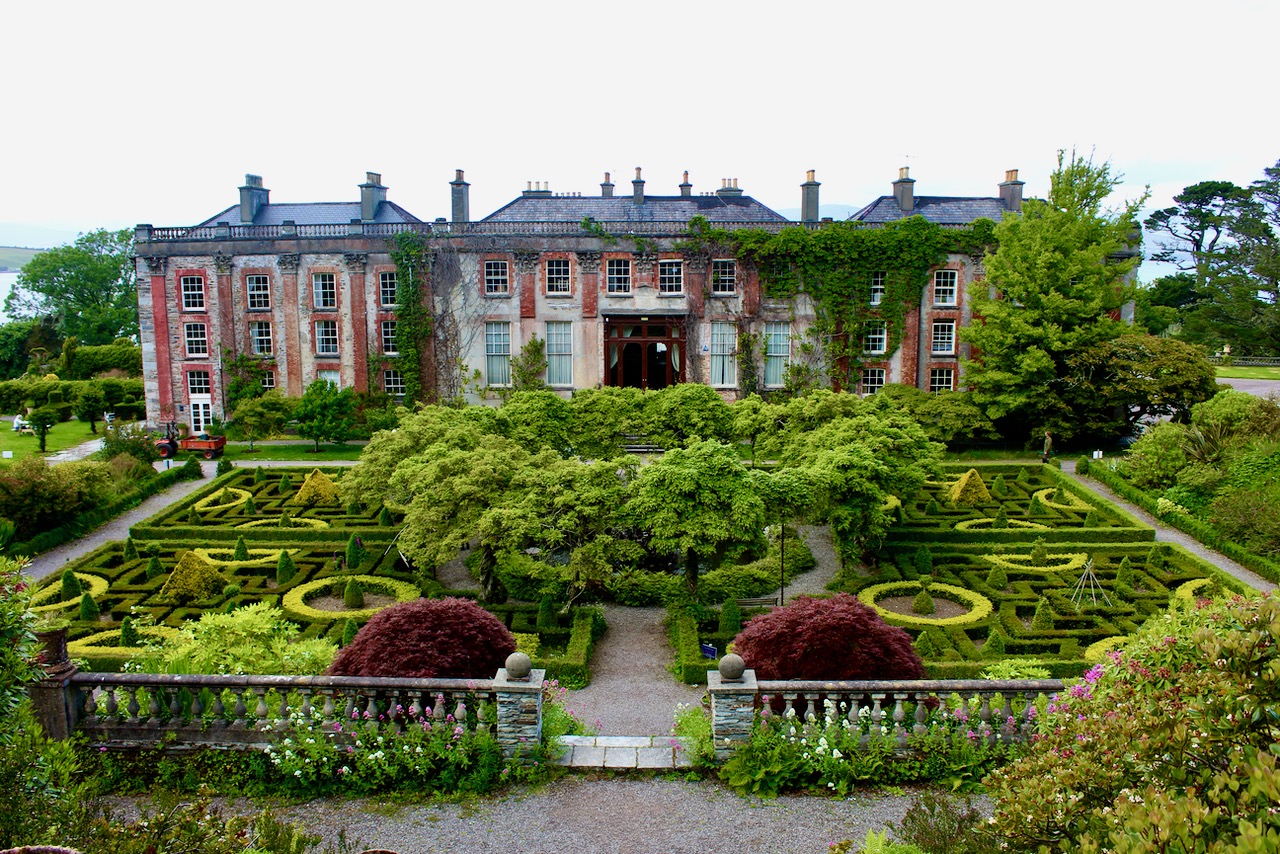


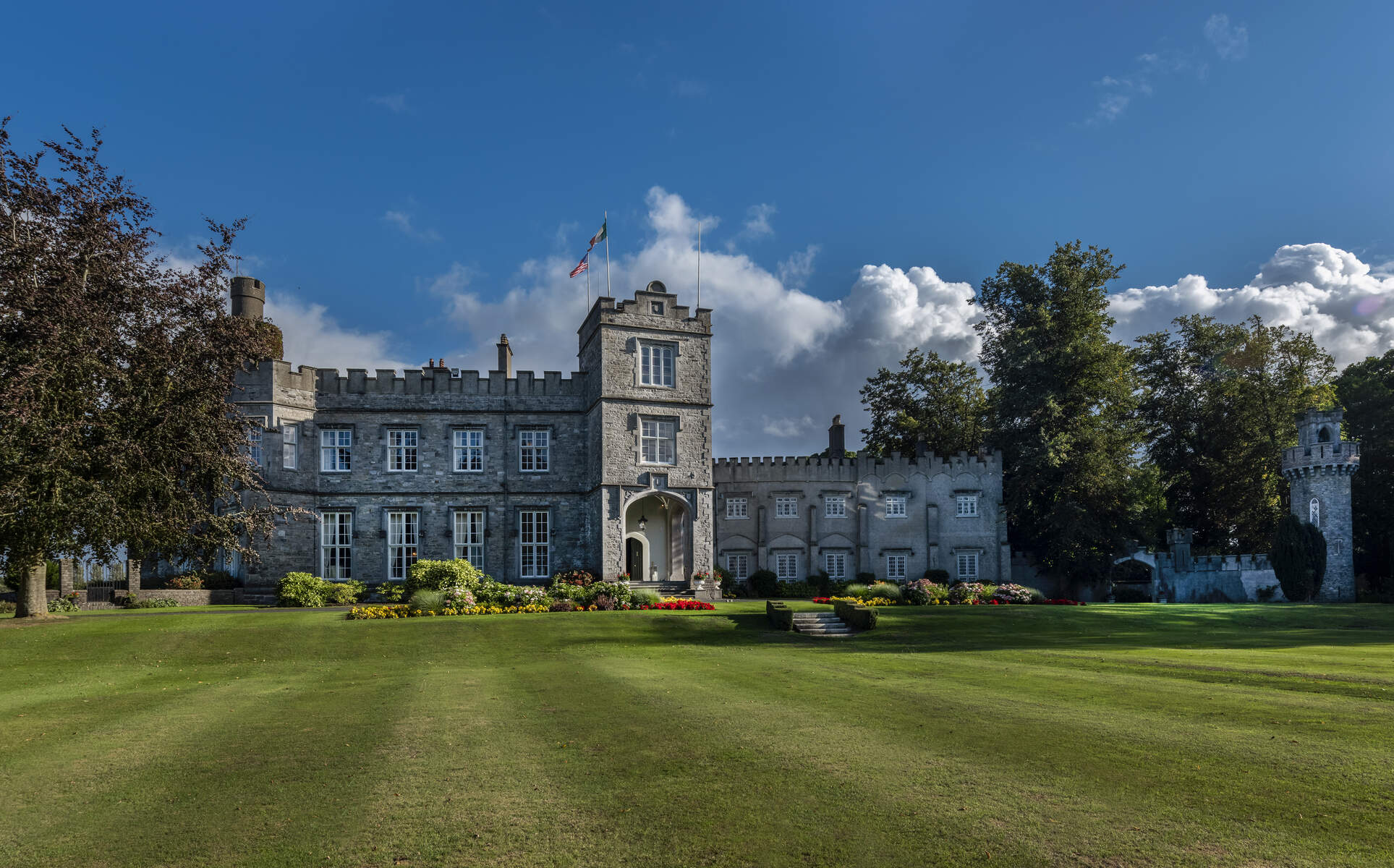


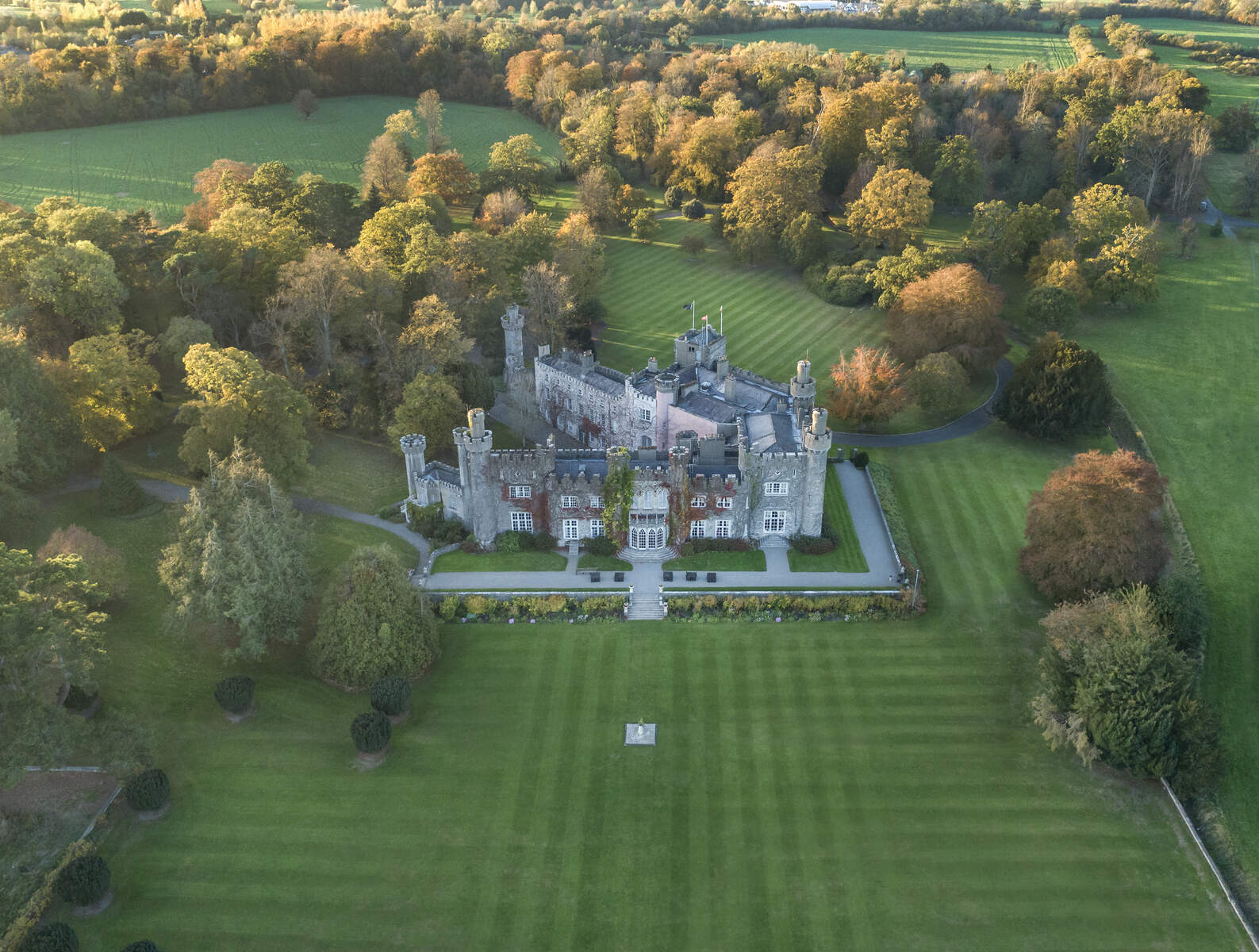
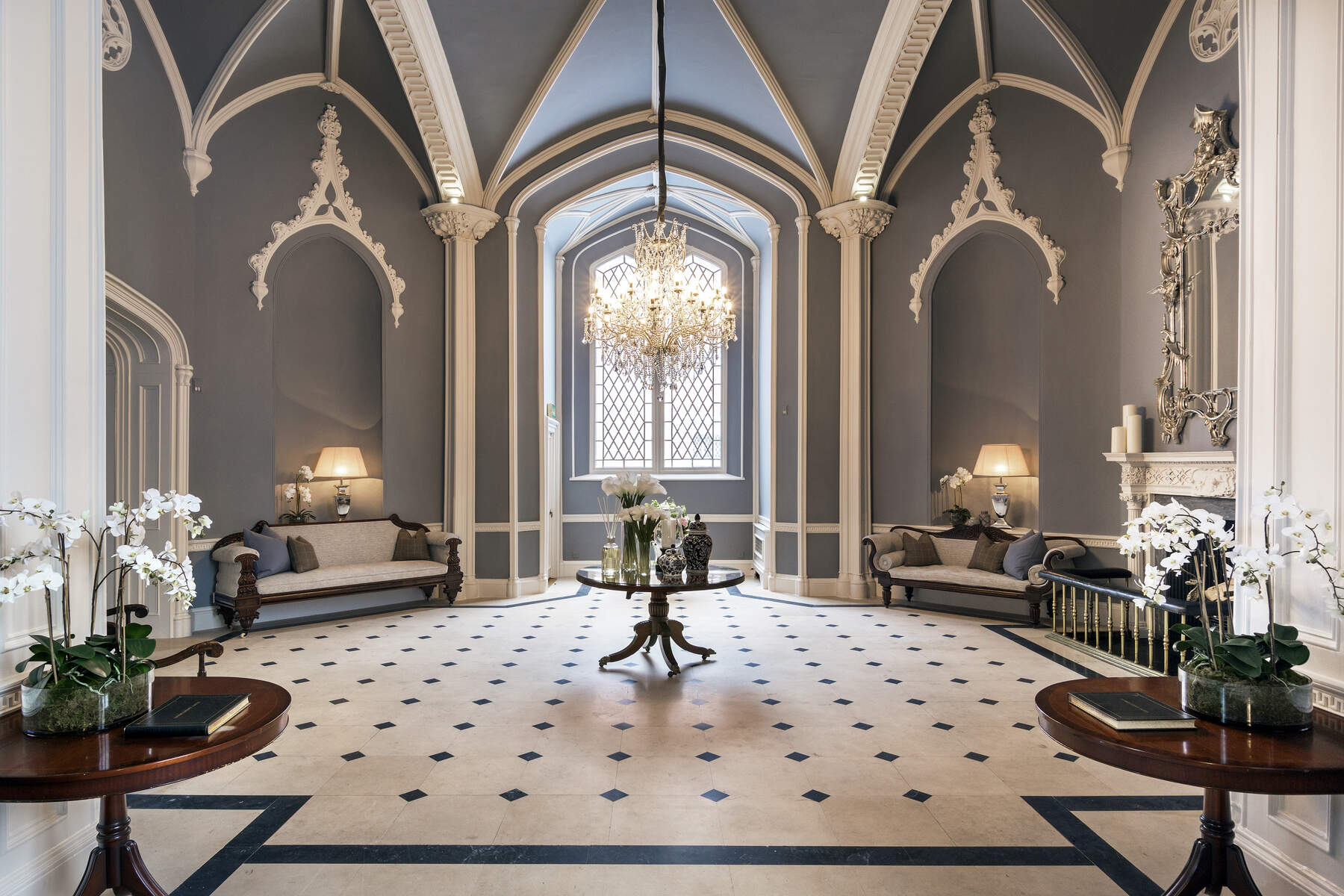


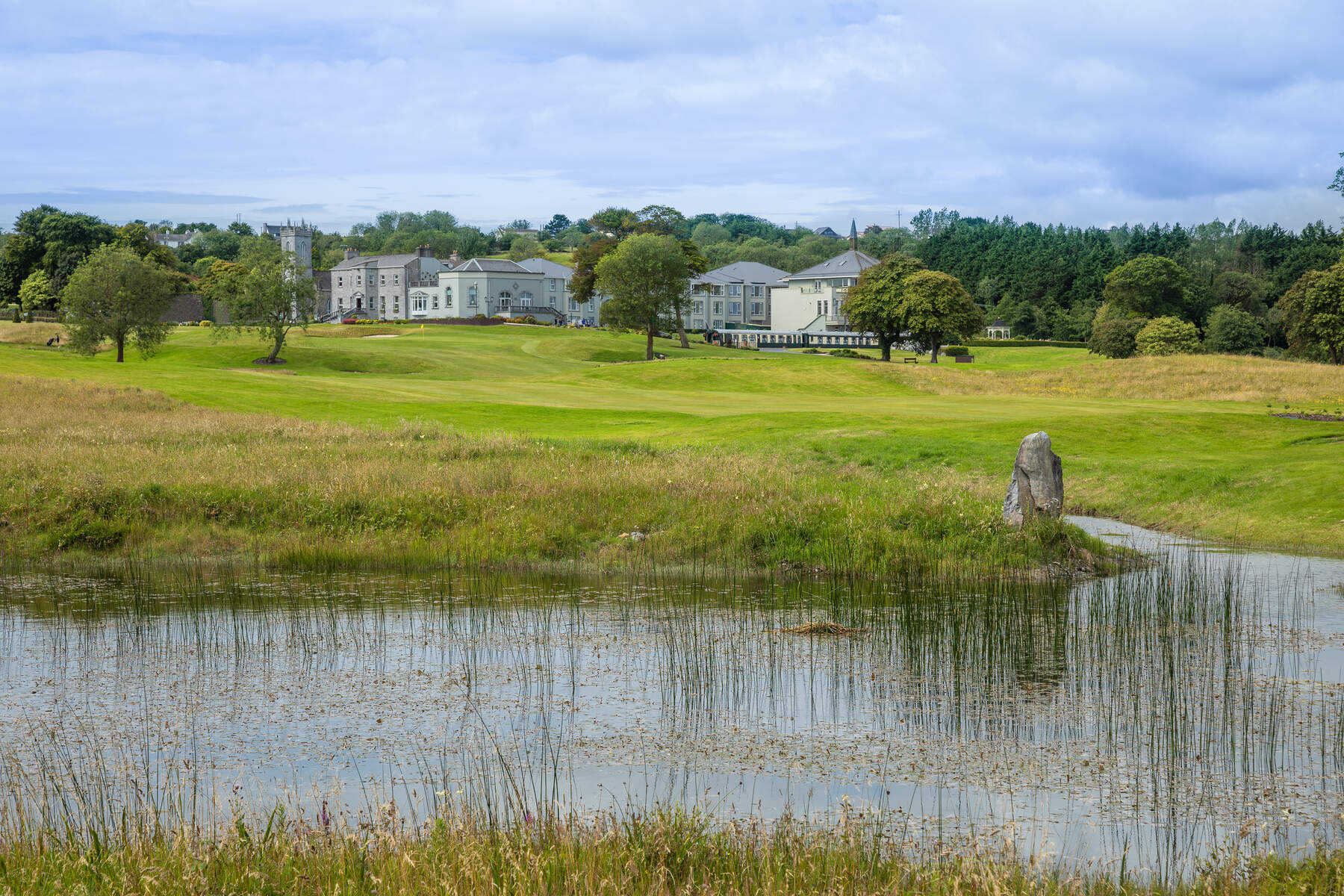


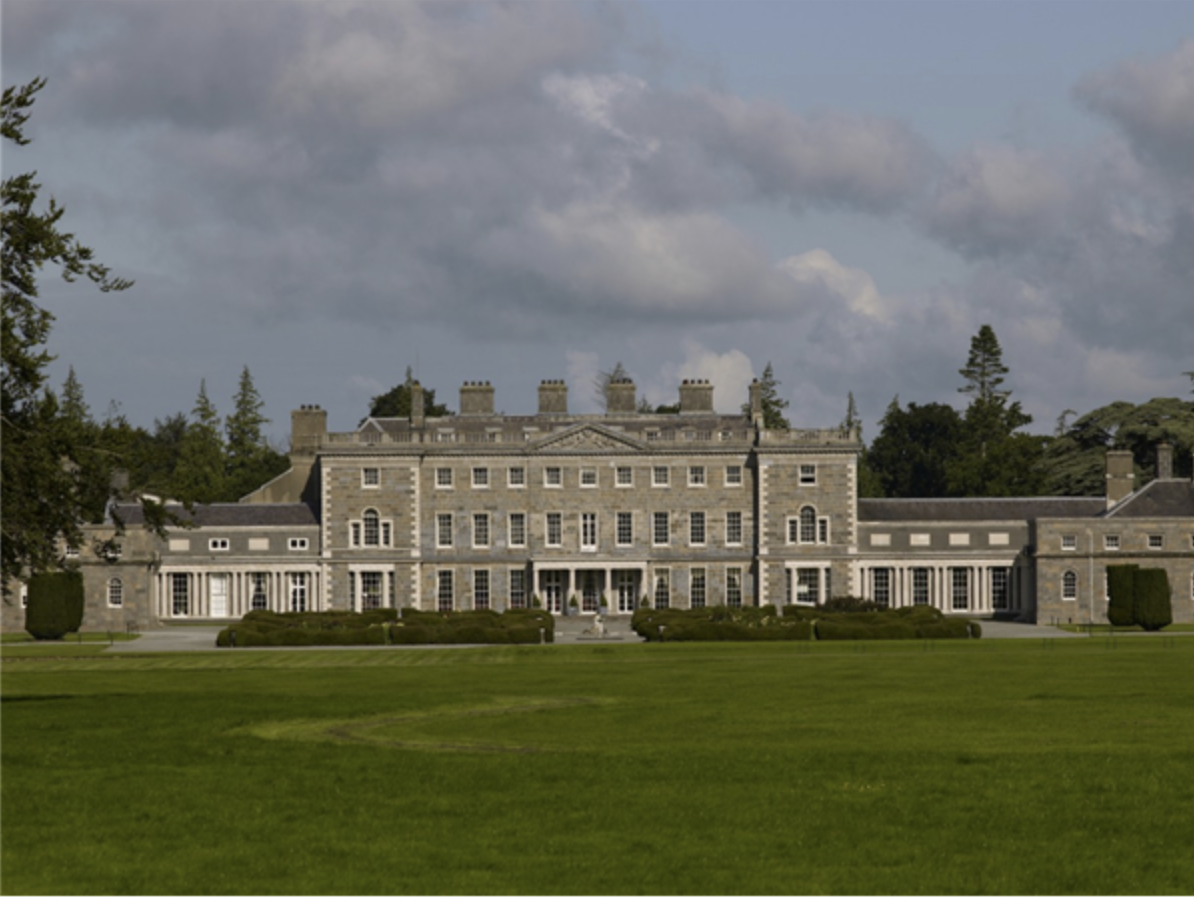
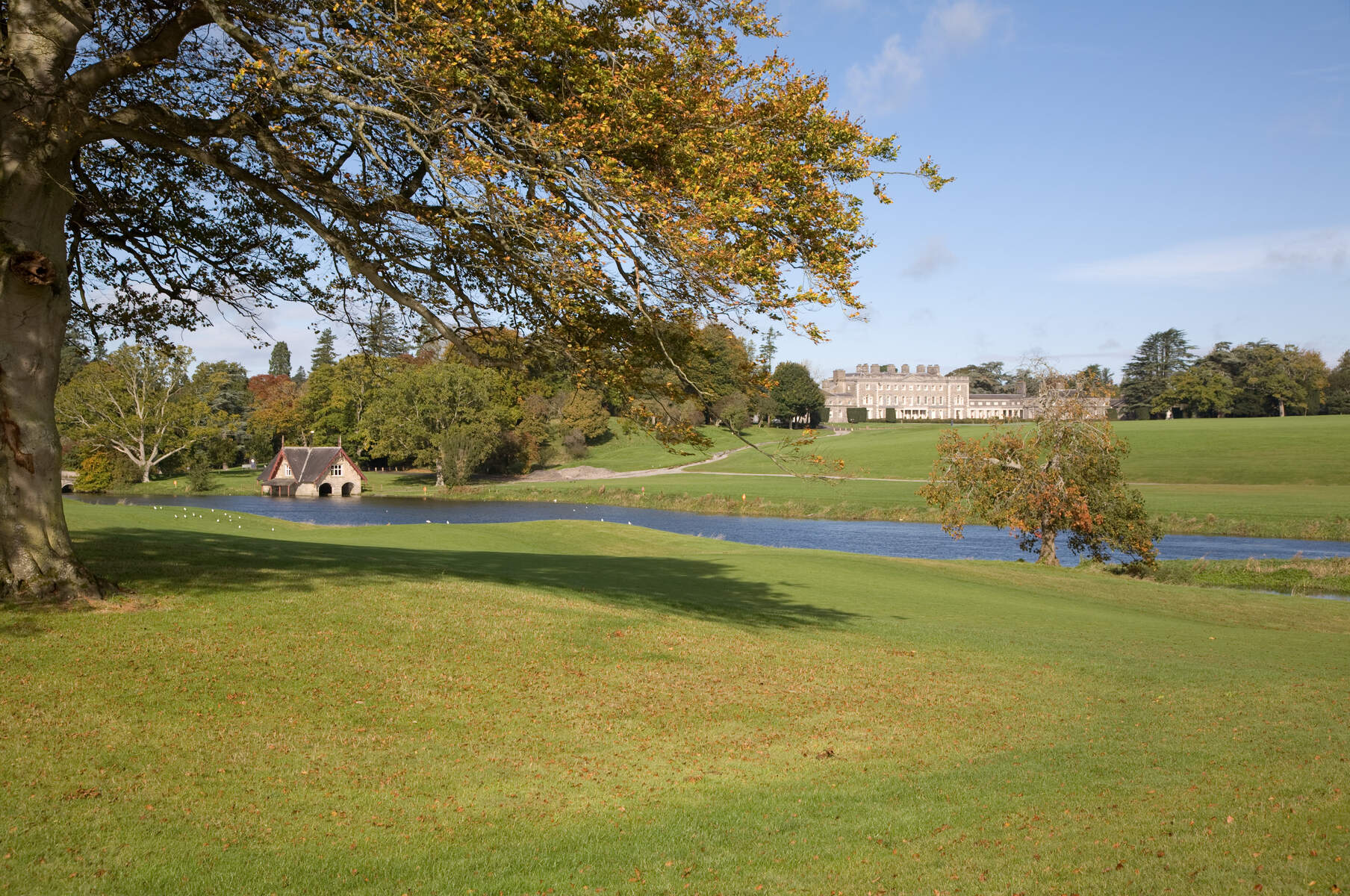

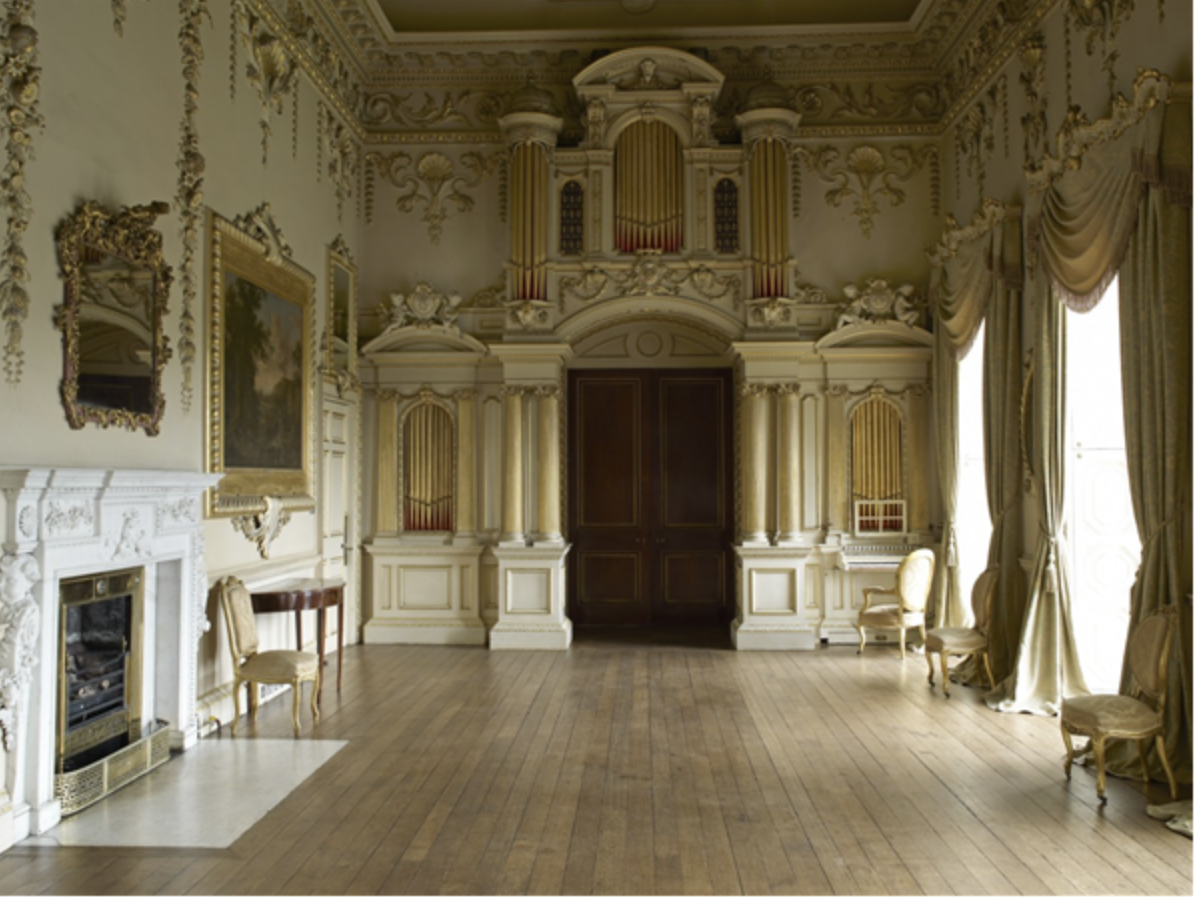
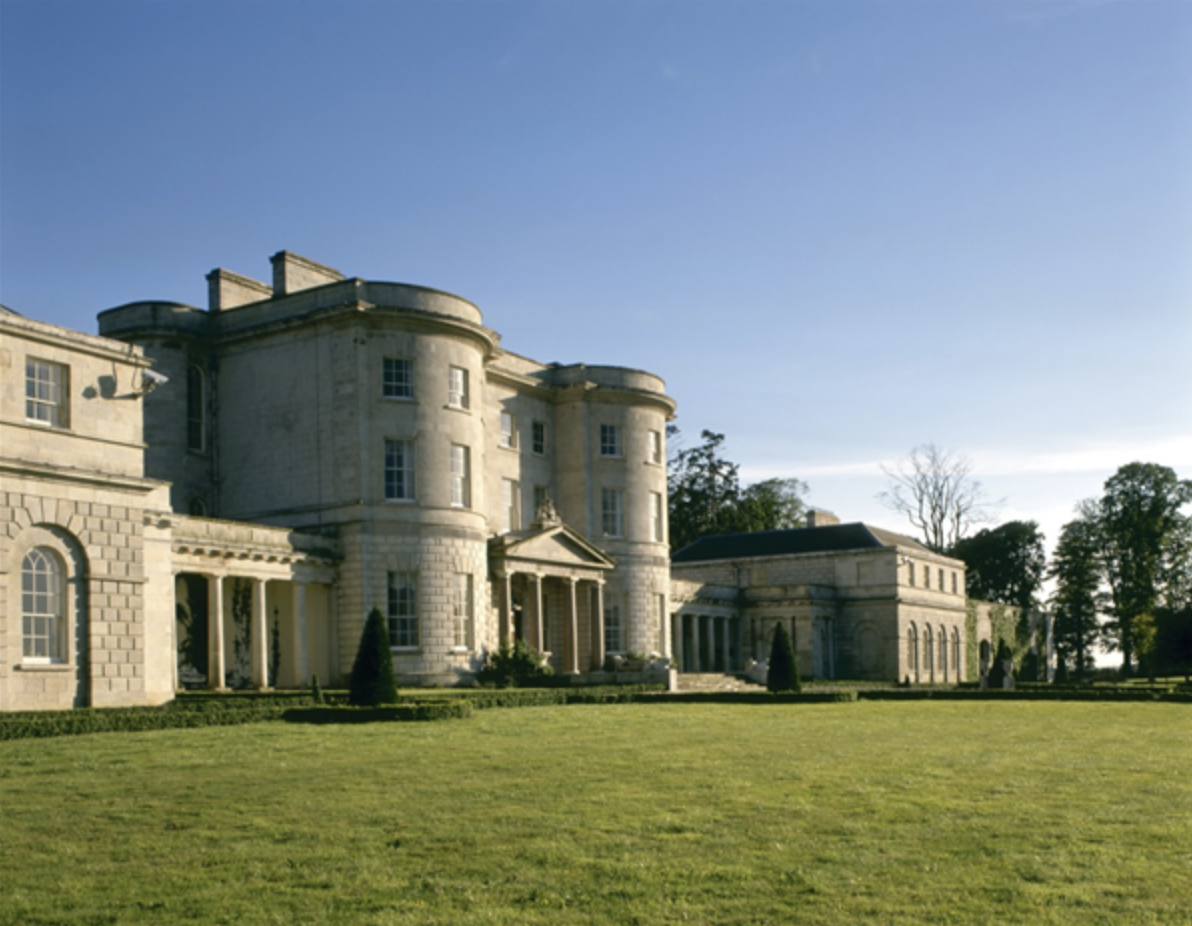

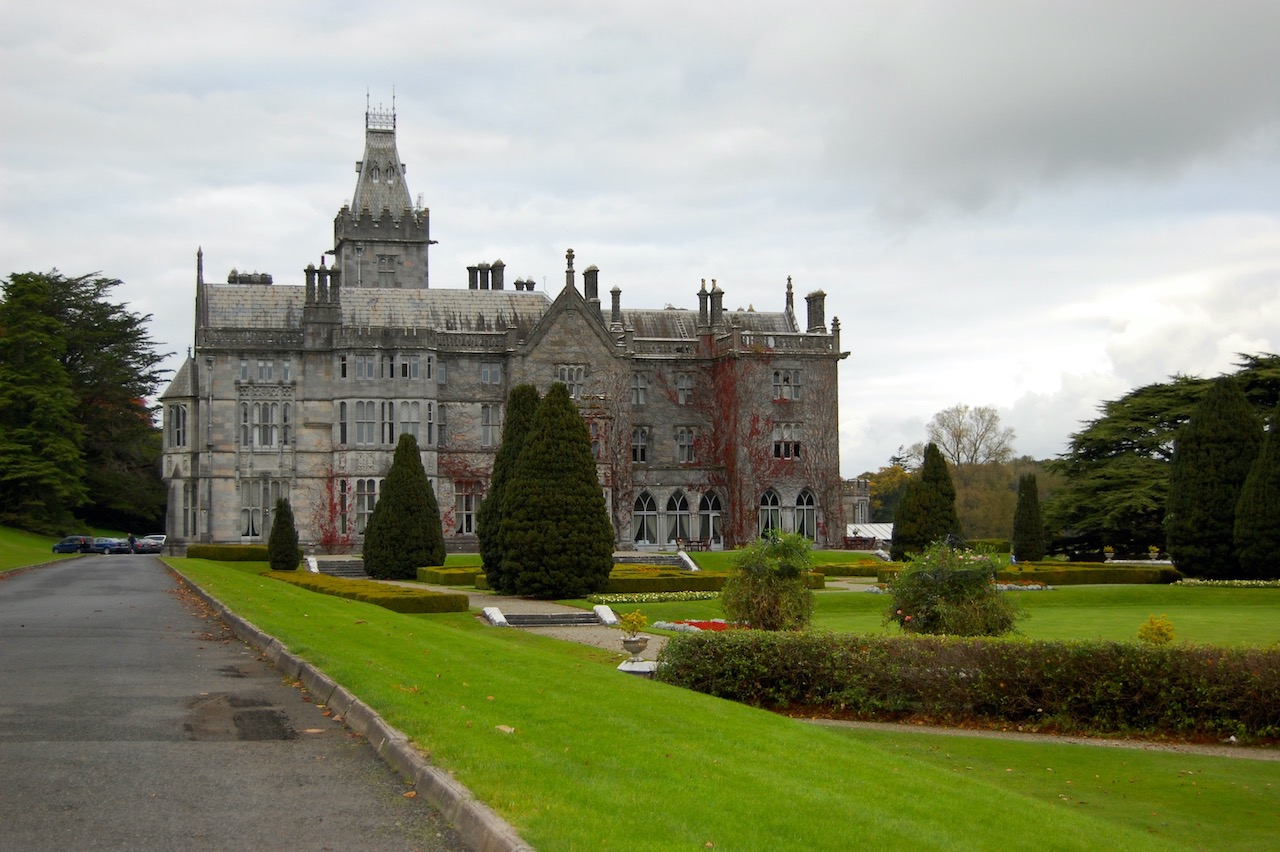



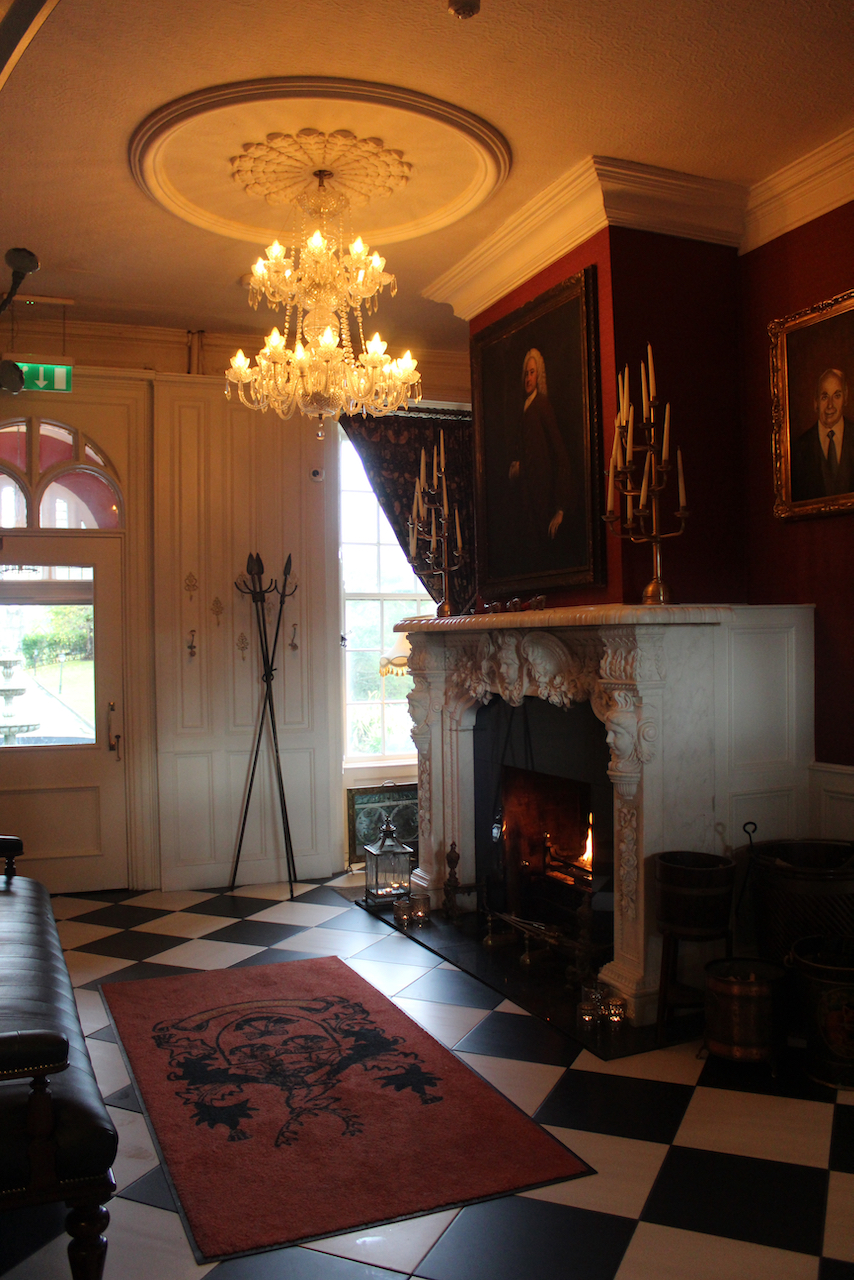


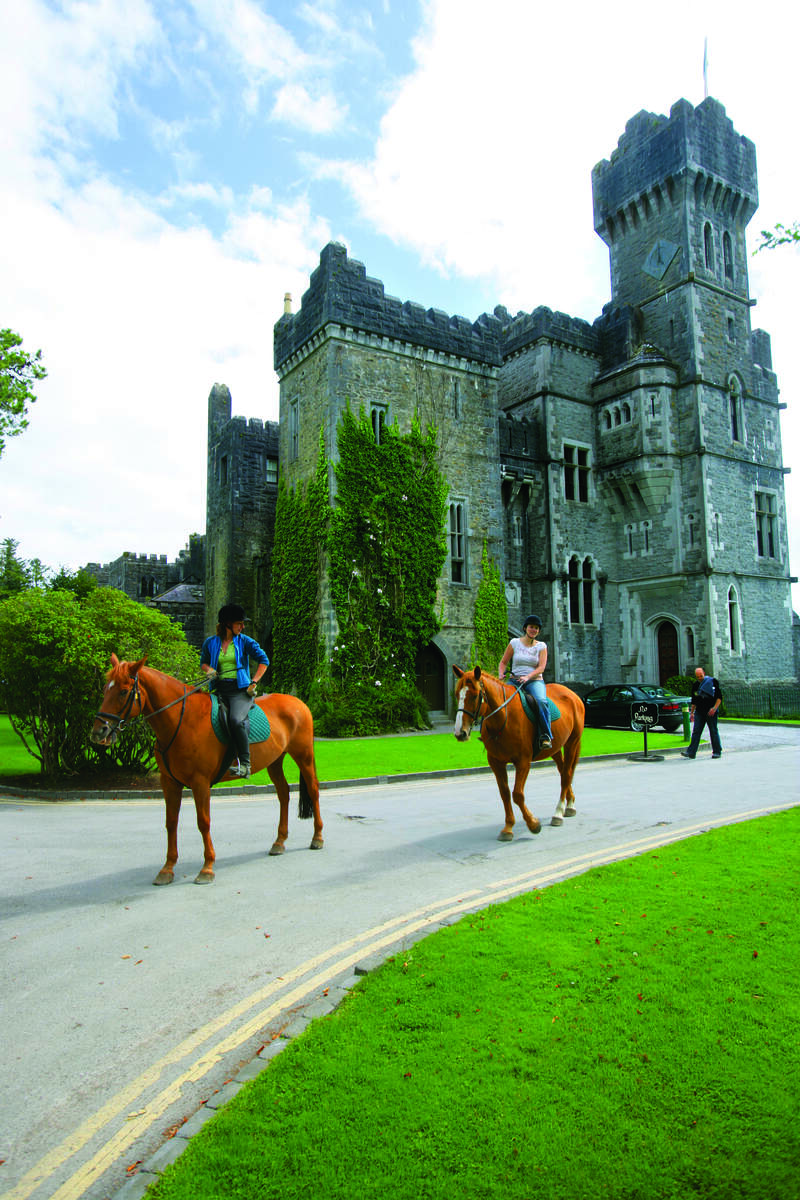
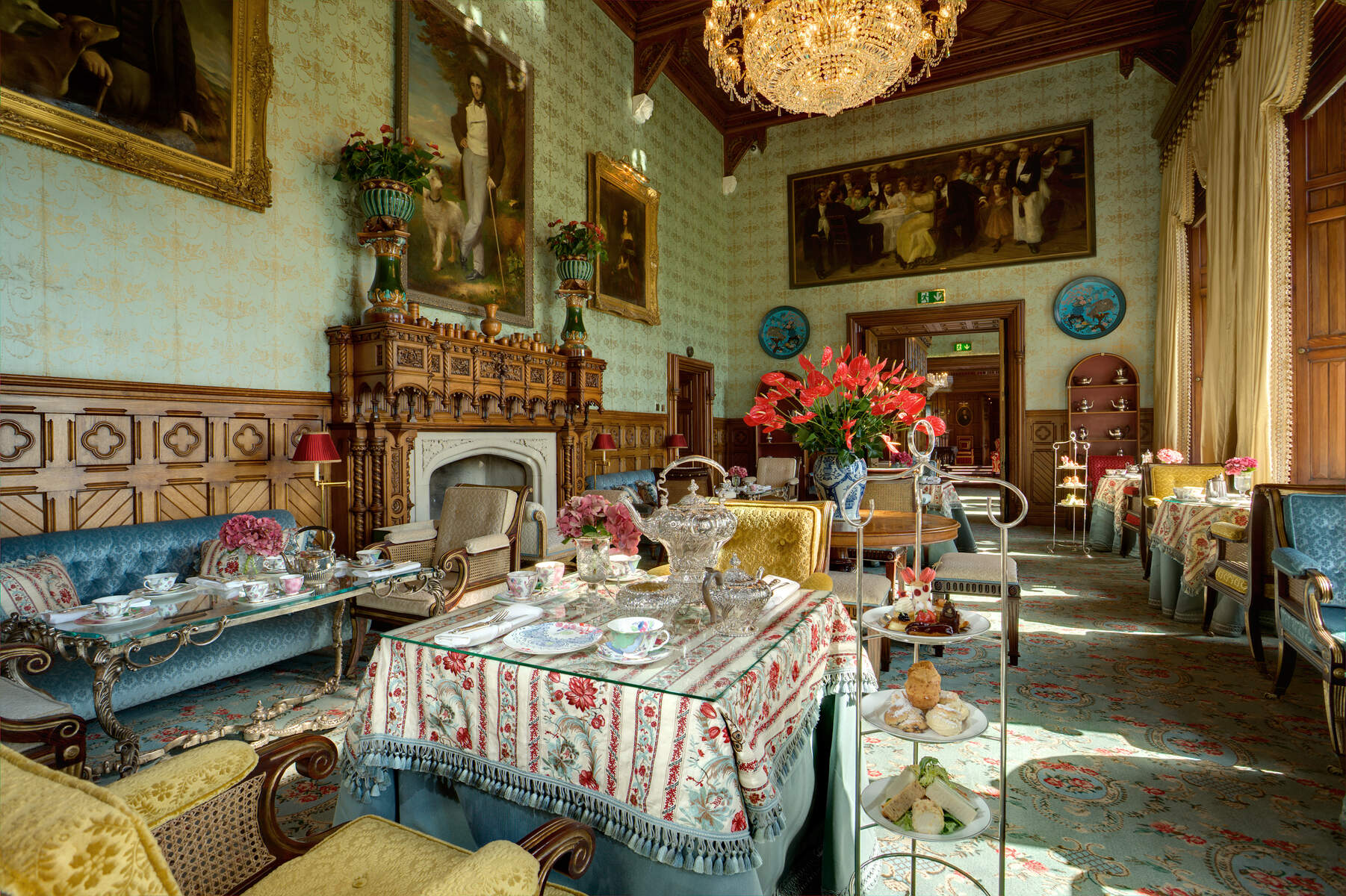

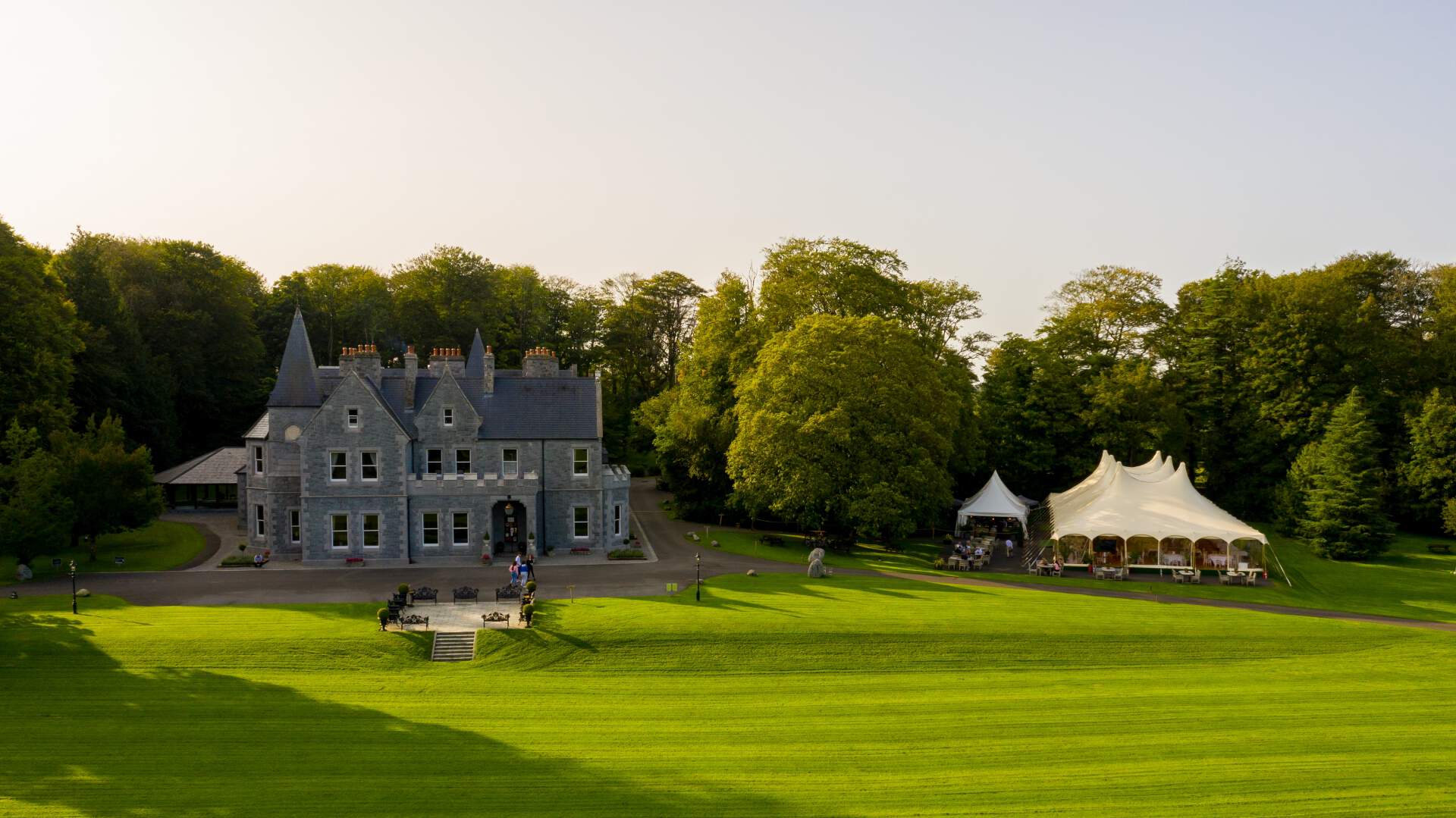
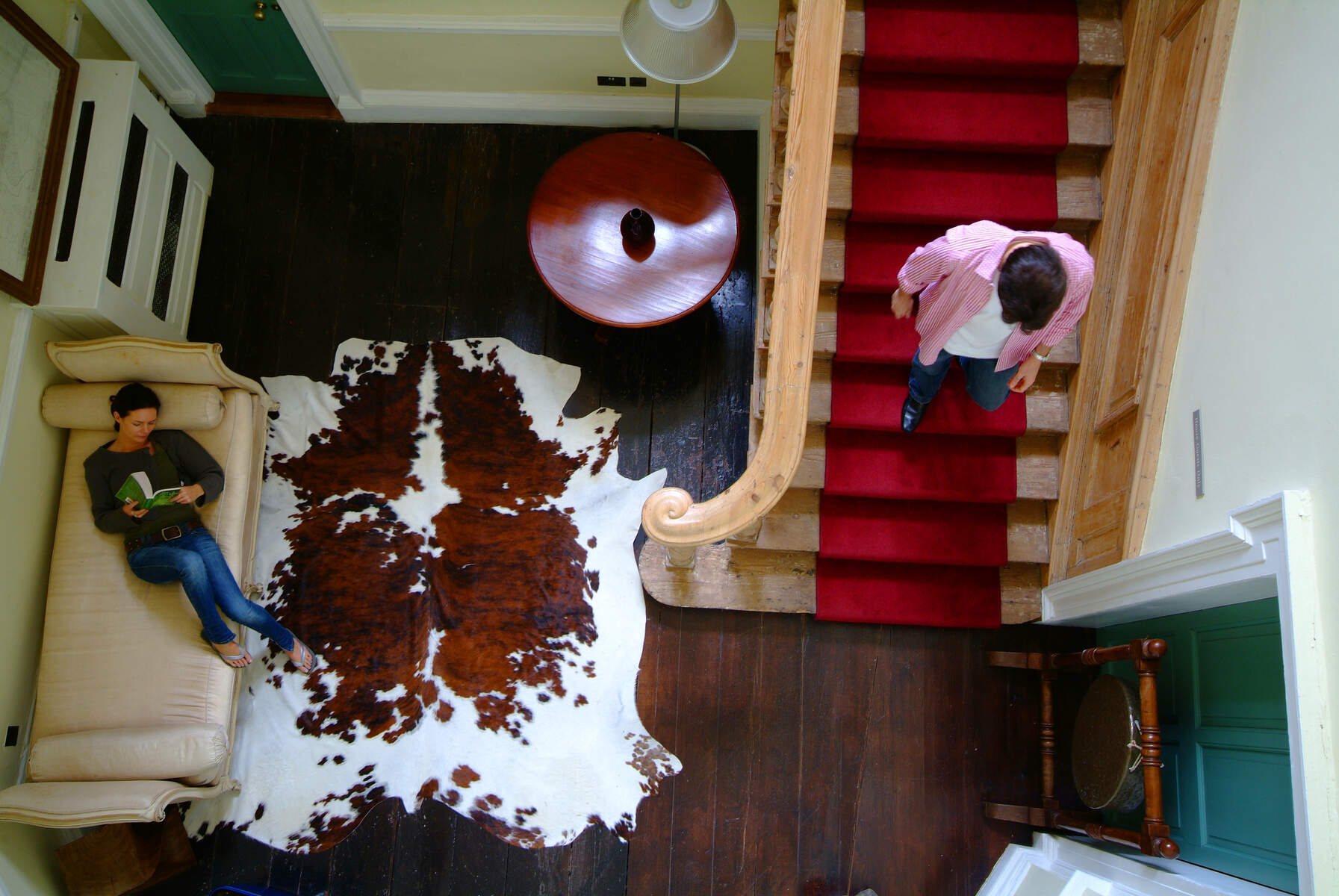
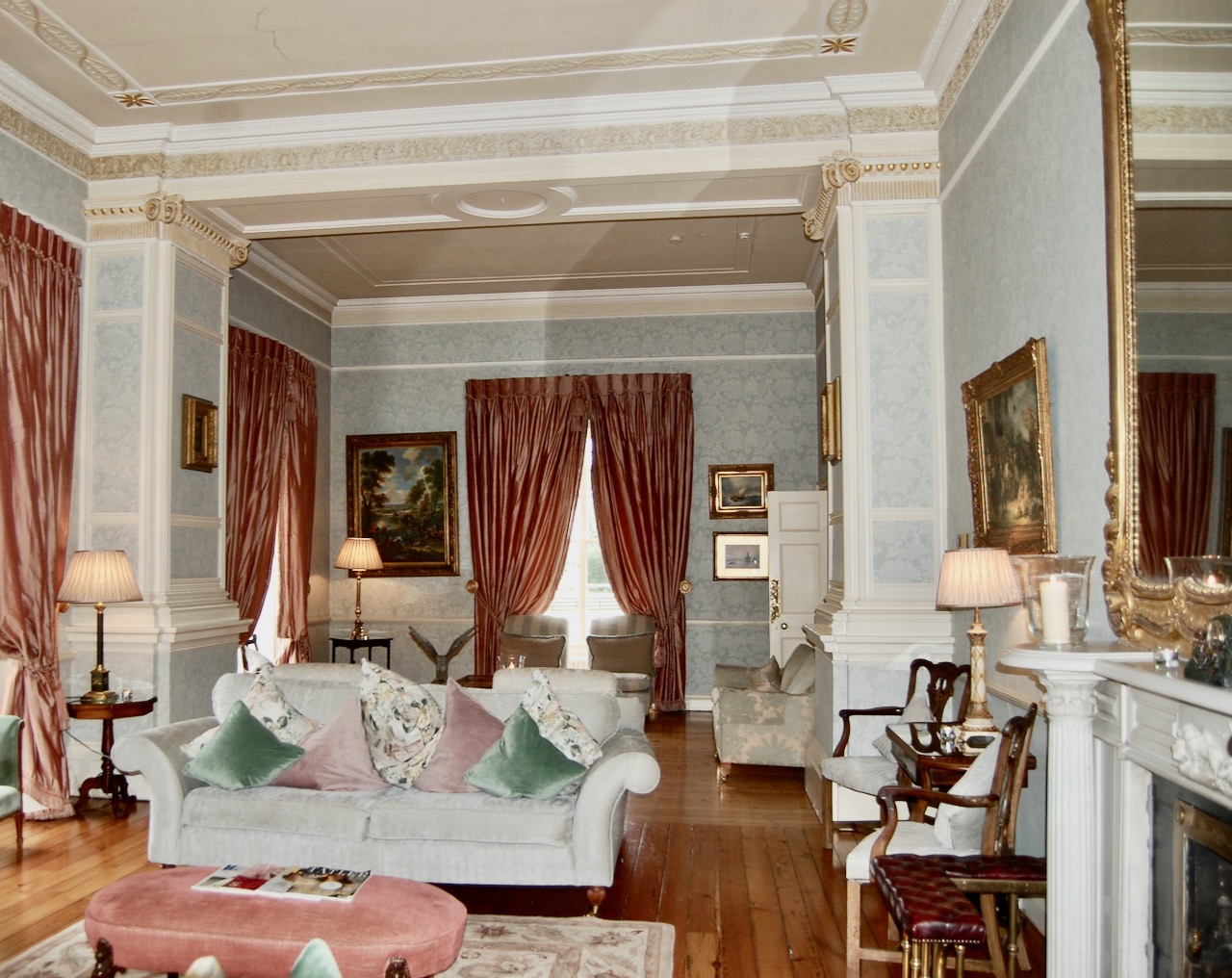
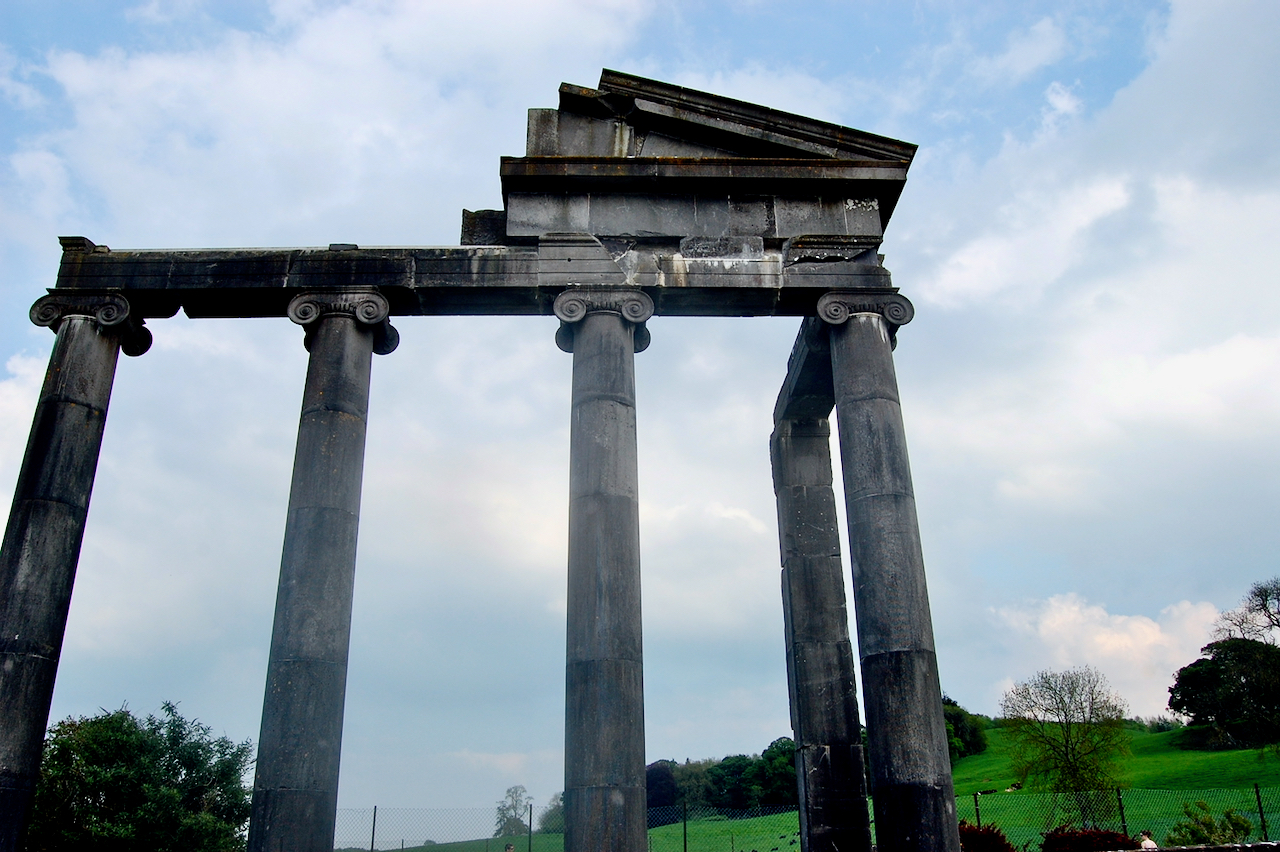


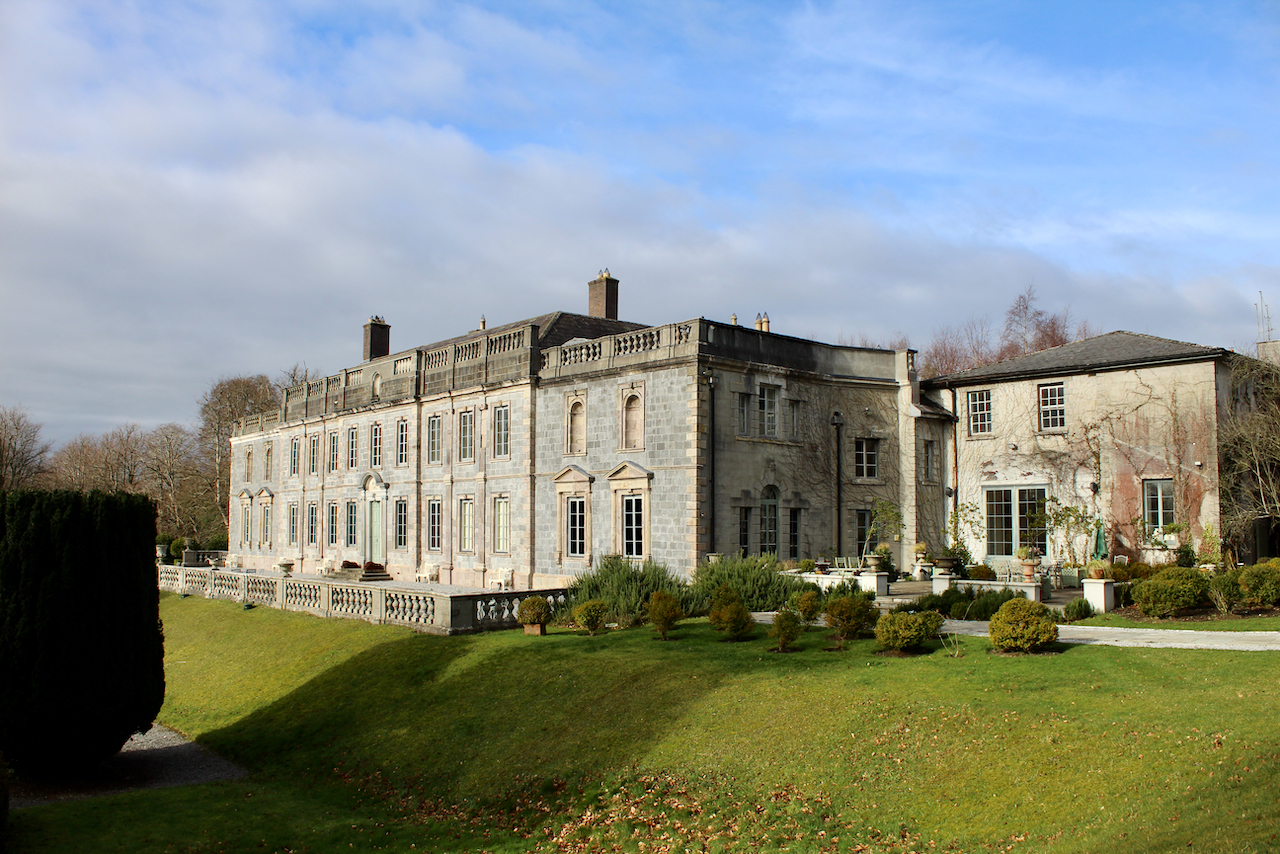


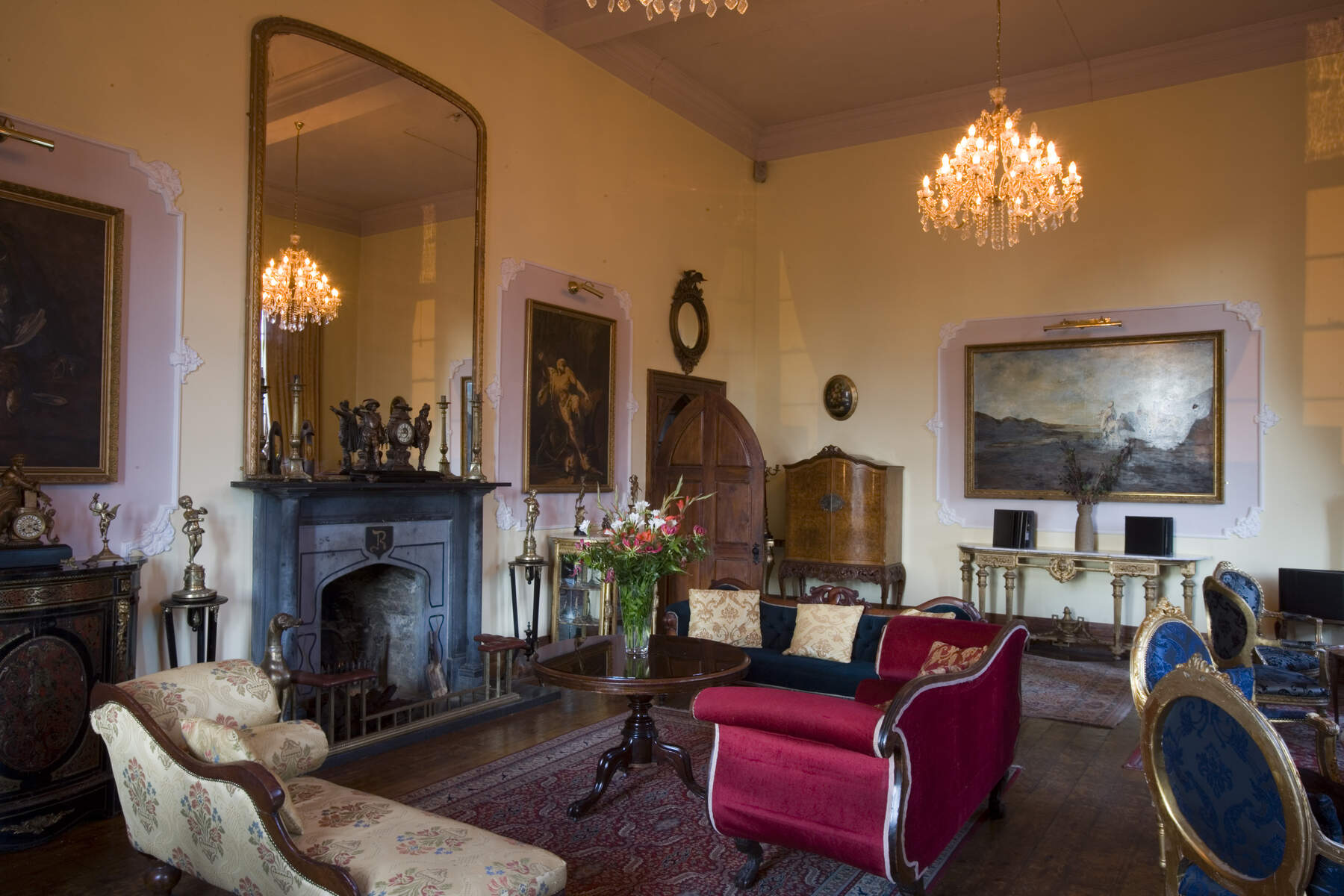
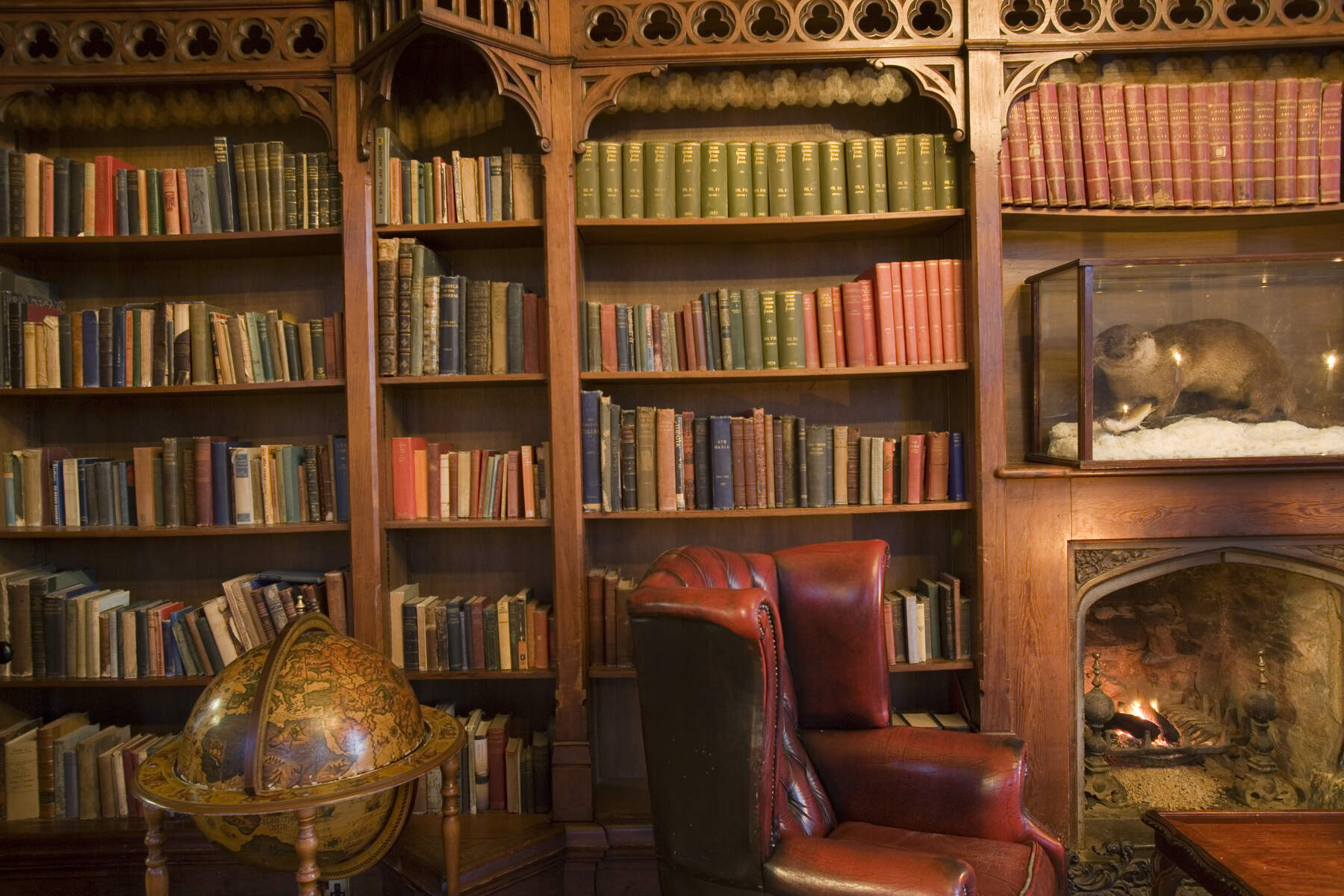
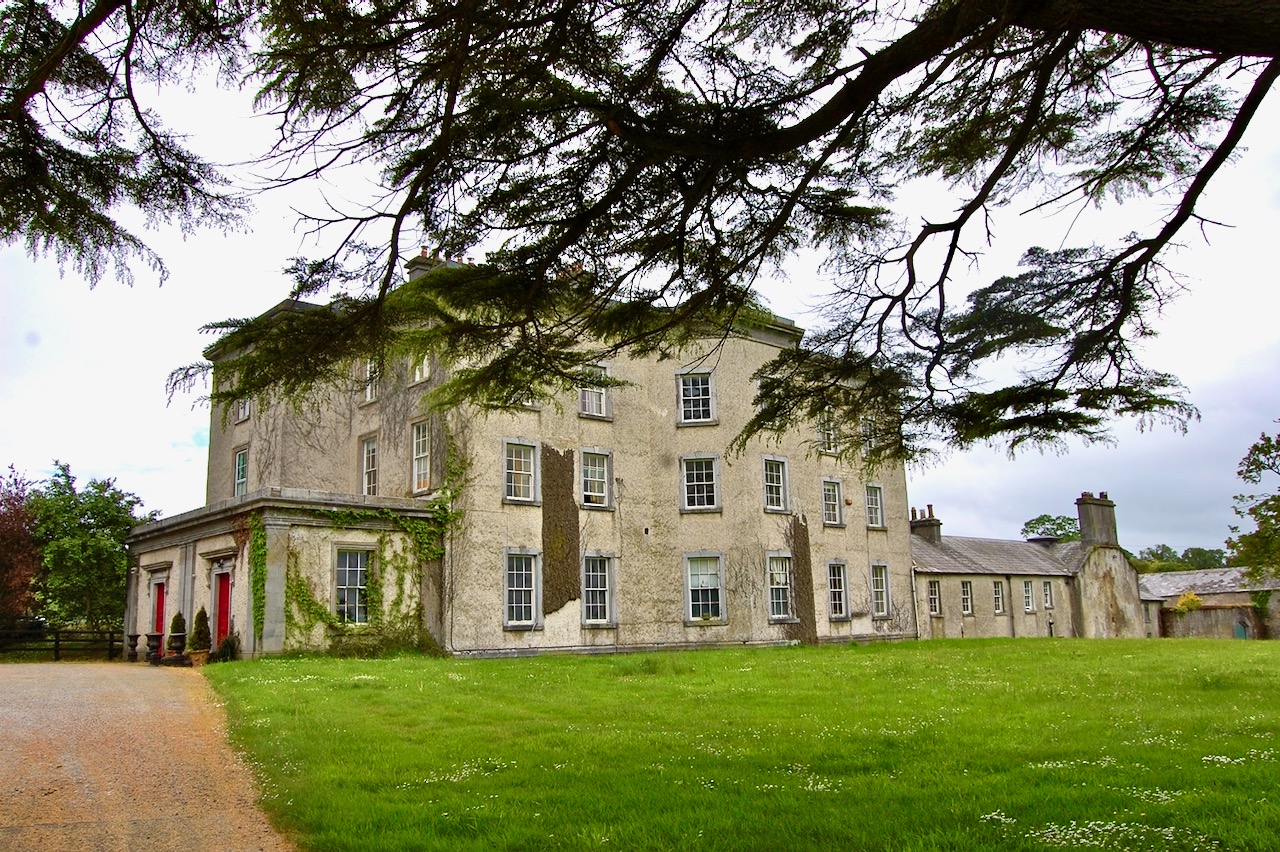
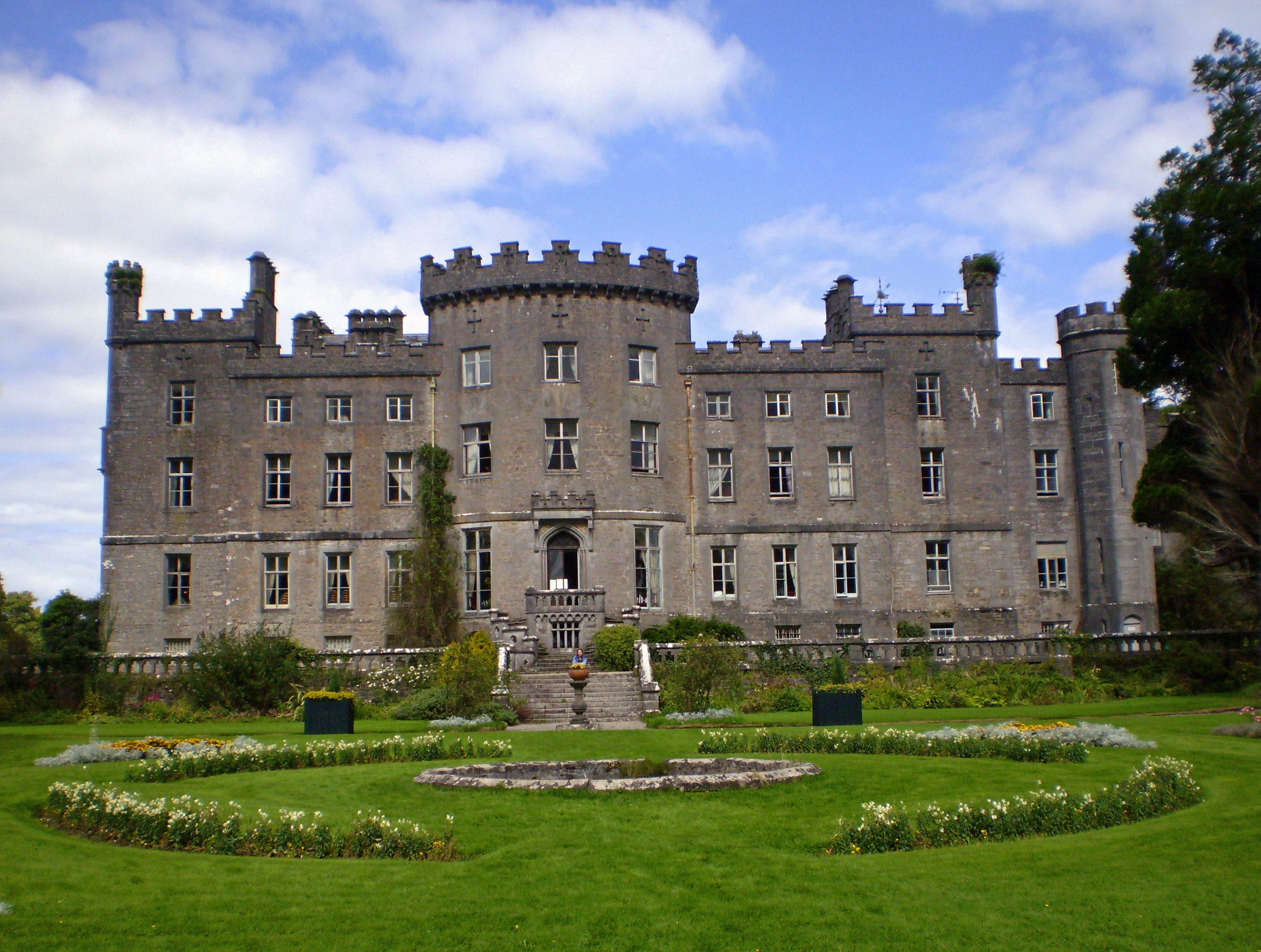


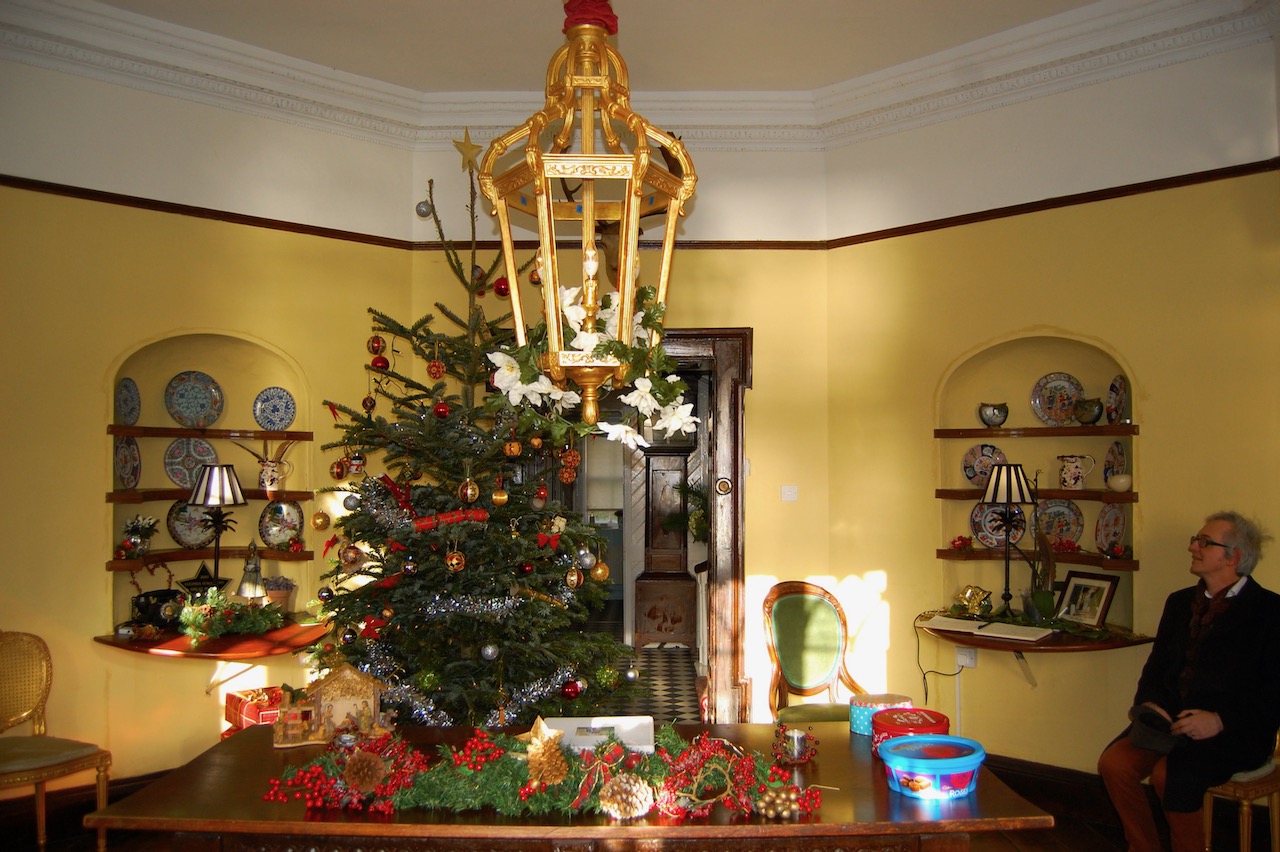
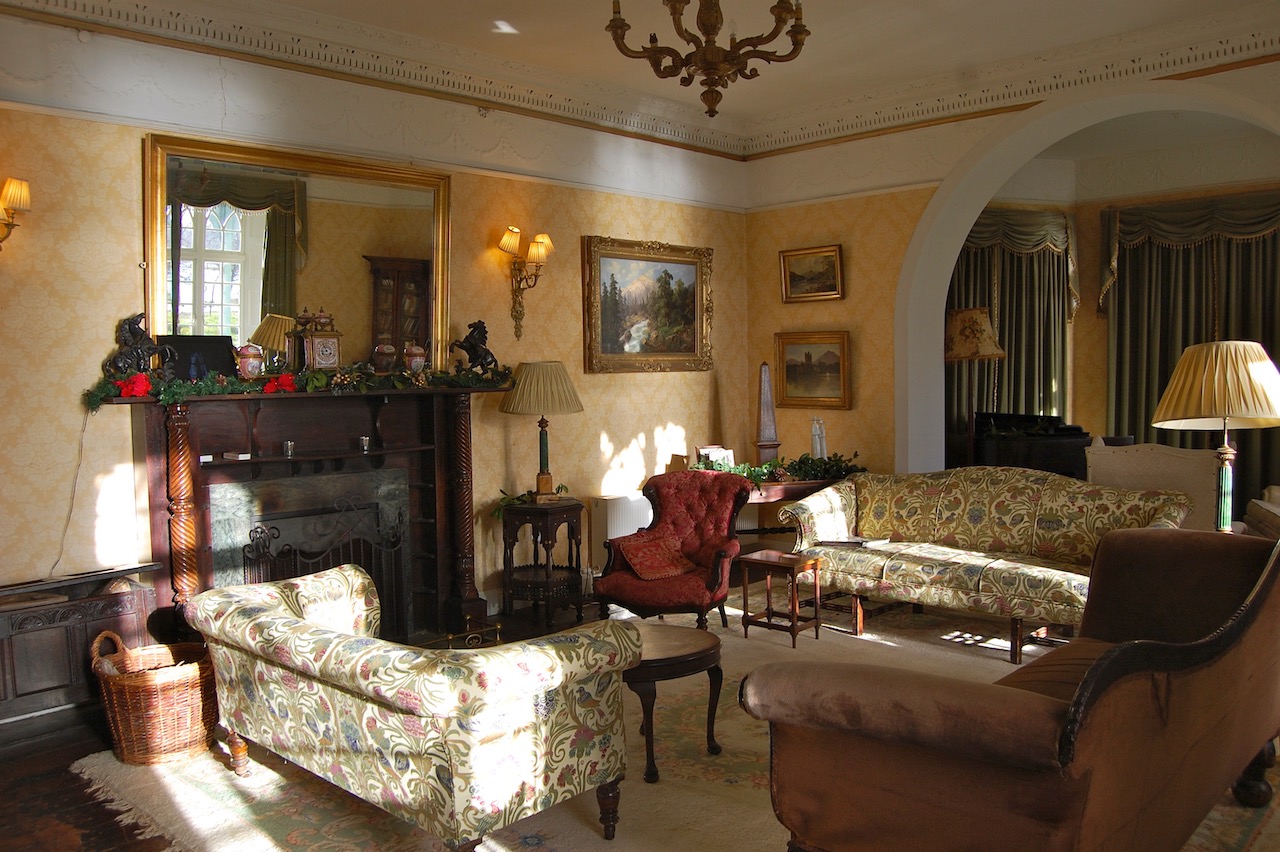
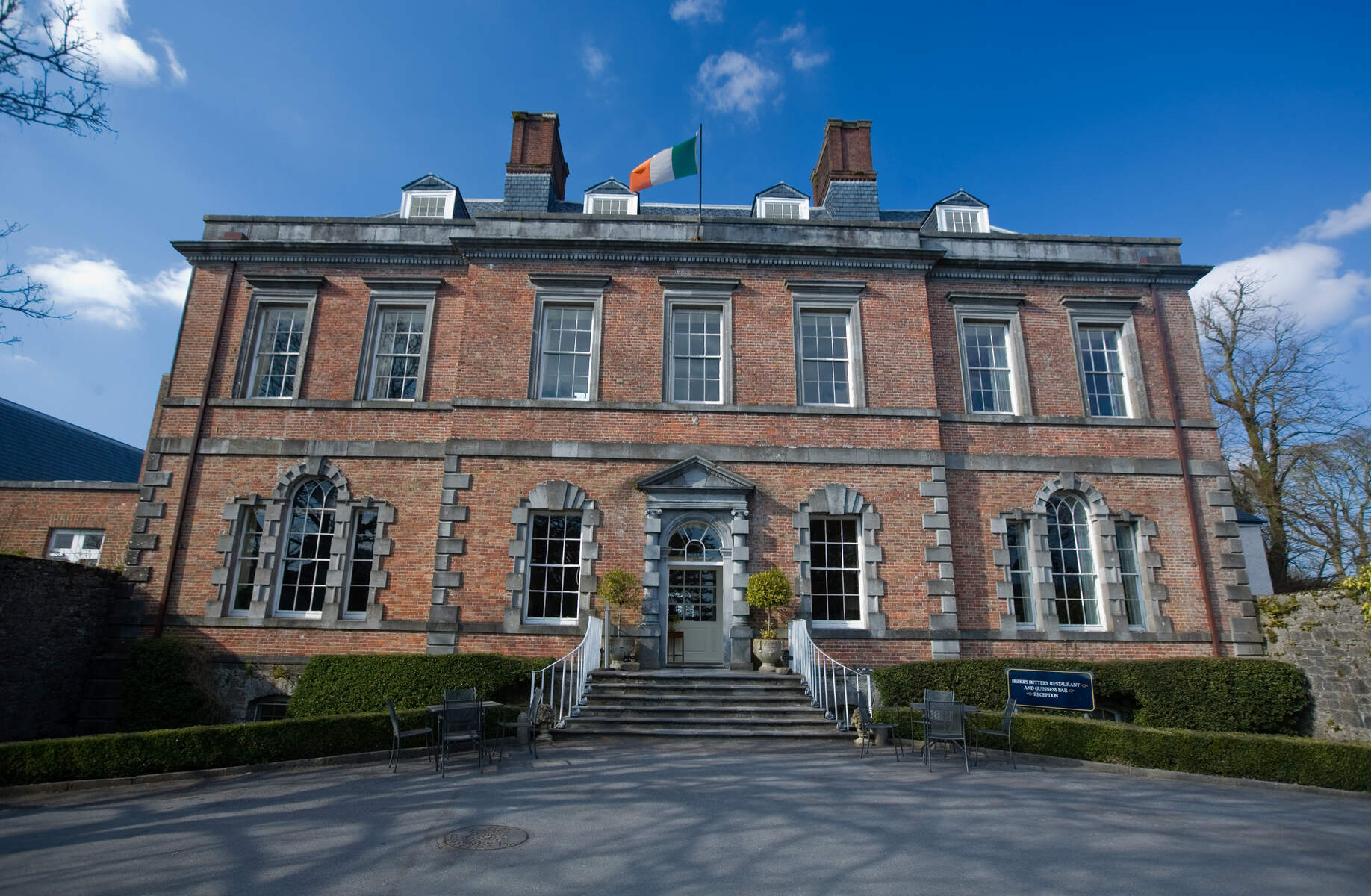
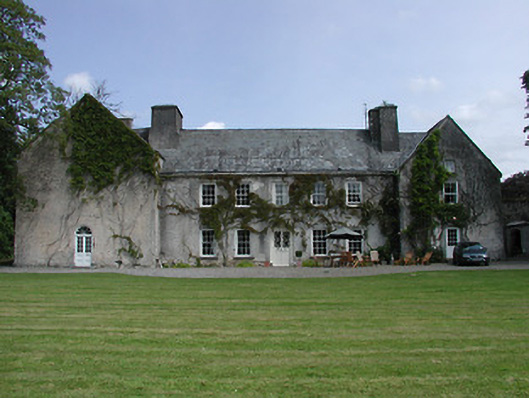

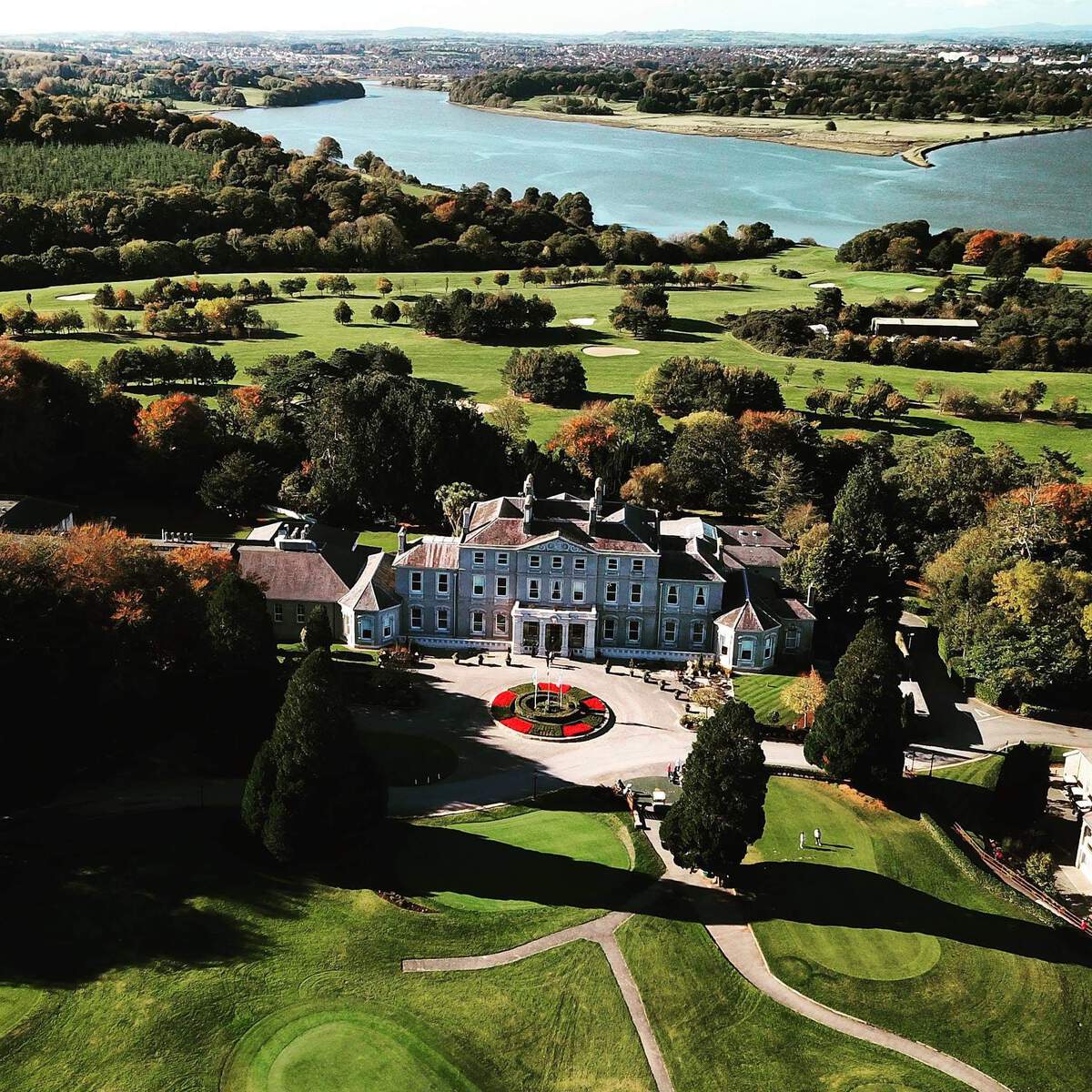

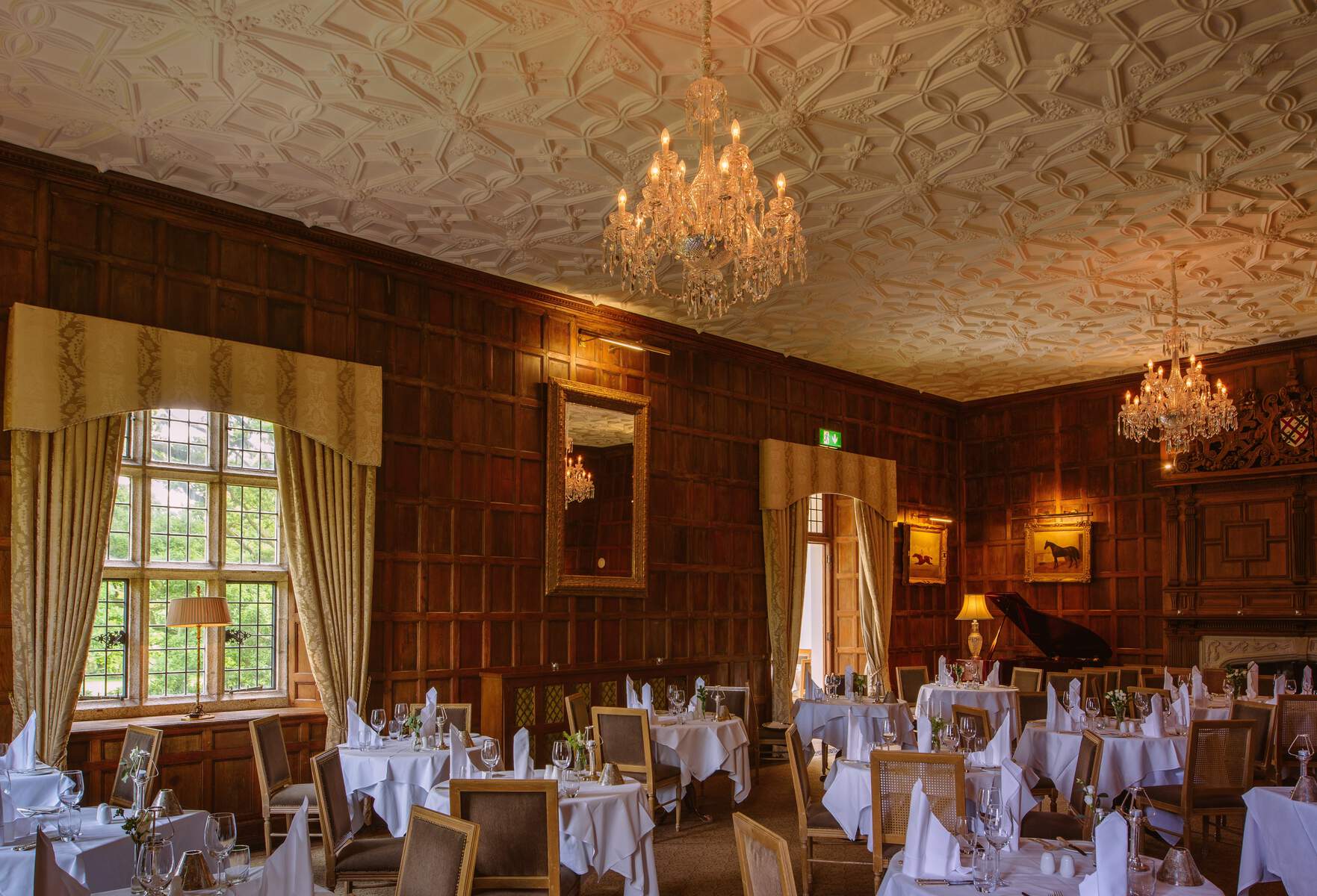

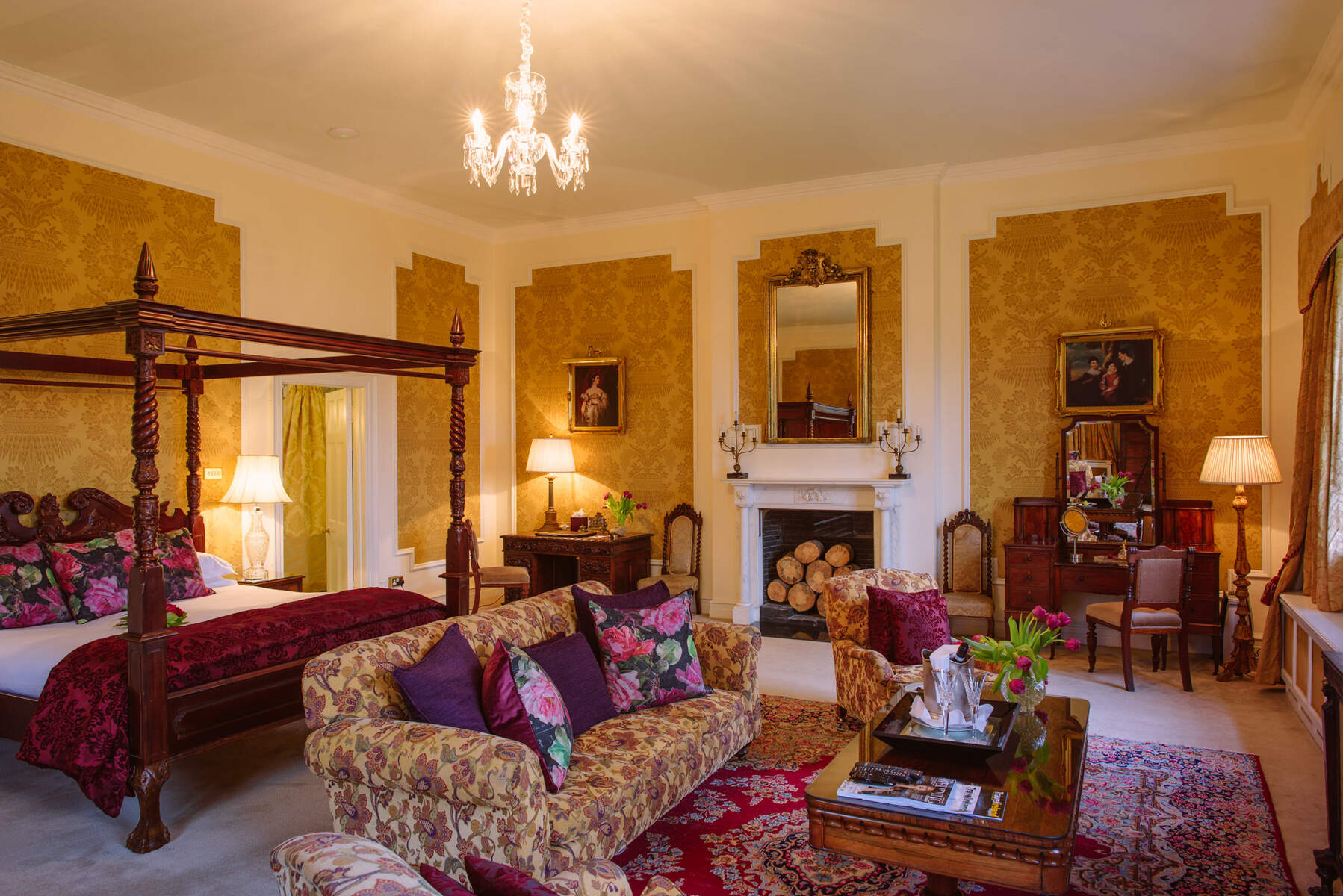
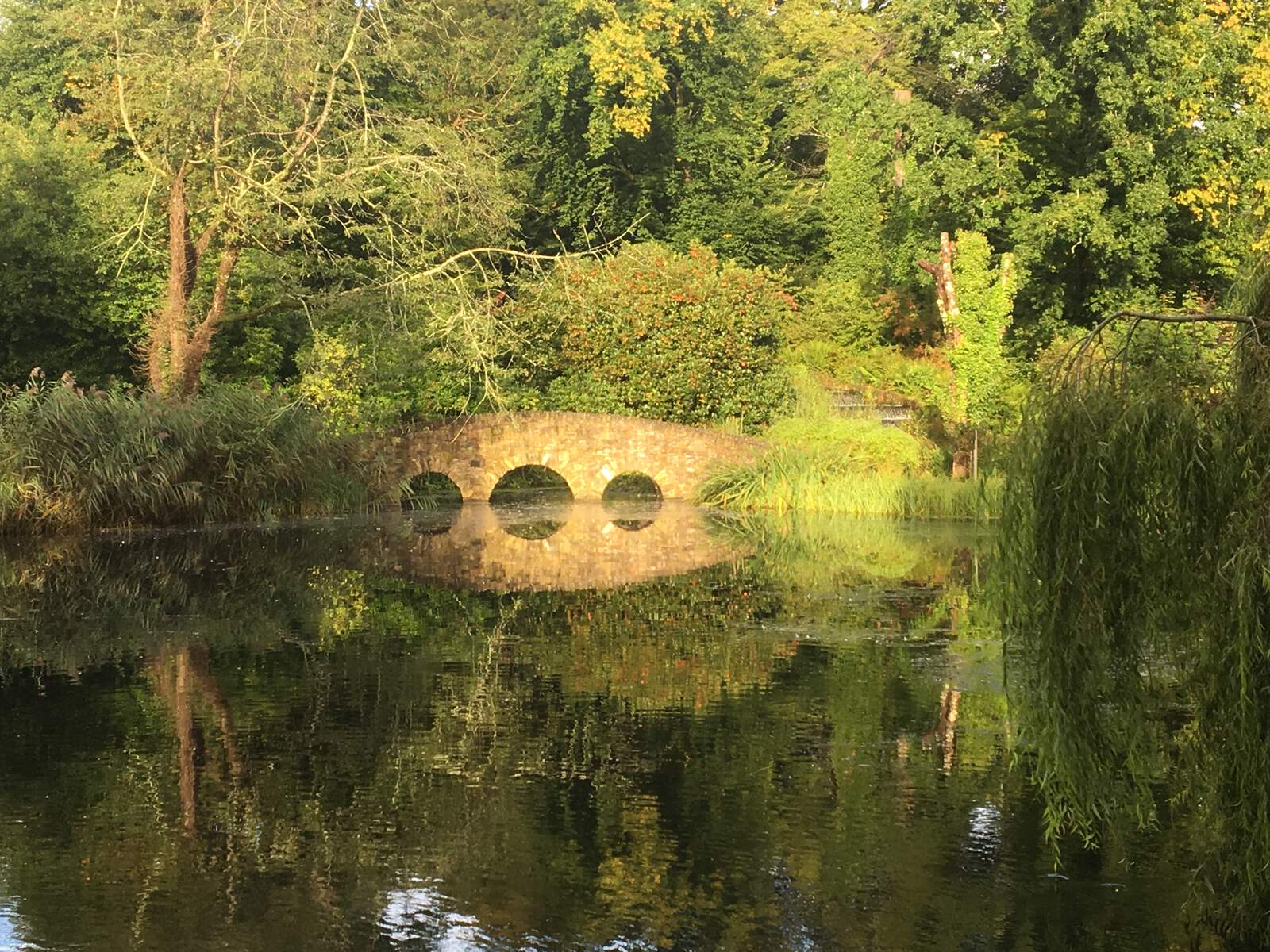

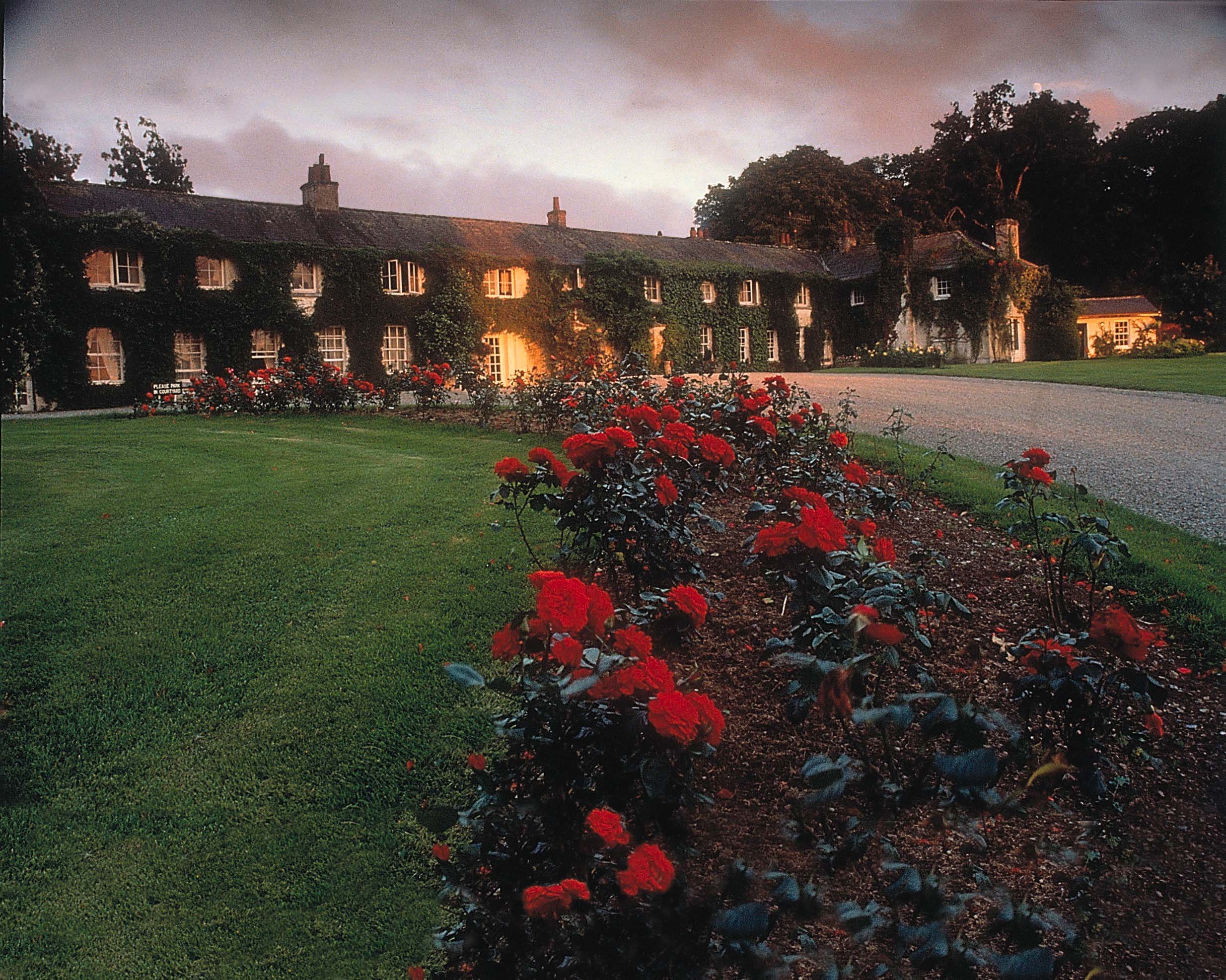

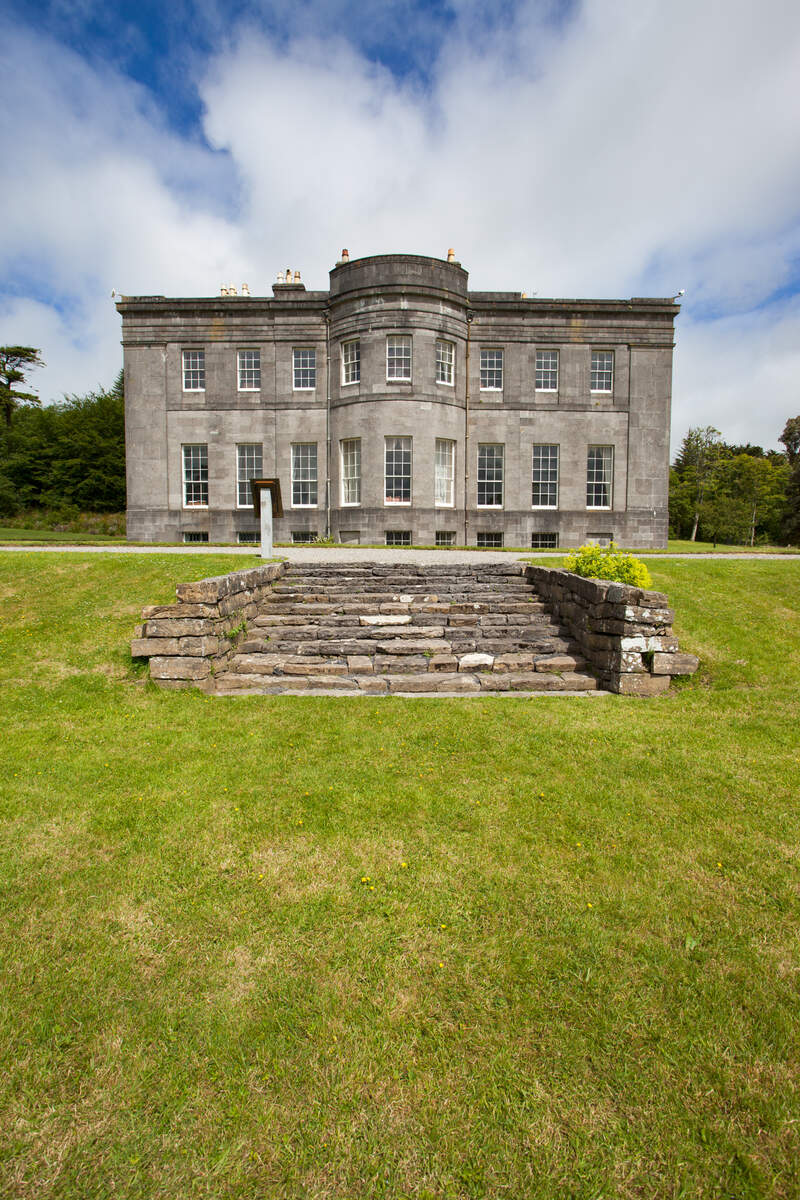
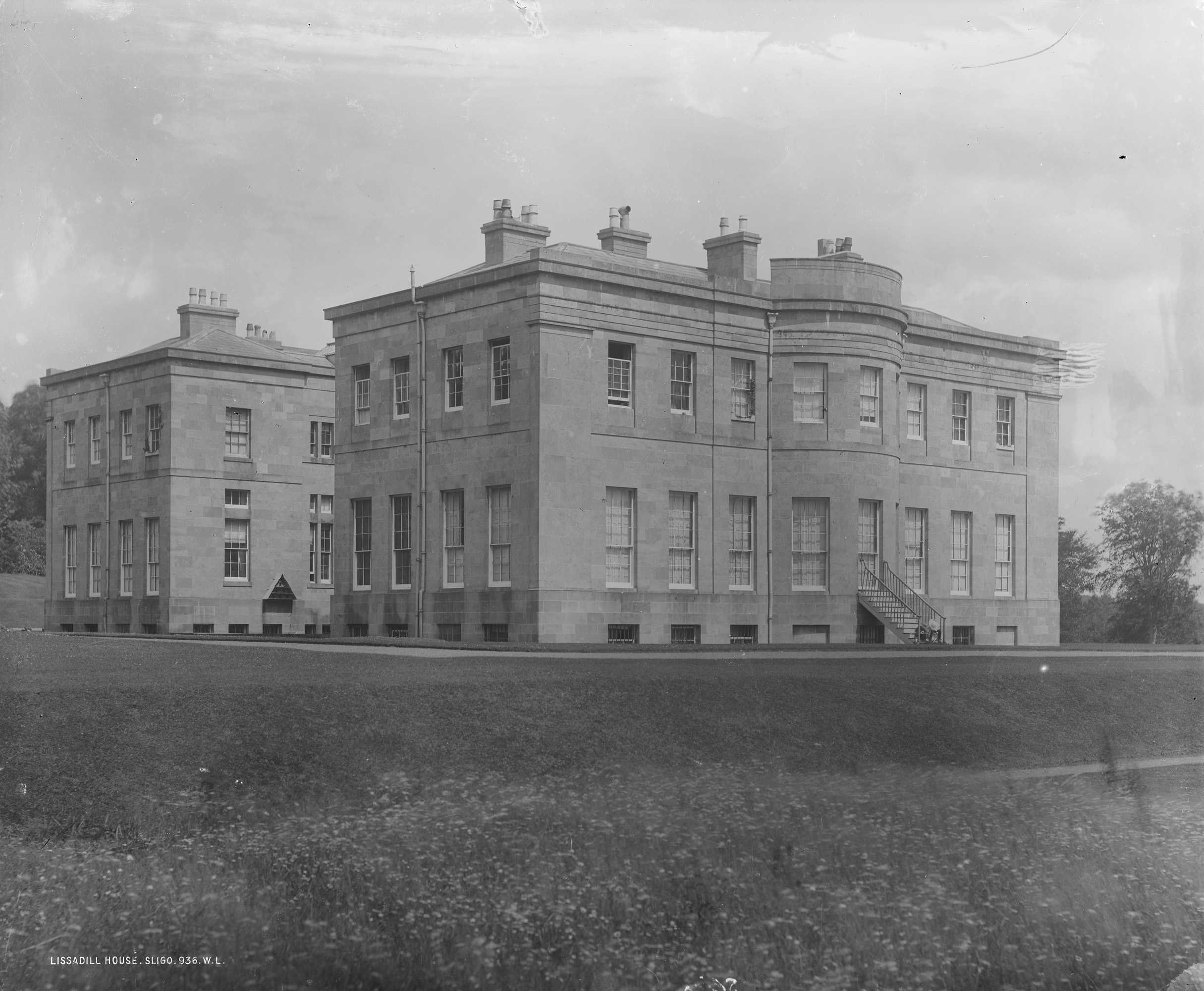
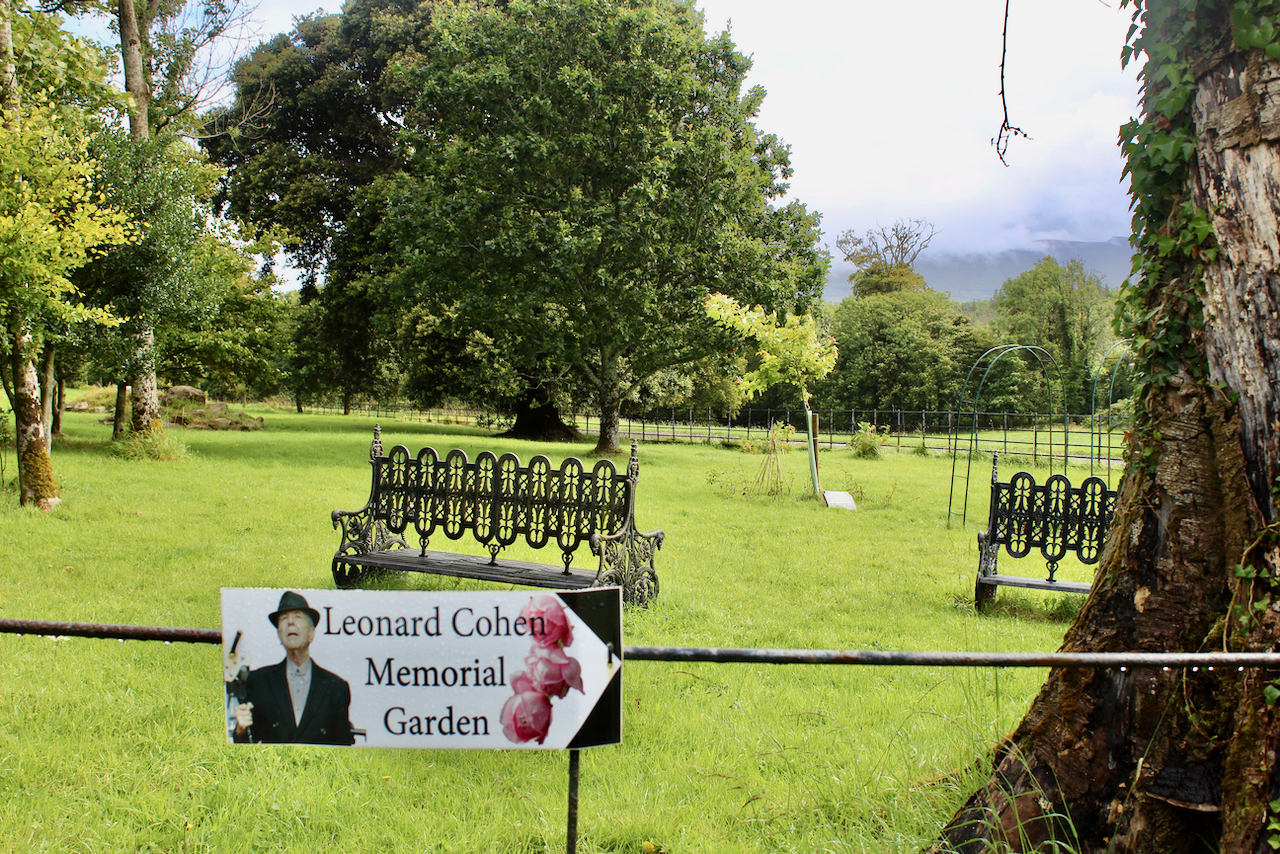
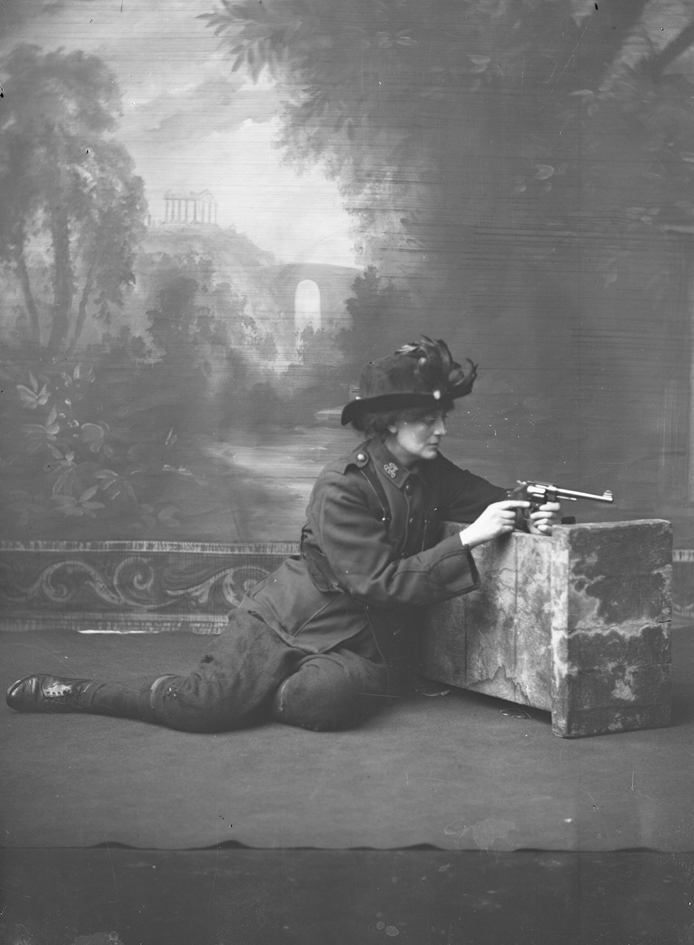

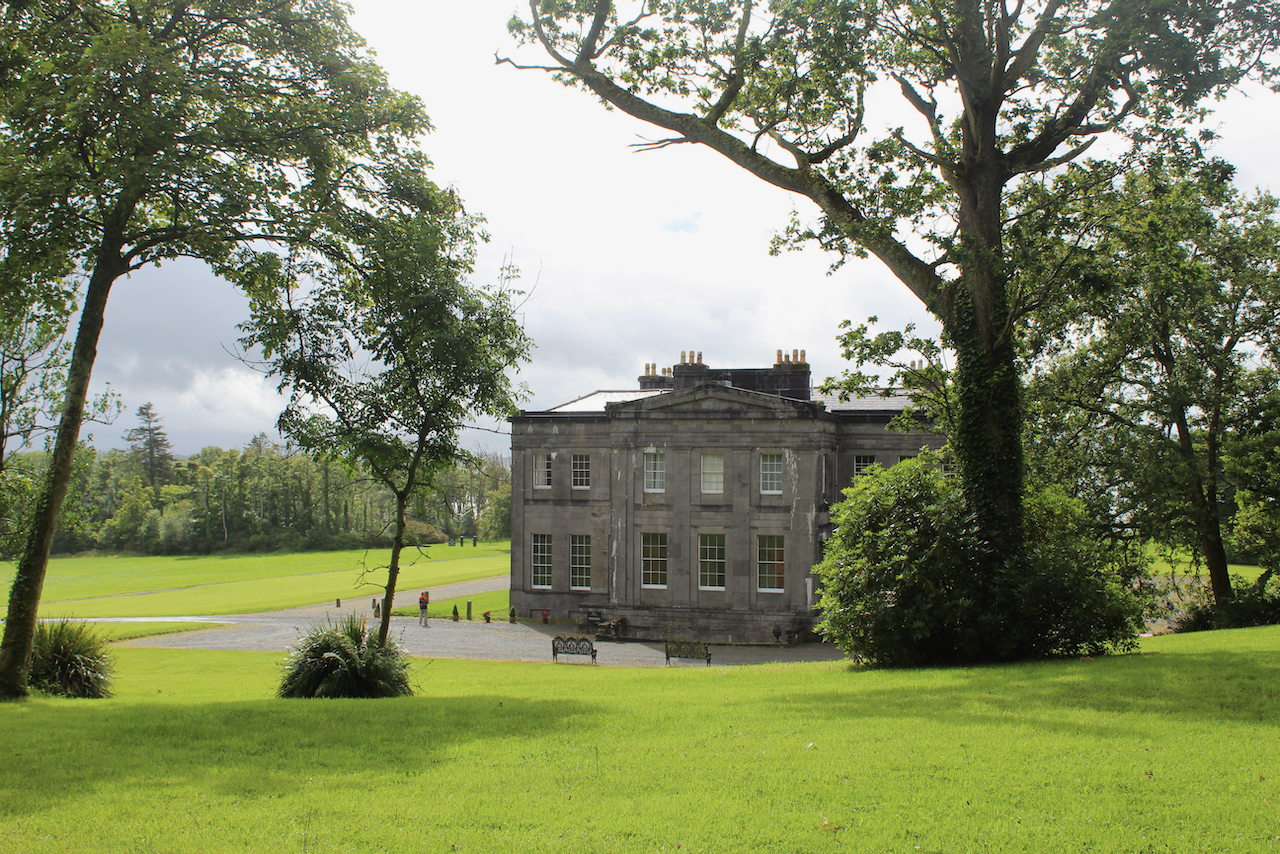

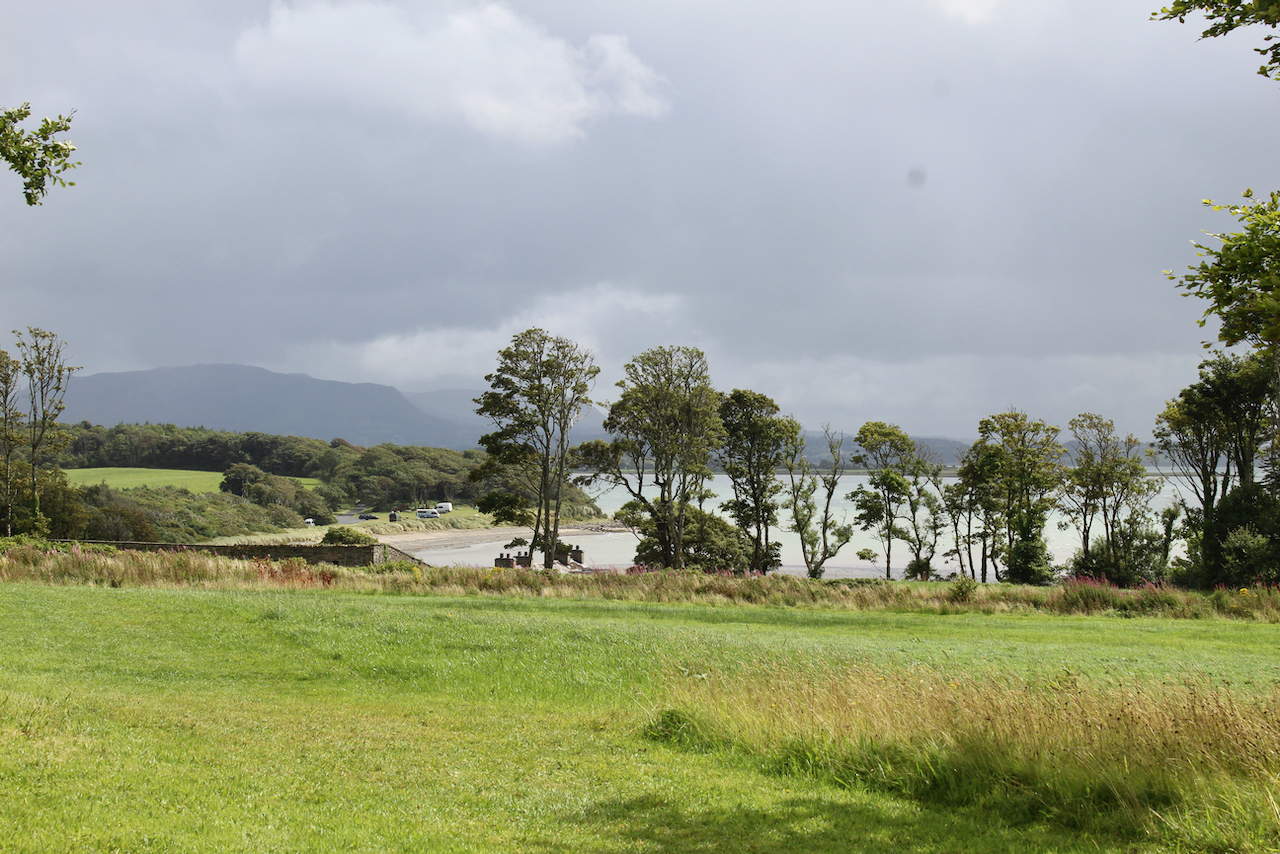
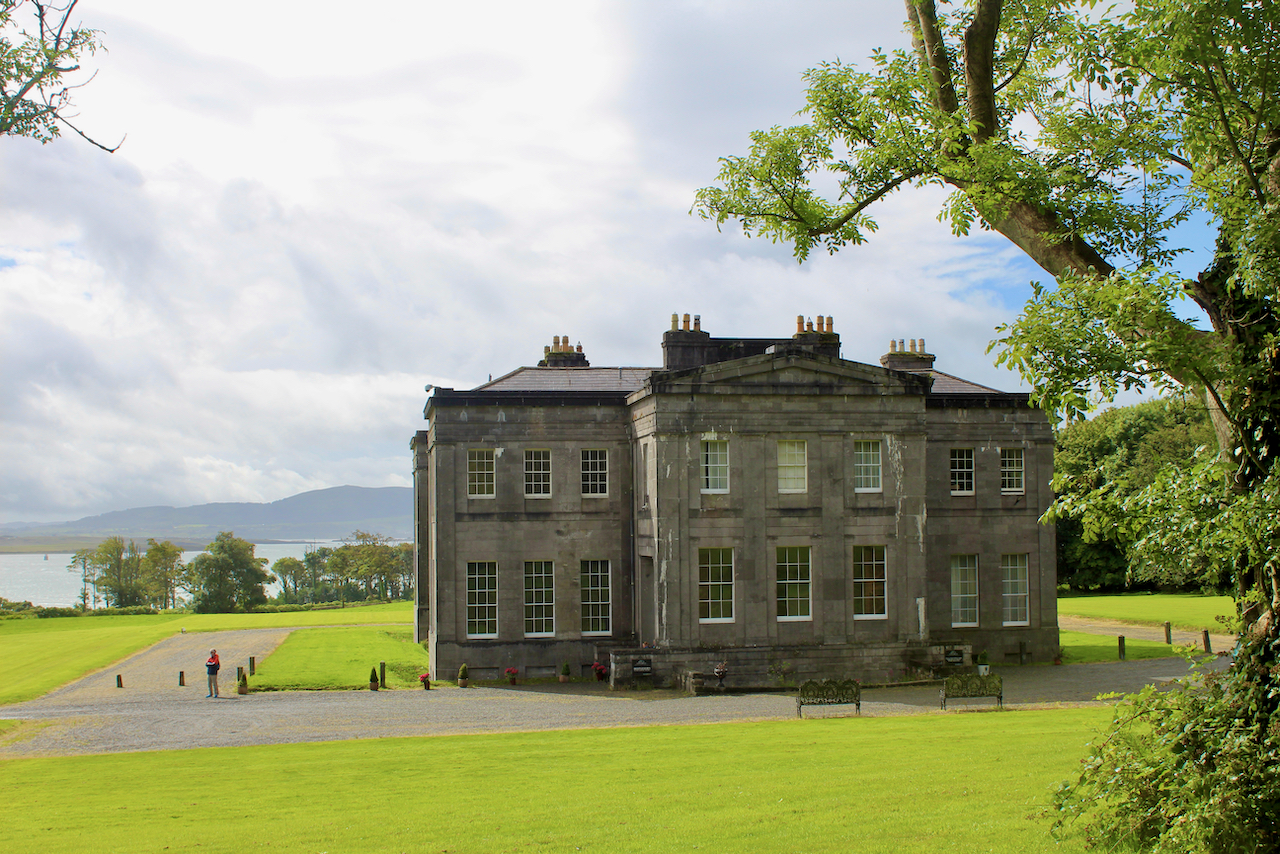


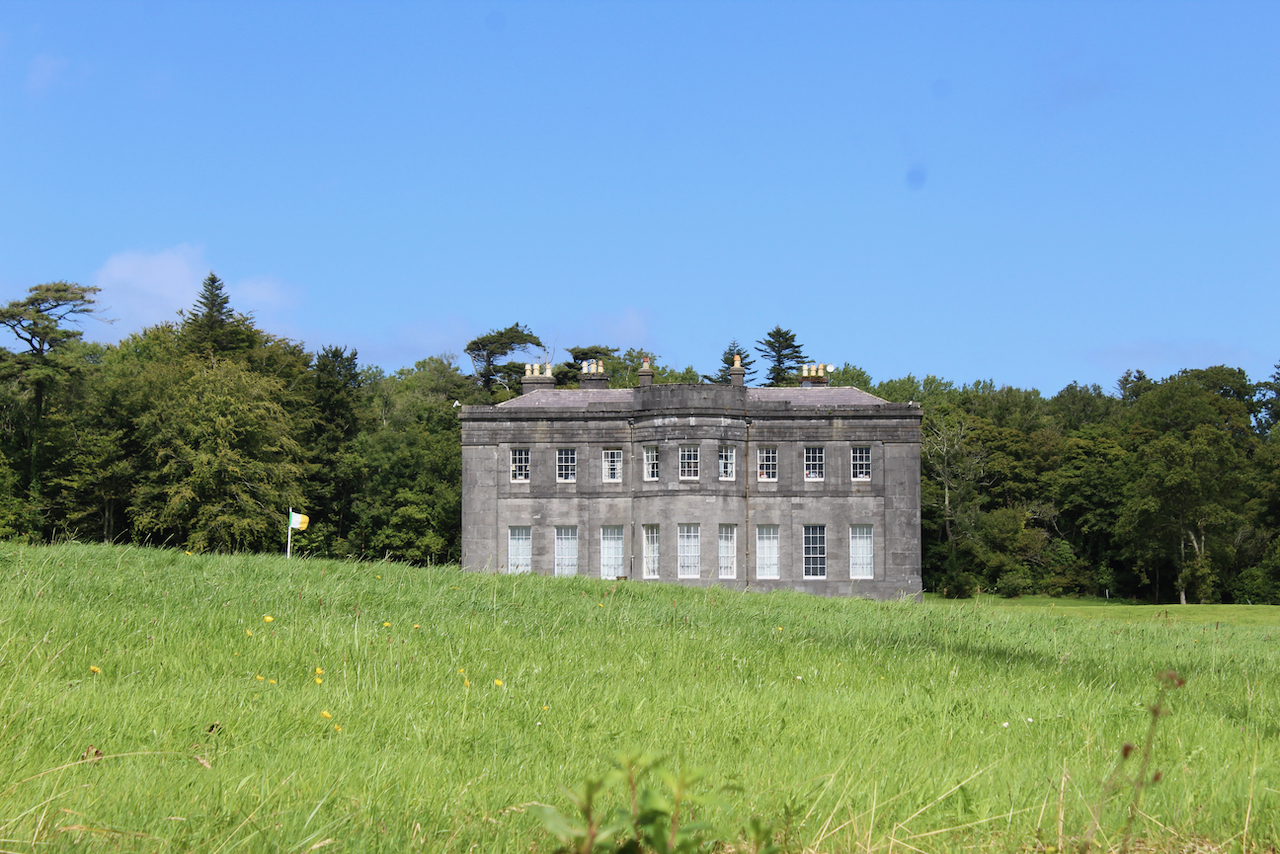
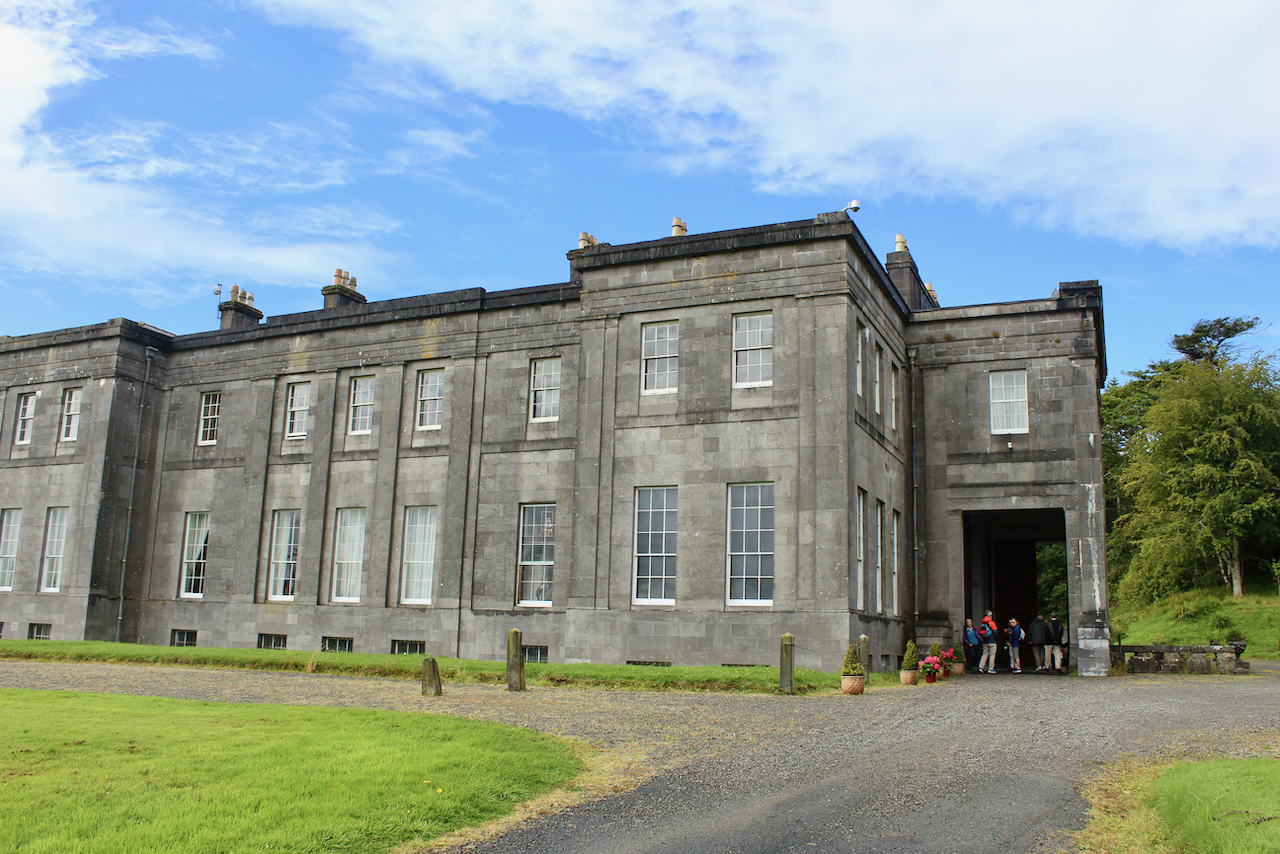

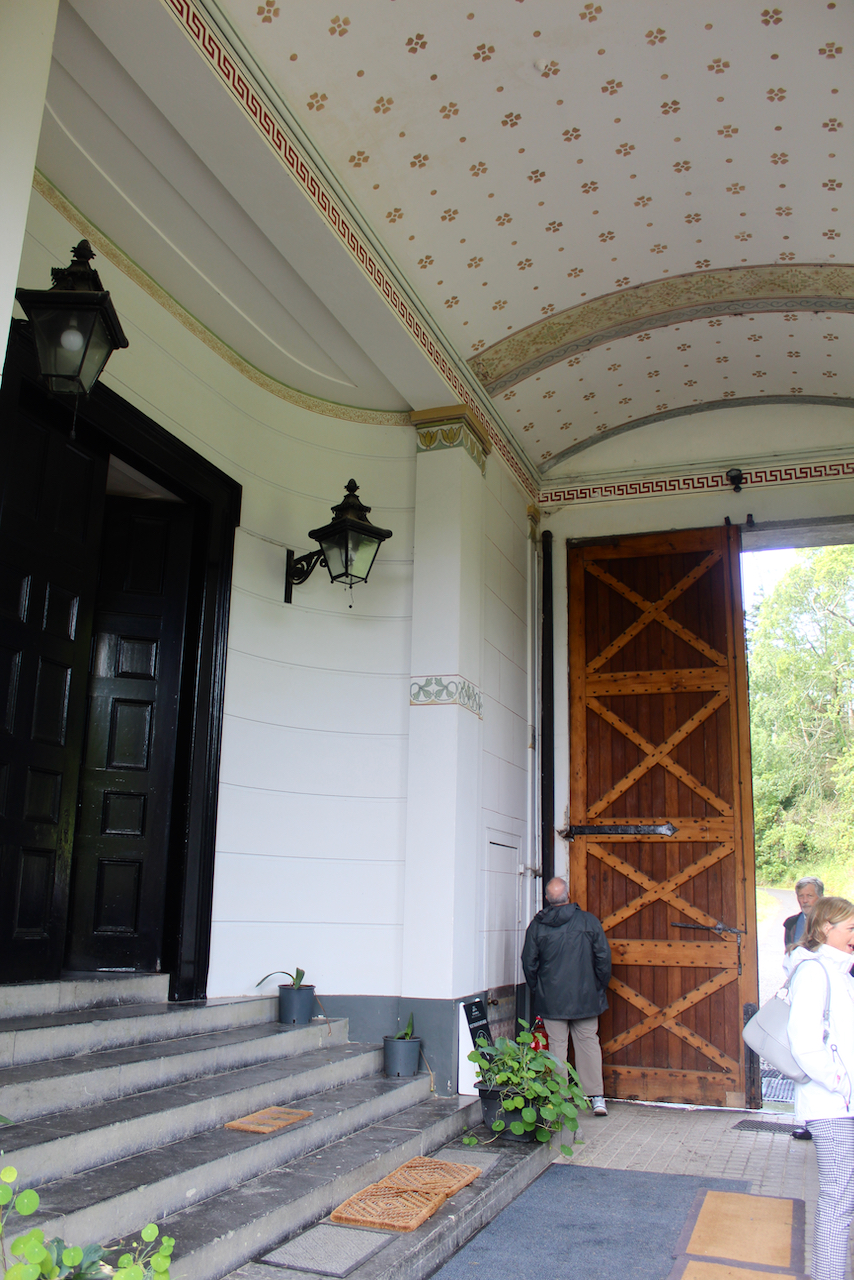
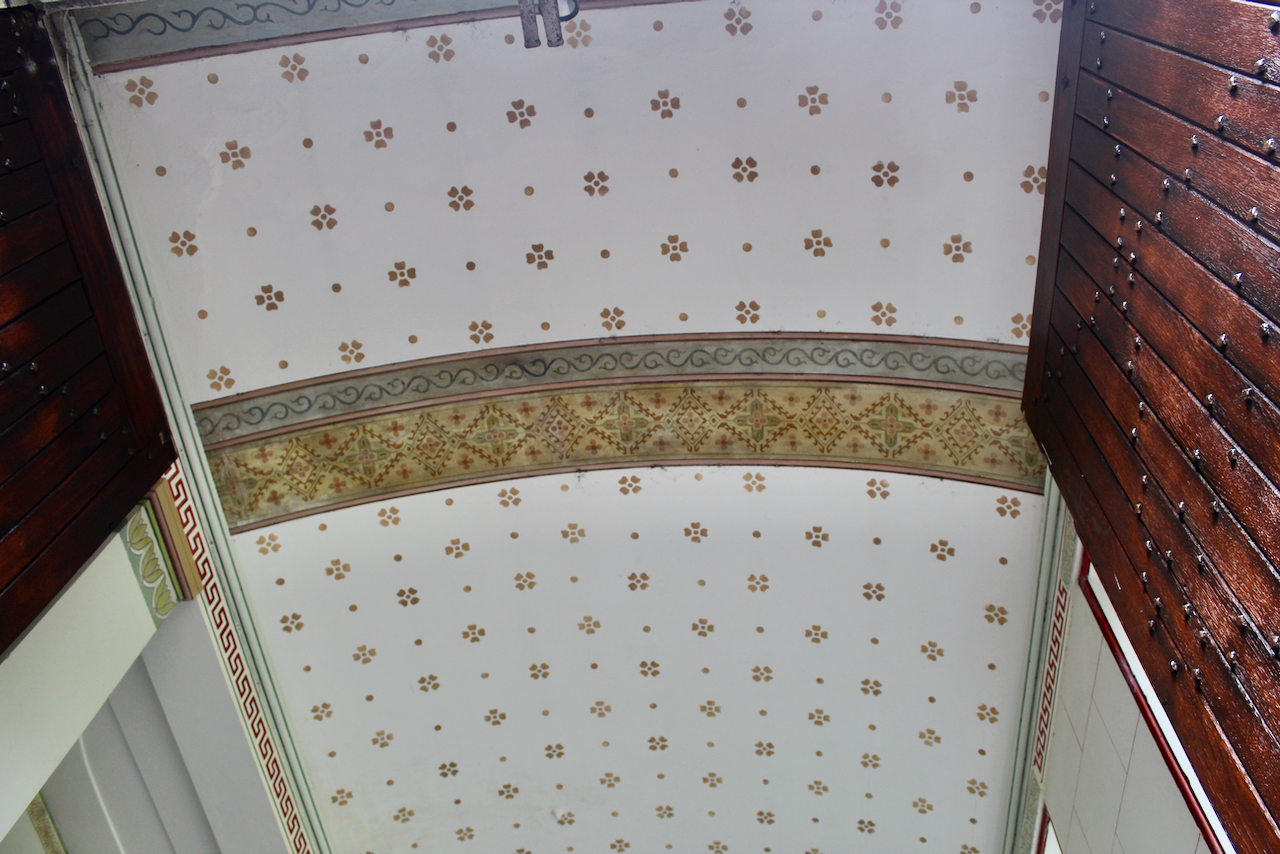

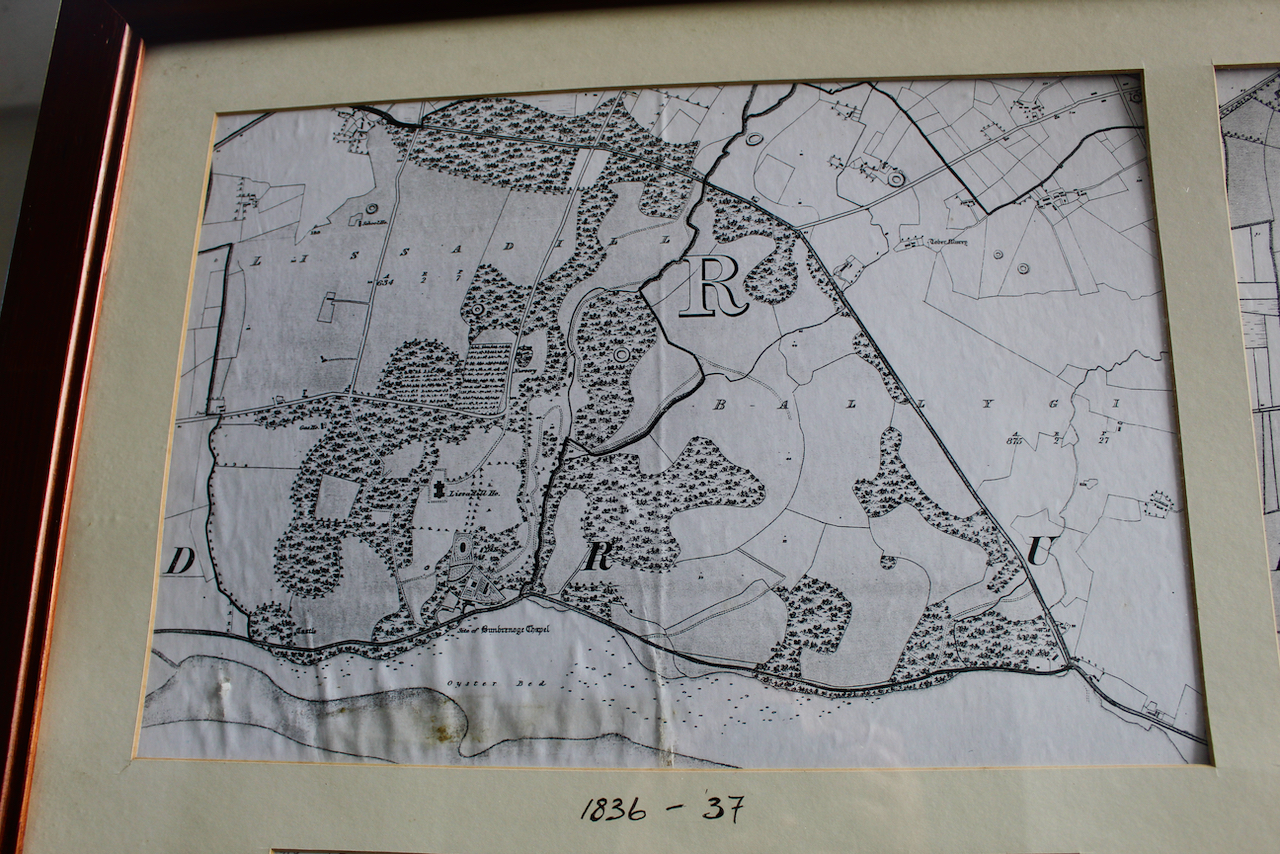
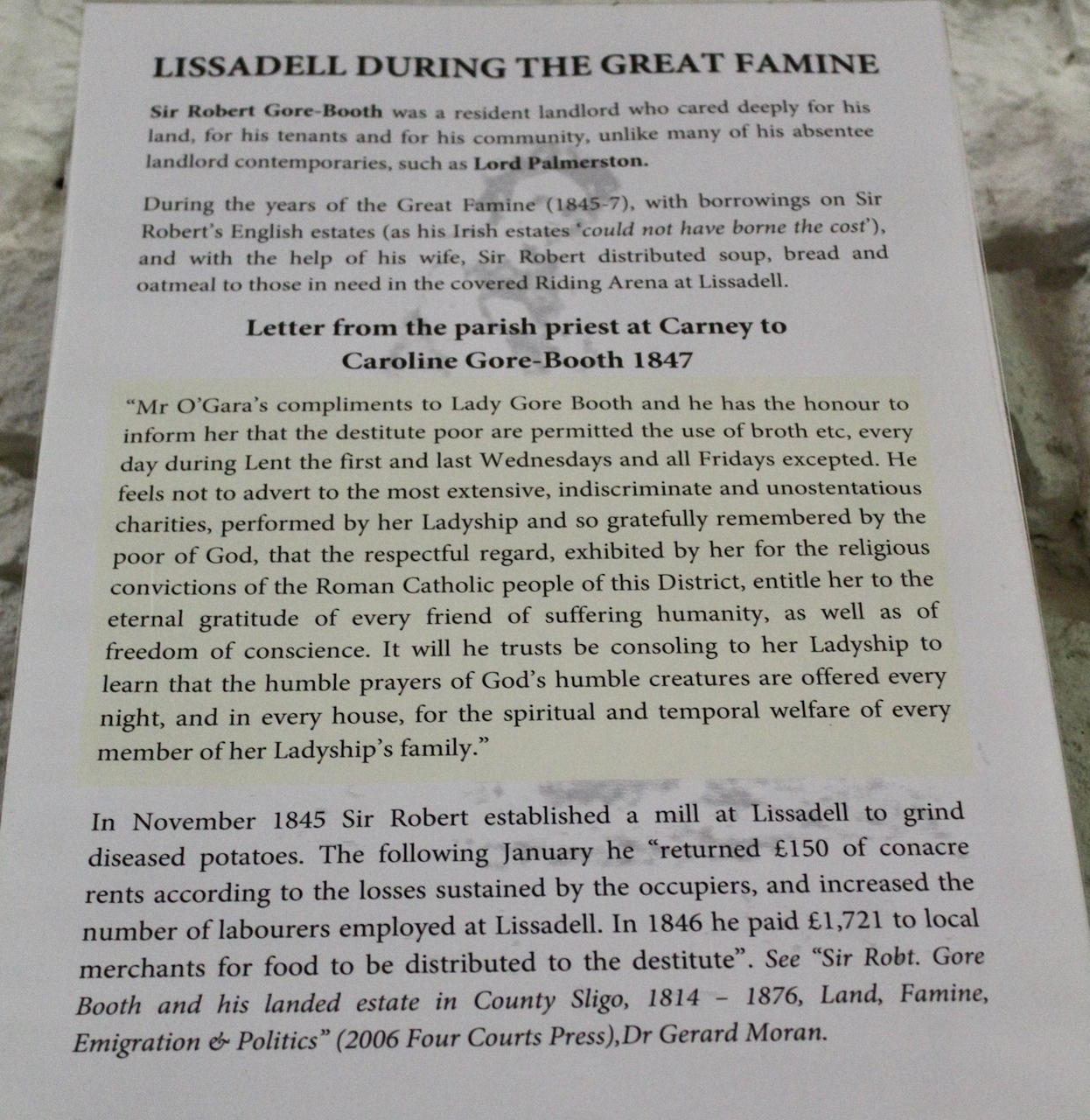
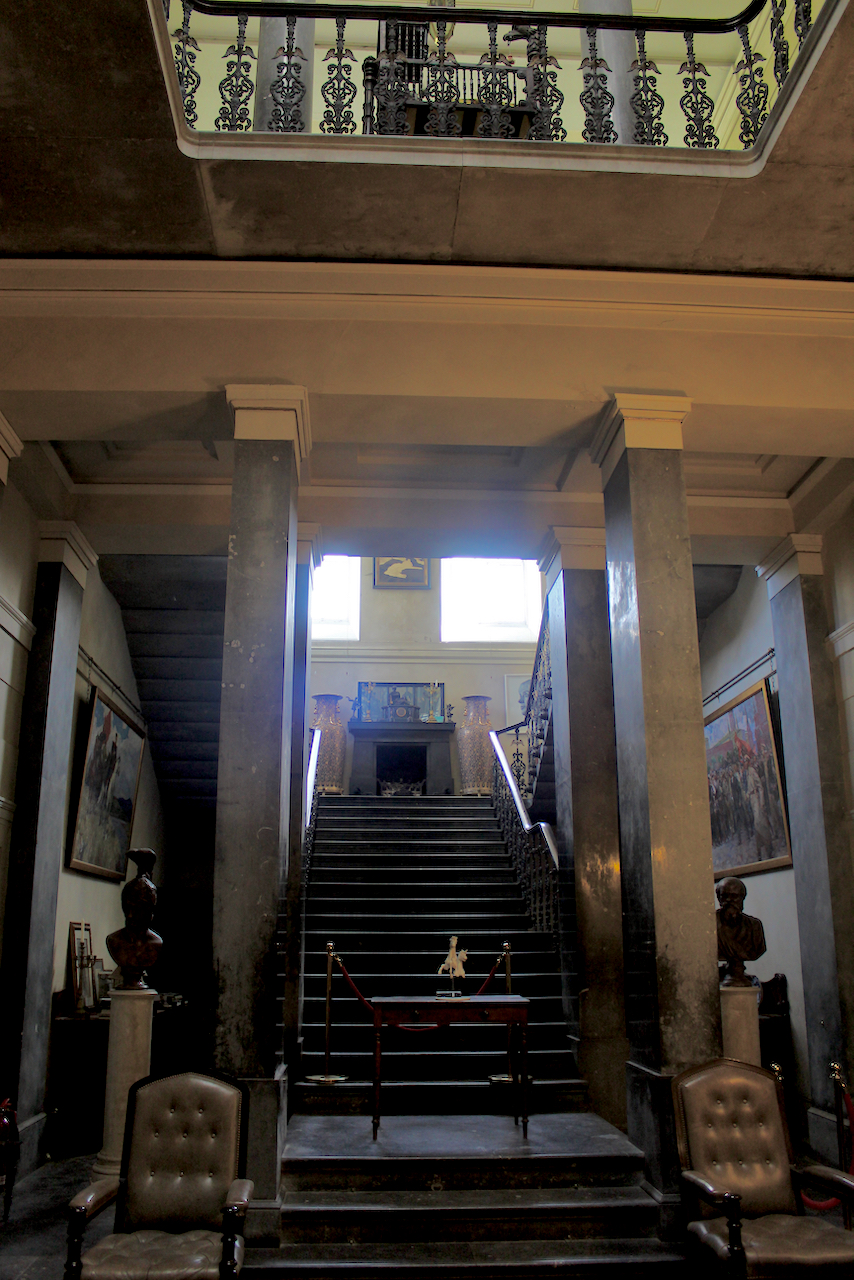
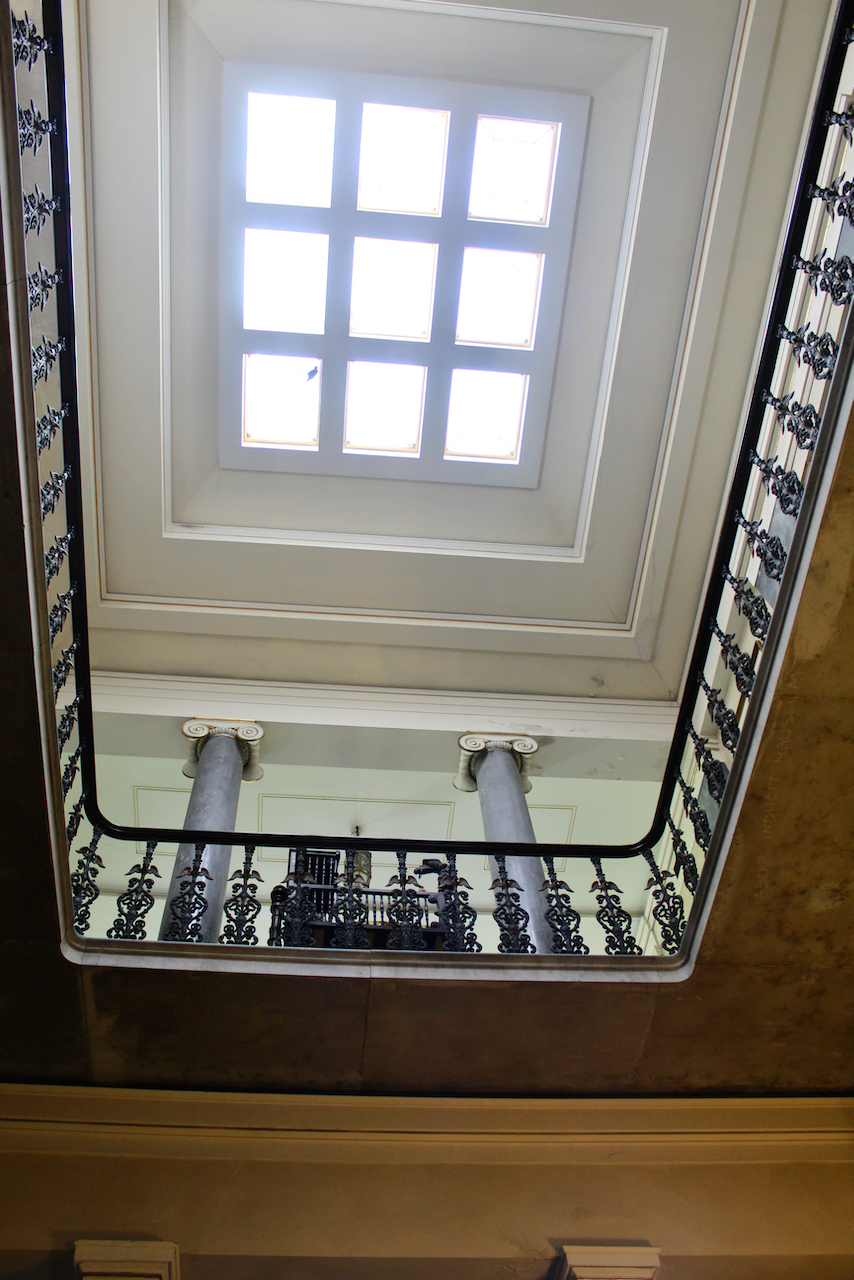
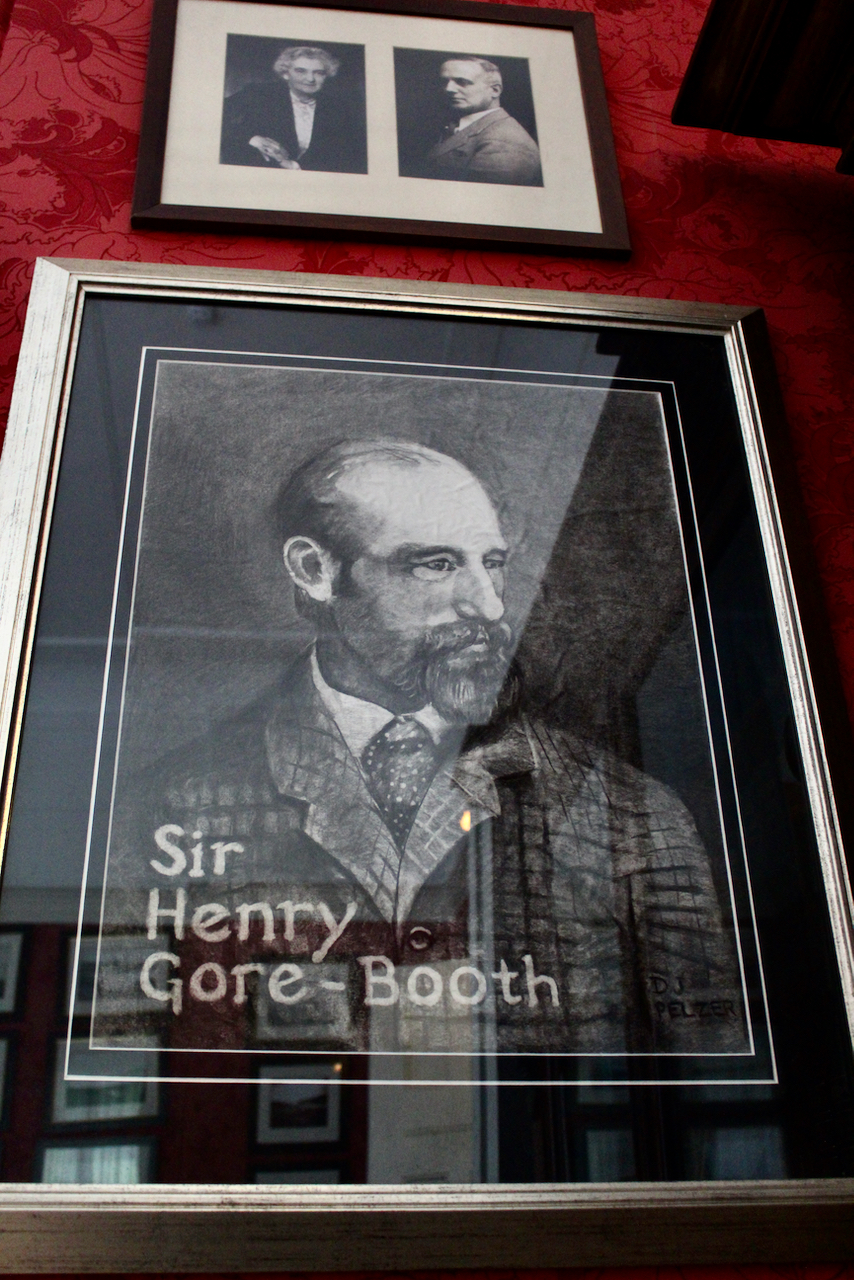

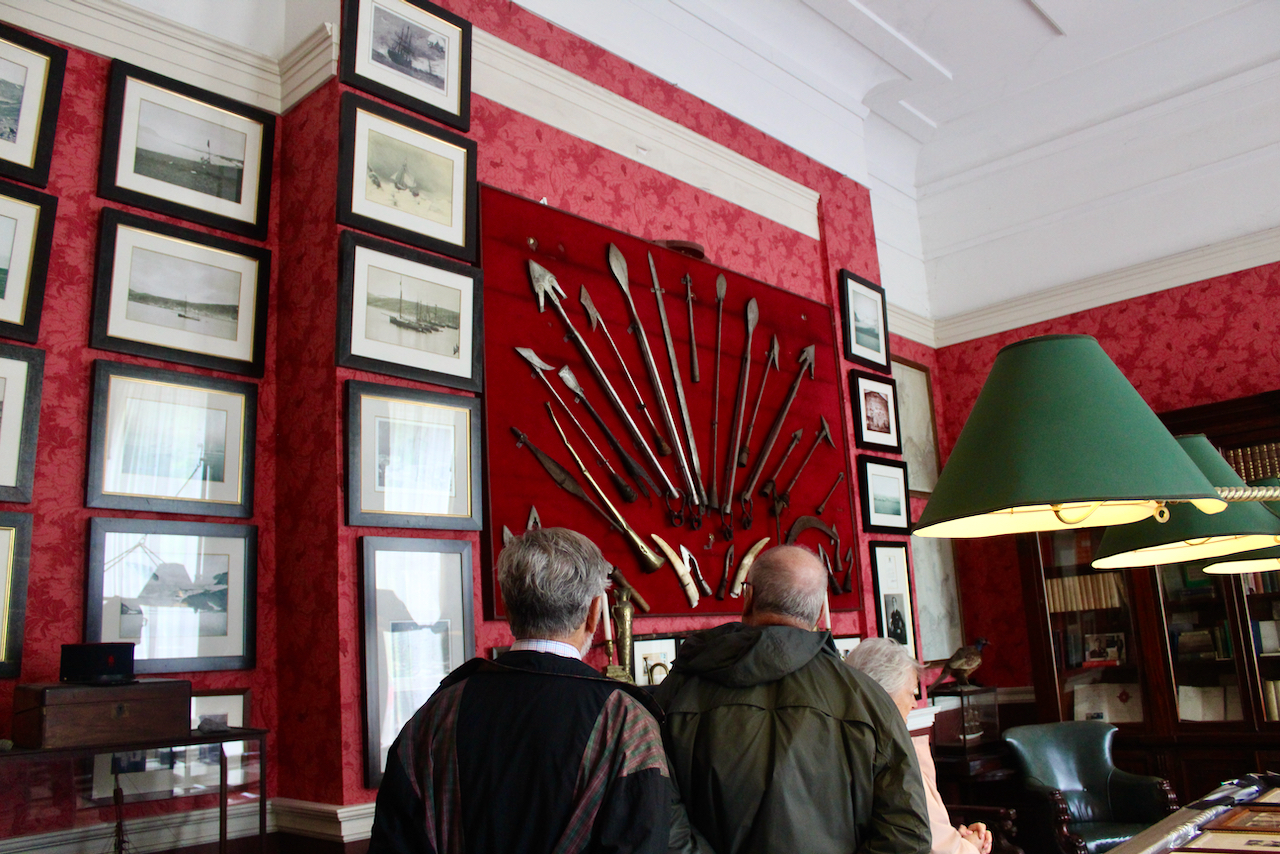
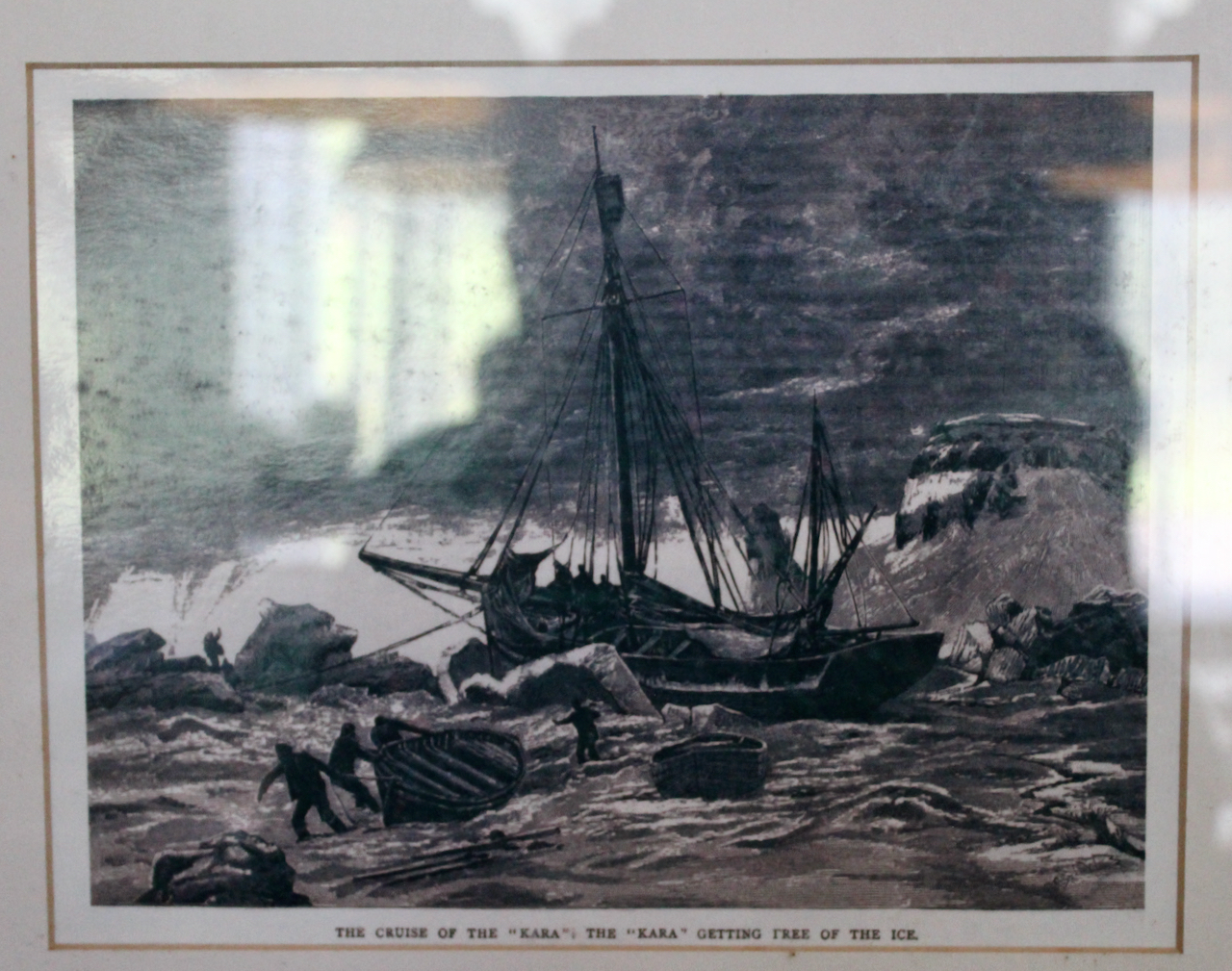
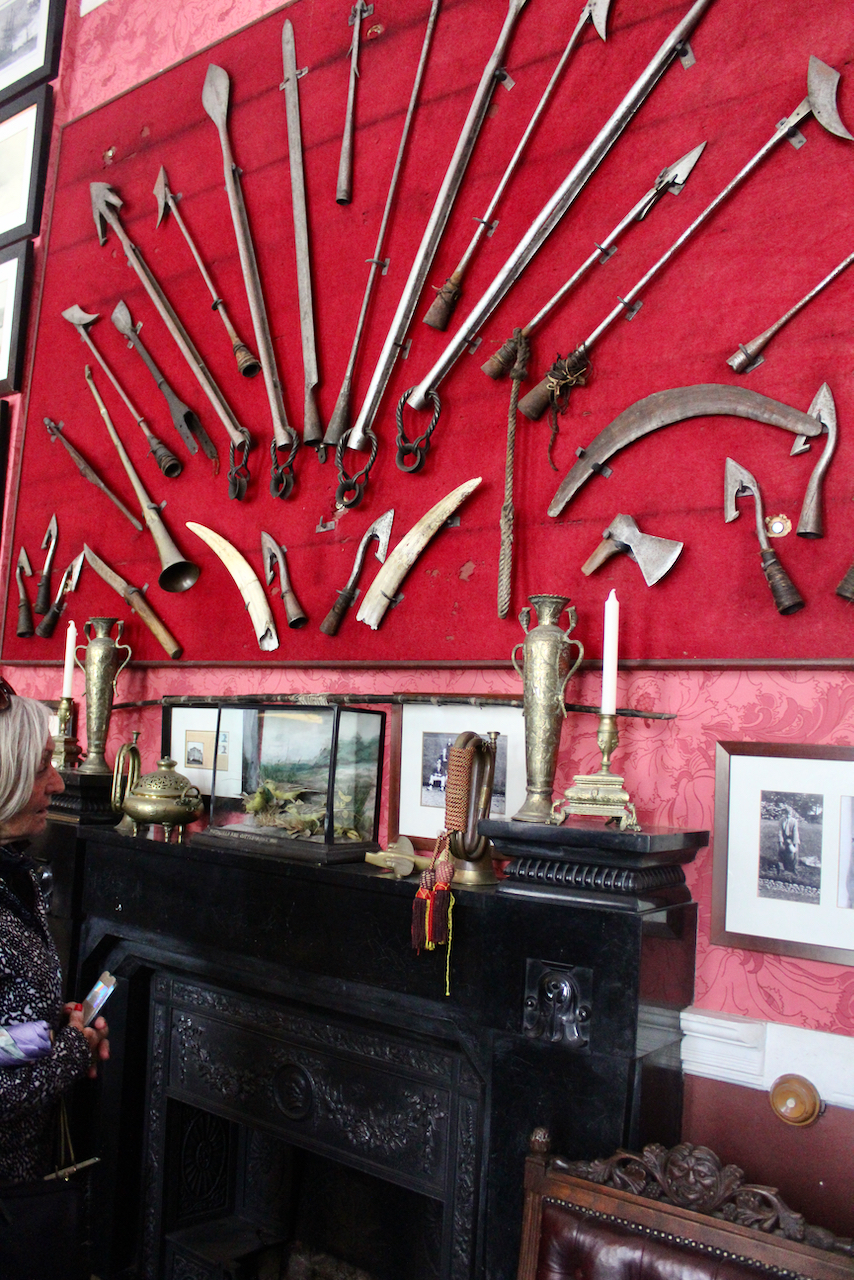
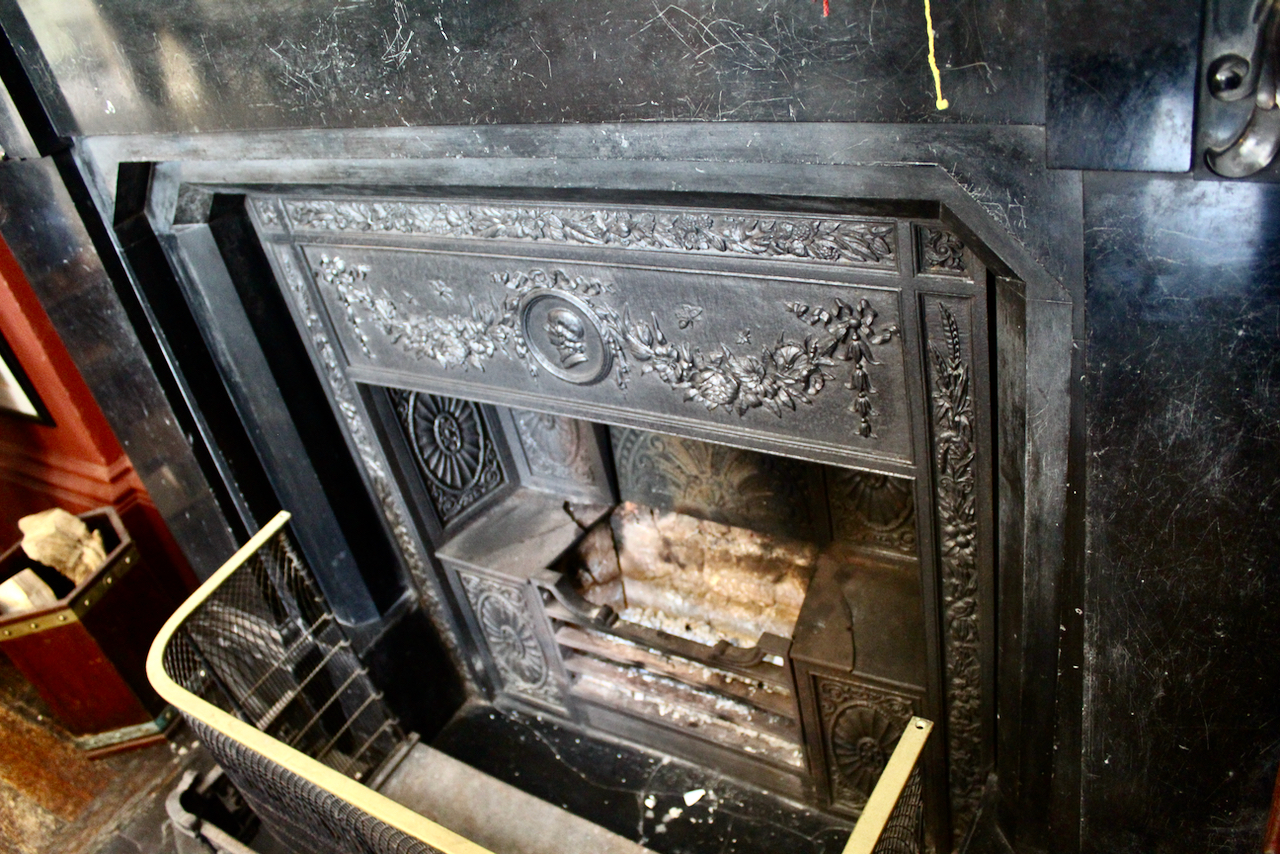
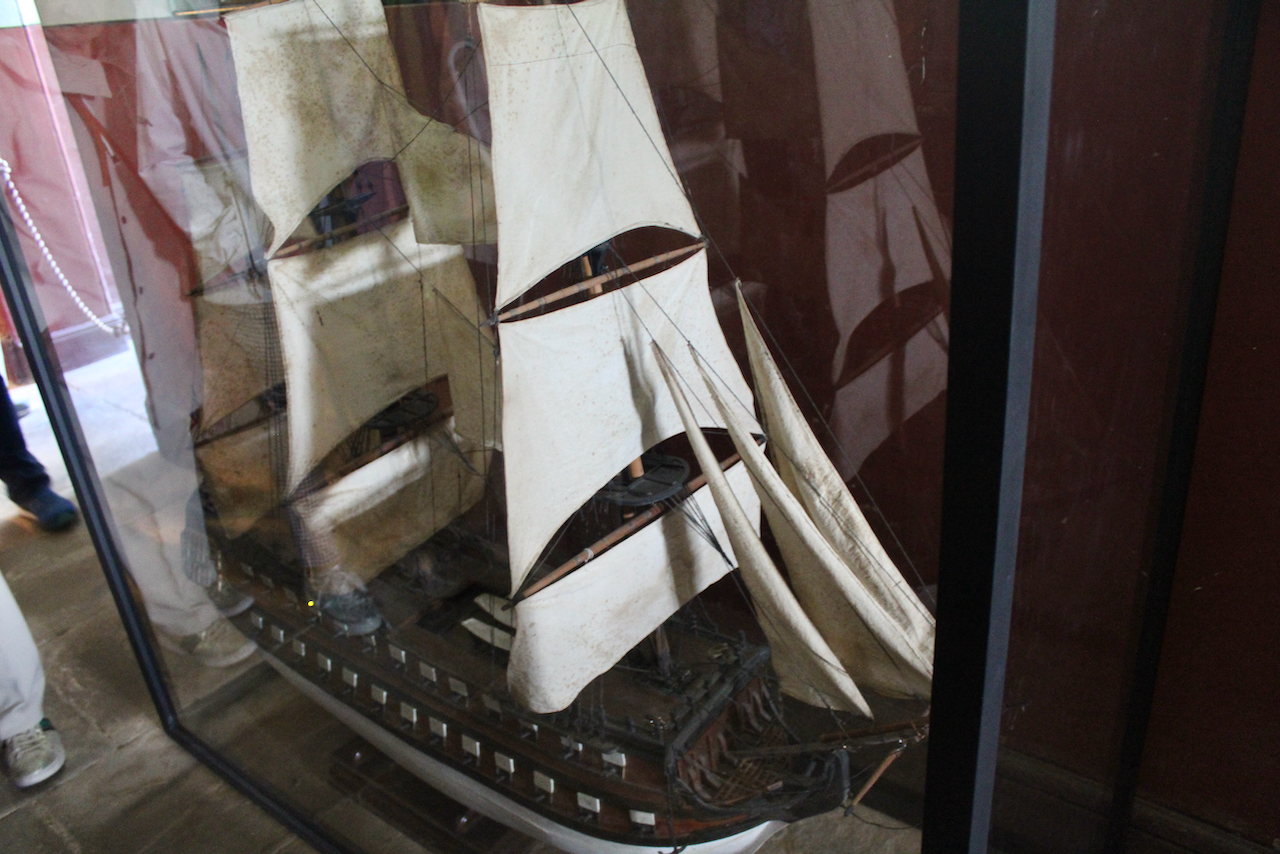
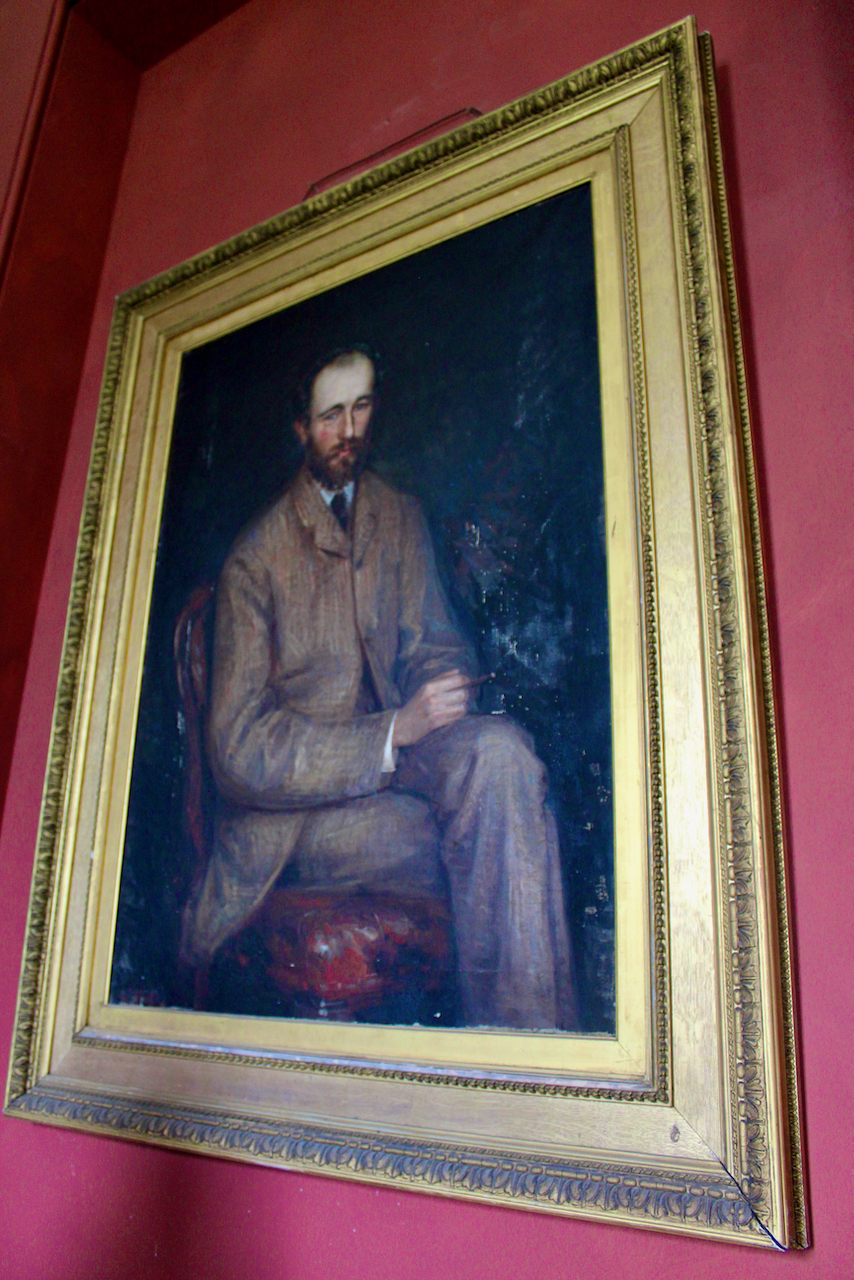
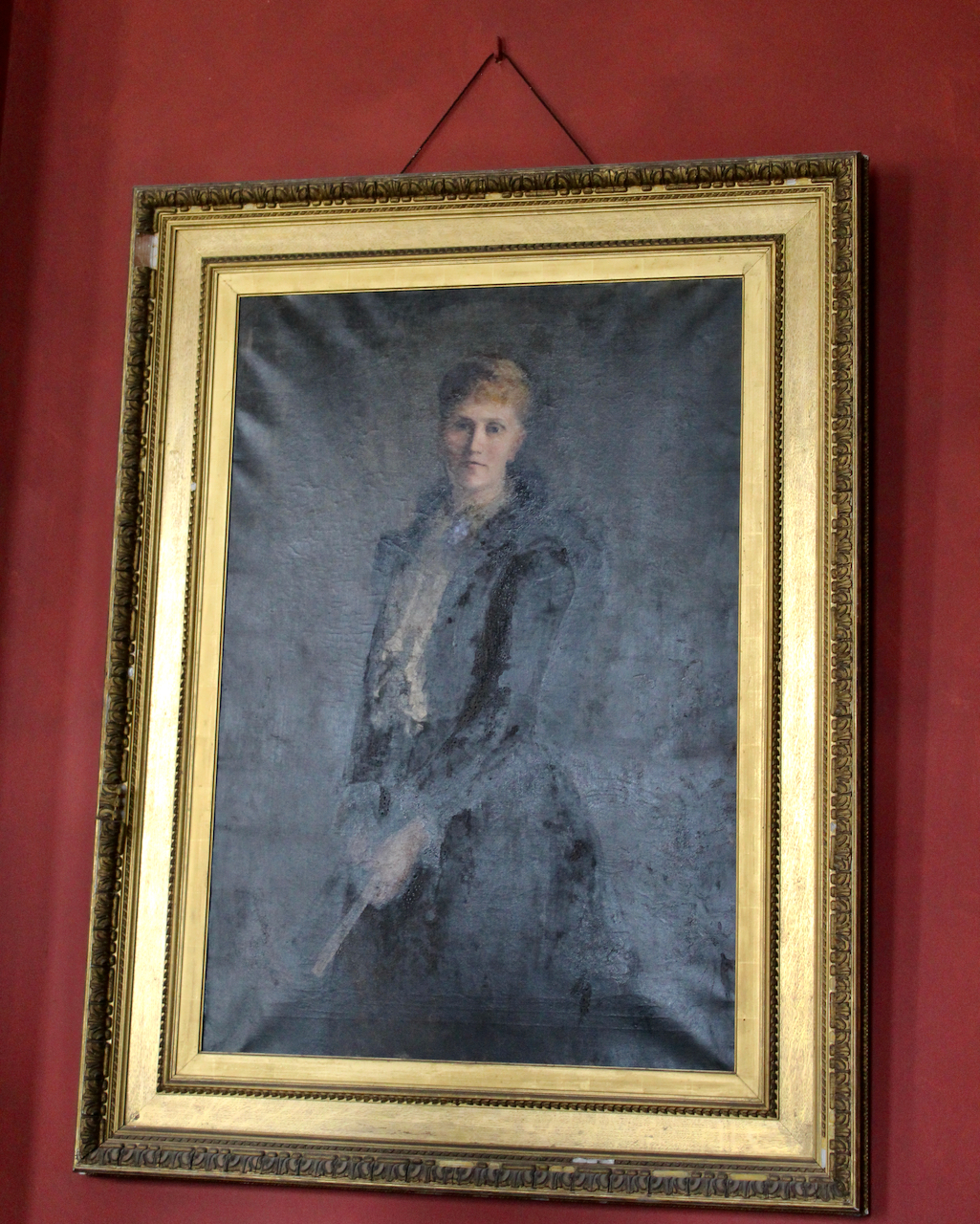
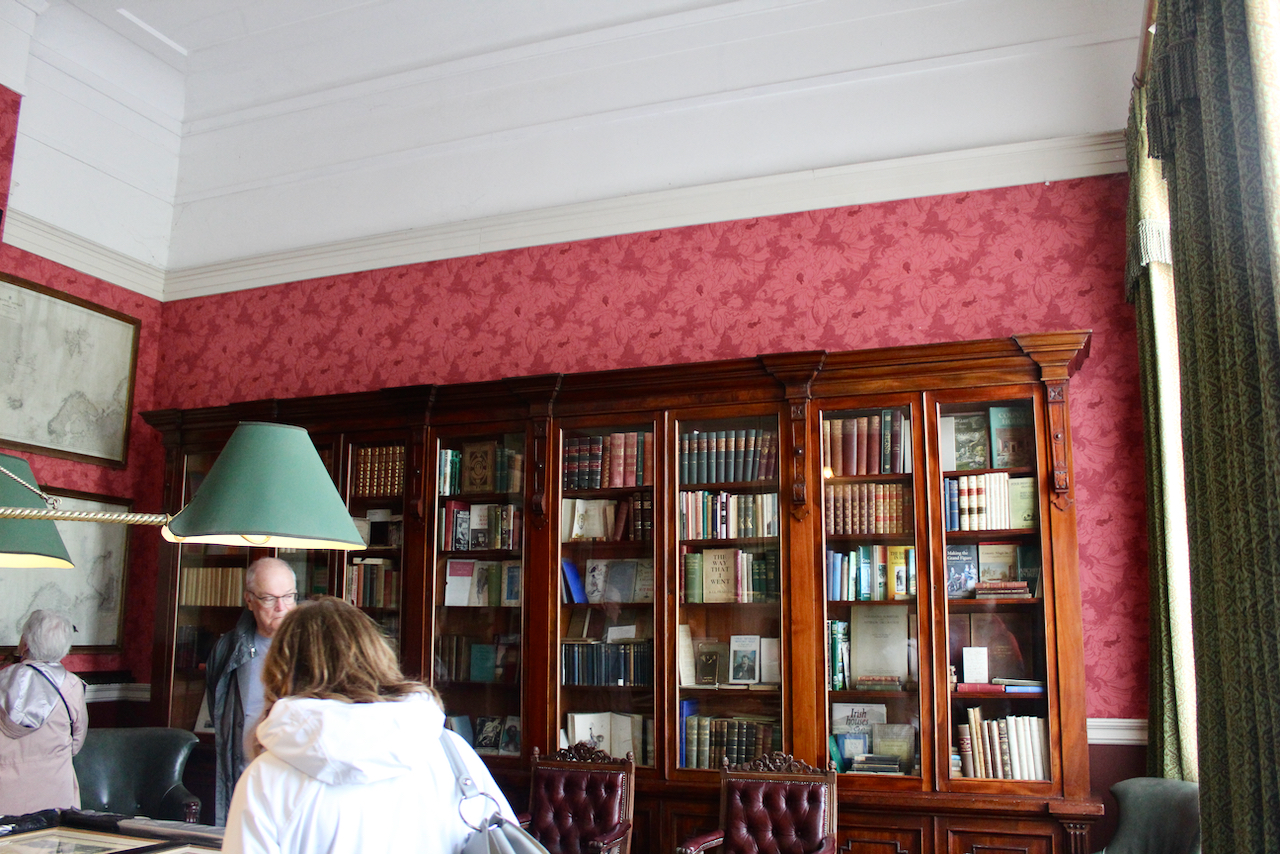
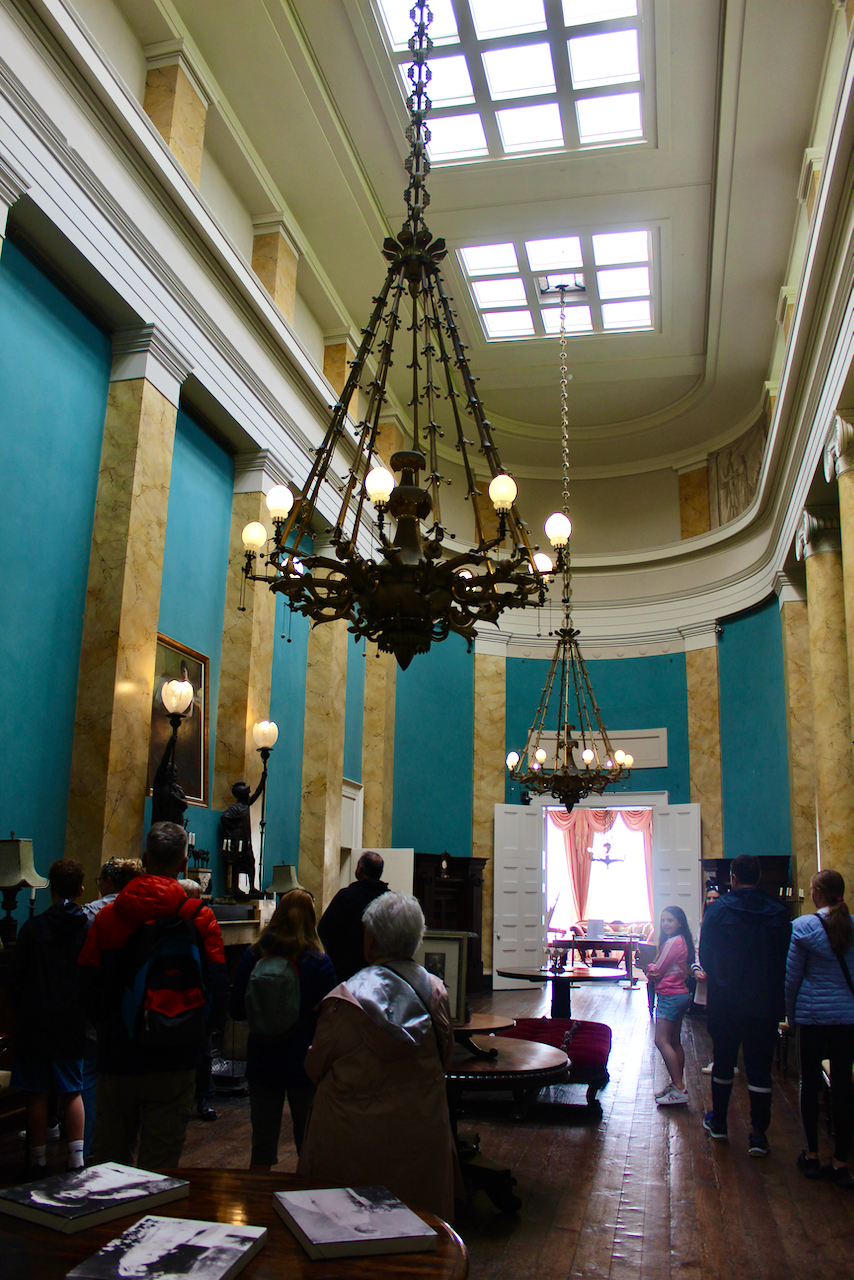
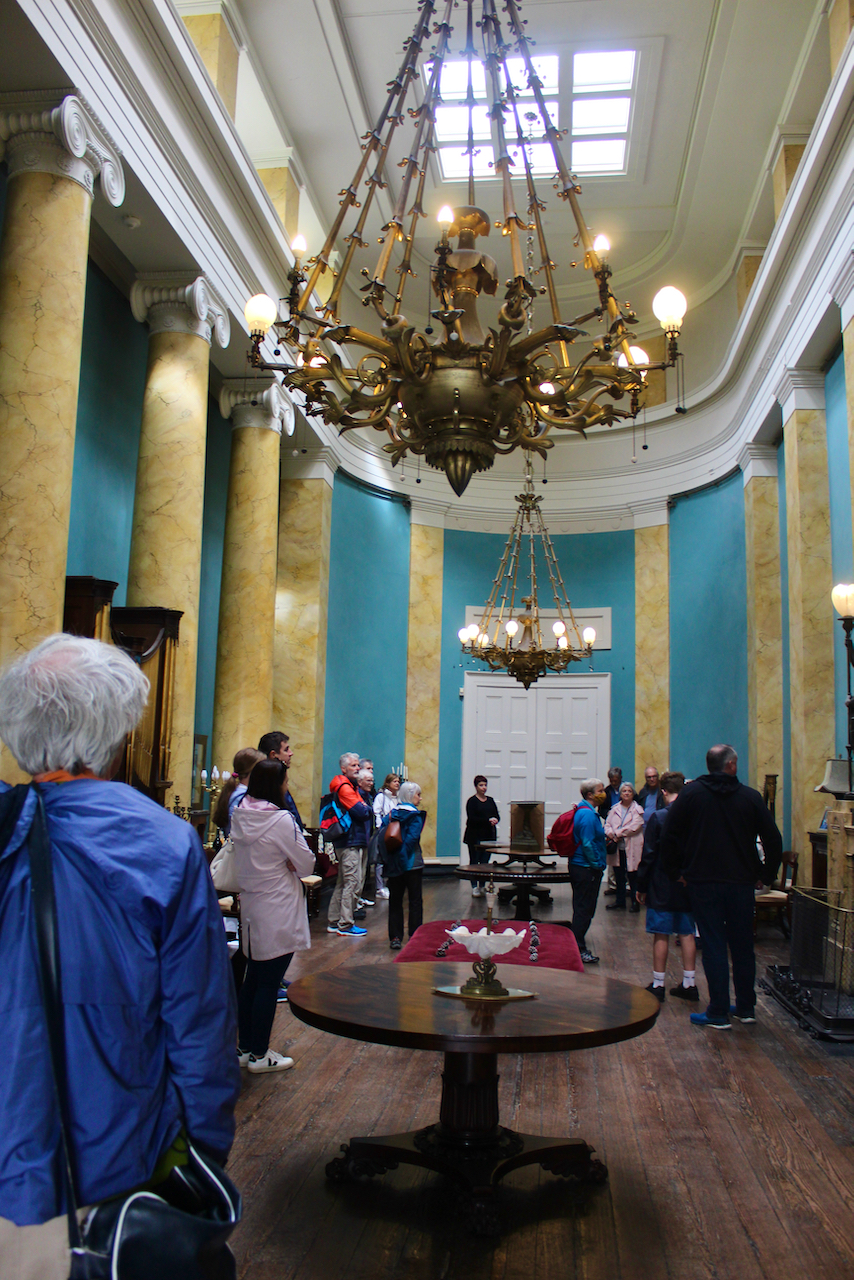


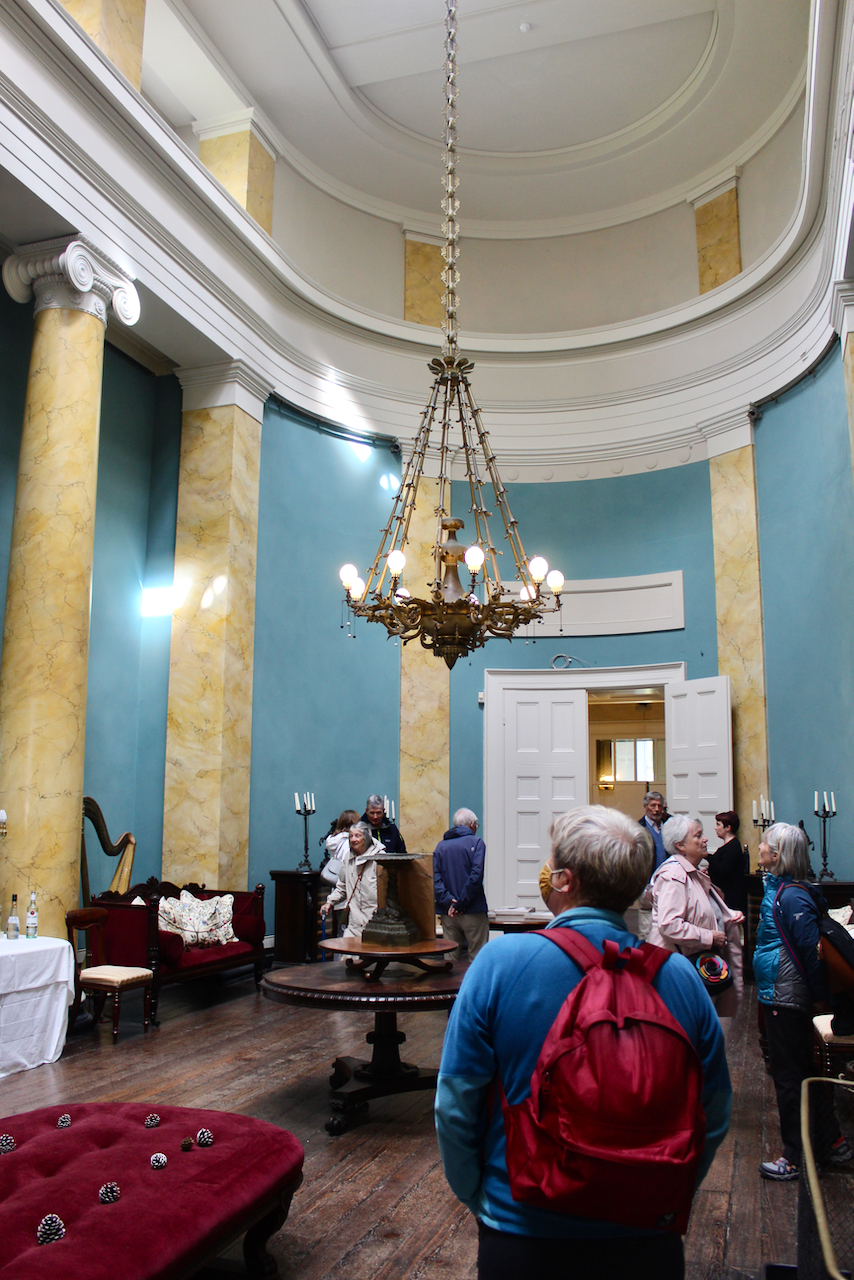
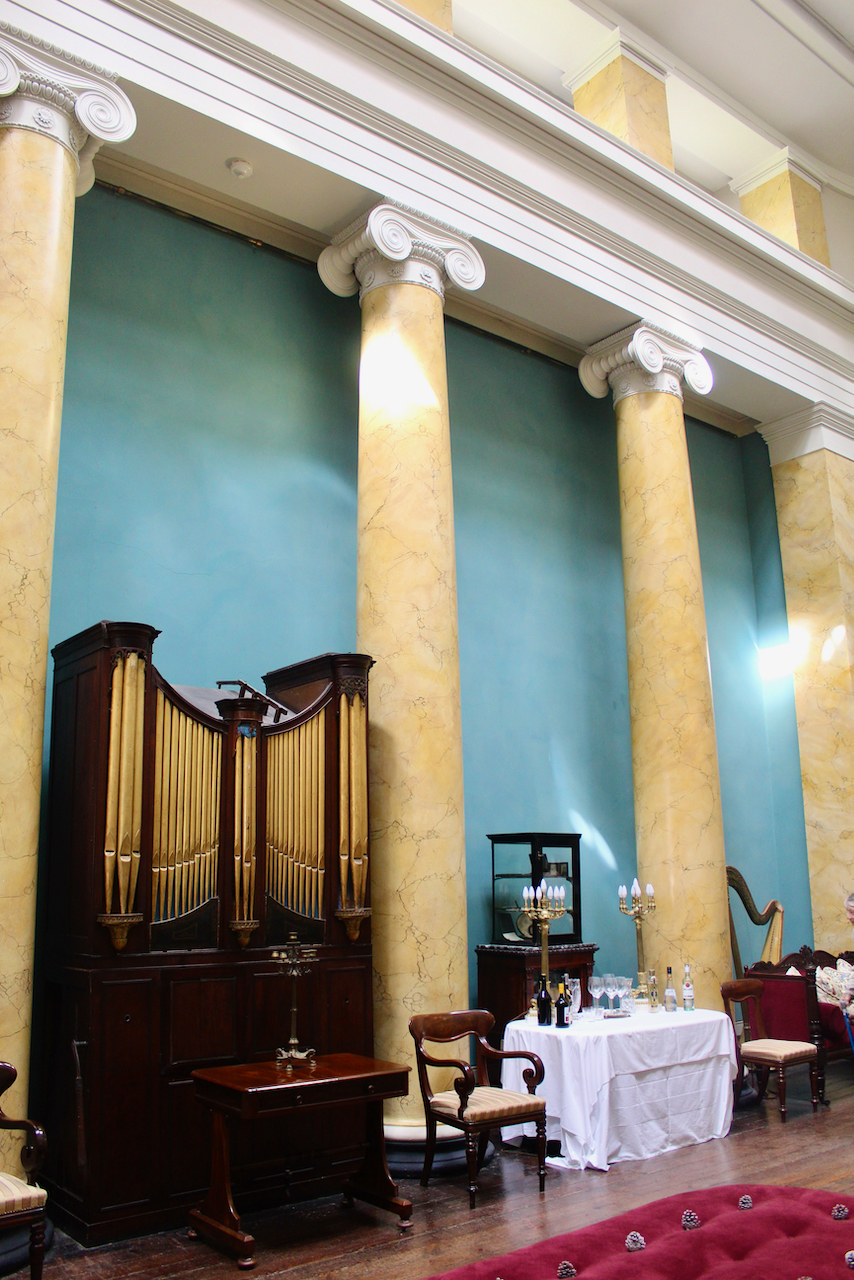

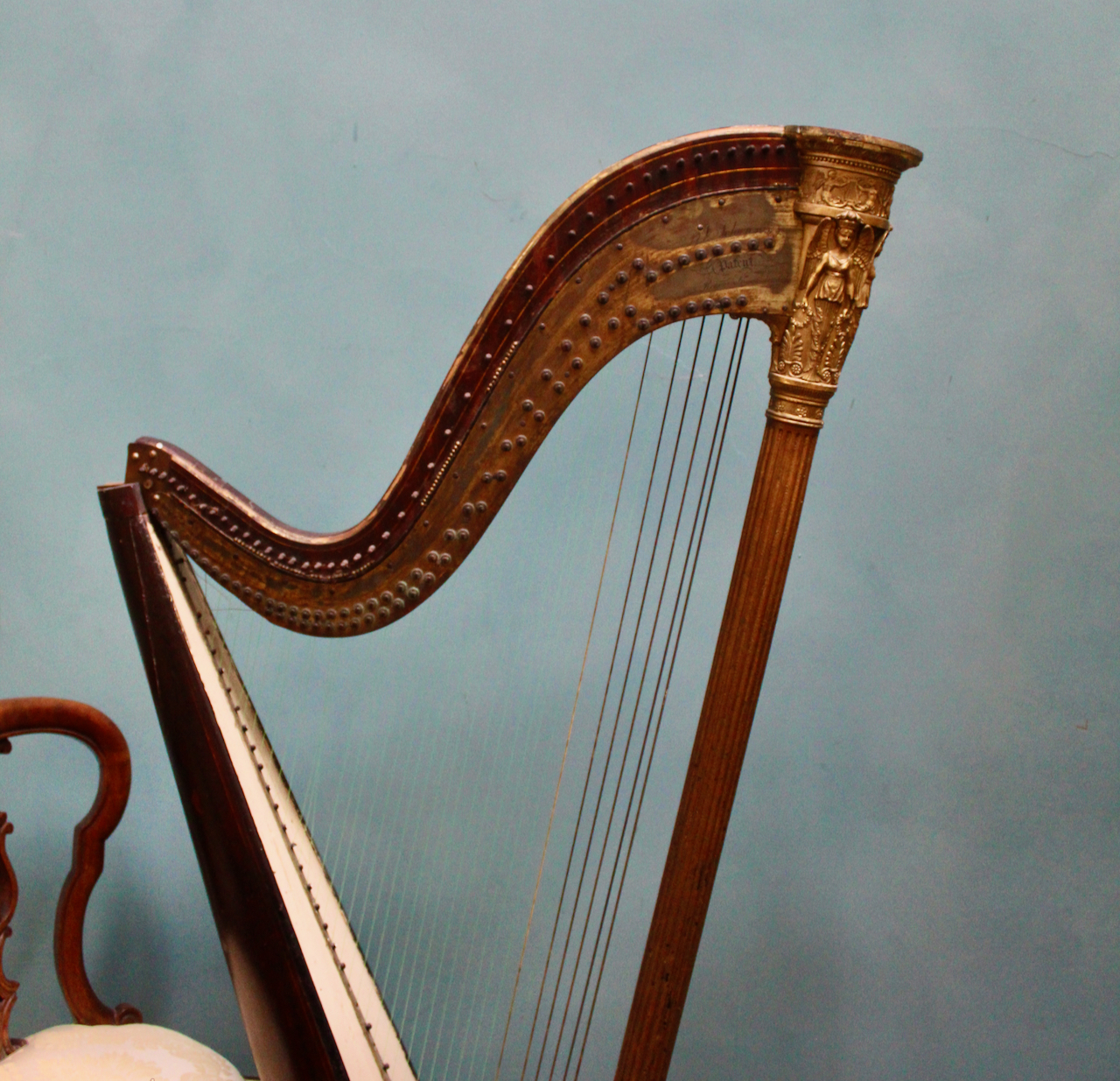

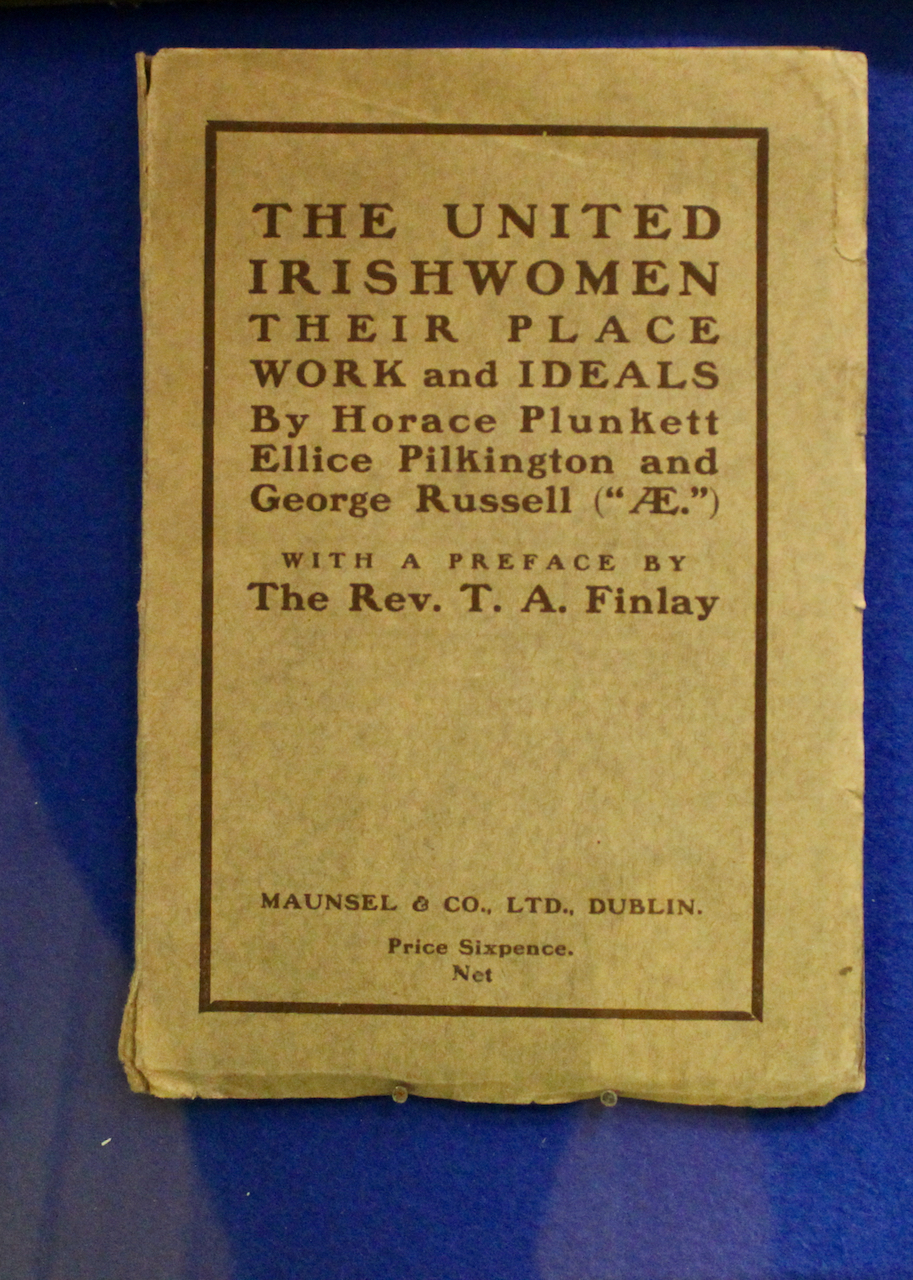
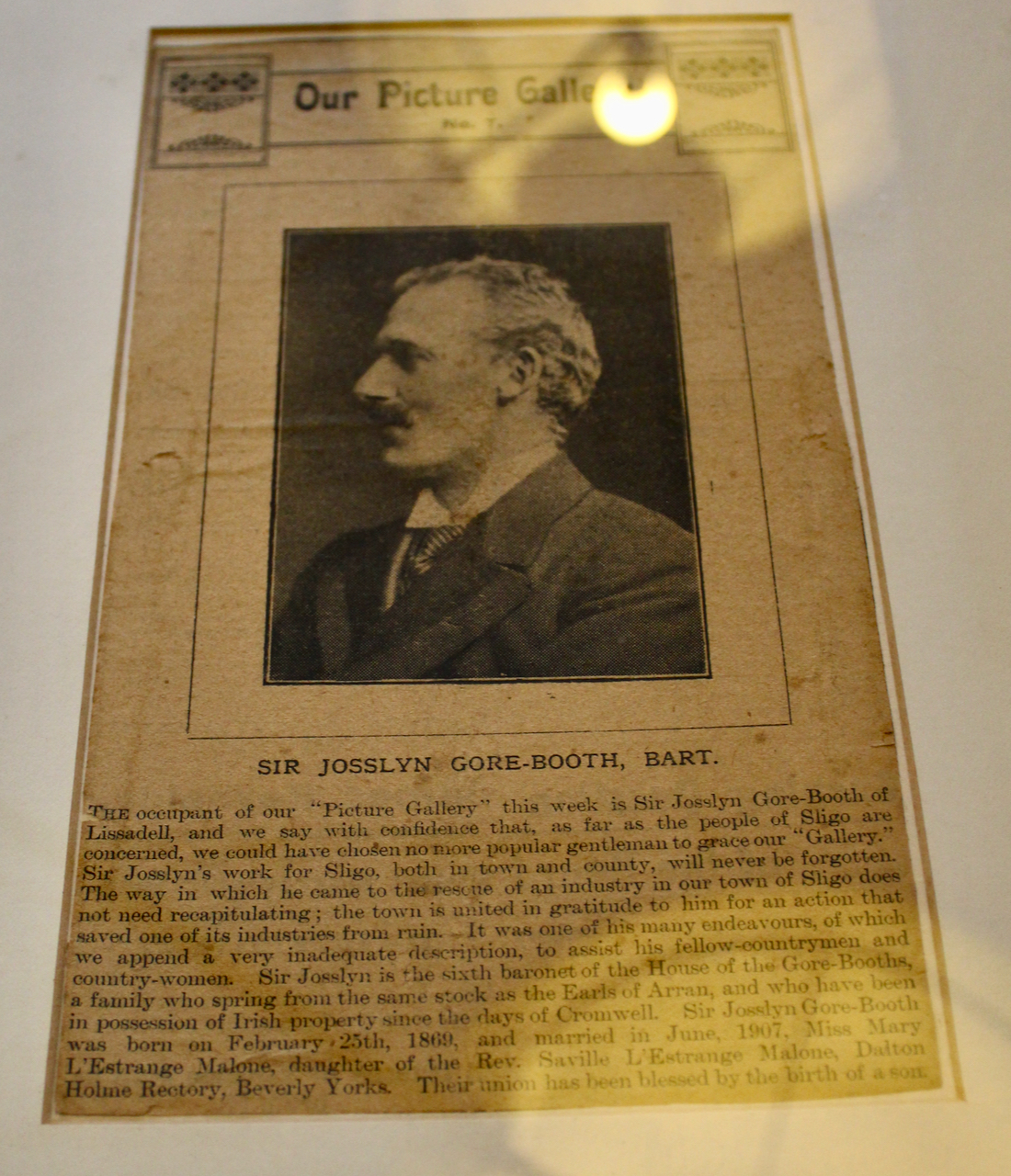
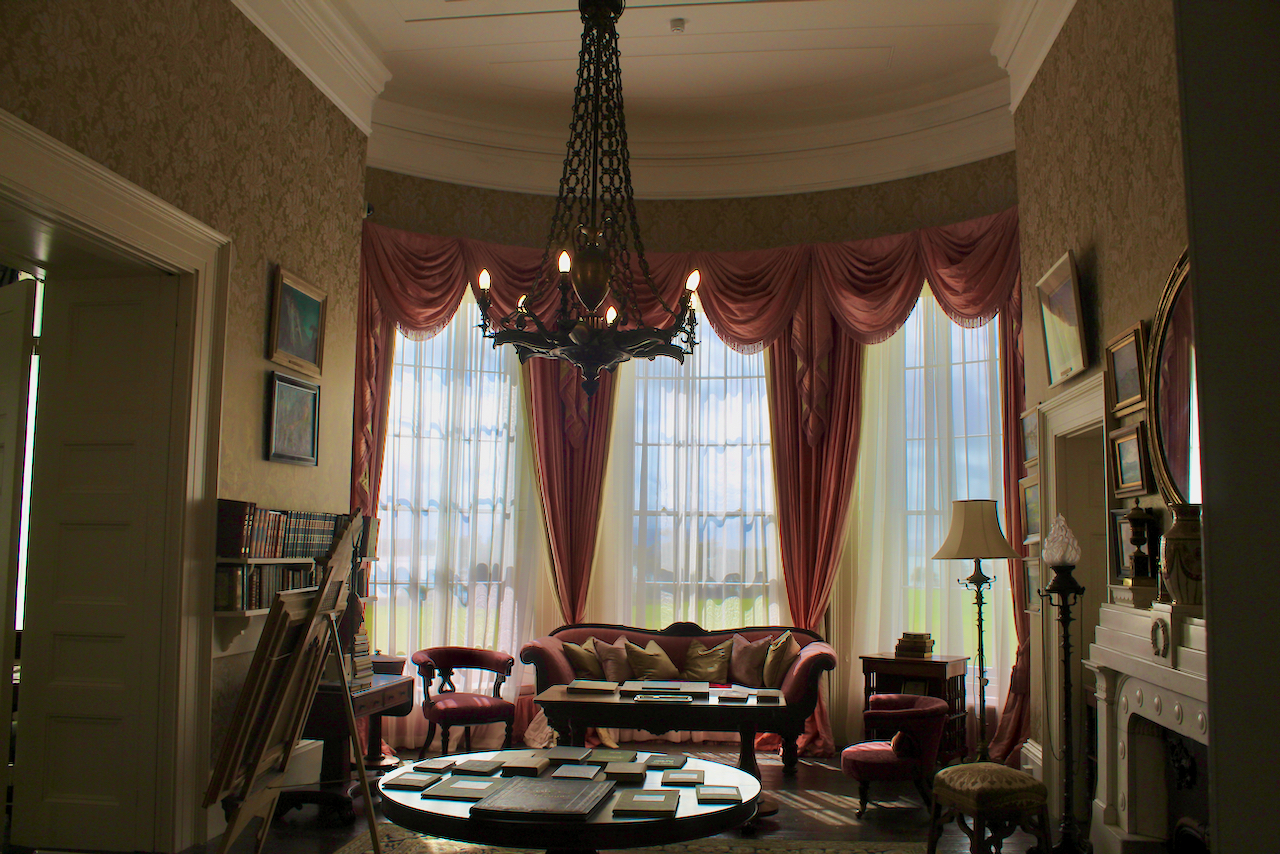


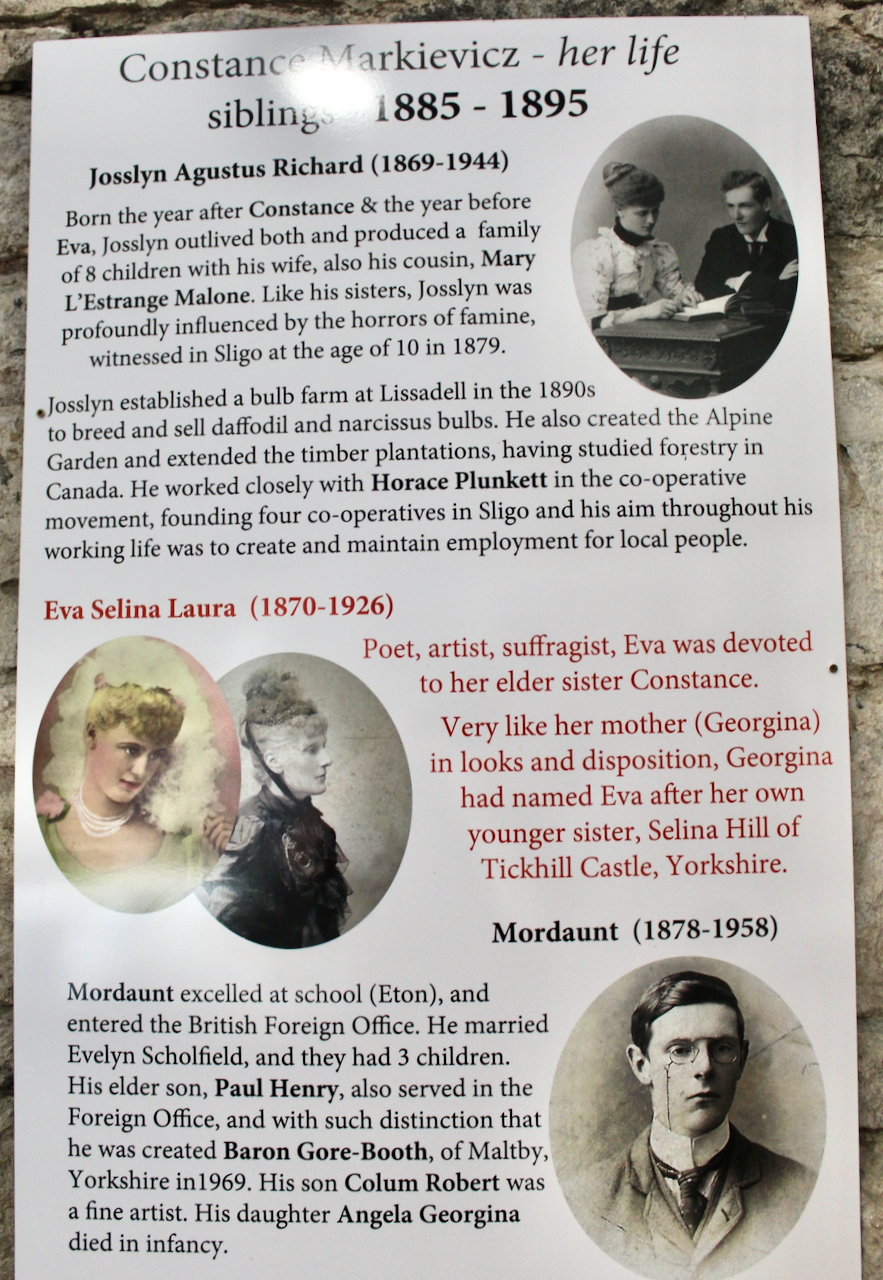


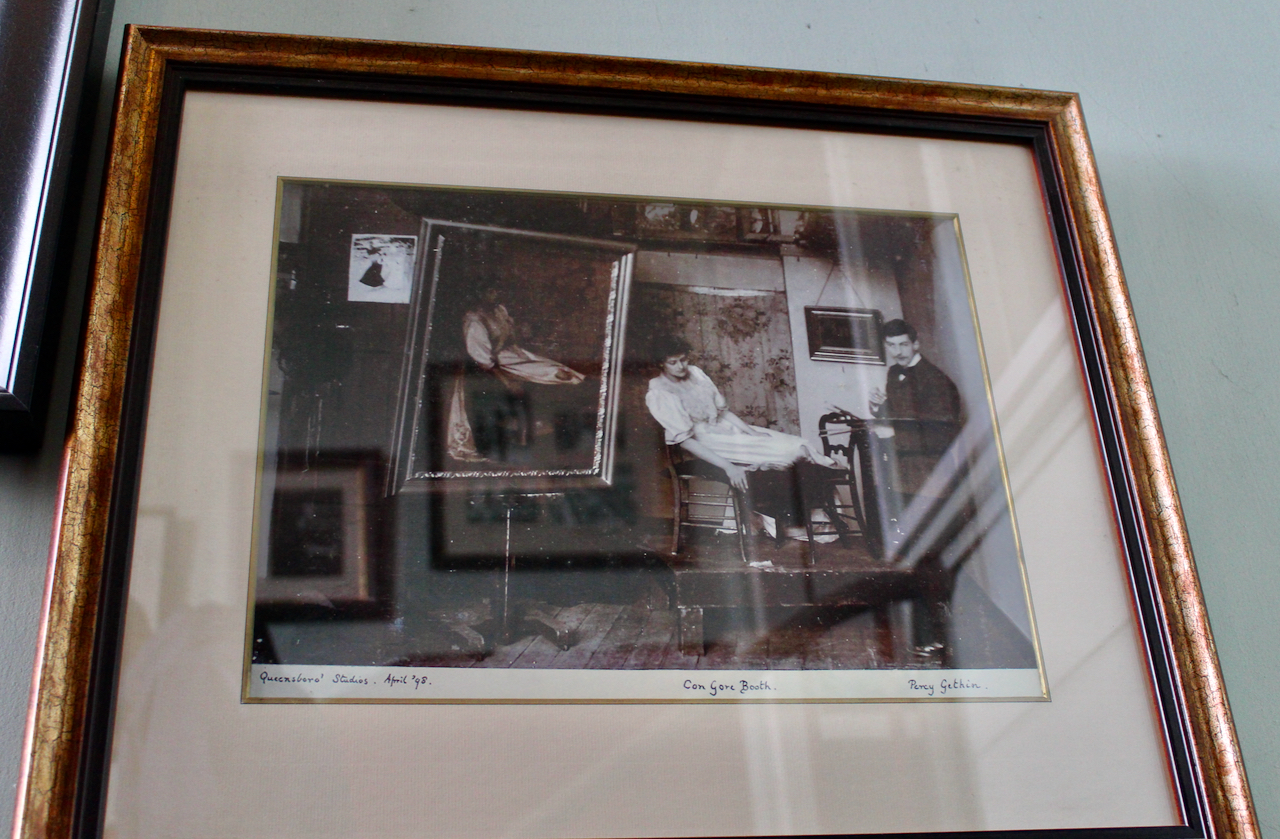
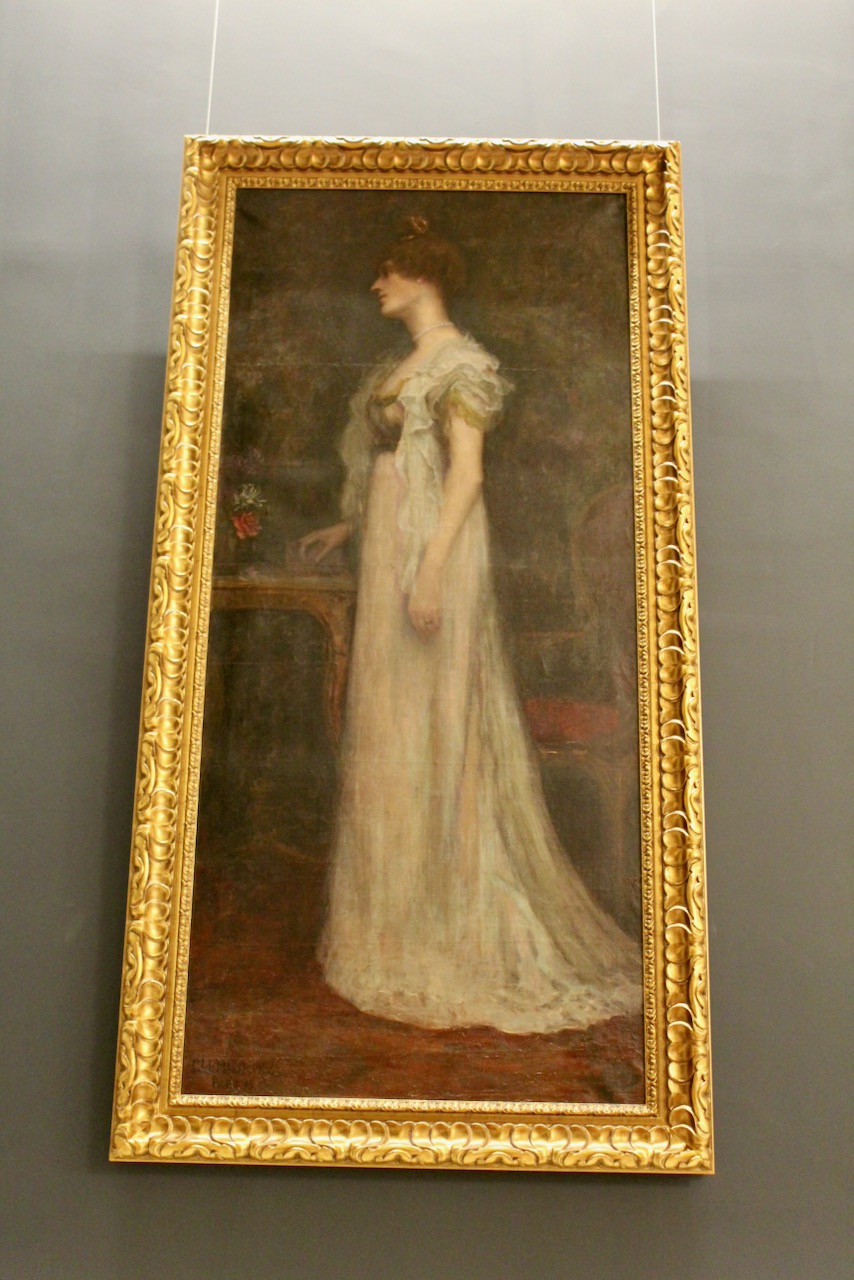
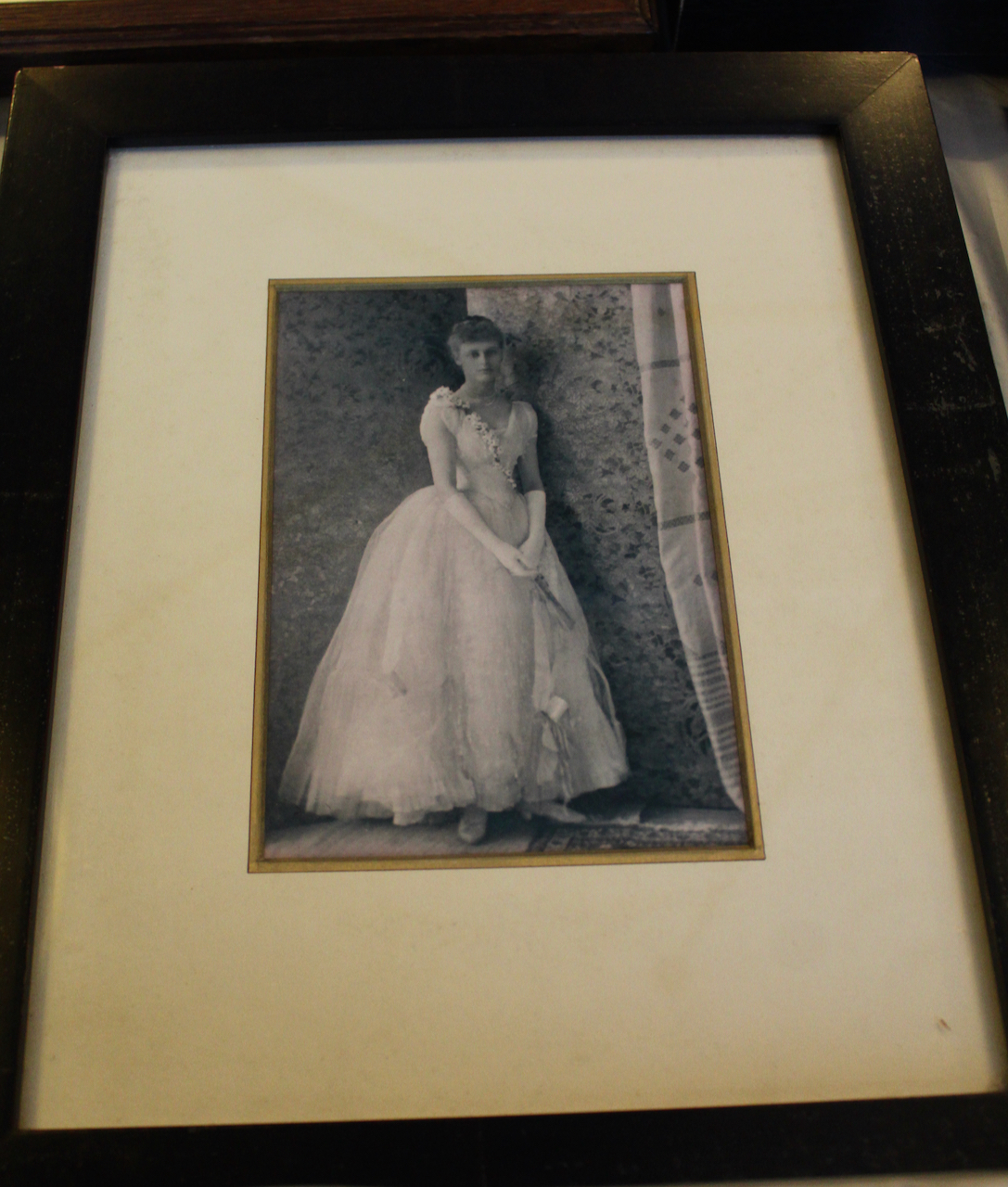
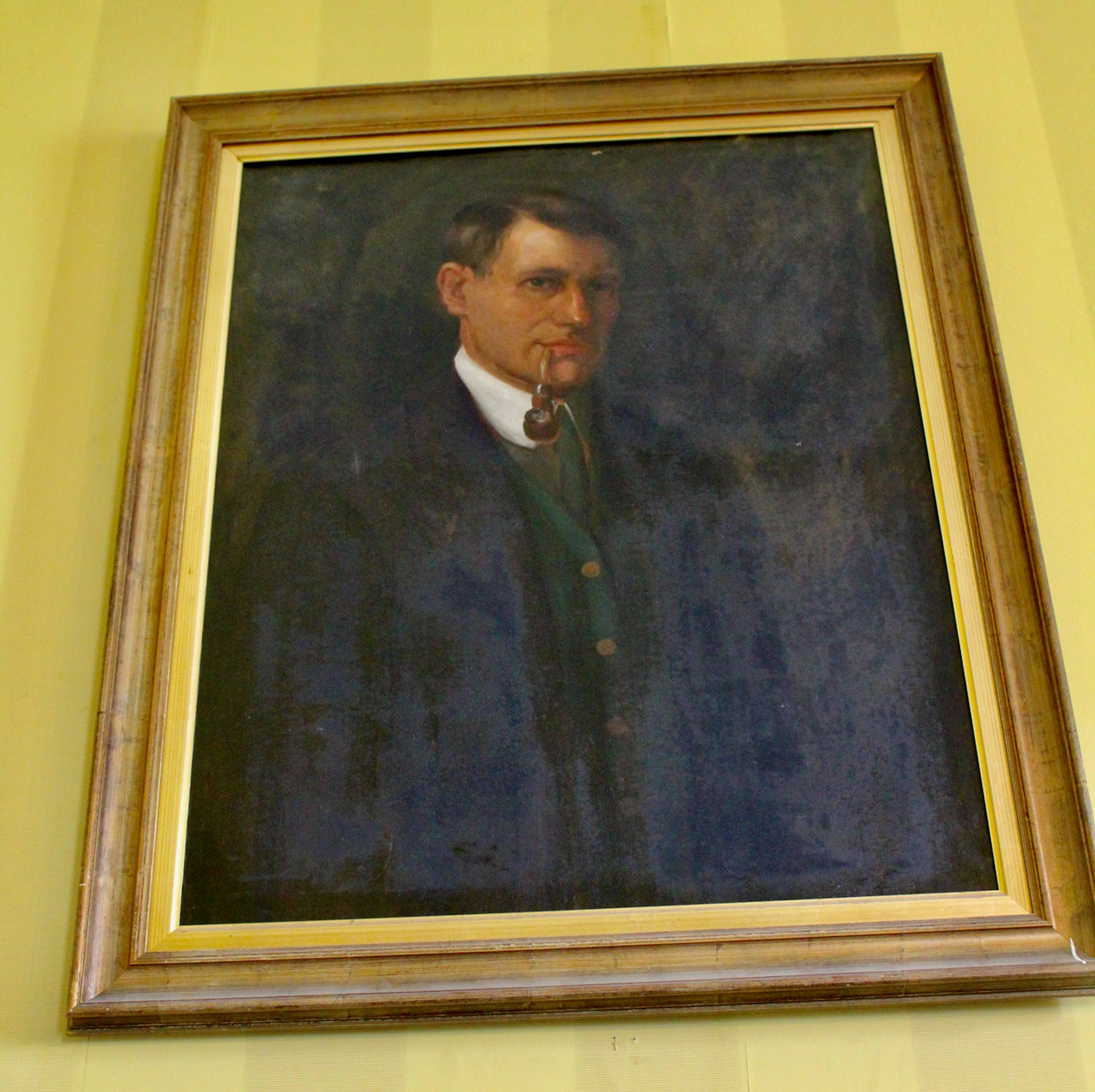
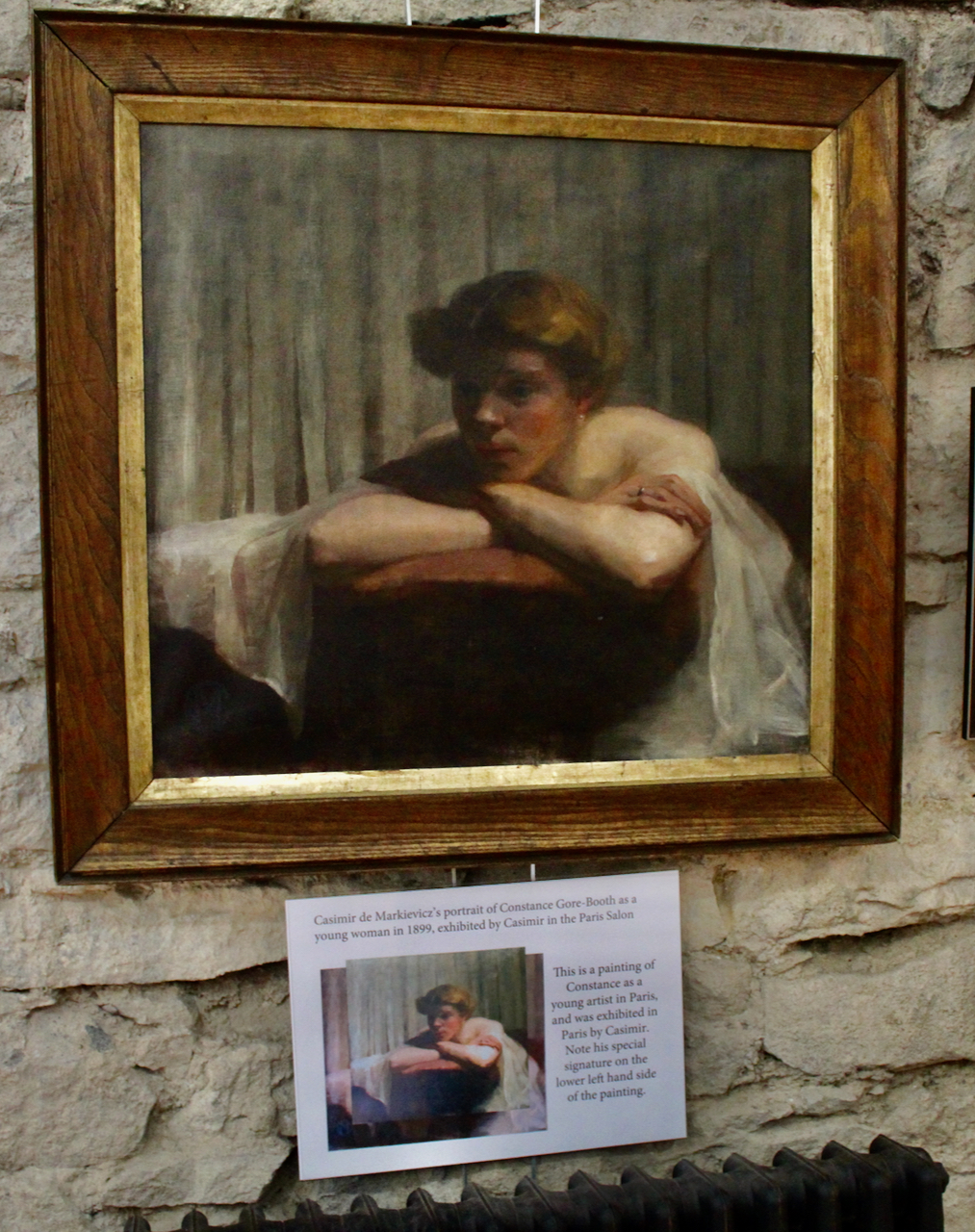
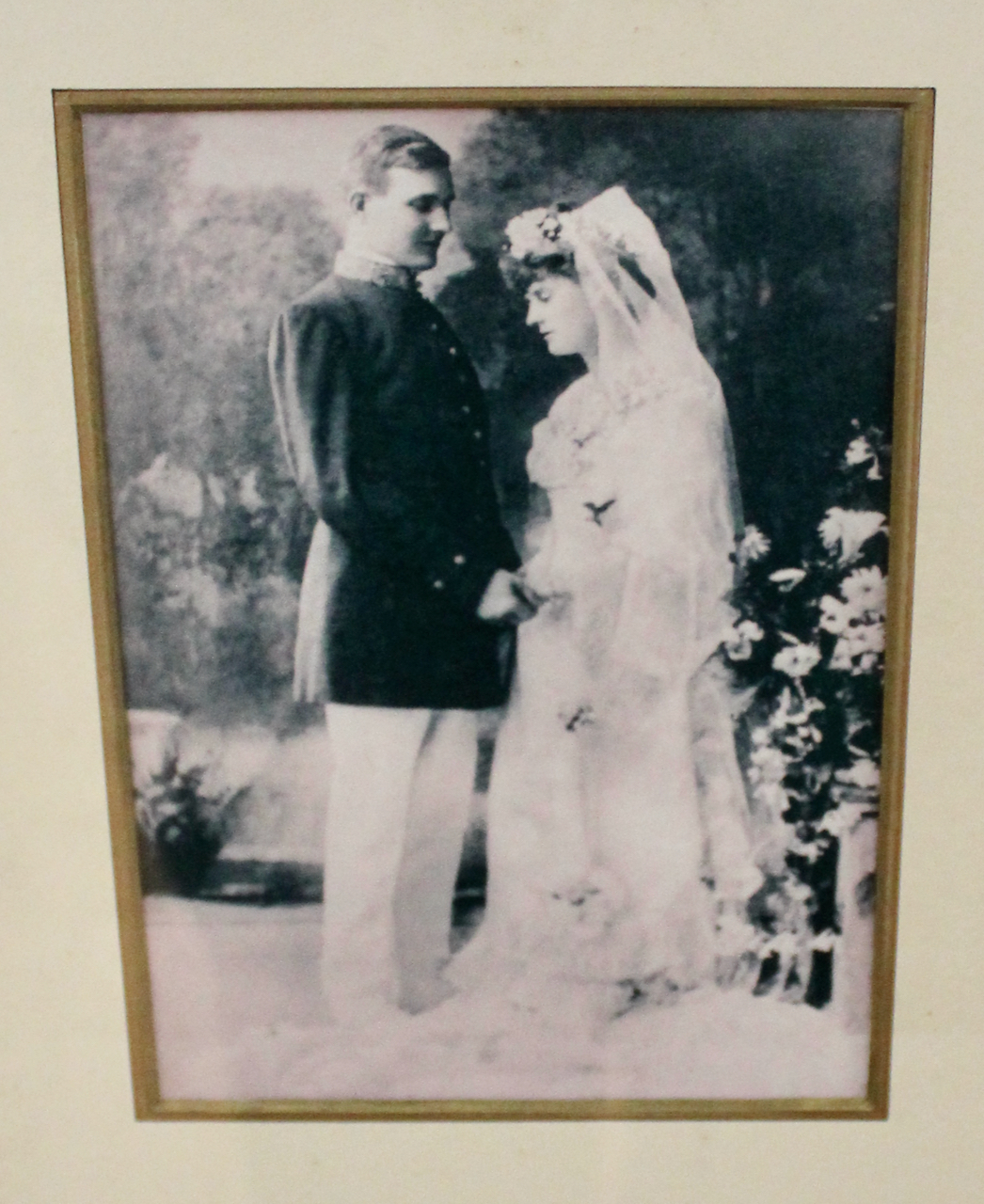
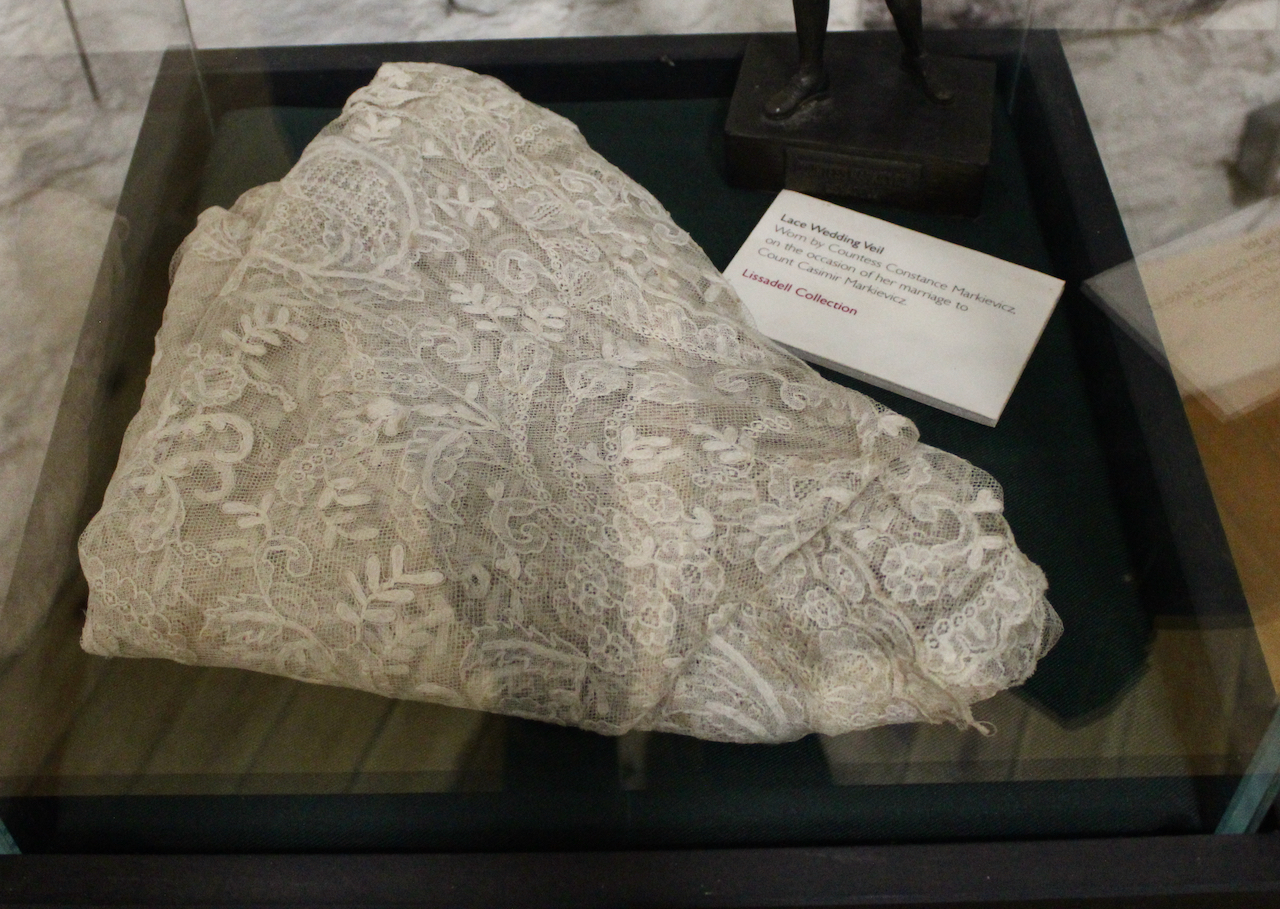
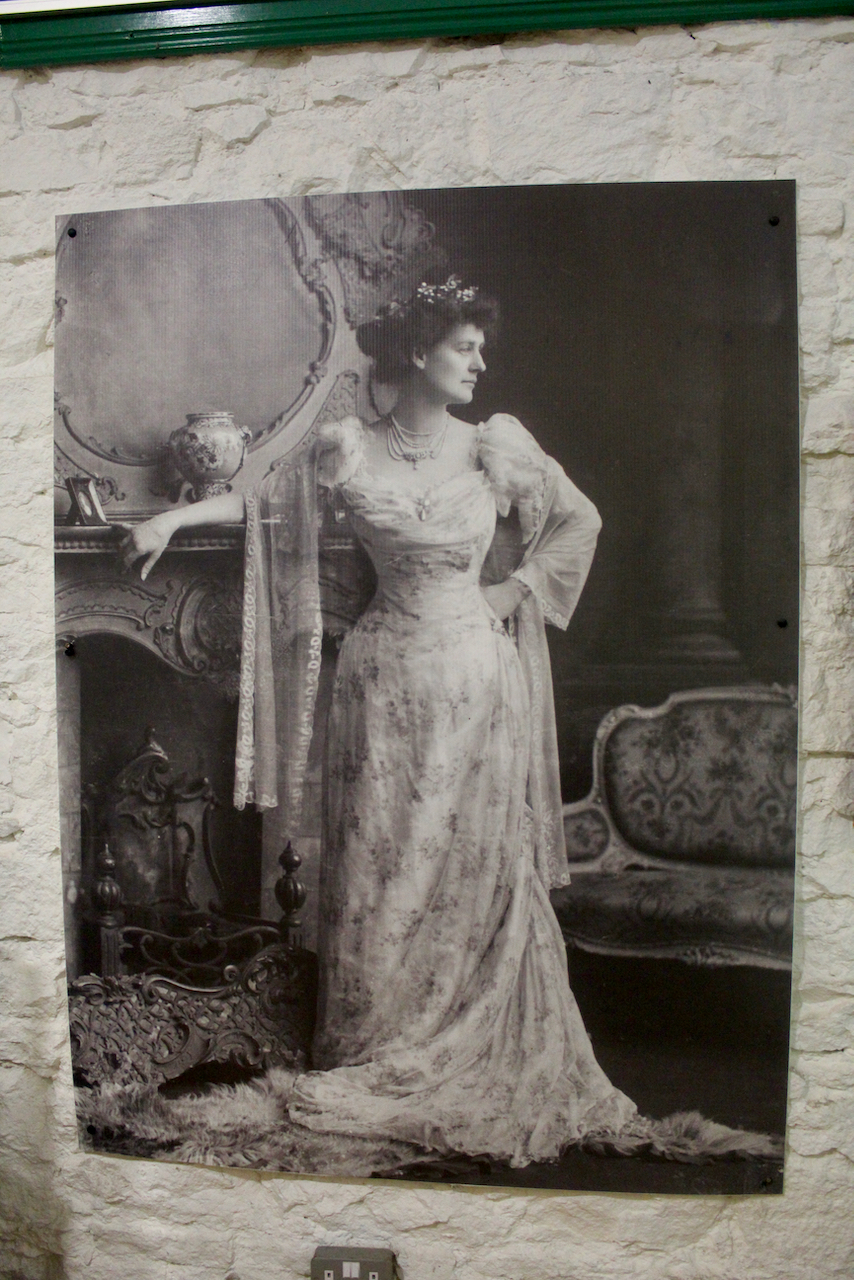
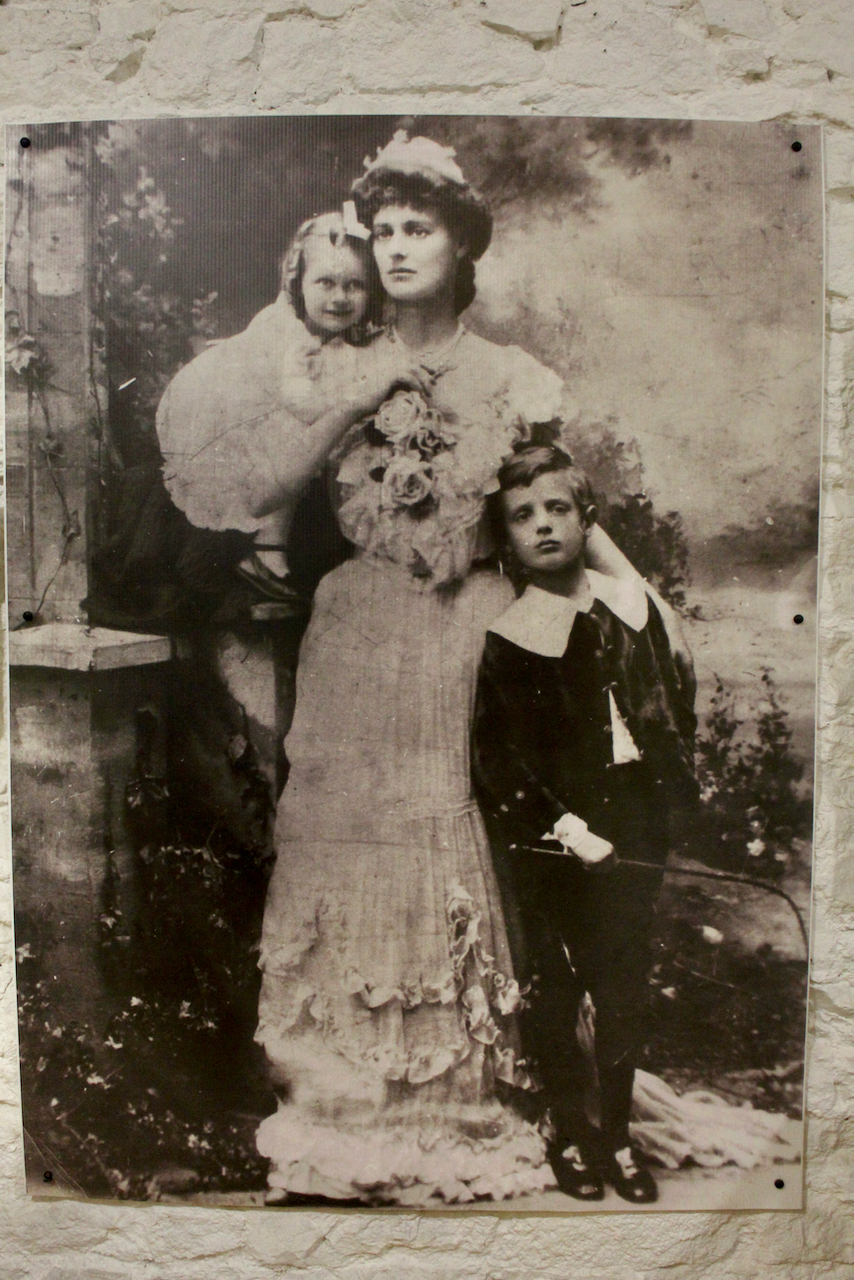
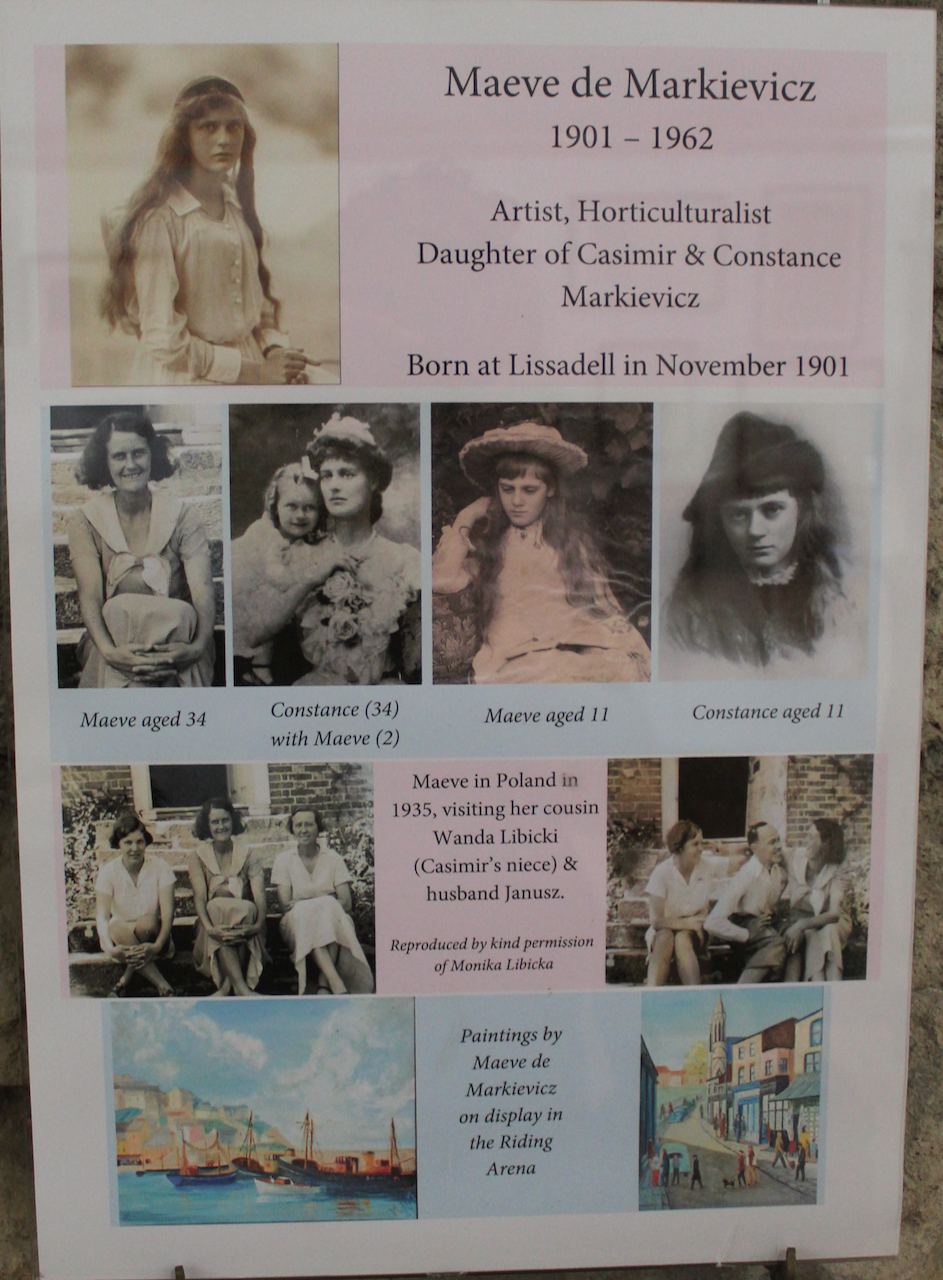
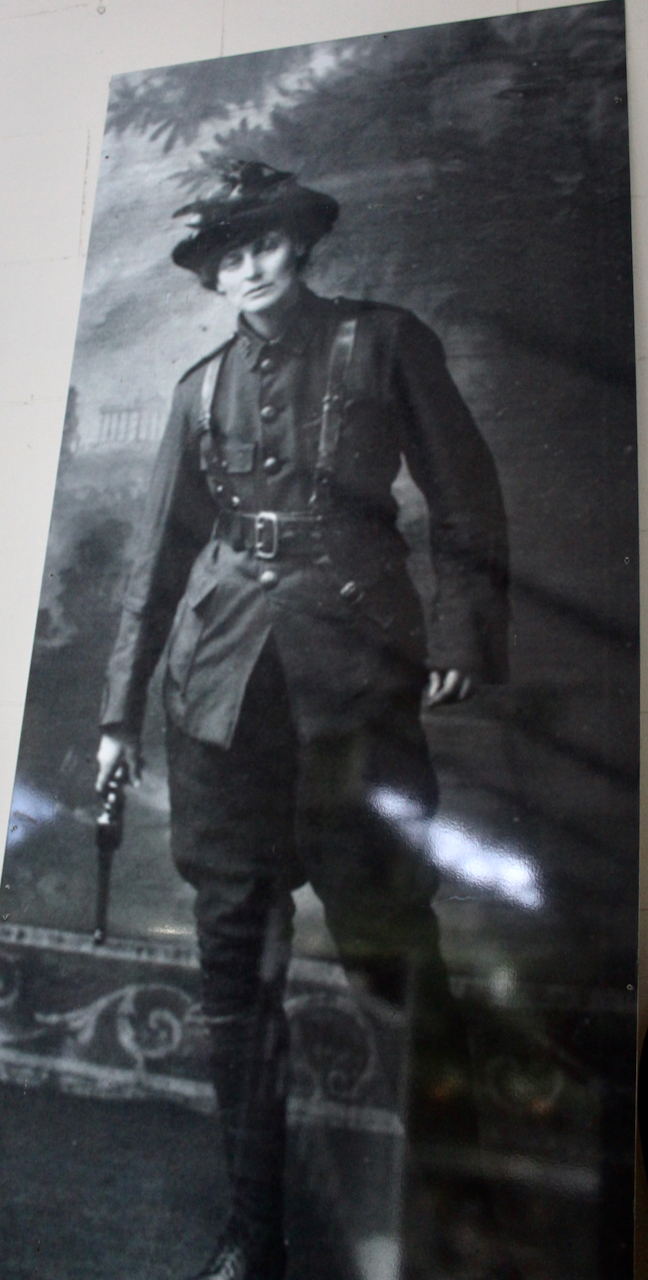

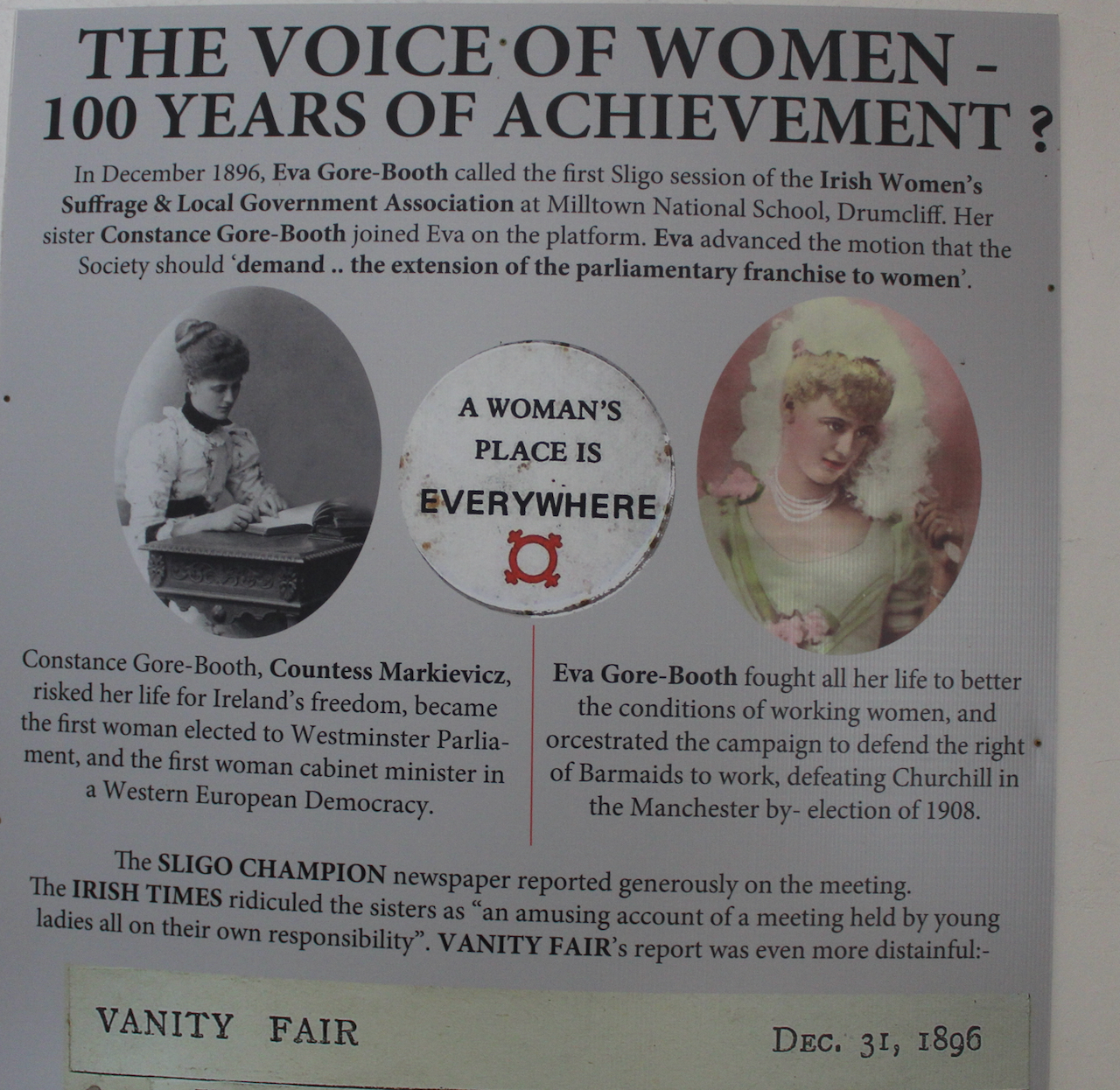
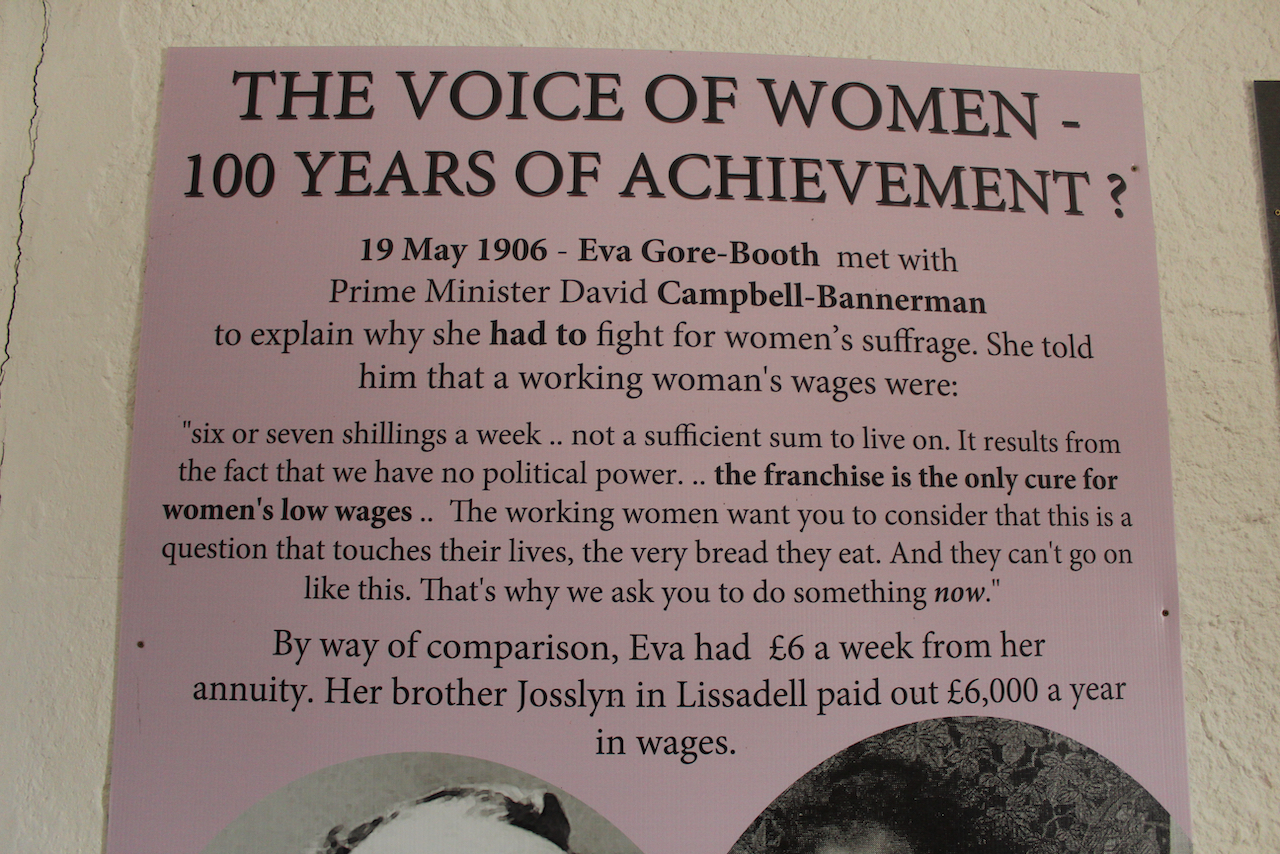

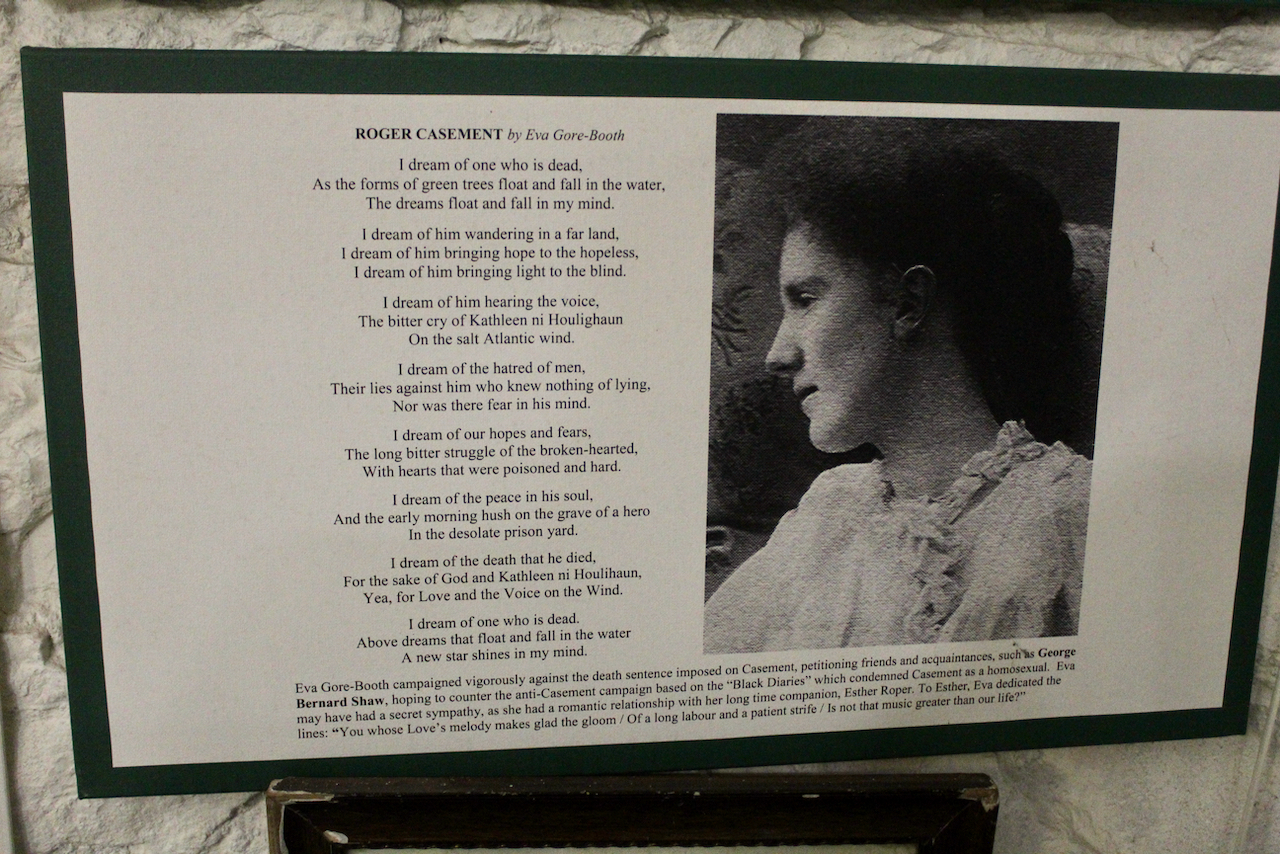


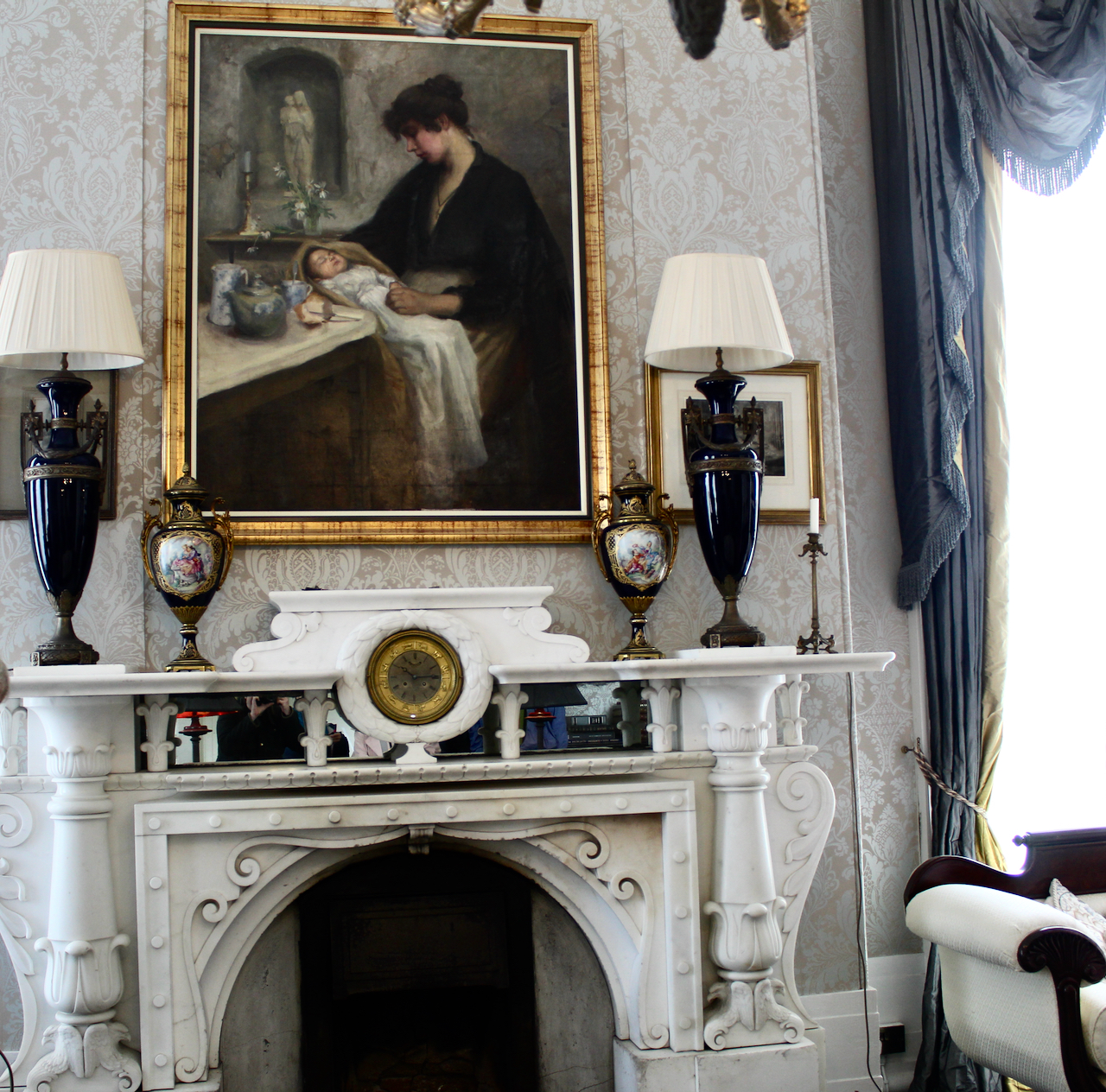
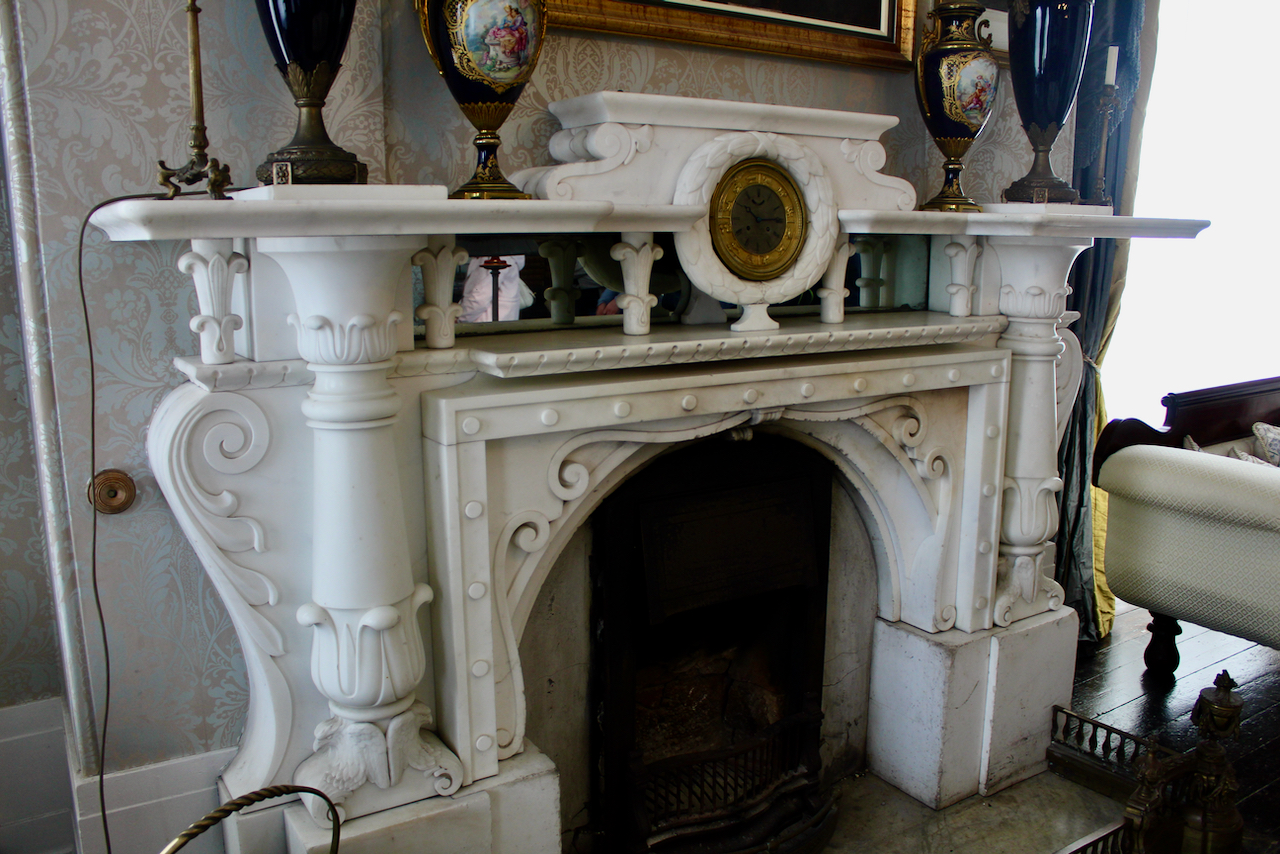
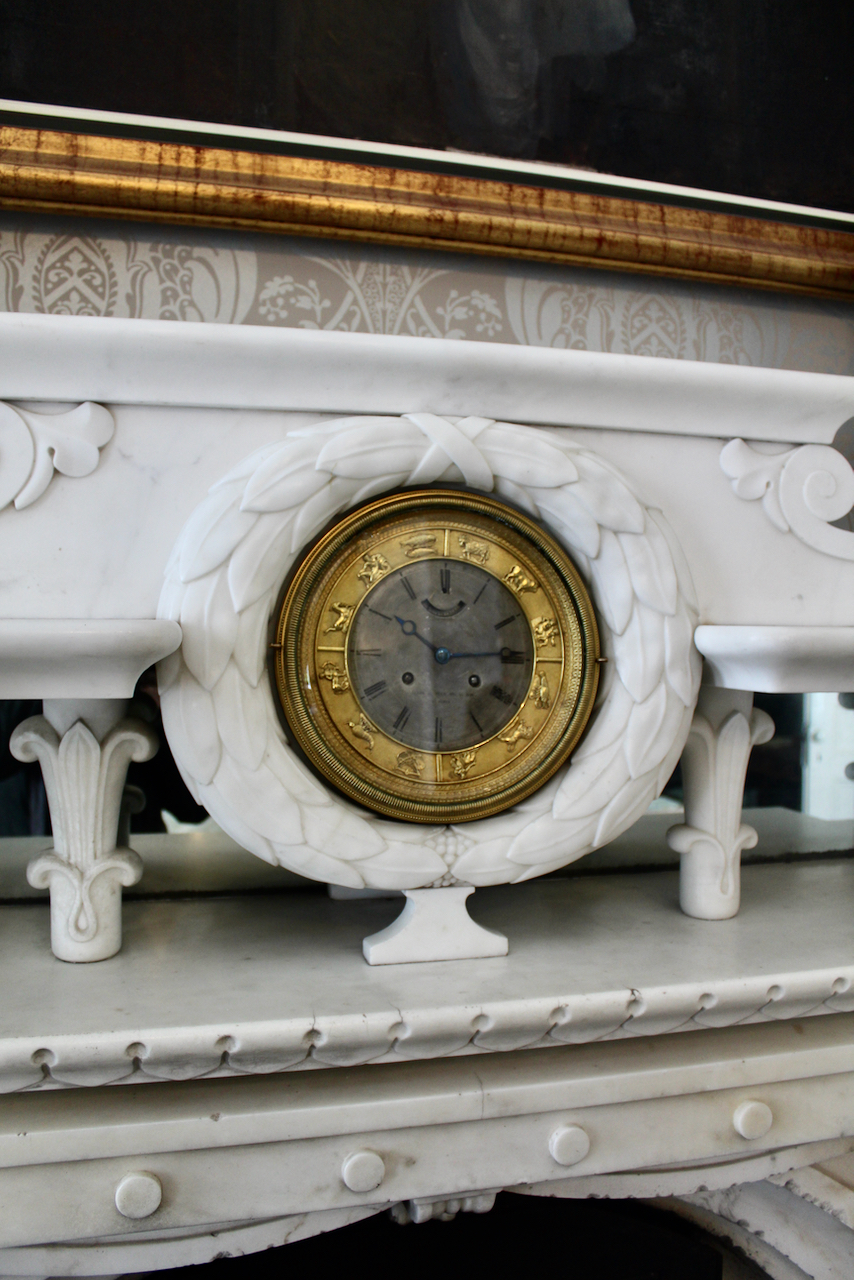
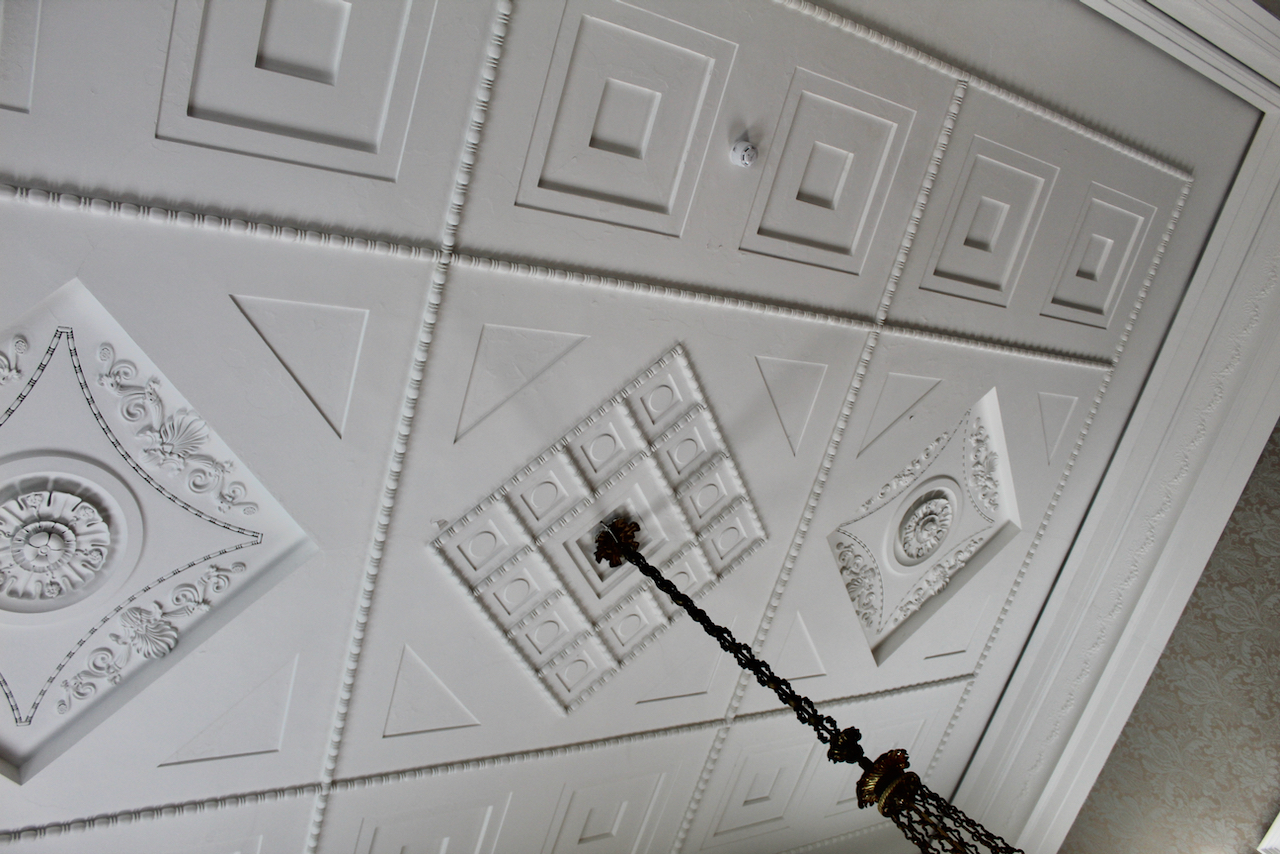
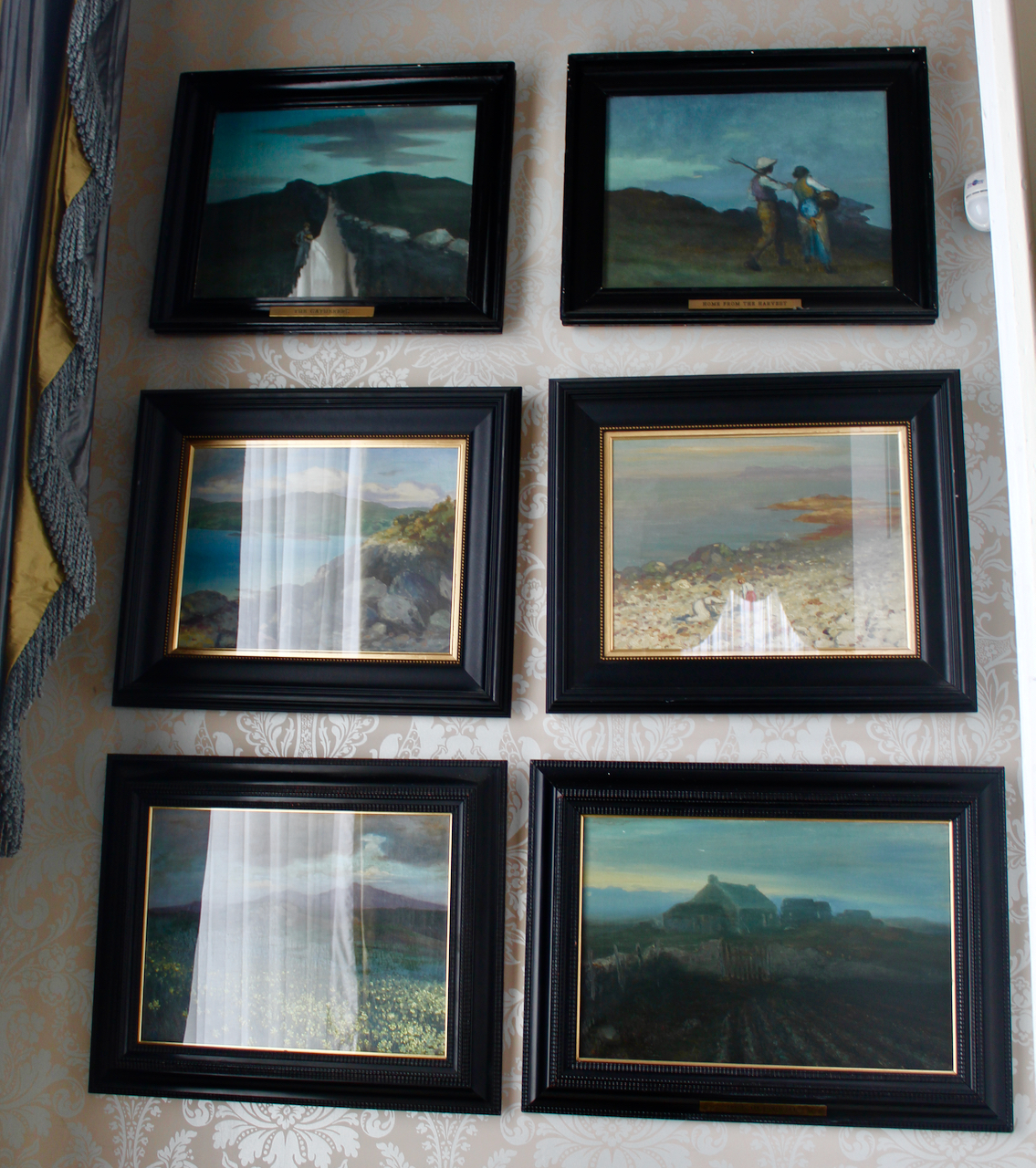
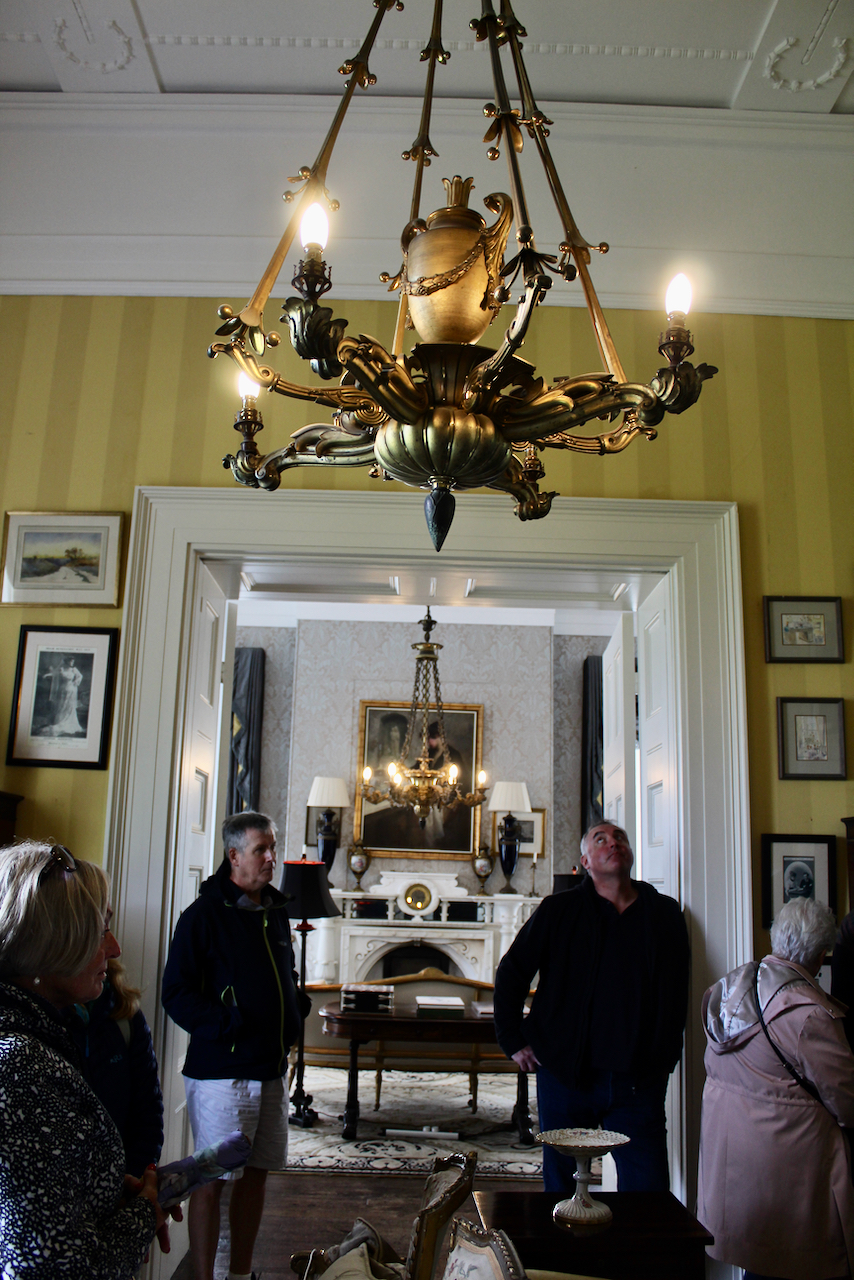
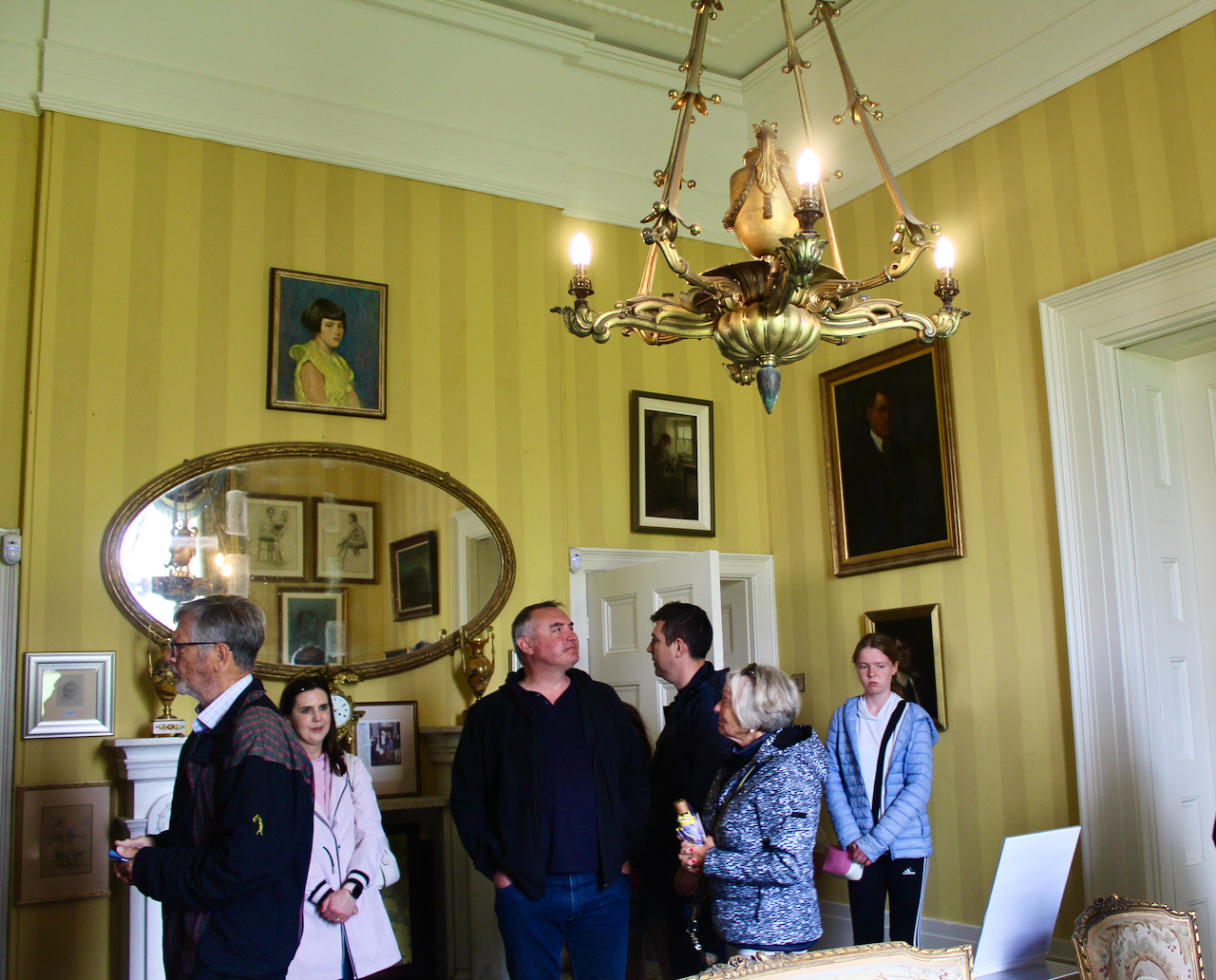

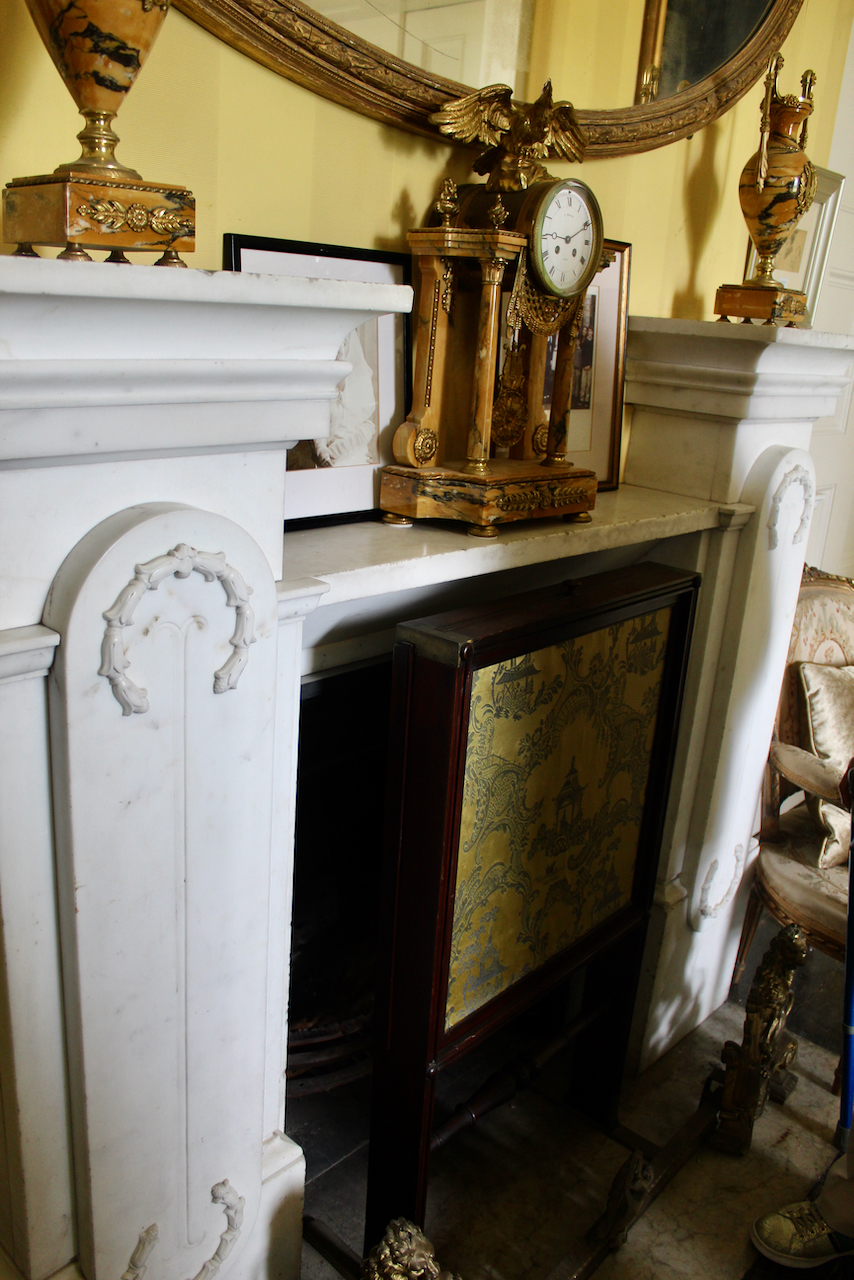
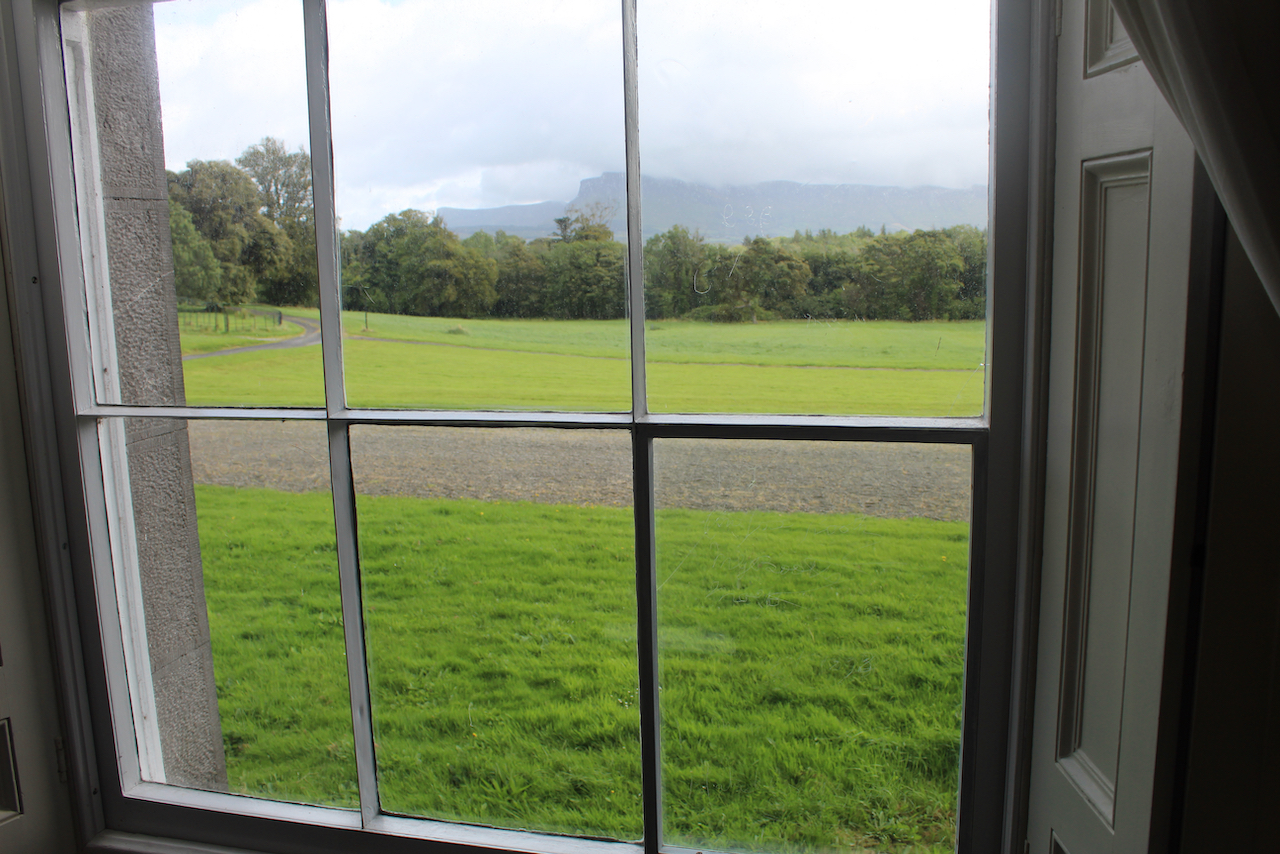
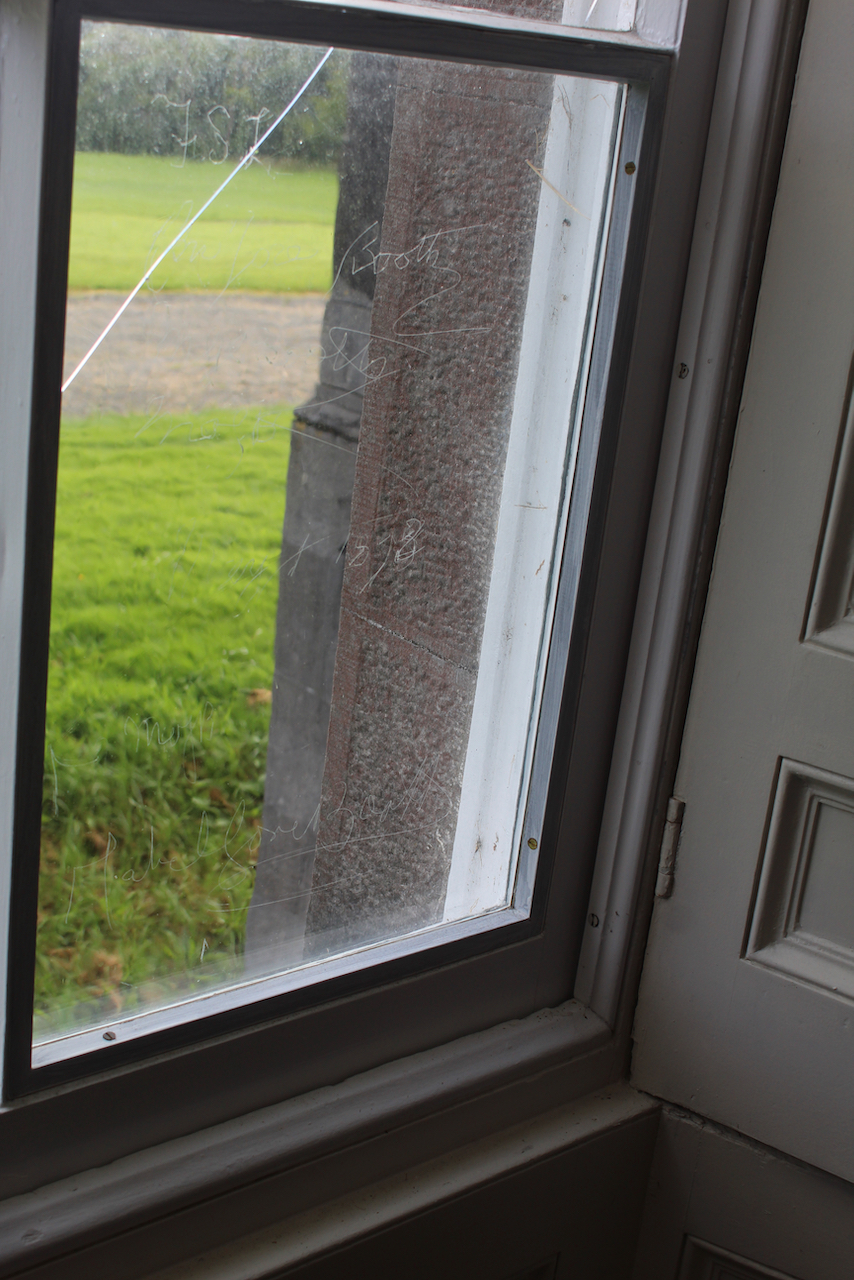
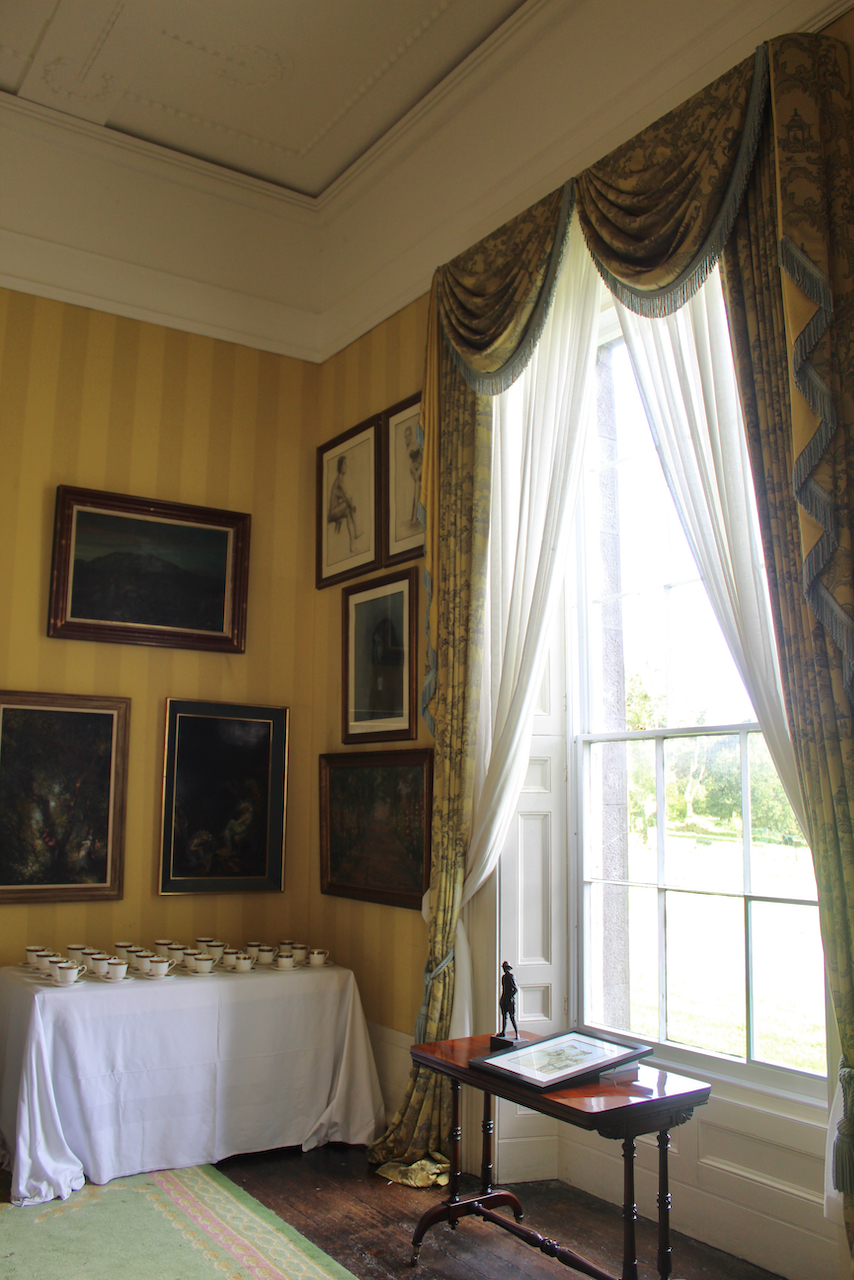
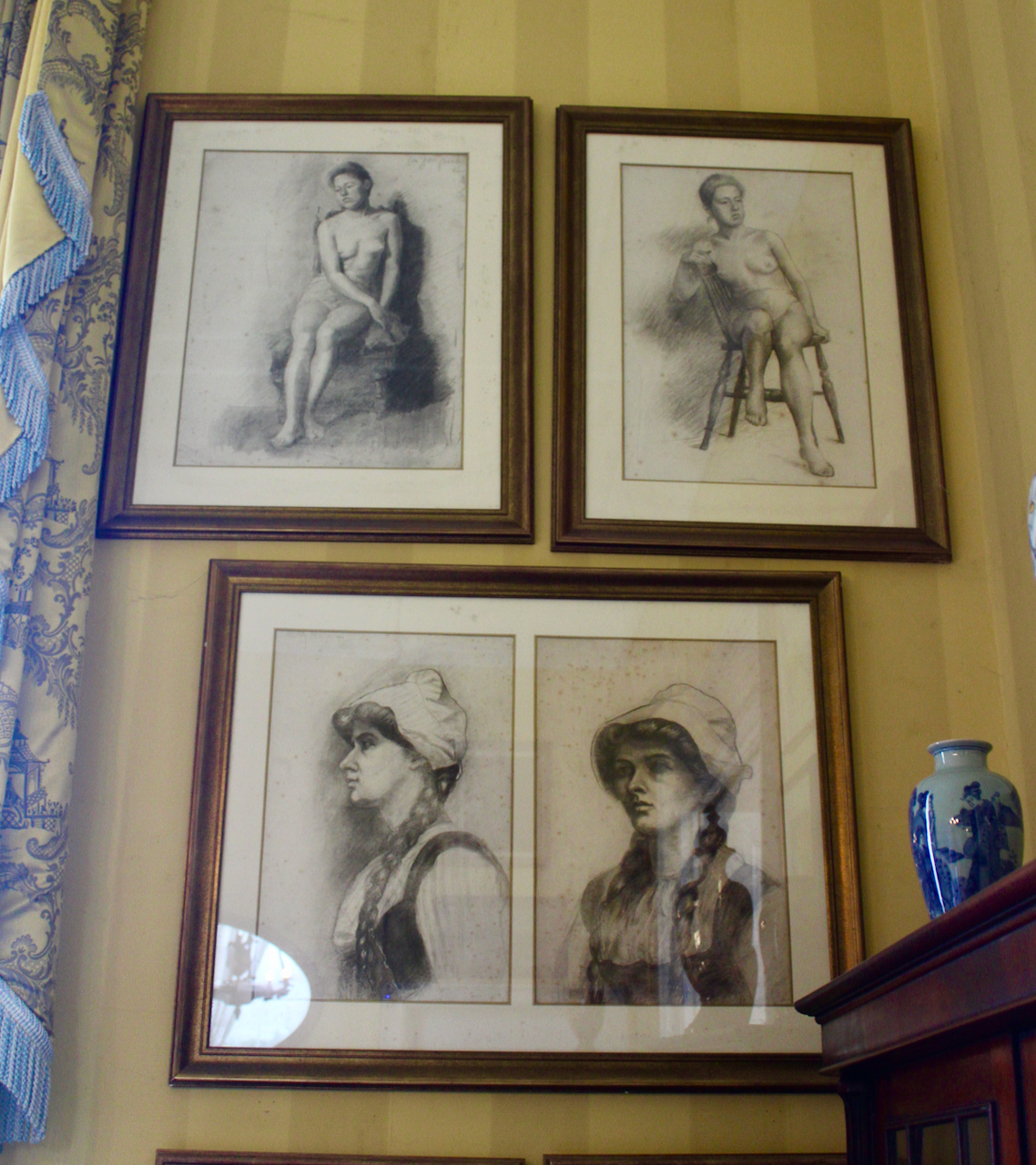


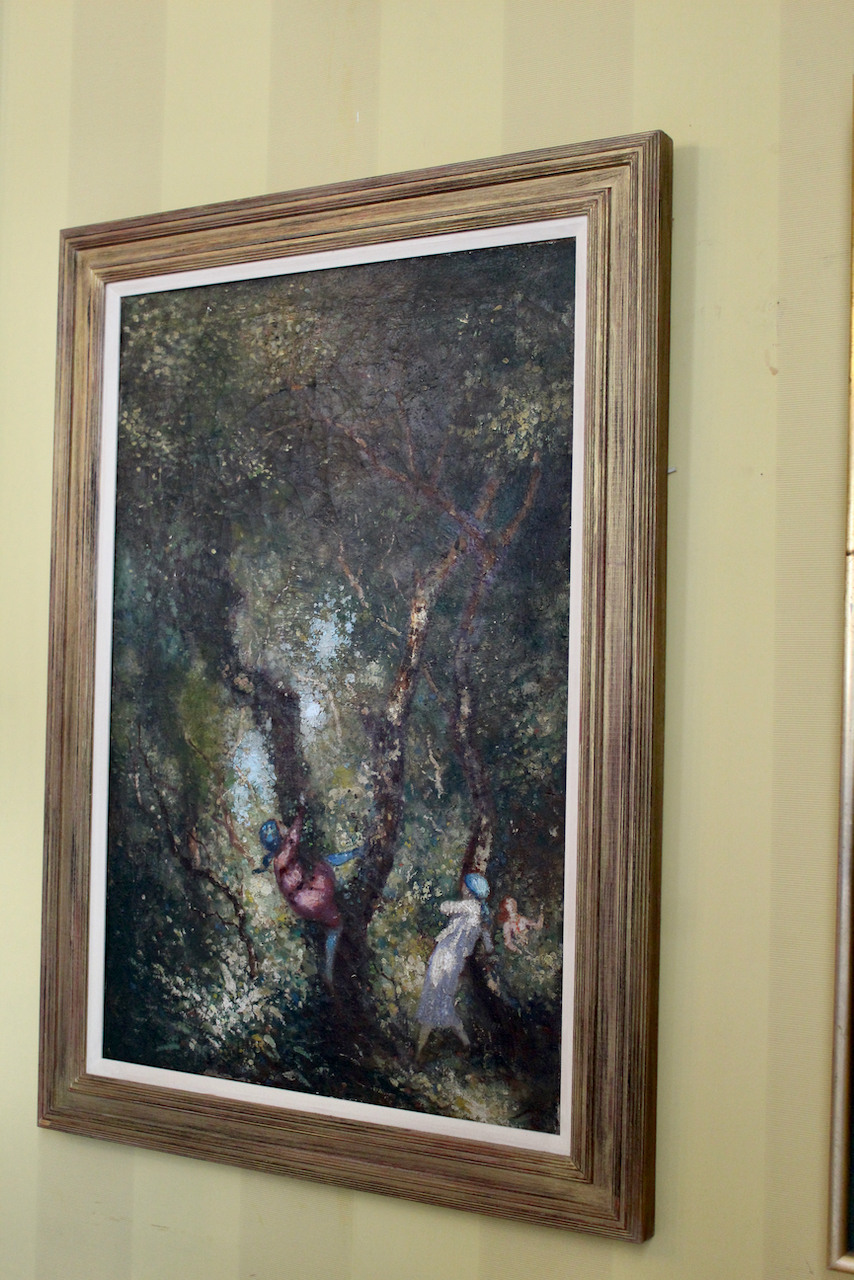
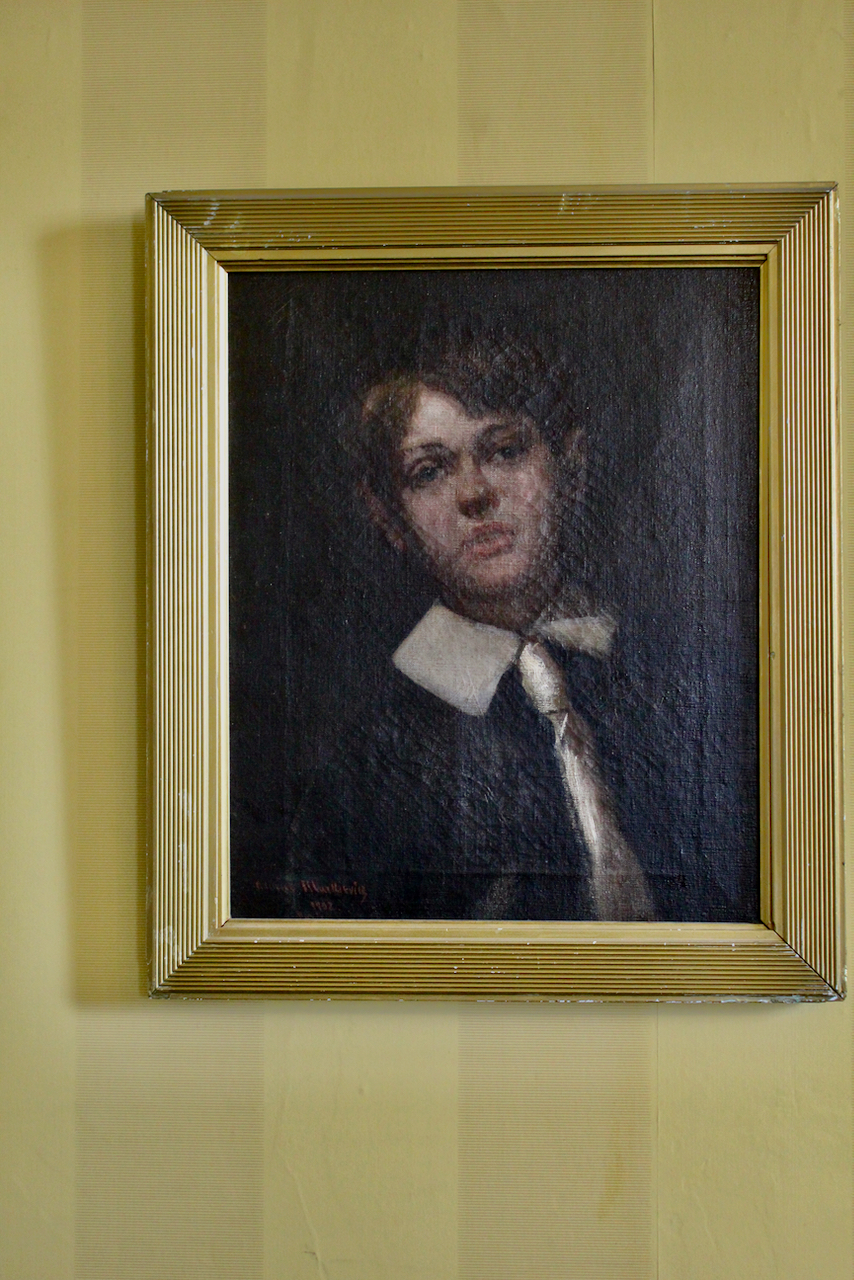
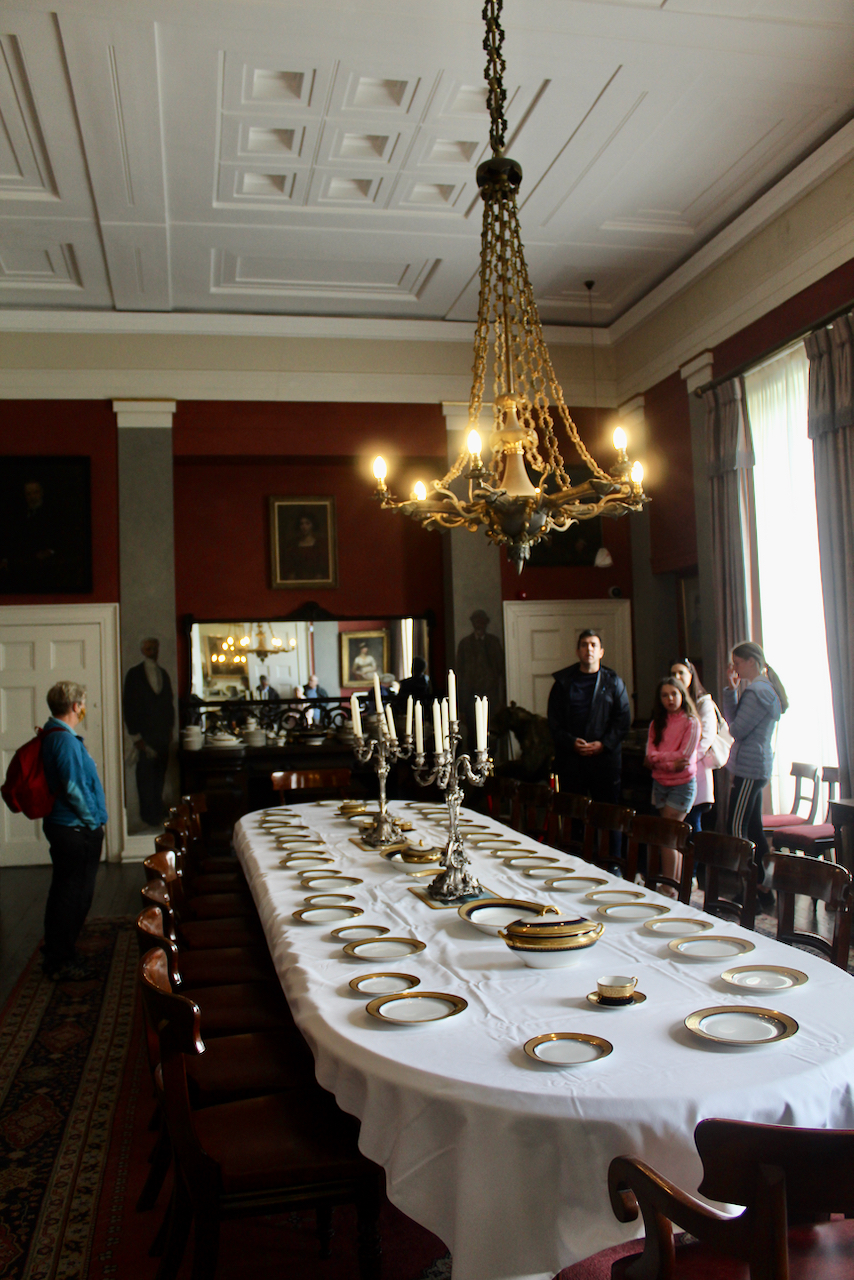
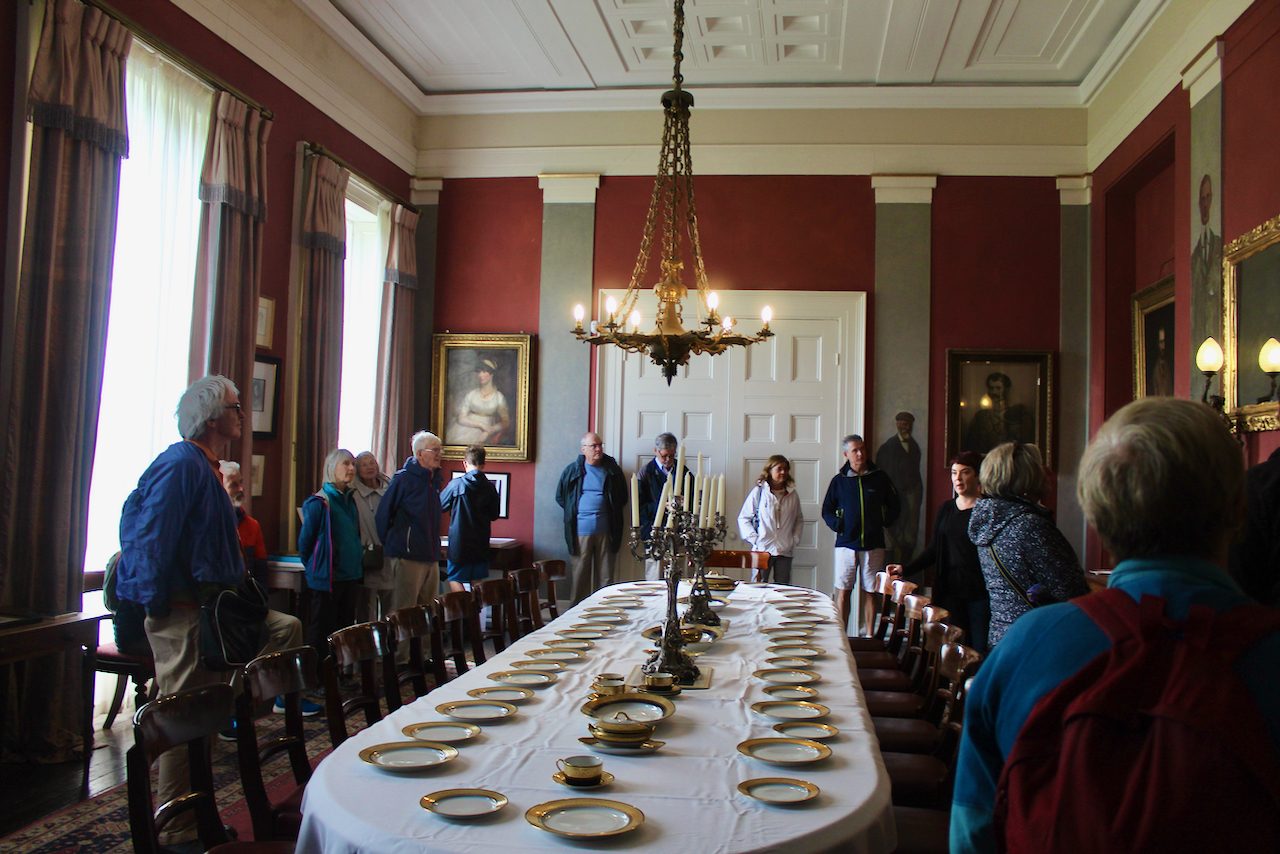
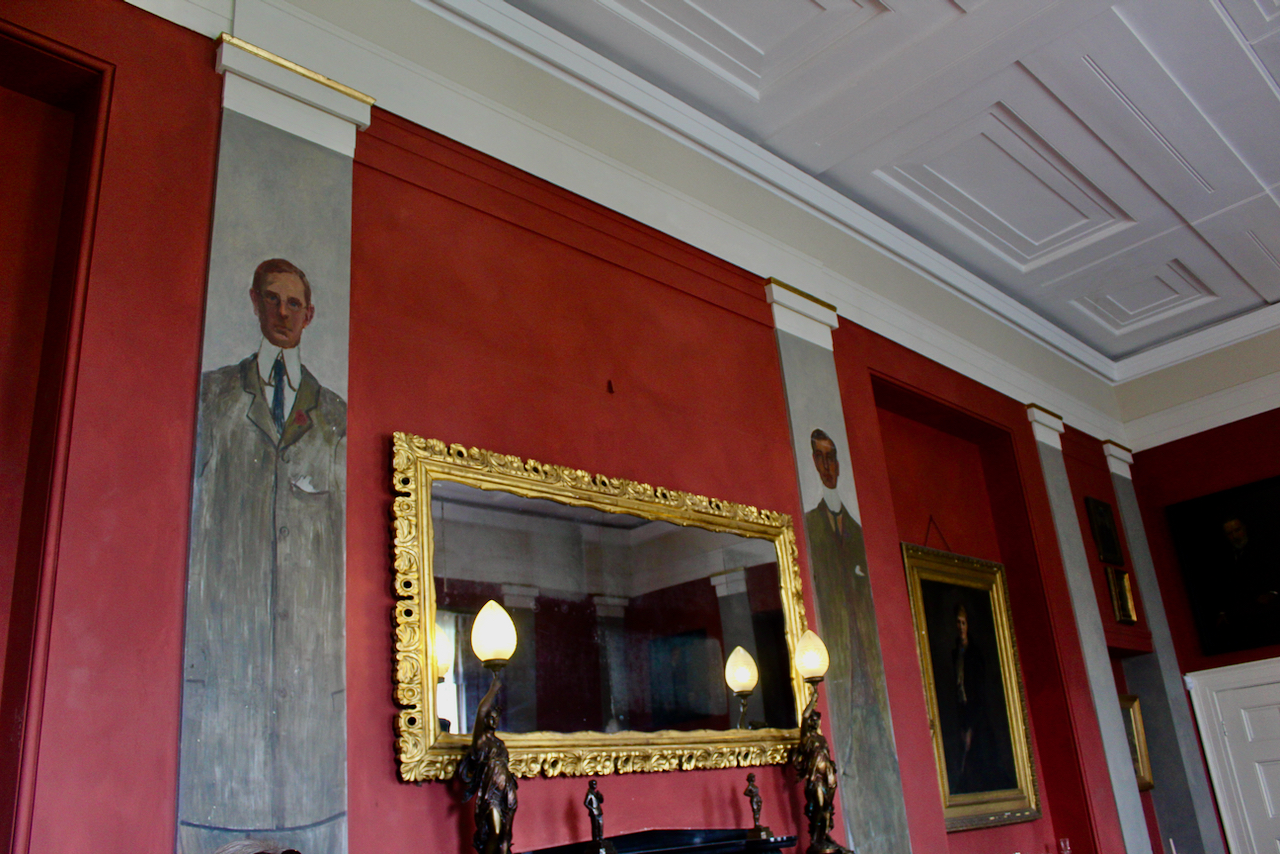
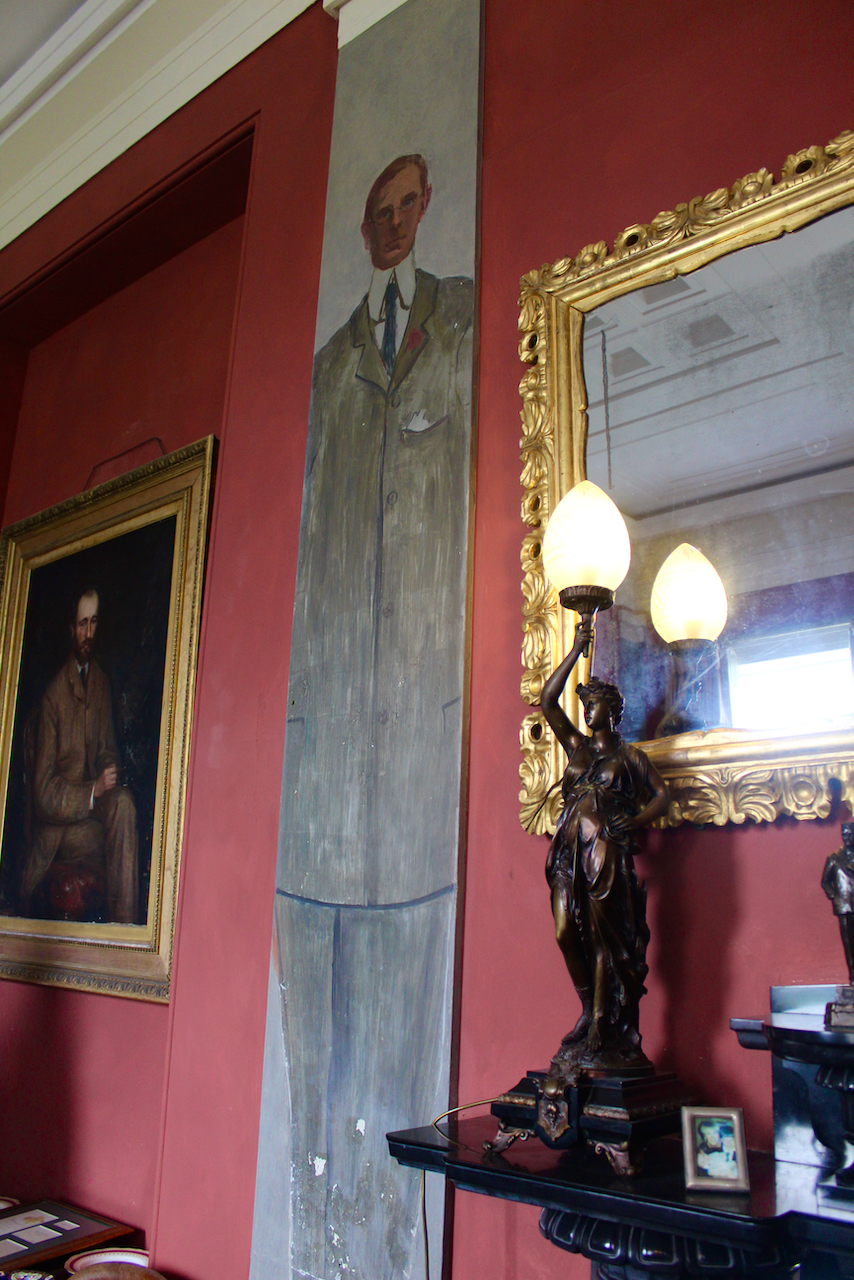


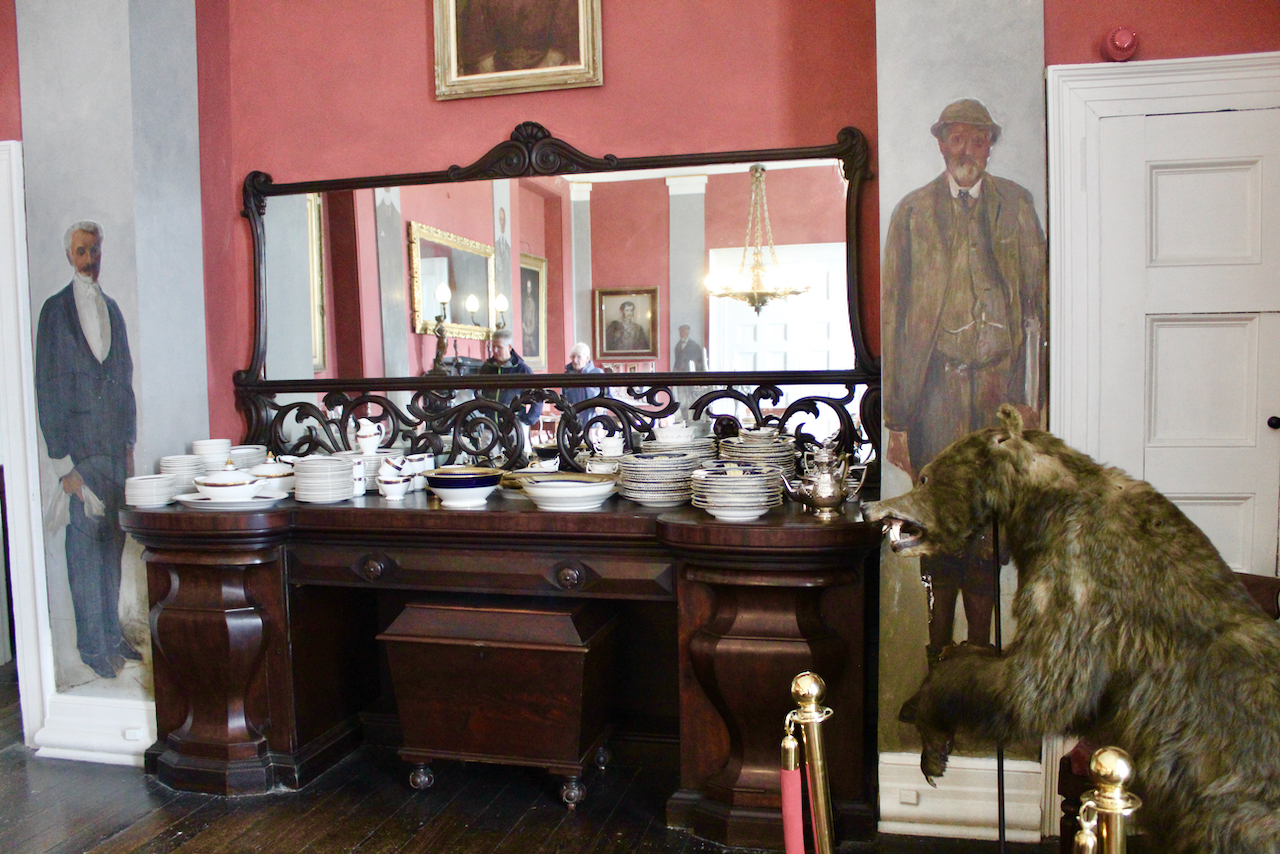
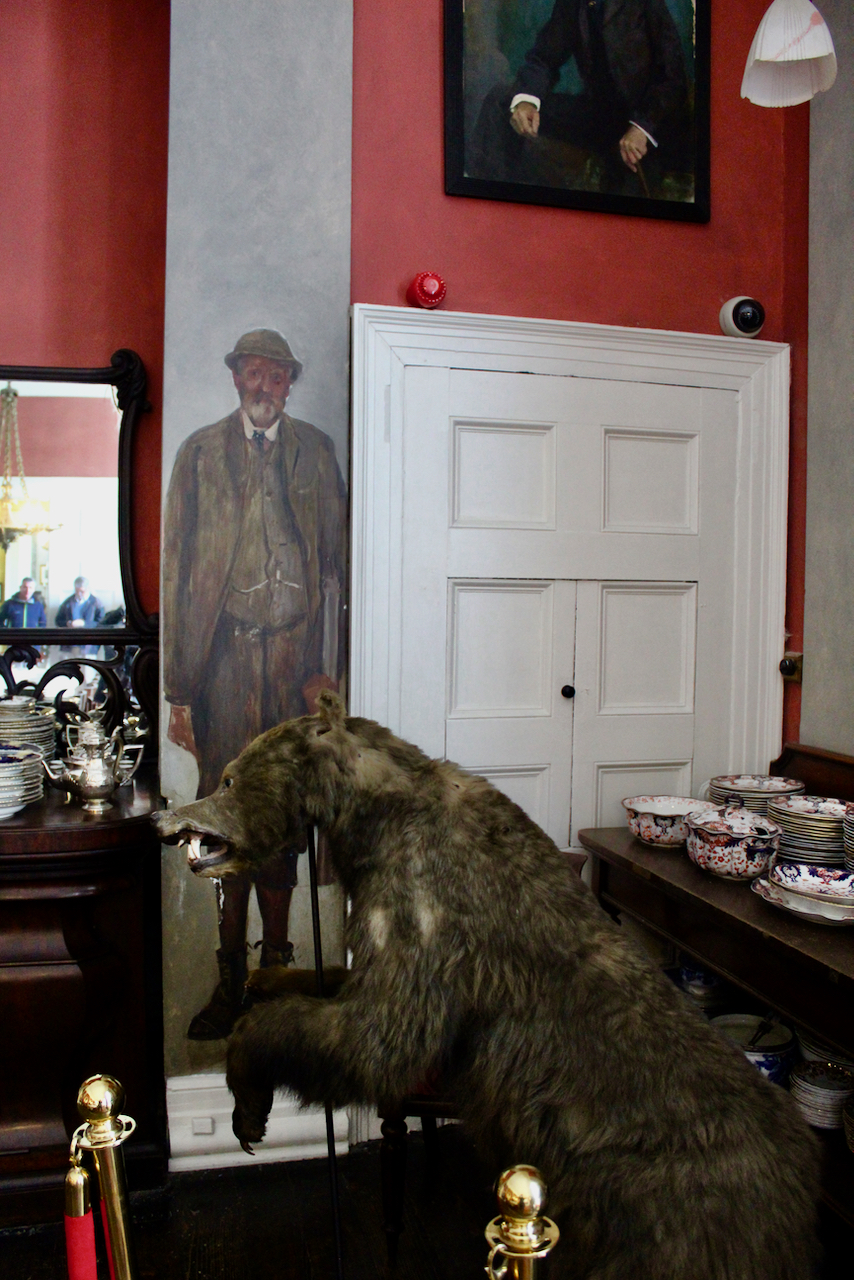


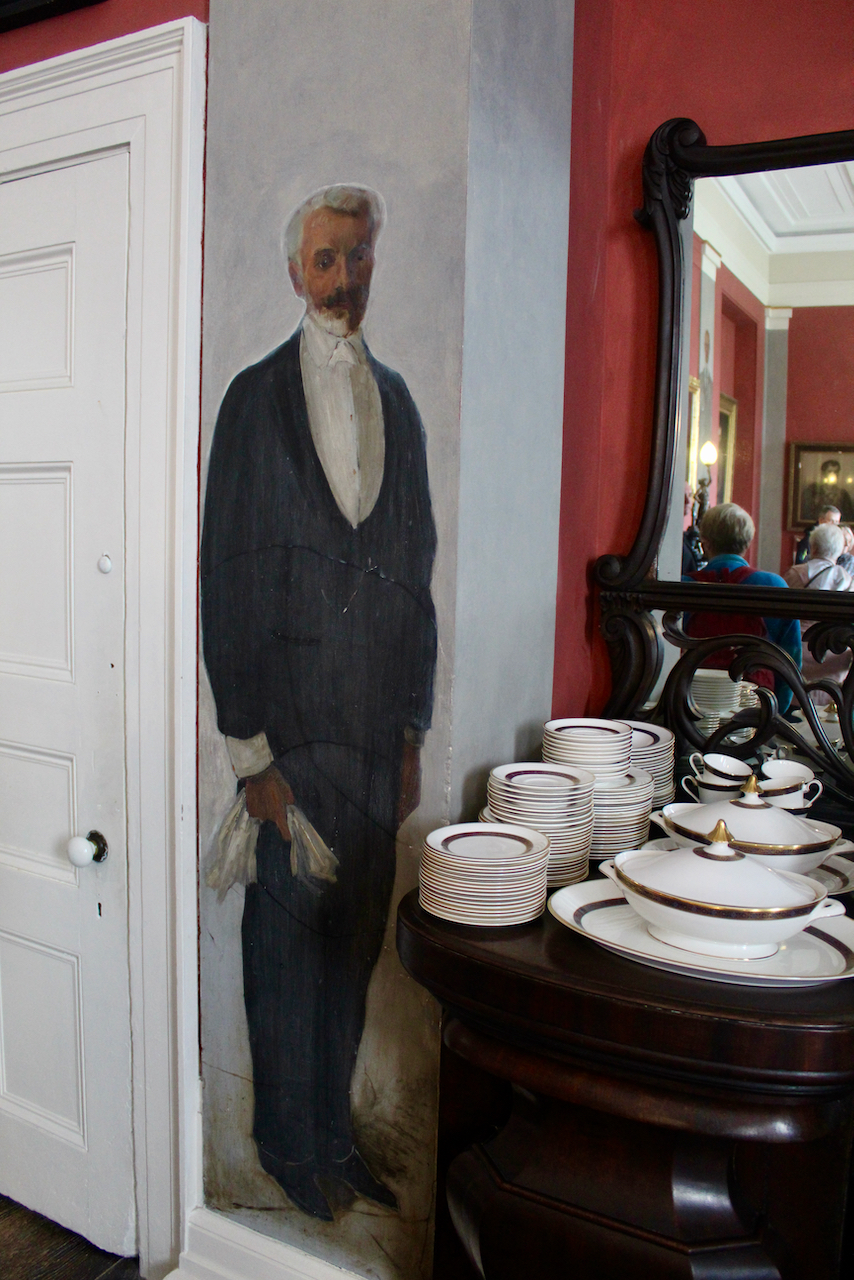
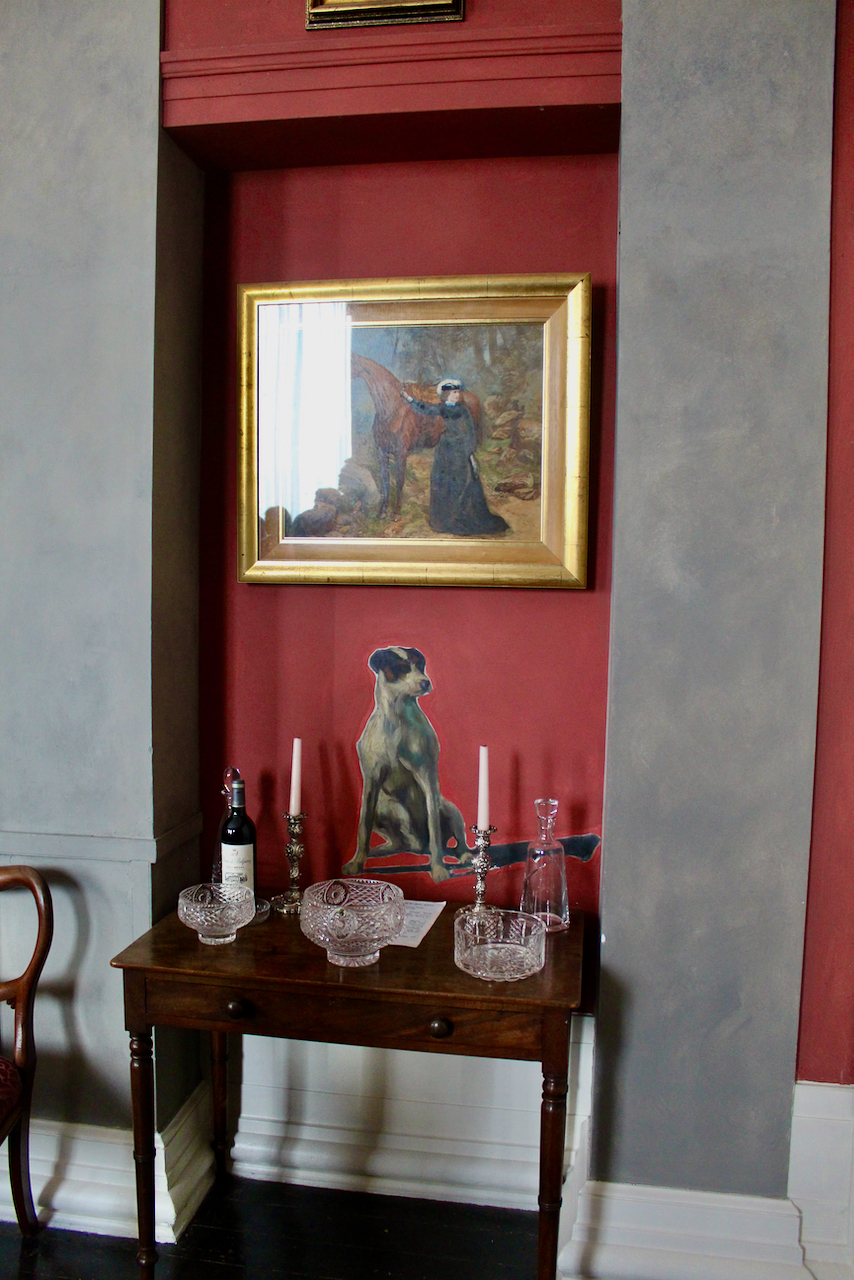
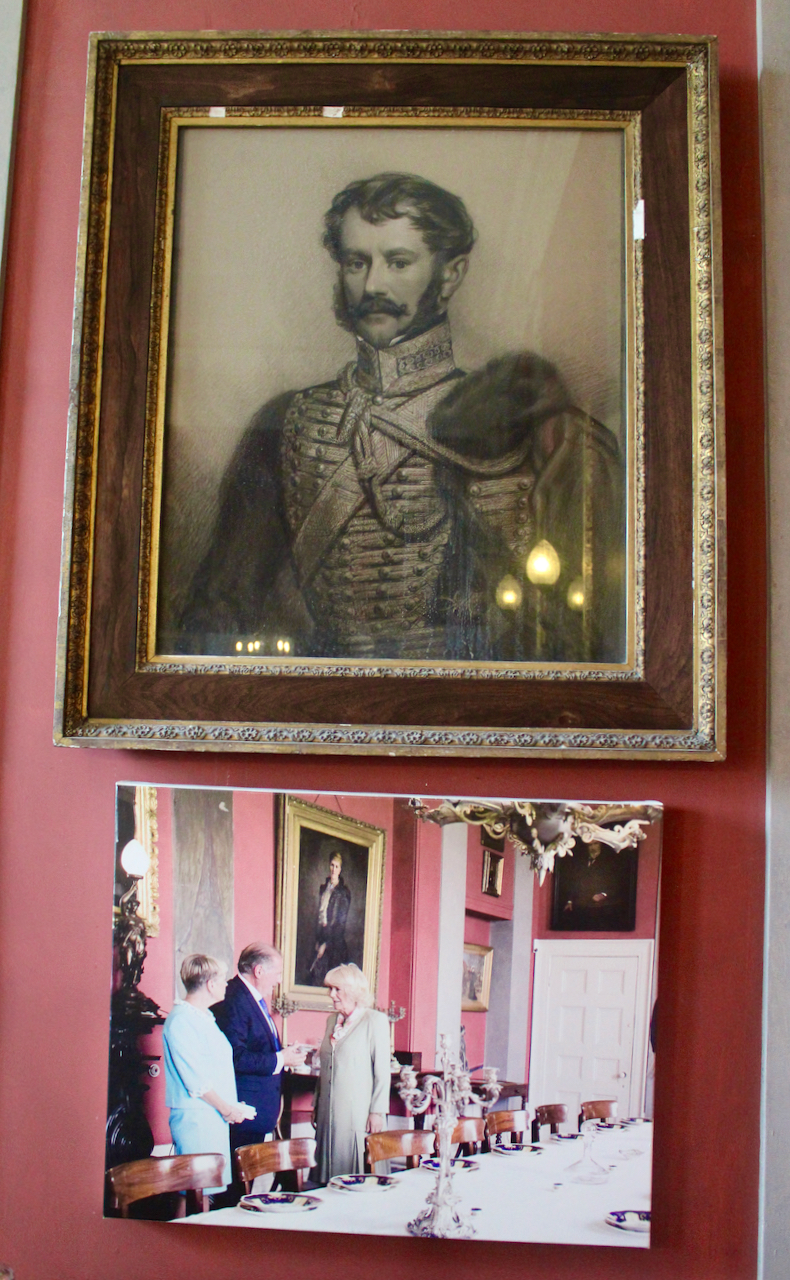
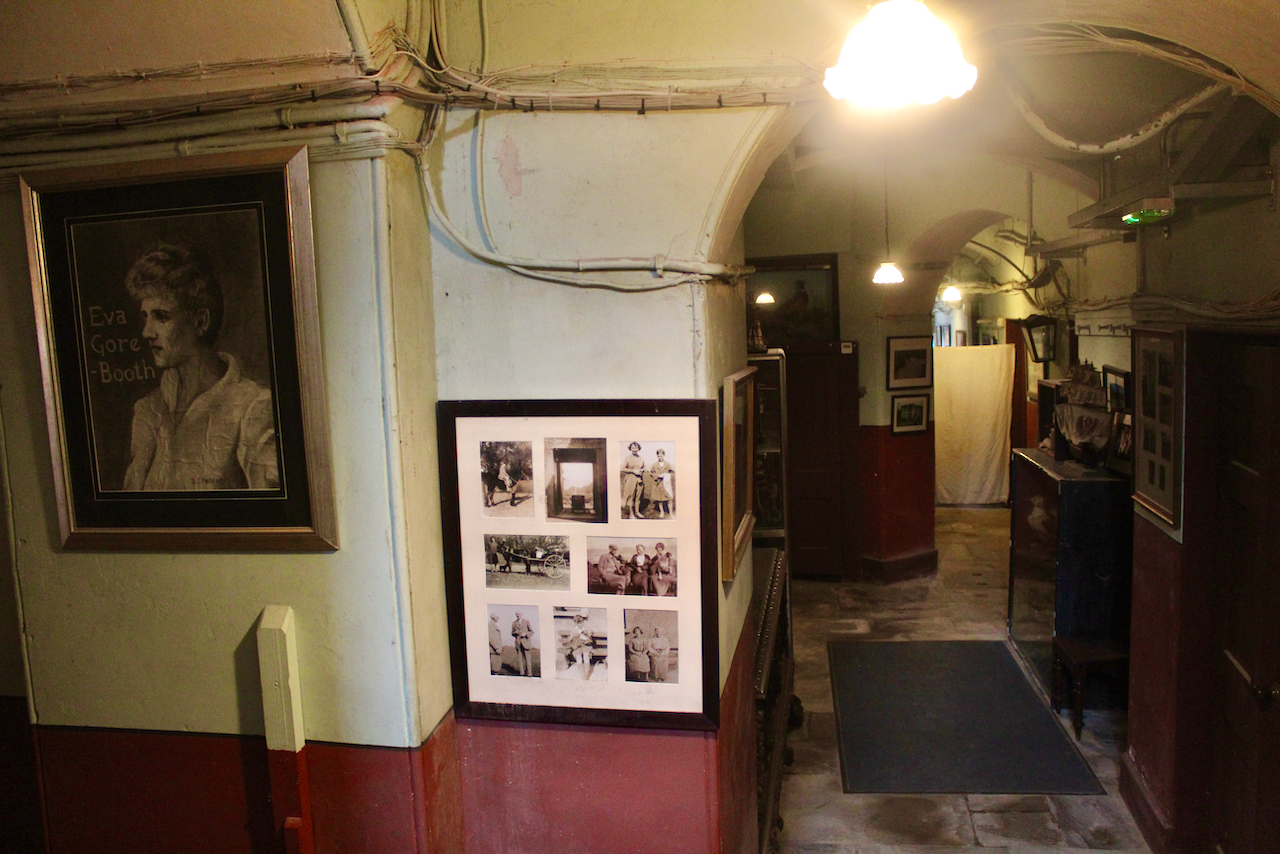

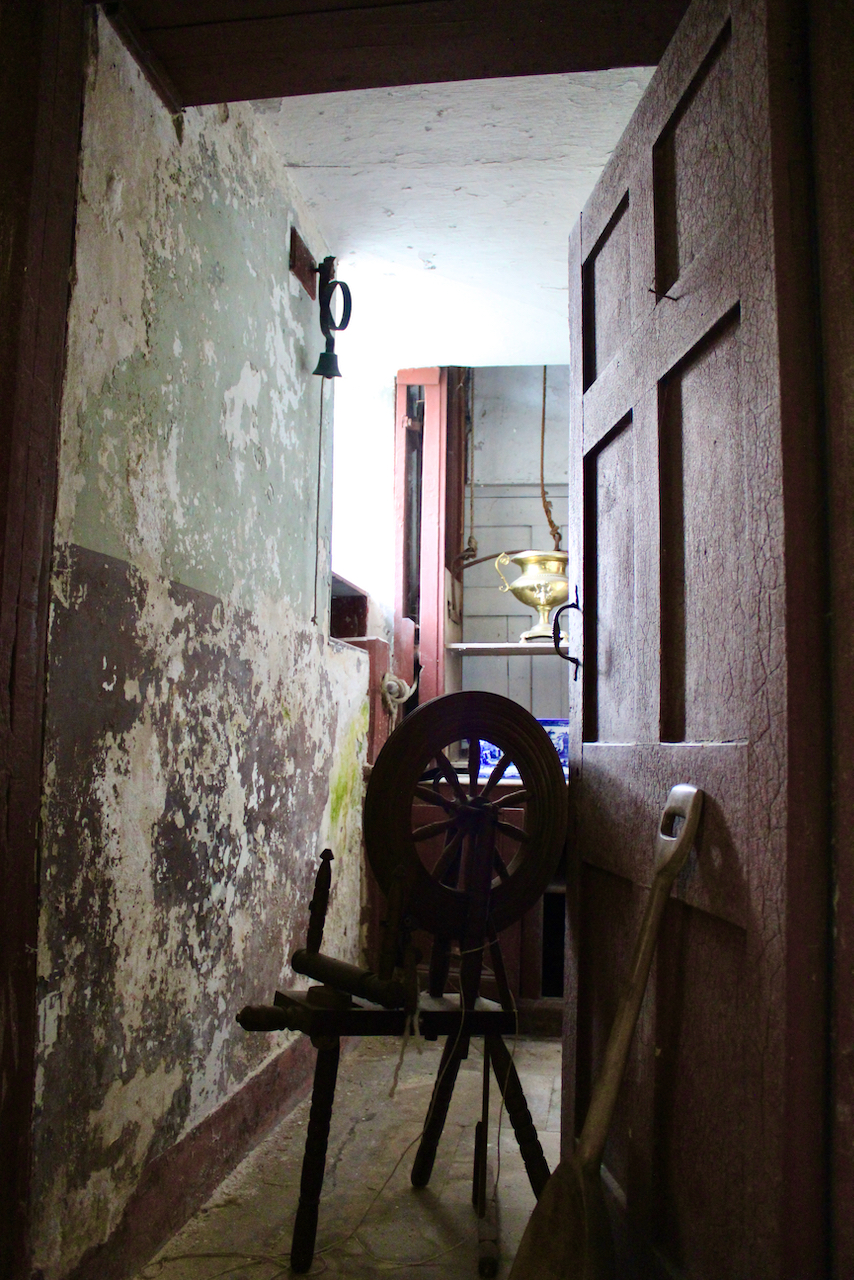
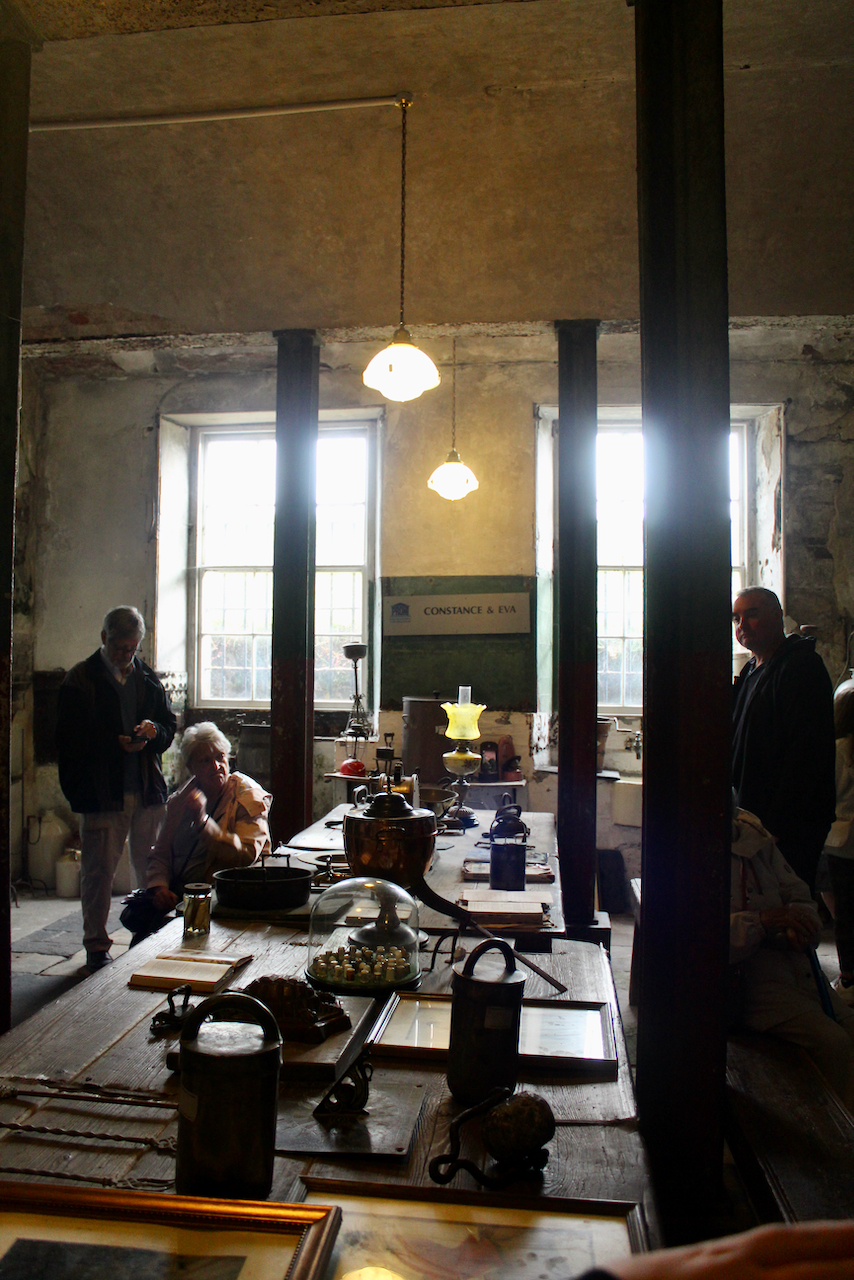
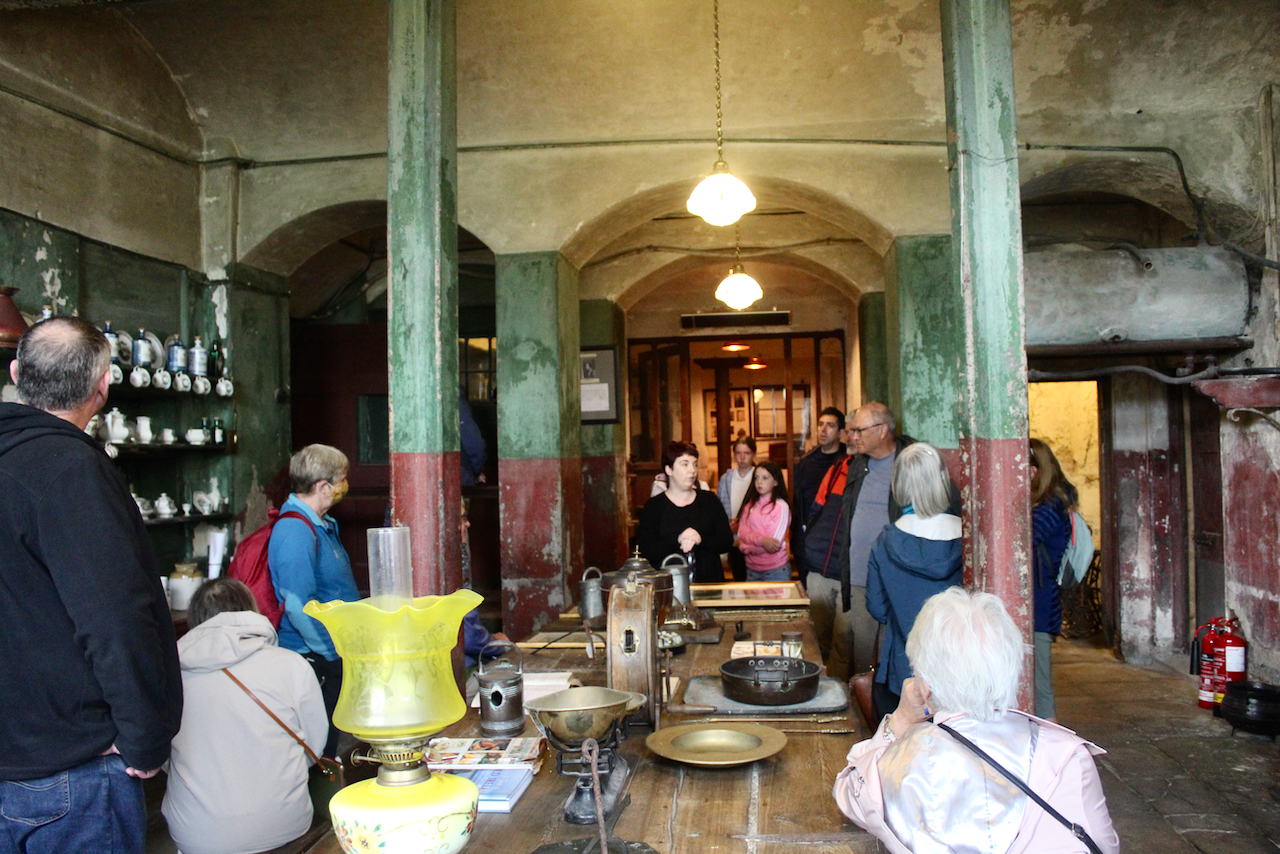

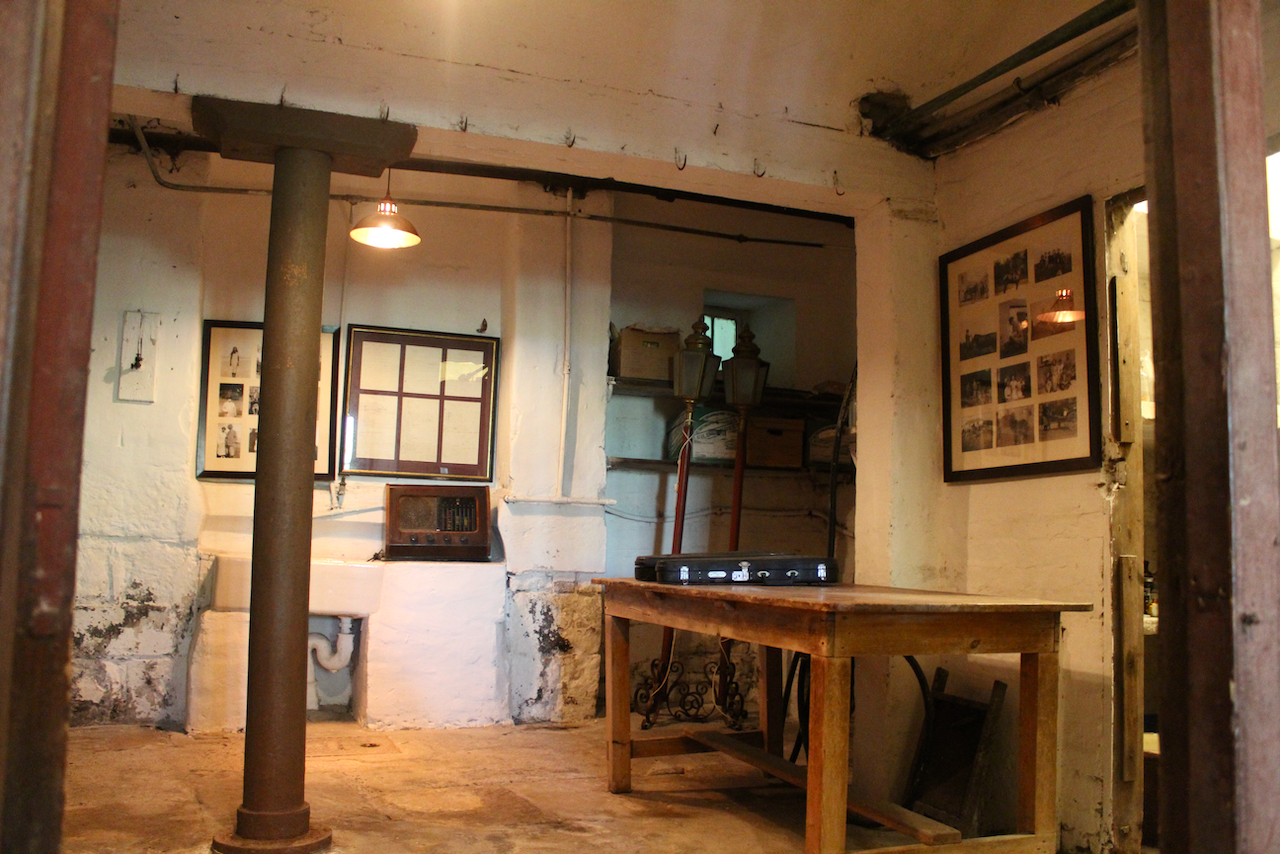
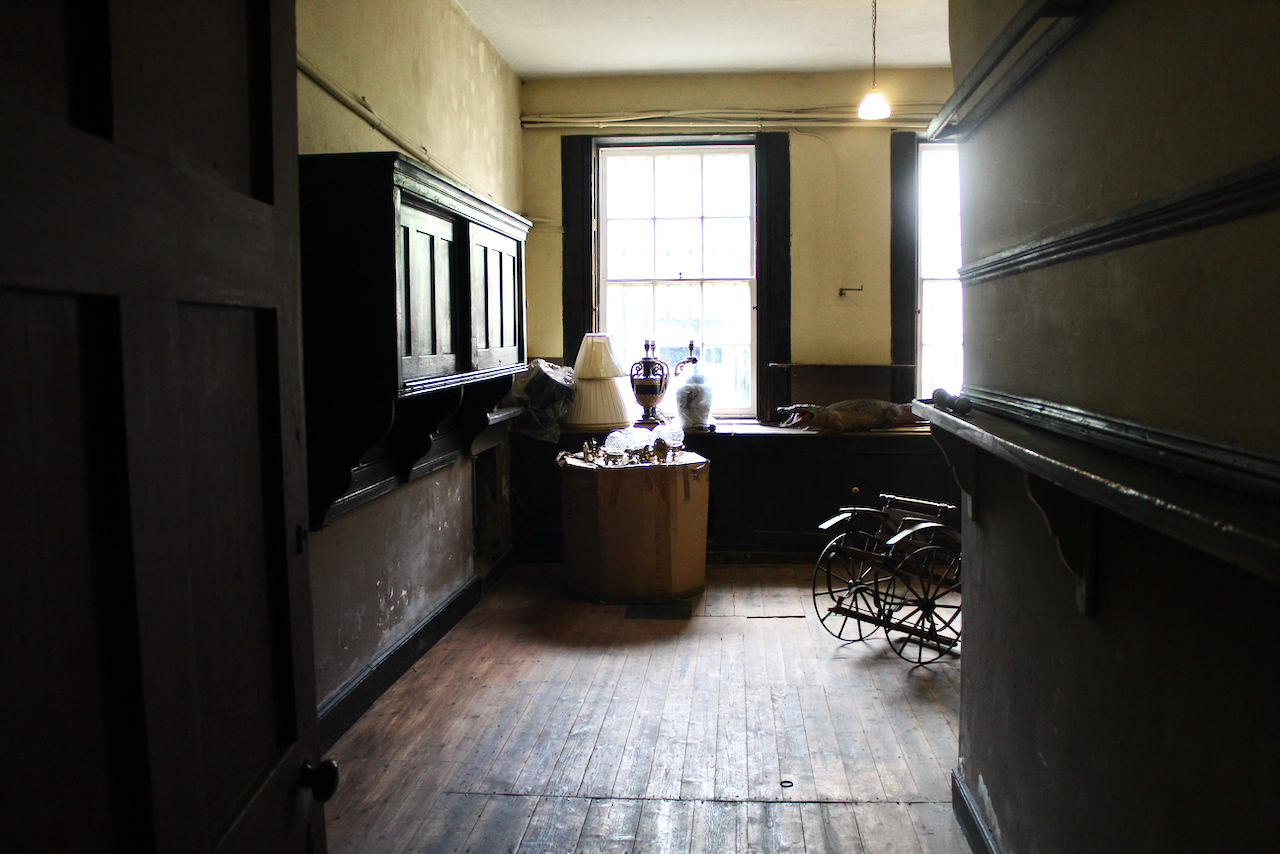
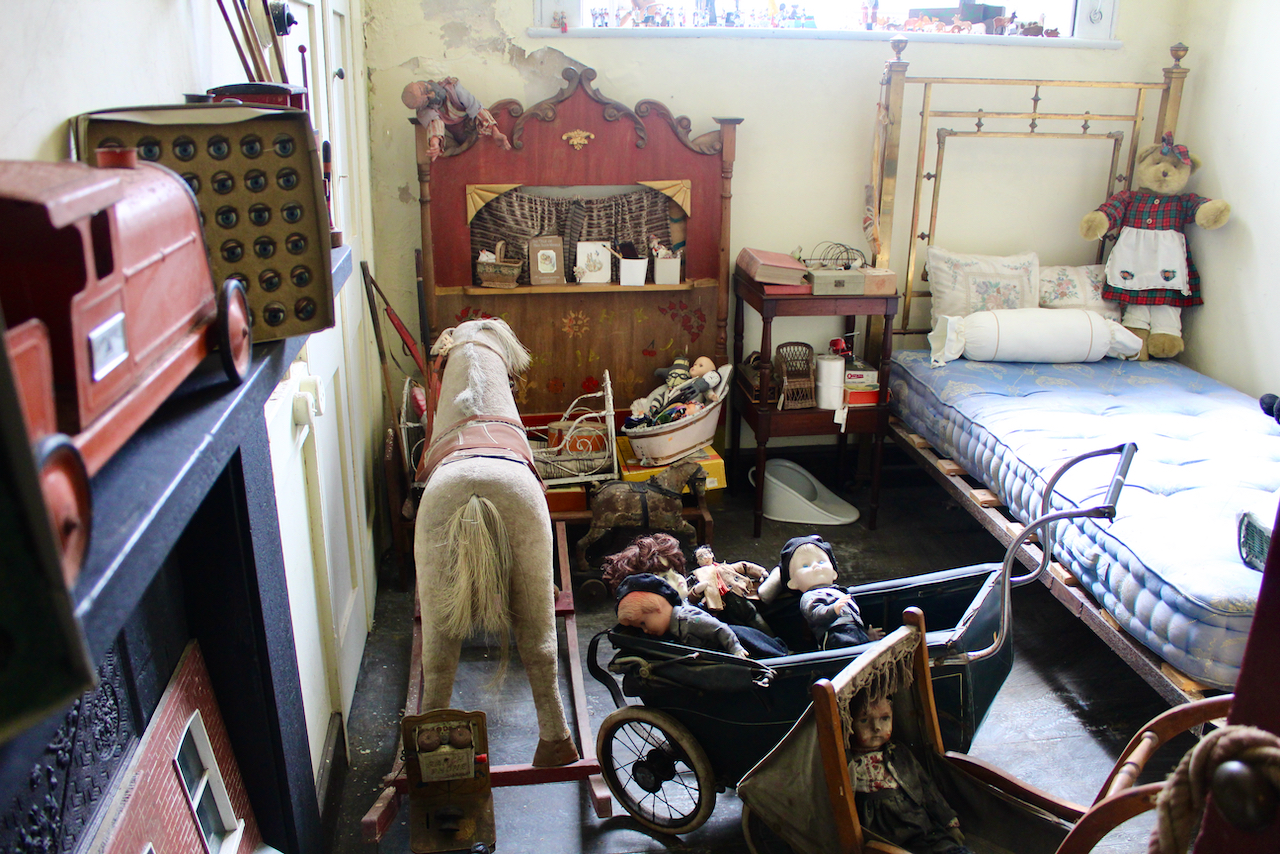
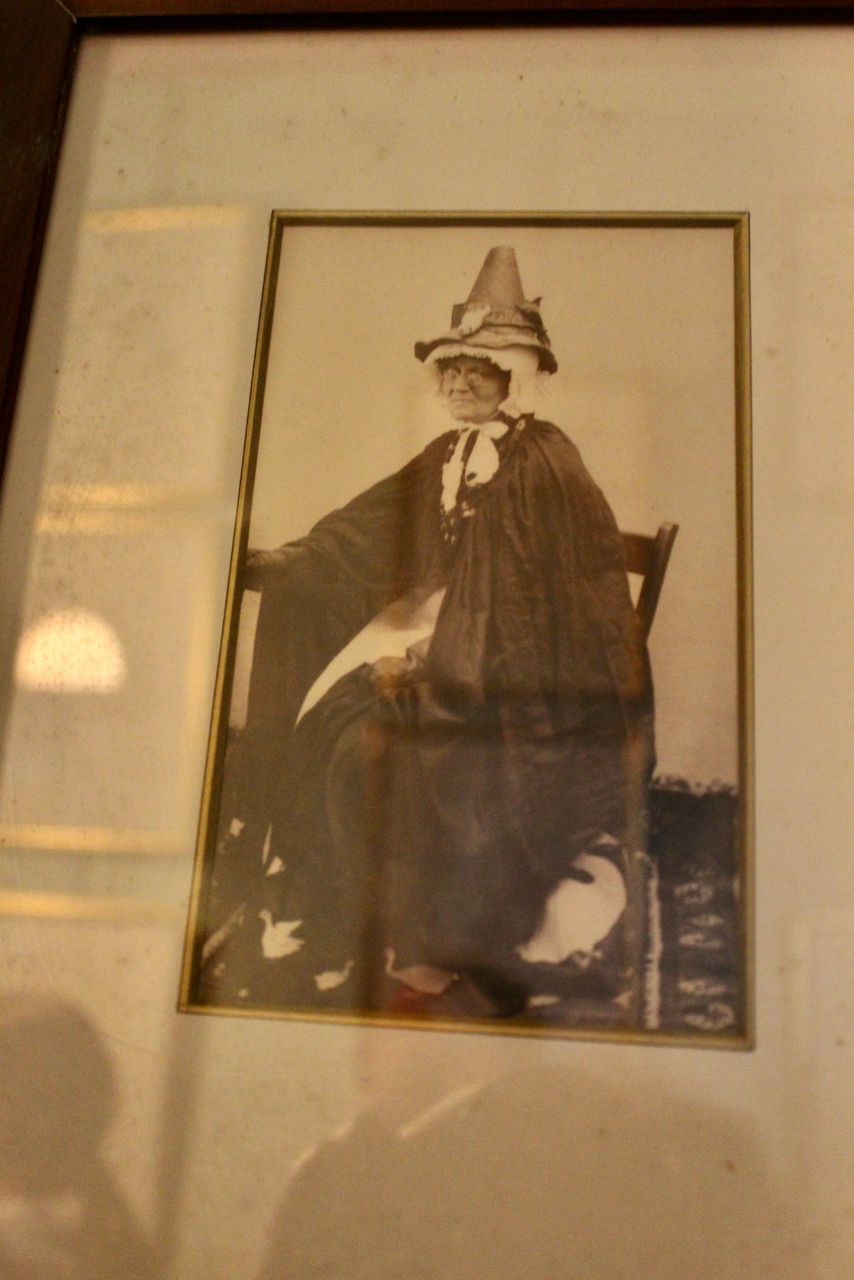
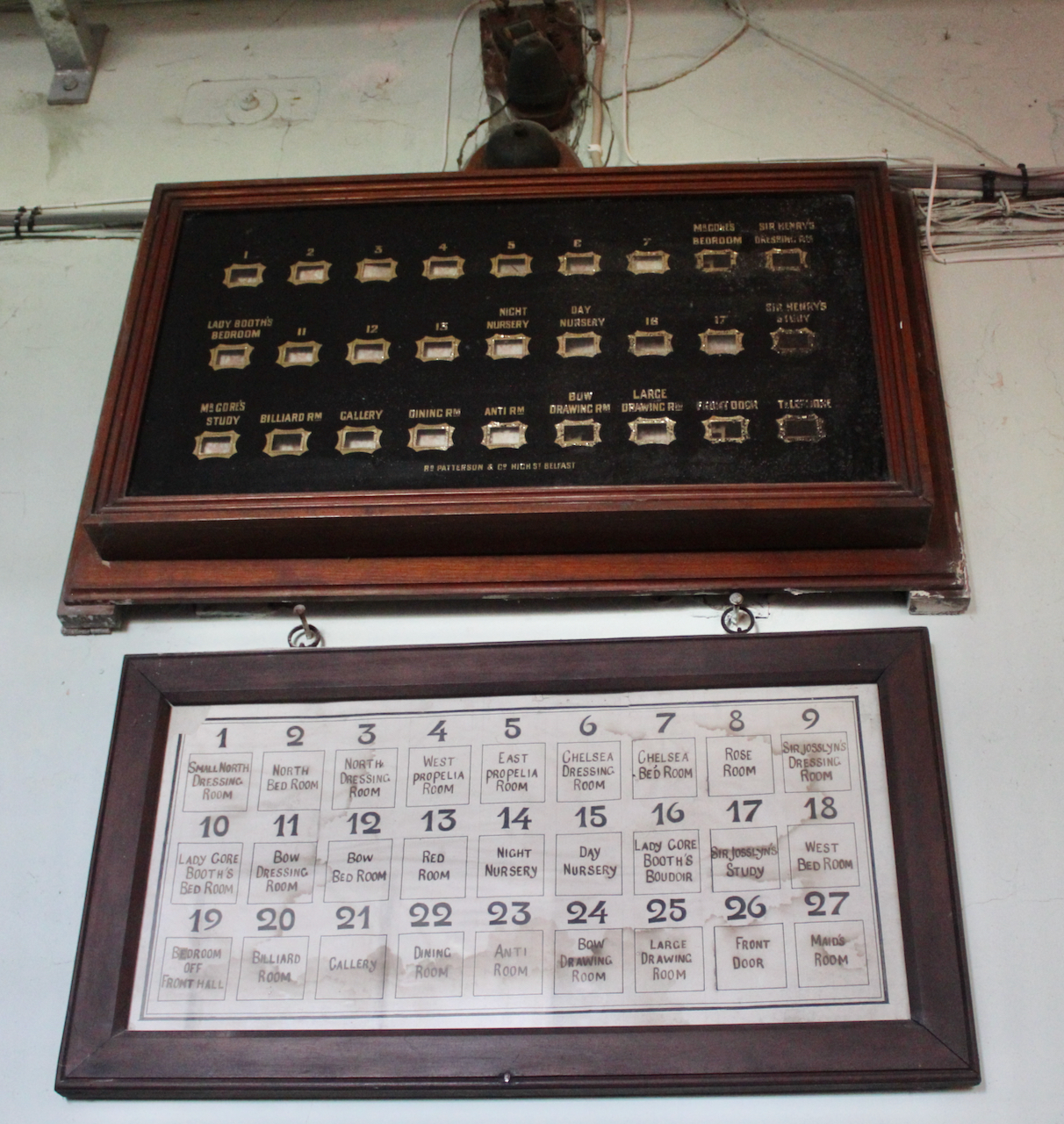

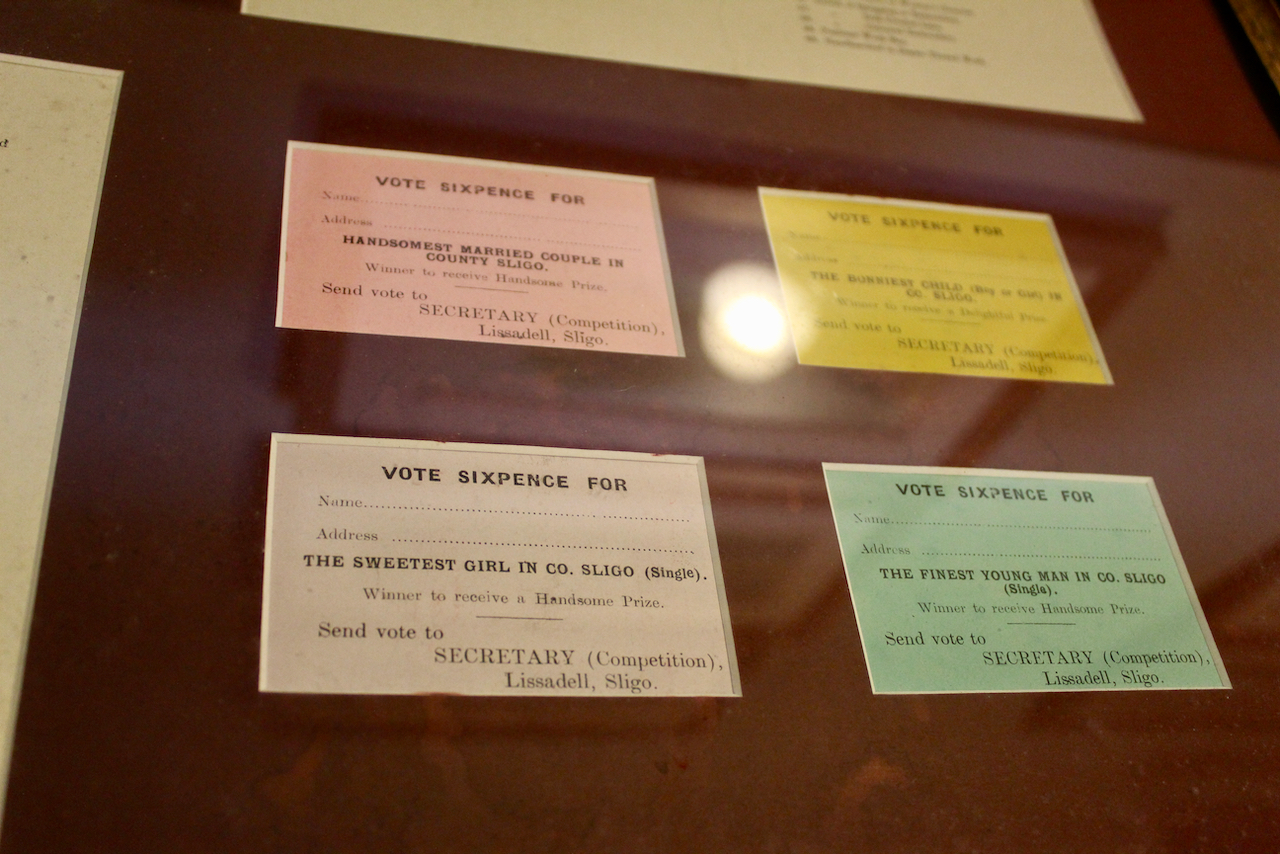
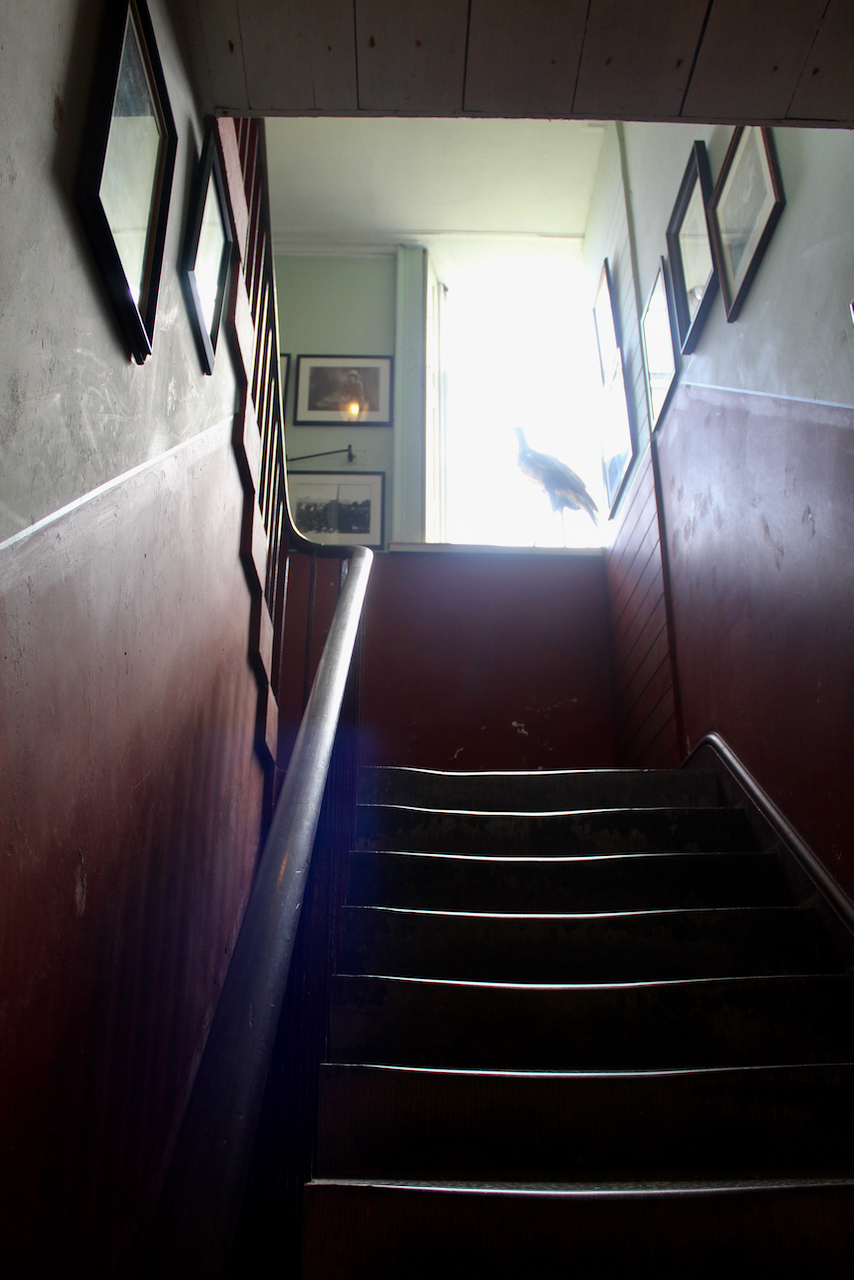
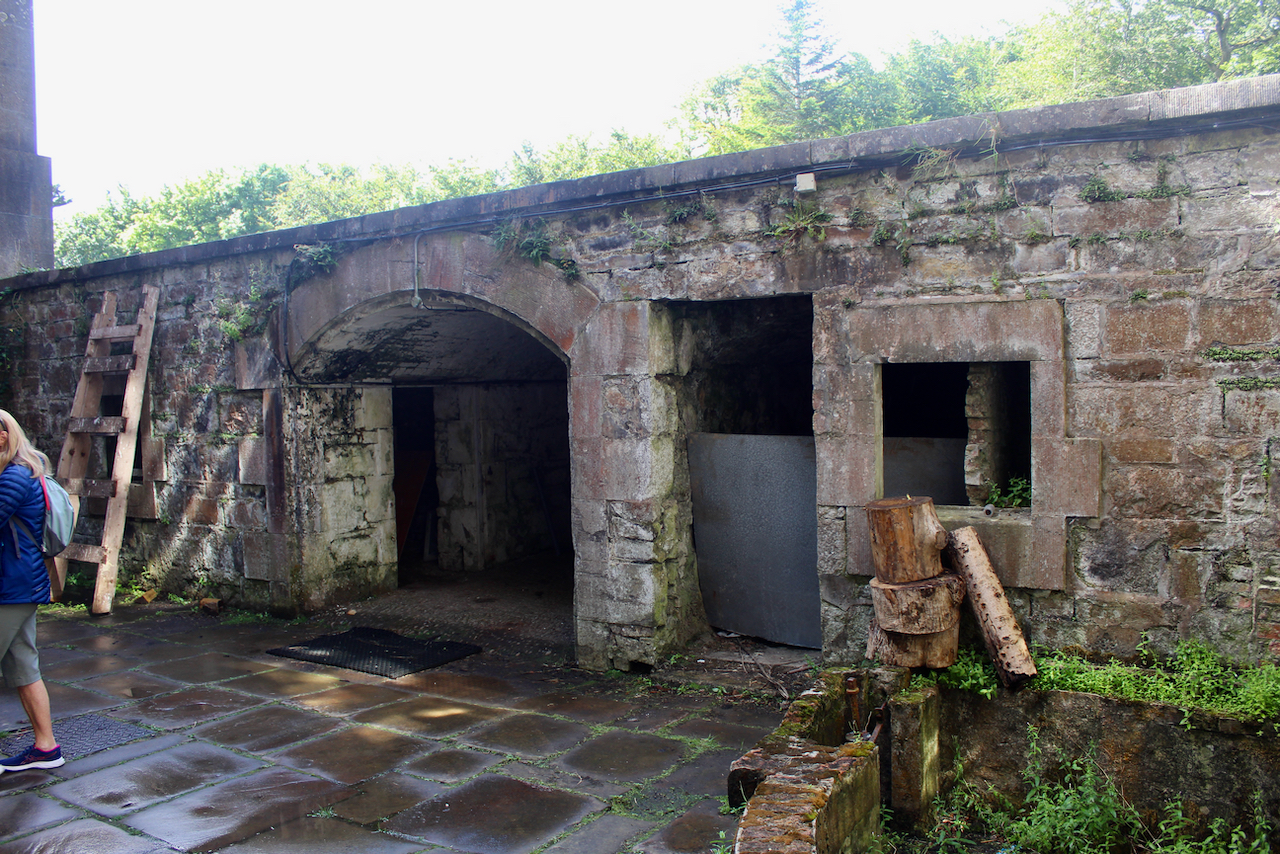
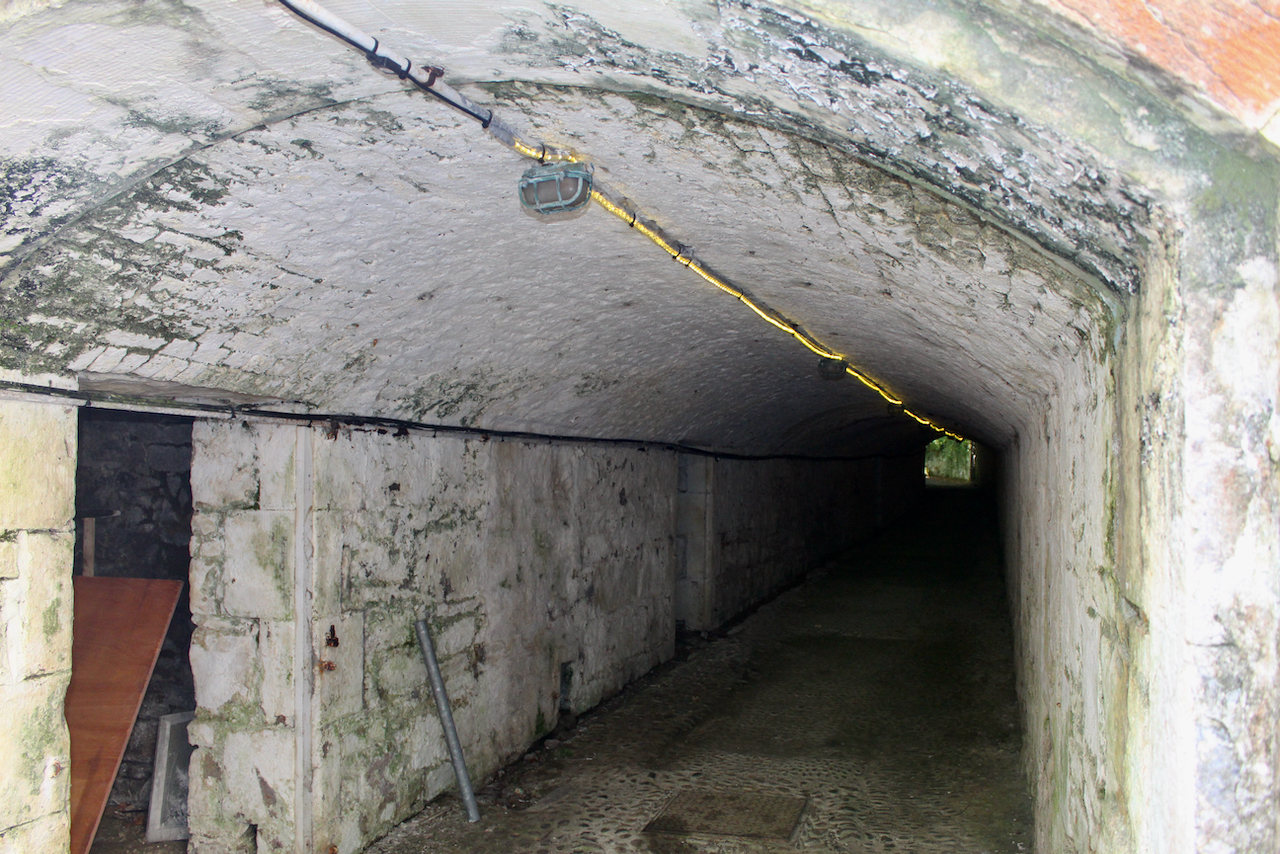
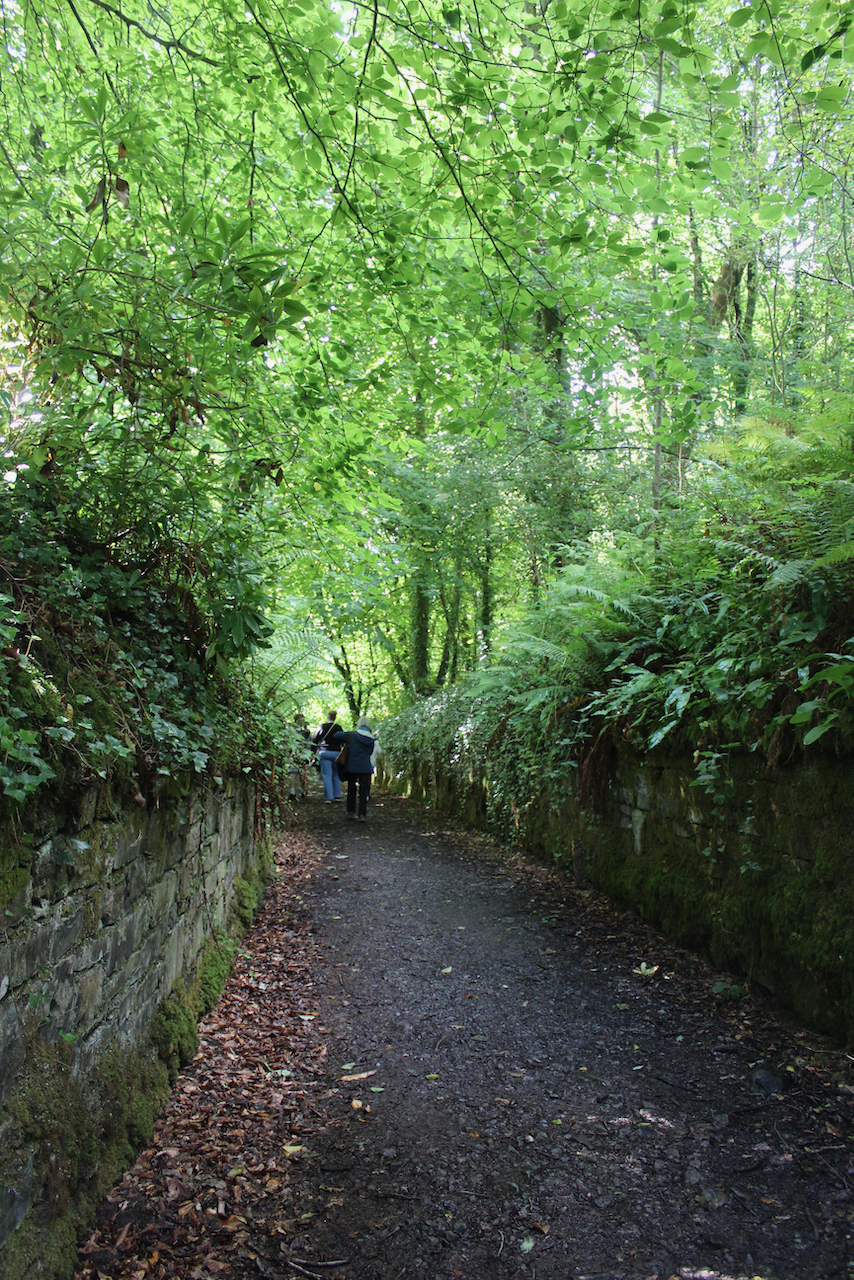
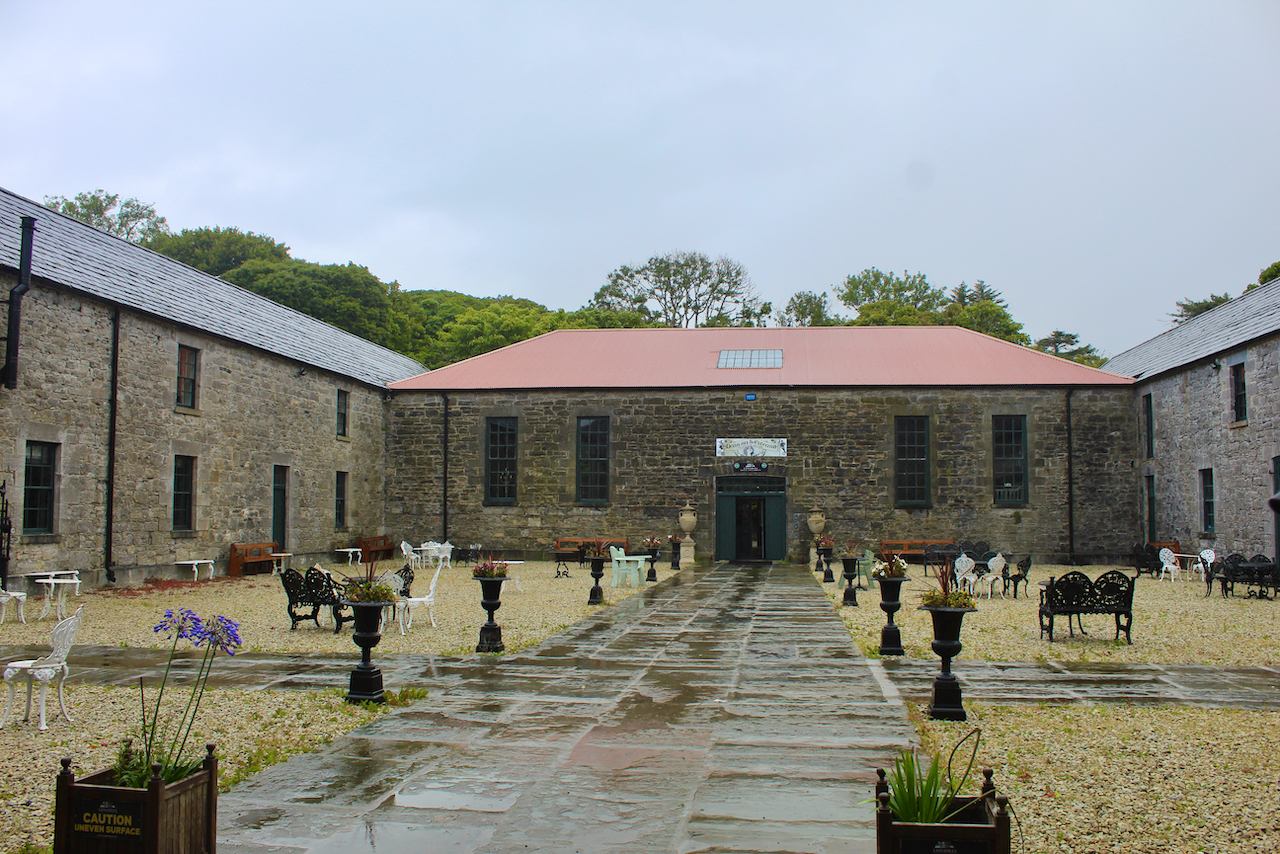

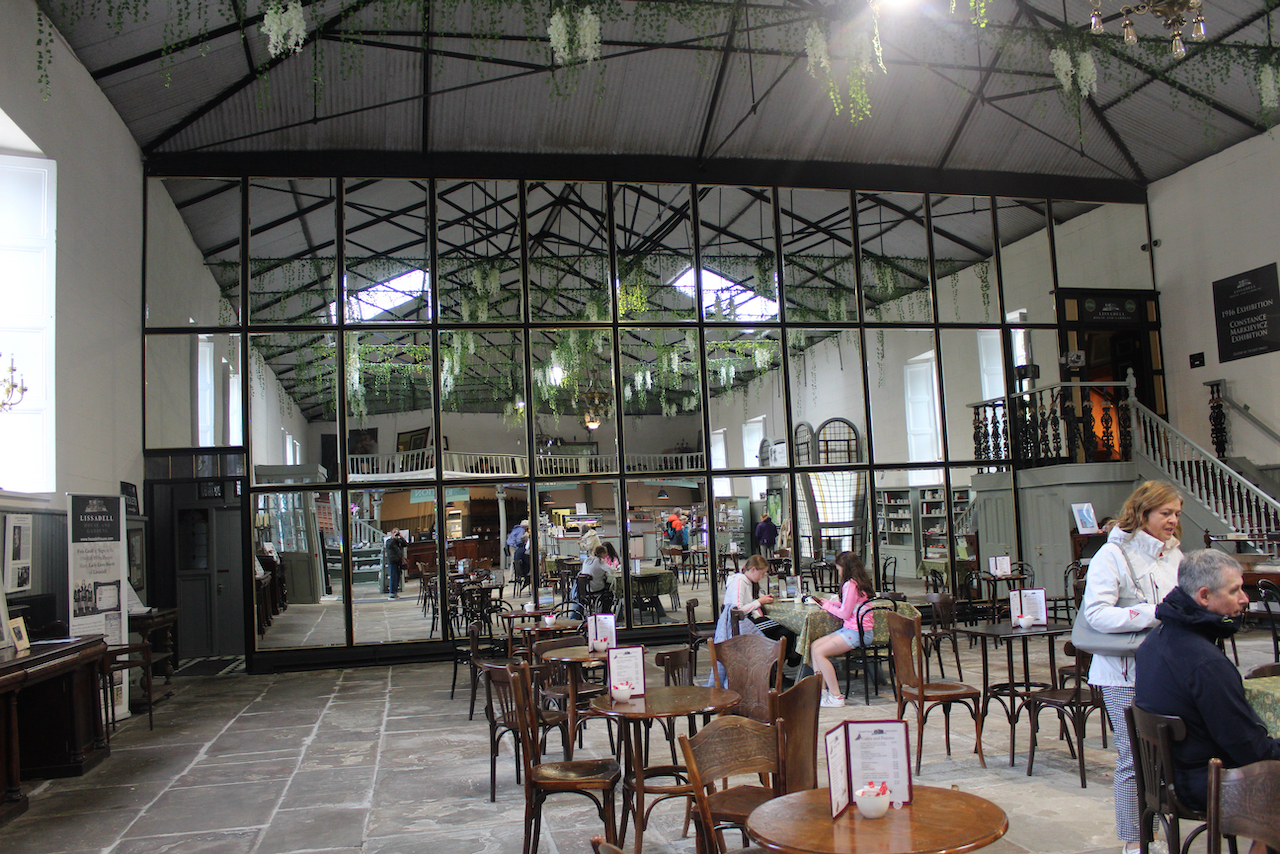
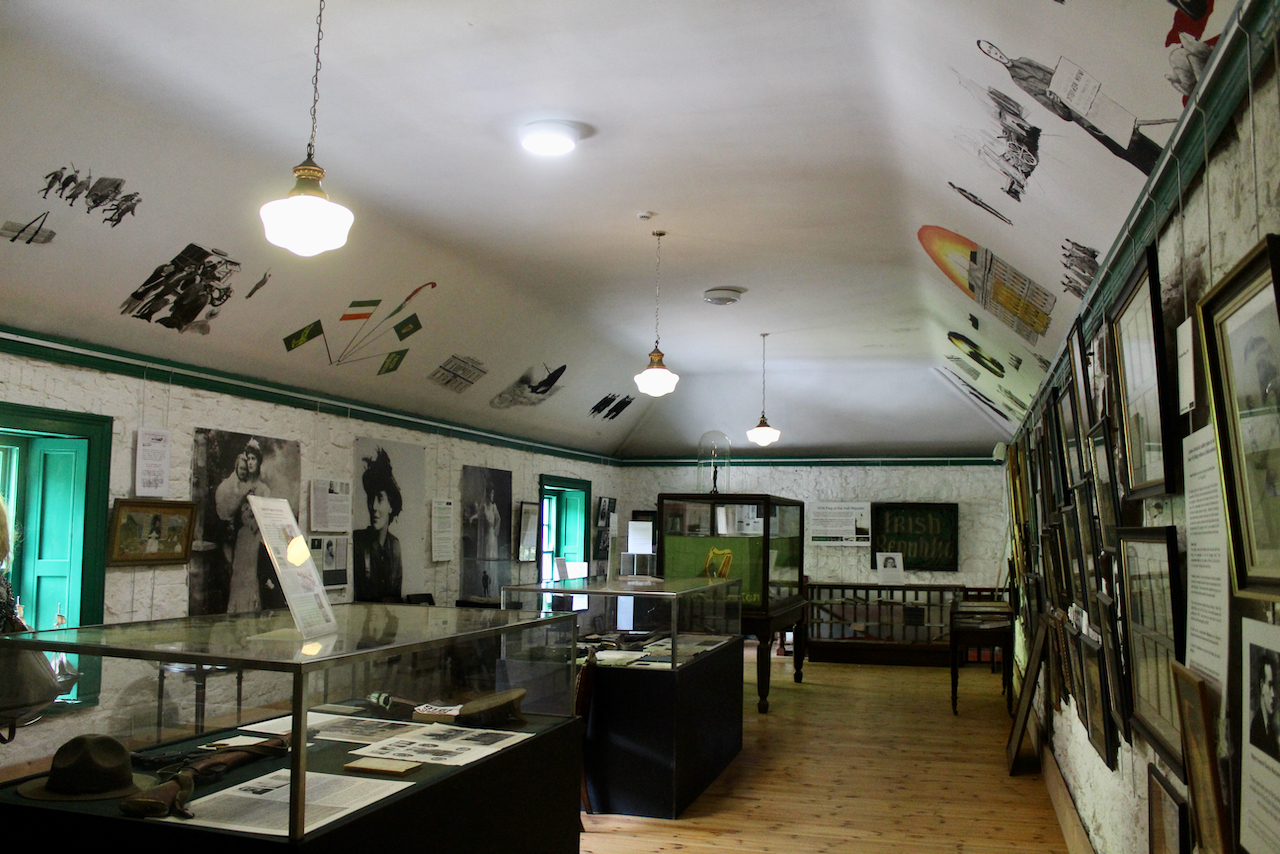
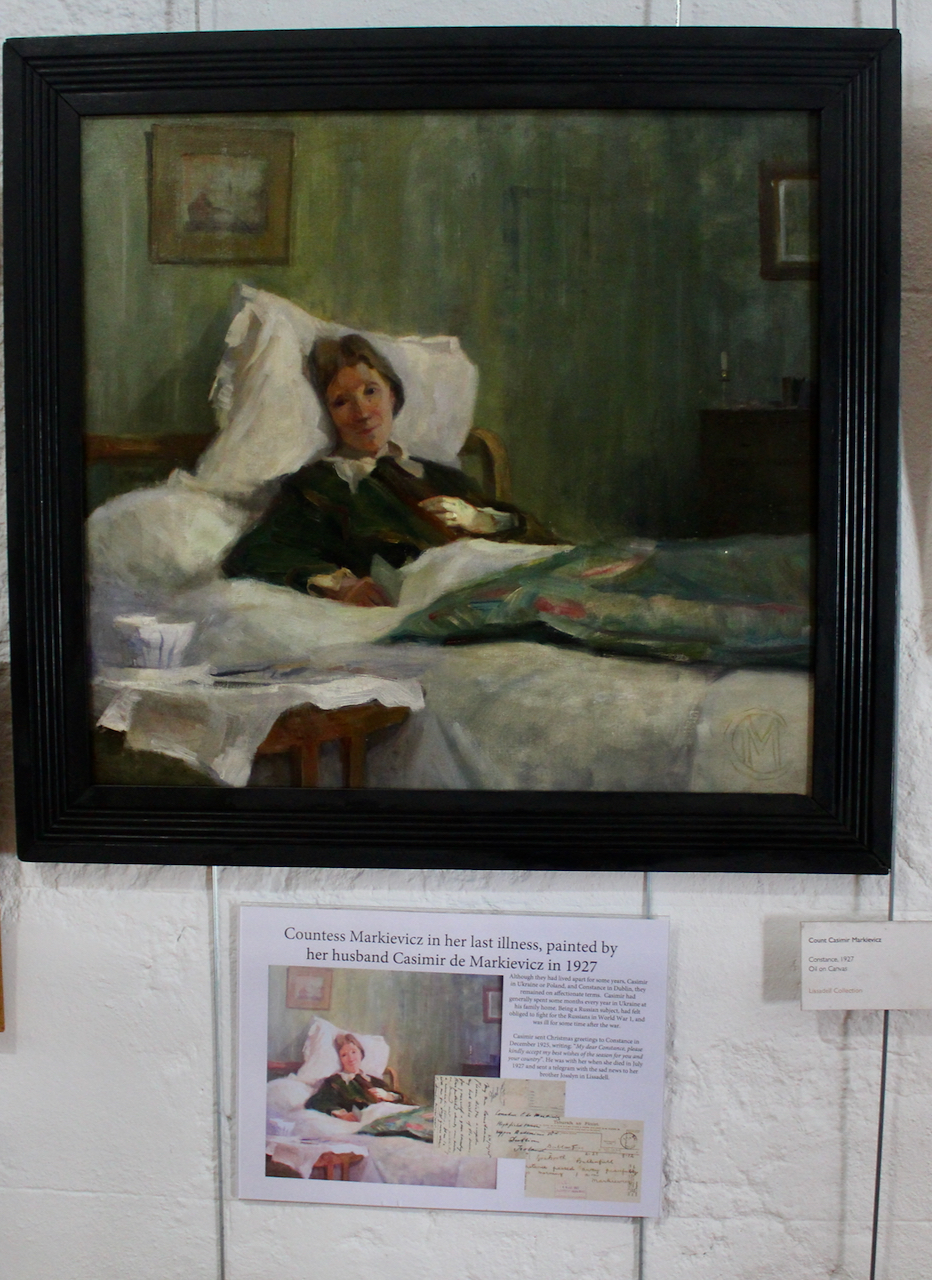


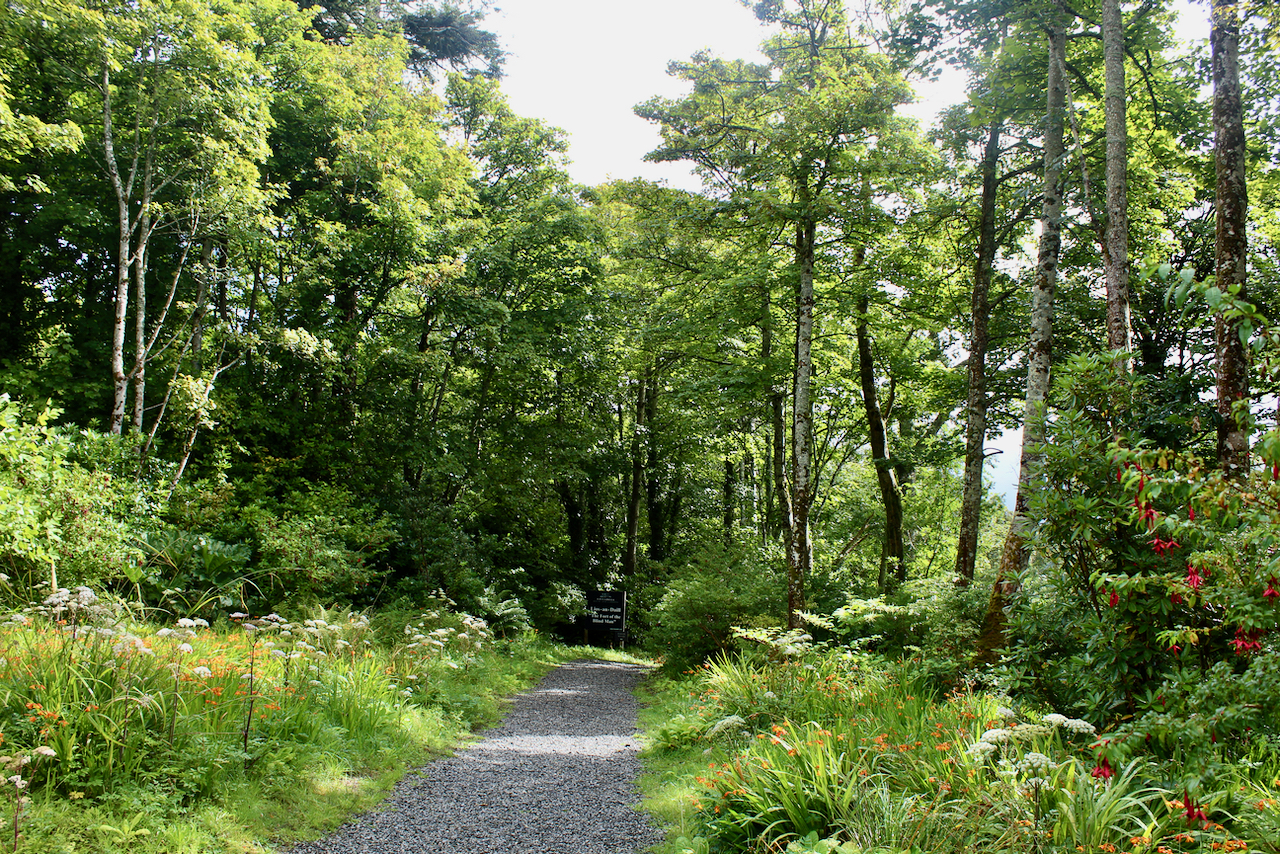

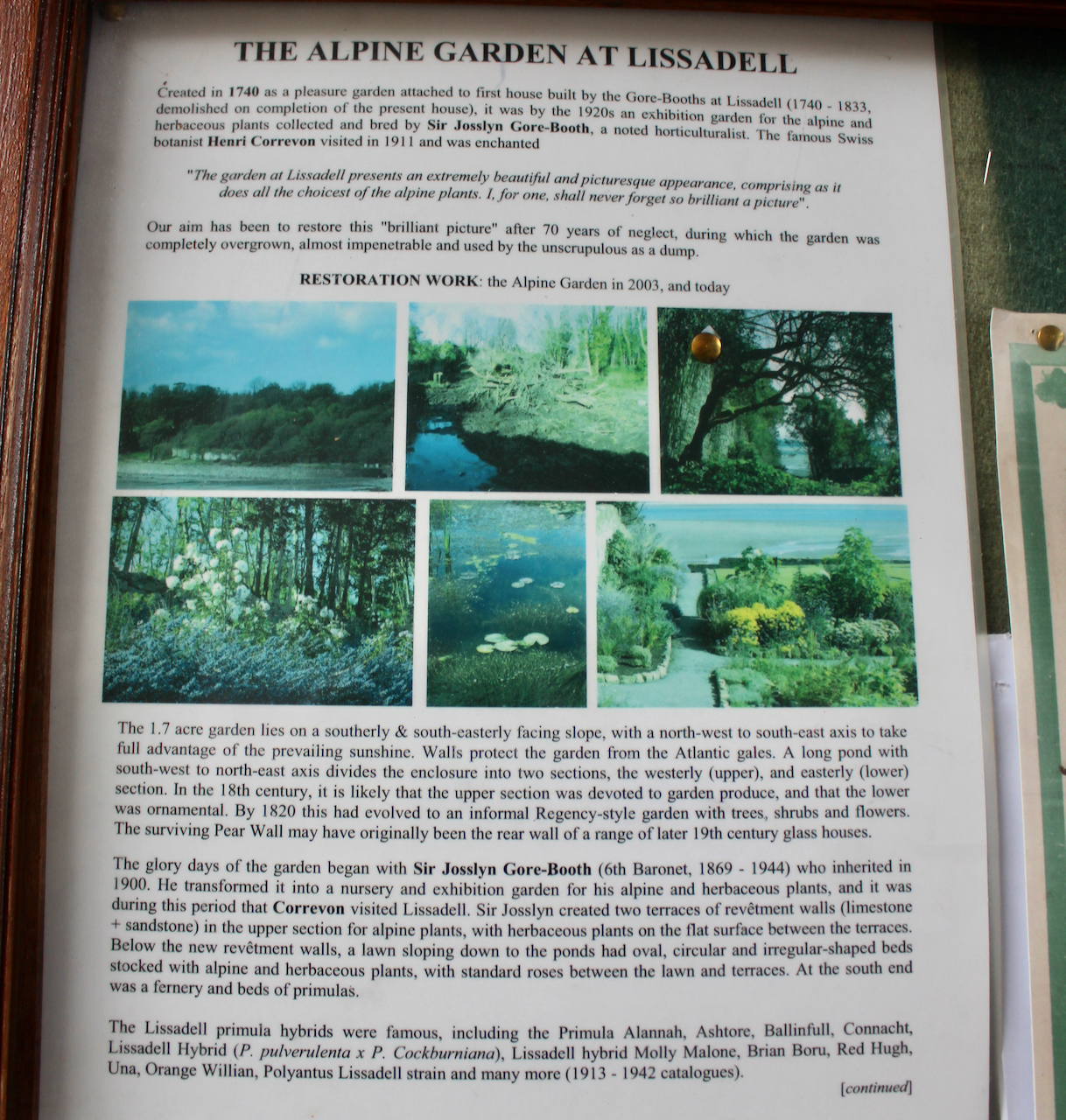
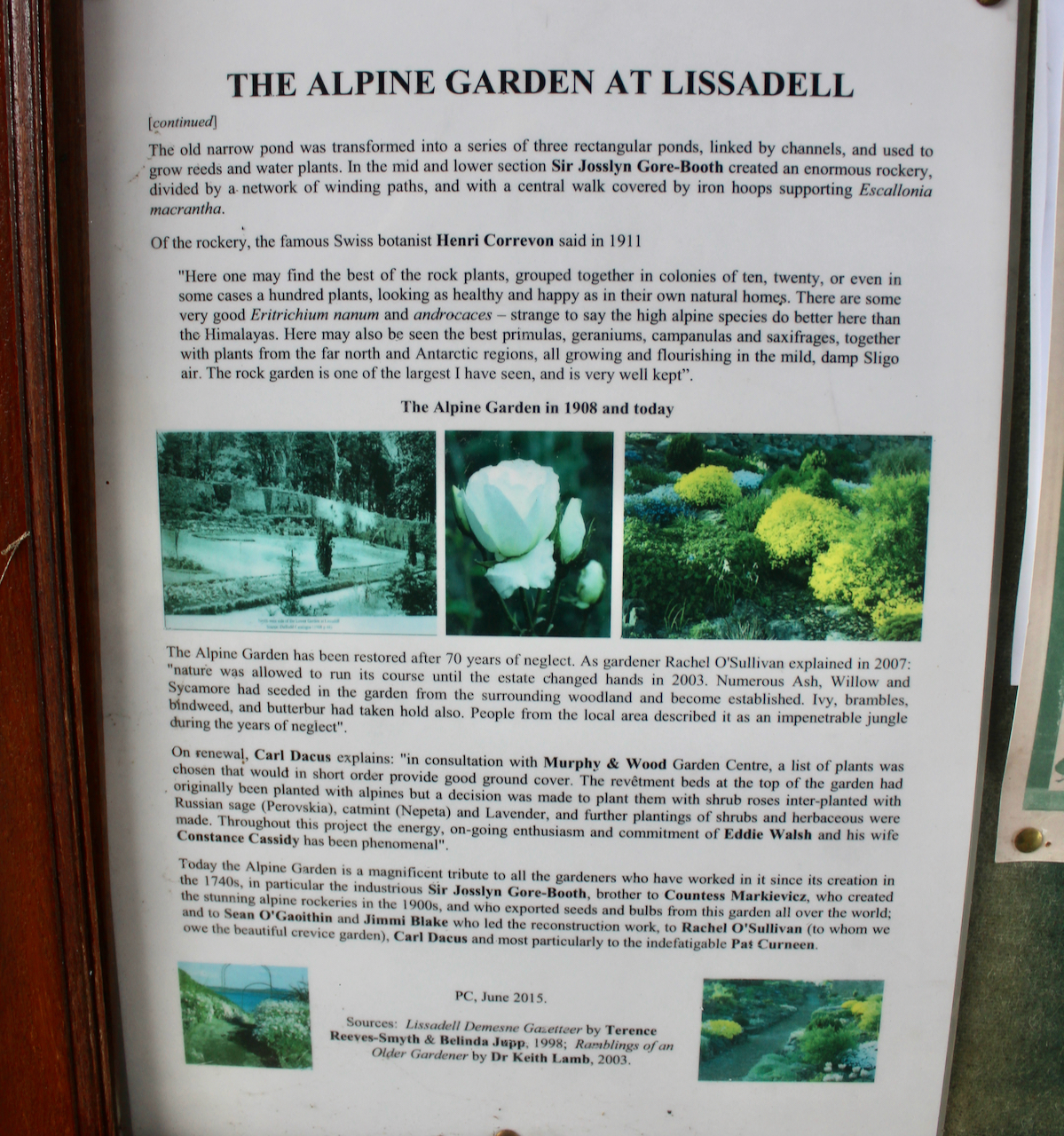

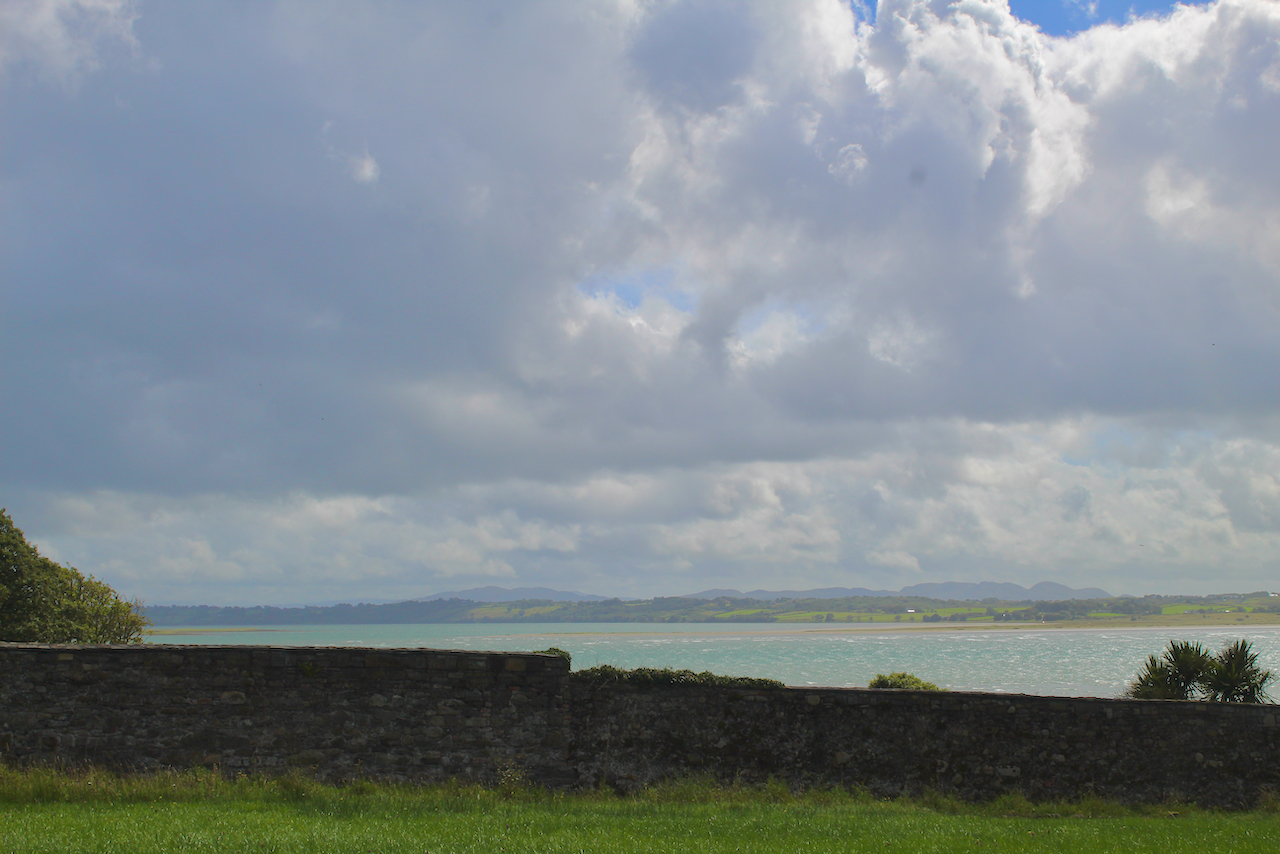
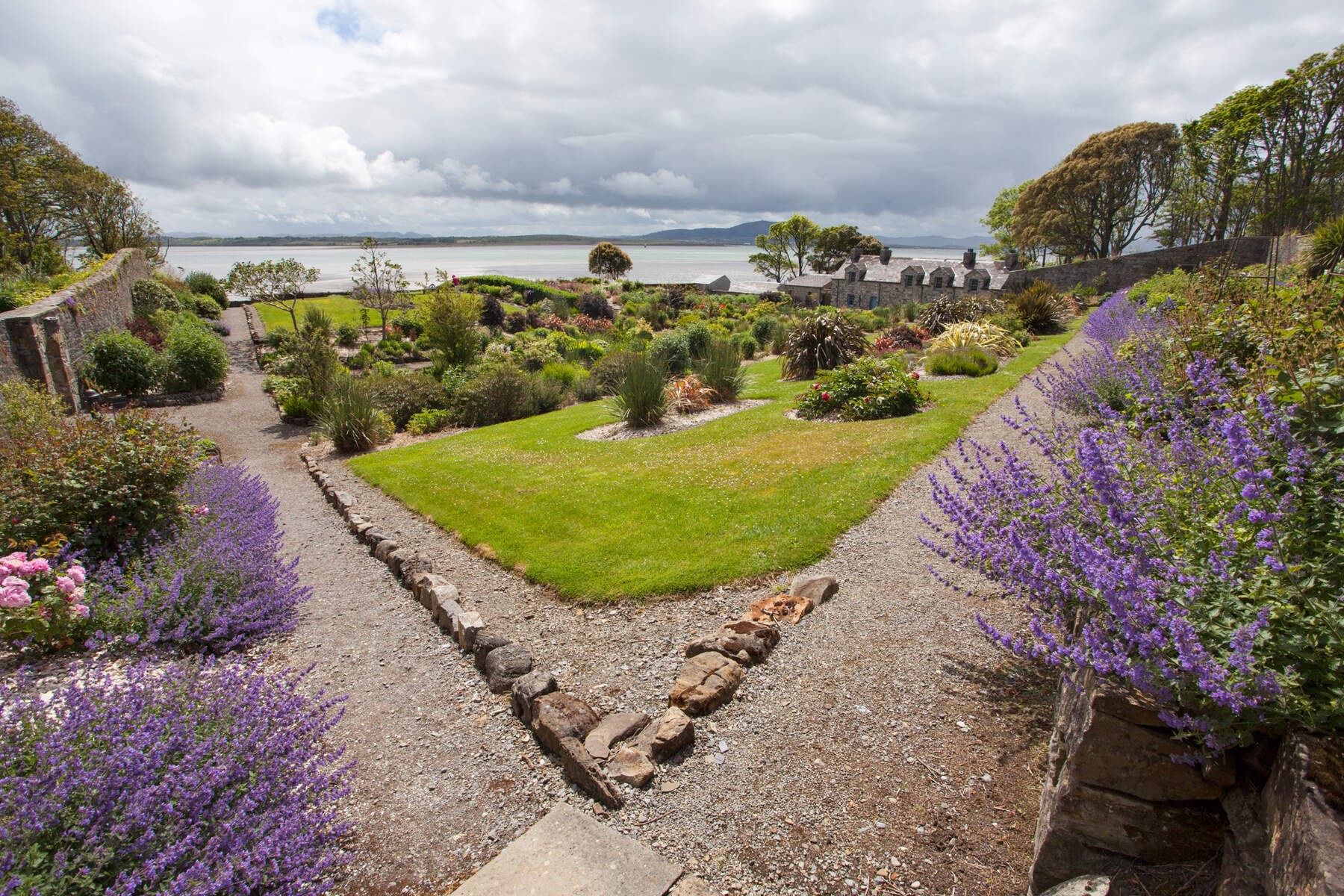
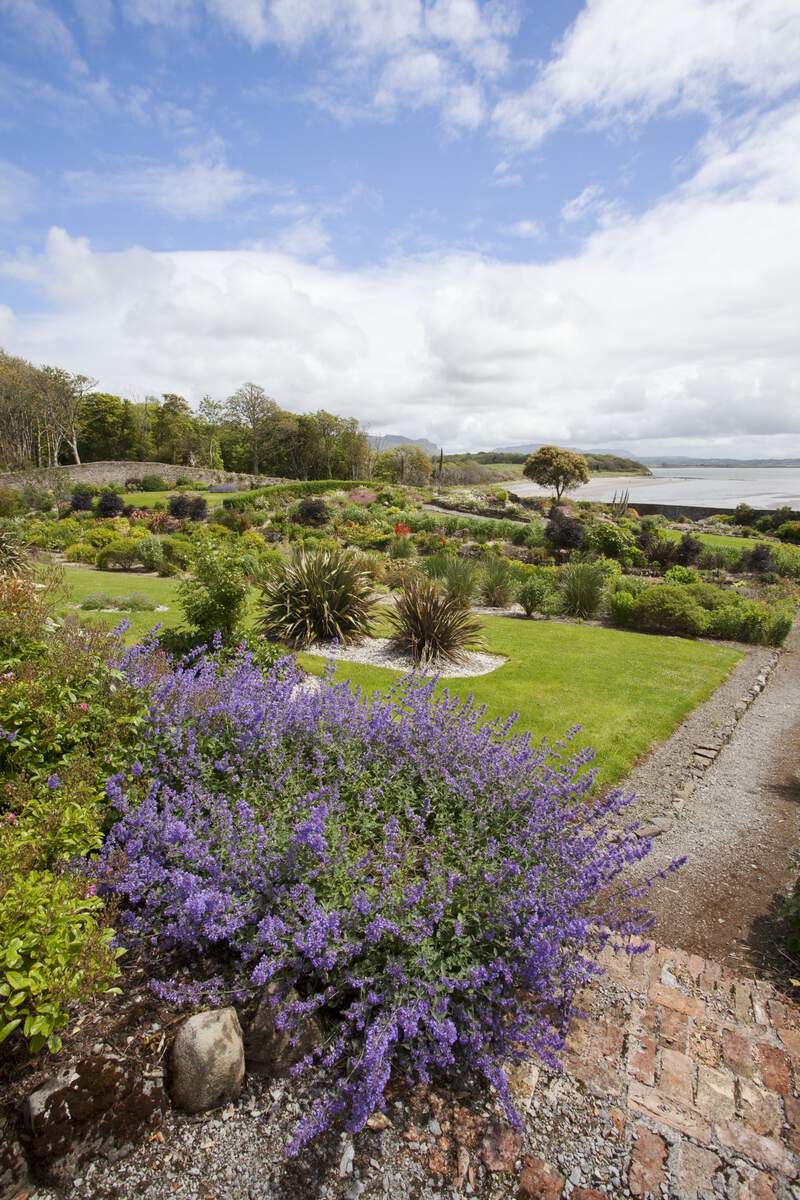
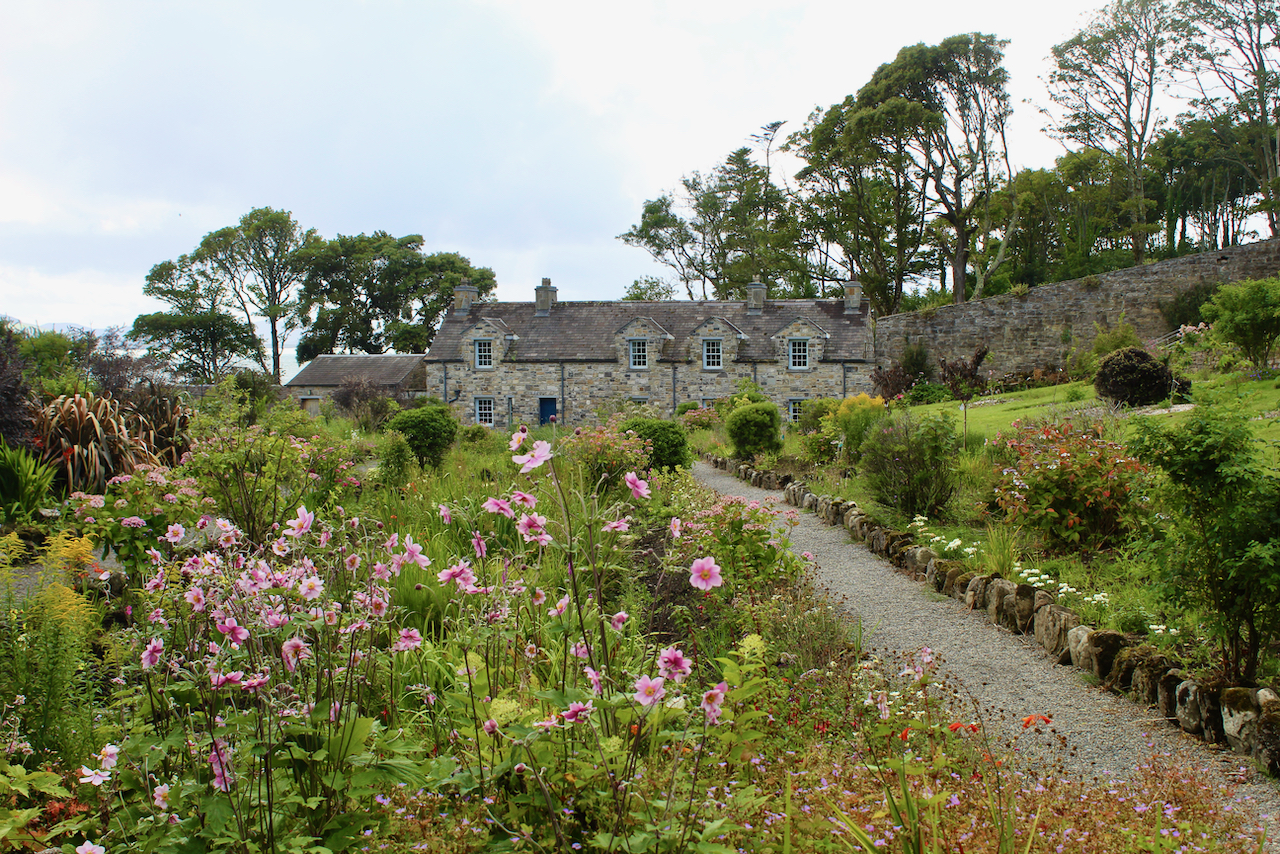
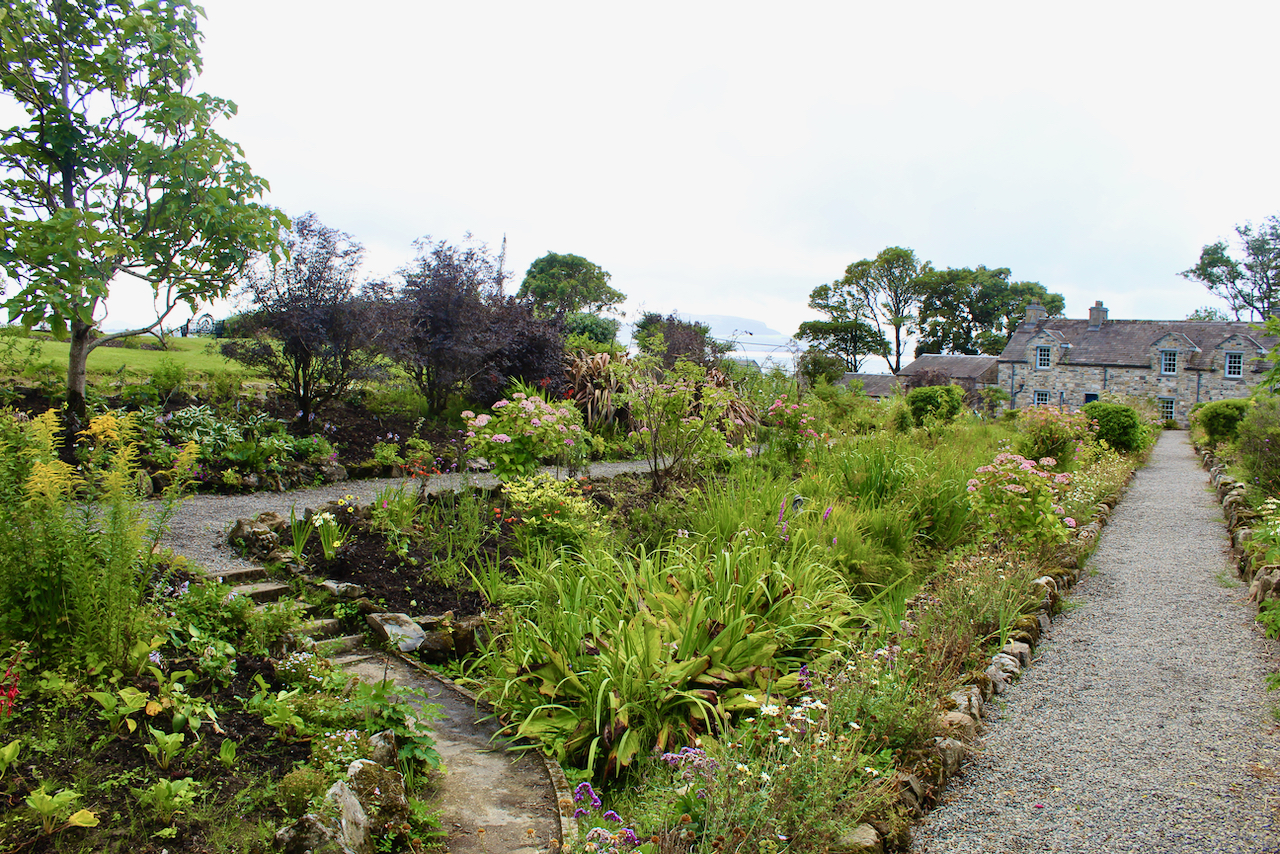

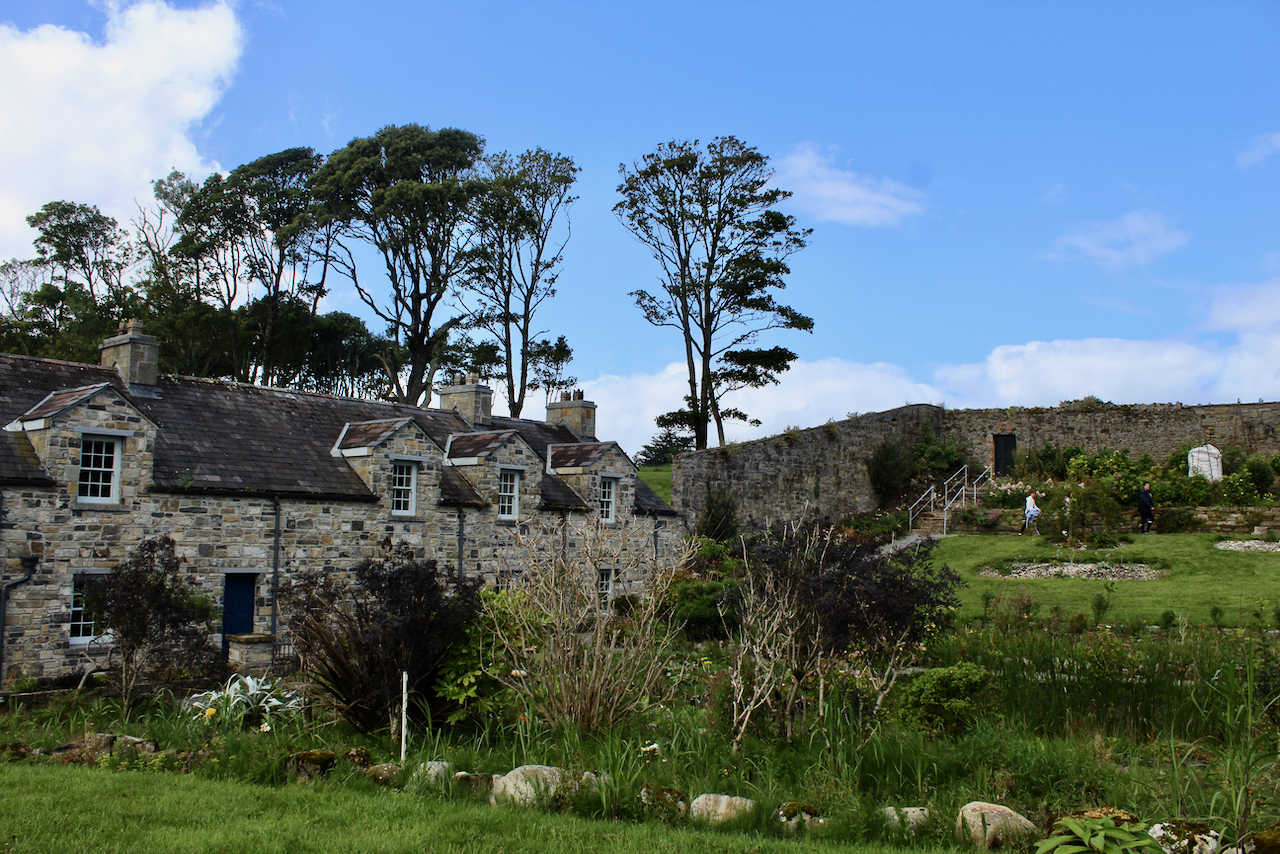
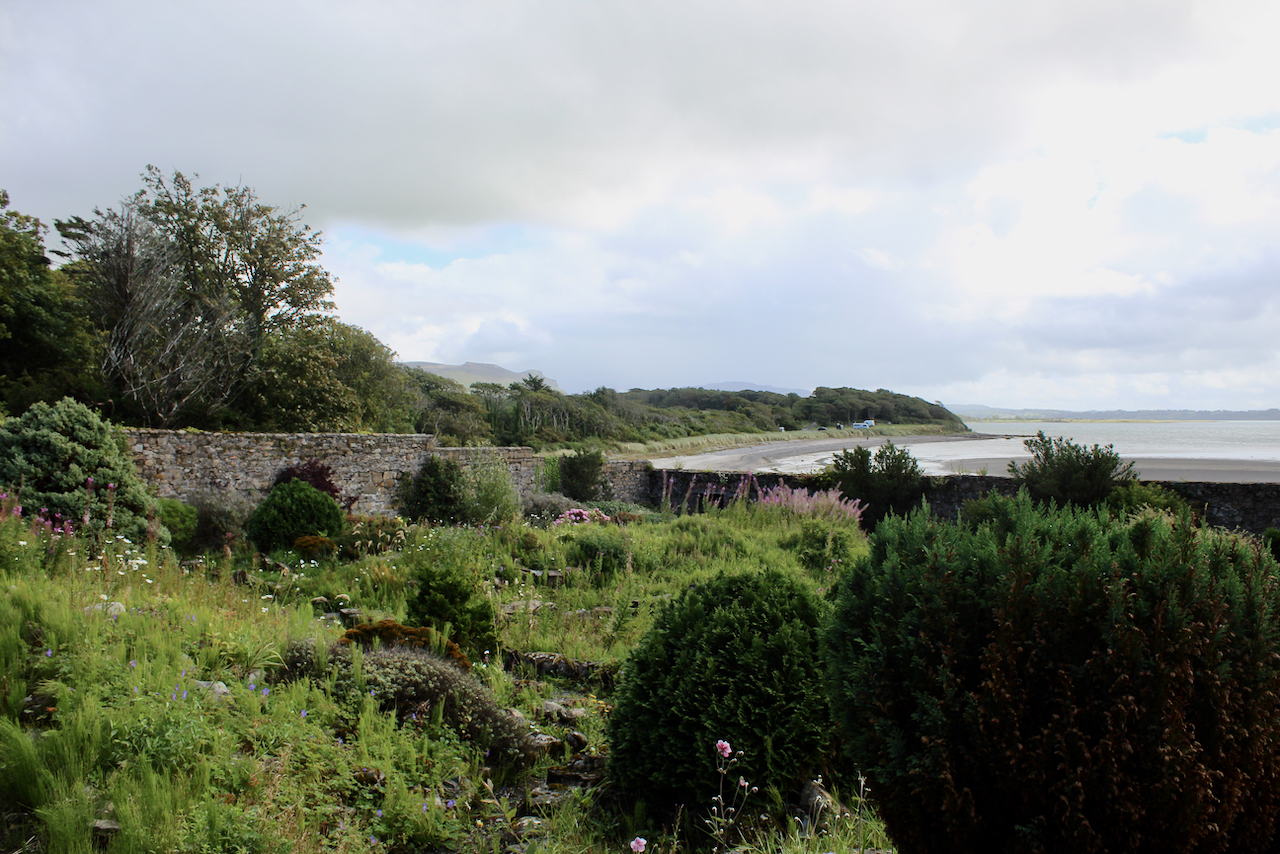
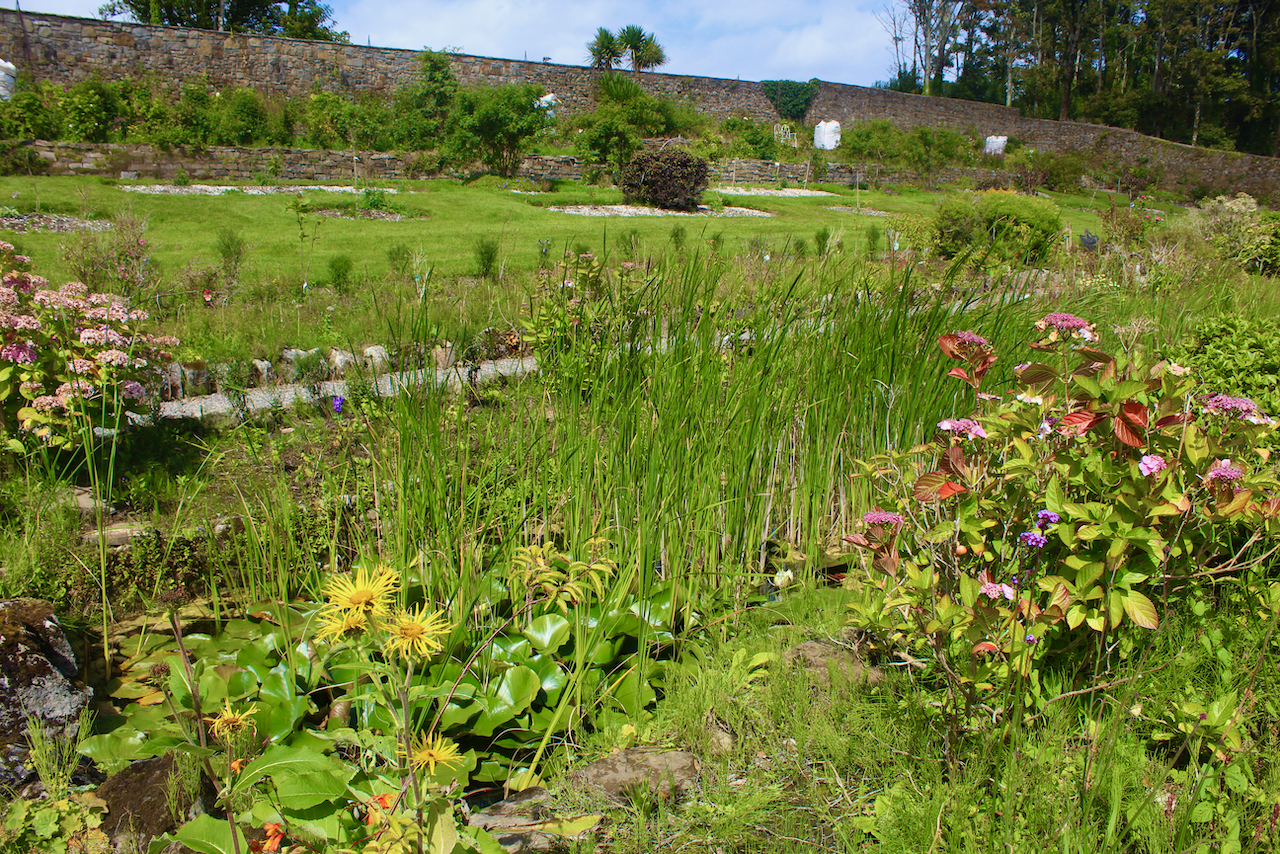
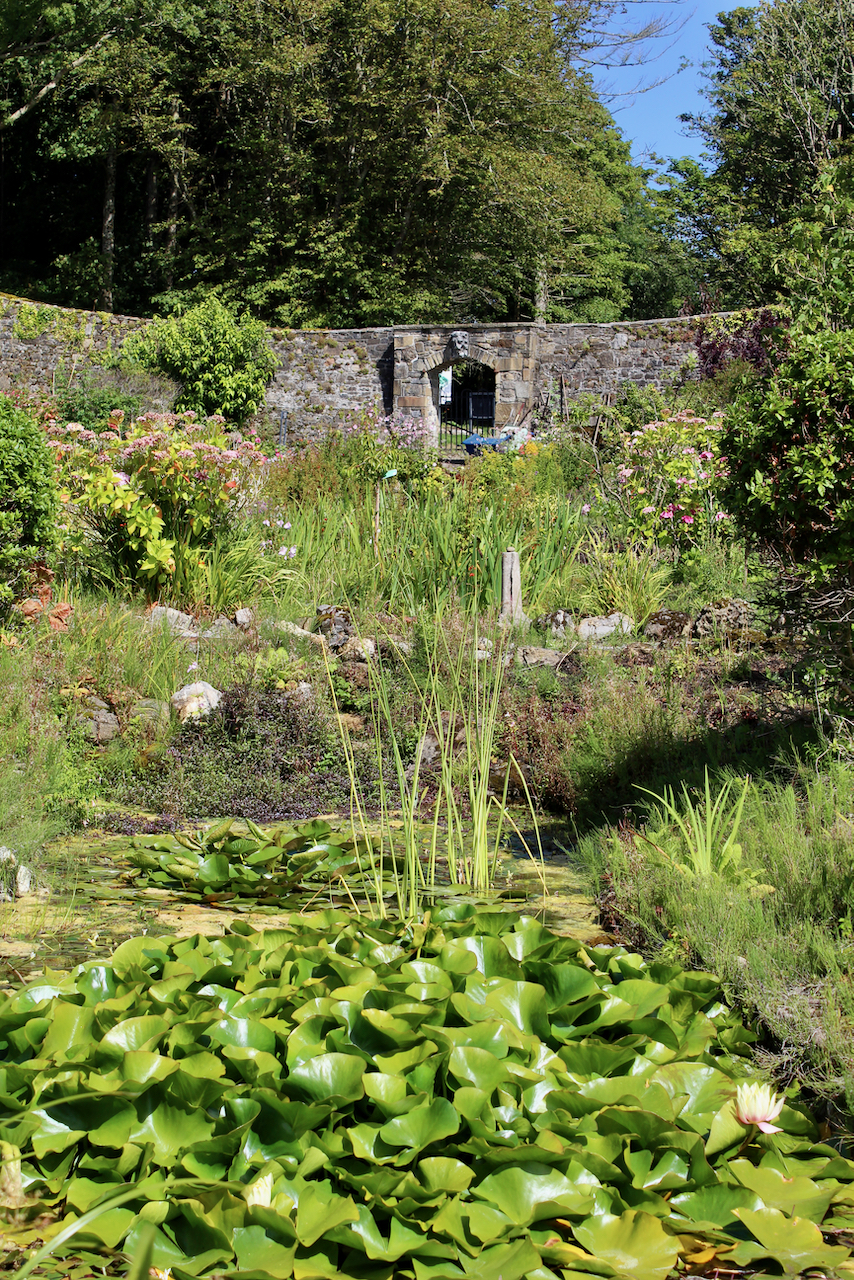
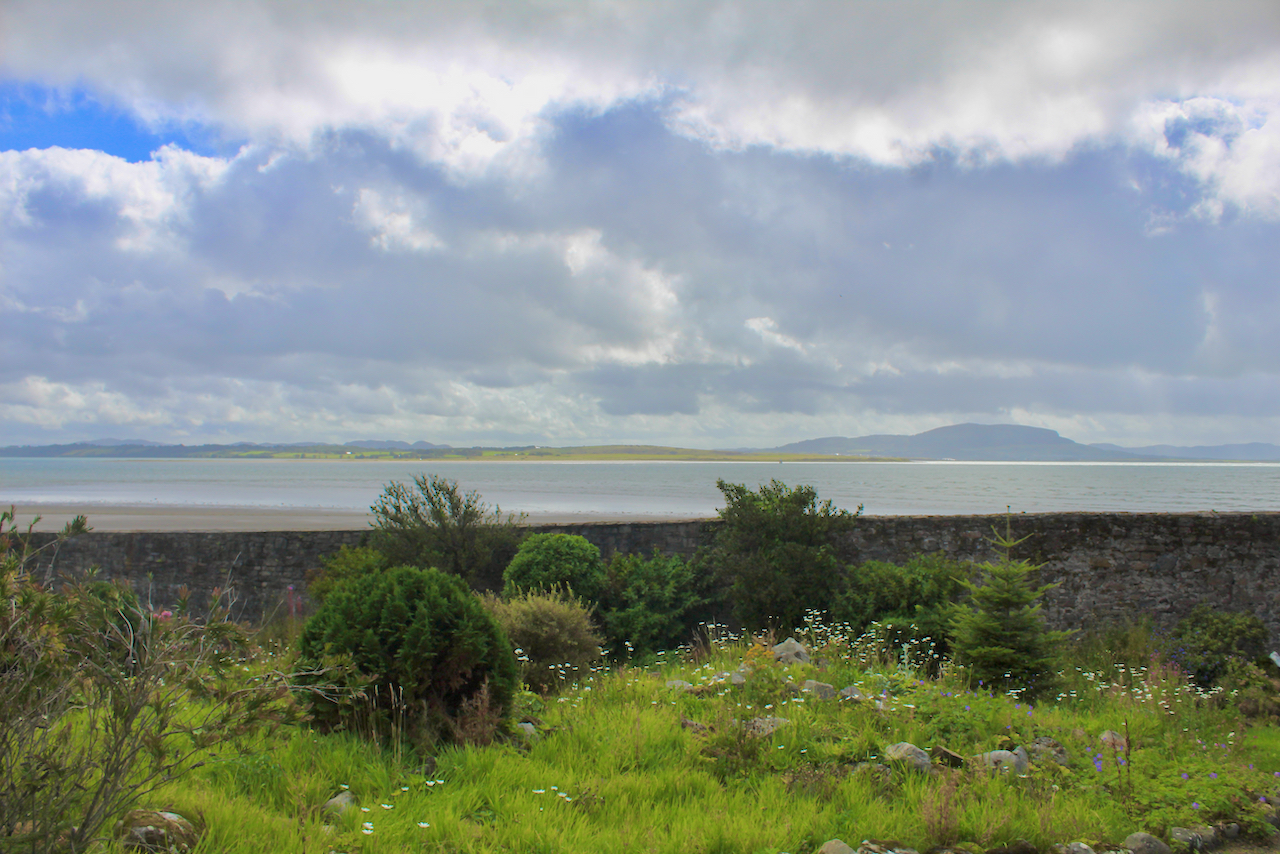

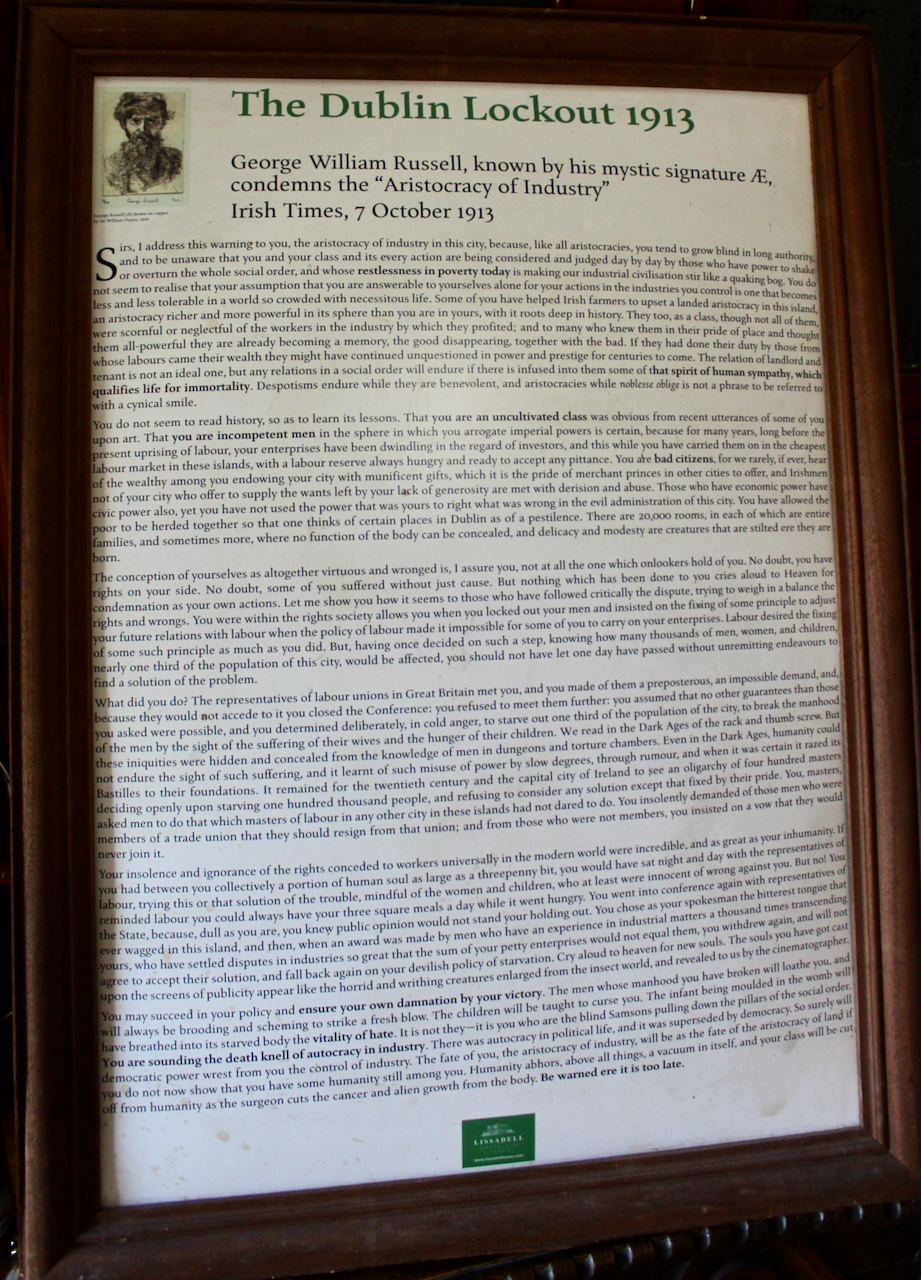
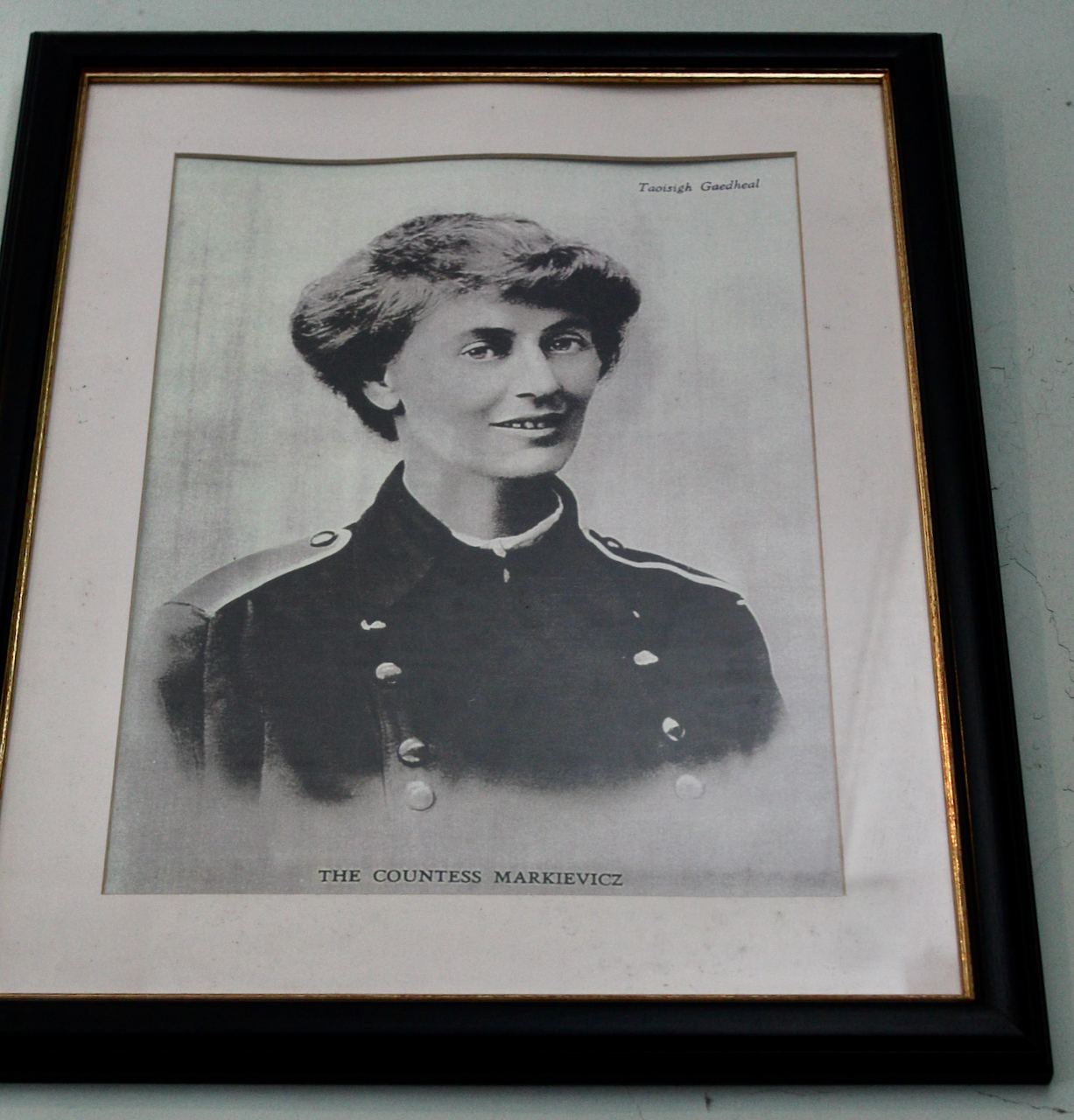
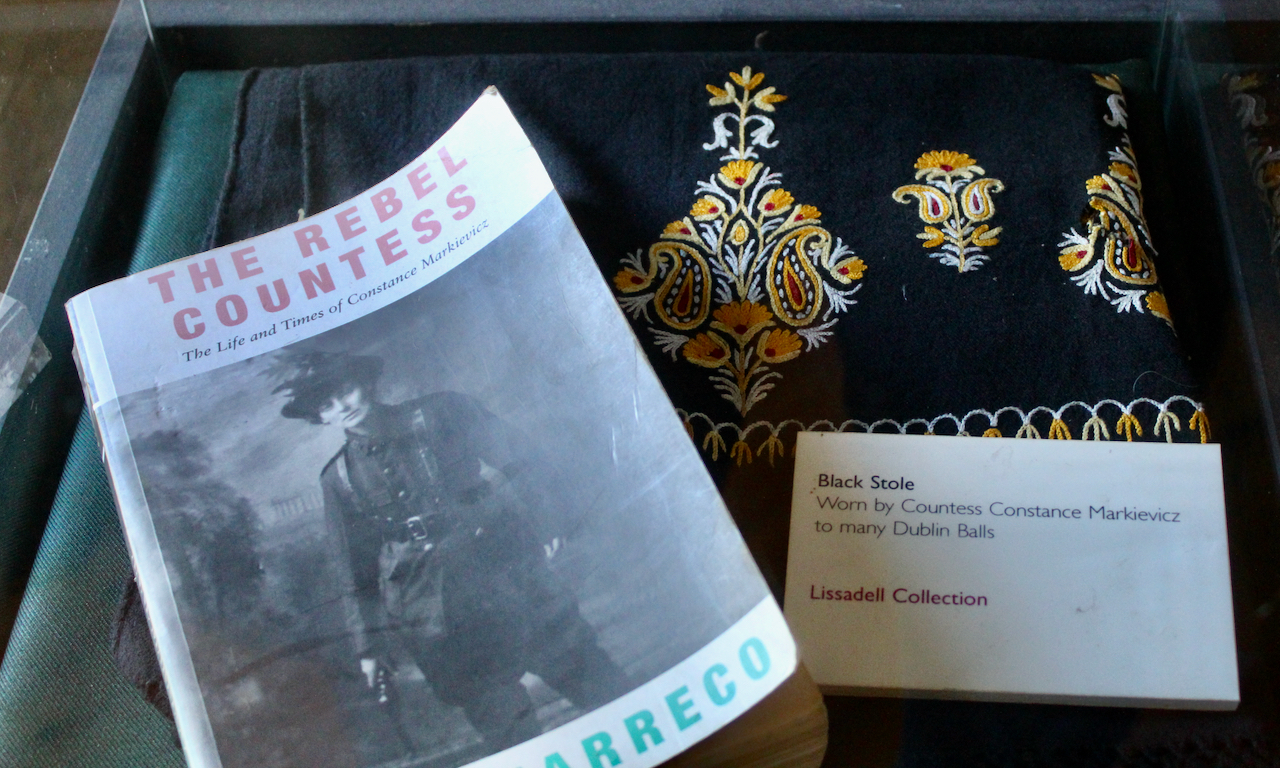


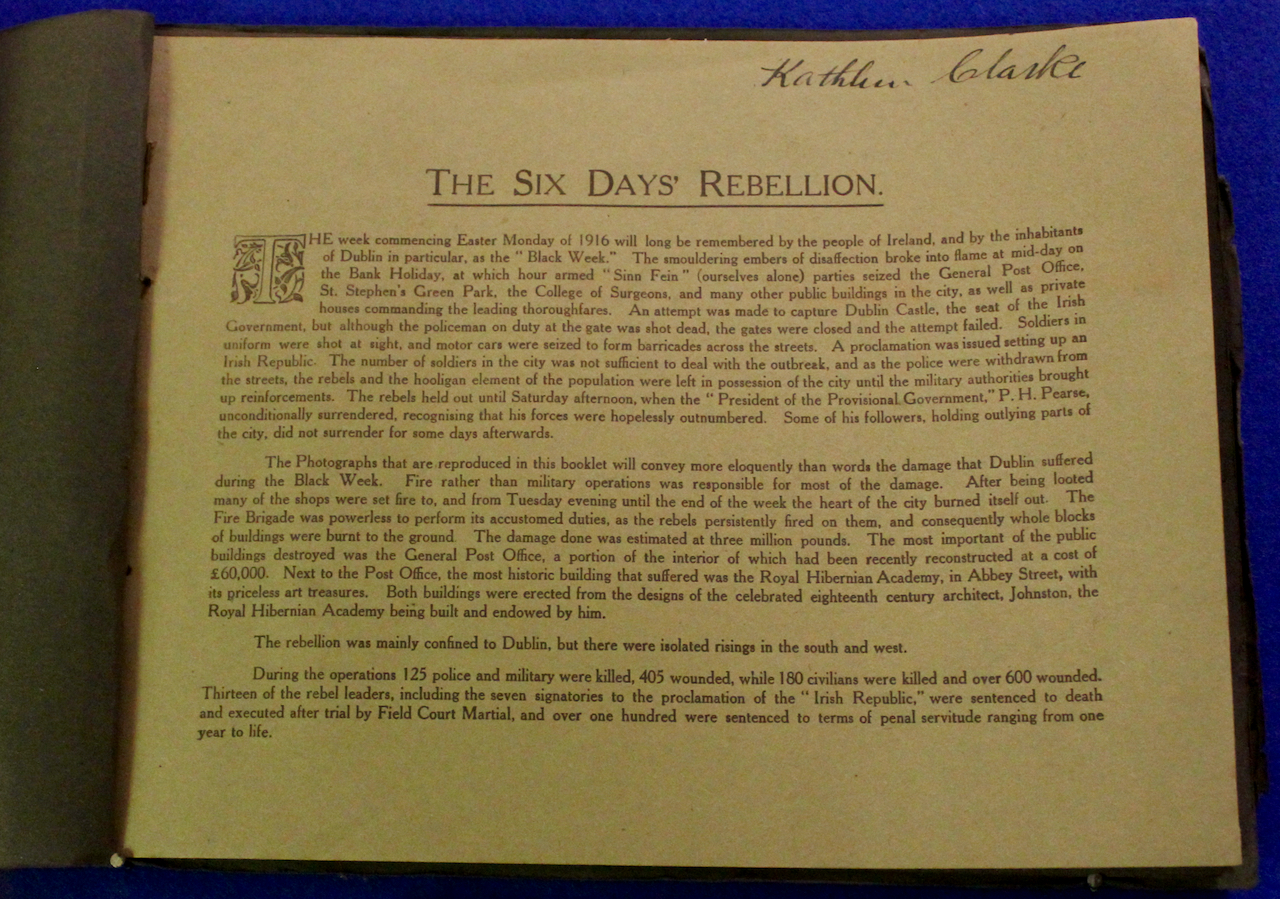
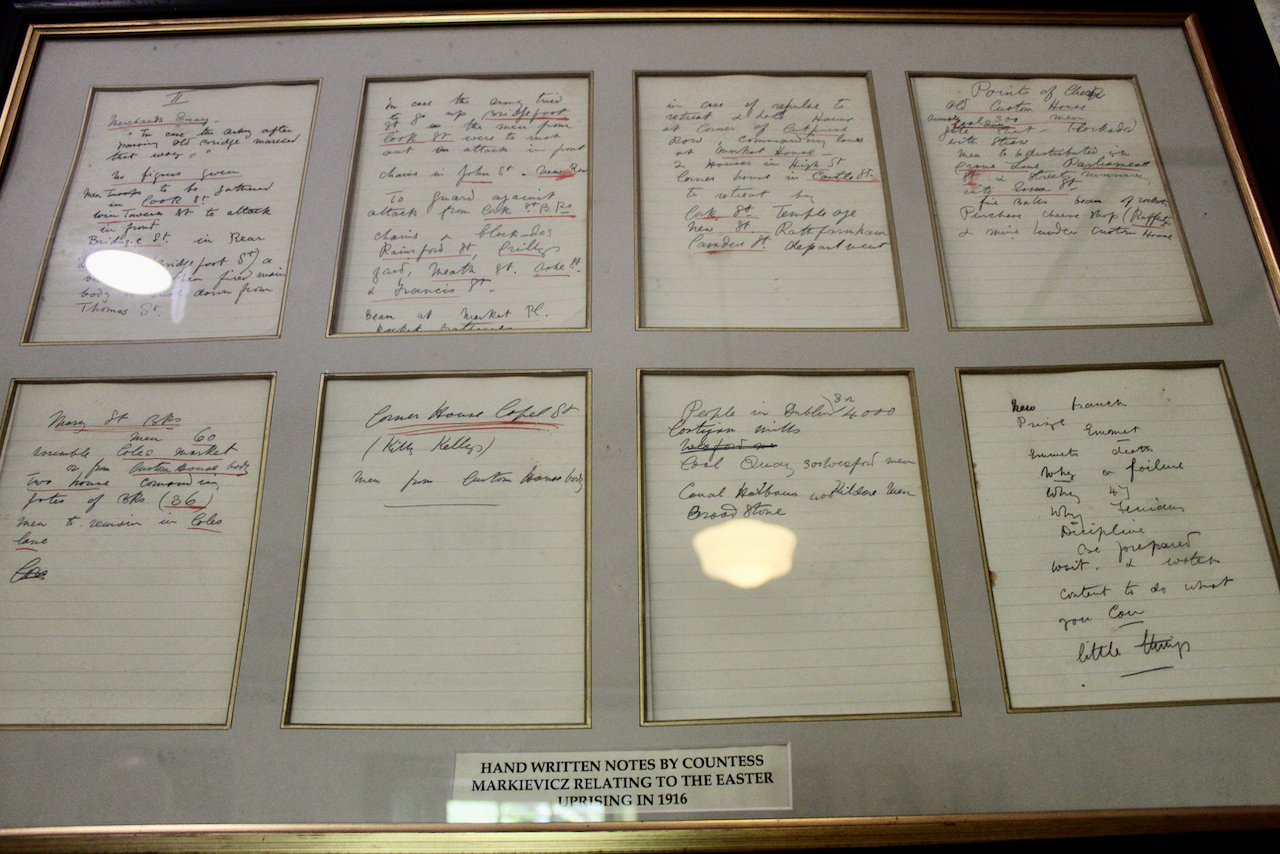
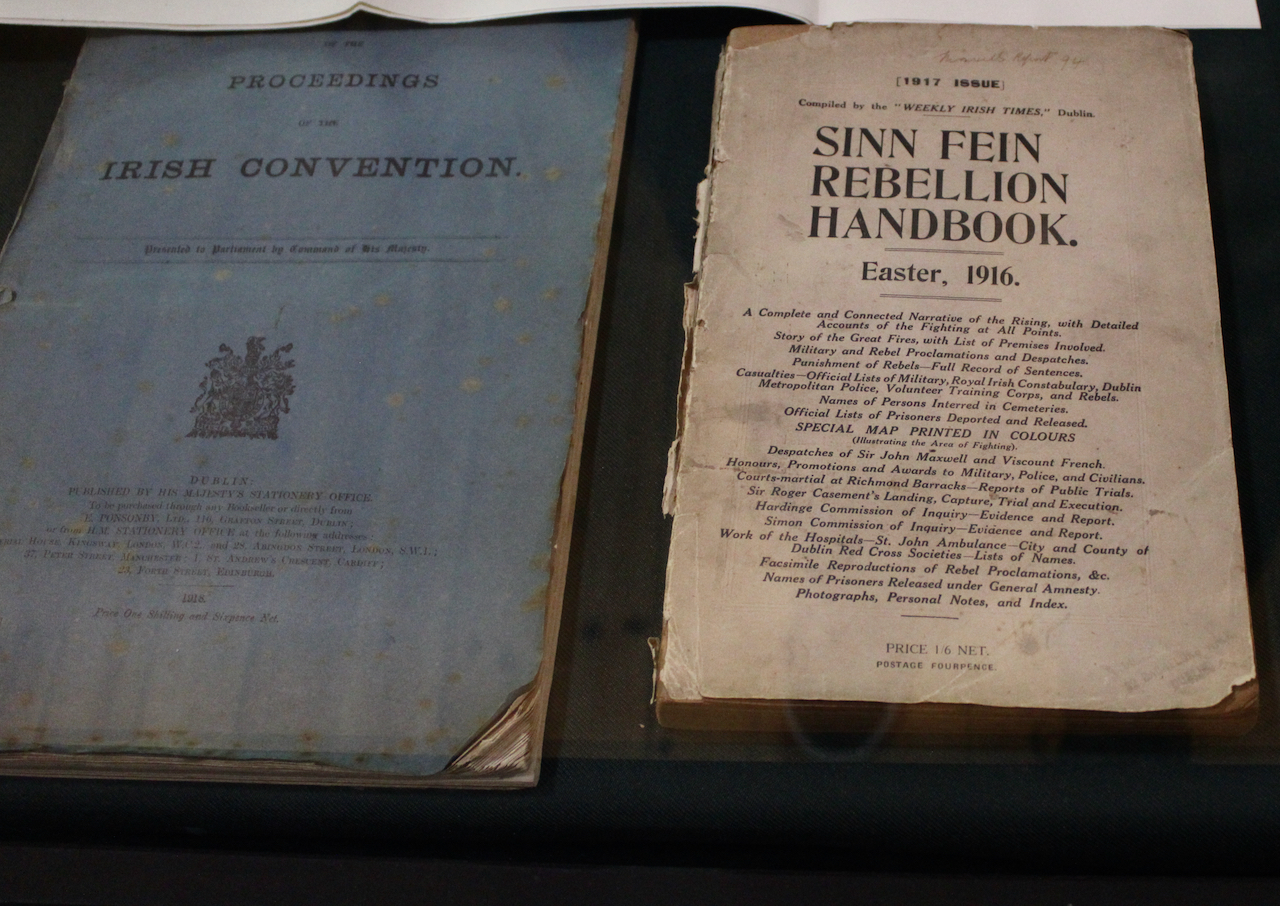
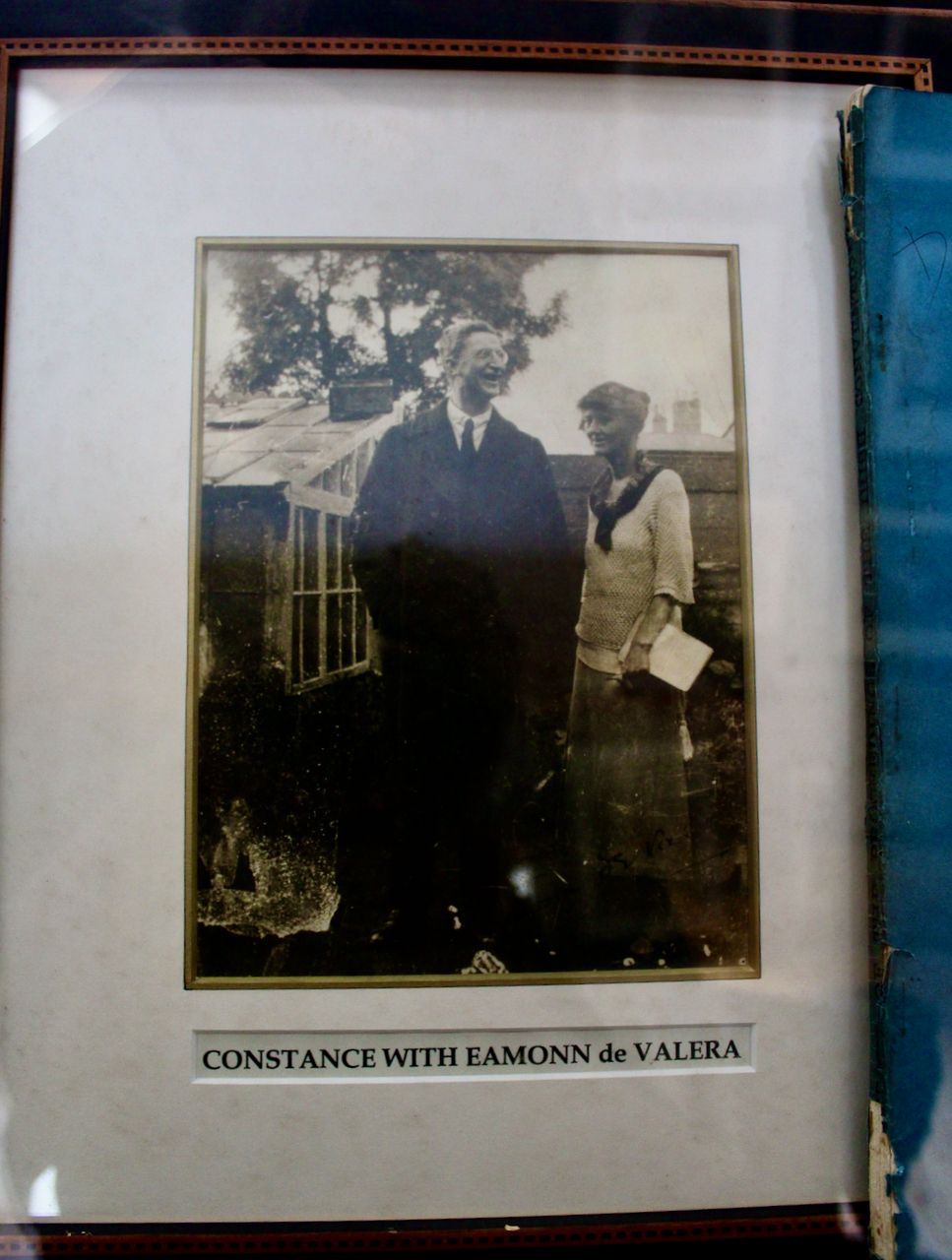
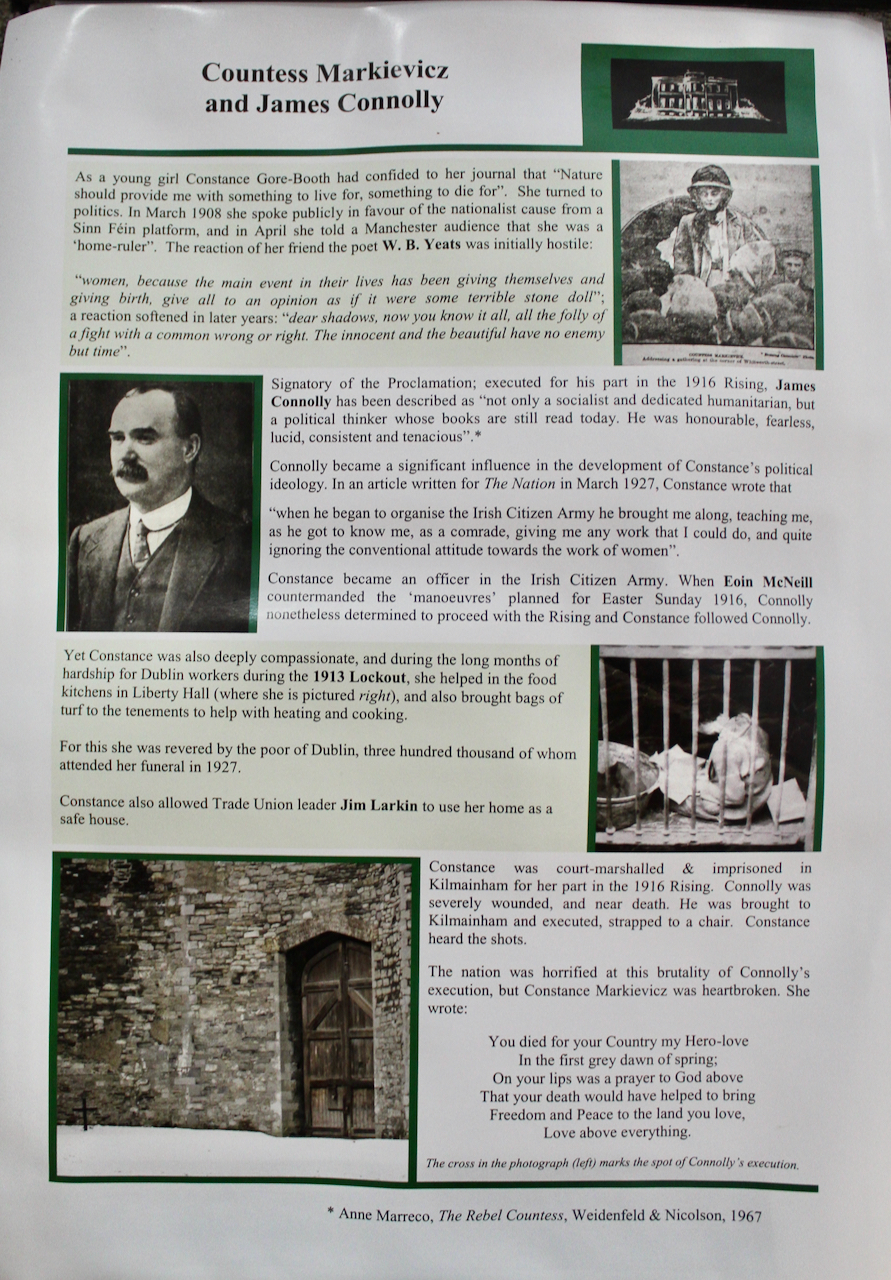
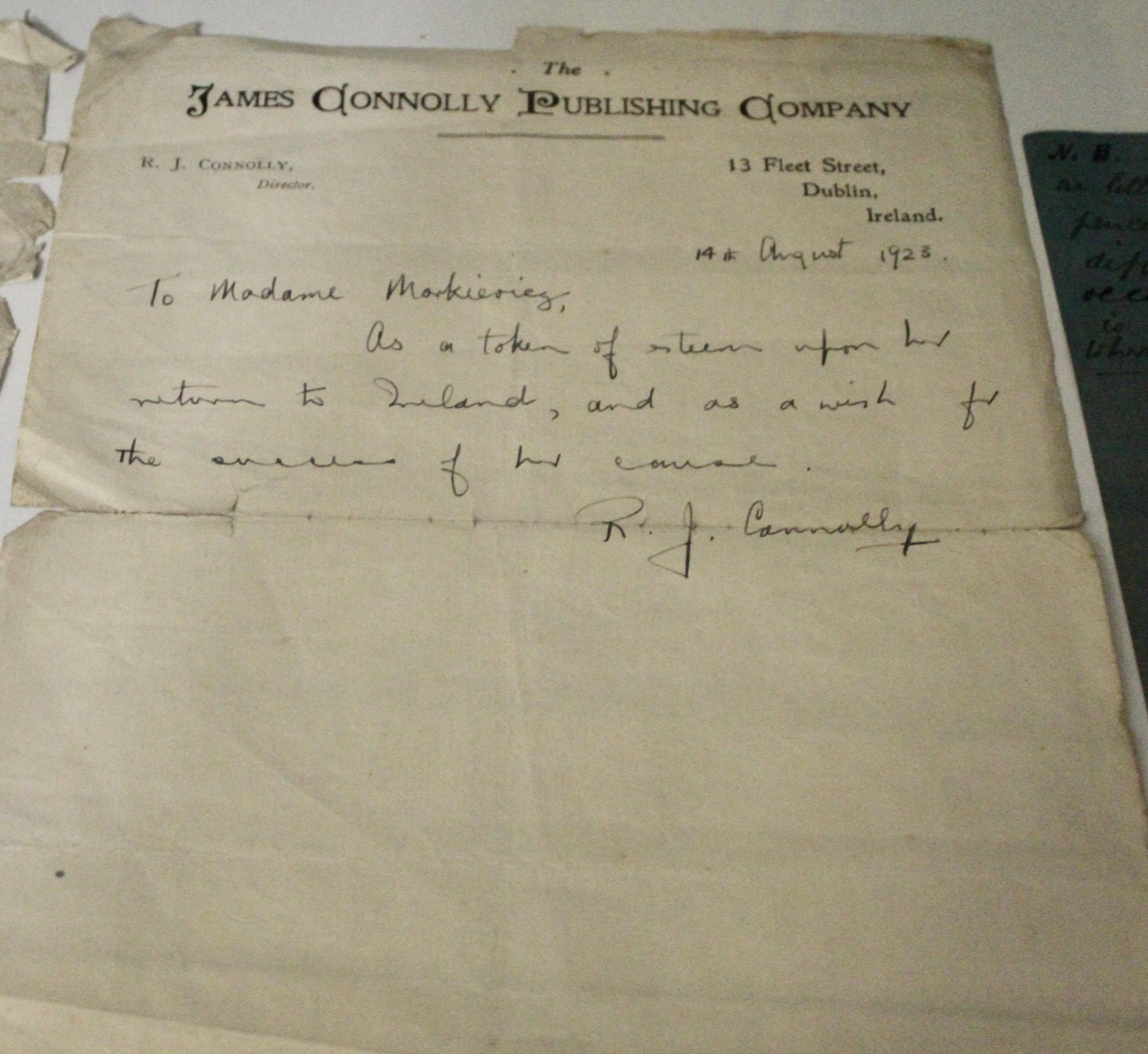

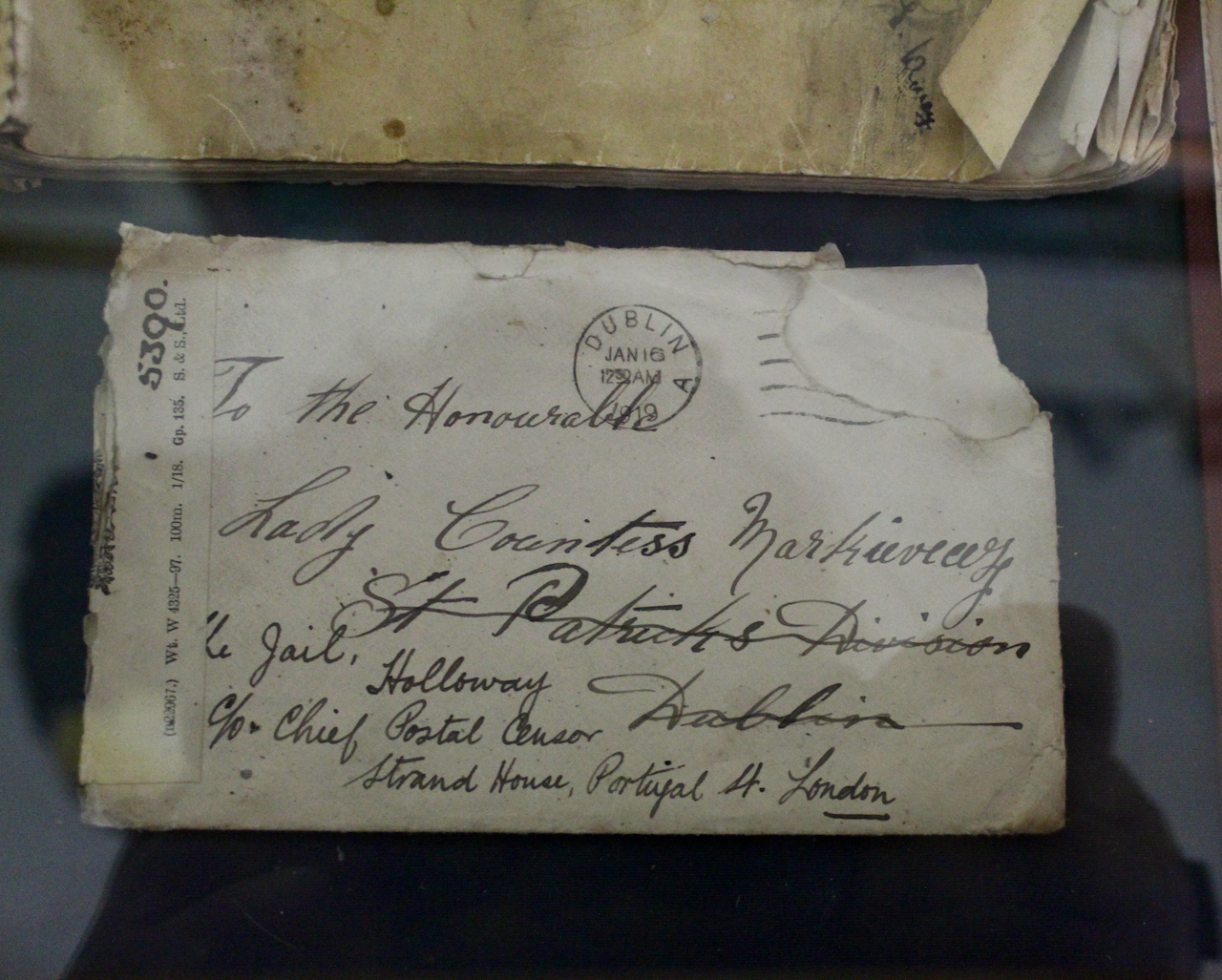
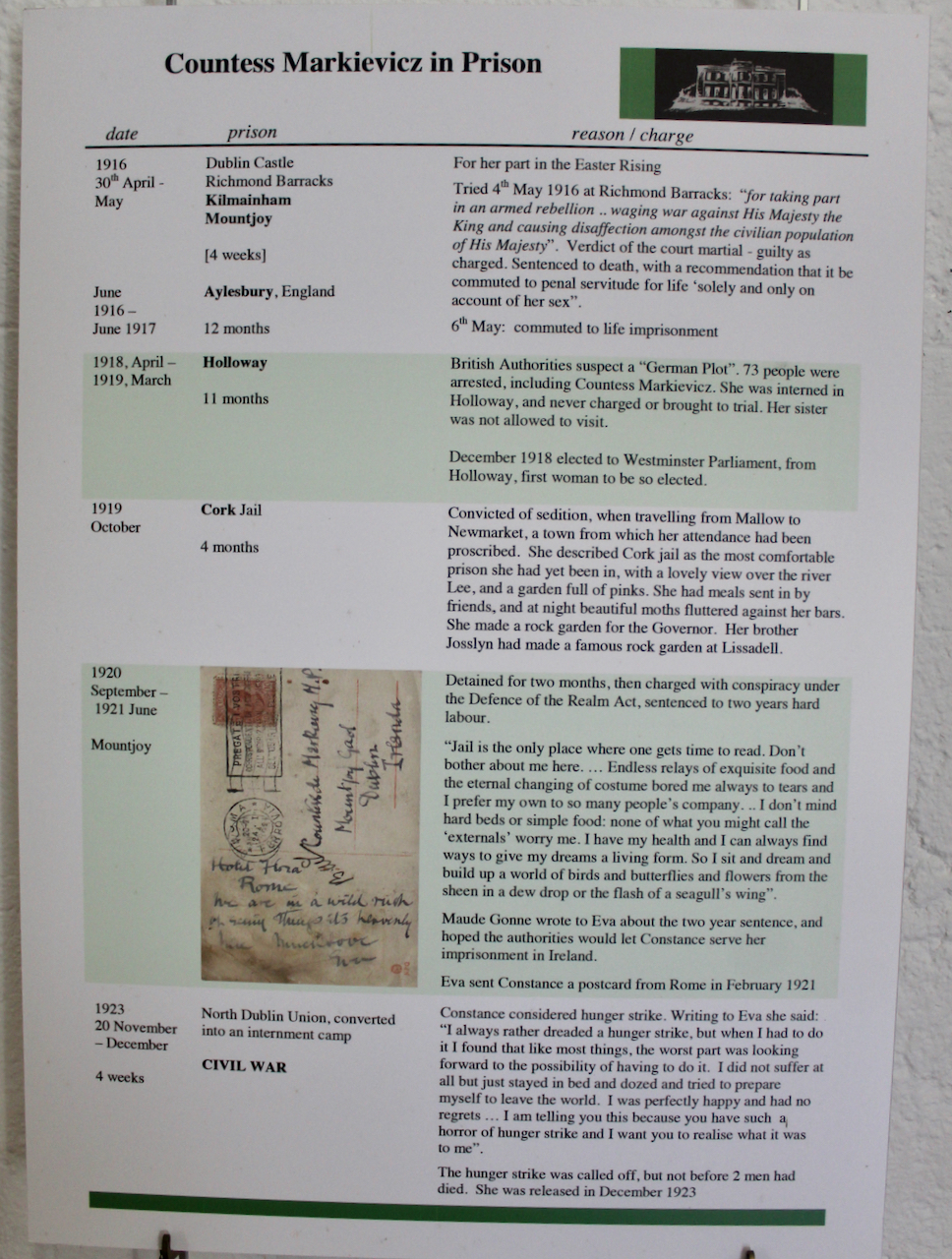
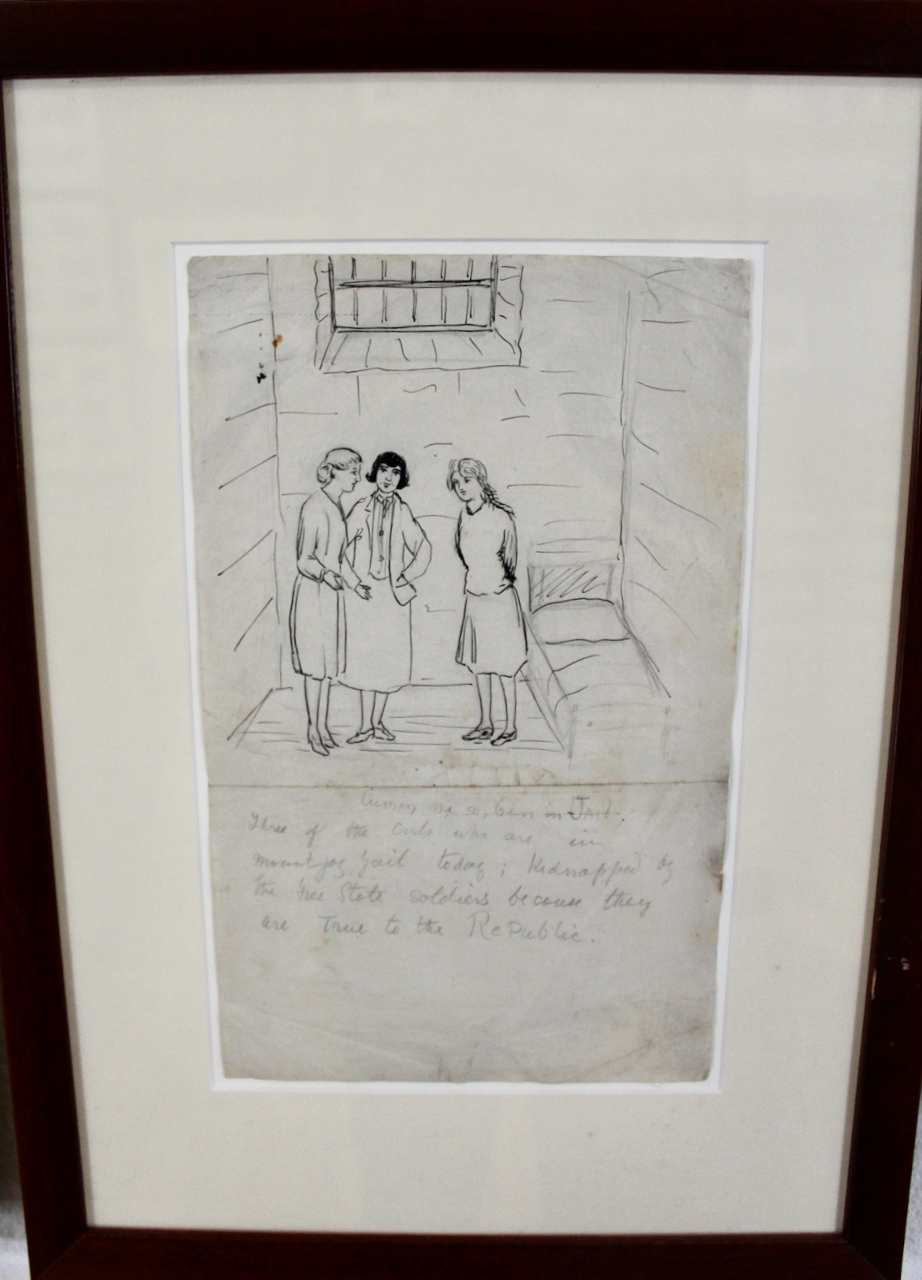

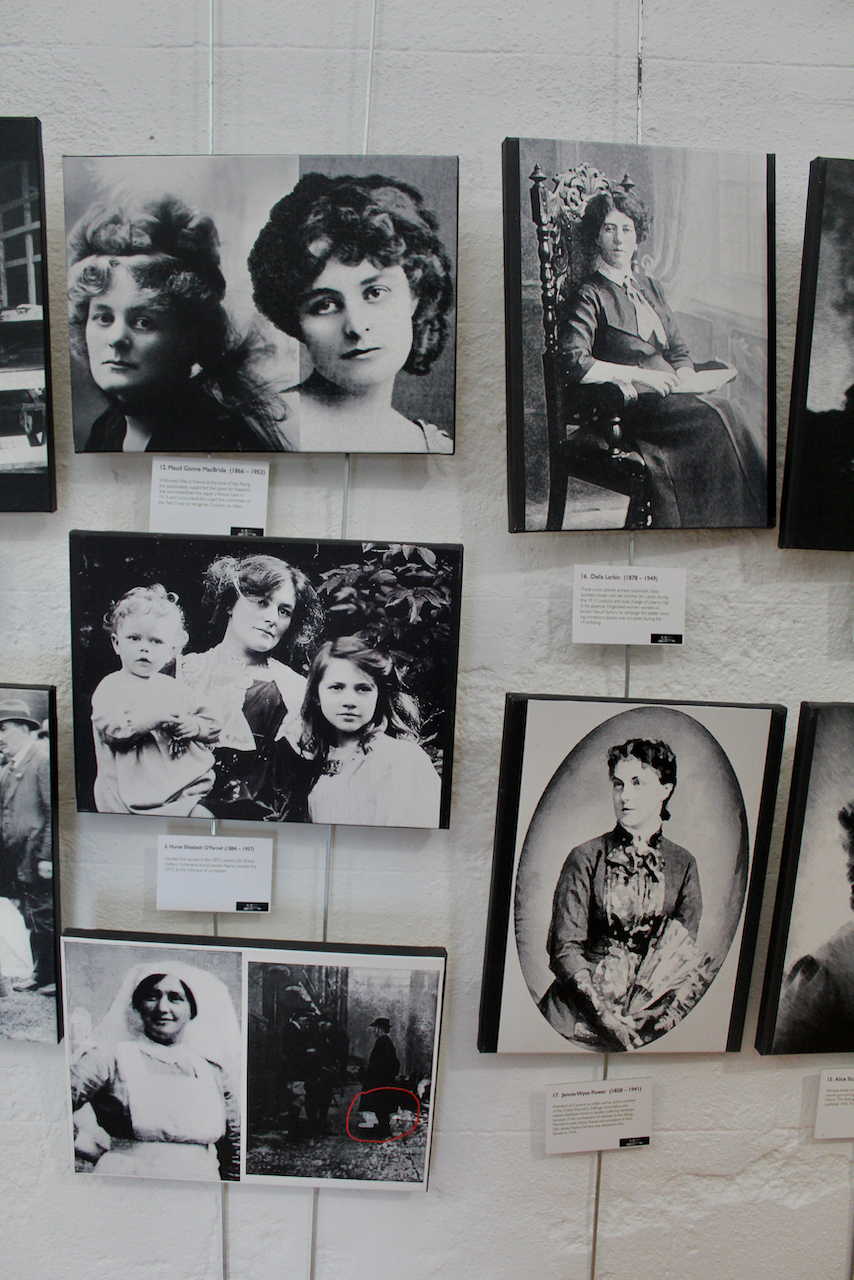
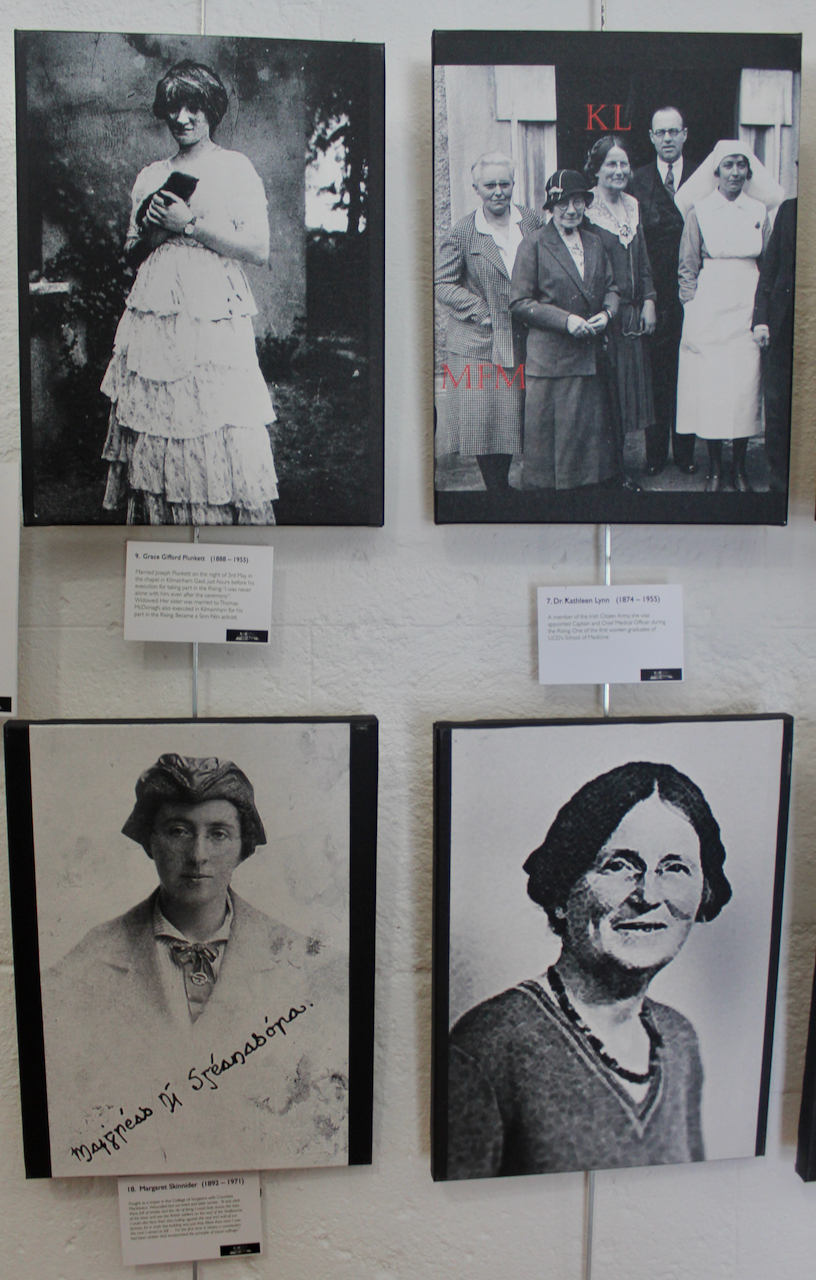
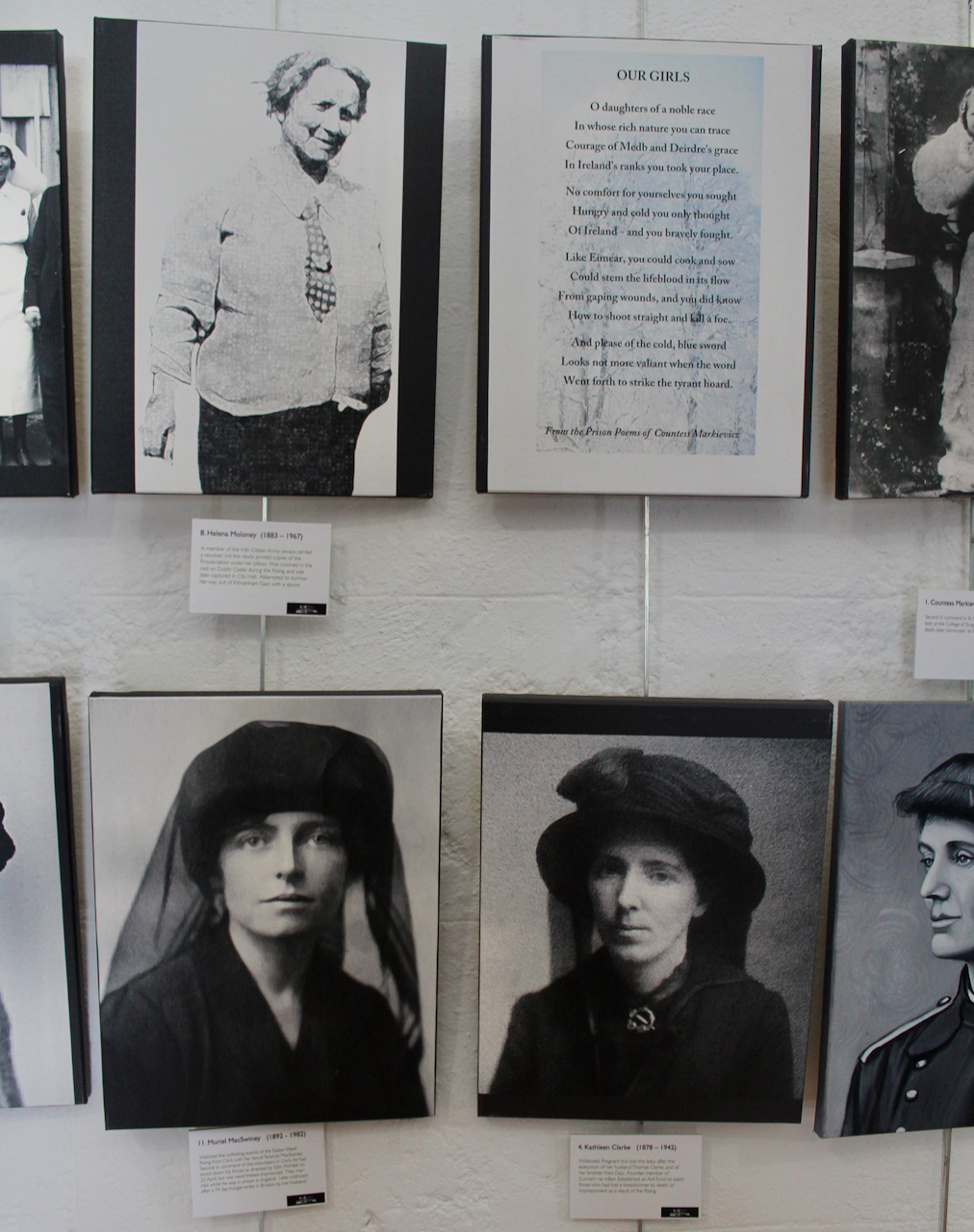

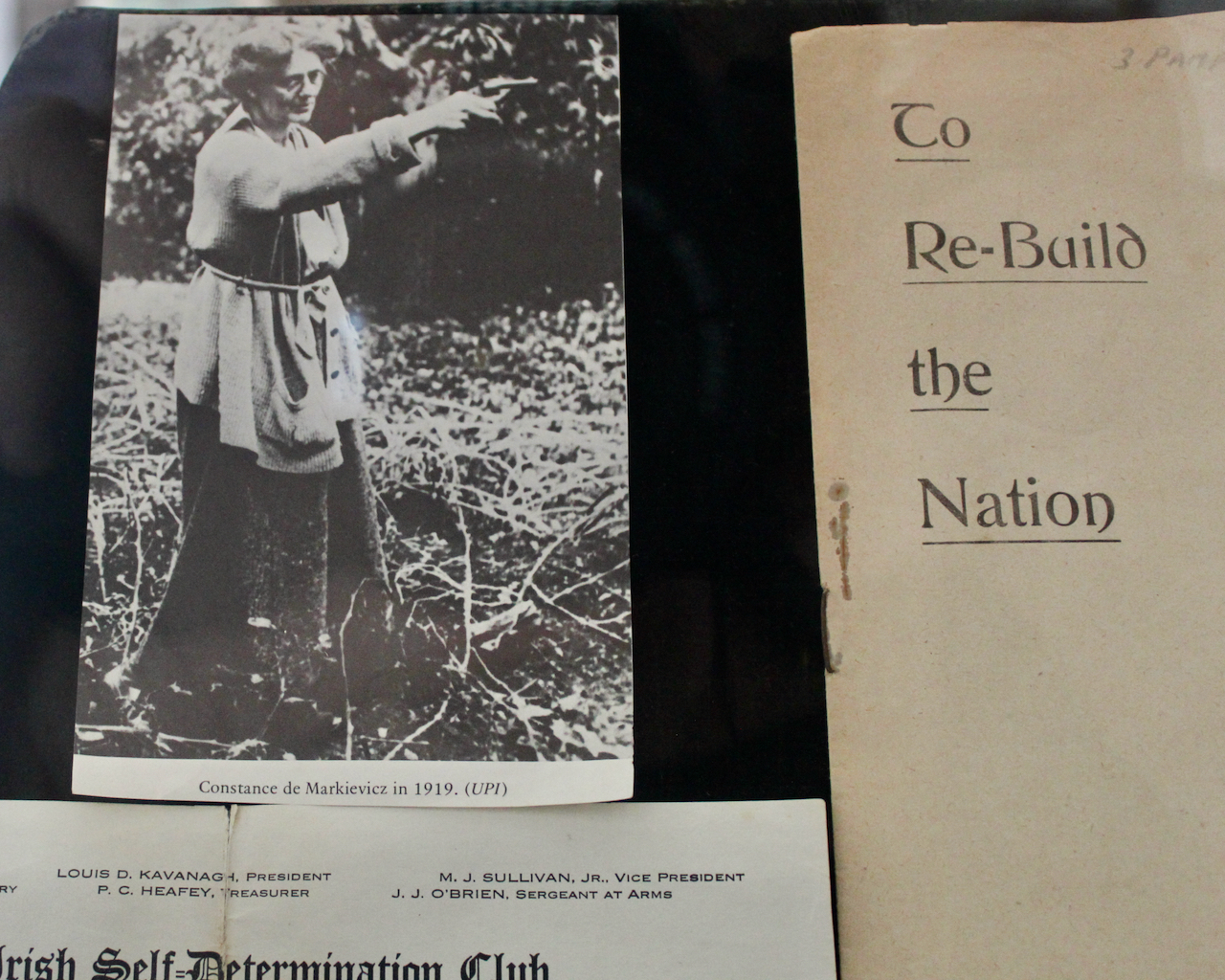
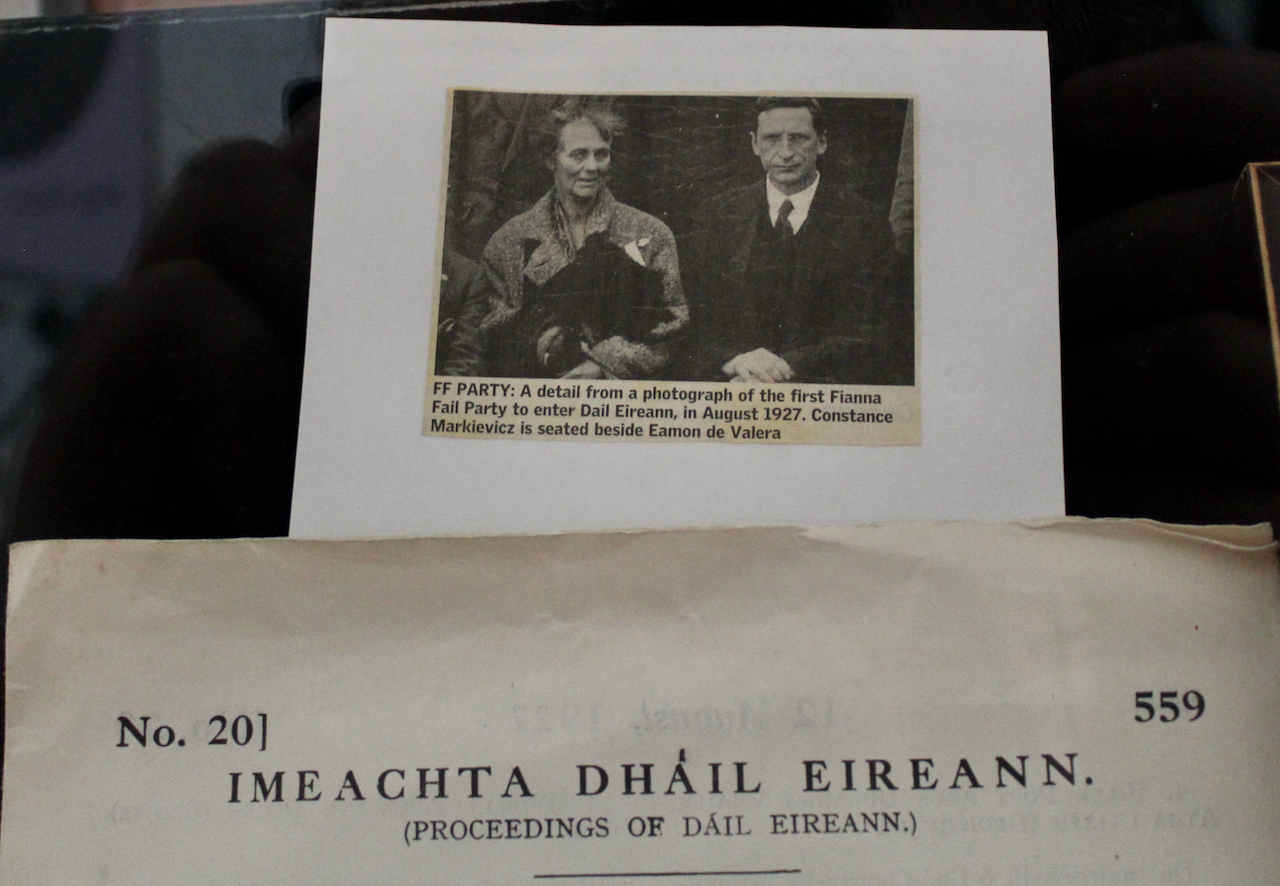
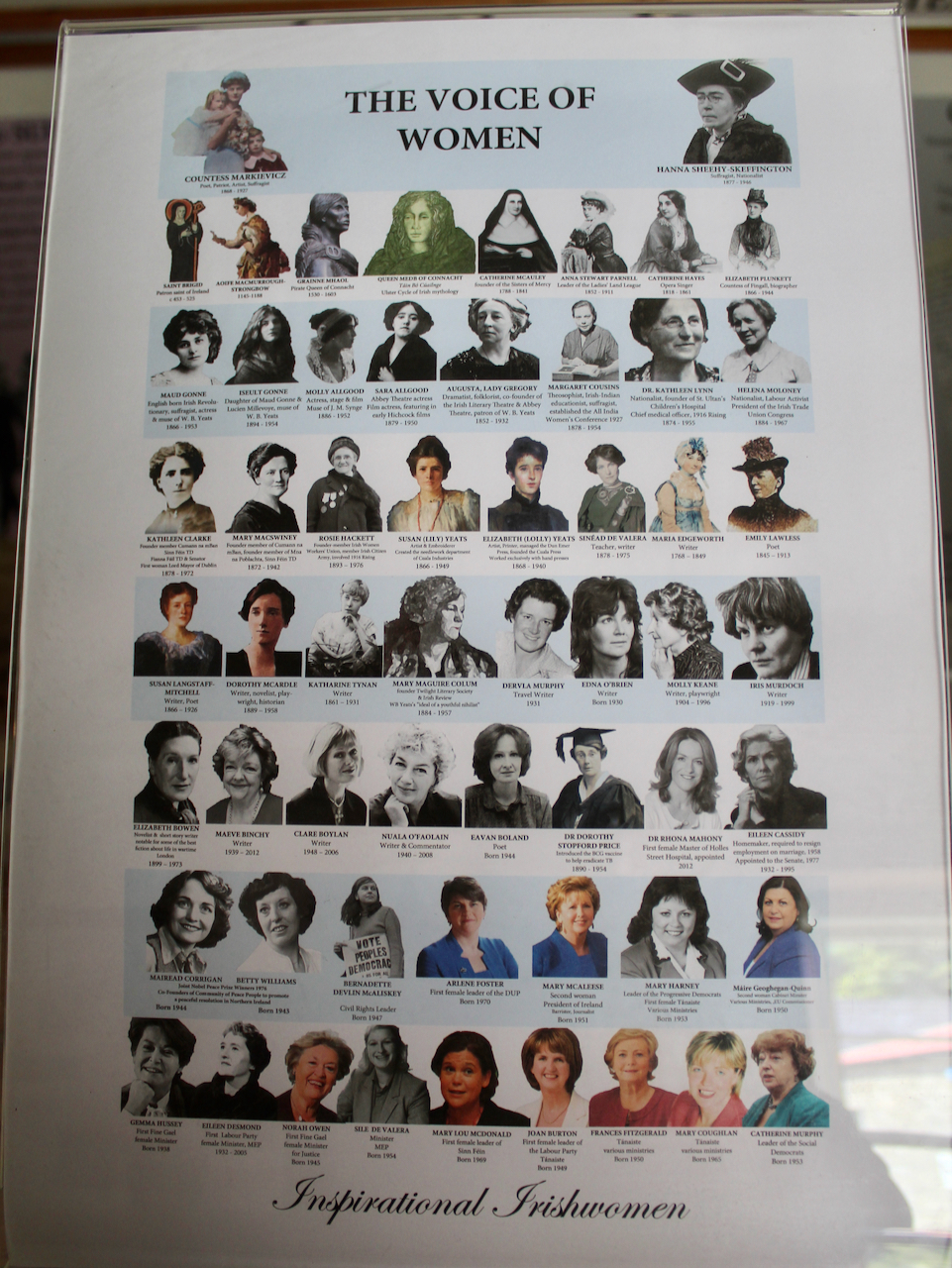
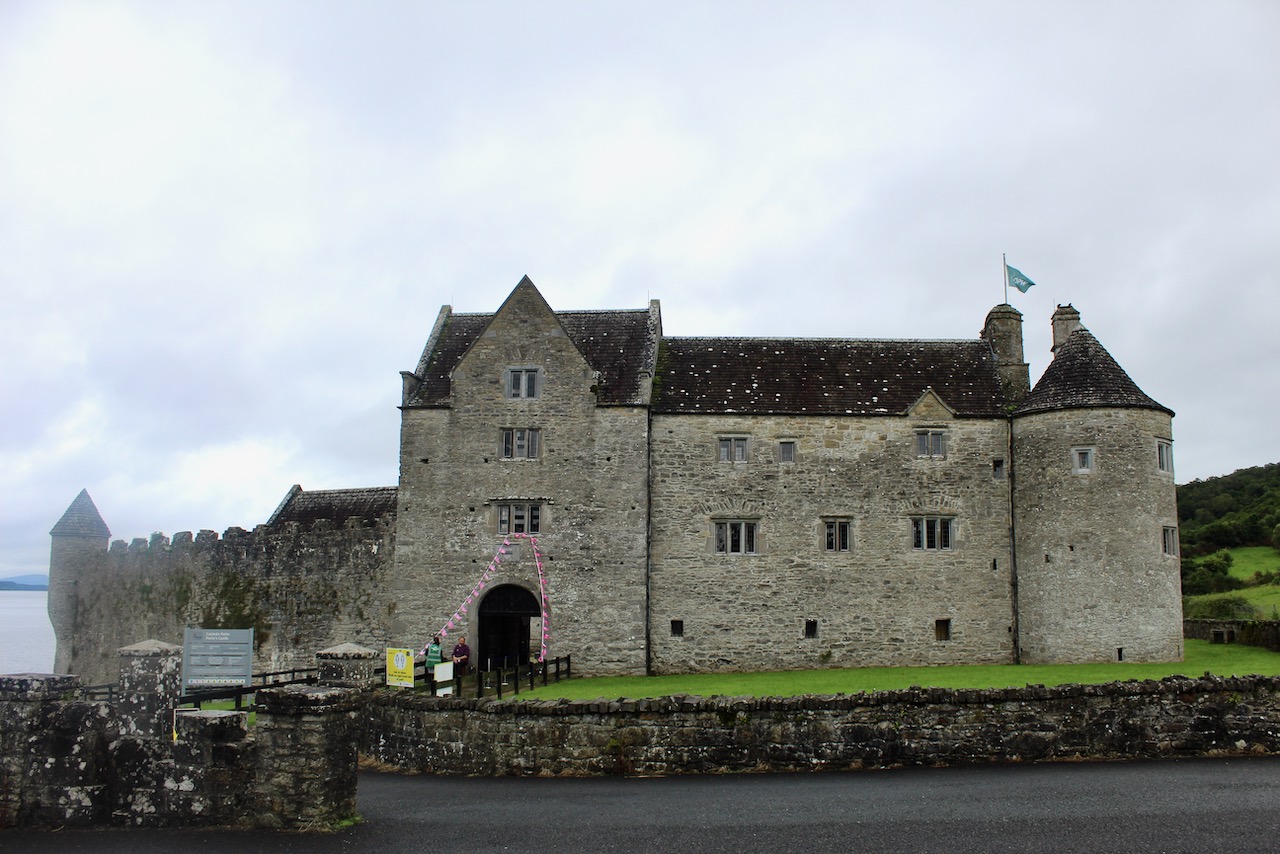
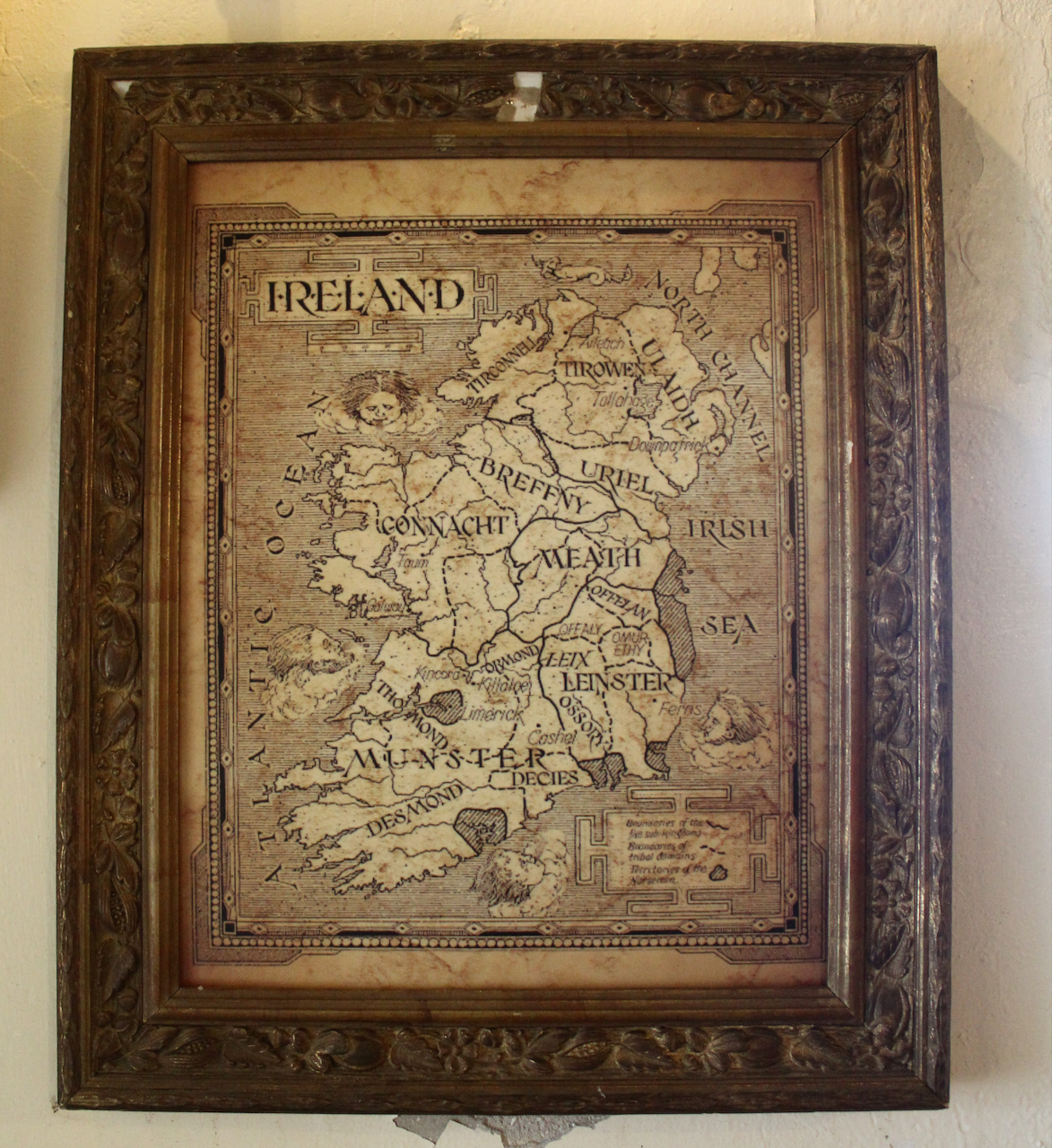
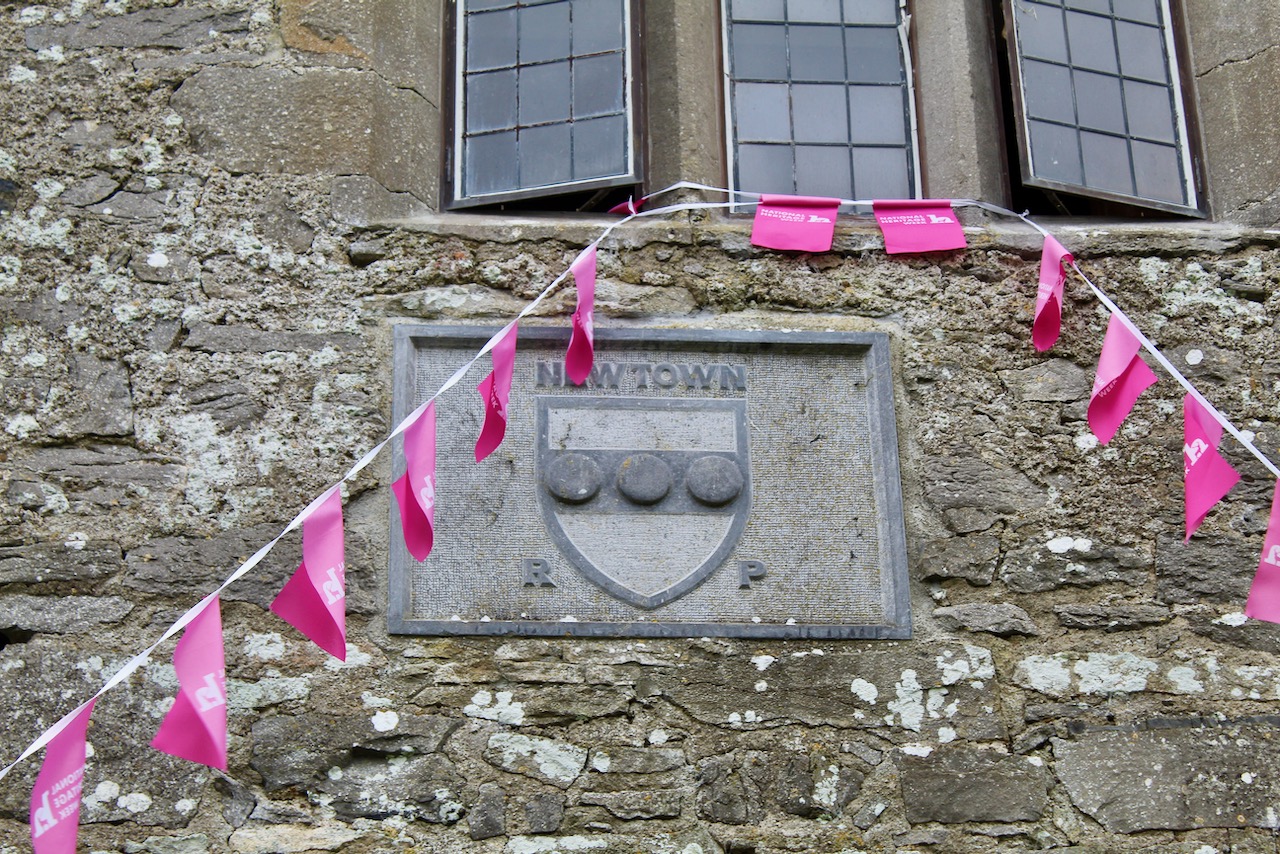
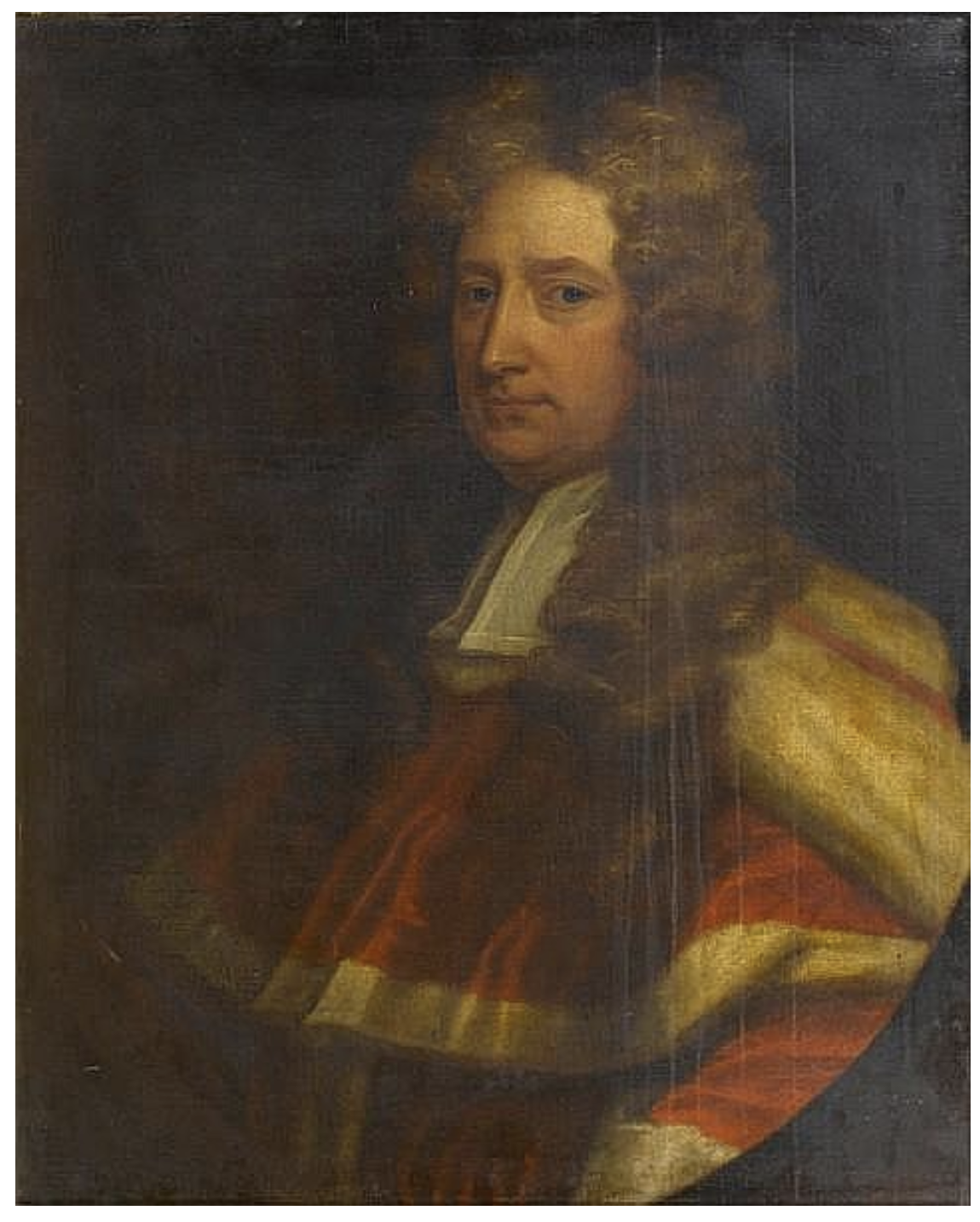
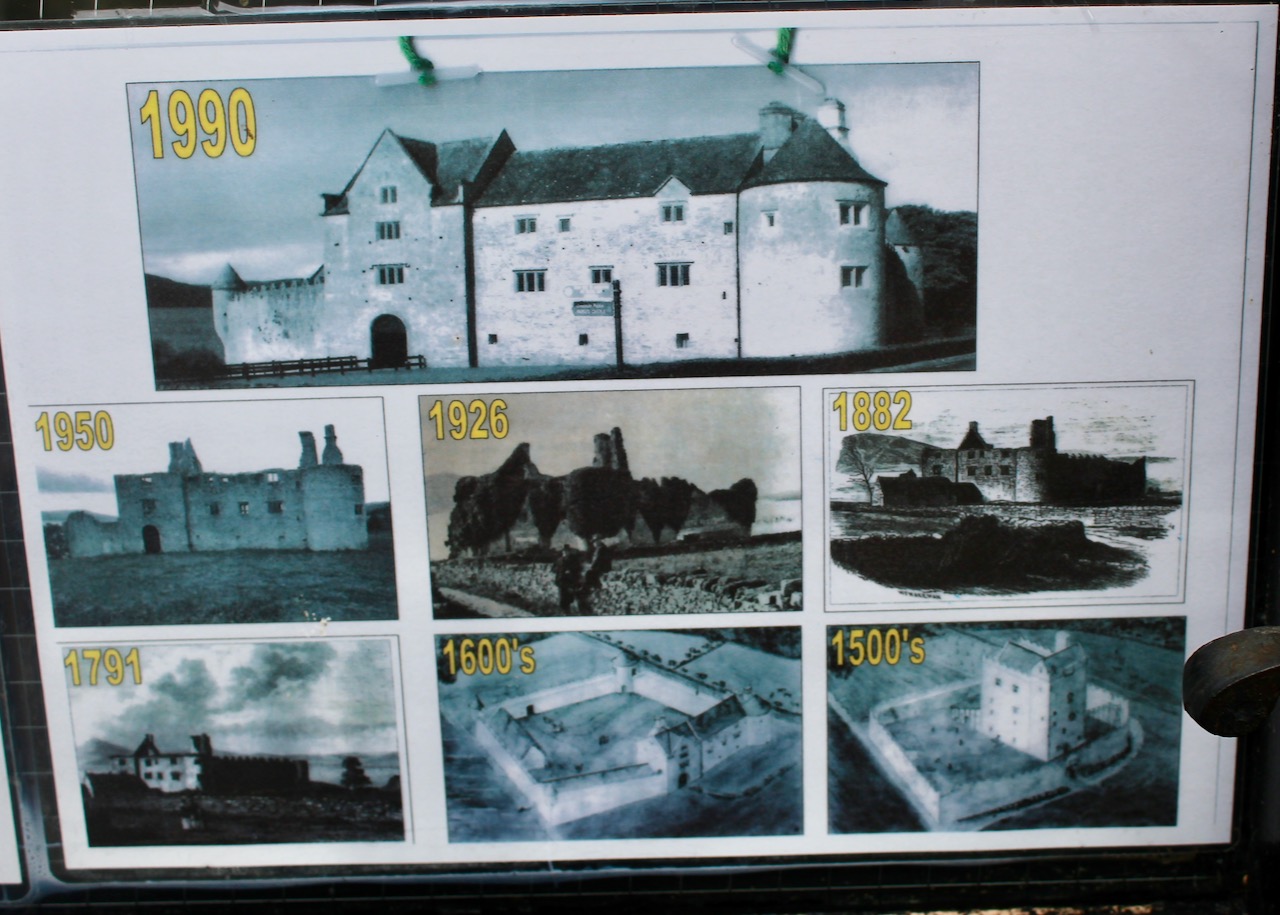
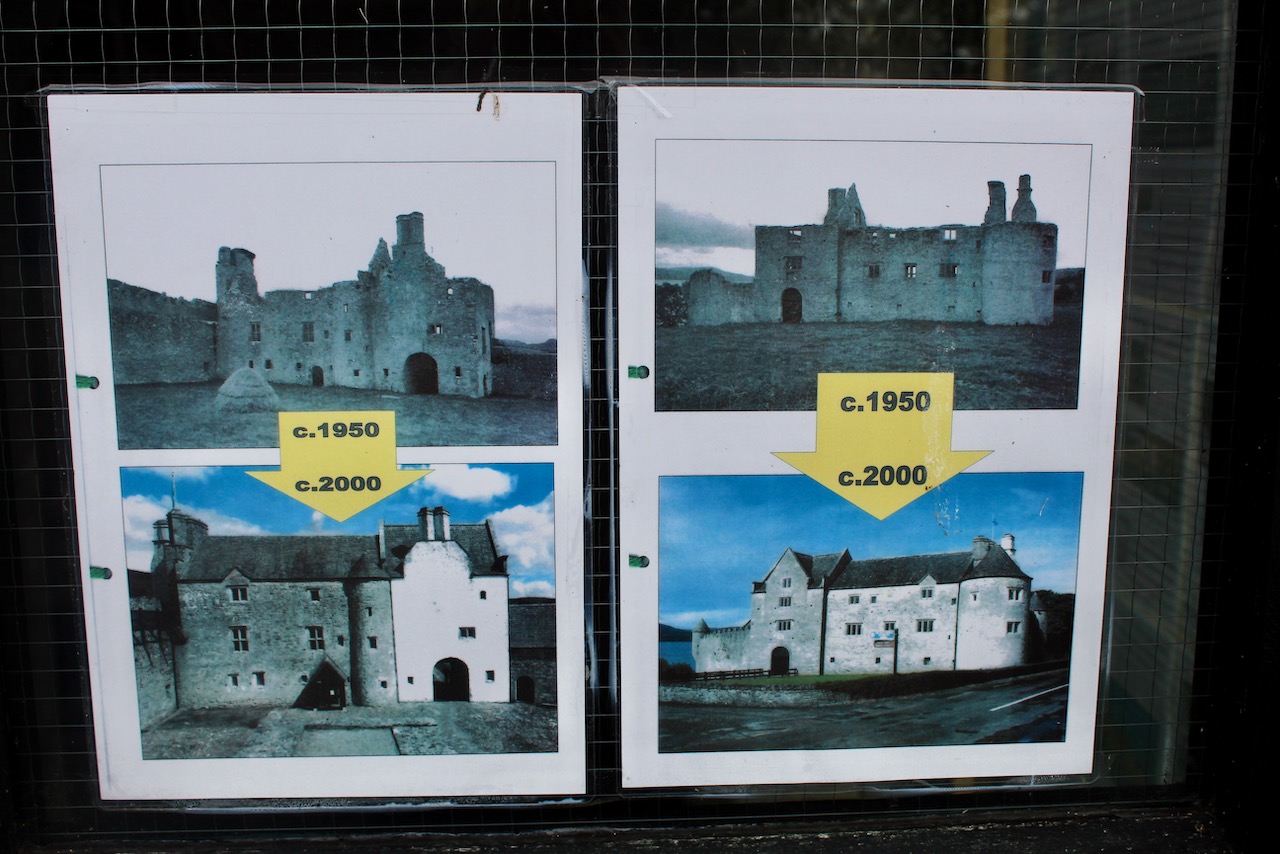
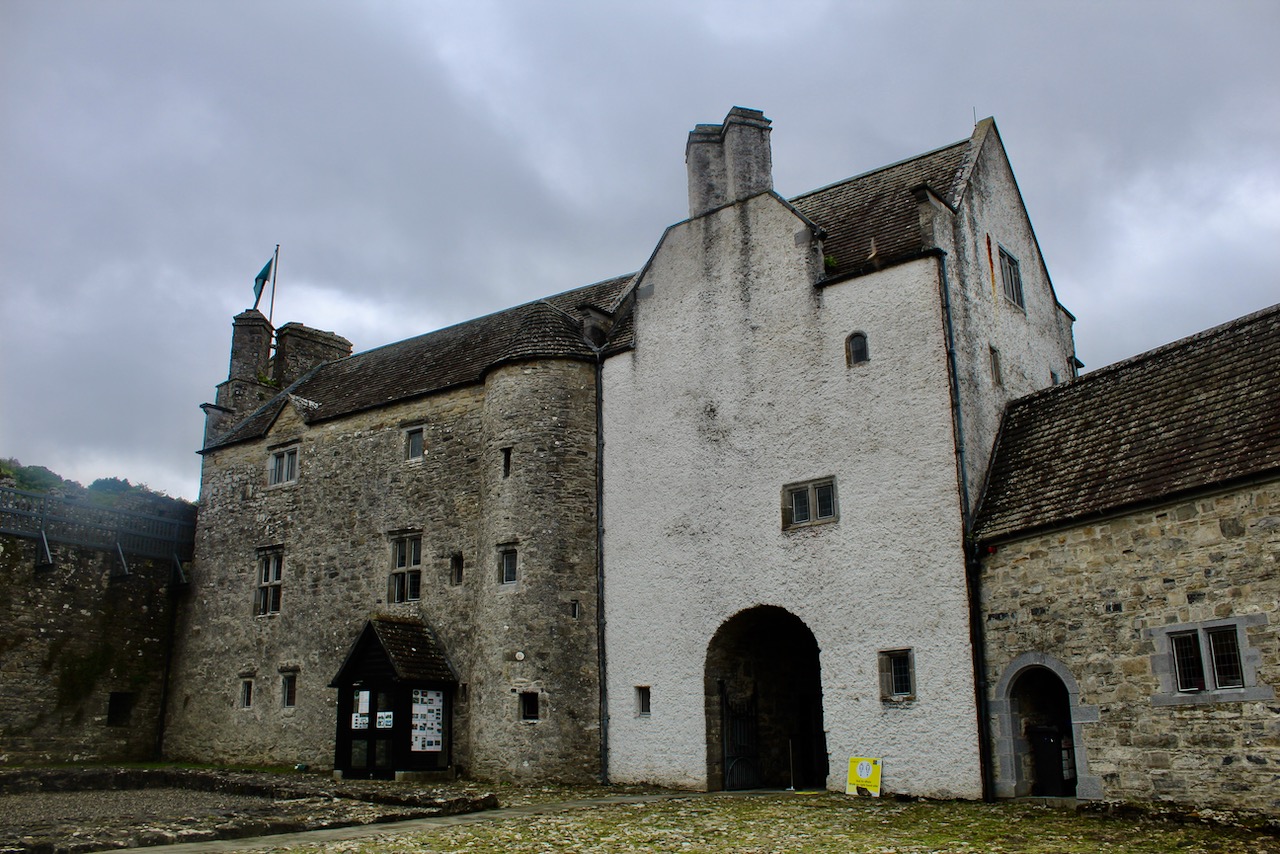
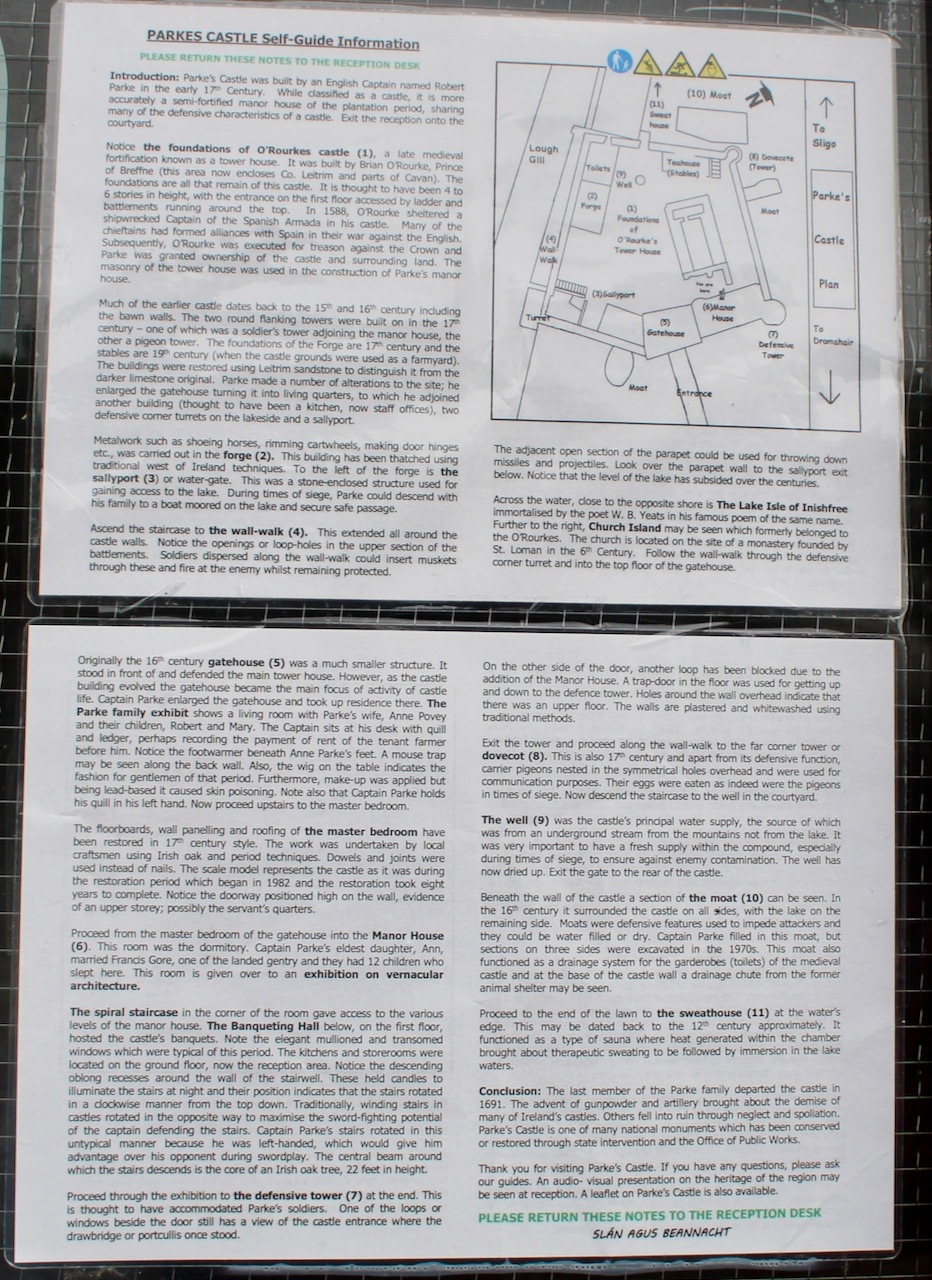
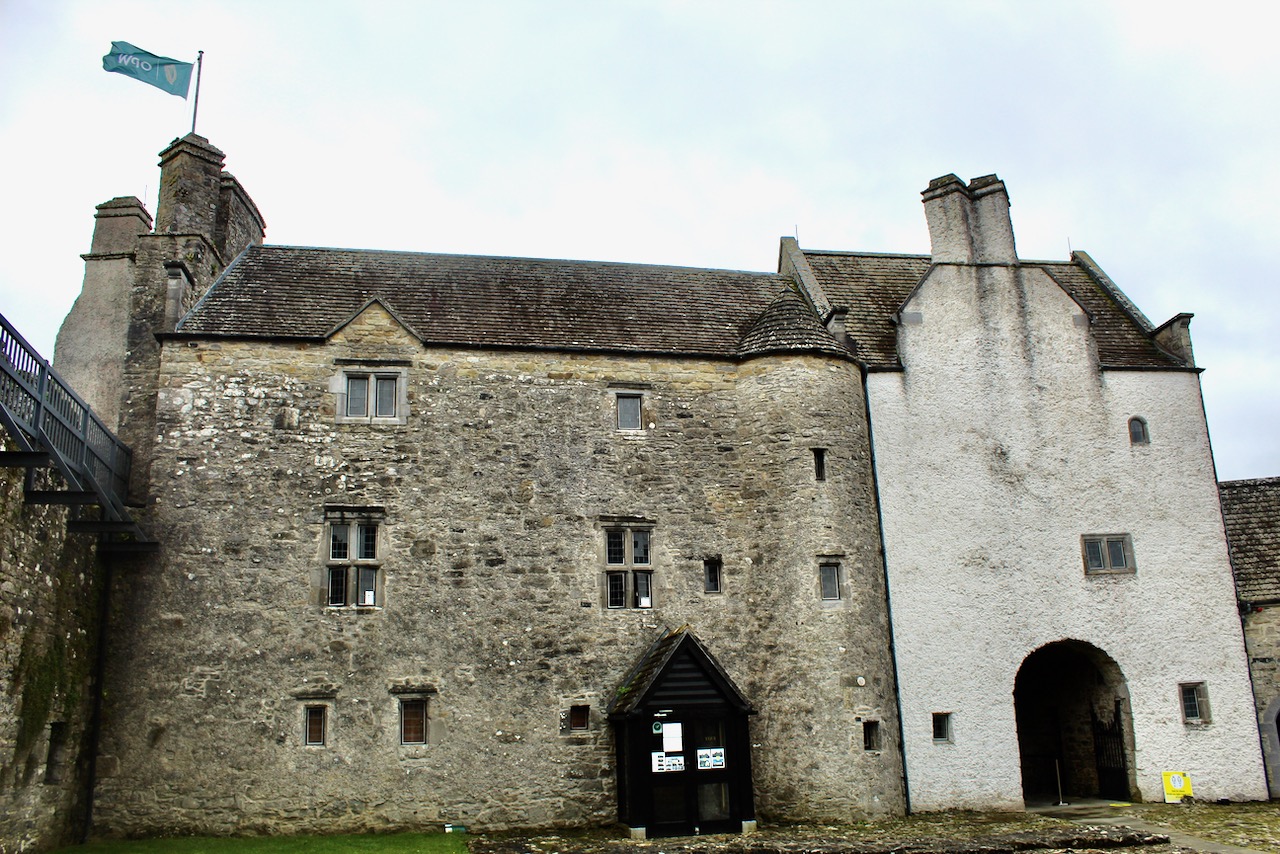
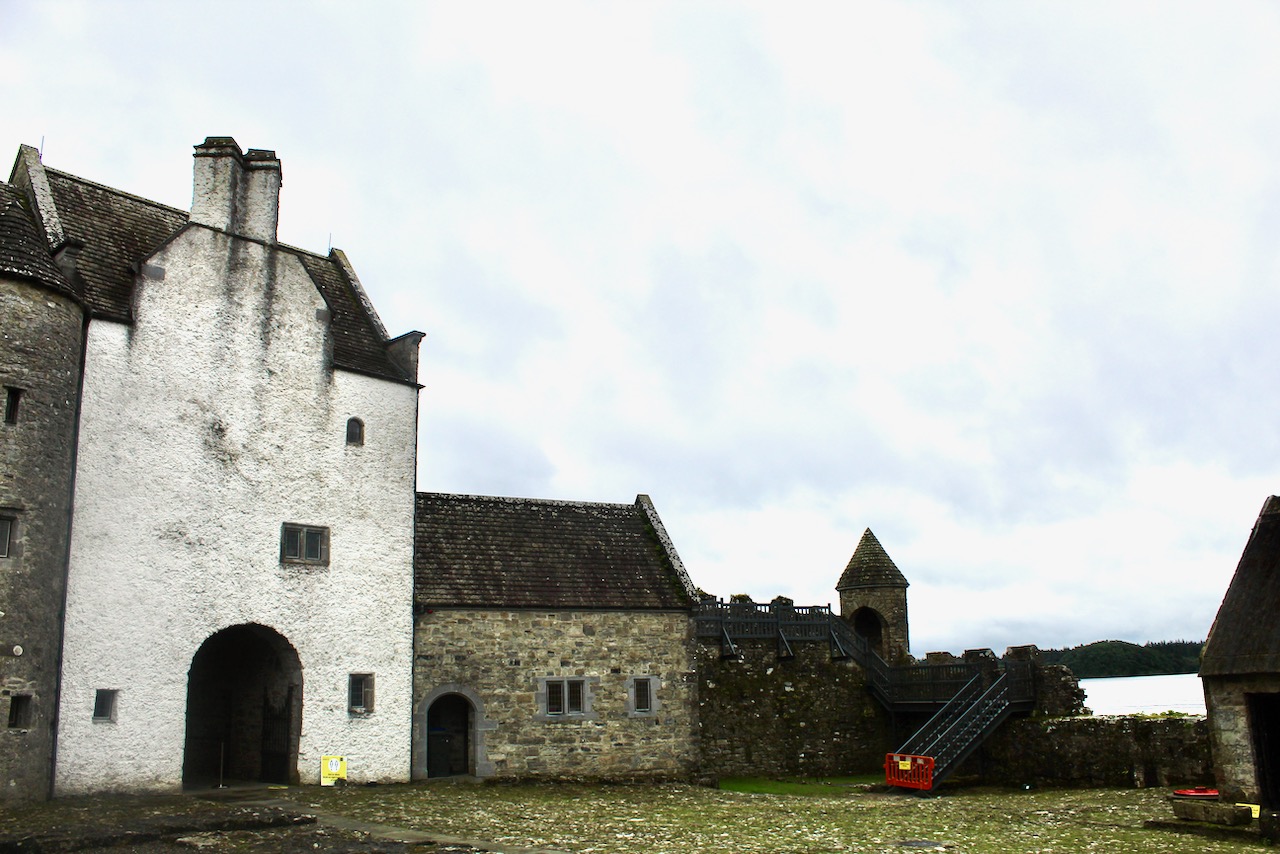
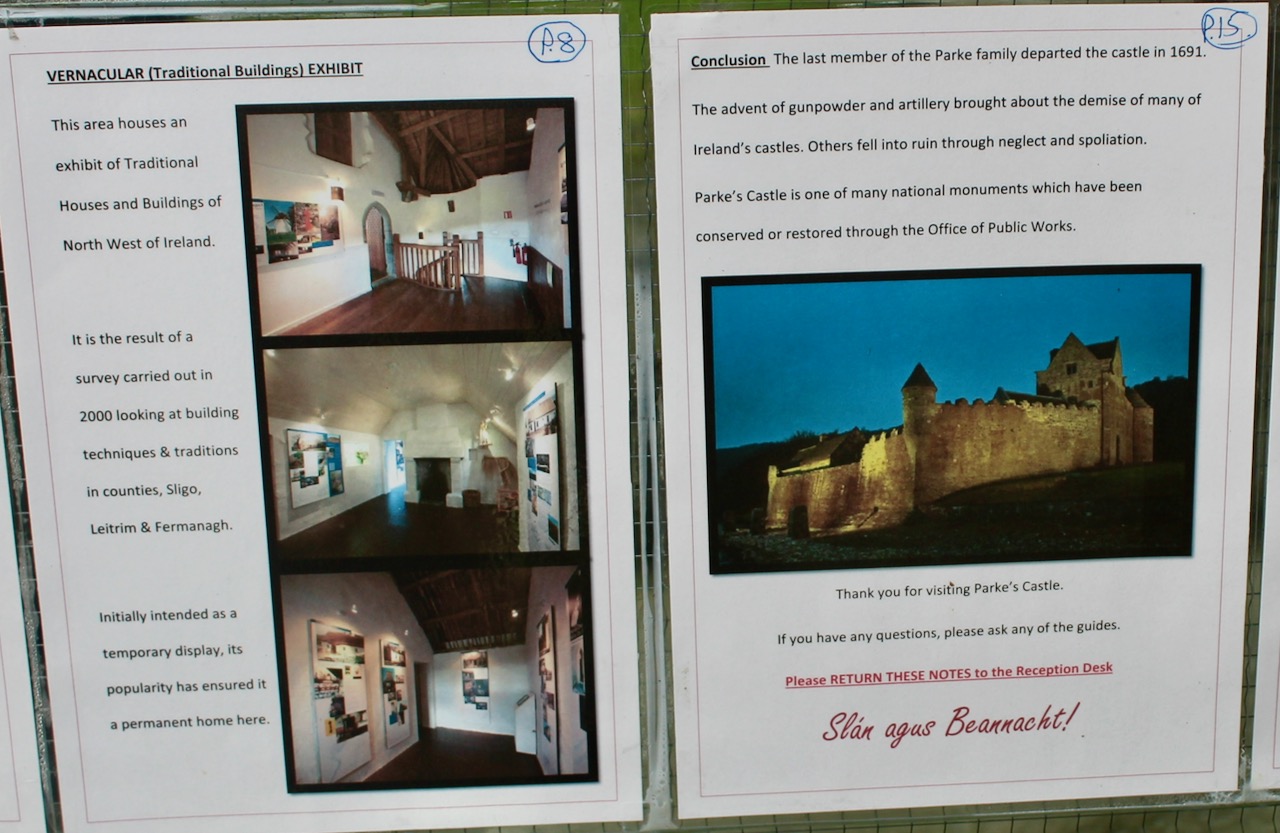
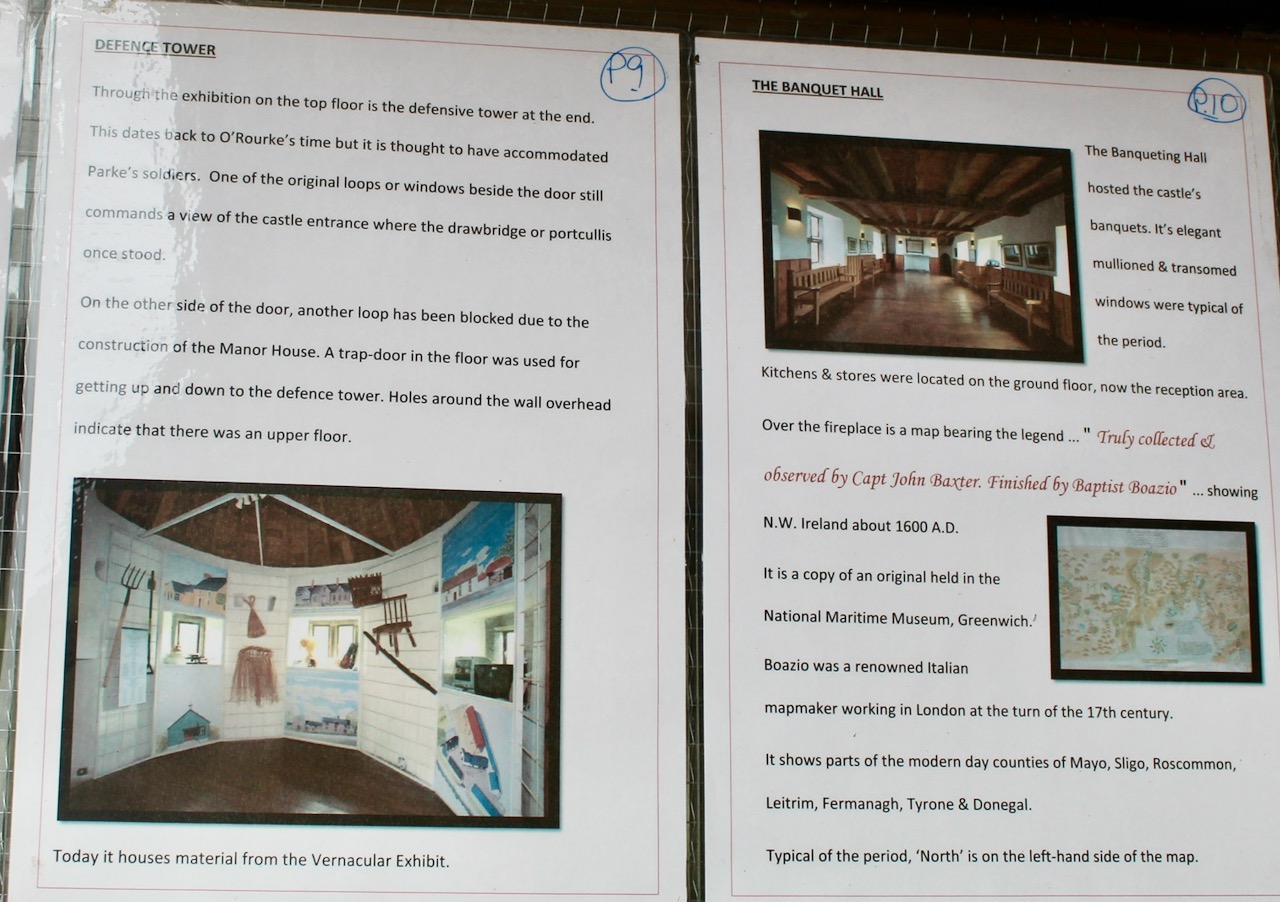
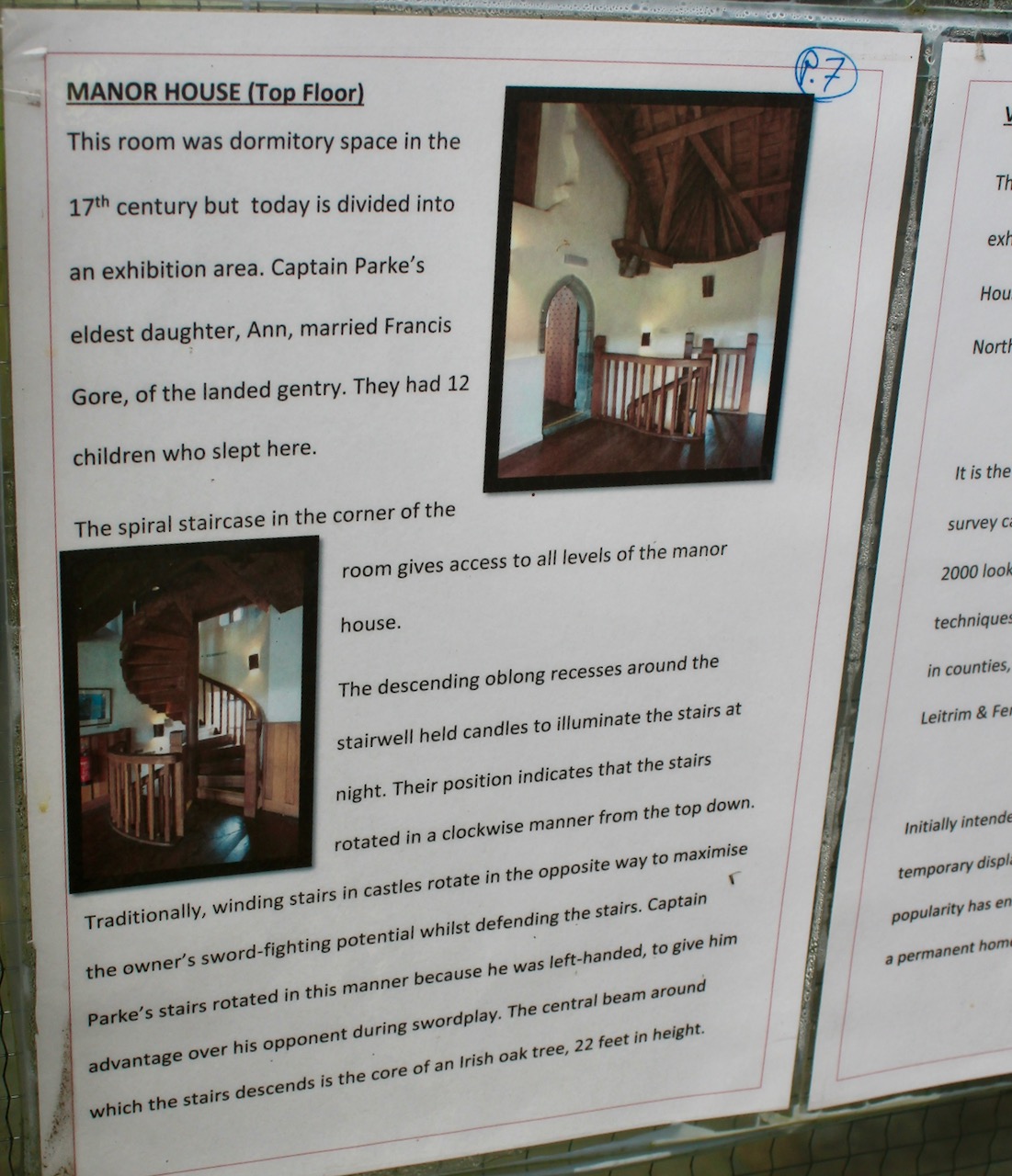
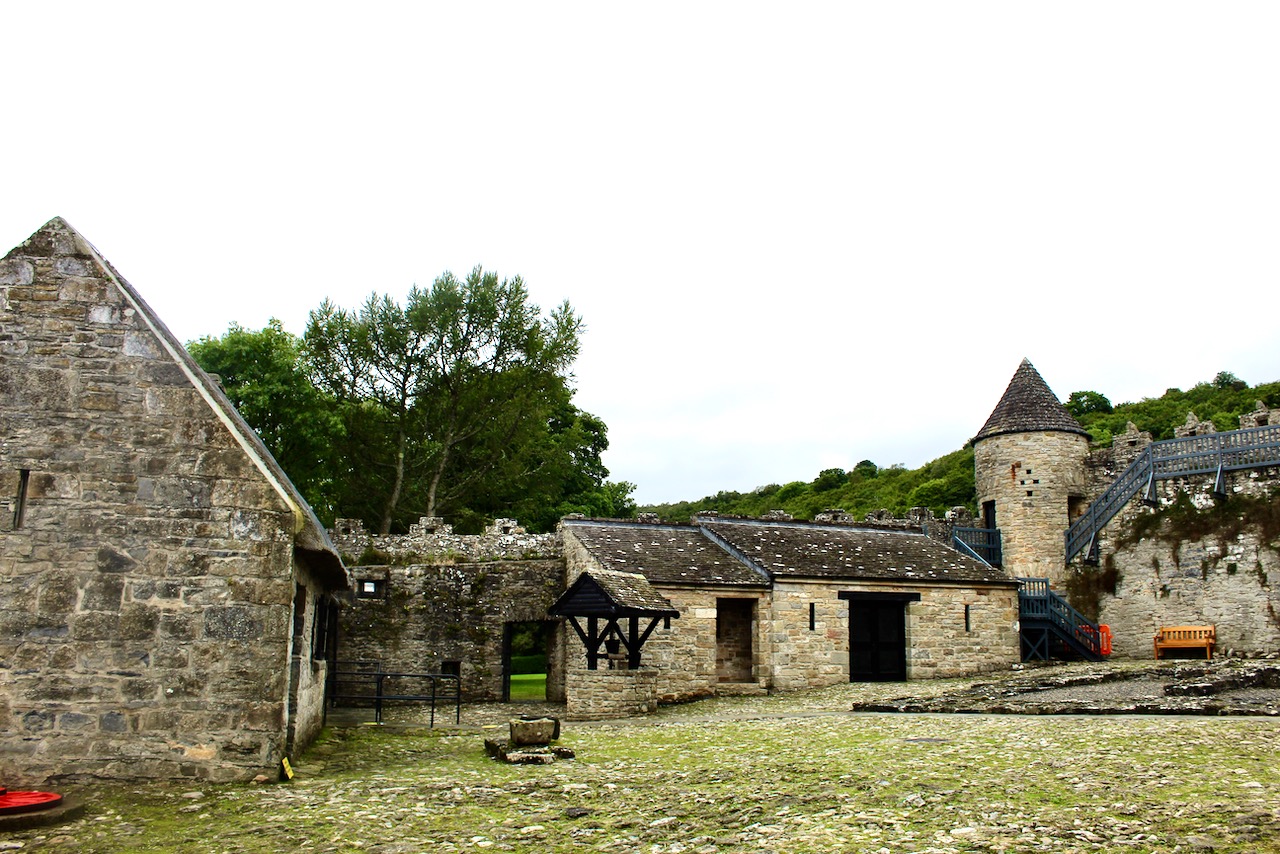
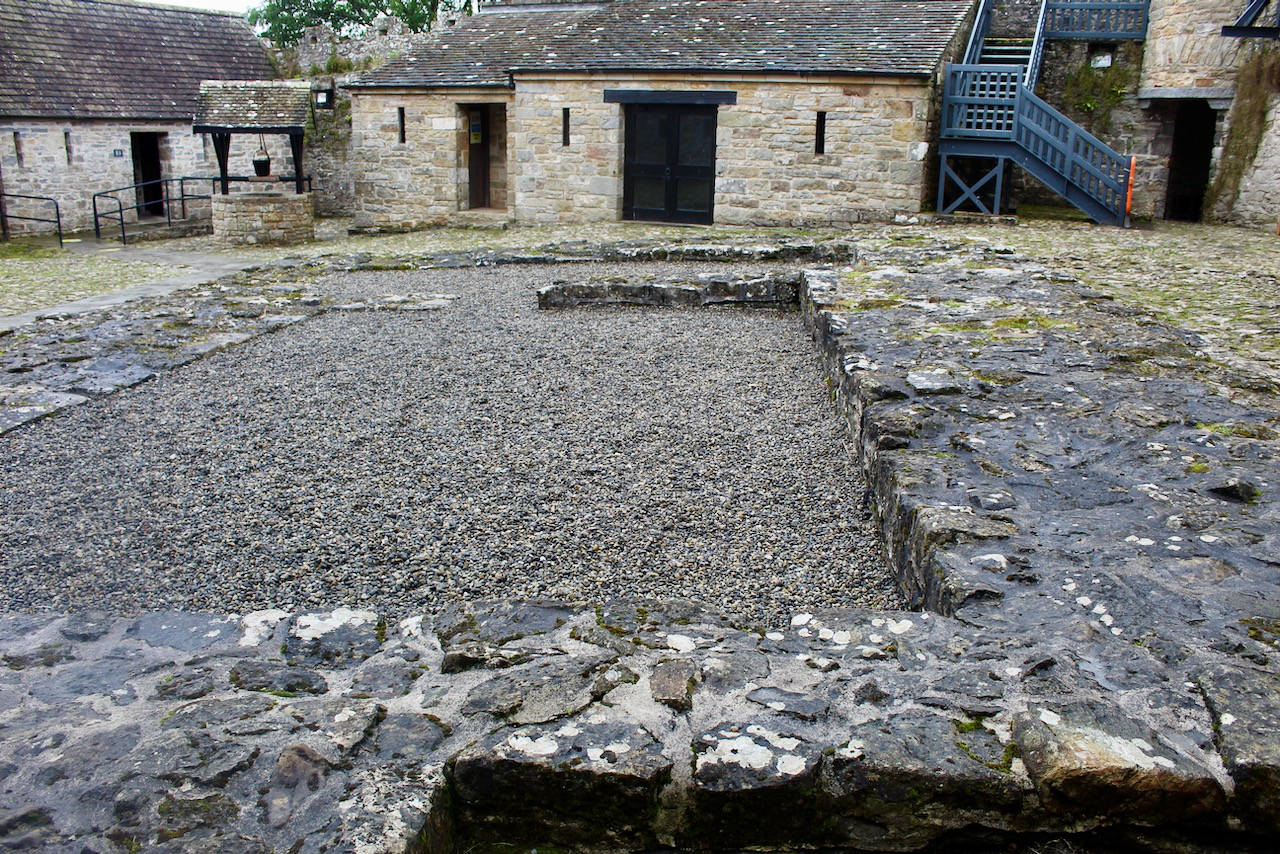
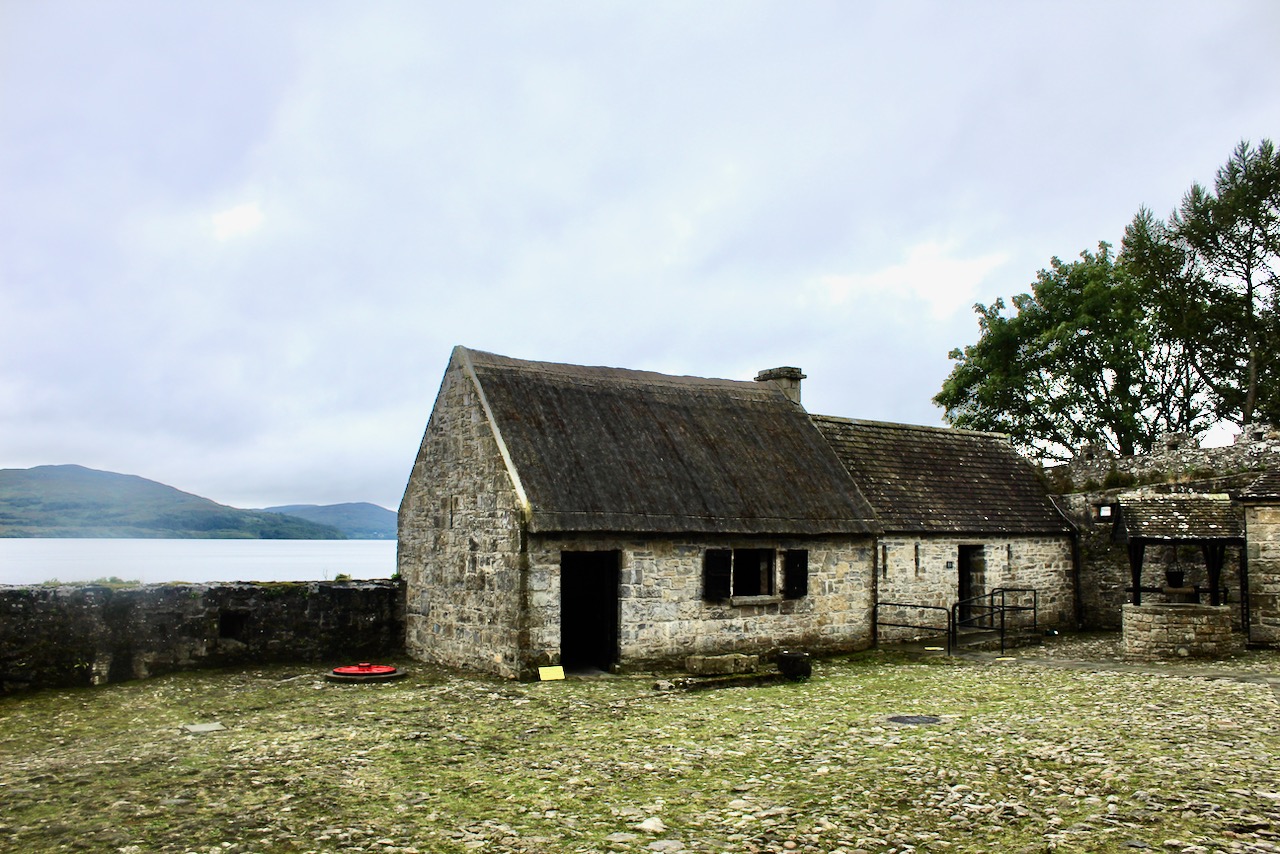
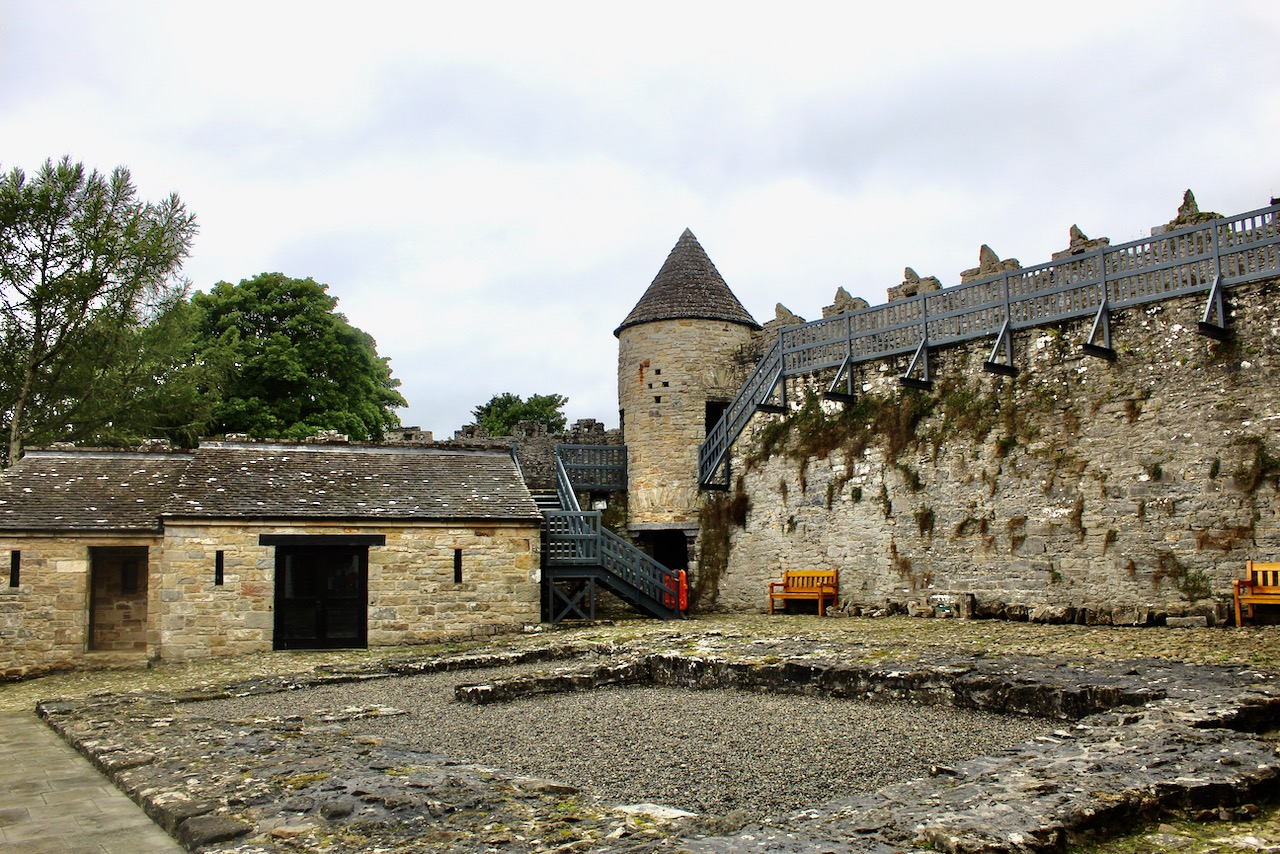
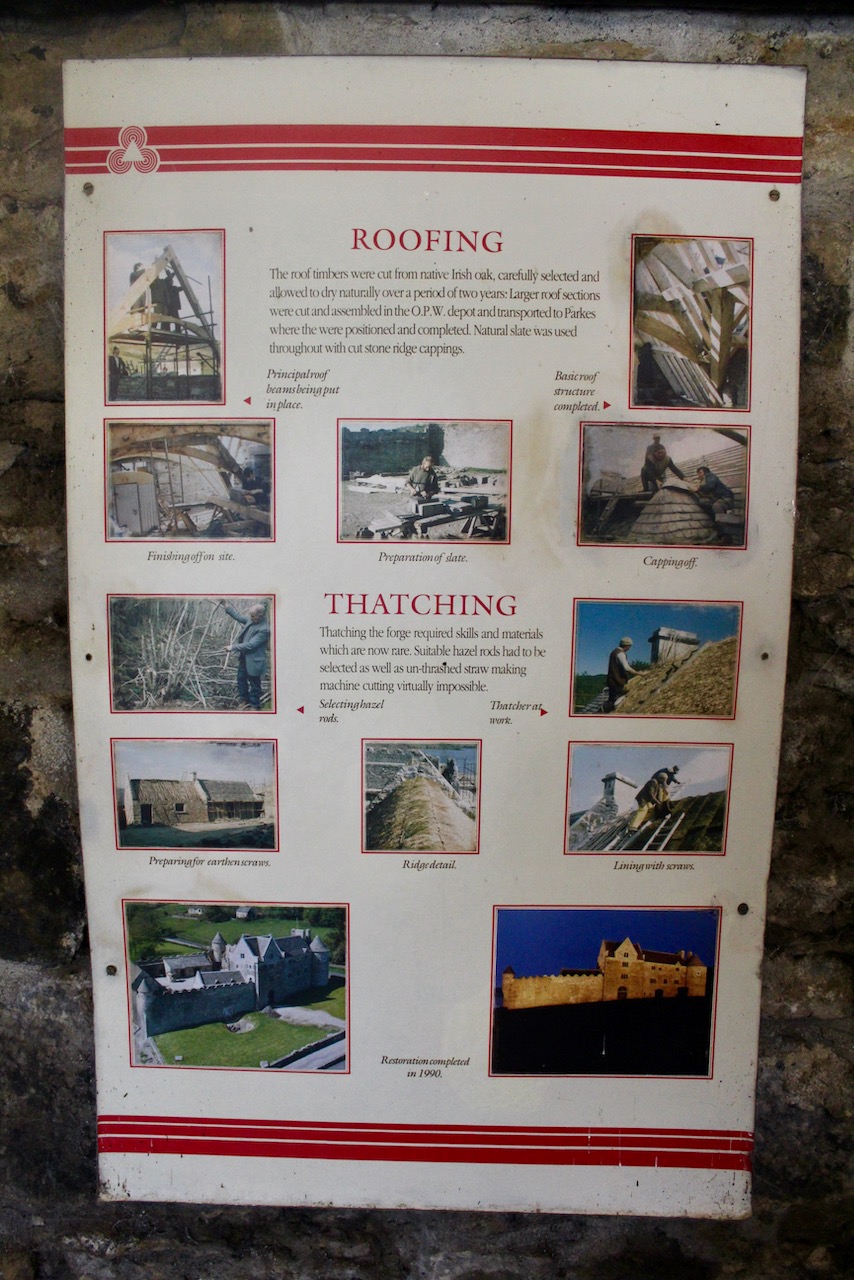
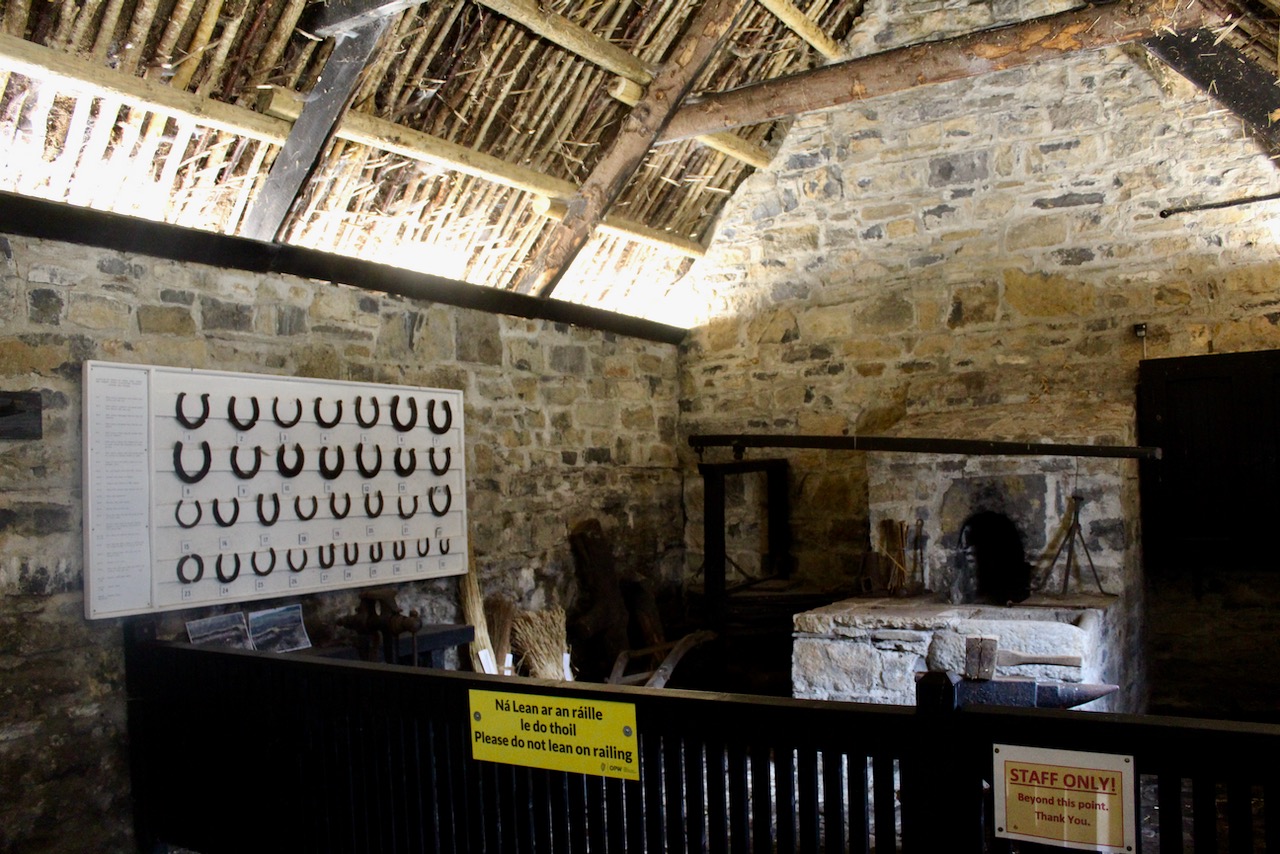
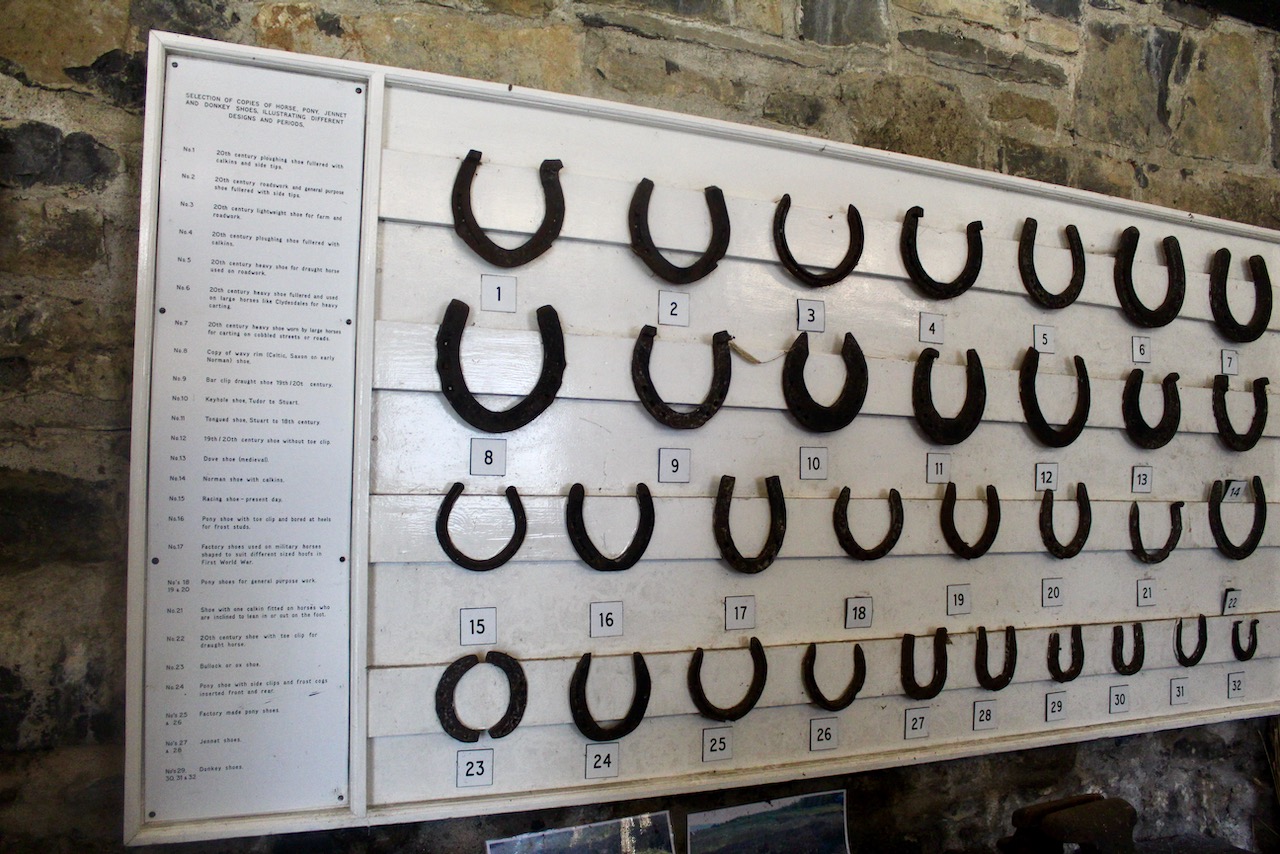
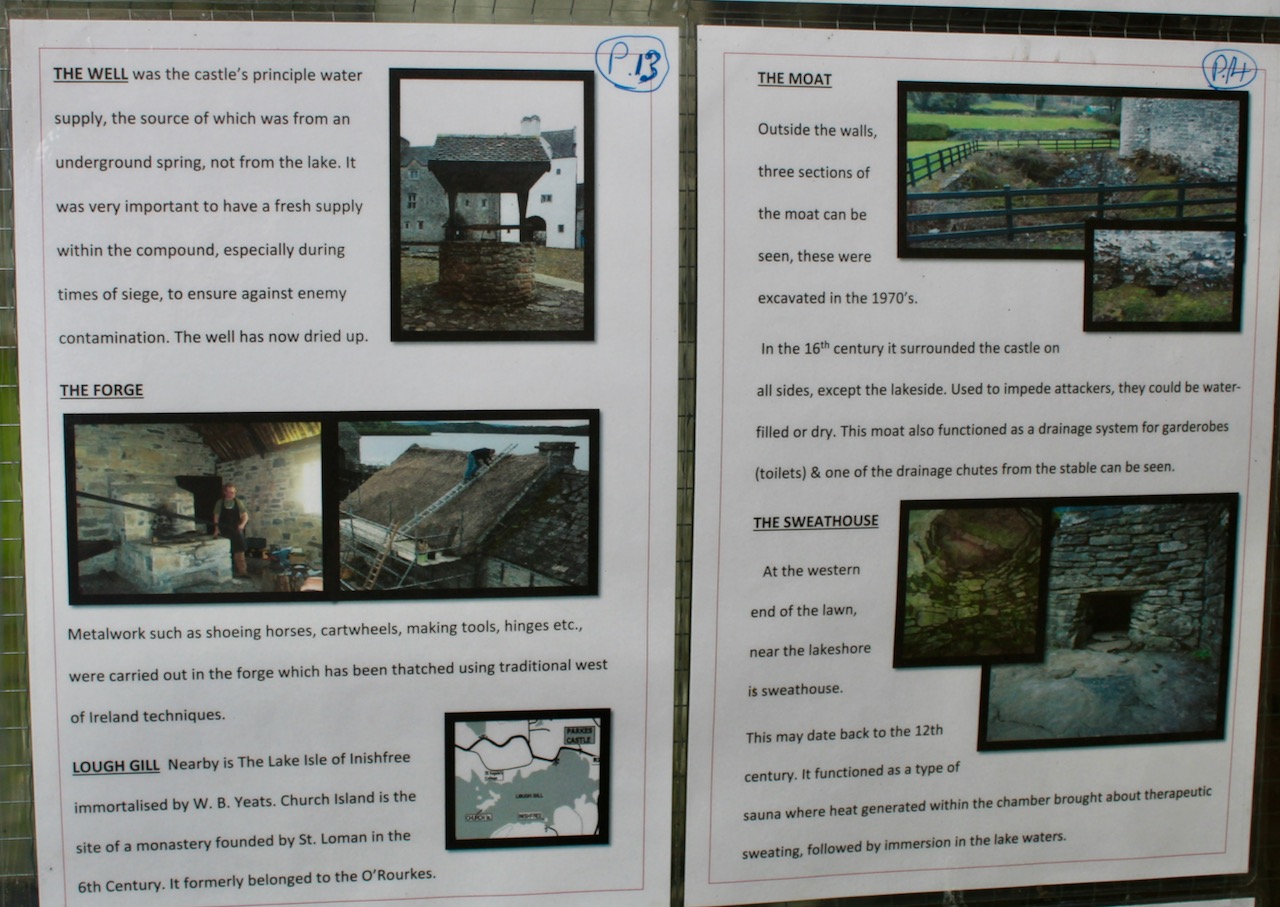

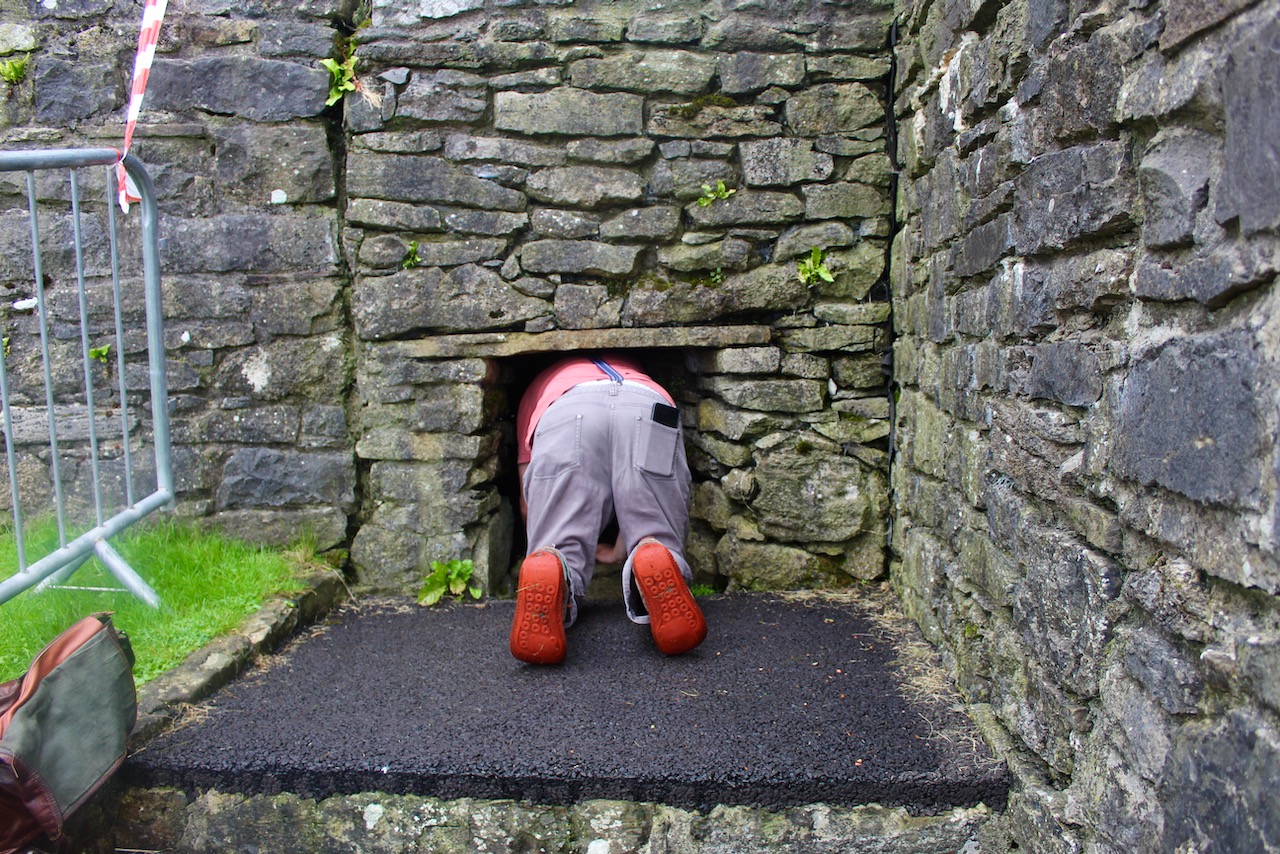
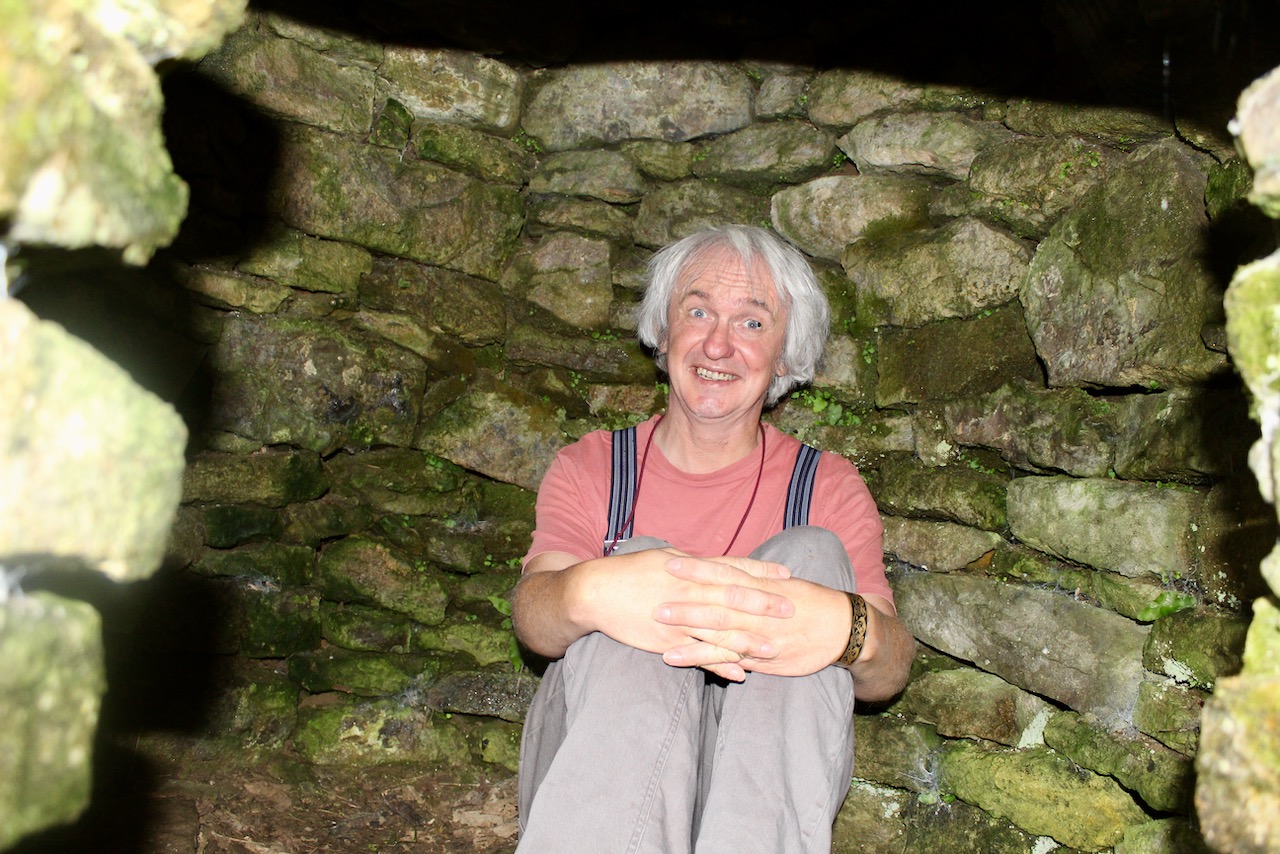
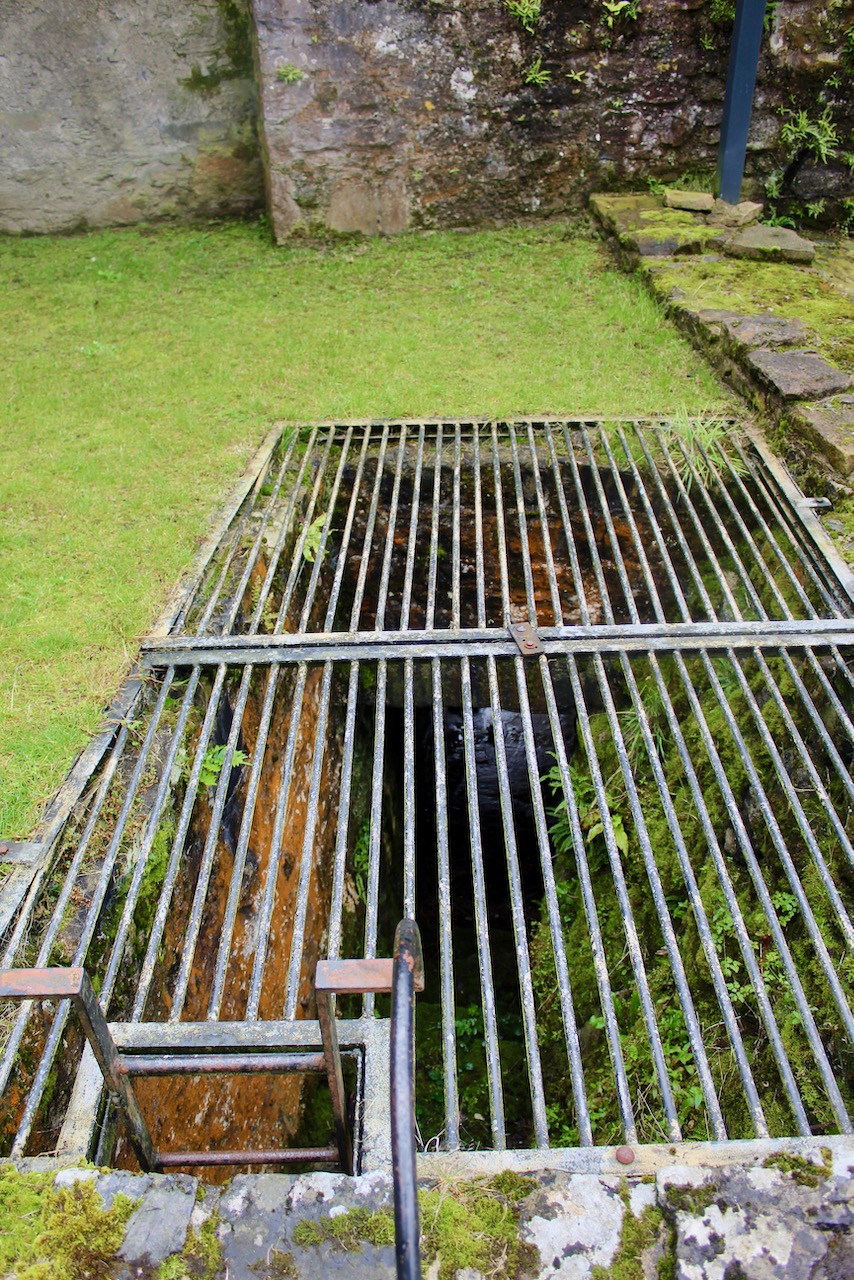
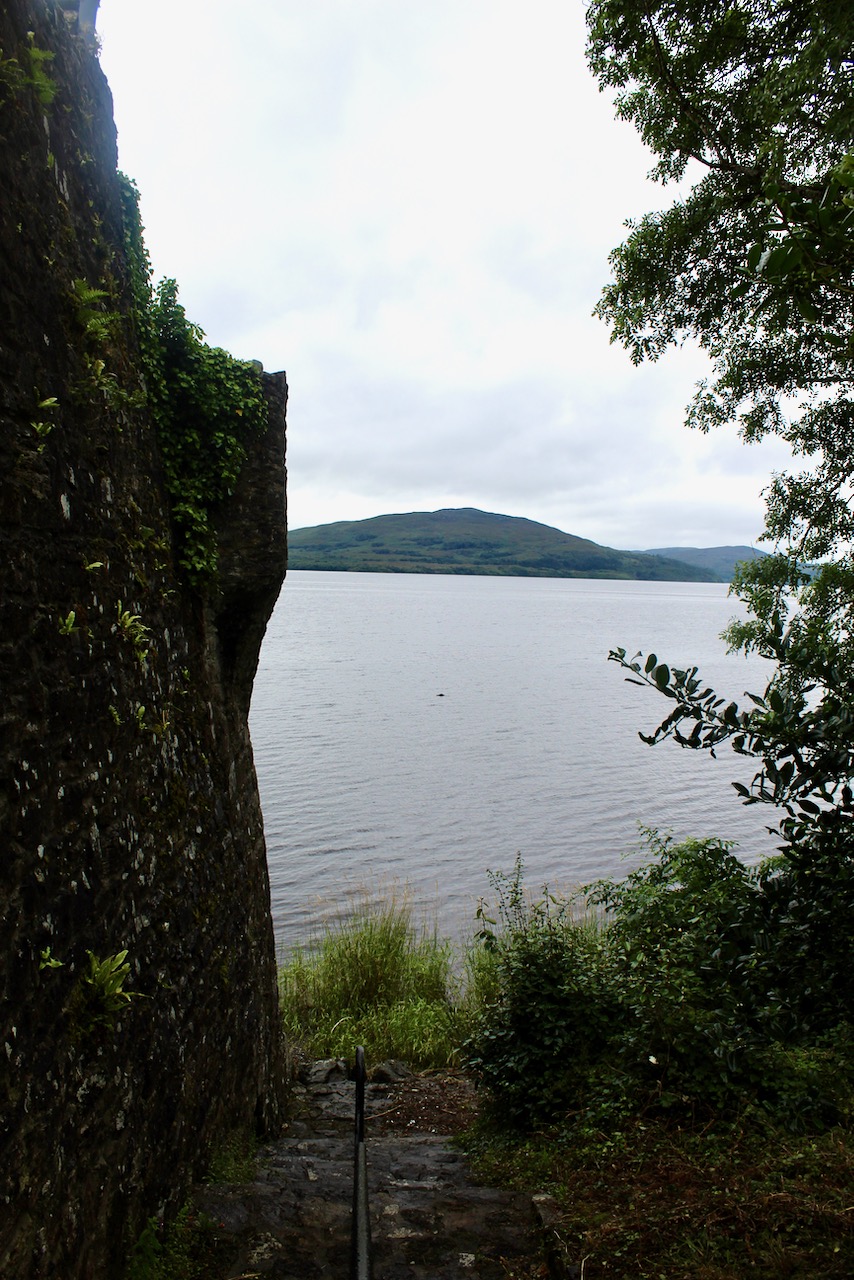
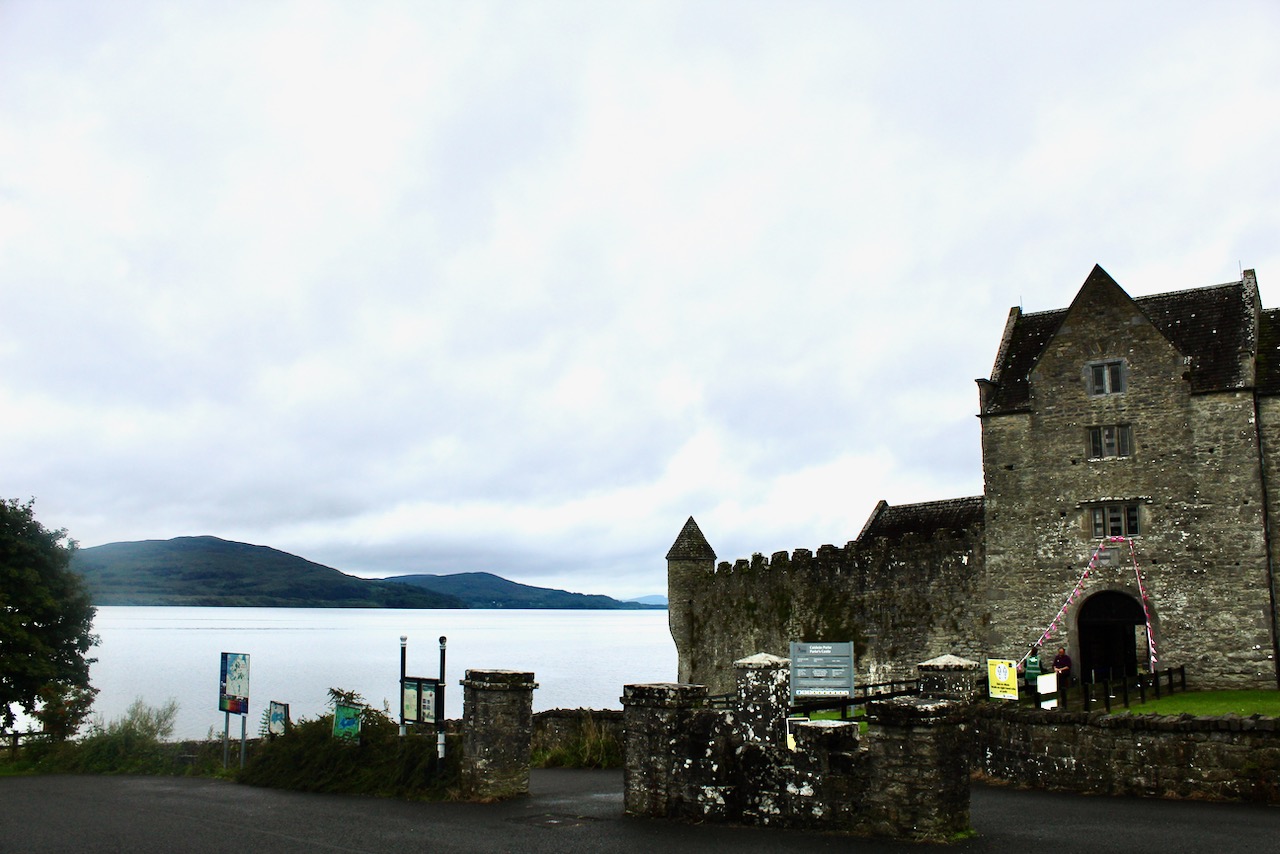
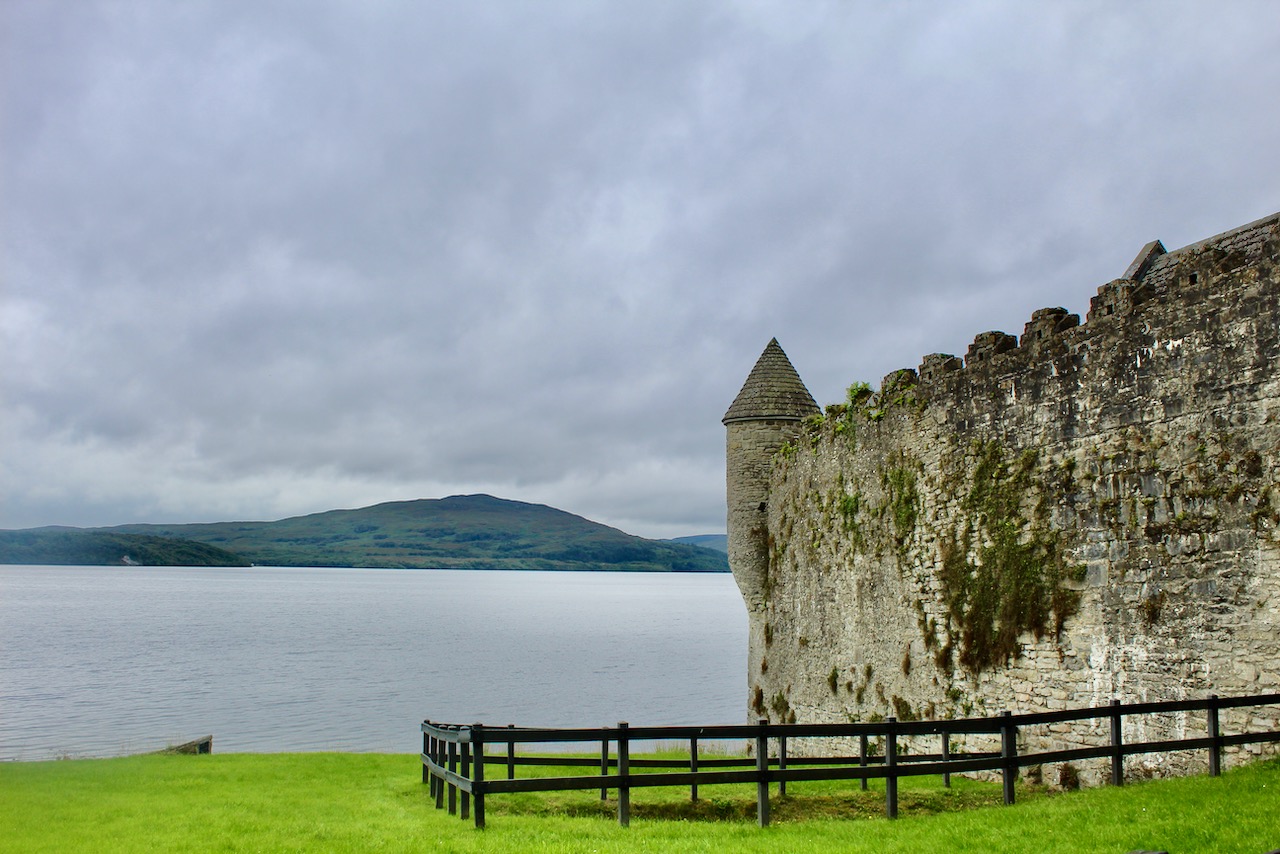
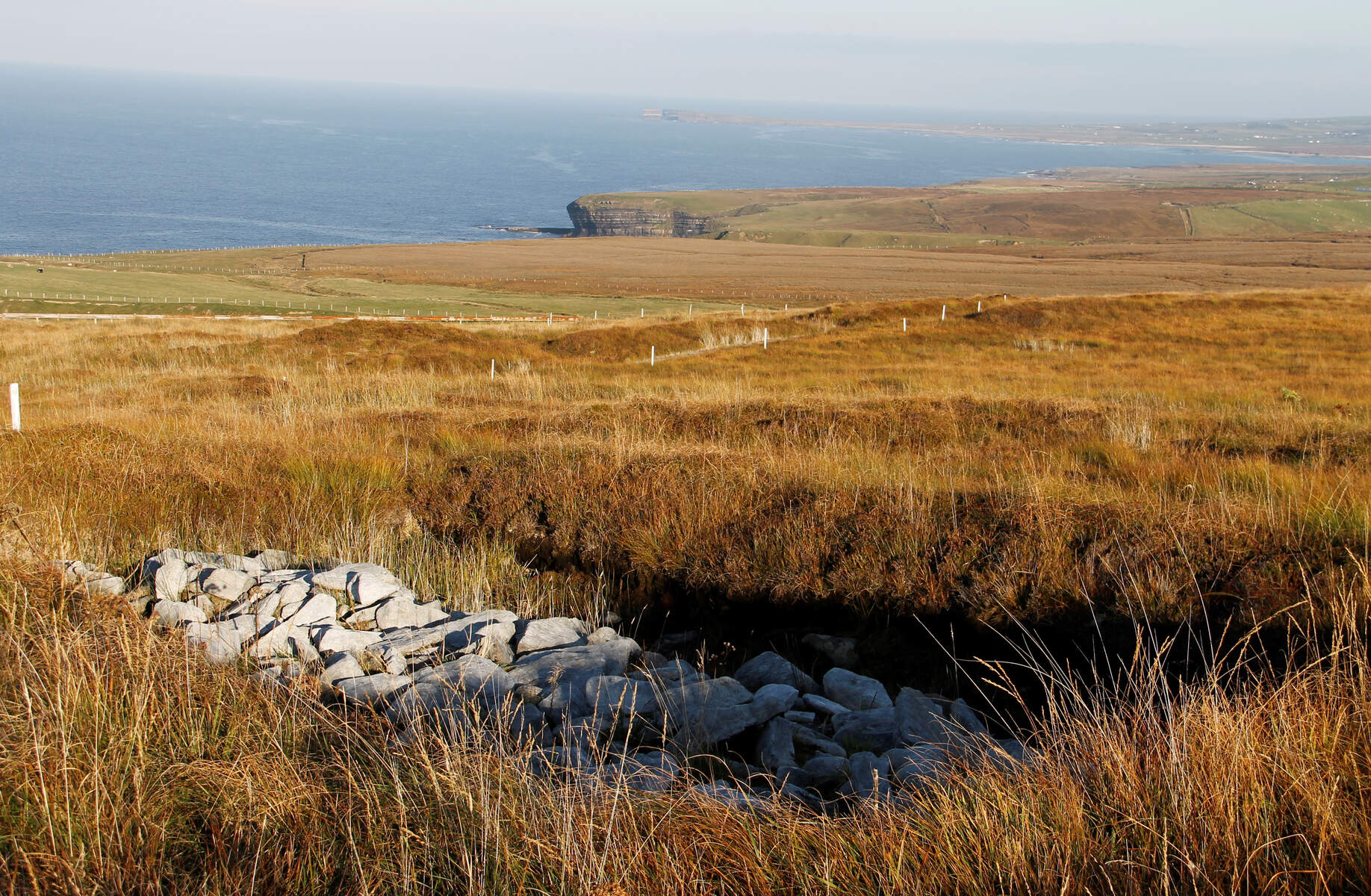
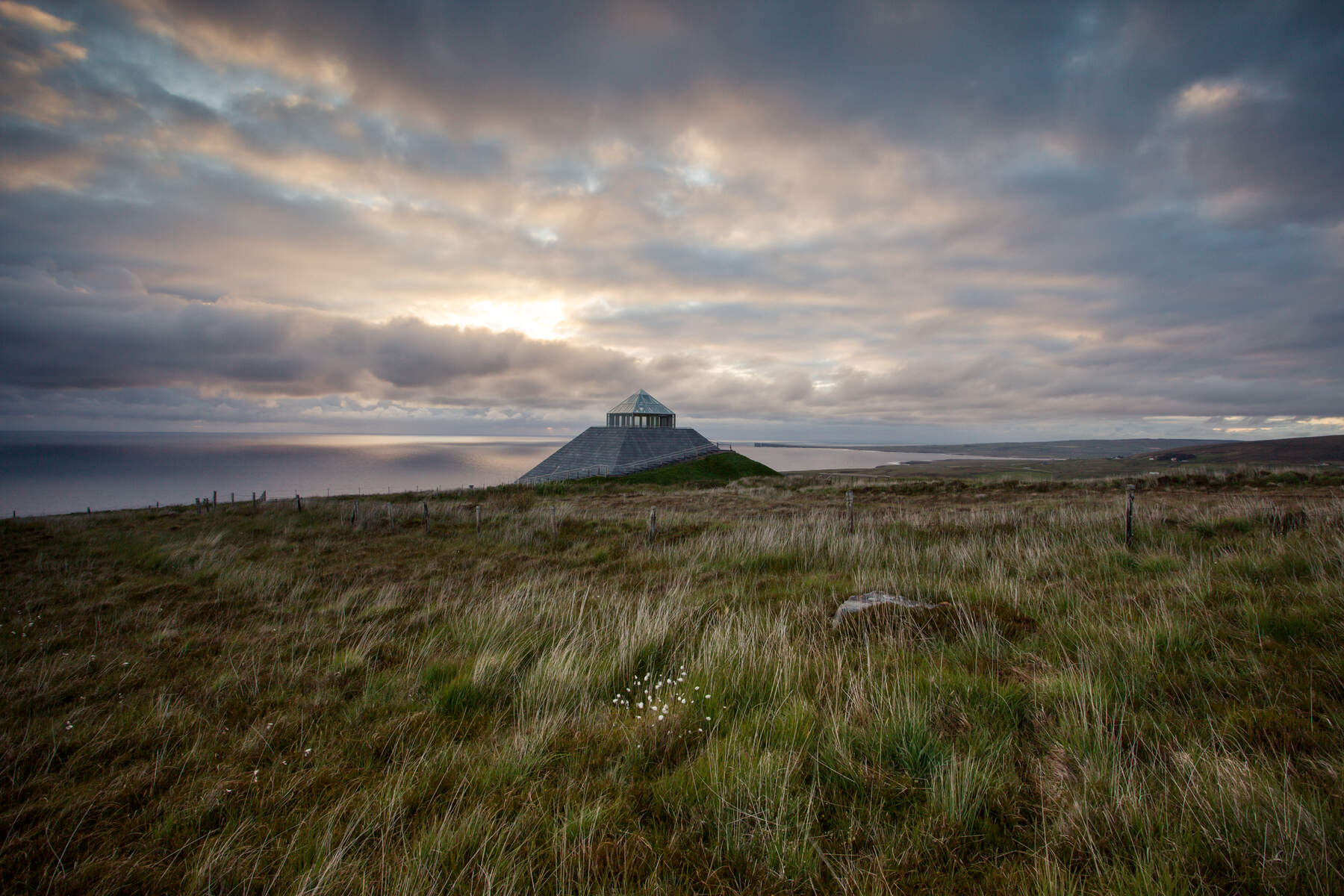
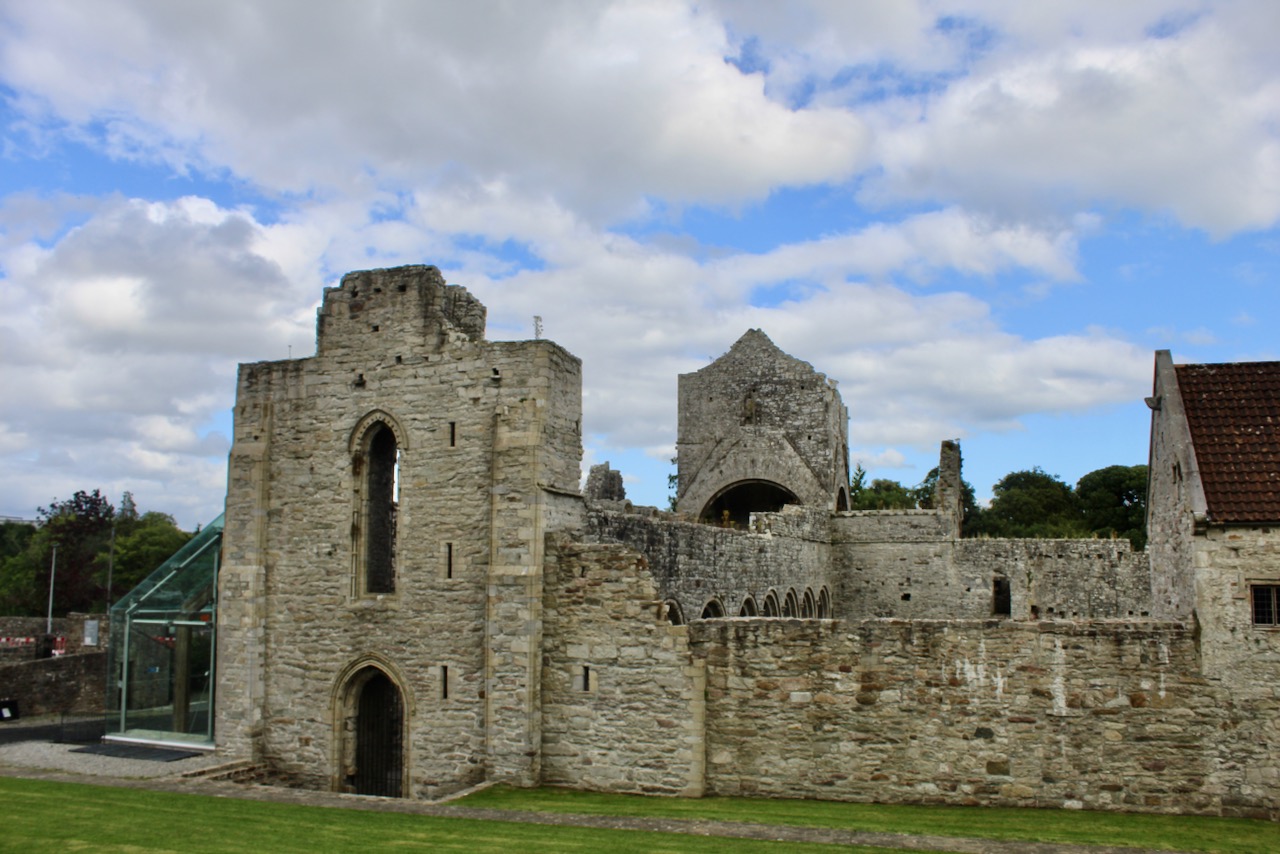
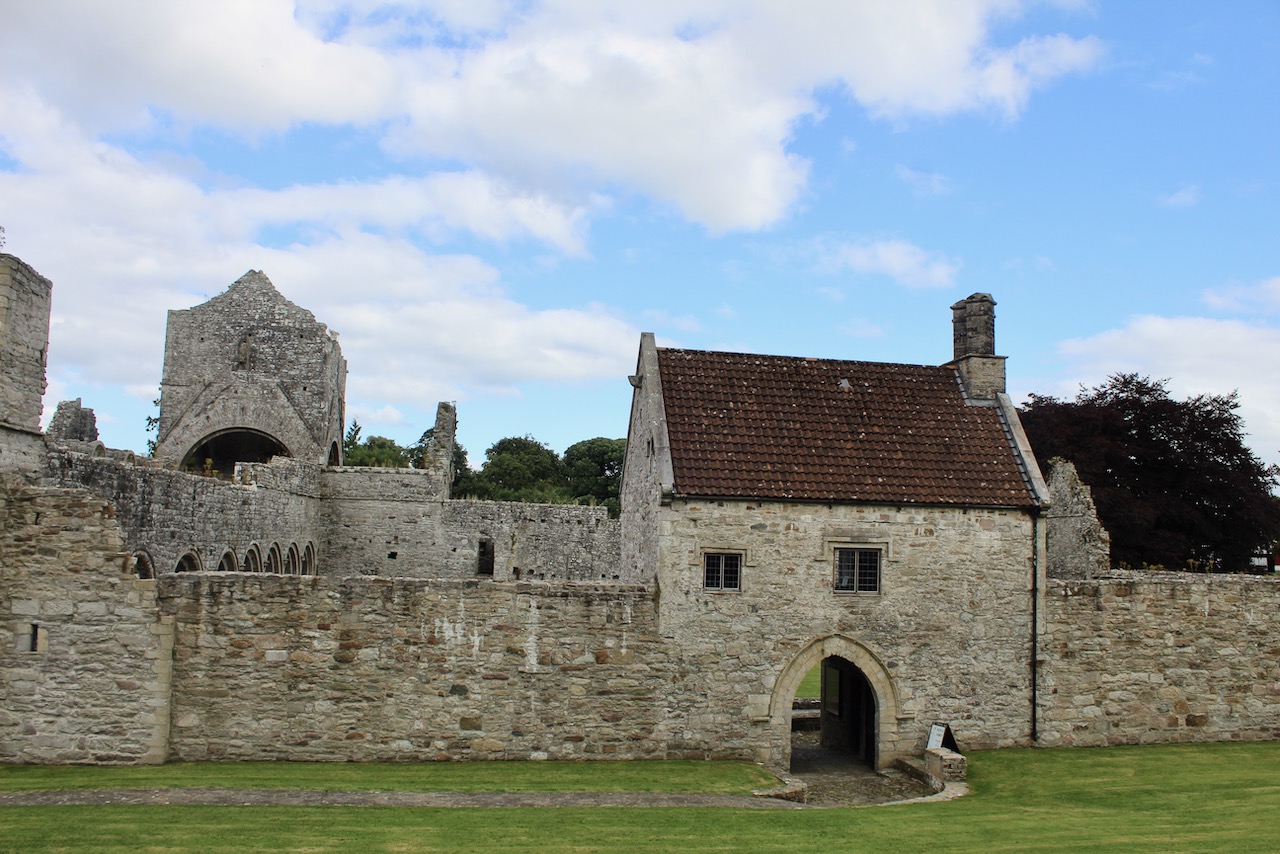
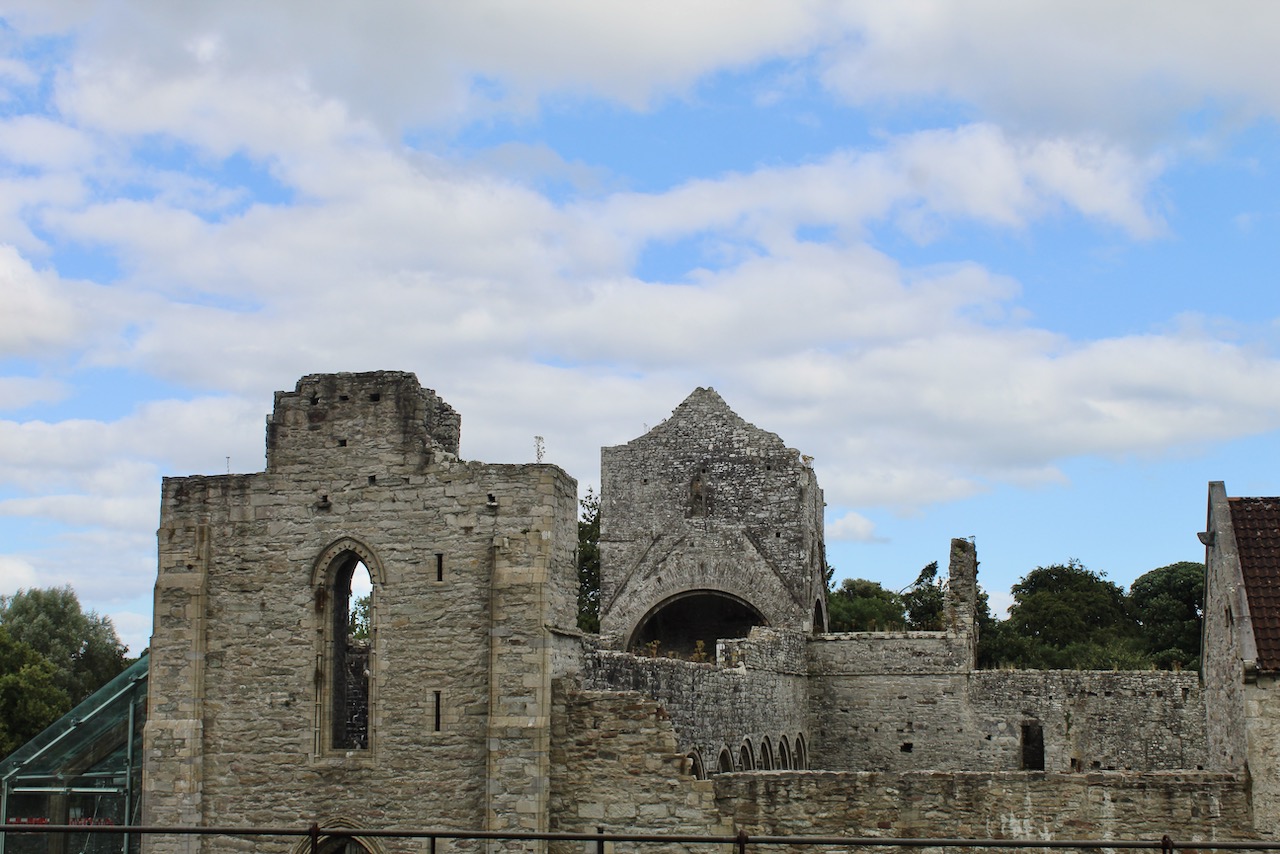
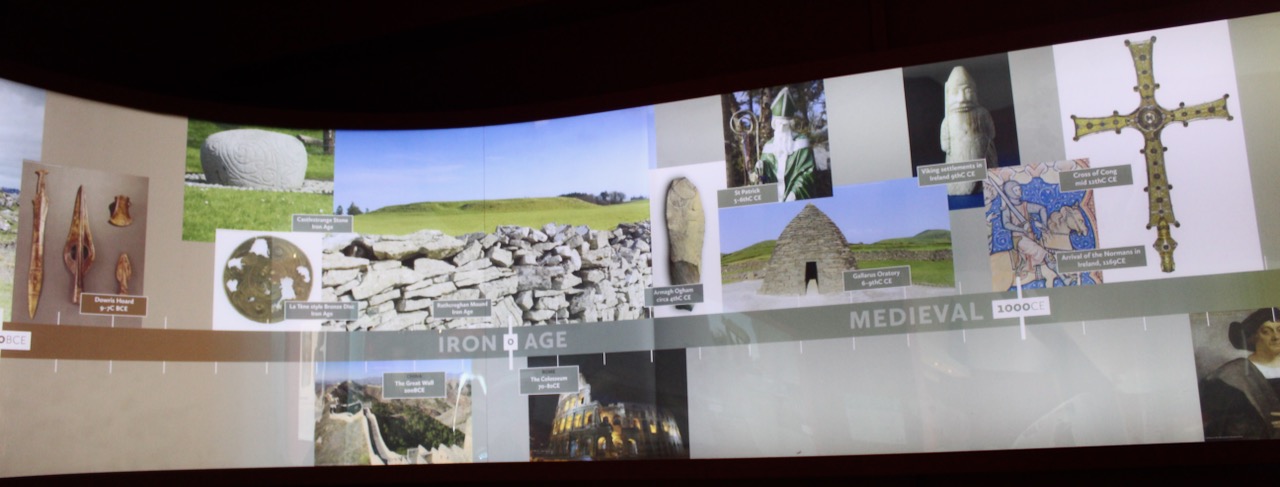
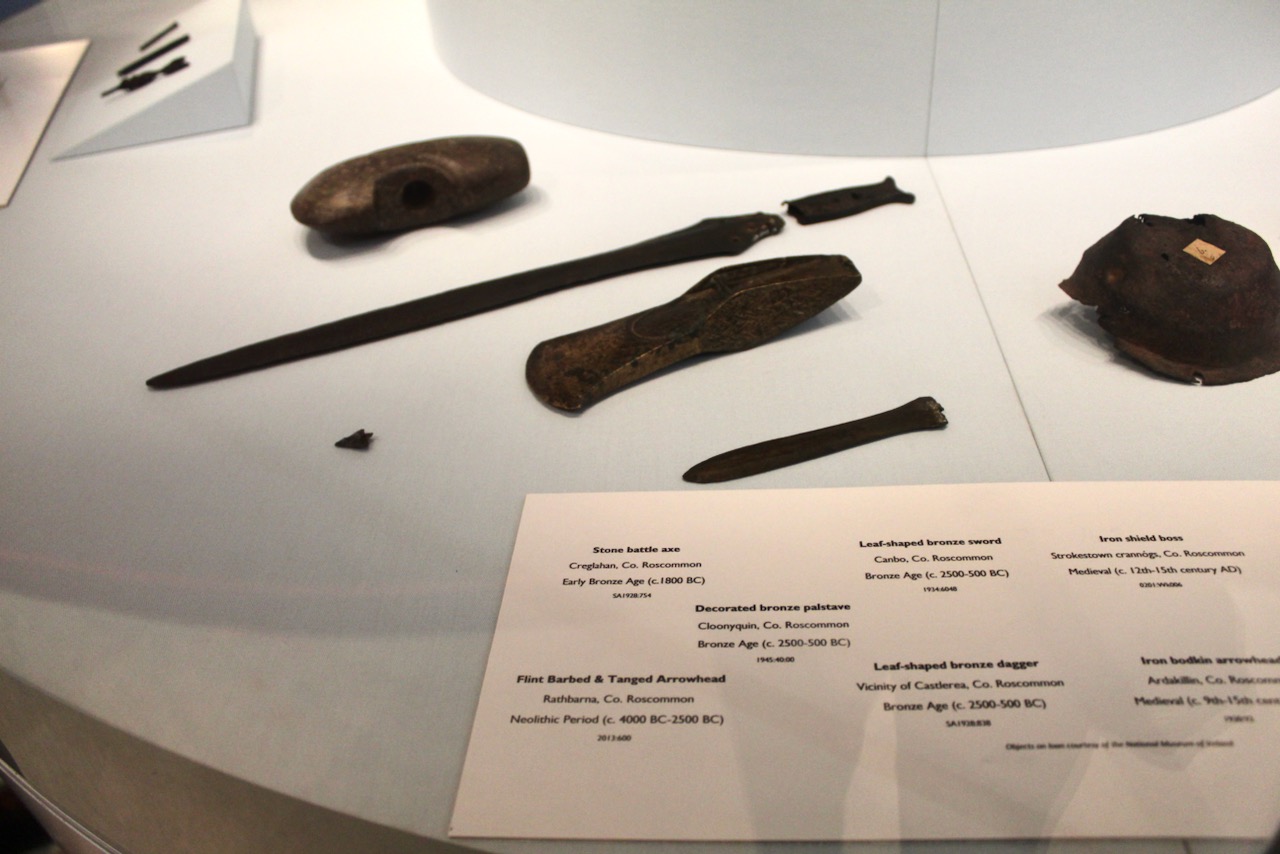
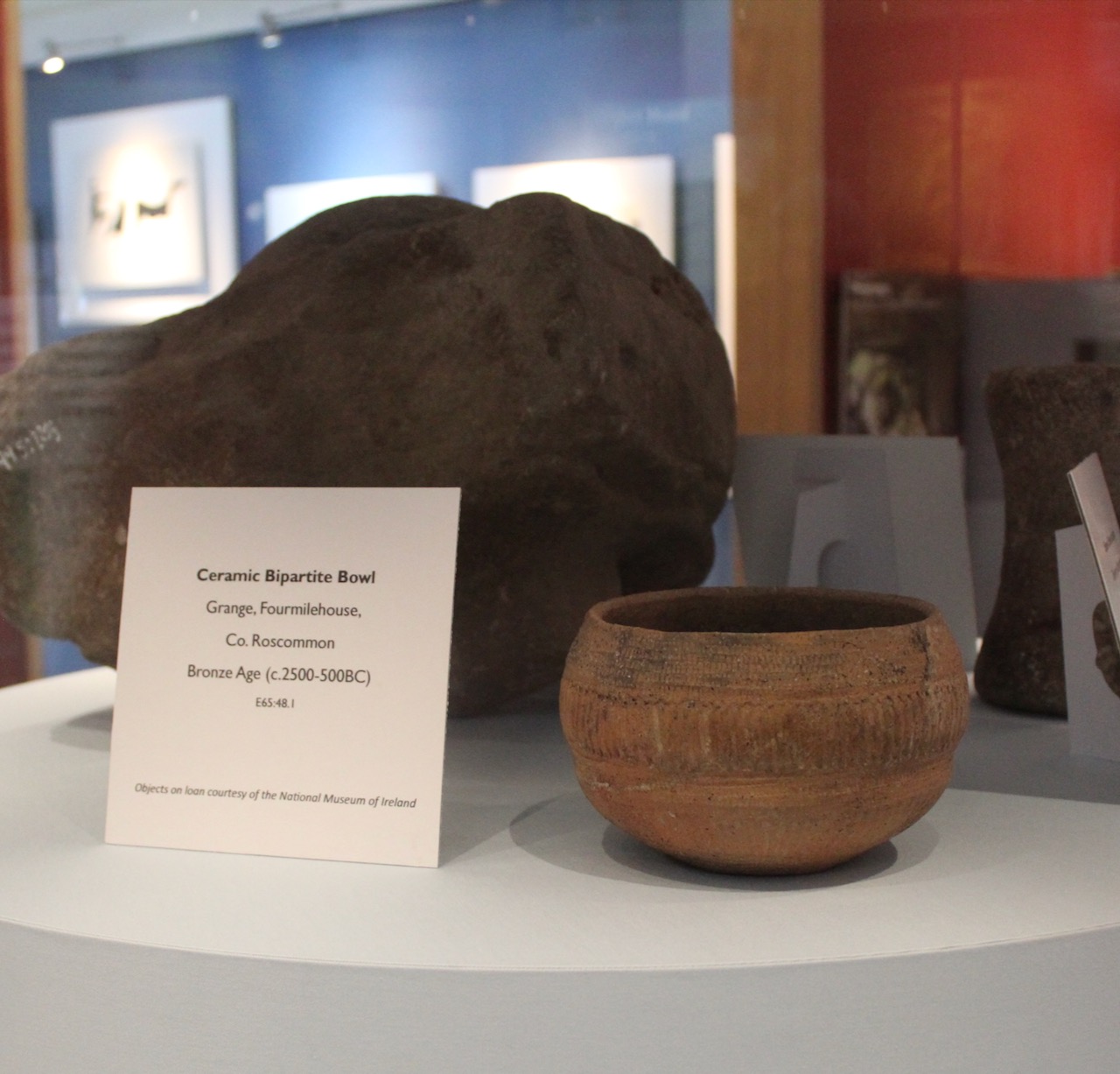
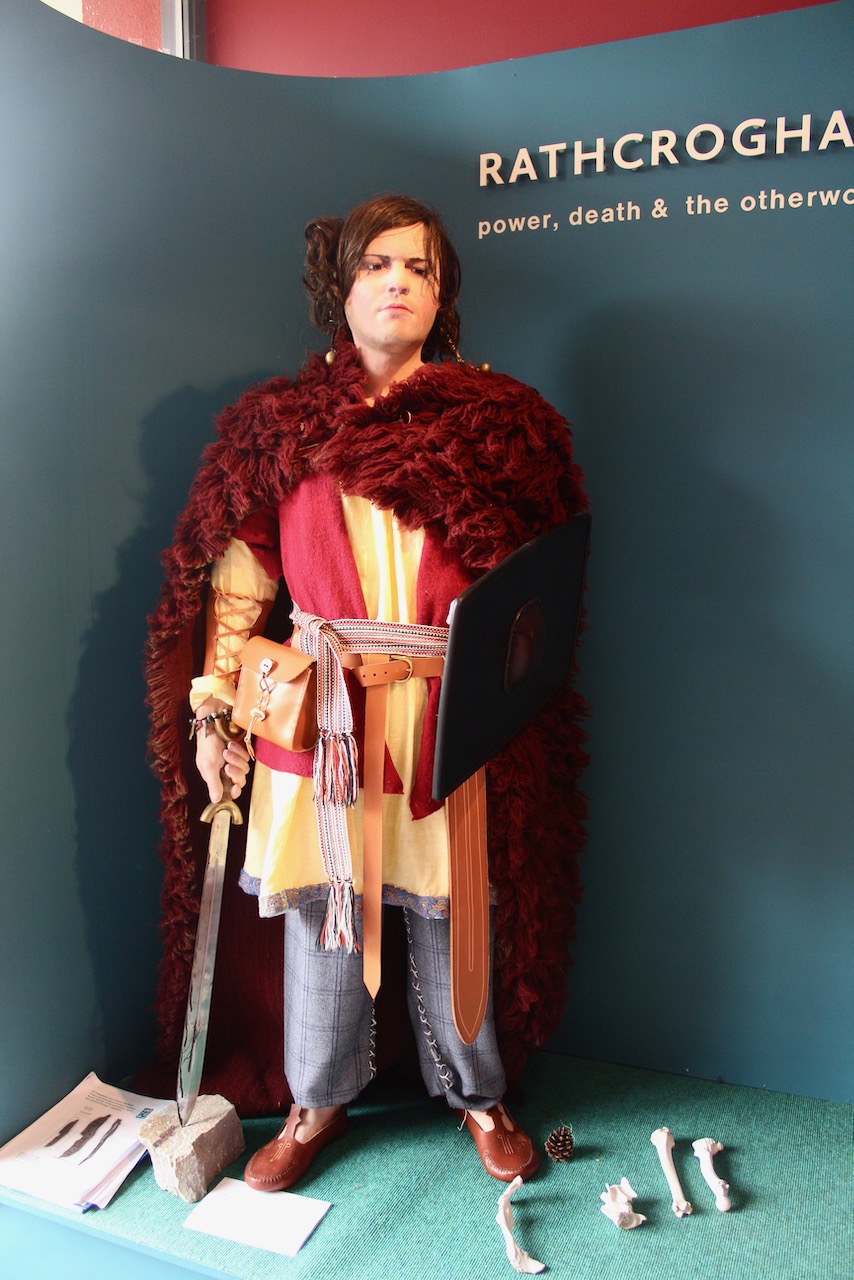
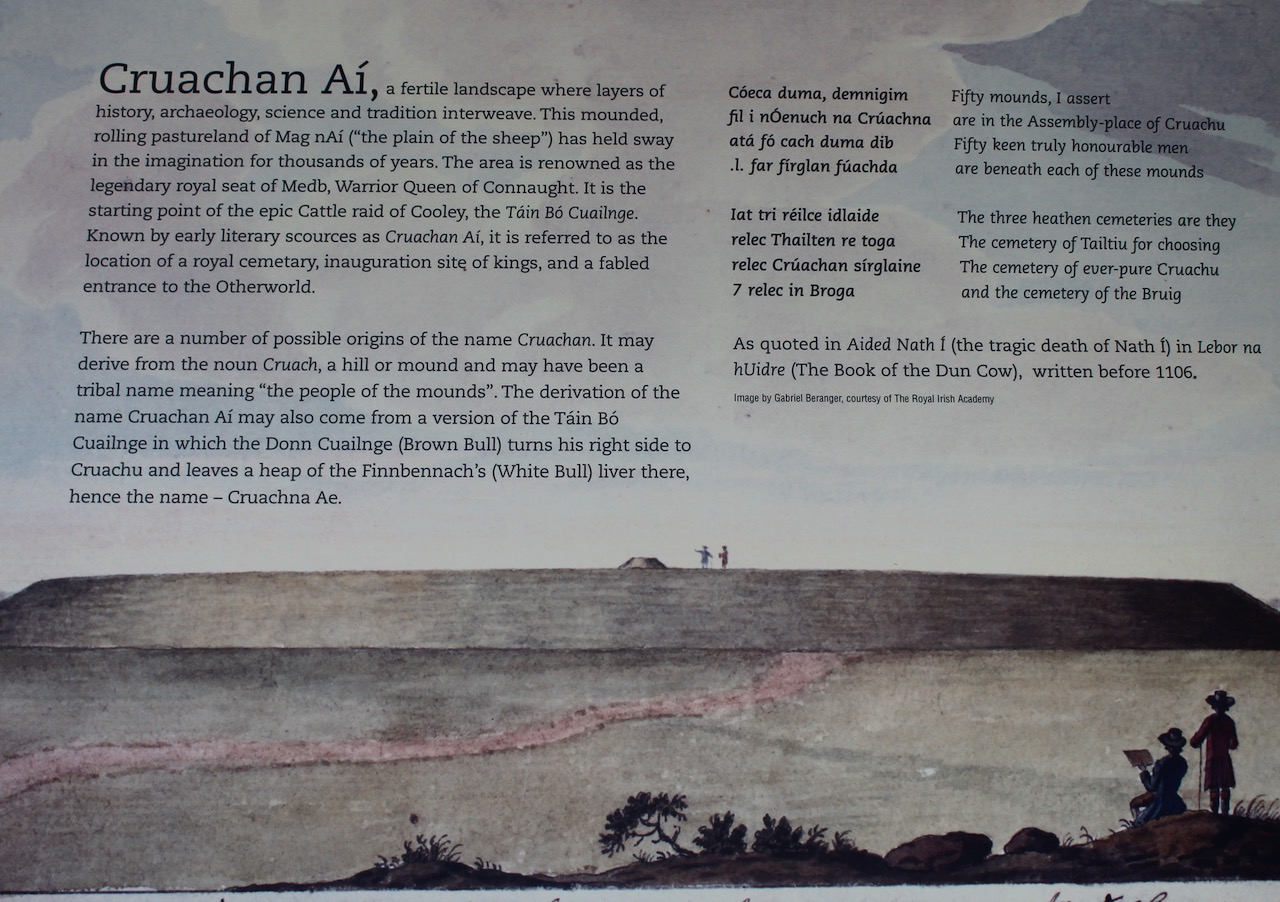
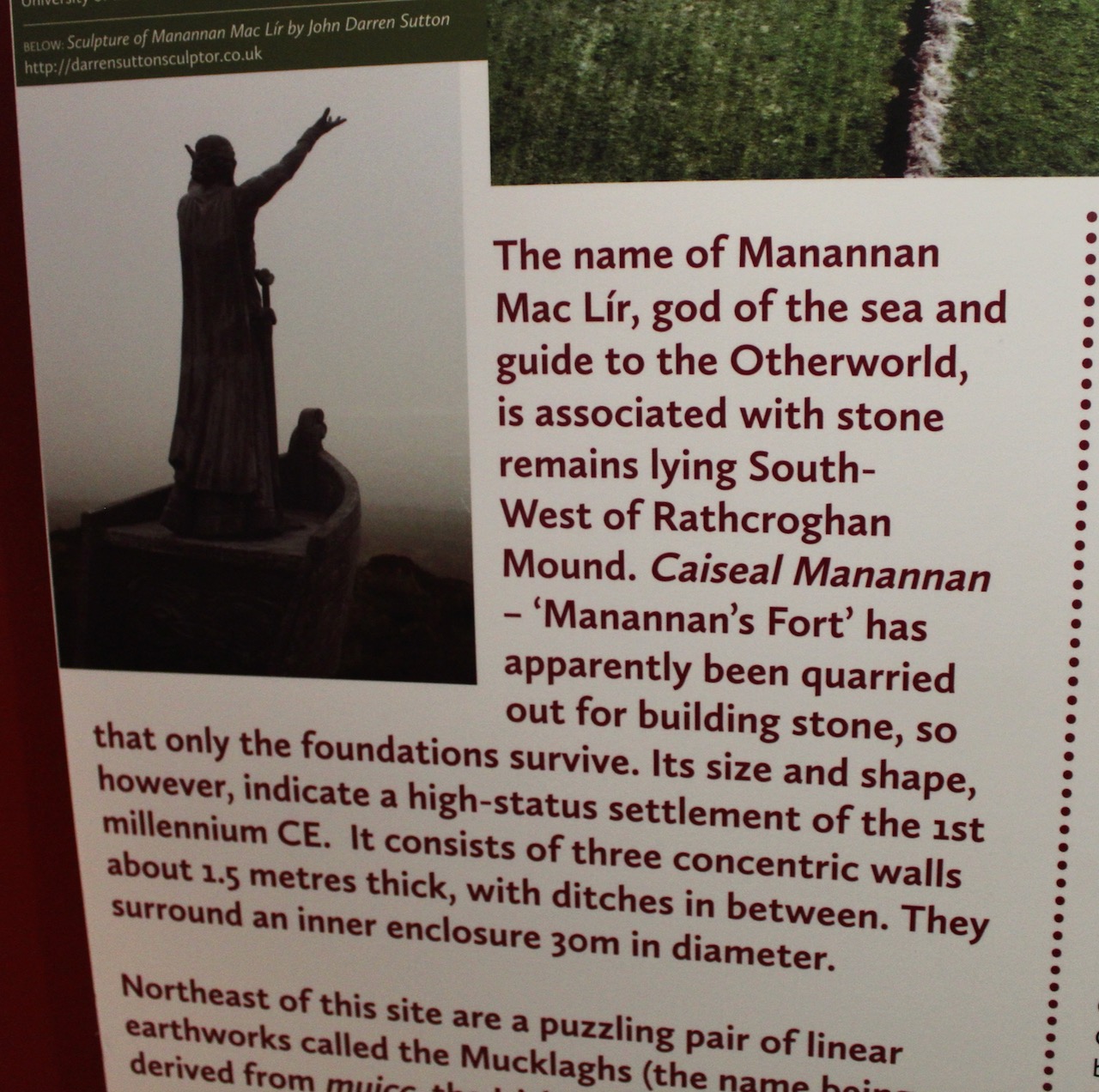
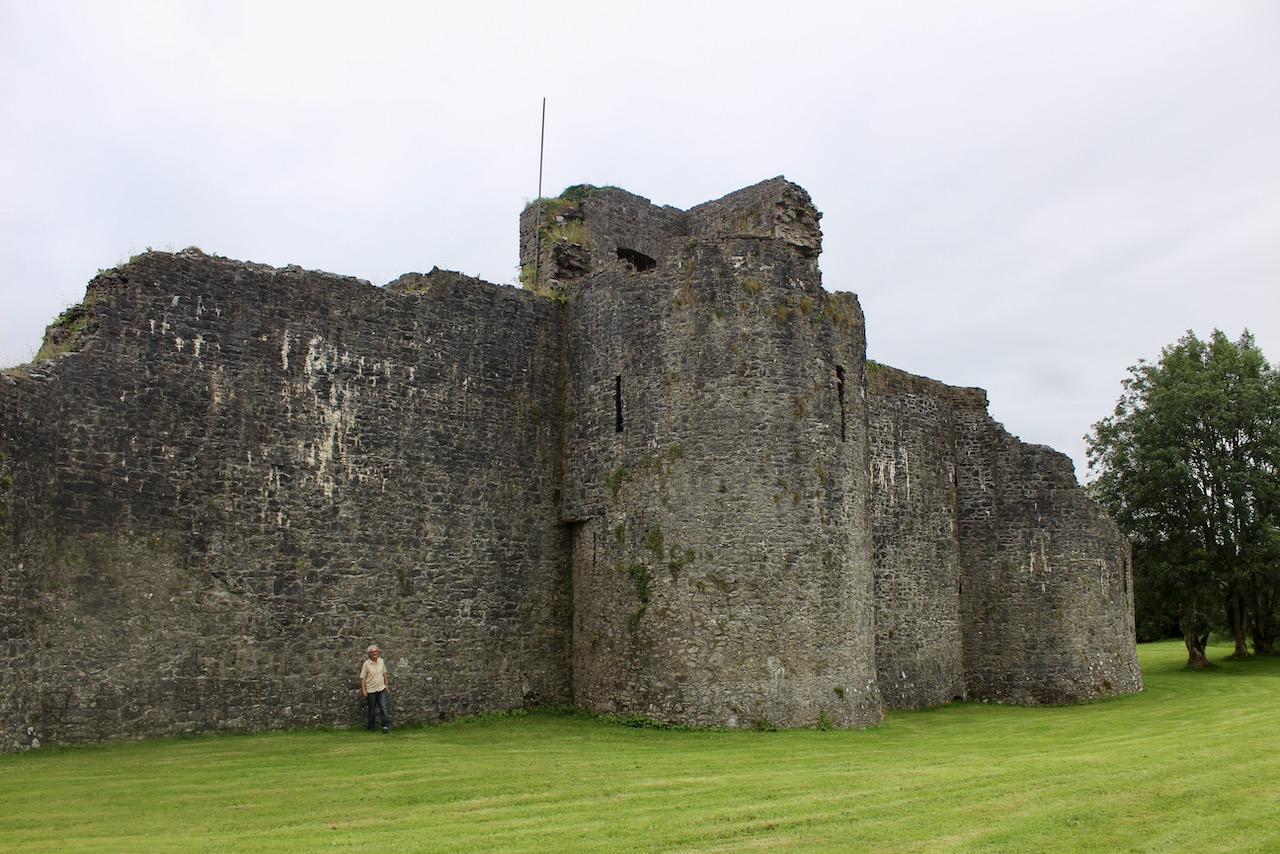
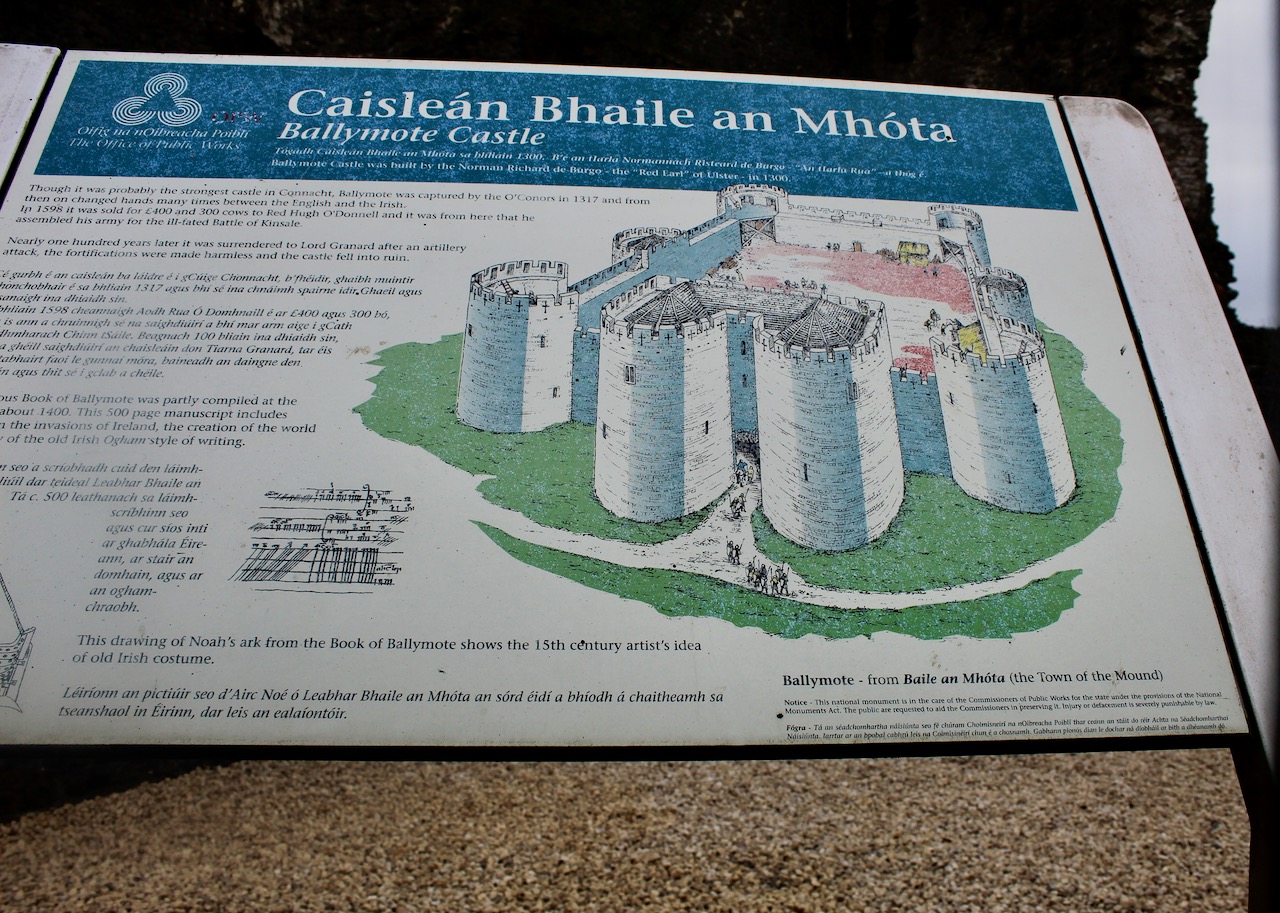
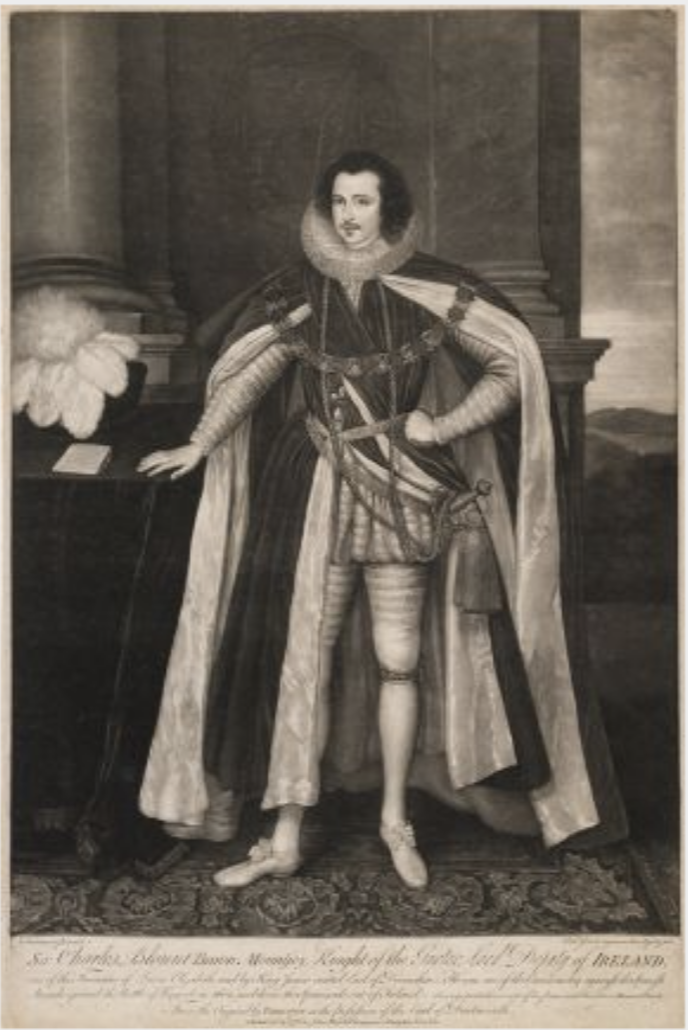
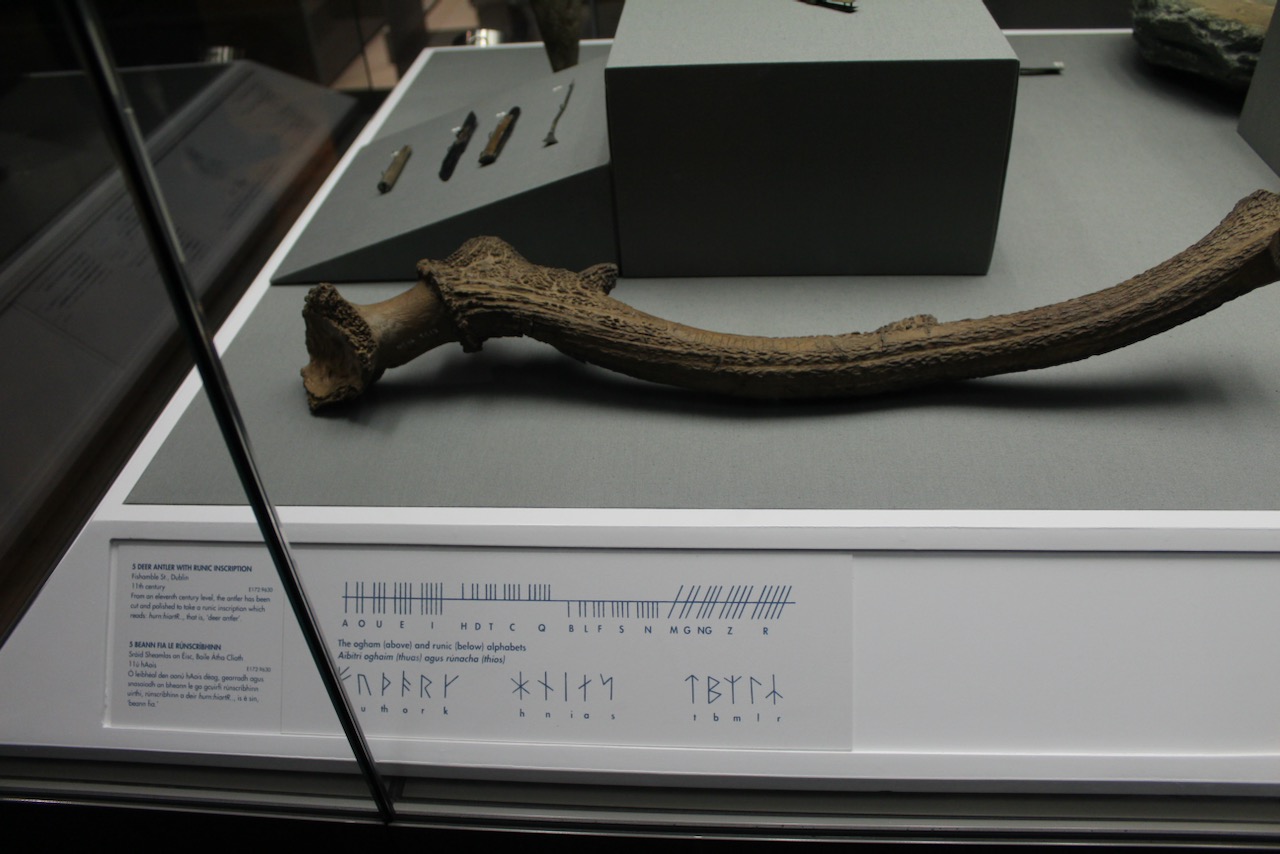
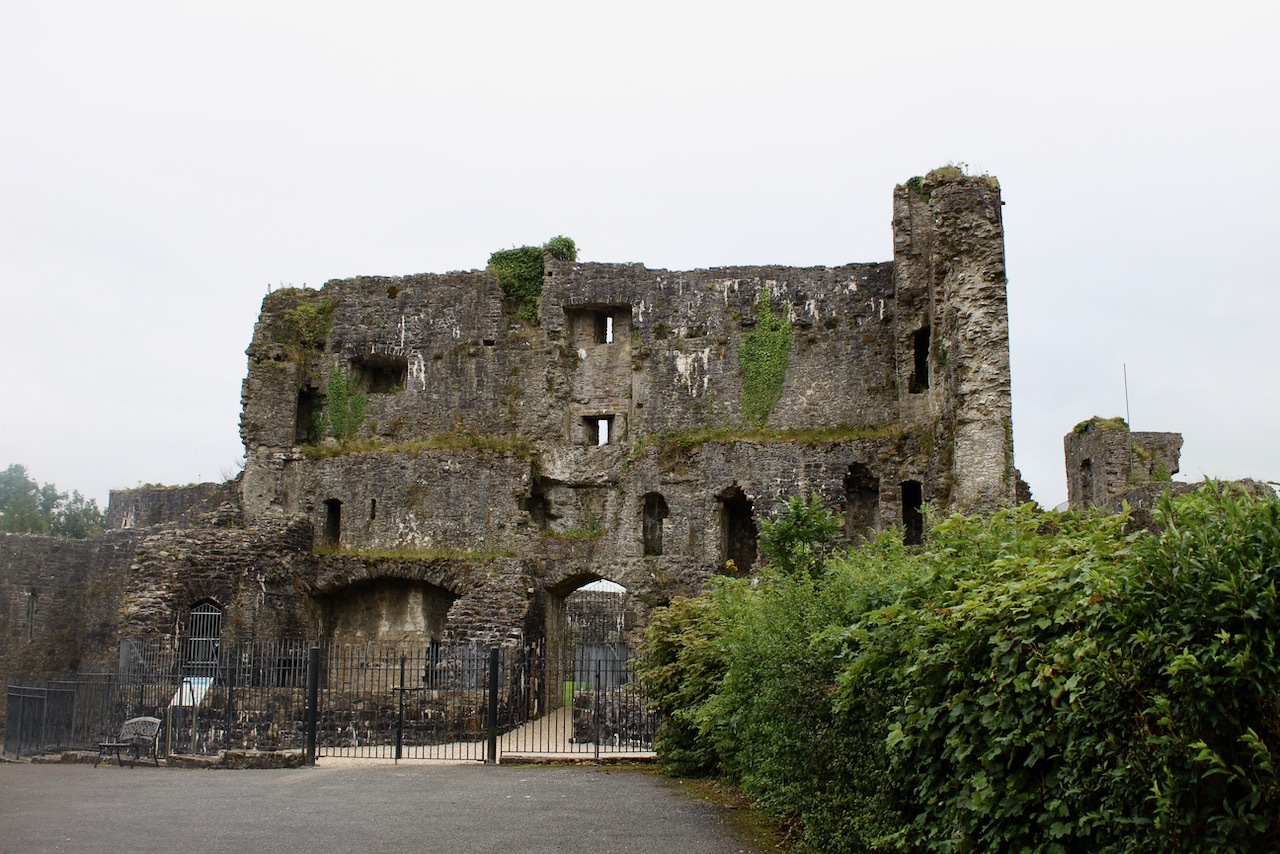
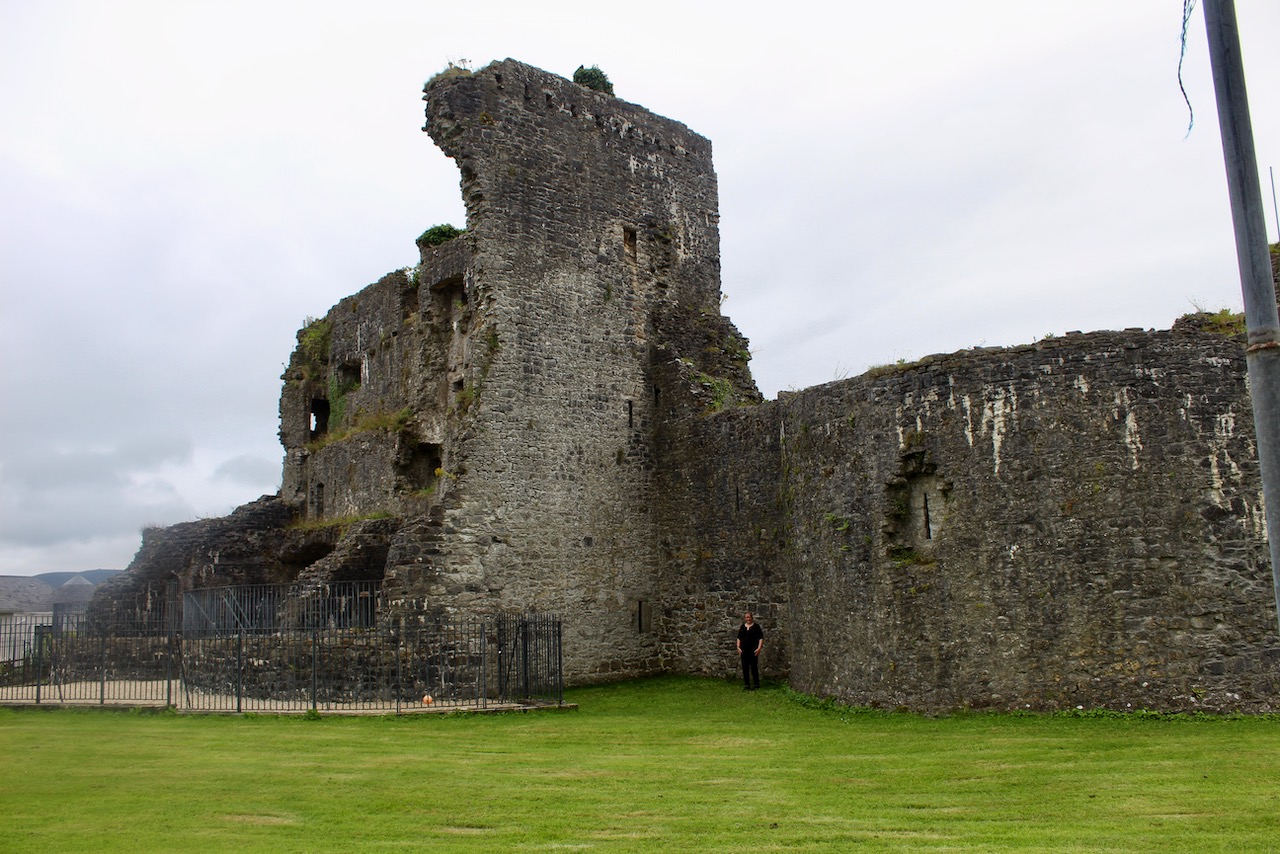
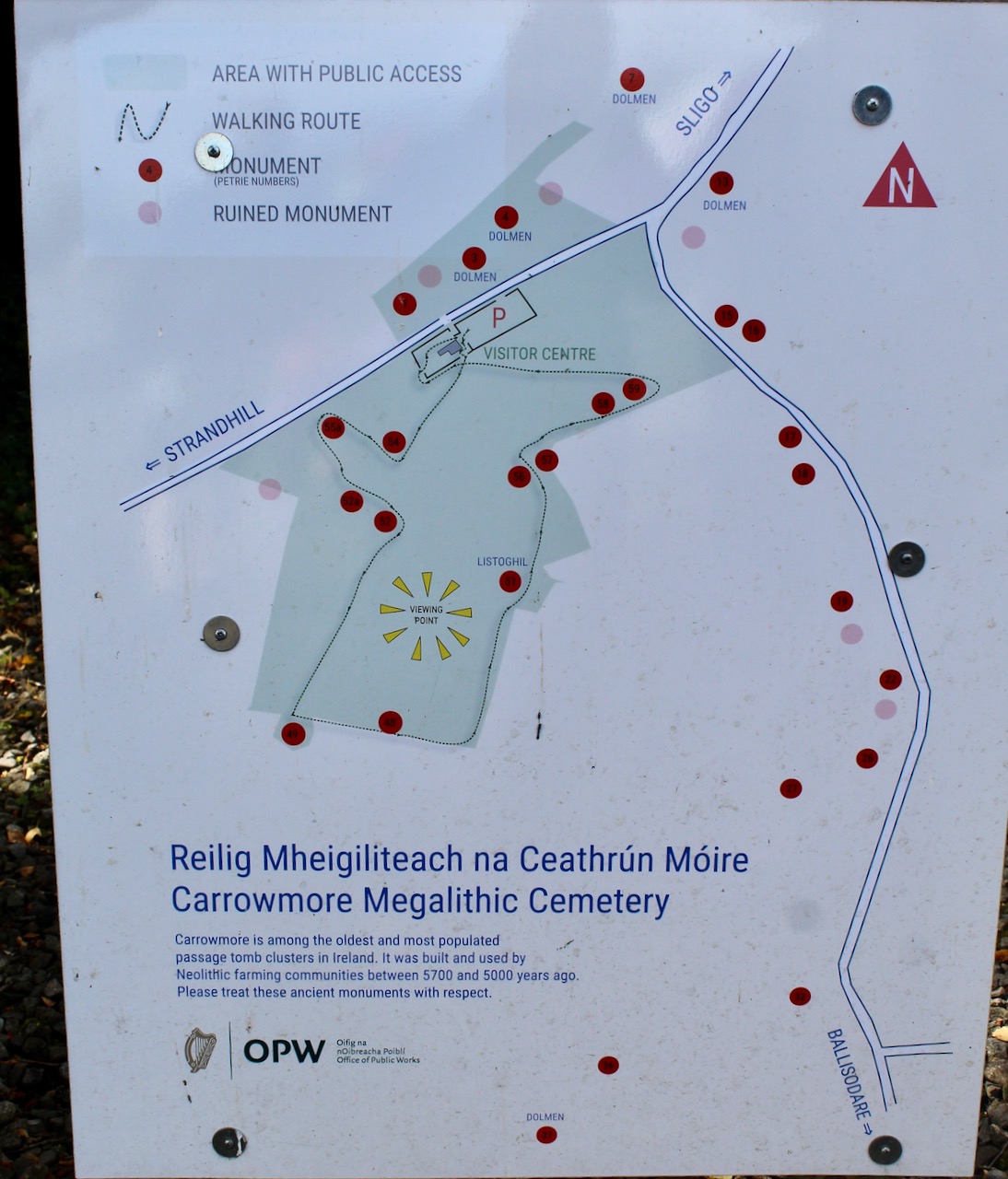
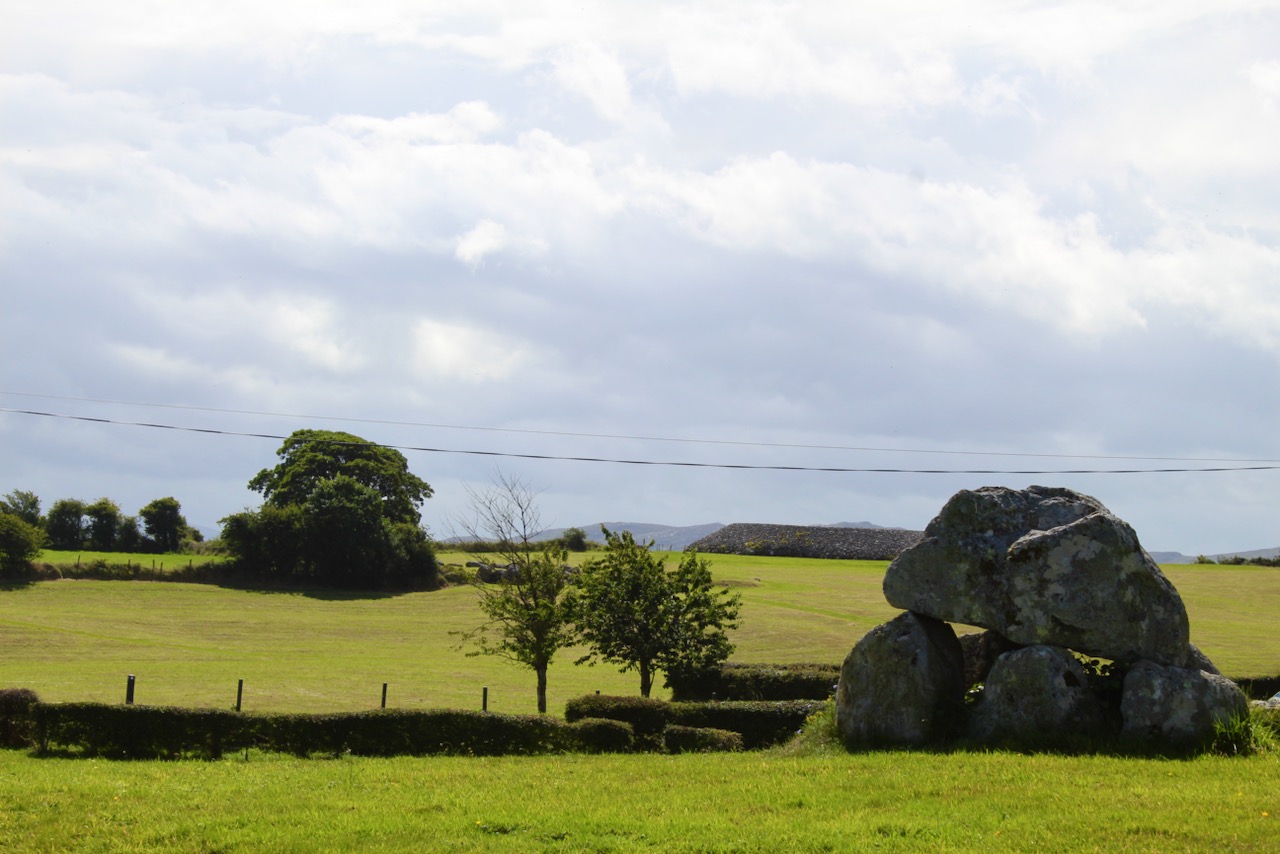
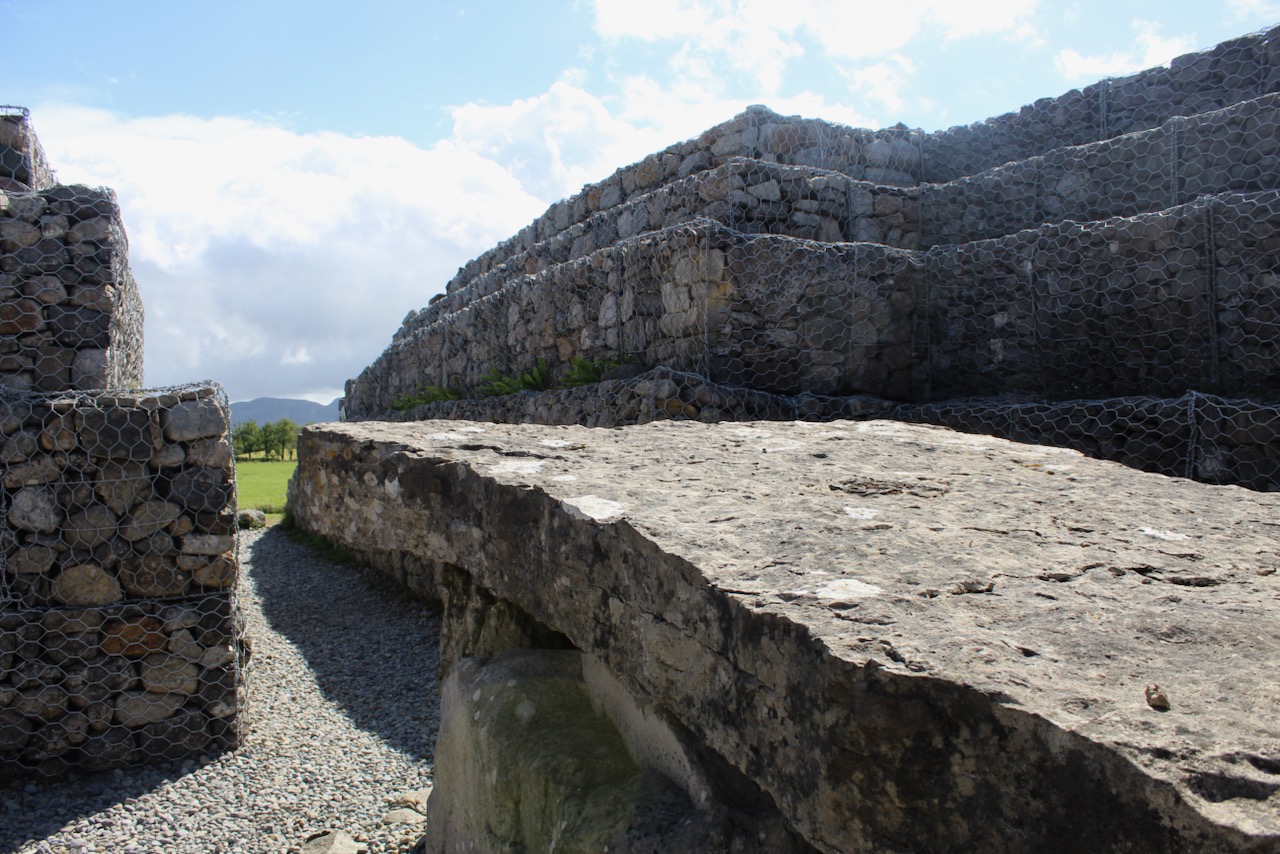
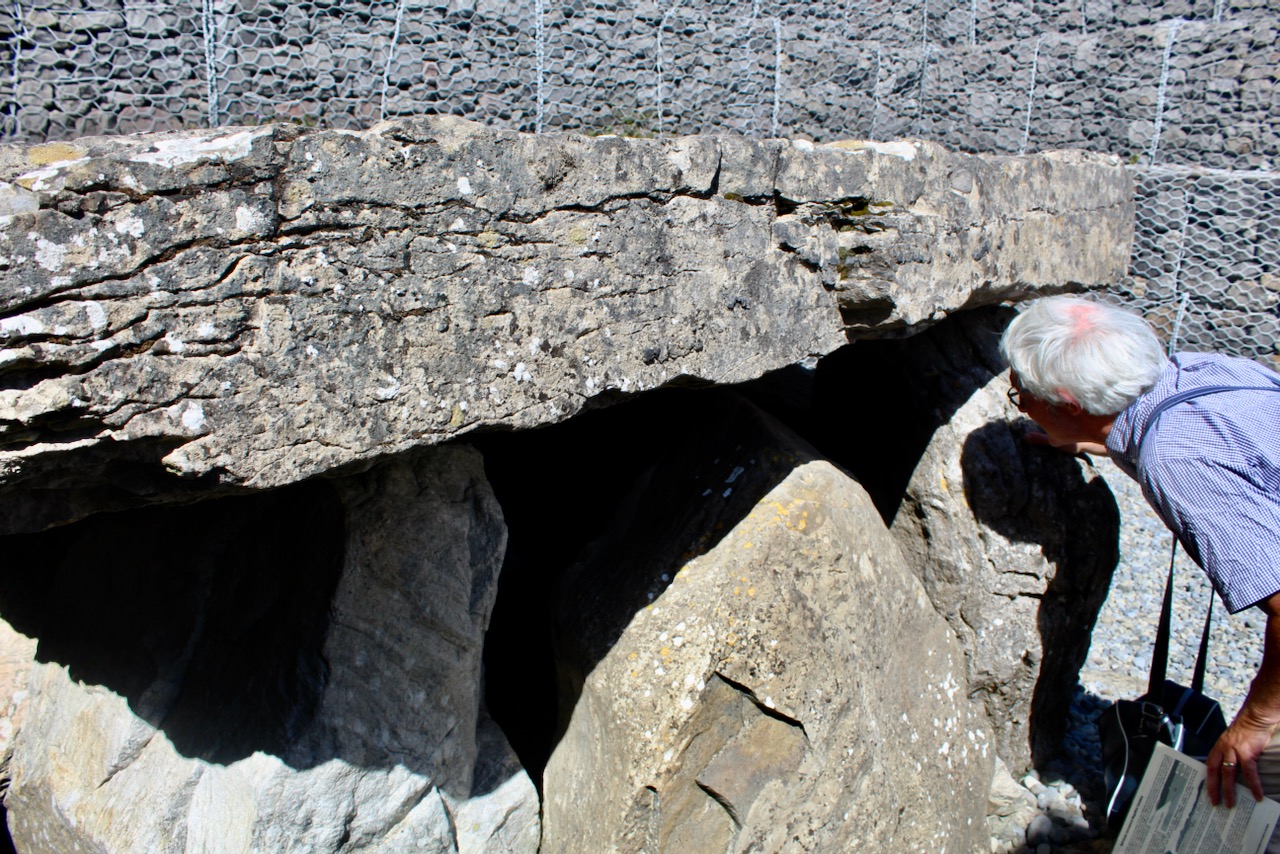
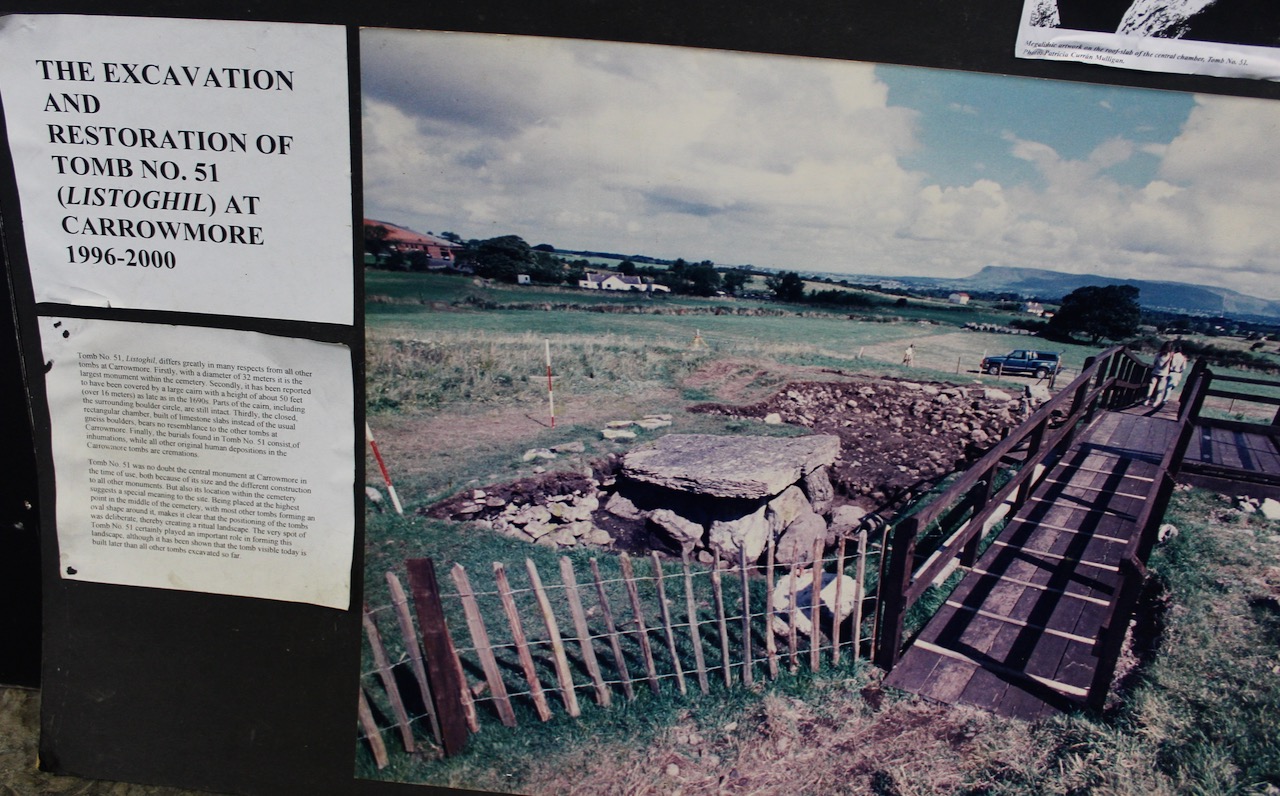
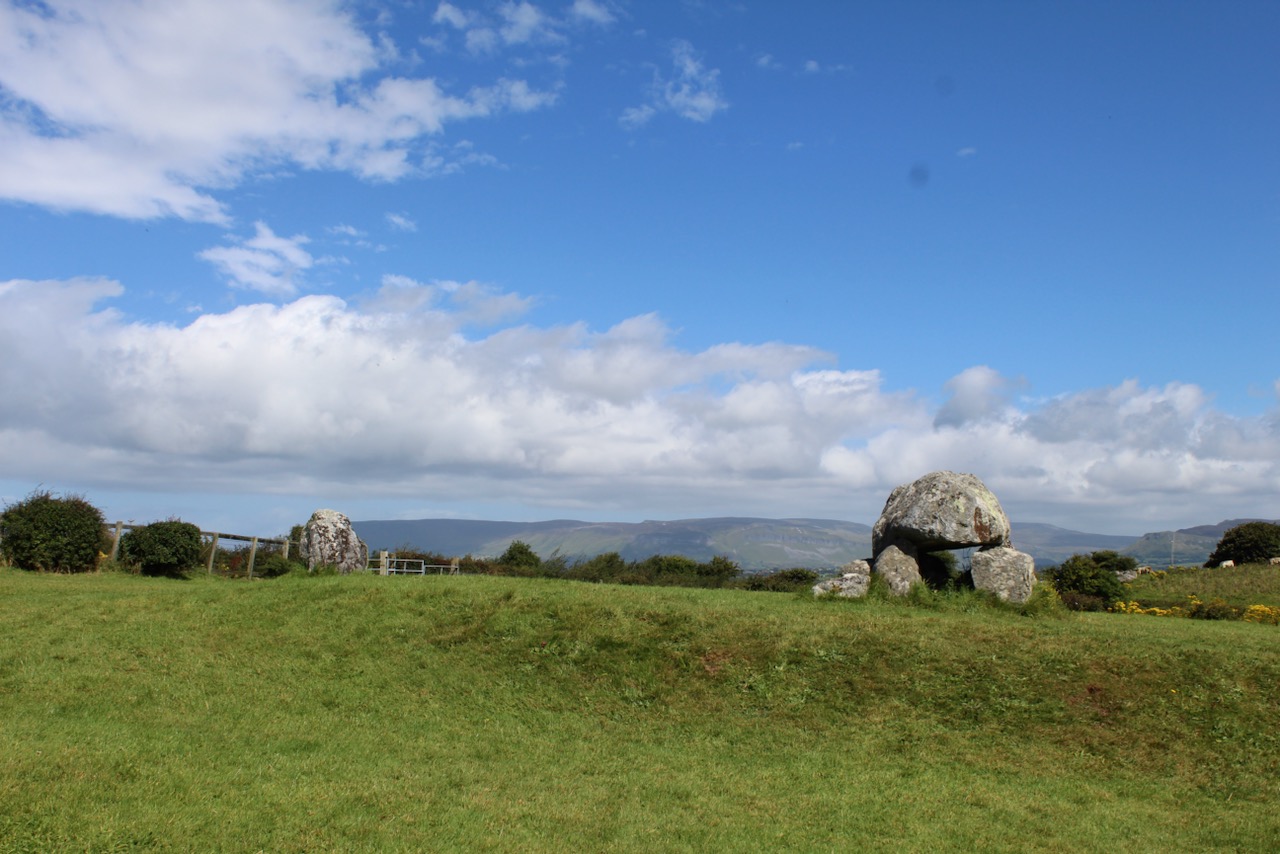
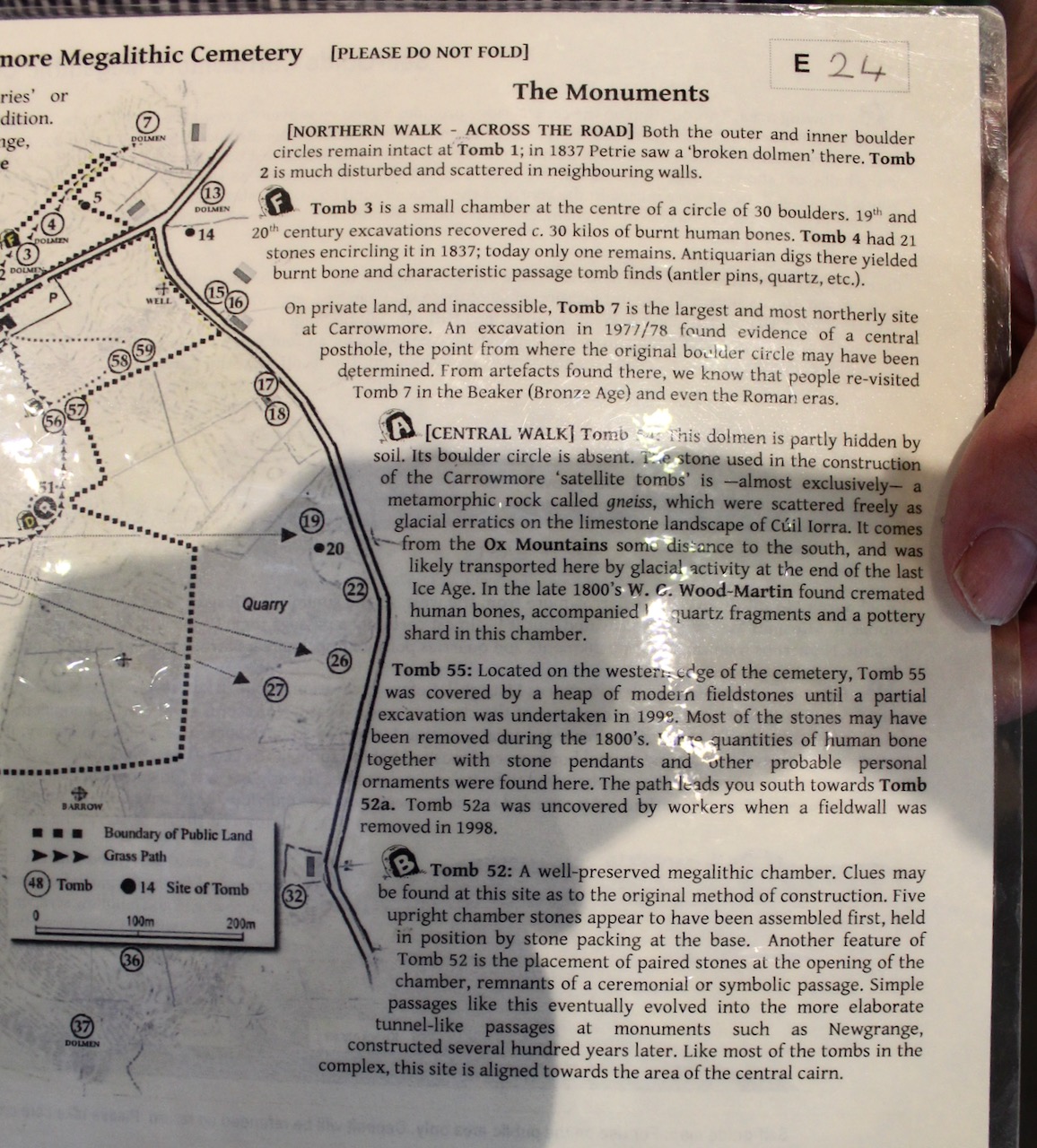
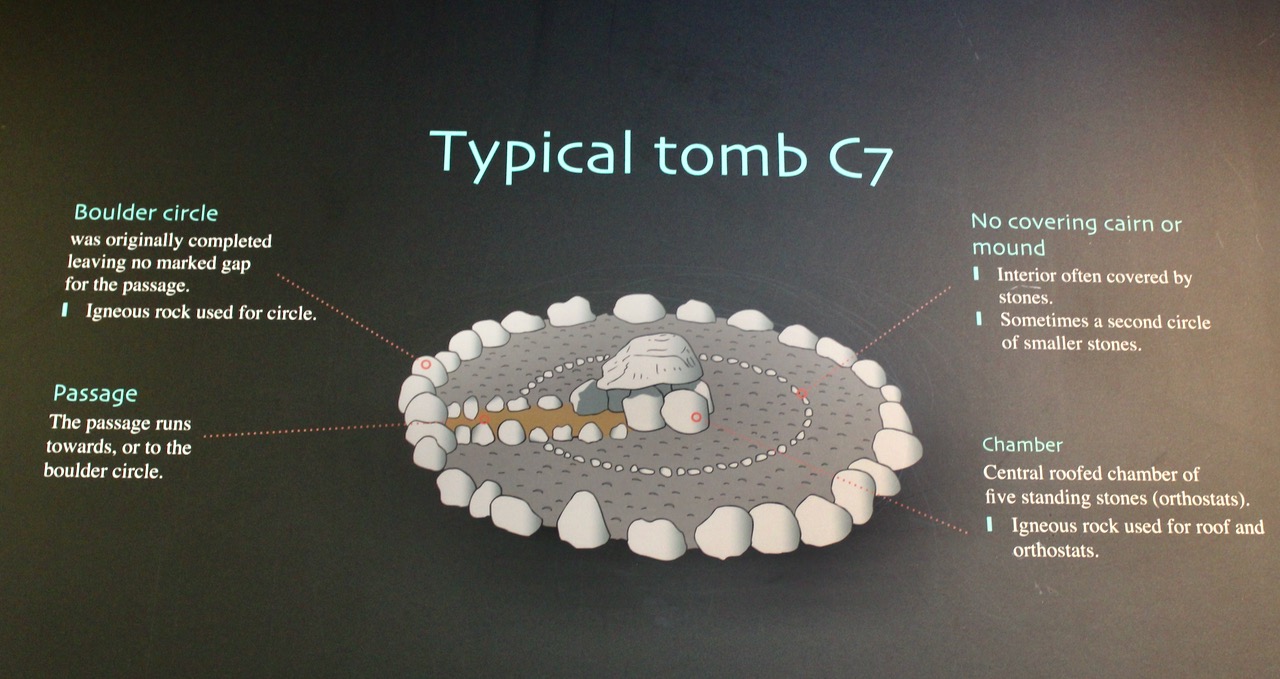
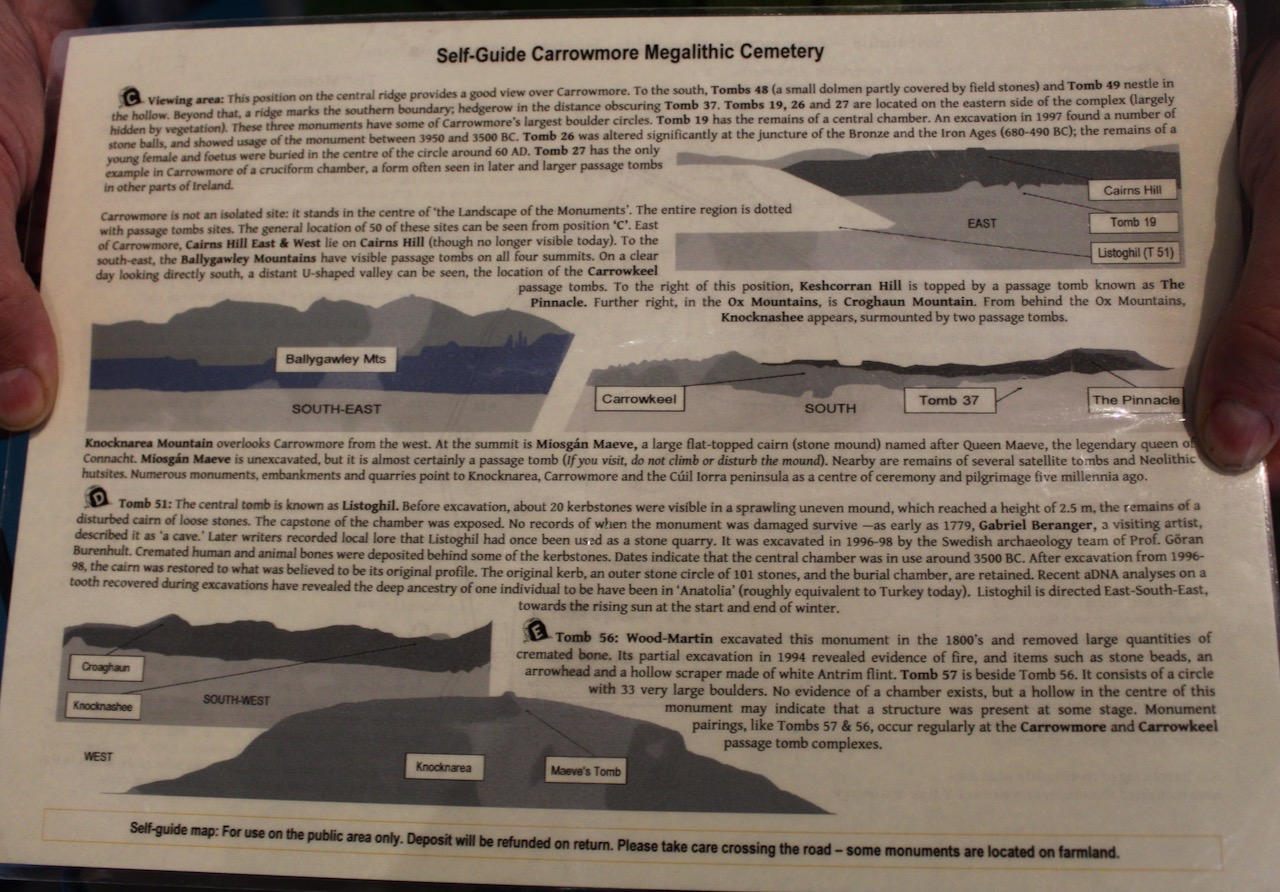
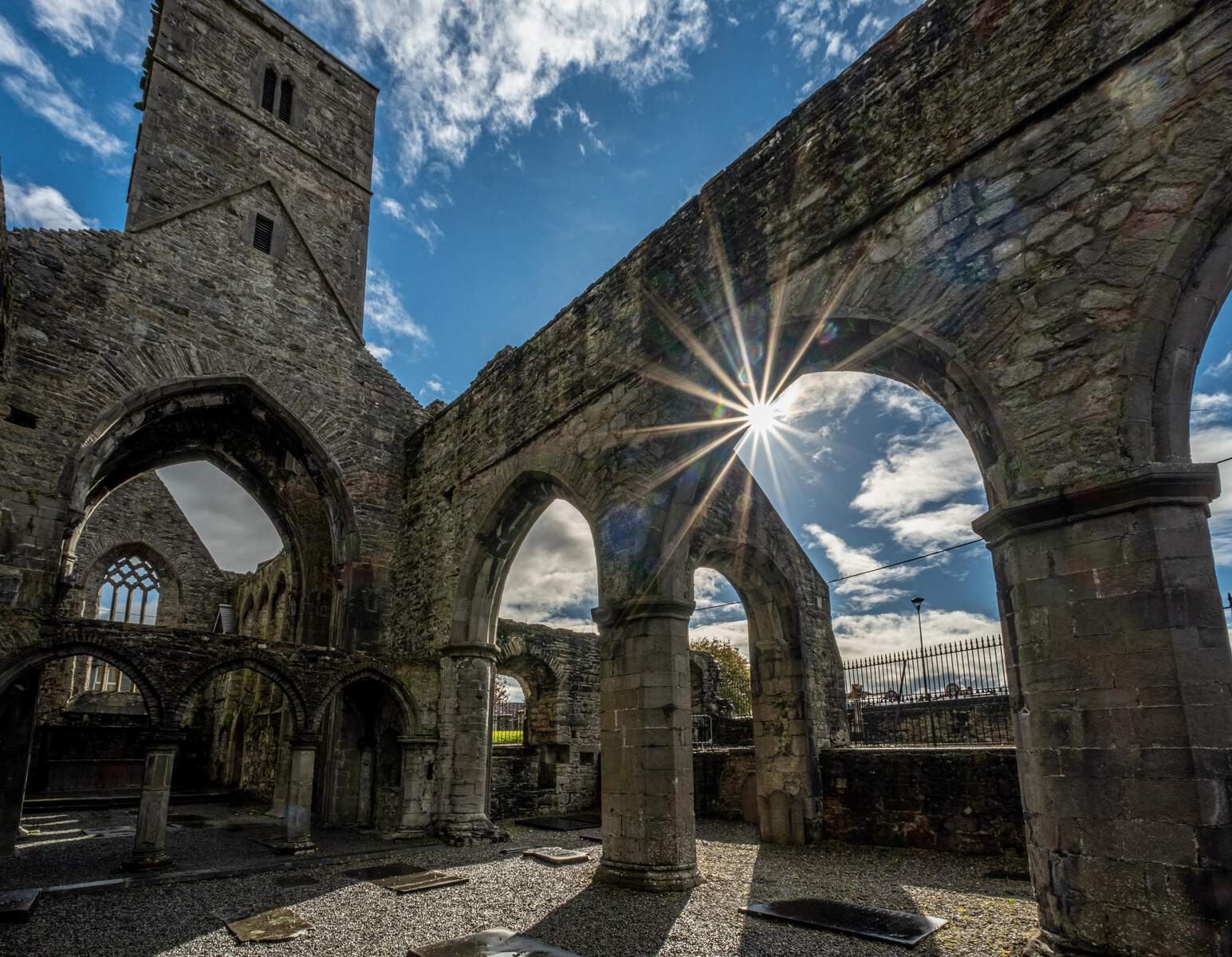
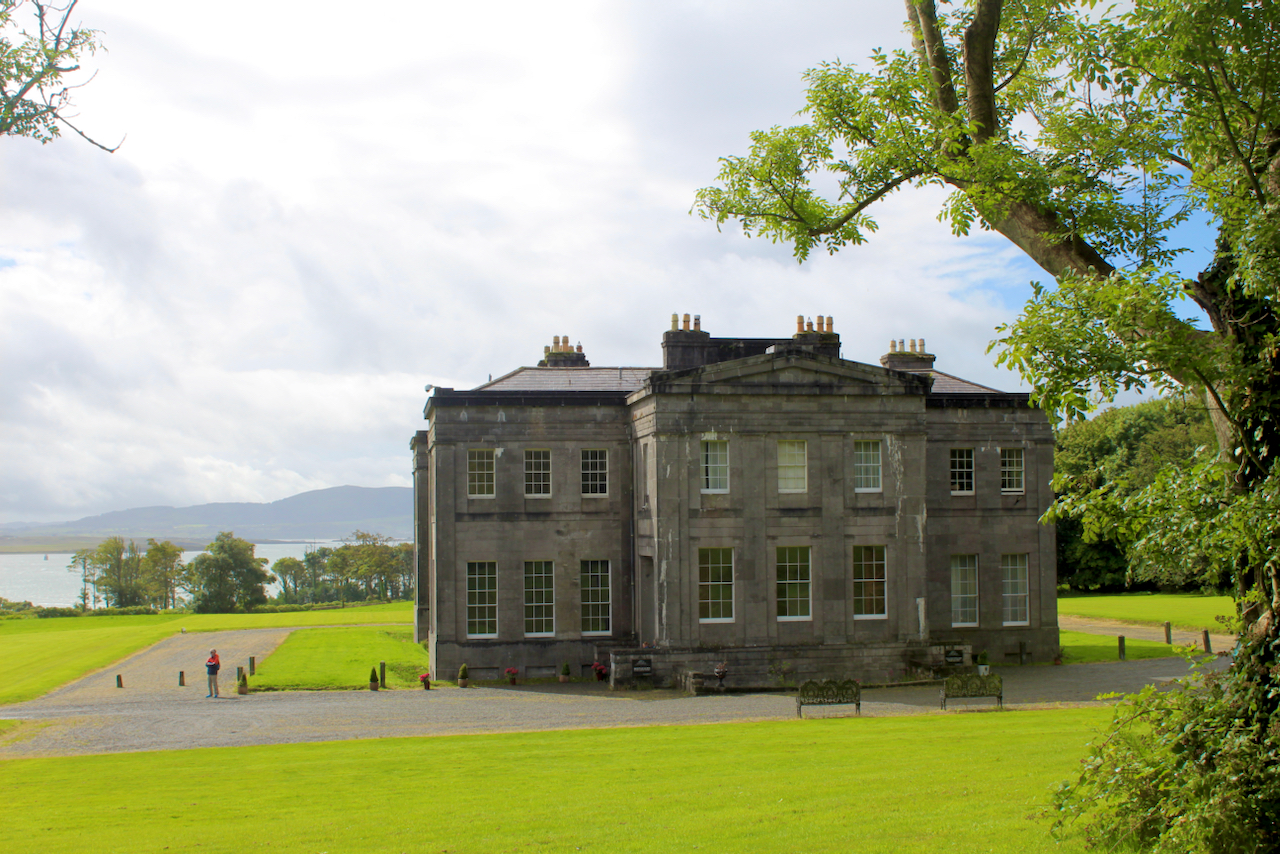
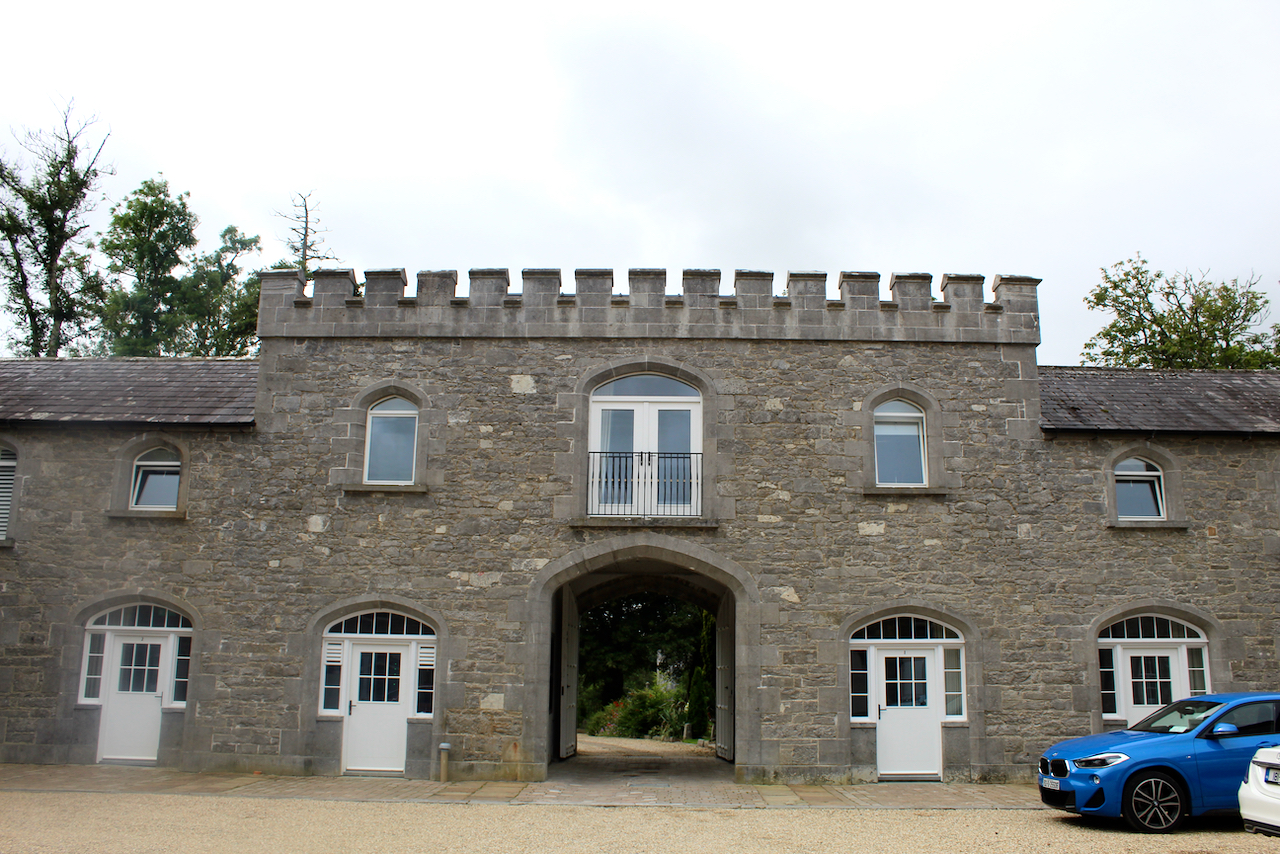
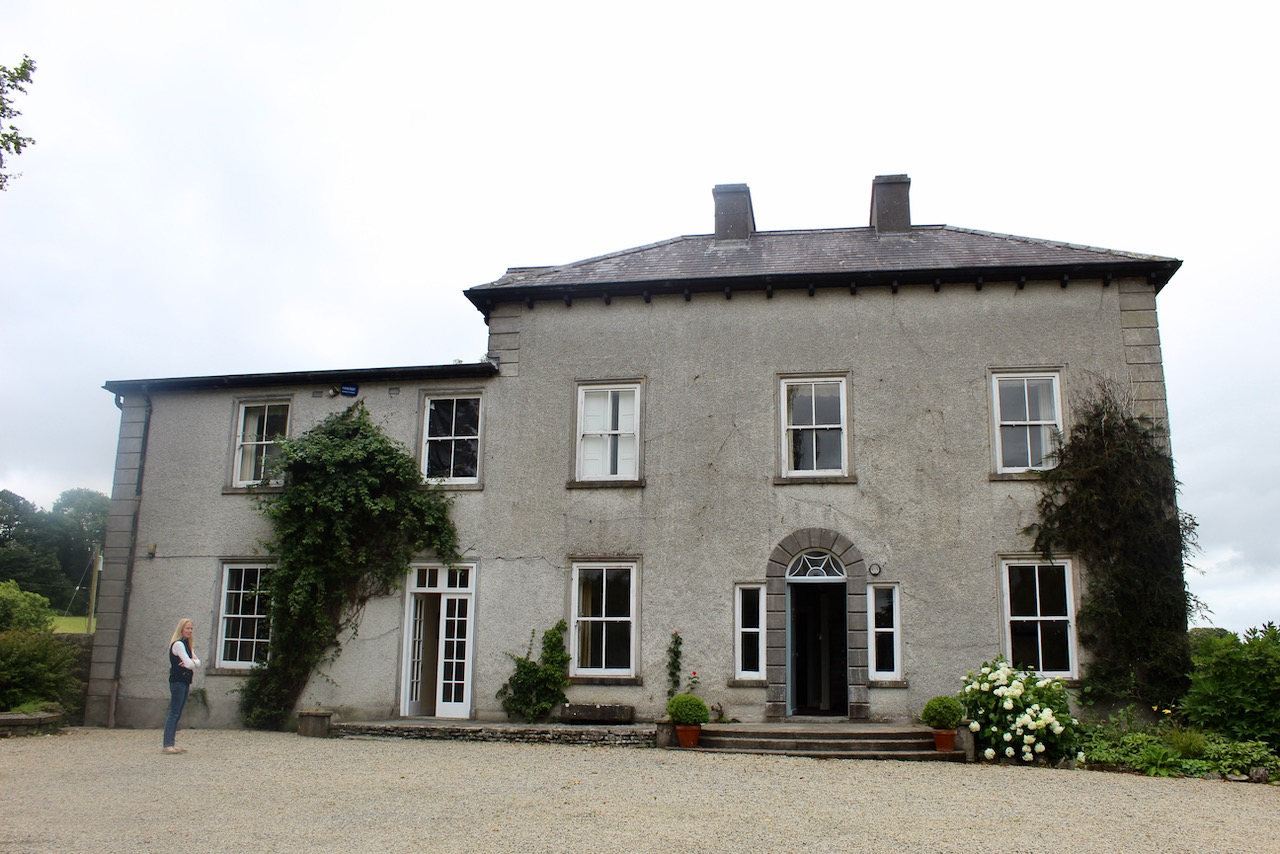
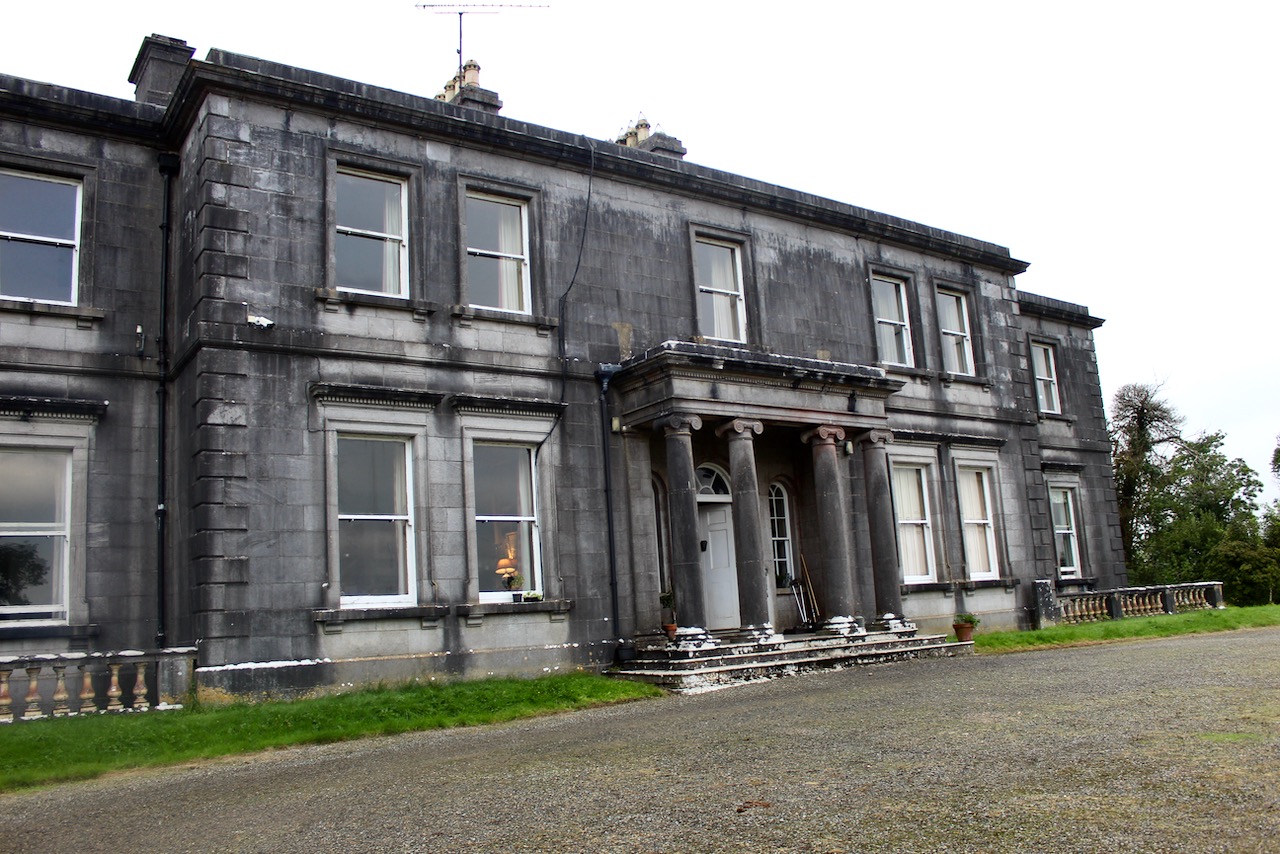
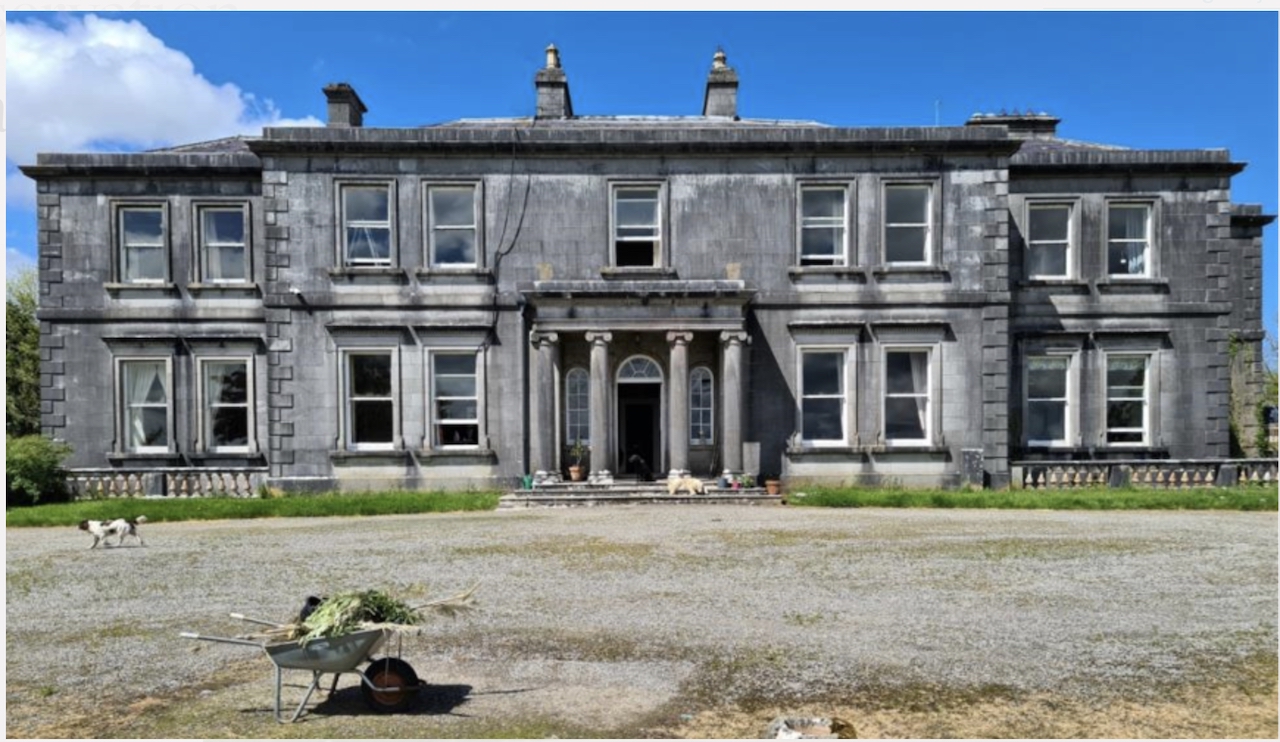
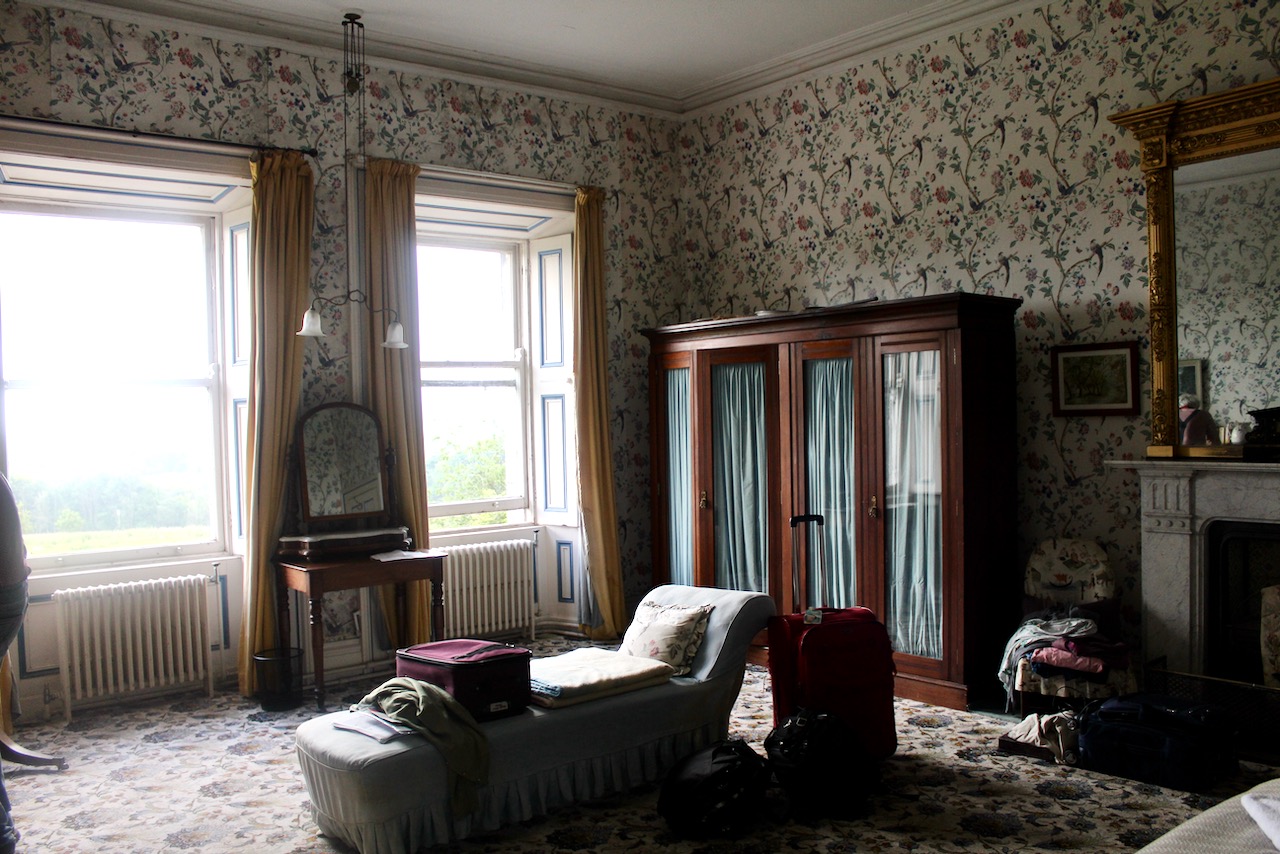
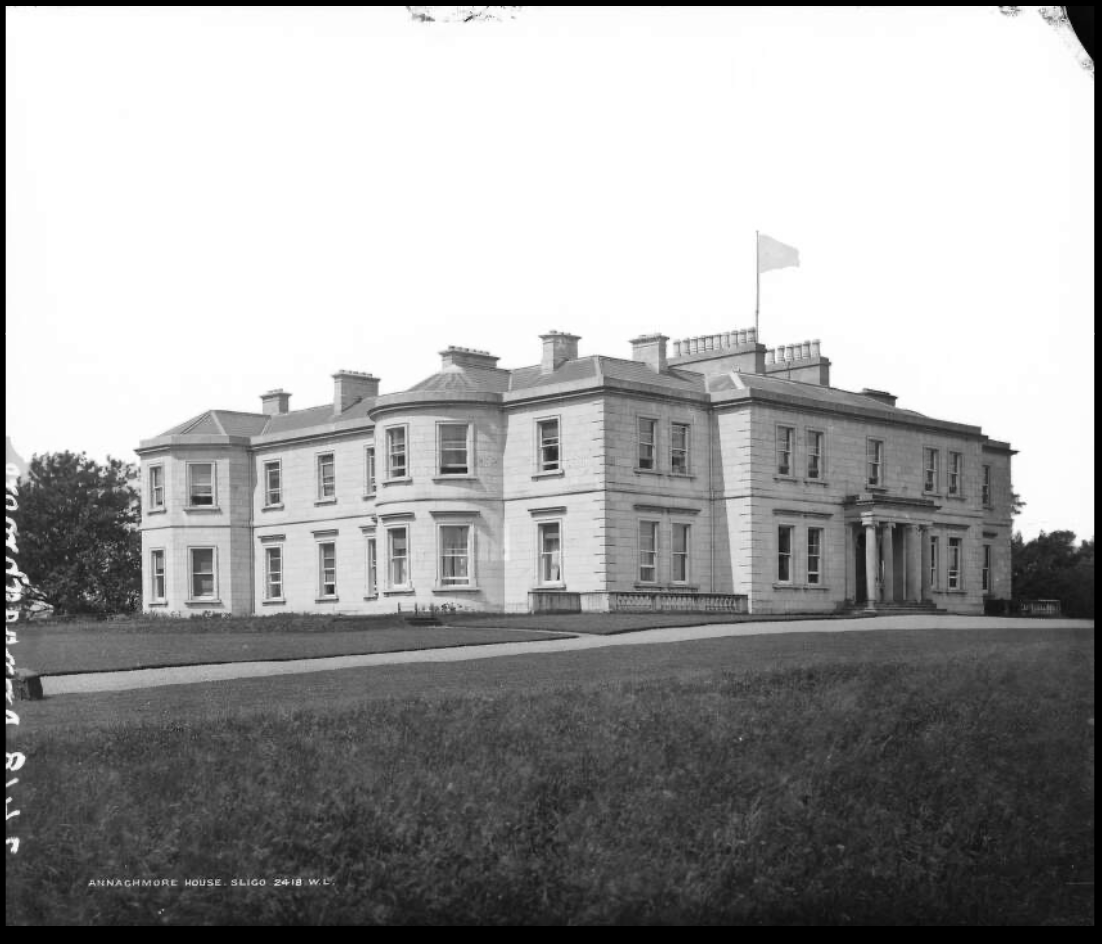


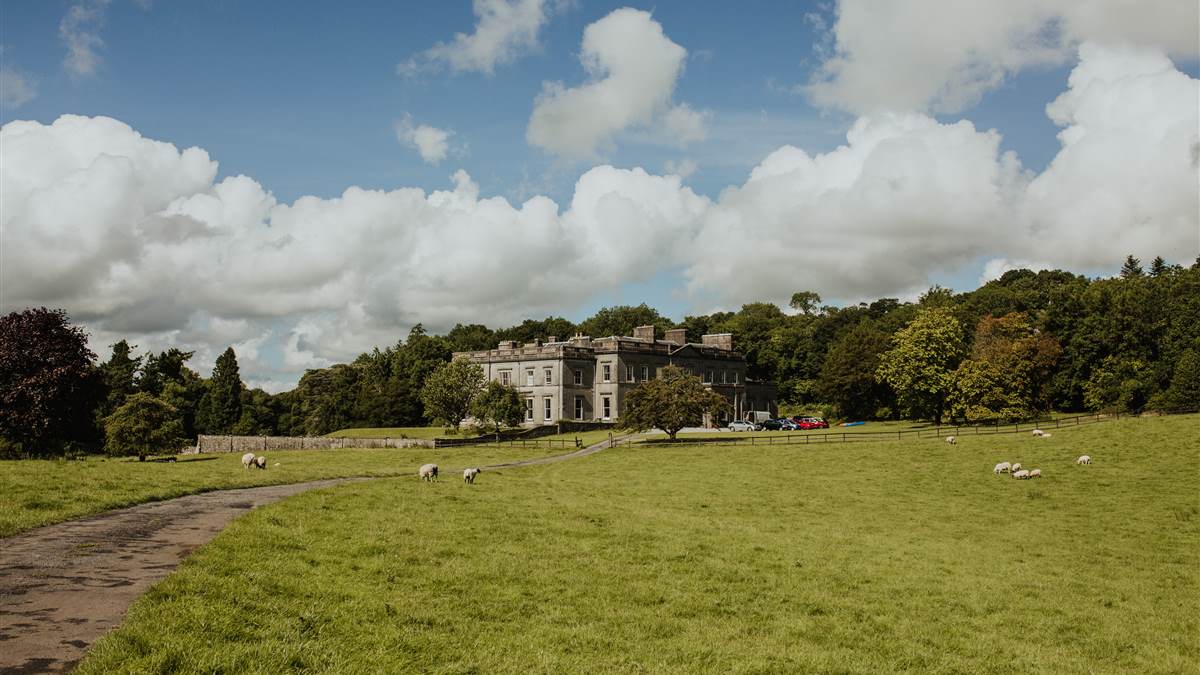
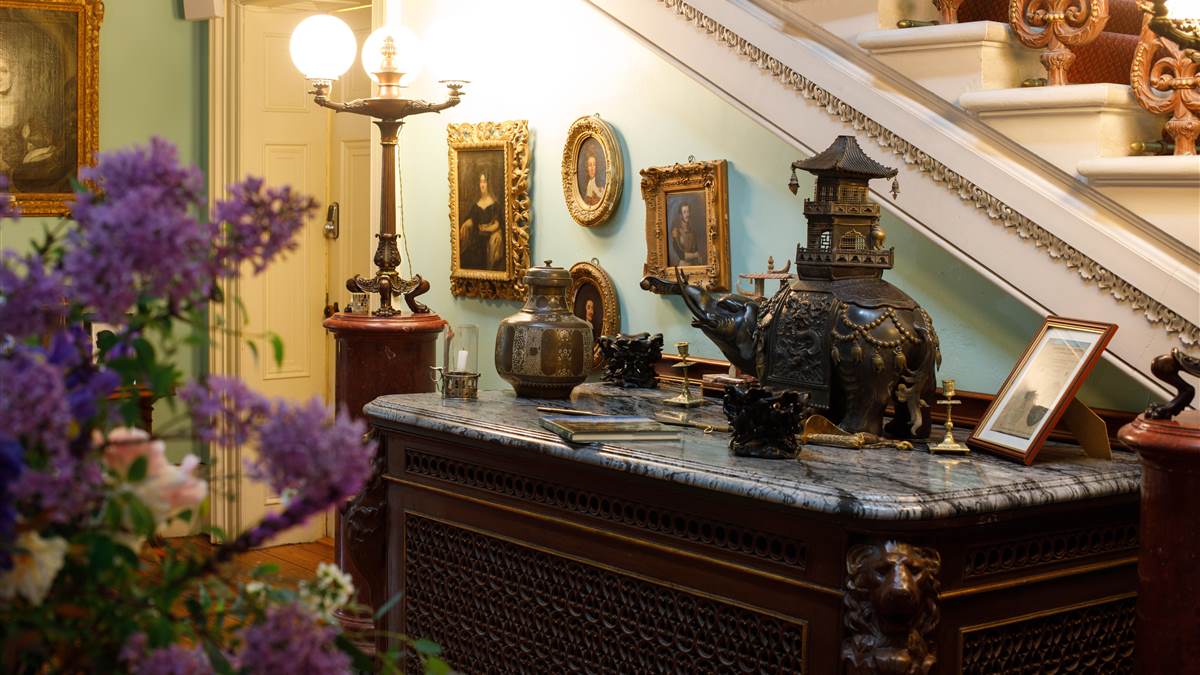
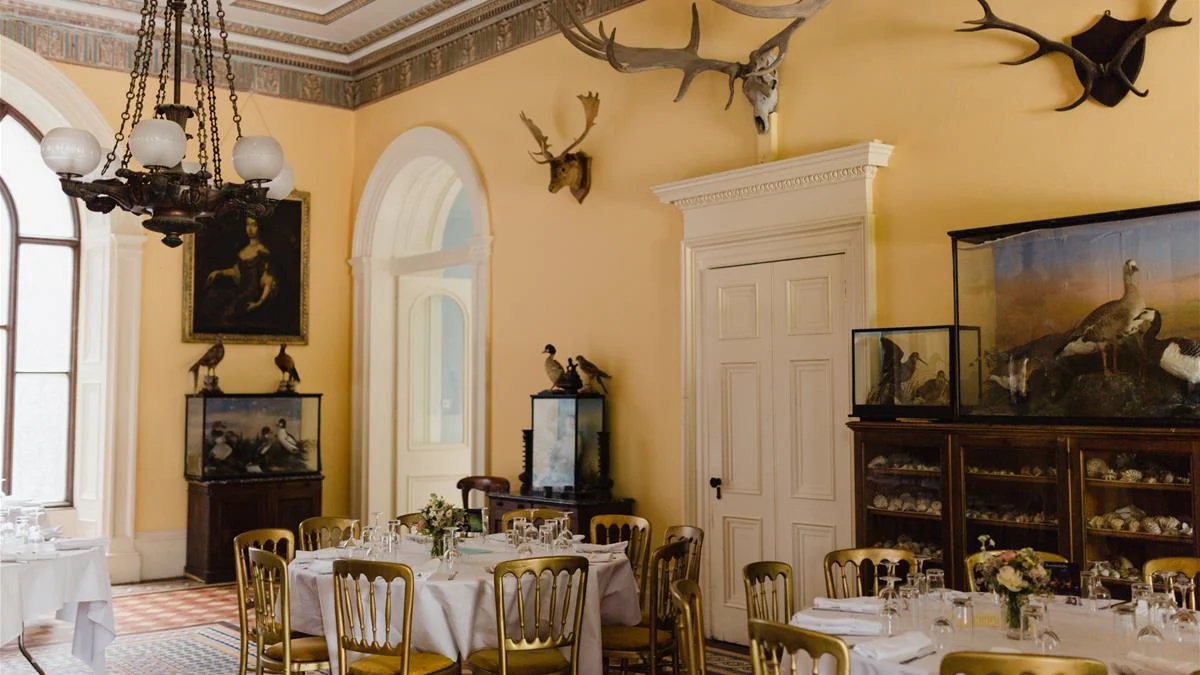

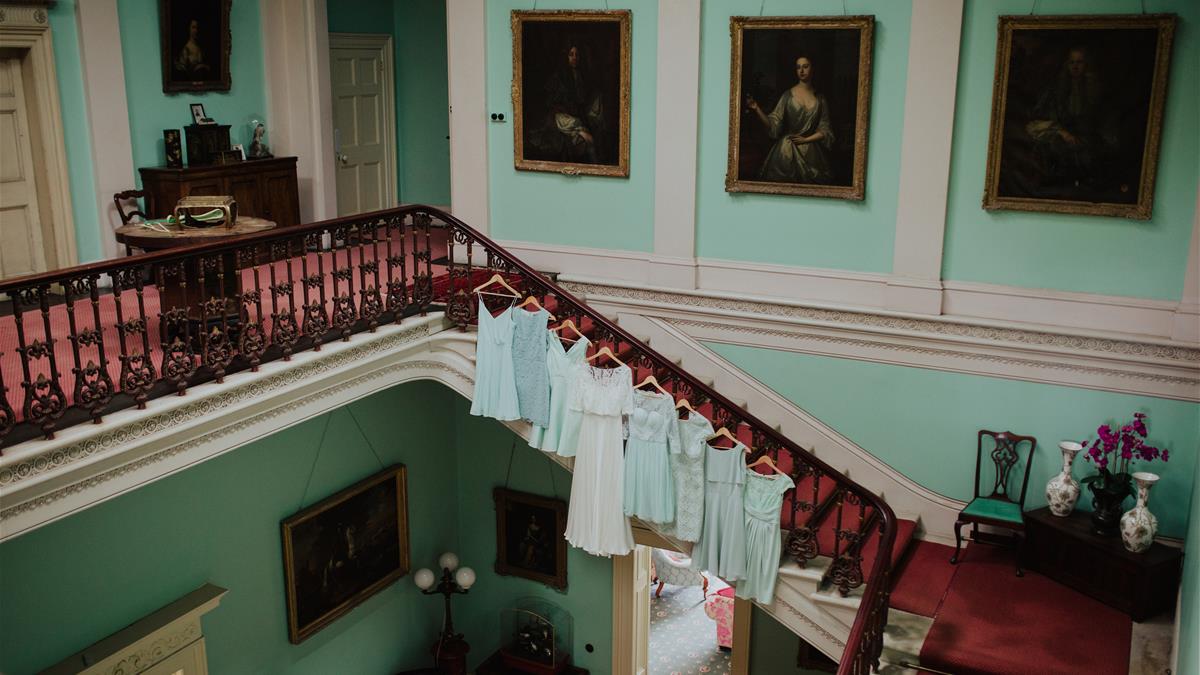
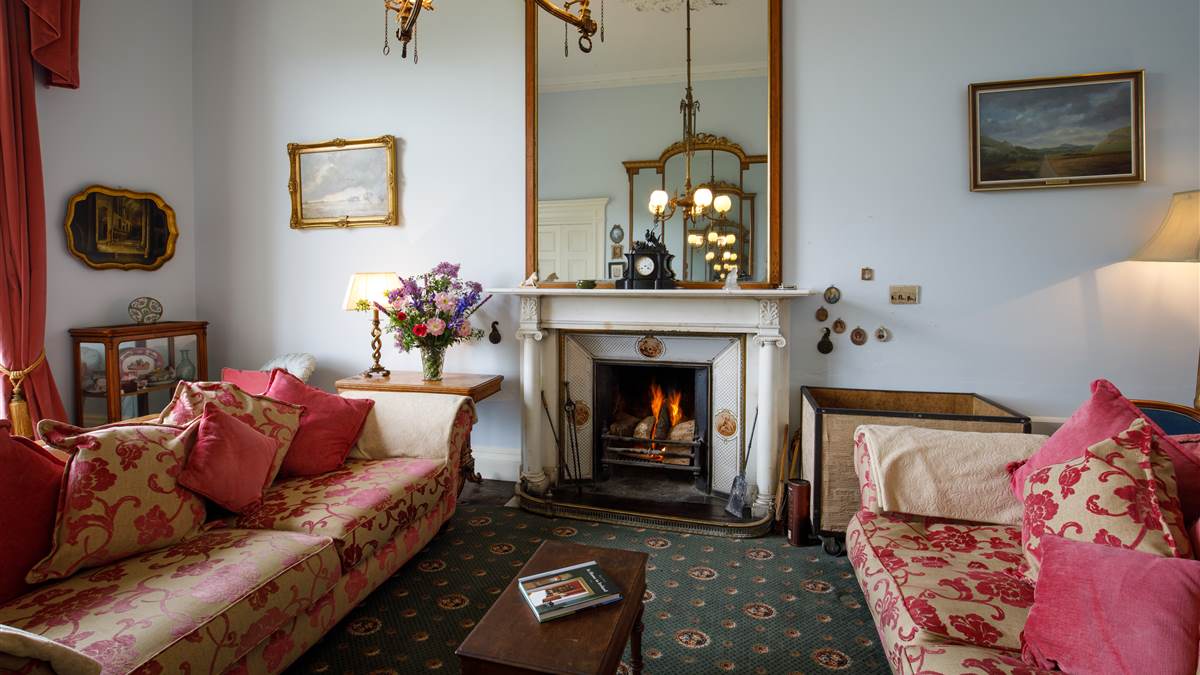

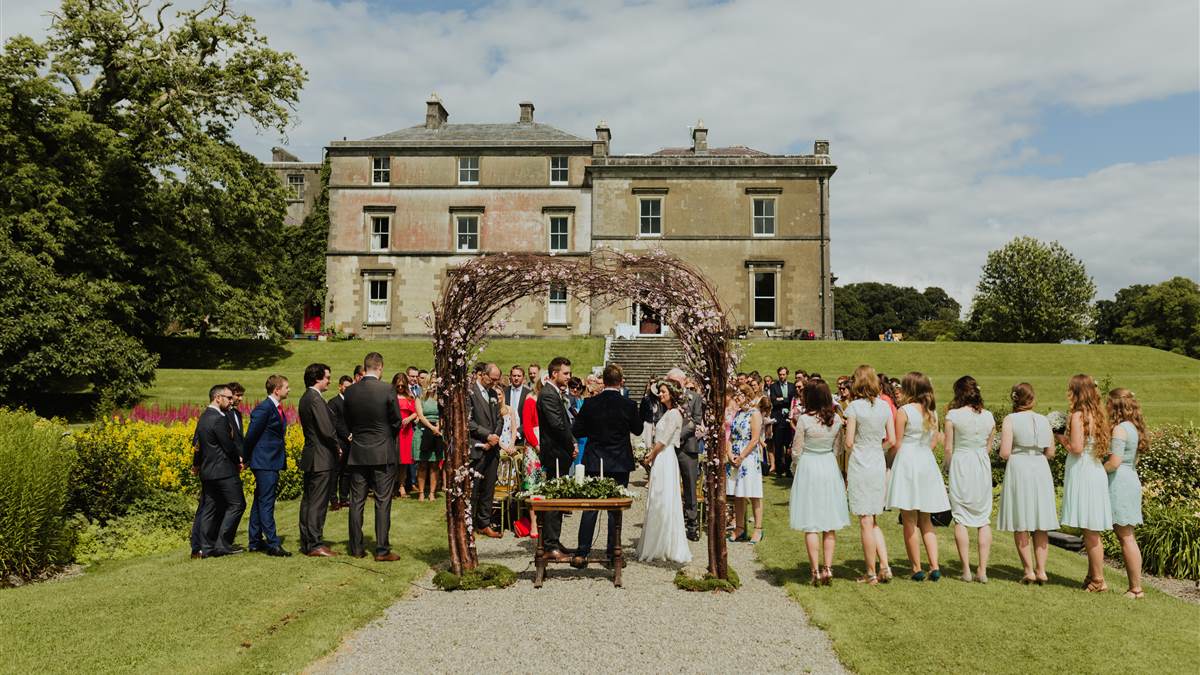
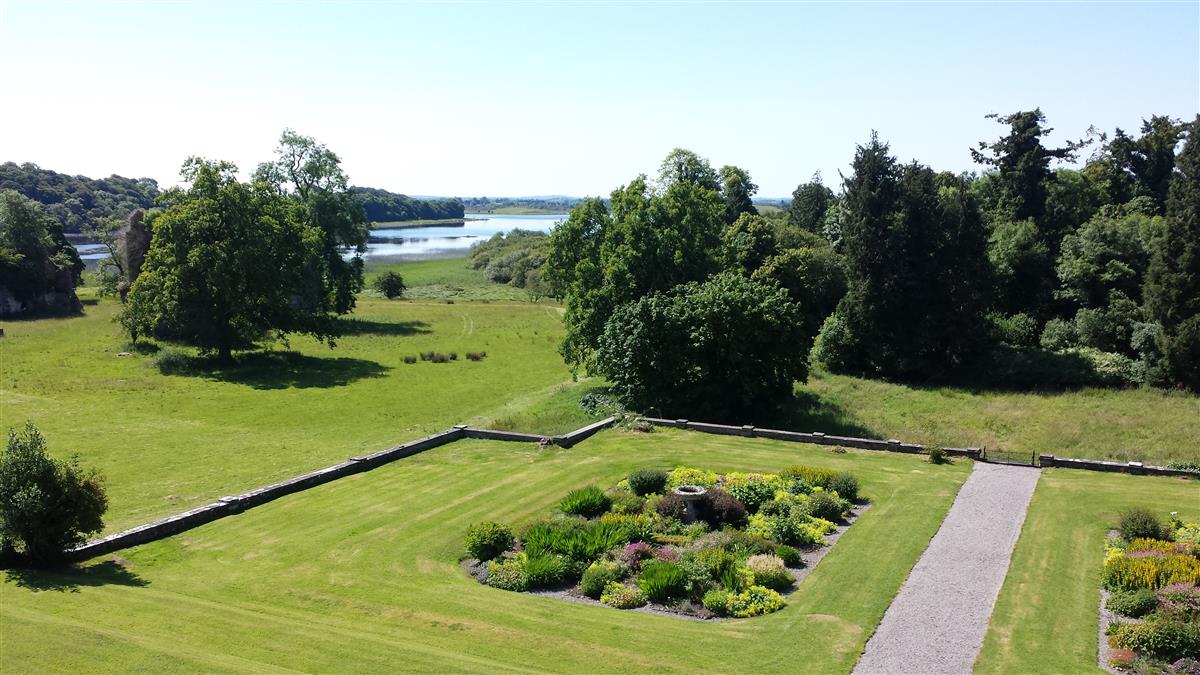

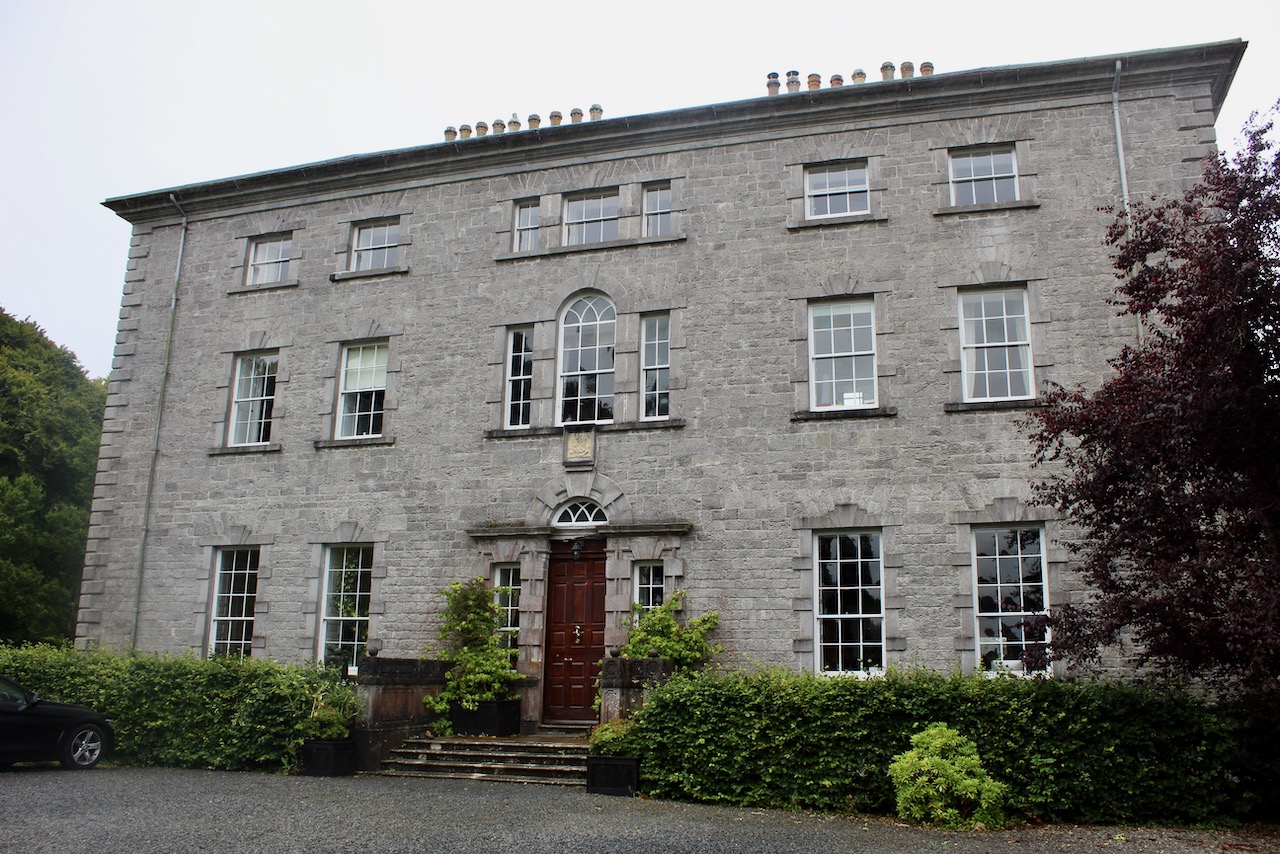
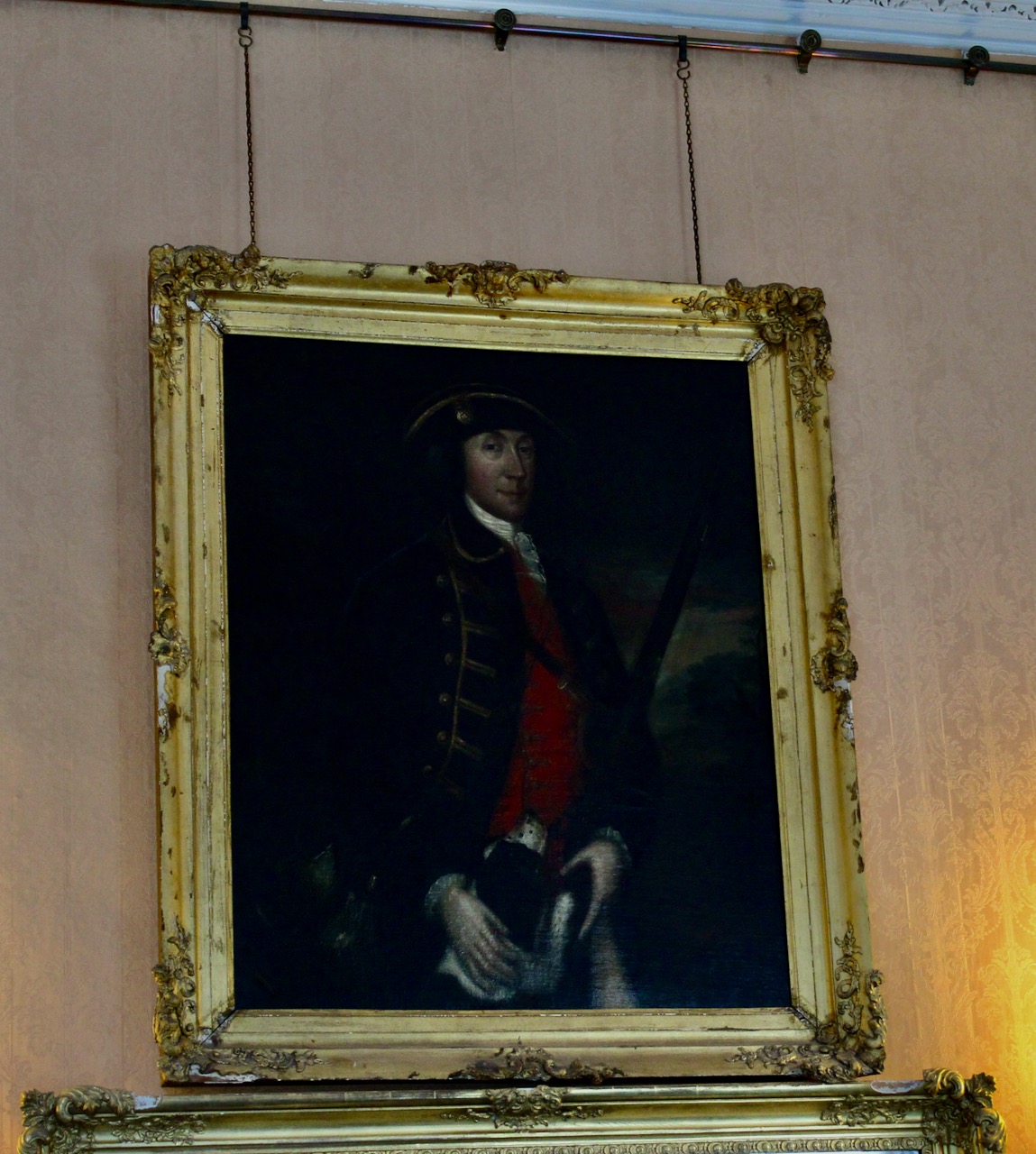
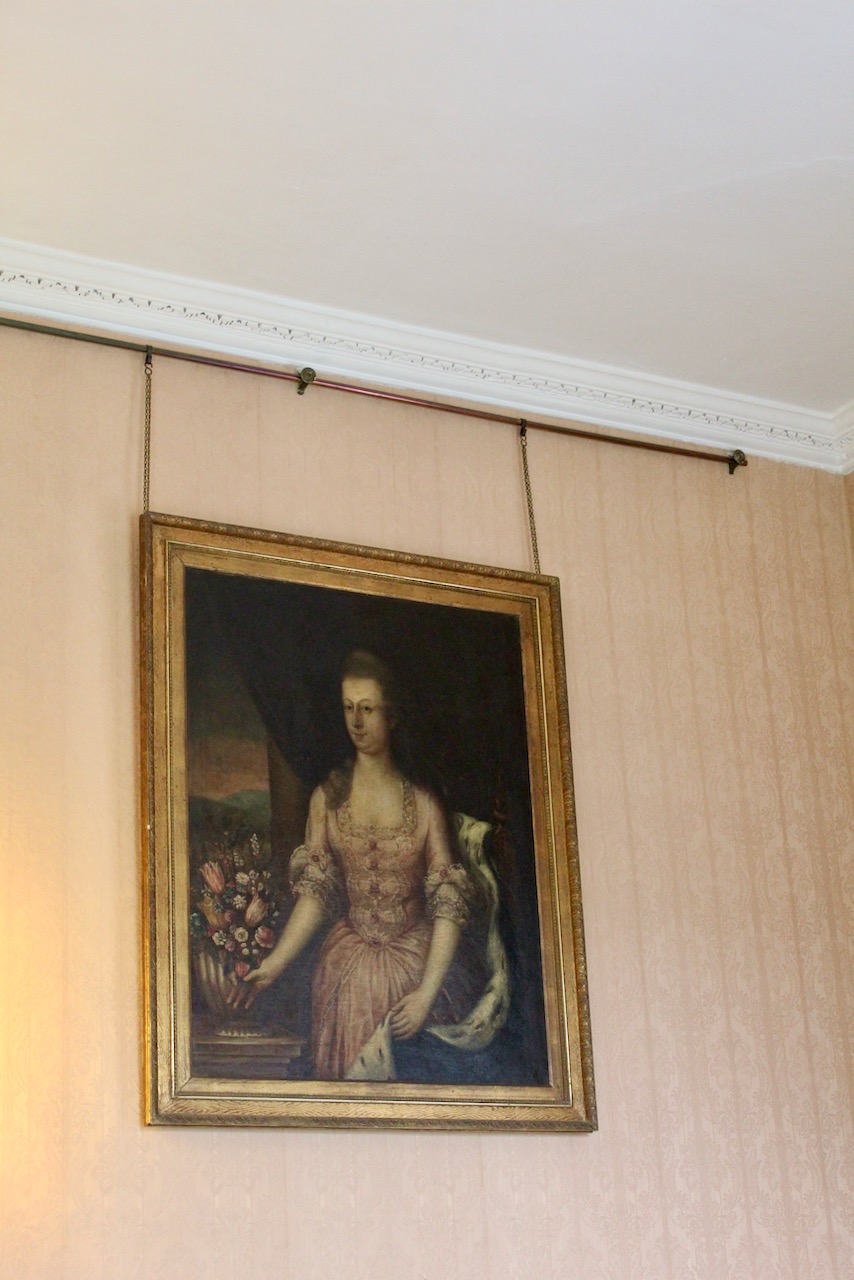


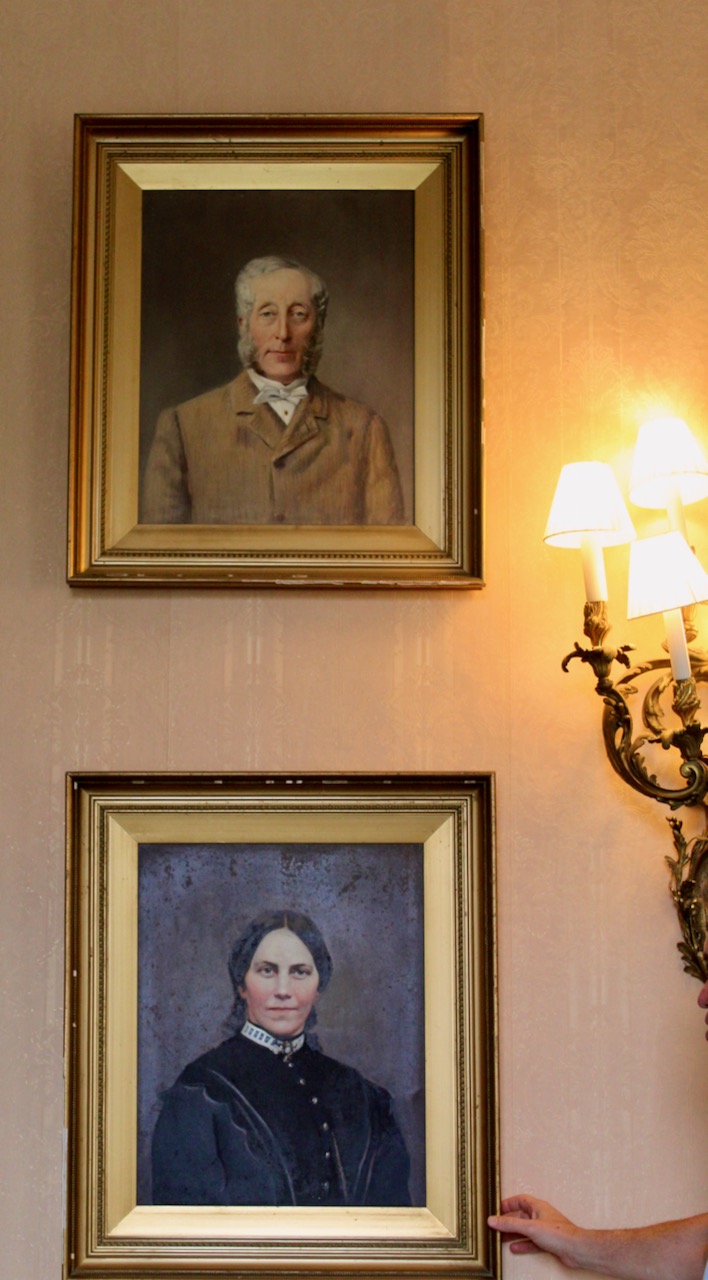


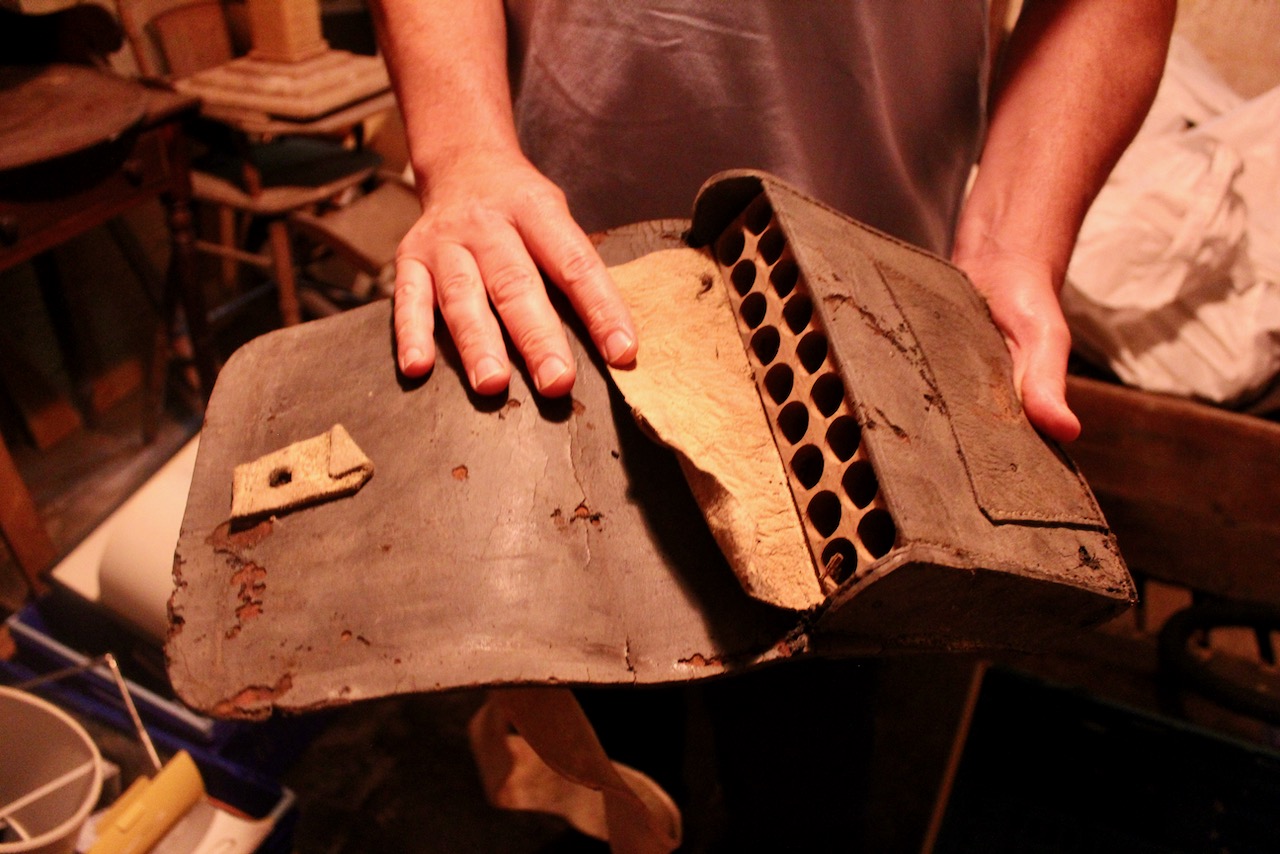


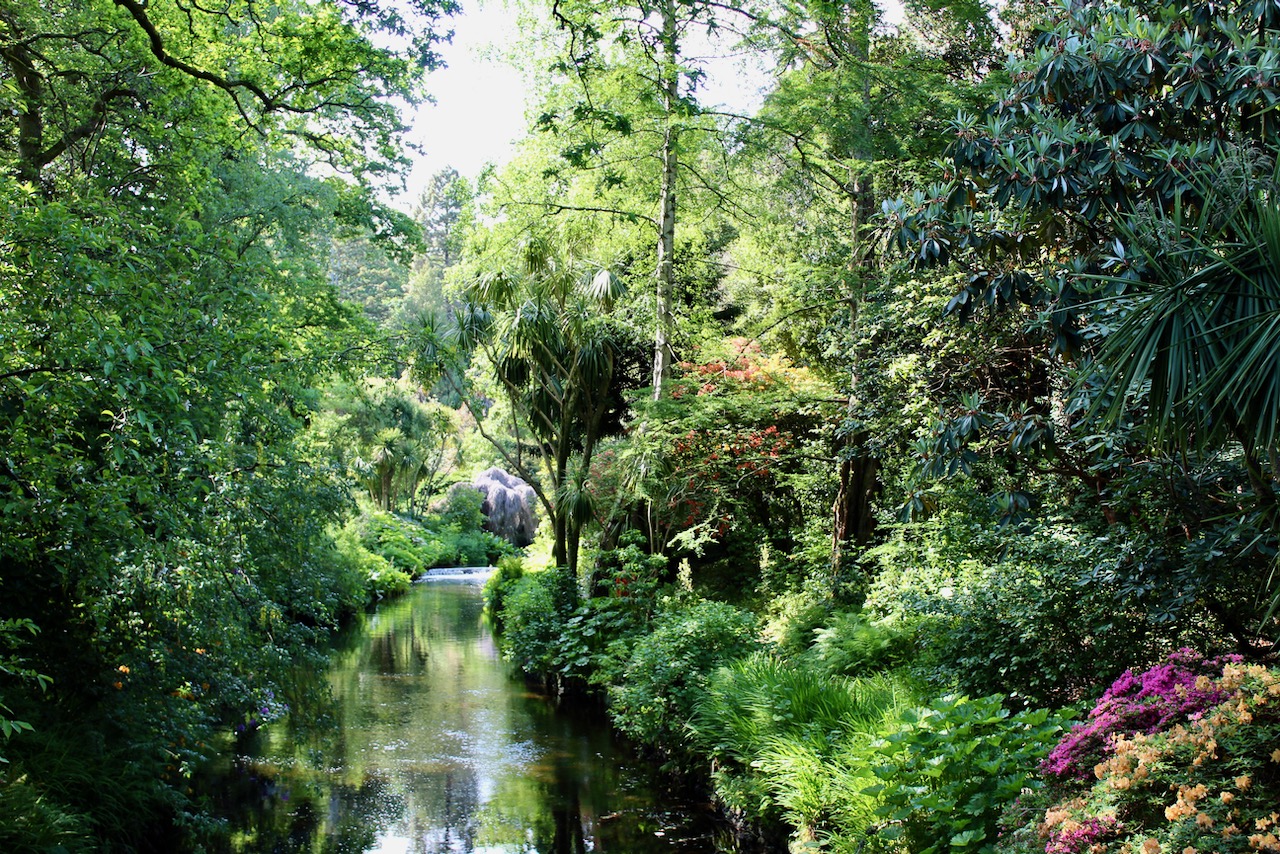
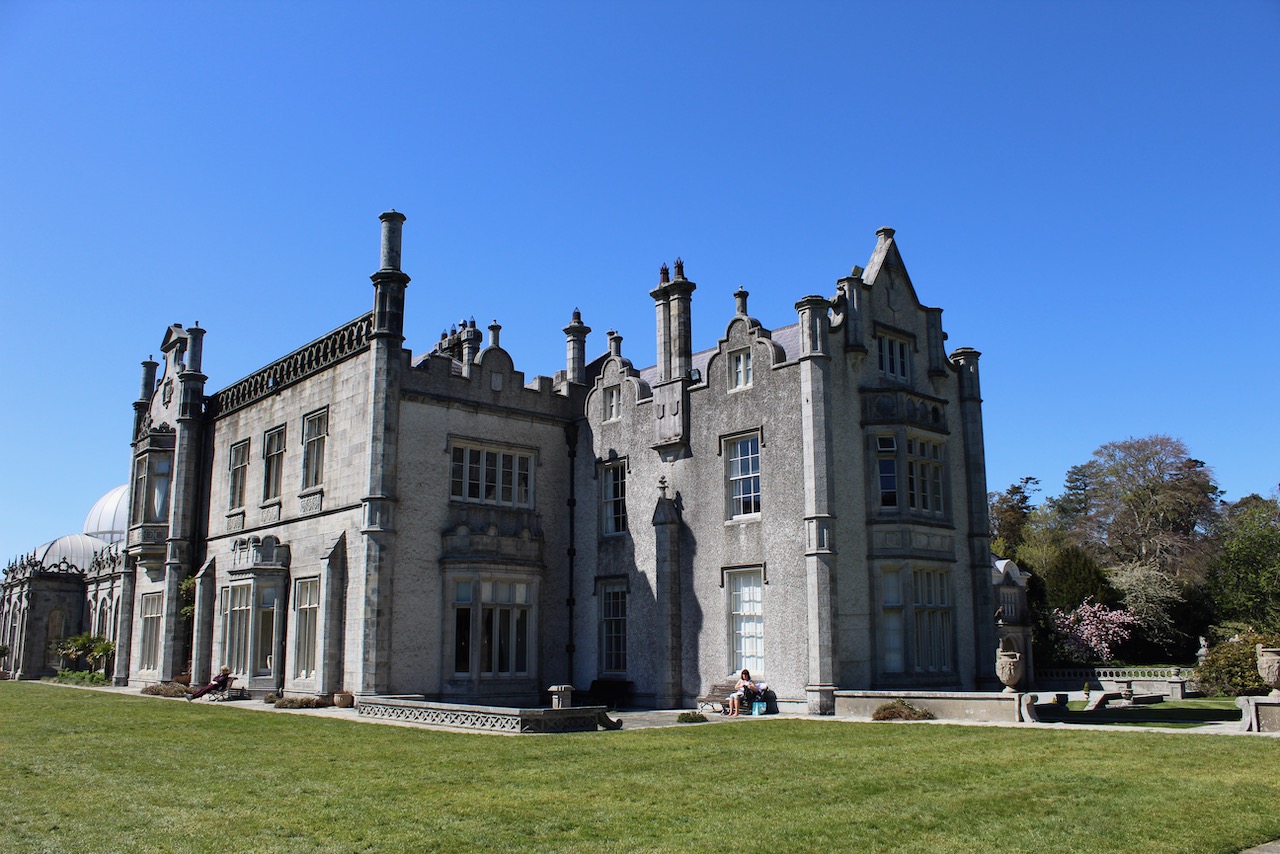

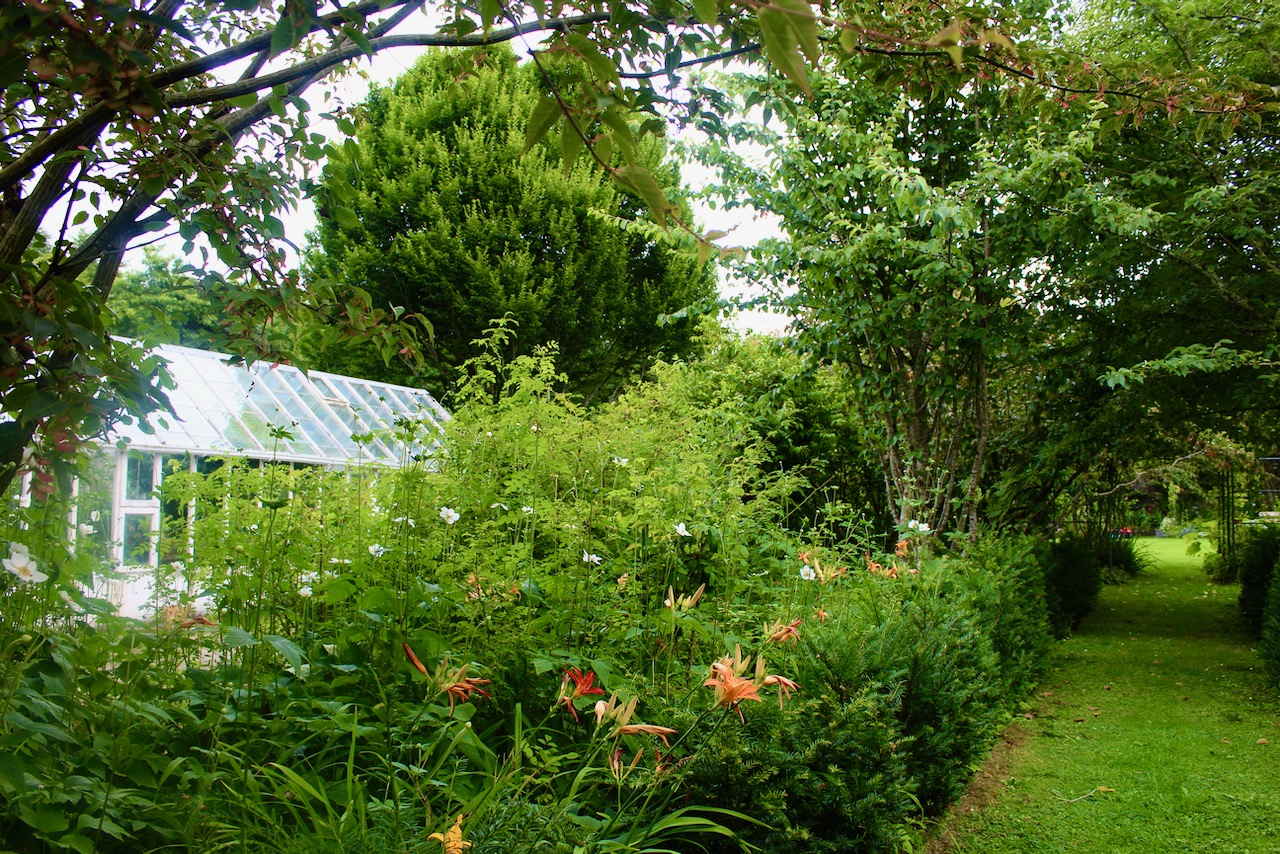
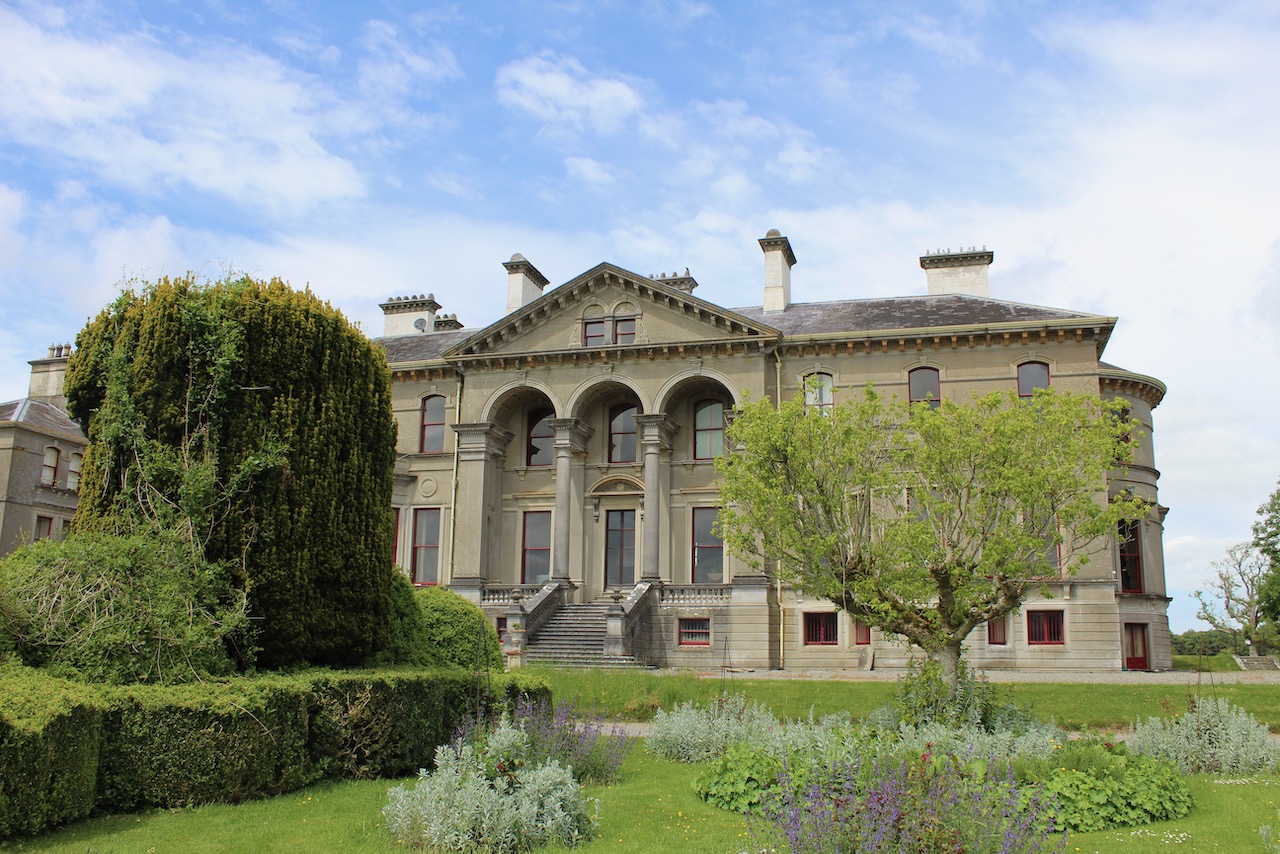

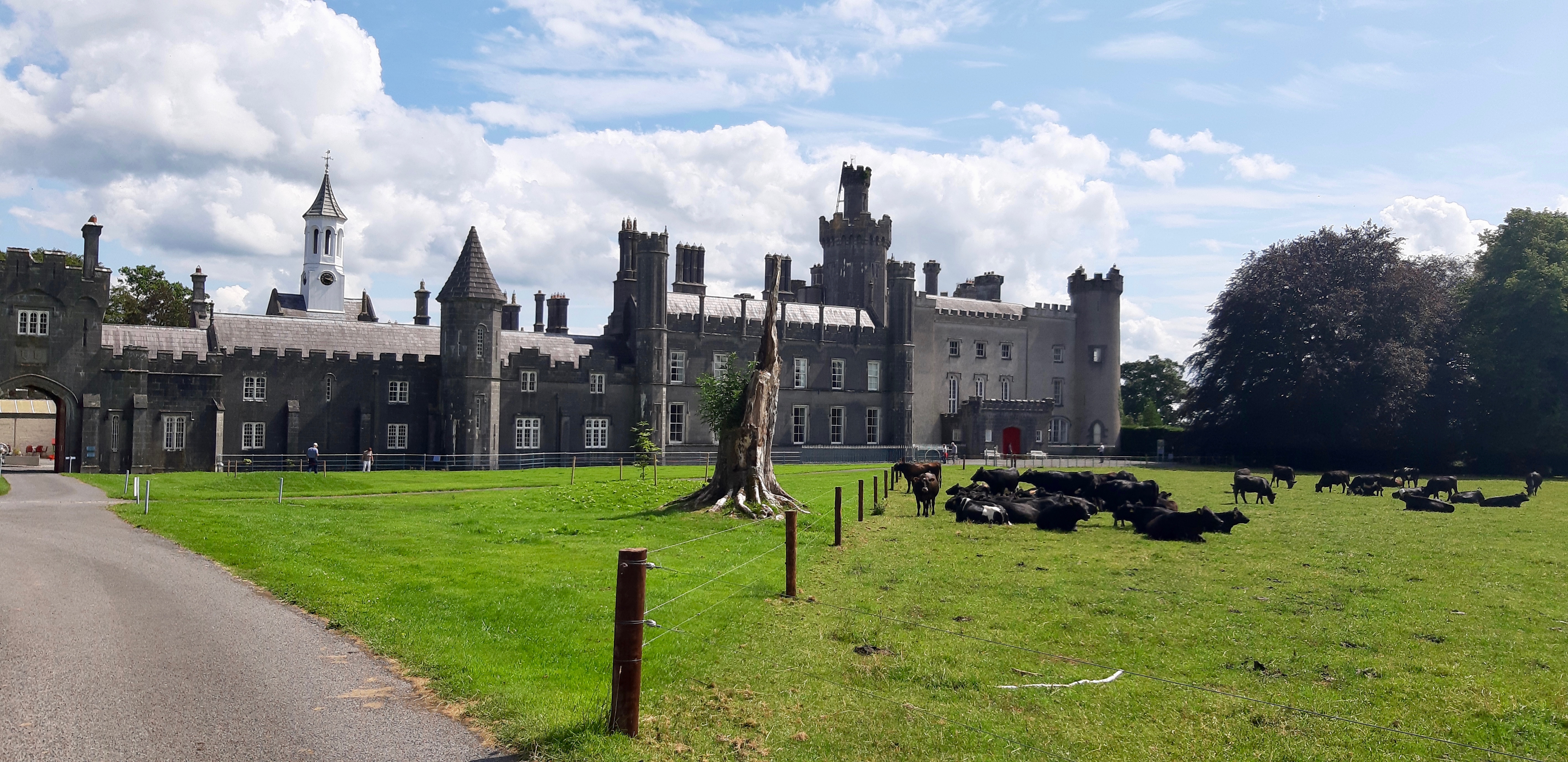
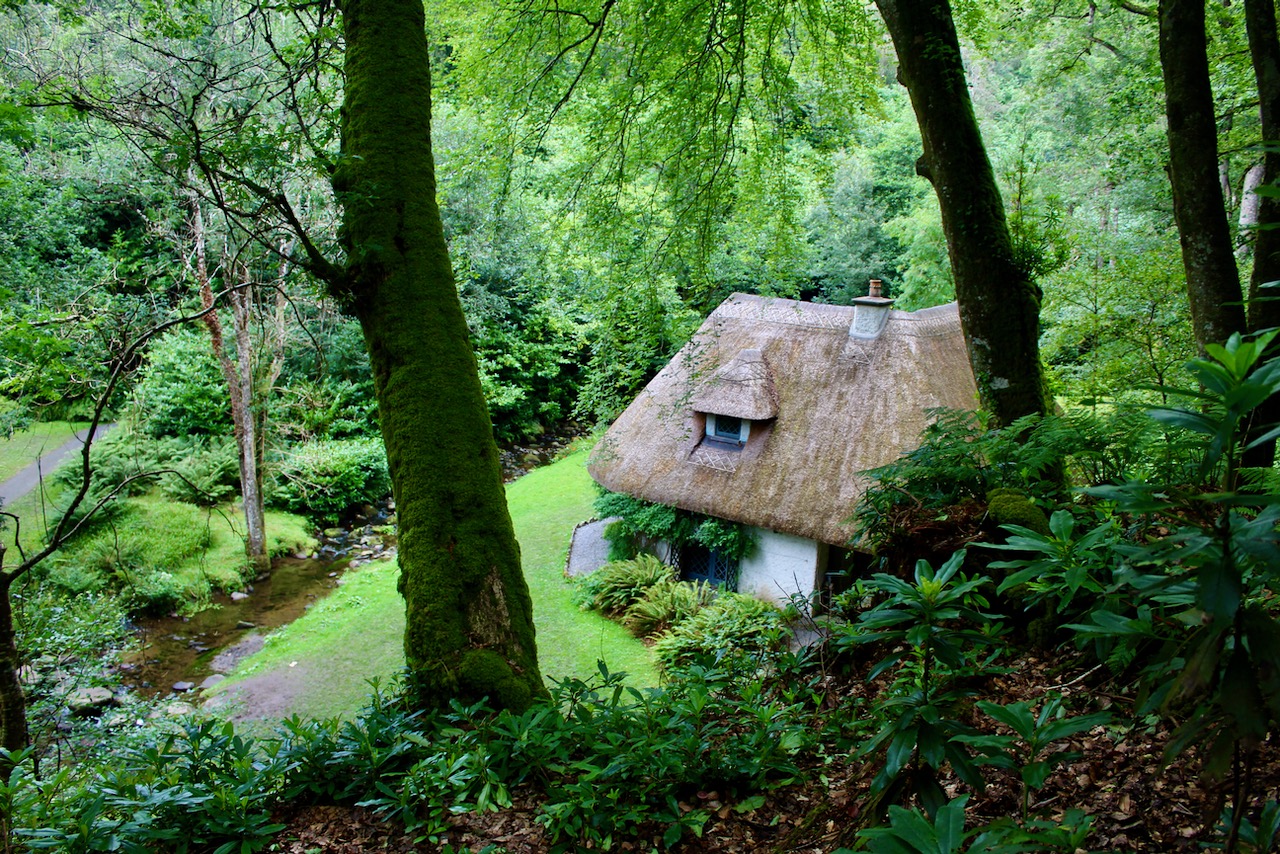

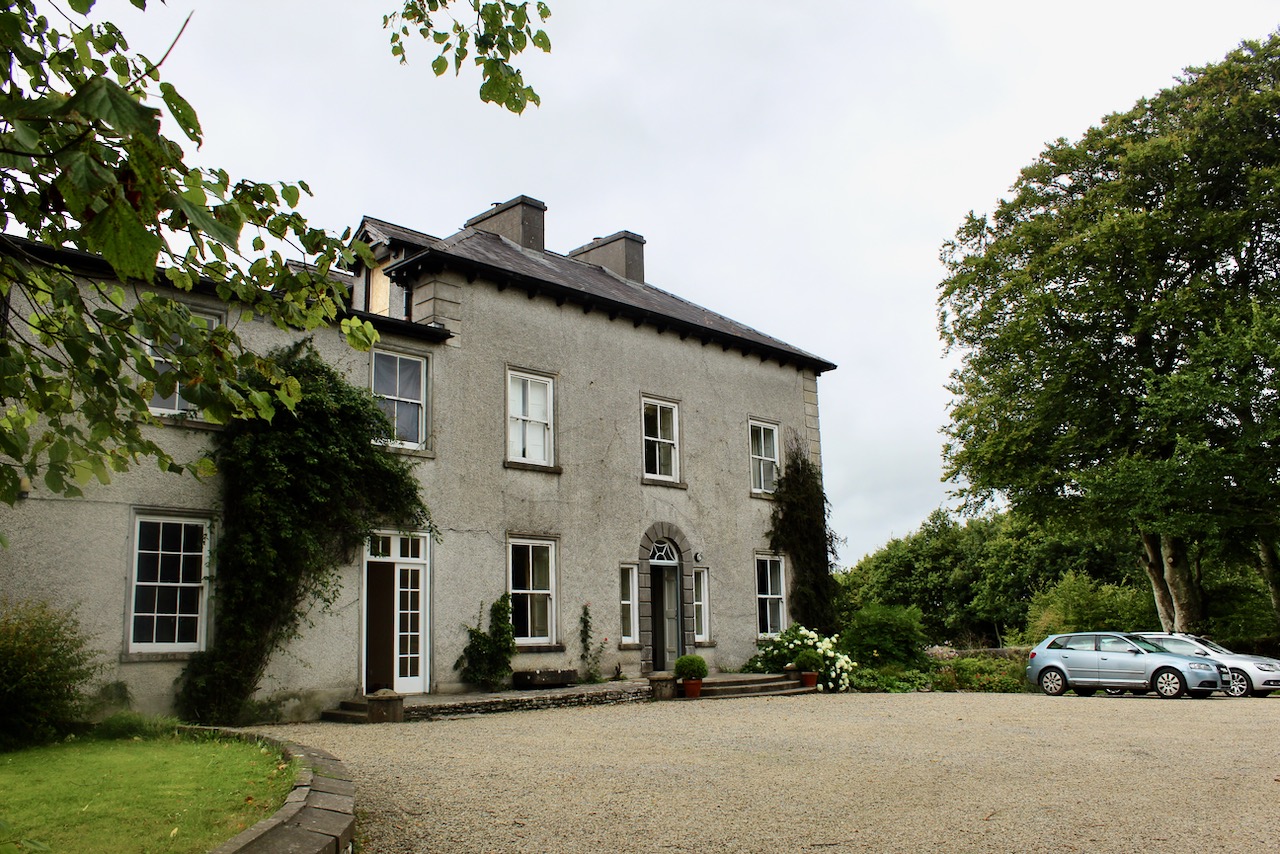
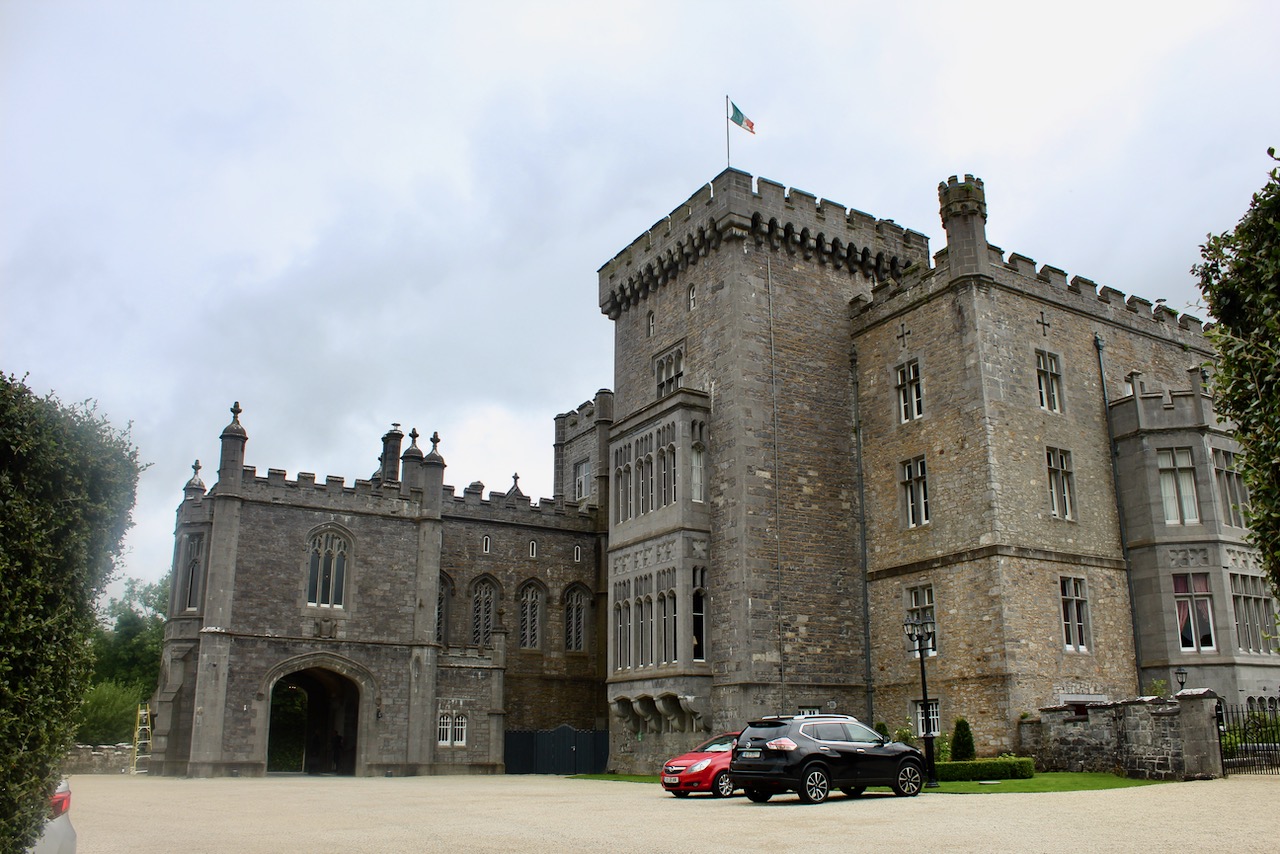


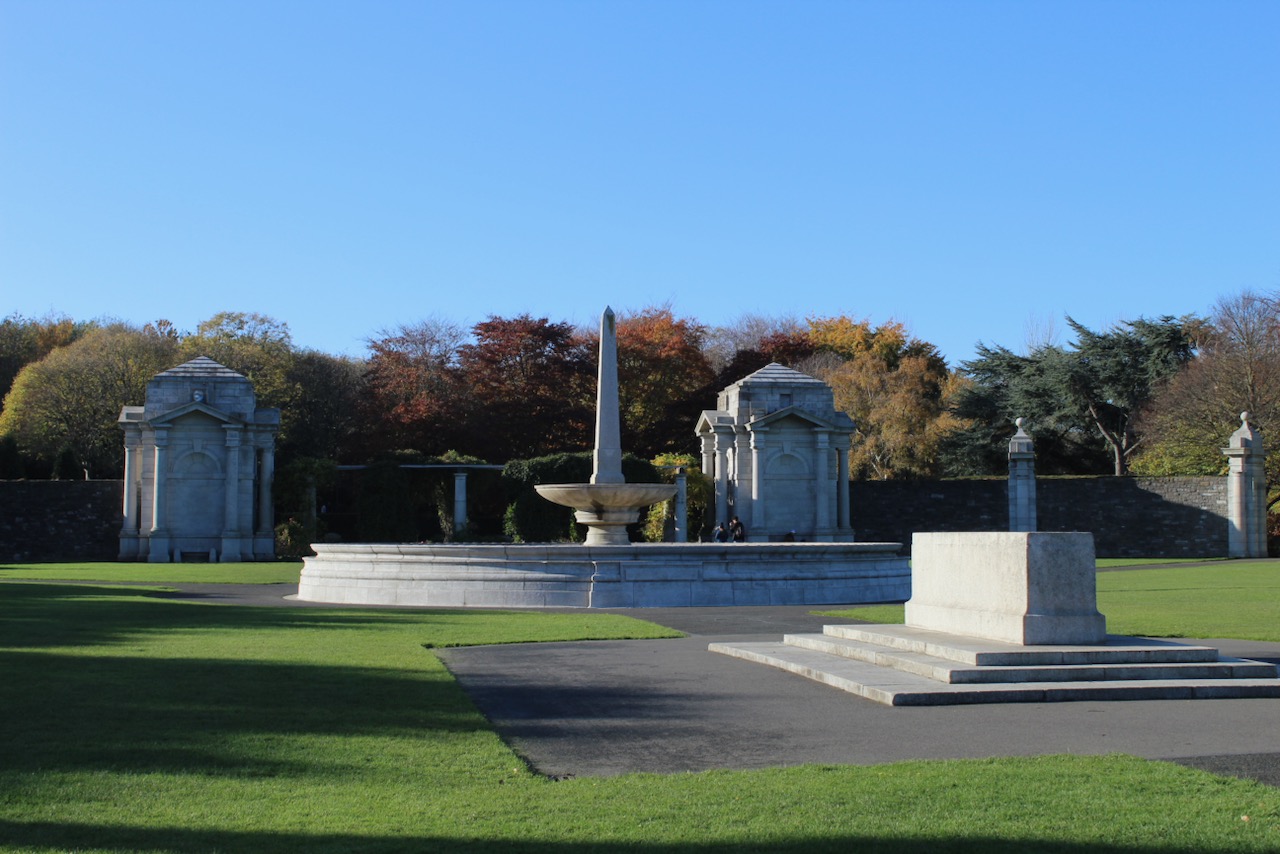

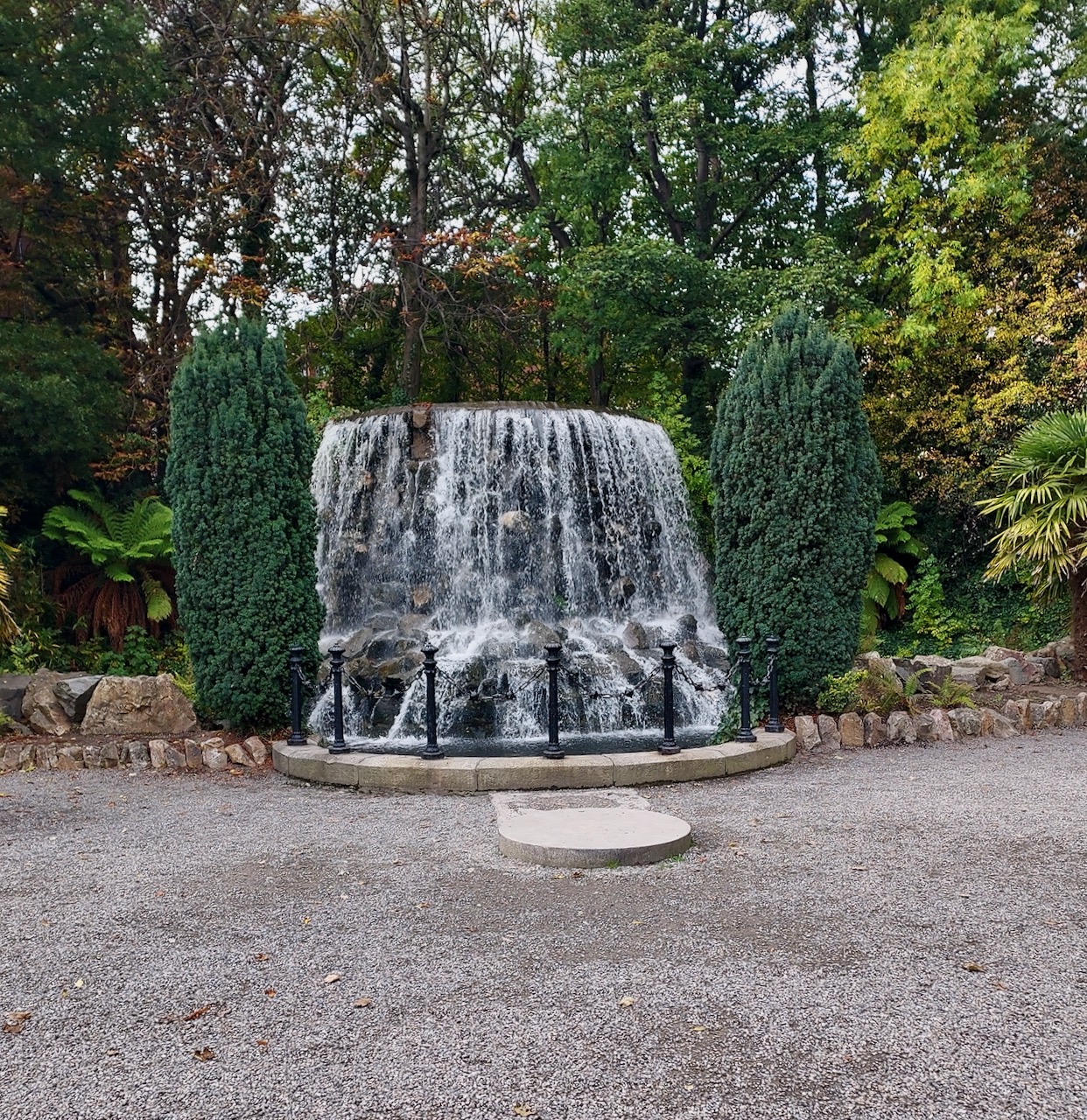

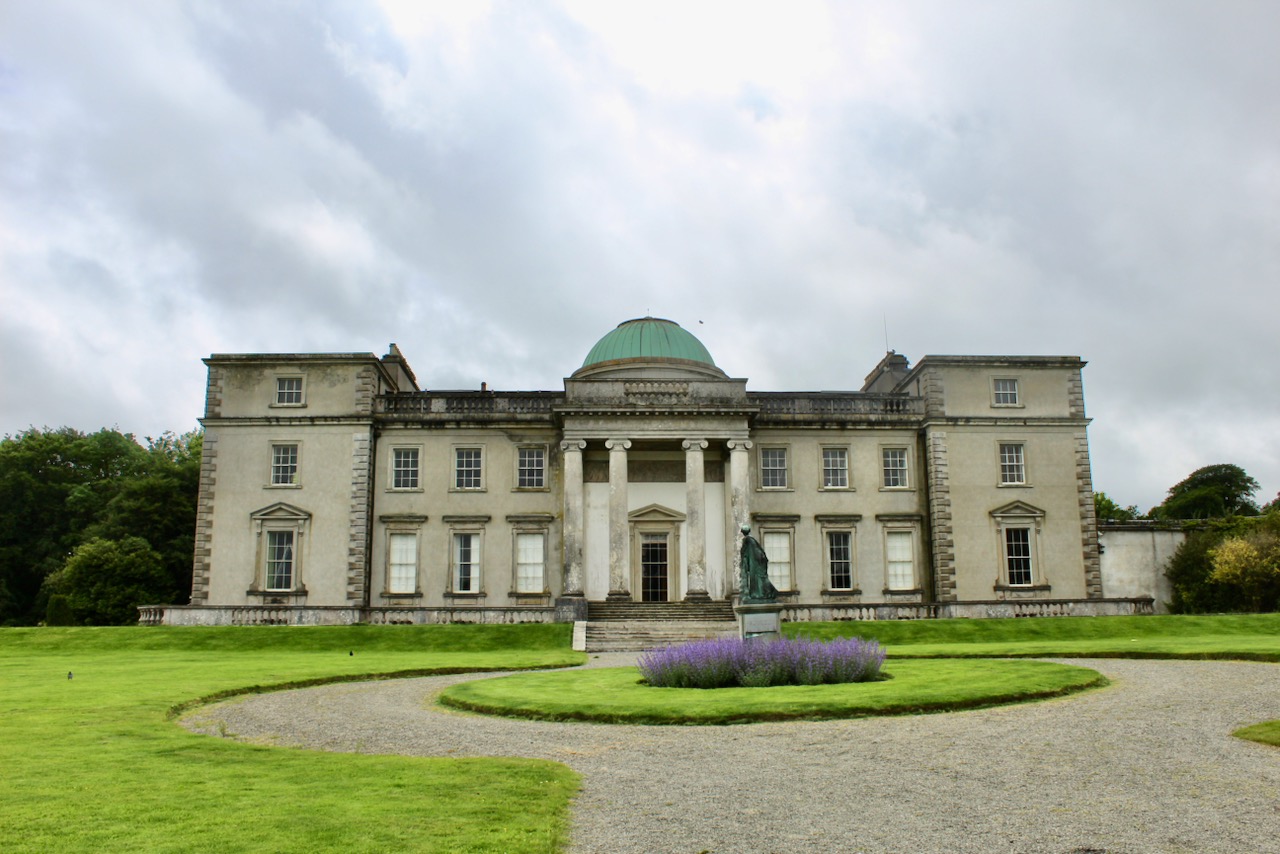

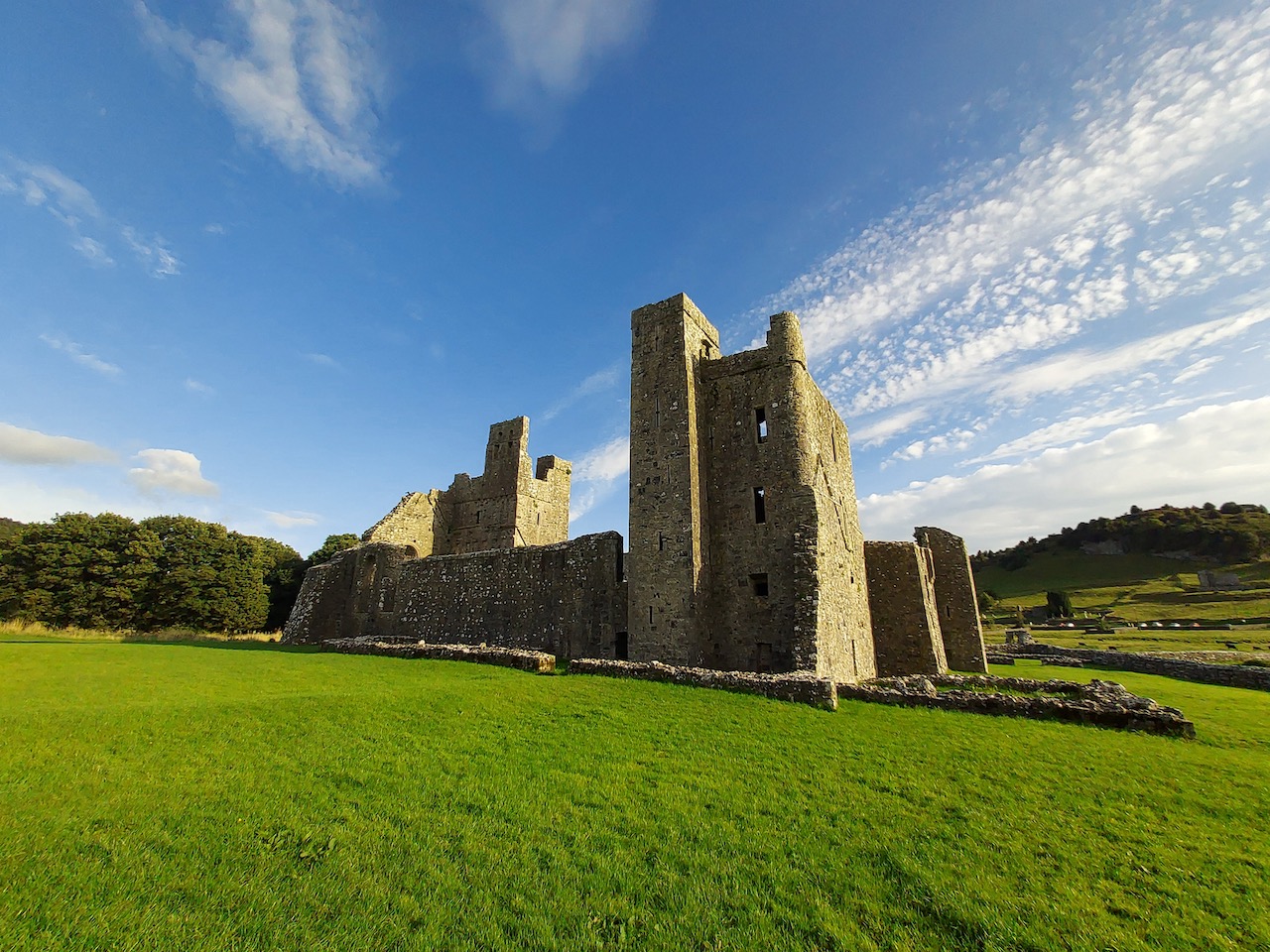
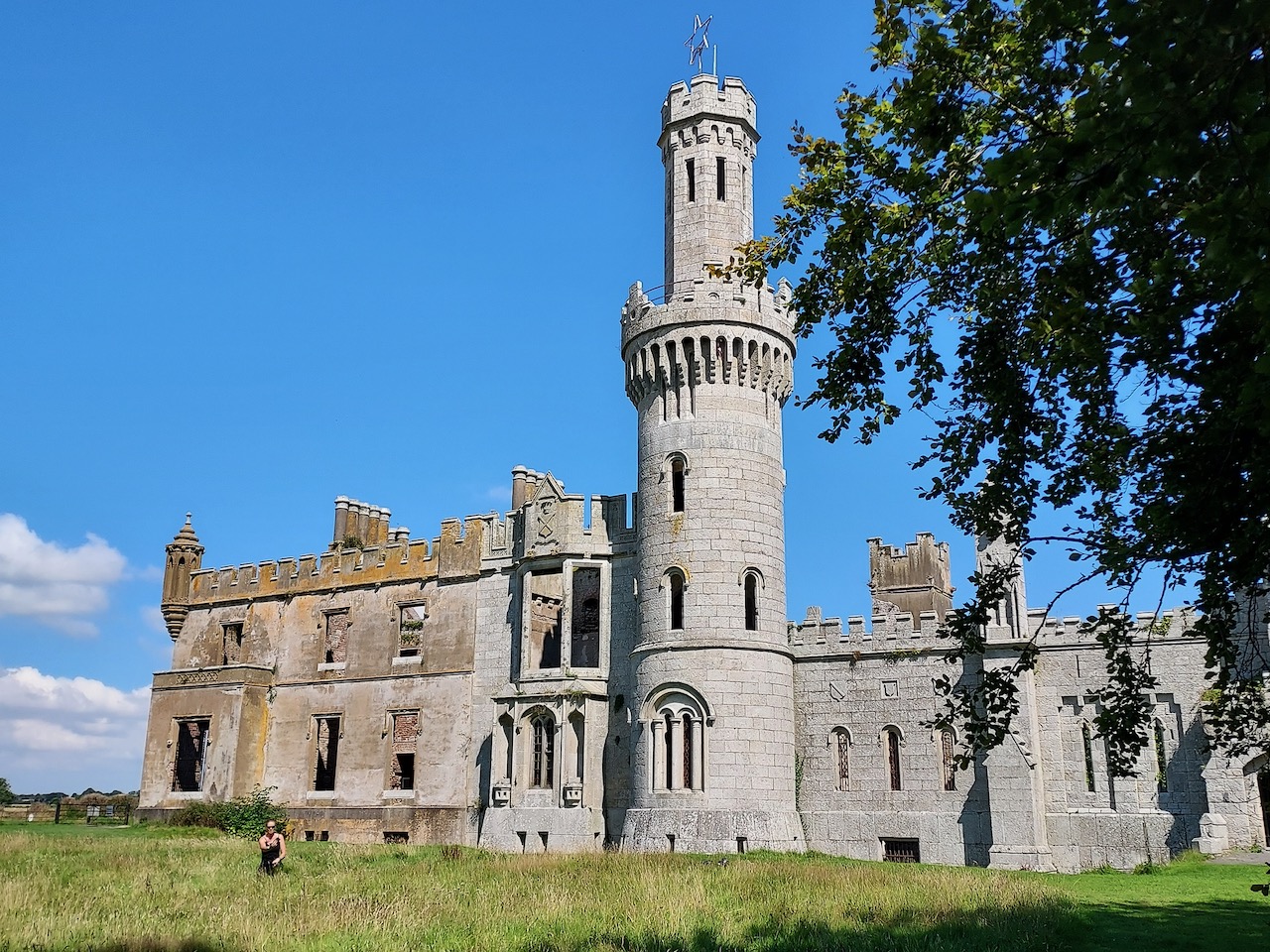

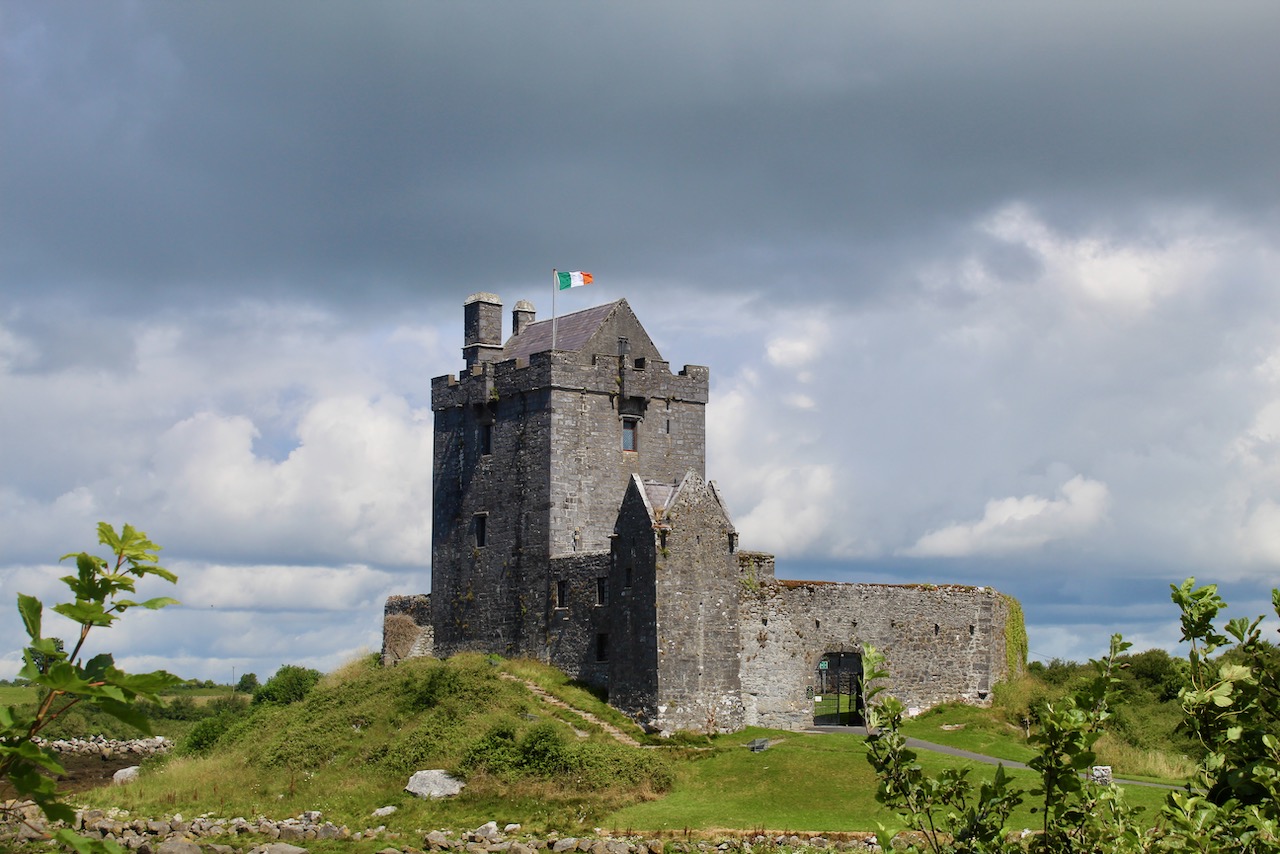

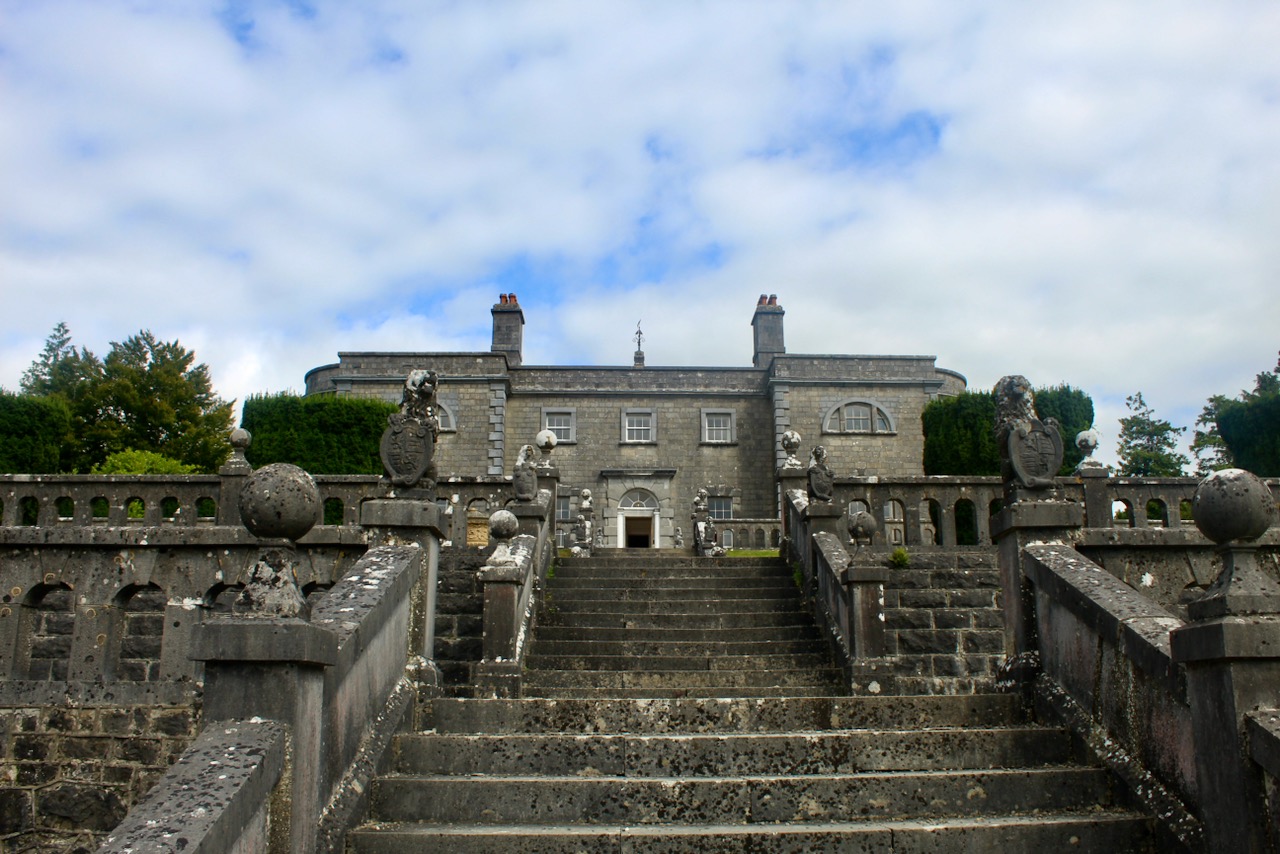
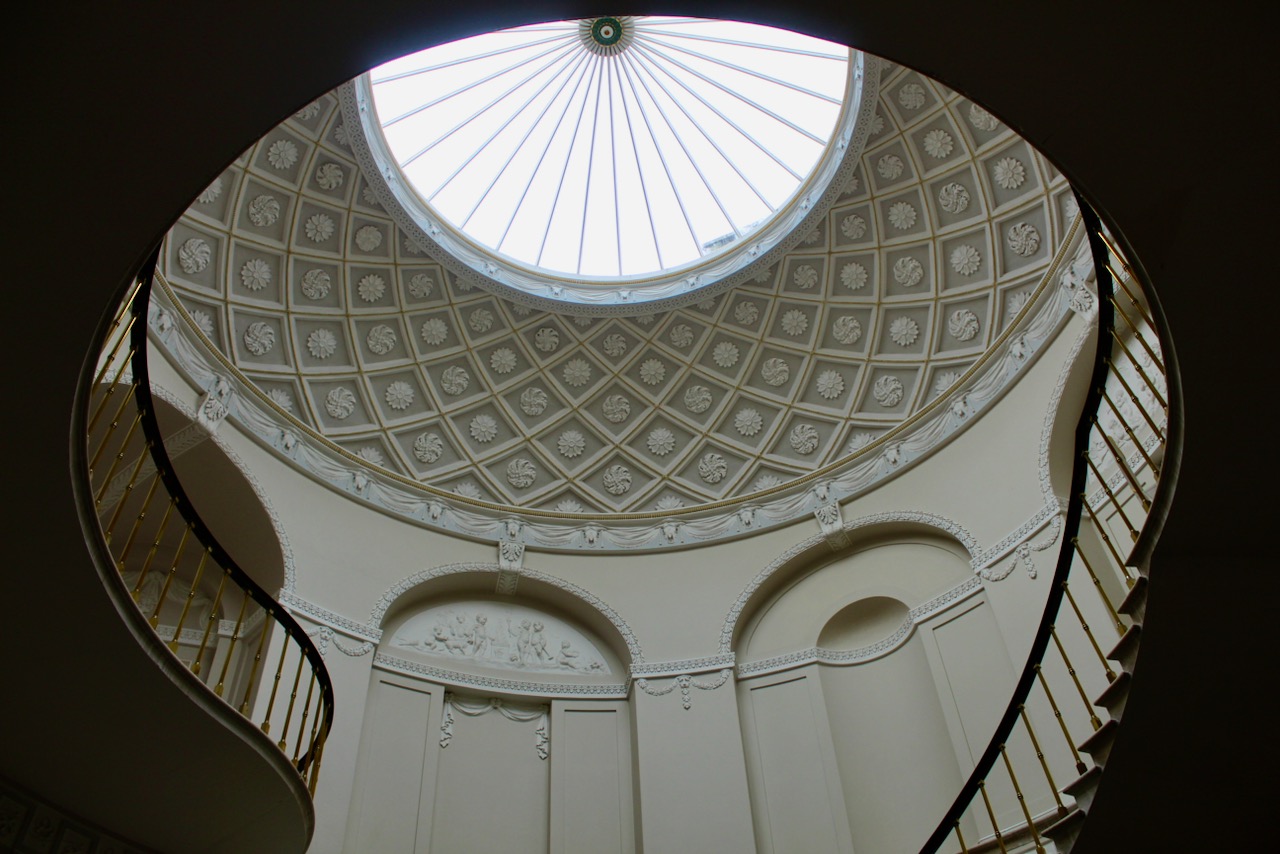

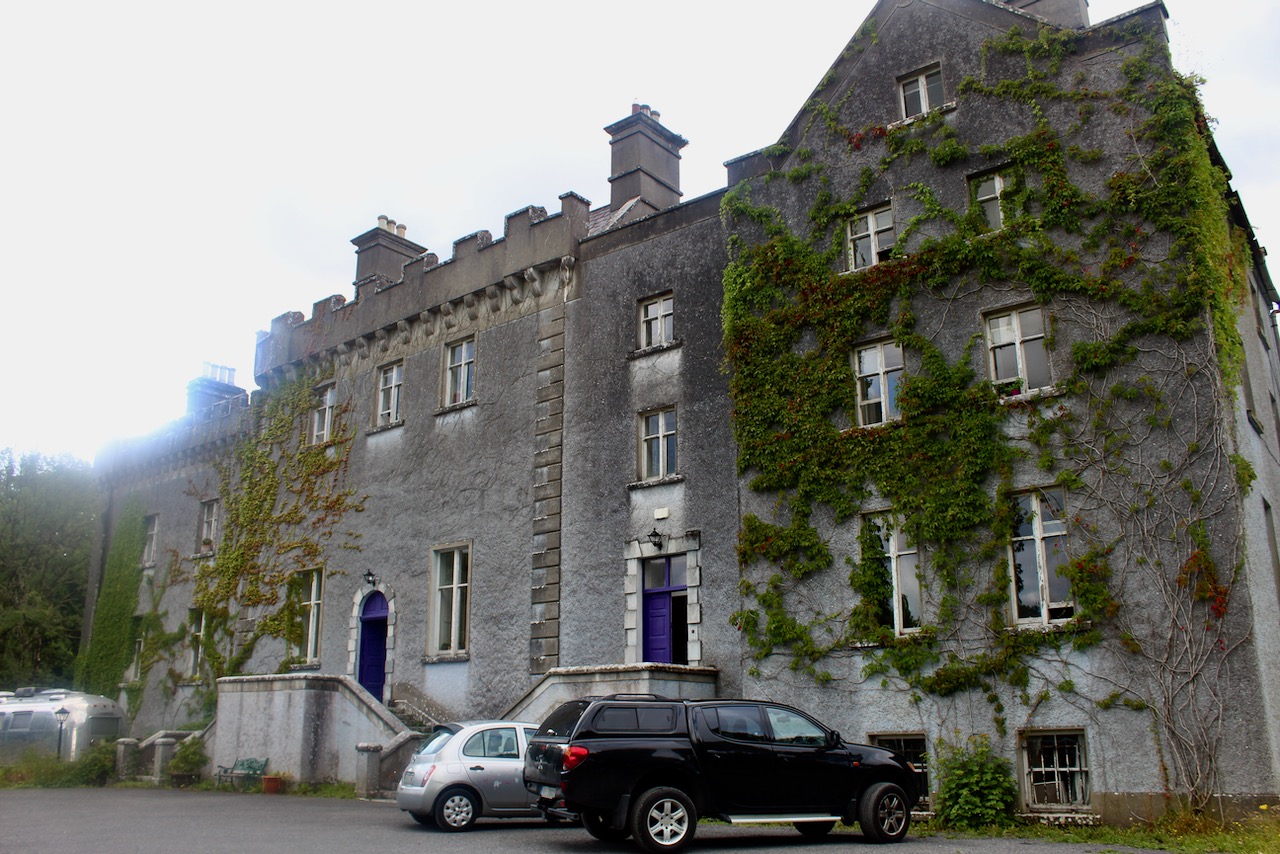

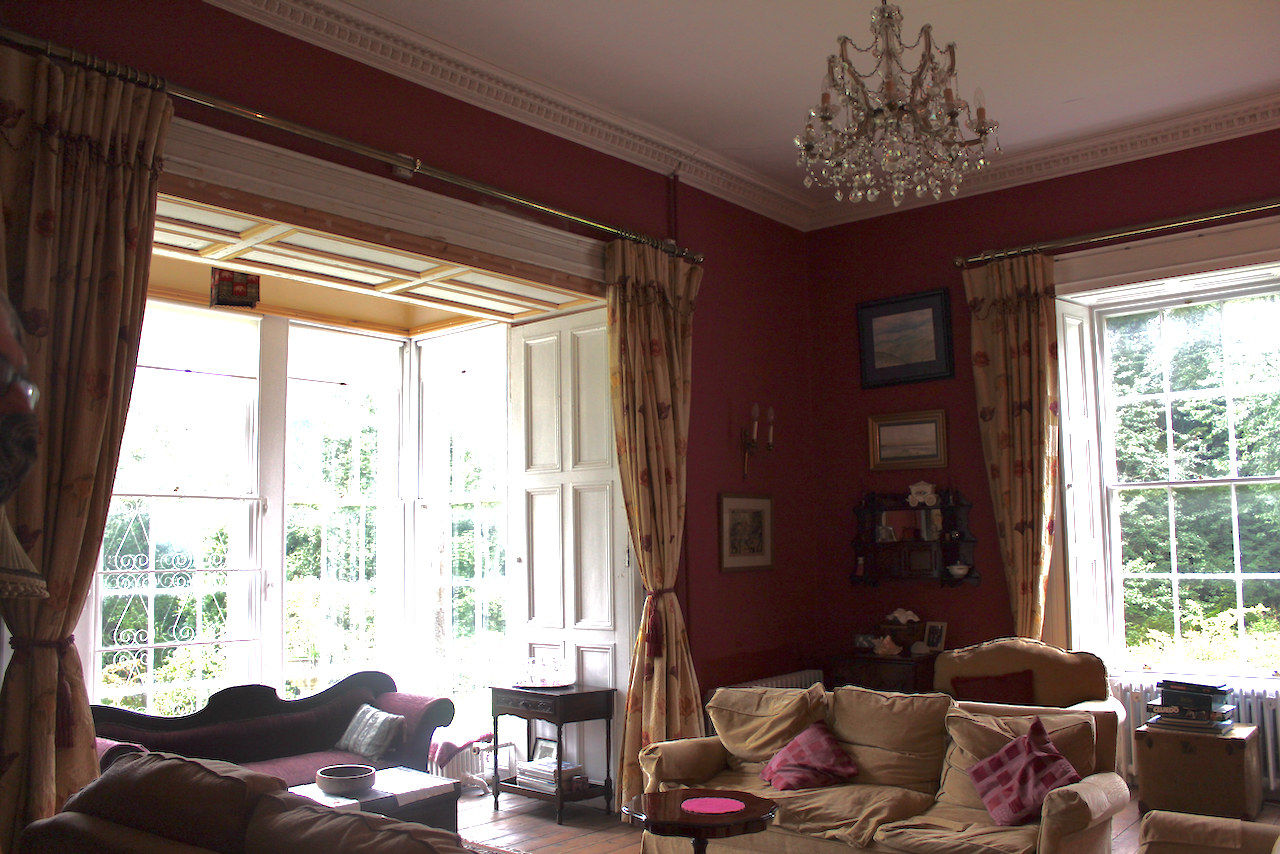

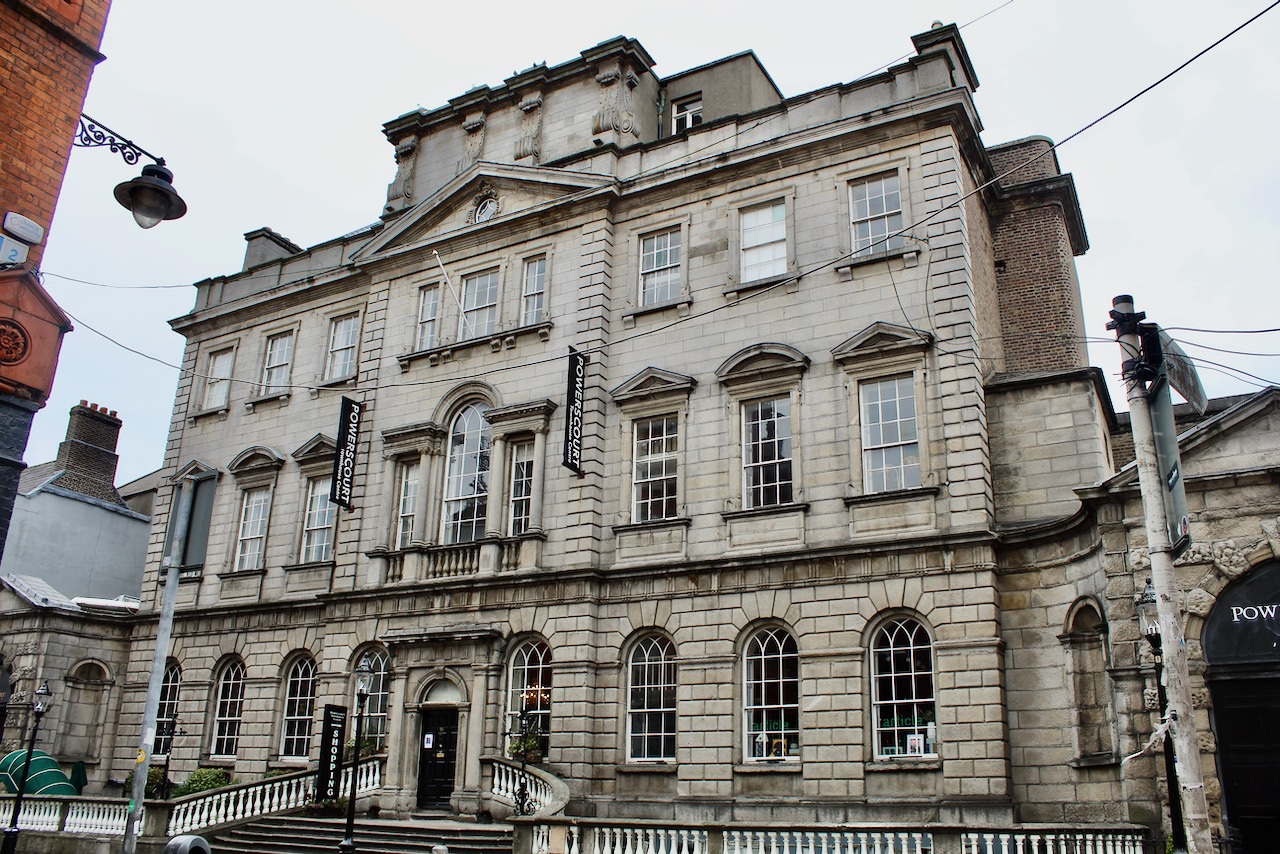
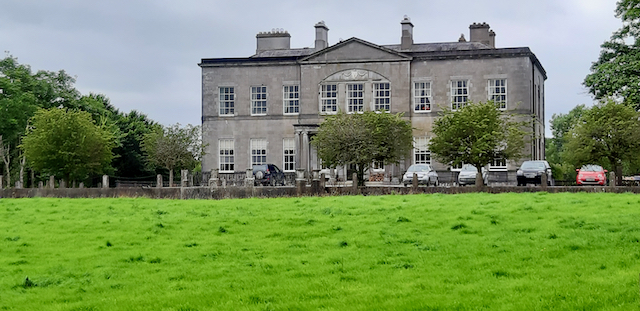
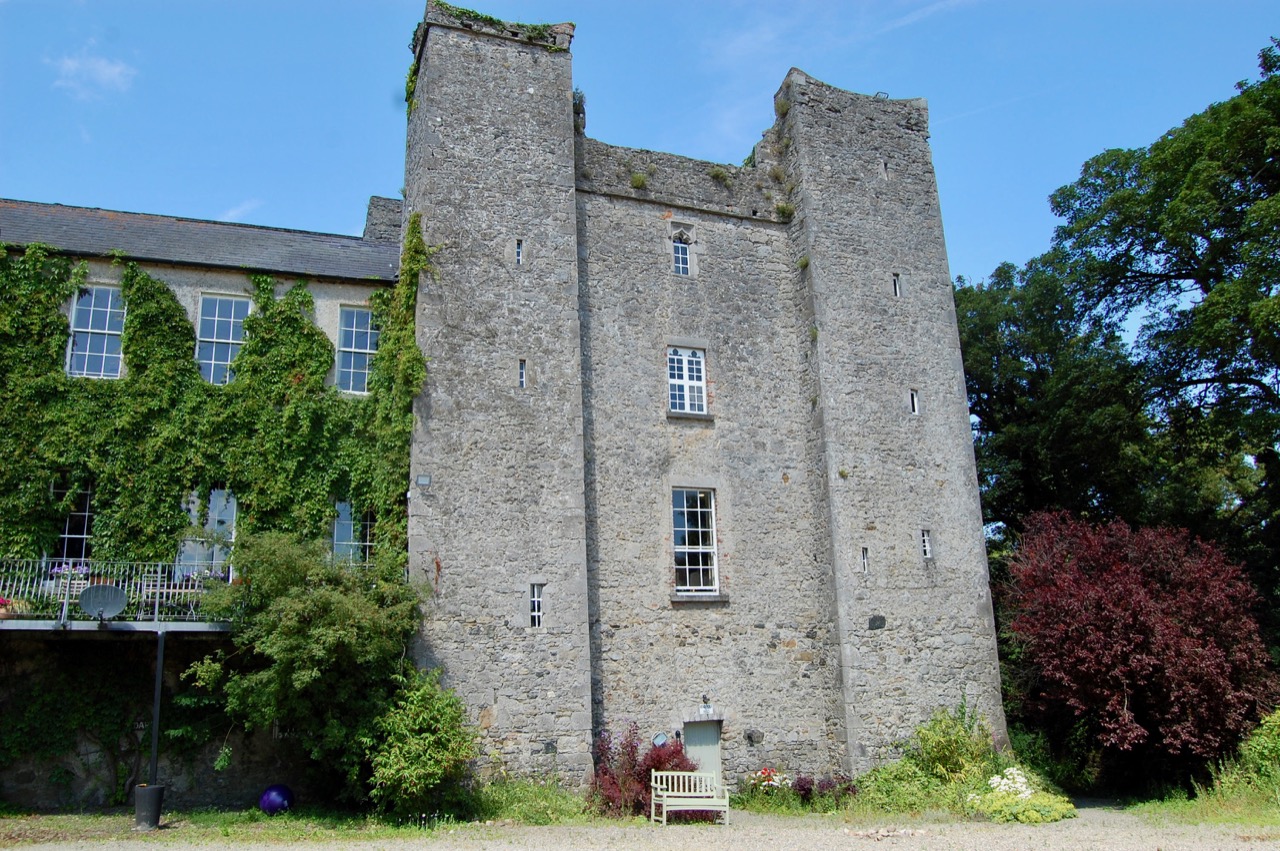
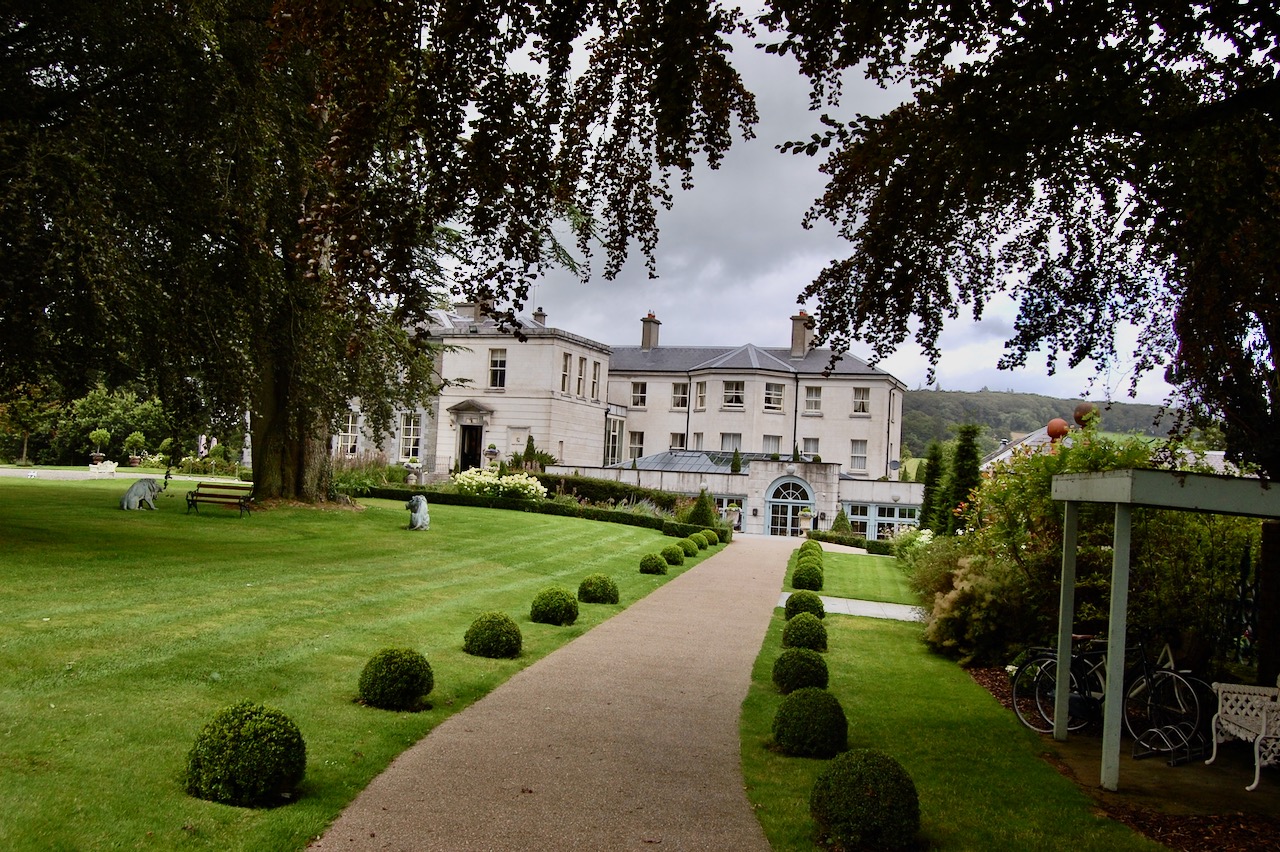
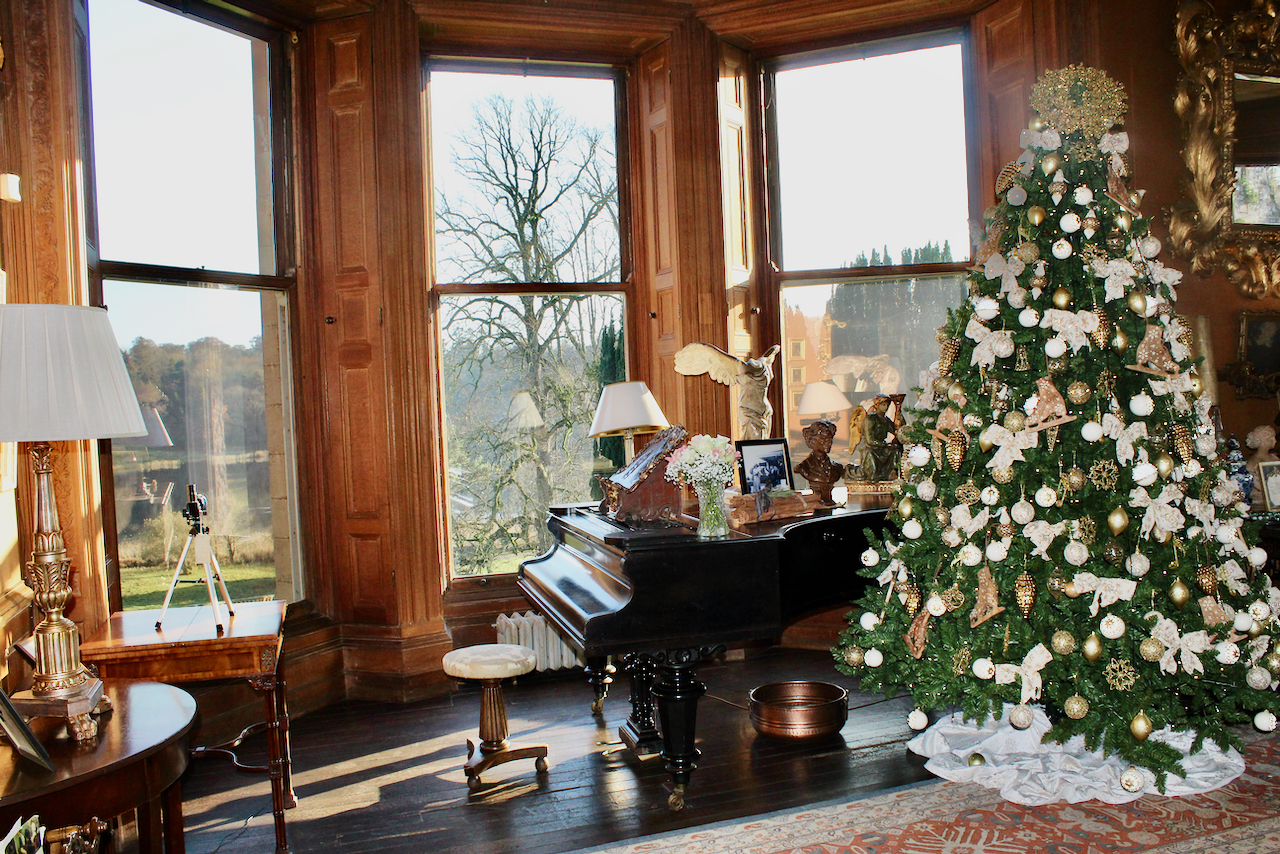

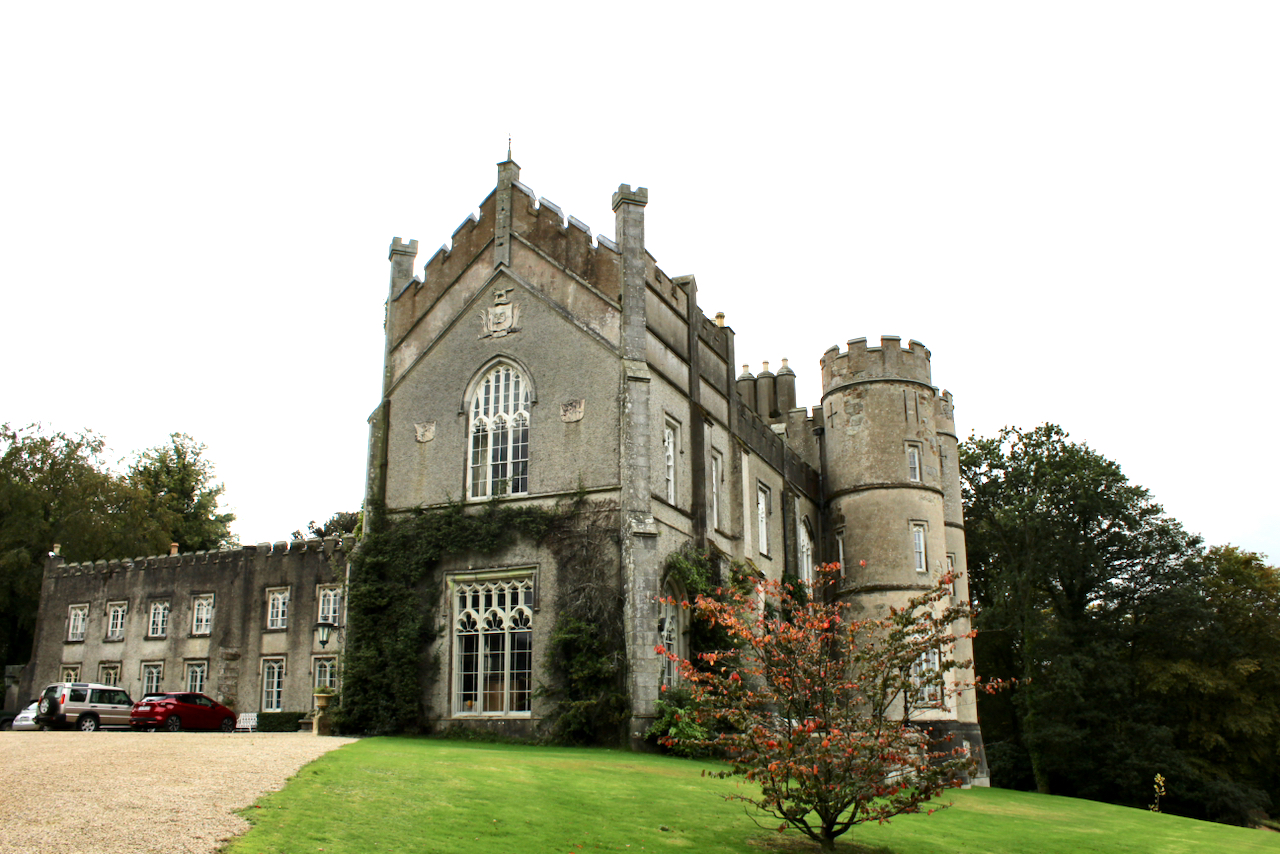
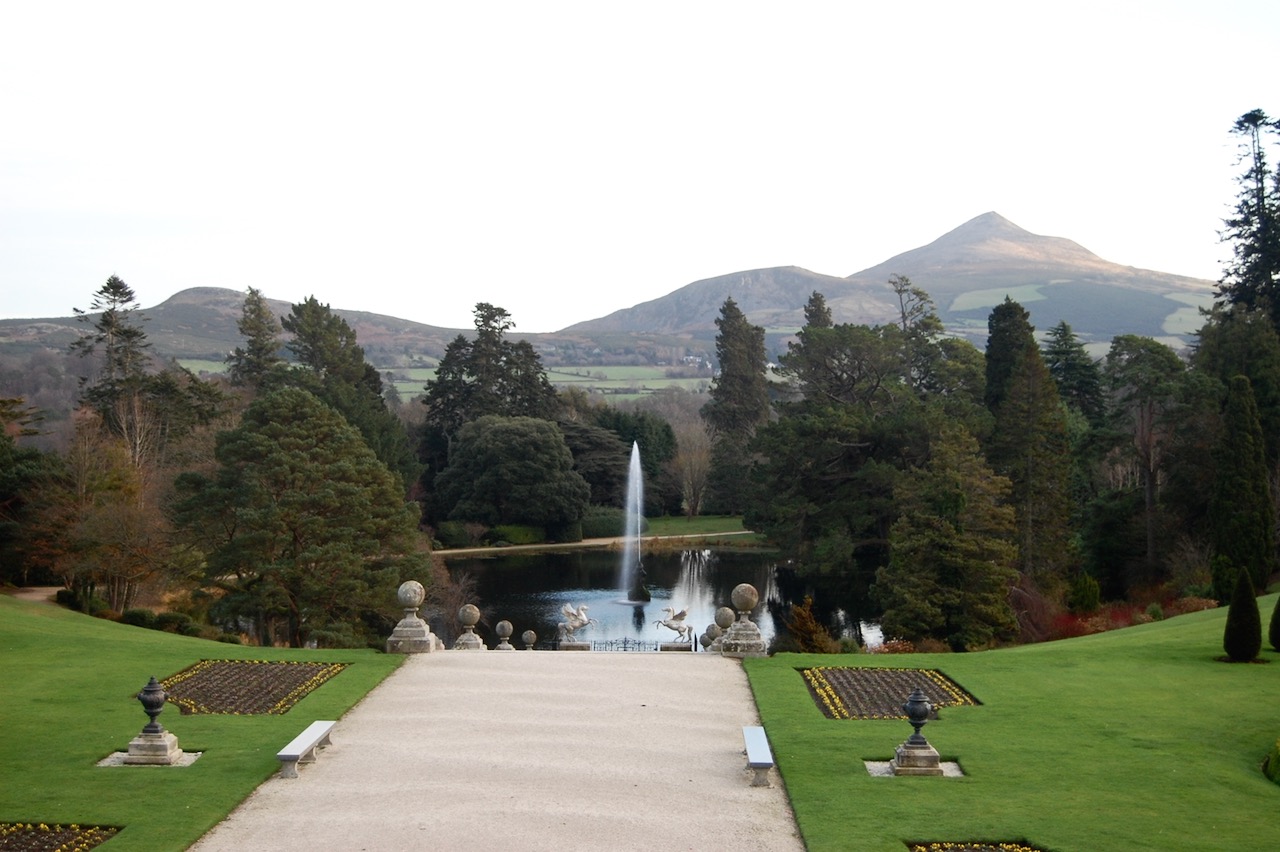
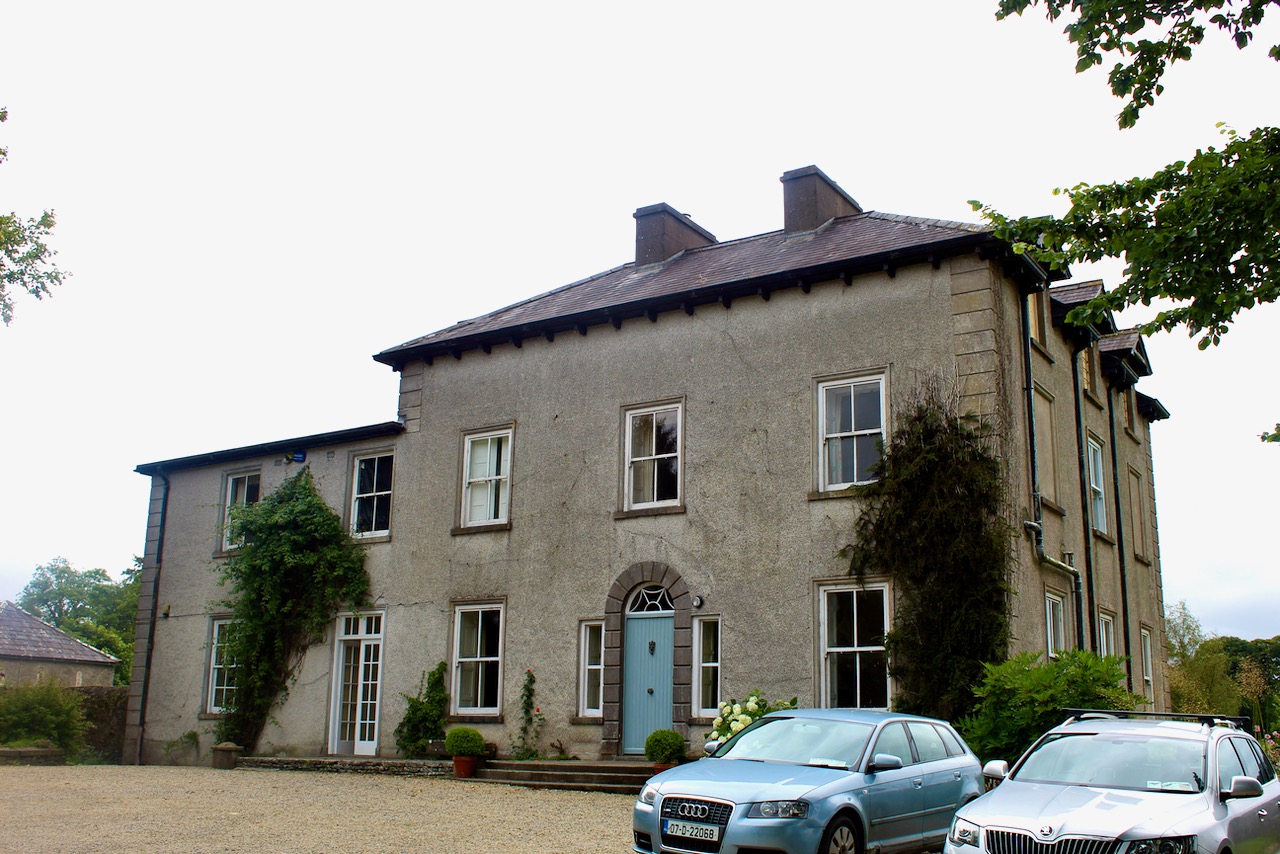
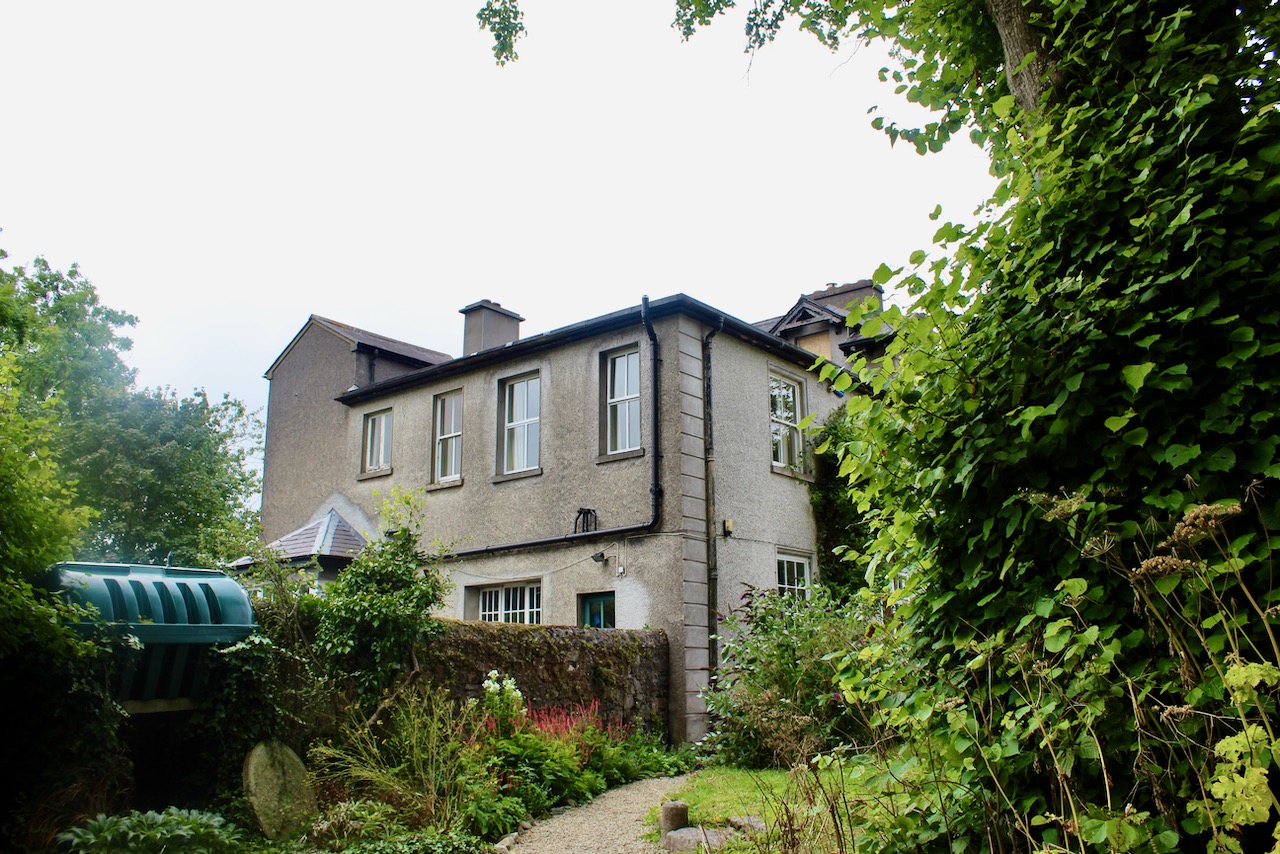
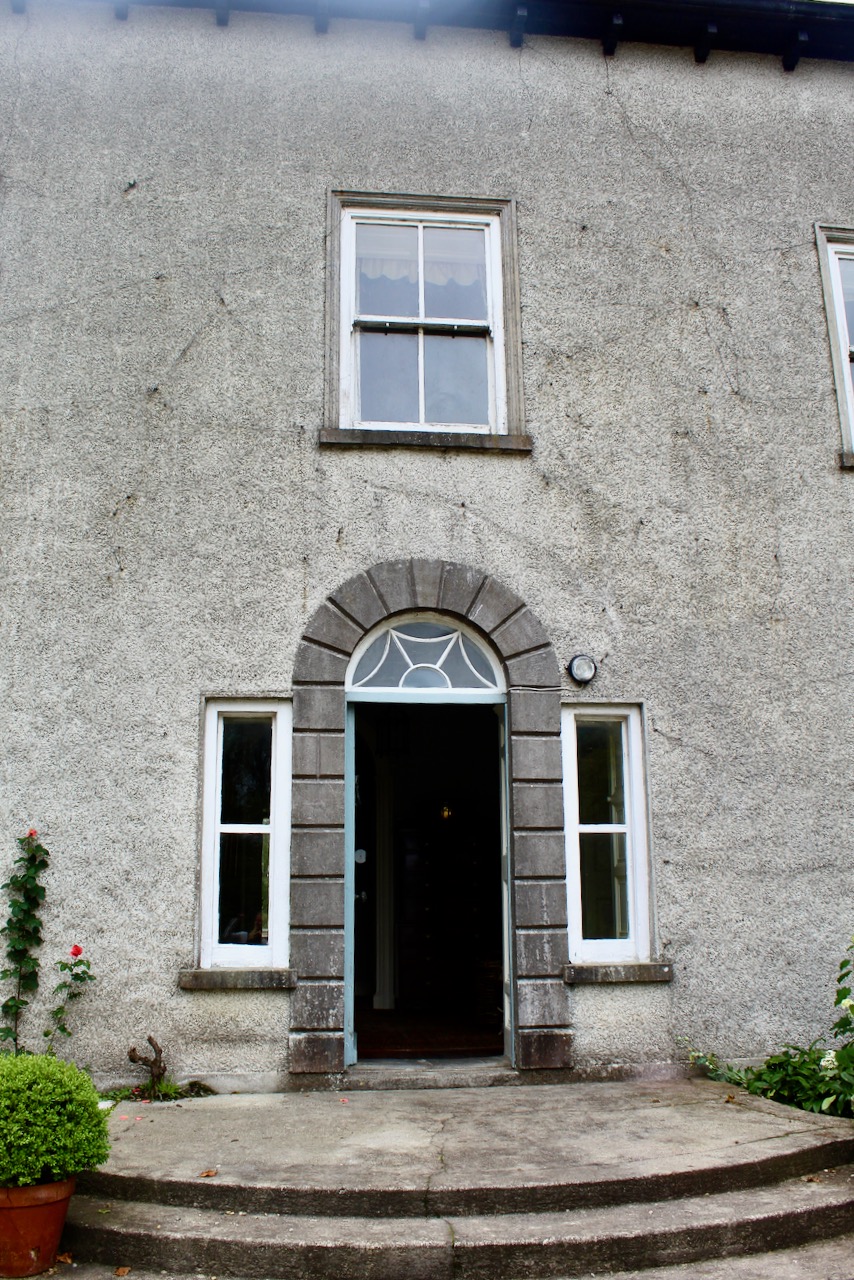
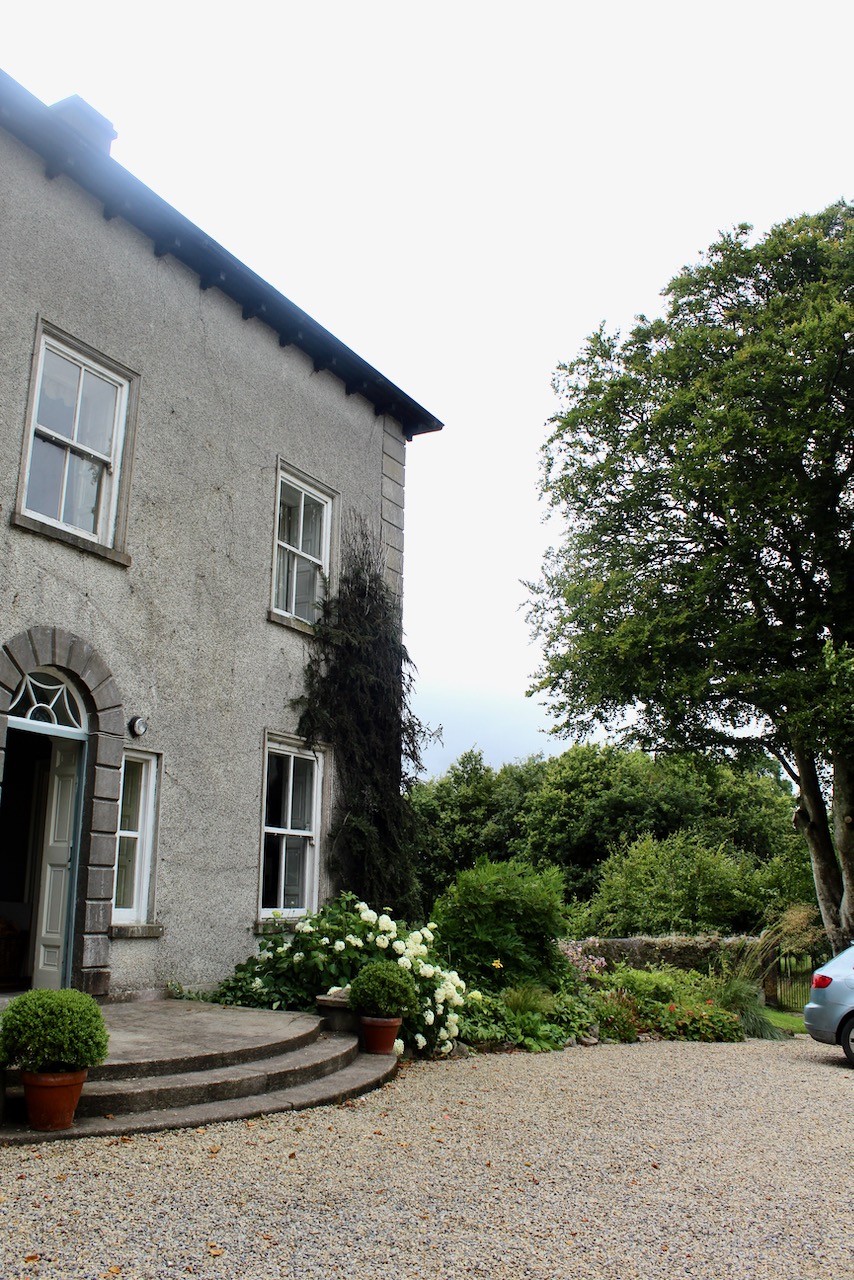
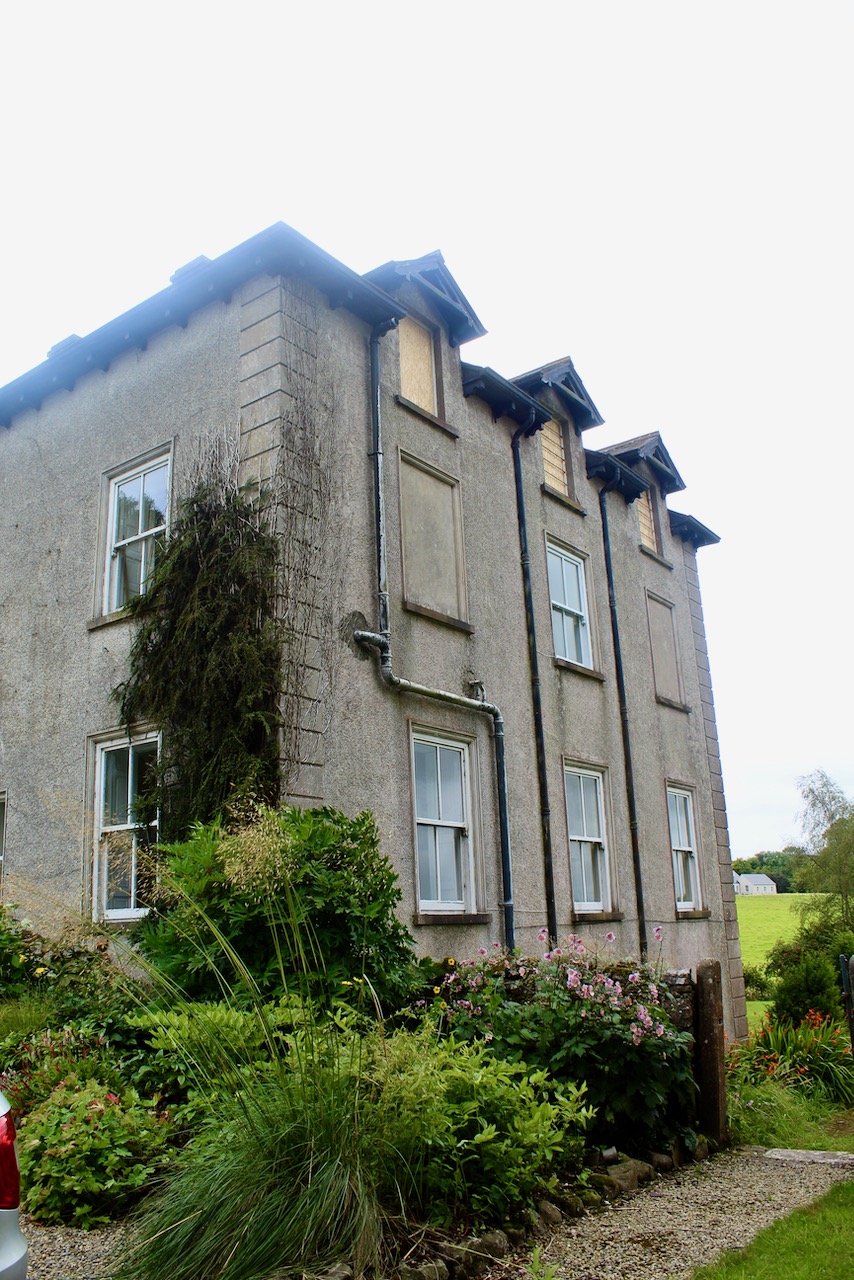
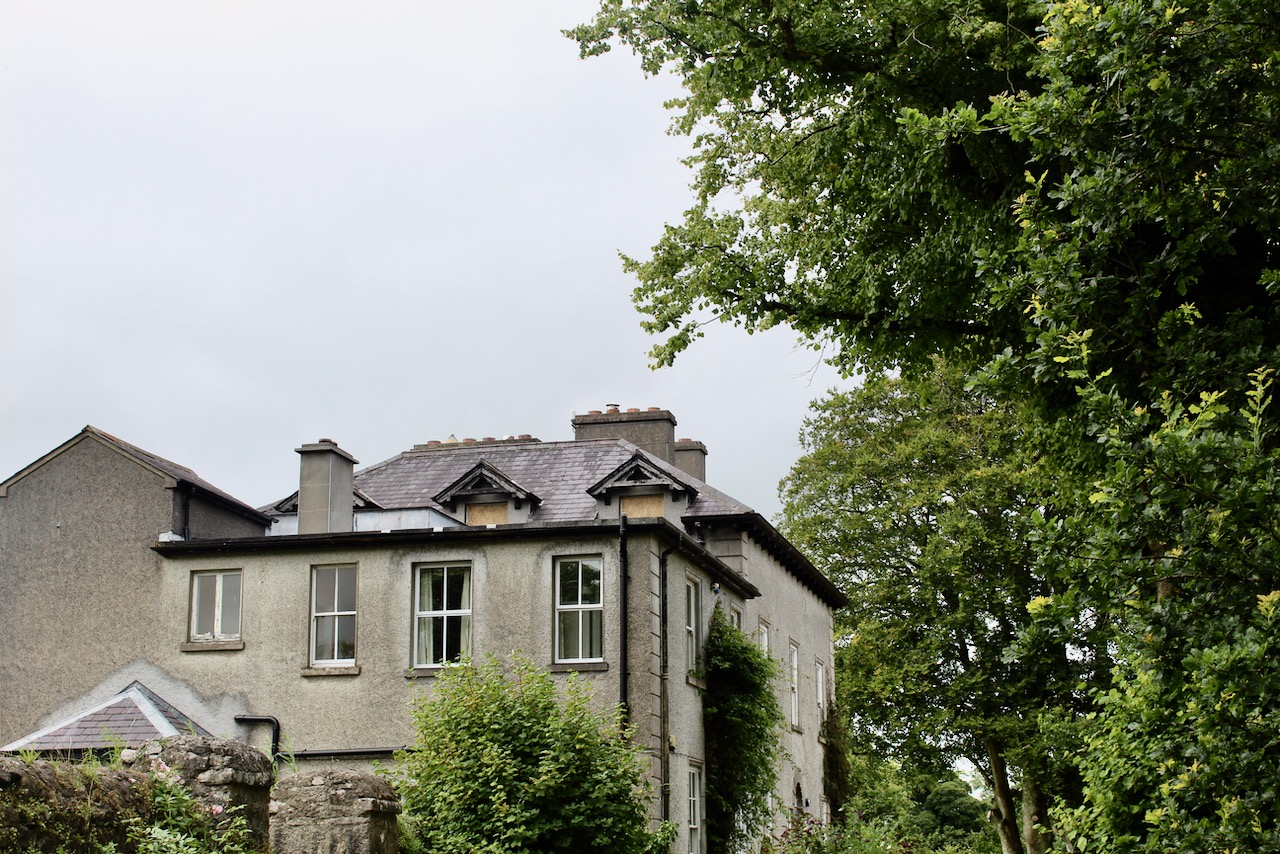
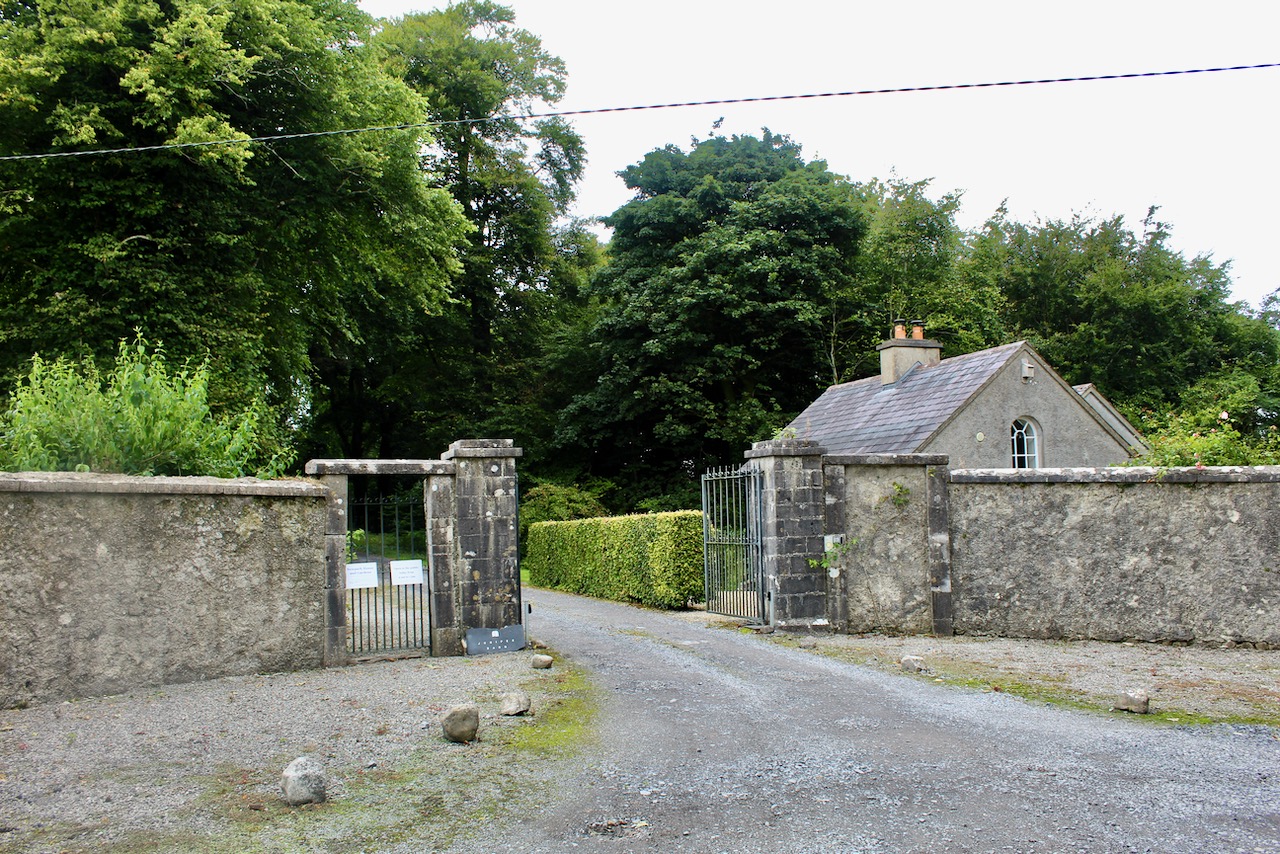
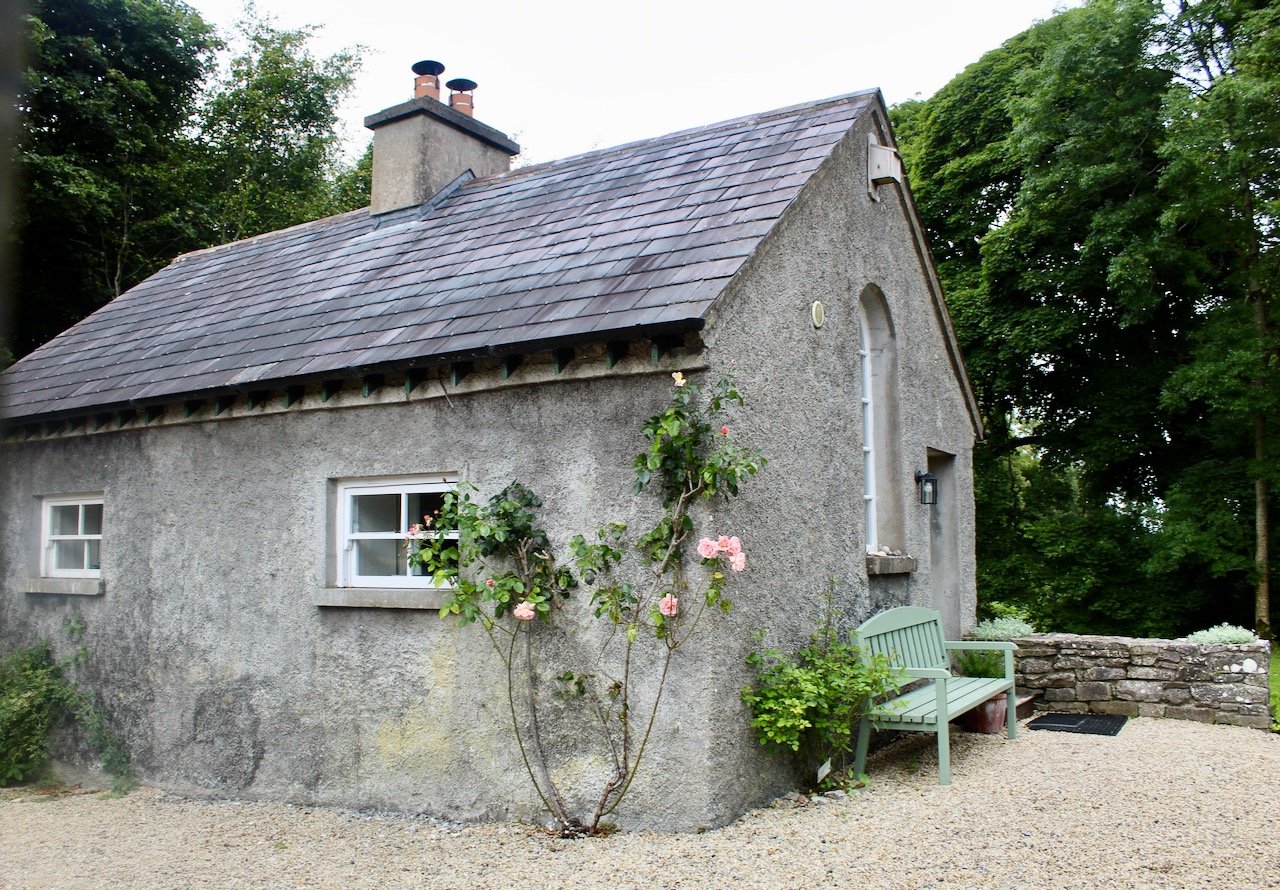
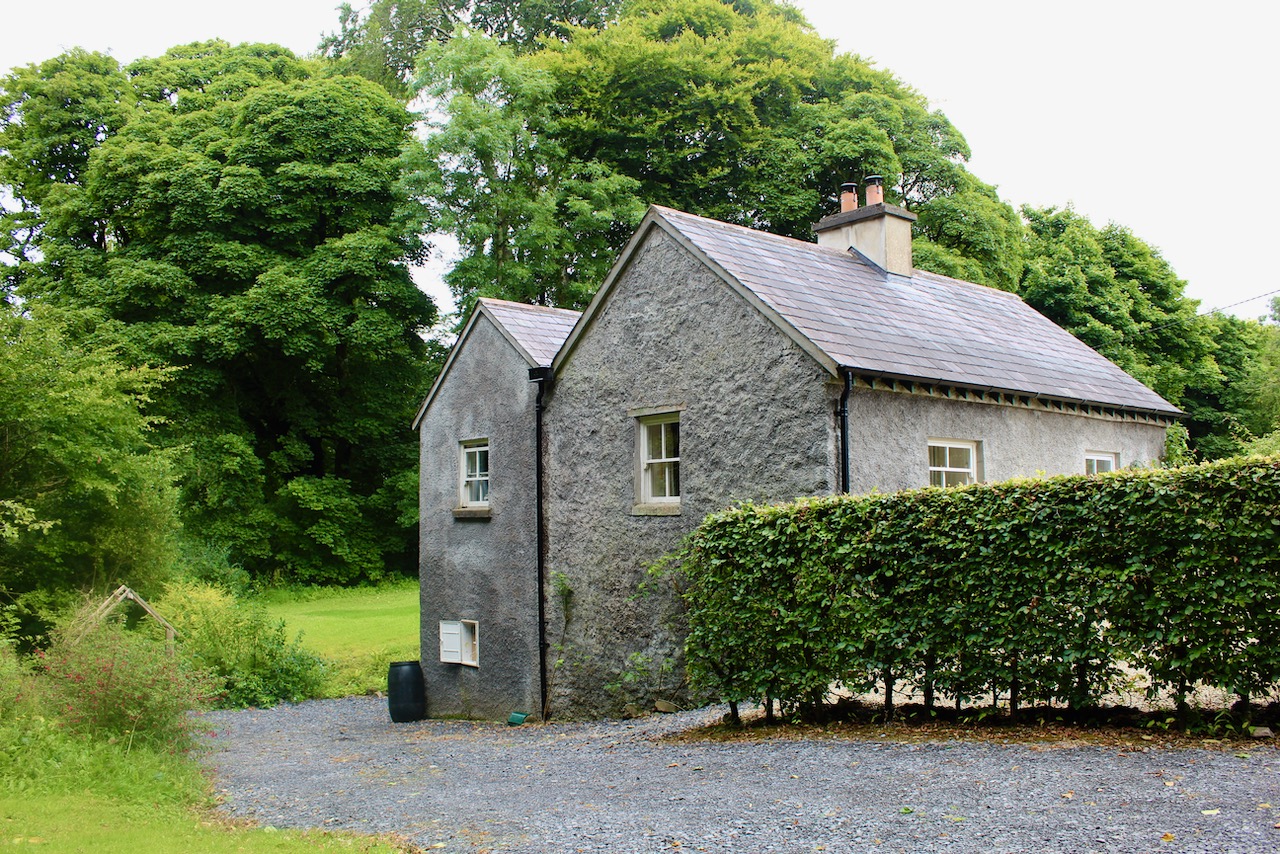
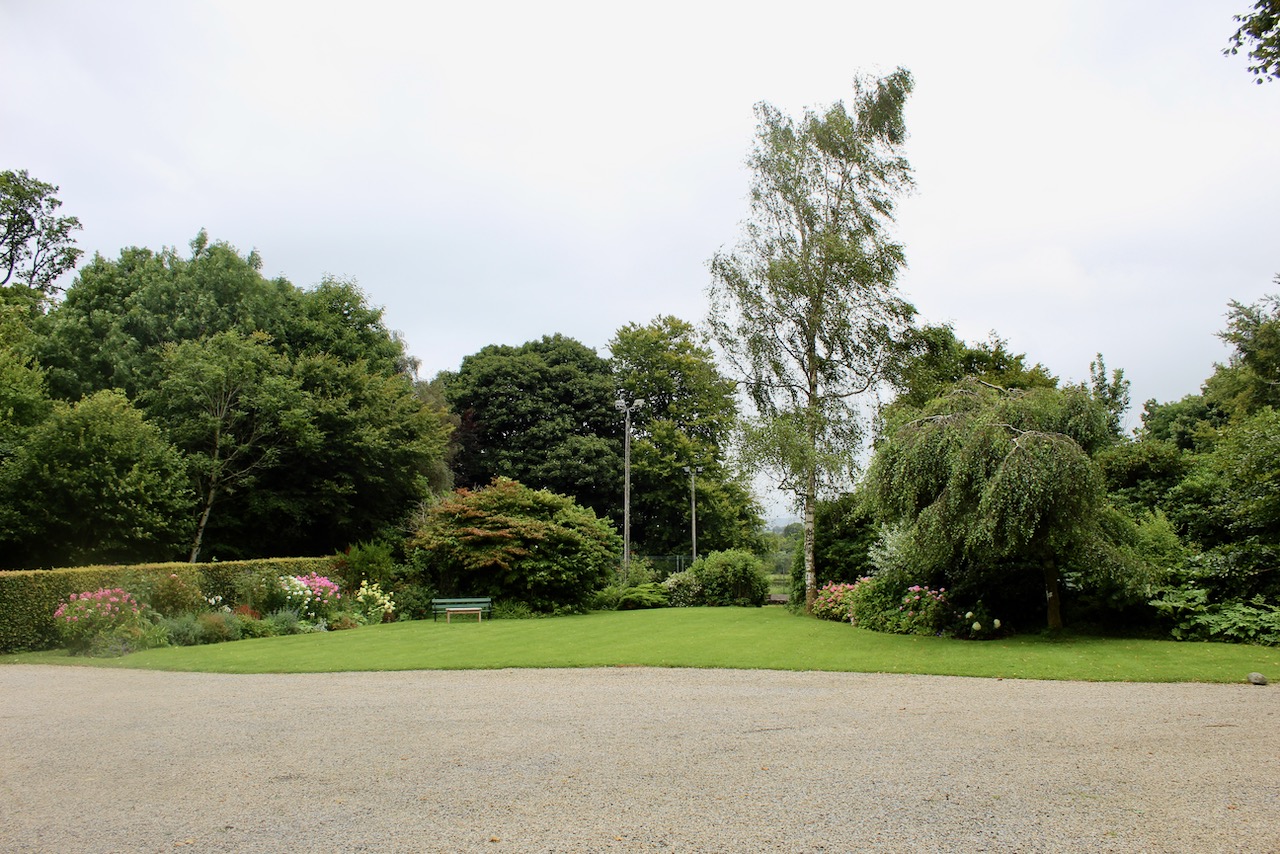
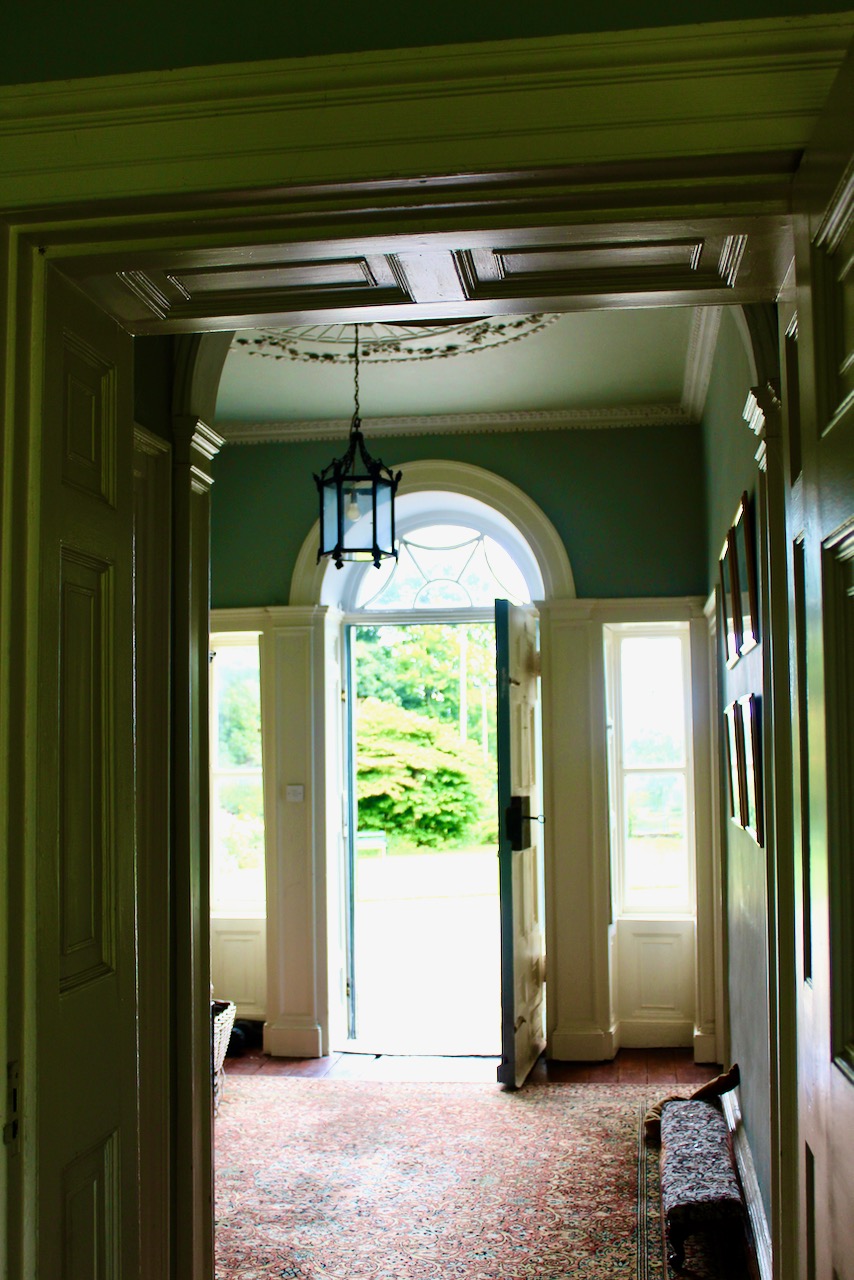
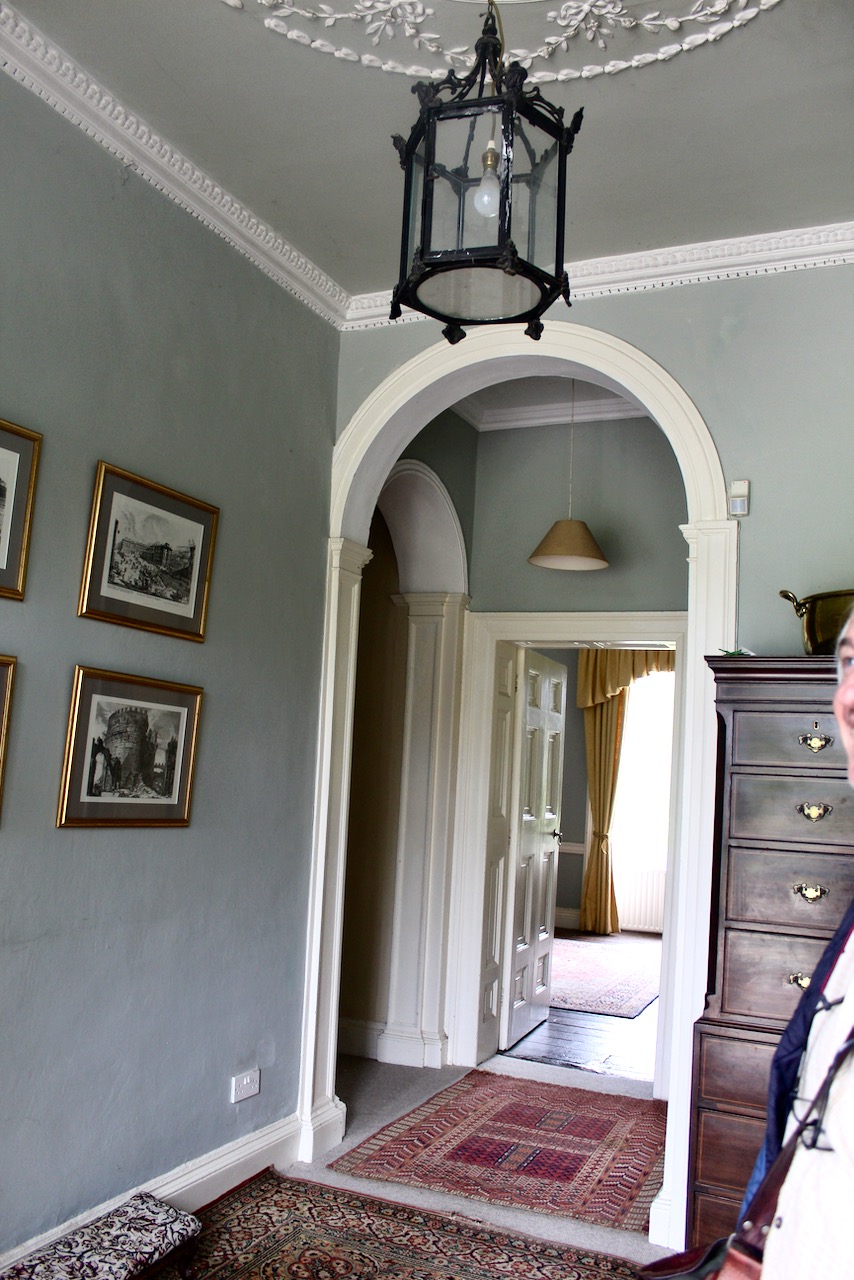
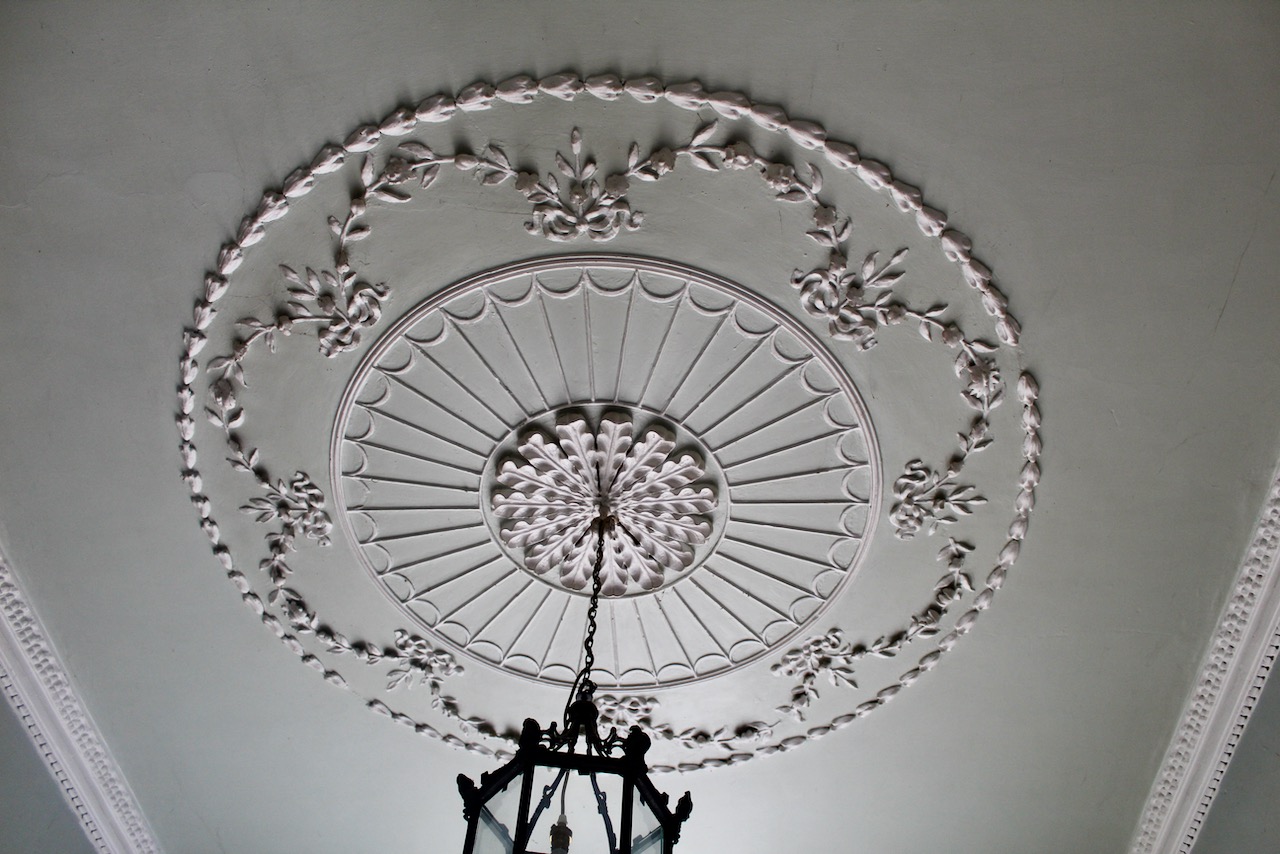
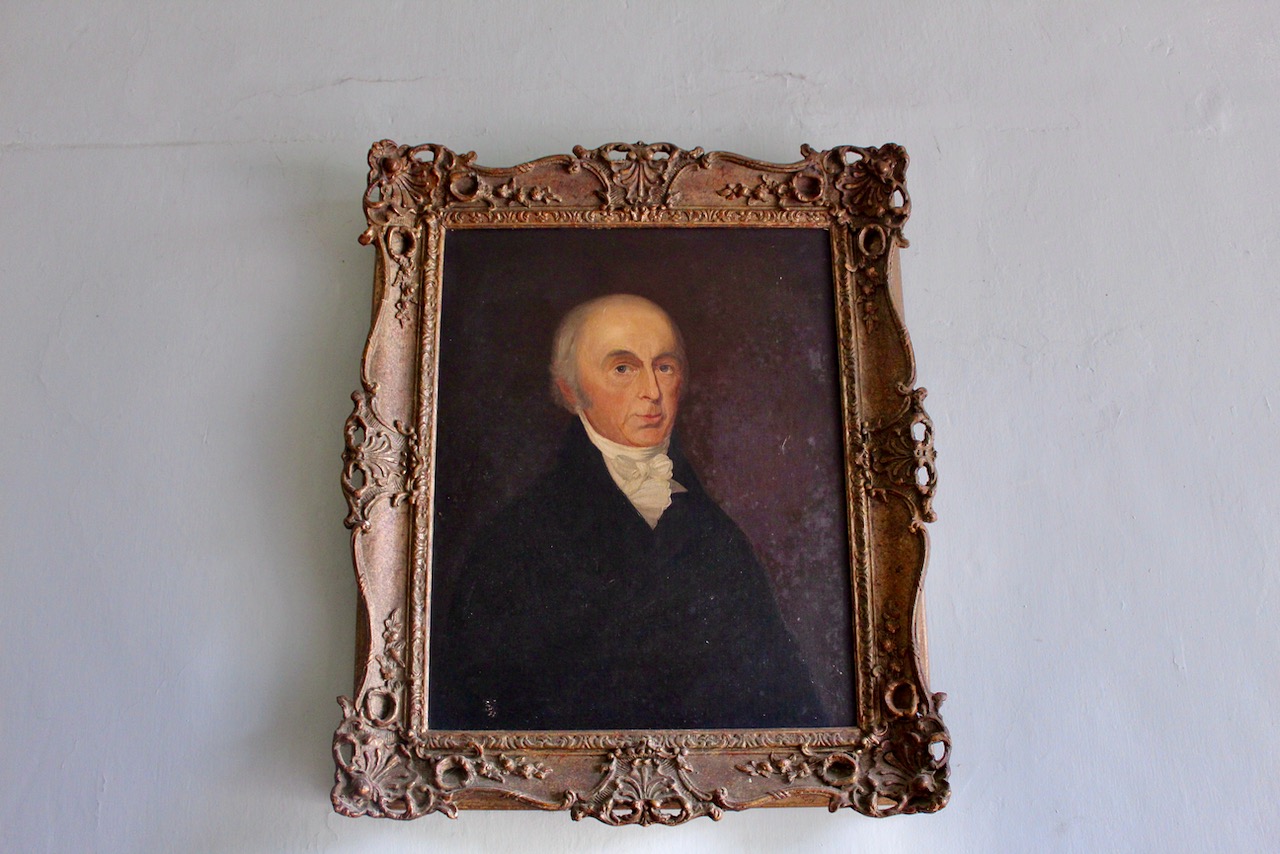
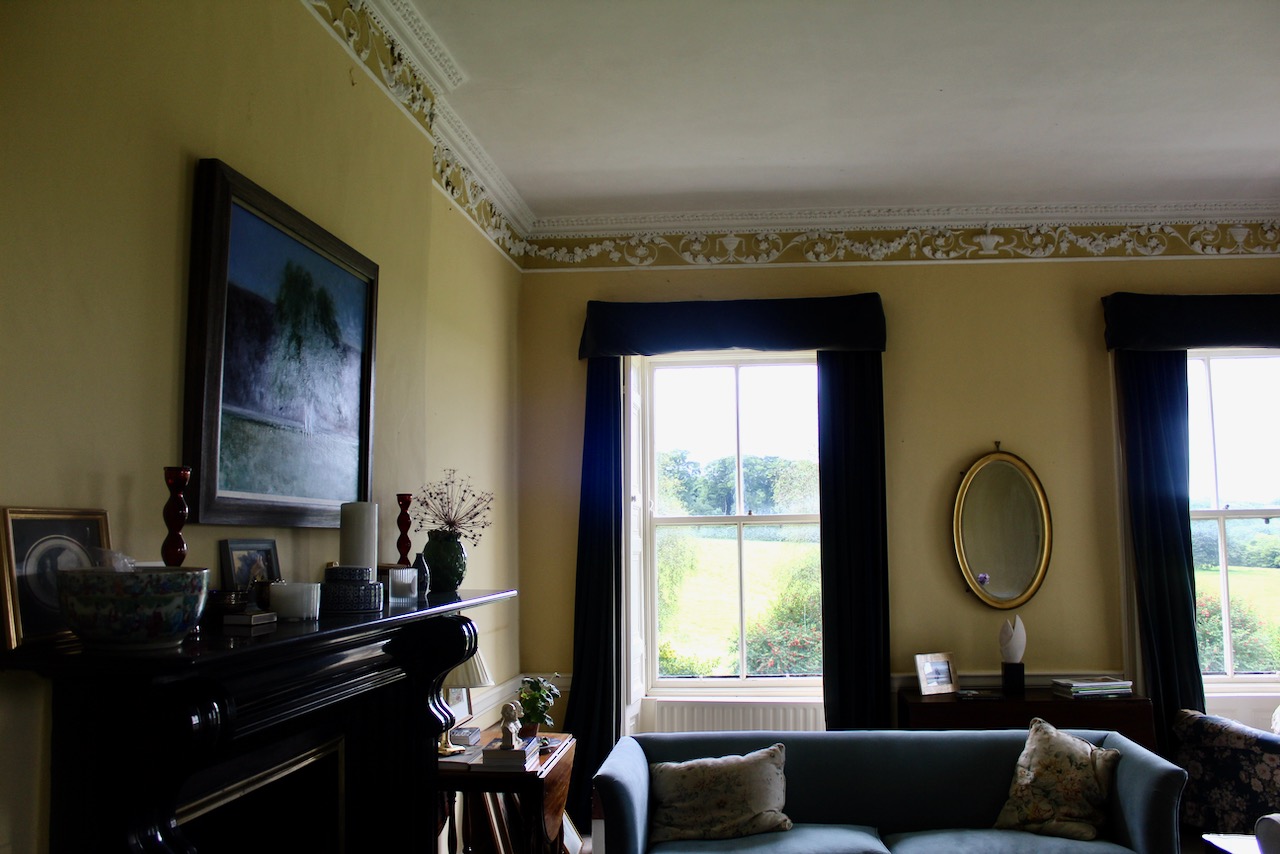
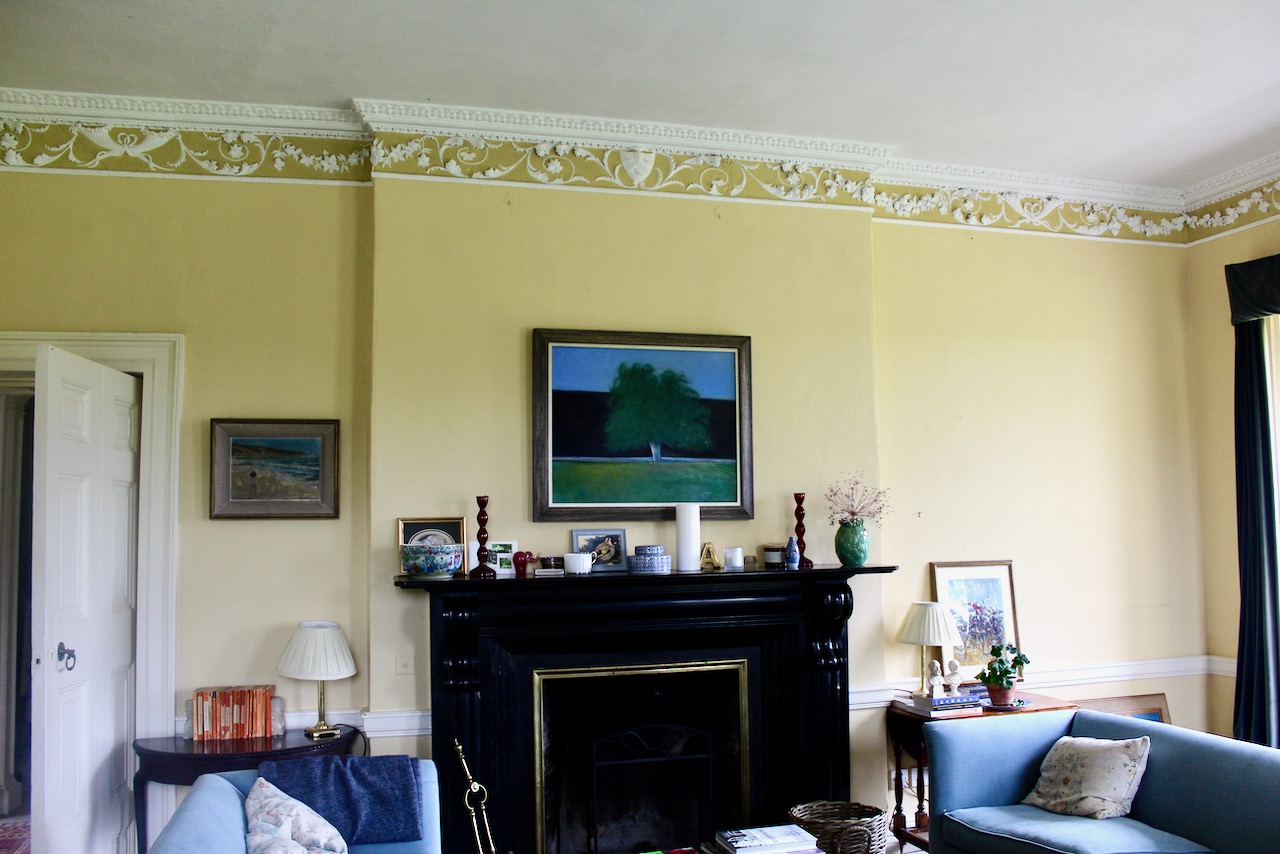
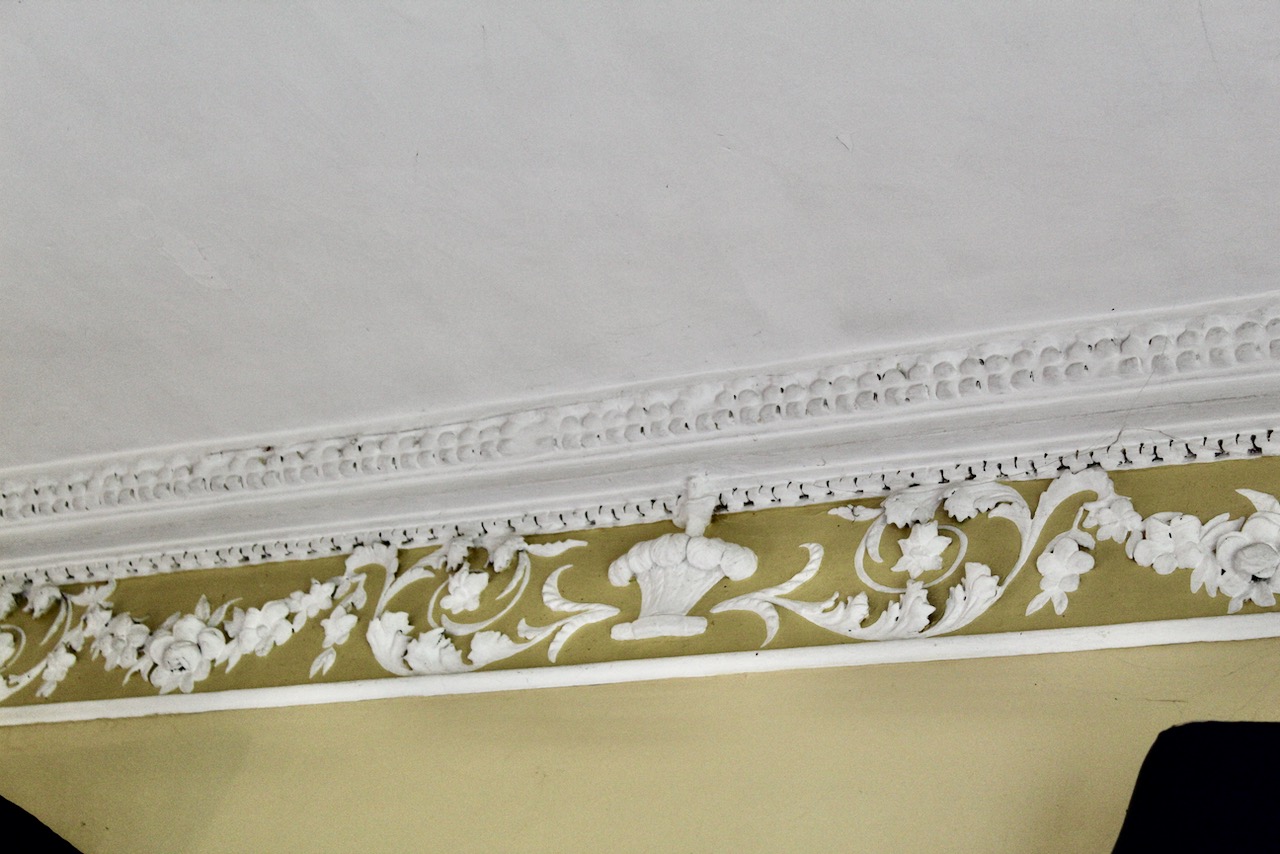
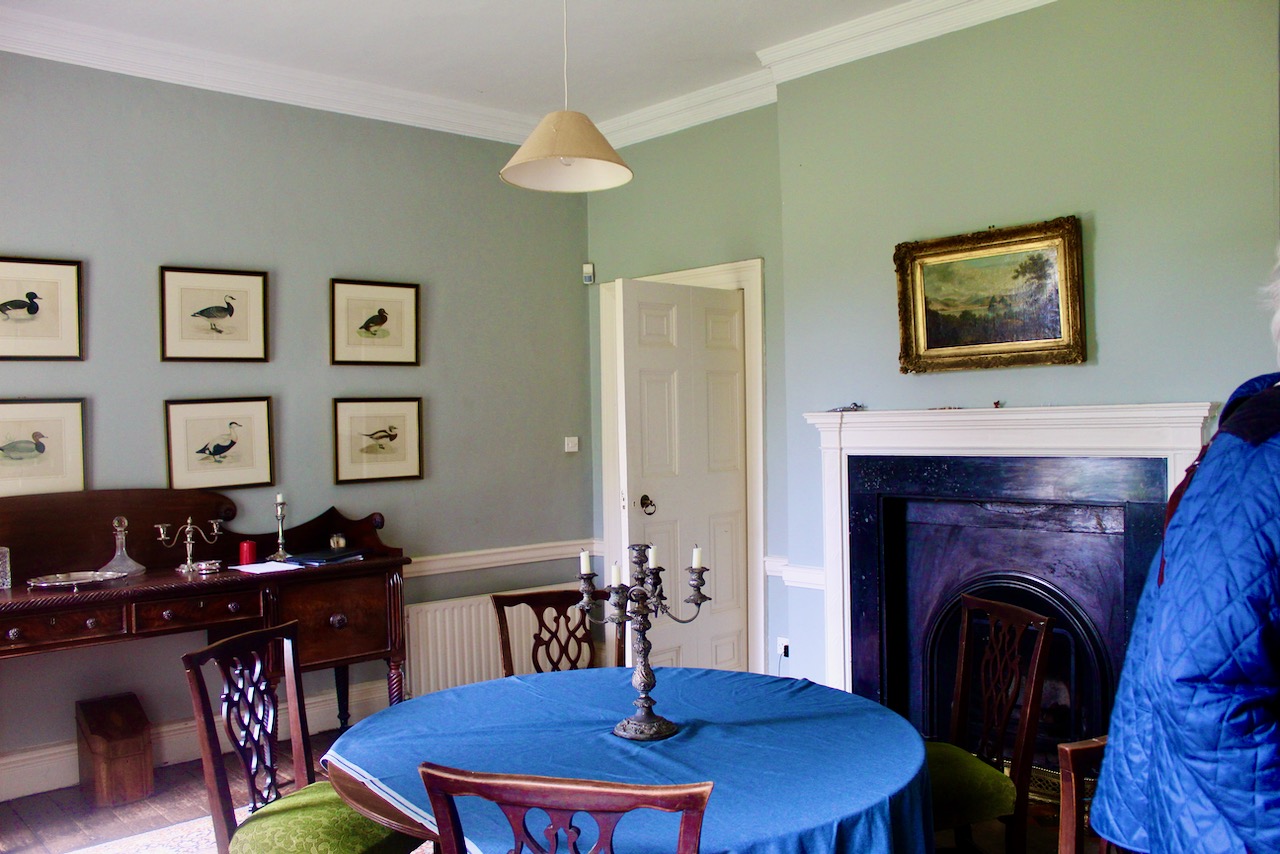
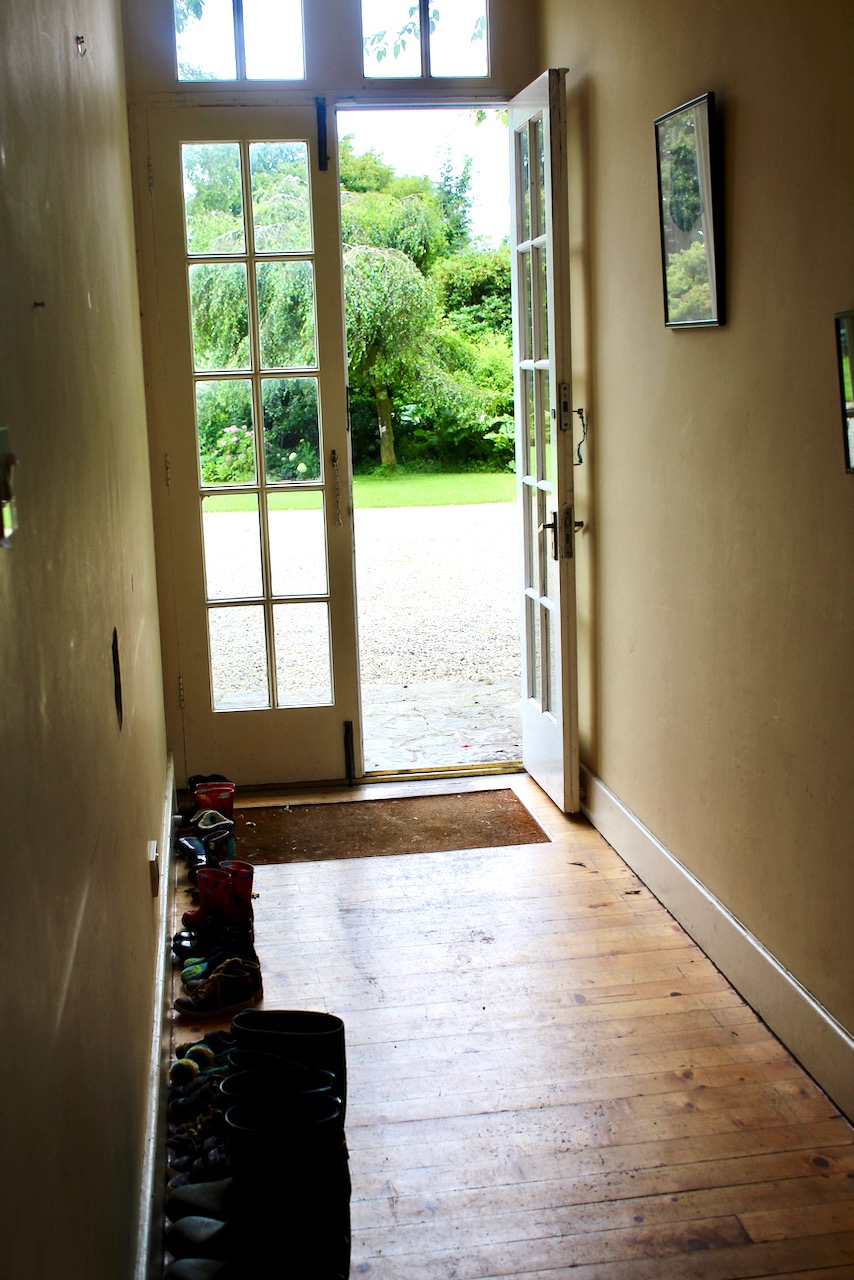
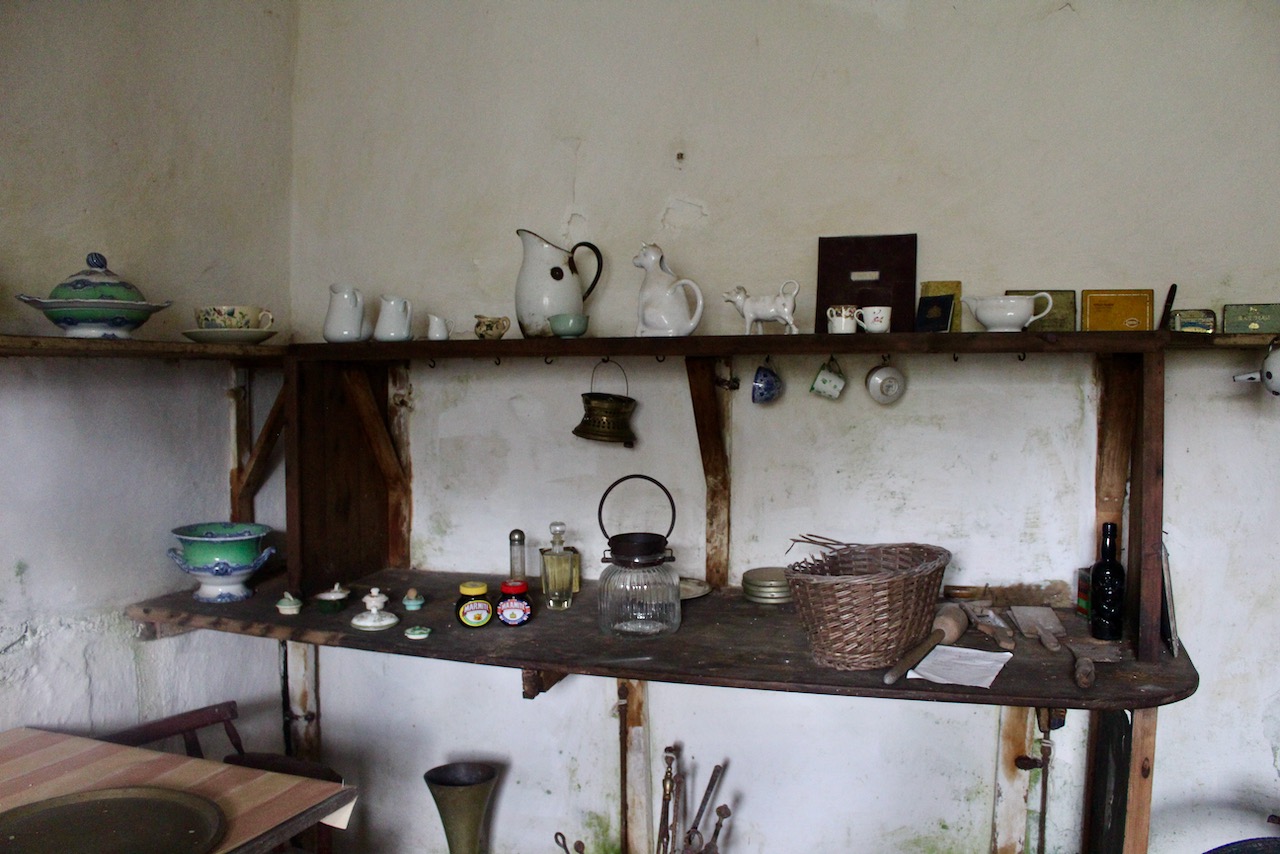
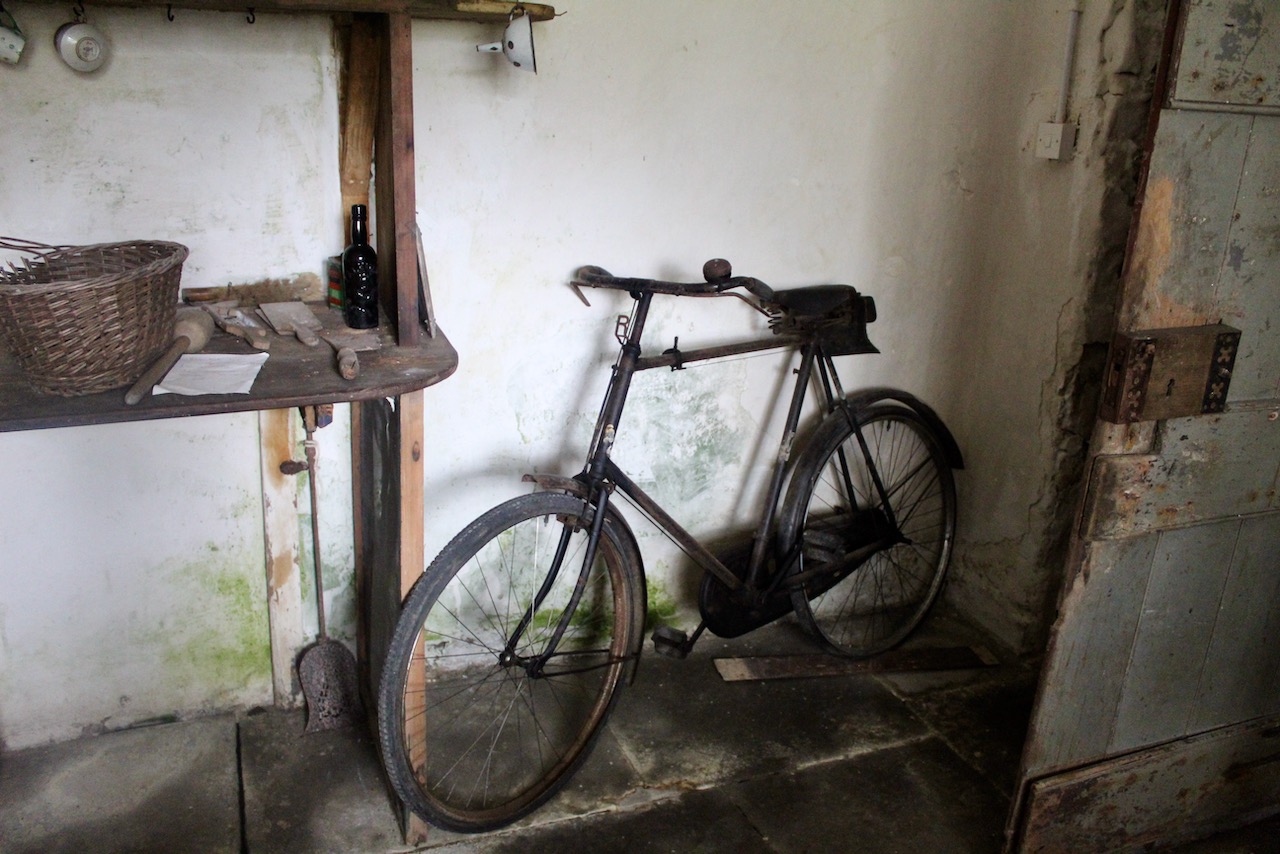
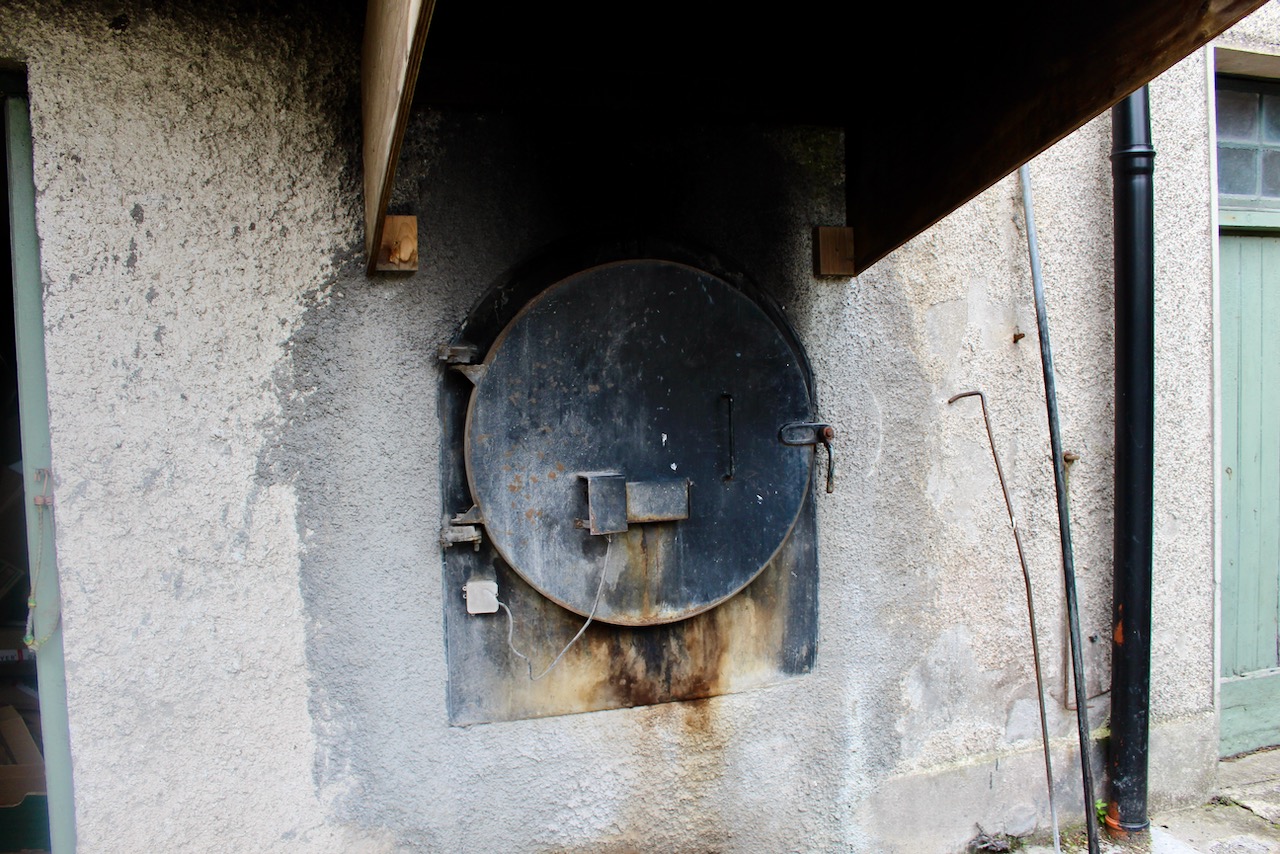
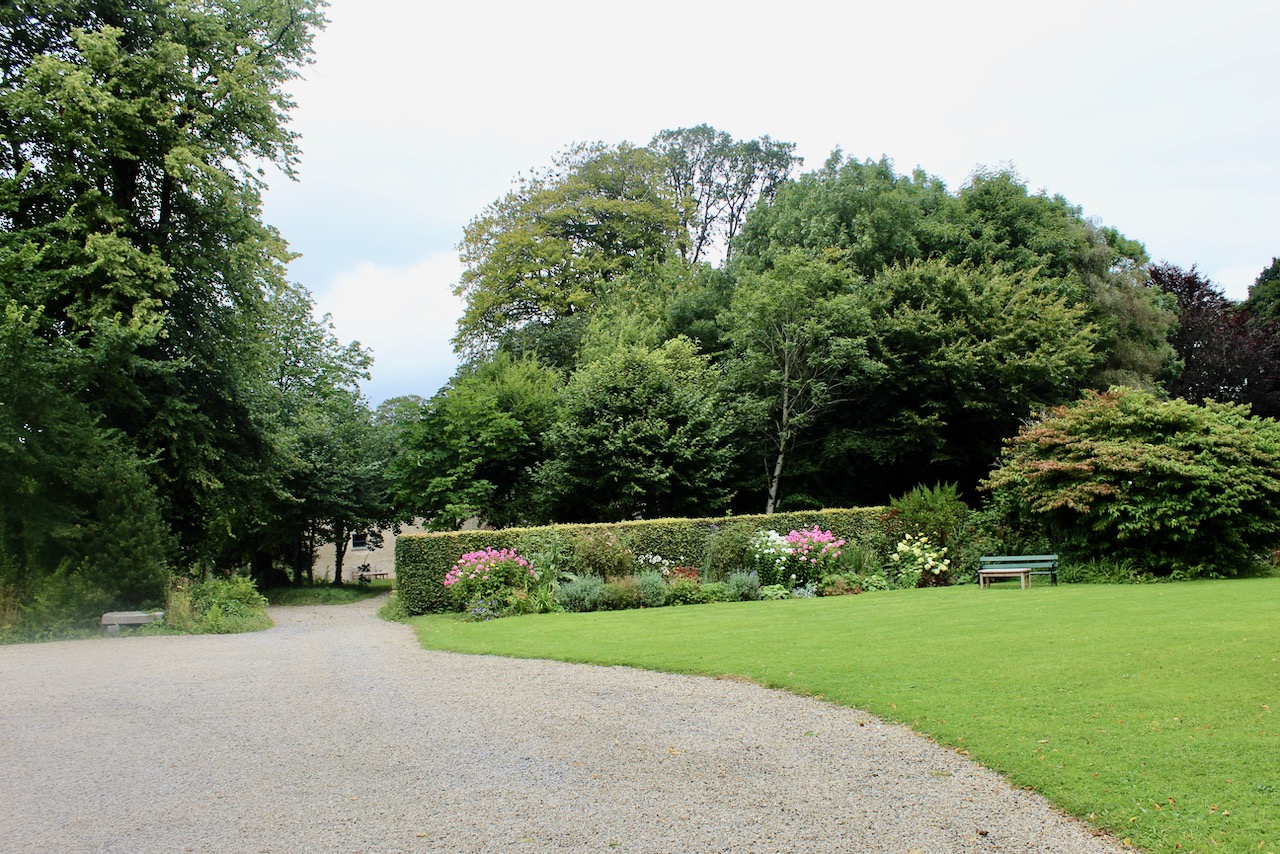
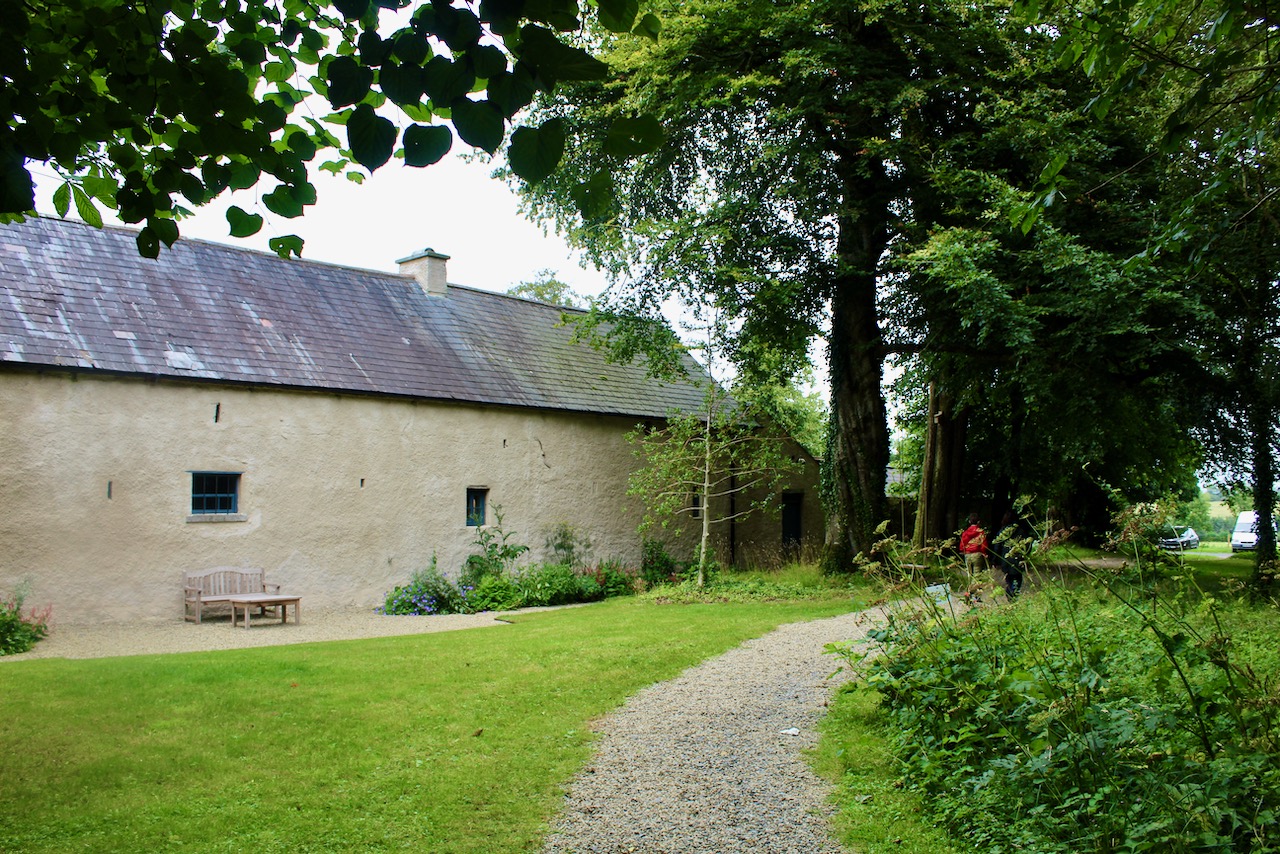
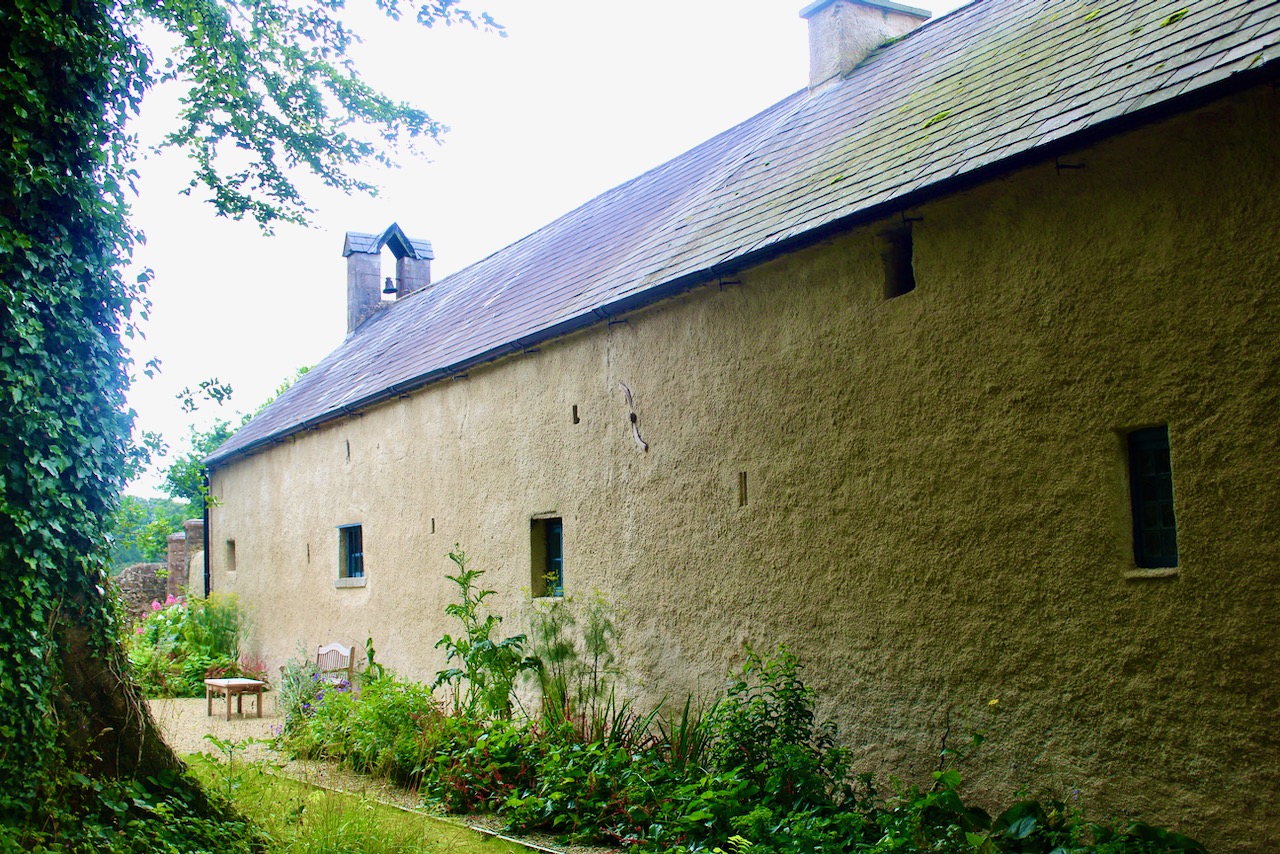
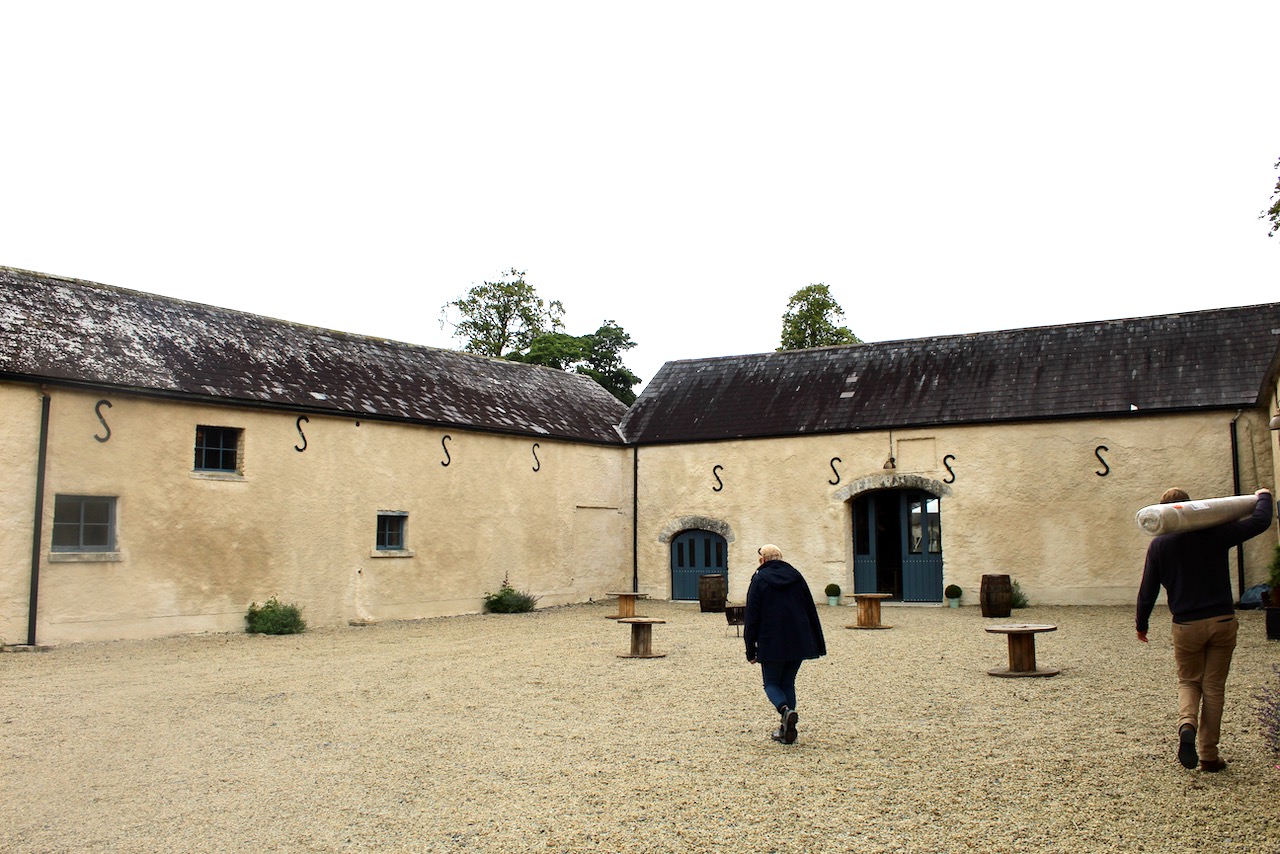
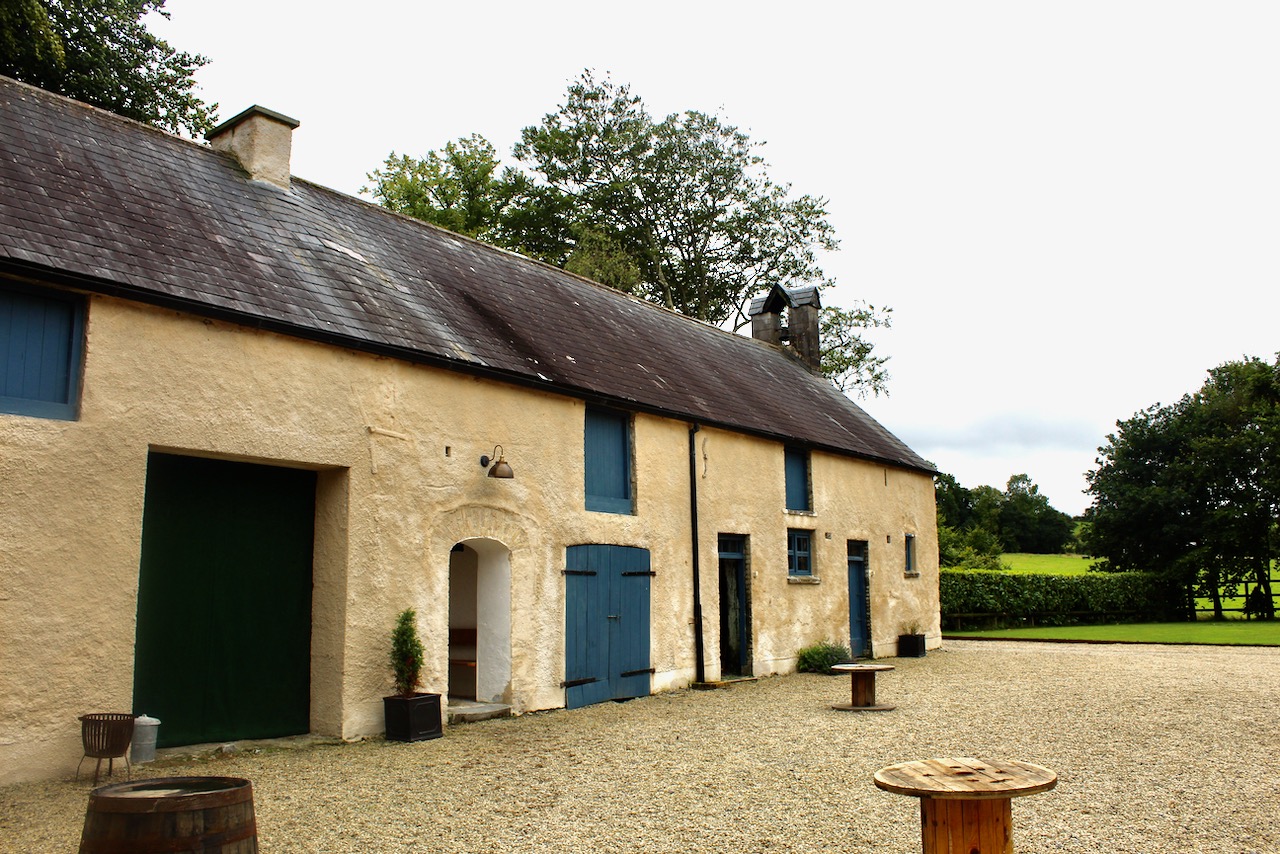
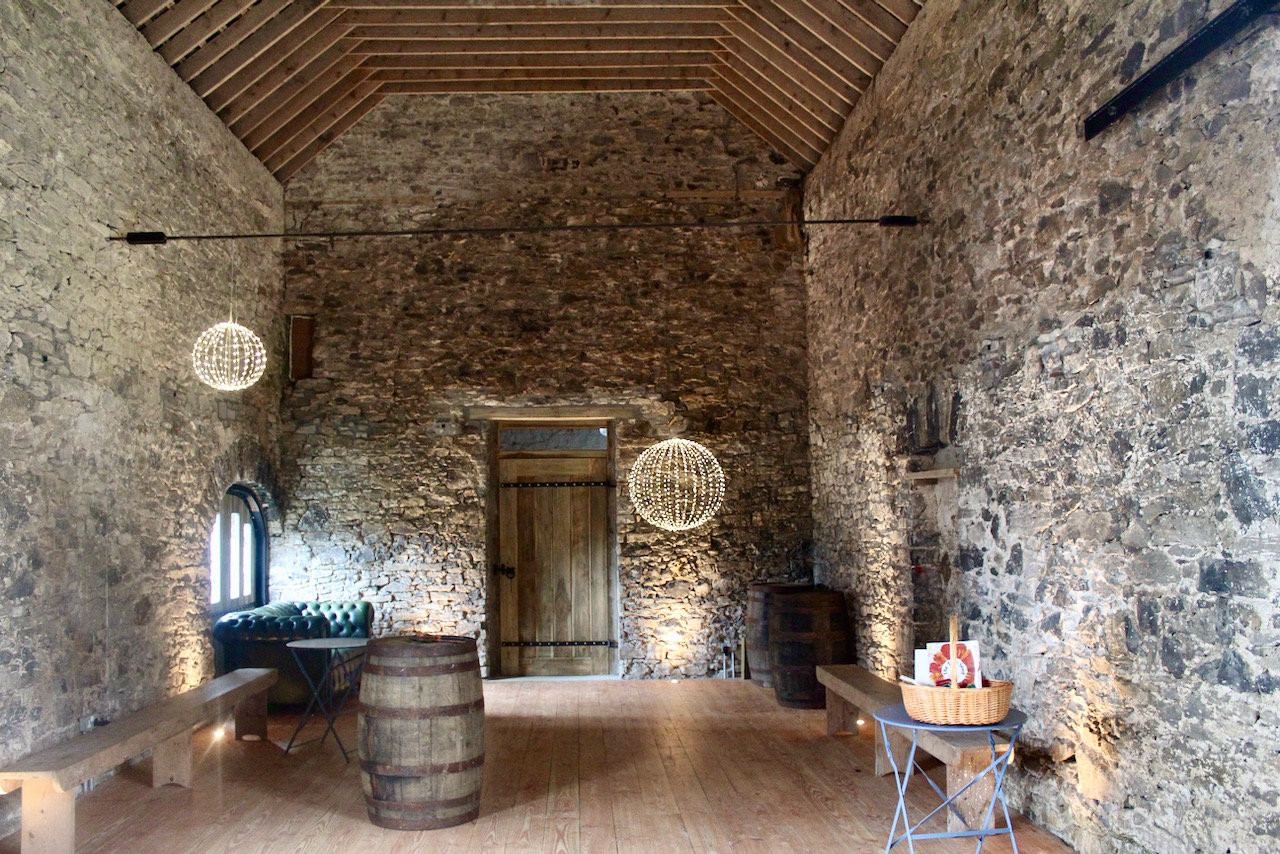
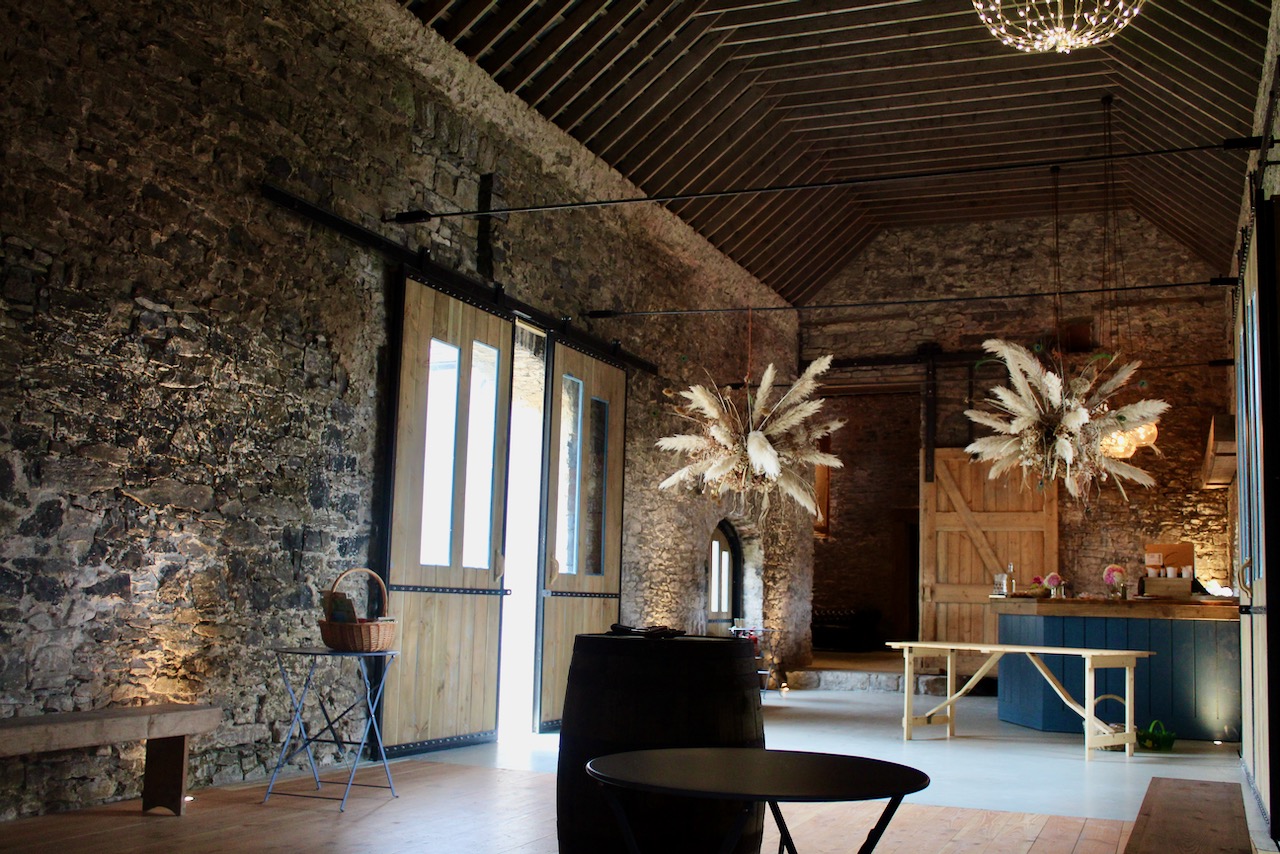
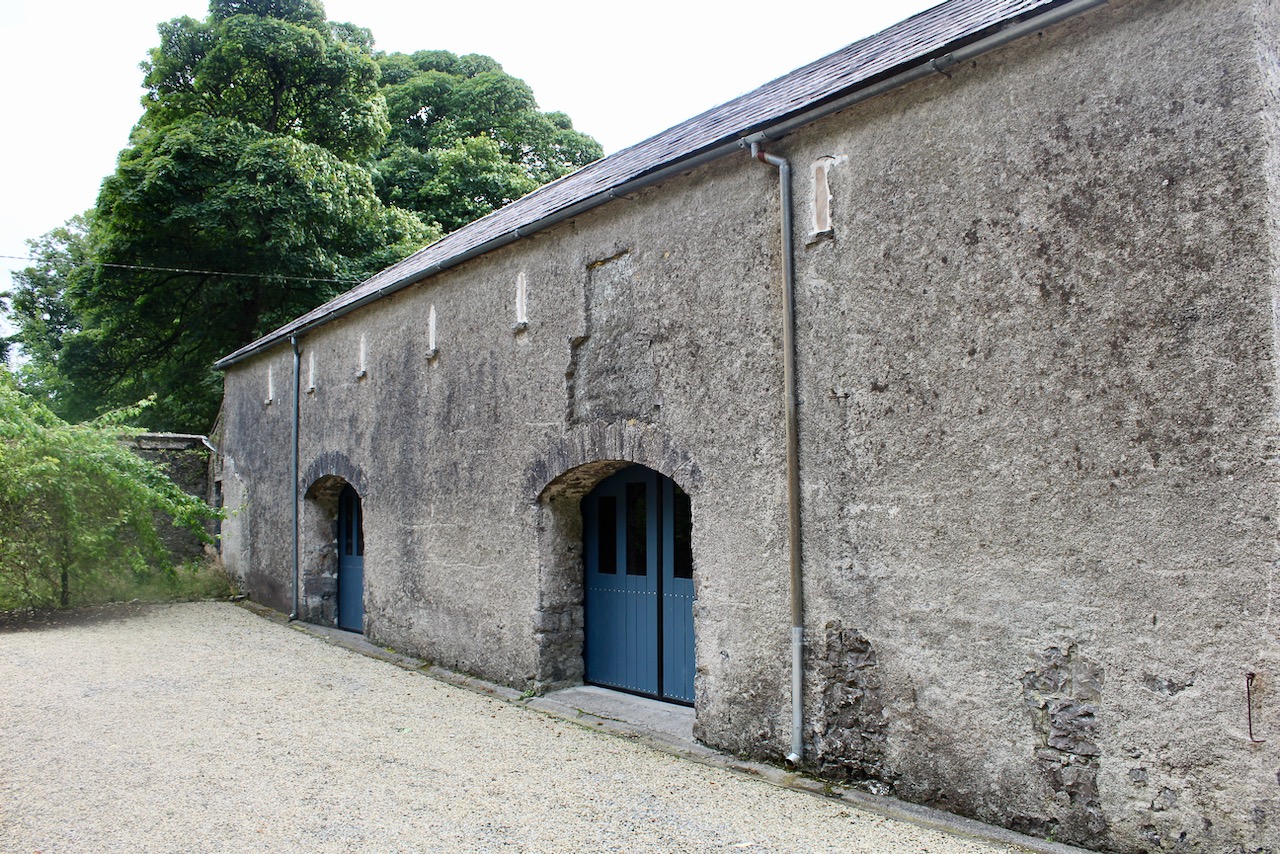
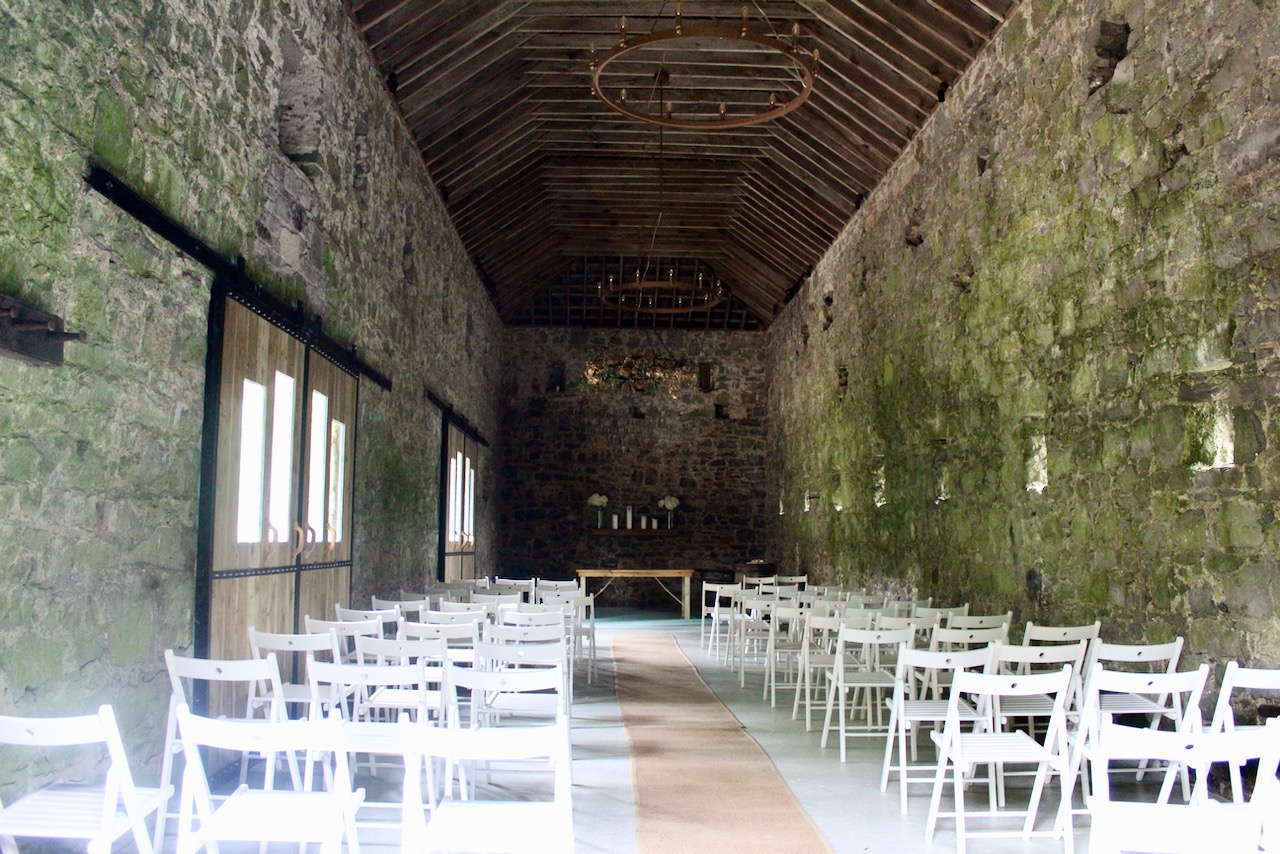
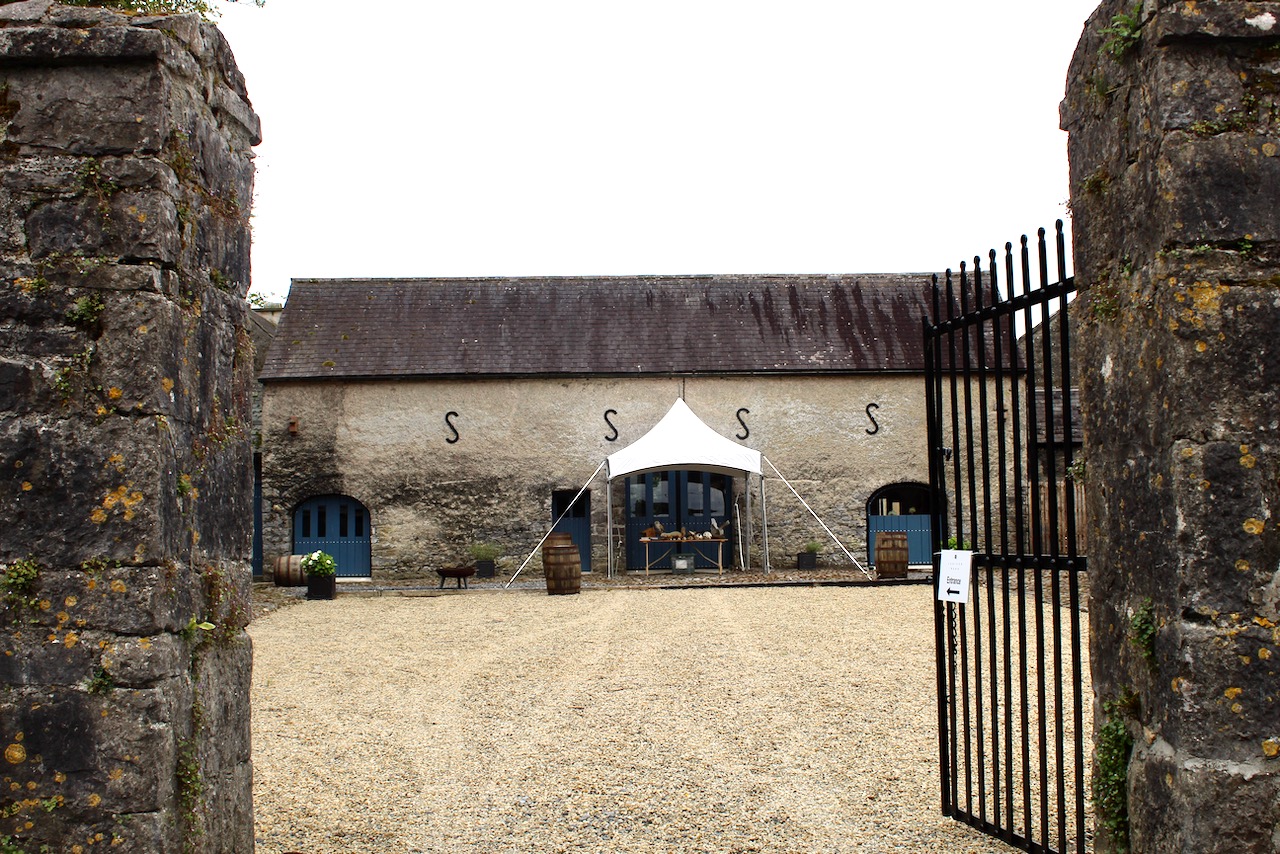
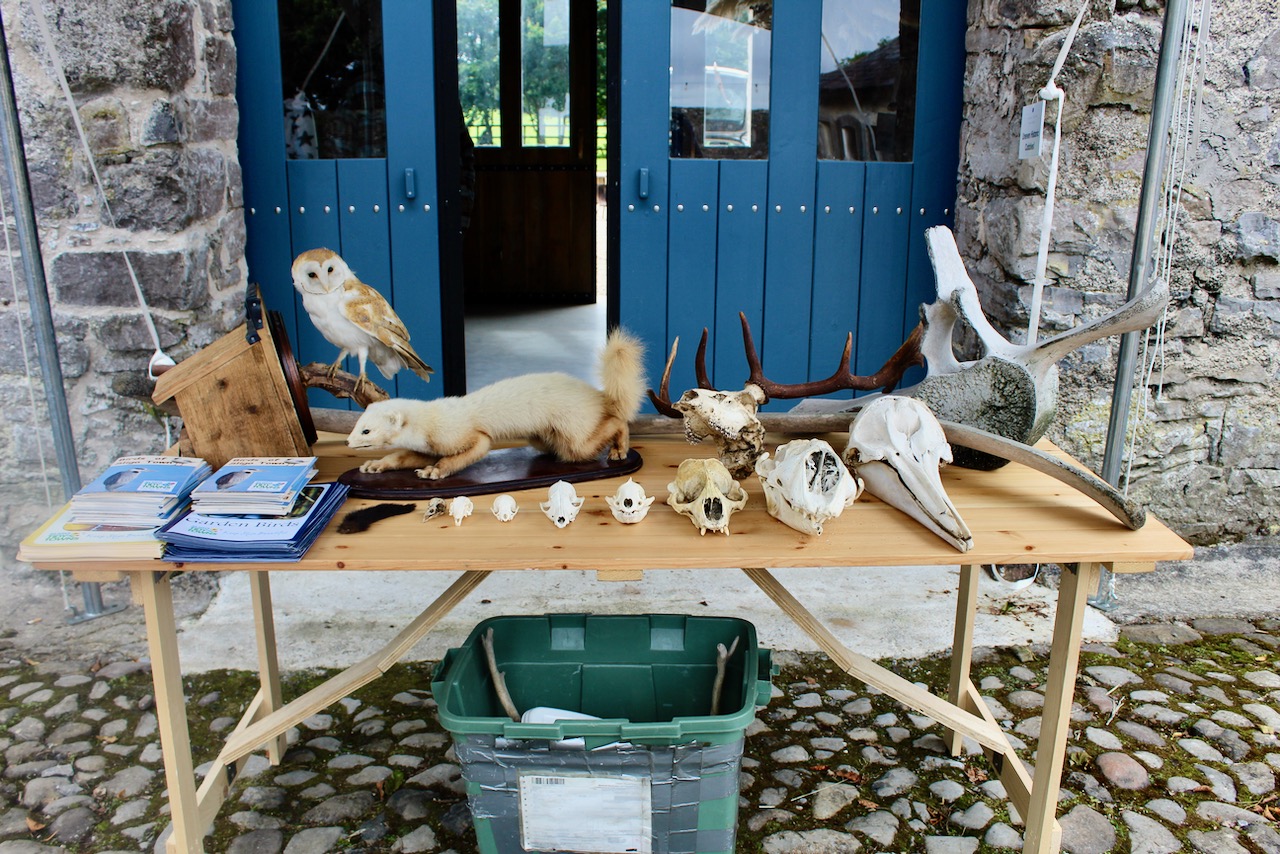
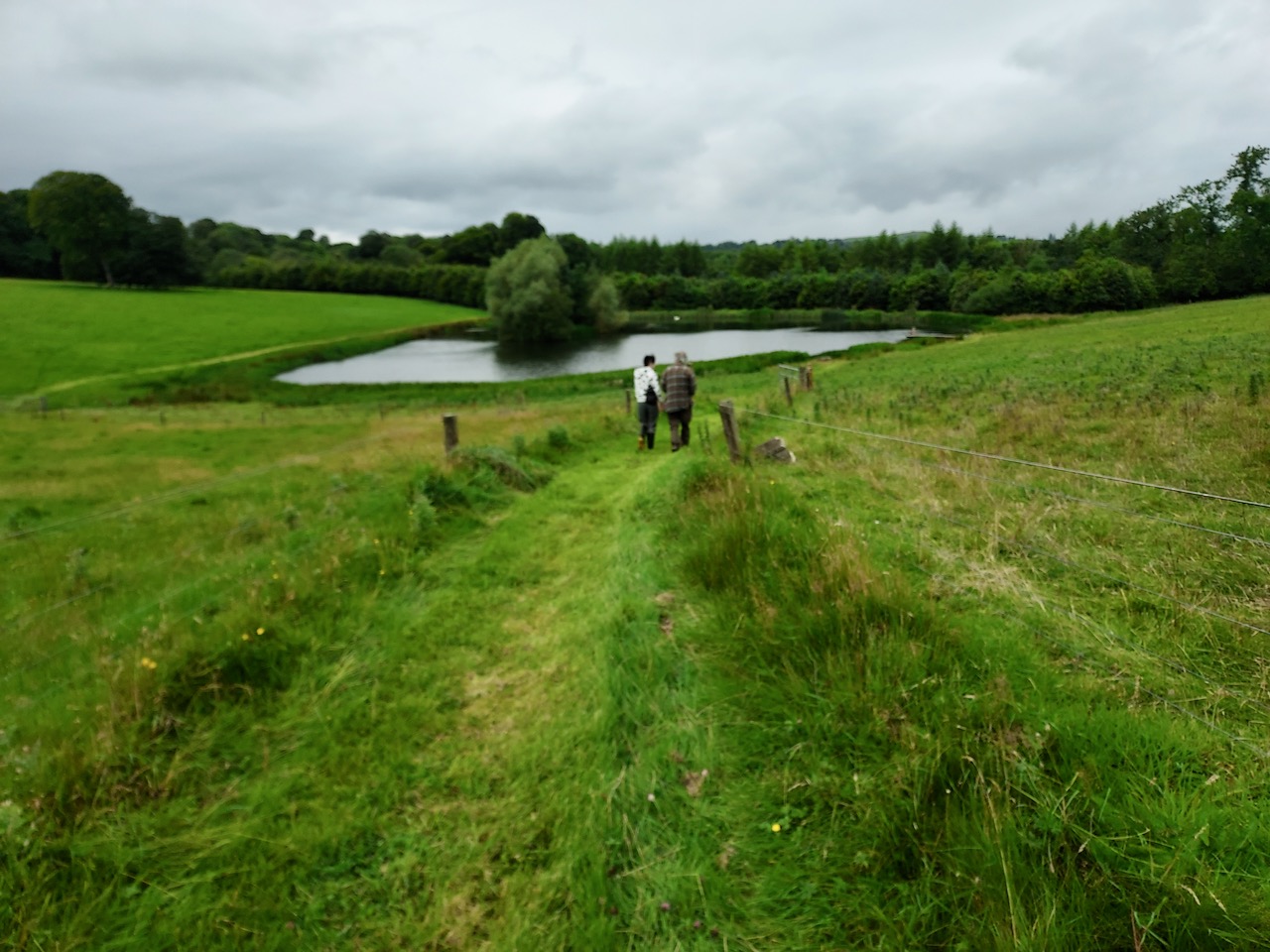
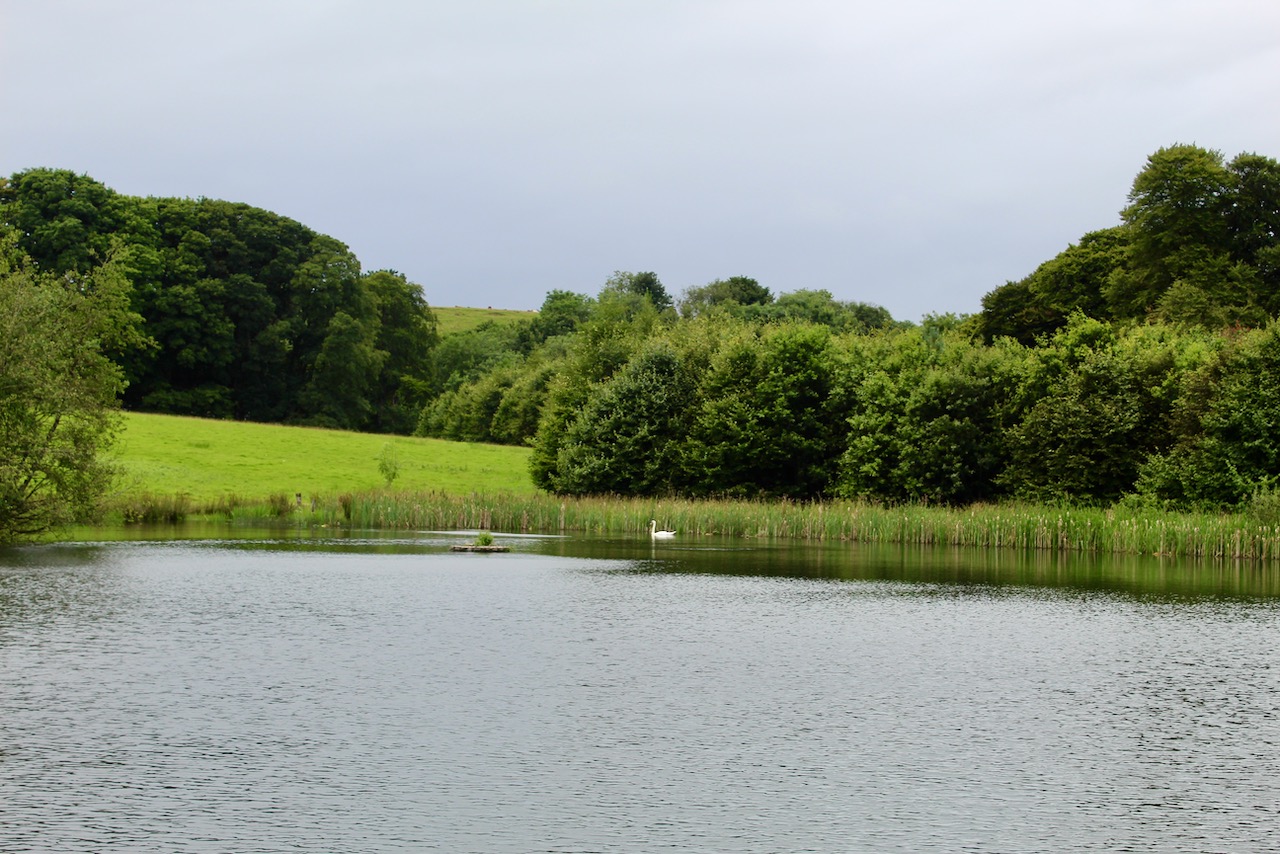
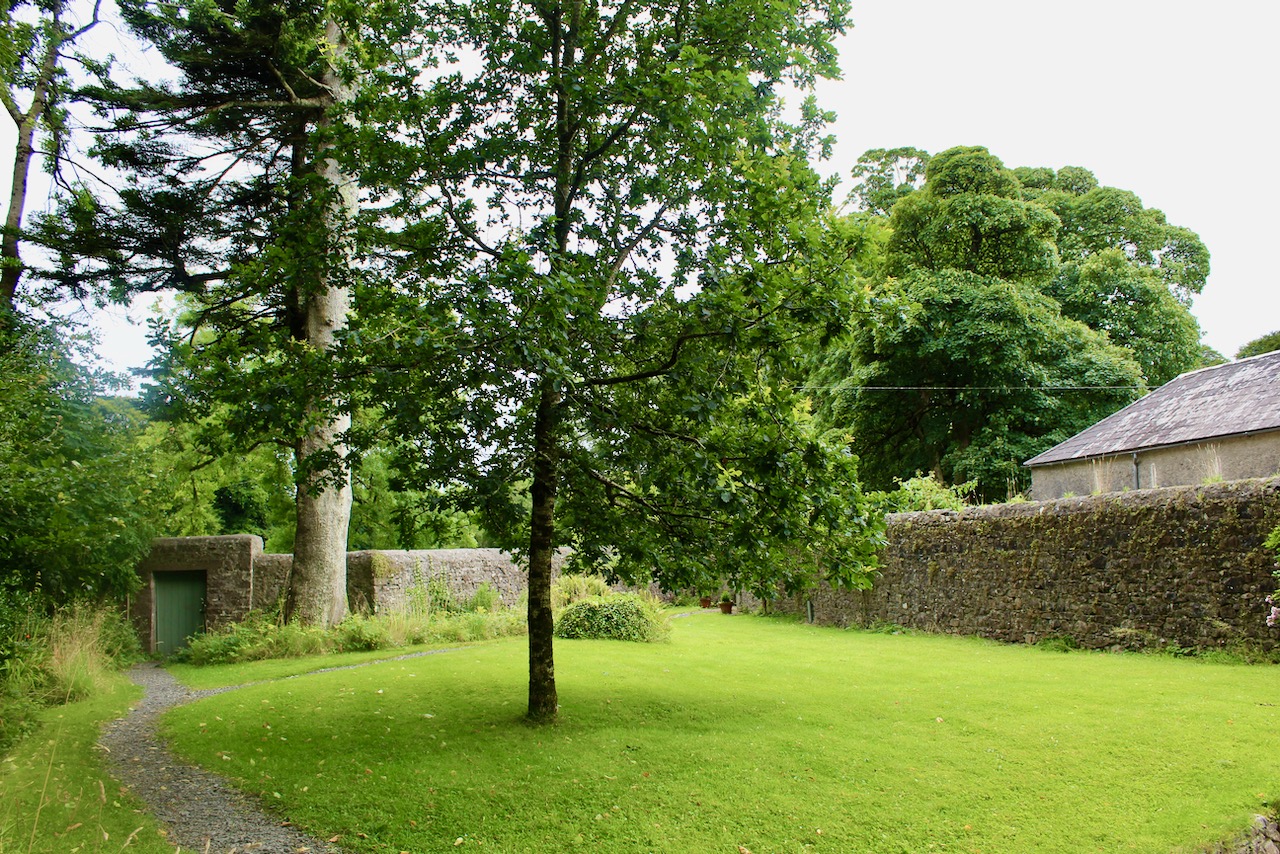
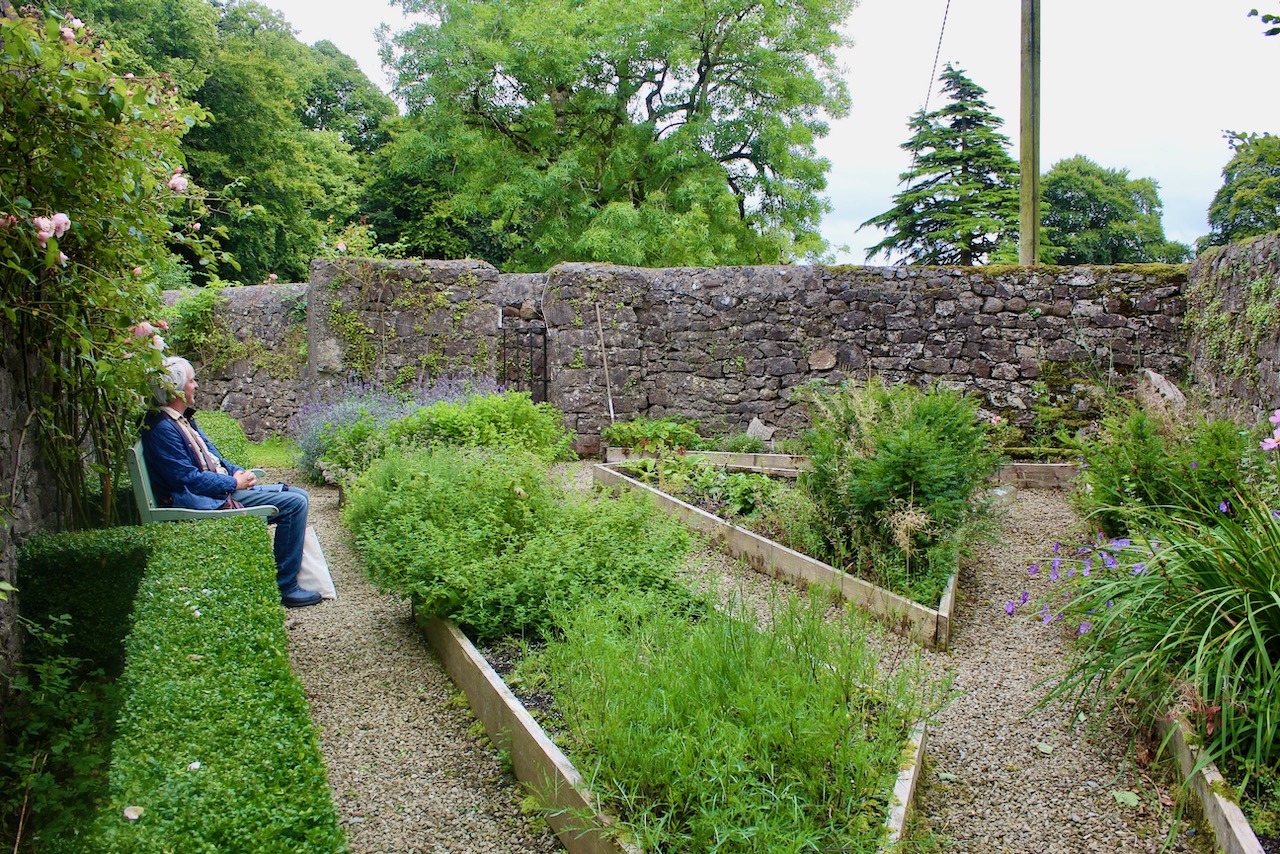
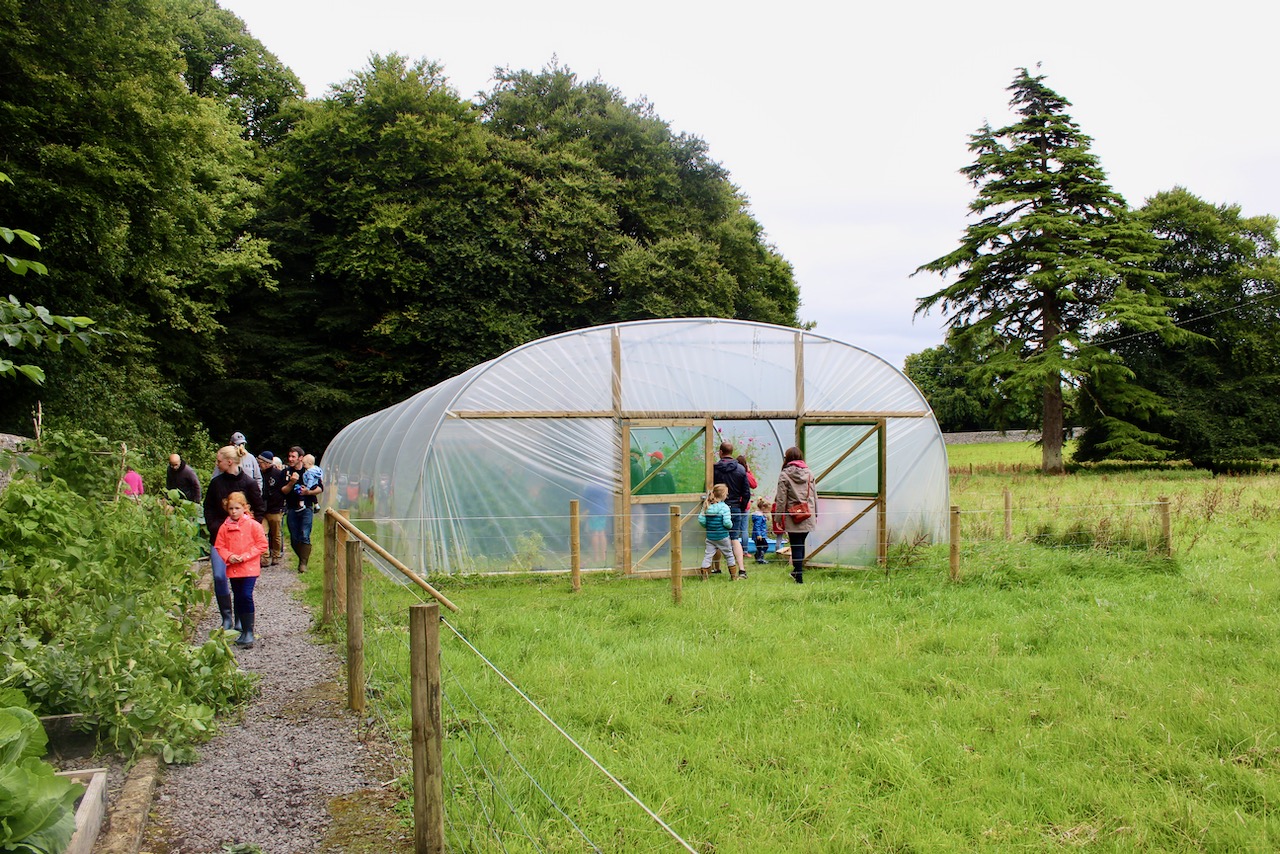
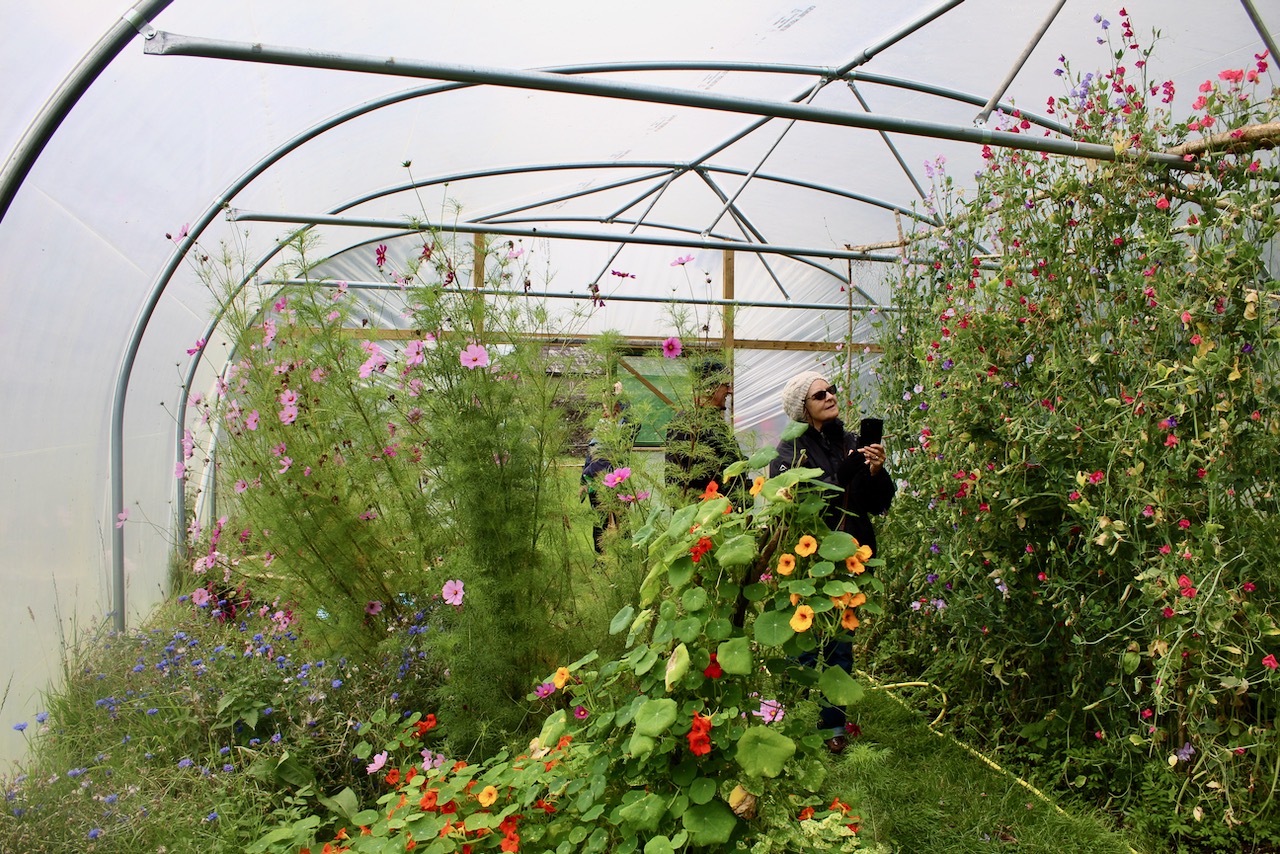

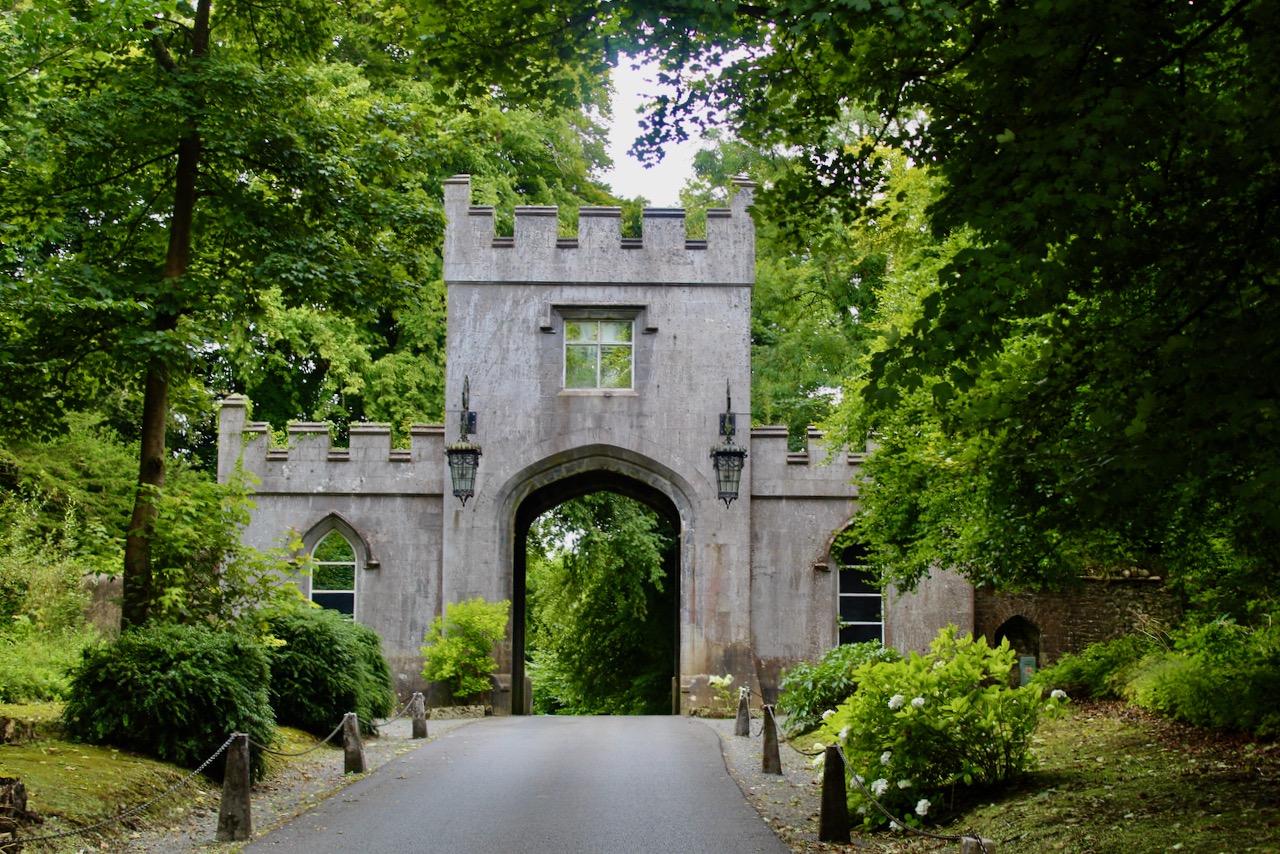


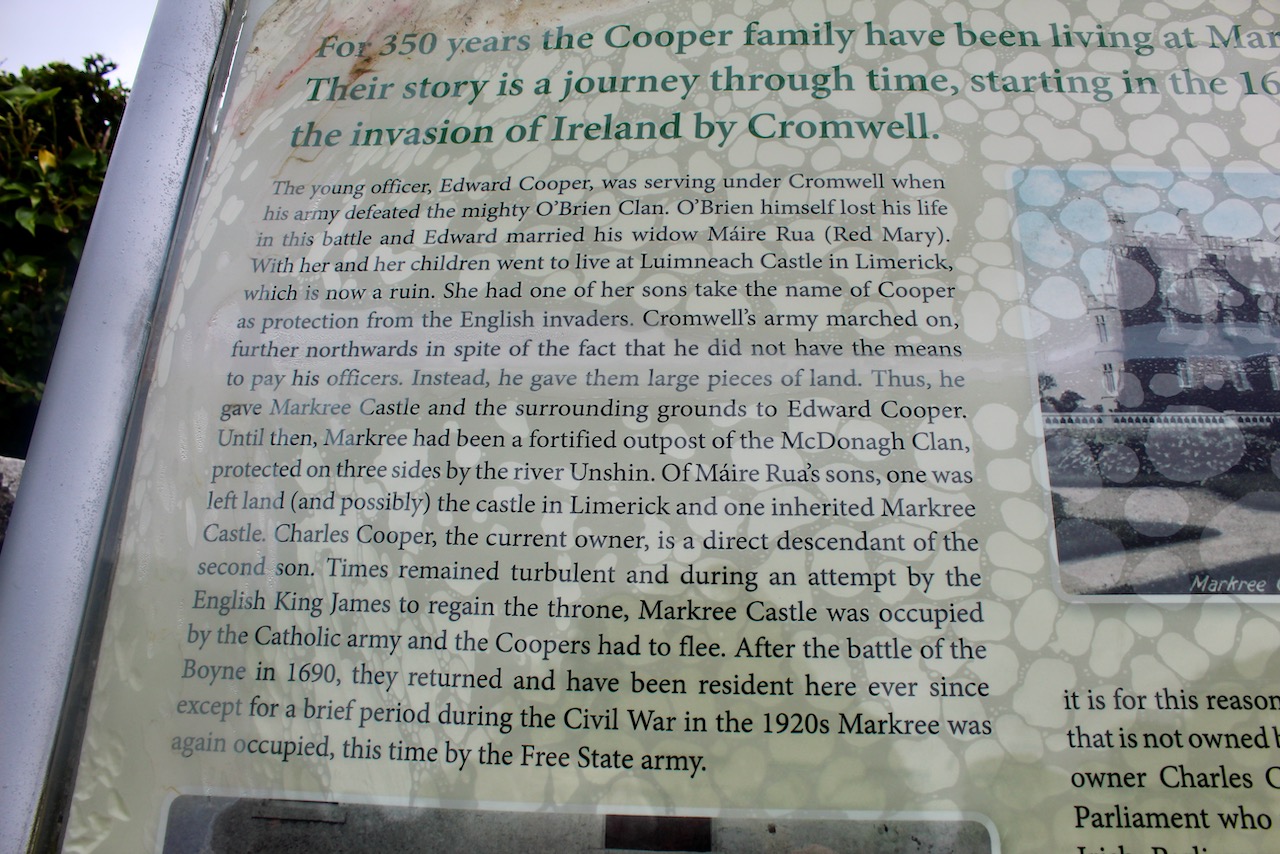
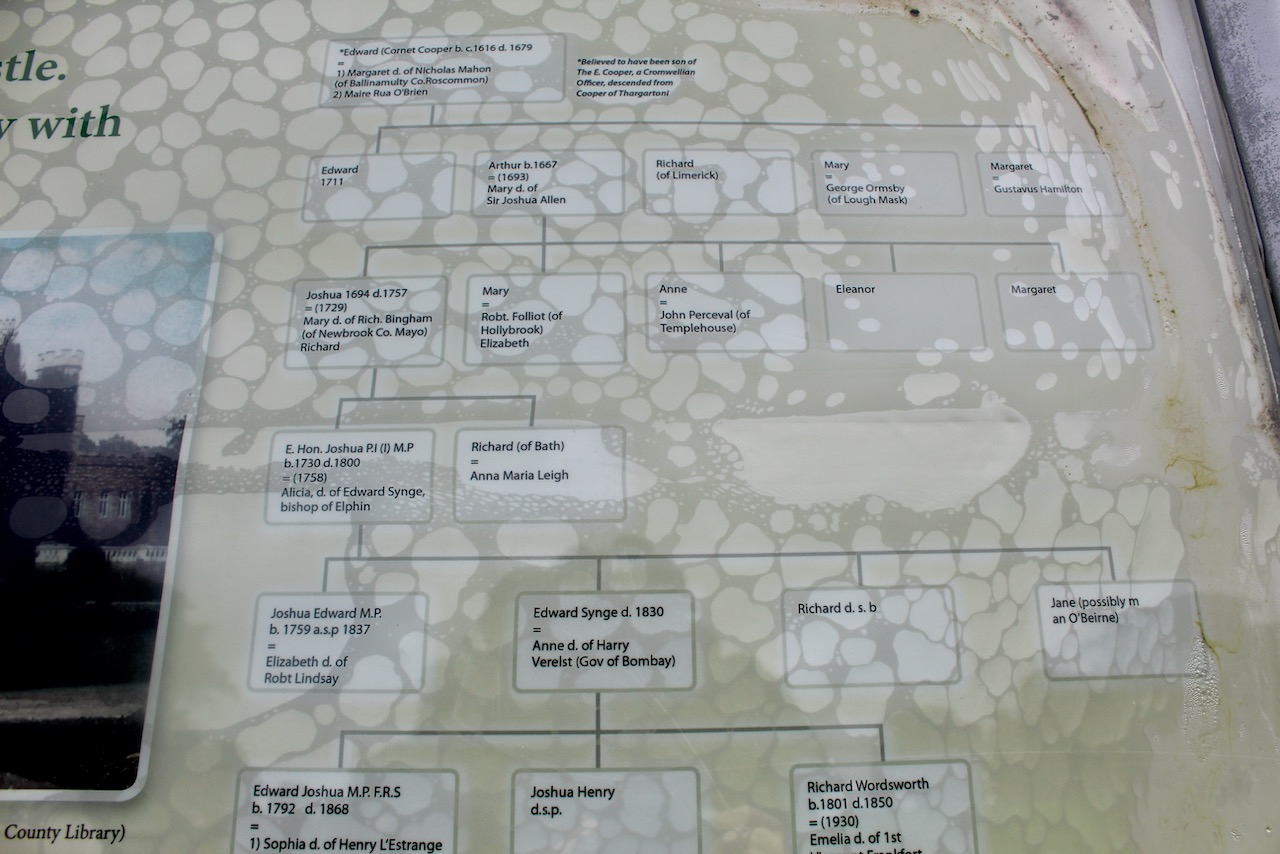
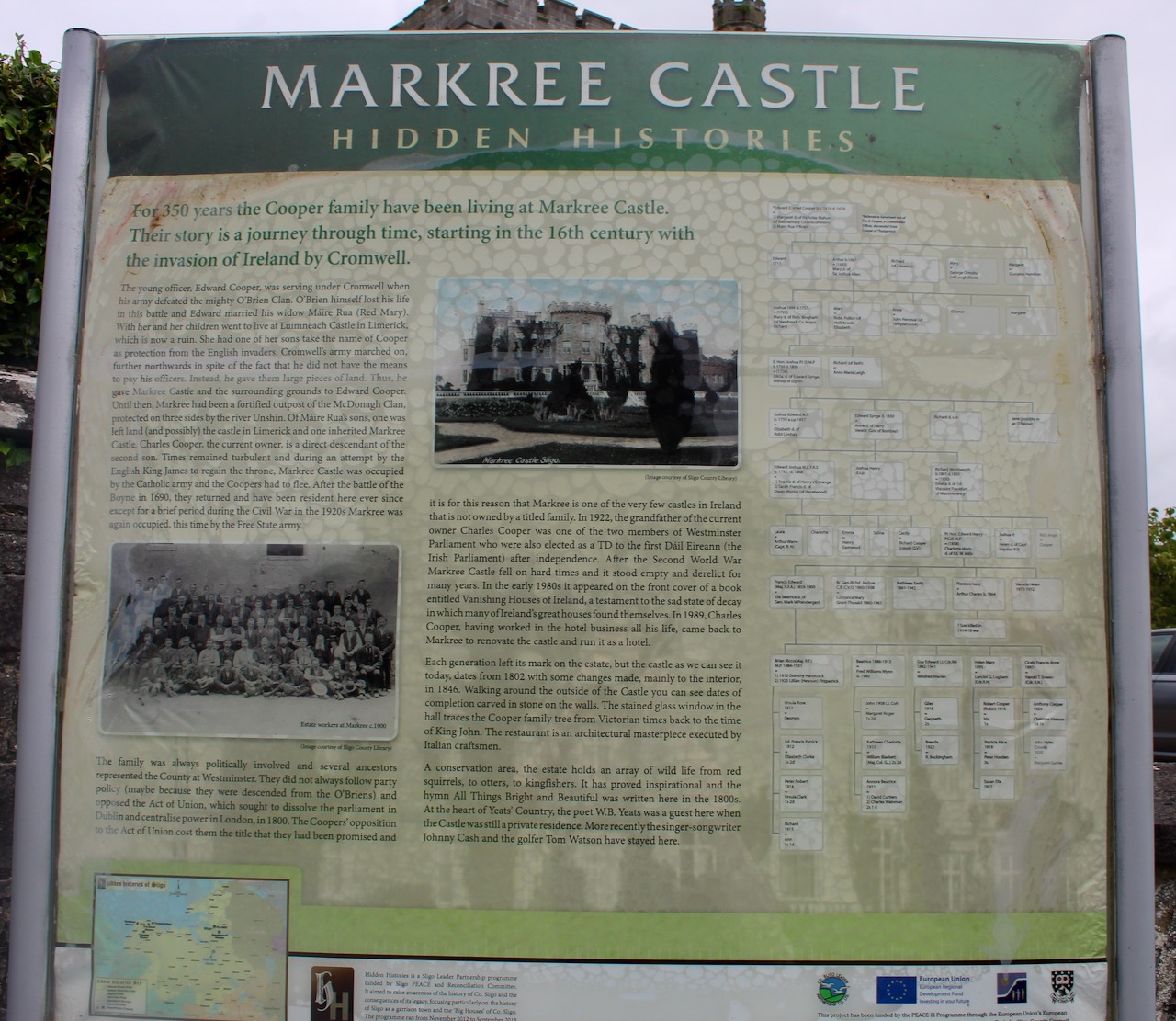
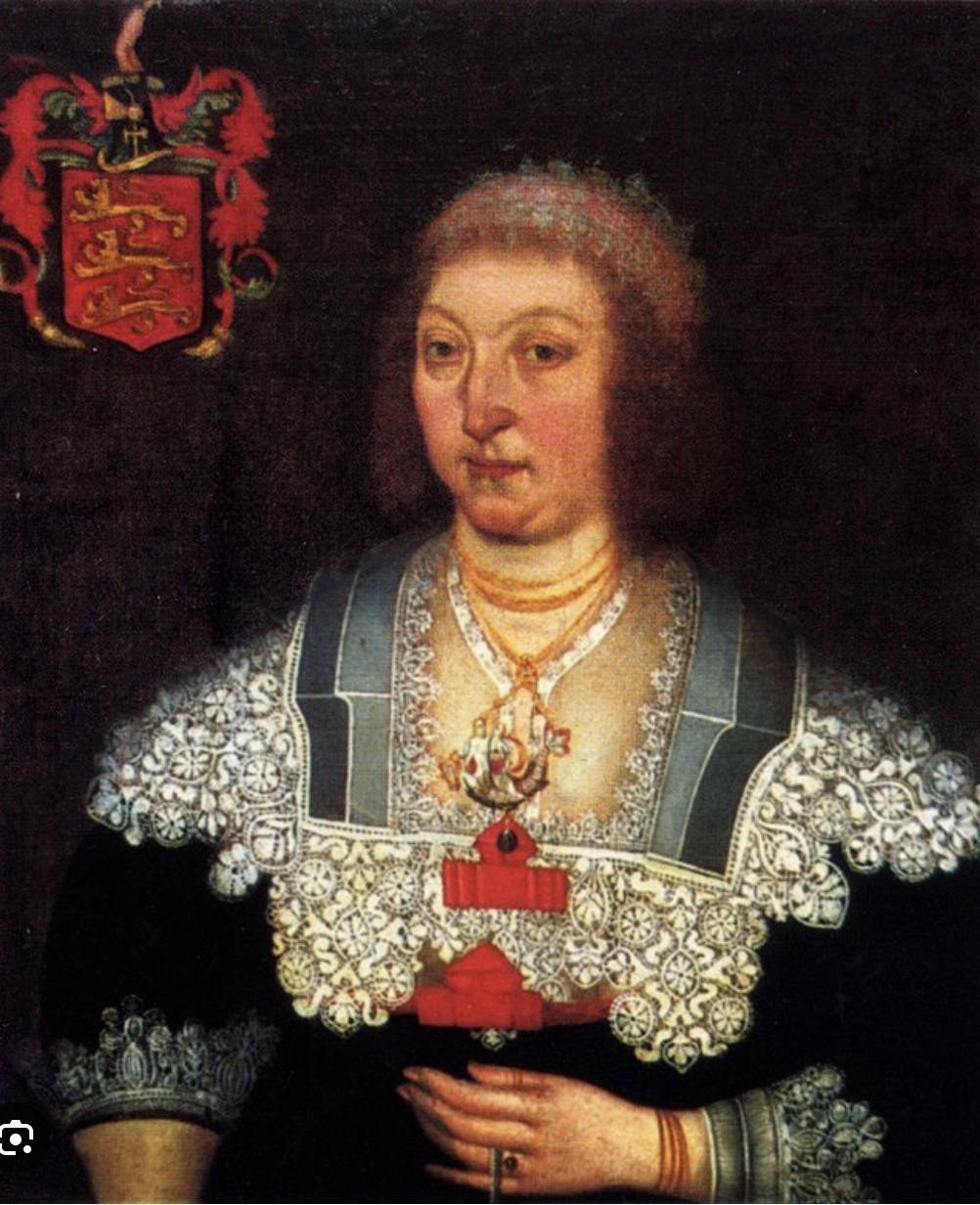
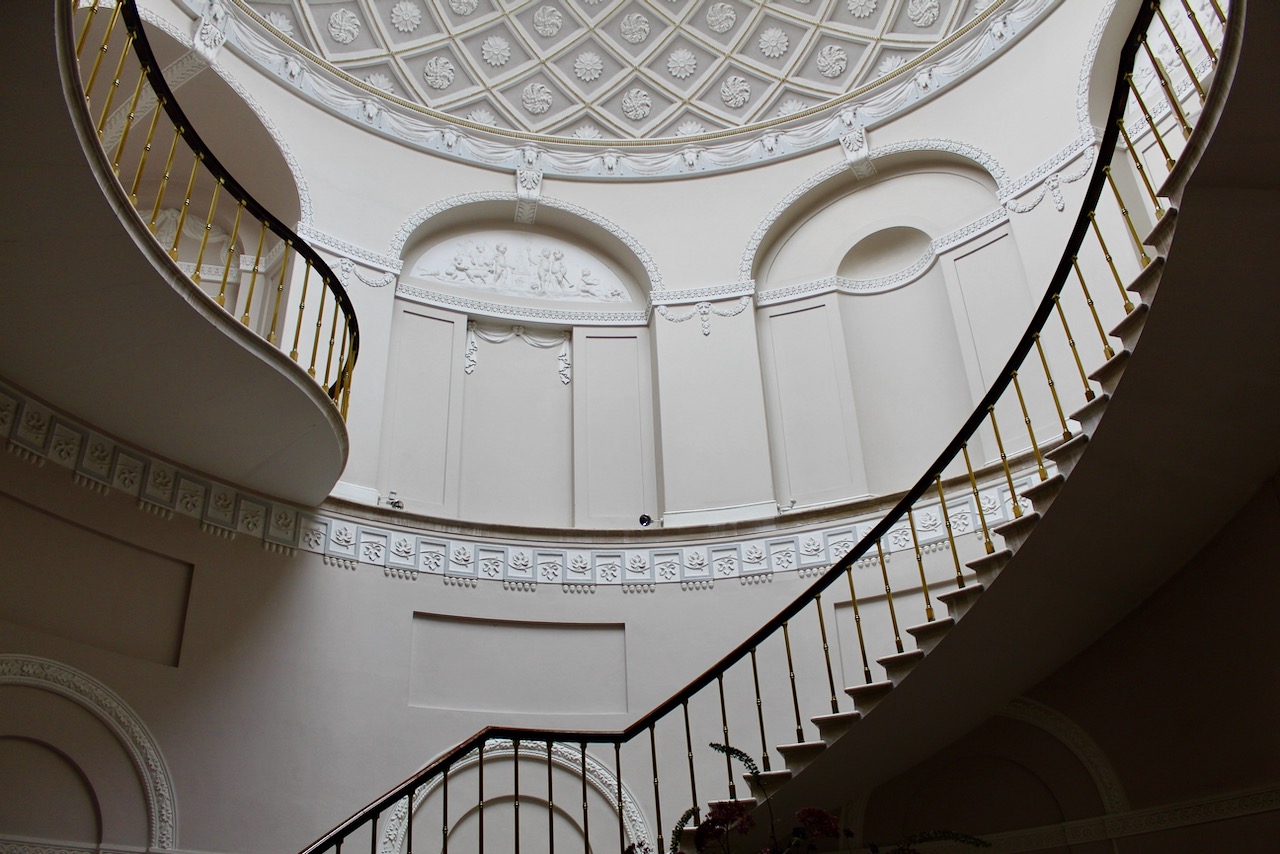

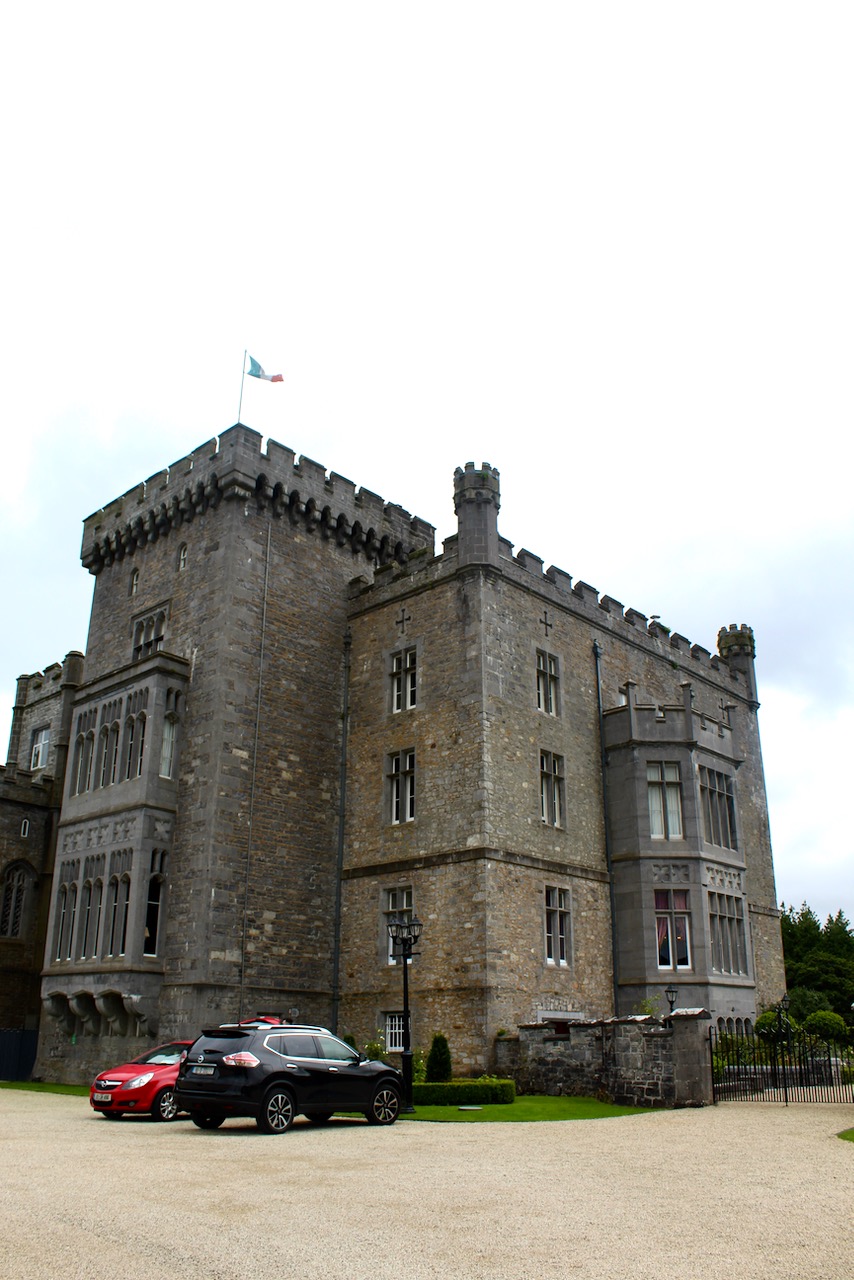
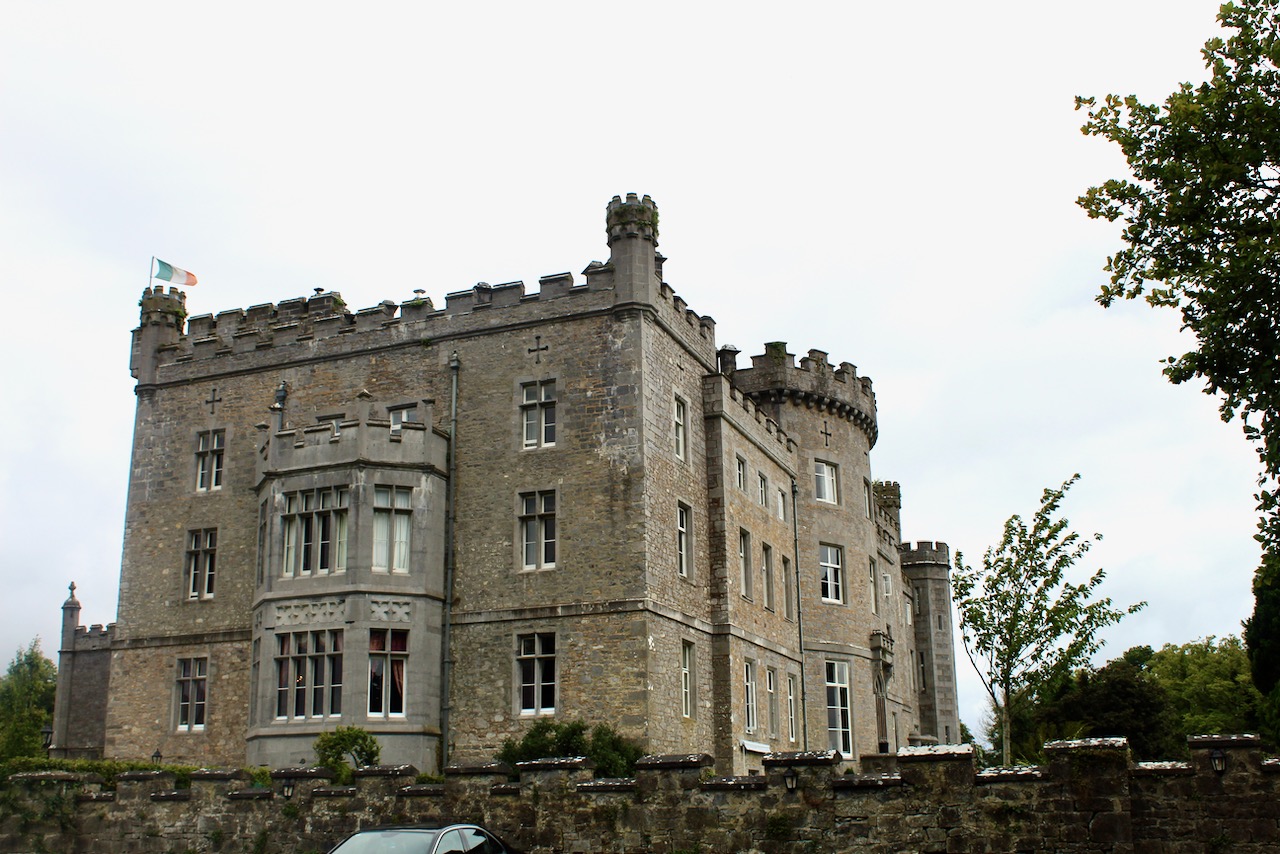
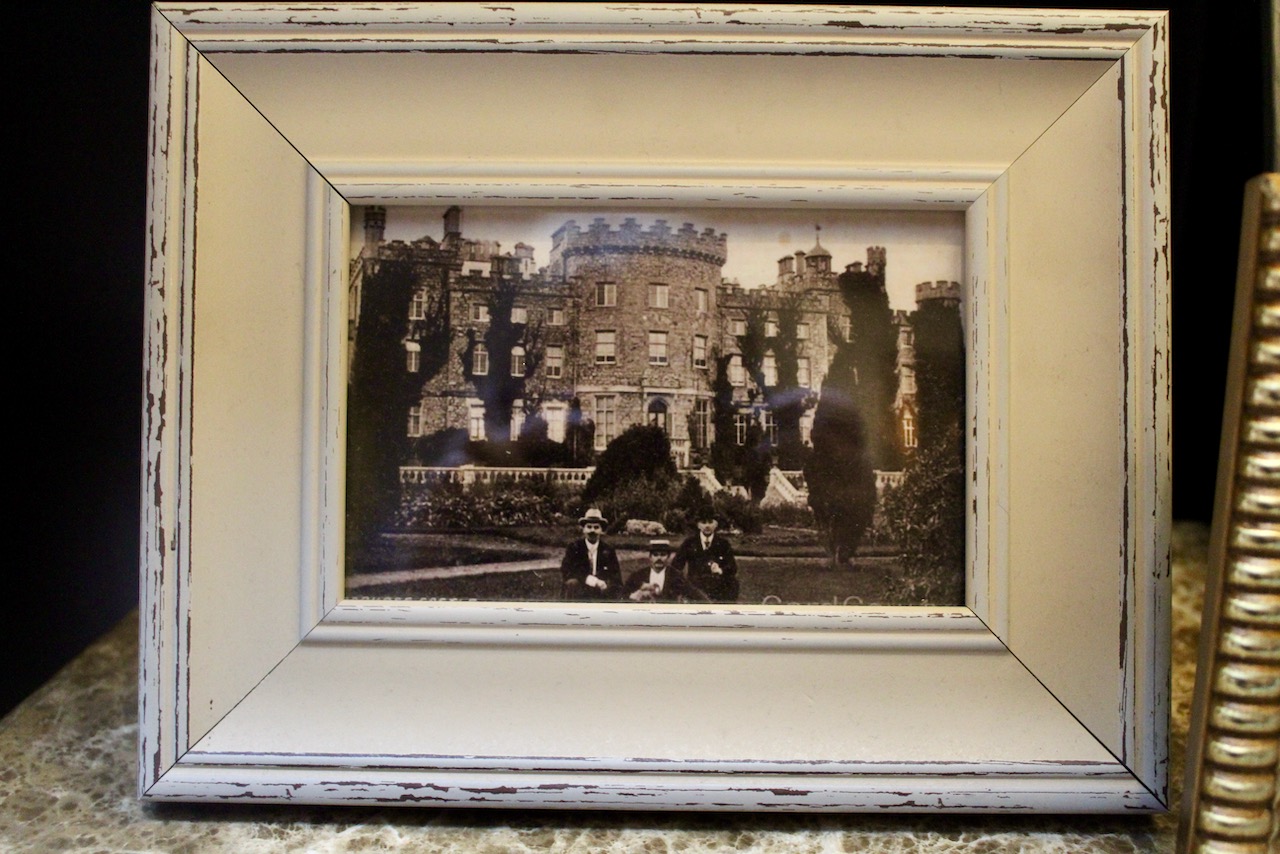
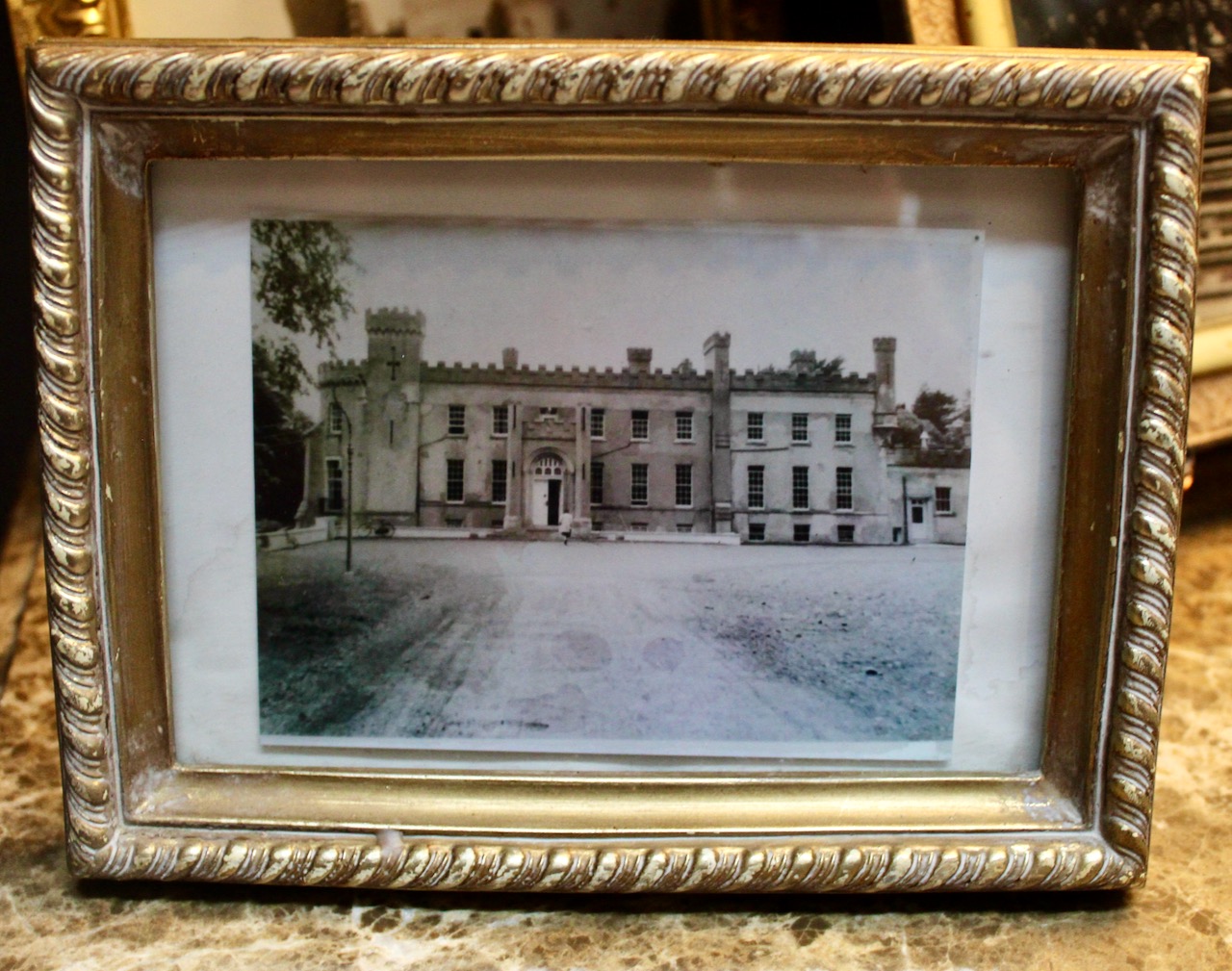
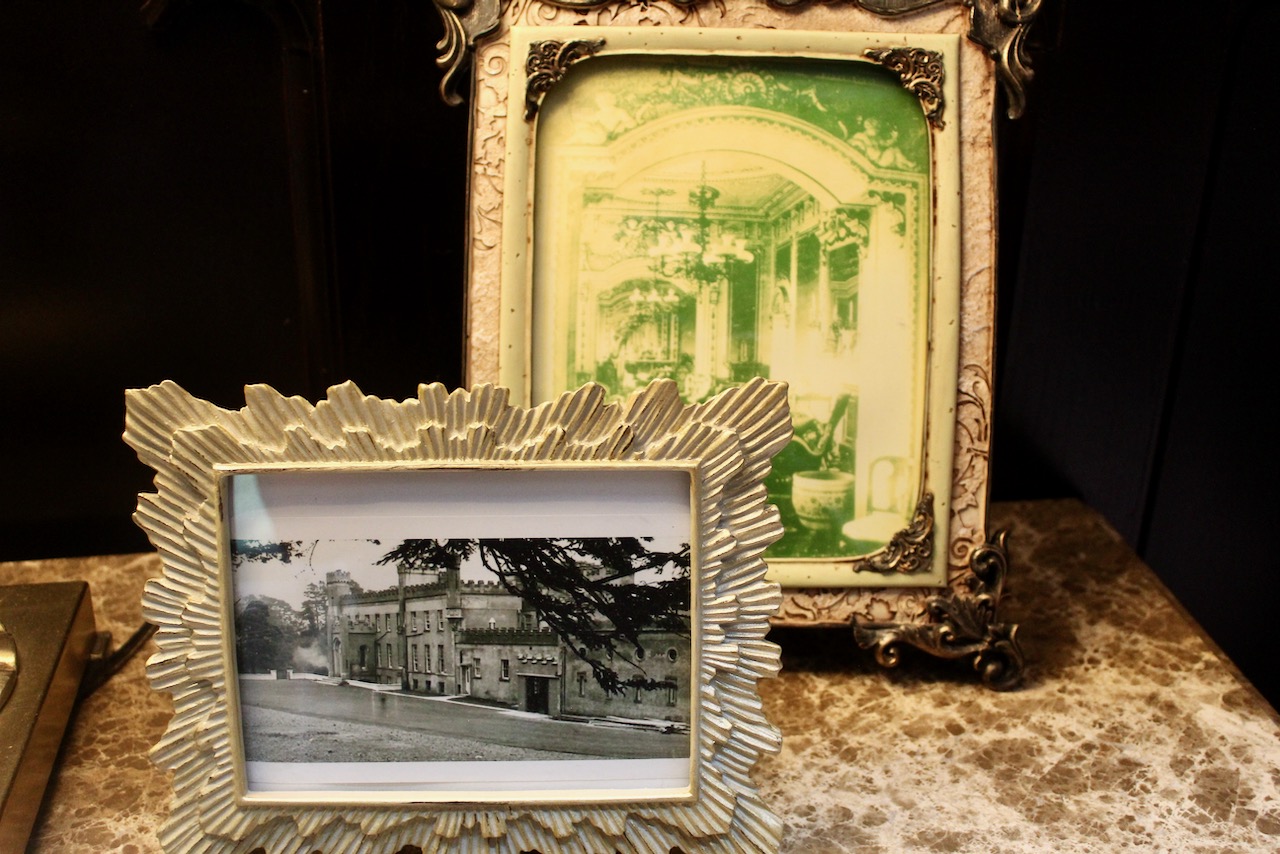
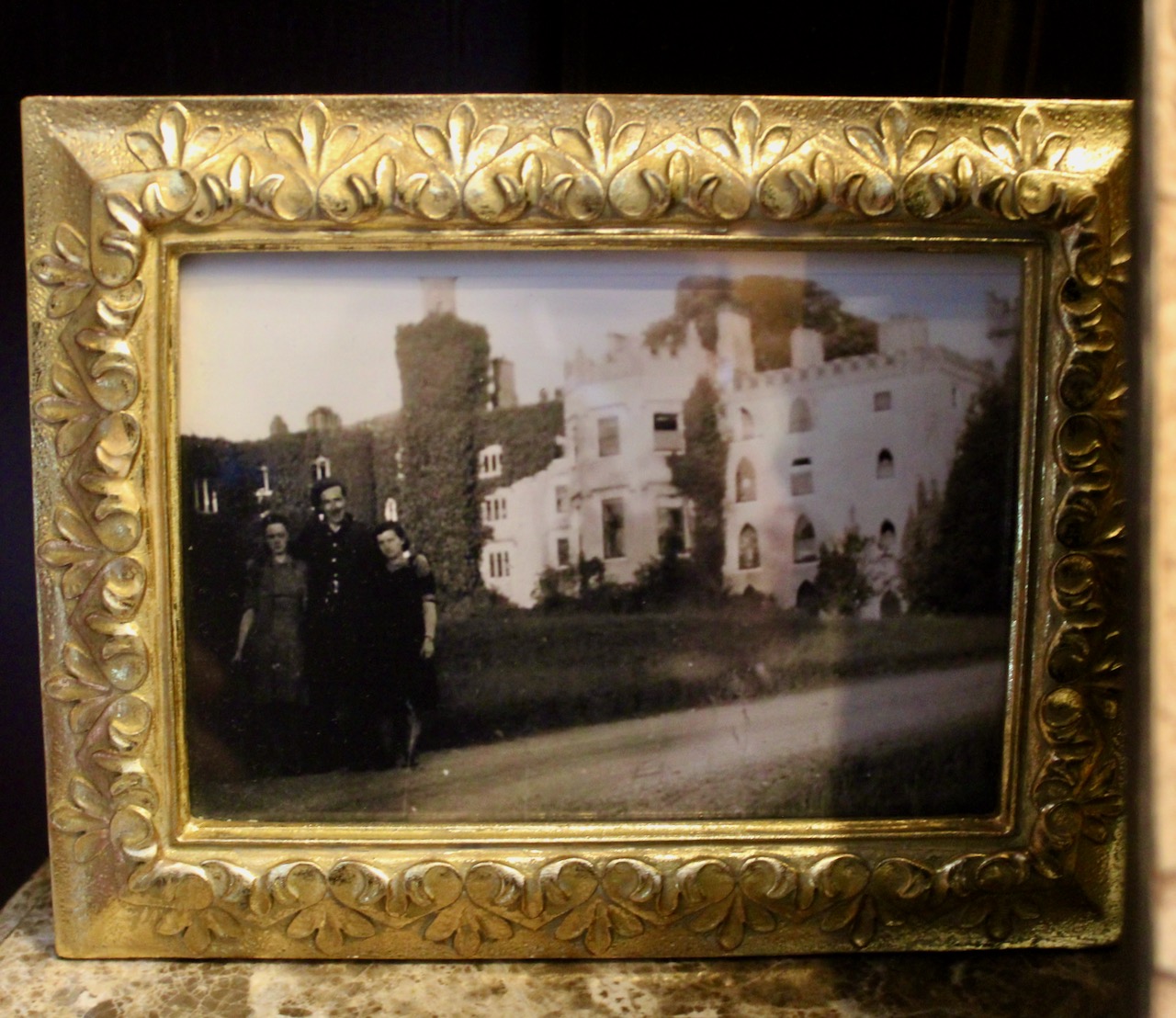
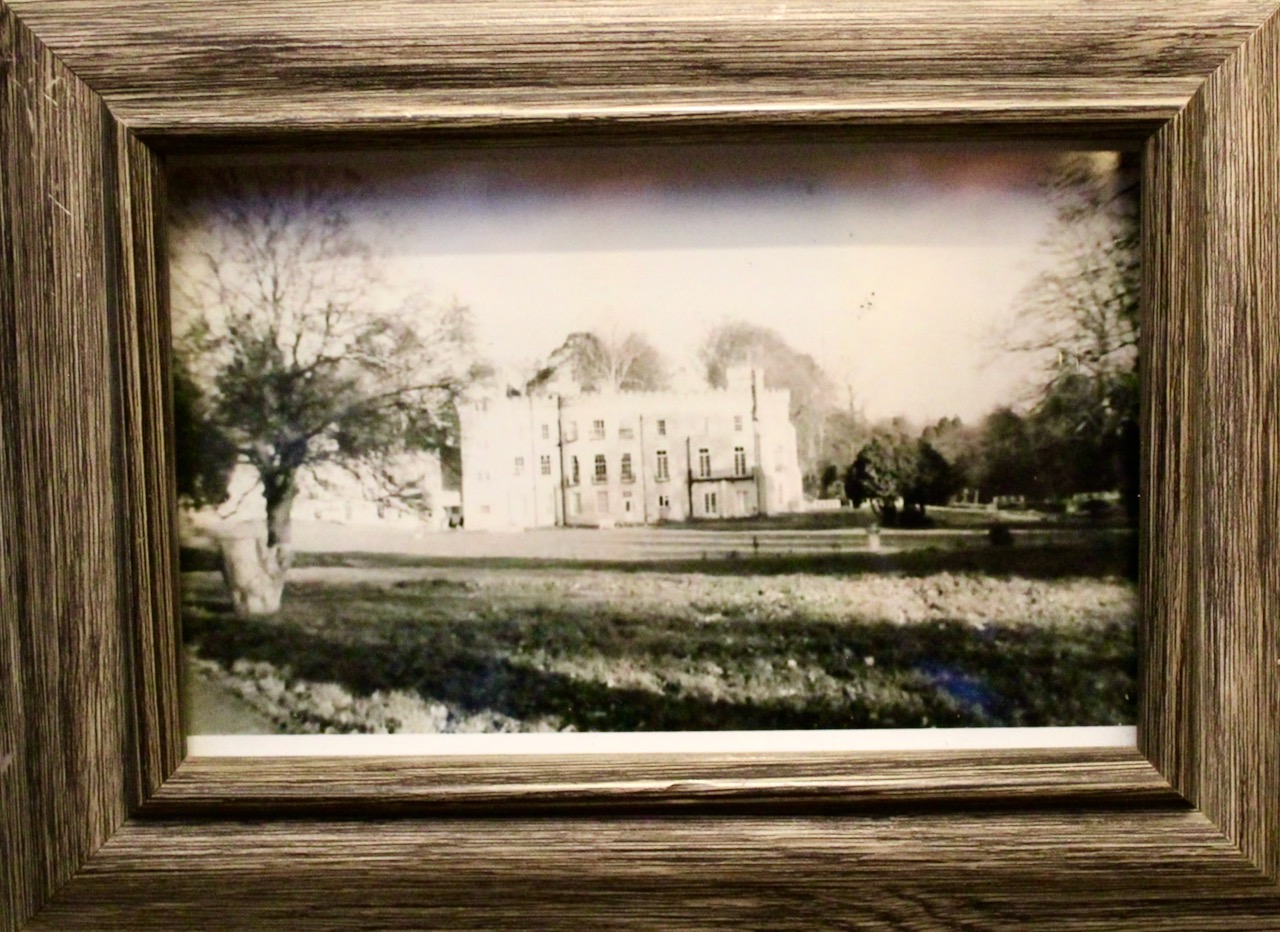
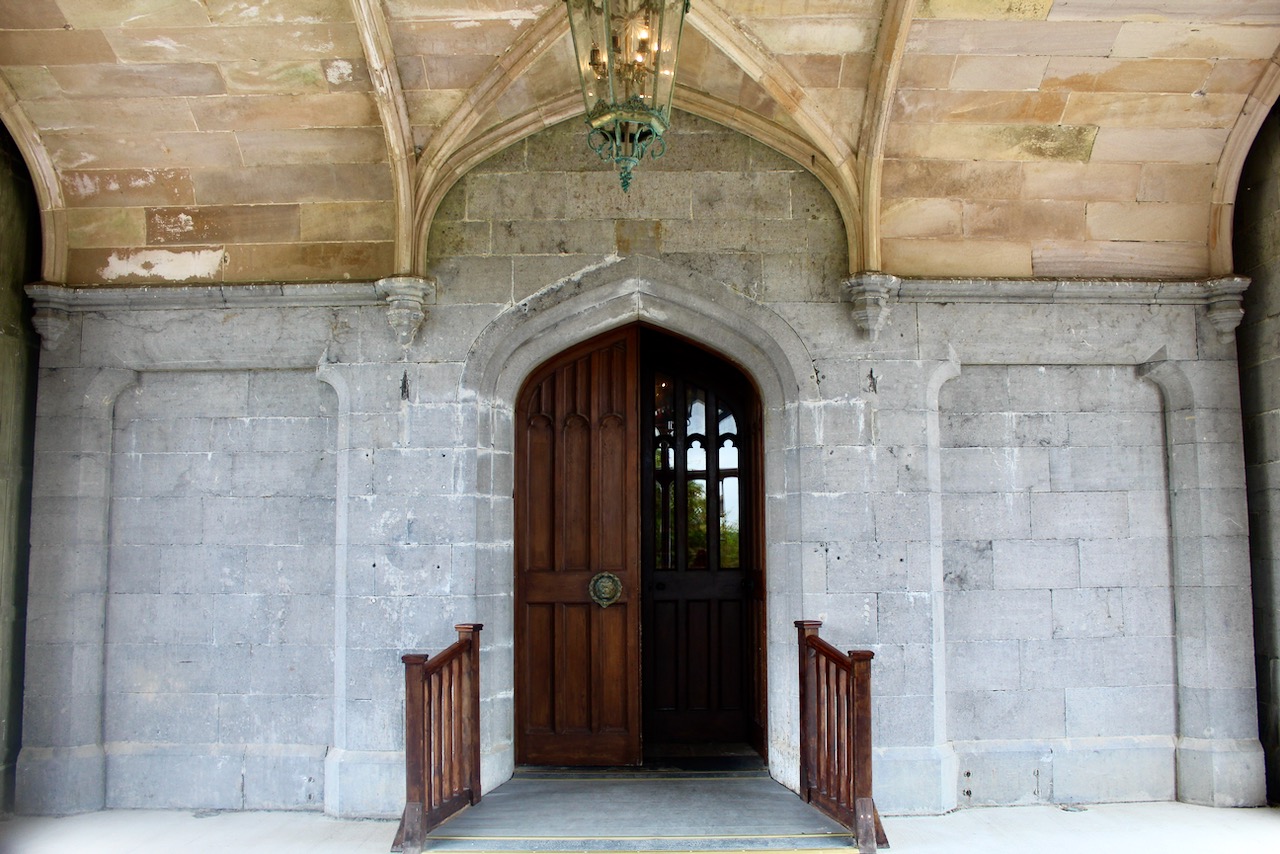
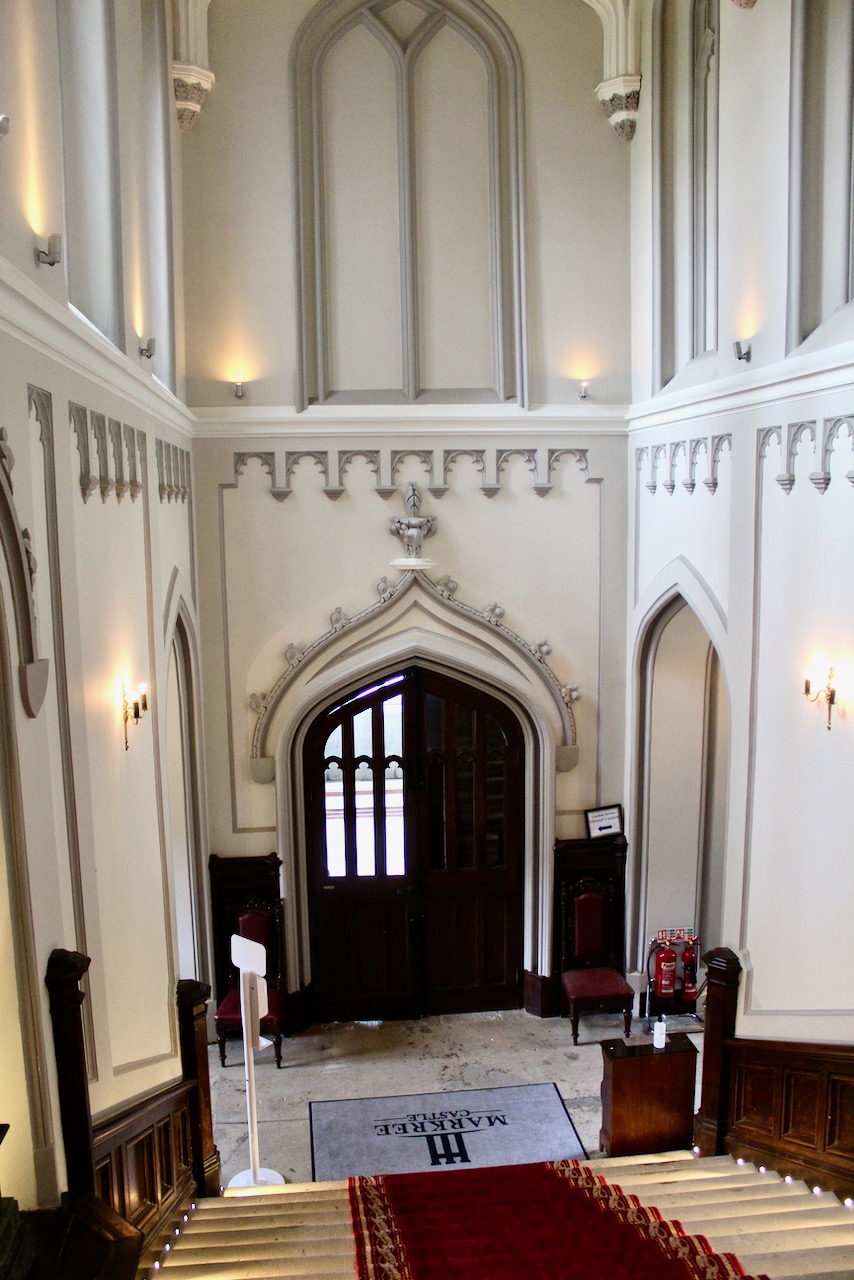
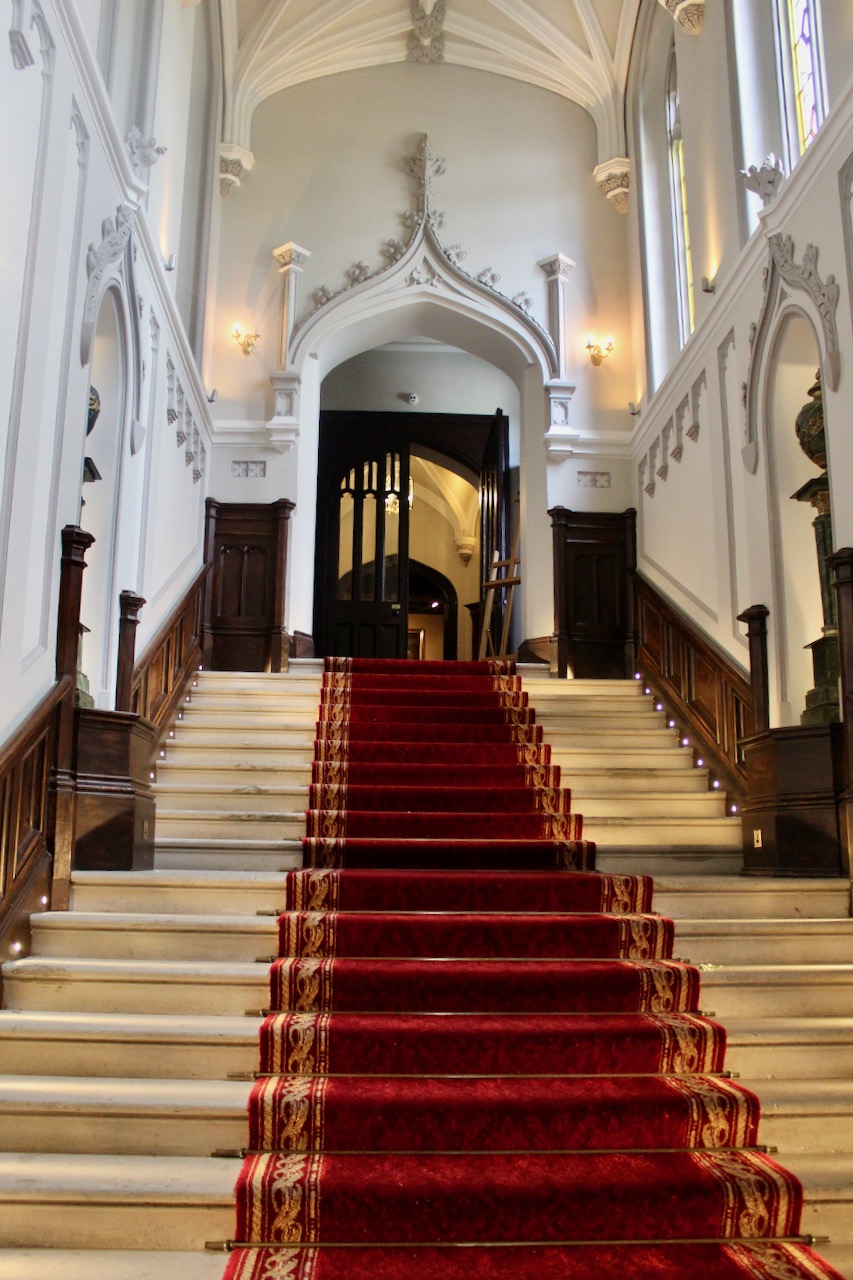
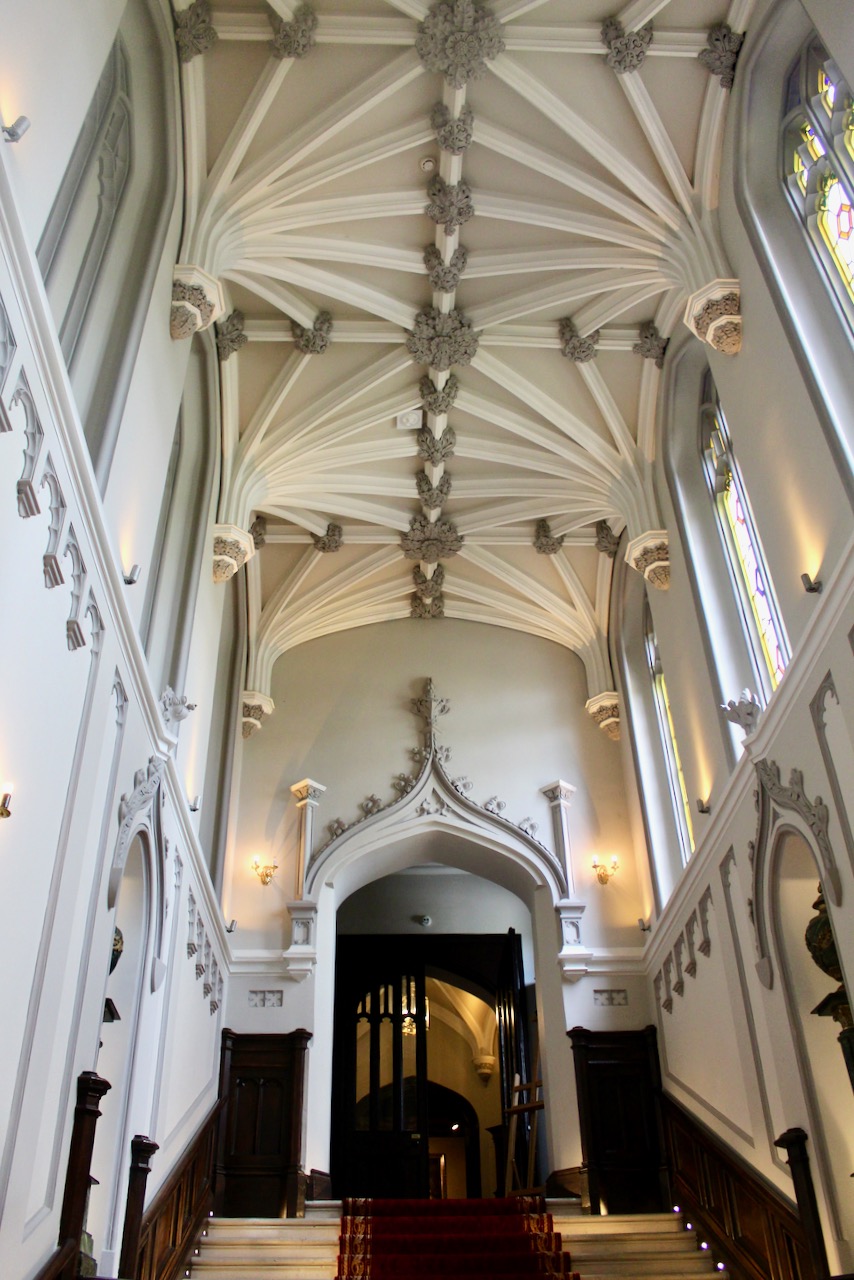
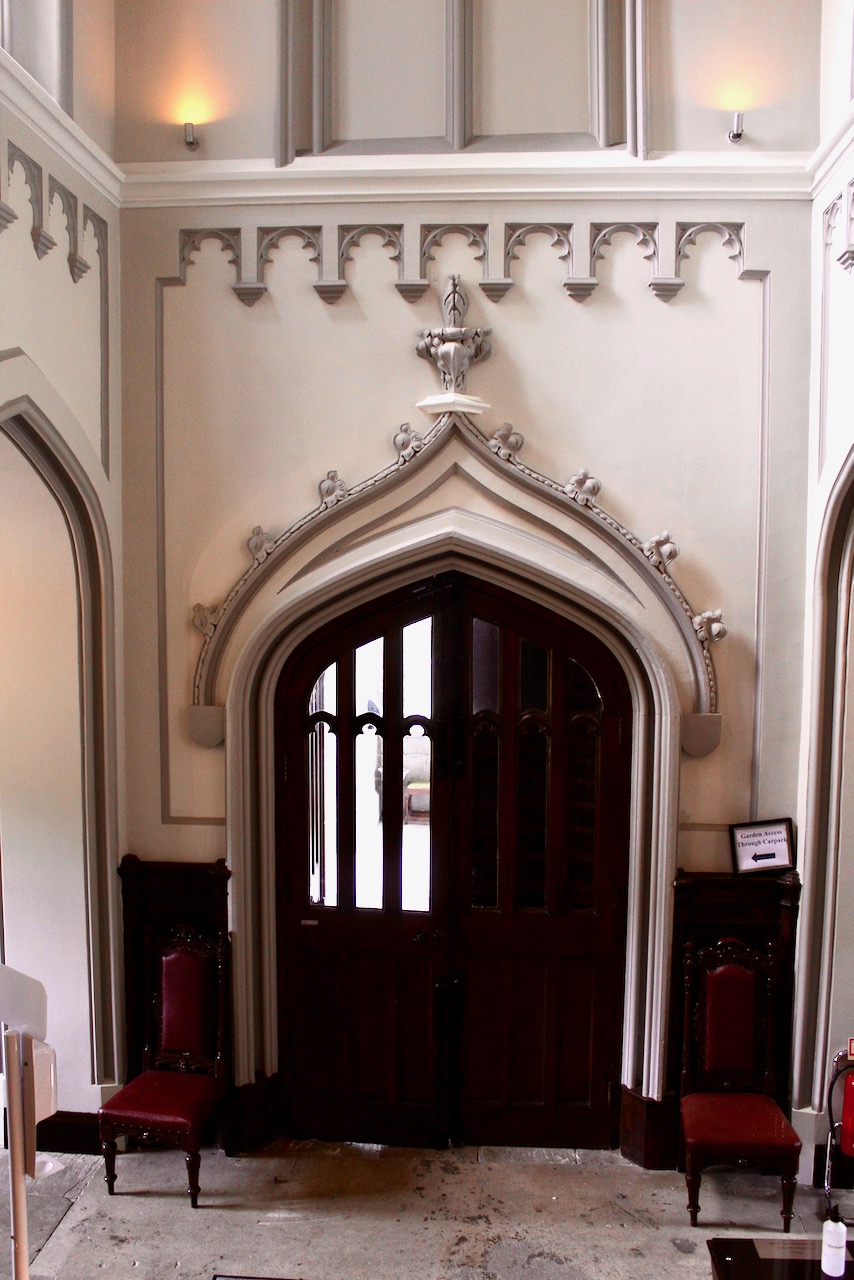
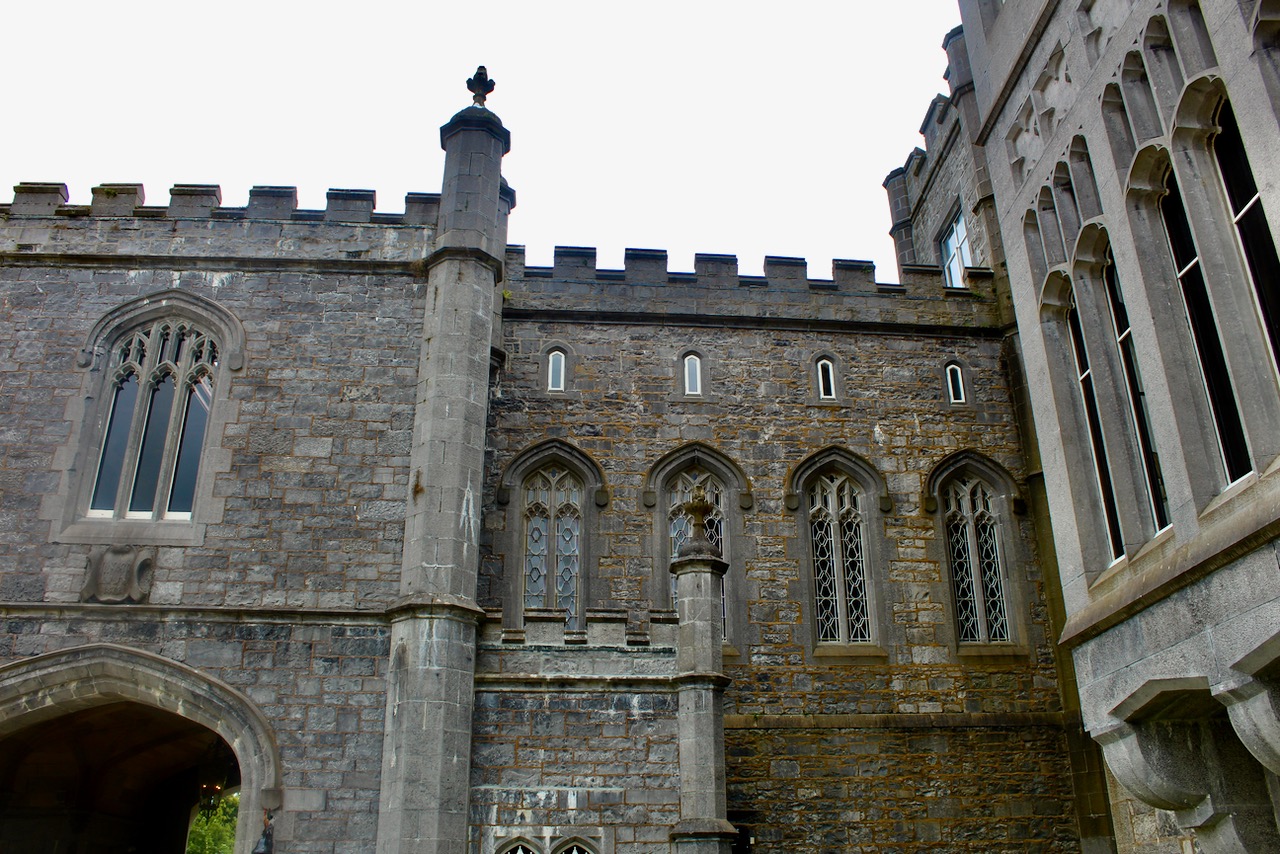
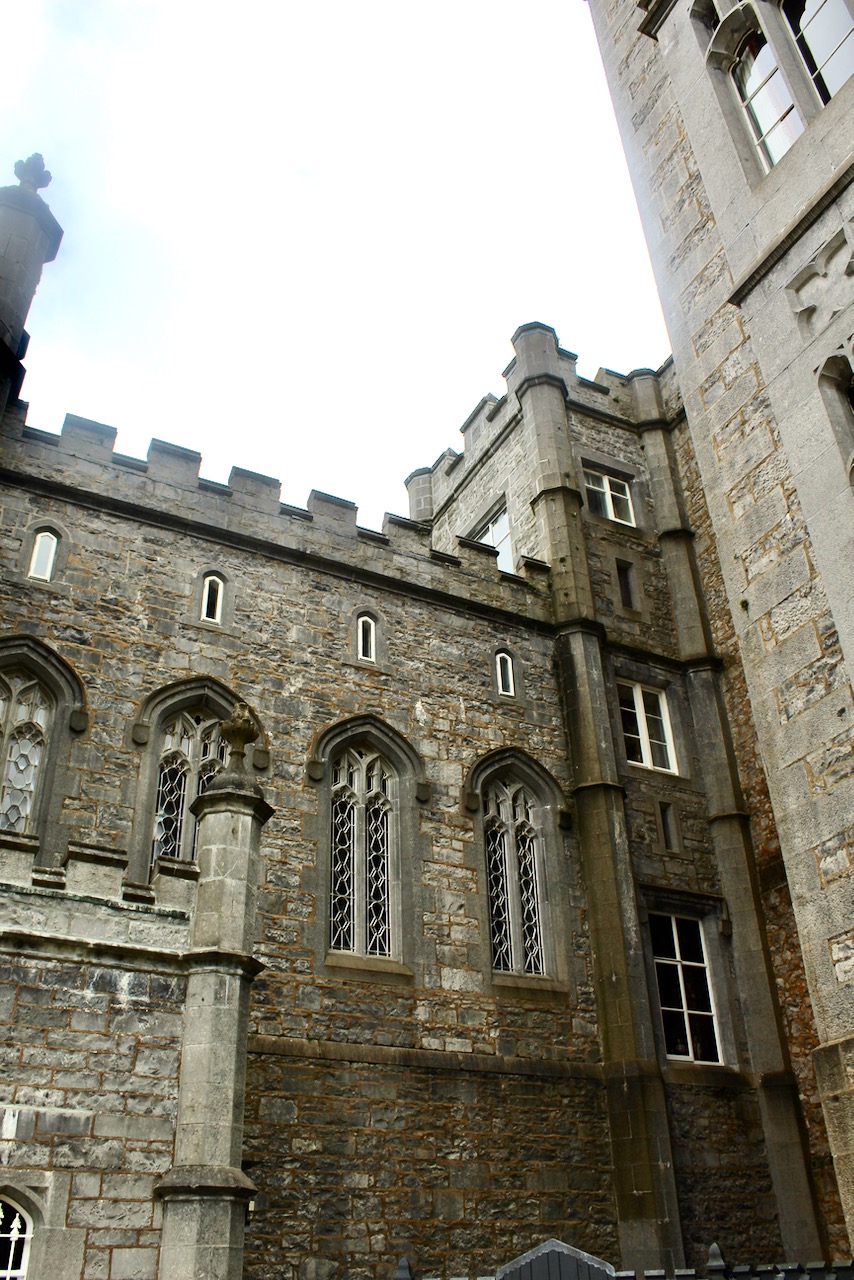
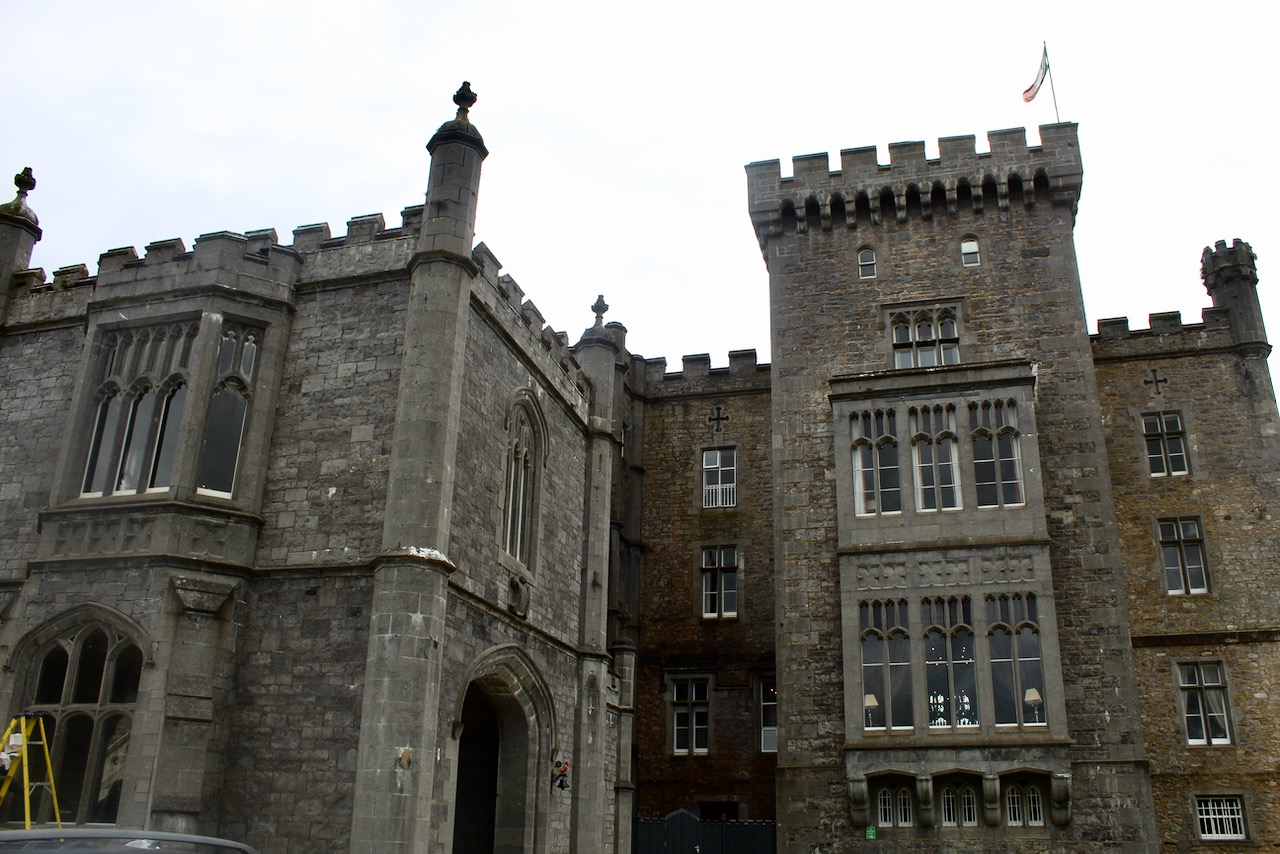
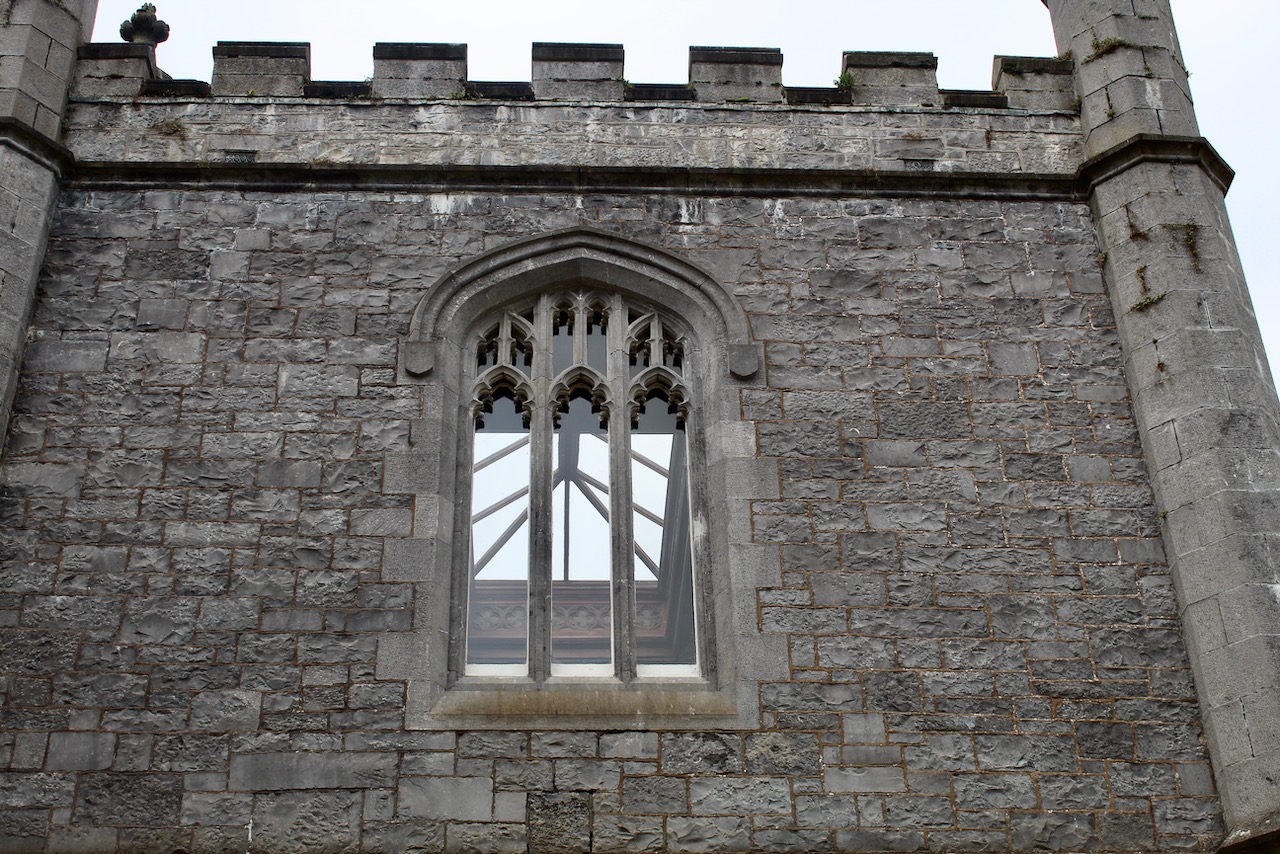

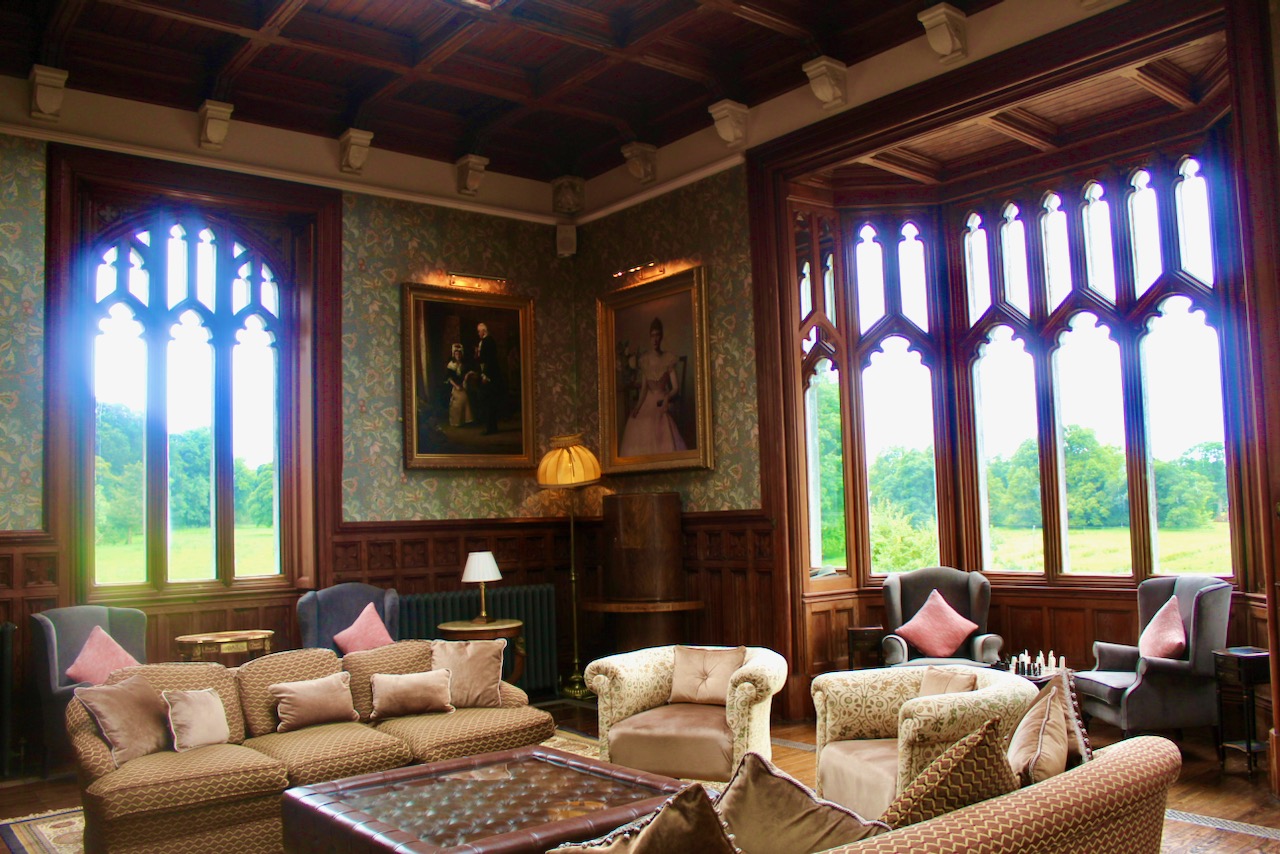
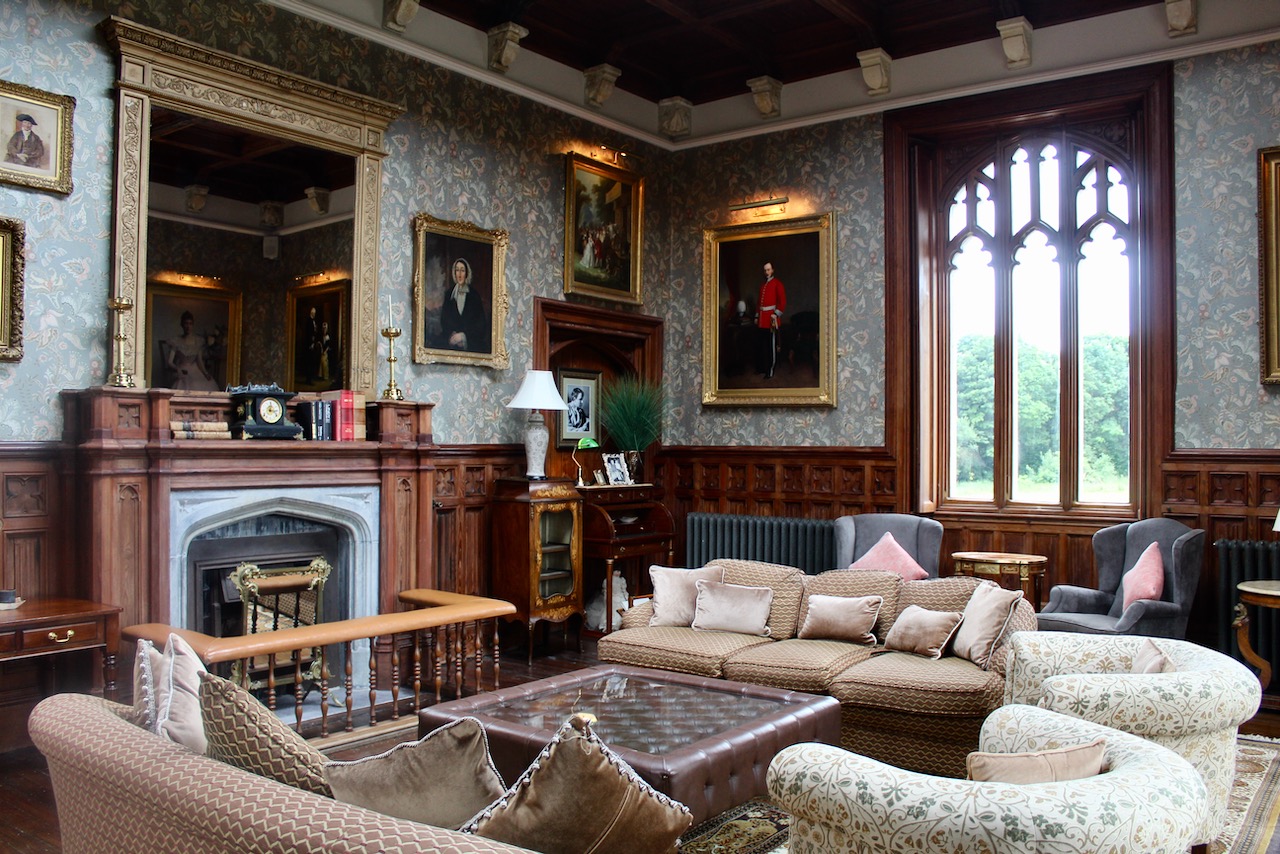


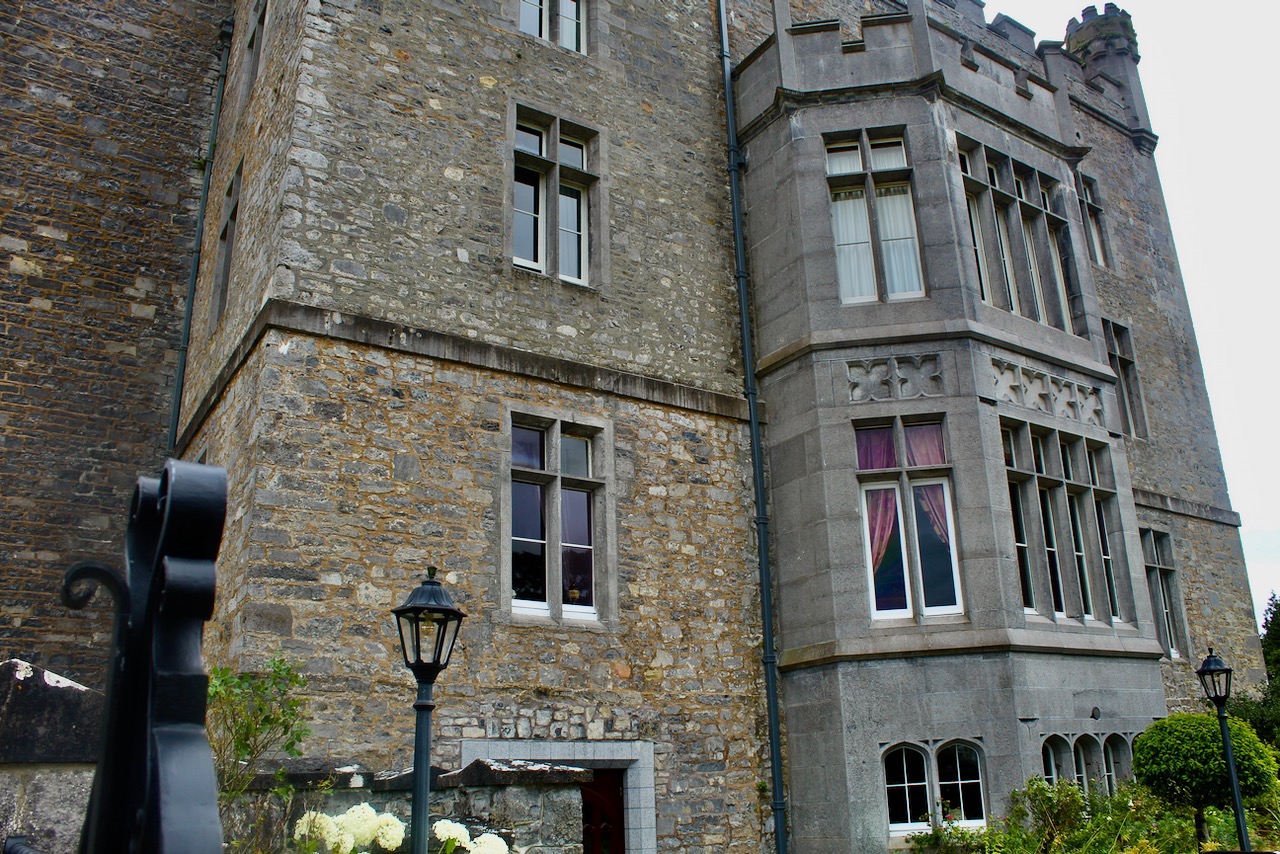
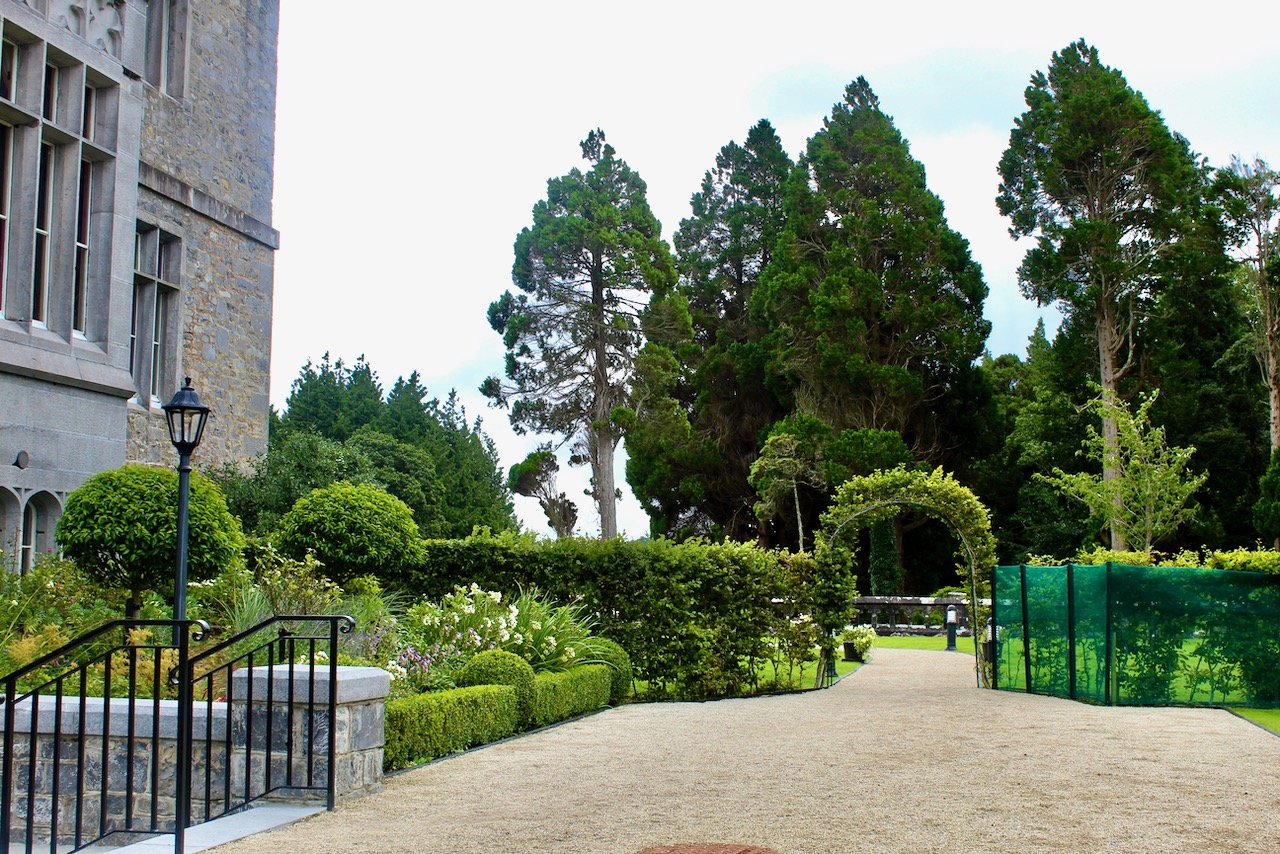
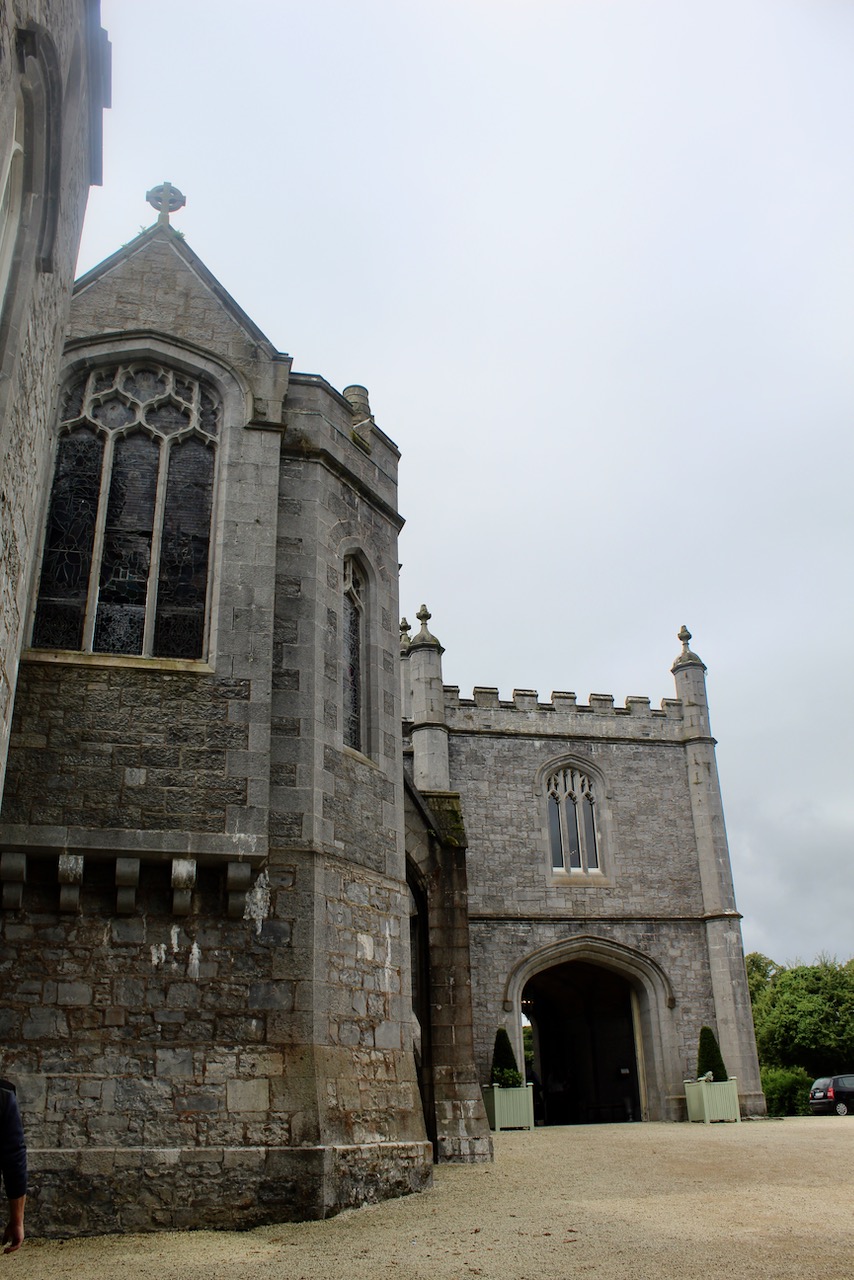
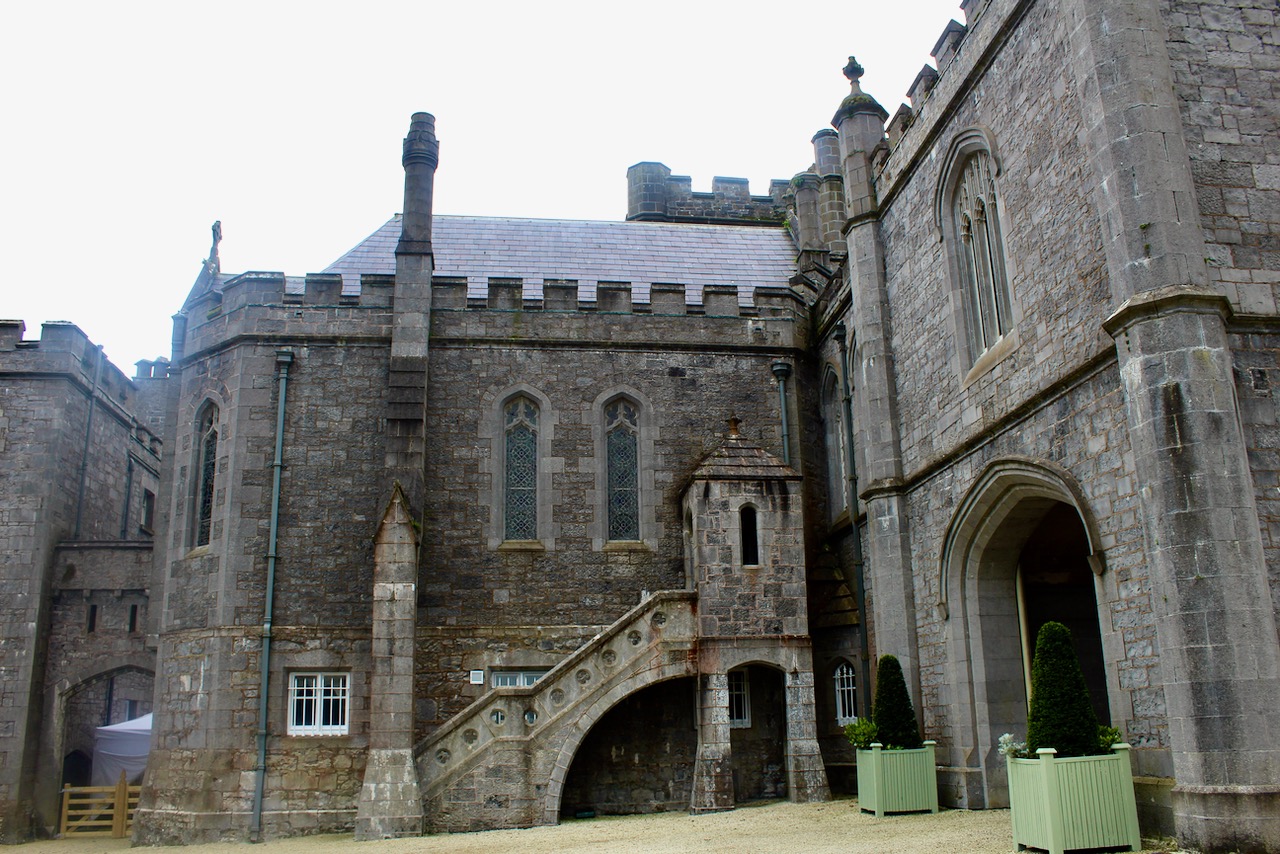
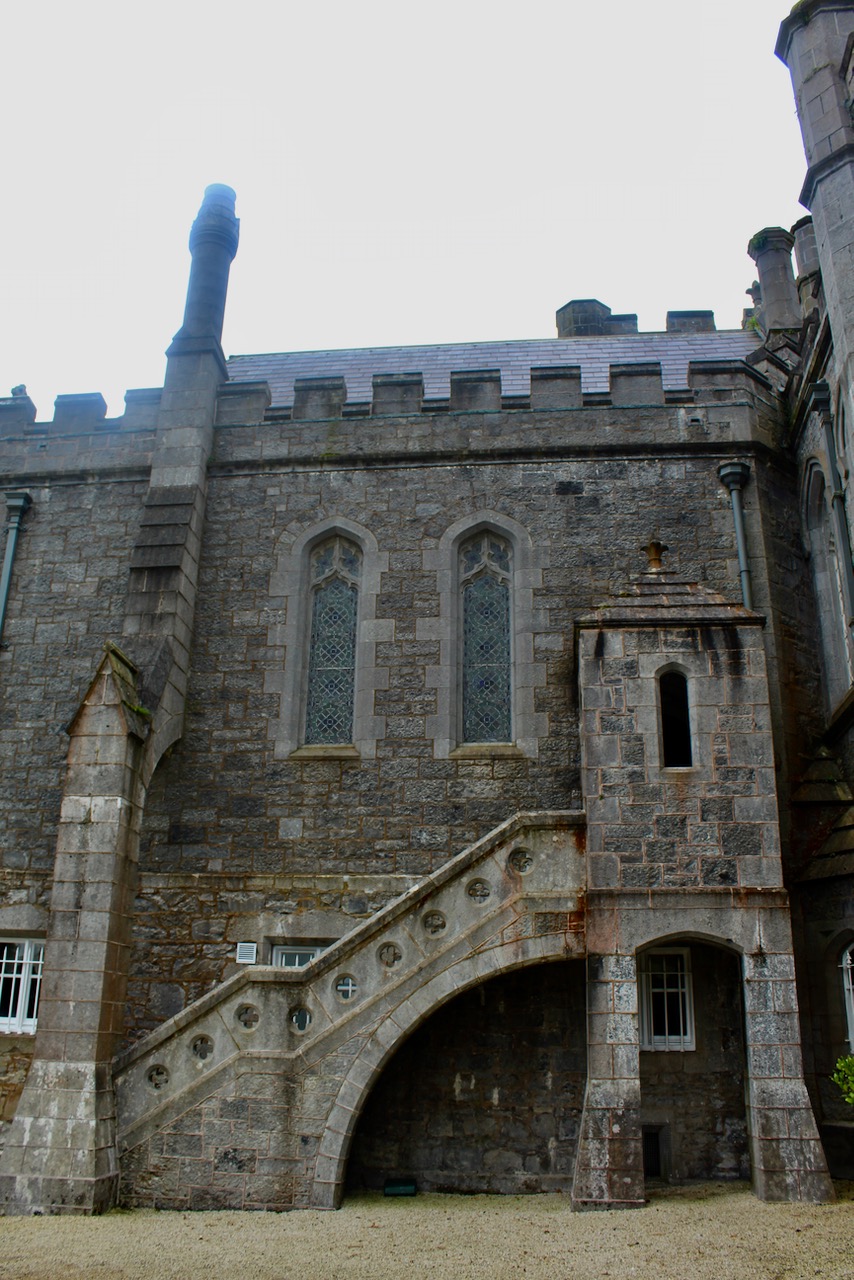


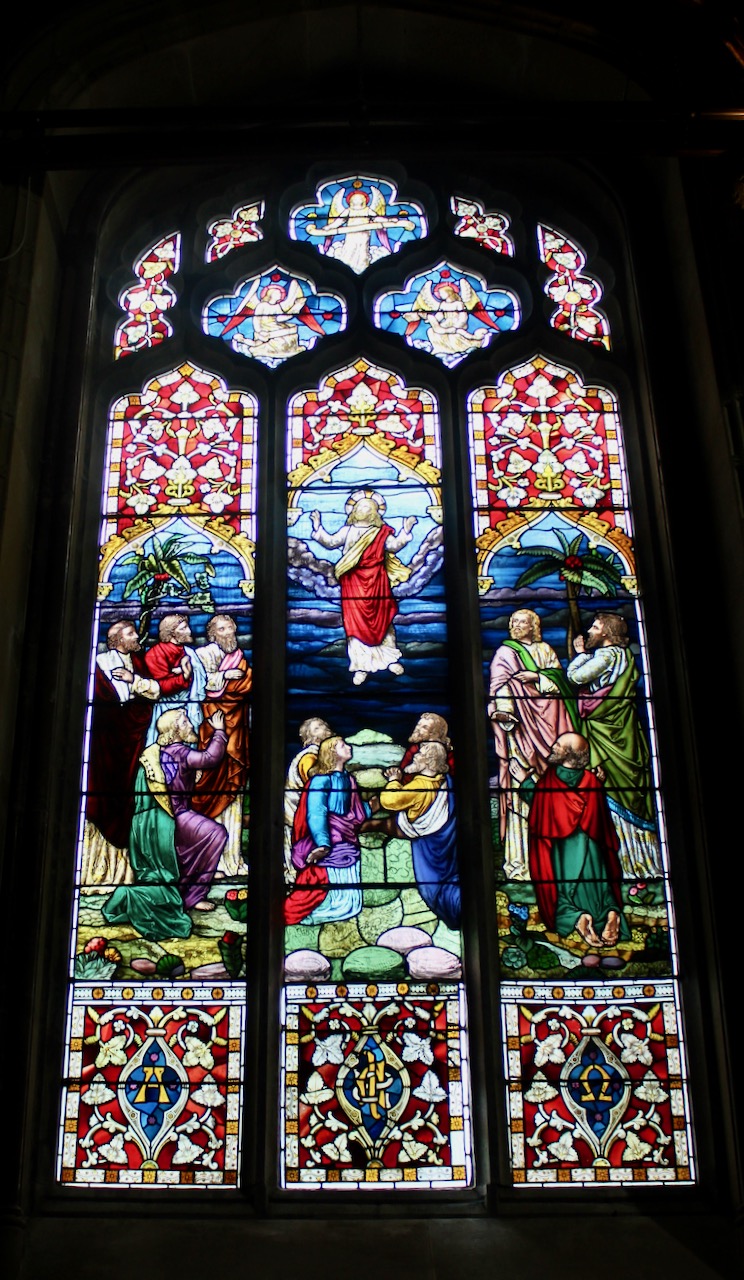
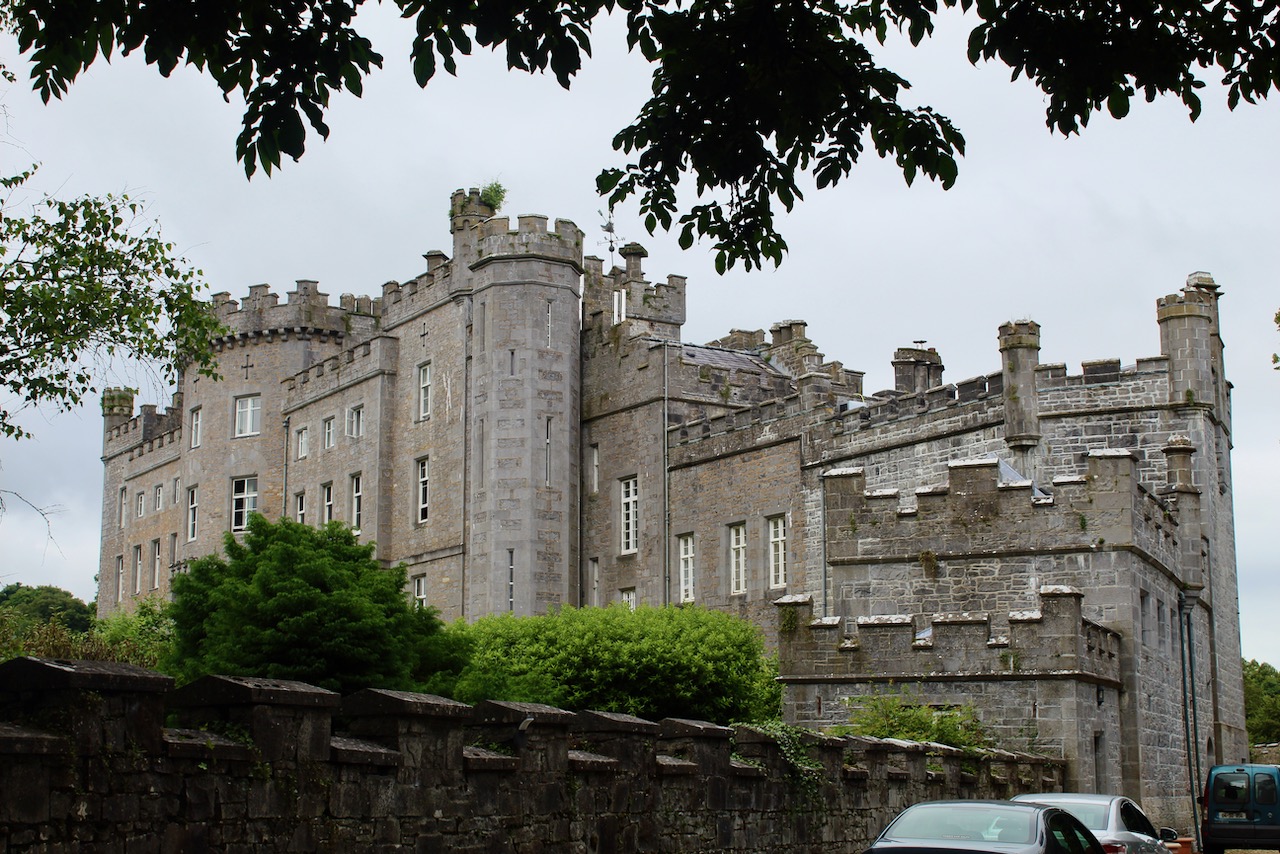
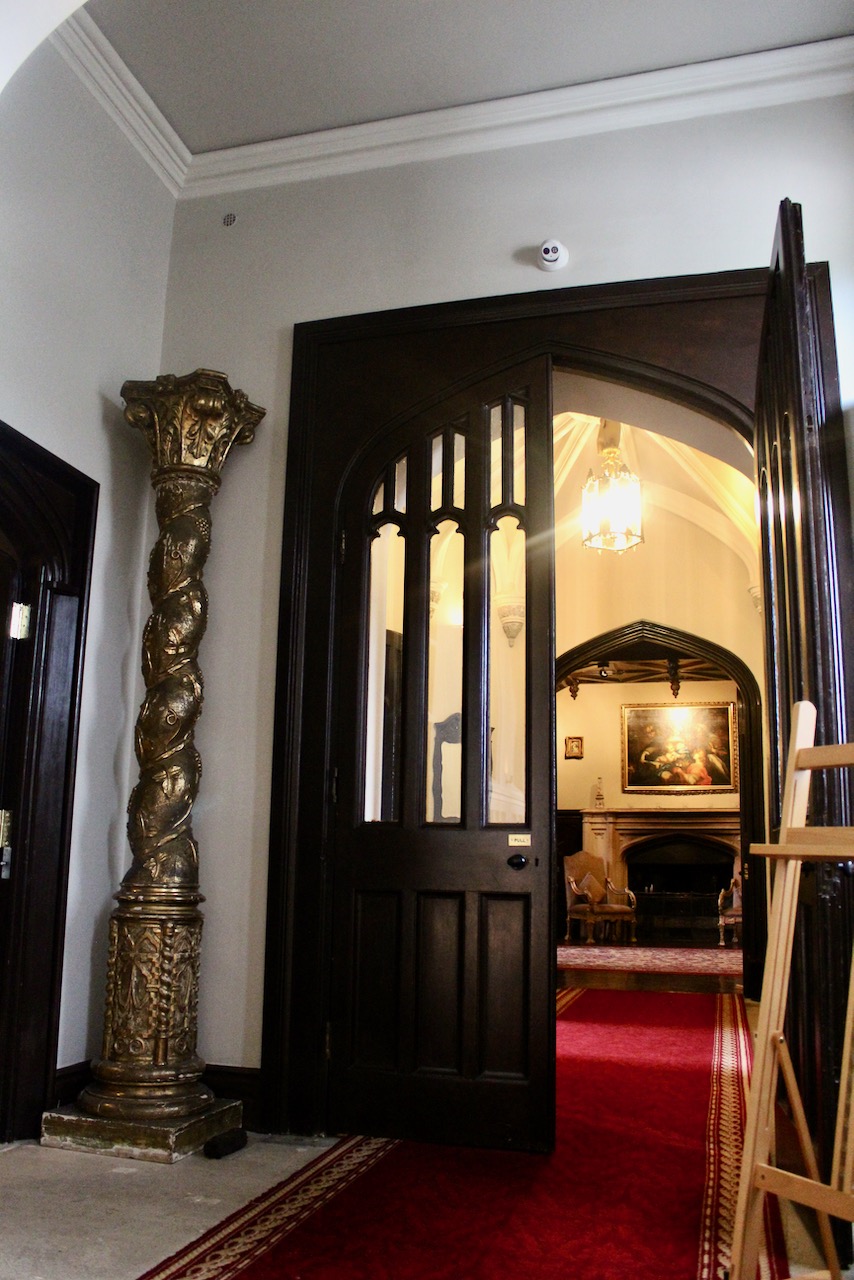
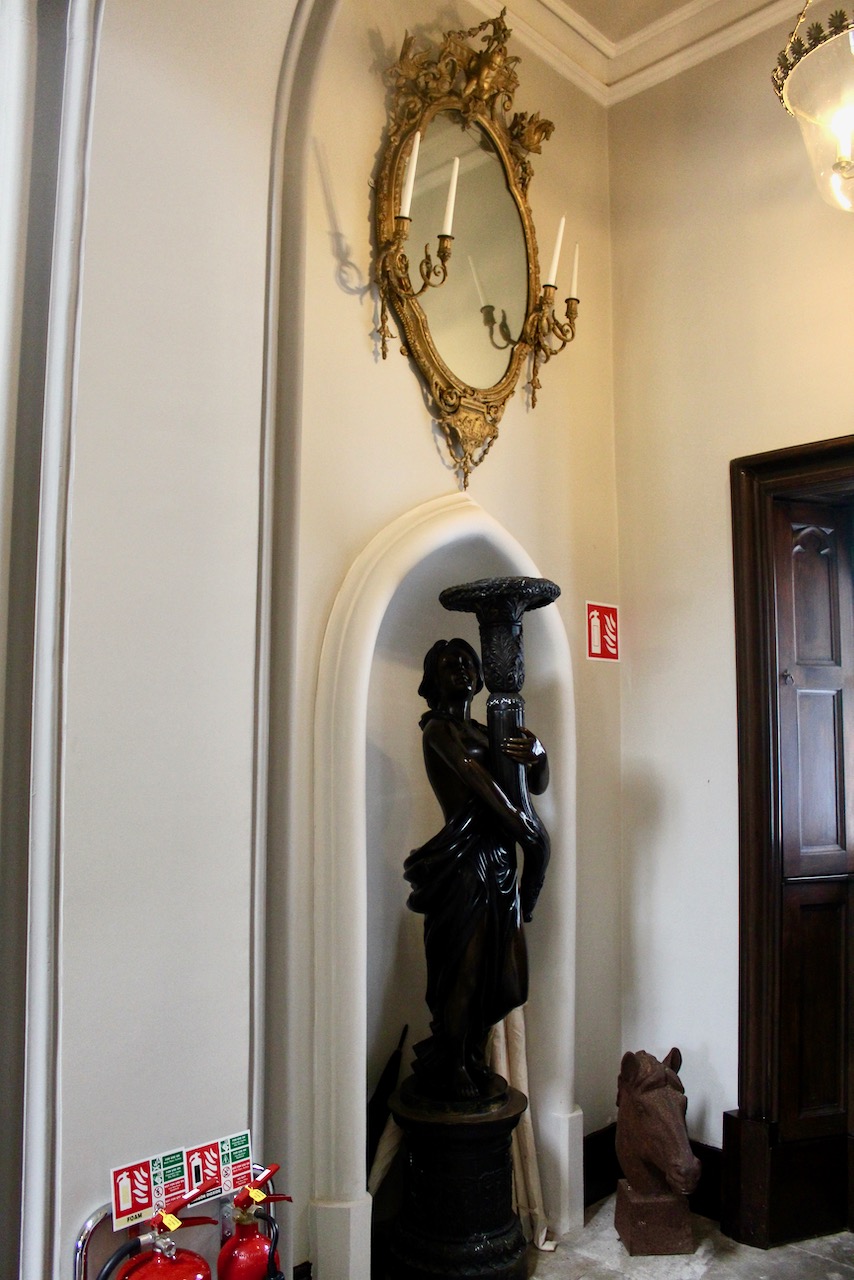

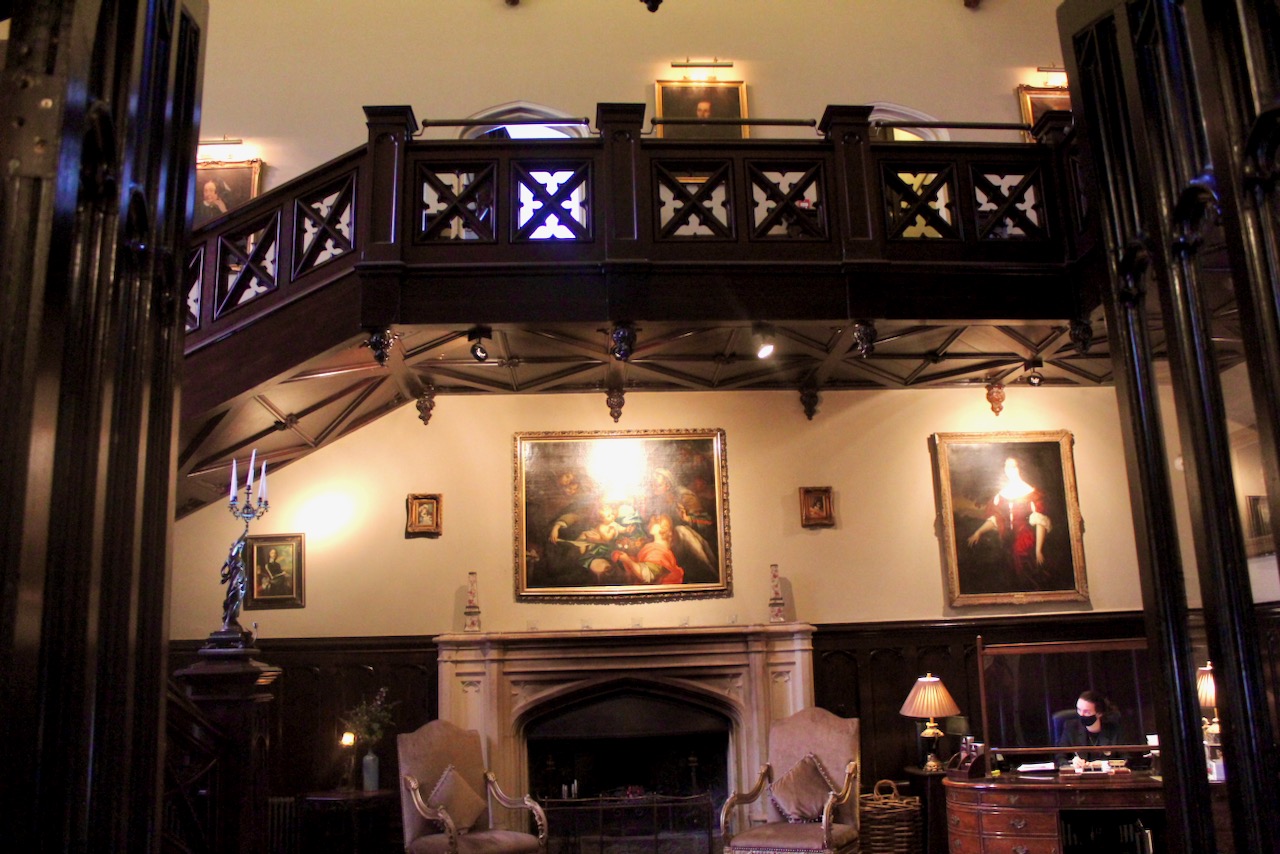
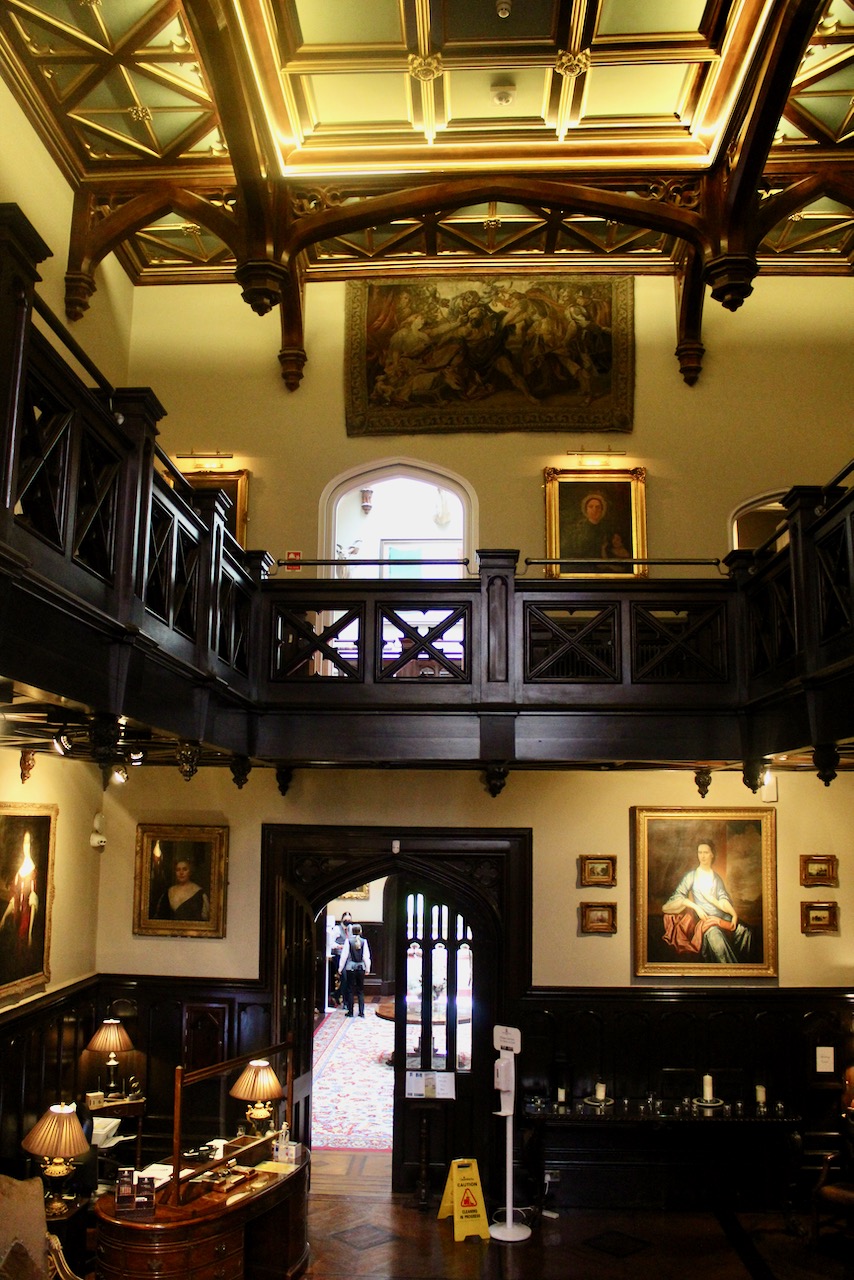

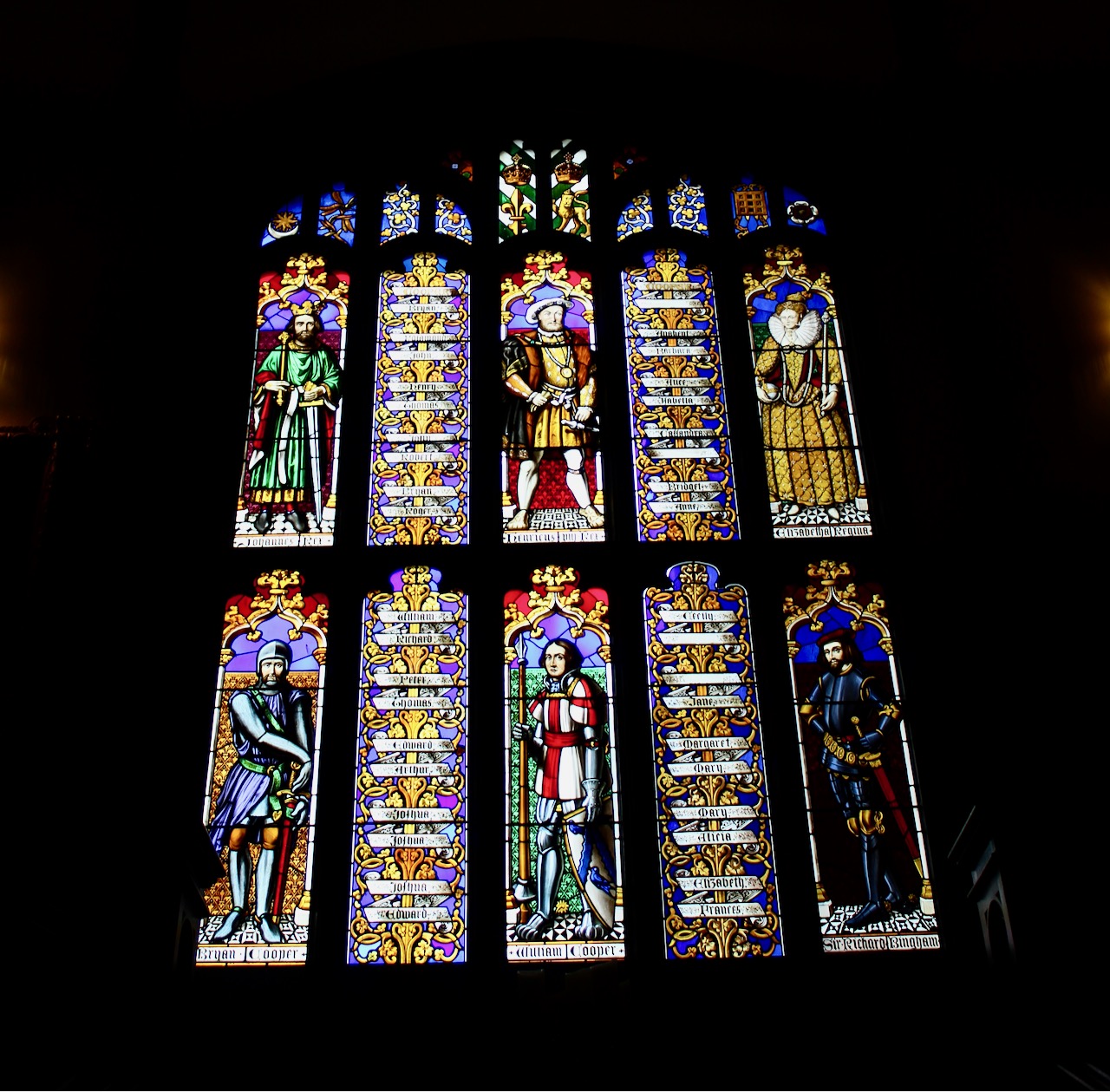

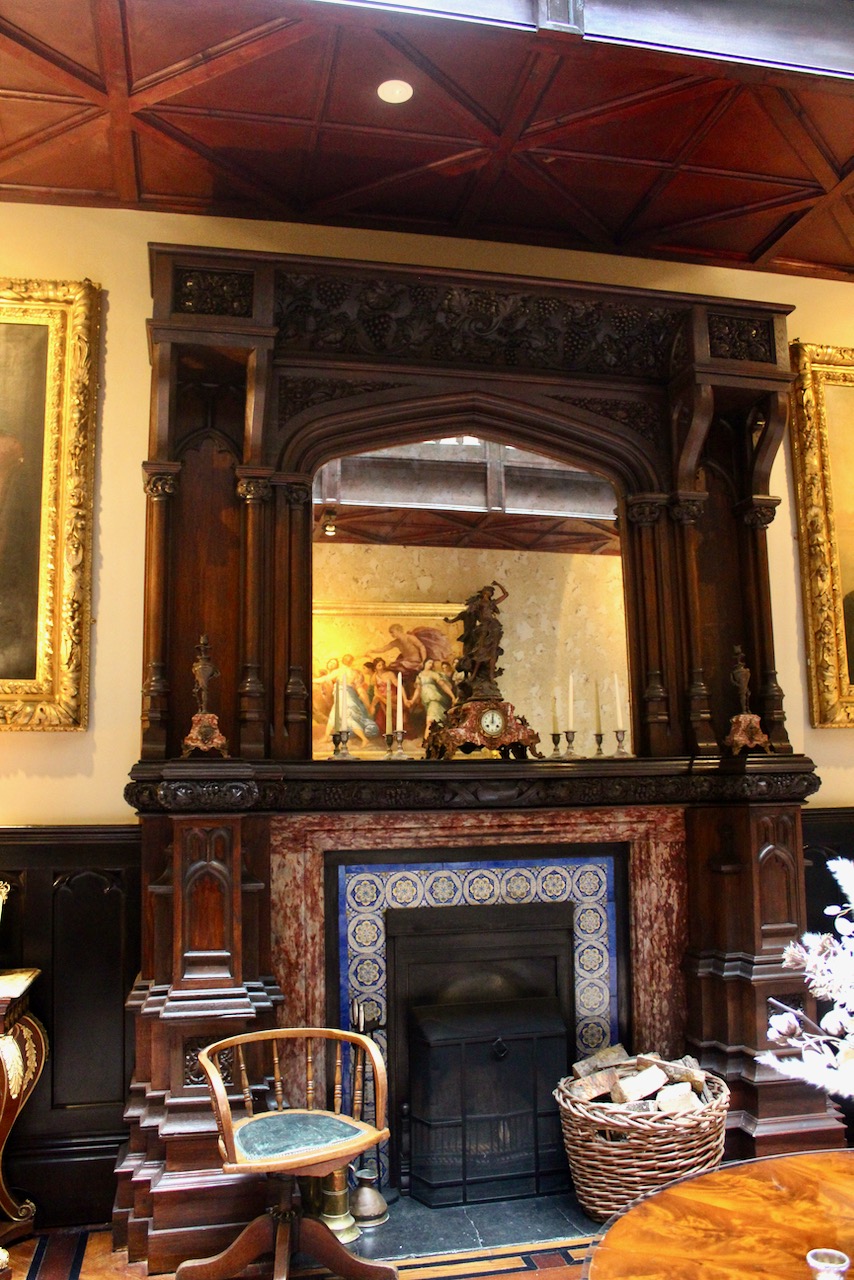


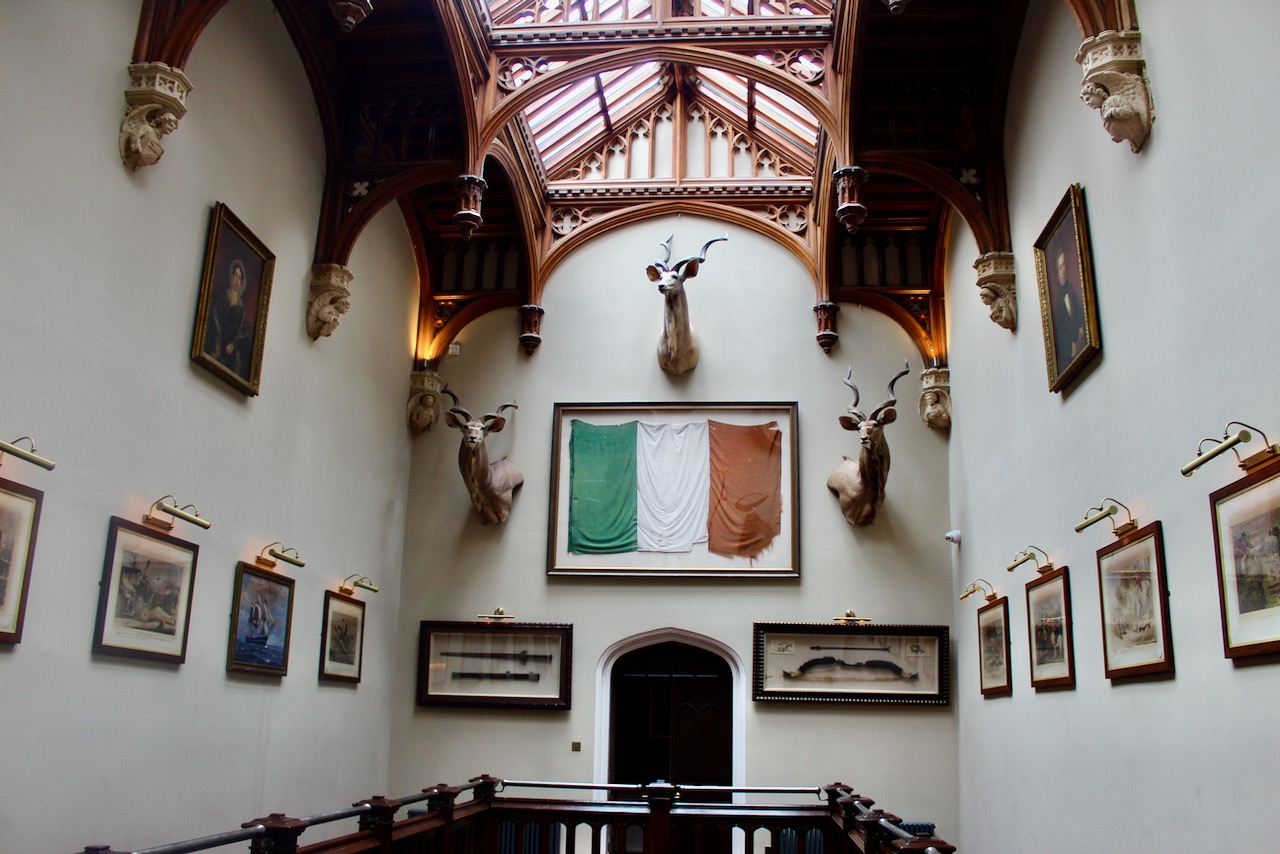
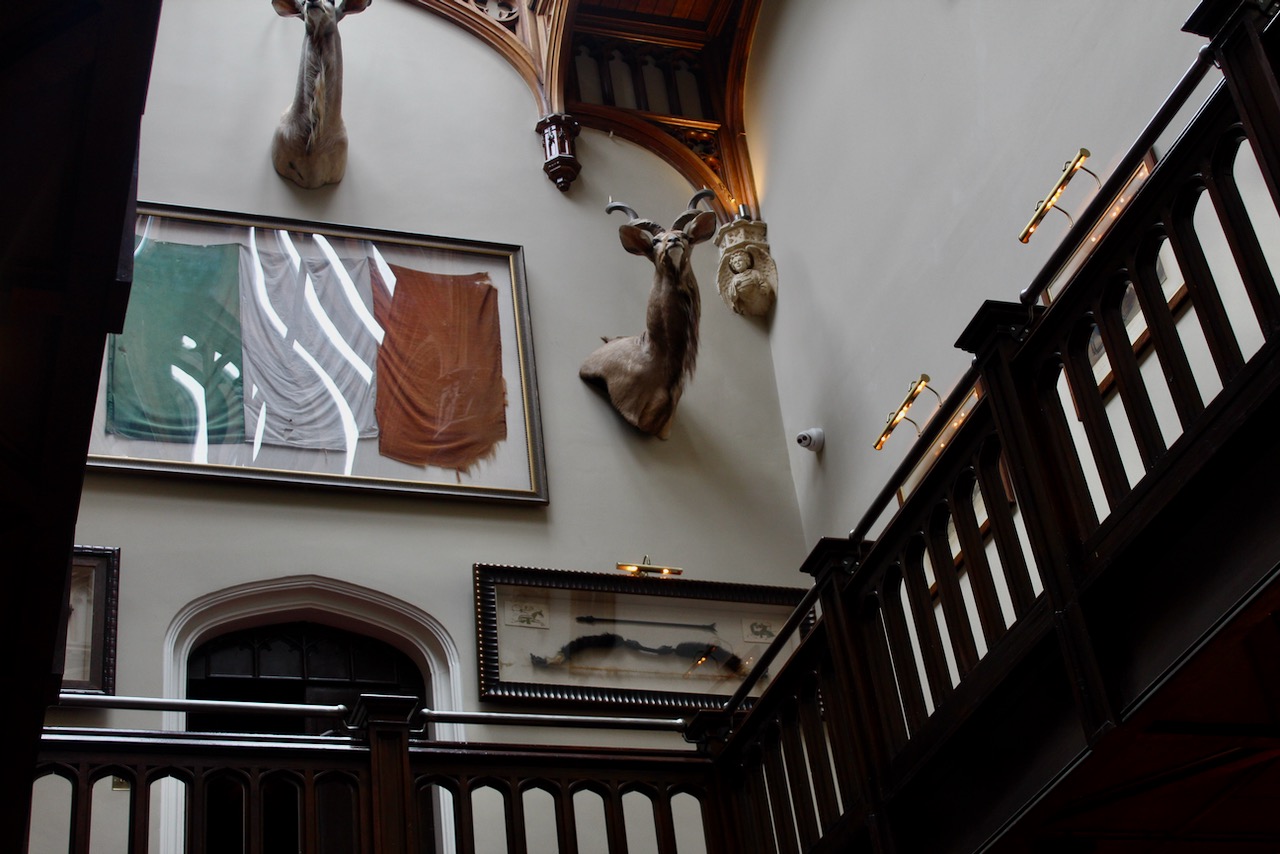
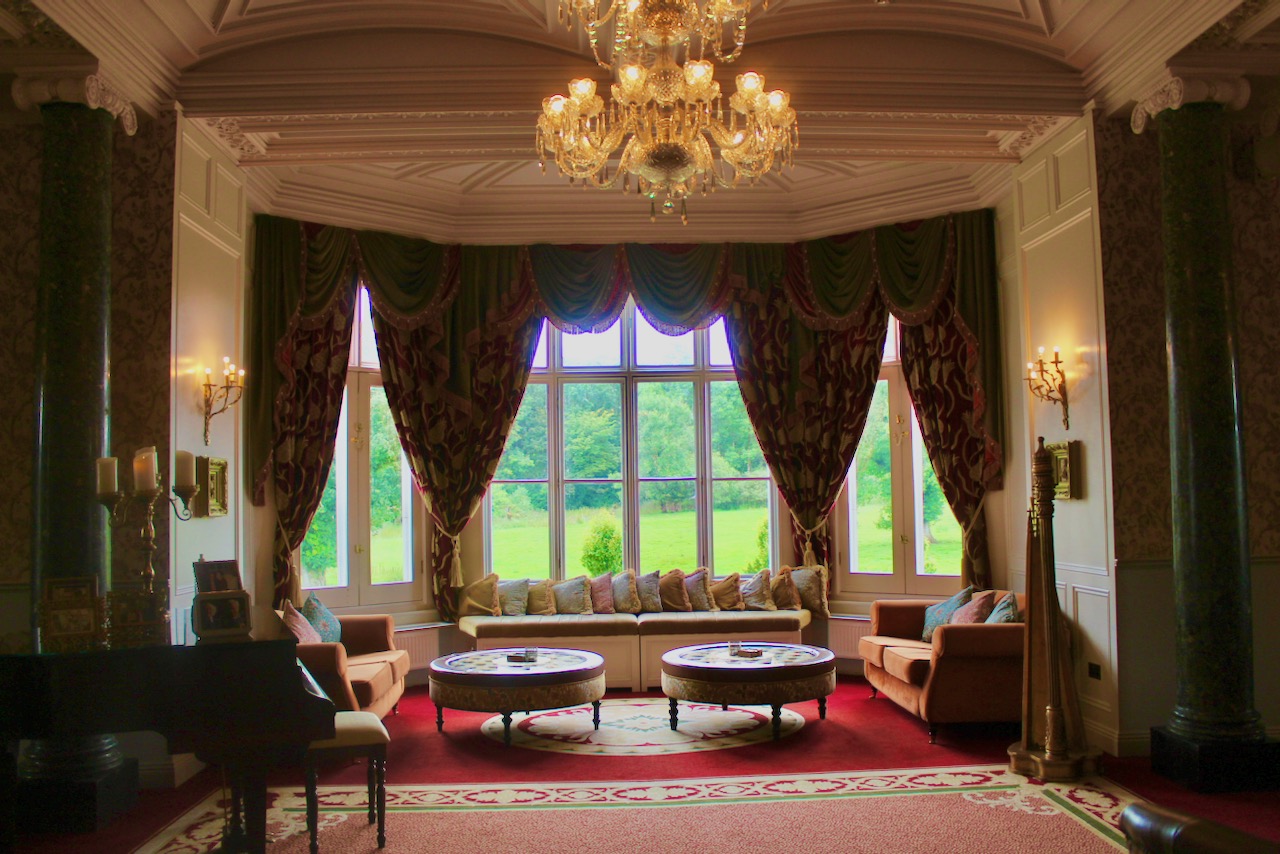
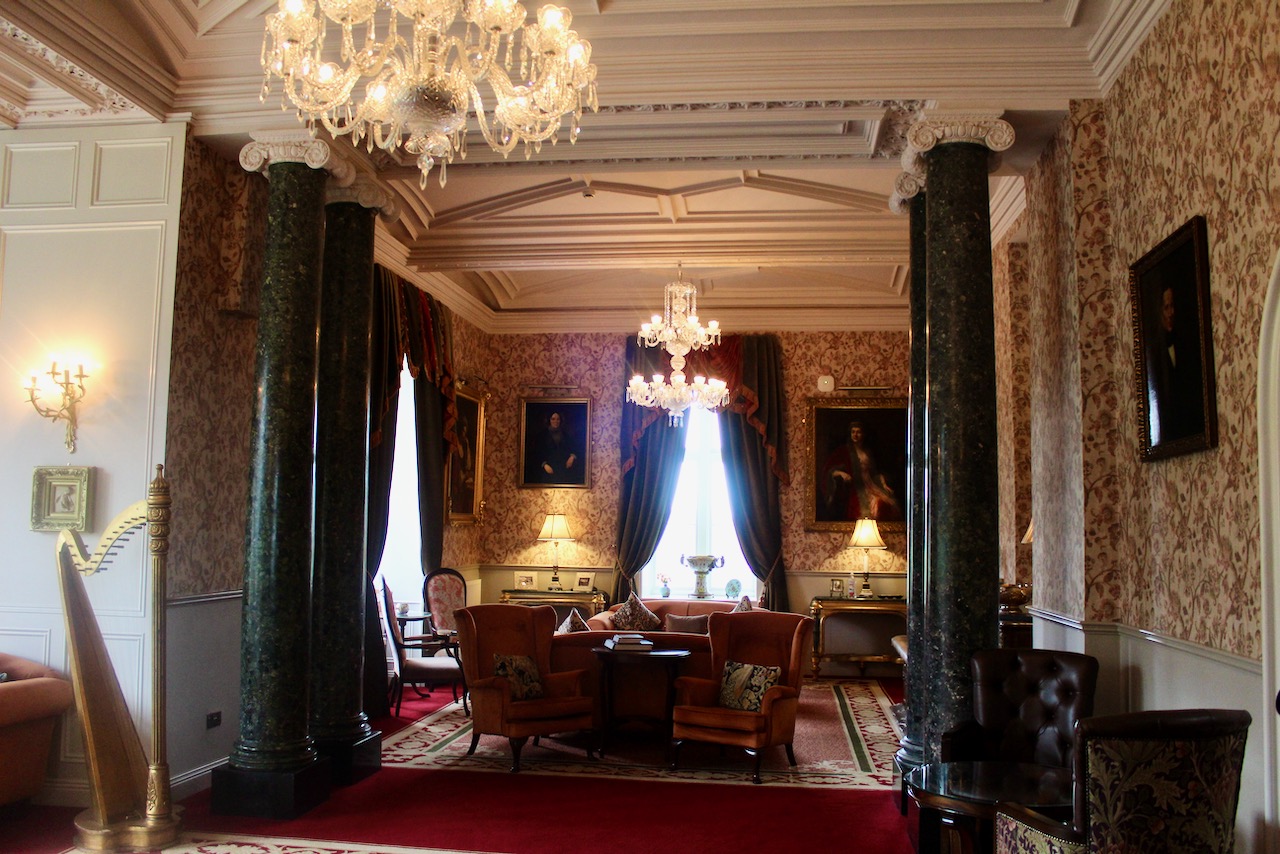
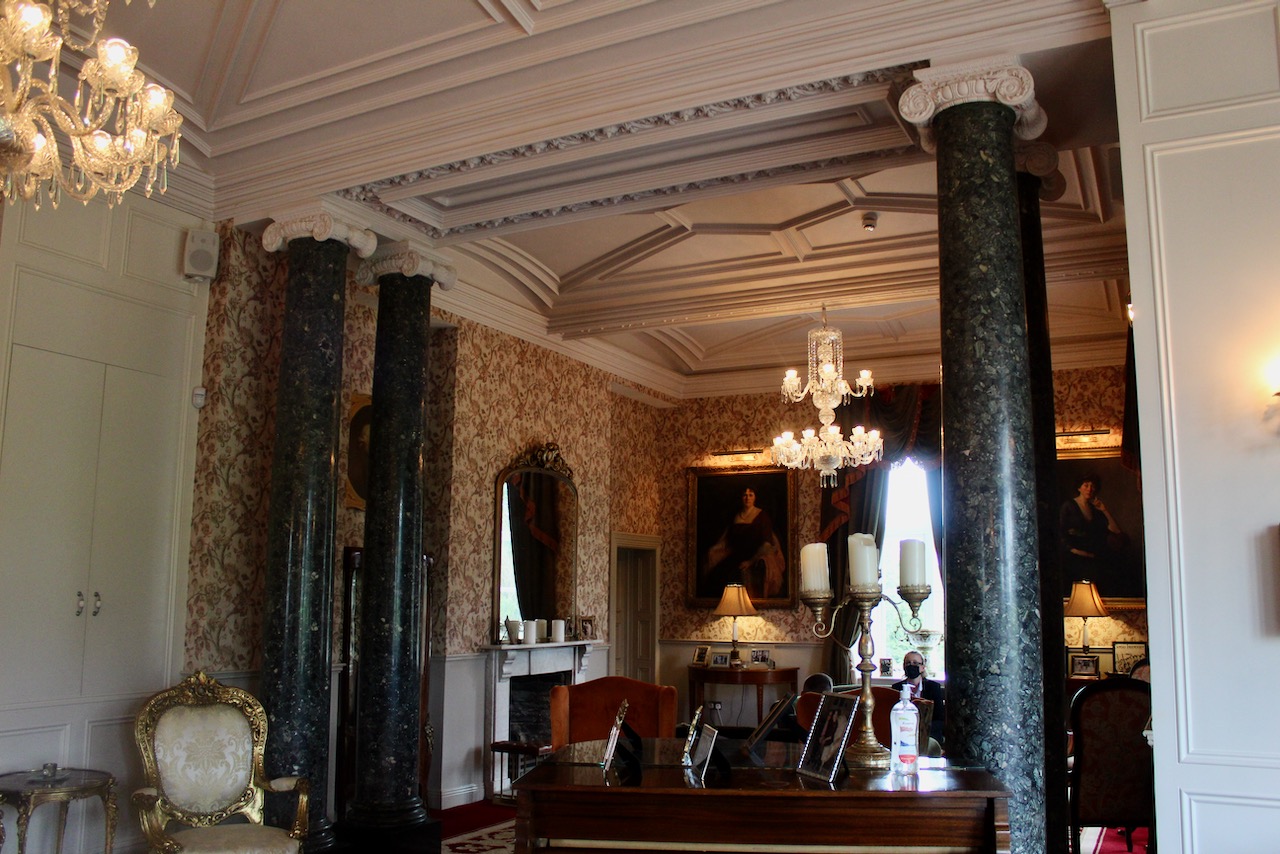
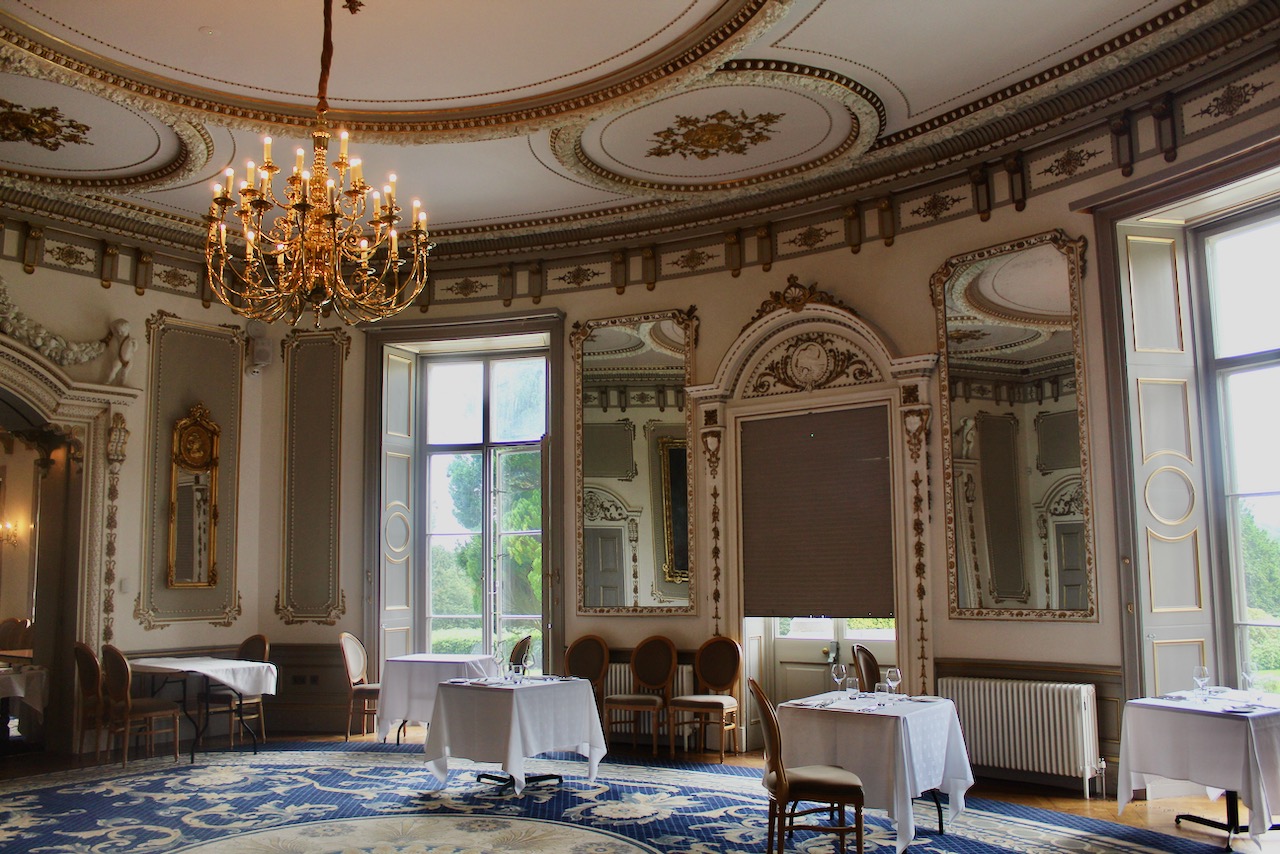
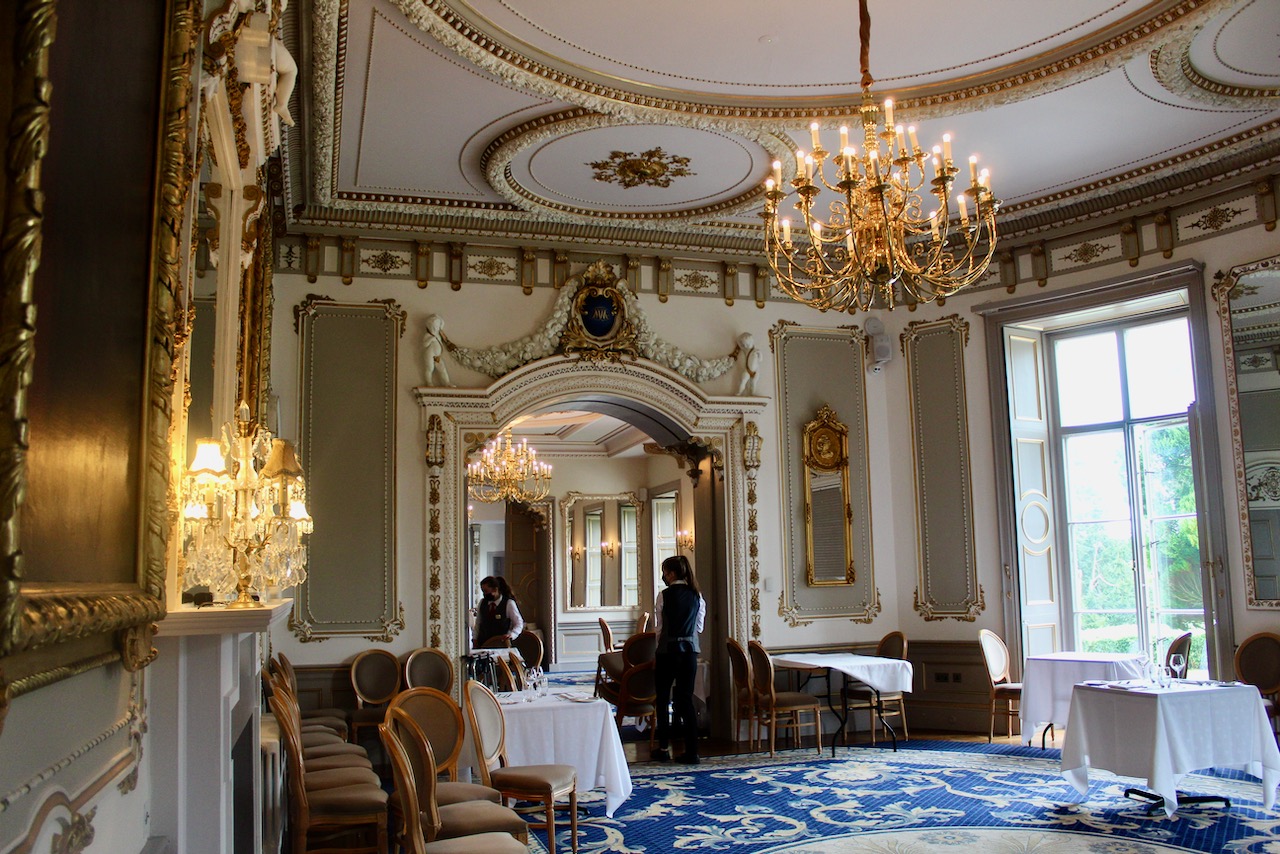
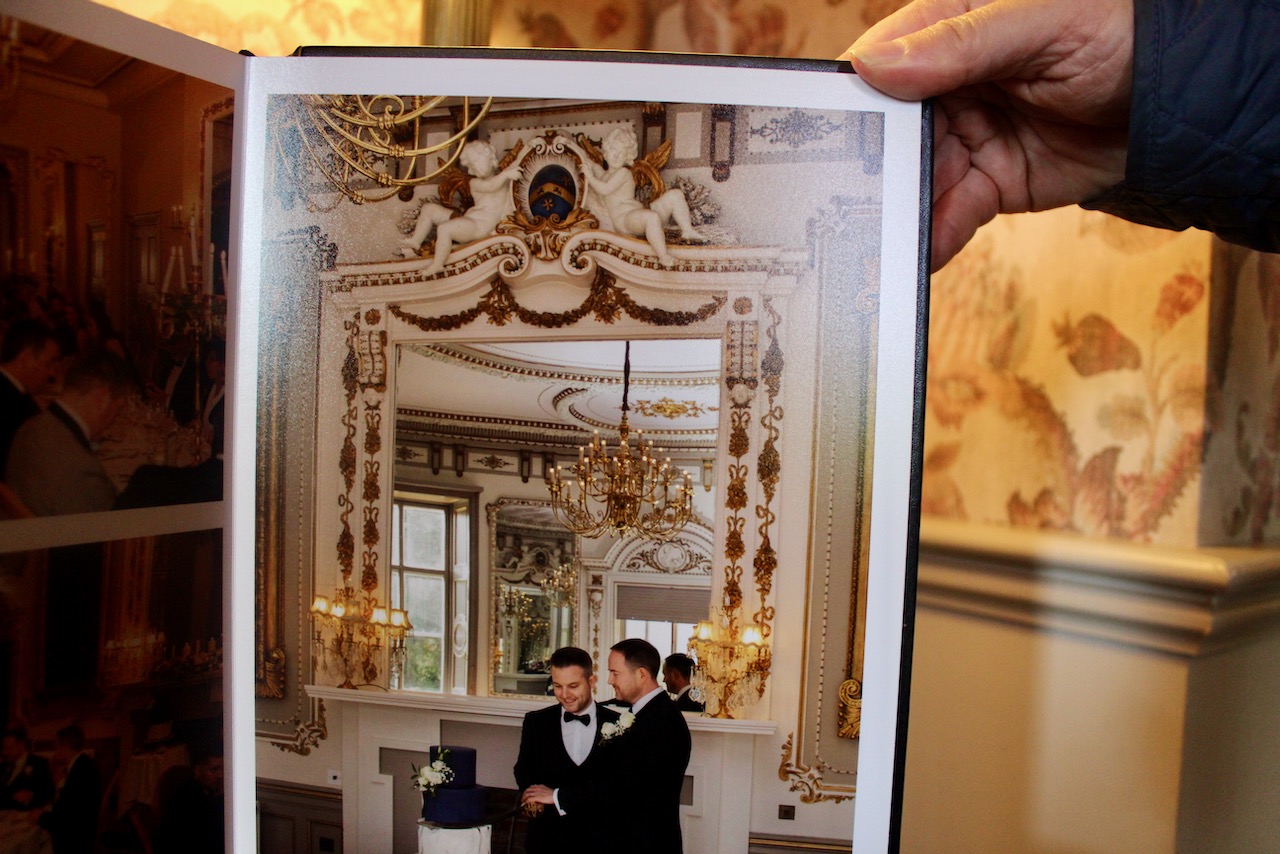


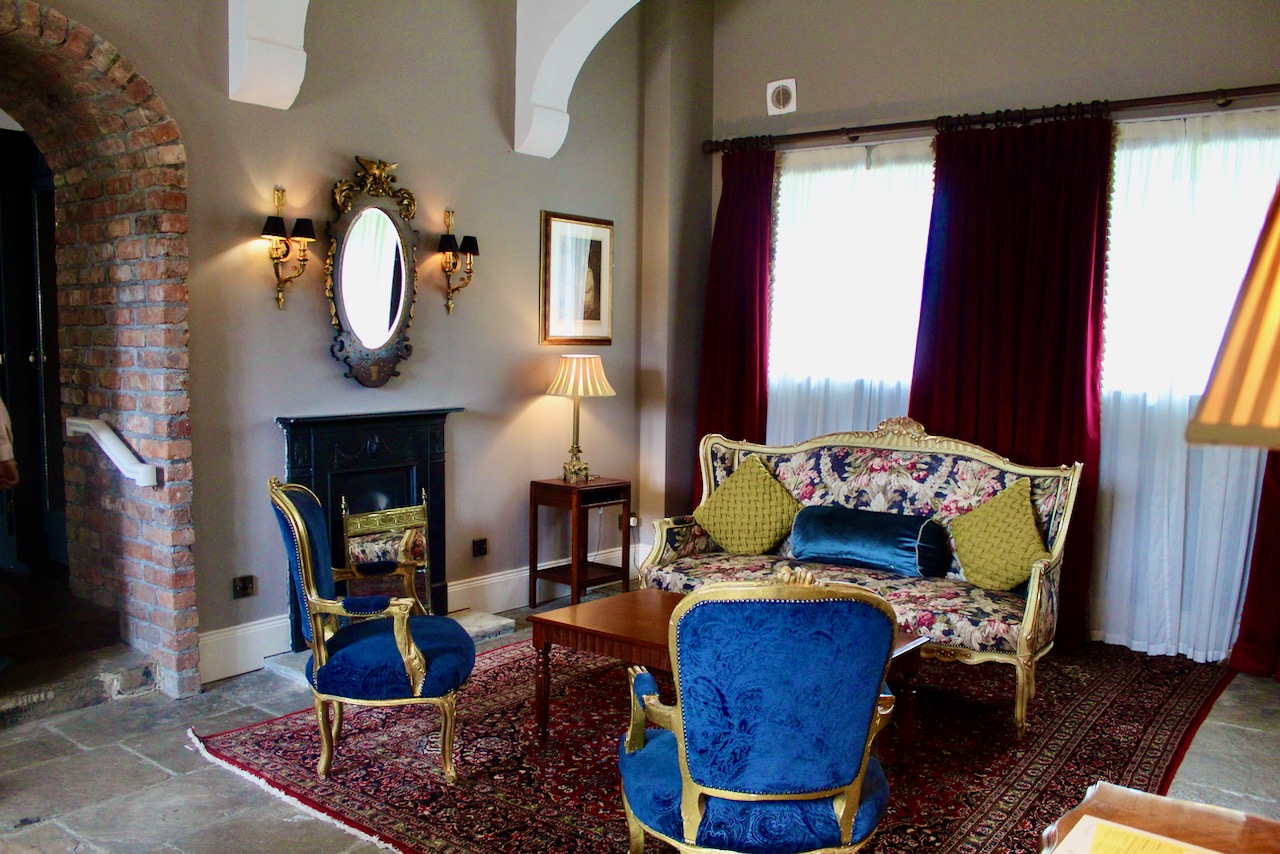

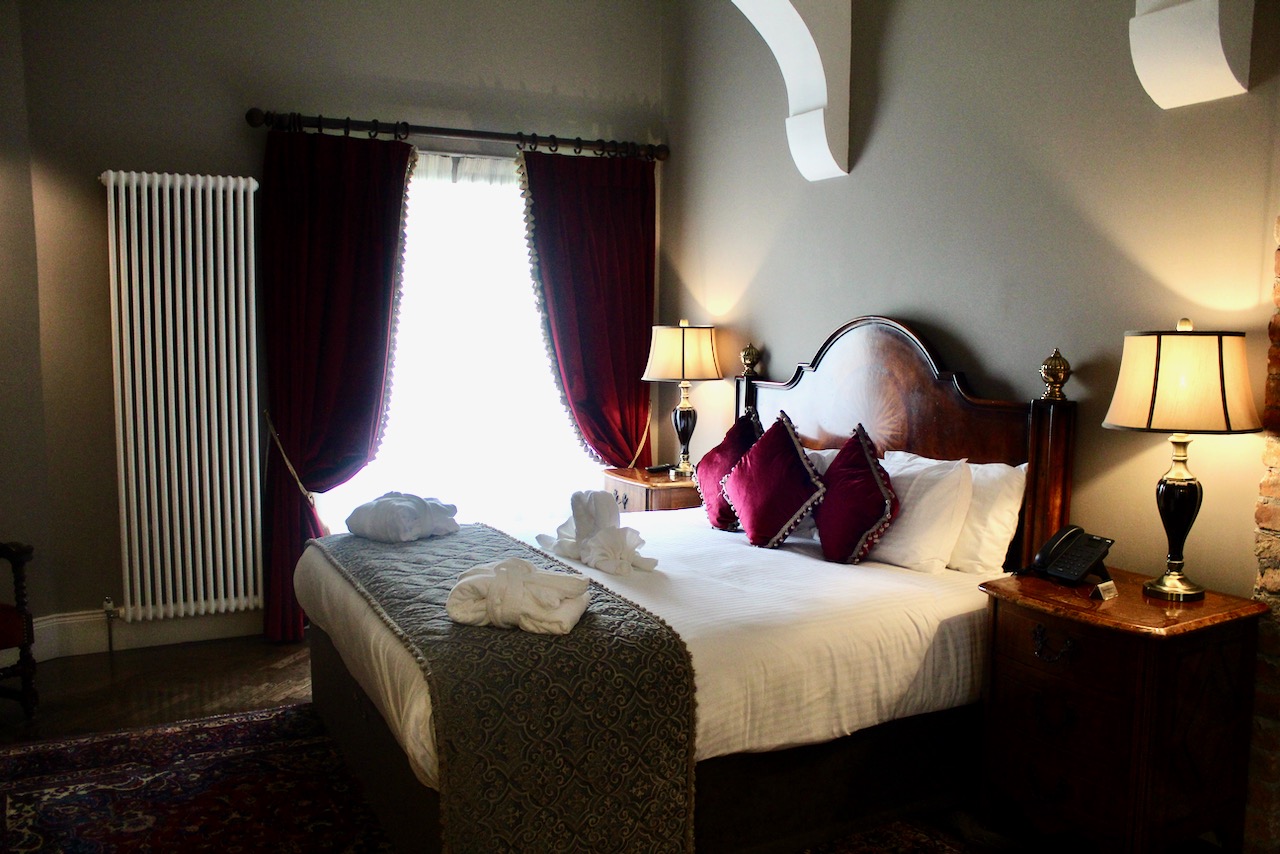
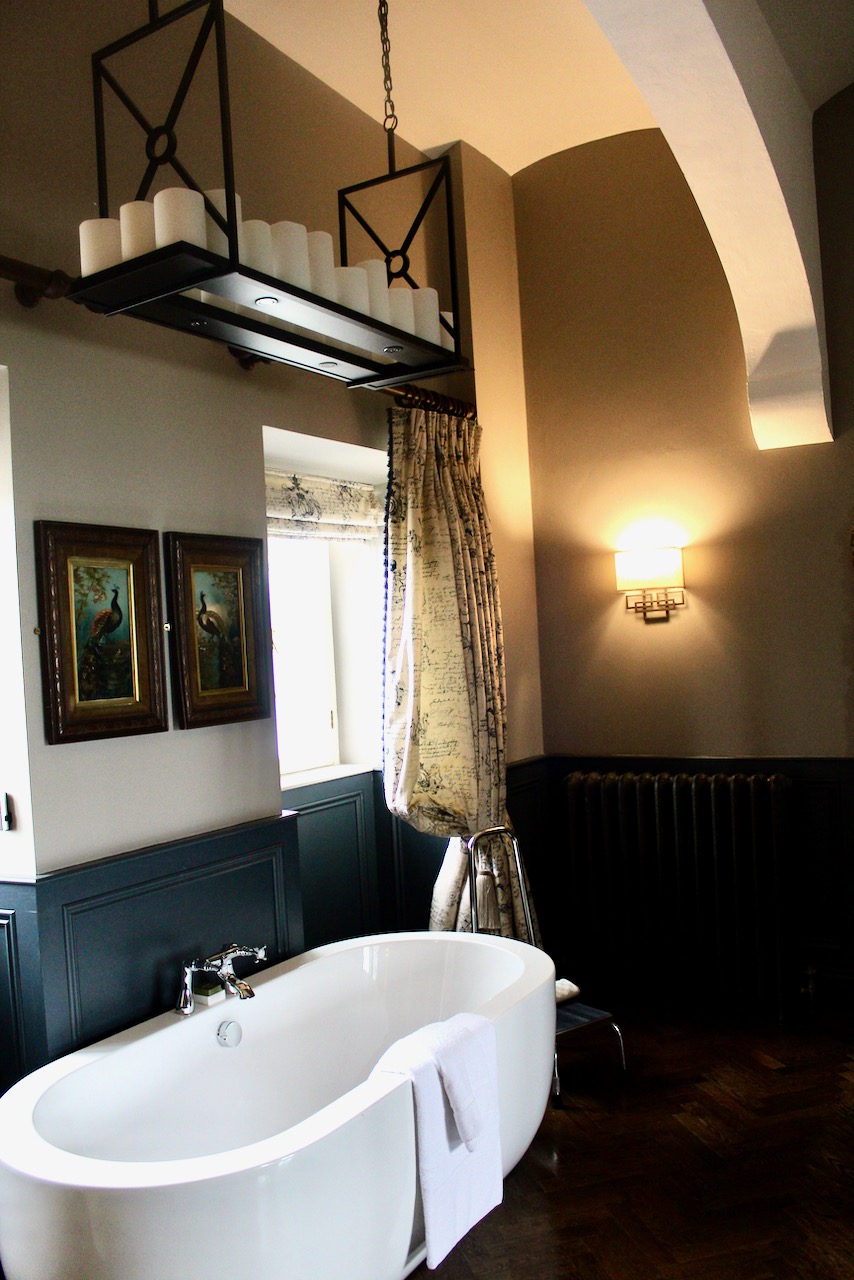


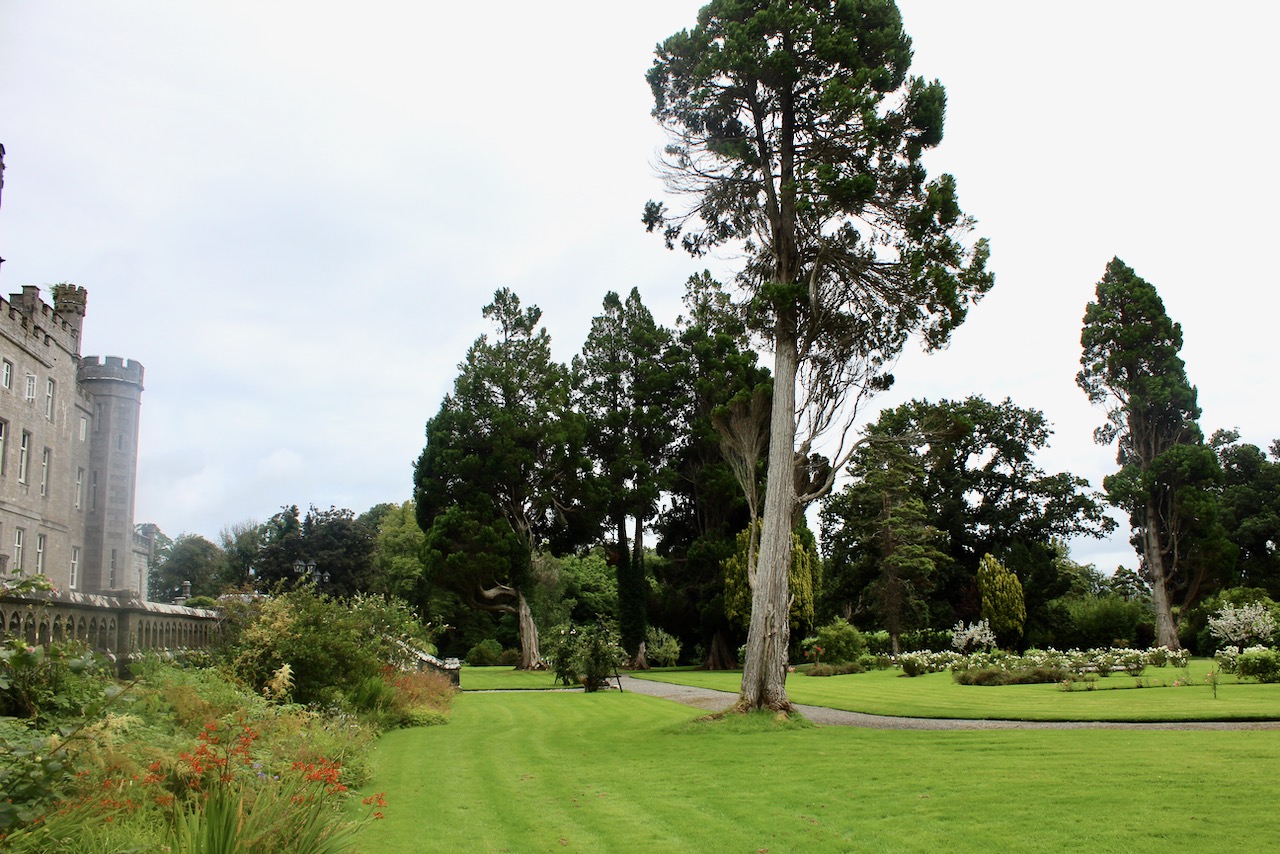
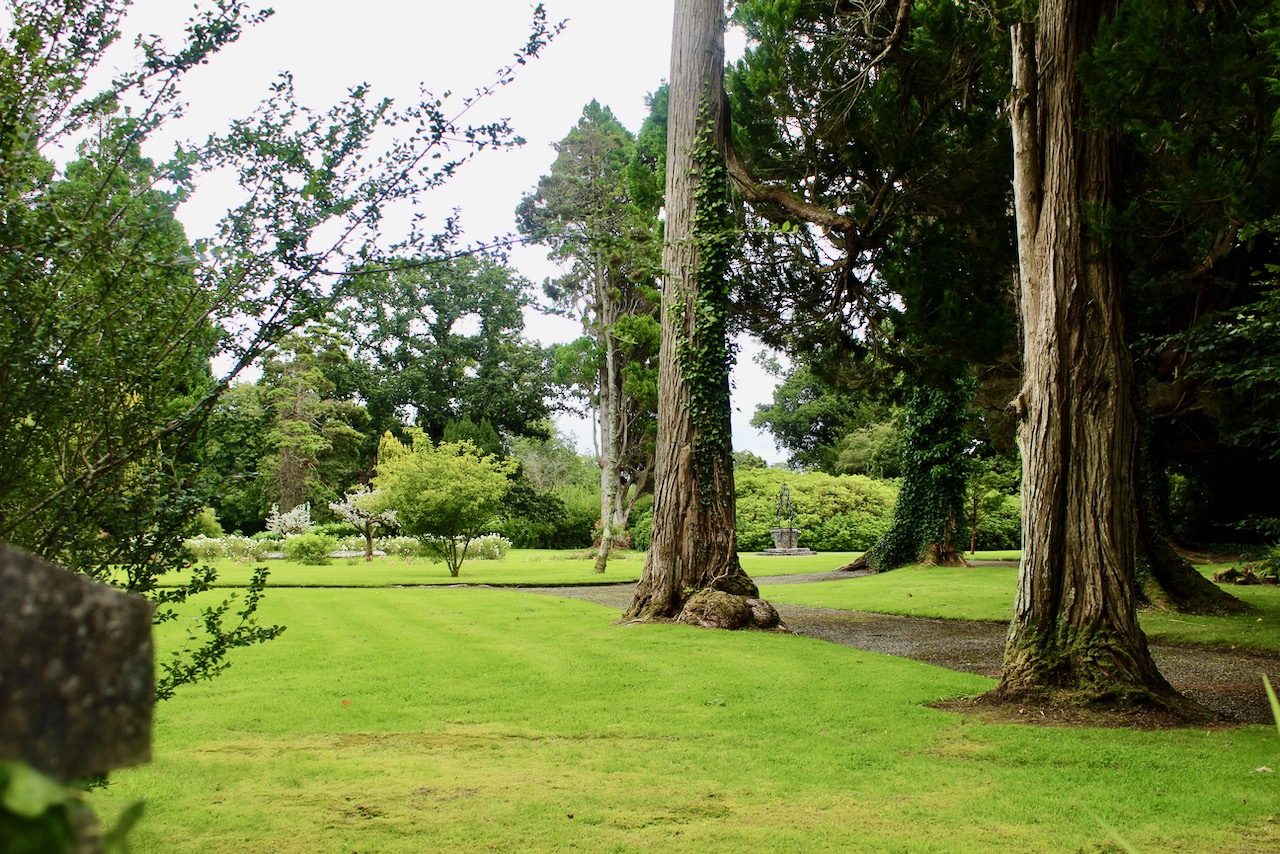
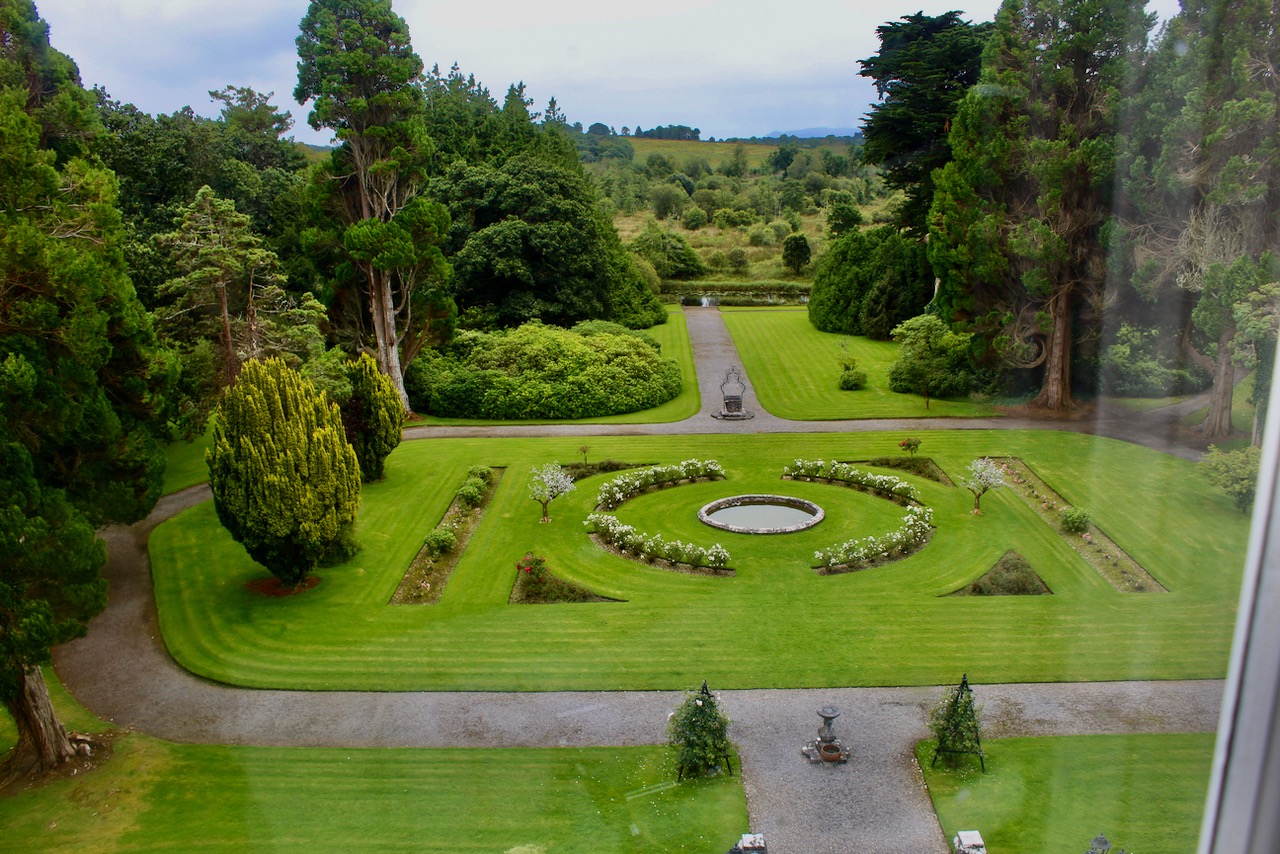
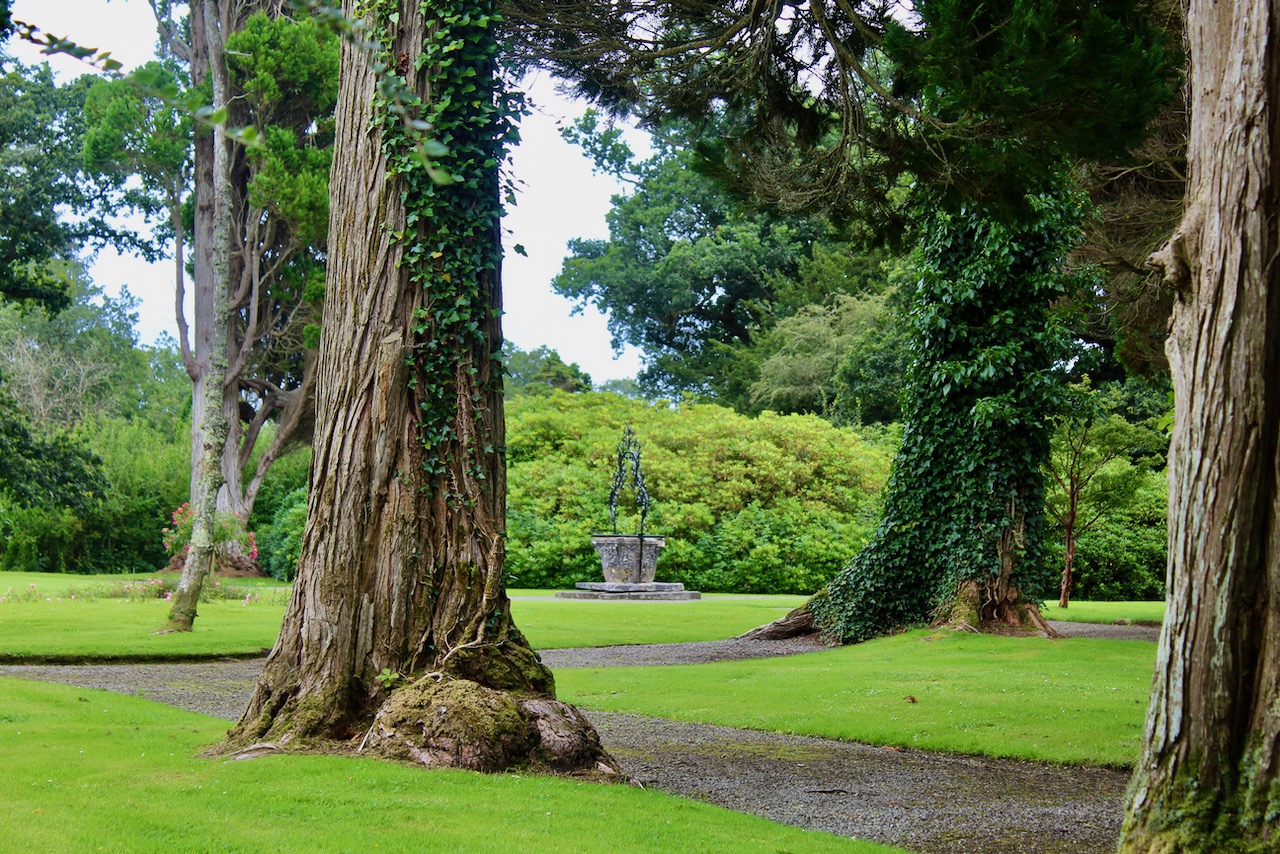
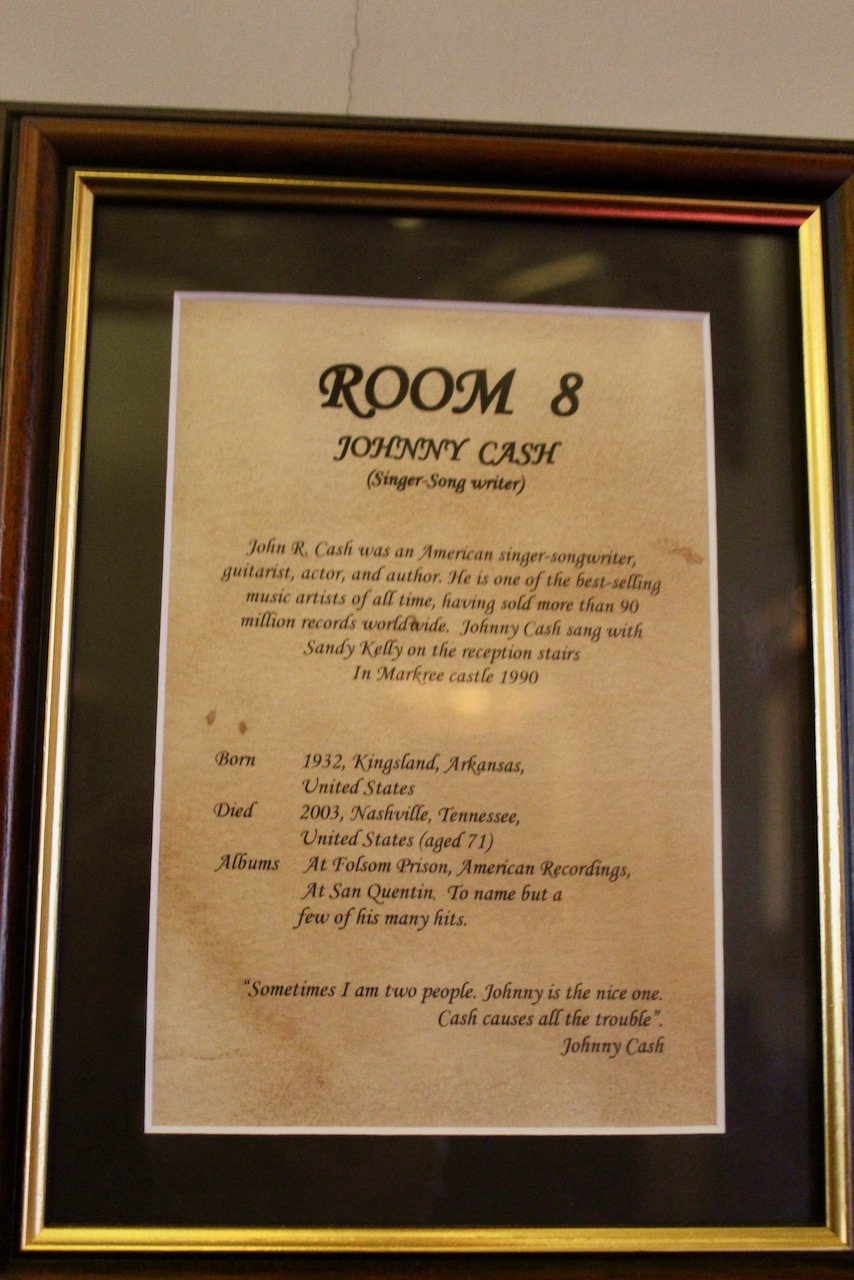
 Irish Historic Houses

