Places to visit and stay in County Waterford, Munster

On the map above:

blue: places to visit that are not section 482

purple: section 482 properties

red: accommodation

yellow: less expensive accommodation for two

orange: “whole house rental” i.e. those properties that are only for large group accommodations or weddings, e.g. 10 or more people.

green: gardens to visit

grey: ruins

donation

Help me to pay the entrance fee to one of the houses on this website. This site is created purely out of love for the subject and I receive no payment so any donation is appreciated!

€15.00

Waterford:

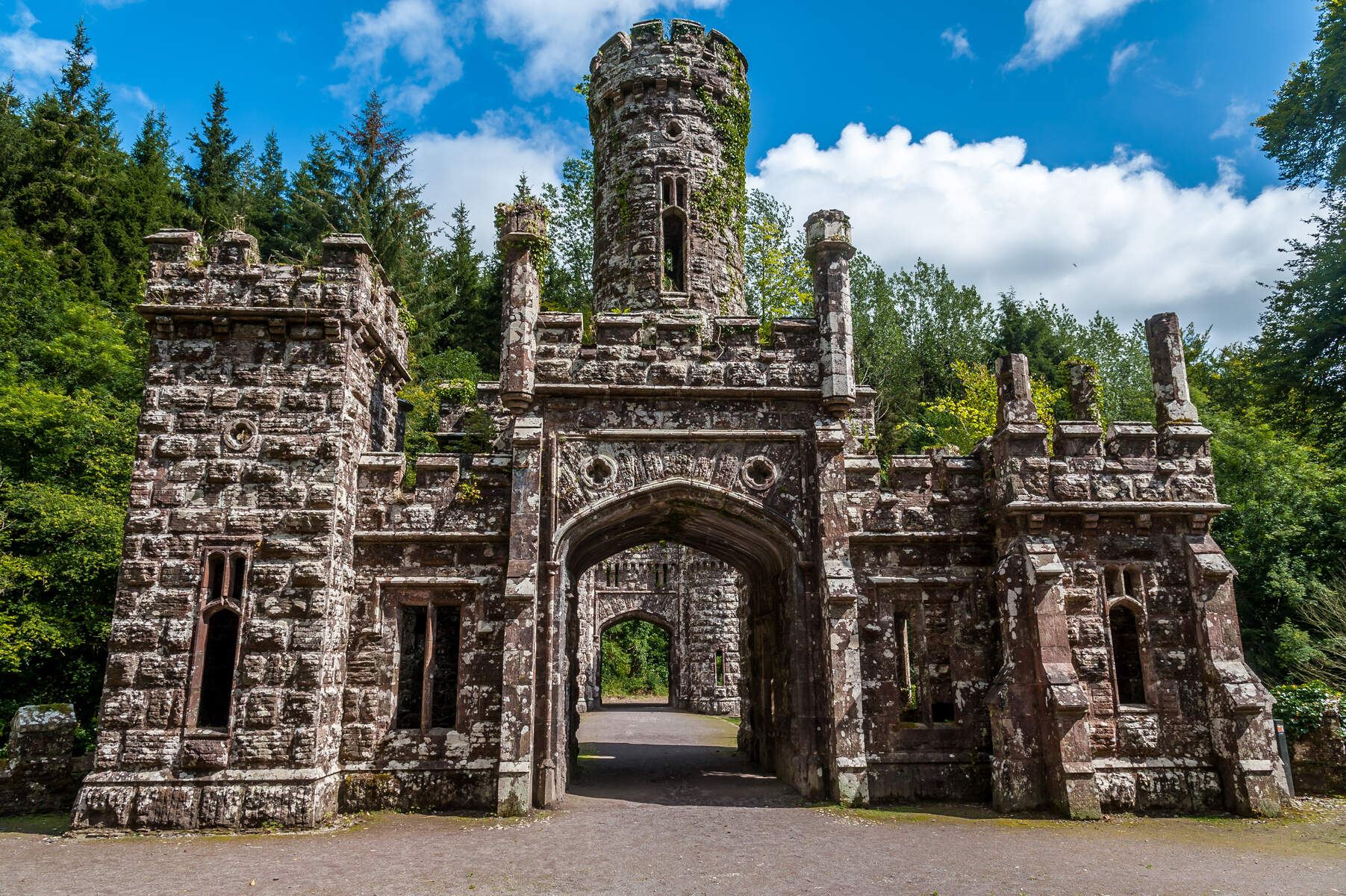
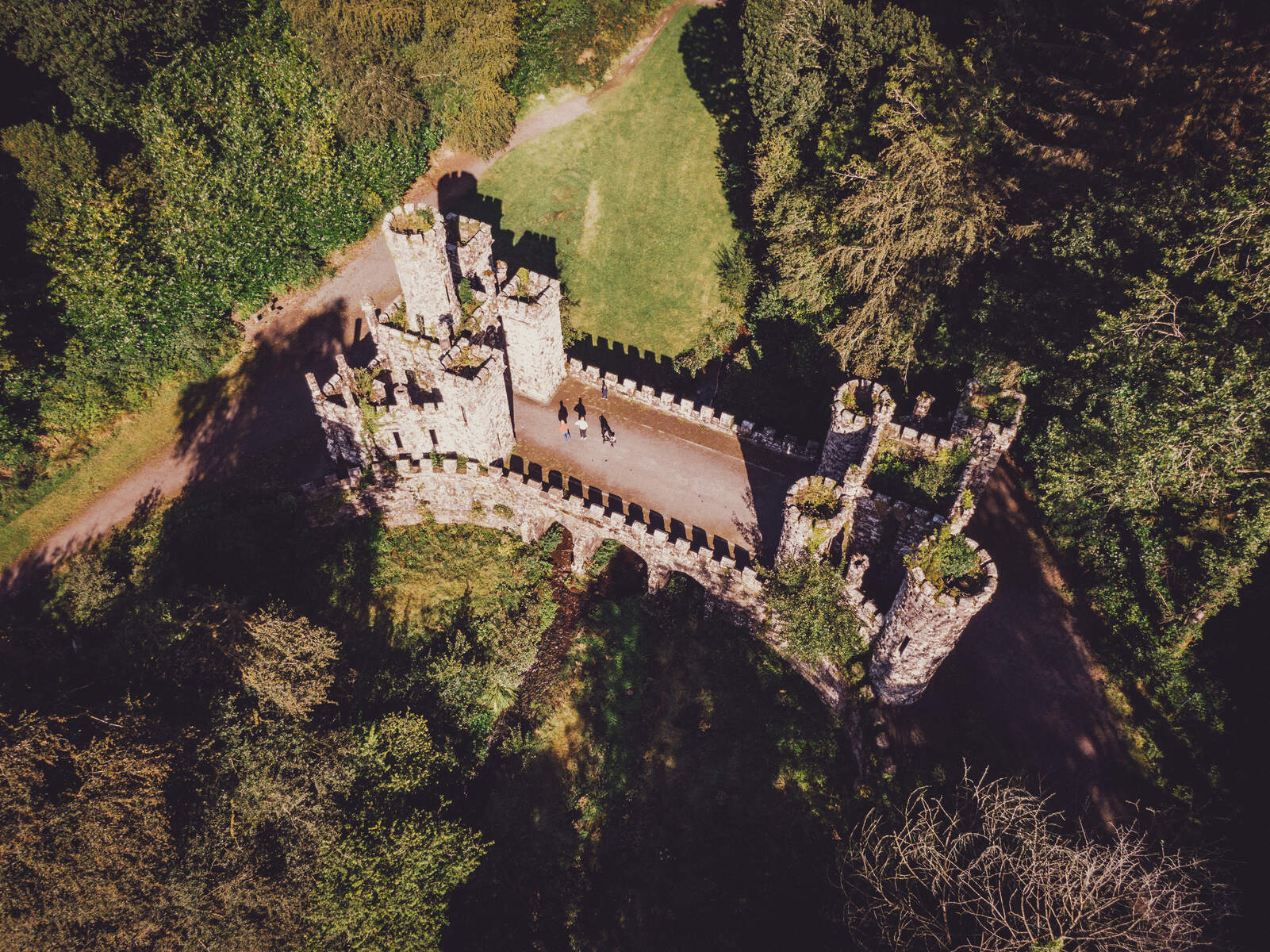
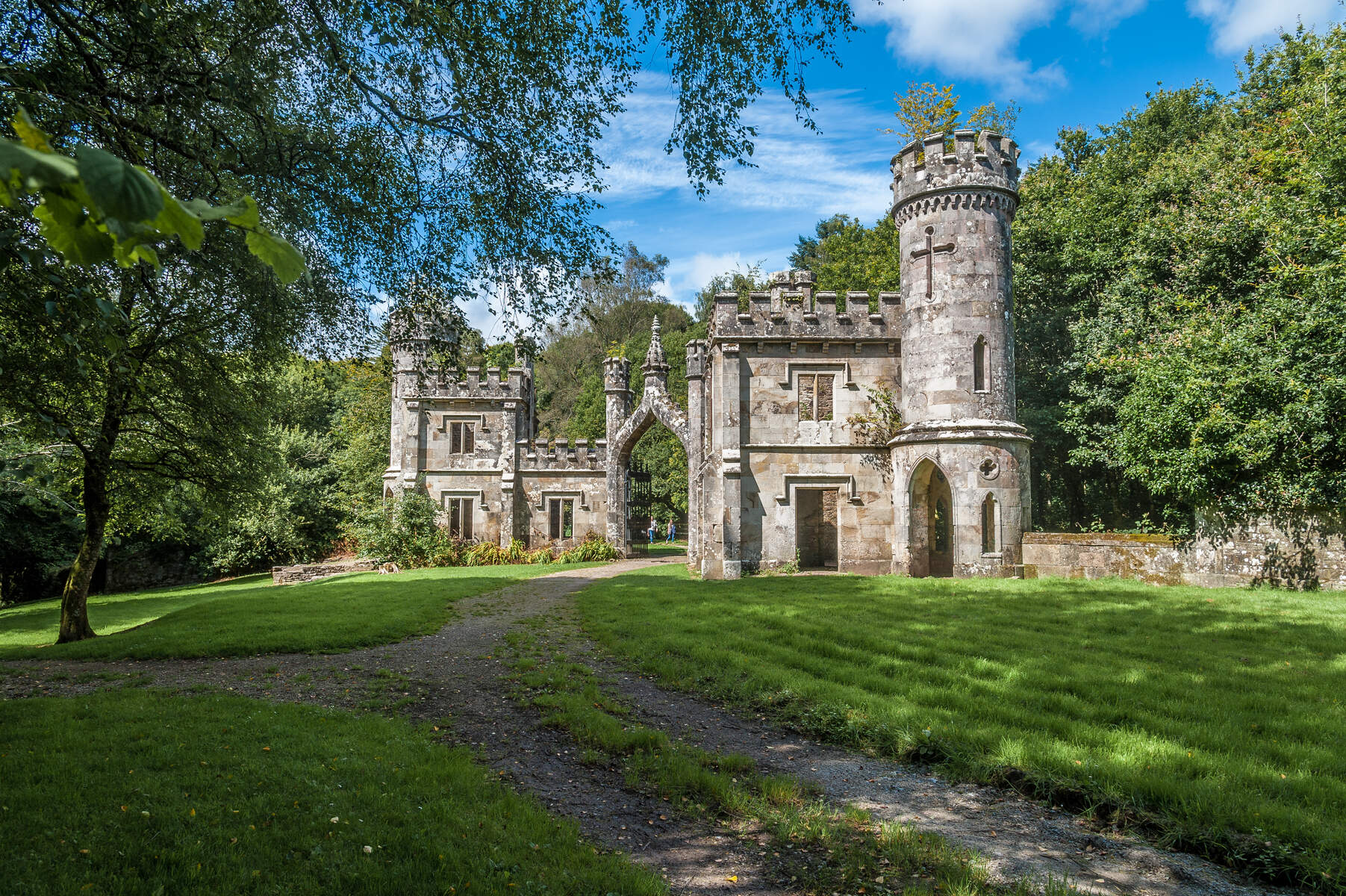
1. Ballysaggartmore Towers, County Waterford

2. Bishop’s Palace Museum, Waterford

3. Cappagh House (Old and New), Cappagh, Dungarvan, Co Waterford – section 482

4. Cappoquin House & Gardens, Cappoquin, Co. Waterford – section 482

5. Curraghmore House, Portlaw, Co. Waterford – section 482

6. Dromana House, Cappoquin, Co. Waterford – section 482

7. Dungarvan Castle, Waterford – OPW

8. Fairbrook House, Garden and Museum, County Waterford

9. Lismore Castle Gardens

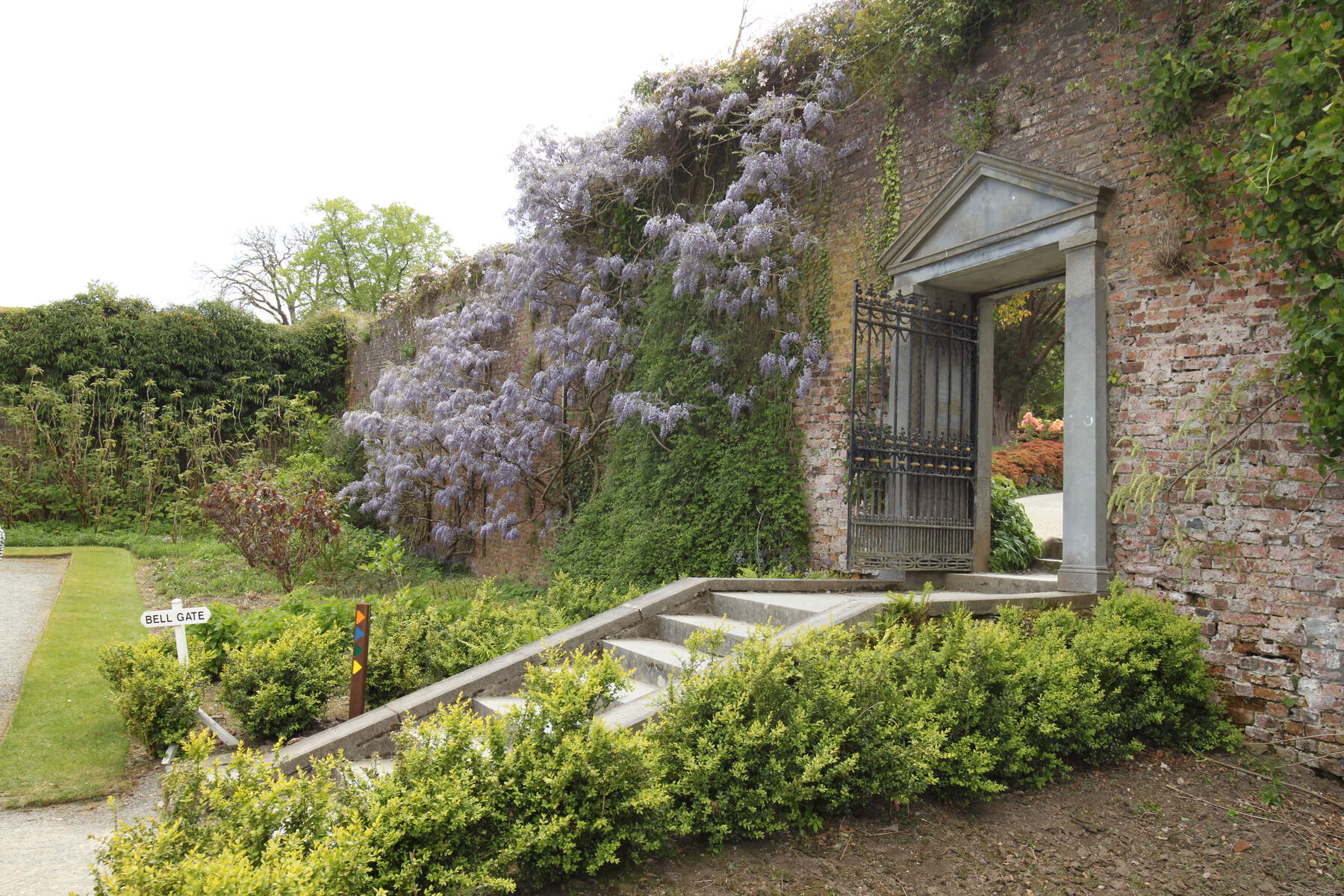
10. Mount Congreve Gardens, County Waterford

11. The Presentation Convent, Waterford Healthpark, Slievekeel Road, Waterford section 482

12. Reginald’s Tower, County Waterford – OPW

13. Tourin House & Gardens, Tourin, Cappoquin, Co. Waterford – section 482

Places to stay, County Waterford

1. Annestown House, County Waterford – B&B 

2. Ballyrafter House, Lismore, Co Waterford – B&B 

3. Cappoquin House holiday cottages, County Waterford

4. Dromana, Co Waterford – 482, holiday cottages

5. Faithlegg House, Waterford, Co Waterford – hotel

6. Fort William, County Waterford, holiday cottages

7. Gaultier Lodge, Woodstown, Co Waterford 

8. Richmond House, Cappoquin, Co Waterford – guest house 

9. Salterbridge Gate Lodge, County Waterford – Irish Landmark accommodation

10. Waterford Castle, The Island, Co Waterford – hotel

Whole House Rental County Waterford

1. Glenbeg House, Jacobean manor home, Glencairn, County Waterford P51 H5W0whole house holiday rental

2. Lismore Castle, County Waterford – castle holiday rental

Waterford:

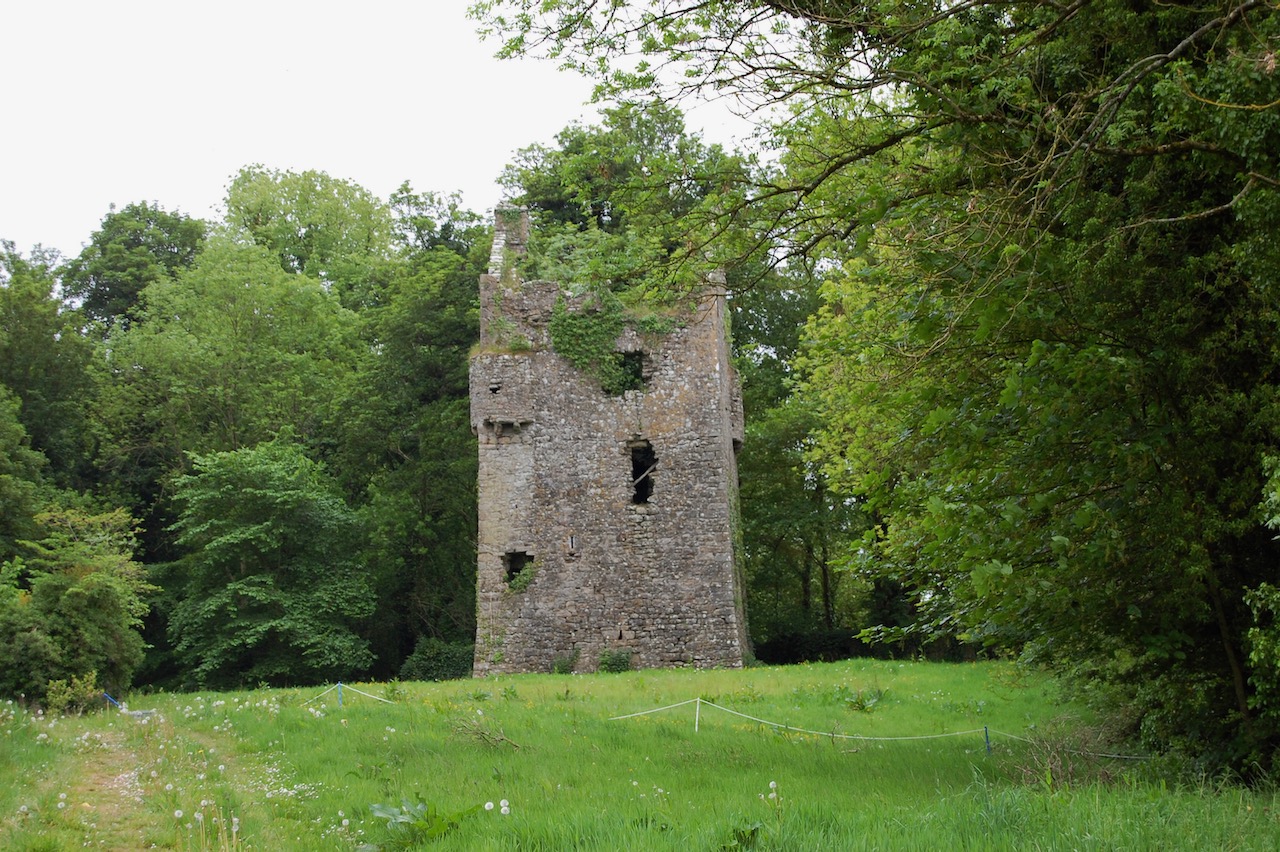
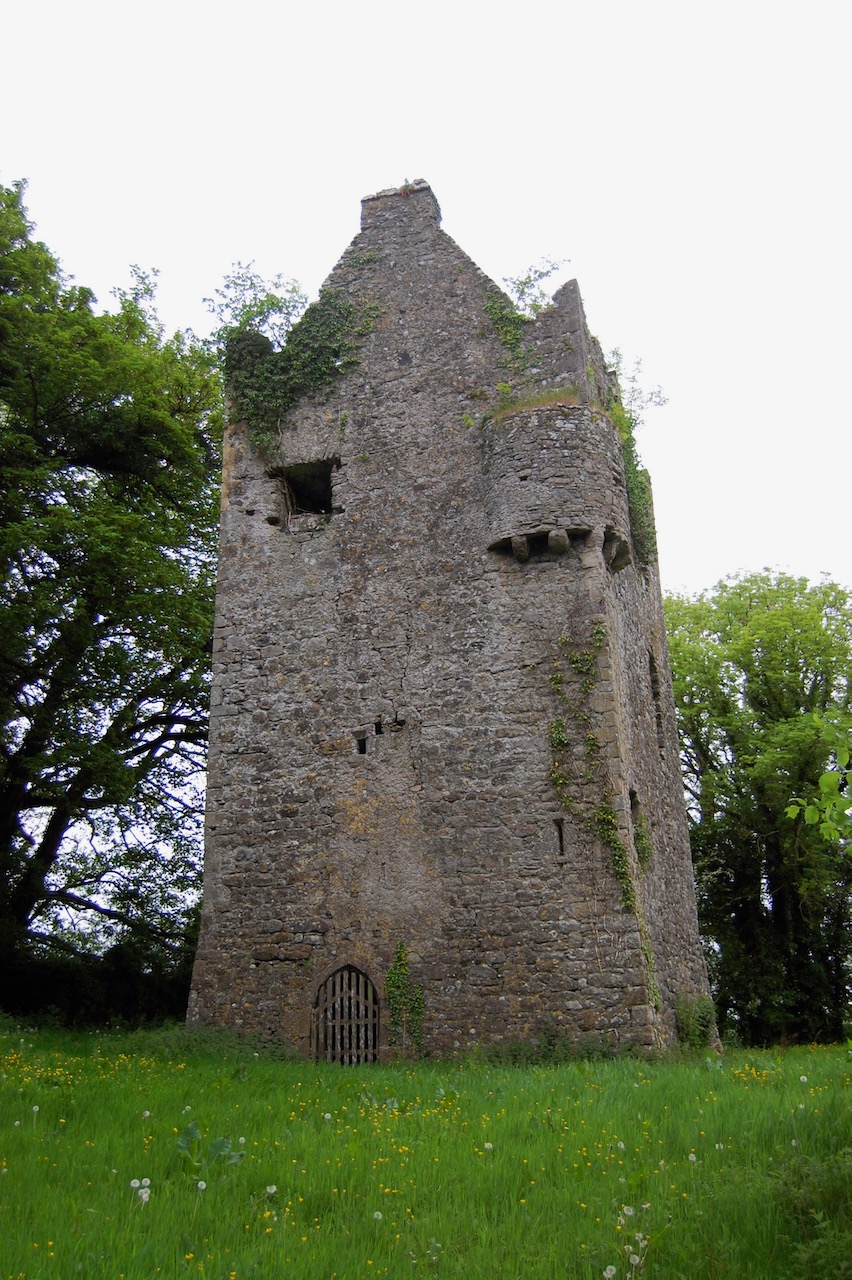
1. Ballysaggartmore Towers, County Waterford
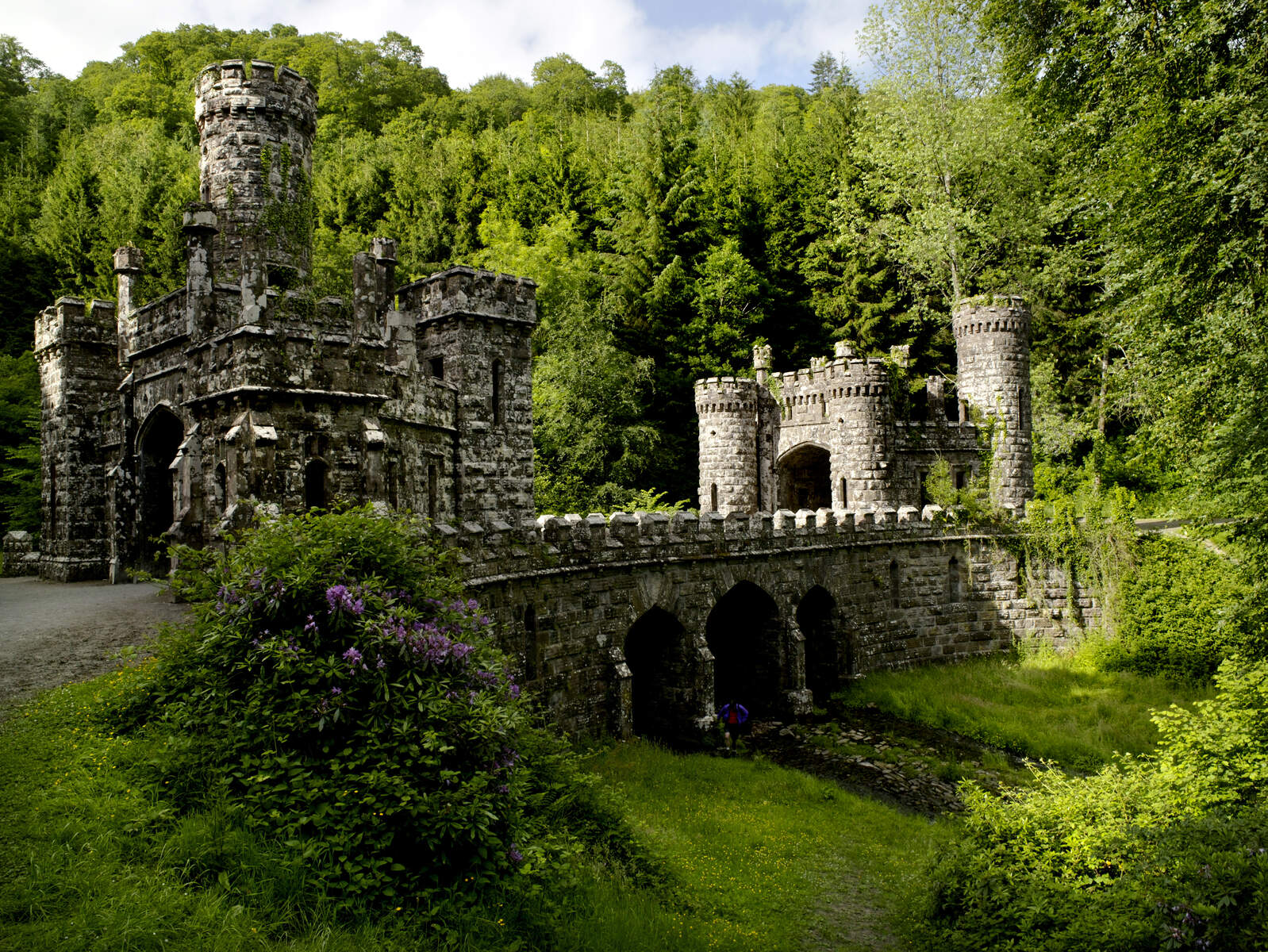
Ballysaggartmore Towers, Lismore, photograph by Chris Hill, 2015, for Tourism Ireland, Ireland’s Content Pool. [1]
The Towers, Ballysaggartmore, Lismore, Co Waterford Courtesy of Luke Myers 2015, for Tourism Ireland, Ireland’s Content Pool. [1]

Mark Bence-Jones tells us (1988): p. 27. “(Keily, sub Ussher/IFR, Anson, sub Lichfield, E/PB) A late-Georgian house built round a courtyard, on the side of a steep hill overlooking the River Blackwater, to which a new front was subsequently added… A seat of the Keily family. Arthur Keily [1777-1862], who assumed the name of Ussher 1843, built two remarkable Gothic follies in the demesne, to the design of his gardener, J. Smith; one of them a turreted gateway, the other a castellated bridge over a stream. The house was bought at the beginning of the present century by Hon Claud Anson, who sold it 1930s. It was subsequently demolished. The follies remain, one of them being now occupied as a house.” [2]

The National Inventory describes this bridge and its towers:

Three-arch rock-faced sandstone ashlar Gothic-style road bridge over ravine, c.1845, on a curved plan. Rock-faced sandstone ashlar walls with buttresses to piers, trefoil-headed recessed niches to flanking abutments, cut-stone stringcourse on corbels, and battlemented parapets having cut-stone coping. Three pointed arches with rock-faced sandstone ashlar voussoirs, and squared sandstone soffits. Sited in grounds shared with Ballysaggartmore House spanning ravine with grass banks to ravine…Detached five-bay single- and two-storey lodge, c.1845, to south-west comprising single-bay single-storey central block with pointed segmental-headed carriageway, single-bay single-stage turret over on a circular plan, single-bay single-storey recessed lower flanking bays, single-bay single-storey advanced end bay to right, single-bay single-storey advanced higher end bay to left, and pair of single-bay two-storey engaged towers to rear (north-east) on square plans….Rock-faced sandstone ashlar walls with cut-sandstone dressings including stepped buttresses, battlemented parapets on corbelled stringcourses having cut-stone coping, and corner pinnacles to central block on circular plans having battlemented coping. Pointed-arch window openings with paired pointed-arch lights over, no sills, and chamfered reveals. Some square-headed window openings with no sills, chamfered reveals, and hood mouldings over. Square-headed door openings with hood mouldings over….Detached five-bay single- and two-storey lodge, c.1845, to north-east comprising single-bay two-storey central block with pointed segmental-headed carriageway, single-bay single-storey flanking recessed bays, single-bay two-storey advanced end bay tower to right on a square plan, single-bay two-stage advanced higher end tower to left on a circular plan, and pair of single-bay two-stage engaged towers to rear (south-west) elevation on circular plans…Although initial indications suggest that the lodges are identical, individualistic features distinguish each piece, and contribute significantly to the architectural design quality of the composition. Well maintained, the composition retains its original form and massing, although many of the fittings have been lost as a result of dismantling works in the mid twentieth century. The construction in rock-faced sandstone produces an attractive textured visual effect, and attests to high quality stone masonry.”
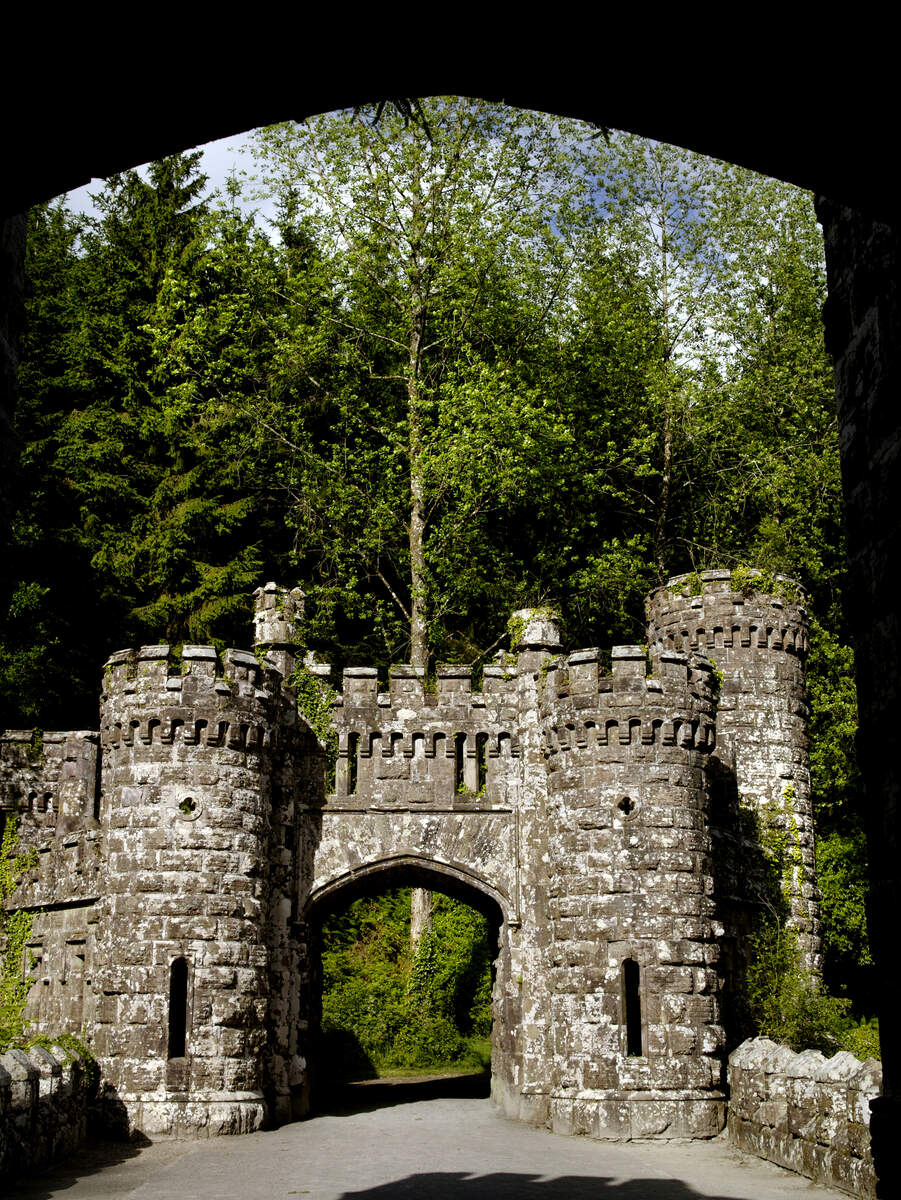
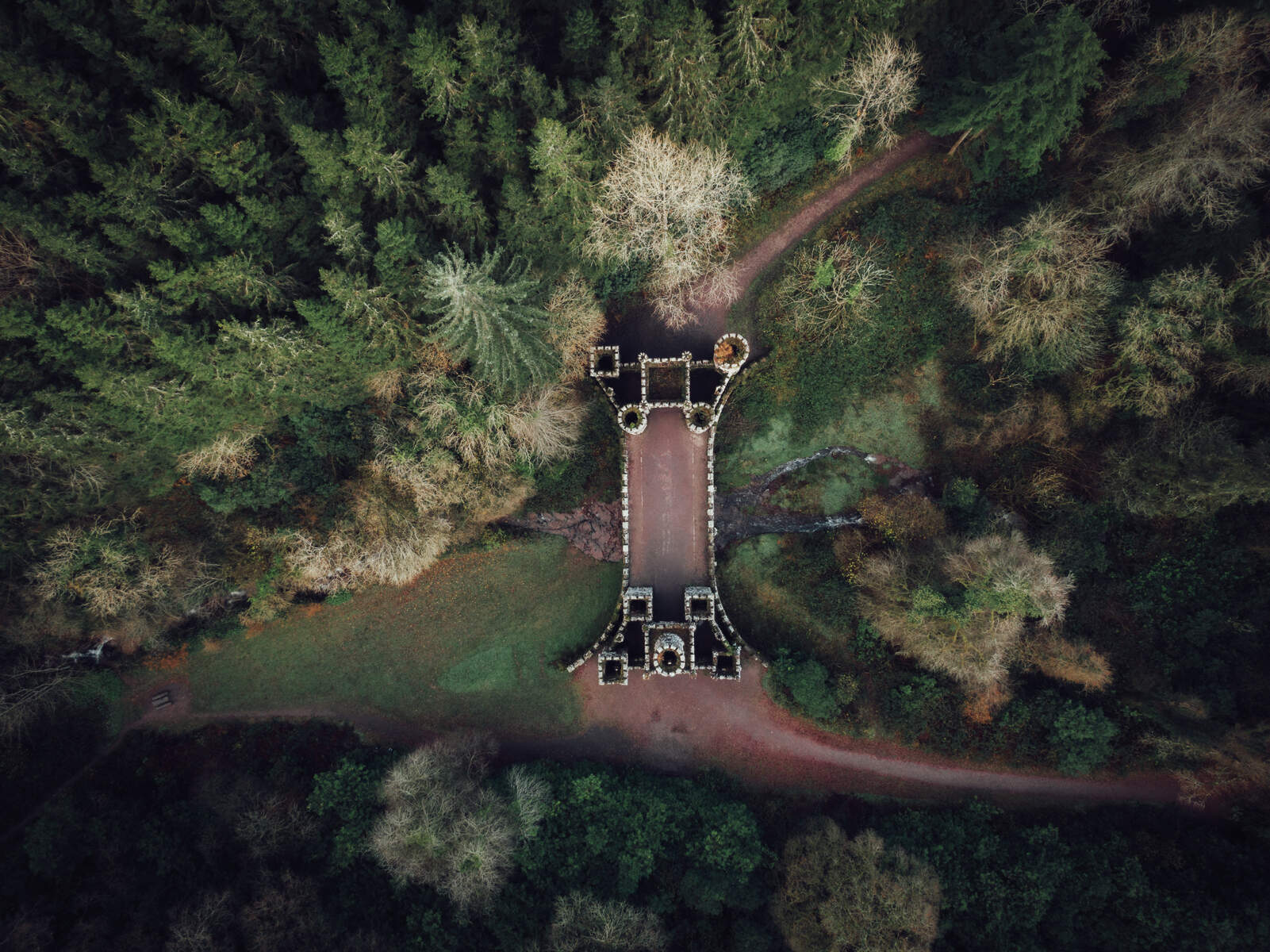
Ballysaggartmore Towers, Lismore, photograph by Chris Hill, 2015, for Tourism Ireland, Ireland’s Content Pool. [1]
Ballysaggartmore Towers, Lismore, photograph Courtesy Celtic Routes, 2020, for Tourism Ireland, Ireland’s Content Pool. [1]
Ballysaggartmore Towers, Lismore, photograph by Chris Hill, 2015, for Tourism Ireland, Ireland’s Content Pool. [1]

The National Inventory describes the gateway: “Gateway, c.1845, comprising ogee-headed opening, limestone ashlar polygonal flanking piers, and pair of attached two-bay single- and two-storey flanking gate lodges diagonally-disposed to east and to west comprising single-bay single-storey linking bays with single-bay two-storey outer bays having single-bay three-stage engaged corner turrets on circular plans…Limestone ashlar polygonal piers to gateway with moulded stringcourses having battlemented coping over, and sproketed finial to apex to opening with finial. Sandstone ashlar walls to gate lodges with cut-limestone dressings including stepped buttresses, stringcourses to first floor, moulded course to first stage to turrets, and battlemented parapets on consoled stringcourses (on profiled tables to turrets) having cut-limestone coping. Ogee-headed opening to gateway with decorative cast-iron double gates. Paired square-headed window openings to gate lodges with no sills, chamfered reveals, and hood mouldings over. Square-headed door openings with chamfered reveals, and hood mouldings over. Pointed-arch door openings to turrets with inscribed surrounds. Trefoil-headed flanking window openings with raised surrounds, and quatrefoil openings over. Cross apertures to top stages to turrets with raised surrounds. All fittings now gone. Interiors now dismantled with internal walls and floors removed.

An impressive structure in a fantastical Gothic style, successfully combining a gateway and flanking gate lodges in a wholly-integrated composition. Now disused, with most of the external and internal fittings removed, the gateway nevertheless retains most of its original form and massing. The construction of the gateway attests to high quality stone masonry and craftsmanship, particularly to the fine detailing, which enhances the architectural and design quality of the site. The gateway forms an integral component of the Ballysaggartmore House estate and, set in slightly overgrown grounds, forms an appealing feature of Romantic quality in the landscape.

The Gate Lodge, Ballysaggartmore, Lismore, Co Waterford Courtesy of Luke Myers 2015, for Tourism Ireland, Ireland’s Content Pool. [1]
Ballysaggartmore Towers, Lismore, photograph by Chris Hill, 2015, for Tourism Ireland, Ireland’s Content Pool. [1]

2. Bishop’s Palace Museum, Waterford
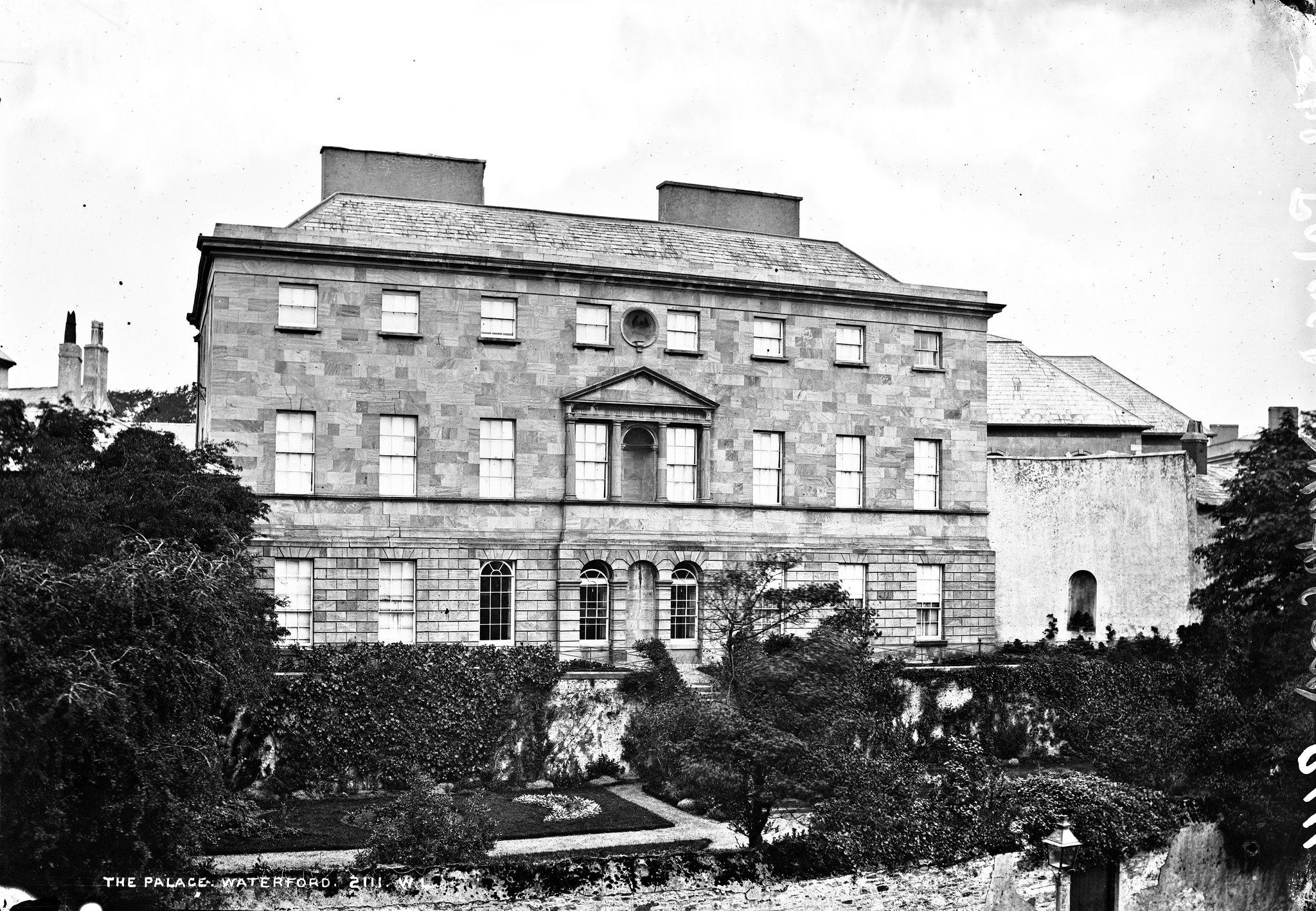
Bishop’s Palace, Waterford, photograph from the National Library of Ireland, flickr constant commons.

Mark Bence-Jones writes (1988):

p. 282. “The Palace of the (C of I) Bishops of Waterford; one of the largest and – externally – finest episcopal residences in Ireland. Begun 1741 by Bishop Charles Este to the design of Richard Castle. The garden front, which faces over the mall and new forms a magnificent architectural group with the tower and spire of later C18 Cathedral, by John Roberts, is of three storeys; the ground floor being treated as a basement and rusticated. The centre of the ground floor breaks forward with three arches, forming the base of the pedimented Doric centrepiece of the storey above, which incorporates three windows. In the centre of the top storey is a circular niche, flanked by two windows. On either side of the centre are three bays. Bishop Este died 1745 before the Palace was finished, which probably explains why the interior is rather disappointing. The Palace ceased to be the episcopal residence early in the present century, and from then until ca 1965 it was occupied by Bishop Foy school. It has since been sold.” 

Bishop’s Palace, Waterford by Keith Fitzgerald, 2014, for Tourism Ireland, Ireland’s Content Pool. [1]

Archiseek adds: “It has now been extensively restored to showcase artefacts and art from Waterford’s Georgian and Victorian past. The two main facades are quite different: one having seven bays – the central bay having an more elaborate window treatment and a Gibbsian doorway; the other facade has eight bay with a more elaborate entrance and shallow pediment with blank niches.” [3]

The National Inventory explains about the designs of Richard Castle and John Roberts:

An imposing Classical-style building commissioned by Bishop Miles (d. 1740) and subsequently by Bishop Charles Este (n. d.), and believed to have been initiated to plans prepared by Richard Castle (c.1690 – 1751), and completed to the designs prepared by John Roberts (1712 – 1796). The building is of great importance for its original intended use as a bishop’s palace, and for its subsequent use as a school. The construction of the building in limestone ashlar reveals high quality stone masonry, and this is particularly evident in the carved detailing, which has retained its intricacy. Well-maintained, the building presents an early aspect while replacement fittings have been installed in keeping with the original integrity of the design. The interior also incorporates important early or original schemes, including decorative plasterwork of artistic merit. Set on an elevated site, the building forms an attractive and commanding feature fronting on to The Mall (to south-east) and on to Cathedral Square (to north-west).”
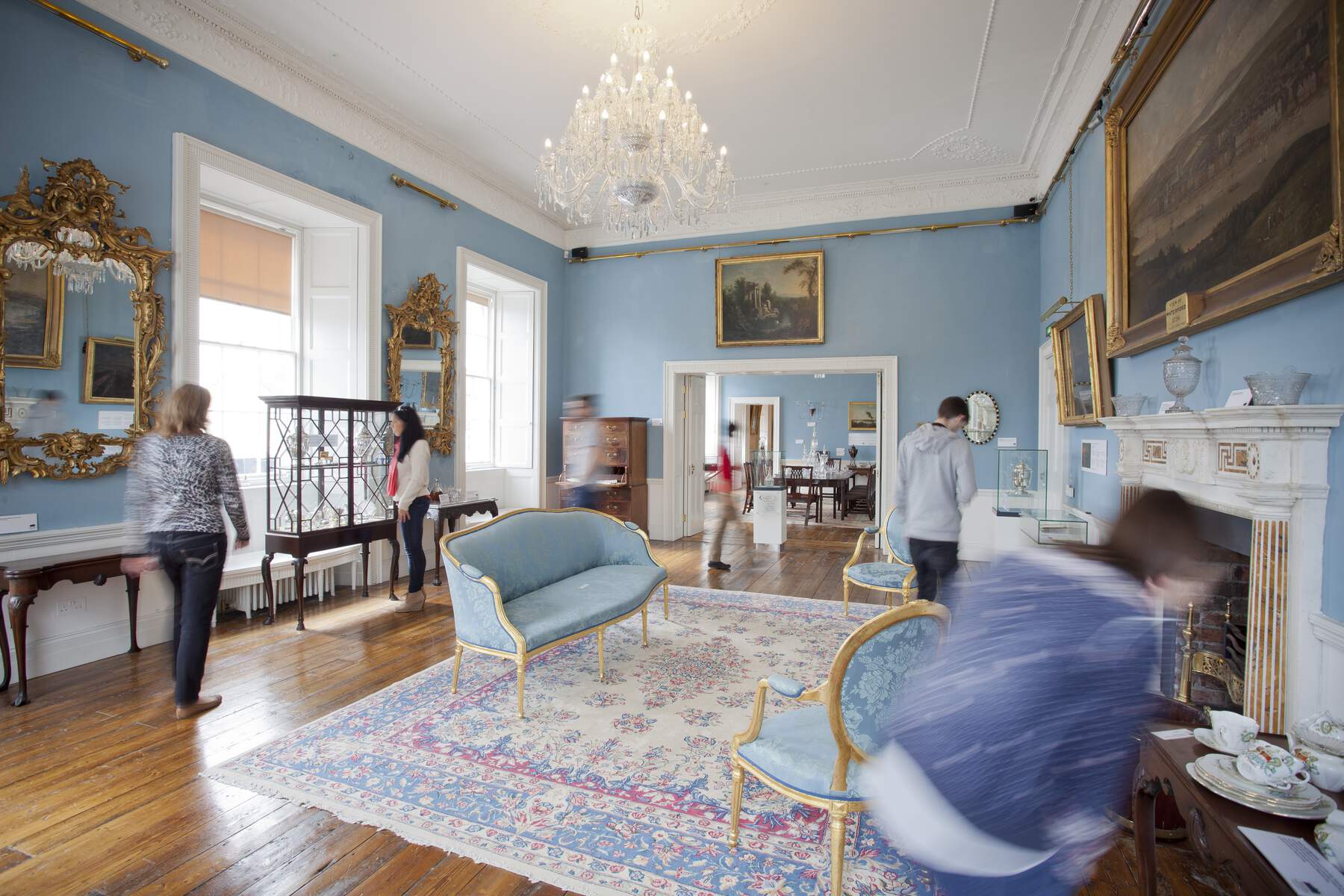
Bishop’s Palace, Waterford City Courtesy Leo Byrne Photography 2015, for Tourism Ireland, Ireland’s Content Pool. [1]
Bishop’s Palace, Waterford by Keith Fitzgerald, 2014, for Tourism Ireland, Ireland’s Content Pool. [1]

3. Cappagh House (Old and New), Cappagh, Dungarvan, Co Waterford X35 RH51 – section 482

www.cappaghhouse.ie

Open dates in 2026: April 1-30 Mon-Fri, May 1-31 Mon -Sat, 25-30, June 1-6, Aug 15-23,

9.30am-1.30pm

Fee: adult €10, OAP/student €5, child free

Cappagh House, County Waterford August 14, 2023. Photograph © Jennifer Winder-Baggot, www.irishhistorichouses.com

We visited during Heritage week 2023 – see my writeup https://irishhistorichouses.com/2023/12/09/cappagh-house-old-and-new-dungarvan-co-waterford/

and [4]

4. Cappoquin House & Gardens, Cappoquin, Co. Waterford P51 D324 – section 482

see my entry:

https://irishhistorichouses.com/2021/01/24/cappoquin-house-gardens-cappoquin-co-waterford/

www.cappoquinhouseandgardens.com

Open dates in 2026: June 1-27, Aug 15-31, Sept 1-19, 9am-1pm

Fee: adult house €14, house and garden €20, garden only €7

Cappoquin House, County Waterford, built for and still owned by the Keane family. Photograph © Jennifer Winder-Baggot, www.irishhistorichouses.com

5. Curraghmore House, Portlaw, Co. Waterford – section 482

See my entry: https://irishhistorichouses.com/2020/08/01/curraghmore-portlaw-county-waterford/

www.curraghmorehouse.ie

Open dates in 2026: May 1-4, 8-10, 15-17, 22-24, 29-31, June 1, 5-7, 12-14, 19-21, 26-28, July 3-5, 10-12, 17-19, 24-26, 31, Aug 1-3, 7-9, 14-23, 28-30, 10am-4pm

Fee: adult/OAP/student, full tour €22, garden tour €8, child under12 years free
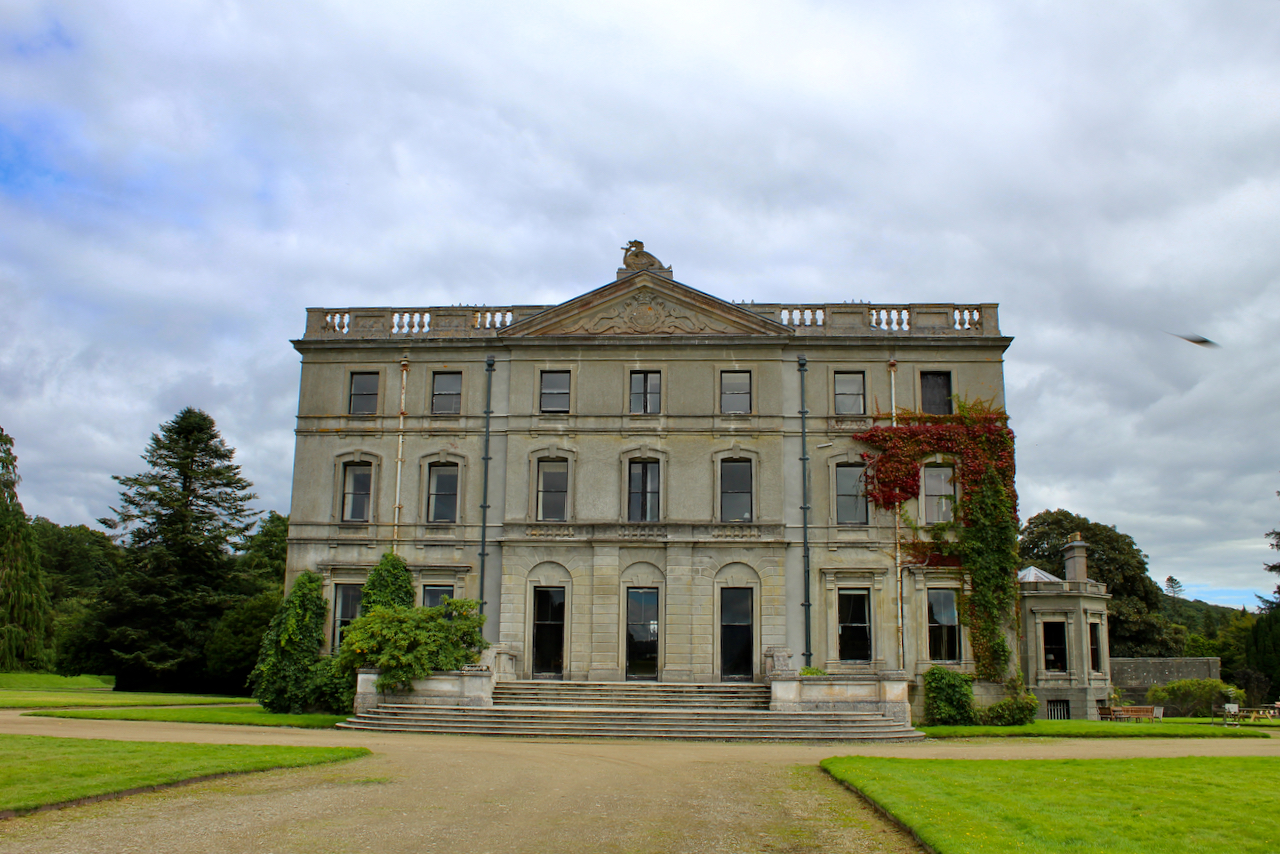
Curraghmore, the garden facing side of the house, designed by James Wyatt (1746-1813), 14th August 2023. Photograph © Jennifer Winder-Baggot, www.irishhistorichouses.com

6. Dromana House, Cappoquin, Co. Waterford – section 482

See my entry: https://irishhistorichouses.com/2021/02/06/dromana-house-cappoquin-co-waterford/

www.dromanahouse.com

Open dates in 2026: June 1-30, Aug 15-31, Sept 1-19, Mon-Sun, 2pm-6pm

Fee: adult/OAP/student, house €14, garden €7, both €20, child under 12 years free, R.H.S.I members 50% reduction

Dromana, County Waterford. Photograph © Jennifer Winder-Baggot, www.irishhistorichouses.com

7. Dungarvan Castle, Waterford – OPW

See my OPW write-up: https://irishhistorichouses.com/2022/11/07/office-of-public-works-properties-in-munster-counties-kerry-and-waterford/
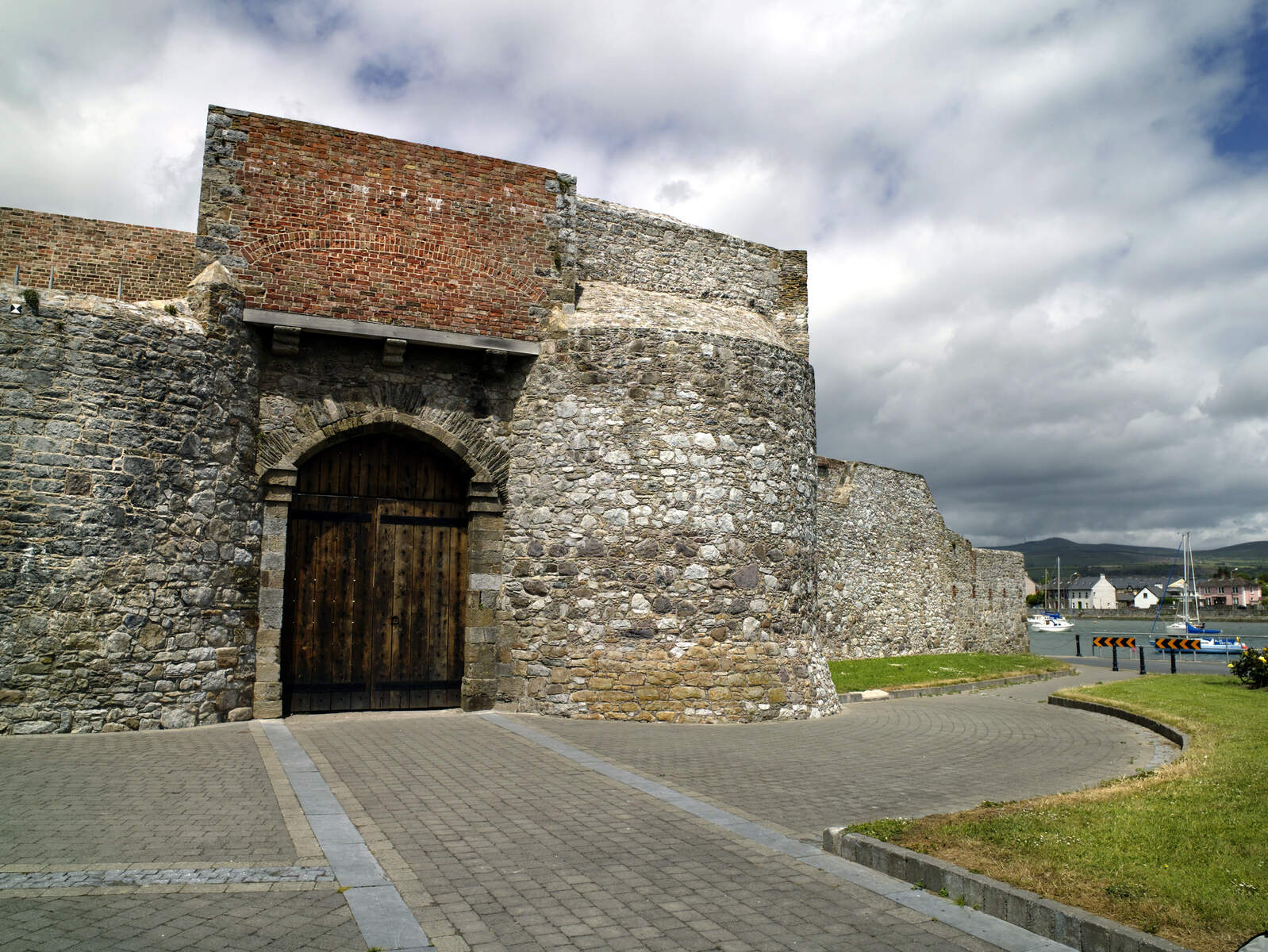
King John’s Norman Castle, Dungarvan.

8. Fairbrook House, Garden and Museum, County Waterford

https://www.fairbrook-housegarden.com/

The website tells us: “Fairbrook House garden and museum, Kilmeaden, Co.Waterford, Ireland X91FN83 A romantic walled garden at the river Dawn laid out between ruins of the former Fairbrook Mill (since 1700). OPEN MAY – SEPTEMBER”

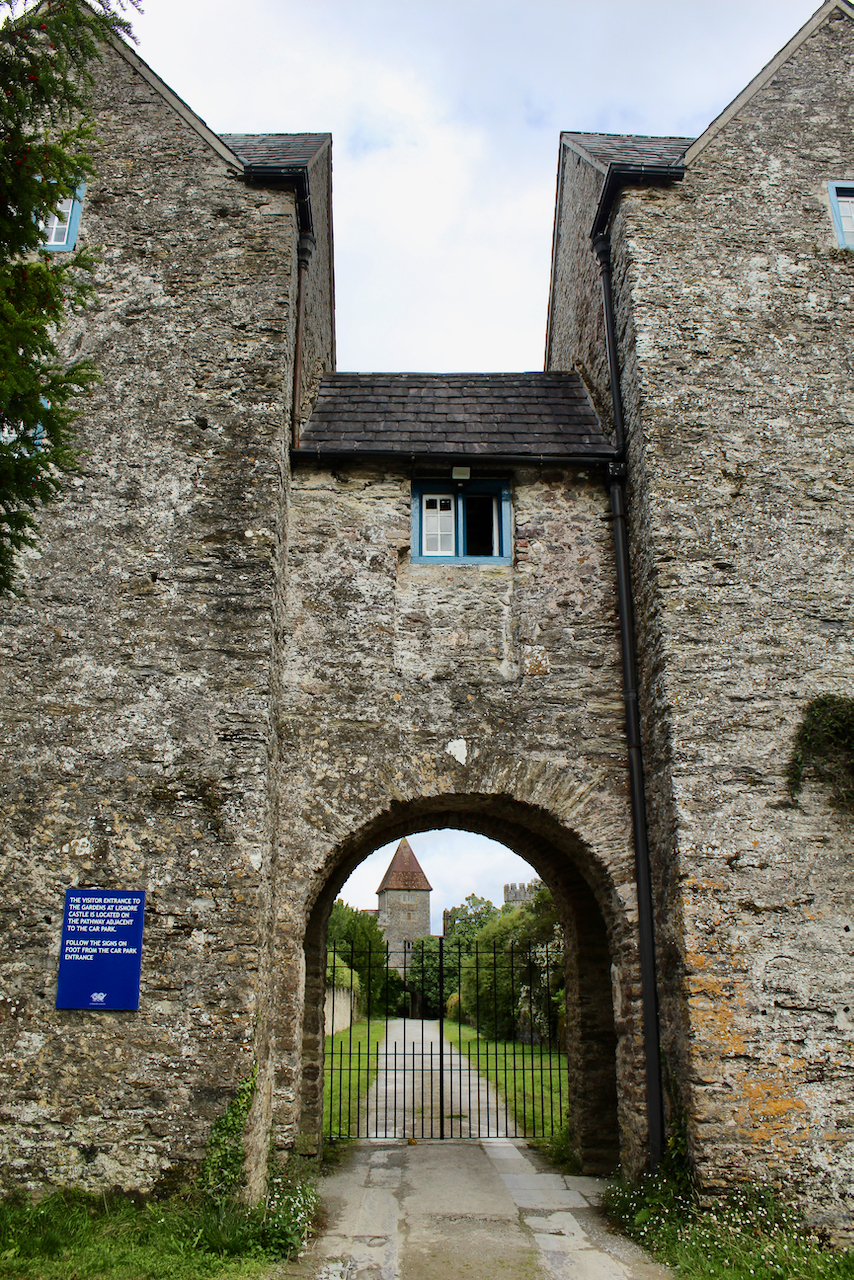
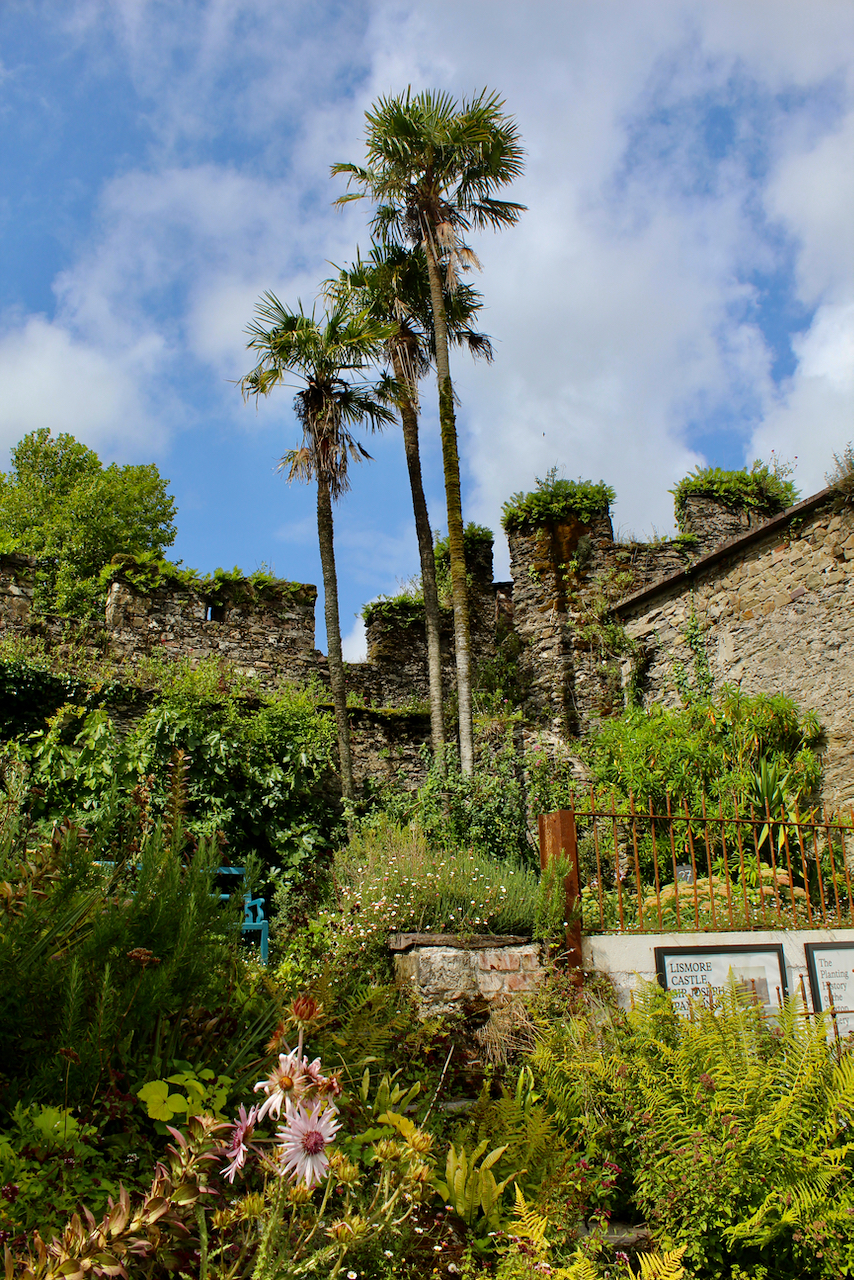
9. Lismore Castle Gardens, County Waterford
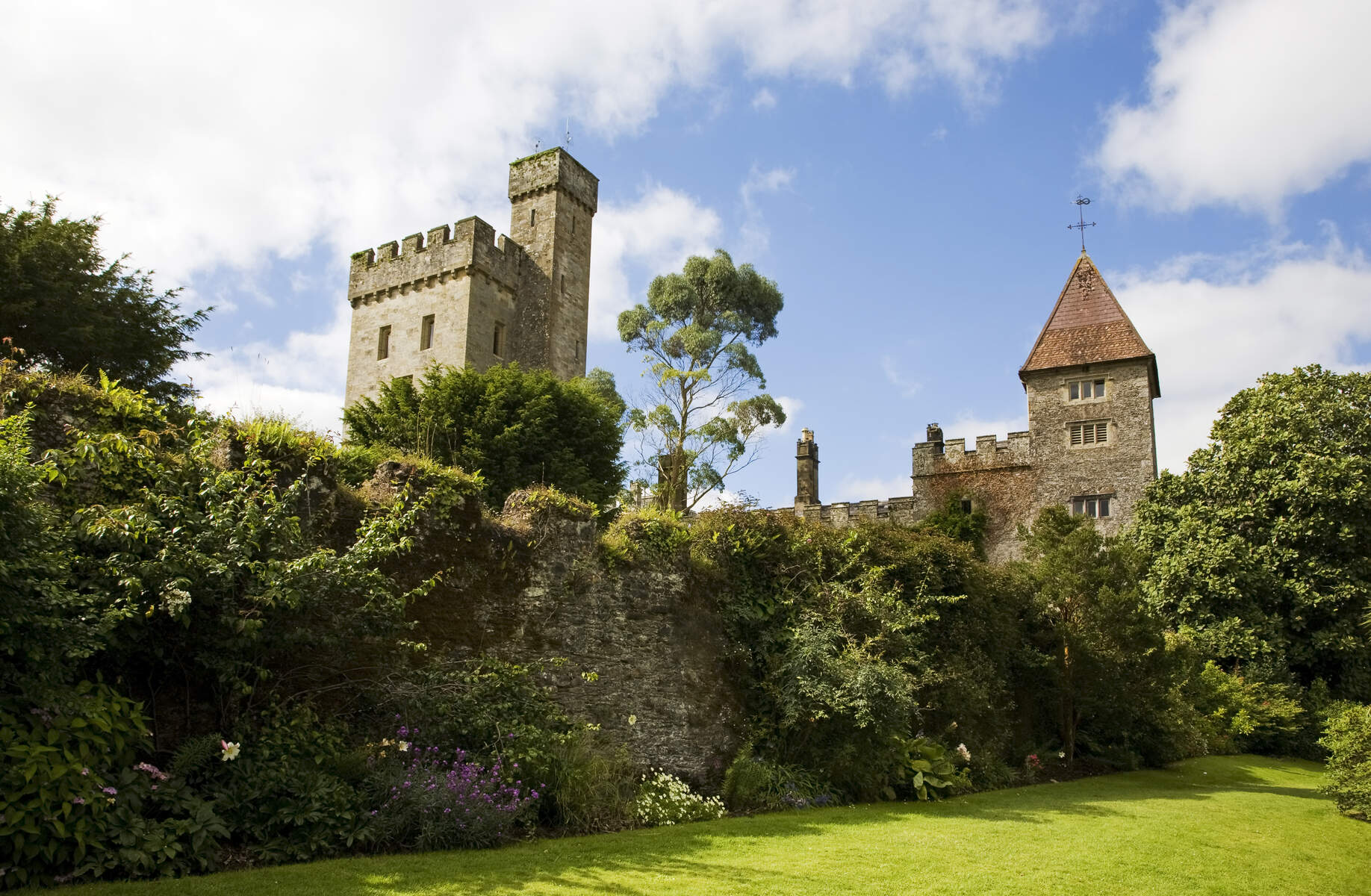
Lismore Castle from the Pleasure Grounds in the Lower garden, by George Munday/Tourism Ireland 2014 (see [1])
Lismore Castle Gardens, Co Waterford, photograph Courtesy of Celtic Routes 2019 for Tourism Ireland (see [1])
Lismore Castle, County Waterford. Photograph © Jennifer Winder-Baggot, www.irishhistorichouses.com

See my entry https://irishhistorichouses.com/2024/04/12/lismore-castle-county-waterford-whole-castle-rental-or-a-visit-to-the-gardens/

Lismore Castle, County Waterford. Photograph © Jennifer Winder-Baggot, www.irishhistorichouses.com

https://www.discoverireland.ie/waterford/lismore-castle-gardens
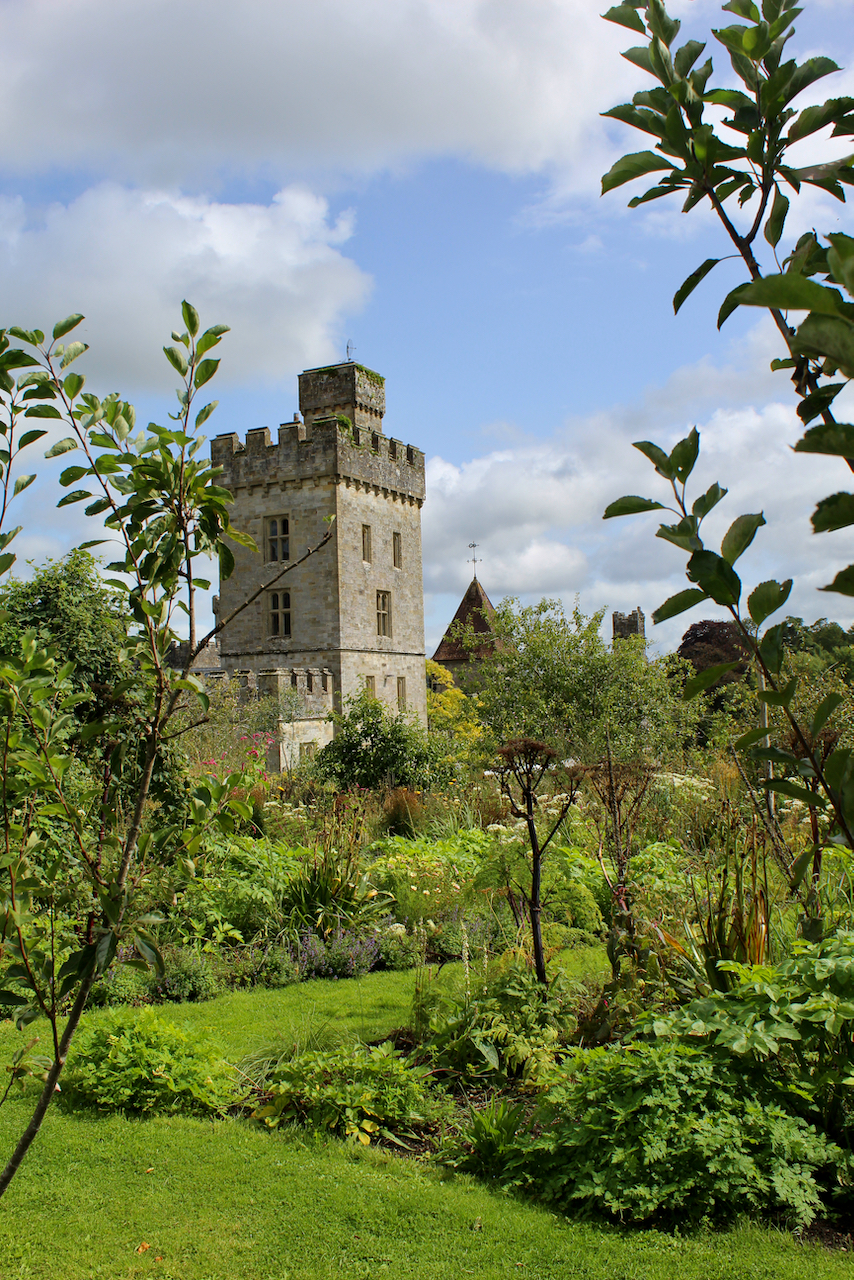
Lismore Castle gardens, County Waterford. Photograph © Jennifer Winder-Baggot, www.irishhistorichouses.com

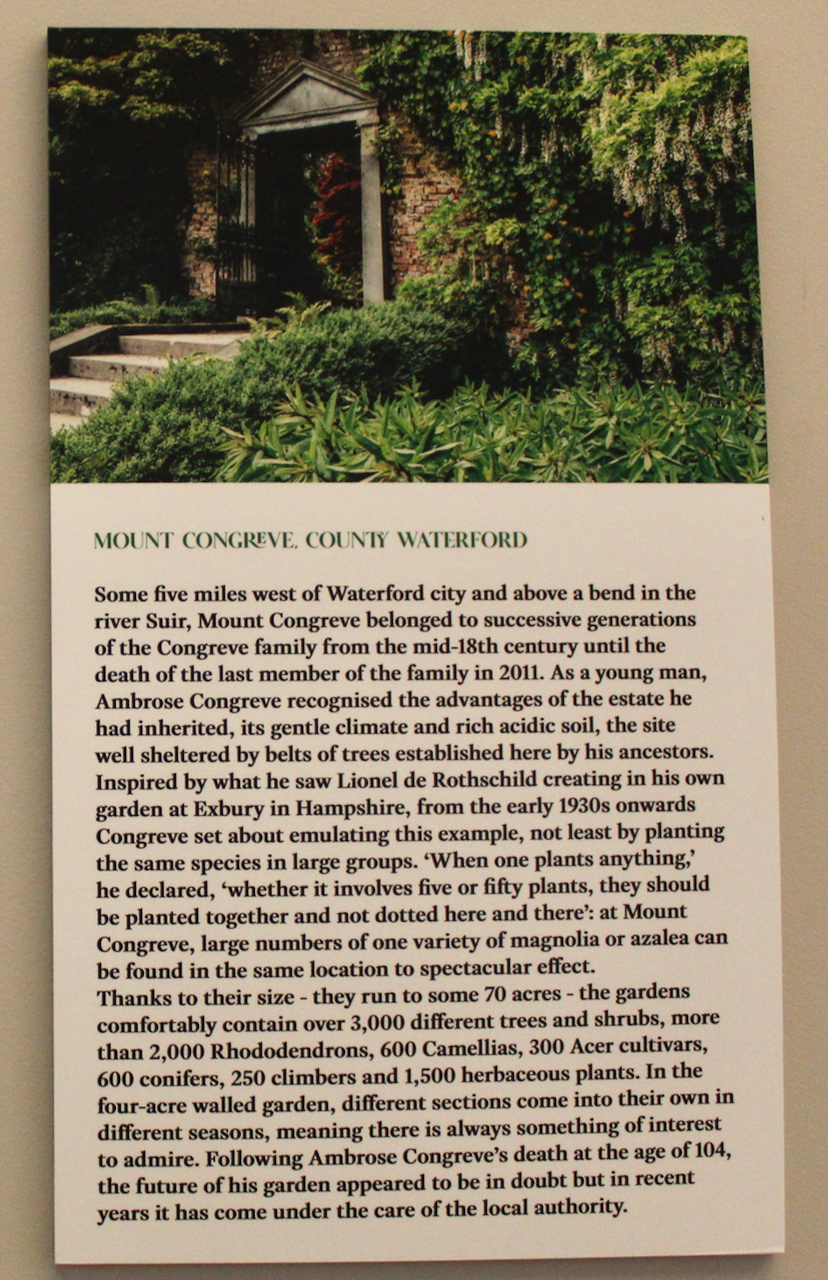
10. Mount Congreve Gardens, County Waterford

https://mountcongreve.com/

Mount Congreve House and Gardens, Co Waterford Courtesy Celtic Routes 2019 for Tourism Ireland (see [1])

The website tells us: “Mount Congreve House and Gardens situated in Kilmeaden, Co. Waterford, in Ireland’s Ancient East is home to one of “the great gardens of the World”. Mount Congreve House, home to six generations of Congreves, was built in 1760 by the celebrated local architect John Roberts.

The Gardens comprise around seventy acres of intensively planted woodland, a four acre walled garden and 16 kilometres of walkways. Planted on a slight incline overlooking the River Suir, Mount Congreve’s entire collection consists of over three thousand different trees and shrubs, more than two thousand Rhododendrons, six hundred Camellias, three hundred Acer cultivars, six hundred conifers, two hundred and fifty climbers and fifteen hundred herbaceous plants plus many more tender species contained in the Georgian glasshouse.

The house was built for John Congreve (1730-1801), who held the office of High Sheriff of County Waterford in 1755. His grandfather John was Rector of Kilmacow, County Kilkenny, and his father Ambrose (1698-1741) played a leading role in the affairs of Waterford city. When Ambrose died his widow married Dr. John Whetcombe, Bishop of Clonfert and later Archbishop of Cashel.

John Congreve (1730-1801) married Mary Ussher, daughter of Beverly Ussher, MP, who lived at Kilmeadon, County Waterford.

Mount Congreve. We visited briefly in May 2023 on our way home from Annestown. Photograph © Jennifer Winder-Baggot, www.irishhistorichouses.com

Mark Bence-Jones tells us of Mount Congreve (1988):

p. 213. “(Congreve/IFR) An C18 house [the National Inventory says c. 1750] consisting of three storey seven bay centre block with two storey three bay overlapping wings; joined to pavilions by screen walls with arches on the entrance front and low ranges on the garden front, where the centre block has a three bay breakfront and an ionic doorcase. The house was remodelled and embellished ca 1965-69, when a deep bow was added in the centre of the entrance front, incorporating a rather Baroque Ionic doorcase, and the pavilions were adorned with cupolas and doorcases with broken pediments. Other new features include handsome gateways flanking the garden front at either end and a fountain with a statue in one of the courtyards between the house and pavilions. The present owner has also laid out magnificent gardens along the bank of the River Suir which now extends to upwards of 100 acres; with large scale plantings of rare trees and shrubs, notably rhododendrons and magnolias. The original walled gardens contains an eighteenth century greenhouse.” 

Mount Congreve, May 2023: The house was remodelled and embellished ca 1965-69, when a deep bow was added in the centre of the entrance front, incorporating a rather Baroque Ionic doorcase. Photograph © Jennifer Winder-Baggot, www.irishhistorichouses.com

Ambrose Ussher Congreve (1767-1809) inherited the estate and married Anne Jenkins.

Ambrose and Anne’s son John (1801-1863) was their heir.

Ambrose and Anne’s daughter Jane married John Cooke of Kiltinane Castle in County Tipperary. Daughter Mary married Reverend John Thomas Medlycott who lived in Rockett’s Castle in Portlaw, County Waterford. Their son Ambrose died unmarried.

John was Deputy Lieutenant and also High Sheriff of County Waterford. He married Louisa Harriet Dillon from Clonbrock in County Galway, daughter of Luke Dillon (1780-1826) 2nd Baron Clonbrock.

Their son Ambrose (1832-1901) inherited the estate, and he also held the positions of Deputy Lieutenant and High Sheriff for County Waterford. He married a cousin, Alice Elizabeth, daughter of Robert 3rd Baron Clonbrock.

Ambrose Congreve reading a newspaper at Clonbrock House, Ahascragh, Co. Galway, National Library of Ireland Ref. CLON422.

John (1872-1957) the son of Ambrose and Alice Elizabeth joined the military and fought in World War I. He married Helena Blanche Irene, daughter of Edward Ponsonby 8th Earl of Bessborough in County Kilkenny. Their son Ambrose Christian (1907-2011) worked for Unilever and then with the firm founded by his father-in-law, Humphreys and Glasgow. He inherited Mount Congreve and developed and improved the garden. In April 2011 Mr. Congreve was in London en route to the Chelsea Flower Show, aged 104, when he died. He married but had no children. The estate was left in Trust for the Irish people.

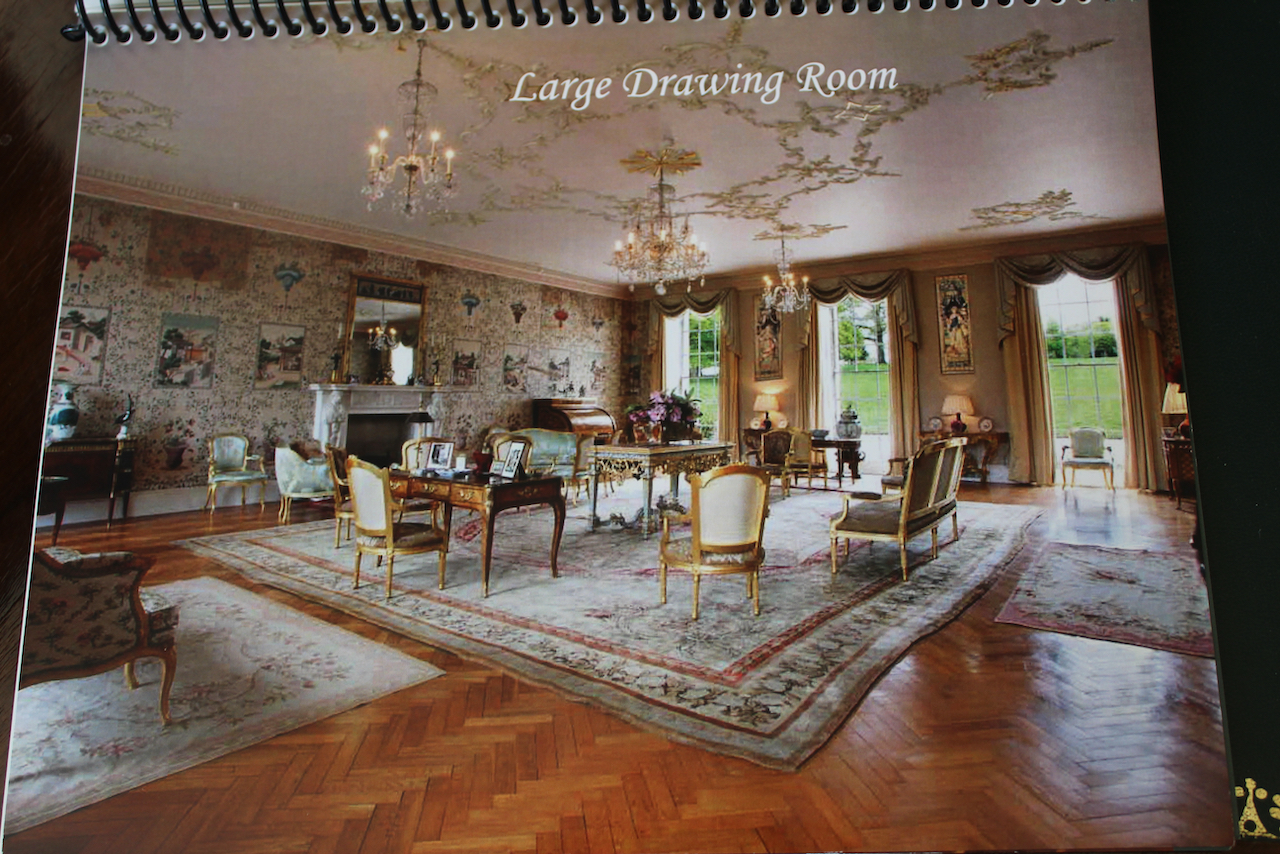
2012 Auction Catalogue for Mount Congreve.

Mount Congreve Gardens was closed for new development works but has reopened. An article by Ann Power in the Mount Congreve blog, 22nd Sept 2021, tells us:

The 70-acre Mount Congreve Gardens overlooking the River Suir and located around 7km from the centre of Waterford City will close on October 10th 2021. The closure is to facilitate the upcoming works on Mount Congreve House and Gardens as it will be redeveloped into a world-class tourism destination with an enhanced visitor experience which is set to open for summer 2022.

Funding of €3,726,000 has been approved under the Rural Regeneration Development Fund with additional funding from Failte Ireland and Waterford City & County Council for the visitor attraction, which is home to one of the largest private collections of plants in the world. The redevelopment and restoration of the Estate is set to provide enhanced visitor amenities including the repair of the historic greenhouse, improved access to grounds and pathways, and provision of family-friendly facilities. Car parking & visitor centre with cafe & retail.

The project is planned for completion in 2022 and will create a new visitor centre featuring retail, food and beverage facilities, kitchens, toilets, and a ticket desk while also opening up new areas of the estate to the public including parts of the main house which has never been accessible to the public before.

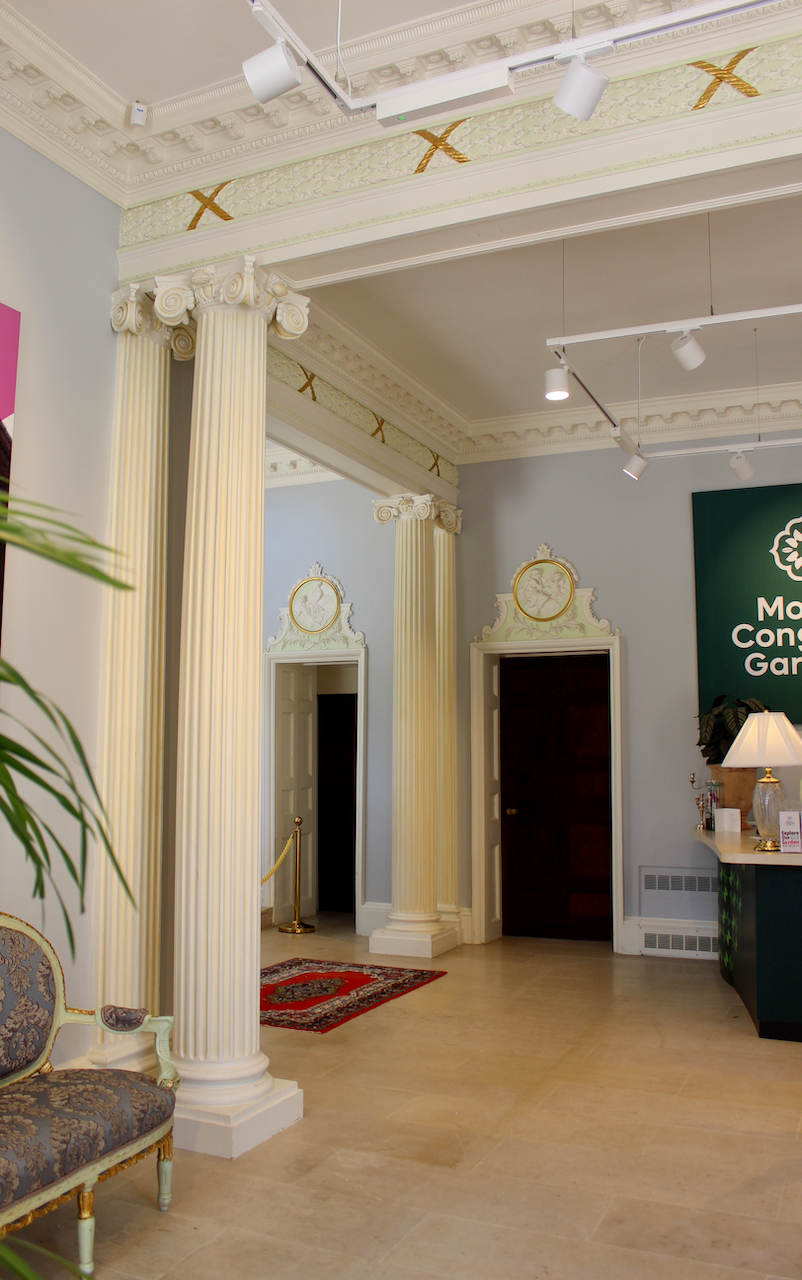
Entrance hall, Mount Congreve, May 2023. Photograph © Jennifer Winder-Baggot, www.irishhistorichouses.com
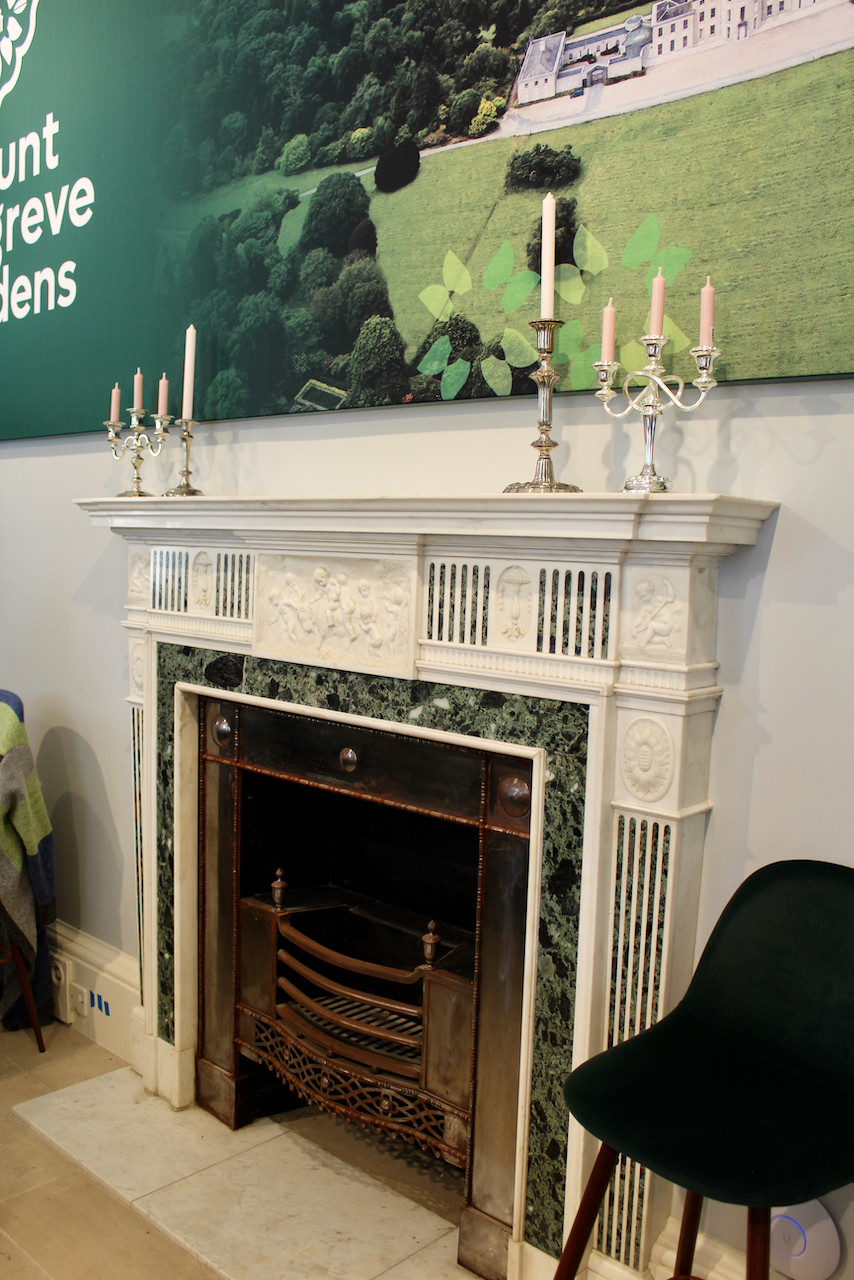
Fireplace in the front hall, Mount Congreve. Photograph © Jennifer Winder-Baggot, www.irishhistorichouses.com
2012 Auction Catalogue for Mount Congreve.

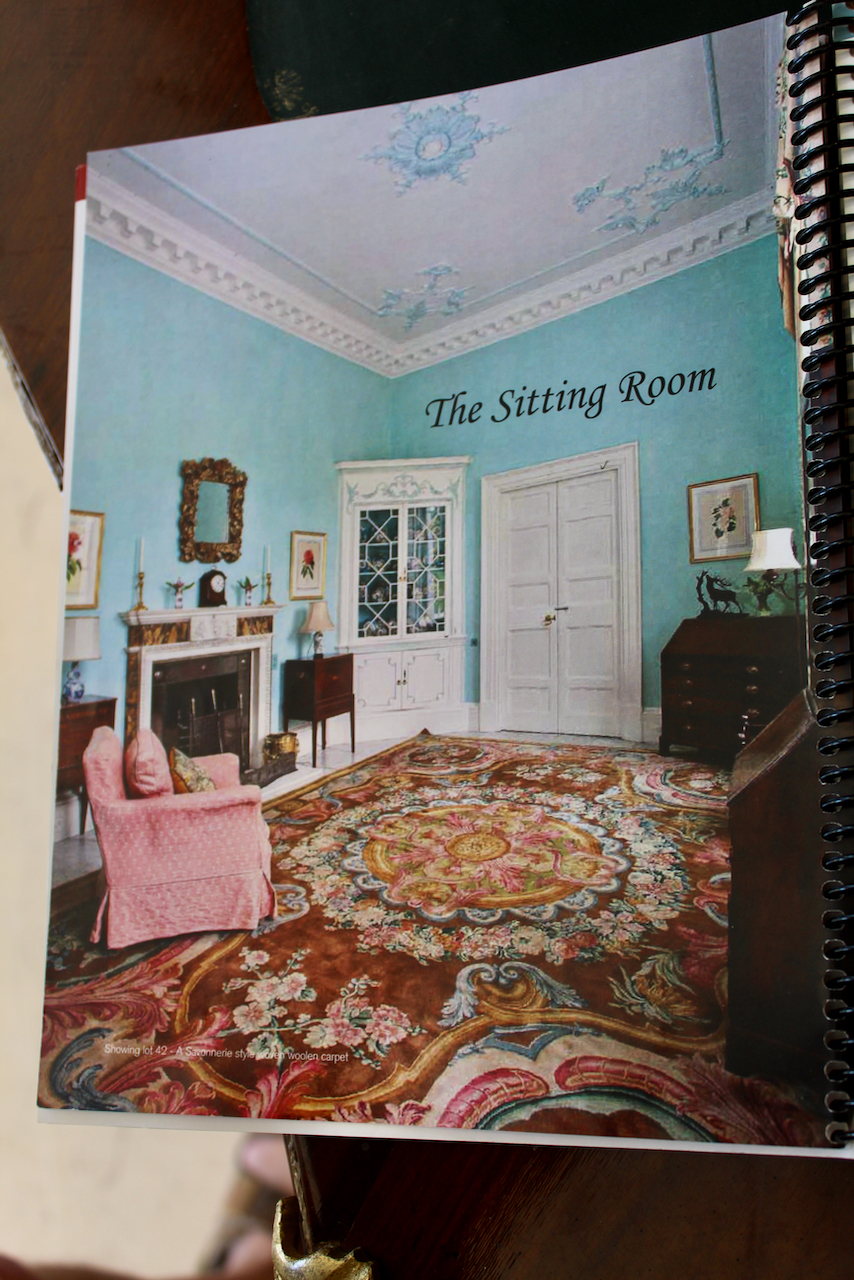
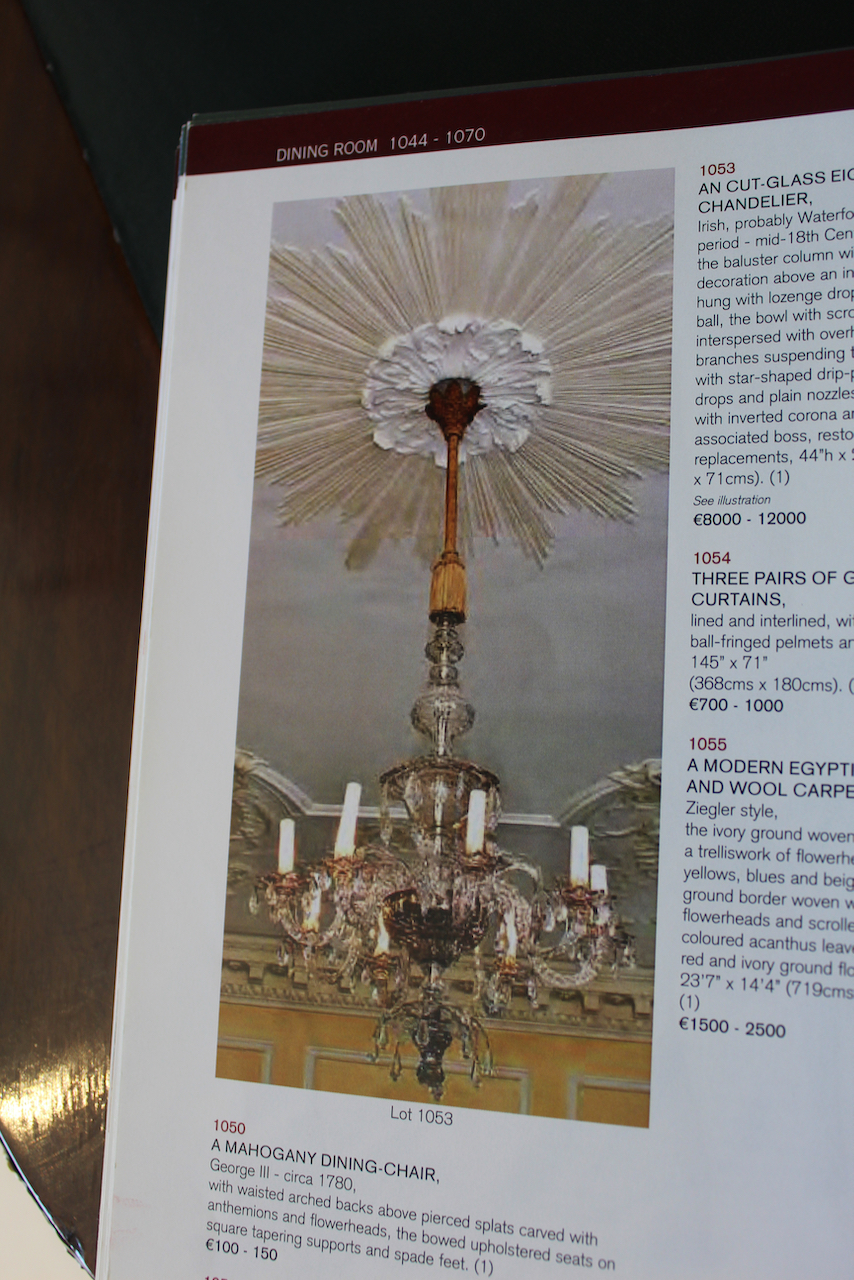
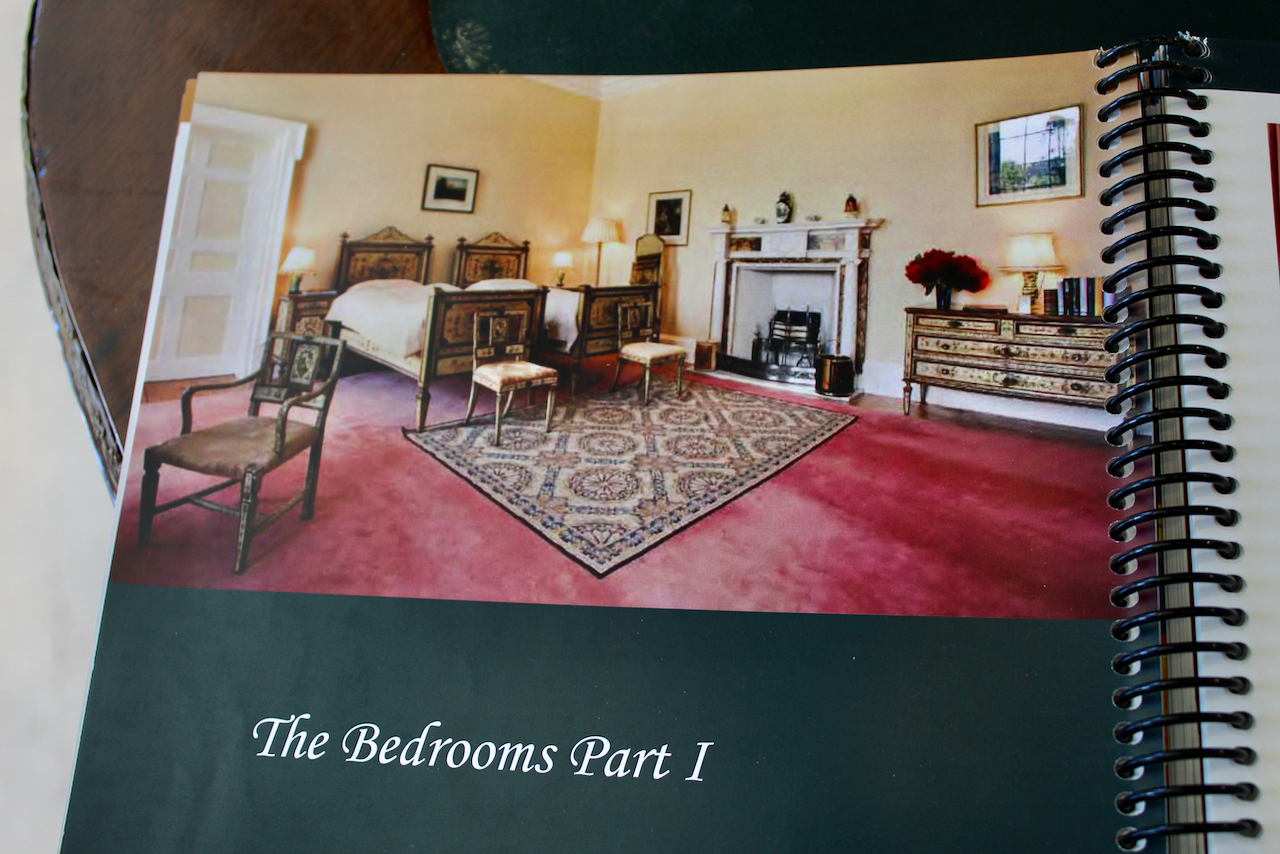
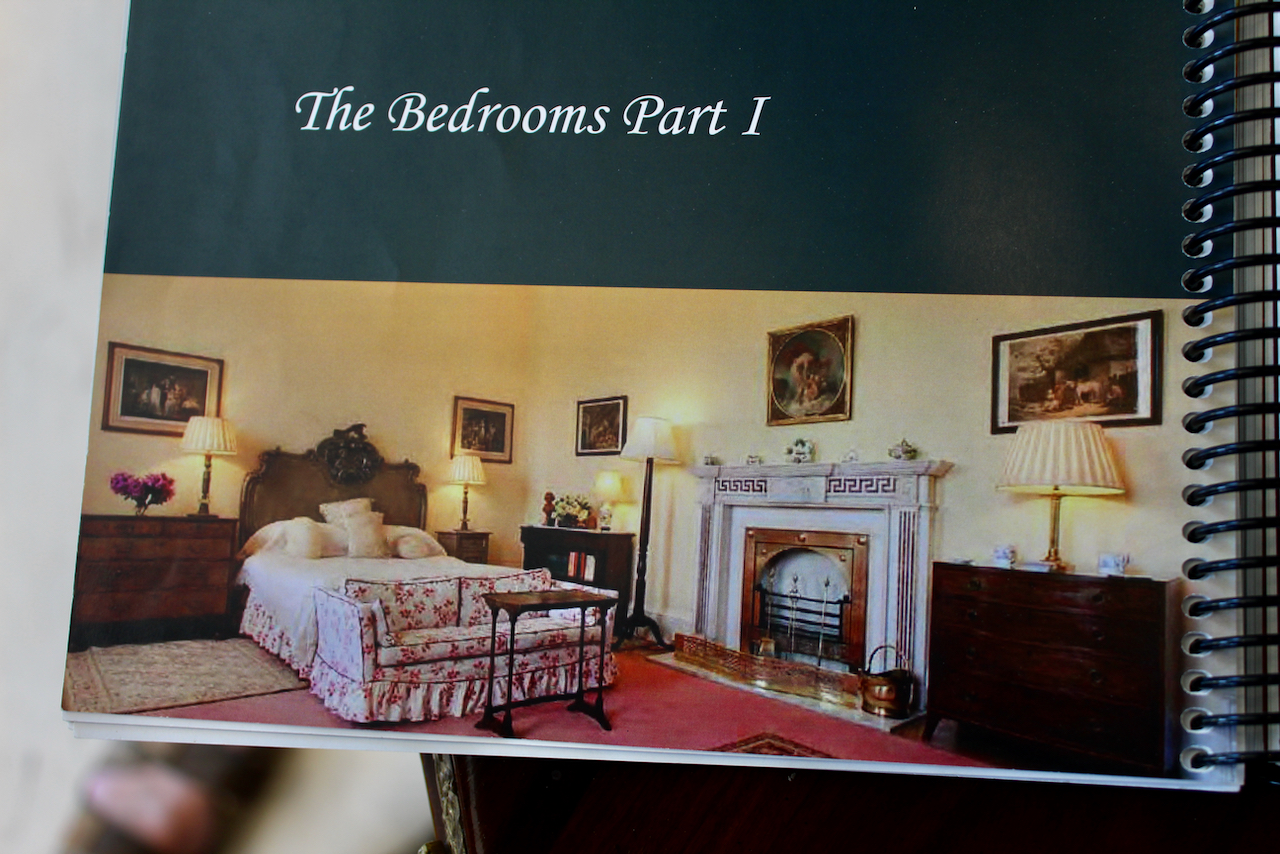
Unfortunately when we arrived, most of the house was closed! I have to make do with pictures of the rooms from the auction catalogue.
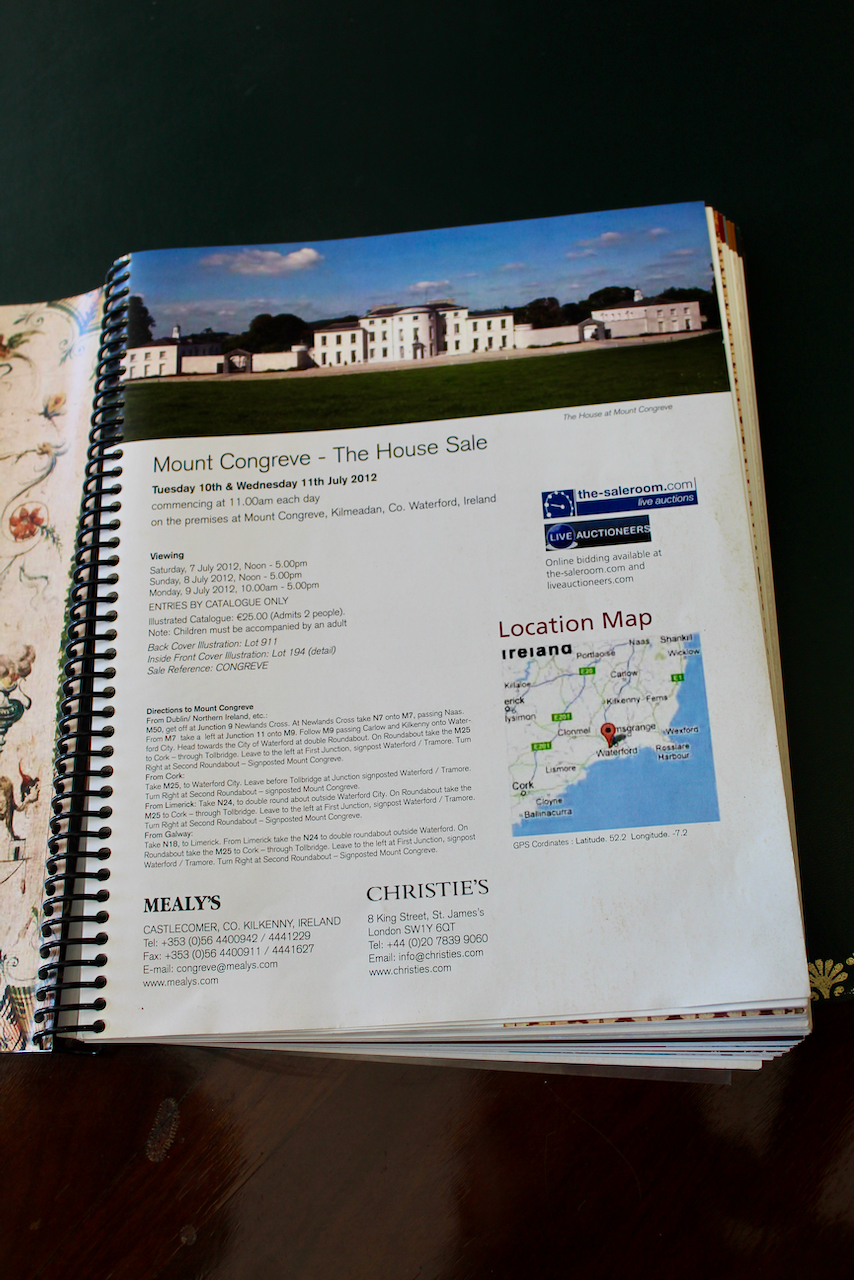
2012 Auction Catalogue for Mount Congreve, which was on the table in the front hall of Mount Congreve when we visited in May 2023.

The staircase is off the front hall.

Beautiful cantilevered staircase, Mount Congreve, May 2023. Photograph © Jennifer Winder-Baggot, www.irishhistorichouses.com
Mount Congreve, May 2023. Photograph © Jennifer Winder-Baggot, www.irishhistorichouses.com

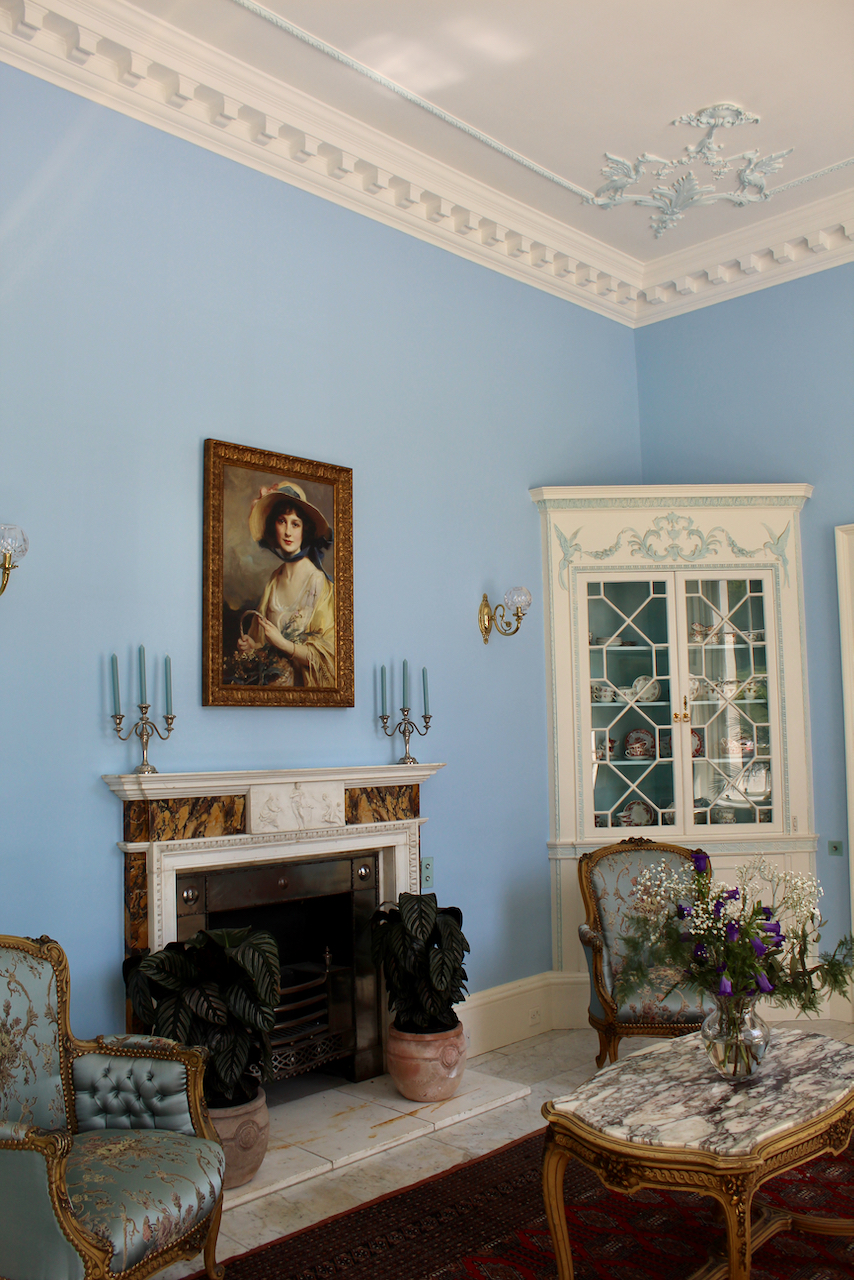
We were able to peer into the sitting room, off the front hall.

The sitting room, Mount Congreve. Photograph © Jennifer Winder-Baggot, www.irishhistorichouses.com
2012 Auction Catalogue for Mount Congreve, County Waterford.
2012 Auction Catalogue for Mount Congreve.
2012 Auction Catalogue for Mount Congreve. Very impressive ceiling in the dining room.
2012 Auction Catalogue for Mount Congreve.
2012 Auction Catalogue for Mount Congreve
2012 Auction Catalogue for Mount Congreve. The bedrooms have lovely fireplaces.
2012 Auction Catalogue for Mount Congreve.

The website tells us: “The Woodland gardens at Mount Congreve were founded on the inspiration, generosity and encouragement of Mr. Lionel N. de Rothschild. He became arguably, the greatest landscaper of the 20th Century and one of the cleverest hybridists. He died in 1942. The original gardens at Mount Congreve had comprised of a simple terraced garden with woodland of ilexes and sweet chestnuts on the slopes falling down to the river. The Gardens are held in Trust for the State.
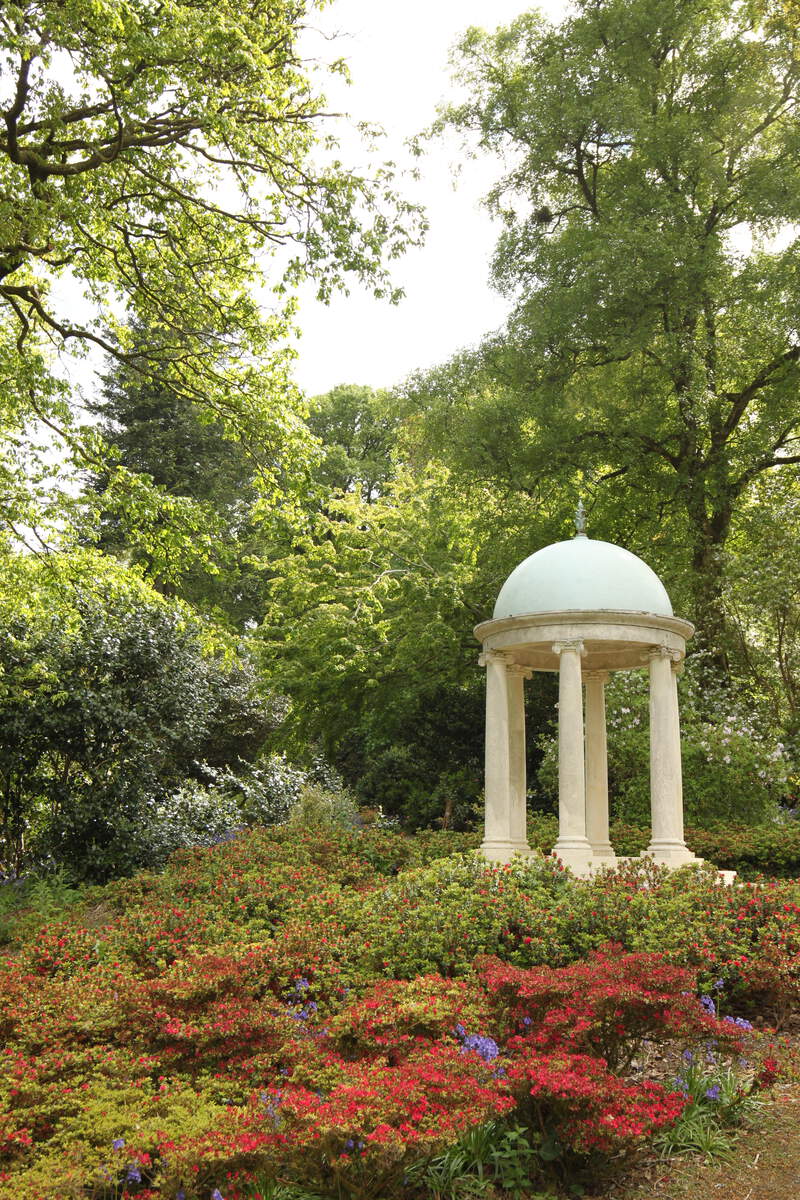
Mount Congreve Estate Gardens, Co Waterford Courtesy Sonder Visuals 2017 for Tourism Ireland (see [3]). In April 2011 Mr. Congreve was in London en route to the Chelsea Flower Show, aged 104, when he died. His ashes were returned to Mount Congreve and placed in the temple overlooking his gardens and the River Suir below.

The original gardens at Mount Congreve had comprised of a simple terraced garden with woodland of ilexes and sweet chestnuts on the slopes falling down to the river. Ambrose Congreve began planting parts of these in his late teens but it was not until 1955 that he began to make large clearings in the woodlands to create the necessary conditions where his new plants would thrive. With the arrival of Mr. Herman Dool in the early sixties, the two men began the process that would lead to Mount Congreve’s recognition as one of the ‘Great Gardens of the World’. Up to the very last years of his life, Mr Congreve could be found in the gardens dispensing orders and advice relating to his beloved plants.

Mount Congreve Estate Gardens, Co Waterford Courtesy Sonder Visuals 2017 for Tourism Ireland (see [1])
From “In Harmony with Nature, The Irish Country House Garden 1600-1900” in the Irish Georgian Society, July 2022, curated by Robert O’Byrne.

11. The Presentation Convent, Waterford Healthpark, Slievekeel Road, Waterford – section 482
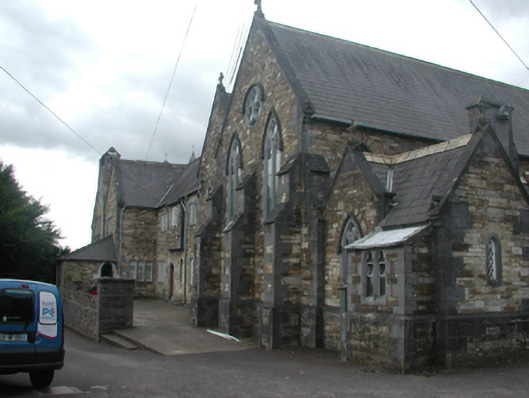
The Presentation Convent, photograph from National Inventory of Architectural Heritage.

Open dates in 2026: Jan 1- Dec 23, 27, 29,30, Mon-Fri, National Heritage Week Aug 15-23, closed Bank Holidays, 8.30am-5.30pm

Fee: Free

The National Inventory tells us it is a:

Detached ten-bay two-storey over basement Gothic Revival convent, built 1848 – 1856, on a quadrangular plan about a courtyard comprising eight-bay two-storey central block with two-bay two-storey gabled advanced end bays to north and to south, ten-bay two-storey over part-raised basement wing to south having single-bay four-stage tower on a circular plan, eight-bay two-storey recessed wing to east with single-bay two-storey gabled advanced engaged flanking bays, six-bay double-height wing to north incorporating chapel with two-bay single-storey sacristy to north-east having single-bay single-storey gabled projecting porch, and three-bay single-storey wing with dormer attic to north…

An attractive, substantial convent built on a complex plan arranged about a courtyard. Designed by Augustus Welby Northmore Pugin (1812 – 1852) in the Gothic Revival style, the convent has been well maintained, retaining its original form and character, together with many important salient features and materials. However, the gradual replacement of the original fittings to the openings with inappropriate modern articles threatens the historic character of the composition. The construction of the building reveals high quality local stone masonry, particularly to the cut-stone detailing, which has retained its original form. A fine chapel interior has been well maintained, and includes features of artistic design distinction, including delicate stained glass panels, profiled timber joinery, including an increasingly-rare rood screen indicative of high quality craftsmanship, and an open timber roof construction of some technical interest. The convent remains an important anchor site in the suburbs of Waterford City and contributes to the historic character of an area that has been substantially developed in the late twentieth century.” [7]

12. Reginald’s Tower, County Waterford – OPW

See my OPW write-up:

https://irishhistorichouses.com/2022/01/19/office-of-public-works-properties-munster/

13. Tourin House & Gardens, Tourin, Cappoquin, Co. Waterford P51 YYIK – section 482
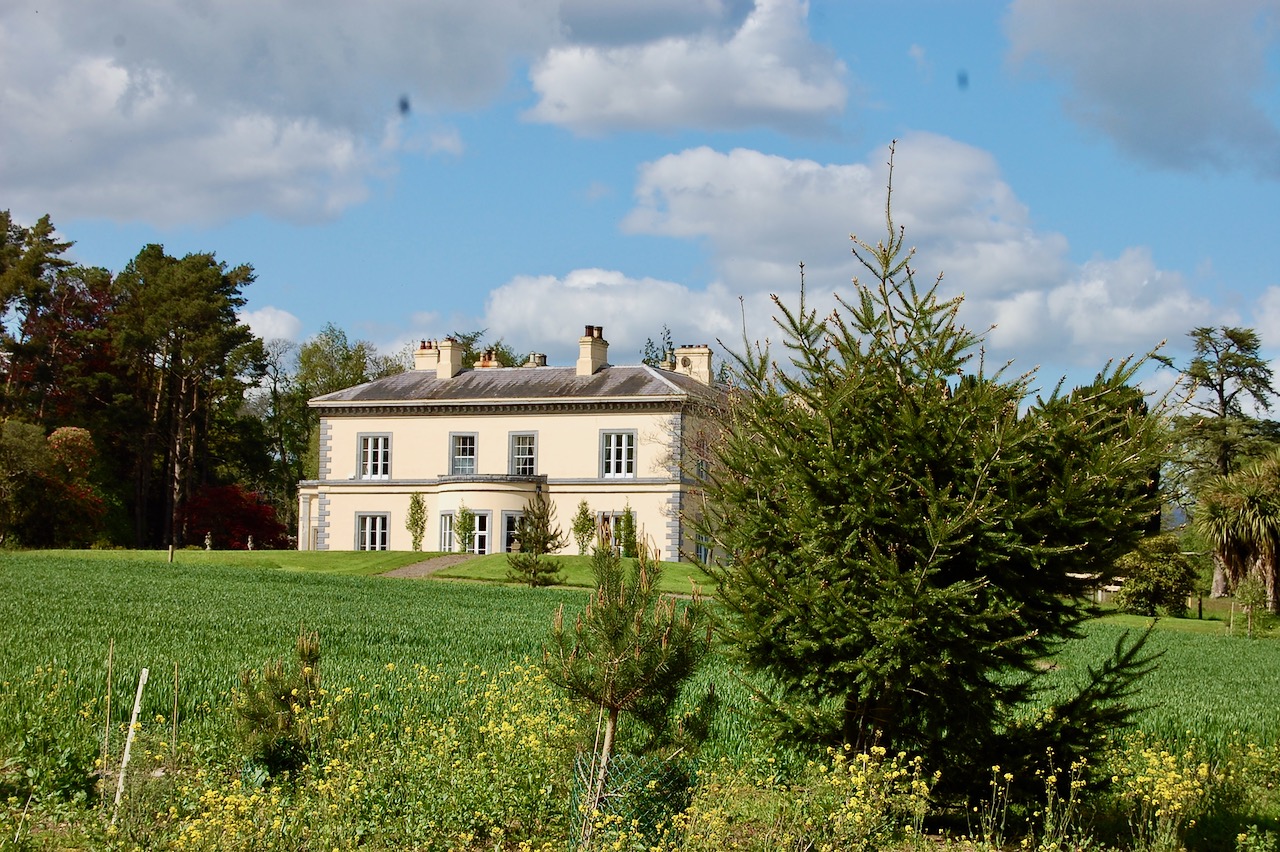
Tourin House, County Waterford, Photograph © Jennifer Winder-Baggot, www.irishhistorichouses.com

See my entry: https://irishhistorichouses.com/2020/04/30/tourin-house-gardens-cappoquin-county-waterford/

www.tourin-house.ie

Open dates in 2026:

House, April 1-30, May 1-31, June 2-30, Tue-Sat, 1pm-5pm, National Heritage Week, Aug 15-23, 1pm-5pm

Garden April-Sept, Tue-Sat, 1pm-5pm,

Fee: adult house €14, garden only €7, OAP house & garden €12, child/student free

Places to stay, County Waterford

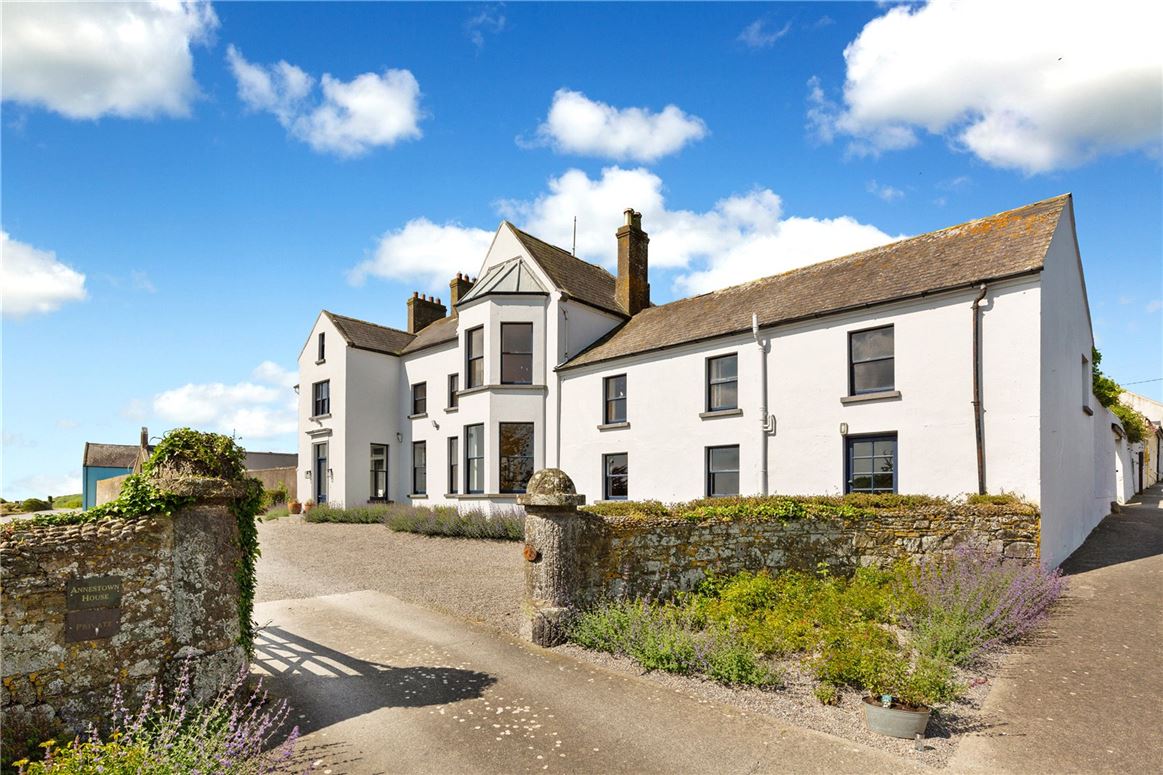
1. Annestown House, County Waterford – B&B
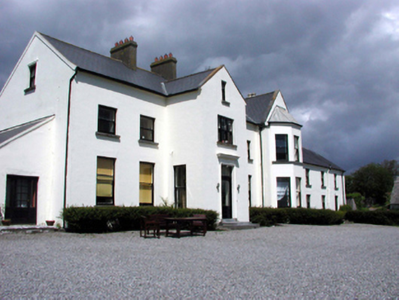
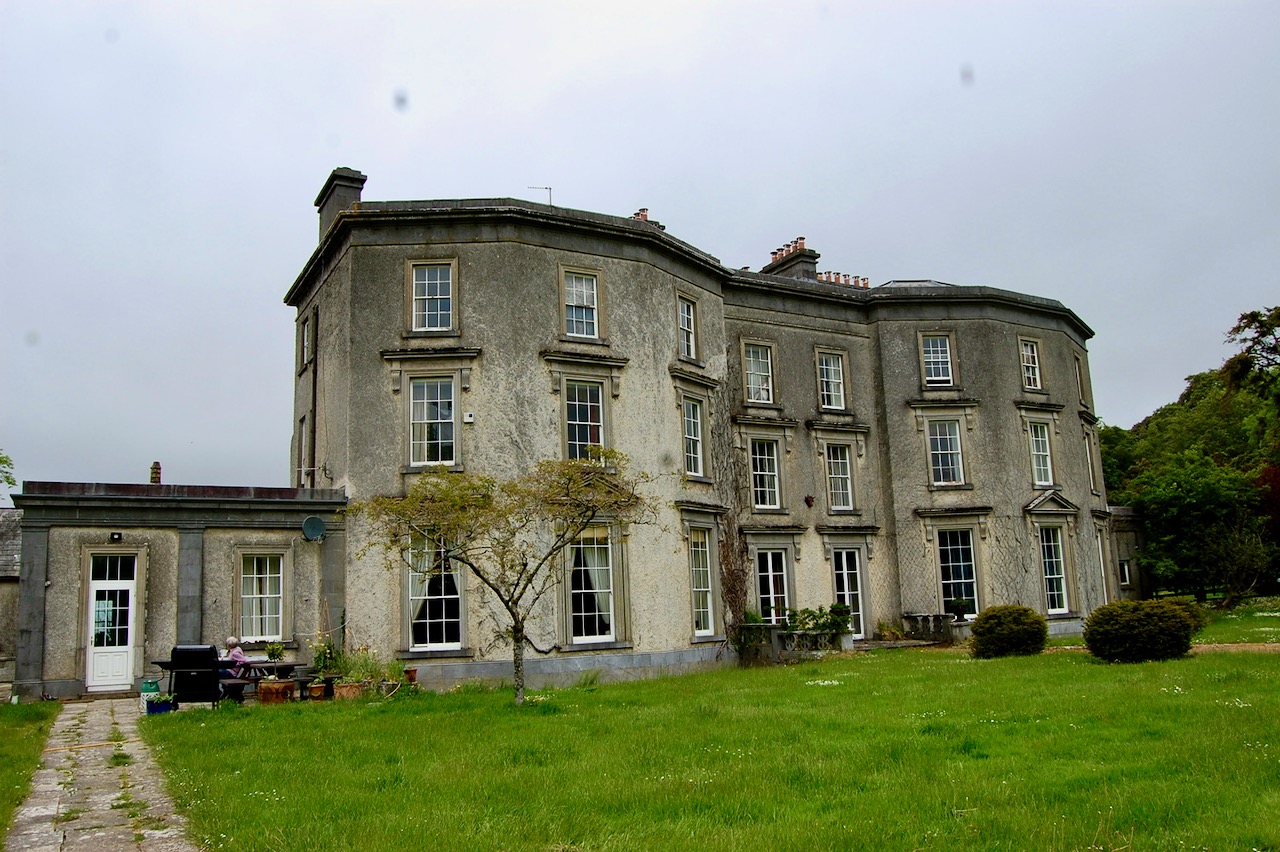
Annestown House, County Waterford, photograph from National Inventory of Architectural Heritage.
Annestown House, courtesy of Savills Residential & Country Agency and myhome.ie

http://homepage.eircom.net/~annestown/welcome.htm 

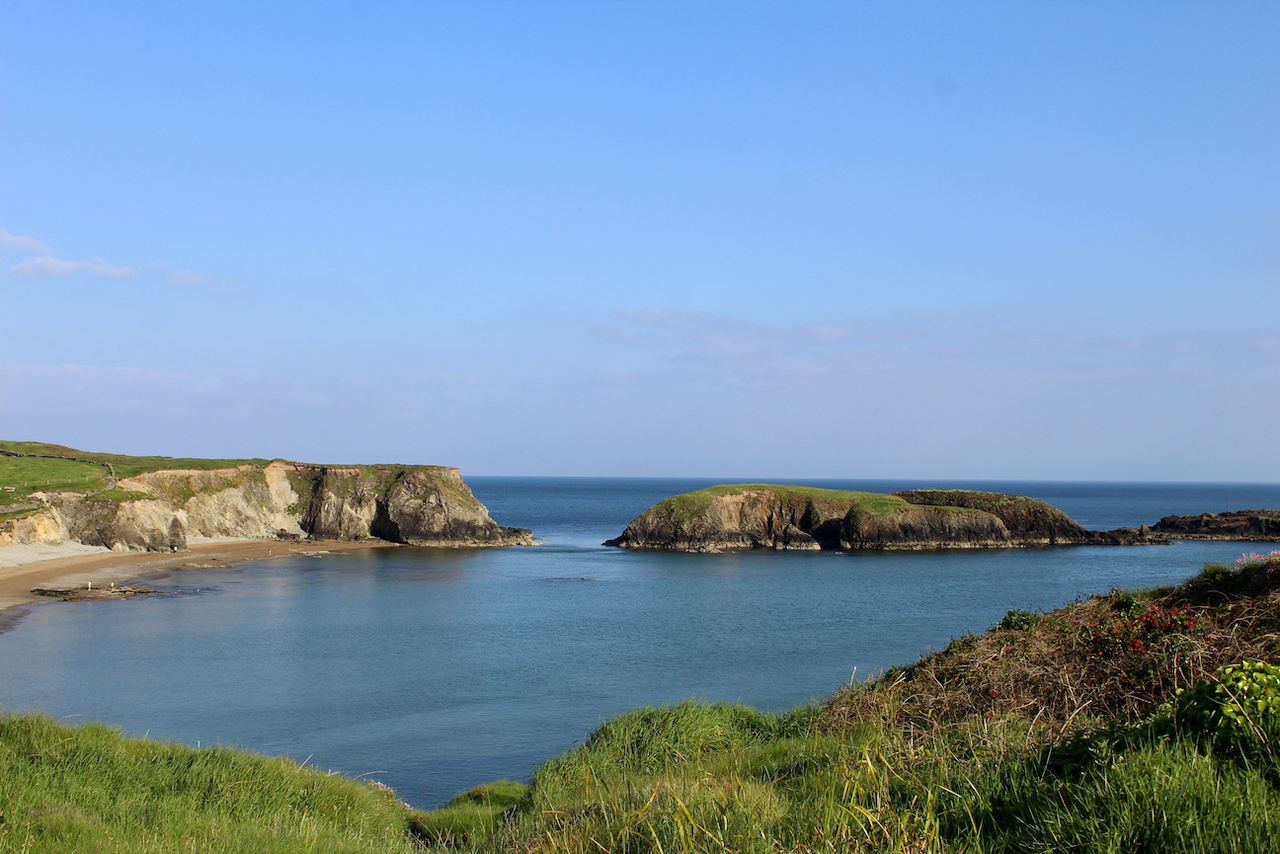
We were lucky to stay at the cottages at Annestown House in May 2023! I swam in the sea every day there, in the wonderful bay. The house was advertised for sale the following month.

Annestown House, courtesy of Savills Residential & Country Agency and myhome.ie. We stayed in the blue converted stables in back.

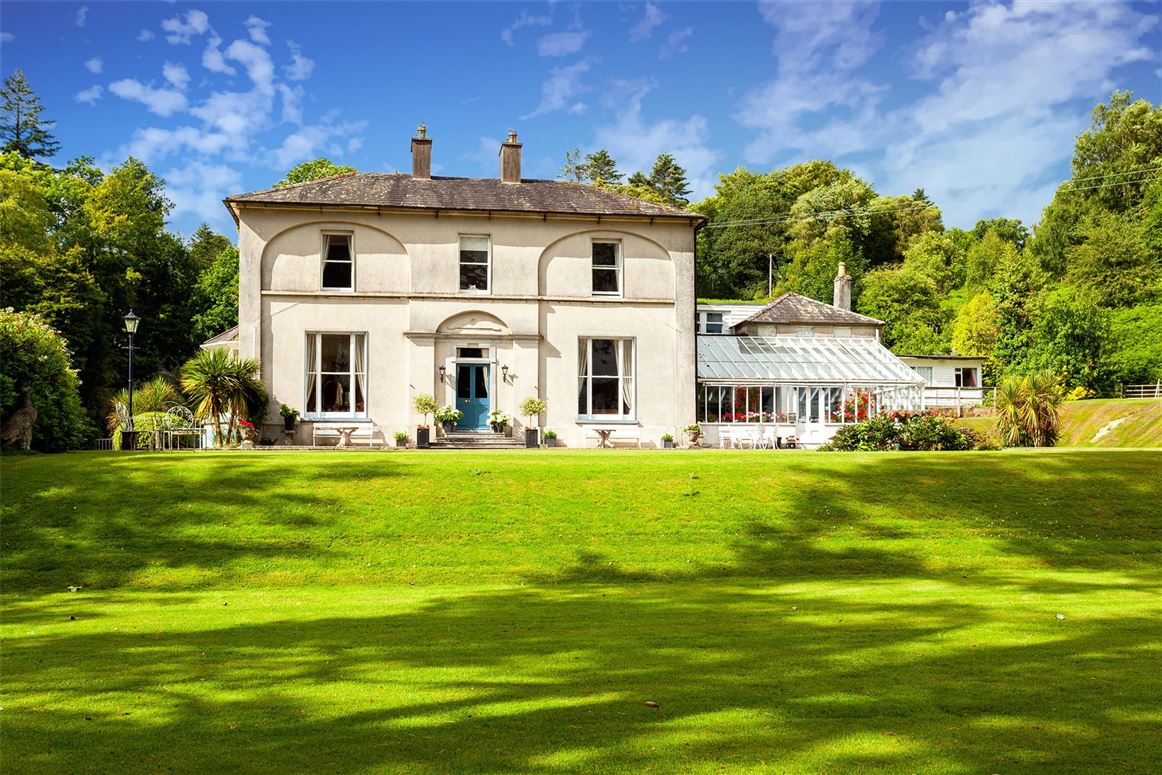
It was a heavenly place to stay, as the setting was so lovely, and we were able to sit out and look at the view over the sea. Rabbits emerged on the lawn regularly, and I enjoyed sitting on a bench and watching them venture out across the lawn, which used to be a tennis court and croquet lawn.
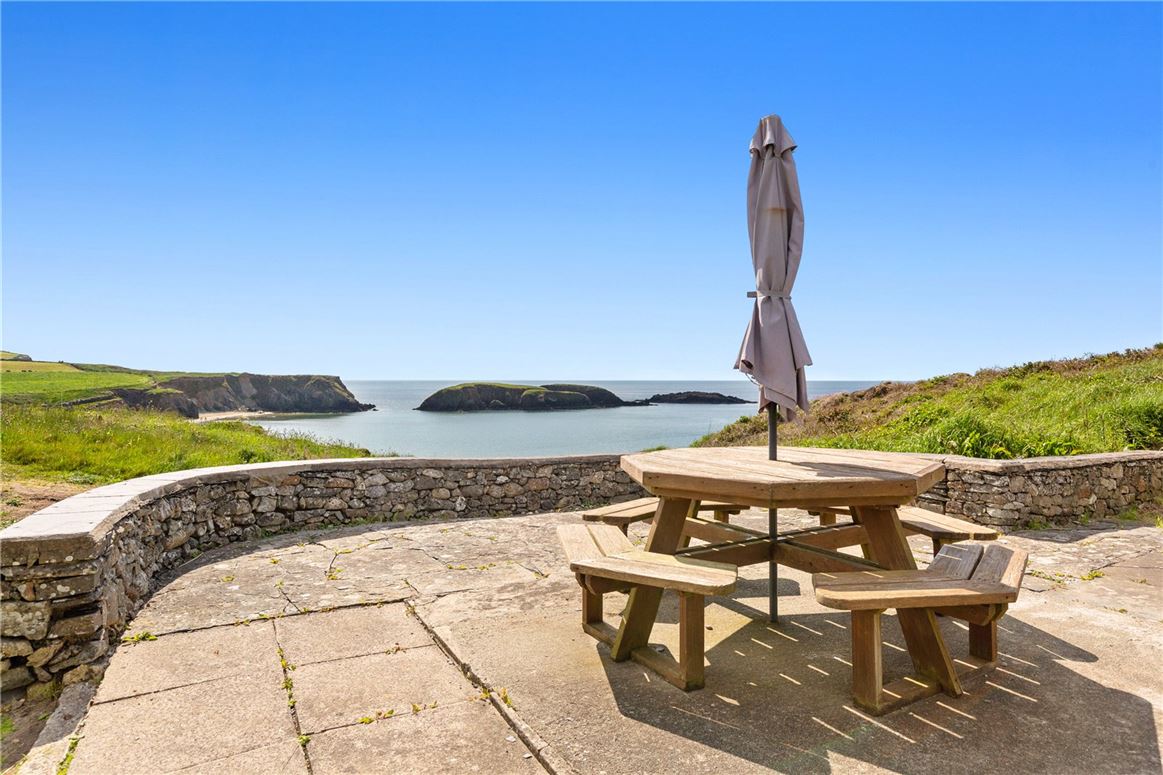
Annestown House, courtesy of Savills Residential & Country Agency and myhome.ie. I sat here in the evening with a glass of wine. Apparently, according to the sales advertisement, Jaqueline Kennedy Onassis visited the house!
Annestown House, courtesy of Savills Residential & Country Agency and myhome.ie. Look at that beach! We were able to walk down for my swim.
Annestown Beach, Waterford, the view from Annestown House, May 2023. Photograph © Jennifer Winder-Baggot, www.irishhistorichouses.com

The first part of the house seems to have been built around 1770 for Henry St. George Cole. The Landed Estates database tells us that he was a Justice of the Peace and a member of the Board of Waterford Port. His death is reported in contemporary newspapers in 1819. Mark Bence-Jones tells us it was bought around 1830 by the Palliser family.

The National Inventory gives us more detail on its construction: “Detached six-bay two-storey house with dormer attic, c.1820, retaining early fenestration with single-bay two-storey gabled entrance bay, single-bay two-storey gabled end bay having single-bay two-storey canted bay window, three-bay two-storey wing to north originally separate house, c.1770, and three-bay two-storey return to west. Extended, c.1920, comprising single-bay single-storey lean-to recessed end bay to south.

Mark Bence-Jones tells us of Annestown:

p. 5. “(Palliser, sub Galloway/IFR) Rambling three storey house at right angles to the village street of Annestown, which is in fact two houses joined together. The main front of the house faces the sea; but it has a gable end actually on the street. Low-ceilinged but spacious rooms; long drawing room divided by an arch with simple Victorian plasterwork; large library approached by a passage. Owned at beginning of 19C by Henry St. George Cole, bought ca. 1830 by the Palliser family, from whom it was inherited by the Galloways.”
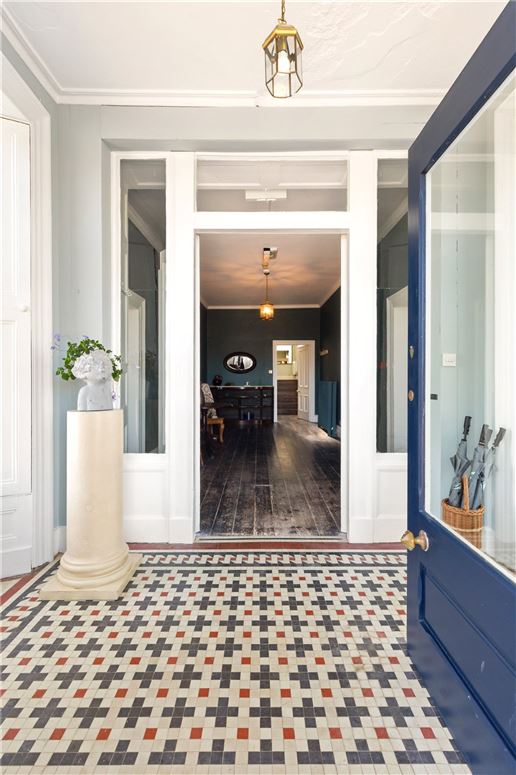
Annestown House, courtesy of Savills Residential & Country Agency and myhome.ie.

The advertisement by Savills Residential & Country Agency with myhome.ie describes the interior:

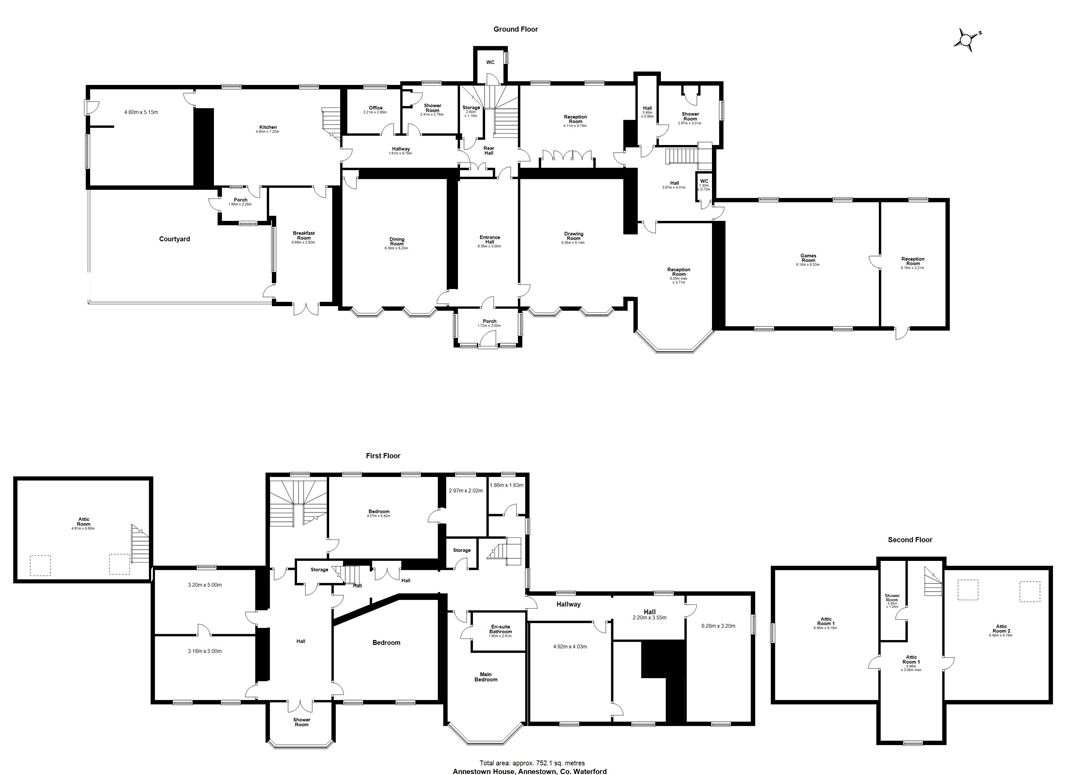
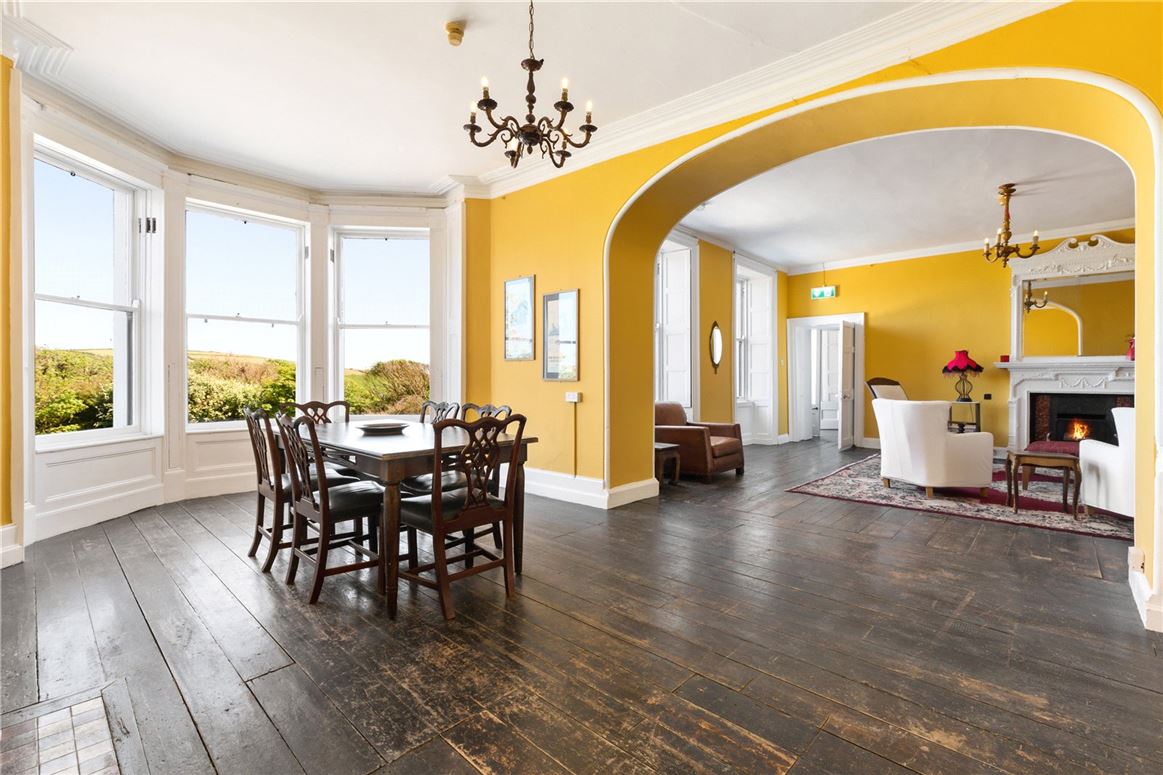
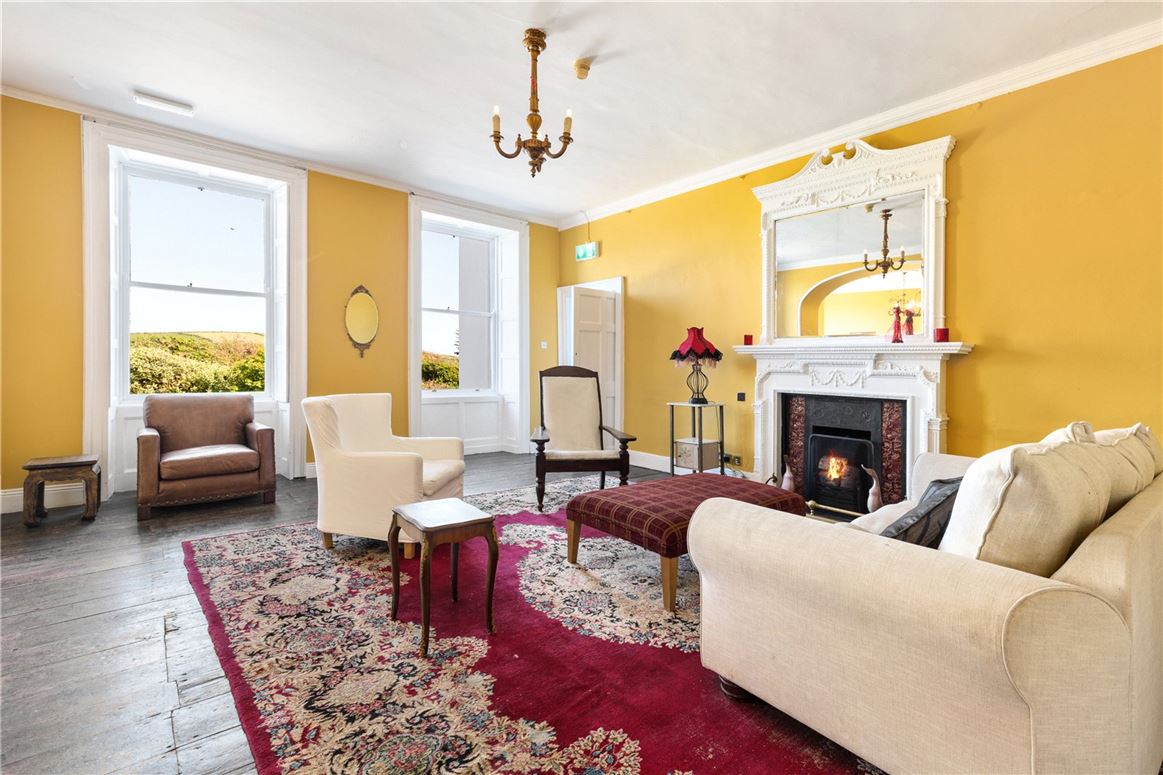
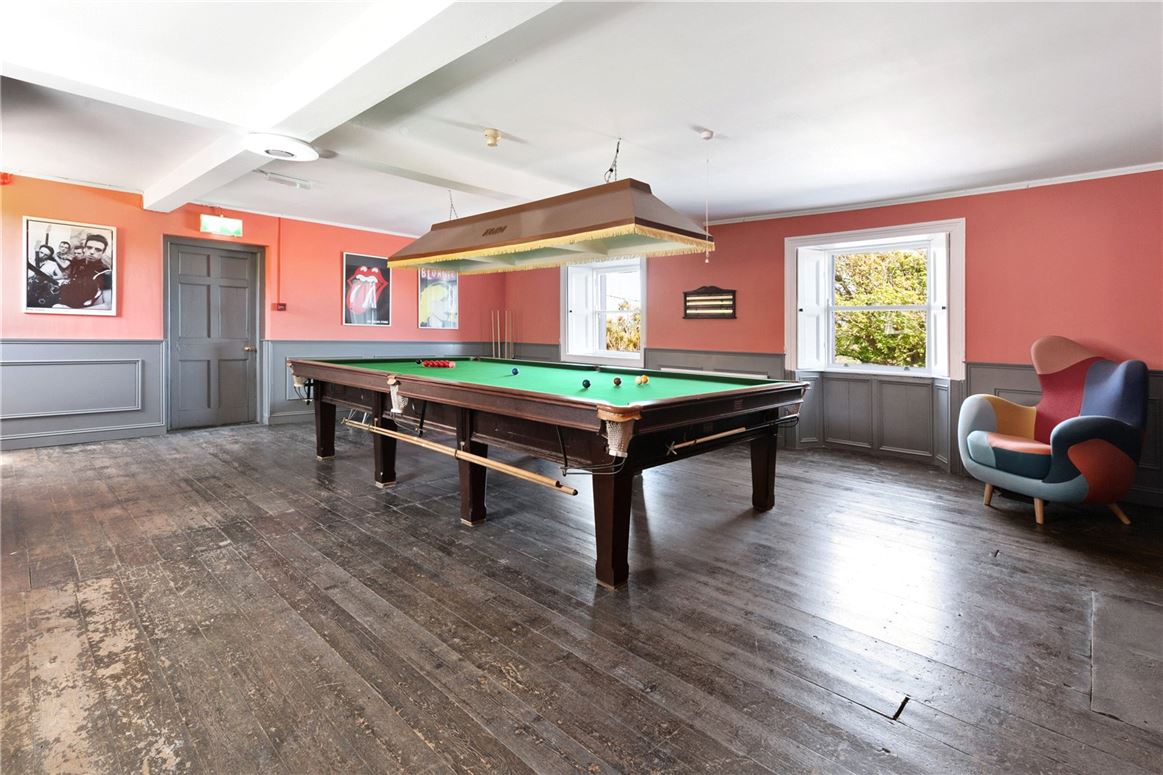
Entering through a porch, this opens into an impressive hall, which offers access to the main reception rooms which include the dining room and drawing room which are most impressive. Located on the right wing of the house is the games room while on the left wing is the kitchen and breakfast room. A staircase in the rear hall leads up to the first floor where there is the master bedroom suite. There are 6 further bedrooms (two ensuite) and a bathroom on this level. On the second floor, there are two additional attic rooms and a shower room.While the accommodation has been extended since its original construction, the house has been beautifully maintained with many notable period features which include hardwood floors, architraves, decorative fireplaces, sash and cash windows, cornices and ceiling roses.

Annestown House, courtesy of Savills Residential & Country Agency and myhome.ie.

Timothy William Ferres tells us that Reverend John Bury Palliser (1791-1864) lived here. He was Rector of Clonmel. His father was John Palliser of Derryluskan, County Tipperary and his mother Grace Barton from Grove House in County Tipperary.

The Reverend Palliser married Julia Phillida Howe. Their son and heir was Wray Bury Palliser (1831-1906). A younger brother died aged just 25 in the China War, in China.
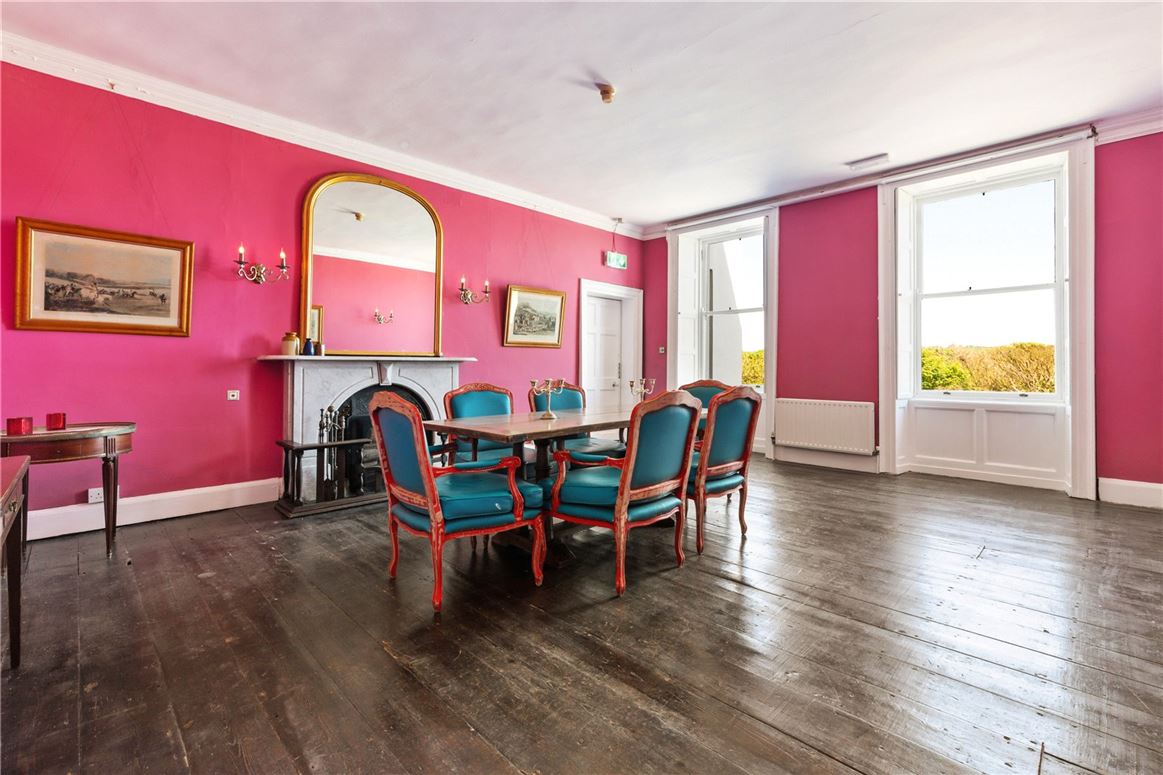
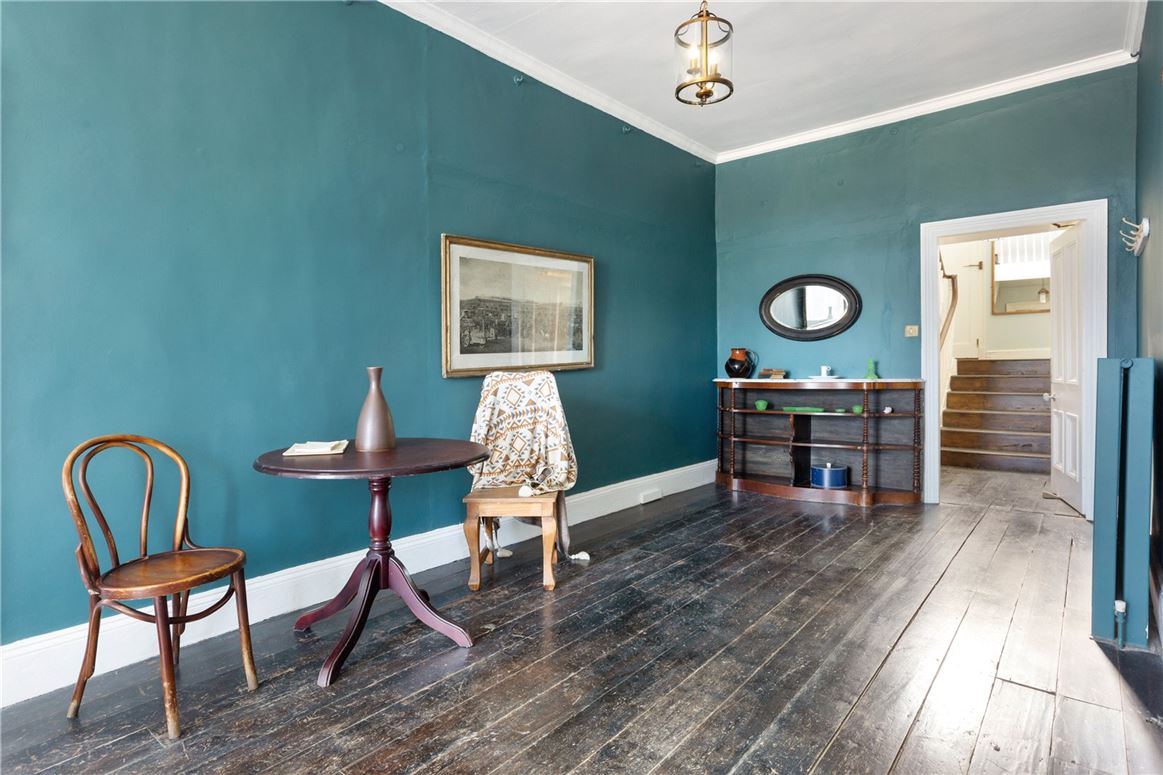
Annestown House, courtesy of Savills Residential & Country Agency and myhome.ie.

Wray was High Sheriff of County Waterford in 1883, Deputy Lieutenant and Justice of the Peace. He married Maria Victoria Josephine Gubbins, daughter of Joseph Gubbins of Kilfrush House in County Limerick. They had a daughter, Alice Grace Palliser who died aged only 15. The property therefore passed via a brother of Reverend John Bury Palliser, Wray Bury Palliser of Derryluskan, to his son William (1830-1882). William was in the military and married Anne Perham.

His daughter Mary Jane Sybil (1874-1940) married Major Harold Bessemer Galloway in 1908, who was from Scotland. Their son Ian Charles joined the military and lived in Tynte Park in County Wicklow and in Scotland. Their son Wray Bury Galloway (1914-1994) lived in Annestown. He married Mary Clayton Alcock from Wilton Castle in County Wexford – we have also stayed in Wilton Castle, a Section 482 property!

It remained with the Galloway family until 2008, Timothy William Ferres tells us. John and Pippa Galloway ran a restaurant in th house, and John had been restaurant manager in Waterford Castle hotel.
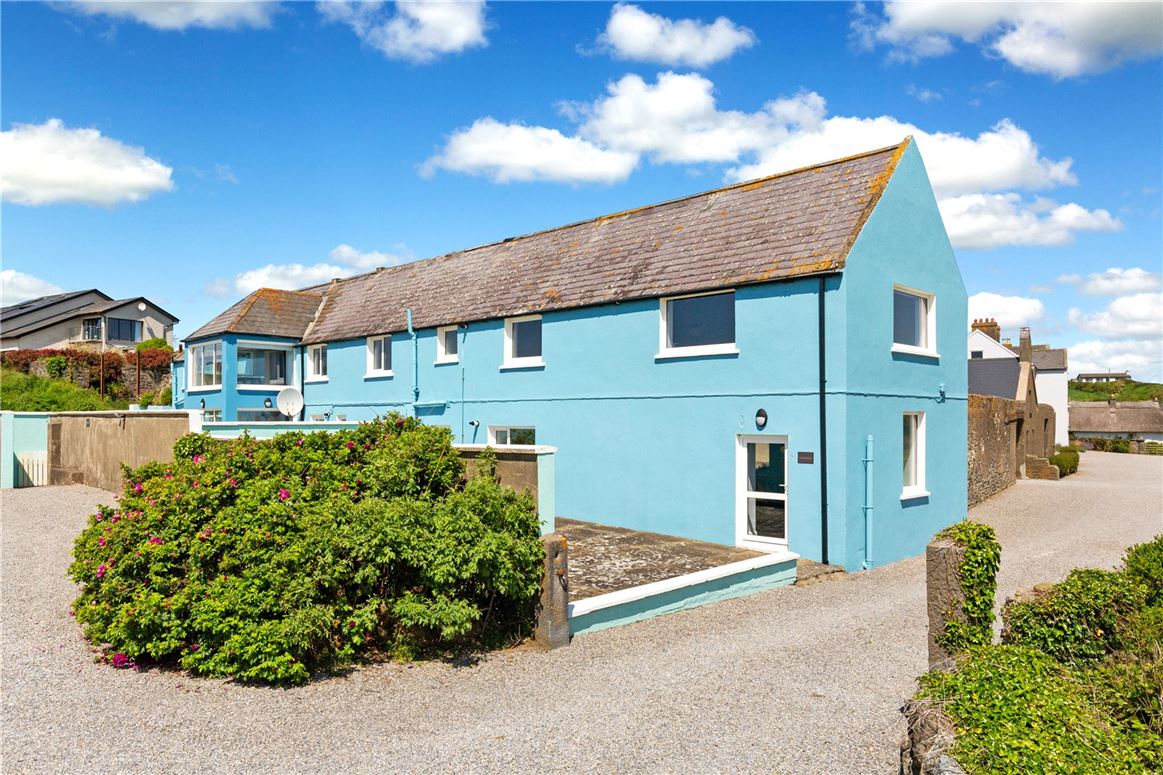
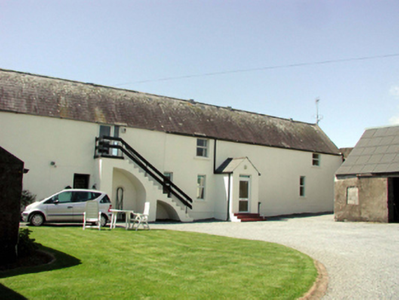
The converted stables and barn where we stayed at Annestown House, photograph courtesy of Savills Residential & Country Agency and myhome.ie.
The stable yard at Annestown House, County Waterford, converted into holiday accommodation, photograph from National Inventory of Architectural Heritage.
I sat here on the lawn at Annestown to watch the rabbits, photograph courtesy of Savills Residential & Country Agency and myhome.ie.

2. Ballyrafter House, Lismore, Co Waterford – B&B 
https://ballyrafter.inn.fan/

Ballyrafter House, County Waterford, photograph from myhome.ie

I’m not sure if this is still a hotel as it was advertised for sale in 2020. The Myhome website tells us: “Ballyrafter House was built circa 1830, on the commission of the Duke of Devonshire, one of the wealthiest men in England, whose Irish Seat is the nearby Lismore Castle. Initially intended for the Duke’s Steward, it soon became a hunting and fishing lodge for his guests.

Inside Ballyrafter House, photograph from myhome.ie

3. Cappoquin House, County Waterford holiday cottages

www.cappoquinhouseandgardens.com and on airbnb, https://www.airbnb.ie/rooms/16332970?adults=2&children=0&infants=0&pets=0&wishlist_item_id=11002218087407&check_in=2023-05-23&check_out=2023-05-24&source_impression_id=p3_1681134404_prgB5ShntjT0gCzp

4. Dromana, Co Waterford – 482, holiday cottages

www.dromanahouse.com

5. Faithlegg House, Waterford, Co Waterford – hotel
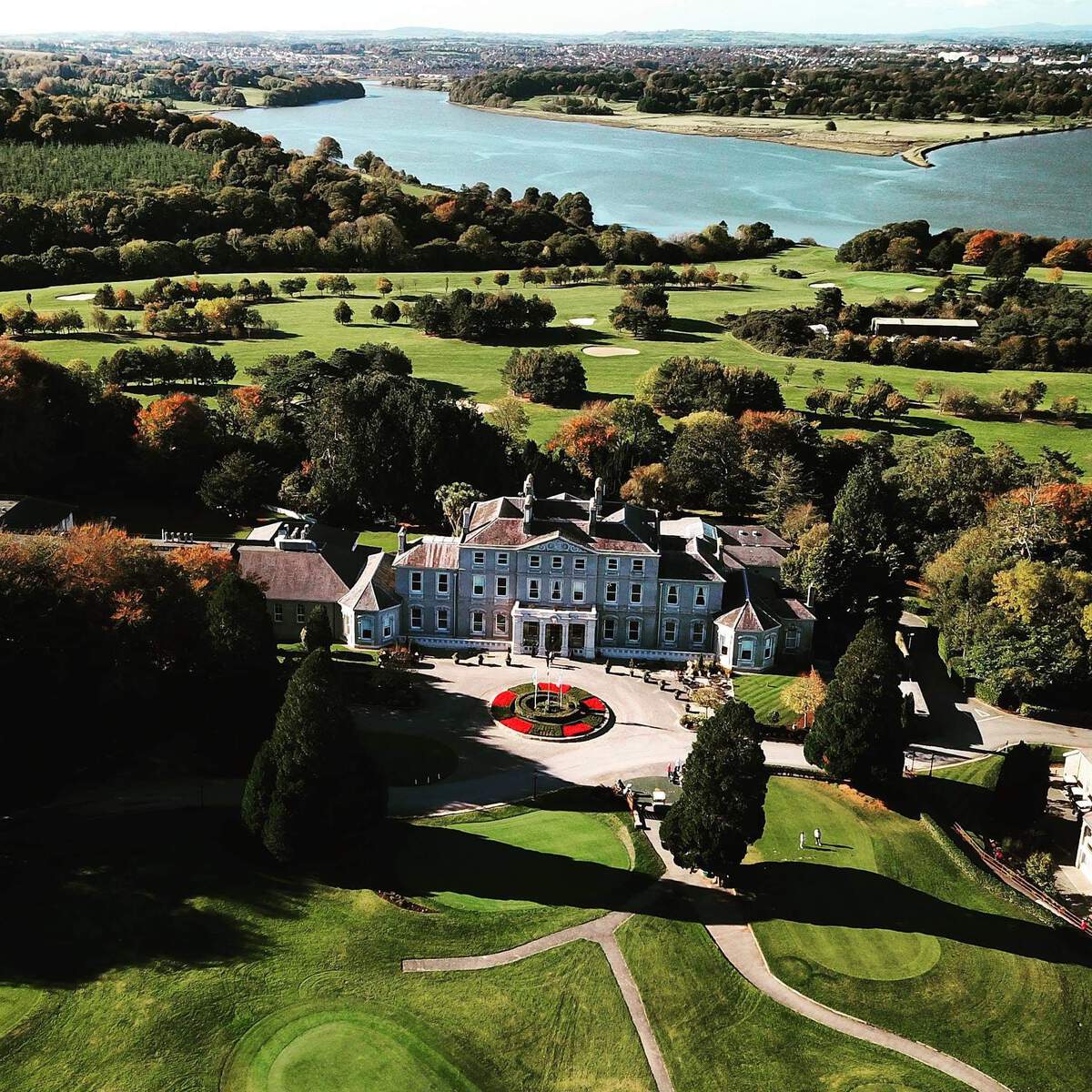
https://www.faithlegg.com

Faithlegg House Hotel, Co Waterford, Courtesy Colin Shanahan_ Faithlegg House Hotel 2021, for Tourism Ireland. (see [1])

Mark Bence-Jones describes Faithlegg House (1988):

p. 123. (Power/IFR; Gallwey/IFR) A three storey seven bay block with a three bay pedimented breakfront, built 1783 by Cornelius Bolton, MP, whose arms, elaborately displayed, appear in the pediment. Bought 1819 by the Powers who ca 1870 added two storey two bay wings with a single-storey bow-fronted wings beyond them. At the same time the house was entirely refaced, with segmental hoods over the ground floor windows; a portico or porch with slightly rusticated square piers was added, as well as an orangery prolonging one of the single-storey wings. Good C19 neo-Classical ceilings in the principal rooms of the main block, and some C18 friezes upstairs. Sold 1936 by Mrs H.W.D. Gallwey (nee Power); now a college for boys run by the De La Salle Brothers.” 

The Faithlegg website tells us that the house was probably built by John Roberts (1714-1796): “a gifted Waterford architect who designed the Waterford’s two Cathedrals, City Hall, Chamber of Commerce and Infirmary.  He leased land from Cornelius Bolton at Faithlegg here he built his own house which he called Roberts Mount. He built mansions for local gentry and was probably the builder of Faithlegg House in 1783.”

The website tells us of more about the history of the house:

Faithlegg stands at the head of Waterford Harbour, where the three sister rivers of the Barrow, Nore and Suir meet.  As a consequence, it has been to the fore in the history of not just Waterford but also Ireland. For it was via the harbour and these rivers that the early settlers entered and from the hill that we stand under, the Minaun, that the harbour was monitored. Here legend tells us sleeps the giant Cainche Corcardhearg son of Fionn of the Fianna who was stationed here to keep a watch over Leinster.

A Norman named Strongbow landed in the harbour in 1170 and this was followed by the arrival of Henry II in October 1171.  Legend has it that Henry’s fleet numbered 600 ships and one of the merchants who donated to the flotilla was a Bristol merchant named Aylward.  He was handsomely rewarded with the granting of 7000 acres of land centred in Faithlegg. The family lived originally in a Motte and Baily enclosure the remains of which is still to be seen.  This was followed by Faithlegg Castle and the 13th century church in the grounds of the present Faithlegg church dates from their era too. The family ruled the area for 500 years until they were dispossessed in 1649 by the armies of Oliver Cromwell. The property was subsequently granted to a Cromwellian solider, Captain William Bolton. 

Over a century later in 1783 the present house was commenced by Cornelius Bolton who had inherited the Faithlegg Estate from his father in 1779. Cornelius was an MP, a progressive landlord and businessman. Luck was not on his side however and financial difficulties followed. In 1819 the Bolton family sold the house and lands to Nicholas and Margaret Mahon Power, who had married the year before. It was said that Margaret’s dowry enabled the purchase. The Powers adorned the estate with the stag’s head and cross, which was the Power family crest. It remains the emblem of Faithlegg to this day.”

Margaret, the website tells us, was the only daughter and heiress of Nicholas Mahon of Dublin. She married Nicholas Power in 1818 and the couple came to live in Faithlegg.  It was not a happy marriage and, following a legal separation in 1860, she returned to live in Dublin where she died in 1866.  

The House passed to Hubert Power, the only son of Pat & Lady Olivia Power, and in 1920 upon Hubert’s death, it passed to his daughter Eily Power, in 1935 Eily and her husband sold the House to the De la Salle order of teaching brothers after which it acted as a junior novitiate until 1986. 

The last remaining gap in history is from 1980’s until 1998 when it was taken over by FBD Property and Leisure Group.

6. Fort William, County Waterford, holiday cottages

Fort William, County Waterford, photograph from National Inventory of Architectural Heritage.

www.fortwilliamfishing.ie

Mark Bence-Jones tells us of Fort William (1988):

p. 126.  “Gumbleton, sub Maxwell-Gumbleton/LG1952; Grosvenor, Westminster, B/PB) A two storey house of sandstone ashlar with a few slight Tudor-Revival touches, built 1836 for J. B. [John Bowen] Gumbleton to the design of James & George Richard Pain. Three bay front with three small gables and a slender turret-pinnacle at either side; doorway recessed in segmental-pointed arch Georgian glazed rectangular sash windows with hood mouldings. Tudor chimneys. Other front of seven bays; plain three bay side elevation. Large hall, drawing room with very fine Louis XI boiseries, introduced by 2nd Duke of Westminster, Fort William was his Irish home from ca 1946 to his death in 1953. Afterwards the house of Mr and Mrs Henry Drummond-Wolff, then Mr and Mrs Murray Mitchell.” 
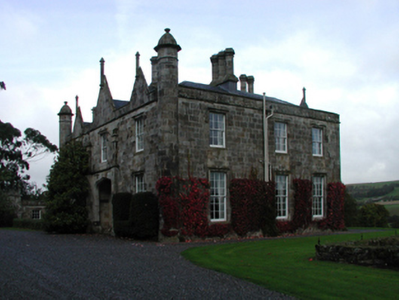
Fort William, County Waterford, photograph from National Inventory of Architectural Heritage.

The Historic Houses of Ireland gives us more detail about the house, including explaining its name:

In the early eighteenth century the Gumbleton family, originally from Kent, purchased an estate beside the River Blackwater in County Waterford, a few miles upstream from Lismore. The younger son, William Conner Gumbleton, inherited a portion of the estate and built a house named Fort William, following the example of his cousin, Robert Conner, who had called his house in West Cork Fort Robert. The estate passed to his nephew, John Bowen Gumbleton, who commissioned a new house by James and George Richard Pain, former apprentices of John Nash with a thriving architectural practice in Cork. 

Built in 1836, in a restrained Tudor Revival style, the new house is a regular building of two stories in local sandstone with an abundance of gables, pinnacles and tall Elizabethan chimneys. The interior is largely late-Georgian and Fortwilliam is essentially a classical Georgian house with a profusion of mildly Gothic details. 

Gumbleton’s son died at sea and his daughter Frances eventually leased the house to Colonel Richard Keane, brother of Sir John from nearby Cappoquin House. The Colonel was much annoyed when his car, reputedly fitted with a well-stocked cocktail cabinet, was commandeered by the IRA so he permitted Free State troops to occupy the servants’ wing at Fortwilliam during the Civil War, which may have influenced the Republican’s decision to burn his brother’s house in 1923. 

When Colonel Keane died in a shooting accident, the estate reverted to Frances Gumbleton’s nephew, John Currey, and was sold to a Mr Dunne, who continued the tradition of letting the house. His most notable tenant was Adele Astaire, sister of the famous dancer and film star Fred Astaire, who became the wife of Lord Charles Cavendish from nearby Lismore Castle. 

In 1944 the Gumbleton family repurchased Fortwilliam but resold for £10,000 after just two years. The new owner was Hugh Grosvenor, second Duke of Westminster and one of the world’s wealthiest men. His nickname ‘Bend or’ was a corruption of the heraldic term Azure, a bend or, arms the Court of Chivalry had forced his ancestor to surrender to Lord Scroope in 1389 and still a source of irritation after six hundred years. Already thrice divorced, the duke’s name had been linked to a number of fashionable ladies, including the celebrated Parisian couturier Coco Chanel. 

Fortwilliam is in good hunting country with some fine beats on a major salmon river, which allowed the elderly duke to claim he had purchased an Irish sporting base. Its real purpose, however, was to facilitate his pursuit of Miss Nancy Sullivan, daughter of a retired general from Glanmire, near Cork, who soon became his fourth duchess. 

They made extensive alterations at Fortwilliam, installing the fine gilded Louis XV boiseries in the drawing room, removed from the ducal seat at Eaton Hall, in Cheshire, and fitting out the dining room with panelling from one of his sumptuous yachts. He died in 1953 but his widow survived for a further fifty years, outliving three of her husband’s successors at Eaton Lodge in Cheshire. Anne, Duchess of Westminster was renowned as one of the foremost National Hunt owners of the day. Her bay gelding, Arkle, won the Cheltenham Gold Cup on three successive occasions and is among the most famous steeplechasers of all time. 

Fortwilliam was briefly owned by the Drummond-Wolfe family before passing to an American, Mr. Murray Mitchell. On his widow’s death it was purchased by Ian Agnew and his wife Sara, who undertook a sensitive restoration before he too died in 2009. In 2013 the estate was purchased by David Evans-Bevan who lives at Fortwilliam today with his family, farming and running the salmon fishery.

7. Gaultier Lodge, Woodstown, Co Waterford €€

http://www.gaultierlodge.com 

The website tells us that

Gaultier Lodge is an 18th Century Georgian Country House designed by John Roberts, which overlooks the beach at Woodstown on the south east coast of Co. Waterford in Ireland. Enjoy high quality bed and breakfast guest accommodation next to the beach and Waterford Bay. Relax and unwind in the tastefully decorated rooms and warm inviting bedrooms. Enjoy an Irish breakfast each morning.”

8. Richmond House, Cappoquin, Co Waterford – guest house 

https://www.richmondcountryhouse.ie

Richmond House, Cappoquin, County Waterford, photograph courtesy of National Inventory of Architectural Heritage.

The Earl of Cork built Richmond House in 1704. Refurbished and restored each of the 9 bedrooms feature period furniture and warm, spacious comfort. All rooms are ensuite and feature views of the extensive grounds and complimentary Wi-Fi Internet access is available throughout the house. An award winning 18th century Georgian country house, Richmond House is situated in stunning mature parkland surrounded by magnificent mountains and rivers.

Richmond House facilities include a fully licensed restaurant with local and French cuisine. French is also spoken at Richmond House. Each bedroom offers central heating, direct dial telephone, television, trouser press, complimentary Wi-Fi Internet access, tea-and coffee-making facilities and a Richmond House breakfast.”

In his book Guide to Irish Country Houses (1988) Mark Bence-Jones describes it: “a three storey late Georgian block. Five bay front with Doric porch; three bay side. Eaved roof on bracket cornice. In 1814, the residence of Michael Keane; in 1914, of Gerald Villiers-Stuart.

9. Salterbridge Gate Lodge, County Waterford – Irish Landmark accommodation

https://www.irishlandmark.com/property/salterbridge-gatelodge/

See my write-up about Salterbridge, previously on the Section 482 list but no longer:

https://irishhistorichouses.com/2020/04/16/salterbridge-house-and-garden-cappoquin-county-waterford/

and www.salterbridgehouseandgarden.com
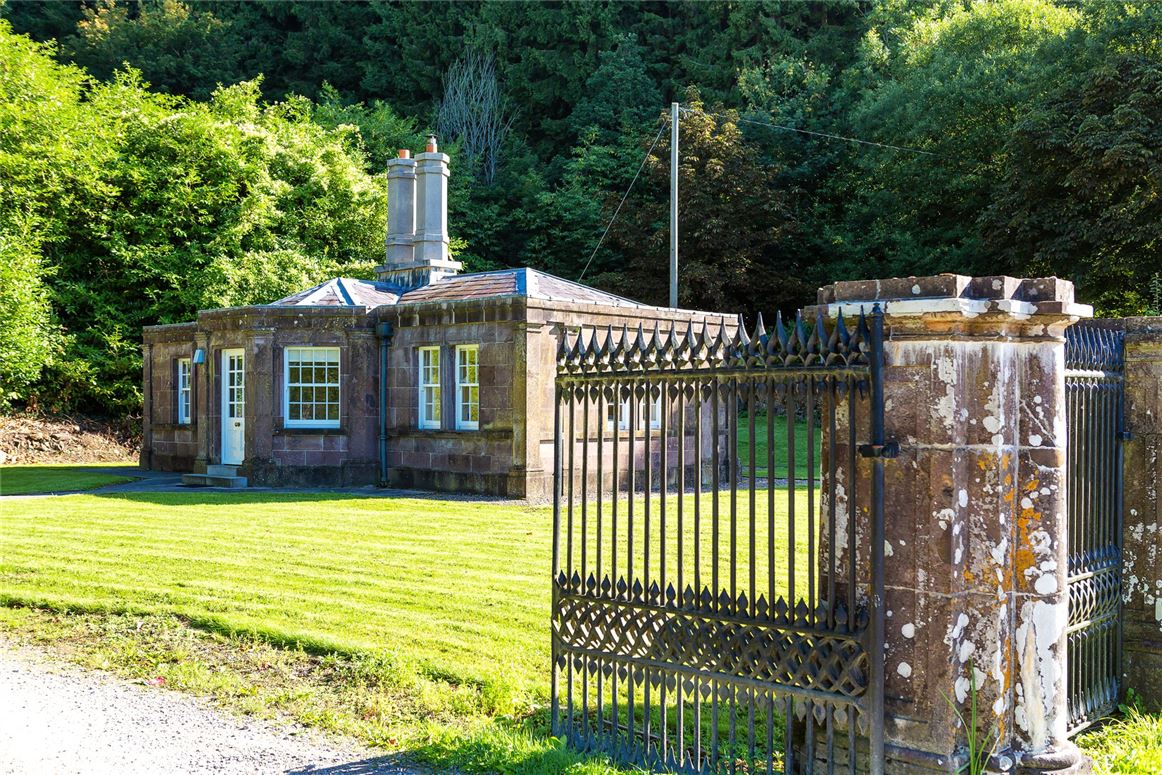
Salterbridge gate house, photograph courtesy of myhome.ie

10. Waterford Castle, The Island, Co Waterford – hotel

https://www.waterfordcastleresort.com

Waterford Castle Hotel, photo by Shane O’Neill 2010 for Tourism Ireland. (see [1])

The Archiseek website tells us that Waterford Castle is: “A small Norman keep that was extended and “restored” in the late 19th century. An initial restoration took place in 1849, but it was English architect W.H. Romaine-Walker who extended it and was responsible for its current appearance today. The original keep is central to the composition with two wings added, and the keep redesigned to complete the composition.

The National Inventory adds: “Detached nine-bay two- and three-storey over basement Gothic-style house, built 1895, on a quasi H-shaped plan incorporating fabric of earlier house, pre-1845, comprising three-bay two-storey entrance tower incorporating fabric of medieval castle, pre-1645…A substantial house of solid, muscular massing, built for Gerald Purcell-Fitzgerald (n. d.) to designs prepared by Romayne Walker (n. d.) (supervised by Albert Murrary (1849 – 1924)), incorporating at least two earlier phases of building, including a medieval castle. The construction in unrefined rubble stone produces an attractive, textured visual effect, which is mirrored in the skyline by the Irish battlements to the roof. Fine cut-stone quoins and window frames are indicative of high quality stone masonry. Successfully converted to an alternative use without adversely affecting the original character of the composition, the house retains its original form and massing together with important salient features and materials, both to the exterior and to the interior, including fine timber joinery and plasterwork to the primary reception rooms.”
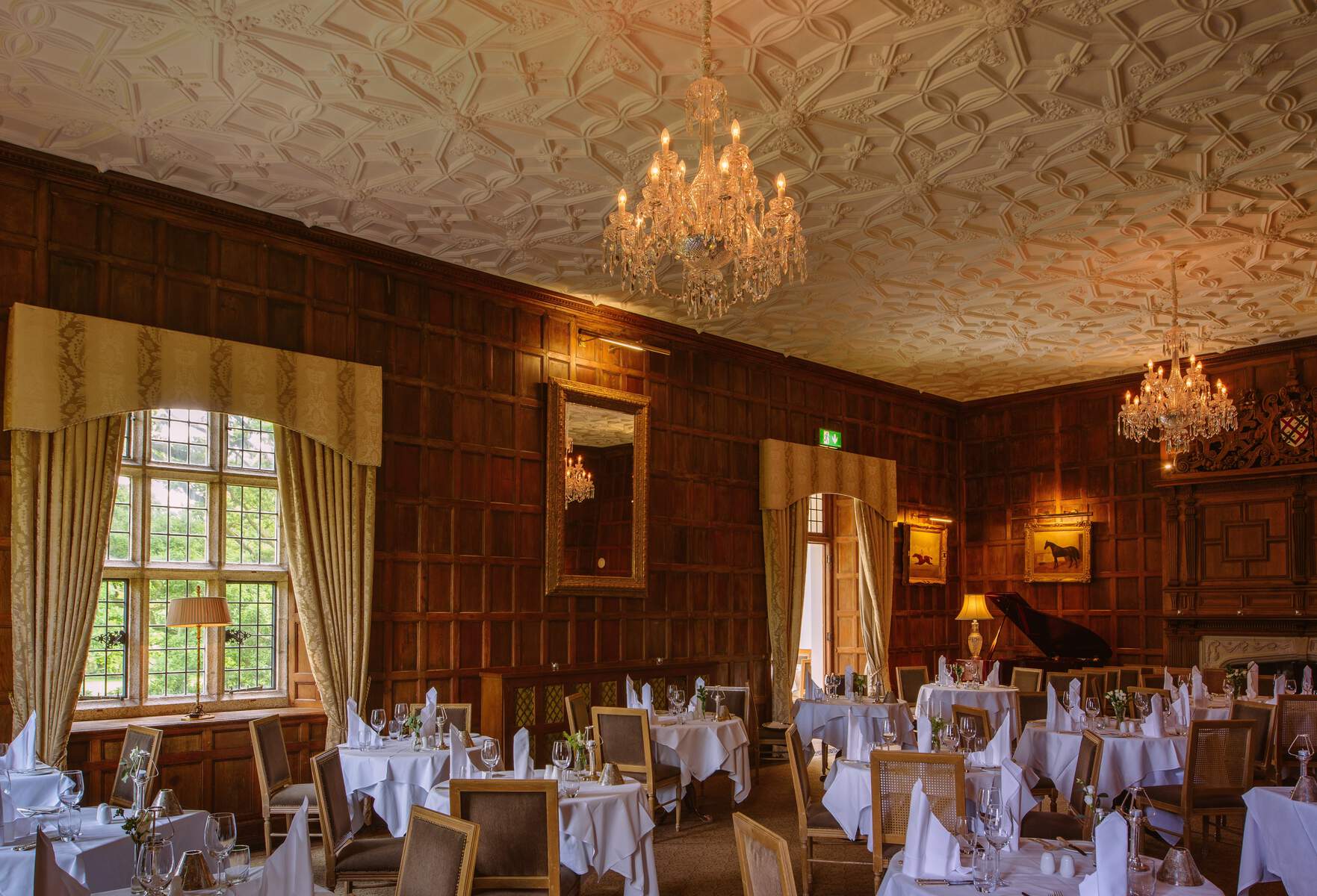
Waterford Castle Hotel and Golf Resort 2021 County Waterford, from Ireland’s Content Pool. (see [1])
Photograph Courtesy of Waterford Castle Hotel and Golf Resort, 2021, Ireland’s Content Pool. (see [1])
Waterford Castle Hotel, photo by Shane O’Neill 2016 for Tourism Ireland. (see [1])

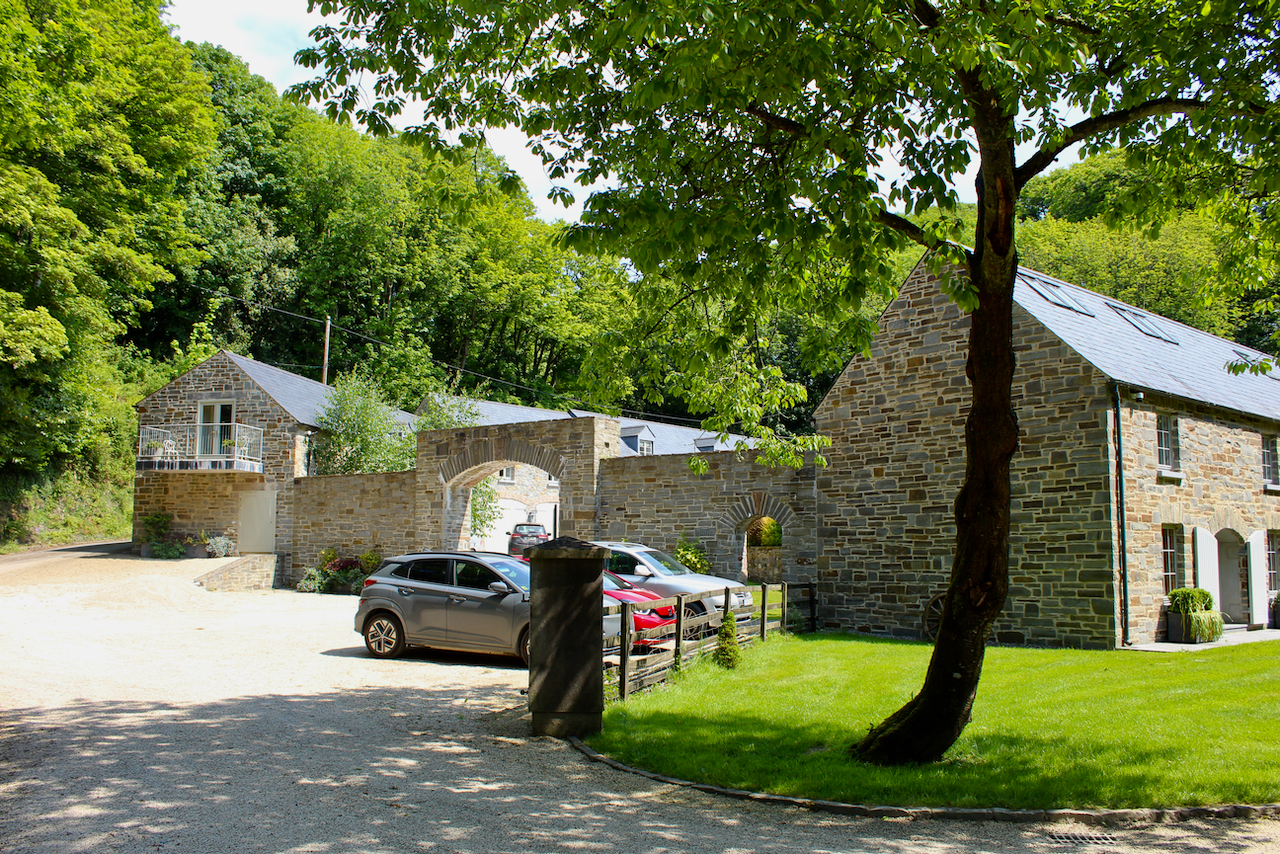
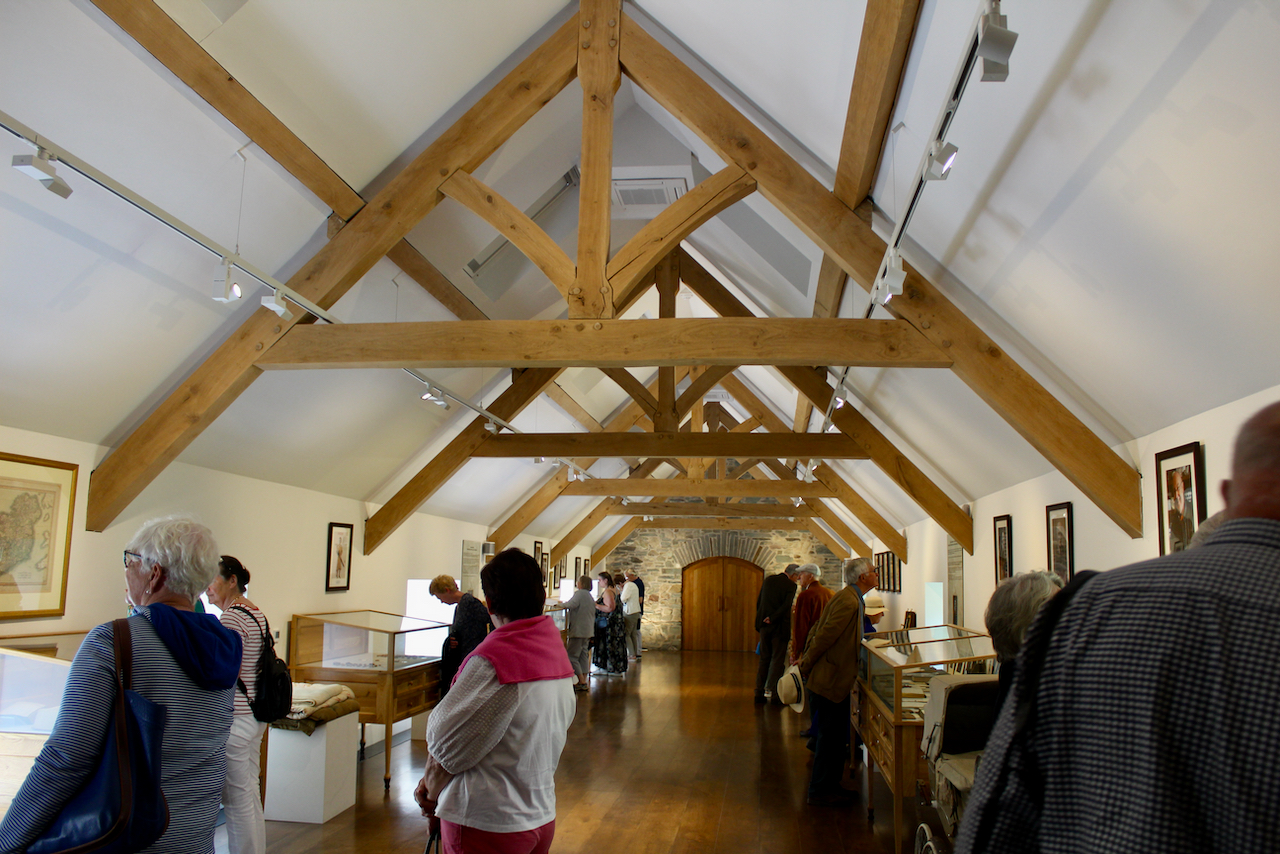
We visited Woodhouse on a day trip with the Cork Chapter of the Irish Georgian Society on a gloriously sunny day on May 24th, 2023. The home owners Jim and Sally Thompson welcomed us into their home, and historian Marianna Lorenc delivered a wonderful talk about the history of the house and the family who lived there. See my entry https://irishhistorichouses.com/2025/03/29/woodhouse-county-waterford-private-house-tourist-accommodation-in-gate-lodge-and-cottages/

You can stay in the gate lodge or cottages.
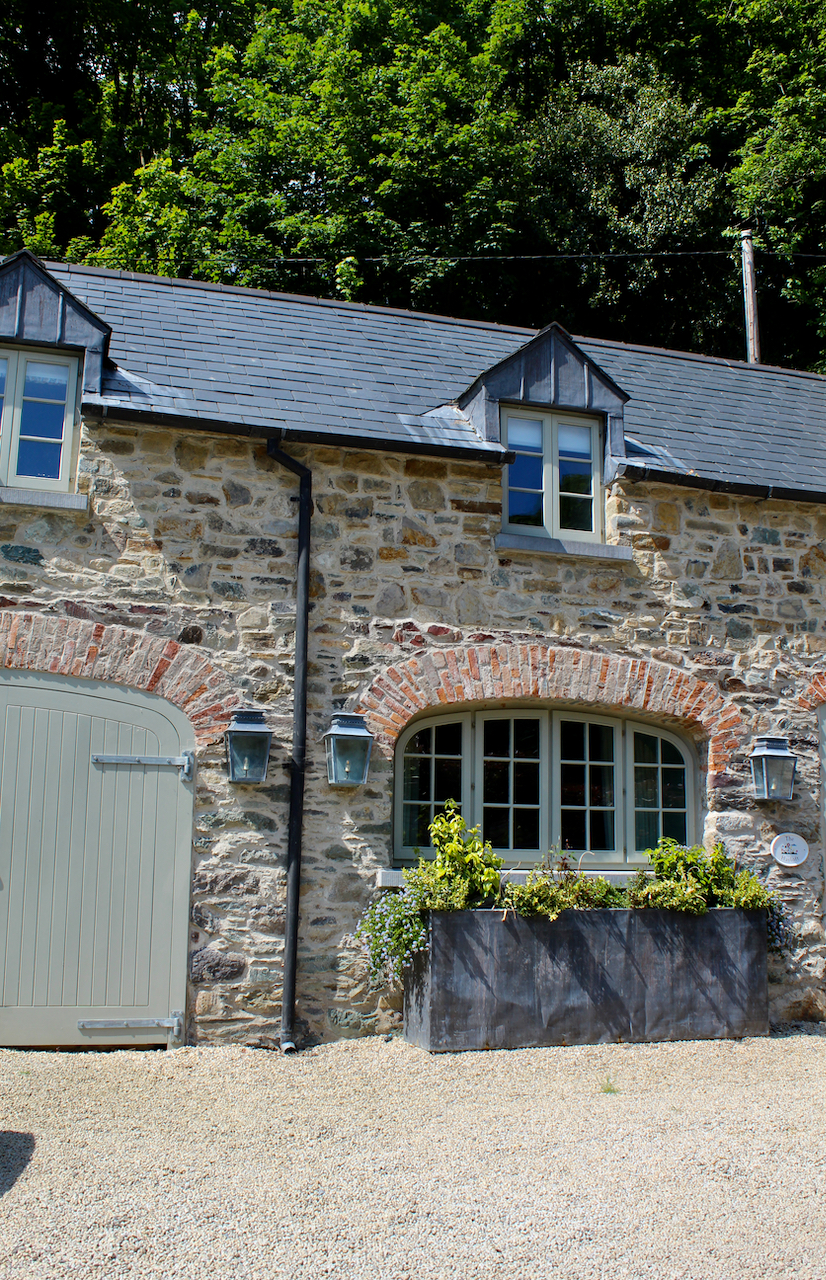
https://woodhouseestate.com/

The Hayloft, Woodhouse, available for self-catering accommodation.
At Woodhouse, County Waterford. Photograph © Jennifer Winder-Baggot, www.irishhistorichouses.com
Inside this area is a museum about Woodhouse, a function room, and the Hayloft cottage. Photograph © Jennifer Winder-Baggot, www.irishhistorichouses.com
Ancilliary buildings. Photograph © Jennifer Winder-Baggot, www.irishhistorichouses.com
The museum, upstairs in the ancilliary buildings. Photograph © Jennifer Winder-Baggot, www.irishhistorichouses.com
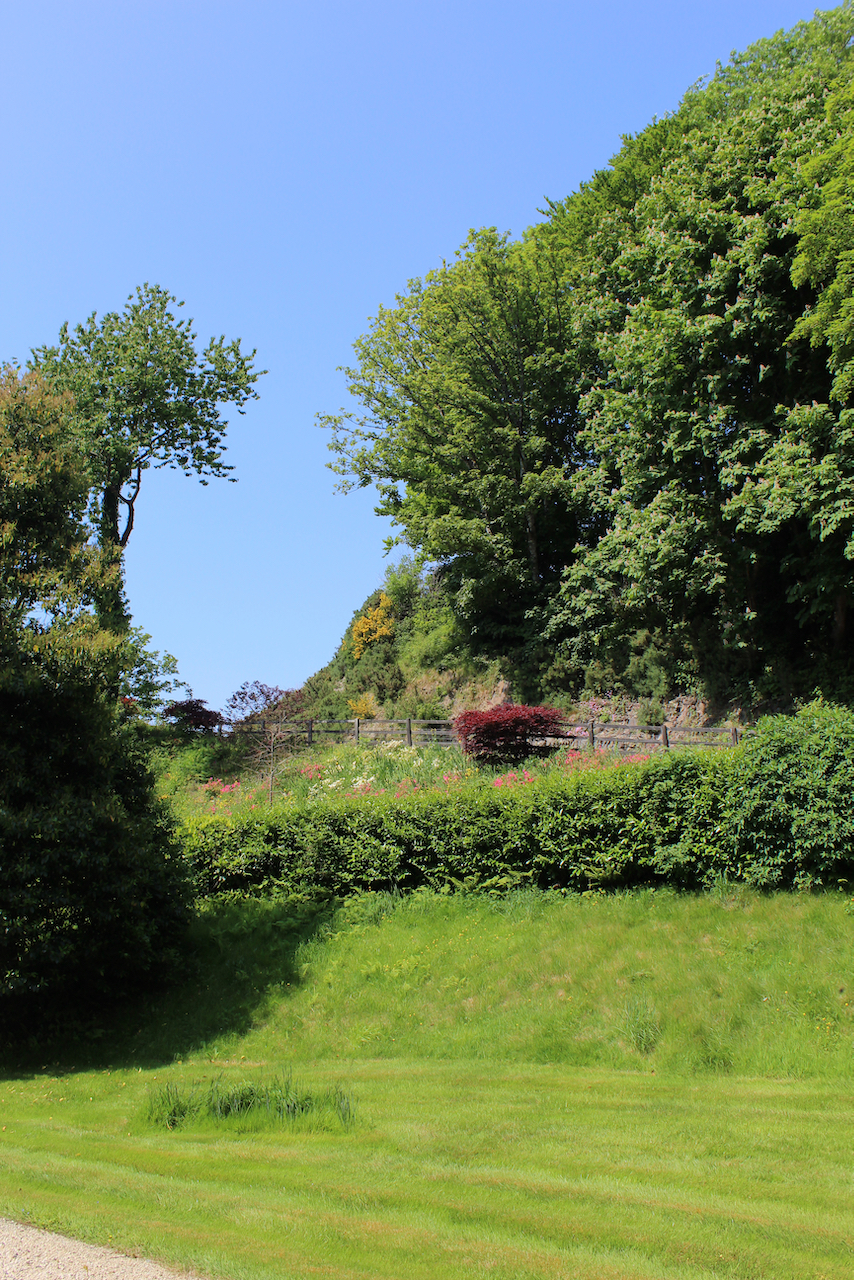
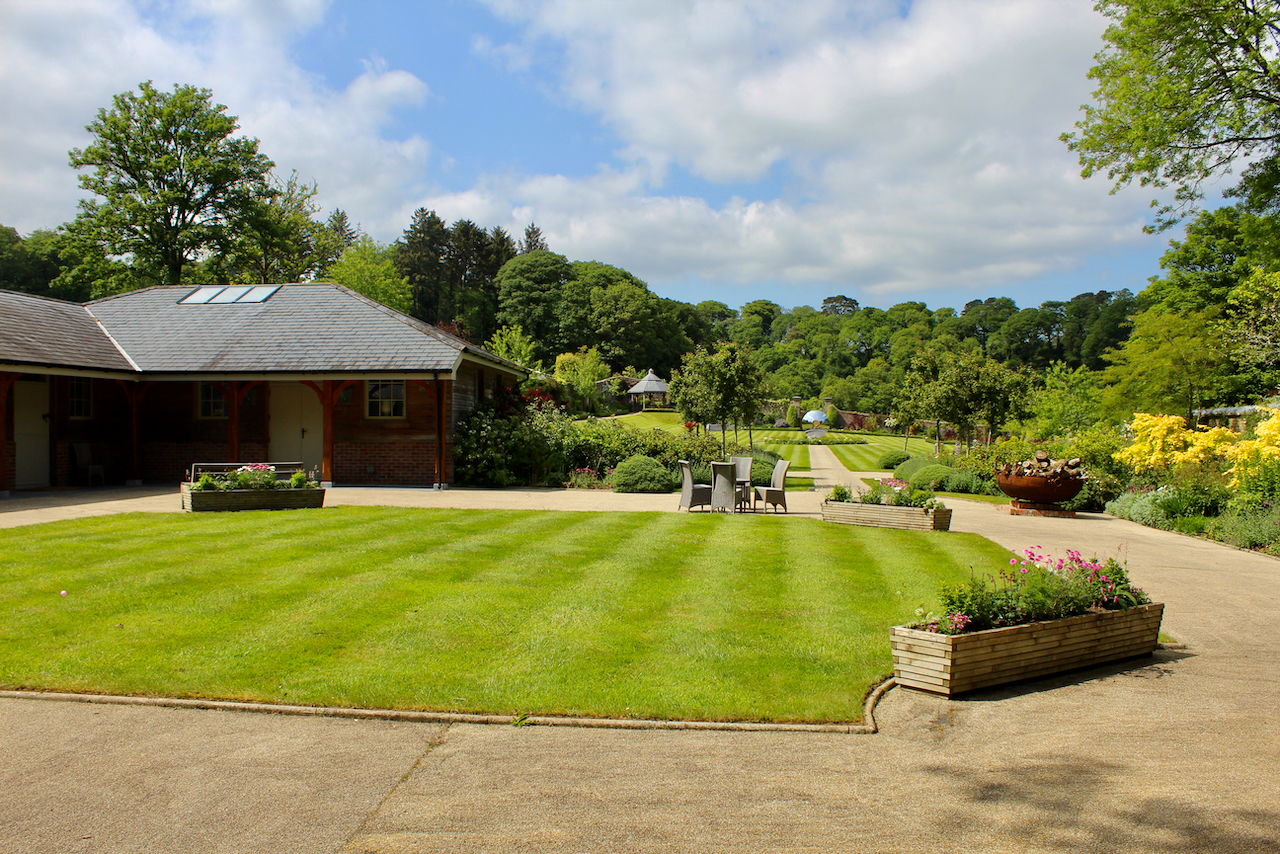
This was the walk between the museum and the main house. The gardens everywhere are beautiful and we couldn’t have had a finer day for our visit. Photograph © Jennifer Winder-Baggot, www.irishhistorichouses.com

After our talk, we visited the house and then the walled garden. The website tell us:

When Woodhouse changed hands in 2012 a project was undertaken to bring the walled garden back to its former glory. Today the Walled Garden and Orchard have a wide variety of fruits, vegetables, herbs and many types of flowers and, thanks to Paddy Kiely and his excellent team of skilled workmen, has developed in a place of beauty in tune with nature as it was planned when originally built. An oasis of calm and tranquility situated right in the centre of the Estate, the beautifully restored Walled Garden is a perfect venue for small intimate weddings and gatherings. Completely enclosed and surrounded by high stone walls the walled garden has flowers beds, beautiful green lawns, a raised pergola overlooking the entire garden and a soothing water feature. As well as providing a beautiful backdrop for weddings the Walled Garden is also an ideal venue for a variety of special events. Whether you are looking to toast a birthday or anniversary or hold a charity event the Walled Garden adds a special atmosphere to any occasion.
For more information please get in touch
1woodhouseestate@gmail.com

The beautiful walled garden of Woodtown. Photograph © Jennifer Winder-Baggot, www.irishhistorichouses.com
Events can be held in the buildings in the walled garden. Photograph © Jennifer Winder-Baggot, www.irishhistorichouses.com
The beautiful walled garden of Woodhouse. Photograph © Jennifer Winder-Baggot, www.irishhistorichouses.com

Beyond the walled garden in a further section is an orchard and greenhouse, and a house for chickens.

Whole House Rental County Waterford

1. Glenbeg House, Jacobean manor home, Glencairn, County Waterford P51 H5W0whole house holiday rental

http://www.glenbeghouse.com

Glenbeg House, County Waterford, photograph courtesy of National Inventory of Architectural Heritage.

The website tells us: “Tranquil historic estate accommodating guests in luxury. Glenbeg, a historic castle which has been sensitively restored, preserving its historic past, whilst catering to the needs and comforts of modern living.

Glenbeg Estate is the maternal home of Sir Arthur Conan Doyle, who visited during his life time and wrote some of his early work while visiting with his family here. You and your party will have exclusive use of the property during your stay.

2. Lismore Castle, whole house holiday rental

Photograph courtesy of The Hall and Lismore Castle website.

https://www.thehallandlismorecastle.com/lismore-castle/stay/

Lismore Castle’s 800-year history is everywhere you look, from the stained-glass windows and thick stone walls, to the centuries-old gardens and the exceptional artworks by Old Masters and leading contemporary artists. Available for rent, this exclusive use castle in Ireland’s county Waterford is the perfect retreat for you and your guests.

www.lismorecastlegardens.com

If anyone wants to give me a present, could you book me in for a week at Lismore Castle? See my entry https://irishhistorichouses.com/2024/04/12/lismore-castle-county-waterford-whole-castle-rental-or-a-visit-to-the-gardens/
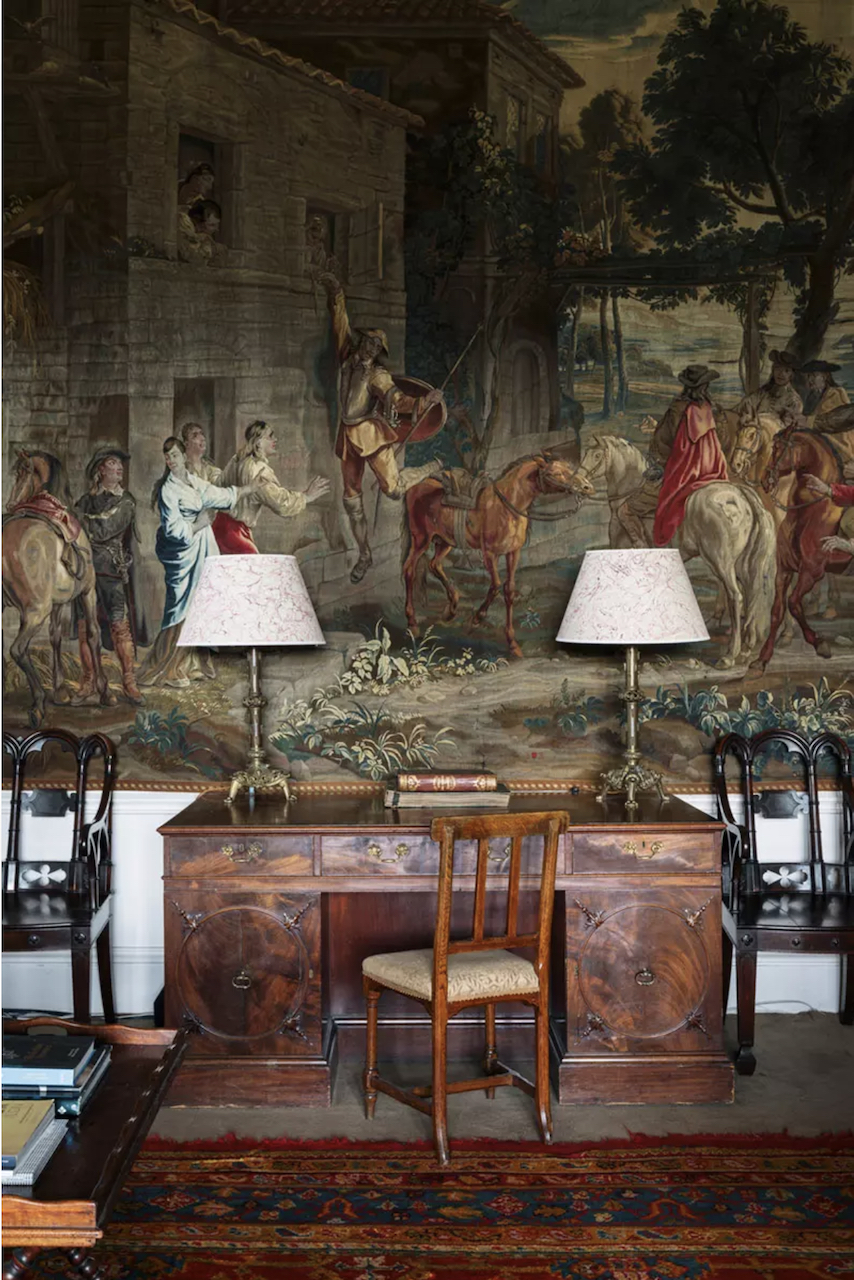
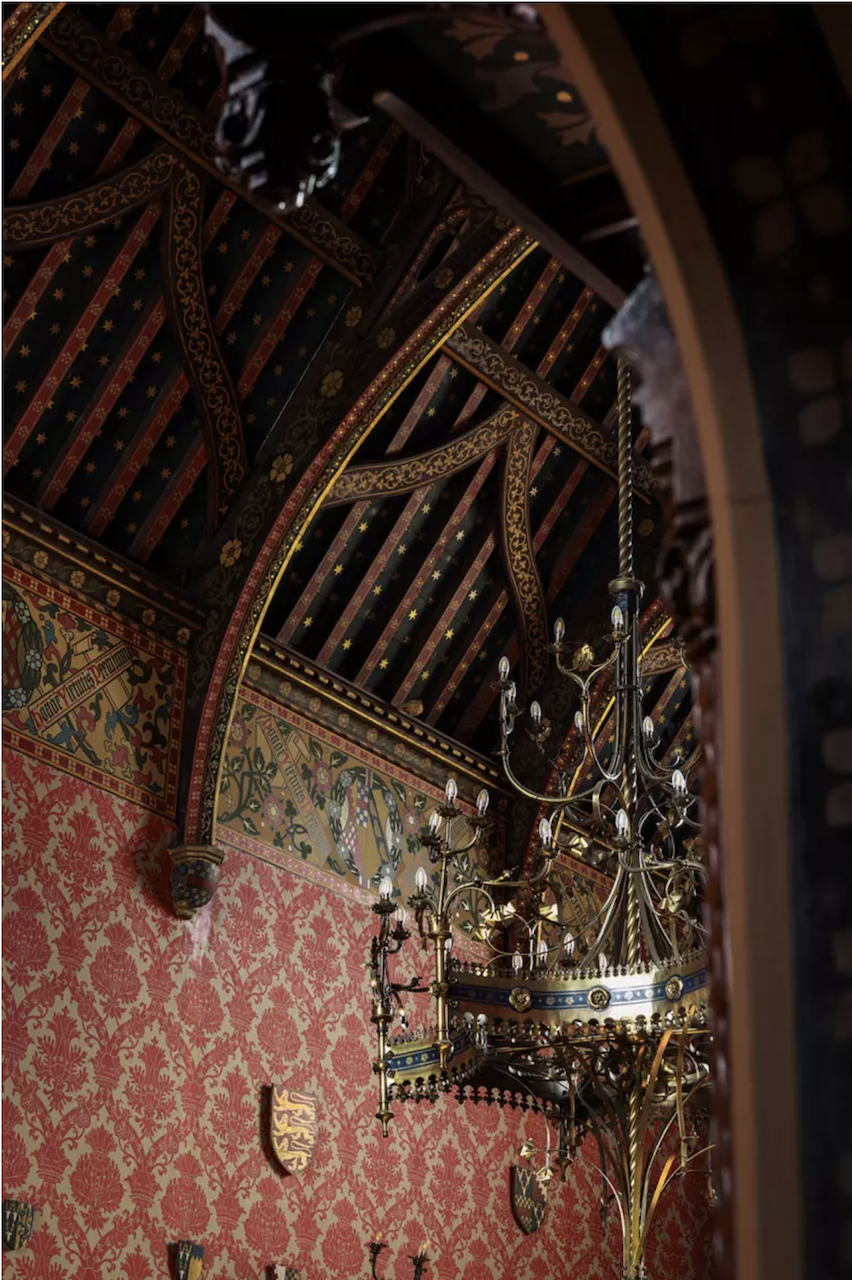
Photograph courtesy of The Hall and Lismore Castle website.

[1] https://www.irelandscontentpool.com/en

[2] Bence-Jones, Mark. A Guide to Irish Country Houses (originally published as Burke’s Guide to Country Houses volume 1 Ireland by Burke’s Peerage Ltd. 1978); Revised edition 1988 Constable and Company Ltd, London.

[3] https://archiseek.com/2009/1746-bishops-palace-waterford/

[4] https://www.buildingsofireland.ie/buildings-search/building/22903010/cappagh-house-cappagh-d-wt-by-co-waterford

[6] https://www.buildingsofireland.ie/buildings-search/building/22903010/cappagh-house-cappagh-d-wt-by-waterford

[7] https://www.buildingsofireland.ie/buildings-search/building/22829002/presentation-convent-slievekeale-road-waterford-city-waterford-co-waterford

Text © Jennifer Winder-Baggot, www.irishhistorichouses.com
Places to visit and stay in County Westmeath

On the map above:

blue: places to visit that are not section 482

purple: section 482 properties

red: accommodation

yellow: less expensive accommodation for two

orange: “whole house rental” i.e. those properties that are only for large group accommodations or weddings, e.g. 10 or more people.

green: gardens to visit

grey: ruins

Places to visit in County Westmeath:

1. Athlone Castle, County Westmeath

2. Belvedere House, Gardens and Park, County Westmeath

3. Killua Castle, County Westmeath

4. Lough Park House, Castlepollard, Co. Westmeath – section 482

5. Rockfield Ecological Estate, Rathaspic, Rathowen, Mullingar, Co. Westmeath – section 482

6. Tullynally Castle & Gardens, Castlepollard, Co. Westmeath – section 482

7. Turbotstown, Coole, Co. Westmeath – section 482

8. Tyrrelspass Castle, County Westmeathrestaurant and gift shop 

Places to stay, County Westmeath: 

1. Annebrook House Hotel, Austin Friars Street, Mullingar, Co. Westmeath, N91YH2F

2. Lough Bawn House, Colllinstown, County Westmeath B&B

3. Lough Bishop House, Collinstown, County WestmeathB&B

4. Mornington House, County Westmeath – B&B

Whole House Rental/wedding venue, County Westmeath

1. Ballinlough Castle, County Westmeath – exclusive hire

2. Bishopstown House, Rosemount, County Westmeath – whole house rental (sleeps up to 18 people)

3.  Middleton Park, Mullingar, County Westmeath – whole house rental and weddings

donation

Help me to pay the entrance fee to one of the houses on this website. This site is created purely out of love for the subject and I receive no payment so any donation is appreciated!

€15.00

Places to visit in County Westmeath:

1. Athlone Castle, County Westmeath

http://www.athlonecastle.ie/ 

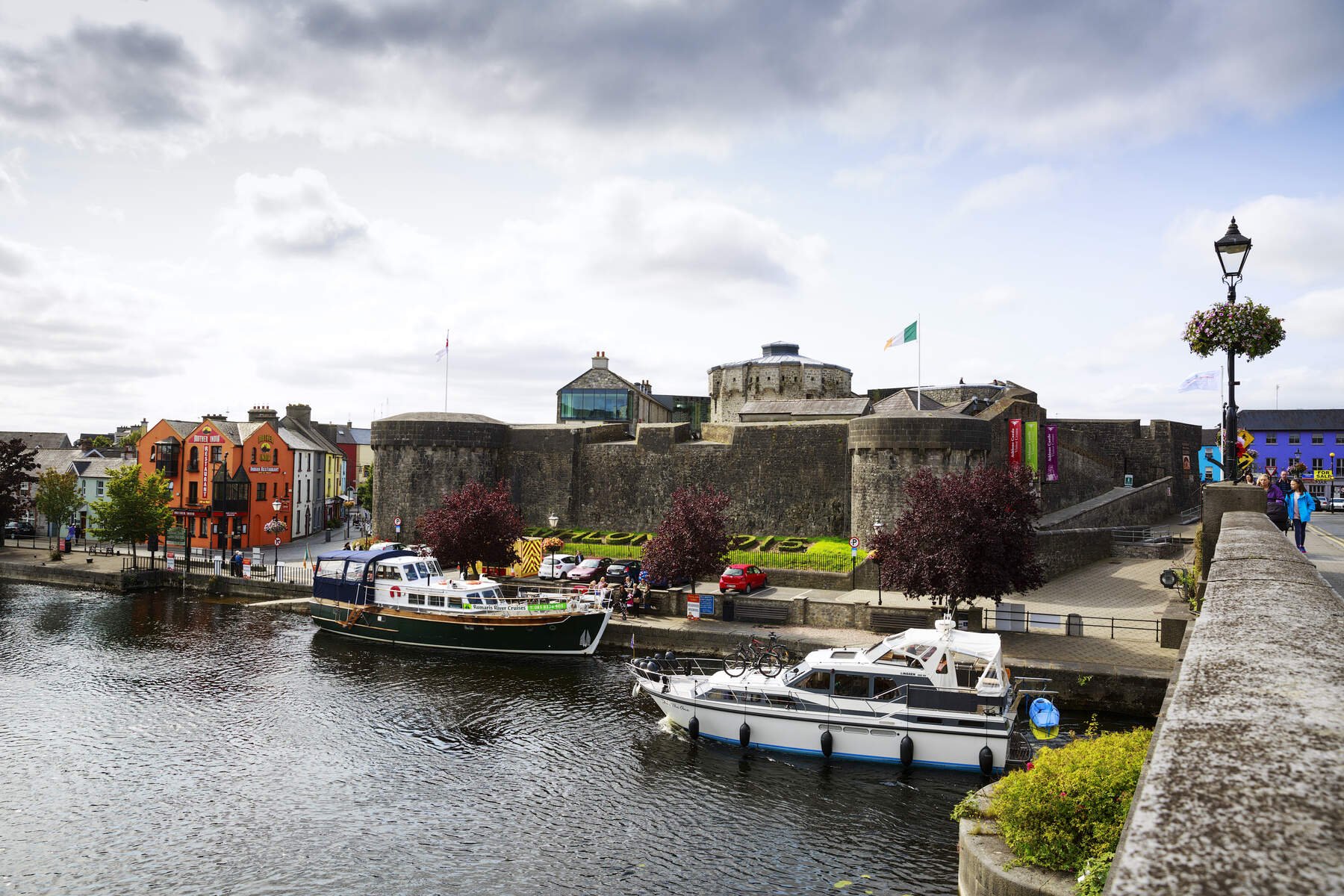
Cruising by Athlone Castle, Co Westmeath Courtesy Fennell Photography 2015, for Tourism Ireland, Ireland’s Content Pool.

The website tells us: “Trace the footprints of the generations who shaped this place. From early settlements and warring chieftains to foreign invaders and local heroes. This site on the River Shannon is the centre of Ireland’s Hidden Heartlands.

Over the centuries it has been the nucleus of the Anglo-Norman settlement; a stronghold of the rival local families the Dillons and the O’Kelly’s; the seat of the Court of Claims; the residence of the President of Connaught and the Jacobite stronghold during the sieges of Athlone.  After the Siege of Athlone it became incorporated into the new military barrack complex.  It remained a stronghold of the garrison for almost three hundred years.

In 1922 when the Free State troops took over the Barracks from their British counterparts, they proudly flew the tricolour from a temporary flagpole much to the delight of the majority of townspeople.

In 1967 the Old Athlone Society established a museum in the castle with a range of exhibits relating to Athlone and its environs and also to folk-life in the district.  Two years later when the military left the castle it was handed over to the Office of Public Works and the central keep became a National Monument.

In 1991 to mark the Tercentenary of the Siege of Athlone the castle became the foremost visitor attraction in Athlone.  Athlone Town Council (then Athlone UDC) made a major investment in the castle creating a multi-faceted Visitor Centre as it approached its 800th Anniversary in 2010. A total of €4.3million euro was invested in the new facility by Fáilte Ireland and Athlone Town Council and was officially opened by the then Minister of State for Tourism and Sport, Michael Ring T.D. on Tuesday 26th February 2012.

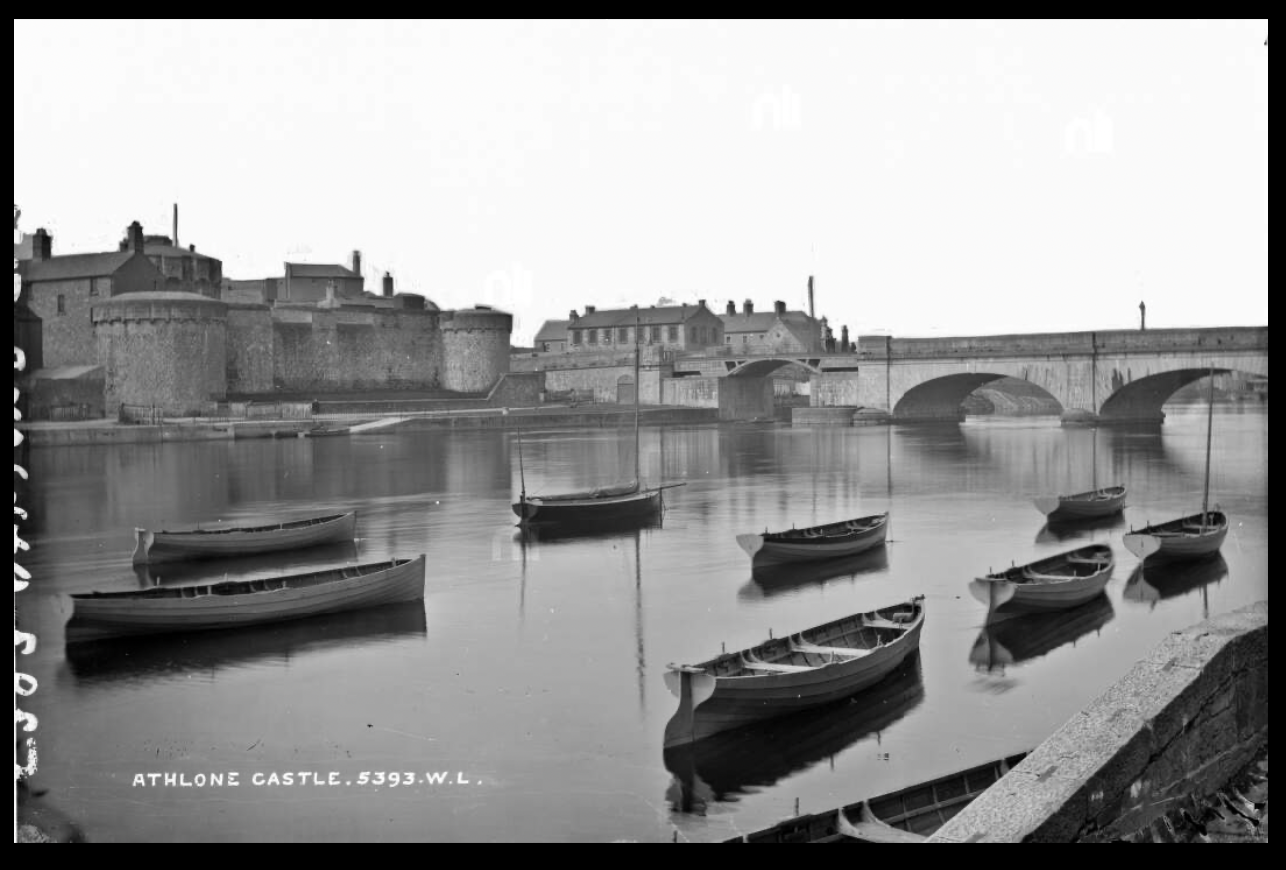
Athlone Castle, County Westmeath, photograph by Robert French, Lawrence Photographic Collection, National Library of Ireland.
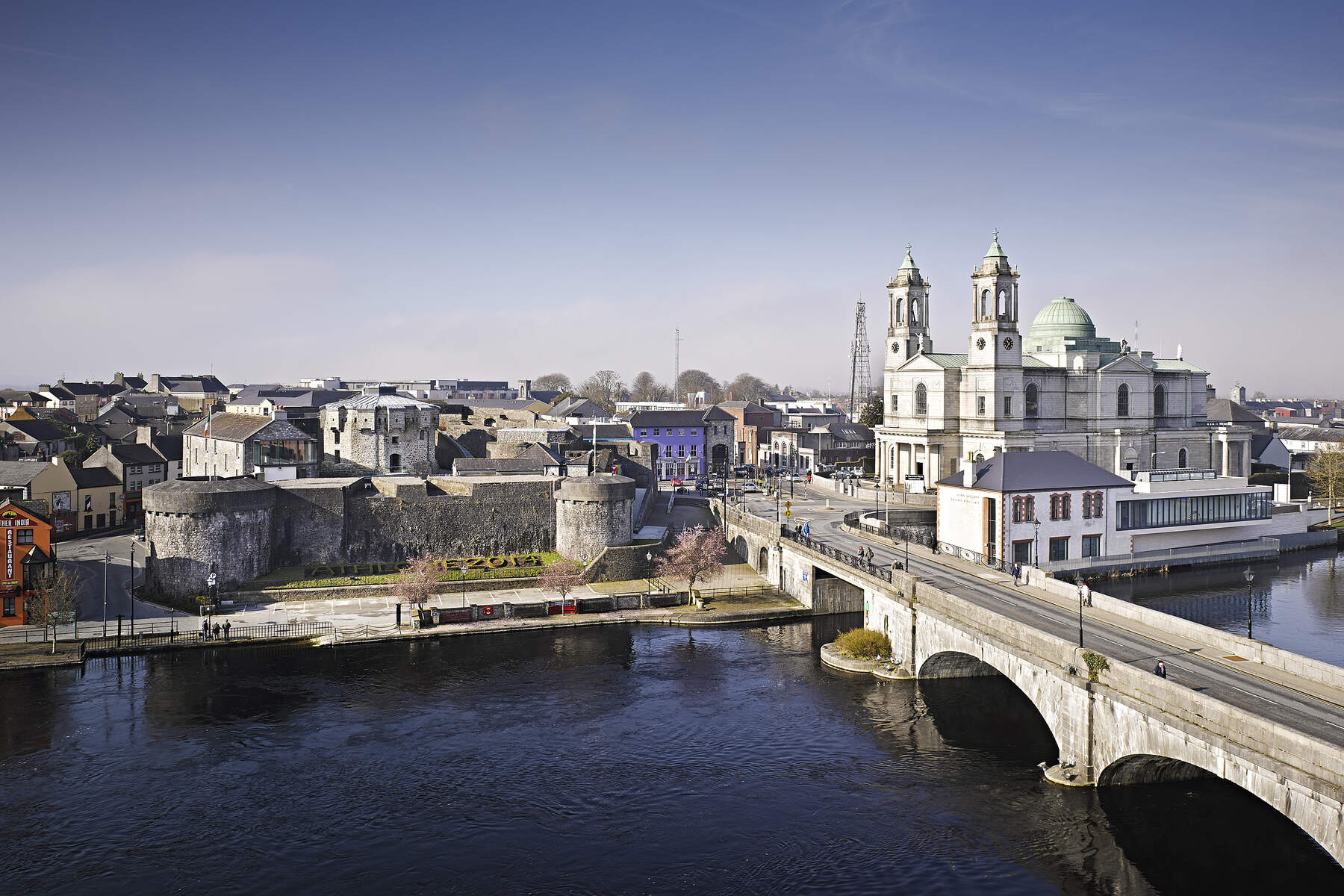
Athlone Castle, Athlone, Co Westmeath_Courtesy Ros Kavanagh 2014, for Tourism Ireland, Ireland’s Content Pool.

Athlone Castle Visitor Centre is now a modern, engaging, fun and unique family attraction which harnesses most significant architectural features, such as the keep, to act as a dramatic backdrop to its diverse and fascinating story.

It houses eight individual exhibition spaces, each depicting a different aspect of life in Athlone, the Castle and the periods both before and after the famous Siege. Fun, hands-on interactives, touchable objects and educational narratives immerse visitors in the drama, tragedy and spectacle of Athlone’s diverse and fascinating story. 3D maps, audio-visual installations, illustrations and artefacts bring the stories and characters of Athlone to life and The Great Siege of Athlone is dramatically recreated in a 360-degree cinematic experience in the Keep of the castle.

Athlone Castle, Athlone, Co Westmeath_Courtesy Ros Kavanagh 2014, for Tourism Ireland, Ireland’s Content Pool.

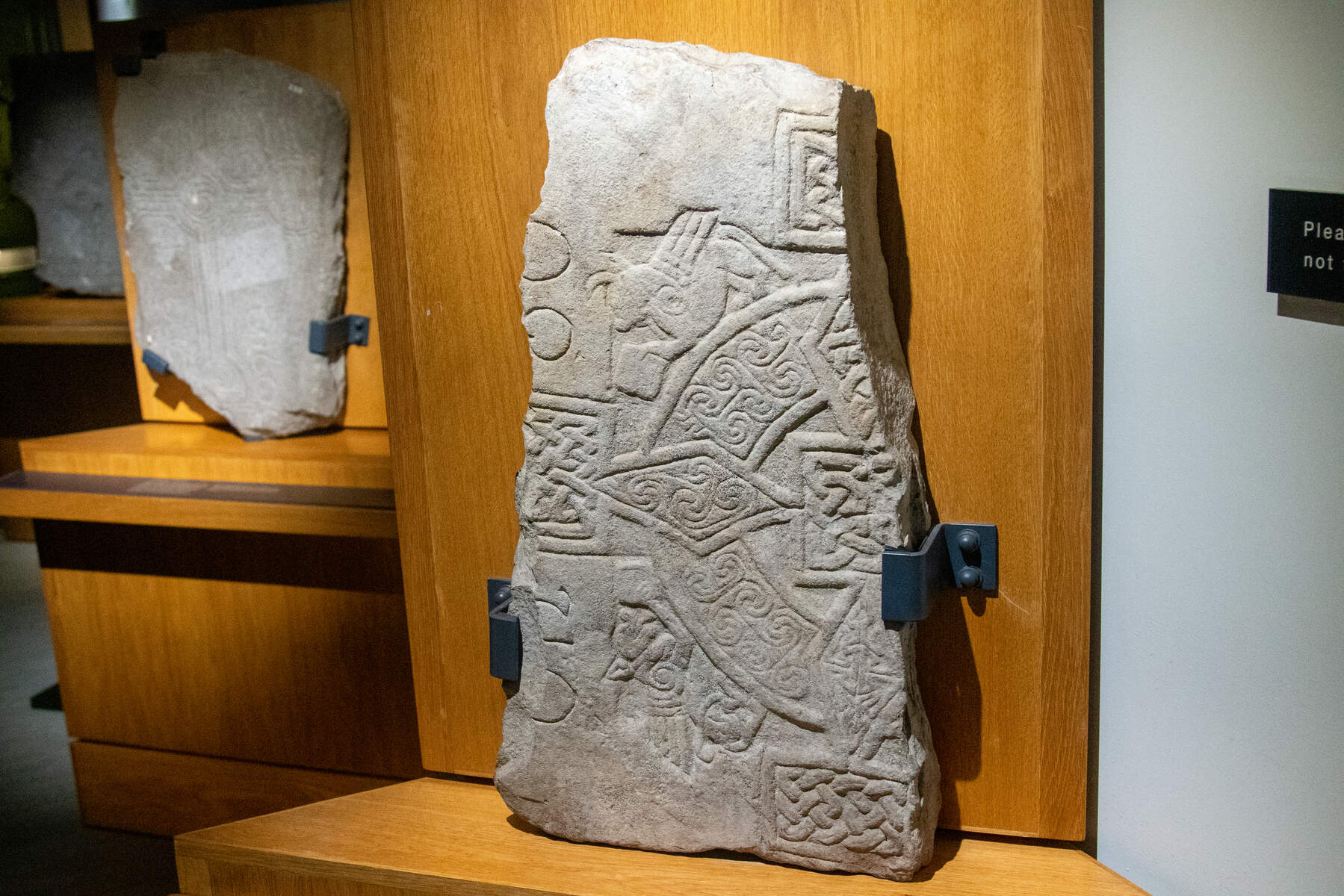
As part of Westmeath County Council’s commemoration of Ireland’s world-renowned tenor, John Count McCormack, a new exhibition dedicated to the celebrated singer was opened at Athlone Castle in October 2014.

Archiseek tells us about Athlone Castle: “Towards the end of the 12th century the Anglo-Normans constructed a motte-and-bailey fortification here. This was superceeded by a stone structure built in 1210, on the orders of King John of England. The Castle was built by John de Gray, Bishop of Norwich. The 12-sided donjon dates from this time. The rest of the castle was largely destroyed during the Siege of Athlone and subsequently rebuilt and enlarged upon. In the early 1800s, during the Napoleonic Wars, the castle was rebuilt as a fortification to protect the river crossing, taking the form we largely see today. The machicolations of the central keep are all nineteenth century. In the interior is an early nineteenth century two-storey barrack building. The modern ramp up to the castle has a line of pistol loops. The castle was taken over by the Irish Army in 1922 and continued as a military installation until it was transferred to the Office of Public Works in 1970.” [8]

Athlone Castle, Athlone, Co Westmeath_Courtesy Sonder Visuals 2021 for Tourism Ireland, Ireland’s Content Pool.

2. Belvedere House, Gardens and Park, County Westmeath

Belvedere, County Westmeath, August 2021. Photograph © Jennifer Winder-Baggot, www.irishhistorichouses.com
http://www.belvedere-house.ie/

Mark Bence-Jones writes of Belvedere in his 1988 book:

p. 39. “(Rochfort, sub Belvedere, E/DEP Rochfort/LGI1912; Marlay/LGI1912; Howard-Bury, sub Suffolk and Berkshire, E/PB; and Bury/IFR) An exquisite villa of ca 1740 by Richard Castle, on the shores of Lough Ennell; built for Robert Rochfort, Lord Bellfield, afterwards 1st Earl of Belvedere, whose seat was at Gaulston, ca 5 miles away. Of two storeys over basement, with a long front and curved end bows – it may well be the earliest bow-ended house in Ireland – but little more than one room deep.”

Belvedere, County Westmeath, August 2021. Photograph © Jennifer Winder-Baggot, www.irishhistorichouses.com

See my entry https://irishhistorichouses.com/2024/05/23/belvedere-house-gardens-and-park-county-westmeath/

3. Killua Castle, County Westmeath

https://killuacastle.com/guided-tours/

4. Lough Park House, Castlepollard, Co. Westmeath

Lough Park House, photograph courtesy of National Inventory of Architectural Heritage.

Open dates in 2026: Mar 13-18, Apr 2-8, May 1-7, 28-31, June 1-3, July 18-26, Aug 1-10, 15-24, Oct 23-27, 2pm-6pm

Fee: adult €6

5. Rockfield Ecological Estate, Rathaspic, Rathowen, Mullingar, Co. Westmeath

Open dates in 2026: July 15-31, Aug 15-31, Sept 15-30, Oct 15-30, 2pm-6pm

Fee: Free

6. Tullynally Castle & Gardens, Castlepollard, Co. Westmeath N91 HV58

Tullynally, County Westmeath, August 2021. Photograph © Jennifer Winder-Baggot, www.irishhistorichouses.com
https://irishhistorichouses.com/2020/11/19/tullynally-castle-and-gardens-castlepollard-county-westmeath/

www.tullynallycastle.com

Open dates in 2026:

Castle – April 30, May 1-2, 7-9, 14-16, 21-23, 28-30, June 4-6, 11-13, 18-20, 25-27, July 2-4, 9-11, 16-18, 23-25, 30-31, Aug 1, 13-23, 27-29, Sept 3-5, 10-12, 17-19, 11am-3pm

Garden – Mar 19-22, 26-29, Apr 2-6, 9-12, 16-19, 23-26, 30, May 1-4, 7-10, 14-17, 21-24, 28-31, June 1, 4-7, 1-14, 18-21, 25-28, July 2-5, 9-12, 16-19, 23-26, 30-31, Aug 1-3, 6-9, 13-23, 27-30, Sept 3-6, 10-13, 17-20, 24-27,9am-5pm

Fee: castle fee – adult €17, child entry allowed for over 8 years €9, garden fee – adult €9, child €4, family ticket (2 adults + 2 children) €24, adult season ticket €60, family season ticket €73.50, special needs visitor with support carer €4, child 5 years or under is free

7. Turbotstown, Coole, Co. Westmeath

Turbotstown, County Westmeath. Photograph © Jennifer Winder-Baggot, www.irishhistorichouses.com
Open in 2026: Jan 9-11, 23-25, Apr 1, Aug 1-31, Sept 5,6, 22-28, Oct 1-4, Dec 19-24, 27-29

9am-1pm

Fee: adult/student/OAP €10, child €5

We visited in 2023, https://irishhistorichouses.com/2023/11/23/turbotstown-coole-co-westmeath/

and see Robert O’Byrne’s entry about Turbotstown, https://theirishaesthete.com/2015/10/19/a-fitting-tribute-to-the-past/

8. Tyrrelspass Castle, Co Westmeathrestaurant and gift shop

https://www.facebook.com/tyrrellspasscastle/ 

Places to stay, County Westmeath: 

1. Annebrook House Hotel, Austin Friars Street, Mullingar, Co.Westmeath, Ireland, N91YH2F

https://www.annebrook.ie/gallery.html

The family run Annebrook House Hotel Mullingar opened its doors February 2007.  Originally an Old Georgian residence for the local county surgeon, Dr O’Connell, the historic Annebrook House Hotel was purchased by the Dunne family in 2005. With his experience in hospitality and construction Berty Dunne set about creating a hotel as unique as the man who owns it. The Annebrook’s central location, its diverse range of accommodation from 2 bedroomed family suites to executive doubles has made it a very popular location for those coming to experience all that the midlands has to offer.

Situated in the heart of Mullingar overlooking 10 acres of parkland, the Award Winning 4 star Annebrook House Hotel presents a modern day styling coupled with 17th century heritage.  As a family run hotel the Annebrook prides itself on quality and high standards of customer service, working as part of one team to ensure all guests of their best and personal attention at all times. Annebrook House Hotel is steeped in history and enjoys the enviable advantage of being one of the most centrally located hotels in Mullingar town. This unique venue mixes old world charm with modern comfort and has established itself as one of Westmeath’s top wedding venues and was recently voted Best Wedding Venue Ireland by Irish Wedding Diary Magazine. With accommodation ranging from executive hotel rooms, family suites, luxurious champagne suites and apartments, the Annebrook has much to offer those visiting Mullingar. Offering a range of dining options from Berty’s Bar to fine dining in the award winning Old House Restaurant.  The four star Annebrook House Hotel offers an excellent service to both its corporate & leisure guests. The hotel is accessible by car just 50 mins from Dublin and is only 10 minutes from the local Train Station.

2. Lough Bawn House, Colllinstown, Co Westmeath – B&B accommodation

http://loughbawnhouse.com

Photograph courtesy of Lough Bawn House website.

A classic Georgian house in a unique setting. Lough Bawn house sits high above Lough Bane with amazing sweeping views. Nestled in a 50 acre parkland at the end of a long drive, Lough Bawn House is a haven of peace and tranquillity.

The house and estate has been in the same family since it was built in 1820 by George Battesby, the current occupier, Verity’s, Great Great Great Grandfather. The house is being lovingly restored by Verity, having returned from England to live in the family home. Verity ran her own catering and events company in Gloucestershire for over 20 years. Her passion for cooking & entertaining shines through. Guests enjoy an extensive and varied breakfast with much of the ingredients being grown or reared by Verity herself, and delicious dinners are on offer. Breakfast is eaten in the large newly restored dining room, with wonderful views over the lough and of the parading peacocks on the rolling lawns.

Photograph courtesy of Lough Bawn House website.

Both of the large, en-suite rooms have fine views down the length of Lough Bane and over the wooded hills while the single room and the twin/double room have sweeping views of the surrounding parklands. Guests are warmly welcomed and encouraged to relax in the homely drawing room in front of a roaring fire or to explore one of the many local historical sites, gardens, walks or cultural entertainments on offer.

Several areas of the estate have been classified as Special Areas of Conservation (SAC‘s) due to the incredibly varied and rare flora. Wild flowers can be found in abundance and a charming fern walk has been the created amongst the woodland near the house.

3. Lough Bishop House, Collinstown, County Westmeath – B&B

https://loughbishophouse.com/

The website tells us:

Built in the early 19th Century, Lough Bishop is a charming Country House nestling peacefully into a south-facing slope overlooking Bishop’s Lough in County Westmeath, Ireland.

Breathtaking scenery in an unspoilt and tranquil setting, amid the rolling farmlands and lakes of Westmeath make Lough Bishop an ideal refuge from the hustle and bustle of modern life. There are family dogs in the background and animals play a large part of life at Lough Bishop House.

Lough Bishop House is a family run business offering Country House Bed & Breakfast accommodation in a wonderful location in the middle of a working organic farm. We even have a purpose built trailer towed behind the quad bike to give guests a tour of the farm and the opportunity to get up close to the animals.

Following extensive renovation this attractive Georgian Country Farmhouse offers its guests luxurious bed and breakfast accommodations, peaceful surroundings and fine home cooked food much of which comes from our own farm, garden and orchard.

4. Mornington House, County Westmeath – B&B accommodation 

Mornington House, photograph courtesy of their website.

https://mornington.ie

Mornington House, a historic Irish Country Manor offering luxury country house accommodation located in the heart of the Co. Westmeath countryside, just 60 miles from Ireland’s capital city of Dublin. Tranquility and warm hospitality are the essence of Mornington, home to the O’Hara’s since 1858.

Mornington House is hidden away in the midst of a charming and dramatic landscape with rolling hills, green pasture, forests with ancient, heavy timber and sparkling lakes, deep in an unexplored corner of County Westmeath. Nearby are ancient churches, castles and abbeys, and delightful small villages to explore, away from all hustle and bustle of 21st century life, yet just 60 miles from Dublin.

There has been a house at Mornington since the early 17th century but this was considerably enlarged in 1896 by Warwick’s grandparents. It is now a gracious family home with a reputation for delicious breakfasts which are prepared in the fine tradition of the Irish Country House and really set you up for the day ahead.

A special place to stay for a romantic or relaxing break Mornington House’s location in the centre of Ireland just an hour’s drive from Dublin and Dublin Airport makes it ideal for either a midweek or weekend country break. Guests can walk to the lake or wander round the grounds. Excellent golf, fishing, walking and riding can be arranged. The Hill of Uisneach, the Neolithic passage tombs at Loughcrew and Newgrange and the early Christian sites at Fore and Clonmacnoise are all within easy reach, as are the gardens at Belvedere, Tullynally and Loughcrew.

The National Inventory tells us:

A well-detailed middle-sized country house, on complex plan, which retains its early aspect, form and much of its important early fabric. The ascending breakfronts to the entrance front of this structure adds to the overall form and its architectural impact. The facade, incorporating extensive moulded detailing and a very fine doorcase, is both visually and architecturally impressive and displays a high level of workmanship. The present entrance front (east) is built to the front of an earlier house, the form of which suggests that it might be quite early, perhaps early eighteenth-century in date. The 1896 entrance front was built to designs by W.H. Byrne (1844-1917), a noted architect of his day, best remembered for his numerous church designs. Apparently, Mornington is one of only two domestic commissions that can be attributed to this noteworthy architect, adding extra significance to this structure. The building was completed by 1898 at a cost of £2,400. Mornington House was in the ownership of the Daly Family in the early eighteenth-century and has been in the ownership of the O’Hara Family since 1858. It forms the centrepiece of an interesting, multi-period, complex with the outbuildings, the walled gardens and the fine entrance gates to the south. It represents an important element to the architectural heritage of Westmeath and occupies attractive nature grounds to the east of Multyfarnham.” [9]

Whole House accommodation, County Westmeath:

1. Ballinlough Castle, County Westmeath – exclusive hire

See https://www.ballinloughcastle.ie

Ballinlough Castle, County Westmeath, photograph courtesy of Ballinlough Castle’s website.

The website tells us Ballinlough Castle is available for exclusive hire of the castle and the grounds (minimum hire 3 nights) is available for private or corporate gatherings. Focussing on relaxed and traditional country house hospitality, assisted by a local staff.

Ballinlough Castle, County Westmeath, photograph courtesy of Ballinlough Castle’s website.
“Refurbishment of Ballinlough Castle, Clonmellon,”c. 1940, G&T Crampton, held by Assoc. Prof. Joseph Brady, Digital content by Dr. Joseph Brady, published by UCD Library, University College Dublin.

The website tells us of its history:

The Nugent family at Ballinlough were originally called O’Reilly, but assumed the surname of Nugent in 1812 to inherit a legacy. They are almost unique in being a Catholic Celtic-Irish family who still live in their family castle.

The castle was built in the early seventeenth century and the O’Reilly coat of arms over the front door carries the date 1614 along with the O’Reilly motto Fortitudine et Prudentia.

The newer wing overlooking the lake was added by Sir Hugh O’Reilly (1741-1821) in the late eighteenth century and is most likely the work of the amateur architect Thomas Wogan Browne, also responsible for work at Malahide Castle, the home of Sir Hugh O’Reilly’s sister Margaret.  

Sir Hugh was created a baronet on 1795 and changed the family name in 1812 in order to inherit from his maternal uncle, Governor Nugent of Tortola.

As well as the construction of this wing, the first floor room above the front door was removed to create the two-storey hall that takes up the centre of the original house. The plasterwork here contains many clusters of fruit and flowers, all different. A new staircase was added, with a balcony akin to a minstrel’s gallery, and far grander than the original staircase that still remains to the side.

Ballinlough Castle, County Westmeath, photograph courtesy of Ballinlough website https://www.ballinloughcastle.ie/history

Sir Hugh’s younger brothers James and Andrew entered Austrian military service, the latter becoming Governor-General of Vienna and Chamberlain to the Emperor. His portrait hangs in the castle’s dining-room.

The family traces directly back to Felim O’Reilly who died in 1447. Felim’s son, John O’Reilly was driven from his home at Ross Castle near Lough Sheelin and settled in Kilskeer. His grandson Hugh married Elizabeth Plunket with whom he got the estate of Ballinlough, then believed to have been called Bally-Lough-Bomoyle. It was his great-grandson James who married Barbara Nugent and about whom an amusing anecdote is told in Duffy’s Hibernian Magazine of 1860:

During the operation of the penal laws in Ireland, when it was illegal for a Roman Catholic to possess a horse of greater value than five pounds, he was riding a spirited steed of great value but being met by a Protestant neighbour who was on foot, he was ordered by him to relinquish the steed for the sum of five pounds sterling.  This he did without hesitation and the law favoured neighbour mounted his steed and rode off in haughty triumph.  Shortly afterwards, however, James O’Reilly sued him for the value of the saddle and stirrups of which he was illegally deprived and recovered large damages.

The investment in the castle by James’ son, Hugh was recorded in The Irish Tourist by Atkinson 1815, which contained the following account of a visit to Ballinlough:

The castle and demesne of Ballinlough had an appearance of antiquity highly gratifying to my feelings ….. I reined in my horse within a few perches of the grand gate of Ballinlough to take a view of the castle; it stands on a little eminence above a lake which beautifies the demesne; and not only the structure of the castle, but the appearance of the trees, and even the dusky colour of the gate and walls, as you enter, contribute to give the whole scenery an appearance of antiquity, while the prospect is calculated to infuse into the heart of the beholder, a mixed sentiment of veneration and delight.  

Ballinlough Castle, County Westmeath, photograph courtesy of Ballinlough website https://www.ballinloughcastle.ie/history

Having visited the castle of Ballinlough, the interior of which appears a good deal modernised, Sir Hugh had the politeness to show me two or three of the principal apartments; these, together with the gallery on the hall, had as splendid an appearance as anything which I had, until that time, witnessed in private buildings.  The rooms are furnished in a style- I cannot pretend to estimate the value, either of the furniture or ornamental works, but some idea thereof may be formed from the expenses of a fine marble chimney-piece purchased from Italy, and which, if any solid substance can in smoothness and transparency rival such work, it is this.  I took the liberty of enquiring what might have been the expense of this article and Sir Hugh informed me only five hundred pounds sterling, a sum that would establish a country tradesman in business! The collection of paintings which this gentleman shewed me must have been purchased at an immense expense also- probably at a price that would set up two: what then must be the value of the entire furniture and ornamental works?

Sir Hugh was succeeded in the baronetcy by his eldest son James, who was succeeded by his brother Sir John, who emulated his uncle in Austria in becoming Chamberlain to the Emperor.  His eldest son Sir Hugh was killed at an early age so the title then passed to his second son Charles, a racehorse trainer in England. Sir Charles was an unsuccessful gambler which resulted in most of the Ballinlough lands, several thousand acres in Westmeath and Tipperary being sold, along with most of the castle’s contents.

Sir Charles’ only son was killed in a horseracing fall in Belgium in 1903, before the birth of his own son, Hugh a few months later.  Sir Hugh inherited the title on the death of his grandfather in 1927 and, having created a number of successful businesses in England, retuned to Ballinlough and restored the castle in the late 1930s.  His son Sir John (1933- 2010) continue the restoration works and the castle is now in the hands of yet another generation of the only family to occupy it.”

Ballinlough Castle, County Westmeath, photograph courtesy of Ballinlough website https://www.ballinloughcastle.ie/history

featured in Great Irish Houses. Forewards by Desmond FitgGerald, Desmond Guinness. IMAGE Publications, 2008. 

p. 49. “We took over the running and living of the property a few years ago, and structural renovation have been our focus up till now,” says Nick Nugent, the present owner. “It has been a huge challenge, as the entire Georgian wing was leaning out to the lake and we needed to underpin it.” 

Although few of the original pieces of furniture remain, many of the portraits were saved and they provide a unique pictorial history to illustrate the house’s colourful lineage. Over the dining room door hang portraits of Count Andrew, Chamberlain to the Emperor of Austria and Governor General of Vienna when Napolean attacked in 1809, and his great nephew, Sir John Nugent, Chamberlain to the Austrian Emperor. His son, Charles, who got himself into financial trouble through gambling, is also represented, as is an interesting non-famiyportrait of the Duke of Ormond accompanied, unusually for Ireland, by a black manservant. 

Today, Nick and Alice Nugent, who live in the castle with their children, have successfully secured the physical foundations at the lakeside of the house itself and begun the process of redecorating. They were assisted in the redecoration by Kate Earle of Todhunter Earle, a prestigious company with an impressive client list including Au Bar in New York, the Berkeley Hotel in London and Sissinghurst Castle in Kent. 

Their next task, in its own good time, will be to decorate the rest of the property. Much of the plasterwork had split over the years and the Nugents have repaired the cracks and set about rendering part of the exterior with several coats of lime mortar. In the basement, exposed pipes were found to contain asbestos, which needed treatment. “At that point our impending poverty was accelerated somewhat,” observes Nick Nugent wryly. 

The Georgian windows, said to be the tallest in Ireland, have all been removed and repaired under the careful eye of Kells Windows, and, where it survives, the Georgian glass has been retained. In time, they hope to render the rest of the façade and secure the foundations for future generations.

Like many Georgian castles, the building grew in stages. 

p. 50 “The ground floor contains a larg drawing room and dining room with four first floor bedrooms approached by a vaulted corridor above.

[about the Hall] “Initially a double storey room, it is thought Sir Hugh O’Reilly added a new wing towards the end of the 18th century, taking away the first floor in the hall and creating a fine galleried space with grand staircase. …The woodwork has taken on an unusual but entirely fitting stripped pine format, giving the appearance of faded grandeur. Mouldings are individualised with every three or four feet a new set revealed. Interestingly, there is no grand fireplace as is the case in most Irish entrance halls, but this absence may be due to re-modifications over the ages

To the right of the entrance hall is a morning room, which is now used as a smaller sitting room, which has an interesting set of oval portraits by Hugh Douglas Hamilton, relating to the O’Reilly and Nugent families. The design of the fireplace is replicated throughout the house and an original door connects to a back room. 

Moving to the left is the library or study, and family legend has it that Oliver Cromwell docked here for a night, keeping a cow in one archway and a horse in another. The drawing room, with Gothic pendant motifs and circular angles, is cetnred by a marvellous white chimneypiece, which is an exact copy of the chimneypiece in the dining room at Curraghmore. Roman females support either upright and the frieze is particularly well crafted.

It was Nick Nugent’s grandfather, Sir Hugh Nugent, who brought in the majority of contents in this room and the neighbouring dining room where the severely damaged plasterwork has been repaired. In fact, the upturn in Ballinlough Castle’s fortunes began with Sir Hugh who returned to Ireland after a highly successful business career – he invented the tractor cab among other things – at a period when Irish country houses were being vacated. The house was semi-derelict and had been lived in for ten years by Owen Quinn, a family steward, who in the words of Sir John, “Lived in the house on his own with no heating, no water and rats everywhere.”  

Towards the end of the 1930s the house underwent thorough restoration, and much of the current interior decoration downstairs comes from that period, which was completed in 1939. [p. 55] The firm Cramptons, who were still building in Dublin at the time, worked on the restoration and carried out the re-wiring on the premises. 

In recent years, the magnificent gardens have been restored by Sir John and Lady Nugent, with help from the European Union and the Great Gardens of Ireland Programme. The walled garden, which is divided inot four walled sections, is home to a significant collection of shrubs, roses and climbers while the herbaceous borders are being remodeled. The grass tennis court, lily pond, rose garden, herb and soft fruit garden and orchard, all continue to thrive. From the walled gardens, a white door leads to the lakeside walks with the inviting water garden and its rustic summerhouse. 

Nick Nugent and his wife Alice are now committed to carrying on the mantle and their vision is to marry a subtle contemporary feel with country house living. The rooms on the upper floors reveal the new direction. There are twelve bedrooms, many of them with new en suite bathrooms. There are quirky touches, with some of the rooms having wallpapered ceilings, best defining their unorthodox physical shapes, and practical changes too, such as turning an old single four-poster bed into a double, which add to the pervading sense of comfort and cosiness.” 

Ballinlough Castle, County Westmeath, photograph courtesy of Ballinlough website https://www.ballinloughcastle.ie/history

1. Bishopstown House, Rosemount, Westmeath (sleeps up to 18 people)

https://www.bishopstownhouse.ie

Photograph courtesy of Bishopstown House website.

The website tells us of the history:

Bishopstown House is a three-storey Georgian house built in the early 1800s by the Casey family. After he passed away, the original owner, Mr. J Casey left Bishopstown to his two daughters, who then sold the house to Mr Richard Cleary in 1895.

Mr Richard Cleary, formally from the famed lakeside Cleaboy Stud near Mullingar, planned and erected Bishopstown House and Stud. In his younger days he rode horses at Kilbeggan, Ballinarobe, Claremorris and other Irish meetings with varying degrees of success, but as a trainer he knew no bounds. In his later years he devoted his time to breeding and training, and in time he became one of Ireland’s most famous trainers, breeding some excellent horses, including the winner of the 1916 Irish Grand National, Mr James Kiernan’s All Sorts!

Other famous horses from the Bishopstown stud include Shaun Spada and Serent Murphy who both won the Aintree Grand National in England. Another horse called Dunadry won the Lancashire Steeple Chase. Other stallion winners include Sylvio III, Lustrea and Irish Battle who frequently had their names in the limelight throughout Irish and English racecourses.

After being left fall into a dilapidated state, the stud farm and house was purchased by Paddy and Claire Dunning, the owners of the award-winning Grouse Lodge Recording Studios and Coolatore House and members of the Georgian society. It was restored to its former glory in 2009 and is now available for rent.

2.  Middleton Park, Mullingar, County Westmeath – wedding venue and accommodation 

Photograph courtesy of Middleton Park House website.

https://www.middletonparkhouse.com

http://mph.ie

Middleton Park House featured in The Great House Revival on RTE, with presenter (and architect) Hugh Wallace. The website tells us:

Carolyn and Michael McDonnell, together with Carolyn’s brother Henry, joined together to purchase this expansive property in Castletown Geoghegan. Built during the famine, the property was last in use as a hotel but it had deteriorated at a surprisingly fast rate over its three unoccupied years.

Designed by renowned architect George Papworth, featuring a Turner-designed conservatory, Middleton Park House stands at a palatial 35,000sq. ft. and is steeped in history. Its sheer scale makes it an ambitious restoration.

The trio’s aim is to create a family home, first and foremost, which can host Henry’s children at the weekends and extended family all year-round. Due to its recent commercial use, the three will need to figure out how to change industrial-style aspects to make it a welcoming home that is economical to run.

Henry will be putting his skills as a contractor and a qualified chippy to use, and Michael will be wearing his qualified engineer’s hat to figure out an effective heating system. Carolyn will be using her love of interiors to work out the aesthetic of the house, and how to furnish a property the size of 35 semi-detached houses in Dublin.

Photograph courtesy of Middleton Park House website.

The trio have now made the house available for accommodation and as a wedding venue.

Photograph courtesy of Middleton Park House website.

The National Inventory tells us:

A very fine and distinguished large-scale mid-nineteenth country house, which retains its early form, character and fabric This well-proportioned house is built in an Italianate style and is elevated by the fine ashlar limestone detailing, including a well-executed Greek Ionic porch/portico and a pronounced eaves cornice. This house was (re)built for George Augustus Boyd [1817-1887] in 1850 to designs by George Papworth (1781-1855) and replaced an earlier smaller-scale house on site, the property of a J. Middleton Berry, Esq., in 1837 (Lewis). The style of this house is quite old fashioned for its construction date and has the appearance of an early-nineteenth/late-Georgian country house. The form of this elegant house is very similar to Francis Johnston’s masterpiece Ballynagall (15401212), located to the north of Mullingar and now sadly in ruins. This house remained in the Boyd-Rochfort family until 1958 and was famously offered as a prize in a raffle in 1986 by its then owner, Barney Curly. This house forms the centerpiece of an important collection of related structures along with the elegant conservatory by Richard Turner (15318024), the service wing to the north (15318020), the stable block to the north (15318022) and the main gates (15318017) and the gate lodge (15318018) to the west. This building is an important element of the built heritage of Westmeath and adds historic and architectural incident to the landscape to the south of Castletown Geoghegan.” [10]

[1] https://www.buildingsofireland.ie/buildings-search/building/14911023/ballybrittan-house-ballybrittan-co-offaly

[2] https://www.irelandscontentpool.com/en

[3] Bence-Jones, Mark. A Guide to Irish Country Houses (originally published as Burke’s Guide to Country Houses volume 1 Ireland by Burke’s Peerage Ltd. 1978); Revised edition 1988 Constable and Company Ltd, London.

[4] p. 136. O’Reilly, Sean. Irish Houses and Gardens. From the Archives of Country Life. Aurum Press Ltd, London, 1998. 

[5] https://www.buildingsofireland.ie/buildings-search/building/14942001/corolanty-house-curralanty-offaly

[6] https://www.ihh.ie/index.cfm/houses/house/name/Gloster%20House

[7] https://offalyhistoryblog.wordpress.com/2018/03/31/sun-too-slow-sun-too-fast-ethel-and-enid-homan-mulock-of-ballycumber-house-by-lisa-shortall/

[8] https://archiseek.com/2009/athlone-castle-co-westmeath/

[9] https://www.buildingsofireland.ie/buildings-search/building/15400709/mornington-house-monintown-co-westmeath

[10] https://www.buildingsofireland.ie/buildings-search/building/15318019/middleton-park-house-castletown-geoghegan-co-westmeath

Text © Jennifer Winder-Baggot, www.irishhistorichouses.com
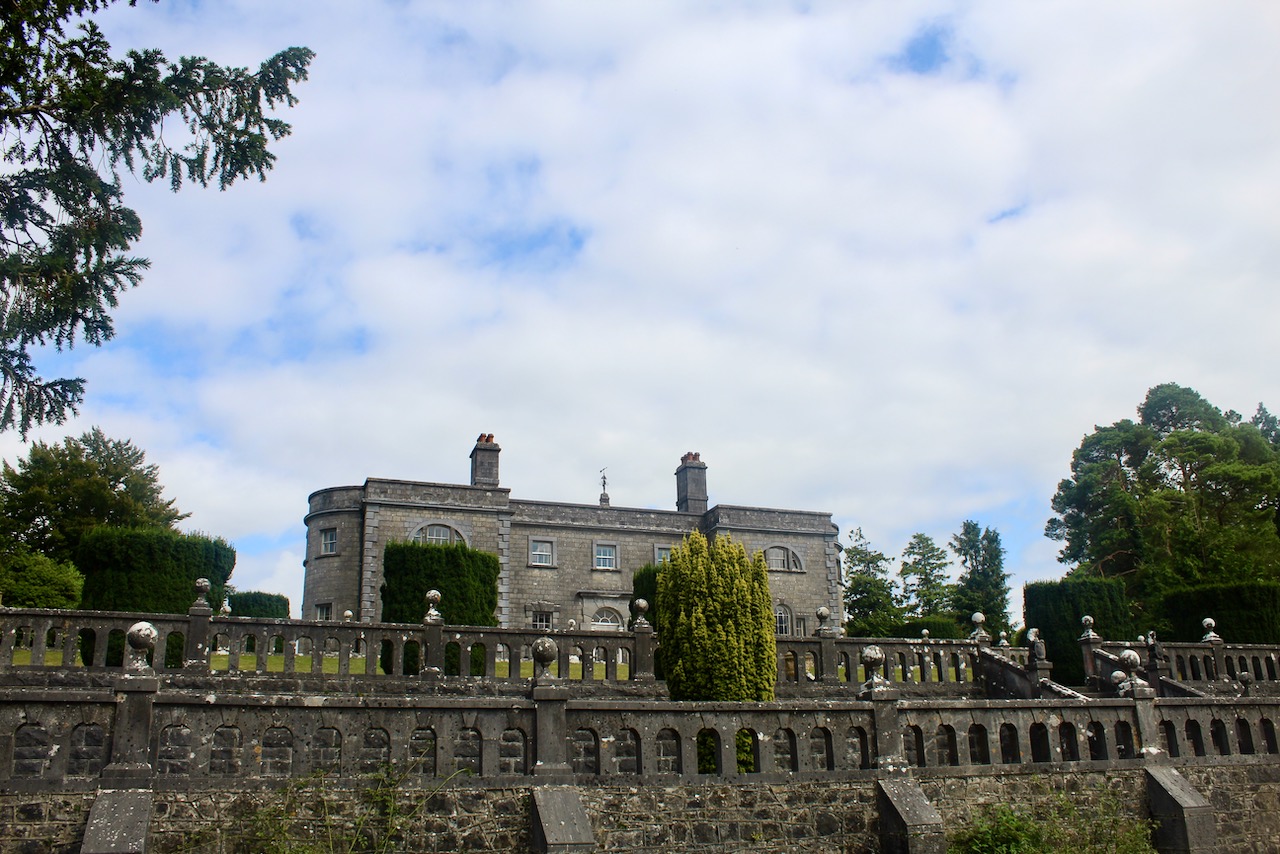
Office of Public Works properties County Cork, Munster

Munster’s counties are Clare, Cork, Kerry, Limerick, Tipperary and Waterford.

I have noticed that an inordinate amount of OPW sites are closed ever since Covid restrictions, if not even before that (as in Emo, which seems to be perpetually closed).

Cork:

1. Annes Grove, County Cork

2. Barryscourt Castle, County Cork – currently closed (June 2022)

3. Charles Fort, County Cork

4. Desmond Castle, Kinsale, County Cork

5. Doneraile Court, County Cork

6. Fota House Arboretum and Gardens, County Cork (Fota House itself is maintained by the Heritage Trust)

7. Ilnacullin, Garanish Island, County Cork

donation

Help me to pay the entrance fee to one of the houses on this website. This site is created purely out of love for the subject and I receive no payment so any donation is appreciated!

€15.00

Cork:

1. Annes Grove, Castletownroche, County Cork:

Annes Grove, County Cork, 1981 from Dublin City Library and Archives. [1]

Tel: 022 26145, annesgrove@eircom.net

https://heritageireland.ie/visit/places-to-visit/annes-grove-gardens/

This is due to be open soon by the OPW. It does not have a website yet. In December 2015 Annes Grove House and Garden were donated to the state by the Annesley family.

Nestled into an eighteenth century ornamental glen, adjacent to the River Awbeg, the demesne of Annes Grove in north County Cork is the setting for the most exquisite Robinsonian-style gardens in Ireland….

The Gardens at Annes Grove were largely the creation of Richard Grove Annesley in the first half of the twentieth century.” [2]

Annes Grove, County Cork, 1981 from Dublin City Library and Archives. [see 1]

The estate was previously known as Ballyhimmock, and it was acquired by William Grove around 1626.

In 1792 it was inherited by Arthur Grove Annesley (1774-1849) from an aunt by marriage, heiress to the Grove family, after which it was renamed by merging the two family names. [3] Arthur Grove Annesley’s uncle Francis Charles Annesley, 1st Earl Annesley of Castlewellan, County Down, married Mary Grove who inherited the estate from her father.

At the centre of the garden is a restored Gothic style summerhouse. The main house is of Queen Anne design, from the 18th century. Pergolas, a lily pond, Victorian stone fernery, a woodland walk and river garden, a rockery and wild water garden create an atmospheric setting.

From “In Harmony with Nature, The Irish Country House Garden 1600-1900” in the Irish Georgian Society, July 2022, curated by Robert O’Byrne.

2. Barryscourt Castle, County Cork:

Barryscourt Castle by Julia Delio, flickr constant commons, August 2009.

From the OPW website https://heritageireland.ie/visit/places-to-visit/barryscourt-castle/:

Barryscourt Castle was the seat of the great Anglo-Norman Barry family and is one of the finest examples of a restored Irish Tower House. Dating from between 1392 and 1420, the Castle has an outer bawn wall and largely intact corner towers. The ground floor of the Tower House contains a dungeon into which prisoners were dropped via the ‘drop-hole’ located on the second floor.

The Barrys supported the Fitzgeralds of Desmond during the Irish rebellions of the late sixteenth century. To prevent it being captured by Sir Walter Raleigh and his army, the Barrys [David Barry, 5th Viscount Barry (1550-1617)] partially destroyed the Castle.

Walter Raleigh (1552-1618) by Unknown English artist 1588, National Portrait Gallery of London ref. 7.

During the Irish Confederate War of the seventeenth century Barryscourt Castle was once again successfully attacked.  Cannon balls lodged in the wall above the Castle entrance bear witness to this conflict. The last head of the Barry family was Lord David Barry.

Barryscourt Castle has been extensively restored. The Main Hall and Great Hall have been completed and fittings and furnishings reinstated. Within the Castle grounds, the herb and knot garden and the charming orchard have been restored to their original sixteenth century design.

After David Barry’s death in 1617 the family made Castlelyons their principal seat (now a ruin). The castle was restored by the OPW and the Barryscourt Trust between 1987-1993, with reproduction furniture made by Victor Chinnery. [4]

An article in the Irish Examiner by Padraig Hoare published 22nd May 2021 tells us that the site is closed and will be for some time:

A reopening date must be established for one of East Cork’s most historic landmarks after languishing in the midst of safety works for five years.

That is according to Cork East TD Séan Sherlock, who said Barryscourt Castle in Carrigtwohill has to be a priority for the Government body in charge of the facility, the Office of Public Works (OPW).

History enthusiasts and families alike were disappointed in the summer of 2020, when it emerged that Barryscourt Castle would remain closed for another 18 months.

The latest update from the OPW given in response to a parliamentary question from Mr Sherlock suggests it may be even longer than the date anticipated a year ago.

The Department of Public Expenditure said restrictions associated with the Covid-19 pandemic “has disrupted the good progress” of works being done to make the facility safe.

“It is not possible at this time to give a precise date for reopening to the public,” the department said.

3. Charles Fort, Summer Cove, Kinsale, County Cork:

The Soldiers Quarters, the Hospital ward, the Lighthouse (by Robert Reading) and Magazine of the 17th Century Charles Fort, Kinsale, Co. Cork, Munster, Ireland. Photograph from Ireland’s Content Pool, photograph by Cahir Davitt, 2016, for Failte Ireland. [5]

General Enquiries: 021 477 2263, charlesfort@opw.ie

https://heritageireland.ie/visit/places-to-visit/charles-fort-national-monument/

From the OPW website:

As one of the country’s largest military installations, Charles Fort has been part of some of the most momentous events of Irish history. During the Williamite Wars, for example, it withstood a 13-day siege before it fell. Later, in the Civil War of the early 1920s, anti-Treaty forces on the retreat burned it out.

Charles Fort is a massive star-shaped structure of the late seventeenth century, well preserved despite its history. William Robinson, architect of the Royal Hospital in Kilmainham, Dublin, is credited with designing it. Its dimensions are awe-inspiring – some of the outer defences are 16 metres high.

The view from the ramparts looking out over Kinsale Harbour is spectacular.

The Soldiers Quarters, and Magazine of the 17th Century Charles Fort, Kinsale, Co. Cork, Munster, Ireland. Photograph from Ireland’s Content Pool, photograph by Cahir Davitt, 2016, for Failte Ireland. [see 5]
The seaward Devils Bastion and lighthouse of the 17th Century Charles Fort, with Kinsale boatyard in the background, Kinsale, Co. Cork, Munster, Ireland; Photograph from Ireland’s Content Pool, photograph by Cahir Davitt, 2016, for Failte Ireland. [see 5]

4. Desmond Castle (also known as the French Prison), Kinsale, County Cork:

Desmond Castle Kinsale 1941, photograph from Dublin City Library archives. [see 1]

General Enquiries: 021 477 4855, desmondcastle@opw.ie

From the OPW website https://heritageireland.ie/visit/places-to-visit/desmond-castle-kinsale/:

Desmond Castle in Kinsale dates from around 1500. It is a classic urban tower house, consisting of a three-storey keep with storehouses to the rear.

Maurice Bacach Fitzgerald, the earl of Desmond, originally built the castle as the customs house for the town. [I think this must be the 9th Earl of Desmond – JWB] It served as a prison in the seventeenth and eighteenth centuries. Because it usually held French inmates, as well as Spaniards, Portuguese, Dutch and Americans, it became known locally as the French Prison and carries that name to this day. The building was co-opted as an ordnance store during the momentous Battle of Kinsale (1601) and served as a workhouse during the Great Famine.

Desmond Castle certainly had a colourful history and this continued into the twentieth century. In the early 1900s it was used as a venue to host local Gaelic League meetings. Finally, in the 1930s, a thriving undertaking business operated from within the National Monument.

The National Inventory of Architectural Heritage tells us:

Freestanding three-bay three-storey tower house, commenced c.1500, abutting earthen terrace to rear. Attached cell blocks and exercise yards to rear (north-west) and platform to side (north-east). Historically used as magazine (1600-1601), as prison for foreign prisoners (1601-1790) and as borough jail (1791-1846). Restored in 1938 currently in use as museum.

5. Doneraile Court, County Cork:

Doneraile Court, County Cork, August 2020. Photograph © Jennifer Winder-Baggot, www.irishhistorichouses.com
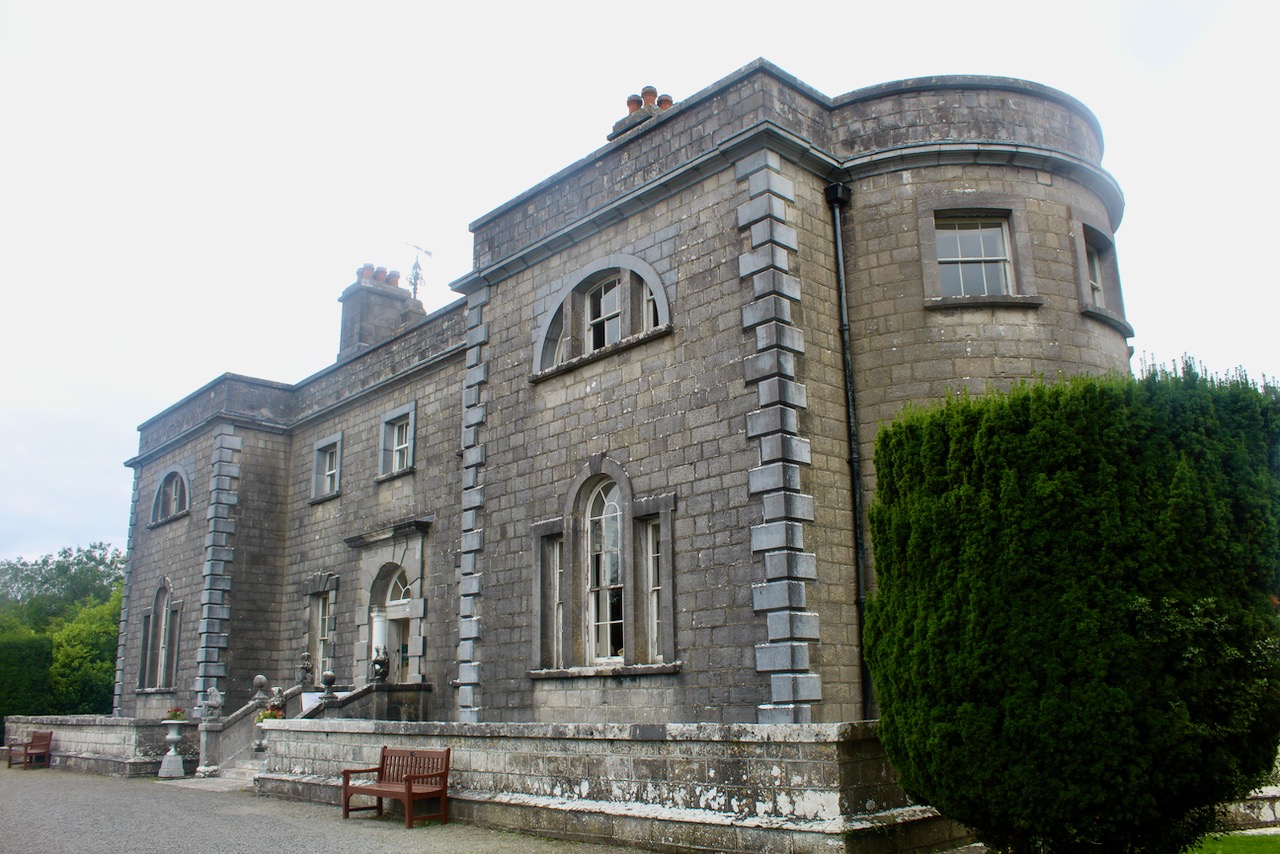
See my entry https://irishhistorichouses.com/2024/04/19/doneraile-court-county-cork-an-office-of-public-works-property/

https://doneraileestate.ie/

Doneraile Court, County Cork, August 2020. Photograph © Jennifer Winder-Baggot, www.irishhistorichouses.com

6. Fota Arboretum and Gardens, Carrigtwohill, County Cork

Photograph © Jennifer Winder-Baggot, www.irishhistorichouses.com
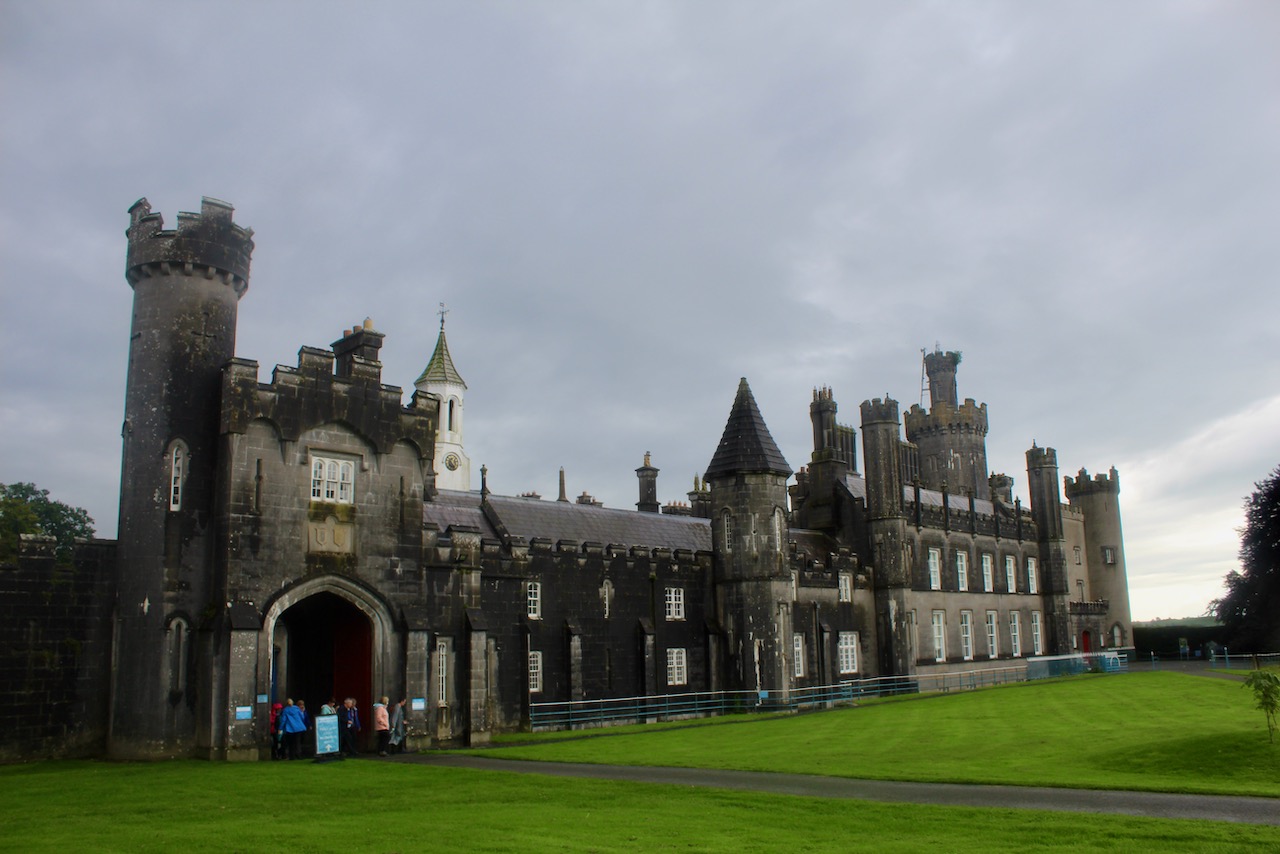
General enquiries: (021) 481 5543 https://fotahouse.com/

fota.arboretum@opw.ie

See my entry https://irishhistorichouses.com/2022/05/17/places-to-visit-and-stay-munster-county-cork/

From the OPW website: https://heritageireland.ie/visit/places-to-visit/fota-arboretum-and-gardens/

Fota House was designed by 19th century architects Richard and William Morrison. From the beautifully proportioned rooms with exquisite plasterwork, to the preserved service wing and kitchens, Fota House offers visitors an intimate look at how life was lived in the past, for the cooks, butlers, footmen and maids who supported the lavish lifestyle of the gentry. Our painting collection is considered to be one of the finest collections of landscape painting outside the National Gallery of Ireland and includes works by William Ashford PRHA, Robert Carver, Jonathan Fisher and Thomas Roberts.” [9]

Front porch of Fota House. Fluted baseless Green Doric columns support a weighty entablature in which wreaths alternate with the Barry crest in the metopes. Photograph © Jennifer Winder-Baggot, www.irishhistorichouses.com

The OPW website tells us:

The arboretum and gardens on Fota Island, just 16 kilometres from Cork city centre, are an essential destination for any one of a horticultural bent.

The arboretum extends over 11 hectares and contains one of the finest collections of rare, tender trees and shrubs grown outdoors in Europe. The unique conditions at Fota – its warm soil and sheltered location – enable many excellent examples of exotics from the southern hemisphere to flourish.

The gardens include such stunning features as the ornamental pond, formal pleasure gardens, orangery and sun temple. James Hugh Smith-Barry laid them out in the first half of the nineteenth century. Fota House, the Smith-Barrys’ ancestral home, still stands. The house, arboretum and gardens share the island with a hotel and golf resort and a wildlife park. [10]

7. Ilnacullin, Garanish Island, Glengarriff, Bantry, County Cork:

https://garinishisland.ie/plan-a-visit/

Italian garden, Garnish Island, Glengarriff, Beara, Co. Cork, Photograph by Chris Hill 2014, Ireland’s Content Pool. [see 5]

general enquiries: (027) 63040

garanishisland@opw.ie

Ilnacullin is an island in the coastal harbour at Glengariff in Bantry Bay. It has an almost sub-tropical climate with mild winters and high levels of rainfall and humidity. These conditions favour the growth of exotic plants. The gardens were set out in the Arts and Crafts style and contain Italianate pavilions and follies, framed against a backdrop of beautiful views.

From the OPW website https://heritageireland.ie/visit/places-to-visit/ilnacullin-garinish-island/:

Ilnacullin is an island garden of diminutive size and rare beauty. Nestled in the sheltered coastal harbour at Glengarriff in Bantry Bay, the gardens display a wealth of unique horticultural and architectural gems. Bryce House is a fitting memorial to the visionary creators of this unique place. 

The gardens of Ilnacullin owe their existence to the early twentieth-century creative partnership of John Annan and Violet Bryce, the island’s owners, and Harold Peto, an architect and garden designer. The area enjoys a mild and humid micro-climate that makes for spectacular and flourishing plant life all year round.

Small ferry boats and 60-seater waterbuses take visitors to Ilnacullin regularly. The short crossing usually includes an extra treat – a visit to the nearby seal colony and an opportunity to glimpse majestic sea eagles.

The Island was bequeathed to the Irish people by the Bryce’s son, Roland, in 1953 and is cared for by the OPW. Bryce House contains material from the Bryces’s lives, including John Annan Bryce’s collection of Burmese statues, Chinese ceramics, Japanese woodblock prints, metal works and rare exotic objects. There are also Old Master drawings by Salvator Rosa, Mauro Antonio Tesi and Giambattista Tiepolo. Over the years the Bryces hosted prominent cultural figures such as George (AE) Russell, George Bernard Shaw and Agatha Christie. [11] You can see a tour of the house and gardens on the website.

From “In Harmony with Nature, The Irish Country House Garden 1600-1900” in the Irish Georgian Society, July 2022, curated by Robert O’Byrne.

[1] https://repository.dri.ie/

[2] p. 12, Living Legacies: Ireland’s National Historic Properties in the care of the OPW, Government Publications, Dublin, 2018.

[3] p. 310, Keohane, Frank. The Buildings of Ireland. Cork City and County. Yale University Press: New Haven and London. 2020.

[4] p. 261, Keohane, Frank. Buildings of Ireland: Cork City and County, Yale University Press, New Haven and London, 2020.

[5] https://www.irelandscontentpool.com/en

[6] See also https://doneraileestate.ie

[7] p. 377. Keohane, Frank. Buildings of Ireland: Cork City and County, Yale University Press, New Haven and London, 2020.

Another work Keohane identifies as being by Benjamin Crawley is Castle Bernard, now a ruin in County Cork:

Castle Bernard, County Cork, photograph from National Inventory of Architectural Heritage.

[8] p. 105. Mark Bence-Jones. A Guide to Irish Country Houses (originally published as Burke’s Guide to Country Houses volume 1 Ireland by Burke’s Peerage Ltd. 1978); Revised edition 1988 Constable and Company Ltd, London.

[9] fotahouse.com

[10] https://heritageireland.ie/visit/places-to-visit/fota-arboretum-and-gardens/

[11] https://garinishisland.ie/the-house-and-gardens/

Text © Jennifer Winder-Baggot, www.irishhistorichouses.com
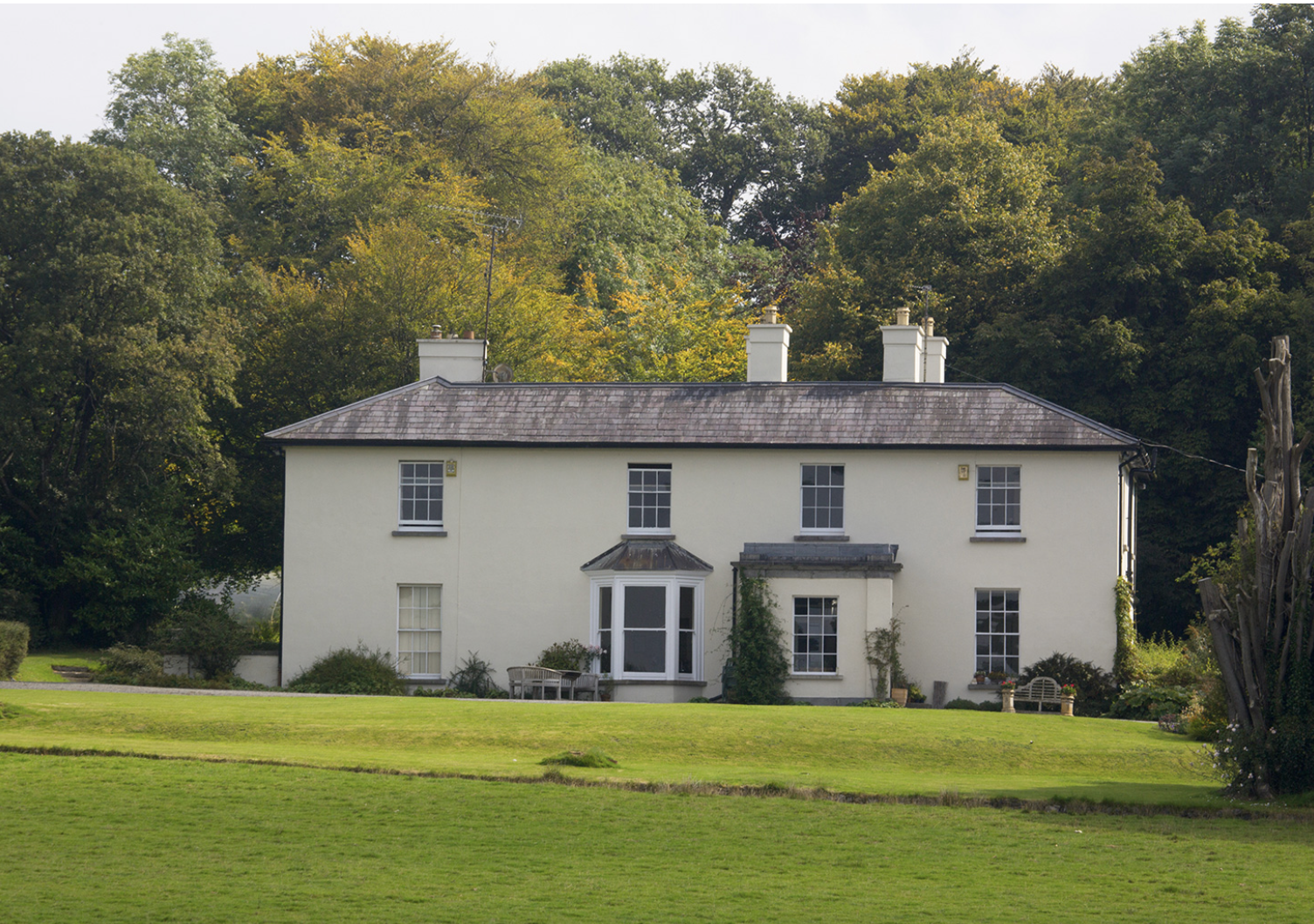
Loughton House, Moneygall, County Offaly E53 WK16 – section 482

www.loughtonhouse.com

Open dates in 2026: May 1–31, June 1- 30, Aug 1–23, 11am-3pm

Fee: adult €5, OAP €4, child/student free, family €10

donation

Help me to pay the entrance fee to one of the houses on this website. This site is created purely out of love for the subject and I receive no payment so any donation is appreciated!

€15.00

Loughton, May 2019. Photograph © Jennifer Winder-Baggot, www.irishhistorichouses.com
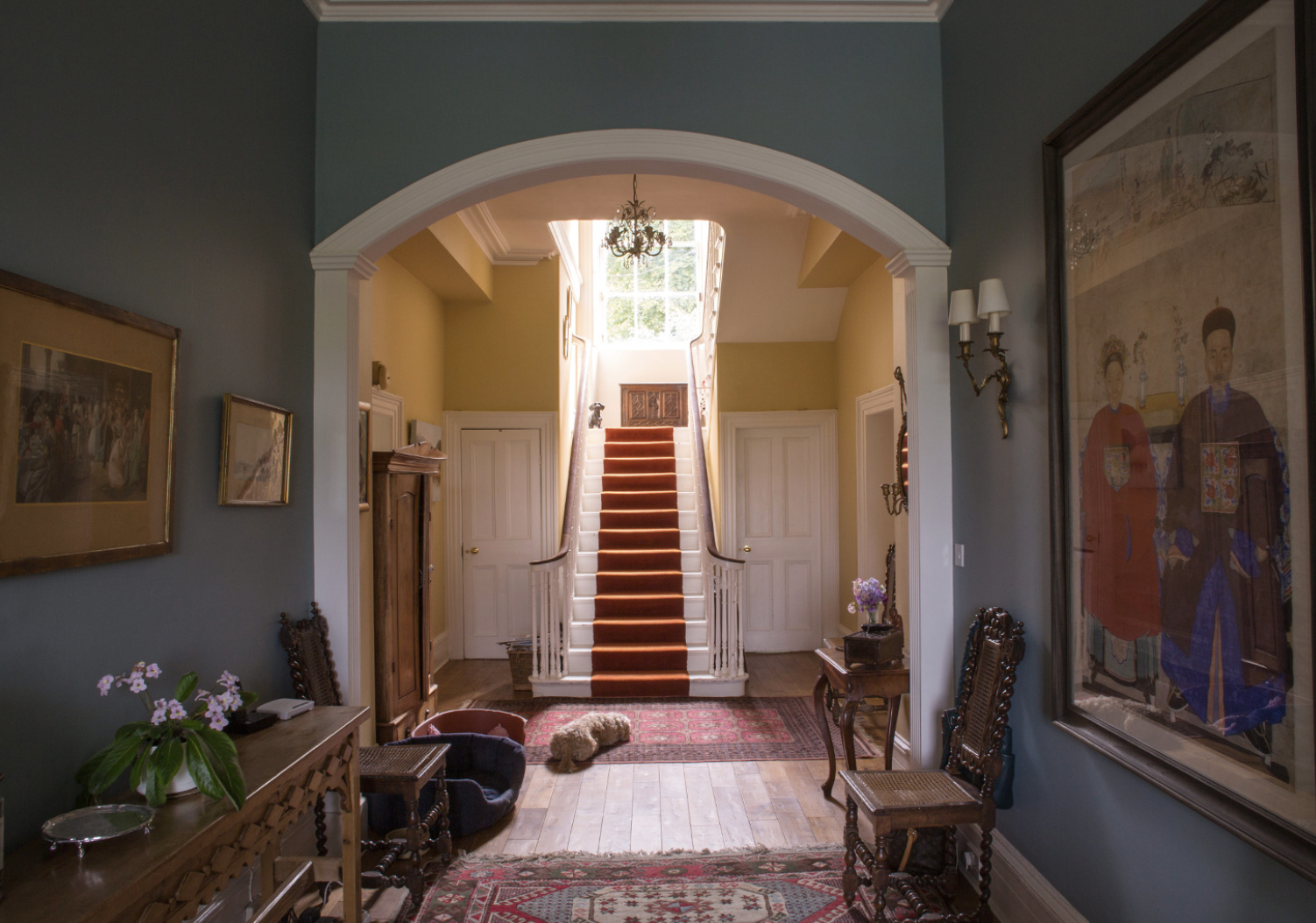
We drove up a long tree-lined avenue to Loughton House. Stephen rang from the car on our way and spoke to Michael Lyons, who was out chopping wood, so told us that Andrew would be at the house to meet us.

This would have been the front of the house in 1777, as it has the bow in the centre. This is the side which we saw first as we drove up, the North facing side. Photograph © Jennifer Winder-Baggot, www.irishhistorichouses.com

Loughton House was built on the site of a previous house, in 1777. When we arrived, we wondered why there were two front doors. I think Andrew Vance, who greeted us, explained, but we were so busy introducing ourselves and immediately got along so well, that I forget what he told me about the two doors. That’s a question for next time!

Single storey addition with crisp limestone pilasters, and pediments on console brackets over the doors. Photograph © Jennifer Winder-Baggot, www.irishhistorichouses.com
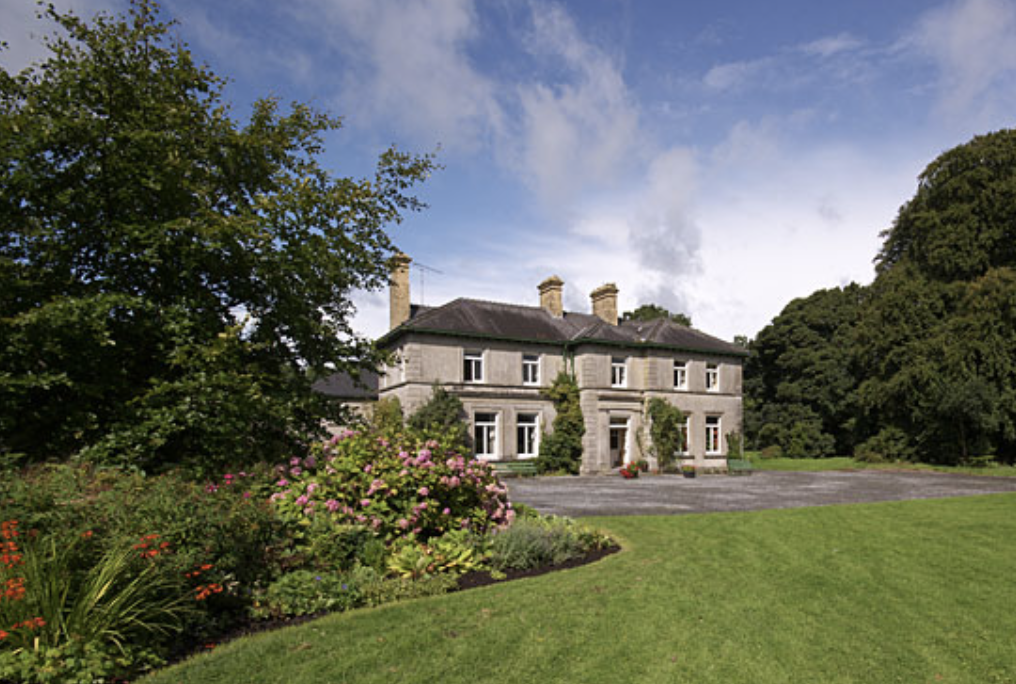
According to the website, alterations were made to the house in 1835 by James and George Pain. I don’t know who the architect of the 1777 house is, but originally the house faced north, with a shallow full-height half hexagon bow in the centre.

I would consider this to be the back of the house since we went out of the door in the single-storey addition, above, after our tour, to see the garden, but is officially the front, the South facing side. The windows have pediments with console brackets on the ground and first floors. The three storeys are over a concealed basement. Photograph © Jennifer Winder-Baggot, www.irishhistorichouses.com
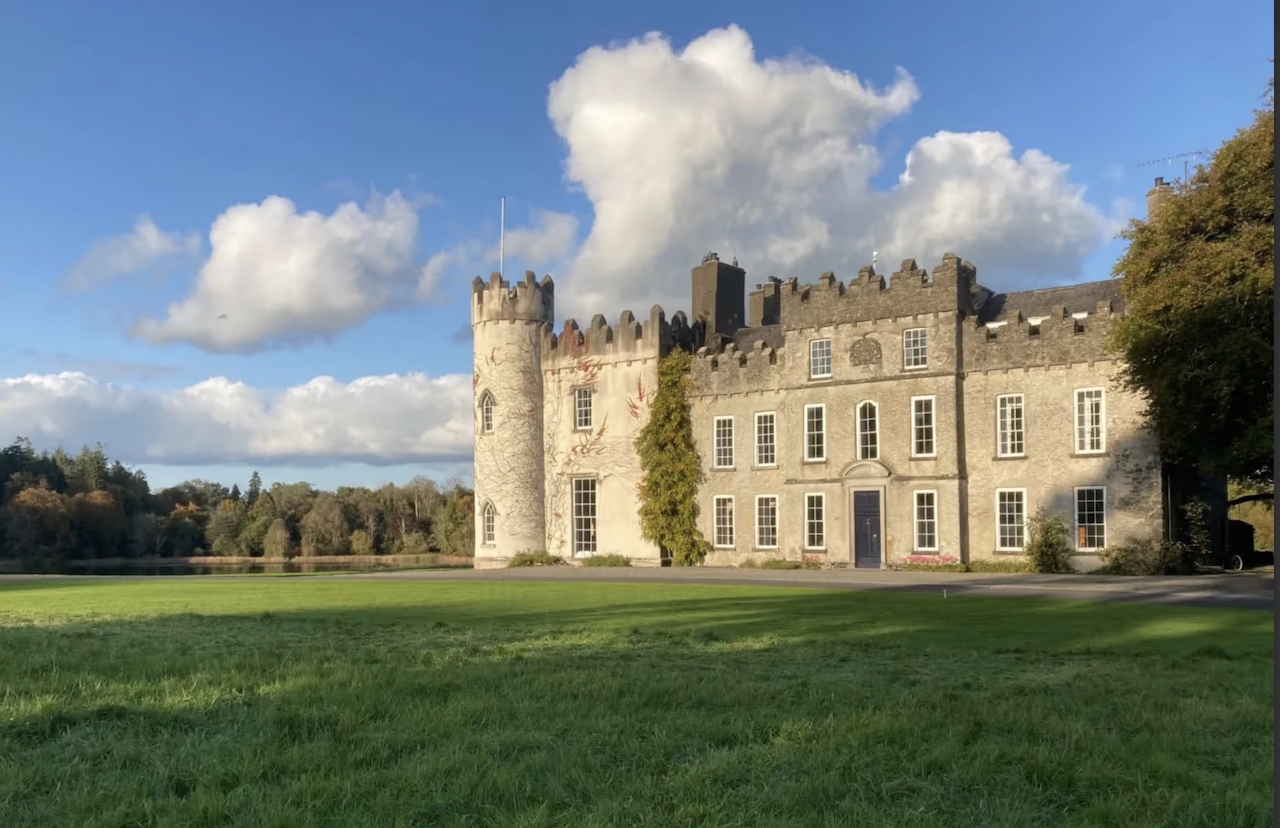
Mark Bence-Jones describes the house in his A Guide to Irish Country Houses:

“Of elegant and restrained late-Georgian character, the main front consisting of two wide and shallow three sided bows of three bays each, with a two bay centre between them. Single storey wing of two bays, adorned with pilasters. Pediments and entablatures on console brackets over ground floor and first floor windows. Parapeted roof. Very handsome Georgian stables.” [1]

The 1777 house was built for Major Thomas Pepper. Thomas, born around 1735, of Ballygarth, Julianstown, Co Meath, son of Lambert Pepper and Jane Otway, was Major in the 14th Light Dragoons. The Peppers acquired Ballygarth Castle (now a ruin) and lands in County Meath after the Restoration of Charles II to the British throne in 1660, for their loyalty to the Stuart monarchy. [2] Thomas Pepper married Mary Ryder, daughter of John Ryder, the Archbishop of Tuam, County Roscommon. The 14th Light Dragoons was originally called James Dormer’s Dragoons, and were raised in the south of England in 1715 in response to the Jacobite Rebellion. They were sent to Ireland in 1717. In 1747 they were renamed the 14th Regiment of Dragoons, and became the Light Dragoons in 1776 [3]. Loughton House passed to their son Thomas Ryder Pepper (1760-1828), who in 1792 married Anne Bloomfield, daughter of John Benjamin Bloomfield and Charlotte Anne Waller, of Newport, County Tipperary. The Bloomfield family had originally settled at Eyrecourt, County Galway.

Thomas Ryder Pepper (1760-1828) with The Old Castle, Loughton in the background from Loughton house auction, 2016, Shepphards.

When Thomas Ryder Pepper died, the house passed to his brother-in-law, Benjamin Bloomfield, 1st Baron Bloomfield (1815) of Oakhampton and Redwood (1768-1846). Redwood House in County Tipperary no longer exists. Oakhampton, also in Tipperary, still stands. He was Lieutenant General in the British Army and fought the rebels in 1798 at Vinegar Hill, County Wexford. He rose in the ranks to become Keeper of the Privy Purse for King George IV. This was a particularly difficult job – we came across King George IV before at several houses listed in the Revenue Section 482 Property list. The king enjoyed a romance with Elizabeth Conyngham of Slane Castle, and relished the good life: food, drink and beauty in the form not only of women but in architecture, with the help of John Nash. He was therefore rather a Big Spender. Naturally, therefore, he came to resent Benjamin Bloomfield and his efforts to tighten the purse strings.

Benjamin Bloomfield (1768-1846) 1st Baron Bloomfield as Keeper of His Majestys Privy Purse at the Coronation of George IV, by Henry Meyer, after Philip Francis Stephanoff 1826, NPG D31893.
Benjamin Bloomfield (1768-1846) 1st Baron Bloomfield, by John Lilley, from Loughton house auction catalogue, 2016, Shepphards
Benjamin Bloomfield (1768-1846) 1st Baron Bloomfield, Irish school, 19th c, from Loughton house sale, 2016, Shepphards.
Portrait of Lady Bloomfield, from Loughton house sale, 2016, Shepphards

We have already seen that several houses underwent alterations in expectation of a visit from King George IV in 1821. In Charleville, County Wicklow, a new floor was installed at great expense. Here in Loughton, a bedroom was done up for the King. Unfortunately, the King never made it to Loughton.

It was later that Bloomfield hired James and George Richard Pain to renovate Loughton House, in 1835.

Loughton, May 2019. Photograph © Jennifer Winder-Baggot, www.irishhistorichouses.com
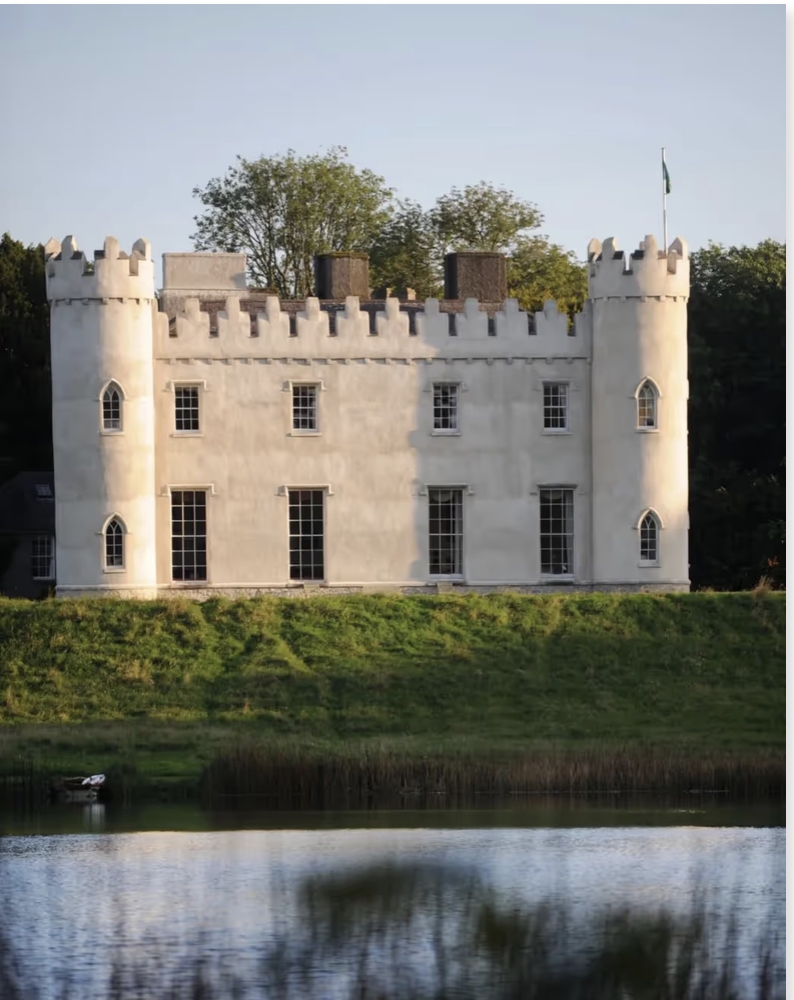
James and George were sons of James Pain, an English builder and surveyor. Their Grandfather William Pain was the author of a series of builder’s pattern books, so they had architecture in the blood. According to the Dictionary of Irish Architects, James and his younger brother George Richard were both pupils of John Nash, one of the foremost British architects of his day responsible for the design of many important areas of London including Marble Arch, Regent Street and Buckingham Palace. He was architect to the prolific lover of architecture the Prince Regent, later King George IV. When Nash designed Lough Cutra Castle in County Galway for Charles Vereker in 1811, he recommended that the two brothers should be placed in charge of the work, so it was at this time that they came to Ireland. Lough Cutra is an amazing looking castle privately owned which is available for self-catering rental. [4] James Pain settled in Limerick and George in Cork, but they worked together on a large number of buildings – churches (both Catholic and Protestant), country houses, court houses, gaols and bridges – almost all of them in the south and west of Ireland. [5] In 1823 James Pain was appointed architect to the Board of First Fruits for Munster, responsible for all the churches and glebe houses in the province.

The Pains Gothicized and castellated Dromoland Castle in County Clare at some time from 1819-1838, now a luxury hotel. [6] They took their Gothicizing skills then to Mitchelstown Castle in 1823-25, but that is now a ruin. In 1825 they also worked on Convamore (Ballyhooly) Castle but that too is now a ruin. They also probably worked on Quinville in County Clare and also Curragh Chase in County Limerick (now derelict after a fire in 1941), Blackrock Castle in County Cork (now a science centre, museum and observatory which you can visit [7]), they did some work for Adare Manor in County Limerick (also now a luxury hotel), Clarina Park in Limerick (also, unfortunately, demolished, but you can get a taste of what it must have been like from its gate lodge), Fort William in County Waterford, probably they designed the Gothicization and castellation of Ash Hill Towers in County Limerick (also a section 482 property!), alterations and castellation of Knoppogue Castle, County Clare (you can also visit and stay, or attend a medieval style banquet), Aughrane Castle mansion in County Galway (demolished – Bagots used to own it, I don’t know if we are related!), a castellated tower on Glenwilliam Castle, County Limerick and more.

The Pain brothers reoriented Loughton House to face south, and the main doorcase was put to the east end, the Loughton House website tells us. In his Buildings of Ireland: Central Leinster. Counties of Kildare, Laois and Offaly, Andrew Tierney tells us that this oblique approach of typical of James Pain. [8]

Loughton, County Offaly. Photograph © Jennifer Winder-Baggot, www.irishhistorichouses.com
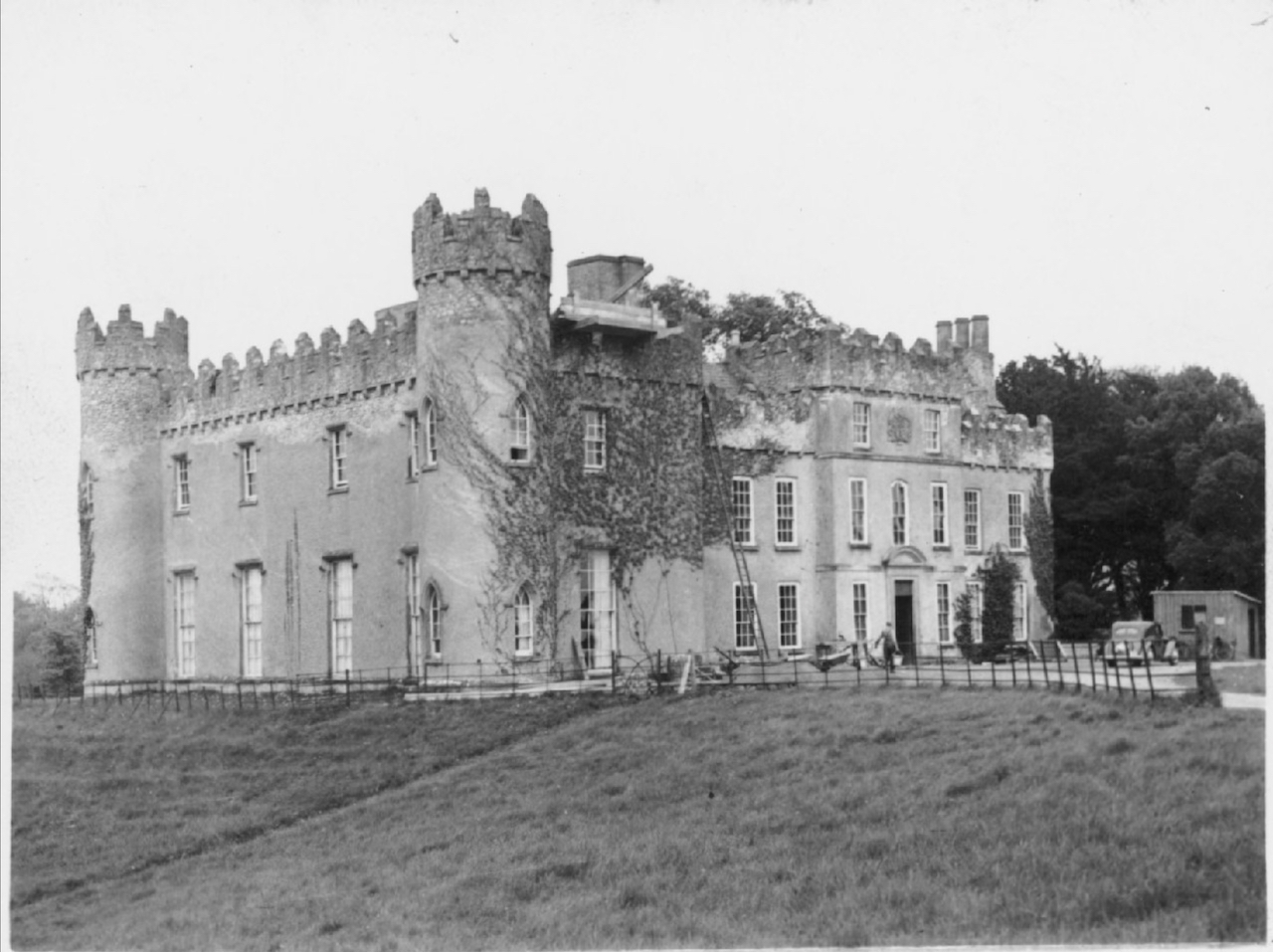
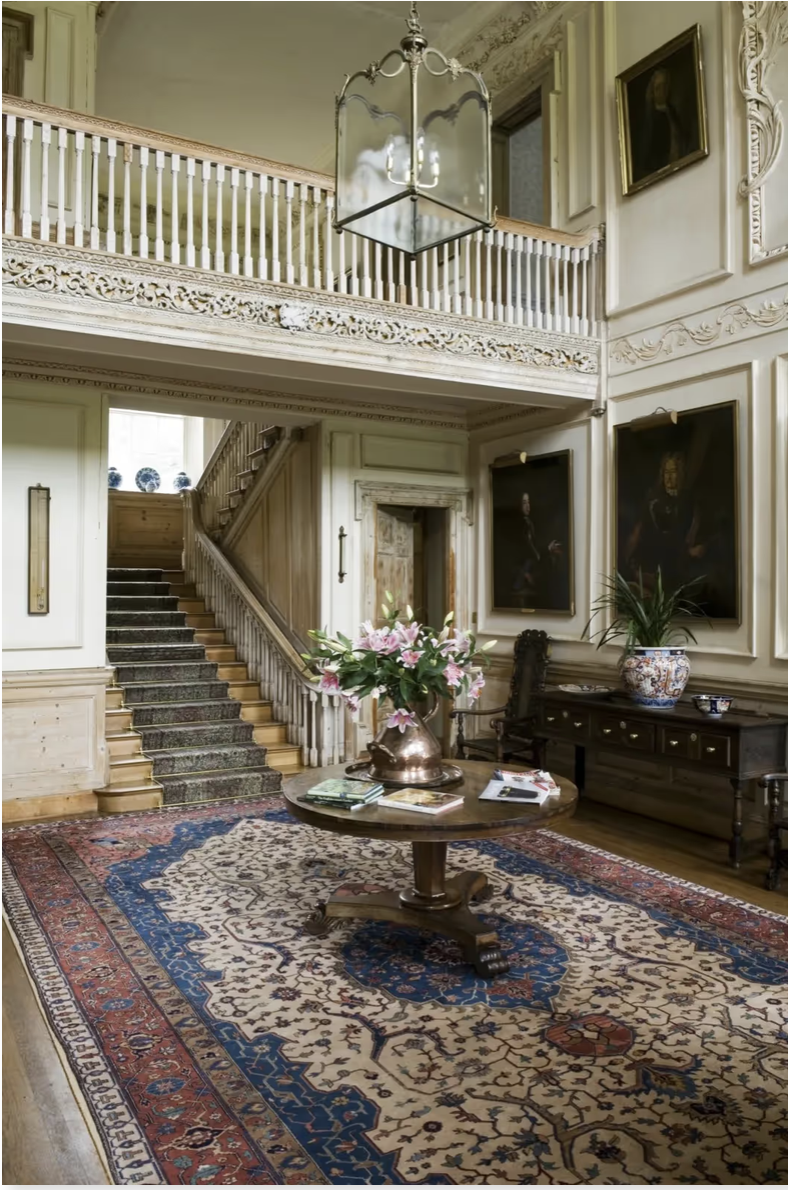
Loughton, May 2019. Photograph © Jennifer Winder-Baggot, www.irishhistorichouses.com
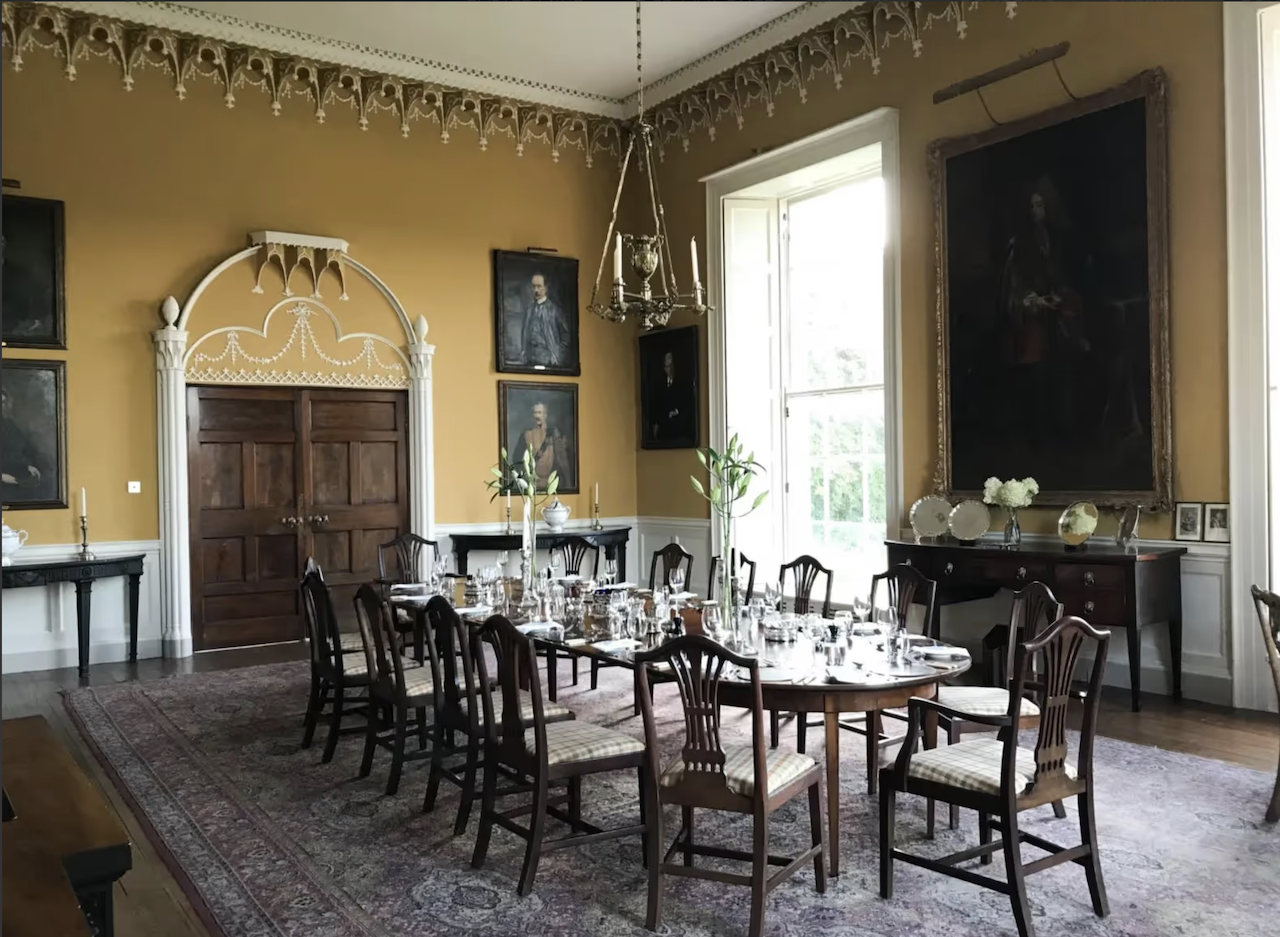
The National Inventory of Architectural Heritage claims that Loughton House is probably the Pain’s finest Classical work [9]. The exterior is relatively plain, with limestone window dressings with keystones. The north facing side is the original house, whereas the south facing side, of eight bays instead of the seven in the north side, is by the Pain brothers. The windows on this side have moulded cement detailing: architrave, cornice and consoles, and pediments. We saw more of the Pains’ work inside, in the Drawing and Dining Rooms which date from their renovation, and the wonderful curved stone cantilevered staircase.

The current owners, who acquired the house in 2016, are both medical doctors, as was the previous owner, Dr. James Reilly, who was also a former Minister for Health in the Irish government. When we visited, the house exuded a comfortable quirky chic, with marble busts on pillars in the front hall and a touch of whimsy, with a stag’s head draped in a fur at the bottom of the sweeping cantilevered staircase. 

The Loughton House website tells us:

“The house has very fine detailing – traces of the late eighteenth-century decoration can be seen in the house as well as early nineteenth-century changes in internal layout.

“The ground floor is laid out with bright and generously proportioned formal reception rooms with magnificent decorative cornicing and ceilings, ornate plaster work and large original period fireplaces. The original wood floors remain throughout and the grand sash bay windows permit torrents of light into the house. Most notable are the wood-carved shutters and door panels in the original Billiard room.” [10]

Loughton passed to Bloomfield’s son, John Arthur Douglas Bloomfield (1802-1879). He succeeded as 2nd Baron Bloomfield on his father’s death. He was a diplomat and travelled widely, was envoy to St. Petersburg and Ambassador to Austria. He was appointed Privy Counsellor on 17 December 1860. He was created 1st Baron Bloomfield of Ciamhaltha, Co. Tipperary on 7 August 1871. In 1834 his father had a hunting lodge built, Ciamhaltha House, County Tipperary, so the new title referred to this house [11]. He and his wife Georgiana Liddell had no son and the titles ended with his death. Georgina served as a Maid of Honour to Queen Victoria between 1841-45. Upon Georgiana’s marriage to Baron Bloomfield in 1845, when Georgiana left her position in the house of the Queen, Victoria gave her a cutting from a vine, which still grows at Loughton House today. Georgiana wrote the book Reminiscences of Court and Diplomatic Life, published 1883. It sounds fascinating!

John Arthur Douglas Bloomfield (1802-1879) 2nd Baron Bloomfield, wearing a burgundy red jacket and fur collar, Painting After Sir Thomas Lawrence, from Loughton house auction catalogue, 2016, Shepphards
Georgiana Bloomfield née Liddell, Lady Bloomfield from Loughton house auction catalogue, 2016, Shepphards.

The house passed to the Baron’s sister, Georgiana, and her husband, Henry Trench, of Cangort Park, County Offaly (still standing, privately owned). The Landed Estates website tells us that in the 1870s, Henry Trench owned 4,707 acres in county Tipperary, 2,113 acres in county Offaly, 1,926 acres in county Limerick, 1,581 acres in county Galway, 704 acres in county Clare and 432 acres in county Roscommon. [12]

Frederick Trench (1755-1840) 1st Baron Ashtown from Loughton sale Sept 2016 by Shepphards. He was an uncle of Henry Trench who married Georgiana Bloomfield.
A portrait of Blanche Trench (1852-1937), from Loughton house sale, 2016, Shepphards. She was a daughter of Henry Trench and Georgiana née Bloomfield.

When James Reilly sold Loughton House, he unfortunately sold its contents, including an archive of family papers. Michael Parsons of The Irish Times wrote of the auction:

Lot 2066, The Loughton Papers circa 1749-1960 – an archive of documents including correspondence, diaries, journals, sketch books and recipe books created by the various families who had lived at Loughton House – sold for €12,000 (above the estimate of €5,000-€8,000).

Sheppard’s said the buyer was Galway businessman Pat McDonagh, founder and managing director of the Supermac’s fast-food chain and owner of the Barack Obama Plaza – a services area on the M8 motorway just outside the village of Moneygall built following the visit of the US president.”

Fortunately, the article continues to reassure the readers that the documents will be properly preserved and accessible:

“In a statement issued via the auction house, Mr McDonagh described the archive “part of a tapestry of history” and that his “first priority” was its “preservation for historians, the community and the country”.

“The statement said: “Mr McDonagh commended Offaly County Council for their interest in working with Supermac’s for the preservation of the papers” which will be digitised, and that “historians owe a debt of gratitude to the owners of Loughton House, Dr James Reilly and his wife Dorothy”.

“Mr McDonagh “confirmed also that the visitor centre at the Barack Obama Plaza will host a Loughton House section, where extracts from the archive will be displayed on a rolling basis.” He said the plaza would work to ensure that the heritage of the house was not lost to the community, adding that he would encourage local and expert input to ensuring that the archive would be educational, appropriate and accessible.” [13]

A portrait of Dora Agnes Caroline Trench (1858-1899) née Turnor, wife of Benjamin Bloomfield Trench, from Loughton house sale, 2016, Shepphards.
A portrait of Mr Trench, dated 1920, from Loughton house sale, 2016, Shepphards.

The wood carved panels shutters and door panels in the billiards room, now a dining room, were decorated by one of the Trenches, Dora. The form of decoration, with details rendered by a hot poker, is exquisitely done. The portrait of the artist, Dora, hangs next to the doors. Dora was Henry Trench’s son Benjamin Bloomfield Trench’s wife, Dora Agnes Caroline Turnor. Dora Trench died in 1899, after a brief illness. Benjamin and Dora had two daughters, Sheelagh Georgiana Bertha and Theodora Caroline. [14]

Loughton, May 2019. Photograph © Jennifer Winder-Baggot, www.irishhistorichouses.com
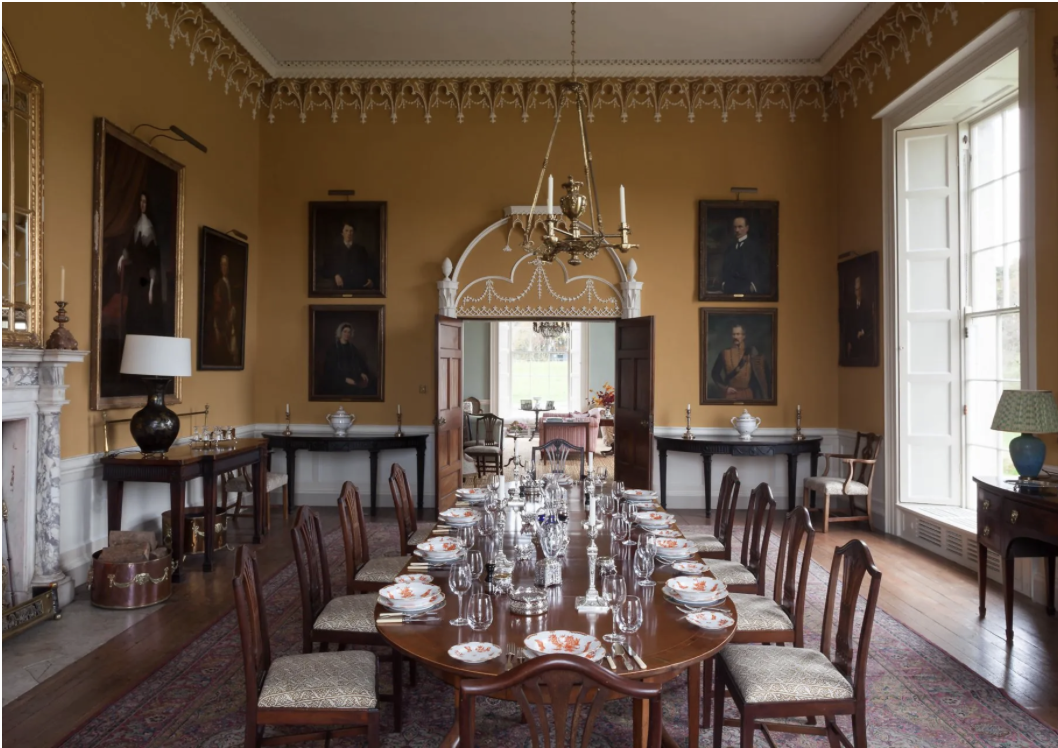
Dora illustrated the doors with crests and intricate patterns, and all of the doors from the room are decorated, along with the shutters. I was delighted when Stephen asked if I could take a photograph of the door – I didn’t like to ask, knowing that most section 482 houses forbid indoor photography. Andrew’s assent typified his warm welcome. You can see photographs of the room, called Dora’s Room, on the Loughton website, along with photographs of the other reception rooms, the Library, Dining and Drawing Rooms. “Dora’s Room” contains a long table and chairs, and an intricately carved fireplace.

The fireplace in Dora’s Room can be seen on the Loughton website. It is, Andrew Tierney tells us in his Buildings of Ireland: Central Leinster, it is Tudor Revival, of 1862. The male caryatid figure on the right is the original, Andrew thinks, whereas the figure on the left is a copy. It’s strange how such fireplaces are carved in wood and manage to survive the fire they contain. Andrew said it throws out great heat. It has a second flue behind, from which the fire can draw its oxygen, rather than drawing from the warmed air inside the room.

The Loughton website tells us that the Trenches remained in residence until 1973 when the property was passed to the Atkinson family.

Major Anthony Guy Atkinson (b. 1909) inherited Loughton in 1970 from his cousins Thora and Sheelah Trench (Dora’s daughters). Henry Trench, Georgina Bloomfield’s husband, had a sister, Anne Margaret Trench. She married Guy Caddell Atkinson. They inherited Cangort Park in County Tipperary and Major Anthony Guy Atkinson was a descendant of Anne Margaret Trench. [15] He made Loughton over to his son, Guy Nevill Atkinson (b. 1950), who sold it in 2001.

From Dora’s Room we came upon the hallway with the sweeping floating stone cantilever staircase. This was originally the entrance hall, before James Pain added the staircase and moved the entrance to the east end.

Andrew drew our attention to an old tall clock with barometer. It was from Lissadell House, and, appropriately, was made by a man named Yates – not the poet Yeats who frequented the house, note the different spelling, but in a nice touch, the picture hanging beside it was of the poet. Incidentally, one of the Trench family, a sister of Benjamin Bloomfield Trench who inherited Loughton, Louisa Charlotte, married Colonel James Gore-Booth, of the Lissadell family. The owners have taken their time to populate the house appropriately, with respect for its history and a dash of humour.

I was most enamoured with the next room, the library, with its floor to ceiling built in bookshelves. It retains original wallpaper, worn but still in situ.

“This is where we sit in the evenings, with a glass of wine,” Andrew told us. I could just see myself there too, in the well-worn couches, facing the fireplace. You can also see this room on the website, with its comfy leather armchairs. The Equine pictures are appropriate as Andrew is Master of the local Hunt!

In the Drawing Room, a formal room with sofas, carpets and lovely salmon pink walls, gorgeous cabinets, piano and ornate gilt overmantel mirror, Andrew pointed out another treasure: the fire insurance plaque from a building. The various insurance companies had their own firetrucks and teams, and they only put out fires of the buildings insured by them. Unfortunate neighbours burned down. I was excited to see the plaque as I had seen one on the Patriot Inn in Kilmainham, one of the few remaining, and learned about them in a lecture in Warrenmount in Dublin.

Loughton, May 2019.

We then entered the second dining room (if we consider Dora’s Room, the former Billiards room, to be a dining room also, as it is currently furnished), a larger room than the first. This dining room also has a clever fireplace, this one of steel, with secret cabinets at the sides to keep the plates and dishes hot. It also had vents, and further vents built into the walls of the room, to control temperature and air flow.

Loughton, May 2019. Photograph © Jennifer Winder-Baggot, www.irishhistorichouses.com
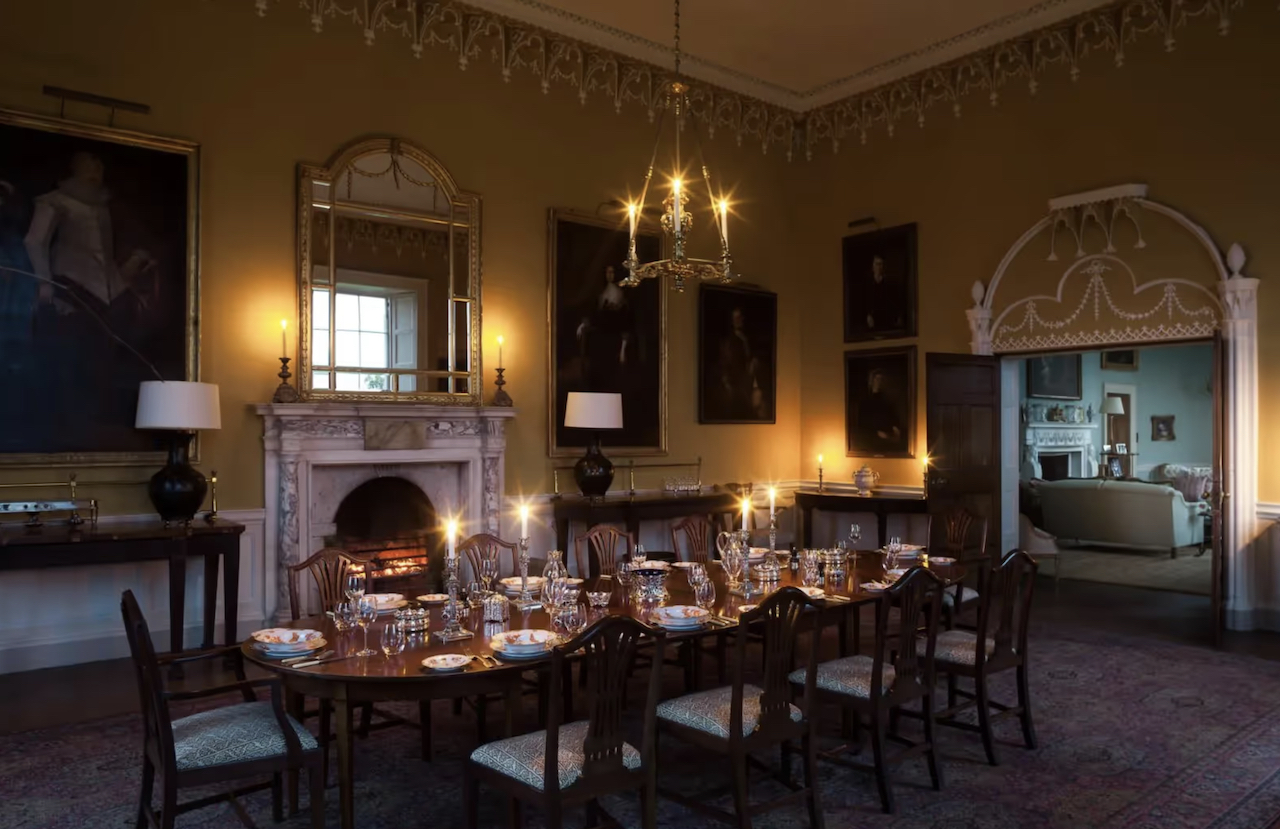
A painting above the door is by Sarah, Lady Langham, an artist, who has also applied her creative skills to the house, and who manages the day-to-day operation of the house. She has made curtains and even the wallpaper of The King’s Bedroom. On our way to the back staircase we ran into Sarah herself, as I was photographing the chain that was used to pull the coal to the upper floors.

Loughton, May 2019. Photograph © Jennifer Winder-Baggot, www.irishhistorichouses.com
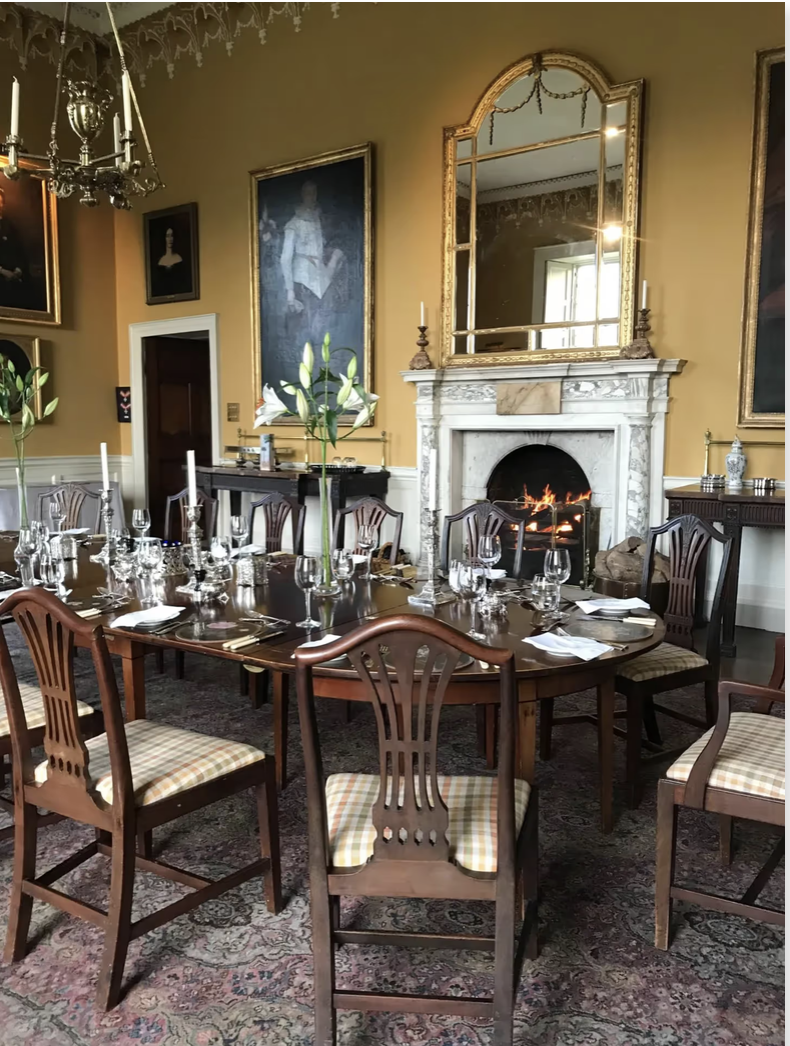
The final rooms we viewed are Sarah’s piece de resistance, “the King’s Suite,” which comprises two rooms – the room where George IV was meant to sleep, and a room next to it also furnished with a bed, which might have been his dressing room or a parlour.

Loughton, May 2019. Photograph © Jennifer Winder-Baggot, www.irishhistorichouses.com
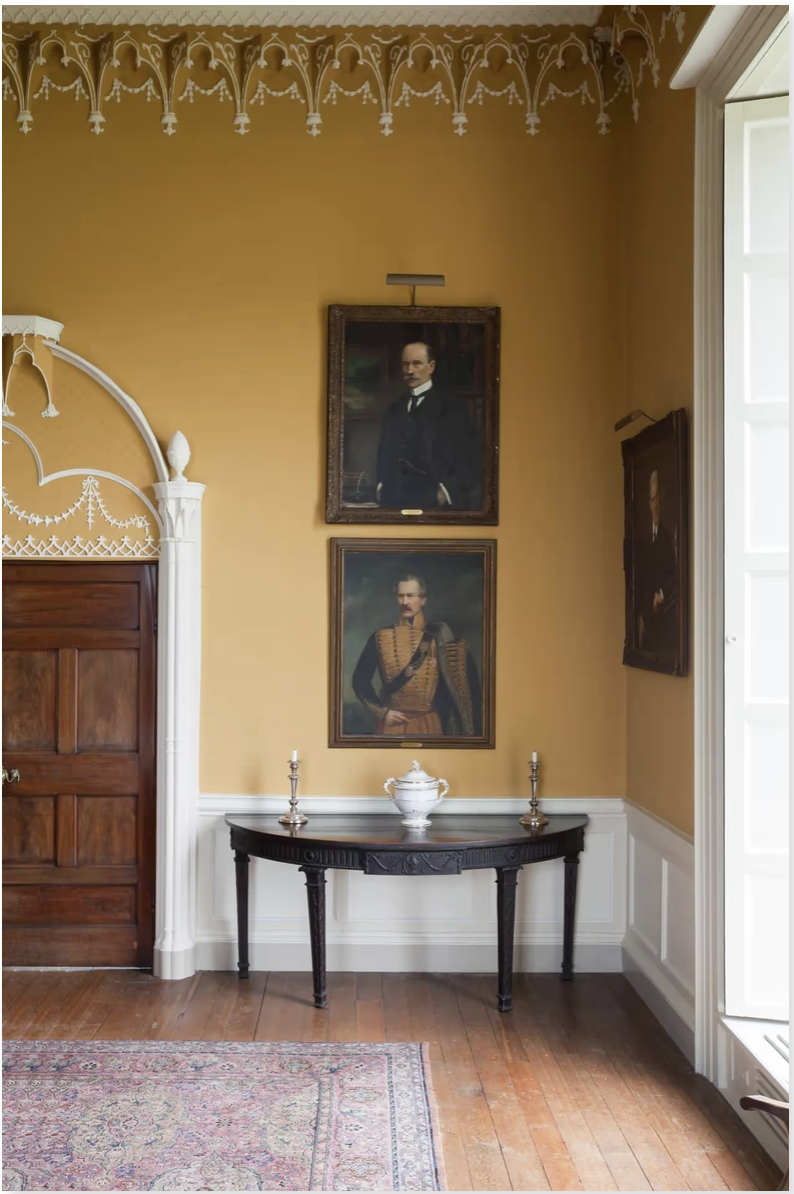
Sarah created the wallpaper. It features a crest of a unicorn and a lion around the top – and a stag that is pictured in the recurring motifs below. She also made the magnificant curtains and pelmet.

The fireplace is interesting. It is made of limestone, which contains fossils of tubular sea creatures:

Loughton, May 2019. Photograph © Jennifer Winder-Baggot, www.irishhistorichouses.com
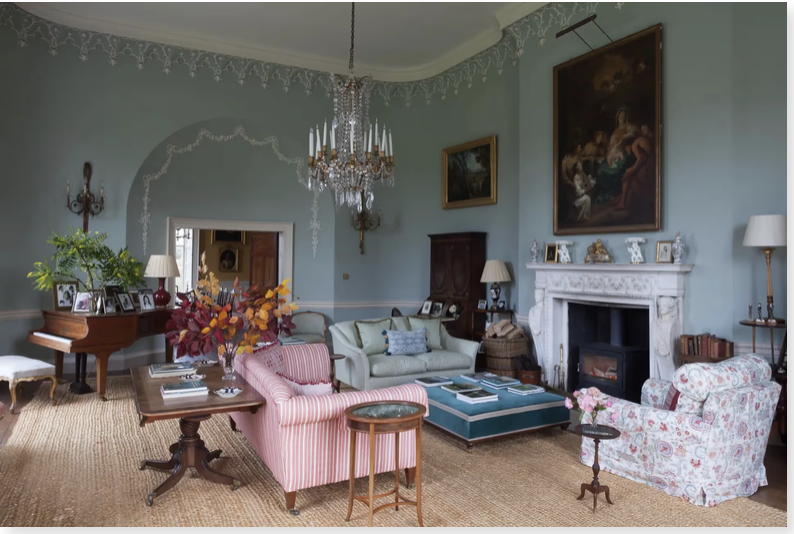
This, along with other rooms, is available for guest accommodation.

There is a stable complex to one side of the house. Andrew brought us out to show us the function room, which was originally a coal shed. It’s huge, and would be wonderful for parties, and is available for hire. The garden outside it, which would also be available for the functions, is romantic and beautiful, with a pond and stone walls.

Loughton, County Offaly. Photograph © Jennifer Winder-Baggot, www.irishhistorichouses.com
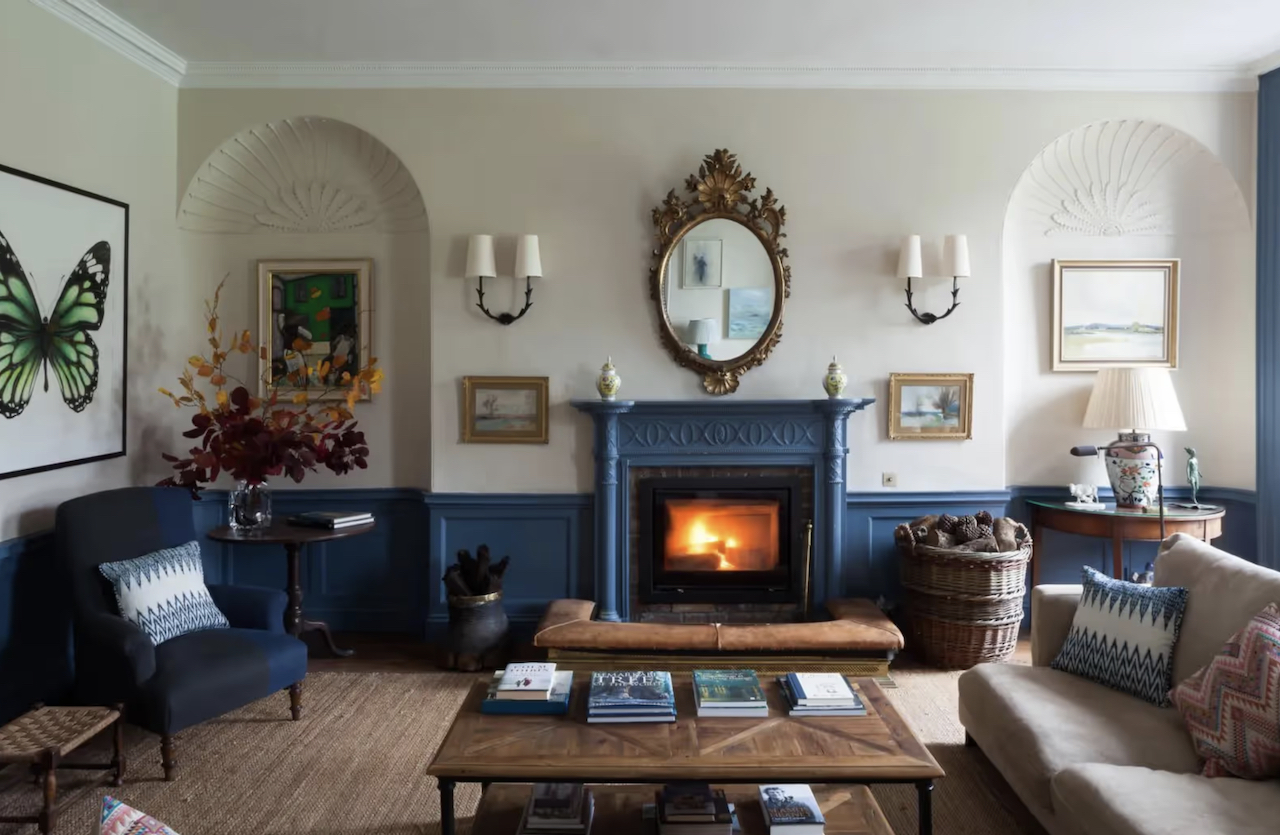
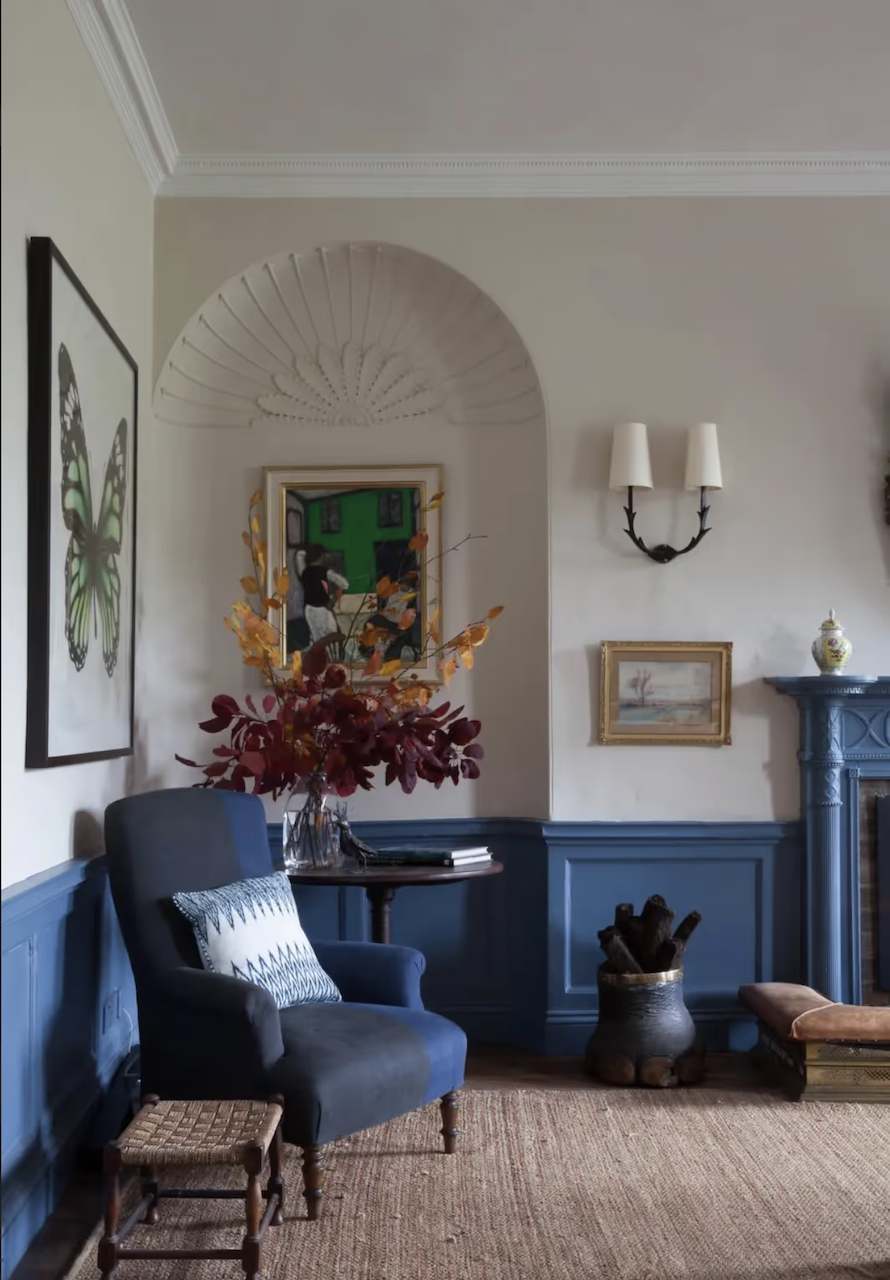
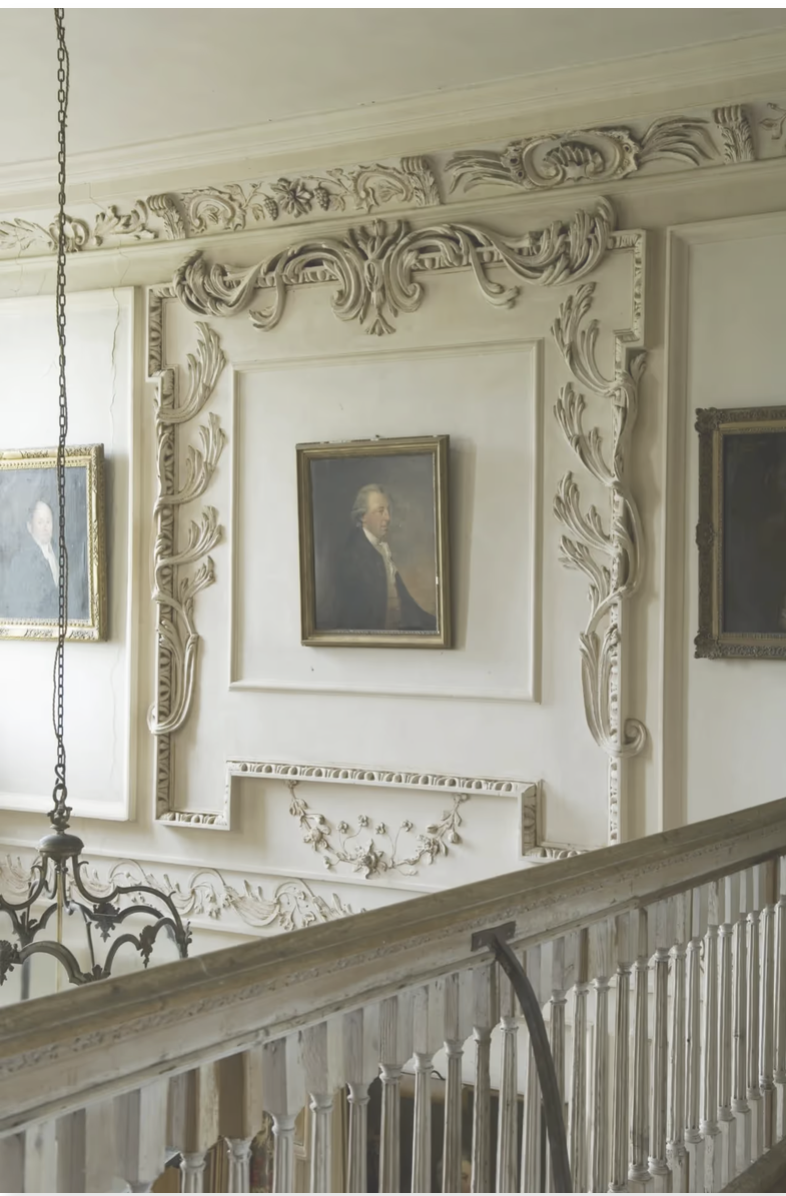
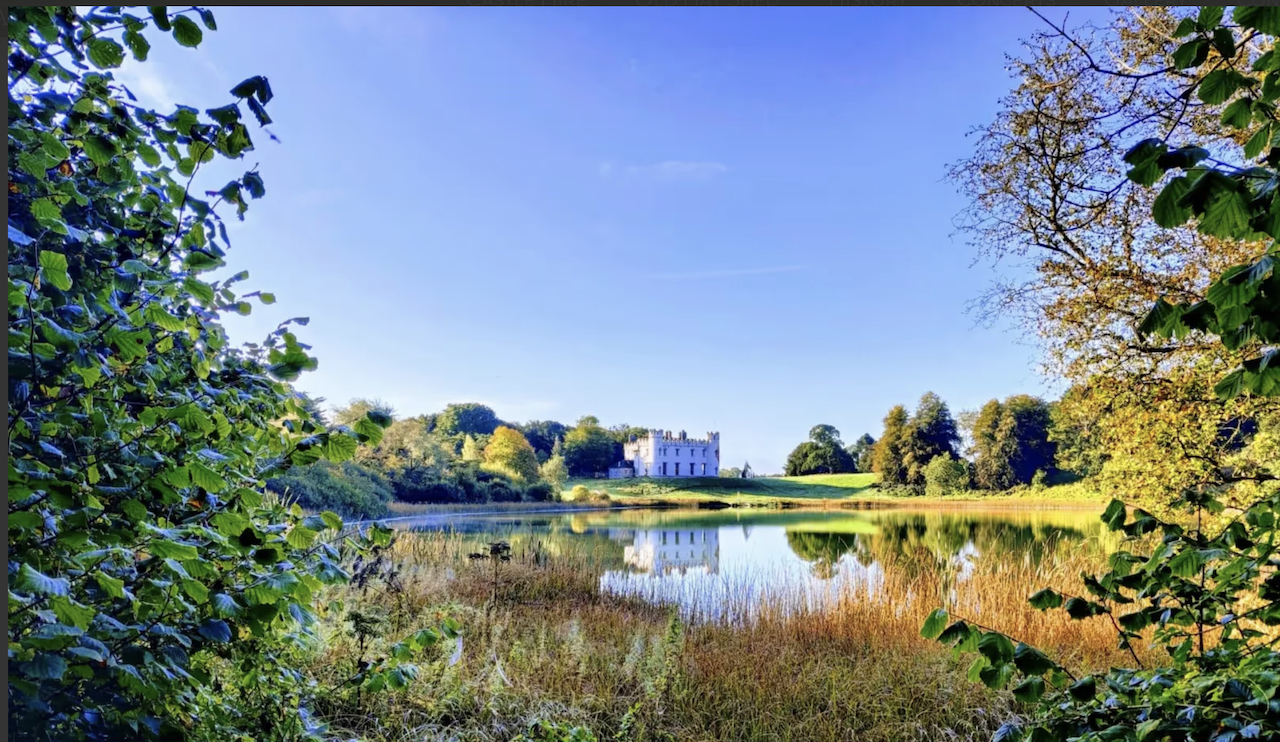
Loughton, May 2019. Photograph © Jennifer Winder-Baggot, www.irishhistorichouses.com

Then we sat at a table outside and Andrew brought us coffees – such a lovely touch!

Loughton, County Offaly. Photograph © Jennifer Winder-Baggot, www.irishhistorichouses.com
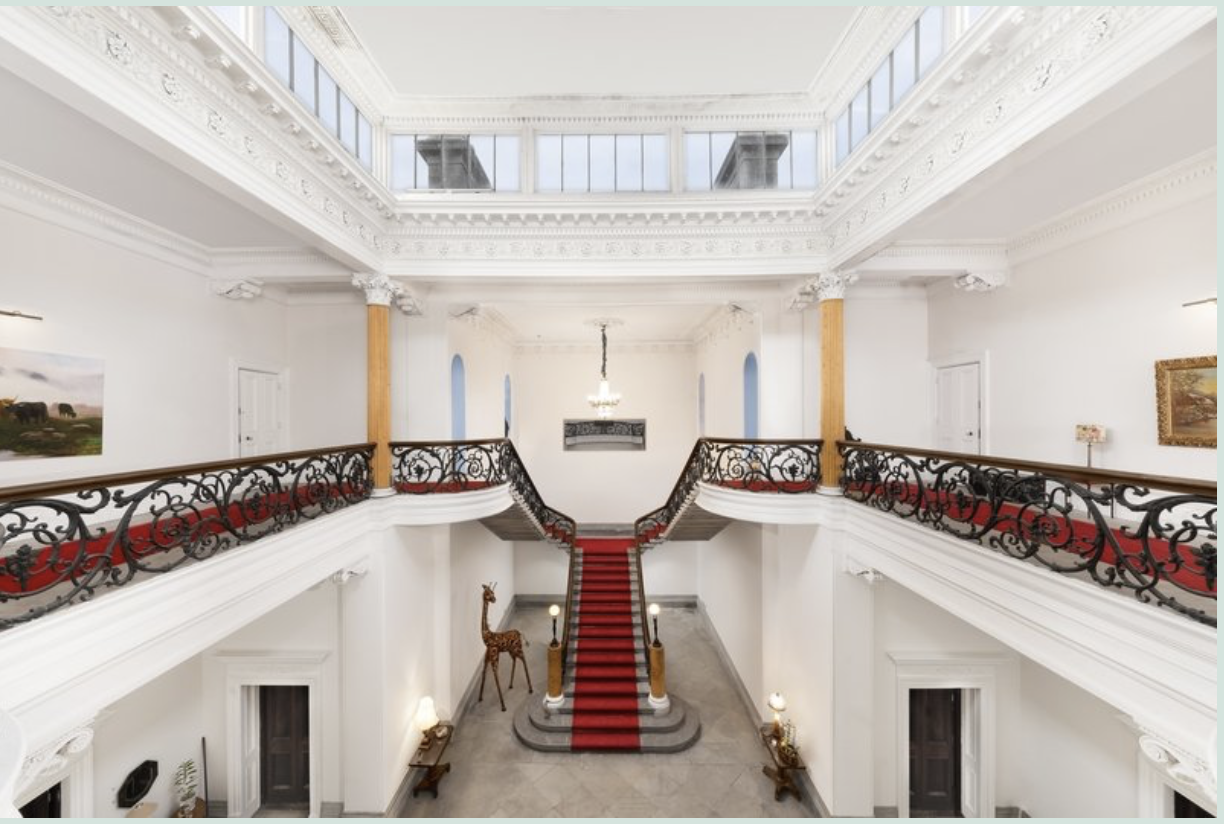
Loughton, May 2019. Photograph © Jennifer Winder-Baggot, www.irishhistorichouses.com

Michael joined us briefly and shared with us a photograph he had found in the national archives in England, of a group gathered at what is now the back of the house.

Andrew then urged us to wander in the gardens. We walked over to what looks like a Norman keep. It is Ballinlough Castle (not to be confused with Ballinlough Castle of County Westmeath), which dates back to the early seventeeth century, and belonged to the O’Carroll family. I climbed nearly all the way to the top (at my own peril!)!

Loughton, County Offaly. Photograph © Jennifer Winder-Baggot, www.irishhistorichouses.com
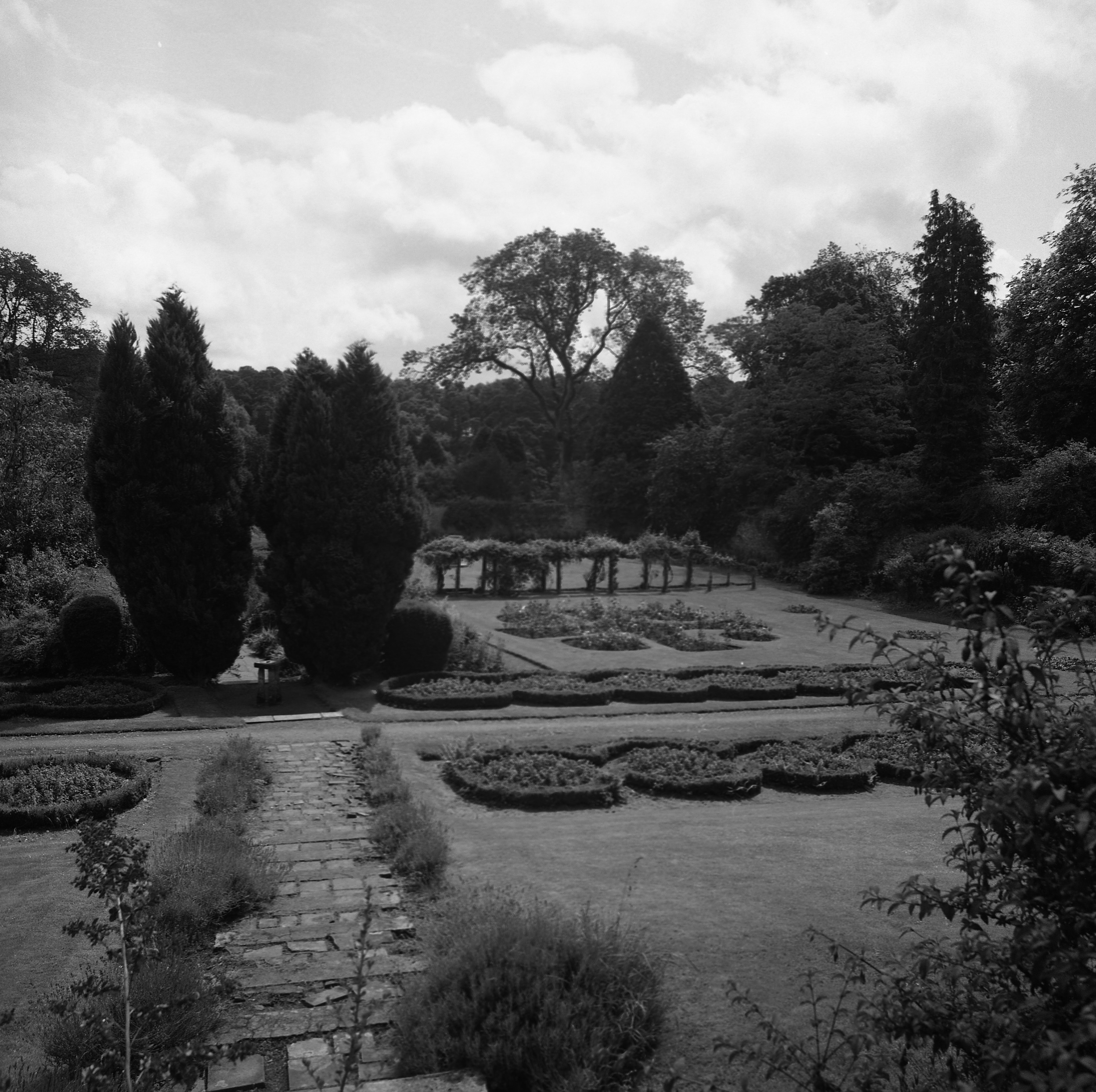
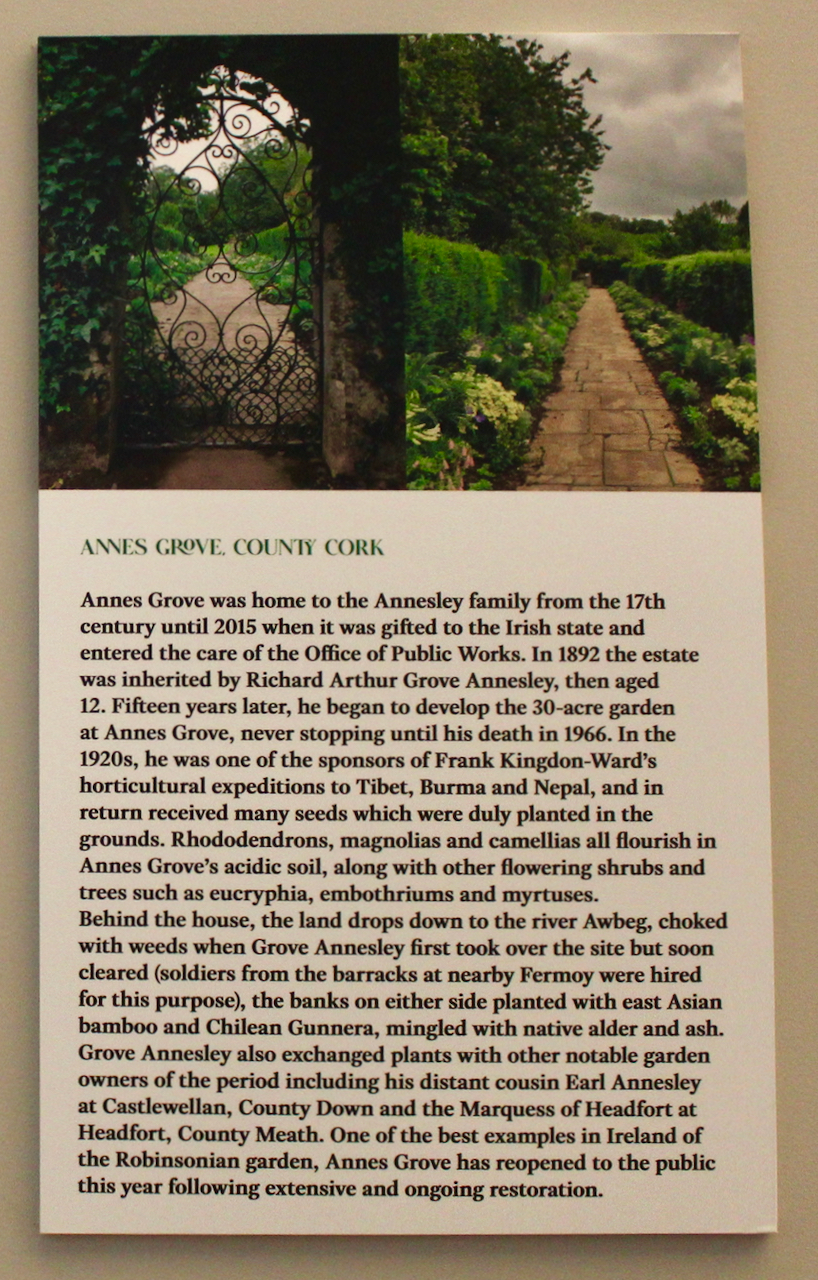
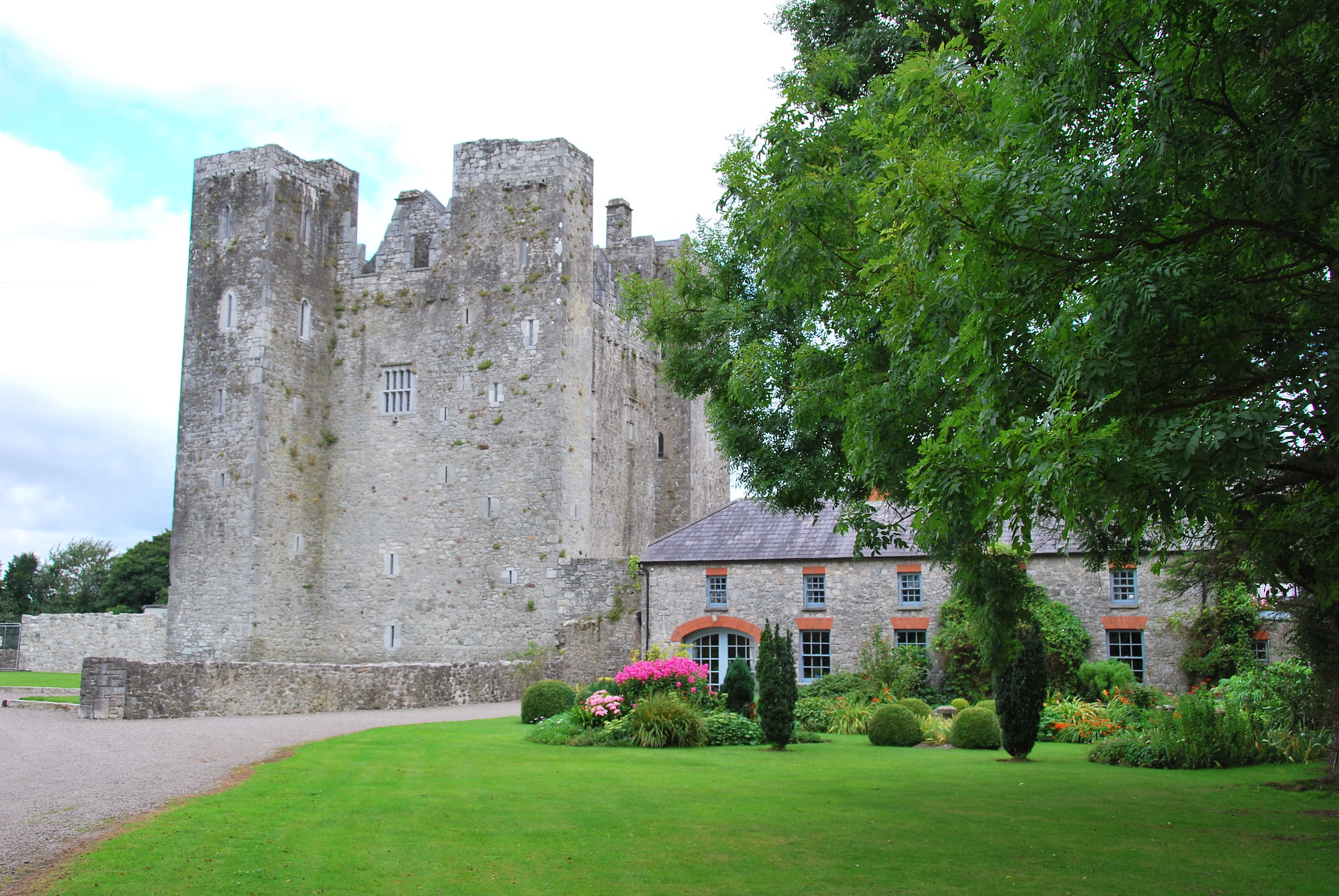
Loughton, May 2019. Photograph © Jennifer Winder-Baggot, www.irishhistorichouses.com
We then found our way to the walled garden. Michael told us he hopes to restore the glasshouse.

Loughton, County Offaly. Photograph © Jennifer Winder-Baggot, www.irishhistorichouses.com
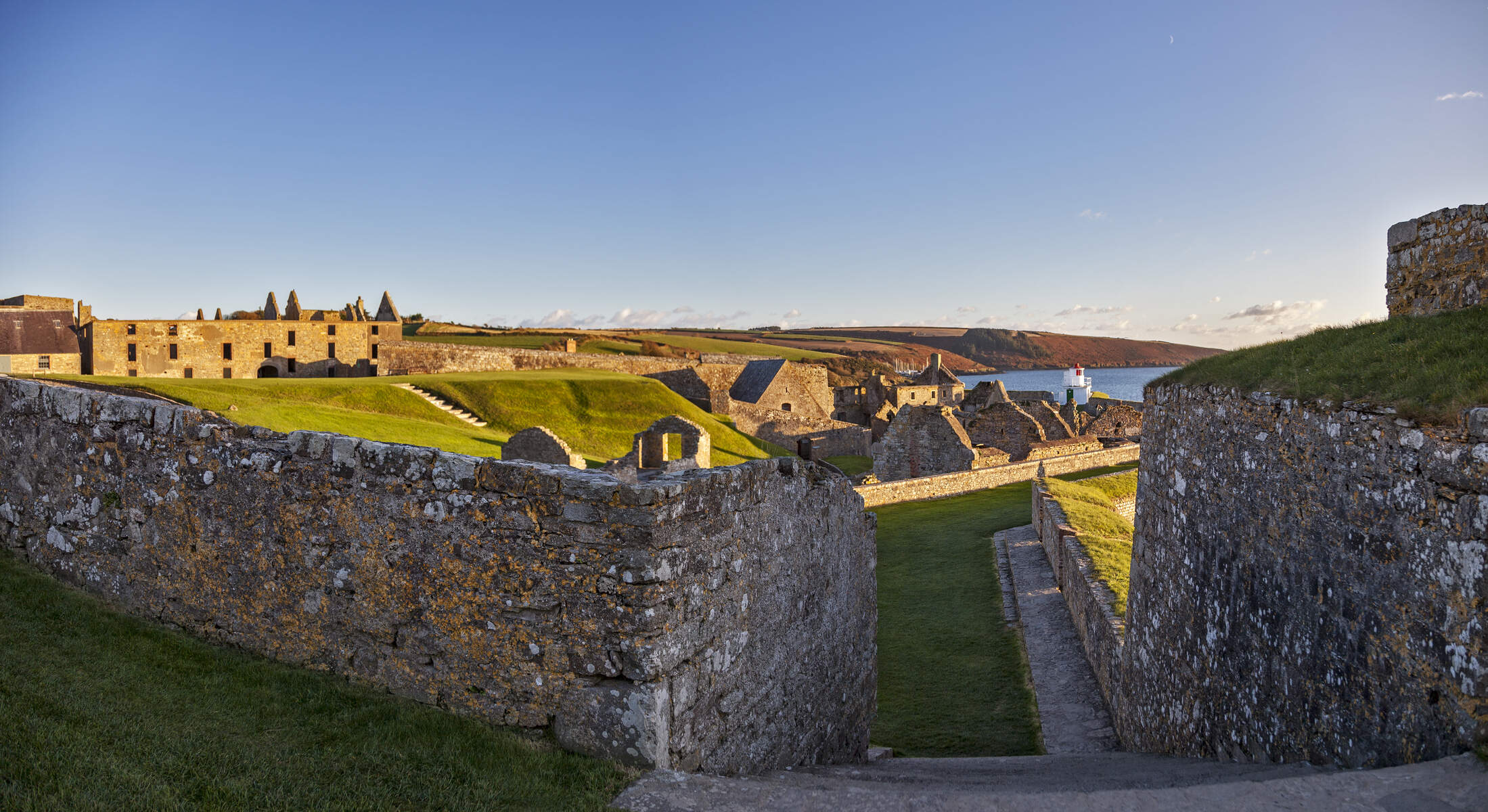
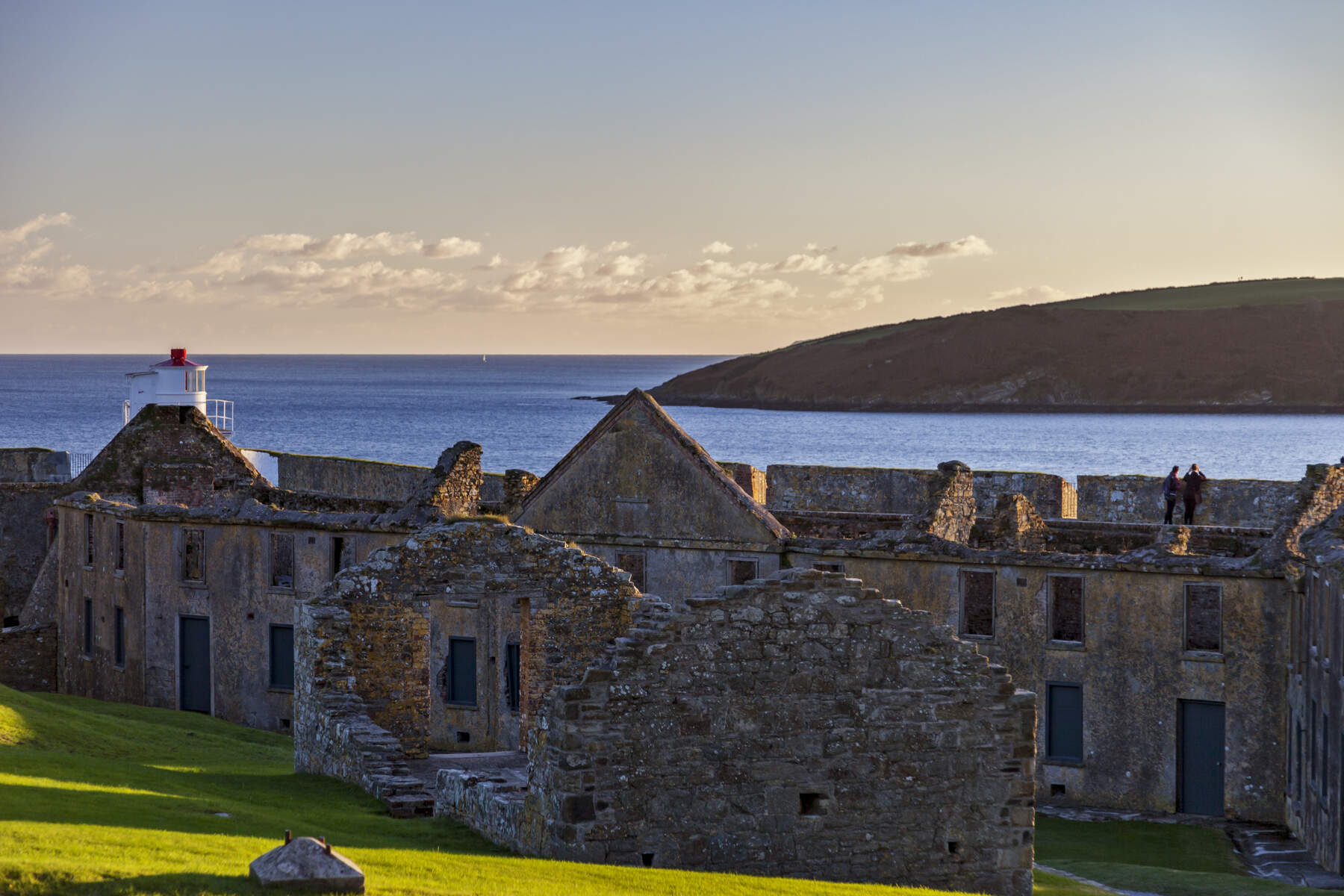
Loughton, May 2019. Photograph © Jennifer Winder-Baggot, www.irishhistorichouses.com
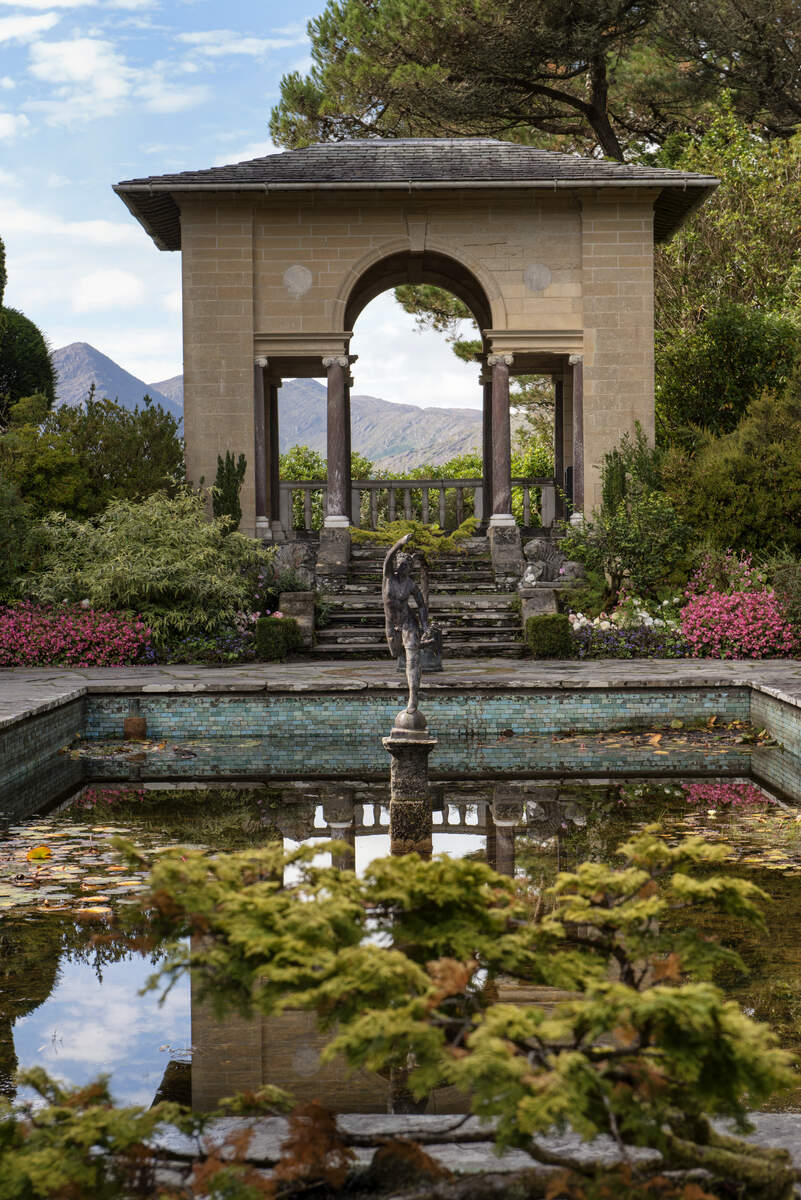
I’d love such a large growing space, with space for fruit trees and sheltering walls. I have had my own allotment for seven years!

Loughton, County Offaly. Photograph © Jennifer Winder-Baggot, www.irishhistorichouses.com
The vine, above, which was taken from a cutting from a vine belonging to Queen Victoria and given to her lady-in-waiting, Georgiana Liddell, when she married Baron Bloomfield. Photograph © Jennifer Winder-Baggot, www.irishhistorichouses.com
Loughton, May 2019. Photograph © Jennifer Winder-Baggot, www.irishhistorichouses.com
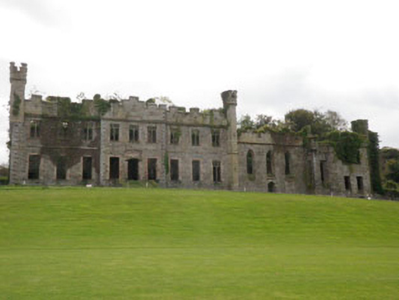
I’d love to stay in the cottage, which is also available to rent.

Loughton, County Offaly. Photograph © Jennifer Winder-Baggot, www.irishhistorichouses.com
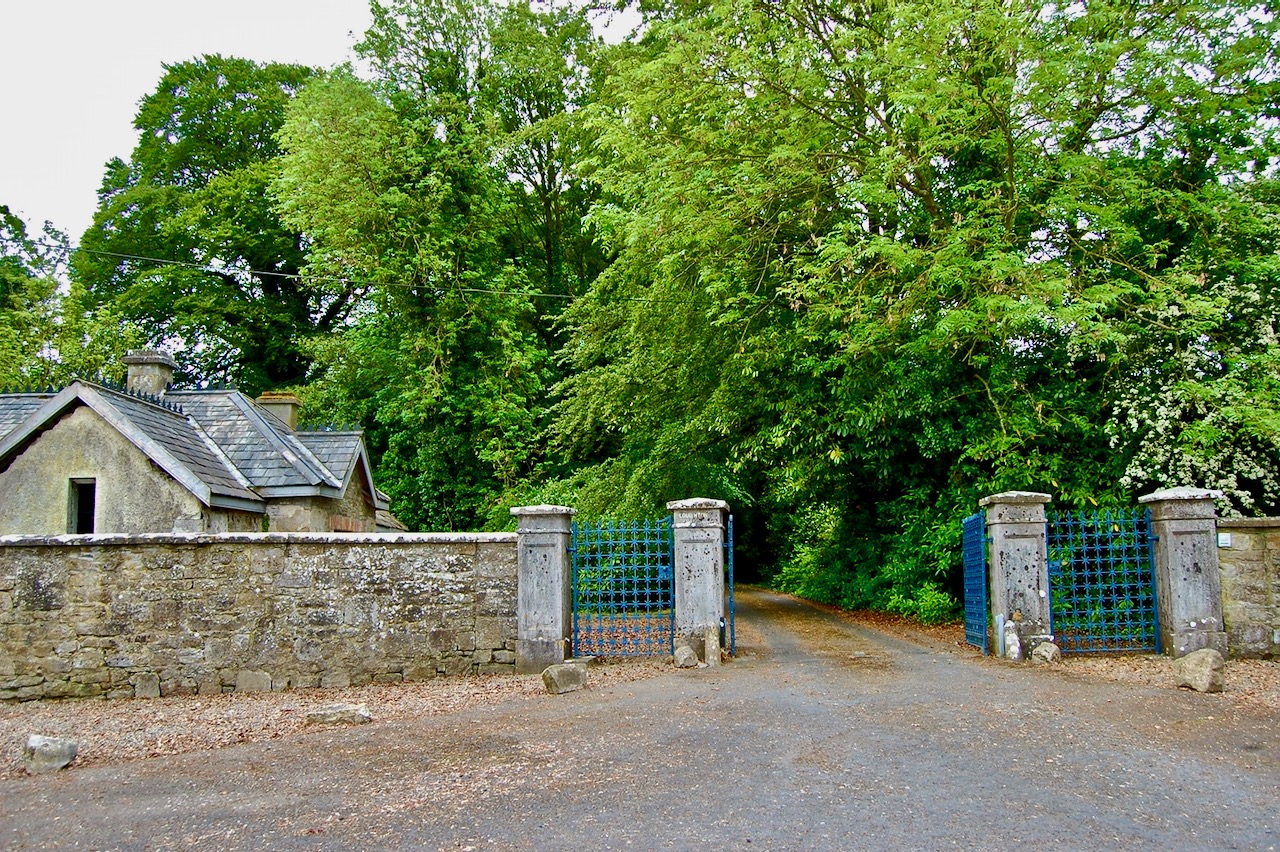
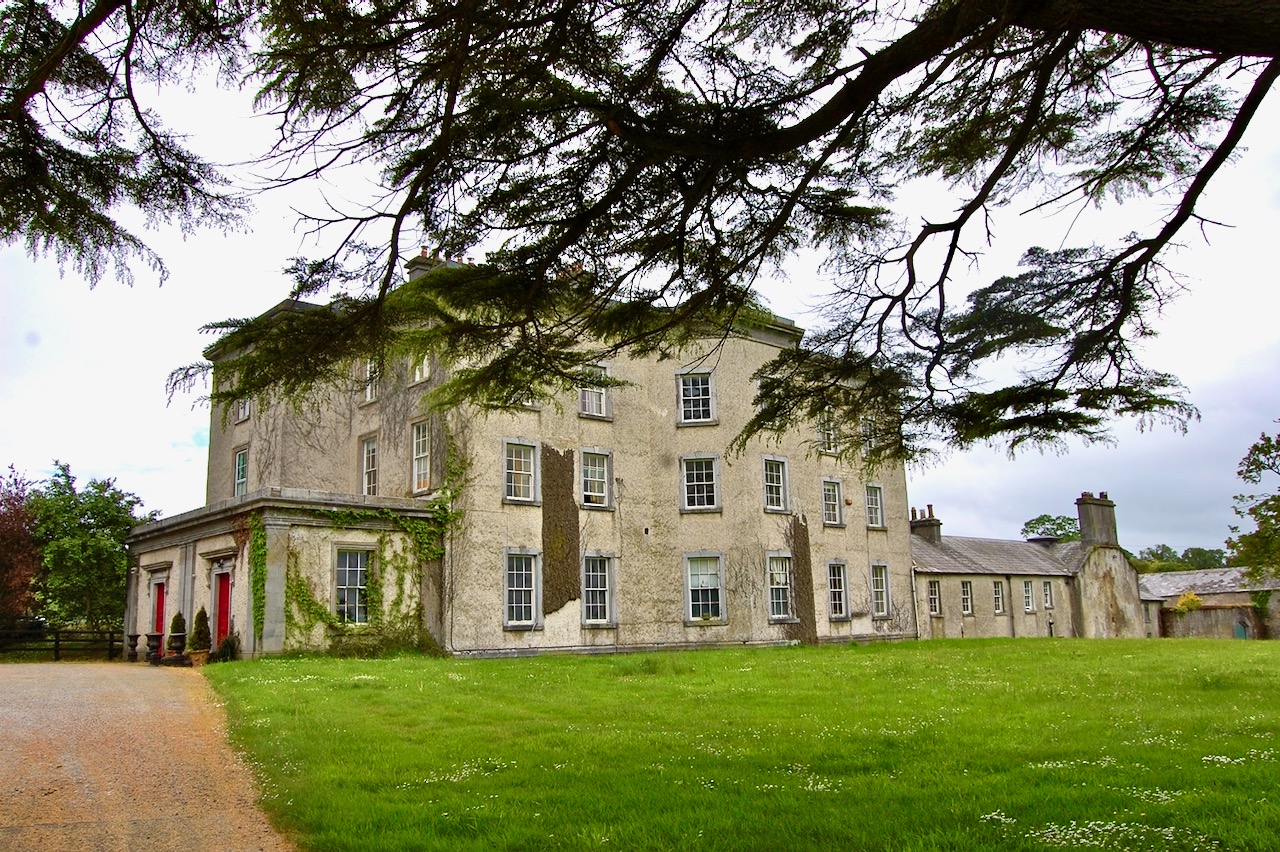
Loughton, May 2019. Photograph © Jennifer Winder-Baggot, www.irishhistorichouses.com
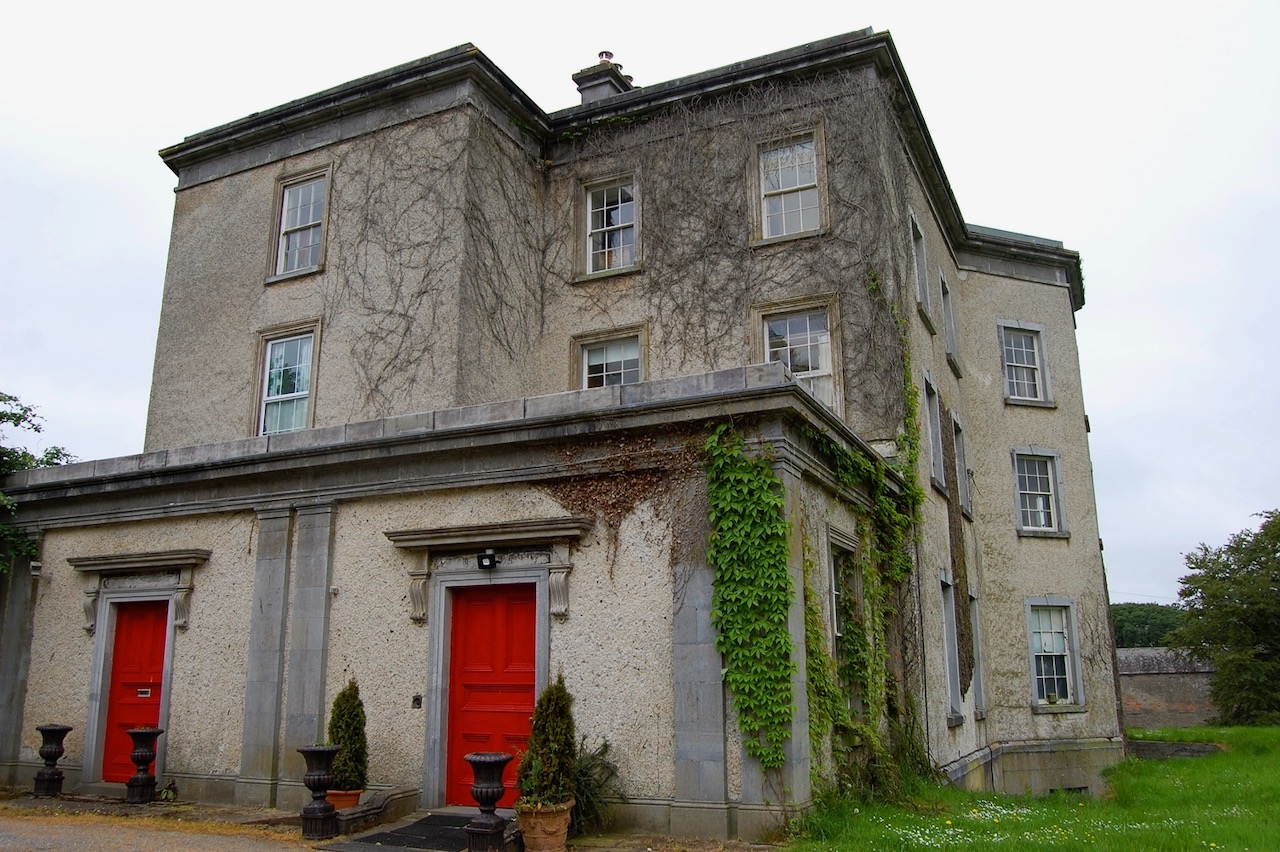
[1] Mark Bence-Jones. A Guide to Irish Country Houses. (originally published as Burke’s Guide to Country Houses volume 1 Ireland by Burke’s Peerage Ltd. 1978); Revised edition 1988 Constable and Company Ltd, London.

[2] http://www.patrickcomerford.com/search/label/castles?updated-max=2017-03-10T11:30:00Z&max-results=20&start=79&by-date=false

[3] https://en.wikipedia.org/wiki/14th_King%27s_Hussars

[4] http://www.loughcutra.com/

[5] https://www.dia.ie/architects/view/2640/PAIN-JAMES

[6] https://www.dromoland.ie/

[7] https://www.bco.ie

[8] p. 472. Tierney, Andrew. Buildings of Ireland: Central Leinster. The Counties of Kildare, Laois and Offaly. Yale University Press, New Haven and London, 2019.

[9] https://www.buildingsofireland.ie/buildings-search/building/14946003/laughton-house-ballinlough-cl-by-cullenwaine-ed-moneygall-co-offaly

[10] https://loughtonhouse.com/

[11] https://www.buildingsofireland.ie/buildings-search/building/22403202/ciamaltha-house-garraunbeg-tipperary-north

[12] http://landedestates.nuigalway.ie/LandedEstates/jsp/estate-show.jsp?id=2352

Redwood was inherited by Henry Trench’s son William Thomas Trench (1843-1911).

[13] https://www.irishtimes.com/life-and-style/homes-and-property/fine-art-antiques/owner-of-supermac-s-buys-loughton-house-archive-1.2818308

[14] http://www.thepeerage.com
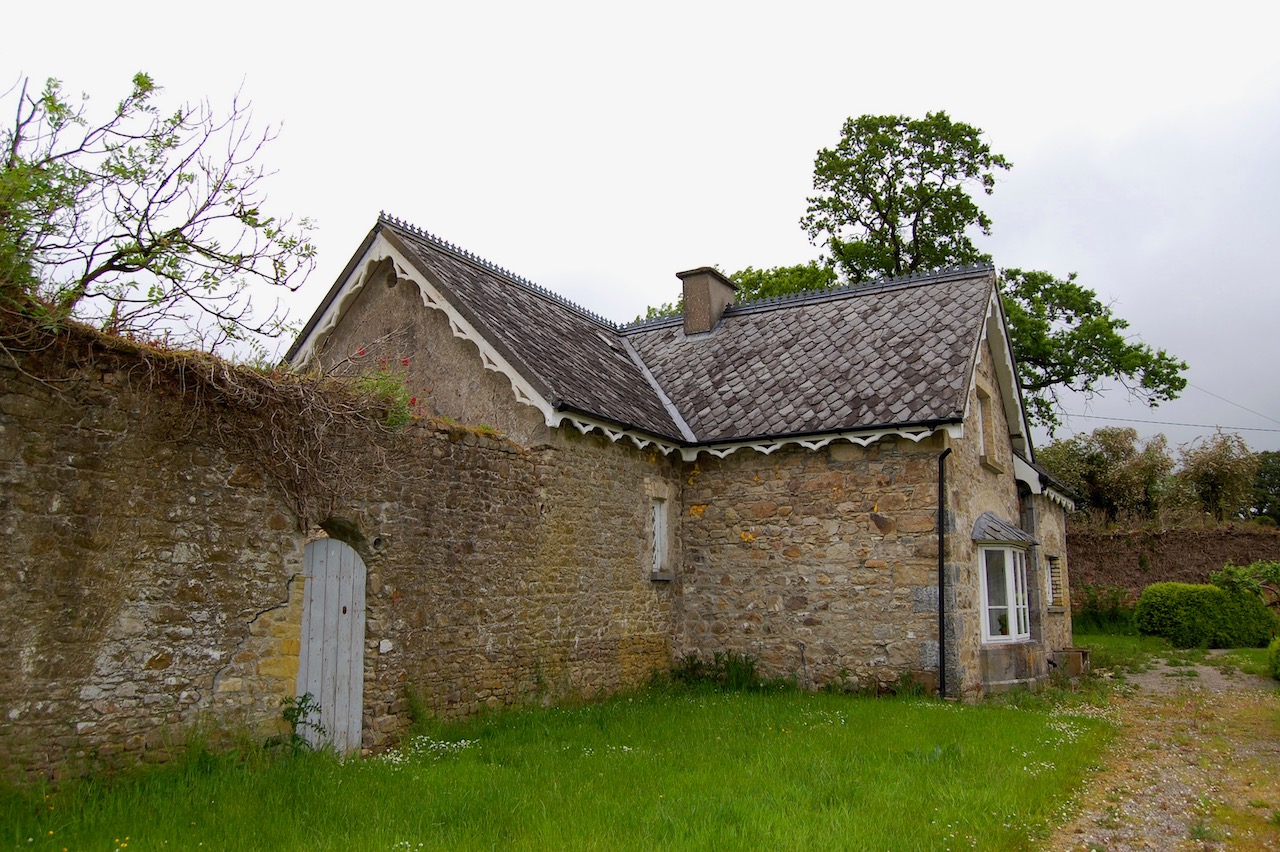
[15] https://landedfamilies.blogspot.com/search/label/Ireland?updated-max=2017-02-19T16:18:00Z&max-results=20&start=23&by-date=false Atkinson of Cangort and Ashley Park

Text © Jennifer Winder-Baggot, www.irishhistorichouses.com