Castlewellan, County Down

Castlewellan, County Down

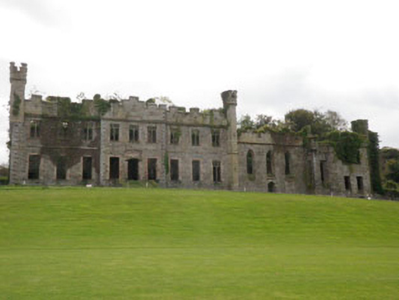
Castlewellan Castle, County Down, 2014 © George Munday/Tourism Ireland.

Bence-Jones, Mark. A Guide to Irish Country Houses (originally published as Burke’s Guide to Country Houses volume 1 Ireland by Burke’s Peerage Ltd. 1978); Revised edition 1988 Constable and Company Ltd, London.  

p.79. “(Annesley, E/PB; Annesley, sub Sowerby/LG1972) Although the Annesley family bought the Castlewellan estate 1741, they did not build themselves a mansion here until more than a century later; living either in the Grange, a pleasant group of C18 farm and stable buildings around three courtyards; or at Castlewellan Cottage, a single-storey Georgian house with projecting wings and a Venetian doorway. In 1856 the young 4th Earl Annesley began building a castle, to the design of William Burn, which was completed in 1858. It is a large and somewhat austere granite pile; of three storeys plus an attic of dormer-gables, and with a massive four storey tower at one side; at the opposite side there is a rather slender round tower and turret. Plain rectangular windows. The demesne is of great beauty, and contains a famous arboretum. Inherited by Mr Gerald Sowerby (nephew of 6th Earl), who assumed the name of Annesley; sold by him to the Northern Ireland Government ca. 1965. The demesne is now a forest park.” 

Castlewellan Castle, Co Down, photograph by Robert French, (between ca. 1865-1914), Lawrence Photograph Collection, National Library of Ireland.

http://lordbelmontinnorthernireland.blogspot.com/2014/02/1st-earl-annesley.html

https://theirishaesthete.com/2025/07/07/castlewellan-2/

A Somewhat Institutional Air

by theirishaesthete


By the late mediaeval period, the lands now occupied by the Castlewellan estate in County Down had come into the possession of the Magennis family. In 1542 Donal Óg Magennis travelled to London where he received a knighthood from Henry VIII at Greenwich Palace. At the time he was living in the area of Castlewellan, and although the precise location of his residence is unknown, it may have been on one of the islands of the lake lying directly below the present castle. In his account of a journey through this part of Ulster in 1602-3, Captain Josias Bodley wrote ‘We now came to the island of Magennis [Castlewellan] where, alighting from our horses, we met Master Morrison, with many others. They had tarried there, at least three hours, expecting our arrival, and in the meantime drank ale and usquebaugh with the Lady Sara, the daughter of Tyrone, and wife of the aforesaid Magennis, a truly beautiful woman. We also drank twice or thrice, and after we had duly kissed her, we each prepared for our journey.’ The beautiful Lady Sara mentioned here was a daughter of Hugh O’Neill, Earl of Tyrone and wife of Sir Arthur Magennis, later created first Viscount Iveagh. During the course of the 17th century and its many upheavals, somehow the Magennises managed to retain their lands at Castlewellan and indeed, descendants of the family remained there until 1741 when penury required that it be offered at public auction, where the freehold was bought by one William Annesley, a Dublin-based barrister and Member of Parliament whose family had already been leasing the property. 


Created first Baron Annesley and later Viscount Glerawly, William Annesley was the great-grandson of Francis Annesley, first Viscount Valentia, who had moved to Ireland in the first decade of the 17th century and was involved in the Ulster Plantations. Three years before buying the Castlewellan estate, William had married Lady Anne Beresford, a daughter of the Earl of Tyrone. Mrs Delany, who knew the couple well (her husband, Dr Patrick Delany, being Dean of Down), wrote ‘’they are very rich and know it, and spend their lives in increasing not enjoying their fortune; but he is a very honest man in all his dealings, still would be more agreeable as well as more useful if he thought less of his possessions. His lady suits him exactly; she does not want sense, and is comical enough in a satirical way.’ The couple made Castlewellan their principal country residence, building a house south-west of the present building, as well as the Grange, an extensive series of outbuildings, most of which still survive: while walking around the estate in 1758, Mrs Delany declared them ‘indeed very fine. Three large courts: round the first, which is arched round a kind of’ piazza, are houses for all his carriages and over them his granaries; the next court are stables and cow houses, and over them haylofts; the third court two such barns as I ncver saw, floored with oak and finished in the most convenient manner for all the purposes of winnowing etc and in that court are the stands for hay and corn.’ What form the main house took is unknown, since it was replaced by Annesley’s heir Francis (created first Earl Annesley in 1789), the new residence being called Castlewellan Cottage, a long single-storey (or single-storey over basement) building with shallow end bows. This remained the family’s home until 1851 when the estate was inherited by William Richard Annesley, the fourth earl, who commissioned a new mansion from the Scottish architect William Burn. The latter’s patron did not have long to enjoy his new residence, however, since he died in 1874 at the age of 44 still unmarried and so both the title and Castlewellan estate accordingly passed to his younger brother, Lt-Col Hugh Annesley, who had hitherto had a career in the army but now settled to live in County Down where he was a pioneering photographer and, like his sibling before him, an ardent gardener (see In Circles « The Irish Aesthete). It was during the second half of the 19th century that Castlewellan’s exceptional arboretum became established, its collection  of some  3,000 species of rare trees, plants and shrubs being among the finest in Ireland. Unfortunately the sixth earl died in 1914 at the age of 30 and responsibility for Castlewellan passed to his eldest sister Lady Mabel Annesley, who in 1927 transferred it to her son Gerald Francis Sowerby (who took the Annesley surname) at the time of his first marriage. He retained the property until 1967 when it was acquired by the Forest Service of the Department of Agriculture. Two years later the grounds were opened as a forest park, but the house itself remained empty and suffered from a terrorist attack in 1973. It was subsequently leased to a Christian organisation which since then has used the building as a retreat and conference centre


By the time he was commissioned to design Castlewellan, William Burn had already worked for a number of Irish clients, being responsible for the likes of Muckross House, County Kerry (see Institutionalised « The Irish Aesthete) and Bangor Castle, County Down (see Uncertain Future II « The Irish Aesthete). Built at a cost of just over £18,000 and standing on a terrace above the lake with dense woodland to the rear, granite-faced Castlewellan has, as noted by Philip Smith, a somewhat institutional air. The potentially monotonous south-facing five-bay garden front, of three storeys with dormer attic windows, is relieved at either end by a four-stage square tower to the east and a five-stage circular tower to the west, both these carrying bartizans. The west front side shows more variety, with a four-storey gabled bay at the northern end and, attached to this, a slender round turret with pitched roof. There was formerly a conservatory on this side, which may explain the rather odd first-floor bow window found here. The main entrance is on the east side, another stocky square tower with bartizans and battlements. Directly above the doorcase of dressed stone is a tablet carrying the Annesley armorials. Immediately inside the door is a steep flight of stairs, not unlike that found in the Brownslow House, Lurgan (see This Beautiful Mansion « The Irish Aesthete). Unlike the latter property, however, in this instance and stairs lead to a galleried central hall, this space lit by a series of windows on the north side. Off the hall and facing south are the principal reception rooms – drawing room, library and dining room – all with the same Jacobethan ceilings. The library still has its elaborately carved bookcases but otherwise almost all the original decoration, and furnishings, are no longer in the building. The main staircase, located off the west end of the hall, was badly damaged when Castlewellan was bombed in 1973 with the loss of its window’s armorial glass. Upstairs, most of the bedrooms are now used as dormitories for the religious organisation’s retreats. While the present decor may not be to everyone’s taste, it is important to appreciate that the building is being well maintained and kept in good repair, ensuring, unlike so many other such properties in Ireland, that Castlewellan survives into the future. 

Office of Public Works properties County Cork, Munster

Munster’s counties are Clare, Cork, Kerry, Limerick, Tipperary and Waterford.

I have noticed that an inordinate amount of OPW sites are closed ever since Covid restrictions, if not even before that (as in Emo, which seems to be perpetually closed).

Cork:

1. Annes Grove, County Cork

2. Barryscourt Castle, County Cork – currently closed (June 2022)

3. Charles Fort, County Cork

4. Desmond Castle, Kinsale, County Cork

5. Doneraile Court, County Cork

6. Fota House Arboretum and Gardens, County Cork (Fota House itself is maintained by the Heritage Trust)

7. Ilnacullin, Garanish Island, County Cork

donation

Help me to pay the entrance fee to one of the houses on this website. This site is created purely out of love for the subject and I receive no payment so any donation is appreciated!

€15.00

Cork:

1. Annes Grove, Castletownroche, County Cork:

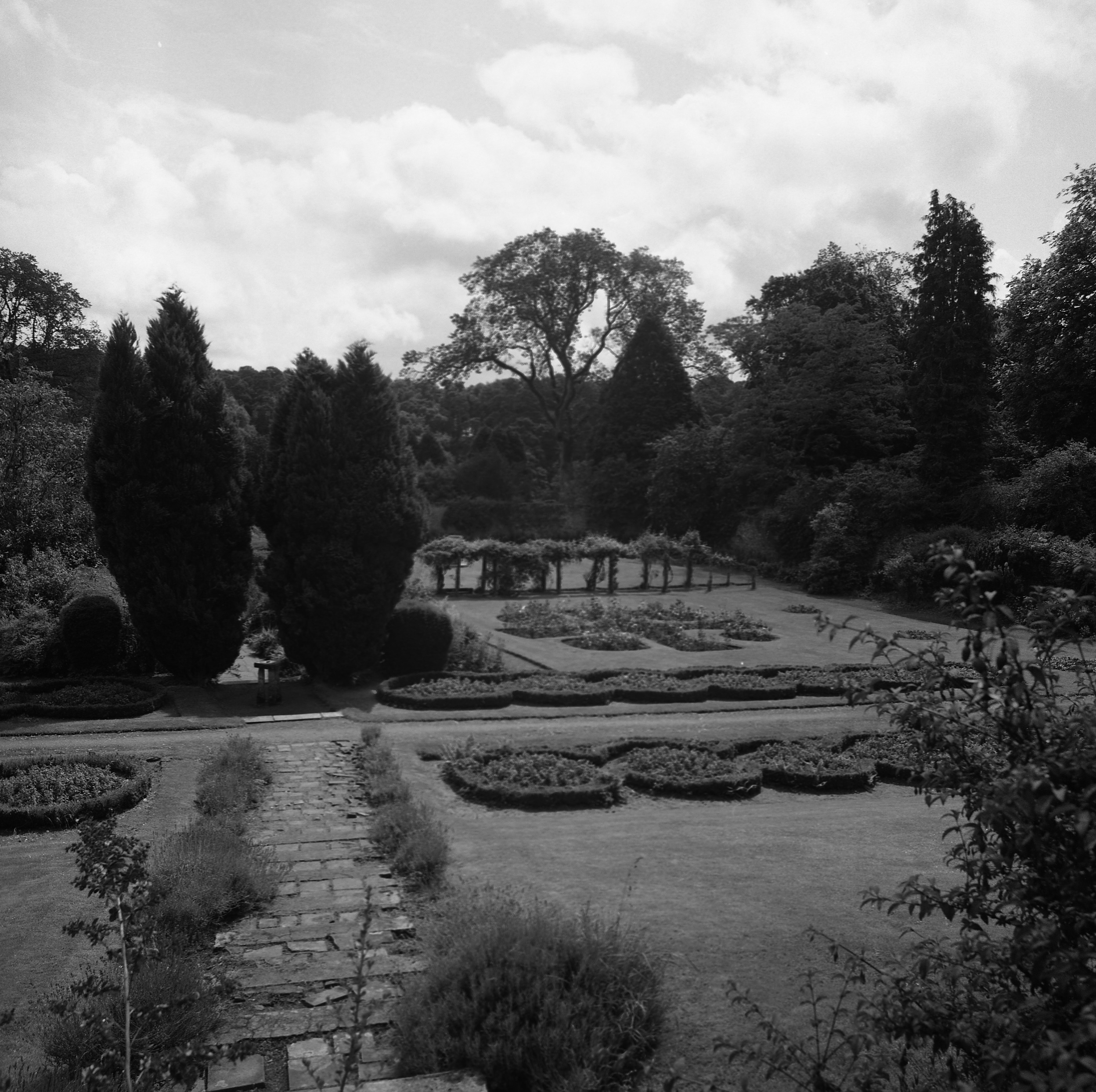
Annes Grove, County Cork, 1981 from Dublin City Library and Archives. [1]

Tel: 022 26145, annesgrove@eircom.net

https://heritageireland.ie/visit/places-to-visit/annes-grove-gardens/

This is due to be open soon by the OPW. It does not have a website yet. In December 2015 Annes Grove House and Garden were donated to the state by the Annesley family.

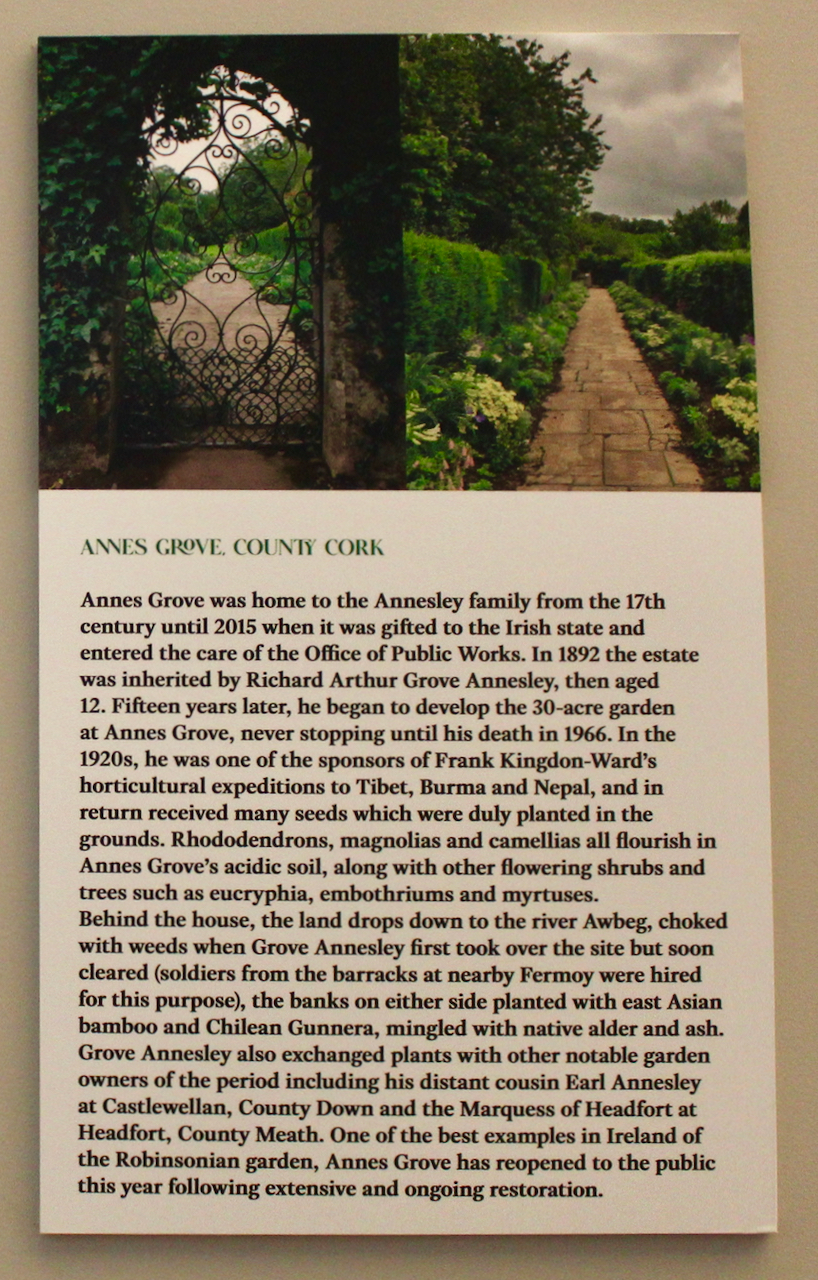
Nestled into an eighteenth century ornamental glen, adjacent to the River Awbeg, the demesne of Annes Grove in north County Cork is the setting for the most exquisite Robinsonian-style gardens in Ireland….

The Gardens at Annes Grove were largely the creation of Richard Grove Annesley in the first half of the twentieth century.” [2]

Annes Grove, County Cork, 1981 from Dublin City Library and Archives. [see 1]

The estate was previously known as Ballyhimmock, and it was acquired by William Grove around 1626.

In 1792 it was inherited by Arthur Grove Annesley (1774-1849) from an aunt by marriage, heiress to the Grove family, after which it was renamed by merging the two family names. [3] Arthur Grove Annesley’s uncle Francis Charles Annesley, 1st Earl Annesley of Castlewellan, County Down, married Mary Grove who inherited the estate from her father.

At the centre of the garden is a restored Gothic style summerhouse. The main house is of Queen Anne design, from the 18th century. Pergolas, a lily pond, Victorian stone fernery, a woodland walk and river garden, a rockery and wild water garden create an atmospheric setting.

From “In Harmony with Nature, The Irish Country House Garden 1600-1900” in the Irish Georgian Society, July 2022, curated by Robert O’Byrne.

2. Barryscourt Castle, County Cork:

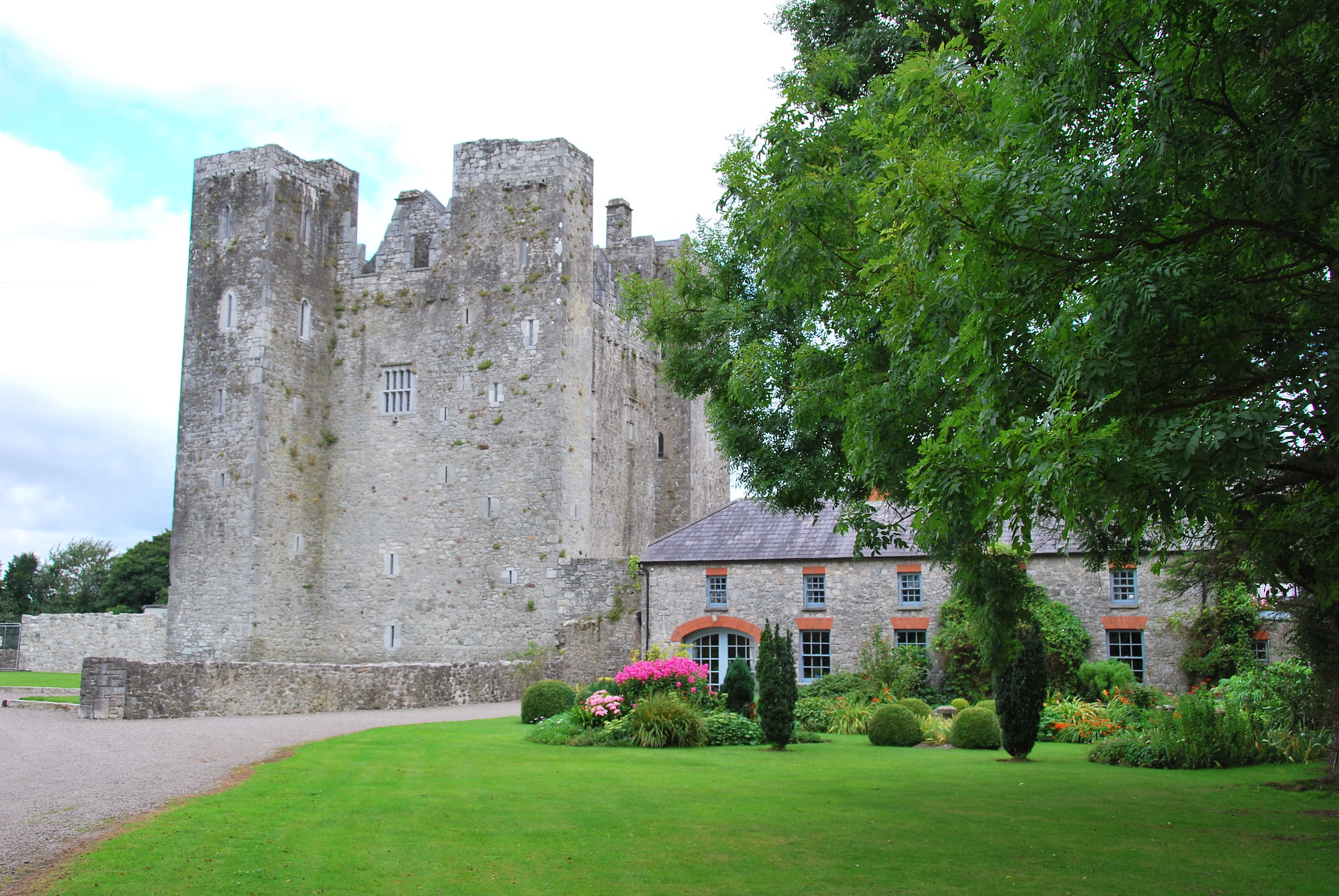
Barryscourt Castle by Julia Delio, flickr constant commons, August 2009.

From the OPW website https://heritageireland.ie/visit/places-to-visit/barryscourt-castle/:

Barryscourt Castle was the seat of the great Anglo-Norman Barry family and is one of the finest examples of a restored Irish Tower House. Dating from between 1392 and 1420, the Castle has an outer bawn wall and largely intact corner towers. The ground floor of the Tower House contains a dungeon into which prisoners were dropped via the ‘drop-hole’ located on the second floor.

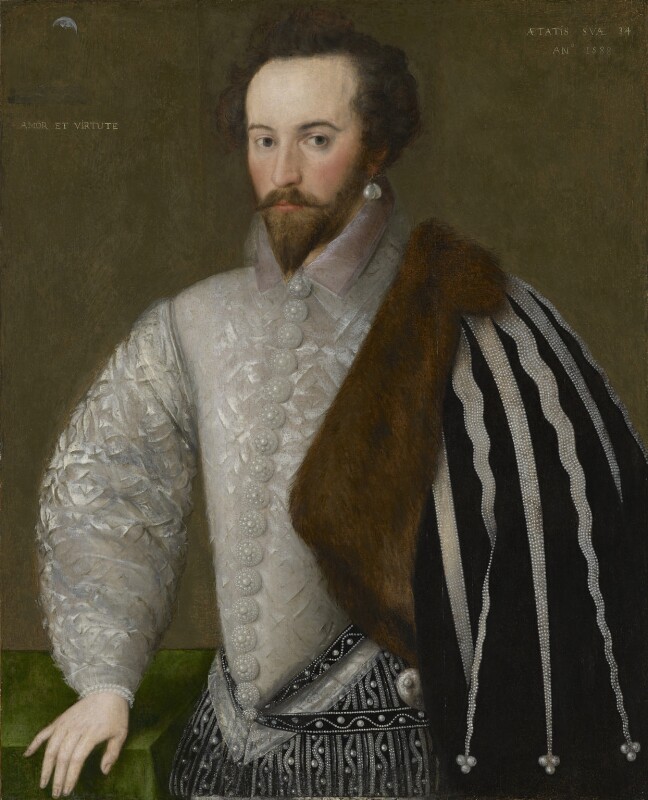
The Barrys supported the Fitzgeralds of Desmond during the Irish rebellions of the late sixteenth century. To prevent it being captured by Sir Walter Raleigh and his army, the Barrys [David Barry, 5th Viscount Barry (1550-1617)] partially destroyed the Castle.

Walter Raleigh (1552-1618) by Unknown English artist 1588, National Portrait Gallery of London ref. 7.

During the Irish Confederate War of the seventeenth century Barryscourt Castle was once again successfully attacked.  Cannon balls lodged in the wall above the Castle entrance bear witness to this conflict. The last head of the Barry family was Lord David Barry.

Barryscourt Castle has been extensively restored. The Main Hall and Great Hall have been completed and fittings and furnishings reinstated. Within the Castle grounds, the herb and knot garden and the charming orchard have been restored to their original sixteenth century design.

After David Barry’s death in 1617 the family made Castlelyons their principal seat (now a ruin). The castle was restored by the OPW and the Barryscourt Trust between 1987-1993, with reproduction furniture made by Victor Chinnery. [4]

An article in the Irish Examiner by Padraig Hoare published 22nd May 2021 tells us that the site is closed and will be for some time:

A reopening date must be established for one of East Cork’s most historic landmarks after languishing in the midst of safety works for five years.

That is according to Cork East TD Séan Sherlock, who said Barryscourt Castle in Carrigtwohill has to be a priority for the Government body in charge of the facility, the Office of Public Works (OPW).

History enthusiasts and families alike were disappointed in the summer of 2020, when it emerged that Barryscourt Castle would remain closed for another 18 months.

The latest update from the OPW given in response to a parliamentary question from Mr Sherlock suggests it may be even longer than the date anticipated a year ago.

The Department of Public Expenditure said restrictions associated with the Covid-19 pandemic “has disrupted the good progress” of works being done to make the facility safe.

“It is not possible at this time to give a precise date for reopening to the public,” the department said.

3. Charles Fort, Summer Cove, Kinsale, County Cork:

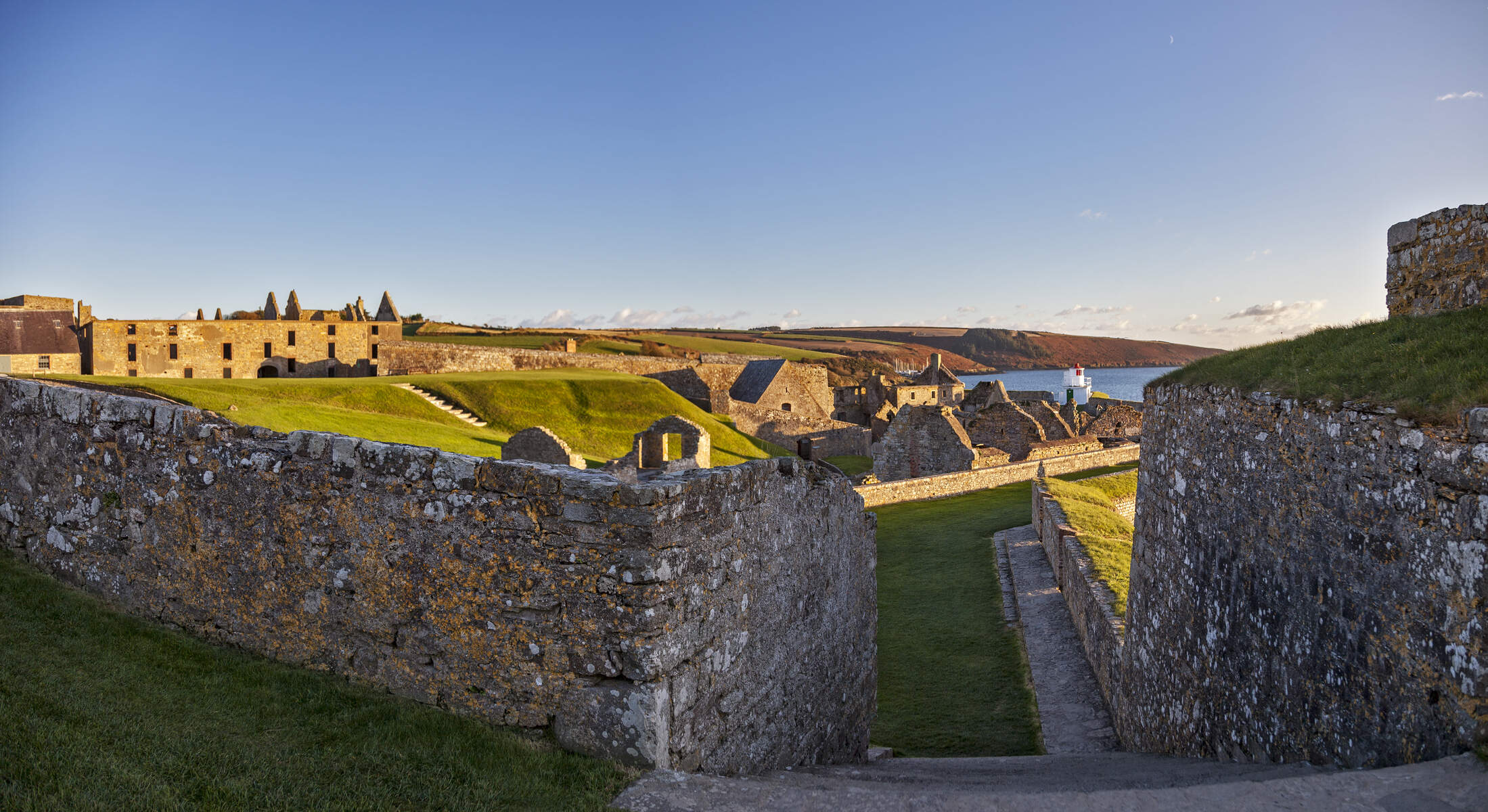
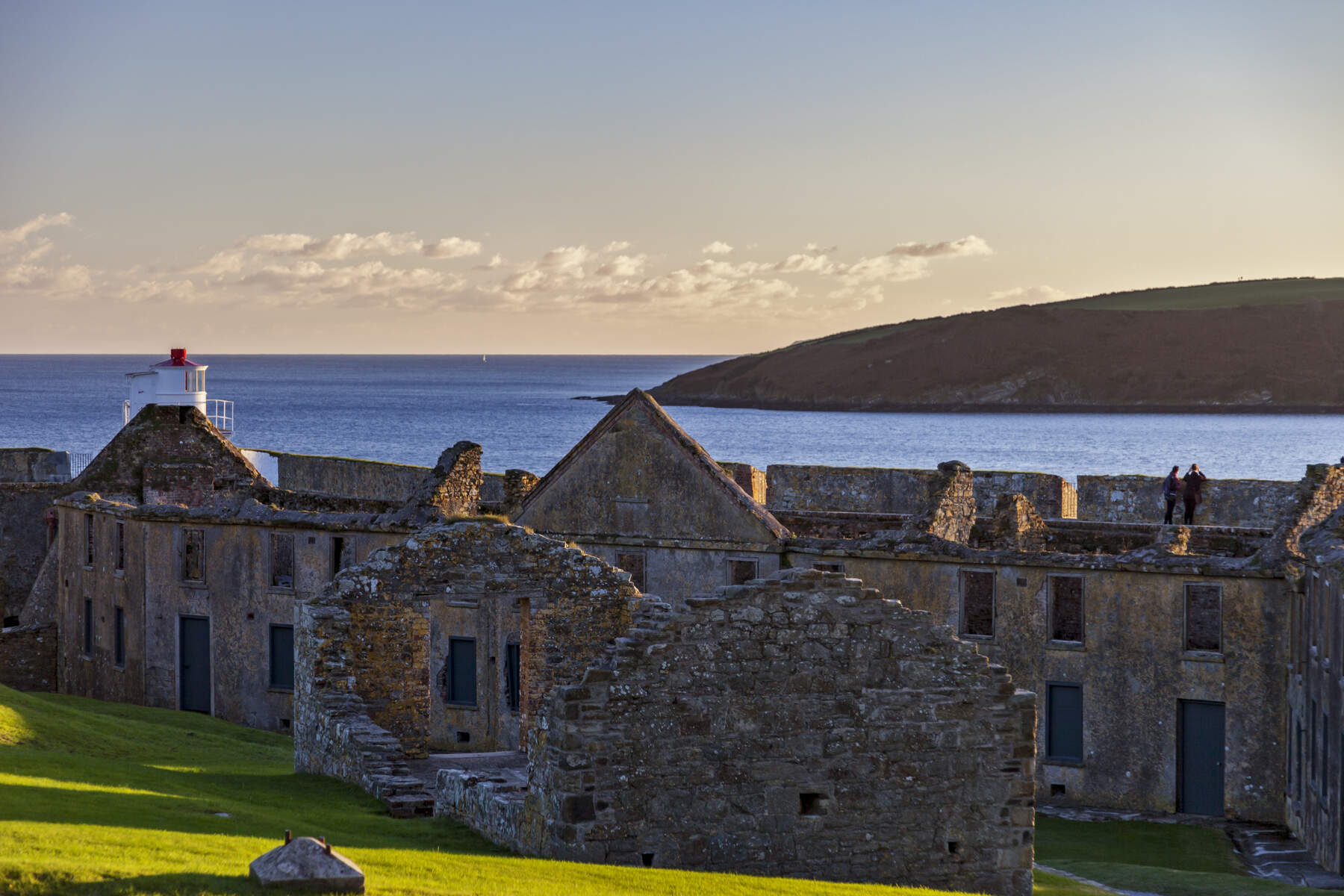
The Soldiers Quarters, the Hospital ward, the Lighthouse (by Robert Reading) and Magazine of the 17th Century Charles Fort, Kinsale, Co. Cork, Munster, Ireland. Photograph from Ireland’s Content Pool, photograph by Cahir Davitt, 2016, for Failte Ireland. [5]

General Enquiries: 021 477 2263, charlesfort@opw.ie

https://heritageireland.ie/visit/places-to-visit/charles-fort-national-monument/

From the OPW website:

As one of the country’s largest military installations, Charles Fort has been part of some of the most momentous events of Irish history. During the Williamite Wars, for example, it withstood a 13-day siege before it fell. Later, in the Civil War of the early 1920s, anti-Treaty forces on the retreat burned it out.

Charles Fort is a massive star-shaped structure of the late seventeenth century, well preserved despite its history. William Robinson, architect of the Royal Hospital in Kilmainham, Dublin, is credited with designing it. Its dimensions are awe-inspiring – some of the outer defences are 16 metres high.

The view from the ramparts looking out over Kinsale Harbour is spectacular.

The Soldiers Quarters, and Magazine of the 17th Century Charles Fort, Kinsale, Co. Cork, Munster, Ireland. Photograph from Ireland’s Content Pool, photograph by Cahir Davitt, 2016, for Failte Ireland. [see 5]
The seaward Devils Bastion and lighthouse of the 17th Century Charles Fort, with Kinsale boatyard in the background, Kinsale, Co. Cork, Munster, Ireland; Photograph from Ireland’s Content Pool, photograph by Cahir Davitt, 2016, for Failte Ireland. [see 5]

4. Desmond Castle (also known as the French Prison), Kinsale, County Cork:

Desmond Castle Kinsale 1941, photograph from Dublin City Library archives. [see 1]

General Enquiries: 021 477 4855, desmondcastle@opw.ie

From the OPW website https://heritageireland.ie/visit/places-to-visit/desmond-castle-kinsale/:

Desmond Castle in Kinsale dates from around 1500. It is a classic urban tower house, consisting of a three-storey keep with storehouses to the rear.

Maurice Bacach Fitzgerald, the earl of Desmond, originally built the castle as the customs house for the town. [I think this must be the 9th Earl of Desmond – JWB] It served as a prison in the seventeenth and eighteenth centuries. Because it usually held French inmates, as well as Spaniards, Portuguese, Dutch and Americans, it became known locally as the French Prison and carries that name to this day. The building was co-opted as an ordnance store during the momentous Battle of Kinsale (1601) and served as a workhouse during the Great Famine.

Desmond Castle certainly had a colourful history and this continued into the twentieth century. In the early 1900s it was used as a venue to host local Gaelic League meetings. Finally, in the 1930s, a thriving undertaking business operated from within the National Monument.

The National Inventory of Architectural Heritage tells us:

Freestanding three-bay three-storey tower house, commenced c.1500, abutting earthen terrace to rear. Attached cell blocks and exercise yards to rear (north-west) and platform to side (north-east). Historically used as magazine (1600-1601), as prison for foreign prisoners (1601-1790) and as borough jail (1791-1846). Restored in 1938 currently in use as museum.

5. Doneraile Court, County Cork:

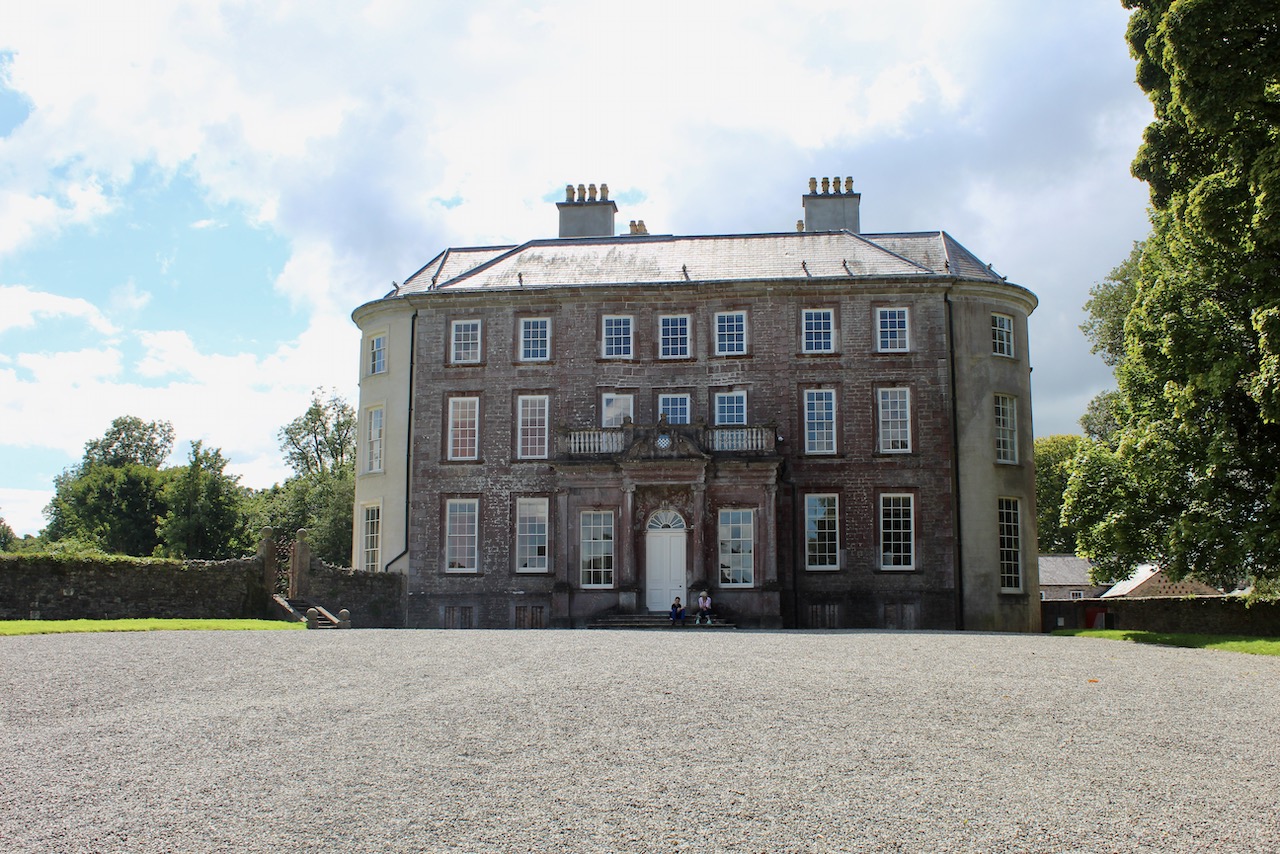
Doneraile Court, County Cork, August 2020. Photograph © Jennifer Winder-Baggot, www.irishhistorichouses.com

See my entry https://irishhistorichouses.com/2024/04/19/doneraile-court-county-cork-an-office-of-public-works-property/

https://doneraileestate.ie/

Doneraile Court, County Cork, August 2020. Photograph © Jennifer Winder-Baggot, www.irishhistorichouses.com

6. Fota Arboretum and Gardens, Carrigtwohill, County Cork

Photograph © Jennifer Winder-Baggot, www.irishhistorichouses.com

General enquiries: (021) 481 5543 https://fotahouse.com/

fota.arboretum@opw.ie

See my entry https://irishhistorichouses.com/2022/05/17/places-to-visit-and-stay-munster-county-cork/

From the OPW website: https://heritageireland.ie/visit/places-to-visit/fota-arboretum-and-gardens/

Fota House was designed by 19th century architects Richard and William Morrison. From the beautifully proportioned rooms with exquisite plasterwork, to the preserved service wing and kitchens, Fota House offers visitors an intimate look at how life was lived in the past, for the cooks, butlers, footmen and maids who supported the lavish lifestyle of the gentry. Our painting collection is considered to be one of the finest collections of landscape painting outside the National Gallery of Ireland and includes works by William Ashford PRHA, Robert Carver, Jonathan Fisher and Thomas Roberts.” [9]

Front porch of Fota House. Fluted baseless Green Doric columns support a weighty entablature in which wreaths alternate with the Barry crest in the metopes. Photograph © Jennifer Winder-Baggot, www.irishhistorichouses.com

The OPW website tells us:

The arboretum and gardens on Fota Island, just 16 kilometres from Cork city centre, are an essential destination for any one of a horticultural bent.

The arboretum extends over 11 hectares and contains one of the finest collections of rare, tender trees and shrubs grown outdoors in Europe. The unique conditions at Fota – its warm soil and sheltered location – enable many excellent examples of exotics from the southern hemisphere to flourish.

The gardens include such stunning features as the ornamental pond, formal pleasure gardens, orangery and sun temple. James Hugh Smith-Barry laid them out in the first half of the nineteenth century. Fota House, the Smith-Barrys’ ancestral home, still stands. The house, arboretum and gardens share the island with a hotel and golf resort and a wildlife park. [10]

7. Ilnacullin, Garanish Island, Glengarriff, Bantry, County Cork:

https://garinishisland.ie/plan-a-visit/

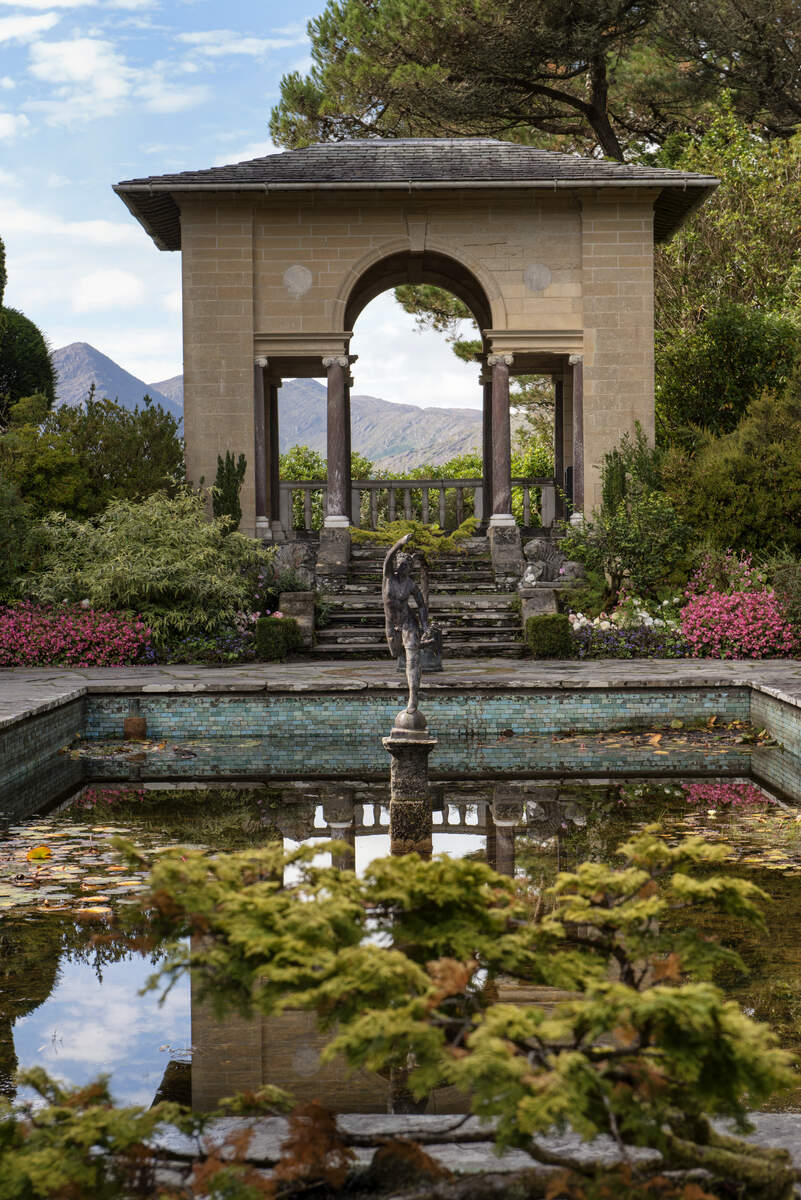
Italian garden, Garnish Island, Glengarriff, Beara, Co. Cork, Photograph by Chris Hill 2014, Ireland’s Content Pool. [see 5]

general enquiries: (027) 63040

garanishisland@opw.ie

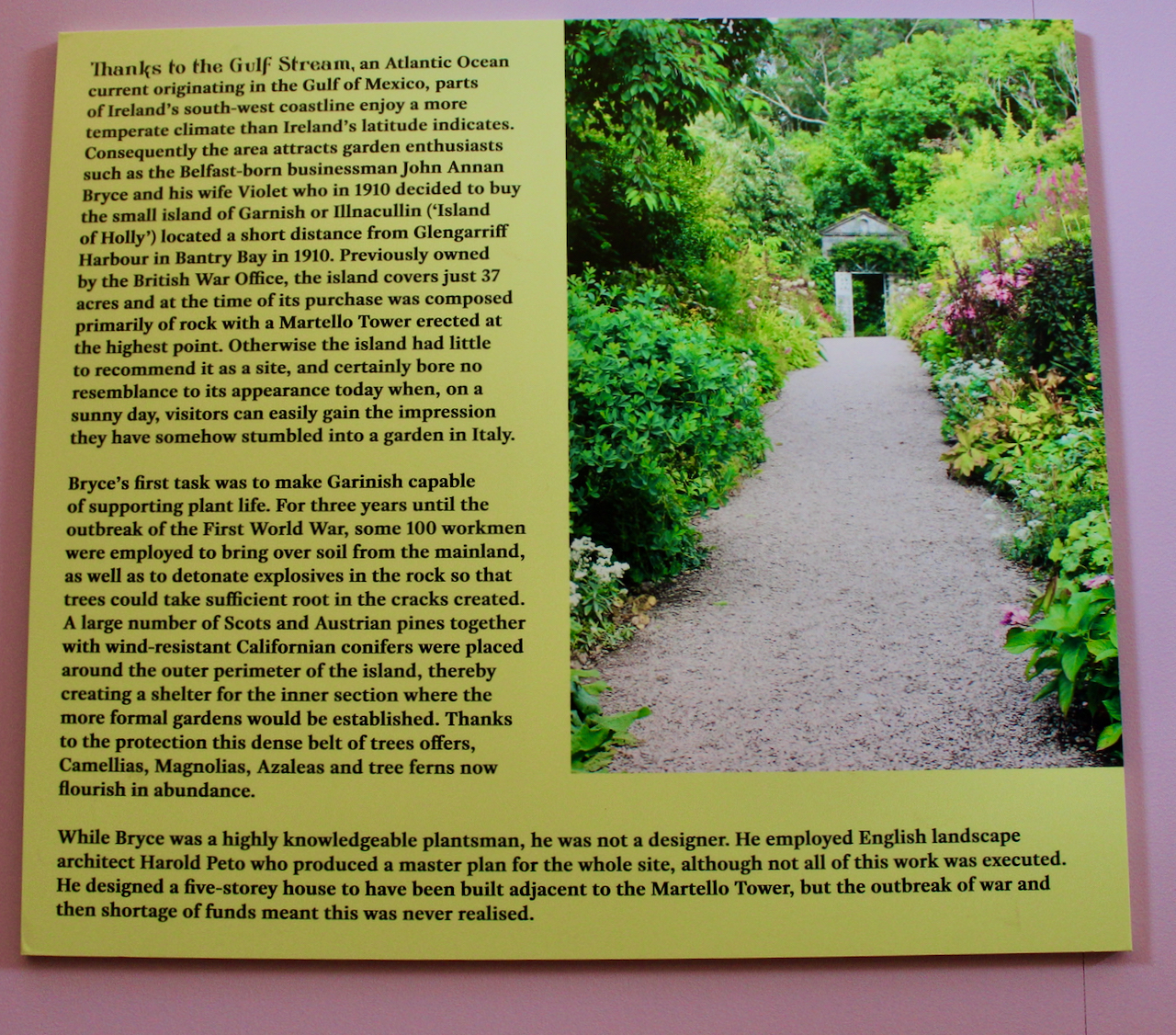
Ilnacullin is an island in the coastal harbour at Glengariff in Bantry Bay. It has an almost sub-tropical climate with mild winters and high levels of rainfall and humidity. These conditions favour the growth of exotic plants. The gardens were set out in the Arts and Crafts style and contain Italianate pavilions and follies, framed against a backdrop of beautiful views.

From the OPW website https://heritageireland.ie/visit/places-to-visit/ilnacullin-garinish-island/:

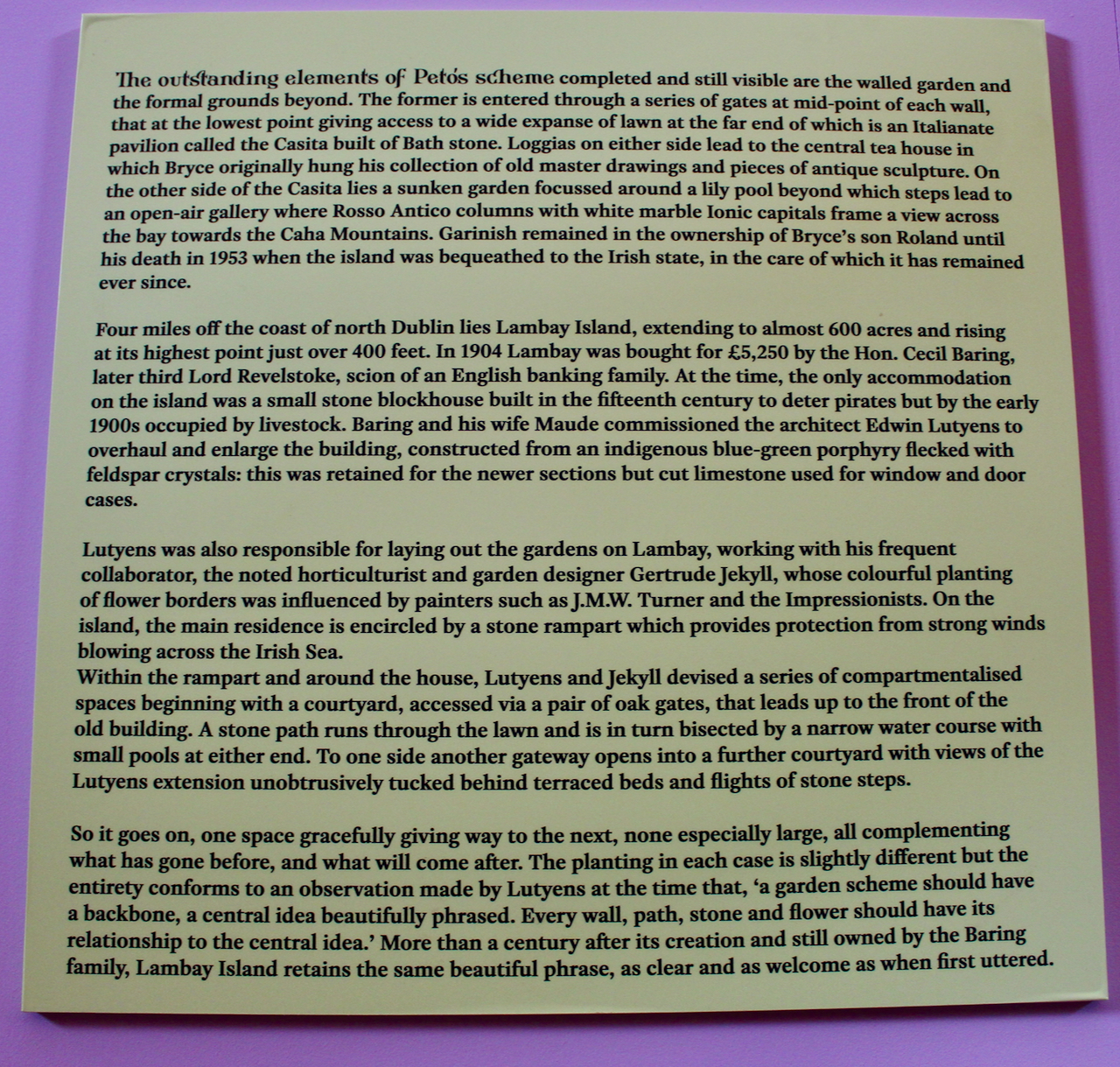
Ilnacullin is an island garden of diminutive size and rare beauty. Nestled in the sheltered coastal harbour at Glengarriff in Bantry Bay, the gardens display a wealth of unique horticultural and architectural gems. Bryce House is a fitting memorial to the visionary creators of this unique place. 

The gardens of Ilnacullin owe their existence to the early twentieth-century creative partnership of John Annan and Violet Bryce, the island’s owners, and Harold Peto, an architect and garden designer. The area enjoys a mild and humid micro-climate that makes for spectacular and flourishing plant life all year round.

Small ferry boats and 60-seater waterbuses take visitors to Ilnacullin regularly. The short crossing usually includes an extra treat – a visit to the nearby seal colony and an opportunity to glimpse majestic sea eagles.

The Island was bequeathed to the Irish people by the Bryce’s son, Roland, in 1953 and is cared for by the OPW. Bryce House contains material from the Bryces’s lives, including John Annan Bryce’s collection of Burmese statues, Chinese ceramics, Japanese woodblock prints, metal works and rare exotic objects. There are also Old Master drawings by Salvator Rosa, Mauro Antonio Tesi and Giambattista Tiepolo. Over the years the Bryces hosted prominent cultural figures such as George (AE) Russell, George Bernard Shaw and Agatha Christie. [11] You can see a tour of the house and gardens on the website.

From “In Harmony with Nature, The Irish Country House Garden 1600-1900” in the Irish Georgian Society, July 2022, curated by Robert O’Byrne.

[1] https://repository.dri.ie/

[2] p. 12, Living Legacies: Ireland’s National Historic Properties in the care of the OPW, Government Publications, Dublin, 2018.

[3] p. 310, Keohane, Frank. The Buildings of Ireland. Cork City and County. Yale University Press: New Haven and London. 2020.

[4] p. 261, Keohane, Frank. Buildings of Ireland: Cork City and County, Yale University Press, New Haven and London, 2020.

[5] https://www.irelandscontentpool.com/en

[6] See also https://doneraileestate.ie

[7] p. 377. Keohane, Frank. Buildings of Ireland: Cork City and County, Yale University Press, New Haven and London, 2020.

Another work Keohane identifies as being by Benjamin Crawley is Castle Bernard, now a ruin in County Cork:

Castle Bernard, County Cork, photograph from National Inventory of Architectural Heritage.

[8] p. 105. Mark Bence-Jones. A Guide to Irish Country Houses (originally published as Burke’s Guide to Country Houses volume 1 Ireland by Burke’s Peerage Ltd. 1978); Revised edition 1988 Constable and Company Ltd, London.

[9] fotahouse.com

[10] https://heritageireland.ie/visit/places-to-visit/fota-arboretum-and-gardens/

[11] https://garinishisland.ie/the-house-and-gardens/

Text © Jennifer Winder-Baggot, www.irishhistorichouses.com