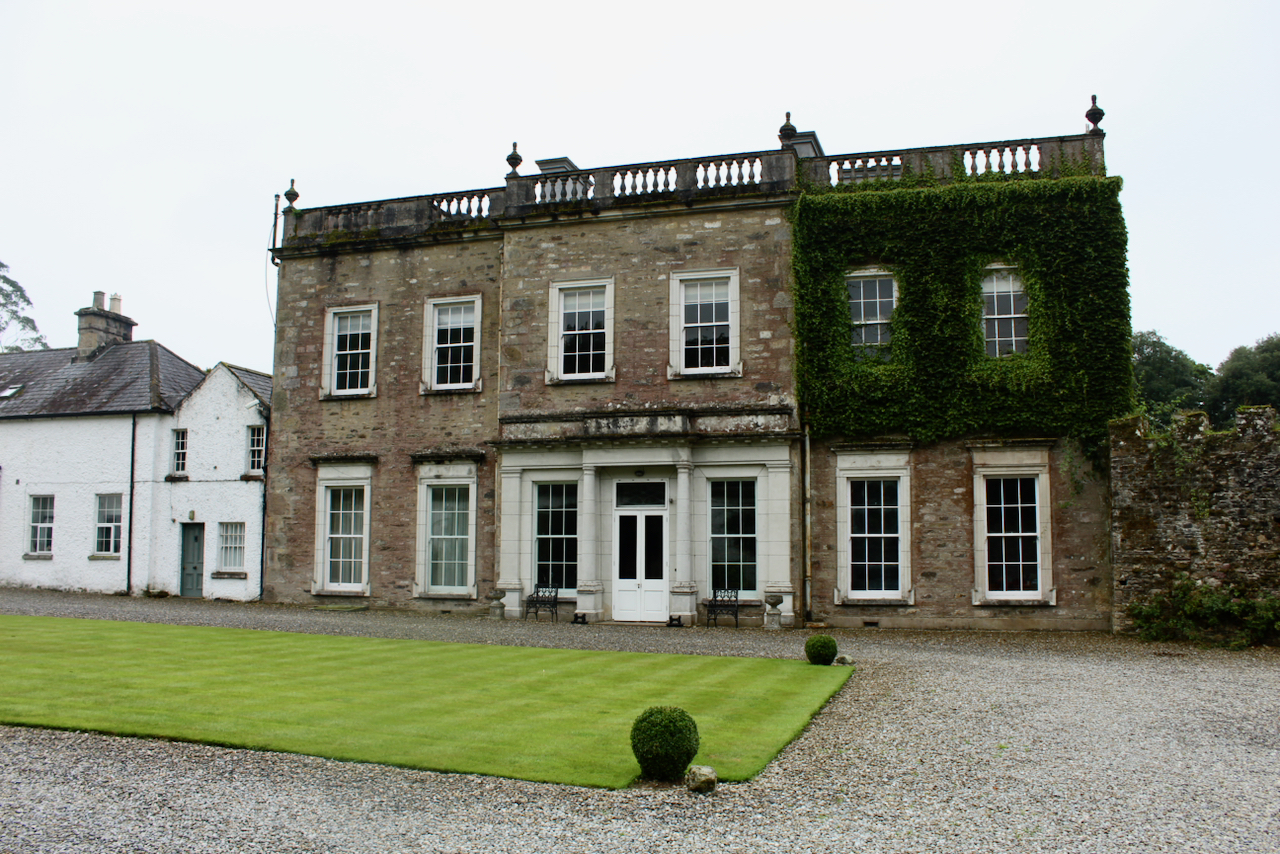
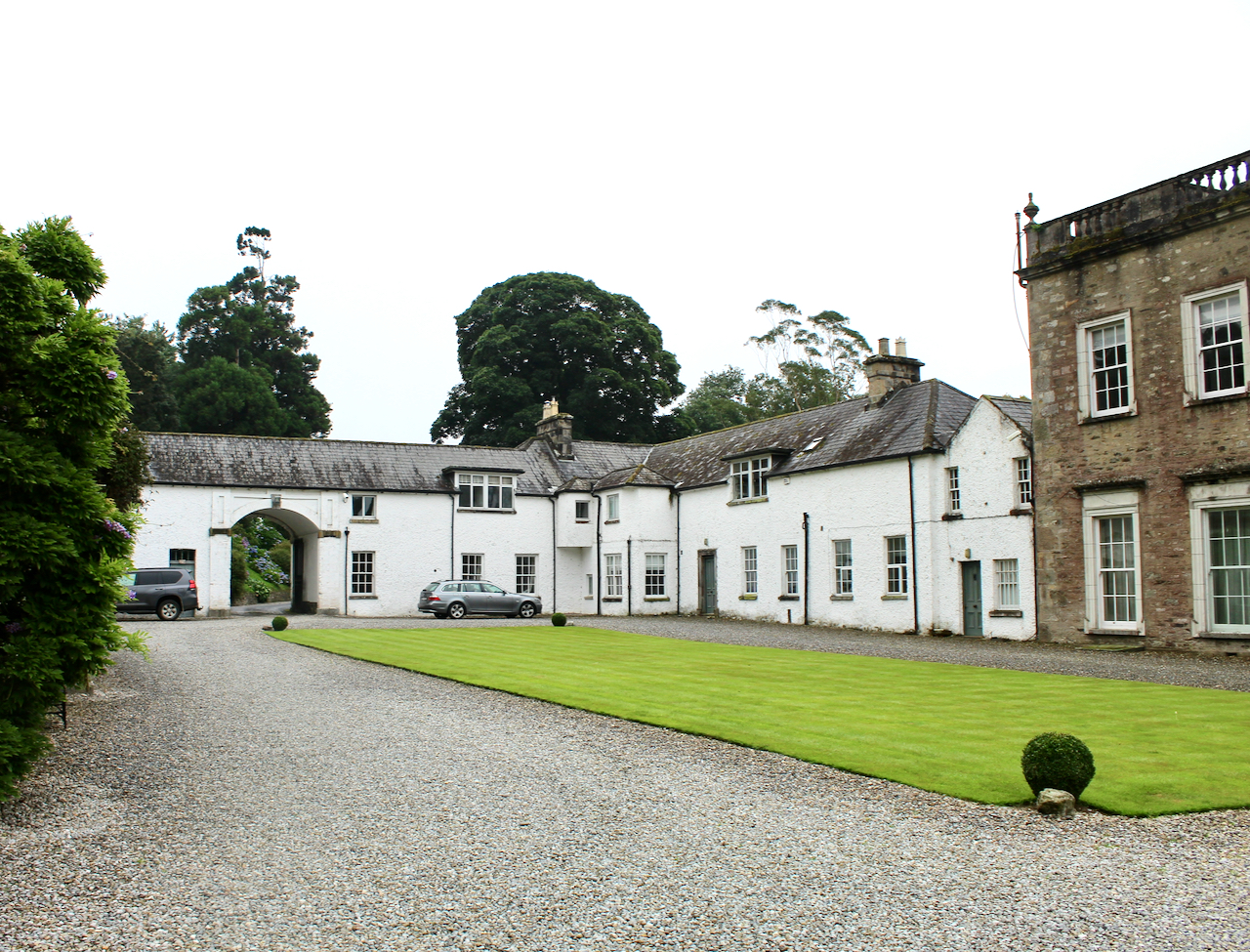
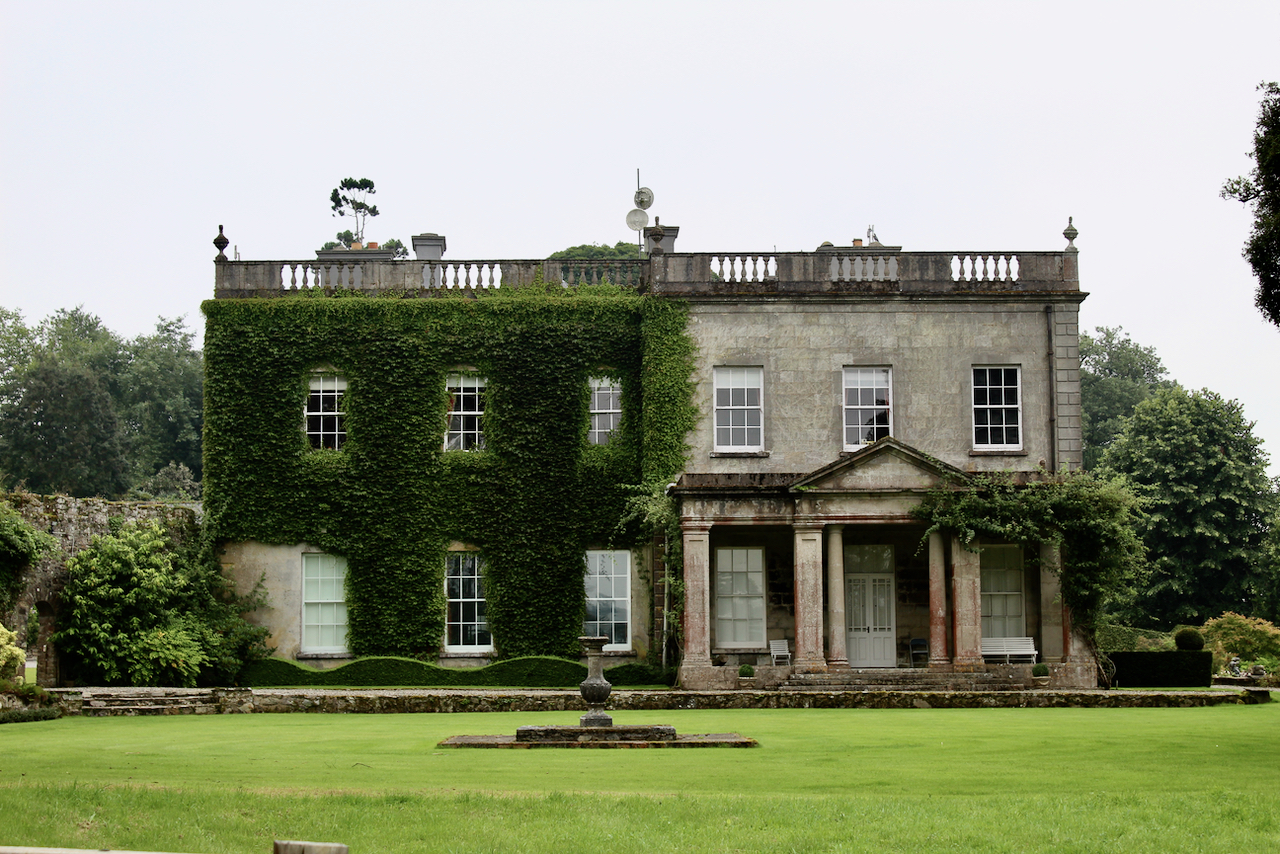
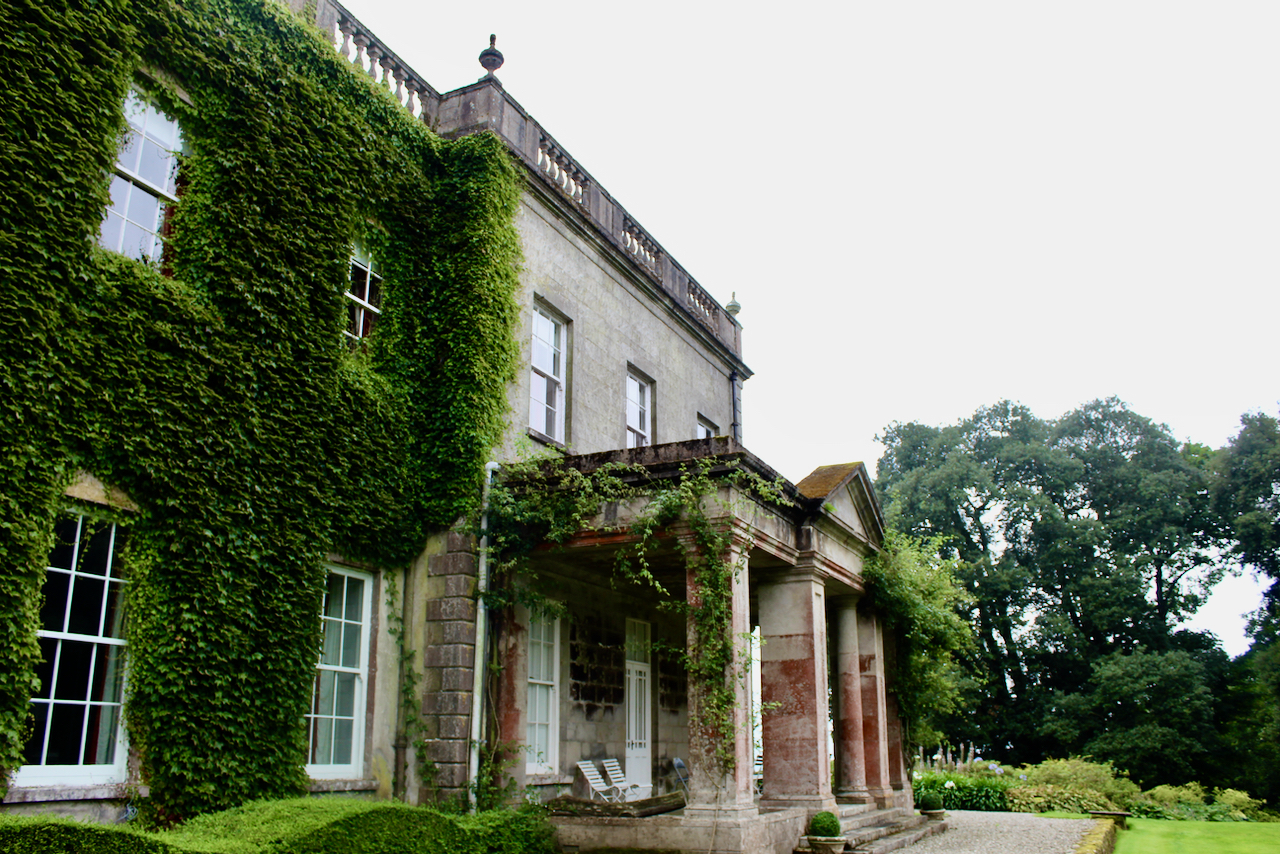
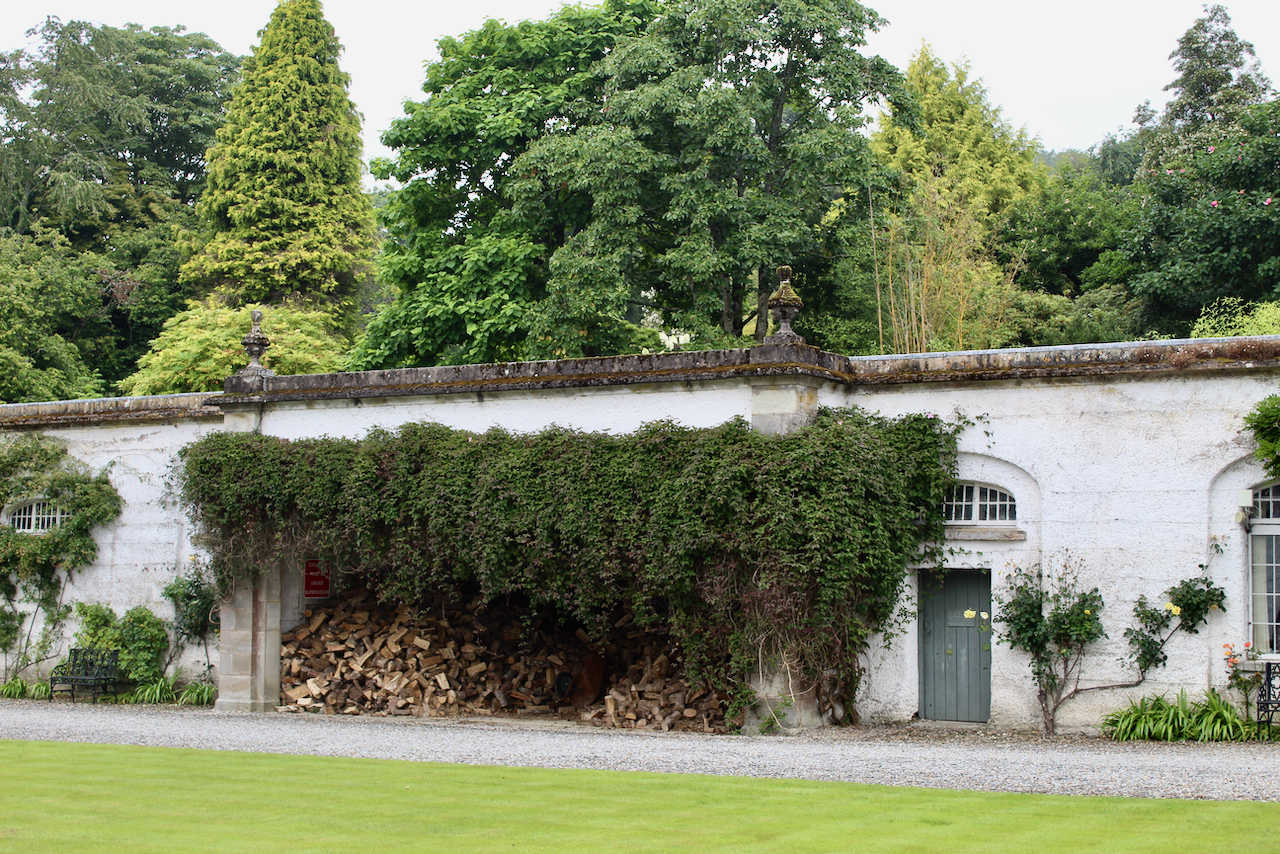
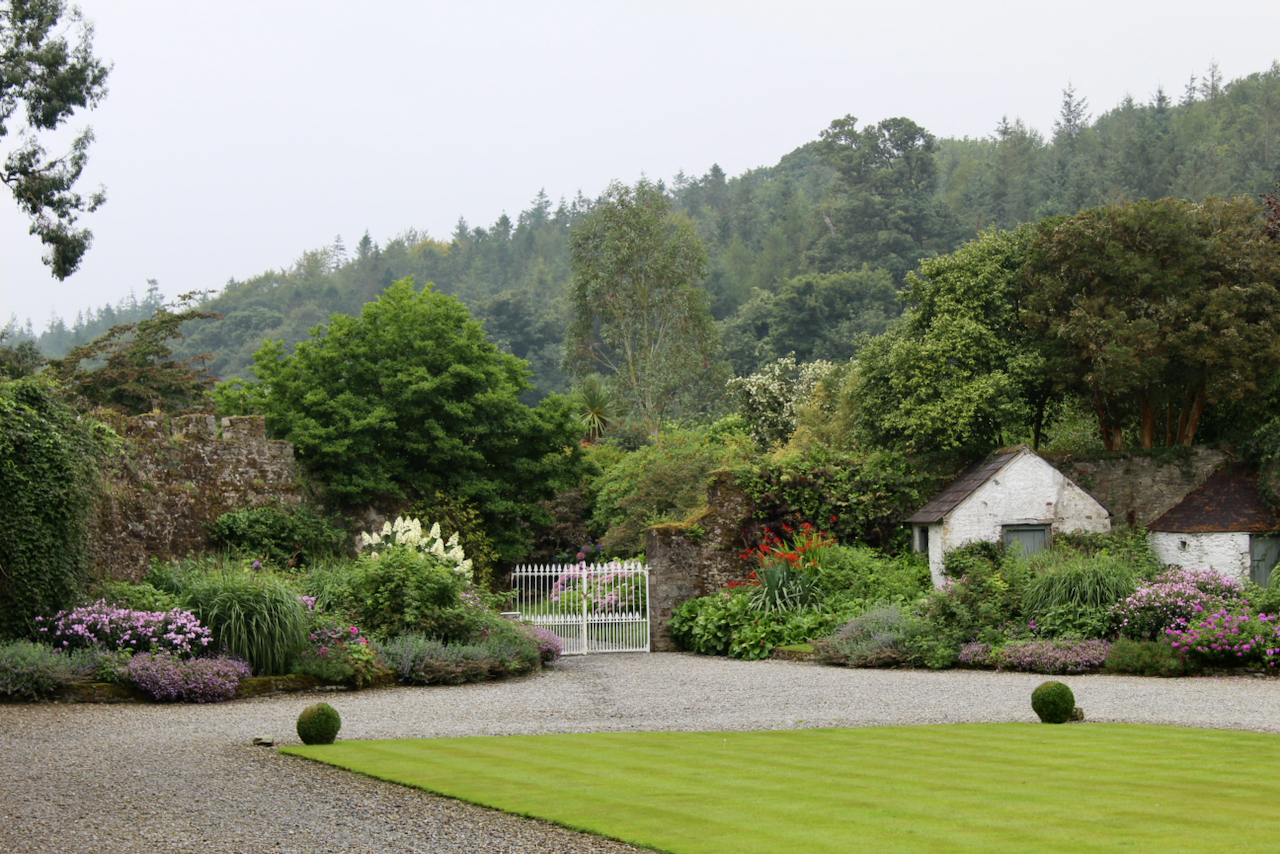
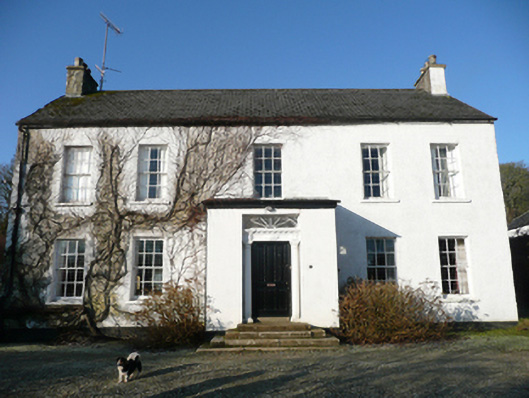
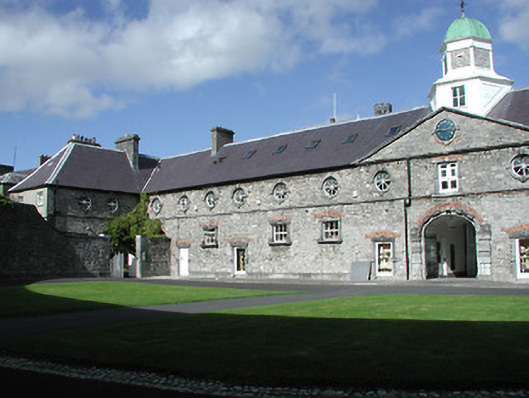
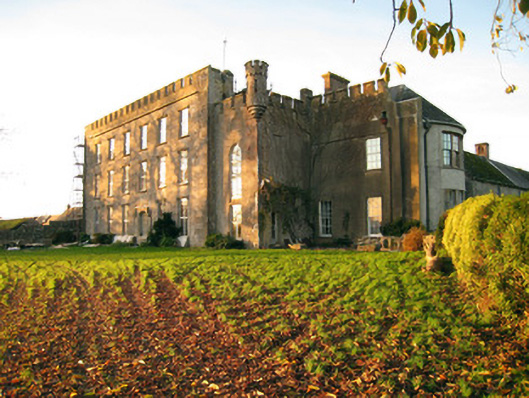
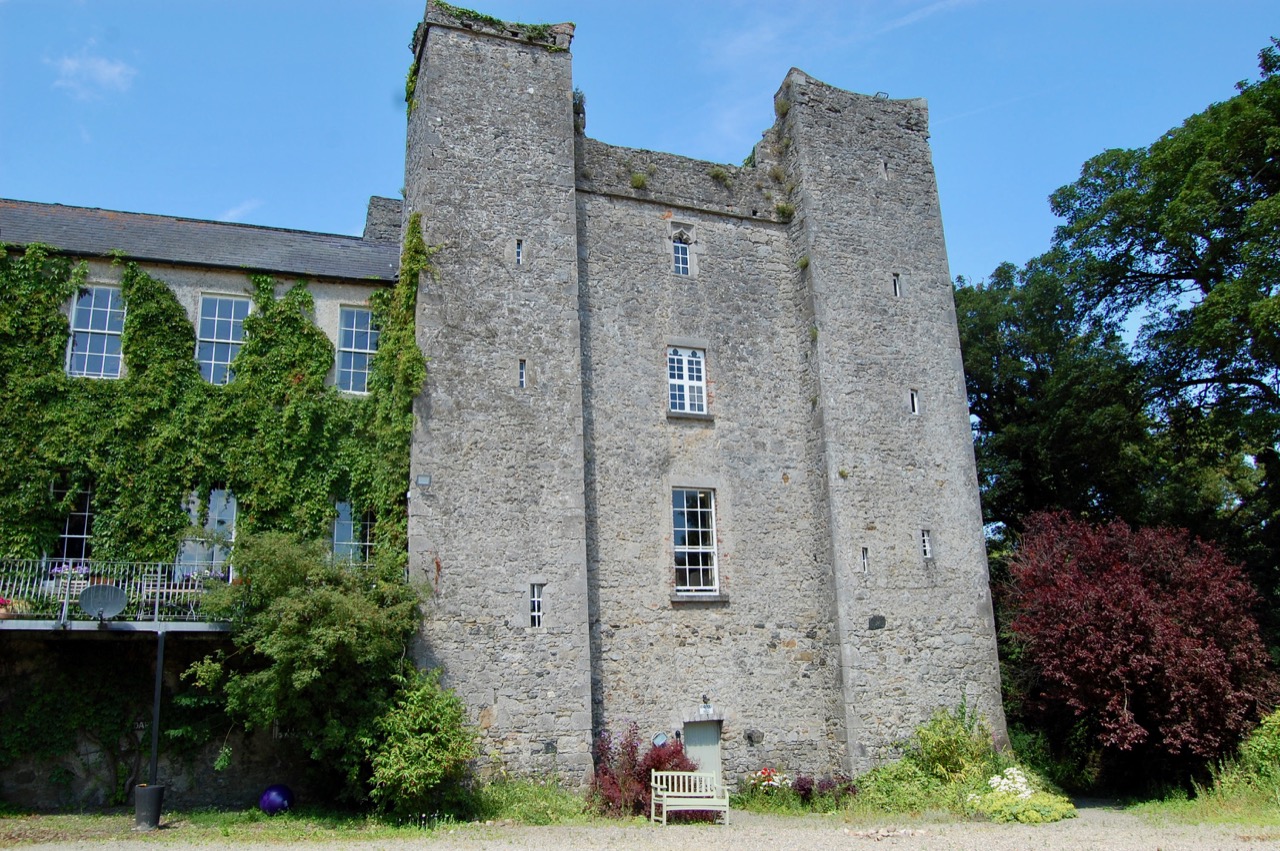
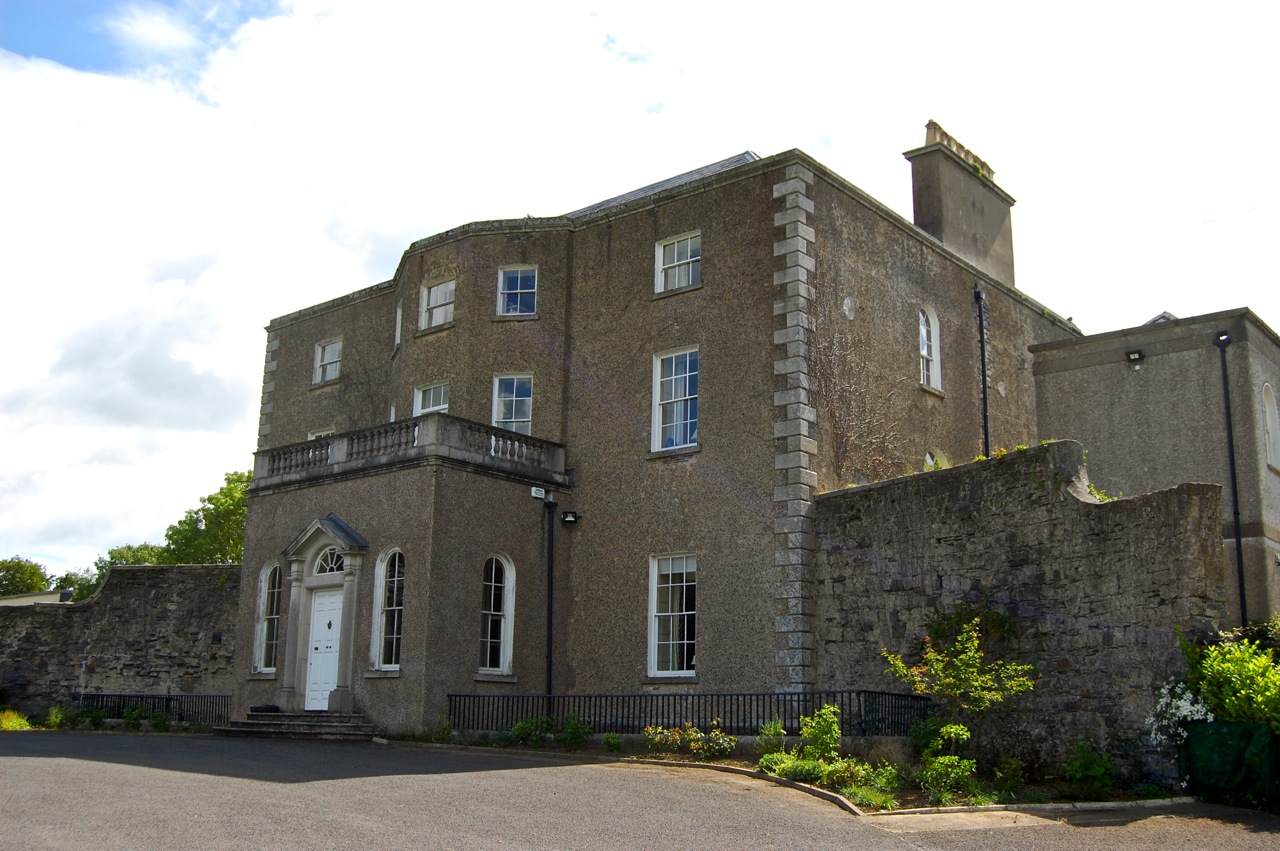
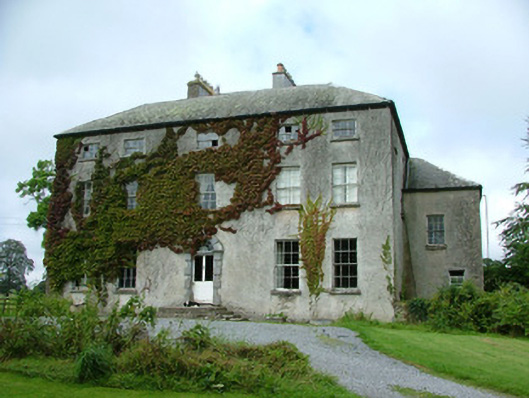
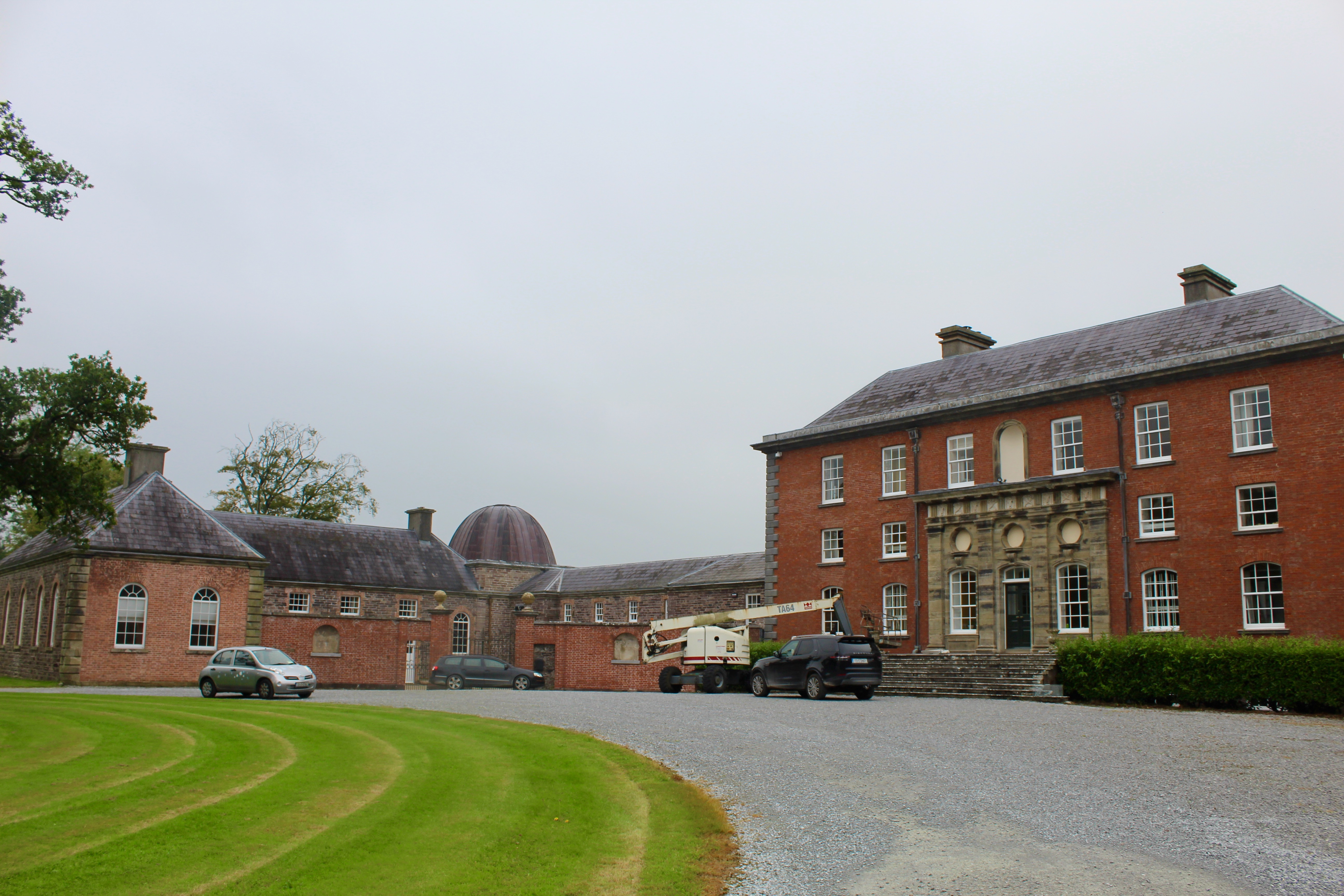
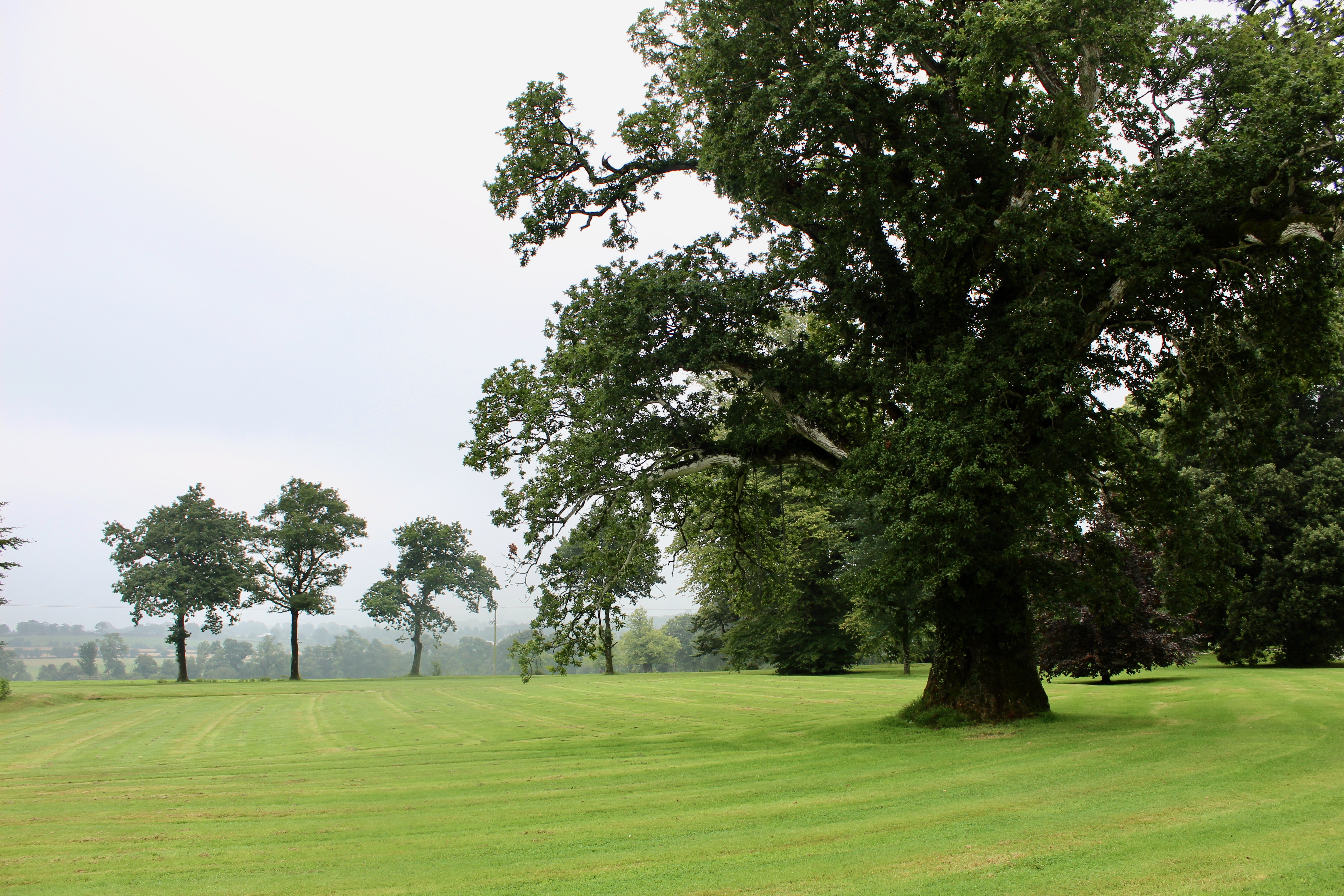
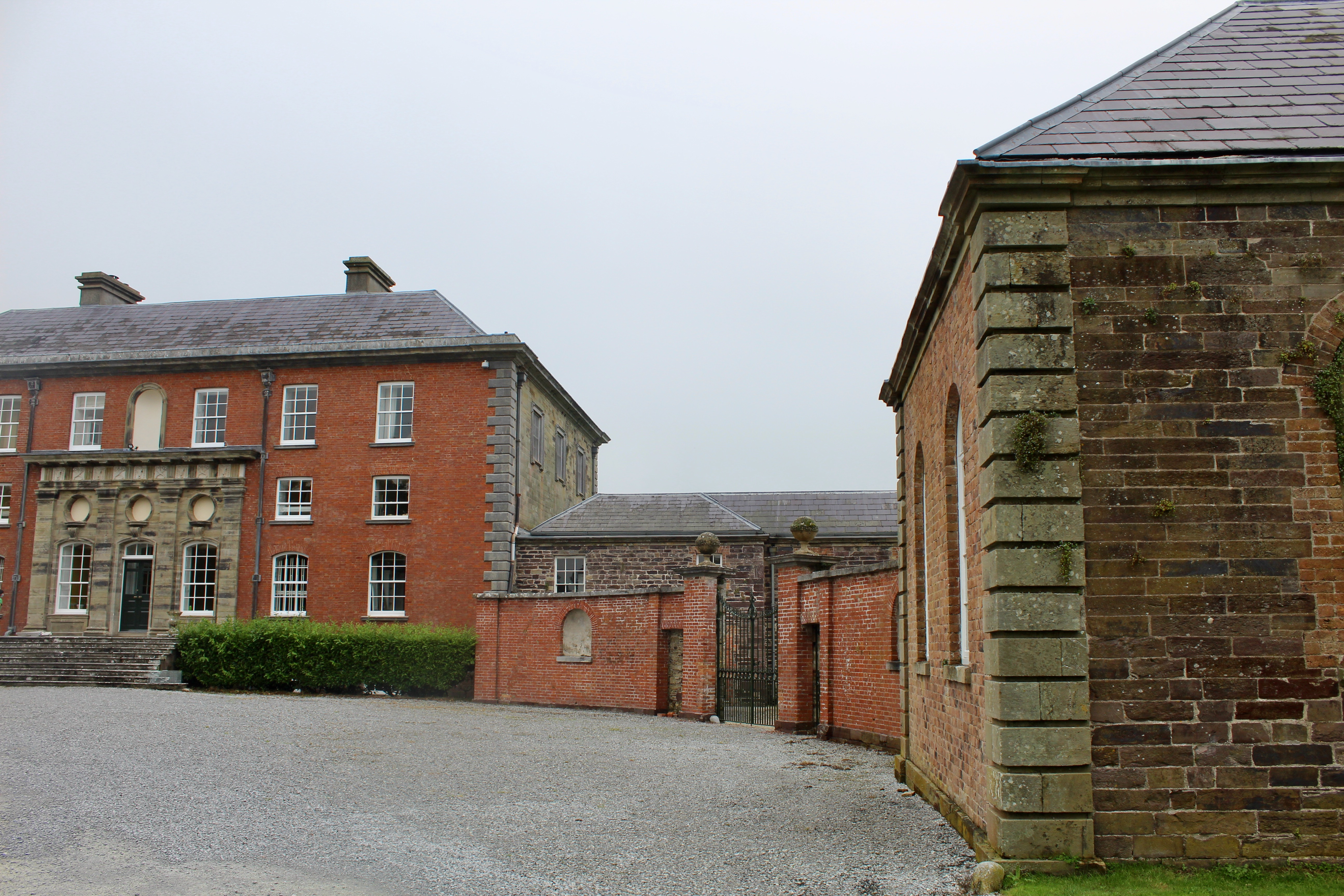
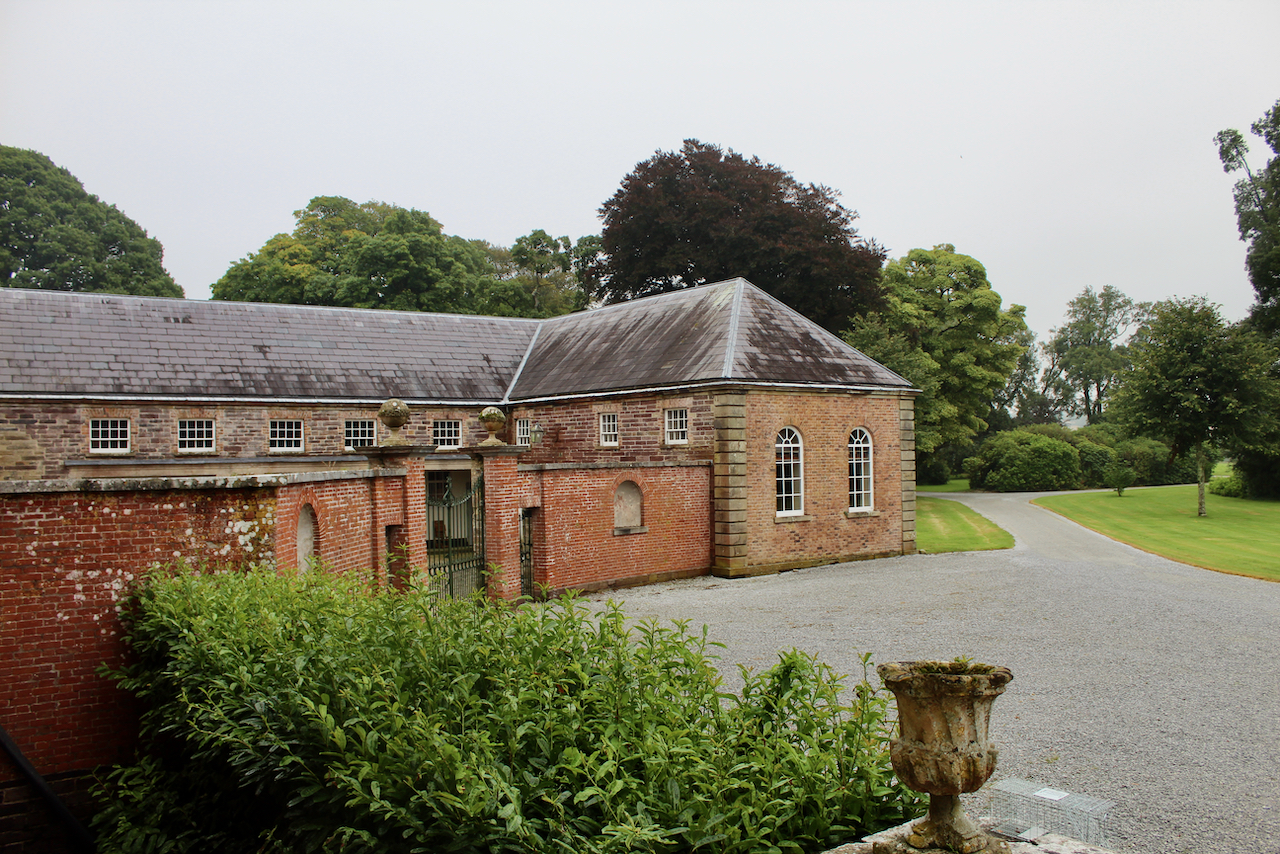
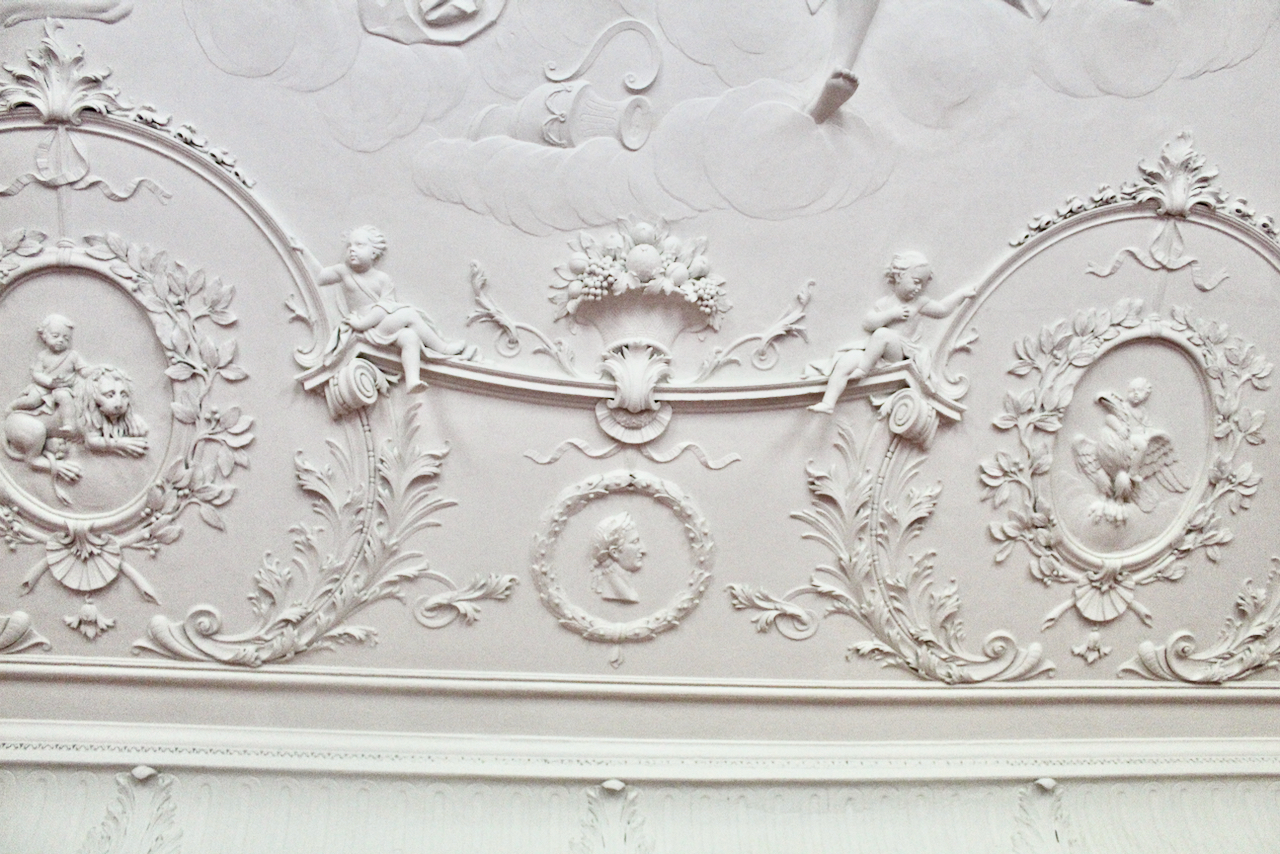
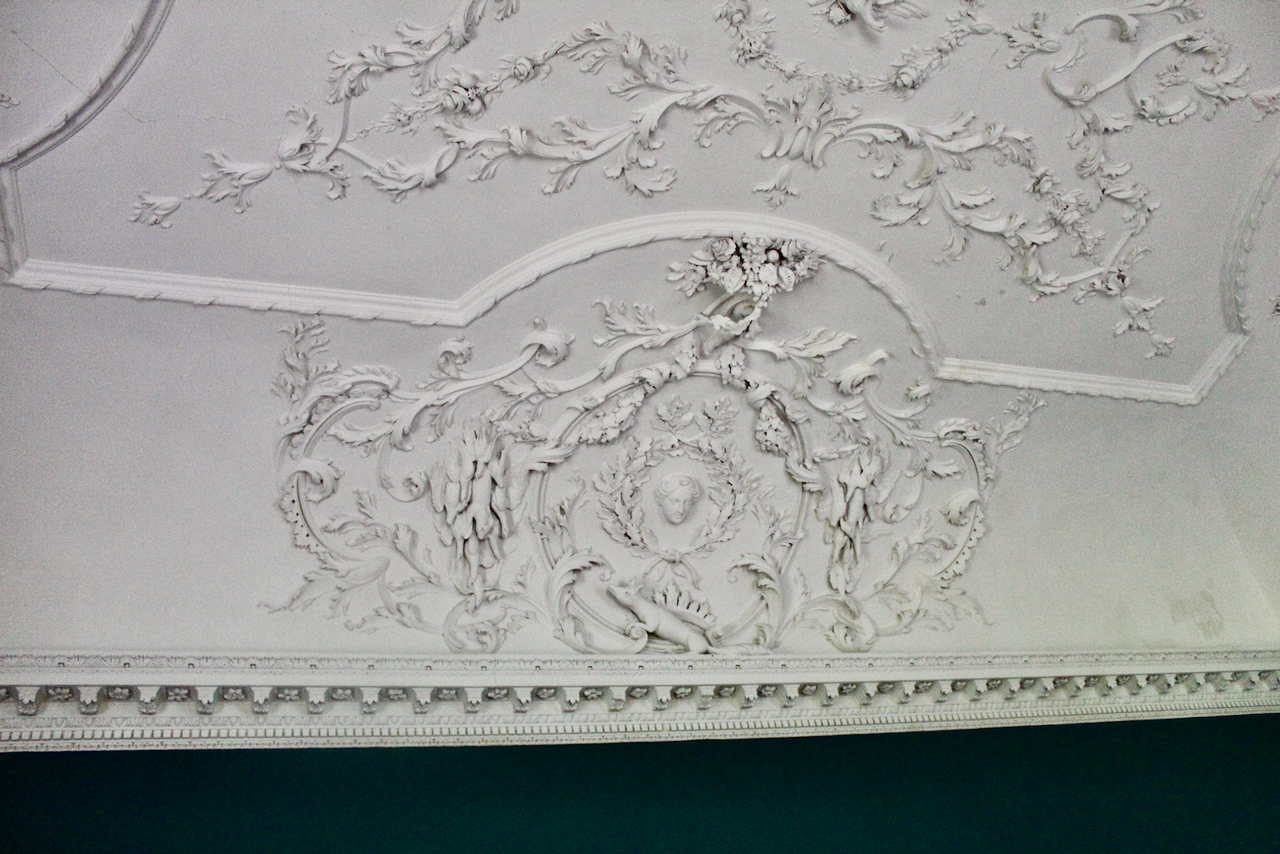
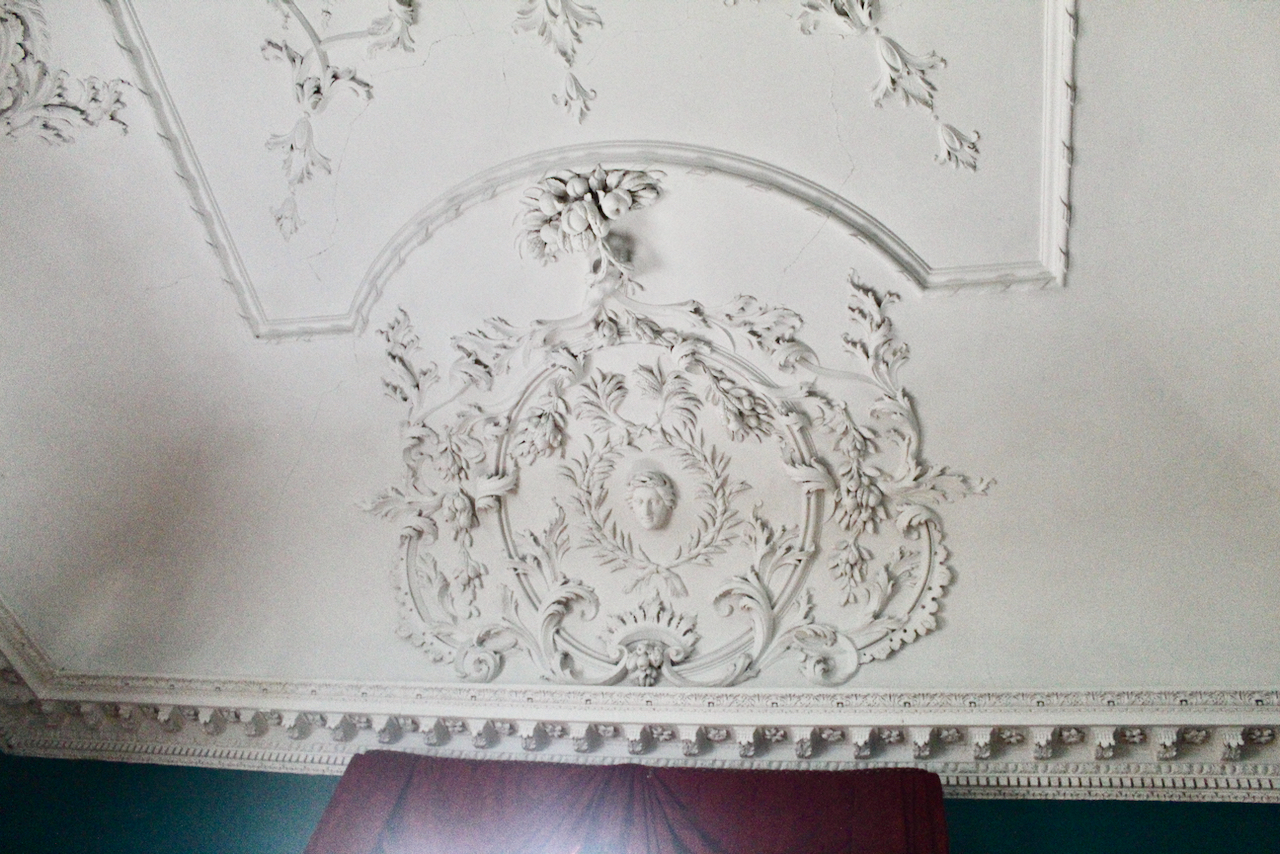
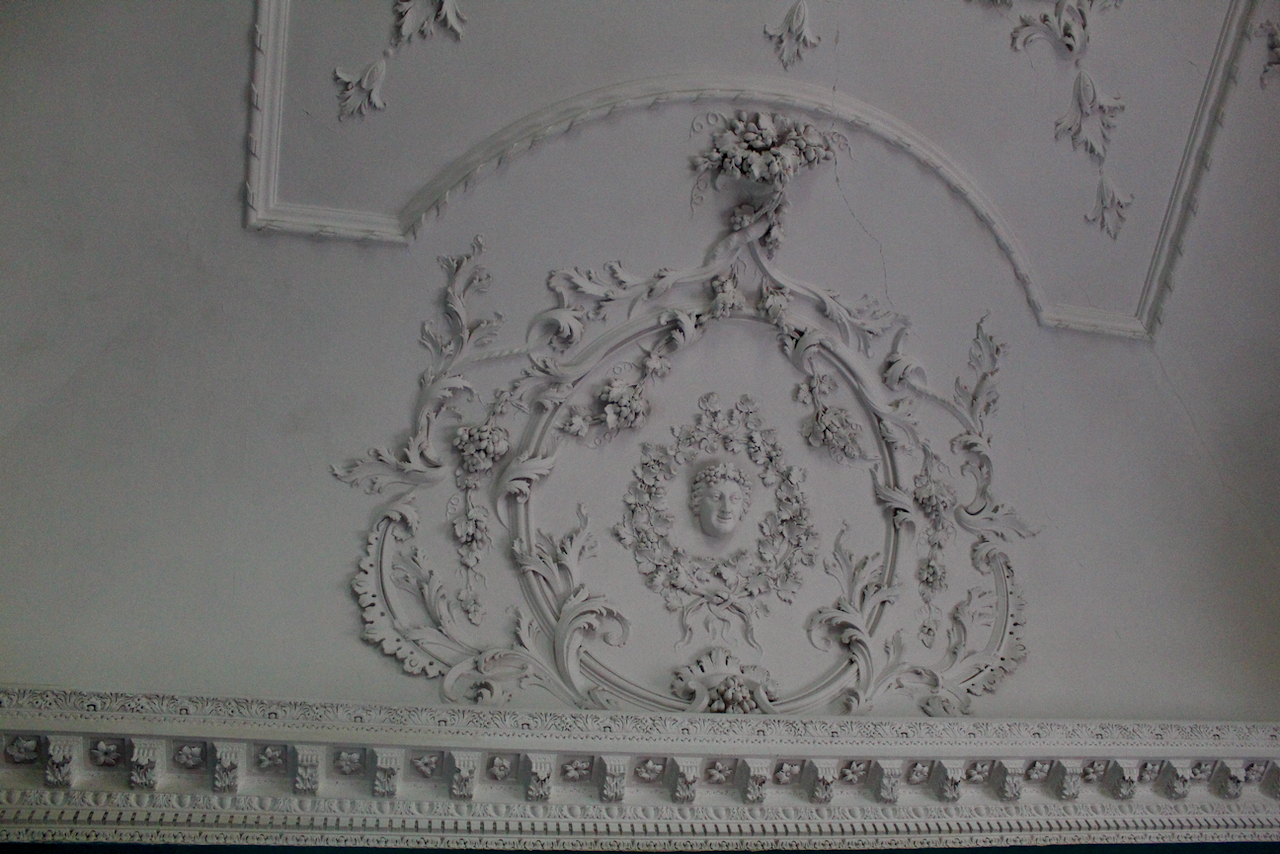
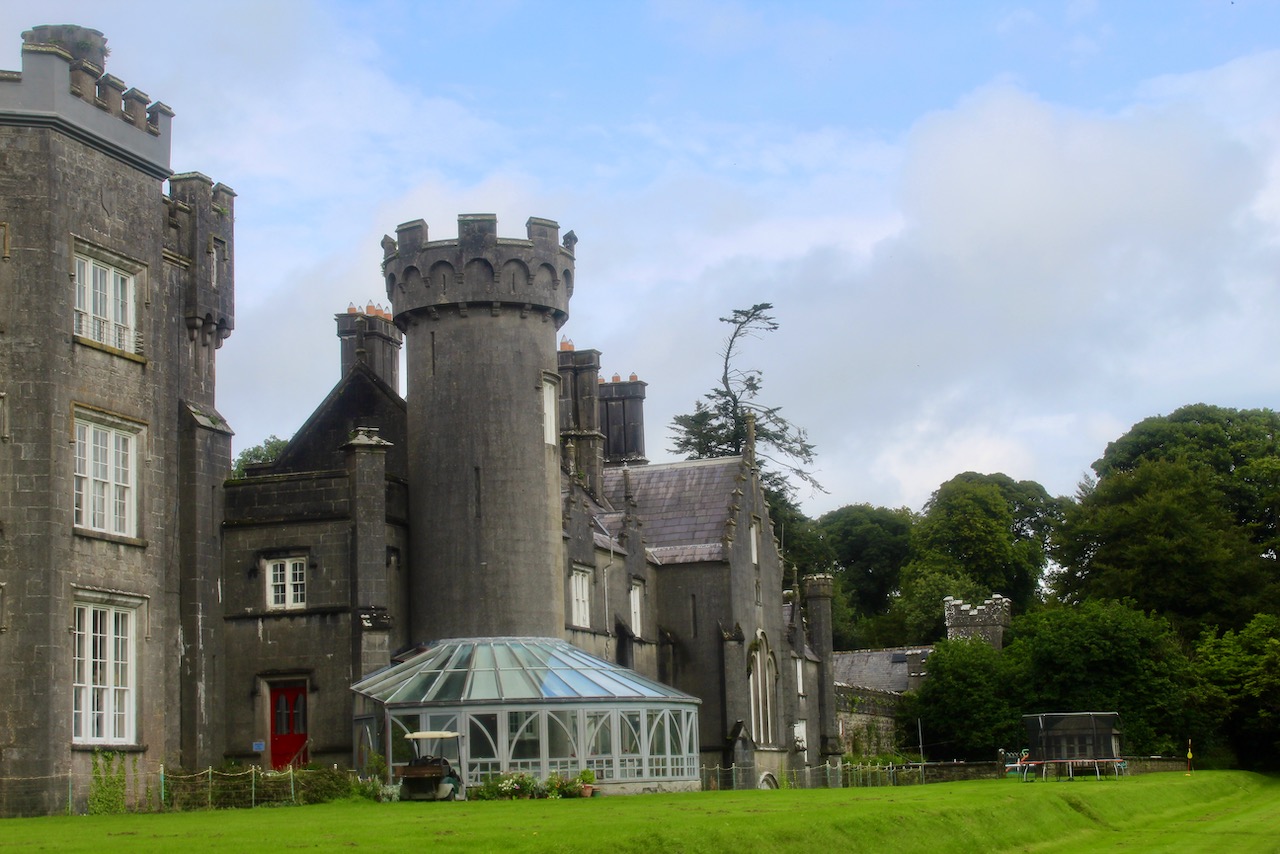
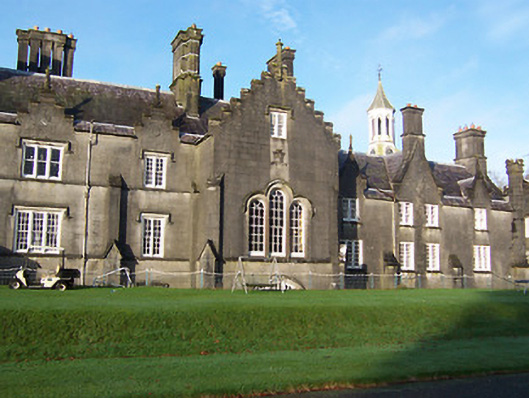
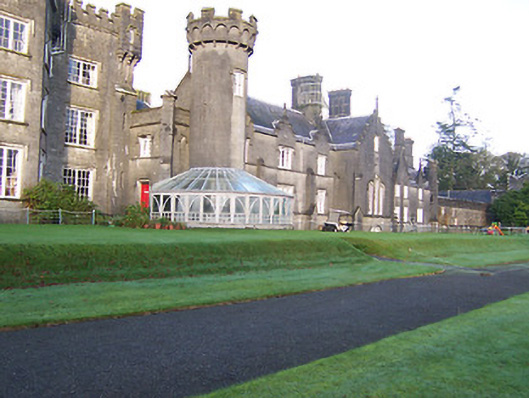
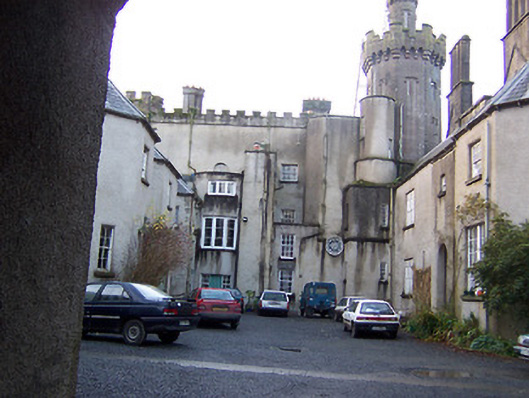
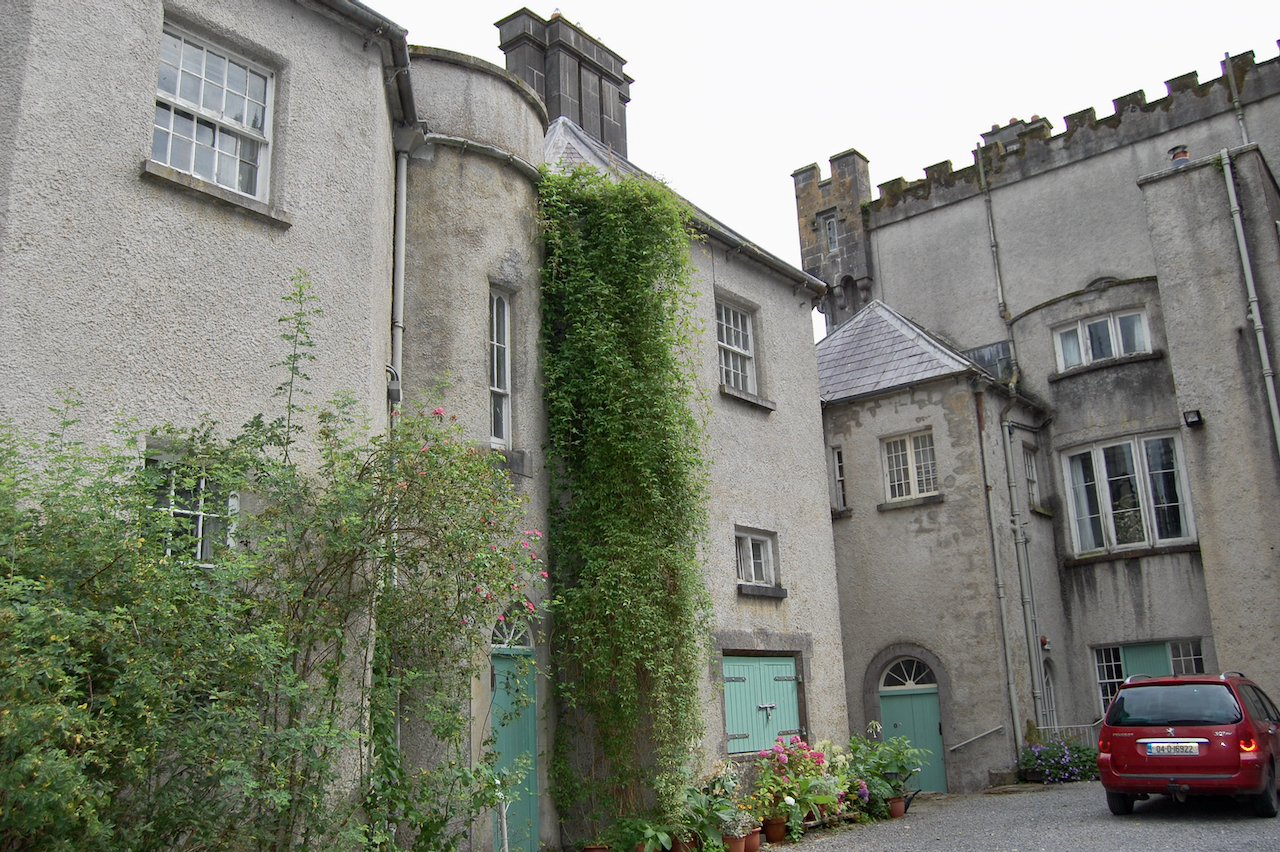
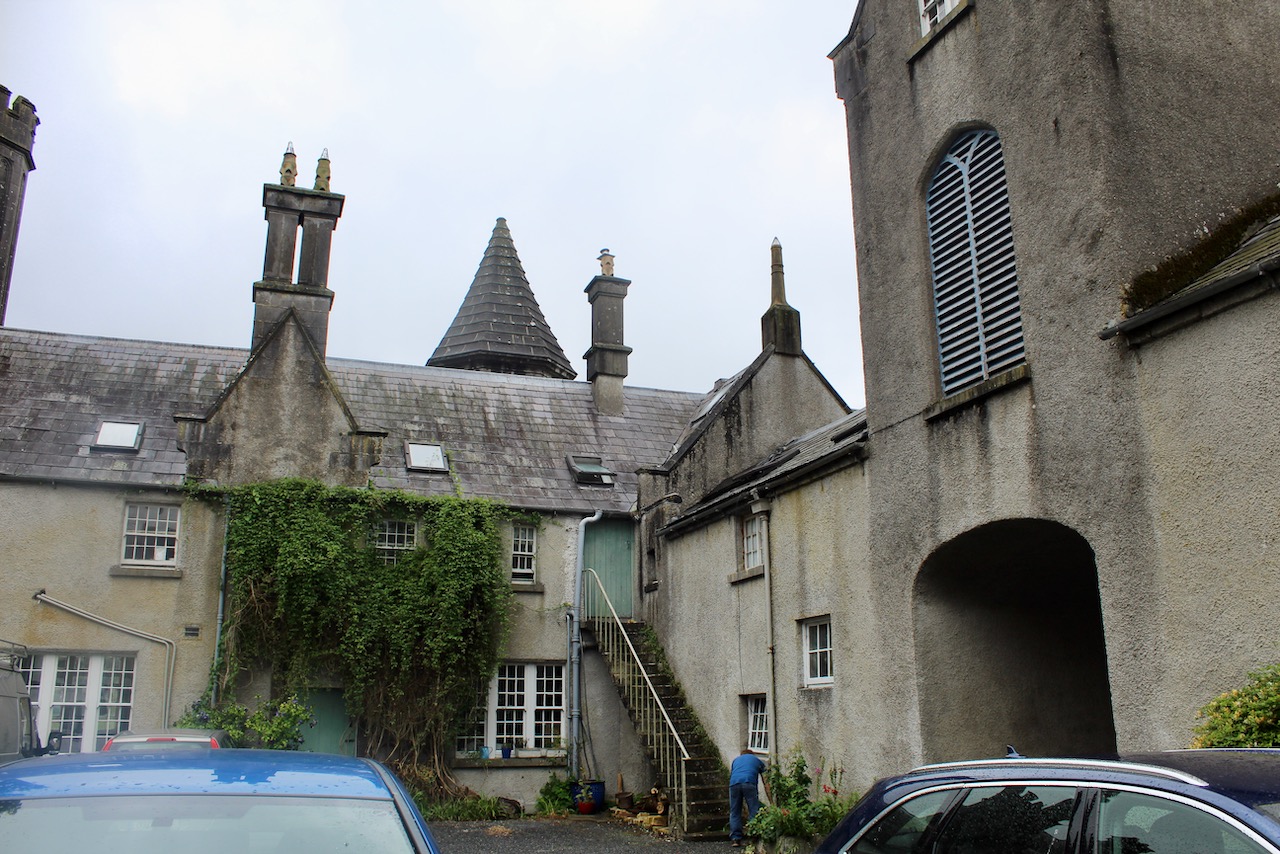
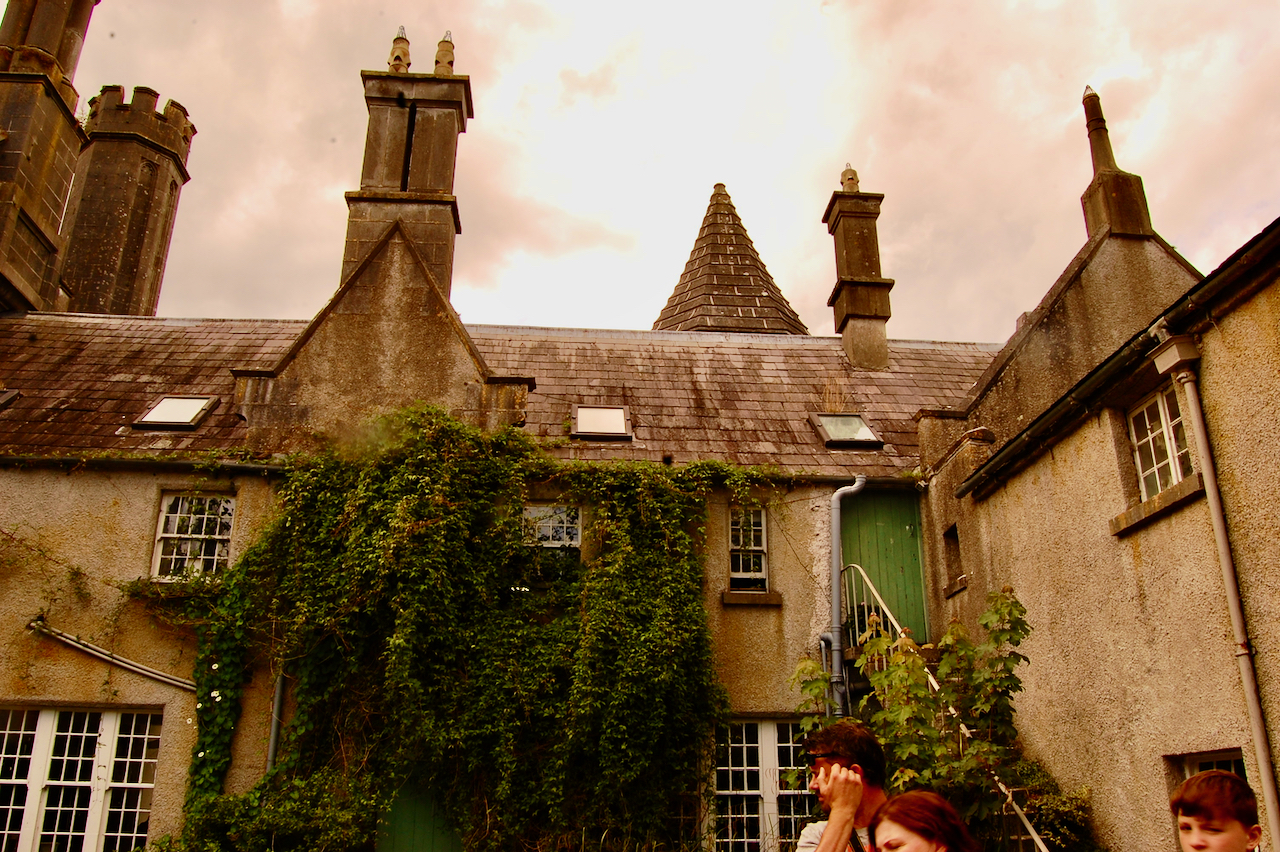
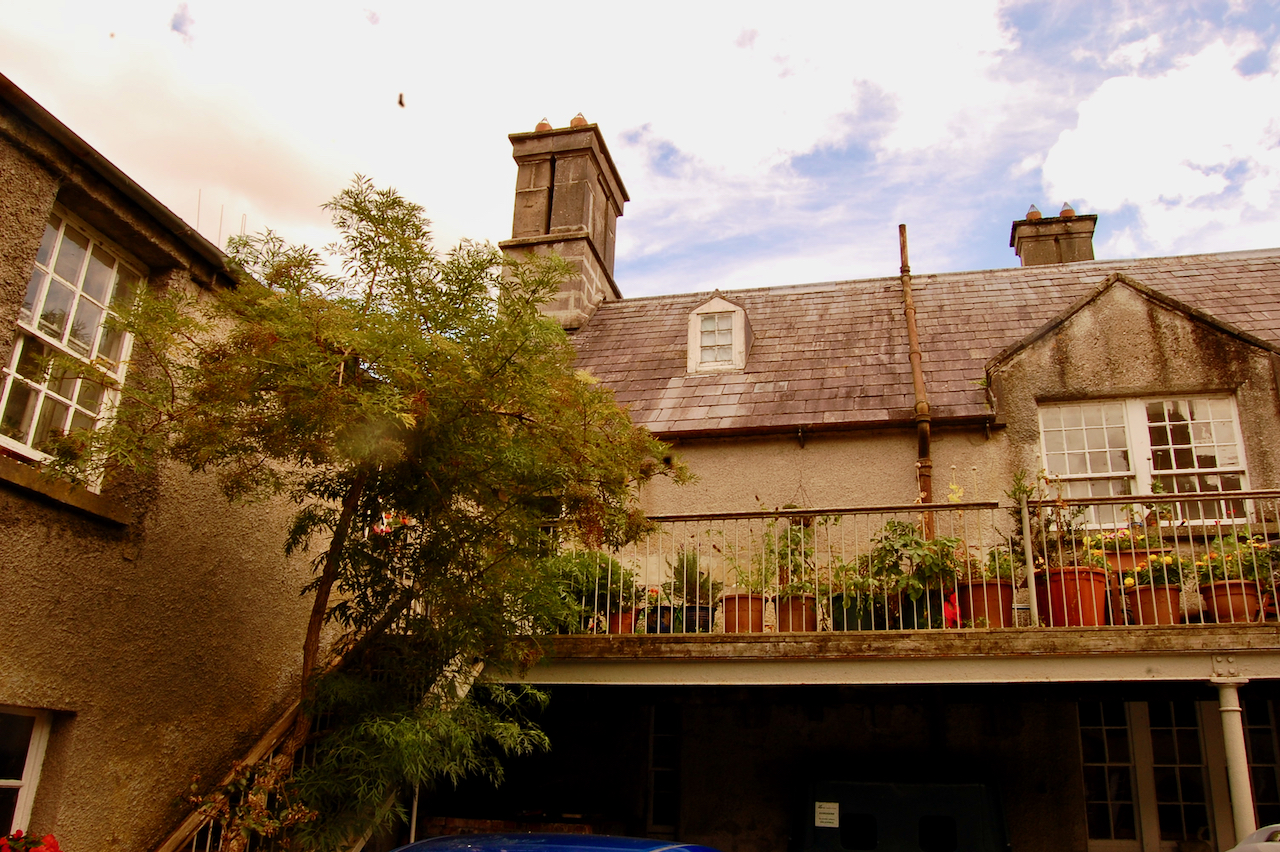
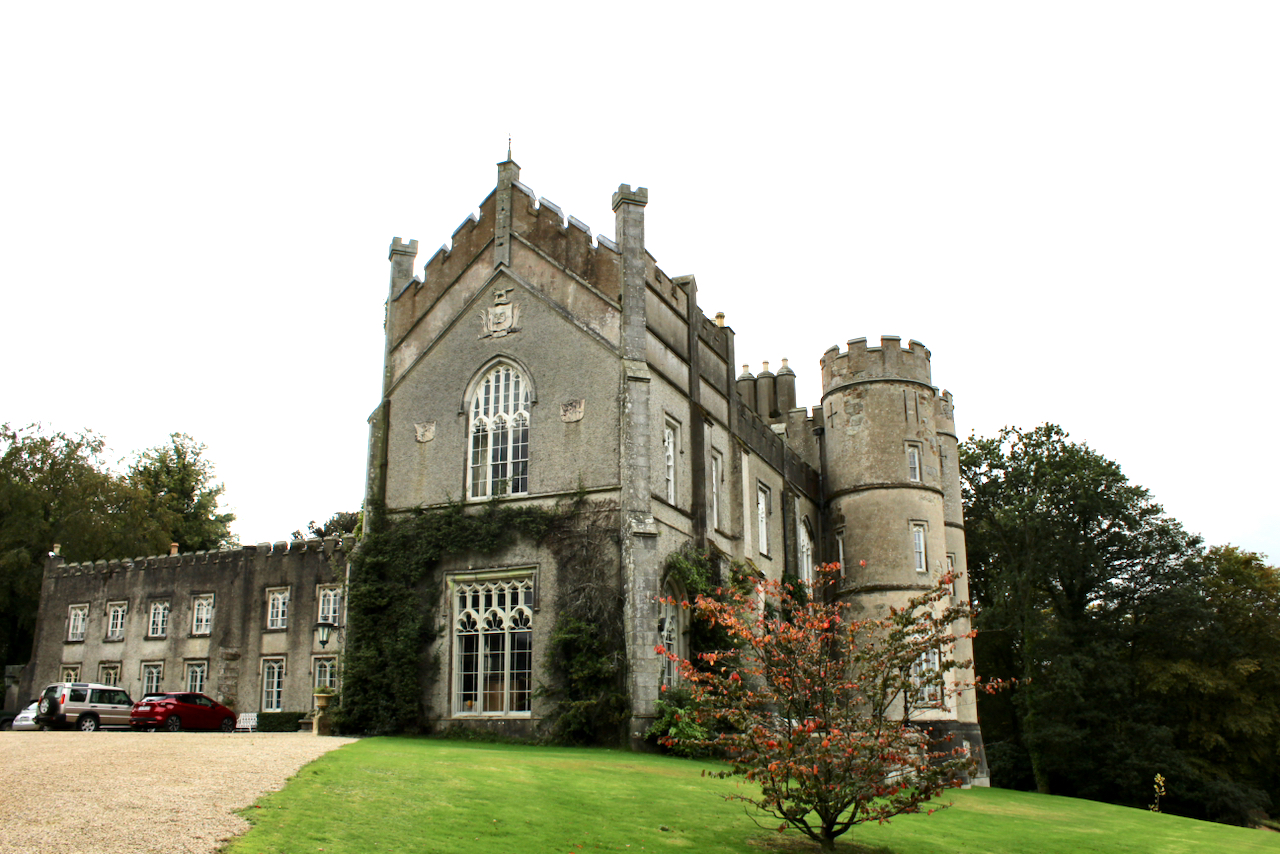
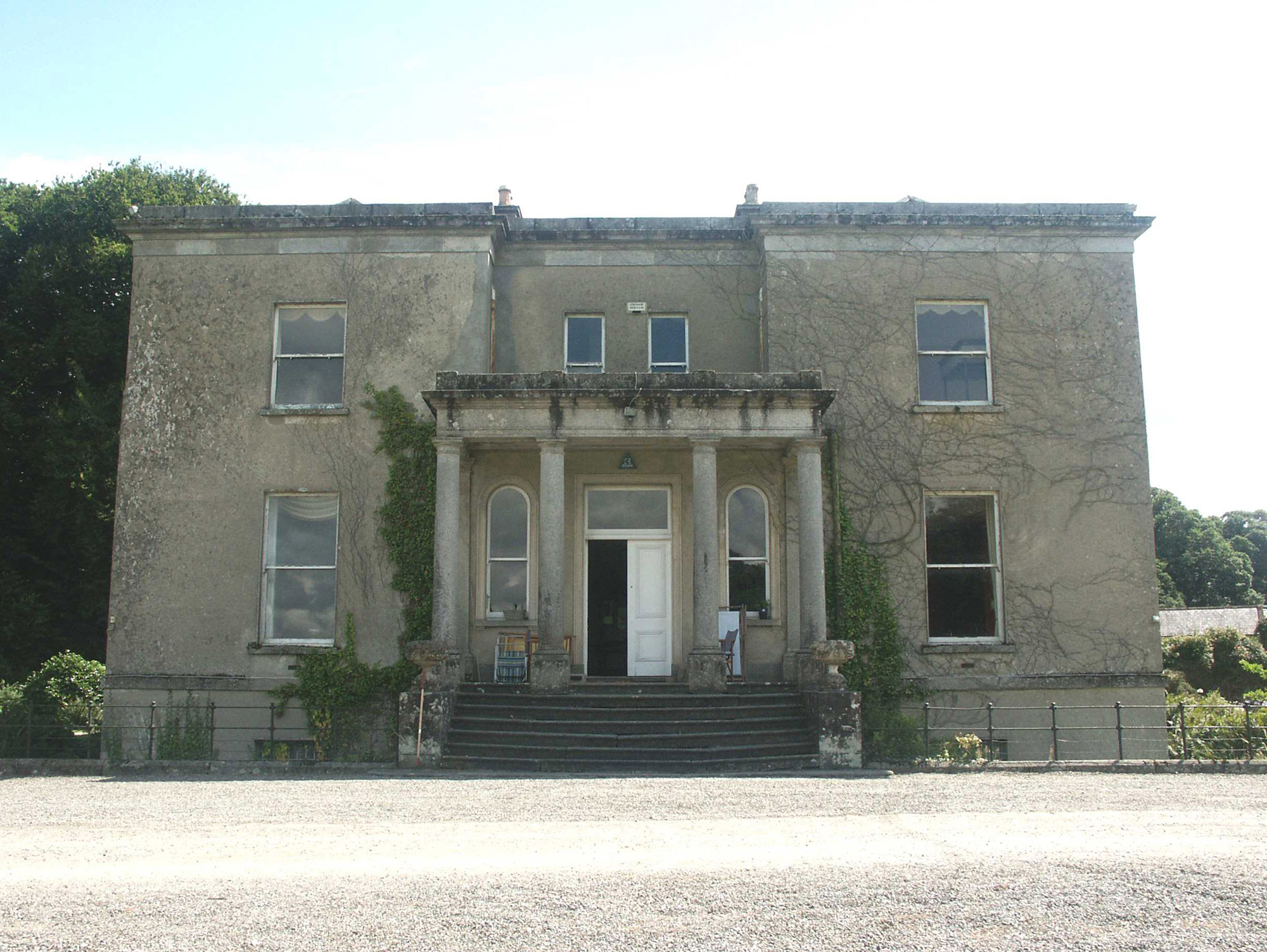
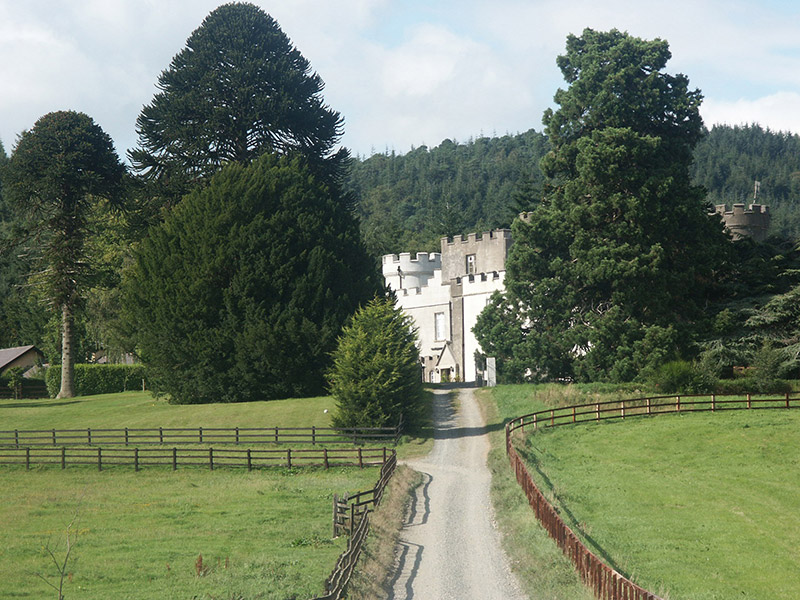
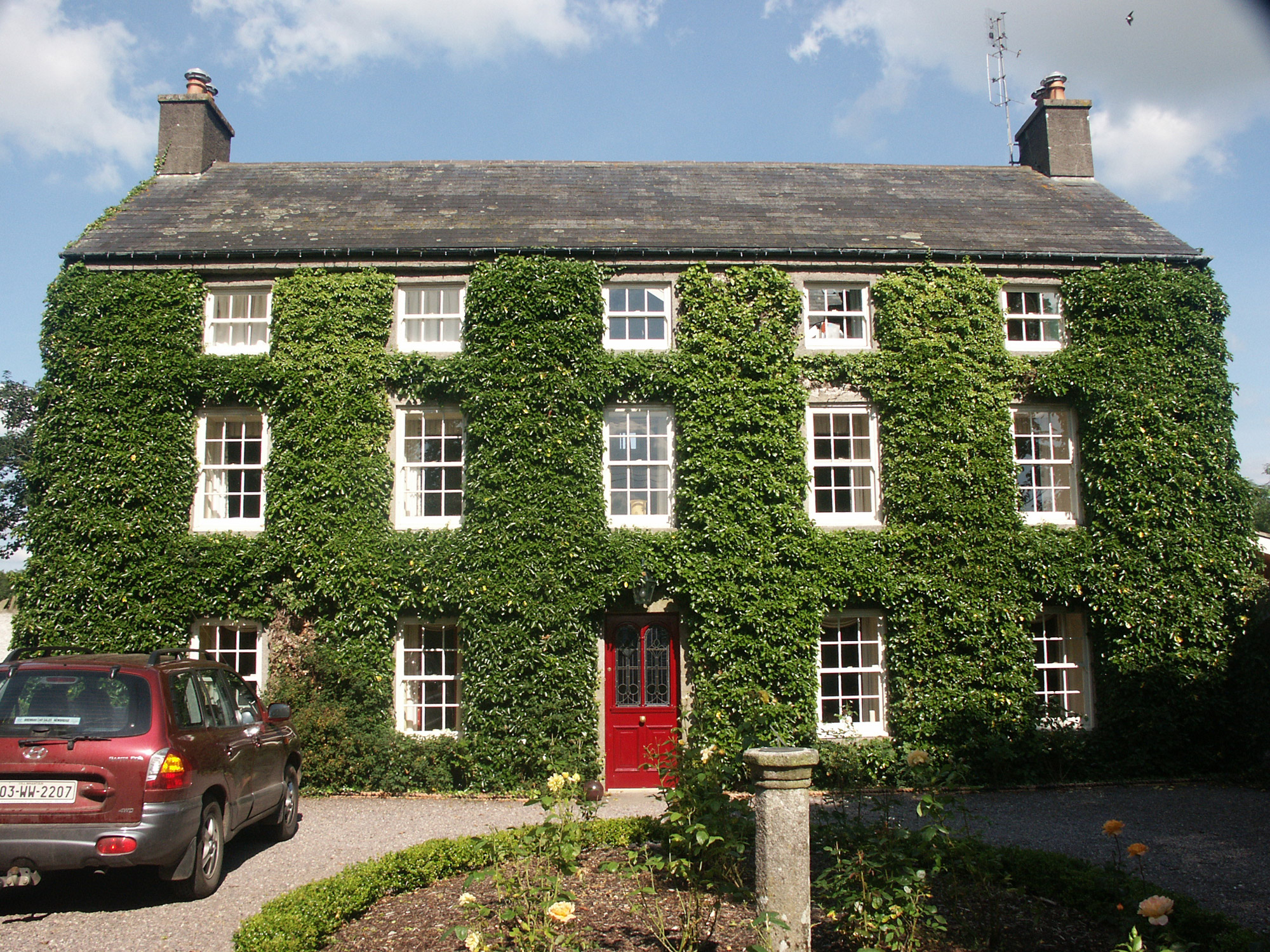
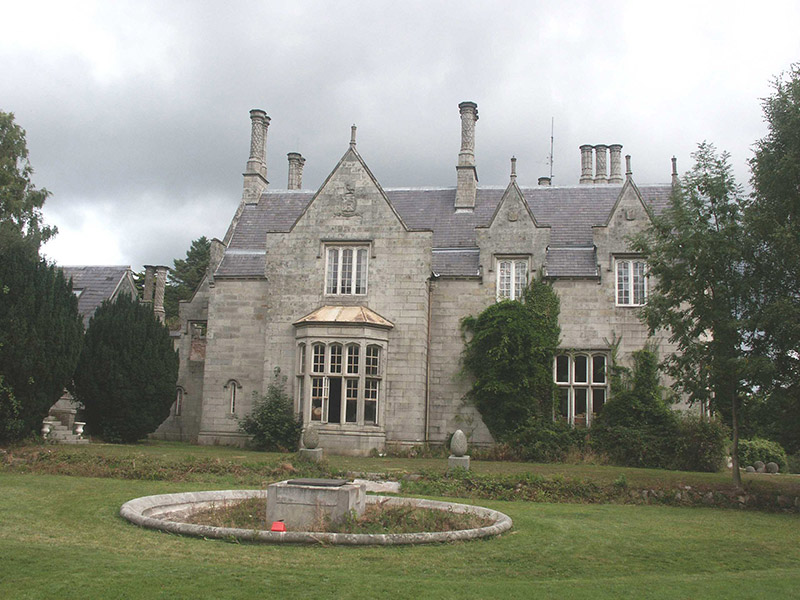
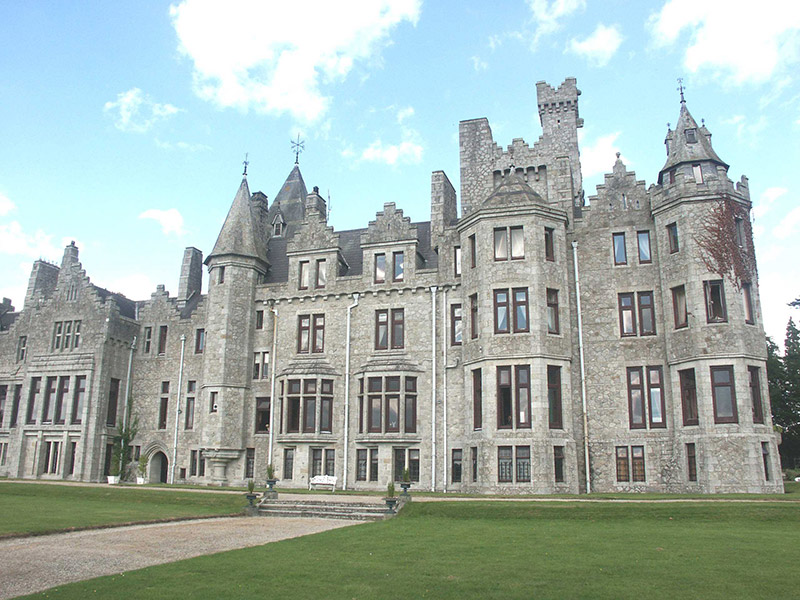
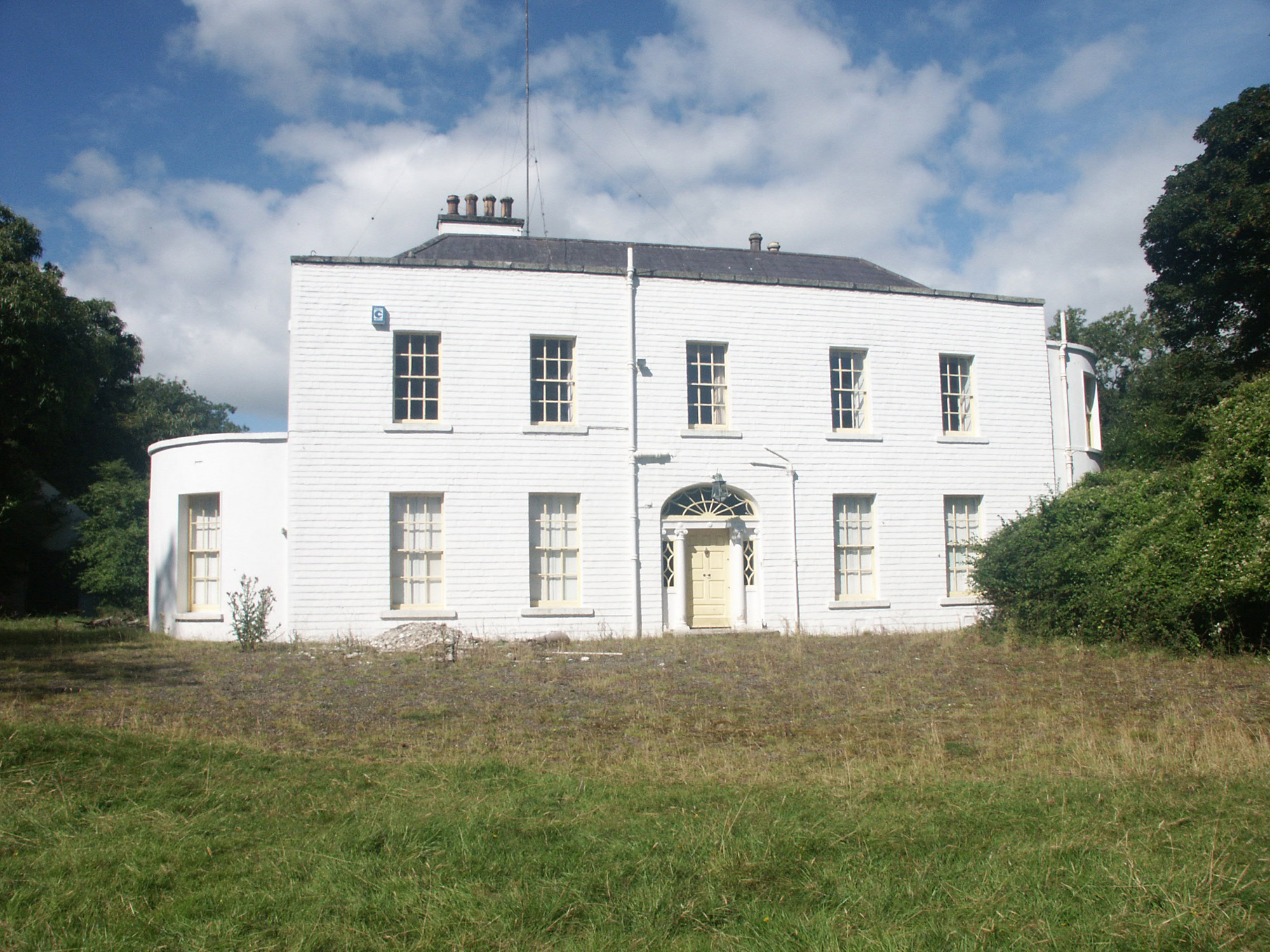
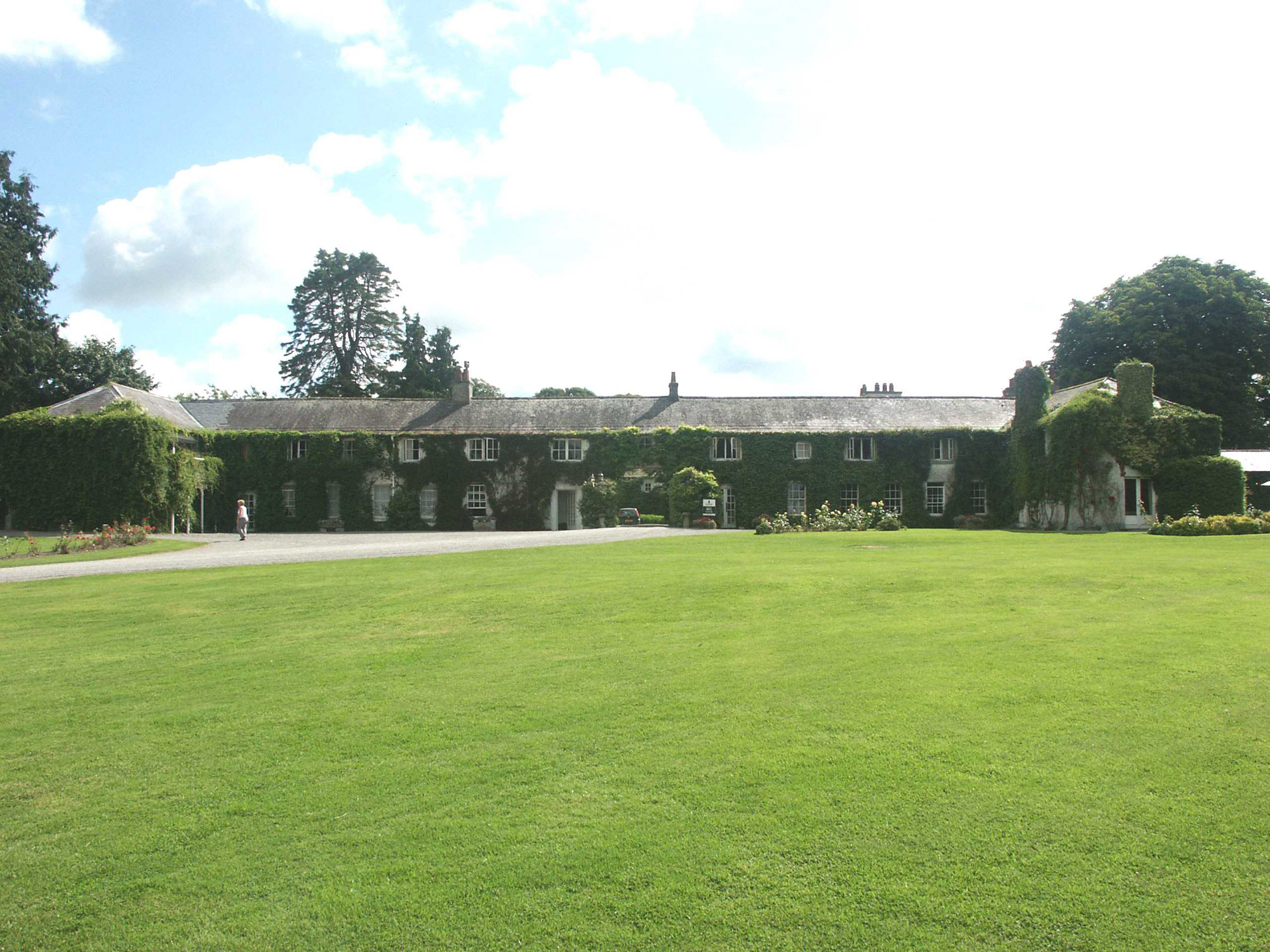
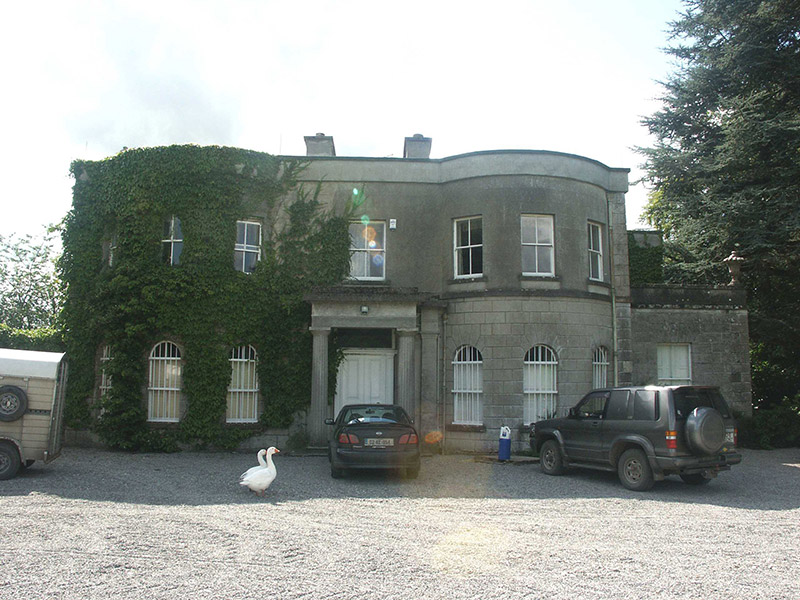
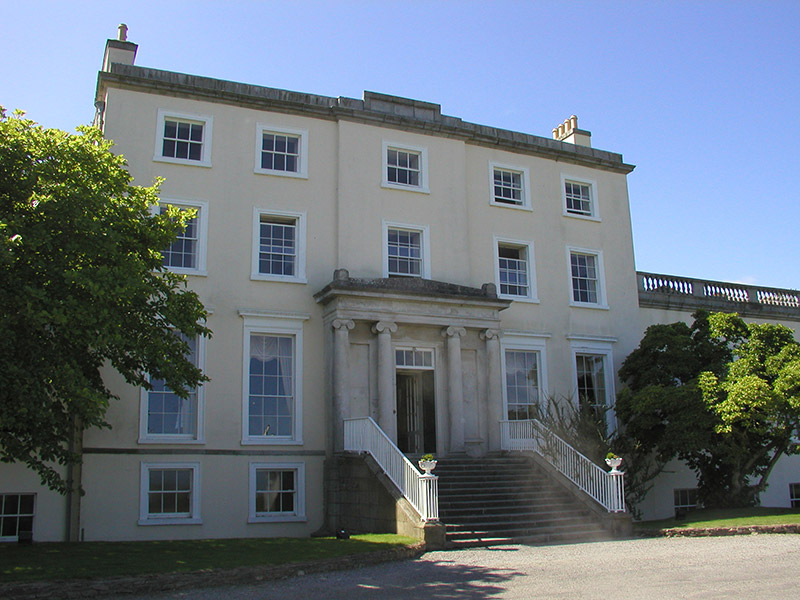
Tullynally Castle and Gardens, Castlepollard, County Westmeath N91 HV58 – section 482

www.tullynallycastle.com
Open dates in 2025:

Castle, May 1-3, 8-10, 15-17, 22-24, 29-31, June 5-7, 12-14, 19-21, 26-28, July 3-5, 10-12, 17-19, Aug 1-2, 7-9, 14-24, 28-30, Sept 4-6, 11-13, 18-20, 11am-3pm

Garden, Mar 27-Sept 28, Thurs-Sundays, and Bank Holidays, National Heritage Week, Aug 16-24,11am-5pm

Fee: castle adult €16.50, child entry allowed for over 8 years €8.50, garden, adult €8.50, child €4, family ticket (2 adults + 2 children) €23, adult season ticket €56, family season ticket €70, special needs visitor with support carer €4, child 5 years or under is free

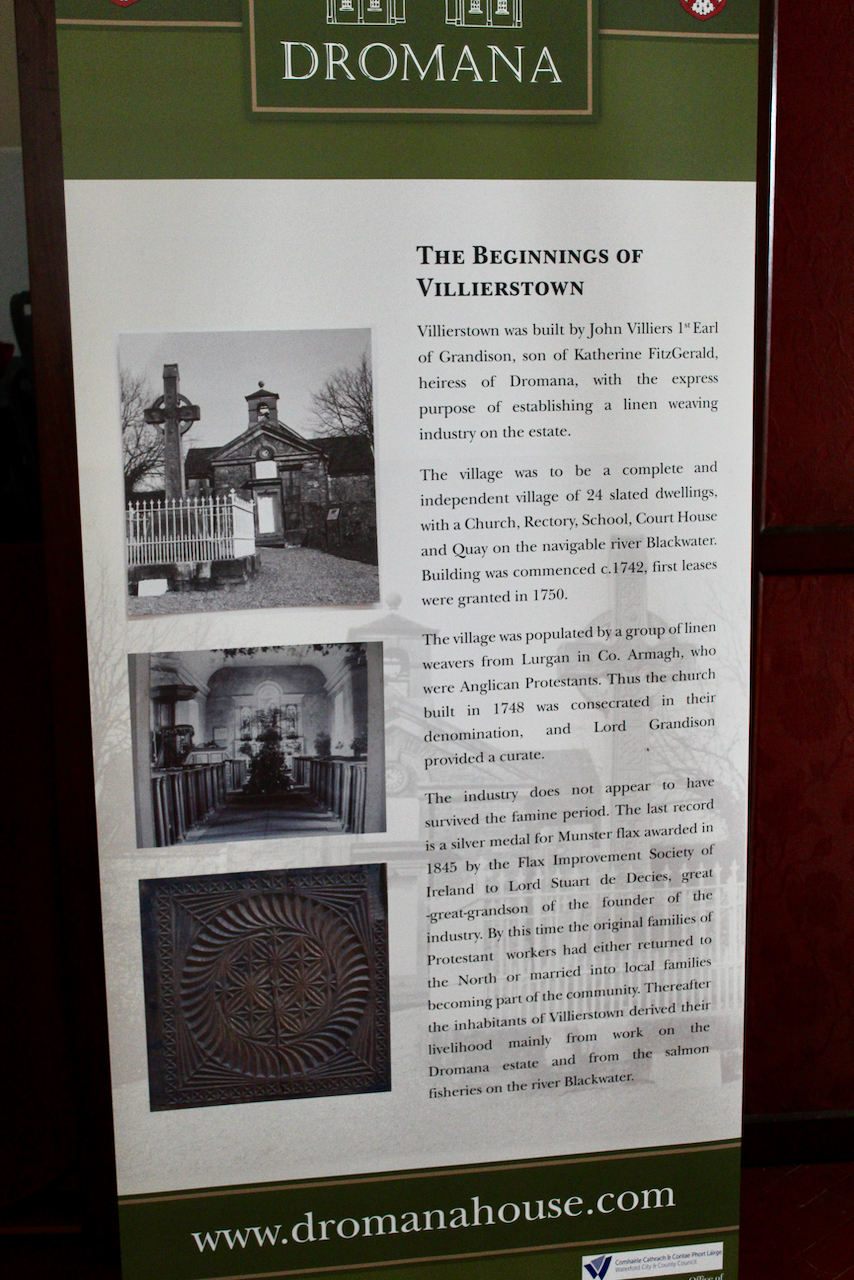
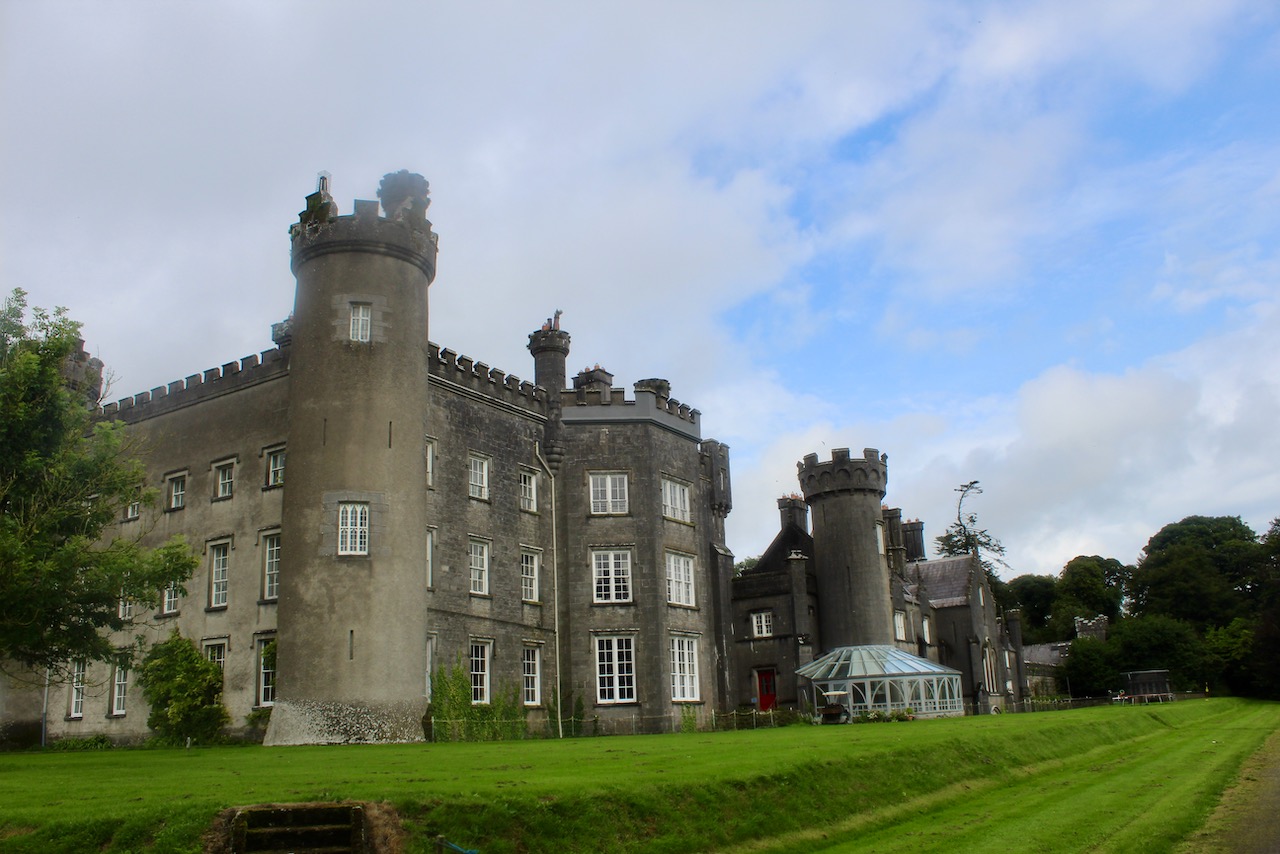
Tullynally, County Westmeath. Photograph © Jennifer Winder-Baggot, www.irishhistorichouses.com
Screenshot 2024-05-28 at 10.18.30

2025 Diary of Irish Historic Houses (section 482 properties)

To purchase an A5 size 2025 Diary of Historic Houses (opening times and days are not listed so the calendar is for use for recording appointments and not as a reference for opening times) send your postal address to jennifer.baggot@gmail.com along with €20 via this payment button. The calendar of 84 pages includes space for writing your appointments as well as photographs of the historic houses. The price includes postage within Ireland. Postage to U.S. is a further €10 for the A5 size calendar, so I would appreciate a donation toward the postage – you can click on the donation link.

€20.00

donation

Help me to pay the entrance fee to one of the houses on this website. This site is created purely out of love for the subject and I receive no payment so any donation is appreciated!

€15.00

Tullynally, County Westmeath. Photograph © Jennifer Winder-Baggot, www.irishhistorichouses.com

We visited Tullynally Castle and Gardens when we were staying near Castlepollard with friends for the August bank holiday weekend in 2020. Unfortunately the house tour is only given during Heritage Week, but we were able to go on the Below Stairs tour, which is really excellent and well worth the price.

In 2021 I prioritised seeing Tullynally during Heritage Week, and we went on the upstairs tour!

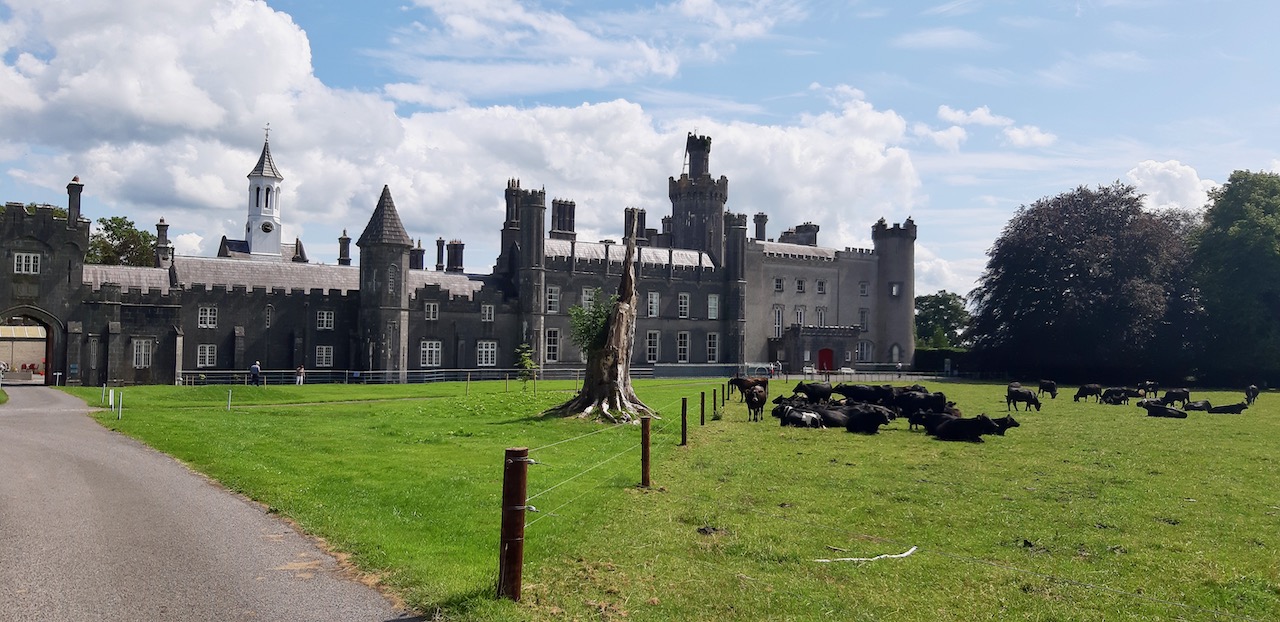
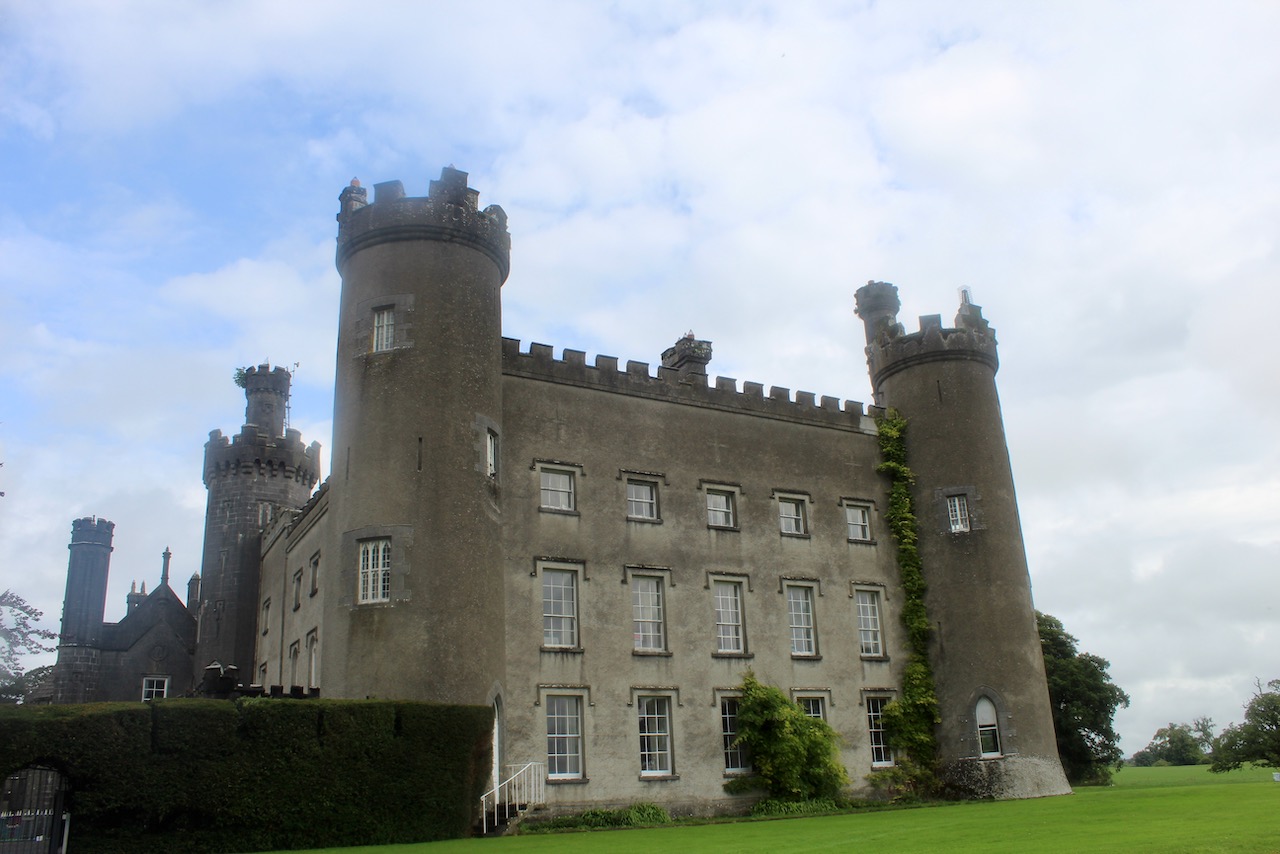
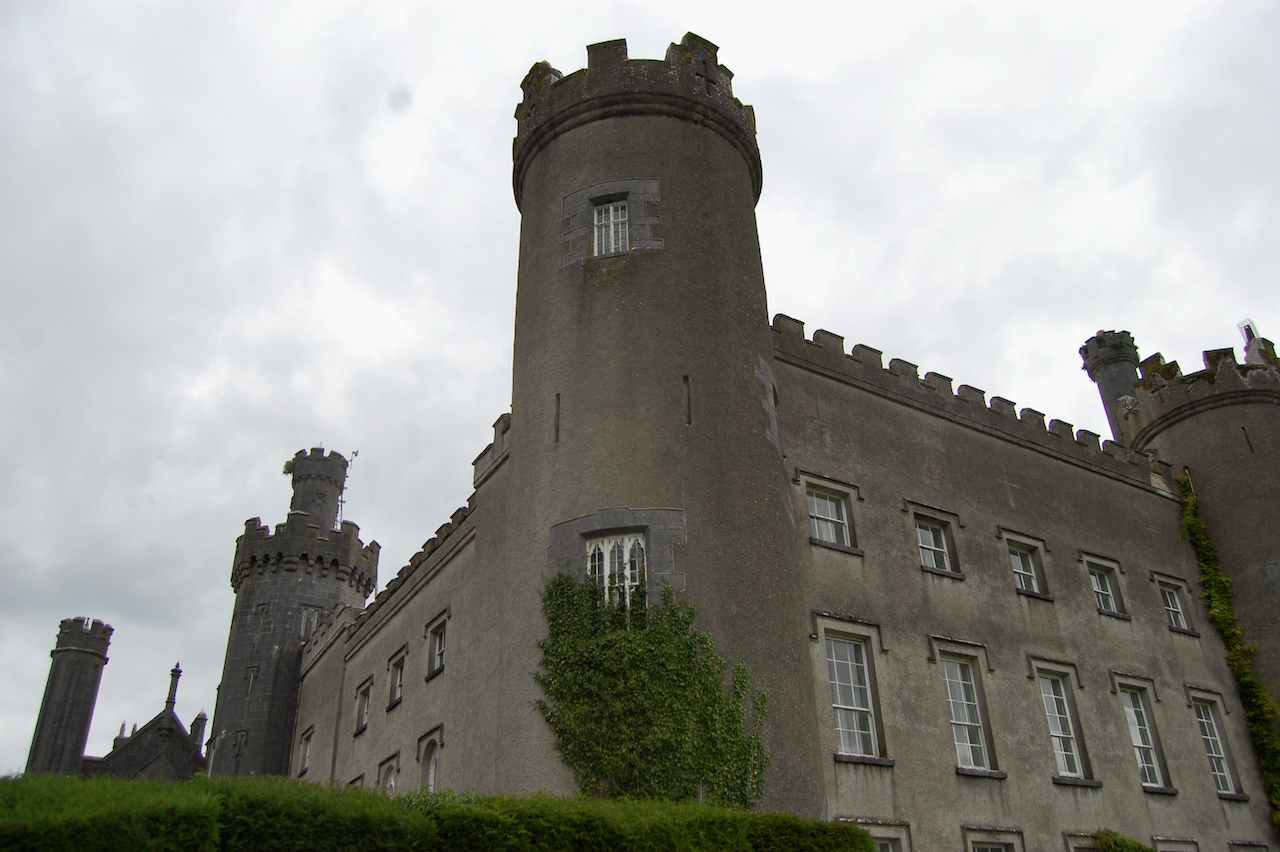
According to Irish Historic Houses, by Kevin O’Connor, Tullynally Castle stretches for nearly a quarter of a mile: “a forest of towers and turrets pierced by a multitude of windows,” and is the largest castle still lived in by a family in Ireland [1]. It has nearly an acre of roof! It has been the seat of the Pakenham family since 1655. I love that it has stayed within the same family, and that they still live there. I was sad to hear of Valerie Pakenham’s death recently – she wrote wonderful books of history and on Irish historic houses.

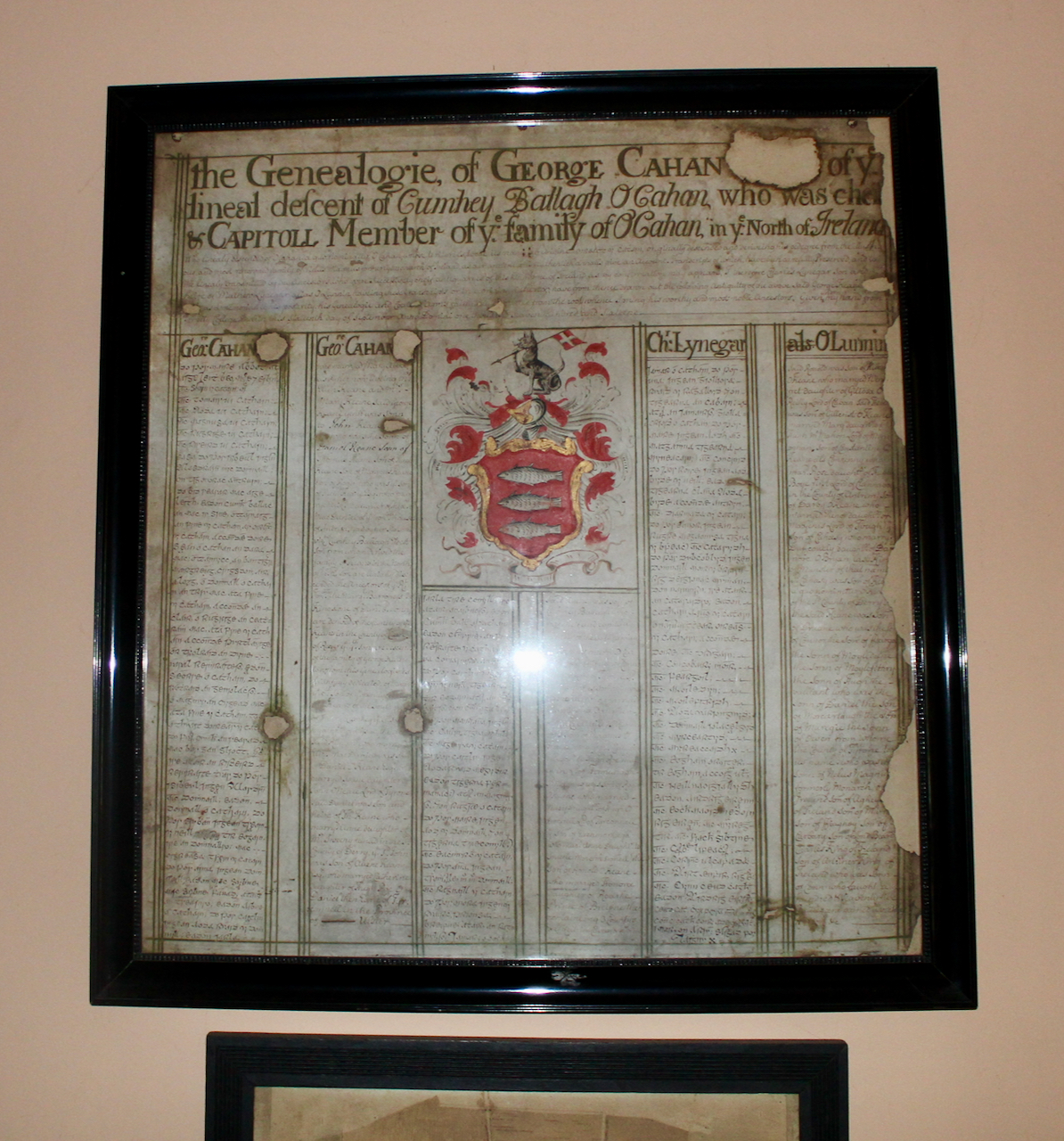
The Pakenham family tree. Photograph © Jennifer Winder-Baggot, www.irishhistorichouses.com

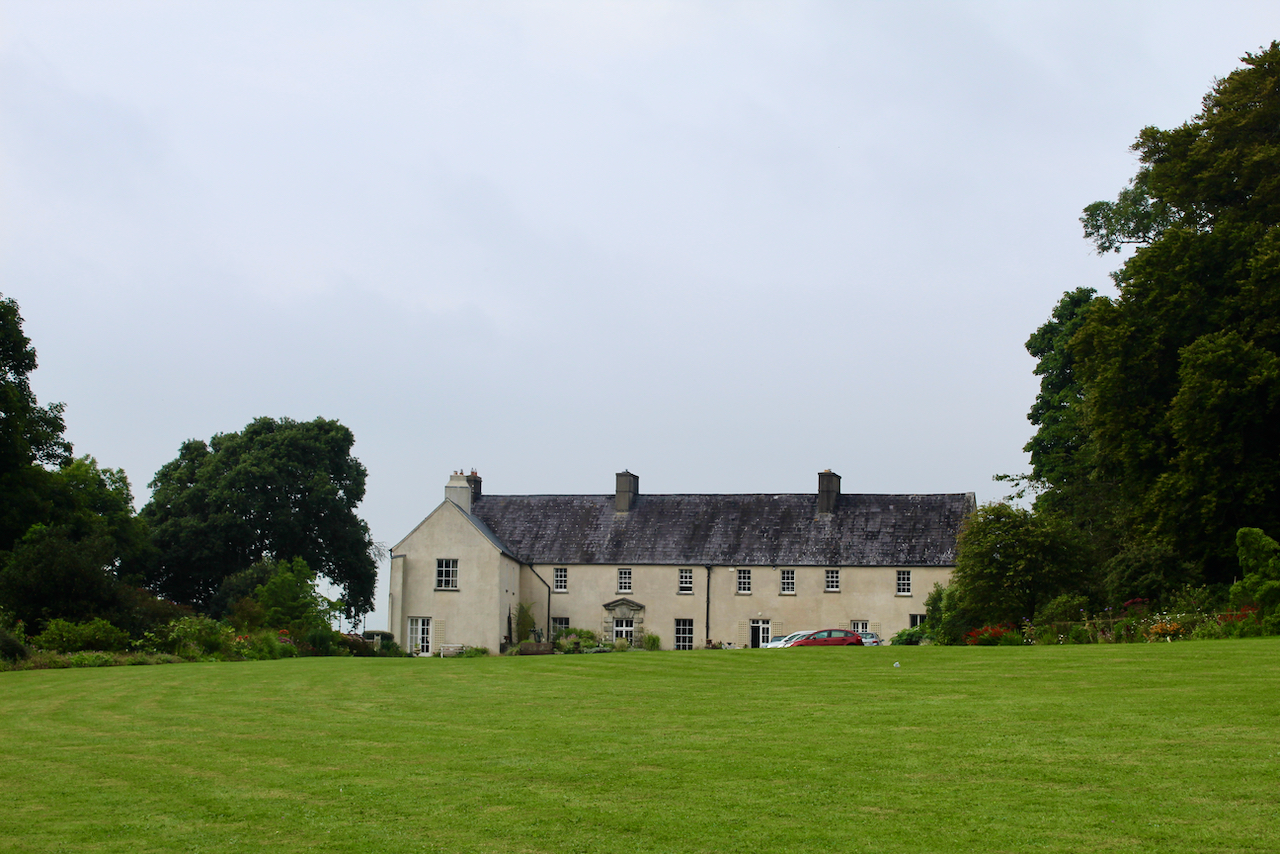
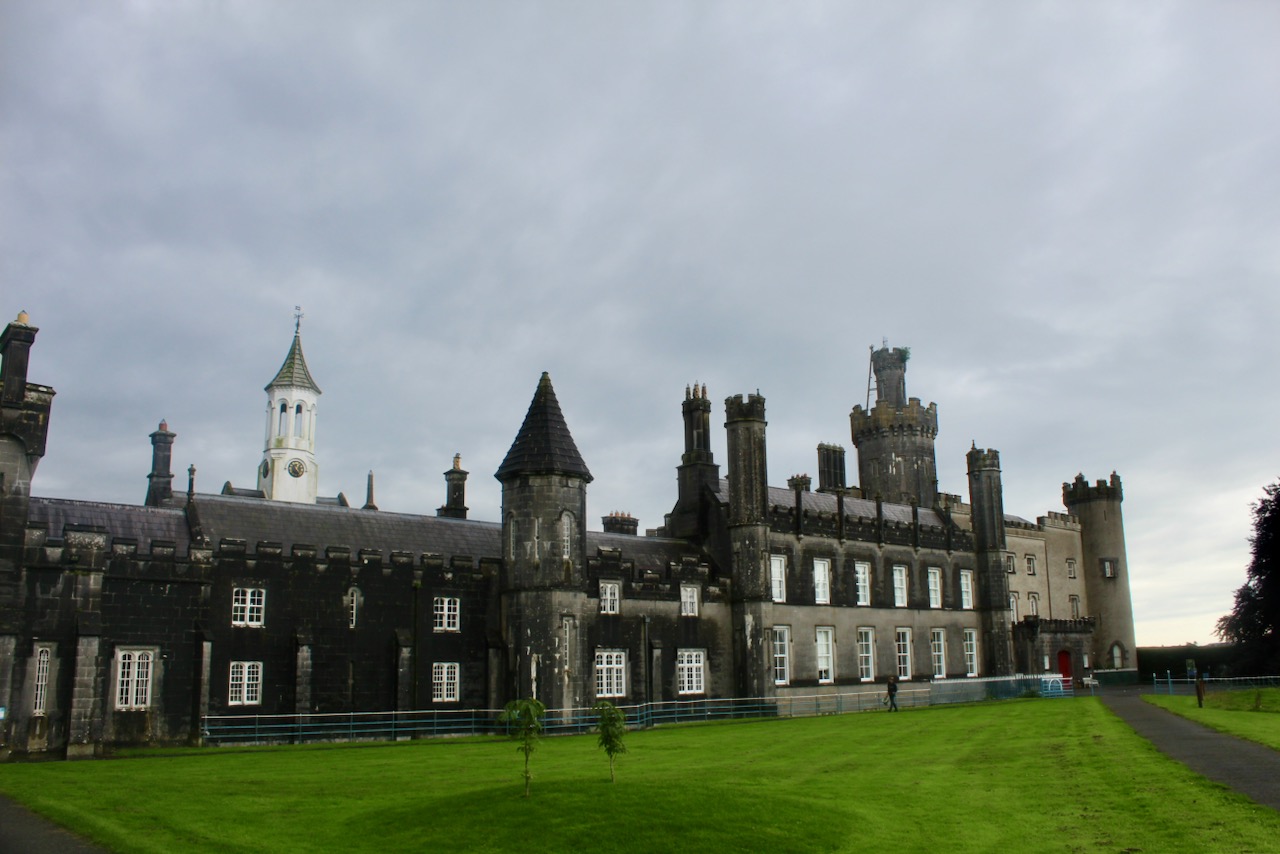
The current incarnation of the Castle is in the romantic Gothic Revival style, and it stands in a large wooded demesne near Lake Derravaragh in County Westmeath.

We stayed for the weekend even closer to Lake Derravaragh, and I swam in it!

In Lake Derravaragh. Photograph © Jennifer Winder-Baggot, www.irishhistorichouses.com

The lands of Tullynally, along with land in County Wexford, were granted to Henry Pakenham in 1655 in lieu of pay for his position as Captain of a troop of horse for Oliver Cromwell. [2] [3] His grandfather, Edward (or Edmund) Pakenham, had accompanied Sir Henry Sidney from England to Ireland when Sir Sidney, a cousin of Edward Pakenham, was appointed Lord Deputy of Ireland. [4]

A house existed on the site at the time and parts still exist in the current castle. It was originally a semi-fortified Plantation house. When Henry Pakenham moved to Tullynally the house became known as Pakenham Hall. It is only relatively recently that it reverted to its former name, Tullynally, which means “hill of the swans.”

Tullynally, August 2021. Photograph © Jennifer Winder-Baggot, www.irishhistorichouses.com

Henry was an MP for Navan in 1667. He settled at Tullynally. He married Mary Lill, the daughter of a Justice of the Peace in County Meath and left the property to his oldest son by this marriage, Thomas (1649-1706) who became a member of Parliament and an eminent lawyer. Henry remarried after his first wife died, this time to Anne Pigot and he had at least two more children with her.

Thomas, who held the office of Prime Sergeant-at-law in 1695, married first Mary Nelmes, daughter of an alderman in London. Thomas married a second time in 1696 after his first wife died, Mary Bellingham, daughter of Daniel, 1st Baronet Bellingham, of Dubber, Co. Dublin. His oldest son, by his first wife, Edward (1683-1721), became an MP for County Westmeath between 1714 and 1721. A younger son, Thomas (d. 1722) lived at Craddenstown, County Westmeath.

Edward (1683-1721) married Margaret Bradeston and was succeeded by his son, Thomas Pakenham (1713-1766) [see 3]. After her husband died in 1721, Margaret married Reverend Ossory Medlicott. Edward’s younger son George Edward (1717-1768) became a merchant in Hamburg.

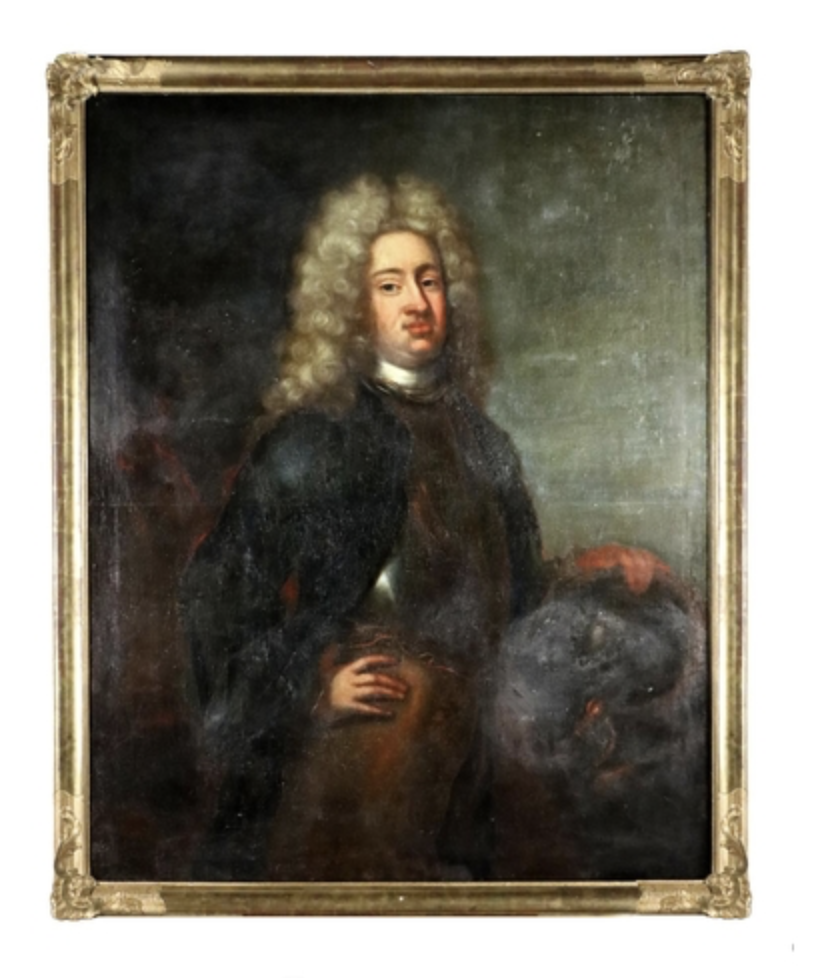
Thomas (1713-1766) married Elizabeth Cuffe (1719-1794), the daughter of Michael Cuffe (1694-1744) of Ballinrobe, County Mayo. Her father was heir to Ambrose Aungier (d. 1704), 2nd and last Earl of Longford (1st creation). Michael Cuffe sat as a Member of Parliament for County Mayo and the Borough of Longford. In 1756 the Longford title held by his wife’s ancestors was revived when Thomas was raised to the peerage as Baron Longford. After his death, his wife Elizabeth was created Countess of Longford in her own right, or “suo jure,” in 1785.

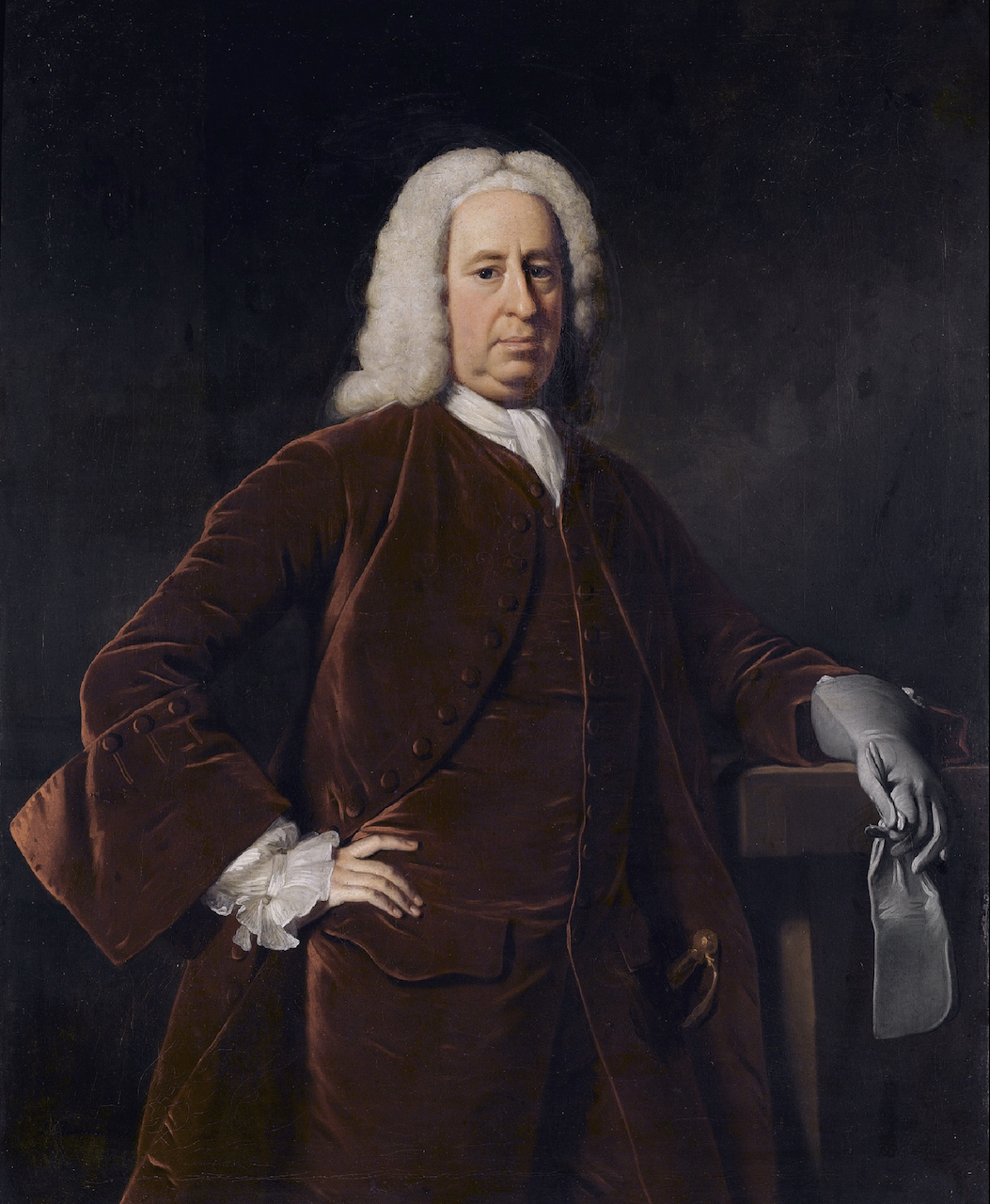
Thomas Pakenham, 1st Baron of Longford (1713-1766), who married Elizabeth Cuffe. Photograph © Jennifer Winder-Baggot, www.irishhistorichouses.com
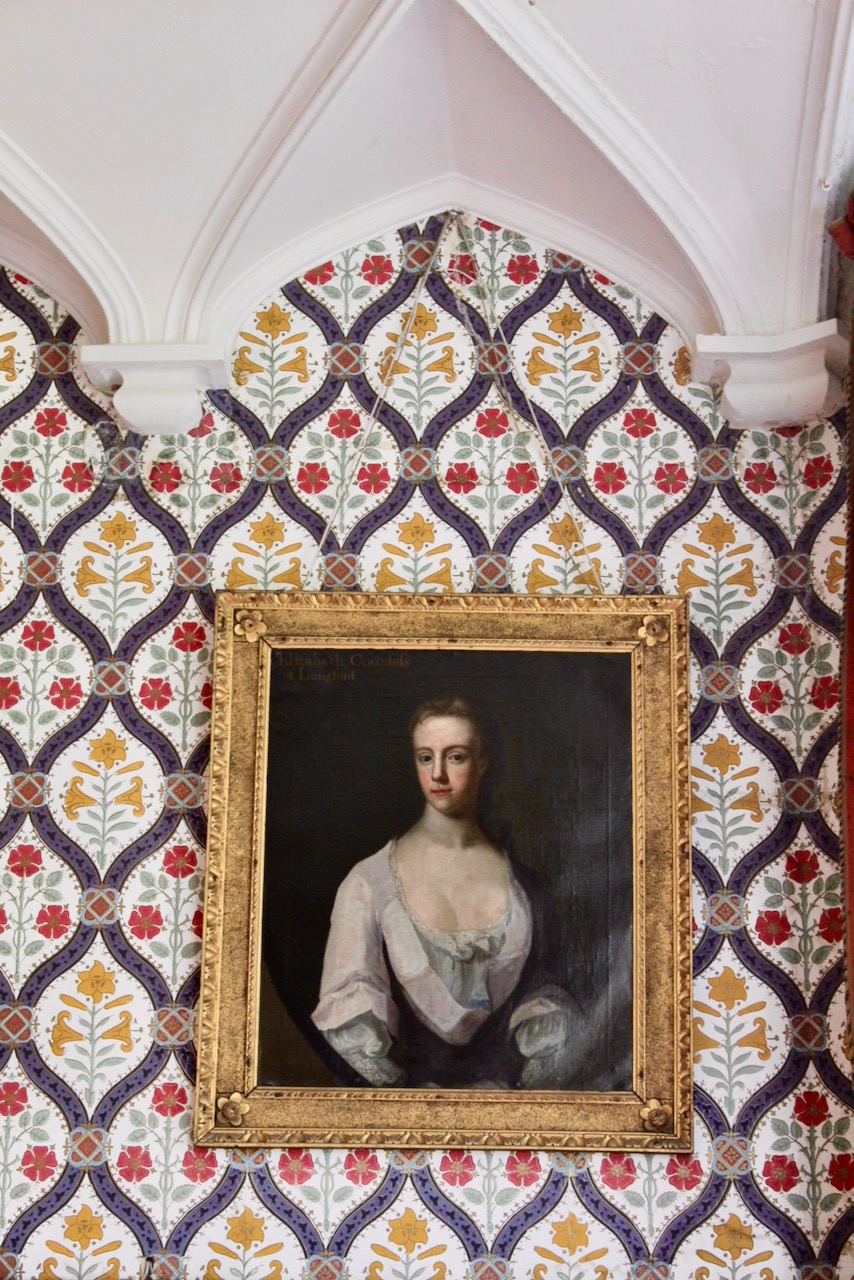
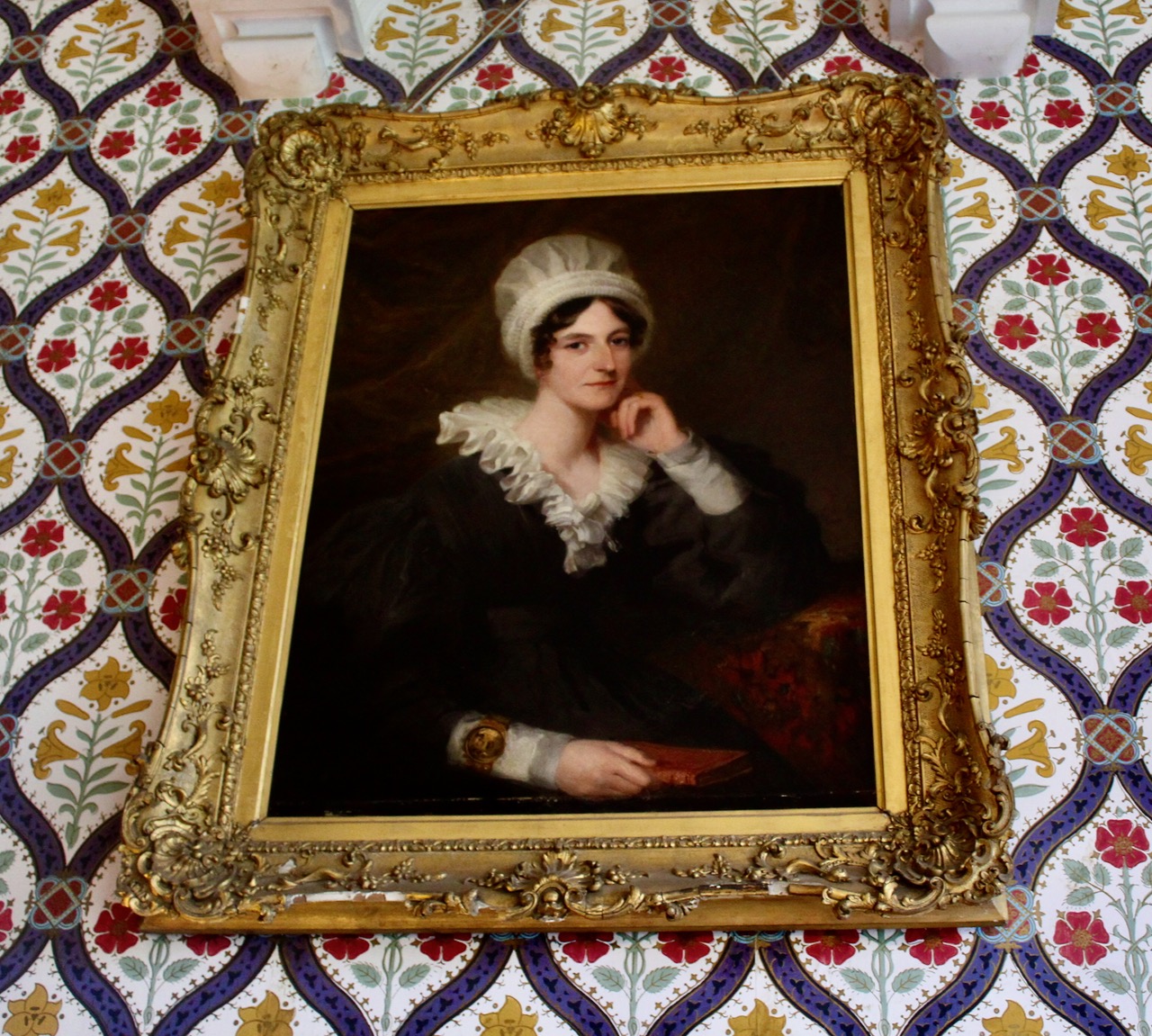
Elizabeth Cuffe (1719-1794) who married Thomas Pakenham, 1st Baron Longford. She became Countess of Longford in her own right, through her father, who was heir to Ambrose Aungier, 2nd and last Earl of Longford (1st creation). Photograph © Jennifer Winder-Baggot, www.irishhistorichouses.com
Thomas, Lord Longford (1713-1766) Date c.1756 Credit Line: Presented by Mrs R. Montagu, 1956, photograph courtesy of National Gallery of Ireland.

Michael Cuffe had another daughter, Catherine Anne Cuffe, by the way, who married a Bagot, Captain John Lloyd Bagot (d. 1798). I haven’t found whether my Baggots are related to these Bagots but it would be nice to have such ancestry! Even nicer because his mother, Mary Herbert, came from Durrow Abbey near Tullamore, a very interesting looking house currently standing empty and unloved.

Thomas’s son, Edward Michael Pakenham, 2nd Baron Longford (1743-92) had Pakenham Hall enlarged in 1780 to designs by Graham Myers who in 1789 was appointed architect to Trinity College, Dublin. Myers created a Georgian house. The Buildings of Ireland website tells us that the original five bay house had a third floor added at this time. [5] 

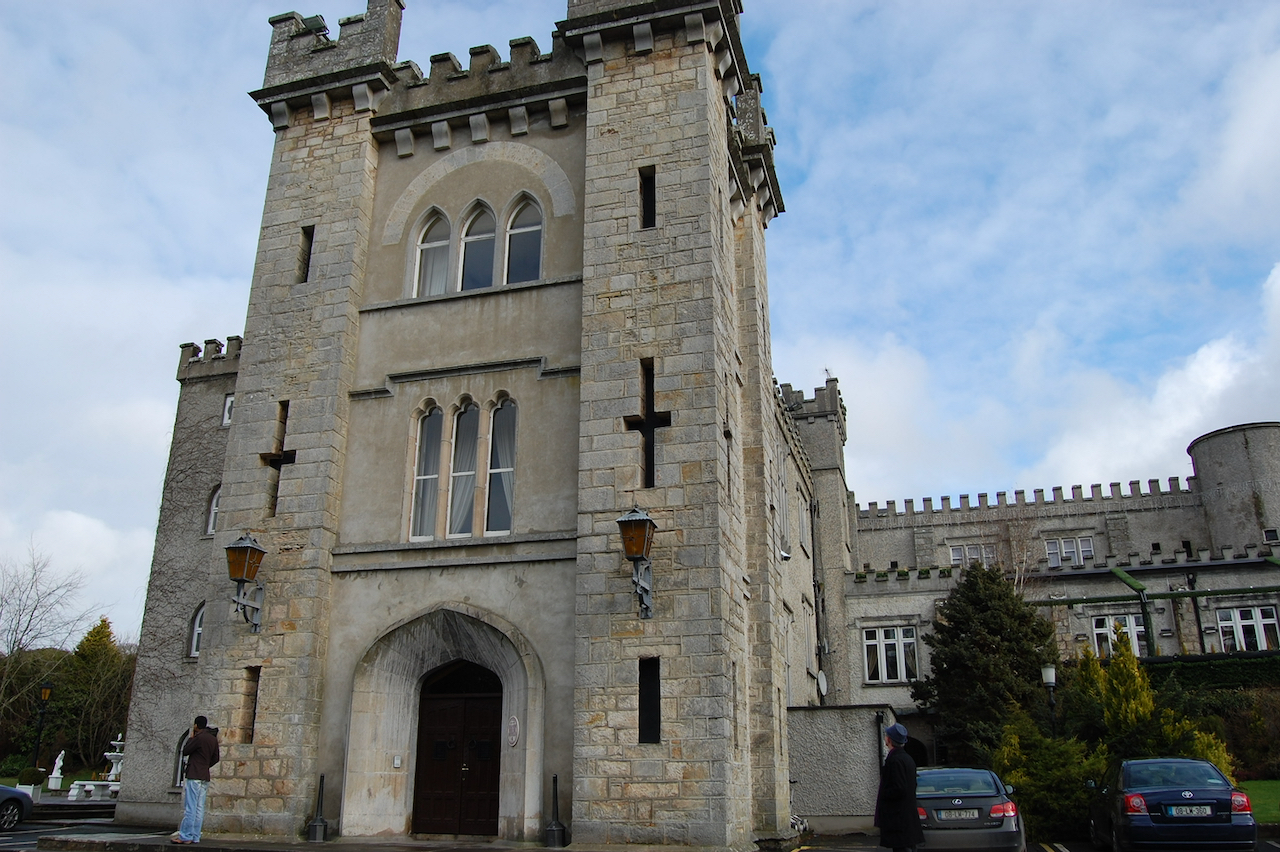
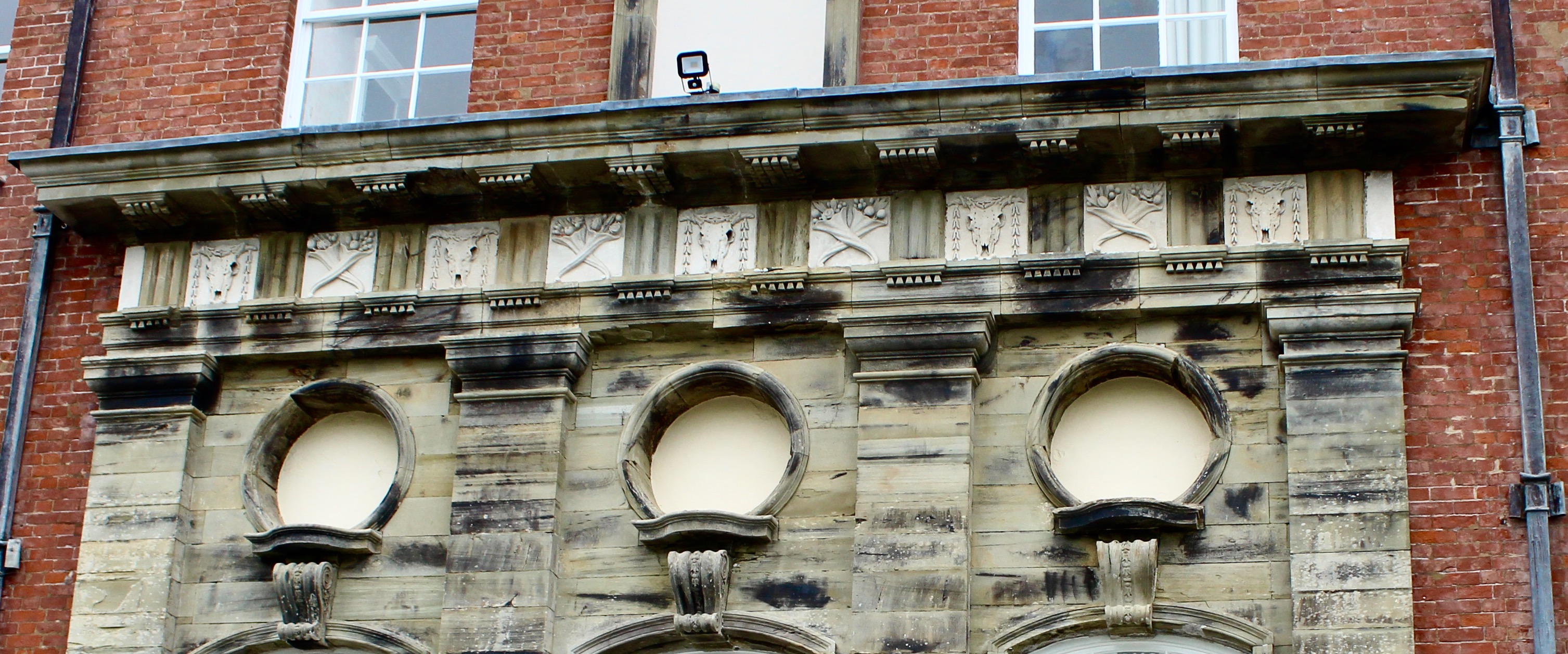
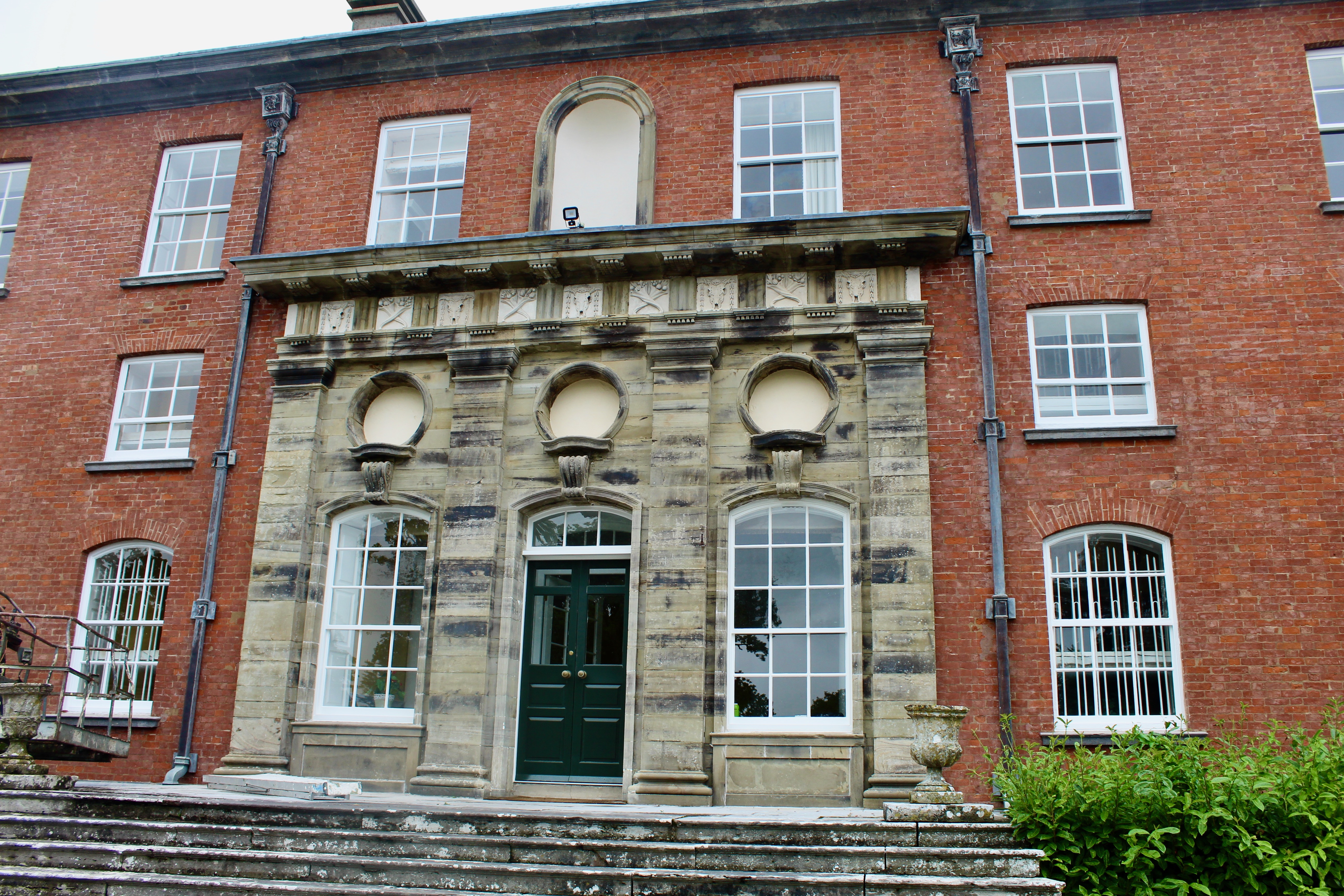
The entrance porch, a wide archway in ashlar stonework with miniature bartizans rising from the corners, was added later, and rebuilt by Richard Morrison. Photograph © Jennifer Winder-Baggot, www.irishhistorichouses.com
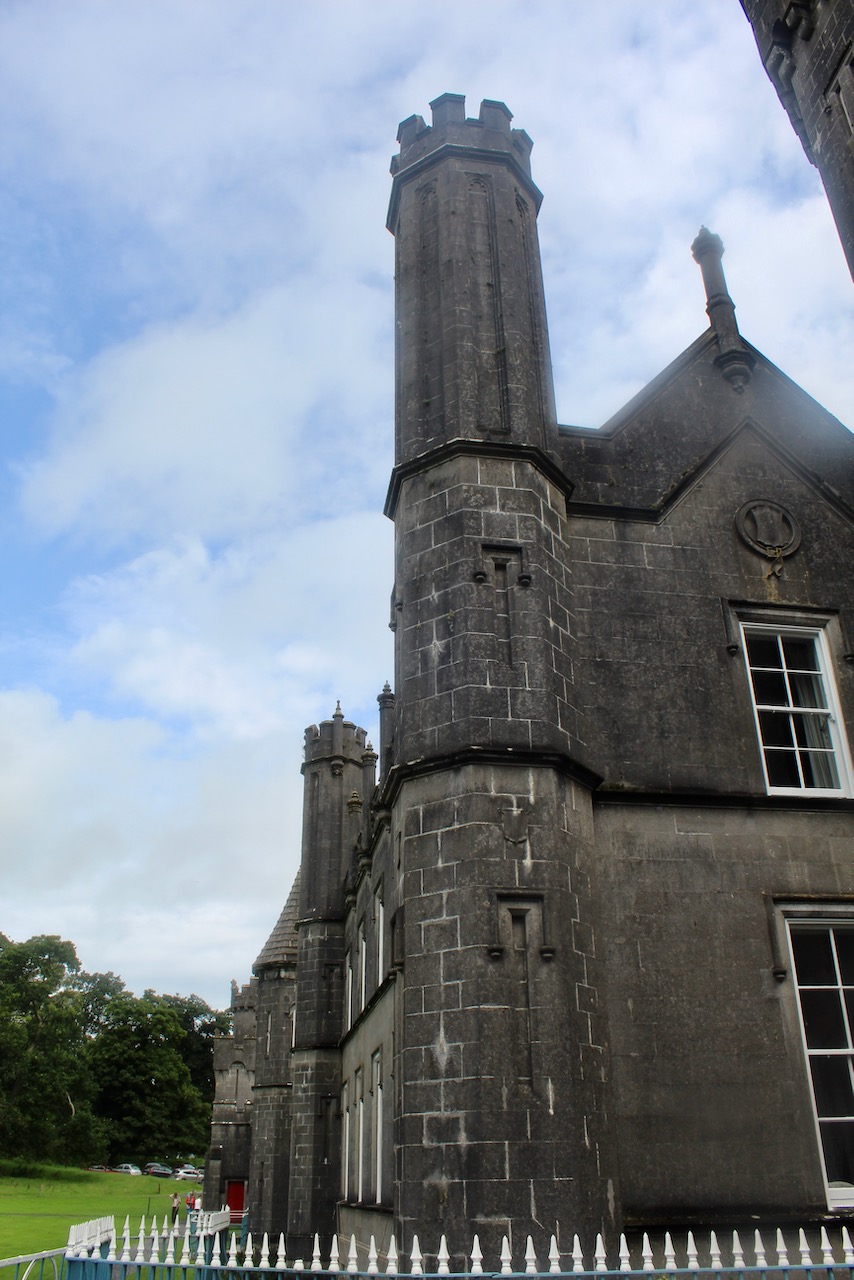
The south end of the castle, the oldest part. Photograph © Jennifer Winder-Baggot, www.irishhistorichouses.com
The south end of the house. Photograph © Jennifer Winder-Baggot, www.irishhistorichouses.com
Tullynally, County Westmeath. Photograph © Jennifer Winder-Baggot, www.irishhistorichouses.com

The oldest parts still surviving from the improvements carried out around 1780 are some doorcases in the upper rooms and a small study in the northwest corner of the house. We did not see these rooms, but Christine Casey and Alistair Rowan tell us that the study has a dentil cornice and a marble chimneypiece with a keystone of around 1740. [see 2] The oldest part of the castle is at the south end, and still holds the principal rooms.

Edward Michael Pakenham, 2nd Baron Longford, married Catherine Rowley, daughter of Hercules Langford Rowley of Summerhill, County Kilkenny, in 1768. He was in the Royal Navy but retired from the military in 1766, when he succeeded as 2nd Baron Longford. He was appointed Privy Counsellor in Ireland in 1777.

Edward Michael Pakenham, 2nd Baron Longford (1743-1792). His daughter married the Duke of Wellington, Arthur Wellesley. Photograph © Jennifer Winder-Baggot, www.irishhistorichouses.com

Admiral Thomas Pakenham (1757-1836), a younger brother of Edward Michael Pakenham, the 2nd Baron Longford, built another house on the Tullynally estate, Coolure House, around 1775, when he married Louisa Anne Staples, daughter of John Staples (1736-1820), MP for County Tyrone and owner of Lissan House in County Tyrone – which can now be visited, https://www.lissanhouse.com/ . Their son Edward Michael Pakenham (1786-1848) inherited Castletown in County Kildare and he legally changed his name to Edward Michael Conolly. Louisa Anne Staples’s mother was Harriet Conolly, daughter of William Conolly (1712-1754) of Castletown, County Kildare.

Coolure House, on the Tullynally estate, built for Admiral Thomas Pakenham around 1775. Photograph from the National Inventory of Architectural Heritage.

Edward Michael Pakenham 2nd Baron Longford and his wife Catherine née Rowley had many children. Their daughter Catherine (1773-1831) married Arthur Wellesley, Duke of Wellington, but it was an unhappy marriage. The daughter of the current occupant of Tullynally Thomas Pakenham and his wife Valerie, Eliza Pakenham, published Tom, Ned and Kitty: An Intimate History of an Irish Family, about the Duke of Wellington and the family’s relation to him. Kitty fell for the local naval man, Arthur Wellesley, but the family refused to let her marry him. He promised her that he would return and marry her. He went off to sea, and she was brokenhearted. He returned as the Duke of Wellington and did indeed marry her. He, however, was not a very nice man, and is reported to have said loudly as she walked up the aisle of the church to marry him, “Goodness, the years have not been kind.”

When Edward died in 1792 his son Thomas (1774-1835) inherited, and became the 3rd Baron Longford. When his grandmother Elizabeth née Cuffe, who had been made the Countess of Longford in her own right, died in 1794, Thomas became 2nd Earl of Longford.

Tullynally was gothicized by Francis Johnston to become a castle.

Thomas the 2nd Earl of Longford (1774-1835). Photograph © Jennifer Winder-Baggot, www.irishhistorichouses.com

We came across Francis Johnson (1760-1829) the architect when I learned that he had been a pupil of Thomas Cooley, the architect for Richard Robinson, Archbishop of Armagh (who had Rokeby Hall in County Louth built as his home). Johnston took over Cooley’s projects when Cooley died and went on to become an illustrious architect, who designed the beautiful Townley Hall in County Louth which we visited recently. He also enlarged and gothicized Markree Castle for the Coopers, and Slane Castle for the Conynghams. His best known building is the General Post Office on O’Connell Street in Dublin. We recently saw his house in Dublin on Eccles Street, on a tour with Aaran Henderson of Dublin Decoded.

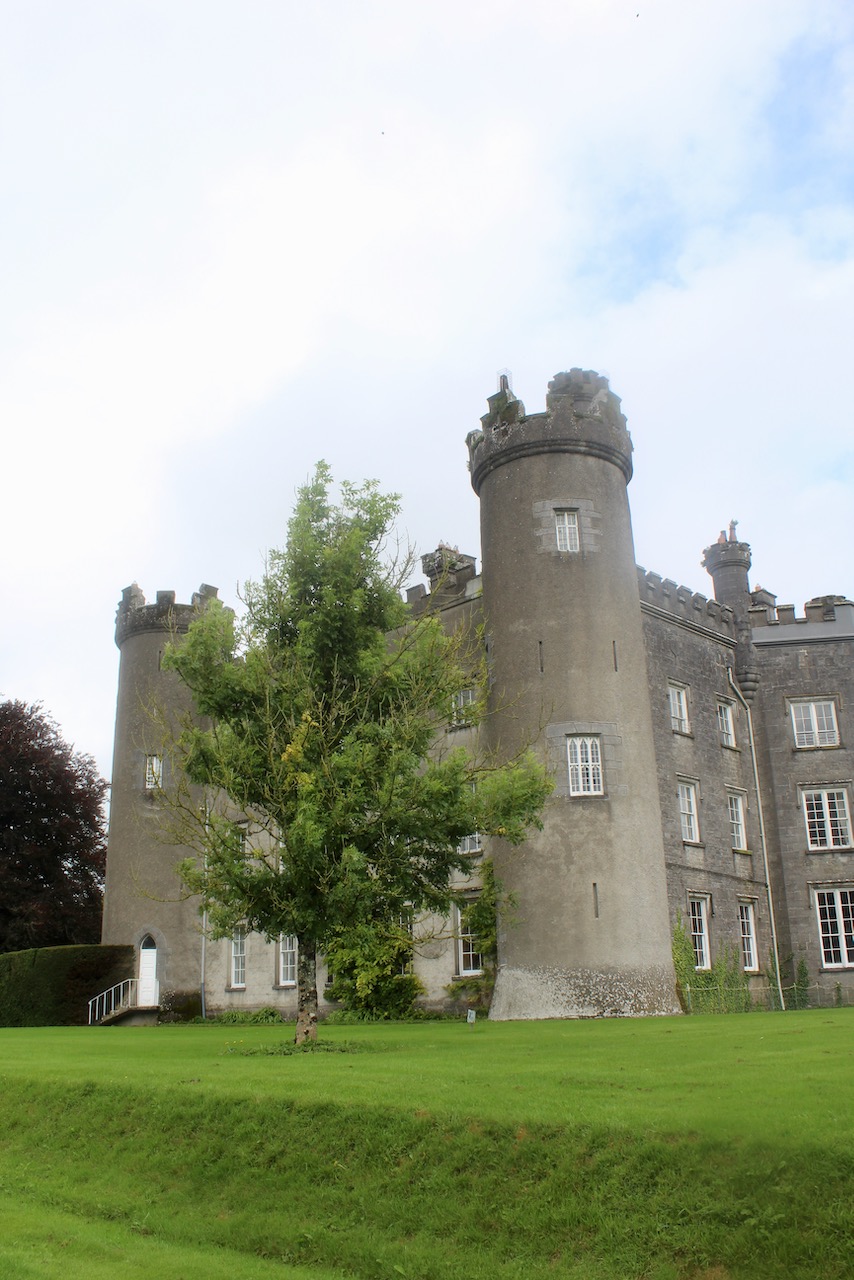
Thomas the 2nd Earl sat in the British House of Lords as one of the 28 original Irish Representative Peers. Casey and Rowan call Francis Johnston’s work on the house “little more than a Gothic face-lift for the earlier house.” He produced designs for the house from 1794 until 1806. On the south front he added two round towers projecting from the corners of the main block, and battlemented parapets. He added the central porch. To the north, he built a rectangular stable court, behind low battlemented walls. He added thin mouldings over the windows, and added the arched windows on either side of the entrance porch.

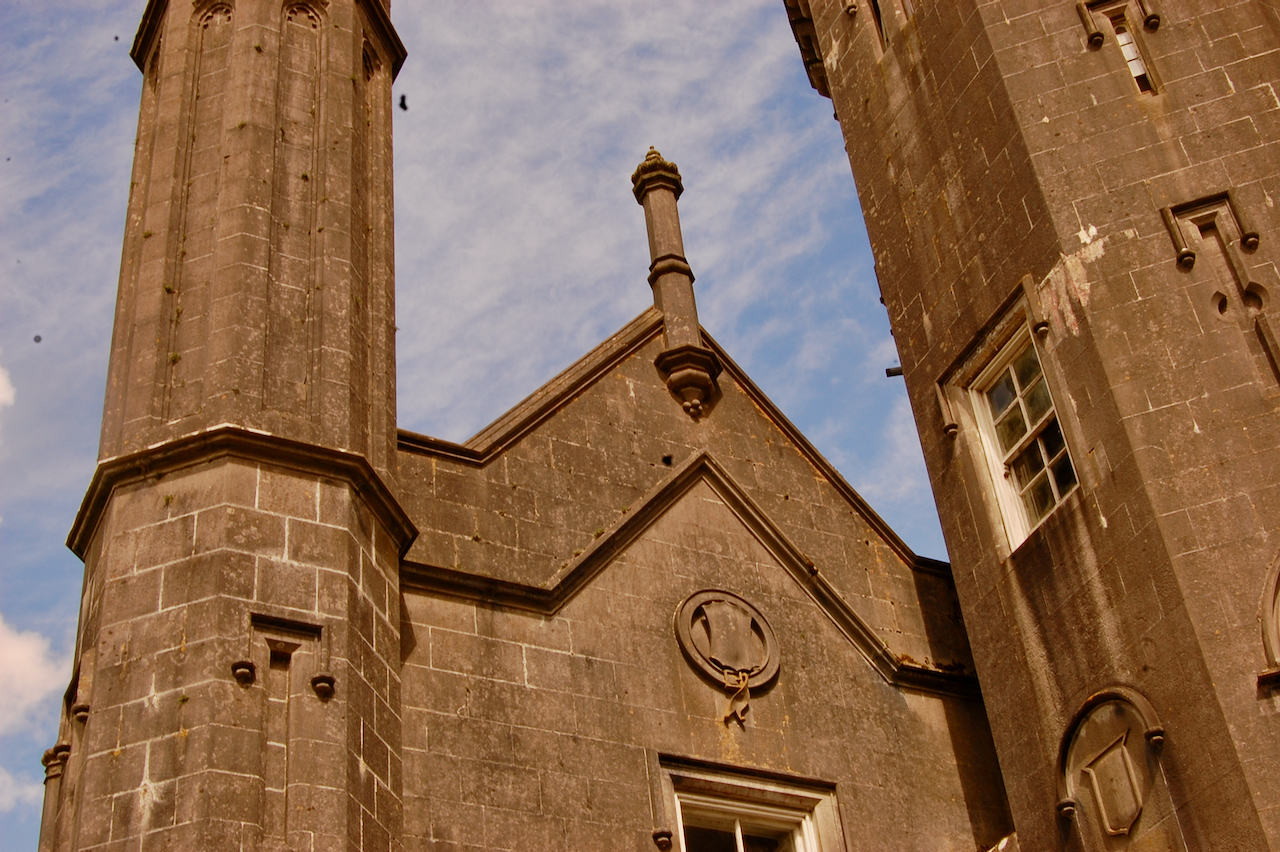
Francis Johnston added the porch, which was later altered by Richard Morrison. Johnston also added the arched windows on either side of the entrance porch, as well as the round corner towers. He also added the mouldings above the windows. To the north, Johnston built the rectangular stable court behind low battlemented walls. Photograph © Jennifer Winder-Baggot, www.irishhistorichouses.com
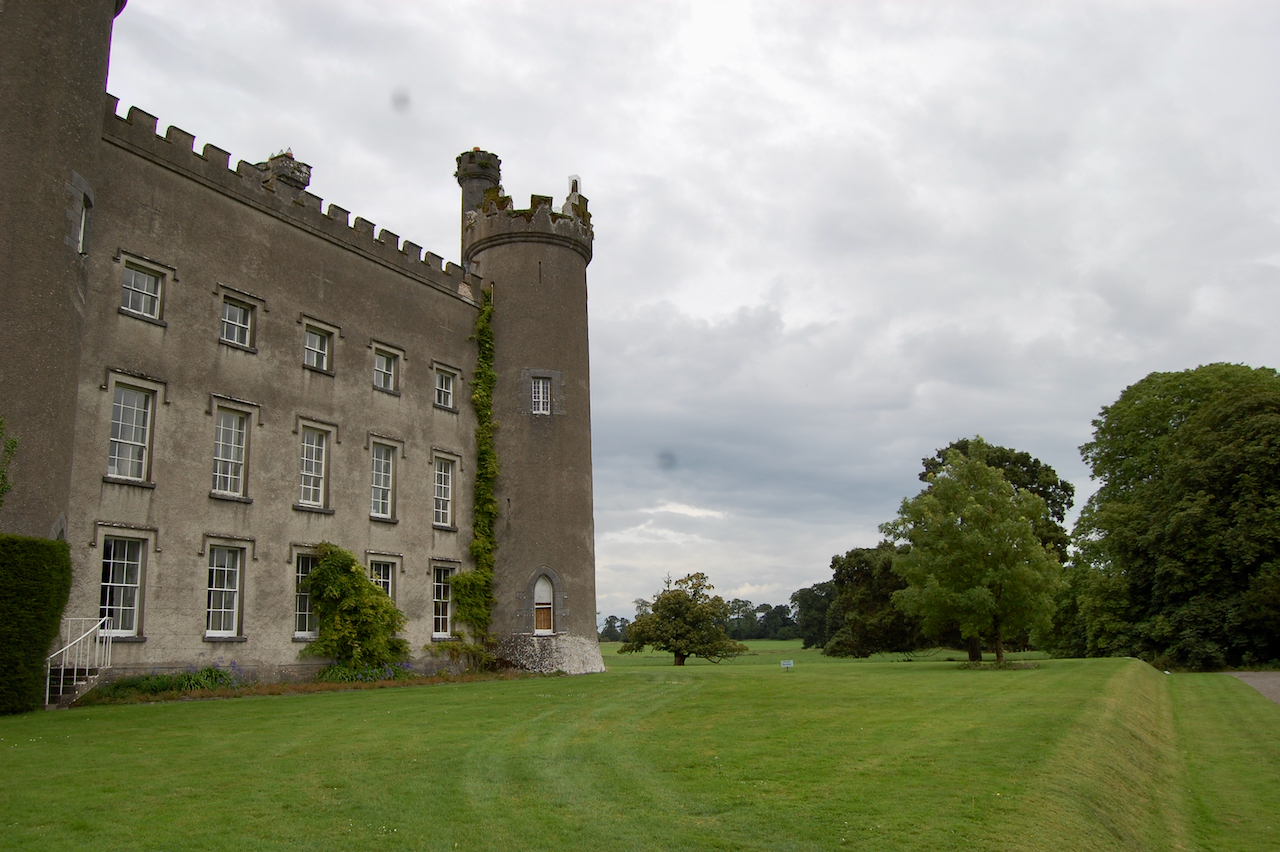
The oldest part of the castle, which was made into a Georgian house by Graham Myers in 1780. The towers were added later by Francis Johnston, 1801-1806. Photograph © Jennifer Winder-Baggot, www.irishhistorichouses.com
Tullynally, County Westmeath. Photograph © Jennifer Winder-Baggot, www.irishhistorichouses.com

Terence Reeves-Smyth details the enlargement of Tullynally in his Big Irish Houses:

“Johnson designed battlements and label mouldings over the windows, but as work progressed it was felt this treatment was too tame, so between 1805 and 1806 more dramatic features were added, notably round corner turrets and a portcullis entrance, transforming the house with characteristic Irish nomenclature from Pakenham Hall House to Pakenham Hall Castle.”

During the early nineteenth century, a craze for building sham castles spread across Ireland with remarkable speed, undoubtedly provoked by a sense of unease in the aftermath of the 1798 rebellion. Security was certainly a factor in Johnson’s 1801 to 1806 remodelling of Tullynally, otherwise known as Pakenham Hall, where practical defensive features such as a portcullis entrance were included in addition to romantic looking battlements and turrets. Later enlargements during the 1820s and 1830s were also fashioned in the castle style and made Tullynally into one of the largest castellated houses in Ireland – so vast, indeed, that it has been compared to a small fortified town.”

Thomas married Georgiana Emma Charlotte Lygon, daughter of William Lygon, 1st Earl Beauchamp (UK) in 1817. He was created 1st Baron Silchester, County Southampton [U.K.] on 17 July 1821, which gave him and his descendants an automatic seat in the House of Lords.

Georgiana Lygon (1774-1880). Photograph © Jennifer Winder-Baggot, www.irishhistorichouses.com

According to Rowan and Casey it may have been his wife Georgiana Lygon’s “advanced tastes” that led to the decision to make further enlargements in 1820. They chose James Sheil, a former clerk of Francis Johnston, who also did similar work at Killua Castle in County Westmeath, Knockdrin Castle (near Mullingar) and Killeen Castle (near Dunshaughlin, Co. Meath).

At Tullynally Sheil added a broad canted bay window (a bay with a straight front and angled sides) towards the north end of the east front, with bartizan turrets (round or square turrets that are corbelled out from a wall or tower), and wide mullioned windows under label mouldings (or hoodmouldings) in the new bay.

The three storey canted bay window on the garden front was added by James Sheil in 1820, as well as a new round tower to the north. Photograph © Jennifer Winder-Baggot, www.irishhistorichouses.com
The gate lodge was designed by James Sheil. Photograph © Jennifer Winder-Baggot, www.irishhistorichouses.com

Sheil also decorated the interior. We shall now go inside to take a look.

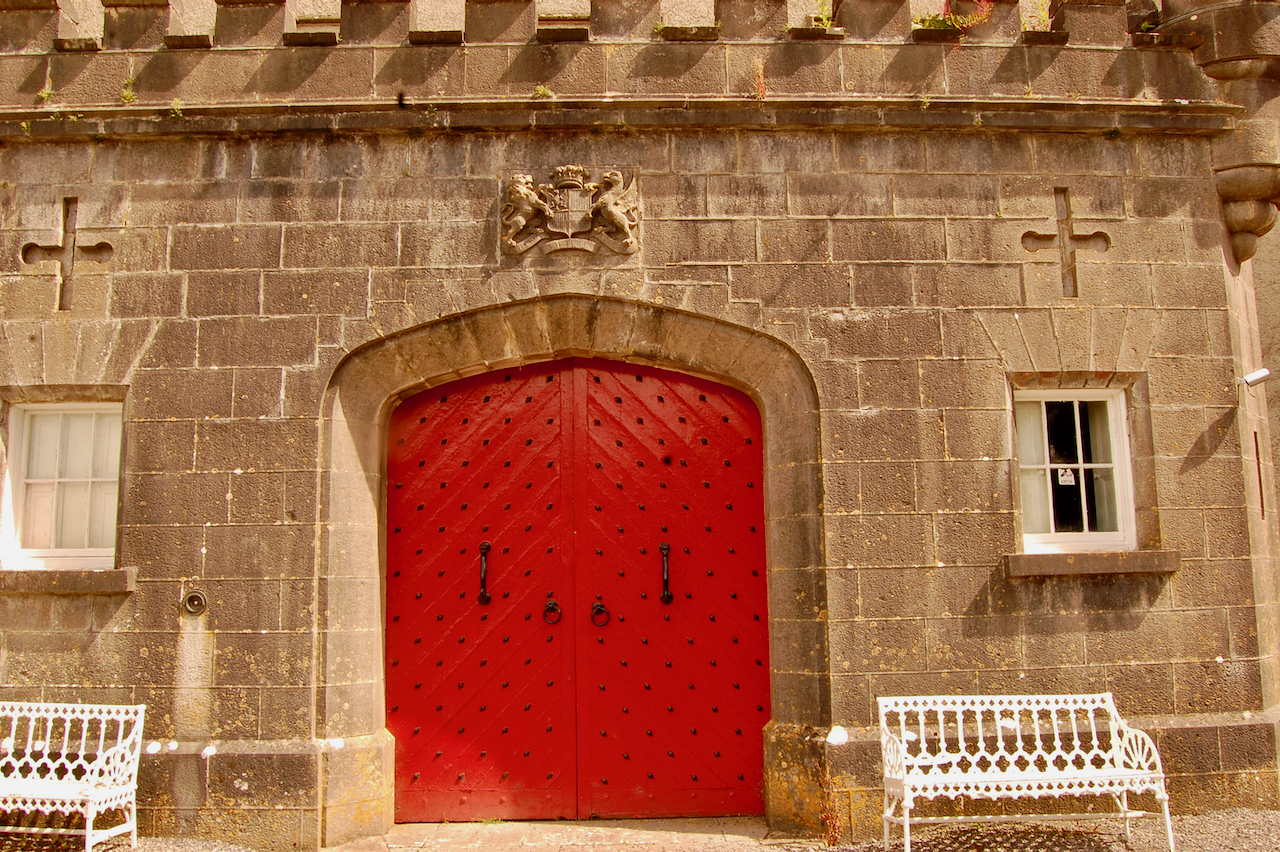
We entered through the big red door in the entrance porch.

Tullynally, County Westmeath. Photograph © Jennifer Winder-Baggot, www.irishhistorichouses.com
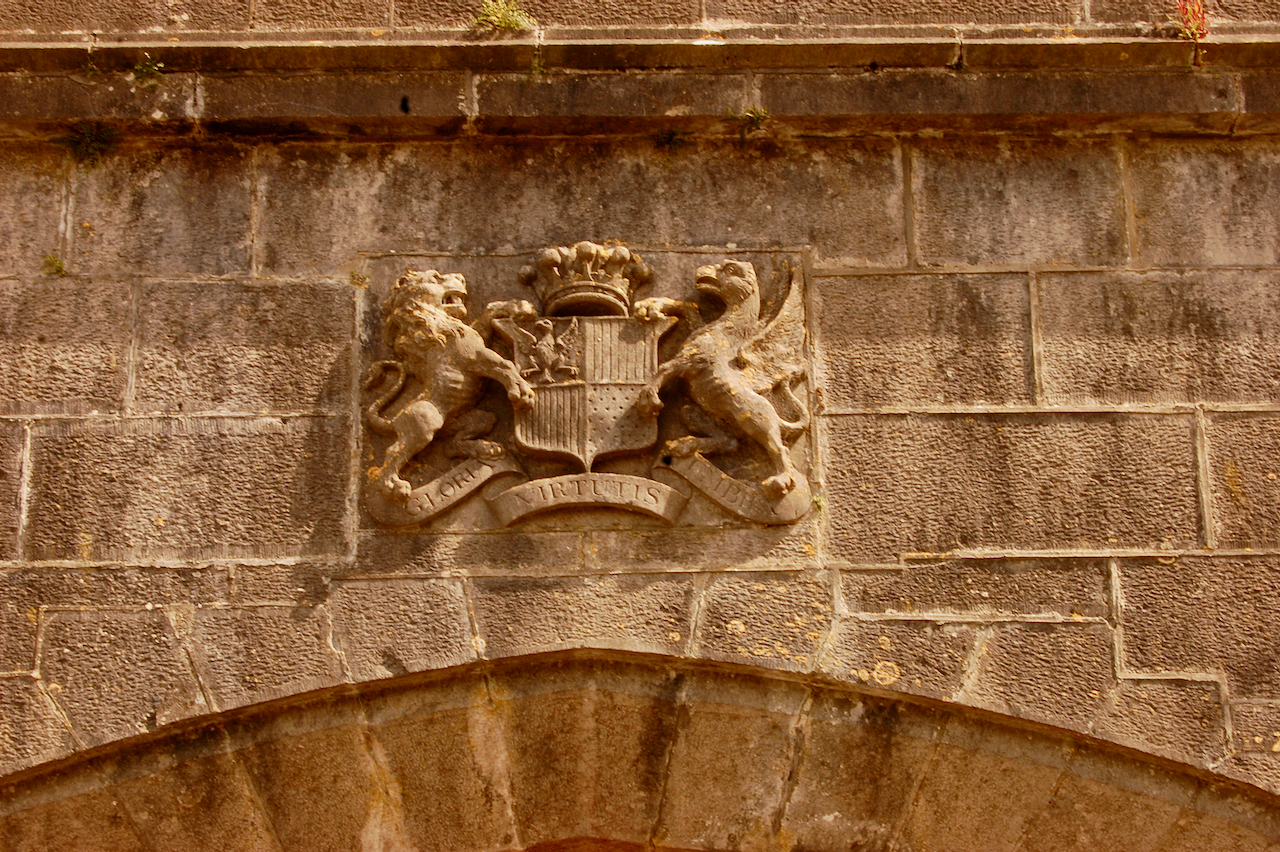
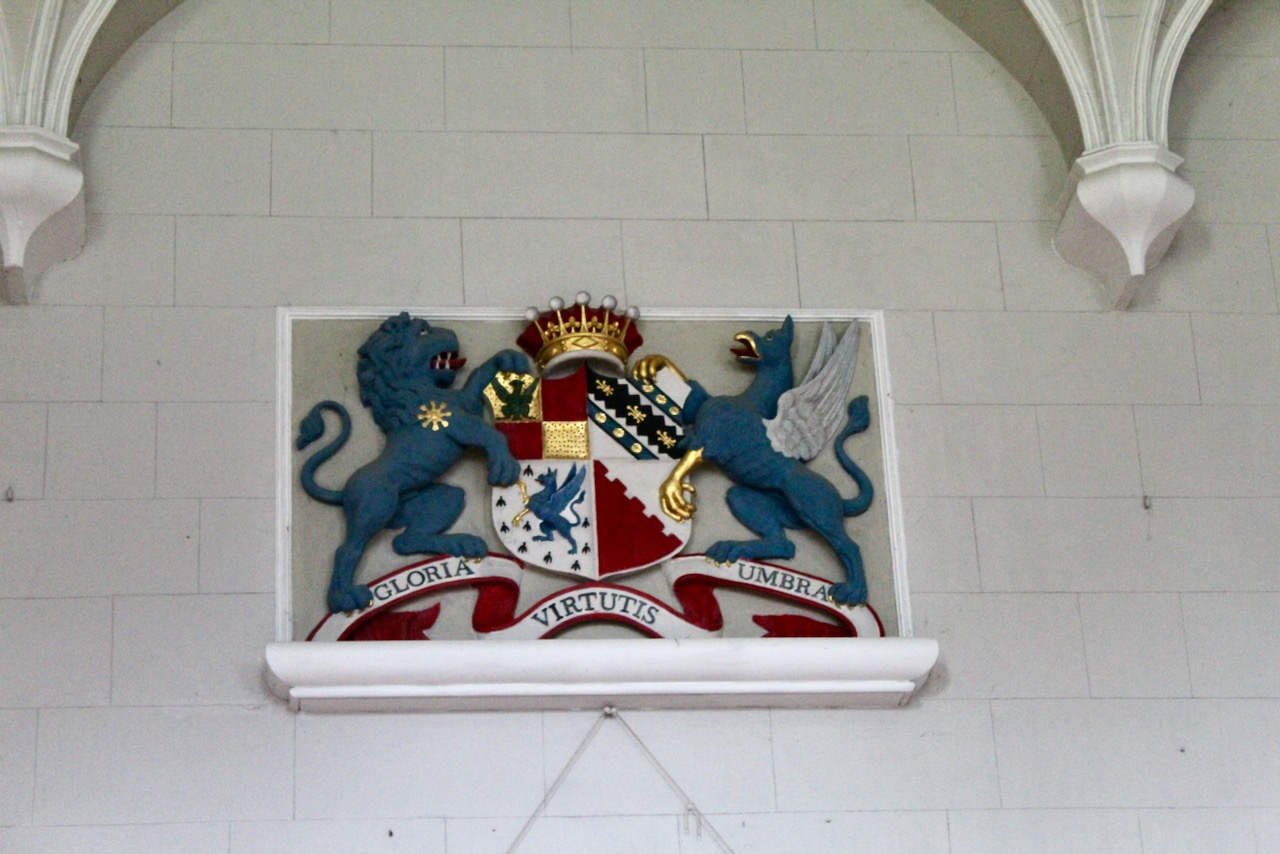
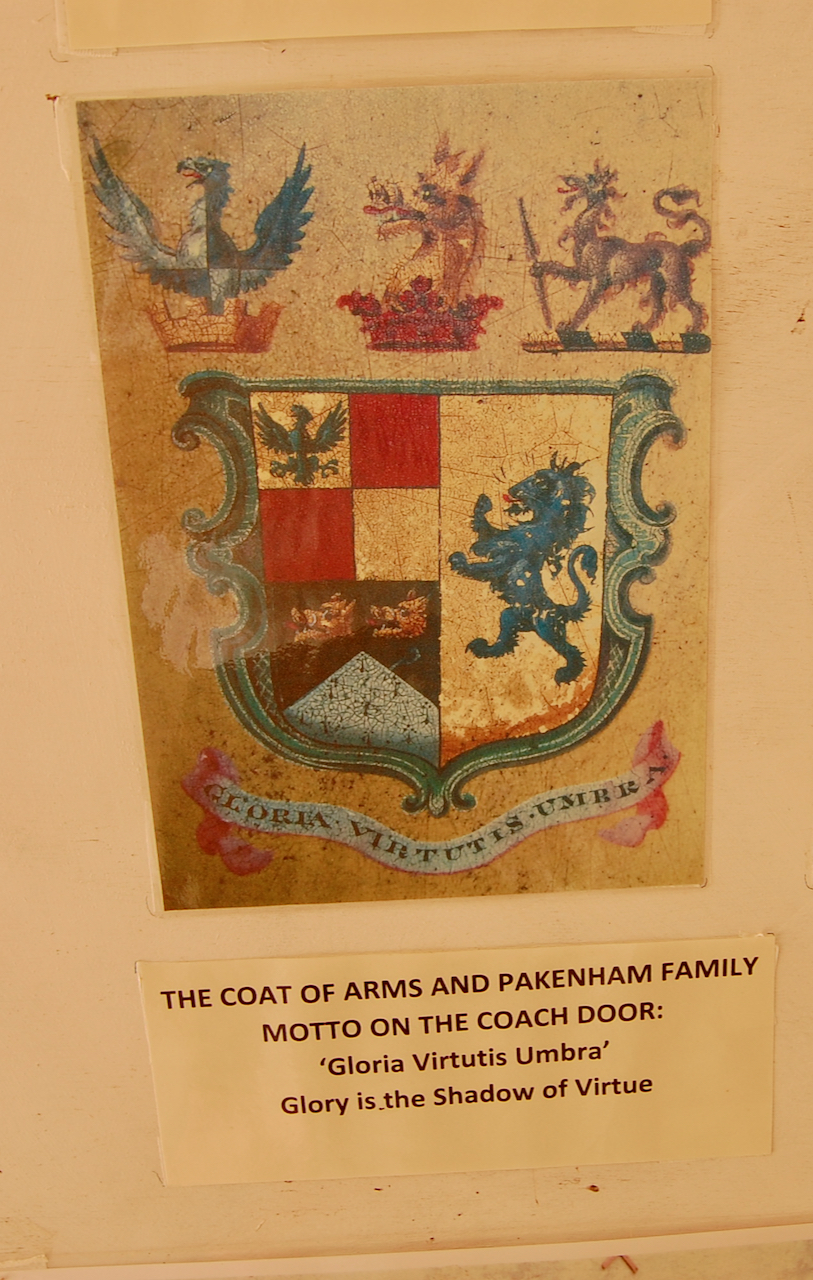
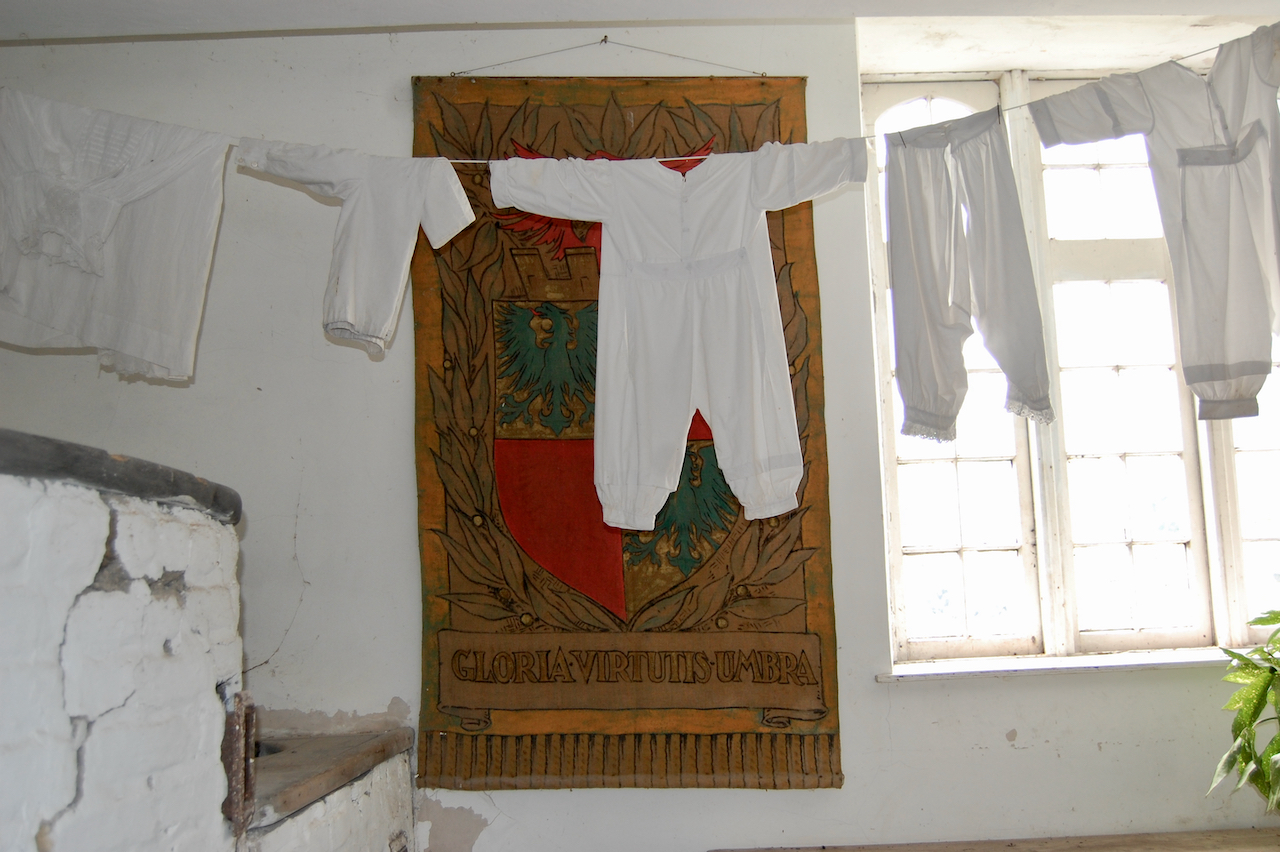
The Tullynally motto, our tour guide told us, is “Glory in the shadow of virtue.” Photograph © Jennifer Winder-Baggot, www.irishhistorichouses.com

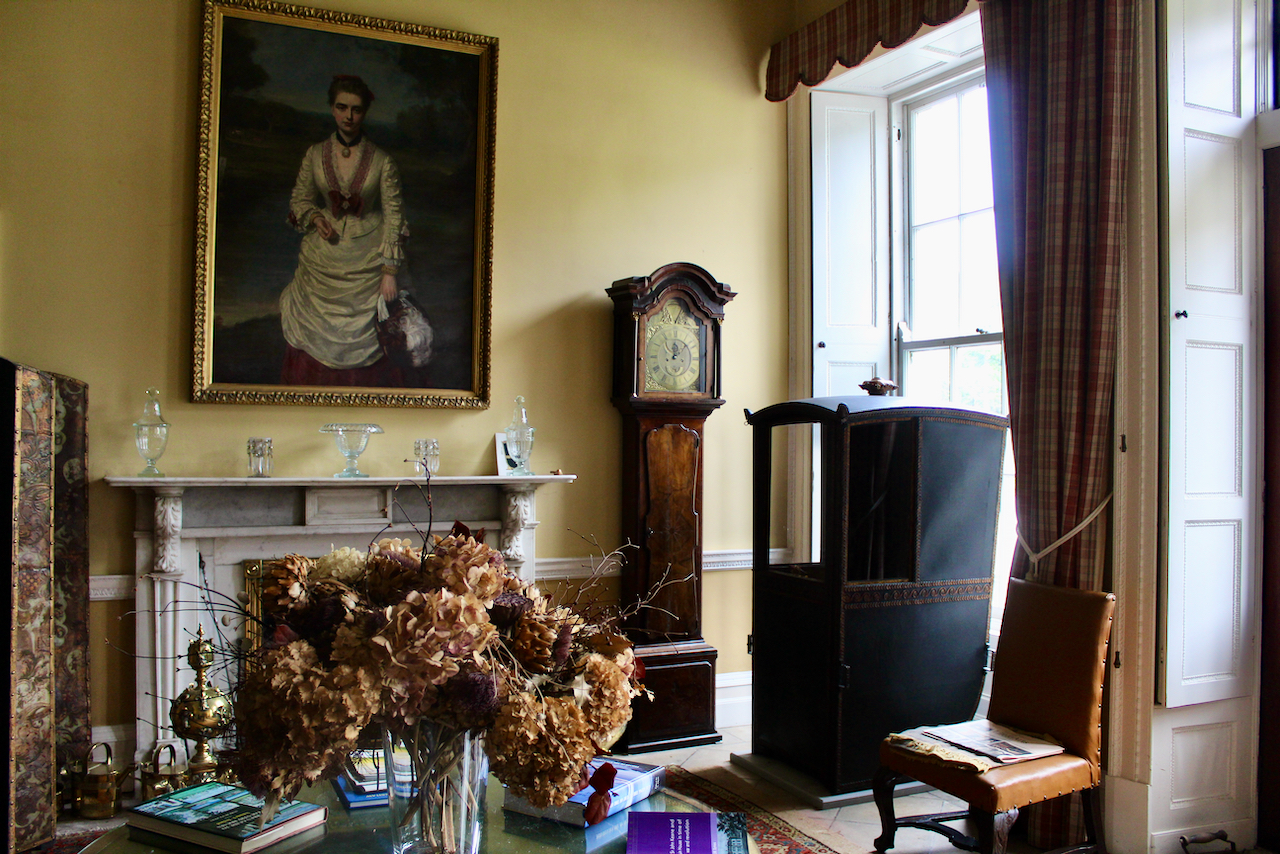
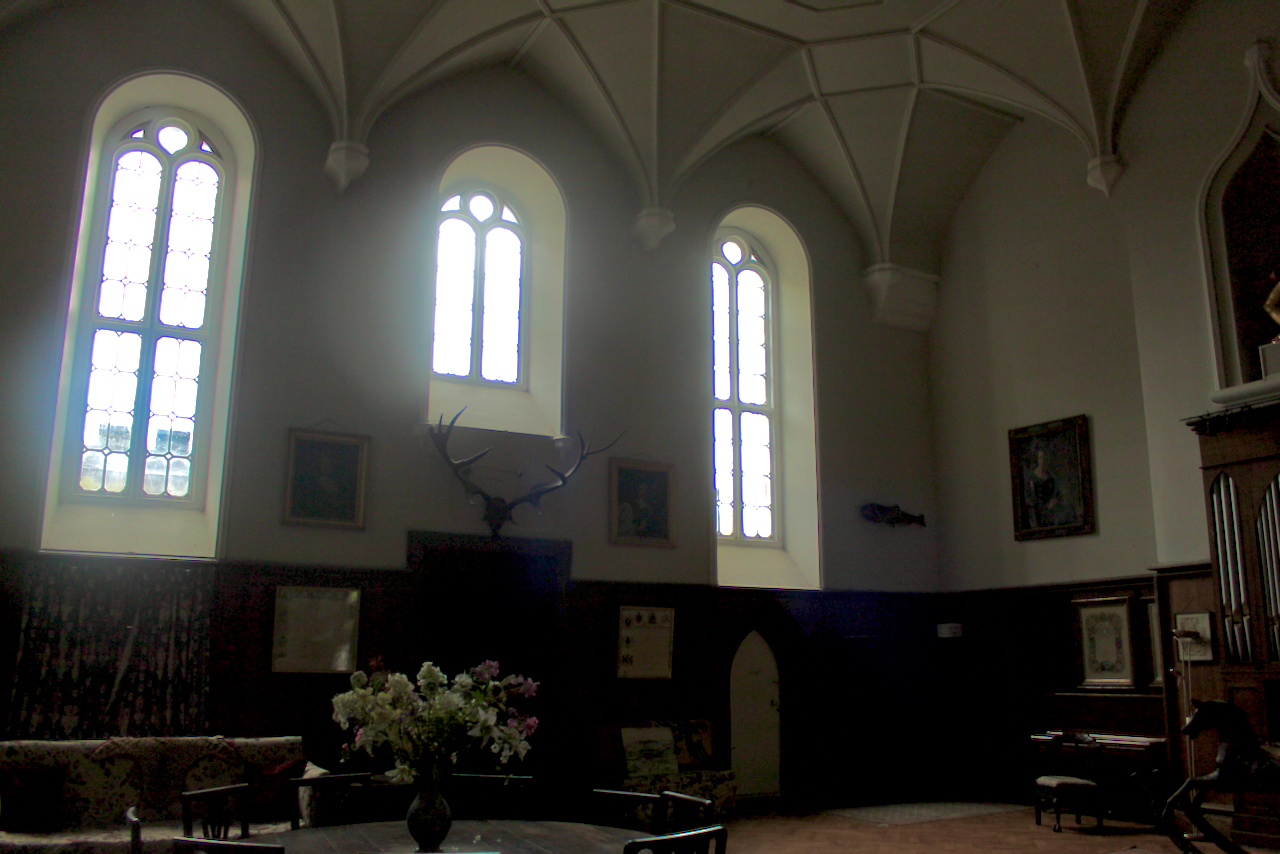
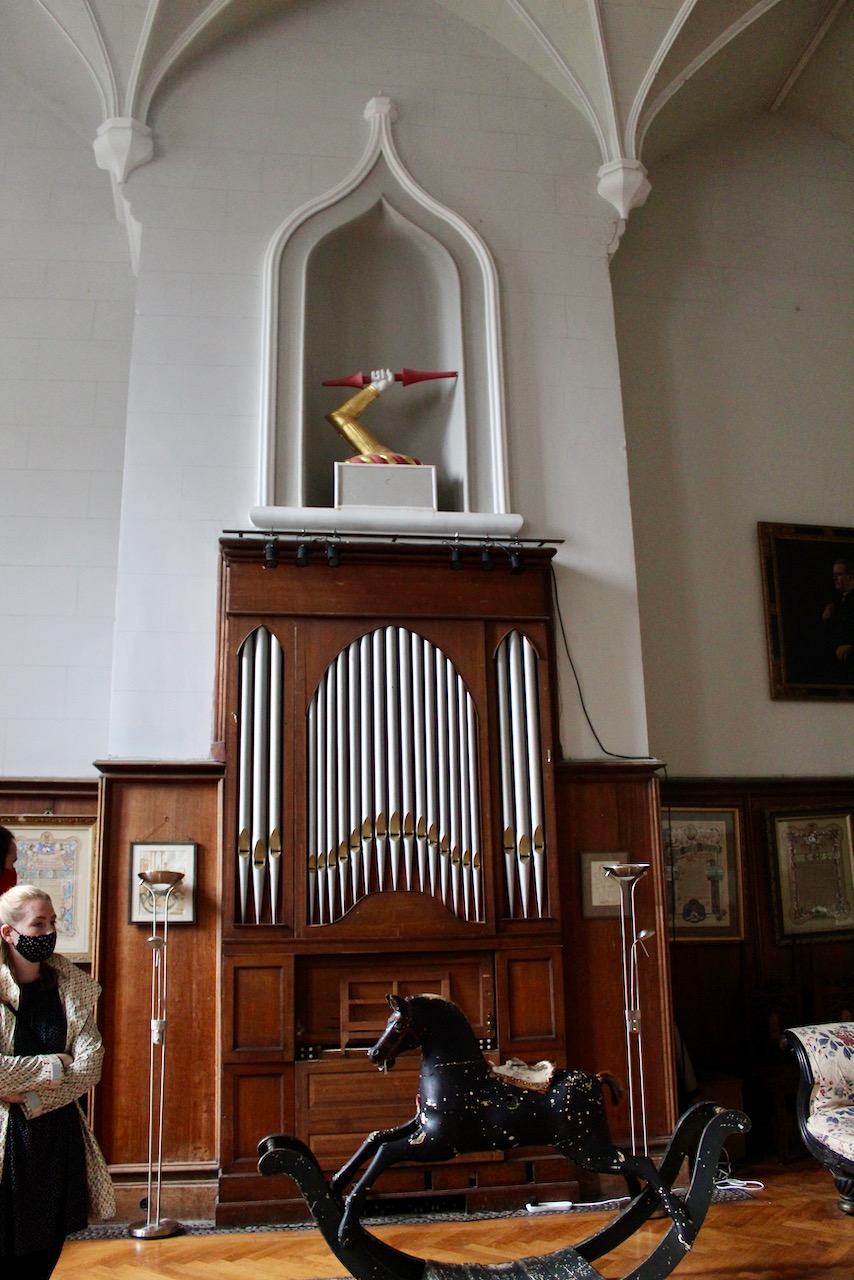
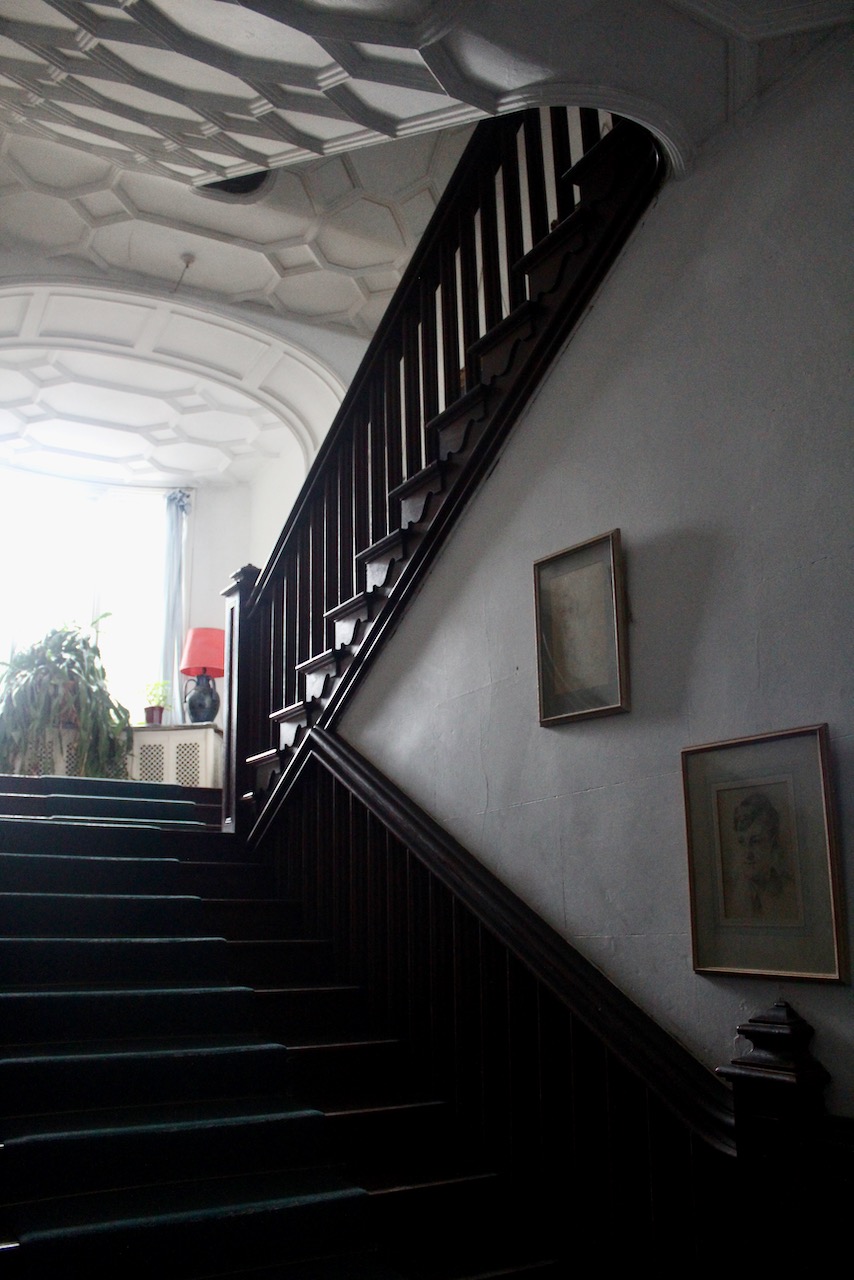
One enters into a large double height hall. It is, Terence Reeves-Smyth tells us, 40 feet square and 30 feet high. I found it impossible to capture in a photograph. It has a Gothic fan vaulted ceiling, and is wood panelled all around, with a fireplace on one side and an organ in place of a fireplace on the other side.

Tullynally Castle and Gardens, Castlepollard, Co Westmeath, photograph by Thomas Pakenham for Failte Ireland, 2015.
The Great Hall. Photograph © Jennifer Winder-Baggot, www.irishhistorichouses.com

The hall, Casey and Rowan tell us, has a ceiling of “prismatic fan-vaults, angular and overscaled, with the same dowel-like mouldings marking the intersection of the different planes…The hall is indeed in a very curious taste, theatrical like an Italian Gothick stage set, and rendered especially strange by the smooth wooden wainscot which completely encloses the space and originally masked all the doors which opened off it.” [6] As this smooth wainscot and Gothic panelled doors are used throughout the other main rooms of the house and are unusual for Sheil, this is probably a later treatment.

The door leads to the dining room. Photograph © Jennifer Winder-Baggot, www.irishhistorichouses.com
“Glory in the shadow of virtue,” the family motto. Photograph © Jennifer Winder-Baggot, www.irishhistorichouses.com

Terence Reeves-Smyth describes the front hall:

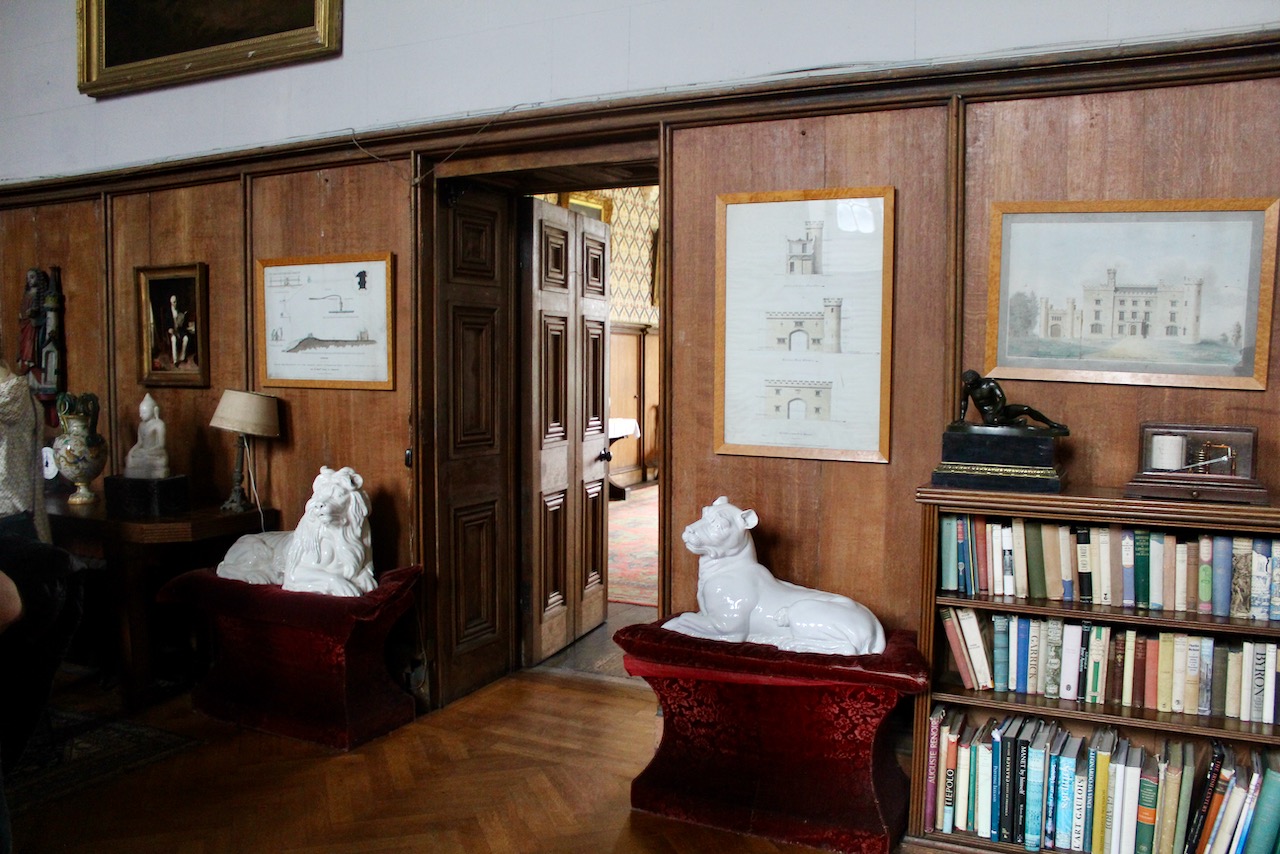
“Visitors entering the castle will first arrive in the great hall – an enormous room forty-feet square and thirty feet high with no gallery to take away from its impressive sense of space. A central-heating system was designed for this room by Richard Lovell Edgeworth, who earlier in 1794 had fitted up the first semaphore telegraph system in Ireland between Edgeworthstown and Pakenham Hall, a distance of twelve miles. In a letter written in December 1807, his daughter Maria Edgeworth, a frequent visitor to Pakenham Hall, wrote that “the immense hall is so well warmed by hot air that the children play in it from morning to night. Lord L. seemed to take great pleasure in repeating twenty times that he was to thank Mr. Edgeworth for this.” Edgeworth’s heating system was, in fact, so effective that when Sheil remodelled the hall in 1820 he replaced one of the two fireplaces with a built-in organ that visitors can still see. James Sheil was also responsible for the Gothic vaulting of the ceiling, the Gothic niches containing the family crests, the high wood panelling around the base of the walls and the massive cast-iron Gothic fireplace. Other features of the room include a number of attractive early nineteenth century drawings of the castle, a collection of old weapons, family portraits and an Irish elk’s head dug up out of a bog once a familiar feature of Irish country house halls.” [see 1]

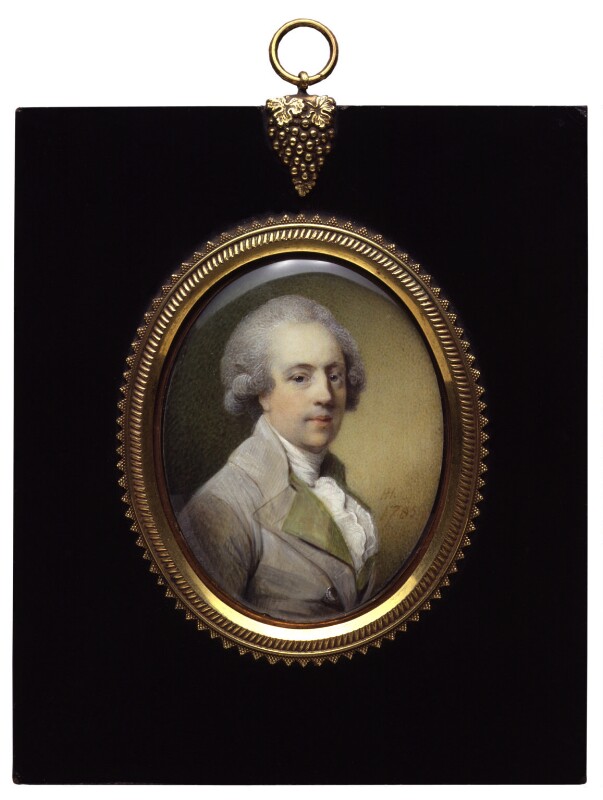
Richard Lovell Edgeworth (1744-1817), by Horace Hone 1785, NPG 5069.
Over the fireplace is a large eagle in a niche. Photograph © Jennifer Winder-Baggot, www.irishhistorichouses.com
The organ. Photograph © Jennifer Winder-Baggot, www.irishhistorichouses.com

There is a long vaulted corridor that runs through the house at first-floor level which Rowan and Casey write is probably attributable to Sheil.

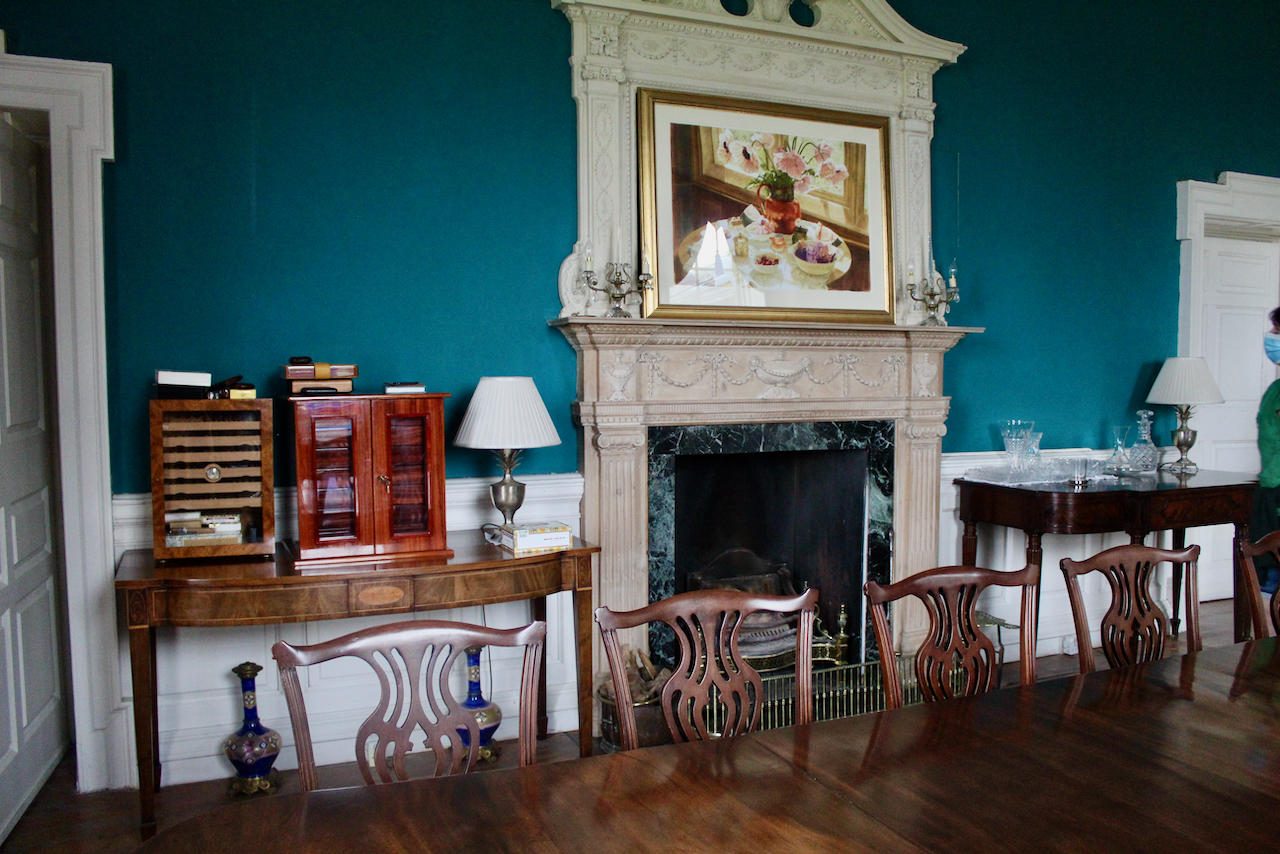
The ground floor of the main house contains Lord Longford’s study, the dining room, library, drawing room, Great Hall, Lady Longford’s sitting room, Plate room and Servant’s Library.

From the Great Hall we entered the dining room, which used to be the staircase room.

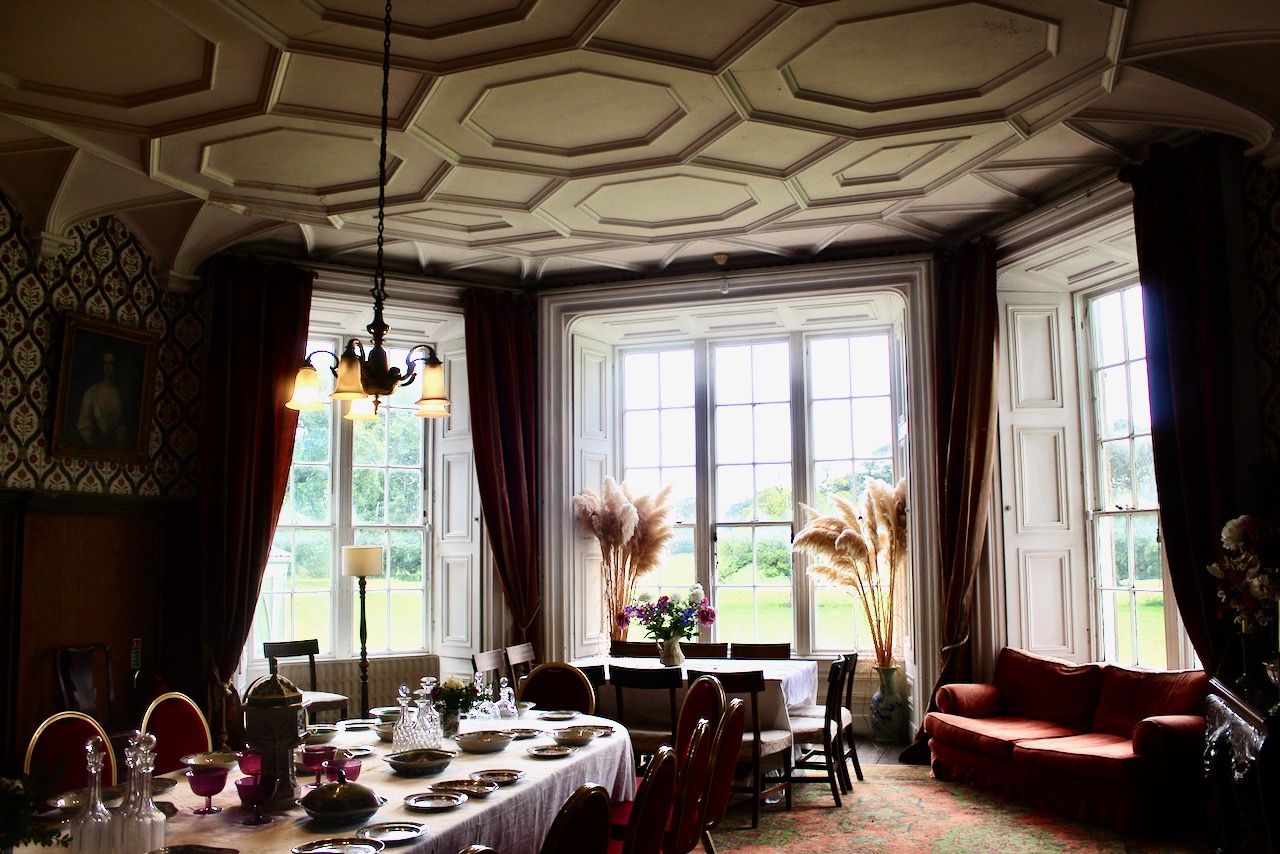
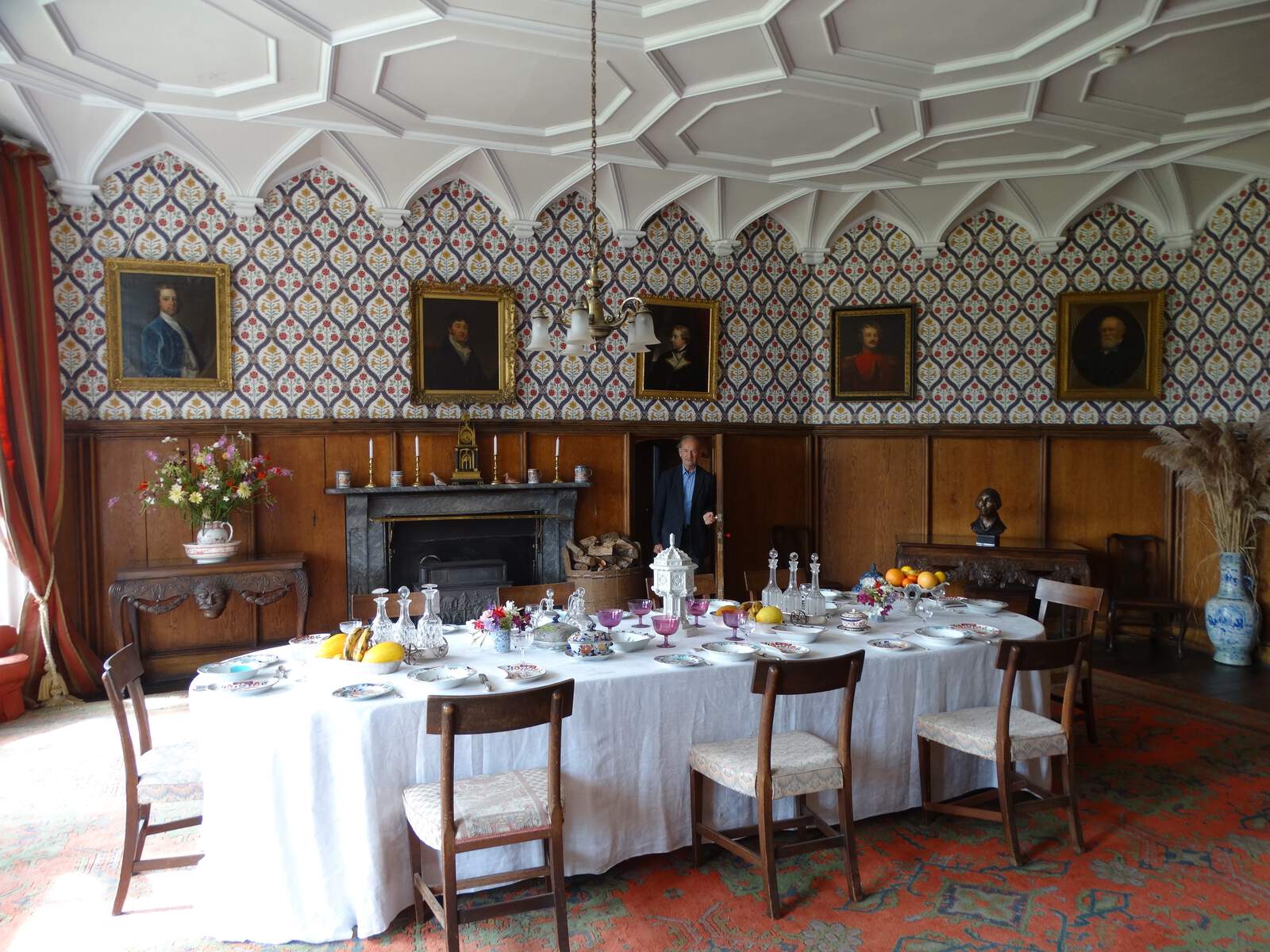
The dining room, drawing room and library were all decorated in Sheil’s favoured simple geometrical shaped plasterwork of squares and octagons on the ceiling. [6]

Tullynally, County Westmeath. Photograph © Jennifer Winder-Baggot, www.irishhistorichouses.com

We can see that the windows in the dining room are in the canted bow which was added by James Shiel. The room is hung with portraits of family members. The ceiling drops at the walls into Gothic decoration of prismatic fan-vaults with dowels similar to those in the Hall, though less detailed.

Tullynally Castle, Castlepollard, Co Westmeath, photograph by Thomas Pakenham for Failte Ireland, 2015.

Georgina née Lygon, wife of the 2nd Earl, was well-read and wealthy. She and her husband were friendly with the Edgeworths of nearby Edgeworthstown. She was responsible for developing the gardens, planting the trees which are now mature, and creating a formal garden. Her husband died in 1835 but she lived another forty-five years, until 1880. She and her husband had at least eight children. Their son Edward Michael Pakenham (1817-1860) succeeded to become 3rd Earl of Longford in 1835 while still a minor.

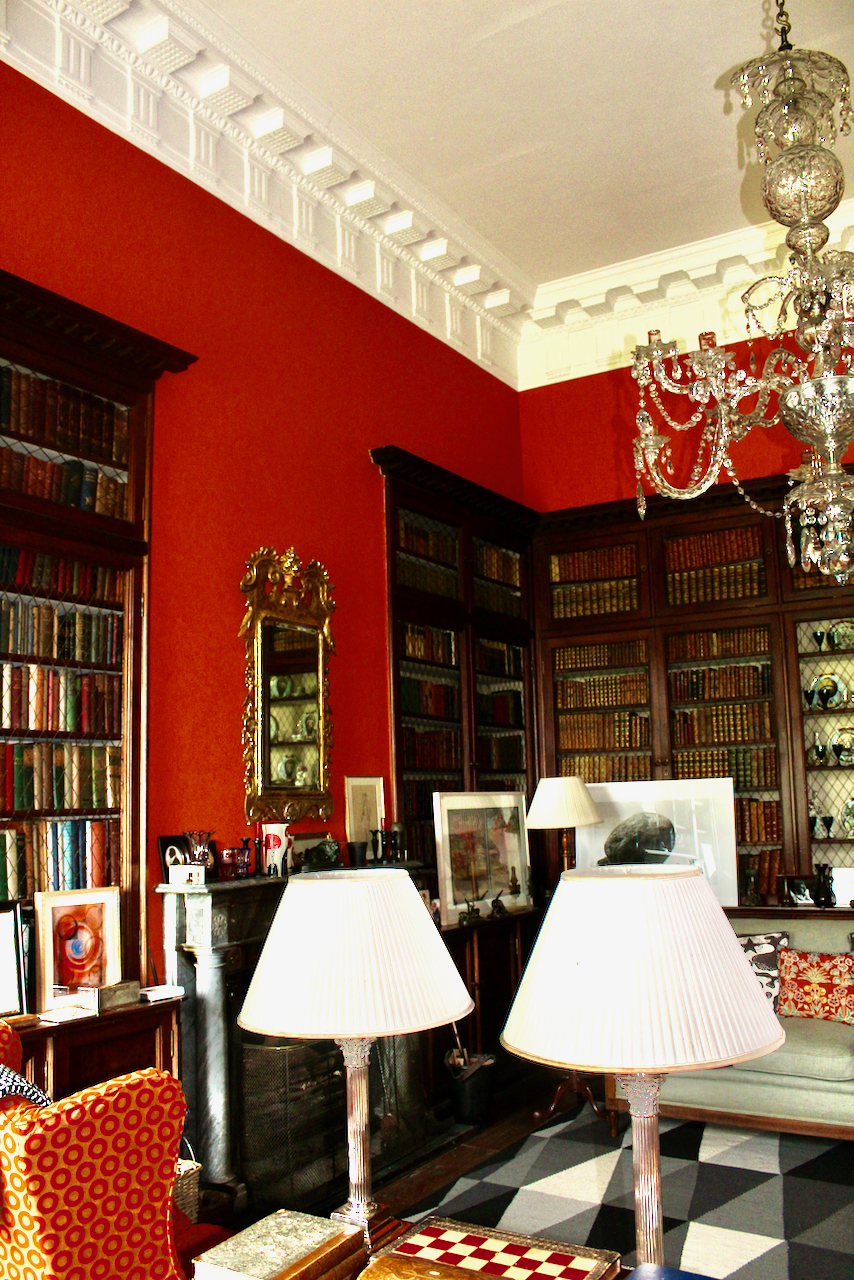
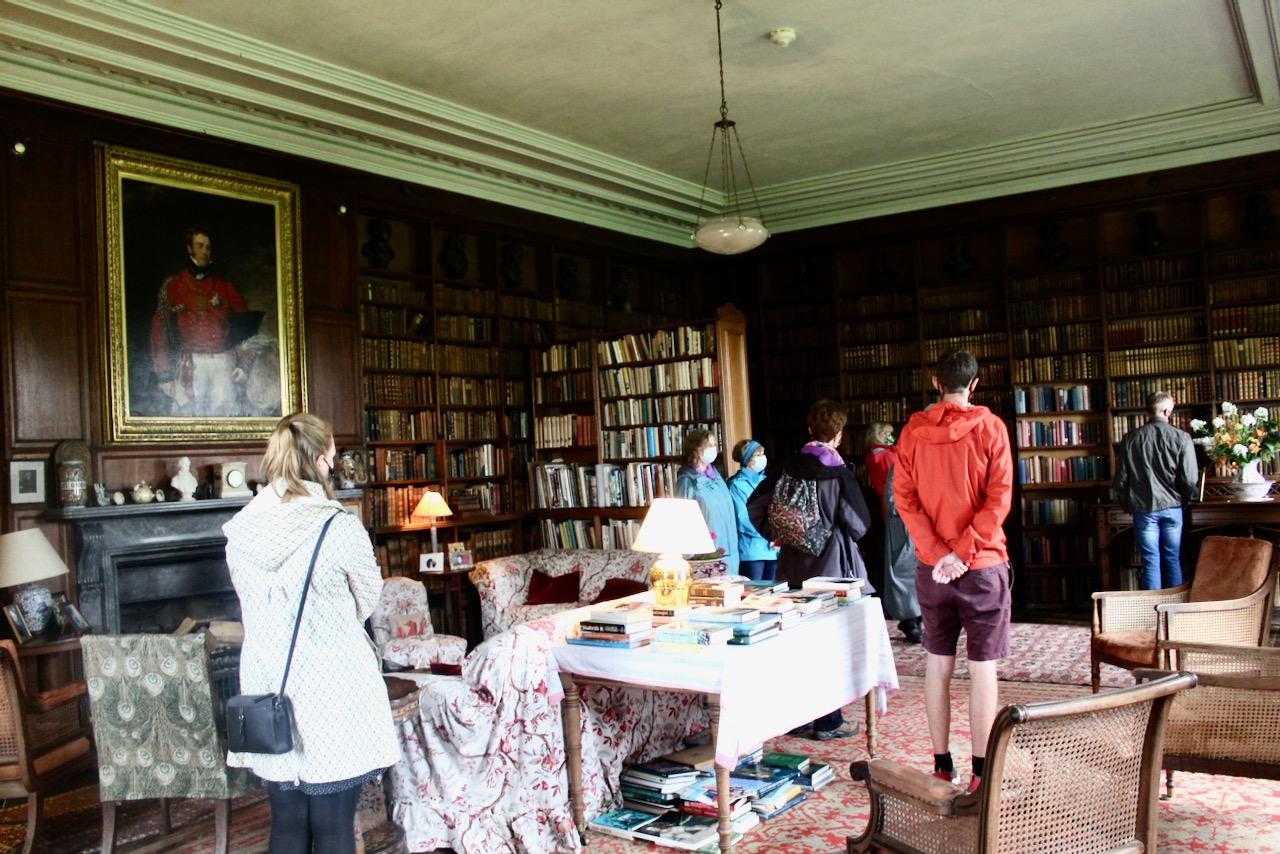
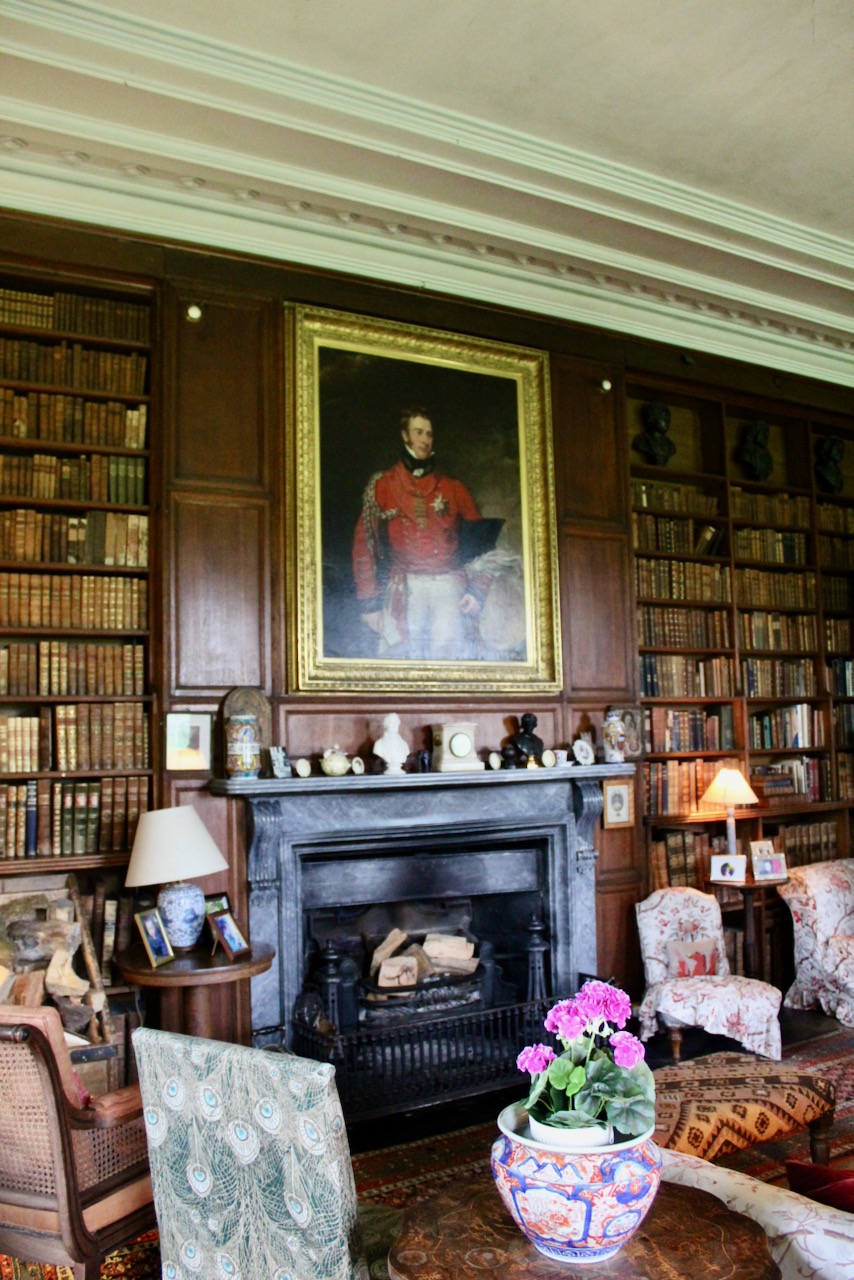
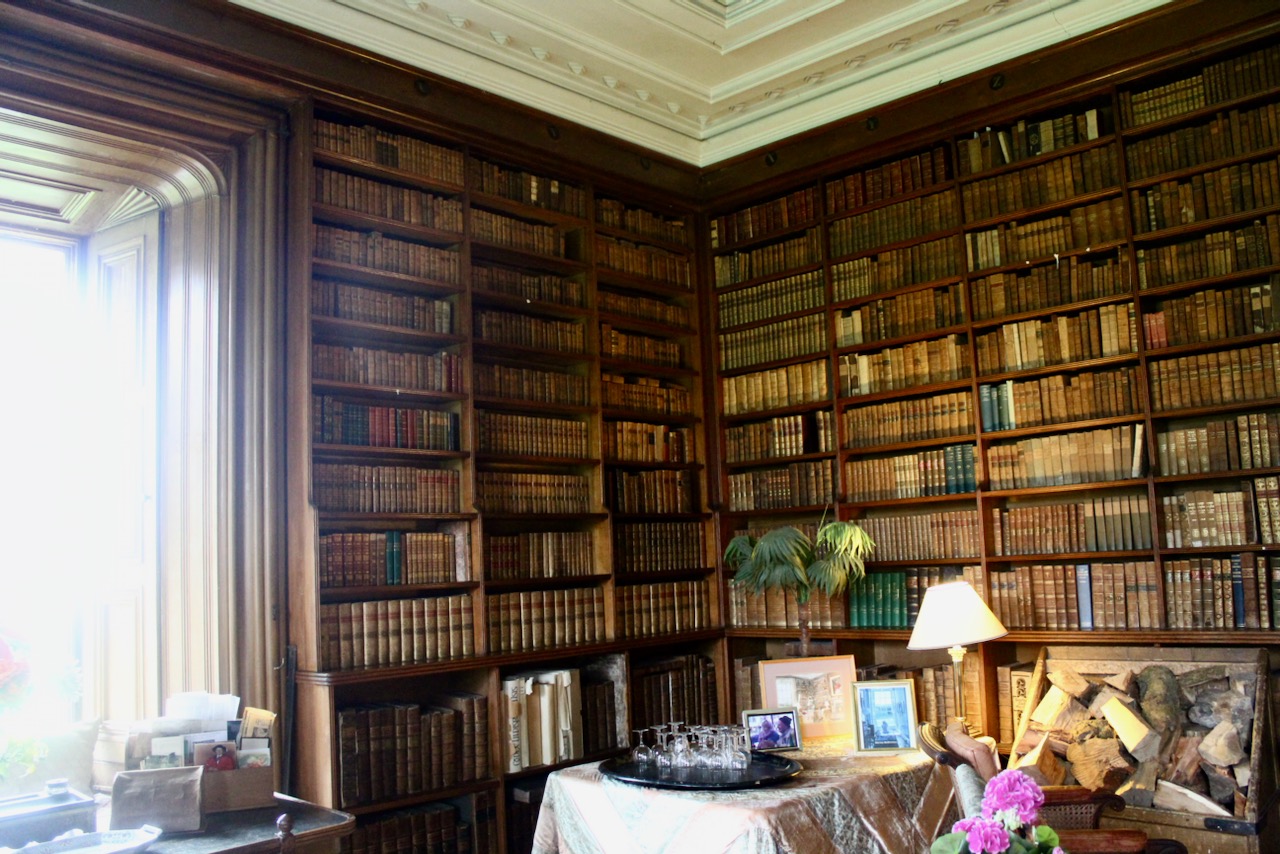
We then went to the library. The library was started by Elizabeth Cuffe, wife of the the 1st Baron Longford, and continued by Georgiana, wife if the 2nd Earl. Again, it’s hard to capture in a photograph, while also being on a tour.

Tullynally, County Westmeath. Photograph © Jennifer Winder-Baggot, www.irishhistorichouses.com

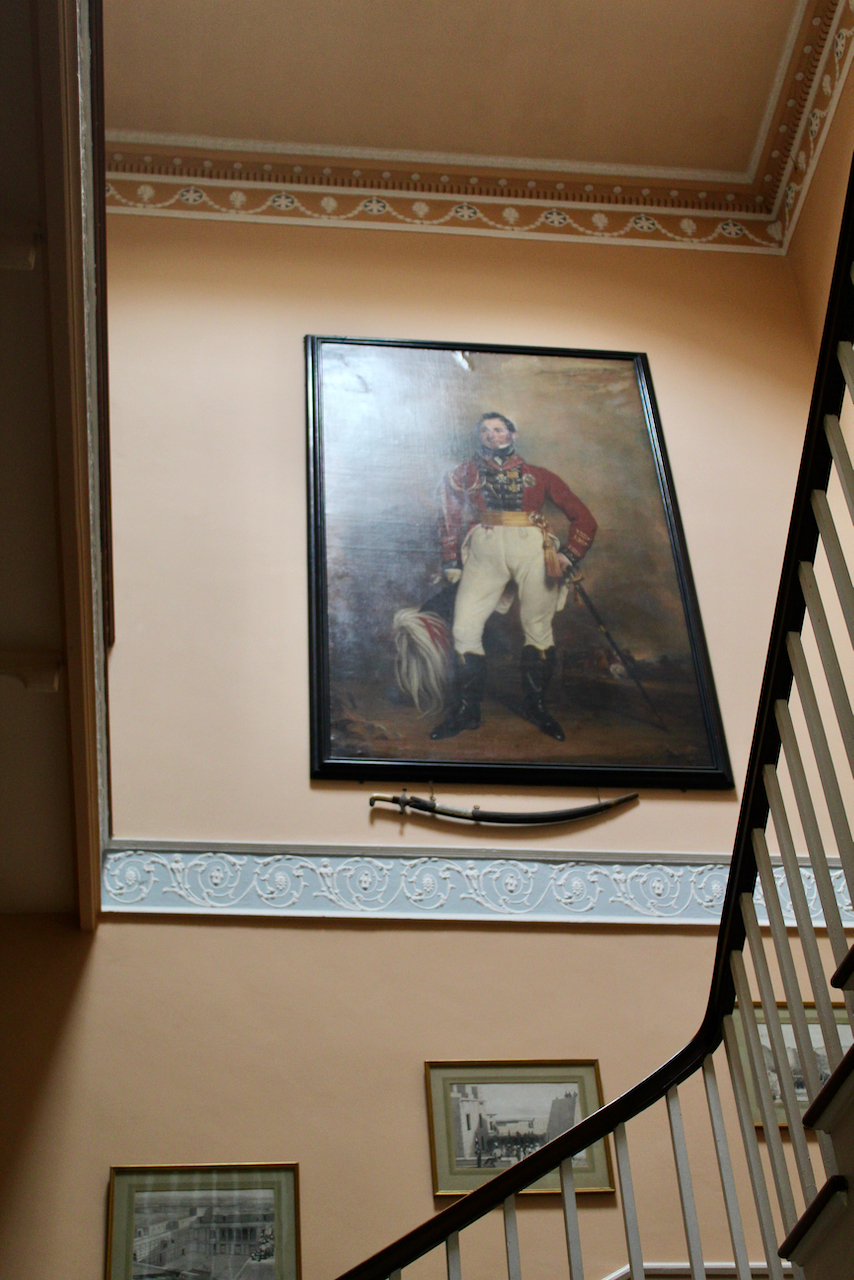
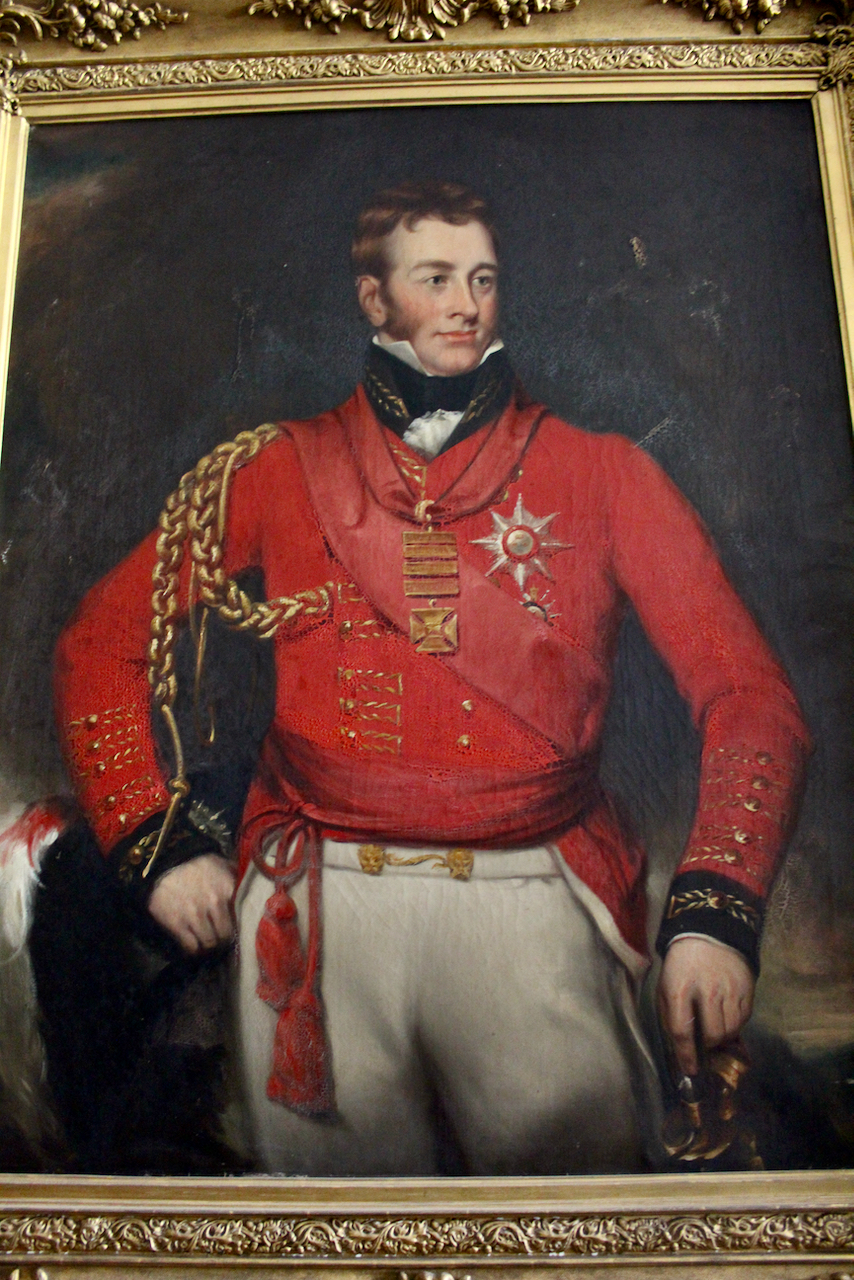
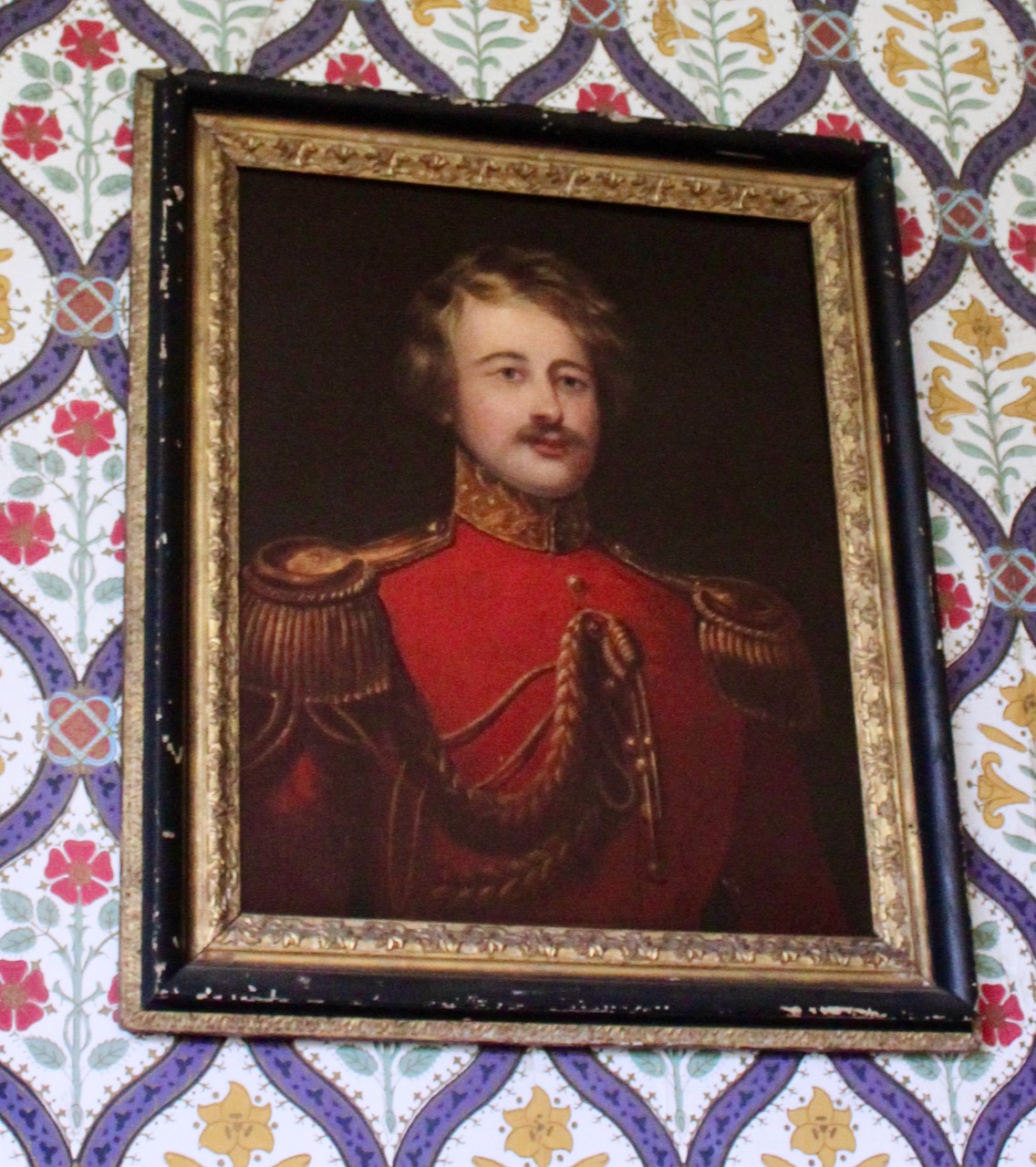
The portrait over the fireplace in the library is Major General Edward Michael Pakenham (1778-1815), brother of the 2nd Earl of Longford. Major General Pakenham (whose sword in the red sheath is in the front Hall) was killed in the Battle of New Orleans in 1815, between Britain and the United States of America, in the “War of 1812.”

The Portrait over the fireplace in the library is Major General Edward Michael Pakenham (1778-1815), brother of the 2nd Earl of Longford. Photograph © Jennifer Winder-Baggot, www.irishhistorichouses.com
Major General Edward Michael Pakenham (1778-1815), brother of the 2nd Earl of Longford. He commanded the British forces in the attack on New Orleans where he fell in action. This portrait was in Strokestown Park house in County Roscommon. Robert O’Byrne tells us that for purposes of preservation his body was returned to Ireland in a cask of rum, and since he had been known to have a surly temper, one of his relatives remarked, ‘The General has returned home in better spirits than he left!’ [ see https://theirishaesthete.com/2013/05/06/a-bibliophiles-bliss/ ] Photograph © Jennifer Winder-Baggot, www.irishhistorichouses.com

Another brother of the 2nd Earl of Longford was Lieutenant General Hercules Pakenham (1781-1850). He married Emily Stapleton, daughter of Thomas Stapleton, 13th Lord le Despenser, 6th Baronet Stapleton, of the Leeward Islands in the Caribbean. Hercules inherited Langford Lodge in County Antrim, from his mother Catherine Rowley (it no longer exists). Hercules served as MP for Westmeath.

Lieutenant General Hercules Pakenham (1781-1850), portrait in Strokestown Park House, County Roscommon. Photograph © Jennifer Winder-Baggot, www.irishhistorichouses.com
The library in Tullynally. Photograph © Jennifer Winder-Baggot, www.irishhistorichouses.com
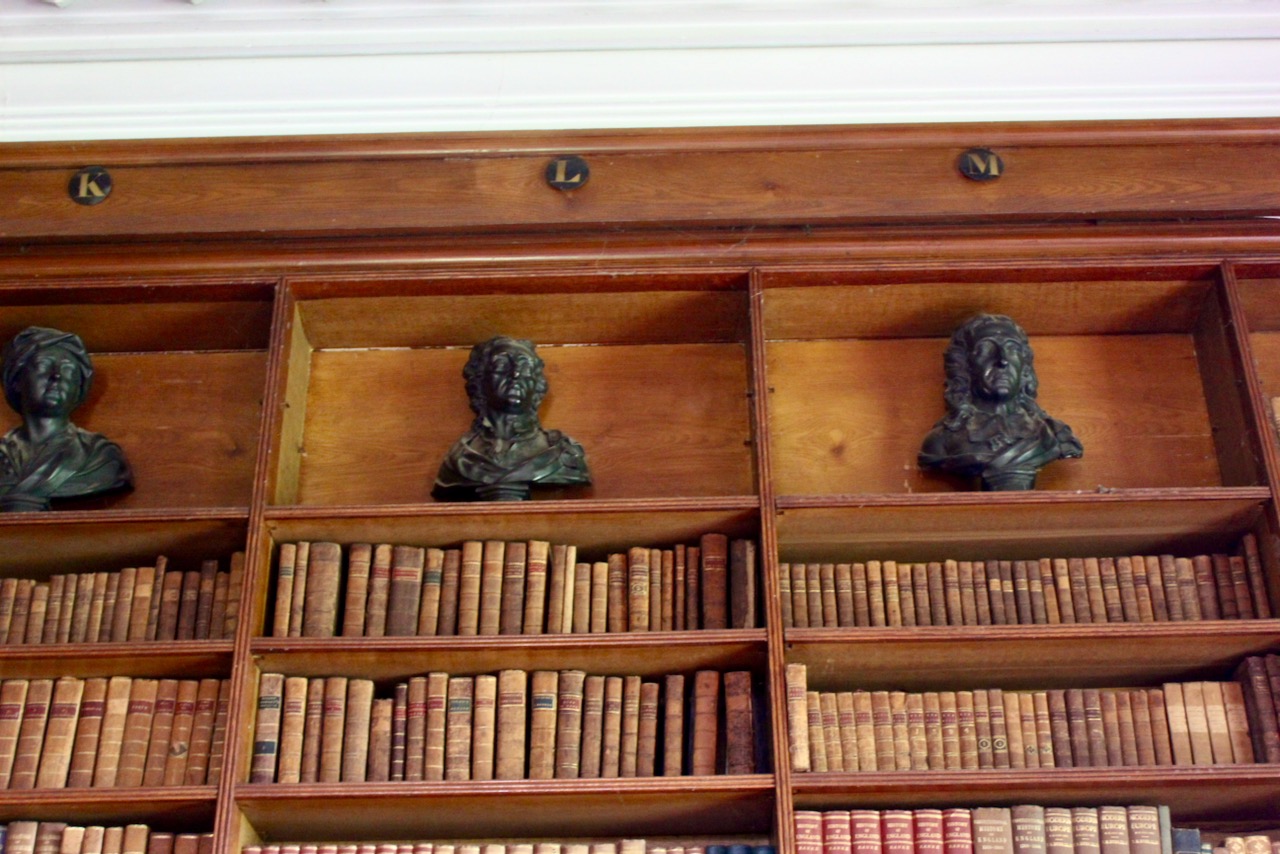
The wonderful bookshelves of Tullynally. Photograph © Jennifer Winder-Baggot, www.irishhistorichouses.com
The upper shelves contain busts. Photograph © Jennifer Winder-Baggot, www.irishhistorichouses.com

A selection of books by the prolific Pakenham family are on the table in the library.

Tullynally, County Westmeath. Photograph © Jennifer Winder-Baggot, www.irishhistorichouses.com

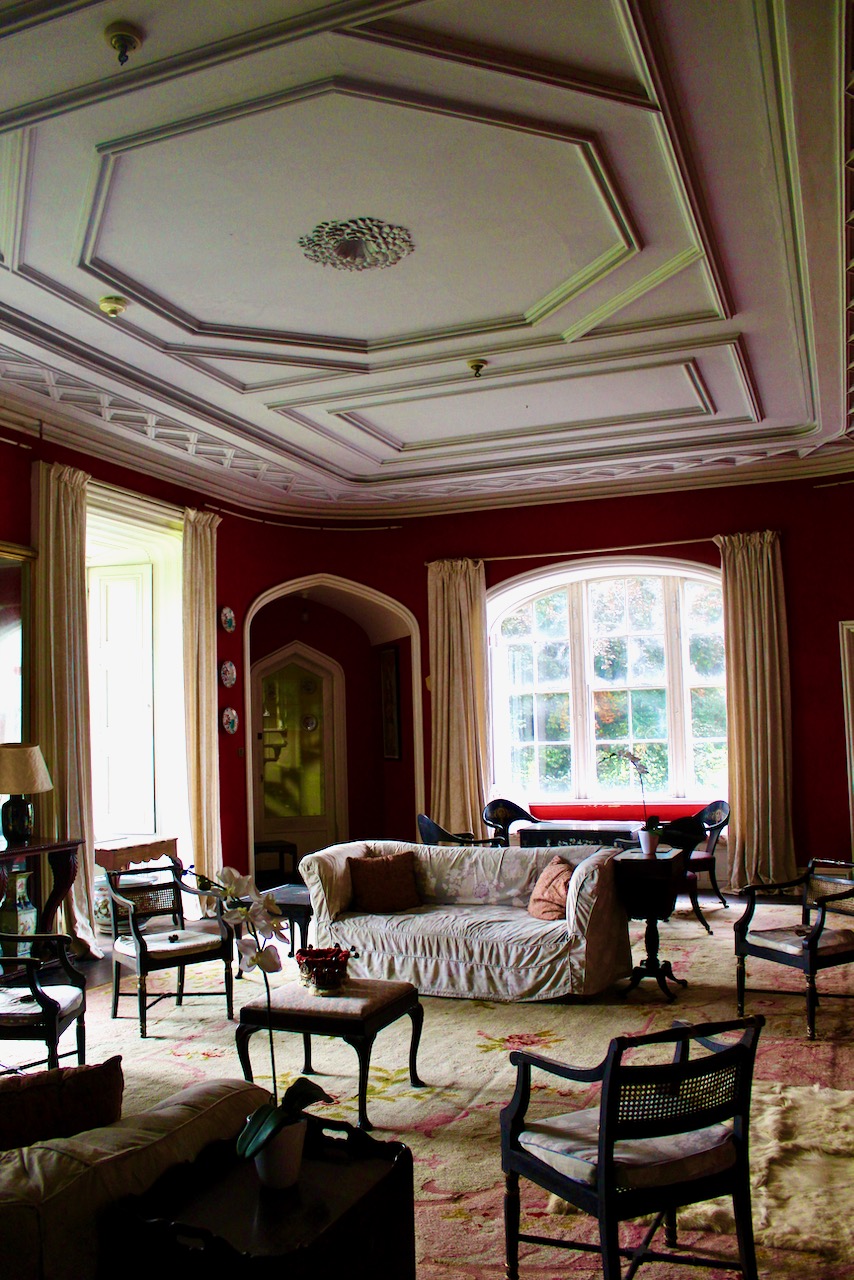
We next visited the drawing room.

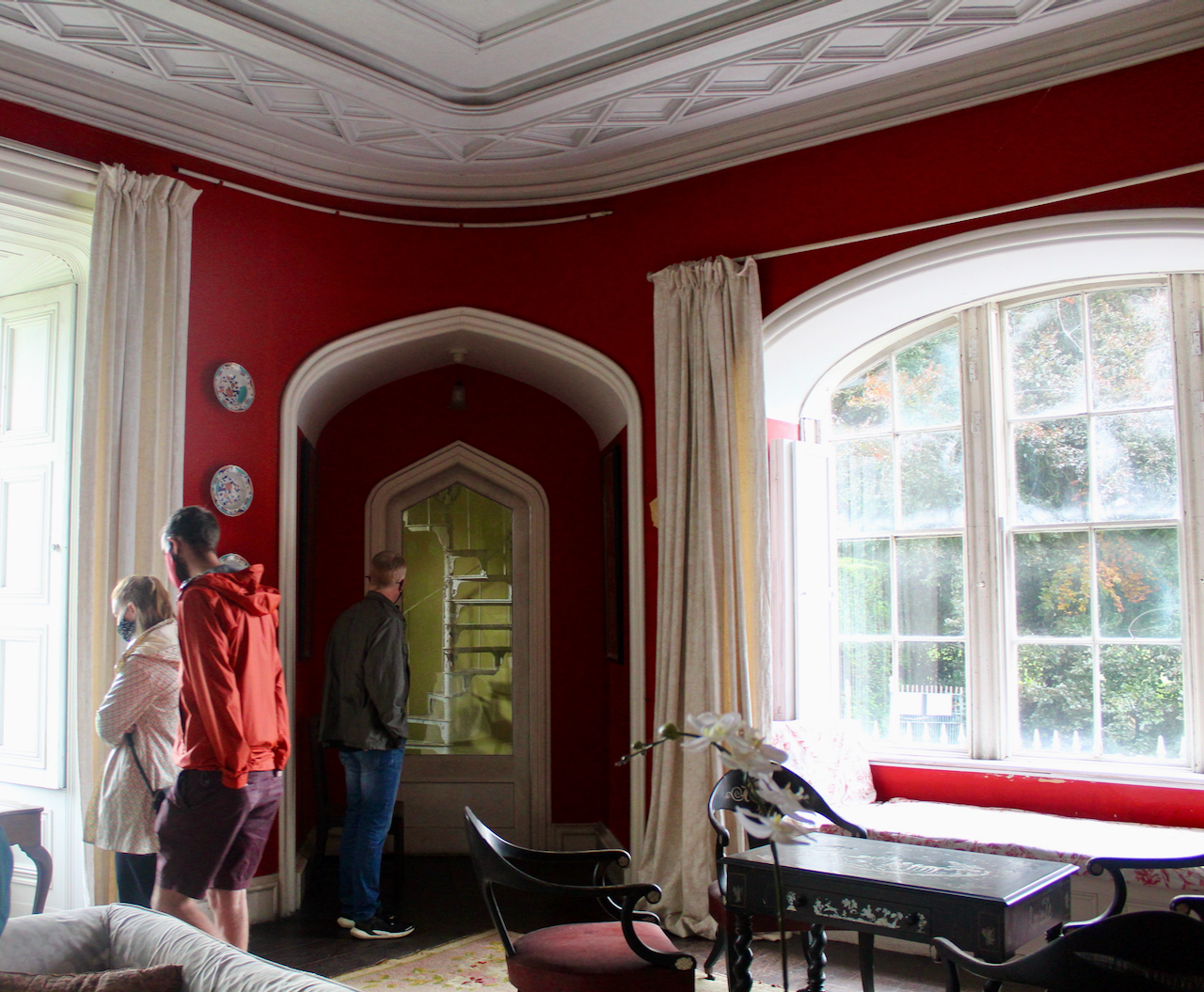
The drawing room, with geometrical shape plain roll moulding on the ceiling, of the type favoured by James Shiel. Photograph © Jennifer Winder-Baggot, www.irishhistorichouses.com
The window of the Drawing room looks out the front, and is one of the arched windows added by Francis Johnston on either side of the entrance portico. Photograph © Jennifer Winder-Baggot, www.irishhistorichouses.com
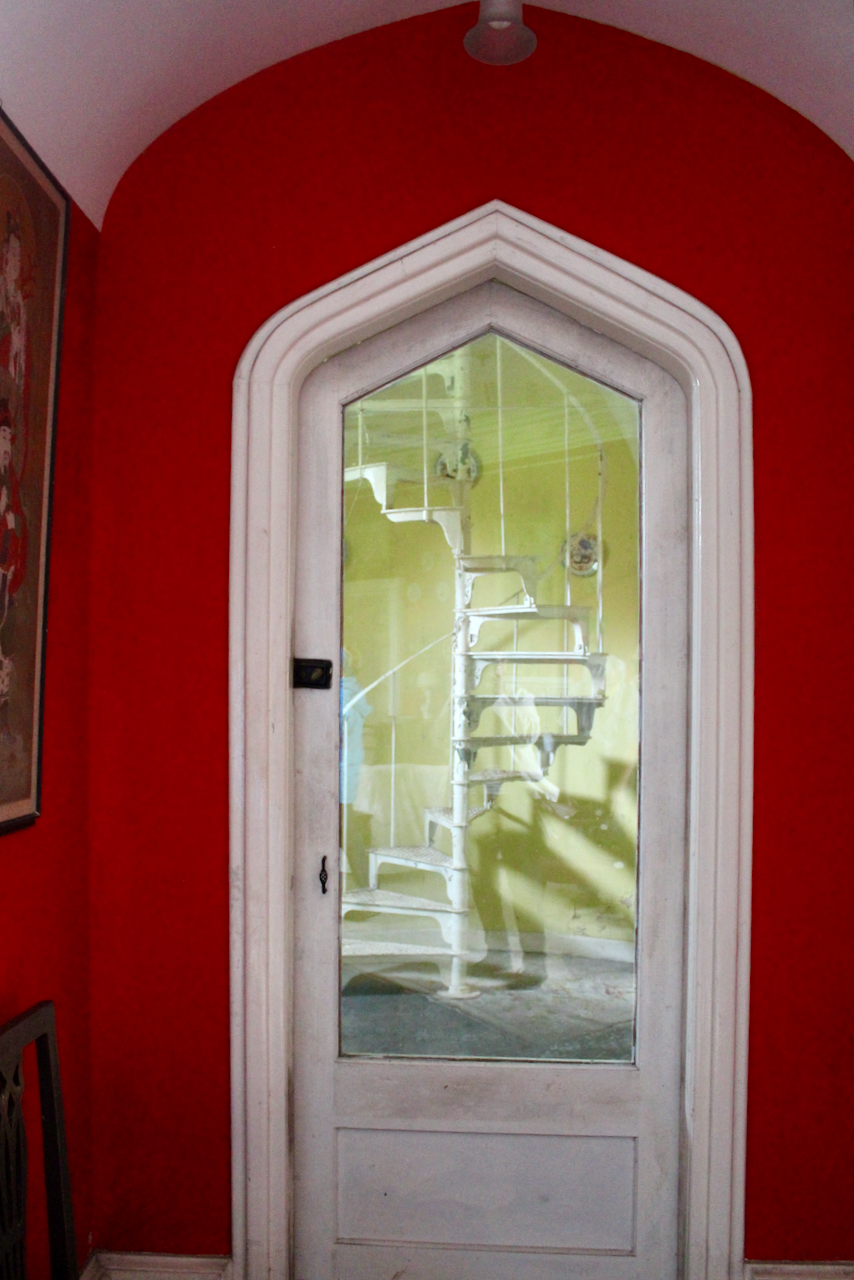
Doorway into one of Francis Johnston’s round towers. Photograph © Jennifer Winder-Baggot, www.irishhistorichouses.com
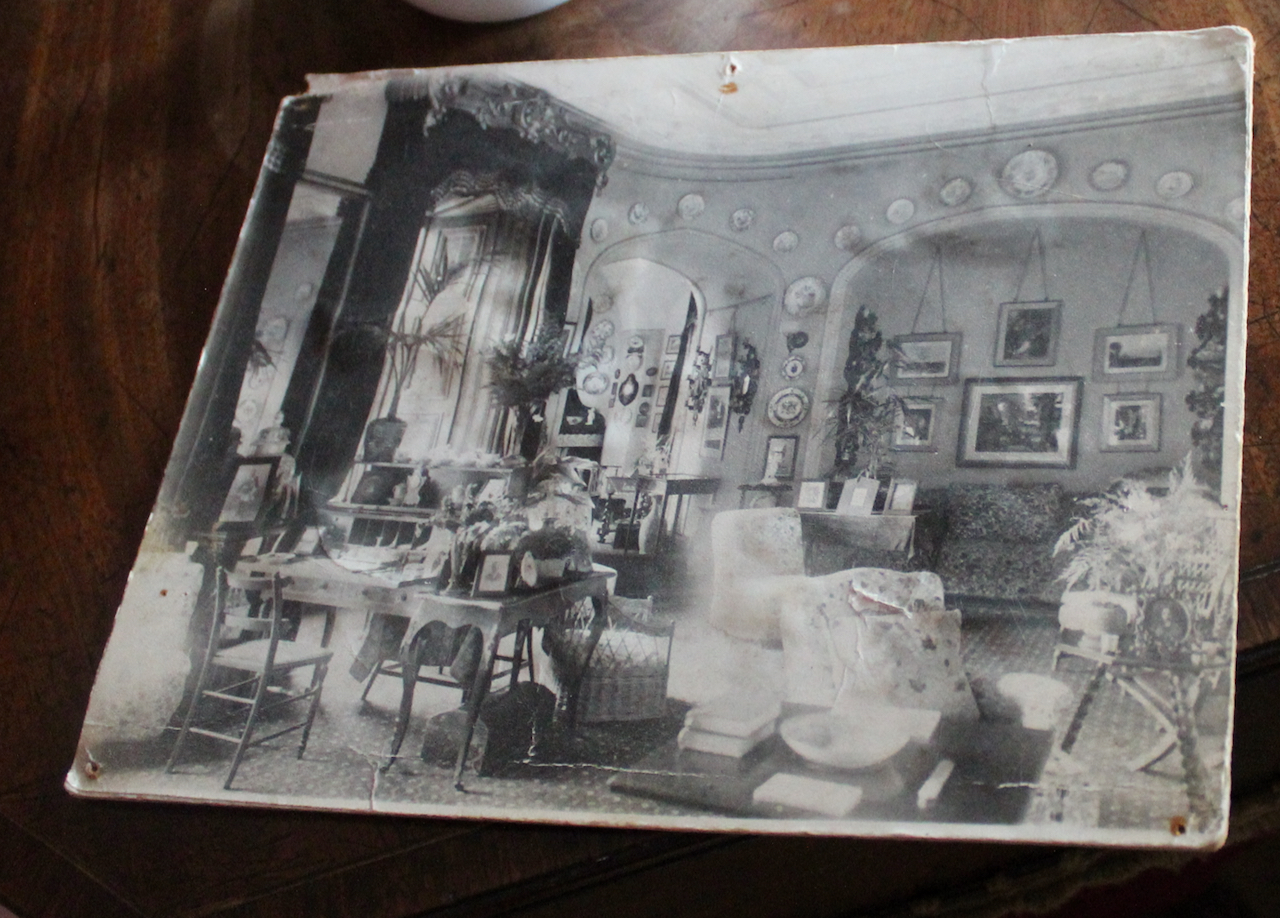
A photograph of the room in a previous era.
Unfortunately we did not go upstairs. Photograph © Jennifer Winder-Baggot, www.irishhistorichouses.com

When he reached his majority, the third Earl, Edward Michael, who was called “Fluffy,” along with his mother, made further enlargements from 1839-45 with two enormous wings and a central tower by another fashionable Irish architect, Sir Richard Morrison. The wings linked the house to the stable court which had been built by Francis Johnston. The addition included the large telescoping octagonal tower.

“Fluffy” Edward Michael Pakenham, 3rd Earl of Longford (1817-1860).
A description of the castle, at Tullynally.

Terence Reeves-Smyth writes:

“More substantial additions followed between 1839 and 1846 when Richard Morrison, that other stalwart of the Irish architectural scene, was employed by the Dowager Countess to bring the house up to improved Victorian standards of convenience. Under Morrison’s direction the main house and Johnson’s stable court were linked by two parallel wings both of which were elaborately castellated and faced externally with grey limestone. Following the fashion recently made popular by the great Scottish architect William Burn, one of the new wings contained a private apartment for the family, while the other on the east side of the courtyard contained larger and more exactly differentiated servants’ quarters with elaborate laundries and a splendid kitchen.”

Casey and Rowan describe Morrison’s work: “On the entrance front the new work appears as a Tudoresque family wing, six bays by two storeys, marked off by tall octagonal turrets, with a lower section ending in an octagonal stair tower which joins the stable court. This was refaced and gained a battlemented gateway in the manner of the towers that Morrison had previously built as gatehouses at Borris House, County Carlow [see my entry on Borris House] and Glenarm Castle, County Antrim. The entrance porch, a wide archway in ashlar stonework, with miniature bartizans rising from the corners, was also rebuilt at this time. Though Morrison provided a link between the old house and the family wing by building a tall octagonal tower, very much in the manner of Johnston’s work at Charleville Forest, County Offaly [see my entry Places to visit and stay in County Offaly], the succession of facades from south to north hardly adds up to a coherent whole. The kitchen wing, which forms an extension of the east front, is much more convincingly massed, with a variety of stepped and pointed gables breaking the skyline and a large triple-light, round-headed window to light the kitchen in the middle of the facade.

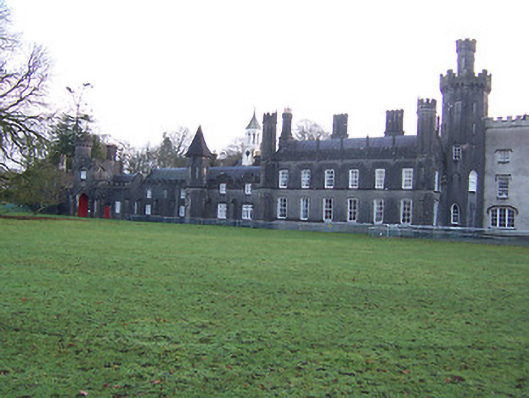
Picture from the National Inventory of Architectural Heritage, showing the older end, and the Tudoresque family wing, six bays by two storeys, marked off by tall octagonal turrets
Picture from the National Inventory of Architectural Heritage, showing the Tudoresque family wing and further, the battlemented stable courtyard with the red entrance door to the courtyard.
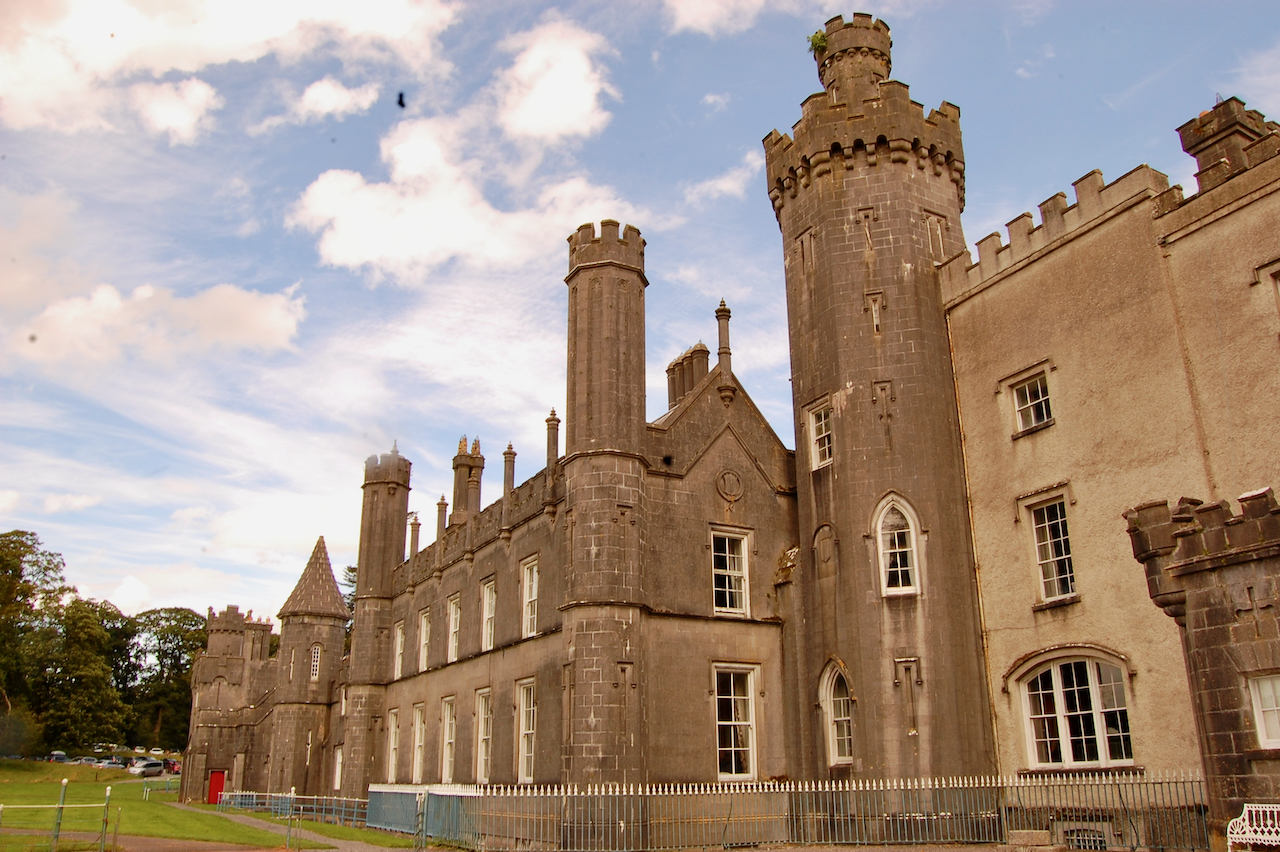
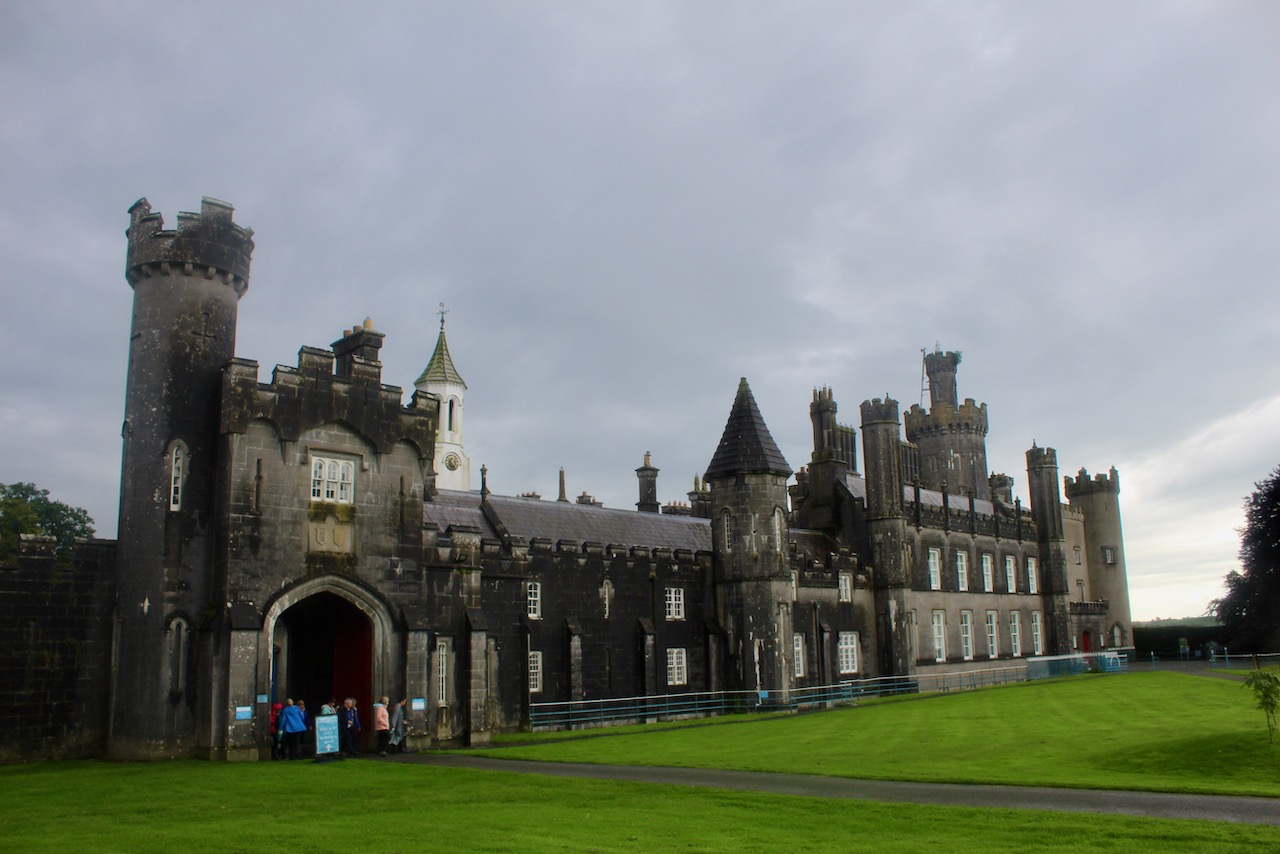
Looking from the front door down toward the stable end of the castle, one can see one of the wings designed by Richard Morrison. Photograph © Jennifer Winder-Baggot, www.irishhistorichouses.com
The Morrison addition. Photograph © Jennifer Winder-Baggot, www.irishhistorichouses.com
The addition included the large telescoping octagonal tower that contains stairs and links the old house to the new wing. Photograph © Jennifer Winder-Baggot, www.irishhistorichouses.com
Tullynally, County Westmeath. Photograph © Jennifer Winder-Baggot, www.irishhistorichouses.com
One of the wings, created by Richard Morrison, between the stable yard by Francis Johnston and the main house. Photograph © Jennifer Winder-Baggot, www.irishhistorichouses.com

On the tour, our guide told us of the various additions. She told us that “Fluffy” lived with his mother and chose to follow the fashion of living in an apartment in a wing of the house.

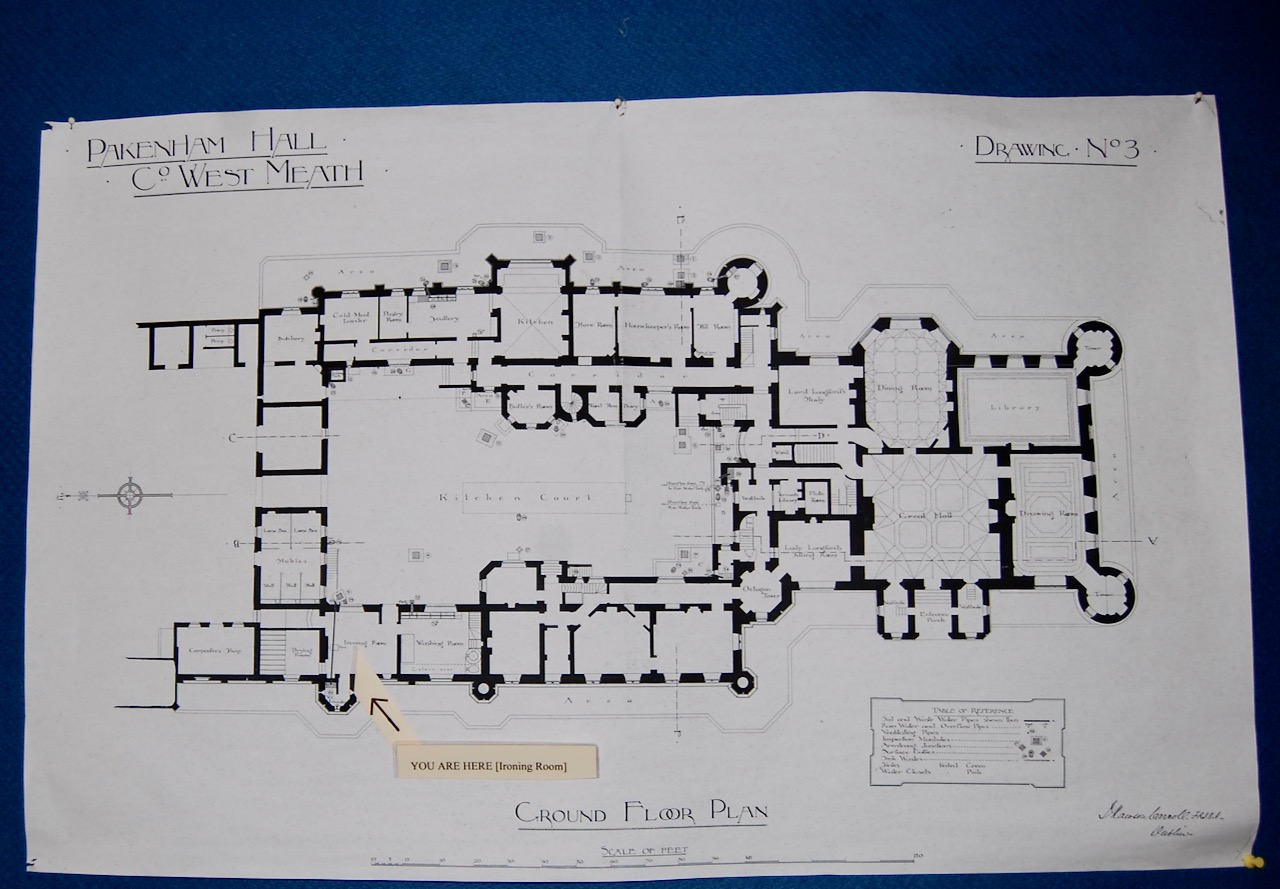
Morrison’s wings are part of the courtyards to the left of the plan for the main house in this drawing, see close-up below.
Plan of Morrison’s addition.
The garden side of the house. In this photograph you can see the Morrison addition of the kitchen: the part beyond the round tower, with the stepped gable, and the tripartite arched windows. Photograph © Jennifer Winder-Baggot, www.irishhistorichouses.com
Picture from the National Inventory of Architectural Heritage: “The kitchen wing … [has] a variety of stepped and pointed gables breaking the skyline and a large triple-light, round-headed window to light the kitchen in the middle of the facade.”
Picture from the National Inventory of Architectural Heritage, with the “banana shaped” conservatory, and the kitchen wing beyond.
Inside the kitchen, the Morrison windows. Photograph © Jennifer Winder-Baggot, www.irishhistorichouses.com

We explored these wings further on the tour of the “downstairs” servants area.

The courtyard created by the Morrison wings is very higgeldy piggeldy.

Inner courtyard, Picture from National Inventory of Architectural Heritage.
The telescoped Octagon tower. The Laundry is on the right side of the courtyard when facing the octagon tower. Photograph © Jennifer Winder-Baggot, www.irishhistorichouses.com
The family apartment was in this section, built by Richard Morrison. Photograph © Jennifer Winder-Baggot, www.irishhistorichouses.com
Inside the courtyard created by the Morrison additions. The kitchen is on the left hand side of the courtyard when facing the octagon tower. The servants’ hall was in the basement below. Photograph © Jennifer Winder-Baggot, www.irishhistorichouses.com
Inside Morrison’s courtyard. Photograph © Jennifer Winder-Baggot, www.irishhistorichouses.com
Tullynally, County Westmeath. The laundry side of the courtyard. Photograph © Jennifer Winder-Baggot, www.irishhistorichouses.com
Tullynally, County Westmeath. Photograph © Jennifer Winder-Baggot, www.irishhistorichouses.com

On the “downstairs tour” we toured the wings of the castle that had been added by Fluffy and his mother. A wing was built for the staff, and it was state of the art in the 1840s when Richard Morrison built these additions. Fluffy never married, and unfortunately died in “mysterious circumstances” in a hotel in London.

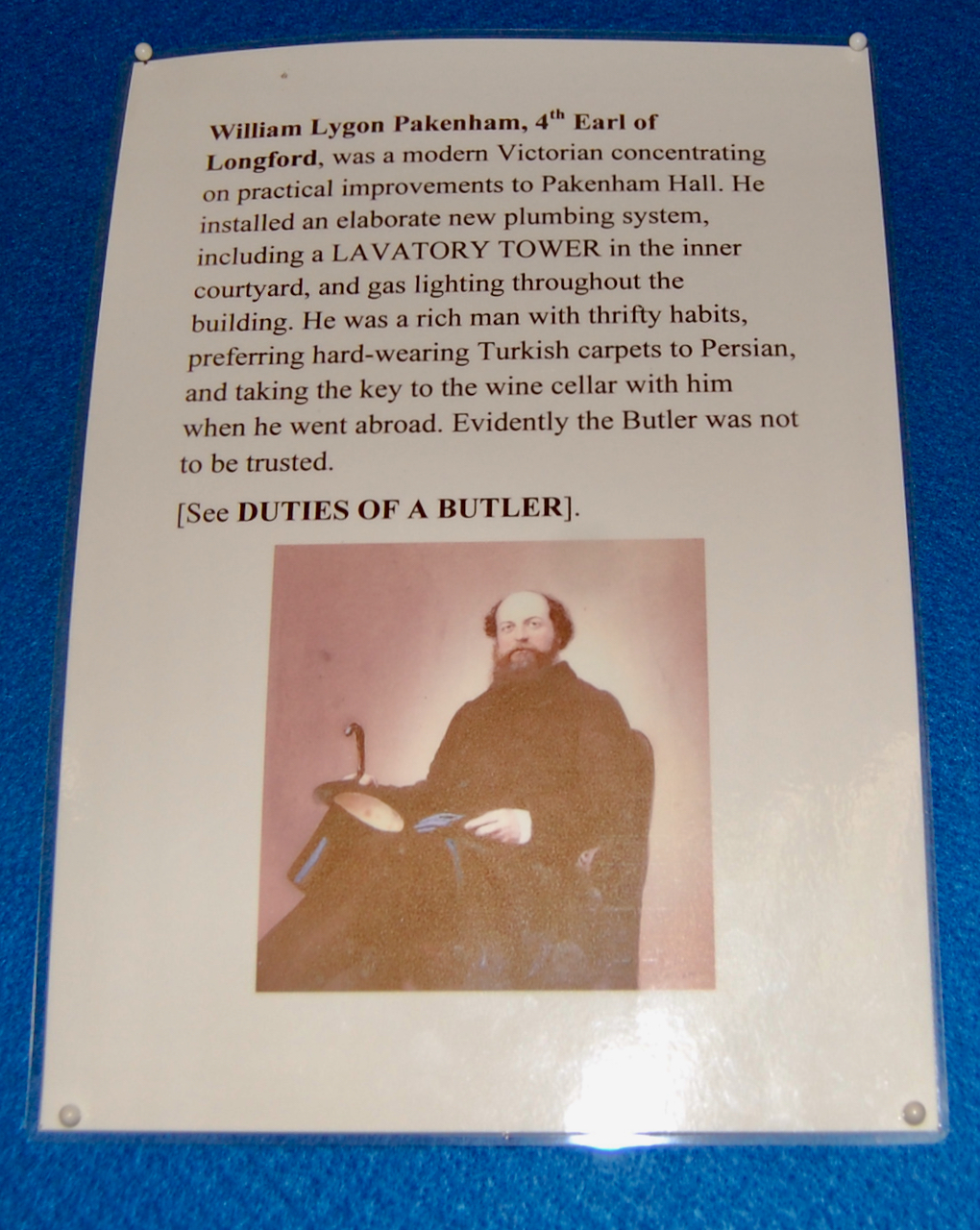
When Fluffy died his brother William (1819-1887), an army general in the Crimean War and long-serving military man, became the 4th Earl of Longford.

This could be William Lygon Pakenham (1819-1887), the 4th Earl, I think. Photograph © Jennifer Winder-Baggot, www.irishhistorichouses.com

Terence Reeves-Smyth continues:“After the third Earl’s death in 1860 his brother succeeded to the title and property and proceeded to modernise the castle with all the latest equipment for supplying water, heat and lighting. Except for a water tower erected in the stable court by the Dublin architect J. Rawson Carroll in the 1860s, these modifications did not involve altering the fabric of the building, which has remained remarkably unchanged to the present day.

The further additions in 1860 are by James Rawson Carroll (d.1911), architect of Classiebawn, Co Sligo, built for Lord Palmerston and eventually Lord Mountbatten’s Irish holiday home in the 1860s.

The 4th Earl married Selina Rice-Trevor from Wales in 1862. Her family, our guide told us, “owned most of Wales.” His letters and a copy of his diary from when he arrived home from the Crimean War are all kept in Tullynally.

Tullynally, County Westmeath.

We can even read his proposal to Selina:

Tullynally, County Westmeath.

William the 4th Earl installed a new plumbing system. He also developed a gas system, generating gas to light the main hall. The gas was limited, so the rest of the light was provided by candles, and coal and peat fires. His neighbour Richard Lovell Edgeworth provided the heating system.

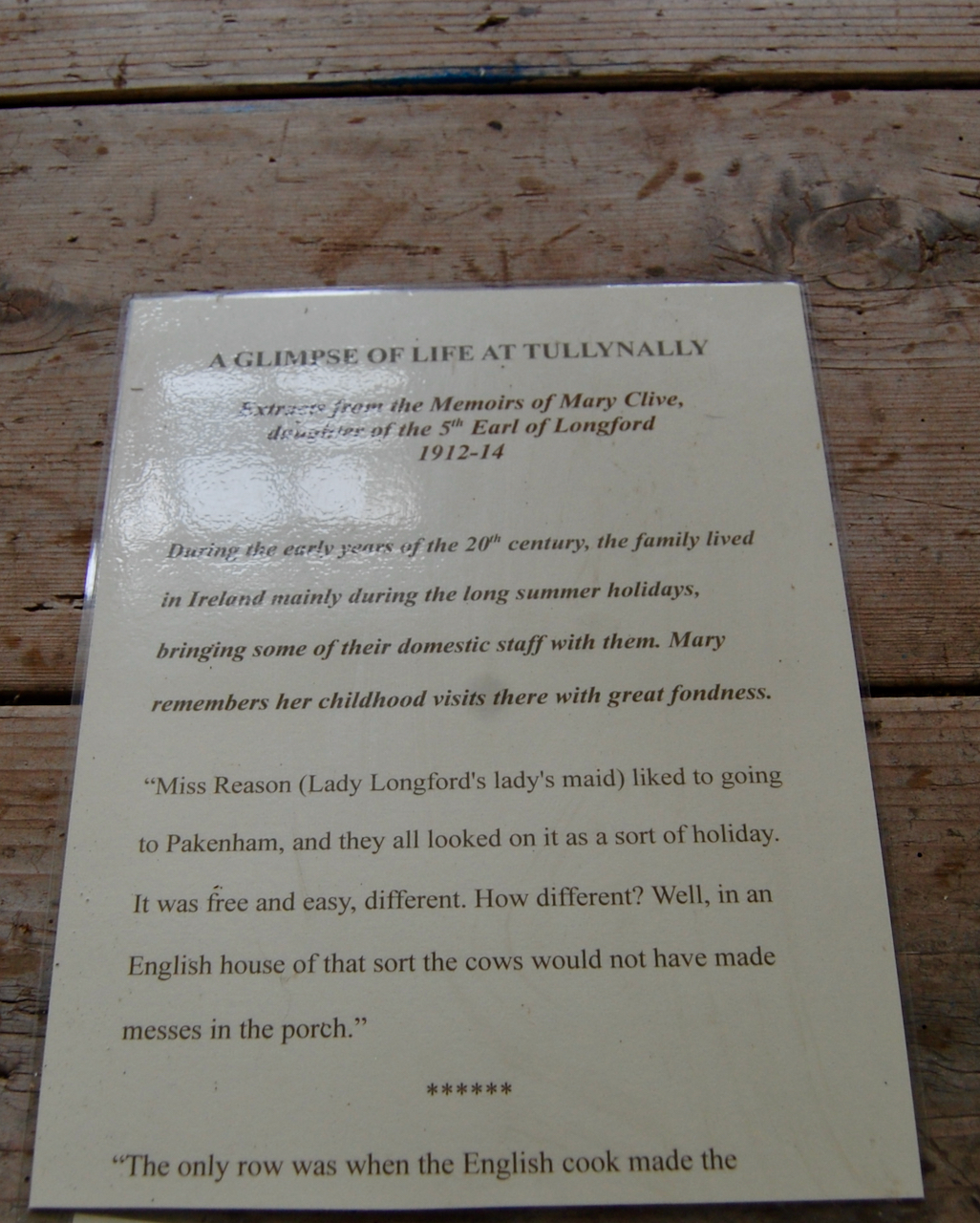
The next generation was the 5th Earl, son of the 4th Earl, Thomas Pakenham (1864-1915). He was also a military man. He married Mary Julia Child-Villiers, daughter of Victor Albert George Child-Villiers, 7th Earl of Island of Jersey and they had six children.

The family are lucky to have wonderful archives and diaries. Mary Julia Child-Villiers was left a widow with six children when her husband died during World War I in Gallipoli. The downstairs tour shows extracts from the Memoir of Mary Clive, daughter of the 5th Earl of Longford.

Tullynally, County Westmeath.

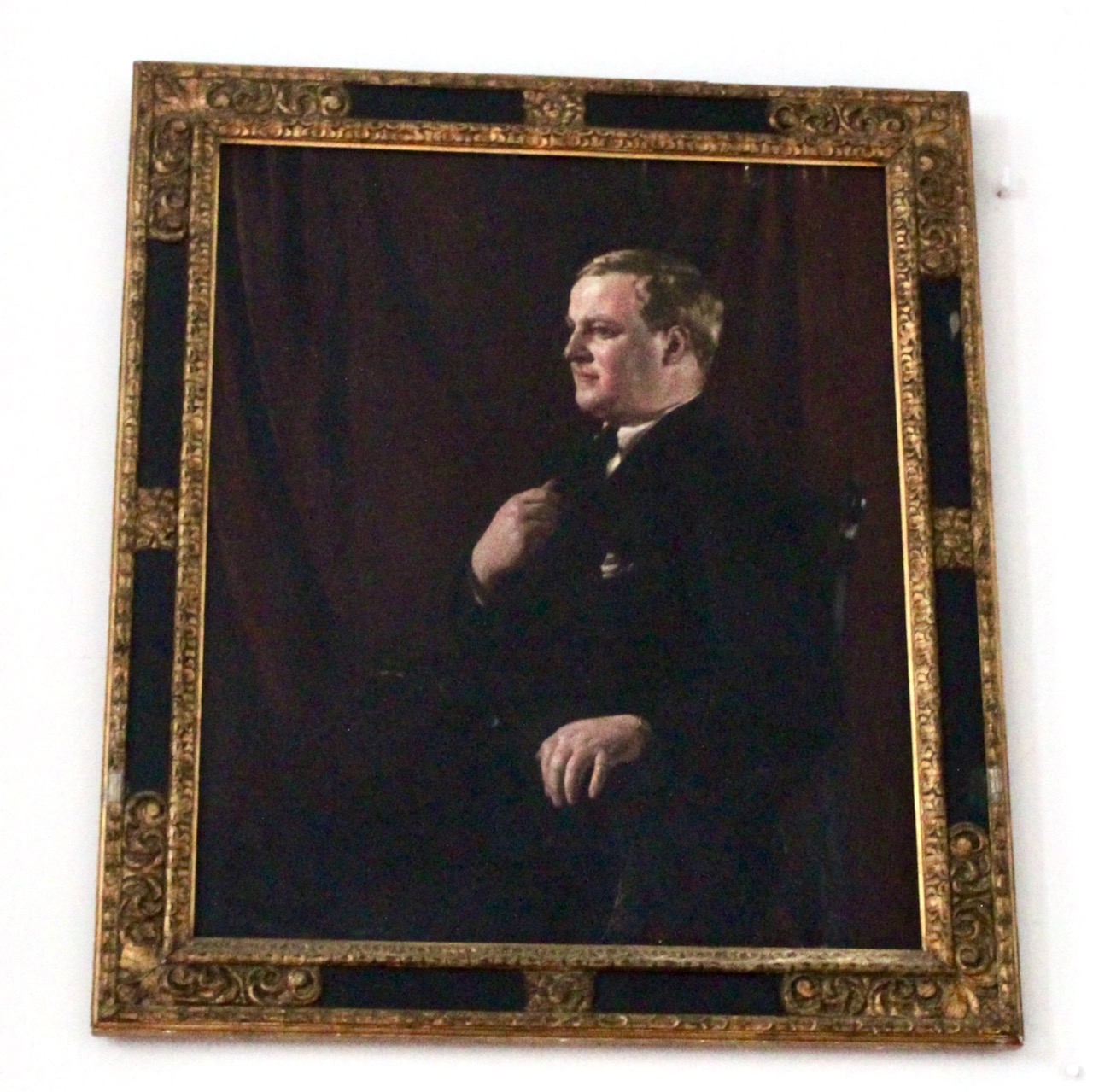
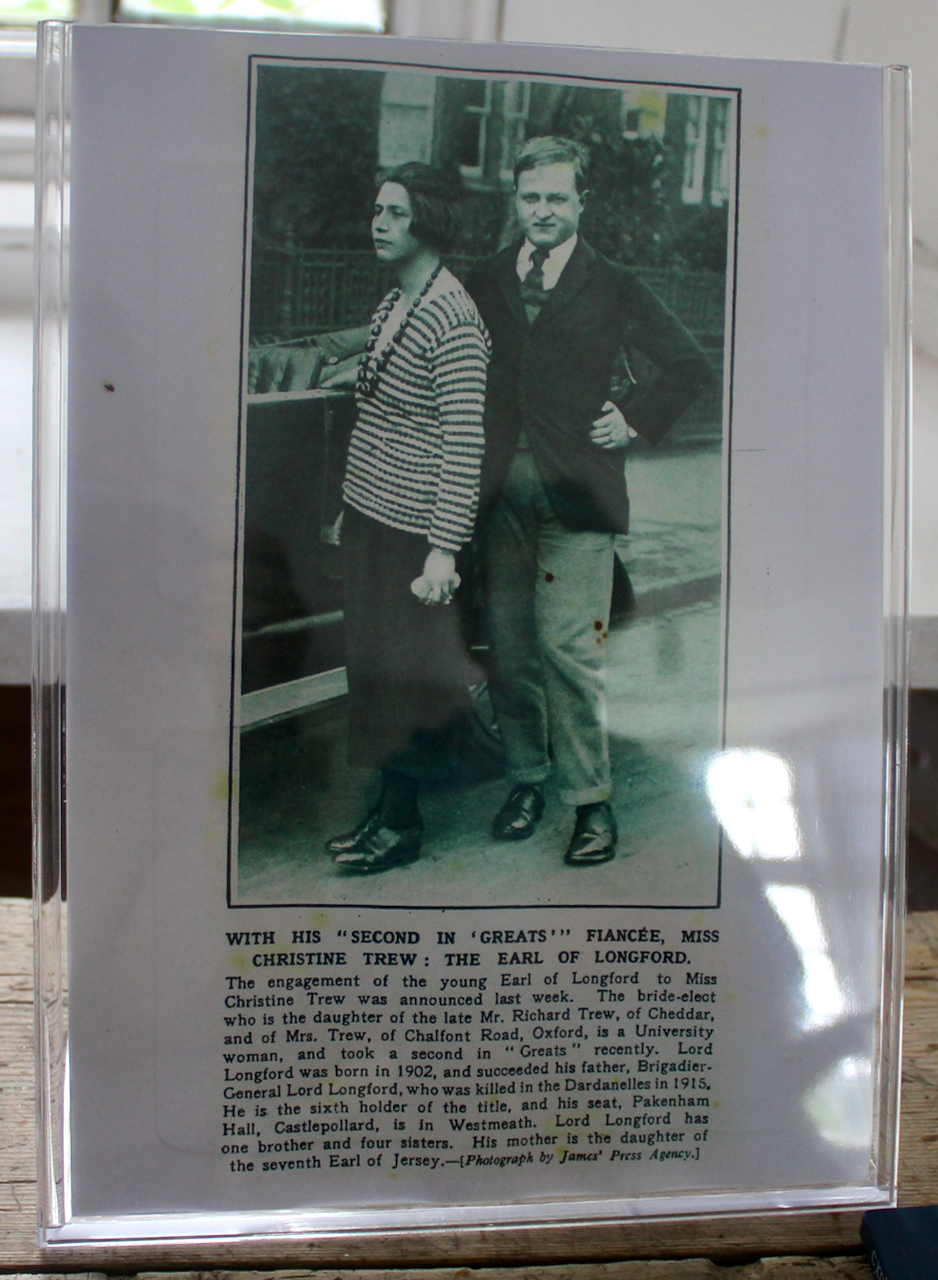
Since 1915 the family have been writers (before that, they were mostly military). Edward the 6th Earl (1902-1961) was a prolific playwright who restored the Gate Theatre in Dublin and taught himself Irish, and with his wife Christine, created the Longford Players theatrical company which toured Ireland in the 30s and 40s. He served as a Senator for the Irish state between 1946 and 1948.

Edward, the 6th Earl of Longford (1902-1961). His portrait hangs in the Great Hall.
Newspaper article before their wedding.
Sculpture and photograph of Christine Trew (1900-1980), wife of Edward, the 6th Earl of Longford. Photograph © Jennifer Winder-Baggot, www.irishhistorichouses.com

His sister Violet Georgiana, who married Anthony Dymoke Powell, wrote many books, and her husband was a published writer as well. Another sister, Mary Katherine, who married Major Meysey George Dallas Clive, also wrote and published. Their sister Margaret Pansy Felicia married a painter, Henry Taylor Lamb, and she wrote a biography of King Charles I.

A brother of Edward, Frank (1905-2001), who became the 7th Earl after Edward died in 1961, and his wife Elizabeth née Harman, wrote biographies, as did their children, Antonia Fraser, Rachel Billington and Thomas Pakenham the 8th Earl of Longford. Antonia Fraser, who wrote amongst other things a terrific biography of Marie Antoinette and another wonderful one of King Charles II of England, is one of my favourite writers. She is a sister of the current Earl of Longford, Thomas, who lives in the house. They did not grow up in Tullynally, but in England. Thomas’s wife Valerie has published amongst other books, The Big House in Ireland.

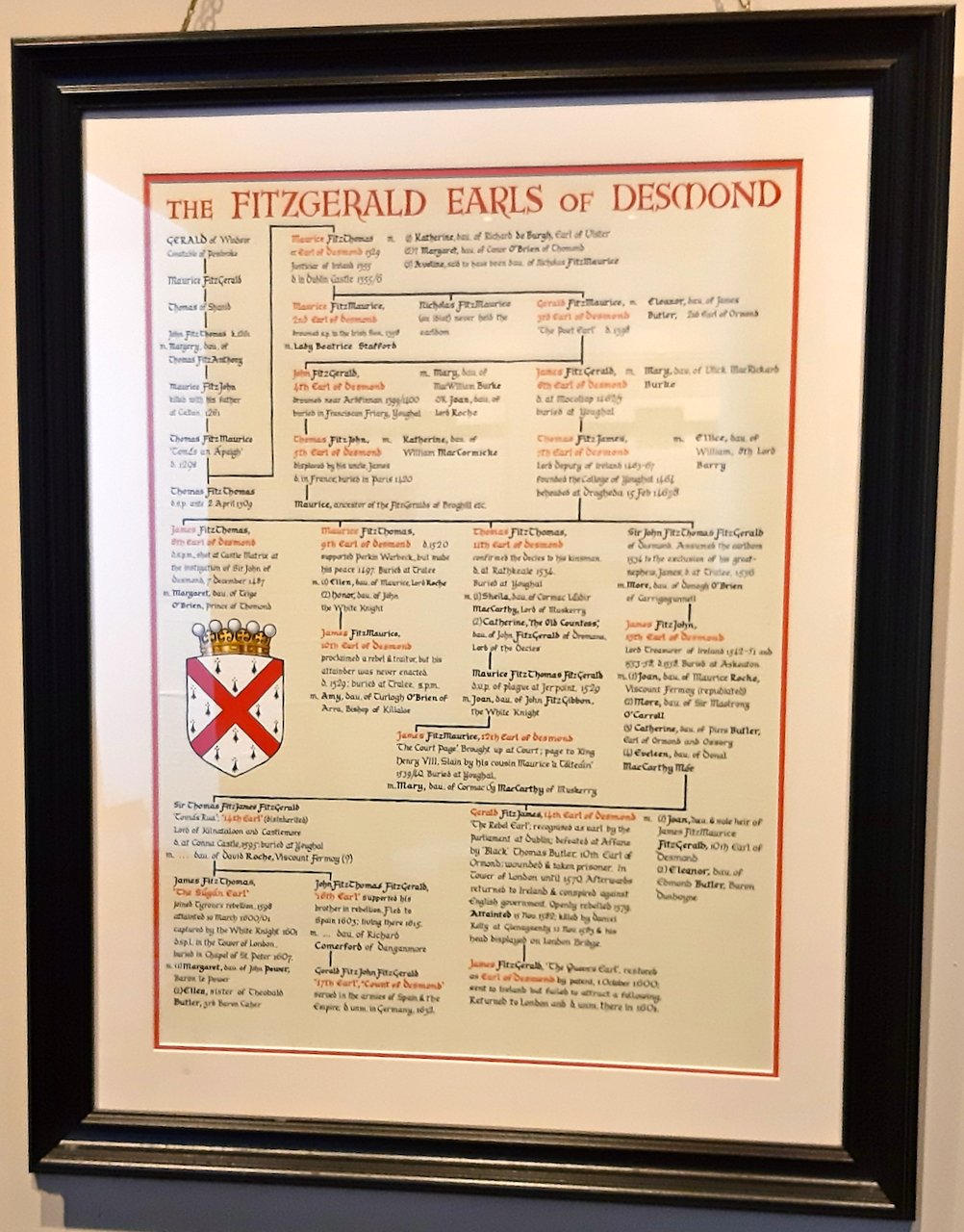
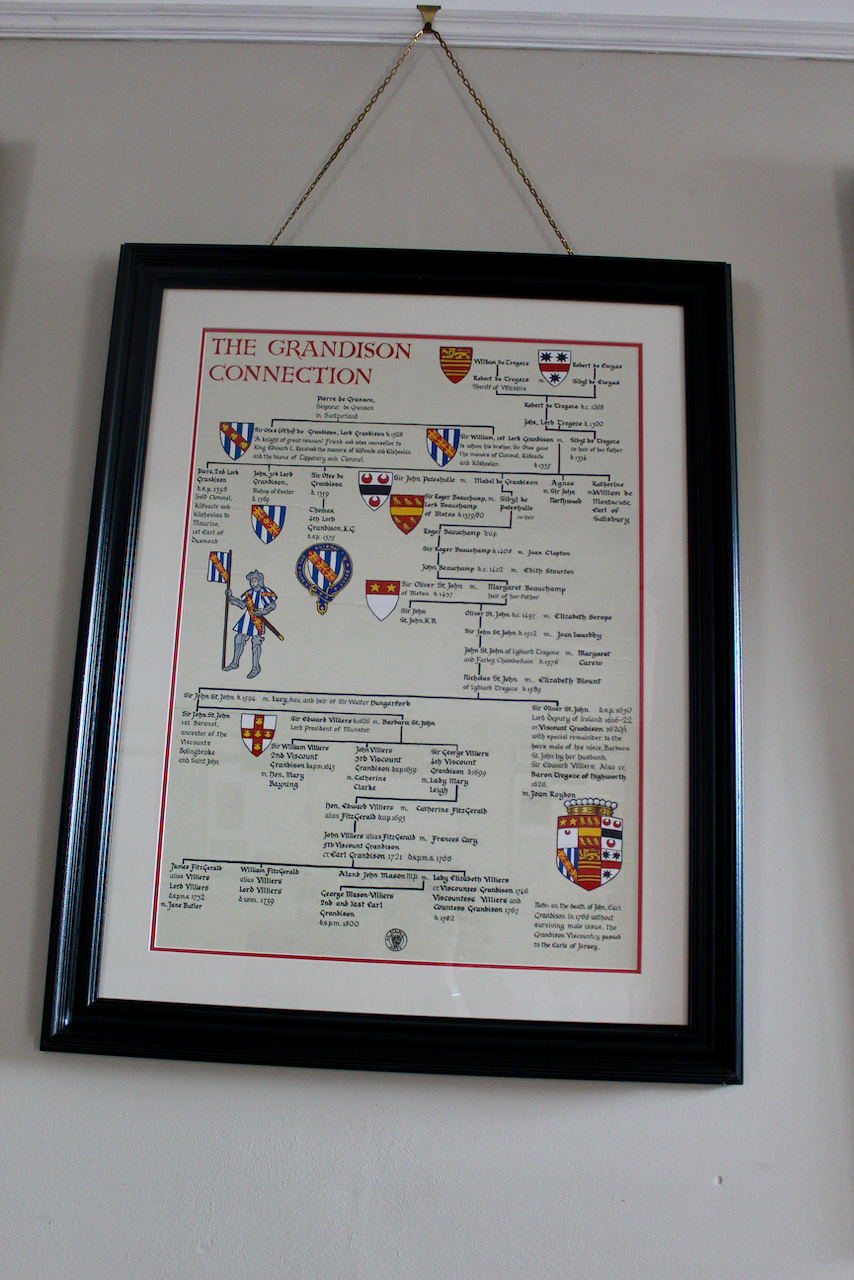
There was a handy chart of the recent family on the wall in the courtyard café:

Tullynally, County Westmeath.

Stephen noted with satisfaction that Thomas Pakenham does not use his title, the 8th Earl of Longford. That makes sense of course since such titles are not recognised in the Republic of Ireland! In fact Stephen’s almost sure that it is against the Irish Constitution to use such titles. This fact corresponds well with the castle’s change in name – it was renamed Tullynally in 1963 to sound more Irish.

When we visited in 2020 we purchased our tickets in the café and had time for some coffee and cake and then a small wander around the courtyard and front of the Castle. One enters the stable courtyard, designed by Francis Johnston, to find the café and ticket office.

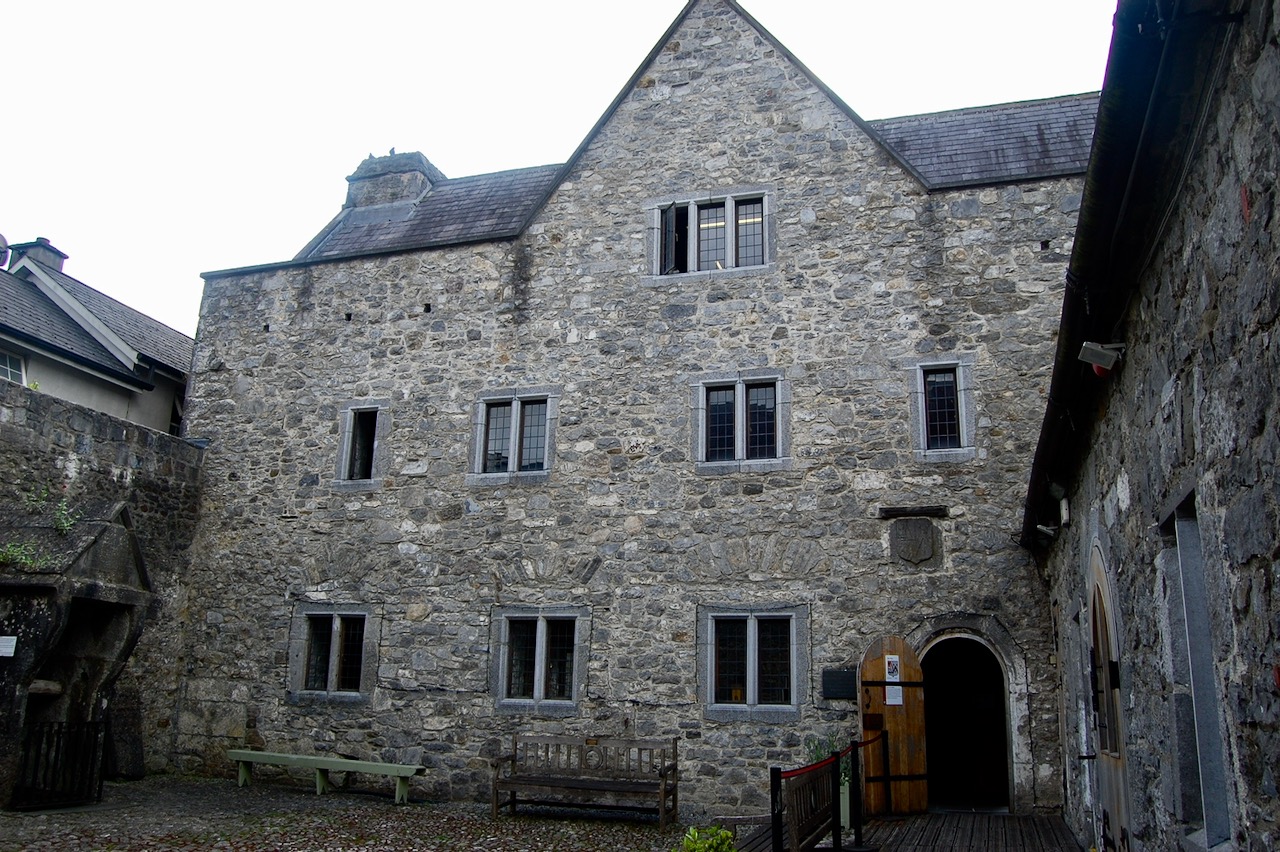
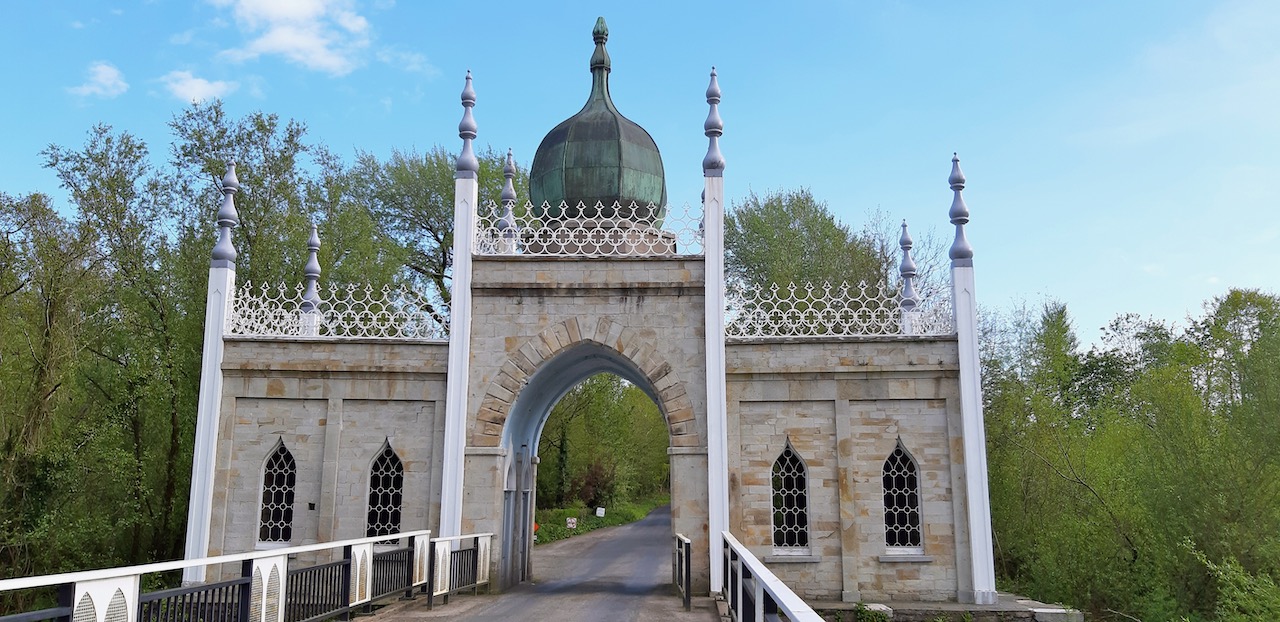
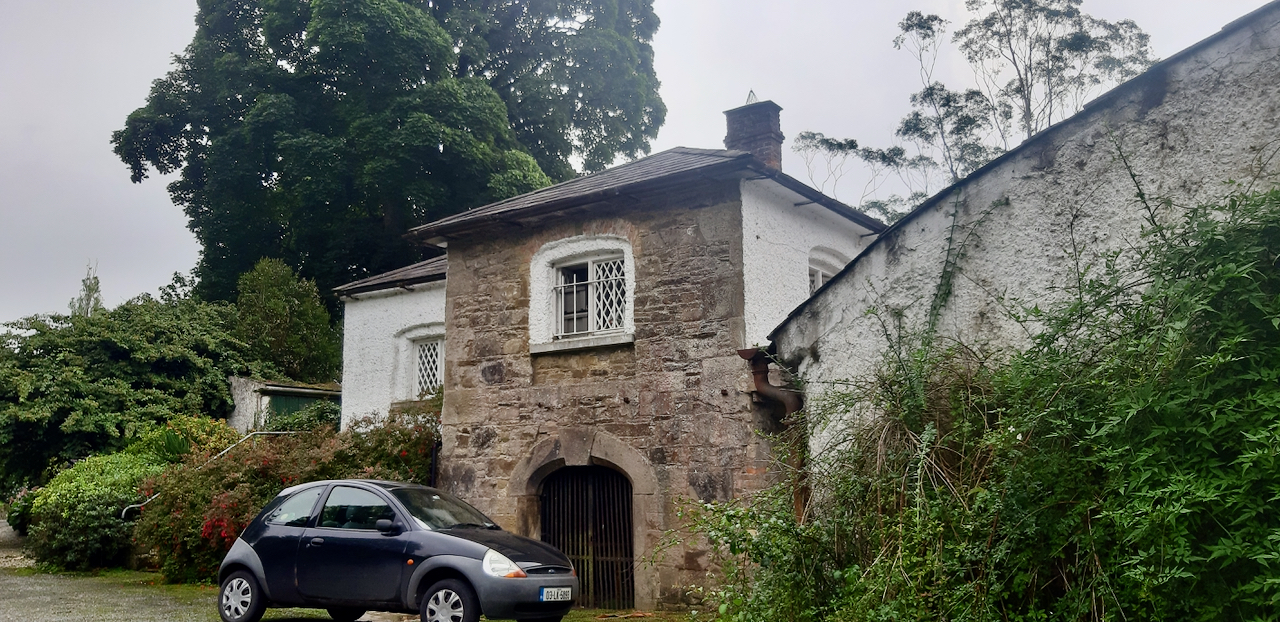
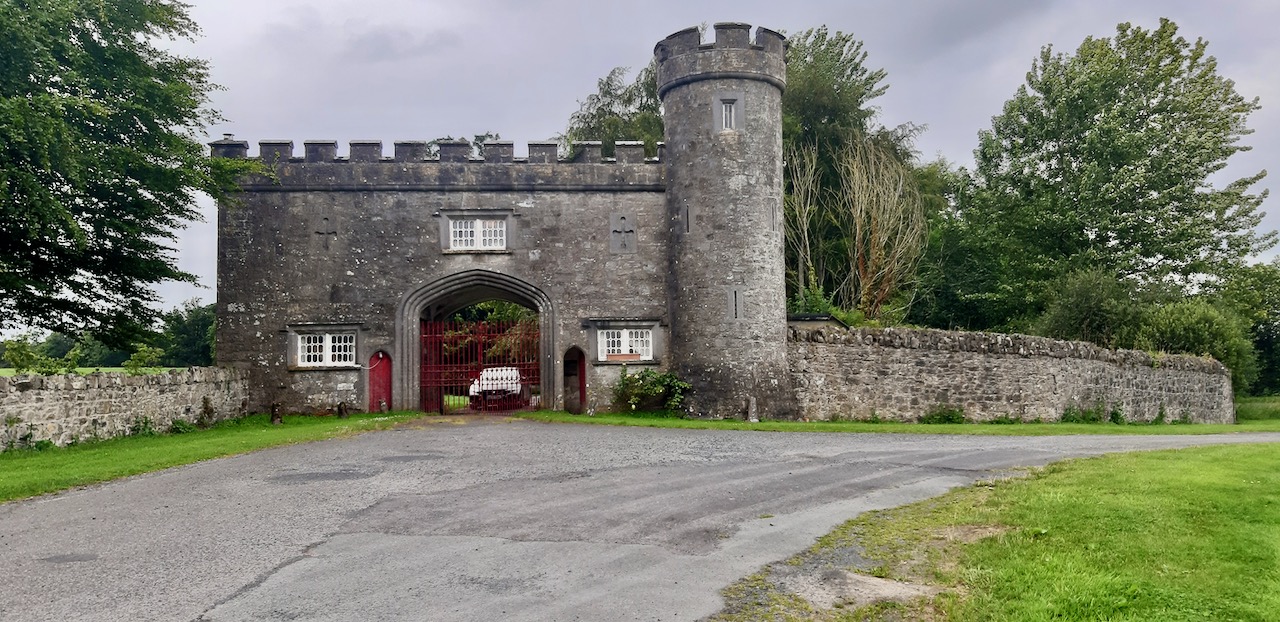
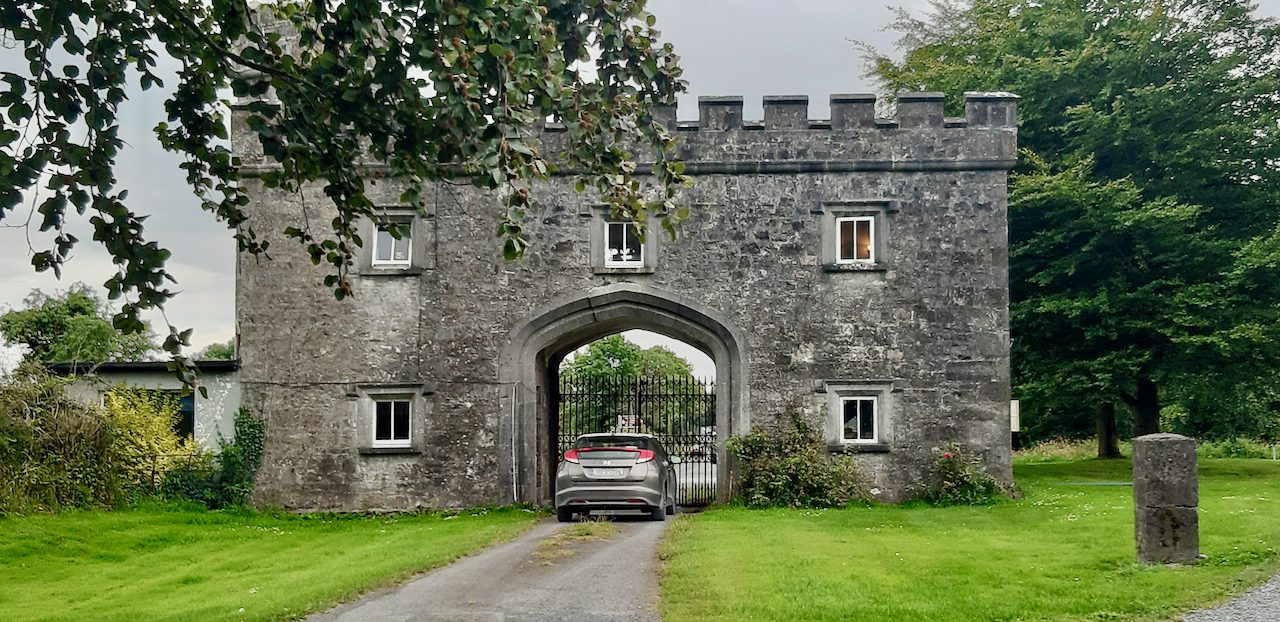
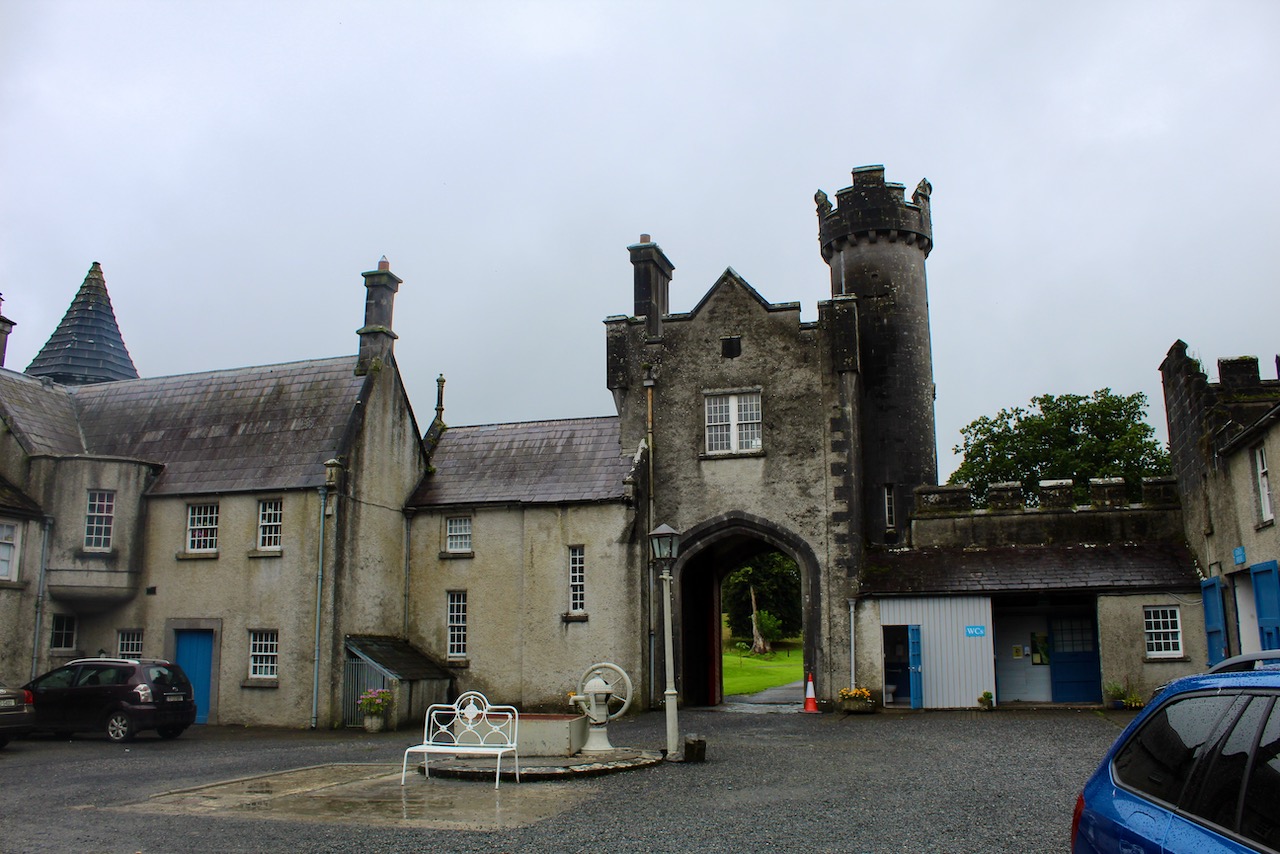
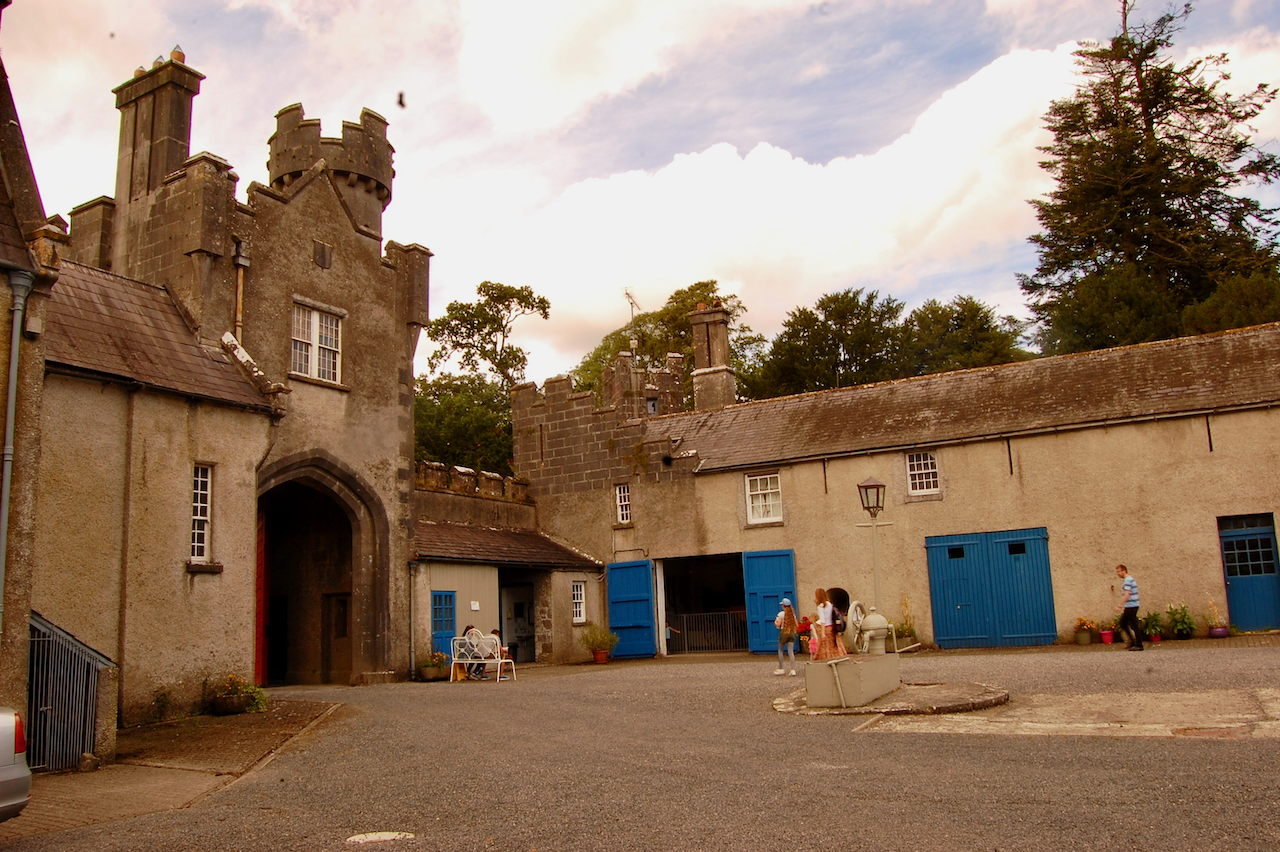
The arched gateway is the entrance to the stable courtyard. According to the National Inventory of Architectural Heritage, the entrance is in a: “Single-bay two-storey castellated gate house (on rectangular plan with integral Tudor-pointed carriage arch and a projecting polygonal tower rising a further storey above crenellated parapet over) to north end of complex [gives access to outer courtyard].” This is the courtyard designed by Francis Johnston. Photograph © Jennifer Winder-Baggot, www.irishhistorichouses.com
Gate lodge entrance to Francis Johnston’s stable courtyard, 2021. Photograph © Jennifer Winder-Baggot, www.irishhistorichouses.com
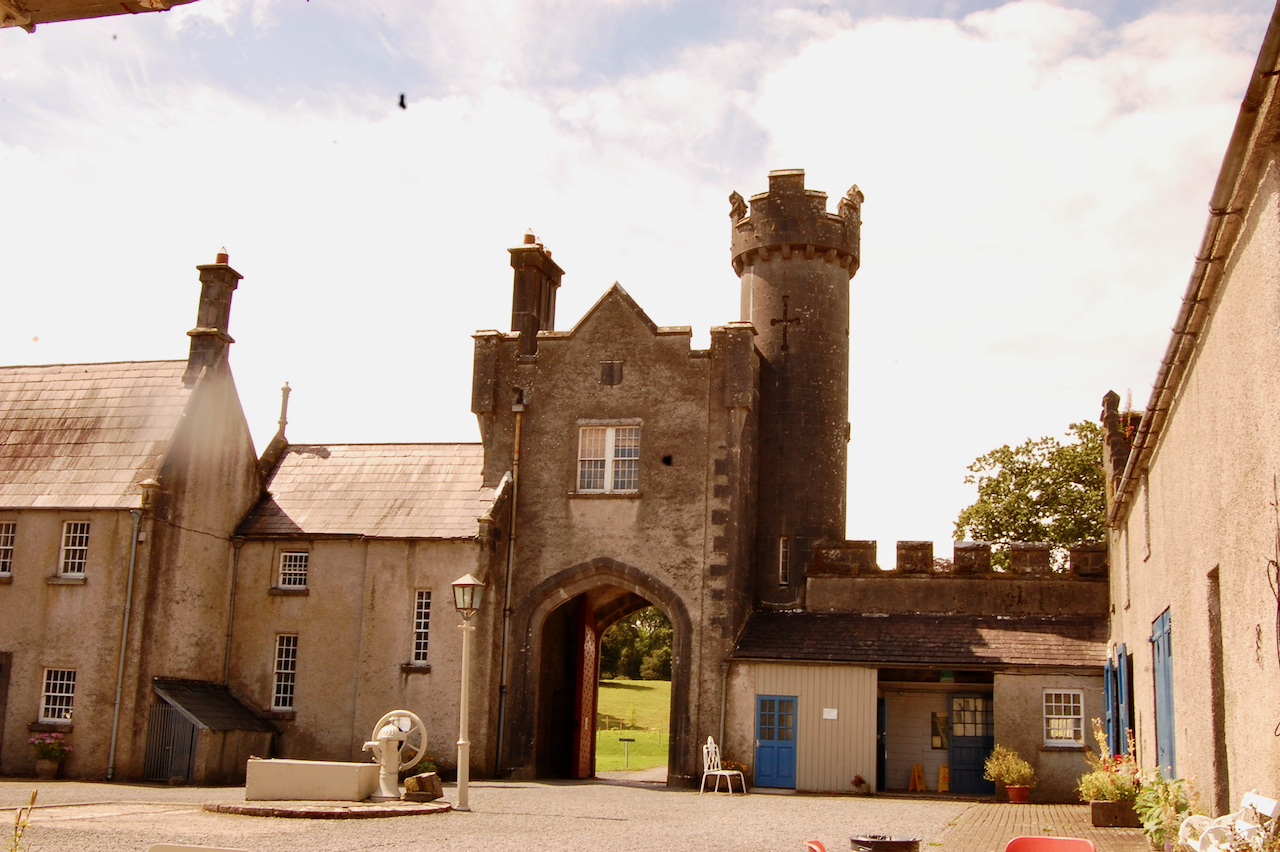
Inside the stable courtyard, looking back at the arched gateway through which we came. Photograph © Jennifer Winder-Baggot, www.irishhistorichouses.com
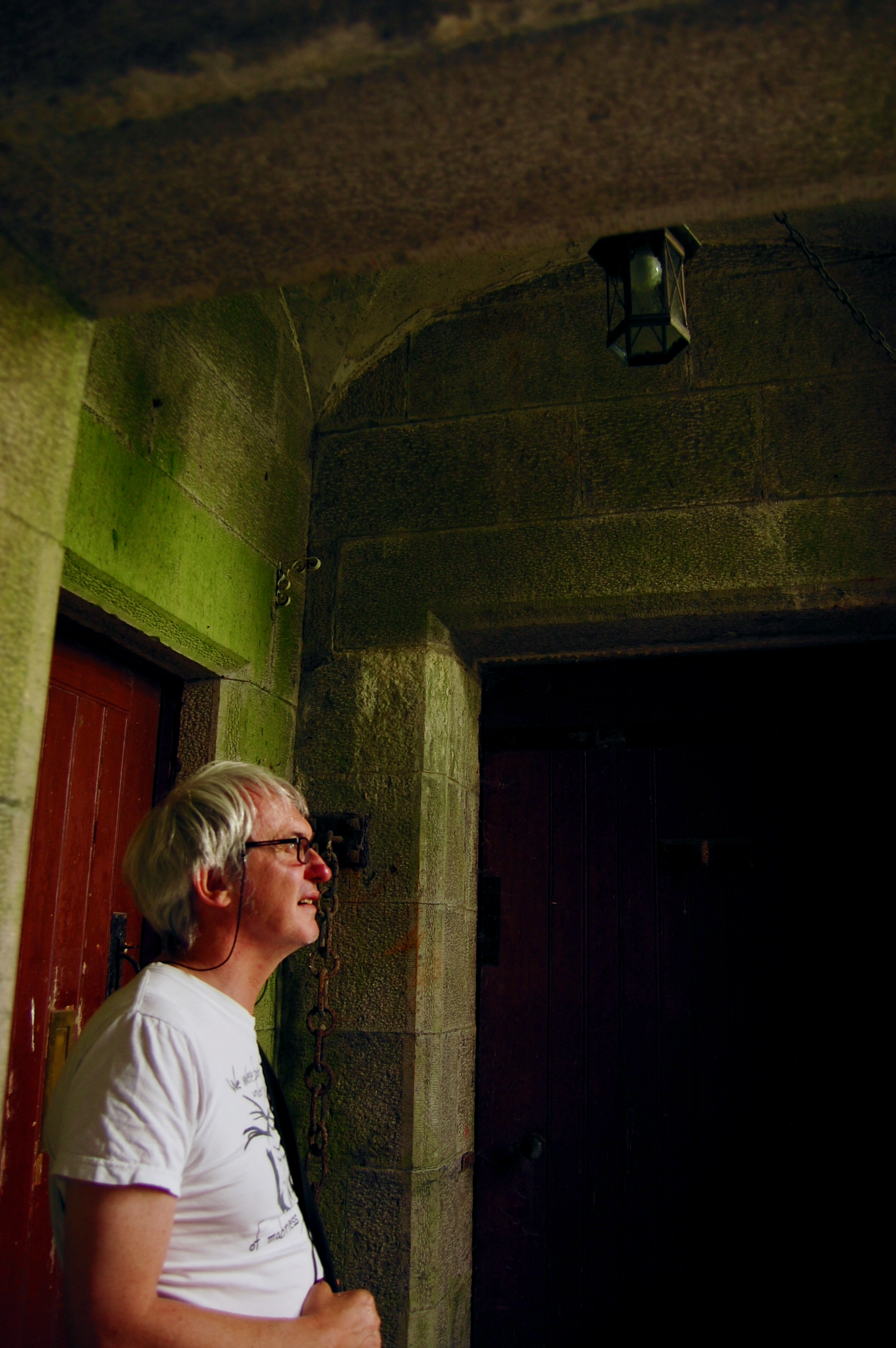
Stephen inside the castellated gate house arch. Photograph © Jennifer Winder-Baggot, www.irishhistorichouses.com
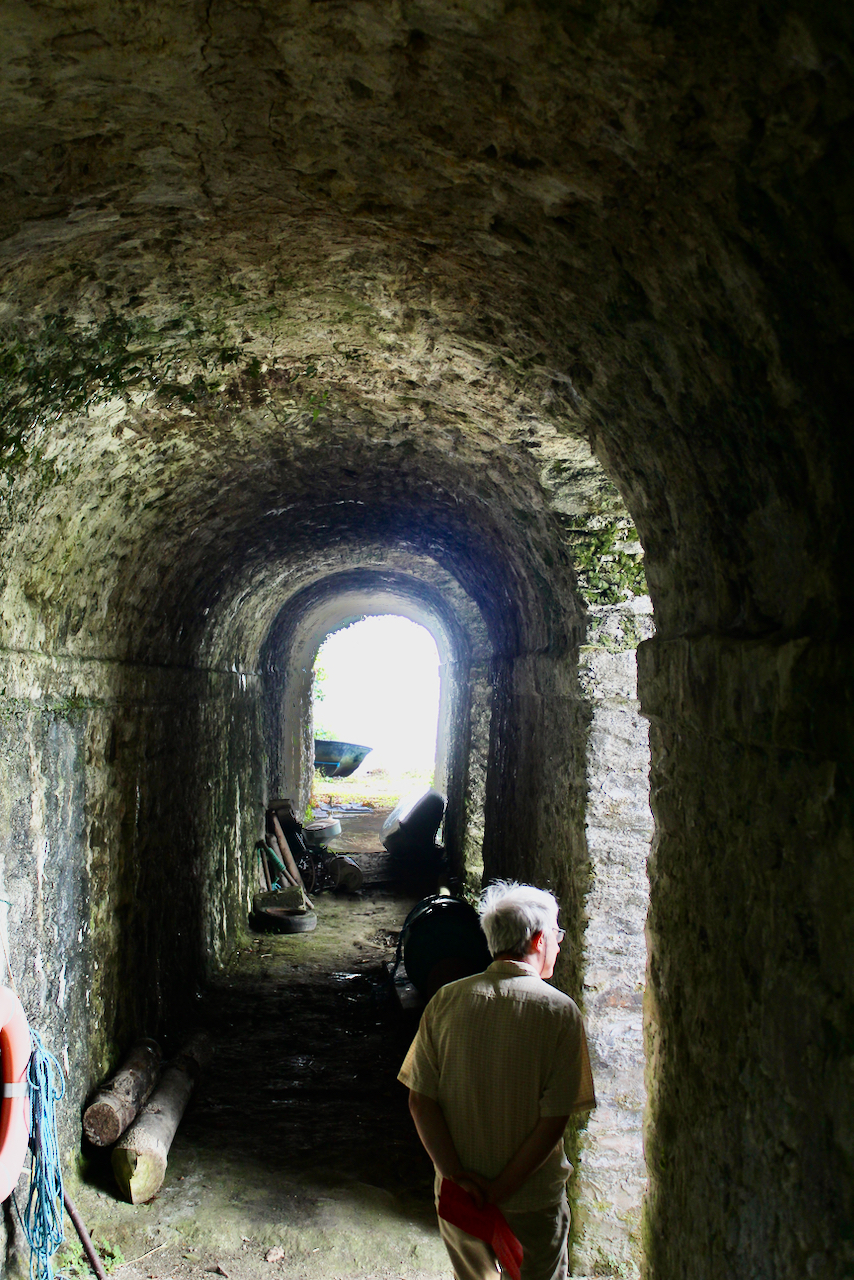
Inside the gateway entrance by Francis Johnston there is a vaulted ceiling. Photograph © Jennifer Winder-Baggot, www.irishhistorichouses.com
Tullynally, County Westmeath. Photograph © Jennifer Winder-Baggot, www.irishhistorichouses.com
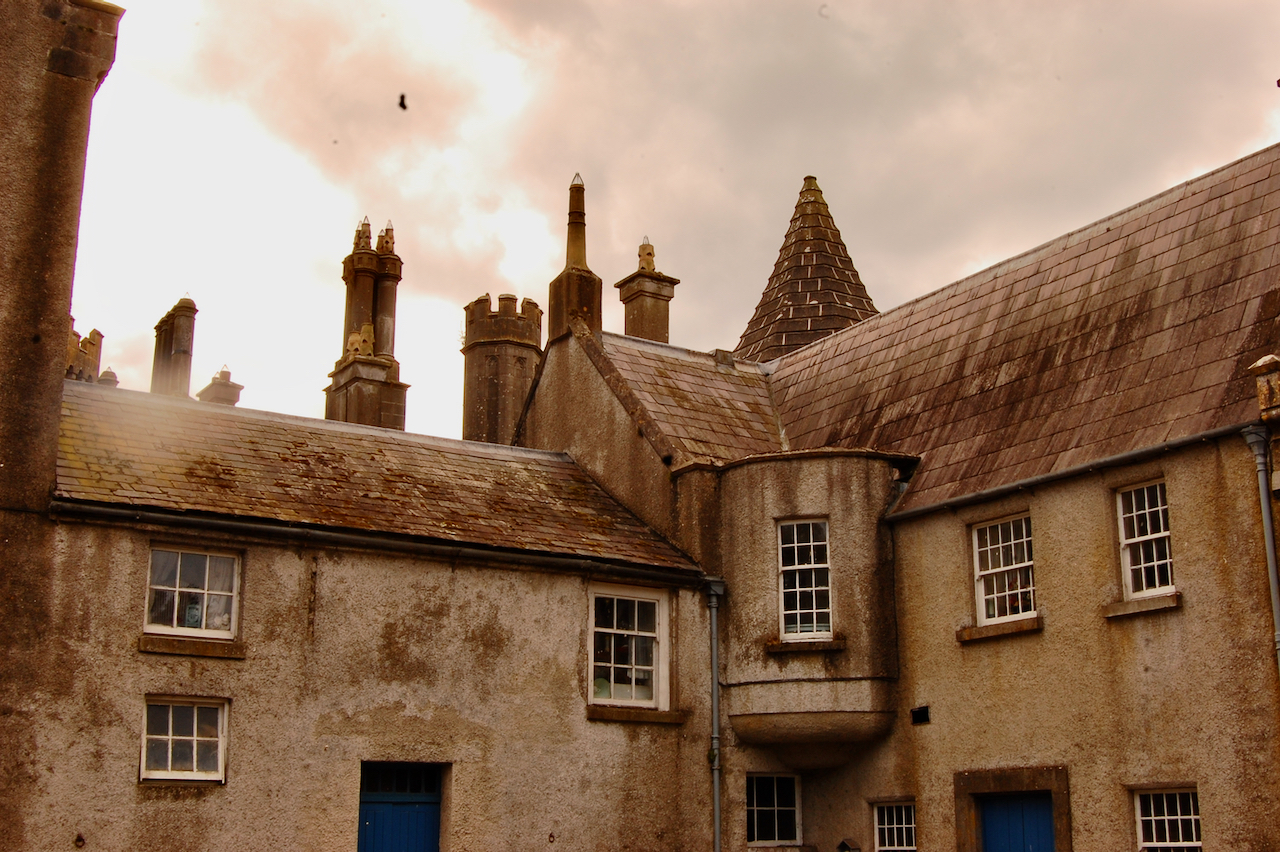
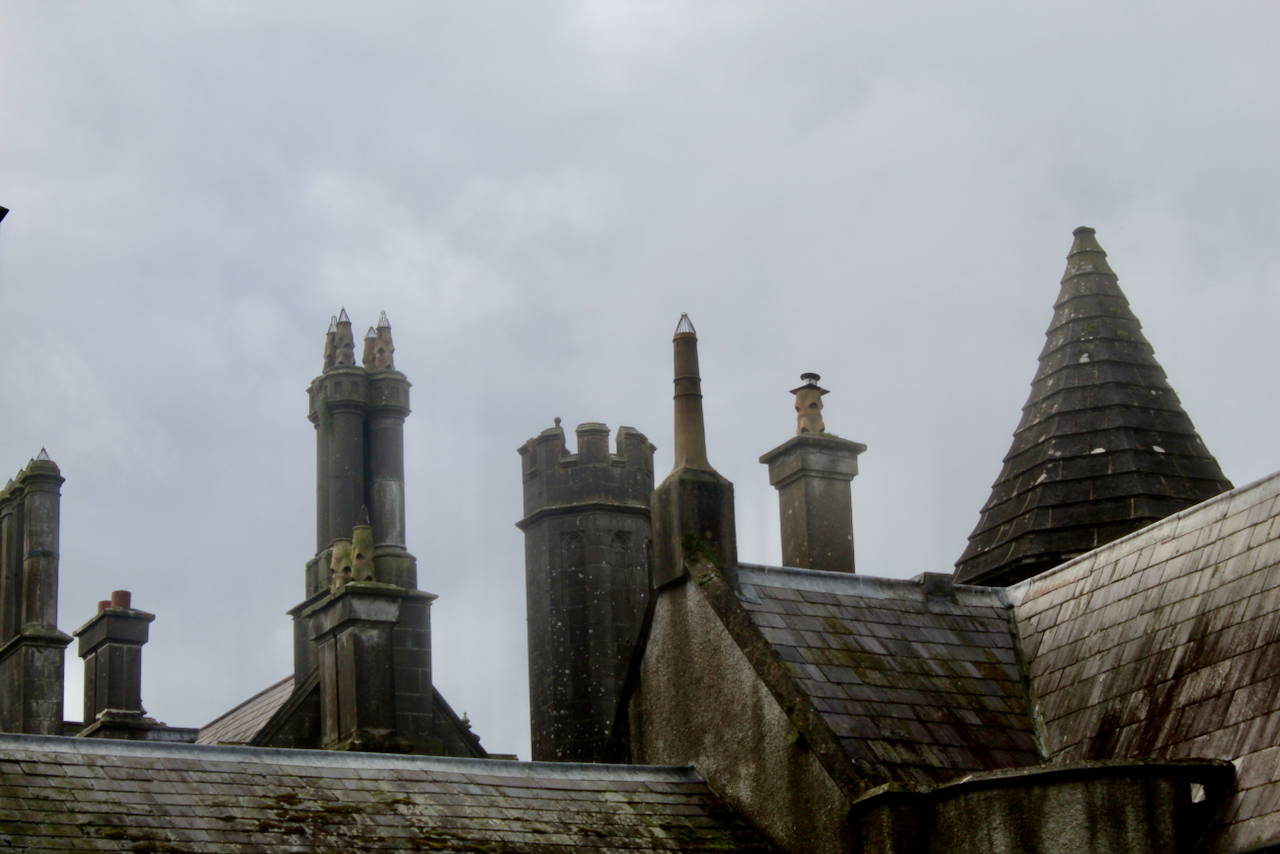
Chimneys and turrets. Photograph © Jennifer Winder-Baggot, www.irishhistorichouses.com
This is the rectanguar stable block with turreted walls by Francis Johnston. The historic water pump is in the foreground, and cafe in the back. Photograph © Jennifer Winder-Baggot, www.irishhistorichouses.com
Another view of the gate lodge entrance archway to the stable courtyard. Photograph © Jennifer Winder-Baggot, www.irishhistorichouses.com

I didn’t get to find out what is in every tower and behind every window, and I suspect it’s a place to get to know by degrees!

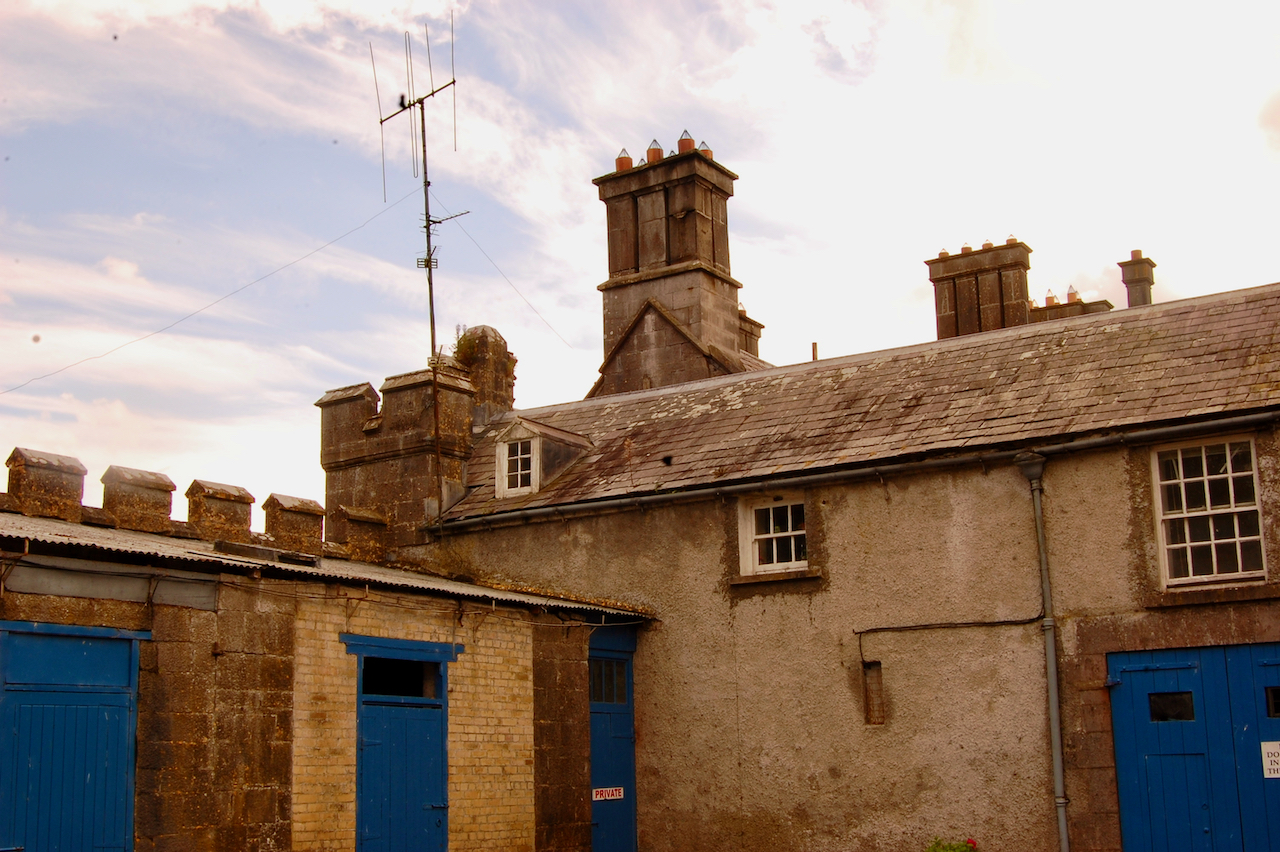
We entered through this archway to begin the “downstairs” tour with our tour guide. We entered into another, smaller courtyard – that designed by Richard Morrison. Look at all those chimneys! According to the National Inventory: “Inner courtyard accessed through two-storey block (on rectangular plan) having integral segmental-headed carriage with open belfry/clock tower (on hexagonal plan) over having sprocketed natural slate roof and cast-iron weather vane finial.” Photograph © Jennifer Winder-Baggot, www.irishhistorichouses.com
Tullynally, County Westmeath: entrance into the courtyard formed by Morrison’s additions. Photograph © Jennifer Winder-Baggot, www.irishhistorichouses.com
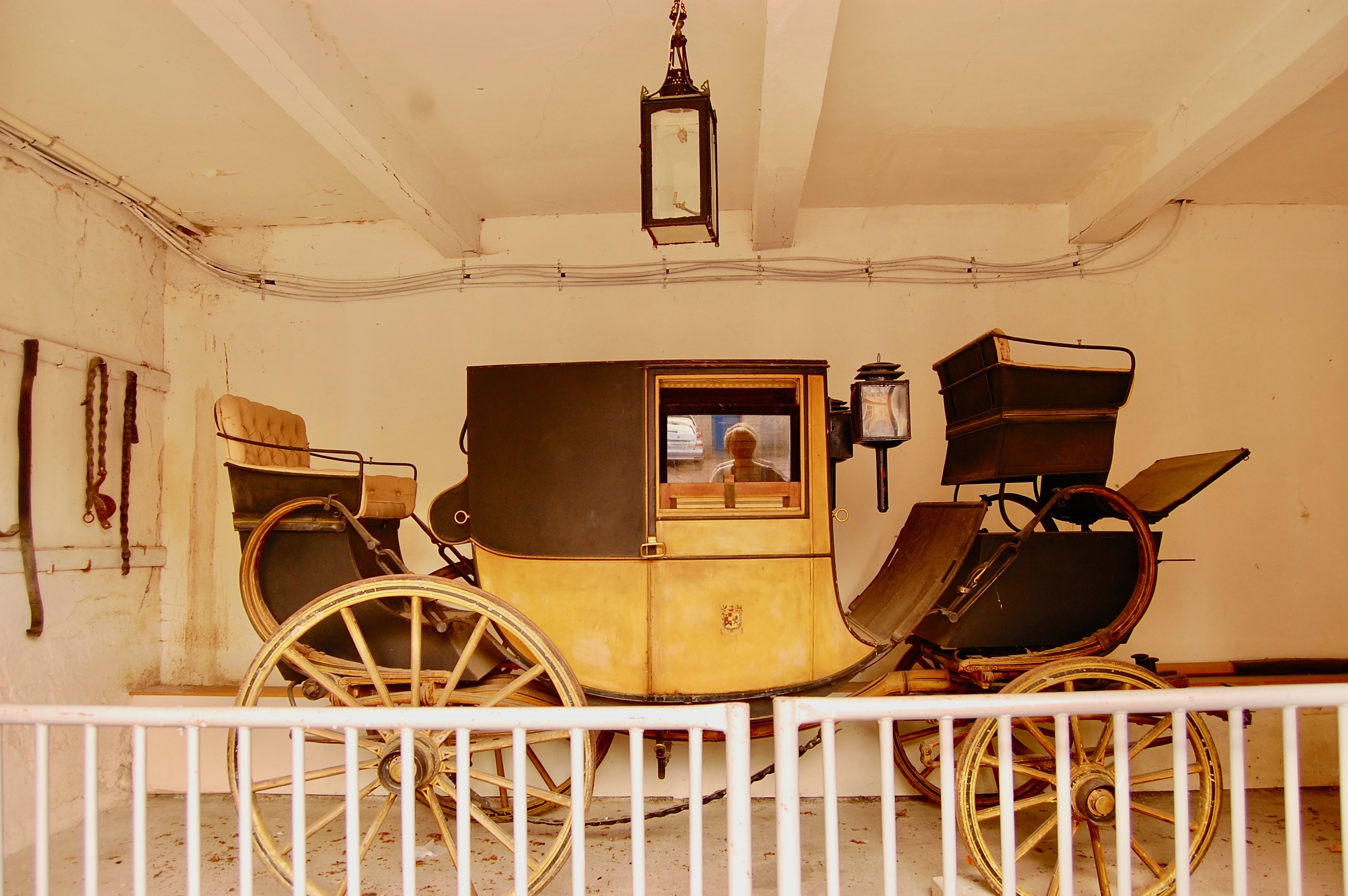
Tullynally, County Westmeath. Behind those blue doors was a shed containing a carriage. Photograph © Jennifer Winder-Baggot, www.irishhistorichouses.com
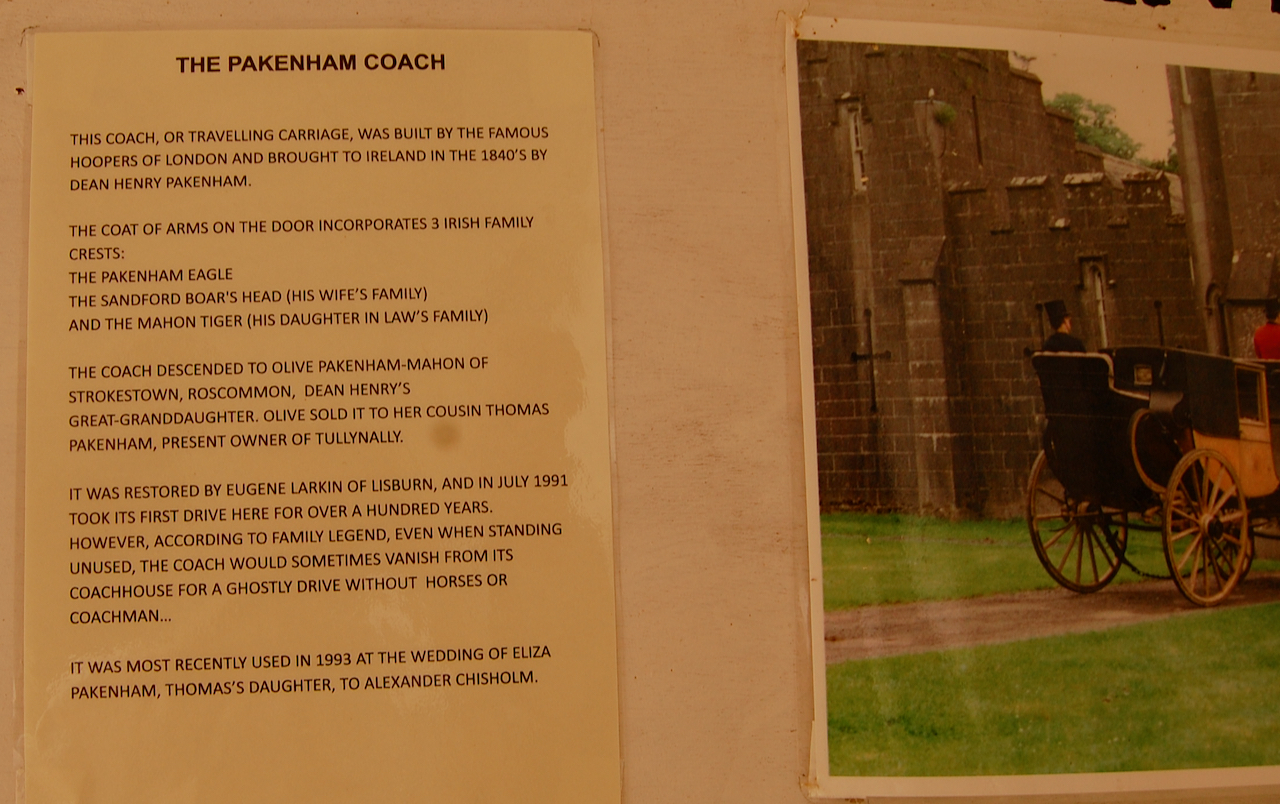
The Pakenham Coach. It was built by Hoopers of London and brought to Ireland in the 1840s by Dean Henry Pakenham, the brother of Thomas, the 2nd Earl of Longford. The coat of arms on the door [see the photograph below] incorporates three Irish crests: the Pakenham eagle, the Sandford boar’s head (Dean Henry’s wife was Eliza Catherine Sandford), and the Mahon tiger (Dean Henry’s son Henry married Grace Catherine Mahon). Photograph © Jennifer Winder-Baggot, www.irishhistorichouses.com
Tullynally, County Westmeath. Photograph © Jennifer Winder-Baggot, www.irishhistorichouses.com
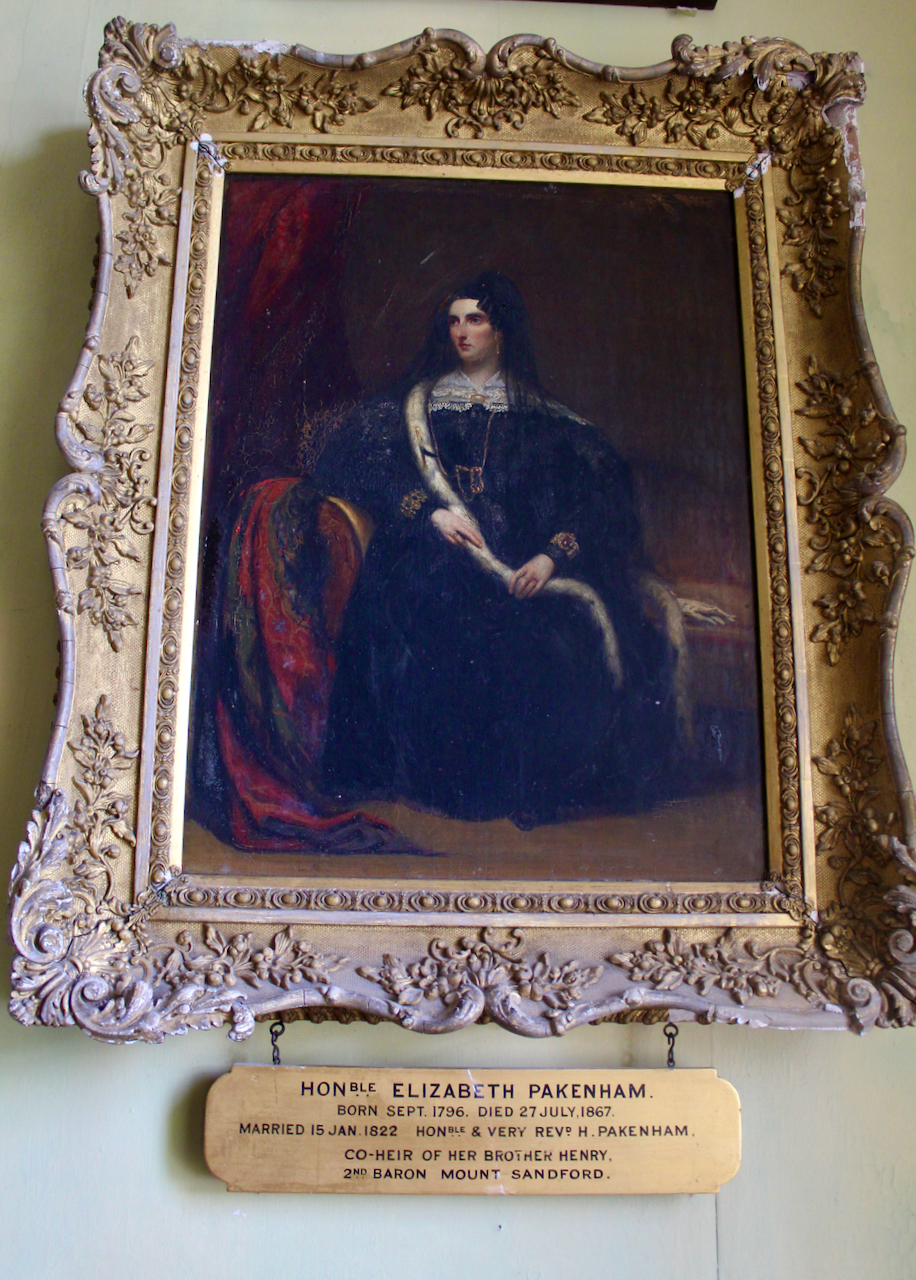
Elizabeth Sandford, mother of Henry Sandford Pakenham, wife of Reverend Henry Pakenham, Dean of St. Patrick’s Cathedral in Dublin. Henry Sandford Pakenham married the heiress Grace Catherine Mahon and changed his surname to Pakenham Mahon. Photograph © Jennifer Winder-Baggot, www.irishhistorichouses.com

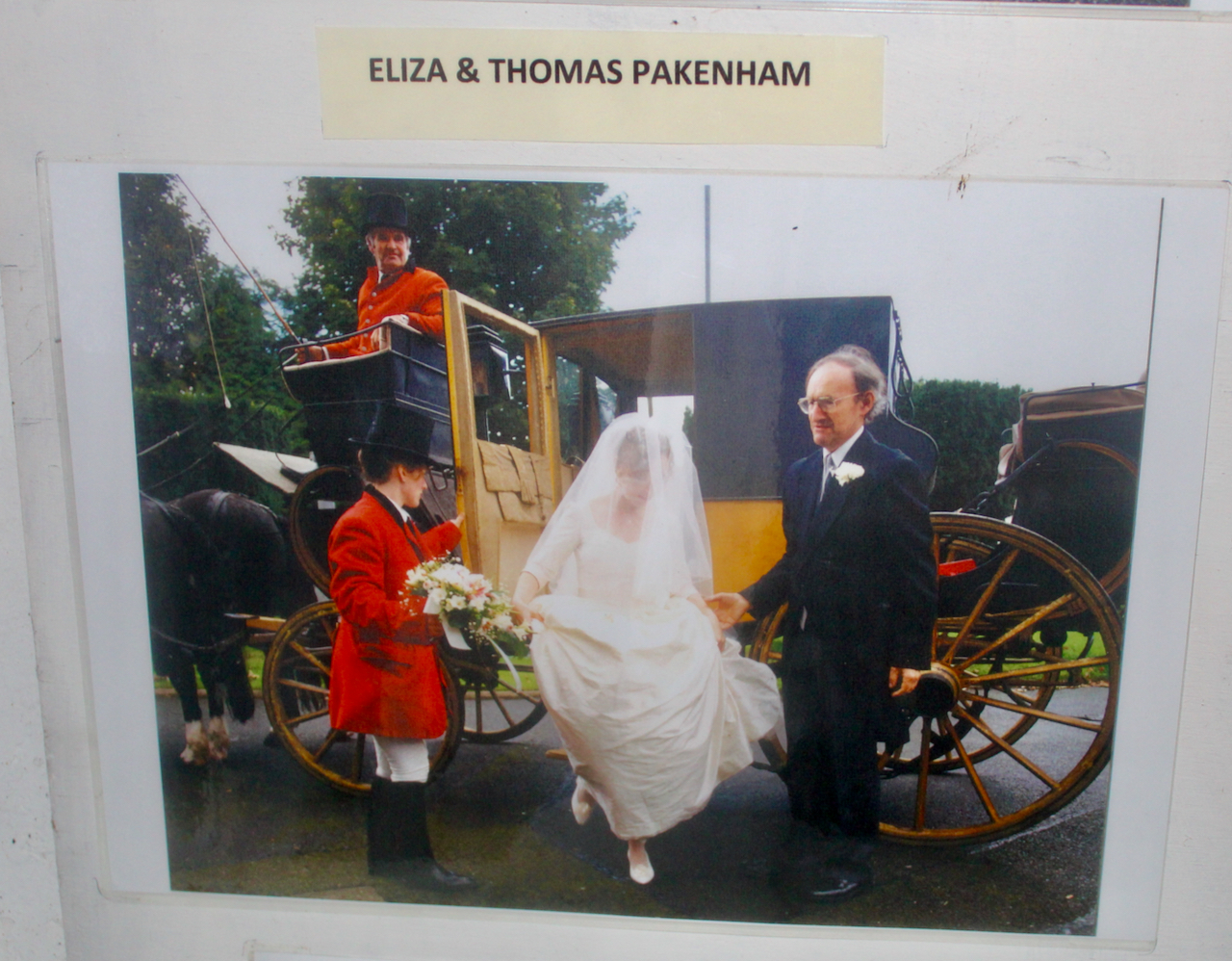
The coach was passed down to Olive Pakenham-Mahon of Strokestown, Roscommon (another section 482 property, see my entry), who was Dean Henry’s great granddaughter. Olive sold it to her cousin Thomas Pakenham, the present owner of Tullynally. It was restored by Eugene Larkin of Lisburn, and in July 1991 took its first drive in Tullynally for over a hundred years. Family legend has it that the coach would sometimes disappear from the coachhouse for a ghostly drive without horses or coachman! It was most recently used in 1993 for the wedding of Eliza Pakenham, Thomas’s daughter, to Alexander Chisholm.

Tullynally, County Westmeath.

The tour brought us through the arch from the first courtyard containing the café, into a smaller, Morrison courtyard.

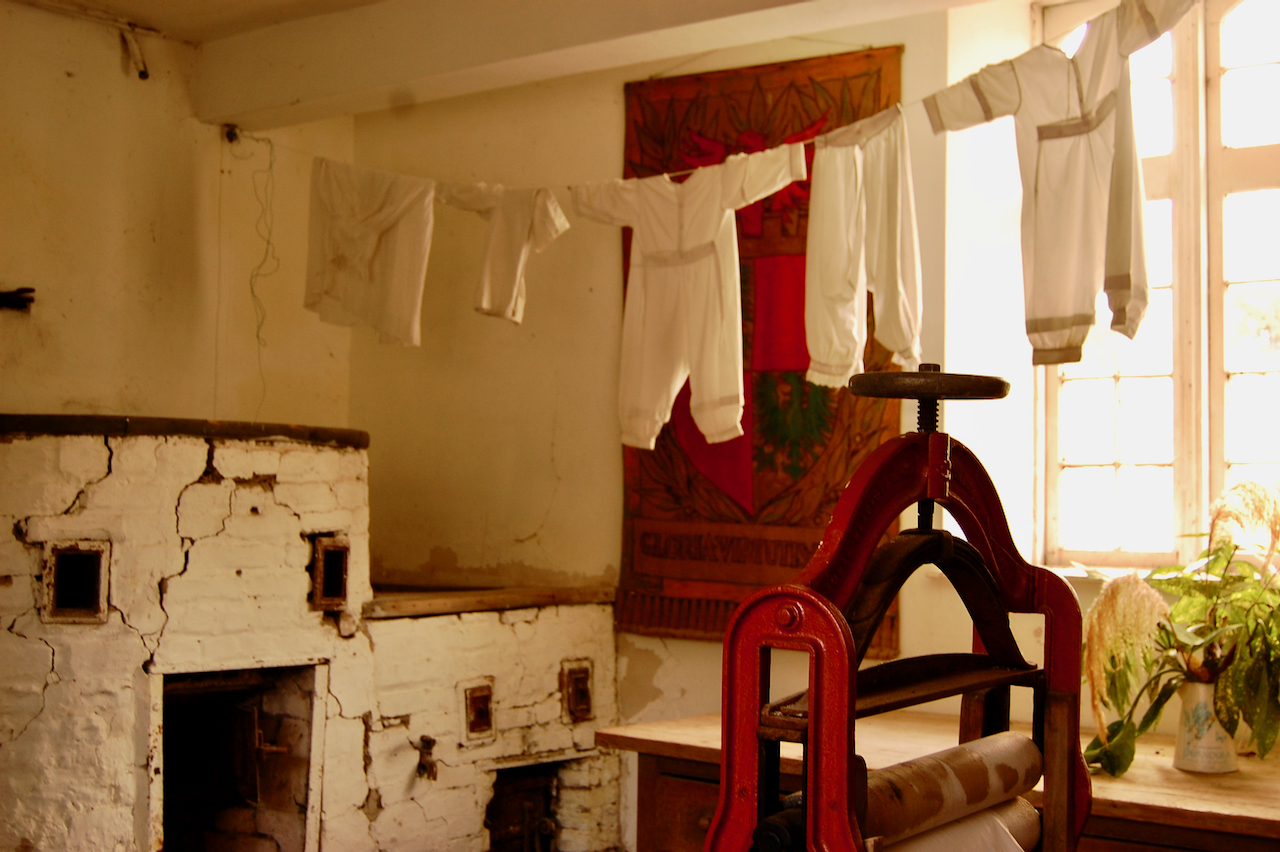
Richard Morrison spent more time working on the laundry room than on any other part of the house.

The “state of the art” laundry room. These undergarments would have been for little boys as well as girls, and the boys would wear dresses over the pantaloons. Boys were dressed as girls up to the age of about six years old, so that the fairies would not steal them away, as supposedly fairies favoured boys. The boys would have long hair to that age also. Photograph © Jennifer Winder-Baggot, www.irishhistorichouses.com
Tullynally, County Westmeath. Photograph © Jennifer Winder-Baggot, www.irishhistorichouses.com

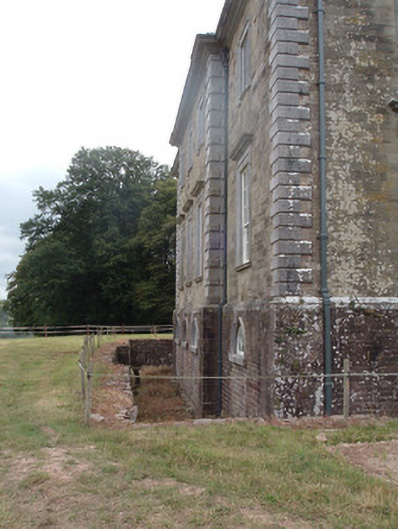
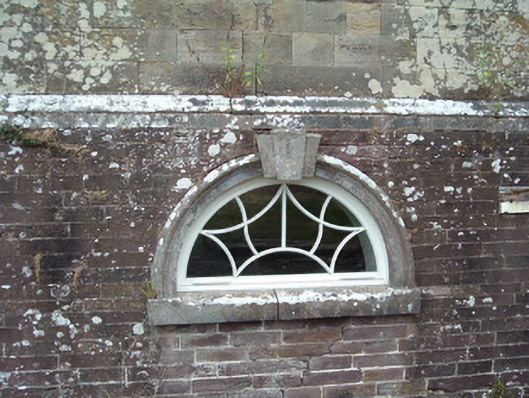
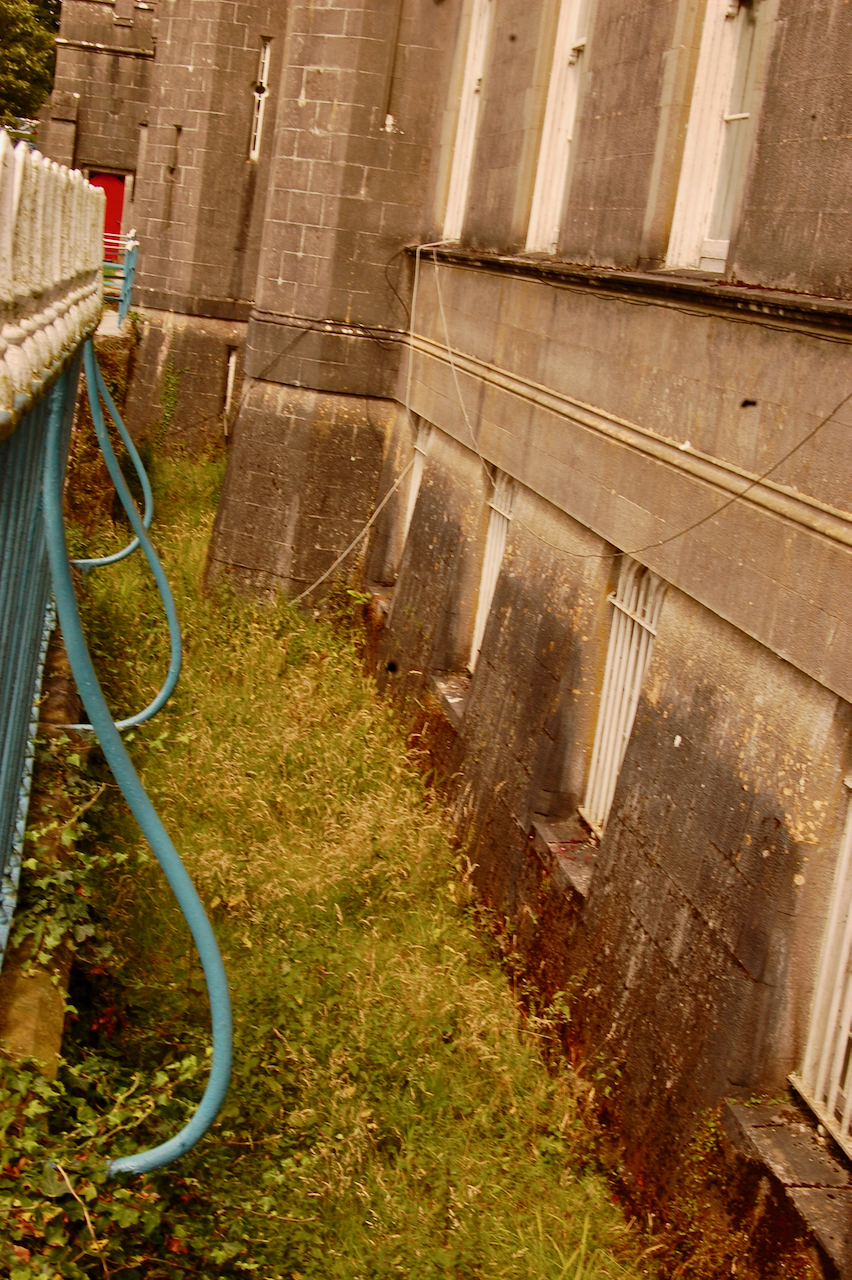
It was at this time that the “dry moat” was built – it was not for fortification purposes but to keep the basements dry.

The dry moat, built to prevent damp and to keep the basement dry. Photograph © Jennifer Winder-Baggot, www.irishhistorichouses.com
The dry moat. Photograph © Jennifer Winder-Baggot, www.irishhistorichouses.com

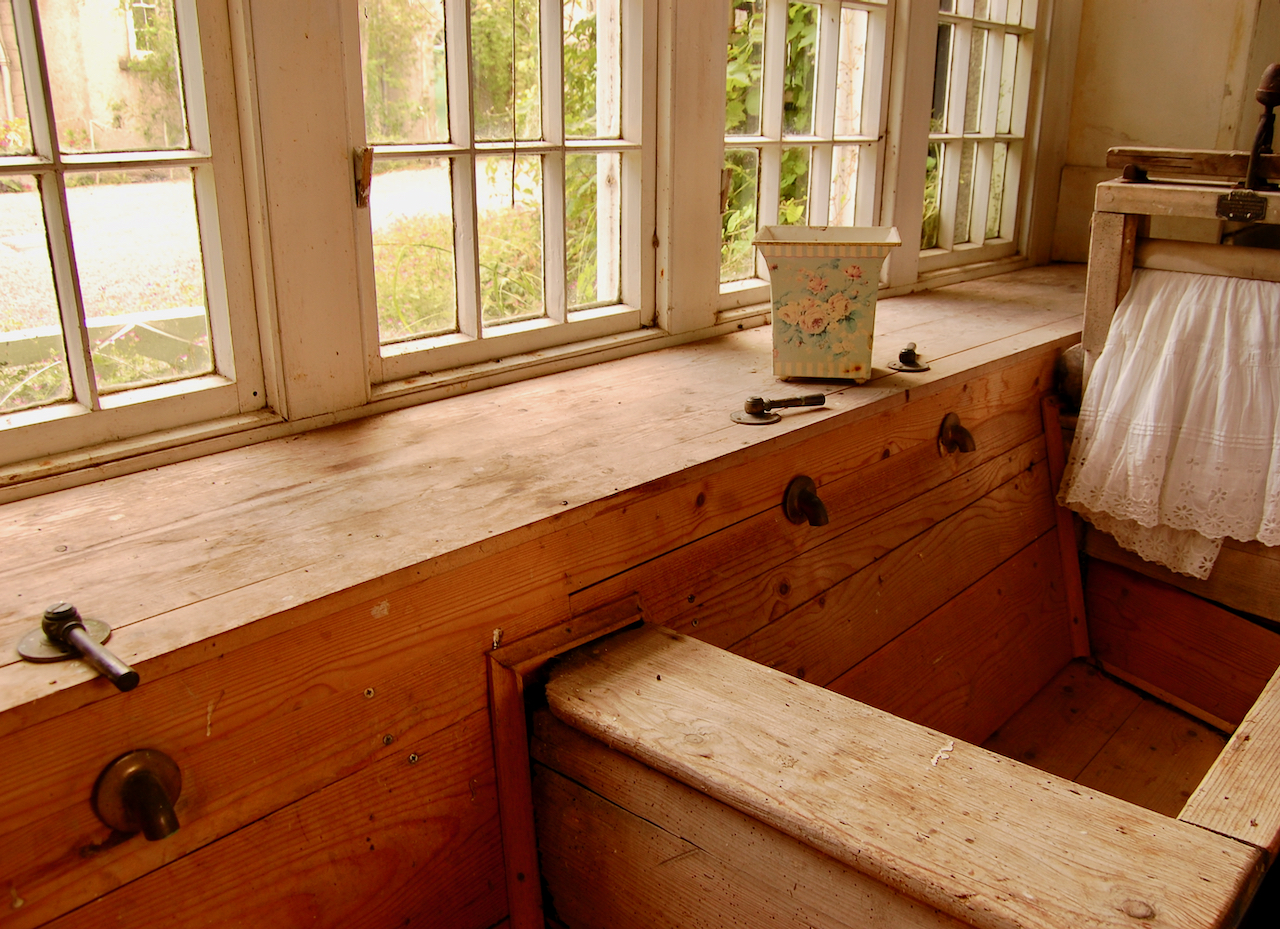
Our guide described the life of a laundress. After the installation of the new laundry, water was collected in a large watertank, and water was piped into the sinks into the laundry.

Tullynally, County Westmeath. Photograph © Jennifer Winder-Baggot, www.irishhistorichouses.com

A laundry girl would earn, in the 1840s (which is during famine time), €12/year for a six day week, and start at about fourteen years of age. A governess would teach those who wanted to learn, to read and write, so that the girls could progress up in the hierarchy of household staff. There was even a servants’ library. This was separate of course from the Pakenham’s library, which is one of the oldest in Ireland. There was status in the village to be working for Lord Longford, as he was considered to be a good employer. His employees were fed, clothed in a uniform, housed, and if they remained long enough, even their funeral was funded. There was a full time carpenter employed on the estate and he made the coffins.

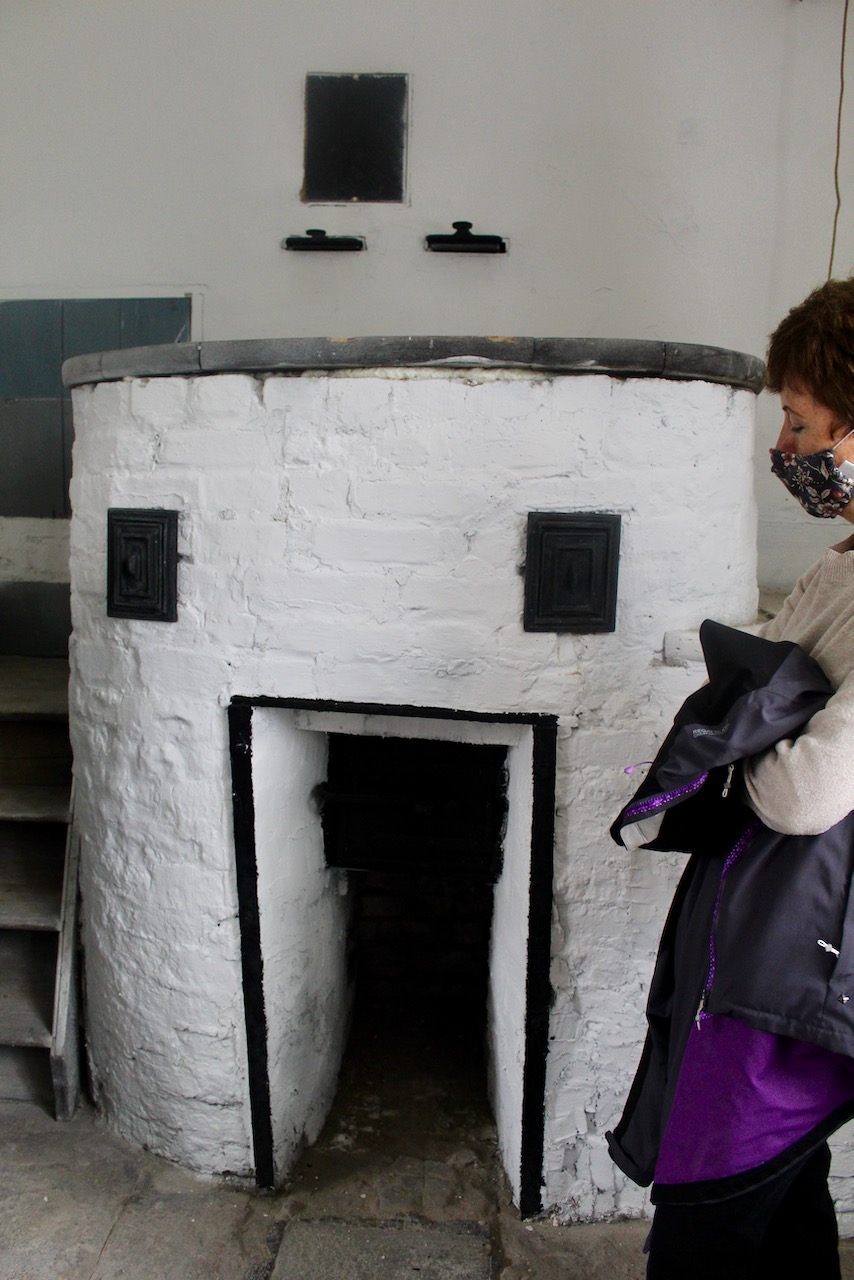
The brick fireplace in the laundry. Photograph © Jennifer Winder-Baggot, www.irishhistorichouses.com

The laundry girls lived in a world apart from household staff. They ate in the laundry. Their first job in the morning would be to light the fire – you can see the brick fireplace in the first laundry picture above. A massive copper pot would be filled with water, heated, and soap flakes would be grated into the pot. The laundry girls would do the washing not only for their employers but also for all of the household staff – there were about forty staff in 1840. As well as soap they would use lemon juice, boiled milk and ivy leaf to clean – ivy leaves made clothes more black. The Countess managed the staff, with the head housekeeper and butler serving as go-between.

William, the 4th Earl of Longford, had a hunting lodge in England and since he had installed such a modern laundry in Tullynally, he would ship his laundry home to Pakenham Hall be washed!

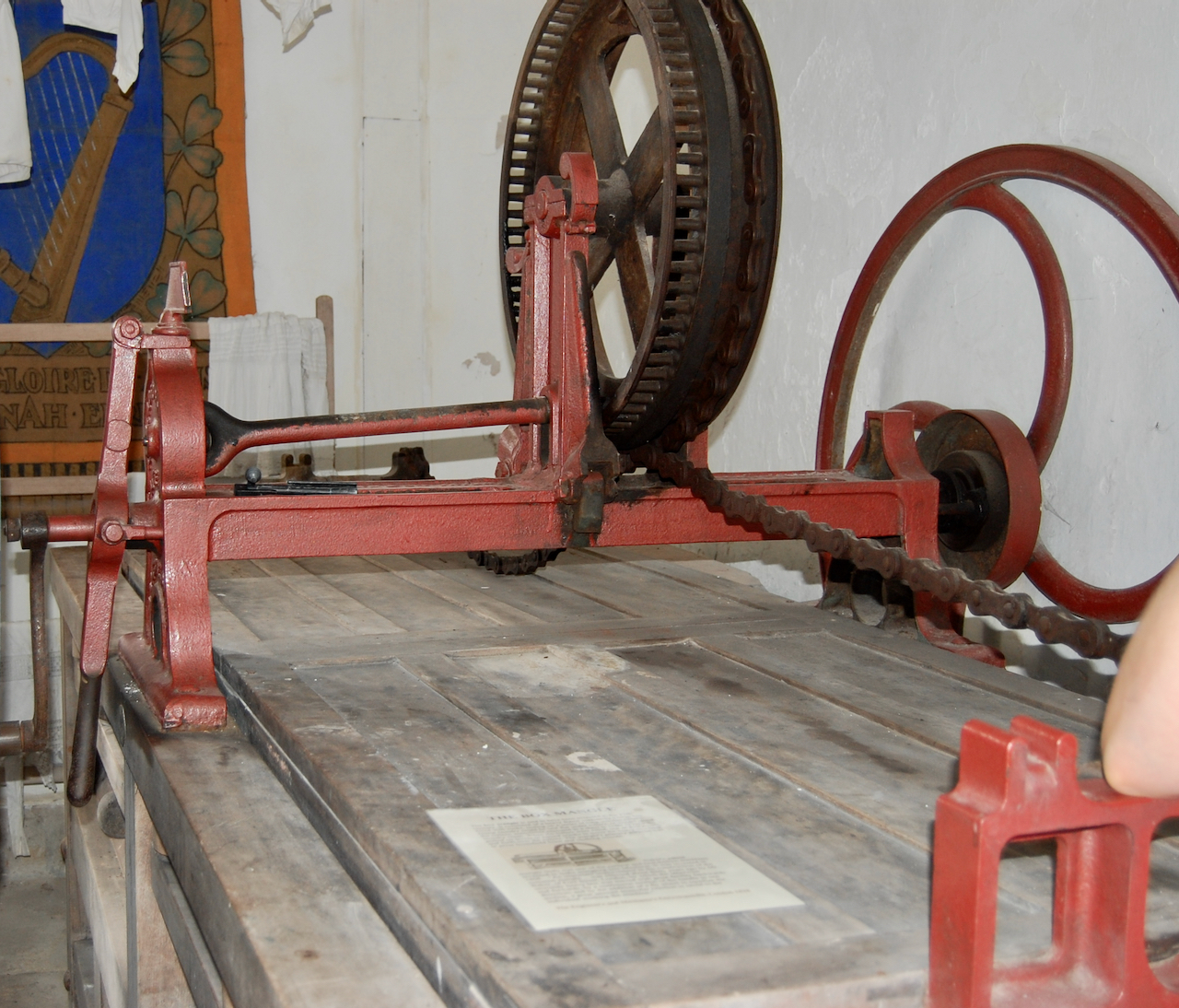
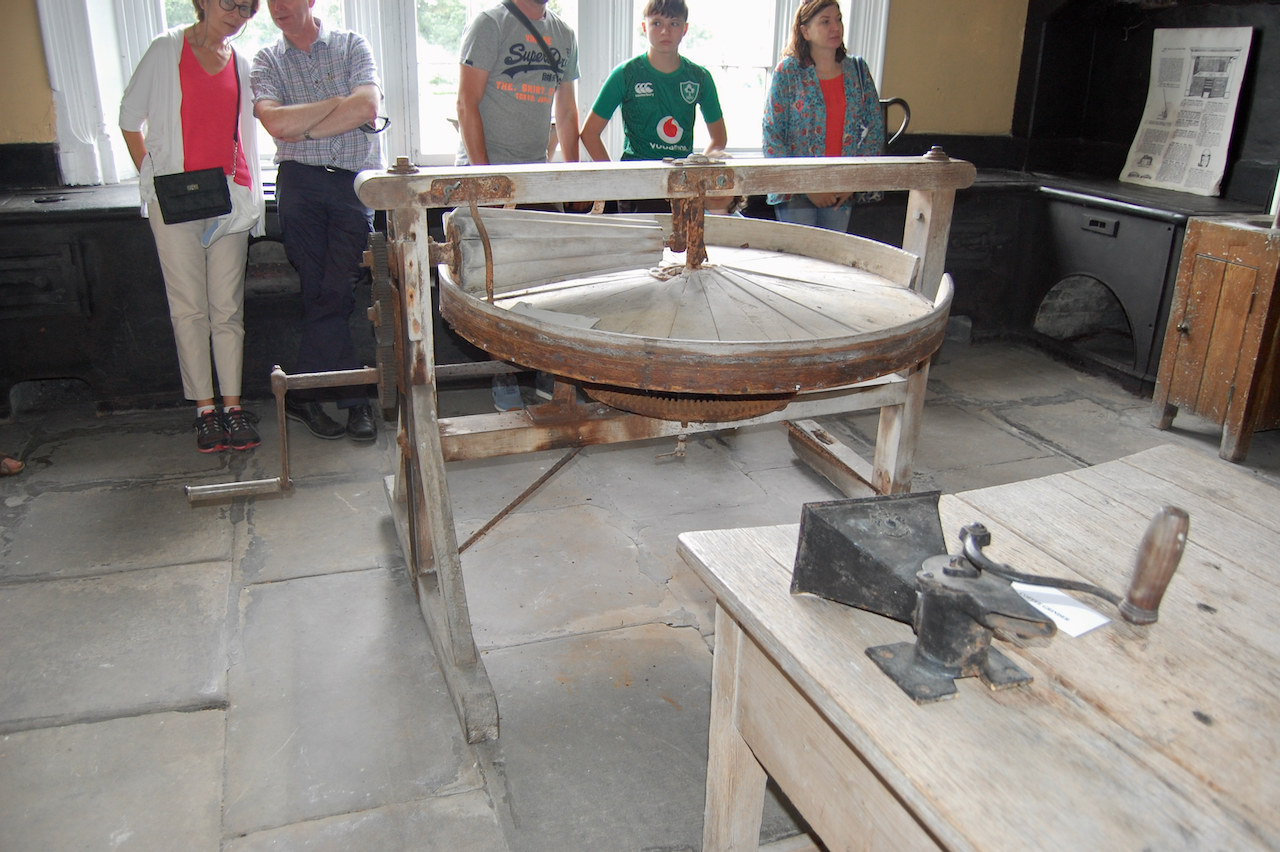
Next, the washing would be put through the mangle.

Tullynally, County Westmeath. Photograph © Jennifer Winder-Baggot, www.irishhistorichouses.com
The Box Mangle, for sheets. Photograph © Jennifer Winder-Baggot, www.irishhistorichouses.com
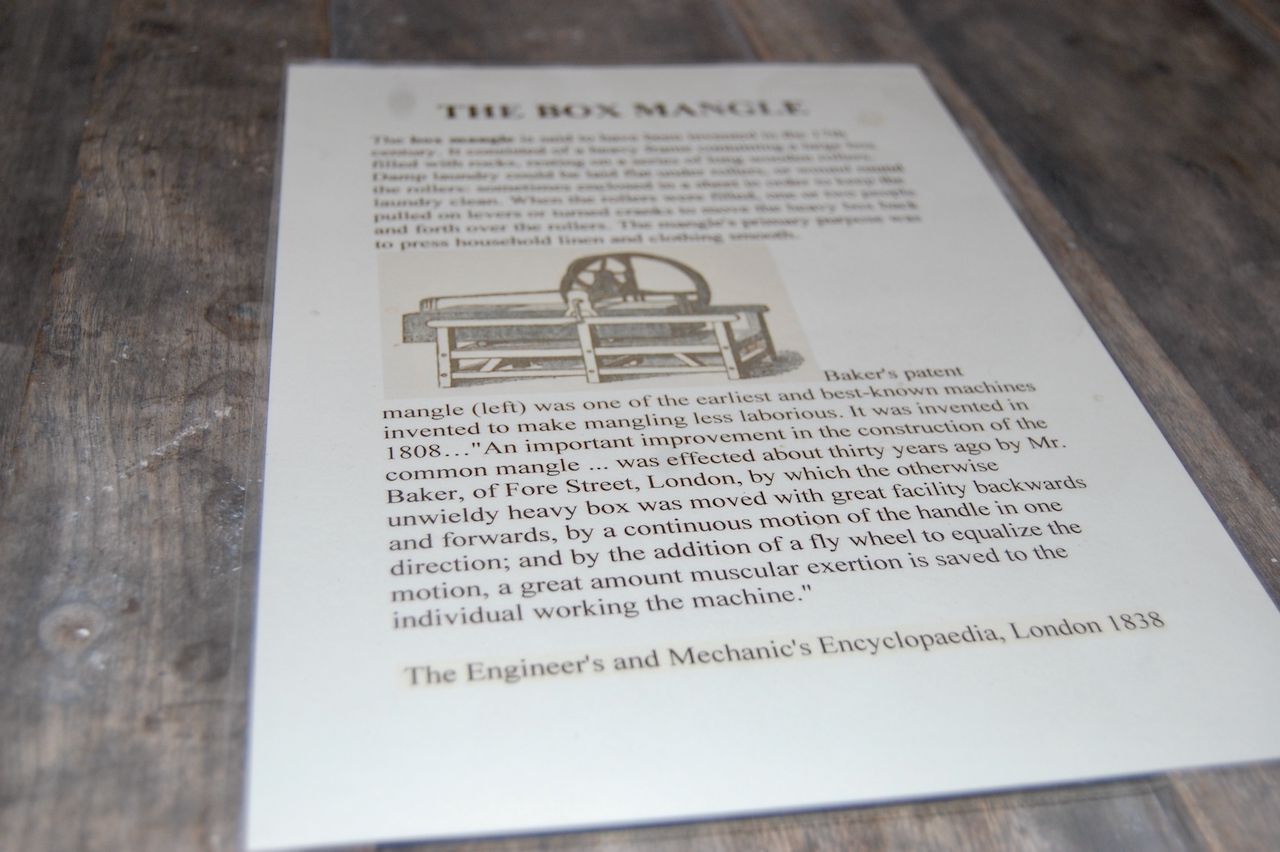
The Box Mangle, invented by Baker of Fore Street, London invented in 1808 and patented: “An important improvement in the construction of the common mangle…by which the otherwise unwieldy heavy box was moved with great facility backwards and forewards, by a continuous motion of the handle in one direction; and by the addition of a fly wheel to equalise the motion, a great amount of muscular exertion is saved to the individual working the machine.” [quoted from the information on the mangle, from The Engineers and Mechanics Encyclopedia, London, 1838]. Photograph © Jennifer Winder-Baggot, www.irishhistorichouses.com

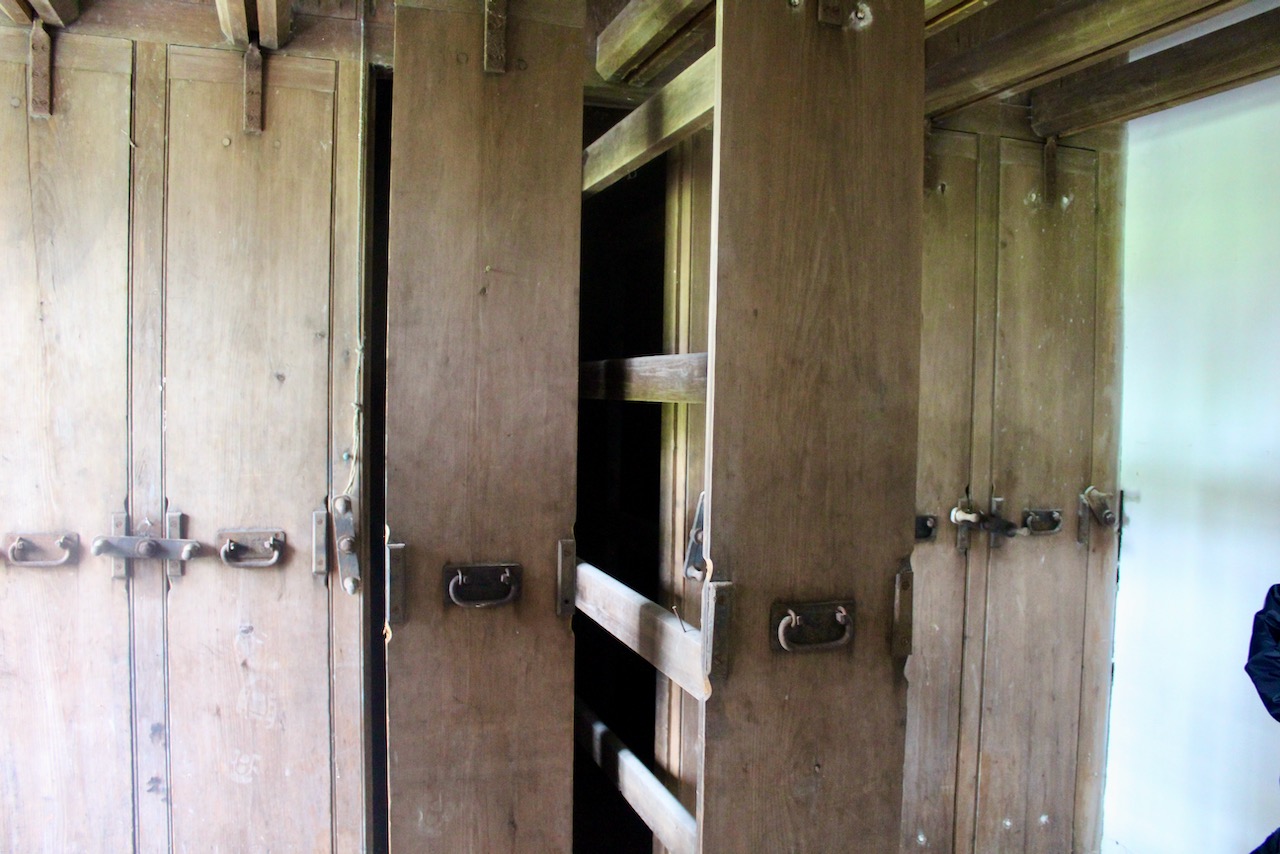
The girls might have to bring laundry out to the bleaching green. A tunnel was installed so that the girls avoided the looks and chat of the stable boys, or being seen by the gentry. William also developed a drying room. Hot water ran through pipes to heat the room to dry the clothes.

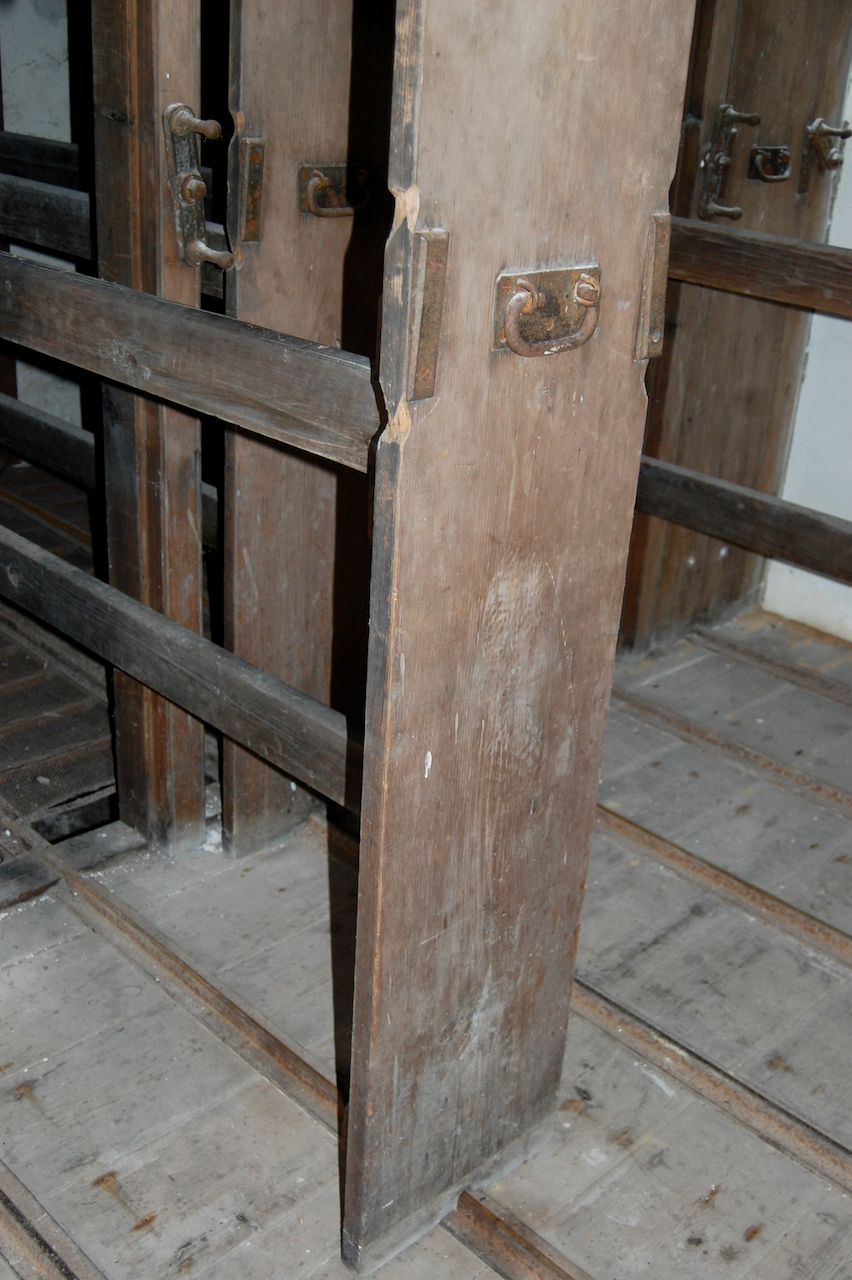
The drying racks could be pulled out along treads on the floor then pushed back in to the heated area to dry. Photograph © Jennifer Winder-Baggot, www.irishhistorichouses.com
Tullynally, County Westmeath. Photograph © Jennifer Winder-Baggot, www.irishhistorichouses.com

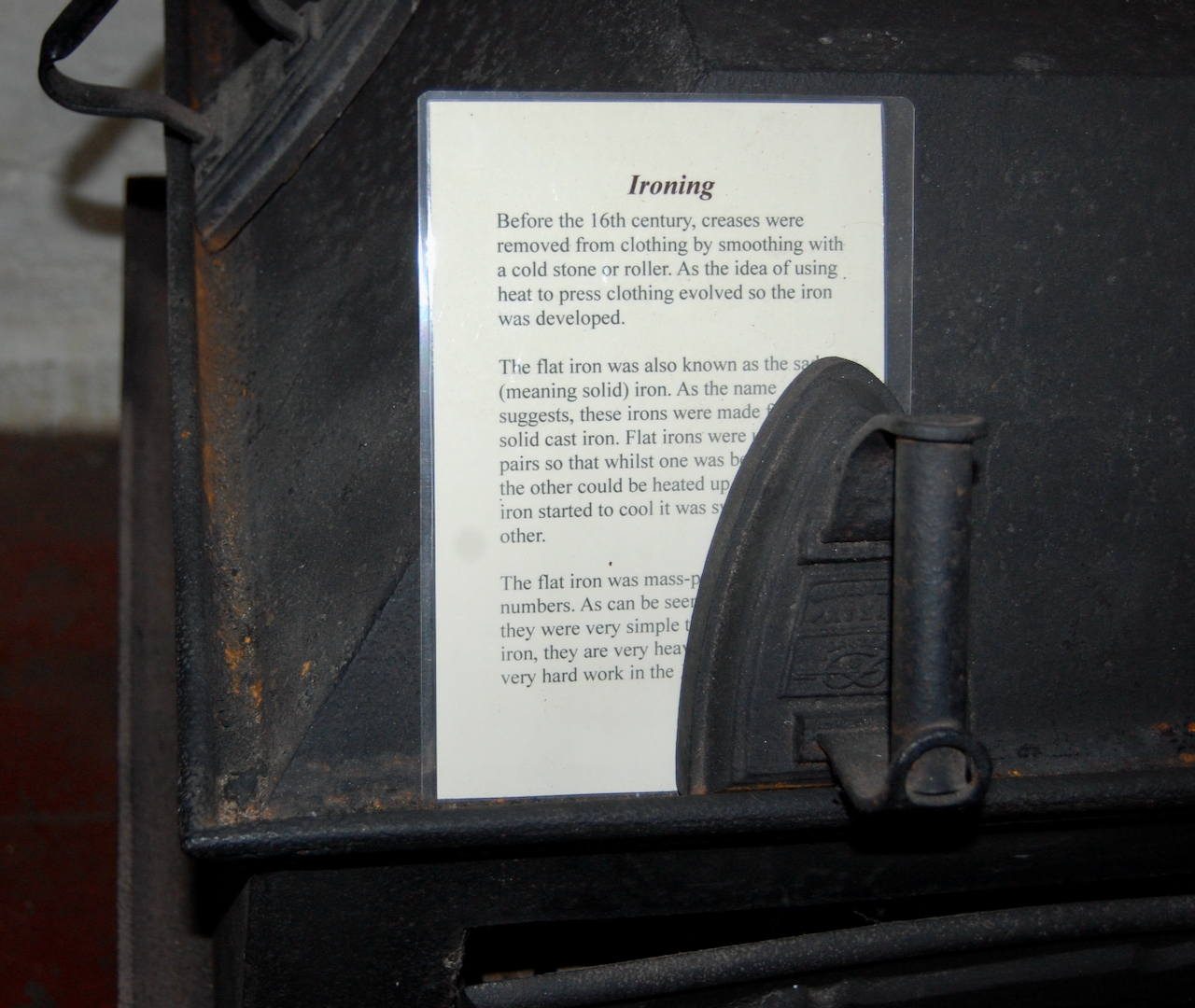
There was also an ironing room.

Tullynally, County Westmeath. Photograph © Jennifer Winder-Baggot, www.irishhistorichouses.com

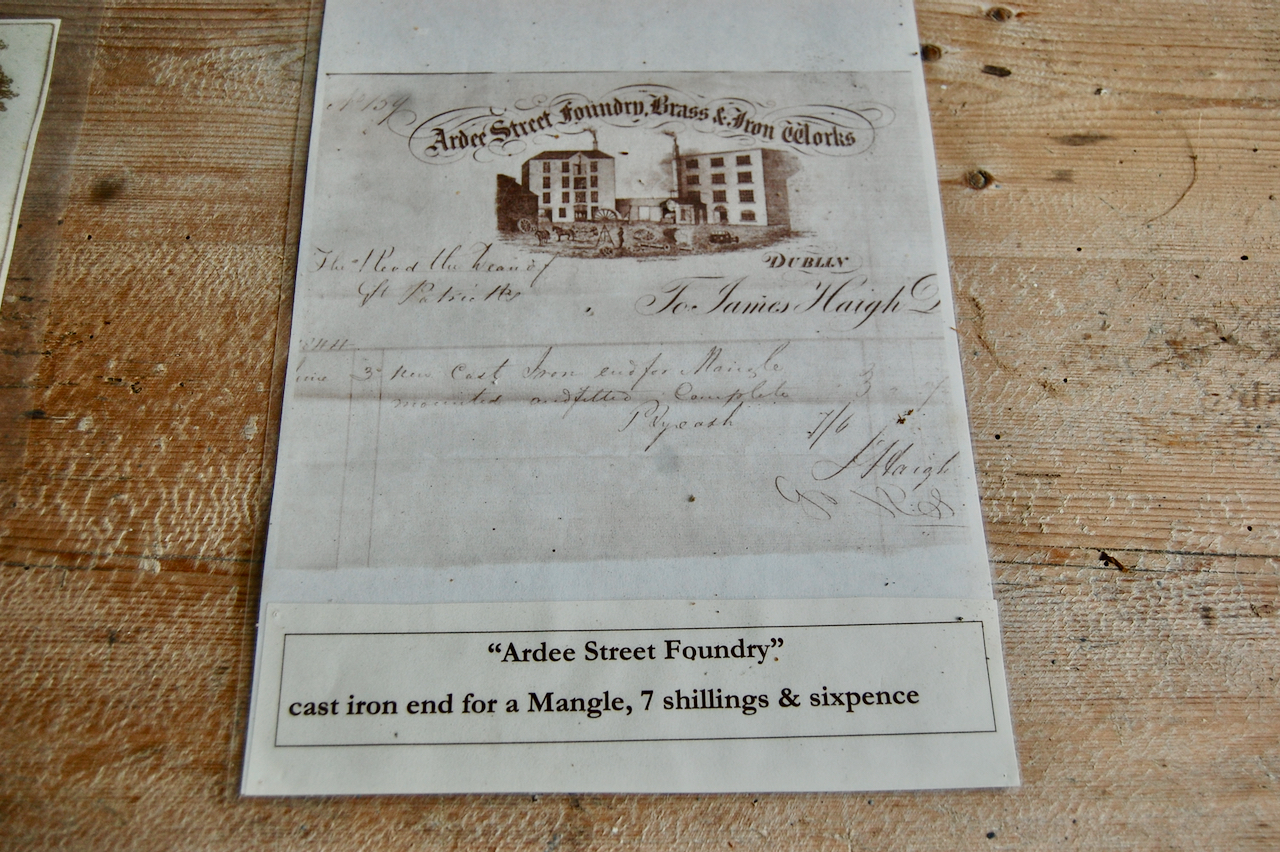
The next room was a small museum with more information about the castle and family, and included a receipt for the iron end of a mangle, purchased from Ardee Street Foundry, Brass and Iron Works, Dublin. We live near Ardee Street!

Tullynally, County Westmeath.

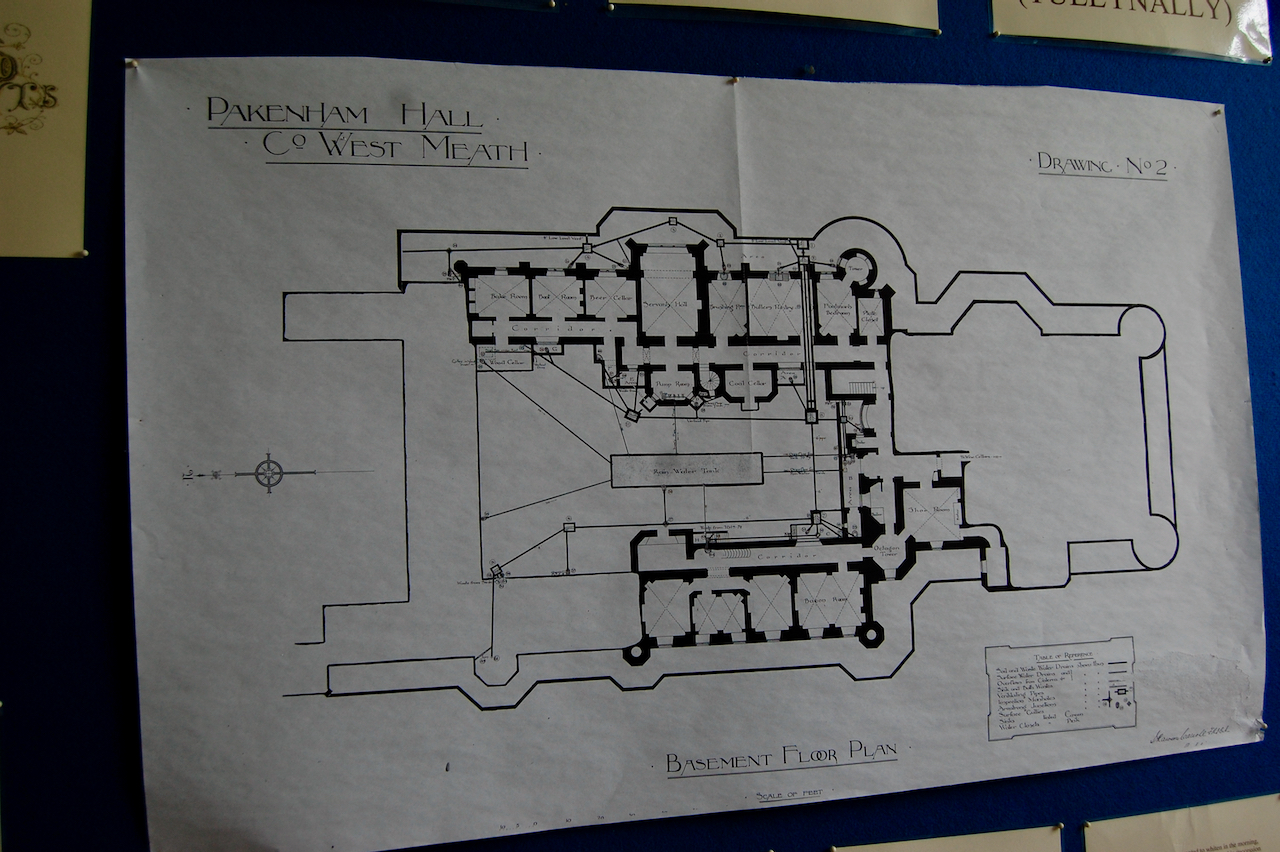
This information board tells us details about the staff, as well as giving the layout of the basement:

The basement contained the Bake room, boot room, beer cellar, servant’s hall, brushing room, butler’s pantry, footman’s bedroom, and across the courtyard, the bacon room.

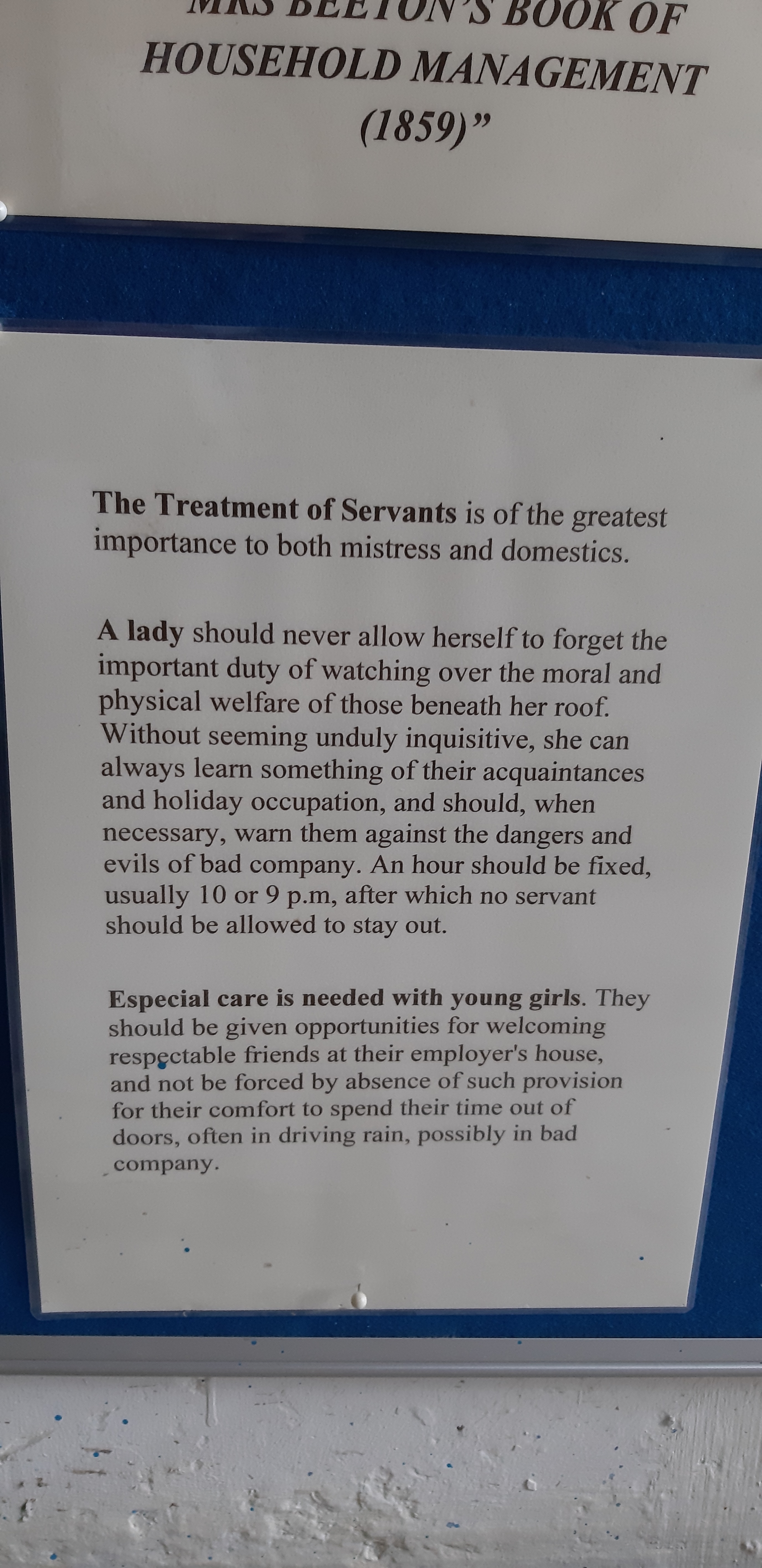
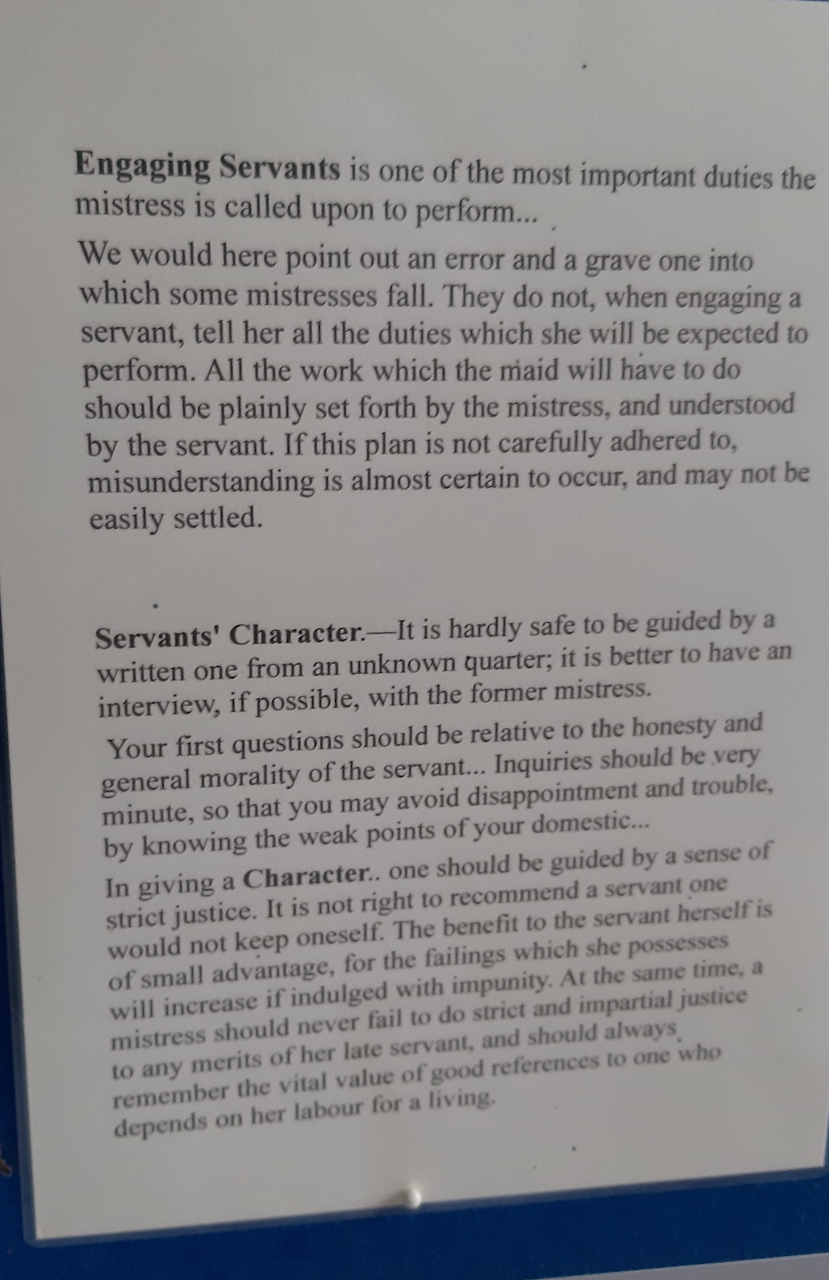
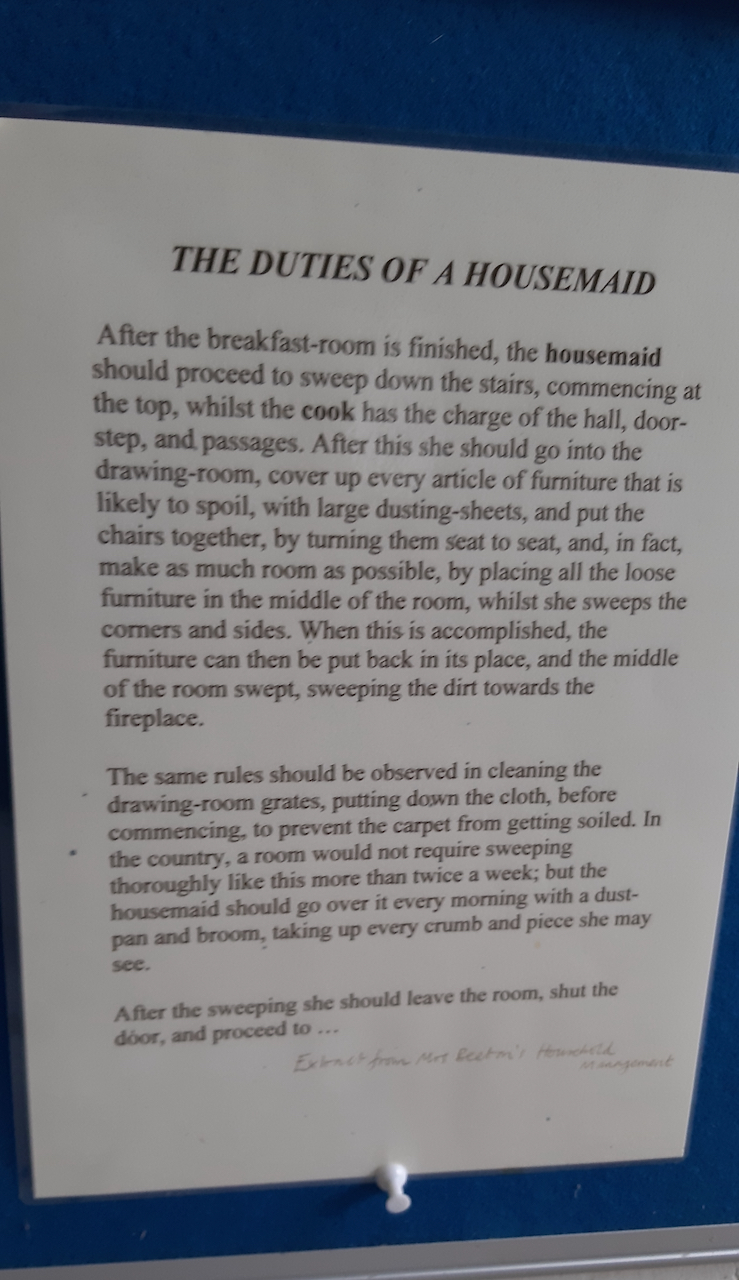
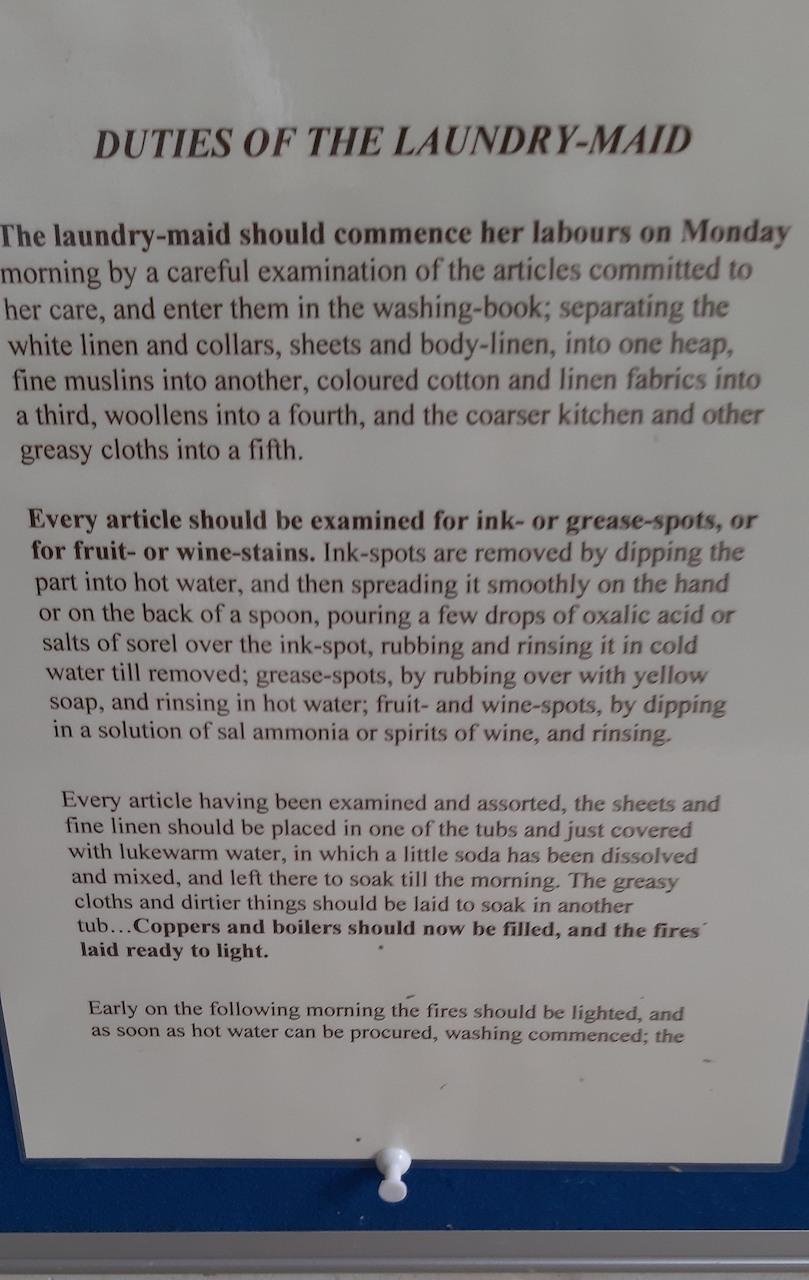
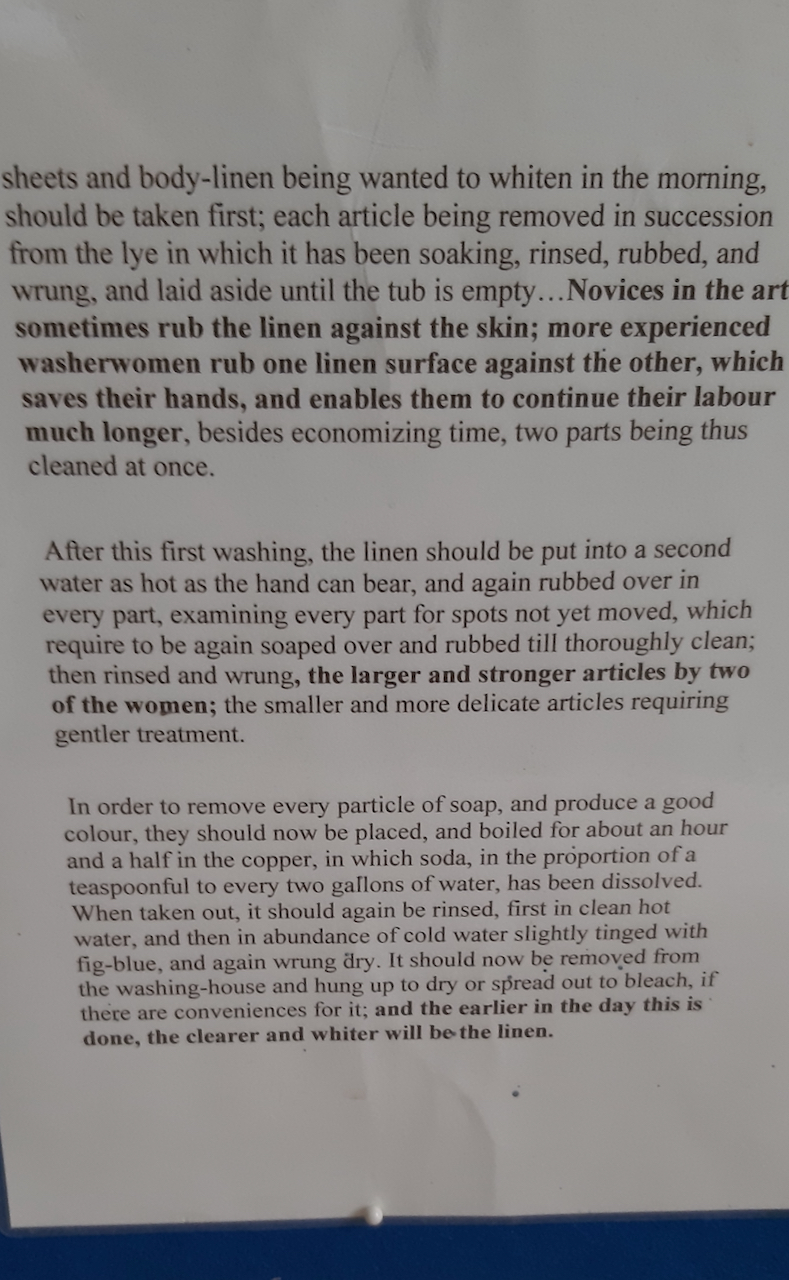
By 1860 Pakenham Castle was run in the high Victorian manner. The Butler and Housekeeper managed a team of footmen, valets, housemaids and laundry maids, whilst Cook controlled kitchen maids, stillroom maid and scullery maids. A stillroom maid was in a distillery room, which was used for distilling potions and medicines, and where she also made jams, chutneys etc. There was also a dairy, brewery and wine cellar. The Coachman supervised grooms and stable boys, while a carpenter worked in the outer yard and a blacksmith in the farmyard. Further information contains extracts from Mrs. Beeton’s Book of Household Management (1859), detailed duties of a housemaid, a laundry-maid, and treatment of servants. The estate was self-sufficient. Staff lived across the courtyard, with separate areas for men and women. There were also farm cottages on the estate. Servants for the higher positions were often recruited by word of mouth, from other gentry houses, and often servants came from Scotland or England, and chefs from France.

Tullynally, County Westmeath.

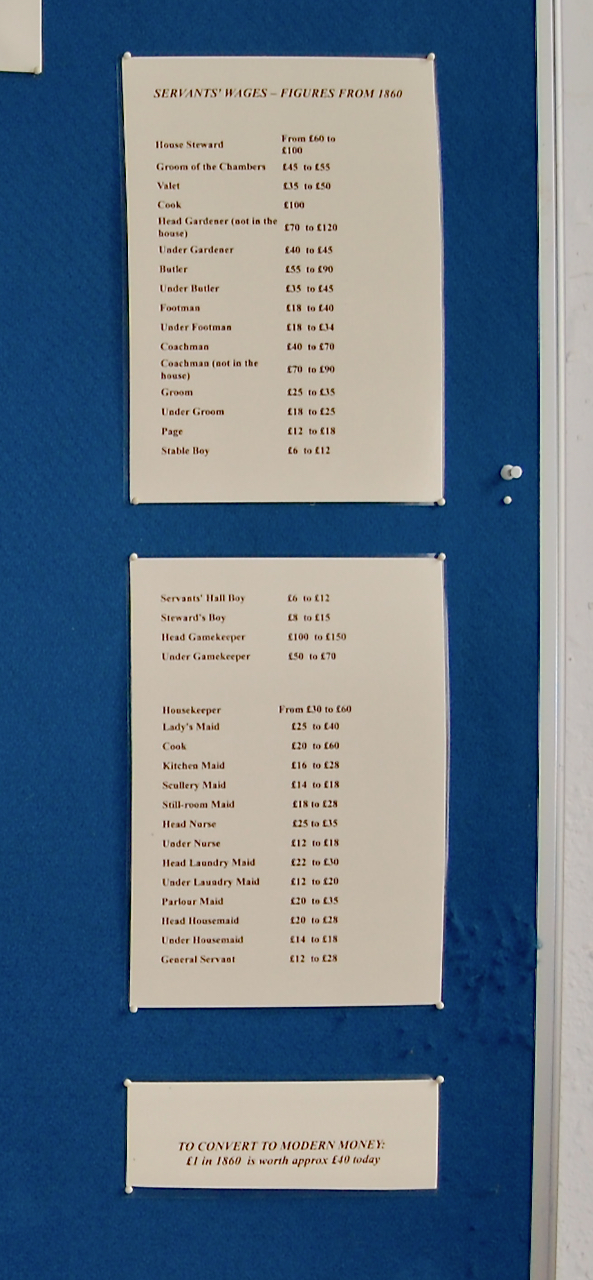
We are also given the figures for servants’ wages in 1860.

Tullynally, County Westmeath.

Next, we headed over toward the kitchen. On the way we passed a water filter system, which was a ceramic jar containing an asbestos and charcoal filter system. However, staff were given beer to drink as it was safer at the time than water. We saw a container used to bring food out to staff in the fields – the food would be wrapped in hay inside the container, which would hold in the heat and even continue to cook the food. We stopped to learn about an ice chest:

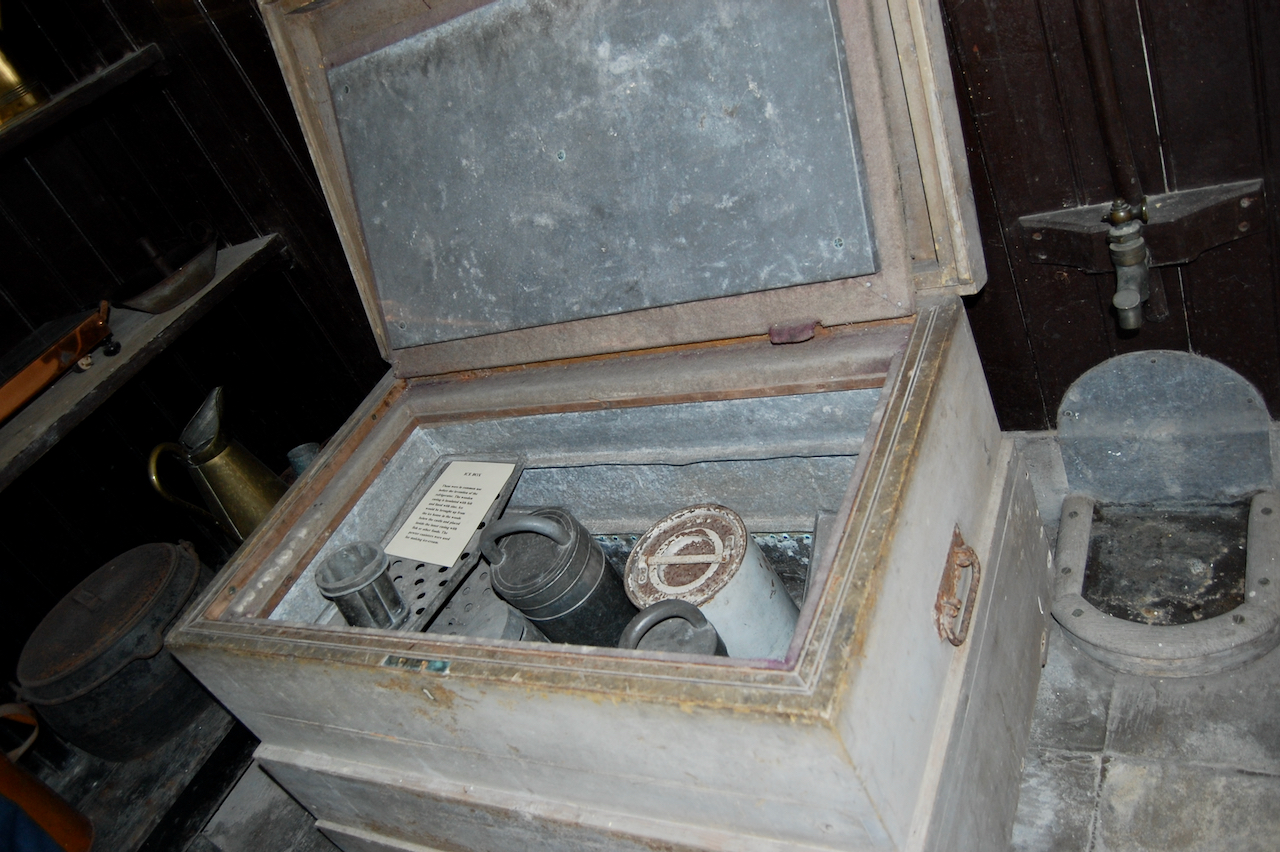
The ice box. The wooden casing is insulated with felt and lined with zinc. Ice would be brought up from the ice house in the woods and placed inside the inner casing with fish and any other item that needed to be kept cold. The pewter cannisters were used to make icecream. Photograph © Jennifer Winder-Baggot, www.irishhistorichouses.com

The ice chest would be filled with ice from the icehouse. We were also shown the coat of a serving boy, which our tour guide had a boy on the tour don – which just goes to show how young the serving boys were:

Tullynally, County Westmeath.
Note the coronets on the buttons. Photograph © Jennifer Winder-Baggot, www.irishhistorichouses.com

A serving boy wearing this uniform would carry dishes from the kitchen to the dining room, which was as far from the kitchen as possible to prevent the various smells emanating from the kitchen from reaching the delicate nostrils of the gentry. The serving boy would turn his back to the table, and watch mirrors to see when his service was needed at the table, under the management of the butler. Later, when the ladies had withdrawn to the Drawing Room, to leave the men to drink their port and talk politics, the serving boy would produce “pee pots” from a sideboard cupboard, and place a pot under each gentleman! Our guide told us that perhaps, though she is not sure about this, men used their cane to direct the stream of urine into the pot. The poor serving boy would then have to collect the used pots to empty them. Women would relieve themselves behind a screen in the Drawing Room.

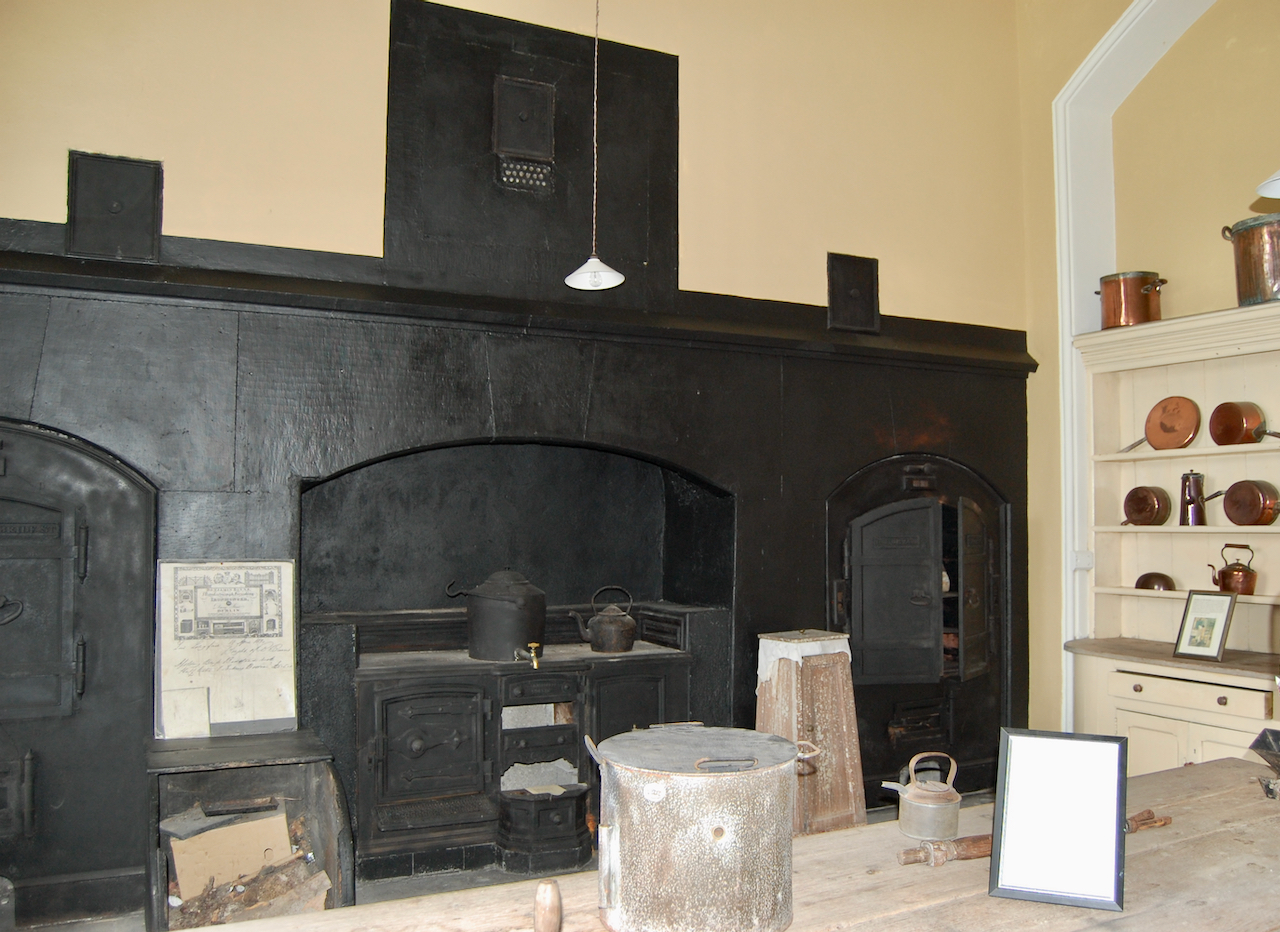
In the large impressively stocked kitchen, we saw many tools and implements used by the cooks. Richard Morrison ensured that the kitchen was filled with light from a large window.

Tullynally, County Westmeath.
Tullynally, County Westmeath. Photograph © Jennifer Winder-Baggot, www.irishhistorichouses.com

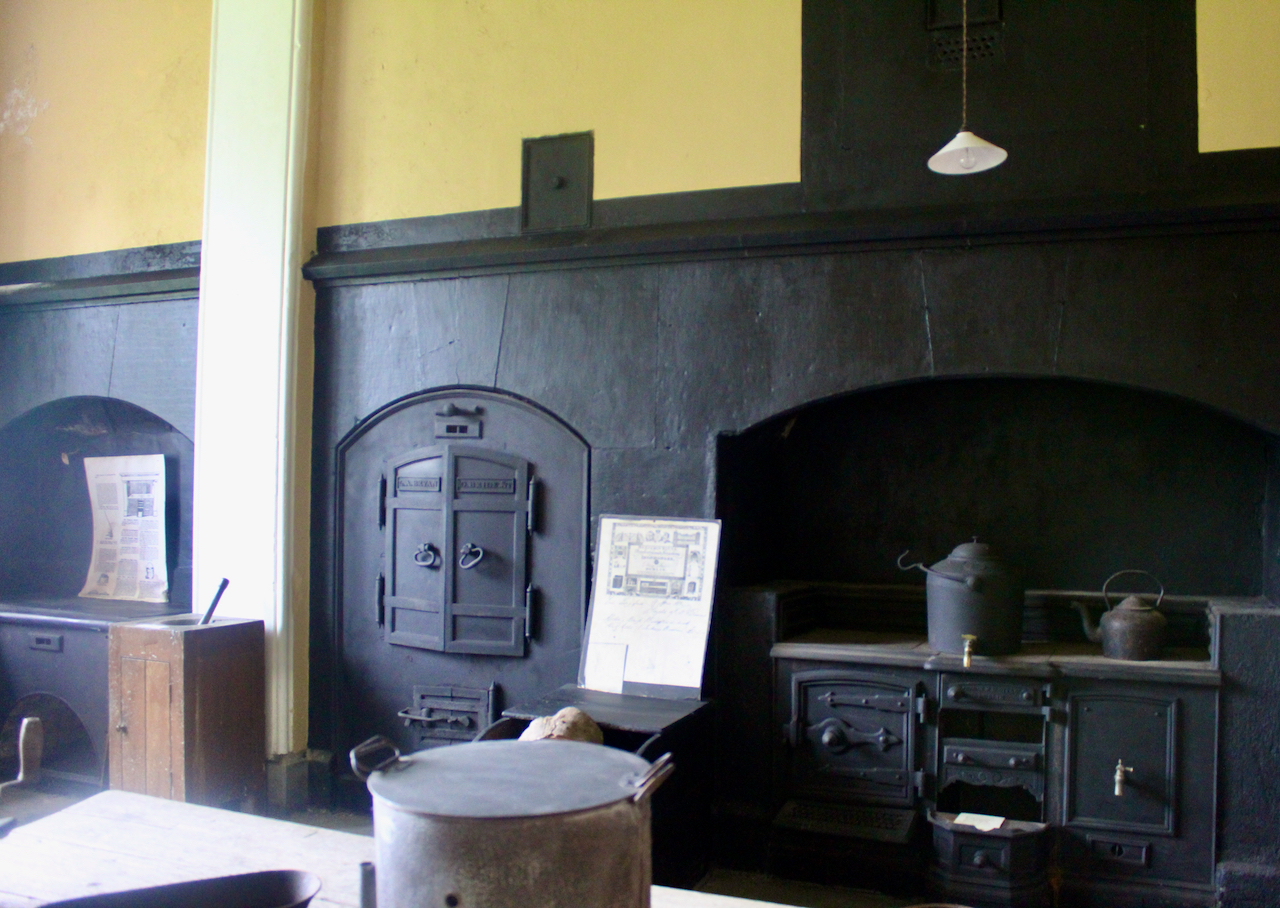
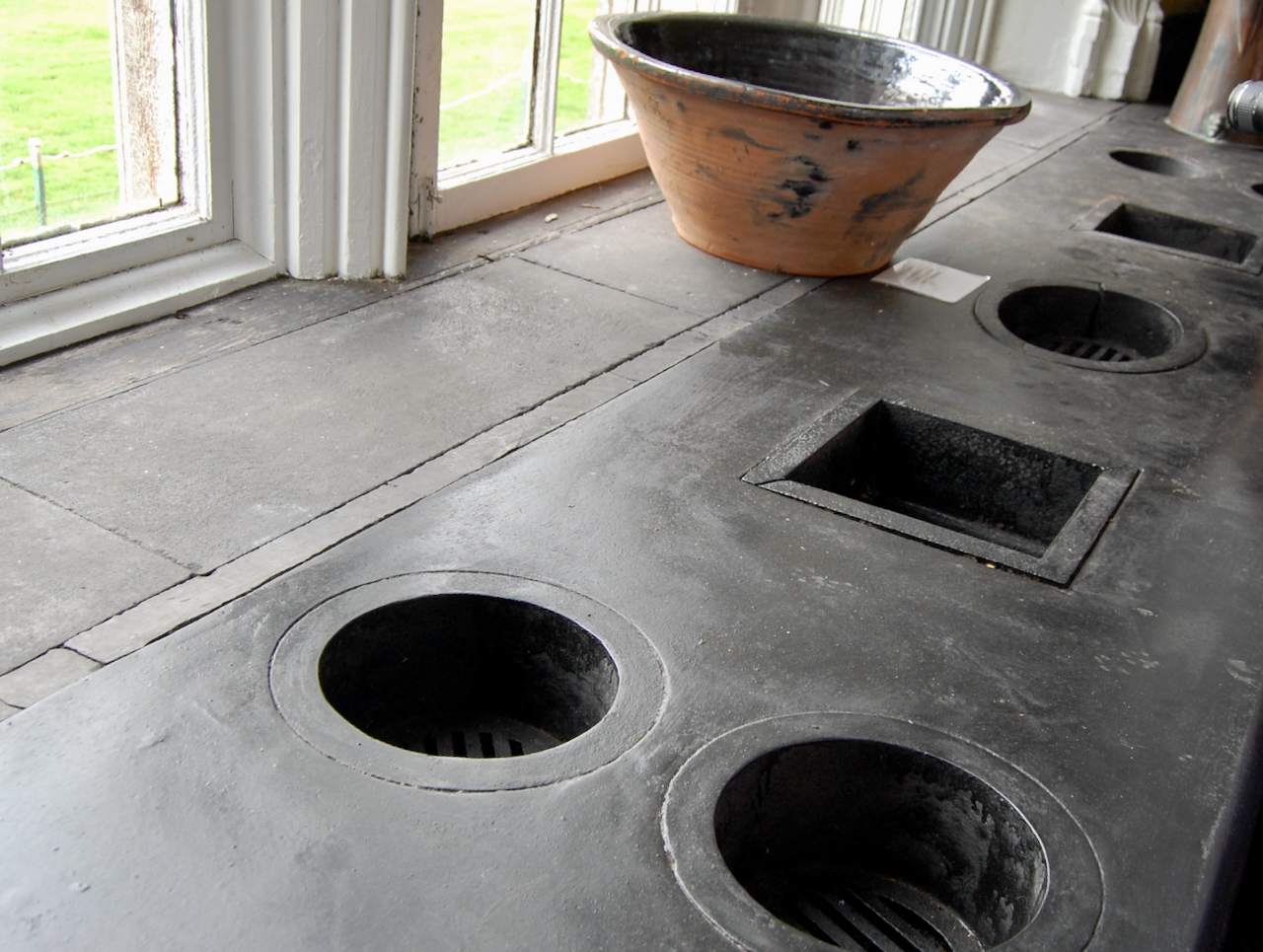
This kitchen was used until around 1965. The yellow colour on the walls is meant to deter flies. Often a kitchen is painted in blue either, called “Cook’s blue,” also reputed to deter flies. Because this kitchen remained in continuous use its huge 1875 range was replaced by an Aga in the 1940s.

The huge butter maker. Our guide also pointed out the large mortar and pestle in the wooden press. Sugar came in a loaf and was bashed down in a mortar and pestle.
Heated niches, to keep dishes warm. Photograph © Jennifer Winder-Baggot, www.irishhistorichouses.com

The cookware is made of copper, and you can see by the stove a large ceramic vessel topped with muslin for straining jams.

Tullynally, County Westmeath. Photograph © Jennifer Winder-Baggot, www.irishhistorichouses.com
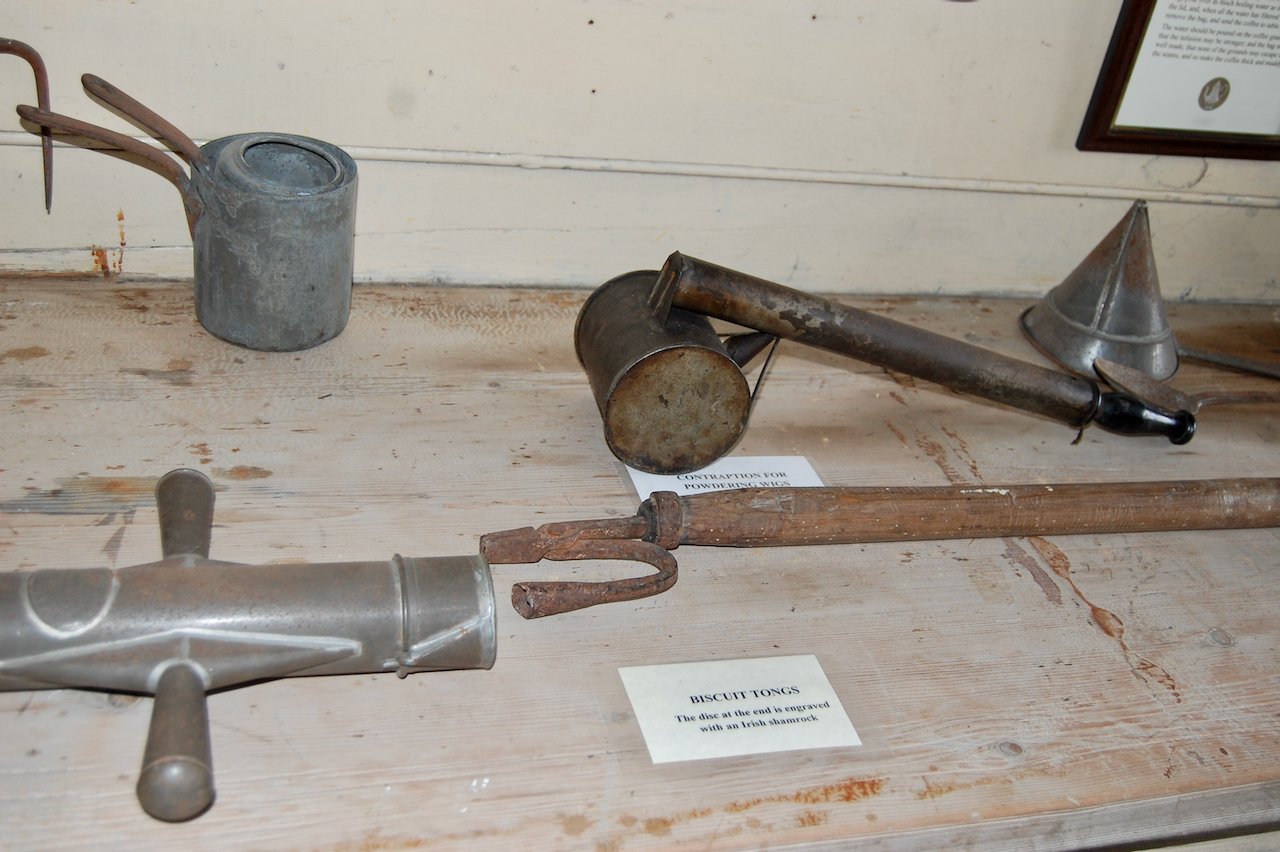
The rusty looking pronged instrument above is a metal torch – rushes were held in the top and dipped in paraffin. Photograph © Jennifer Winder-Baggot, www.irishhistorichouses.com

Candles were made from whale blubber. Candles made from blubber closer to the whale’s head were of better quality.

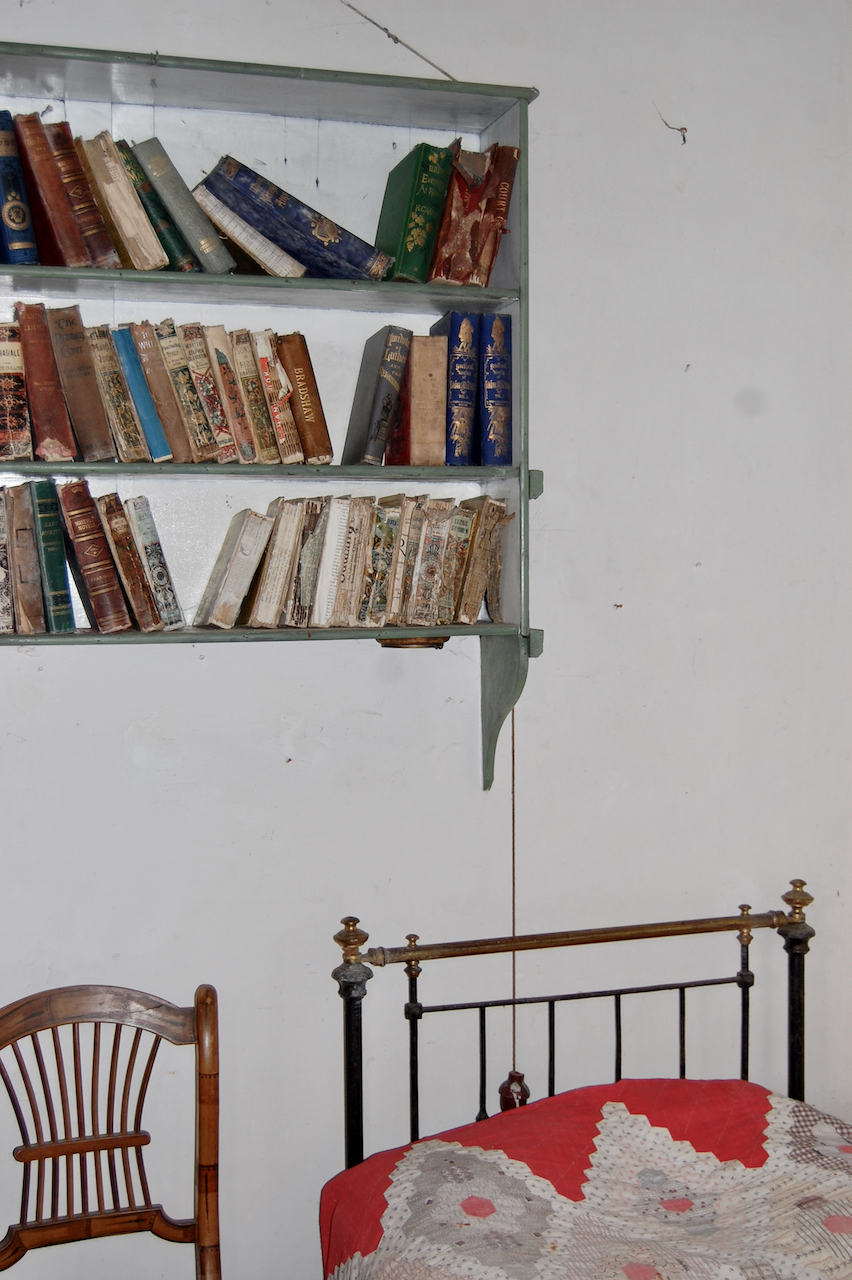
The housekeeper would have her own room, which our guide told us, was called the “pug room” due to the, apparently, sour face of of the housekeeper, but also because she often kept a pug dog!

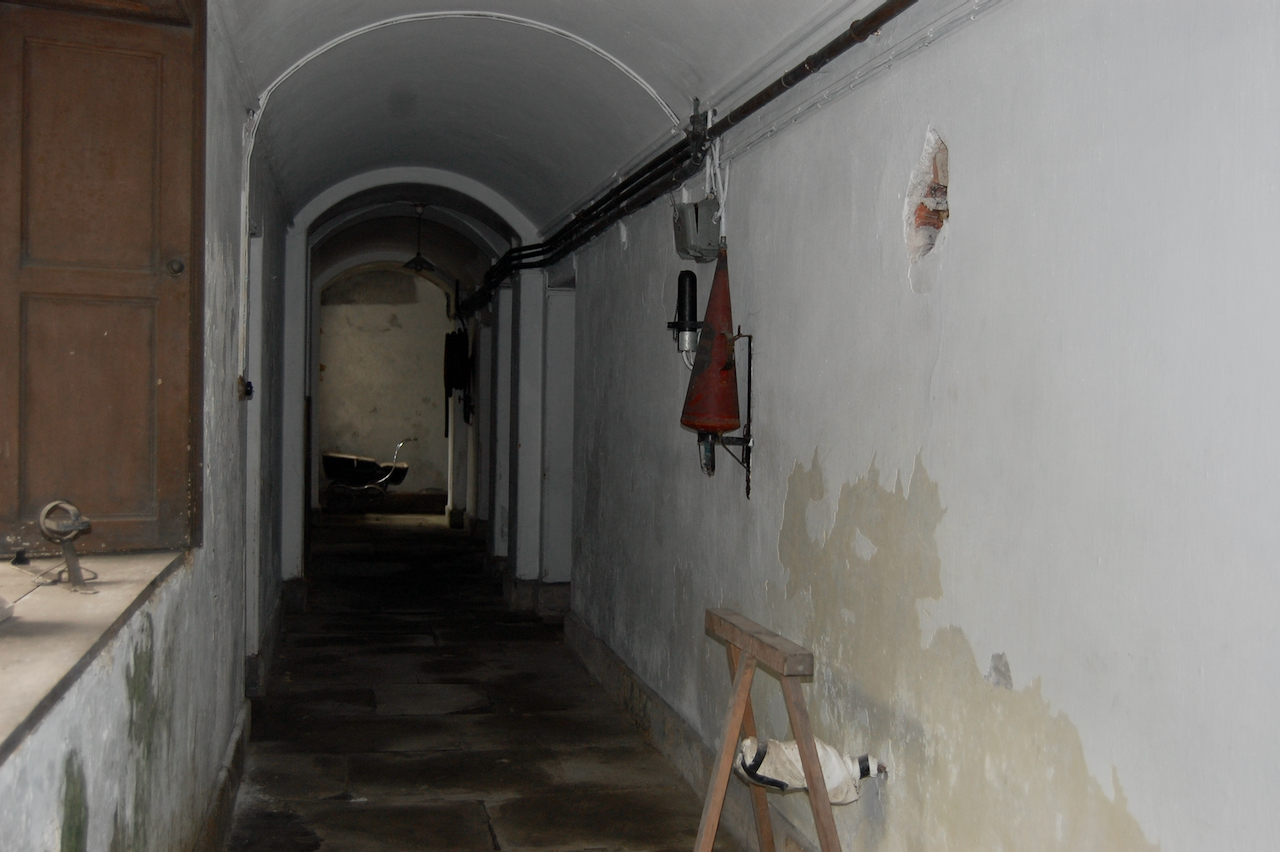
Next we were taken to see Taylor’s room. Taylor was the last Butler of the house. We passed an interesting fire-quenching system on the way.

Tullynally, County Westmeath. Photograph © Jennifer Winder-Baggot, www.irishhistorichouses.com
Taylor’s room, Tullynally, County Westmeath. Photograph © Jennifer Winder-Baggot, www.irishhistorichouses.com
Tullynally, County Westmeath. Photograph © Jennifer Winder-Baggot, www.irishhistorichouses.com

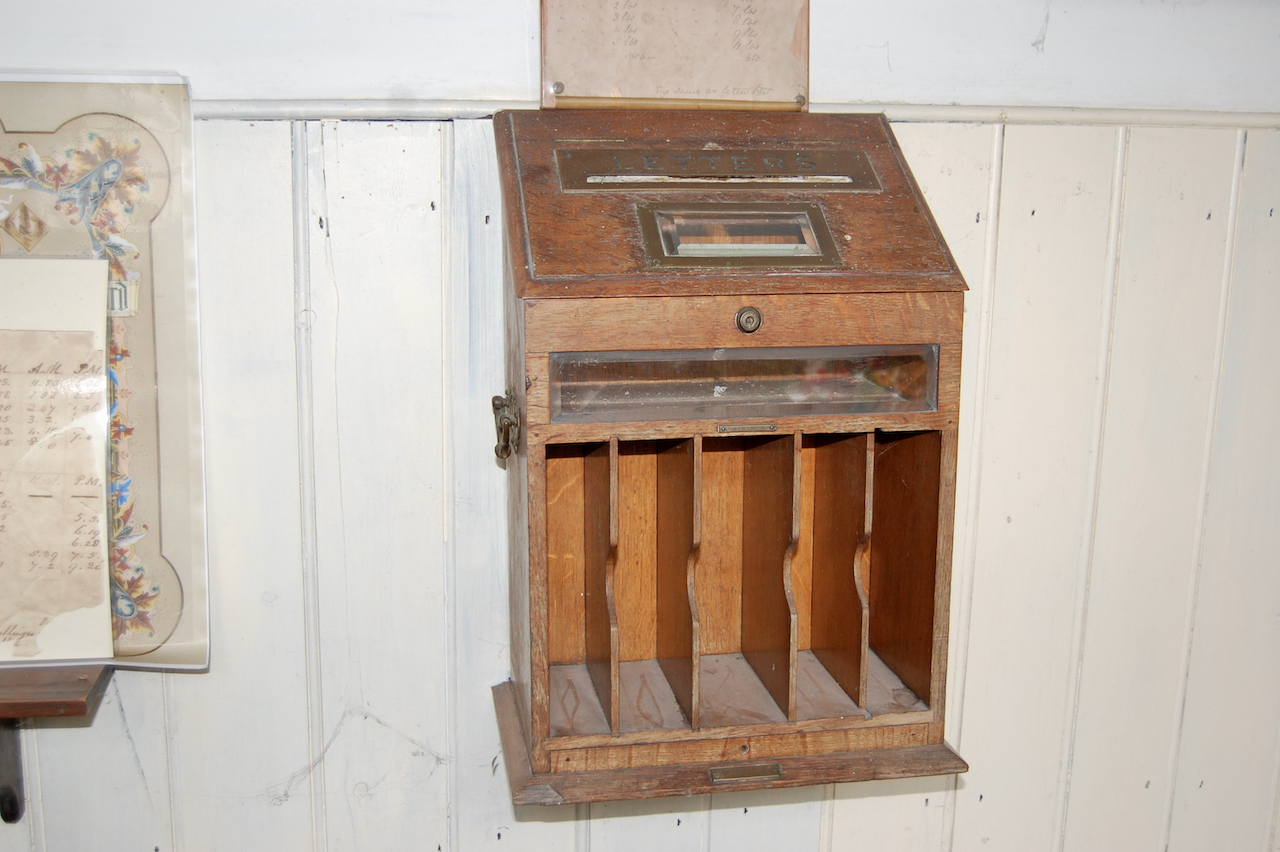
Next, the tour guide took us to see the servants’ staircase and set of bells. We passed the mailbox on the way:

Tullynally, County Westmeath. Photograph © Jennifer Winder-Baggot, www.irishhistorichouses.com

This would normally be the end of the tour, but since we were such a fascinated, attentive group, the guide took us into the basement to see the old servants’ dining hall.

Basement hall, with what I think is an old fire extinguisher. Photograph © Jennifer Winder-Baggot, www.irishhistorichouses.com
I think this was the carpenter’s workshop; unfortunately I didn’t take a picture of the dining hall! See how the basement has vaulted ceilings. Photograph © Jennifer Winder-Baggot, www.irishhistorichouses.com
This lovely little fellow sat on the ground at the bottom of the stairs. Photograph © Jennifer Winder-Baggot, www.irishhistorichouses.com

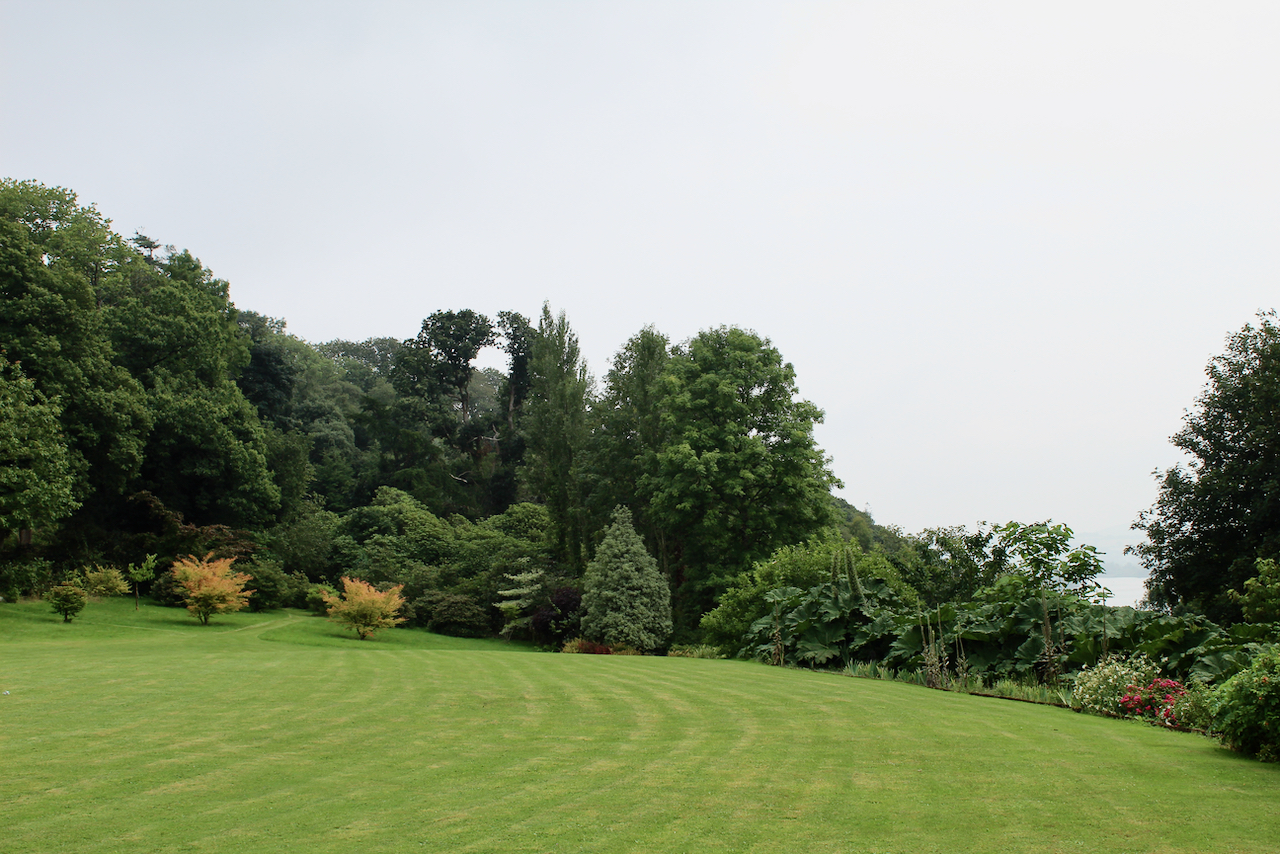
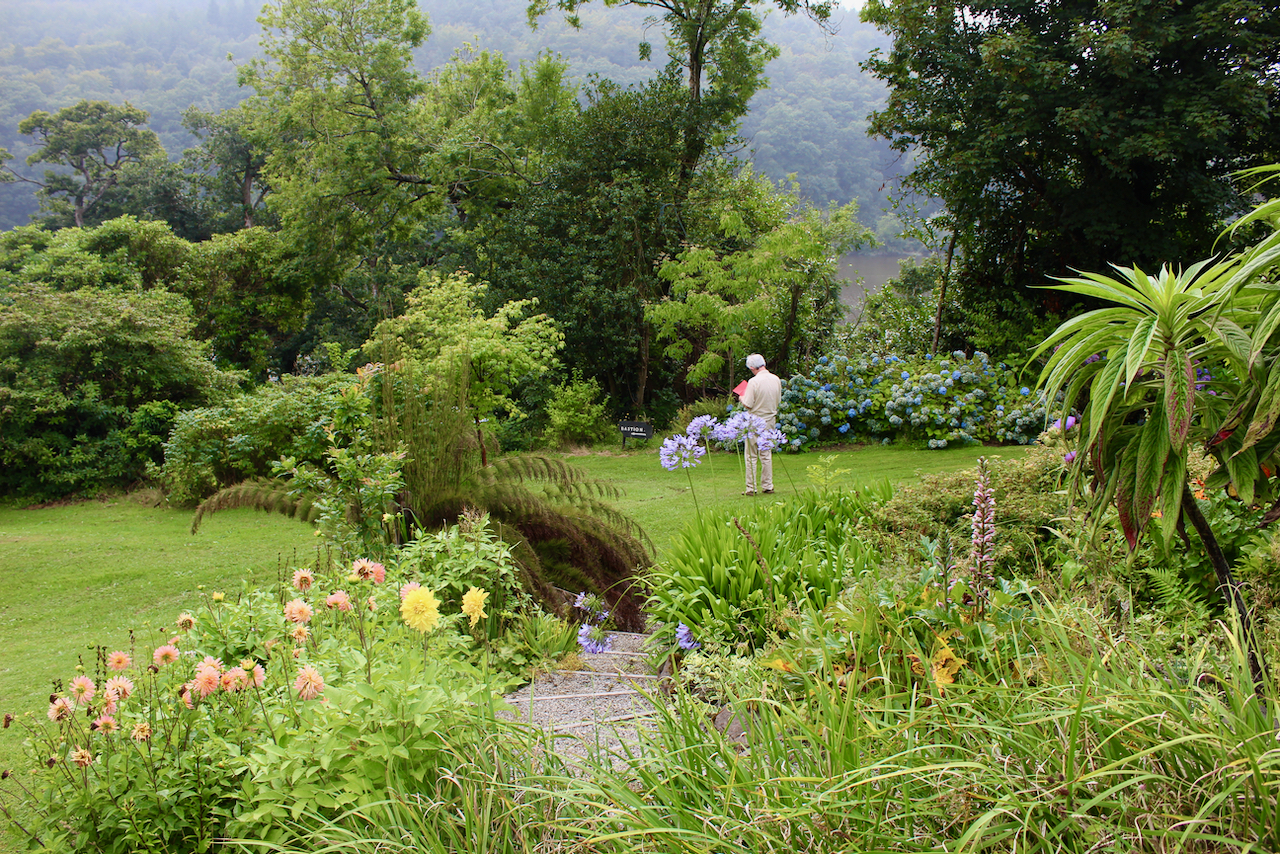
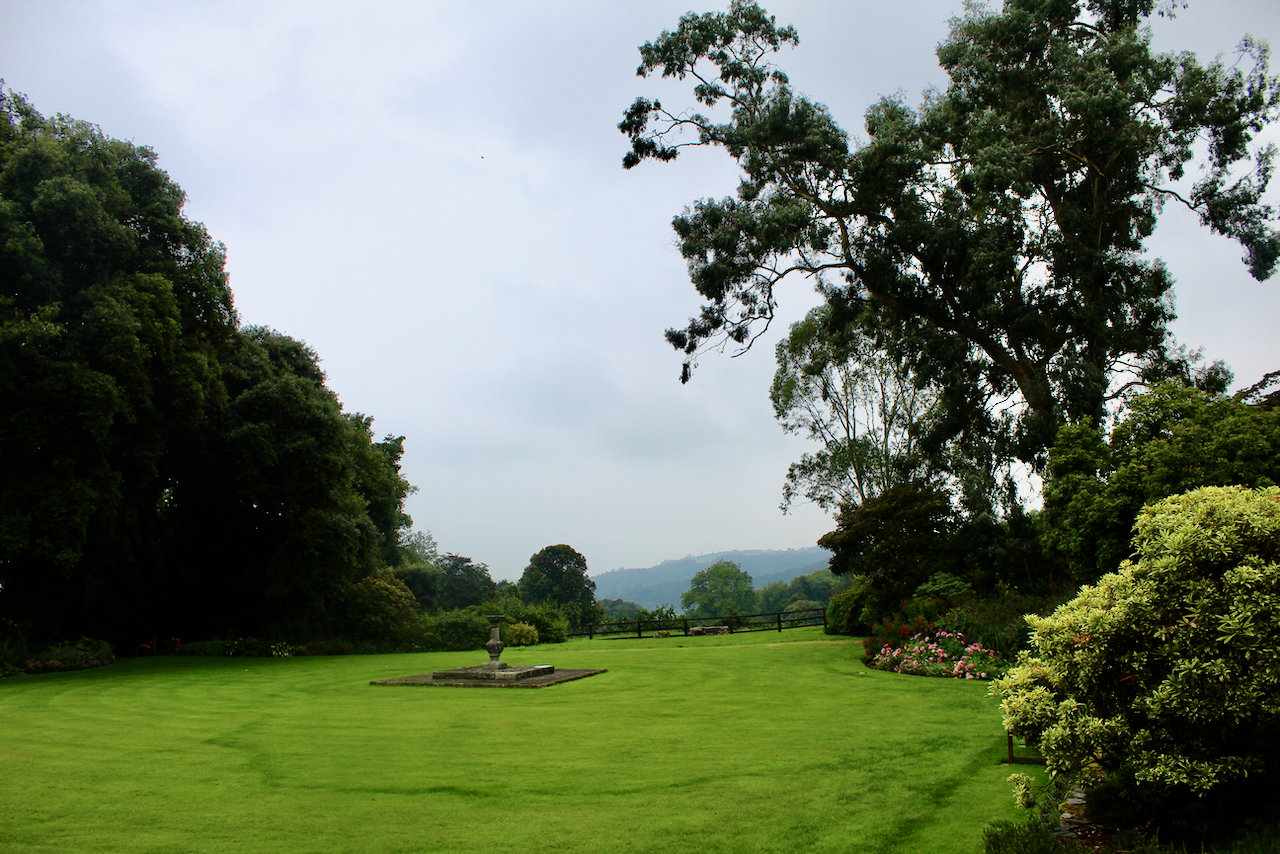
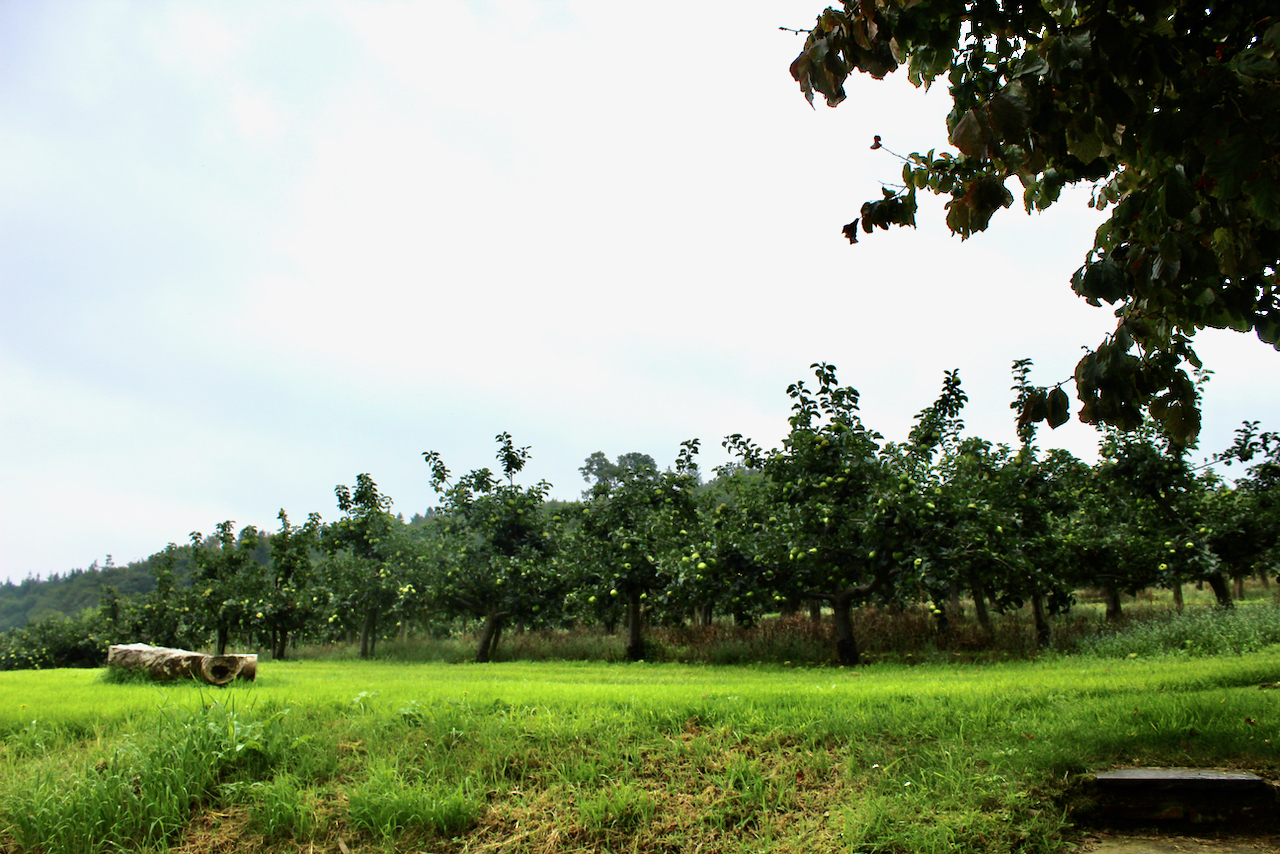
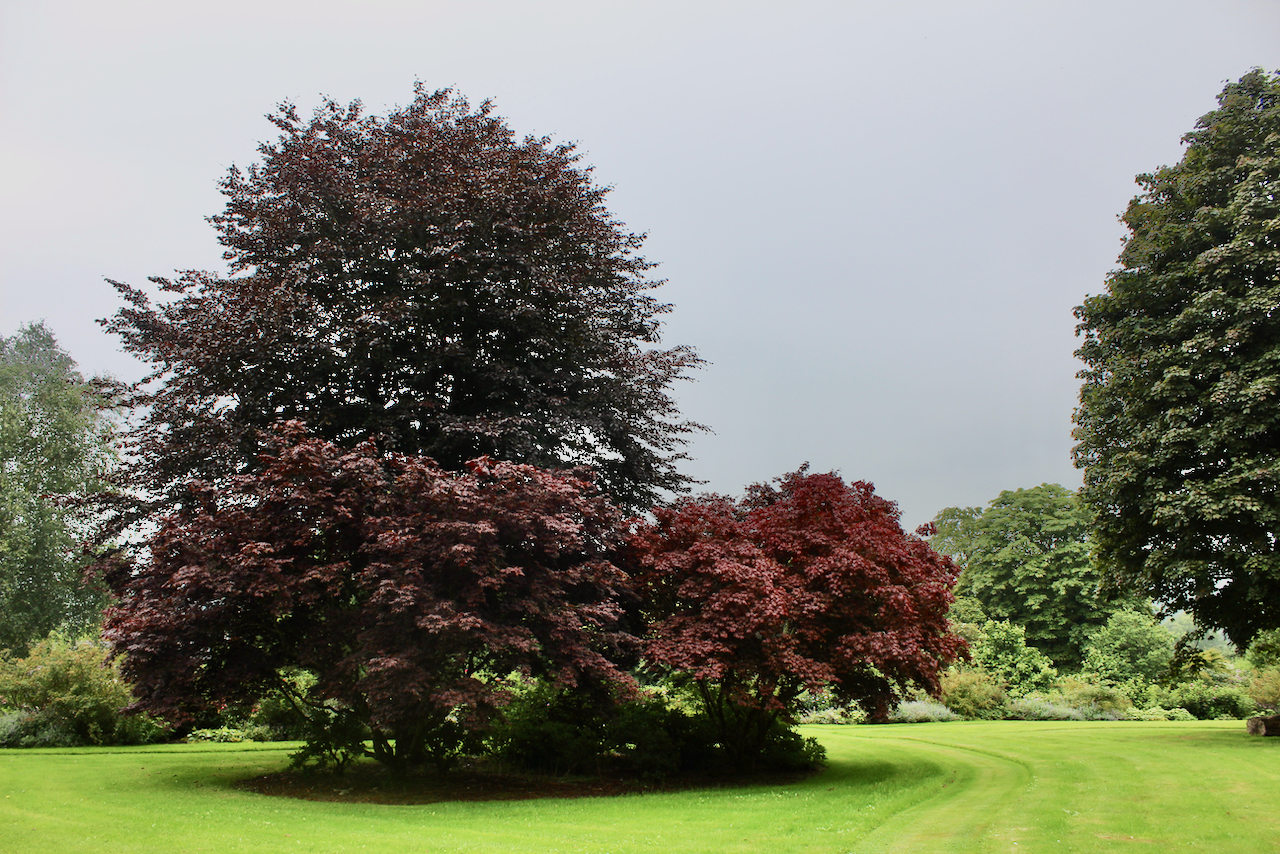
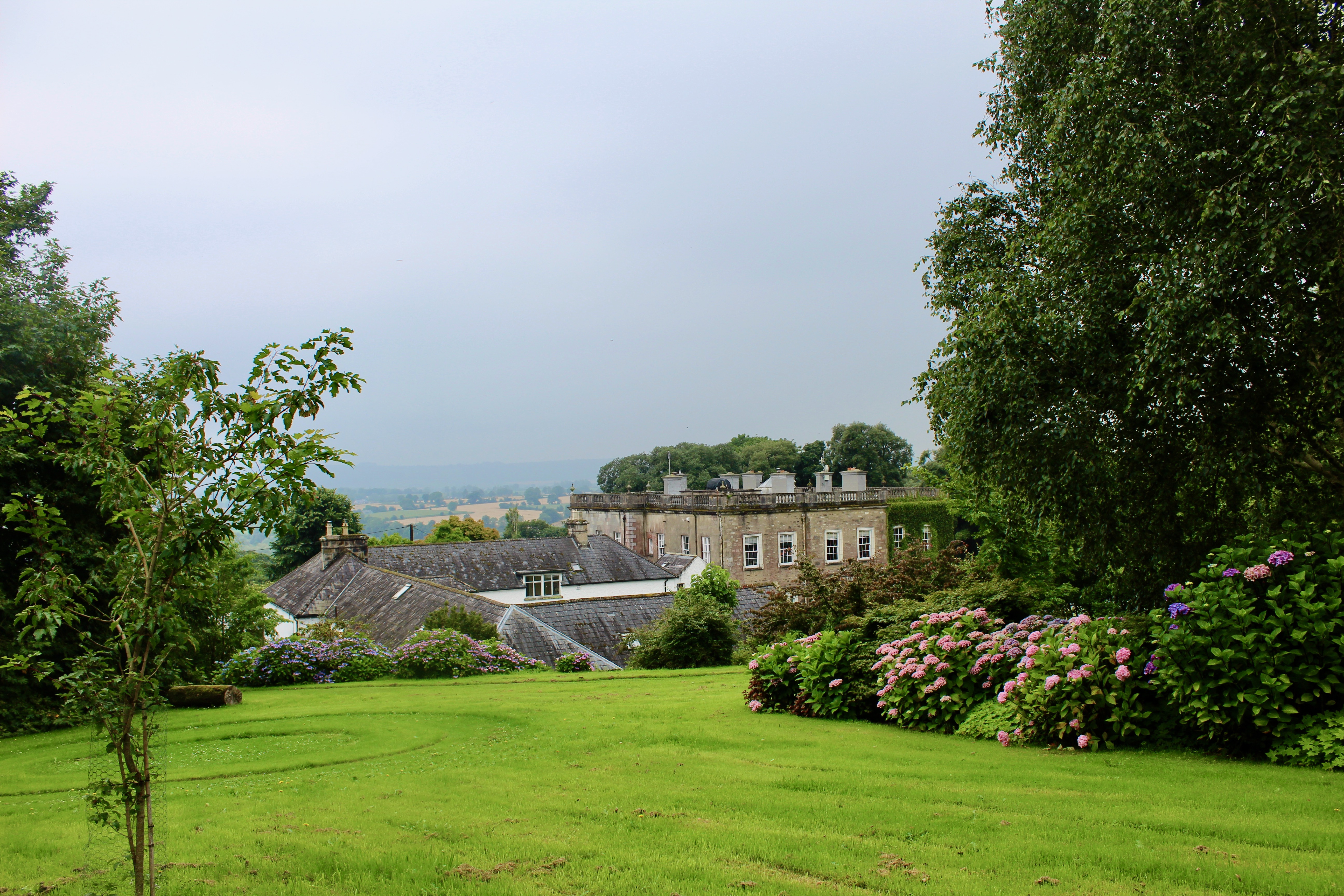
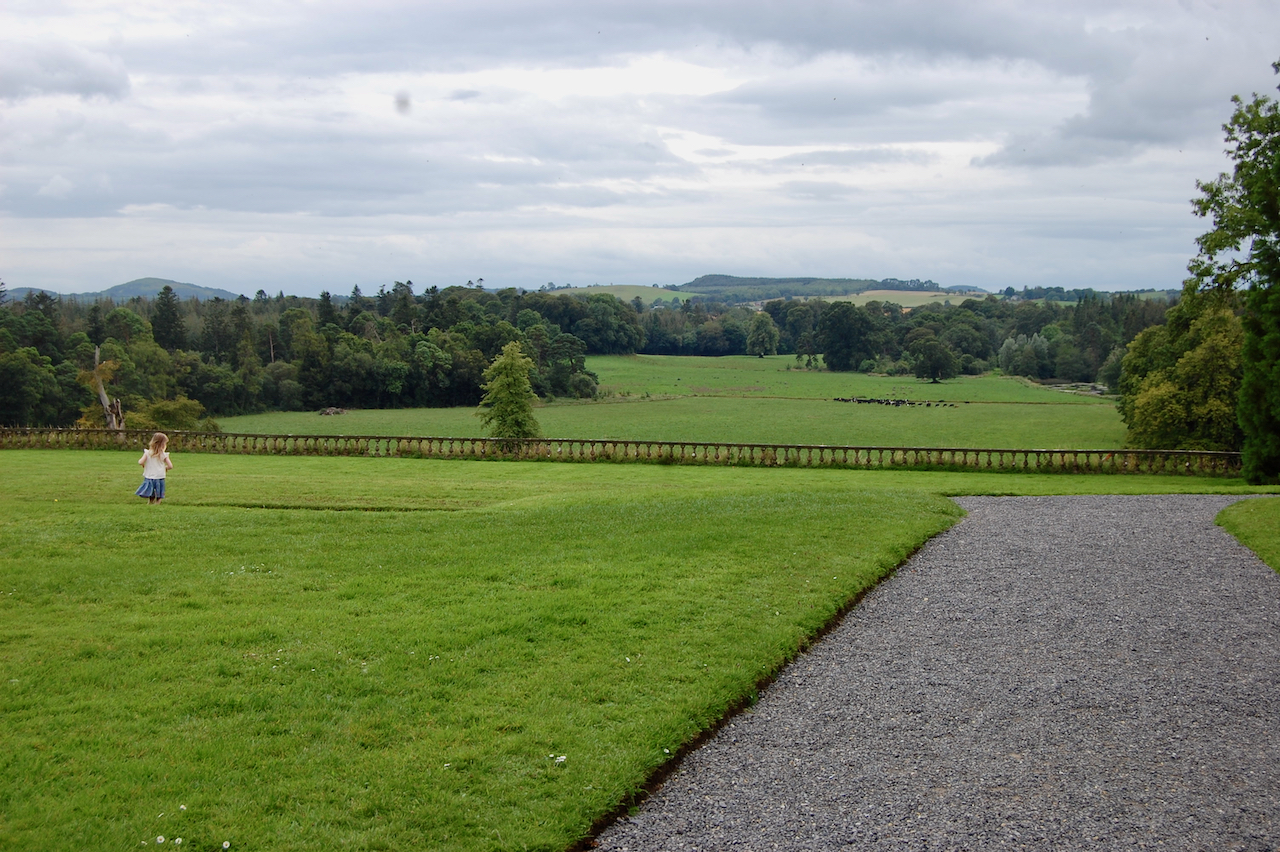
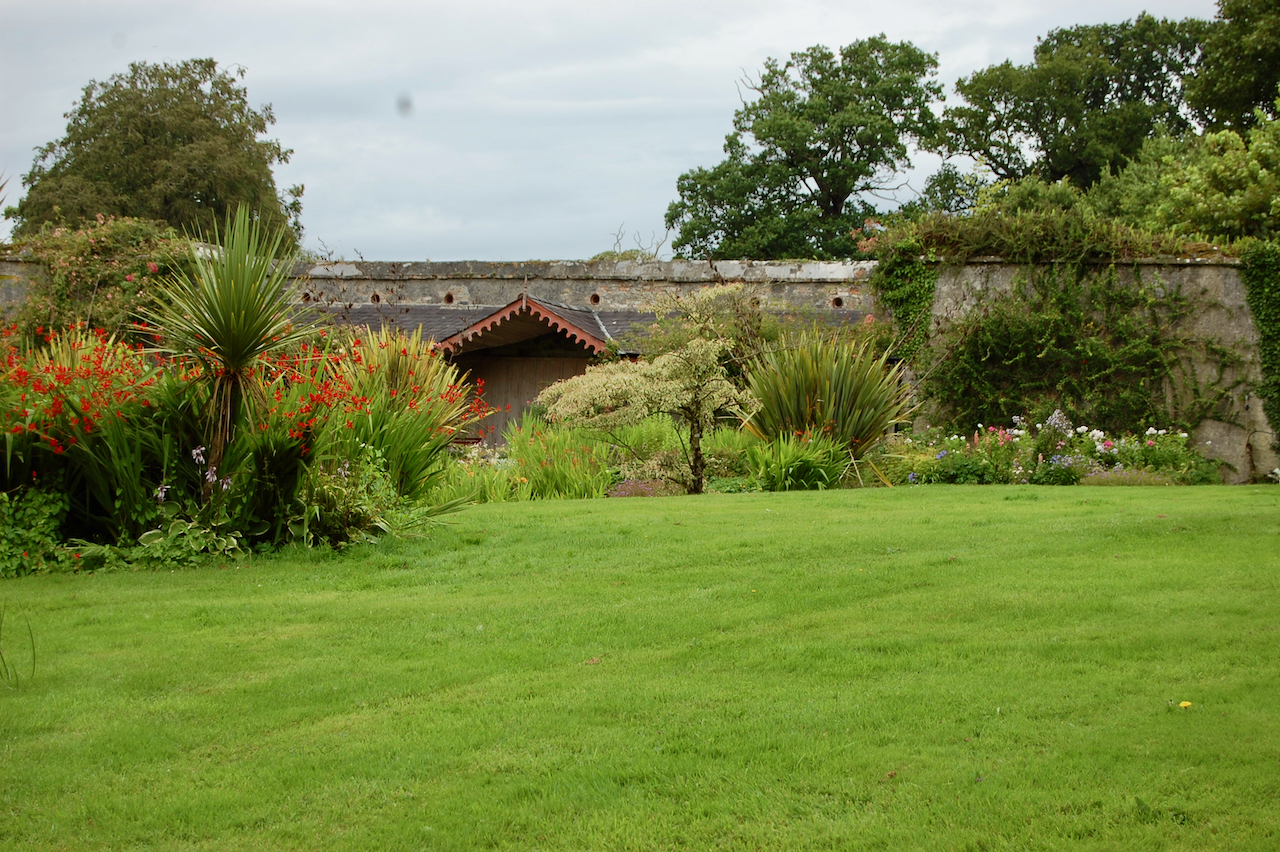
The gardens, covering nearly 30 acres, were laid out in the early 19th century and have been restored. They include a walled flower garden, a grotto and two ornamental lakes.

Tullynally, County Westmeath. Photograph © Jennifer Winder-Baggot, www.irishhistorichouses.com
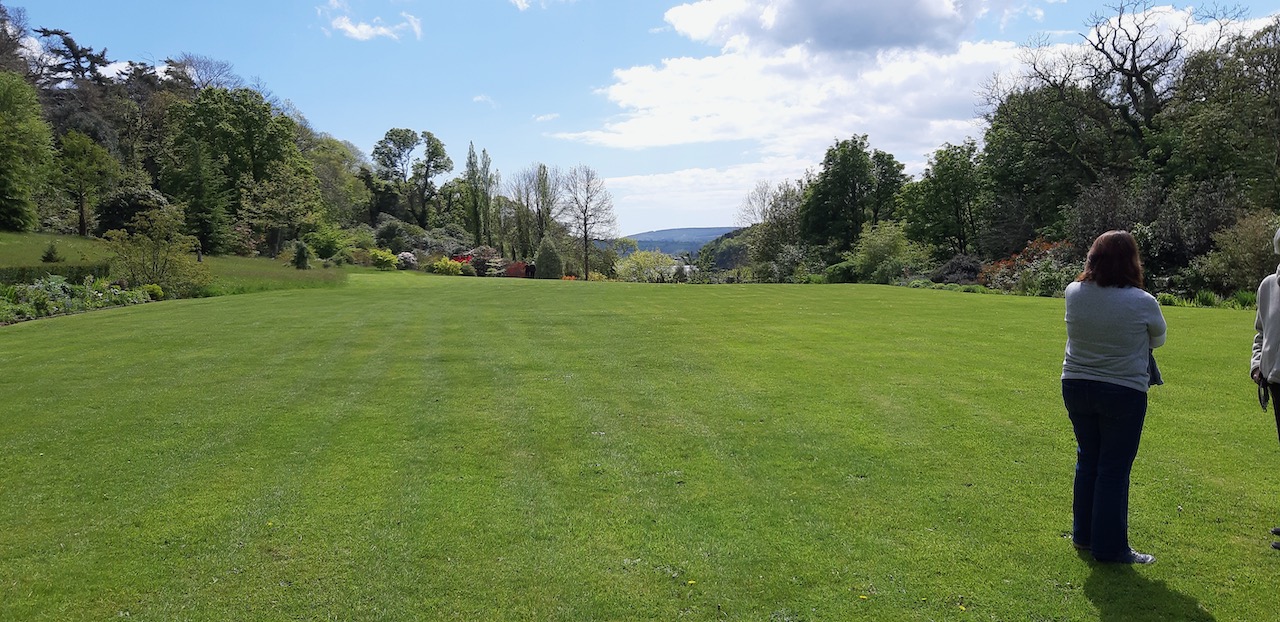
The ha ha and castle terraces. The ha ha is a sharp downward slope in a lawn to prevent animals coming too close to the house, or, as we were told in another house, to hide the servants walking past. Photograph © Jennifer Winder-Baggot, www.irishhistorichouses.com
The current owner Thomas Packenham has published a five book series on trees that begins with Meetings with Remarkable Trees and the most recent is The Company of Trees.

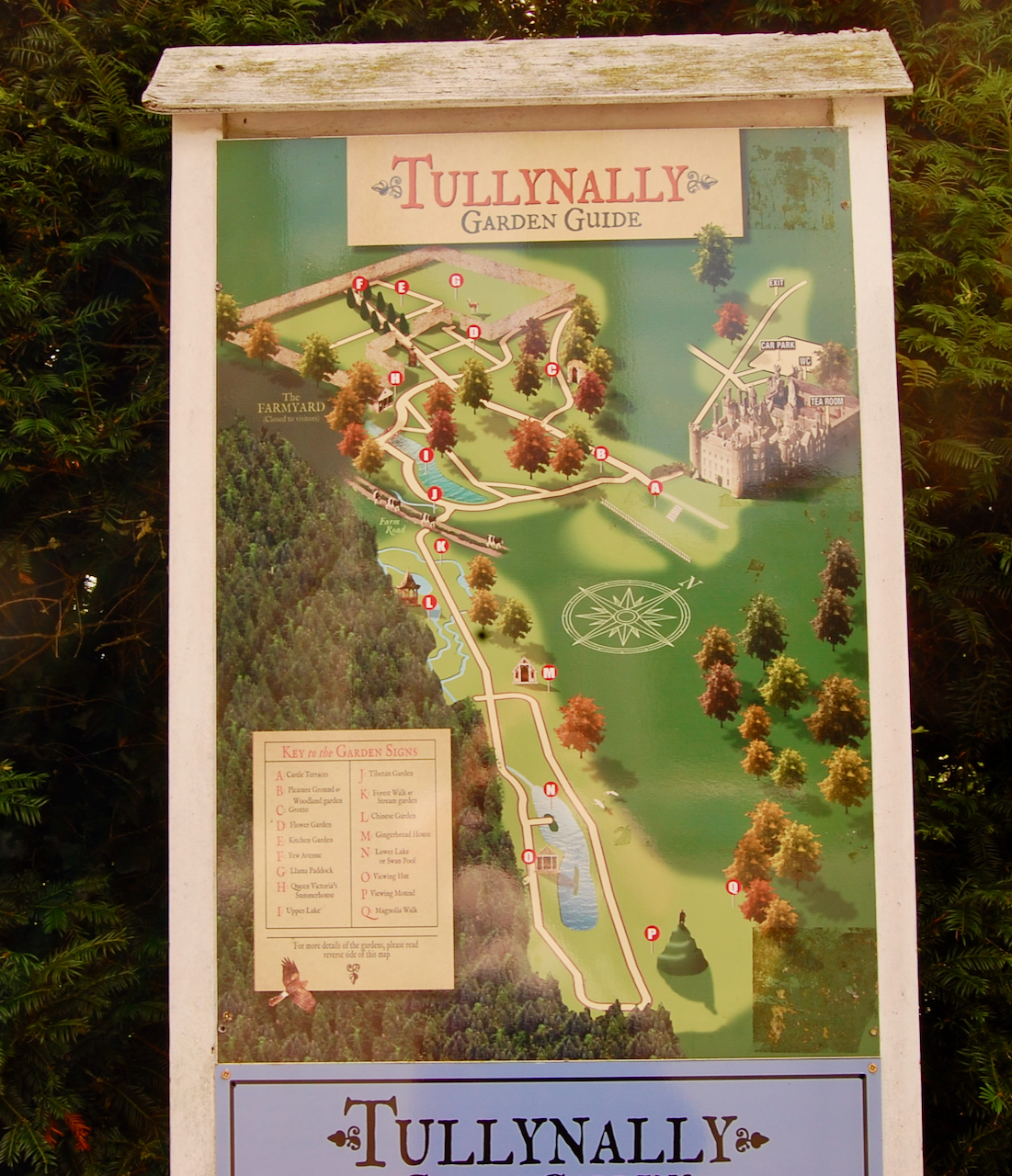
Here is the description of the gardens, from the Irish Historic Houses website:“The gardens, illustrated by a younger son in the early eighteenth century, originally consisted of a series of cascades and formal avenues to the south of the house. These were later romanticised in the Loudonesque style, with lakes, grottoes and winding paths, by the second Earl and his wife [Thomas (1774-1835) and Georgiana Lygon (1774-1880)]. They have been extensively restored and adapted by the present owners, Thomas and Valerie Pakenham, with flower borders in the old walled gardens and new plantings of magnolias, rhododendron and giant lilies in the woodland gardens, many collected as seed by Thomas while travelling in China and Tibet. He has recently added a Chinese garden, complete with pagoda, while the surrounding park contains a huge collection of fine specimen trees.” [7]

A. Castle Terraces, B. Pleasure Garden or Woodland Garden, C. Grotto, D. Flower Gardens, E. Kitchen Garden, F. Yew Avenue, G. Llama Paddock, H. Queen Victoria’s Summerhouse, I. Upper Lake, J. Tibetan Garden, K. Forest Walk or Stream Garden, L. Chinese Garden, M. Gingerbread House, N. Lower Lake or Swan Pool, O. Viewing Hut, P. Viewing Mound, Q. Magnolia Walk.
Helpful signs explain areas of the garden. Photograph © Jennifer Winder-Baggot, www.irishhistorichouses.com
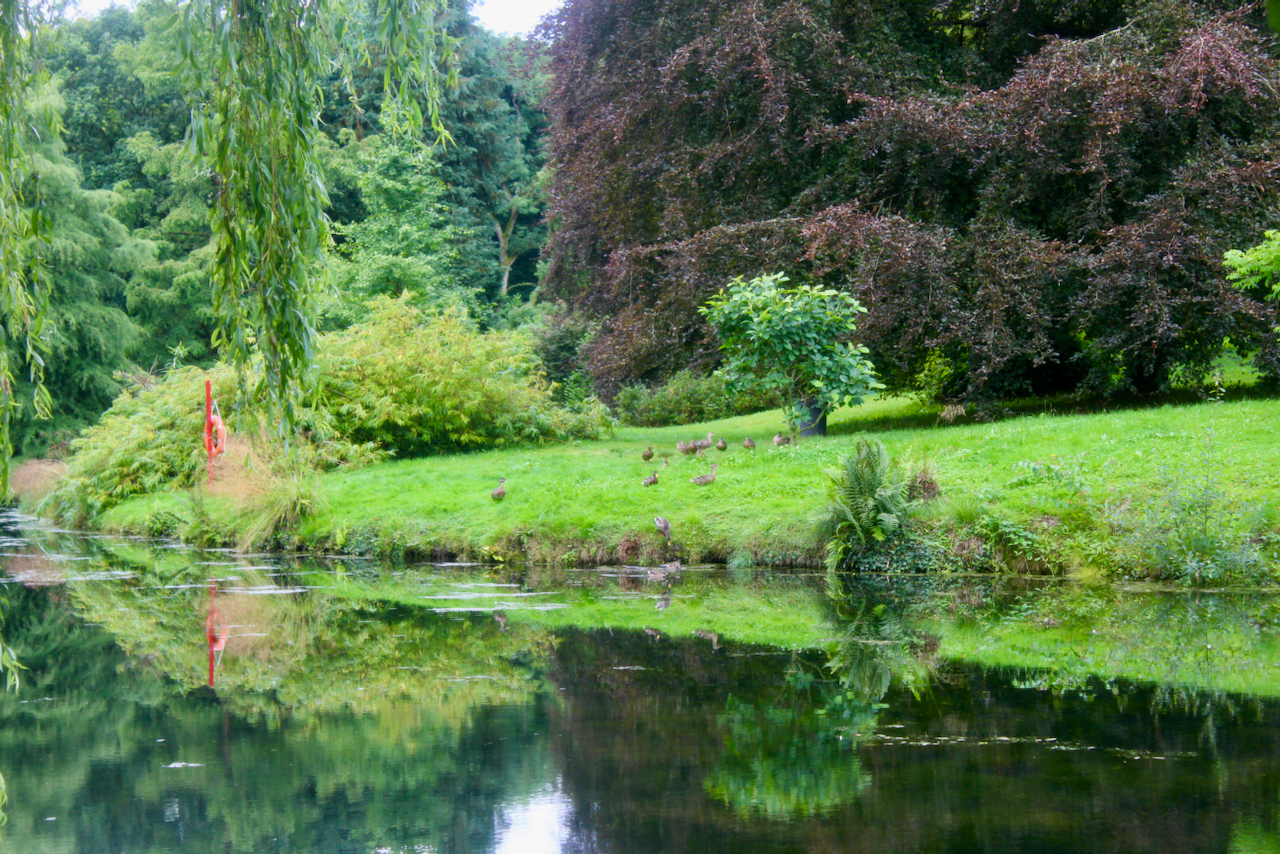
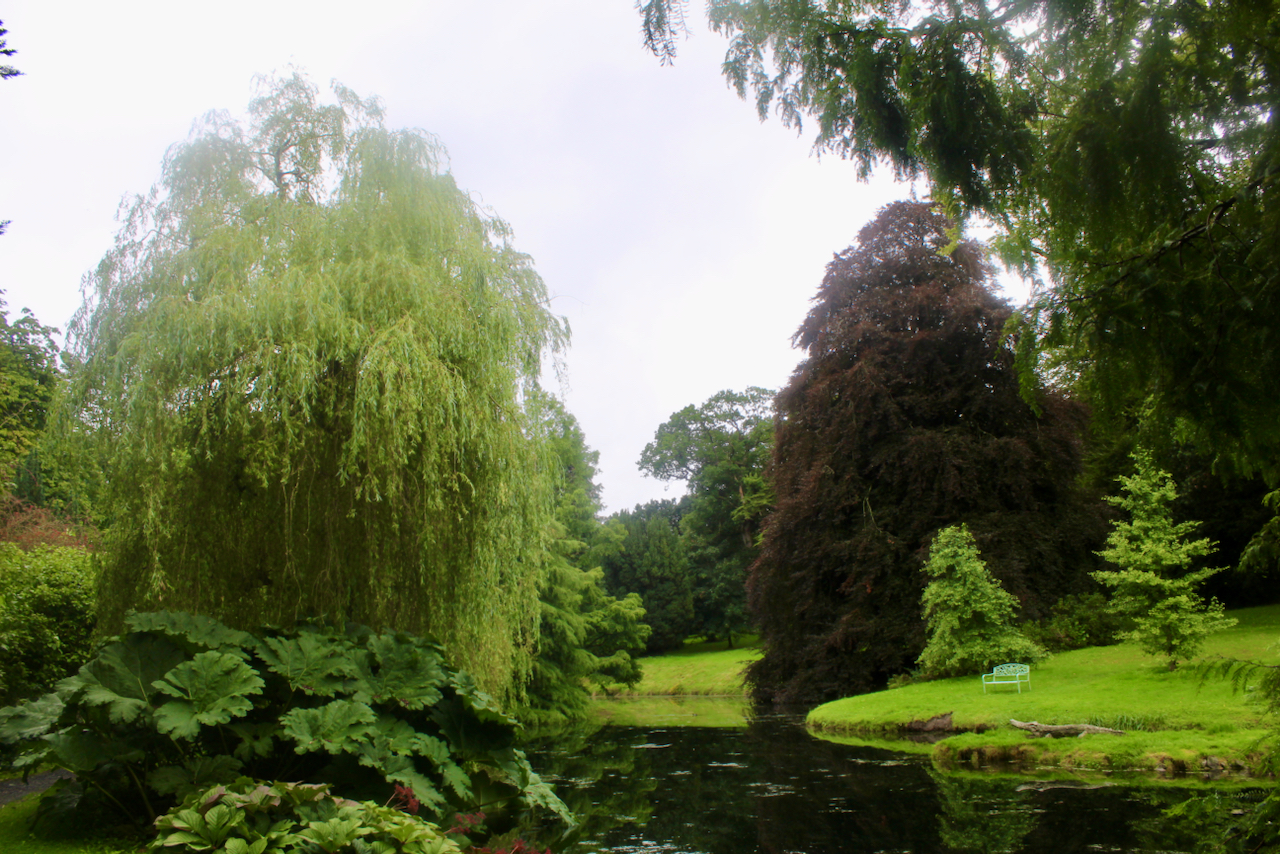
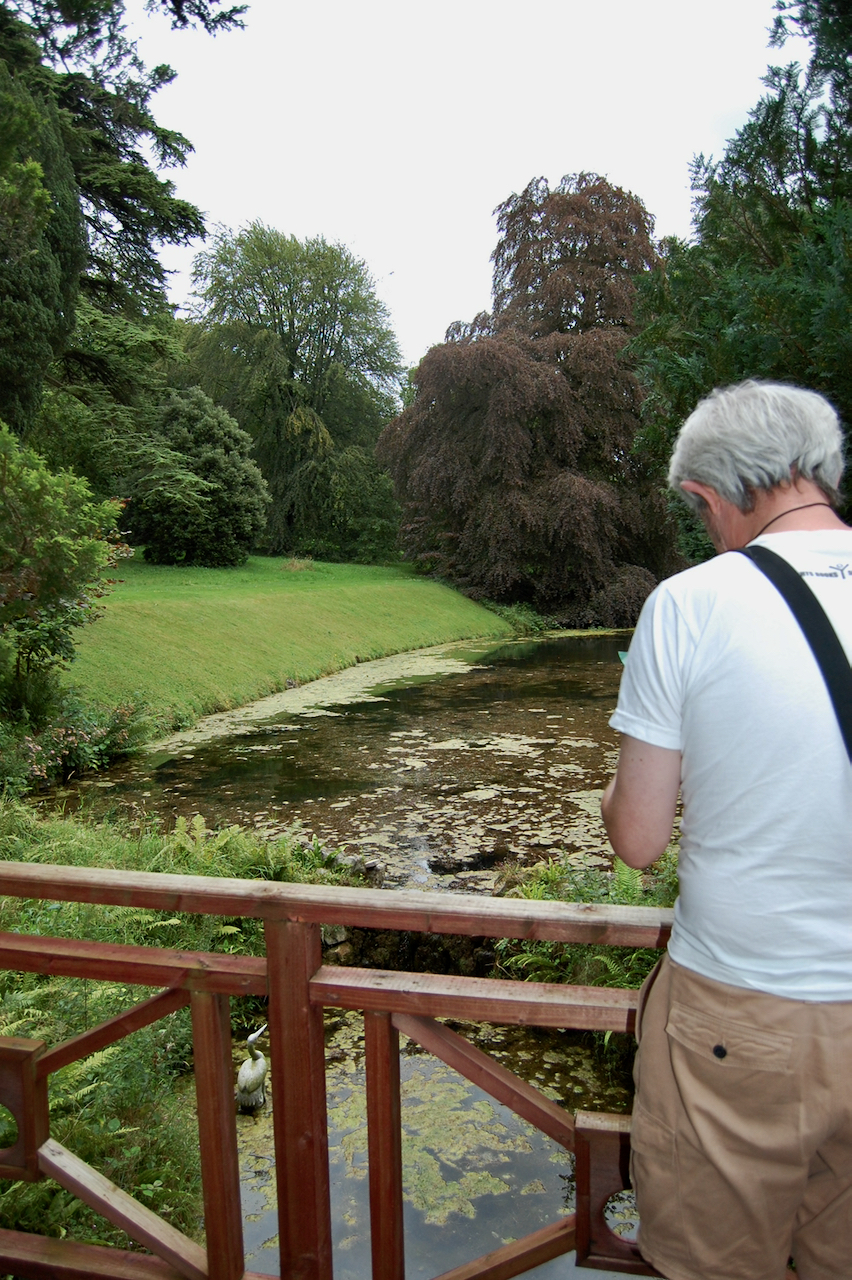
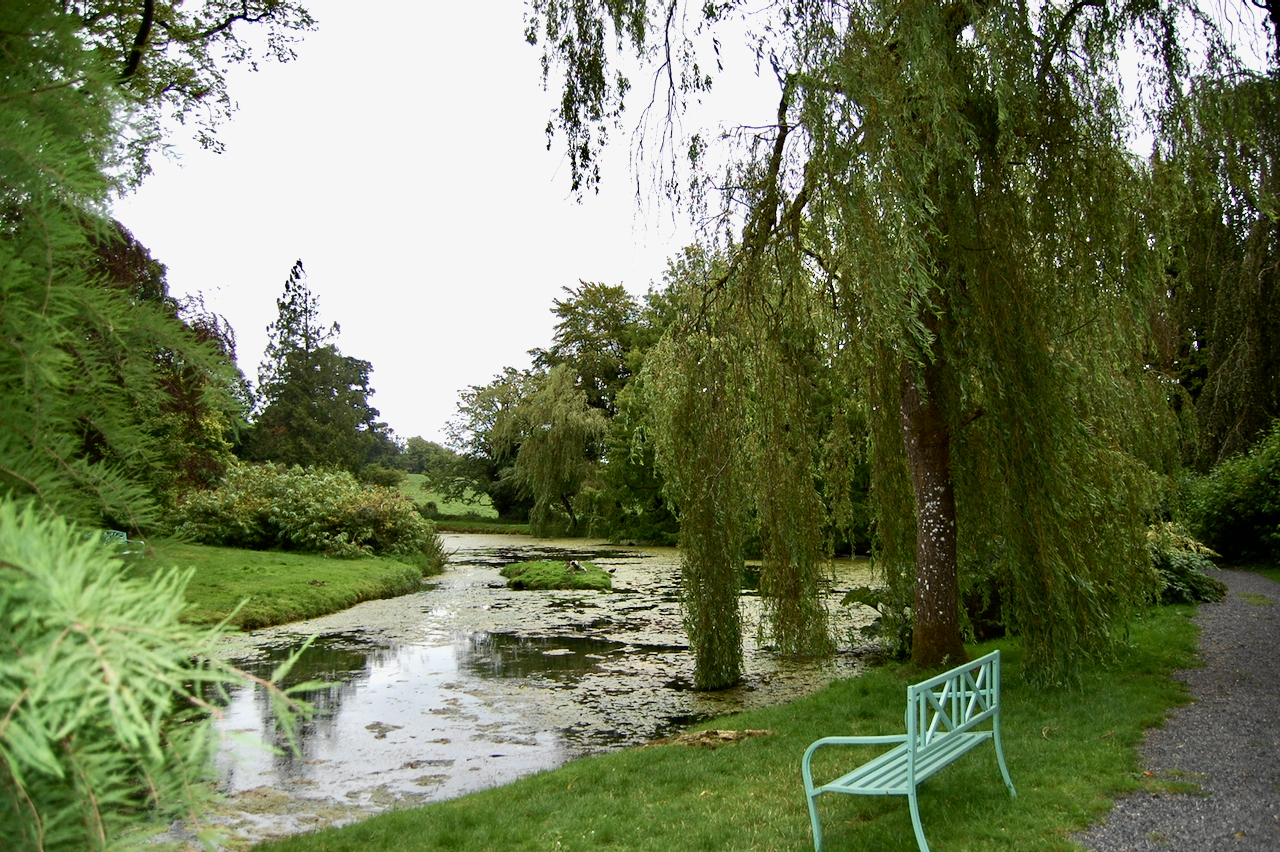
The upper lake 2020. This was originally a bathing place with a bathhouse, now replaced by a small summerhouse. It was extended to the present size in 1884. It originally also served the purpose for water to be released into the millpond to drive the water wheel, and later, turbine, in the farm mill. Photograph © Jennifer Winder-Baggot, www.irishhistorichouses.com
The upper lake, 2021. Photograph © Jennifer Winder-Baggot, www.irishhistorichouses.com
Tullynally, County Westmeath. Photograph © Jennifer Winder-Baggot, www.irishhistorichouses.com
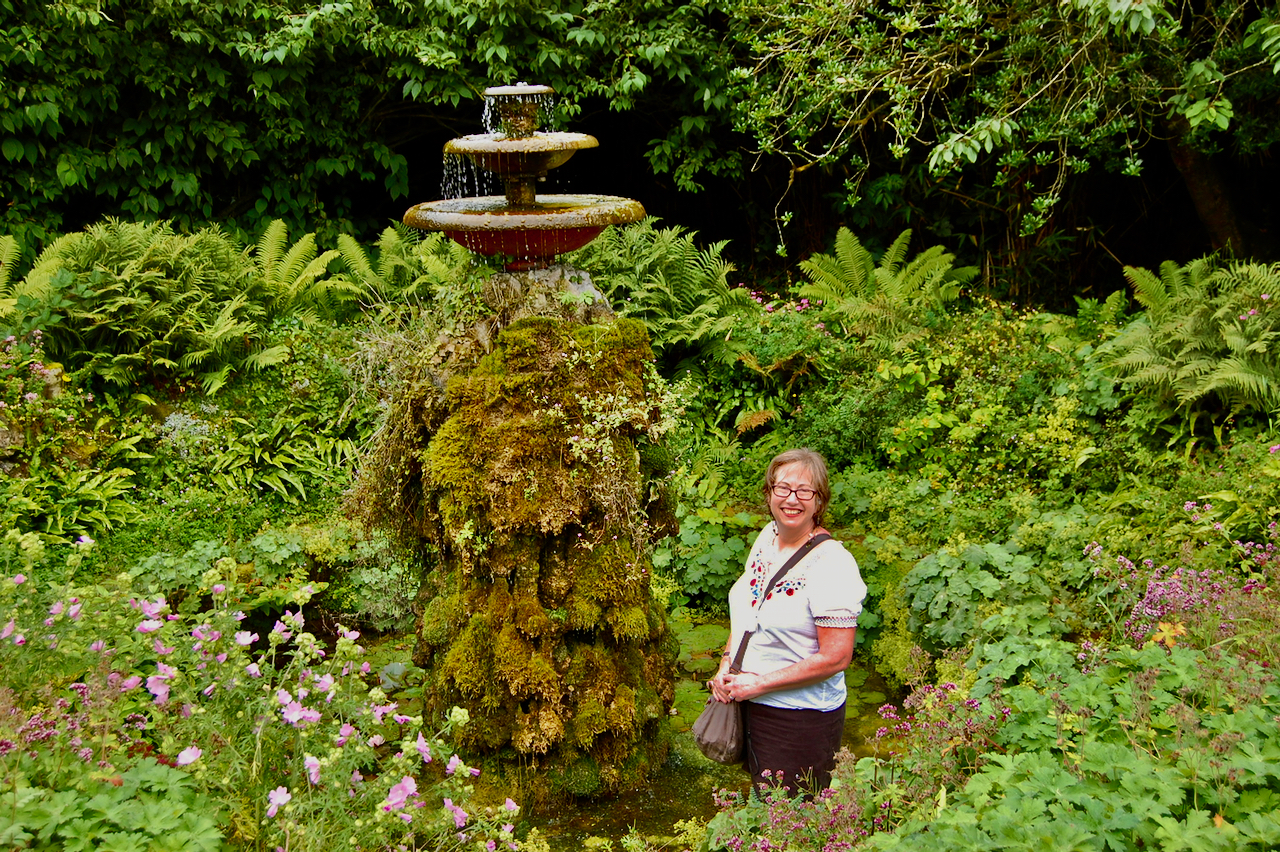
The lily pond with the “weeping pillar” of eroded limestone. Photograph © Jennifer Winder-Baggot, www.irishhistorichouses.com
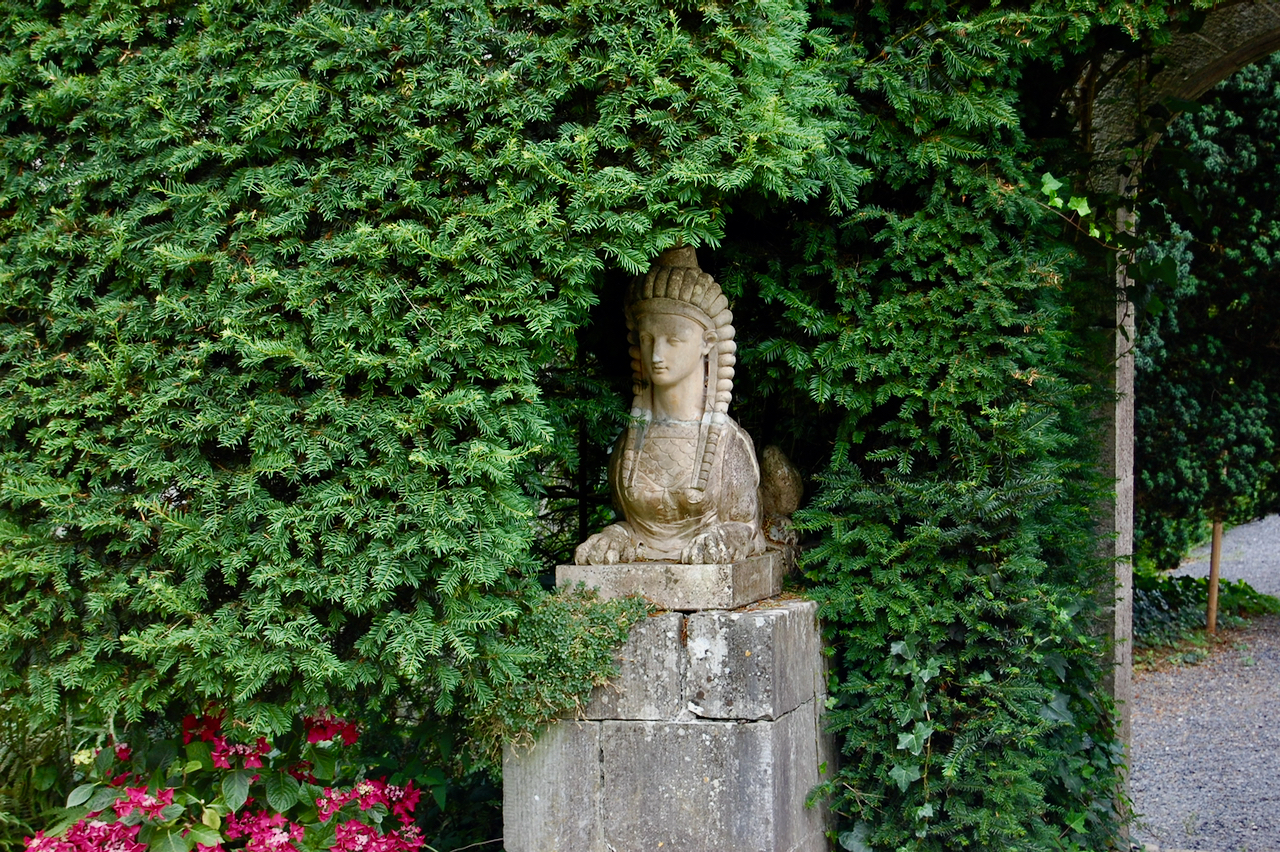
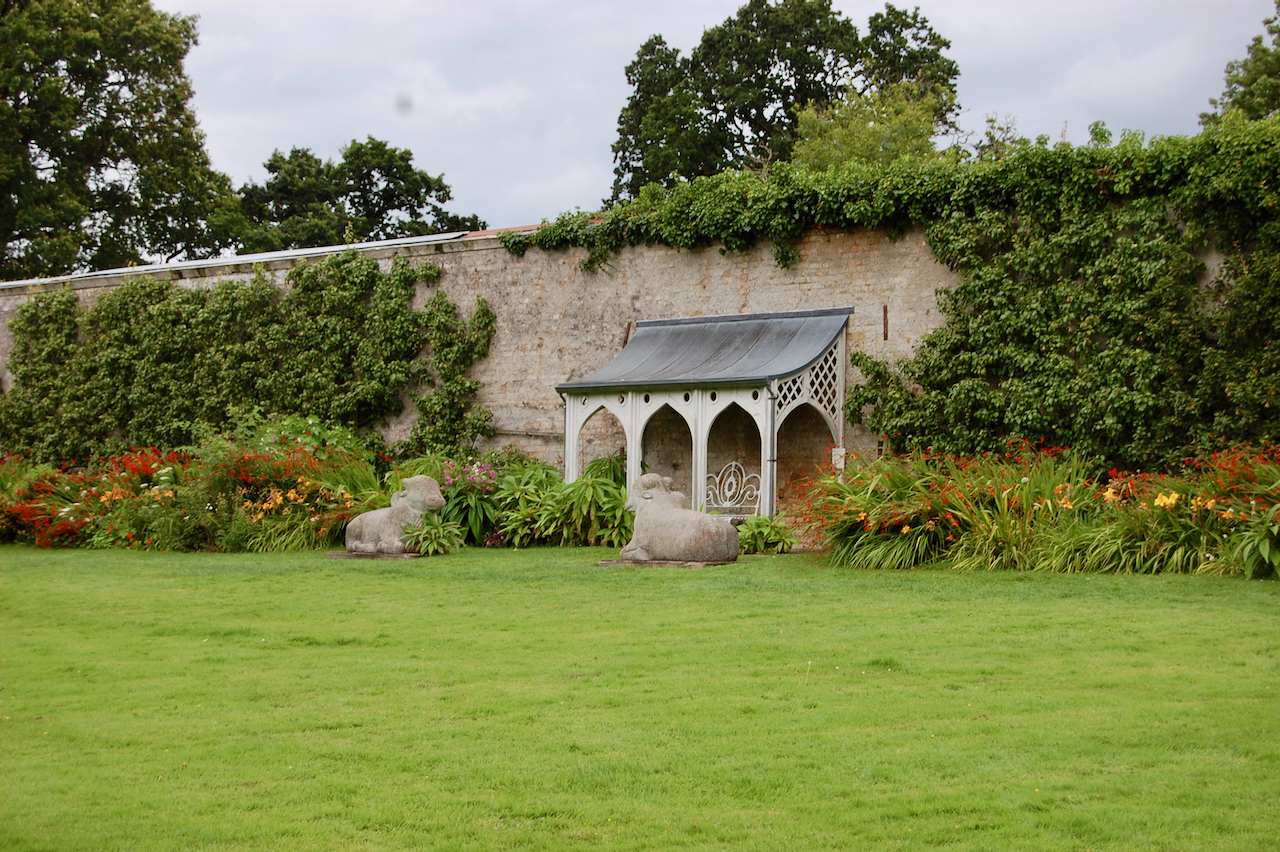
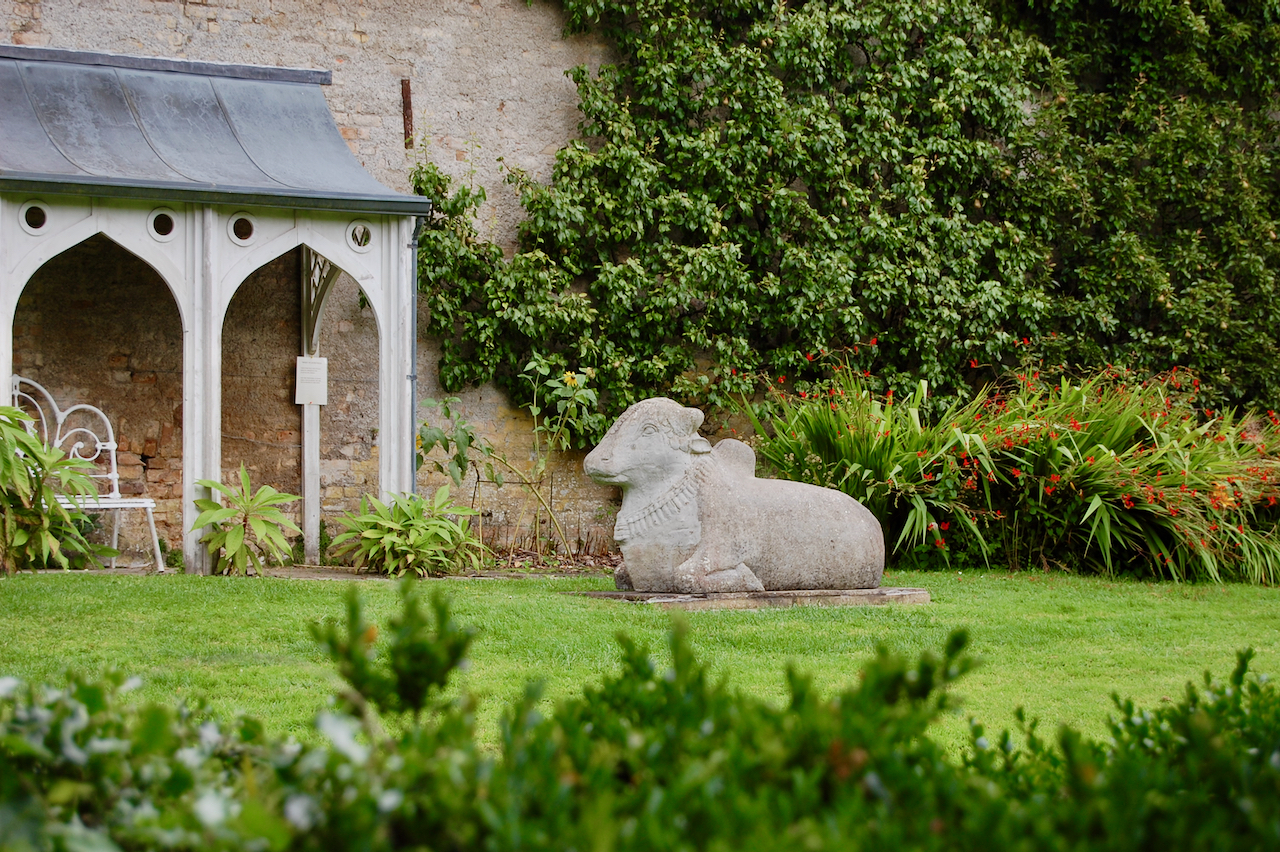
One of the two sphinxes by the gate leading to the Kitchen Garden which were once part of an 18th century classical entrance gate to the estate. Photograph © Jennifer Winder-Baggot, www.irishhistorichouses.com
Tullynally, County Westmeath. Photograph © Jennifer Winder-Baggot, www.irishhistorichouses.com
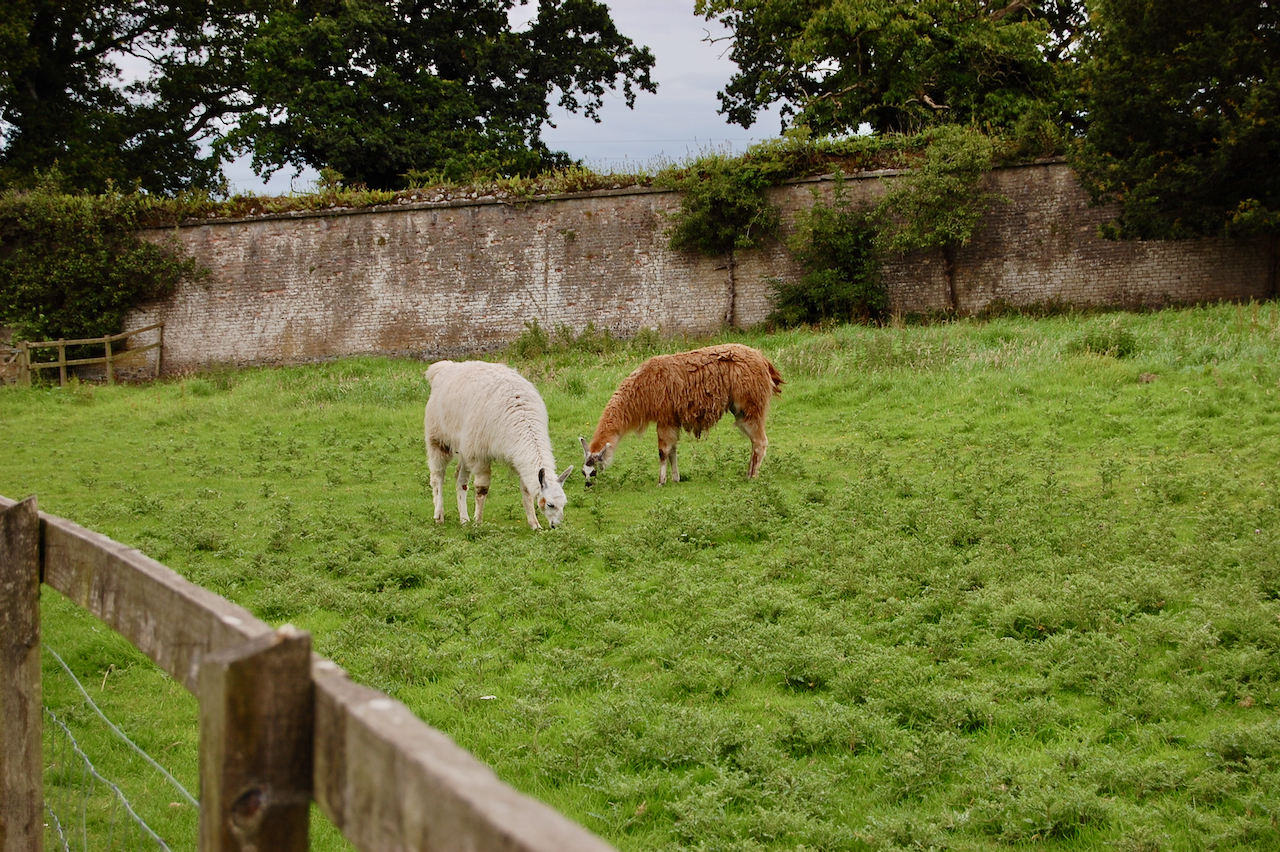
llamas! Photograph © Jennifer Winder-Baggot, www.irishhistorichouses.com
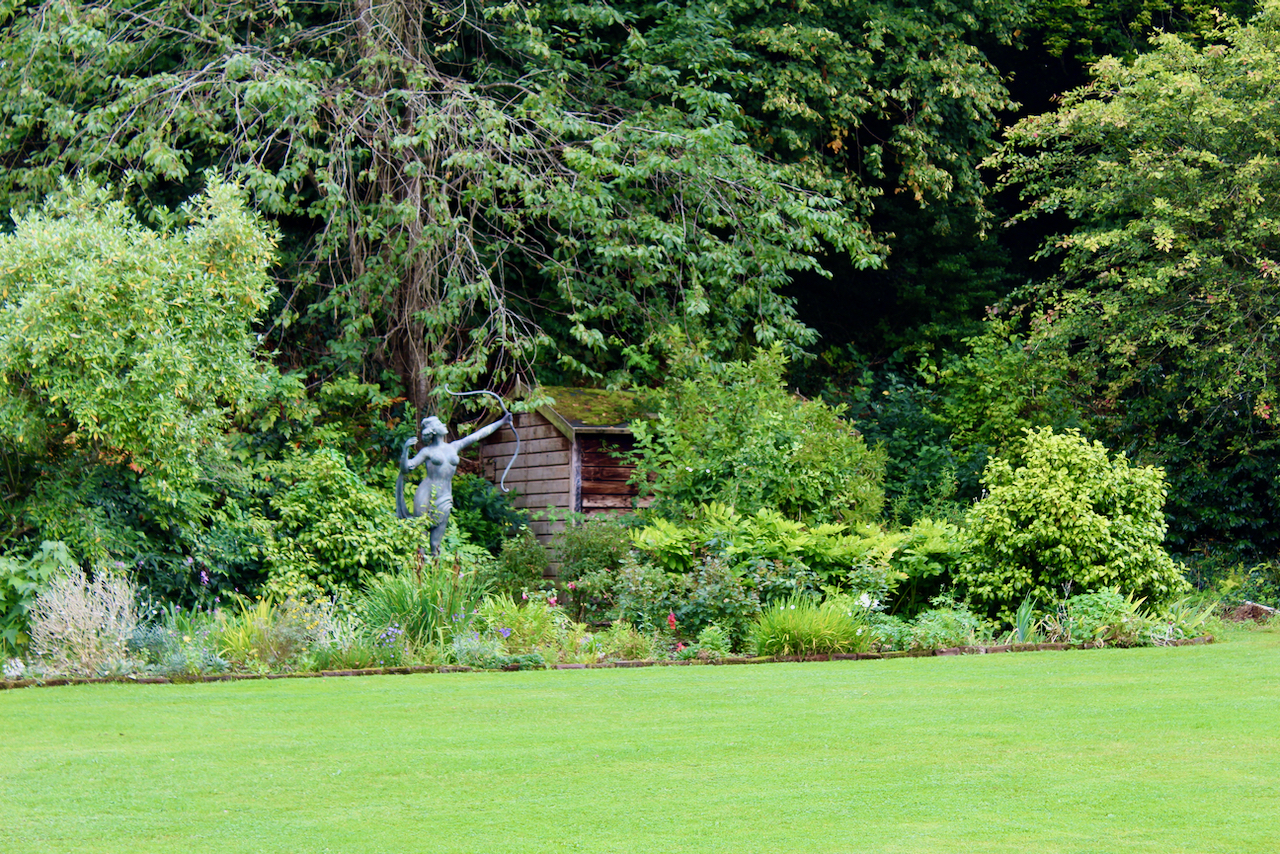
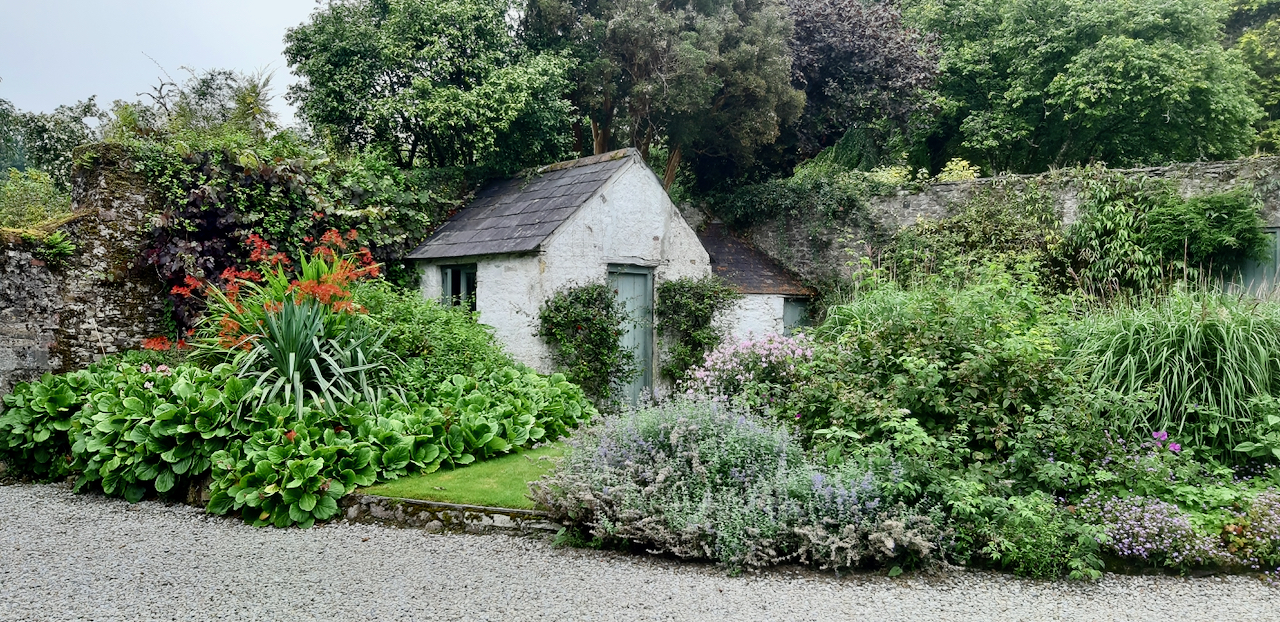
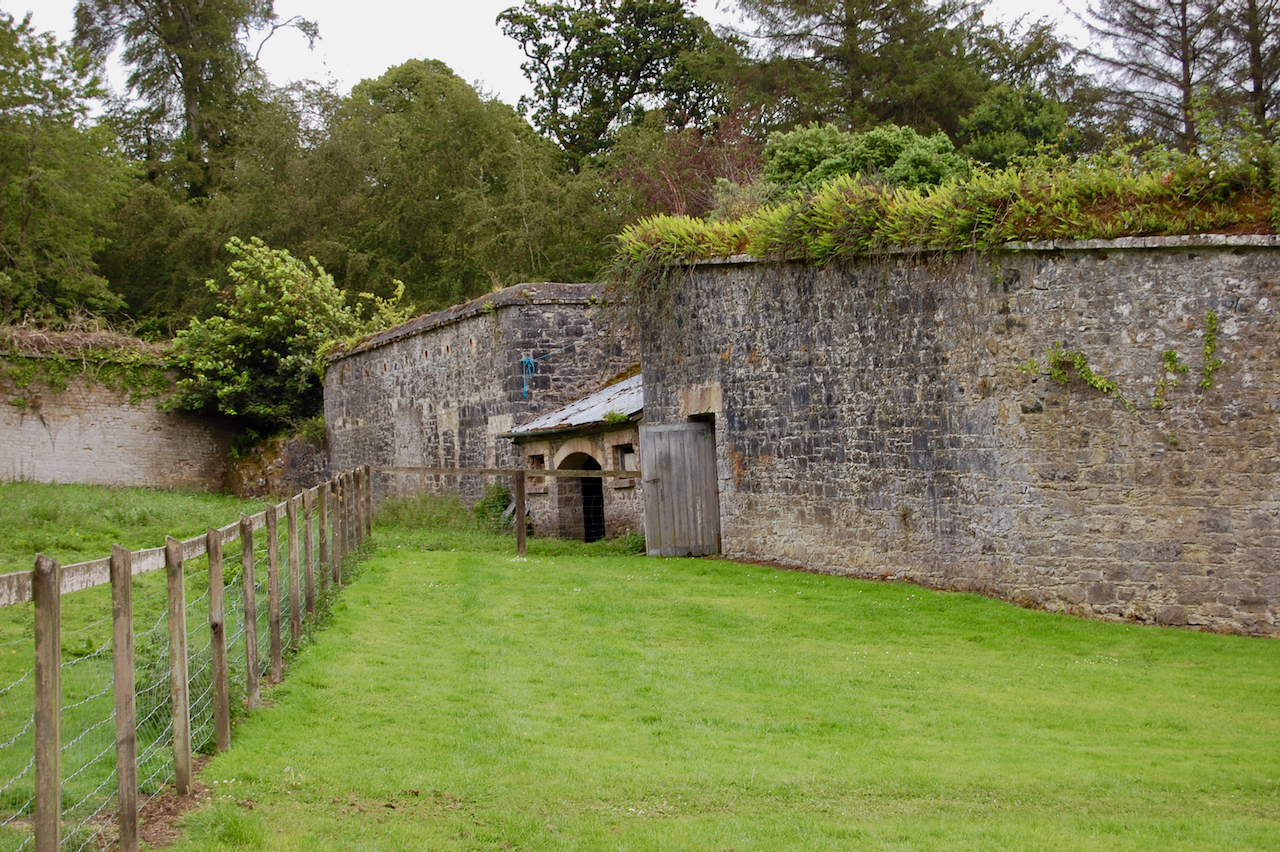
A lovely little shed. Photograph © Jennifer Winder-Baggot, www.irishhistorichouses.com

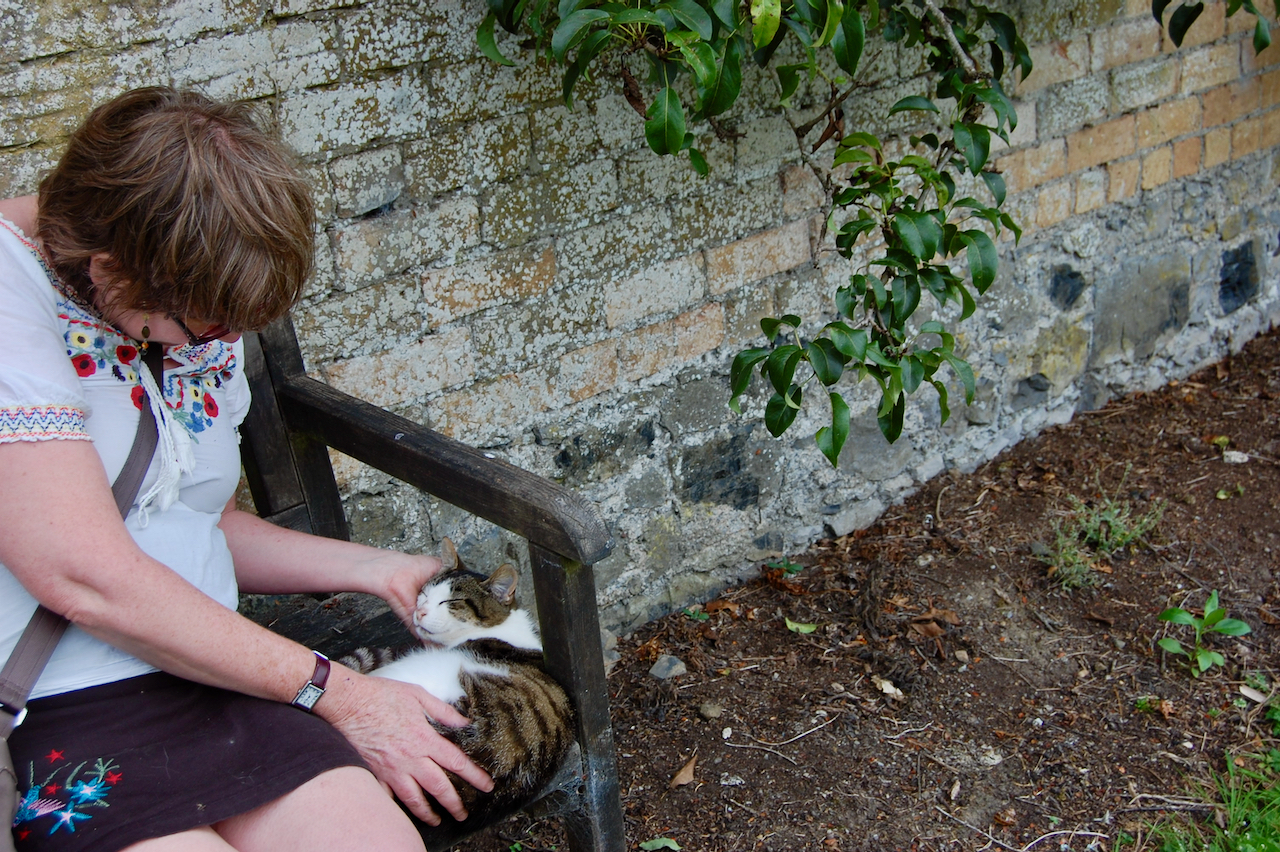
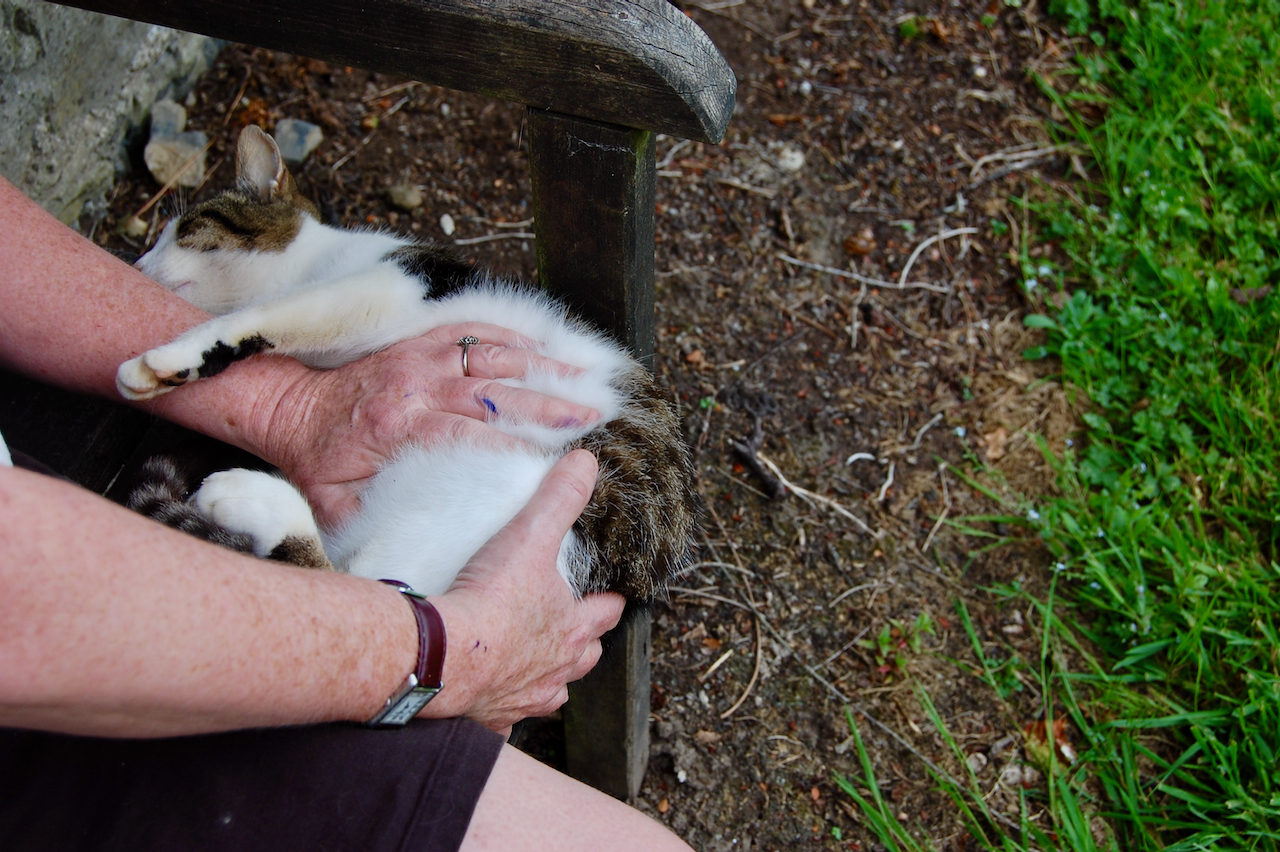
I befriended the resident cat.

She was so happy to have her tummy rubbed – not like our Bumper – and was so friendly that I wanted to take her home! Photograph © Jennifer Winder-Baggot, www.irishhistorichouses.com
Tullynally, County Westmeath. Photograph © Jennifer Winder-Baggot, www.irishhistorichouses.com
A summerhouse copied from an old photograph of Queen Victoria’s summer house in Frogmore, near Windsor. It was built by Antoine Pierson in 1996 for the present owners. Photograph © Jennifer Winder-Baggot, www.irishhistorichouses.com
A Fossil Tree: a Dawn Redwood, considered extinct and only known about from fossils from 60 million years ago, until discovered in 1941 in China. Photograph © Jennifer Winder-Baggot, www.irishhistorichouses.com
A romantically placed seat. Tullynally, with its various turrets and spires, set in its beautiful gardens, is a great exemplar of the picturesque. Photograph © Jennifer Winder-Baggot, www.irishhistorichouses.com
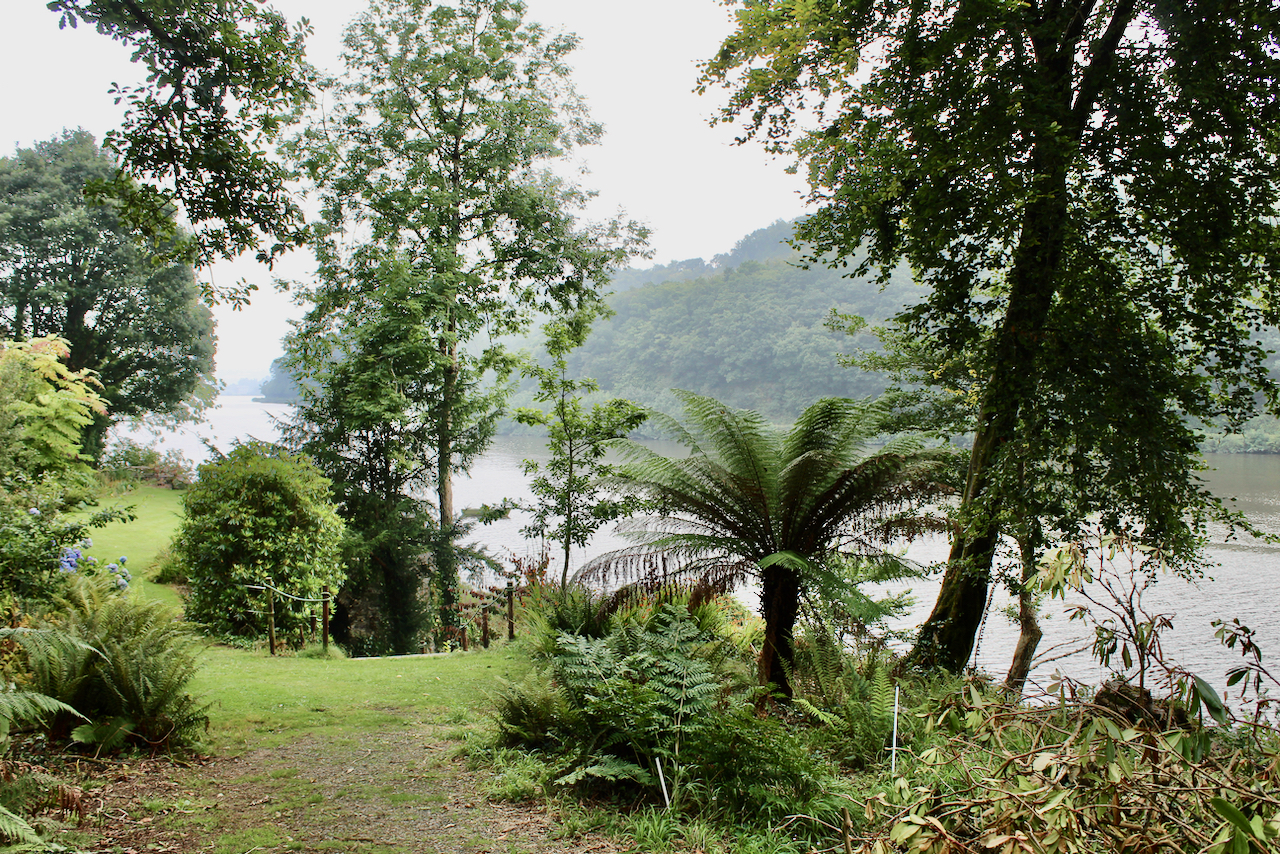
Entrance to Forest Walk, originally formed part of an extended woodland garden created in the 1820s. The path leads to the Chinese garden and to the Lower Lake, reputedly one of the lakes where the Children of Lir stayed as swans. Photograph © Jennifer Winder-Baggot, www.irishhistorichouses.com
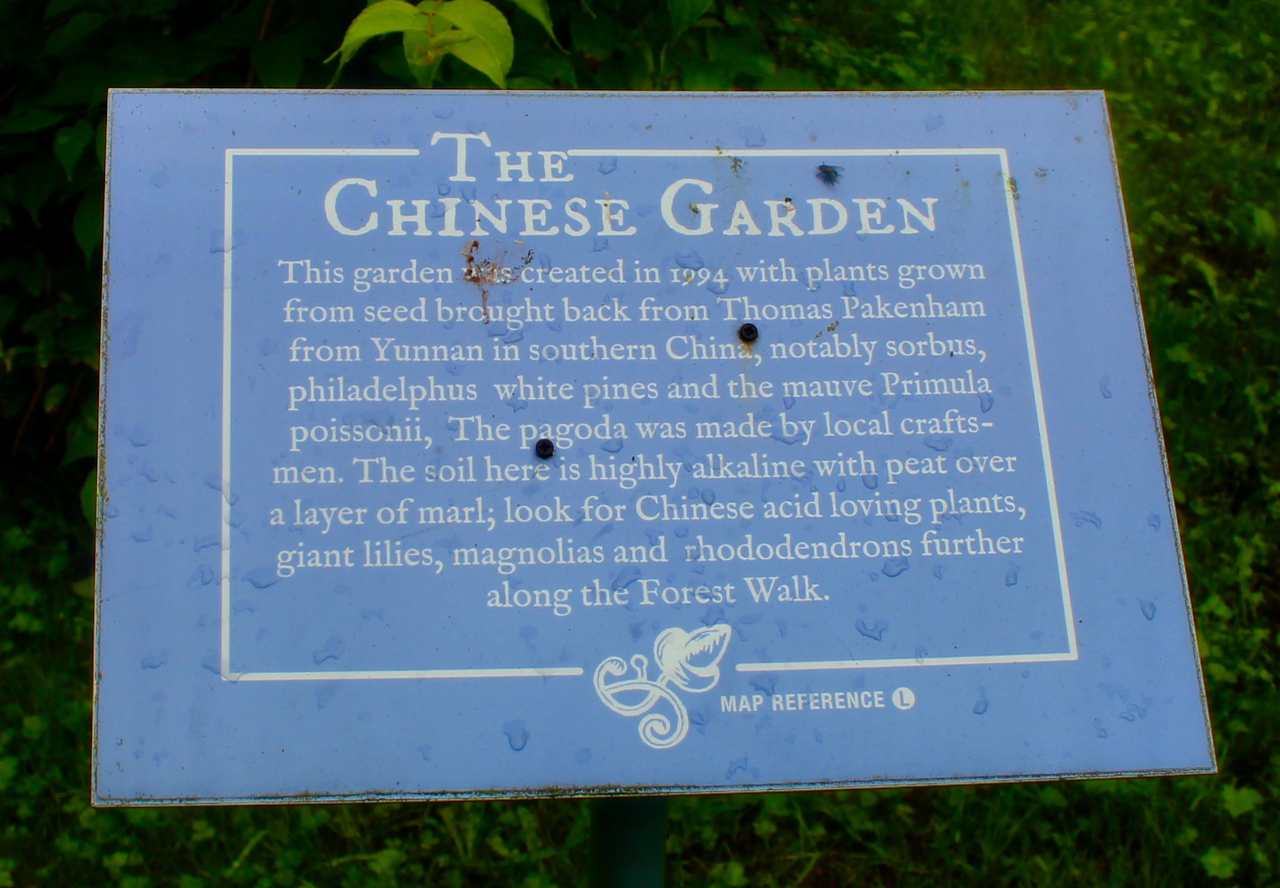
Another romantic spot. The Chinese Garden was created in 1994 with plants grown from seed by Thomas Pakenham from Yunnan in southern China. The Pagoda was made by local craftsmen. Photograph © Jennifer Winder-Baggot, www.irishhistorichouses.com
Note on the garden. Photograph © Jennifer Winder-Baggot, www.irishhistorichouses.com
I’m afraid Stephen is a little irreverent in this one. Photograph © Jennifer Winder-Baggot, www.irishhistorichouses.com
On our second visit, we made it to the lower lake, but we were then caught in a heavy downpour! Fortunately there was a gazebo nearby for shelter. Photograph © Jennifer Winder-Baggot, www.irishhistorichouses.com
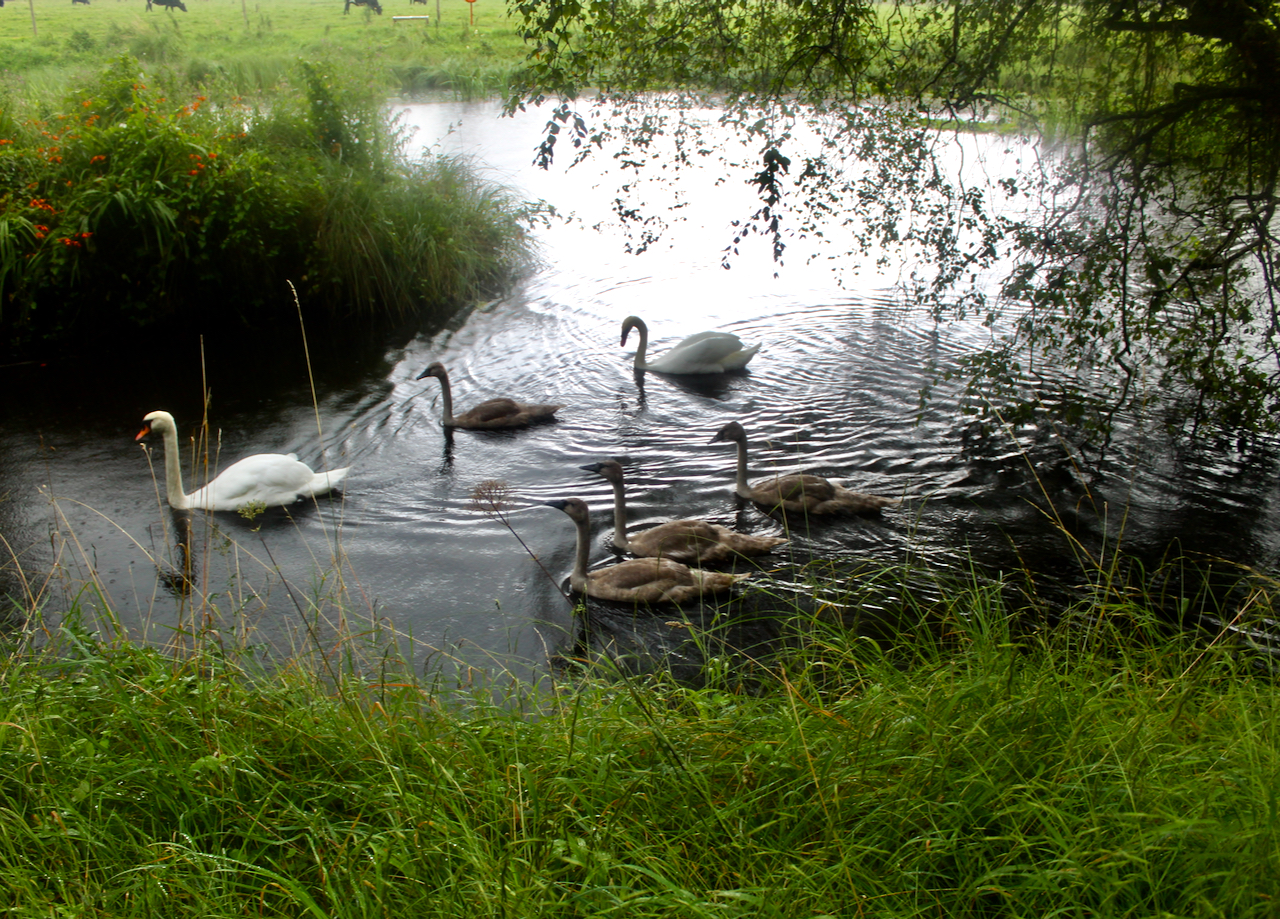
There are still swans on the lake. Photograph © Jennifer Winder-Baggot, www.irishhistorichouses.com
And there’s another generation of swans coming along. Photograph © Jennifer Winder-Baggot, www.irishhistorichouses.com
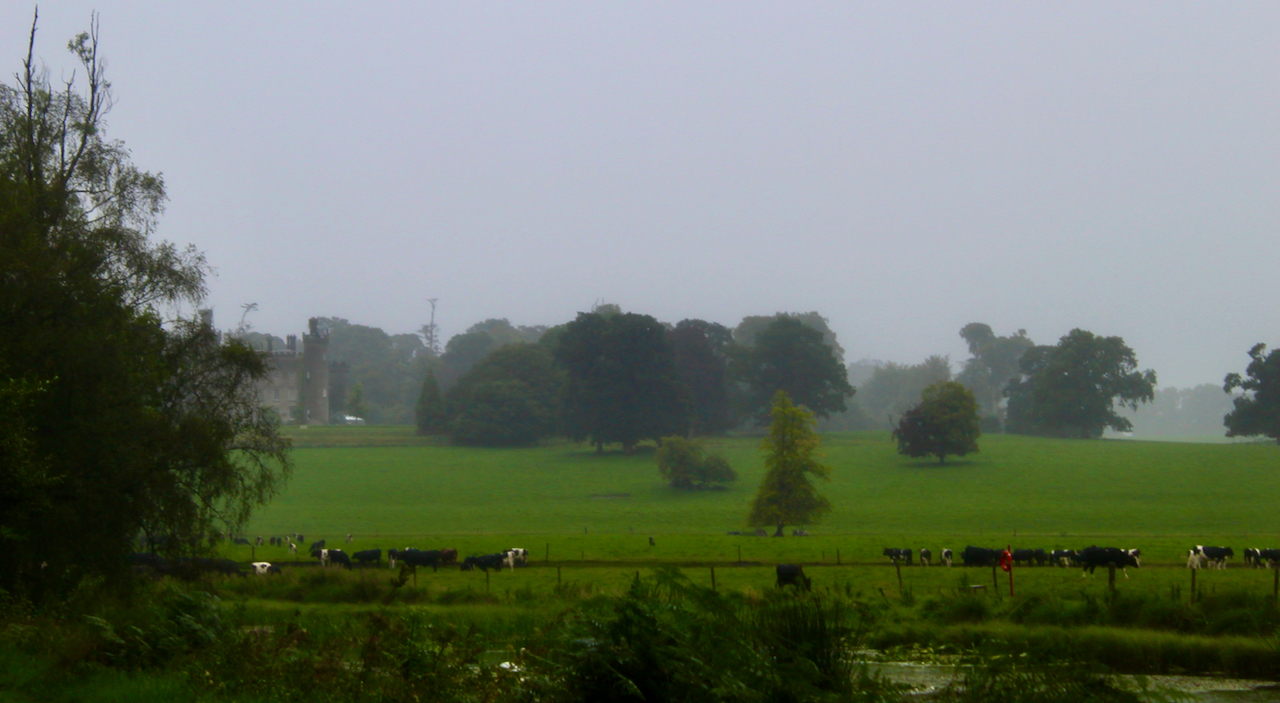
We could see the castle from our vantage point in the summer hut. Photograph © Jennifer Winder-Baggot, www.irishhistorichouses.com

Goodbye Tullynally! I look forward to visiting again.

[1] Reeves-Smyth, Terence. Big Irish Houses. Appletree Press Ltd, The Old Potato Station, 14 Howard Street South, Belfast BT7 1AP. 2009

[2] p. 525. Casey, Christine and Alistair Rowan. The Buildings of Ireland: North Leinster. Penguin Books, London, 1993.

[3] p. 135. Great Houses of Ireland. Hugh Montgomery-Massingberd and Christopher Simon Sykes. Laurence King Publishing, London, 1999.

[4] http://lordbelmontinnorthernireland.blogspot.com/search/label/County%20Westmeath%20Landowners

[5] https://www.buildingsofireland.ie/buildings-search/building/15400321/tullynally-castle-tullynally-co-westmeath

[6] p. 527. Casey, Christine and Alistair Rowan. The Buildings of Ireland: North Leinster. Penguin Books, London, 1993.

[7] https://www.ihh.ie/index.cfm/houses/house/name/Tullynally%20Castle

Text © Jennifer Winder-Baggot, www.irishhistorichouses.com

Castle Howard, Avoca, County Wicklow – section 482

Open dates in 2025: Jan 6-8, Feb 10-14, Mar 3-5, 18-20, June 4-7, 9-11, 23-28, July 7-12, 21-24, Aug 16-24, Sept 1-6, 13, 20, 28-30, Oct 1, 6-8, 9am-1pm

Fee: adult €8.50, OAP/student €6.50, child €5

donation

Help me to pay the entrance fee to one of the houses on this website. This site is created purely out of love for the subject and I receive no payment so any donation is appreciated!

€15.00

Castle Howard. Photograph © Jennifer Winder-Baggot, www.irishhistorichouses.com
Castle Howard, County Wicklow, September 2019. Photograph © Jennifer Winder-Baggot, www.irishhistorichouses.com

Wicklow is full of stunning gems of houses, unfortunately nearly all are private [1]. We are lucky to be able to visit Castle Howard as it is on the revenue 482 list. Stephen and I went to Castle Howard on Saturday September 14th 2019. Don’t be confused with the Castle Howard in the UK, setting for the original filmed version of Brideshead Revisited (the one with Jeremy Irons, not the excellent more recent version starring Ben Whishaw).

Photograph taken from the National Inventory of Architectural Heritage [2].

The house was built around the fabric of an earlier house in 1811 for Lieutenant Colonel Robert Howard to the design of Richard Morrison. It is designed to combine two archaic styles: a castle and an abbey [3].

Lieutenant Colonel Robert Howard was the son of William Howard (1759-1818) 3rd Earl of Wicklow. The 3rd Earl of Wicklow was the son of Ralph Howard (d. 1789) 1st Viscount Wicklow.

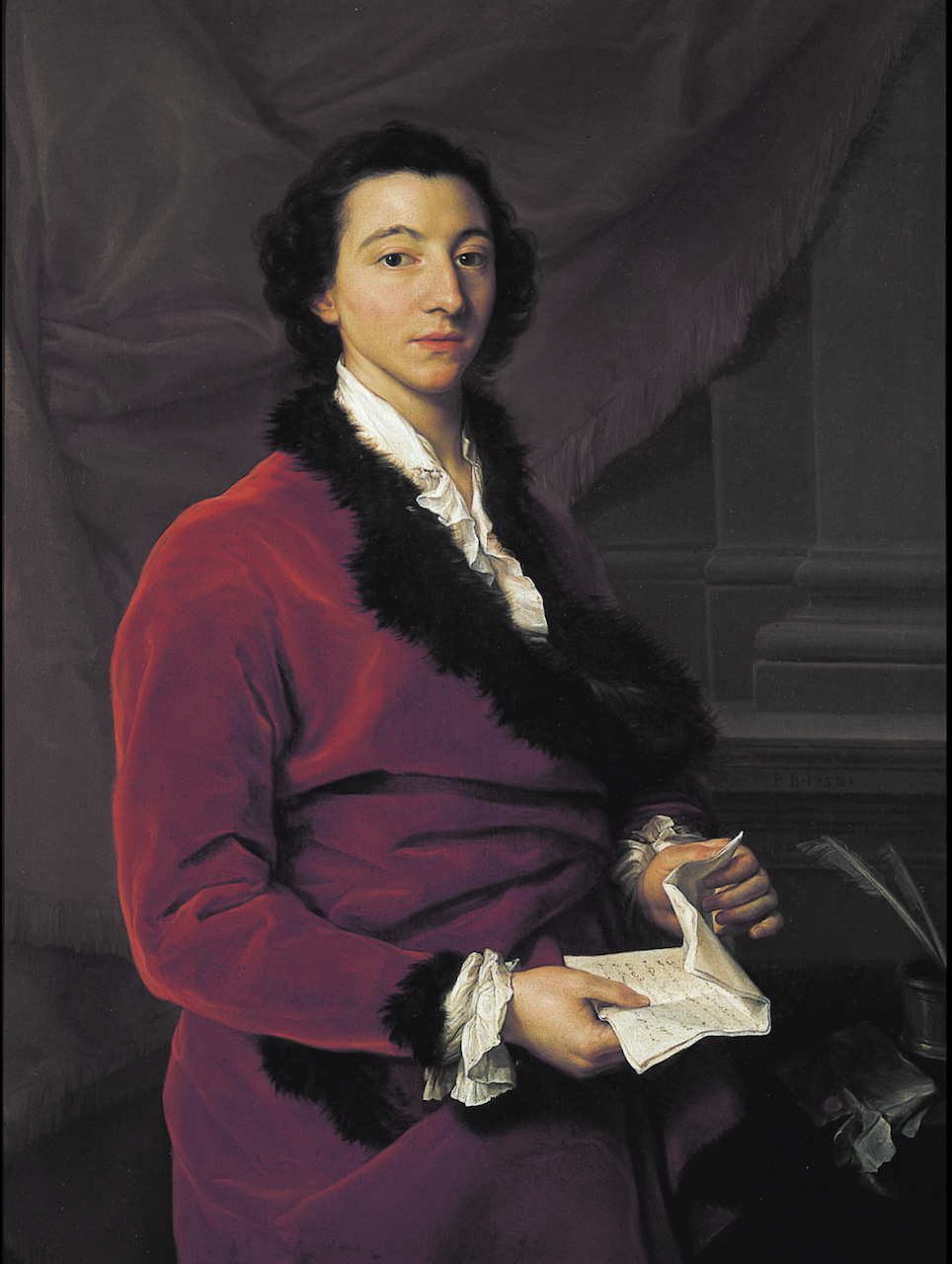
Ralph Howard, later 1st Viscount Wicklow (1726 ‑ 1786) by Pompeo Batoni, courtesy of Speed Art Museum.

After the 1st Viscount died his widow, Alice née Forward, was created Countess of Wicklow in 1793 in the Peerage of Ireland with remainder to her male heirs. Her son Robert Howard became 2nd Viscount Wicklow and 2nd Baron Clonmore, of Clonmore Castle, County Carlow in 1789 when his father died. Before his father’s death he served in the Irish House of Commons. When his father died in 1789 he had to resign from the Irish House of Commons and to join the British House of Lords. When his mother died in 1815 he inherited her title to become the 2nd Earl of Wicklow. He died unmarried in 1815 and the titles passed to his brother, William Howard (1759-1818), who became 3rd Earl of Wicklow.

In 1780 William Howard took the surname of Forward after succeeding to the estates of his mother’s family, Castle Forward in County Donegal, and 6,000 acres in the barony of Raphoe, County Donegal. When William became the 3rd Viscount Wicklow, and later 3rd Earl of Wicklow, he resumed the name of William Howard.

William Howard married Eleanor Caulfeild, daughter of Francis Caulfeild and granddaughter of James Caulfeild, 3rd Viscount Charlemont. His son William became the 4th Earl of Wicklow, and John, who purchased the land at Castle Howard, was a younger son.

The property has a small lake and boathouse. Photograph © Jennifer Winder-Baggot, www.irishhistorichouses.com

An article in the Irish Times tells us:

“In 1811 Col Robert Howard purchased a house then called Cronebane Lodge, romantically perched above the Meeting of the Waters, a spot made famous thanks to a poem written by Thomas Moore four years before. Its location, combined with the desire to build a residence evoking an ancient past, encouraged Col Howard to commission a design from architect Richard Morrison that would appear part-castle and part-abbey. The interiors owe much to the English Perpendicular style, not least the splendid staircase. Lit by a large arched Gothic window, the cantilevered Portland stone steps with brass banisters spiral up to the first floor below a plasterwork ceiling replete with coats of arms featuring families associated with the Howards. Although no longer with descendants of the original owners, Castle Howard remains in private hands and in excellent condition.” [5]

The “English Perpendicular” style is a style of Gothic architecture developed in England in the 14th to 17th century.

The Boathouse at Castle Howard. Photograph © Jennifer Winder-Baggot, www.irishhistorichouses.com

The earlier house on the site, Cronebane Lodge, belonged to the director of the Avoca Copper Mines. [6] The mines had their own coinage: one can find halfpenny coins stating “payable at Cronebeg Lodge or in Dublin” for sale on the internet! The coins picture St. Patrick in his Bishop’s Mitre on one side and a shield on the other. The Associated Irish Mine Company was founded in 1787 by Abraham Mills, William Roe, Thomas Weaver, Thomas Smith, Charles Caldwell and Brabazon Noble and its head office at 184 Great Britain Street, Dublin. It existed until 1798. [7]

Richard Morrison (b. 1767) studied under William Gandon. He became an architect and often collaborated with his son, William Vitruvius Morrison.

Richard and William Vitruvius Morrison also remodelled Shelton Abbey in County Wicklow, in 1819, for the Howard family. [8] Shelton Abbey was owned for nearly three hundred years by the Howard family, the Earls of Wicklow, into which Robert Howard was born.

Shelton Abbey in County Wicklow, remodelled by Richard Morrison in 1819. Photo from the National Inventory of Architectural Heritage. It is now an open prison, sold by the 8th Earl of Wicklow, William Howard, to the Irish state in 1951.
Shelton Abbey, photograph courtesy of National Library of Ireland NLI Ref: EAS_3838 Eason Photographic Collection Date: c.1900-1939.

Among Richard Morrison’s public works include the court-house and gaol at Galway, court-houses in Carlow, Clonmel, Roscommon, Wexford and elsewhere, and St Mary’s Pro-Cathedral in Dublin. He built or altered very many mansions of the nobility and gentry in Ireland, and was knighted by the Lord Lieutenant of Ireland in 1841. [9]

He and his son also designed renovations for Killruddery House, near Bray in County Wicklow, which is another section 482 house; Ballyfin House in County Laois (now a five star hotel); and Fota, in County Cork, which Stephen and I visited this year (October 2020). Richard Morrison also designed Knockdrin Castle, just north of Mullingar in County Westmeath.

There is a wonderful pyramid mausoleum of the Howard family in Old Kilbride Cemetery in Arklow, County Wicklow, built in 1785.

A mausoleum erected by Ralph Howard (1726-86), first Viscount Wicklow of Shelton Abbey, attributed to Simon Vierpyl (c.1725-1810) of Dublin and London. Photograph from National Inventory of Architectural Heritage.

I rang the house beforehand and made a time for our visit in order to have a tour. We had a lovely drive out to Wicklow, and rang when we reached the gates. Someone drove up in a tractor to open them for us.

Entrance to Castle Howard. Photograph © Jennifer Winder-Baggot, www.irishhistorichouses.com
Castle Howard gate lodge, County Wicklow, September 2019. Photograph © Jennifer Winder-Baggot, www.irishhistorichouses.com

We drove past a lovely gate lodge, and through some gorgeous scenery.

We crossed a small stone bridge to reach the castle. This bridge used to be topped by a lion, the symbol of the Howard family. Unfortunately the lion stands no longer.

Old gateway at Castle Howard, Avoca, 1945. Photograph courtesy of Dublin City Library Archives.
Ivy covered arch at Castle Howard County Wicklow, Stereo Pairs Photograph Collection National Library of Ireland Ref: STP_2925 Date: between ca. 1860-1883.
Castle Howard, County Wicklow, September 2019. Photograph © Jennifer Winder-Baggot, www.irishhistorichouses.com
There’s a bronze deer standing under the tree. Photograph © Jennifer Winder-Baggot, www.irishhistorichouses.com

One cannot see the whole house as one drives up, and it becomes even more impressive as it is when one walks around it.

We parked, and knocked on the front door, which was picturesque in its Gothic pointed arched stone setting, with roses growing over the top of the door. The medieval-style studded door with ancient looking pull handle and Georgian door knocker is in the castellated two storey wing.

Castle Howard: “Ogee” shaped doorway. The other windows are “flat headed” with gothic traceries and “drip moulding” (see [2] and [10]). Photograph © Jennifer Winder-Baggot, www.irishhistorichouses.com
Studded door with “reeded” or fluted stone surrounds, which has a matching fanlight above. Photograph © Jennifer Winder-Baggot, www.irishhistorichouses.com
Castle Howard, County Wicklow, September 2019: there’s an ogee shaped window over the ogee shaped door. Photograph © Jennifer Winder-Baggot, www.irishhistorichouses.com
I also loved the boot scraper, with ends like turreted castles. Photograph © Jennifer Winder-Baggot, www.irishhistorichouses.com

Mark Bence-Jones describes the abbey-like section of the house as a two-storey wing ending in a gable with pinnacles and a Perpendicular window. A gable is a peaked end wall, often triangular, at the end of a double pitched roof, or sometimes just refers to an end wall.

The gable end wall of Castle Howard with its impressive Perpendicular Gothic window. Photograph © Jennifer Winder-Baggot, www.irishhistorichouses.com
The gable end wall of Castle Howard with its impressive Gothic windows. Photograph © Jennifer Winder-Baggot, www.irishhistorichouses.com
Castle Howard, County Wicklow, September 2019: the “abbey” side of the house. Photograph © Jennifer Winder-Baggot, www.irishhistorichouses.com
Castle Howard. Photograph © Jennifer Winder-Baggot, www.irishhistorichouses.com

When you walk back and around the house, the “castle” part of the house is revealed.

Castle Howard: walking around the house, the “castle” part of the house is revealed, with its twin round towers. Photograph © Jennifer Winder-Baggot, www.irishhistorichouses.com
Castle Howard. Photograph © Jennifer Winder-Baggot, www.irishhistorichouses.com
Castle Howard, County Wicklow, September 2019. Photograph © Jennifer Winder-Baggot, www.irishhistorichouses.com

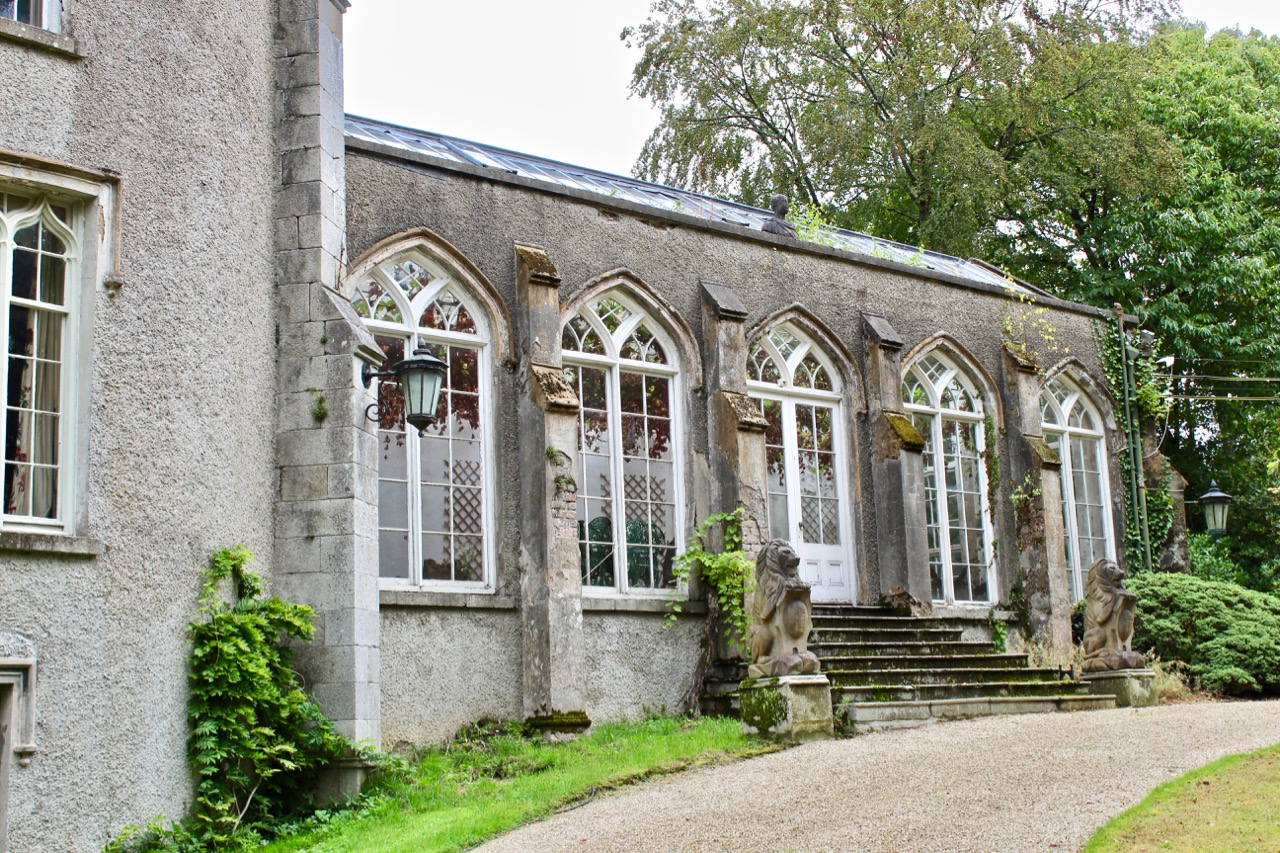
The “castle” side of the house has two turreted towers, and two bows. There is a conservatory at the south-east side. The building is finished with render with stone dressing.

Castle Howard. Photograph © Jennifer Winder-Baggot, www.irishhistorichouses.com

As the Lieutenant Colonel Howard and his wife Letitia Deborah Brooke had no children, the house passed to a nephew, Richard Brooke, the son of Letitia Deborah’s brother, Henry Brooke (1770-1834), who was created the 1st Baronet Brooke of Colebrook, County Fermanagh, in 1822. Richard (1801-1877) took the surname Howard-Brooke in 1835. His son and heir was also a Lieutenant Colonel, Robert Howard-Brooke (1840-1902). Robert married Florence Elizabeth Johnston of Kinlough House, Co Leitrim but they had no children. Robert held the office of High Sheriff of County Wicklow in 1880. Florence died in 1893.

Castle Howard. Photograph © Jennifer Winder-Baggot, www.irishhistorichouses.com
Conservatory on the south-east side of the house. Photograph © Jennifer Winder-Baggot, www.irishhistorichouses.com
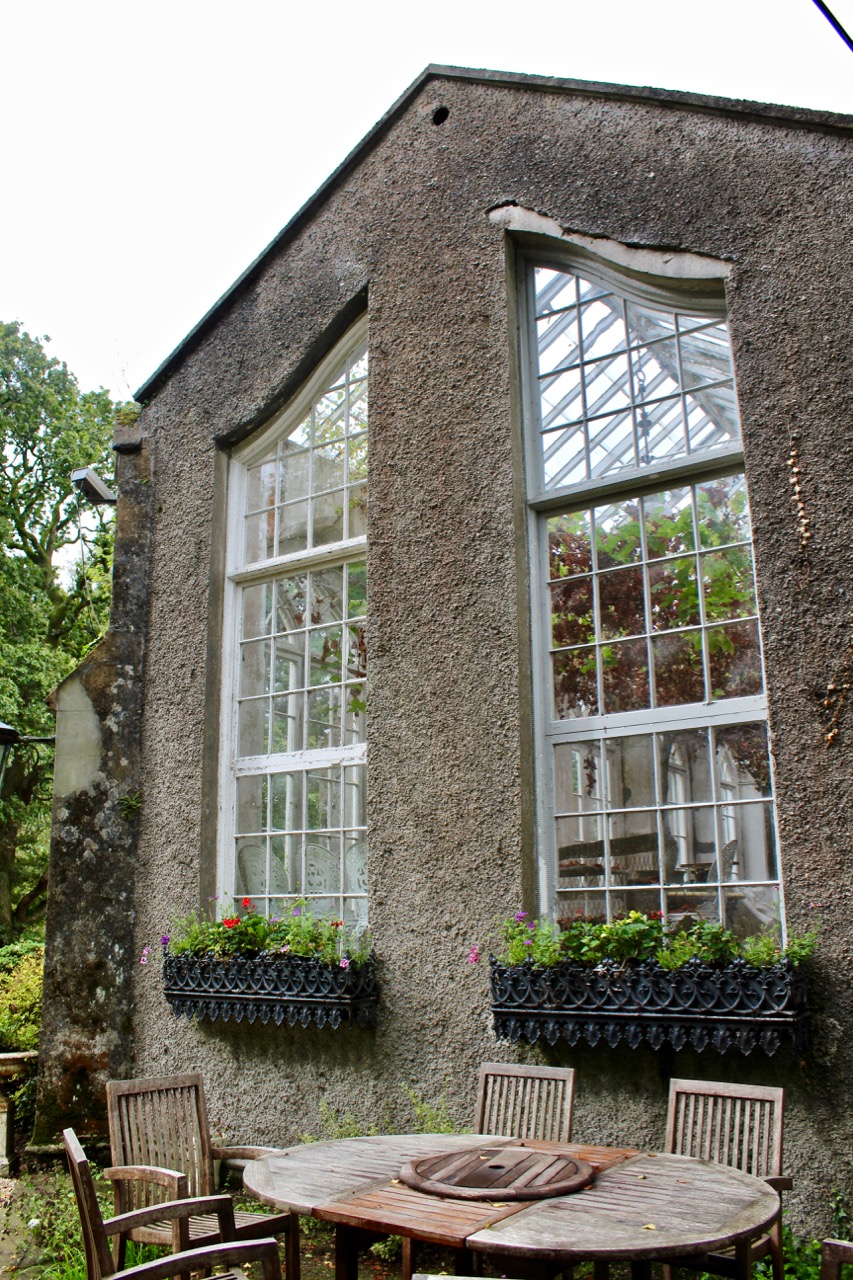
Castle Howard, County Wicklow, September 2019: the gable end of the conservatory. Photograph © Jennifer Winder-Baggot, www.irishhistorichouses.com

Langlois Massy Lefroy (1886-1957) and his wife Sheelah, who was the daughter of Benjamin Bloomfield Trench who lived in Loughton, County Offaly, the subject of last week’s blog, purchased Castle Howard in 1924. Lefroy sold it in 1954 when he inherited Carriglas Manor (he was a descendant of Tom Lefroy, a suitor of Jane Austen, who lived in Carriglas Manor, County Longford). When he died his wife Sheelagh moved back to Loughton to live with her unmarried sister Thora. [13].

The house is currently owned by Ivor Fitzpatrick, a prominent Dublin solicitor and property developer, and his wife, Susan Stapleton.

There were visitors leaving as we were coming, so the tour guide was kept busy! Mark Sinnott, who was listed as the contact person, is not the owner, but works on the estate. The estate has an Equestrian centre and the house occasionally hosts shooting, and our tour guide helps with that. He has been working there for eighteen years, so knows the house and estate intimately.

In the front hall, our guide Mark told us the history of the house. He explained that the front hall had been renovated by previous owners and the ceiling lowered so it is less impressive than the original entry hall would have been.

There is a beautiful curved brass-banistered spiral stairway, which is pictured in a book of photographs (simply called Photographs) by Paddy Rossmore, edited by the Irish Aesthete Robert O’Byrne, published this year by Lilliput Press and reviewed in January in the Irish Times. [see 5]

Photograph by Paddy Rossmore from Photographs, taken from Irish Times article. [see 5]

The library has terrific plasterwork on the ceiling, especially in the round towers – very intricate work. The round towers form little rooms off the main room. We only saw one storey so didn’t get to see the tower room sections on the upper floors. Impressive antlers adorned one wall, of the Giant Irish Elk. Most antlers found in Ireland are about 11,000 years old! These “elk” were not unique to Ireland; they lived across Eurasia all the way into China. The most recent remains discovered date back 7,700 years, and were found in Siberia. They are called “Irish” as they are most commonly found in Ireland, preserved in bogs. They are not near relations of “elk” found today, such as moose, and are more properly called deer. Irish Elk are the largest species of deer that ever lived. The antlers in Castle Howard were attached to a skull. Not all sets of antlers found are attached to a skull, as Giant Elk, just like deer today, shed their horns regularly, and regrew them during mating season. [11]

In the records of children in Duchas.ie, Winnie Doyle writes in 1928 that there is an underground tunnel from the kitchen to the garden. [12]

Perhaps these are the tunnels that Winnie was writing about, leading from the basement of the house. Photograph © Jennifer Winder-Baggot, www.irishhistorichouses.com

The gardens too are impressive. They slope down on one side to the river.

Castle Howard, County Wicklow, September 2019. Photograph © Jennifer Winder-Baggot, www.irishhistorichouses.com

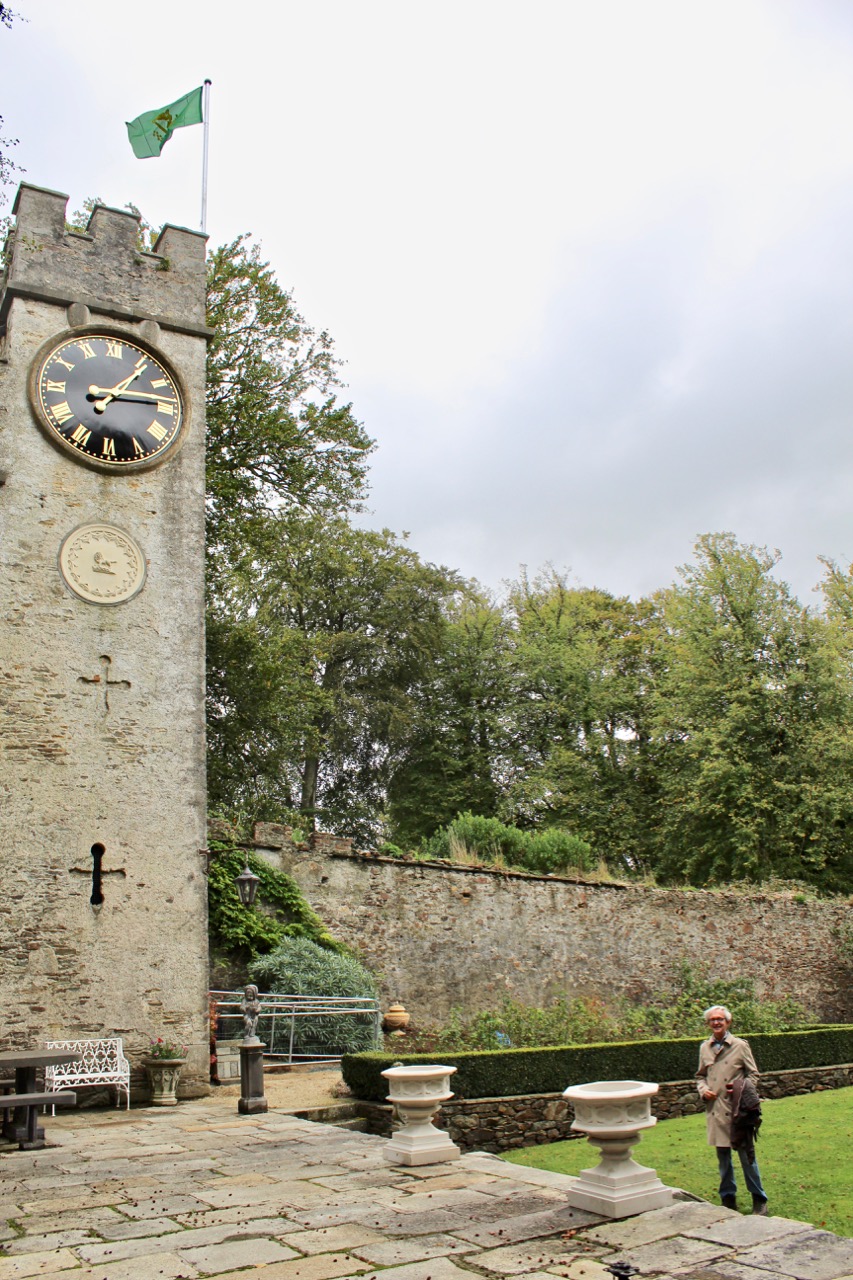
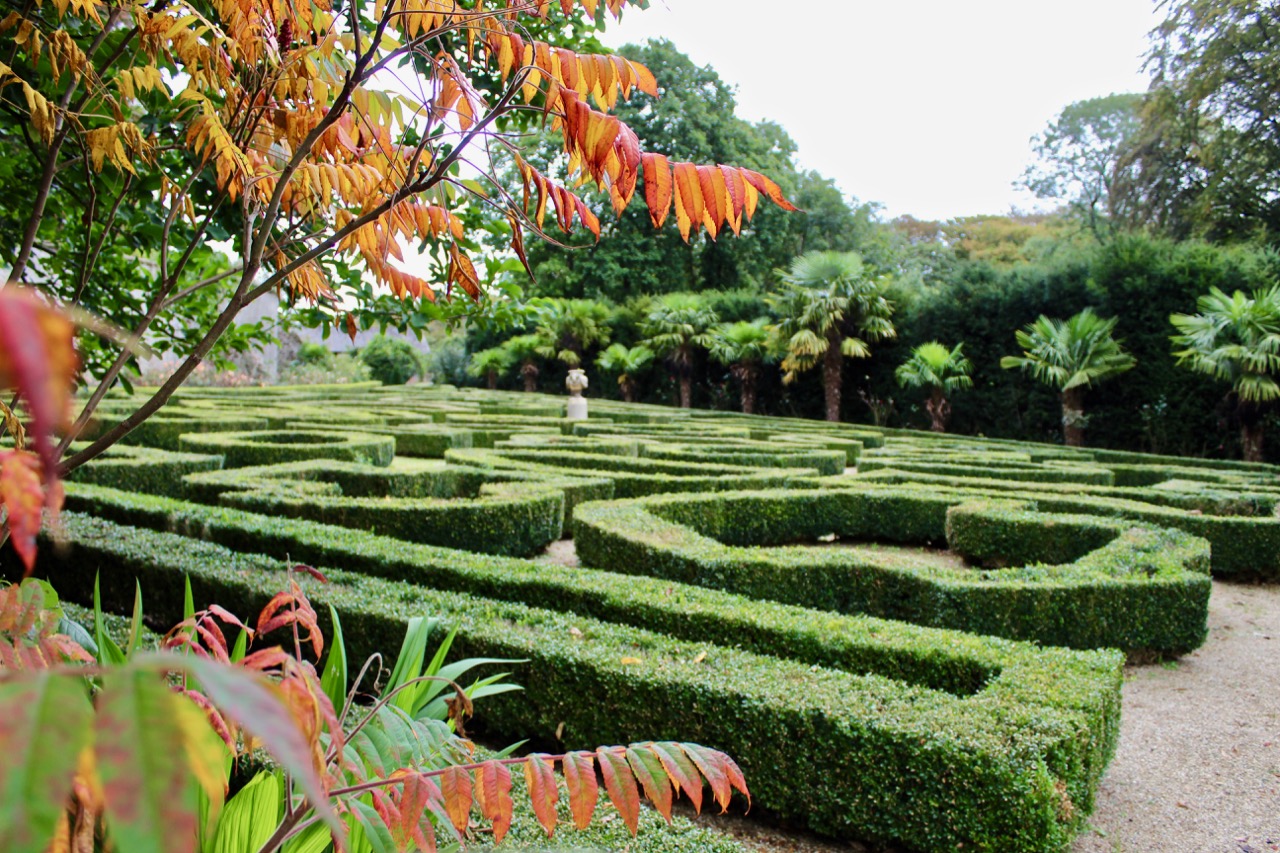
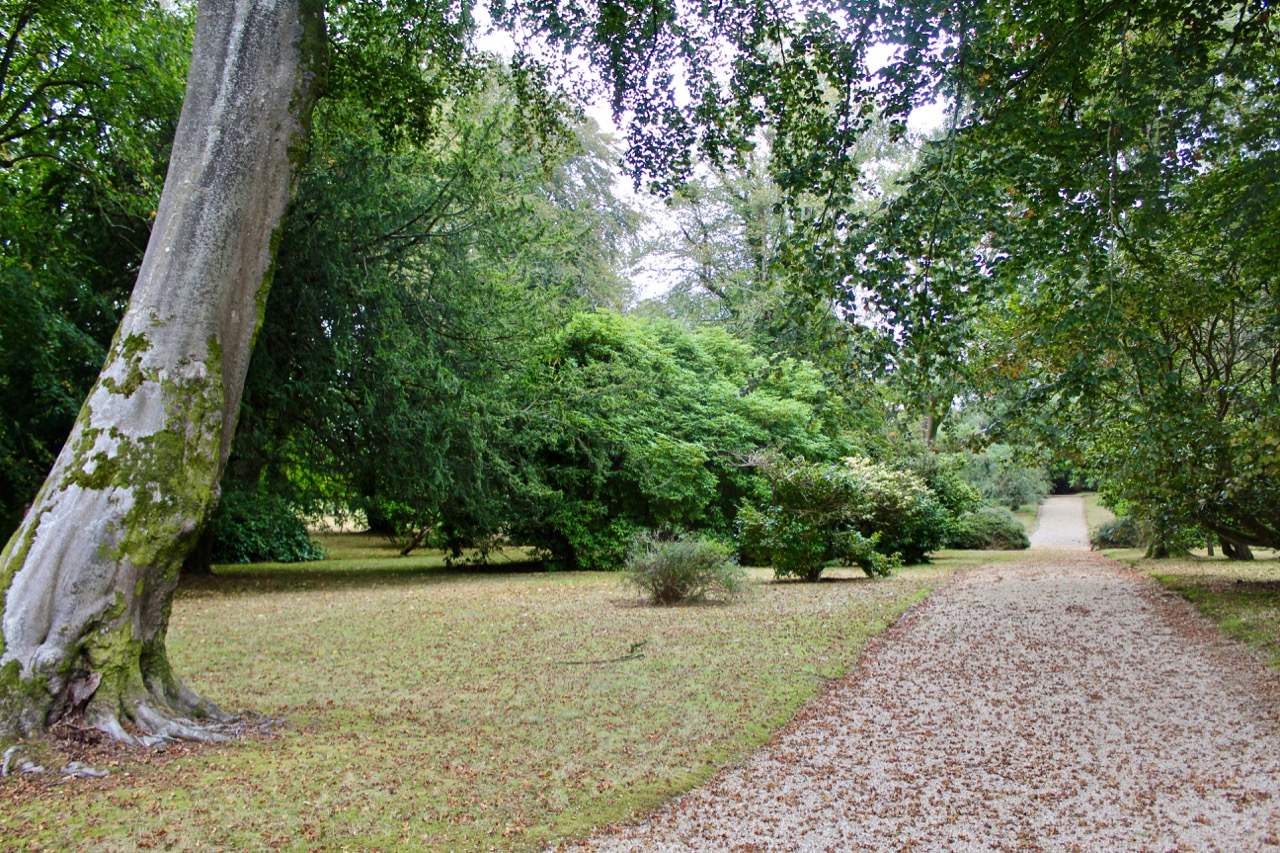
A straight path leads through formal gardens including a maze and an orchard, alongside a tall wall which appeared to lead into woodland and to a walled garden – it was rainy so we didn’t explore as much as I might have liked. At the end of this path are stables and outbuildings. To one side of the path is a clock tower folly and a bricked terraced area and small temple area with a water fountain – it is extremely romantic. The house itself backs onto a large tree filled lawn.

Castle Howard. Photograph © Jennifer Winder-Baggot, www.irishhistorichouses.com
The clock tower garden folly. Photograph © Jennifer Winder-Baggot, www.irishhistorichouses.com

A wall extends from the folly tower, to frame a courtyard on the far side of the wall from the house. On the house side of the wall is a picturesque pond area.

Castle Howard. Photograph © Jennifer Winder-Baggot, www.irishhistorichouses.com
The picturesque pond on the house-side of the wall. Photograph © Jennifer Winder-Baggot, www.irishhistorichouses.com

The tower folly:

Castle Howard. Photograph © Jennifer Winder-Baggot, www.irishhistorichouses.com
Inside the folly. Unfortunately we could not go up the stairs! Photograph © Jennifer Winder-Baggot, www.irishhistorichouses.com

The picture below is the courtyard on the further side of the wall, away from the house:

Castle Howard. Photograph © Jennifer Winder-Baggot, www.irishhistorichouses.com
Castle Howard, County Wicklow, September 2019. Photograph © Jennifer Winder-Baggot, www.irishhistorichouses.com

The barbeque style courtyard opens onto a shooting, or archery, stretch of lawn:

Castle Howard, County Wicklow, September 2019. Photograph © Jennifer Winder-Baggot, www.irishhistorichouses.com

Beyond the folly is the path alongside the formal gardens and orchard.

Castle Howard. Photograph © Jennifer Winder-Baggot, www.irishhistorichouses.com
A small temple like structure, topped by a pair of fantastical dragons. Photograph © Jennifer Winder-Baggot, www.irishhistorichouses.com

Below, is the inside of what I am calling the temple:

Castle Howard. Photograph © Jennifer Winder-Baggot, www.irishhistorichouses.com
Castle Howard, County Wicklow, September 2019. Photograph © Jennifer Winder-Baggot, www.irishhistorichouses.com

There is also a Laburnum grove, which would be magnificent when in flower. There is a painting in the house of the grove in full bloom.

Castle Howard, County Wicklow, September 2019. Photograph © Jennifer Winder-Baggot, www.irishhistorichouses.com

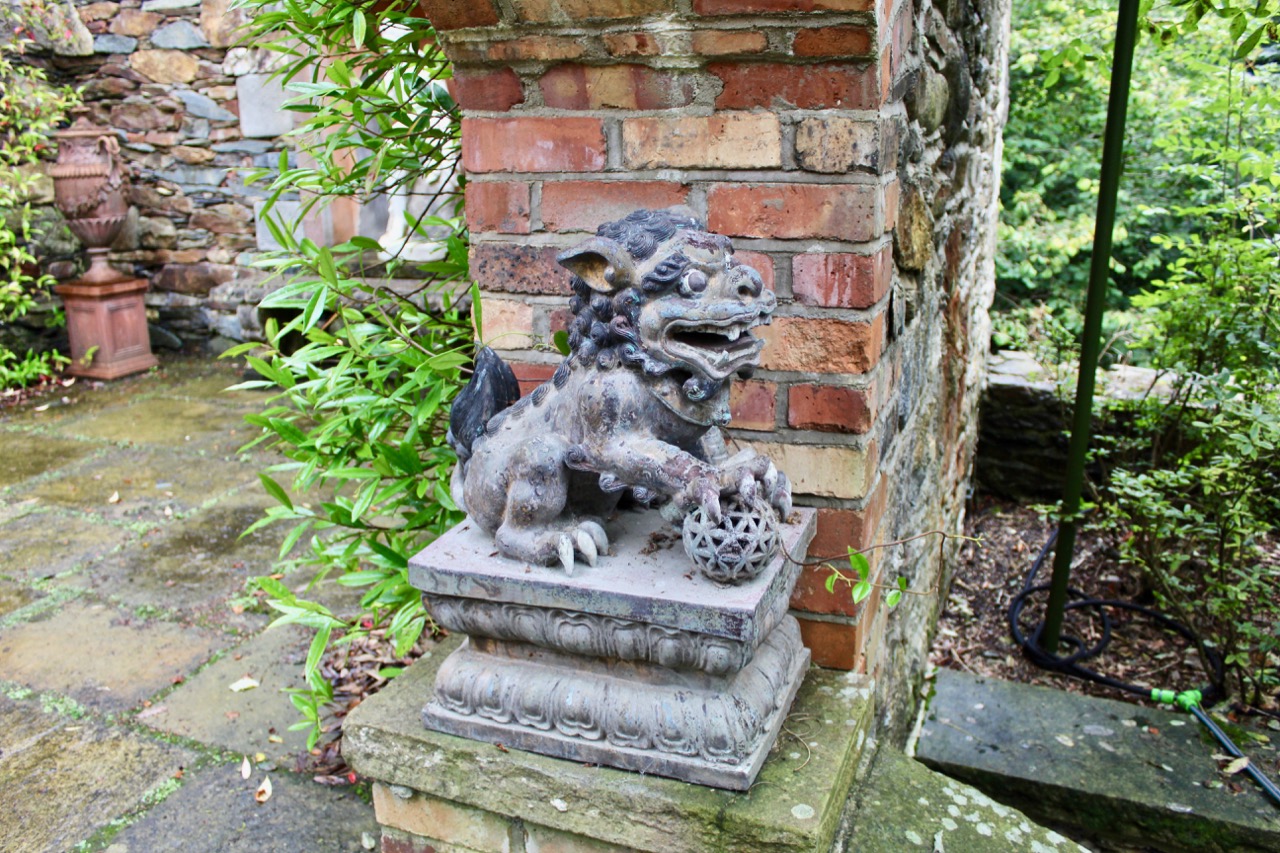
Around the stables and outbuildings at the end of the path we found some lovely statues!

Castle Howard. Photograph © Jennifer Winder-Baggot, www.irishhistorichouses.com
Castle Howard, County Wicklow, September 2019. Photograph © Jennifer Winder-Baggot, www.irishhistorichouses.com

And there is an interesting stone face on the stable building:

Castle Howard. Photograph © Jennifer Winder-Baggot, www.irishhistorichouses.com
Heading back to the house. Photograph © Jennifer Winder-Baggot, www.irishhistorichouses.com
Castle Howard, County Wicklow, September 2019. Photograph © Jennifer Winder-Baggot, www.irishhistorichouses.com

[1] I would like to share with you some examples of the houses in Wicklow listed in the National Inventory of Architectural Heritage. There are so many lovely ones I have written a separate entry! https://irishhistorichouses.com/2020/11/12/historic-houses-in-county-wicklow-listed-in-the-national-inventory-of-architectural-heritage/

[2] https://www.buildingsofireland.ie/buildings-search/building/16403502/castle-howard-castlehoward-county-wicklow

[3] Mark Bence-Jones A Guide to Irish Country Houses (originally published as Burke’s Guide to Country Houses volume 1 Ireland by Burke’s Peerage Ltd. 1978); Revised edition 1988 Constable and Company Ltd, London.

[5] https://www.irishtimes.com/culture/books/portraits-of-the-irish-big-house-from-castle-howard-to-luttrellstown-1.4140611

[6]
http://www.turtlebunbury.com/history/history_family/hist_family_howard_wicklow.html

[7] https://en.numista.com/catalogue/pieces141563.html

[8] See the Dictionary of Irish Architects for more of Richard Morrison’s work.

https://www.dia.ie/architects/view/3600/MORRISON-RICHARD(SIR)#tab_works

[9] https://en.wikipedia.org/wiki/Richard_Morrison_(architect)

[10] https://irishhistorichouses.com/2020/04/18/architectural-definitions/

[11] https://en.wikipedia.org/wiki/Irish_elk

[12] https://www.duchas.ie/en/src?q=castle+howard

[13] https://www.offalyarchives.com/index.php/wicklow

Text © Jennifer Winder-Baggot, www.irishhistorichouses.com

Historic houses in County Wicklow listed in the National Inventory of Architectural Heritage

I would like to share with you some examples of the houses in Wicklow listed in the National Inventory of Architectural Heritage (photographs are all taken from the National Inventory):

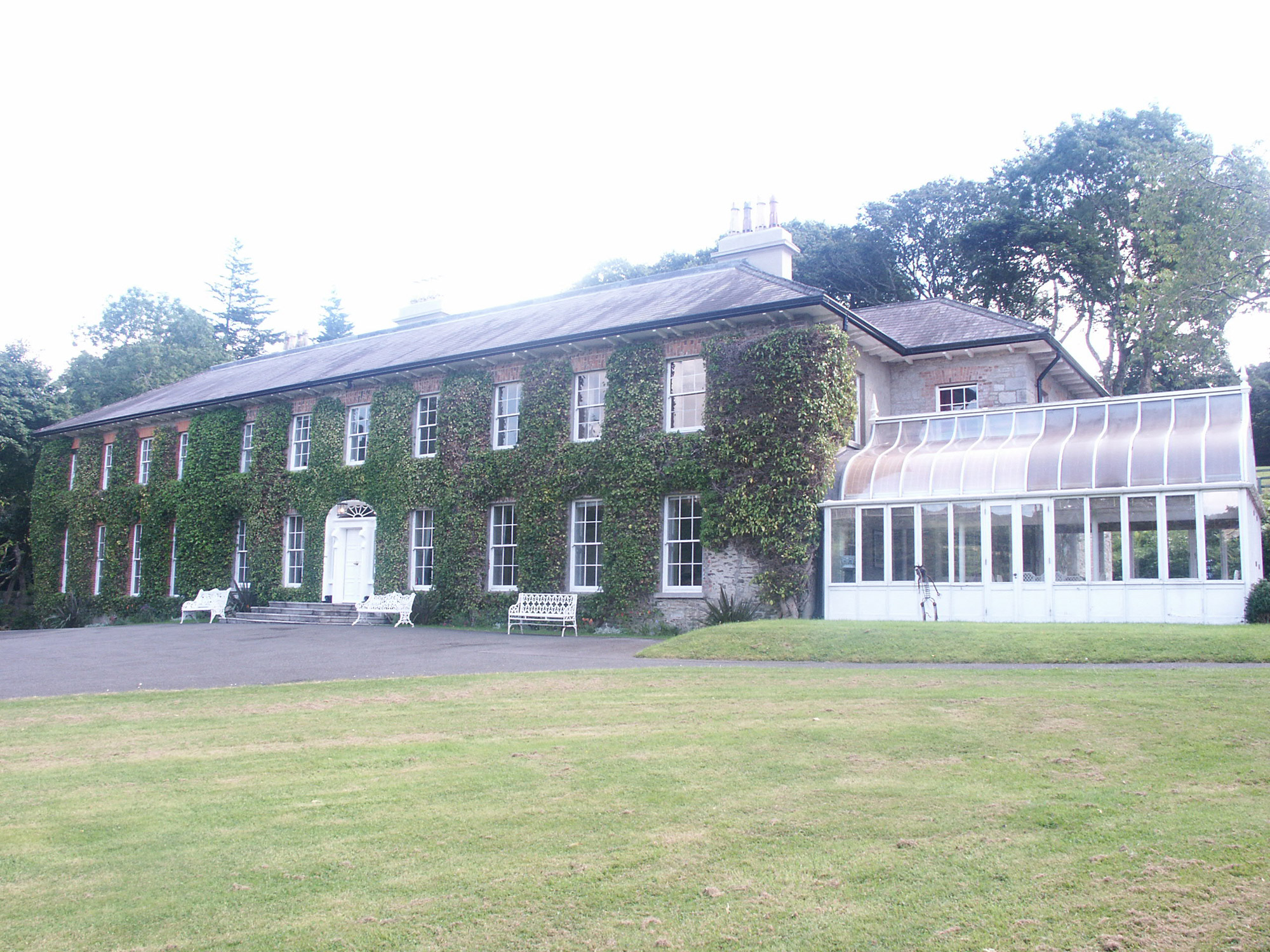
i. Avondale, open to the public. Built in 1779, designs may have been by James Wyatt. It was the home of Charles Stewart Parnell, the Nationalist leader in Ireland.

ii. Avonmore

Avonmore House, built around 1830.

iii. Ballyarthur

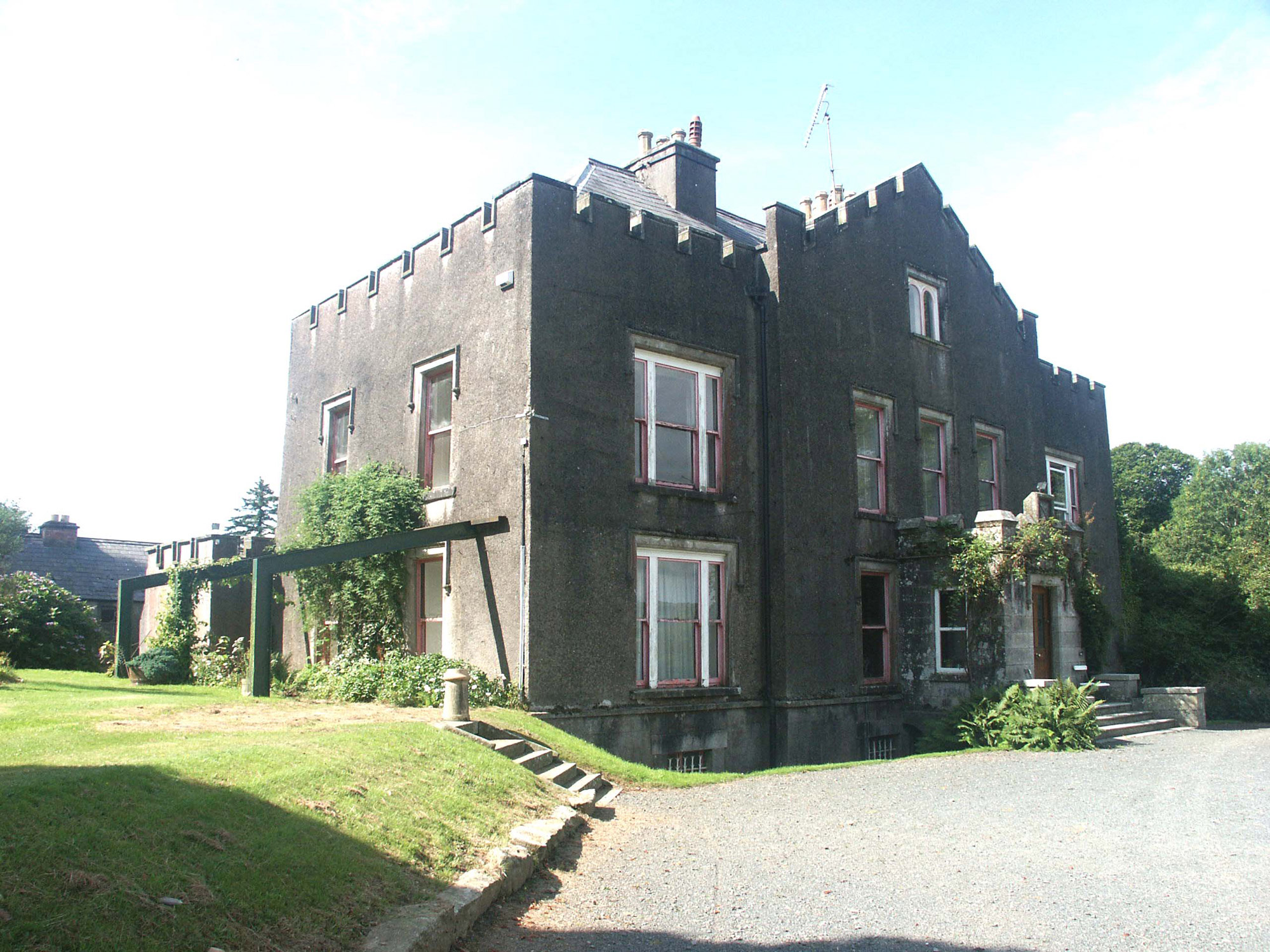
Ballyarthur, built in 1680.

iv. Ballycurry

Ballycurry House, built in 1807 to designs by Francis Johnston.

v. Ballykeane

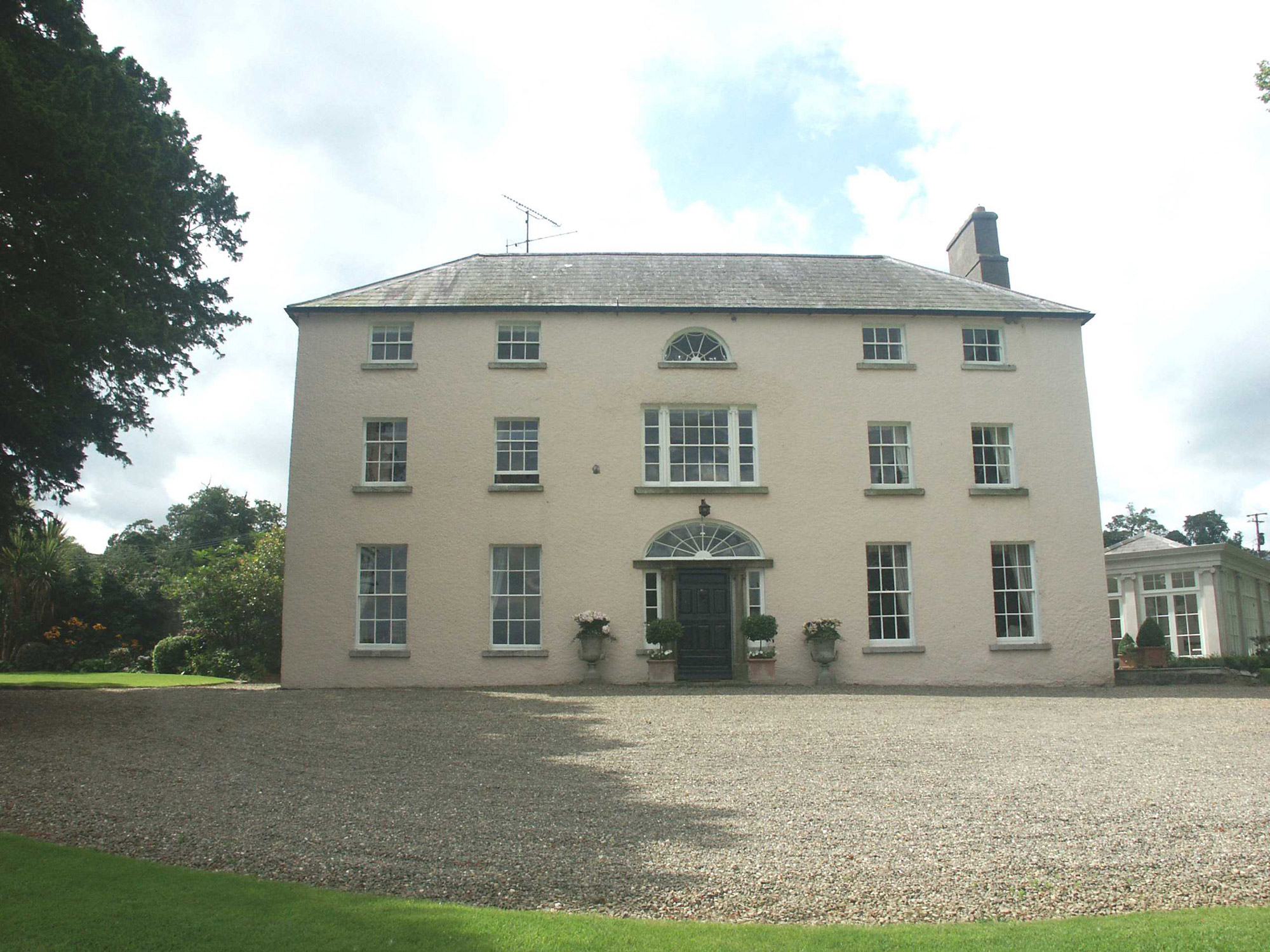
Ballykeane, built around 1780.

vi. Ballymoney

Ballymoney, built around 1800.

vii. Ballynure House

Ballynure House, built around 1800.

viii. Baltiboys

Baltiboys, built around 1840.

ix. Carnew Castle

Carnew Castle, built in the late sixteenth century, re-roofed and remodernised ca. 1817 by 4th Earl Fitzwilliam whose Irish seat, Coolattin, is nearby.

x. Castle Kevin

Castle Kevin, built in 1813.

xi. Clonmannon House (Old)

Clonmannon House (Old), built around 1700.

xii. Cronroe, now Bel Air Hotel

https://www.belairhotelequestrian.com/hotel/

Cronroe, now Bel Air Hotel, built in 1890.

xiii. Donard House

Donard House, built in 1813-14 to the designs of William Vierpyl.

xiv. Fortgranite

Fortgranite, built around 1730.

xv. Glanmore Castle

Glanmore Castle, built around 1804, to designs by Francis Johnston.

xvi. Glenart Castle, was a hotel, now private again, built around 1820.

xvii. Grangecon Parks

Grangecon Parks, built around 1820.

xviii. Hollybrook House

Hollybrook House, built in 1835 incorporating an earlier house, to designs by William Vitruvius Morrison.

xix. Humewood Castle

Humewood Castle, built 1867-70 to designs by William White.

xx. Mount John

Mount John, built around 1800.

xxi. Rathsallagh, now a hotel

https://www.rathsallagh.com/

Rathsallagh, built as stables around 1750, converted to a house in 1798.

xxii. Rosanna House

Rosanna House, built around 1720.

xxiii. Roundwood

Roundwood, built around 1800, remodelled later in the nineteenth century.
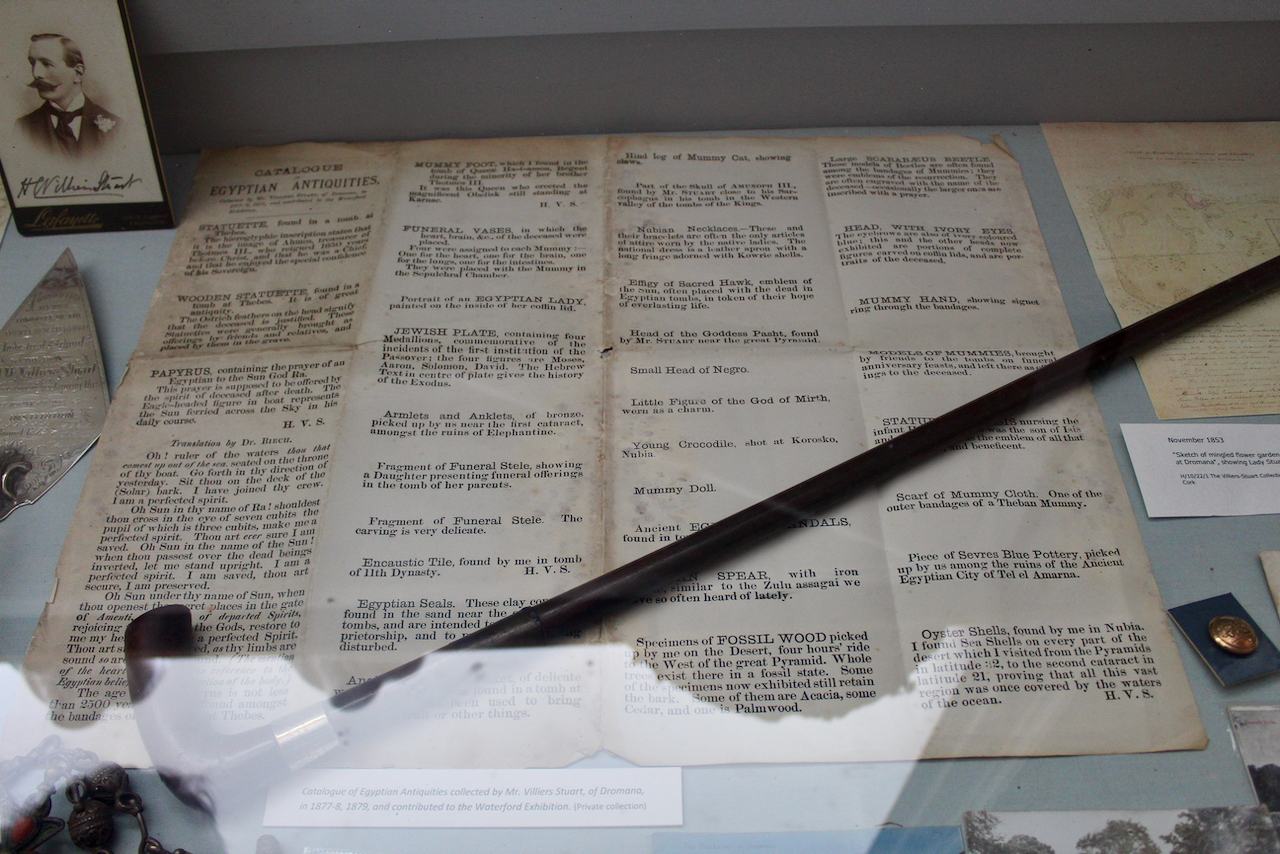
xxiv. Slaney Park House
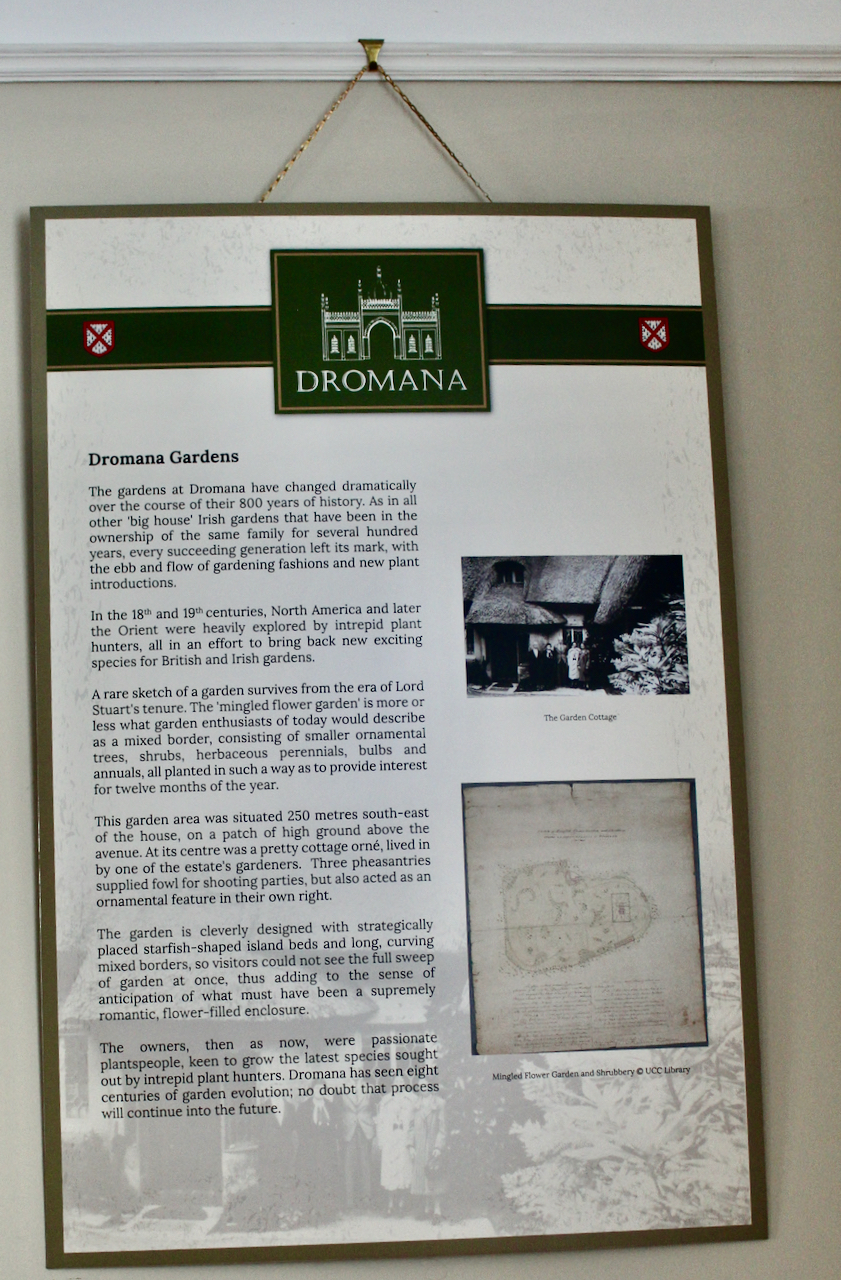
Slaney Park House, built around 1810, reduced by one storey after a fire in 1946.

xxv. Tinakilly House, now a small hotel

Tinakilly House (now a hotel), built around 1876 to designs by James Franklin Fuller.

xxvi. Tinode House (you can visit June Blake’s garden www.juneblake.ie )

Tinode, built in 1864 to designs by W.F. Caldbeck, partly demolished in a fire in 1922 and restored in 1973.

xxvii. Tulfarris – now a hotel https://www.tulfarrishotel.com/

Tulfarris – now a hotel, built in 1760, porch from around 1860.

xxviii. Woodbrook, now a golf course

Woodbrook, now a golf course, built around 1840.

xxix. Woodstock House, now Druid’s Glen Golf Course and hotel

Druid’s Glen hotel, formerly called Woodstock, built around 1770.

Russborough House, Blessington, County Wicklow W91 W284 – section 482

The Albert Beit Foundation, Blessington, Co. Wicklow

http://www.russborough.ie/

Open dates in 2025: Feb 1-Dec 23, 27-31, Feb, Nov, Dec 9am-5.30pm, Mar-Oct 9am-6pm

Fee: adult €14.50 OAP/student €12, child €6.50, group rates on request

donation

Help me to pay the entrance fee to one of the houses on this website. This site is created purely out of love for the subject and I receive no payment so any donation is appreciated!

€15.00

Russborough House, Photograph taken in June 2012 on a visit with my friends Tara and Jeremy and their daughters. Photograph © Jennifer Winder-Baggot, www.irishhistorichouses.com
Photo by Jeremy Hylton.

In his A Guide to Irish Country Houses, Mark Bence-Jones calls Russborough House “arguably the most beautiful house in Ireland.” [1] We are lucky that Russborough House is open to the public, thanks to the Beit Foundation. Sir Alfred and Lady Clementine Beit left the property to the state in 1978, to be cared for by a Trust established for the purpose. The Irish Aesthete Robert O’Byrne tells us about the Beits: “The couple had no immediate connection with Ireland, although Lady Beit’s maternal grandmother had been raised in this country and being a Mitford, she was first cousin of the Hon Desmond Guinness’s mother.” [2]

Russborough House was built for Joseph Leeson (1701-1783) in 1741 when he inherited a fortune from his father, also named Joseph (1660-c. 1741), and purchased land owned by John Graydon, and it was designed by Richard Castle.

Joseph Leeson (1660-1741) of Saint Stephen’s Green, painted posthumously around 1772 by unknown artist, courtesy of National Gallery of Ireland NGI 1648.
Joseph Leeson (1701-1783), painted by Anthony Lee. Portrait from the National Gallery of Ireland. Later he was created 1st Earl of Milltown. Photograph © Jennifer Winder-Baggot, www.irishhistorichouses.com

Leeson went to great expense creating the grounds for the building of his house: “Leeson’s development of the garden terraces was extravagant. The house gained its fine prominence from sitting on an embankment created by the opening of the lakes and ponds, all reputedly costing some £30,000.” [3]

Russborough, May 2024. Photograph © Jennifer Winder-Baggot, www.irishhistorichouses.com

We came across Richard Castle (c.1690-1751) (or Cassels, as his name is sometimes spelled) in Powerscourt in County Wicklow. The Dictionary of Irish Architects tells us that, oddly, he was born David Riccardo, and it is not known when or why he changed his name. [4]

Castle originally trained as an engineer. He worked in London, where he was influenced by Lord Burlington. Richard Boyle, 3rd Earl of Burlington and 4th Earl of Cork, is credited with bringing the Palladian style of architecture to Britain and Ireland, after Grand Tours to Europe. [5] Palladian architecture is a style derived from the designs of the Venetian architect Andrea Palladio (1508-1580). Palladio’s work was strongly based on the symmetry, perspective, and values of the formal classical temple architecture of the ancient Greeks and Romans.

Portrait of Richard Boyle, 3rd Earl of Burlington (1694-1753) by Jonathan Richardson, courtesy of London’s National Portrait Gallery NPG 4818.

Castle came to the attention of Sir Gustavus Hume of County Fermanagh, who invited Castle to Ireland in 1728 to build him a home on the shores of Lough Erne, Castle Hume, which unfortunately no longer exists. [6] Castle was a contemporary of Edward Lovett Pearce, and early in his career in Dublin worked with him on the Houses of Parliament in Dublin. Both Lovett Pearce and Castle favoured the Palladian style, and when Lovett Pearce died at the tragically young age of 34, in 1733, Castle took over all of Lovett Pearce’s commissions.

Russborough House, May 2024. Photograph © Jennifer Winder-Baggot, www.irishhistorichouses.com

The Dictionary of Irish Architects gives us a flavour of what Castle was like as a person:

According to the short biography in Anthologia Hibernica for October 1793, Castle was a man of integrity, of amiable though somewhat eccentric manners, kept poor by his improvidence and long afflicted by gout resulting from intemperance and late hours. The same source states that he often pulled down those of his works which were not to his liking, ‘and whenever he came to inspect them … required the attendance of all the artificers who followed him in a long train’.

Russborough, May 2024. Photograph © Jennifer Winder-Baggot, www.irishhistorichouses.com

Castle began work on Powerscourt House in County Wicklow in 1730, finishing in 1741. He also began work on Westport House in County Mayo in 1730. He worked on Carton House, in County Kildare, which is now an upmarket hotel, from 1739-1744. In Dublin City he built Tyrone House (which now houses the Department of Education) for Marcus Beresford, Earl of Tyrone (we came across him at Curraghmore in County Waterford) [7]. He designed and built the hunting lodge called Belvedere in County Westmeath around 1740, and began to work on Russborough House around 1742. He was still working on Russborough House when he died suddenly, while at Carton House, in 1751, while writing a letter to a carpenter employed at Leinster House (begun in 1745 for James FitzGerald, the 20th Earl of Kildare, the house was at initially called Kildare House, and now houses the government in Dublin). Desmond FitzGerald, the Knight of Glin, wrote about Richard Castle and his work, and attributes another section 482 property to him, Strokestown House in County Roscommon. FitzGerald attributes many more buildings to Castle. [8]

Joseph Leeson (1711-1783) was the grandson of Hugh Leeson, who came to Ireland from England as a military officer in 1680, and settled in Dublin as a successful brewer. Hugh married Rebecca, daughter of Dublin Alderman Richard Tighe. Joseph inherited the brewing fortune from his father, another Joseph, who had married the daughter, Margaret, of a Dublin Alderman and Sheriff, Andrew Brice.

Margaret Leeson née Brice wife of Joseph Leeson (1660-1741), c. 1772 by unknown artist, courtesy of National Gallery of Ireland NGI 1649.

As well as young Joseph, his father Joseph and Margaret née Brice had a daughter, Anne, who married Hugh Henry (d. 1743) of Straffan House in County Kildare and Lodge Park in County Kildare, the latter also a section 482 property. Another daughter, Joyce, married Robert Blackwood, 1st Baronet Blackwood, of Ballyleidy, County Down.
Young Joseph Leeson entered politics and from 1743 sat in the House of Commons. By this time, he had already married, been widowed by his first wife, Cecelia Leigh, and remarried, to Anne Preston (daughter of Nathaniel Preston, ancestor of the owners of a house we have visited, Swainstown in County Meath – which was built later than the start date of Russborough, in 1750, and which Richard Castle may also have designed), and inherited his fortune from his brewer father, and started building Russborough House. He was raised to the peerage first as Baron Russborough in 1756, and as Earl of Milltown in 1763.

Cecilia Leeson (born Leigh) (d.1737) Date 1735-1737 by Anthony Lee, Irish, fl.1724-1767. First wife of Joseph Leeson. Photograph courtesy of the National Gallery of Ireland.

Anne died on 17 January 1766, and Leeson married thirdly Elizabeth French, daughter of the Very Reverend William French, Dean of Ardagh, on 10 February 1768.

Photo taken by Jeremy Hylton, showing the extent of the centre block with the curving Doric colonnades and two-storey seven bay wings. Beyond the wings on either side of the central block, one can see the arches with cupolas. The full stretch contains kitchen and stable wings.

The entrance front of Russborough stretches for over 700 feet, reputedly the longest house in Ireland, consisting of a seven bay centre block of two storeys over a basement, joined by curving Doric colonnades to wings of two storeys and seven bays which are themselves linked to further outbuildings by walls with rusticated arches surmounted by cupolas. In this structure, Russborough is rather like Powerscourt nearby in Wicklow, and like Powerscourt, it is approached from the side.

Russborough, County Wicklow. Photograph © Jennifer Winder-Baggot, www.irishhistorichouses.com
Photograph from the National Inventory of Architectural Heritage, showing wing to the right of the house.
Russborough, May 2024. Photograph © Jennifer Winder-Baggot, www.irishhistorichouses.com
Photograph taken in May 2018 – the weather makes a difference to the appearance of the house. The roofline is topped with urns on the parapet. Photograph © Jennifer Winder-Baggot, www.irishhistorichouses.com

The residential part of the house is quite small, and is entirely housed in the central block. Of seven bays across, it houses three rooms along its front. It is made of local granite from Golden Hill quarry rather than the more expensive Portland stone often imported from Britain. In Sean O’Reilly’s discussion of the house in his Irish Houses and Gardens (from Country Life), he explains the styles used on the facade of the house:

the different functions of the building’s elements are appropriately distinguished though Castle’s frank, if unsubtle, use of the orders: Corinthian for the residence, Doric for the colonnades, Ionic for the advancing wings, and a robust astylar threatment for the ranges beyond.” [9]

The lions at the foot of the entrance steps carry the heraldic shield of the Milltowns, which must have been put in place after 1763 when Joseph Leeson was promoted to be Earl of Milltown. Photo by Jeremy Hylton.
Photograph by Jeremy Hylton of central block.

The main central block has a pediment on four Corinthian columns, with swags between the capitals of the columns. Above the entrance door is a semi-circular fanlight window.

Russborough, May 2024. Photograph © Jennifer Winder-Baggot, www.irishhistorichouses.com
Photograph from the National Inventory of Architectural Heritage, of pediment on four Corinthian columns.
Wing in foreground, with Ionic pilasters, and urns on the parapet. Photograph © Jennifer Winder-Baggot, www.irishhistorichouses.com
Russborough, wing on the right hand side, May 2024. Photograph © Jennifer Winder-Baggot, www.irishhistorichouses.com
Photograph by Jeremy Hylton, wing on left.
The “rusticated” arch that gives entrance to a courtyard, and is topped by a cupola. Rustication – the use of stone blocks with recessed joints and often with rough or specially treated faces; a treatment generally confined to the basement or lower part of a building [10]. Photograph © Jennifer Winder-Baggot, www.irishhistorichouses.com

The wings have a central breakfront of three bays with Ionic pilasters. Within the colonnades are niches with Classical statues.

Russborough, May 2024. Joseph Leeson purchased the statues, which are of gods, on his trip abroad, mostly in Rome. Photograph © Jennifer Winder-Baggot, www.irishhistorichouses.com
The Colonnade at Russborough, May 2024. Photograph © Jennifer Winder-Baggot, www.irishhistorichouses.com
Colonnade with niches containing Classical statues, photograph by Jeremy Hylton.
Russborough, May 2024. Photograph © Jennifer Winder-Baggot, www.irishhistorichouses.com
The back of the house at Russborough, May 2018. Photograph © Jennifer Winder-Baggot, www.irishhistorichouses.com

The garden front of the centre block has a few urns on the parapet, and a pair of Corinthian columns with an entablature framing a window-style door in the lower storey which opens onto broad balustraded stone steps down to the garden.

Russborough, May 2018. Photograph © Jennifer Winder-Baggot, www.irishhistorichouses.com

Inside, we see Castle’s difference from Edward Lovett Pearce, in his fondness for the Baroque, which is described in wikipedia:

The Baroque style used contrast, movement, exuberant detail, deep colour, grandeur and surprise to achieve a sense of awe. The style began at the start of the 17th century in Rome, then spread rapidly to France, northern Italy, Spain and Portugal, then to Austria, southern Germany and Russia…excess of ornamentation…The classical repertoire is crowded, dense, overlapping, loaded, in order to provoke shock effects.

The Baroque effect is most obvious in the wonderful plasterwork. The plasterwork may be by the Francini brothers – it is not definite who carried it out but the Francini brothers certainly seem to have had a hand in some of the beautiful stucco work.

Entrance hall of Russborough House. Photograph © Jennifer Winder-Baggot, www.irishhistorichouses.com
Russborough entrance hall, May 2024. Photograph © Jennifer Winder-Baggot, www.irishhistorichouses.com
Entrance hall of Russborough House with chimneypiece is of black Kilkenny “marble,” above it hangs a striking painting by Oudry of Indian Blackbuck with Pointers and Still Life, dated 1745. Photograph © Jennifer Winder-Baggot, www.irishhistorichouses.com
Russborough entrance hall, May 2024. Photograph © Jennifer Winder-Baggot, www.irishhistorichouses.com

In his book, Big Irish Houses, Terence Reeves-Smyth describes the entrance hall:

Ascending the broad flight of granite steps guarded by a pair of carved lions, the visitor enters the front hall – a well-proportioned room with a floor of polished oak and an ornate but severe compartmental ceiling with Doric frieze quite similar to the one Castle deigned for Leinster House. The monumental chimneypiece is of black Kilkenny marble, much favoured by Castle for entrance halls, while above it hangs a striking painting by Oudry of Indian Blackbuck with Pointers and Still Life, dated 1745.” [11]

Russborough entrance hall, May 2024. Photograph © Jennifer Winder-Baggot, www.irishhistorichouses.com

The principal reception rooms lead from one to the other around the central block: the saloon, drawing-room, dining-room, tapestry room and the grand staircase. They retain their original doorcases with carved architraves of West Indian mahogany, marble chimneypieces and floors of inlaid parquetry.

Russborough, County Wicklow. Photograph © Jennifer Winder-Baggot, www.irishhistorichouses.com
Russborough, May 2018. Photograph © Jennifer Winder-Baggot, www.irishhistorichouses.com

The house took ten years to complete, and development of the house followed Leeson’s trips to Europe, where he bought items to populate his house. In 1744 and in 1751 he travelled to Rome and purchased extensive Roman materials, as well as many artworks. He had his portrait painted by Pompeo Batoni, and was aided in his purchases by dealers including an Irishman named Robert Wood. A book details his collection, as well as later owners of Russborough, Russborough: A Great Irish House, its Families and Collections by William Laffan and Kevin V Mulligan.

Joseph Leeson later 1st Earl of Milltown, by Pompeo Batoni, 1744. While building Russborough House he made the first of two trips to Italy to broaden his education and to acquire art. Batoni depicted him wearing a fur hat and fur-lined surcoat, in front of a cascading curtain and column base. Photograph © Jennifer Winder-Baggot, www.irishhistorichouses.com

Richard Castle died while the house was still being built, and the work was taken over by his associate, Francis Bindon.

The Saloon, Russborough House 2018, Rubens painting over fireplace, large picture on back wall is Cain and Abel. Photograph © Jennifer Winder-Baggot, www.irishhistorichouses.com

The Saloon occupies the three central bays of the north front of the house. It has a coved ceiling with rococo plasterwork incorporating flowers, garlands, swags and putti bearing emblems of the Seasons and the Elements, which on stylistic grounds can be attributed to the Francini brothers of Italy. [Rococo is the asymmetrical freely-modelled style of decoration originating in France and popular in Ireland from about 1750 to 1775. Craig, Maurice and Knight of Glin, Ireland Observed, A Handbook to the Buildings and Antiquities. Mercier Press, Dublin and Cork, 1970].  Terence Reeves-Smyth describes the room:

The walls are covered with a crimson cut Genoese velvet dating from around 1840 – an ideal background for paintings which include many pictures from the Beit collection. The room also has Louis XVI furniture in Gobelins tapestry signed by Pluvinet, a pair of Japanese lacquer cabinets from Harewood House and a chimney-piece identical to one at Uppark in Sussex, which must be the work of Thomas Carter (the younger) of London.

“A striking feature of the room is the inlaid sprung mahogany floor with a central star in satinwood. This was covered with a green baize drugget when the house was occupied by rebels during the 1798 rebellion. The potential of the drugget for making four fine flags was considered but rejected, lest “their brogues might ruin his Lordship’s floor.” The rebels, in fact, did virtually no damage to the house during their stay, although the government forces who occupied the building afterwards were considerably less sympathetic. It is said that the troops only left in 1801 after a furious Lord Milltown challenged Lord Tyrawley to a duel “with blunderbusses and slugs in a sawpit.” [11]

Russborough, May 2018. Photograph © Jennifer Winder-Baggot, www.irishhistorichouses.com

Next to the Saloon is the music room with another wonderful rococo ceiling, and then the library, which was formerly the dining room, both have ceilings probably by the Francini brothers. There aren’t records to tell us who created the stucco work of the house, and stylistically different parts of the house have been done by different hands.

Russborough House 2018, the music room. The last portrait to the right on the wall is Lord Conolly of Castletown House. The Russborough House website tells us: “When the Beits’ art collection was stolen, Sir Alfred had many copies of the paintings made. This room showcases the replicas of the oil paintings that were infamously stolen in the 1970s and 1980s. The originals of these paintings were gifted to the National Gallery of Ireland in the 1980s for safekeeping, where they can now be seen.
Visitors can learn more about the robberies at Russborough and how most of the paintings were recovered. The exhibition also includes Sir Alfred in an interview with broadcasting legend Gay Byrne, talking about the pictures and furniture contained in the house.
Photograph © Jennifer Winder-Baggot, www.irishhistorichouses.com
The ceiling in the Music Room. Photograph © Jennifer Winder-Baggot, www.irishhistorichouses.com
The Library, Russborough House 2018. Photograph © Jennifer Winder-Baggot, www.irishhistorichouses.com
Russborough House 2018 Lady Beit’s grandmother, Mabell, Countess of Airlie, by John Lavery. Photograph © Jennifer Winder-Baggot, www.irishhistorichouses.com

Reeves-Smyth writes that:

The coffered and richly decorated barrel-vaulted ceiling of the tapestry room, to the south of the music room, is by a less experienced artist, though the room is no less impressive than the others and contains an English state bed made in London in 1795 and two Soho tapestries of Moghul subjects by Vanderbank.

The Tapestry Room, Russborough House 2018. Photograph © Jennifer Winder-Baggot, www.irishhistorichouses.com
Russborough, County Wicklow. Photograph © Jennifer Winder-Baggot, www.irishhistorichouses.com
Russborough, May 2018. Photograph © Jennifer Winder-Baggot, www.irishhistorichouses.com

The Russborough website states:

Infused with a restless energy the plasterwork of the adjacent drawing-room spills onto the walls, where fantastic plaster frames surround the four oval marine scenes by Vernet representing morning, noon, evening and night. Although part of the patrimony of the house, these pictures were sold in 1926 and only after a determined search were recovered 43 years later by Sir Alfred Beit. [12]

Stucco specially designed to frame the oval Joseph Vernet paintings. Carrera marble fireplace. Photograph © Jennifer Winder-Baggot, www.irishhistorichouses.com
The Drawing Room, 2018, small painting next to the fireplace of the Beits by Derek Hill. Photograph © Jennifer Winder-Baggot, www.irishhistorichouses.com
Russborough, County Wicklow. Photograph © Jennifer Winder-Baggot, www.irishhistorichouses.com
Unusual timepiece clock from time of Louis XVIth. Photograph © Jennifer Winder-Baggot, www.irishhistorichouses.com
Russborough, May 2018. Photograph © Jennifer Winder-Baggot, www.irishhistorichouses.com

Reeves-Smyth continues his evocative description:

Beyond lies the boudoir, a charming little panelled apartment with a Bossi chimney-piece dating around 1780. From here visitors pass into the tapestry-hung corridor leading to the pavilion, formerly the bachelor’s quarters. The dining-room, formerly the library, on the opposite side of the hall has a monumental Irish chimney-piece of mottled grey Sicilian marble. The walls are ornamented both by paintings from the Beit collection and two magnificent Louis XIV tapestries.” [11]

The dining room, with a monumental Irish chimneypiece of mottle grey Sicilian marble. The walls are ornamented with two magnificent Louis XIV tapestries. Photograph © Jennifer Winder-Baggot, www.irishhistorichouses.com
Russborough, County Wicklow. Photograph © Jennifer Winder-Baggot, www.irishhistorichouses.com
Russborough, May 2018. Photograph © Jennifer Winder-Baggot, www.irishhistorichouses.com

Reeves-Smyth goes on to say that “No one who visits Russborough is likely to forget the staircase with its extraordinary riot of exuberant plasterwork; there is nothing quite like it anywhere else in the British Isles.

In later years the decorator Mr. Sibthorpe is reported to have remarked that it represented “the ravings of a maniac,” adding that he was “afraid the madman was Irish.”

The Staircase Hall is decorated with a riot of exuberant Rococo plasterwork, Russborough, Copyright Christopher Simon Sykes, The Interior Archive Ltd, CS_GI24_37.
Nobody knows who did the wonderful stuccowork in the staircase hall. The stairs are of mahogany. Photograph © Jennifer Winder-Baggot, www.irishhistorichouses.com
Detail of the spectacular plasterwork in the Staircase Hall, Russborough, Copyright Christopher Simon Sykes, The Interior Archive Ltd, CS_GI24_35.
Russborough, County Wicklow. Photograph © Jennifer Winder-Baggot, www.irishhistorichouses.com
Russborough, May 2018. Photograph © Jennifer Winder-Baggot, www.irishhistorichouses.com

Sean O’Reilly tells us that the Knight of Glin pointed out that Castle “cribbed the idea of the balustraded upper landing lit by a lantern window at Russborough from Pearce’s superb Palladian villa of Bellamont Forest, Co Cavan, built circa 1730 for his uncle Lord Justice Coote (and recently immaculately restored by the designer John Coote from Australia)”. Sadly since this was written, John Coote has died. I did not take a photograph of the upper landing, but you can see it on the Russborough website or better yet, during a visit to the house. The rooms off the this top-lit lobby would have been the bedrooms.

Joseph the 1st Earl of Milltown and his first wife Cecelia had several children including the heir, Joseph (1730-1801), who succeeded as 2nd Earl of Milltown, and his brother Brice (1735-1807) who succeeded as 3rd Earl. They also had a daughter, Mary (1734-1794) who married John Bourke, 2nd Earl of Mayo. Joseph 1st Earl and his second wife, Anne Preston, had a daughter, also named Anne, who married her cousin Hugh Henry, son of Hugh Henry (d. 1743) and her aunt Anne Leeson.

Joseph the 1st Earl of Milltown died in 1783, and his bachelor son Joseph succeeded to the peerages and to Russborough. The first Earl’s third wife and widow, Elizabeth French, lived on to a very great age until 1842. She and the 1st Earl had a daughter Cecelia who married Colonel David La Touche of Marlay. They als had a daughter Frances Arabella who married Marcus de la Poer Beresford, son of John the 1st Marquess of Waterford (of Curraghmore House, which we visited, another section 482 property). They also had sons Robert (1773-1842) and William (1770-1819).

Joseph Leeson, 1st Earl of Milltown with his third Wife Elizabeth, their daughter Cecilia and his grandson Joseph, later 3rd Earl of Milltown Date c.1772 after Pompeo Batoni. Photograph courtesy of National Gallery of Ireland.
Joseph Leeson, later 2nd Earl of Milltown (1730-1801) Date 1751 by Pompeo Batoni, Italian, 1708-1787, photograph courtesy of the National Gallery of Ireland.

When the 2nd Earl of Milltown died in 1801, his brother Brice succeeded to Russborough and to the title to become the 3rd Earl of Milltown.

Cecilia La Touche née Leeson (about 1769-1848). She was the daughter of Joseph 1st Earl of Milltown and she married Colonel David la Touche.

Russborough remained in the possession of the Earls of Milltown until after the 6th Earl’s decease – the 5th, 6th and 7th Earls of Milltown were all sons of the 4th Earl of Milltown. The 6th Earl’s widow, the former Lady Geraldine Stanhope, daughter of the 5th Earl of Harrington, Co. Northampton in England, lived on at Russborough until 1914.

Emily Douglas (d.1841) by James Dowling Herbert courtesy of National Gallery of Ireland NGI 6271. She was wife of Joseph Leeson (1766-1800) mother of 4th Earl of Milltown.
Edward Nugent Leeson, 6th Earl of Milltown (1835-1890), 1875 by Francis Grant, Courtesy of National Gallery of Ireland NGI.1036.

The family collection of pictures in the house was given by Lady Geraldine to the National Gallery of Ireland, in 1902 (the Milltown wing was thus created in the National Gallery). [13] On the death of Lady Milltown in 1914, it passed to a nephew, Sir Edmund Turton (the son of the 4th Earl’s daughter Cecelia), who rarely stayed there, as he lived in Yorkshire and was an MP in the British Parliament. After Turton’s death in 1928, his widow sold the house to Captain Denis Bowes Daly (of the Dalys of Dunsandle, County Galway – now a ruin) in 1931.

Alfred Beit, heir to a fortune made in gold and diamond mining by his uncle in South Africa, saw Russborough in an article in Country Life in 1837.  He was so impressed that he had the dining room chimneypiece copied for a chimney in his library in his home in Kensington Palace Gardens in London. [see 13] In 1952 he bought Russborough from Captain Daly to house his art collection and in 1976 established the Alfred Beit Foundation to manage the property. The foundation opened the historic mansion and its collections to the Irish public in 1978.

Sir Alfred died in 1994 but Lady Beit remained in residence until her death in 2005. [14] The Beits donated their art collection the National Gallery of Ireland in 1986, and a wing was dedicated to the Beits.

Russborough House is now a destination for all the family. Inside, rooms have been filled with information about the Beits, their life and times. They entertained many famous friends, travelled the world, and collected music, photographs and films, all now on display.

Russborough, County Wicklow. Photograph of photograph © Jennifer Winder-Baggot, www.irishhistorichouses.com
Various visitors and friends of the Beits. Photograph © Jennifer Winder-Baggot, www.irishhistorichouses.com
Russborough, County Wicklow. Photograph © Jennifer Winder-Baggot, www.irishhistorichouses.com
Russborough, May 2018. Photograph © Jennifer Winder-Baggot, www.irishhistorichouses.com

The Russborough website tells us: “In 1939 Sir Alfred joined the Royal Air Force. In this room, extracts can be heard from some of the many romantic letters that Sir Alfred Beit wrote to his wife during the Second World War.”

Russborough House 2018. Photograph © Jennifer Winder-Baggot, www.irishhistorichouses.com

“The exhibition includes a short film that starts in 2D and then moves to the third dimension. We display 3D images taken by Sir Alfred on his world travels in the 1920s and 1930s.

Russborough, May 2018. Photograph © Jennifer Winder-Baggot, www.irishhistorichouses.com

“This private auditorium is arguably one of the most interesting rooms in the house, and was created by Sir Alfred himself when he bought Russborough so that he could share his adventures with friends and enjoy movies on the silver screen. 

“Visitors can also sit and watch fascinating footage from around the world in the glamorous 1920s at the touch of a button.”

Outside near the former riding arena, hedges have been shaped into a maze.

Photo by Jeremy Hylton, 2012.
Photo by Jeremy Hylton, 2012, the former riding arena.
Woods at Russborough House 2018. Photograph © Jennifer Winder-Baggot, www.irishhistorichouses.com
“Thank you for visiting Russborough House.” Classical gate at the eastern entrance to Russborough, built in 1745 to designs by Richard Castle.

[1] Mark Bence-Jones. A Guide to Irish Country Houses (originally published as Burke’s Guide to Country Houses volume 1 Ireland by Burke’s Peerage Ltd. 1978); Revised edition 1988, Constable and Company Ltd, London.

[2] https://theirishaesthete.com/2015/05/11/of-russborough-and-its-predicament/

[3] p. 85. O’Reilly, Sean. Irish Houses and Gardens. From the Archives of Country Life. Aurum Press Ltd, London, 1998.

[4] https://www.dia.ie/architects/view/347/CASTLE,+RICHARD

[5] https://en.wikipedia.org/wiki/Richard_Boyle,_3rd_Earl_of_Burlington

[6] https://en.wikipedia.org/wiki/Richard_Cassels

[7] https://www.buildingsofireland.ie/buildings-search/building/50010221/tyrone-house-department-of-education-marlborough-street-dublin-1-dublin-city

[8] https://www.dia.ie/architects/view/347/CASTLE,+RICHARD#tab_works

[9] p. 85. O’Reilly, Sean. Irish Houses and Gardens. From the Archives of Country Life. Aurum Press Ltd, London, 1998.

[10] https://irishhistorichouses.com/2020/04/18/architectural-definitions/

[11] Reeves-Smyth, Terence. Big Irish Houses. Appletree Press Ltd, The Old Potato Station, 14 Howard Street South, Belfast BT7 1AP. 2009

[12] http://www.russborough.ie/

Note that the website has changed since I first wrote the blog and some quotations from the website are no longer on the site.

[13] p. 147. Montgomery-Massingberd, Hugh and Christopher Simon Sykes. Great Houses of Ireland. Laurence King Publishing, 1999.

[14] http://lordbelmontinnorthernireland.blogspot.com/search/label/County%20Wicklow%20Landowners?updated-max=2018-01-05T08:13:00Z&max-results=20&start=8&by-date=false

Text © Jennifer Winder-Baggot, www.irishhistorichouses.com

Loughton House, Moneygall, County Offaly E53 WK16 – section 482

www.loughtonhouse.com
Open dates in 2025: May 1-3, 6-10, 13-17, 20-24, 27-31, June 3-7, 10-14, 17-21, 24-28, Aug 5-9, 12-24, 11am-3pm

Fee: adult €8, OAP €7, child/student free

donation

Help me to pay the entrance fee to one of the houses on this website. This site is created purely out of love for the subject and I receive no payment so any donation is appreciated!

€15.00

Loughton, May 2019. Photograph © Jennifer Winder-Baggot, www.irishhistorichouses.com

We drove up a long tree-lined avenue to Loughton House. Stephen rang from the car on our way and spoke to Michael Lyons, who was out chopping wood, so told us that Andrew would be at the house to meet us.

This would have been the front of the house in 1777, as it has the bow in the centre. This is the side which we saw first as we drove up, the North facing side. Photograph © Jennifer Winder-Baggot, www.irishhistorichouses.com

Loughton House was built on the site of a previous house, in 1777. When we arrived, we wondered why there were two front doors. I think Andrew Vance, who greeted us, explained, but we were so busy introducing ourselves and immediately got along so well, that I forget what he told me about the two doors. That’s a question for next time!

Single storey addition with crisp limestone pilasters, and pediments on console brackets over the doors. Photograph © Jennifer Winder-Baggot, www.irishhistorichouses.com

According to the website, alterations were made to the house in 1835 by James and George Pain. I don’t know who the architect of the 1777 house is, but originally the house faced north, with a shallow full-height half hexagon bow in the centre.

I would consider this to be the back of the house since we went out of the door in the single-storey addition, above, after our tour, to see the garden, but is officially the front, the South facing side. The windows have pediments with console brackets on the ground and first floors. The three storeys are over a concealed basement. Photograph © Jennifer Winder-Baggot, www.irishhistorichouses.com

Mark Bence-Jones describes the house in his A Guide to Irish Country Houses:

“Of elegant and restrained late-Georgian character, the main front consisting of two wide and shallow three sided bows of three bays each, with a two bay centre between them. Single storey wing of two bays, adorned with pilasters. Pediments and entablatures on console brackets over ground floor and first floor windows. Parapeted roof. Very handsome Georgian stables.” [1]

The 1777 house was built for Major Thomas Pepper. Thomas, born around 1735, of Ballygarth, Julianstown, Co Meath, son of Lambert Pepper and Jane Otway, was Major in the 14th Light Dragoons. The Peppers acquired Ballygarth Castle (now a ruin) and lands in County Meath after the Restoration of Charles II to the British throne in 1660, for their loyalty to the Stuart monarchy. [2] Thomas Pepper married Mary Ryder, daughter of John Ryder, the Archbishop of Tuam, County Roscommon. The 14th Light Dragoons was originally called James Dormer’s Dragoons, and were raised in the south of England in 1715 in response to the Jacobite Rebellion. They were sent to Ireland in 1717. In 1747 they were renamed the 14th Regiment of Dragoons, and became the Light Dragoons in 1776 [3]. Loughton House passed to their son Thomas Ryder Pepper (1760-1828), who in 1792 married Anne Bloomfield, daughter of John Benjamin Bloomfield and Charlotte Anne Waller, of Newport, County Tipperary. The Bloomfield family had originally settled at Eyrecourt, County Galway.

Thomas Ryder Pepper (1760-1828) with The Old Castle, Loughton in the background from Loughton house auction, 2016, Shepphards.

When Thomas Ryder Pepper died, the house passed to his brother-in-law, Benjamin Bloomfield, 1st Baron Bloomfield (1815) of Oakhampton and Redwood (1768-1846). Redwood House in County Tipperary no longer exists. Oakhampton, also in Tipperary, still stands. He was Lieutenant General in the British Army and fought the rebels in 1798 at Vinegar Hill, County Wexford. He rose in the ranks to become Keeper of the Privy Purse for King George IV. This was a particularly difficult job – we came across King George IV before at several houses listed in the Revenue Section 482 Property list. The king enjoyed a romance with Elizabeth Conyngham of Slane Castle, and relished the good life: food, drink and beauty in the form not only of women but in architecture, with the help of John Nash. He was therefore rather a Big Spender. Naturally, therefore, he came to resent Benjamin Bloomfield and his efforts to tighten the purse strings.

Benjamin Bloomfield (1768-1846) 1st Baron Bloomfield as Keeper of His Majestys Privy Purse at the Coronation of George IV, by Henry Meyer, after Philip Francis Stephanoff 1826, NPG D31893.
1st Lord Bloomfield, 1768-1846, by John Lilley, from Loughton house auction catalogue, 2016, Shepphards
Benjamin, Ist Lord Bloomfield (1768-1846), Irish school, 19th c, from Loughton house sale, 2016, Shepphards.
Portrait of Lady Bloomfield, from Loughton house sale, 2016, Shepphards

We have already seen that several houses underwent alterations in expectation of a visit from King George IV in 1821. In Charleville, County Wicklow, a new floor was installed at great expense. Here in Loughton, a bedroom was done up for the King. Unfortunately, the King never made it to Loughton.

It was later that Bloomfield hired James and George Richard Pain to renovate Loughton House, in 1835.

Loughton, May 2019. Photograph © Jennifer Winder-Baggot, www.irishhistorichouses.com

James and George were sons of James Pain, an English builder and surveyor. Their Grandfather William Pain was the author of a series of builder’s pattern books, so they had architecture in the blood. According to the Dictionary of Irish Architects, James and his younger brother George Richard were both pupils of John Nash, one of the foremost British architects of his day responsible for the design of many important areas of London including Marble Arch, Regent Street and Buckingham Palace. He was architect to the prolific lover of architecture the Prince Regent, later King George IV. When Nash designed Lough Cutra Castle in County Galway for Charles Vereker in 1811, he recommended that the two brothers should be placed in charge of the work, so it was at this time that they came to Ireland. Lough Cutra is an amazing looking castle privately owned which is available for self-catering rental. [4] James Pain settled in Limerick and George in Cork, but they worked together on a large number of buildings – churches (both Catholic and Protestant), country houses, court houses, gaols and bridges – almost all of them in the south and west of Ireland. [5] In 1823 James Pain was appointed architect to the Board of First Fruits for Munster, responsible for all the churches and glebe houses in the province.

The Pains Gothicized and castellated Dromoland Castle in County Clare at some time from 1819-1838, now a luxury hotel. [6] They took their Gothicizing skills then to Mitchelstown Castle in 1823-25, but that is now a ruin. In 1825 they also worked on Convamore (Ballyhooly) Castle but that too is now a ruin. They also probably worked on Quinville in County Clare and also Curragh Chase in County Limerick (now derelict after a fire in 1941), Blackrock Castle in County Cork (now a science centre, museum and observatory which you can visit [7]), they did some work for Adare Manor in County Limerick (also now a luxury hotel), Clarina Park in Limerick (also, unfortunately, demolished, but you can get a taste of what it must have been like from its gate lodge), Fort William in County Waterford, probably they designed the Gothicization and castellation of Ash Hill Towers in County Limerick (also a section 482 property!), alterations and castellation of Knoppogue Castle, County Clare (you can also visit and stay, or attend a medieval style banquet), Aughrane Castle mansion in County Galway (demolished – Bagots used to own it, I don’t know if we are related!), a castellated tower on Glenwilliam Castle, County Limerick and more.

The Pain brothers reoriented Loughton House to face south, and the main doorcase was put to the east end, the Loughton House website tells us. In his Buildings of Ireland: Central Leinster. Counties of Kildare, Laois and Offaly, Andrew Tierney tells us that this oblique approach of typical of James Pain. [8]

Loughton, County Offaly. Photograph © Jennifer Winder-Baggot, www.irishhistorichouses.com
Loughton, May 2019. Photograph © Jennifer Winder-Baggot, www.irishhistorichouses.com

The National Inventory of Architectural Heritage claims that Loughton House is probably the Pain’s finest Classical work [9]. The exterior is relatively plain, with limestone window dressings with keystones. The north facing side is the original house, whereas the south facing side, of eight bays instead of the seven in the north side, is by the Pain brothers. The windows on this side have moulded cement detailing: architrave, cornice and consoles, and pediments. We saw more of the Pains’ work inside, in the Drawing and Dining Rooms which date from their renovation, and the wonderful curved stone cantilevered staircase.

The current owners, who acquired the house in 2016, are both medical doctors, as was the previous owner, Dr. James Reilly, who was also a former Minister for Health in the Irish government. When we visited, the house exuded a comfortable quirky chic, with marble busts on pillars in the front hall and a touch of whimsy, with a stag’s head draped in a fur at the bottom of the sweeping cantilevered staircase. 

The Loughton House website tells us:

“The house has very fine detailing – traces of the late eighteenth-century decoration can be seen in the house as well as early nineteenth-century changes in internal layout.

“The ground floor is laid out with bright and generously proportioned formal reception rooms with magnificent decorative cornicing and ceilings, ornate plaster work and large original period fireplaces. The original wood floors remain throughout and the grand sash bay windows permit torrents of light into the house. Most notable are the wood-carved shutters and door panels in the original Billiard room.” [10]

Loughton passed to Bloomfield’s son, John Arthur Douglas Bloomfield (1802-1879). He succeeded as 2nd Baron Bloomfield on his father’s death. He was a diplomat and travelled widely, was envoy to St. Petersburg and Ambassador to Austria. He was appointed Privy Counsellor on 17 December 1860. He was created 1st Baron Bloomfield of Ciamhaltha, Co. Tipperary on 7 August 1871. In 1834 his father had a hunting lodge built, Ciamhaltha House, County Tipperary, so the new title referred to this house [11]. He and his wife Georgiana Liddell had no son and the titles ended with his death. Georgina served as a Maid of Honour to Queen Victoria between 1841-45. Upon Georgiana’s marriage to Baron Bloomfield in 1845, when Georgiana left her position in the house of the Queen, Victoria gave her a cutting from a vine, which still grows at Loughton House today. Georgiana wrote the book Reminiscences of Court and Diplomatic Life, published 1883. It sounds fascinating!

2nd Lord Bloomfield, 1802-1879 wearing a burgundy red jacket and fur collar, Painting After Sir Thomas Lawrence, from Loughton house auction catalogue, 2016, Shepphards
Georgiana Bloomfield née Liddell, Lady Bloomfield from Loughton house auction catalogue, 2016, Shepphards.

The house passed to the Baron’s sister, Georgiana, and her husband, Henry Trench, of Cangort Park, County Offaly (still standing, privately owned). The Landed Estates website tells us that in the 1870s, Henry Trench owned 4,707 acres in county Tipperary, 2,113 acres in county Offaly, 1,926 acres in county Limerick, 1,581 acres in county Galway, 704 acres in county Clare and 432 acres in county Roscommon. [12]

Frederick Trench (1755-1840) 1st Baron Ashtown from Loughton sale Sept 2016 by Shepphards. He was an uncle of Henry Trench who married Georgiana Bloomfield.
A portrait of Blanche Trench (1852-1937), from Loughton house sale, 2016, Shepphards. She was a daughter of Henry Trench and Georgiana née Bloomfield.

When James Reilly sold Loughton House, he unfortunately sold its contents, including an archive of family papers. Michael Parsons of The Irish Times wrote of the auction:

Lot 2066, The Loughton Papers circa 1749-1960 – an archive of documents including correspondence, diaries, journals, sketch books and recipe books created by the various families who had lived at Loughton House – sold for €12,000 (above the estimate of €5,000-€8,000).

Sheppard’s said the buyer was Galway businessman Pat McDonagh, founder and managing director of the Supermac’s fast-food chain and owner of the Barack Obama Plaza – a services area on the M8 motorway just outside the village of Moneygall built following the visit of the US president.”

Fortunately, the article continues to reassure the readers that the documents will be properly preserved and accessible:

“In a statement issued via the auction house, Mr McDonagh described the archive “part of a tapestry of history” and that his “first priority” was its “preservation for historians, the community and the country”.

“The statement said: “Mr McDonagh commended Offaly County Council for their interest in working with Supermac’s for the preservation of the papers” which will be digitised, and that “historians owe a debt of gratitude to the owners of Loughton House, Dr James Reilly and his wife Dorothy”.

“Mr McDonagh “confirmed also that the visitor centre at the Barack Obama Plaza will host a Loughton House section, where extracts from the archive will be displayed on a rolling basis.” He said the plaza would work to ensure that the heritage of the house was not lost to the community, adding that he would encourage local and expert input to ensuring that the archive would be educational, appropriate and accessible.” [13]

A portrait of Dora Agnes Caroline Trench (1858-1899) née Turnor, wife of Benjamin Bloomfield Trench, from Loughton house sale, 2016, Shepphards.
A portrait of Mr Trench, dated 1920, from Loughton house sale, 2016, Shepphards.

The wood carved panels shutters and door panels in the billiards room, now a dining room, were decorated by one of the Trenches, Dora. The form of decoration, with details rendered by a hot poker, is exquisitely done. The portrait of the artist, Dora, hangs next to the doors. Dora was Henry Trench’s son Benjamin Bloomfield Trench’s wife, Dora Agnes Caroline Turnor. Dora Trench died in 1899, after a brief illness. Benjamin and Dora had two daughters, Sheelagh Georgiana Bertha and Theodora Caroline. [14]

Loughton, May 2019. Photograph © Jennifer Winder-Baggot, www.irishhistorichouses.com

Dora illustrated the doors with crests and intricate patterns, and all of the doors from the room are decorated, along with the shutters. I was delighted when Stephen asked if I could take a photograph of the door – I didn’t like to ask, knowing that most section 482 houses forbid indoor photography. Andrew’s assent typified his warm welcome. You can see photographs of the room, called Dora’s Room, on the Loughton website, along with photographs of the other reception rooms, the Library, Dining and Drawing Rooms. “Dora’s Room” contains a long table and chairs, and an intricately carved fireplace.

The fireplace in Dora’s Room can be seen on the Loughton website. It is, Andrew Tierney tells us in his Buildings of Ireland: Central Leinster, it is Tudor Revival, of 1862. The male caryatid figure on the right is the original, Andrew thinks, whereas the figure on the left is a copy. It’s strange how such fireplaces are carved in wood and manage to survive the fire they contain. Andrew said it throws out great heat. It has a second flue behind, from which the fire can draw its oxygen, rather than drawing from the warmed air inside the room.

The Loughton website tells us that the Trenches remained in residence until 1973 when the property was passed to the Atkinson family.

Major Anthony Guy Atkinson (b. 1909) inherited Loughton in 1970 from his cousins Thora and Sheelah Trench (Dora’s daughters). Henry Trench, Georgina Bloomfield’s husband, had a sister, Anne Margaret Trench. She married Guy Caddell Atkinson. They inherited Cangort Park in County Tipperary and Major Anthony Guy Atkinson was a descendant of Anne Margaret Trench. [15] He made Loughton over to his son, Guy Nevill Atkinson (b. 1950), who sold it in 2001.

From Dora’s Room we came upon the hallway with the sweeping floating stone cantilever staircase. This was originally the entrance hall, before James Pain added the staircase and moved the entrance to the east end.

Andrew drew our attention to an old tall clock with barometer. It was from Lissadell House, and, appropriately, was made by a man named Yates – not the poet Yeats who frequented the house, note the different spelling, but in a nice touch, the picture hanging beside it was of the poet. Incidentally, one of the Trench family, a sister of Benjamin Bloomfield Trench who inherited Loughton, Louisa Charlotte, married Colonel James Gore-Booth, of the Lissadell family. The owners have taken their time to populate the house appropriately, with respect for its history and a dash of humour.

I was most enamoured with the next room, the library, with its floor to ceiling built in bookshelves. It retains original wallpaper, worn but still in situ.

“This is where we sit in the evenings, with a glass of wine,” Andrew told us. I could just see myself there too, in the well-worn couches, facing the fireplace. You can also see this room on the website, with its comfy leather armchairs. The Equine pictures are appropriate as Andrew is Master of the local Hunt!

In the Drawing Room, a formal room with sofas, carpets and lovely salmon pink walls, gorgeous cabinets, piano and ornate gilt overmantel mirror, Andrew pointed out another treasure: the fire insurance plaque from a building. The various insurance companies had their own firetrucks and teams, and they only put out fires of the buildings insured by them. Unfortunate neighbours burned down. I was excited to see the plaque as I had seen one on the Patriot Inn in Kilmainham, one of the few remaining, and learned about them in a lecture in Warrenmount in Dublin.

Loughton, May 2019.

We then entered the second dining room (if we consider Dora’s Room, the former Billiards room, to be a dining room also, as it is currently furnished), a larger room than the first. This dining room also has a clever fireplace, this one of steel, with secret cabinets at the sides to keep the plates and dishes hot. It also had vents, and further vents built into the walls of the room, to control temperature and air flow.

Loughton, May 2019. Photograph © Jennifer Winder-Baggot, www.irishhistorichouses.com

A painting above the door is by Sarah, Lady Langham, an artist, who has also applied her creative skills to the house, and who manages the day-to-day operation of the house. She has made curtains and even the wallpaper of The King’s Bedroom. On our way to the back staircase we ran into Sarah herself, as I was photographing the chain that was used to pull the coal to the upper floors.

Loughton, May 2019. Photograph © Jennifer Winder-Baggot, www.irishhistorichouses.com

The final rooms we viewed are Sarah’s piece de resistance, “the King’s Suite,” which comprises two rooms – the room where George IV was meant to sleep, and a room next to it also furnished with a bed, which might have been his dressing room or a parlour.

Loughton, May 2019. Photograph © Jennifer Winder-Baggot, www.irishhistorichouses.com

Sarah created the wallpaper. It features a crest of a unicorn and a lion around the top – and a stag that is pictured in the recurring motifs below. She also made the magnificant curtains and pelmet.

The fireplace is interesting. It is made of limestone, which contains fossils of tubular sea creatures:

Loughton, May 2019. Photograph © Jennifer Winder-Baggot, www.irishhistorichouses.com

This, along with other rooms, is available for guest accommodation.

There is a stable complex to one side of the house. Andrew brought us out to show us the function room, which was originally a coal shed. It’s huge, and would be wonderful for parties, and is available for hire. The garden outside it, which would also be available for the functions, is romantic and beautiful, with a pond and stone walls.

Loughton, County Offaly. Photograph © Jennifer Winder-Baggot, www.irishhistorichouses.com
Loughton, May 2019. Photograph © Jennifer Winder-Baggot, www.irishhistorichouses.com

Then we sat at a table outside and Andrew brought us coffees – such a lovely touch!

Loughton, County Offaly. Photograph © Jennifer Winder-Baggot, www.irishhistorichouses.com
Loughton, May 2019. Photograph © Jennifer Winder-Baggot, www.irishhistorichouses.com

Michael joined us briefly and shared with us a photograph he had found in the national archives in England, of a group gathered at what is now the back of the house.

Andrew then urged us to wander in the gardens. We walked over to what looks like a Norman keep. It is Ballinlough Castle (not to be confused with Ballinlough Castle of County Westmeath), which dates back to the early seventeeth century, and belonged to the O’Carroll family. I climbed nearly all the way to the top (at my own peril!)!

Loughton, County Offaly. Photograph © Jennifer Winder-Baggot, www.irishhistorichouses.com
Loughton, May 2019. Photograph © Jennifer Winder-Baggot, www.irishhistorichouses.com

We then found our way to the walled garden. Michael told us he hopes to restore the glasshouse.

Loughton, County Offaly. Photograph © Jennifer Winder-Baggot, www.irishhistorichouses.com
Loughton, May 2019. Photograph © Jennifer Winder-Baggot, www.irishhistorichouses.com

I’d love such a large growing space, with space for fruit trees and sheltering walls. I have had my own allotment for seven years!

Loughton, County Offaly. Photograph © Jennifer Winder-Baggot, www.irishhistorichouses.com
The vine, above, which was taken from a cutting from a vine belonging to Queen Victoria and given to her lady-in-waiting, Georgiana Liddell, when she married Baron Bloomfield. Photograph © Jennifer Winder-Baggot, www.irishhistorichouses.com
Loughton, May 2019. Photograph © Jennifer Winder-Baggot, www.irishhistorichouses.com

I’d love to stay in the cottage, which is also available to rent.

Loughton, County Offaly. Photograph © Jennifer Winder-Baggot, www.irishhistorichouses.com
Loughton, May 2019. Photograph © Jennifer Winder-Baggot, www.irishhistorichouses.com

[1] Mark Bence-Jones. A Guide to Irish Country Houses. (originally published as Burke’s Guide to Country Houses volume 1 Ireland by Burke’s Peerage Ltd. 1978); Revised edition 1988 Constable and Company Ltd, London.

[2] http://www.patrickcomerford.com/search/label/castles?updated-max=2017-03-10T11:30:00Z&max-results=20&start=79&by-date=false

[3] https://en.wikipedia.org/wiki/14th_King%27s_Hussars

[4] http://www.loughcutra.com/

[5] https://www.dia.ie/architects/view/2640/PAIN-JAMES

[6] https://www.dromoland.ie/

[7] https://www.bco.ie

[8] p. 472. Tierney, Andrew. Buildings of Ireland: Central Leinster. The Counties of Kildare, Laois and Offaly. Yale University Press, New Haven and London, 2019.

[9] https://www.buildingsofireland.ie/buildings-search/building/14946003/laughton-house-ballinlough-cl-by-cullenwaine-ed-moneygall-co-offaly

[10] https://loughtonhouse.com/

[11] https://www.buildingsofireland.ie/buildings-search/building/22403202/ciamaltha-house-garraunbeg-tipperary-north

[12] http://landedestates.nuigalway.ie/LandedEstates/jsp/estate-show.jsp?id=2352

Redwood was inherited by Henry Trench’s son William Thomas Trench (1843-1911).

[13] https://www.irishtimes.com/life-and-style/homes-and-property/fine-art-antiques/owner-of-supermac-s-buys-loughton-house-archive-1.2818308

[14] http://www.thepeerage.com

[15] https://landedfamilies.blogspot.com/search/label/Ireland?updated-max=2017-02-19T16:18:00Z&max-results=20&start=23&by-date=false Atkinson of Cangort and Ashley Park

Text © Jennifer Winder-Baggot, www.irishhistorichouses.com

Barmeath Castle, Dunleer, Drogheda, County Louth A92 P973 – section 482

Open dates in 2025: May 1-31, June 1-10, Aug 16-24, Oct 1-20, 9am-1pm

Fee: house, adult/OAP/student €5, garden, adult/OAP/student €5, child free

donation

Help me to pay the entrance fee to one of the houses on this website. This site is created purely out of love for the subject and I receive no payment so any donation is appreciated!

€15.00

Information panel about Barmeath from the Battle of the Boyne museum.

I was excited to see Barmeath Castle as it looks so impressive in photographs. We headed out on another Saturday morning – I contacted Bryan Bellew in advance and he was welcoming. We were lucky to have another beautifully sunny day in October.

We drove up the long driveway.

Barmeath Castle, courtesy of Historic Houses of Ireland website.
Photograph taken from National Inventory of Architectural Heritage [1] I myself didn’t manage to take a photograph of the entire building.

The Bellew family have lived in the area since the 12th century, according to Timothy William Ferres. [2] The Bellews were an Anglo-Norman family who came to Ireland with King Henry II. The Castle was built in the 15th century by previous owners, the Moores, as a tower house. The Moores were later Earls of Drogheda, and owned Mellifont Abbey after the Dissolution of the Monasteries, which became the Moore family home until 1725. [3] Edward Moore (c.1530–1602), ancestor of the Earl of Drogheda, served in the English garrison at Berwick on the Scottish border during the 1550s before going to Ireland c.1561, probably having been encouraged to do so by his kinsman Henry Sidney, who had held senior appointments in Ireland in the late 1550s.

We were greeted outside the castle by Lord and Lady Bellew – the present owner is the 8th Lord Bellew of Barmeath. I didn’t get to take a photograph of the house from the front as we immediately introduced ourselves and Lord Bellew told us the story of the acquisition of the land by his ancestor, John Bellew.

Photograph taken from National Inventory of Architectural Heritage [1]. Square tower which was added in 1839, with its Romanesque arch and portcullis.

The name “Barmeath” comes from the Irish language, said to derive from the Gaelic Bearna Mheabh or Maeve’s Pass. Reputedly Queen Maeve established a camp at Barmeath before her legendary cattle raid, which culminated in the capture the Brown Bull of Cooley, as recounted in the famous epic poem, The Tain.

The Historic Houses of Ireland website tells us:

Barmeath Castle stands proudly on the sheltered slopes of a wooded hillside in County Louth, looking out over the park to the mountains of the Cooley Peninsula and a wide panorama of the Irish sea. The Bellew family was banished to Connacht by Cromwell but acquired the Barmeath estate in settlement of an unpaid bill.” [4]

Photograph taken from National Inventory of Architectural Heritage [1]

John Bellew fought against Cromwell and lost his estate in Lisryan, County Longford, and was banished to Connaught.

Theobald Taaffe (d. 1677) 1st Earl of Carlingford, County Louth, also lost lands due to his opposition to Cromwell and the Parliamentarians and loyalty to King Charles I. The Taaffes had also lived in Ireland since the twelfth or thirteenth century, and owned large tracts of land in Louth and Sligo. Theobald Taaffe, who was already 2nd Viscount, was advanced in 1662 to be 1st Earl of Carlingford. He engaged John Bellew as his lawyer to represent him at the Court of Claims after the Restoration of King Charles II (1660).

Theobald Taaffe’s mother was Anne Dillon, daughter of Theobald Dillon 1st Viscount of Costello-Gallin, County Mayo. John Bellew, while banished to Connaught, married a daughter of Robert Dillon of Clonbrock, County Galway. The Clonbrock Dillons were related to the Viscounts Dillon, so perhaps it was this relationship which led Lord Carlingford to engage John Bellew as his lawyer.

Bellew won the case and as payment, he was given 2000 of the 10,000 acres which Lord Carlingford won in his case, recovered from Cromwellian soldiers and “adventurers” who had taken advantage of land transfers at the time of the upheaval of Civil War. Lord Carlingford may have taken up residence in Smarmore Castle in County Louth, which was occupied by generations of Taaffes until the mid 1980s and is now a private clinic. A more ancient building which would have been occupied by the Taaffe family is Taaffe’s Castle in the town of Carlingford.

Barmeath, October 2019. © Jennifer Winder-Baggot, www.irishhistorichouses.com

John Bellew served as MP for County Louth.

The Baronetcy of Barmeath was created in 1688 for Patrick Bellew (d. 1715/16), the lawyer John’s son, for his loyalty to James II. [see 2] John Bellew’s daughter Mary married Gerald Aylmer 2nd Baronet of Balrath, County Meath. His son Christopher gave rise to the Bellews of Mount Bellew in County Galway and established the market town, Mount Bellew.

Patrick, who was High Sheriff of County Louth in 1687, married Elizabeth Barnewall, daughter of Richard, 2nd Baronet Barnewall of Crickstown, County Meath (a little bit of a ruin survives of this castle). His son John (c. 1660-1734) inherited Barmeath and the title, 2nd Baronet of Barmeath.

A three storey seven bay house. Two round corner turrets were added on the former entrance front, which is now the garden-facing side. © Jennifer Winder-Baggot, www.irishhistorichouses.com

The castle we see today was built onto the 15th century tower house, in 1770, for Patrick Bellew (c. 1735-1795) 5th Baronet, and enlarged and castellated in 1839 by Sir Patrick Bellew (1798-1866), 7th Bt, afterwards 1st Baron Bellew.

John Bellew 1st Baron (d. 1691) by Garrett Morphy, courtesy of http://www.galleryofthemasters.com . He commanded a regiment of infantry in Ireland and was a Roman Catholic peer who sat in James II’s Parliament of 1689. He died of wounds received in the Battle of Aughrim.

Casey and Rowan speculate: “An explanation for the quality of the interiors at Barmeath may lie in the remarkable propensity which Bellews displayed for marrying heiresses in the eighteenth century. In 1688 Patrick Bellew of Barmeath was created a Baronet of Ireland. His son Sir John Bellew, the second Baronet, married an heiress; so did the third Baronet, Sir Edward, who died in 1741.”

The 2nd Baronet married first, in 1685, Mary, daughter of Edward Taylor, who was eventually heiress of her brother, Nicholas Taylor. He married secondly, Elizabeth, daughter of Edward Curling, storekeeper of Londonderry during the siege of that city.

Edward the 3rd Baronet married Eleanor, eldest daughter and co-heir of Michael Moore of Drogheda.

Patrick Bellew (c. 1735-1795) 5th Baronet inherited Barmeath and also owned considerable land in County Galway, which he sold in August 1786 to his Galway Bellew cousins, with whom he maintained close contact. He married Mary, daughter and co-heiress of Matthew Hore, of Shandon, County Waterford.

Henry Grattan Bellew, 3rd Baronet of Mount Bellew in County Galway, b.1860, married Sophia Forbes, daughter of the Earl of Granard, by Dermod O’Brien, courtesy of Adam’s auction 10 Oct 2017

The Bellews are historically a prominantly Catholic family. Patrick Bellew the 5th Baronet was active in promoting the cause of Catholics in Ireland. The Dictionary of Irish Biography tells us:

Politically assertive, Sir Patrick was active in catholic politics from the early 1760s, reassuring the government of catholic loyalty and petitioning for catholics to be allowed enter the army in 1762. As the gentry began to supplant the Dublin middle classes in the Catholic Committee in the 1770s, he increasingly became involved in its affairs and was appointed to its select committee in 1778. In 1778 he contributed and raised funds for catholic agitation and spent much of the year in England lobbying for repeal of the penal laws; his efforts were rewarded with the passing of the 1778 relief act.” [5]

Bence-Jones writes in his Life in an Irish Country House that it was Patrick Bellew, the 5th Baronet, who remodelled the house and had the decorative library ceiling made. [6]

The rococo interior details pre-date the exterior Gothicization of Barmeath Castle. The egg-and-dart mouldings around the first floor doors, Corinthian columns and staircase all seem to date, according to Casey and Rowan, to approximately 1750, which would have been the time of the 4th and 5th Baronets; John the 4th Baronet (1728-50) died of smallpox, unmarried, and the title devolved upon his brother, Patrick (c. 1735-95), 5th Baronet. The library might be from a little later. Casey and Rowan describe it:

The finest room, the library, set on the NE side of the house above the entrance lobby, is possibly a little later. Lined on its N and S walls with tall mahogany break-front bookcases, each framed by Ionic pilasters and surmounted by a broken pediment, it offers a remarkable example of Irish rococo taste. The fretwork borders and angular lattice carving of the bookcases are oriental in inspiration and must reflect the mid-C18 taste for chinoiserie, made popular by pattern books such as Thomas Chippendale’s Gentleman and Cabinet Maker’s Director (1754). The ceiling has a deep plasterwork cove filled with interlaced garland ropes, a free acanthus border, oval motifs and shells set diagonally in the corners. Free scrolls, flowers and birds occupy the flat area with, in the centre, a rather artless arrangement of Masonic symbols, including three set-squares, three pairs of dividers, clouds and the eye of God.” [7]

An example of Masonic symbols from the wonderful Freemasons Hall interior in Molesworth Street in Dublin, open during Open House Dublin each year. © Jennifer Winder-Baggot, www.irishhistorichouses.com
Freemasons Hall interior in Molesworth Street in Dublin, Open House Dublin 2010. © Jennifer Winder-Baggot, www.irishhistorichouses.com

The Dictionary of Irish Biography continues: “Sir Patrick was succeeded by his eldest son, Sir Edward Bellew (1758?–1827), 6th baronet. Active in the Catholic Committee from the 1780s, Sir Edward was named as a trustee of Maynooth College at its foundation in 1795. He continued to work for emancipation after the union and was one of the delegates who presented the Irish catholic petition to parliament in 1805. Representative of the aristocratic tendency on the Catholic Board, he disapproved of the populist style of agitation of Daniel O’Connell, and in December 1816 he seceded from the board in protest at O’Connell’s uncompromising opposition to a government veto on episcopal appointments.” [see 5]

The 6th Baronet continued the fortuitous tradition of marrying an heiress as he married, in 1786, Mary Anne, daughter and sole heir of Richard Strange, of Rockwell Castle, County Kilkenny. Casey and Rowan write that due to this marriage, “it was no doubt his accumulated wealth and that of his bride…which enabled his son, Patrick, the first Lord Bellew, to recast the house in its elaborate castle style.

The title Baron Bellew of Barmeath was created in 1848 for Patrick Bellew, previously 7th Baronet, who represented Louth in the House of Commons as a Whig, and also served as High Sheriff and Lord Lieutenant of County Louth. He was Commissioner of National Education in Ireland between 1839 and 1866. He married Anna Fermina de Mendoza, daughter of Admiral Don José Maria de Mendoza y Rios of Spain.

It was probably his elevation from Baronet to Baron which encouraged Patrick Bellew “to turn his sensible mid-Georgian home into a Norman pile of straggling plan and flamboyant silhoutte,” as Christine Casey or Allistair Rowan write in The Buildings of Ireland: North Leinster (1993).

Part of a genuine tower house is still part of the castle, detectable by the unusual thickness of the window openings at the northeastern corner of the building. [see 7] Before the 1839 enlargement, it was a plain rectangular block, two rooms deep and three storeys high, with seven windows across the front, and a central main door.

Mark Bence-Jones suggests in his A Guide to Irish Country Houses that the design for the enlargement may have been by John Benjamin Keane. [8] Lord Bellew recalled Mr. Bence-Jones’s visit to the house! However, Casey and Rowan write that the Hertfordshire engineer Thomas Smith (1798-1875), who had also worked in Dundalk, designed of the Neo-Norman castle.

Smith also worked on Castle Bellingham in County Louth (another magnificent castle which is available for weddings, see my entry under “Places to visit and stay in County Louth https://irishhistorichouses.com/2022/10/28/places-to-visit-and-stay-in-county-louth-leinster/) [9], and Braganstown House in County Louth (privately owned).

Castle Bellingham, County Louth, 20th November 2022. © Jennifer Winder-Baggot, www.irishhistorichouses.com

Casey and Rowan tell us that Smith replaced the eaves cornice of the house with battlements and added round towers at each end of the original front of the house.

Barmeath Castle, a round corner tower and the battlements that replaced the eaves cornice. © Jennifer Winder-Baggot, www.irishhistorichouses.com

The round towers rise a storey higher than the rest of the house and have arrow loops and slit windows.

A long two-storey turreted wing was added, with bartizans, diagonal buttresses, a central projecting section and tall mullioned lights.

Barmeath, October 2019. © Jennifer Winder-Baggot, www.irishhistorichouses.com

Casey and Rowan continue their description:

On the north, Smith provided a Norman gateway to the yard, with a pair of dumpy machicolated towers, and he also added, to the northwest corner of the house itself, a new entrance tower, rectangular in plan, with a circular stair turret, which gives an asymmetrical accent to the entire composition.” [see 7]

Photograph taken from National Inventory of Architectural Heritage [1] “On the north, Smith provided a Norman gateway to the yard, with a pair of dumpy machicolated towers.”

At this time, Bence-Jones tells us, the castle kept its Georgian sash-windows, though some of them lost their astragals later in the nineteenth century. The entire building was cased in cement, lined to look like blocks of stone, and hoodmouldings were added above the windows.

Barmeath Castle. The hood mouldings have faces, similar to those at Borris House in County Carlow. © Jennifer Winder-Baggot, www.irishhistorichouses.com
Detail of faces on the hood moulding at Barmeath. © Jennifer Winder-Baggot, www.irishhistorichouses.com

The property passed to the 1st Baron’s son, Edward Joseph Bellew (1830-1895), who became 2nd Baron Bellew of Barmeath.

Edward Joseph Bellew (1830-1895) 2nd Baron Bellew by unknown photographer 1860s courtesy of National Portrait Gallery NPG Ax196758.

The Bellews brought us inside, and Lady Bellew had us sign the visitors’ book. I told them I am writing a blog, and mentioned that we visited Rokeby Hall and met Jean Young, who had told us that she is reading the archives of Barmeath. Lord Bellew proceeded with the tour.

Casey and Rowan describe the interior:

A neo-medieval lobby off the porte cochére, with a heavy flat lierne vault and central octagonal boss, is the only part of the house which attempts to sustain the style of the exterior. The rest of Barmeath is finished in a fine taste, mostly with mid-eighteenth century rococo classical details or, on the drawing room floor, in light Tudor manner. The core of the house is the hall and staircase which occupy the centre of the main range and are linked by an arcaded screen. The room is square in plan, lit by an Ionic Palladian window with a boldly scaled modillion cornice.

Barmeath, October 2019. The topiary is unique. © Jennifer Winder-Baggot, www.irishhistorichouses.com

On the staircase, we chatted about history and enjoyed swapping stories. Lord Bellew pointed out the unusually large spiral end of the mahogany staircase handrail, perpendicular to the floor – it must be at least half a metre in diameter. The joinery of the staircase is eighteenth century, with Corinthian balusters.

Mark Bence-Jones describes it:

Staircase of magnificent C18 joinery, with Corinthian balusters and a handrail curling in a generous spiral at the foot of the stairs, opening with arches into the original entrance hall; pedimented doorcases on 1st floor landing, one of them with a scroll pediment and engaged Corinthian columns.”

Casey and Rowan tell us that the long first-floor drawing room and a second sitting room at the south end of the front were redesigned by Smith. They tell us “they have pretty diaper reeded ceilings of a neo-Elizabethan pattern, with irregular octagonal centres.” Bence-Jones continues his description:

Long upstairs drawing room with Gothic fretted ceiling. Very handsome C18 library, also on 1st floor; bookcases with Ionic pilasters, broken pediments and curved astragals; ceiling of rococo plasterwork incorporating Masonic emblems. The member of the family who made this room used it for Lodge meetings. When Catholics were no longer allowed to be Freemasons, [in accordance with a Papal dictat, in 1738], he told his former brethren that they could continue holding their meetings here during his lifetime, though he himself would henceforth be unable to attend them.”

When in the library, I told Lord Bellew that I’d read about his generous ancestor who continued to allow the Freemasons to meet in his home despite his leaving the organisation. Lord Bellew pointed out the desk where Jean works when she visits the archives. What a wonderful room in which to spend one’s days!

The round corner tower of Barmeath Castle. © Jennifer Winder-Baggot, www.irishhistorichouses.com

Next we headed outside, and Lord Bellew took us on a tour of the garden. Barmeath Castle is set on 300 acres of parkland with 10 acres of gardens, including a lake with island. There’s a walled garden and an archery ground. The main design of the garden is by Thomas Wright who came to Ireland in 1745. The Boyne Valley Garden Trail website tells us that the gardens were abandoned between 1920 and 1938, but were brought back to life by Jeanie Bellew, the present incumbent’s grandmother. These improvements continue with Rosemary and Bryan Bellew. [10]

A view of the Archery Grounds at Barmeath. © Jennifer Winder-Baggot, www.irishhistorichouses.com

I found a short video of Lord Bellew discussing the castle on youtube, and he tells how his son made the “temple” on the island, in return for the gift of a car! The temple is very romantic in the distance, and extremely well-made, looking truly ancient.

Barmeath, October 2019. © Jennifer Winder-Baggot, www.irishhistorichouses.com

The Irish Historic Houses website tells us about the gardens:

The lake and pleasure grounds were designed by the garden designer and polymath, Thomas Wright of Durham (1711-1785), who visited Ireland in 1746 at the invitation of Lord Limerick and designed a series of garden buildings on his estate at Tollymore in County Down. Wright explored ‘the wee county’ extensively and his book “Louthiana”, which describes and illustrates many of its archaeological sites, is among the earliest surveys of its type. His preoccupation with Masonic ‘craft’ indicates that Wright is likely to have been a Freemason, which probably helped to cement his friendship with the Bellew of the day [this would have been John the 4th Baronet]. He may well have influenced the design for the Barmeath library and indeed the mid-eighteenth century house.

Wright’s highly original layout, which is contemporary with the house, is remarkably complete and important, and deserves to be more widely known. It includes a small lake, an archery ground, a maze, a hermitage, a shell house and a rustic bridge, while the four-acre walled garden has recently been restored.” [11]

We walked along the lake to the specially created bridge by Thomas Wright. We walked over it, and I marvelled at how it stands still so solid, after two hundred and fifty years!

Barmeath, October 2019. © Jennifer Winder-Baggot, www.irishhistorichouses.com

Thomas Wright also designed the perhaps more famous “Jealous Wall” and other follies at Belvedere, County Westmeath. He may have designed them especially for Robert Rochfort, Lord Belvedere, or else Lord Belvedere used Wright’s Six Original Designs of Grottos (1758) for his follies. The Jealous Wall was purportedly built to shield Rochfort’s view of his brother George’s house, Rochfort House (later called Tudenham Park).

The “Jealous Wall” at Belvedere, County Westmeath. © Jennifer Winder-Baggot, www.irishhistorichouses.com

The lake was created to look like a river, and indeed it would have fooled me!

Barmeath, October 2019. © Jennifer Winder-Baggot, www.irishhistorichouses.com
The romantic gardens at Barmeath Castle. © Jennifer Winder-Baggot, www.irishhistorichouses.com

The current owners have been working to restore the four acre walled garden. Lord Bellew and I discussed gardening as he showed us around.

The walled garden at Barmeath, October 2019. © Jennifer Winder-Baggot, www.irishhistorichouses.com
The garden hut in the walled garden of Barmeath Castle, painting by Leslie Fennell, from the exhibition of paintings of walled gardens that took place in the Irish Georgian Society in September 2021.

A cottage in the garden contains beautiful painted walls:

The painted walls of the garden building. © Jennifer Winder-Baggot, www.irishhistorichouses.com

The walls depict scenes of Venice.

The walled garden at Barmeath, October 2019. © Jennifer Winder-Baggot, www.irishhistorichouses.com

The gardens are open to the public as part of the Boyne Valley Gardeners Trail. [12] More visitors were scheduled to arrive so Lord Bellew saw us to our car and we headed off.

Later, on a visit to the Battle of the Boyne museum, we saw the Bellew regalia pictured on a soldier.

[1] https://www.buildingsofireland.ie/buildings-search/building/13901817/barmeath-castle-barmeath-co-louth

[2] http://lordbelmontinnorthernireland.blogspot.com/search/label/County%20Louth%20Landowners

[3] http://www.turtlebunbury.com/history/history_family/hist_family_mooredrogheda.html

[4] http://www.ihh.ie/index.cfm/houses/house/name/Barmeath%20Castle

[5] https://www.dib.ie/biography/bellew-sir-patrick-a0561

[6] p. 38. Bence-Jones, Mark. Life in an Irish Country House. Constable and Company Ltd, London, 1996.

[7] p. 152-154. Casey, Christine and Alistair Rowan. The Buildings of Ireland: North Leinster. Penguin Books, London, 1993.

[8] Mark Bence-Jones. A Guide to Irish Country Houses.(originally published as Burke’s Guide to Country Houses volume 1 Ireland by Burke’s Peerage Ltd. 1978); Revised edition 1988 Constable and Company Ltd, London.

[9] https://www.bellinghamcastle.ie

[10] https://boynevalleygardentrail.com/portfolio/barmeath-castle-dunleer-co-louth/

[11] https://www.ihh.ie/index.cfm/houses/house/name/Barmeath%20Castle

[12] https://www.garden.ie/gardenstosee/barmeath-castle/

© Jennifer Winder-Baggot, www.irishhistorichouses.com

Clonalis, Castlerea, County Roscommon F45 H265 – section 482


www.clonalishouse.com
Listed Open dates in 2025: Jun 21-30, July 1-5, 7-12, 14-19, 21-26, 28-31, Aug 1-2, 4-9, 11-30, 11am-3.45pm

Fee: adult €15, OAP/student €12.50, child €5                                                                                                                                                                          email: info@clonalis.com

donation

Help me to pay the entrance fee to one of the houses on this website. This site is created purely out of love for the subject and I receive no payment so any donation is appreciated!

€15.00

Clonalis House is of the Victorian-Italianate style. Photograph © Jennifer Winder-Baggot, www.irishhistorichouses.com

Stephen and I were invited to join friends for a weekend in County Westmeath and took the opportunity to visit Clonalis House in County Roscommon. We were particularly eager to visit the house once Stephen heard that it is the house belonging to the O’Conor Dons. The O’Conor Dons are descended from the last High Kings of Ireland. Stephen knew the last O’Conor Don, Father Charles O’Conor, at school, as a gentle elderly priest sweeping leaves in Clongowes Wood College. Stephen has affectionate memories of him, and was impressed by his humility and contentedness. Unfortunately since Father Charles became a Catholic priest, the line died out. The house was bequeathed to Father Charles’s sister, Gertrude, who married Richard Rupert Nash, and passed then to her son Pyers, who added the name O’Conor to his last name Nash. The term “Don” refers originally to hair colour, and there was another branch of the O’Conor family called “Rua” or red, but the line has died out. However, the term “O’Conor Don” is a title, applying to the Chieftain of the O’Conors of Connacht.

We were running late as I find Google always underestimates the time it will take to any destination over an hour away, so we arrived just in time for the last house tour at 4pm. I took the wrong turn as we drove up the long entrance driveway, turning off to the self-catering holiday homes in a former courtyard, by mistake. I was in such a rush that I didn’t notice the beauty of the drive up to the house, which I stopped to appreciate on the way out. The drive is one third of a mile long, stretching through parkland.

We had contacted the O’Conor Nashes in advance, and a young historian who now gives tours of the house welcomed us. She has a lot of facts to learn! The house is bursting with history. The family, impressively, can date their genealogical tree back to 1100 BC; there is a book detailing their pedigree in the library, signed and legitimised by Sir William Betham, Ulster King of Arms, in 1825. There is also a chart in the library listing the male line, which goes back to 75AD. The family produced 11 high kings of Ireland and 24 kings of Connacht. [1]

Clonalis, August 2019. Photograph © Jennifer Winder-Baggot, www.irishhistorichouses.com

Our guide began the tour outside. She pointed out a large stone in front of the house. It was brought from Rathcroghan in County Roscommon, about nine miles from the house. Upon this stone, called the Coronation Stone, the High Kings of Ireland were crowned.

Clonalis, August 2019. Photograph © Jennifer Winder-Baggot, www.irishhistorichouses.com

There is an indentation like a footprint on the top of the stone, and this is supposed to be where each king put a foot during his coronation. According to Mrs. Pyers O’Conor-Nash’s entry in Sybol Connolly’s book, In An Irish House, published by Weidenfeld and Nicolson in London in 1988, one of the last to be crowned king of Connaught was Felim O’Conor, who was killed in the battle of Athenry when fighting against his Connaught neighbours the de Burghs and the de Berminghams in 1316.

Phelim O’Connor (d. 1315) King of Connaught, photograph courtesy of National Gallery of Ireland.

The Clonalis website describes the ceremony of inauguration of a king. He symbolically married the soil over which he was to rule, and the sacred stone acted as the King’s bride in the ceremony known as “Banais Ri” (the King’s Marriage”). This stone was probably used to inaugurate thirty O’Conor kings!

Information boards from Rathcroghan visitor centre, County Roscommon, about the coronation site of the O’Conor kings. Photograph © Jennifer Winder-Baggot, www.irishhistorichouses.com

I was impressed immediately by the symbol on the house of the arm holding the sword:

Clonalis, August 2019. Photograph © Jennifer Winder-Baggot, www.irishhistorichouses.com

Randall MacDonnell tells us in his book The Lost Houses of Ireland that in 1175 Roderick O’Conor, the High King of Ireland, agreed to the following: “Henry [King Henry II of England] grants to Roderick, his liege King of Connacht, as long as he faithfully serves him, that he shall be King under him…and as his man.” This agreement is known to history as the Treaty of Windsor, which St. Laurence O’Toole had negotiated on behalf of the Irish High King. Sadly, Roderick’s own sons plotted against him so, in 1187, he abdicated and spent the remainder of his life as a religious in the Abbey of Cong in the west of Ireland. According to the website, at the height of O’Conor\O’Connor power, as High Kings of Ireland in the 12th century, Tuam and Dunmore in Galway were their Ecclesiastic and Administrative centres. O’Conor castles from the 14th century can be found in Ballintubber, County Roscommon, and in Roscommon town, and the one is Ballintubber is still owned by the family, although they have not resided there since the seventeenth century.

Possession of the lands can be traced back to the O’Conor Dons for over 1,500 years. The original house was built in the late seventeenth century, and incorporated a medieval castle, but it flooded regularly due to its position by the River Suck, so a new house was built by Charles Owen O’Conor Don (1838-1906) and the family moved in 1880 to the present house. The old house is now a ruin and can be seen from the driveway. On the official website, the current resident, Pyers O’Conor Nash writes touchingly that Charles Owen built the new house also because the old house made him too sad, as he lost his parents when living there at the age of seven, and then at the age of 27, lost his wife Georgina.

Clonalis, County Roscommon. Photograph © Jennifer Winder-Baggot, www.irishhistorichouses.com
The River Suck. We passed this on the way out (and in, when I was driving too carefully to notice!). What a romantic spot! Photograph © Jennifer Winder-Baggot, www.irishhistorichouses.com

The branch of the O’Conor family who now live at Clonalis only came into the title of “O’Conor Don” in 1820. This branch descend from a younger son, Cathal (1597-1634), of Hugh O’Conor Don who died in 1627.

The title O’Conor Don passed to Hugh’s son Calvach but he did not have surviving children, so it passed to the grandson of his brother Hugh, who married Jane Dillon, daughter of Theobald, 1st Viscount of Costello-Gallin in County Mayo. Hugh and Jane’s son Daniel married Anne Bermingham, daughter of Francis, 12th Lord Athenry, and their son was Andrew, the O’Conor Don. The title passed then to one then the other of Andrew’s sons, but they did not have children and so the title passed to the branch that now live in Clonalis. Before this branch, the O’Conor Don branch lived at Clonalis in the older house, and the branch that lives in Clonalis now lived previously in Belanagare.

Clonalis, County Roscommon. Photograph © Jennifer Winder-Baggot, www.irishhistorichouses.com
Clonalis, August 2019. Photograph © Jennifer Winder-Baggot, www.irishhistorichouses.com

The current house is two storeys over basement with a dormered attic. It was designed by a young English architect Frederick Pepys Cockerell. It is a mixture of Queen Anne Revival and Victorian Italianate style. Frederick Pepys Cockerell had spent time studying architecture in Italy, and established a practice in Ireland. He also built Blessingbourne in County Tyrone for the Montgomery family [2].

Clonalis has a rendering of cement and is one of the first concrete houses constructed in Ireland [3]. Cockerell died shortly after building work at Clonalis began in 1879.

Clonalis, August 2019. Photograph © Jennifer Winder-Baggot, www.irishhistorichouses.com

The Italianate feature is the central projecting tower, containing the main entrance in a balustraded porch, and a pyramidal roof. The front double-leaf door inside the porch is timber-panelled and glazed, and is flanked in the porch by sidelights. The porch has Doric pilasters, and Ionic pilasters on the storey above. Mark Bence-Jones, in his Irish Country Houses, points out the scroll-pediments over the windows on the ground floor, some set in round-headed recesses. [4]

The high-pitched roof is carried on a cornice of elaborately moulded brackets. The chimneystacks are tall and wide: some of them are decorated with mouldings and recessed panels; others are pierced with arches. [see Bence-Jones] Photograph © Jennifer Winder-Baggot, www.irishhistorichouses.com
Clonalis, August 2019. Photograph © Jennifer Winder-Baggot, www.irishhistorichouses.com
The garden front of the house. The house has 45 rooms! Photograph © Jennifer Winder-Baggot, www.irishhistorichouses.com
Photo by Chris Hill, 2014, Tourism Ireland, Ireland’s Content Pool

The garden front has projecting ends, and a centre which breaks forward. Bence-Jones describes how the centre is crowned with a pedimented dormer gable and a balustraded balcony on very heavy console brackets. The side projections are also surmounted with balustrades and smaller dormer gables. In the centre is a doorcase with scrolled pediment. [5]

You can see photographs of the interior of the house on the Clonalis website.

We entered the large Hall. To my untrained eye, the décor looked quite medieval. This is probably due to the large oak staircase beyond an archway, the fireplace, and the banner hanging over the stairs, which reminded me of the tattered banners than hang in St. Patrick’s Cathedral in Dublin. The banner, our guide explained, was carried by Denis O’Conor Don (1869-1917) at the coronation of George V in 1911. Later we saw the military uniform which Denis wore to the coronation in a museum room in the house. Denis O’Conor Don was the first person to represent Irish Gaelic families at an English coronation. Our guide referred us to the Ionic columns of marble, explaining that the pink colour of the marble is unusual, and is from Mallow in County Cork. The ceiling of the hall has a modillion cornice and arches. [6]

Clonalis Entrance Hall, photograph by Joanne Murphy, 2020, for Failte Ireland.

We walked though the broad arched corridor which leads from one side of the hall to the main reception rooms: the Drawing Room, Dining Room and Library. Terence Reeves-Smyth describes:

The first of these to be entered is the large and rather charming drawing room, which has fine Boulle furniture and some beautifully modelled figures of Meissen, Limoges and Minton porcelain.

Photo by Chris Hill, 2014, Tourism Ireland, Ireland’s Content Pool

The room is bright and airy with large windows and lovely mirrors, and marble chimneypieces which were transferred by Cockerell from the old house. Reeves-Smyth continues:

In the library mahogany bookcases are over 5000 books, including the diaries of Charles O’Conor of Belnagare (1710-90), the great historian and antiquary.”

We were bowled over by the library, as is our tour guide, as she told us that she would not dare touch any of the books – and we are not allowed to either! We itched to, of course. I longed to see if the cream bound set of Jane Austen was a first edition. Bence-Jones writes that the bookcases are mahogany, designed by Pepys-Cockerell. Much of the library was collected by Charles O’Conor of Belanagare (1710–1791). We saw the genealogical pedigrees, and our guide used the portraits, mostly in the dining room, to tell us more about the history of the family. You can see great photographs of the library on the Irish Aesthete’s website. [7] The marble chimneypiece is flanked by niches for turf, and was also designed by Pepys-Cockerell.

Photo by Chris Hill, 2014, Tourism Ireland, Ireland’s Content Pool

I was interested to hear that one of the family, Hugh O’Conor (1734-1779), a younger son of Daniel (1694–1769) O’Conor Don, founded Tucson, Arizona! When I visit my sister in the U.S., I fly in to Tucson.

The branch of the O’Conor family descend from Cathal O’Conor (1597-1634) of Belanagare. His son Major Owen of Ballintubber lost his lands under Cromwell, regained them under Charles II and mortgaged them to raise troops for James II. He served as Governor of Athlone for King James II. He married Elinor O’Ferrall, the widow of Oliver Tuite 2nd Baronet of Sonagh, County Westmeath, but Owen did not have any sons.

The family were able to buy back some of the land but some was never recovered. Major Owen backed the wrong man, as indeed did my Baggot ancestors, being loyal to the Catholic James II rather than supporting William III, James’s son-in-law and nephew (Charles II arranged for his brother James’s daughter Mary to marry William III, to appease the Protestants, to prove that despite his brothers’ leaning toward Catholicism, he was raising his children to be good Protestants).

Parliament invited William III to be King of England and to replace James II when James had a son, since the son was the heir to the throne and could be Catholic. To fight this, James II came to Ireland to raise troops. William however brought troops from nearly a dozen countries, and James II left Ireland after lack of success at the Battle of the Boyne. I hate to hear the bad names James has been called, as he was in fact an excellent military man, as proven by his earlier leadership of the British navy. But ultimately William III was crowned king alongside his wife Mary, and the O’Conors were no longer in favour!

Clonalis, County Roscommon. Photograph © Jennifer Winder-Baggot, www.irishhistorichouses.com

The website tells us that the fortunes of the family were devastated and they were reduced to peasantry. Major Owen did not have children, and it was the son of Major Owen’s brother Charles, Denis O’Conor (1674-1750), who recovered 600 acres of their former land, while living in a mud cottage in Kilmactranny in County Sligo.

The website has terrific accounts of the family history. You can read more about the Penal Laws and about Denis O’Conor, who regained the O’Conor property, which is now farmed by the O’Conor Nash family.

Denis O’Conor of Ballinagare (Donnchadh Liath) (b. 1674), picture from Charles O’Conor of Ballinagare, ed. Luke Gibbons and Kieran O’Conor.

Denis’s son Charles (1710-1791) wrote the book Dissertations on the History of Ireland. He was an antiquarian and Irish language scholar. He was also co-founder of the Catholic Committee, which helped to secure the repeal of most of the Penal Laws.

Charles O’Conor of Ballinagare (1710–1791), courtesy of Royal Irish Academy.
Charles O’Conor of Ballinagare (1710–1791), in middle age, from Charles O’Conor of Ballinagare, ed. Luke Gibbons and Kieran O’Conor.

Charles’s son Denis (1732-1804) married in 1760 and took over care of the family lands.

Denis O’Conor of Ballinagare (1732–1804), Charles’ eldest son, in middle age, from Charles O’Conor of Ballinagare, ed. Luke Gibbons and Kieran O’Conor.

In 1820 the “Ballanagare” [there seems to be a variety of spellings of this townland] O’Conors succeeded to the O’Conor estates at Clonalis as the Clonalis branch became extinct in the male line.

Denis’s son Owen (1763-1831) became the next O’Conor Don in 1820.

Owen O’Conor of Ballinagare. He purchased Clonalis estate in 1805 and inherited the O’Conor Don title in 1820. Owen moved his family and household to Clonalis in that year and left Ballinagare Castle. Photograph courtesy of Charles O’Conor of Ballinagare, ed. Luke Gibbons and Kieran O’Conor.

Owen (1763-1831), the O’Conor Don, served as MP for County Roscommon.

The O’Conor family remained Catholic, and they have a Catholic chapel in the house. Our guide pointed out a chalice on the altar. It can be taken apart into three pieces, to be more easily hidden, as required during the time when Catholic priests were outlawed. The chalice belonged to Bishop Thaddeus O’Rourke, consecrated in 1722. He had to go into hiding and stayed with the O’Conor family – Denis O’Conor (b. 1674) had married Mary O’Rourke, daughter of Colonel Tiernan O’Rourke of the noble Ó Ruairc family of Breifne, and Thaddeus O’Rourke was her brother.

Many houses have secret “priest’s holes” where Catholic priests could hide. The altar in the chapel is called a penal altar as it was taken from the original house and dates to the time when masses had to be celebrated in secret.

There is a photograph of the Father Charles whom Stephen knew in Clongowes standing next to a cross in the National Museum. The cross was commisssioned by Turlough Mor O’Conor, who reigned from 1119 to 1156, so is nine hundred years old! It is called the Cross of Cong. Turlough Mor O’Conor was not just king of Connacht but High King of Ireland. See the website for more about this King and his cross. It bears the inscription, “A prayer for Turlough O’Conor, King of Erin, for whom this shrine was made.” [8] Turlough Mor founded a port in 1124 which was later developed into the city of Galway. He is buried in Clonmacnoise. [see 3].

Owen moved his family to Clonalis. His son Denis (1794-1847) was the next O’Conor Don, and also served as MP for County Roscommon, as well as a Lord of Treasury. His two sons became MPs, one for Roscommon and one for Sligo. His five daughters all became nuns.

Denis’s son Charles Owen O’Conor (1838-1906) built the present house at Clonalis, into which the family moved in 1880. He married Georgina Mary Perry and they had several children. His wife died in 1872, and he married for a second time seven years later, just before the family moved into their new home. His second wife was Ellen Letitia More O’Ferrall, daughter of John Lewis More O’Ferrall (whose mother was an Ann Bagot – so maybe related to me!)

Charles Owen O’Conor (1838-1906) by Thomas Cranfield National Portrait Gallery of London Ax8644

The house contains two museum-style rooms, displaying historical items from the family. One room displays letters and documents. The first president of Ireland, Douglas Hyde, was a neighbour, so there are letters from him. Charles Owen O’Conor (1838-1906), who joined the Irish Liberal Party and became MP for Roscommon, was President of the Society for the Preserving the Irish Language, a precursor to the Gaelic League. When he died, Douglas Hyde wrote of him: “It was owing to his foresighted statesmanship that the Irish language was originally placed by Parliament upon the curriculum of the Board of Intermediate Education and from that day until his death he never ceased… to champion its cause. Few men in Ireland know how much they owe to the watchful care of the O’Connor Don in this matter.” Charles Owen wrote the book, The O’Conors of Connacht.

One of the oldest documents is, according to Marguerite O’Conor-Nash, “the last judgement handed down by the Brehon lawmakers.” Stephen and I puzzled over that, wondering who exactly determined Brehon laws, but that is research for another day! The day we visited, I was most excited to see the signature of King Louis XVI of France, the king who was beheaded, husband of Marie Antoinette. I was also excited to see a letter penned by the author (and surprisingly, cleric – surprising if you read his novel The Life and Opinions of Tristram Shandy, Gentleman, as it contains rather risqué material!) Laurence Sterne. Reeves-Smyth also notes that there are pieces written by such famous personalities as O’Connell, Parnell, Gladstone, Trollope, Napper Tandy, and Samuel Johnson. It was a pity we were on the last tour of the day; I could see that Stephen longed to linger.

After Catholic Emancipation the O’Conor family played a pivotal role in Ireland’s history as Members of Parliament for County Roscommon, as one can see from the letters.

Clonalis, August 2019. Photograph © Jennifer Winder-Baggot, www.irishhistorichouses.com
Garden front and the back of the house. Photograph © Jennifer Winder-Baggot, www.irishhistorichouses.com

The other museum room had artefacts such as clothing and antiques, armour, etc. The family treasure their piece of history from the famous blind musician Turlough Carolan (1670-1738) whose memorial one can see in St. Patrick’s Cathedral in Dublin, who often played at Clonalis, and once remarked “When I am with the O’Conors, the harp has the old sound in it.”

Charles Owen O’Conor’s son Denis inherited the title. It was he who attended the King’s coronation in 1911. He didn’t marry, and when he died his brother Owen Phelim became the next O’Conor Don. He had only a daughter so the next to inherit the title and land was the son of another brother, Charles Hugh O’Conor. Charles Hugh married Ellen Letitia More O’Ferrall. It was their son, Reverend Charles Denis Mary Joseph Anthony O’Conor, who became the next O’Conor Don, who was the priest Stephen knew at Clongowes. His sister Gertrude married Richard Rupert Nash of Shannon View, Castletroy, County Limerick, father of the current owner of Clonalis. Another sister, Fearga, married a brother of Richard Rupert Nash.

The house is surrounded by formal lawns and terraces, with fine views over the park. We wanted to start our drive back to Westmeath before darkness, but took a few minutes to walk outside, and the beauty of the gardens enticed us to explore further.

This is the view from the garden front of the house, Clonalis, County Roscommon. Photograph © Jennifer Winder-Baggot, www.irishhistorichouses.com
The stone wall at the side of the house had a great sculpture of a fox (or dog). Photograph © Jennifer Winder-Baggot, www.irishhistorichouses.com

Then we walked further around to the back of the house, down a path past the sweeping view of parkland trees, into a wooded area leading into a splendid garden.

Clonalis, August 2019. Photograph © Jennifer Winder-Baggot, www.irishhistorichouses.com
We walked past the sweep of magnificent trees, Clonalis, August 2019. Photograph © Jennifer Winder-Baggot, www.irishhistorichouses.com
The wooded area into which we could not help but be enticed, Clonalis, County Roscommon. Photograph © Jennifer Winder-Baggot, www.irishhistorichouses.com
The woods lead to a splendid garden. Photograph © Jennifer Winder-Baggot, www.irishhistorichouses.com

We saw the signs for the “penal grave” and a bomb shelter, so couldn’t leave without seeing those!

The penal grave. Photograph © Jennifer Winder-Baggot, www.irishhistorichouses.com
Clonalis, August 2019. Photograph © Jennifer Winder-Baggot, www.irishhistorichouses.com

One of the residents of the house during World War I worried that the area would be bombed by a Zeppelin, and built the bomb shelter:

Clonalis, County Roscommon. Photograph © Jennifer Winder-Baggot, www.irishhistorichouses.com
Clonalis, August 2019. Photograph © Jennifer Winder-Baggot, www.irishhistorichouses.com

With sadness at leaving such a wonderful place, we slowly drove away up the driveway.

Clonalis, County Roscommon. Photograph © Jennifer Winder-Baggot, www.irishhistorichouses.com
Clonalis, August 2019. Photograph © Jennifer Winder-Baggot, www.irishhistorichouses.com

But we still couldn’t quite yet drag ourselves from the area. How could we leave without trying to find the intriguingly named location on our map, the “elephant’s grave”? We could see pillar in the near distance in a graveyard and wondered if that could be it, so abandoned the car to have a look. Unfortunately it was not the elephant’s grave and we didn’t find it, but we did come across the O’Conor graves. [9]

Clonalis, August 2019. Photograph © Jennifer Winder-Baggot, www.irishhistorichouses.com

[1] MacDonnell, Randal. The Lost Houses of Ireland. A chronicle of great houses and the families who lived in them. Weidenfeld and Nicolson. London, 2002

[2] Terence Reeves-Smyth, Irish Big Houses, published in 2009 by Appletree Press Ltd, Belfast. See https://www.blessingbourne.com/

Also http://www.ihh.ie/index.cfm/houses/house/name/Clonalis%20House

[3] Paul Connolly, The Landed Estates of County Roscommon. Published by Paul Connolly, 2018.

[4] https://www.buildingsofireland.ie/buildings-search/building/31920004/clonalis-house-cloonalis-co-roscommon

and Mark Bence-Jones. A Guide to Irish Country Houses [originally published as Burke’s Guide to Country Houses volume 1 Ireland by Burke’s Peerage Ltd. 1978]; Revised edition 1988 Constable and Company Ltd, London.

[5] Mark Bence-Jones. A Guide to Irish Country Houses [originally published as Burke’s Guide to Country Houses volume 1 Ireland by Burke’s Peerage Ltd. 1978]; Revised edition 1988 Constable and Company Ltd, London.

[6] https://irishhistorichouses.com/2020/04/18/architectural-definitions/

[7] https://theirishaesthete.com/2019/01/07/the-books-will-still-be-there/

[8] https://clonalis.com/oconors-kings-of-connacht-high-kings-of-ireland/

[9] For more about the elephant grave, I am grateful to Stephen who found an article about it online: https://roscommonherald.ie/2014/09/23/memorial-stone-now-marks-cindy-elephants-final-resting-place/

Text © Jennifer Winder-Baggot, www.irishhistorichouses.com

Swainstown House, Kilmessan, County Meath C15 Y60F – section 482

Open dates in 2025: Mar 4-5, 7-8, April 7-8, 10-11, May 5-11, June 2-8, July 7-13, Aug 16-24, Sept 8-12, 15-19, Oct 6-7, 9-10, Nov 3-4, 6-7, Dec 1-2, 4-5, 11am-3pm

Fee: adult €8, OAP/student/child €5, National Heritage Week free

Swainstown, August 2019. Photograph © Jennifer Winder-Baggot, www.irishhistorichouses.com

donation

Help me to pay the entrance fee to one of the houses on this website. This site is created purely out of love for the subject and I receive no payment so any donation is appreciated!

€15.00

We visited Swainstown House on Monday 19th August 2019, during Heritage Week. Stephen took the entire week off work. It was an opportunity to visit the section 482 Houses, as all are open that week!

Swainstown is a house built in 1750 of two storeys with a seven bay centre block attached to two wings by curved sweeps with Ionic pilasters, in the Palladian style. It is not known who the architect was, but the Irish Aesthete suggests that Richard Castle may have had a hand in designing it. The wings originally housed the servants’ quarters and the stables. The centre block has a breakfront of three bays, and an arched pediment over the front door. The Irish Aesthete comments on the limestone window lintels, which he says show a “whimsical caprice,”along with the exaggeratedly tall and narrow doorcase [1]. I think the caprice of the lintels must be that the ones on the first storey resemble the ones on the lower storey upside-down. The front door is approached by a broad flight of stone steps.

Swainstown, August 2019. Photograph © Jennifer Winder-Baggot, www.irishhistorichouses.com

I always like when the house is still owned by descendants, and Swainstown is one such property. It was built for Nathaniel Preston, an ancestor of the current owner, John “Punch” Preston. Caroline, the listed contact, is his wife. I contacted Caroline in advance, and she told me that Anne, who stood in as tour guide while Caroline was away, would meet us at the door at 2pm. Indeed she was there as promised, and gave us a tour of the house. “Punch” farms the land, and his son Arthur now also farms and has started a chemical-free produce business, Swainstown Farm. [2] We came across Punch in the yard in a tractor when we explored the grounds after the house tour. Caroline and her husband live in the main house and her son in what was formerly the servants’ area.

Nathaniel was given the lands of Swainstown by his father, John (1611 – 1686). According to a website about the history of Navan, John Preston was a grandson of Jenico Preston, 3rd Viscount Gormanston [3]. After much digging, I have found that he was in fact the great grandson. [4]

Stephen found this reference to John Preston in his ancestor Earl George Macartney’s papers! Stephen’s six-times great aunt, Elizabeth Winder, married George Macartney (1695-1779). Earl Macartney recorded genealogical data of some prominent families in Ireland. He writes that John Preston, Alderman of Dublin, was son of Hugh Preston of Bolton in Lancashire. The Prestons originally came from Lancashire.

Reference to John Preston in Earl George Macartney’s papers. Photograph © Jennifer Winder-Baggot, www.irishhistorichouses.com

John’s grandfather Martin, although being the son of Viscount Gormanston, was the youngest son so did not inherit a fortune. John Preston therefore had to build up his own fortune, and so he went into business as a merchant in Dublin. There are conflicting accounts of how John acquired land beyond Dublin. According to a website on Bellinter House, a house built on lands which John purchased, he bought up property after Oliver Cromwell confiscated lands of those who had fought against his Parliamentary armies. The land of Swainstown previously belonged to the Nangle family, an Anglo-Norman family who held the title Baron of Navan. They were Catholic and fought in the army against Cromwell, so were outlawed and their lands confiscated. Confiscated lands were parcelled out to Cromwell’s soldiers as a means of payment for their services. Many of these soldiers sold the land if they had no interest in farming or of living in Ireland. John Preston took advantage of this to establish his family country seats, acquiring 7,859 acres of land in County Meath and Queens County (now Laois) in 1666.

Bellinter House, County Meath, photograph courtesy of Bellinter website. Bellinter is now a hotel, https://www.bellinterhouse.com

The website also tells us of a clever ploy utilised by Preston to protect his land from being returned to its original owners. He placed 1,737 acres in trust for the keeping of two schools, one in Navan and one in Ballyroan in Laois. The website for Bellinter House tells us that this placing of land in trust for schools was probably done in order to make it more difficult for the original owners to seek return of their property, since charitable institutions were now involved! [5]

There is a note, however, on the Navan History website, that “It is reputed that John Preston married a daughter of Baron Nangle of Navan and that this was how he came into the lands in Co. Meath. However, this cannot be confirmed.” I think instead that John Preston’s mother was a Nangle, Mary Margaret, grand-daughter of Thomas Nangle, the 17th Baron of Navan. He may therefore have come into some of his land through his mother. Using the website ancestry.co.uk, I believe Mary Margaret’s father was Jocelyn Nangle, and that he fought in the rebellion of 1641. He probably had land confiscated, but as his family supported Charles II, much of their land was restored to them. A study of the history of the Prestons and the families with which they intermarried would certainly give a fascinating picture of land ownership in the tumultuous and violent times of the Civil War between the armies of Charles I and Oliver Cromwell and struggles for land ownership and restoration under King Charles II.

As well as being a merchant, John Preston was also involved in government and administration. He was appointed as Clerk of the Tholsel (the seat of Dublin city council) in 1650. The Tholsel building stood on the site that is now Dublin’s City Hall. Two days after being appointed as Clerk he was elected as Alderman in the Corporation of Dublin. A few years later he was elected to be Lord Mayor of Dublin in 1653.

John was elected as a Member of Parliament for Navan in 1661. His land ownership was confirmed under the Act of Settlement after the restoration of the monarchy to Charles II. He also owned property in Dublin and he donated the site for the “Hospital and Free School of King Charles II” or more informally called Blue Coat School, a school which was founded in 1669, which is now the home of the Law Society of Ireland. The building of the school became quite controversial as it became a tool for showing off one’s wealth and generosity, and subsequently the building, built by Thomas Ivory, was far grander than that required for a school.

The “Blue Coat School” by Thomas Ivory, now known by its address as Blackhall Place, the home of the Law Society of Ireland. Photograph © Jennifer Winder-Baggot, www.irishhistorichouses.com

John married, first, Mary Morris of Lancashire, and had three children with her: Mary, Phineas and Samuel. She died in 1654 and he married a second time, to Katherine Ashburnham, widow of a John Sherlock. He married a third time, to Anne Tighe, who was the daughter of Richard Tighe who had also served as an Alderman and then Mayor of Dublin, and had two more sons, John and Nathaniel [6]. He distributed the land he had acquired to his four sons: Phineas, Samuel, John and Nathaniel.

Ardsallagh, which had formerly been a property of the Nangles, went to his son Phineas, although Phineas died before his father so it went to Phineas’s son, John. By the way, it is exciting to note as a former philosophy student that Ardsallagh passed down to the English philosopher Bertrand Russell! According to the Bellinter website, Ardsallagh was passed down through the family and was left by the heirless George James Ludlow, Third Earl of Ludlow, to the Duke of Bedford, as they shared the same political views. This Duke willed the property to his brother Lord John Russell, who became Prime Minister of England. From him, the estate passed down to Bertrand Russell!

Ardsallagh House, County Tipperary, courtesy of myhome.ie

John’s second son Samuel inherited land in County Laois (around Ballyroan and Emo, although Emo Court was not built for another 100 years, by Joshua Dawson in 1790). He married Mary Sandford, daughter of Theophilus Sandford of Moyglare, County Meath.

The third son, John, inherited land in Balsoon, County Meath, and built Bellinter House, near to Swainstown, and Nathaniel, the fourth son, inherited Swainstown.

Nathaniel was born around 1678. In 1713 he followed in the footsteps of his father and was elected M.P. for Navan, and he held this position until 1760, the year he died. He married Anne Dawson in 1719, sister of Joshua Dawson (1660-1725) who developed Dawson Street, Dublin (as well as Anne Street – probably named for his wife Anne [nee Carr] and Grafton Street, and also organised construction of the Mansion House in Dublin in 1710 which was purchased in 1715 to be the official residence of the Mayor of Dublin). [The Navan history website says Nathaniel’s wife was a niece of Joshua Dawson but according to the Peerage website, she was a sister.] Nathaniel’s daughter Anne married Joseph Leeson, 1st Earl of Milltown – another prominent Dublin street name! He had Russborough House in County Wicklow built, so Nathaniel’s daughter married very well!

Joseph Leeson (1701-1783), painted by Anthony Lee. Portrait from the National Gallery of Ireland. Later he was created 1st Earl of Milltown. Photograph © Jennifer Winder-Baggot, www.irishhistorichouses.com

The Navan history website quotes a lovely description of Nathaniel Preston, written by Mrs. Delaney:

“an old prim beau, as affected as a fine lady: but an honest man, obstinate in his opinions, but the pink of civility in his own house, which is as neat as a cabinet, and kept with an exactness which is really rather troublesome.‟ [7]

Mary Delany (née Granville) (1700-1788) Paper collage artist; memoir and letter writer, by John Opie, 1792, courtesy of National Portrait Gallery NPG 1030.

Nathaniel’s second son, also named Nathaniel, born in 1723, became a Protestant clergyman. His older brother died, and he inherited Swainstown. Reverend Nathaniel died in 1796 and left Swainstown in turn to his son, also named Nathaniel (the third, 1752-1812) – the name was passed on through the family and continues today. [8]

Reverend Nathaniel (1724-1796) married first Alice Dillon, daughter of John of Lismullen. They had several children. After she died, he married again, this time to Mary Hamilton, granddaughter of Gustavus Hamilton, 1st Viscount Boyne, and they didn’t have any more children.

The Preston ancestors are interred in a vault under Kilmessan Church, next to Swainstown.

Mary Preston youngest daughter of the Hon. Henry Hamilton, by Hugh Douglas Hamilton Adam’s auction 20 Sept 2015. Mary Hamilton married in 1764 (as his second wife) the second Nathaniel Preston (1724-1796), Reverend, of Swainstown, Co. Meath. Her father was a younger son of Viscount Boyne of Stackallan, Co. Meath and her parents were intimate with Mrs Delaney who of them said – “I never saw a couple better suited than Mr Hamilton and his wife, their house like themselves looks cheerful and neat…., they have four children, whose behaviour shows the sense of their parents”. Mary’s brother, Sackville Hamilton became a competent and respected Civil Servant.

Swainstown is built on land near an old abbey – Anne showed us the remains of the abbey on the property.

Swainstown. Photograph © Jennifer Winder-Baggot, www.irishhistorichouses.com

In the house we were shown one of the few still-in-use dumb waiters in Ireland, and I was allowed to take a photograph:

Swainstown. Photograph © Jennifer Winder-Baggot, www.irishhistorichouses.com

We were also shown Caroline Preston’s book, This Tumult, when we told Anne that we honed our interest in history first by researching our family genealogies. Caroline too researched her family history and what she found was so interesting that she wrote a book about what she found!

Swainstown. Photograph © Jennifer Winder-Baggot, www.irishhistorichouses.com

It was raining on and off, so we didn’t get to explore the grounds as much as we would have liked, but Anne did show us around close to the house and I took some photographs. I envied them the  pool they had installed a few years ago! Also the beautiful grounds.

Swainstown, County Meath. Photograph © Jennifer Winder-Baggot, www.irishhistorichouses.com
Swainstown. Photograph © Jennifer Winder-Baggot, www.irishhistorichouses.com

I love the bridge which we could see from the back of the house! Arthur is developing a path through the woods, that will lead to the ice house, which is being restored. I look forward to returning for a walk in the woods!

[1] https://theirishaesthete.com/tag/swainstown/

[2] https://www.swainstownfarm.com/pages/about-us

[3] http://www.navanhistory.ie/index.php?page=preston

[4] I worked this out using family trees on www.ancestry.co.uk

John Preston’s father was Hugh Preston. Hugh Preston was the son of Martin Preston, who was a son of Jenico Preston, 3rd Viscount Gormanston.

[5] https://www.bellinterhouse.com/history.html

[6] https://en.wikipedia.org/wiki/John_Preston_(alderman)

Anne Tighe’s brother was an ancestor of the Tighes of Altidore, another section 482 property.

[7] http://www.navanhistory.ie/index.php?page=preston

[8] The genealogy is complicated, due to the repetition of names passed from father to son. Note that the Navan history website states that Reverend Nathaniel Preston married Alice Dillon, in 1751, as does http://www.bomford.net/IrishBomfords/Chapters/Chapter18/Preston%20in%20Burke%201912.htm

According to the peerage website http://www.thepeerage.com/p14786.htm#i147860, the Reverend Nathaniel Preston (second Nathaniel) married Mary Hamilton. However, as the third Nathaniel was born in 1752, Mary Hamilton must have been Reverend Nathaniel’s second wife, as he married Mary Hamilton in 1763.

The Navan history website also claims that this Reverend Nathaniel served on the Grand Jury of Meath in 1801 and 1811, and that his wife Alice’s father John Dillon, his son Charles, and Nathaniel Preston formed a company to exploit a vein of copper ore on the Walterstown lands of Nathaniel Preston. As the second Nathaniel died in 1796, I wonder if it was the third Nathaniel Preston who served on the Grand Jury and who formed the mining company i.e. not the Reverend but the Reverend’s son.

Nathaniel (the third, b. 1752 died 1812) also had a son named Nathaniel (the fourth, b. 1813), who inherited and lived in Swainstown. The fourth Nathaniel is said on the peerage website to have died in 1840, but elsewhere is said to have had his son Nathaniel (the fifth), ie. Nathaniel Francis Preston, in 1843, so the death in 1840 does not make sense. The Bomford website says he died in 1853, which makes more sense. The fourth Nathaniel (b. 1813) married Margaret Winter in 1839. When his father died he inherited Swainstown, which at the time consisted of about 320 acres.

Nathaniel Francis Preston married Augusta Florence Caulfield of Bloomfield, Mullingar, in 1865. According to the Navan history website, a cousin, Arthur John Preston, inherited Swainstown from this Nathaniel, in 1903. Arthur John Preston had a son, John Nathaniel (Nat) Preston. Arthur John was killed along with most of the Dublin Fusiliers in Gallipoli in August 1915. He had written letters to his wife and to his father at Swainstown the day he was killed. His son, Nat, born the same year his father died, inherited Swainstown. He let the lands while in agricultural college in England, then returned to farm the land. He also established a saw mill. He married Madeleine Emily Shirley in 1938, and they had five children. John Peter William Preston, “Punch,” was born in 1947 and inherited Swainstown, and married Caroline.

Text © Jennifer Winder-Baggot, www.irishhistorichouses.com

Borris House, County Carlow – section 482

www.borrishouse.com
Open dates in 2025: Apr 1-3, 8-10, 15-17, 23-24, 29-30, May 1, 7-22, 27-29, June 17-19, 24-26, 28-29, July 1-3, 8-10, 15-17, 22-24, 29-31, Aug 16-24, 12pm-4pm

Fee: adult/OAP €12, child under 12 free, group rate on request

Borris House, Carlow, photograph by Suzanne Clarke, 2016 for Tourism Ireland, Ireland’s Content Pool.

donation

Help me to pay the entrance fee to one of the houses on this website. This site is created purely out of love for the subject and I receive no payment so any donation is appreciated!

€15.00

Borris House, July 2019. Photograph © Jennifer Winder-Baggot, www.irishhistorichouses.com

I had been particularly looking forward to visiting Borris House. It feels like I have a personal link to it, because my great great grandmother’s name is Harriet Cavanagh, from Carlow, and Borris House is the home of the family of Kavanaghs of Carlow, and the most famous resident of the house, Arthur MacMurrough Kavanagh, was the son of a Harriet Kavanagh! Unfortunately I don’t think there’s a connection.

We were able to park right outside on the main street of Borris, across from the entrance. My fond familial feelings immediately faded when faced with the grandeur of the entrance to Borris House. I shrank into a awestruck tourist and meekly followed instructions at the Gate Lodge to make my way across the sweep of grass to the front entrance of the huge castle of a house.

We brought our friend Damo along with us – here he is with Stephen at the entrance arch. The National Inventory of Architectural Heritage tells us that this entrance was designed by Richard Morrison, in around 1813. It has an arch opening with crenellations, flanking turrets and buttressed walls. [1] Photograph © Jennifer Winder-Baggot, www.irishhistorichouses.com
A view of the arched entrance from inside the demesne. Photograph © Jennifer Winder-Baggot, www.irishhistorichouses.com

Unlike other section 482 houses – with the few exceptions such as Birr Castle and Tullynally – Borris House has a very professional set-up to welcome visitors as one goes through the gate lodge. The website does not convey this, as it emphasises the house’s potential as a wedding venue, but the property is in fact fully set up for daily guided tours, and has a small gift shop in the gate lodge, through which one enters to the demesne. Borris House is still a family home and is inhabited by descendants of the original owners.

Approach to the front of the house from the gate lodge. Photograph © Jennifer Winder-Baggot, www.irishhistorichouses.com
Standing at the front of the house looking to our left at the beautiful landscape. Photograph © Jennifer Winder-Baggot, www.irishhistorichouses.com

Originally a castle would have been built in the location on the River Barrow to guard the area. From the house one can see Mount Leinster and the Blackstairs Mountains. The current owner, Morgan Kavanagh, can trace his ancestry back to the rather notorious Dermot MacMurrough (Diarmait mac Murchadha in Irish), who “invited the British in to Ireland” or rather, asked for help in protecting his Kingship. The MacMurroughs, or Murchadhas, were Celtic kings of Leinster. “MacMurrough” was the title of an elected Lord. Dermot pledged an oath of allegiance to King Henry II of Britain and the Norman “Strongbow,” or Richard de Clare, Earl of Pembroke, came to Ireland to fight alongside Dermot MacMurrough against Dermot’s enemies. As a reward, Dermot MacMurrough offered Strongbow the hand of his daughter Aoife. Succeeding generations of MacMurrough family controlled the area, maintaining their Gaelic traditions.

In the late 14th century, Art mac Murchadha was one of the Irish kings who was offered the a knighthood by King Richard II of England. Henry VIII, in the 1500s, sought to reduce the power of the Irish kings and to have them swear loyalty to him. In 1550 Charles MacMurrough Kavanagh (the Anglicised version of the name ‘Cahir MacArt’ MacMurrough Kavanagh) “submitted himself, and publicly renounced the title and dignity of MacMorrough, as borne by his ancestors.” [2] (note the various spellings of MacMorrough/MacMurrough).

We gathered with a few others to wait outside the front of the house for our tour guide on a gloriously sunny day in July 2019. Some of the others seemed to be staying at the house. For weddings there is accommodation in the house and also five Victorian cottages. We did not get to see these in the tour but you can see them on the website. Unfortunately our tour guide was not a member of the family but she was knowledgeable about the house and its history.

The current house was built originally as a three storey square house, in 1731, incorporating part of an old castle. We can gather that this was the date of completion of the house from a carved date stone. It was built for Morgan Kavanagh, according to the Borris House website, a descendent of Charles MacMurrough Kavanagh. [3] It was damaged in the 1798 Rebellion and rebuilt and altered by Richard and William Vitruvius Morrison into what one can see today. According to Edmund Joyce in his book Borris House, Co. Carlow, and elite regency patronage, it was Walter Kavanagh who commissioned the work, which was taken over by brother Thomas when Walter died in 1818. [4]. The Morrisons gave it a Tudor exterior although as Mark Bence-Jones points out in his Guide to Irish Country Houses, the interiors by the Morrisons are mostly Classical.

Borris House, July 2019. Photograph © Jennifer Winder-Baggot, www.irishhistorichouses.com

The Morrisons kept the original square three storey building symmetrical. Edmund Joyce references McCullough, Irish Building Traditions, writing that “The Anglo-Irish landlords at the beginning of the 19th century who wanted to establish a strong family history with positive Irish associations were beginning to use the castle form – which had long been a status of power both in Ireland and further afield – to embed the notion of a long and powerful lineage into the mindset of the audience.” In keeping with this castle ideal, the Morrisons added battlemented parapets with finials, and the crenellated arcaded porch on the entrance, with slightly pointed arches, as well as four square corner turrets to the house, topped with cupolas (which are no longer there). They also created rather fantastical Tudor Gothic curvilinear hood mouldings over the windows, some “ogee” shaped (convex and concave curves; found in Gothic and Gothic-Revival architecture) [5]. These mouldings drop down from the top of the windows to finish with sculptured of heads of kings and queens. These are not representations of anyone in particular, the guide told us, but are idealised sculptures representing royalty to remind one of the Celtic kingship of the Kavanaghs. As well as illustrating their heritage in architecture, Walter commissioned an illustrated book of the family pedigree, tracing the family tree back to 1670 BC! It highlights the marriages with prominent families, which are also illustrated in the stained glass window in the main stairwell at Borris.

Borris House, 2019. Photograph © Jennifer Winder-Baggot, www.irishhistorichouses.com
An ogee shaped hood moulding. Photograph © Jennifer Winder-Baggot, www.irishhistorichouses.com

The guide pointed to the many configurations of windows on the front facade of the house. They were deliberately made different, she told us, to create the illusion that the different types of windows are from different periods, even though they are not! This was to reflect the fact that various parts of the building were built at different times.

The crest of the family on the front of the house on the portico features a crescent moon for peace, sheaf of wheat for plenty and a lion passant for royalty. The motto is written in Irish, to show the Celtic heredity of the Kavanaghs, and means “peace and plenty.”

Borris House, July 2019. Photograph © Jennifer Winder-Baggot, www.irishhistorichouses.com

The Morrisons also added a castellated office wing, joining the house to a chapel. This wing has been partially demolished.

View of the chapel from the front of the house, and beyond, the path leads to the gate lodge. In between the chapel and the house you can see the wall which once housed the kitchen, with the octagonal chimney stack built into the wall. Photograph © Jennifer Winder-Baggot, www.irishhistorichouses.com
Side of Borris House, with the later wing that was added, that stretches toward the chapel. Photograph © Jennifer Winder-Baggot, www.irishhistorichouses.com
The square tower contained the nursery, the guide told us. Photograph © Jennifer Winder-Baggot, www.irishhistorichouses.com
Side of Borris House with the chapel in the foreground. Photograph © Jennifer Winder-Baggot, www.irishhistorichouses.com

Charles MacMurrough Kavanagh’s son Brian (c. 1526-1576) converted to Protestantism and sent his children to be educated in England. One of them, Sir Morgan Kavanagh, acquired the estate of Borris when he was granted the forfeited estates of the O’Ryans of Idrone in County Carlow. When Protestants were attacked in 1641 by a Catholic rebellion, the MacMurrough Kavanaghs were spared due to their ancient Irish lineage. Later, when Cromwell rampaged through Ireland, they were spared since they were Protestant, so they had the best of both worlds during those turbulent times.

The tour guide took us first towards the chapel. She explained the structure of the house as we trooped across the lawn. She pointed out the partially demolished stretch between the square part of the house and the chapel. All that remains of this demolished section is a wall. The octagonal towerlike structures built into the wall were chimneys and the demolished part was the kitchen. The square tower that joins the house to the demolished kitchen contained the nursery. The wing was demolished to reduce the amount of rates to be paid. The house was reoriented during rebuilding, the guide told us, and a walled garden was built with a gap between the walls which could be filled with coal and heated! I love learning of novel mechanisms in homes and gardens, techniques which are no longer used but which may be useful to resurrect as we try to develop more sustainable ways of living (not that we’d want to go back to using coal).

As I mentioned, the house was badly damaged in 1798, when the United Irishmen rose up in an attempt to create an independent Ireland. Although the Kavanaghs are of Irish descent and are not a Norman or English family, this did not save them from the 1798 raids. The house was not badly damaged in a siege but outbuildings were. The invaders were looking for weapons inside the house, the guide told us. The Irish Aesthete writes tells us: “Walter MacMurrough Kavanagh wrote to his brother-in-law that although a turf and coal house were set on fire and efforts made to bring ‘fire up to the front door under cover of a car on which were raised feather beds and mattresses’ [their efforts] were unsuccessful.” [6]

Edmund Joyce describes the raid in his book on Borris House (pg. 21-22):

“The rebels who had marched overnight from Vinegar Hill in Wexford…arrived at Borris House on the morning of 12 June. They were met by a strong opposing group of Donegal militia, who had taken up their quarters in the house. It seems that the MacMurrough Kavanaghs had expected such unrest and in anticipation had the lower windows…lately built up with strong masonry work. Despite the energetic battle, those defending the house appear to have been indefatigable, and the rebels, ‘whose cannons were too small to have any effect on the castle…’ the mob retreated back to their camps in Wexford.”

The estate was 30,000 acres at one point, but the Land Acts reduced it in the 1930s to 750 acres, which the present owner farms organically. The outbuildings which were built originally to house the workings of the house – abbatoir, blacksmith, dairy etc, were burnt in one of the sieges and so all the outbuildings now to be seen, the guide told us, were built in the nineteenth century.

It is worth outlining some of the genealogy of this ancient family, as they intermarried with many prominent families of their day. Morgan Kavanagh who probably commissioned the building of the 1730s house, married Frances Esmonde, daughter of Laurence Esmonde of Huntington Castle (another section 482 property I visited). His son Brian married Mary Butler, daughter of Thomas Butler of Kilcash. Their son Thomas (1727-1790) married another Butler, Susanna, daughter of the 16th Earl of Ormonde. It was the following generation, another Thomas (1767-1837), who is relevant to our visit to the chapel.

Borris House, July 2019. Photograph © Jennifer Winder-Baggot, www.irishhistorichouses.com

This Thomas was originally a Catholic. He married yet another Butler, Elizabeth Wandesford Butler, in 1825. At some time he converted to Protestantism. It must have been before 1798 because in that year he represented Kilkenny City in Parliament and at that time only members of the Established Church could serve in Parliament. His second wife, Harriet Le Poer Trench, daughter of the 2nd Earl of Clancarty, was of staunch Scottish Protestant persuasion [7]. When he converted, the chapel had to be reconsecrated as a Protestant chapel. According to legend, Lady Harriet had a statue of the Virgin Mary removed from the chapel and asked the workmen to get rid of it. The workmen, staunch Catholics, buried the statue in the garden. People believed that for this act, Lady Harriet was cursed, and it was said that one day her family would be “led by a cripple.”

The story probably came about because Harriet’s third son, Arthur, was born without arms or legs. As she had given birth to two older sons, and he had another half-brother, Walter, son of Thomas’s first wife, it seemed unlikely that Arthur would be the heir. However, the three older brothers all died before Arthur and Arthur did indeed become the heir to Borris House.

Arthur MacMorrough Kavanagh, M.P., (1831-1839), Politician and Sportsman Date after 1889 Engraver Morris & Co. Photograph courtesy of the National Gallery of Ireland.

The plasterwork in the chapel, which is called the Chapel of St. Molin, is by Michael Stapleton.

Borris House, July 2019. Photograph © Jennifer Winder-Baggot, www.irishhistorichouses.com

While we sat in the chapel, our guide told us about the amazing Arthur MacMurrough Kavanagh. When her husband Walter died, Harriet and her children went travelling. They travelled broadly, and she painted, and collected objects which she brought back to Ireland, including a collection of artefacts from Egypt now in the National Museum of Ireland. When Arthur was 17 years old his mother sent him travelling again, to get him away from his high jinks with the local girls. Arthur kept diaries, which are available for perusal in the National Library. I must have a look! I have a special interest in diaries, since I have been keeping my own since I was twelve years old. Some of Arthur’s adventures include being captured and being cruelly put on display by a tribe. He also fell ill and found himself being nursed back to health in a harem – little did the Sultan or head of the harem realise that Arthur was perfectly capable of impregnating the ladies!

Arthur’s brother and tutor died on their travels and Arthur found himself alone in India. He joined the East India Company as a dispatch rider – he was an excellent horseman, as he could be strapped in to a special saddle, which we saw inside the house, now mounted on a children’s riding horse! I was also thrilled to see his wheelchair, in the Dining Room, which is now converted into a dining chair.

Arthur MacMurrough’s saddle in mounted on the rocking horse. Photograph by Paul Barker, 2011, for Country Life.

When Arthur came home as heir, he found his mother had set up a school of lacemaking, now called Borris Lace, to help the local women to earn money during the difficult Famine years. The lace became famous and was sold to Russian and English royalty. The rest of the estate, however, was in poor shape. Arthur set about making it profitable, bringing the railway to Borris, building a nearby viaduct, which cost €20,000 to build. He also built cottages in the town, winning a design medal from the Royal Dublin Society, and he set up a sawmill, from which tenants were given free timber to roof their houses. He set up limekilns for building material, and also experimented (unsuccessfully) with “water gas” to power the crane used to built the viaduct. His mother built a fever house, dower house and a Protestant school, and Arthur’s sisters built a Catholic school. There is a little schoolhouse (with bell, in the picture below) behind the chapel.

Borris House, July 2019. Photograph © Jennifer Winder-Baggot, www.irishhistorichouses.com

Arthur seems to have had a great sense of humour. On one of his visits to Abbeyleix, he remarked to Lady De Vesci, “It’s an extraordinary thing – I haven’t been here for five years but the stationmaster recognised me.”

Arthur married Mary Frances Forde-Leathley and fathered six children. He became an MP for Carlow and Kilkenny, and sat in the House of Commons in England, which he reached by sailing as far as London, where he was then carried in to the houses of Parliament.

He lost when he ran again for Parliament in 1880, beaten by the Home Rule candidates. He returned from London after his defeat and saw bonfires, which were often lit by his tenants to celebrate his return. However, this time, horrifically, he saw his effigy being burned on the bonfires by tenants celebrating the triumph of the Home Rule candidates. He must have been devastated, as he had worked so hard for his tenants and treated them generously. For more about him, see the Irish Aesthete’s entry about him. [8]

Borris House, July 2019. Photograph © Jennifer Winder-Baggot, www.irishhistorichouses.com

Jimmy O’Toole’s book gives a detailed description of politics at the time of Arthur’s defeat and explains why the tenants behaved in such a brutal way. Elections grew heated and dangerous in the days of the Land League and of Charles Stewart Parnell, when tenants hoped to own their own land. In the 1841 election, tenants of the Kavanaghs were forced to vote for the Tory candidate against Daniel O’Connell Jr., despite a visit from Daniel O’Connell Sr, “The Liberator” who fought for Catholic emancipation. The land agent for the Kavanaghs, Charles Doyne, threatened the tenants with eviction if they did not vote for his favoured candidate. In response to threats of eviction, members of the Land League forced tenants to support their cause by publicly shaming anyone who dared to oppose them. People were locked into buildings to prevent them from voting, or on the other hand, were locked in to protect them from attacks which took place if they planned to support the Tory candidate. Not all Irish Catholics supported the Land League. Labourers realised that landlords provided employment which would be lost if the land was divided for small farmers.

Borris House, July 2019. Photograph © Jennifer Winder-Baggot, www.irishhistorichouses.com

It was Arthur’s grandfather, Thomas, who undertook much of the renovation work at Borris in the 1800s, with money brought into the family by his wife, Susanna Butler. [9] Under her influence, Italian workmen were employed and ceilings were decorated and Scagliola pillars installed. After hearing the stories about amazing Arthur, we returned across the lawn to enter the main house.

The front hall is square but is decorated with a circular ceiling of rich plasterwork, “treated as a rotunda with segmental pointed arches and scagliola columns; eagles in high relief in the spandrels of the arches and festoons above,” as Mark Bence-Jones describes in his inimitable style [see 5, p. 45]. We were not allowed to take photographs but the Irish Aesthete’s site has terrific photographs [see 3]. The eagles represent strength and power. There are also the sheafs of wheat, crescent moons and lion heads, symbols from the family crest. Another common motif in the house is a Grecian key pattern.

Photograph by Paul Barker, 2011, from Country Life picture library.
Side of the house. Photograph © Jennifer Winder-Baggot, www.irishhistorichouses.com

The craftwork and furnishings of the house are all built by Irish craftsmen, including mahogany doors. There is a clever vent in the wall that brings hot air from the kitchens to heat the room.

We next went into the music room which has a beautiful domed oval ceiling with intricate plasterwork. It includes the oak leaf for strength and longevity.

The drawing room has another pretty Stapleton ceiling, more feminine, as this was a Ladies’ room. It has lovely pale blue walls, and was originally the front entrance to the house. When it was made into a circular room the leftover bits of the original rectangular room form small triangular spaces, which were used as a room for preparing the tea, a small library with a bookcase, and a bathroom. The curved mahogany doors were also made by Irish craftsmen in Dublin, Mack, Williams and Gibton.

The dining room has more scagliola columns at one end, framing the serving sideboard, commissioned specially by Morrison for Borris House. It was sold in the 1950s but bought back by later owners. [10] The room has more rich plasterwork by Michael Stapleton: a Celtic design on the ceiling, and ox skulls represent the feasting of Chieftains. With the aid of portraits in the dining room, the guide told us more stories about the family. It was sad to hear how Arthur had to put an end to the tradition of the locals standing outside the dining room windows, and gentry inside, to observe the diners. He did not like to be seen eating, as he had to be fed.

We saw the portrait of Lady Susanna’s husband, whom her sister Charlotte Eleanor dubbed “Fat Thomas.” Eleanor formed a relationship with Sarah Ponsonby, and they ran away from their families to be together. As a result, Eleanor was taken to stay with her sister’s family in Borris House, and she must have felt imprisoned by her sister’s husband, hence the insulting moniker. Eleanor managed to escape and to make her way to Woodstock, the house in County Kilkenny where Sarah was staying. Finally their families capitulated and accepted their plans to live together. They set up house in Wales, in Llangollen, and were known as The Ladies of Llangollen They were visited by many famous people, including Anna Seward, William Wordsworth, Sir Walter Scott, Charles and Erasmus Darwin, Sir Arthur Wellesley and Josiah Wedgewood.

Mark Bence-Jones describes an upstairs library with ceiling of alternate barrel and rib vaults, above a frieze of wreaths that is a hallmark of the Morrisons, which unfortunately we did not get to see. We didn’t get to go upstairs but we saw the grand Bath stone cantilevered staircase. The room was originally an open courtyard.

We then went out to the Ballroom, which was originally built by Arthur as a billiard room, with a gun room at one end and a planned upper level of five bedrooms. The building was not finished as planned as Arthur died. It is now used for weddings and entertainment.

In 1958 the house faced ruin, when Joane Kavanagh’s husband, Lieutenant Colonel Archibald Macalpine-Downie, died, and she decided to move to a smaller house. However,her son, Andrew Macalpine-Downie, born 1948, after a career as a jockey in England, returned to Borris, with his wife Tina Murray, he assumed the name Kavanagh, and set himself the task of preventing the house becoming a ruin. [11]

We were welcomed to wander the garden afterwards.

I was delighted with the sheep who must keep the grass down. Photograph © Jennifer Winder-Baggot, www.irishhistorichouses.com
Borris House, July 2019. Photograph © Jennifer Winder-Baggot, www.irishhistorichouses.com
View from the grounds of Borris House, July 2019. Photograph © Jennifer Winder-Baggot, www.irishhistorichouses.com

[1] https://www.buildingsofireland.ie/buildings-search/building/10400804/borris-house-borris-borris-co-carlow

[2] p. 33, MacDonnell, Randal. The Lost Houses of Ireland. A chronicle of great houses and the families who lived in them. Weidenfeld and Nicolson. London, 2002.

[3] https://theirishaesthete.com/2013/11/04/an-arthurian-legend/

The Borris website claims that the 1731 house was built for Morgan Kavanagh, but the Irish Aesthete Robert O’Byrne writes that the 1731 house was built by Brian Kavanagh, incorporating part of the fifteenth century castle. I have the date of 1720 as the death for Morgan Kavanagh and he has a son, Brian, so it could be the case that the house was commissioned by Morgan and completed by his son Brian.

[4] Joyce, Edmond. Borris House, Co. Carlow, and elite regency patronage. Four Courts Press, Dublin, 2013.

[5] https://irishhistorichouses.com/2020/04/18/architectural-definitions/

and Mark Bence-Jones. A Guide to Irish Country Houses [originally published as Burke’s Guide to Country Houses volume 1 Ireland by Burke’s Peerage Ltd. 1978]; Revised edition 1988 Constable and Company Ltd, London.

[6] https://theirishaesthete.com/2013/11/04/an-arthurian-legend/

This entry also has lovely pictures of the inside of Borris House and more details about the history of the house and family.

[7] p. 130. O’Toole, Jimmy. The Carlow Gentry: What will the neighbours say! Published by Jimmy O’Toole, Carlow, Ireland, 1993. Printed by Leinster Leader Ltd, Naas, Kildare.

[8] https://theirishaesthete.com/2013/11/04/an-arthurian-legend/

[9] for more on the Butlers see John Kirwan’s book, The Chief Butlers of Ireland and the House of Ormond, An Illustrated Genealogical Guide, published by Irish Academic Press, Newbridge, County Kildare, 2018. Stephen and I went to see John Kirwan give a fascinating talk on his book at the Irish Georgian Society’s Assembly House in Dublin.

[10] p. 115. Fitzgerald, Desmond et al. Great Irish Houses. Published by IMAGE Publications Ltd, Dublin, 2008.

[11] p. 134. O’Toole, Jimmy. The Carlow Gentry: What will the neighbours say! Published by Jimmy O’Toole, Carlow, Ireland, 1993. Printed by Leinster Leader Ltd, Naas, Kildare.

Text © Jennifer Winder-Baggot, www.irishhistorichouses.com

Harristown, Brannockstown, County Kildare W91 E710 – section 482

https://www.harristownhouse.ie/
Open dates in 2025: Feb 3-7, 24-28, Mar 10-14, 17-21, May 1-14, July 23-25, 28-31, Aug 1, 5-24,

9am-1pm

Fee: adult €15, OAP/student/child €10

donation

Help me to pay the entrance fee to one of the houses on this website. This site is created purely out of love for the subject and I receive no payment so any donation is appreciated!

€15.00

Harristown, August 2019. Photograph © Jennifer Winder-Baggot, www.irishhistorichouses.com

Last week I wrote about Charleville in County Wicklow, a house designed by Whitmore Davis. This week I am writing about another house by Davis, Harristown House. This house is magnificently situated at the top of a gently sloping hill, overlooking the River Liffey. I contacted the owner Hubert Beaumont, the husband of the listed contact, Noella, to arrange a visit on Thursday 22nd August 2019, during Heritage Week.

Harristown, August 2019. Photograph © Jennifer Winder-Baggot, www.irishhistorichouses.com

We drove up a very long avenue to the house, between fields, now farmed by the Beaumonts.

Harristown, County Kildare. Photograph © Jennifer Winder-Baggot, www.irishhistorichouses.com

A British Parliamentary Paper, a Royal Commission appointed to inquire into the municipal corporations in Ireland, in 1833, tells us that in the 33rd year of Charles II’s reign [he was restored to the British throne in 1660 but some would claim that his reign began with the death of his father, Charles I, in 1649], the Borough of Harristown was incorporated by a Charter which created the Manor of Harristown, which could hold a Court and make judgements, by “Seneschals” (a governor or other administrative or judicial officer) appointed by Sir Maurice Eustace and his heirs. He could also hold a market and fairs, on particular days, and have a prison. The borough could return two Members of Parliament. The Commission continues to describe the borough in the present day of 1833: the borough was the property of the La Touche family, and at the Union [1801], John La Touche obtained compensation for loss of the elective franchise. [1]

The Eustace family acquired the land of Harristown in the sixteenth century. The Harristown house website agrees with Mark Bence-Jones that the current house at Harristown was built by Whitmore Davis [2]. However, a website about the La Touche family claims that the present Harristown House was built in 1662, for Maurice Eustace (circa 1590-1665), but does not mention an architect [3]. Maurice Eustace became Lord Chancellor of Ireland after the Restoration of Charles II to the throne, because he was loyal to the monarchy. Wikipedia refers to Maurice Eustace’s beloved “Harristown Castle,” “which he was rebuilding after the damage it had suffered during the Civil War, and which by the time of his death was considered to be one of the finest houses in Ireland.” [4] This seems to refer to a house Eustace built near the original castle.

View from what is now the back of the house, overlooking the Liffey. Photograph © Jennifer Winder-Baggot, www.irishhistorichouses.com

After much soul-searching, Maurice left Harristown as well as a large fortune to a nephew, Maurice (d. 1703). The Lord Chancellor had an illegitimate son with a woman of, apparently, “some social standing,” also named Maurice and he promised his inheritance both to this son and to his nephews, sons of his brother William (d. 1673/4) and William’s wife Anne Netterville. He consulted a preacher as to whether his promise to his lover was binding, and the preacher cruelly advised that it was not. Sadly, Maurice the Lord Chancellor also had a daughter by this liaison, Mary.

As well as the mother of the two illegitimate children, Maurice had a wife, Cicely (or Charity) Dixon (1605-1678), daughter of the Lord Mayor of Dublin, Robert Dixon, but with her had no children. He left not only his country estates but a townhouse, named “Damask,” on the street which is now named after him, Eustace Street. He eventually left his inheritance to his nephews. The eldest son of his brother William, John, had died in 1697, so it went to the younger, Maurice (d. 1703).

Harristown, County Kildare. Photograph © Jennifer Winder-Baggot, www.irishhistorichouses.com

This nephew Maurice married Anne Colville, daughter of Robert Colville (1625-1697). After she died in 1685, he married secondly, Clotilda Parsons. He had no male heirs and his fortune was divided on his death between his three daughters. The Harristown estate went to his daughter by his first wife, also named Anne. It’s sad to me that the house was inherited by a daughter after all, when the first Maurice Eustace’s illegitimate daughter, Mary, unlike her brother, was never even considered for inheritance.

His daughter Penelope married Robert Echlin (d. 1706), MP for Downpatrick and for Newry, son of Henry Echlin 1st Baronet Echlin of Clonagh, Co. Kildare.

Anne married the Irish MP Benjamin Chetwood (or Chetwode), who served as Member of Parliament for Harristown, and her son Eustace Chetwood inherited Harristown. He became MP for Harristown but mismanaged his estates [5] and it passed to James FitzGerald, the 1st Duke of Leinster.

Anne and Benjamin’s daughter Elizabeth married Christopher Ussher of Mount Usher, County Wicklow, another Section 482 property (see my entry).

James FitzGerald’s son William, who had no need for Harristown since he had also inherited Castletown House in County Kildare, sold it to David La Touche (1703-1785) in 1768. [6]

David (Digges) La Touche of Bellevue, County Wicklow, (1703-1785) purchased Harristown in 1768.

I cannot find the original date of construction of the house – Mark Bence-Jones in his Guide to Irish Country Houses identifies it as late Georgian, which generally means 1830-1837, but the Georgian period began in 1714 so “late” could mean as early as around 1800, which is more likely, as Charleville was built in 1797. I suspect that this house was built earlier, perhaps around the time when Whitmore Davis worked for the Bank of Ireland, because the Bank of Ireland was set up in 1783, and The La Touche family were major contributors to the bank.

The La Touche family was a Huguenot family. Huguenots, who were French Protestants, fled from France due to the punishment and killing of Protestants after Louis XIV revoked the Edict of Nantes – the Edict of Nantes had promoted religious toleration. Earlier in the week, Stephen and I had a tour of another La Touche house, Marlay House in Marlay Park in Rathfarnham. Marlay House is now owned by Dun Laoghaire and Rathdown County Council and it has been restored and furnished and holds tours by arrangement. [7]

Marlay House in Marlay Park, Rathfarnham, Dublin. Photo from National Inventory of Architectural History [8] When we mentioned to Mr. Beaumont that we had been to Marlay House earlier in the week, he commented on the incongruity between the two parts of that house – the 1690 part and the later part commissioned by David La Touche. It’s true that the two parts of the house are very different.

It was David Digues La Touche, born in the Loire Valley, who fled from France after the Revocation of the Edict of Nantes. He fled to Holland, where his uncle obtained for him a commission in the army of William of Orange. He fought in the Battle of the Boyne in the regiment under General Caillemotte. [9] He left the army in Galway, where he was billeted on a weaver who sent him to Dublin to buy wool yarn (worsteds). He decided then to stay in Dublin, and with another Huguenot, he set up as a manufacturer of cambric and rich silk poplin. Where I live in Dublin is an area where many Huguenots lived and weaved – we are near “Weaver Square,” and our area is called “The Tenters” because cloth was hung out to dry and bleach in the sun and looked like tents, hung on “tenterhooks”!

The La Touches began banking when Huguenots left their money and valuables with David for safekeeping when they would travel out of the capital. He began to advance loans, and so the La Touche bank began. He had two sons, David La Touche (1703-1785) and James Digues (later corrupted to Digges) La Touche. This David La Touche purchased properties which passed to his sons: Marlay House to David (1729-1817), Harristown to John (1732-1805), and Bellevue, County Wicklow, to Peter (1733-1828). Bellevue has since been demolished, in the 1950s [10].

David La Touche of Marley, County Dublin, (1729-1817), M.P., Banker and Privy Counsellor. Photograph courtesy of National Gallery of Ireland.
Peter La Touche of Bellevue (1733-1828) Date 1775 by Robert Hunter, Irish, 1715/1720-c.1803, photograph courtesy of National Gallery of Ireland.
Elizabeth La Touche née Vicars (1756-1842), wife of Peter La Touche, by John Whitaker National Portrait Gallery of London D18415.
Mrs La Touche of Bellevue by Stephen Catterson Smith 1806-1872, courtesy of National Gallery of Ireland NGI 628.

As I mentioned last week, the biography about Whitmore Davis in the Dictionary of Irish Architects is not flattering. Descriptions include: “By 1786 he had became architect to the Bank of Ireland at St Mary’s Abbey, where he was employed on minor works, but in 1788 he was reprimanded for lack of attention to his responsibilities ….Although he was employed as architect of the new Female Orphan House in 1792-93, his performance was not judged satisfactory; the Board’s minutes register ‘much disappointment’ at his not having completed the building within the time stipulated…. his architectural practice appears to have been going into decline and by February 1797 he had been declared bankrupt. [my italics]” However, things picked up for him eventually: “by 1803 he had succeeded Richard Harman  as Surveyor of the Revenue Buildings for the Port of Dublin, a post which he still held in 1811.” [11]

The La Touches purchased Harristown and its lands in 1768, and presumably the house that was built by Maurice Eustace still stood on the land. They were involved with the establishment of the Bank of Ireland at Mary’s Abbey in 1783 and David La Touche was a major investor. It could have been at this time, when Whitmore Davis was architect for the Bank of Ireland 1786-91, that the La Touches had him build the new house at Harristown. Peter La Touche hired Whitmore Davis in 1789 to build a church in Delgany, County Wicklow, and the Orphan House on North Circular Road, also by Whitmore Davis, was commissioned by John La Touche in 1792.

Harristown House, County Kildare. Photograph © Jennifer Winder-Baggot, www.irishhistorichouses.com

Like Charleville, Harristown is ashlar faced, and has nine bays with a central breakfront of three bays, but it was originally three storey over basement. After a fire in 1890 it was rebuilt to designs by James Franklin Fuller, and was reduced to the two storeys you can see in the photograph above. As it stands now, the windows in the breakfront are grouped together under a wide “relieving” arch, as Mark Bence-Jones describes (I’m not sure what this means – if you know, please enlighten me! – perhaps it means that it is “in relief” ie. raised from the background), with a coat of arms and swags. There is a single-storey portico of Ionic columns. (see [2])

Crest with pomegranate on Harristown House. Photograph © Jennifer Winder-Baggot, www.irishhistorichouses.com

The crest on the over the portico in Harristown features the same pomegranate symbol, for fertility, as features in the La Touche crest on Marlay House on an urn over the front door, as well as a star shaped symbol. The guide at Marlay House was unable to explain the star shaped symbol to us but thought it might be the shape of the pomegranate flower. This shape features on the front pillar gates of Harristown House also, as well as a Greek key pattern.

Front of Marlay House, with crest of pomegranate on the urn on top of roof, and star symbol under urn. Photo from National Inventory of Architectural History [see 8].

The rear of Harristown has a pair of curved bows:

Harristown, County Kildare. Photograph © Jennifer Winder-Baggot, www.irishhistorichouses.com

Just a little diversion to tell you about Marlay House: David La Touche purchased the land of Marlay Park in Rathfarnham in 1764. Before La Touche, the land in Rathfarnham had belonged to St. Mary’s Abbey, until King Henry VIII dissolved the monasteries. In 1690, Thomas Taylor, one time Mayor of Dublin, acquired the land and built a house, which he called “The Grange.” He farmed the land, and both his son and grandson held key political positions in Dublin in the 1740-60s. Part of this house still stands and is incorporated into the present Marlay House. David La Touche (1729-1817) renamed the house “Marlay” in honour of his wife, Elizabeth Marlay, and her father, George Marlay (1691-1743), Bishop of Dromore.

David La Touche enlarged the Marlay house. I don’t know what architect designed the enlargement of the original Taylor house at Marlay for La Touche. If it was done in 1764 it can’t have been Whitmore Davis as he only joined the Dublin Society’s School of Drawing in Architecture in 1770. Marlay house does have bows, similar to Harristown. Turtle Bunbury claims that the enlargement was indeed by Whitmore Davis so perhaps it was done some years after purchase of the estate, which is perfectly possible as David and his wife and family would have spent much of their time in their townhouse closer to the city centre. His father had developed much of the area around St. Stephen’s Green, Aungier Street and the Liberties.

David La Touche (1729-1817), of Marlay, 1800 by Hugh Douglas Hamilton, courtesy of National Gallery of Ireland.

John La Touche (1732-1805), David’s brother, who was gifted Harristown by his father, enclosed the present Harristown desmesne and built a new road and bridge over the Liffey.

Bridge over the Liffey built by John La Touche in 1788. Photograph © Jennifer Winder-Baggot, www.irishhistorichouses.com
John La Touche (1732-1805) by Angelica Kauffmann courtesy of MutualArt.com

John represented the Borough of Harristown in Parliament. He married Gertrude Uniacke-Fitzgerald (d. 1818), daughter of Robert Uniacke-Fitzgerald. They had several children. He died in 1805.

Two of John’s sons also sat in Parliament. His son John inherited the estate. He was artistic and travelled in Italy, enriching his home with paintings and marbles. He died in 1822 and the estate passed to his brother, Robert La Touche (1773-1844), who was also an MP for Harristown.

Robert had married Lady Emily Le Poer Trench (1790-1816), daughter of William Power Keating Trench (1741-1805) 1st Earl of Clancarty of Garbally in Ballinasloe, and they had four children. They also owned a house on Merrion Square in Dublin. Their daughter Gertrude (1812-1864) married Henry Stanley McClintock (1812-1898) of Kilwarlin House, County Down.

A son, another John (1814-1904), succeeded his father in 1844, the year after he married Maria Price. John had a twin, William, but William died in the same year as his father. John was called “the Master” as he was a keen huntsman, and was Master of the Kildare Hounds 1841-45. He had a serious fall off a horse, however, and stopped hunting, and the same year, his brother Robert died tragically in a stand at the Curragh races – I think the stand collapsed.

Historic houses require constant maintenance. Mr. Beaumont told us that he had to have the entire front portico taken down to be repaired. He preferred the appearance of the house without the portico, but acknowledged that it is good for keeping off the rain! Photograph © Jennifer Winder-Baggot, www.irishhistorichouses.com
Gentleman believed to be Robert La Touche by Hugh Douglas Hamilton courtesy Christies Irish Sale 2003. Robert died when a stand collapsed at the Curragh Races.

John lived at Harristown for  sixty-two years. His wife, Maria was artistic, with a particular interest in botany, drawing, languages and poetry. She was an avid letter-writer and wrote a number of tracts on religious and social themes. She also wrote two novels, “The Clintons” (1853), and “Lady Willoughby” (1855). According to the La Touche legacy website, she had a horror of blood sports – and no wonder, with her husband’s nasty fall – and complained often about the enthusiastic hunting pursued by neighbouring gentry.

Maria La Touche née Price (1824-1906) of Harristown.

During the Famine, John initiated drastic measures in his household: “allowing no white bread or pastry to be made, and only the simplest dishes to appear on his table. The deer-park at Harristown ceased at this time to have any deer in it; all were made into food for the starving people.” He busied himself with his farm tenants, and supported Land Reform under Gladstone.

In 1857 John La Touche heard the preaching of C.H. Spurgeon, which led him to become a Baptist. In 1882, he built a Baptist Chapel and a fine Manse (minister’s house) at Brannockstown, and was a regular benefactor of Baptist work throughout Ireland. John had an interest in education, as did all the La Touches, and he knocked down the remains of Portlester Castle to build a school at Brannockstown, which opened in 1885. This school prospered for twenty years, but under his son, Percy, the pupils moved to the Carnalway National School. It re-opened in 1928 under Catholic management and it is still in use. For more on the La Touches and education and banking, see Turtle Bunbury’s chapter on the La Touches in his book The Landed Gentry & Aristocracy of County Kildare.

Maria La Touche’s friend, Louisa, Lady Waterford (whom we came across in Curraghmore, the wife of the 3rd Marquess), introduced her to the famous art critic John Ruskin, and she asked him to tutor her children, especially her daughter Rose, in art.

John Ruskin by W. & D. Downey 1863, National Portrait Gallery of London ref. x12958.

The relationship between Rose and Ruskin is fascinating and sad. They grew to be very fond of each other, and he fell in love with her when she was still a young girl. Ruskin proposed marriage but due to the fact that his first marriage, to Effie Gray (featured in the film “Effie Gray” written by Emma Thompson), was annulled due to his impotence, Rose’s parents would not allow the marriage. [12] [13] According to a wikipedia article, Rose’s parents feared that if Rose did become pregnant by Ruskin, the marriage would be invalidated since the reason for his annulment would be disproved! Ruskin proposed again, when Rose came of age. She must have had some sort of illness or unusual anatomy because doctors had told her that she was “unfit for marriage.” She said would only agree to the marriage if it could remain unconsummated. Ruskin, however, refused this, “for fear of his reputation” (again, according to wikipedia).

Rose La Touche, 1861, by John Ruskin From “Ruskin, Turner and the pre-Raphaelites”, by Robert Hewison, 2000.
We loved the aesthetic touch of the pair of peacocks in the garden. Harristown, August 2019. Photograph © Jennifer Winder-Baggot, www.irishhistorichouses.com

The La Touche legacy website is less sensationalistic about Rose – it claims that she had ill health and this was one reason that her parents were worried about a potential marriage to Ruskin, and they also didn’t like his professed atheism. Given their firm religious faith this seems a most probable reason for their disapproval. Rose went to London in January 1875 for medical care and Ruskin attended her, but she soon died.

Harristown, August 2019. Photograph © Jennifer Winder-Baggot, www.irishhistorichouses.com

According to wikipedia, Rose was placed by her parents in a Dublin nursing home in her mid-20s, and :

Various authors describe the death as arising from either madness, anorexia, a broken heart, religious mania or hysteria, or a combination of these. Whatever the cause, her death was tragic and it is generally credited with causing the onset of bouts of insanity in Ruskin from around 1877. He convinced himself that the Renaissance painter Vittore Carpaccio had included portraits of Rose in his paintings of the life of Saint Ursula. He also took solace in Spiritualism, trying to contact Rose’s spirit.

Harristown, County Kildare. Photograph © Jennifer Winder-Baggot, www.irishhistorichouses.com

Another daughter, Emily Maria (1846-1868) married Bernard Matthew Ward (1831-1918), son of Edward Southwell Ward, 3rd Viscount Bangor of Castle Ward, County Down.

In 1891 a fire gutted the three storey house. It was rebuilt to the designs of James Franklin Fuller. One storey was removed, which Mr. Beaumont pointed out to us when we were inside, makes the house brighter than it would have been with a further storey. The brightness is further aided with lantern skylights. Franklin Fuller also rebuilt the small Church of Ireland at the entrance to the estate, Carnalway church. It was done in a Hiberno Romanesque style similar to his masterpiece at Millicent. The church also has stained glass windows by Harry Clarke and Sir Ninian Comper.

When “The Master” died in 1904 in his 90th year, his son, Robert Percy (1846-1921), succeeded to the estate. He moved in the highest levels of society and was a favourite of King Edward the Seventh. He married Lady Annette Scott (1844-1920), a sister of the John Henry Reginald, 4th Earl of Clonmel, but they had no children. After his death in 1921, his sister Emily’s son succeeded, Ernest Otway Ward (1867-1965), who added La Touche to his surname upon inheritance, but he sold it soon afterwards. [14]

Harristown, County Kildare. Photograph © Jennifer Winder-Baggot, www.irishhistorichouses.com

The estate passed through two other owners before being sold to Major Michael Whitley Beaumont (1903-1958), grandfather to the present owner, Hubert Beaumont, in 1964.

Hubert’s grandfather Michael set about renovating, and shipped furniture and interiors, even panelling and wallpaper, from the home he purchased from Lord Buckingham in England in 1929, Wootton (or Wotton) House. Wotton House was later to be owned by the actor John Guilgood, and Tony and Cherie Blaire, amongst others. Major Beaumont sold Wotton House in 1947.

Hubert Beaumont inherited the house from his grandfather Michael’s widow, Doreen (the Major’s second wife, daughter of Herbert William Davis-Goff, 2nd Baronet Davis-Goff, of Glenville, Co. Waterford and of Horetown, Co. Wexford. It was his first wife, Faith Pease, daughter of the 1st Baron Gainford, who was Hubert’s grandmother). Hubert’s father, Lord Timothy Wentworth Beaumont, Baron Beaumont of Whitley, was a British politician in the Liberal Party, Liberal Democrats and Green Party, and also an Anglican clergyman. Major Michael’s father was also a politician in the Liberal Party, Hubert Beaumont (1864-1922). There’s a strong line of politicians in the family, and they are related  to George Canning, who served as Prime Minister of the UK from April 1827 until he died in August later that year.

Wotton House, Buckinghamshire, 2007, photograph courtesy of British Listed Buildings, photograph by Peter Harris.

The house is spacious, bright, and beautifully decorated with the items that the Beaumonts brought from their former home in Buckinghamshire. Wootten’s interior was designed by Sir John Soane, and Doreen Beaumont brought some of the Soanian influence to her new home. [15] The colours she used are not traditionally associated with an Irish Georgian house. You can see pictures of the interior on the website.

The front hall is a large double room which opens into the three main reception rooms: the library, drawing room and dining room. The beautiful fireplaces were brought from Wootten. A sitting room leading from the drawing room features delicate sixteenth century Chinese wallpaper, depicting birds against a sky blue background. The mounted wallpaper was imported from England, so an artist was hired to continue the pattern (although it is not a “pattern” as such as the birds are all hand-painted and none are repeated) on the remaining wall. I was particularly delighted with the little mouse painted over the skirting board – the artist found the room so full of mice as the house was being renovated, he decided to commemorate one. The artist also commemorated Doreen’s beloved dogs, and painted a Chow Chow on the wall. A portrait in the room of Mr. Beaumont’s grandmother features her standing next to a chair occupied by her chow!

Upstairs the stairs lead on to a magnificent bright landing corridor lined with long wooden bookshelves, which were also brought from Wootton, along with much of the library from that house, which also feature in the library downstairs. One bedroom is paneled in Tudor oak, brought from a sixteenth century house in England and is older than the house! This interior could be from the Jacobean Dorton House in Buckinghamshire, another house which Major Michael Beaumont had owned. The room contains a four poster bed and heavy French Empire pelmets.

A feature normally lost in old houses which Harristown retains is the servants’ tunnel under the house that leads from the basement to the yard.

One end of the tunnel, the other end originating in the basement of the house. Photograph © Jennifer Winder-Baggot, www.irishhistorichouses.com

In the basement we saw some of the vaulted storage rooms and what would have been the kitchen. The Beaumonts have opened their house to film crews and a recent film set in the house is one I’d love to see, “Vita and Virginia” about Virginia Woolf and Vita Sackville-West. The tunnel was also used in one of our favourite TV series, “Foyle’s War”!

After our tour, Mr. Beaumont invited us to explore outside. We wandered over to the farmyard first, which has marvellous old barns, and a beautiful weather vane.

Harristown, County Kildare. Photograph © Jennifer Winder-Baggot, www.irishhistorichouses.com
Harristown, August 2019. Photograph © Jennifer Winder-Baggot, www.irishhistorichouses.com

There is extra accommodation in a converted stableyard where Noella teaches English and French to live-in students. Some teenagers emerged when we were passing and we asked where we could find the walled garden. Noella followed them out, welcomed us, and pointed us in the right direction. We walked along a grassy path past a delightful henhouse – the hens also have their own portico!

Harristown, August 2019. Photograph © Jennifer Winder-Baggot, www.irishhistorichouses.com

We passed the tennis court, and an odd random gate featuring two cherubs.

Harristown, County Kildare. Photograph © Jennifer Winder-Baggot, www.irishhistorichouses.com
Harristown, August 2019. Photograph © Jennifer Winder-Baggot, www.irishhistorichouses.com

The walled garden was beyond the tennis court.

Harristown, County Kildare. Photograph © Jennifer Winder-Baggot, www.irishhistorichouses.com
Harristown, August 2019. Photograph © Jennifer Winder-Baggot, www.irishhistorichouses.com

[1] http://www.dippam.ac.uk/eppi/documents/10925/page/244850

[2] Mark Bence-Jones, A Guide to Irish Country Houses (originally published as Burke’s Guide to Country Houses volume 1 Ireland by Burke’s Peerage Ltd. 1978); Revised edition 1988 Constable and Company Ltd, London.

[3] http://latouchelegacy.com/page15.php

[4] https://en.wikipedia.org/wiki/Maurice_Eustace_(Lord_Chancellor)

[5] https://en.wikipedia.org/wiki/Benjamin_Chetwood

[6] https://en.wikipedia.org/wiki/Harristown,_Naas_South

[7] www.dlrevents.ie

[8] https://www.buildingsofireland.ie/buildings-search/building/60220011/marlay-house-grange-road-co-dun-laoghaire-rathdown

[9] Young, M.F. “The La Touche Family of Harristown,” Journal of the Kildare Archaological Society, volume 7. 1891. https://archive.org/details/journalofcountyk07coun/page/36/mode/2up

[10] p. 129. Bunbury, Turtle and Art Kavanagh, The Landed Gentry & Aristocracy of County Kildare. Published by Irish Family Names, 11 Emerald Cottages, Grand Canal St., Dublin 4 and Market Square, Bunclody, Co. Wexford, Ireland, 2004.

[11] https://www.dia.ie/architects/view/1412#tab_biography

[12] https://en.wikipedia.org/wiki/Rose_La_Touche

[13] a different view of the marriage and annulment between Ruskin and Effie Gray is discussed in the following article, a review of a book that claims that Ruskin did not consummate the marriage with Effie Gray because he learned that she married him for money and not love. https://www.theguardian.com/books/2013/mar/29/ruskin-effie-marriage-inconvenience-brownell

[14] p. 137, Bunbury, Turtle and Art Kavanagh, The Landed Gentry & Aristocracy of County Kildare. Published by Irish Family Names, 11 Emerald Cottages, Grand Canal St., Dublin 4 and Market Square, Bunclody, Co. Wexford, Ireland, 2004.

[15] https://www.harristownhouse.ie/en/our-history

Text © Jennifer Winder-Baggot, www.irishhistorichouses.com