I have to split my portraits into one letter per entry as the entries are becoming too long! So here’s a start.
I am sorry not to have a Section 482 property to publish today – I have a few out with owners for review before posting, so hopefully I will have something to post next week. I didn’t post last week, as I have been busy beginning to look for my own country house to buy! Unfortunately it won’t be a big one, just a small place with room to grow my vegetables, hopefully within 1.5 hours of Dublin. Let me know if you have a property you think would suit! I’ll be selling my Dad’s two bedroom townhouse in Donnybrook in Dublin, if you want to do a trade!
I’m excited for the 2024 Revenue Section 482 list to be published. The new list has not been published yet.
OPENING TIMES: Check website for booking details of annual events programme. Group booking available at other times of the year.
Open dates in 2026: Feb 7-8, 14-15, 21-22, 28, Mar 1, Apr 3-5, 10-12, 17-19, 24-26, May 1-3, 8-10, 15-17, 22-24, 29-31, June 5-7, 12-14, 19-21, 26-28, July 3-5, 10-12, 17-19, 24-26, 29, 31, Aug 1-2, 7-9, 14-23, 28-30, Sept 4-6, 11-13, 18-20, 25-27, Oct 2-4, 9-11, 16-18, 23-25, 30-31, 11am-5pm
Fee: adult €14 house & garden, €6 garden, OAP/student €10 house & garden, €4 garden, child house & garden €6, €3 garden
2026 Diary of Irish Historic Houses (section 482 properties)
To purchase an A5 size 2026 Diary of Historic Houses (opening times and days are not listed so the calendar is for use for recording appointments and not as a reference for opening times) send your postal address to jennifer.baggot@gmail.com along with €20 via this payment button. The calendar of 84 pages includes space for writing your appointments as well as photographs of the historic houses. The price includes postage within Ireland. Postage to U.S. is a further €10 for the A5 size calendar, so I would appreciate a donation toward the postage – you can click on the donation link.
€20.00
donation
Help me to pay the entrance fee to one of the houses on this website. This site is created purely out of love for the subject and I receive no payment so any donation is appreciated!
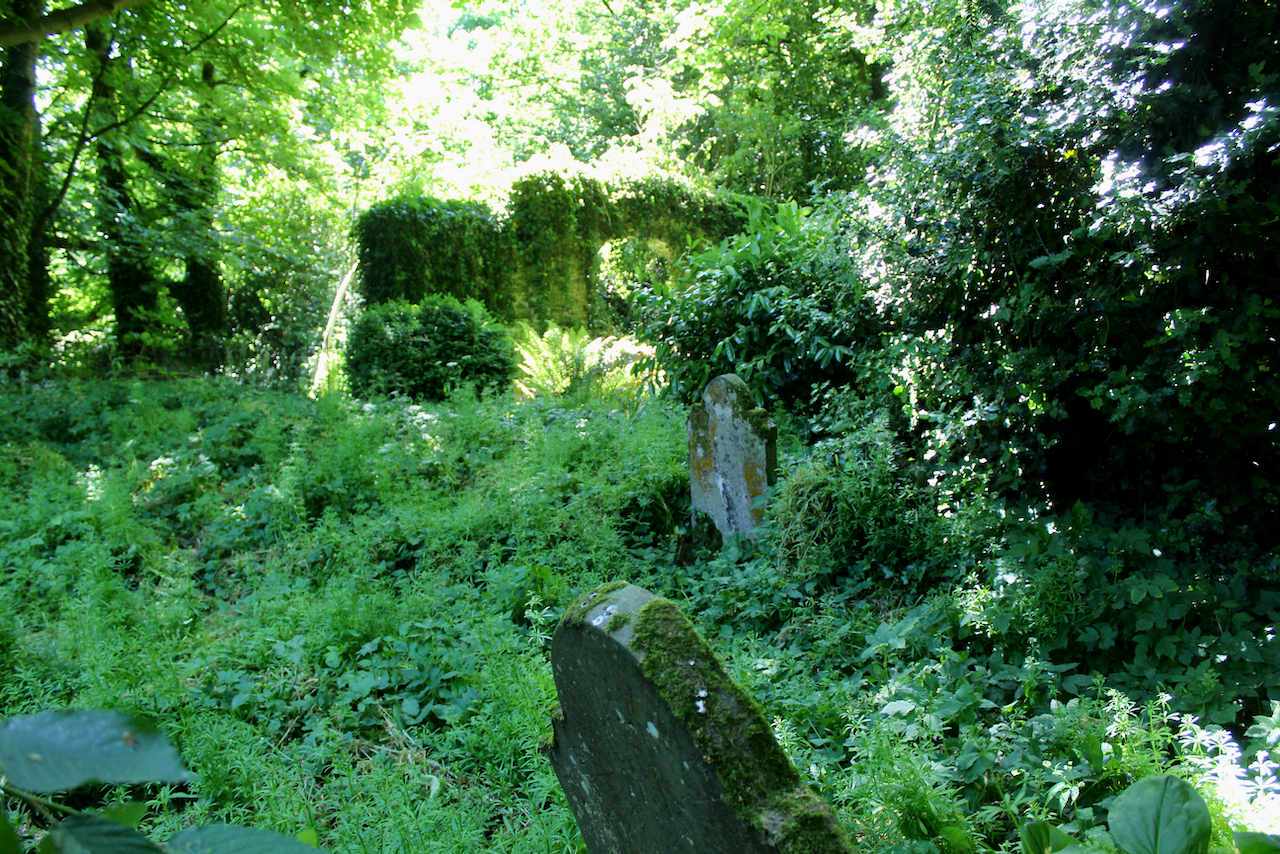
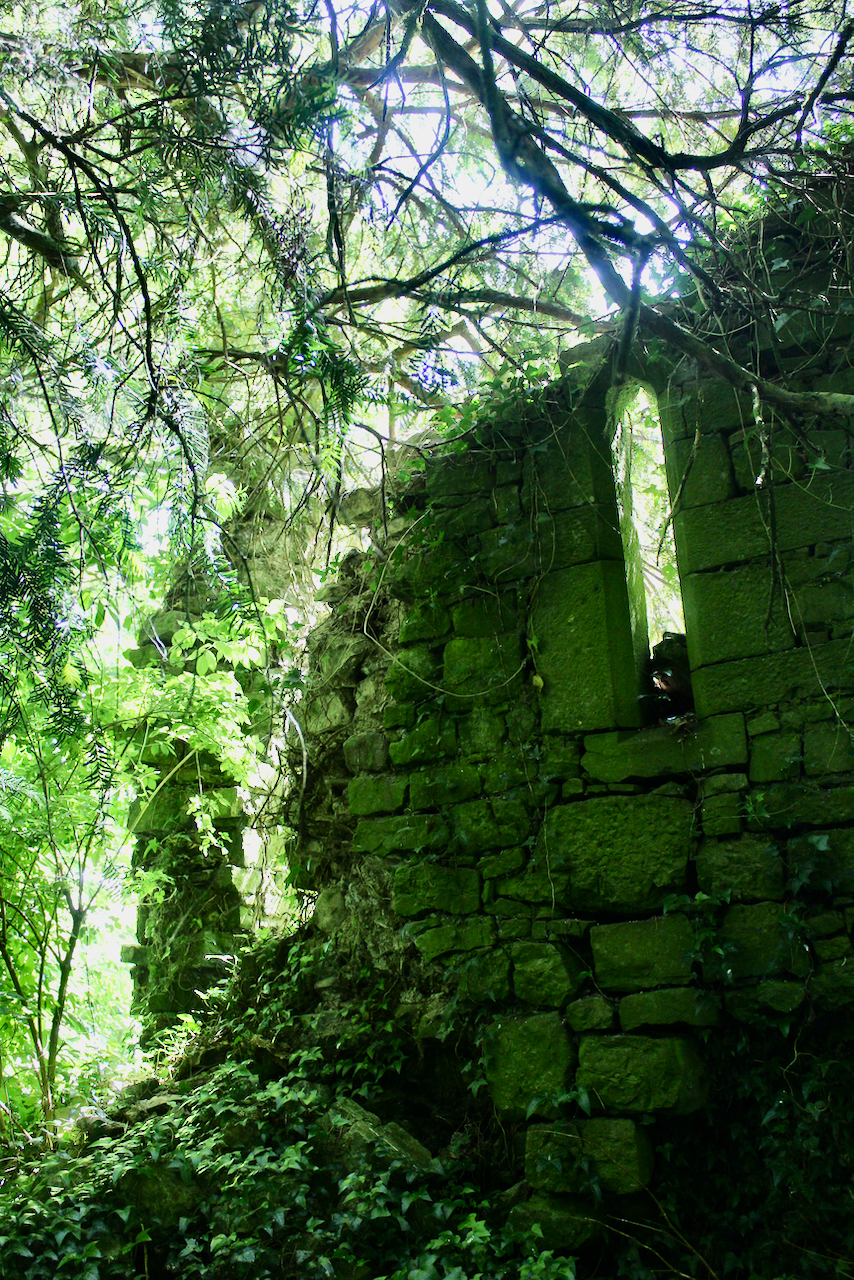
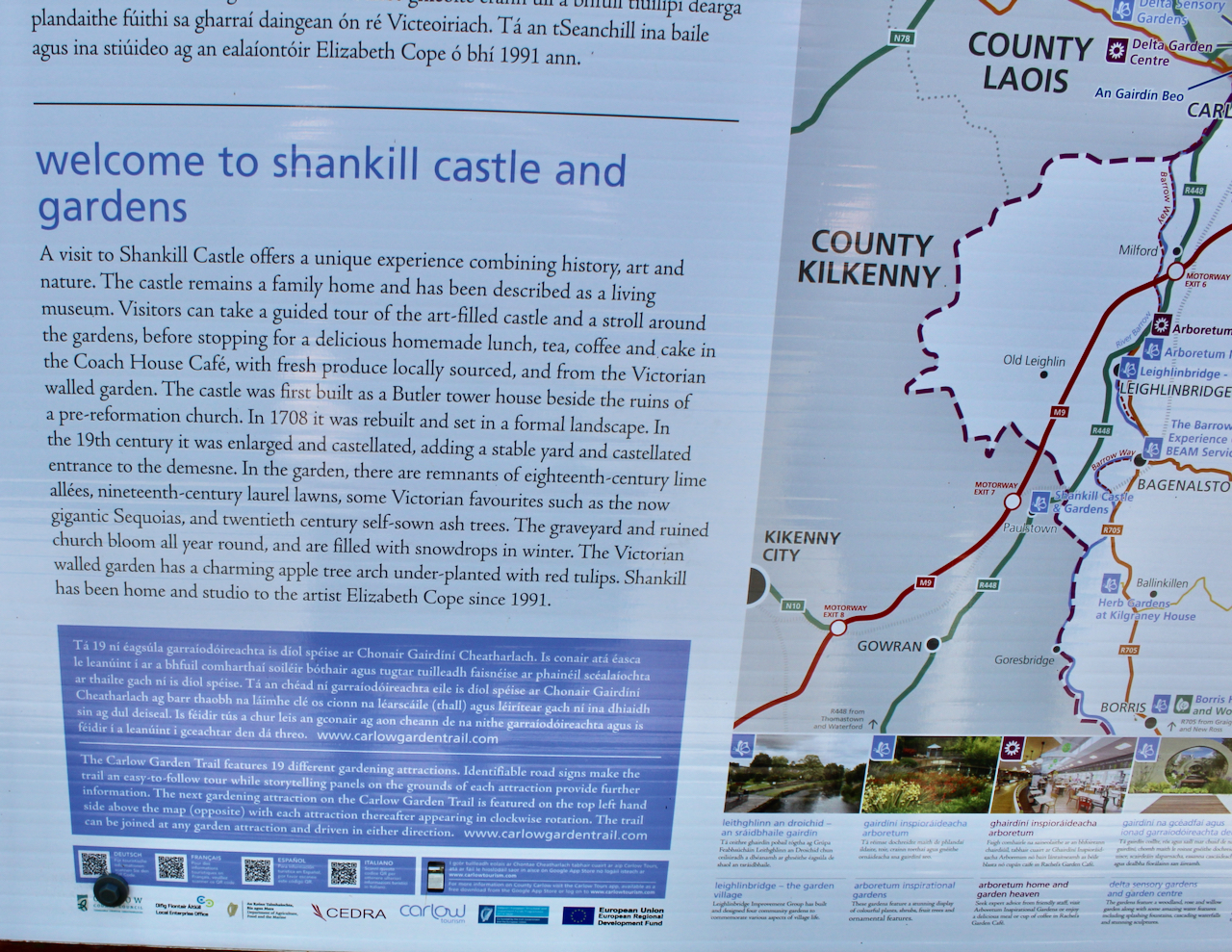
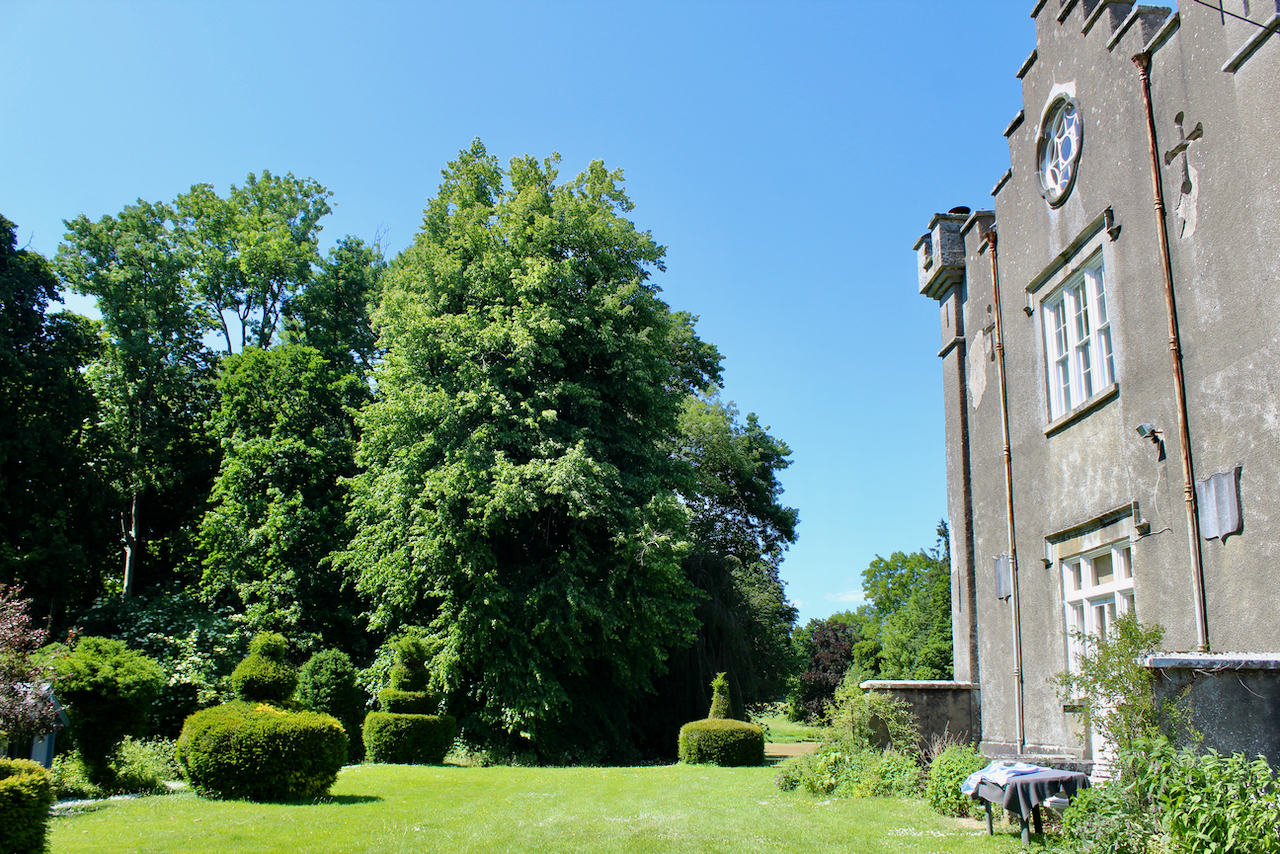
Shankill Castle is now a family home for the Cope family, since 1991. It was first built as a Butler tower house beside the ruins of a pre-reformation church – you can still see the ruins of the church in the grounds. The Copes give tours of their home and there are lovely gardens to wander and a café
The website tells us that “Elizabeth, a painter, and Geoffrey, a historian, have hosted many creative people in their home over the last twenty-five years. They have shared with them their unique and beautiful setting in Ireland’s Ancient East and have dedicated Shankill Castle to the arts and culture.“
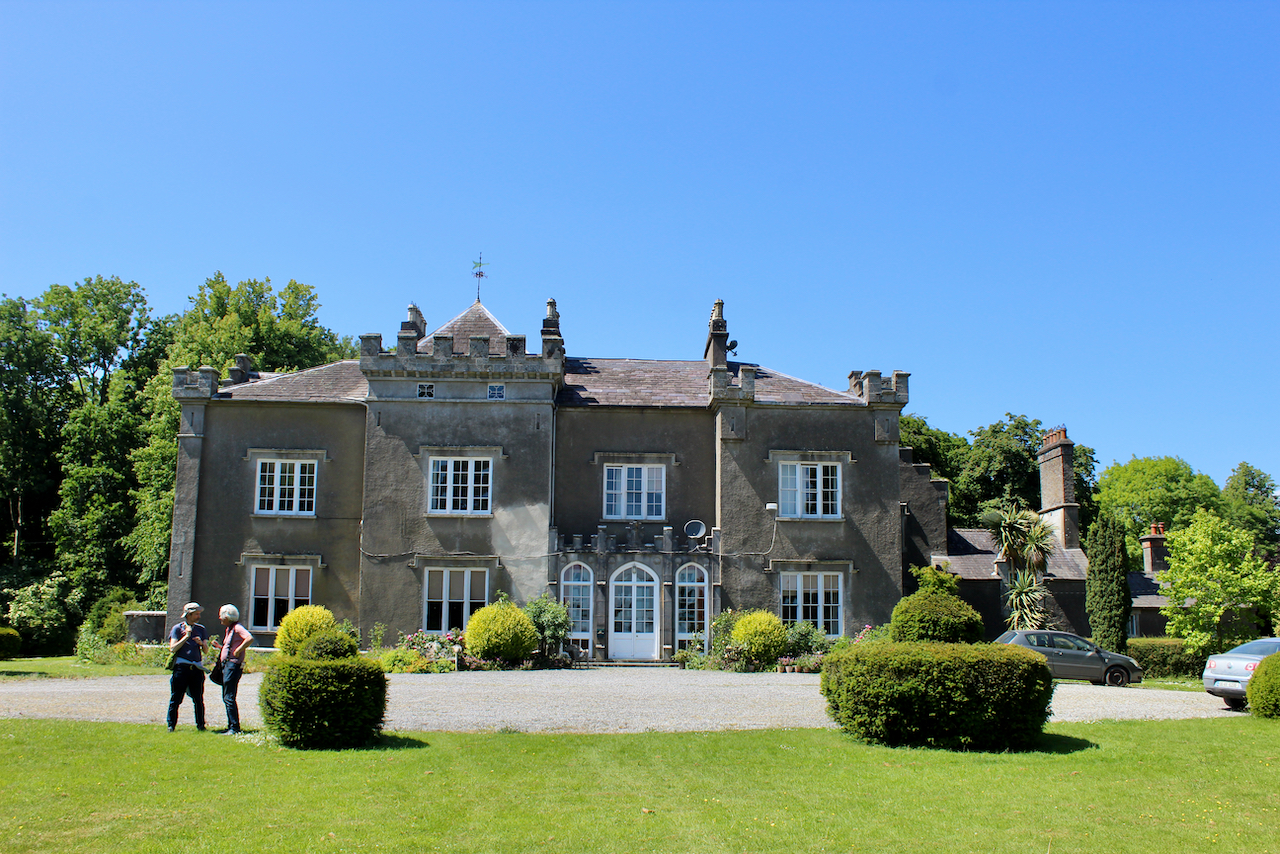
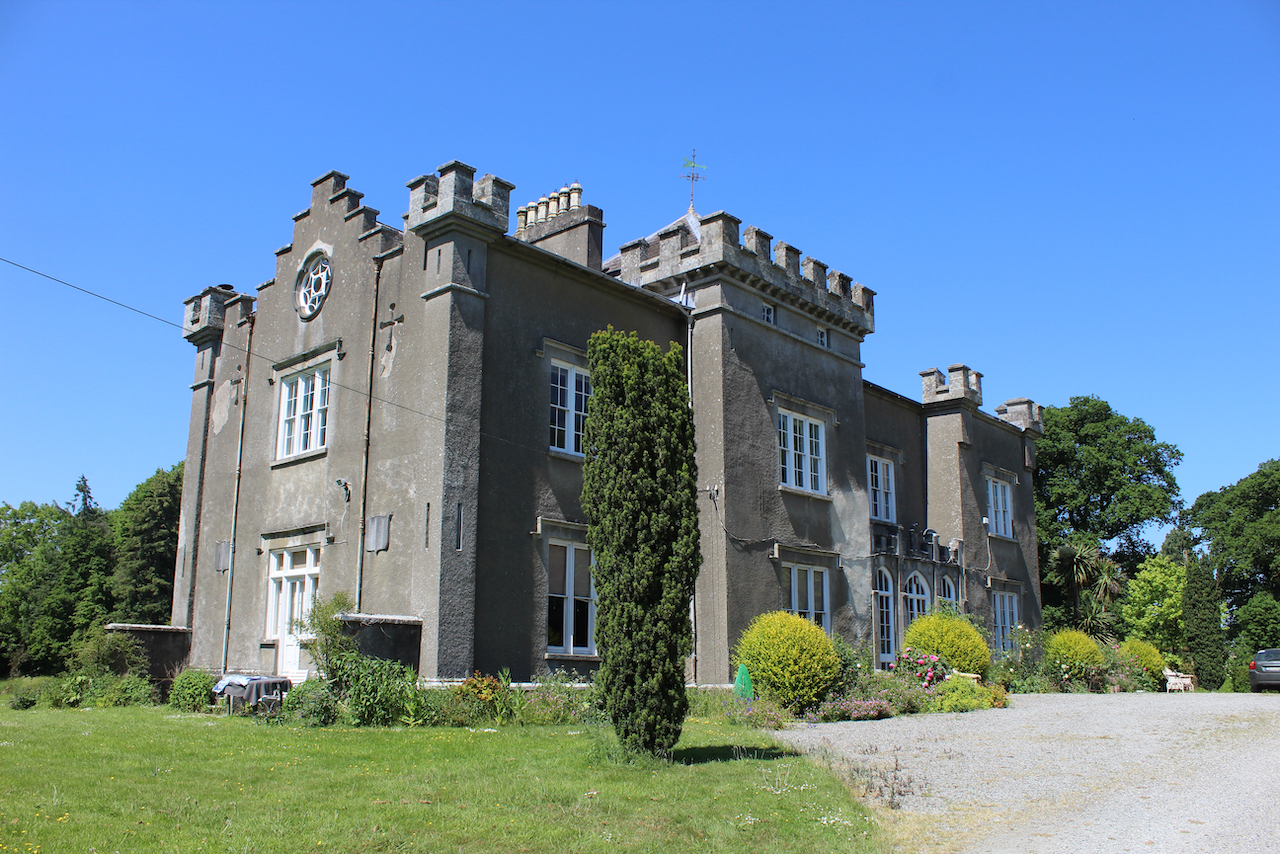
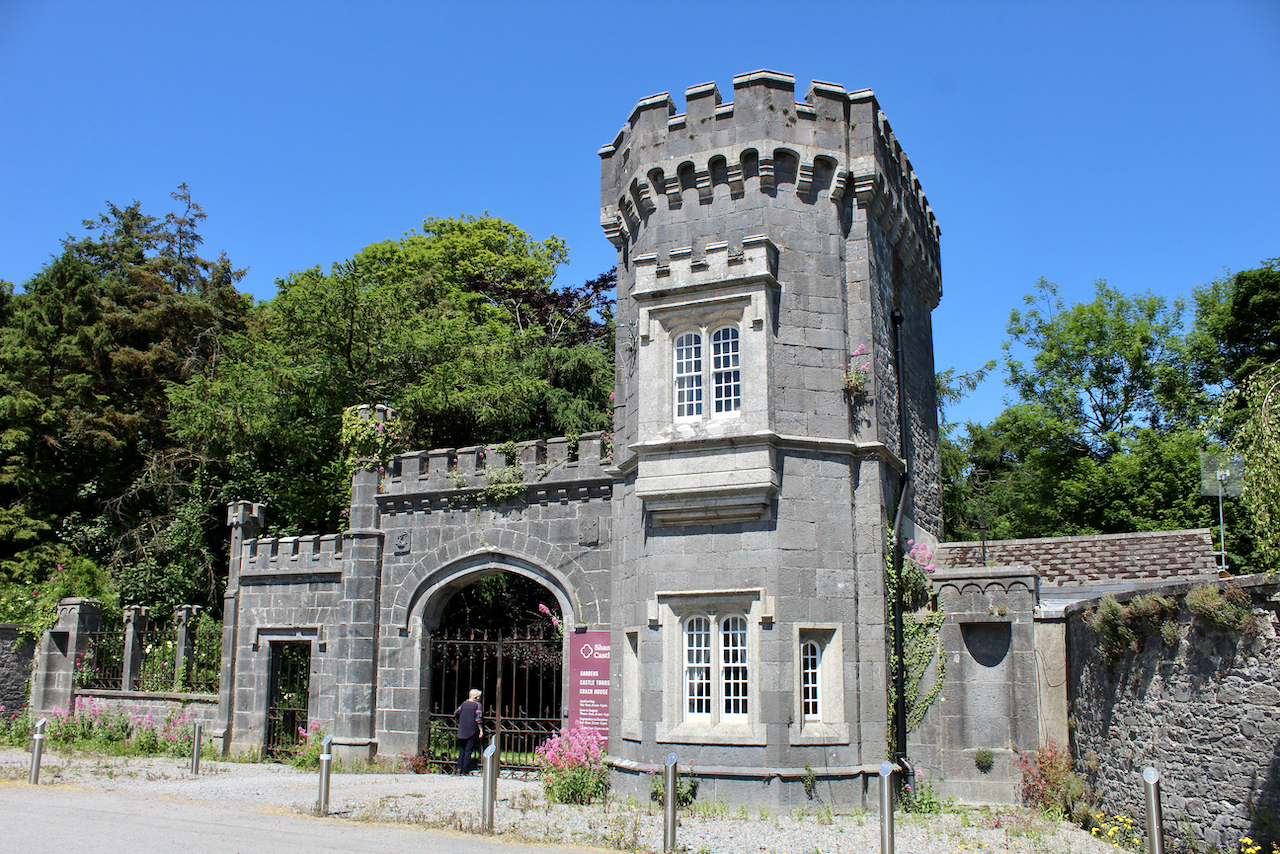
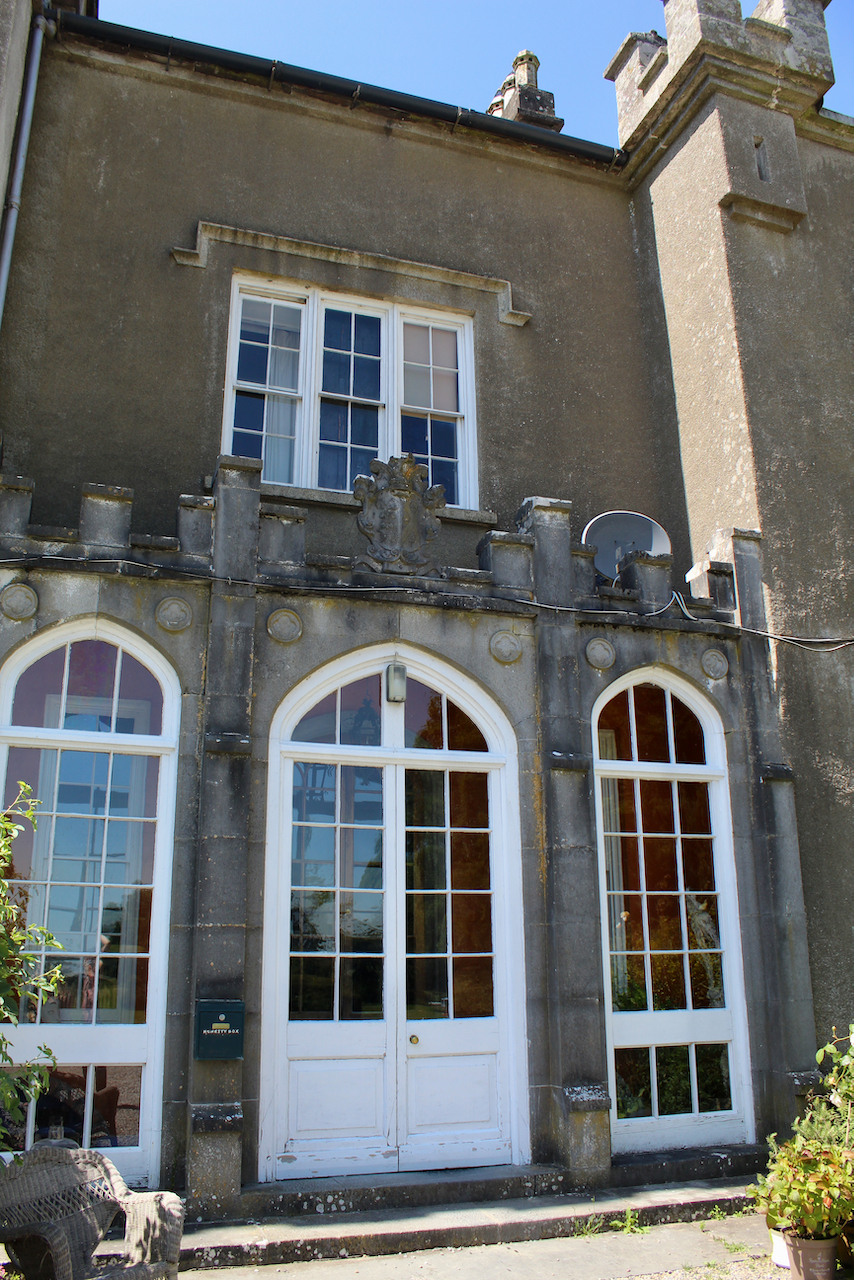
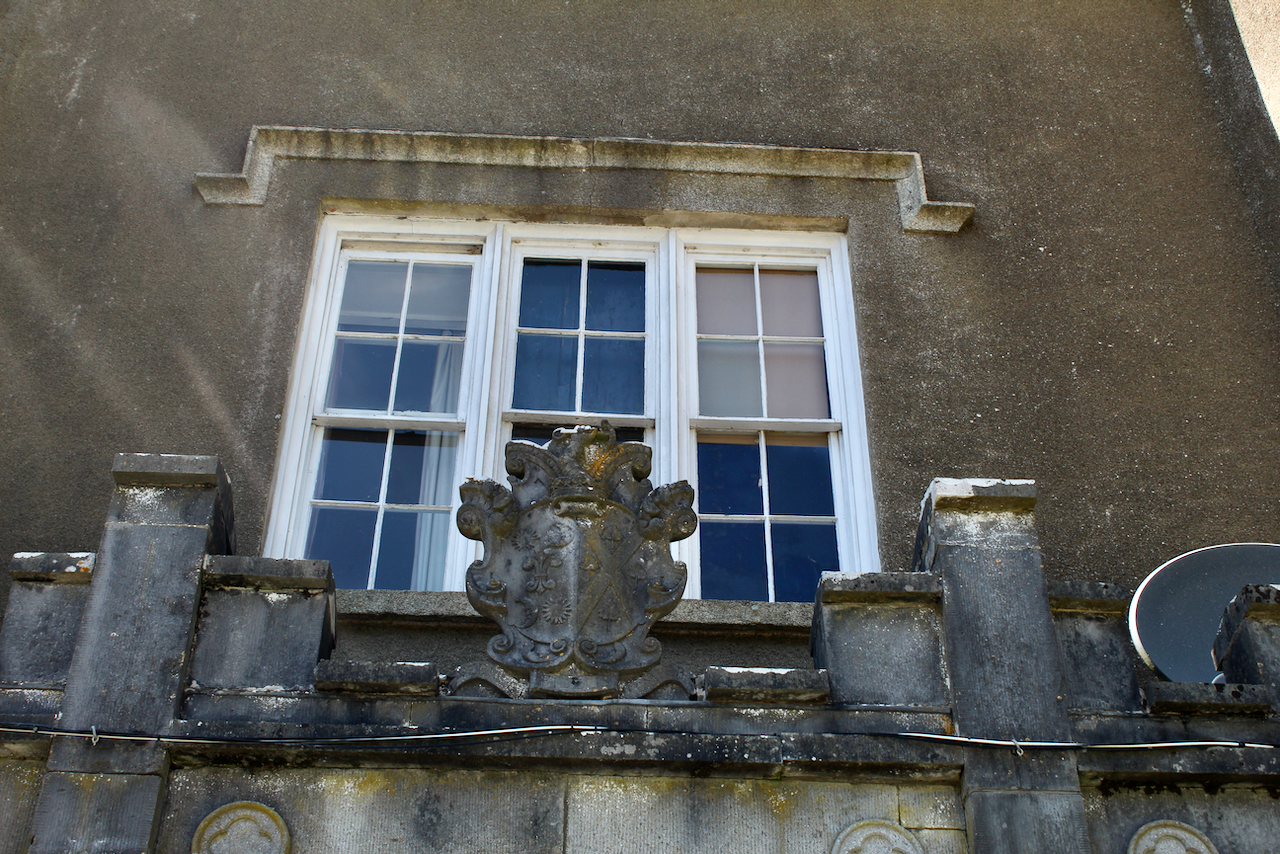
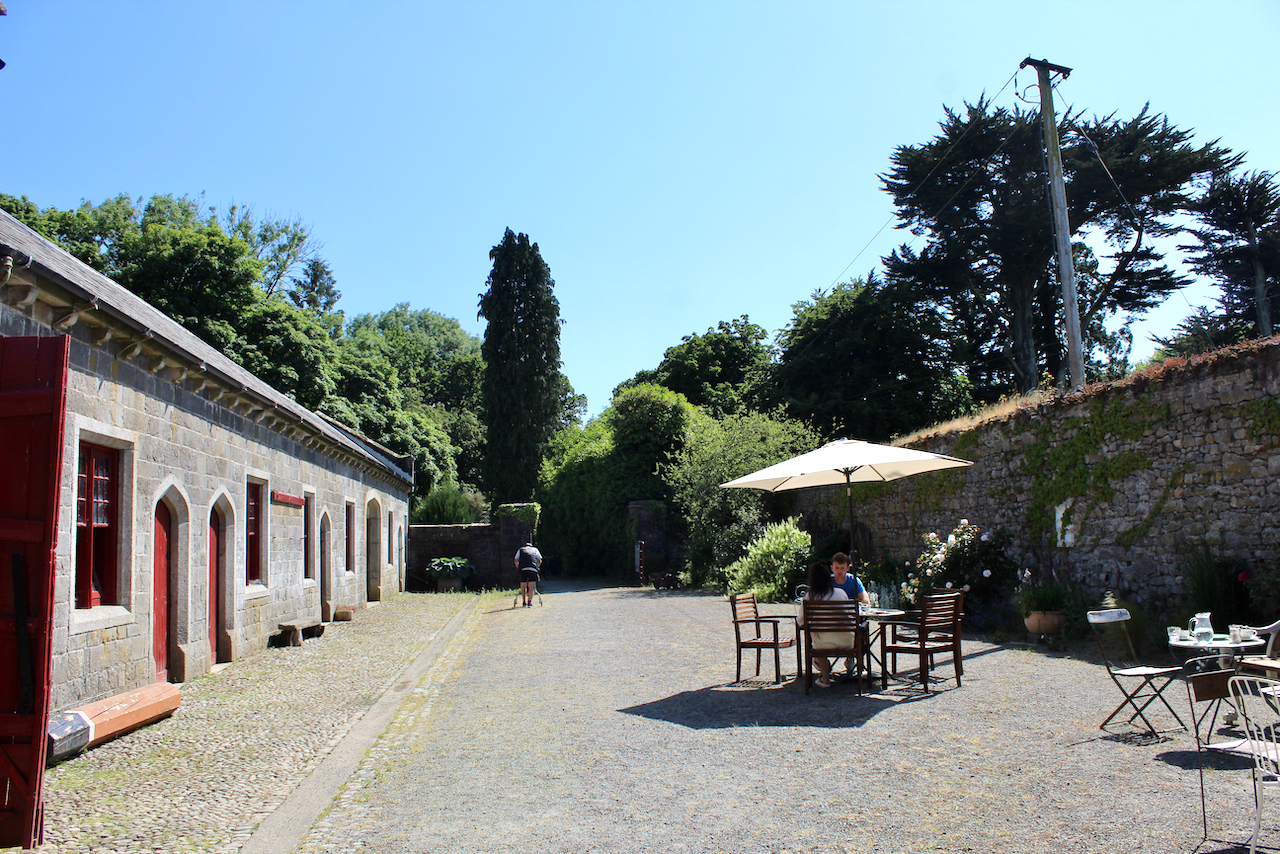
In 1708 the Castle was rebuilt and in the nineteenth century it was enlarged and castellated, adding a stable yard and the castellated entrance to the demesne. The stableyard and the castellated entrance to the demesne are attributed to Daniel Robertson. Other additions to the house include a Gothic porch bearing the Aylward crest and a conservatory.
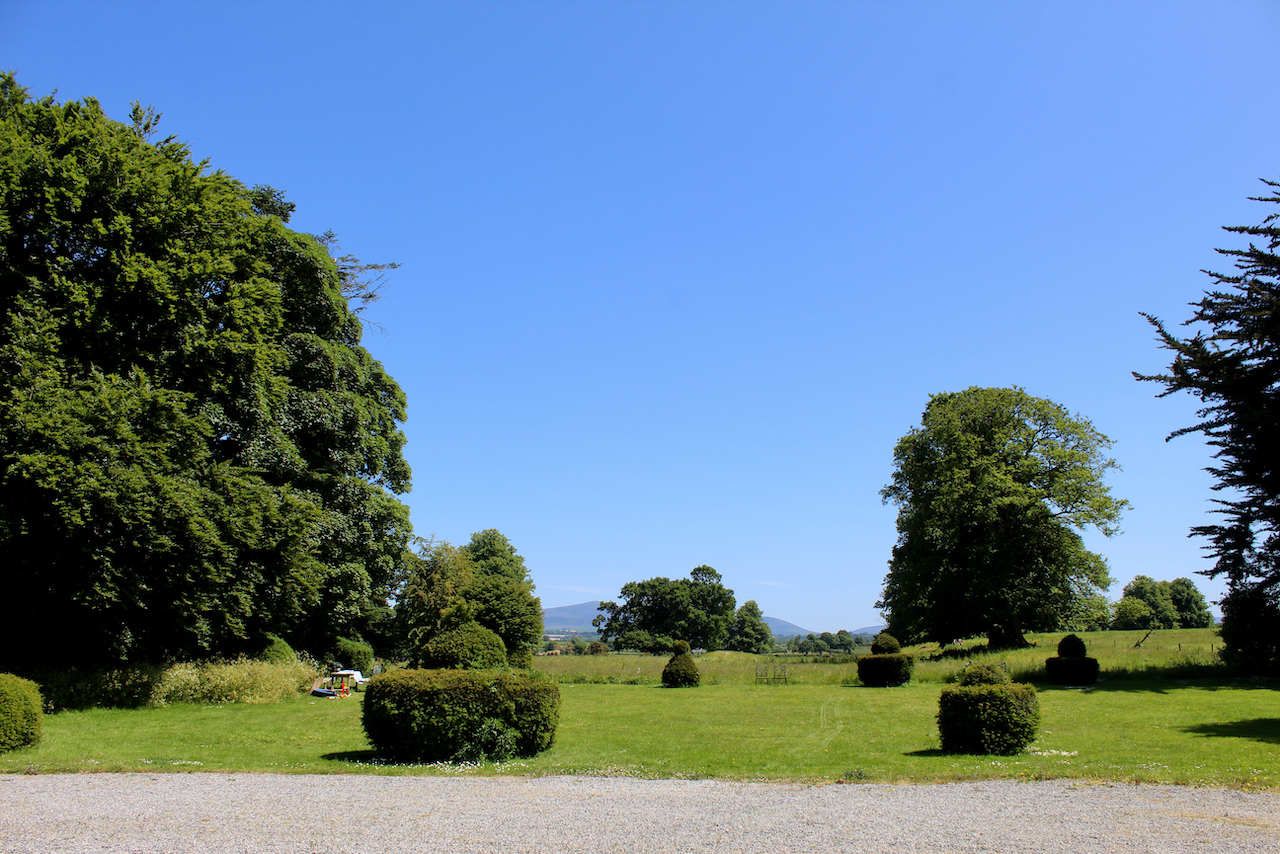
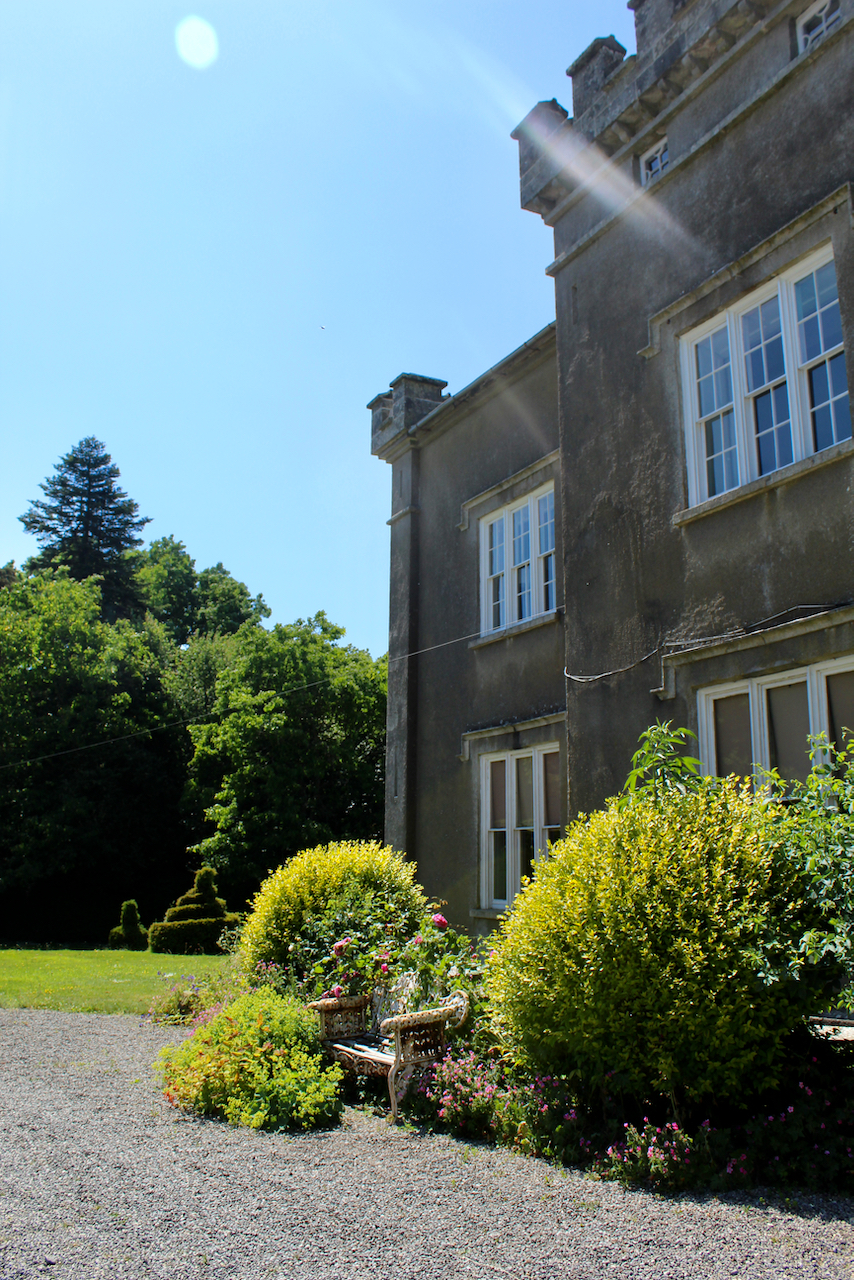
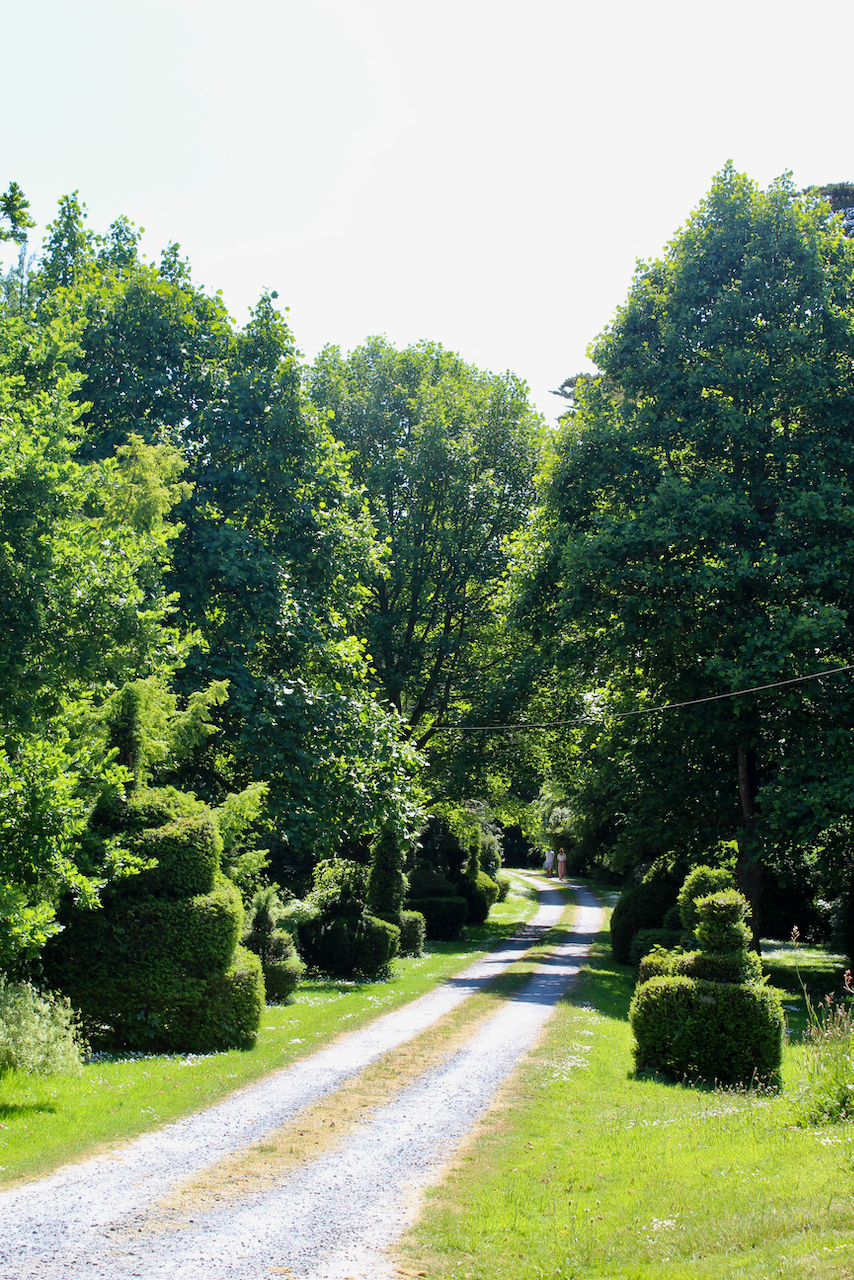
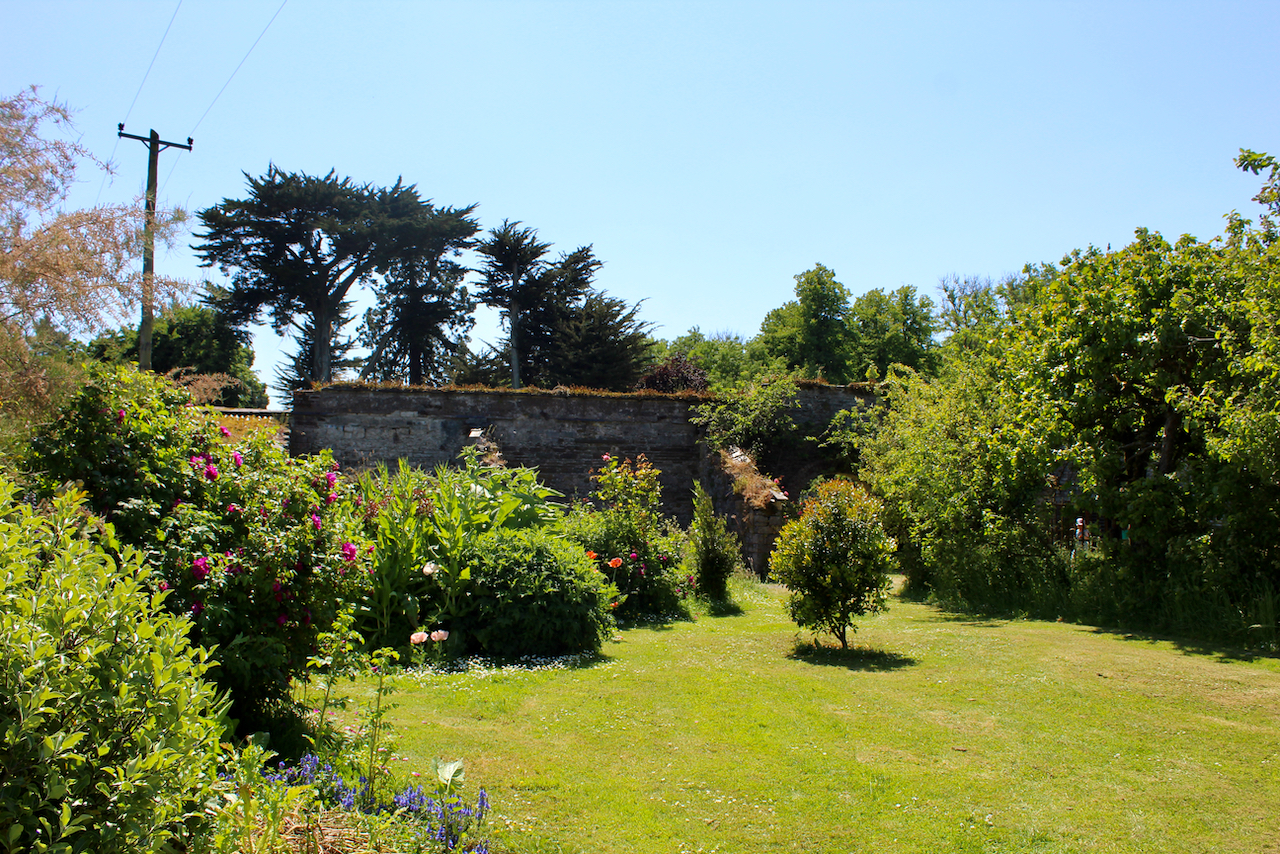
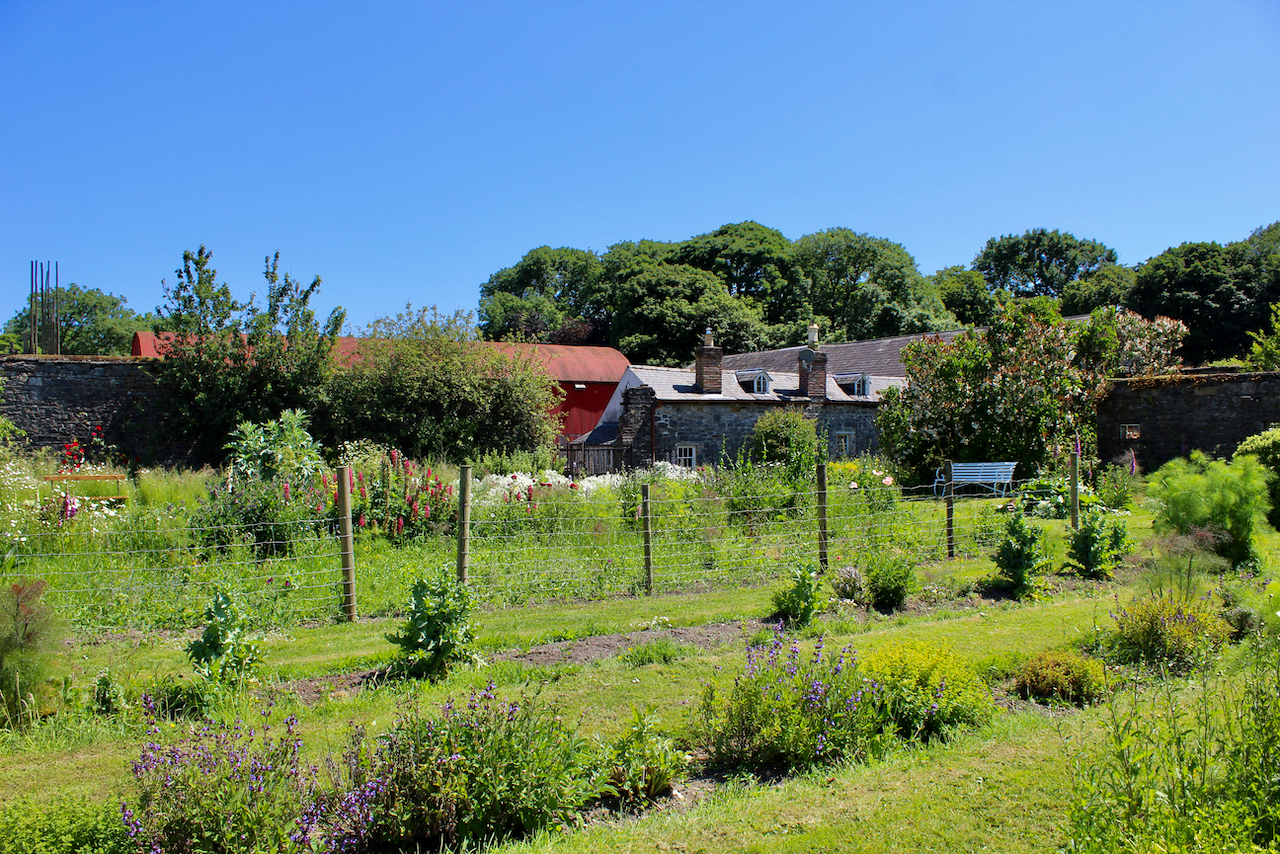
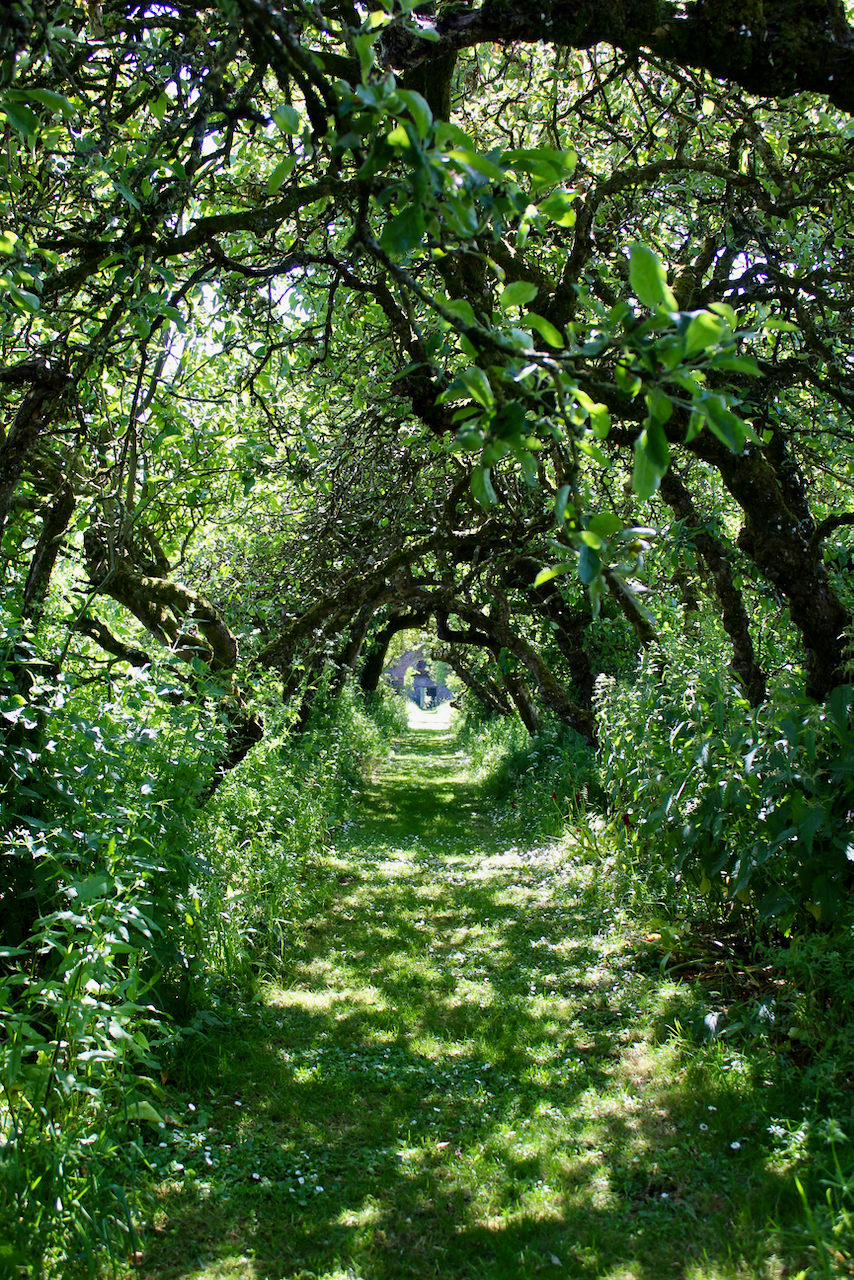
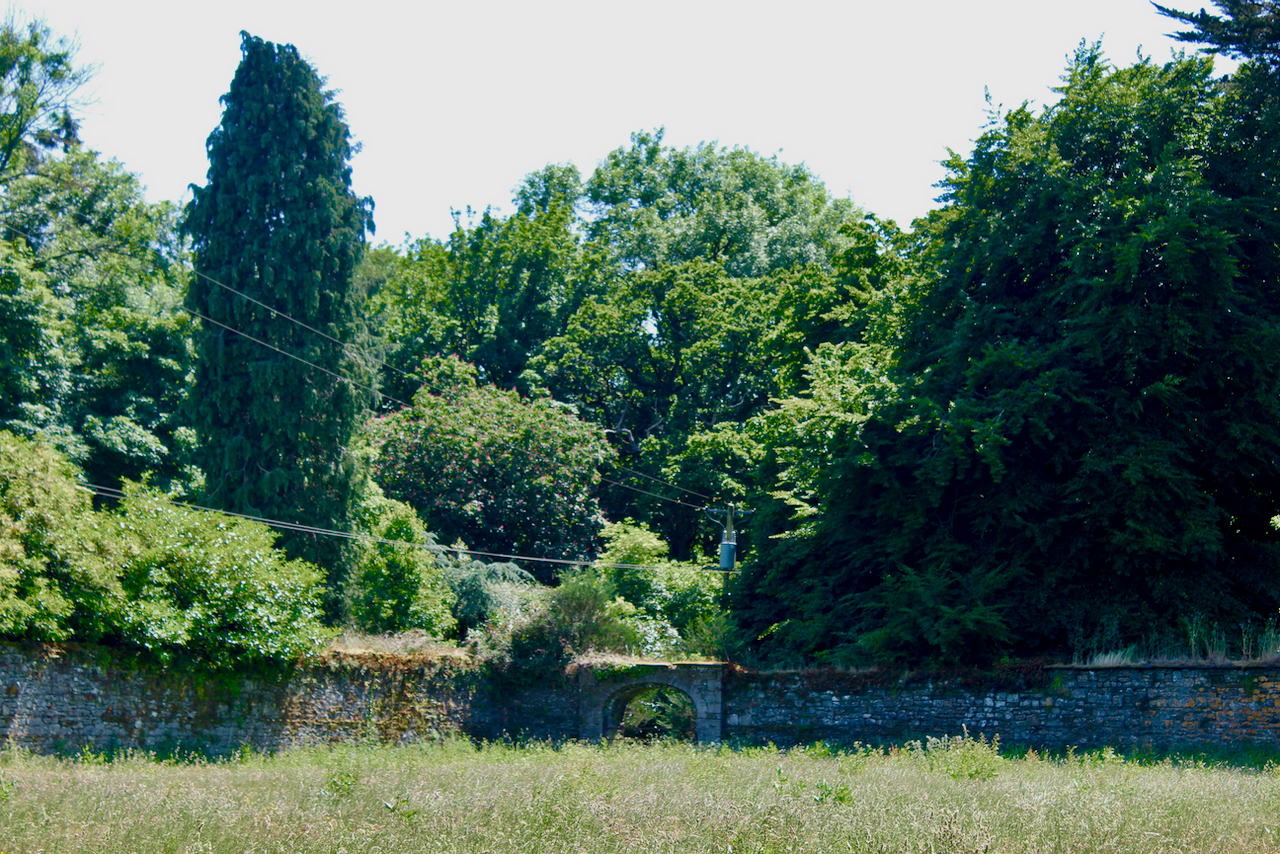
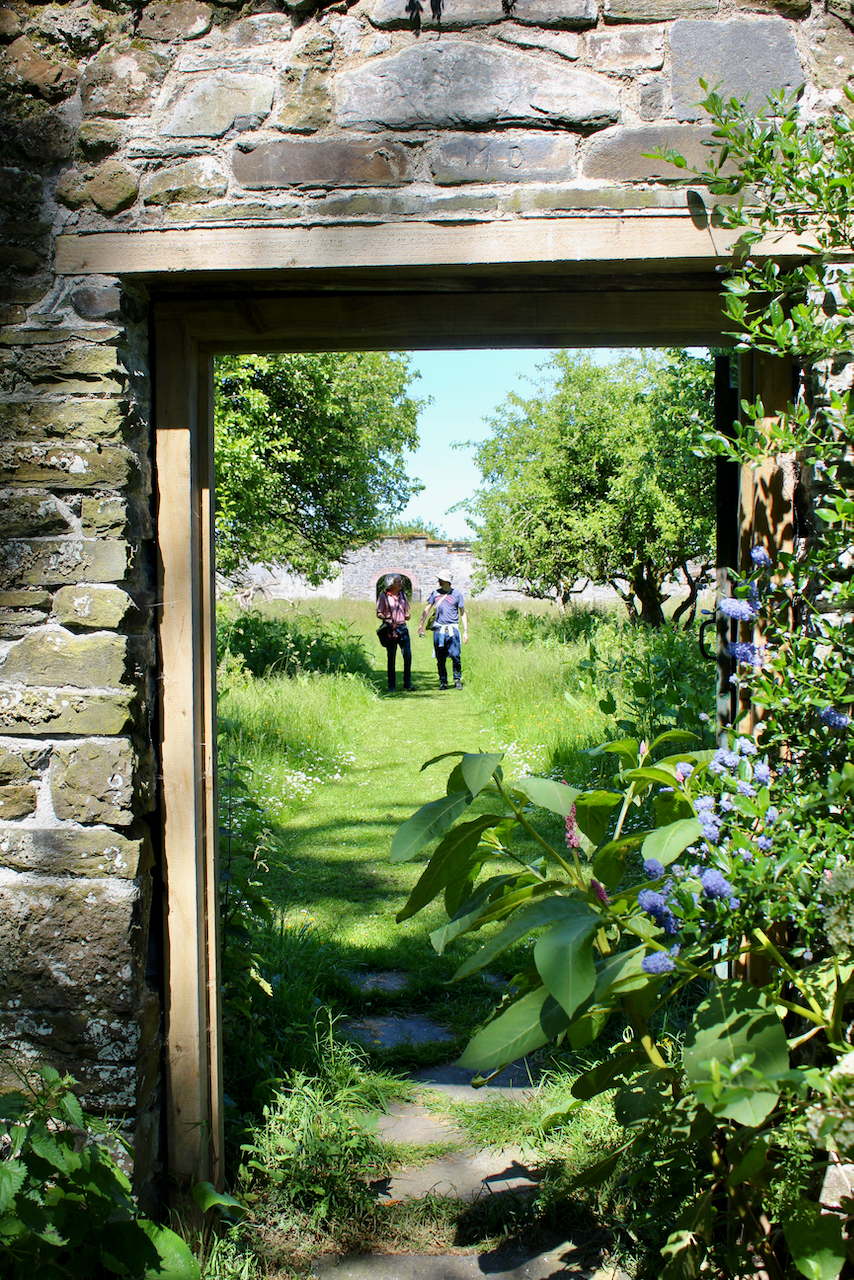
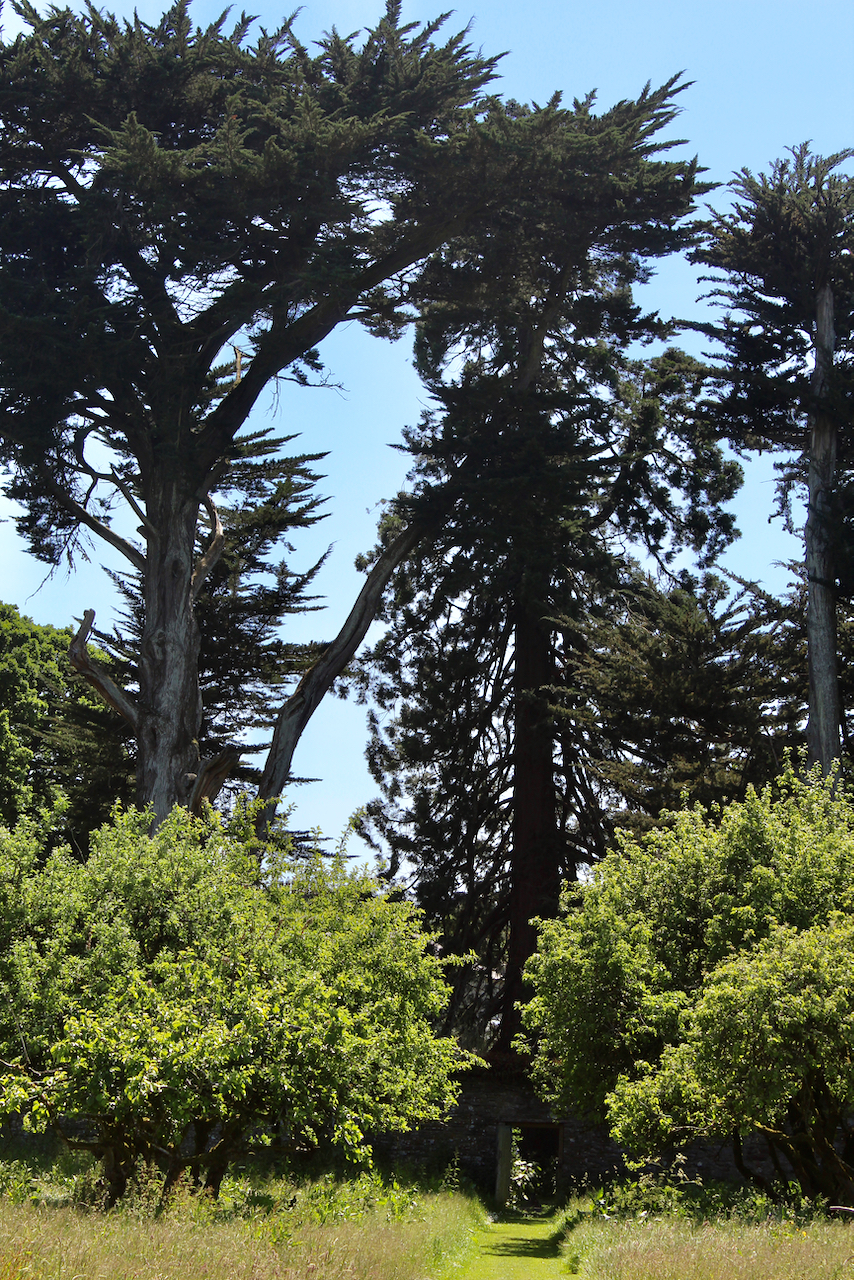
In the garden there are remnants of an eighteenth century lime walk, nineteenth century laurel lawns and some trees that were favourites in the Victorian age such as giant Sequoias.
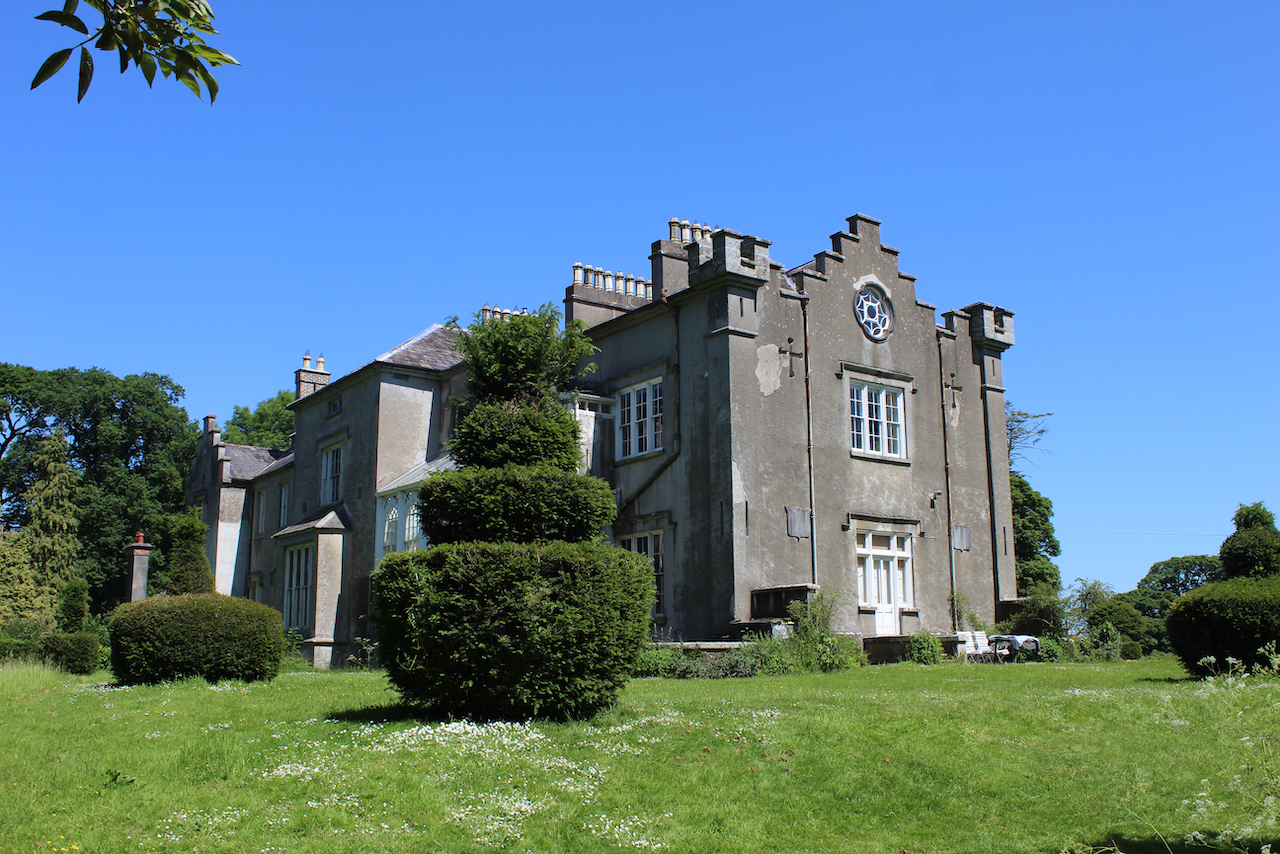
Shankill Castle County Kilkenny 3rd June 2023.
The website tells us that “In 1708, it was rebuilt by Peter Aylward who bought the land from his wife’s family. The new Shankill Castle was constructed as a Queen Anne house, set in a formal landscape, vista to the front and canal to the rear.“
Peter Aylward was a Roman Catholic who fought in the Jacobite army in 1688-90. For this he was was outlawed, but he later conformed to the established Protestant church. [1]
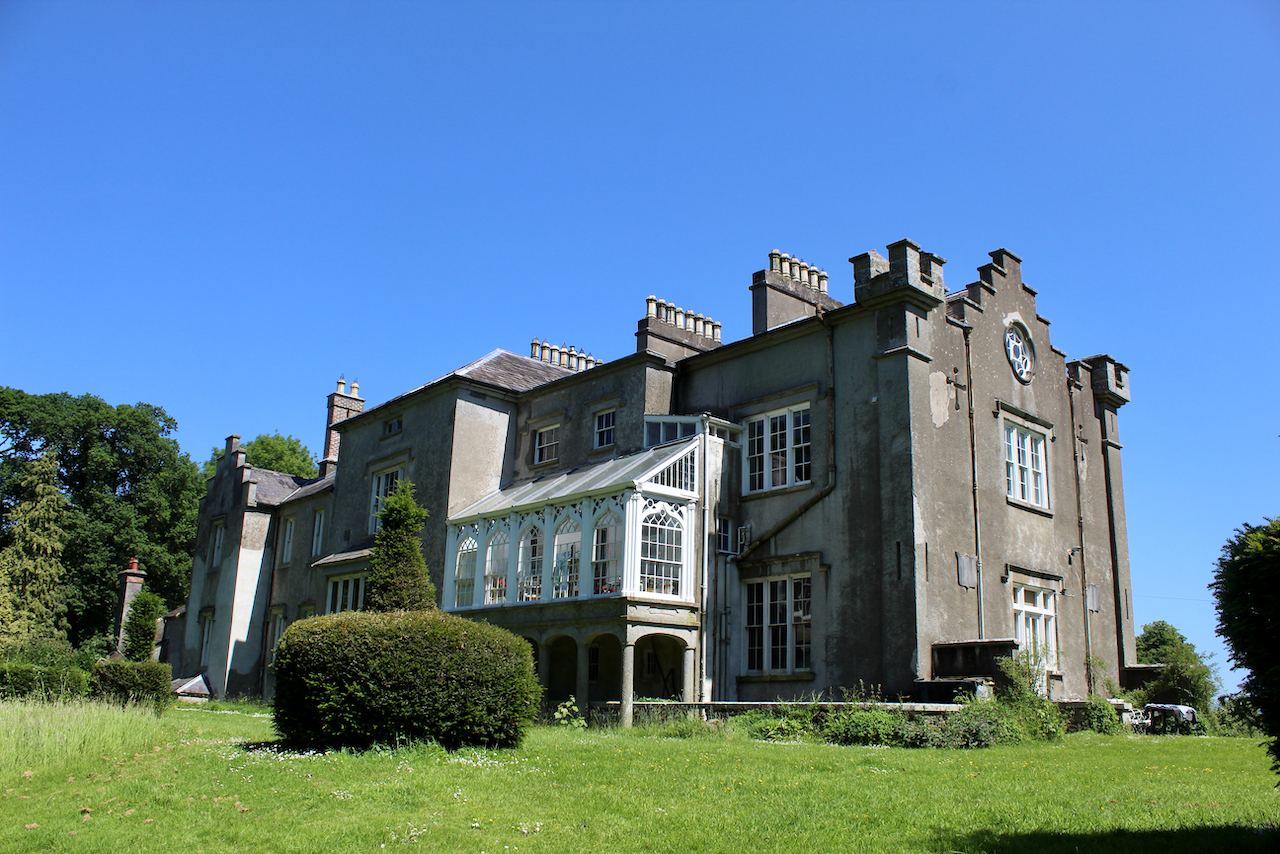
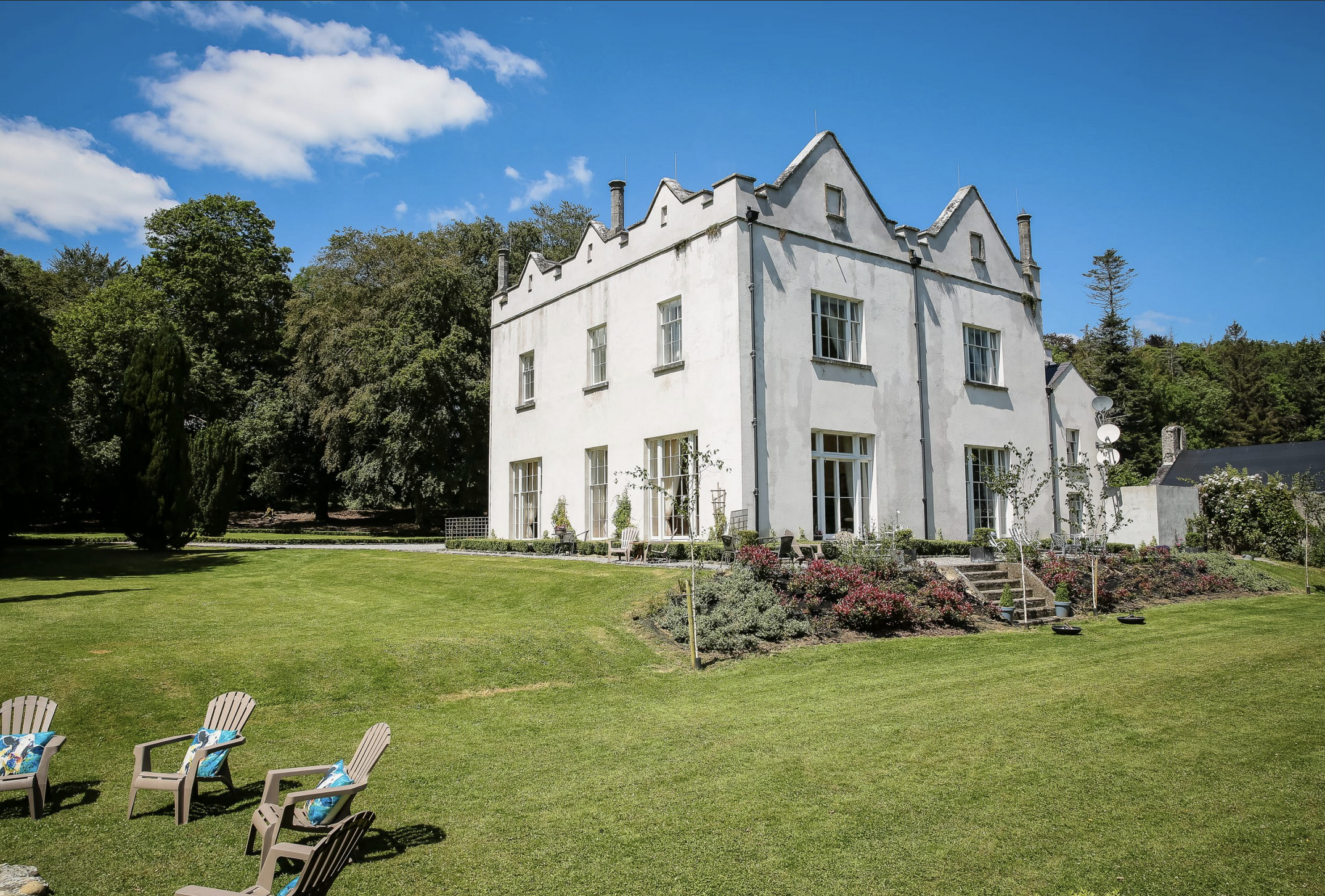
The house has battlemented full-height corner piers having slit-style blind apertures. The windows have hood mouldings. The house is delightfully higgeldy piggeldy with its enlargements and additions.
Elizabeth Butler’s family owned Paulstown Castle, which was rebuilt in 1828 but is now a ruin.
Paulstown Castle, County Kilkenny, courtesy of National Inventory.
Peter Aylward and Elizabeth Butler had a son, Nicholas (d. 1756). He held the office of Member of Parliament (M.P.) for Thomastown and Sheriff of County Kilkenny in 1742. A website about landed families tells us that he was brought up Catholic but conformed to the established church in 1711. [see 1]. In August 1719 he married Catherine, second daughter of Maurice Keating of Narraghmore, Co. Kildare.
Their son, also named Nicholas (d. 1772), inherited Shankill Castle in 1756. That year, he married Mary Kearney, daughter of Benjamin Kearney of Blanchville (Co. Kilkenny). He held the office of High Sheriff in 1757. He died while his children were still young, and their mother had died in 1767, so the children were made wards of the Irish Court of Chancery, which in 1772 appointed their grandfather, Benjamin Kearney (d. 1784), as their guardian.
After Mary née Kearney died, Nicholas married Susanna (d. 1775), widow of Edmund Waring. Susanna married a third time after Nicholas’s death, in October 1772, Rev. Henry Candler, and she died 4 August 1775.
Nicholas and Mary née Kearney’s eldest son, Peter (1758-92), came of age in 1779. It is said that he was “of weak mind” and that his Guardian exercised a large influence over him. In 1780 he married Anne Kearney of New Ross (Co. Waterford). They had a son, Nicholas John Patrick Aylward (1787-1832).
This son was only five years old when his father died and he inherited Shankill Castle. He was educated at Kilkenny and Trinity College, Dublin (admitted 1804). [see 1] In 1805 at the age of just 18 he married Elizabeth (d. 1851), eldest daughter of James Kearney of Blanchville (Co. Kilkenny). This James was son of Benjamin Kearney (d. 1784), the guardian of Nicholas John Patrick’s father, so this was probably an influencing factor. He came of age three years later in 1808. He was High Sheriff of Co. Kilkenny, 1816-17. In the 1820s, he remodelled Shankill Castle, hiring William Robertson.
A watercolour probably dating from the 1820s attributed to William Robertson shows a design proposal for alterations. For this reason, the changes to the house which were made for Nicholas Aylward (d. 1832) in the 1820s are attributed to William Robertson, although the proposal in the watercolour were not executed exactly as pictured. The end bays were crenellated and linked by a Gothic porch, and one was raised to look like a tower. A new dining room running from the front of the house to the back was added on the left, and a castellated office wing on the right, effectively breaking up the symmetry of the original design. The back of the house, which is more irregular, is treated in much the same way, and adorned with a Gothic conservatory on the level of the half-landing of the stairs, carried on a stone arcade. [1]
The National Inventory describes it:
“An impressive large-scale house built c. 1825 to designs prepared by William Robertson (1770-1850) for the Aylward family forming a picturesque landmark of Romantic quality in the landscape. The complex form and massing of the composition attests to the evolution of the site over a number of centuries with the present house incorporating the fabric of an early eighteenth-century range together with a medieval tower house, thereby representing the continuation of a long-standing presence on site.” [2]
The architect William Robertson was born in Kilkenny in 1770. The Dictionary of Irish Architects tells us he was probably a son or close connection of the nurseryman, William Robertson, who traded as ‘William Robertson and Son’ in Kilkenny. [3] The Dictionary adds that identifying his works is complicated by the fact that the names ‘Robertson’ and ‘Robinson’ are often confused, but it is possible that he may already have received at least one architectural commission as early as 1794, for stables at Woodstock, Co. Kilkenny. He seems to have worked in London for a time then moved back to Kilkenny.
The Dictionary of Irish Architects tells us of William Robertson:
“Robertson was back in Kilkenny by 1801, when he was entrusted with the design of the new county gaol. In Kilkenny he developed a busy architectural practice. It appears that he may have had the Earl of Ormonde as a client as early as 1802 and that he was working with a partner named Wylie for a time circa 1804. Joseph Bourke, Dean of Ossory, suggesting to William Gregory in 1813 that Robertson might be employed to enlarge the barracks at Kilkenny, describes him, perhaps with some exaggeration, as ‘a very eminent architect in this part of the world, who has had the building of most of the public Edifices in the South, &c.’. In the same year Robertson reported to the Dean and Chapter of St Canice’s Cathedral on the fabric of the cathedral.
William Robertson died at Rosehill, the house which he had built for himself on the Callan road, in May 1850.” [4]
The history of Shankill Castle and Blanchville were further linked in the next generation. Nicholas John Patrick Aylward and Elizabeth née Kearney had a son, James Kearney Aylward (later Kearney-Aylward) (1811-84). He assumed the additional name of Kearney in 1876, on succeeding to a part of the estates of his cousin James Charles Kearney of Blanchville.
Blanchville, County Kilkenny, courtesy National Inventory.
Blanchville still stands and it has notable Tudor Revival stable building, built 1834, in the style of Daniel Robertson, which are now available for accommodation (see https://blanchville.ie/ ). Daniel Robertson built a memorial for Captain James Kearney, sometime between 1834-47, according to the National Inventory.
Single-bay four-stage Tudor Gothic-style bell and clock tower, built 1834/47, on a square plan, set back from road in grounds shared with Blanchville House, County Kilkenny. Built for Captain James Kearney, to designs prepared by Daniel Robertson, reputedly citing Sir Christopher Wren’s (1632-1723) Saint Mary’s Church (1670), Aldermanbury. Courtesy National Inventory.
The Heritage Council provided a grant to restore the tower in 2004.
Tudor Gothic-style bell and clock tower, built 1834/47, on a square plan, set back from road in grounds shared with Blanchville House, County Kilkenny. Built for Captain James Kearney, to designs prepared by Daniel Robertson. Photograph courtesy National Inventory.Tudor Gothic-style bell and clock tower, built 1834/47, on a square plan, set back from road in grounds shared with Blanchville House, County Kilkenny. Built for Captain James Kearney, to designs prepared by Daniel Robertson. Photograph courtesy National Inventory.Tudor Gothic-style bell and clock tower, built 1834/47, on a square plan, set back from road in grounds shared with Blanchville House, County Kilkenny. Built for Captain James Kearney, to designs prepared by Daniel Robertson. Photograph courtesy National Inventory.Tudor Gothic-style bell and clock tower, built 1834/47, on a square plan, set back from road in grounds shared with Blanchville House, County Kilkenny. Built for Captain James Kearney, to designs prepared by Daniel Robertson. Photograph courtesy National Inventory.
James Kearney Aylward held roles as Sheriff, Deputy Lieutenant and Justice of the Peace. In 1853 he married Isabella Forbes. She was the widow of Beauchamp Bartholomew Newton (1798-1850) of Rathwade, County Carlow (a house attributed to Daniel Robertson). However, she did not have children by either of her marriages.
Rathwade, County Carlow, attributed to Daniel Robertson, courtesy of Colliers estate agents and myhome.ie
Therefore when James Kearney-Aylward died in 1884, Shankill Castle passed to his nephew, Hector James Charles Toler (1839-1918, later Toler-Aylward). [see 1] Hector was the son of James Kearney-Aylward’s sister Mary (d. 1880) who had married Reverend Peter Toler (d. 1883) of Bloomfield, County Roscommon.
Before James Kearney-Aylward died, he undertook further renovations of Shankill Castle, under the direction of William Deane Butler. The Archiseek website tells us that William Deane Butler (1793-1857) studied at the Dublin Society Schools and was a founding member of the Royal Institute of Architects in Ireland as well as the Society of Irish Artists, and he was also an engineer. Among his most important works are Amiens Street Station (now called Conolly Station) in Dublin, Kilkenny’s Catholic Cathedral, and Sligo Asylum. [5]
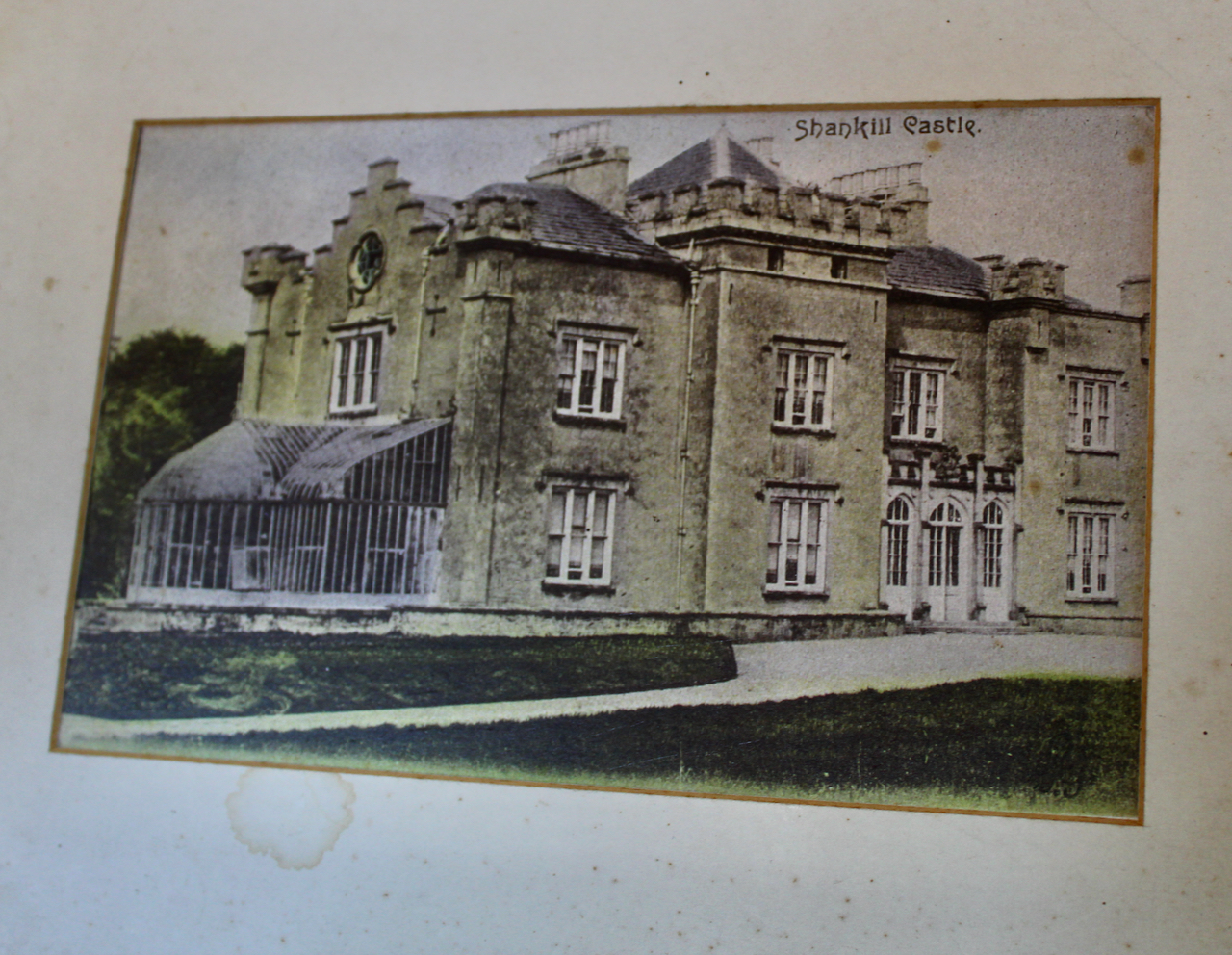
A conservatory attributed to Richard Turner or Joseph Paxton was added, but this has been removed.
An old postcard of Shankill Castle, with the original conservatory, which was removed.
The National Inventory continues: “Meanwhile the traces of renovation works carried out under the direction of William Deane Butler (c.1794-1857) together with accounts of a conservatory (post-1859; dismantled, post-1902) attributable to Richard Turner (1798-1881) indicate the continued development of the house well into the latter half of the nineteenth century. A riot of advanced and recessed bays, battlements, crow-stepped gables, and so on are carefully orchestrated to disguise the earlier disparate ranges in a cohesive architectural skin while supplementary fine details further embellish the architectural design value of the composition. Having been well maintained the house presents an early aspect with most of the historic fabric surviving in place both to the exterior and to the interior where it is believed that an original decorative scheme of artistic significance survives largely intact.” [2]
The front porch was in place when the original conservatory was still at the side of the house, as in the old postcard.
Mark Bence-Jones writes in his A Guide to Irish Country Houses (1988):
“(Toler-Aylward/IFR) ….This early C18 house appears to have had a recessed centre and projecting end bays. Some time ante 1828, the end bays were crenelated, one of them being raised to look like a tower; and they were joined by a Gothic porch. The front was extended by one bay to the left, so as to provide a new drawing room running from the front of the house to the back; and by a castellated office wing to the right. The back of the house, which is more irregular, is treated in much the same way, and adorned with a delightful Gothic conservatory on the level of the half-landing of the stairs, carried on a stone arcade.” [6]
The early conservatory was removed but one was later added to the back of the house.
Hector James Charles Toler (1839-1918) who inherited Shankill Castle in 1884 from his uncle, then assumed the additional surname of Aylward to become Toler-Aylward. He served as High Sheriff, Deputy Lieutenant and Justice of the Peace of County Kilkenny. He married Emily Mary Eliza Butler (1853-1934), daughter of James Butler of Verona, Monkstown, County Dublin. Hector undertook further redecoration at Shankill in 1894.
They had a son, Hector James Toler-Aylward (1895-1974). He inherited the Shankill Castle estate from his father in 1918. He married Zinna Ethel Knox from Greenwood Park, Crossmolina, County Mayo (now a ruin). They had three daughters. At his death Shankill Castle passed to his widow, and on her death in 1980 to his elder daughter, who sold it in 1991.
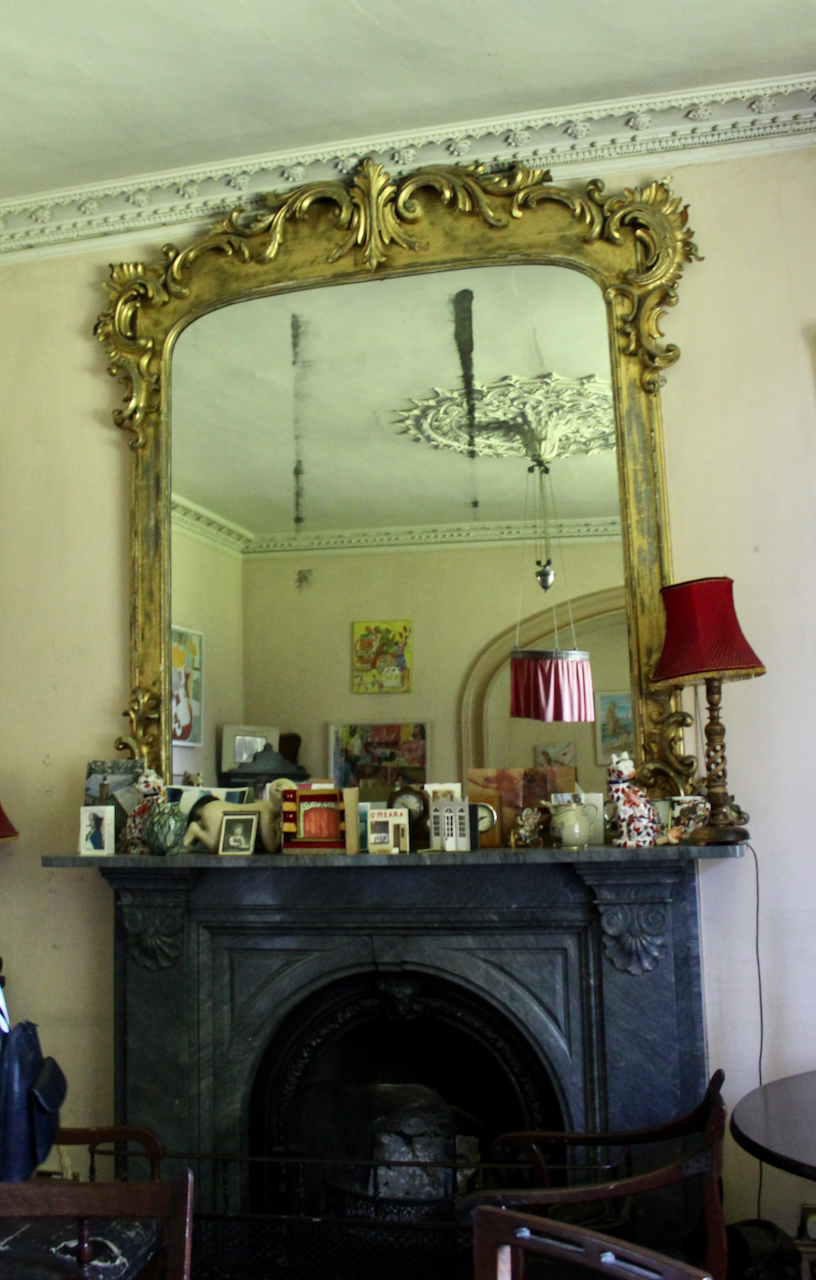
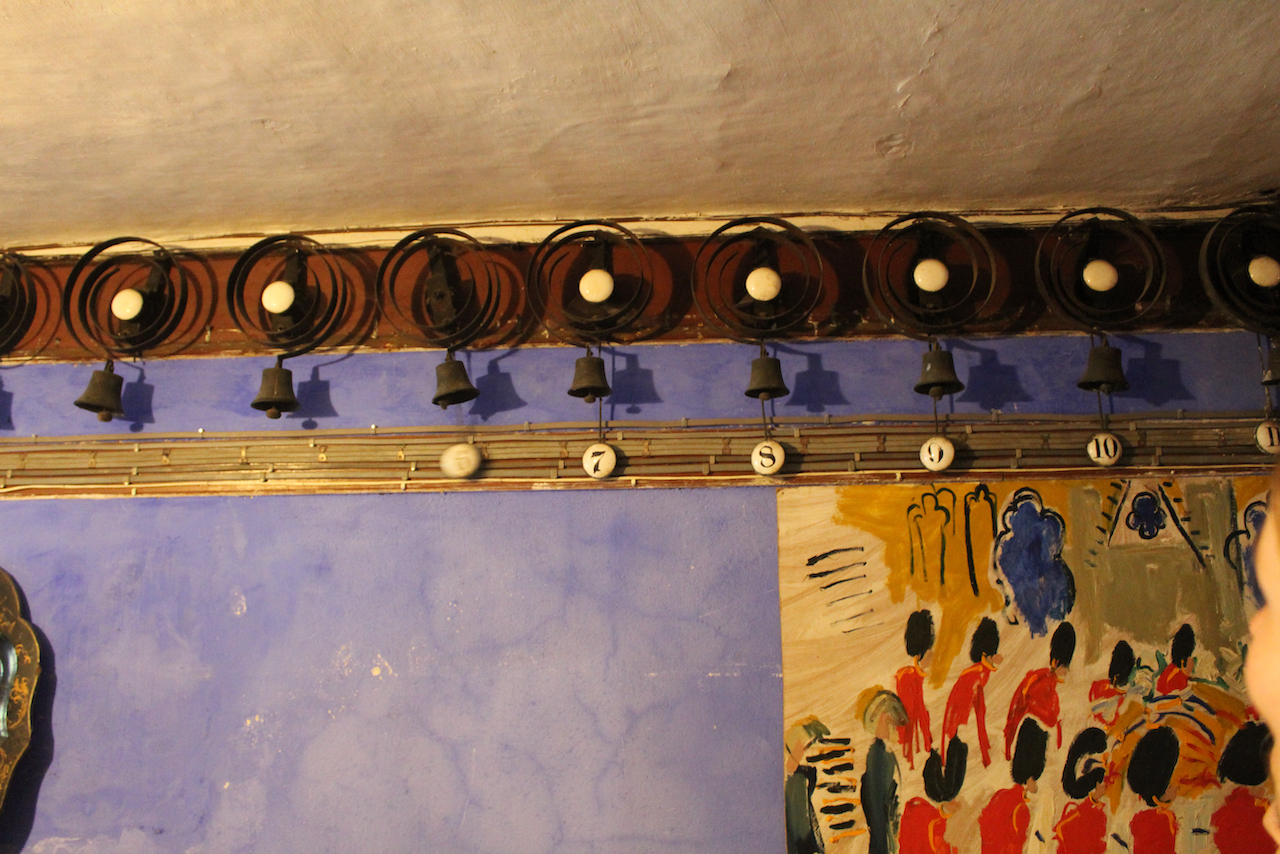
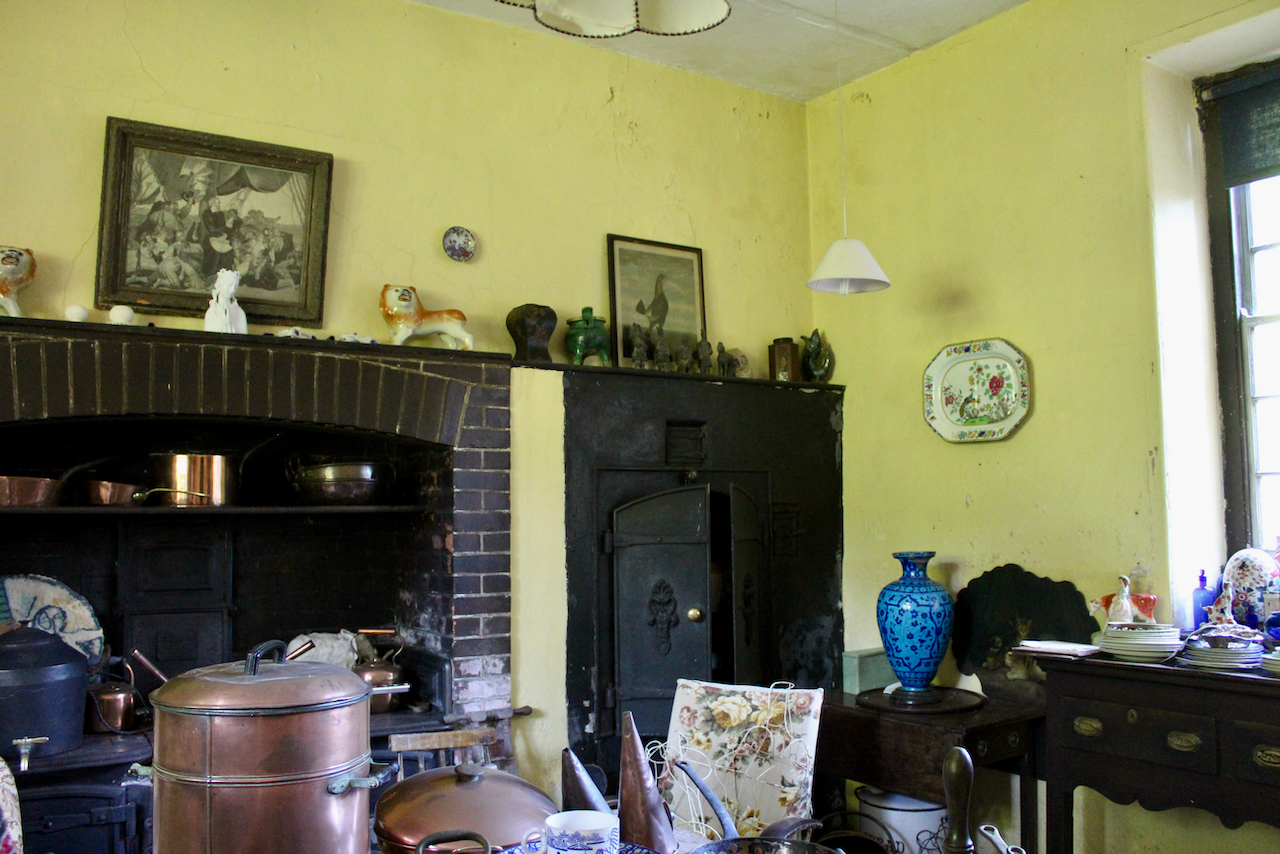
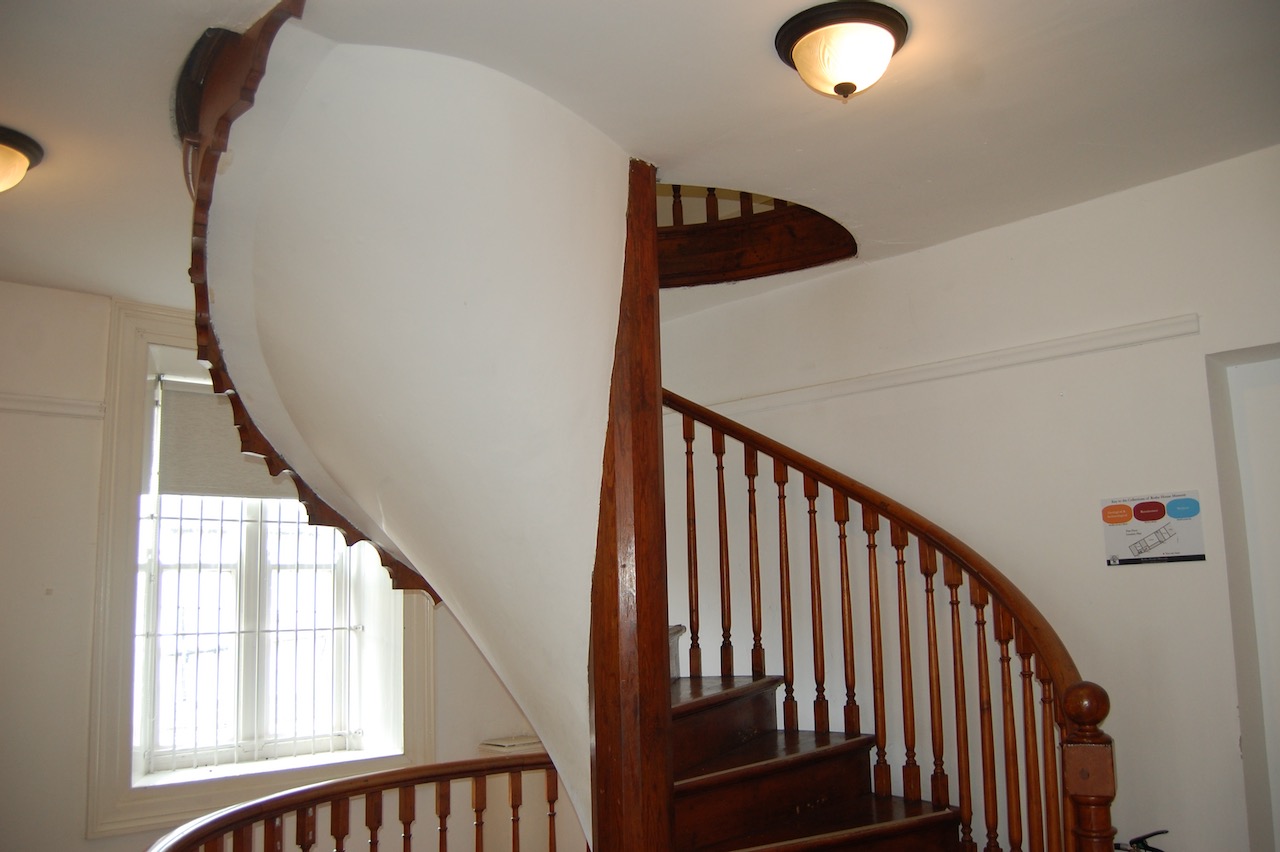
The interior of the house retains much of its early 18th century character. The central hall on the entrance front has wood panelling and a handsome black Kilkenny marble chimneypiece. The house is full of the art work of Elizabeth Cope.
The hall is flanked by smaller rooms with corner fireplaces, which were the original dining and drawing rooms and are part of the old towerhouse.
William Deane Butler refitted the hall with floor-to-ceiling timber panelling while the room beyond, previously a saloon, became the new dining room and was given a large Tudor-headed buffet niche and a new Gothic bay window. Surviving plans show that the room to the north of the hall was intended as a billiard room while a study was provided in the new wing. [see 1]
Mark Bence-Jones describes the interior in his Guide to Irish County Houses (1988): “Late-Georgian staircase hall with graceful wooden stairs and walls marbled Siena 1894. Dining room with Gothic plasterwork in ceiling and Gothic pelmet. The drawing room is charmingly Victorian, with flowered paper and curtains of faded gold dating from 1894 and an Italian white marble chimneypiece brought back from Milan ca. 1860 by James Aylward. It formerly opened into a conservatory built 1861 to the design of Sir Joseph Paxton, but this was removed 1961. The entrance front faces along an avenue of trees to a Claire-voie [“clear view”] with rusticated stone piers which was part of C18 layout.”
William Deane Butler transformed the dining room into a Victorian drawing room featuring an impressively-carved white marble chimneypiece which James Kearney-Aylward purchased in Milan in 1860.
The Landed family website further describes the interior:
“The principal and secondary staircases occupy the space behind the original tower, and while the main staircase was renewed in the late 18th century, the secondary stair remains largely in its original form. Beyond the hall a saloon overlooked the grounds to the rear of the house. On the first floor, a transverse corridor down the middle of the house gives access to the principal bedrooms.” [see 1]
The website adds: “Steeped in such culture and heritage, Shankill Castle and Gardens has been a place of inspiration for artists for the past twenty-five years. The Cope family have dedicated themselves to the preservation and restoration of this historic house while celebrating the unique and eclectic character of the building. Consisting of three artists, one historian, and one archaeologist, the combined talents and passions of the Cope family are reflected in the inventive and lively activities offered at the castle. Exhibitions are frequently hosted in the castle and farmyard, which are also used as artists’ studios, attracting visitors not just locally, but from the whole of Ireland and internationally.“
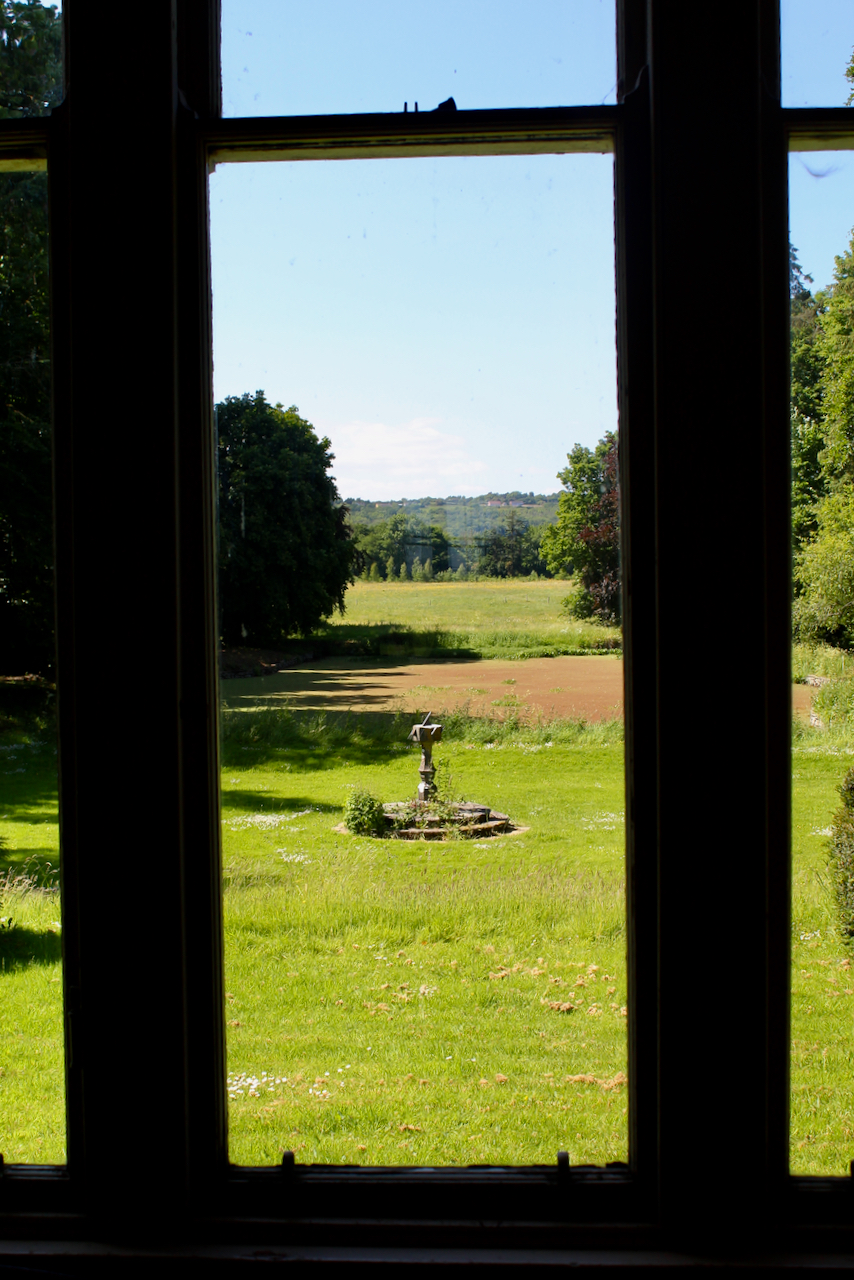
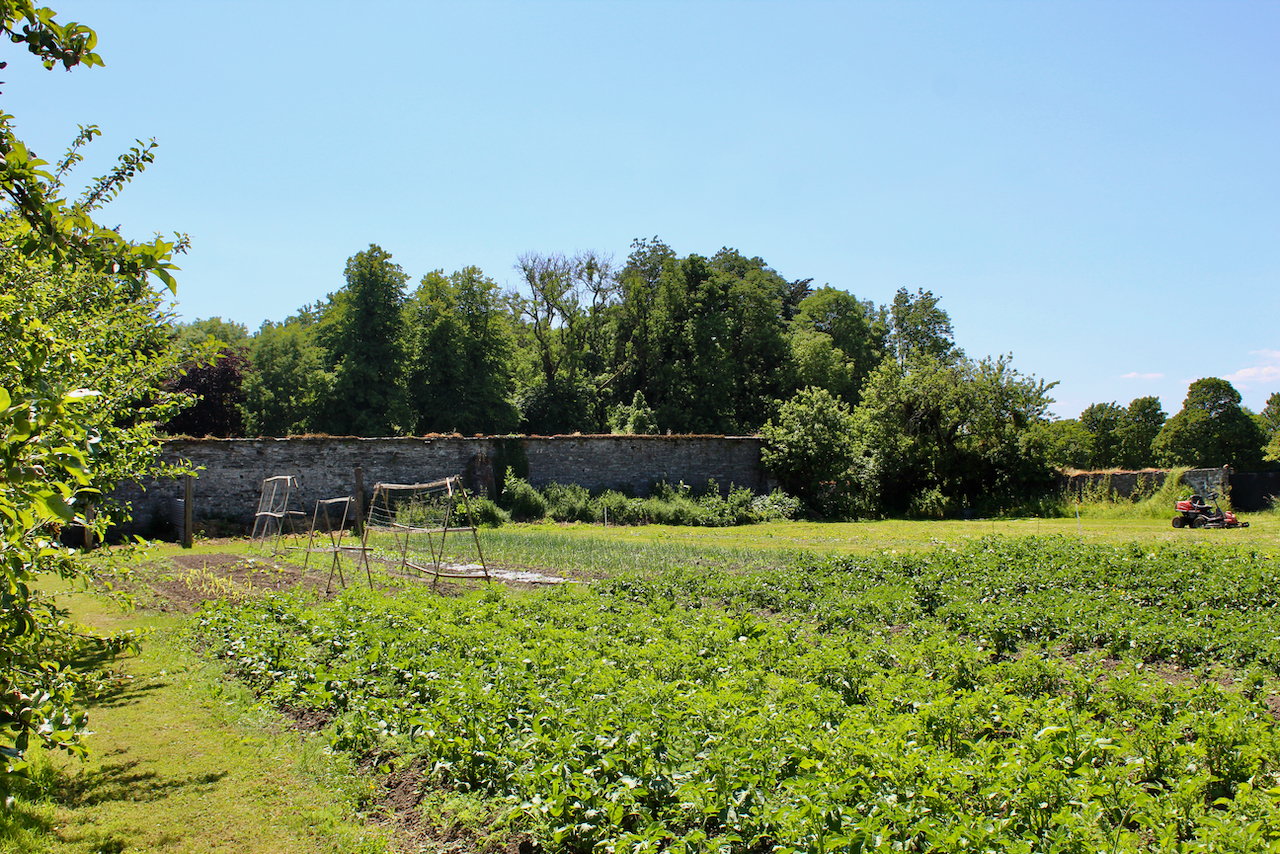
The gardens are beautiful and the Copes are so generous to share them with visitors. They run an organic farm. Our visit from Dublin was a lovely day outing.
“In 1796, 1797 and 1798 he was in England, possibly working in the office of a London architect. His diary-cum-notebook in the National Library of Ireland records excursions from London in August 1796 and April and September 1797. Places which he visited included Painshill, Woburn Park (Surrey), Oatlands, Wanstead, Wotton House, Blenheim and Tintern. The notebook shows clearly that his main interests were architecture and gardening. He had a London address when he exhibited two views of Kilkenny and a design for the garden front of a villa at the Royal Academy in 1797 and 1798 respectively. He is almost certainly the ‘W. Robertson’ who was the author of two works published by Ackermann in London at about this time: A Collection of Various Forms of Stoves, Used for forcing Pine Plants, Fruit Trees, And Preserving Tender Exotics (1798)and Designs in Architecture, For Garden Chairs, Small Gates for Villas, Park Entrances, Aviarys, Temples, Boat Houses, Mausoleums, and Bridges (1800).
“…His large library – ‘the result of Fifty Years’ collecting’ – was sold at auction in Dublin over a number of days the following April. For many years he had been keenly interested in local history and topography. In about 1808 he had ‘employed two talented Artists to make drawings of every object remarkable for its antiquity or picturesque beauty, then to be found in the County of Kilkenny, with the intention of publishing a Topographical Work‘. Some of these he had had engraved. After building up a large collection of material, he had never found time to produce the proposed book. This task fell to James George Robertson, a Scottish-born relative, who, in about 1828, when he was a boy of about twelve, had joined William Robertson and had presumably become his pupil and assistant. James George Robertson published a selection of the material with some additional notes of his own in a rather haphazard series of parts from 1851-53 under the title The Antiquities and Scenery of the County of Kilkenny. In 1853 James George Robertson presented the Kilkenny Archaeological Society with the manuscript report on the fabric of St Canice’s Cathedral, Kilkenny, which William Robertson had prepared in 1813.
“…The Irish Architectural Archive holds presentation elevations by Robertson for the enlargement and Gothicization of Kilkenny Castle, 1826 (Acc. 80/35) and sketch designs for Powerstown glebe house, Co. Kilkenny, with a related letter from Robertson to the Rev. Thomas Mercer Vigors, dated William Street, 5 April 1818 (Acc.78/36.B4,4a). It also holds a letter from Robertson, written from Kilkenny on 7 November 1813 to the London bookseller Joseph Taylor (Acc. 2006/112) in which he discusses Sir James Hall’s Essay on the Origin, History and Principles of Gothic Architecture (1813).“
[6] Mark Bence-Jones A Guide to Irish Country Houses (originally published as Burke’s Guide to Country Houses volume 1 Ireland by Burke’s Peerage Ltd. 1978); Revised edition 1988, Constable and Company Ltd, London.
orange: “whole house rental” i.e. those properties that are only for large group accommodations or weddings, e.g. 10 or more people.
green: gardens to visit
grey: ruins
donation
Help me to pay the entrance fee to one of the houses on this website. This site is created purely out of love for the subject and I receive no payment so any donation is appreciated!
€15.00
Places to visit in County Kilkenny:
1. Aylwardstown, Glenmore, Co Kilkenny– section 482
2. Kilfane Glen & Waterfall Garden, Thomastown, County Kilkenny– 482 – garden only
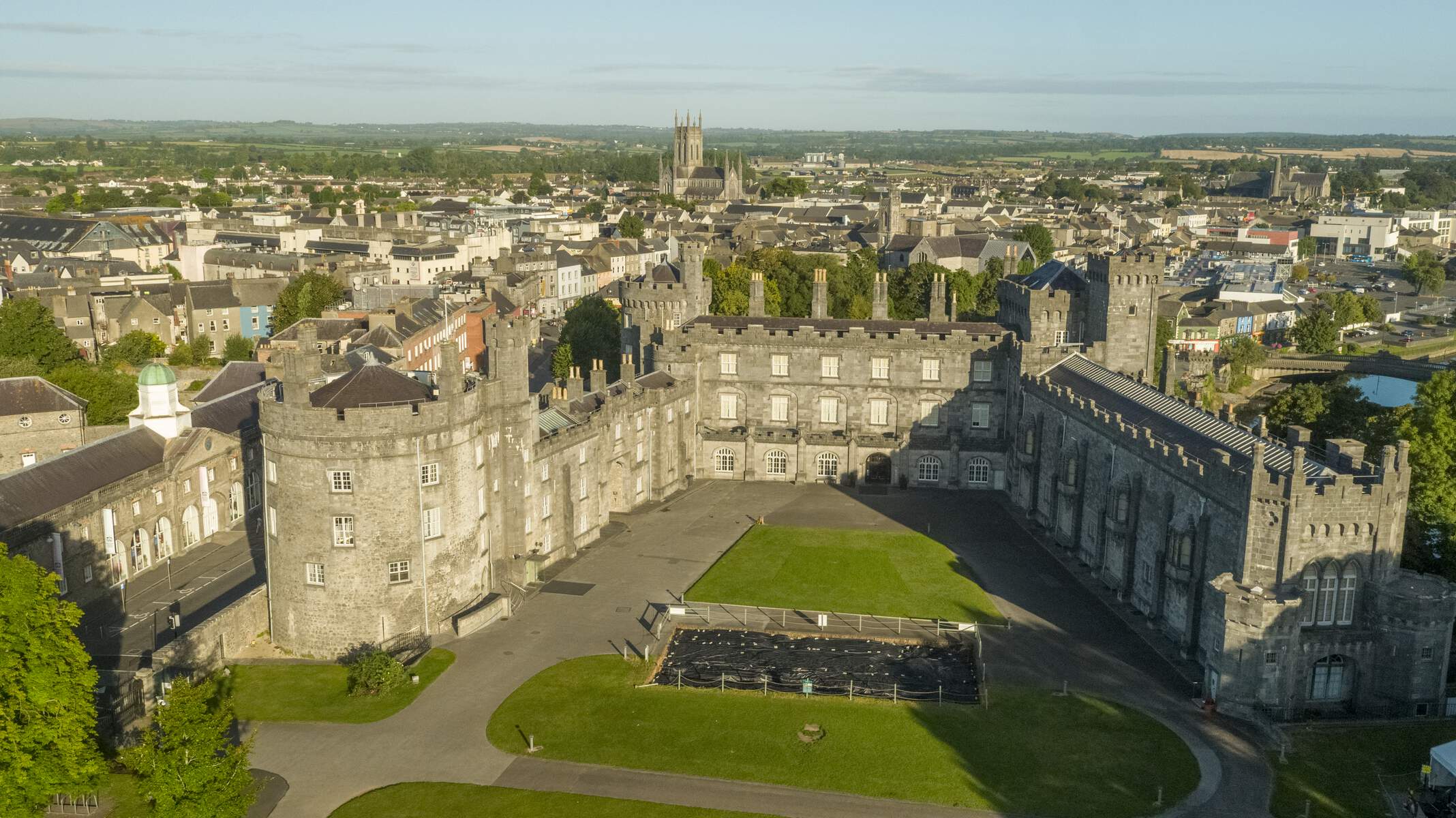
3. Kilkenny Castle, Kilkenny – OPW
4. Kilrush House, County Kilkenny, ihh member, by appt.
5. Rothe House, Kilkenny, County Kilkenny– open to the public
4. Kilrush House, County Kilkenny, ihh member, by appt.
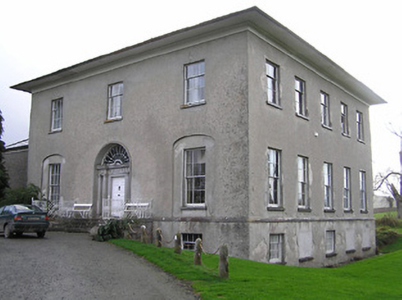
Kilrush House, photograph courtesy of National Inventory of Architectural HeritageKilrush House, photograph courtesy of National Inventory of Architectural Heritage.
The Historic Houses of Ireland website tells us:
“William Robertson (1777 – 1850) was a native of Kilkenny where the patronage of Lord Ormonde stood him in good stead, since most of his work can be found in Kilkenny and the neighbouring counties of Laois, Tipperary and Waterford. When Richard St. George wished to move from his medieval castle at Kilrush near Freshford in 1820, Robertson was the obvious choice. His work is less exuberant than that of his namesake Daniel but he was a talented architect and produced an interesting early nineteenth century reinterpretation of the typical late-Georgian country house.
“The St Georges are a Norman family who ‘came over to England with the Conqueror’ and arrived in Ireland in the sixteenth century. They quickly became established here, with several branches in County Kilkenny and others in Galway, Leitrim and Roscommon.
“The St Georges of Kilrush were active in political and cultural circles in the seventeenth and eighteenth centuries. Richard St George was an M.P. in the Irish Parliament, with a town house at No. 8 Henrietta Street, while his cousin St George Ashe was the Provost of Trinity College and a close friend of Dean Swift. St. George was also a founding member of the Dublin Philosophical Society, which encouraged his numerous publications of scientific and national interest.
“Richard considered moving out of his tower-house at Kilrush in the middle of the eighteenth century but this decision was left to his heirs, who built the existing house in the early nineteenth century. Kilrush has a three bay façade, a five bay garden front, a hipped roof with widely overhanging eaves, a single very large, central chimney-stack into which all the flues are diverted, and an interesting ground plan.
“The cut-stone door case is a handsome arrangement of Doric half-columns and pilasters, supporting a deep entablature with swags beneath a semi-circular leaded fanlight. The ground floor windows to either side are set in shallow recesses with elliptical heads; otherwise the elevations are quite plain.
“The most interesting internal space is the landing, a perfect Doric rotunda supporting a delicately glazed dome. This partly lights the inner hall below through a circular well in the floor. The dining and drawing rooms are both finely proportioned apartments, with many original fittings and furnishings, and their original wallpaper.
“Kilrush looks out over mature parkland to a large mill, almost half a mile off. The gardens contain a stupendous collection of snowdrops, there is a tower house, the former residence of the family in the attached yard, while an interesting early garden layout with connected canals has recently been identified and is currently in the course of restoration.” [1]
5. Rothe House, Kilkenny, County Kilkenny
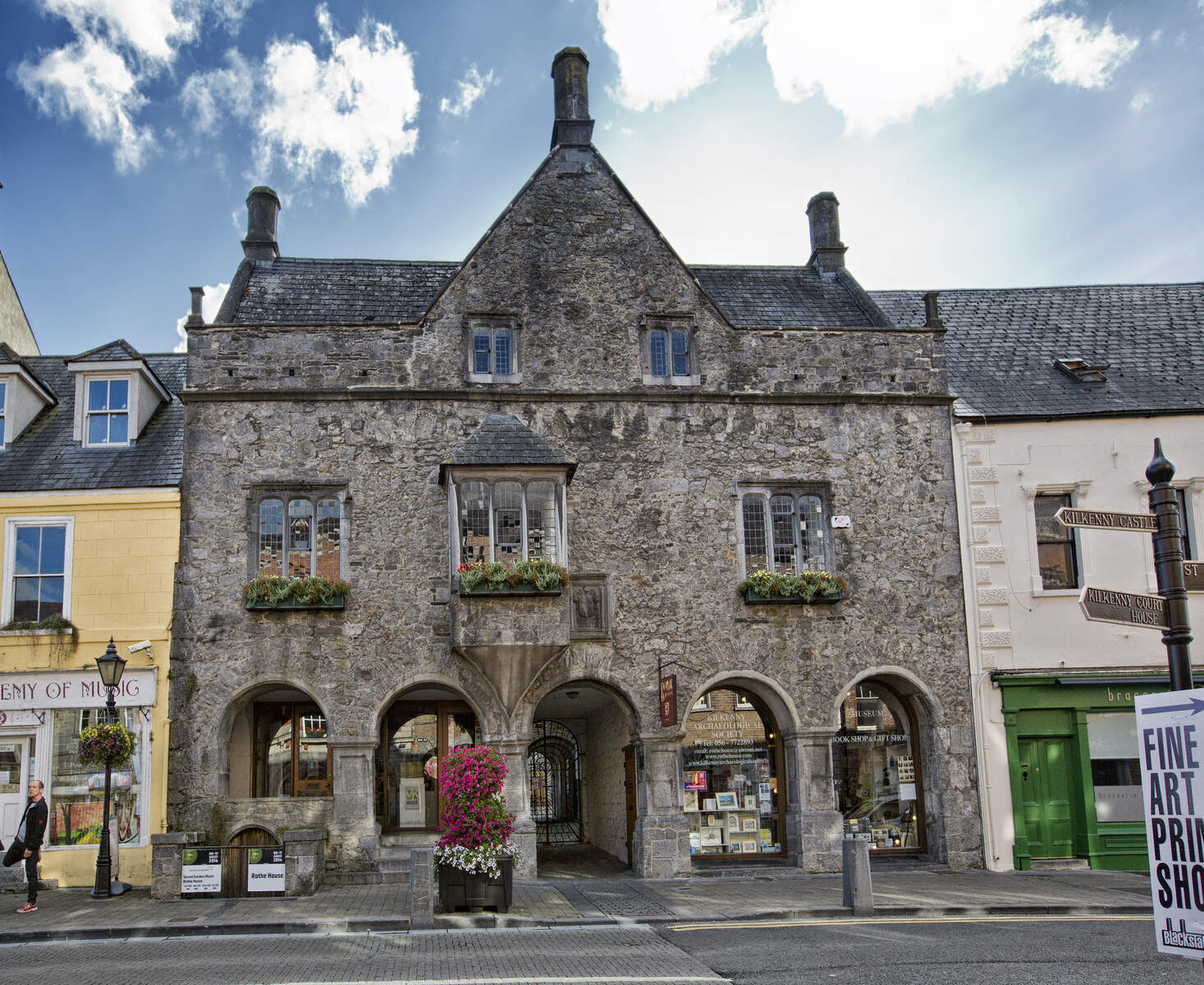
Rothe House, Kilkenny, photograph by Brian Morrison 2015 for Tourism Ireland [2]
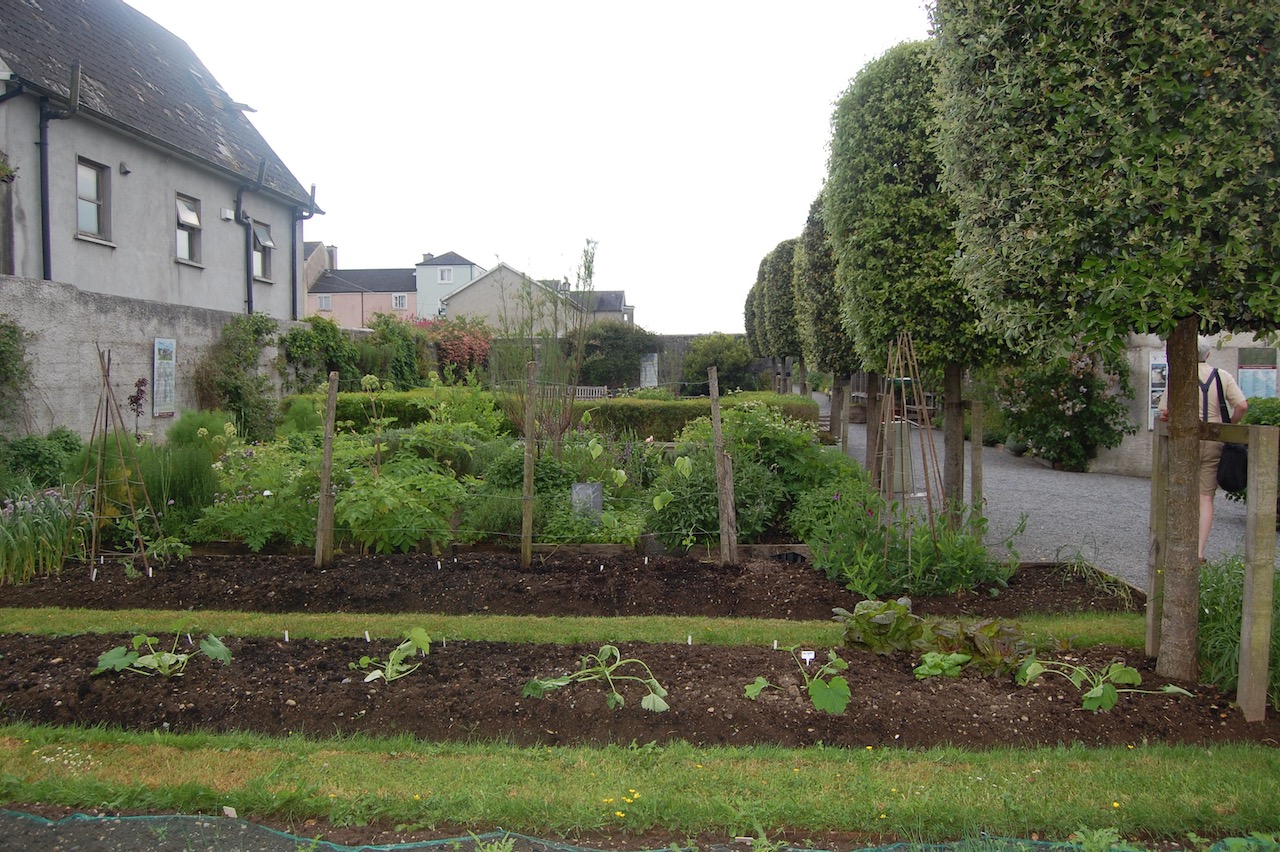
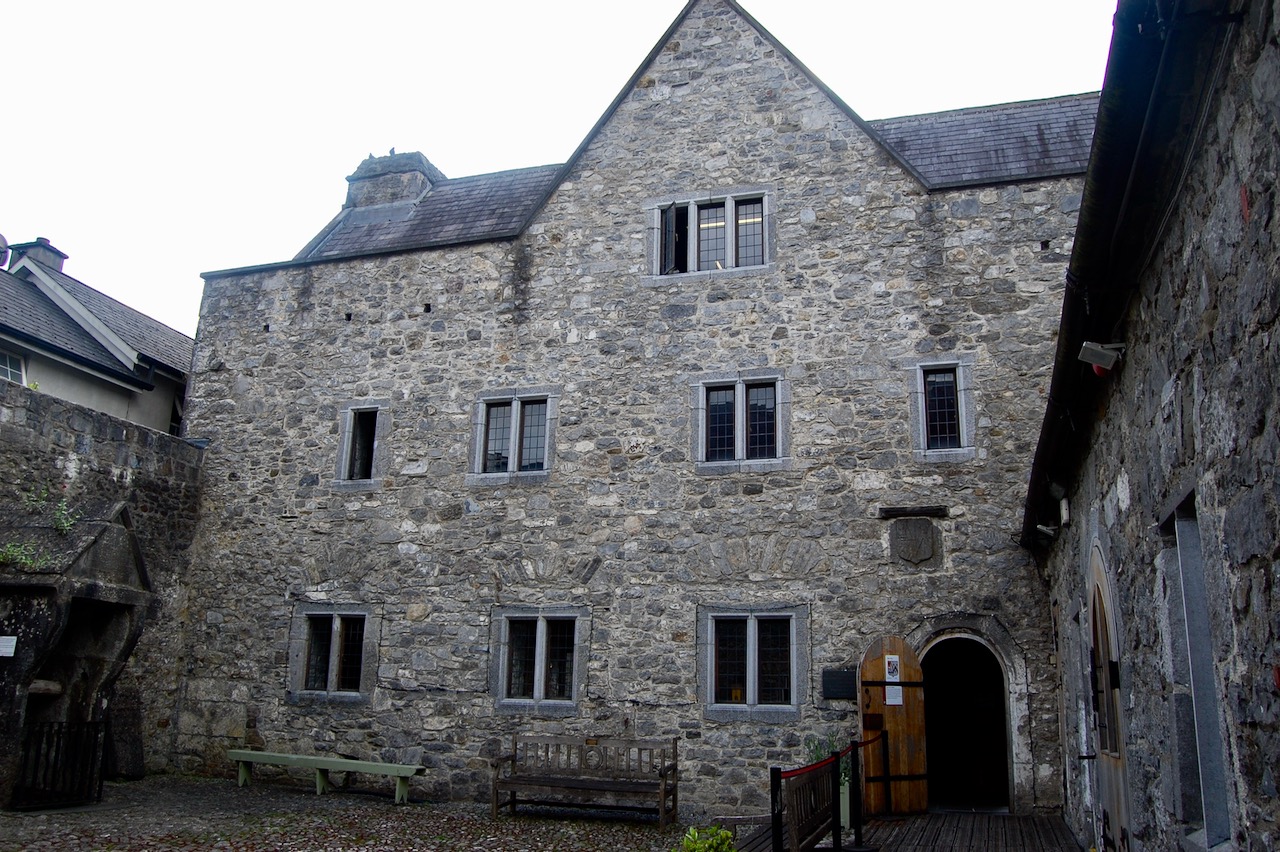
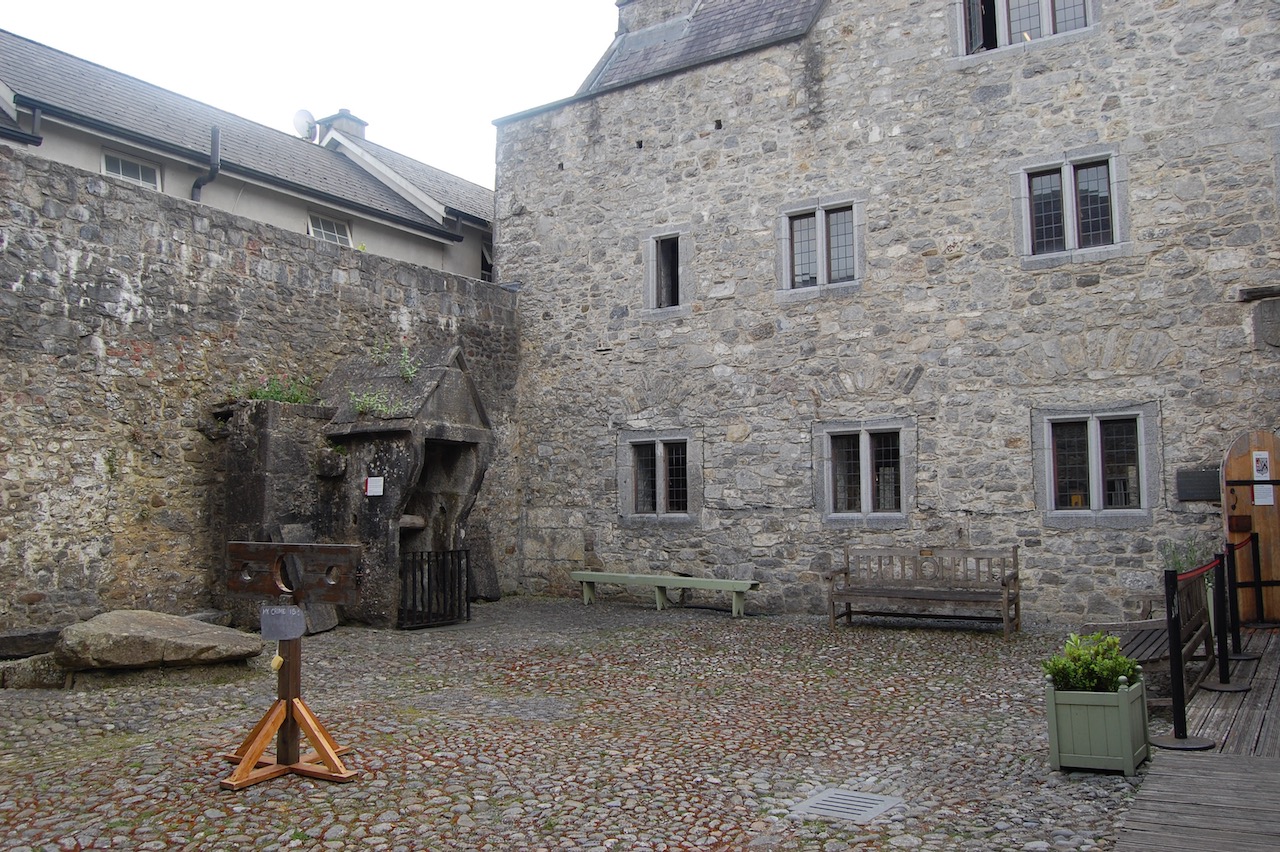
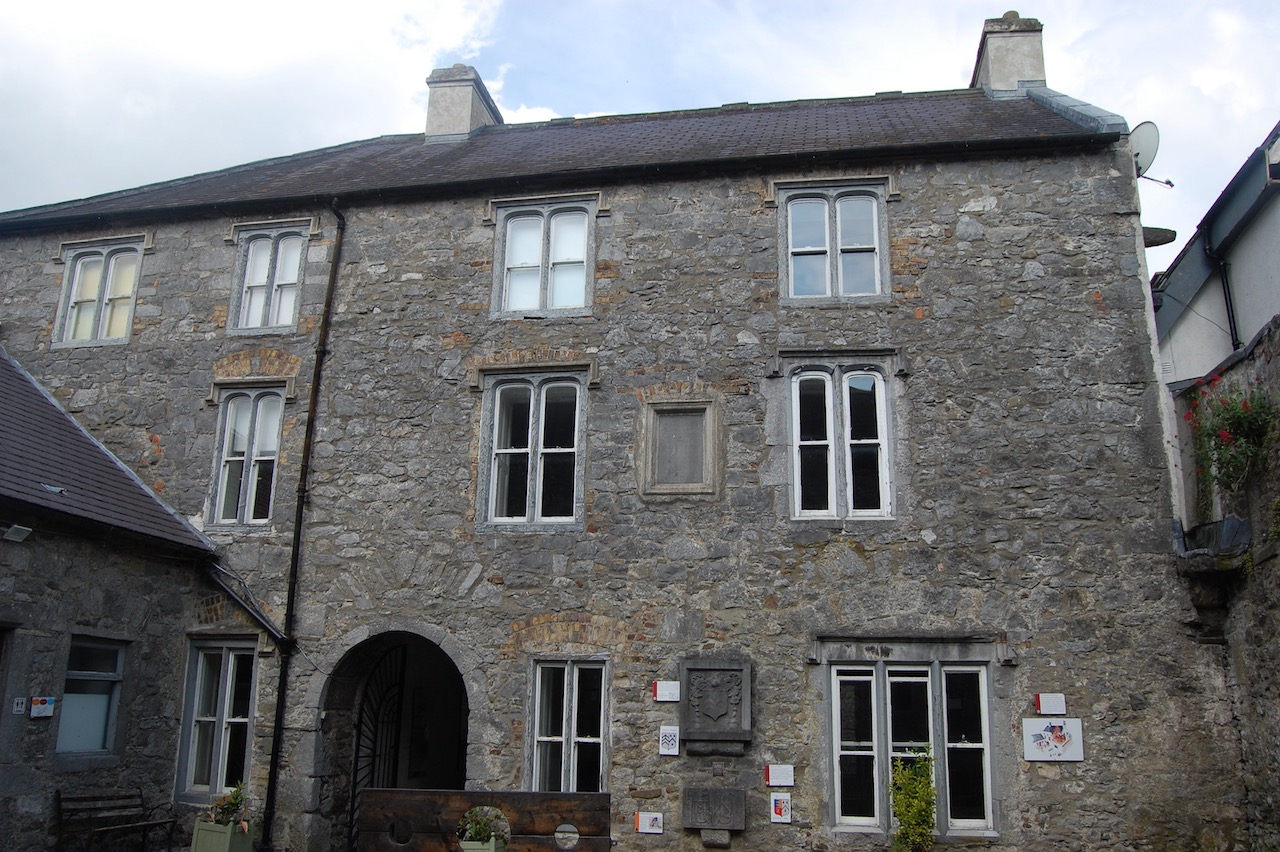
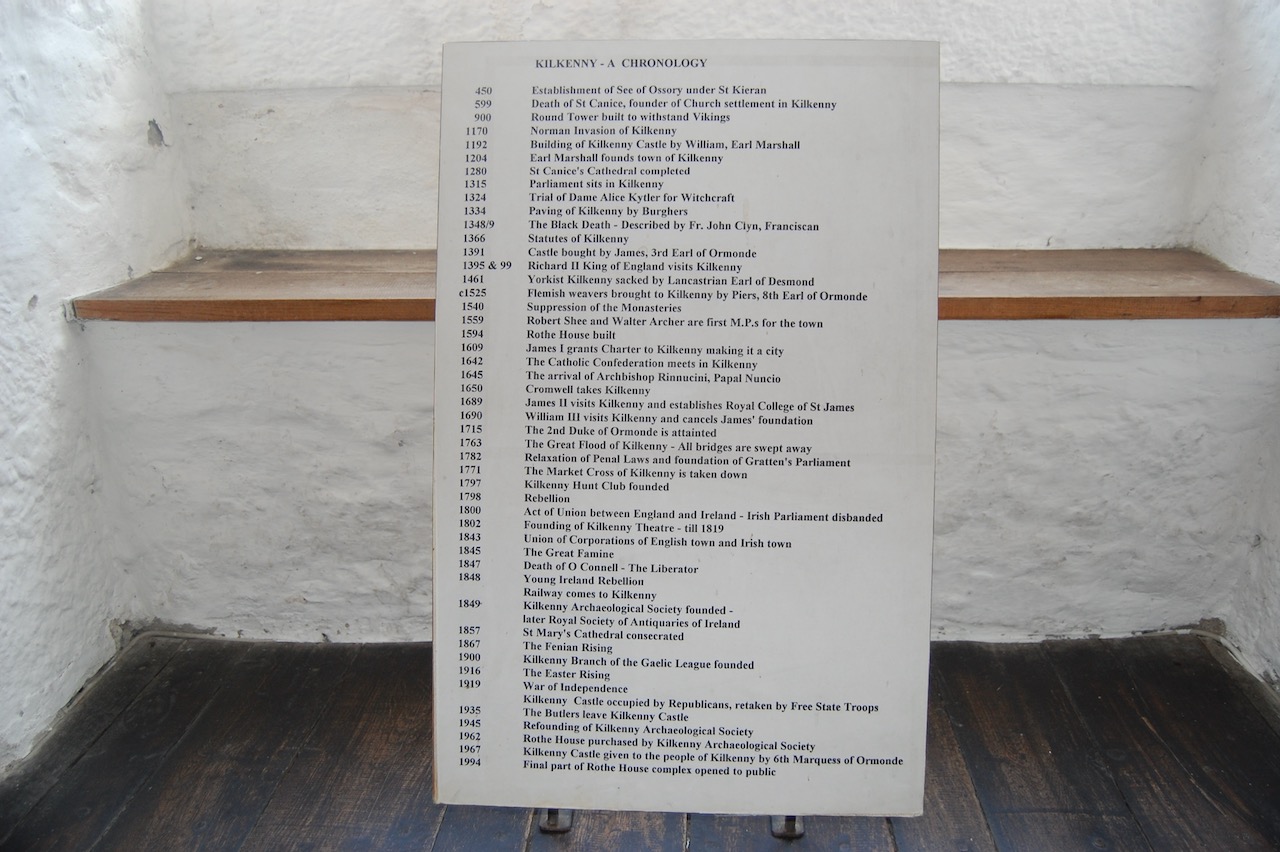
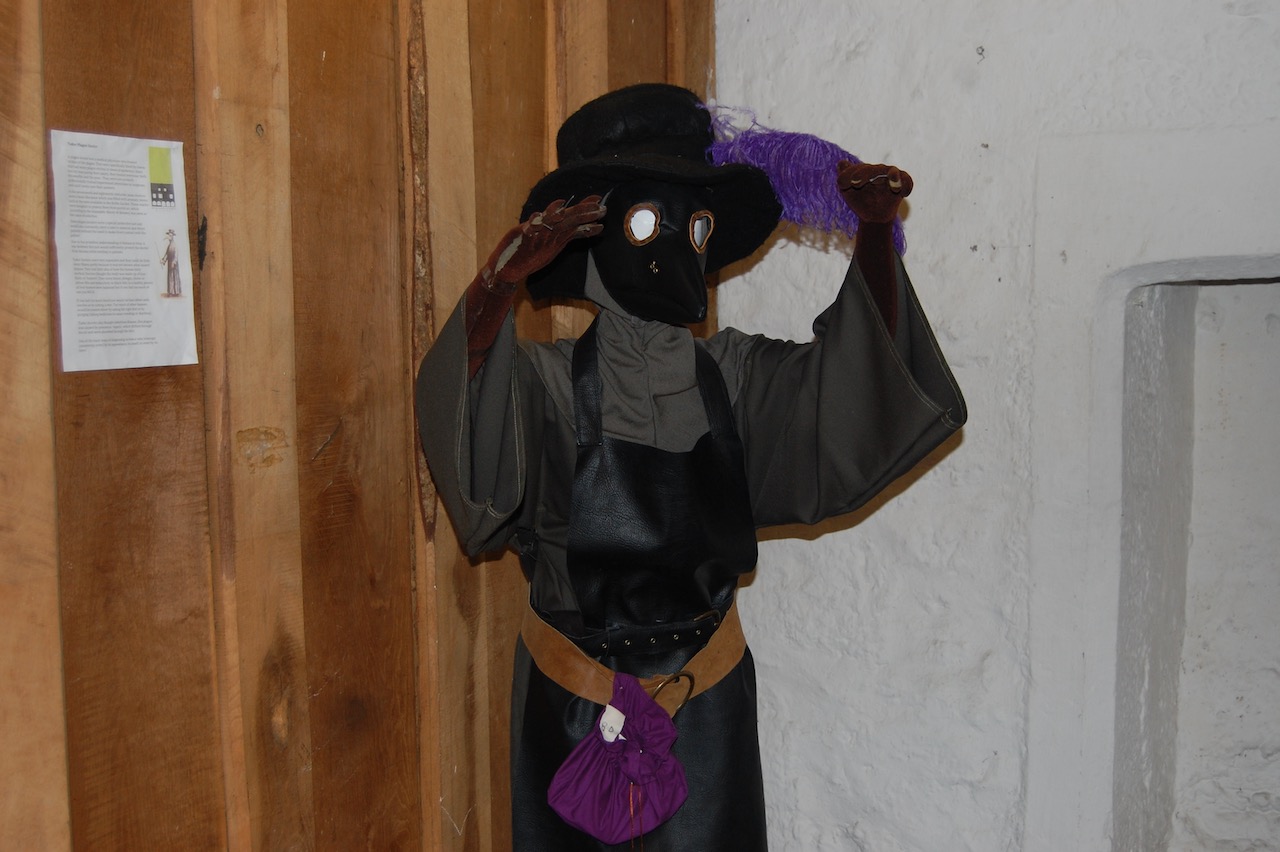
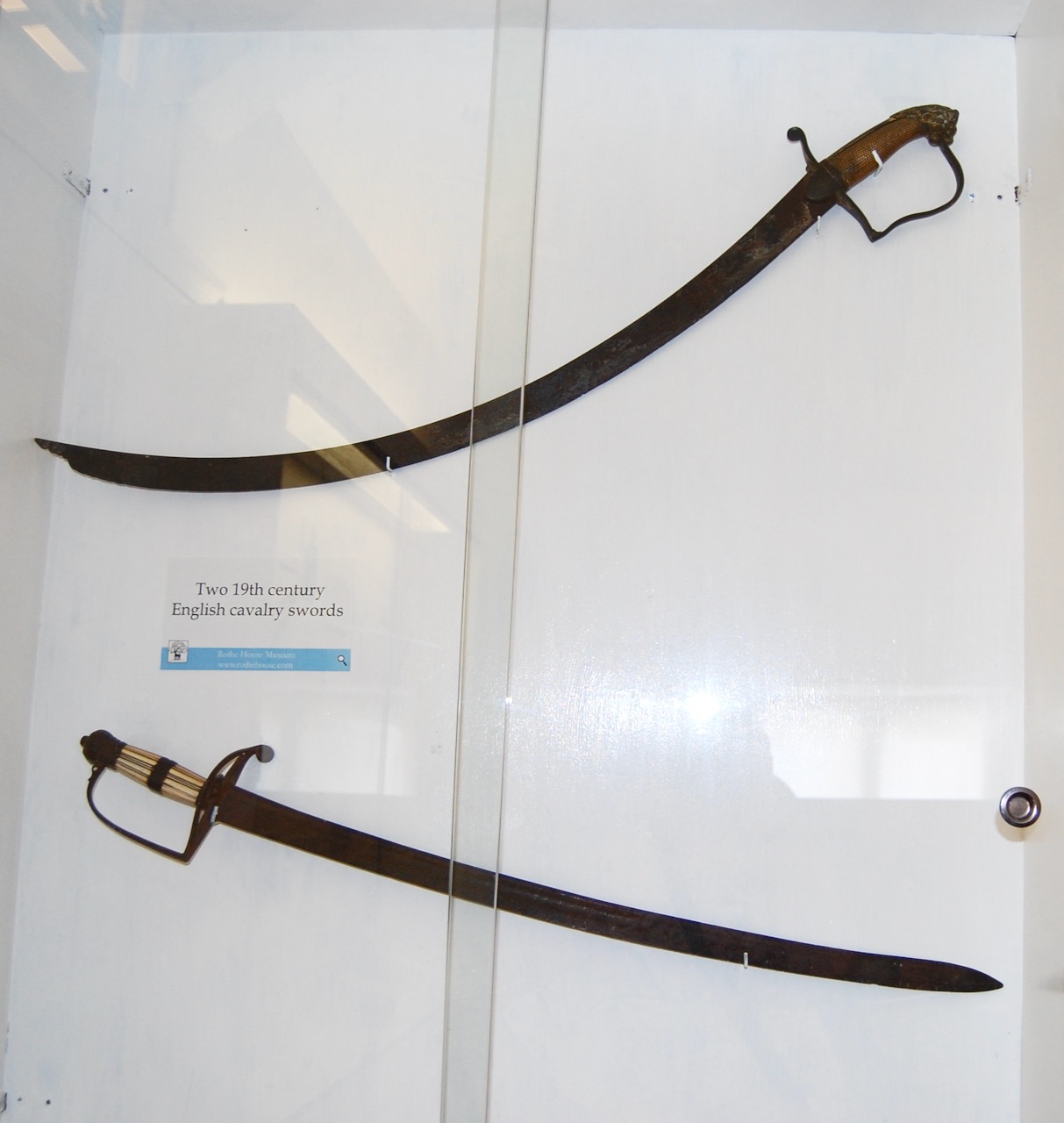
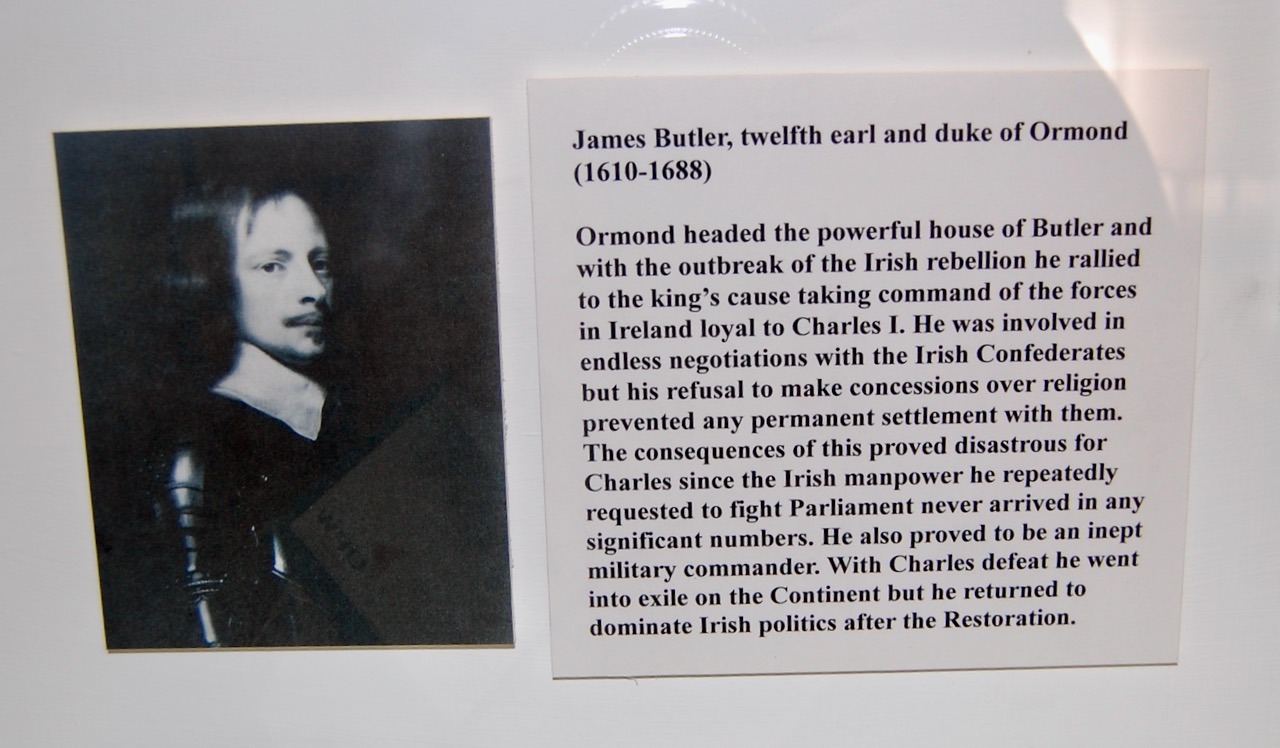
Rothe House is a treasure, older than any house in Dublin! It was built around 1594-1610, by John Rothe FitzPiers (1560-1620) for his wife Rose Archer, and is the last merchant’s townhouse in Kilkenny surviving from the early post-medieval period. [3] The house, purchased by Kilkenny Archaeological Society in 1962, is open to the public as a museum displaying a selection of the historic artefacts collected by the Society since its founding in 1947. The artefacts relate to Kilkenny heritage throughout the ages and some date from prehistoric times. The adjoining garden has since 2008 been open to the public and is a faithful reconstruction of an early seventeenth-century urban garden.
“Terraced five-bay two-storey over basement house with dormer attic on a U-shaped plan about a stone cobbled (east) courtyard with two-bay two-storey gabled central bay having jettied box oriel window to first floor, series of five round-headed openings to ground floor forming arcade, single-bay three-storey linking range to north-west, and three-bay three-storey parallel range to west (completing U-shaped plan about a courtyard) originally three-bay two-storey having round-headed carriageway to right ground floor. In use as school, c.1750. Restored, 1898, to accommodate use as Gaelic League house. Converted to use as museum, 1963-5. Restored, 1983. Restored, 1999, to accommodate use as offices.”
“In 1594 a wealthy merchant called John Rothe built this magnificent Tudor mansion. Second and third generation houses were built around the cobelled courtyards and a well dating to 1604. The façade houses shops, one of them was John Rothe’s own. During the Confederation of Kilkenny, many dignitaries were entertained here by John Rothe and his cousin, the Bishop of Ossory. The building has been restored magnificently and is now home to Kilkenny Archaeological Society.” [4]
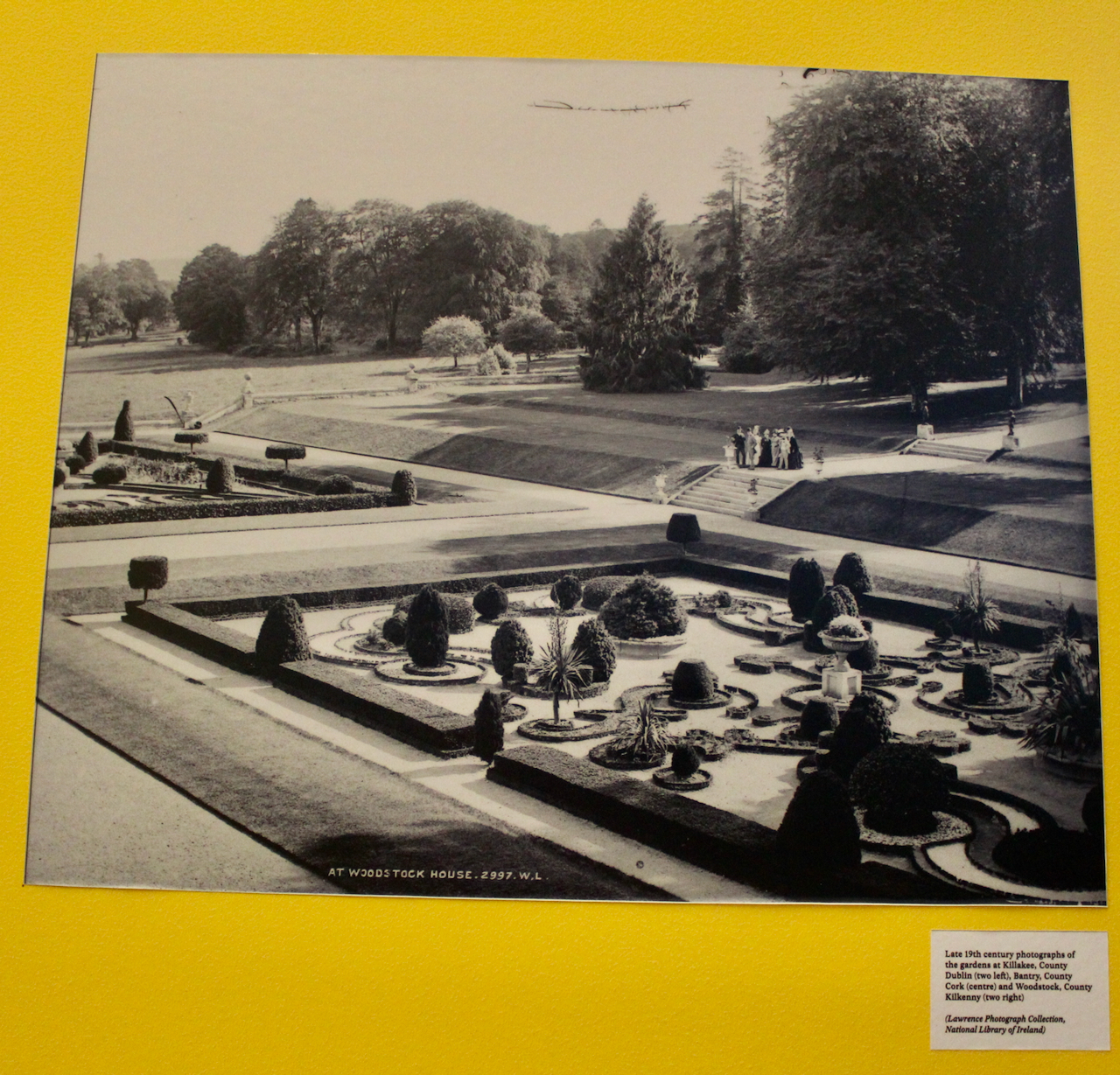
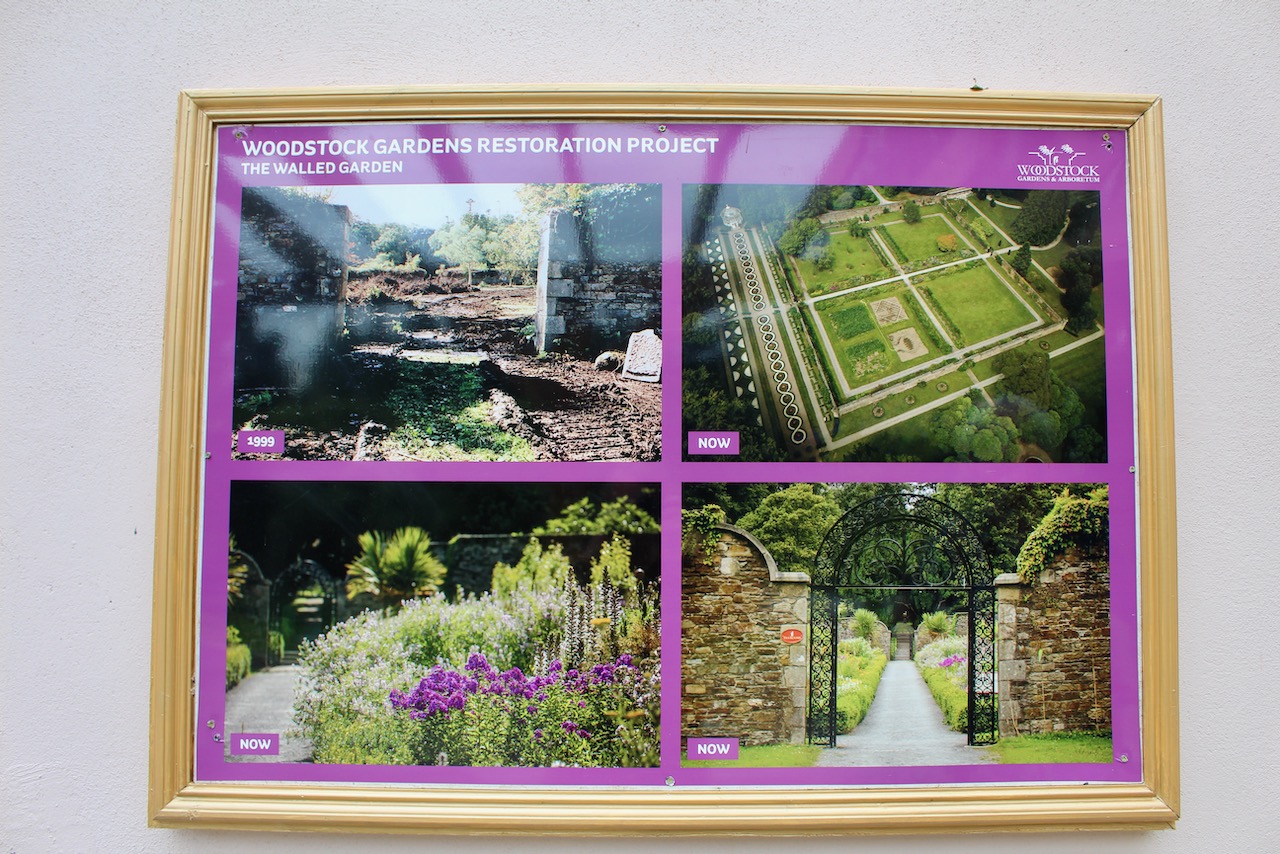
Woodstock Gardens, photograph from Lawrence Photograph Collections, National Library of Ireland, photograph from “In Harmony with Nature” exhibition at the Irish Georgian Society curated by Robert O’Byrne.
Mark Bence-Jones writes about Woodstock (1988):
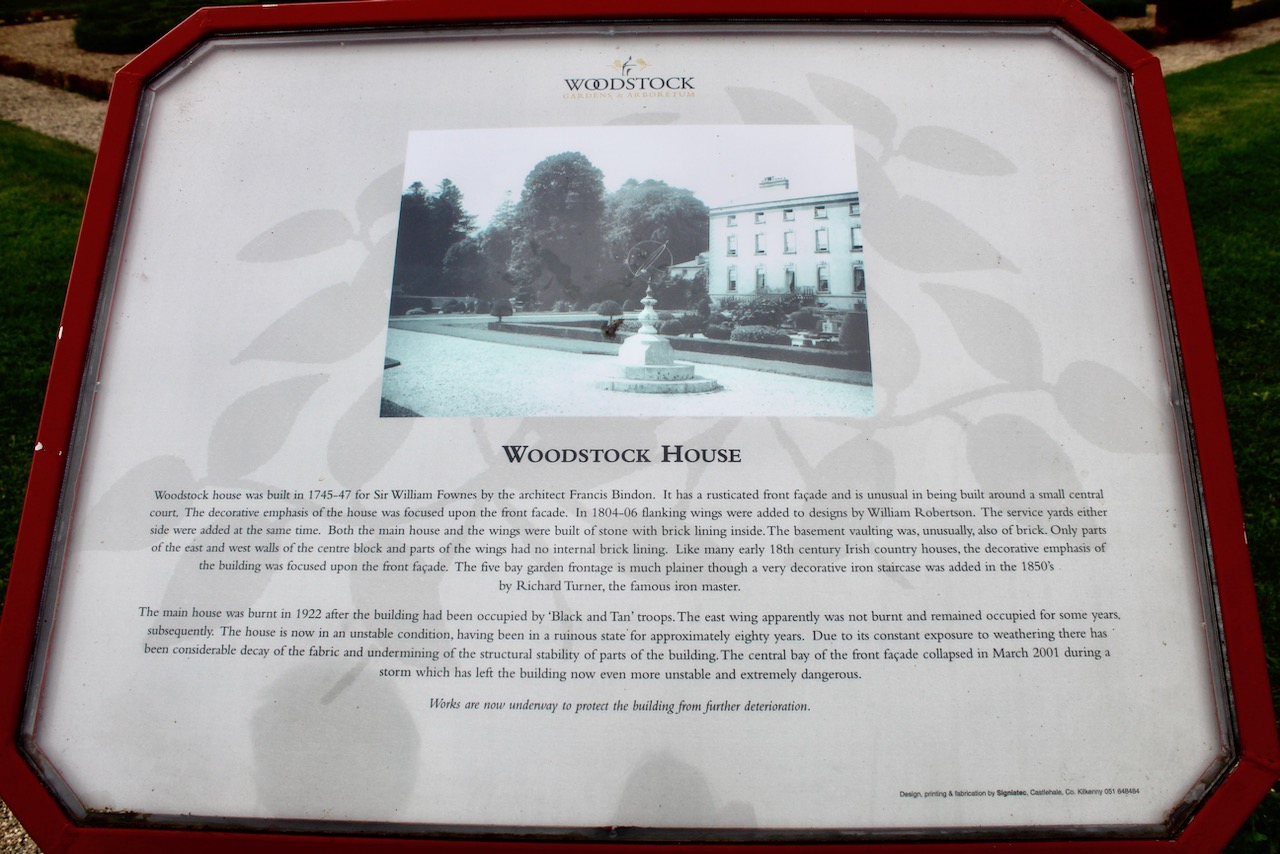
p. 286. “(Fownes, Bt/EDB; Tighe/IFR) A house by Francis Bindon [for William Fownes, 2nd Baronet], probably dating from 1740s, which is unusual in being built round a small inner court, or light-shaft. Three storeys; handsomely rusticated entrance front of six bays with a central niche and statue above the entrance doorway…In 1770s Sarah Ponsonby lived here with her cousins, Sir William and Betty Fownes [born Elizabeth Ponsonby]; her friend, Eleanor Butler, having escaped from Borris, co Carlow, where she was being kept in disgrace, was let into Woodstock through a window, hiding herself in Sarah’s room for 24 hours before being discovered; shortly afterwards, the two friends left for Wales, where they subsequently became famous as the “Ladies of Llangollen.” Woodstock passed to the Tighes with the marriage of the daughter and heiress of Sir William Fownes to William Tighe, whose daughter-in-law was Mary Tighe, the poet, author of Psyche; she died at Woodstock 1810 aged 37, and Flaxman’s monument to her is in a small neo-Classical mausoleum behind the Protestant church in the village of Inistioge, at the gates of the demesne. There was also a statue of her in one of the rooms in the house. Woodstock was burnt ca 1920, and is now a ruin, but the demesne, with its magnificent beechwoods, still belongs to the Tighes.” [6]
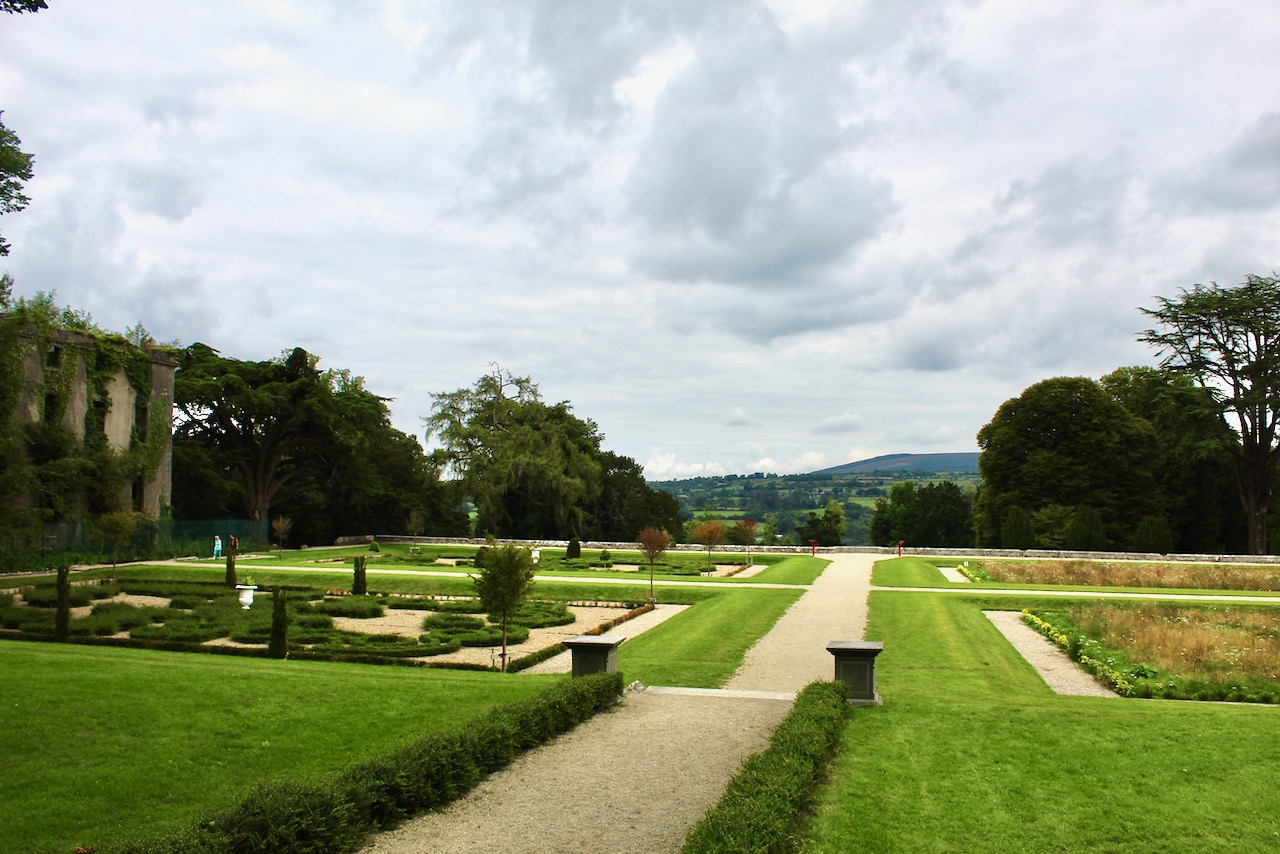
The formal parterres were created in the 1860s by a Scotsman, Charles McDonald, for Colonel William Tighe (1794-1878) and his wifeLady Louisa née Lennox (1803-1900, daughter of Charles, 4th Duke of Richmond – she is not to be confused with Louisa Lennox (1743-1817) daughter of Charles 2nd Duke of Richmond, who married Thomas Conolly of Castletown, County Kildare). The parterre incorporates a shamrock motif. Robert O’Byrne tells us in his exhibition “In Harmony with Nature” at the Irish Georgian Society July 2022 that creating the parterres involved removing 200,000 cubic yards of earth and retention by a wall of cut granite quarried on the estate and ornamented by local craftsmen with stone finials, balls and vases.
Woodstock Gardens, photograph from Lawrence Photograph Collections, National Library of Ireland, photograph from “In Harmony with Nature” exhibition at the Irish Georgian Society July 2022 curated by Robert O’Byrne.
The estate passed to the daughter, Sarah, of William Fownes and Elizabeth Ponsonby, and Sarah married William Tighe (1738-1872) of Rossana, County Wicklow.
Ballyduff House, courtesy of National Inventory of Architectural Heritage.
The website tells us:
“Ballyduff House is a classic Georgian country house with a 14th century castle, steeped in Irish history and full of the warmest of welcomes.
“The River Nore sparkles as it runs along Ballyduff’s riverbank while sheep and cattle graze the pasture either side.
“Open fires, the book lined library and the comfortable bedrooms furnished with Irish antiques capture an early 18th century experience tempered by discreet 21st century comfort.
“This is real Ireland – calm, green and beautiful, set alongside the picturesque village of Inistioge with Dublin only an hour away.“
The National Inventory tells us:
“A country house representing an important component of the mid eighteenth-century domestic built heritage of County Kilkenny with the architectural value of the composition, one abutting a “roofed down” tower house, confirmed by such attributes as the deliberate alignment maximising on panoramic vistas overlooking broad parkland and the wooded River Nore; the compact rectilinear plan form centred on a restrained doorcase showing a simple radial fanlight; the diminishing in scale of the openings on each floor producing a graduated visual impression with the principal “apartments” or reception rooms defined by Wyatt-style tripartite glazing patterns; and the slightly oversailing roofline. Having been well maintained, the elementary form and massing survive intact together with substantial quantities of the original fabric, both to the exterior and to the interior, including crown or cylinder glazing panels in hornless sash frames: meanwhile, contemporary joinery; restrained chimneypieces; and sleek plasterwork refinements, all highlight the artistic potential of the composition. Furthermore, an adjacent farmyard complex ; and a walled garden (extant 1839), all continue to contribute positively to the group and setting values of a self-contained estate having historic connections with the Coghill family including Sir Josiah Coghill (1773-1850), third Baronet (Lewis 1837 II, 18); the Connellans of nearby Coolmore House (see 12403210); and Lieutenant-Colonel Frederick William John Shore (1844-1916), fourth Baron Teignmouth (NA 1901; NA 1911). NOTE: Given as the birthplace of Sir John Joscelyn Coghill (1826-1905) of Glen Barrahane in Castletownshend, County Cork (Dod’s Peerage Baronetage and Knightage 1865, 186); and George Leopold Bryan (1828-80) of Jenkinstown (Dod’s Parliamentary Companion 1875, 174).“
2. Blanchville Coachyard, Dunbell, County Kilkenny – coachyard accommodation
Blanchville Coachyard, Dunbell, County Kilkenny, photograph from websitehttps://blanchville.ie/
“The Coach Houses & Gardener’s Cottage are, as the name suggests, part of the beautiful old stone building that was originally the Coach House at Blanchville. The building has been sensitively and extensively refurbished and now offers guests comfortable and inviting Self-Catering Accommodation in three self-contained Holiday Homes.
“These Heritage Holiday Lets feature a cosy woodburning stove or open fire, fully fitted modern kitchen and relaxing bedrooms – the perfect requisite for an enjoyable weekend break or holiday in Kilkenny.“
3. Butler House, Kilkenny, co Kilkenny– accommodation
View to Butler House and Garden, Kilkenny Leo Byrne Photography 2015. (see [2])
The National Inventory tells us about Butler house: “Semi-detached three-bay three-storey over basement house, built 1786, with pair of three-bay full-height bowed bays to rear (east) elevation. Extended, 1832, comprising two-bay three-storey perpendicular block to right. Renovated, 1972. Now in use as hotel. One of a pair…An elegantly-composed Classically-proportioned substantial house built either by Walter Butler (1713-83), sixteenth Earl of Ormonde or John Butler (1740-95), seventeenth Earl of Ormonde as one of a pair of dower houses…Distinctive attributes including the elegant bowed bays to the Garden (east) Front contribute positively to the architectural design value of the composition while carved limestone dressings with particular emphasis on the well-executed doorcase displaying high quality stone masonry further enliven the external expression of the house in the streetscape.”
The house was home to Lady Eleanor Butler who lived here after the death of her husband Walter in 1783. Lady Eleanor Butler was the mother of John, the 17th Earl of Ormonde and her daughter, also Eleanor, was one of the famous “Ladies of Langollen”.
James, Earl of Ormonde (1777-1838, and 1st Marquess) resided in the house while the Castle was under reconstruction in 1831. A soup kitchen was run from here during the cholera epidemic of 1832.
The Royal Historical and Archaeological Association of Ireland held their meetings in Butler House in 1870. Kilkenny Design, the state design agency, restored Butler House in 1972. The decor and furnishings reflect a certain 1970s Art Deco style, which because of the muted colours and natural fabrics used, proved sympathetic to the original features of the house. In 1989, the Kilkenny Civic Trust acquired both Butler House and the Castle Stables.
4. Clomantagh Castle, Co Kilkenny – tower house accommodation
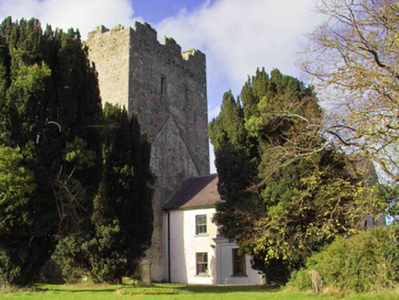
Clomantagh Castle, courtesy of National Inventory of Architectural Heritage.
The National Inventory tells us it is a farmhouse erected by John Shortal (d. 1857) or Patrick Shortal (d. 1858) representing an integral component of the mid nineteenth-century domestic built heritage of County Kilkenny with the architectural value of the composition, one occupying the site of a hall adjoining the fifteenth-century Clomantagh Castle.
Clomantagh Castle - was home to the [8th] Earl of Ormond, Pierce Ruadh (1467-1539). When he died in 1539 the castle along with other properties was passed to his son Richard Butler, first Viscount Mountgarret (1500-1571). The castle and its estate stayed in the Butler family until it was forfeited during the war with Cromwell to Lieutenant Arthur St. George [ancestor of the Kilrush family]. After the war the castle changed hands twice more and a farmhouse was added by the Shortall family, the owners in the 1800’s, before its last owner Willie White a local vet. The property is now owned by a non profit making charity called the Landmark Trust who preserve historic buildings.
The Landmark site tells us:
“The name Clomantagh comes from the Irish “cloch mantaigh”, meaning missing tooth or gappy smile. Locals gave this name to the castle as the irregular castellation reminded them of someone smiling with missing teeth.
“It has been established that the tower and bawn were built in the 15th century (c.1430). The tower house has been modified and extended over the centuries, and in the early 19th century a farmhouse was added providing accommodation with comfort, rather than defence, in mind. In recent times, the bawn walls have sheltered the buildings of a 20th century working farm. It also has a rare clochán (small dome-roomed structure) knit into the bawn walls. Five other tower houses can be seen from the roof of Clomantagh Castle, and they were all strategically aligned for defence purposes.
“Clomantagh followed mainstream castle design, emerging as an almost square building, six storeys high, with massive walls built from local limestone, and a corner staircase. Inserted high on the south wall is a Sheela-na-Gig. This pagan symbol was adopted by medieval builders and incorporated as the building was erected. High up the remains of the stepped battlement walls, the merlons can be seen – a specifically Irish feature whose inspiration is considered to be Venetian. Inside the battlements a wide walkway gave access to all sides of the building. In the north east corner, a high watchtower has been built. This is knows as Moll Gearailt’s Chair, after the particularly ferocious original mistress of the house, Maighréad nhee Gearóid, who used to sit watching over her fields to ensure that her labourers were not slacking at their work. The walkway, or Alure, was sloped outward to allow run off water through drainage holes and stone spouts. Generally, battlement walls have not survived well, their thinner construction and unstable sloping bases have contributed to their disappearance from tower houses.” [6]
5. Cullintra House, The Rower, Inistioge, County Kilkenny– accommodation
The website tells us: “A countryside retreat in the heart of Co Kilkenny, Ireland – surrounded by acres of woodland, farmland and secret places to explore, Cullintra House offers guests a unique accommodation experience.
“The house is furnished with your host Patricia Cantlon’s artistic style to the fore – each room has unique pieces of furniture or bespoke decorative touches that make Cullintra House a special find in Co Kilkenny.“
6. Lyrath House, near Kilkenny, County Kilkenny– hotel
Lyrath Estate by Colin Whittaker 2009, flickr creative commons.
p. 184. “(Wheeler-Cuffe, Bt/PB1934; Tupper/LGI1958) Originally a Tobin castle, acquired by the Wheeler family C17. By 1826, the house here consisted of a simple two storey five bay pedimented front facing west, with two wings running back from it to enclose a small three sided office court; the entrance door being on the south side; under a Regency veranda. In 1861, Sir Charles Wheeler-Cuffe, 2nd Bt, married Pauline Villiers-Stuart, daughter of Lord Stuart de Decies [of Dromana House, County Waterford – see my entry], whose parents did not regard this house as grand enough for her; so in that same year he rebuilt the main western block on a larger scale and in a rich Italianate style, while leaving the two storey wings more of less as they were.; his architect being John McCurdy. The entrance was moved from the south side to the new west front, which is pedimented and of five bays like its predecessor, but not entirely symmetrical; having a pair of windows on the ground floor to the left of centre, but a single window on the right. Entrance door framed by Ionic columns carrying a balustrade, above which is a Venetian window framed by an aedicule with a segmental pediment. All the ground floor windows have semi-circular heads, while the heads of the windows of the upper storey – apart from the central Venetian windows – are cambered. The garden front to the north has two single-storey balustraded curved bows, the windows of which are treated as arcades supported by Romanesque columns of sandstone. There is another Romanesque column separated the pair of windows in the centre of the front. The windows in the bow are glazed with curved glass. The roof is carried on a deep bracket cornice and there are prominent string courses, which give the elevations a High Victorian character. Hall with imposing imperial staircase, the centre ramp of which rises between two fluted Corinthian columns. There is a similarity between the staircase here and that at Dromana, Co Waterford, Pauline Lady Wheeler-Cuffe’s old home; except that the Dromana staircase was of stone, whereas that at Leyrath is of wood, with ornate cast-iron balustrades. On the centre ramp of the staircase there is still a chair with its back legs cut down to fit the steps; this was put there in 1880s for Pauline when she became infirm. Hall has a ceiling cornice of typical C19 plasterwork in a design of foliage, and door with entablatures which still have their original walnut graining. To the left of the hall, in the garden front, are the drawing room, ante-room and dining room, opening into each other with large double doors’ they have ceiling cornices similar to that in the hall, and good C19 white chimneypieces, enriched with carving; the drawing room and ante-room keep their original white and gold wallpaper. In the south wing there are smaller and lower rooms surviving from before the rebuilding; while first floor rooms in this wing have barrel ceilings throughout and contain some C18 chimneypieces of black marble.”
The website tells us more about the history:
“The name Lyrath is thought to date back to Norman times when “Strongbow” settled in Ireland during the Norman invasion. The area was originally called Le Rar or Le Rath by the French speaking De Ponte family who during the 12th century lived in the Monastery which was once located within the grounds. There is also a mention of a castle which was once said to have been situated within the grounds.
“Prior to 1653 the lands were owned by the Shortall family, who then rented the ‘old castle in repair’ and land to Thomas Tobin, Constable of the Barony of Gowran. In 1664, a gentleman named Thomas Mances, paid a sum of 4s ‘hearth money’ for the old castle.
“Later in the Seventeenth Century the property was acquired by Richard Wheeler through his kinship to Jonah Wheeler the Bishop of Ossary. By then the original ‘Tobin’ castle had been demolished.
“Richard Wheeler’s son, Jonah Wheeler, married Elisabeth Denny-Cuffe, a descendant of the Desart-Cuffe family who had extensive landed property in the Counties of Carlow and Kilkenny, on his marriage Jonah decided to adopt the name Cuffe.
“In 1814 the grandson of Jonah, also named Jonah, was living in the house with his with Elisabeth Browne, from Brownes Hill in neighbouring Carlow. Sir Jonah died in 1853 and his elder son, Sir Charles Denny Wheeler-Cuffe succeeded him.
“To redesign the house Sir Charles engaged the services of John McCurdy, a Dublin born Architect, whose other commissions with his partner, William Mitchell, include Kilkenny’s Knocktopher Abbey, Dublin’s famous ‘Shelbourne Hotel’ and the South City Markets.
“The current house is one of the most important surviving country houses built by John McCurdy.
“Sir Charles and Pauline had no children, so on the death of Sir Charles, his nephew Sir Ottway Fortesque Luke Wheeler-Cuffe inherited the baronetcy and demesne of Lyrath and became the primary resident. Sir Ottaway married Charlotte Isabel Williams in 1897. Lady Charlotte was the earliest known botanical explorer to reach the remote areas Burma and it was during these trips that she discovered several plants including two new species of Rhododendrons, Burmanicum, and Cuffianum (named after her). Cuffianum, the white rhododendron is extremely rare and has not been collected by any botanist since Lady Wheeler-Cuffe found in 1911.
“Sir Ottway and Lady Charlotte stayed in Burma until Sir Ottway’s retirement in August 1921 when they finally returned to live at Lyrath. On her return to Lyrath, Lady Charlotte redesigned the gardens. The Conservatory adjacent to Tupper’s Bar in the new Hotel overlooks the Victorian garden designer by her which has been carefully restored to her original design (based on family records and drawings), they are also home to the ancient yew trees which are now protected by a preservation order.
“Lady Charlotte lived in the house until her death in 1966 in her 100th year.
“Following the death of Lady Charlotte, in 1967 the property was inherited by Lieutenant-Colonel G.W. Tupper whose grandfather had married Sir Charles’ sister in 1846. Reginald’s great nephew, Captain Anthony Tupper and his wife moved into the house and ran it as a traditional estate farm with a herd of Jersey cows, hens, and geese in the yard, calves in the haggard field and a big old-fashioned kitchen with dogs and cats which rambled in and out at will.
“The Tuppers remained in the house until 1997.
“When the Tuppers left, there was an auction at the house of all the furniture and the bits and pieces accumulated over several lifetimes laid out and labelled for sale. Fortunately, Xavier McAuliffe managed to obtain many of the items on auction that day, these items are now on display in the house and include to original large portraits hanging in the hallway and other paintings on display.
“Xavier purchased the Estate in 2003 and developed the house into Lyrath Estate Hotel and Convention Centre, which opened its doors to the public in 2006.“
7. Mount Juliet, Thomastown, County Kilkenny– hotel
Mount Juliet Gardens, Thomastown, Co Kilkenny, photograph by Finn Richards 2015 for Tourism Ireland, Ireland’s Content Pool. (see [2])Drawing room of Mount Juliet, County Kilkenny, Date 2 November 1920 courtesy of National Library of Ireland NLI Ref. P_WP_2886.
p. 214. “(Butler, Carrick, E/PB; McCalmont/IFR) A mid to late C18 house built by the 1st Earl of Carrick [Somerset Hamilton Butler, 8th Viscount Ikerrin and 1st Earl of Carrick (1719-1774)] across the River Nore from the former family seat, Ballylinch Castle on an estate which he had bought ca 1750 from Rev Thomas Bushe [1727-1795], of Kilmurry; traditionally named by him after his wife [Juliana Boyle, daugher of the 1st Earl of Shannon]. Of three storeys over basement, front of seven bays between two shallow curved bows, each having three windows. One bay central breakfront, with Venetian windows in the two upper storeys above tripartite pedimented and fanlighted doorway. Centre window in two lower storeys of bows roundheaded. Perron and double steps in front of entrance door, with iron railings. High pitched roof and massive stacks. Sold 1914 by 6th Earl of Carrick to the McCalmonts who had leased the house for some years. Major Dermot McCalmont made a new entrance in what had formerly been the back of the house, where the main block is flanked by two storey wings, extending at right angles from it to form a shallow three sided court, and joined to it by curved sweeps. The interior of the house was richly decorated by 2nd Earl of Carrick 1780s with plasterwork in the manner of Michael Stapleton. The hall, which is long and narrow, is divided by an arcade carried on fluted Ionic columns, beyond which rises a bifurcating staircase with a balustrade of plain slender uprights; the present entrance being by way of a porch built out at the back of the staircase. The rooms on either side of the hall in what was formerly the entrance front and is now the garden front have plasterwork ceilings; one with a centre medallion of a hunting scene, another with a medallion of a man shooting. One of these rooms, the dining room, also has plasterwork on the walls, incorporating medallions with Classical reliefs. One of the wings flanking the present entrance front contains a ballroom made by Major Dermot McCalmont 1920s, with a frieze of late C18 style plasterwork; it is reached by way of a curving corridor. The demesne of Mount Juliet is one of the finest in Ireland, with magnificent hardwoods above the River Nore ; it includes the Ballylinch demesne across the river. There is a series of large walled gardens near the house Mount Juliet is famous for its stud, founded by Major Dermot McCalmont 1915. Sold 1987.”
Reverend Thomas McCalmont, 2nd Son of Hugh McCalmont, of Abbey Lands, Belfast. Born 1809, Died 1872, courtesy Sheppard’s Nov 7 2023.
8. Tybroughney Castle, Piltown, Co Kilkenny E32 NV 32 – section 482 and castle accommodation
Tybroughney, photograph courtesy of National Inventory of Architectural Heritage.
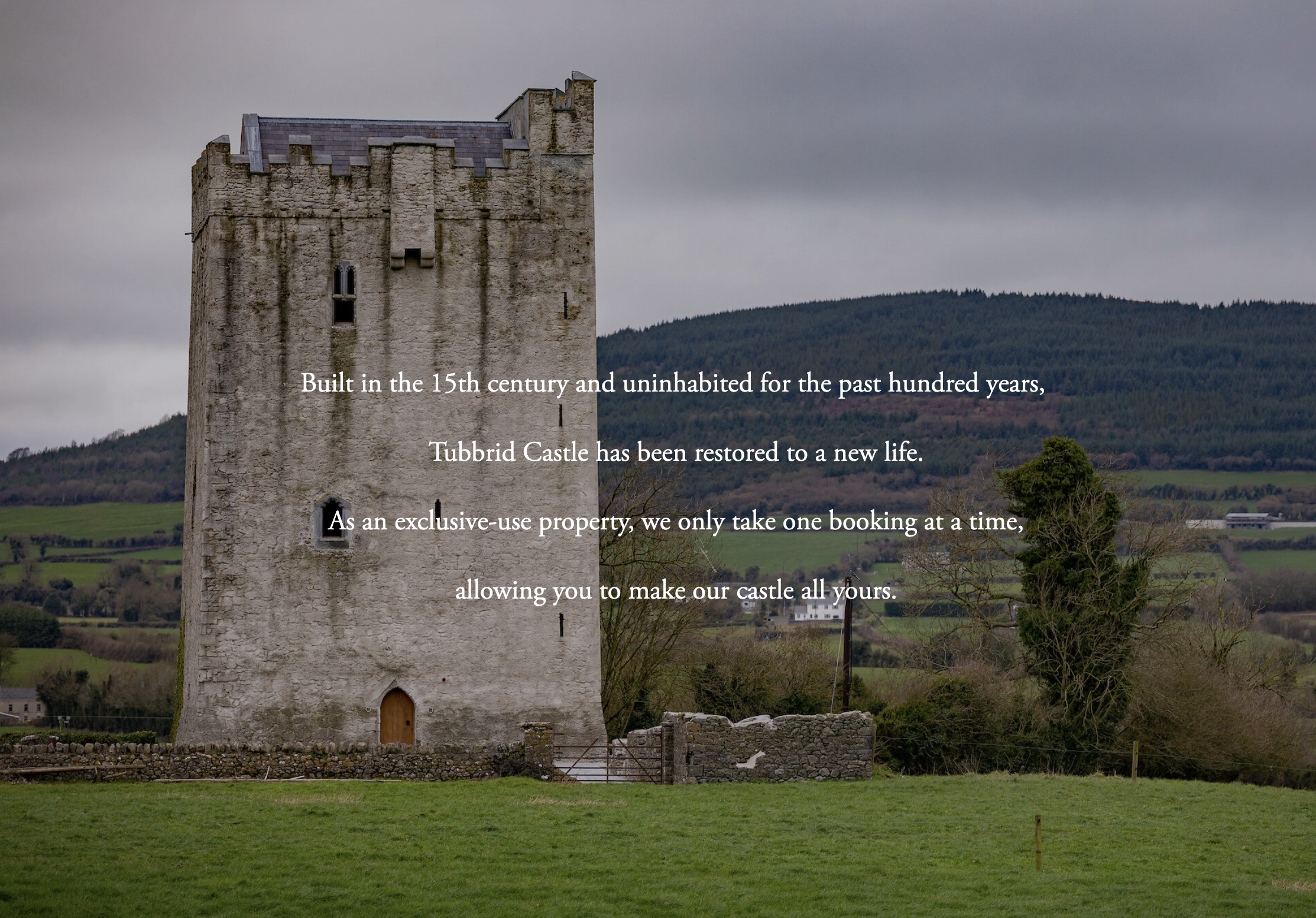
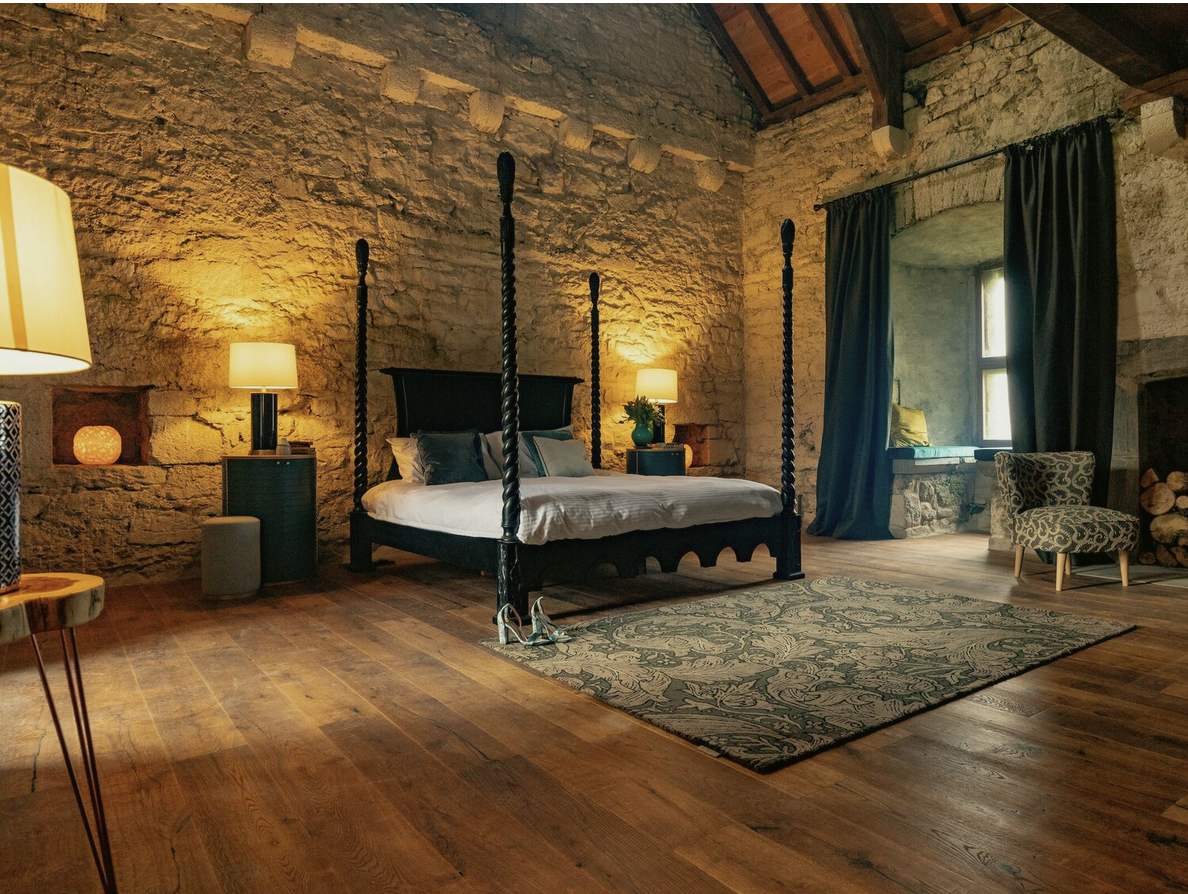
“Tubbrid Castle is a unique 15th-century tower house, uninhabited for the last century and now restored to its former glory. We’ve highlighted original features to let you step back in time and added luxury touches so you can indulge your inner prince or princess.
Heritage
“Tubbrid Castle stands at an important point on the borders of the ancient kingdoms of Laighean and Mumhan. Built as a defensive structure to protect the territory of the Butlers of Ormond, the tower house was home to generations of families allied to the Butlers of Kilkenny Castle. The architectural significance of Tubbrid Castle is denoted by its designation as a National Monument and a Protected Structure.
“In 942 AD, Muircheartach, King of modern-day Ulster, marched his army of 1000 Leather Cloaks south to avenge his allies, who had been attacked by Callaghan, King of Cashel. Muircheartach’s bard, Colmanach, recorded the journey in an epic poem, Circuit of Ireland, in which he praised the beauty of Osraí (now Kilkenny), and the hospitality of its people. At the edge of enemy territory and on the cusp of battle, Muircheartach’s army set up camp in Tubbrid, on a plain that a millennium later is still called Bán an Champa (the Field of the Encampment). The King himself is thought to have slept at the fort where Tubbrid Castle now stands. A thousand years later, the people of Kilkenny still pride ourselves on our warm hospitality and from the top floor bedroom of Tubbrid Castle you can survey Bán an Champa and enjoy lodgings befitting a king.“
The website tells us that Margeret Fitzgerald, 8th Countess of Ormond, is supposed to have had the castle built. When the Countess visited Tubbrid, she is said to have slept at the castle’s highest point, to keep her safe from enemy attackers. She is buried with her husband Piers Butler (8th Earl of Ormond) under elaborate effigies at St Canice’s Cathedral, in Kilkenny City.
“A detailed written description of the castle comes from James Mease in 1851, writing for the Transactions of the Kilkenny Archaeological Society. Mease claims that, according to locals at the time, there were three ditches surrounding the castle, which had been dug away for manure. Supposedly a cannon ball was found during these works. No trace of these outer fortifications survives today. Mease believed that the castle may have been built on an ancient mound or rath, and perhaps at an old habitation site that might have been the location where the King of Aileach, mentioned in the poem of 971 camped. The ground and second floor were wicker-vaulted and at the time this paper was written, some of the wicker was still in place. We know from the Griffith Valuation that this castle was owned at the time by Arthur St. George, Esq. and leased to Catherine Campion.
“Around the turn of the 19th century, the roof was removed from Tubbrid Castle, leaving it open to the elements and accelerating structural decay. By the turn of the millenium, the corners were crumbling and floors were sagging.
“John Campion Snr began working on the tower house, aiming at first simply to prevent its collapse. Over several years he repointed the facade and applied a traditional lime mortar, known as harling. The tower house was re-roofed in green oak, in the same style as the original, with no nails or screws.
“In 2016, John Campion Jnr took over the restoration of Tubbrid Castle. Following archaeological impact reports, and with input from the National Monuments Office, John completed the restoration and fit-out of the tower house, turning it into a three-bedroom home.”
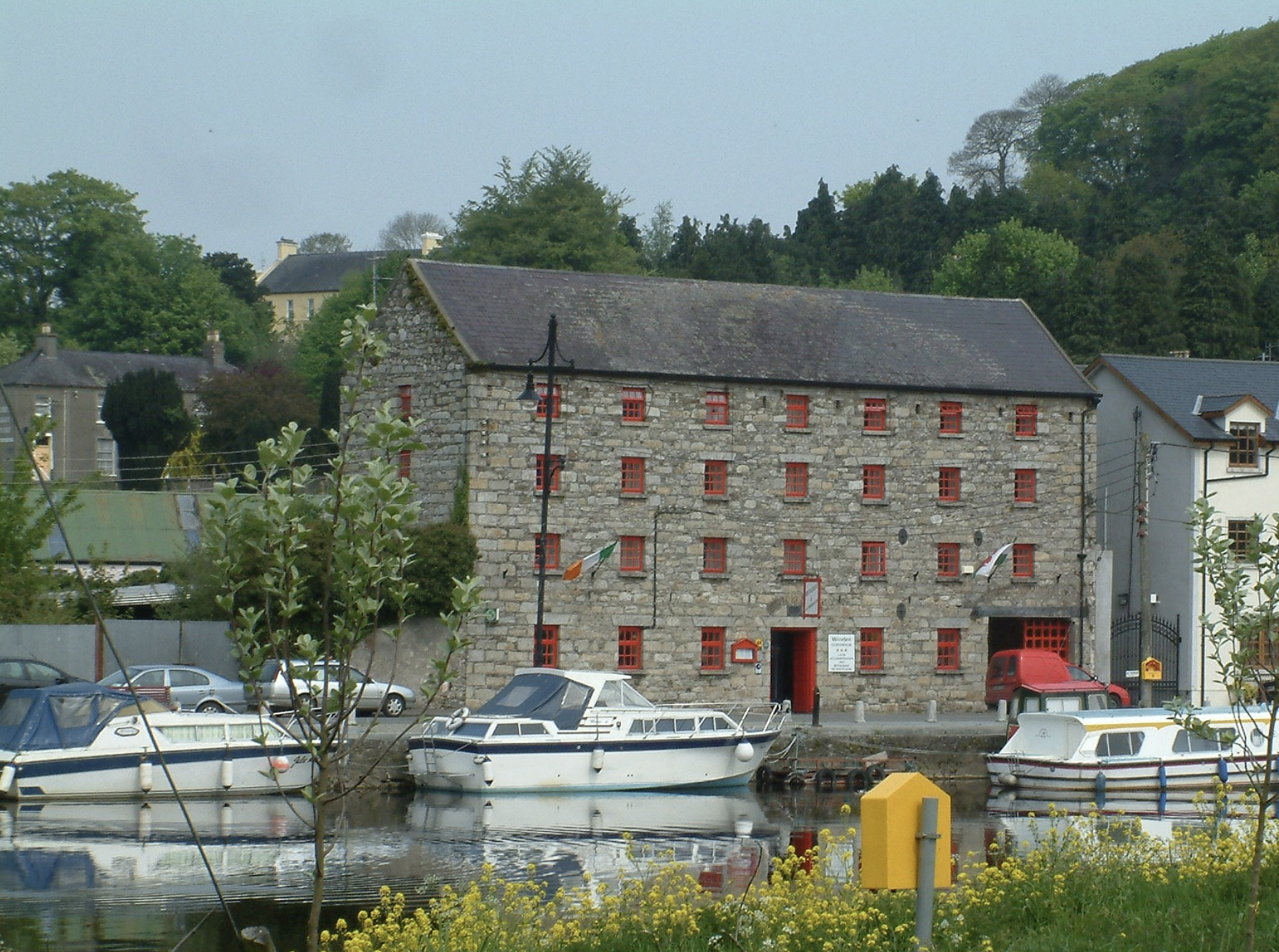
9. Waterside Guest House, Graiguenamanagh, County Kilkenny
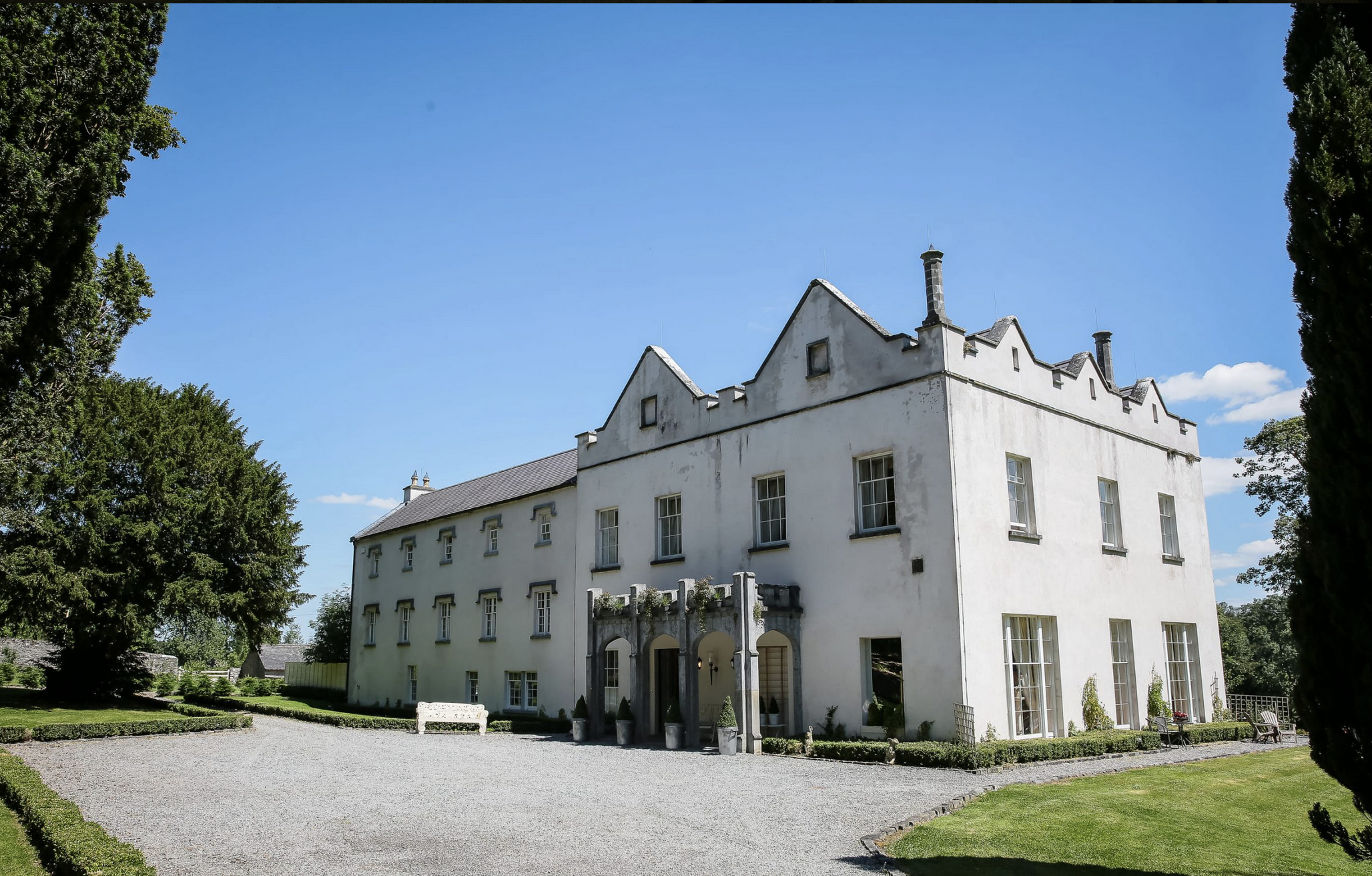
“Annamult County House Estate is a lovely Grade I listed ancient Manor House in the heart of the countryside in Kilkenny with parts dating back to the 16th century. But unlike other grand old homes, Annamult Country House Estate is warm, friendly and welcoming with unlimited hot water, central heating and log fires throughout with beautiful antiques. A uniquely beautiful Country Estate. It’s light, bright and airy. And the moment you step through the door it feels like home.“
The website describes the accommodation as 7 Bedrooms, 1 on the lower ground floor, 1 wheelchair accessible bedroom on the ground floor and 4 very large formal bedrooms upstairs and our Japanese Bedroom at the heart of the house . 4 Bedrooms are ensuite with the Bed 1 and 2 sharing a Bathroom nestled between them
Annamult House, courtesy of Annamult website.
The National Inventory describes Annamult: “Detached four-bay two-storey double gable-fronted Tudor-style country house, c.1825, incorporating fabric of earlier house, pre-1771, with three-bay single-storey flat-roofed projecting open porch to centre ground floor, three-bay two-storey side elevations, and five-bay three-storey lower wing to left having single-bay (two-bay deep) two-storey connecting return to east...Forming a picturesque landmark rising above a mature wooded setting on a bank at the confluence of the Kings River and the River Nore a large-scale country house exhibiting a robust Tudor theme represents an important element of the architectural heritage of County Kilkenny. Having origins in an eighteenth-century range the architectural design value of the composition is identified by elegant attributes including the porch displaying high quality stone masonry reminiscent of a similar treatment at the contemporary (c.1825) Shankill Castle (12306002/KK-16-06-02), the Classically-inspired Wyatt-style tripartite openings, the enriched parapet, and so on: the wing incorporating minimal surface detailing is comparatively demure in quality. Having been carefully maintained to present an early aspect the house makes a significant contribution to the character of the locality. The house remains of additional importance for the associations with the Prim, the Nevill (Neville), and the Bayley families.“
Annamult House, courtesy of Annamult website.Annamult House, courtesy of Annamult website.Annamult House, courtesy of Annamult website.
“You can dine inside or outside in luxury you can picnic on the island , the riverside or in the woods . You can relax or play on the lawns . Climb trees Boules on the lawns Croquet on the lawns You can swim in the river You can fish in the river You can walk in the woods You can relax in the silence You can star gaze at the firepit You can play loud music Great exploration for kids you can birdwatch and spot some fab wildlife like our buzzards and hawks . You may come across the deer in the woods Watch out for badgers … Its ok they are nocturnal only . Various local suppliers will run group activities on the grounds from yoga to tag archery.”
Annamult House, courtesy of Annamult website.Annamult House, courtesy of Annamult website.
2. Castle Blunden, County Kilkenny– whole house rental
Castle Blunden courtesy of National Inventory of Architectural Heritage.
The Historic Houses of Ireland website tells us:
“A few miles from the cathedral city of Kilkenny, Castle Blunden stands on an elevated site in the midst of mature parkland. Dating from the 1750s, and still owned by the Blunden family, this pretty seven-bay building is typical of County Kilkenny houses from the mid-Georgian period. The house is rendered, with a profusion of cut limestone decoration and details, and a handsome sprocketed roof, while the later Doric porch compliments the symmetry of the facade. The basement is concealed by a ramped gravel approach, which makes the house appear both lower and wider than is actually the case, while the small lakes to either side add to the overall air of enchantment.” [7]
The National Inventory tells us:
“Representing an important element of the mid eighteenth-century architectural legacy of County Kilkenny a Classically-composed substantial country house built to designs attributed to Francis Bindon (c.1698-1765) in a manner reminiscent of the contemporary (1737) Bonnettstown Hall (12401909/KK-19-09) nearby has been very well maintained to present an early aspect with the original composition attributes surviving in place together with most of the historic fabric both to the exterior and to the interior. Sparsely-detailed the external expression of the house is enlivened by limestone dressings including a somewhat squat portico displaying high quality stone masonry. Forming the centrepiece of a large-scale estate the resulting ensemble having long-standing connections with the Blunden family makes a pleasant contribution to the visual appeal of the local landscape.”
[5] Bence-Jones, Mark. A Guide to Irish Country Houses (originally published as Burke’s Guide to Country Houses volume 1 Ireland by Burke’s Peerage Ltd. 1978); Revised edition 1988 Constable and Company Ltd, London.


















































 Irish Historic Houses