Office of Public Works properties in County Tipperary

I had initially published the County Tipperary OPW sites along with Munster counties of Clare and Limerick but the entry is too long so I am dividing it.

OPW sites in County Tipperary:

1. Cahir Castle, County Tipperary

2. Damer House and Roscrea Castle, County Tipperary

3. Famine Warhouse 1848, County Tipperary

4. Holycross Abbey, County Tipperary – must prebook for tour

5. The Main Guard, County Tipperary – closed at present

6. Nenagh Castle, County Tipperary

7. Ormond Castle, Carrick-on-Suir, County Tipperary

8. Rock of Cashel, County Tipperary

see 2. Roscrea Castle and Damer House, County Tipperary

9. Swiss Cottage, County Tipperary

donation

Help me to pay the entrance fee to one of the houses on this website. This site is created purely out of love for the subject and I receive no payment so any donation is appreciated!

€15.00
Photograph © Jennifer Winder-Baggot, www.irishhistorichouses.com

1. Cahir Castle, County Tipperary:

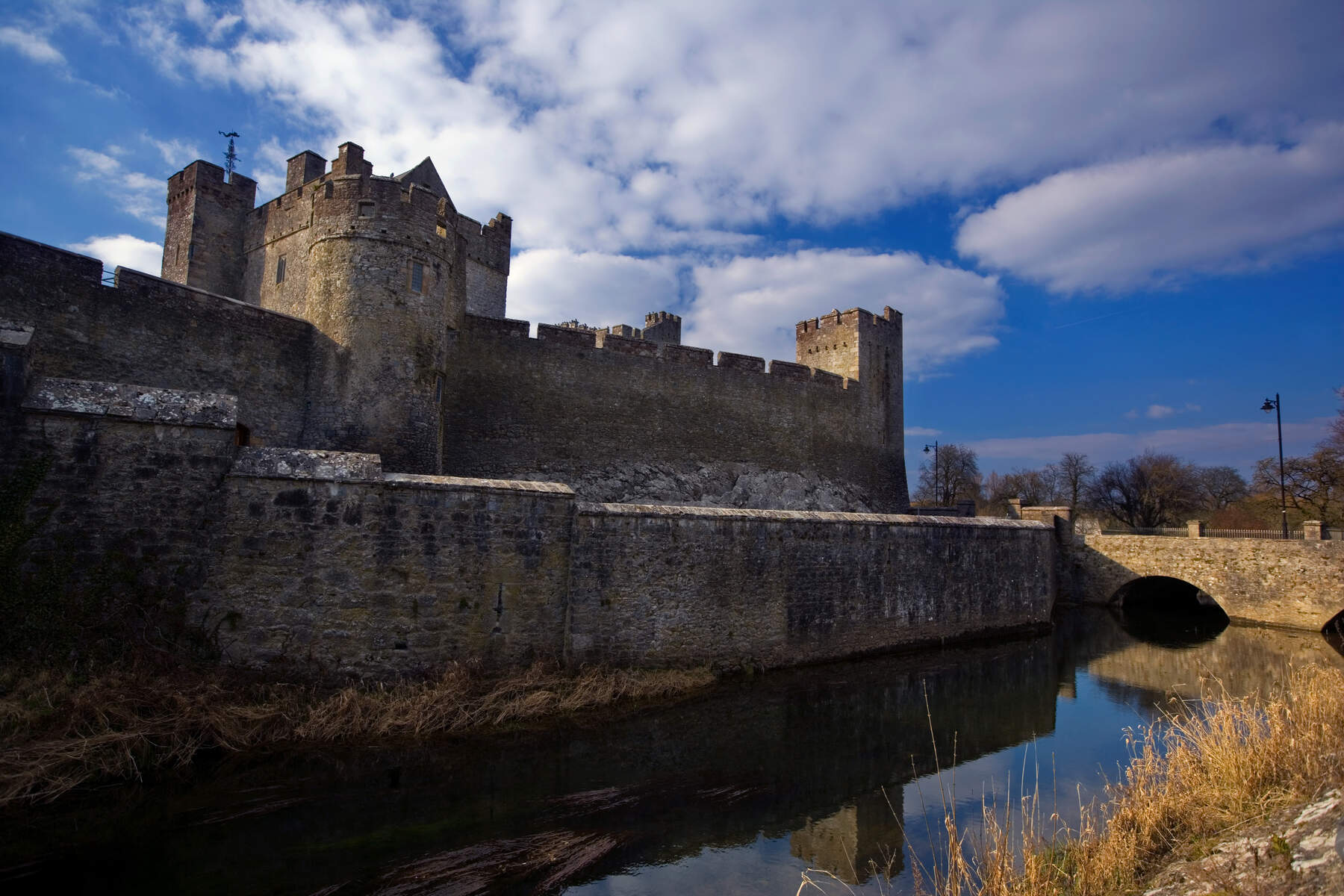
Cahir Castle, photograph from Ireland’s Content pool, by Brian Morrison 2014 for Failte Ireland. [see 1]
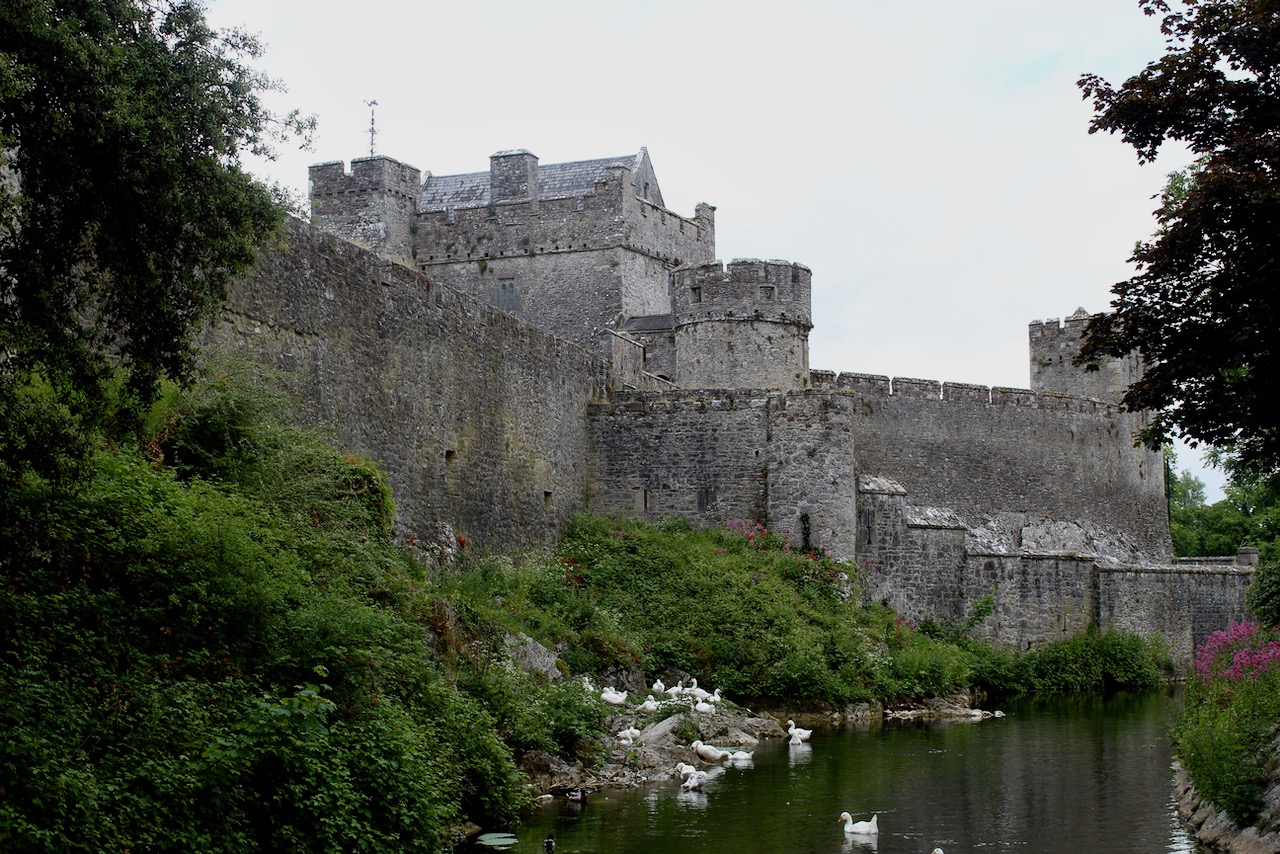
Cahir Castle, June 2022. The geese are particularly picturesque! The outer walls are called the Barbican. When breached, the attacking force gains entry to this area and are vulnerable to missiles fired by defenders and it would be difficult to retreat, due to the enclosed nature of the barbican. Photograph © Jennifer Winder-Baggot, www.irishhistorichouses.com

General information: 052 744 1011, cahircastle@opw.ie

Stephen and I visited Cahir Castle in June 2022, and I was very impressed. I had no idea that we have such an old castle in Ireland with so much intact. See my entry https://irishhistorichouses.com/2024/03/29/cahir-castle-county-tipperary-an-office-of-public-works-property/

From the OPW website https://heritageireland.ie/visit/places-to-visit/cahir-castle/:

Cahir Castle is one of Ireland’s largest and best-preserved castles. It stands proudly on a rocky island on the River Suir.

The castle was was built in the thirteenth century and served as the stronghold of the powerful Butler family. [The Archiseek website tells us it was built in 1142 by Conor O’Brien, Prince of Thomond] So effective was its design that it was believed to be impregnable, but it finally fell to the earl of Essex in 1599 when heavy artillery was used against it for the first time. During the Irish Confederate Wars it was besieged twice more.

At the time of building, Cahir Castle was at the cutting edge of defensive castle design and much of the original structure remains.

Our tour guide took us through the outside of the castle, showing us its defenses. Our tour ended inside the Great Hall, or dining hall.

The Great Hall, with giant Irish elk antlers. The fireplace is not genuine – it is made of papier mache and was installed for the filming of a movie. Photograph © Jennifer Winder-Baggot, www.irishhistorichouses.com

2. Damer House and Roscrea Castle, County Tipperary

https://heritageireland.ie/places-to-visit/roscrea-castle-gardens-damer-house-black-mills/

In the heart of Roscrea in County Tipperary, one of the oldest towns in Ireland, you will find a magnificent stone motte castle dating from the 1280s. It was used as a barracks from 1798, housing 350 soldiers, and later served as a school, a library and even a sanatorium.

Sharing the castle grounds is Damer House, named for local merchant John Damer, who came into possession of the castle in the eighteenth century. The house is a handsome example of pre-Palladian architecture. It has nine beautiful bay windows. One of the rooms has been furnished in period style.

The grounds also include an impressive garden with a fountain, which makes Roscrea Castle a very pleasant destination for a day out. There is also a restored mill displaying St Crónán’s high cross and pillar stone.” See my entry https://irishhistorichouses.com/2024/10/03/damer-house-and-roscrea-castle-county-tipperary-office-of-public-works-properties/

3. Famine Warhouse 1848, Ballingarry, County Tipperary:

General information: 087 908 9972, info@heritageireland.ie

From the OPW website https://heritageireland.ie/visit/places-to-visit/famine-warhouse-1848/:

How did an ordinary farmhouse near Ballingarry, County Tipperary, become the site of a bloody siege and a monument of the Young Irelander Rebellion of 1848?

It was here that rebels, under the leadership of Protestant aristocrat William Smith O’Brien, besieged 47 police officers who had barricaded themselves into the McCormack homestead, taking 5 children hostage. After two of their number were killed, the rebels finally gave in. They were later transported to penal colonies abroad.

The Warhouse, as it became known, is now a museum. Its contents illuminate the history of the Young Irelander Rebellion, the trials of its leaders, their exile in Australia and escape to the USA. The exhibition places the rebellion in the context of the Great Famine and the upheaval that rocked Europe during that turbulent year.

Traditionally it was known as Ballingarry Warhouse or The Widow McCormack’s House.

4. Holycross Abbey, County Tipperary:

Holycross Abbey, photograph from Ireland’s Content pool, by Liam Murphy 2016 for Failte Ireland [see 1]

From the OPW website https://heritageireland.ie/visit/places-to-visit/holycross-abbey/:

As destination for pilgrims, Holy Cross Abbey, near Thurles, County Tipperary, has a rich history. Pilgrims travelled here for eight centuries to venerate the relic after which the abbey and surrounding villages are named – a piece of the True Cross of Christ’s crucifixion.

Today this working parish church is a peaceful landmark and a place for quiet contemplation and historical discovery. As well as inspecting the relic of the cross, you can marvel at the building’s ornate stonework. The chancel is possibly the finest piece of fifteenth-century architecture in the country. The abbey also houses one of the only surviving medieval wall paintings in Ireland.

5. The Main Guard, Sarsfield Street, Clonmel, County Tipperary:

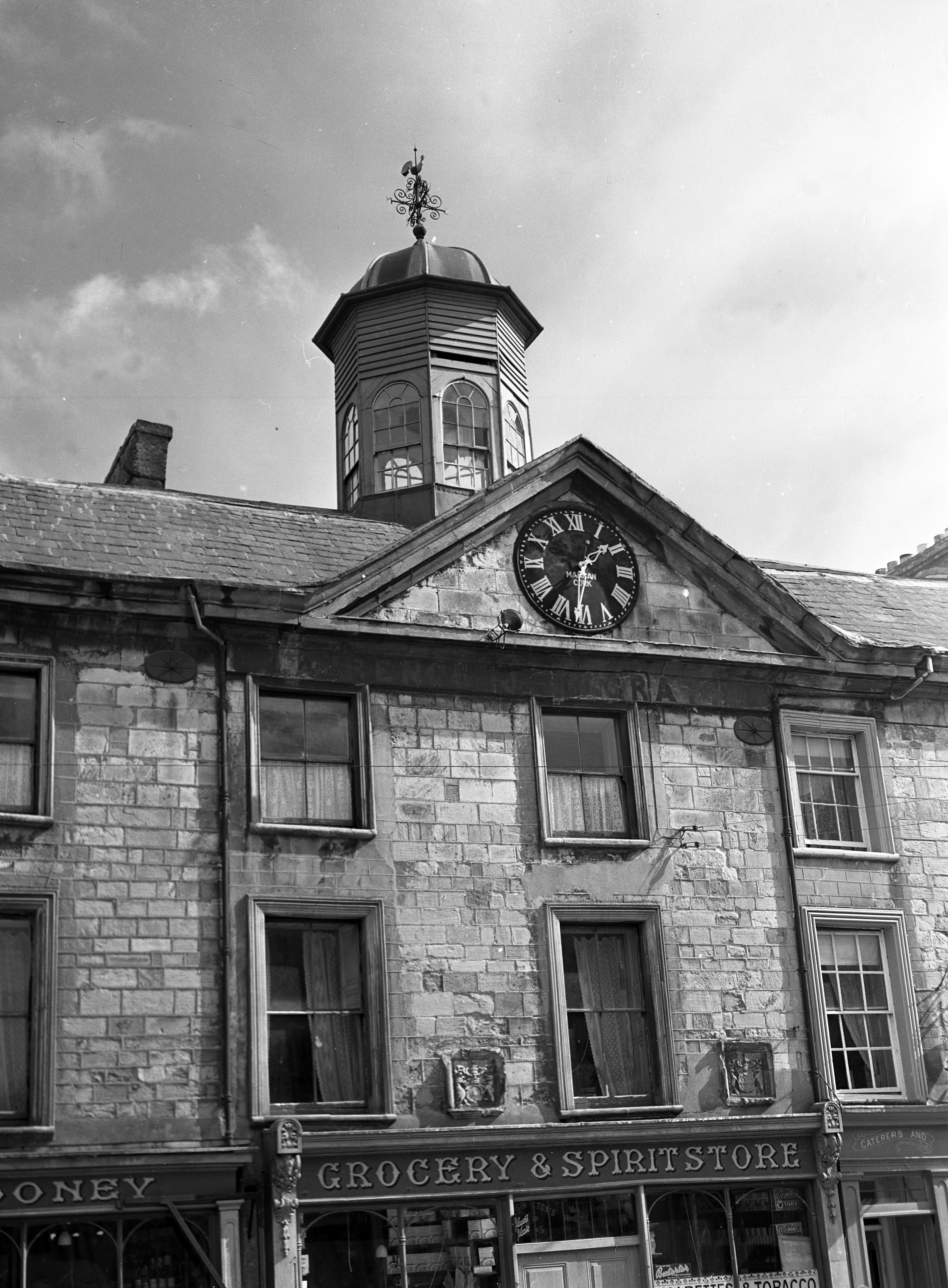
The Main Guard, or Clonmel Courthouse, County Tipperary. Photograph from National Inventory of Architectural Heritage: five-bay two-storey courthouse and market house, built 1673, with arcaded ground floor to front and north gable, and pediment and cupola to roof. Until restored c.2000, building had been five-bay three-storey with triple public house front to ground floor, and timber sliding sash windows. Now in use as museum. The columns of the arcaded facades were recycled from the ruins of the Cistercian abbey of Inislounaght, to the west of the town and retain some decorative elements that testify to this fact. 

General Information: 052 612 7484, mainguard@opw.ie

From the OPW website https://heritageireland.ie/visit/places-to-visit/the-main-guard/:

In the seventeenth century County Tipperary was a palatinate, ruled by James Butler, duke of Ormond. When the duke decided he needed a new courthouse, he built one in the heart of Clonmel [built in 1673]. Later, when it was used as a barracks, it became known as the Main Guard.

A fine two-storey symmetrical building, some elements of its design were based on works by the famous Sir Christopher Wren.

In the eighteenth century it was the venue for the Clonmel Assizes. The most notable trial it witnessed was that of Father Nicholas Sheehy, the anti-Penal Laws agitator. Sheehy was hanged, drawn and quartered.

In about 1810, the ground floor was converted into shops, but the building has recently undergone an award-winning restoration. The open arcade of sandstone columns is once again an attractive feature of the streetscape, while inside you will find a fantastic exhibition and event space.

Main Guard, 1948, photograph from Dublin City Library and Archives. [2]

6. Nenagh Castle, County Tipperary

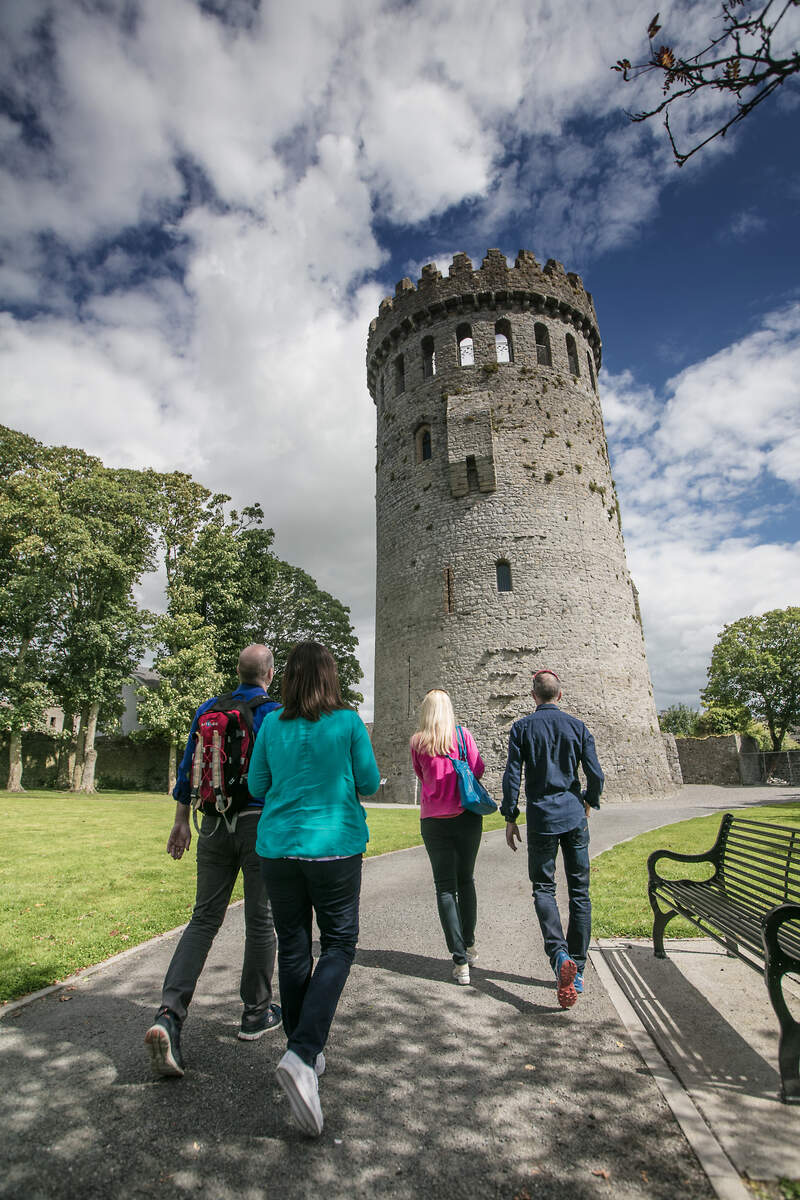
Nenagh Castle, photograph by Brian Morrison, 2017, for Tourism Ireland, Ireland’s Content Pool. [see 1]

General information: 067 33850, castlenenagh@gmail.com

The OPW doesn’t seem to have a site for this currently, but there is information at a site about Nenagh:

Nenagh Castle was built by Theobald Walter (the first of the Butlers of Ormond) around 1200. To this day the cylindrical keep adorns the town and like most keeps it formed part of the perimeter of the fortress. The walls have now almost disappeared, but fragments remain. 

Built from limestone Nenagh Castle measures fifty-five feet in external diameter at the base and rises to a height of one hundred feet. The Castle features four storeys and thanks to a recent renovation this wonderful landmark now represents the town’s premier tourist attraction.

The building and has stone spiral stairs to the top. There are 101 steps in all to the top.  Access to the tower is through a passageway within the base of the wall.  This has low head room and visitors will need to stoop to avoid hitting the stone above. All children under the age of 18 must be accompanied by an adult. [3]
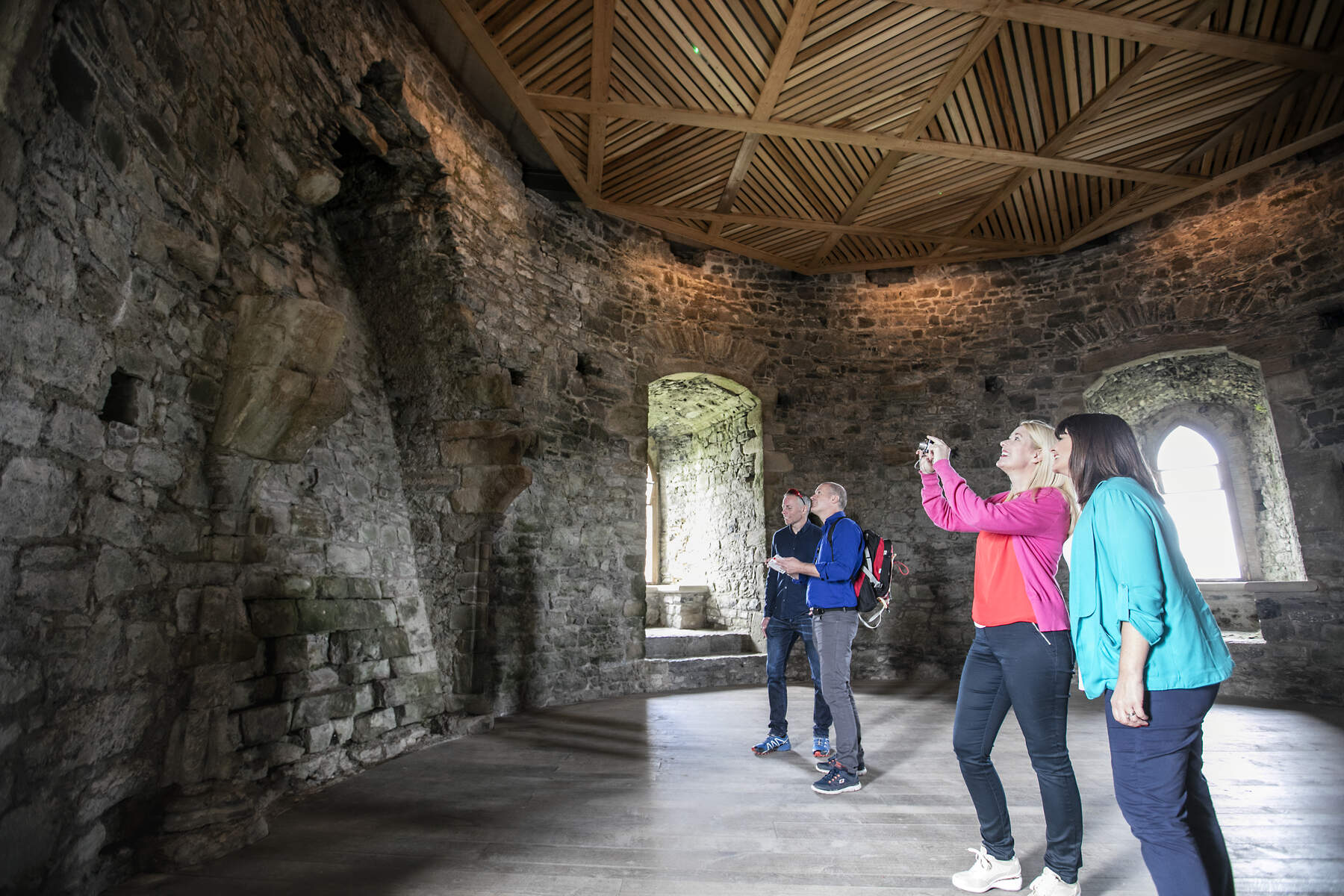
Nenagh Castle, photograph by Brian Morrison, 2017, for Tourism Ireland, Ireland’s Content Pool. [see 1]

7. Ormond Castle, Carrick-on-Suir, County Tipperary:

Ormond Castle, Carrick-on-Suir, County Tipperary, May 2018. Maurice Craig tells us in The Architecture of Ireland from the earliest times to 1880 that in style Carrick-on-Suir is like hundreds of buildings in Northamptonshire or the Cotswolds, but like no other in Ireland. Photograph © Jennifer Winder-Baggot, www.irishhistorichouses.com

See my entry https://irishhistorichouses.com/2024/09/05/ormond-castle-carrick-on-suir-county-tipperary-an-opw-property/

General Information: 051 640787, ormondcastle@opw.ie

From the OPW website https://heritageireland.ie/visit/places-to-visit/ormond-castle/:

Joined on to an earlier medieval riverside castle, Ormond Castle Carrick-on-Suir is the finest example of an Elizabethan manor house in Ireland. Thomas, 10th Earl of Ormond [“Black Tom” (1531-1614)], built it in 1565 in honour of his distant cousin Queen Elizabeth. 

The magnificent great hall, which stretches almost the whole length of the building is decorated with some of the finest stucco plasterwork in the country. The plasterwork features portraits of Queen Elizabeth and her brother Edward VI and many motifs and emblems associated with the Tudor monarchy.

Ormond Castle, Carrick-on-Suir 1949, photograph from Dublin City Library and Archive. [see 2]

James Butler the 12th Earl of Ormond and 1st Duke of Ormond (1610-1688) spent much of his time here and was the last of the family to reside at the castle. On his death in 1688 the family abandoned the property and it was only handed over to the government in 1947, who then became responsible for its restoration. 

7. Rock of Cashel, County Tipperary:
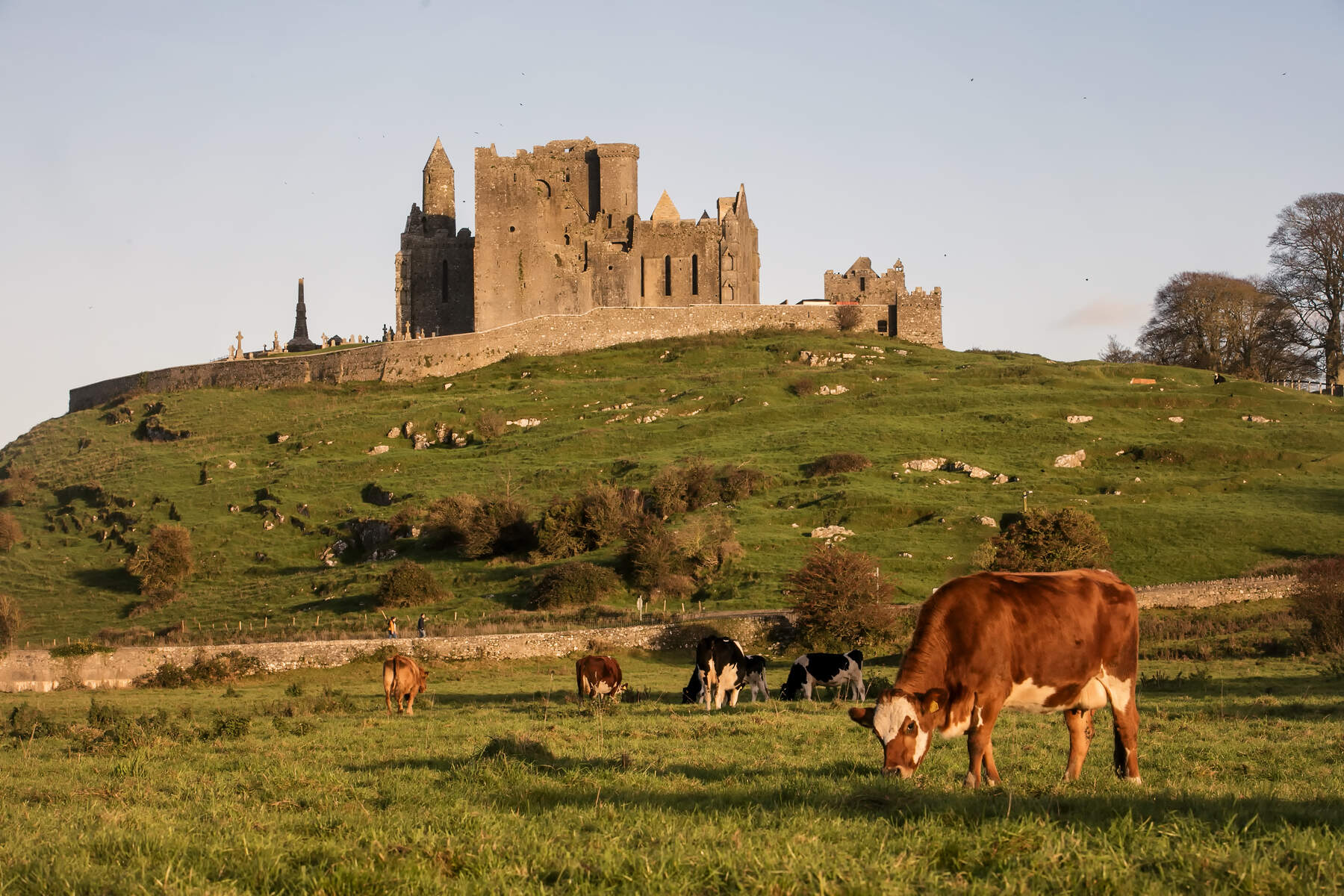
Rock of Cashel, Co Tipperary photograph from Ireland’s Content pool, by Brian Morrison 2018 for Failte Ireland. [see 1]

General Information: 062 61437, rockofcashel@opw.ie

From the OPW website https://heritageireland.ie/visit/places-to-visit/rock-of-cashel/:

Set on a dramatic outcrop of limestone in the Golden Vale, the Rock of Cashel, iconic in its historic significance, possesses the most impressive cluster of medieval buildings in Ireland. Among the monuments to be found there is a round tower, a high cross, a Romanesque chapel, a Gothic cathedral, an abbey, the Hall of the Vicars Choral and a fifteenth-century Tower House.

Originally the seat of the kings of Munster, according to legend St. Patrick himself came here to convert King Aenghus to Christianity. Brian Boru was crowned High King at Cashel in 978 and made it his capital.

In 1101 the site was granted to the church and Cashel swiftly rose to prominence as one of the most significant centres of ecclesiastical power in the country.

The surviving buildings are remarkable. Cormac’s Chapel, for example, contains the only surviving Romanesque frescoes in Ireland.

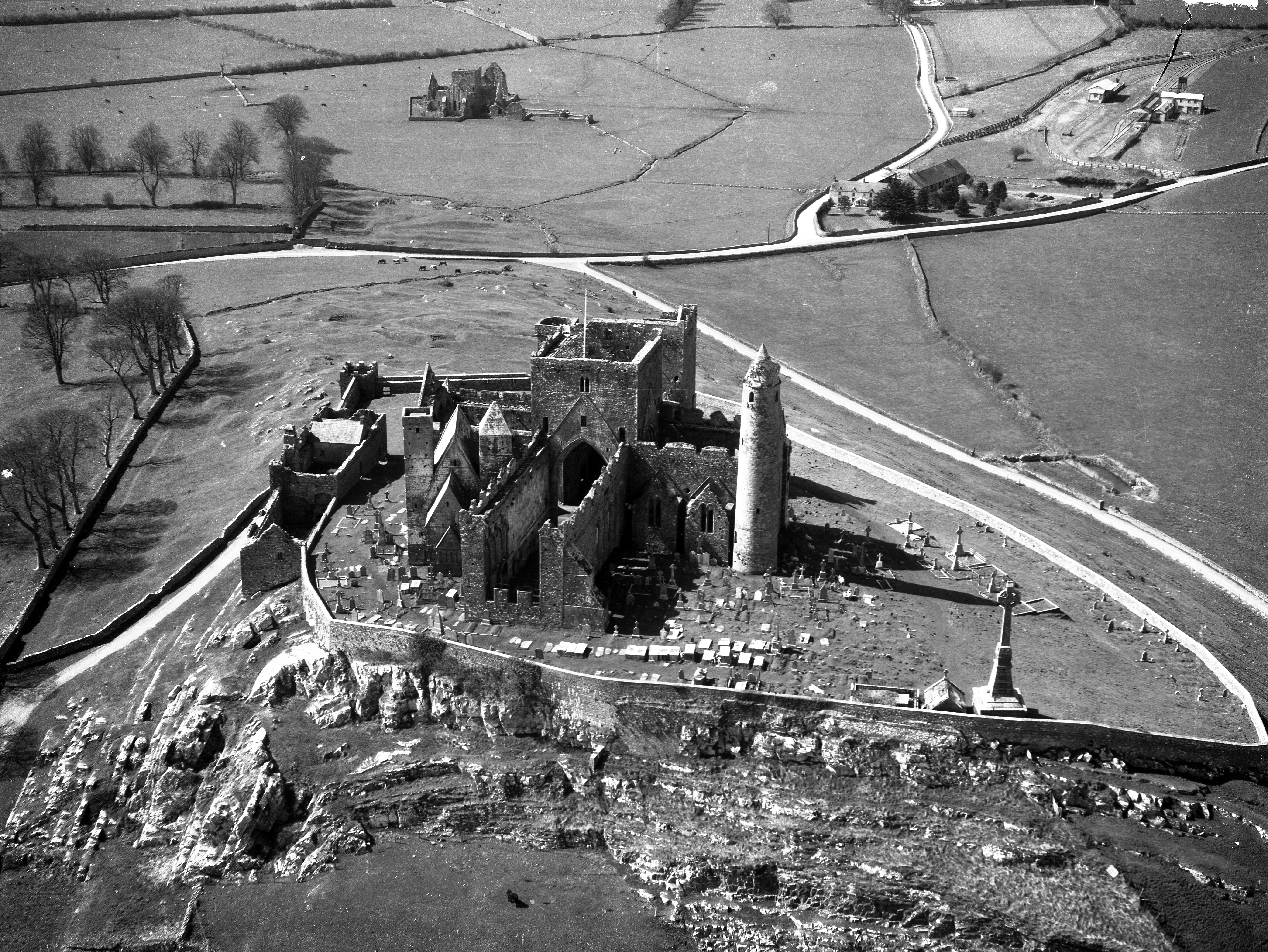
Rock of Cashel, 1955, from Dublin City Library and Archives [see 2].
Rock of Cashel ca. 1901, photograph from National Library of Ireland Flickr constant commons.

8. Roscrea Castle and Damer House, County Tipperary:
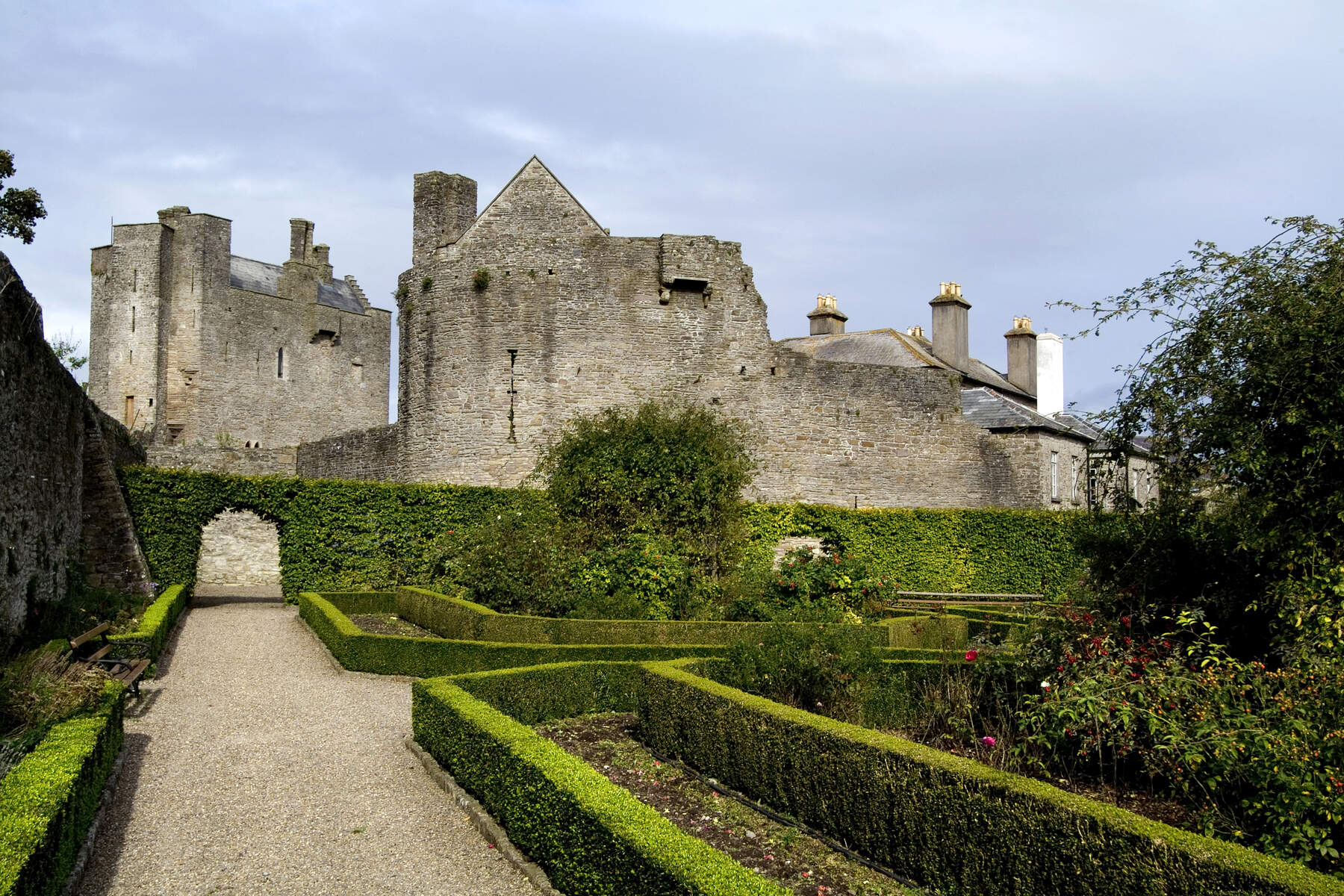
Roscrea Castle, photograph from Ireland’s Content pool, by Chris Hill 2014 for Failte Ireland. [see 1]

General information: 0505 21850, roscreaheritage@opw.ie

From the OPW website https://heritageireland.ie/visit/places-to-visit/roscrea-heritage-centre-roscrea-castle-and-damer-house/:

In the heart of Roscrea in County Tipperary, one of the oldest towns in Ireland, you will find a magnificent stone motte castle dating from the 1280s. It was used as a barracks from 1798, housing 350 soldiers, and later served as a school, a library and even a sanatorium. 

Sharing the castle grounds is Damer House, named for local merchant John Damer, who came into possession of the castle in the eighteenth century. The house is a handsome example of pre-Palladian architecture. It has nine beautiful bay windows. One of the rooms has been furnished in period style.

The grounds also include an impressive garden with a fountain, which makes Roscrea Castle a very pleasant destination for a day out. There is also a restored mill displaying St Crónán’s high cross and pillar stone.

See my entry https://irishhistorichouses.com/2024/10/03/damer-house-and-roscrea-castle-county-tipperary-office-of-public-works-properties/

This was originally the site of a motte and bailey fortification known as King John’s Castle. The original wooden castle was destroyed in the late 13th century and was replaced with a stone structure built in 1274-1295 by John de Lydyard. The castle was originally surrounded by a river to the east and a moat on the other sides. [4] It was granted to the Butlers of Ormond in 1315 who held it until the early 18th Century. The castle as we see it today was built from 1332.

The castle was used as a barracks from 1798, housing 350 soldiers. It was used later as a school, a library, and a tuberculosis sanatorium. Roscrea Castle fell into disrepair in the 19th century, and when the roof collapsed extensive repairs were needed in the 1850s. It was named a national monument in 1892, and is now under the care of the OPW. 

Damer House is of three storeys and nine bays and has a scroll pediment doorway and inside, a magnificent carved staircase. The Irish Georgian Society was involved in saving it from demolition in the 1960s.

9. Swiss Cottage, Ardfinnan Road, Cahir, County Tipperary:

General Information: 052 744 1144, swisscottage@opw.ie
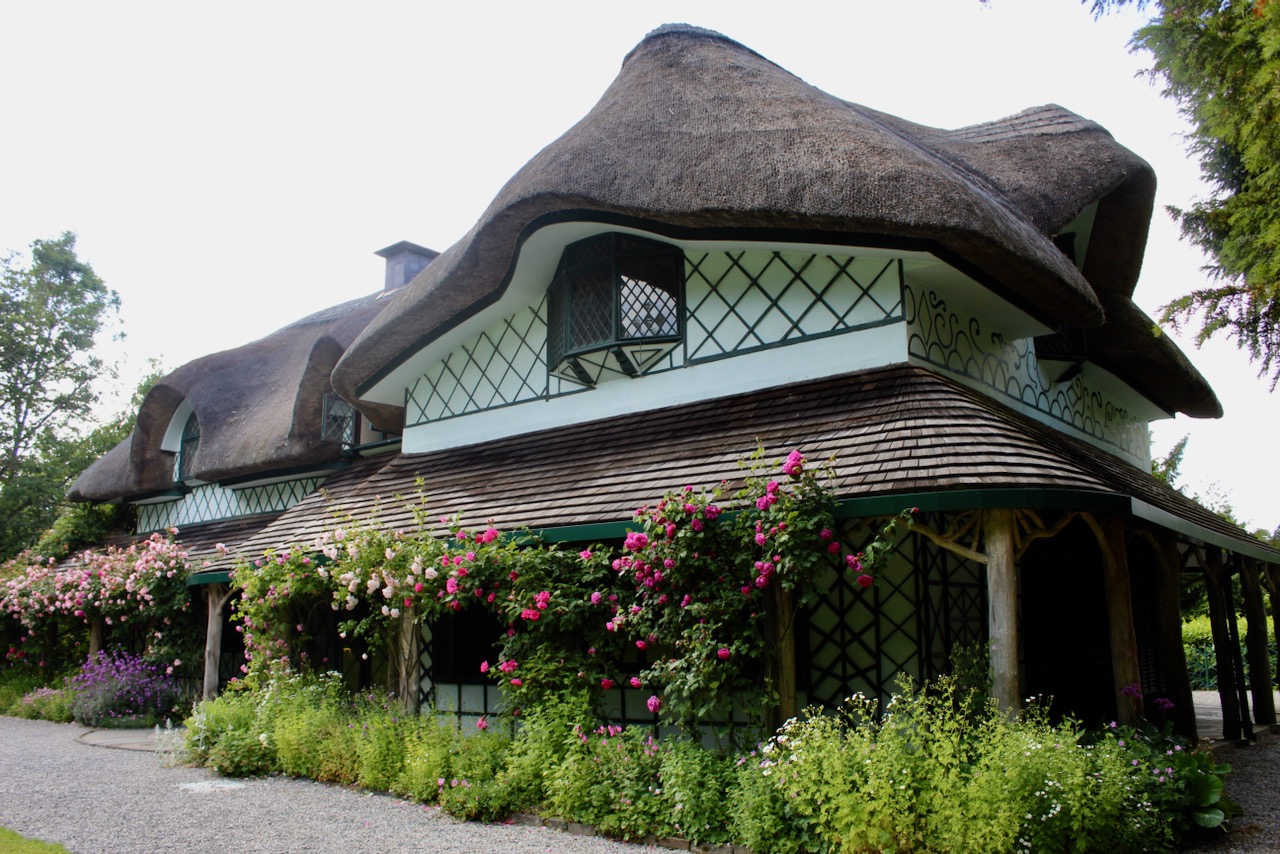
Swiss Cottage, June 2022. Photograph © Jennifer Winder-Baggot, www.irishhistorichouses.com

From the OPW website https://heritageireland.ie/visit/places-to-visit/swiss-cottage/:

The Swiss Cottage, just outside the heritage town of Cahir, is a cottage orné – a fanciful realisation of an idealised countryside cottage used for picnics, small soirees and fishing and hunting parties and was also a peaceful retreat for those who lived in the nearby big house.

Built in the early 1800s [around 1810] by Richard Butler, 1st Earl of Glengall, who, we believe, managed to persuade world-famous Regency architect John Nash to design it [he also designed Buckingham Palace for the Crown]. Originally, simply known as “The Cottage” it appears to have acquired its present name because it was thought to resemble an Alpine cottage.”

See my write-up https://irishhistorichouses.com/2025/03/20/swiss-cottage-ardfinnan-road-cahir-county-tipperary-office-of-public-works/

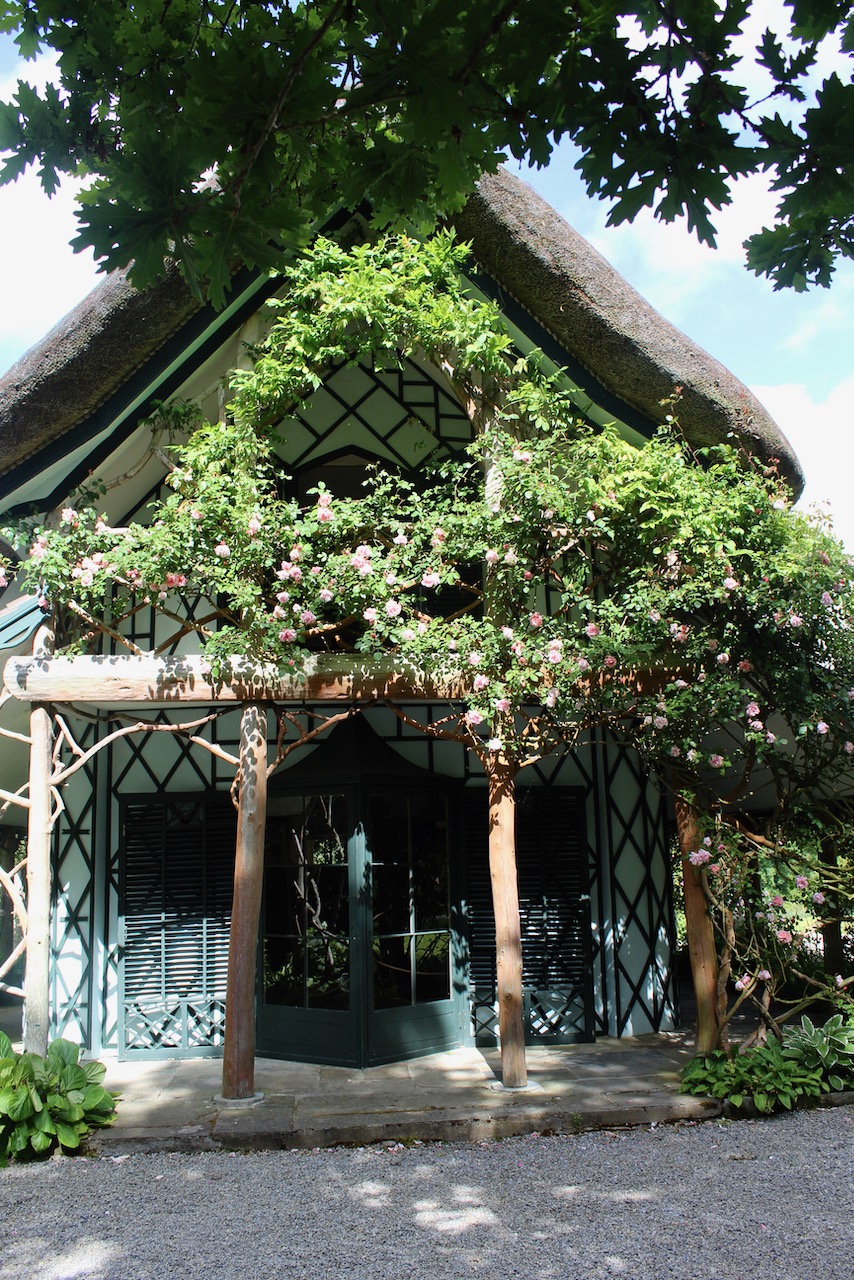
Timber rustic oak posts with triangular arch detailing between posts to verandahs and to bowed bay, having latticework rail to balcony. Photograph © Jennifer Winder-Baggot, www.irishhistorichouses.com
Photograph © Jennifer Winder-Baggot, www.irishhistorichouses.com

[1] https://www.irelandscontentpool.com/en

[2] https://repository.dri.ie/

[3] https://www.nenagh.ie/places-of-interest/details/nenagh-castle

[4] See the blog of Patrick Comerford, http://www.patrickcomerford.com/search/label/castles?updated-max=2019-03-03T14:30:00Z&max-results=20&start=27&by-date=false

[5] https://www.buildingsofireland.ie/buildings-search/building/22208107/swiss-cottage-kilcommon-more-north-tipperary-south

Dromana House, Cappoquin, Co. Waterford – section 482

contact: Barbara Grubb
Tel: 086-8186305
www.dromanahouse.com
Open dates in 2025: June 1-July 31, Tues-Sun, Aug 16-24, 2pm-6pm

Fee: adult/OAP/student, house €10, garden €6, both €15, child under 12 years free,
R.H.S.I members 50% reduction

donation

Help me to pay the entrance fee to one of the houses on this website. This site is created purely out of love for the subject and I receive no payment so any donation is appreciated!
€15.00

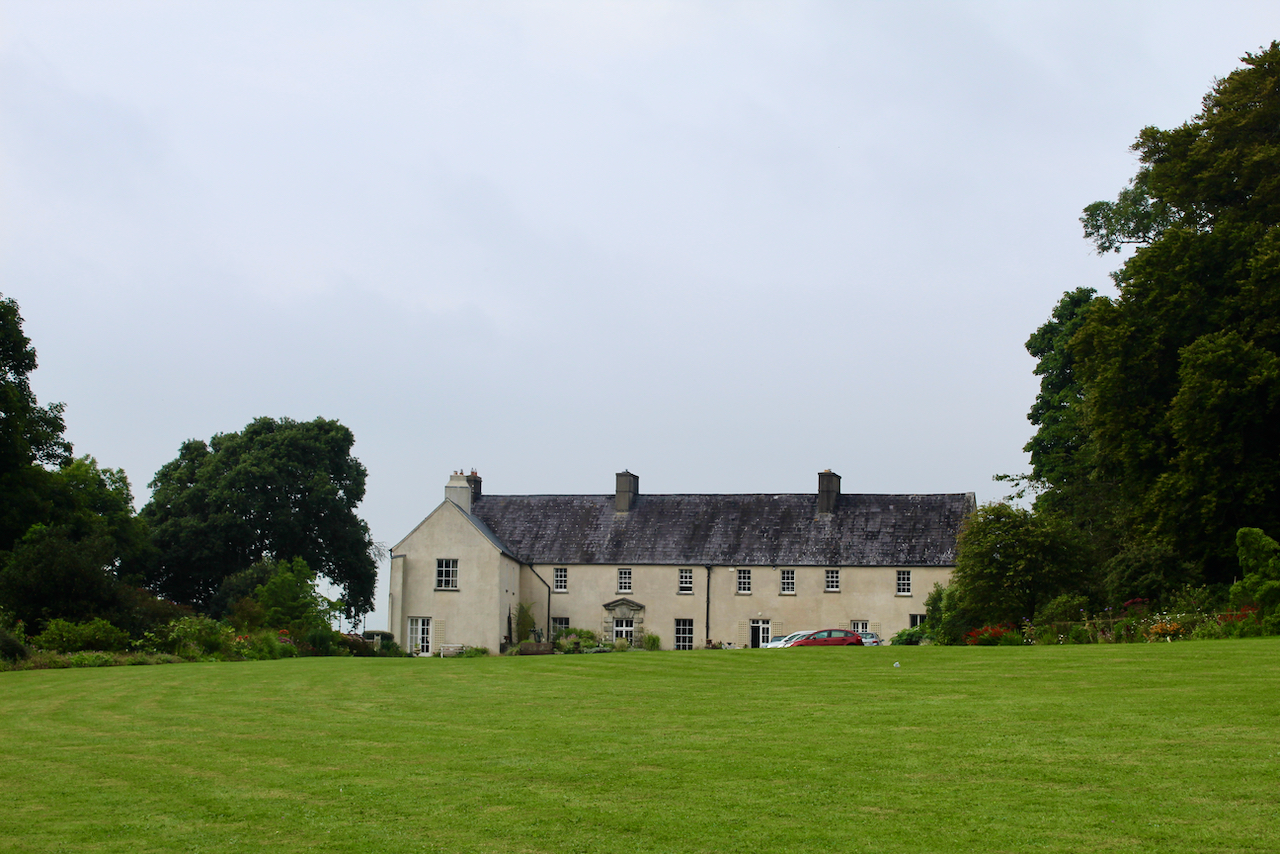
Dromana House, May 2019. Photograph © Jennifer Winder-Baggot, www.irishhistorichouses.com

On Sunday 5th May 2019, Stephen and I attended a day of talks in Dromana House on “Pursuit of the Heiress.” This is an apt topic for Dromana since the property passed down to the current generation via an heiress, Katherine FitzGerald (1660-1725). In fact, you could say that even in this generation the property was passed down through an heiress, or through the female line, as Barbara Grubb is the daughter of James Villiers-Stuart, descendent of the FitzGeralds of the Decies who originally built the house. “The Decies” is the county of Waterford west of the River Mahon.

We didn’t have a tour of the house on the day of the conference, so we returned during Heritage Week in 2020.

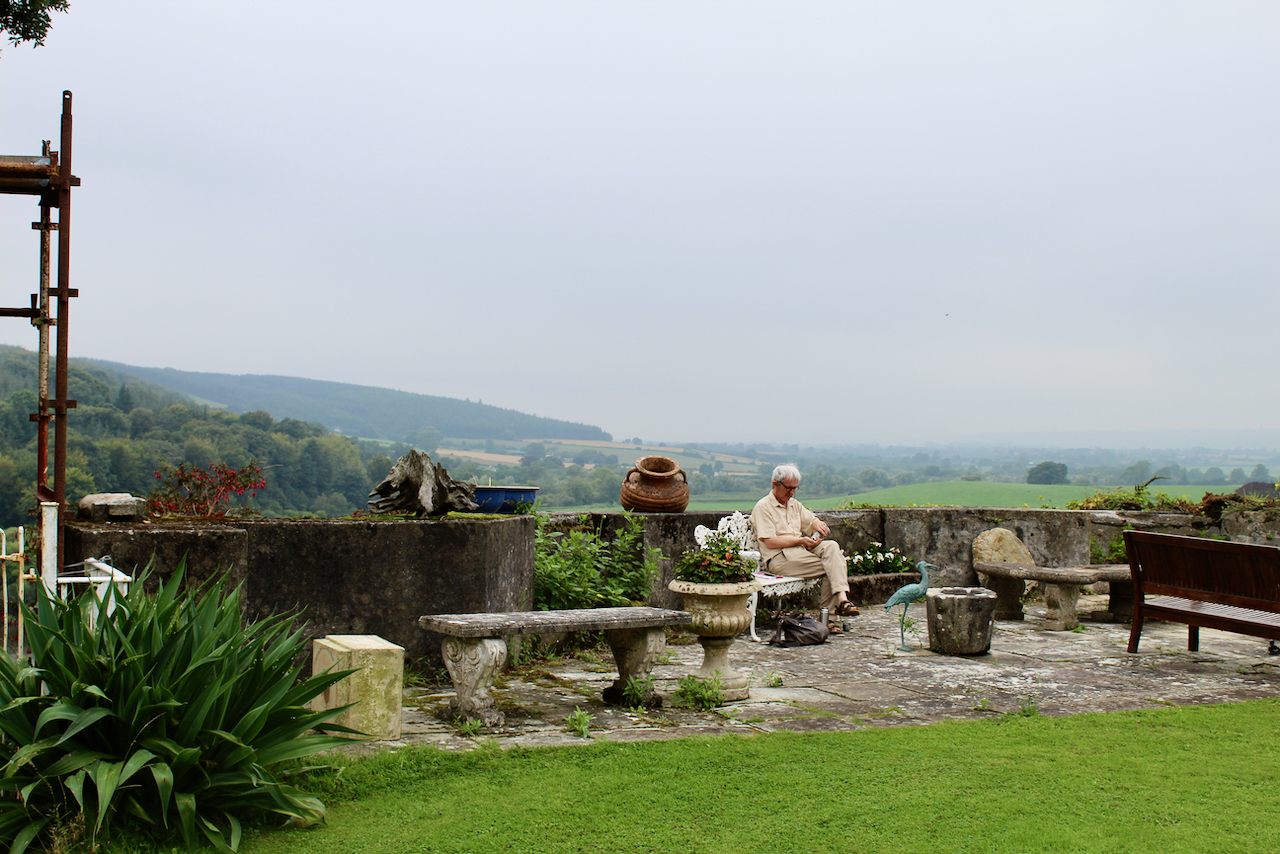
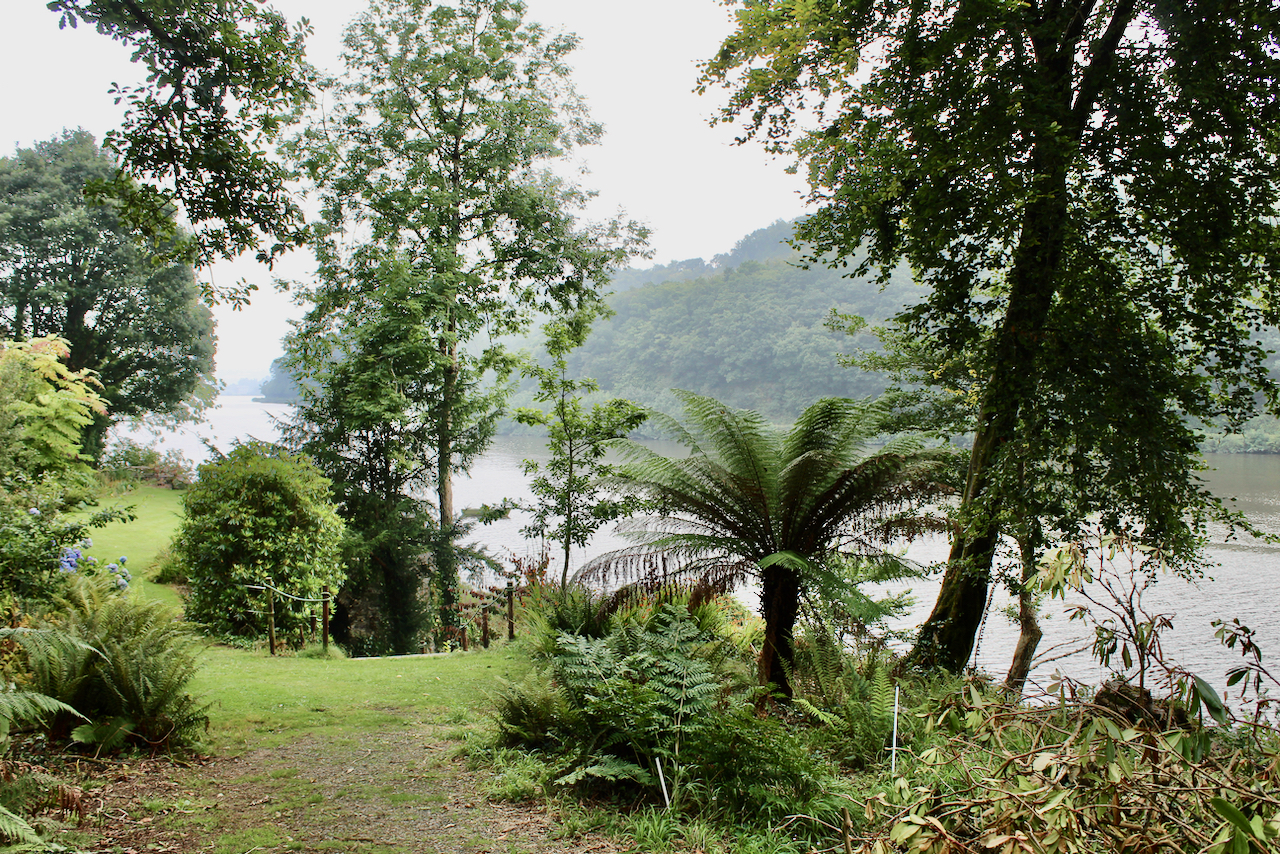
Parts of the house date back to the 1400s, and fortifications on the grounds date back even further. Its situation perched above the Blackwater River gives it stunning views.

The view of the Blackwater River from Dromana. During lunch at the 2019 conference we sat in the sun and chatted, and watched the Blackwater River recede. Later in the afternoon, it filled the banks again. Photograph © Jennifer Winder-Baggot, www.irishhistorichouses.com
Dromana House, May 2019. Photograph © Jennifer Winder-Baggot, www.irishhistorichouses.com

The house was once larger and grander than what we see today. Unfortunately, part of the house was demolished in the 1960s as upkeep and rates were too expensive (it shares the fate of Lisnavagh in County Carlow and Killruddery in County Wicklow). It retains part of the older elements, however, and remains a relatively large, comfortable home. The garden is impressive and the sun brought out its beauty – we were lucky with the weather.

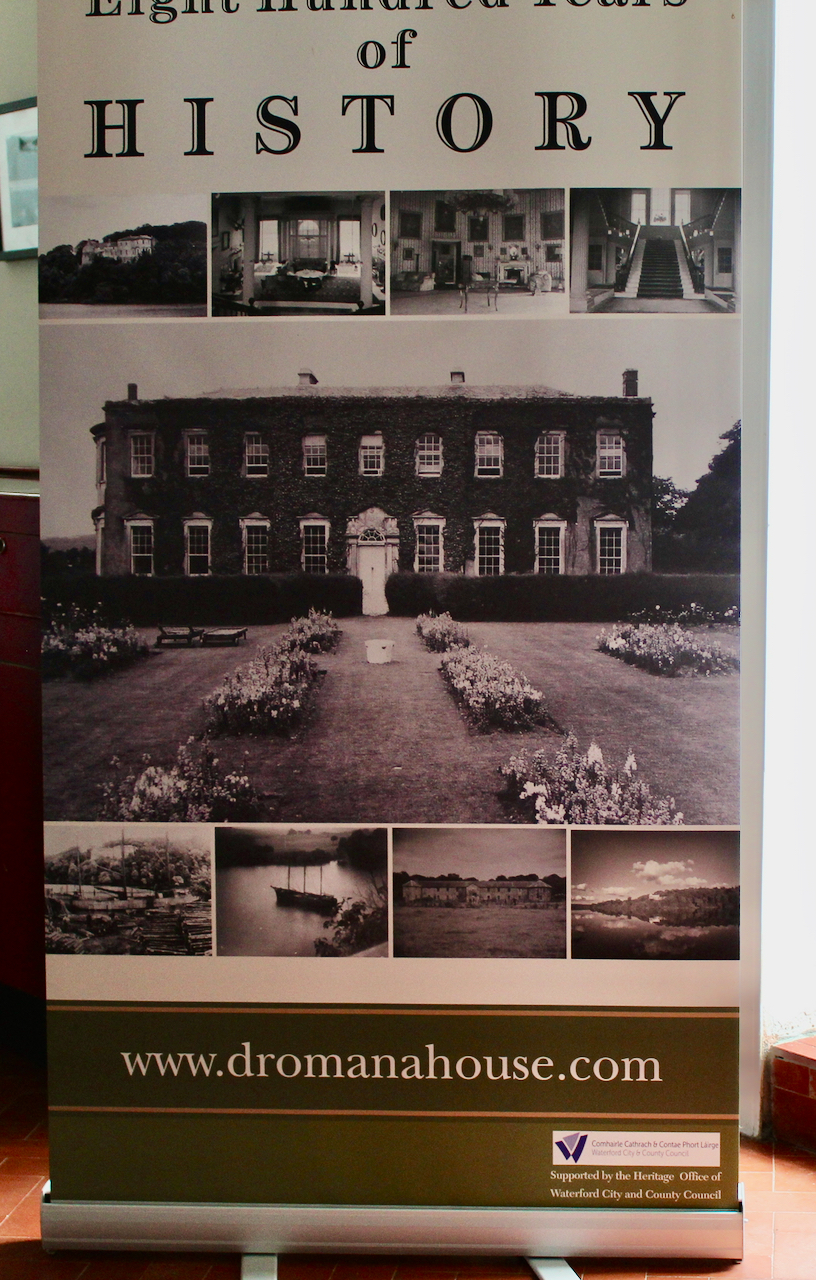
This poster board prepared for the 800th anniversary of Dromana shows a photograph of the house as it was before the demolition of a large part of it.

The lectures in 2019 took place in what used to be the old kitchen. On my way in, I admired the cloakroom hallway with its old floor tiles, long mirror and row of hooks for hats and coats. I learned the following year that this mirror used to be in the Ballroom, which has been demolished. The mirror now lies on its side but originally stood vertically, so the room would have been an impressive height.

Dromana House, May 2019. Photograph © Jennifer Winder-Baggot, www.irishhistorichouses.com

History of Dromana and the Fitzgeralds

First, a little background about the house. From the website:

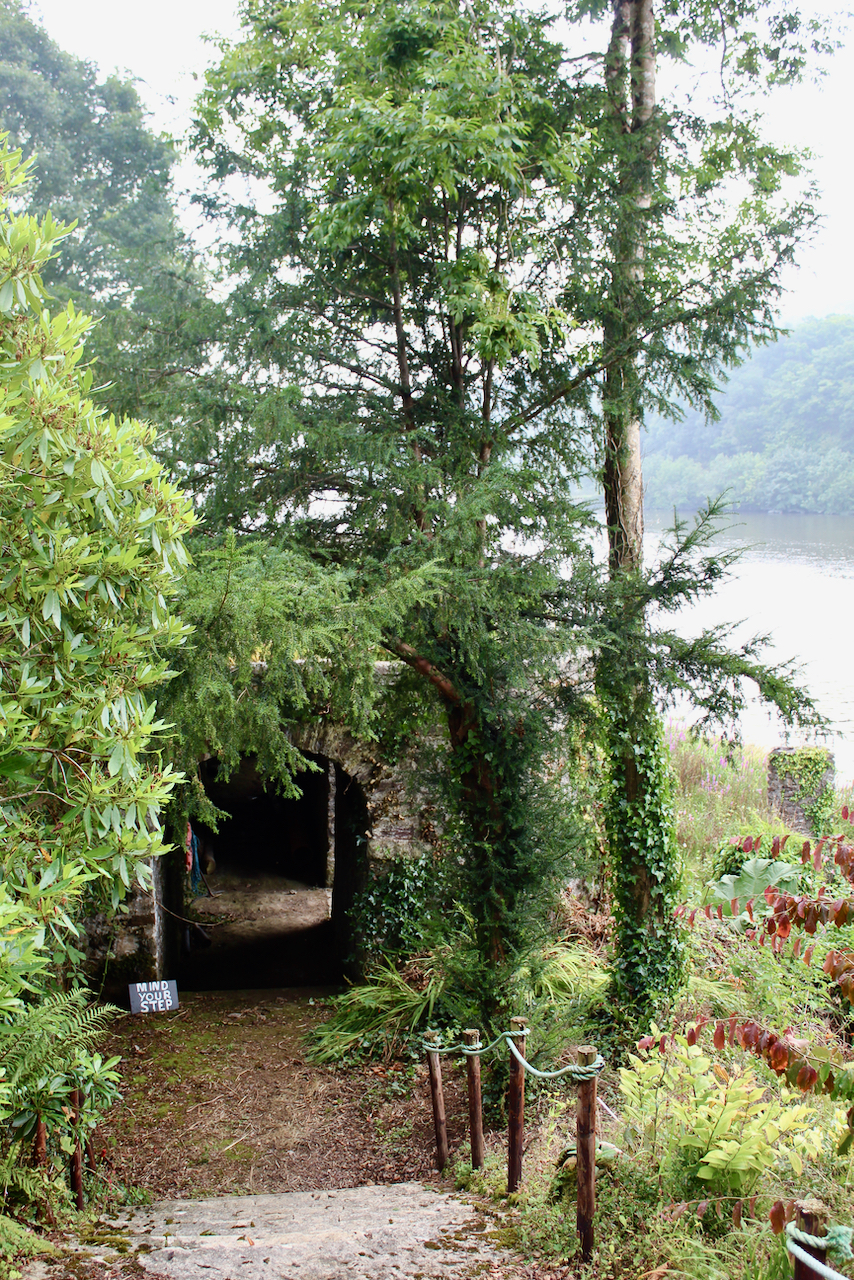
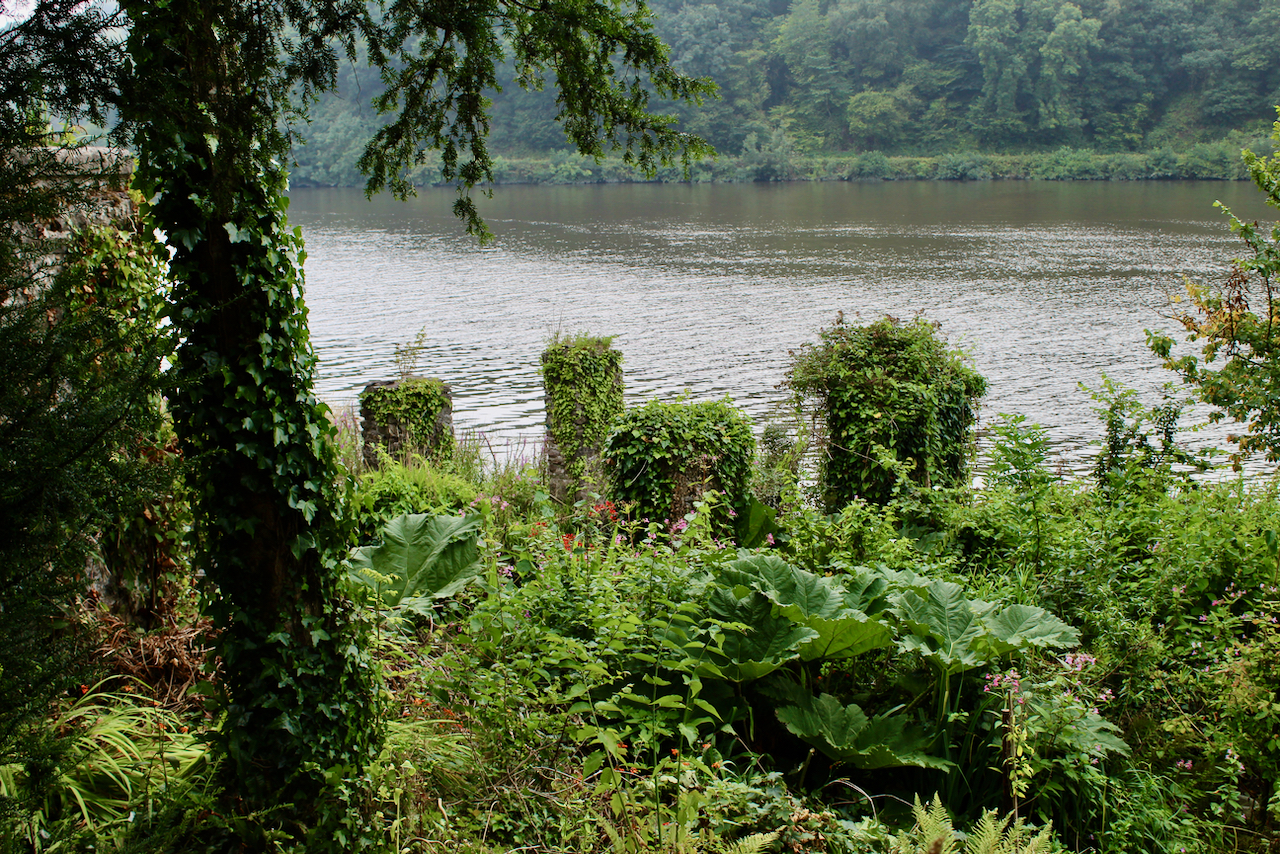
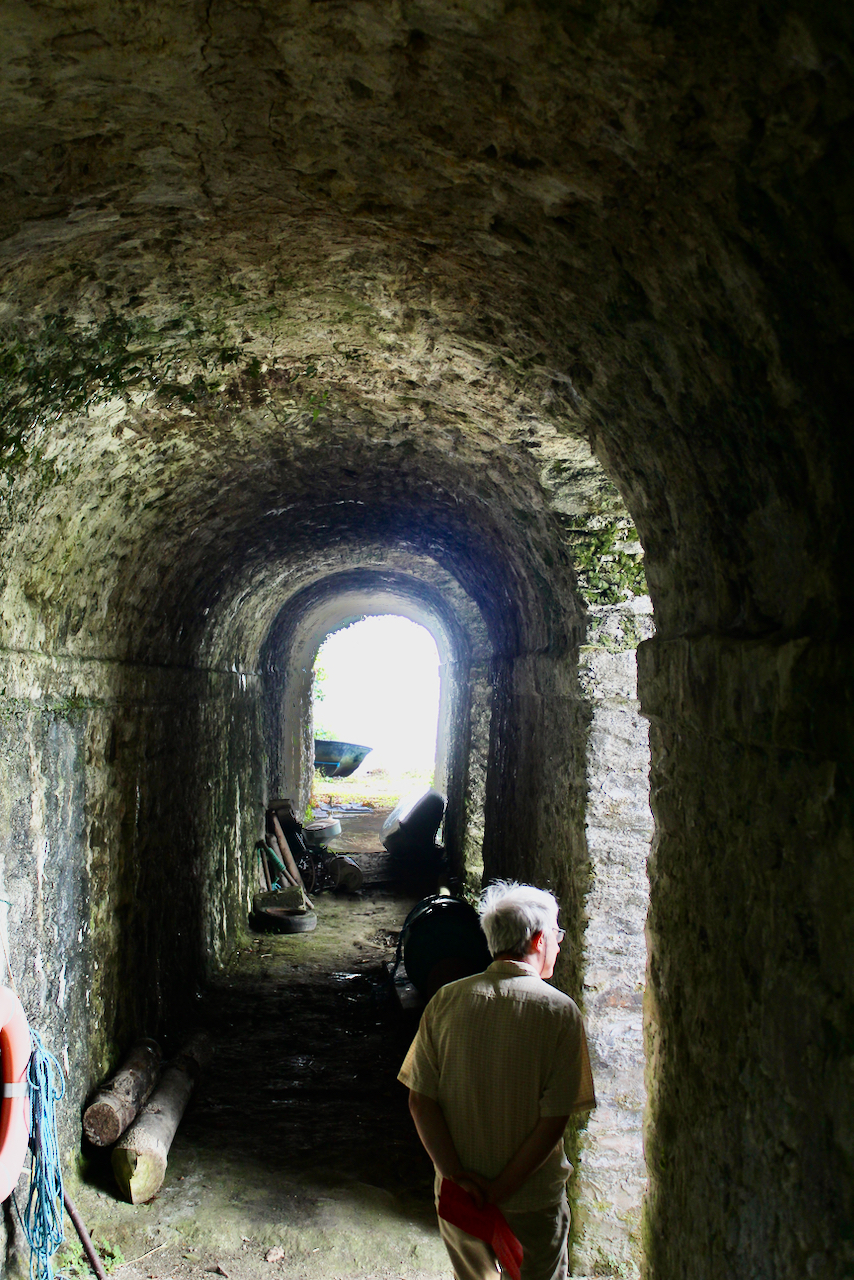
Dromana House is a true gem, perched on a rocky outcrop overlooking the strikingly beautiful, unspoilt river Blackwater. It is surrounded by a 600 acre privately owned estate with numerous woodland and garden walks. Several interesting historic follies are also to be seen throughout the grounds including an ancient outer fortification, boathouse and slipway down to the river. This period property has been lovingly maintained by its owners whose family have lived on this location since 1200, the present owner being the 26th generation.” [1]

From the 13thcentury onwards the property was the seat of the FitzGeralds, Lords of the Decies, a junior branch of the Earls of Desmond. Information boards in the old kitchen, created with the help of University College Cork, describe the history of the estate. In 1215 King John of England granted a charter to the Norman knight Thomas fitz Anthony, giving him custody of the present-day counties of Waterford and Cork. Through the marriage of his daughter the estates came into the possession of the FitzGeralds – the first instance of the property passing through the female line. The earliest fortifications of Dromana date from this period.

The title of Lord the Decies split from the Earl of Desmond title when James FitzGerald the 6th Earl of Desmond (who died in 1462) granted the land of the Decies to his younger son Sir Gerald Mor FitzGerald, whose descendants have lived in Dromana ever since. The tower-house which forms the core of today’s Dromana was built at this time.

Dromana. Photograph © Jennifer Winder-Baggot, www.irishhistorichouses.com
Dromana House, May 2019. Photograph © Jennifer Winder-Baggot, www.irishhistorichouses.com

One can see the oldest part of the house from a balcony which overlooks the river, or from the gardens below.

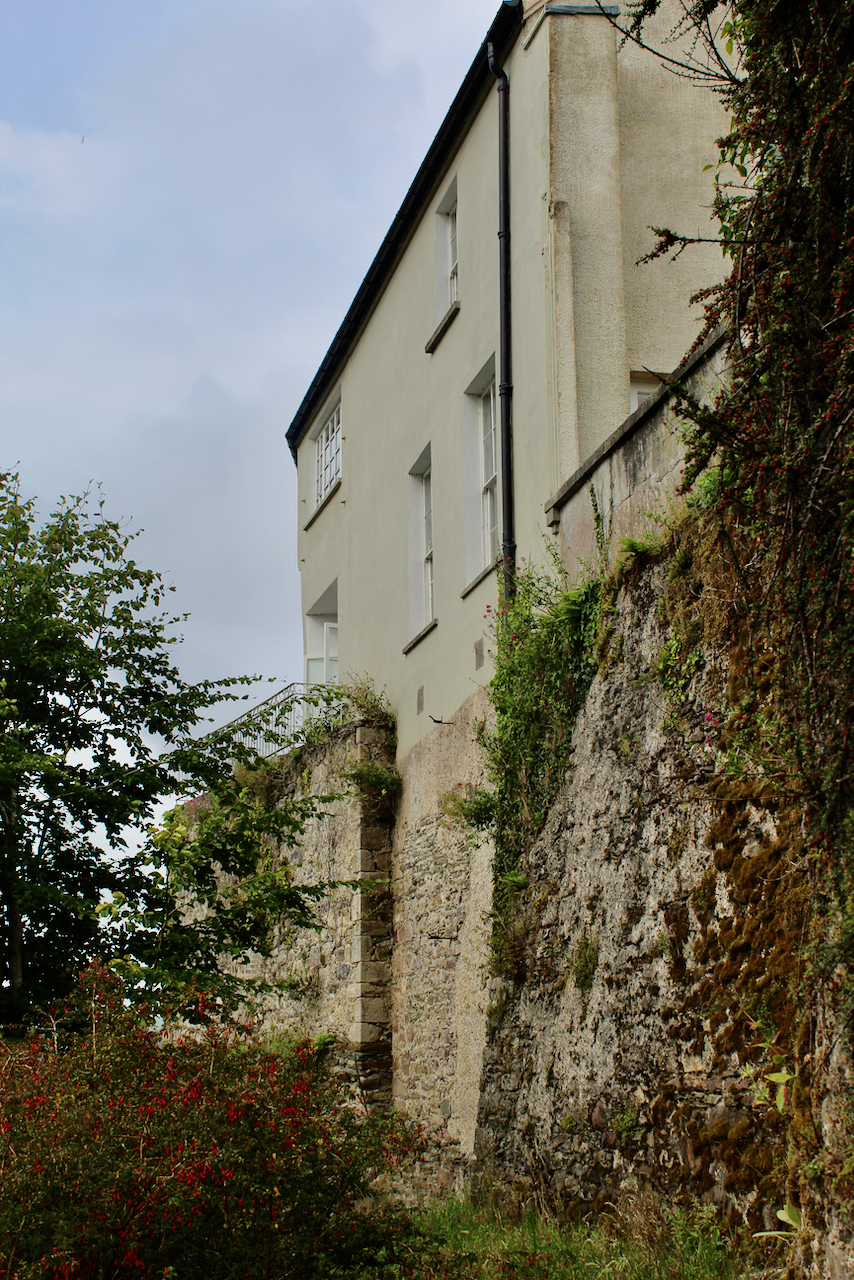
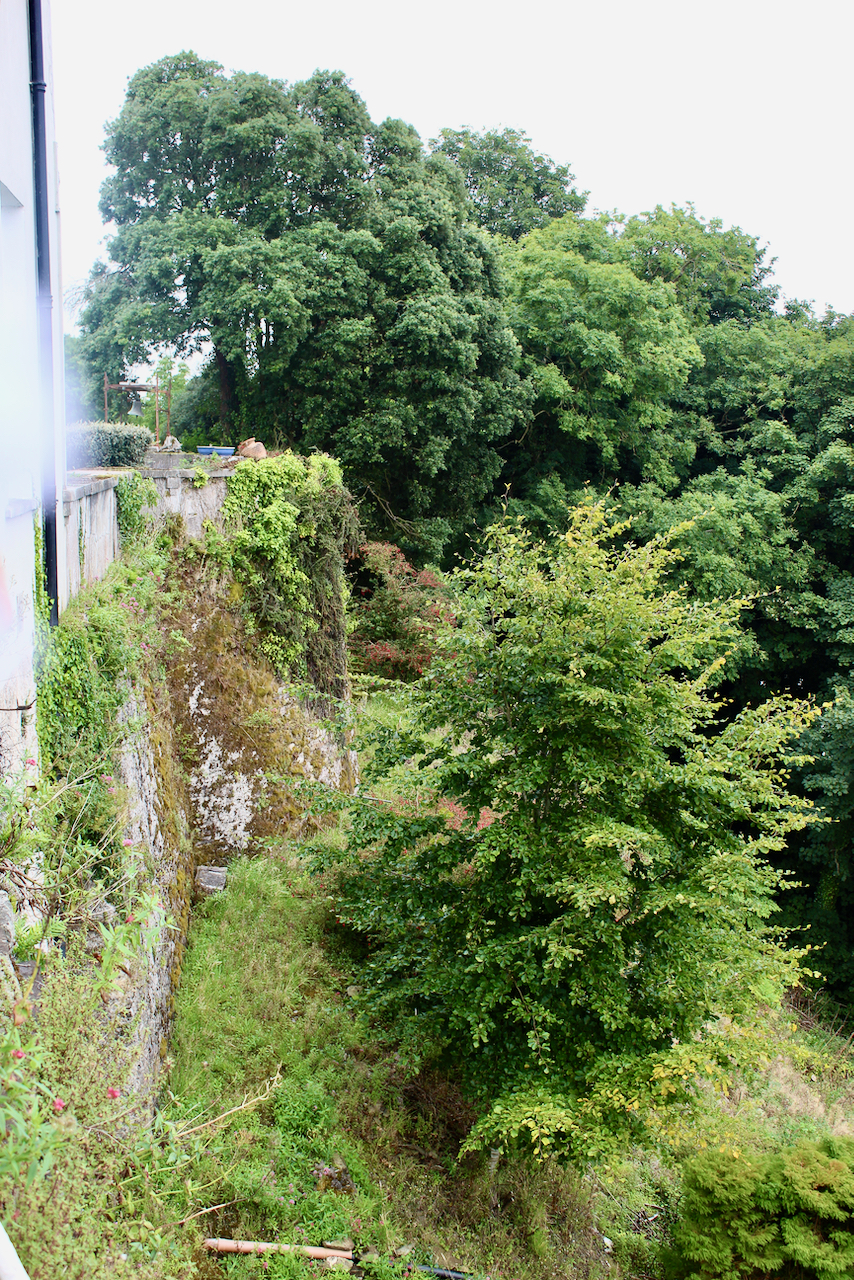
We wandered up an overgrown path in the garden looking for the “lost garden” and found ourselves on the steep slopes by mistake – but fortuitously, from here we could see the oldest parts of the house – see below also, which is a continuation of the wall in the photograph above. See also the balcony, above; below are two photographs taken from the balcony. Photograph © Jennifer Winder-Baggot, www.irishhistorichouses.com
View from the slopes below, looking up toward the balcony. Photograph © Jennifer Winder-Baggot, www.irishhistorichouses.com
View looking down toward the slopes, from the balcony – you can see the bow in the wall. There was originally a floor above this, also bowed. Photograph © Jennifer Winder-Baggot, www.irishhistorichouses.com
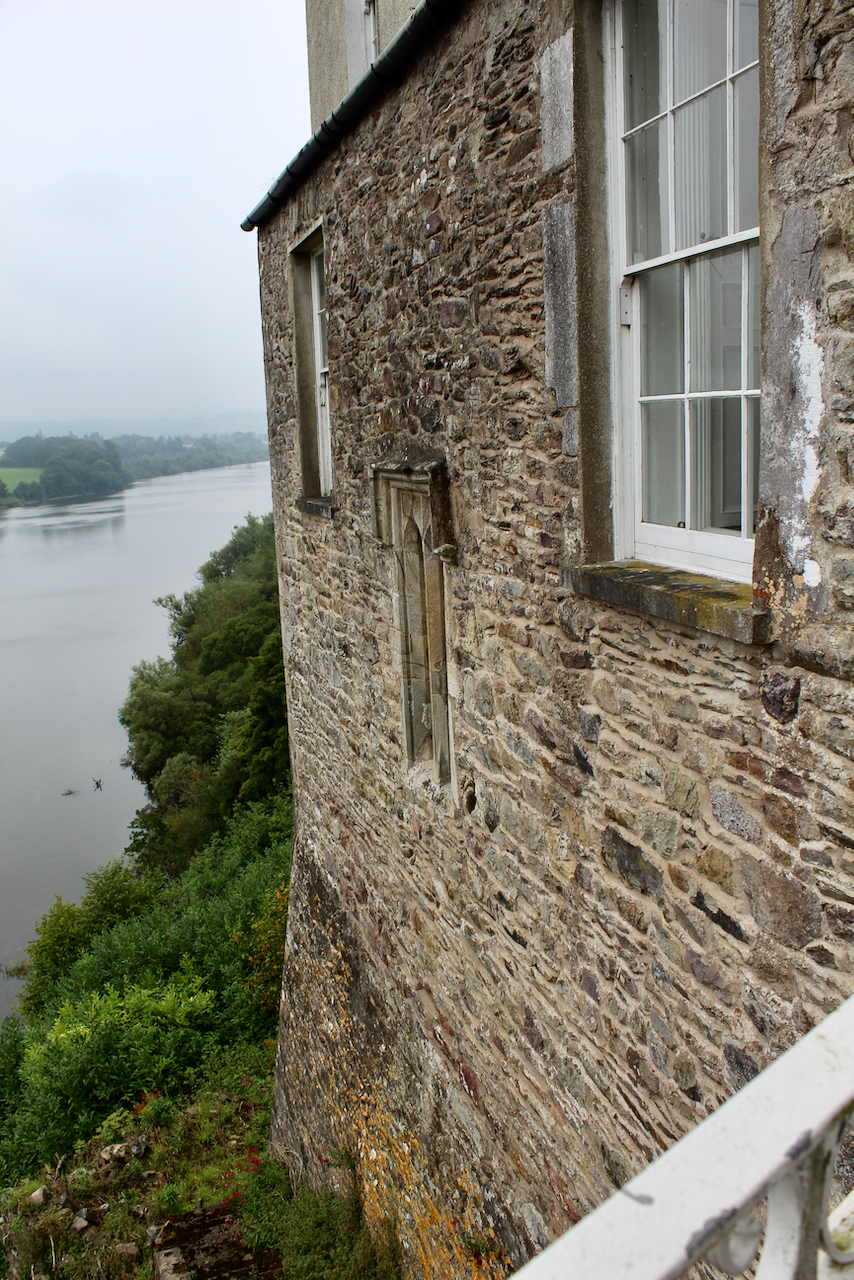
The view from the balcony looking the other direction. You can see an extremely old Gothic style window with hood moulding. The tower house structure part of the house was built in the time of Gerald Mor FitzGerald around 1462. Photograph © Jennifer Winder-Baggot, www.irishhistorichouses.com

The Earls of Desmond asserted their claim to the Decies until the Battle of Affane in 1565, in which the Earl of Desmond’s army [that of the 14th Earl of Desmond, I think] was overthrown. In January 1569 Queen Elizabeth granted Sir Maurice FitzGerald of Decies (great-grandson of Gerald Mor FitzGerald) letters patent creating him Baron of Dromana and Viscount Decies. His titles became extinct, however, when he died three years later without a male heir.

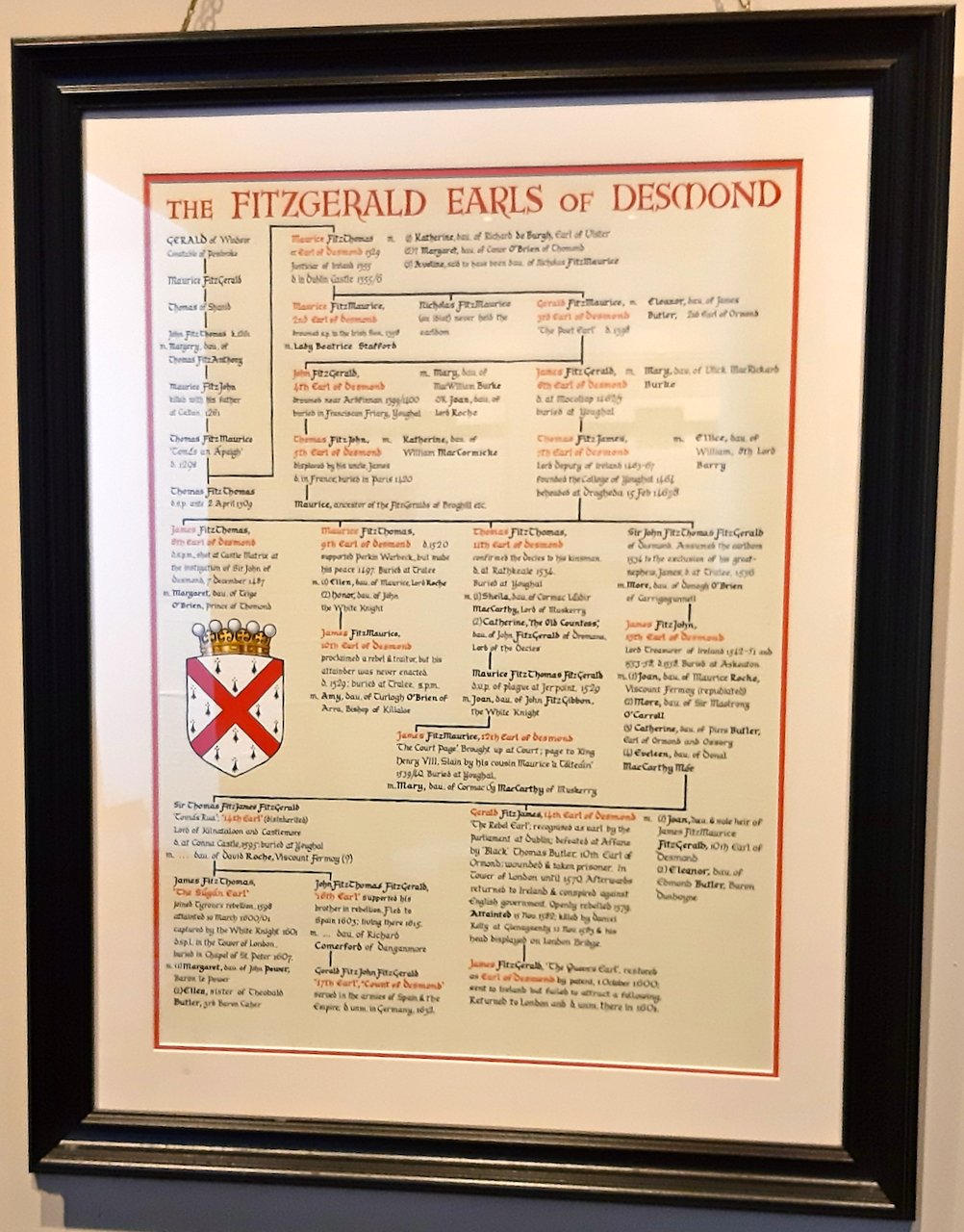
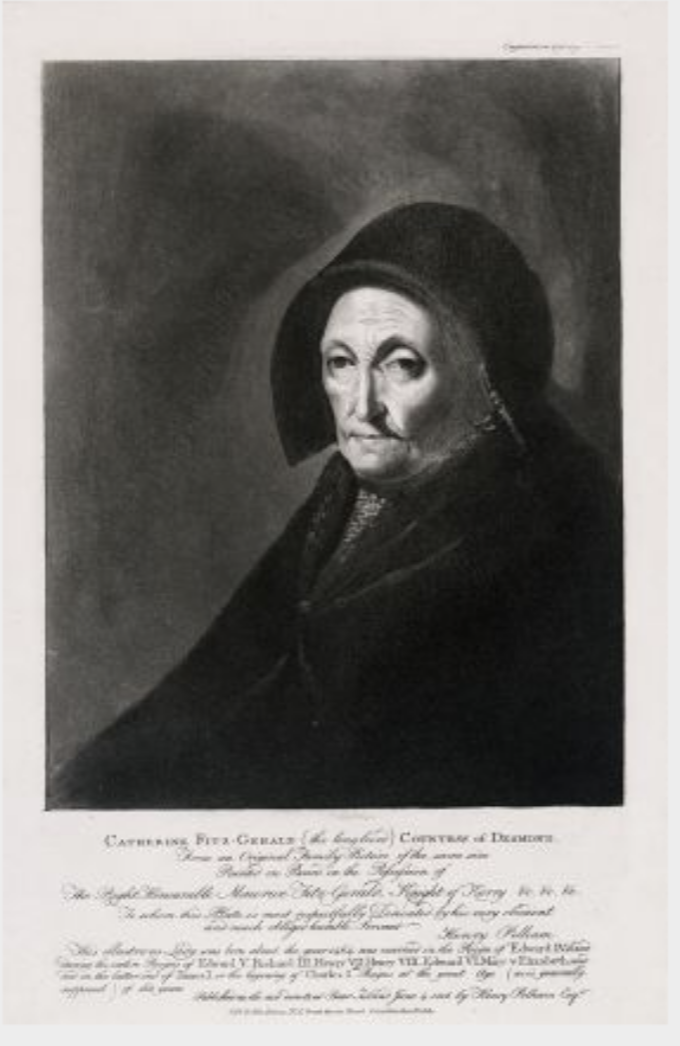
Katherine Fitzgerald of the Decies, granddaughter of Gerald Mor FitzGerald, married her cousin Thomas, who in 1529 became the 11th Earl of Desmond (the information panel below says he was the 12th Earl but I think he was the 11th). He died in 1534 but she survived him for 70 years, dying in 1604 at the age of 140 years. She lived as a widow, as the Countess of Desmond, in Inchiquin Castle in East Cork. She died supposedly from falling out of a cherry tree, having allegedly worn out three natural sets of teeth. The current owners have planted a cherry tree in her honour. They have a bookcase supposedly made from the cherry tree from which she fell!

I found this information about Katherine FitzGerald in St. Mary’s Collegiate Church in Youghal, County Cork! Photograph © Jennifer Winder-Baggot, www.irishhistorichouses.com
Thought to be a Portrait of Catherine, Countess of Desmond (née Fitzgerald), (c.1510-1604), 2nd wife of 12th Earl, photograph courtesy of National Gallery of Ireland. However, in Irish Portraits 1660-1860 by Anne Crookshank and the Knight of Glin, we are told that most of the portraits of the “Old” Countess of Desmond are copied from a painting of Rembrandt’s mother!

The website states:

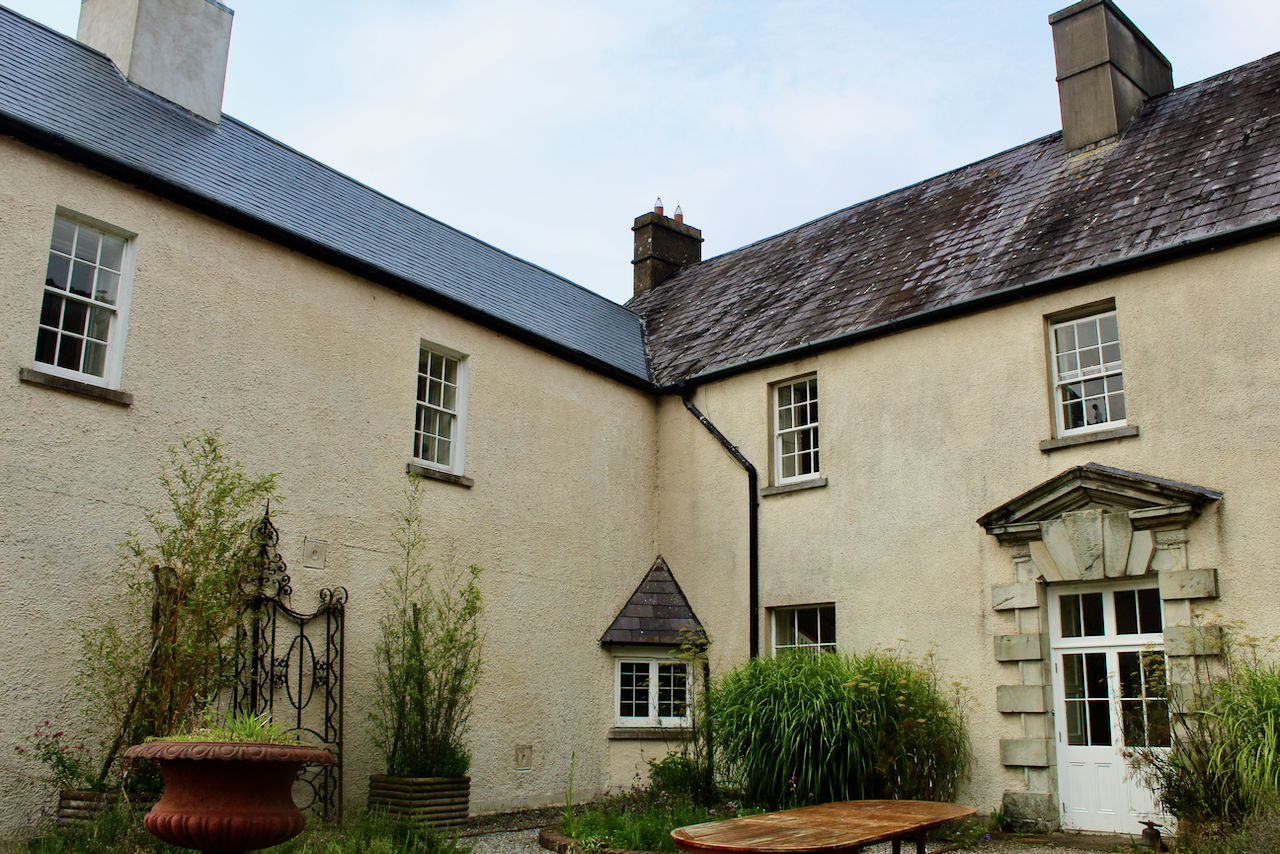
“The castle of Dromana was attacked and damaged in the wars of the 1640s and 50s, though its base can still be identified from the river, and indeed is still inhabited. In about 1700, instead of rebuilding the castle, two new ranges were built at right angles to one another along the courtyard walls. Both were simple gable-ended two storey structures, possibly just intended for occasional occupation, their only decoration being a robust, pedimented block-and-start door case in the manner of James Gibbs.” This door was moved when part of the house was demolished and is still the front door.

The “robust, pedimented block-and-start door case in the manner of James Gibbs” was moved and is still the front door. Photograph © Jennifer Winder-Baggot, www.irishhistorichouses.com

Julian Walton, one of the speakers at the “Pursuit of the Heiress” conference in 2019, has gained access to the archives at Curraghmore and is eliciting many interesting facts and details. This was great preparation for our visit to Curraghmore House the next day! [2] He told us of the heiress Katherine FitzGerald.

Stephen in the garden in 2020. Photograph © Jennifer Winder-Baggot, www.irishhistorichouses.com

Descendants of the Fitzgeralds in Dromana

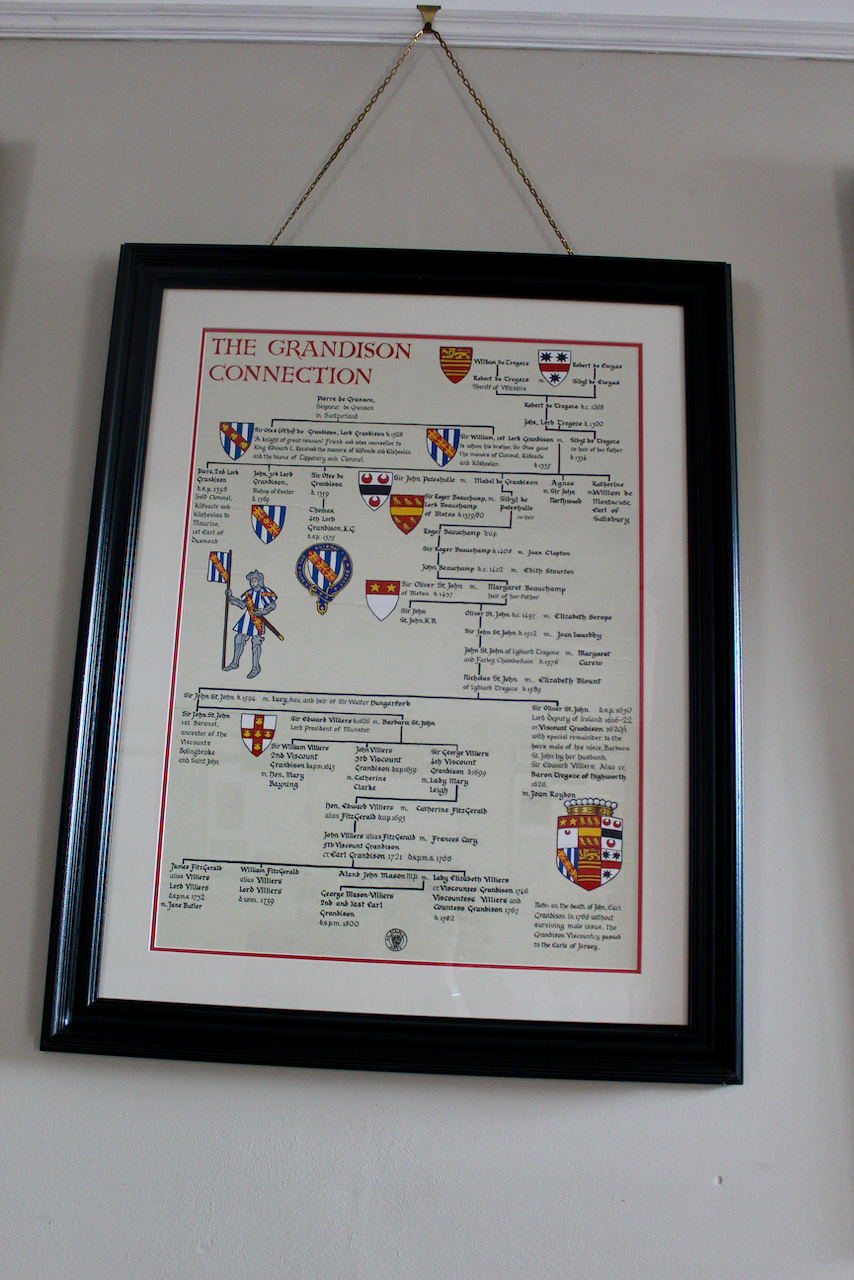
In 1673 the young heiress of Dromana, another Katherine Fitzgerald, was married against her will by her guardian Richard Le Poer, the 6th Baron of Curraghmore, to his son John. She was the only child of Sir John FitzGerald, Lord of Dromana and Decies and heir to Dromana. Her mother was Katherine Le Poer, daughter of John Le Poer 5th Baron of Curraghmore. Her mother’s brother, the 6th Baron of Curraghmore, wanted to unite the Curraghmore and Dromana estates. Both parties were underage – she was 12 and John Le Poer was only eight! Three years later Katherine escaped and married a cavalry officer named Edward Villiers (son of 4th Viscount Grandison). The courts upheld her second marriage and her first husband had to return her estate of Dromana and renounce the title of Viscount Decies. Her second husband’s father was a cousin to Barbara Villiers, mistress to King Charles II, and Barbara intervened on behalf of her cousin. When her second husband’s father, the 4th Viscount Grandison died in 1700, she was granted, in lieu of her now deceased husband, the title of Viscountess Grandison. She lived in Dromana until her death in 1725. 

Dromana House, May 2019. Photograph © Jennifer Winder-Baggot, www.irishhistorichouses.com

History of the Development of the House, and the Villiers-Stuarts

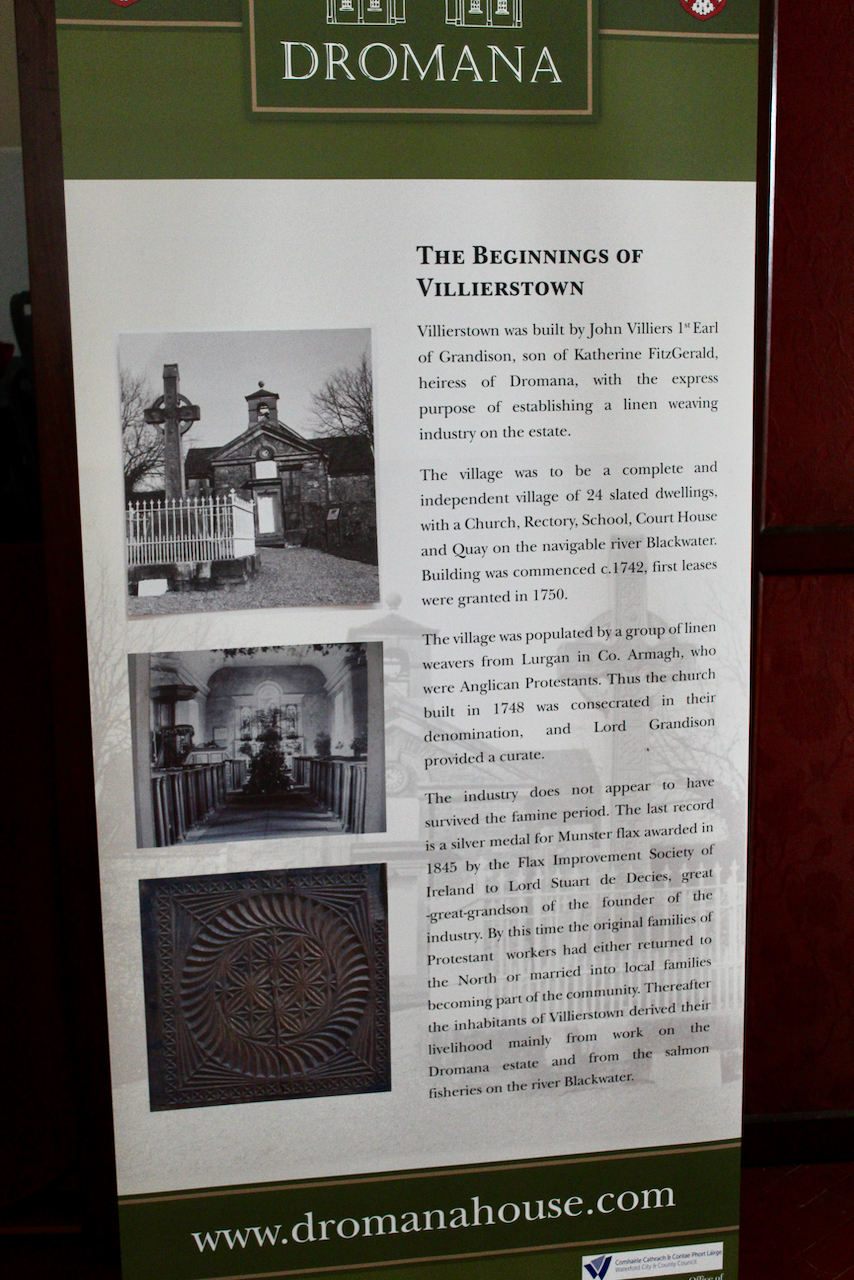
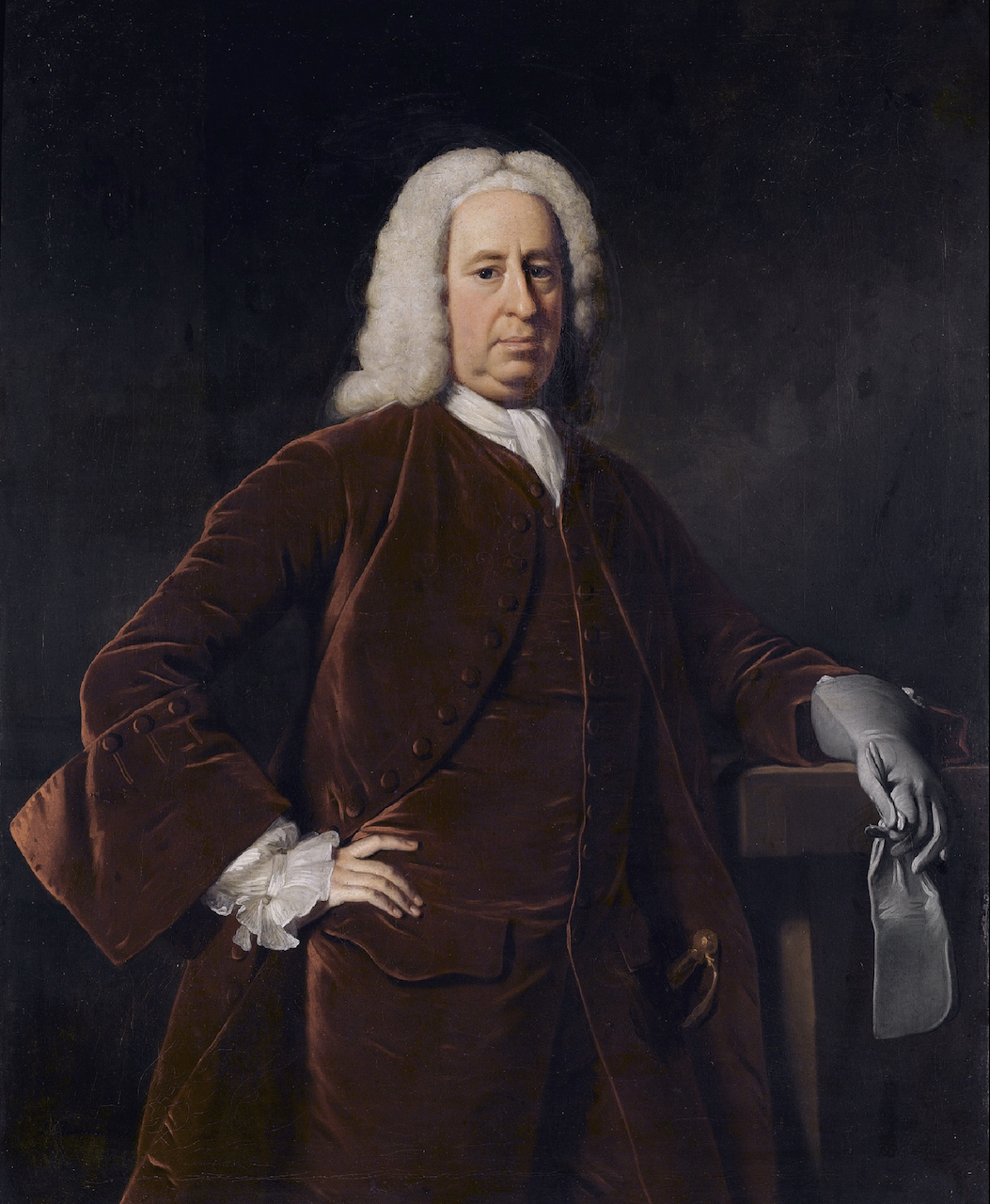
The son of Edward Villiers and Katherine Fitzgerald, John Villiers, c.1684 – 1766, became the 5th Viscount Grandison, and later, the 1st Earl Grandison. He repaired the house in the 1730s after it was partly destroyed in the political turmoil of the 1600s. Our guide, Barbara, told us that he was an enterprising landlord: in the 1740s he brought weaving from Lurgan, County Armagh, to start the linen industry in the area, and he built the village of Villierstown for the workers. He also planted 52,000 trees.

Dromana House, May 2019.
John Villiers (c.1684 – 1766) 1st Earl Grandison by Alan Ramsay.

The 1st Earl of Grandison’s sons predeceased him so the estate passed to his daughter, Elizabeth. She married Alan John Mason, an MP for County Waterford and a merchant, and on her father’s death she was created 1st Countess Grandison and and 1st Viscountess Villiers. [3] Their son became the 2nd Earl of Grandison and added the surname Villiers to become George Mason-Villiers. In 1780, he added a larger new house in front of the old one, adding an impressive staircase and ballroom. Of his building work, Mark Bence-Jones describes the back of the new block forming a third side of a courtyard with two older ranges, and a low office range forming the fourth side. The Gibbsian doorway was hidden from sight in the courtyard. [4]

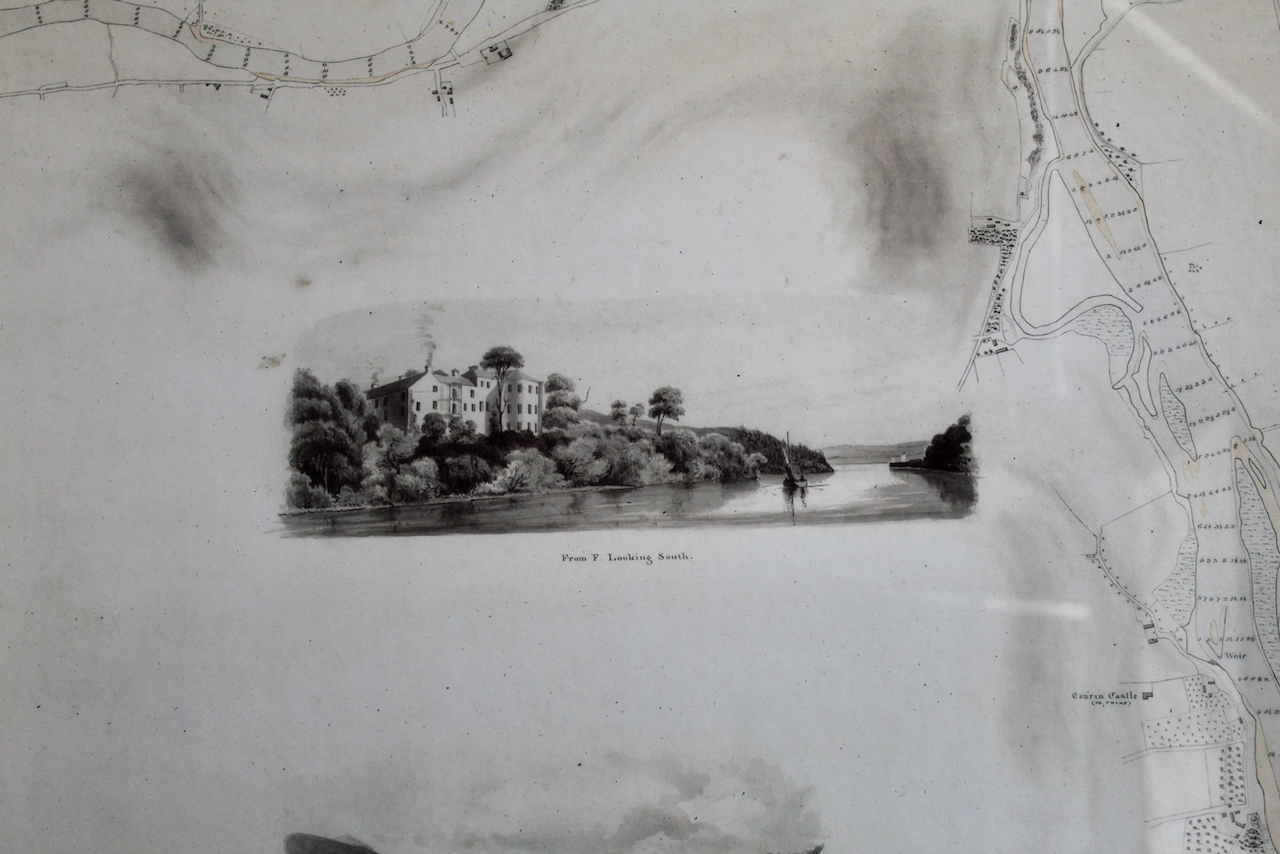
A panel about the architectural evolution of Dromana states: “The second Earl Grandison, George Mason-Villiers, added on a larger new house, commencing in about 1780, directly in front of the longer 1700s range. The principal façade was of two storey and nine bays, quite plain, with a parapet and a rather curious segmental-headed armorial doorcase. The river façade contained a shallow double-height bow and was actually an extension of the smaller 1700s range. Together these three buildings faithfully followed the line of the original bawn or courtyard. There was a spacious hall with a grand staircase, and a large circular ballroom.”

In this old picture you can see the house with the bows.

George Mason-Villiers too had only a daughter as an heir: Gertrude Amelia Mason-Villiers (1778-1809). In 1800, she married Lord Henry Stuart (1777-1809), third son of the 1st Marquess of Bute, of the Isle of Bute in Scotland. Henry Stuart’s grandmother was the famous writer Lady Mary Wortley-Montagu, who wrote about her experiences of travelling in Ottoman Istanbul.

Lady Mary Wortley Montagu (1718-1794), Wife of 3rd Earl of Bute, print after Christian Friedrich Zincke, 1830s, courtesy of National Portrait Gallery of London, NPG D34619.

Gertrude and Henry were succeeded in 1809 by their son, Henry, when he was just six years old. Henry added “Villiers” to his name in 1822, becoming Villiers-Stuart. The architect Martin Day was hired first in 1822 by trustees of Lady Gertrude – Henry didn’t come of age until 1824. Martin Day came from a family of architects in County Wexford. He designed several Church of Ireland churches for the Board of First Fruits and the Irish Ecclesiastical Commissioners between 1822-1849. In the 1820s, Day worked on the interiors of Dromana. He assisted Daniel Robertson at Johnstown Castle (now open to the public) and Castleboro House in County Wexford in the 1840s, and around the same time did more work for Henry Villiers-Stuart, adding parapets, pediments and mouldings to the windows, and an elaborate surround to the entrance doorway which incorporated the family arms. [5] He also fitted out a suite of very grand reception rooms and a massive imperial staircase.

Henry served as MP for Waterford 1826-1830 and for Banbury, Oxfordshire, England in 1830-1. He also served as Colonel in the Waterford Militia. He was admitted to the Irish Privy Council in 1837, and was created, in 1839, Baron Stuart de Decies, a title that recalled his long family connection with the region. Henry Villiers-Stuart was Lord-Lieutenant of County Waterford, 1831-74.

The Dromana website tells us that Henry Villiers-Stuart was “a Protestant aristocrat and large landowner with radical views. As a young man he defeated the Waterford establishment in the famous 1826 election to give Daniel O’Connell and the Catholic Emancipation movement their first Member of Parliament.” Daniel O’Connell signed documents in Dromana House, and the Catholic Emancipation Act of 1829 was drawn up at Dromana.

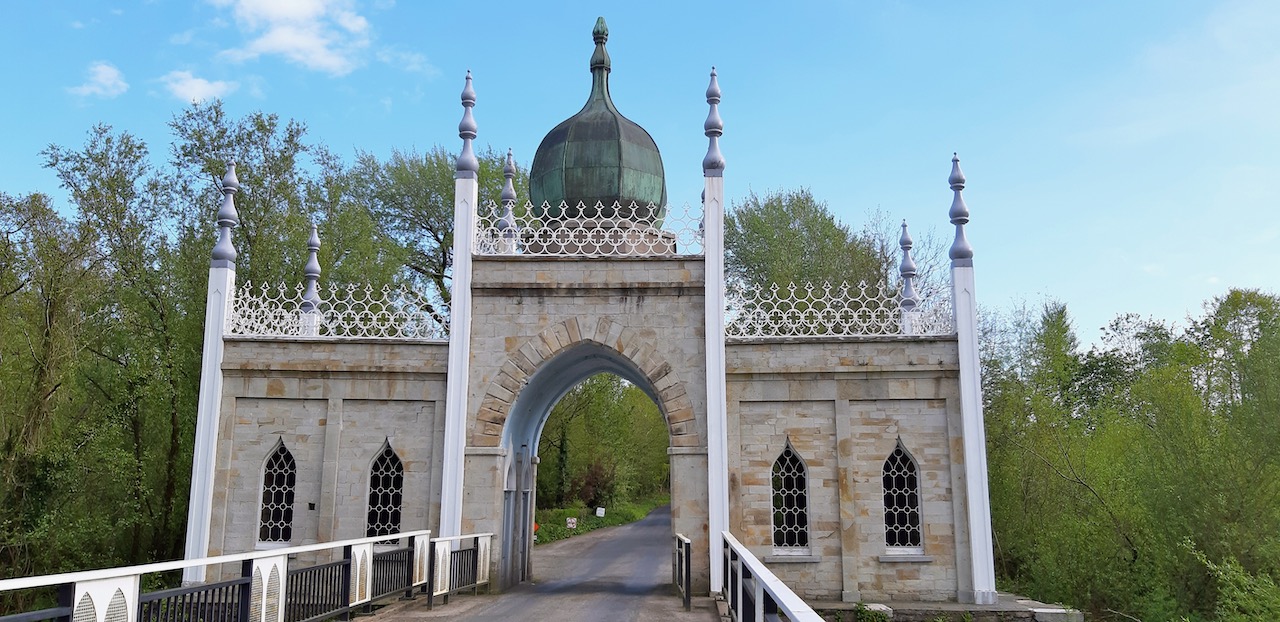
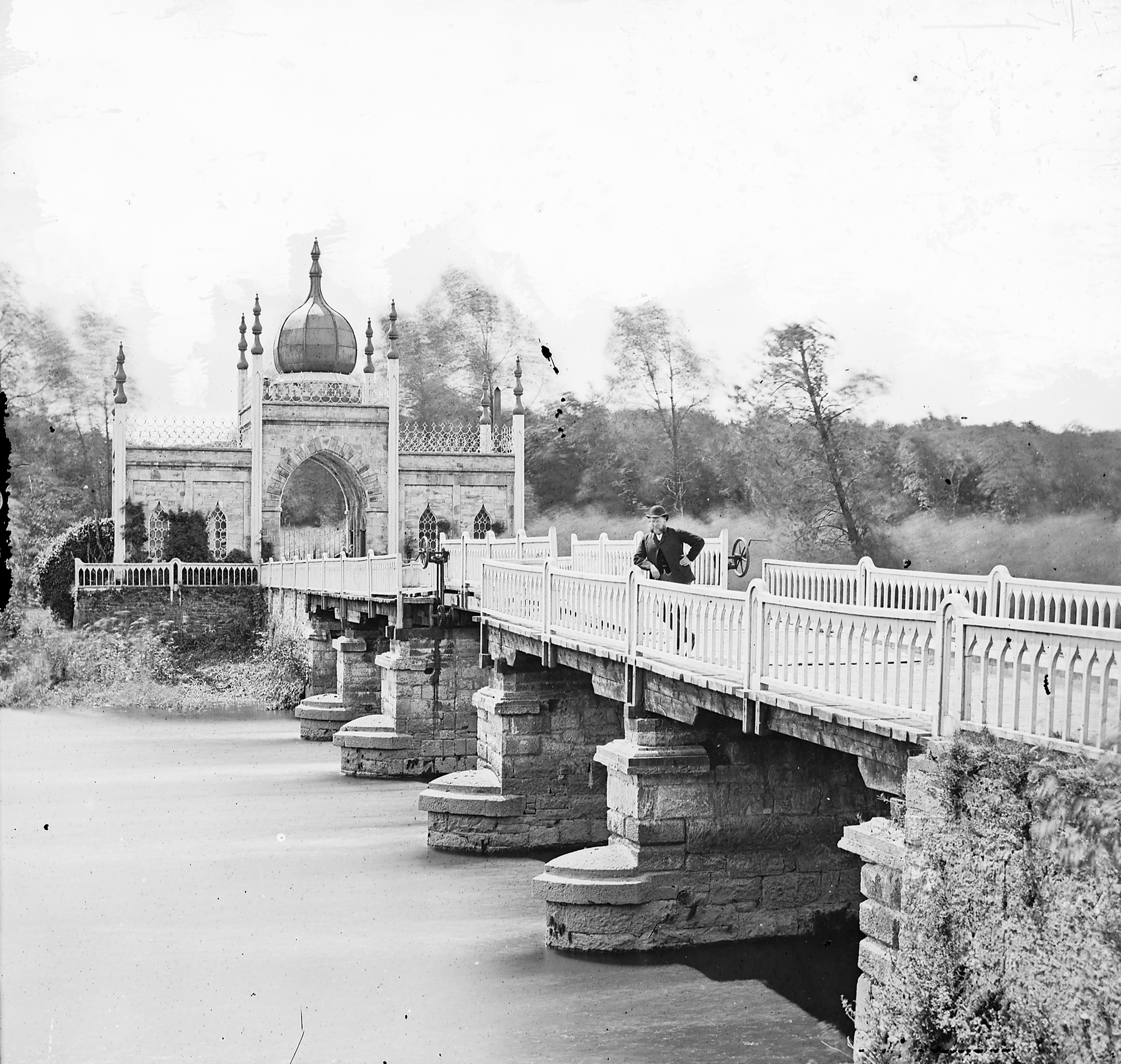
In 1826 Henry Villiers-Stuart married Theresia Pauline Ott. When they returned from their honeymoon, the tenants of Villierstown constructed an elaborate papier-mache archway gate for them to drive through. Martin Day may have had a hand in the original gateway, and later drew up plans to create a more permanent structure, which Stephen and I visited later in the day.

The Hindu-Gothic Bridge, over the River Finisk. Photograph © Jennifer Winder-Baggot, www.irishhistorichouses.com
Dromana Hindu gothic gate ca. 1870 photographers Frederick Holland Mares, James Simonton stereo pairs photographic collection nli, flickr constant commons.

The Bridge is now on a public road. One used to need a ticket to enter through the gate. When King Edward VII arrived at the gate in a pony and trap, on his way to Lismore, he had no pass, so was turned away! The Gate was restored by the Irish Georgian Society in the 1960s and again by the local city council in 1990. [6] The “bishop” like structures either side of the top of the central part have been replaced by fibreglass “bishops,” as the original copper ones are too heavy, and one of the originals now sits in the garden of Dromana.

Pauline Ott had been married before, and her husband was thought to have died in the army. However, he later reappeared. Her marriage to Henry Villiers-Stuart was thus rendered invalid, and her children illegitimate. She and Henry had a son, Henry Windsor Villiers-Stuart and a daughter Pauline. Pauline married into the Wheeler-Cuffe family of Lyrath, County Kilkenny (now a hotel). Their son was unable to inherit the title of Baron Stuart of the Decies and the peerage expired with his father’s death in 1874. [7]

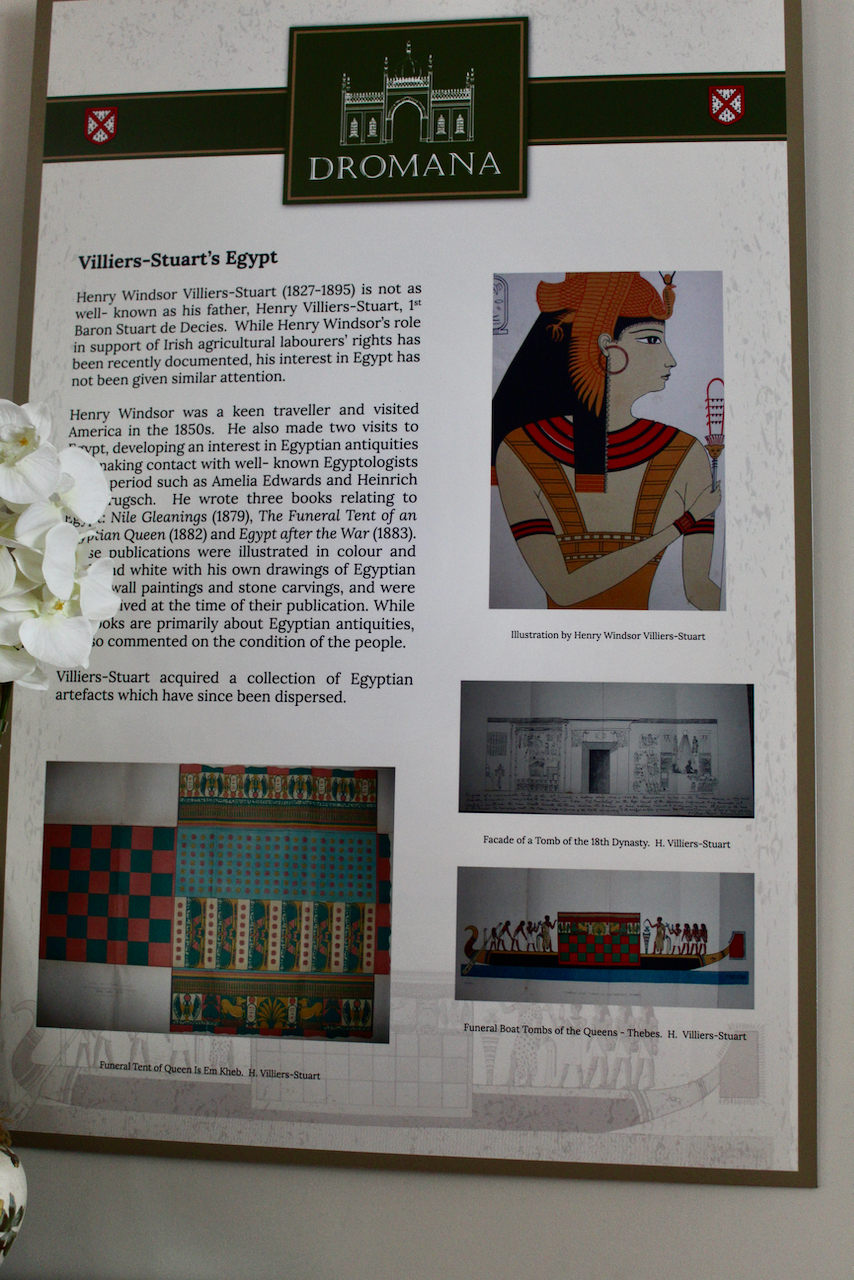
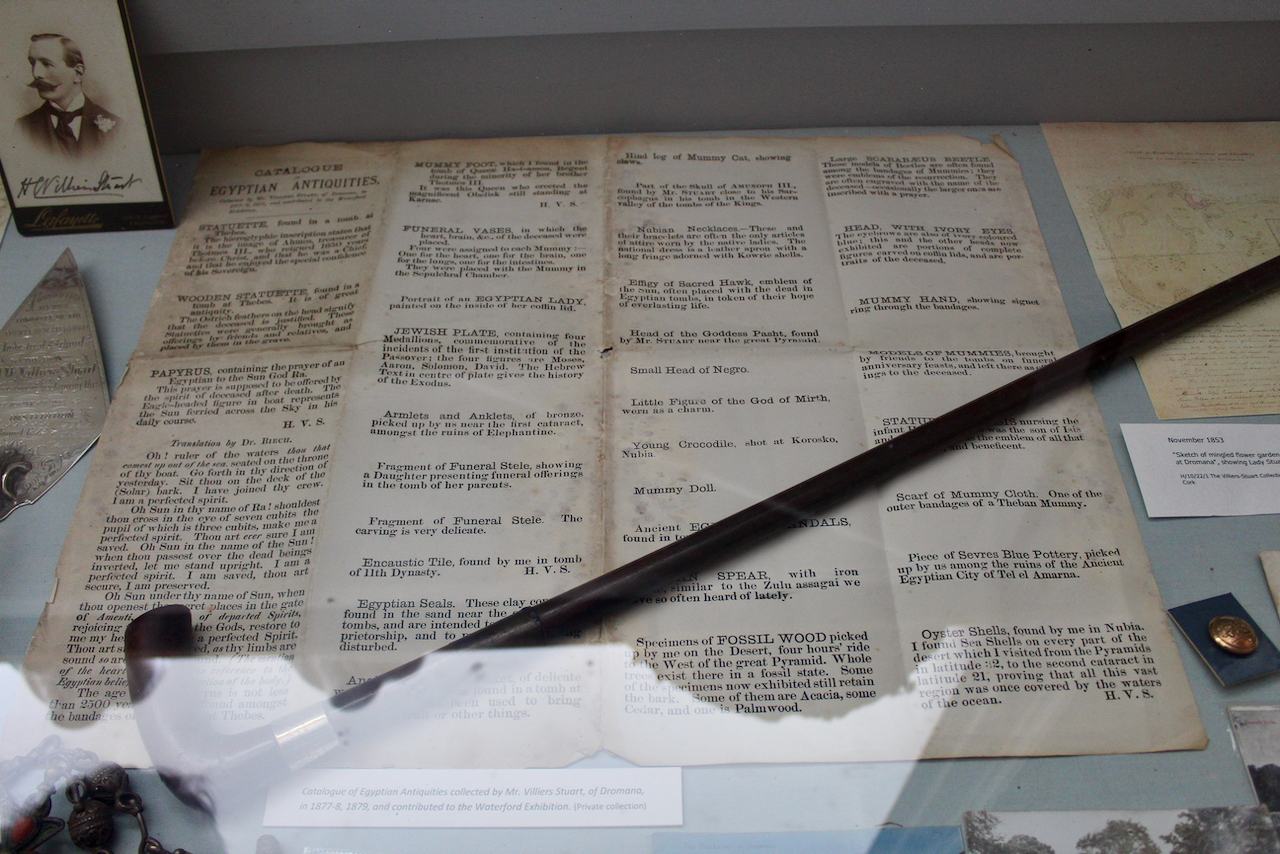
Despite becoming illegitimate, the son, Henry Windsor Villiers-Stuart (1827-1895) [the name Windsor came from his father’s maternal family], did very well for himself. He served first in the Austrian then the British Army, then went to university. He was ordained in the Church of England but later resigned Holy Orders in order to pursue a political career. He became MP for County Waterford from 1873-85, Vice Lord-Lieutenant of County Waterford, 1871-73, and High Sheriff of County Waterford in 1889. In 1865 he married Mary, second daughter of the Venerable Ambrose Power, Archdeacon of Lismore. He travelled extensively and wrote books, studied hieroglyphics, and did pioneering work in Egypt. He brought many artefacts back from Egypt, which have since been dispersed.

Henry Windsor Villiers-Stuart (1827 – 1895) travelled extensively and wrote books, studied hieroglyphics, and did pioneering work in Egypt. He was a British soldier, clergyman, politician, Egyptologist, and author.
In the old kitchen, which houses the information boards, there was a museum case of fascinating artefacts, many from Egypt from Henry Windsor Villiers-Stuart’s travels.

His eldest son, Henry Charles Windsor Villiers-Stuart (1867-1908), who served as High Sheriff of County Waterford, 1898, espoused, in 1895, Grace Frances, only daughter of John Adam Richard Newman of Dromore, County Cork. Their heir, Ion Henry Fitzgerald Villiers-Stuart (1900-48), wedded, in 1928, Elspeth Richardson, and was succeeded by his only son, James Henry Villiers-Stuart (b. 1928), of Dromana, who married, in 1952, Emily Constance Lanfear and had two daughters, Caroline and Barbara, one of whom was our tour guide and who now lives in the house. [8]

The website states that: “by the 1960s Dromana had become something of a white elephant. The estate was sold and subdivided, and the house bought by a cousin, Fitzgerald Villiers-Stuart [a grandson of Henry Windsor Villiers-Stuart], who demolished the 1780s block in 1966 and reduced it to more manageable proportions.”

“James Villiers-Stuart was able to repurchase the house in 1995 he and his wife Emily moved into Dromana and began restoring the house and garden. Now a widow, Emily still lives there, along with her daughter and family.”

Back to the Conference

Barbara, heir to the house, and her husband Nicholas, attended the “Pursuit of the Heiress” conference. Nicholas gave us an impromptu lecture of sorts about how forces merged to make the upkeep of the big houses in Ireland almost impossible, with the high rates charged by the government, and the decline of salmon fishing, etc. 

We had more lectures after lunch. First up was “The Abduction of Mary Pike,” by Dr. Kieran Groeger, which interested Stephen as she too was a Quaker. [9] The last lecture was by Dr Dagmar Ó Riain-Raedel, on her research on Irish exiles to the Austrian army. [10] This was fascinating. I have much to study, to learn the history of the Habsburg empire.

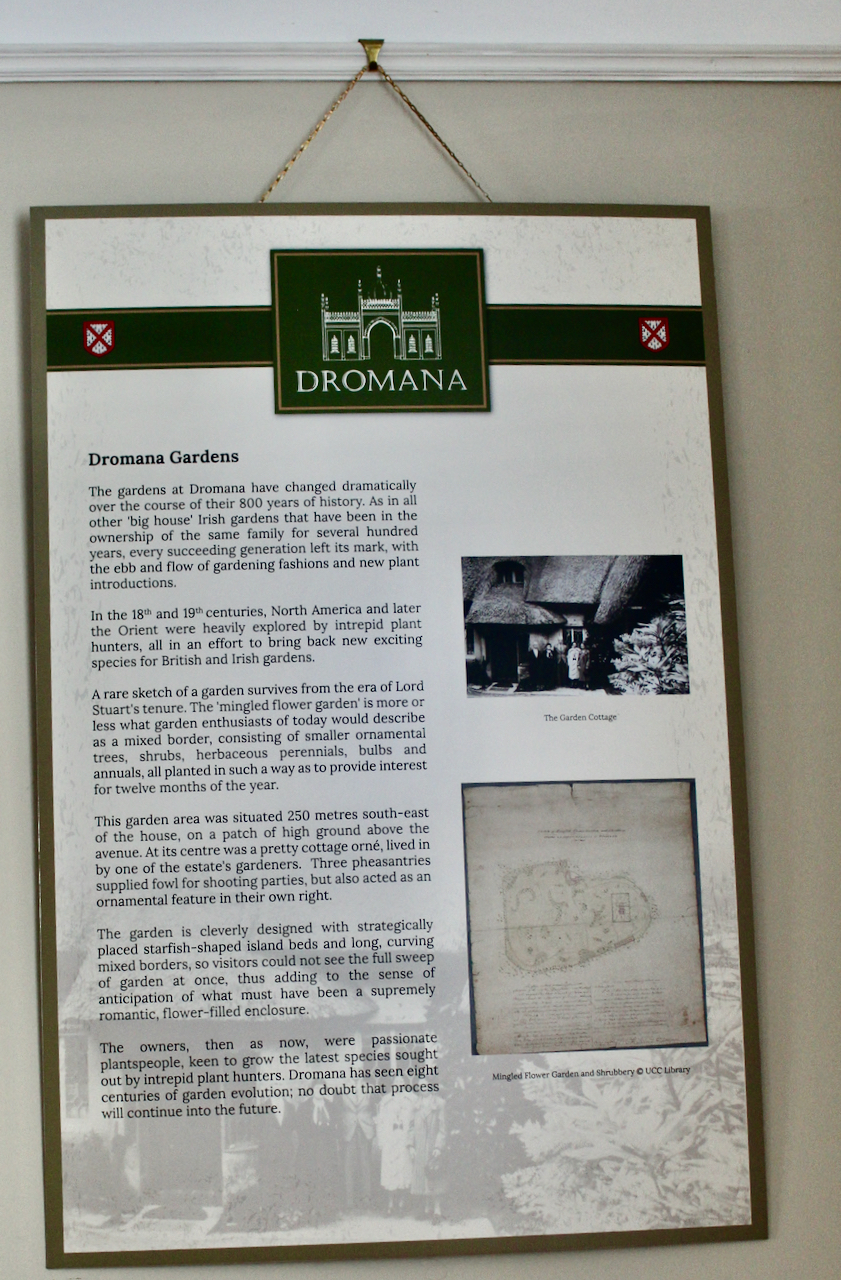
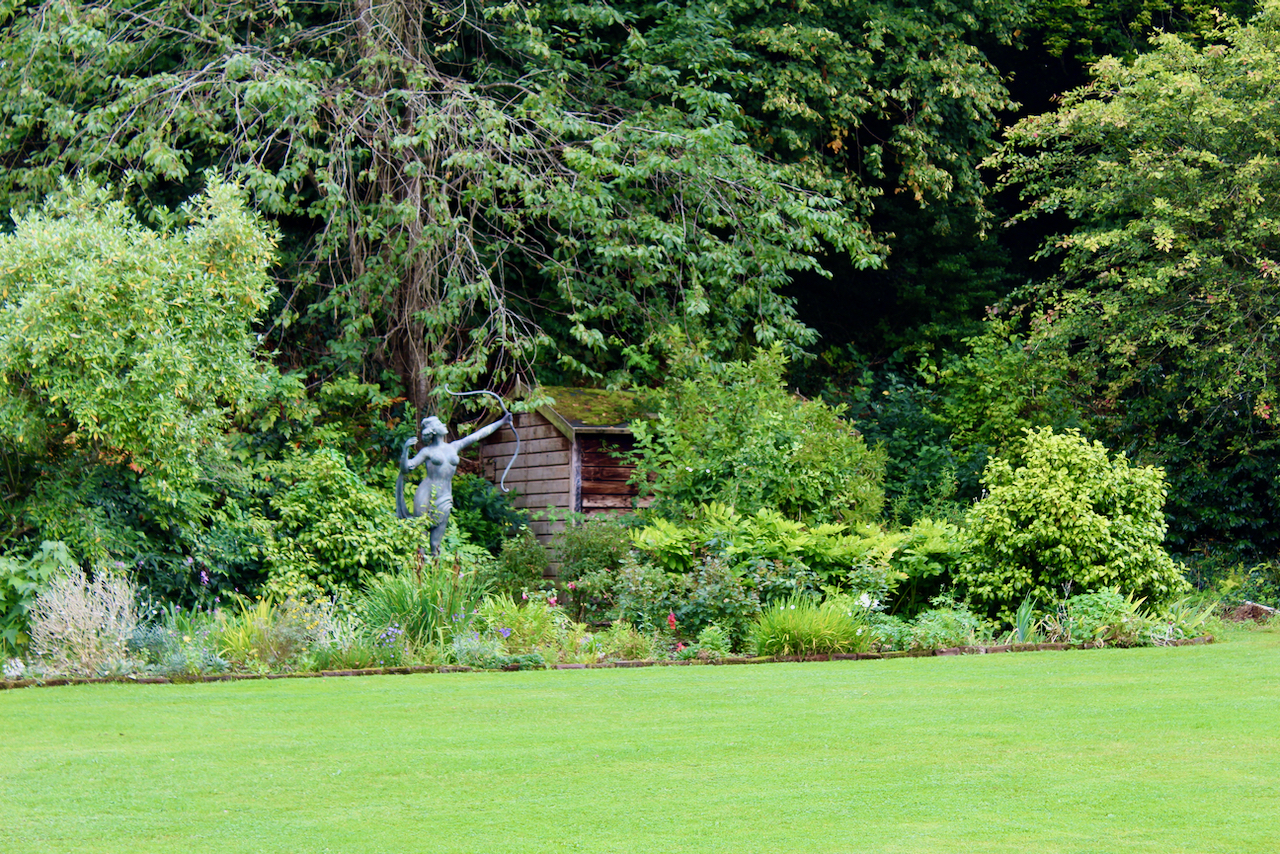
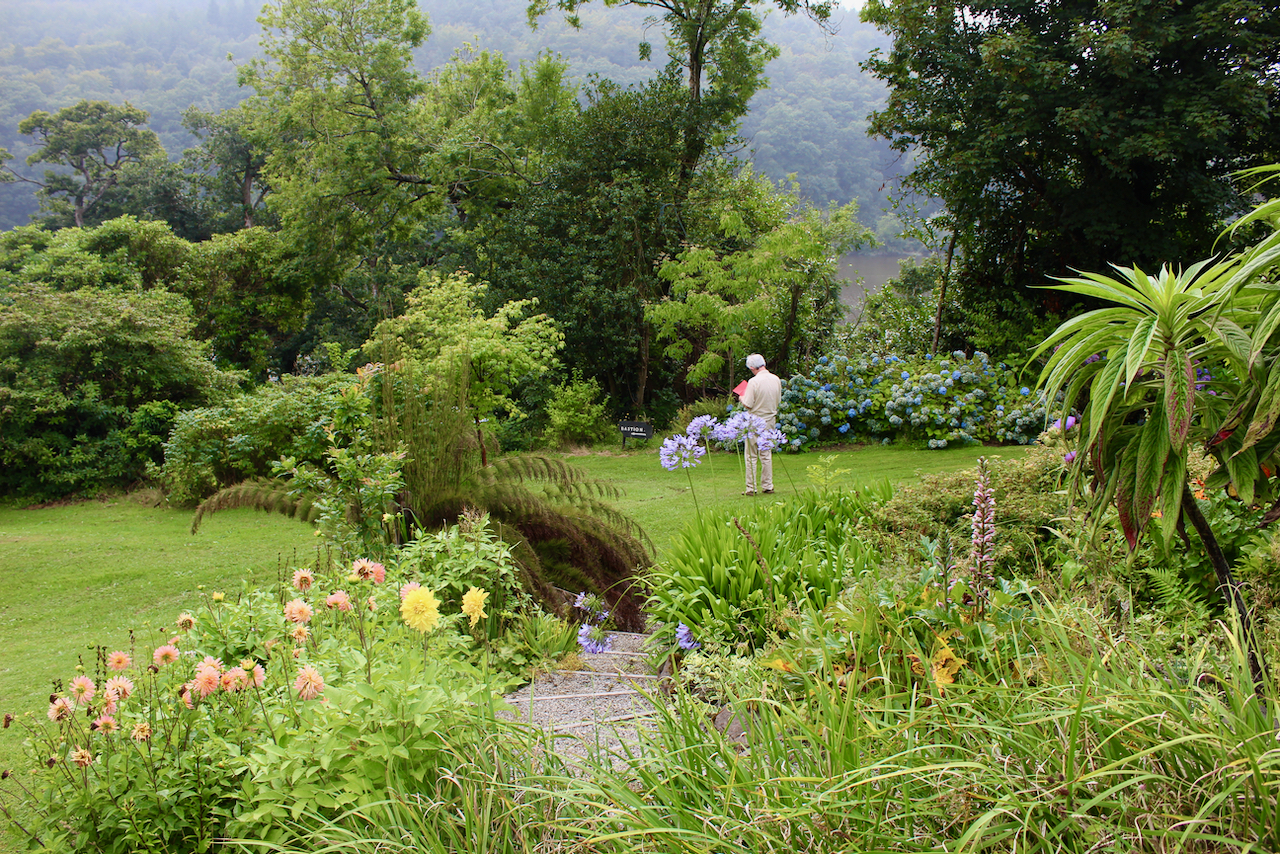
Afterwards we had tea on the lawn, then Nicholas gave us an almost running tour of the garden – we had to be quick to keep up with him as he bound ahead describing the plants. The website states that “the steeply sloping riverbanks are covered with oak woods and the important mid-eighteenth century garden layout, with its follies, the Rock House and the Bastion, is currently being restored.” There are over thirty acres of garden and woodland, including looped walks.

Dromana House, May 2019.

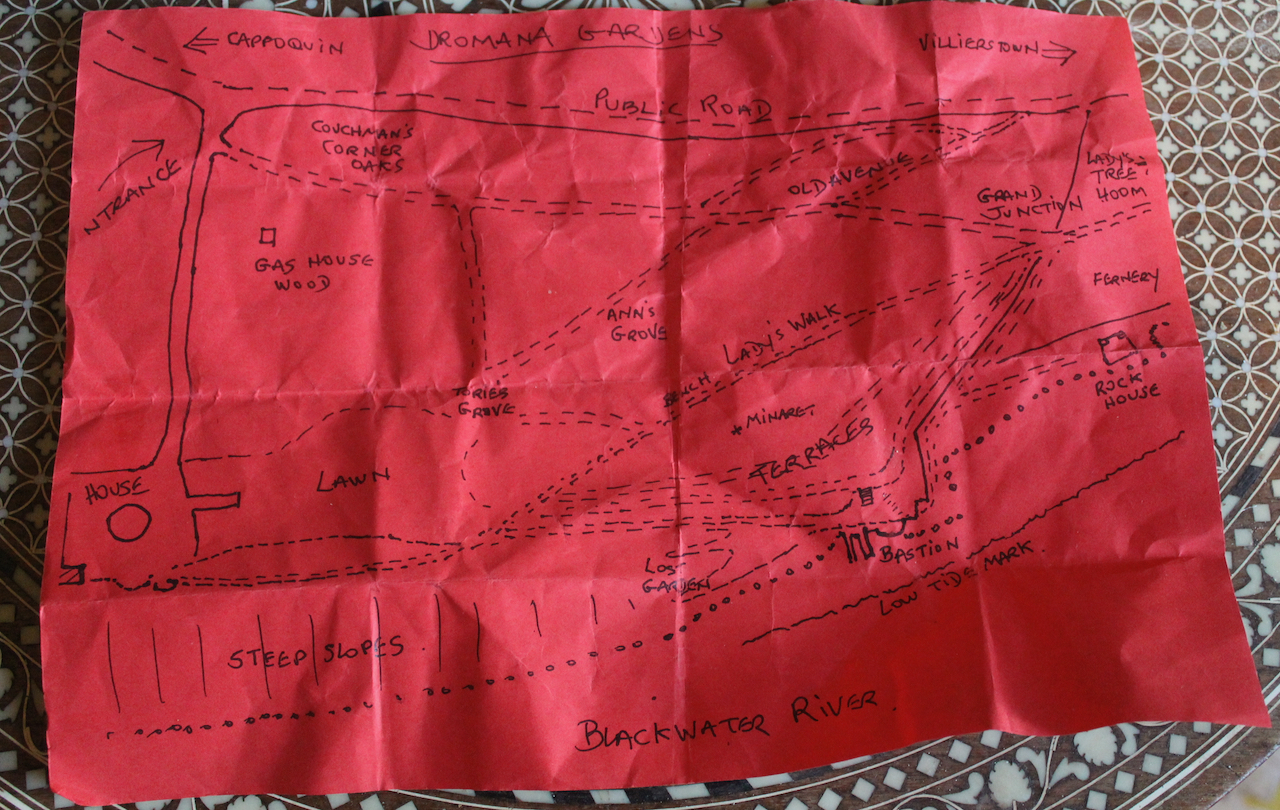
When we visited in 2020, we had more time to explore the garden. We were given a map when we arrived. The current owners are enthusiastic gardeners and do nearly all the work themselves.

Dromana.
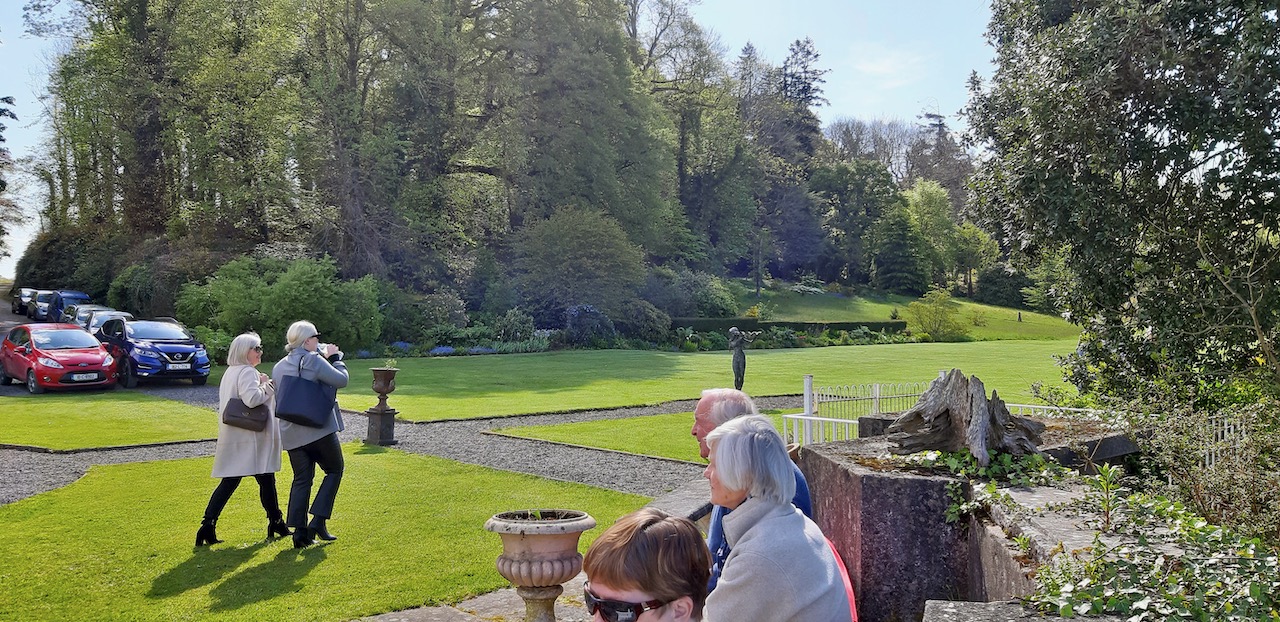
From the Conference in 2019, a view of the gardens. Photograph © Jennifer Winder-Baggot, www.irishhistorichouses.com
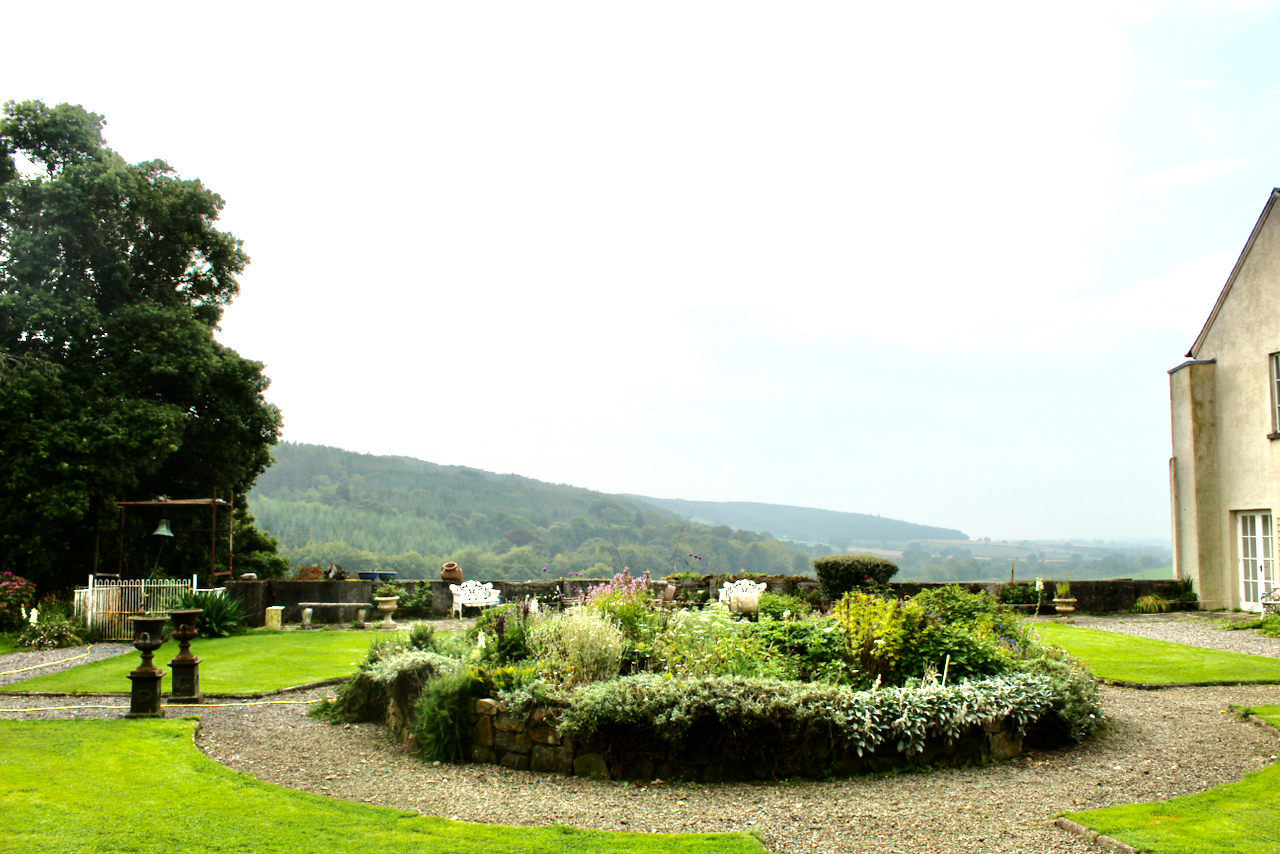
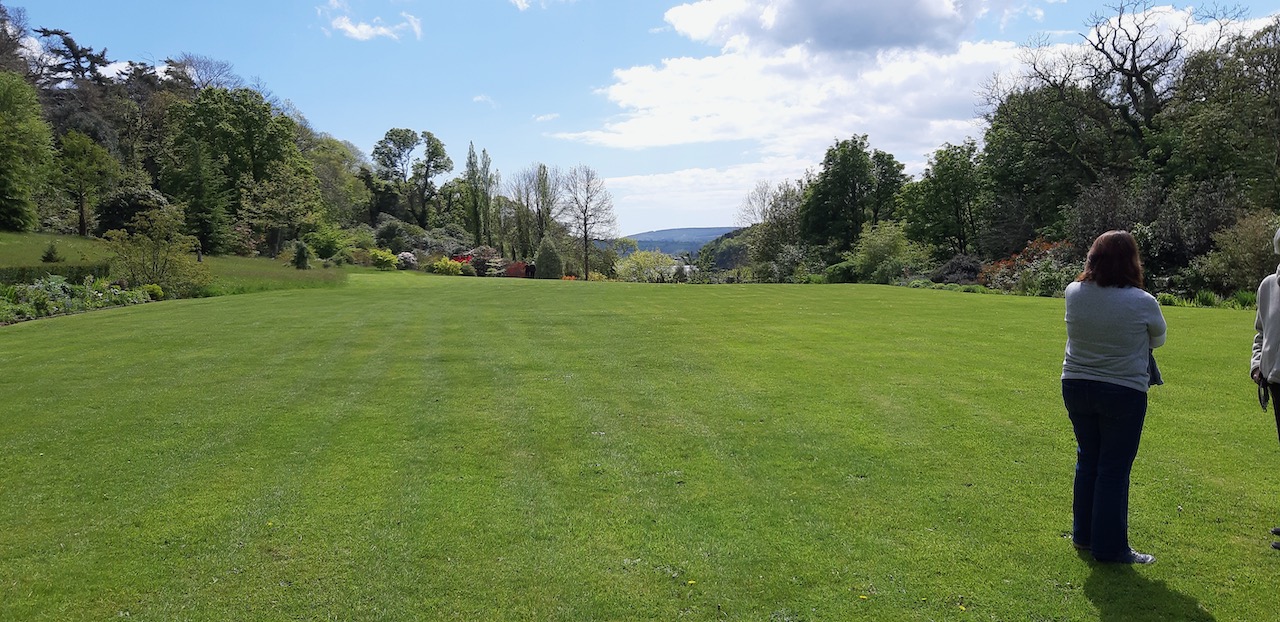
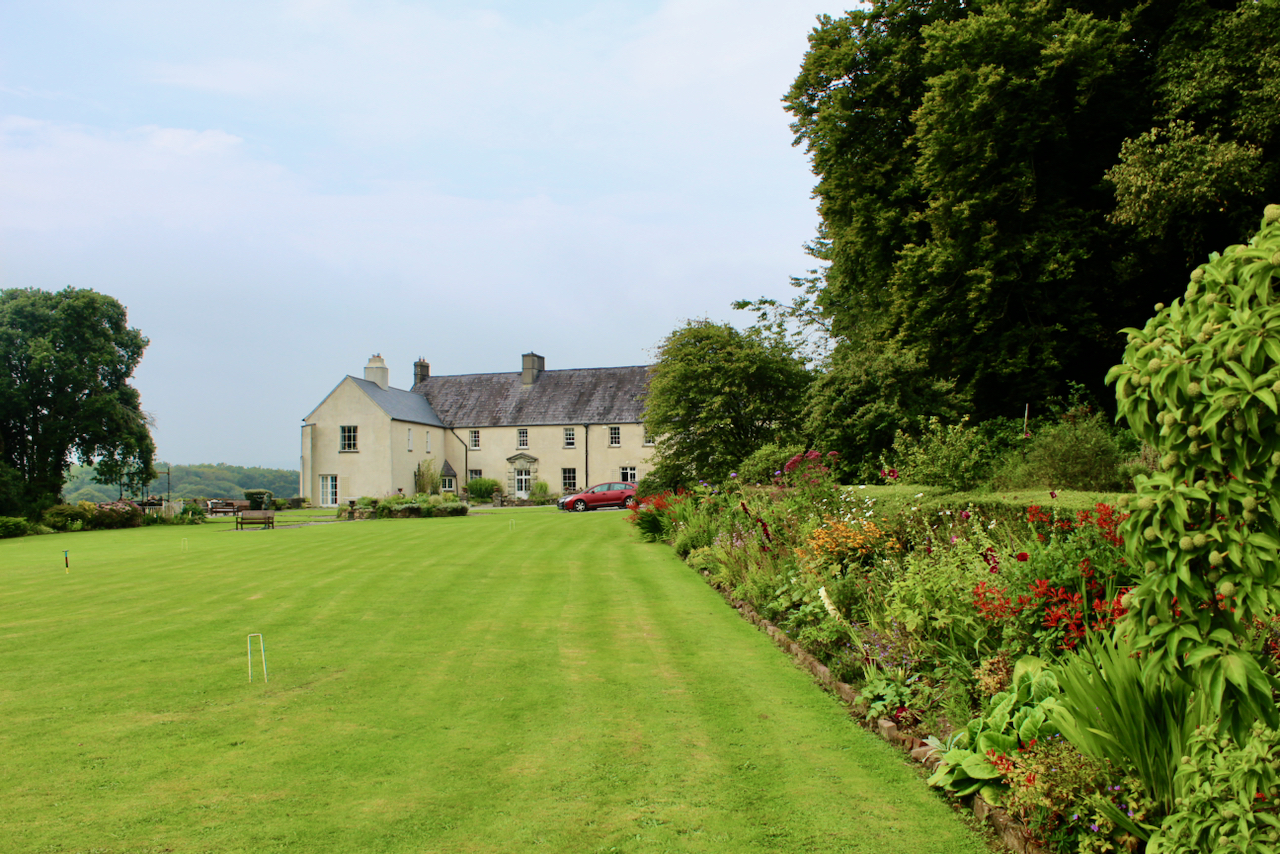
The sweep of lawn in front of the house. Photograph © Jennifer Winder-Baggot, www.irishhistorichouses.com
Dromana. Photograph © Jennifer Winder-Baggot, www.irishhistorichouses.com
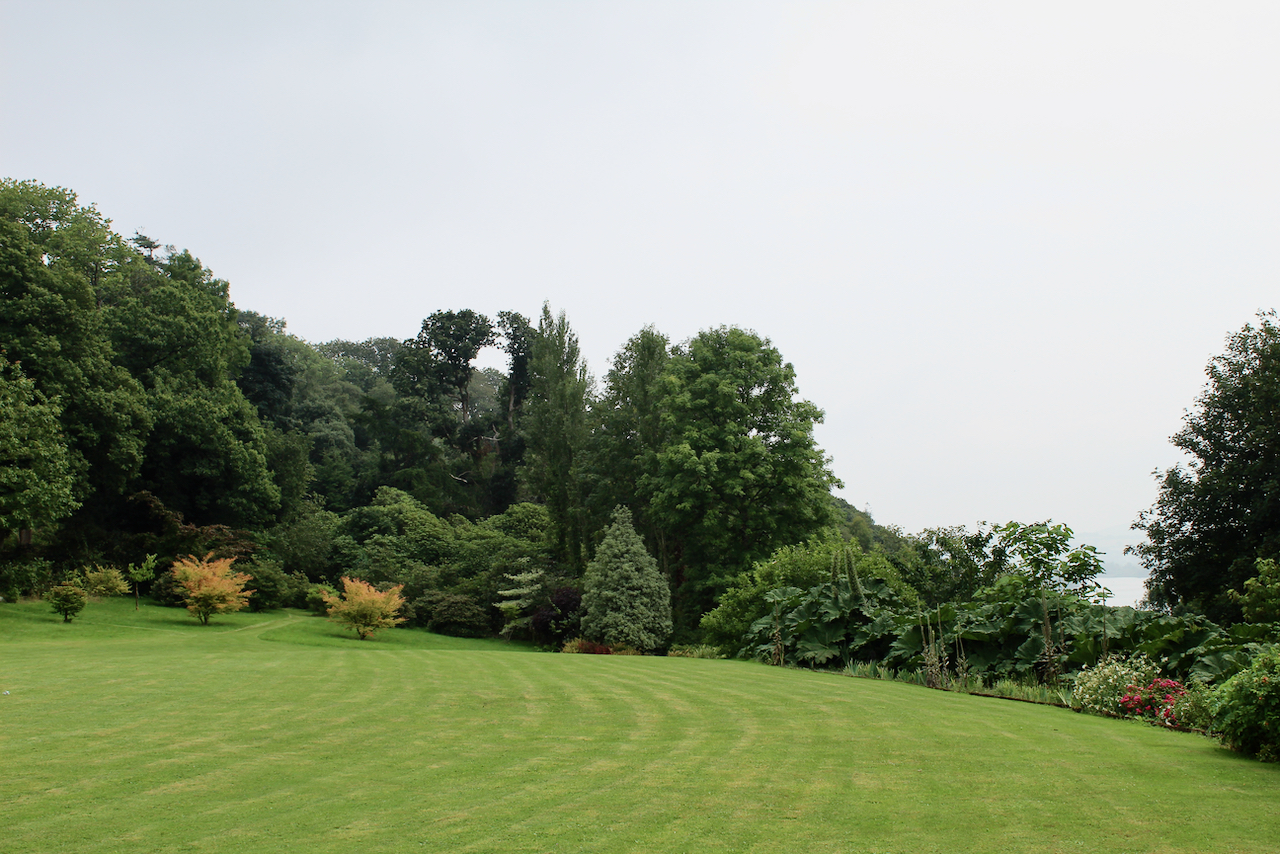
Looking toward the gas house wood. Photograph © Jennifer Winder-Baggot, www.irishhistorichouses.com

We headed down to see the Bastion and Rock House.

Dromana. Photograph © Jennifer Winder-Baggot, www.irishhistorichouses.com
Inside the Bastion. Photograph © Jennifer Winder-Baggot, www.irishhistorichouses.com
The Bastion. Photograph © Jennifer Winder-Baggot, www.irishhistorichouses.com
Dromana. Photograph © Jennifer Winder-Baggot, www.irishhistorichouses.com
I had Stephen stand by the wall of the Bastion to show how tall it is! Photograph © Jennifer Winder-Baggot, www.irishhistorichouses.com

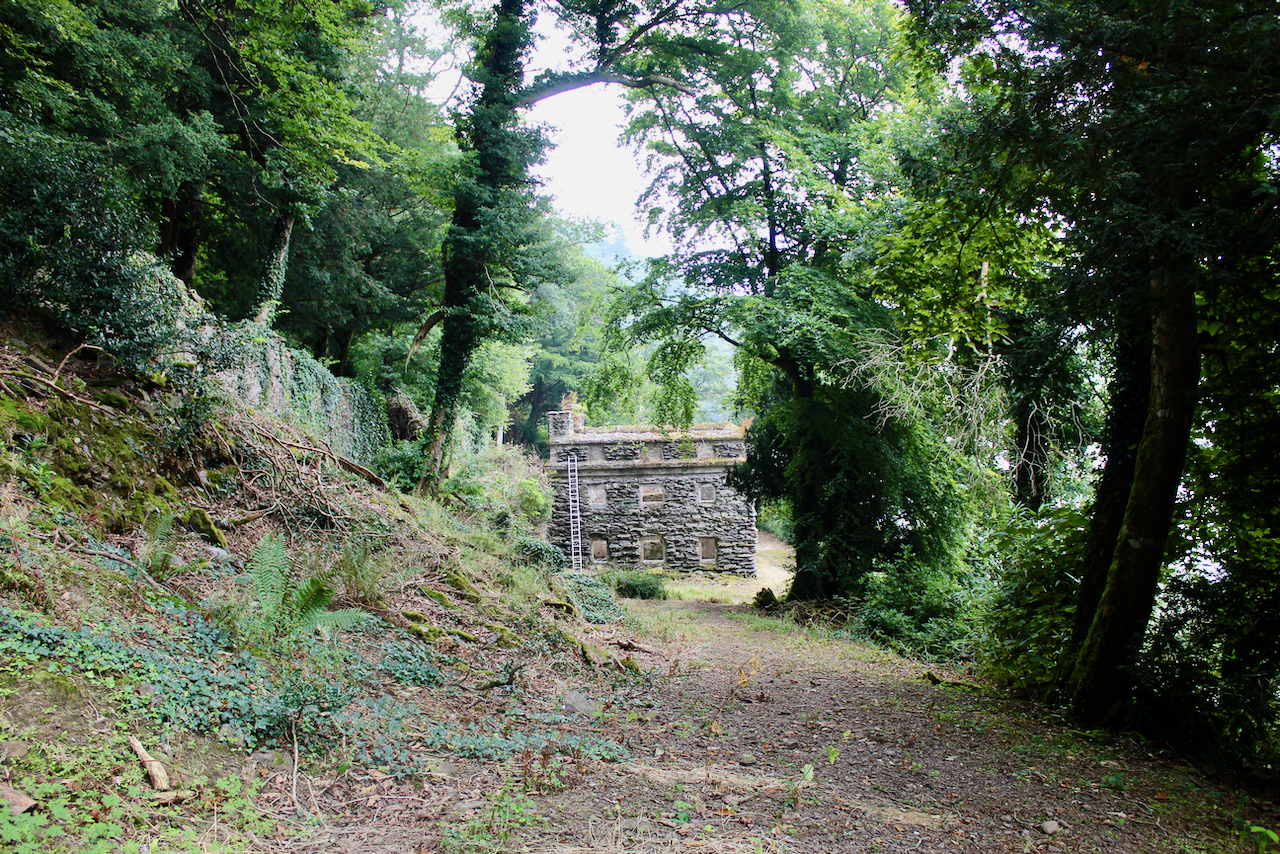
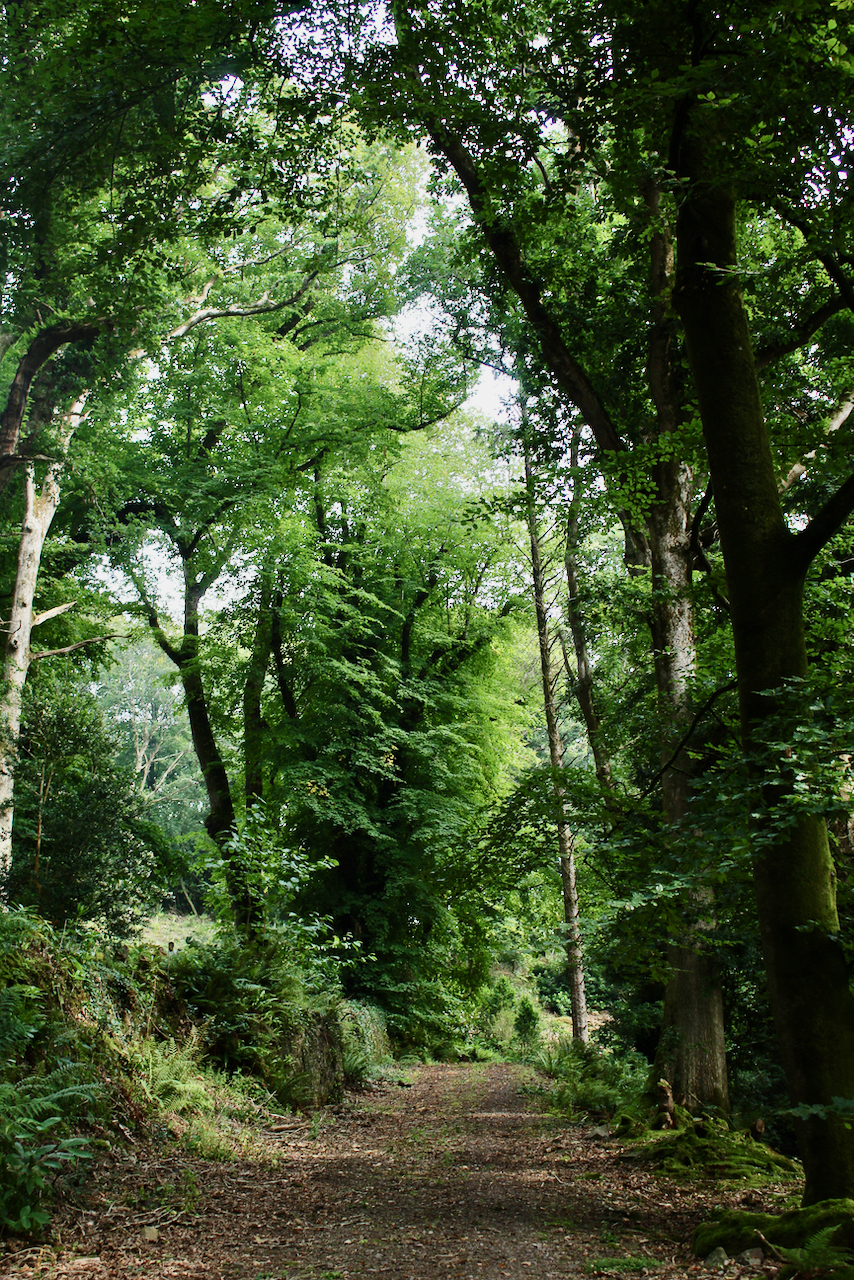
Next we went to see the Rock House, further along the path.

Dromana. Photograph © Jennifer Winder-Baggot, www.irishhistorichouses.com
The Bastion, Dromana. Photograph © Jennifer Winder-Baggot, www.irishhistorichouses.com

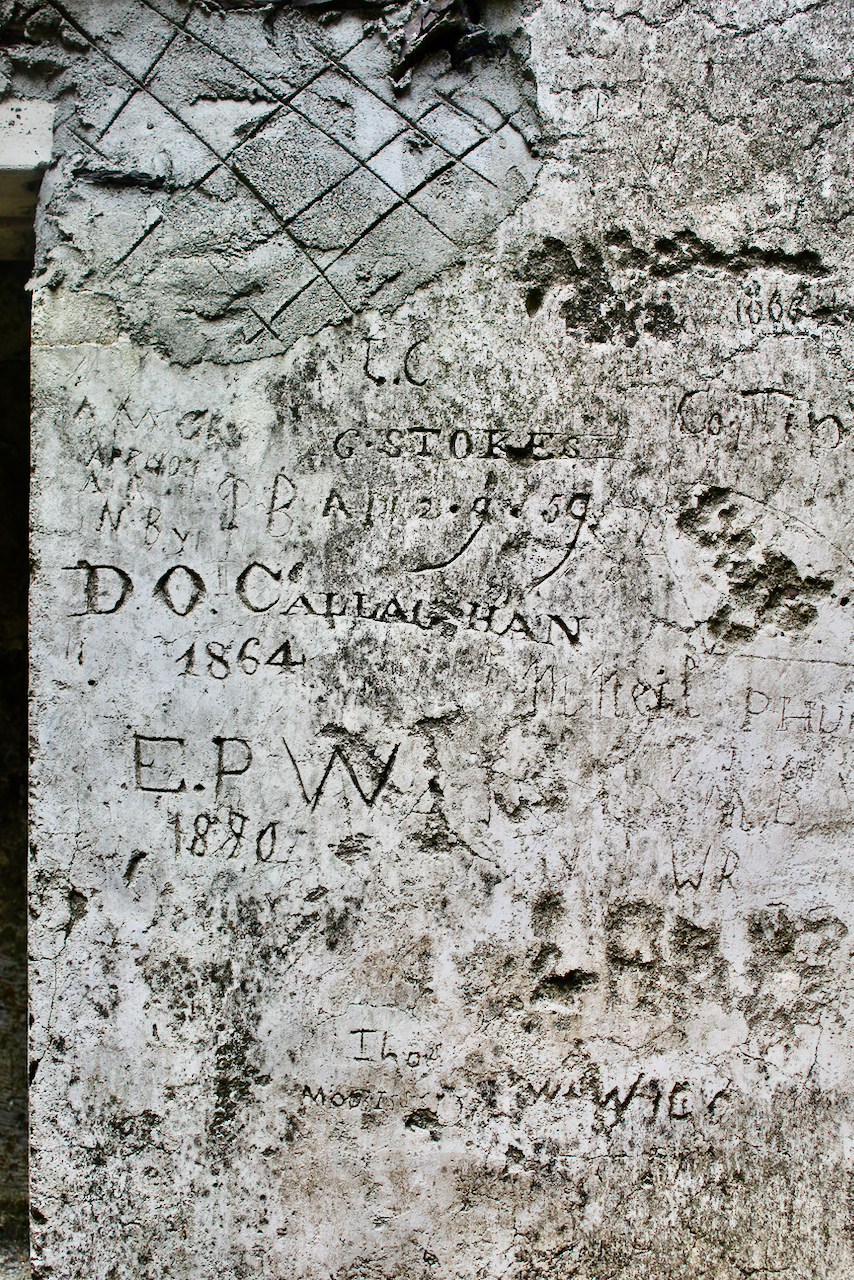
It has graffiti that is 150 years old!

Dromana. Photograph © Jennifer Winder-Baggot, www.irishhistorichouses.com
Dromana House, May 2019. Photograph © Jennifer Winder-Baggot, www.irishhistorichouses.com

In 2015 there were celebrations of the 800th anniversary of the house [11].

You can see photographs taken inside the house on the Dromana website, where you can also see self-catering accommodation that is available.

[1] www.dromanahouse.com

[2] https://dromanahouse.com/2019/03/20/the-drawbacks-and-dangers-of-heiress-hunting/

[3] http://lordbelmontinnorthernireland.blogspot.com/search/label/County%20Waterford%20Landowners

[4] p. 108. Bence-Jones, Mark. A Guide to Irish Country Houses. (originally published as Burke’s Guide to Country Houses volume 1 Ireland by Burke’s Peerage Ltd. 1978); Revised edition 1988, Constable and Company Ltd, London.

[5] https://www.dia.ie/architects/view/1424/DAY-MARTIN#tab_biography

[6] https://theirishaesthete.com/2014/09/27/bridging-cultures/

[7] See Robert O’Byrne’s recent blog entry: There is a memorial in front of the church (constructed by Lord Grandison in 1748): a High Cross erected by Henry Villiers-Stuart in memory of his parents, Henry, Baron Stuart de Decies and his Austrian-born wife Pauline. To the immediate west is a second monument, this one a public fountain in rock-faced limestone ashlar; it was erected in 1910 by the younger Henry’s children in memory of their mother Mary who had died three years earlier. https://theirishaesthete.com/2022/08/20/20689/ Robert O’Byrne tells us that the village of Villierstown, County Waterford was established in the 1740s by John Villiers, first Earl Grandison who wished to have a settlement for weavers and other personnel working in the linen industry he was then establishing in the area.

[8] http://lordbelmontinnorthernireland.blogspot.com/search/label/County%20Waterford%20Landowners

[9] https://dromanahouse.com/2019/03/20/the-abduction-of-mary-pike-and-that-fateful-night-in-vernon-mount-cork/

[10] https://dromanahouse.com/2019/03/20/the-irish-wild-geese-in-search-of-fortune-in-the-habsburg-empire/

[11] https://theirishaesthete.com/2015/07/01/an-octocentenary/

Text © Jennifer Winder-Baggot, www.irishhistorichouses.com