Places to visit and stay in County Down, Northern Ireland

On the map above:

blue: places to visit that are not section 482

purple: section 482 properties

red: accommodation

yellow: less expensive accommodation for two

orange: “whole house rental” i.e. those properties that are only for large group accommodations or weddings, e.g. 10 or more people.

green: gardens to visit

grey: ruins

donation

Help me to pay the entrance fee to one of the houses on this website. This site is created purely out of love for the subject and I receive no payment so any donation is appreciated!

€15.00

The province of Ulster contains counties Antrim, Armagh, Cavan, Derry, Donegal, Down, Fermanagh, Monaghan and Tyrone.

For places to stay, I have made a rough estimate of prices at time of publication:

€ = up to approximately €150 per night for two people sharing (in yellow on map);

€€ – up to approx €250 per night for two;

€€€ – over €250 per night for two.

For a full listing of accommodation in big houses in Ireland, see my accommodation page: https://irishhistorichouses.com/accommodation/

On September 9th 2023 all Landmark Trust properties in Northern Ireland will be open to visitors, from 10am-4pm. See their website for details, https://irishlandmark.com/ as booking will be required, but booking is not open yet. Subscribe for updates to find out when you need to book to make a visit.

Down:

1. Audley’s Castle, County Down

2. Bangor Castle Park, County Down

3. Castle Ward, County Down 

4. Dundrum Castle, County Down

5. Hillsborough Castle, County Down 

6. Montalto Estate, County Down

7. Mount Stewart, County Down

8. Newry and Mourne Museum, Bagenal’s Castle, County Down

9. Portaferry Castle, County Down

Places to stay, County Down

1. Barr Hall Barns, Portaferry, County Down

2. Castle Ward, Potter’s Cottage in farmyard and Castle Ward bunkhouse

3. Culloden, County Down – hotel €€€

4. Florida Manor, 22 Florida Road, Killinchy, Newtownards, Co Down, BT23 6RT Northern Ireland

5. Helen’s Tower, Bangor, County Down: Irish Landmark property €€

6. Kiltariff Hall, County Down

7. Narrow Water Castle, apartment, Newry Road, Warrenpoint, Down, Northern Ireland, BT34 3LE

8. The Old Inn, Bangor, County Down

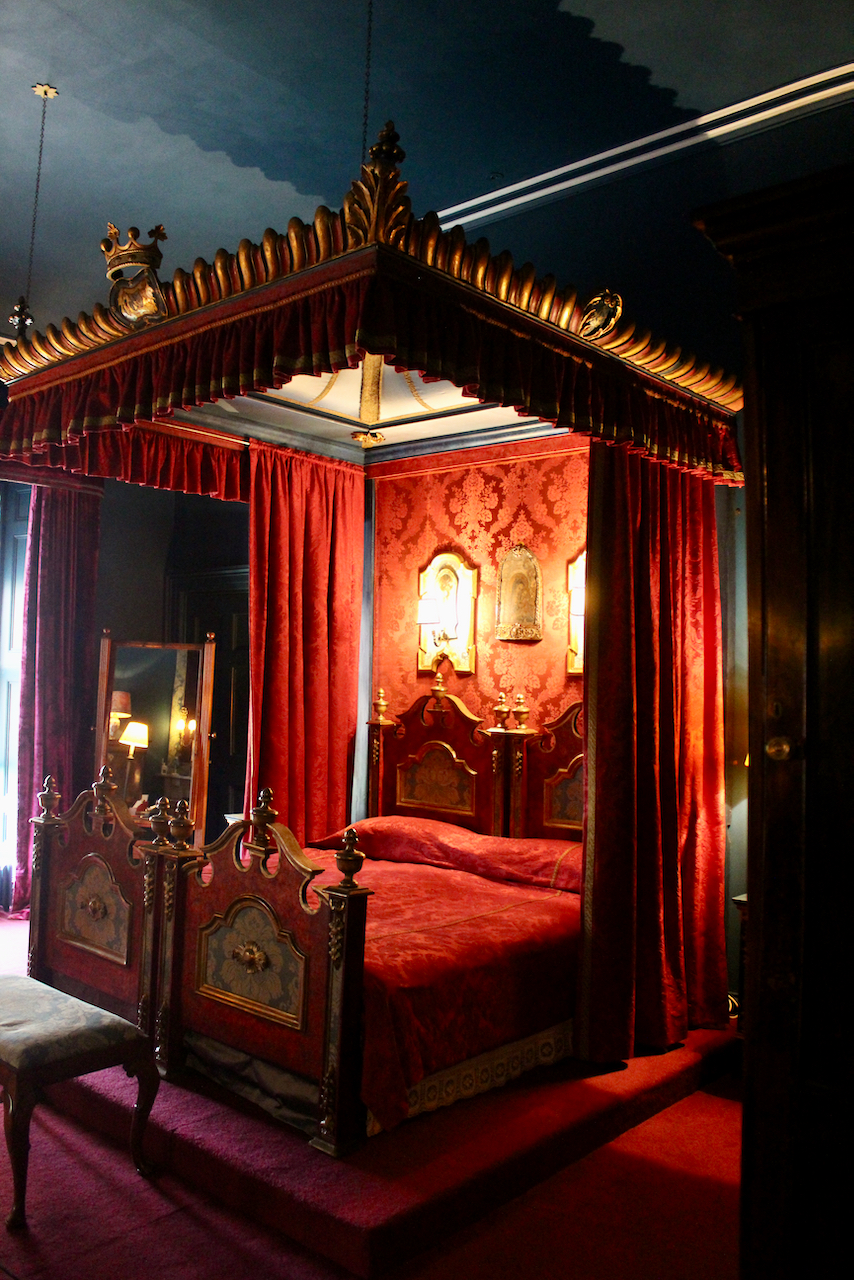
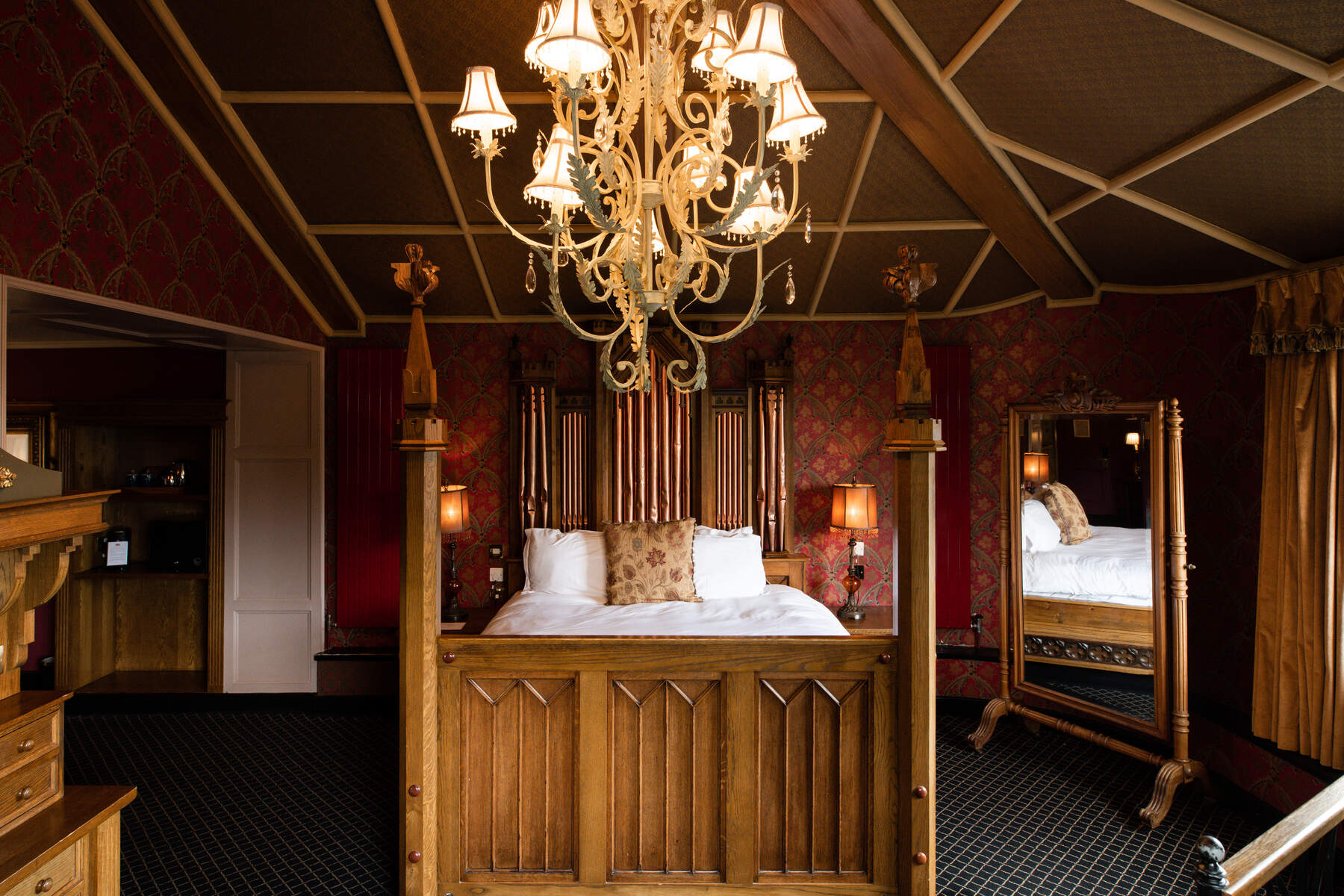
9. Slieve Donard hotel and spa, County Down €€

10. St John’s Point Lighthouse Sloop, Killough, County Down: Irish Landmark property € for 3-4

11. Tullymurry House, Tullymurry road, Donaghmore, Newry, County Down sleeps 8, € for 8

12. Tyrella, Downpatrick, County Down, BT30 8SUaccommodation €

Whole house County Down

1. Ballydugan House, County Down (weddings)

2. Drenagh Estate and Gardens, County Down (weddings)

donation

Help me to pay the entrance fee to one of the houses on this website. This site is created purely out of love for the subject and I receive no payment so any donation is appreciated!

€15.00

Places to visit in County Down:

1. Audley’s Castle, Castle Ward, County Down
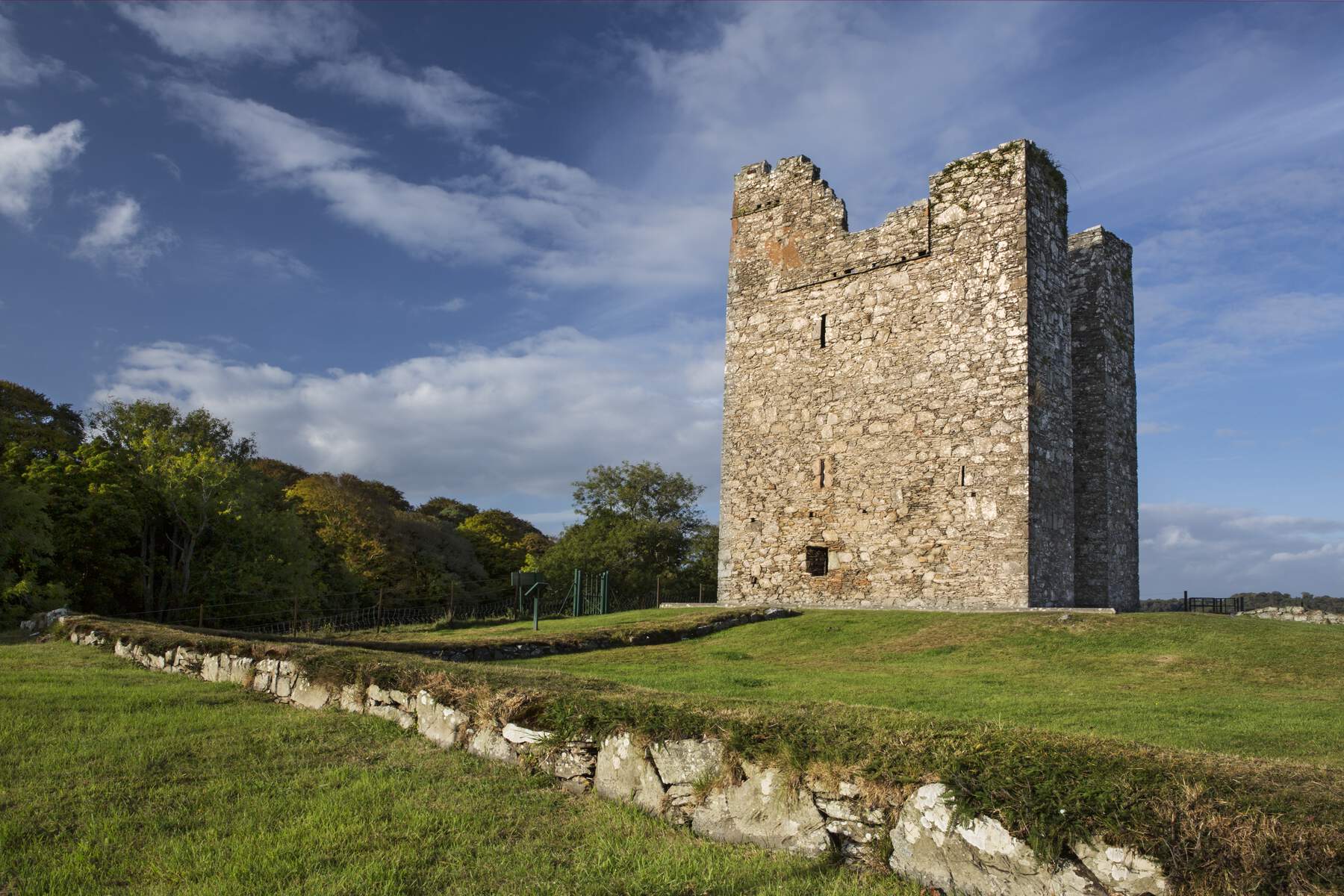
Audley’s Castle, Castle Ward by Bernie Brown for Tourism Ireland 2014.

https://discovernorthernireland.com/things-to-do/audleys-castle-p707501

The castle is named after its late 16th-century owners, the Audleys, an Anglo-Norman family who held land in the area in the 13th century, It was sold, with the surrounding estate, to the Ward family in 1646 and used in 1738 as an eye-catching focus of the long vista along Castle Ward’s artificial lake, Temple Water.

The site comprises of a number of paths to allow you to get to the Castle.

2. Bangor Castle Park, County Down

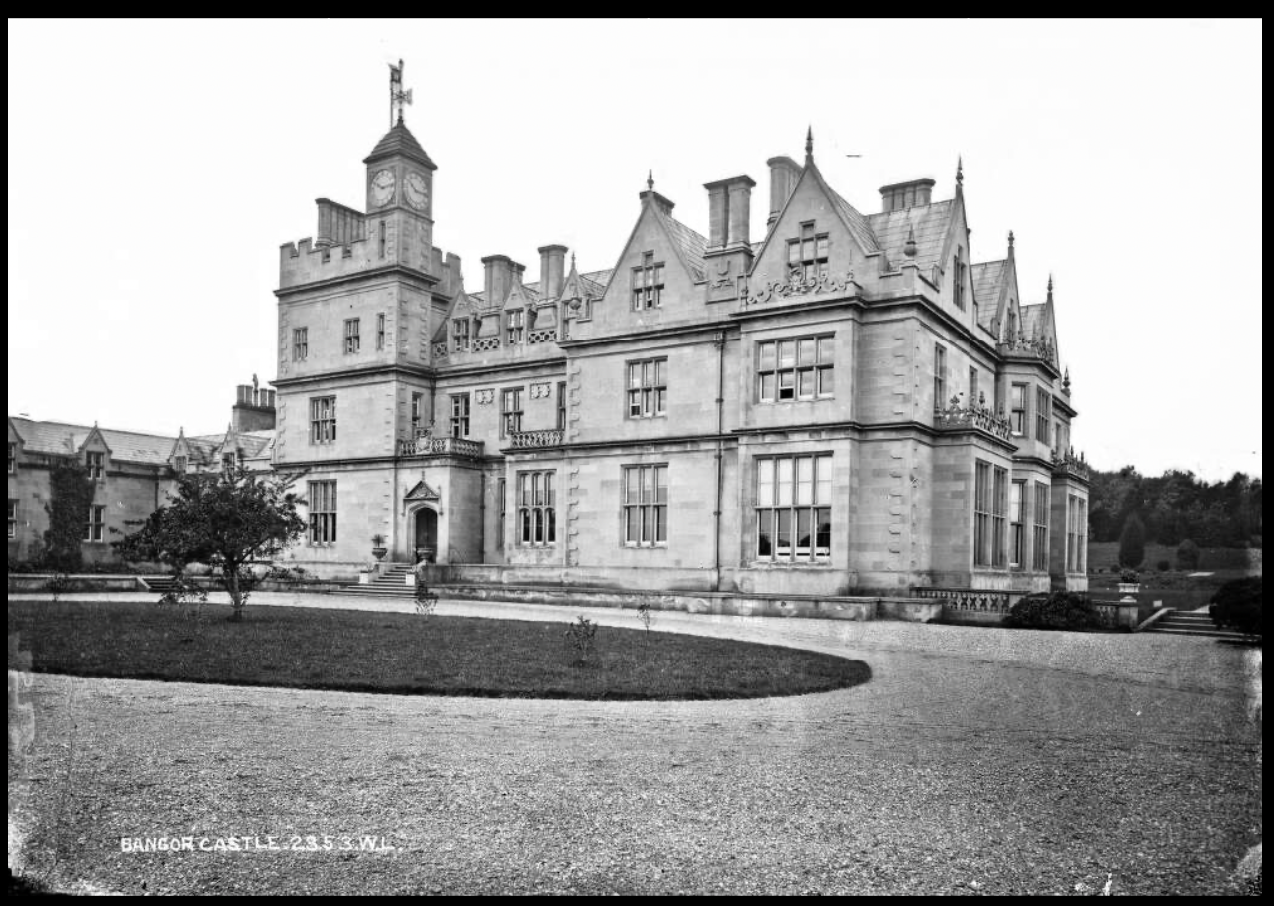
Bangor Castle, County Down, photograph by Robert French, [between ca. 1865-1914], Lawrence Photograph Collection, National Library of Ireland.

https://discovernorthernireland.com/things-to-do/bangor-castle-town-hall-p676451

This impressive building was built for the Hon Robert Edward Ward [1818-1904] and his family in 1852. It is presently the headquarters of Ards and North Down Borough Council who use the mansions spectacular grand salon as the council chamber. The building is situated in the grounds of Castle Park alongside North Down Museum and is just a short walk from Bangor Castle Walled Garden.

CS Lewis visited North Down on many occasions throughout his life and regularly returned to the area. He enjoyed the beautiful view over Belfast Lough from the grounds of Bangor Castle. As Lewis himself once said “Heaven is Oxford lifted and placed in the middle of County Down”.
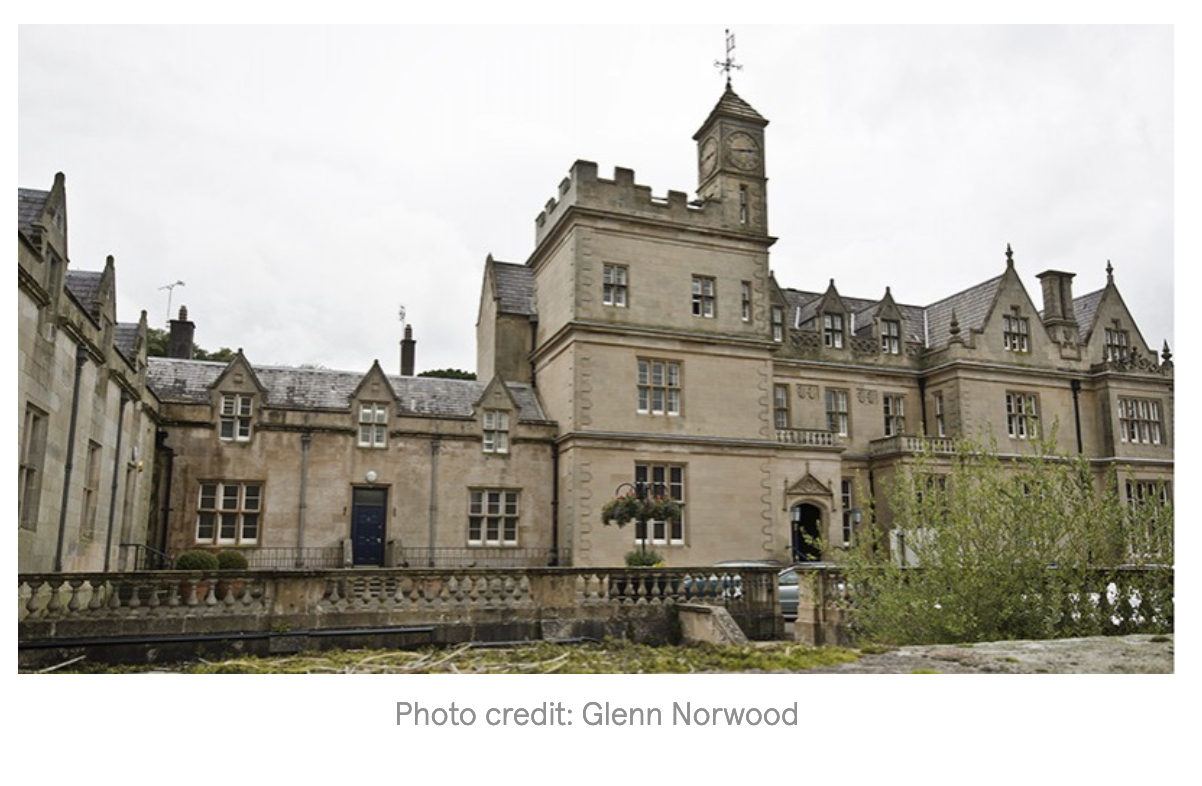
Bangor Castle, County Down, photograph courtesy of Glenn Norwood, North Down Brorough Council.

Mark Bence-Jones writes in his A Guide to Irish Country Houses (1988):

p. 30. “(Ward, sub Bangor, V/PB; Bingham, Clanmorris, B/PB) An Elizabethan-Revival and Baronial mansion by William Burn, built 1847 for Robert Ward, a descendant of 1st Viscount Bangor. Mullioned windows; oriels created with strapwork; rather steep gables with finials. At one end, a battlemented tower with a pyramidal-roofed clock turret. Partly curved quoins, very characteristic of Burn. Inherited by Robert Ward’s daughter and heiress, Matilda Catherine, wife of 5th Lord Clanmorris [John George Barry Bingham, 5th Baron Clanmorris of Newbrook, County Mayo]. Featured in Peers and Plebs by Madeleine Bingham. Now owned by the town of Bangor.” 

3. Castle Ward, County Down
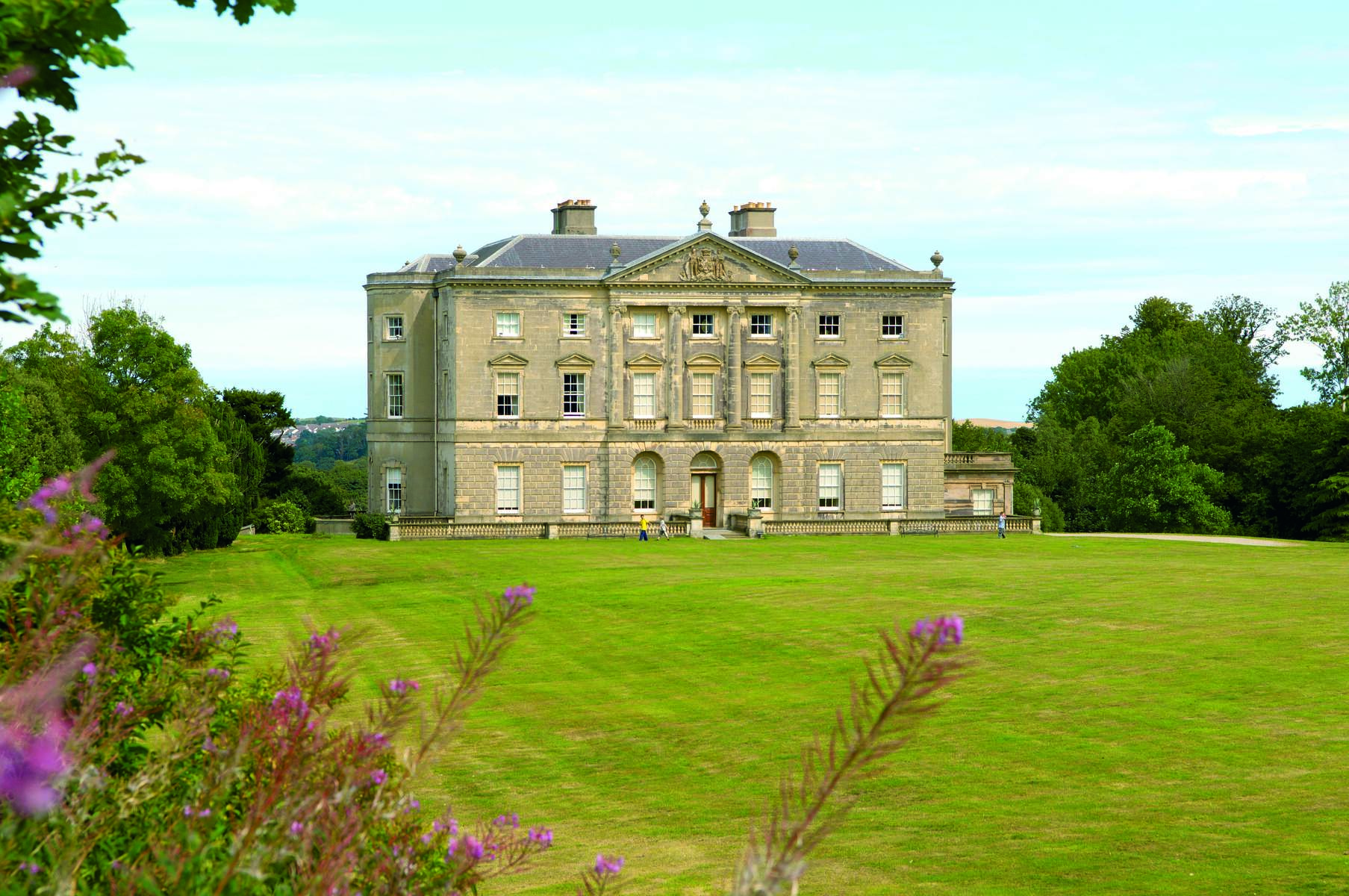
Castle Ward, County Down, 13 August 2006 Picture by David Cordner http://www.davidcordner.com :Tourism Northern Ireland (see [1])

https://discovernorthernireland.com/things-to-do/castle-ward-p675331 and https://www.nationaltrust.org.uk/castle-ward

The National Trust website tells us:

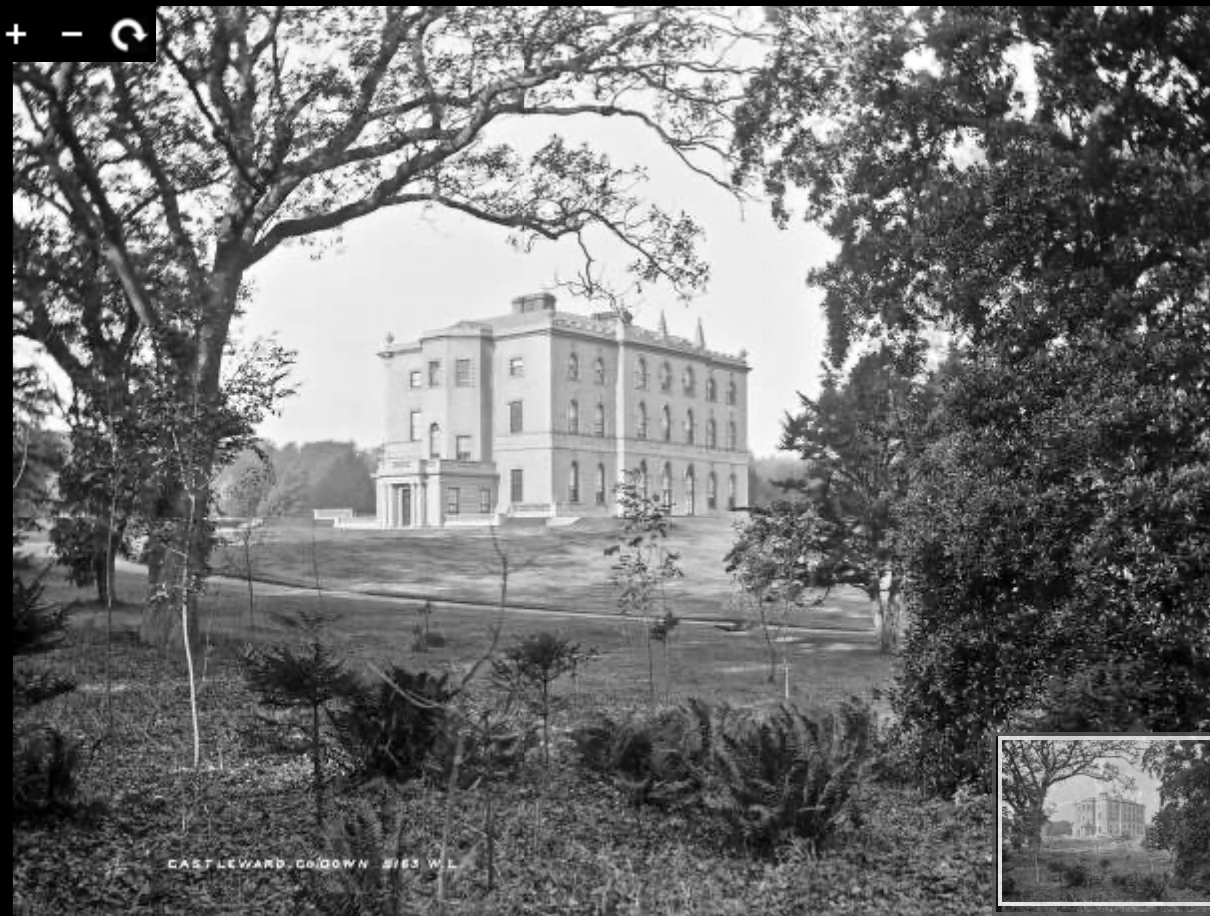
The current Castle Ward is a particularly unusual building, famed for having been built with two completely different architectural styles, both inside and out.

One half is built in the classical Palladian style, with the other half which faces out across Strangford lough built in the more elaborate Gothick style.
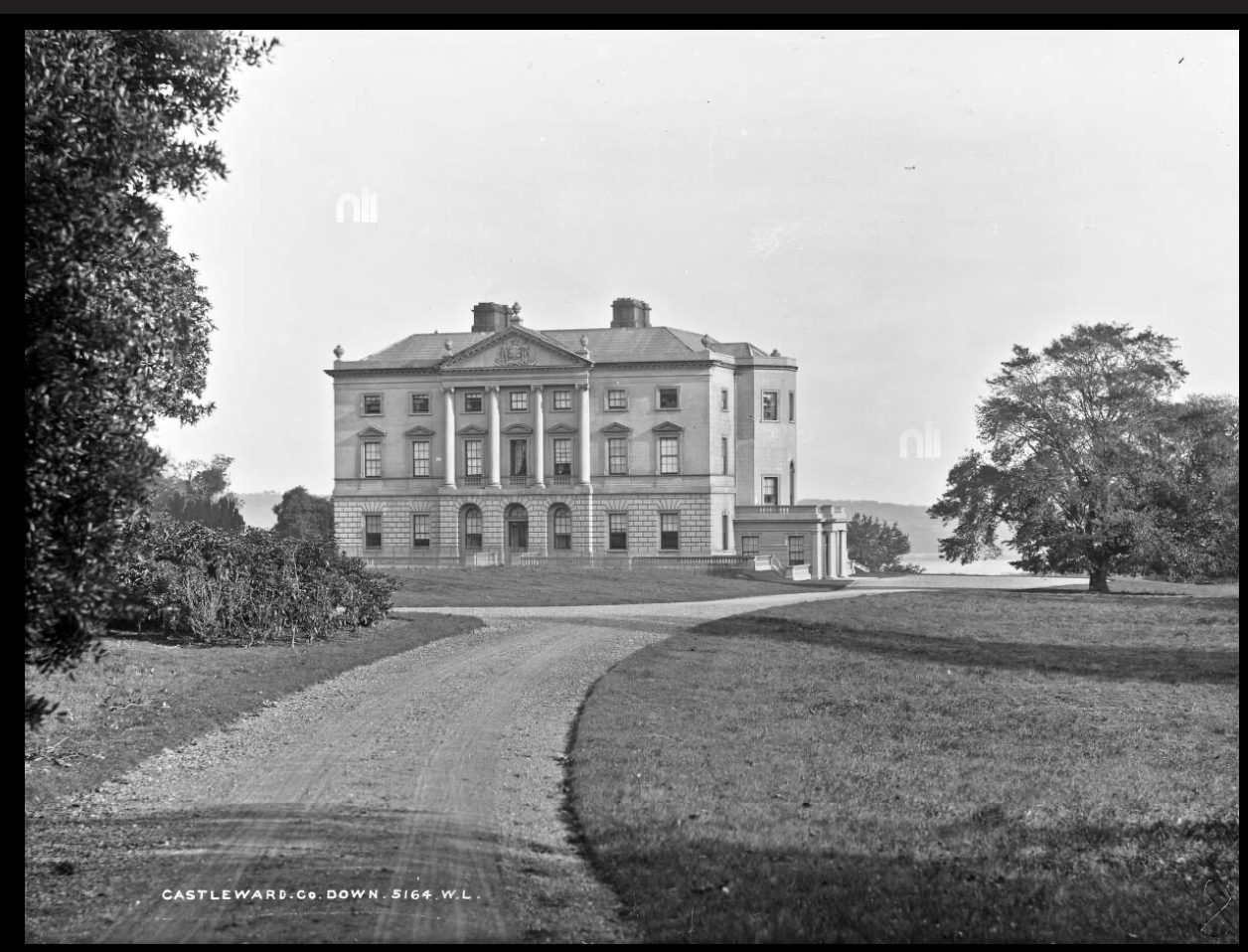
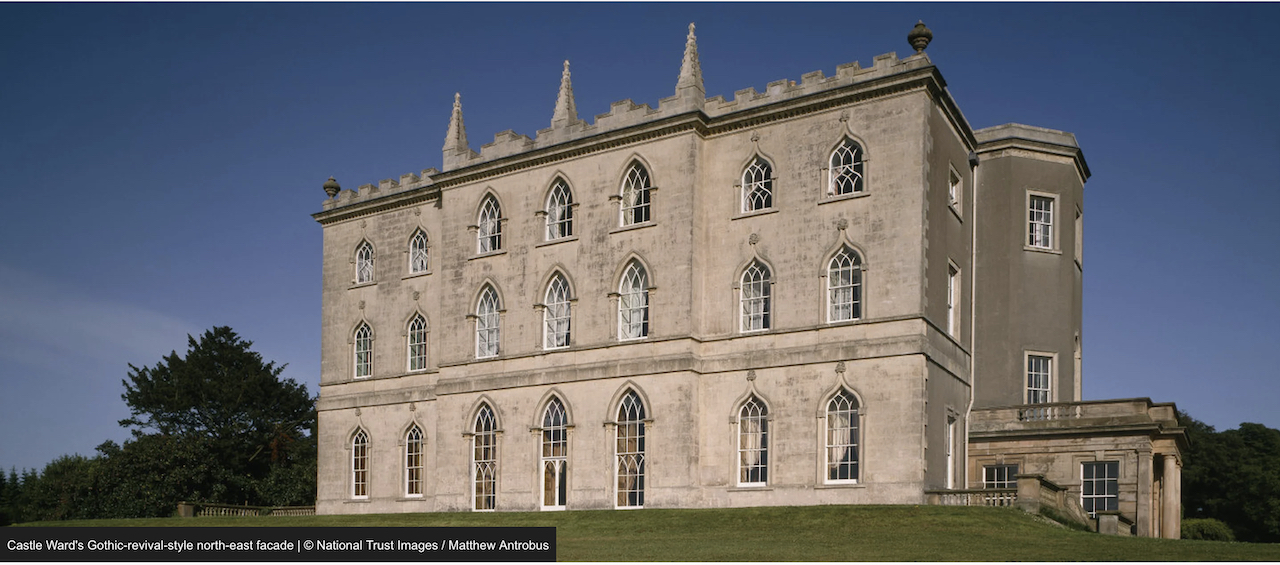
Castle Ward, County Down, photograph by Robert French, (between ca. 1865-1914), Lawrence Photograph Collection, National Library of Ireland.
Castle Ward.
Castle Ward, County Down, photograph by Robert French, (between ca. 1865-1914), Lawrence Photograph Collection, National Library of Ireland.

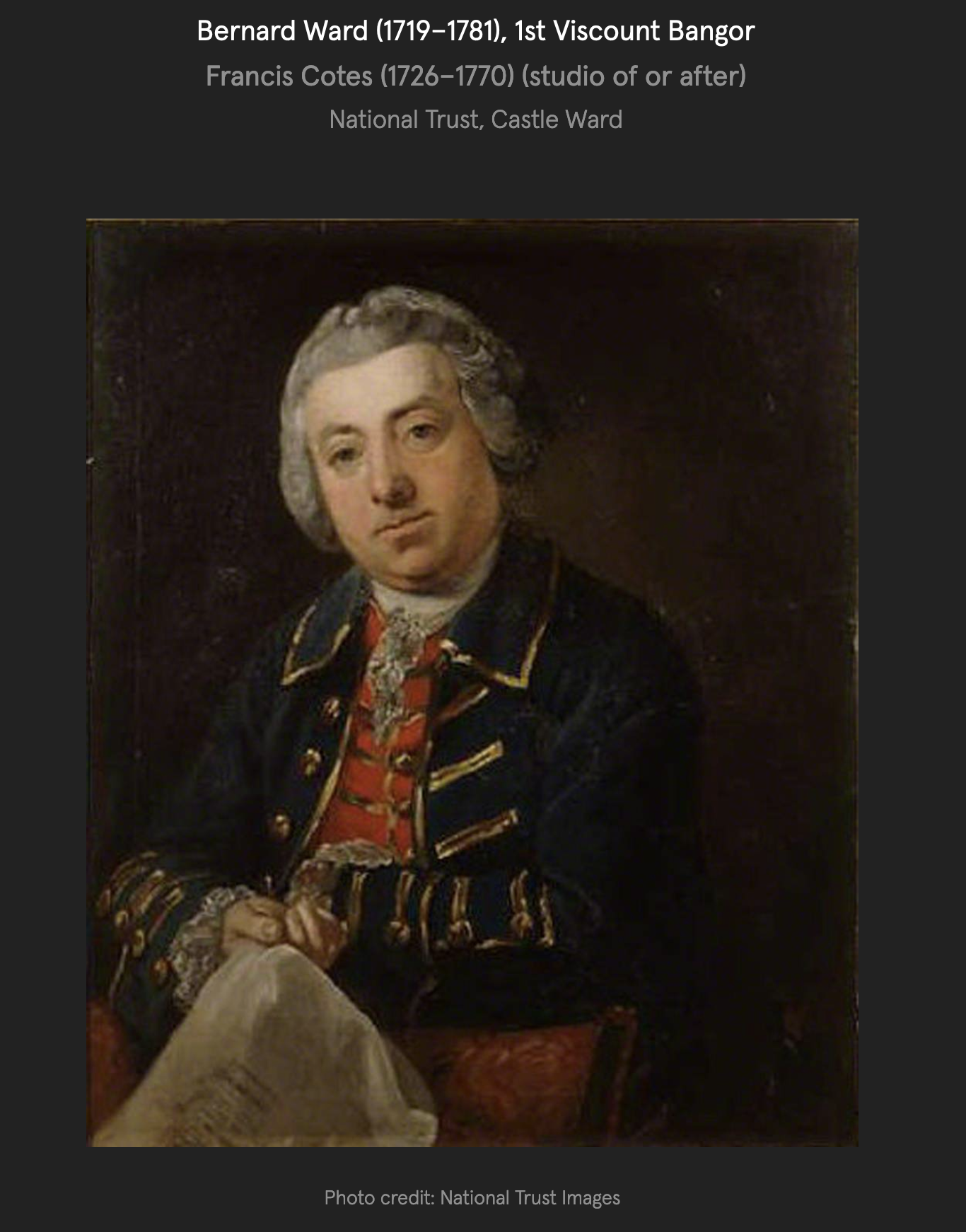
The story told for the reason behind this unusual decorative scheme is that the original builder of the house, Bernard Ward, 1st Viscount Bangor, did not agree with his wife Lady Anne [Anne Bligh (1718-1789, daughter of John Blight 1st Earl of Darnley] on the décor. Bernard was more classical in taste with Lady Anne prefering the fashionable Gothick style, leading them to split the house down the middle. This story is compounded by the fact that they separated not long after the house was finished with Anne leaving Castle Ward for good. This hint of scandal has carried this story through the years, but let us consider instead that Anne and Bernard set out to build the house exactly as it is – not a marriage of compromise, but a triumph of collaboration.
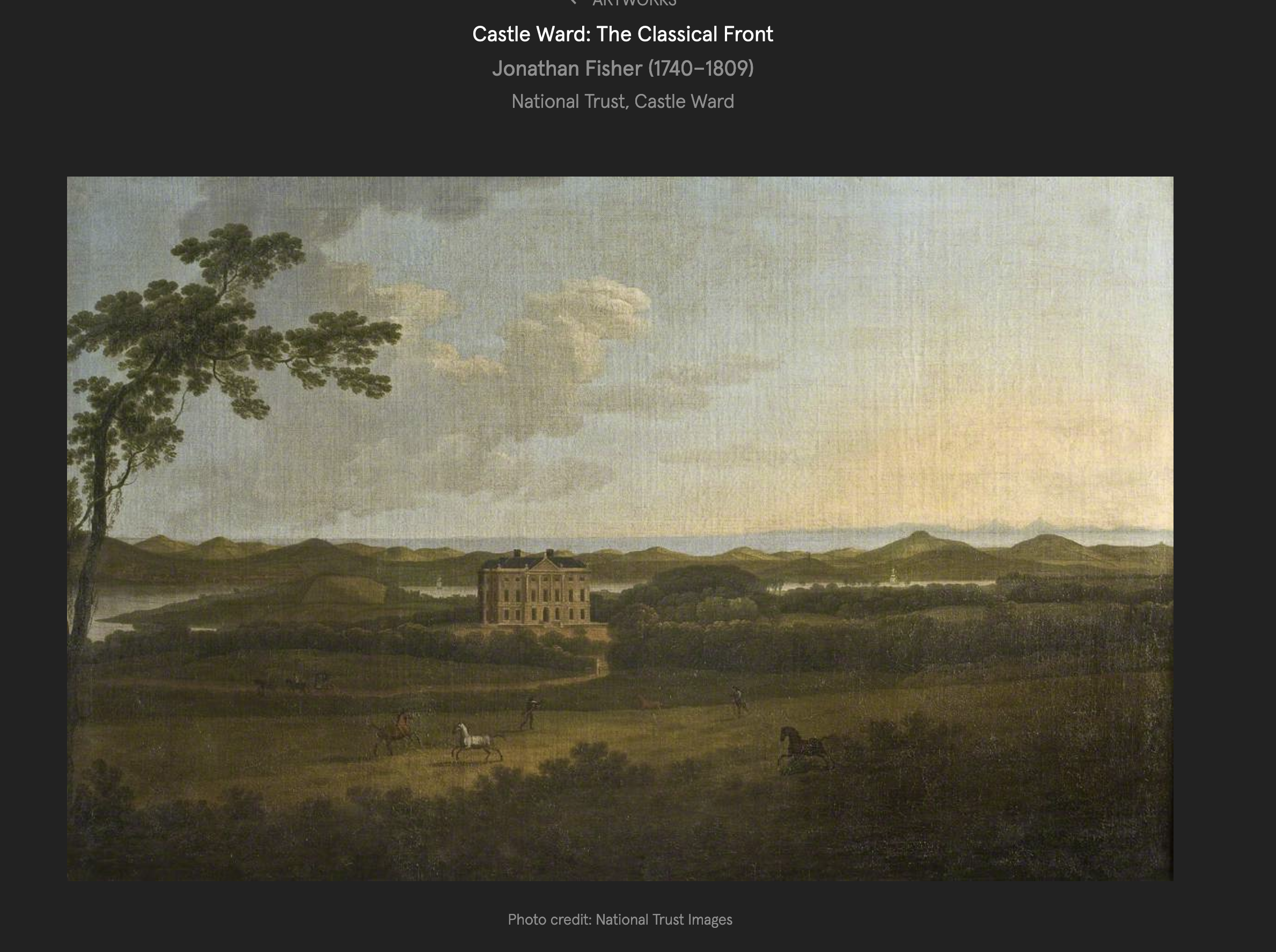
Castle Ward, courtesy of National Trust.
Bernard Ward, 1st Viscount Bangor.

When Bernard and Lady Anne inherited the estate in 1759 they set about building themselves a fine new house, one which would be symbolic of their union and exist as a statement of the Ward family’s bold and forward-thinking place in the world. Castle Ward was completed in 1766 and by 1781 they had been created Viscount and Viscountess Bangor in the Peerage of Ireland.

Lady Anne’s grandfather was the nephew of the Duchess of York – wife of King James II, and a first cousin of Queen Anne. This royal ancestry shows itself in the choice of the Gothick style. The ceiling in the Morning Room is copied from the Henry VII Chapel in Westminster Abbey where Anne’s maternal family were permitted to be buried due to their royal blood. Rather than the house becoming known as an architectural monstrosity, the couple aimed for it to be a masterpiece, striving against convention and rooting the Ward family as bold, modern thinkers with an impressive past.

The unusual combination of styles has long been a point of joy or novelty for guests, having a ‘marmite’ appeal. On a visit to Castle Ward, writer and poet John Betjeman referred to the ceiling in the Boudoir as “like sitting under a cow’s udder”, and the comment has stuck. Others comment on the otherworldly feeling created in the exotic grandeur of the Gothick side.

Please check the homepage for opening times of the mansion house before planning your visit, as they may change seasonally. There is no need to book your visit in advance.

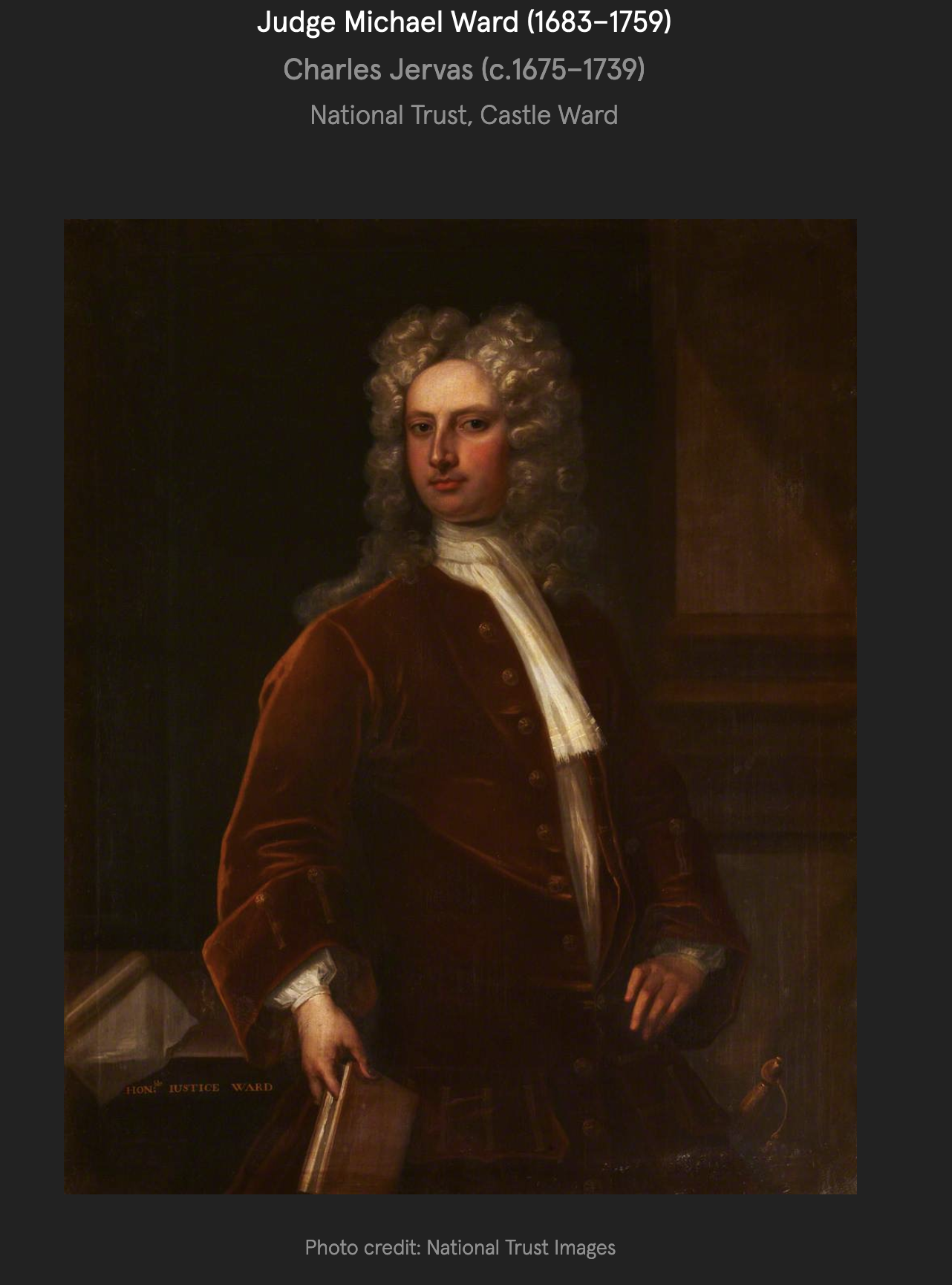
Michael Ward, Father of Bernard Ward of Castle Ward.
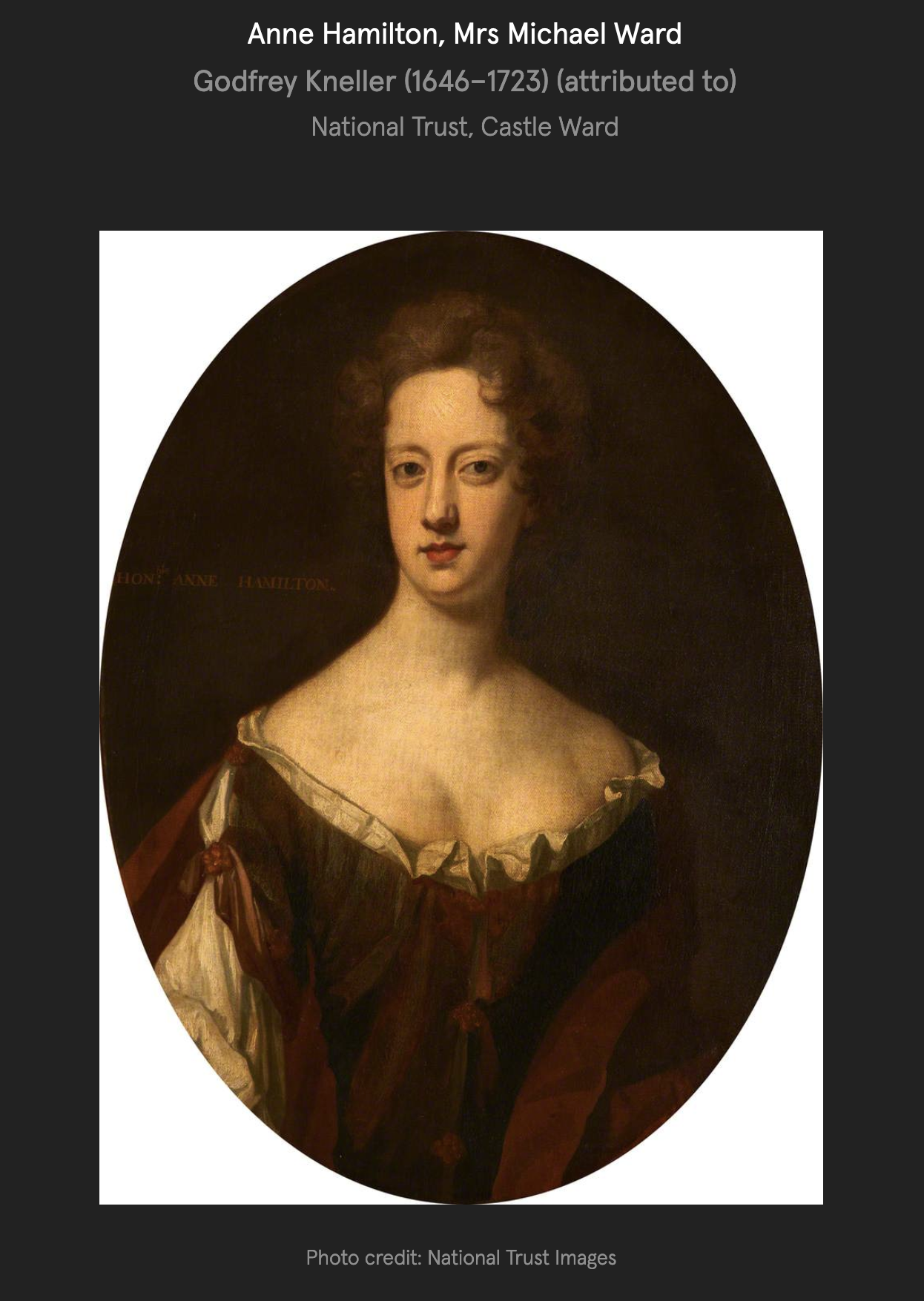
Anne Hamilton (1692-1760), mother of Bernard Ward, 1st Viscount Bangor. She was the wife of Michael Ward (1683-1759) and daughter of James Hamilton (1640-1707) and Sophie Mordaunt (1654-1735).
Anne Hamilton (1692-1760) wife of Michael Ward.
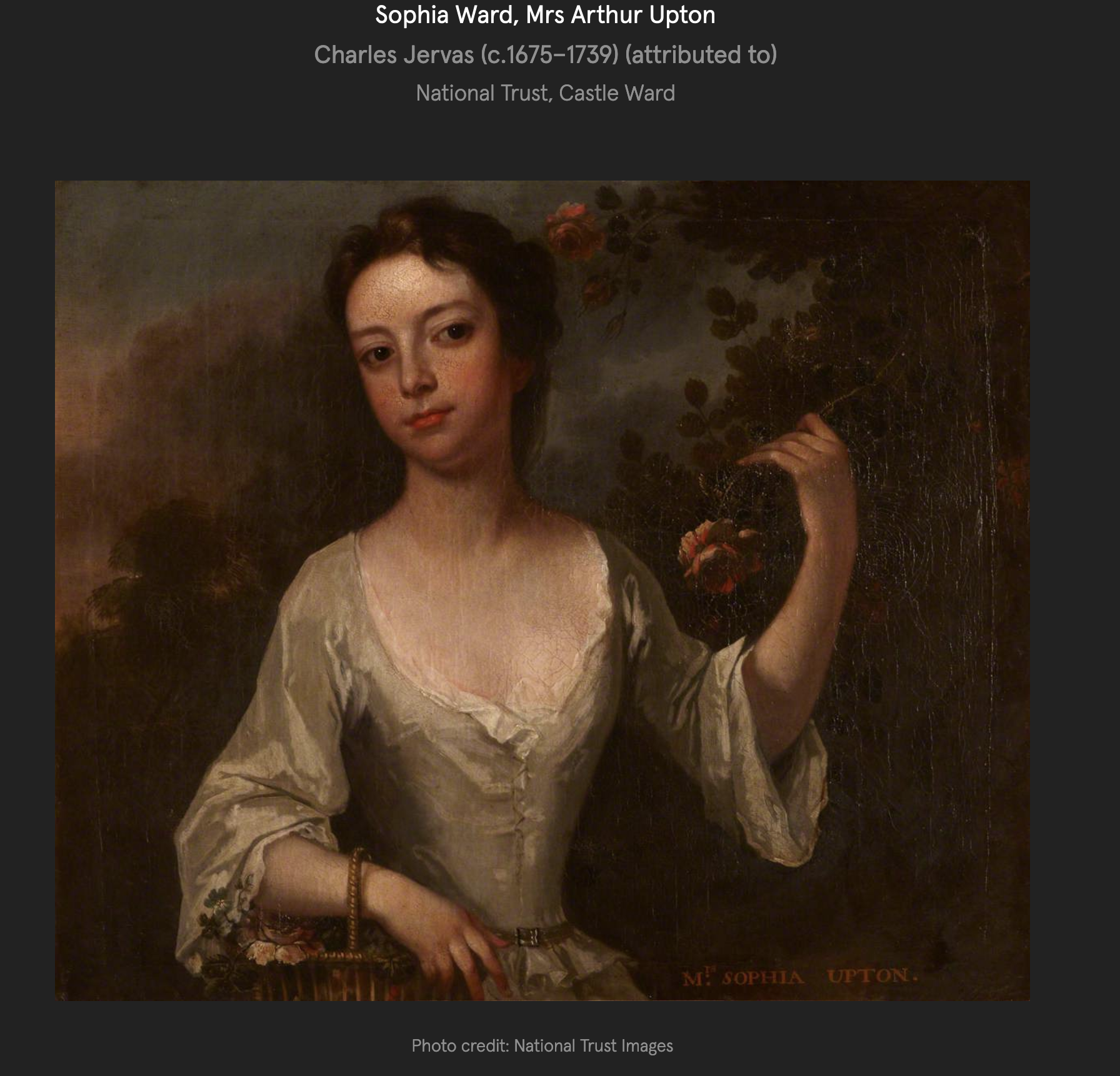
Sophia Ward, a sister of Bernard Ward of Castle Ward, she married Arthur Upton (1714/5-1763) of Castle Upton, County Antrim.

The website also tells us more about owner Anne Ward:

Castle Ward – the story of a warring couple, divided in opinion and styles leading to a house with two sides. Perhaps the story is a little more complicated – here we delve deeper into the background of Lady Anne Bligh, co-architect of Castle Ward.

Given that Lady Anne Ward was co-creator of the dichotomous style of Castle Ward, it is surprising how few of her possessions or papers are left in the collection. Hers’ remains a hidden history. Having left Castle Ward and her husband Bernard in 1770 shortly after the completion of the house, she has become a symbol of mystery and speculation, made notorious and unusual because of her independence of mind and spirit.Given that Lady Anne Ward was co-creator of the dichotomous style of Castle Ward, it is surprising how few of her possessions or papers are left in the collection. Hers’ remains a hidden history. Having left Castle Ward and her husband Bernard in 1770 shortly after the completion of the house, she has become a symbol of mystery and speculation, made notorious and unusual because of her independence of mind and spirit.

The public expression of her personal tastes in the Gothick style at Castle Ward, clashed dramatically with her husband’s preferred classical style, and this has resulted in the condemnation of Lady Ann as unusual. History has found it difficult to understand the architectural choice that was reached by Lady Anne and Bernard, seeming as a legacy to their failed marriage. Whilst Bernard is remembered as the maker of the classical side of the house, symbolically representing reason, balance and order, Lady Anne in contrast represents an ‘otherness’ which she expressed in Gothick architecture – seemingly conveying her fantastical, whimsical and unconventional personality.

The Royal blood from her maternal grandparents gave Lady Anne the hauteur and confidence to do as she pleased. Her grandfather, the Earl of Clarendon was the nephew of the Duchess of York, wife of James II, and a first cousin of Queen Anne. Queen Anne was her mother Theodosia’s Godmother, and as such Theodosia was allowed to marry in Westminster Abbey. This was something Lady Ann was keen to highlight in her choice of architecture at Castle Ward, even copying the plasterwork from the Henry VII Chapel and recreating it in the Morning Room as a reminder of her royal connections.

The Earl of Clarendon also prompted perception of the family as “eccentric” by accounts of them acting out their role as Colonial Governor of New York dressed in articles of women’s clothing which challenged social boundaries of the period. Historians have been unable to confirm the accuracy of these accounts nor the motivations behind the Earl’s alleged presentation of gender non-conformity. Whatever the accuracy or reason, contemporaries condemned the Earl and considered it to be a sign of ‘great insanity’, however the Earl remained protected and often handsomely rewarded by their cousin Queen Anne. This connection provided crucial protection from critics.

Elizabeth Hastings, Countess of Moira who knew the family decribed them as having ‘an hereditary malady’. Members were noted as experiencing varied mental health issues. Lady Anne was accused of having ‘a shade of derangement in her intellects’. Her brother, Lord Darnley, was convinced he was a teapot and was reluctant to engage in sexual activity lest ‘his spout would come off in the night’; Lady Anne’s son Nicholas was declared ‘a lunatic’ in 1785 but details about this are scant.

Lady Anne’s relationship with a woman, prior to her two marriages [she was previously married to Robert Hawkins-Magill of Gill Hall, County Down], has also been the source of popular speculation and of academic debate. At 21, Lady Anne embarked on a six year relationship with Letitia Bushe, a woman considered much inferior in status and wealth, but much more experienced in the world with a great intellect and close friend of Mrs Delany. From the surviving correspondence of Letitia Bushe, it is clear that she was besotted with Lady Anne who was some fifteen years her junior, writing in 1740:

‘This Day twelvemonth was the Day I first stay’d with you, the night of which you may remember pass’d very oddly. I cannot forget how I pity’d you and how by that soft road you led me on to love you… that first Sunday at Bray, when you were dressing and I lay down on your Bed – ‘twas then I took first a notion to you’.

Academic research has suggested that this instance of same-sex love and desire provided Lady Anne with ‘an alternative outlet for emotional needs and energies, free of the complex web of economic and social considerations that surrounded relations between men and women of the propertied classes’ at this time.

Sadly none of Lady Anne’s correspondence to Letitia Bushe survives – in true Lady Anne style she remains an enigma, true to herself regardless of tastes or conventions, and a symbol of ‘the three-dimensional complexity of human life’.

Mark Bence-Jones writes in his A Guide to Irish Country Houses (1988):

p.78. Castleward: “Ward, Bangor, V/PB) A grand mid-C18 house of three storeys over basement and seven bays; built 1760/73 by Bernard Ward (afterwards 1st Viscount Bangor), and his wife, Lady Anne, daughter of 1st Earl of Darnley, to replace an earlier house. Probably by an English architect; and faced in Bath stone, brought over from Bristol in Mr Ward’s own ships. It seems that the Wards could not agree on the style of their new house; he wanted it to be Classical; but she was of what Mrs Delany called “whimsical” taste and favoured the fashionable new Strawberry Hill Gothic. The result was a compromise. The entrance front was made Classical, with central feature of a pediment and four engaged Ionic columns rising through the two upper storeys, the bottom storey being rusticated and treated as a basement. The garden front, facing over Strangford Lough, was made Gothic, with a battlemented parapet, pinnacles in the centre, and pointed windows in all its three storeys and seven bays – lancet in the central breakfront, ogee on the other side. All the windows have delightful Strawberry Hill Gothic astragals. This front of Castleward, and Moore Abbey, Co Kildare, are the only two surviving examples of mid-C18 Gothic in major Irish country houses which are not old castles remodelled. The interior of Castleward is remarkable in that the rooms on the Classical side of the house are Classical and those on the Gothic side Gothic; thus the hall – now the music room – has a Doric frieze and a screen of Doric columns; whereas the saloon has a ceiling of fretting and quatrefoils, pointed doors and a Gothic chimneypiece. The dining room, with its grained plaster panelling, is Classical and the sitting room is Gothic with spectacular plaster fan vaulting. Mr Ward, however, managed to be one up on his wife in that the staircase, which is in the middle of the house, is Classical; lit by a Venetian window in one of the end bows. If we believe Lady Anne, this was not the only time when he got his own way at her expense, for, having left him, as it turned out, for good, she wrote accusing him of bullying her. In C19, a porch was added to one of the end bows of the house, making a new entrance under the staircase; so that the hall became the music room. In the grounds there is a four storey tower-house, built at the end of C16 by Nicholas Ward; also a temple modelled on Palladio’s Redentore, dating from ante 1755; it stands on a hill, overlooking an early C18 artificial lake, or canal. On the death of 6th Viscount, 1950, Castleward was handed over in part payment of death duties to the Northern Ireland Government, who gave it, with an endowment, to the National Trust. The house and garden are now open to the public, and the Trust has set up various projects in different parts of the estate.” 
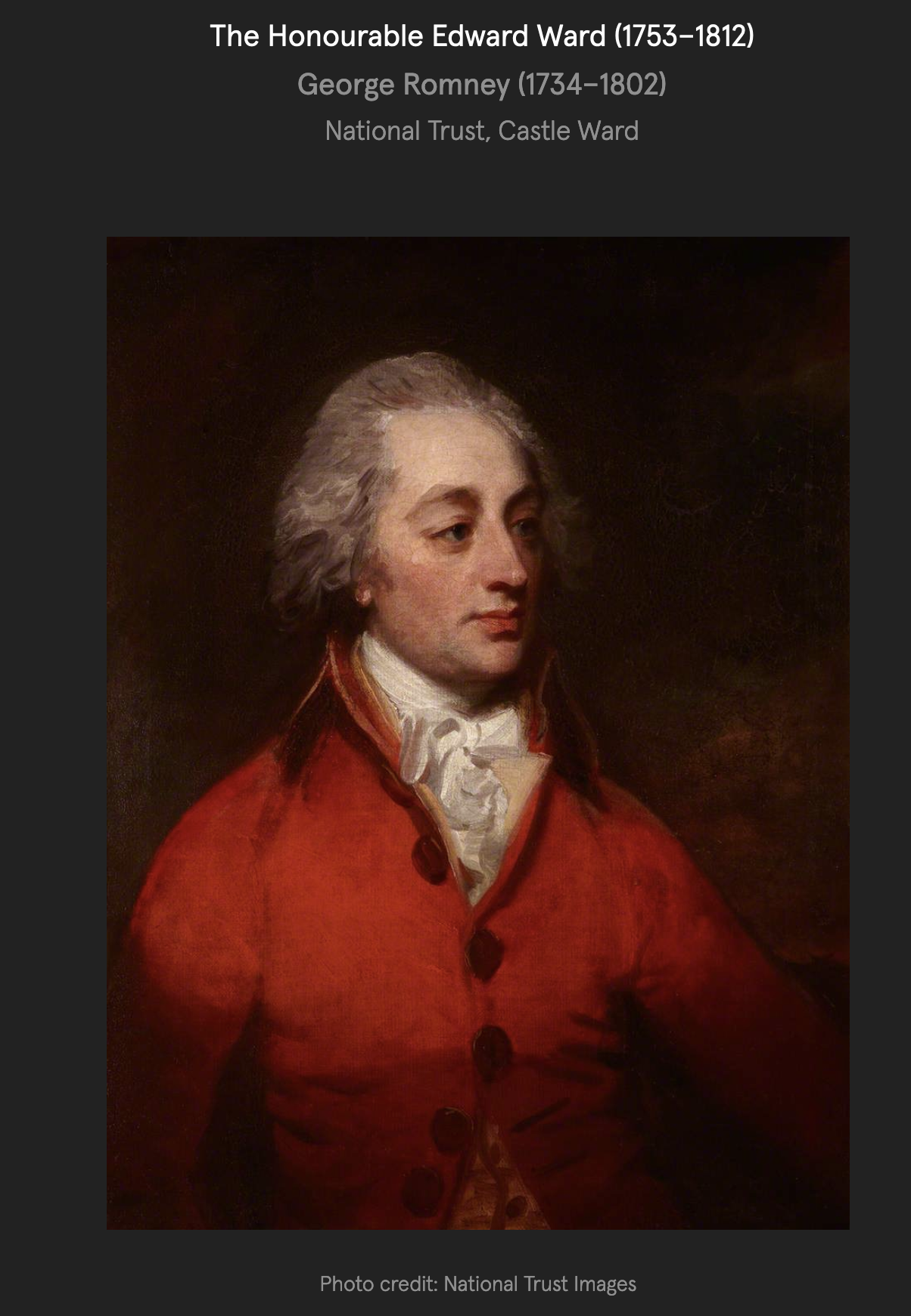
Edward Ward, son of Bernard, 1st Viscount Bangor.
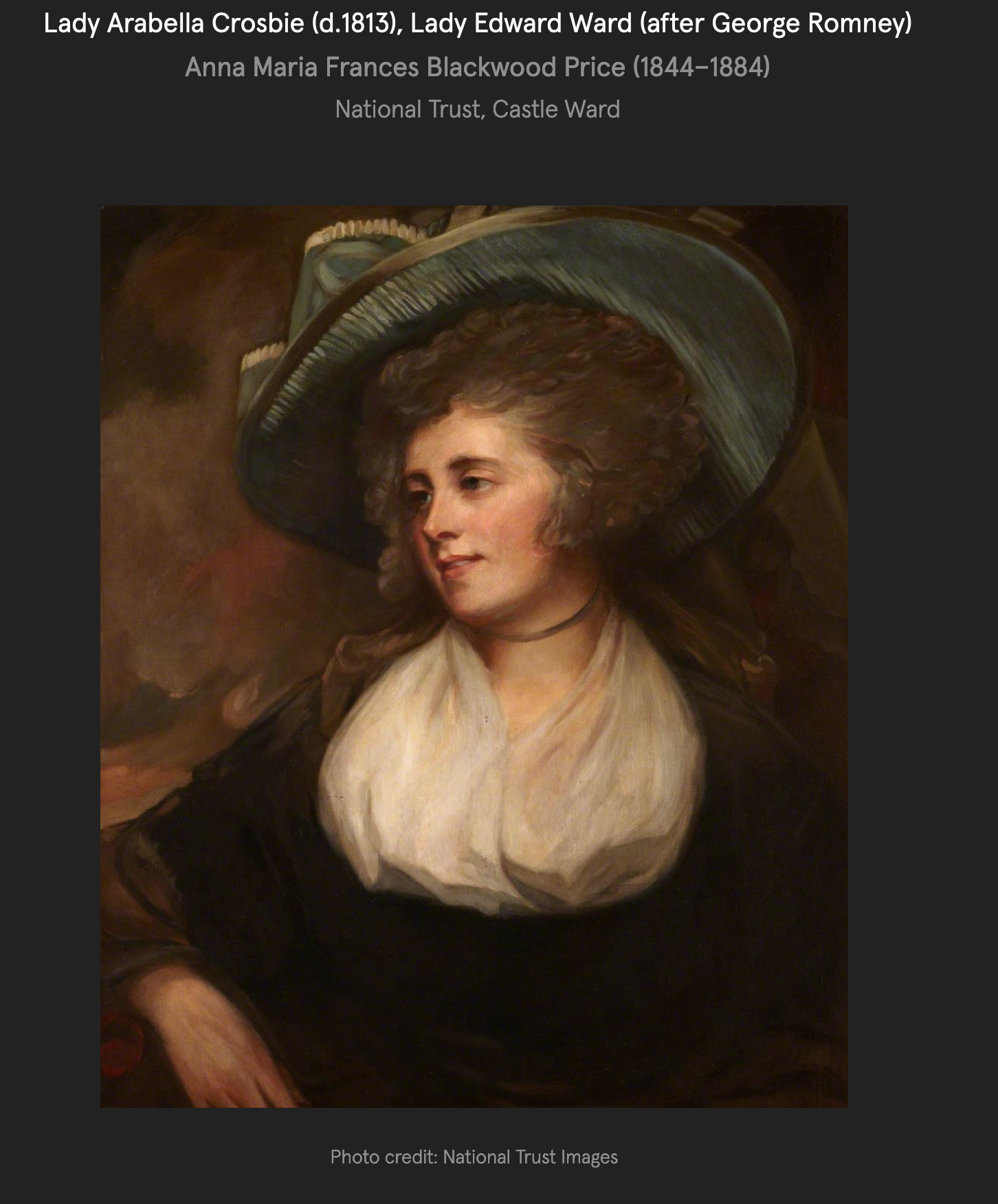
Arabella Crosbie, wife of Edward Ward (1753-1812), daughter of William, 1st Earl of Glandore.
Edward Ward, 3rd Viscount Bangor, son of Edward (1753-1812), nephew of Nicholas, 2nd Viscount Bangor.
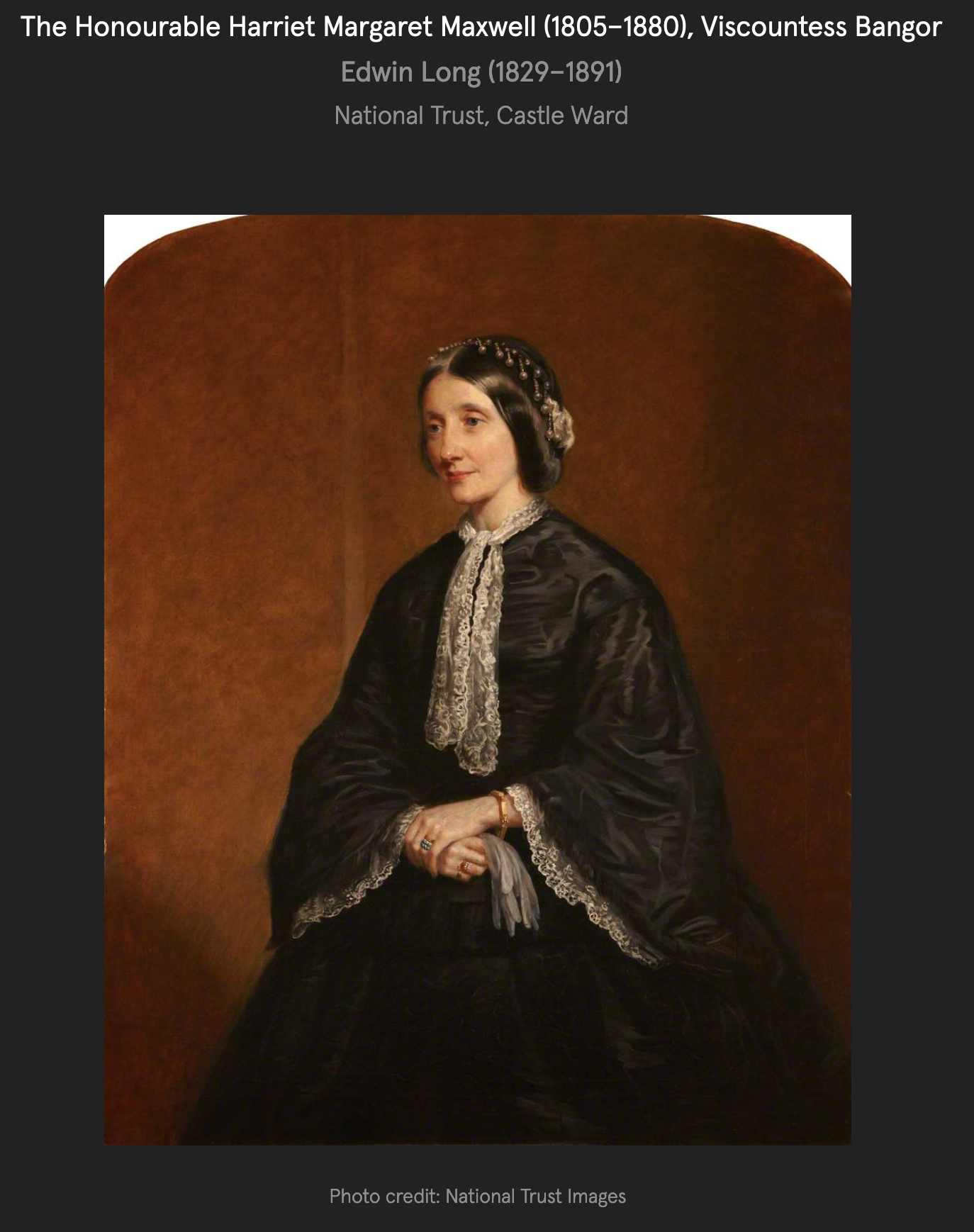
Harriet Margaret Maxwell is the wife of the 3rd Viscount Bangor, and daughter of Reverend Henry Maxwell, 6th Baron Farnham of Farnham estate in County Cavan (now a hotel).
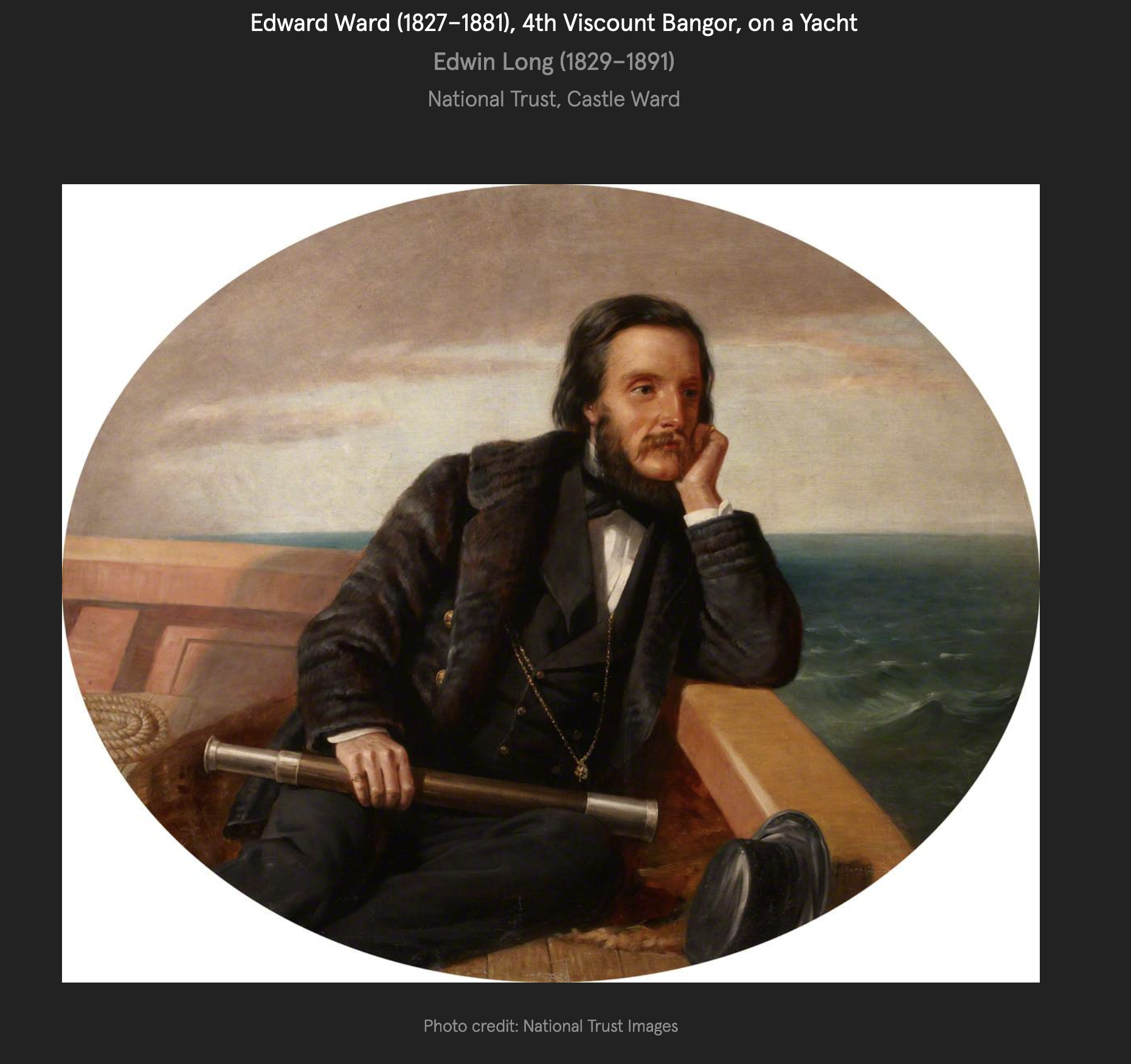
Edward Ward, 4th Viscount Bangor, courtesy of National Trust.

4. Dundrum Castle, County Downruins

https://discovernorthernireland.com/things-to-do
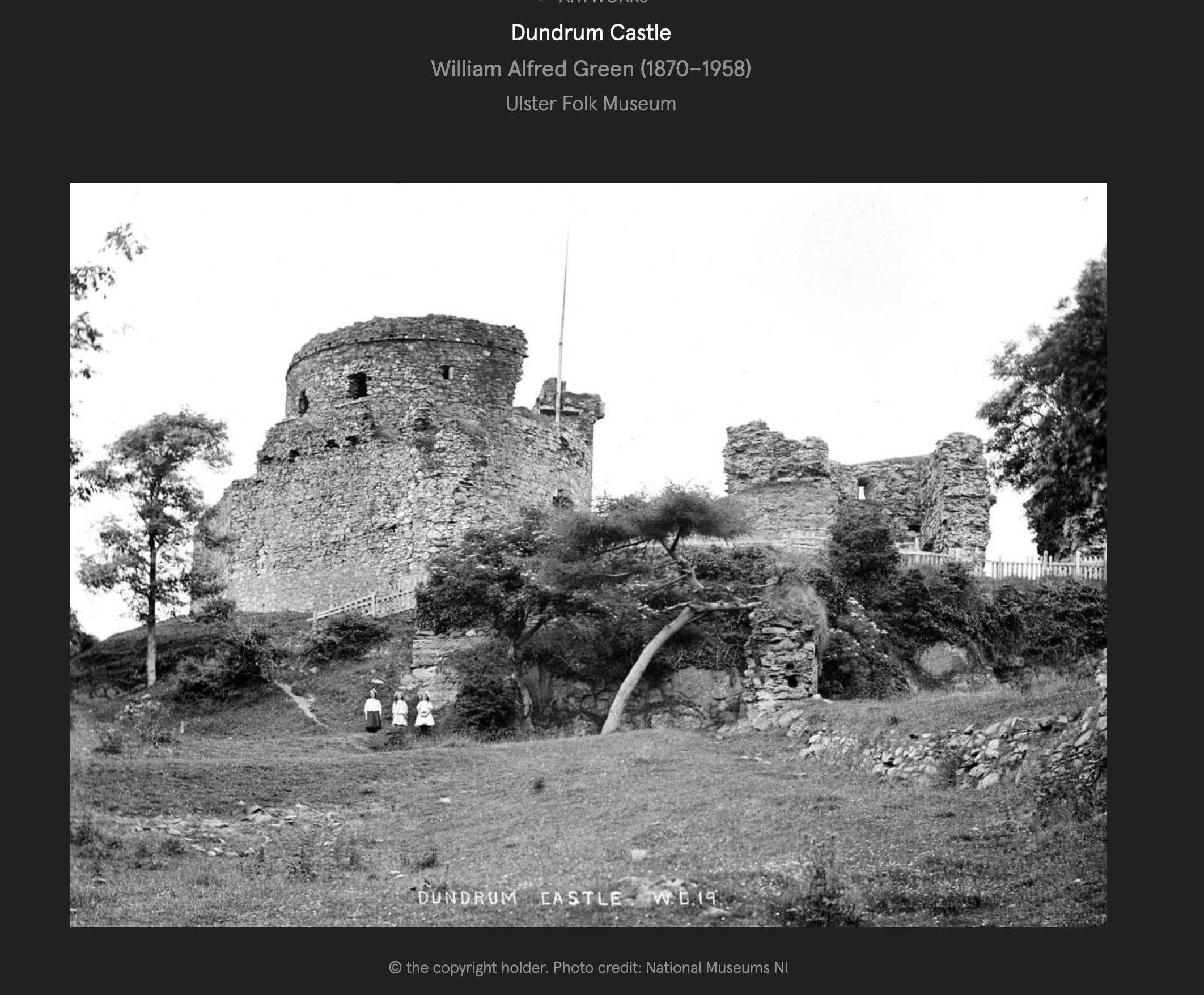
Dundrum Castle, courtesy of Ulster Folk Museum.

5. Hillsborough Castle, County Down

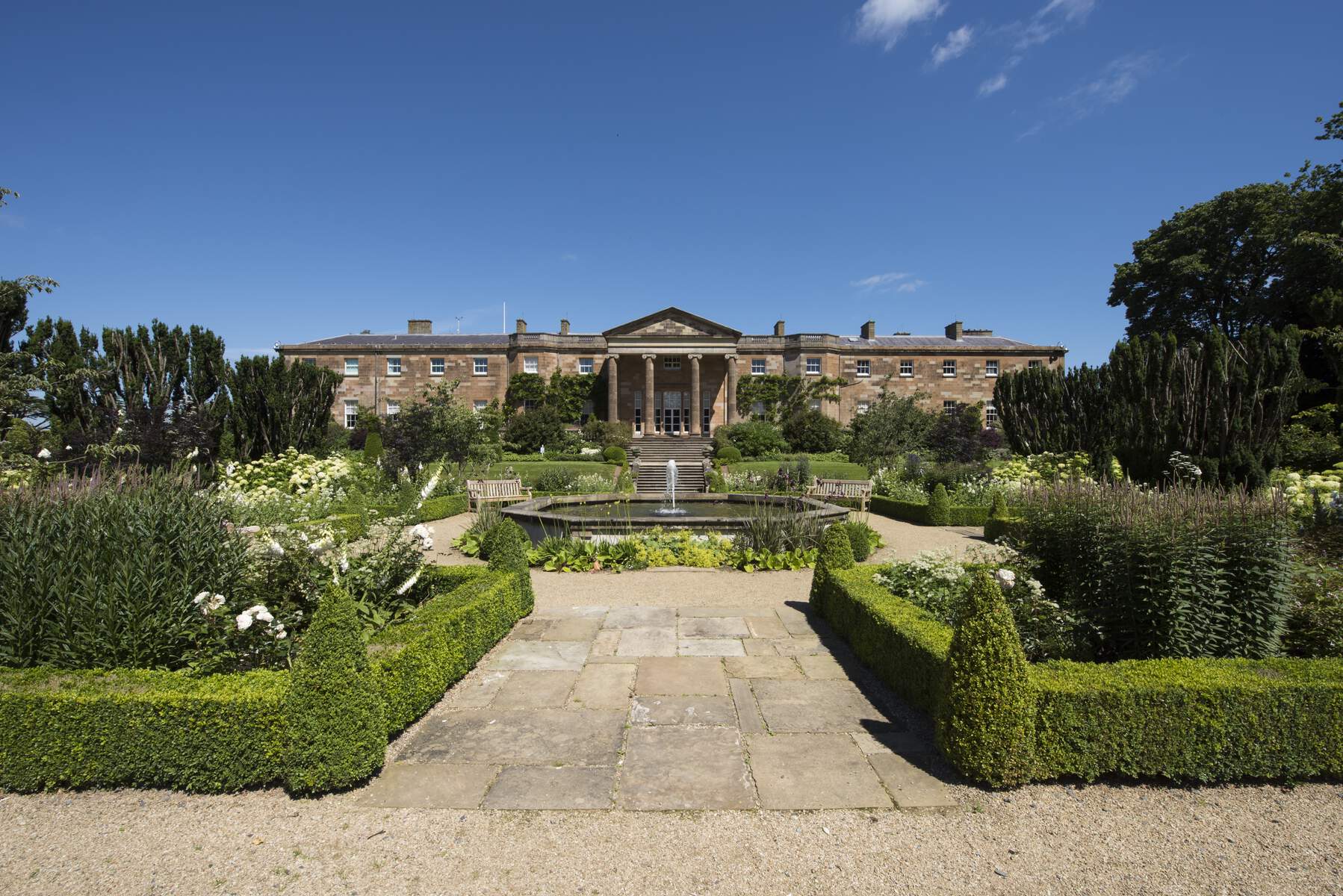
Hillsborough Castle & Gardens, Tourism Northern Ireland 2017 (see [1])

https://www.hrp.org.uk/hillsborough-castle

Hillsborough Castle has been a grand family home and is now the official home of the Secretary of State for Northern Ireland, and a royal residence. Members of the Royal Family stay at Hillsborough when visiting Northern Ireland.

Viewed by some as a politically neutral venue, Hillsborough has played an important role in the Peace Process in Northern Ireland since the 1980s.

“In 2014, Historic Royal Palaces took over the running of Hillsborough Castle and Gardens and began an ambitious project to restore the house and gardens to its former glory.

Hillsborough, originally the settlement of Cromlyn (meaning Crooked Glen) in mid-Down, became part of the Hill family estates in the early 1600s. Moyses Hill, the landless second son of an English West Country family, joined the army to seek his fortune in Ireland, where he supported the Earl of Essex, a military leader sent by Elizabeth I. 

At this time, the land was still in the hands of Irish chiefs of the Magennis family. But the defeat of Irish chieftain Hugh O’Neill in 1603 opened the way for men such as Moyses Hill to establish themselves as landowners in Ireland. The Hills bought some 5,000 acres of land, then gradually added to this over the next 20 years until the whole area around the present Hillsborough had passed from the Magennises to the Hills.

Successive generations of this ambitious family began to rise, politically and socially, in Ireland. Within 50 years they were one of the most prominent landowning families in the area; their estates stretched for over 130 miles from Larne, north of Belfast to Dun Laoghaire, south of Dublin, around 115, 000 acres in total.

Wills Hill was the first Marquess of Downshire and his diplomatic skills as a courtier cemented the family’s position in society.

Wills Hill, 1st Earl of Hillsborough, (1718-1793), later 1st Marquess of Downshire, After Hugh Douglas Hamilton, Irish, 1740-1808. Photograph courtesy of National Gallery of Ireland.

From 1768-72 he held the post of Secretary of State for the Colonies. He had grown very powerful in government and served the royal family, for which he was awarded his title in 1789. 

Wills Hill famously hosted American founding father Benjamin Franklin, but contrary to popular myth, when they met at Hillsborough in 1771, the two men got along well together. 

Wills Hill built not only this house but also the Courthouse in The Square. He also built the terraces around The Square and other buildings in the town. 

Hillsborough is unusual for an Irish Big House as it is not a country house around which a town grew; rather it was built as a townhouse, forming one side of a neat Georgian square. 

The road to Moira once passed directly below the windows, and opposite the house were a variety of shops, houses and the Quaker Meeting House.

The 3rd and 4th Marquesses, also commissioned a lot of work on the house, giving it the outward appearance it has today.
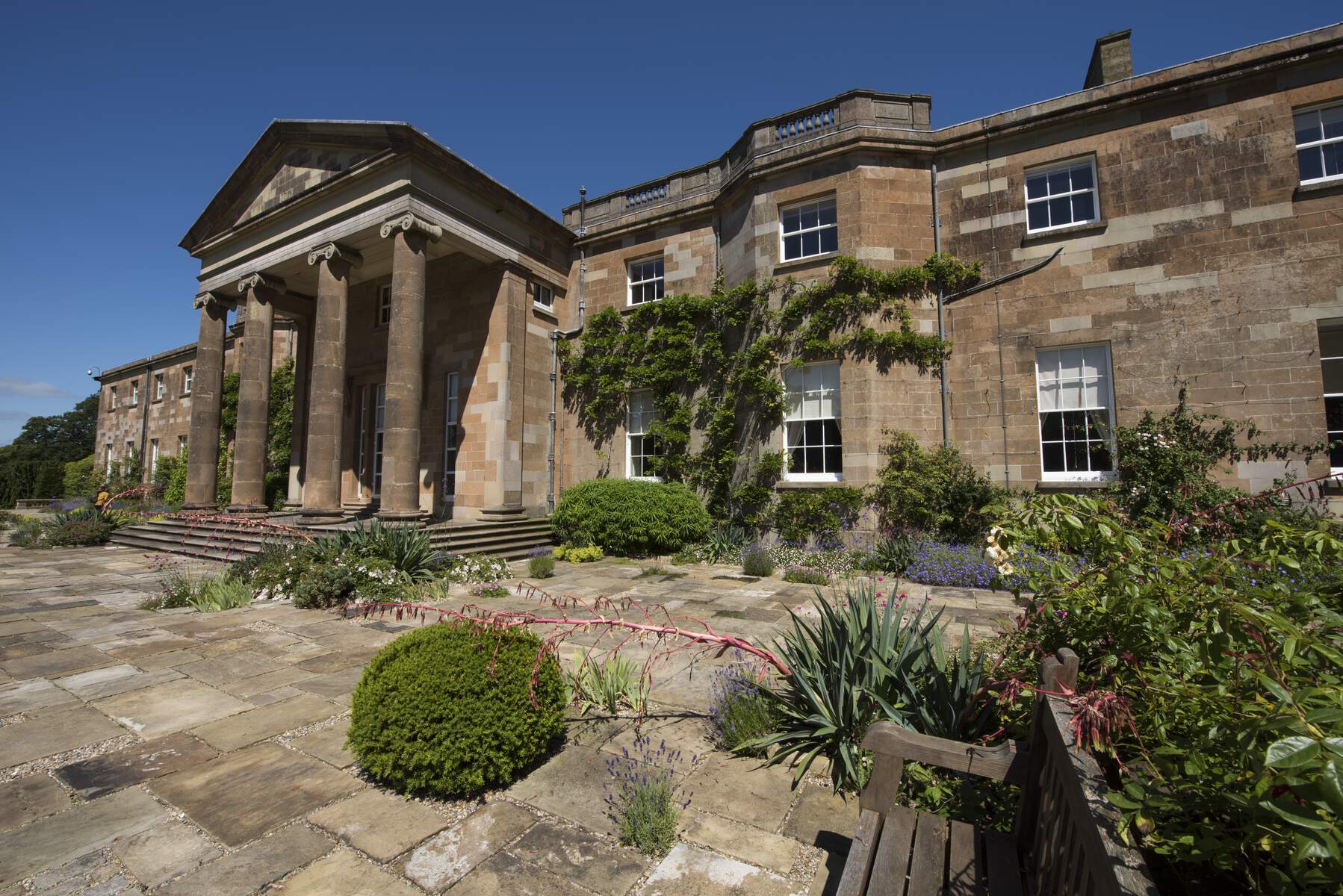
Hillsborough Castle & Gardens, Tourism Northern Ireland 2017 (see [1])

When the house was being altered in the 1840s, the family decided to expand the gardens and so rebuilt the road, houses and Quaker Meeting House all further away. The old road was absorbed into the landscaping of the gardens, and the south side of the house was opened out to allow views of the ‘picturesque’ gardens.

Successive generations of the Hill family enjoyed the house as a family home, renovating and redecorating in the latest styles and improving the gardens. 

However, by the end of the 19th century they were spending more time on their estate in England, at Easthampstead Park in Berkshire or their seaside home at Murlough House in County Down. The sixth Marquess’ uncle and guardian, Lord Arthur Hill remained at Hillsborough Castle to look after his nephew’s estate. The family first rented out Hillsborough in 1909, then sold it completely in 1925.

It was bought by the British government, for around £24,000 (equivalent to £1.3m today) to be the residence of the Governor of Northern Ireland. 

Following Partition in 1921, Governors were appointed to represent the monarch in Northern Ireland, replacing the Lord-Lieutenant of Ireland who had previously lived at Dublin Castle. The house became known as Government House, remaining the official residence of the Governors for over 50 years.”

Mark Bence-Jones writes in his A Guide to Irish Country Houses (1988):

p. 152. “(Hill, Downshire, M/PB; Dixon, Glentoran, B/PB) A large, rambling, two storey late-Georgian mansion of a warm, golden-orange ashlar; its elevations rather long for their height. It appears to incorporate a much smaller house of ca 1760, but was mostly built later in C18, to the design of R.F. Brettingham, by Wills Hill, 1st Marquess of Downshire, a prominent member of Lord North’s Cabinet at the time of the American War. The work was not completed until 1797, four years after 1st Marquess’s death. In 1830s and 1840s, the house was enlarged and remodelled, to the design of Thomas Duff, of Newry, and William Sands. The pedimented portico of four giant Ionic columns in the middle of the long seventeen bay garden front – originally the entrance front – which is the principal exterior feature, dates from this period; as does the present appearance of the pedimented front adjoining to the left, with its asymmetrical projecting ends; as well as the treatment of the elevations of the two ranges at right angles to each other which form two sides of the entrance forecourt; one of them having a rather shallow single-storey portico of four pairs of coupled Ionic columns. The forecourt, with its magnificent mid-C18 wrought iron gates and railings, brought here 1936 from Rich Hill, Co Armagh, is on one side of the main square of the charming little town of Hillsborough, which is reminiscent of the Schlossplatz in a small German capital. Although the house backs onto a sizeable demesne, with a lake, the park is on the opposite side of the town. Its chief feature is Hillsborough Fort, a star-shaped fort built by Col Arthur Hill ca 1650. The gatehouse of the fort was rebuilt most delightfully in the Gothic taste ca 1758, perhaps to the design of Sanderson Miller himself. Hillsborough Castle became the official residence of the Governor of Northern Ireland 1925, and consequently became known as Government House; from then, until 1973, when the post of Governor was abolished, it was occupied by successive Governors (all PB); namely, 3rd Duke of Abercorn, 4th Earl Granville, 2nd Lord Wakehurst, Lord Erskine of Rerrick, and Lord Grey of Naunton; during this period, the house was frequently visited by members of the British Royal Family. In 1934 the house was seriously damaged by fire, and in the subsequent rebuilding the principal rooms were done up in a more palatial style, with elaborate plasterwork. The future of the house is now uncertain.” 

6. Montalto Estate, County Down
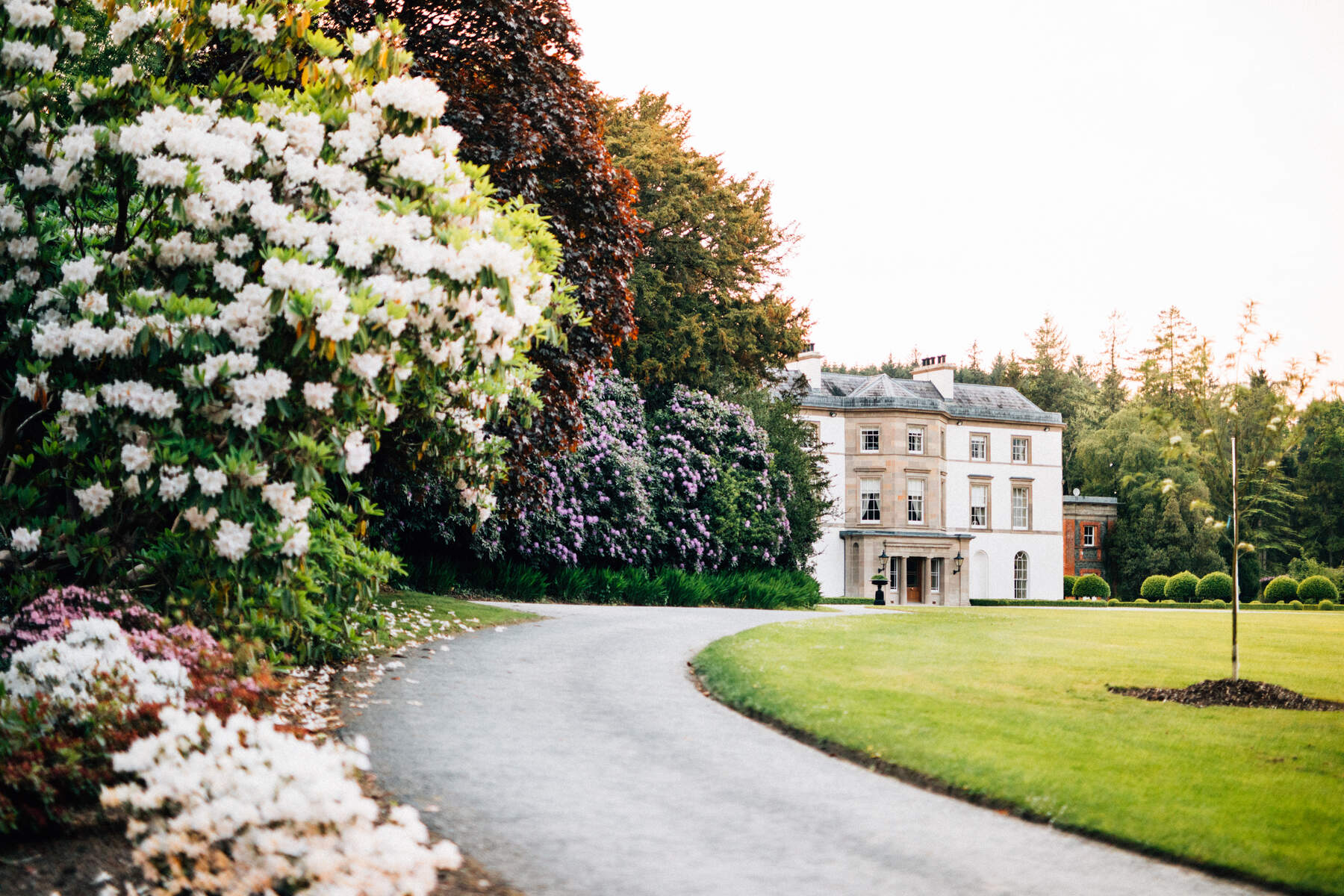
Montalto House, County Down, © Tourism Ireland created by Lewis McClay 2019 (see [1])

https://discovernorthernireland.com/things-to-do/montalto-estate-p728301

For the first time in its history, this mystical and enchanting estate, set in magnificent natural surroundings, is open to visit.

Nestled in the picturesque County Down countryside, Montalto is a privately-owned demesne steeped in history dating back to the 1600s. It is famously the site of ‘The Battle of Ballynahinch’ which took place during the Irish rebellion in 1798. It is also home to an exotic plant collection initially created by ‘The Father of Irish Gardening’, Sir Arthur Rawdon.

Montalto Estate aims to reconnect visitors with nature through access to a range of captivating gardens and beautiful walks and trails. The visitor experience includes: public access to the estate’s beautiful gardens along with unique and surprising garden features; historic walks and trails; and an exciting play area where children can explore, learn and wonder at their natural surroundings. A purpose built centre, designed in keeping with the look and feel of the estate, includes a welcome area featuring interpretation of the estate’s history; a stylish café offering flavoursome and beautifully presented food; and a shop that offers a mix of estate produce, local craft products and many other unique and exceptionally designed items.

The beautiful gardens include an Alpine Garden, a Winter Garden, a Cutting Garden, a Walled Garden, a Formal Garden and the Orchard situated within a wildflower meadow. Both the Winter Garden and Alpine Garden will always be accessible whilst the other gardens will be accessible whenever possible as they are working gardens. Four champion trees are located around the lake and the pinetum and over the past three years over 30,000 trees have been planted here.

Active families will enjoy the Woodland Trail and low wood. The impressive purpose built tree house, which was handcrafted onsite, features rope bridges, monkey bars and treetop views kids of all ages will enjoy. Mini explorers can enjoy the smaller tree house and natural play area. Everything within this area has been designed to fuel the imagination through exploration and discovery.

For tranquil and picturesque walks you can enjoy the stunning views of The Lake Walk and The Garden Walk. Catch a glimpse of some of the wonderful wildlife that calls Montalto Estate their home or simply take in the beautiful seasonal displays and reconnect with nature.

https://montaltoestate.com

The website tells us:

Montalto, nestled beautifully in the heart of the picturesque Co. Down countryside, is a privately-owned demesne which dates back to the early 1600s.

In pre-plantation times the estate was originally owned by Patrick McCartan. However, due to his involvement in the 1641 Rebellion, his Ballynahinch lands were confiscated, and in 1657 the townland was purchased by Sir George Rawdon [and Patrick McCartan was executed]. Circa 1765, his descendant Sir John Rawdon – First Earl of Moira [1720-1793] – built a mansion property on the estate: this is the house that we now know as Montalto House.

Sir John’s ancestor, Sir Arthur Rawdon – The Father of Irish Gardening – had earlier amassed a large collection of exotic foreign plants at Moira Castle. Many of Sir Arthur’s plants were transferred to Montalto when his grandson Sir John moved onto the estate.

During the Battle of Ballynahinch (part of the 1798 Rebellion), rebels occupying Montalto House are attacked by the militia. The mansion sustains some fire and artillery damage. Francis Rawdon-Hastings – 2nd Earl of Moira and Montalto resident – is a respected British military officer during the American War of Independence. He is a close friend of the Prince Regent, later King George IV. For ten years he is Governor General of India, carrying huge military and political responsibilities. He sells the Montalto Estate soon after the 1798 Rebellion and later becomes 1st Marquess of Hastings in 1816.

John Rawdon 1st Earl of Moira married three times: first to Helena Perceval, daughter of John Perceval 1st Earl of Egmont, Co. Cork; next to Anne Hill, daughter of 1st Viscount Hillsborough, and finally to Elizabeth, daughter of Theophilus Hastings, 9th Earl of Huntingdon, England. His heir is Francis Rawdon-Hastings, 1st Marquess of Hastings.
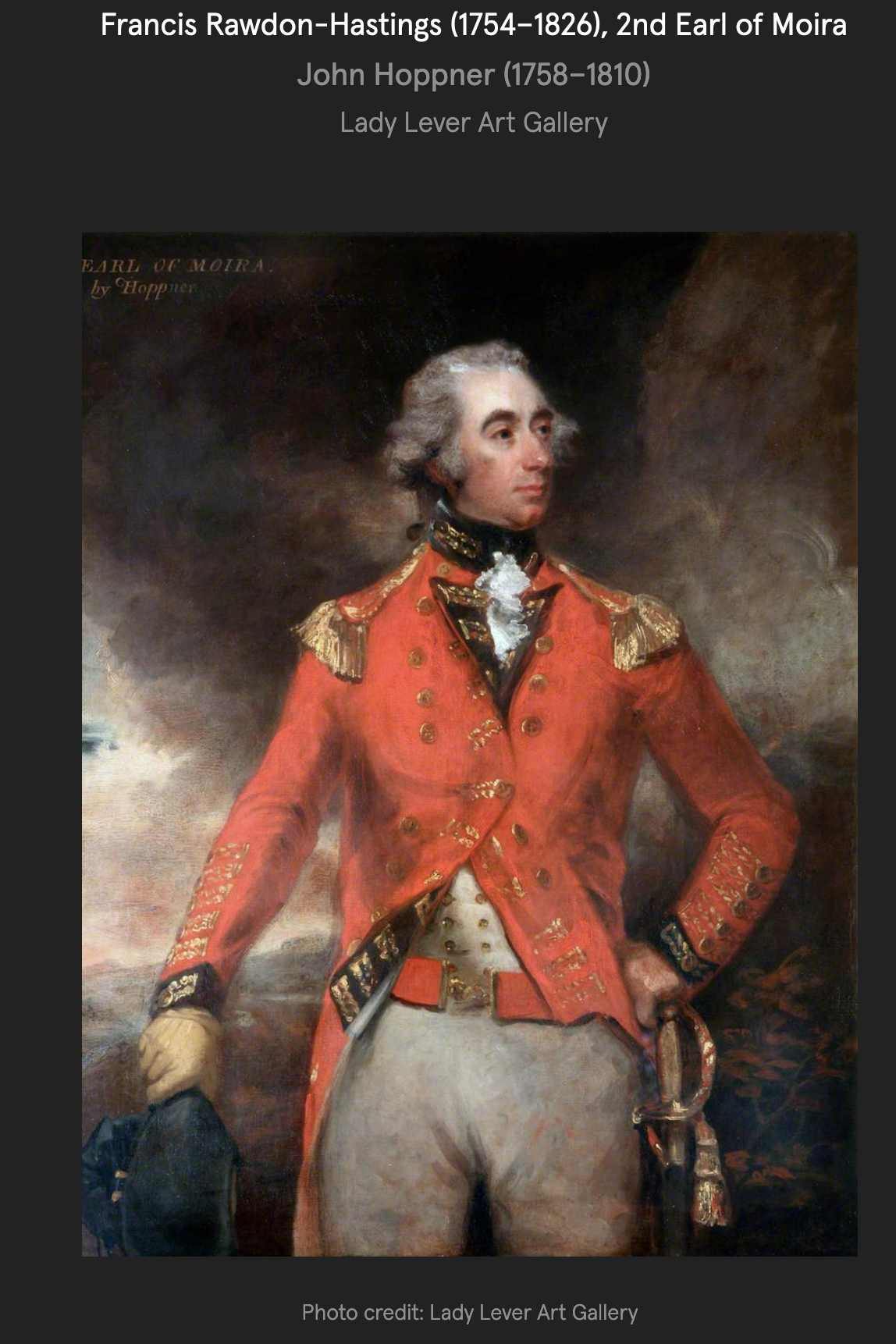
Francis Rawdon-Hastings, 2nd Earl of Moira, courtesy of Lady Lever Art Gallery.

In 1803 David Ker of Portavo purchased the estate. In 1910 Richard – the last of the Kers to reside at Montalto – is finally forced to sell the estate. In 1912 Arthur, [Arthur Vesey Meade] 5th Earl of Clanwilliam [County Tipperary], purchases Montalto for £20,000.

The Earl fights in the Boer War (where he is badly wounded), and with the Guards in France in WW1. His wife Lady Muriel cares for wounded Allied officers during their convalescence at Montalto.

“In 1979 the house is purchased by the Hogg Corry Partnership. In 1988 Corry withdraws. In 1995 it is purchased by the Wilson family. Working with local architects Hobart and Heron, as well as John O’Connell – a leading conservation architect from Dublin, specialising in Georgian architecture – they set about a programme of works to restore the house, grounds, and outbuildings to their former glory.

The estate has been almost exclusively, a family home since Lord Moira built the first house here. Nowadays Montalto offers visitors the use of 400 acres of rolling Irish countryside, which includes wonderful trails and gardens and a chance to explore this historic demesne and reconnect with nature.“”The estate has been almost exclusively, a family home since Lord Moira built the first house here. Nowadays Montalto offers visitors the use of 400 acres of rolling Irish countryside, which includes wonderful trails and gardens and a chance to explore this historic demesne and reconnect with nature.

Mark Bence-Jones writes in his A Guide to Irish Country Houses (1988):

p. 209. “(Rawdon, Moira, E/DEP; Ker/IFR; Meade, Clanwilliam, E/PB) A large and dignified three storey house of late-Georgian aspet; which, in fact, was built mid-C18 as a two storey house by Sir John Rawdon, 1st Earl of Moira, who probably brought the stuccodore who was working for him at Moira House in Dublin to execute the plasterwork here; for the ceiling which survives in the room known as the Lady’s Sitting Room is pre-1765 and of the very highest quality, closely resembling the work of Robert West; with birds, grapes, roses and arabesques in high relief. There is also a triple niche of plasterwork at one end of the room; though the central relief of a fox riding in a curricle drawn by a cock is much less sophisticated than the rest of the plasterwork and was probably  done by a local man. 2nd Earl, afterwards 1st Marquess of Hastings, who distinguished himself as a soldier in the American War of Independence, and was subsequently Governor-General of India, sold Montalto 1802 to David Ker, who enlarged the windows of the house, in accordance with the prevailing fashion. In 1837, D.G. Ker enlarged the house by carrying out what one would imagine to be a most difficult, not to say hazardous operation; he excavated the rock under the house and round the foundations, thus forming a new lower ground floor; the structure being supported by numerous arches and pillars. It was more than just digging out a basement, as has been done at one or two other houses in Ulster; for the new ground floor is much higher than any basement would be; the operation made the house fully three storeyed. Entrance front of two bays on either side of a central three sided bow; the front also having end bows. Shallow Doric porch at foot of centre bow. Ground floor windows round-headed; those above rectangular, with plain entablatures over the windows of the original ground floor, now the piano nobile. Parapeted roof. The right hand side of the house is of ten bays, plus the end bow of the front; with a pilastered triple window immediately to the right of the bow in the piano nobile, balanced by another at the far end of the elevation. The left-hand side of the house is only of three bays and the bow, with a single triple window’ the elevation being prolonged by a two storey wing with round-headed windows. Various additions were built at the back of the house and at the sides during the course of C19; a ballroom being added by D.S. Ker, grandson of the David Ker who bought the estate. In 1837 ground floor there is an imposing entrance hall, with eight paired Doric columns, flanked by a library and a dining room. A double staircase leads up to the piano nobile, where there is a long gallery running the full width of the house, which may have been the original entrance hall. Also on the piano nobile is the sitting room with the splendid C18 plasterwork. Montalto was bought ca 1910 by 5th Earl of Clanwilliam, whose bridge refused to live at Gill Hall, the family seat a few miles to the west, because of the ghosts there. In 1952, the ballroom and a service wing at the back were demolished.” 

7. Mount Stewart, County Down
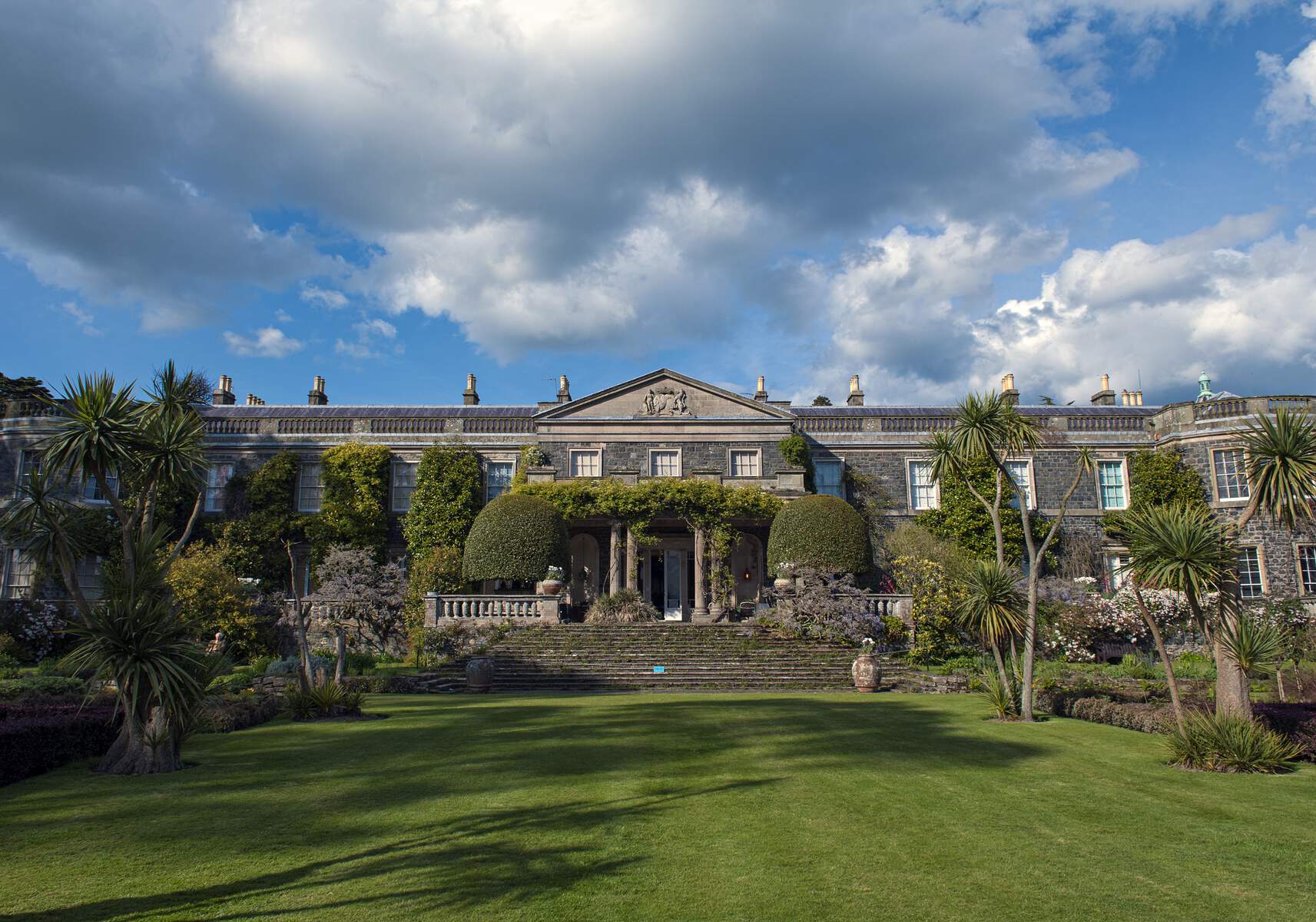
Mount Stewart, County Down, by Art Ward for Tourism Northern Ireland, 2016. (see [1])

https://discovernorthernireland.com/things-to-do/mount-stewart-p675341 and https://www.nationaltrust.org.uk/mount-stewart

See my entry https://irishhistorichouses.com/2024/06/06/mount-stewart-county-down-northern-ireland-a-national-trust-property/
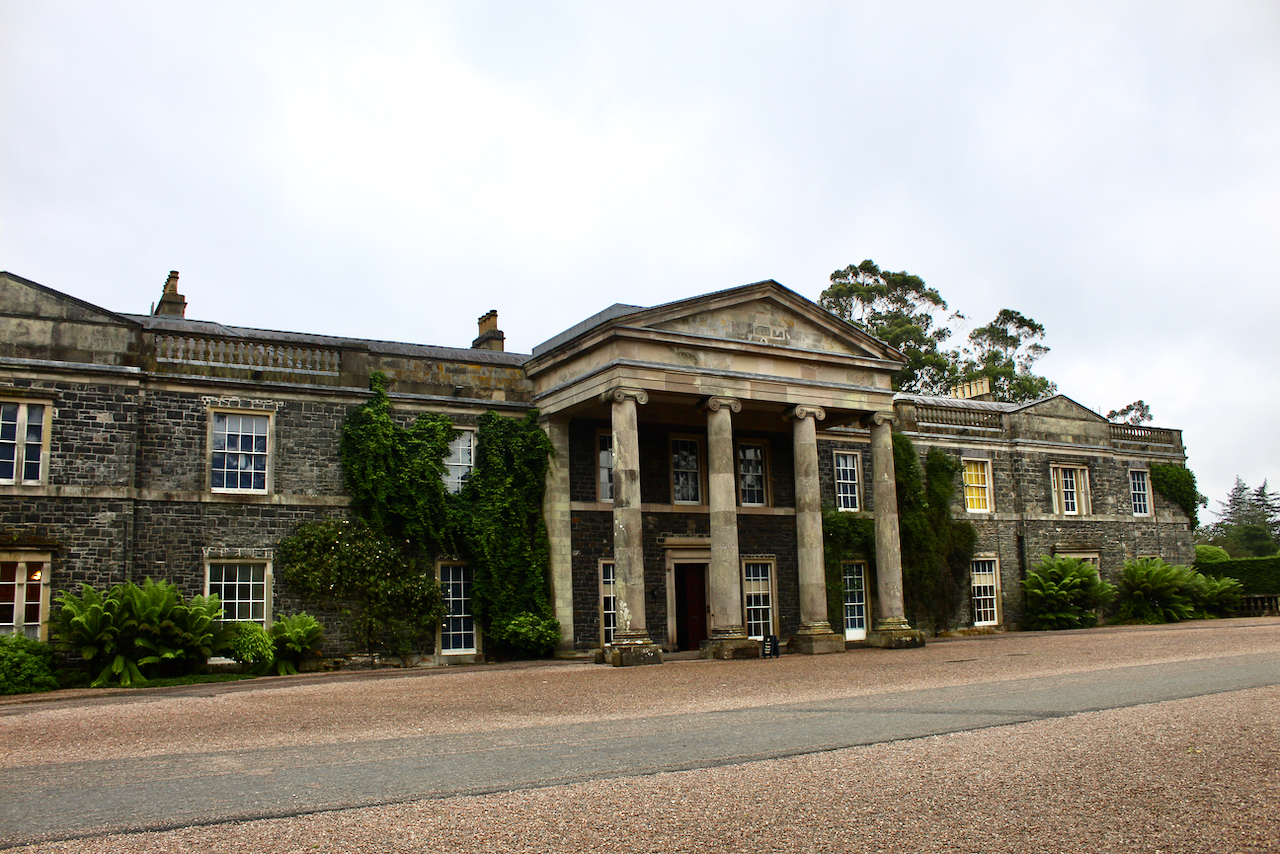
Mount Stewart, County Down, June 2023. The porte-cochere was added by the 3rd Marquess of Londonderry, when William Morrison designed enlargement of the house.
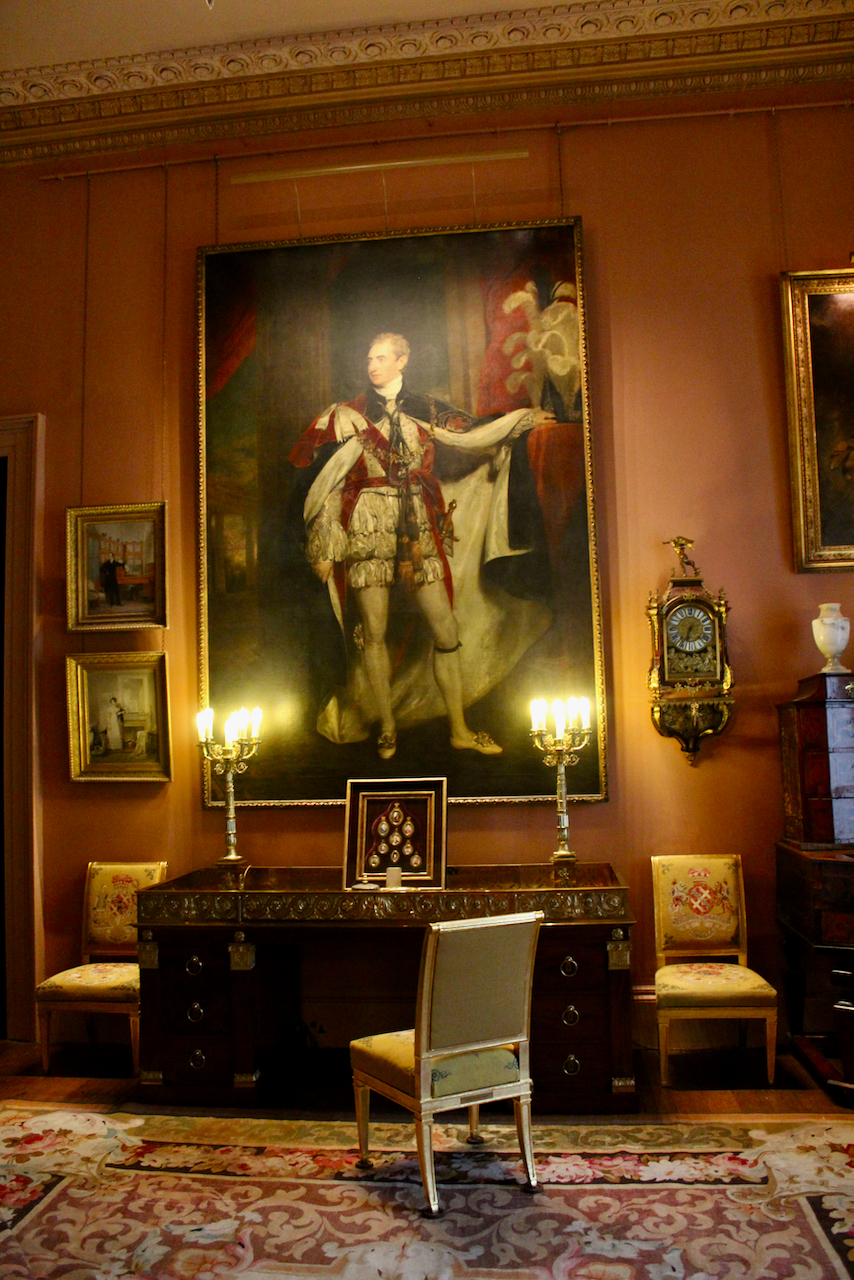
Robert Stewart, 1st Viscount Castlereagh, later 2nd Marquess of Londonderry. Photograph © Jennifer Winder-Baggot, www.irishhistorichouses.com
The man in splendid robes at the end of the room is Arnold Joost van Keppel, 1st Earl of Albemarle, by Godfrey Kneller. Photograph © Jennifer Winder-Baggot, www.irishhistorichouses.com
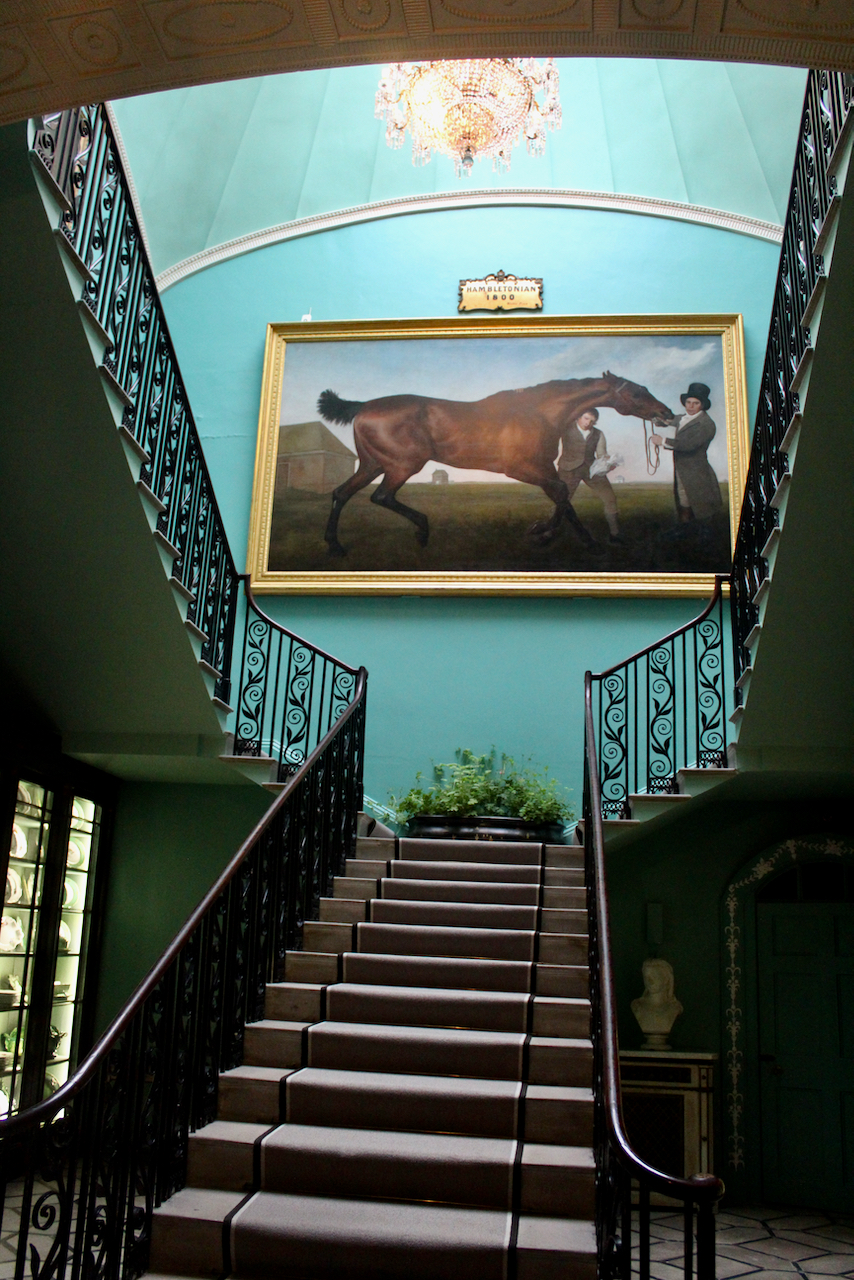
A George Stubbs masterpiece hangs on the west staircase: Hambletonian, Rubbing Down, was painted by Stubbs in 1800. The horse had been owned by Sir Harry Vane Tempest, whose daughter married Charles Stewart (3rd Marquess of Londonderry). Photograph © Jennifer Winder-Baggot, www.irishhistorichouses.com
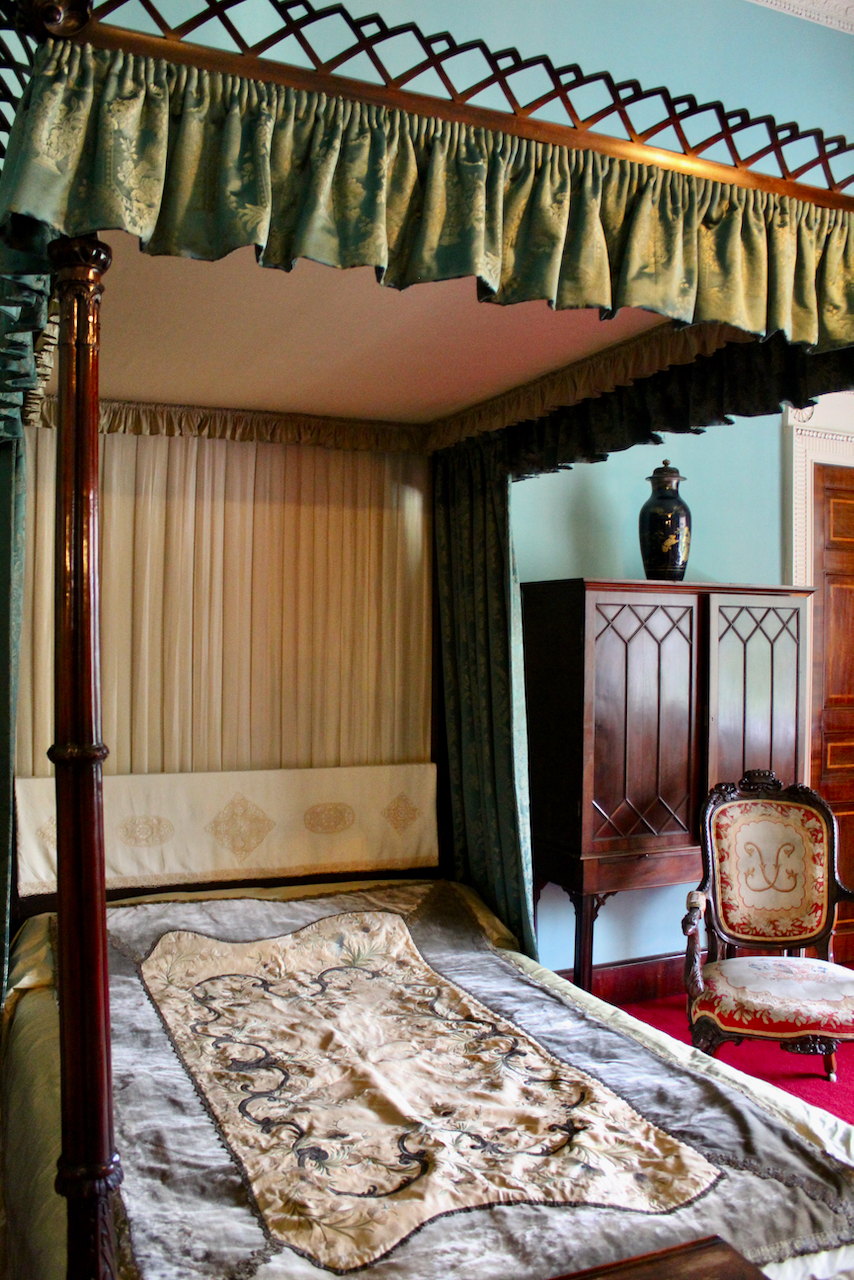
The textile elements of a George III mahogany tester bed, circa 1760. Photograph © Jennifer Winder-Baggot, www.irishhistorichouses.com
The bed boasts a coronet. A polychrome painted tester bedstead, English or Irish, circa 1920
With twin painted and gilt panelled heads and ends inset with shaped reserves of blue brocade and surmounted by carved and gilt scrolls with turned vase shaped finials, the backboard covered in red figured silk damask, the side curtains of the same material, trimmed galloon. The domed canopy covered in blue silk trimmed with galloon and appliqued gilt carvings, the front and sides carved with gadrooning and leafage, centering on an armorial panel surmounted by a coronet, the whole raised on a plinth as per Londonderry House image of a figured walnut plinth, with box spring mattress, hair overlay and bedding. The bed was Lady Londonderry’s when she was in Londonderry House and was brought here in 1961 Lady Mairi slept in it in Londonderry House and Lady Rose was born in it in 1943, at Londonderry House.
Photograph © Jennifer Winder-Baggot, www.irishhistorichouses.com

8. Newry and Mourne Museum, Bagenal’s Castle, County Down

https://discovernorthernireland.com/things-to-do/newry-and-mourne-museum-bagenals-castle-p690251
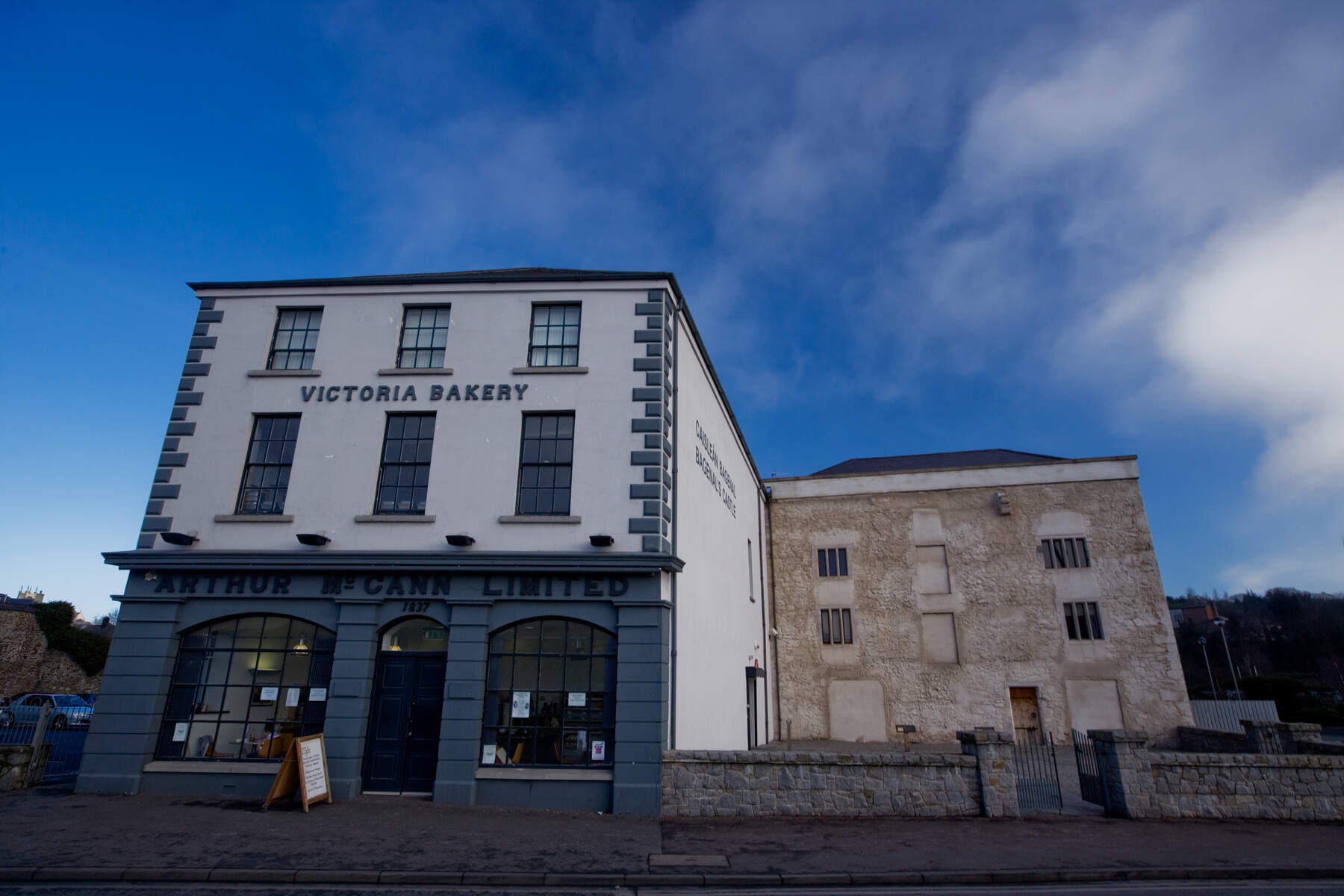
Bagenal’s Castle, County Down, Courtesy of Tourism Northern Ireland, 2010. (see [1])

The Discover Northern Ireland website tells us:

Bagenal’s Castle is a sixteenth century fortified house and adjoining nineteenth century warehouse. It houses Newry and Mourne Museum and Newry Visitor Information Centre.

During restoration work on the Castle many original features were uncovered including fireplaces, windows, doorways, gun loops and a bread oven. These have been interpreted for the visitor and drawings were commissioned to illustrate how the various living quarters of the castle would have functioned in the sixteenth century. Highlights include a restored Banqueting Room which is used throughout the year for seasonal and family events.During restoration work on the Castle many original features were uncovered including fireplaces, windows, doorways, gun loops and a bread oven. These have been interpreted for the visitor and drawings were commissioned to illustrate how the various living quarters of the castle would have functioned in the sixteenth century. Highlights include a restored Banqueting Room which is used throughout the year for seasonal and family events.

The Museum’s diverse collections include material relating to prehistory, Newry’s Cistercian foundations, Ulster’s Gaelic order and the relationship with the English Crown; the building of a merchant town and the first summit level canal in the British Isles. You can also discover the history of the ‘Gap of the North’, the historic mountain pass between Ulster and Leinster located to the south of Newry. One of the key main exhibitions, ‘A Border Town’s Experience of the 20th Century’, examines local attitudes to major political and economic events of the 20th century. There are also permanent exhibitions on farming, fishing and folklore in the Mournes and South Armagh.”

9. Portaferry Castle, County Down

https://discovernorthernireland.com/things-to-do/portaferry-castle-p676311

The website tells us:

Portaferry Castle is a 16th-century tower-house, built by the Savage family and prominently located on the slope overlooking Portaferry harbour within sight of Strangford and Audley’s Castles across the water. Simpler than the earlier ‘gatehouse’ tower house, it is square in plan with one projecting tower to the south where a turret rises an extra storey and contains the entrance and stair from ground floor to first floor. 

There are three storeys and an attic, and like early tower-houses it has spiral stairs. However, like some later tower houses it lacks a stone vault as all floors were originally made of wood. 

***THE CASTLE IS CURRENTLY CLOSED FOR REPAIRS AND WILL NOT OPEN THIS YEAR”

Places to stay, County Down

1. Barr Hall Barns, Portaferry, County Down – self catering €

https://www.barrhallbarns.co.uk/

The website tells us:

Barr Hall Barns are 18th Century period cottages in an outstanding tranquil location with panoramic views across Strangford Lough to the Mourne Mountains.

We are based just outside the seaside village of Portaferry, at the very southern tip of the Ards Peninsula, overlooking Barr Hall Bay which is protected by the National Trust.

With idyllic walking routes right at our doorstep, come escape to an area of natural outstanding beauty and enter the truly magical setting of Barr Hall Barns.

2. Castle Ward, Potter’s Cottage in farmyard:

https://www.nationaltrust.org.uk/holidays/the-potters-cottage-northern-ireland

and Castle Ward bunkhouse: https://www.nationaltrust.org.uk/holidays/castle-ward-bunkhouse-northern-ireland

Sleeps 14 people.

3. Culloden, County Down – hotel €€€

Culloden Estate and Spa, photograph courtesy of Hastings Hotel 2017, Ireland’s Content Pool (see [1])

4. Florida Manor, 22 Florida Road, Killinchy, Newtownards, Co Down, BT23 6RT Northern Irelandself-catering, €€

http://www.floridamanorni.com/cgi-bin/greeting?instanceID=1

and Florida Manor Gambles Patch, Hollow View and Meadow Green.

The website tells us: “Dating back to 1676, Florida Manor, an original Irish Georgian Estate has undergone sympathetic refurbishment. Within the estates original stone perimeter wall lies 200 acres of extensive landscaped grasslands, private lakes, walkways and bridal paths.

Mark Bence-Jones writes in his A Guide to Irish Country Houses (1988):

p. 297. “(Gordon/IFR) A C18 house consisting of a three storey principal block with a recessed centre, linked to lower wings by curved sweeps with balustrades and pilasters. Projecting enclosed porch, also balustraded and with Ionic columns. quoins. Originally the seat of the Crawfords; passed by marriage to the Gordons C18. The house became ruinous in the present century but has been restored as two dwellings.” 

5. Helen’s Tower, Bangor, County Down €€

https://www.irishlandmark.com/property/helens-tower/

A tower with pepper-pot bartizans rising from a hill at the southern end of the demesne, completed 1862 to a design by William Burn. It was built in honour of his mother, Helen, Lady Dufferin, one of three beautiful and lively sisters who were the granddaughters of Richard Brinsley Sheridan; in a room near the top of the tower, lined with delicate Gothic woodwork, the walls are adorned with poems on bronze tablets expressing the love between mother and son; including a poem written specially for Lord Dufferin by Tennyson: 

Helen’s Tower here I stand 

Dominant over sea and land 

Son’s love built me, and I hold 

Mother’s love in lettered gold.” 

And see Robert O’Byrne’s entry about it at https://theirishaesthete.com/2022/09/05/helens-tower/
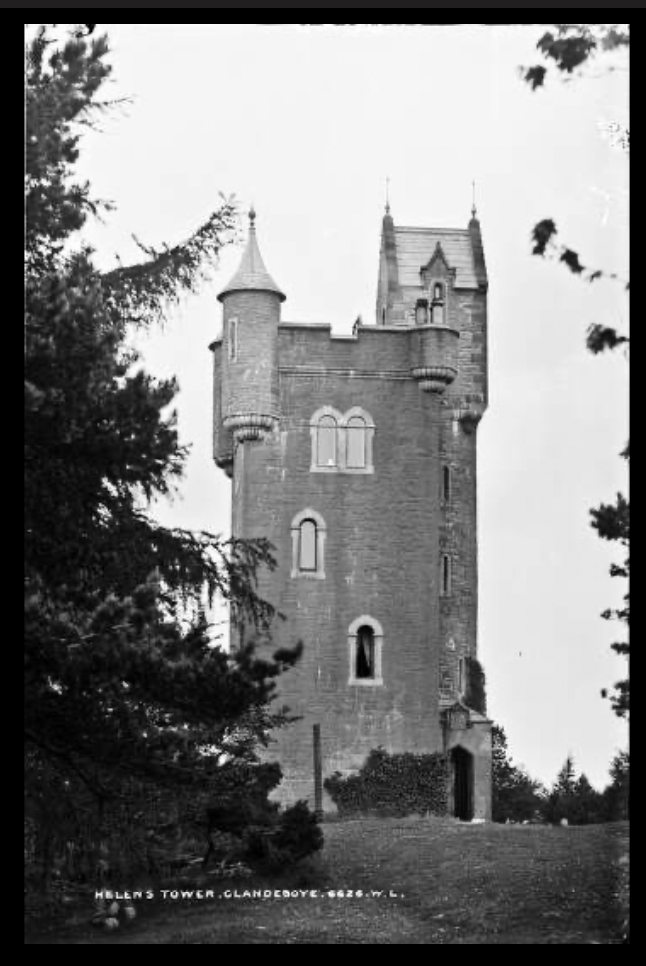
Helen’s Tower in County Down, photograph by Robert French, Lawrence Photograph Collection, National Library of Ireland.

6. Kiltariff Hall, County Down

https://www.kiltariffhall.co.uk 

The website tells us: “Kiltariff Hall is a Victorian Country House on the outskirts of the small market town of Rathfriland. Built by our great-grandfather William Fegan in 1888, the house is set at the end of a short drive and is surrounded by mature oak, sycamore and pine trees. It is run myself, Catherine and my sister Shelagh who grew up in Kiltariff when it was a working farm. We are both passionate and knowledgeable about the Mourne area and believe that providing good locally produced food is key to ensuring guests enjoy their stay.

7. Narrow Water Castle, apartment, Newry Road, Warrenpoint, Down, Northern Ireland, BT34 3LEself catering

http://narrowwatercastle.co.uk

Narrow Water, photograph by Chris Hill 2005 for Tourism Ireland, Ireland’s Content Pool (see[1]).

The website tells us:

Narrow Water Castle is the private home of the Hall family who have lived at Narrow Water since 1670, originally in the Old Narrow Water Keep situated on the shoreline of Carlingford Lough which is now a national monument.

As a private home the castle is not open for public admission. It does however occasionally open its doors for weddings and exclusive events.

In 1816 construction began on the new Castle by Thomas Duff, a well-known Newry architect who also designed the Cathedrals in Newry, Armagh and Dundalk. The Elizabethan revival style castle is made from local granite and built next to the existing house, Mount Hall (1680). It was completed in 1836.

The self catering apartments are located in the original hub of the castle (Mount Hall), dating back to 1680. Mount Hall joins the Elizabethan revival part of the castle to the courtyard.

Number 2: The apartment opens into an elegant open plan, living room and dining room with open fire. We have used several antique pieces of furniture to hint of times gone by. We are happy to provide logs if our guests wish to use the fire.

There are two spacious, beautifully furnished bedrooms, one of which is en-suite.

Number 6: This 2 bedroom luxury apartment is the perfect place to escape and unwind. Both bedrooms are en-suite. There is a grand open plan living /dining area with a unique feature skylight and exposed beams. The living area is adorned with antique furniture has a wood burning stove for cosy nights by the fire. The modern kitchen is fully equipped and the dining area seats six comfortably. A quality sofa bed allows this apartment to accommodate up to six guests. This apartment is on the first floor with access via the original stone staircase dating to the 1680s

8. The Old Inn, Bangor, County Down €€

https://www.theoldinn.com

Established in 1614!

The Old Inn, Crawfordsburn, Bangor, photograph Courtesy of Alexandra Barfoot 2022 for Tourism Northern Ireland.

9. Slieve Donard hotel and spa, County Down €€

https://www.slievedonardhotel.com
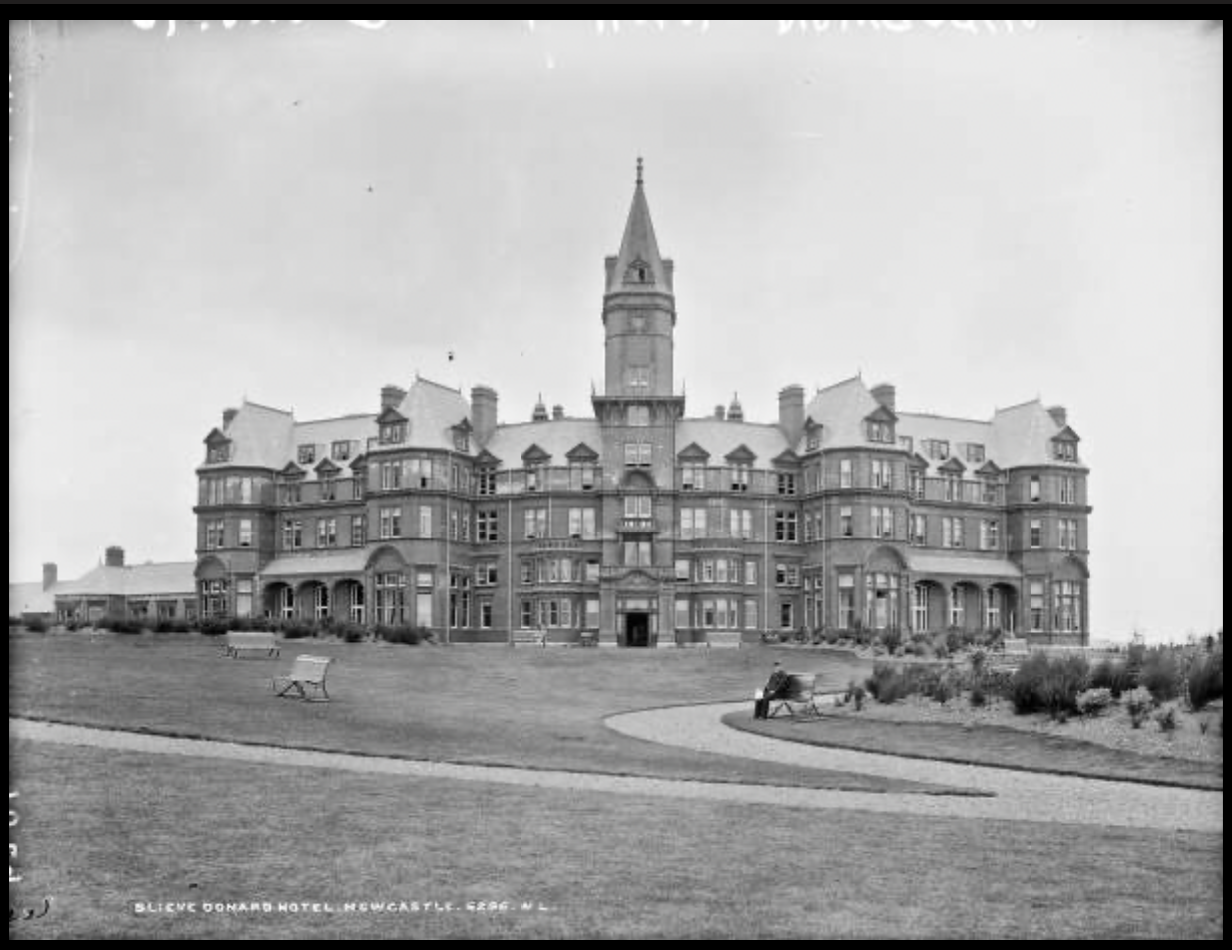
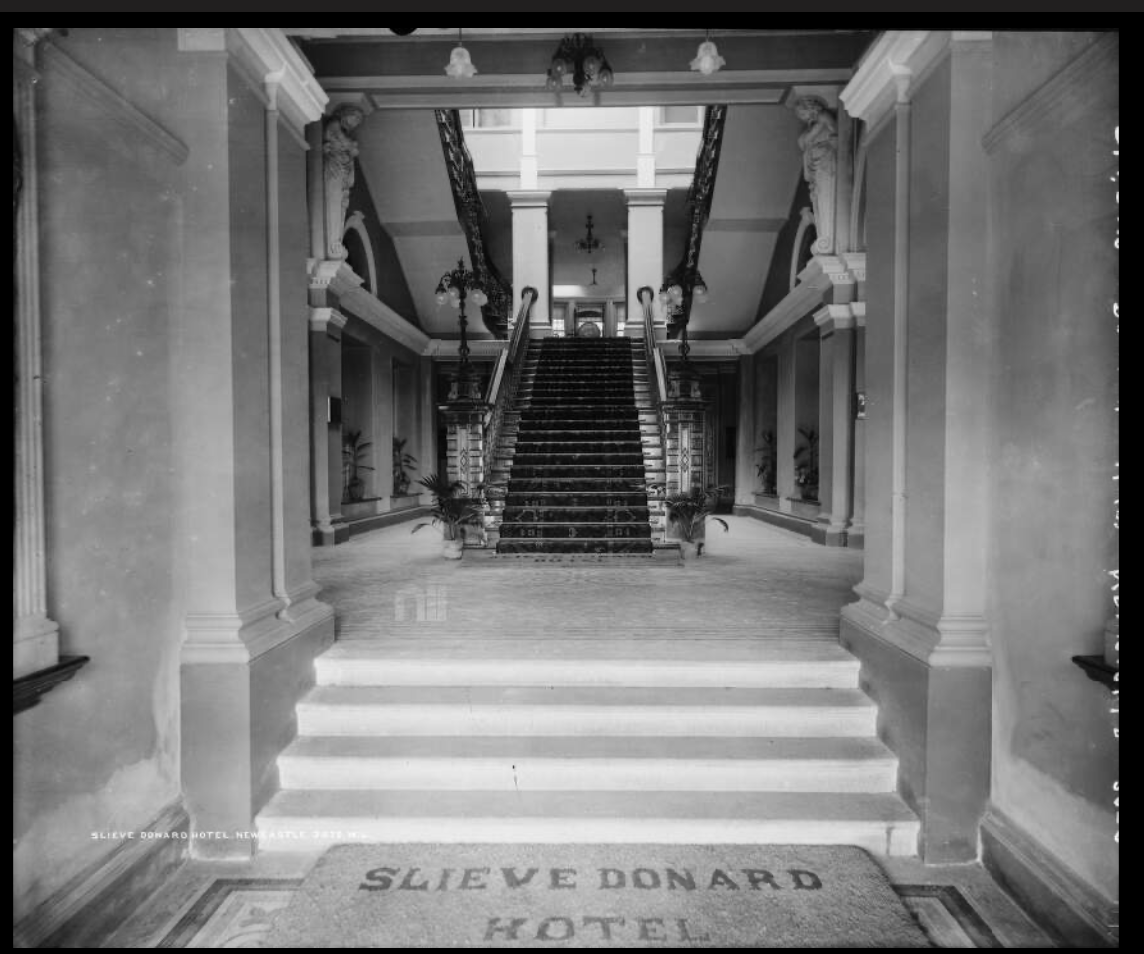
Slieve Donard hotel, Newcastle, County Down, photograph by Robert French, (between ca. 1865-1914), Lawrence Photograph Collection, National Library of Ireland.

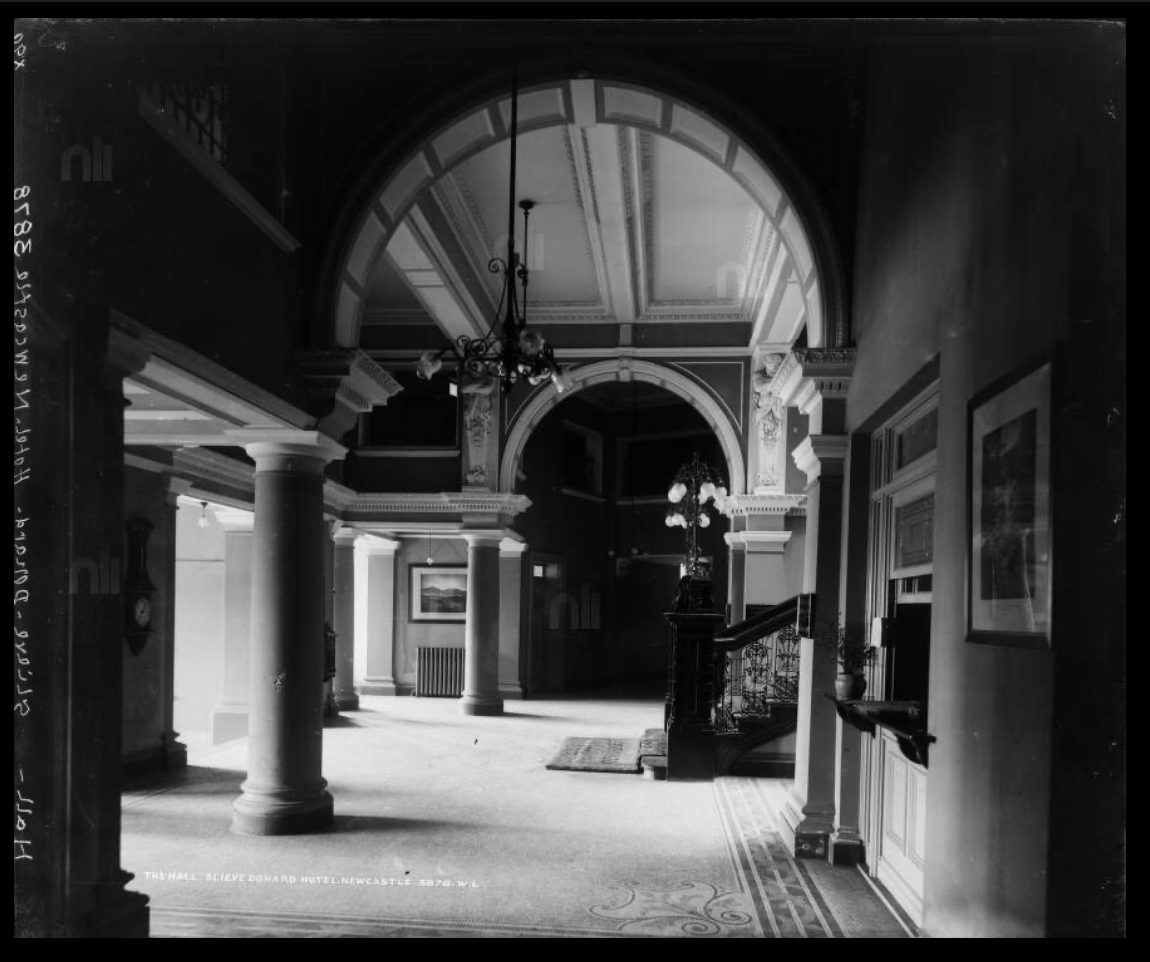
The website tells us: “Slieve Donard was originally built by the Belfast and County Down Railway as an ‘end of the line’ luxury holiday destination. Construction started in 1896 and was completed and officially opened on 24th June 1898 at the cost of £44,000. It was one of the most majestic hotels of its time and was almost self-sufficient with its own bakery, vegetable gardens, pigs, laundry and innovatively a power plant, which also provided electricity for the railway station.
Slieve Donard hotel, Newcastle, County Down, photograph by Robert French, (between ca. 1865-1914), Lawrence Photograph Collection, National Library of Ireland.
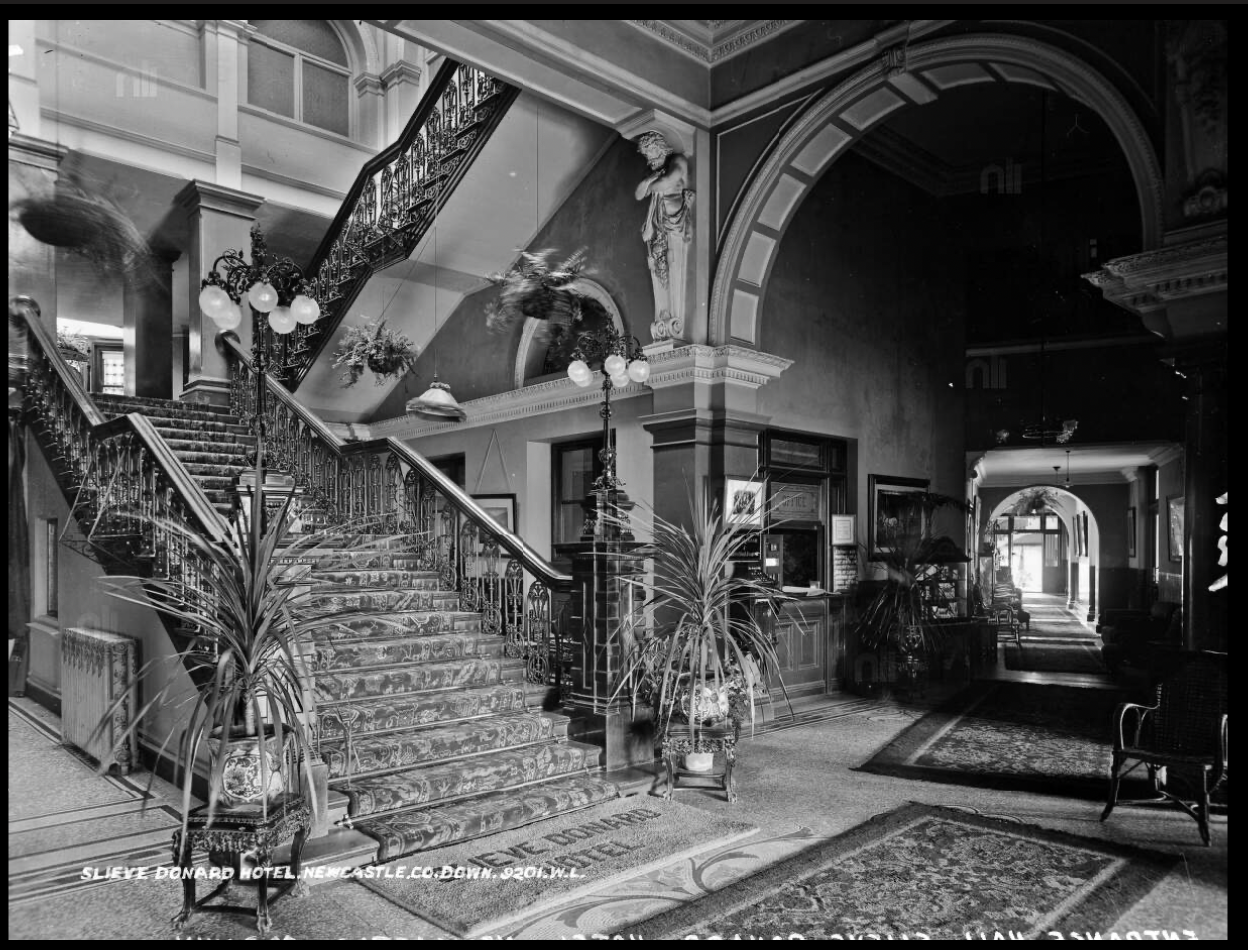
Slieve Donard hotel hall, Newcastle, County Down, photograph by Robert French, (between ca. 1865-1914), Lawrence Photograph Collection, National Library of Ireland.
Slieve Donard hotel staircase, Newcastle, County Down, photograph by Robert French, (between ca. 1865-1914), Lawrence Photograph Collection, National Library of Ireland.

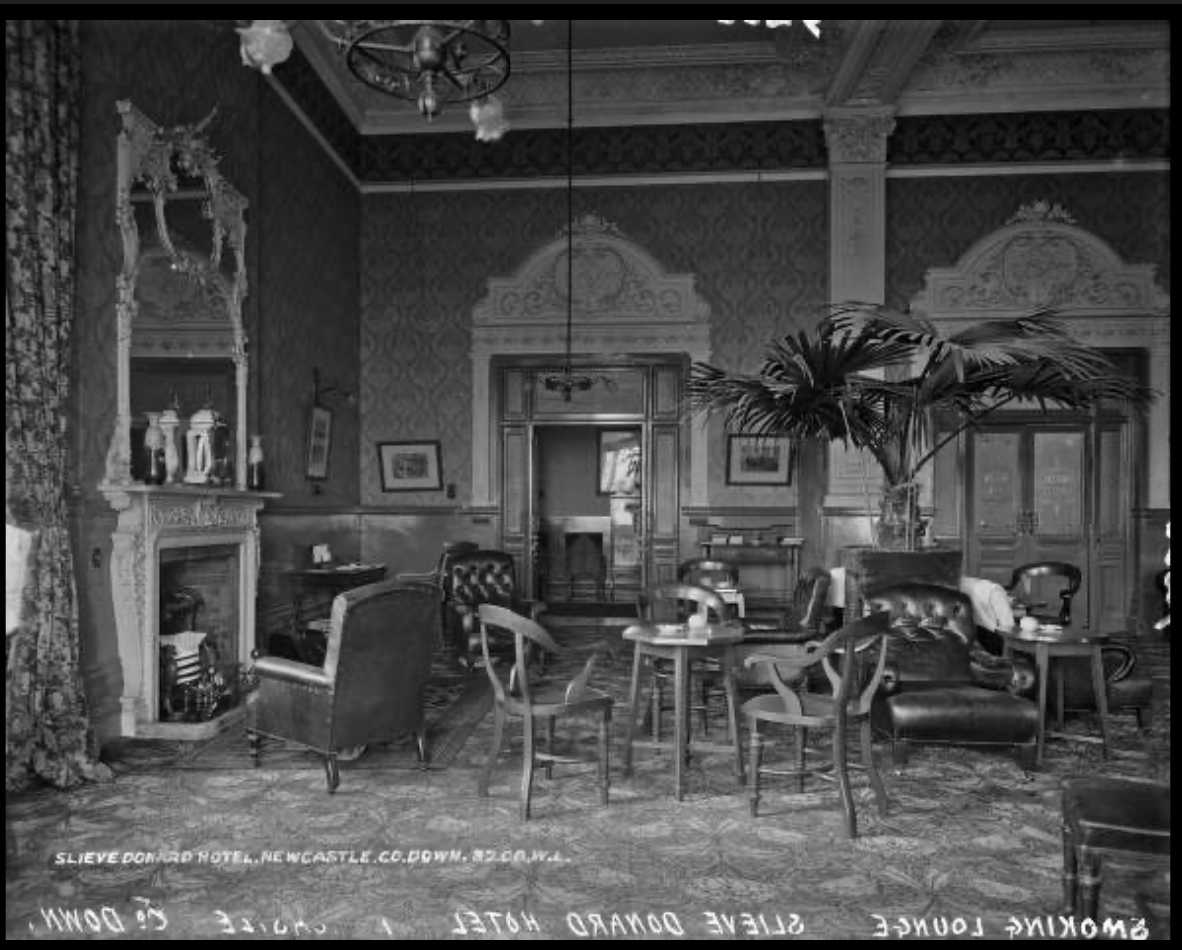
Slieve Donard typified the idea of Victorian grandeur and luxury with its Drawing Room, Grand Coffee Room, Reading and Writing Room, Smoking Room, Billiard Room and Hairdressing Rooms—you can’t help but conjure up scenes of great style and decadence. ‘One could even partake of seawater baths, douche, spray, needle and Turkish baths all provided by an electric pump straight from the sea.
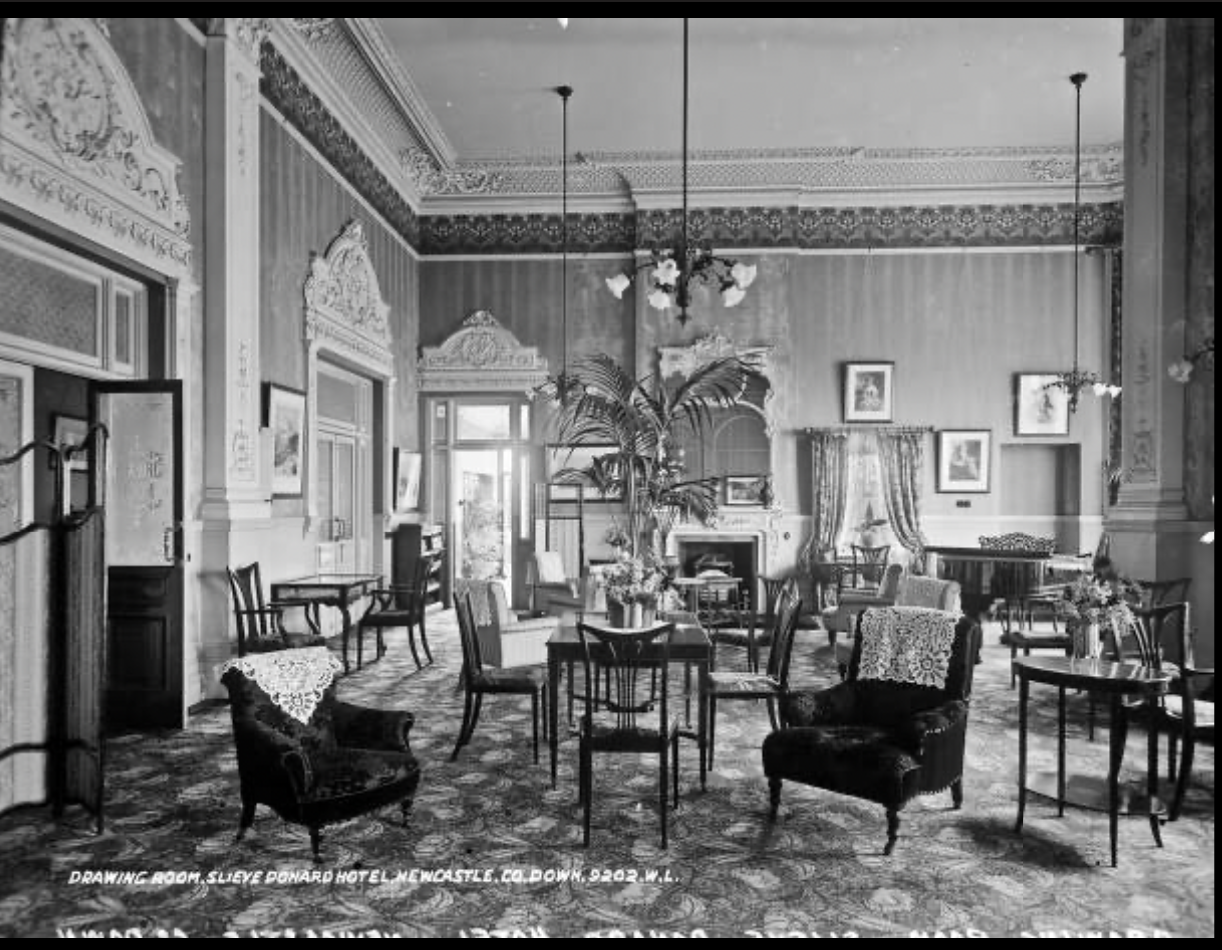
Slieve Donard hotel drawing room, Newcastle, County Down, photograph by Robert French, (between ca. 1865-1914), Lawrence Photograph Collection, National Library of Ireland.
Slieve Donard hotel, Newcastle, County Down, photograph by Robert French, (between ca. 1865-1914), Lawrence Photograph Collection, National Library of Ireland.
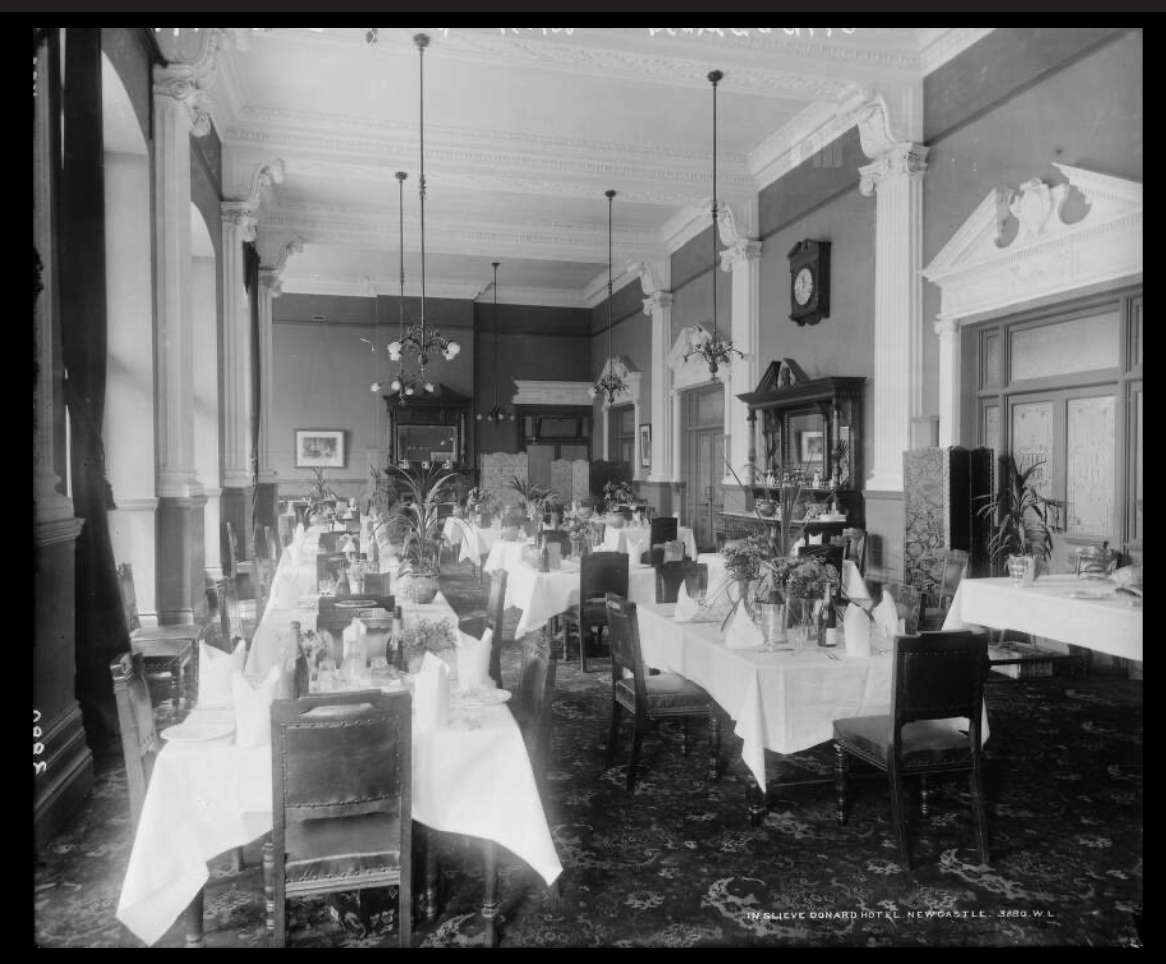
Slieve Donard hotel dining room, Newcastle, County Down, photograph by Robert French, (between ca. 1865-1914), Lawrence Photograph Collection, National Library of Ireland.
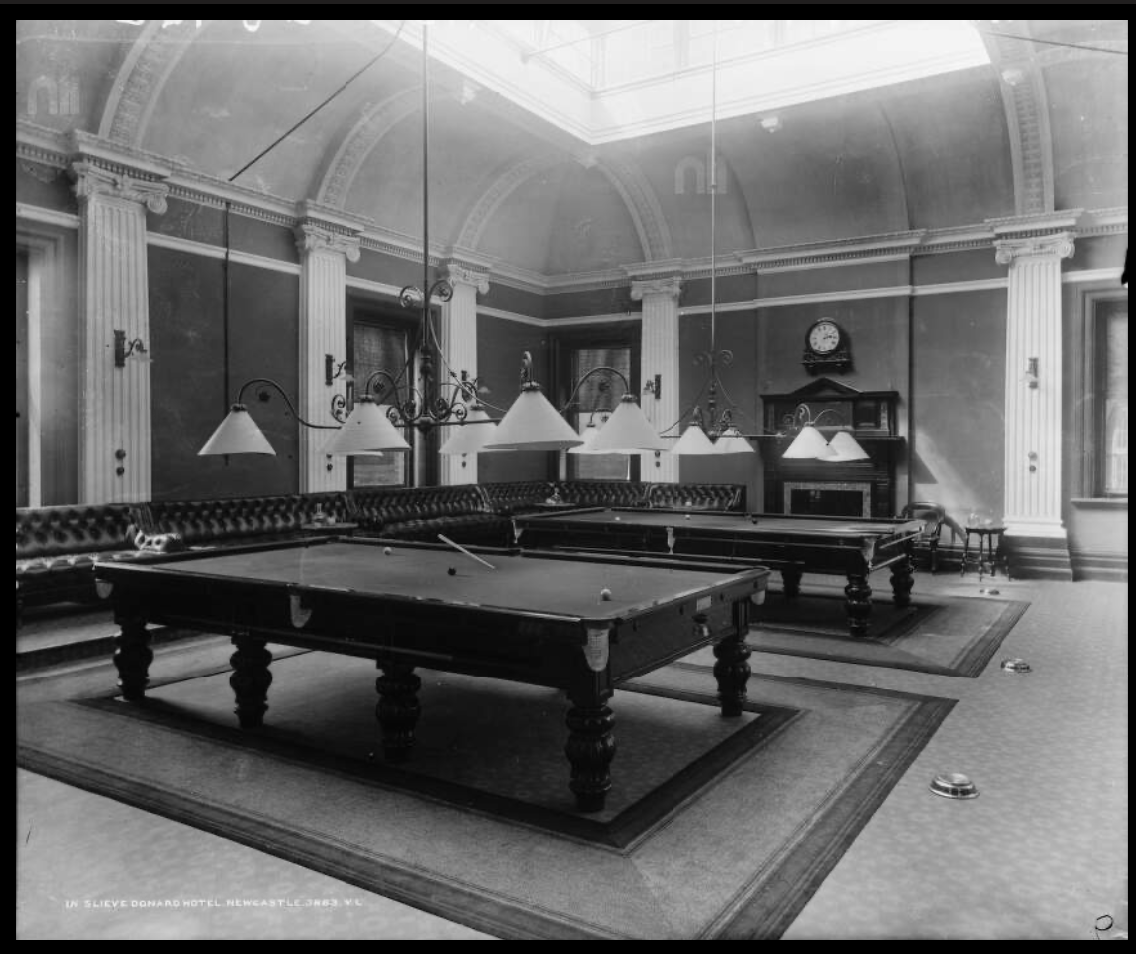
Slieve Donard hotel billiard room, Newcastle, County Down, photograph by Robert French, (between ca. 1865-1914), Lawrence Photograph Collection, National Library of Ireland.

In 2021, Adventurous Journeys (AJ) Capital Partners acquired Slieve Donard Resort and Spa, which will become the first Marine & Lawn Hotels & Resorts property in Northern Ireland and the fourth hotel in the collection.

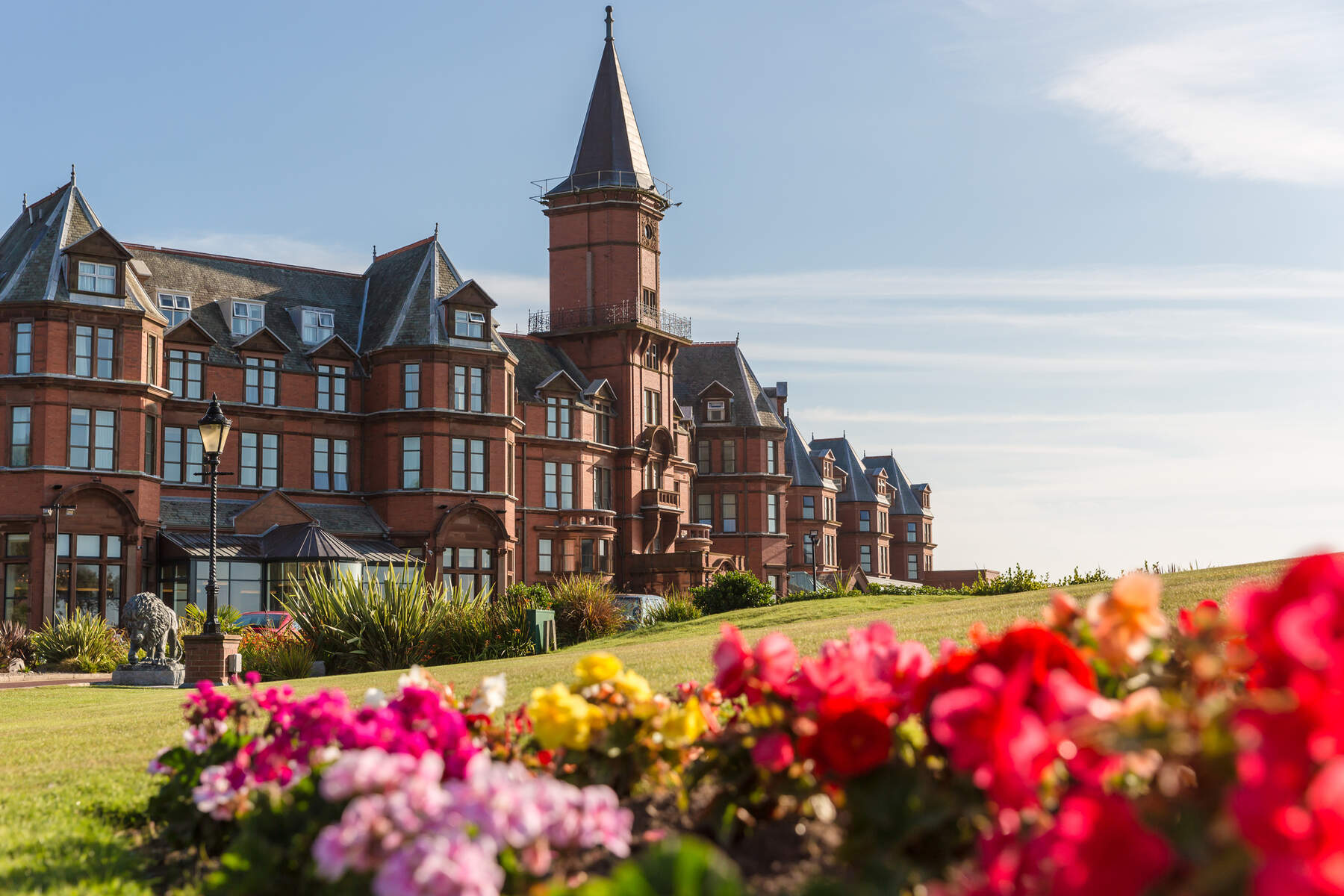
Slieve Donard hotel and spa, courtesy of Hastings Hotel, 2017, Ireland’s Content Pool. (see[1])

9. St John’s Point Lighthouse Sloop, Killough, County Down € for 3-4

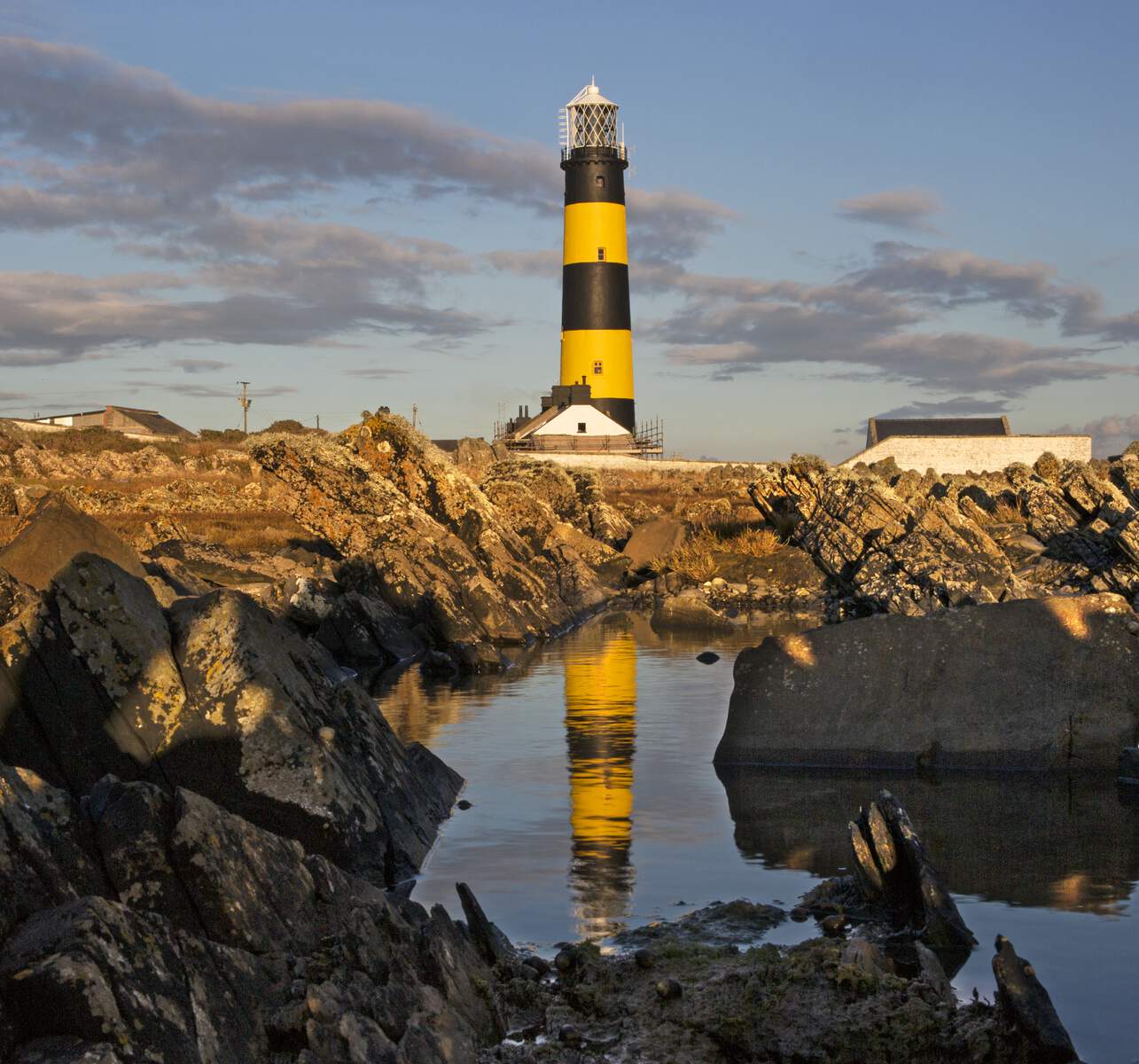
St John’s Lighthouse Killough by Bernie Brown 2014 for Tourism Ireland. (see [1])

www.irishlandmark.com

JP Ketch and JP Sloop. Each sleeps four people, From £328 for 2 nights.

10. Tullymurry House, Tullymurry road, Donaghmore, Newry, County Down – sleeps 8, € for 8

https://www.irishlandmark.com/propertytag/cottages-and-houses/?gclid=Cj0KCQiA64GRBhCZARIsAHOLriLIJz7CUUx5wWUI2qTIAf7BmdPnvsPy0gkZeJ3VthNkuoG8mj6PetUaAhcXEALw_wcB

This fabulous period home is a historic Irish country farm house. Set on wonderful gardens including an orchard, Tullymurry House is an ideal base for golf, fishing, hiking, walking, beach, and other outdoor pursuits.

11. Tyrella, Downpatrick, County Down, BT30 8SU – accommodation €

https://www.tyrellahouse.com/the-rooms

The website tells us:

Tyrella House is a luxury B&B and wedding venue located in the heart of picturesque County Down, with its necklace of pretty fishing villages. A fine 18th century house surrounded by glorious wooded parkland with its own private beach just a short walk from the house, Tyrella offers a tranquil and relaxing getaway.

Tyrella House has been owned by the Corbett family for over 60 years, and was bought by John Corbett after the Second World War to train race horses. 

His son, David Corbett began running B&B in the 1990s, which continues to this day. In 2020, the day to day running of the B&B was taken over by his son, John and his wife Hannah.

Whole house County Down

1. Ballydugan House, County Down (weddings)

http://ballyduganhouse.com/

At Ballydugan we can provide accommodation and an oasis of relative calm for the Bride’s immediate family.  Also if absolute adherence to tradition is important then we have Ballymote Country House nearby, where we can ensure that the paths of the Bride and Groom will not cross prior to the wedding.

2. Drenagh Estate and Gardens, County Down (wedding venue)

https://drenagh.com/

It tells us “Nestled in beautiful parkland and surrounded by our gardens, you will find our grand Georgian Mansion House which is perfect for weddings, family get togethers, corporate events and much more.

The website tells us the history of the McCausland family who own the property:

The family name McCausland goes back more than 900 years to an O’Cahan named Anselan, son of Kyan, King of Ulster. Anselan was forced to leave Ireland in about 1016 on account of his share in a ‘memorable stratagem where he and other young Irishmen dressed in women’s attire surprised and slaughtered their Danish oppressors’ (The Vikings). When Malcolm II of Scotland heard of Anselans feats he invited him to become his Master of Arms and ‘bestowed ample lands upon him in The Lennox’. 

Twelve generations later, in the 1540s, his descendant Baron Alexander McAuslane returned to Ulster with his brother Andrew and settled in the Strabane area. The first McCausland to live at Drenagh (then called Fruithill) was Robert McCausland, Alexander’s grandson. Robert was bequeathed the Estates when he married the daughter of William Conolly, a wealthy self-made man and speaker of the Irish Parliament. [I don’t think this can be correct as William Conolly didn’t have a daughter]

Robert named his first son Conolly in reverence to his father-in-law; the name is still used in alternate generations to this day. A large painting of Robert and his family now hangs in the dining room at Drenagh. The first Conolly married the heiress Elizabeth Gage from Bellarena (five miles up the coast) and had a son, Conolly, who also formed another lucrative union with Theodosia Mahon from Strokestown House, Co. Roscommon [see my entry on Strokestown].

It was their son Marcus McCausland (1787-1862) who was responsible for commissioning Sir Charles Lanyon to build the present house. The former house (Fruithill) can be seen through a window painted in the portrait of Robert McCausland and his family. Marcus and his wife, Marianne, nee Tyndall from The Fort at Bristol, produced an heir Conolly Thomas(1828-1902). A delightful portrait of him dressed in his Eton cricketing clothes also hangs in the dining room at Drenagh.

Conolly Thomas’s son Maurice Marcus lived through both the best and worst of times at Drenagh as in 1902, through the Irish Land Acts; the Government compulsorily purchased 75% of the Estate.  Drenagh was lucky; many Irish Estates were taken off their owners in their entirety.  Some say this was no bad thing, as landlords the Irish landed gentry could be brutal in their treatment of their tenantry, indeed some were burnt out before they could be bought out.

Conolly Robert, Maurice’s son, fought in the 2nd World War and was so profoundly affected by what he experienced that he changed his Faith to Catholicism.  This he did despite knowing he had signed a codicil to his fathers will barring him from inheriting should he become a Catholic.  The will was contested but it was found that although the codicil applied to Conolly Robert, it did not do so to any of his direct descendants.  So, on his death in 1968, his son Marcus inherited Drenagh.

Sadly four years later in 1972 Marcus was shot dead by the IRA.

Currently Marcus’s son Conolly Patrick lives at Drenagh.

Tullyveery House remains a family home and working farm. The Georgian house, built between 1825 and 1828, was extended between 1867 and 1890.

Thomas Heron (1711-1776), one of the grandsons of a trio of brothers, decided in 1752 to move from his home at Killinchy and rent land and a house in Tullyveery townland, near Killyleagh.

Surviving farm survey maps made in 1760 show a dwelling and a farm of over 100 acres, the majority of which was let out to under-tenants. The family continued to expand and prosper, by growing flax and having it spun into thread in the local area, prior to carting to Belfast.

Thomas had a son, Francis (1750-1810), who was raised at Tullyveery, decided to move his household to an existing and somewhat better quality house at Ardigon townland, about a mile away, leaving Tullyveery as the ‘junior’ house. The Tullyveery freehold was subsequently bought in 1804.

Thomas’s son, James (1785-1839), inherited Tullyveery in 1816 and, as a 31 year old bachelor, then built between 1825-1828 the Georgian house that stands there today. In 1866-1867, his son, also called James, eventually demolished the remains of the single-story thatched house and used the square-cut stone masonry to face the existing courtyard buildings, now being used today to host weddings and events. A large three-story Victorian rear extension was finally added in the 1890s.

More recently, in 1973, the custodianship of Tullyveery passed to Colin Heron, from his father. Colin’s career resulted in him spending extended periods of time away from Tullyveery during which Michael, Colin’s brother, maintained the house and grounds, and operated a working farm. Colin returned to live in Tullyveery permanently in 2000. In 2012 he decided to diversify from farming. After much research and consideration, he decided to offer a private alternative to a hotel wedding and opened the home and grounds to couples for weddings and events. Colin also worked with TV’s Apprentice Nick Hewer as he travelled around Northern Ireland helping farms diversify on the BBC programme ‘The Farm Fixer’, which spurred him on to pursue this new path for Tullyveery.

In 2019 the custodianship of Tullyveery was passed down to the next generation and Charles (Colin’s nephew) is looking forward to taking Tullyveery from strength to strength. However, the vision for, and philosophy of, Tullyveery has not changed and you can be assured of the same high standards, seamless weddings and memorable parties that Tullyveery has become renowned for. 

The latest project at Tullyveery has been to convert our private Orchard Garden into a space suitable for ceremonies, receptions and parties. Charles remembers sneaking into the Orchard as a child to ‘steal’ apples and to go into the fruit cage to pick fresh raspberries and gooseberries. It is fantastic to now be able to share this space with our guests while also adding a much needed covered garden area to the list of spaces available.

[1] Ireland’s Content Pool, https://www.irelandscontentpool.com/en

Text © Jennifer Winder-Baggot, www.irishhistorichouses.com

Places to visit and stay in County Wicklow, Leinster

I have been dividing previous entries that were divided by Province into division by county as my entries were too long!

On the map above:

blue: places to visit that are not section 482

purple: section 482 properties

red: accommodation

yellow: less expensive accommodation for two

orange: “whole house rental” i.e. those properties that are only for large group accommodations or weddings, e.g. 10 or more people.

green: gardens to visit

grey: ruins

As well as places to visit, I have listed separately places to stay, because some of them are worth visiting – you may be able to visit for afternoon tea or a meal.

For places to stay, I have made a rough estimate of prices at time of publication:

€ = up to approximately €150 per night for two people sharing (in yellow on map);

€€ – up to approx €250 per night for two;

€€€ – over €250 per night for two.

For a full listing of accommodation in big houses in Ireland, see my accommodation page: https://irishhistorichouses.com/accommodation/

donation

Help me to pay the entrance fee to one of the houses on this website. This site is created purely out of love for the subject and I receive no payment so any donation is appreciated!

€15.00

Places to visit in County Wicklow:

1. Altidore Castle, Kilpeddar, Greystones, Co. Wicklow – section 482

2. Avondale House, County Wicklow

3. Castle Howard, Avoca, Co. Wicklow – section 482

4. Charleville, Enniskerry, Co. Wicklow – section 482

5. Corke Lodge, Co Wicklow – gardens open to visitors – section 482

6. Dower House, Rossanagh, Ashford, Co Wicklow – gardens open by appointment 

7. Greenan More, Rathdrum, Co Wicklow – section 482

8. Huntingbrook, County Wicklow – gardens open to public 

9. Killruddery House & Gardens, Southern Cross Road, Bray, Co. Wicklow – section 482

10. Kiltimon House, Newcastle, Co. Wicklow – section 482

11. Kingston House, Rathdrum, Co. Wicklow – section 482

13. Mount Usher Gardens, Ashford, Co. Wicklow – section 482, garden only

14. Powerscourt House & Gardens, Powerscourt Estate, Enniskerry, Co. Wicklow – section 482

15. Russborough, The Albert Beit Foundation, Blessington, Co. Wicklow – section 482

16. Tinode, Blessington, Co Wicklow – June Blake’s Garden, open from Springtime 2022 

Places to stay, County Wicklow:

1. Ballyknocken House, Ashford, County Wicklow

2. Bel Air Hotel (formerly Cronroe), Ashford, Co Wicklow

3. Brook Lodge and Macreddin Village, County Wicklow

4. Clone House, Count Wicklow

5. Croney Byrne, Rathdrum, Co Wicklow – courtyard accommodation

6. Druid’s Glen hotel and golf club (formerly Woodstock), Newtownmountkennedy, Co Wicklow

8. June Blake’s Garden, Turkey House and Cow House, Tinode, Blessington, Co Wicklow – June Blake’s Garden 

9. Rathsallagh, Co Wicklow – accommodation €€

10. Summerhill House Hotel, County Wicklow €€

11. Tinakilly House, Rathnew, Co Wicklow – country house hotel

12. Tulfarris, Blessington, Co Wicklow - hotel 

13. Wicklow Head Lighthouse, Dunbur Head, County Wicklow € for 4

14. Gate Lodge, Woodenbridge, Avoca, County Wicklow €€

Place to visit in County Wicklow:

1. Altidore Castle, Kilpeddar, Greystones, Co. Wicklow A63 X227 – section 482

Altidore, County Wicklow, June 2019. Photograph © Jennifer Winder-Baggot, www.irishhistorichouses.com

see my write-up:

https://irishhistorichouses.com/2020/06/25/altidore-castle-kilpeddar-greystones-county-wicklow/

Open dates in 2025: Mar 10-30, May 1-31, June 1-5, 1pm-5pm, Aug 16-24, 2pm-6pm

Fee: adult €10, OAP/child/student €8

2. Avondale House, County Wicklow

We visited in March 2023. The house was built in 1779 for Samuel Hayes and may have been designed by James Wyatt, or by Samuel Hayes himself. Photograph © Jennifer Winder-Baggot, www.irishhistorichouses.com
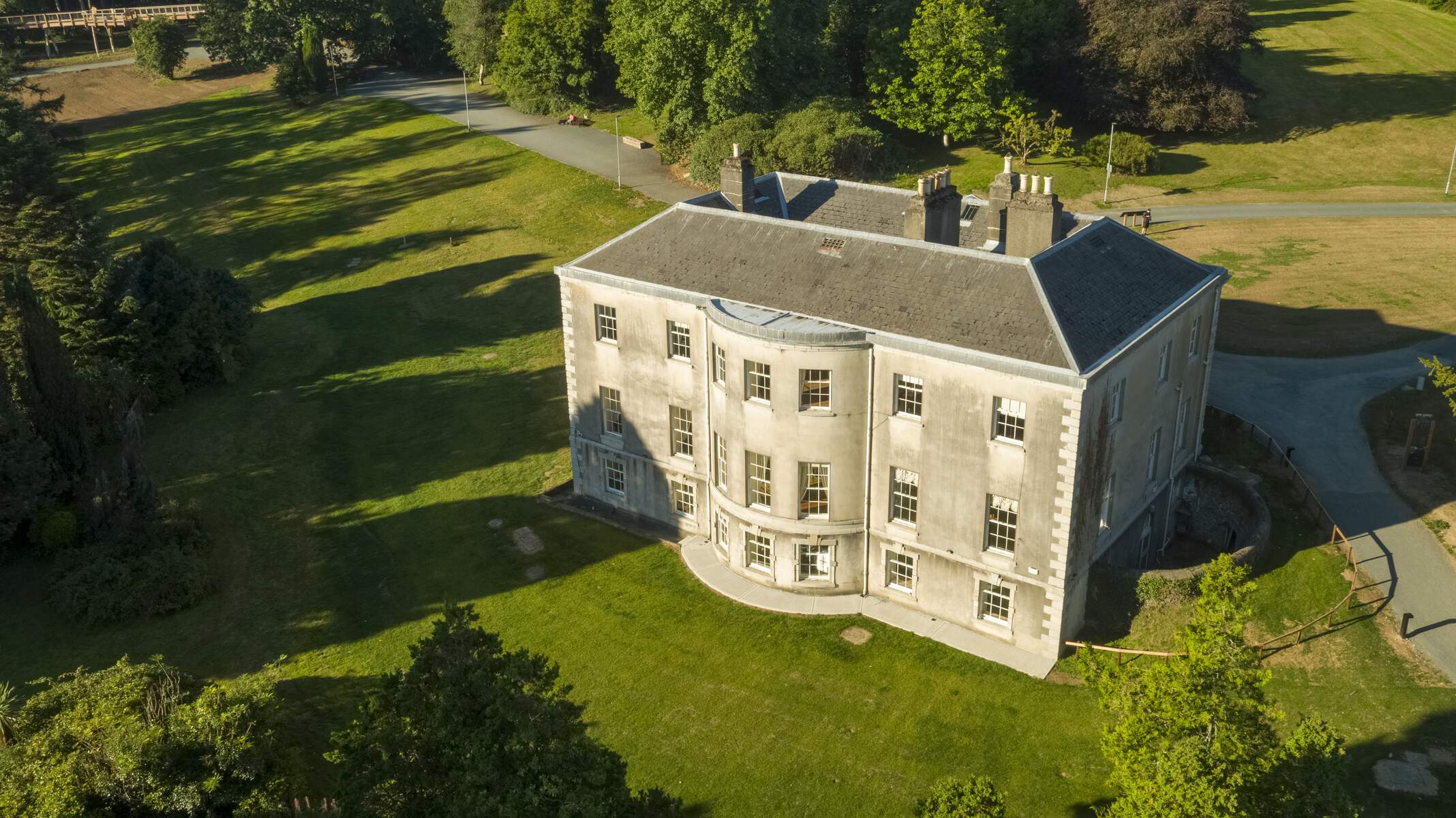
Avondale, Rathdrum, Co Wicklow, photograph by Sonder Visuals, 2014, Courtesy Failte Ireland.

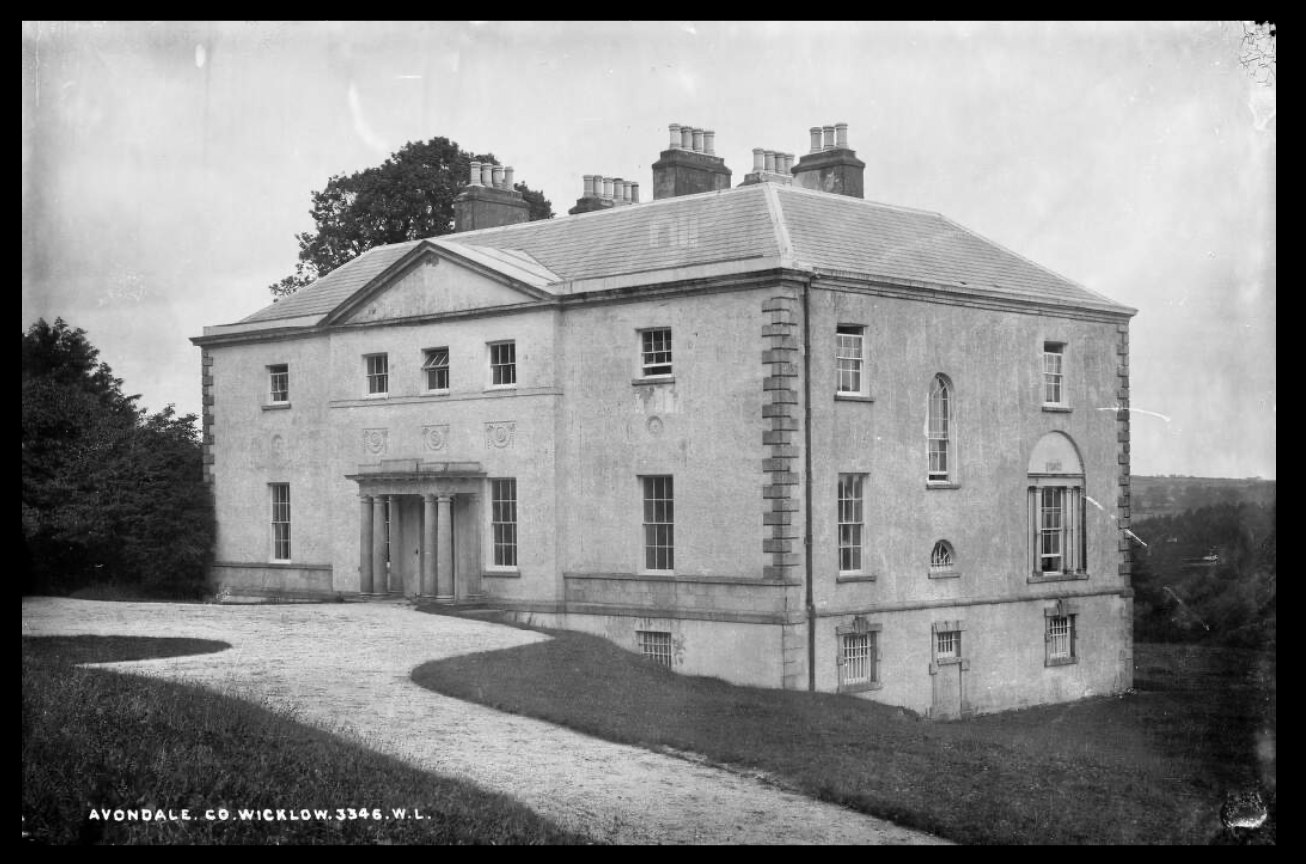
We visited in March 2023. The house was built in 1779 for Samuel Hayes and may have been designed by James Wyatt (1746-1813), or by Samuel Hayes himself. It then passed to the Parnell family and was the birthplace of the politician Charles Stewart Parnell. In 1904 the state purchased the Avondale Estate to develop modern day forestry in Ireland.

Avondale, County Wicklow, photograph by Robert French [between ca. 1865-1914], Lawrence Photographic Collection, National Library of Ireland.

Mark Bence-Jones writes in his  A Guide to Irish Country Houses (1988):

p. 15. “A square house of two storeys over basement, built 1779 for Samuel Hayes, a noted amateur architect who possibly designed it himself. Five bay entrance front, the three centre bays breaking forward under a pediment; small Doric porch with paired columns, Coade stone panels with swags and medallions between lower and upper windows. Garden front with central bow; the basement, which in the entrance front is concealed, is visible on this side with its windows have Gibbsian surrounds. Magnificent and lofty two storey hall with C18 Gothic plasterwork and gallery along inner wall. Bow room with beautiful Bossi chimneypiece. Dining room with elaborate neo-Classical plasterwork on walls and ceiling; the wall decorations incorporating oval mirrors and painted medallions. Passed to William Parnell-Hayes, brother of the 1st Baron Congleton, and grandfather of Charles Steward Parnell, who was born here and lived here all his life with his mother and elder brother. Now owned by the dept of Lands, Forestry Division, which maintains the splendid demesne as a forest park…The house has in recent years been restored by the Board of Works.” [1]

Avondale, 2023. Photograph © Jennifer Winder-Baggot, www.irishhistorichouses.com
Photograph © Jennifer Winder-Baggot, www.irishhistorichouses.com
Samuel Hayes who built the house also planted a forest. He was an expert on trees and wrote books and planted experimentally to see what trees grow best in Ireland. Hayes wrote A practical treatise on planting and the management of woods and coppices (1794). Intended to be a practical guide to the planting of trees and the managing of wood for timber, it was in fact Ireland’s first full-length book on trees. It is fitting that the property is now owned by Coillte, and that they also grow trees and ran the “Great Tree Experiment” here at Avondale. For several years after the house passed into the ownership of the state a forestry school was located in the property.

Avondale, County Wicklow, photograph by Robert French [between ca. 1865-1914], Lawrence Photographic Collection, National Library of Ireland.

The house contains Gothic features in the front hall, especially in the stuccowork. The front hall is double-height and has an overlooking balcony.


Charles Stewart Parnell was a very shy man, and so he used to practice his speeches from the balcony in the front hall of Avondale. For this reason, his family called him “the Blackbird.” Photograph © Jennifer Winder-Baggot, www.irishhistorichouses.com
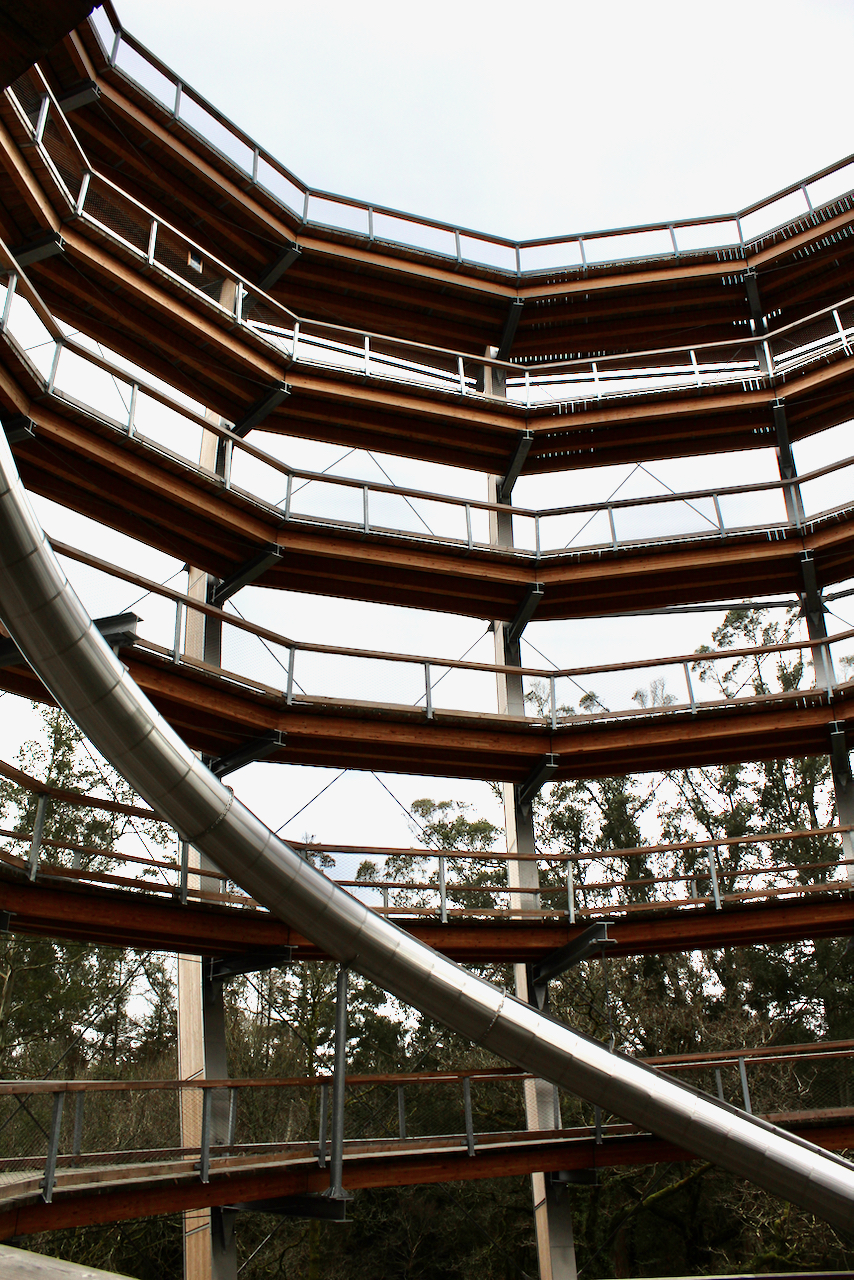
Avondale, 2023. Photograph © Jennifer Winder-Baggot, www.irishhistorichouses.com
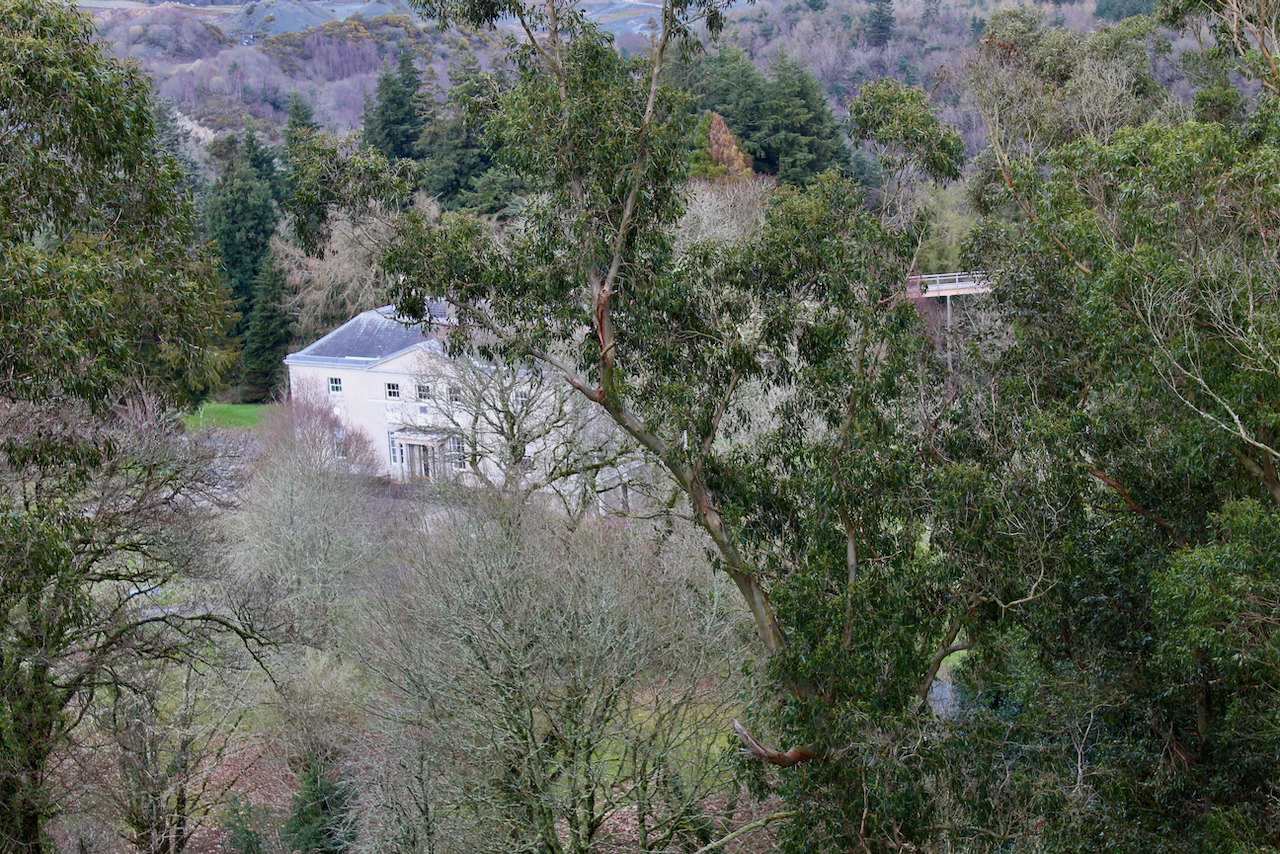
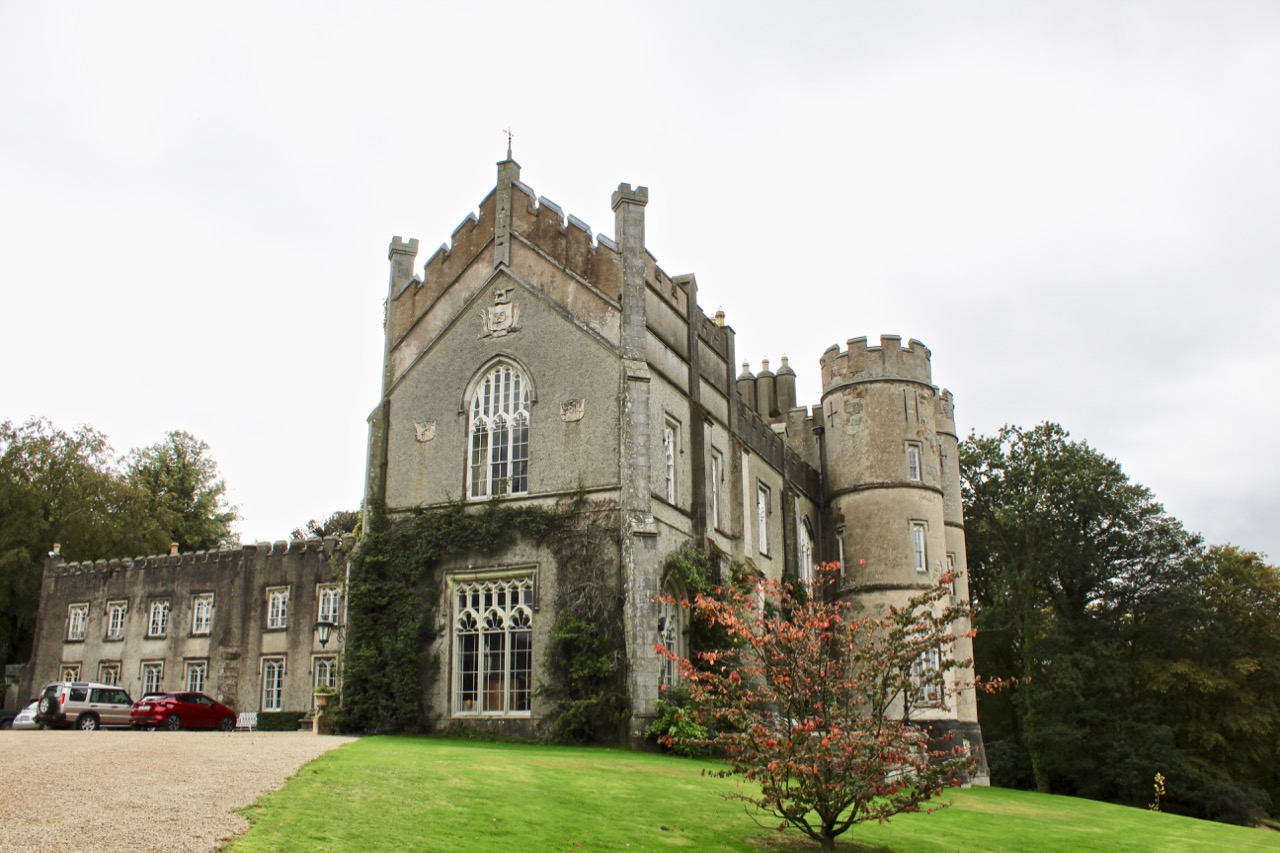
The door has Samuel Hayes’s initials, and the date which the house was completed. Photograph © Jennifer Winder-Baggot, www.irishhistorichouses.com
Photograph © Jennifer Winder-Baggot, www.irishhistorichouses.com
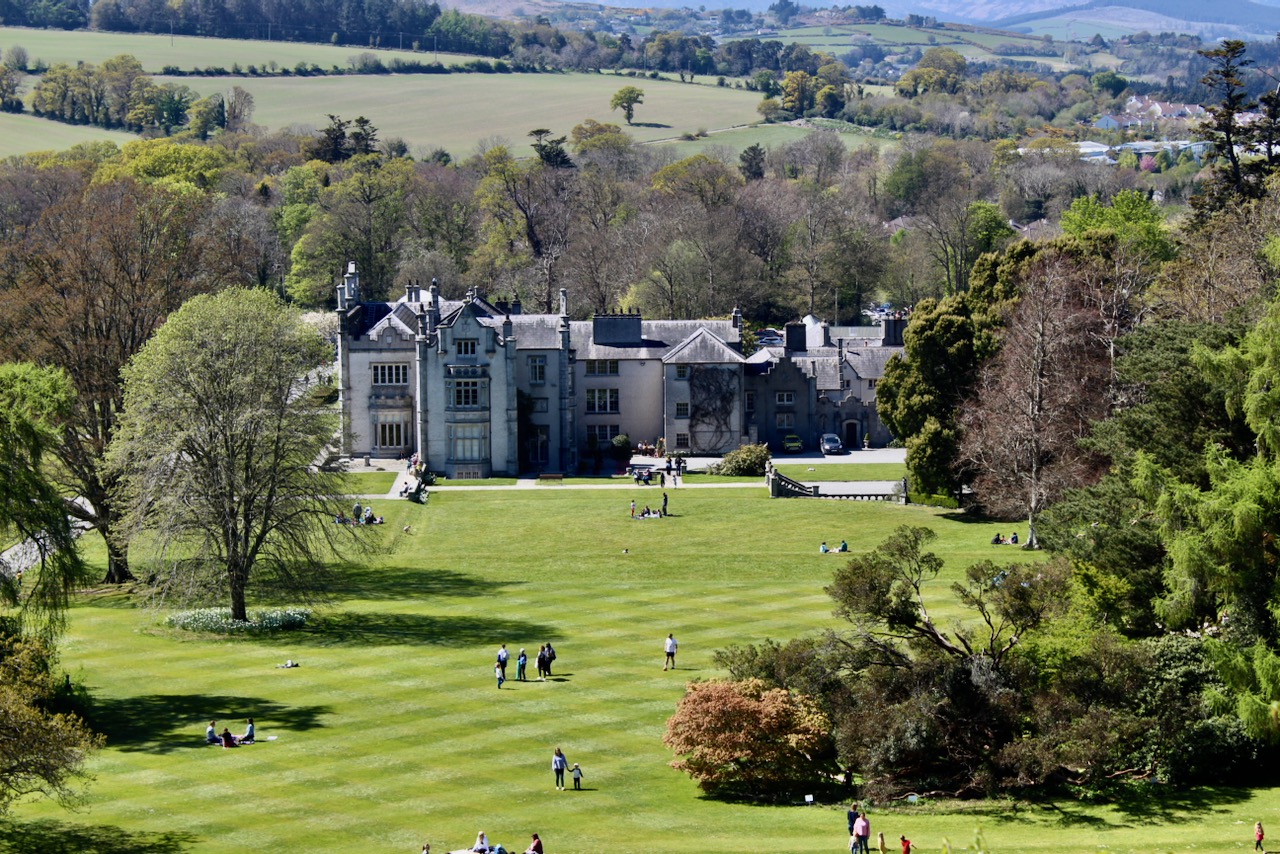
The first room we entered from the hall is dedicated to Samuel Hayes.

Avondale, 2023. Photograph © Jennifer Winder-Baggot, www.irishhistorichouses.com
Samuel Hayes (1743-1795), who built Avondale House. Photograph © Jennifer Winder-Baggot, www.irishhistorichouses.com
Avondale, 2023. Photograph © Jennifer Winder-Baggot, www.irishhistorichouses.com
As well as being an amateur architect, a politician and expert on trees, Samuel Hayes designed this bridge that was built over the Avondale River. Unfortunately it no longer exists.

Samuel Hayes was the great grandson of Thomas Parnell (1625-1686), the first of the Parnell family to come to Ireland, and from whom Charles Stewart Parnell was also descended. Thomas’s son John (1680-1727) became Judge of the Court of King’s Bench and built a house at Rathleague in County Laois. According to the family tree framed in the Drawing Room, John had a daughter Anne who married John Hayes and gave birth to the builder of Avondale, Samuel Hayes.

Photograph © Jennifer Winder-Baggot, www.irishhistorichouses.com
In 1766 Samuel Hayes married Alice Le Hunt, daughter of Thomas Le Hunt, MP and wide streets commissioner of Dublin, but he died childless. The estate was initially inherited by Sir John Parnell (1744–1801), 2nd baronet. John Parnell (1680-1727) married Mary Whitshed, daughter of Thomas, Member of Parliament (M.P.) for Carysfort, County Wicklow between 1692 and 1698. Their son John (d. 1782) became 1st Baronet Parnell, of Rathleague, Queen’s County in 1766, after being High Sheriff for County Laois and MP for Maryborough in Laois (now Portlaoise).

1st Baronet Parnell married Anne Ward from Castle Ward in County Down. They had a son John (1744–1801), 2nd Baronet. He married Laetitia Charlotte Brooke, daughter of Arthur, 1st Baronet Brooke, of Colebrooke, Co. Fermanagh.

Portrait of John Parnell, 2nd Baronet, by Pompeo Girolamo Batoni, from National Trust, Castle Ward.

By the terms of Hayes’s will, Avondale passed from the 2nd Baronet to his son William Parnell (1777–1821), writer, landlord, and MP. Hayes stipulated in his will that rather than being inherited by the eldest son of the family, the estate would be inherited by a younger son. William was the younger brother of John Augustus, 3rd Baronet, who was disabled and died childless, and of Henry Brooke Parnell, who became 4th Baronet Parnell and later, 1st Baron Congleton, of Congleton, Cheshire, which had been the birthplace of the original Thomas Parnell who emigrated to Ireland.

As a result of his inheritance of Avondale, William Parnell assumed the name ‘Parnell-Hayes.’ [2] William married Francis Howard, granddaughter of Ralph Howard, 1st Viscount Wicklow. They had a son John Henry, who was Charles Stewart Parnell’s father. Charles Stewart Parnell inherited Avondale as he also was not the oldest son, but the seventh of eleven children. It was an unusual stipulation that Samuel Hayes made.

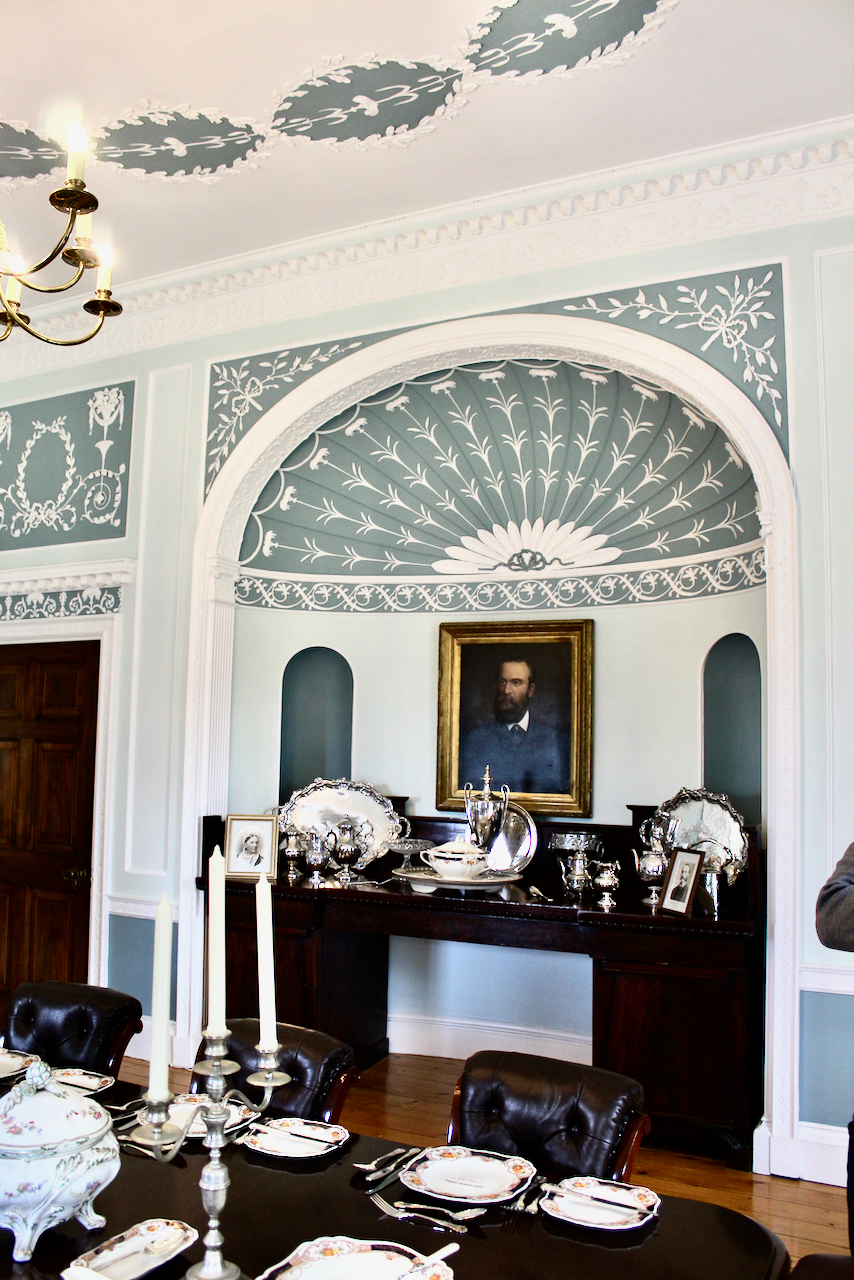
The plasterwork in the dining room is lovely, as is the marble fireplace. Photograph © Jennifer Winder-Baggot, www.irishhistorichouses.com
Avondale, 2023. Photograph © Jennifer Winder-Baggot, www.irishhistorichouses.com
Charles Stewart Parnell’s mother Delia. She was an American, daughter of the famous “Old Ironsides,” Admiral Charles Stewart.
Photograph © Jennifer Winder-Baggot, www.irishhistorichouses.com

Delia was a member of the Plymouth Brethren, and converted a building on the property into house for worship. The 2nd Baron Congleton also converted to the Plymouth Brethren who met in Aungier Street in Dublin.

Avondale, 2023. Photograph © Jennifer Winder-Baggot, www.irishhistorichouses.com
The Cowshed. Photograph © Jennifer Winder-Baggot, www.irishhistorichouses.com
Avondale, 2023. Photograph © Jennifer Winder-Baggot, www.irishhistorichouses.com
The Drawing Room contains a beautiful Bossi fireplace. Photograph © Jennifer Winder-Baggot, www.irishhistorichouses.com
Photograph © Jennifer Winder-Baggot, www.irishhistorichouses.com

When Charles Stewart Parnell inherited Avondale estate, it was mired in debt. He sought to increase his income by mining the local area. He became a politician chiefly, our tour guide told us, to earn money to support the estate. The Dictionary of Irish Biography tells us:

Parnell invested heavily in mining and quarrying ventures in Wicklow, in particular stone quarrying at Big Rock, near Arklow, from which he supplied paving setts to Dublin corporation. He expended money and effort in seeking to revive the old lead mine and to relocate the lodes of iron and seams of copper that had formerly been worked in the vicinity of Avondale. Through the late 1880s his chief recreation was the quest for gold in Wicklow, assaying samples of ore in his workshops successively at Etham and Brighton.” [3]

Parnell assaying his gold. Photograph © Jennifer Winder-Baggot, www.irishhistorichouses.com
Photograph © Jennifer Winder-Baggot, www.irishhistorichouses.com

He may have been influenced in his politics by his mother’s Republican views, i.e. anti-monarchy. He sought home rule for Ireland and was President of the Land League, which sought to enable tenants to own the land on which they worked. He was arrested for this and put in rather luxurious quarters in Kilmainham Gaol, where he was incarcerated for six months.

Photograph © Jennifer Winder-Baggot, www.irishhistorichouses.com

By this time he was having an affair with Katherine O’Shea who was called “Kitty” in the press in order to belittle her. She was the wife of another MP who allowed the affair, presumably to maintain his position in parliament as Parnell commanded wide support. He fathered three children with Katherine and when her husband divorced her, they married, but she was unable to inherit Avondale, which passed to Parnell’s older brother.

The Irish turned against Parnell due to his affair, as discussed in James Joyces’s Portrait of the Artist as a Young Man where Stephen Daedalus’s father and aunt argue about Parnell and Stephen’s father laments “Ireland’s poor dead King.” There is a lengthy biography about him in the Dictionary of Irish Biography.

Parnell’s monument in Glasnevin Cemetery, Dublin. Photograph © Jennifer Winder-Baggot, www.irishhistorichouses.com

The Dictionary of Irish Biography tells us:

Katharine Parnell lived on in deteriorating circumstances and died in Littlehampton, Sussex, on 5 February 1921. After Claude Sophie, who died shortly after her birth, Parnell and Katharine had two further daughters, Clare (1883–1909) and Katharine (‘Katie’) (1884–1947). Clare, who bore a haunting resemblance to Parnell, died in labour. Her son Assheton Clare Bowyer-Lane Maunsell, a lieutenant in the Lancashire Fusiliers, died of enteric fever in India on 29 July 1934, aged 24. As Parnell’s biographer F. S. L. Lyons wrote, ‘the line of direct descent from Parnell therefore ends in a cemetery in Lahore.’ “

The wedding ring which Parnell gave Katherine is the one on the right. The other is made from gold mined on the Parnell property. Photograph © Jennifer Winder-Baggot, www.irishhistorichouses.com
This room is mostly dedicated to “Old Ironsides,” who gave the desk-cabinet to his son-in-law. Photograph © Jennifer Winder-Baggot, www.irishhistorichouses.com
Avondale, 2023. Photograph © Jennifer Winder-Baggot, www.irishhistorichouses.com
Photograph © Jennifer Winder-Baggot, www.irishhistorichouses.com

Like many old houses, Avondale had a tunnel for the servants, to the outbuildings.

Avondale, 2023. Photograph © Jennifer Winder-Baggot, www.irishhistorichouses.com
Different types of wood, labelled, in one of the rooms which was used as a Forestry School. Photograph © Jennifer Winder-Baggot, www.irishhistorichouses.com

The forest planted by Samuel Hayes mostly did not last, as we see from a photograph from 1900. However, the forestry school reinstated the forest, now owned by Coillte.

Photograph © Jennifer Winder-Baggot, www.irishhistorichouses.com

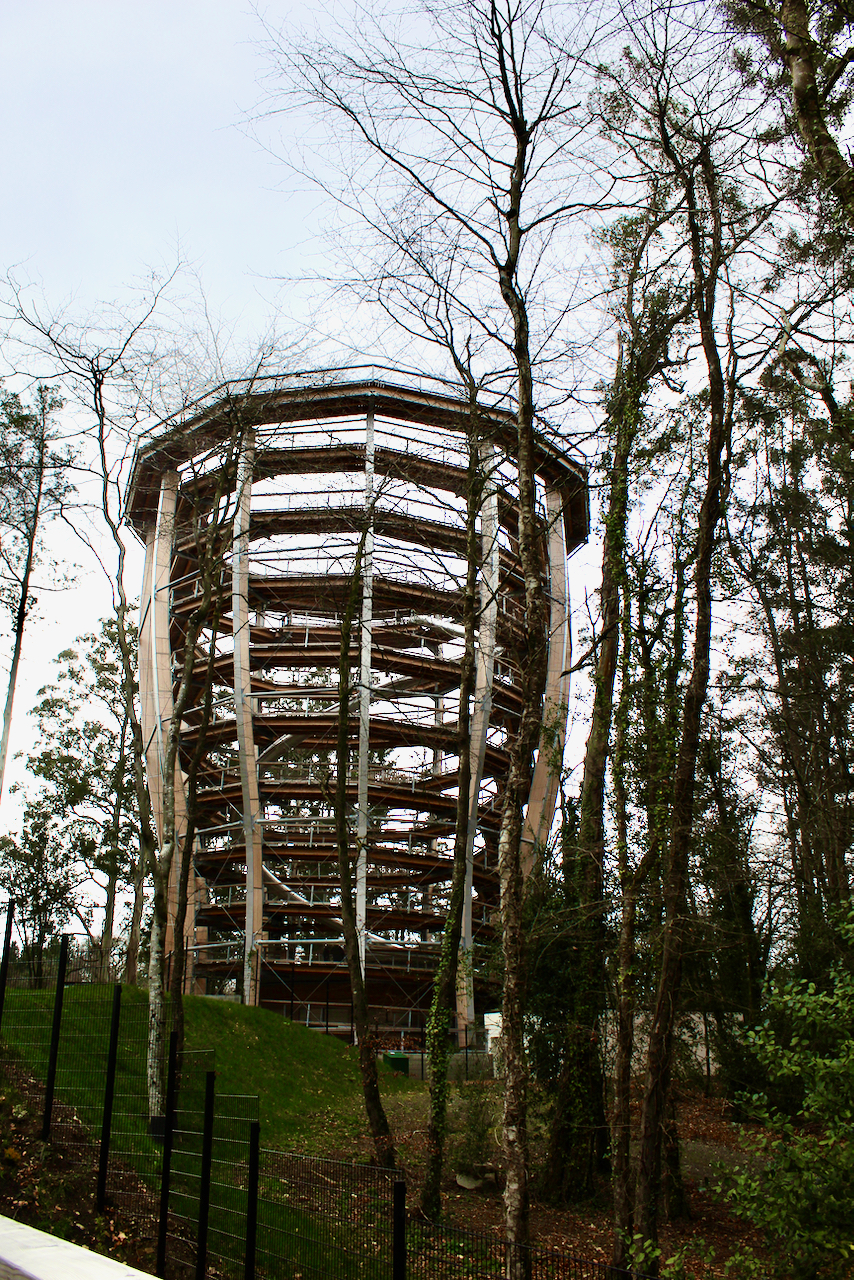
There are many walks on the estate, including a “tree top walk” and a viewing tower, which has a large enclosed screwshaped slide, which Stephen and I could not resist sliding down! Be prepared to lose all control to speed!

Avondale, 2023. Photograph © Jennifer Winder-Baggot, www.irishhistorichouses.com
Photograph © Jennifer Winder-Baggot, www.irishhistorichouses.com

[1] Bence-Jones, Mark. A Guide to Irish Country Houses (originally published as Burke’s Guide to Country Houses volume 1 Ireland by Burke’s Peerage Ltd. 1978); Revised edition 1988 Constable and Company Ltd, London.

[2] https://www.dib.ie/biography/hayes-samuel-a3878

[3] https://www.dib.ie/biography/parnell-charles-stewart-a7199

3. Castle Howard, Avoca, Co. Wicklow – section 482

Castle Howard, County Wicklow, September 2019. Photograph © Jennifer Winder-Baggot, www.irishhistorichouses.com

See my entry:

https://irishhistorichouses.com/2020/11/13/castle-howard-avoca-county-wicklow/
Open dates in 2025: Jan 6-8, Feb 10-14, Mar 3-5, 18-20, June 4-7, 9-11, 23-28, July 7-12, 21-24, Aug 16-24, Sept 1-6, 13, 20, 28-30, Oct 1, 6-8, 9am-1pm

Fee: adult €8.50, OAP/student €6.50, child €5

4. Charleville, Enniskerry, Co. Wicklow A98 V293 – section 482

Charleville, County Wicklow, August 2020. Photograph © Jennifer Winder-Baggot, www.irishhistorichouses.com

See my entry:

https://irishhistorichouses.com/2020/09/18/charleville-county-wicklow/
Open dates in 2025: Feb 4-7, 10-14, 17-21, 24-28, May 1-2, 6-30, June 3-6, 9, Aug 16-24, Mon-Fri, 1pm-5pm, May and Aug, Sat-Sun, 9am-1pm

Fee: house €10, gardens €6

5. Corke Lodge, Co Wicklow A98 X264 – gardens open to visitors 

www.corkelodge.com
Open dates in 2025: June 2-27, Mon-Fri, July 1-26, Tue-Sat, Aug 4-24, 10am-2pm

Fee: adult €10, entrance fee is a voluntary donation in honesty box at door

No pets allowed.

The website tells us:

The house was built on and incorporates the remains of an older structure, visible on the 1750 maps of Dublin. Situated on the lands owned by Hannagh Tilson Magan it was commissioned by her or by her son William Henry Magan between 1815 and 1820.

William Magan is known to have employed the Architect William Farrell to design a country house, Clonearl, in Co. Offaly in 1815. This house was destroyed by fire in the 1840’s but it is clear from the surviving plans that the distinctive pillastered design is mirrored in both Killyon manor, Co. Meath another Magan/Loftus house and in Corke Lodge. Unusual fenestration and similar door treatments also link the two surviving properties. Close by the church at Crinken, endowed by Hannagh Magan was also designed by Farrell. So it would not be unreasonable to assume that Corke Lodge, which has all the hallmarks of an architectural ‘capriccio’ is by the same hand. The main façade and the two front reception rooms are in the classical style. The rooms at the back and above have gothic detailing.

The last Magan owner of this property as well as the other huge Magan/Tilson/Loftus estates was Augusta. Her eccentricities and reclusive life are said to have inspired Charles Dickens, who visited Dublin, in his creation of Miss Haversham, in the Great Expectations. 

The most striking feature of the house is the bold architectural treatment of the classical facade, a miniature of the two great houses mentioned above. By contrast, the back elevations are in a flat gothic stile reflecting the romantic nature of the planted ‘wilderness’. The interiors retain all their original features in terms of marble mantle pieces, pillared architraves and plasterwork. Although the house originally would not have been used for more than a few days a year by the Magans when bathing in the nearby sea or visiting the family tombs at Crinken, it has been continuously inhabited since its incorporation into the Woodbrook estate By Sir Stanley Cochrane in 1906. Sir Stanley, heir to a mineral water fortune, was an accomplished athlete and opera singer who created on his estate championship cricket pitches a golf course and the Laurel Park Opera House, precursor of Glyndebourne, and where Dame Nellie Melba sang.

The house as it presents itself today was restored and furnished in 1980 by architect Alfred Cochrane. It pioneered the current trends in historicist restoration of country houses and was featured in a number of local and international publications.

6. Dower House, Rossanagh, Ashford, Co Wicklow – gardens open by appointment 

https://www.dublingardengroup.com/the-dower-house/

Opening (if Covid allows) April 2nd  to July 1st, 2022.
By appointment only.

The gardens surrounding this late eighteenth century house (c.1790) were laid out towards the end of the nineteenth century with plantings of many fine specimens including Rhododendron arboreum,  Magnolia soulangeana ‘Alba’, and Camellia japonica. Also included are a number of specimen mature trees, including a fine Chilean myrtle, Luma apiculata, planted c. 1880. When the Butler family acquired the property, a white garden in a sheltered enclosure behind the house was added together with a wild meadow which reaches its peak in mid June.

The indefatigable Mrs Delany, eighteenth century social commentator, diarist, artist and friend of Dean Jonathan Swift commenting on Rossanagh demesne on which Dower House was built wrote: ‘It is a very pretty place… neatly kept’. As early as 1733, A.C. Forbes noted that the largest tree in Ireland, a Spanish chestnut flourished in the demesne. It was under this tree that Methodist preacher, the Reverend John Wesley preached during one of his many visits in June, 1789. Rossanagh holds links to many well known ‘personalities’ of the day including musician/composer, Thomas Moore, artists, George Romney, Maria Spilsbury-Taylor, politicians, Henry Grattan and William Pitt, the Younger together with Patrick Bronte, father of distinguished English novelists, Charlotte, Emily and Anne. Described as one of ‘Wicklow’s finest gardens’ (Jane Powers), the gardens are open each year in aid of The Wicklow Hospice.

7. Greenan More, Rathdrum, Co Wicklow – section 482

www.greenanmore.ie
Open dates in 2025: May 31, June 1, 4-8, 11-15, 18-22, 25-29, July 2-6, 9-13, 16-20, 23-27, 30-31, Aug 1-3, 6-10, 13-24, 10am-3pm

Fee: adult €6, OAP €5, child €3, student free

8. Huntingbrook, County Wicklow – gardens open to public 

https://www.huntingbrookgardens.com

The Gardens open Wednesday 6th April until Saturday 24th September 2022

Hours
Wednesday – Saturday
11am–4pm

Designed to be a thoroughly immersive experience, the gardens are home to one of Ireland’s largest private collections of plants. A riot of colour, shape and texture, the gardens are always on the move with fresh surprises at every visit.” 

9. Killruddery House & Gardens, Southern Cross Road, Bray, Co. Wicklow – section 482

Killruddery, County Wicklow, April 2021. Photograph © Jennifer Winder-Baggot, www.irishhistorichouses.com

www.killruddery.com
Open dates in 2025: Apr 1-6, 8-13, 15-20, 22-27, 29-30, May 1-11, 13-18, 20-25, 27-31, June 1-8, 10-15, 17-22, 24-29, July 1-6, 8-13, 15-20, 22-27, 29-31, Aug 1-10, 12-24, 26-31, Sept 2-7, 9-14, 16-21, 23-28, 30, Oct 1-5, 7-12, 14-19, 21-31, Nov 1-2, Apr, Oct, Nov, 9.30- 5pm, May-Sept 9.30am-6pm

Fee: adult house and garden tour €15.50, garden €10.50, OAP/student house and garden tour €13, garden €9.50, house and garden child 4-12 years €13, garden €4, concession-members garden entry free and house tours €6

See my entry https://irishhistorichouses.com/2019/08/31/killruddery-southern-cross-road-bray-county-wicklow/

10. Kiltimon House, Newcastle, Co. Wicklow – section 482

Kiltimon House, County Wicklow, photograph courtesy of National Inventory of Architectural Heritage.

contact: Michelle O’Connor
Tel: 087-2505205
Open dates in 2025: Jan 6- 8, 10, 13-15, 17, 20-22, 24, 27-29, 31, Feb 4, 7, 11, 14, May 6, 9, 13, 16-17, 20, 23-24, 27, June 3, 6, 10, 13, 17, 20, 24, Aug 16-24, Sept 2, 5-6, 8-9, 12-13, 15, 19-20, 22-23, 26-27, 30, 9am-1pm, Jan 6, 8, 13, 15, 20, 22, 27, 29, Sept 8, 15, 22,

2pm-6pm

Fee: adult €10, OAP/student/child €5

11. Kingston House, Rathdrum, Co. Wicklow A67 DV25 – section 482

Open dates in 2025: Aug 1-31, Sept 1-30, 10am-2pm
Fee: adult €3, OAP/student/child €2, concession-locals are free of charge

Open dates in 2025: Apr 6-10, 13-17, 20-24, June 1-5, 8-12, 15-19, July 6-10, 13-17, 20-24, Aug 10-24, 9.30am-1.30pm

Fee: Free

Knockanree, County Wicklow.

13. Mount Usher Gardens, Ashford, Co. Wicklow A67 VW22 – section 482, garden only

Mount Usher, County Wicklow, June 2021. Photograph © Jennifer Winder-Baggot, www.irishhistorichouses.com

See my entry https://irishhistorichouses.com/2021/06/30/mount-usher-gardens-ashford-co-wicklow/

www.mountushergardens.ie

www.avoca.com/en
Open in 2025: all year, except Christmas Day and St. Stephen’s Day, Jan-Mar, Nov-Dec,

10am-5pm, Apr-Oct, 10am-5.30pm

Fee: adult €10, student/OAP €8, child over 4 years €5, under 4 years free, group rate (10 or more people) €8 per person

14. Powerscourt House & Gardens, Powerscourt Estate, Enniskerry, Co. Wicklow A98 W0D0 – section 482

Powerscourt House and Gardens, photograph by Chris Hill 2015, for Tourism Ireland, Ireland’s Content Pool. Photograph © Jennifer Winder-Baggot, www.irishhistorichouses.com

See my entry: https://irishhistorichouses.com/2020/04/26/powerscourt-house-gardens-enniskerry-county-wicklow/

www.powerscourt.ie
Open in 2025: Jan 1-Dec 24, 27-31, house and garden, 9.30am-5.30pm, ballroom and garden rooms, 9.30am-1.30pm

Fee: Jan-Oct, adult €14, OAP, €12, student €10.50, child €5.50, family €20, Nov-Dec, adult €10.50, OAP €9.50, student €9, child €5.50, Jan- Oct, concessions-family ticket 2 adults and 3 children under 18 years €33, concession-Nov-Dec family 2 adults and 3 children under 18 €25

15. Russborough, The Albert Beit Foundation, Blessington, Co. Wicklow W91 W284 – section 482

Russborough House, County Wicklow, photography by Chris Hill 2015 for Tourism Ireland, Ireland’s Content Pool. [2]

See my entry:

https://irishhistorichouses.com/2020/11/08/russborough-house-blessington-county-wicklow/
enc@russborough.ie
Open dates in 2025: Feb 1-Dec 23, 27-31, Feb, Nov, Dec 9am-5.30pm, Mar-Oct 9am-6pm

Fee: adult €14.50 OAP/student €12, child €6.50, group rates on request

http://www.russborough.ie

16. Tinode, Blessington, Co Wicklow – June Blake’s Garden, open from Springtime 2022 

http://www.juneblake.ie/cms/

The very best gardens intrigue and restore us, and so it is with June Blake’s garden which is a rare fusion of inspired design and painterly planting. Situated in the townland of Tinode in west Wicklow, and spread over three rural acres, it wraps itself around June’s home, a handsome Victorian farm-steward’s cottage surrounded by a huddle of austerely beautiful, granite-stone farm buildingsone of which -the Cow House- has recently been the subject of an award-winning, modern architectural conversion. In a previous life, Blake was a gifted jewellery maker. Those same carefully honed skills- a razor sharp eye and keen attention to detail, an artist’s deep appreciation of colour, texture and form, as well as the ability to take a raw, unpolished material and expertly craft it into something aesthetically deeply satisfying- still shine through brightly in her excitingly contemporary country garden. Within it are many different areas of interest. These include intricately planted borders of gem-like beauty, swathes of naturalistic, prairie-style planting, sculptural landforms, a flower meadow that comes to life in spring with sprinkles of crimson red Tulip ‘Red Shine’, generous stretches of woodland intersected by curving cobble paths and filled with choice shade-lovers, and a formal, rectangular pool whose silver sliver of water is a mirror to the cloud-streaked Wicklow sky. Each one is so thoughtfully, imaginatively and expertly executed that it would be enough by itself to bring joy to the heart of any gardener. But it is when they are combined together as a whole that they form what is, without doubt, a truly remarkable garden.” Fionnuala Fallon.

The house was designed by William Caldbeck in 1864. Tinode House was burned to the ground in 1922 by the IRA, and has since been partially rebuilt.

Places to stay, County Wicklow:

1. Ballyknocken House, Ashford, County Wicklow

www.ballyknocken.ie

The website tells us:

Ballyknocken House, Farm and Cookery SchoolScenically located on 280 acres only 47 km south of Dublin City Centre in County Wicklow, Ireland. Our charming 4* Victorian style farm guesthouse offers 7 guest bedrooms plus a 3-bedroom Milking Parlour apartment, surrounded by scented kitchen gardens, offering a farm to fork experience. Home to celebrity chef and award-winning food writer, Catherine Fulvio, we pride ourselves on continuing the family tradition of providing B&B accommodation for over fifty years here in County Wicklow.

We offer an intimate, cosy, warm and friendly experience not only for individual guests for Foodie Short Breaks and for visiting Wicklow but we also welcome private parties, whether it’s a corporate, friend and family gathering or hen party. Ballyknocken can be booked exclusively for accommodation, cookery events and onsite activities for your company day out or your celebration.

2. Bel Air Hotel (formerly Cronroe), Ashford, Co Wicklow

www.belairhotelequestrian.com 

The website tells us:

Bel-Air is an old Manor House Hotel on 200 acres farm and parkland. The house and stable yard are in the middle of the estate, with the land surrounding it in all directions. There is wonderful parkland to the front of the house looking out to the coast, while the tillage land is behind the house. In the centre of the estate is old woodland, which has lovely jumping lanes. In the spring, bluebells and wild garlic bring colour and aroma to the tracks and trails. And the heady scent and sight of the vibrant yellow gorse makes your heart sing.

The stable yard is from ca 1750 and the current house was built in 1890. Both the house and the yard are listed for preservation and wherever you look you find evidence of the old days.

Even though we are less than an hour from Dublin, you feel like you are miles from anywhere and you also take a leap back in time. Bel-Air is not just a place – it’s a way of life!

3. Brook Lodge and Macreddin Village, County Wicklow

https://www.originalirishhotels.com/hotels/brooklodge-macreddin-village

The website tells us:

Relax and unwind at The Wells Spa, a designated ‘resort spa’. Dine at The Strawberry Tree, Ireland’s first certified Wild and Organic Restaurant, or La Taverna Armento, a Southern Italian style bistro. We also host Actons Country Pub, The Orchard Café, an Organic Bakery, a Smokehouse and a Wild Food Pantry and much more. Macreddin Golf Course designed by European Ryder Cup Captain Paul McGinley is a short stroll from BrookLodge.

Macreddin Village has twice won AA Hotel of the Year, Ireland’s Culinary Hotel of the Year and Ireland’s Luxury Eco-Friendly Hotel. Other recent awards for The Strawberry Tree Restaurant include titles such as Best Restaurant and Best Organic Restaurant.

4. Clone House, Count Wicklow

https://clonehouse.com

The website tells us:

Clone House, first built around 1650, is surrounded by five acres of private land and gardens.

Based in the heart of vibrant and beautiful County Wicklow, just an hour south of Dublin, Clone House offers a unique holiday experience and quality accommodation for up to 26 guests.

We cater for events such as family reunions, corporate events, hens & stags and small weddings.

Clone House was originally built by the O’Byrne family in the 1650’s. Back then it was the Manor House on a large estate stretching across Moneyteigue, Clone and Coolahullen. The house’s history is as grand and interesting as its demeanor. Clone House provided refuge to the famous Billy Byrne of Ballymanus, was burnt down in the 1798 Rebellion, restored around 1805 and nowadays functions as a beautiful guesthouse.

5. Croney Byrne, Rathdrum, Co Wicklow – courtyard accommodation

https://croneybyrne.ie

The website tells us:

Wicklow is a great holiday destination and you will love staying in our luxurious Self Catering Holiday Homes in one of the most beautiful locations in Irelands Ancient East. Croneybyrne Courtyard is a family friendly destination where children love our park with playground and collecting their eggs for breakfast from our hens and geese. See our accommodation page for more details.
A mere 1 hour drive from Dublin city it is a great escape with many acres of wilderness on our doorstep including Clara Vale Bird Sanctuary and Wildlife Reserve where you can spend hours exploring without seeing another soul or hearing the sound of modern distractions. There you will see Sika Deer as well as Badger, Fox, Rabbits and the occasional Hare, not to mention the myriad of Birds, including the spectacular Red Kite and Spotted Woodpecker.

There are forest and mountain walks, we are near the Avonmore Trails and within easy reach of the Wicklow Way and the beautiful Vartry Tracks and Trails. Or for the more adventurous, there are challenging Rock Climbing activities as well as hiking on the highest mountain in Wicklow Lugnaquilla or the many mountain tops in the area. If you are looking for a Walking Holiday in Wicklow see our Walking/Hiking pages for a list of our top walks in the area.

6. Druid’s Glen hotel and golf club (formerly Woodstock), Newtownmountkennedy, Co Wicklow

https://www.druidsglenresort.com

Druid’s Glen courtesy of website.

Mark Bence-Jones writes of Woodstock, which has now been converted to Druid’s Glen hotel:

p. 287. “(Tottenham, sub Ely, M/PB) A three storey five bay block of ca 1770, with  single-storey five bay block added ca 1840 by Rt Rev Lord Robert [Ponsonby] Tottenham [1773-1850], Bishop of Clogher [son of Charles Tottenham Loftus 1st Marquess of Ely], who bought the property after 1827; it had previously been rented for a period by the Lord Lieutenant, Marquess Wellesley. The centre block has a one bay breakfront and a die which was probably added by Bishop Tottenham at the same time as the single-storey Ionic portico, which is by Sir Richard Morrison. Giant blind arches in end pavilions; balustraded parapets on wings. Garden front with curved bow in central breakfront; now asymmetrical because of projecting C19 wing on one side and other additions. Hall running through the full depth of the house, divided by a screen of columns from the staircase, which is of fine solid C18 joinery; rococo plasterwork in the manner of Robert West in panels on the walls above the staircase, and curving round the apse at the back of the hall in the bow of the garden front; similar plasterwork on the ceiling of the staircase and landing. Dining room with rococo plasterwork in centre of ceiling. Large and lofty drawing room in right hand wing with frieze and cornice of elaborate C19 plasterwork, rather in the manner of Sir Richard Morrison. Handsome C19 room with bold cornice and ceiling medallion in wing flanking garden front. Sold 1947, afterwards the home of Mr and Mrs G. Van den Bergh. It is now the home of Mr and Mrs William Forwood, who have carried out a most sympathetic restoration of the house, with the help of Mr Jeremy Benson.” 

The National Inventory tells us:

Detached five-bay three-storey over basement former country house, built in 1770, now in use as a hotel / country club. The original house was probably to designs by Robert West the eminent Irish stuccodore. Two-storey wing additions added in c.1830 to designs by Sir Richard Morrison. There are later additions to the rear elevation. The walls are finished in painted lined render. A short flight of stone steps rises to the front door; it has a four-pane fanlight and is flat-headed. This is set within a projecting portico with Ionic columns. Window openings are flat-headed and have moulded surrounds; those to the piano nobile also have blocking courses and projecting cornice. The hipped roof is finished with natural slate and cast-iron rainwater goods. Chimneystacks are rendered with plain caps and clay pots. Much of the late Georgian interior has been retained; this includes rococo plaster work to the hallway, the original stair and fireplaces to principal rooms. The building is set within a large demesne which is now in use as a golf course.” [3]

8. June Blake’s Garden, Turkey House and Cow House, Tinode, Blessington, Co Wicklow – June Blake’s Garden, see above 

http://www.juneblake.ie/cms/ 

9. Rathsallagh, County Wicklow – accommodation €€

Rathsallagh, photograph courtesy of Rathsallagh House.

www.rathsallagh.com

It was built around 1750 as stables and converted in 1798. The range consists of four wings based around a large courtyard with the main wing to the front (west) having two-storey projections to its north and south ends.

The website tells us: “Rathsallagh House has been owned and run by the O’Flynn family for over 30 years, it has a happy and relaxed atmosphere with log and turf fires in the bar and drawing rooms. The food at Rathsallagh is country house cooking at its best, Game in season and fresh fish are specialities. Breakfast in Rathsallagh is an experience in itself and has won the National Breakfast Awards a record four times.

Rathsallagh also has conference and meeting rooms, Spa room, billiard room, and tennis court and is surrounded by the magnificant Rathsallagh Golf Club.

Joanna and David at Rathsallagh, photograph courtesy of Rathsallagh House.
Rathsallagh House, County Wicklow, photograph courtesy of Rathsallagh House.
Rathsallagh, photograph courtesy of Rathsallagh House.
J Channing RS Rooms, Rathsallagh, photograph courtesy of Rathsallagh House.
Rathsallagh, photograph courtesy of Rathsallagh House.

10. Summerhill House Hotel, County Wicklow €€

https://summerhillhousehotel.com

The website tells us: “Summerhill House Hotel is where glamour and the countryside blend in one of Ireland’s prettiest villages. Our location in the cosy village of Enniskerry is a gloriously refreshing antidote to city living or stressful lives. Reconnect with family and friends and let the kids run free. Lose track of time as you breathe in clean air, stride for miles through nature walks on your doorstep, stargaze under big skies, and, most importantly – relax, with a dose of the finest Wicklow hospitality.

11. Tinakilly House, Rathnew, Co Wicklow – country house hotel

https://tinakilly.ie 

The website tells us:

Set in 14 acres of mature landscaped gardens overlooking the Irish Sea Tinakilly offers peace and tranquillity yet is only 45 minutes from Dublin. This stunning award winning Country House Hotel in Wicklow is steeped in history and oozes charm and sophistication.

Mark Bence-Jones writes (1988):

p. 304. “A house of 1870 by James Franklin Fuller, built for Commander Robert Charles Halpin, RN, who commended the steamship Great Eastern when she laid the first Atlantic cable. In vaguely Queen Anne revival style; entrance front with two bay centre between three sided bows; pedimented porch. Roof on bracket cornice with central dormer. Side elevation with central three sided bow. Very impressive central hall, an early example of the hall-cum-living room which was to become an almost obligatory feature of late Victorian and Edwardian country houses; with an imperial staircase rising to a bridge gallery which continues around two of the walls. The ceiling is elaborately coved and coffered; the soffits of the stairs and gallery are richly ornamented with plasterwork. The fireplace is surmounted by a triple window, so that the flue appears to vanish; a conceit which, like the “living hall” itself, became increasingly popular towards the turn of the century. Halpin died 1894; his widow was living at Tinakilly 1912.” 

The website gives us the history:

Tinakilly House was constructed for Captain Robert Halpin, who was born in Wicklow Town and who succeeded in becoming Commander of The Great Eastern when it laid most of the world’s transoceanic telegraph cables.  The cable connecting Europe to America was laid in 1866 from Valentia Bay in Ireland to Hearts Content in Canada.  A section of this cable and a fine colour print of The Great Eastern can be seen today in Tinakilly Country House Hotel & Gardens.  Most of Captain Halpin’s memorabilia is in the National Maritime Museum in Dun Laoghaire.

Halpin is reputed to have been given an open cheque by the British Government to build his new mansion in gratitude for his contribution to improving world communications and thereby world trade.  He recruited the then very fashionable Irish architect, James Franklin Fuller, to design the house. The timber, which is so evident and gives such character, was selected in London by Halpin. The doors on the ground floor are of Burmese mahogany with many panels of different woods, the best of which are in “birds eye” maple. The architraves window shutters and stairs are in American pitch pine. Fireplaces were imported from Italy with the exception of the drawing room where a fine Georgian one graces the room.

In 1870 the land extended to 400 acres, two Head Gardener’s were employed, one for inside the walled garden to grow fruit and vegetables and the other to supervise the seven acres of pleasure gardens. There are fine stands of beech eucalyptus and evergreen oak while two giant sequoias (American Redwood) are at either end of the old tennis court. The site chosen for the house is on elevated ground two miles north of Wicklow Town, overlooking Broadlough Bird Sanctuary and the Irish Sea.

Halpin married the daughter of a wealthy Canadian whaling merchant. They had three daughters, the youngest of whom, Belle, lived in Tinakilly until the early 1950’s. Captain Halpin died at the young age of 58 from blood poisoning after cutting his toe.

In 1949 the house and lands were purchased by Augustus Cullen, a Wicklow solicitor. The Trustee’s sold on condition that Belle Halpin retain the house for her lifetime, which she did until 1952. Rumour has it that her ghost continued to occupy the house as well as Miss Halpin’s housekeeper – hence the Cullen’s never took occupation. During the last six years of Mr Cullen’s ownership, the house was only used in the summer when it was rented by a group of Jesuit priests for summer retreats.  Any ghosts quickly departed.

In 1959 the house and lands were sold to Mr Gunther Smith whose nephew, Mr Heinrich Rolfe, inherited the property in 1962.  His wife ran the house as a guesthouse while Mr Rolfe concentrated on farming.  A colourful Frenchman called Jean Claude Thibaud then rented the house and ran it as a “Restaurant Francais”.  A thatched cottage bar was constructed in the hall while stucco plaster on the dining room walls appeared to give an effect of “waves by the sea”.  One day Jean Claude discovered his kitchen chimney was blocked by the home of a family of building crows.  Not wishing to climb out onto the roof to discover which of the 36 chimney pots needed freeing, he took a sledgehammer to a top floor bedroom and through the flue of a fireplace allowing the smoke into the bedroom.  He then opened the window and closed the door.  A French solution to an Irish problem.

In 1978 an Irish couple, Dermot & Anne Garland, who had experience in running the Pembroke Restaurant in Dublin, swapped with the Thibauds and completed a purchase agreement for Tinakilly House. The Garland’s redecorated Tinakilly and ran a successful restaurant. Dermot tragically died leaving Anne to struggle on with their two young sons.

In 1982 Tinakilly sold to William & Bee Power, who decided to develop a full hotel putting bathrooms ensuite and installing a modern fully equipped kitchen. Redecorating and furnishing of the hotel was undertaken by William & Bee to ensure the homely Victorian character so evident to the visitor today. Great care has been taken in all reconstruction work to maintain the nautical theme.  Bedrooms were named after ships. 

In 1991 the Power’s constructed 15 suites all overlooking the Irish Sea and Broadlough Bird Sanctuary.  Sunrise is a spectacle to behold.  The Victorian Halpin Suite was developed to cater for conferences and weddings.

In 1997 the East wing was extended northwards with the addition of 24 suites and a lift, bringing the total compliment of bedrooms to 51. Also in that year, a new dining room, the Brunel, was built to the west of the house. All of this work has been architect controlled to ensure the true character of Tinakilly is maintained. In January 2000, Tinakilly was taken over by William & Bee’s son and daughter-in-law, Raymond & Josephine.

In 2013 Tinakilly House changed hands again, the owners are passionate about this grand country manor, adding refreshing touches through out the house but always in keeping with the character. The Great Hall is alive again with chatty conservations over afternoon tea, the Brunel restaurant and menus are refreshing, wedding guest fill the house with laughter and joy.  So check back with us to see the old and new meld to give this beautiful Victorian manor a new chapter in history.

12. Tulfarris, Blessington, Co Wicklow - hotel 

www.tulfarrishotel.com

The website tells us: “Tulfarris Hotel & Golf Resort is a luxury 4 star retreat situated in the garden of Ireland, County Wicklow. Perched on the banks of the Blessington Lakes against the backdrop of the Wicklow mountains, yet only 45 minutes drive from Dublin. Offering delicious food, relaxed bars and deluxe guest accommodation, the views are breathtaking and the golf course is immense. Step back in time as you enter the 18th century Manor House which stands imposingly at the heart of our 200 acre resort. Get married, get your colleagues together or get some rest and relaxation. Tulfarris Hotel in Wicklow is yours to enjoy.

The website tells us of the history of the house:

Tulfarris House derives its name from the land it is situated on. Tulfarris comes from the Gaelic ‘Tulach Fherghuis’ meaning Fergus’ Hill.   

From a document known as the Faints, which contains legal judgements from the Tudor period, it is clear that the lands known as Tulfarris were included with the manor of Rathmore, Co. Kildare. This estate was in the possession of Gerald Fitzgerald (Garret Oge), 9th Earl of Kildare. Until 1534, the Fitzgerald dynasty dominated both the lands and events that occurred in much of Ireland. The rebellion of Gerald’s son Thomas, popularly known as Silken Thomas, resulted in the confiscation of the entire estate by the crown. In 1541, the crown to Walter Troot, Vicar of Rathmore, leased the manors of Rathmore, including Tulfarris.

Gerald Fitzgerald (1487-1534) 9th Earl of Kildare

Shortly afterwards in 1545, the lands were granted in full to Sir John Travers, a knight from Monkstown, Co. Dublin. Sir John Travers had an heir by his first marriage, Henry. Henry married Gennet Preston [d.1599], daughter of the third Viscount of Gormanstown [Jenico Preston, d. 1560]. Henry however, died young leaving two daughters, Mary & Catherine. John Travers died in 1562 and the lands were inherited by Henry’s daughters, Mary & Catherine.

Mary married James Eustace, 3rd Viscount of Baltinglass. After James played a leading role in the Desmond Rebellion of 1579, The Baltinglass estate including Mary’s share of Rathmore, were confiscated by the crown. Mary managed to have her share of the estate returned to her in her husband’s lifetime.

Her sister Catherine married John Cheevers of Macetown, Co. Meath. Catherine’s share of the Rathmore Estate included Tulfarris and was inherited by Catherine’s son Henry. Henry in turn married Catherine Fitzwilliam and their son Walter inherited the title to Tulfarris. Inquisitions dated 24th September 1640, detail the size of the estate at the time of Henry Cheever’s death. According to this document, Tulfarris contained one ruined Castle, 20 messuages, 70 acres of land and a manor.

Tulfarris’ turbulent history continued and in a list of outlaws intended for the House of Lords and dated 1641-1647, five entries for Tulfarris were found. During that time, the crown again confiscated Tulfarris.

Tulfarris and other properties were granted to Colonel Randall Clayton on 15th October 1667, in trust for the officers of the Cromwellian soldiers of 1649. Tulfarris was subsequently granted to Captain John Hunt of the Cromwellian soldiers of 1649. His son, Vere Hunt, later sold the land to John Borrowes of Ardenode, Co. Kildare. In 1713, Robert Graydon of Russellstown held Tulfarris. The means of transfer of ownership between Borrowes and Graydon is uncertain, however, Borrowe’ss niece and granddaughter both married Graydons.

Much of the house’s more recent history is associated with the Hornridge family who held the land from the early eighteenth century until the 1950’s. James Hornridge came to Ireland from Gloucester with Cromwell’s parliamentary Army in 1659 and settled in Colemanna in Co. Carlow.

The Historical information regarding how the Hornridge’s came to own Tulfarris is unclear. His son Richard Hornridge married Hester Hogshaw of Burgage, Blessington Co. Wicklow in 1699. It is most likely that Tulfarris came into the Hornridge’s possession through this marriage.”

13. Wicklow Head Lighthouse, Dunbur Head, County Wicklow € for 4

https://www.irishlandmark.com/property/wicklow-head-lighthouse/

14. Gate Lodge, Woodenbridge, Avoca, County Wicklow €€

Airbnb: https://www.airbnb.ie/rooms/32381149?adults=2&category_tag=Tag%3A8047&children=0&infants=0&search_mode=flex_destinations_search&check_in=2022-07-10&check_out=2022-07-15&federated_search_id=c0dd098c-52b4-4f57-8873-90347b40e6c0&source_impression_id=p3_1652453929_%2FOAm61MZ%2FV9wewli

Gatelodge, Woodenbridge, photograph courtesy of airbnb site.

Beautifully restored small Castle situated in the Vale of Avoca, within walking distance of the Golf Club. Only 4km from Arklow Town and only 3km from the stunning Avoca Village. The Castle is ideal for those who are looking for a relaxing break to take in the beautiful scenery, walk ways, fishing and golfing.

The space
If you choose to book the Gatelodge, you and your guests will have full use of the Small Castle.

[1] Bence-Jones, Mark. A Guide to Irish Country Houses (originally published as Burke’s Guide to Country Houses volume 1 Ireland by Burke’s Peerage Ltd. 1978); Revised edition 1988 Constable and Company Ltd, London.

[2] https://www.irelandscontentpool.com/en

[3] https://www.buildingsofireland.ie/buildings-search/building/16401304/druids-glen-golf-club-woodstock-demesne-co-wicklow

Text © Jennifer Winder-Baggot, www.irishhistorichouses.com