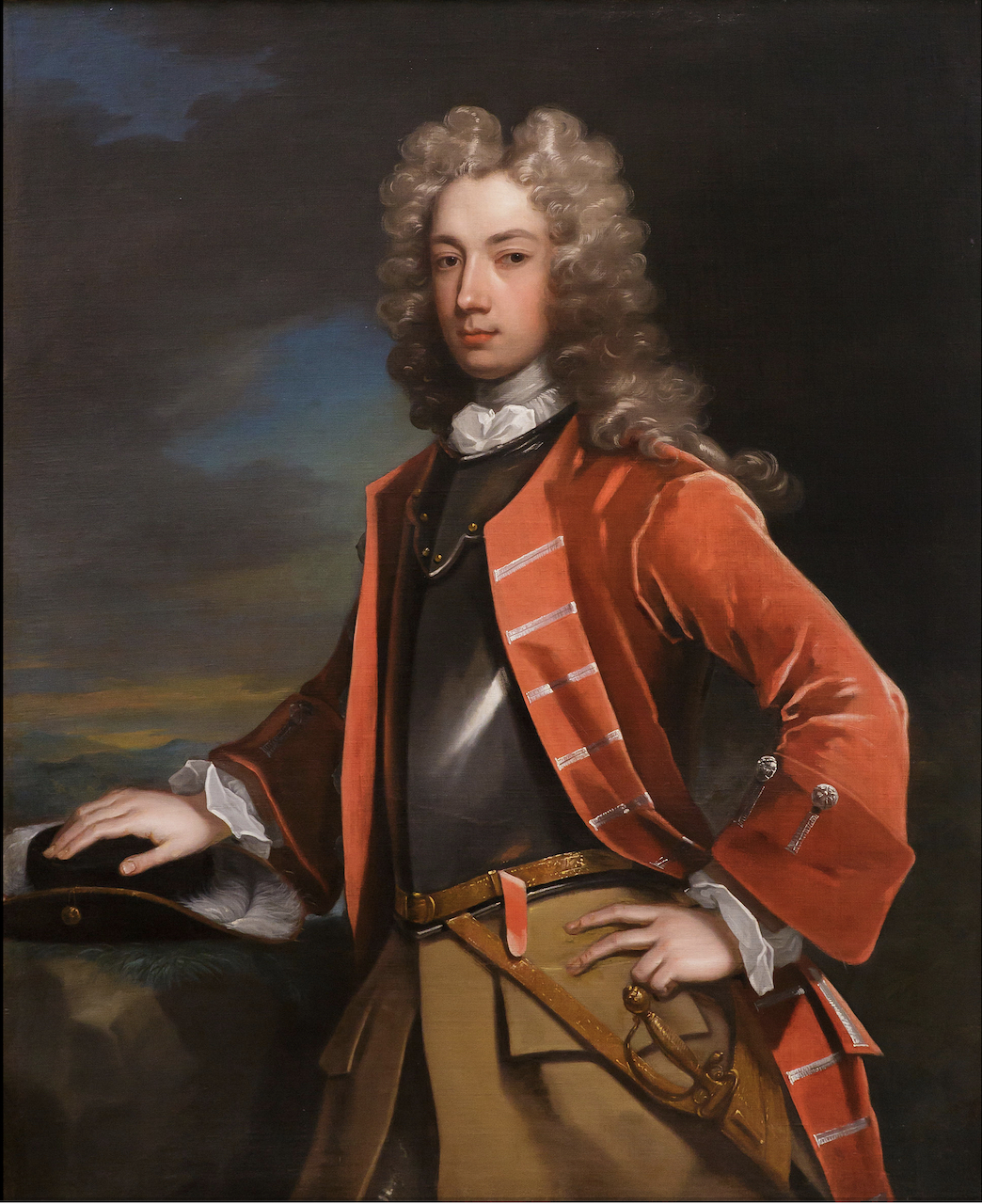
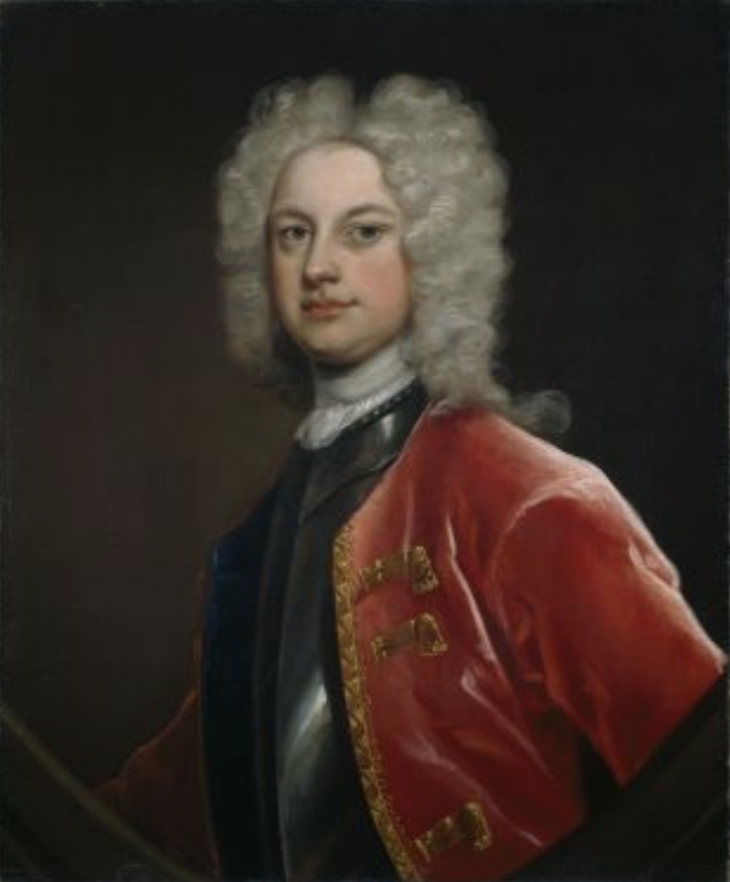
Arthur Chichester, 4th Earl of Donegall (1695–1757)
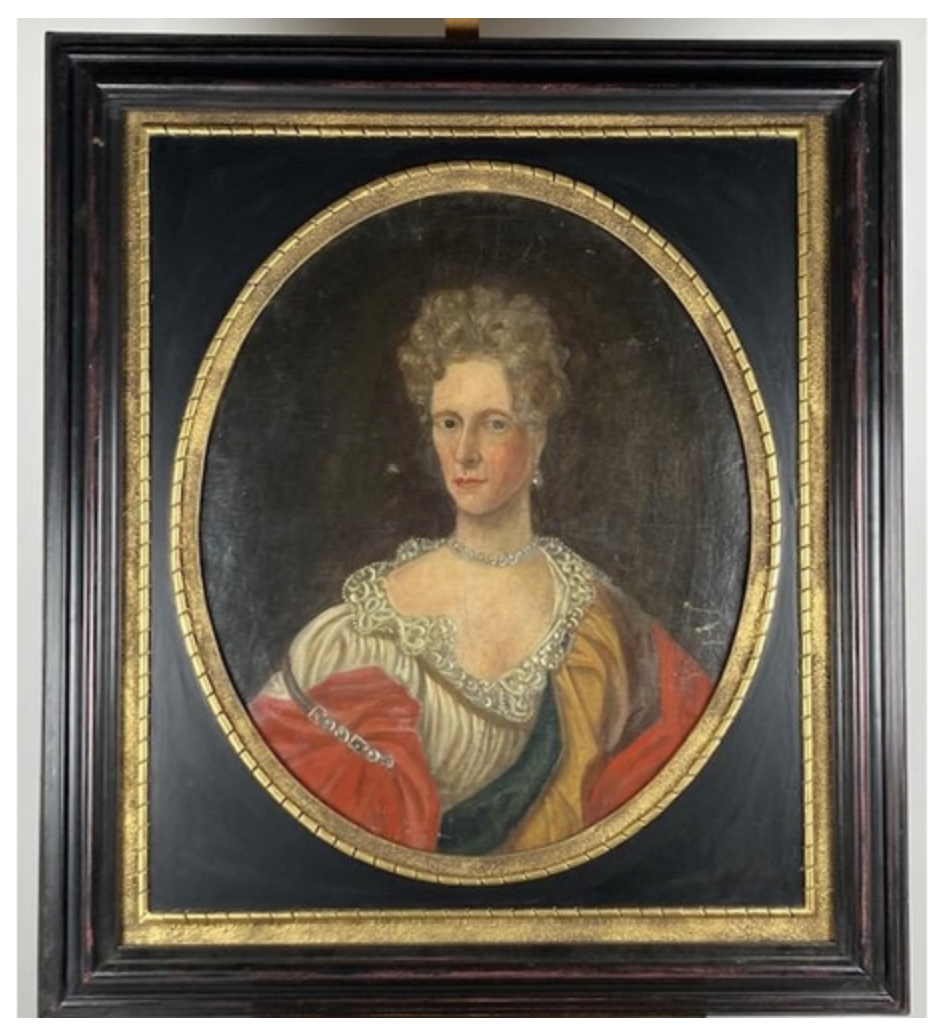
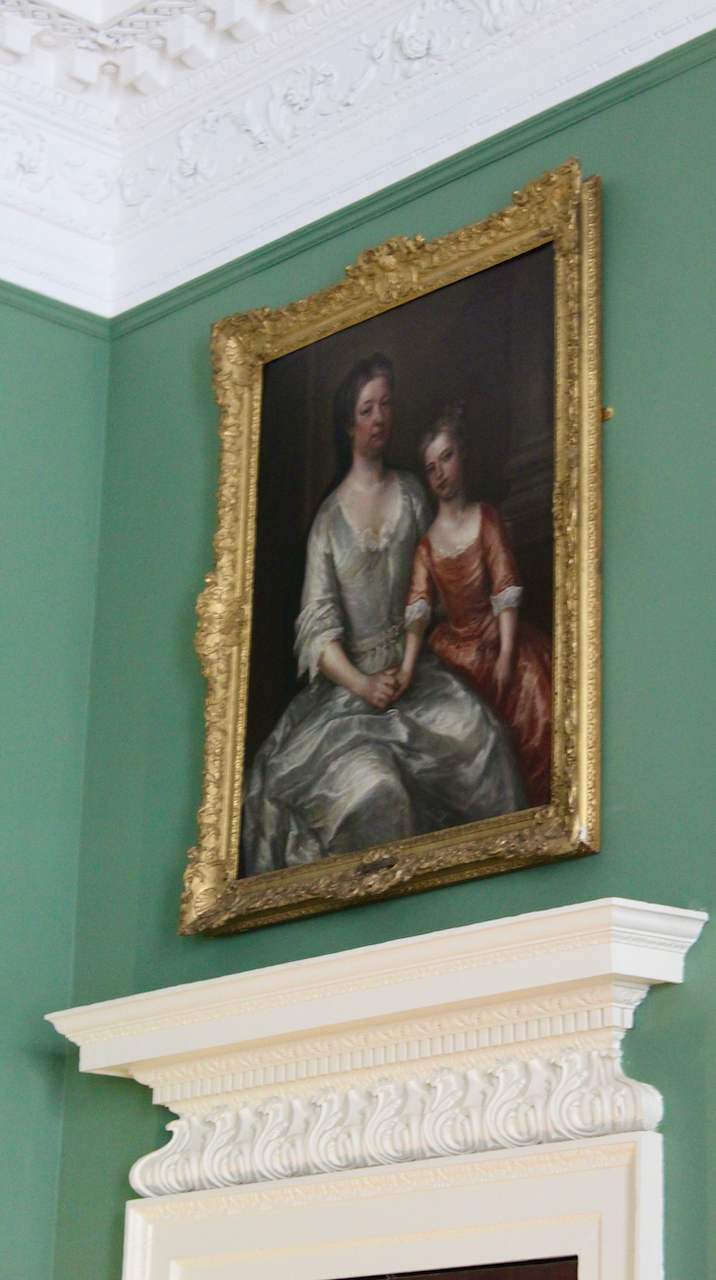
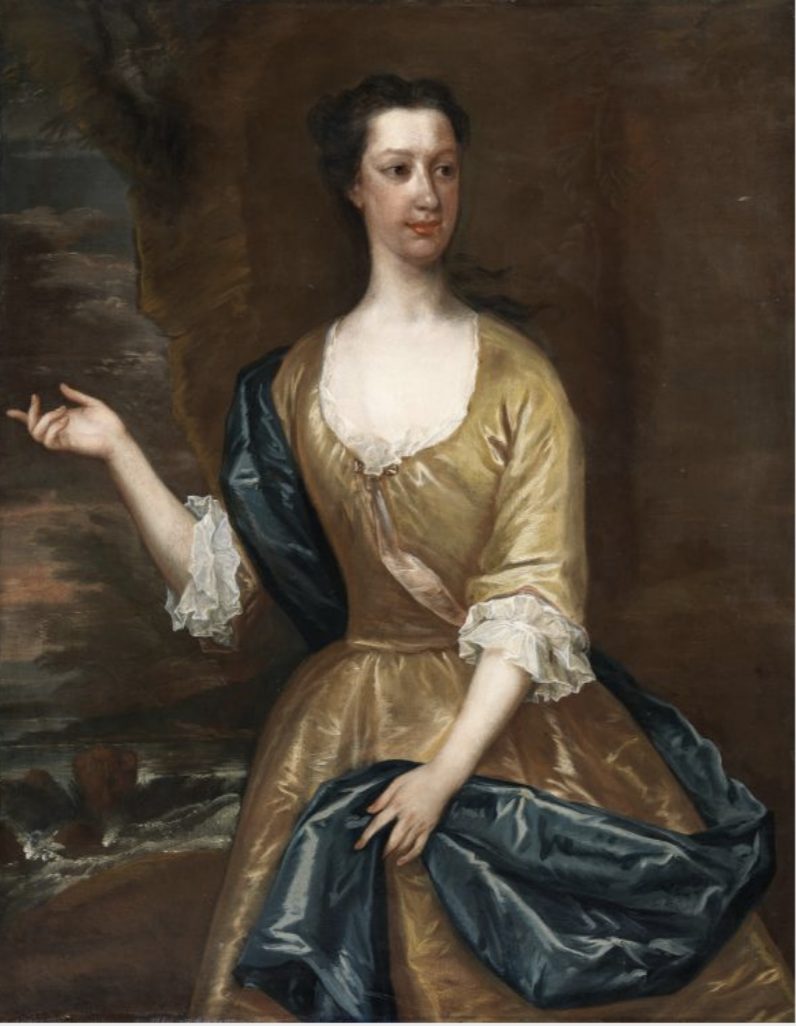
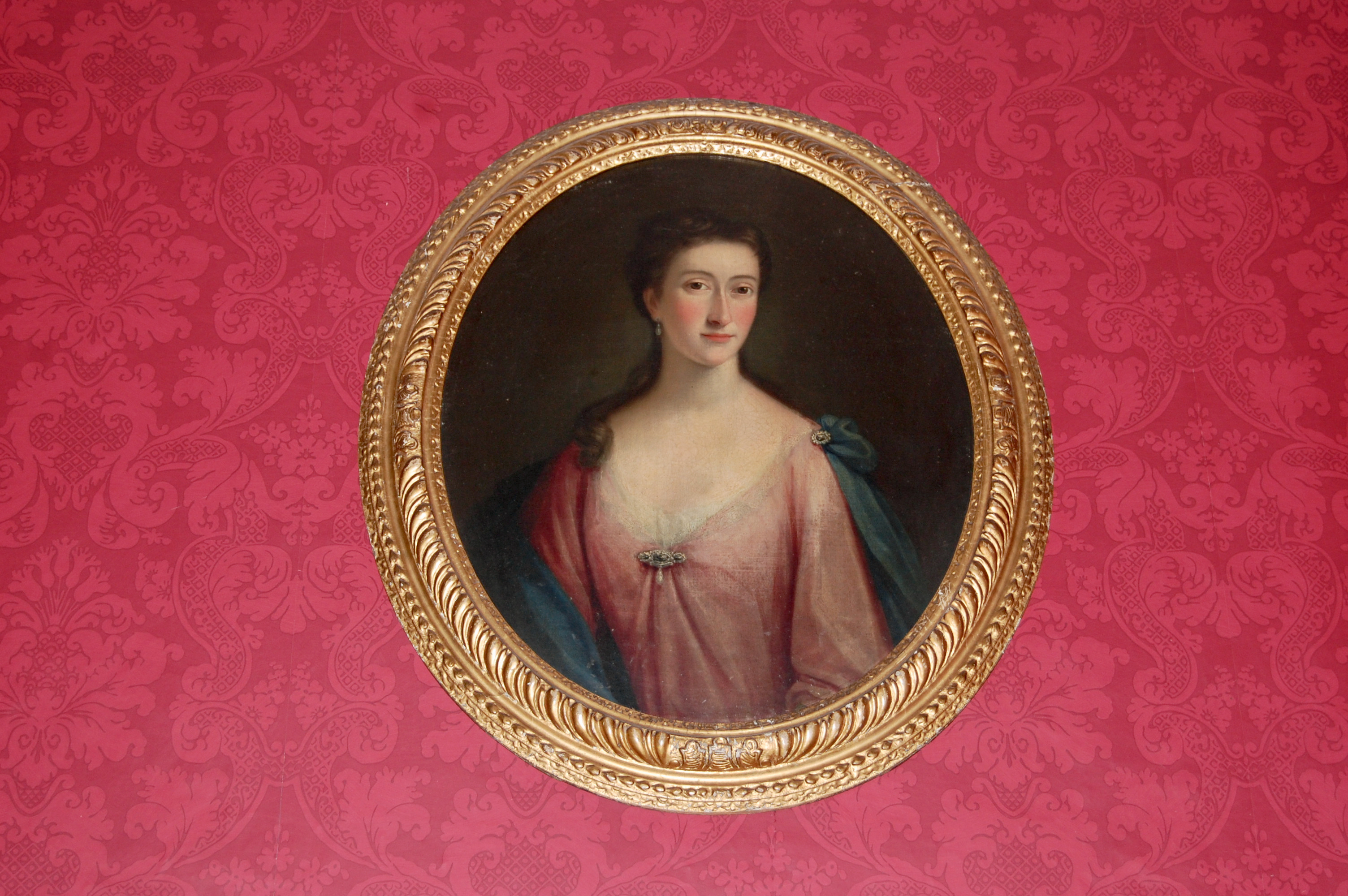
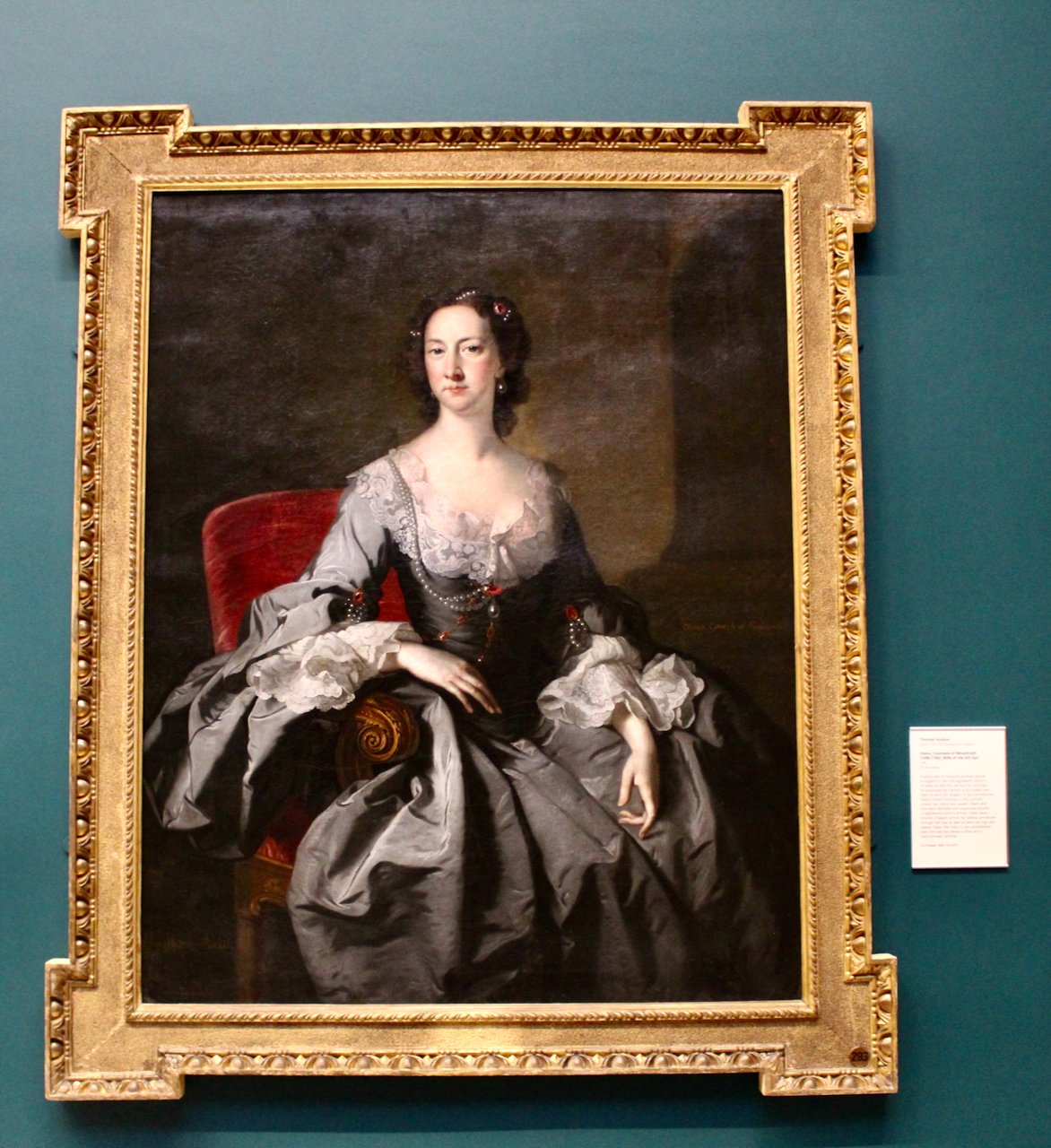
Lady Lucy Ridgeway was the eldest daughter and co-heir of Robert Ridgeway, 4th Earl of Londonderry (d. 1713/14), she married Arthur Chichester, 4th Earl of Donegal (1695-1757), by Jonathan Richardson courtesy of Sothebys L11304.
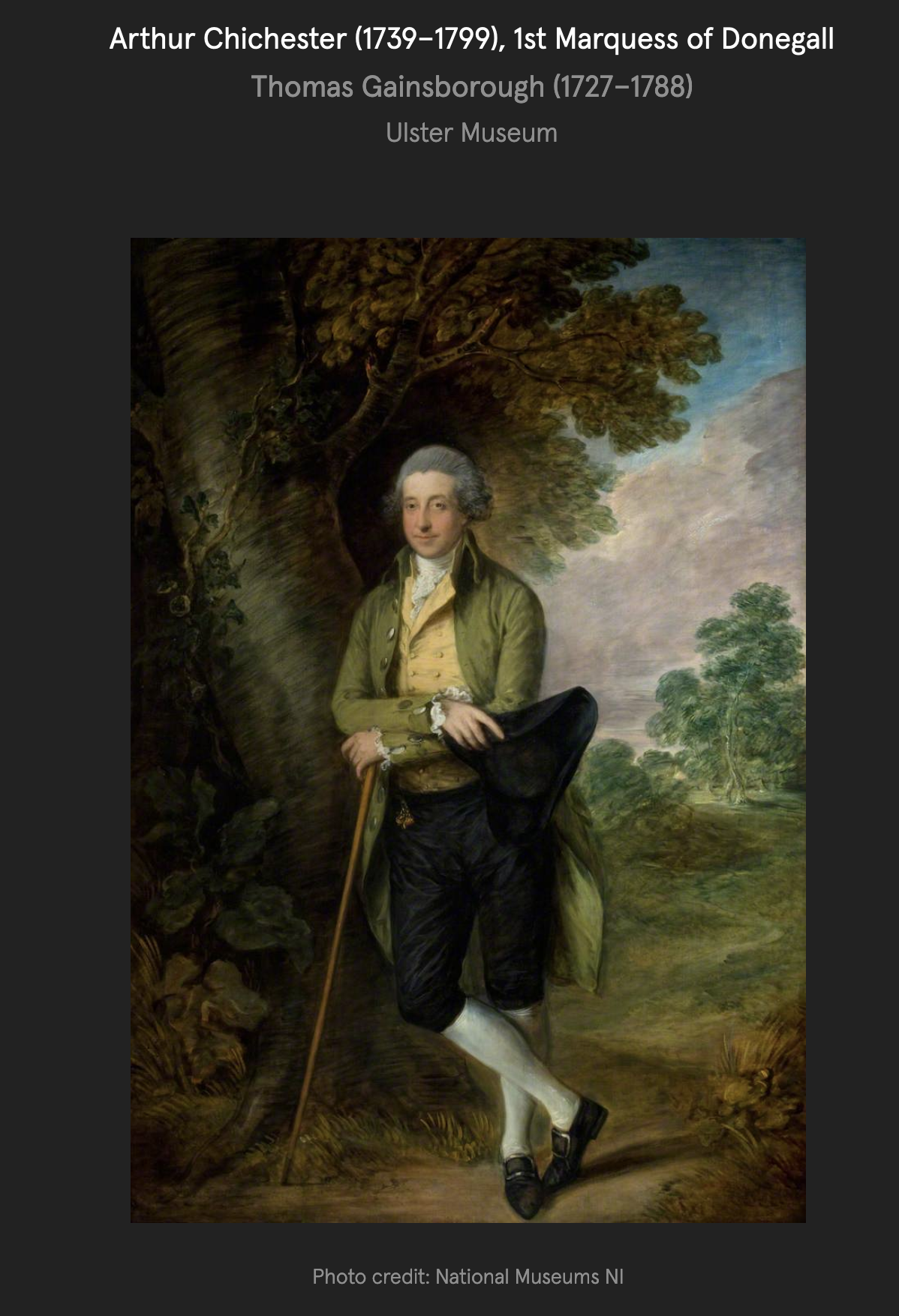
Arthur Chichester, 5th Earl of Donegall (1739–1799; created Baron Fisherwick in 1790 and Earl of Belfast and Marquess of Donegall in 1791). He married Anne née Hamilton (1731-1780) who was the daughter of James Brandon Douglas Hamilton 5th Duke of Hamilton, Scotland. Arthur the 5th Earl of Donegall was the son of John Chichester (1700-1746), who was the son of Arthur 3rd Earl of Donegall.
Arthur Chichester, 1st Marquess of Donegall (1739–1799)
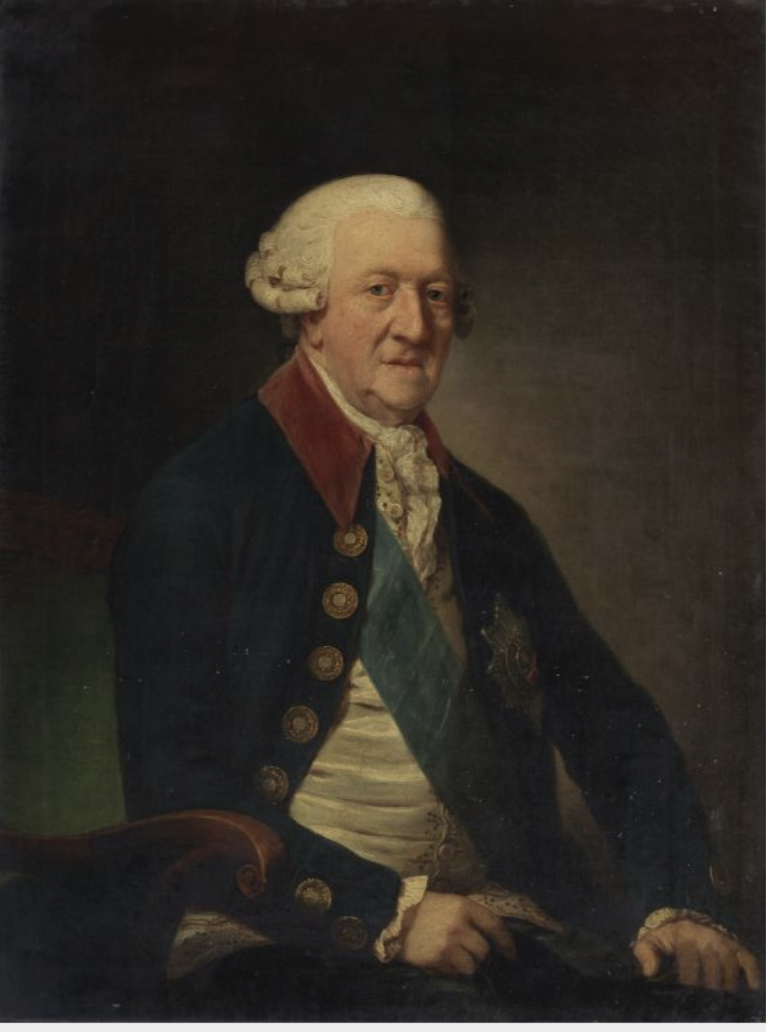
Arthur Chichester (1739-1799) 1st Marquess of Donegall, by Thomas Gainsborough, courtesy of Ulster Museum.
George Augustus Chichester, 2nd Marquess of Donegall (1769–1844)
George Augustus Chichester (1769-1844) 2nd Marquess of Donegall, courtesy of Belfast Castle.
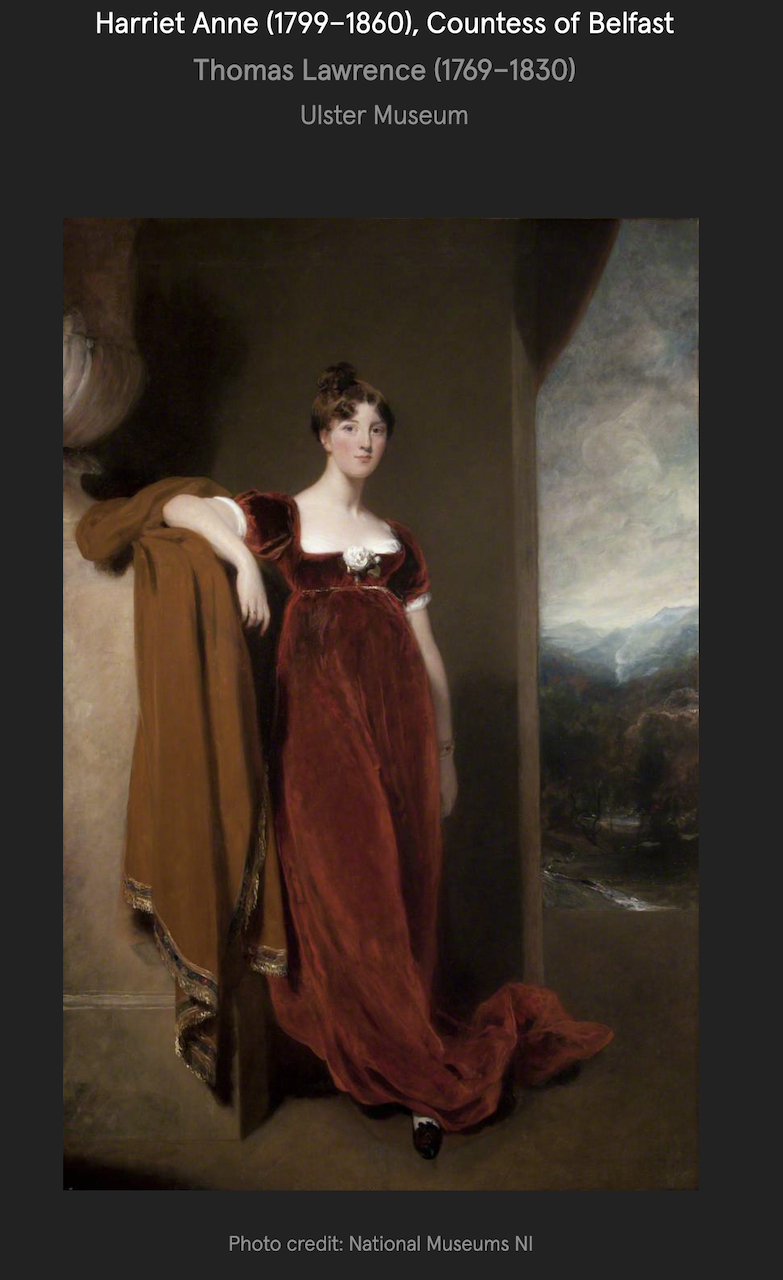
George Hamilton Chichester, 3rd Marquess of Donegall, Baron Ennishowen and Carrickfergus (1797–1883). He married Harriet Anne née Butler (1799-1860), daughter of Richard Butler, 1st Earl of Glengall.
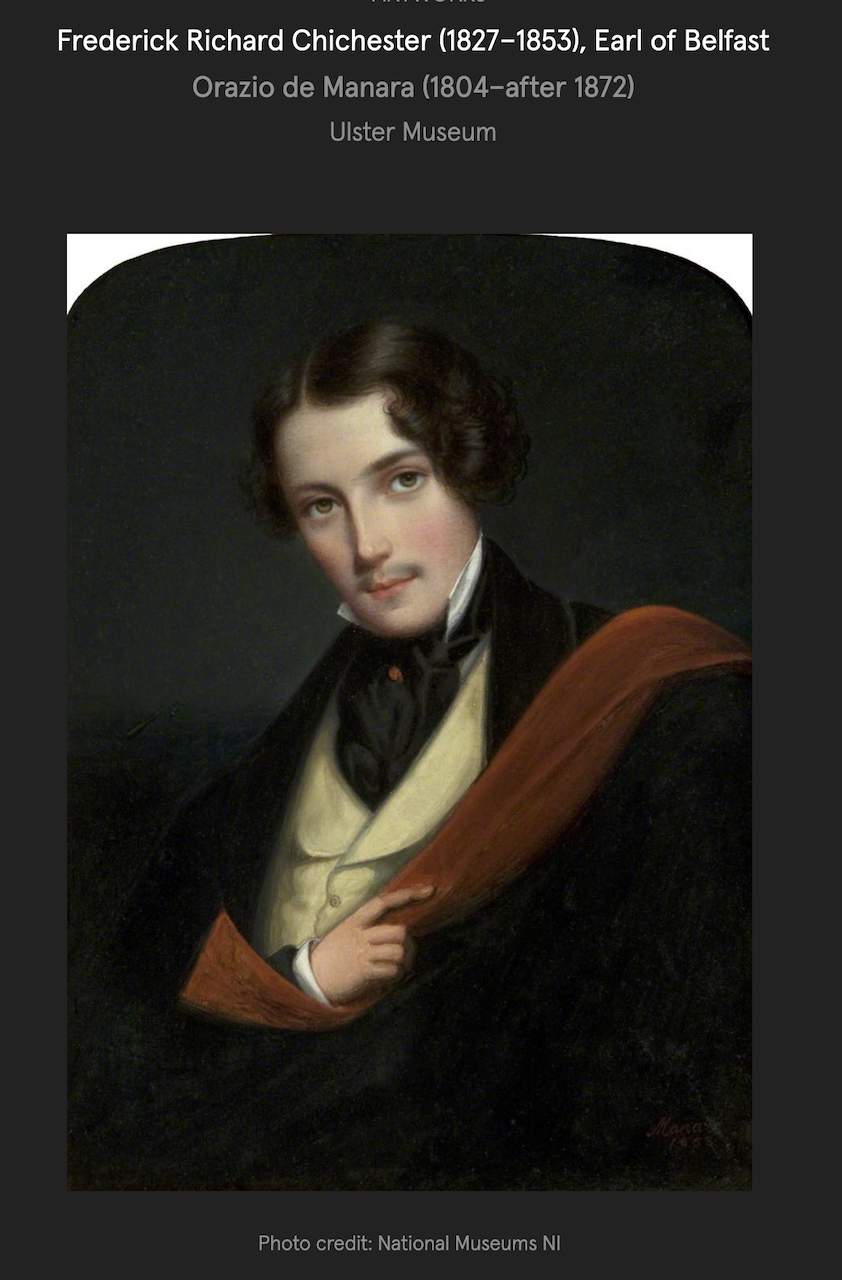
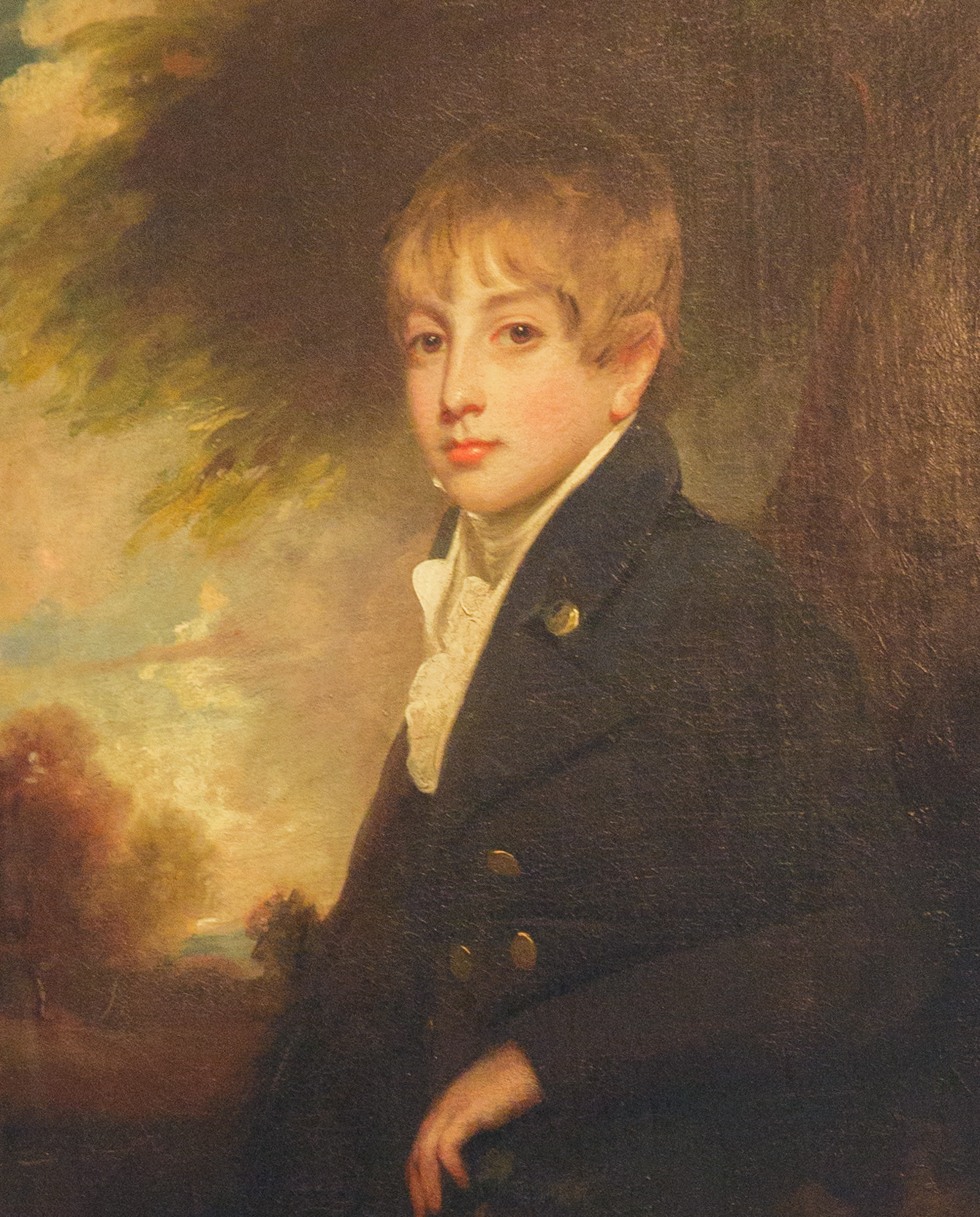
Harriet Anne née Butler (1799-1860) Countess of Belfast, wife of George Hamilton Chichester 3rd Marquess of Donegal and daughter of Richard Butler, 1st Earl of Glengall.Frederick Richard Chichester (1827-1853), Earl of Belfast, Courtesy of Ulster Museum.He was the son of the 3rd Marquess of Donegall.Frederick Richard Chichester (1827-1853) Earl of Belfast courtesy of Ulster Museum.
Edward Chichester, 4th Marquess of Donegall (1799–1889)
George Augustus Hamilton Chichester, 5th Marquess of Donegall (1822–1904)
Edward Arthur Donald St George Hamilton Chichester, 6th Marquess of Donegall (1903–1975)
Dermot Richard Claud Chichester, 7th Marquess of Donegall (5th Baron Templemore) (1916–2007)
Arthur Patrick Chichester, 8th Marquess of Donegall (b. 1952) [1]
I refer to Timothy William Ferres’s terrific blog to look at the Cole family of Florence Court in County Fermanagh, a National Trust property.
William Cole married Susannah, daughter and heir of John Croft, of Lancashire, and widow of Stephen Segar, Lieutenant of Dublin Castle, by whom he left at his decease in 1653,
MICHAEL, his heir; John, of Newland, father of Arthur, 1st BARON RANELAGH; Mary; Margaret.
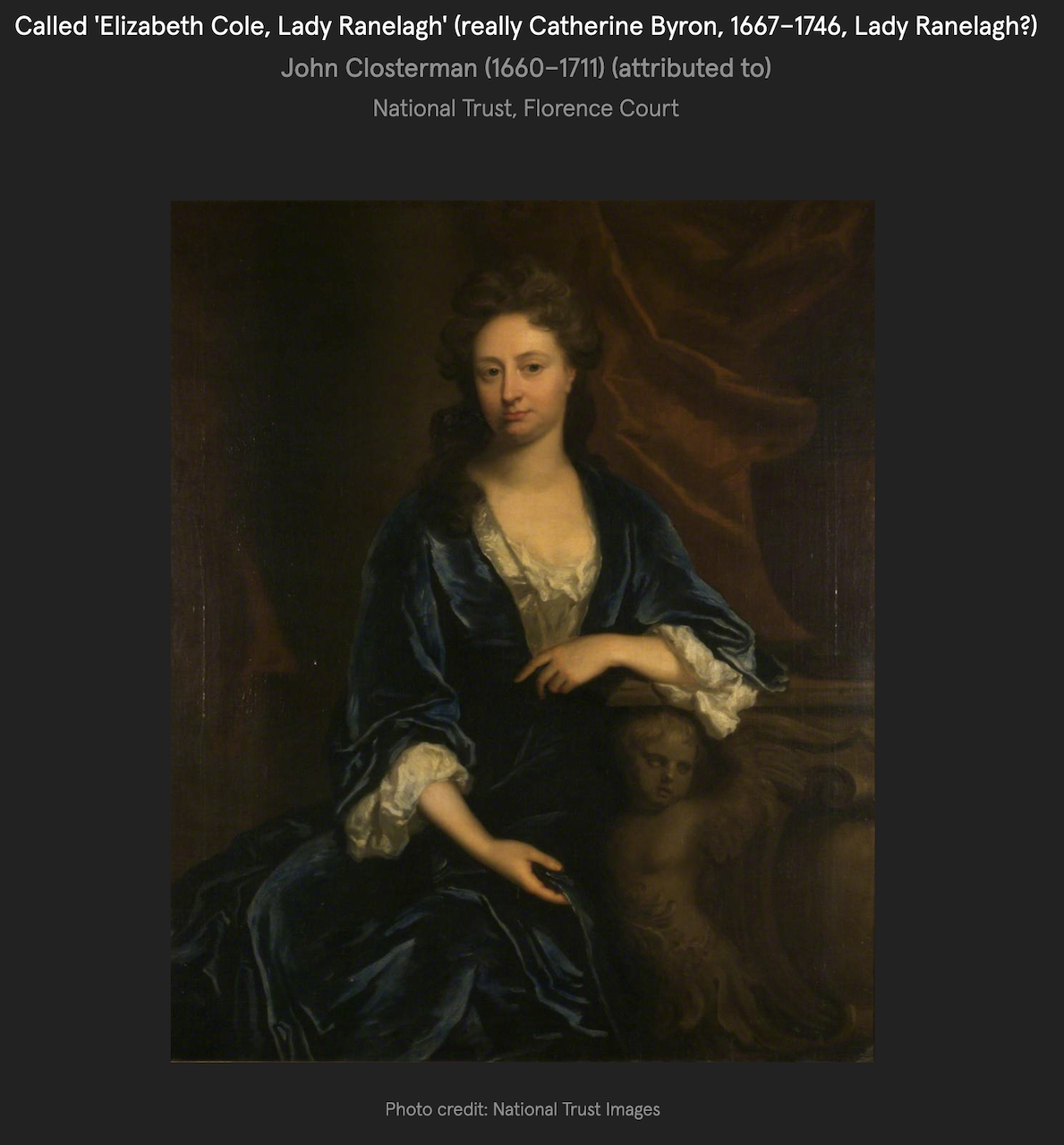
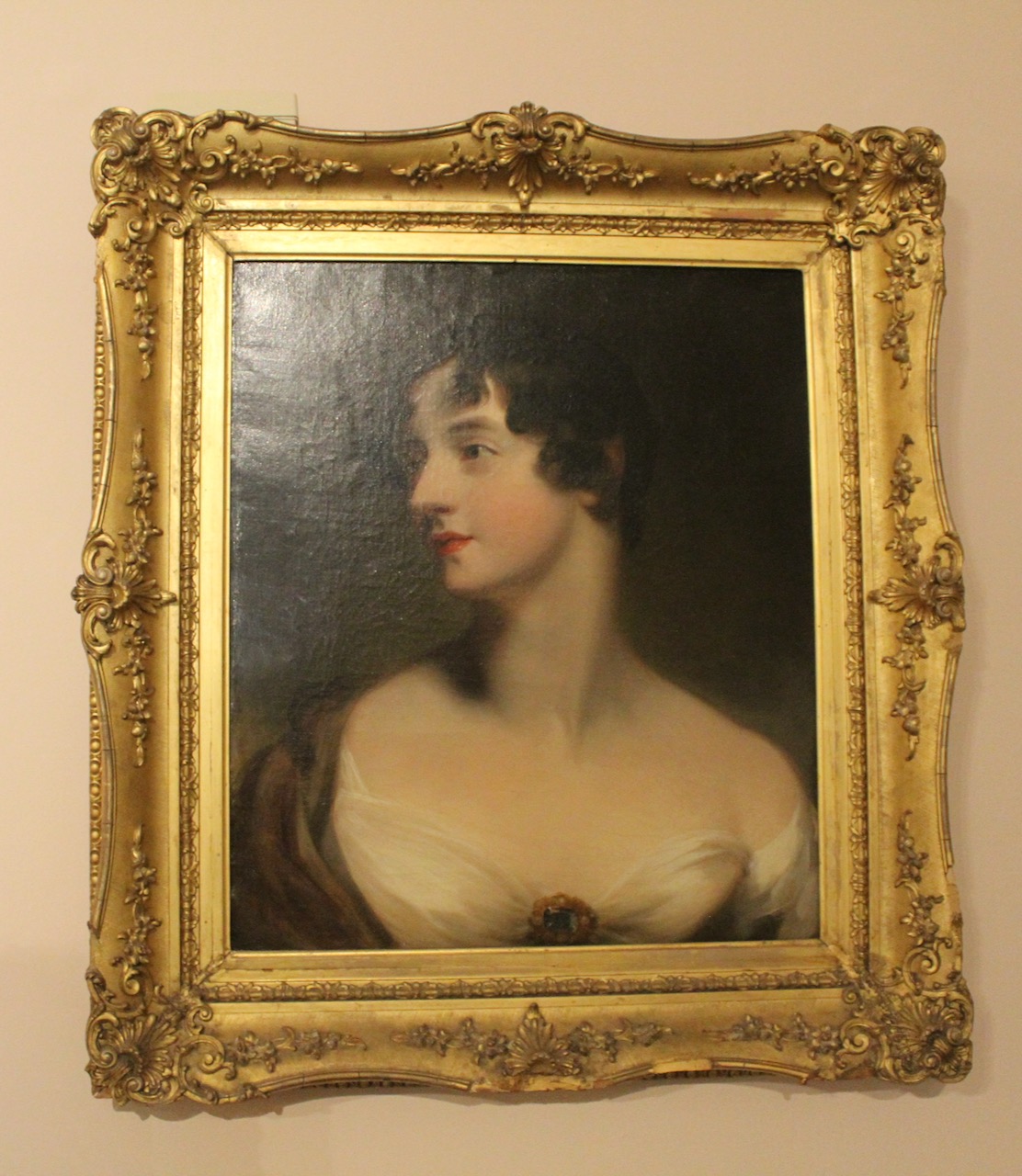
Called Elizabeth Cole Lady Ranelagh, probably really Catherine Cole née Byron (1667-1746) Lady Ranelagh attributed to John Closterman courtesy of National Trust Florence Court. She married Arthur Cole, 1st Baron Ranelagh.
The elder son,
MICHAEL COLE, wedded, in 1640, Catherine, daughter of Sir Laurence Parsons, of Birr, 2nd Baron of the Irish Exchequer, and dvp, administration being granted 1663 to his only surviving child,
SIR MICHAEL COLE, Knight (1644-1710), of Enniskillen Castle, MP for Enniskillen, 1692-3, 95-9, 1703-11, who espoused firstly, Alice (dsp 1671), daughter of Chidley Coote, of Killester; and secondly, 1672, his cousin, Elizabeth (d 1733), daughter of Sir J Cole Bt.
Sir Michael was succeeded by his only surviving child,
JOHN COLE (1680-1726), of Florence Court, MP for Enniskillen, 1703-26, who espoused, in 1707, Florence, only daughter of Sir Bourchier Wrey Bt, of Trebitch, in Cornwall.
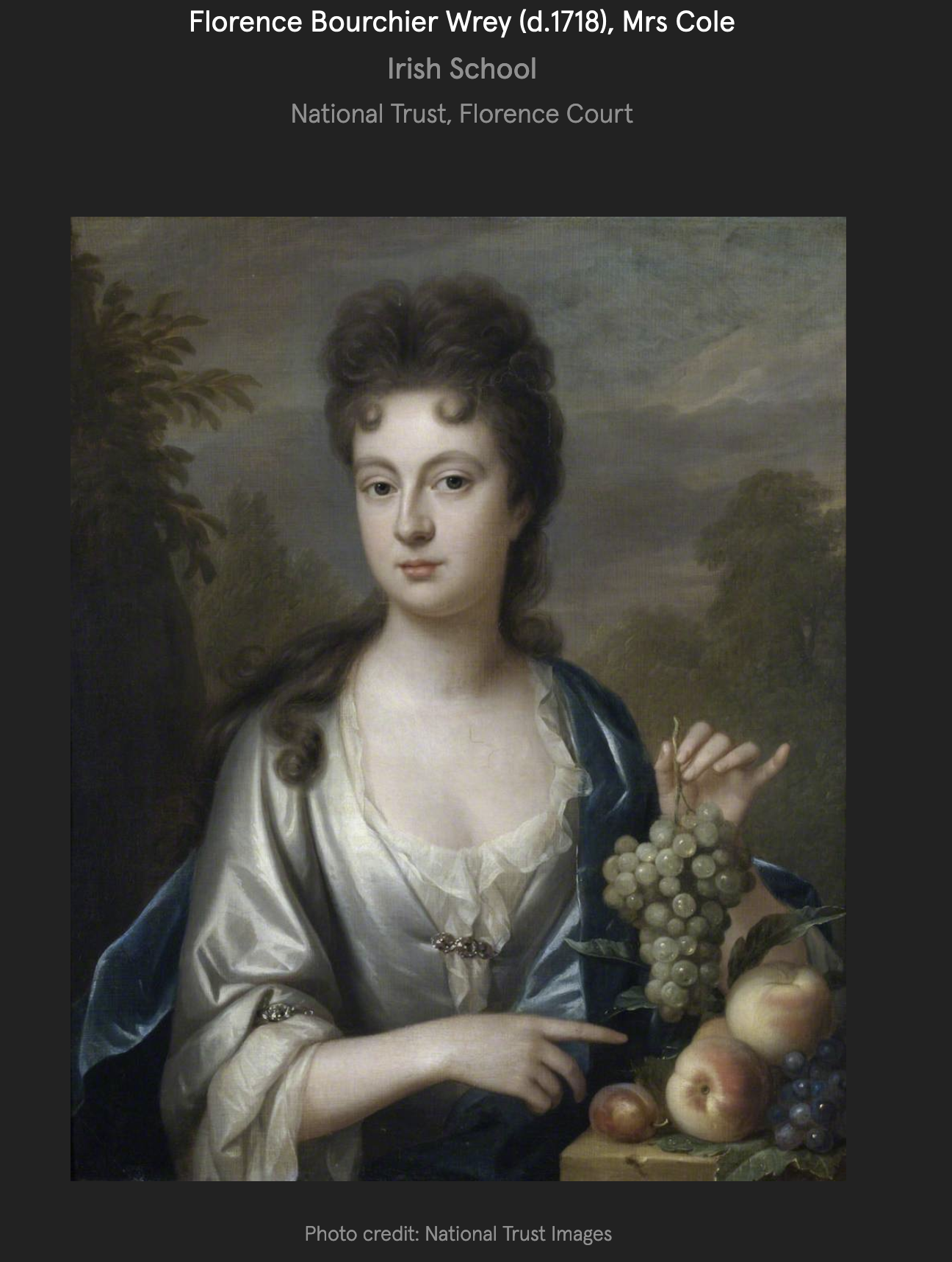
Florence Bourchier Wrey (d. 1718), courtesy of National Trust, Florence Court, County Fermanagh.She married John Cole (1680-1726) who built Florence Court, and named it after her.
John and Florence had the following children:
Henry (Rev); JOHN (1709-67) his heir; Letitia; Florence.
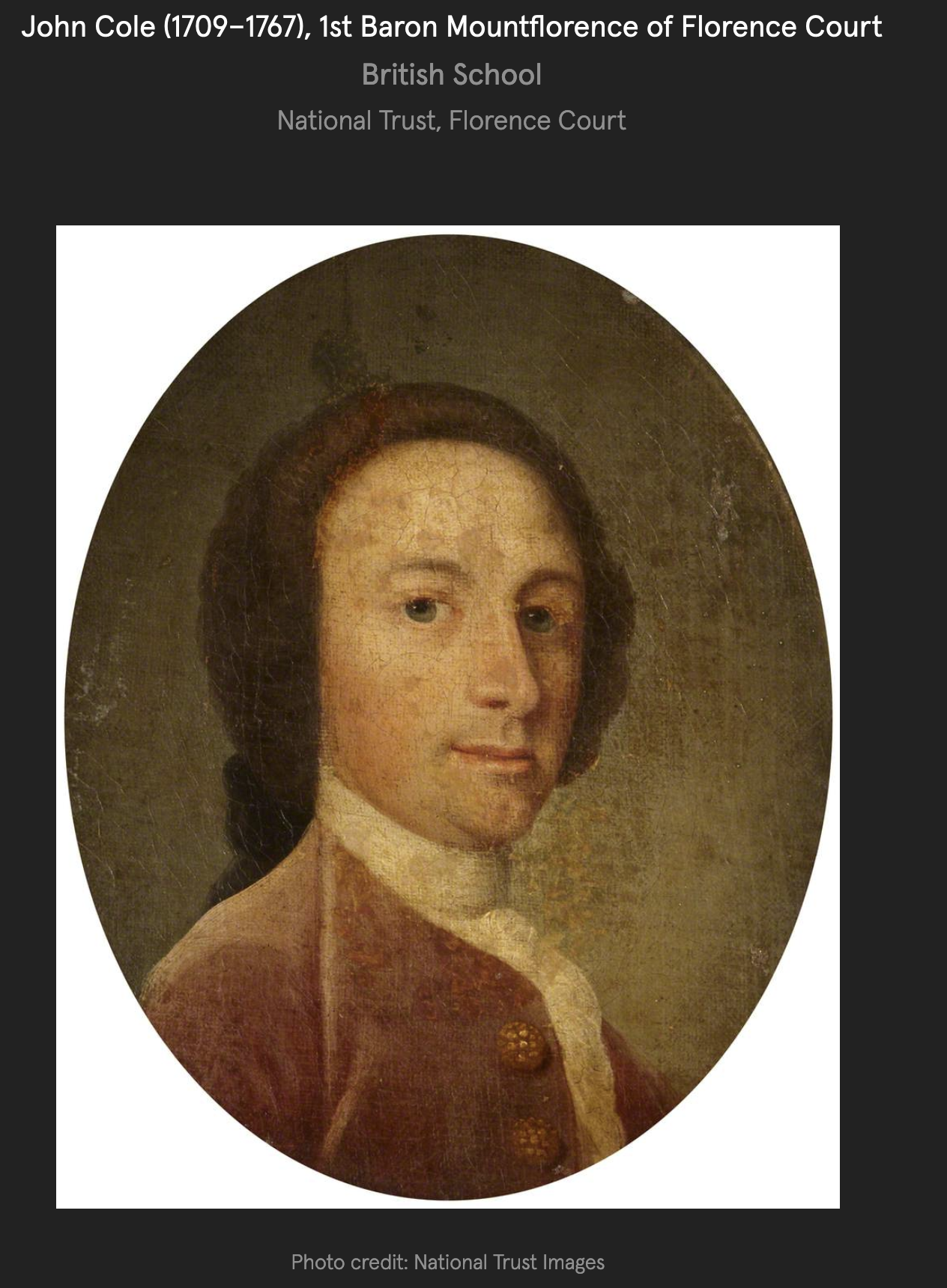
Mr Cole was succeeded by his younger son, John Cole (1709-67) MP for Enniskillen, 1730-60. John married in 1728 Elizabeth, daughter of Hugh Willoughby Montgomery, of Carrow, County Fermanagh. Mr Cole was elevated to the peerage, in 1760, in the dignity of Baron Mountflorence, of Florence Court, County Fermanagh.
John Cole (1709-1767) 1st Baron Mountflorence of Florence Court, County Fermanagh, courtesy of National Trust, Florence Court, County Fermanagh.
John and Elizabeth had the following children:
WILLIAM WILLOUGHBY (1736-1803) his heir; Arthur, m in 1780 Caroline Hamilton; Flora Caroline; Catherine.
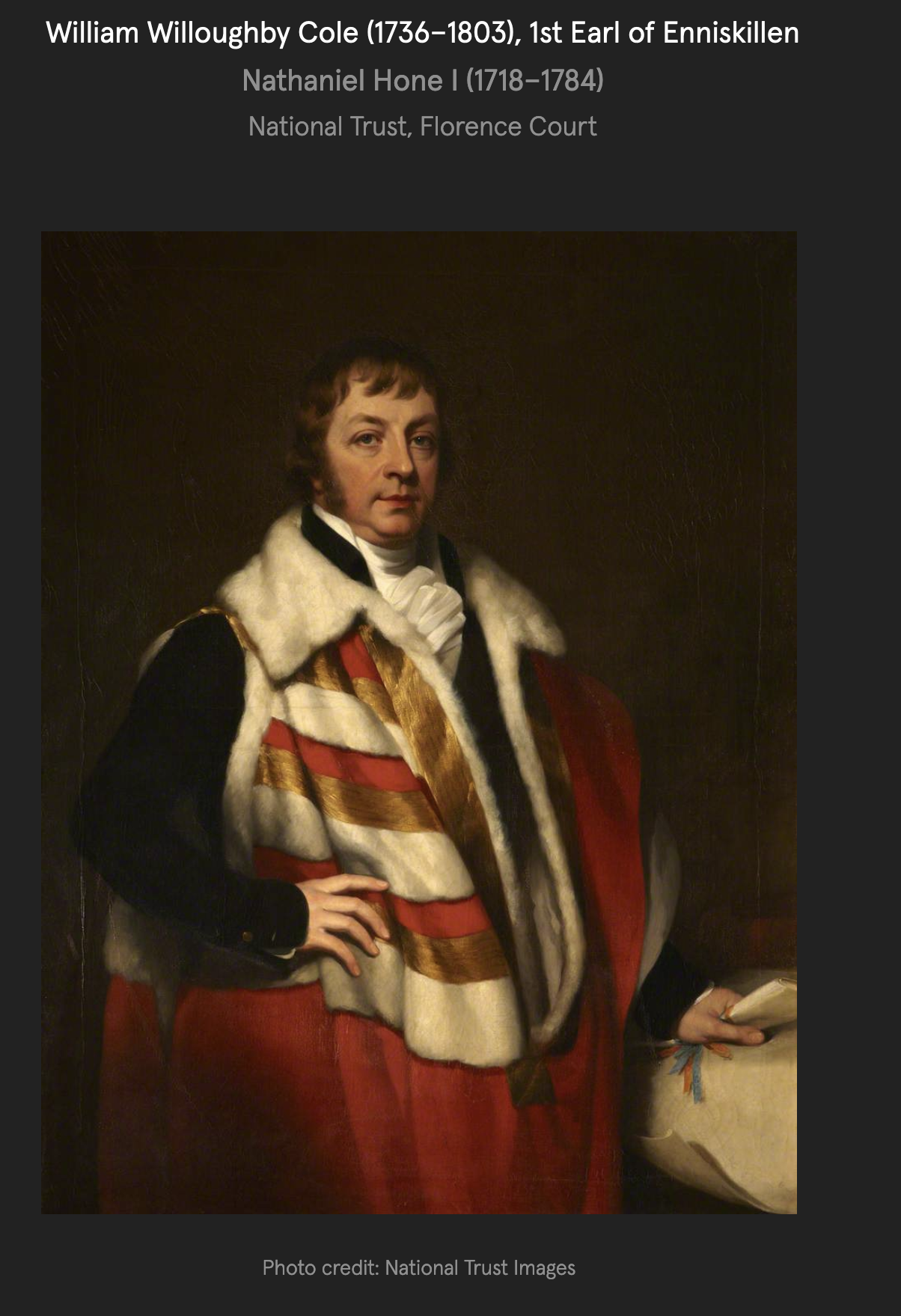
His lordship was succeeded by his elder son, WILLIAM WILLOUGHBY, 2nd Baron (1736-1803), MP for Enniskillen, 1761-7, who was created Viscount Enniskillen in 1776; and advanced to the dignity of an earldom, in 1789, as EARL OF ENNISKILLEN.
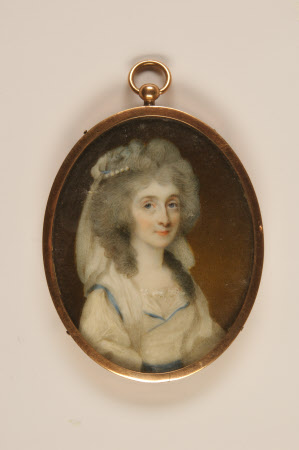
William Willoughby Cole (1736-1803) 1st Earl of Enniskillen, by Nathaniel Hone, courtesy of National Trust, Florence Court, County Fermanagh.He was the son of John Cole 1st Baron Mountflorence.Anne Lowry-Corry, Countess of Enniskillen (1742-1802) by Horace Hone c.1785, watercolour painting on ivory, courtesy National Trust Florence Court. Sister of Armar Lowry-Corry (1740-1802) 1st Earl Belmore and wife of William Willoughby Cole 1st Earl of Enniskillen.
William Willoughby Cole married, in 1763, Anne, daughter of Galbraith Lowry Corry, of Ahenis, County Tyrone, and sister of Armar Corry, Earl of Belmore, and had issue,
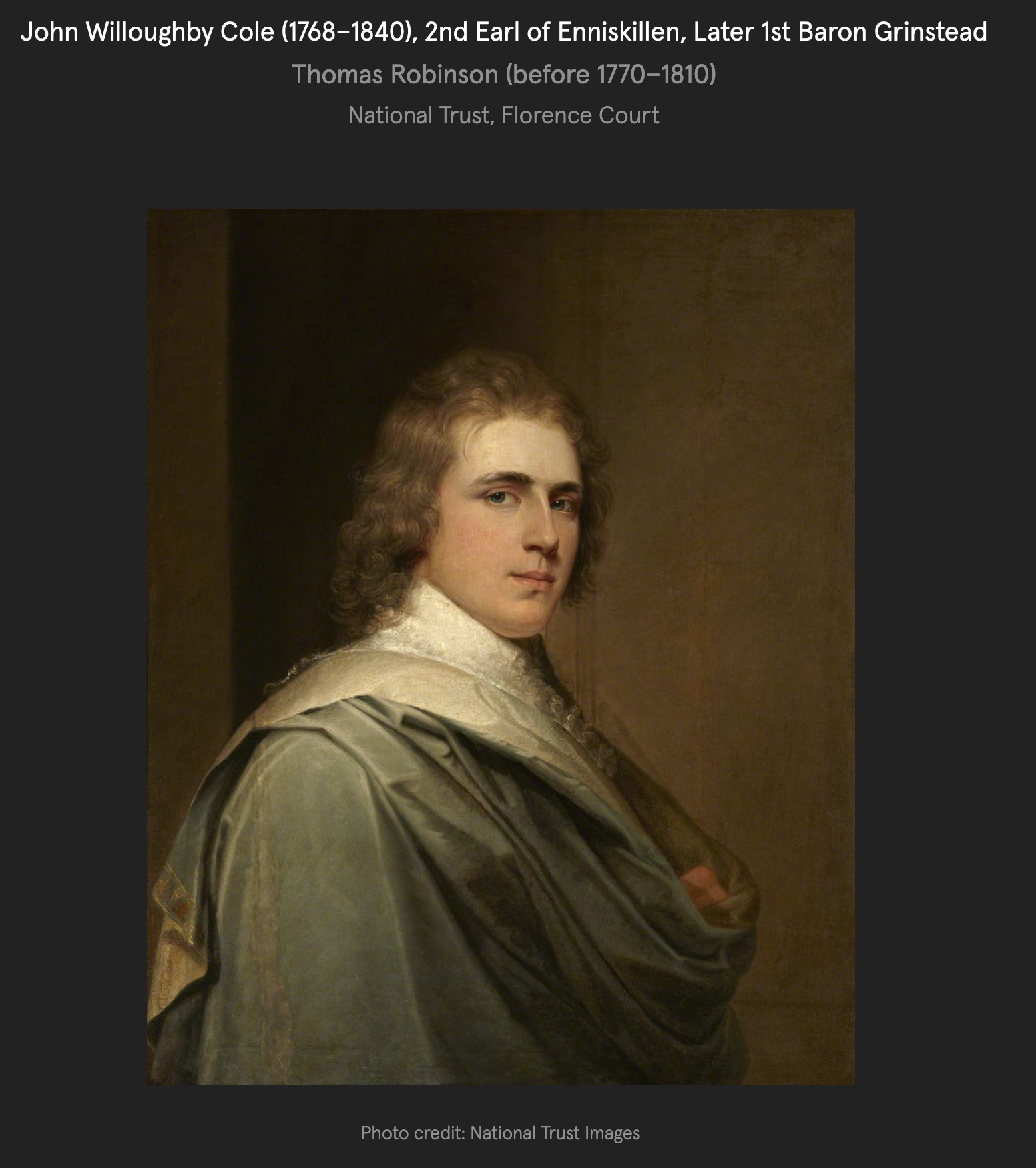
JOHN WILLOUGHBY (1768-1840) his successor, who became 2nd Earl; Galbraith Lowry (Sir), GCB, a general in the army; William Montgomery (Very Rev), Dean of Waterford; Arthur Henry, MP for Enniskillen; Henry, died young; Sarah; Elizabeth Anne; Anne; Florence; Henrietta Frances.
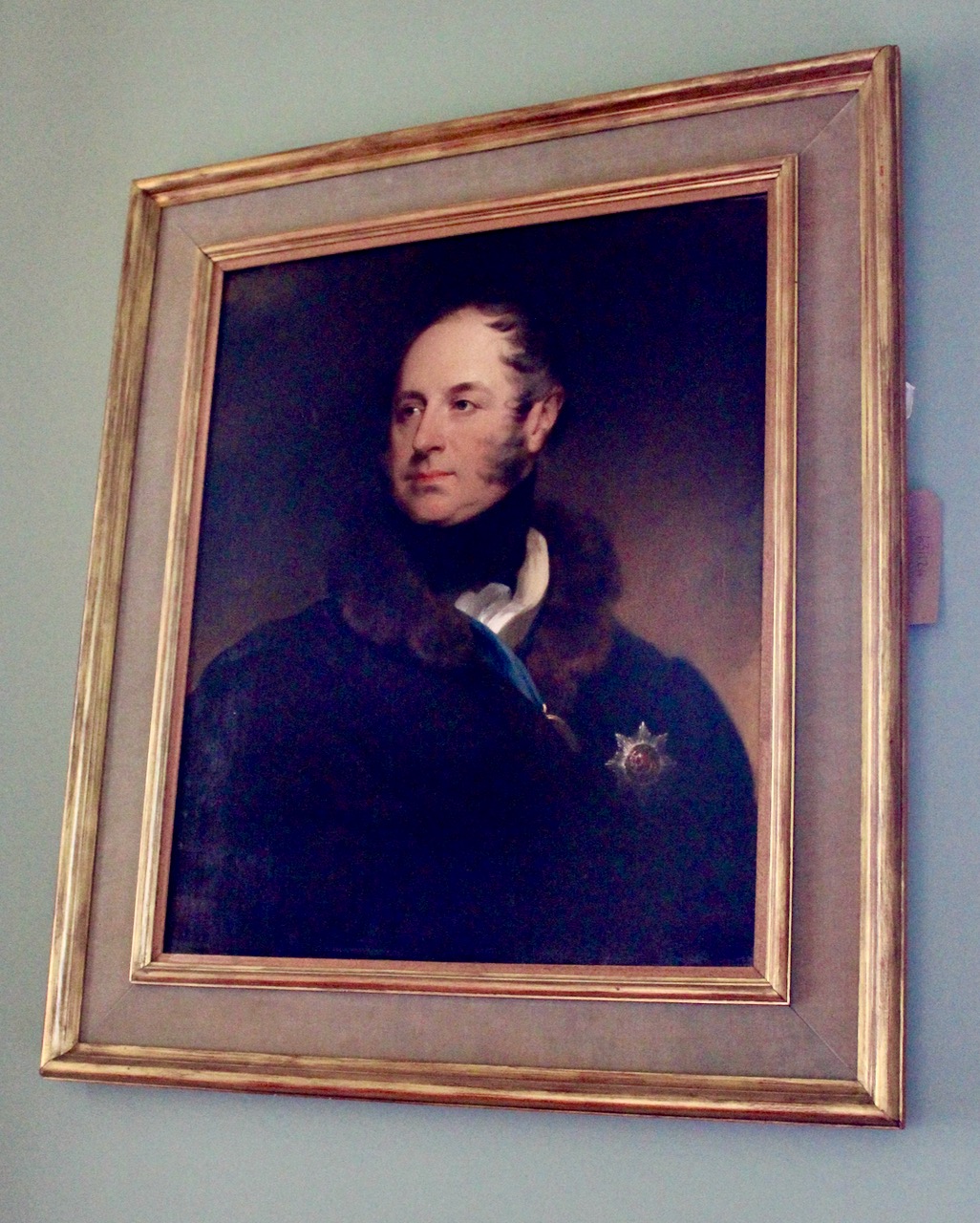
JOHN WILLOUGHBY Cole 2nd Earl (1768-1840) married, in 1805, the Lady Charlotte Paget, daughter of Henry, 1st Earl of Uxbridge. The 2nd Earl of Charlotte had the following children:
WILLIAM WILLOUGHBY (1807-86) his successor, who became the 3rd Earl of Enniskillen.
Henry Arthur; John Lowry; Lowry Balfour; Jane Anne Louisa Florence.
William Willoughby Cole (1807-1886) 3rd Earl of Enniskillen, by William Robinson, courtesy of National Trust, Florence Court, County Fermanagh.
WILLIAM WILLOUGHBY, 3rd Earl (1807-86), Honorary Colonel, 3rd Battalion, Royal Inniskilling Fusiliers, married firstly, in 1844, Jane, daughter of James Casamaijor, and had issue,
John Willoughby Michael, styled Viscount Cole (1844-50);
LOWRY EGERTON, 4th Earl;
Arthur Edward Casamaijor;
Florence Mary; Alice Elizabeth; Charlotte June; Jane Evelyn.
He wedded secondly, in 1865, Mary Emma, daughter of Charles, 6th Viscount Midleton.
His lordship was succeeded by his eldest surviving son,
LOWRY EGERTON, 4th Earl (1845-1924), KP JP DL MP, who wedded, in 1869, Charlotte Marion, daughter of Douglas Baird.
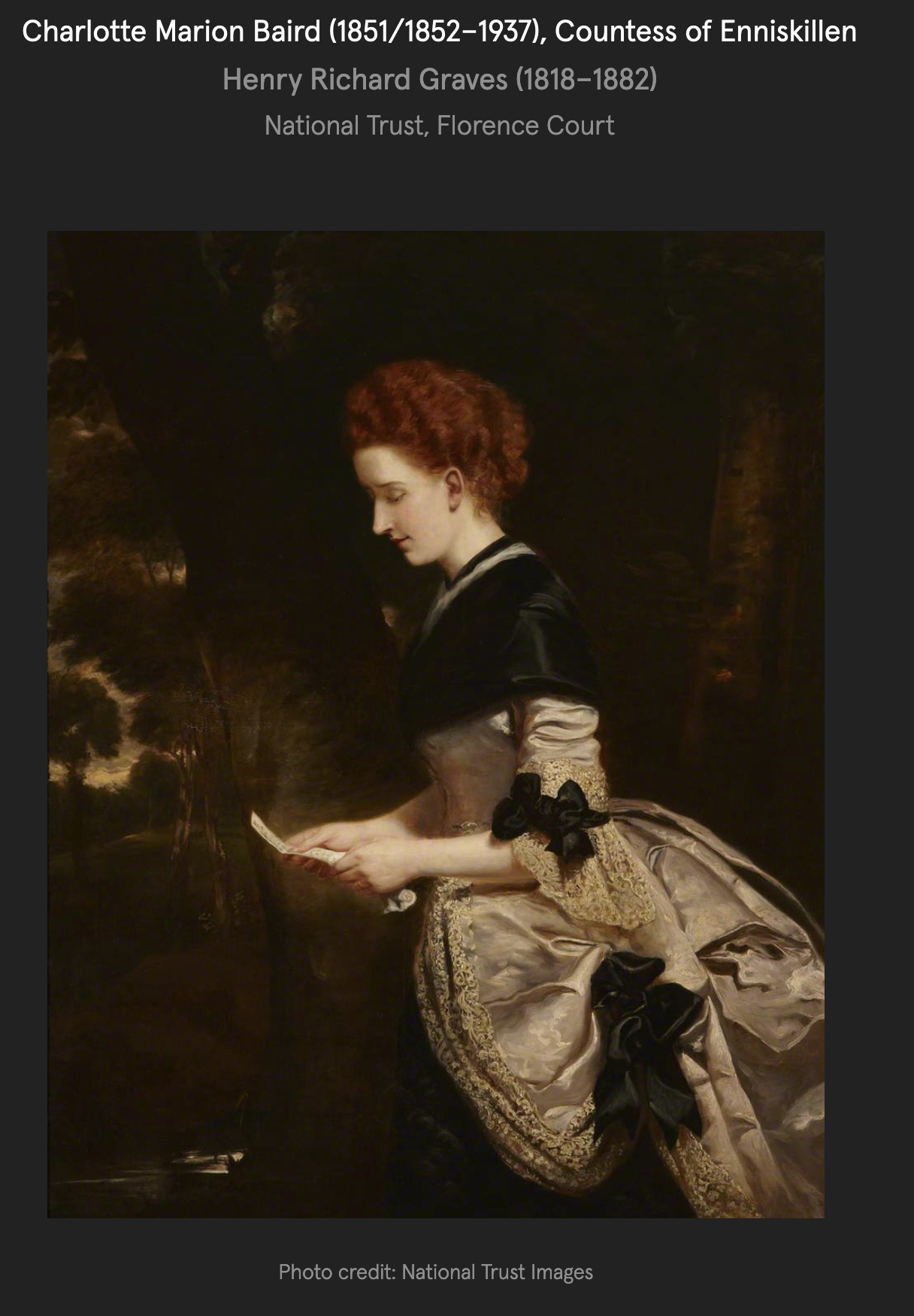
Charlotte Marion Baird (1851/2-1937) Countess of Enniskillen, by Henry Richard Graves, courtesy of National Trust, Florence Court, County Fermanagh. She married Lowry Egerton Cole, 4th Earl of Enniskillen.
Nicholas Conway Colthurst (1789-1829) 4th Baronet of Ardrum, County Cork, by Martin Arthur Shee, courtesy of Eton College.He was Member of Parliament (M.P.) for the City of Cork between 1812 and 1829. His son the 5th Earl married Louisa Jane Jefferyes, through whom he acquired Blarney Castle.Ambrose Congreve reading a newspaper at Clonbrock House, Ahascragh, Co. Galway, National Library of Ireland Ref. CLON422.
Timothy William Ferres tells us of the line of the Conolly family who owned Castletown House in County Kildare. [2] It was built by William Conolly (1662-1729), Speaker of the House of Commons in Ireland during the reign of Queen Anne, First Lord of the Treasury until his decease during the reign of GEORGE II, and ten times sworn one of the Lords Justices of Ireland.
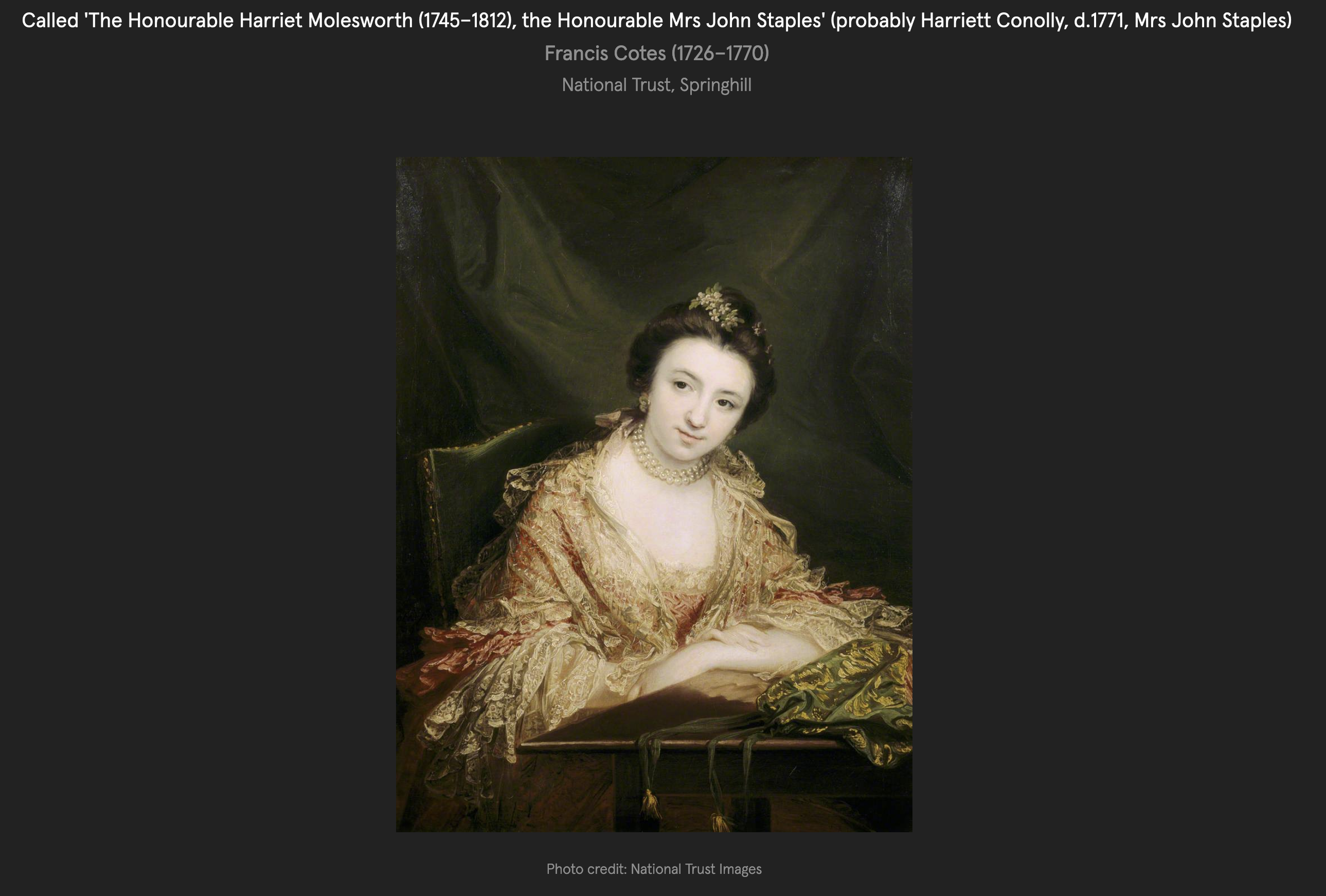
THOMAS (1734-1803) his heir; Katherine, m. Ralph, Earl of Ross; Anne, m. G. Byng; mother of Earl of Strafford; Harriet, m. Rt Hon John Staples, of Lissan; Frances, m. 5th Viscount Howe; Caroline, m. 2nd Earl of Buckinghamshire;
Ferres continues, telling us that Thomas Conolly, MP for County Londonderry, 1761-1800, wedded, in 1758, Louisa Augusta Lennox, daughter of Charles, 2nd Duke of Richmond and Lennox.
Thomas and Louisa had no children so the estate passed to a grand-nephew, Edward Michael Pakenham (1786-1849) who assumed the surname Conolly in 1821. Now Edward Michael Conolly of Castletown, County Kildare, and Cliff, County Donegal, Lieutenant-Colonel, Donegal Militia, MP for County Donegal, 1831-49, he married in 1819, Catherine Jane, daughter of Chambré Brabazon Ponsonby-Barker, by the Lady Henrietta Taylour his wife, daughter of Thomas, Earl of Bective. They had issue,
THOMAS (1823-1876) his heir; Chambré Brabazon, d 1835; Frederick William Edward, d 1826; Arthur Wellesley, 1828-54; John Augustus, VC; Richard, d 1870; Louisa Augusta; Henrietta; Mary Margaret; Frances Catherine.
Thomas (1870-1900), killed in action at S Africa; William, 1872-95; EDWARD MICHAEL, of whom hereafter; CATHERINE, Baroness Carew, mother of 6th BARON CAREW.
Mr Conolly was succeeded by his eldest surviving son,
EDWARD MICHAEL CONOLLY CMG (1874-1956), of Castletown, Major, Royal Artillery, who died unmarried, when Castletown passed to his nephew,
William Francis (Conolly-Carew), 6th Baron Carew. [2]
On his terrific website, Timothy William Ferres tells us about the Conyngham family of Springhill, County Derry in Northern Ireland: [3]
Colonel William Cunningham, of Ayrshire settled in the townland of Ballydrum, in which Springhill is situated, in 1609.
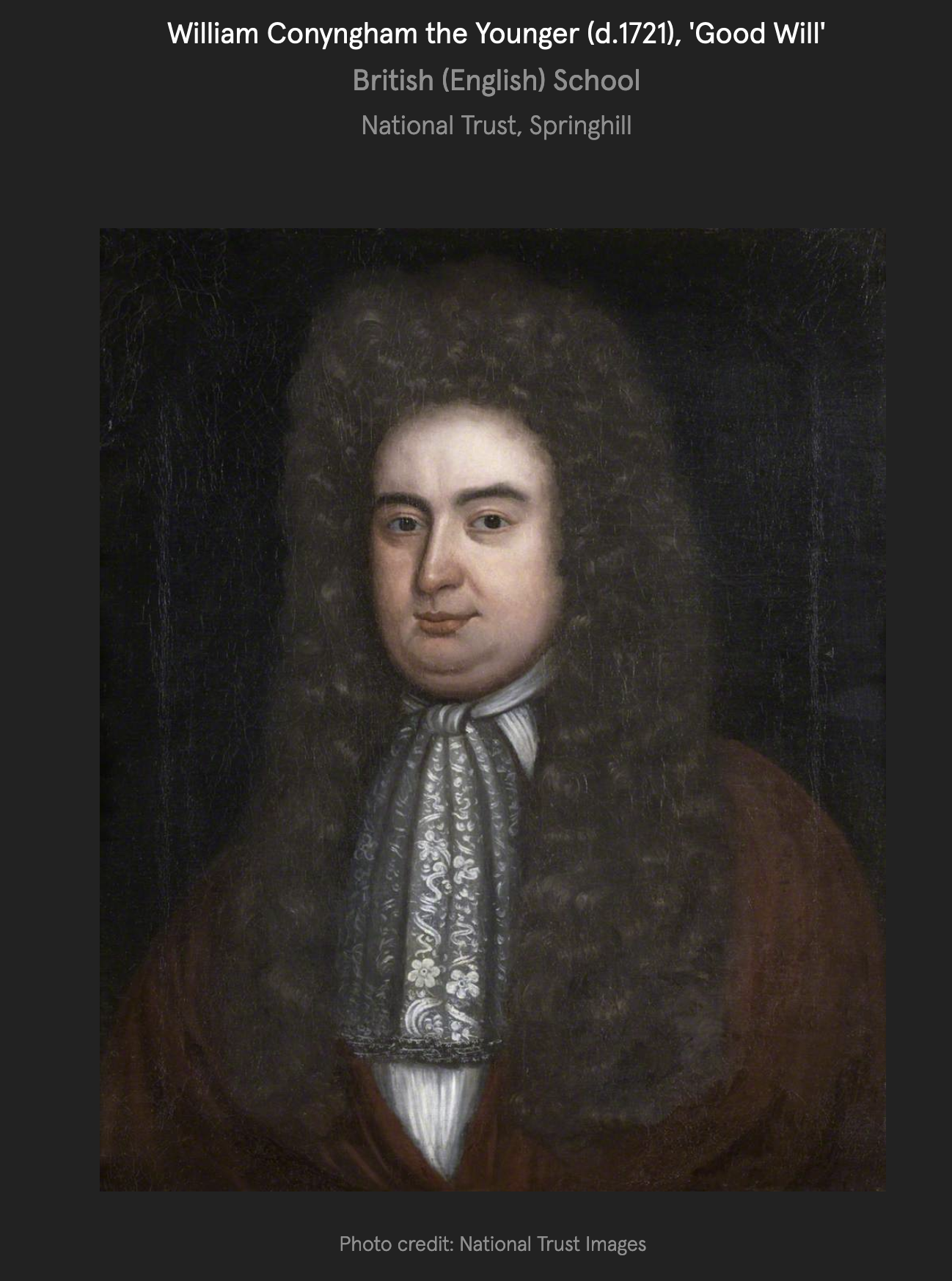
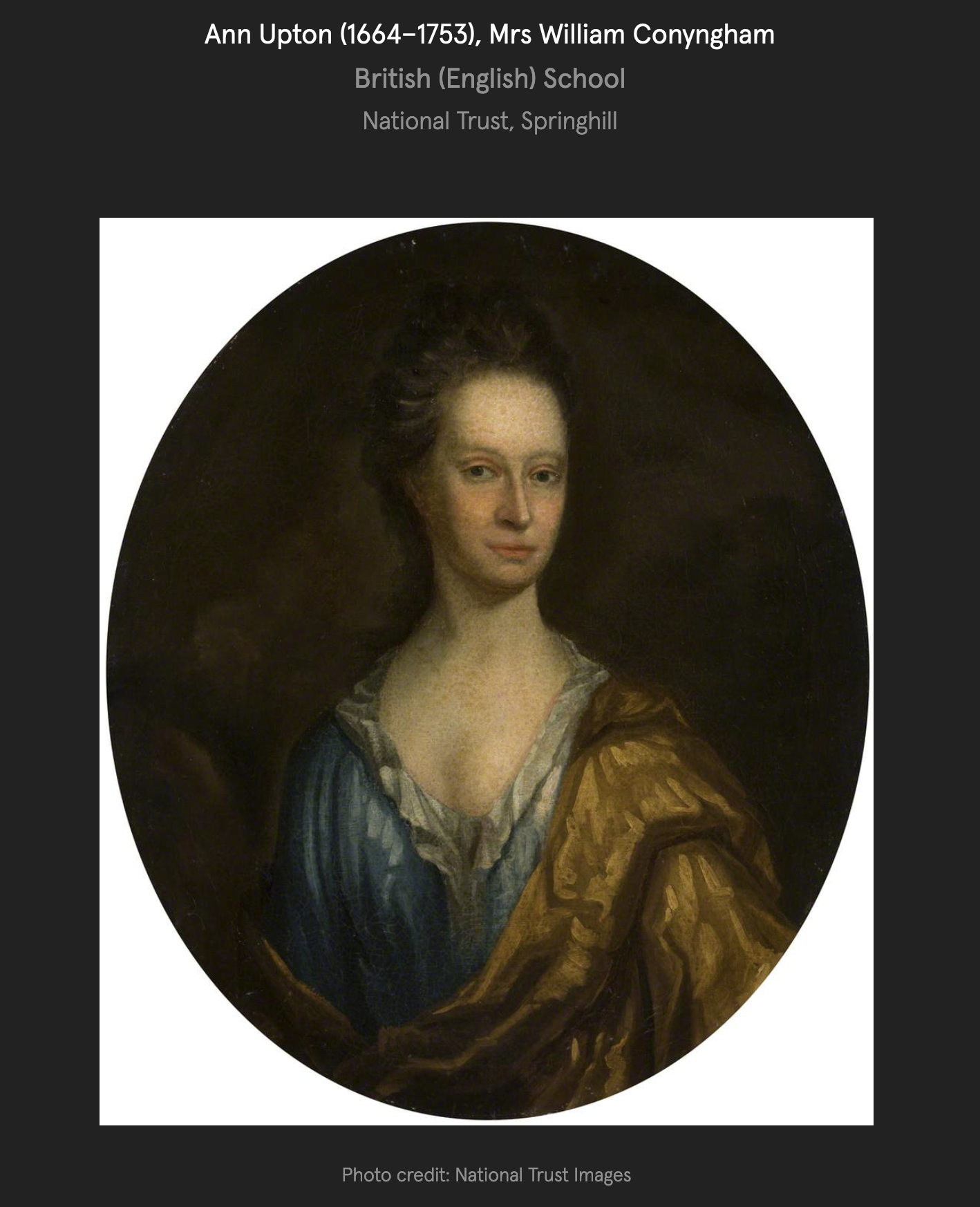
Colonel Cunningham’s son, William Conyngham, known as “Good Will” (d. 1721) married Ann, daughter of Arthur Upton, of Castle Norton (later Castle Upton), County Antrim, by his wife Dorothy, daughter of Colonel Michael Beresford, of Coleraine. William “Good Will” Conyngham died in 1721, and was succeeded by his nephew,
William Conyngham (d. 1721), “Good Will”, courtesy of National Trust. Springhill, County Derry.Ann Upton (1664-1753) wife of William “Goodwill” Conyngham (1660-1721), daughter of Arthur Upton (1623-1706) of Castle Upton, County Antrim, courtesy of National Trust. Springhill, County Derry.
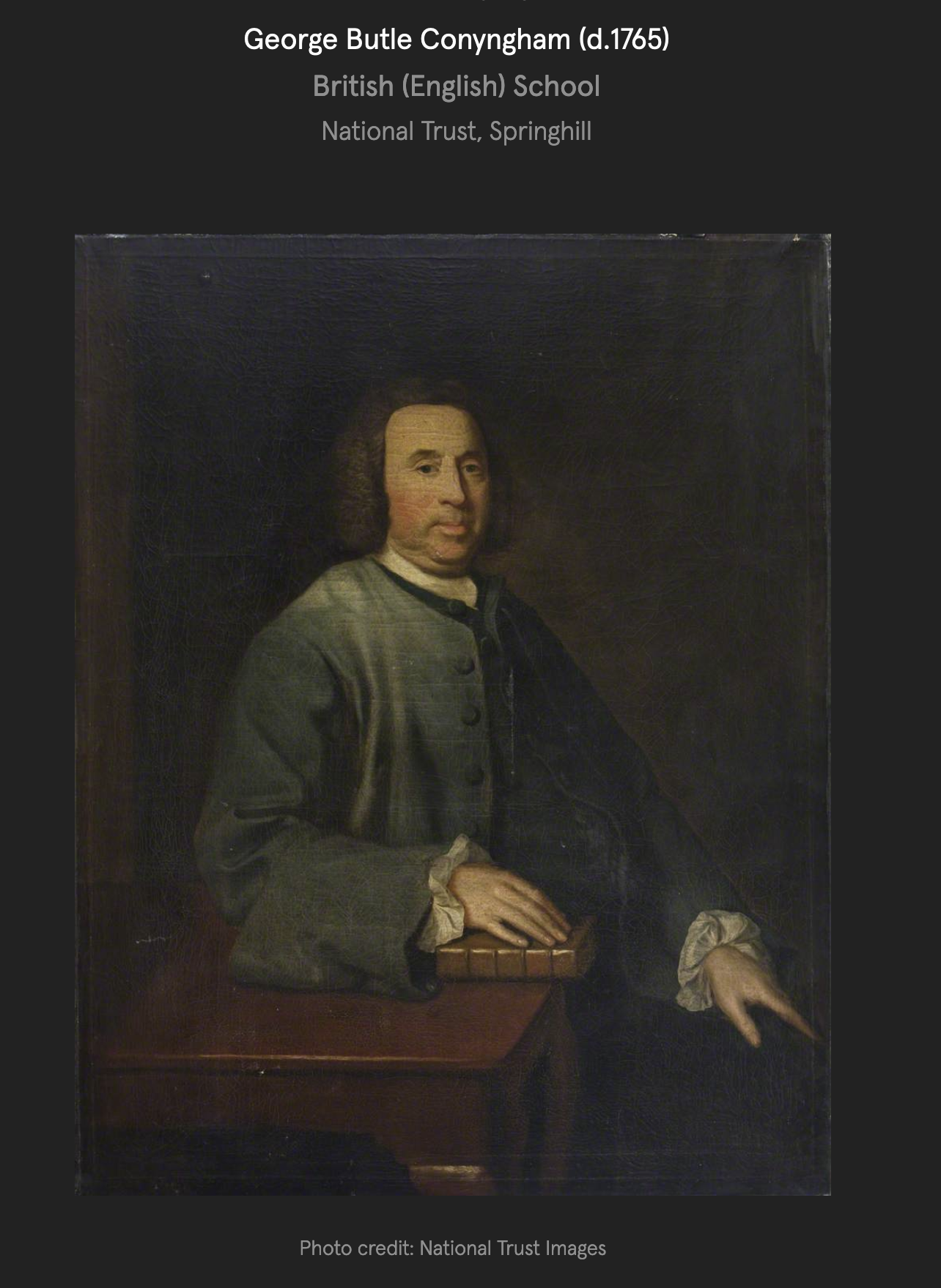
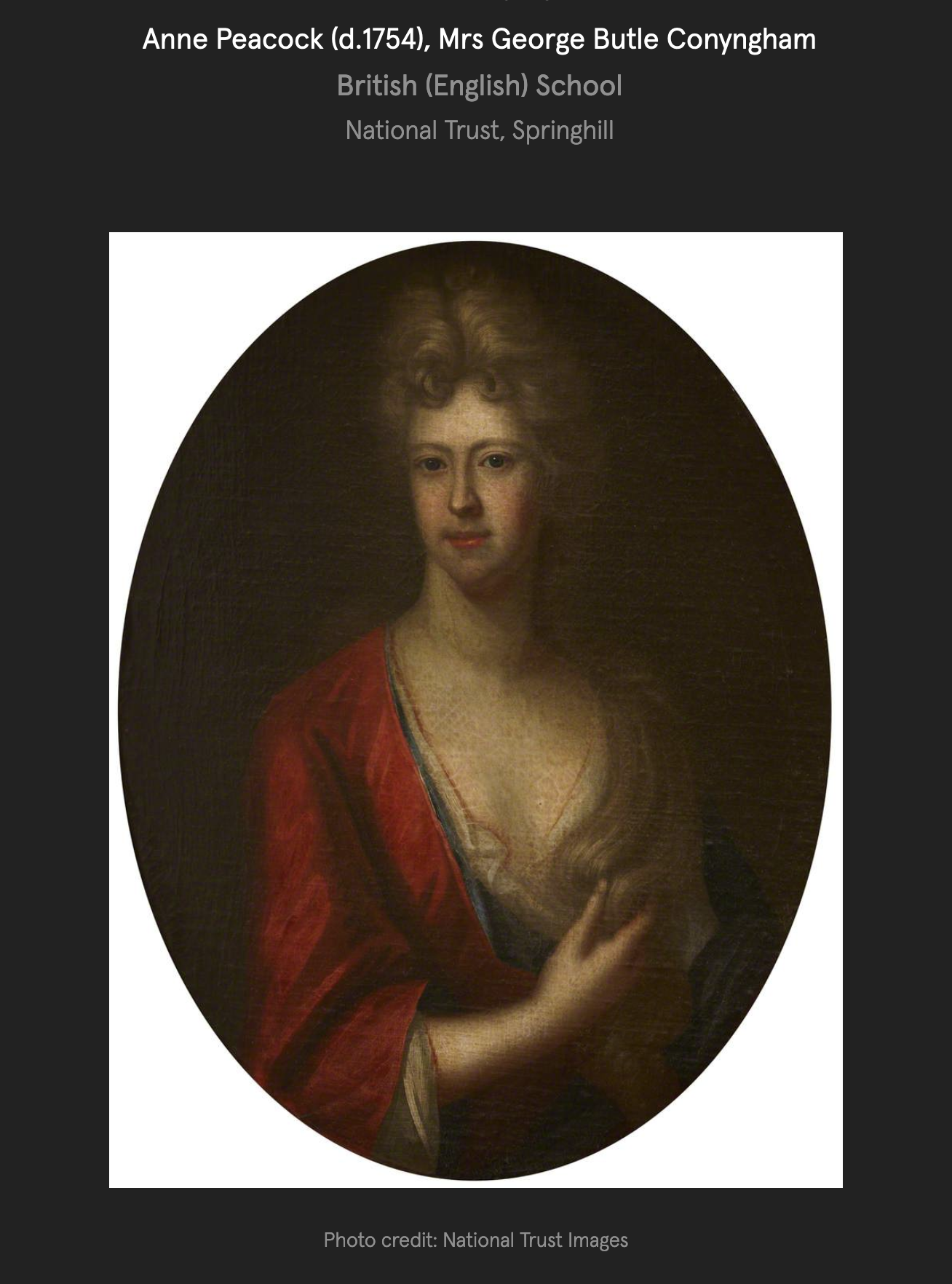
William “Goodwill” Conyngham was succeeded by his nephew George Butle Conyngham (d. 1765). He married , in 1721, Anne, daughter of Dr Upton Peacocke, of Cultra.
George Butle Conyngham (d. 1765), courtesy of National Trust, Springhill, County Derry.Anne Peacocke (d. 1754), Mrs George Butle Conyngham, courtesy of National Trust, Springhill, County Derry.
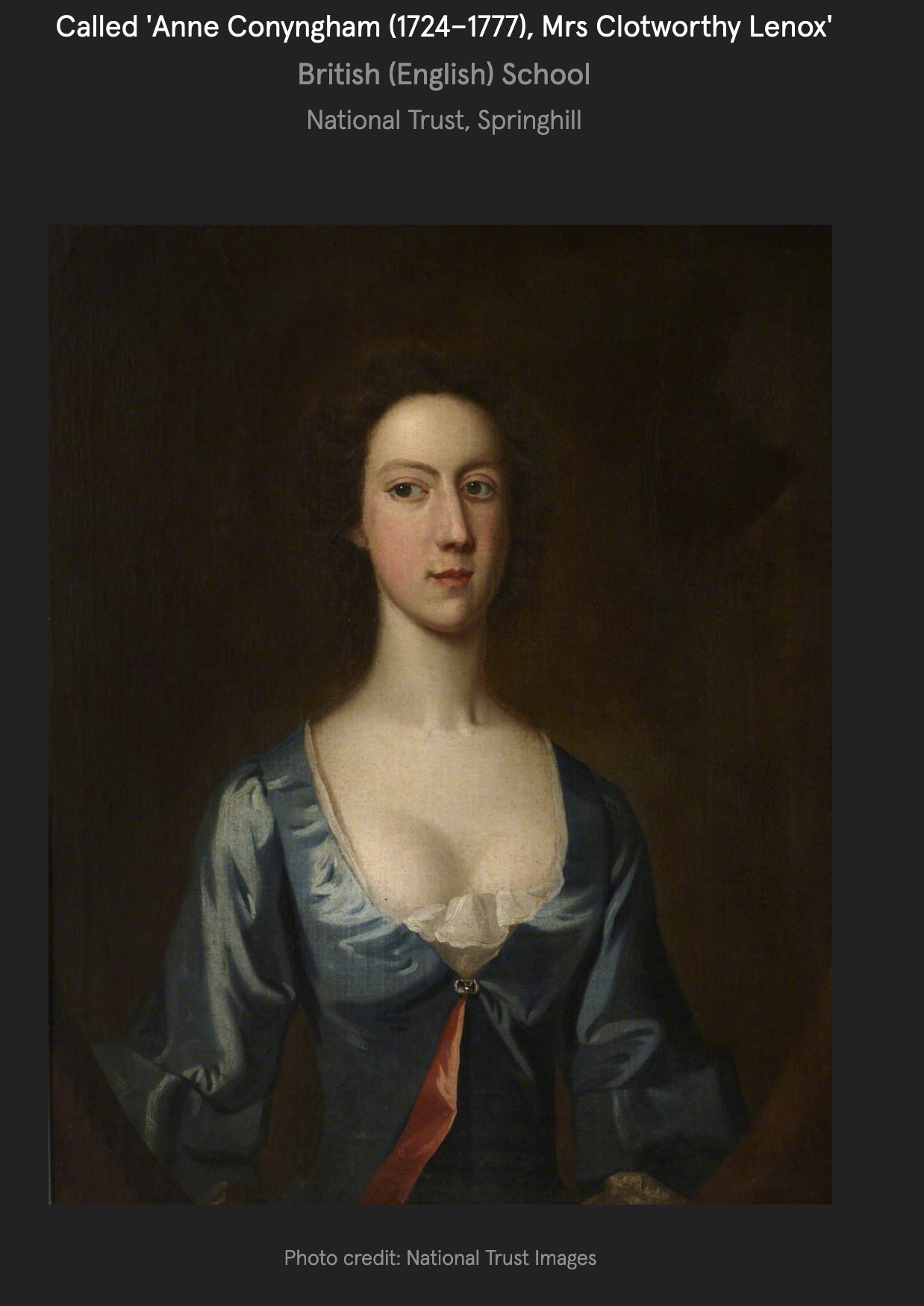
George Butle Conyngham and Anne née Peacocke had children William (1723-84), the heir to Springhill, and David, successor to his brother, John who died unmarried in 1775 and a daughter Anne (1724-1777) who married in 1745 Clotworthy Lenox.
Called Anne Conyngham (1724-1777) Mrs Clotworthy Lenox, courtesy of National Trust. Springhill, County Derry. She was the daughter of George Butle Conyngham.
David who succeeded his brother William died without issue so Springhill passed to his nephew George Lenox (1752-1816), son of his sister Anne, and George adopted the surname of Conyngham. George married, first, Jean née Hamilton (d. 1788), daughter of John Hamilton of Castlefin. They had a son, William Lenox-Conyngham (1792-1858).
Jean Hamilton (d. 1788), wife of William Conyngham (1723-1774) by Joshua Reynolds, courtesy of National Trust. Springhill, County Derry.
George married, second, in 1794, Olivia, fourth daughter of William Irvine, of Castle Irvine, County Fermanagh.
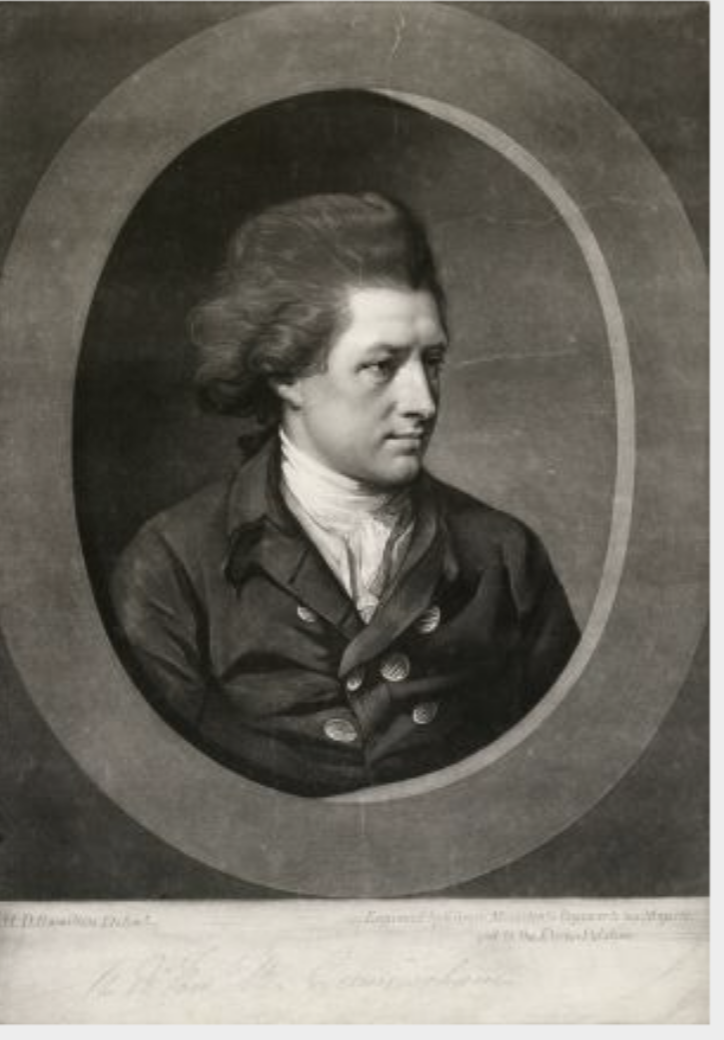
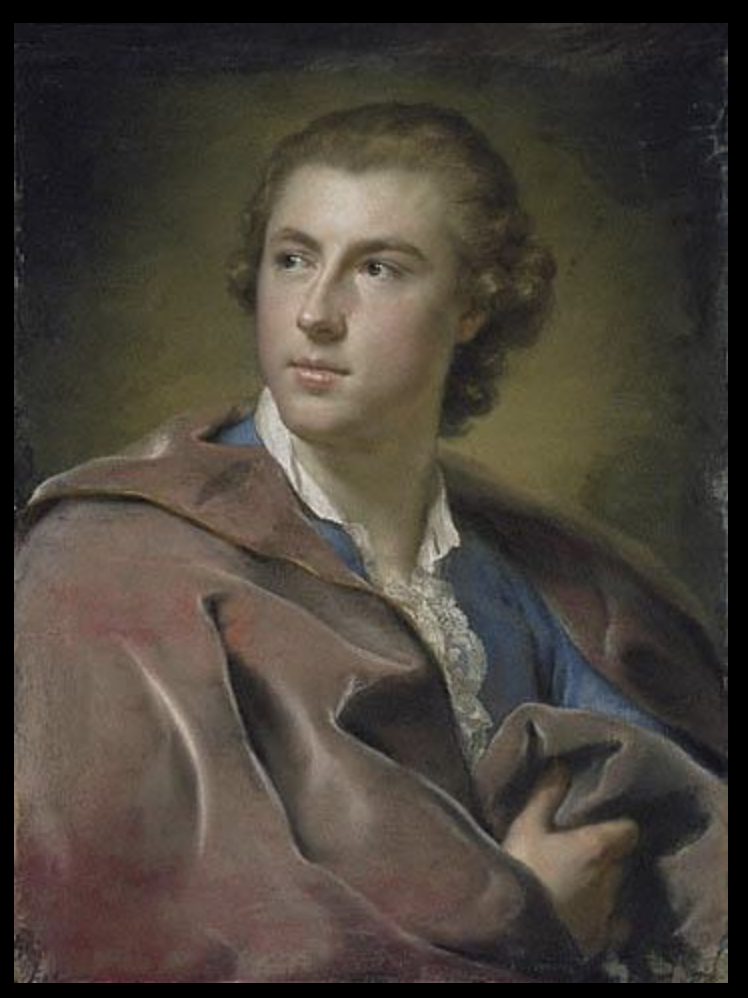
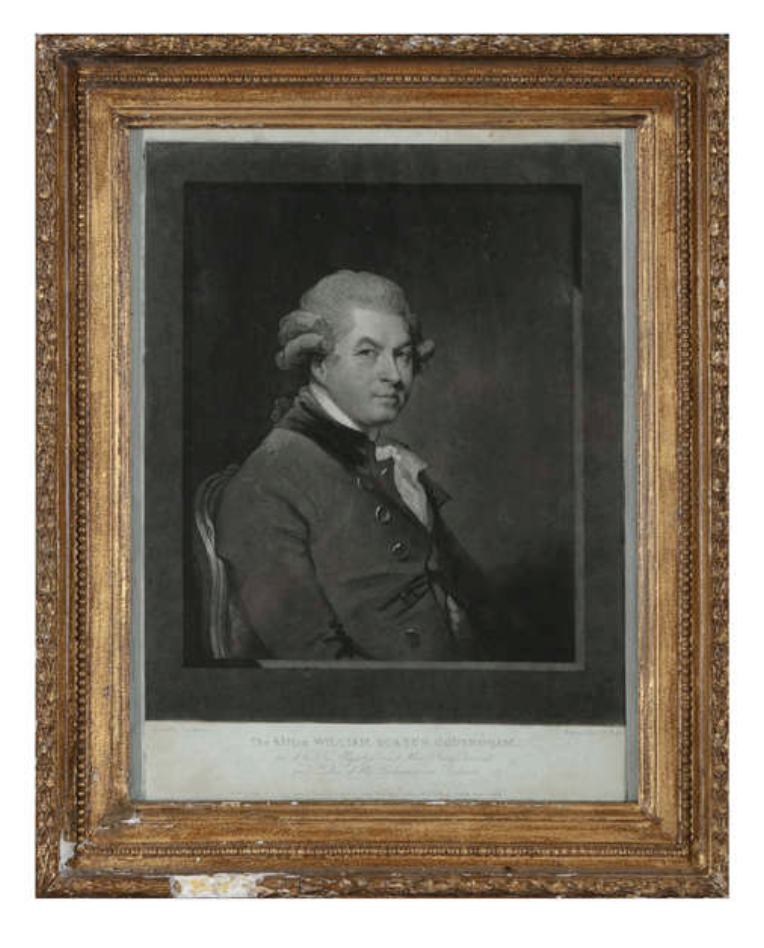
William Burton Conyngham (1733-1796), teller of the Irish Exchequer and treasurer of the Royal Irish Academy, 1780 engraver Valentine Green, after Hugh Douglas Hamilton, courtesy of National Gallery of Ireland.William Burton Conyngham (1733–1796) by Anton Raphael Mengs c. 1754-58, courtesy of wikipedia.He was the son of Francis Burton and Mary Conyngham, and he inherited Slane Castle as well as Donegal estates from his uncle William Conyngham who died in 1781.William Burton Conyngham, engraving After GILBERT STUART courtesy of Adams Country House Collections auction Oct 2023.
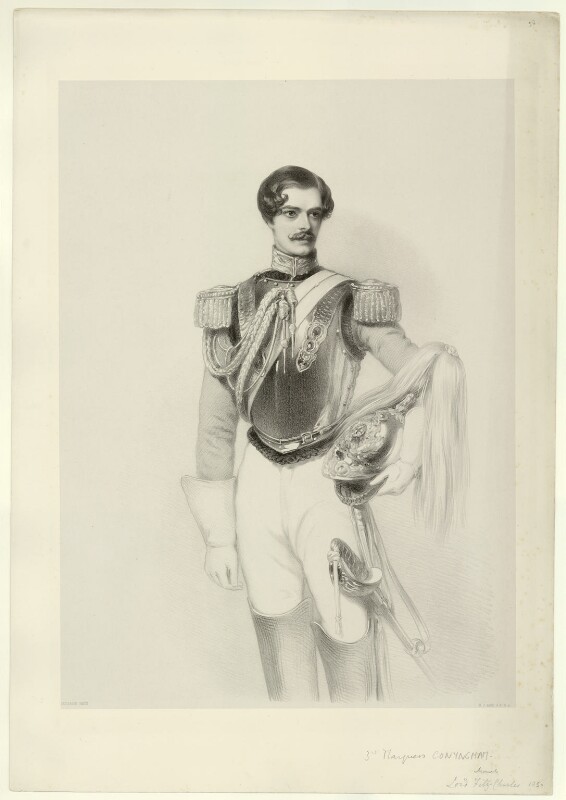
Slane Castle passed to William Burton Conyngham’s nephew Henry Conyngham (1766-1832) 1st Marquess Conyngham. Henry married Elizabeth Denison.
Timothy William Ferres also tells us of the Coote family. Charles Coote (1581-1642), 1st Baronet of Castle Cuffe, Queen’s County (Laois): “The Peerage” website tells us that in 1600 he went to Ireland as Captain of 100 Foot under 8th Lord Mountjoy, Queen Elizabeth I’s Lord Deputy of Ireland. He fought in the siege of Kingsale in 1602. He held the office of Provost Marshal of Connaught between 1605 and 1642, for life. He held the office of General Collector and Receiver of the King’s Composition Money for Connaught in 1613, for life. He held the office of Vice-President of Connaught in 1620. He was appointed Privy Counsellor (P.C.) in 1620. He was created 1st Baronet Coote, of Castle Cuffe, Queen’s Co. [Ireland] on 2 April 1621. He held the office of Custos Rotulorum of Queen’s County in 1634. He held the office of Member of Parliament (M.P.) for Queen’s County [Ireland] in 1639. Before 1641 he held Irish lands, mostly in Conaught, worth £4,000 a year. He held the office of Governor of Dublin in 1641. In 1642 he helped relieve Birr, King’s County (now County Offaly), during the Uprising by the Confederation of Kilkenny, his successful operations there and elsewhere in the area, which was called Mountrath, suggesting the title by which his son was ennobled.
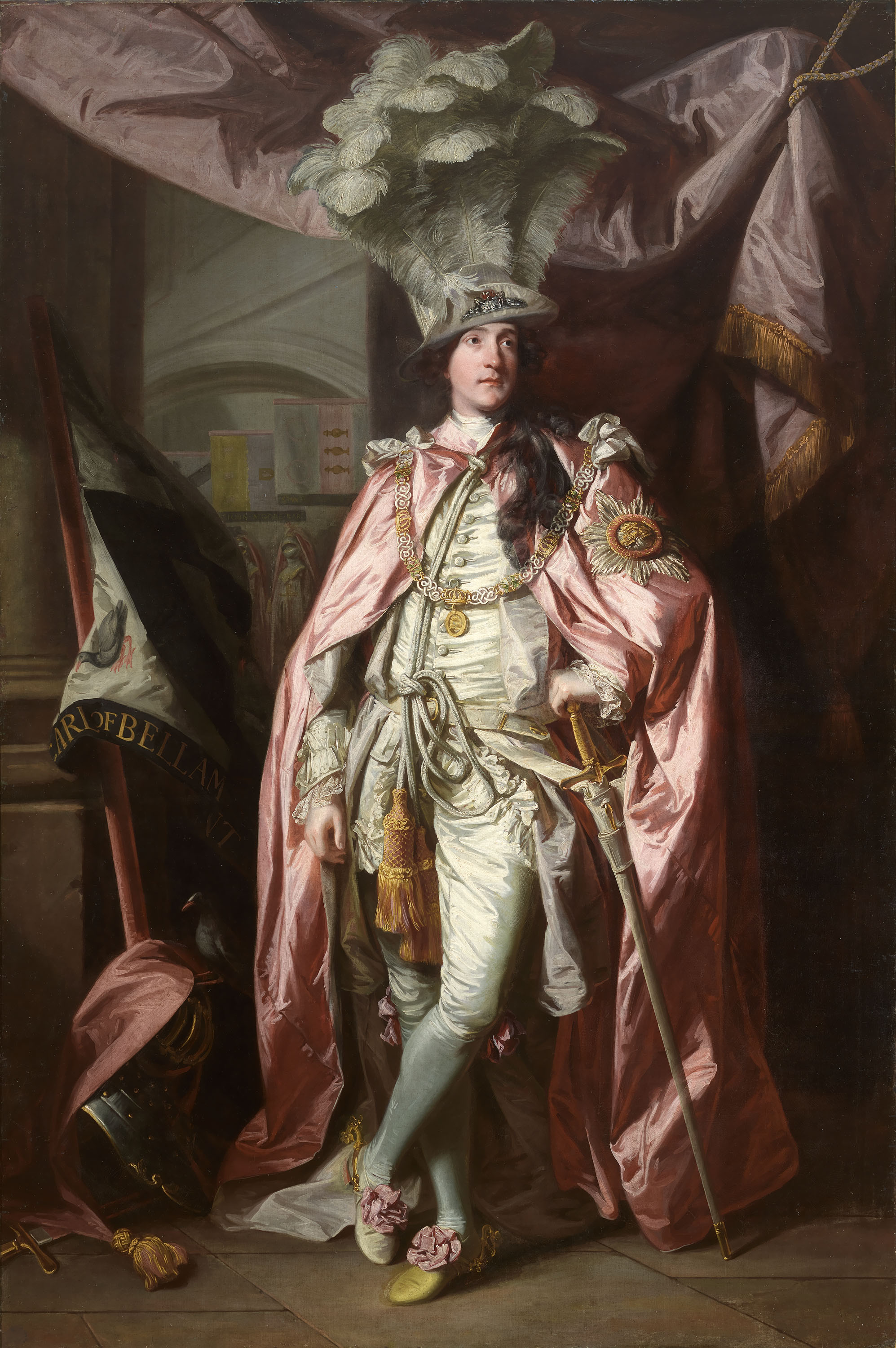
He married Dorothea, youngest daughter and co-heir of Hugh Cuffe, of Cuffe’s Wood, County Cork, and had issue, Charles (c.1610 –1661)1st Earl of Mountrath; Chidley (d. 1688) of Killester, Co Dublin and Mount Coote, County Limerick; RICHARD (1620-83) 1st Baron Coote of Colloony, County Sligo, ancestor of the EARL OF BELLAMONT (1st Creation); Thomas, of Coote Hill; Letitia (married Francis Hamilton, 1st Bt of Killaugh, co. Cavan).
Charles Coote 1st Earl of Mountrath (c.1610 –1661), 2nd Baronet, ca. 1642, before he was ennobled, Circle of William Dobson. By Christina Keddie – Own work, Public Domain, https://commons.wikimedia.org/w/index.php?curid=42002789
Charles Coote (c.1610 –1661), 1st Earl of Mountrath married first, Mary Ruish, who gave birth to his heir, Charles Coote (d. 1672) 2nd Earl of Mountrath, Queen’s County. The 1st Earl of Mountrath, Queen’s County, also had the titles 1st Baron Coote of Castle Cuffe, in Queen’s Co. [Ireland] and 1st Viscount Coote of Castle Coote, Co. Roscommon [Ireland].
Charles Coote (c.1610 –1661), 1st Earl of Mountrath married secondly Jane Hannay, and she had a son Richard (1643-1700), who married Penelope, daughter of Arthur Hill of Hillsborough, County Down. Their daughter Penelope Rose married Charles Boyle (d. 1732) 2nd Viscount Blesington. Another daughter, Jane (d. 1729) married William Evans, 1st and last Baronet of Kilcreene, County Kilkenny.
Charles Coote, 2nd Earl of Mountrath married Alice, daughter of Robert Meredyth of Greenhills, County Kildare. His daughter Anne (d. 1725) married Murrough Boyle, 1st Viscount Blesington (d. 1718). His son Charles (1656-1709) succeeded as 3rd Earl of Mountrath, and he was father to the 4th, 5th and 6th Earls.
The son of Algernon Coote (1689-1744) 6th Earl of Mountrath, Charles Henry Coote (d. 1802) 7th Earl of Mountrath had no legitimate male issue and the earldom and its associated titles created in 1660 died with him. The barony of Castle Coote passed according to the special remainder to his kinsman, Charles Coote. The baronetcy of Castle Cuffe also held by the Earl passed to another kinsman, Sir Charles Coote, 9th Baronet.
Let us return now to Charles Coote (1581-1642), 1st Baronet of Castle Cuffe, Queen’s County (Laois) and trace the line of his younger son, RICHARD COOTE (1620-83), for his hearty concurrence with his brother, SIR CHARLES, 2nd Baronet, in promoting the restoration of CHARLES II, was rewarded with the dignity of a peerage of the realm; the same day that his brother was created Earl of Mountrath, Richard Coote was created, in 1660, Baron Coote, of Colloony.
In 1660, Richard was appointed Major to the Duke of Albemarle’s Regiment of Horse; and the same year he was appointed one of the commissioners for executing His Majesty’s declaration for the settlement of Ireland. He was, in 1675, appointed one of the commissioners entrusted for the 49 Officers. In 1676, the 1st Baron resided at Moore Park, County Meath, and Piercetown, County Westmeath. He married Mary, second daughter of George, Lord St. George, and had issue: RICHARD (1636-1701) his successor; Thomas (d. 1741) Lætitia (married Robert Molesworth, 1st Viscount Molesworth of Swords); Mary (married William Stewart, 1st Viscount Mountjoy); Catherine (married Ferdinando Hastings); Elizabeth (married Lt.-Gen. Richard St. George).
Following his decease, in 1683, he was interred at Christ Church Cathedral, Dublin. He was succeeded by his eldest son,
RICHARD, 2nd Baron (1636-1701), Governor of County Leitrim, 1689, Treasurer to the Queen, 1689-93, MP for Droitwich, 1689-95, who was, in 1688, one of the first to join the Prince of Orange. In 1689, he was attainted in his absence by the Irish Parliament of JAMES II. His lordship was created, in 1689, EARL OF BELLAMONT, along with a grant of 77,000 acres of forfeited lands.
Richard Coote (1636-1700/01) 1st Earl Bellomont By Samuel Smith Kilburn (d. 1903) – New York Public Library digital libraryhttp//:digitalgallery.nypl.org/nypldigital/id?423861, Public Domain, https//:commons.wikimedia.org/w/index.php?curid=13014278
Richard 1st Earl of Bellomont was Governor of Massachusetts, 1695, and Governor of New York, 1697-1701. The King had sent Lord Bellomont to New York to suppress the “freebooting.” Unfortunately he was responsible for outfitting the veteran mariner William Kidd, who turned into “Captain Kidd,” who terrorised the merchants until his capture in 1698.
According to Cokayne “he was a man of eminently fair character, upright, courageous and independent. Though a decided Whig he had distinguished himself by bringing before the Parliament at Westminster some tyrannical acts done by Whigs at Dublin.”
The 1st Earl of Bellomont wedded, in 1680, Catharine, daughter and heir of Bridges Nanfan, of Worcestershire, and had issue, NANFAN (1681-1708) his successor as 2nd Earl of Bellomont, and RICHARD (1682-1766), who succeeded his brother.
NANFAN, 2nd Earl (1681-1708) married Lucia Anna van Nassau (1684-1744), daughter of Henry de Nassau, Lord Overkirk, in 1705/6 at St Martin-in-the-Fields Church, London. Nanfan died at Bath, Somerset, from palsy, without male issue, when the family honours devolved upon his brother, RICHARD, 3rd Earl (1682-1766), who, in 1729, sold the family estate of Colloony, County Sligo, for nearly £17,000.
In 1737, he succeeded his mother to the estates of Birtsmorton, Worcestershire. Macaulay described him as “of eminently fair character, upright, courageous and independent.” On his death the earldom expired.
The last Earl was succeeded in the barony of Coote by his first cousin once removed, CHARLES, 5th Baron (1736-1800), KB PC, son of Charles Coote [1695-1750] High Sheriff of County Cavan, 1719, MP for Granard, 1723-27, Cavan County, 1727-50MP for County Cavan, 1761-6, who was son of the HON THOMAS COOTE (c. 1655-1741) a Justice of the Court of the King’s Bench of Ireland, younger son of the 1st Baron. This Thomas’s daughter Elizabeth married Mervyn Pratt (1687-1751) of Cabra Castle.
Sir Charles succeeded his cousin, Richard, in 1766, as 5th Baron Coote; and was created, in 1767, EARL OF BELLAMONT (3rd creation). His lordship was created a baronet, in 1774, designated of Donnybrooke, County Dublin, with remainder to his natural son, Charles Coote, of Dublin.
SIR CHARLES COOTE (1736-1800), KB PC, of Coote Hill (afterwards renamed Bellamont Forest) had an illegitimate son, Charles Coote (1765-1857) who despite his illegitimacy became 2nd Baronet of Bellamont). Charles 1st Earl married, in 1774, the Lady Emily Maria Margaret FitzGerald, daughter of James, 1st Duke of Leinster, and had issue, Charles, Viscount Coote (died age seven, 1778-86); Mary; Prudentia; Emily; Louisa. Following his death in 1800, the titles became extinct as he left no legitimate male issue, though he was succeeded in the baronetcy according to the special remainder by his illegitimate son Charles, 2nd Baronet.
Finally, let us return now to Charles Coote (1581-1642), 1st Baronet of Castle Cuffe, Queen’s County (Laois) and trace the line of his son Chidley Coote (d. 1668). Chidley lived in Mount Coote, County Limerick (later called Ash Hill, a section 482 property, see my entry). He had a son, Chidley (d. 1702) who married Catherine Sandys. They had a daughter Catherine (d. 1725) who married Henry Boyle 1st Earl of Shannon. Another daughter, Anne, married Bartholomew Purdon, MP for Doneraile and later Castlemartyr of County Cork. They had a son Reverend Chidley Coote (1678-1730) who inherited Ash Hill in County Limerick. He married Jane Evans (d. 1763) and it was their grandson Charles Henry Coote (1754-1823) who succeeded as 2nd Baron Castle Coote in 1802. He was the son of Reverend Charles Coote (1713-1796) and Grace Tilson (d. 1766). Another son was Lt.-Gen. Sir Eyre Coote (1762-1823).
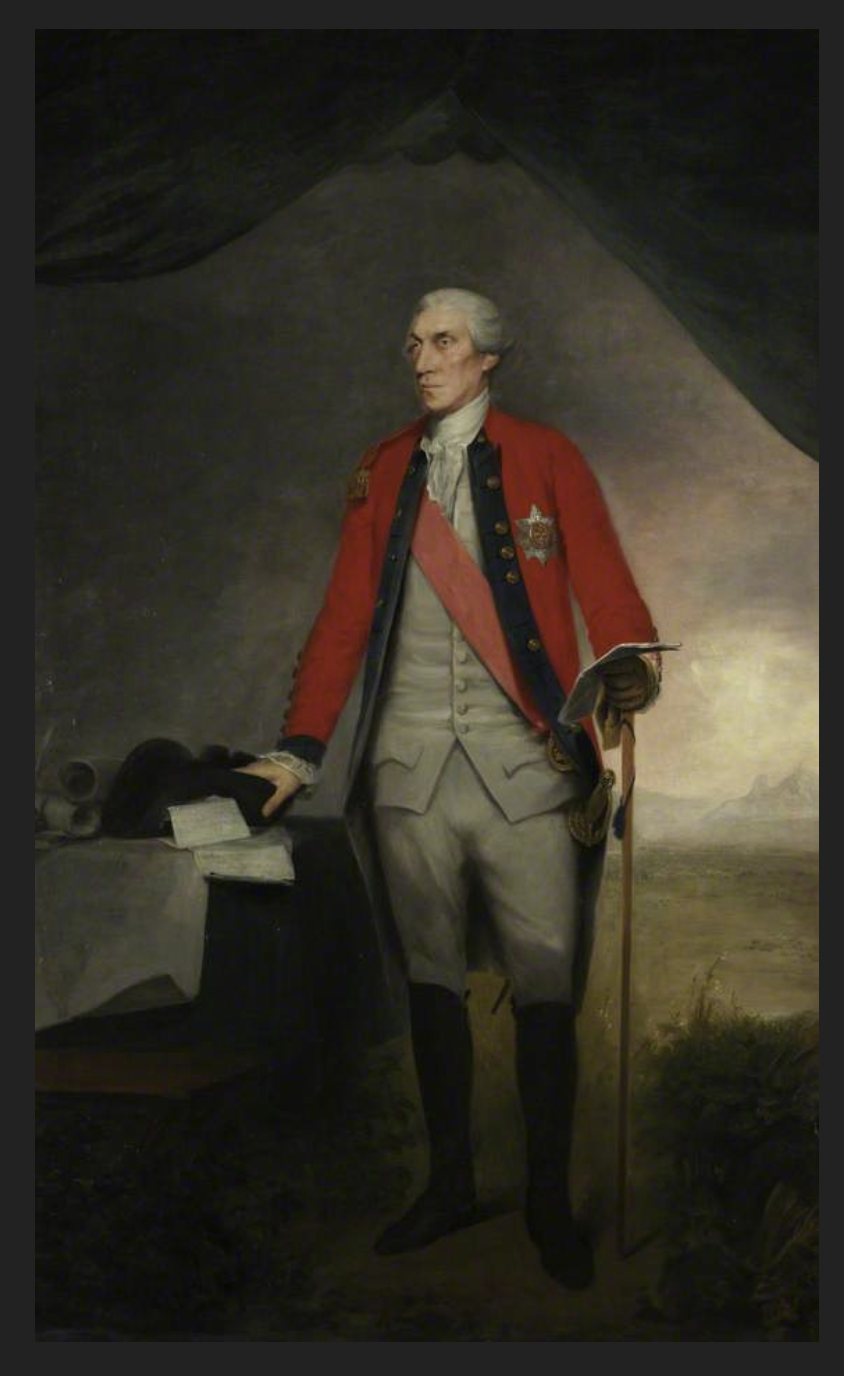
Major General Eyre Coote (1762-1823), Governor of Jamaica, 1805 by engraver Antoine Cordon after J.P.J. Lodder, courtesy of National Gallery of Ireland.He was son of Reverend Charles Coote (1713-1796) and Grace Tilson (d. 1766).Eyre Coote (1726-1783) attributed to Henry Robert Morland, c. 1763, National Portrait Gallery of London NPG124. He was the son of Reverend Chidley Coote (1678-1730) who inherited Ash Hill in County Limerick and Jane Evans (d. 1763).Lieutenant General Sir Eyre Coote (1726-1783) Commander-in-Chief in the East Indies (1777-1783) by John Thomas Seton, courtesy of the British Library.He was the son of Reverend Chidley Coote (1678-1730) who inherited Ash Hill in County Limerick and Jane Evans (d. 1763).
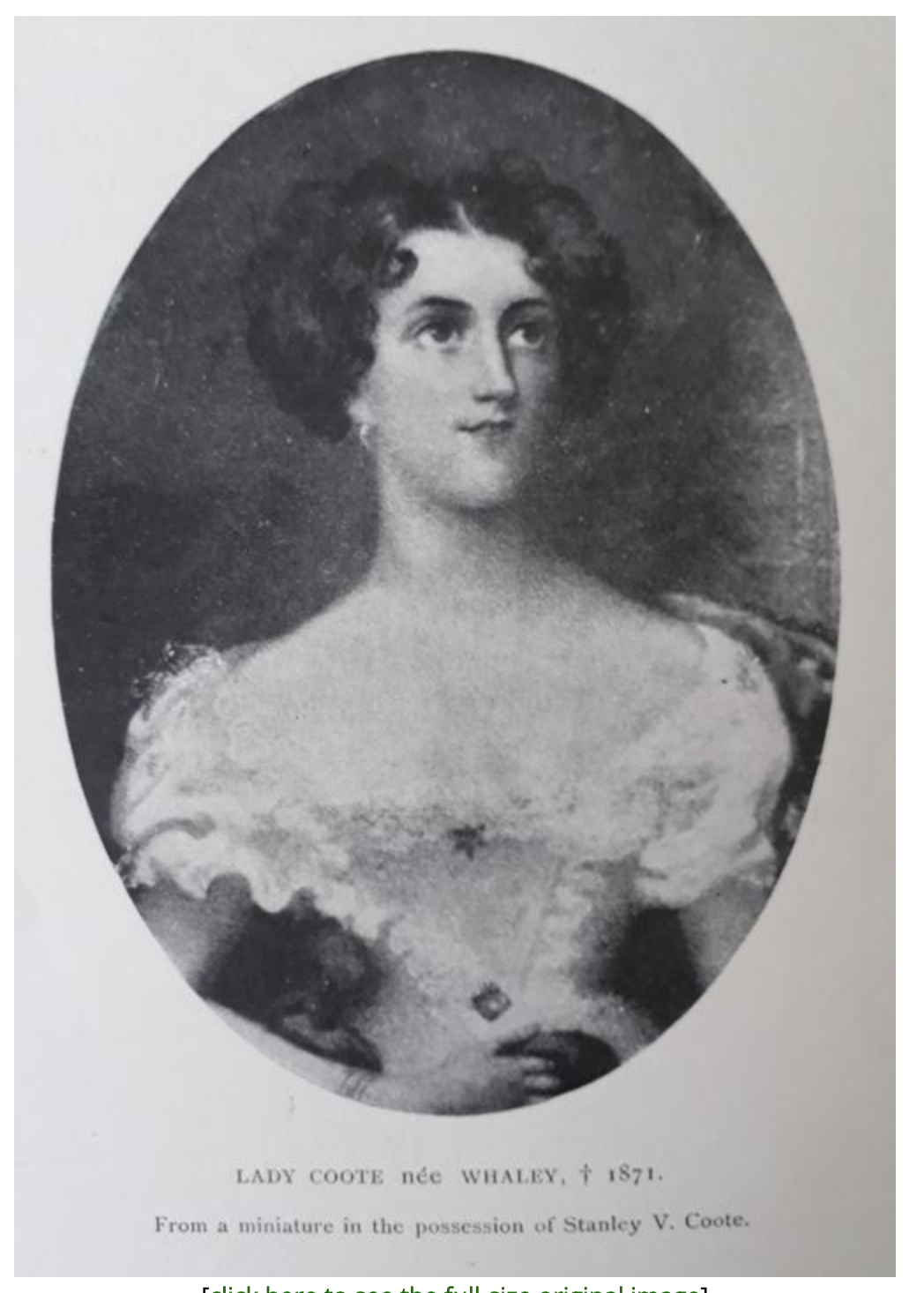
Reverend Chidley Coote (1678-1730) who inherited Ash Hill and Jane Evans (d. 1763) had a daughter Elizabeth who married John Bowen. Reverend Childley Coote and Jane Evans’s son Robert (d. 1745) inherited Ash Hill and married his cousin Anne Purdon, daughter of Bartholomew Purdon and Anne Coote. Robert Coote and Anne Purdon’s grandson was Charles Henry Coote (1792-1864) who succeeded as 9th Baronet of Castle Cuffe, Queen’s County, who married Caroline Elizabeth Whaley (d. 1871), daughter of John Whaley (d. 1847) of Dublin.
Help me to pay the entrance fee to one of the houses on this website. This site is created purely out of love for the subject and I receive no payment so any donation is appreciated!
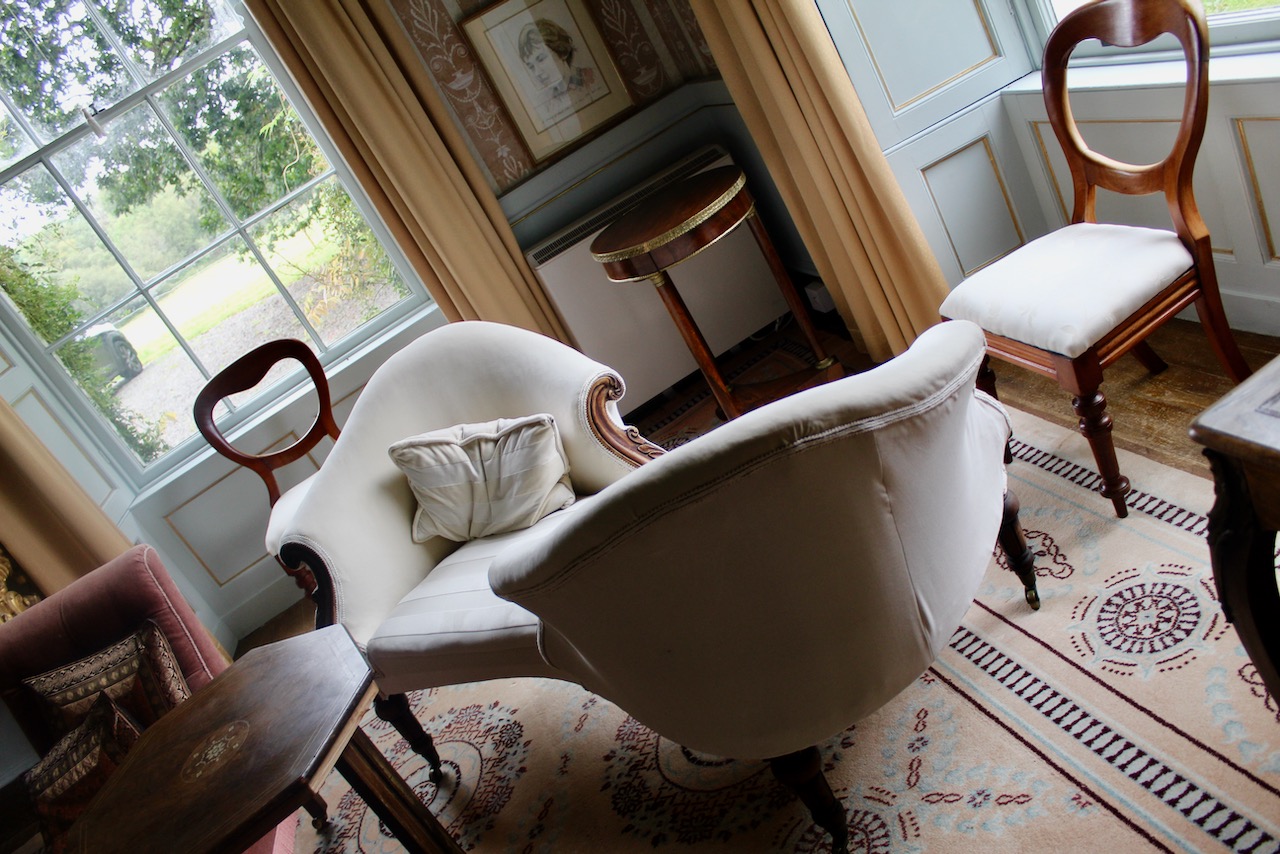
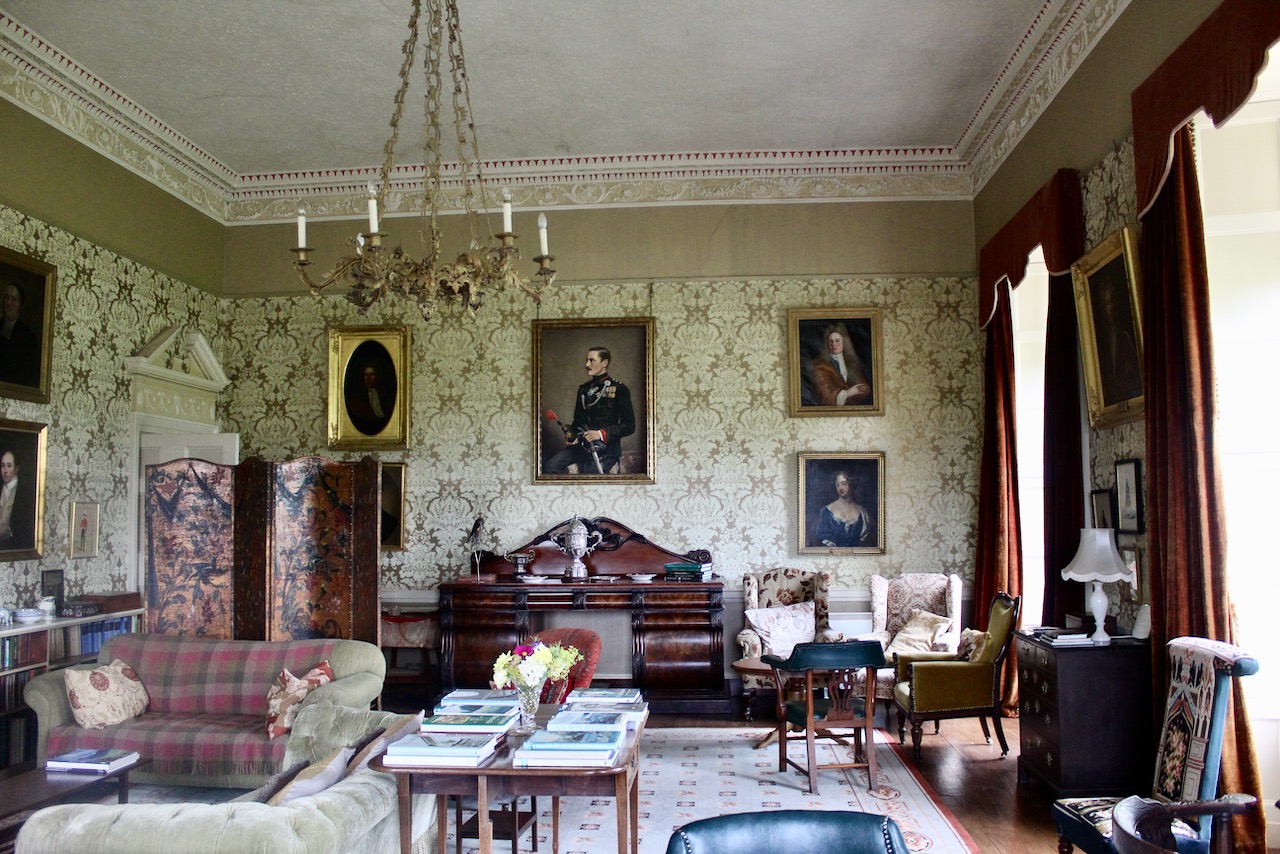
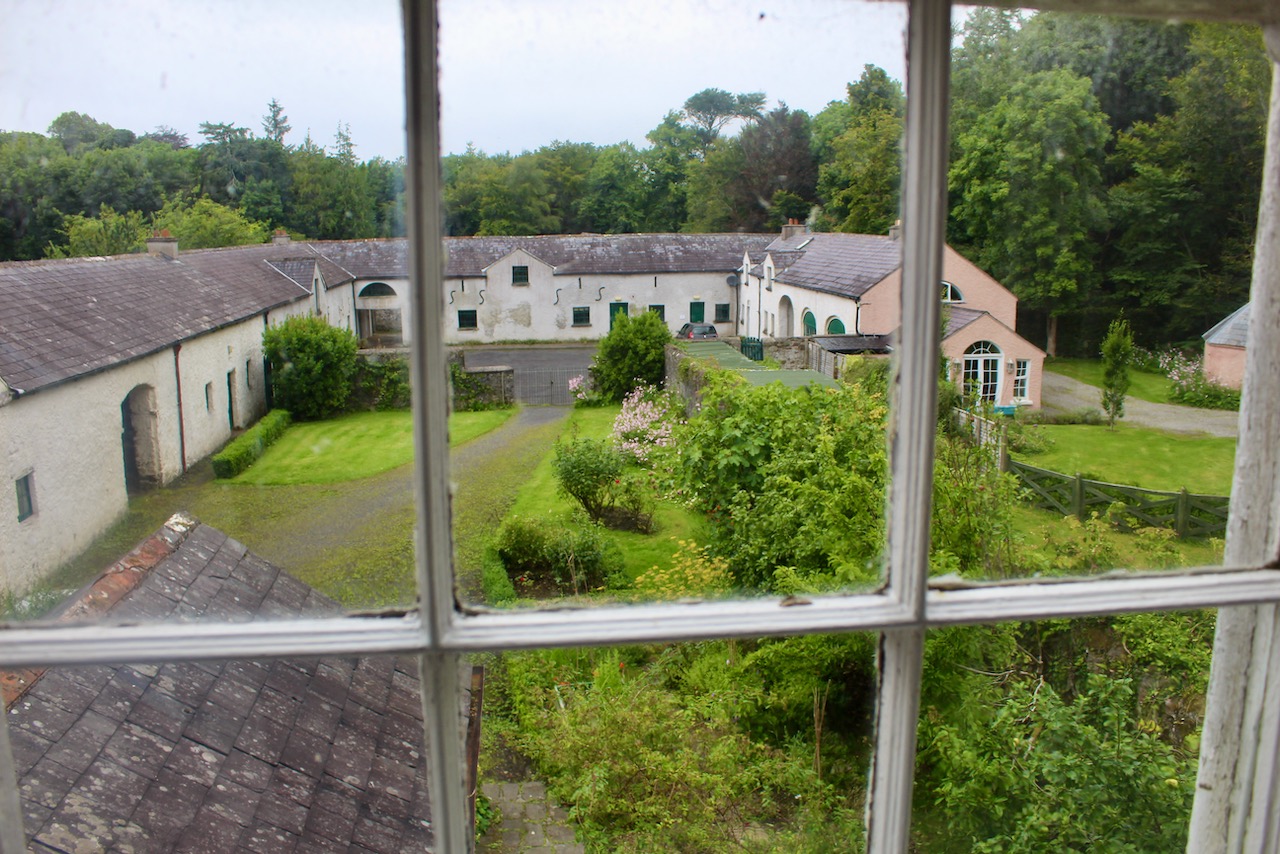
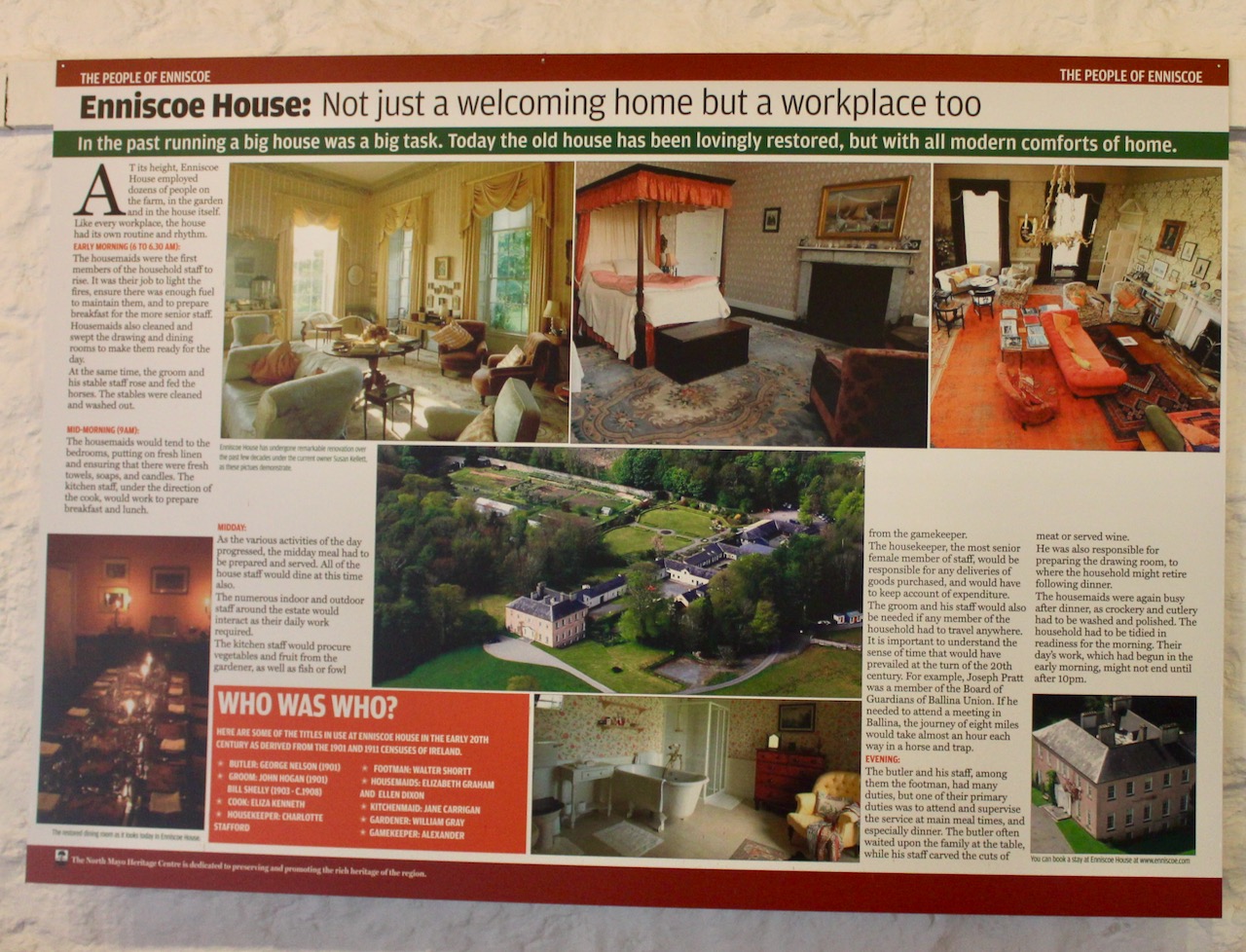
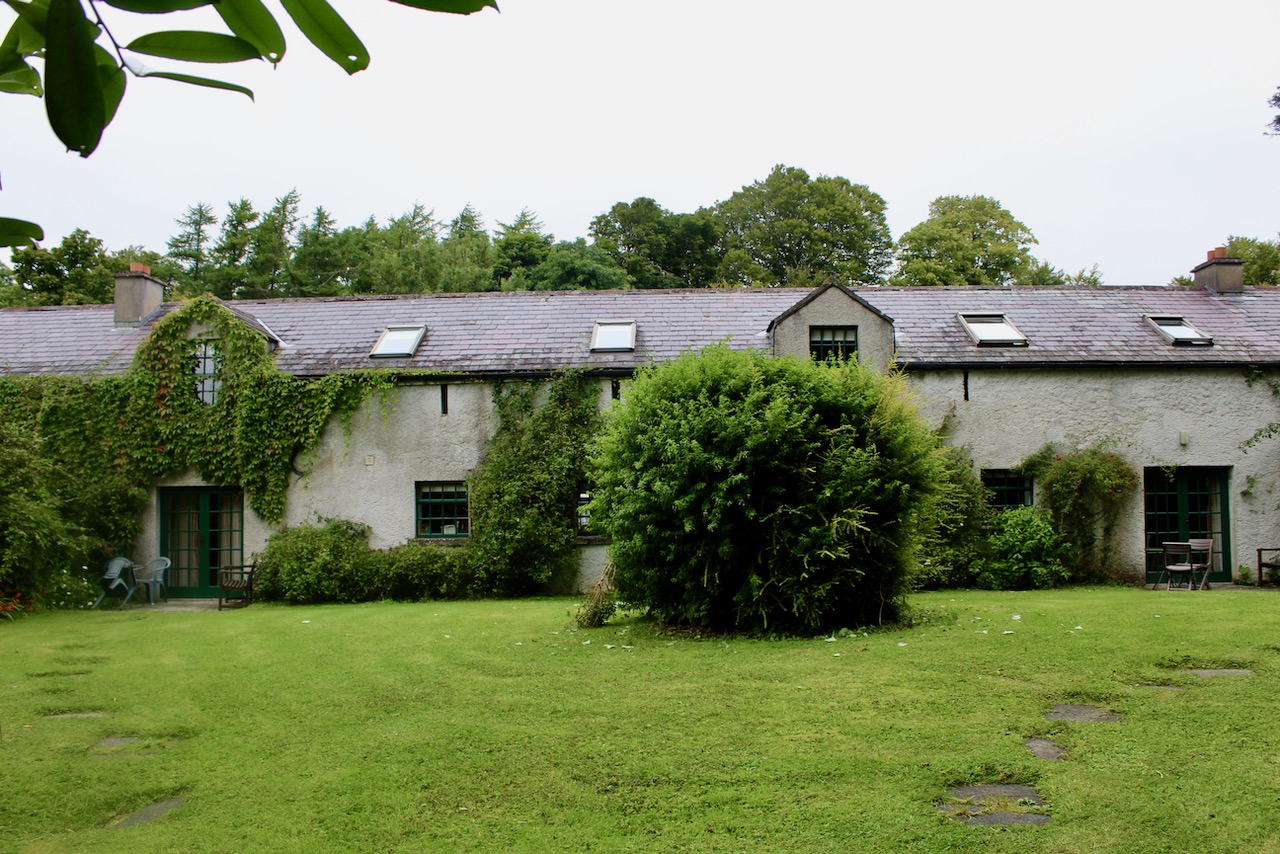
We visited Enniscoe House in August, during Heritage Week. I was delighted that the owner, Susan Kellett, had heard of and likes my website! She gave us a lovely tour of her home, which she also runs as an upmarket guest house. One can stay in the beautiful bedrooms in the house where breakfast is provided and dinner is also an option, or in self-catering accommodation in converted stables.
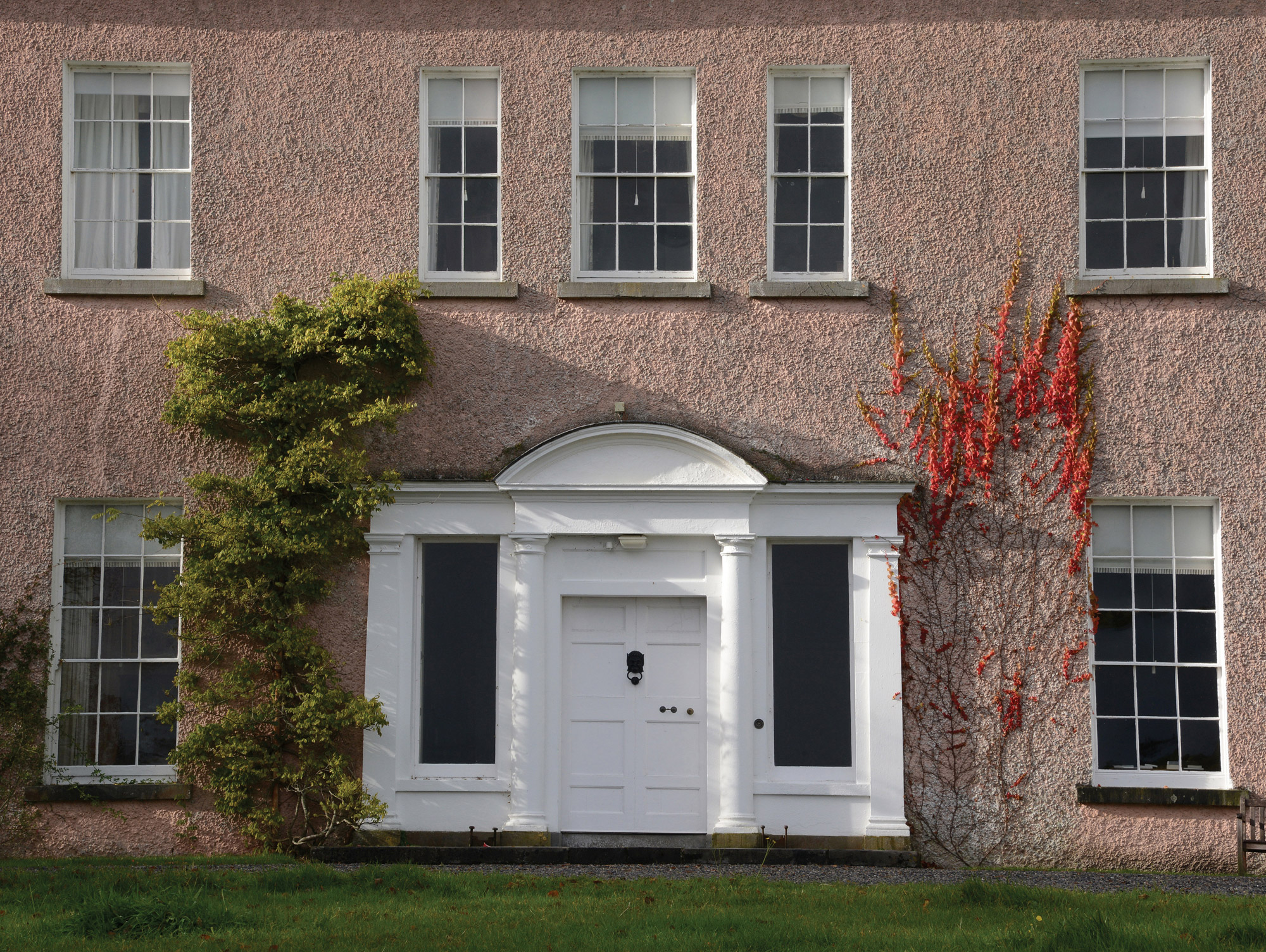
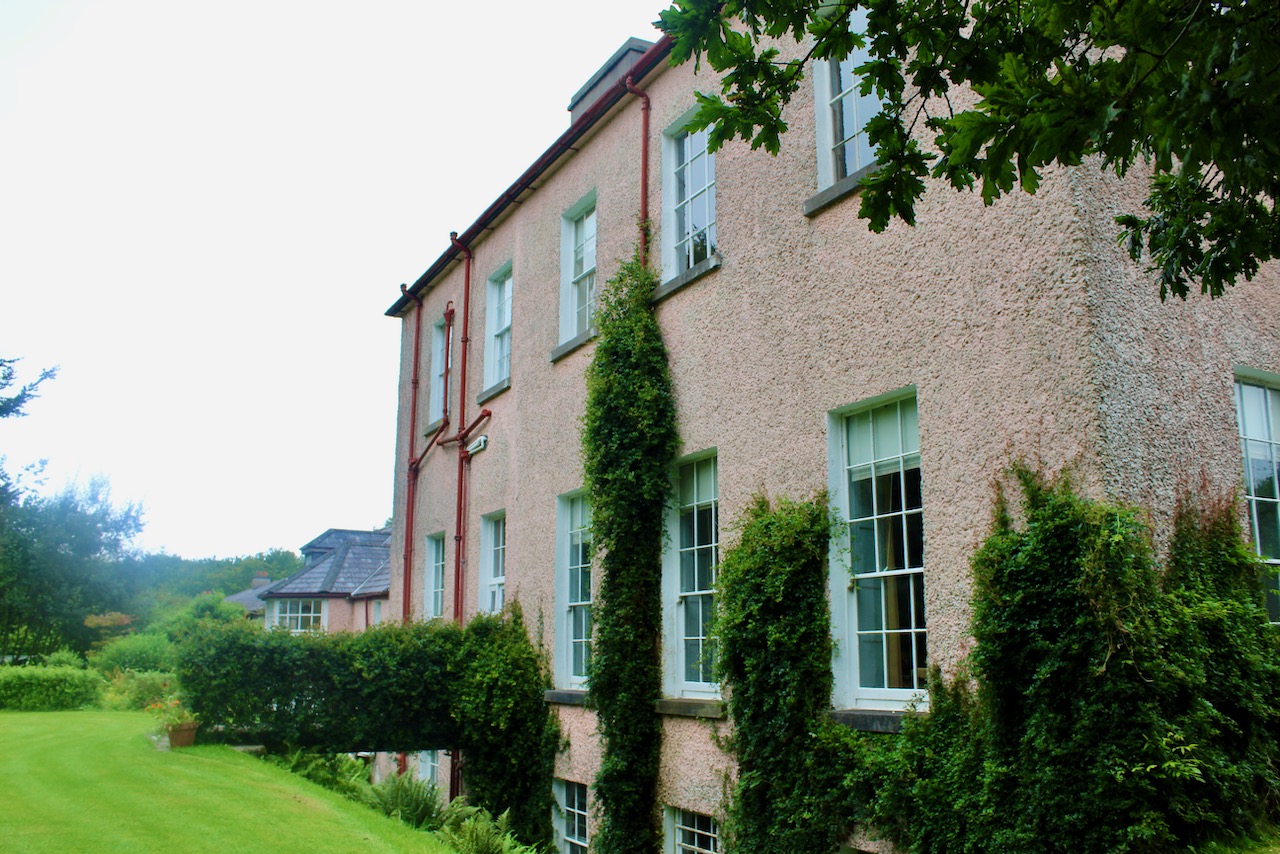
Enniscoe house is a two storey house with a five bay entrance front, with a central window in the upper storey above the pedimented tripartite doorway. The doorway has Doric columns and pilasters, and sidelights. The side elevation has five bays. [1]
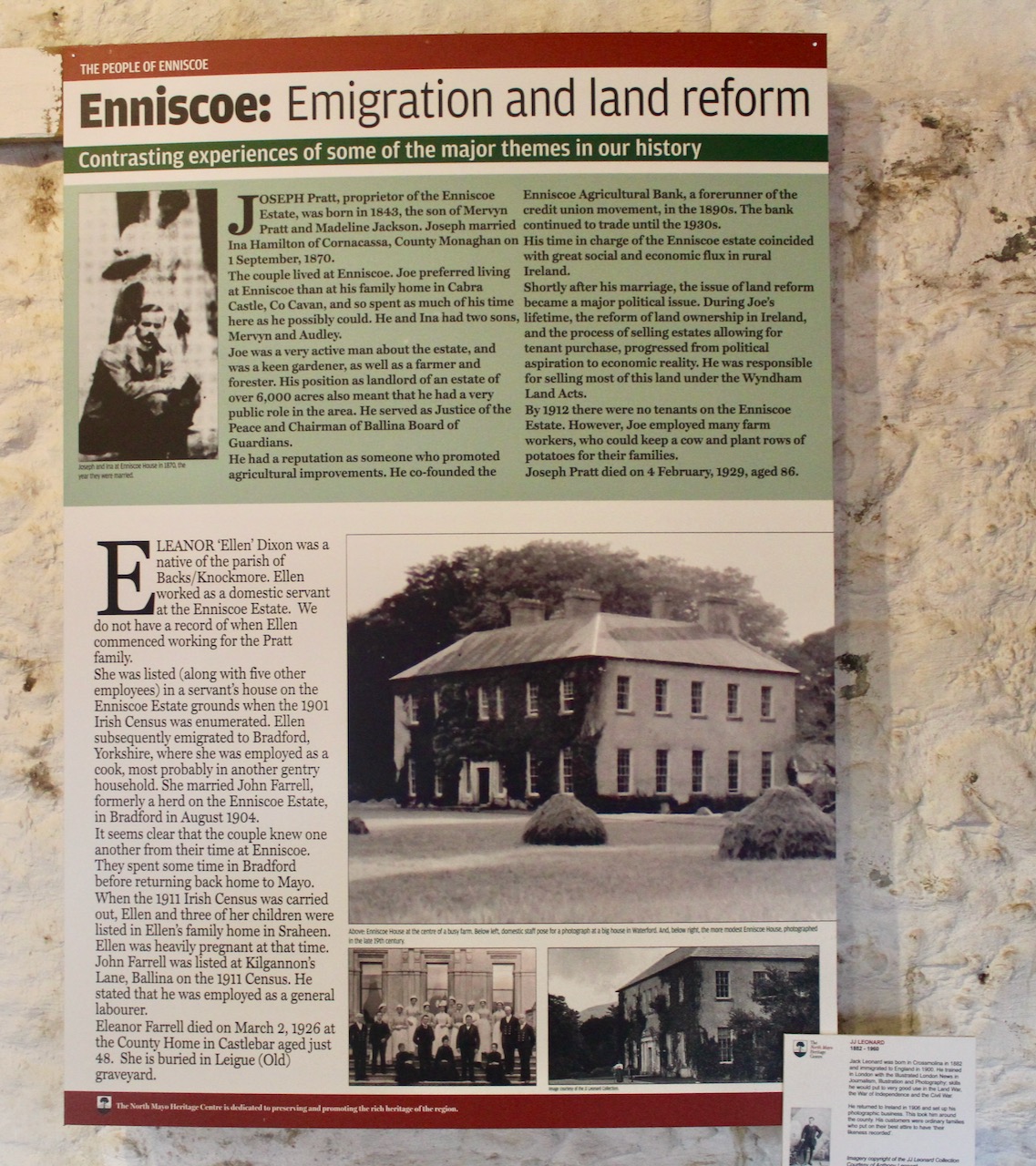
Susan’s father inherited the property from his cousin, Mervyn Pratt (1873-1950). Mervyn’s grandfather, another Mervyn Pratt (1807-1890) married Madeline Eglantine Jackson, heiress, from Enniscoe. We came across Mervyn Pratt before, when we visited Cabra Castle. [2]
Mervyn and Madeline Eglantine’s daughter Louisa Catherine Hannah Pratt, the sister of Joseph, the second Mervyn’s father, married Thomas Rothwell from Rockfield, County Meath (which is currently for sale for €1.75 million [3]), and Susan’s father was their descendant. [4]
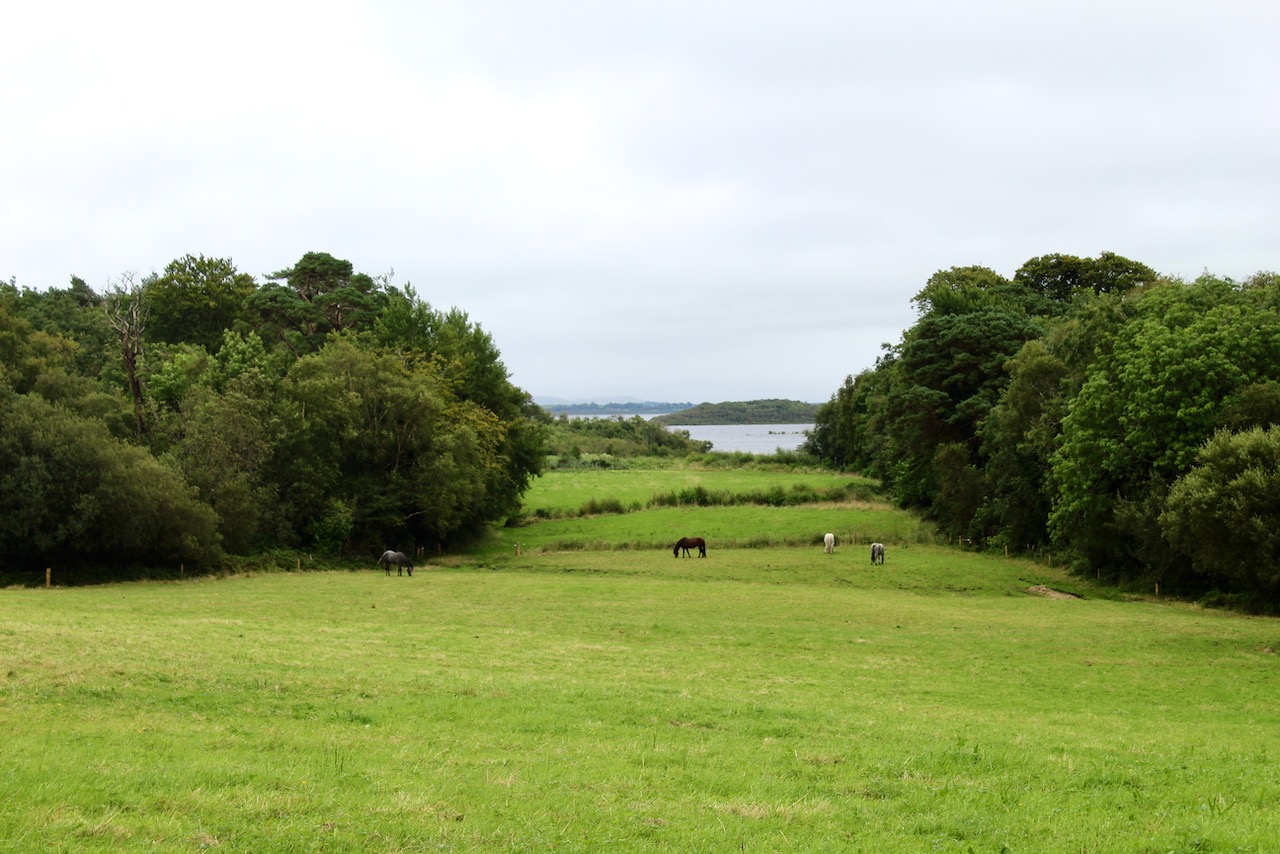
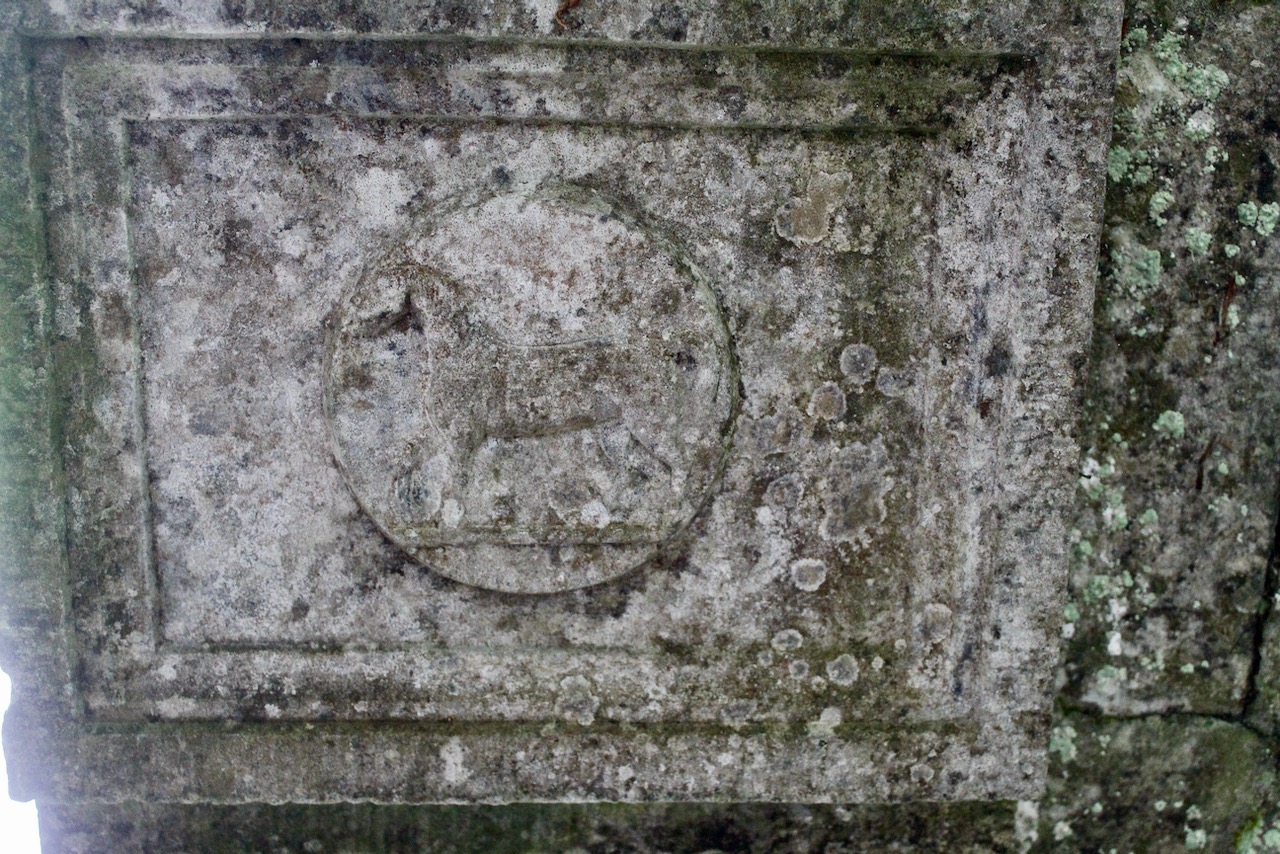
An informative booklet about Enniscoe which Susan gave me tells us that in ancient times, there was a castle at “Inniscoe,” one of the chief residences of the Kings of Hy-Fiachrach (who claimed descent from Fiachrae, brother of Niall of the Nine Hostages). The booklet tells us that traces of early earthworks can still be found. “Innis Cua” means the island of the hound. The O’Dowda, a Hy-Fiachrach family, ruled in the area and were famous for their greyhounds, which probably led to the Anglicised name Enniscoe. From the time of the Normans coming to Ireland, the land was fought over by the Bourkes, Barretts, Lynotts and Cusacks, and eventually owned by the Bourkes. At one stage Theobald Bourke, “Tibbot ne Long” (Theobald of the Ships), 1st Viscount of Mayo (1567-1629) owned the land around Enniscoe.
The information booklet tells us that the Patent Rolls of James I state that Enniscoe was possessed by the sons of John McOliverus Bourke in 1603 (this Patent Roll sounds like a great source of information! Copies are available in the National Library, and the information is gathered from 1603-1619). In the Strafford Inquisition of 1625, which gathered information about the landowners of County Mayo for Thomas Wentworth, the Earl of Strafford (who had plans for a Plantation), Richard Roe Bourke was recorded as having one third of the castle, town and lands of Enniscoe, and Thomas Roe Bourke had the other two thirds.
By 1641, the Bourkes no longer lived at Enniscoe. Susan’s booklet tells us that a Roger William Palmer owned the lands at one point – perhaps related to Roger Palmer, 1st Earl of Castlemaine (1634-1705), who was married to Barbara Villiers, who later became a favourite of King Charles II.
In the 1660s, a soldier in Cromwell’s army, Francis Jackson, was granted the lands at Enniscoe. This was confirmed by Charles II in 1669. He settled down to live in Ireland and to farm the land.
In the mid-eighteenth century George Jackson (1717-1789), great grandson of Francis, built a large farmhouse, using stones of the old castle of “Inniscoe” and oak trees recovered from nearby bogland. This house was a tall single gabled building of five bays, and it has been incorporated into the current house – Susan pointed out to us where the newer house joins to the old. George married Jane Cuffe, daughter of James Cuffe of Ballinrobe, County Mayo, and sister of James, the 1st and last Baron Tyrawley of County Mayo [of the second creation – the first creation of Baron Tyrawley was for Charles O’Hara in 1706].
George Jackson’s son, George “Two” (as he is called by the family) (1761-1805), became a Member of Parliament for County Mayo in the Irish House of Commons, with the aid of Baron Tyrawley.
George Two expanded the house into what it is today. The old house was three storey but the new front was two storey. He built on two large reception rooms and a grand staircase. The architect Jeremy Williams attributes the design of the enlargement of the house to John Roberts (1712-1796) of Waterford, who also designed Christ Church Cathedral in Waterford, and may have built Moore Hall in County Mayo. [5] The stucco work in the Stairway Hall is similar to some in Deel Castle done in the 1790s, which is situated across the lake from Enniscoe, for James Cuffe, Baron Tyrawley.
James Cuffe bought the life interest of Deel Castle, which had also originally been a Bourke castle, from his uncle (the brother of his mother, Elizabeth Gore) Arthur Gore, 1st Earl of Arran. James Cuffe built a new house a short distance from the castle. Deel Castle reverted to the Earls of Arran after James Cuffe’s death, but is now a ruin, and the house was burnt in 1921 and not rebuilt. David Hicks has written about Deel Castle and the neighbouring house, Castle Gore, on his website. [6]
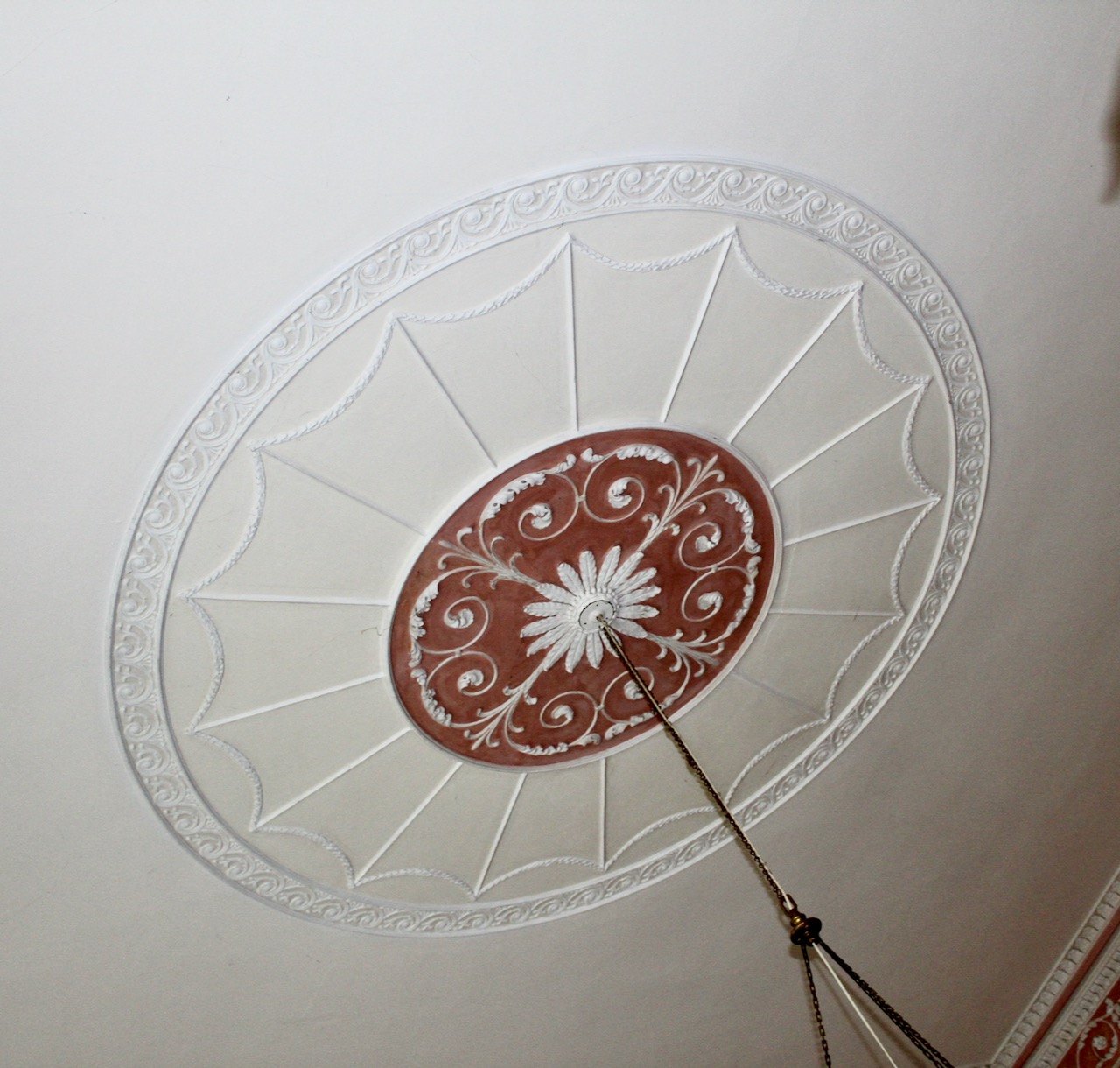
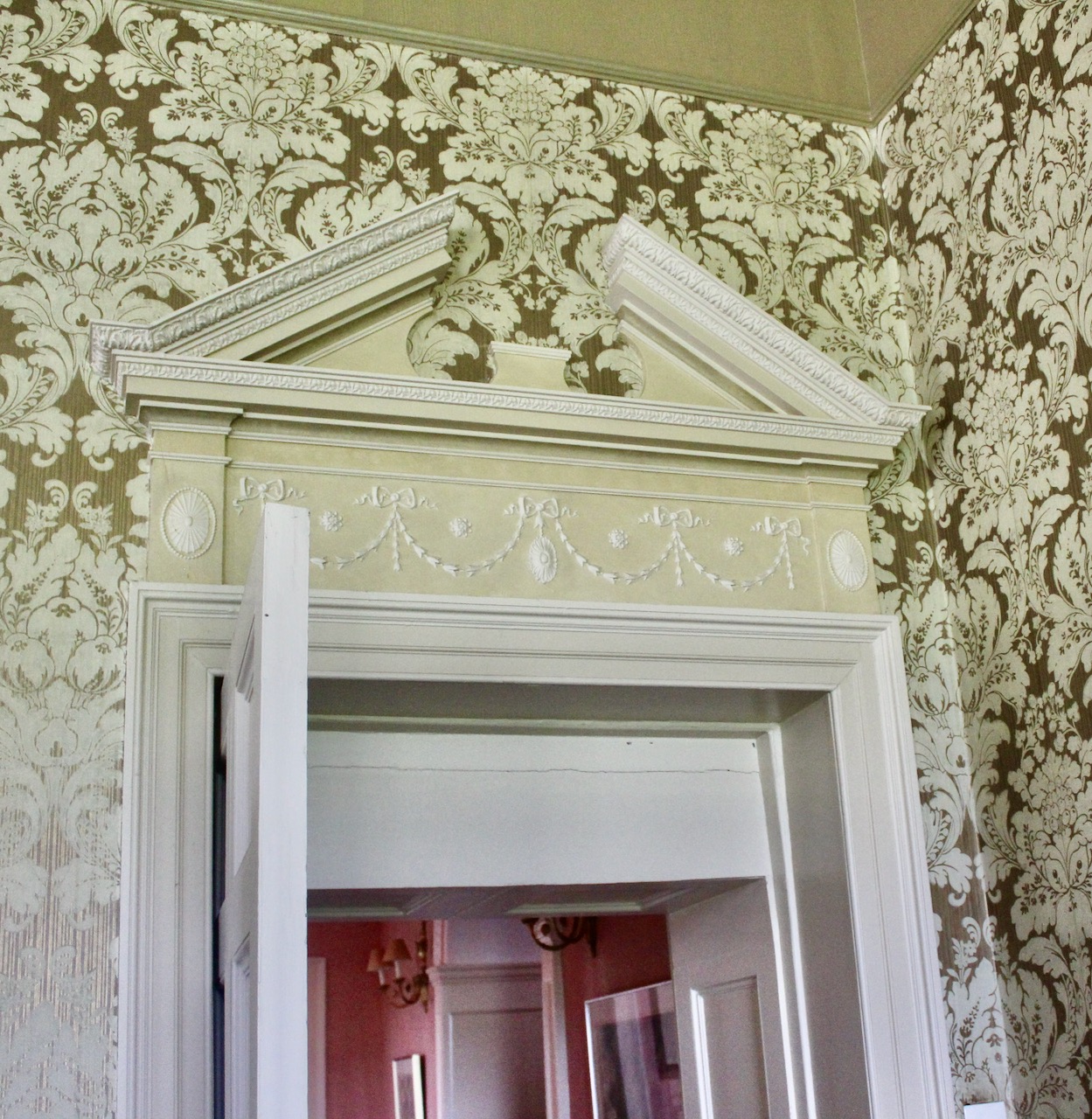
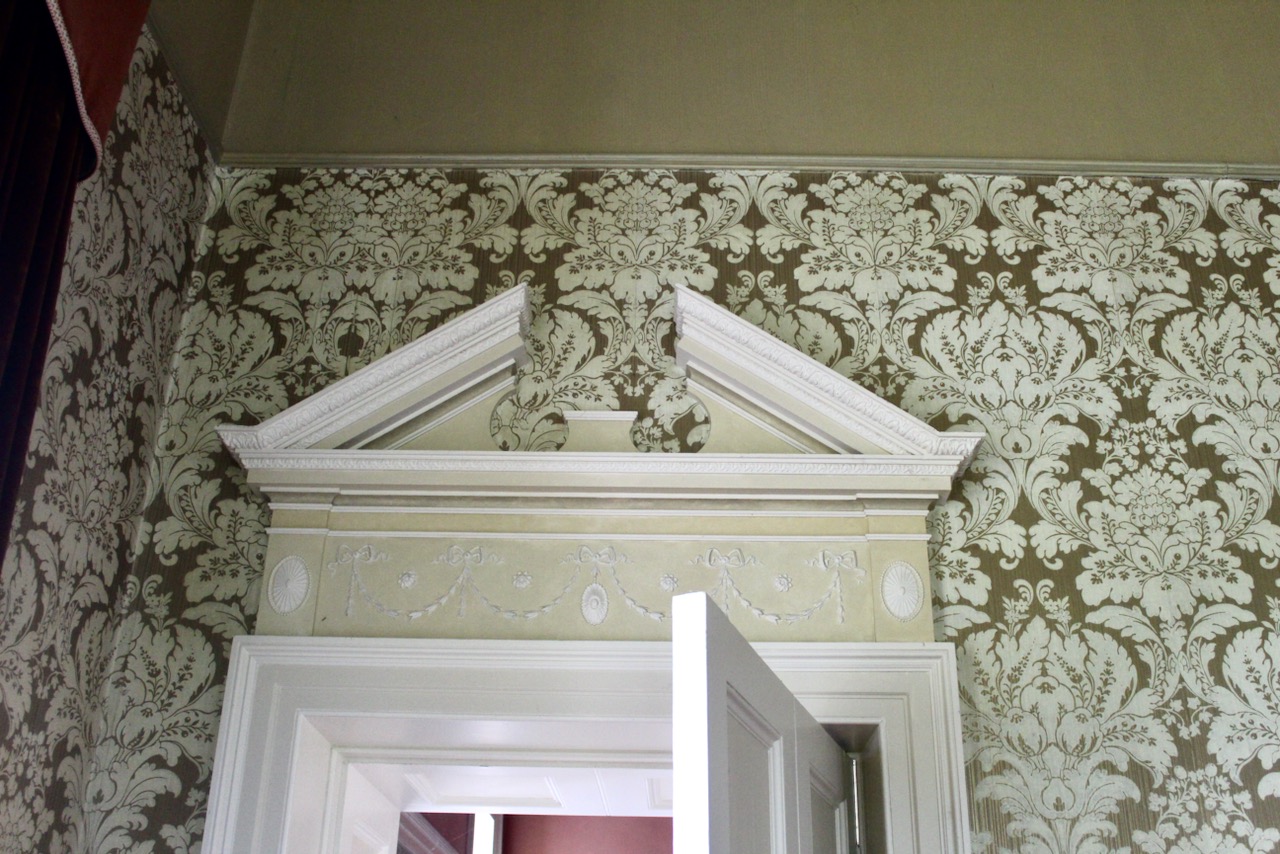
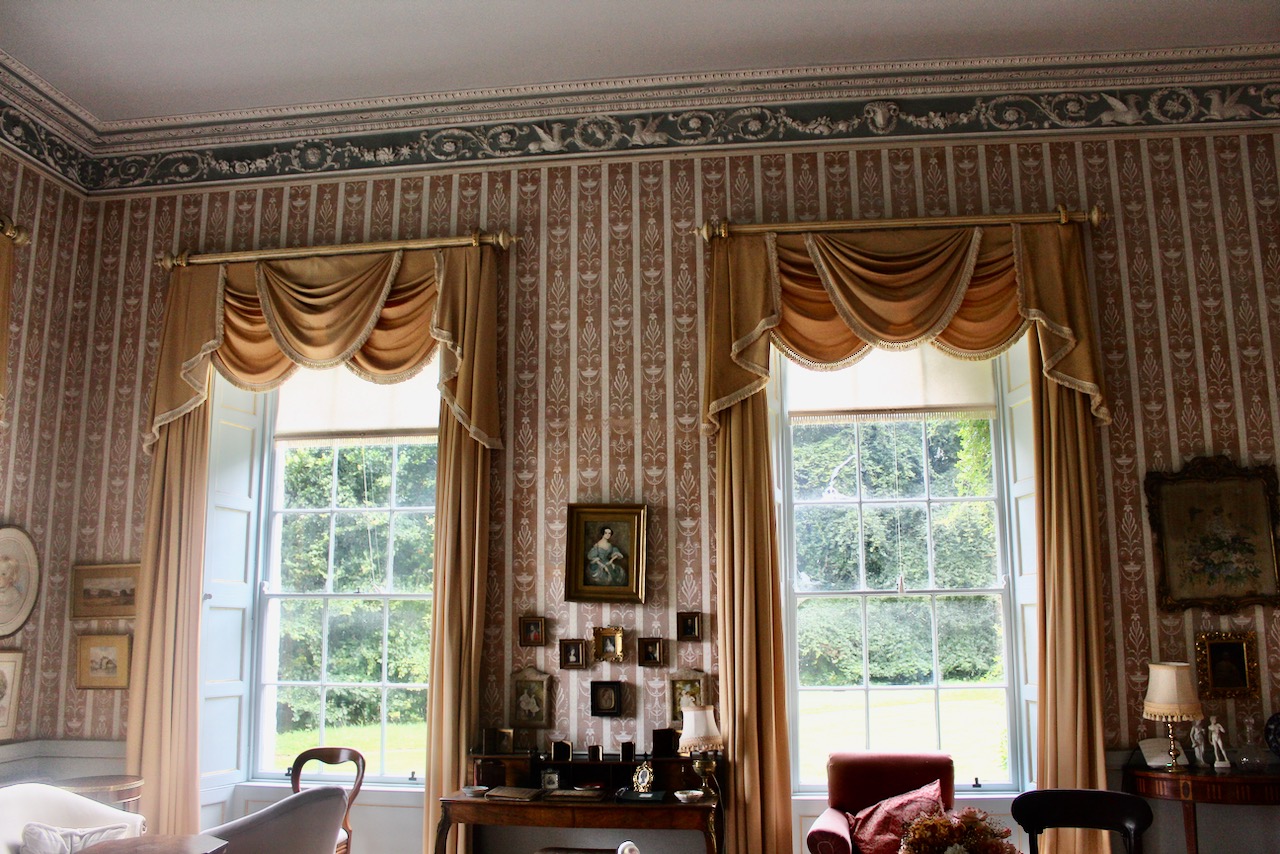
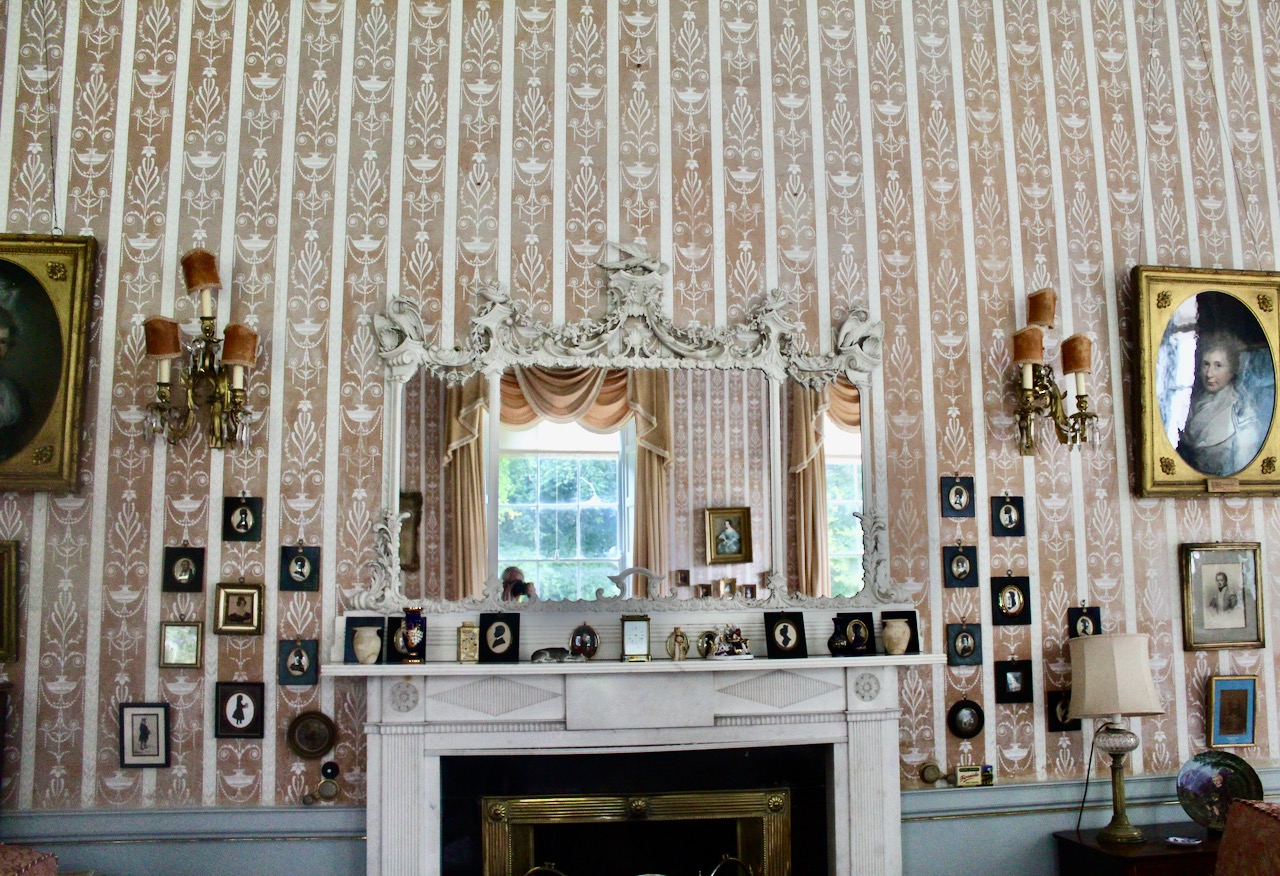
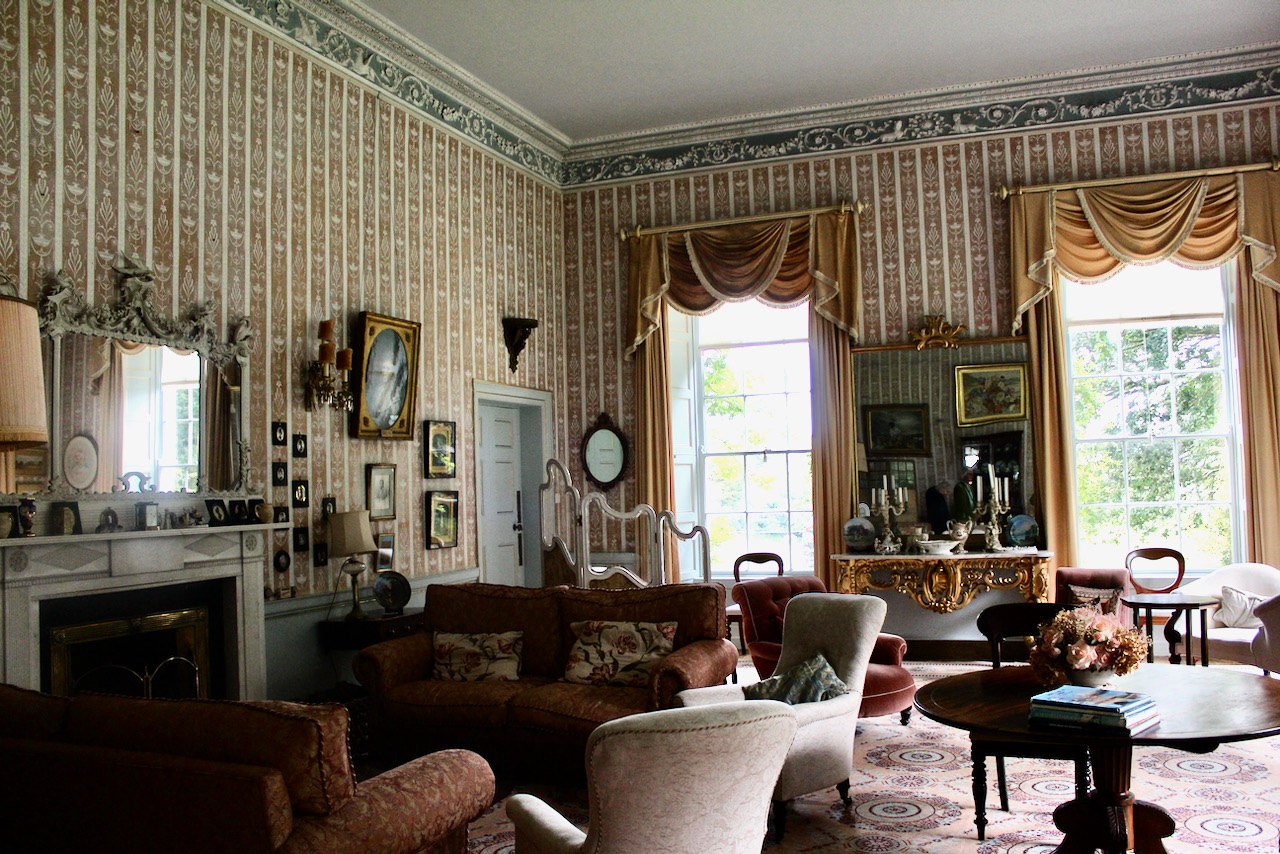
The large entrance hall of Enniscoe has a frieze of foliage, and Adamesque decoration in the centre of the ceiling.
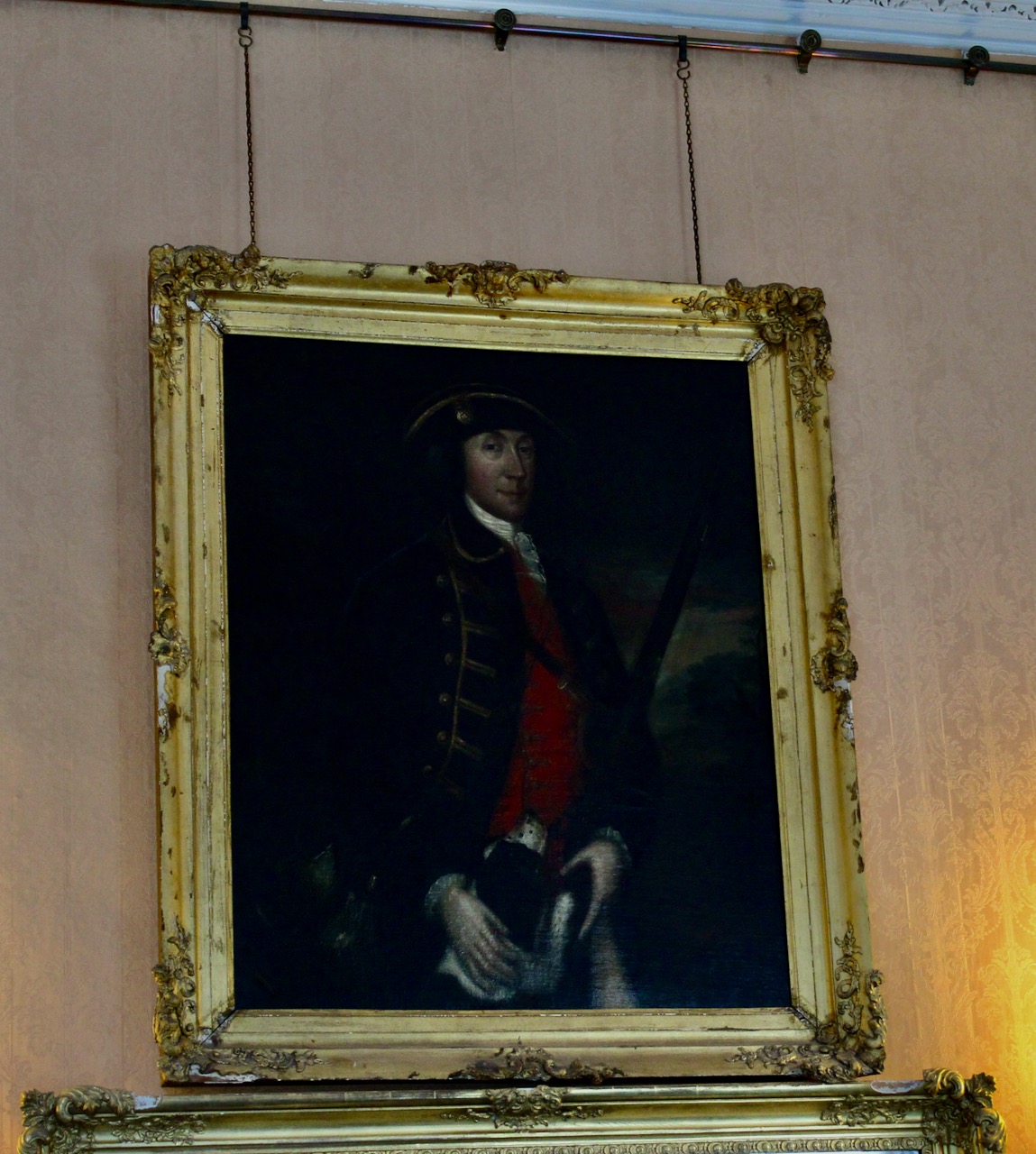
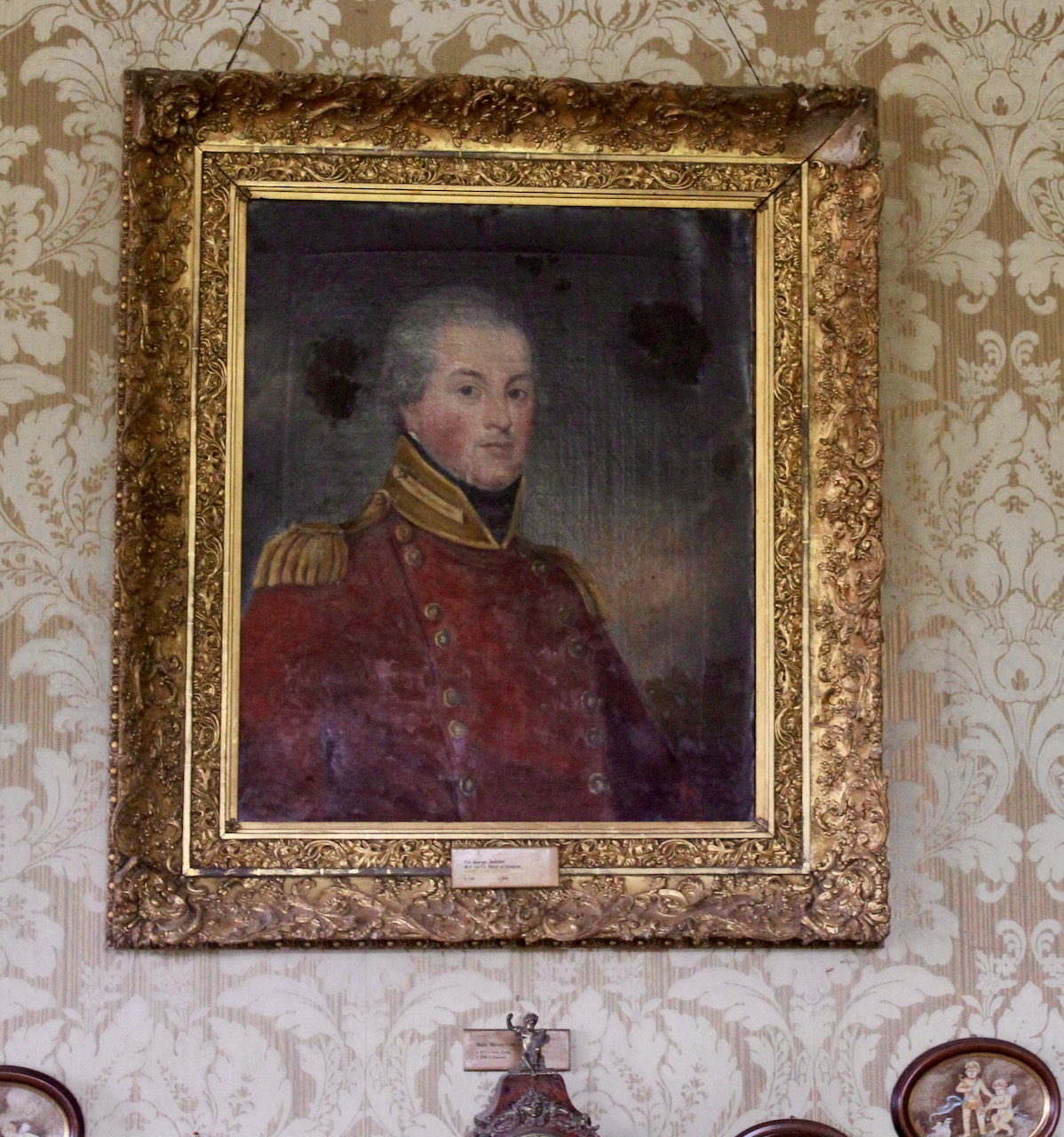
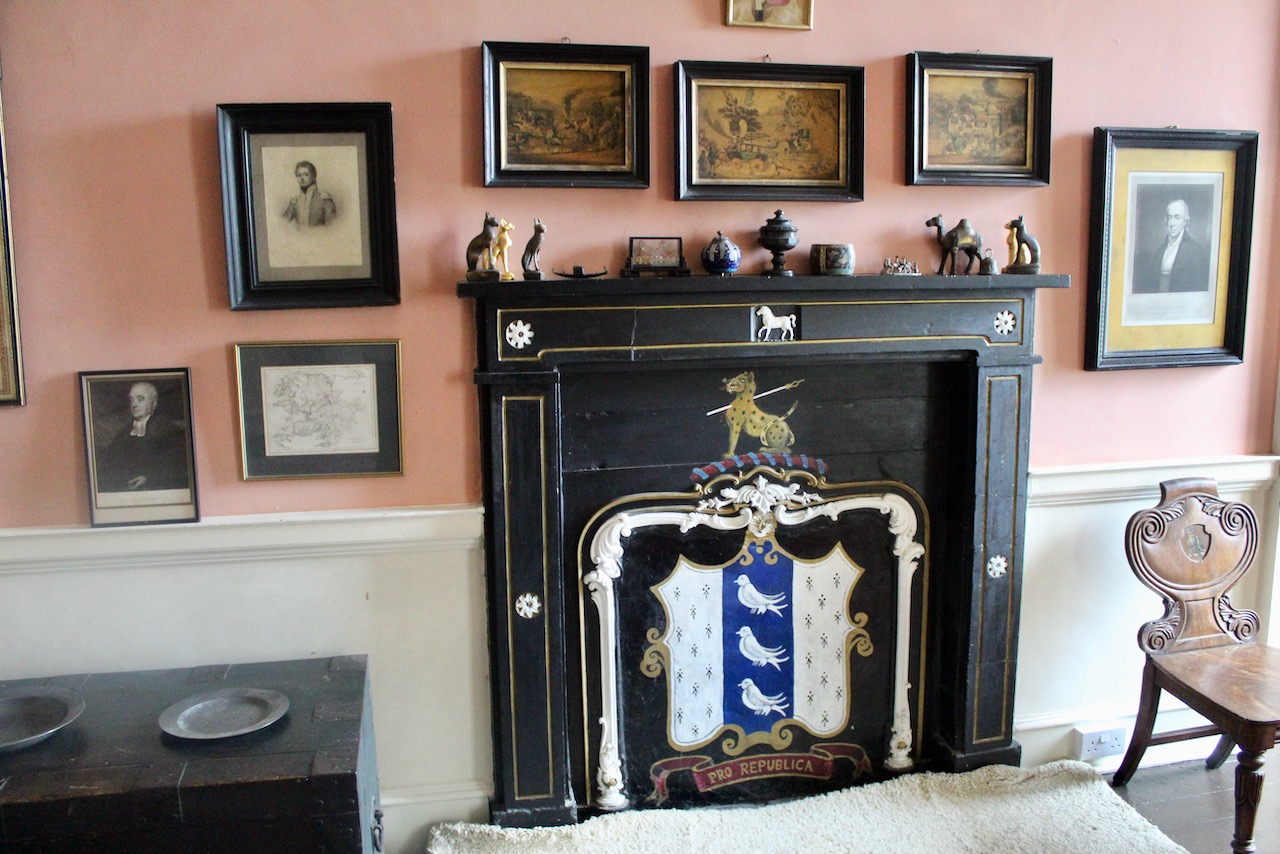
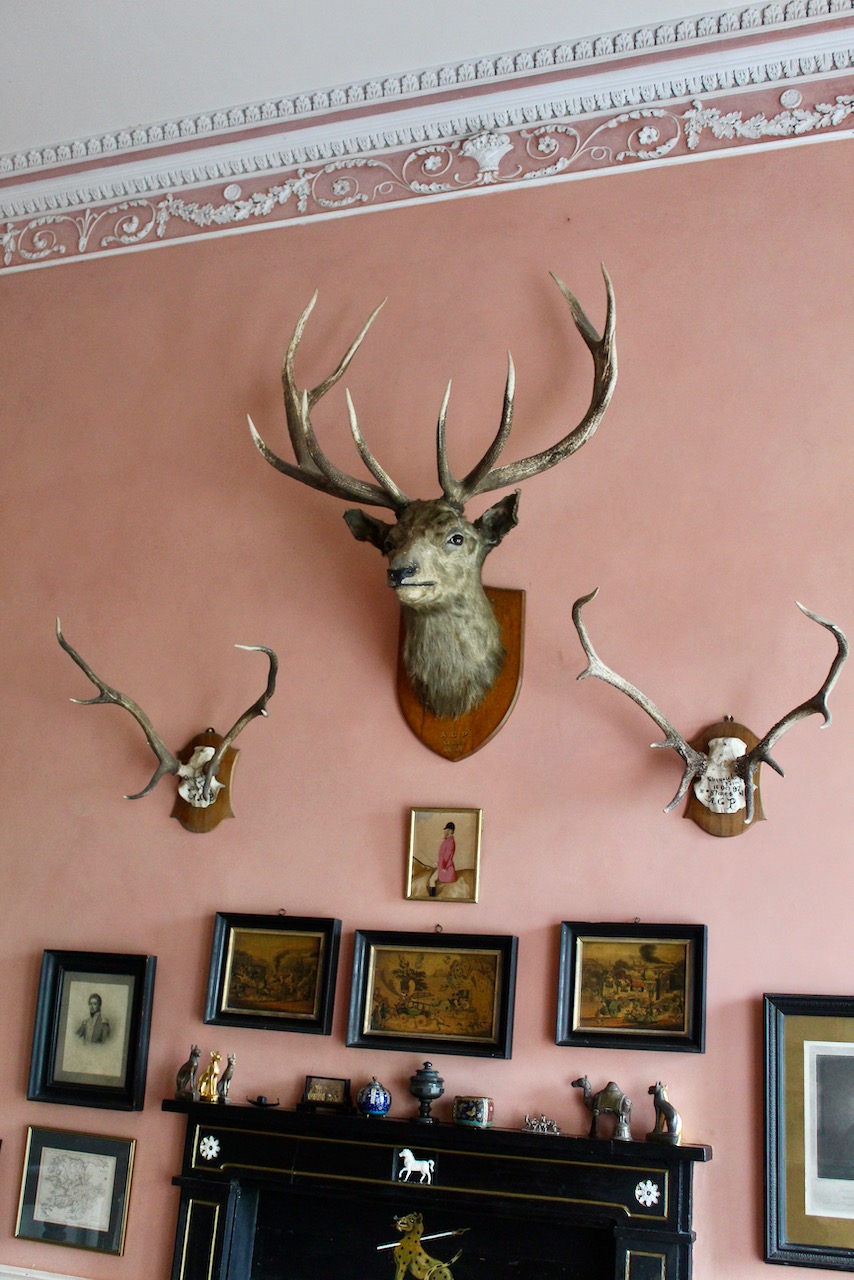
The portrait in the Front Hall of the man in wonderful frilled pantaloons is an ancestor, Sir Audley Mervyn (about 1603-1675), Speaker in the Irish House of Commons. His parents Henry Mervyn and Christian Touchet purchased lands in County County Tyrone from Mervyn Touchet, the 2nd Earl of Castlehaven, which Audley Mervyn (who was named after the Touchet estate in Staffordshire, Audley) inherited. [7] The heads of Indian deer were shot by the brothers Audley and Mervyn Pratt while fighting with the British army in the early 1900s. The carved hall chairs picture the Bourke family crest of a chained cat; Susan’s mother was a Bourke from Heathfield House, Ballycastle, County Mayo. [8] The pike was caught in Lough Conn in 1896 and weighs 37 lbs!
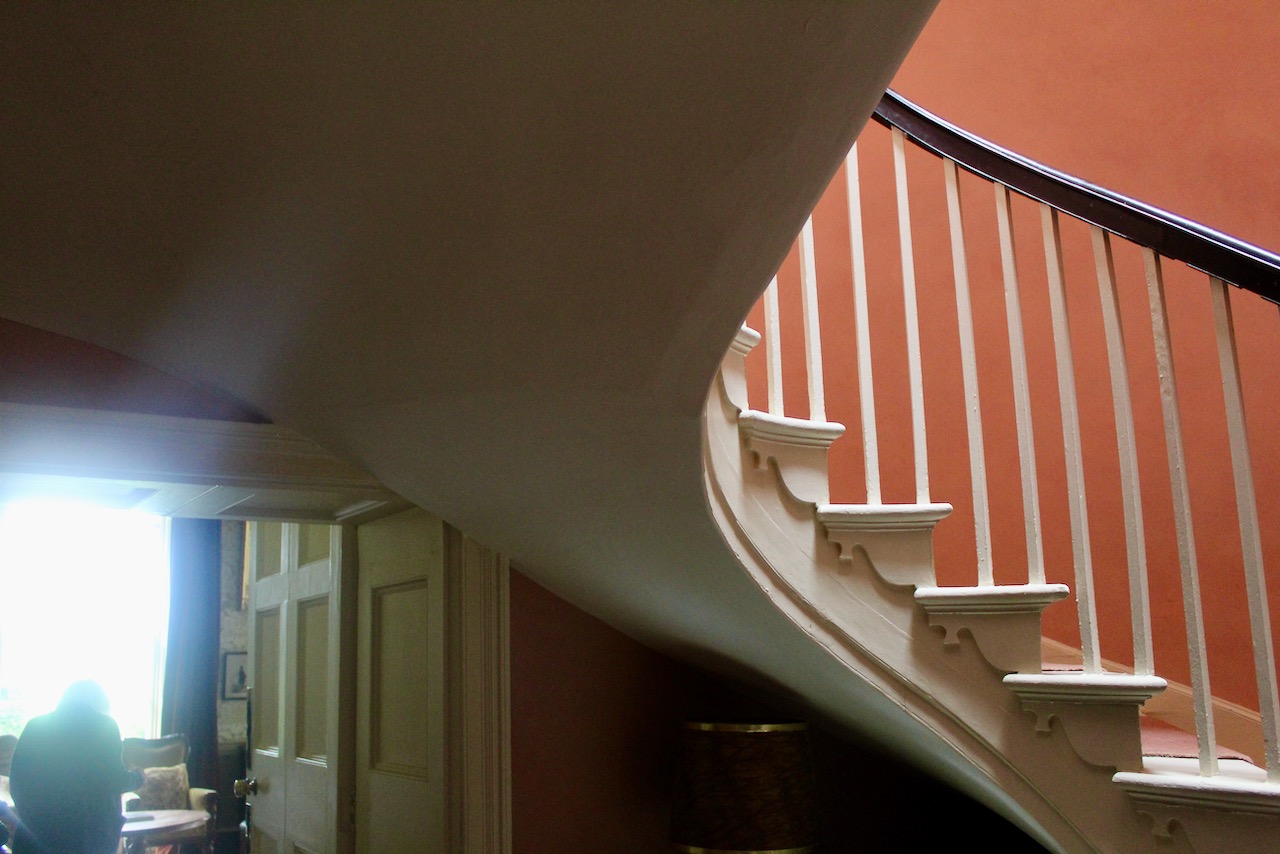
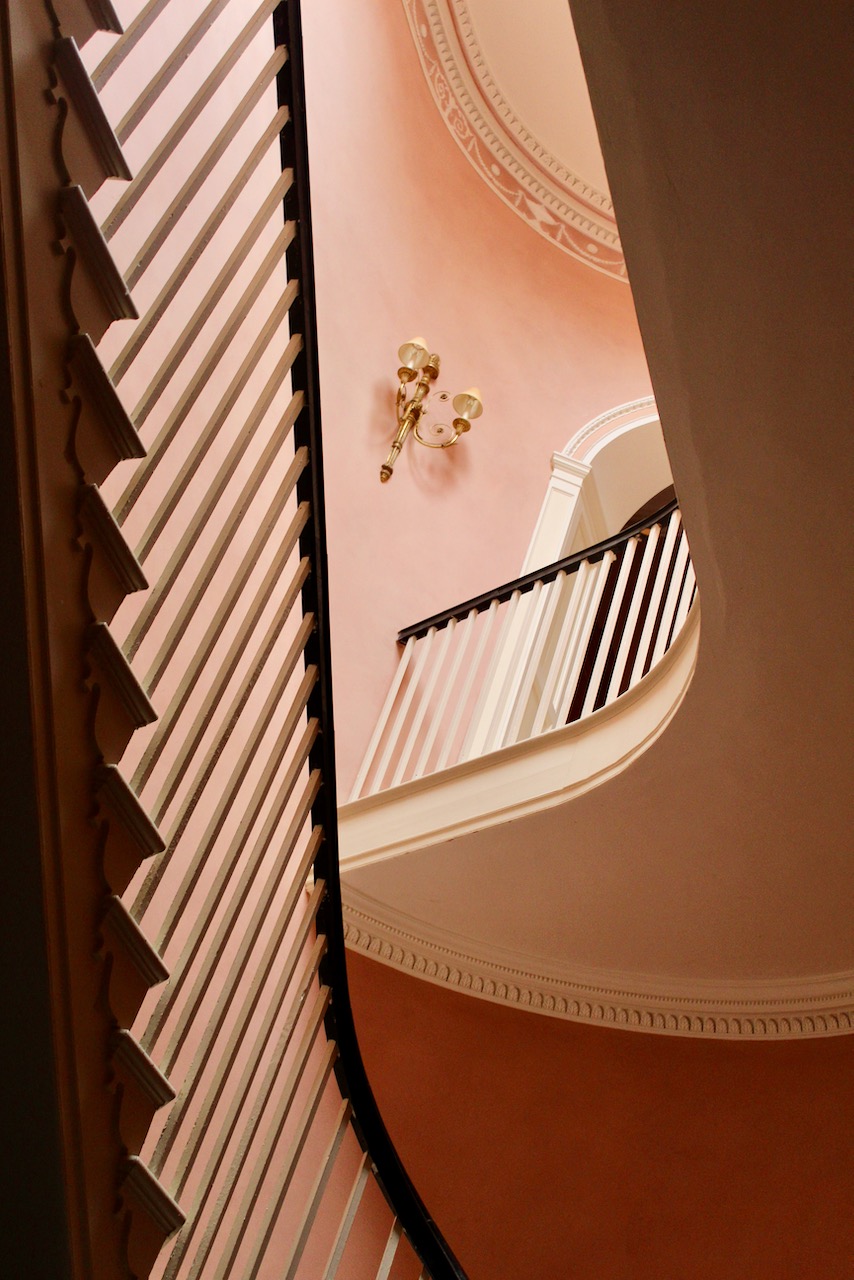
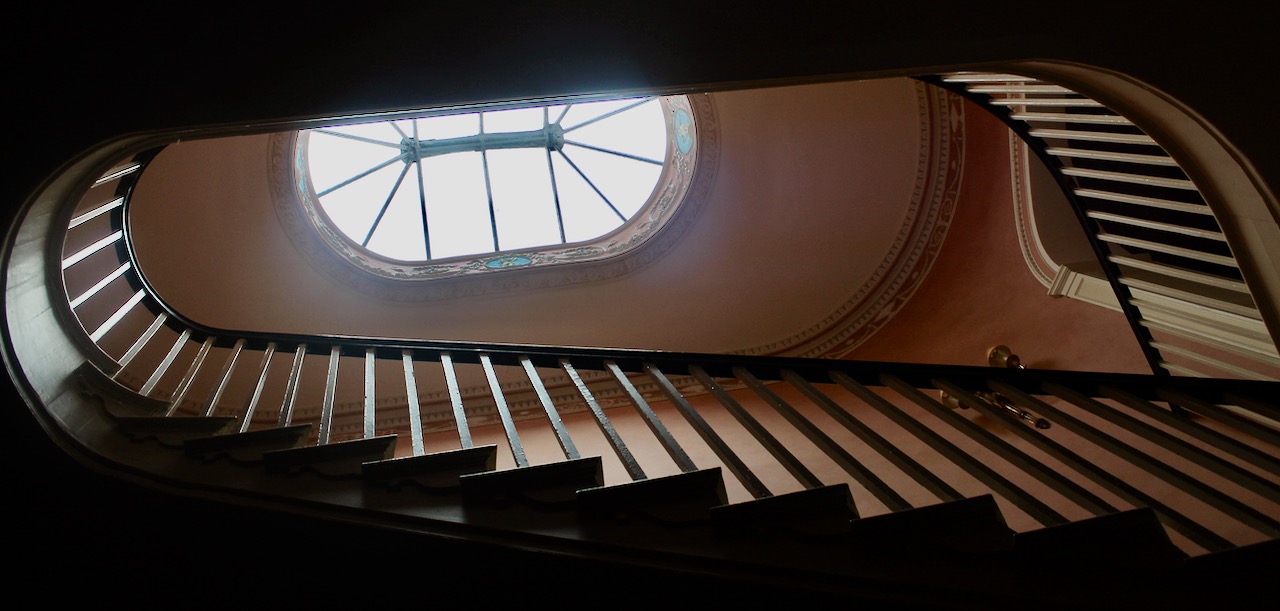
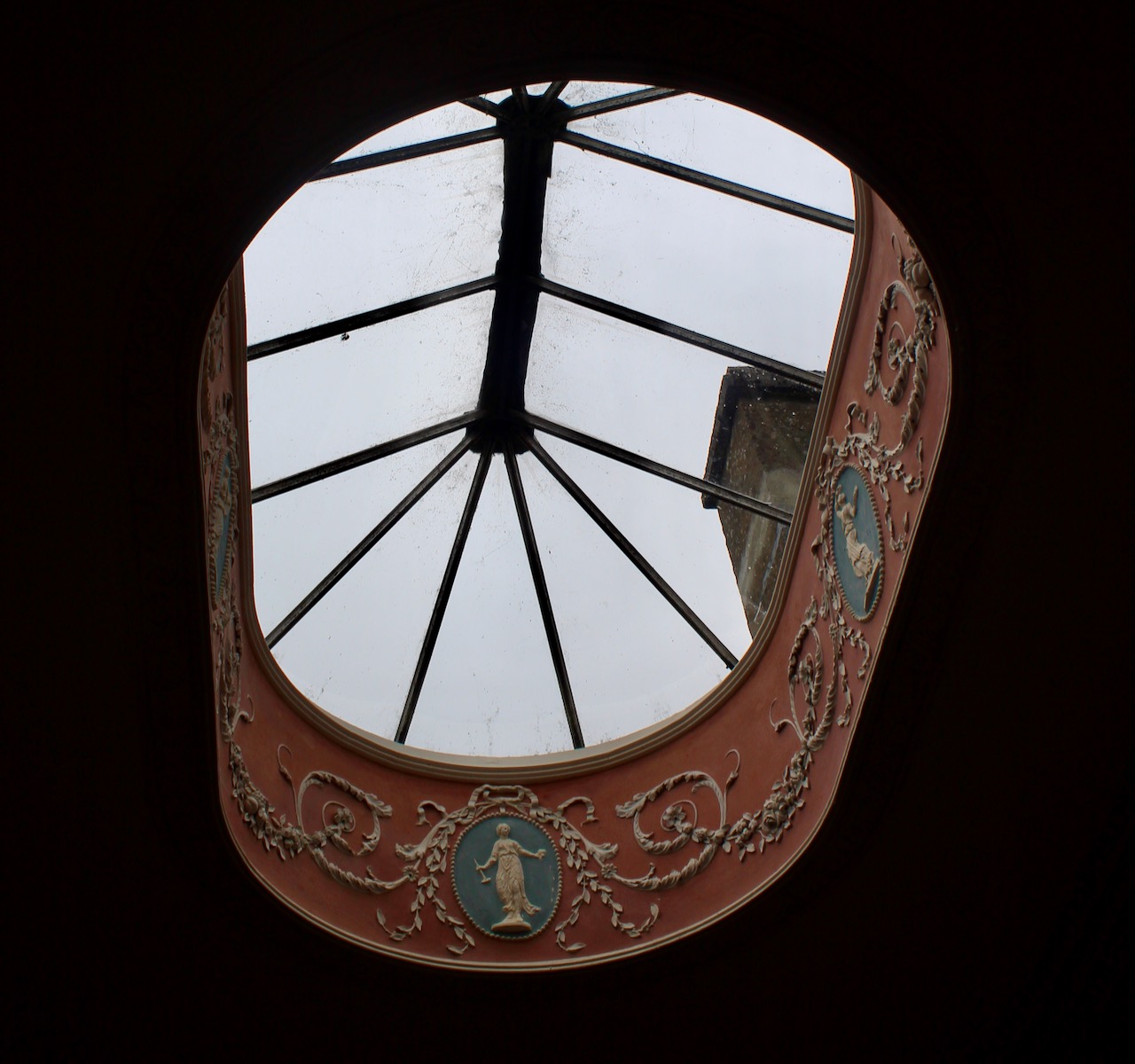
The front hall leads into the staircase hall, which is built on the exterior wall of the old house. The staircase hall has a frieze of urns and foliage and a glazed dome surrounded by foliage and oval medallions of classical figures.
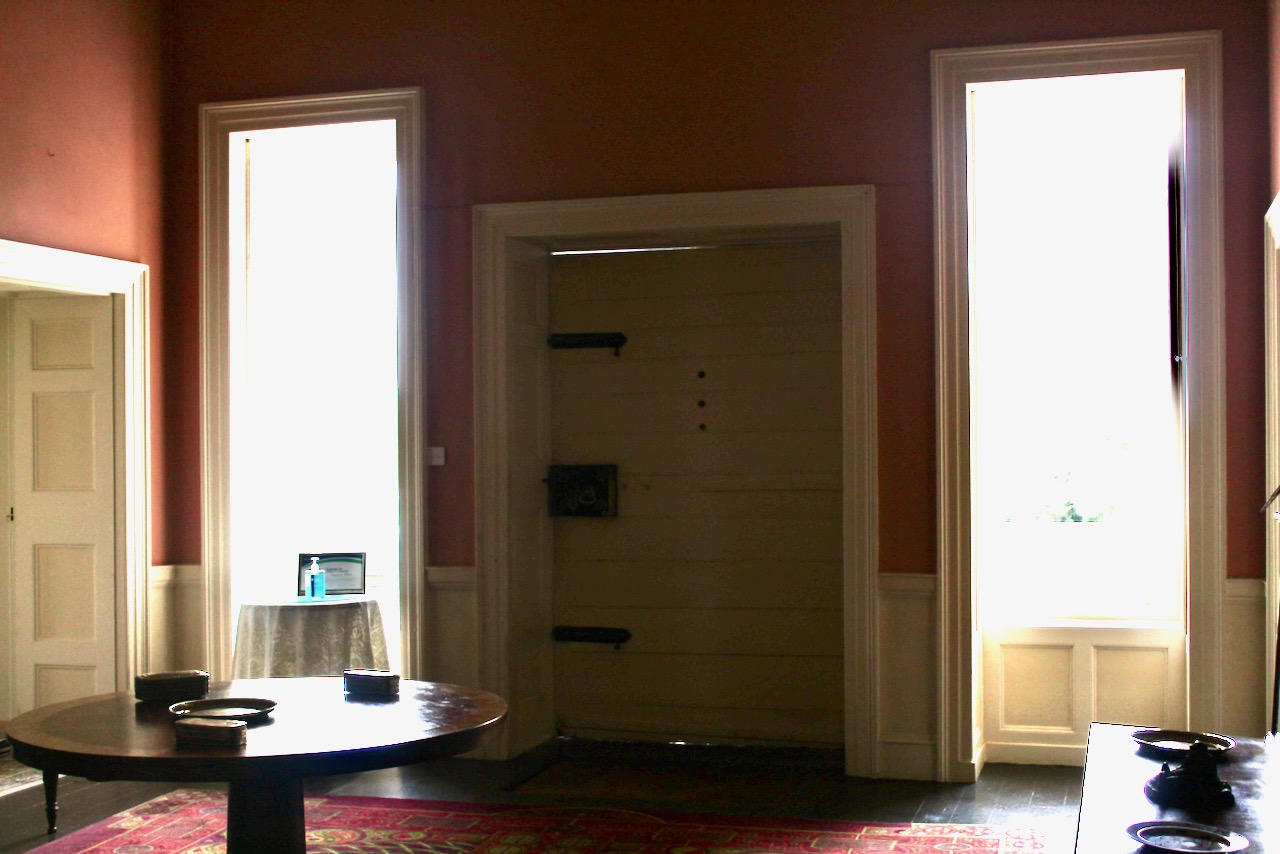
One can see the division between older original house and the newer part clearly. Behind the staircase hall is a lobby with a delicate interior fanlight opening onto the staircase of the earlier house.
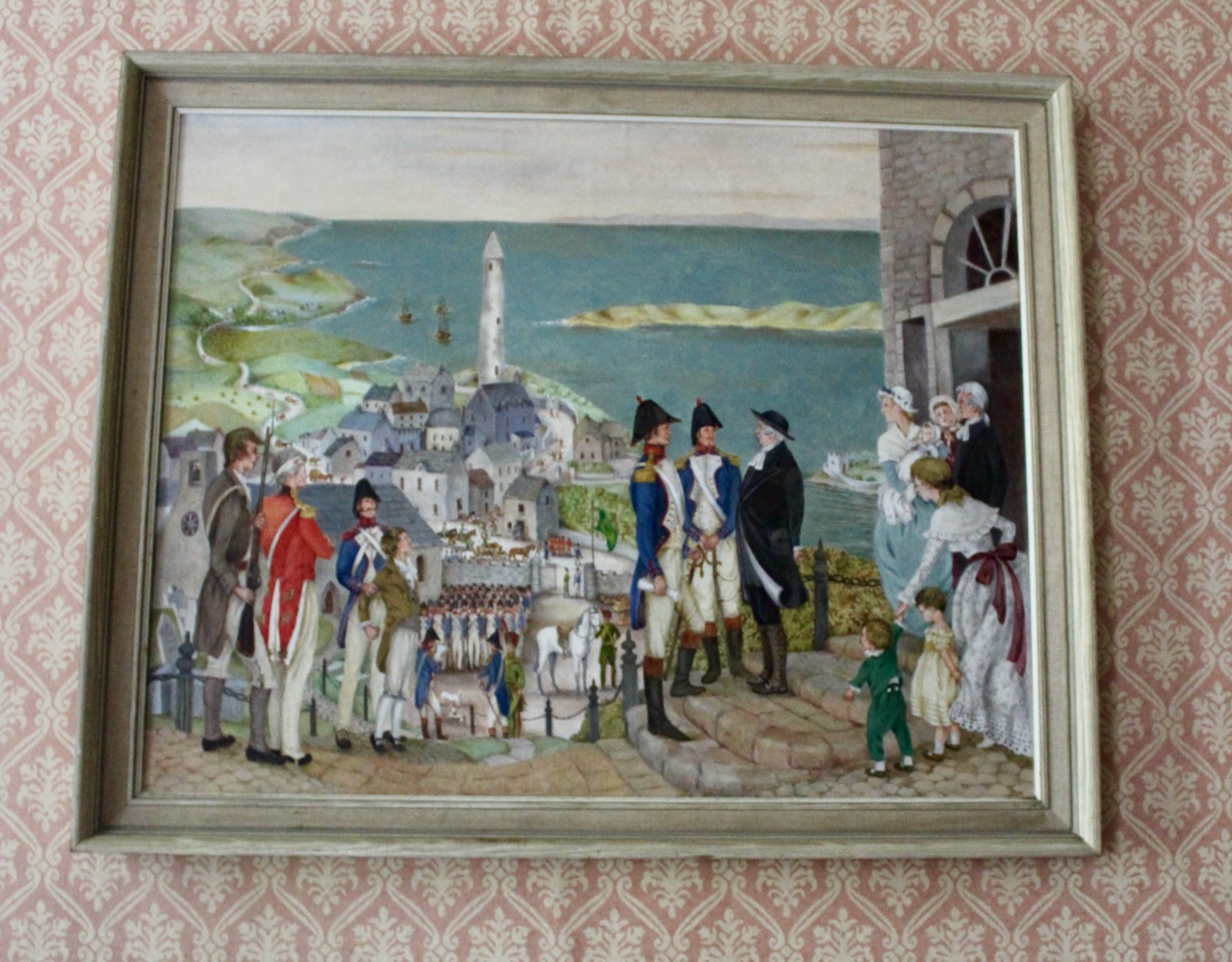
The Rising of 1798, which had been inspired by the French Revolution, came to Enniscoe, in the form of French soldiers under General Jean Joseph Amable Humbert, who landed at Killala in County Mayo on August 23, 1798. George Jackson was a Colonel in the North Mayo Militia and so would have opposed the 1798 Rebellion and the incoming French troops – although he was stationed further south as militia regiments were never stationed in their own county. The French soldiers stopped at the house at Enniscoe and Susan told us that the troops drank his wine, later declaring that it was “the only good wine in Ireland”! The scaffolding from the enlargement of the house was still lying in front of the house when the troops arrived and they used it for firewood for their campfire. George’s regiment were summoned back from the south, and Colonel Jackson was made Military Governor of the Crossmolina area. He was responsible for killing or imprisoning many of the defeated rebels in the surrounding countryside, and it is said that he lined the road from Crossmolina to Gortnor Abbey with severed heads on pikes. General Humbert and his troops were defeated by the British Army in the Battle of Ballinamuck. [9]
One result of the 1798 Rebellion was that the Irish Parliament was abolished by the Act of Union in 1800, which was supported by George Jackson. George was promoted to Colonel of the Carabineers, a dragoon in the British Army, and the position was inherited by his son, William.
William married Jane Louise Blair, daughter of Colonel William Blair of Scotland, and moved to England, and died young. He died in 1822 and his wife predeceased him in 1817 so their only daughter, Madeline Eglantine Jackson, was left an orphan at the age of six. She was raised by her aunt at Stephenstown in County Louth. Her mother’s sister was Catherine Eglantine Blair, who married Matthew Fortescue, whose father had built Stephenstown. They arranged a good marriage for Madeline when she turned 18, to a cousin of the family, Mervyn Pratt of Cabra Castle. They married in 1834.
Madeline and Mervyn settled in Enniscoe and Mervyn had the estate surveyed in order to set to work on an enormous scheme of draining land and building roads. The booklet Susan gave me tells us that during the famine, the Pratts did their best for those in the area and they gained a reputation for good management and fairness.
Madeline and Mervyn had five children. Their only son Joseph joined the army and served in India, and when he came home, took over the running of Enniscoe. He married his cousin Ina Hamilton of Cornacassa, County Monaghan (this house has been partly demolished. It was built around 1800 for Dacre Hamilton). [10]
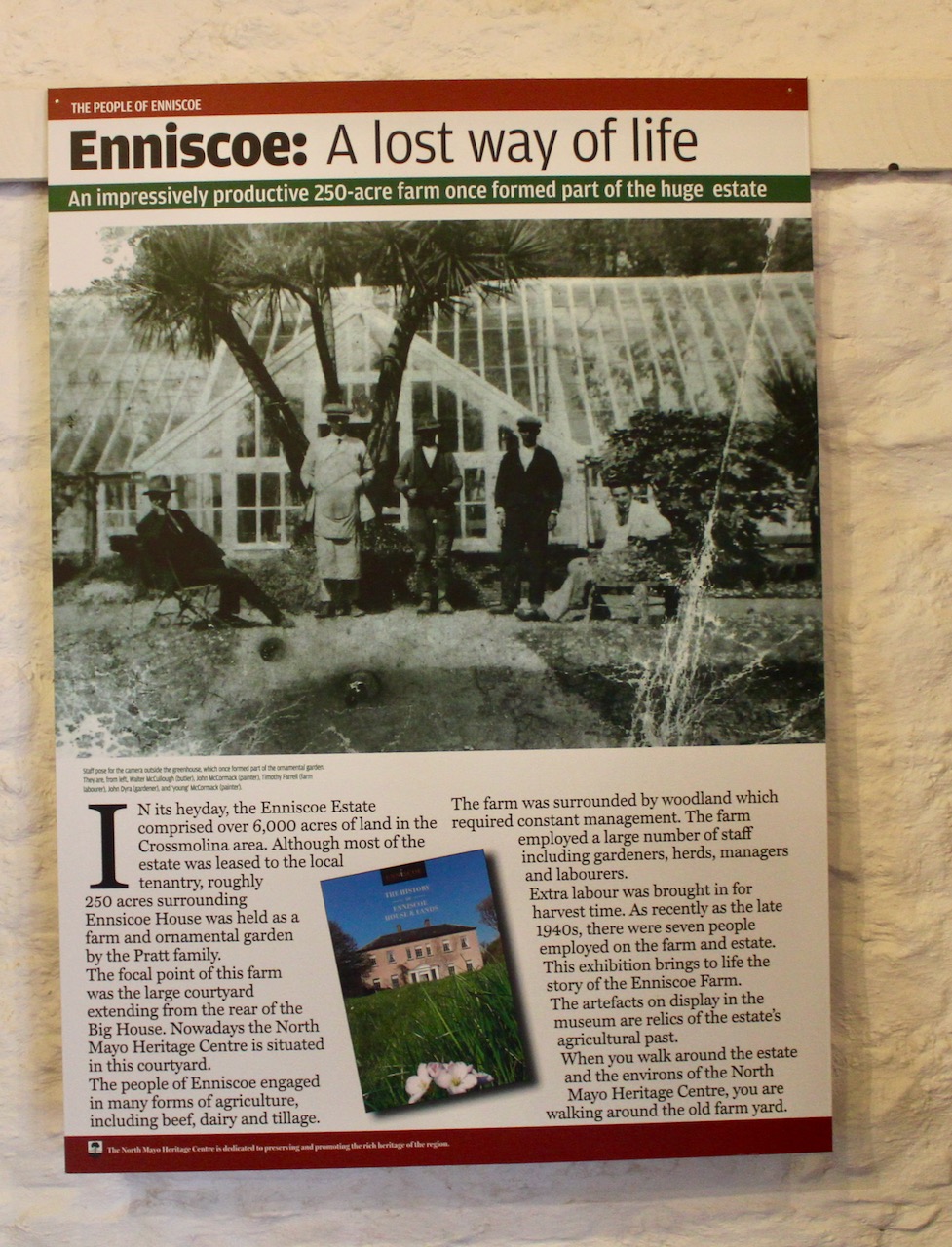
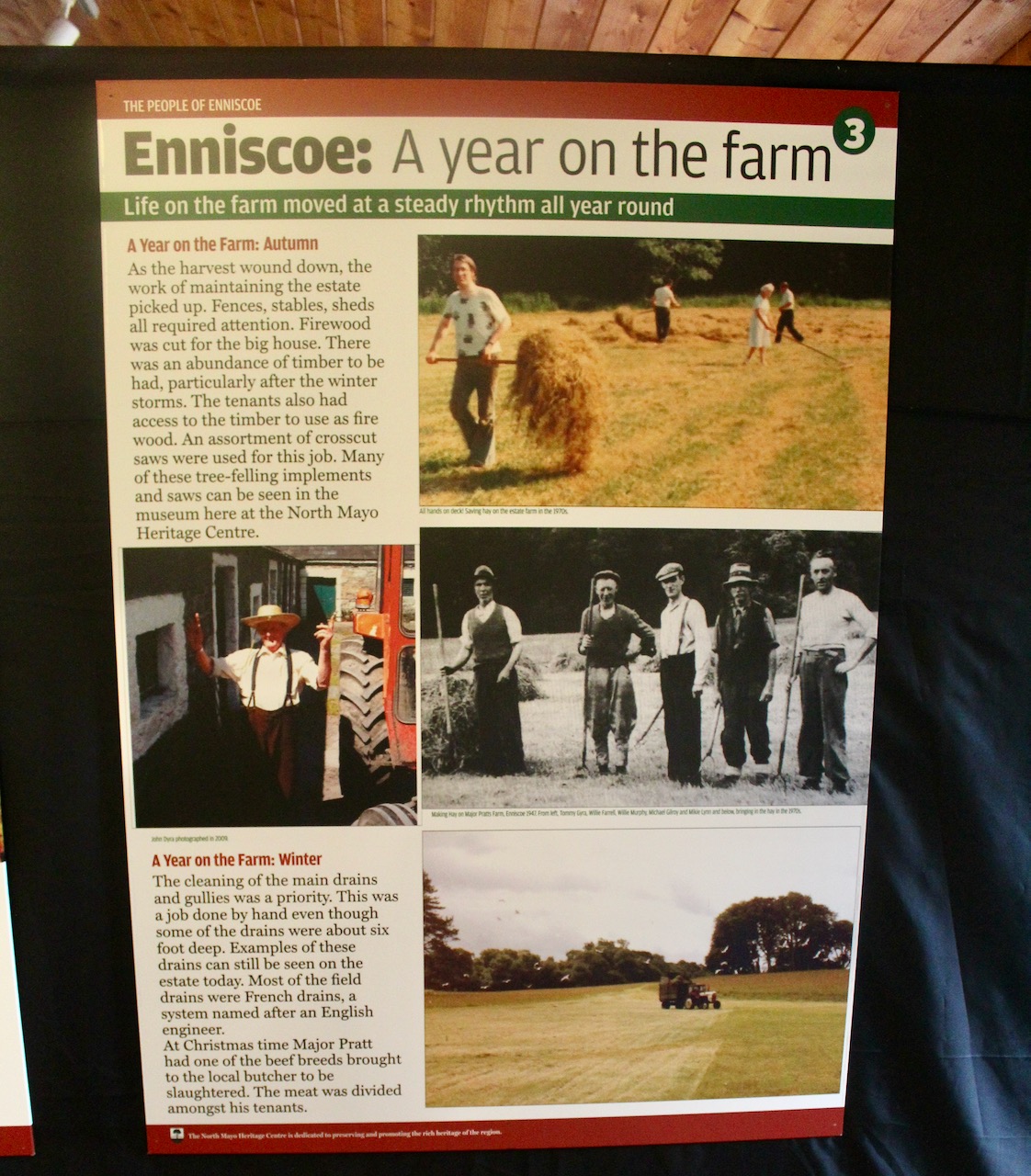
Joseph Pratt was one of the first landlords to start selling his land to his tenants under the Wyndham Land Acts of 1903. Joseph and Ina did much to improve their estate, farming and creating the garden within the old walled garden. The Heritage Centre gives us an idea of what life on the farm was like for both the home owners and the many people employed on the estate.
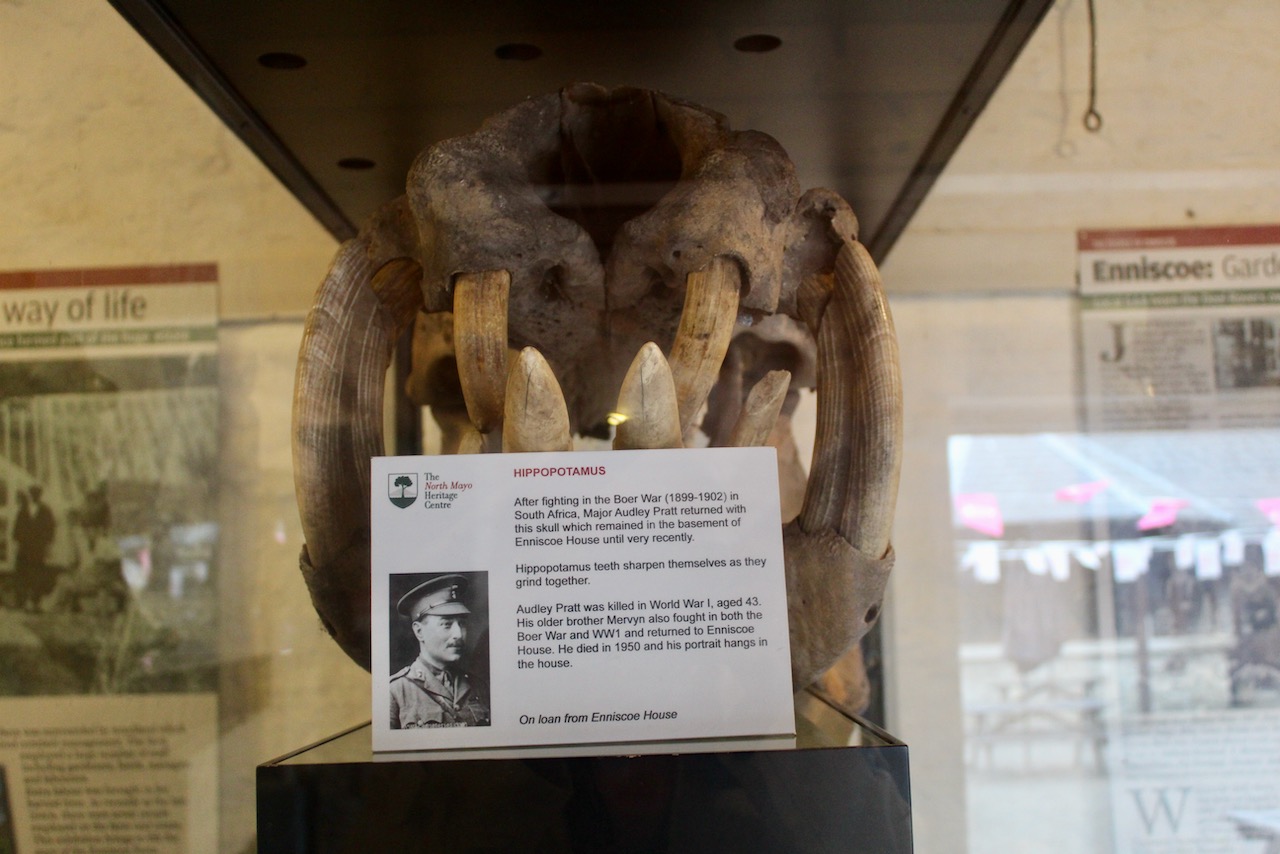
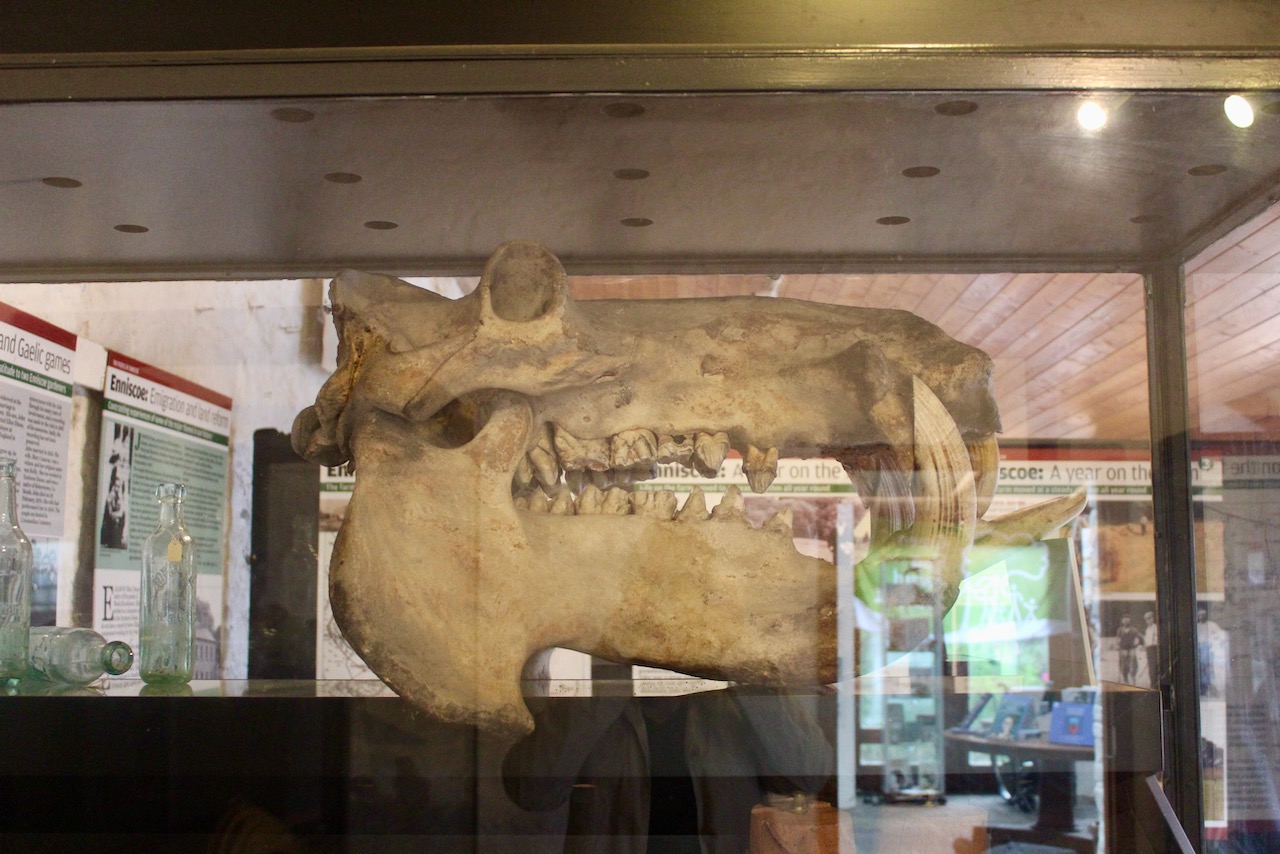
Joseph’s elder son Mervyn was injured in the wars and the younger Audley was killed in the First World War. The Heritage Centre located in the walled garden at Enniscoe displays a hippo skull which Audley brought home from Africa when he fought in the Boer War (1899-1902).
Major Mervyn lived all his life in Enniscoe, and was particularly interested in gardening and fishing. His rock garden and greenhouses were well-known. He never married, and left Enniscoe to his cousin Jack Nicholson, Susan’s father (Jack was a great-grandson of Madeline Jackson). Mervyn did not spend much time in Cabra Castle in County Cavan which he also inherited, and he left it to another cousin, Mervyn Sheppard.
Jack Nicholson married Patita Bourke, daughter of Captain Bertrim Bourke of Heathfield, County Mayo. In his blog, David Hicks tells us that Heathfield was purchased by the Land Commission and the family were allocated a farm at Beauparc, County Meath. He adds that former President of Ireland Mary Robinson was from the Bourke family of Heathfield.
Jack was a Professor of Veterinary Medicine, so I felt a bond with Susan, as my father, Desmond Baggot, was also a Professor of Veterinary Medicine! Jack was head of the Veterinary College of Ireland, so perhaps their paths crossed as my father was studying there at the time of my birth, before we moved to the United States where my father did his PhD in Ohio State University. Jack died in 1972 and Enniscoe house and lands passed to his children. In 1984 Susan Kellett took over the property from her brother.
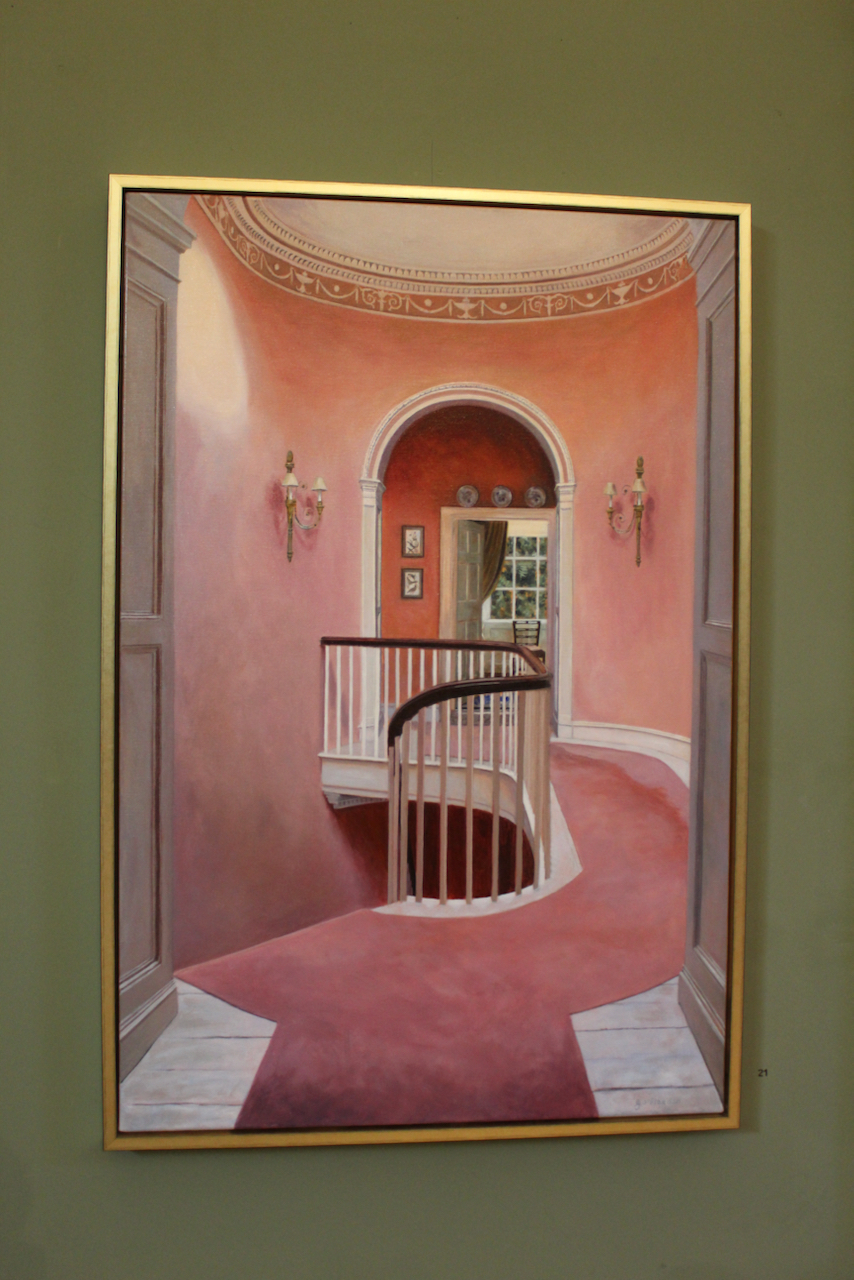
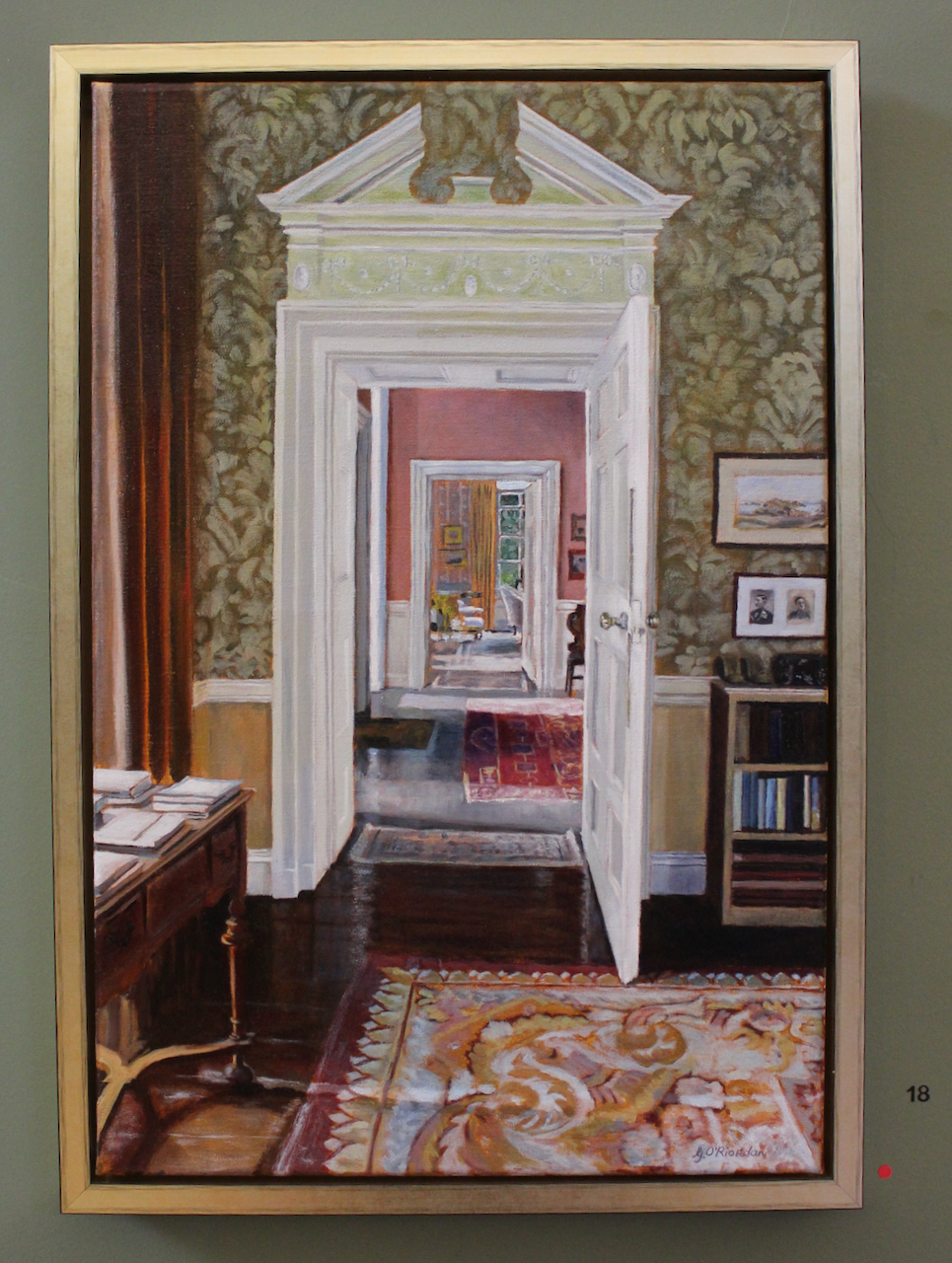
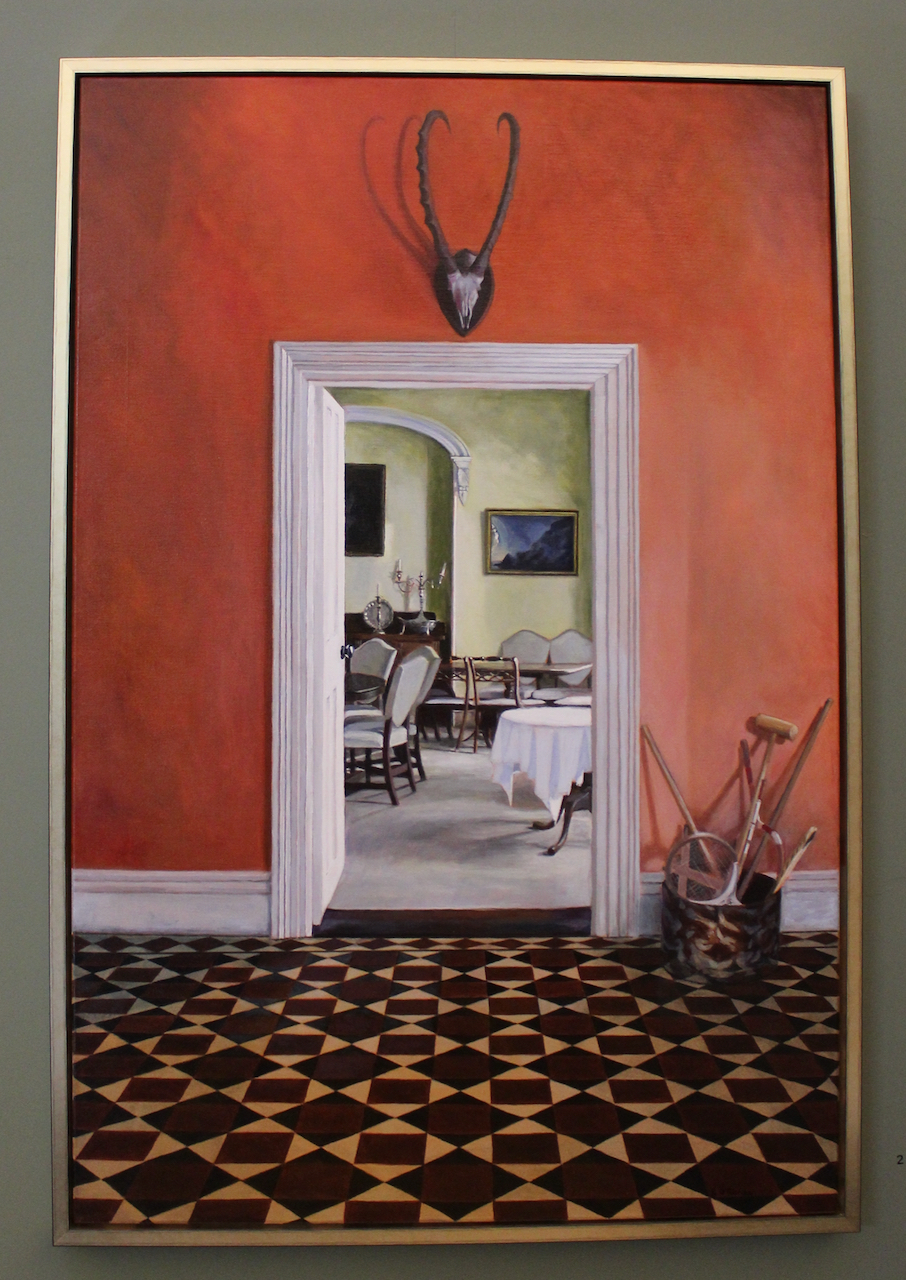
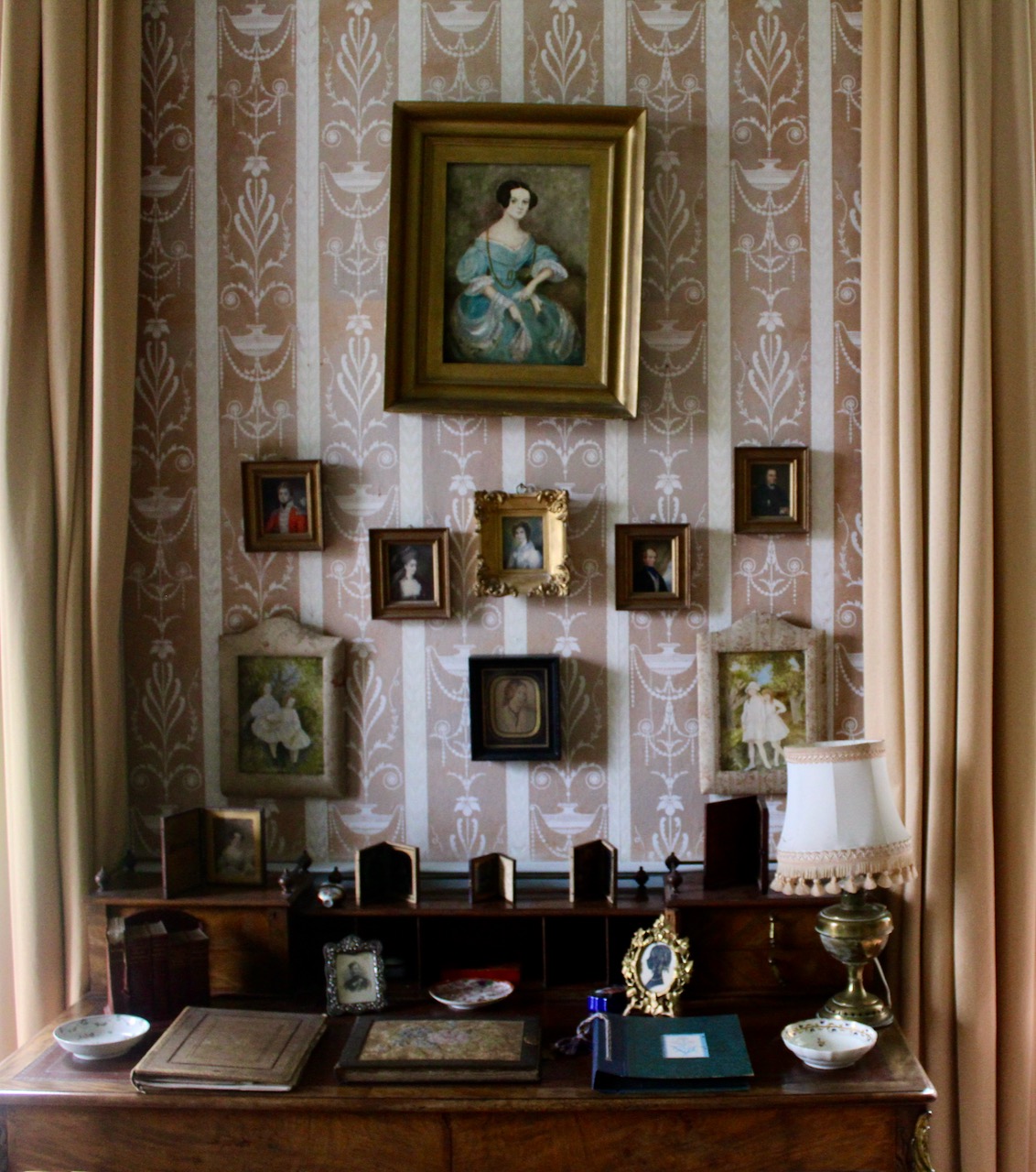
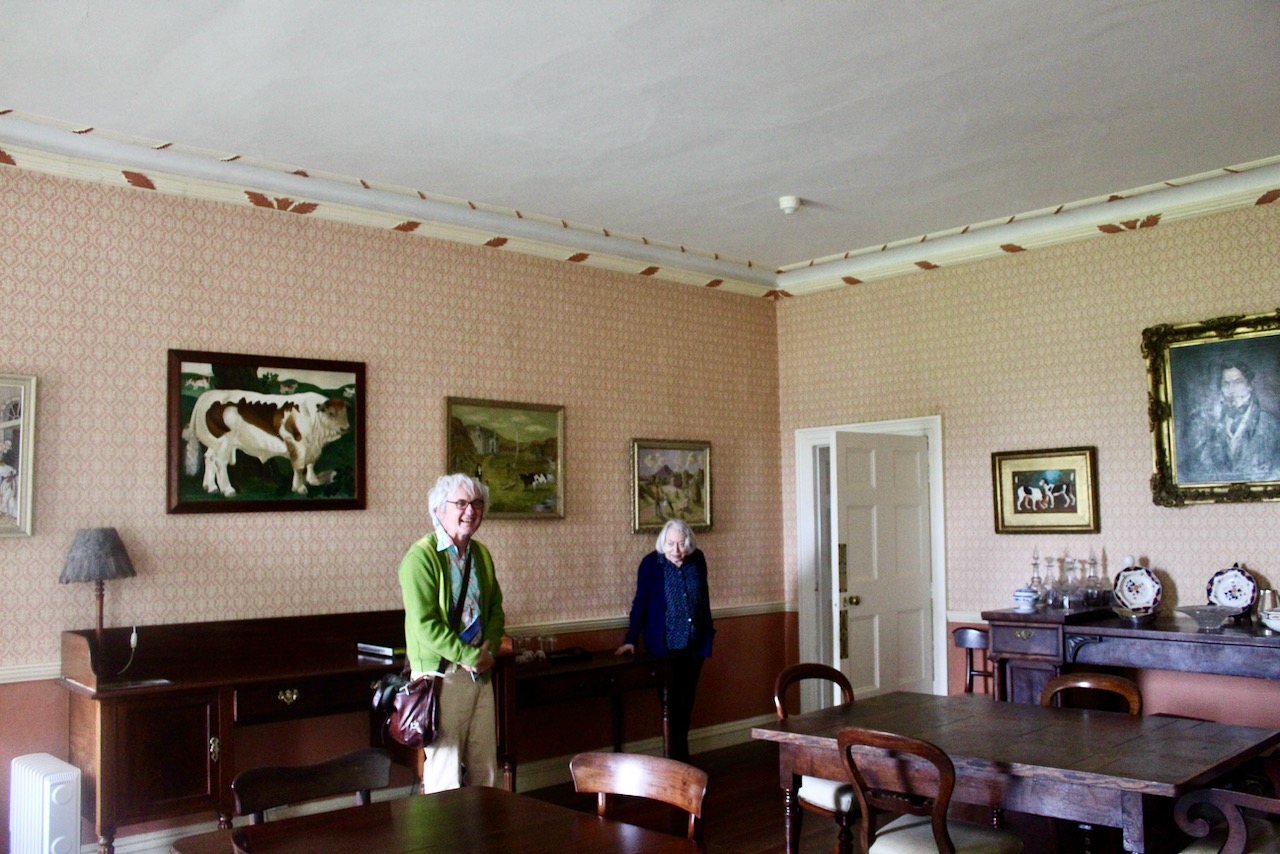
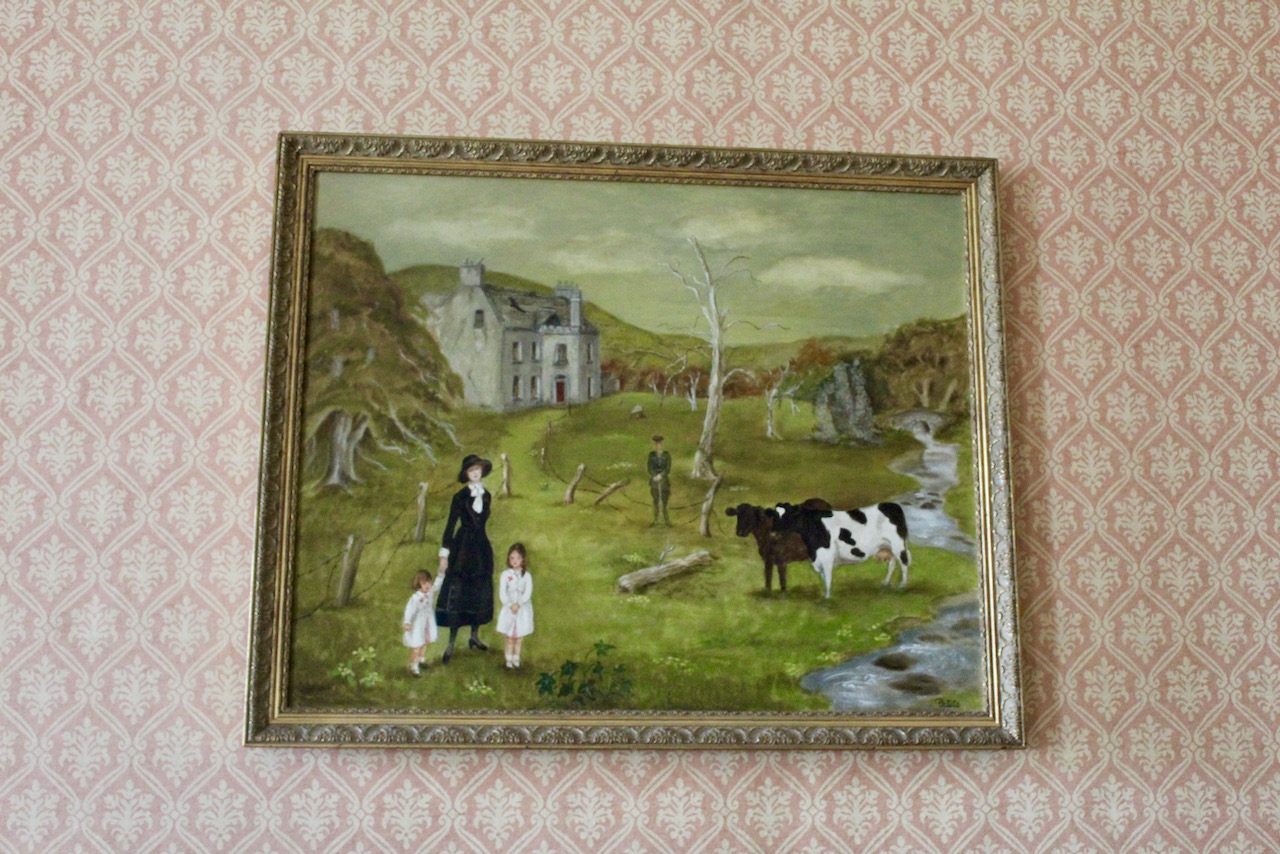
The house is full of Patita’s creative and sometimes cheeky paintings.
The dining room was originally the library. The side nook was created by Susan’s parents. It has a simple early nineteenth century cornice of reeding and acanthus leaves.
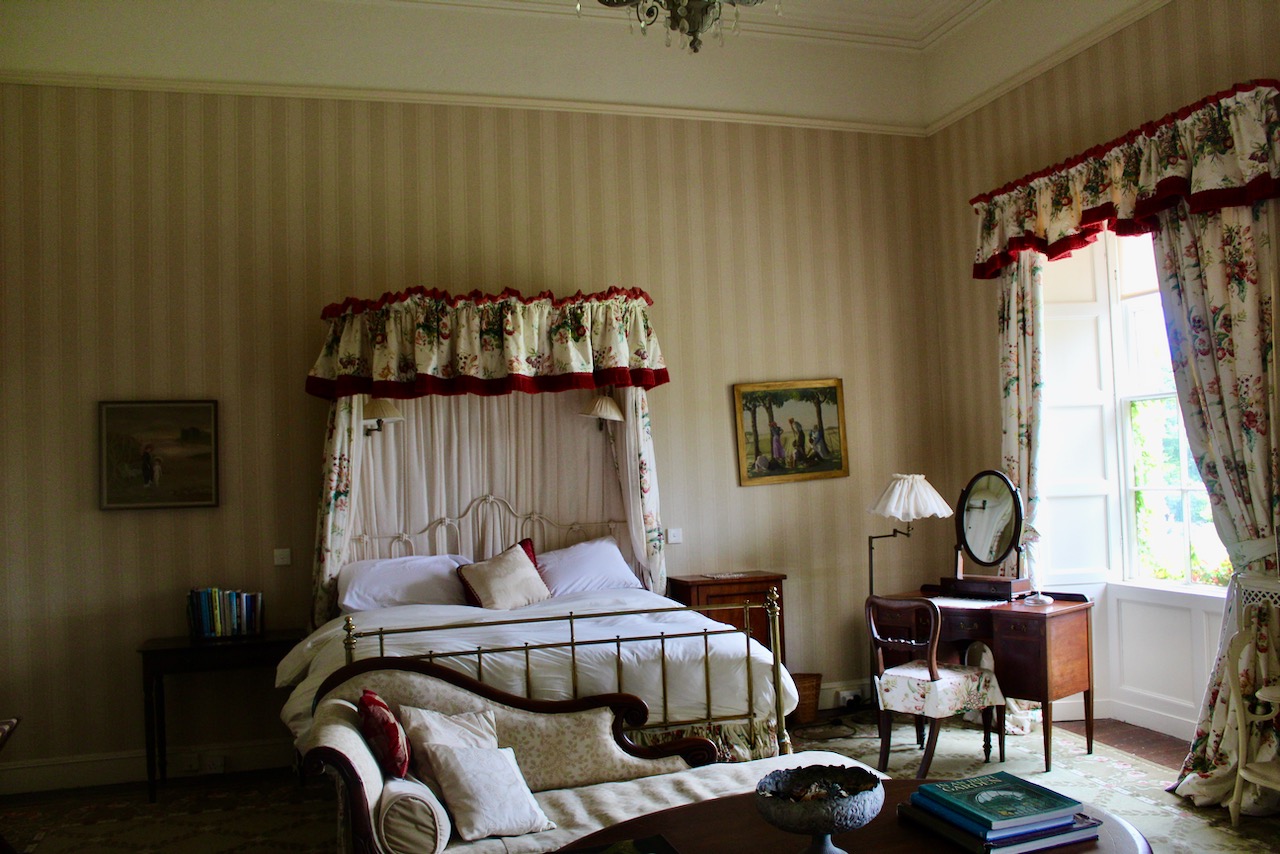
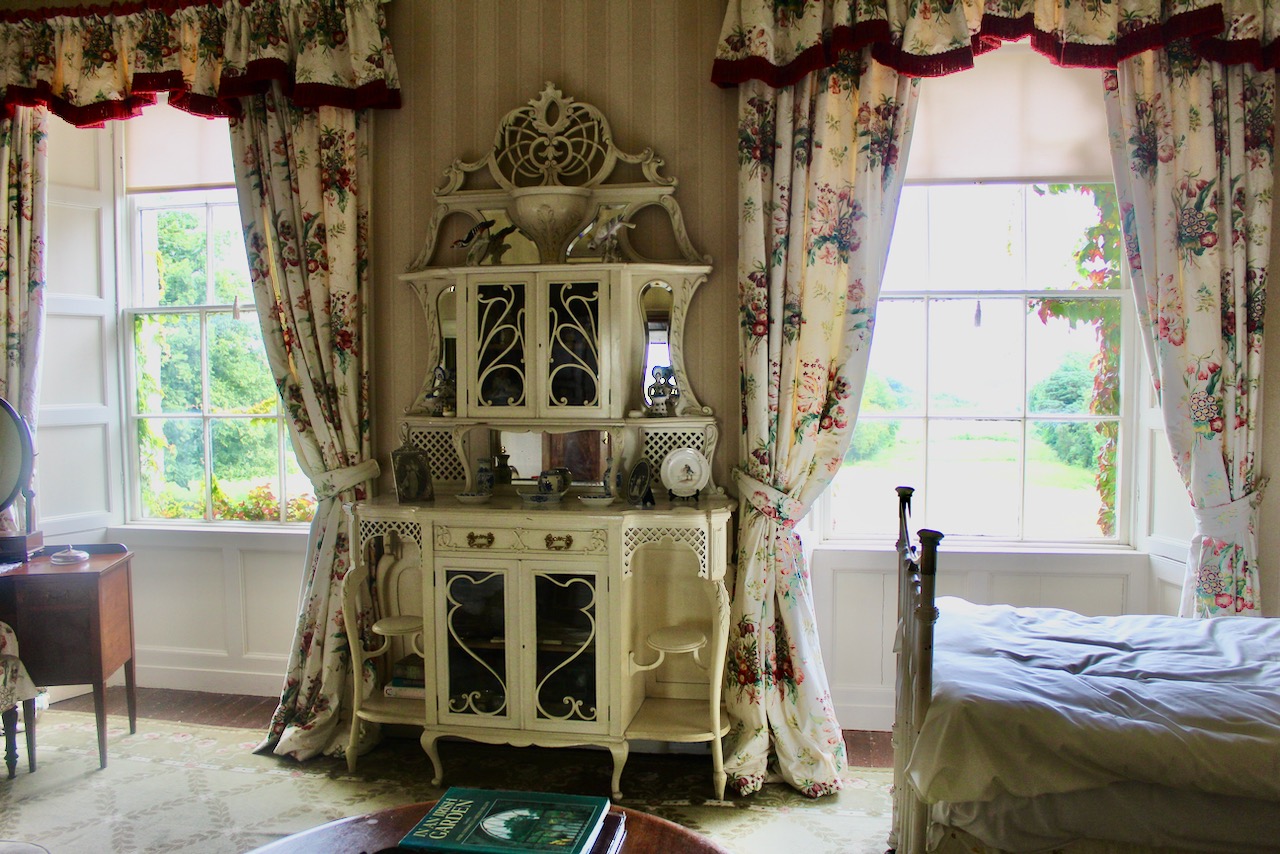
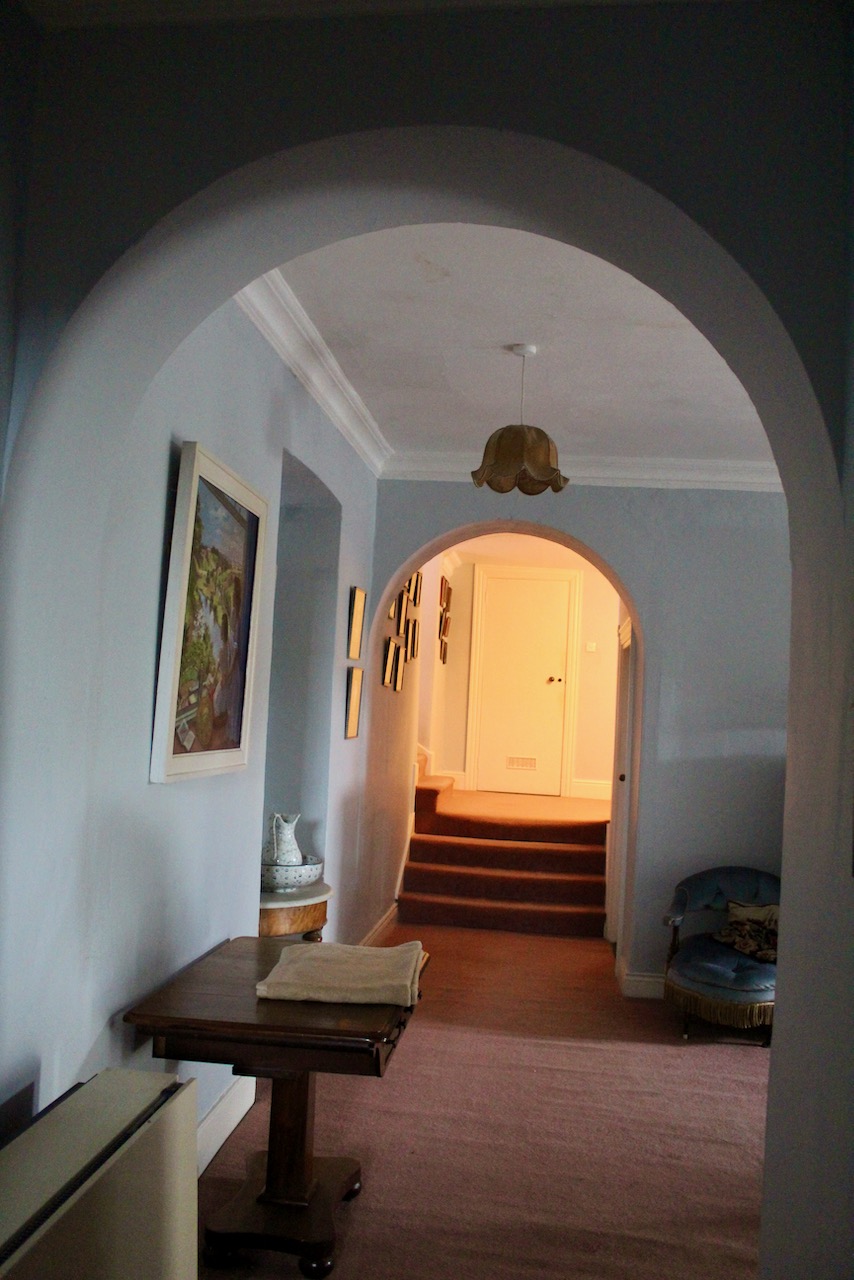
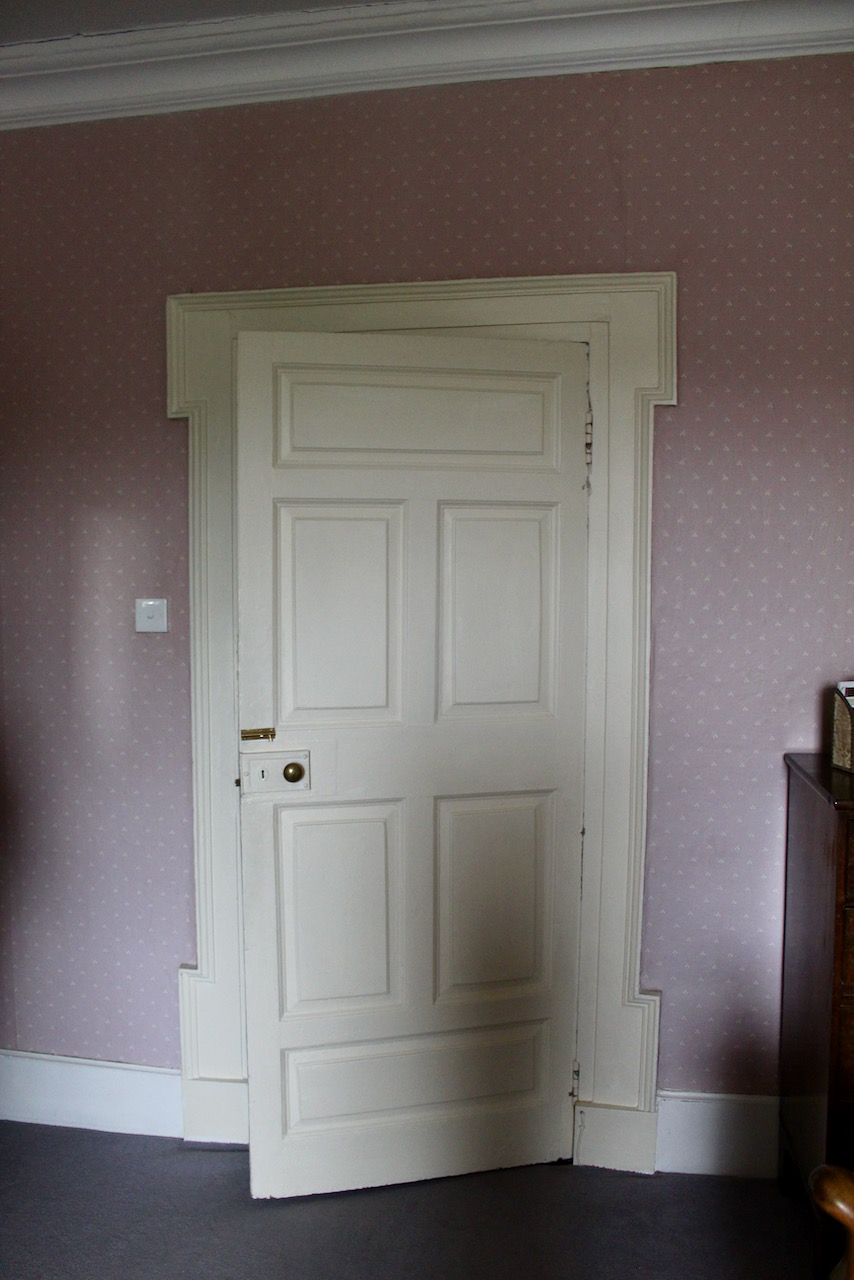
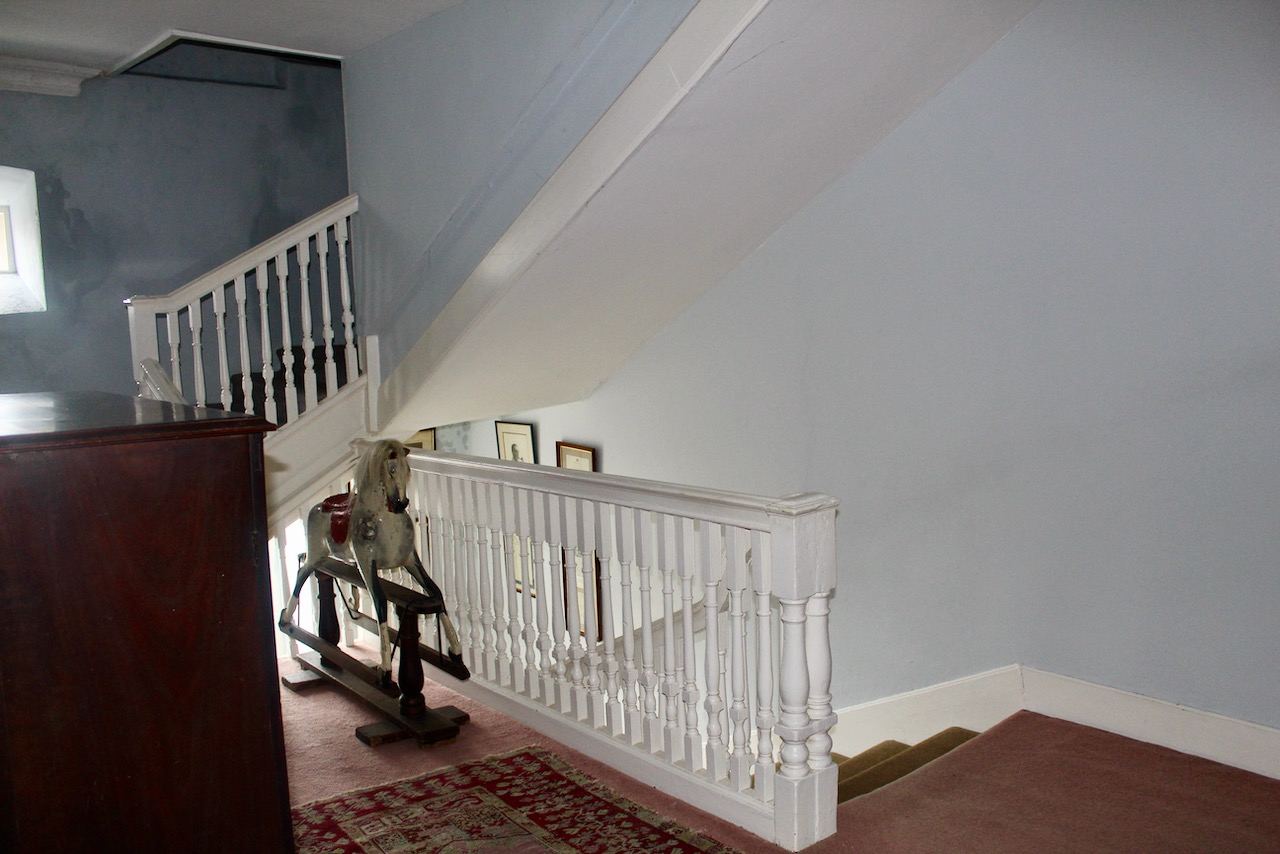
Next we went up to the bedrooms. Susan’s son DJ and his wife Colette help to run the guest house. The main bedrooms open off the oval top-lit landing. They are classically proportioned large rooms with canopy or four poster beds, all with en suite bathrooms.
After our wonderful tour, we headed over to the walled garden and the North Mayo Heritage Centre, which also provides a genealogy service. [11] It is a member of the Irish Family History Foundation, which provides a country wide service through the website RootsIreland. North Mayo Heritage Centre covers the northern half of County Mayo, and the Centre in Ballinrobe covers the southern half.
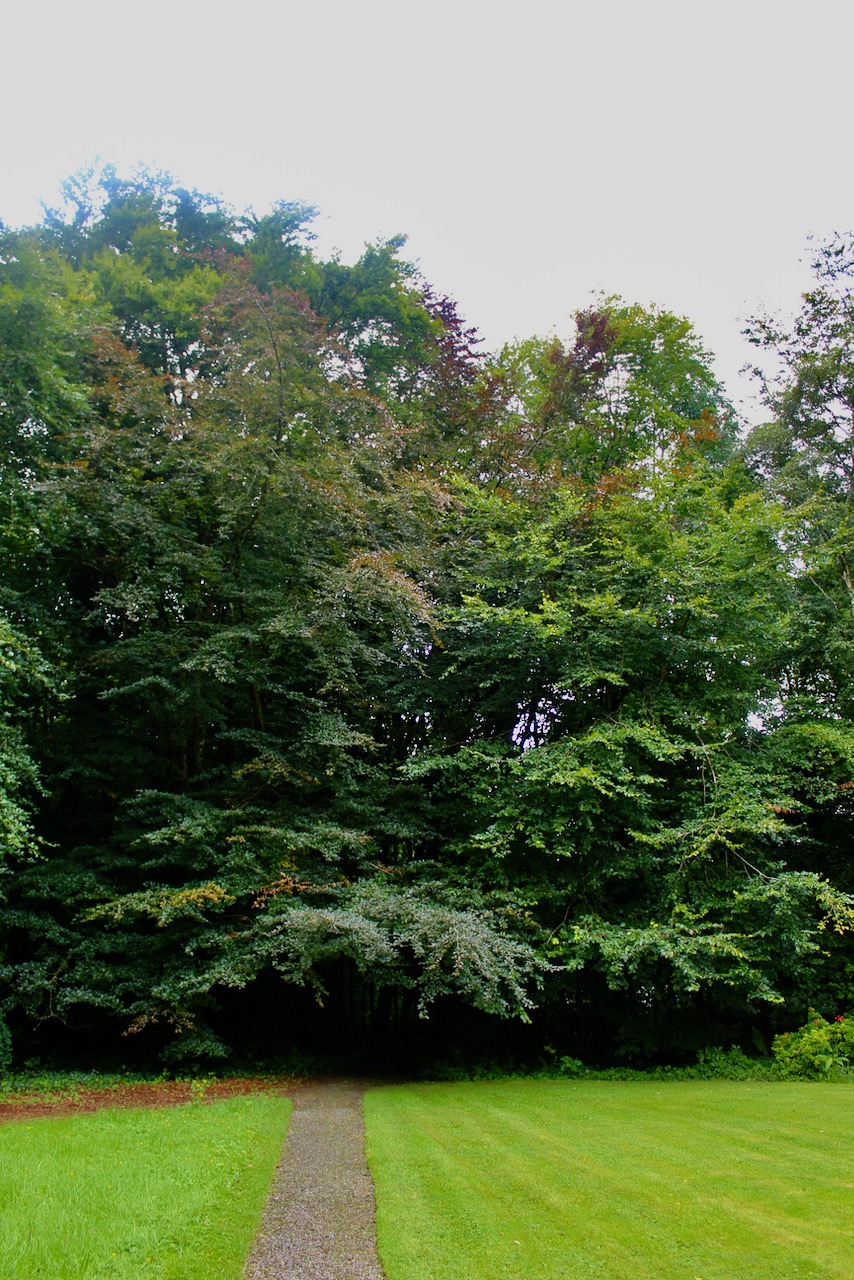
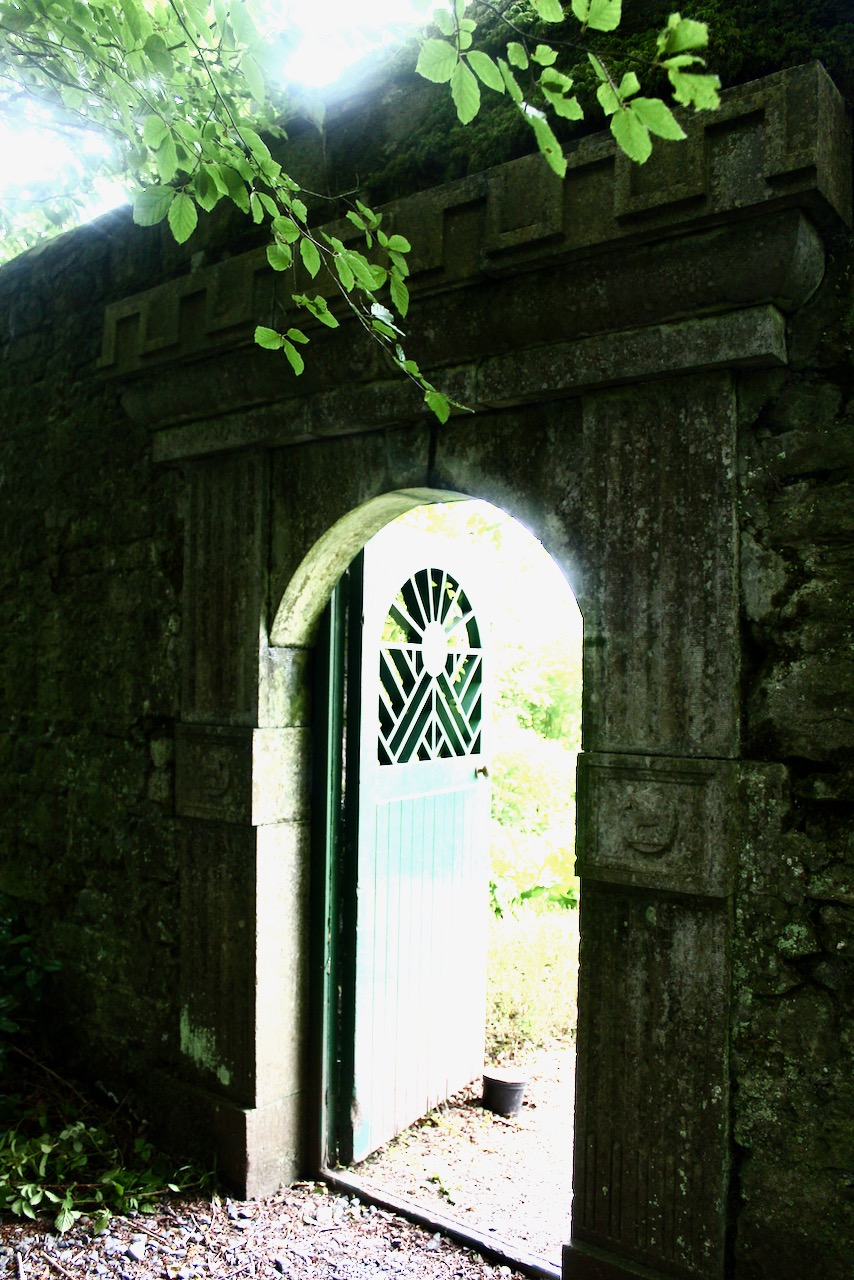
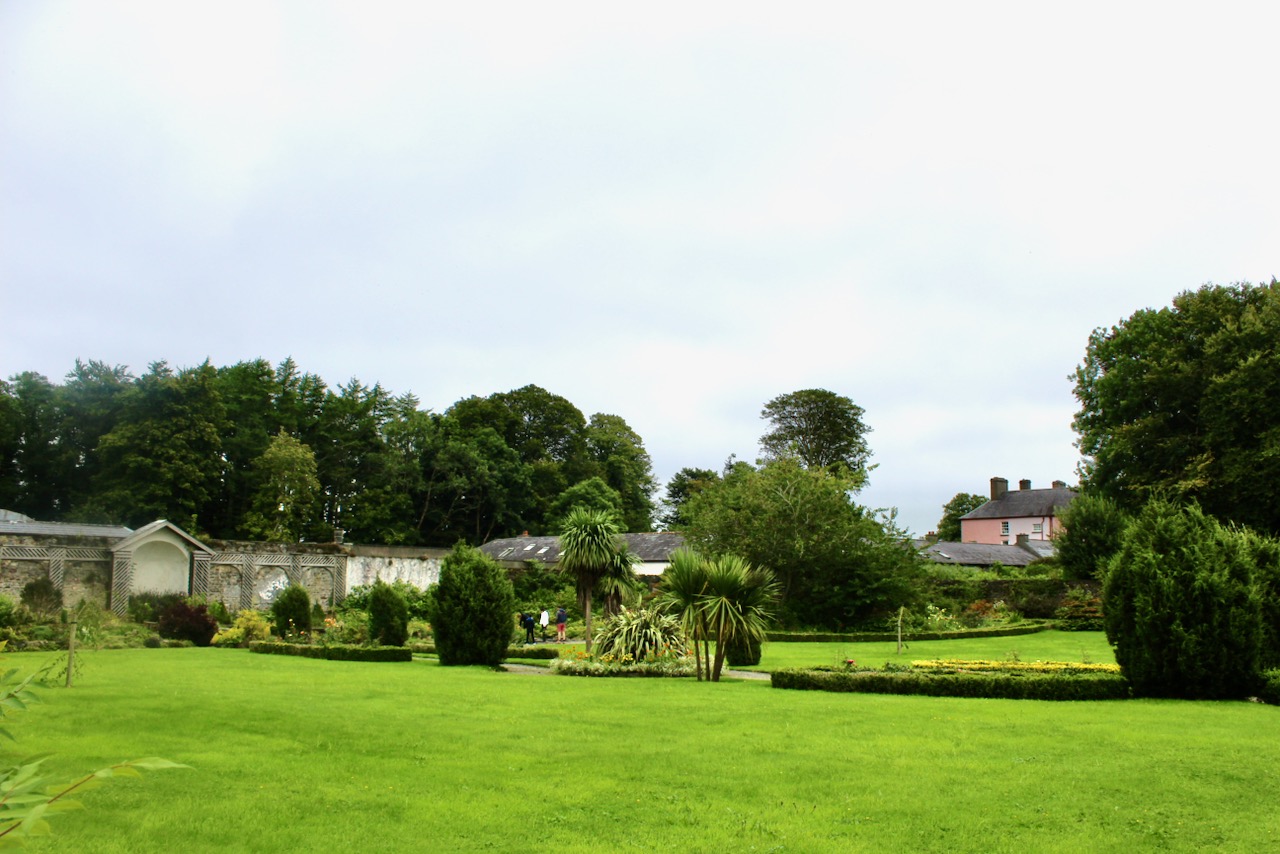
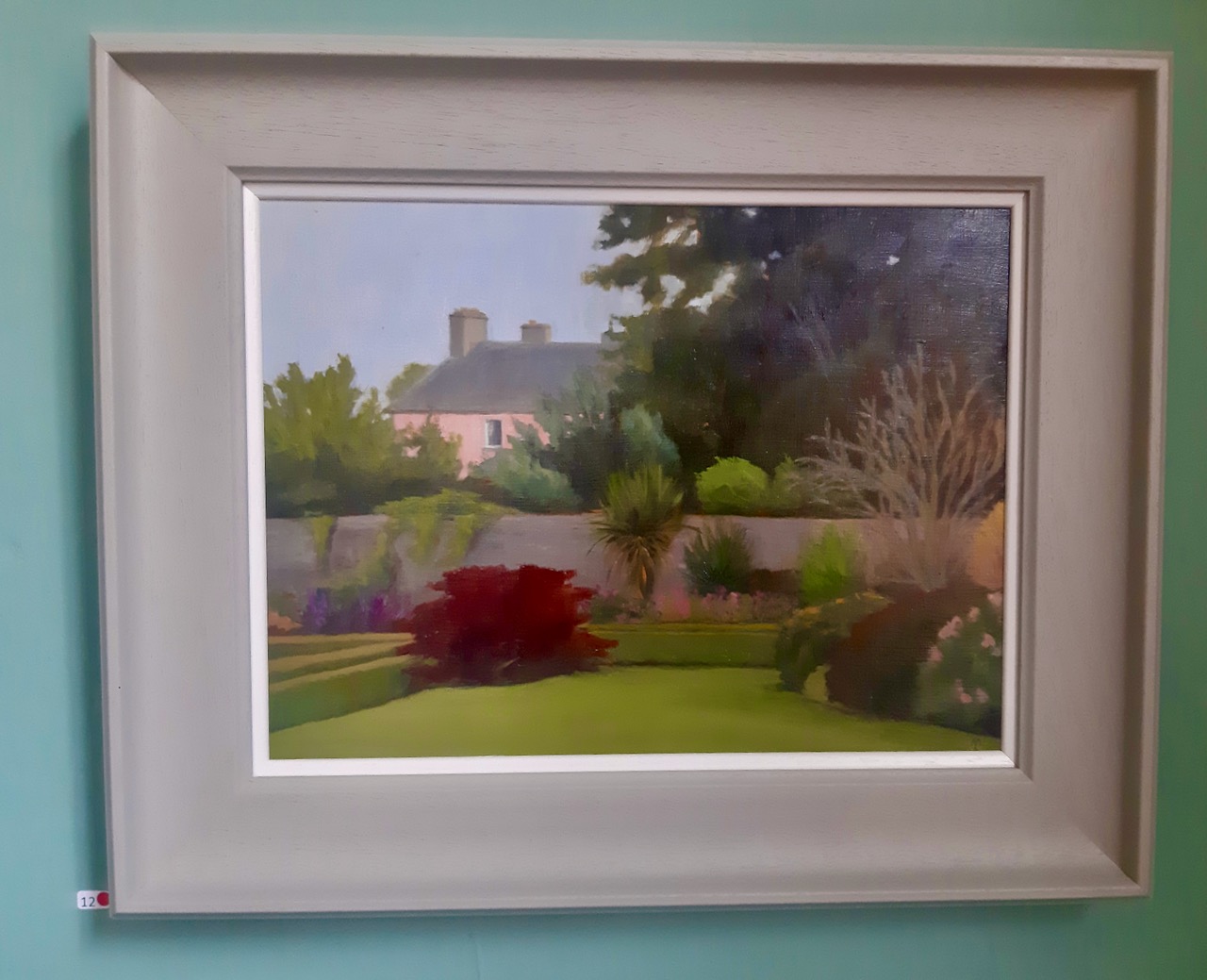
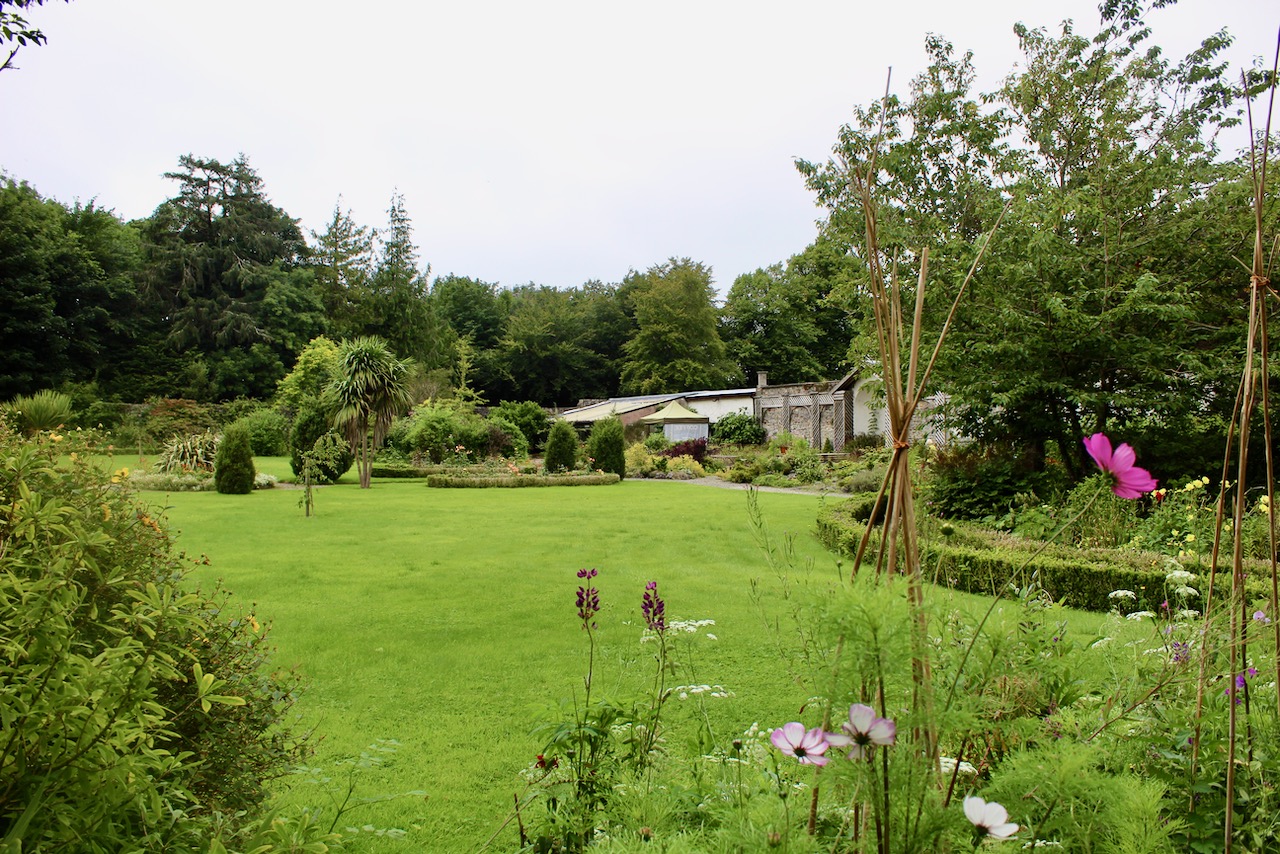
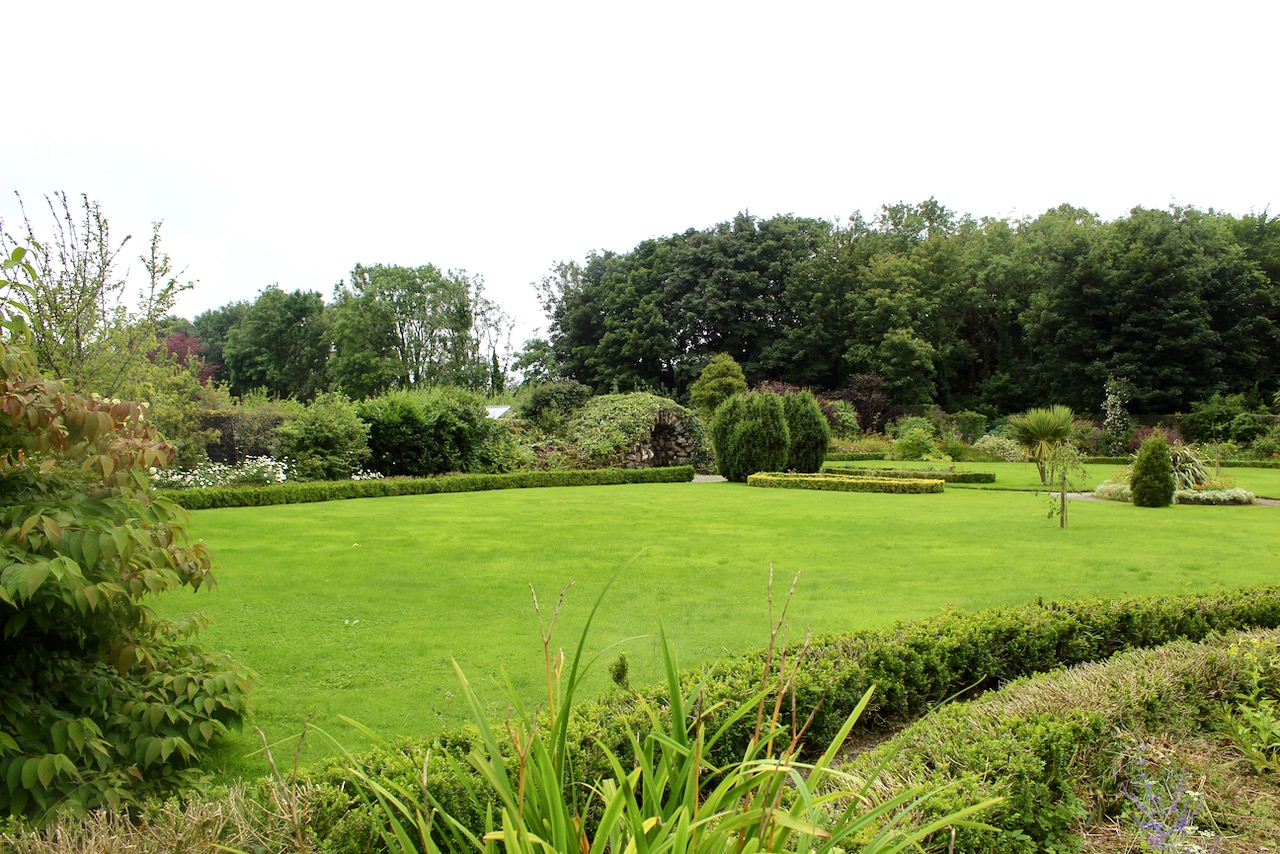
The walled garden was restored in 1996-9 under the Great Gardens of Ireland Restoration Programme. The head gardener at Enniscoe from 1872 to 1912 was William Gray, who moved to Enniscoe from St. Anne’s in Clontarf, where he had worked on Benjamin Lee Guinness’s estate. Much of the present ornamental garden is much as it was in William’s day.
[8] p. 151. Great Irish Houses. Forward by Desmond FitzGerald and Desmond Guinness. IMAGE Publications, 2008.
[9] Guy Beiner’s book entitled Remembering the Year of the French (University of Wisconsin Press, 2007) discusses folk history and how this French incursion and the 1798 Rebellion in Mayo is remembered.
























































 Irish Historic Houses