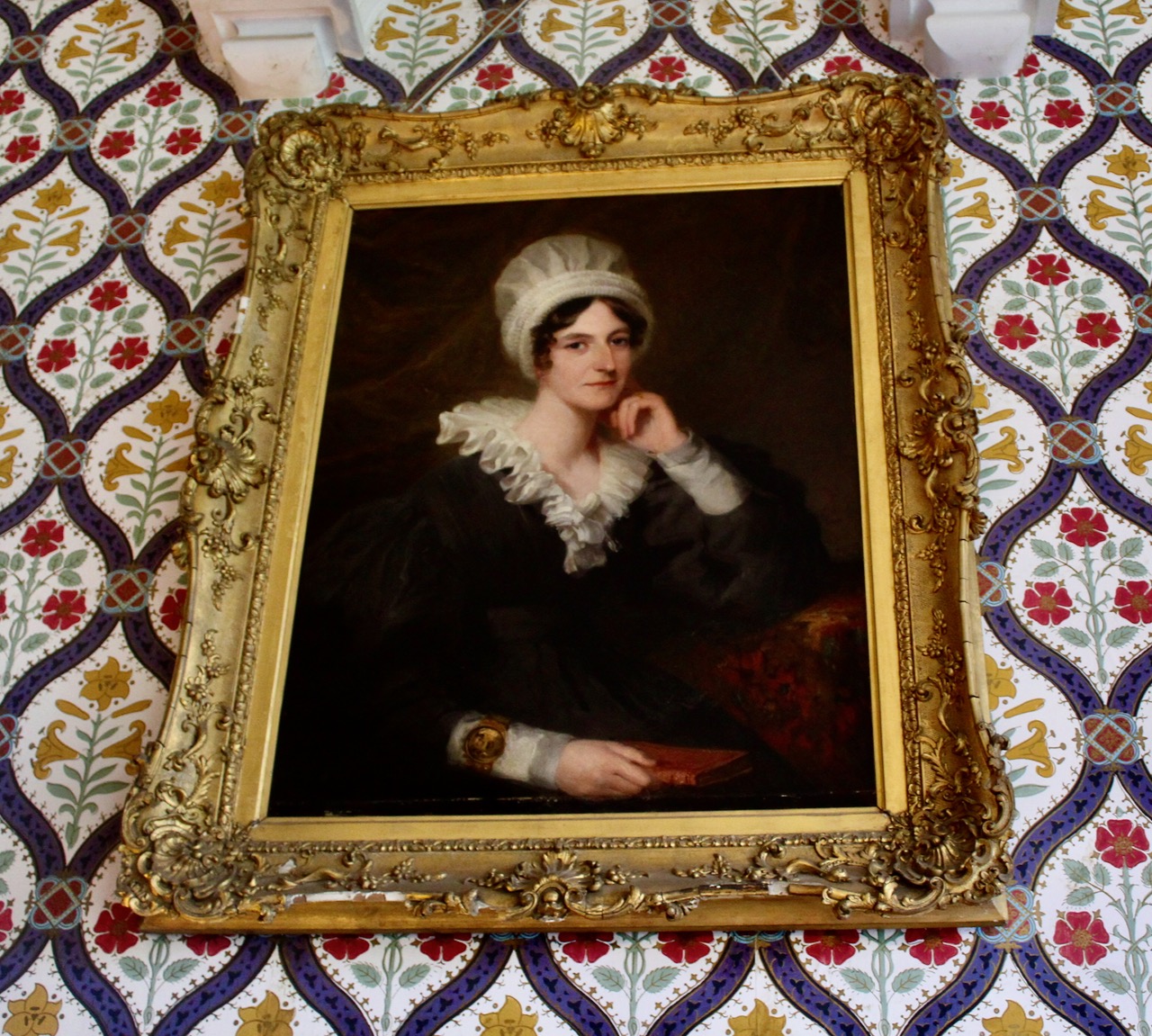
Marlay Park House, Rathfarnham, County Dublin

donation

Help me to pay the entrance fee to one of the houses on this website. This site is created purely out of love for the subject and I receive no payment so any donation is appreciated!

€15.00

Marlay Park, Rathfarnham, County Dublin – owned by Dun Laoghaire/Rathdown County Council.
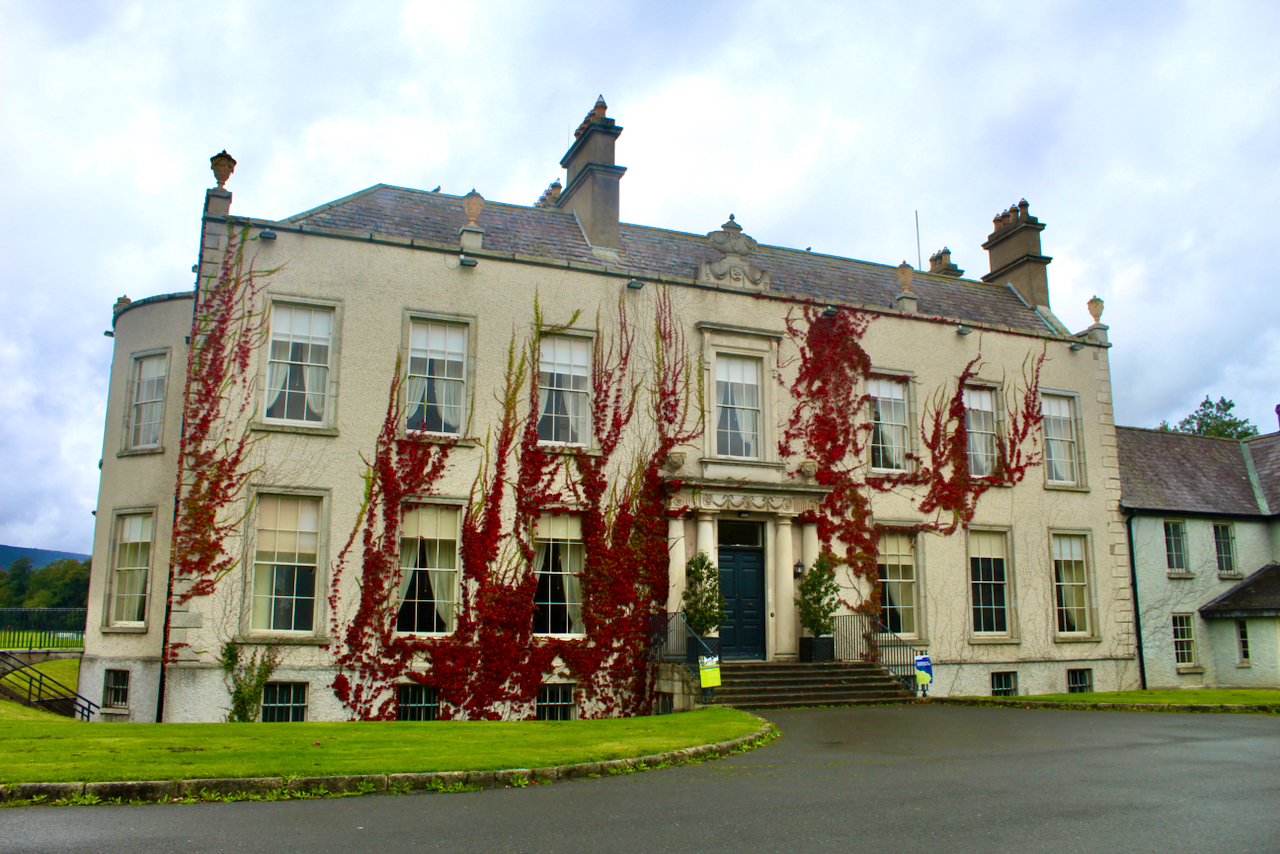
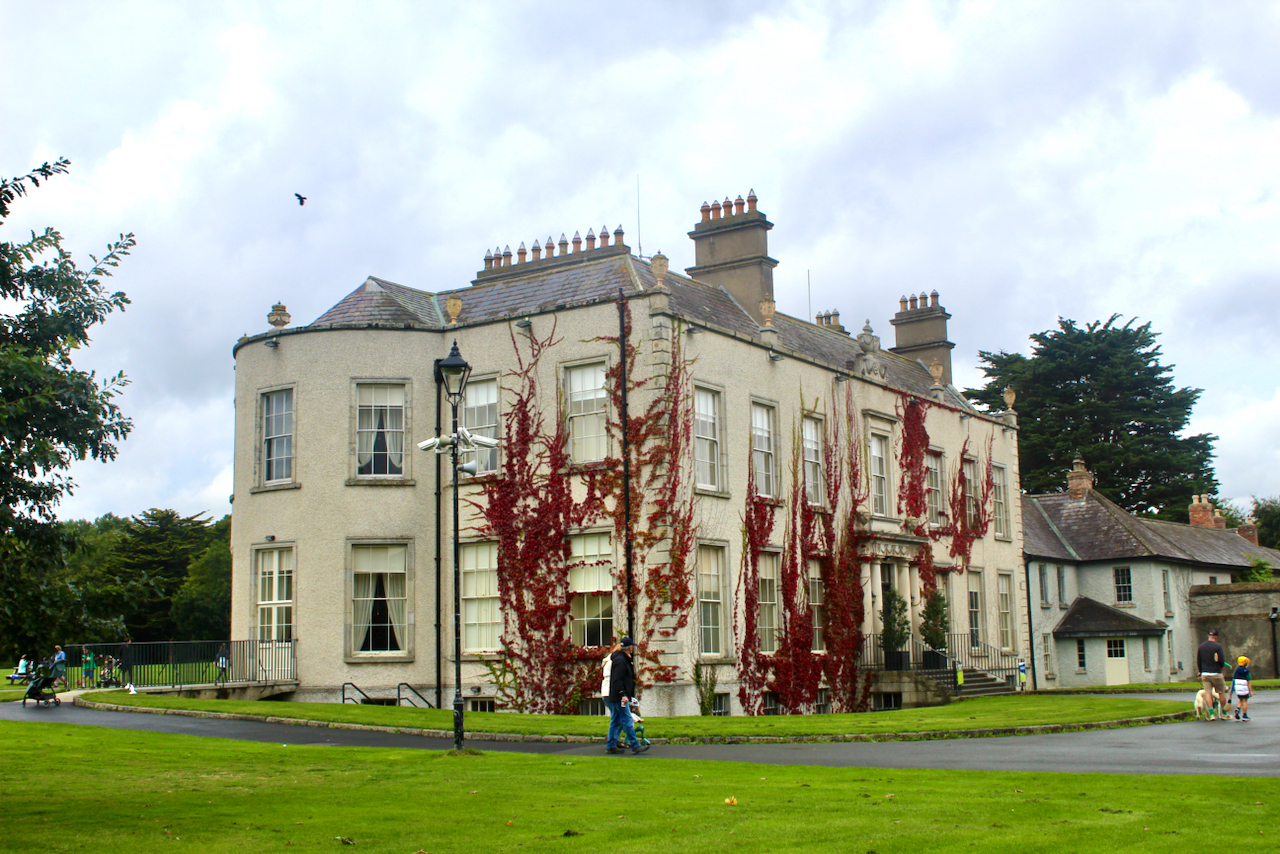
Marlay House, County Dublin, September 2025. Photograph © Jennifer Winder-Baggot, www.irishhistorichouses.com

https://www.dlrcoco.ie/en/heritage/heritage

Online tour https://www.dlrcoco.ie/heritage/heritage

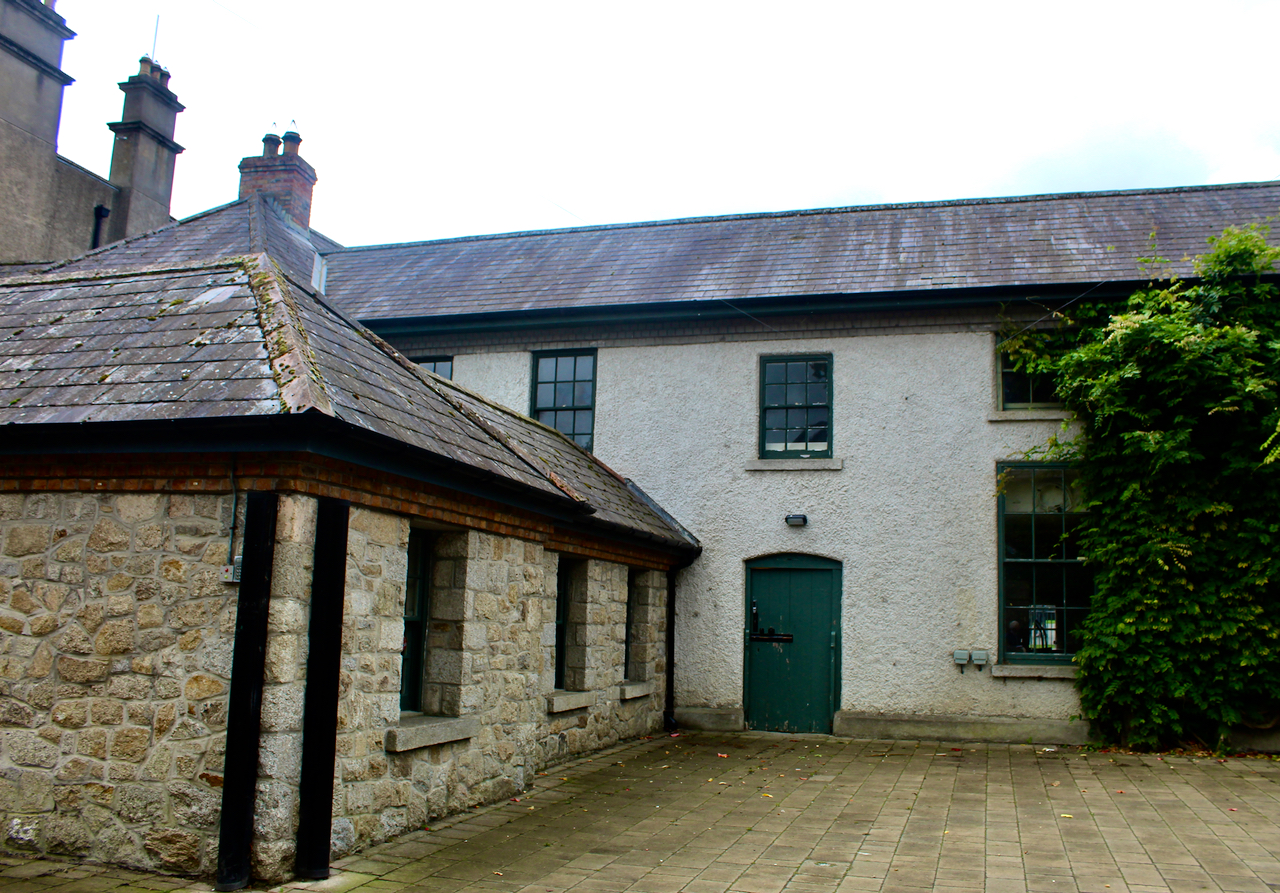
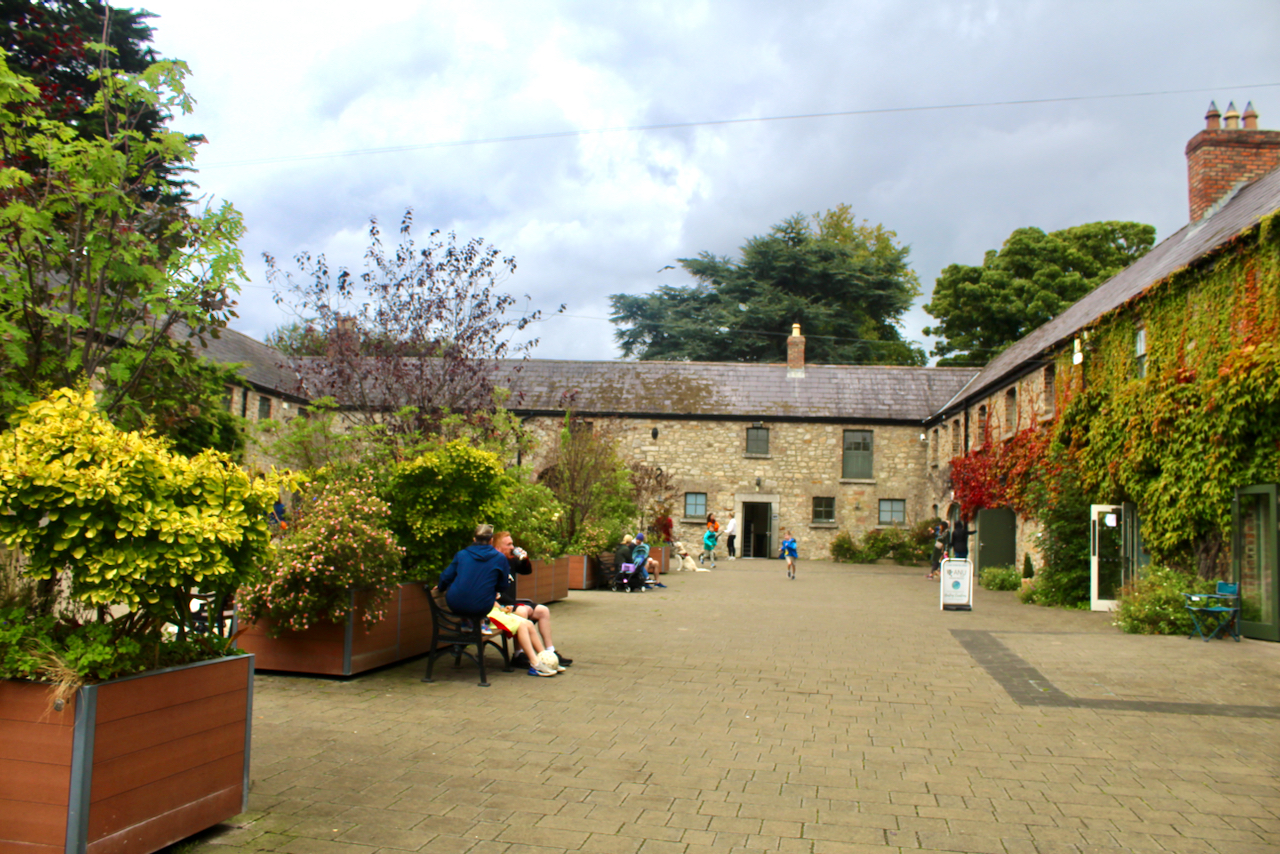
Marlay House is owned by Dun Laoghaire/Rathdown County Council. It has been restored for guided tours and the former stables have been converted into a crafts courtyard. The house had been declared unsound in 1977 and the council considered demolition. Insteahd, thank goodness, renovation began in 1992, much of the repairs done by people on an employment training scheme. The Council runs tours of the house during the Dun Laoghaire/Rathdown Heritage festival, which partially coincides with Heritage Week. Stephen and I went on the tour in 2025.

Marlay House was built for David La Touche (1729-1817), adding to an earlier 17th century house called the Grange. David La Touche bought the Grange in 1764. This Grange house is not to be confused with a house called Marlay Grange, mentioned by Mark Bence-Jones in his Guide to Irish Country Houses, and on the excellent website of Timothy William Ferres, Lord Belmont in Northern Ireland, which was built around 1850 and belonged to the Rowleys. [1]
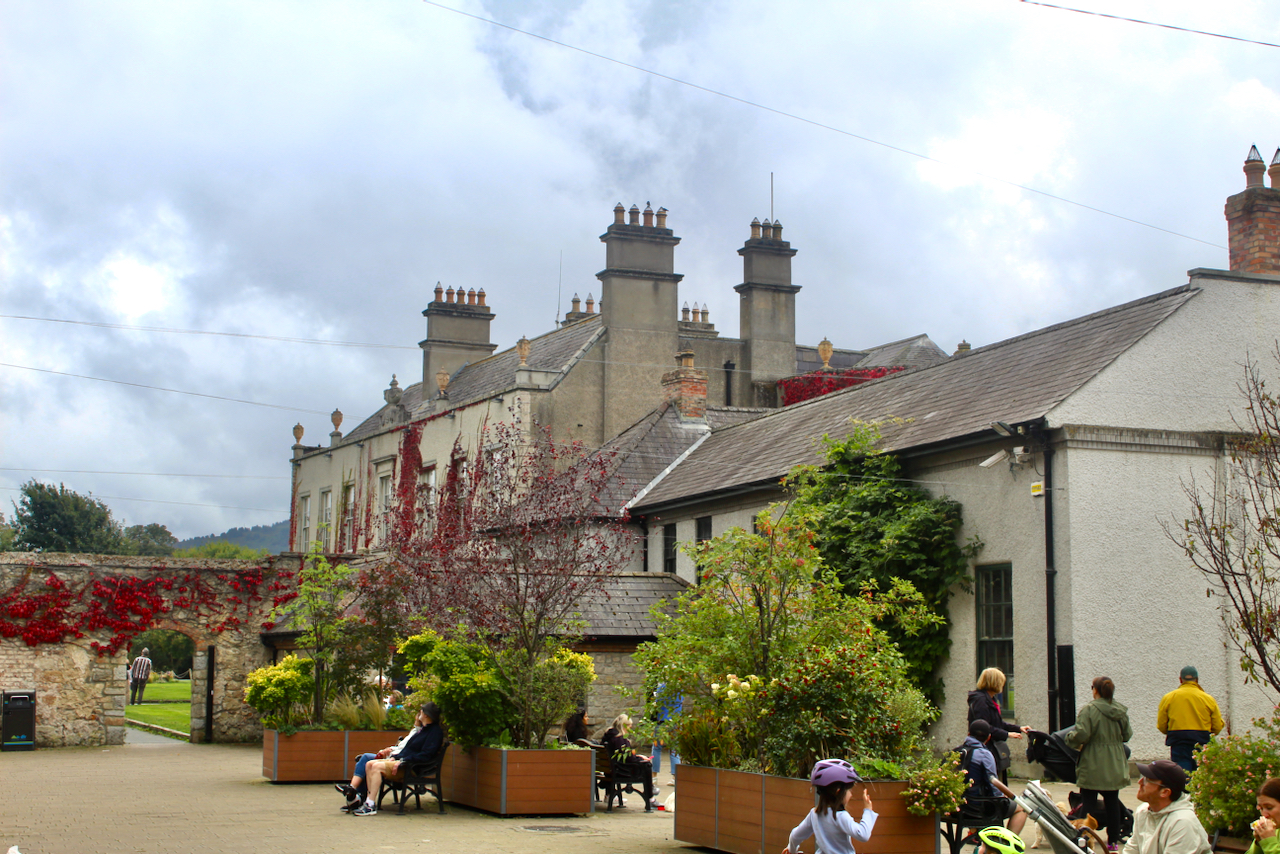
Marlay House and Grange, which is attached, September 2025. Photograph © Jennifer Winder-Baggot, www.irishhistorichouses.com
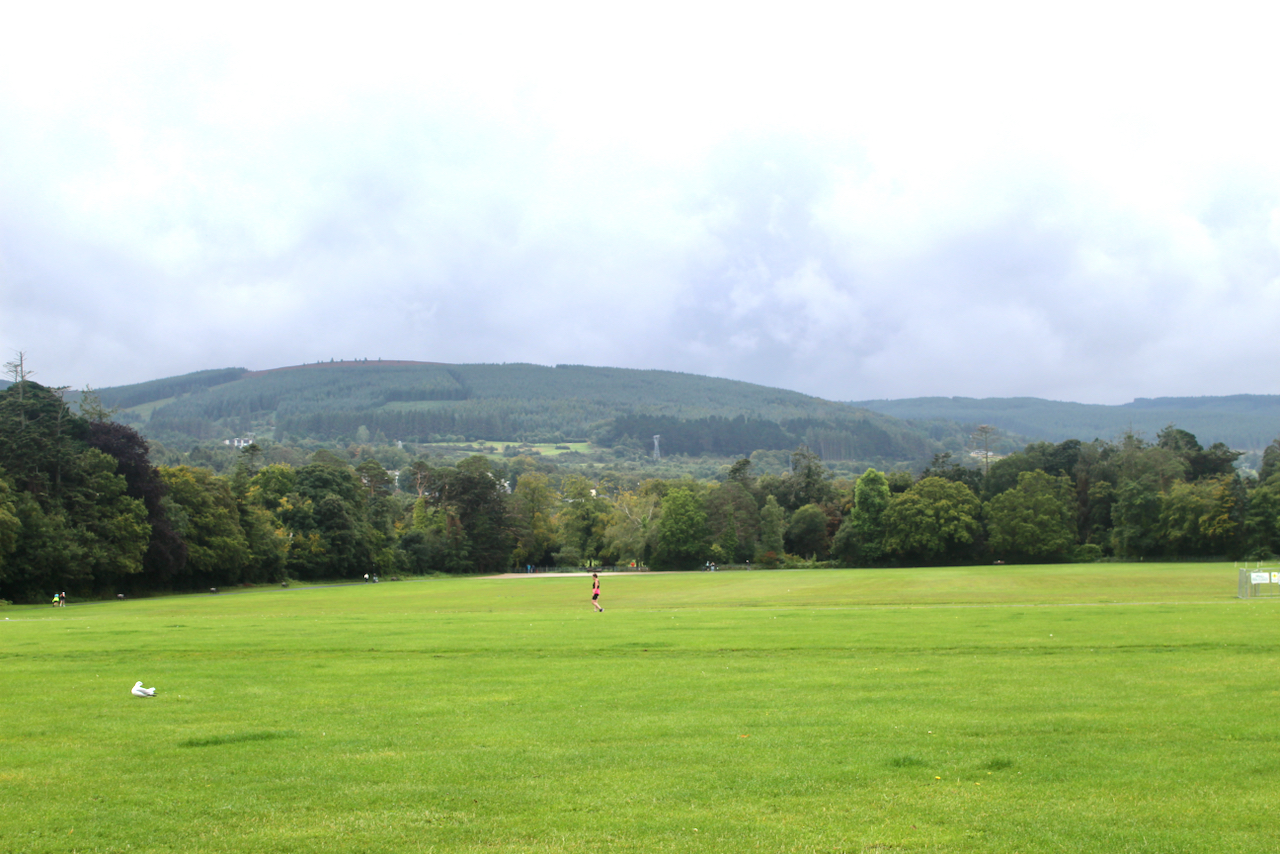
Marlay Park, view from the house, County Dublin, September 2025. Photograph © Jennifer Winder-Baggot, www.irishhistorichouses.com

The lands of Marlay Park belonged to the Cistercian Abbey of St. Mary, located in the city of Dublin – see my entry: https://irishhistorichouses.com/2022/11/09/the-church-junction-of-marys-street-jervis-street-dublin/ . After the dissolution of the monasteries by King Henry VIII, the land was granted to Barnaby Fitzpatrick (c.1478–1575) 1st Baron of Upper Ossory. Barnaby’s fourth wife was Margaret, daughter of Piers Butler, 8th Earl of Ormond. His son Barnaby who became 2nd Baron was raised at the English court with King Henry VIII’s son Edward.

Because the lands lay within the southern boundary of the pale, the holding became known as “Grange of the March”, meaning “Farmhouse of the Border.” The property later passed into the possession of the Harold family who were responsible for the defence of this section of the Pale from the attacks of the Irish clans. [2] They were known as “marcher lords” or “wild” border guardians, descendants of Vikings. The area of Harold’s Cross is named after them, specifically from a cross erected to mark the boundary between the lands of the Archbishop of Dublin and the lands of the Harold family, warning them not to encroach further toward the city. [3] The Harolds were dispossessed in after the 1641 Rebellion.

Grange, which was also known as Harold’s Grange, was owned previously by Thomas Taylor (1707-1763), Mark Bence-Jones tells us. [4] Taylor was Lord Mayor of Dublin in 1750. He inherited Grange from his father, also Thomas, who was an eminent agriculturalist, who died in 1727 and is buried in Kilgobbin graveyard. In the Taylors’ time the house was built, and also ornamental grounds and a deer park. Some of the house may have been demolished later when David La Touche was building the new part of the house.
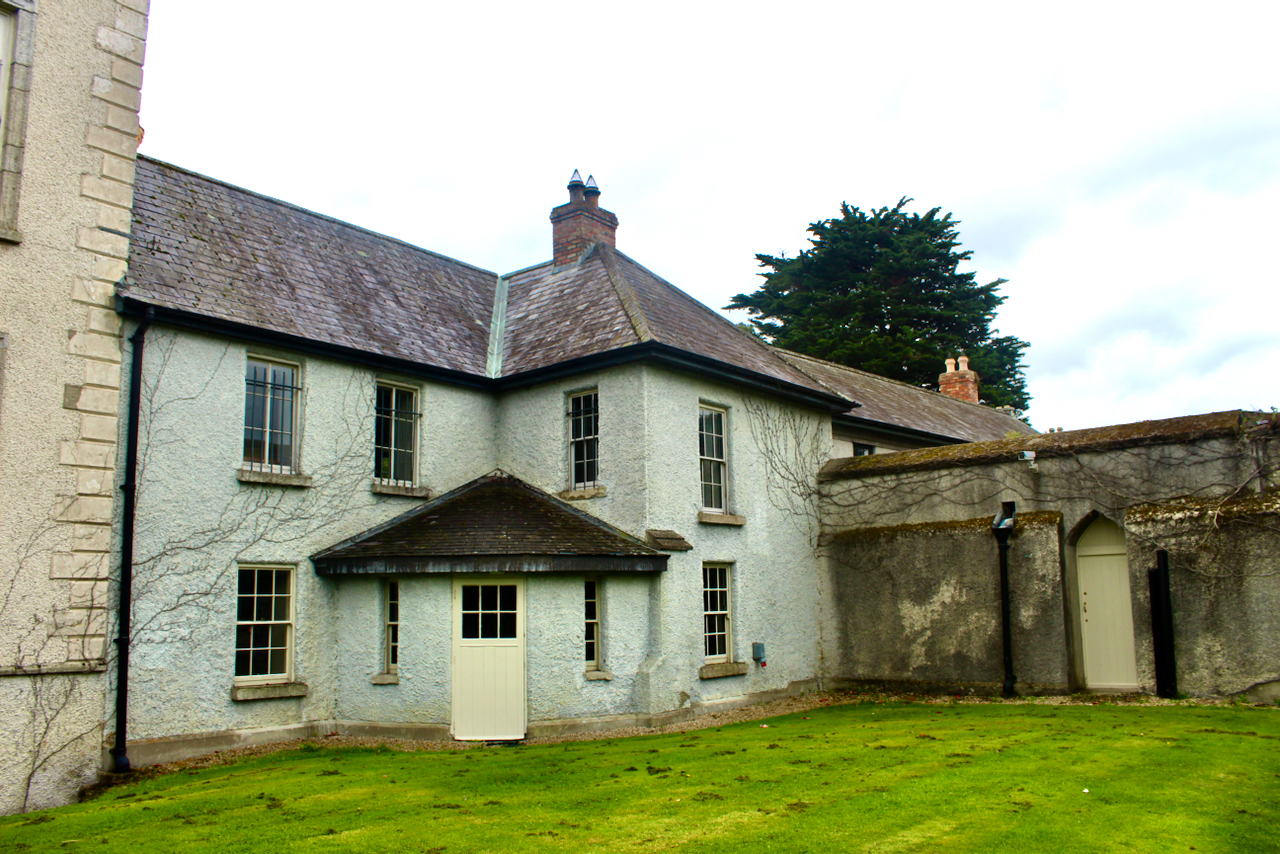
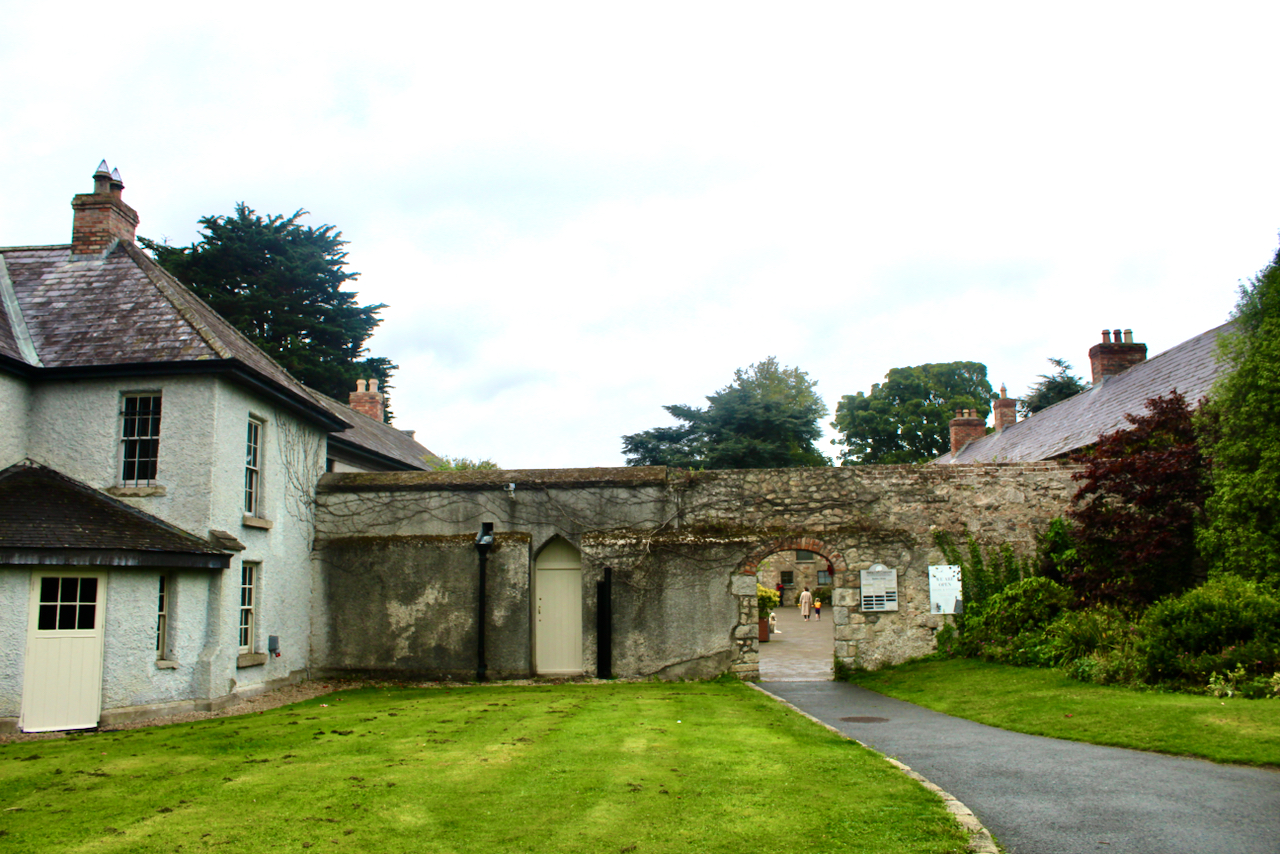
Grange, which is attached to Marlay House, September 2025. Photograph © Jennifer Winder-Baggot, www.irishhistorichouses.com
Grange, September 2025. Photograph © Jennifer Winder-Baggot, www.irishhistorichouses.com
Grange, the part within the courtyard next to Marlay House, September 2025. Photograph © Jennifer Winder-Baggot, www.irishhistorichouses.com
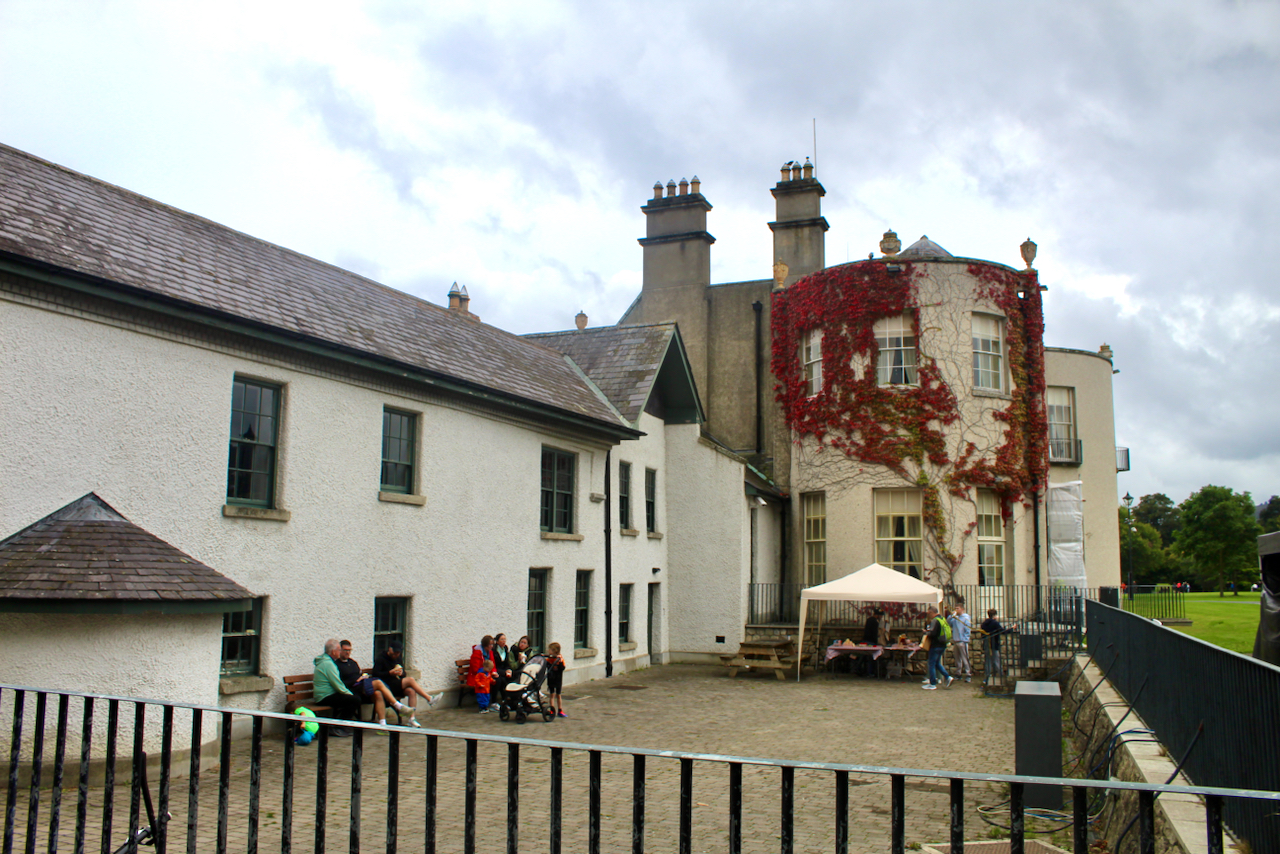
The courtyard next to Marlay House. Tor a period, the stained glass artist Evie Hone occupied a house in the stable court. September 2025. Photograph © Jennifer Winder-Baggot, www.irishhistorichouses.com

Thomas Taylor (1707-1763) married, first, in 1733, Sarah, whose father John Falkiner held the office of High Sheriff of County Dublin in 1721 (Burke’s Peerage 2003 volume 1, page 1380). In 1747 Thomas married for a second time, this time to Anne (1725-1820), daughter of Michael Beresford, who in turn was the son of Tristram Beresford, 1st Baronet of Coleraine in County Derry.
Tristram Beresford (d. 1673), 1st Baronet of Coleraine in County Derry.
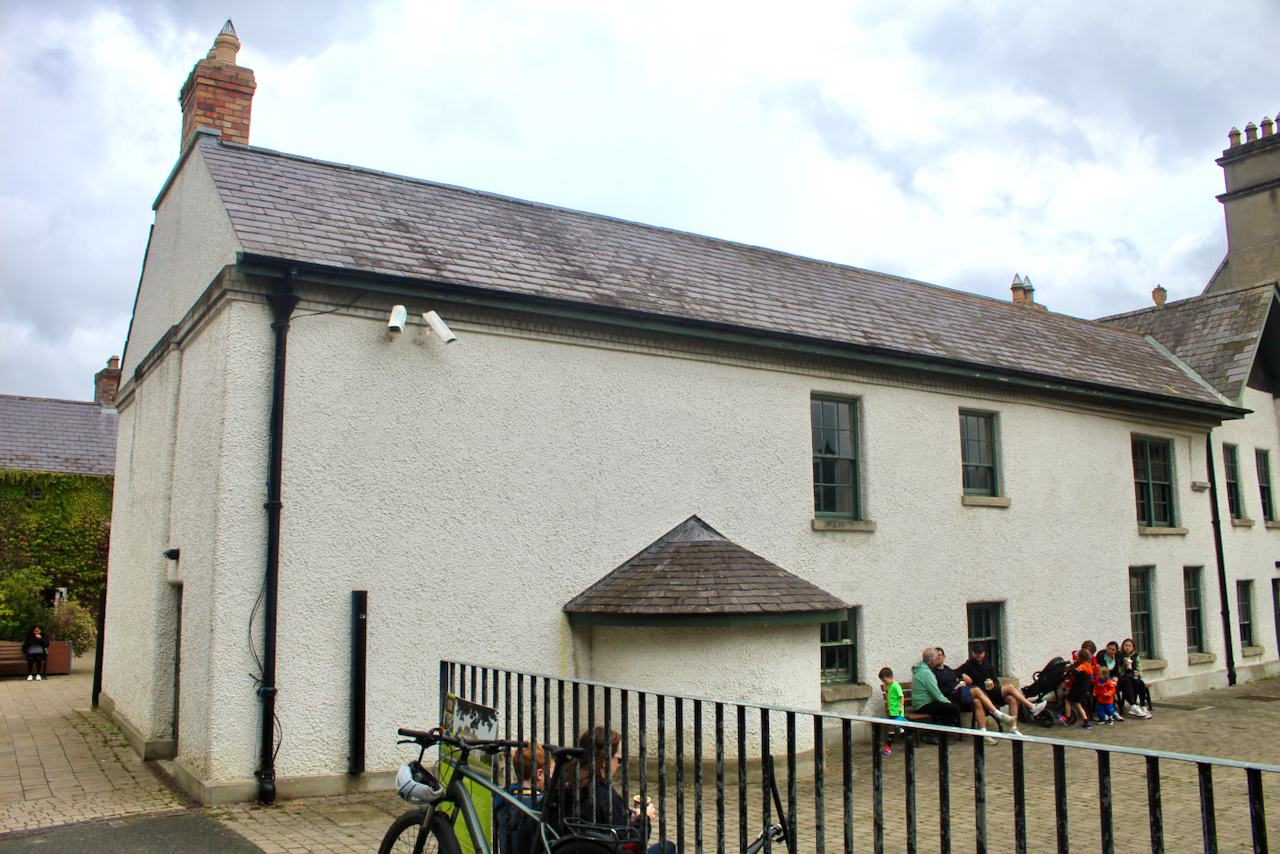
Grange, which is attached to Marlay House, view of the rear of the house, September 2025. Photograph © Jennifer Winder-Baggot, www.irishhistorichouses.com

After Thomas the son died in 1763, Grange was acquired by David La Touche.

The La Touche family was a Huguenot family. Huguenots were French Protestants, and they fled from France due to the punishment and killing of Protestants after Louis XIV revoked the Edict of Nantes – the Edict of Nantes had promoted religious toleration.

David Digues La Touche (1675-1745), born in the Loire Valley, fled from France after the Revocation of the Edict of Nantes. He fled to Holland, where his uncle obtained for him a commission in the army of William of Orange. He fought in the Battle of the Boyne in the regiment under General Caillemotte. [5] He left the army in Galway, where he was billeted on a weaver who sent him to Dublin to buy wool yarn (worsteds). He decided then to stay in Dublin, and with another Huguenot, he set up as a manufacturer of cambric and rich silk poplin. Where I live in Dublin is an area where many Huguenots lived and weaved – we are near “Weaver Square,” and our area is called “The Tenters” because cloth waas hung out to dry and bleach in the sun and looked like tents, hung on “tenterhooks”!

La Touche was an elder of the French Church group in Dublin, many of whom used to meet in what is now the Lady Chapel of St Patrick’s Cathedral. [6]

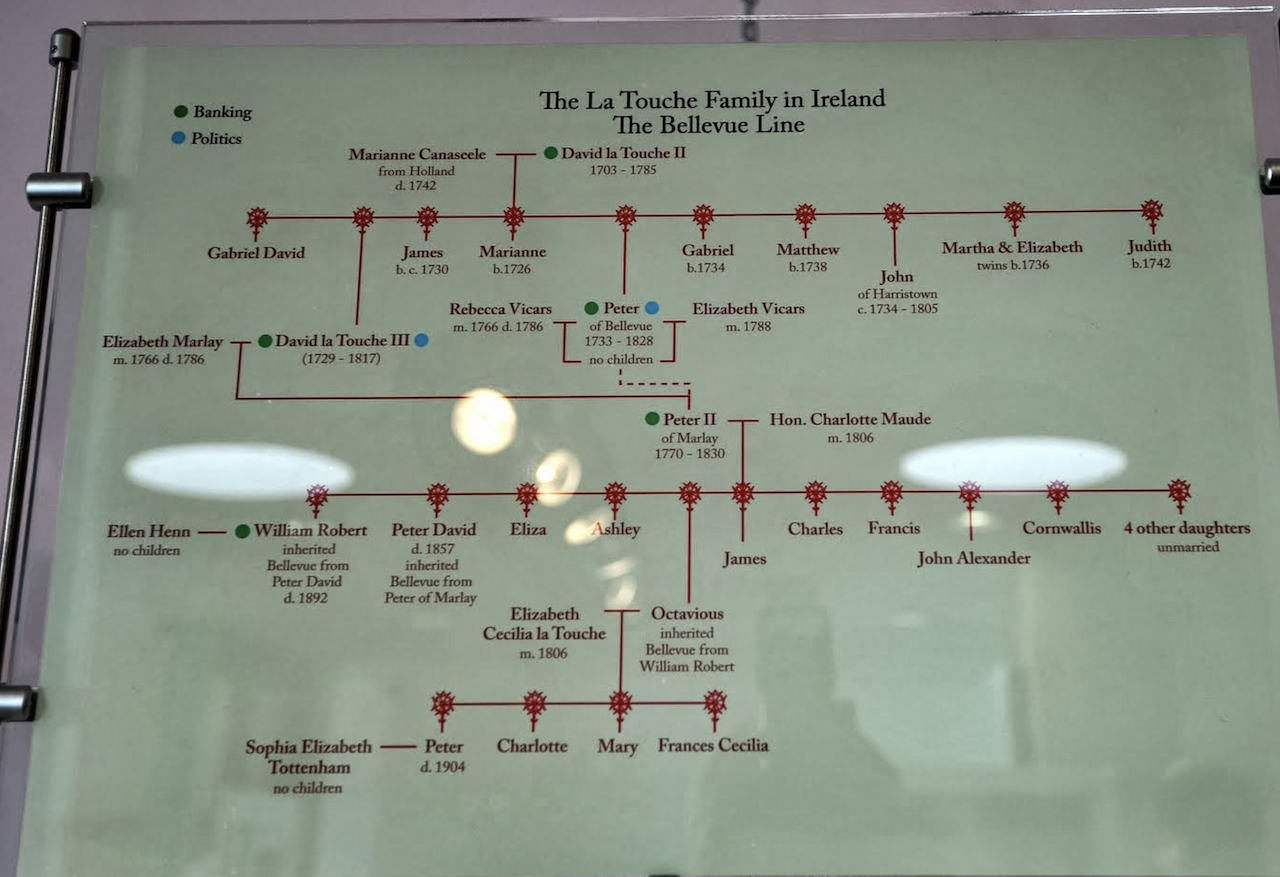
The La Touches began banking when Huguenots left their money and valuables with David for safekeeping when they would travel out of the capital. He began to advance loans, and so the La Touche bank began. He had two sons, David La Touche (1703-1785) and James Digues (later corrupted to Digges) La Touche.

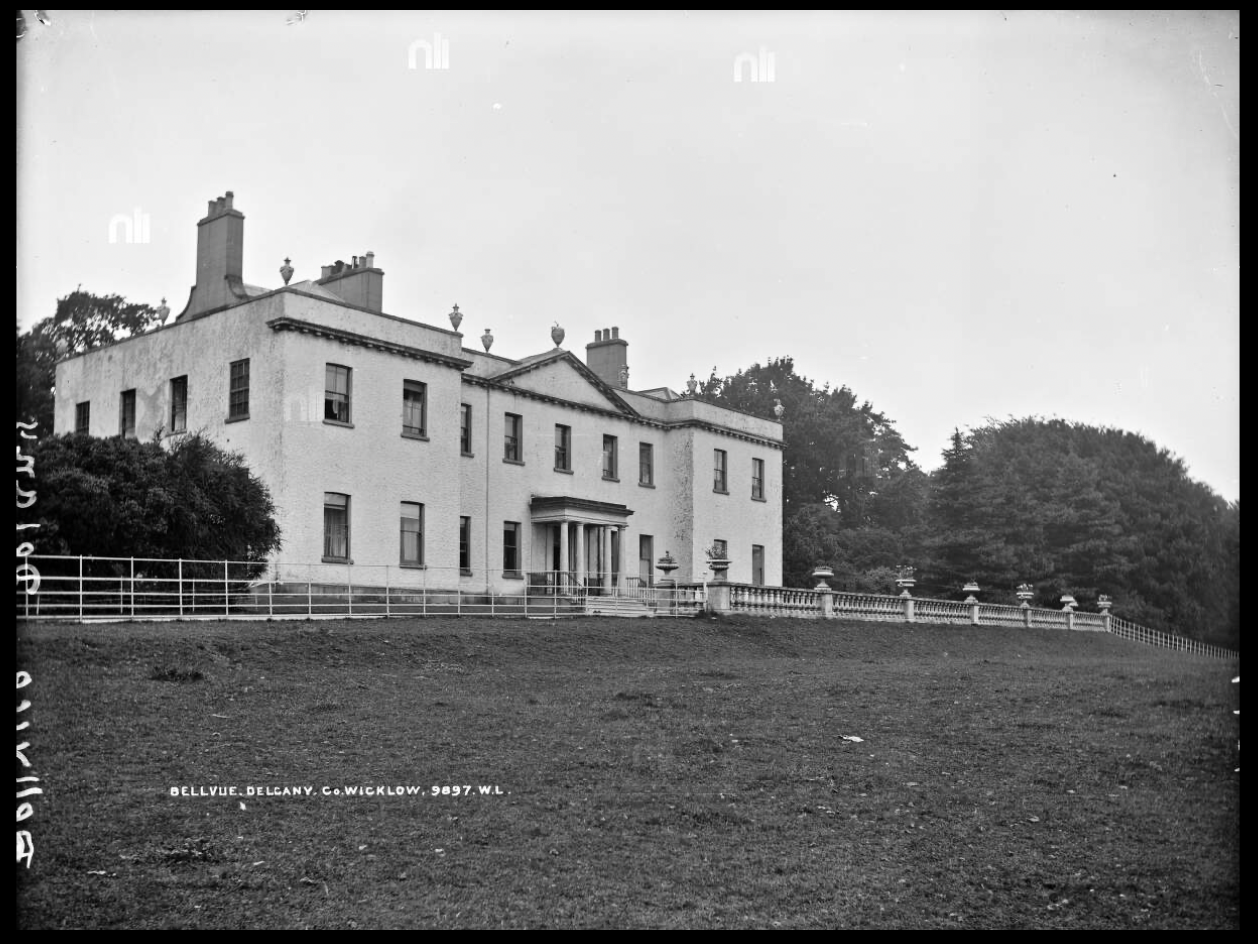
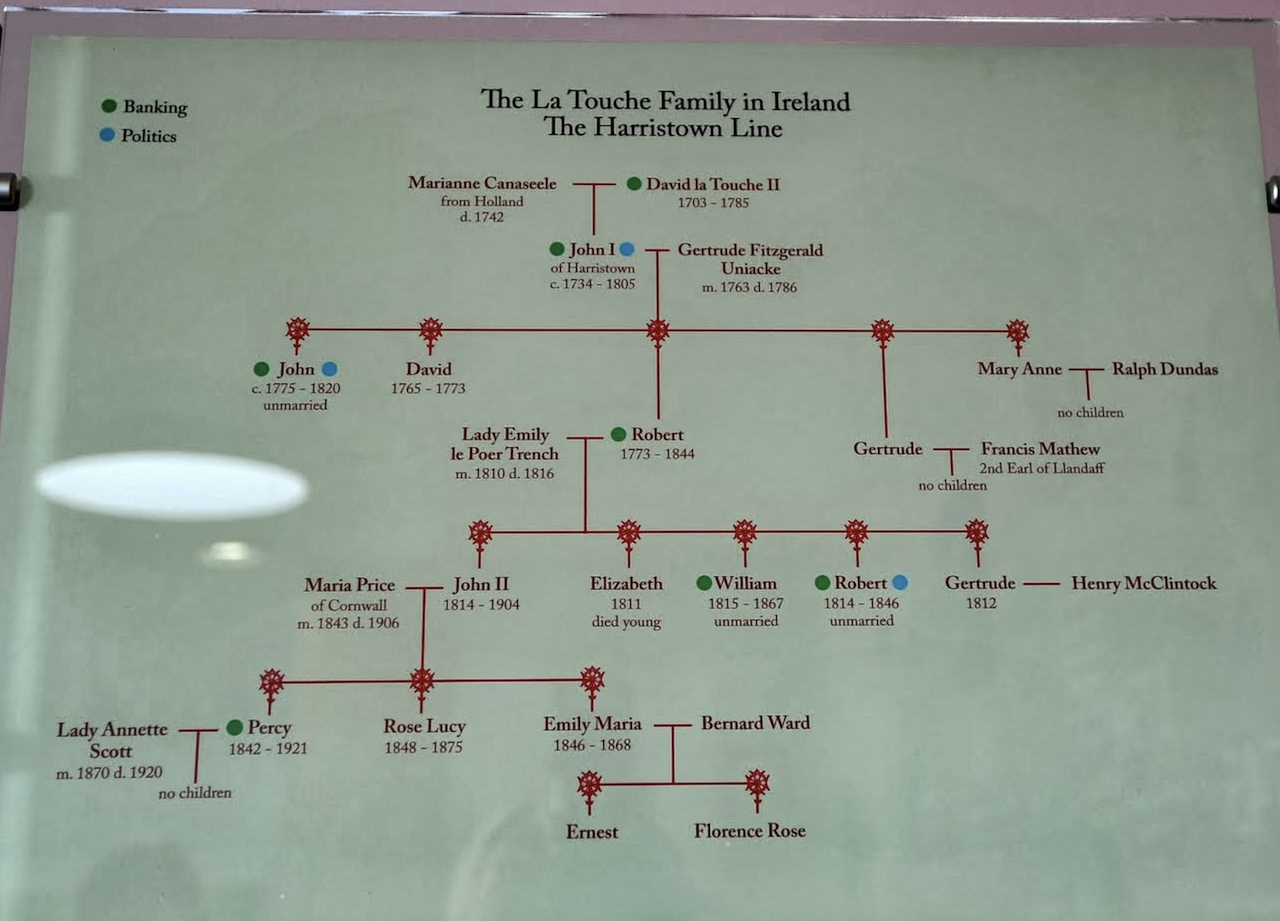
David La Touche purchased properties which passed to his sons: Marlay House to David (1729-1817), Harristown in County Kildare to John (1732-1805) [see my write-up https://irishhistorichouses.com/2020/09/27/harristown-brannockstown-county-kildare/ ], and Bellevue, County Wicklow, to Peter (1733-1828). Bellevue has since been demolished, in the 1950s [7].
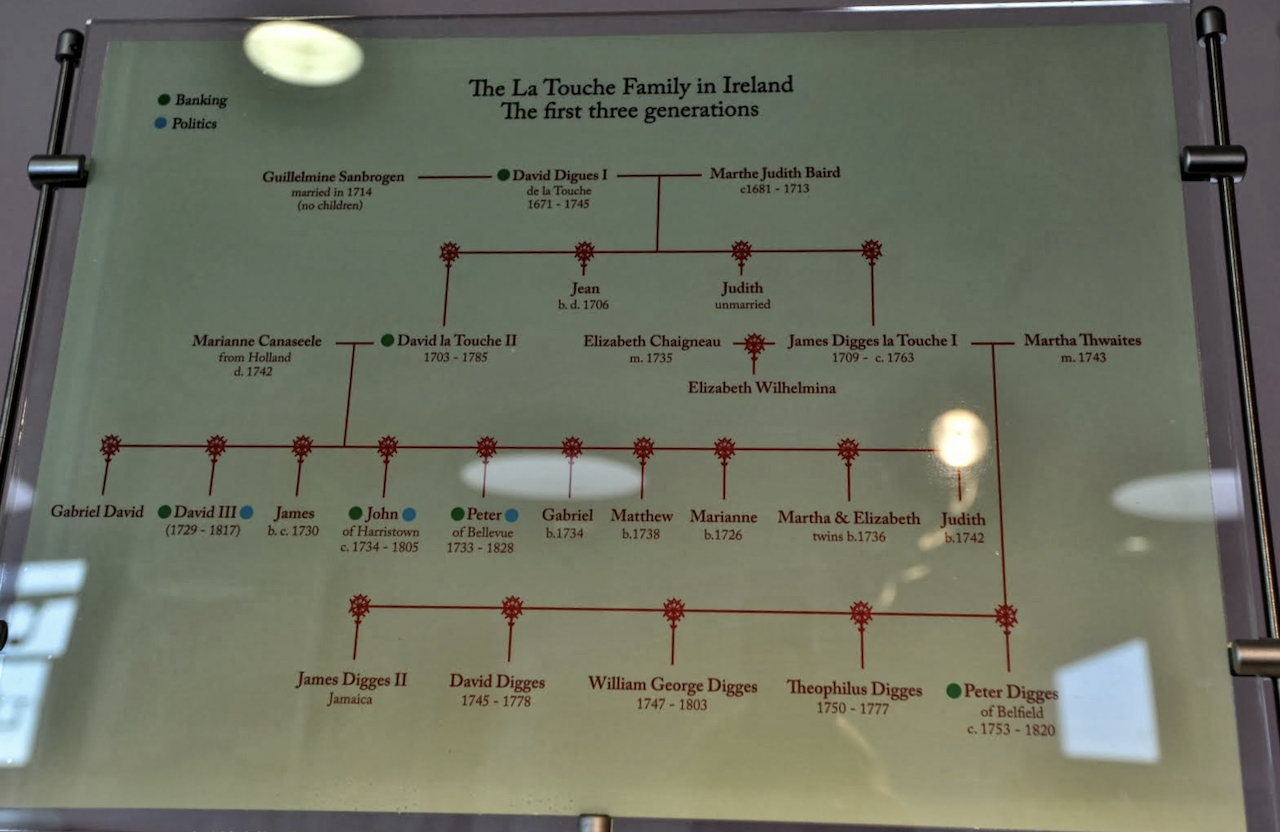
Photograph courtesy of La Touche Legacy website.

At the time of his death in 1785, La Touche’s rental income was £25,000 and the La Touche bank’s profit was £25,000-£30,000. His three sons who survived him, David (also the first Governor of the Bank of Ireland), John and Peter were partners in the Bank. Later, they took in their cousin William Digges La Touche as a Partner, following his distinguished service as Britain’s representative in Basra in the Persian Gulf. David and his brothers had a vast monument erected to their father in Christ Church, Delgany, where their father had died in his favourite country home, Bellevue. [see 6]

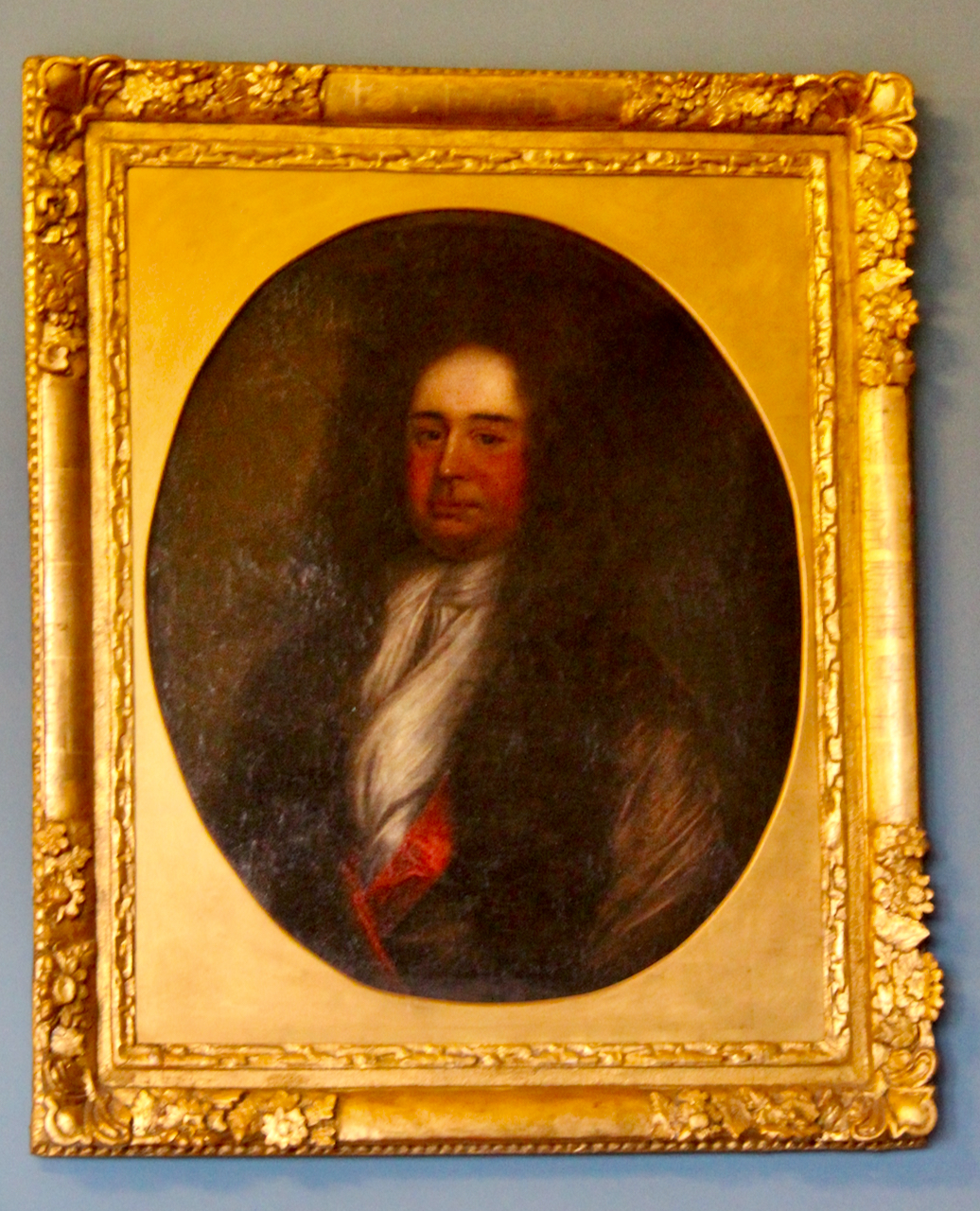
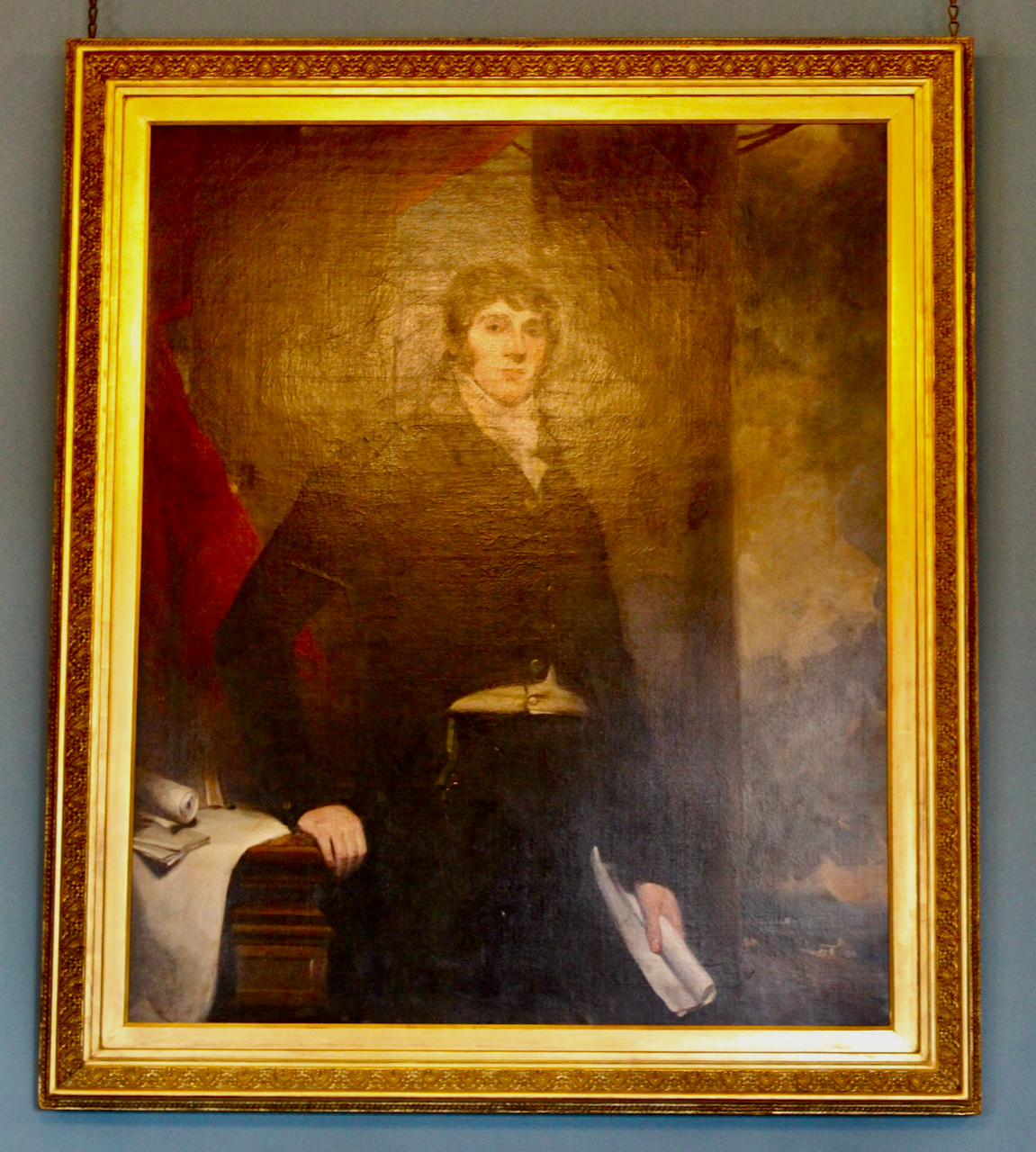
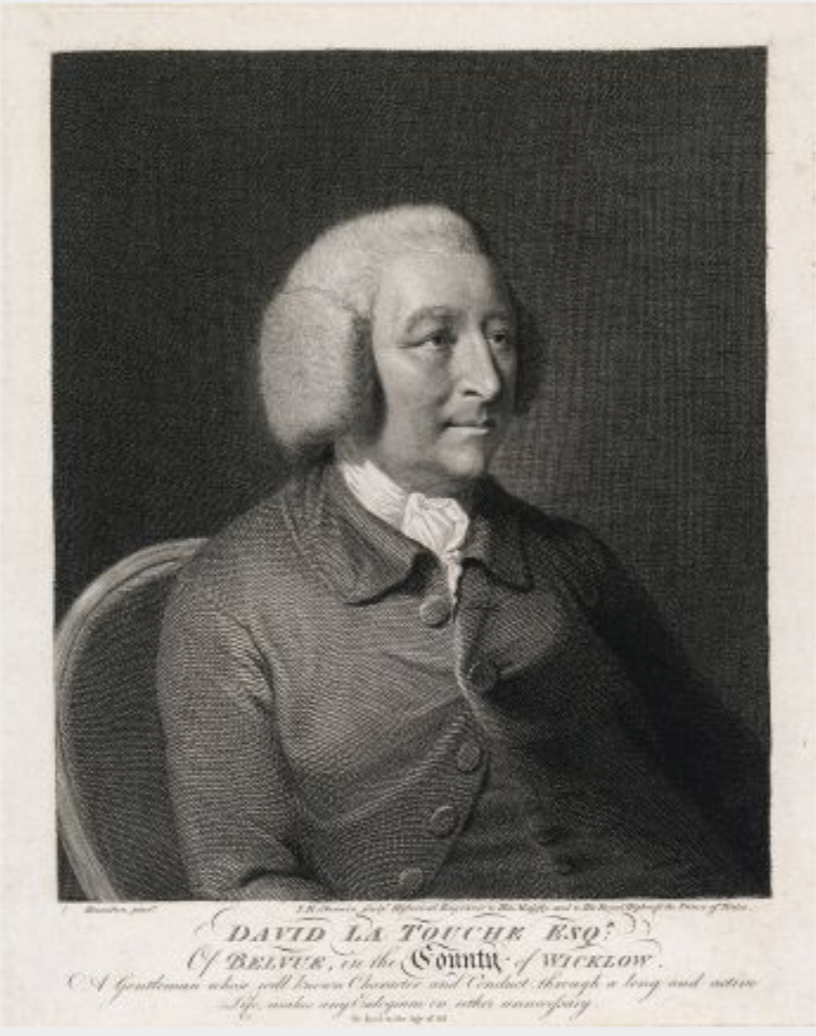
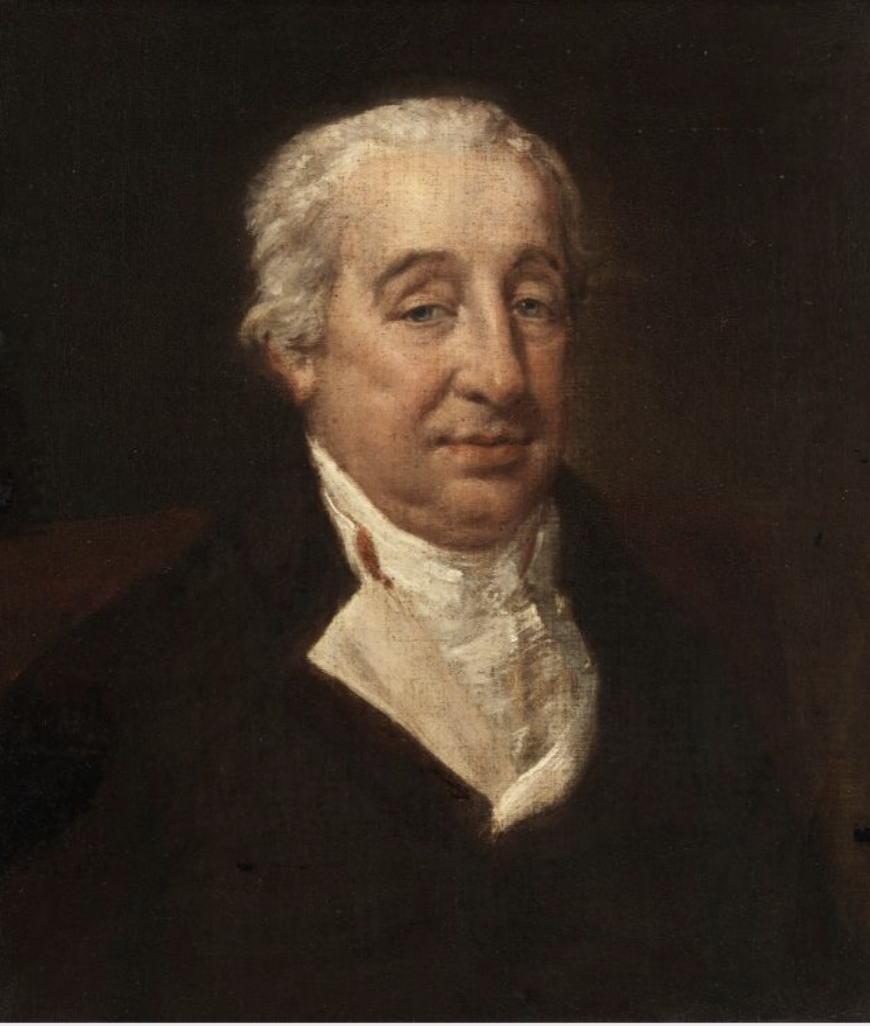
David La Touche of Marley, County Dublin (1729-1817), M.P., Banker and Privy Counsellor. Photograph courtesy of National Gallery of Ireland.
Peter La Touche of Bellevue (1733-1828), Date 1775 by Robert Hunter, photograph courtesy of National Gallery of Ireland.
Bellevue, County Wicklow, photograph by Robert French, Lawrence Photographic Collection, National Library of Ireland.
Photograph courtesy of La Touche Legacy website.

David La Touche (1729-1817) commissioned the building of the extension of Grange, and he named his new house “Marlay” after his wife’s family. He married Elizabeth Marlay in 1762, just before he purchased the property. Her father was Bishop George Marlay of Dromore in County Down.

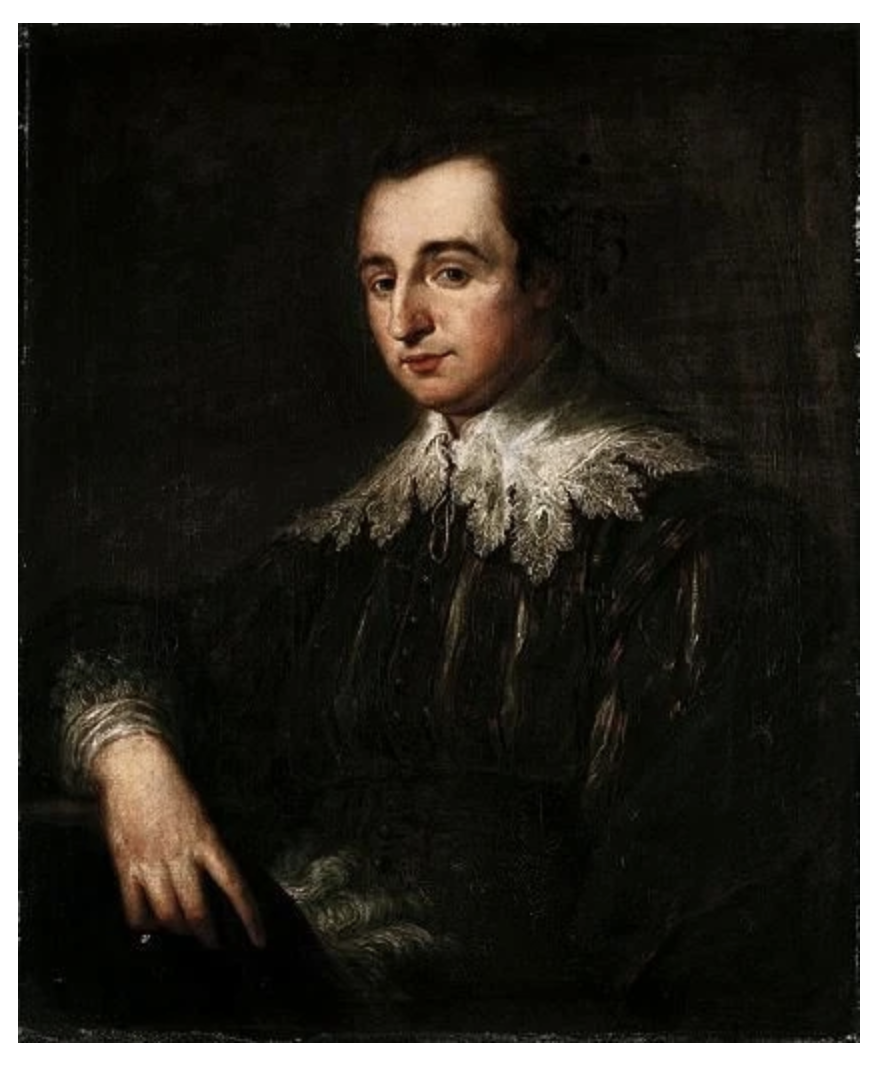
David La Touche (1729-1817), of Marlay, 1800 by Hugh Douglas Hamilton, courtesy of National Gallery of Ireland.

I don’t know what architect designed the enlargement of the original Taylor house at Marlay for David La Touche. Turtle Bunbury claims that the enlargement was by Whitmore Davis. Whitmore Davis joined the Dublin Society’s School of Drawing in Architecture in 1770. A date stone in the house tells us that the first stone of the house was laid by William La Touche in 1794.

David and his family would have spent much of their time in their townhouse in Dublin. Marlay House was their weekend retreat and place for entertainment. I’m not sure when the family purchased 85 St. Stephen’s Green, now part of the Museum of Literature of Ireland (MOLI), but by 1820 George La Touche was resident. George was the unmarried son of David La Touche (1729-1817). [see 6] David La Touche (1703-1785) developed much of the area around St. Stephen’s Green, Aungier Street and the Liberties. In 1812, Peter La Touche bought 9 St. Stephen’s Green, now a Private Members Club.
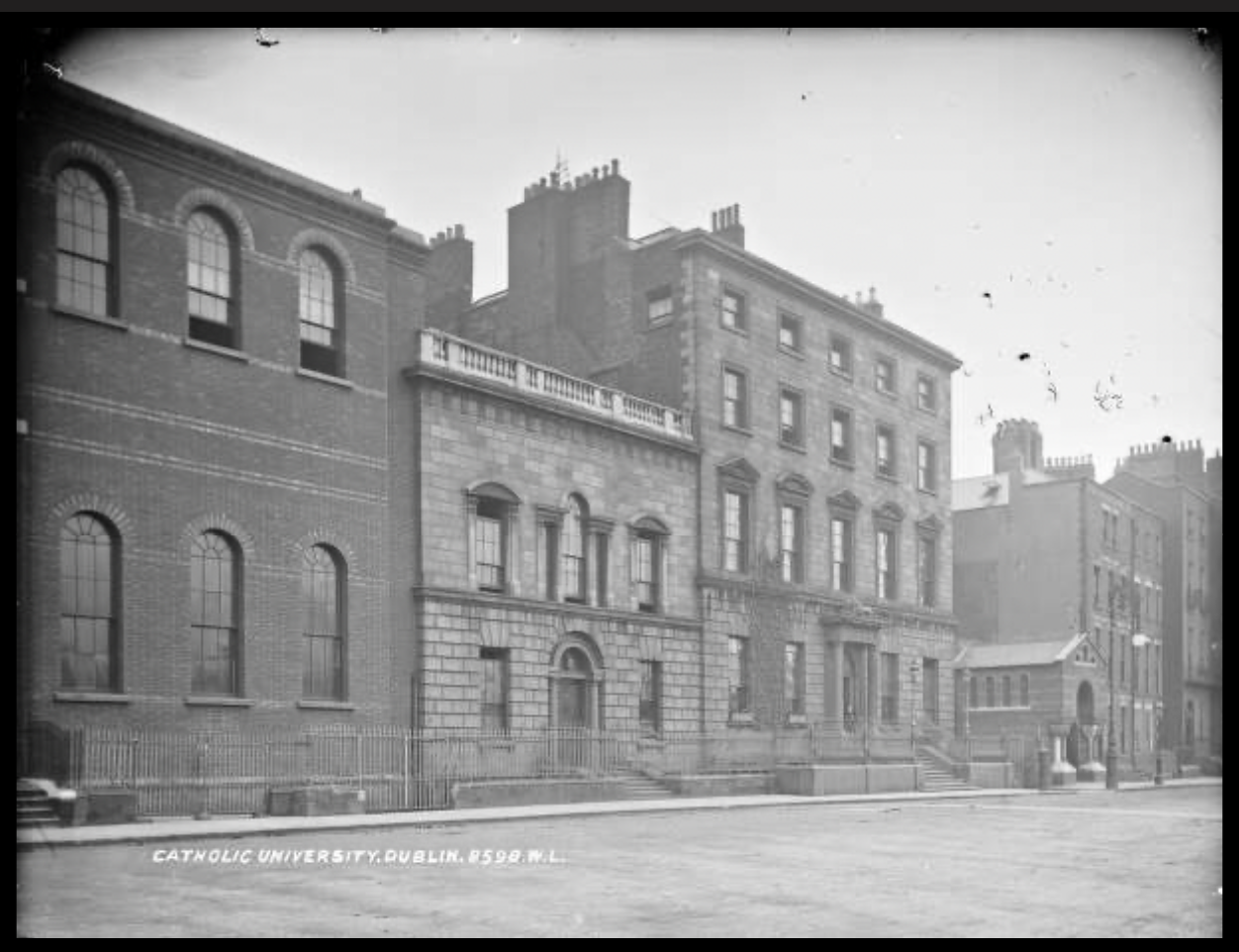
85 St. Stephen’s Green (in middle), Dublin, photograph by Robert French, (between ca. 1865-1914), Lawrence Photograph Collection, National Library of Ireland.
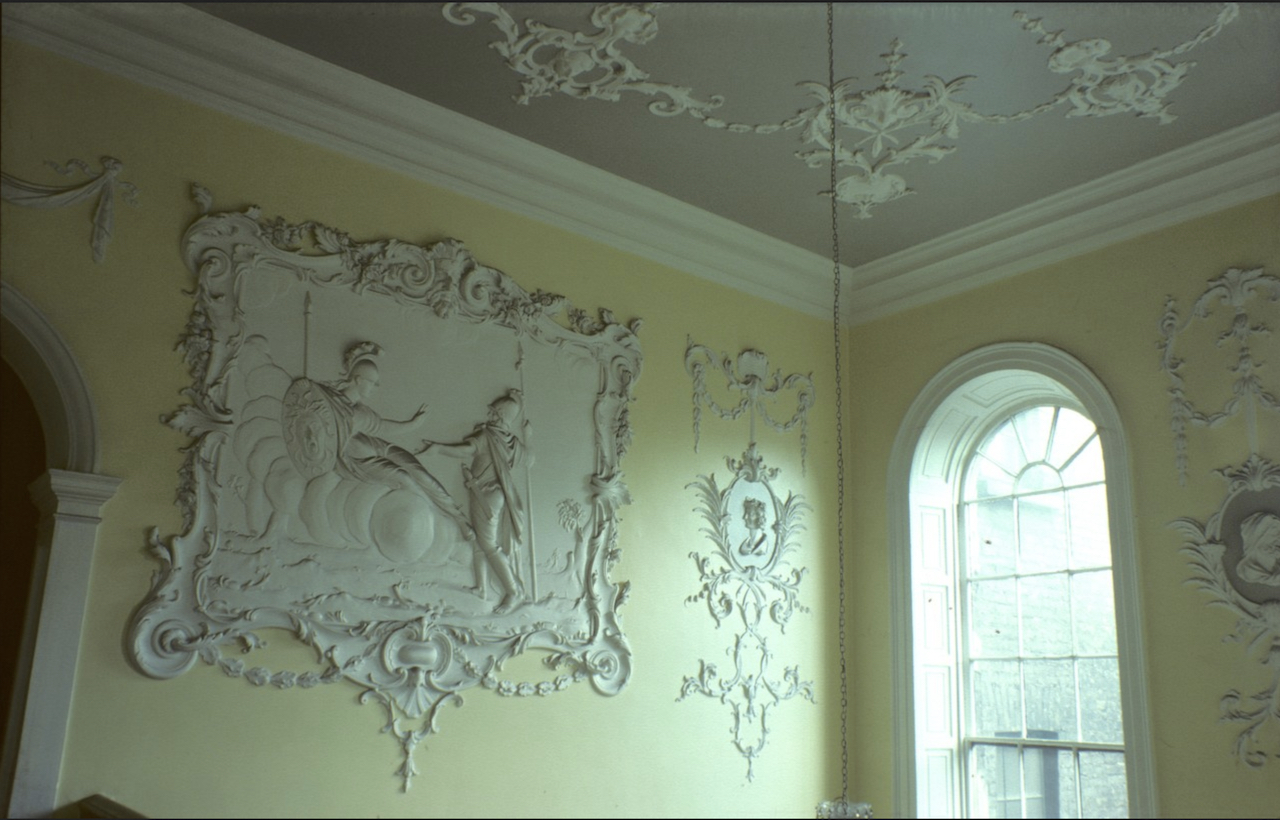
9 St. Stephen’s Green, view of stairhall from first floor landing, UCD archive, Built c. 1756 for the Rev. Cutts Harman, Dean of Waterford, now Stephen’s Green Club, plasterwork is attributed to Paolo Lafranchini.

The La Touche family purchased Harristown in County Kildare in 1768 and hired Whitmore Davis to design the house.

Harristown House, County Kildare. Photograph © Jennifer Winder-Baggot, www.irishhistorichouses.com
Photograph courtesy of La Touche Legacy website.

Whitmore Davis also designed the building for the Bank of Ireland at St. Mary’s Abbey in Dublin around 1786-1791. The La Touches were involved with the establishment of this bank in 1783. David La Touche was a major investor.

Peter La Touche hired Whitmore Davis in 1789 to build a church in Delgany, County Wicklow, and John La Touche hired him to design the Orphan House on North Circular Road in Dublin in 1792.

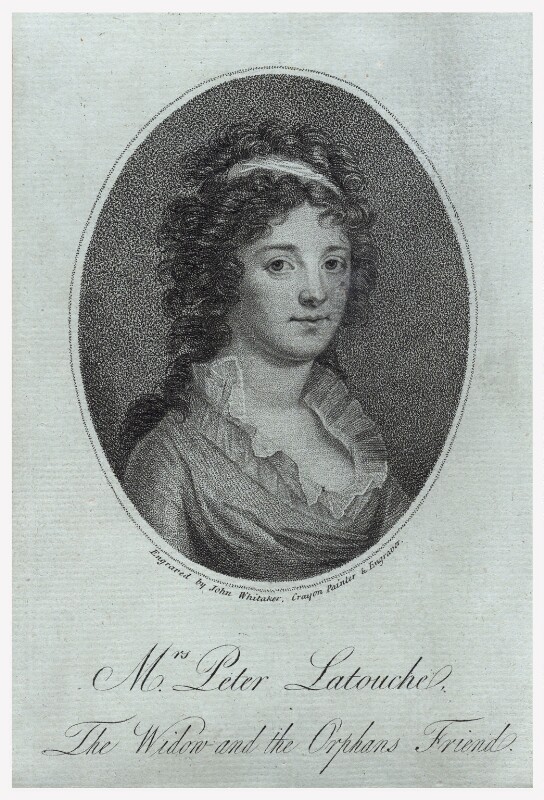
Elizabeth La Touche née Vicars (1756-1842), wife of Peter La Touche, by John Whitaker National Portrait Gallery of London D18415.

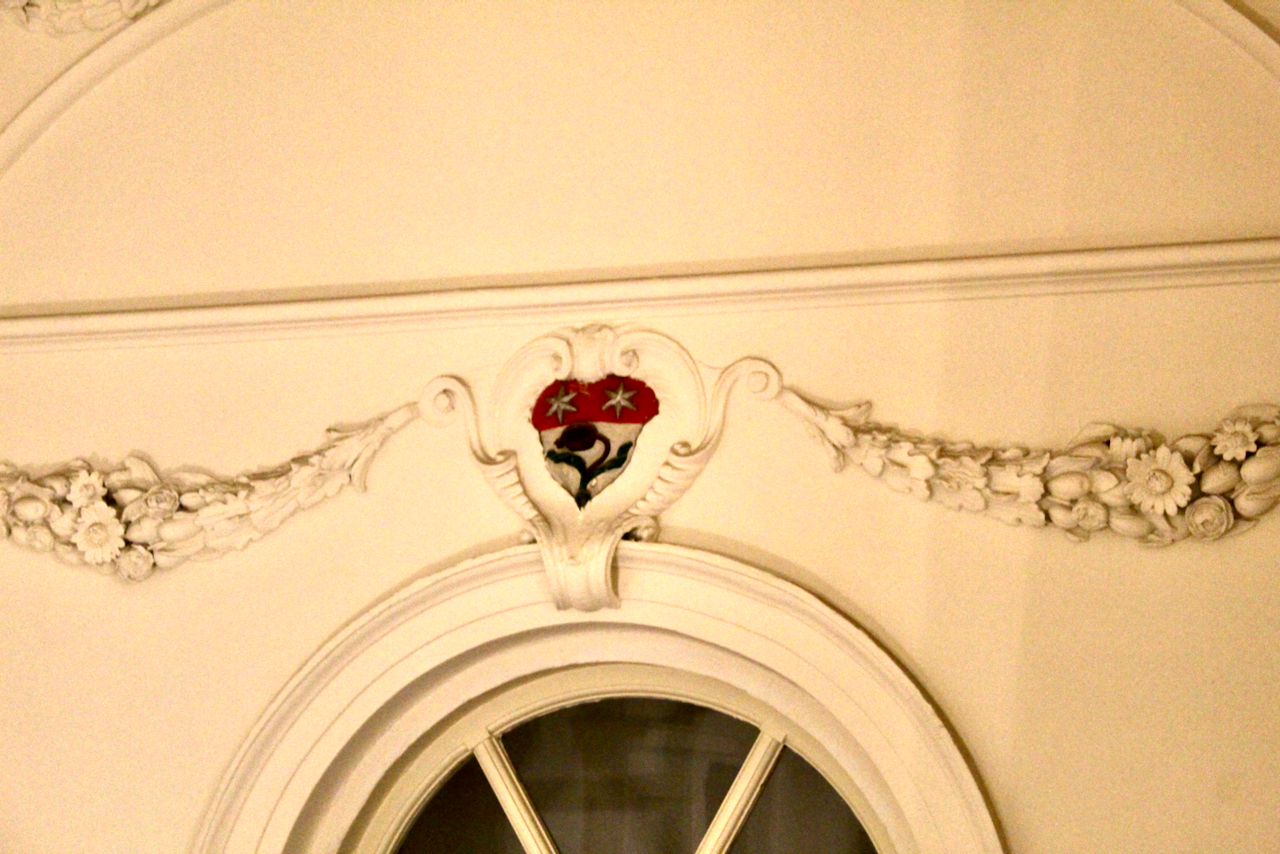
The La Touche crest features a pomegranate symbol, for fertility. We see the crest on the urn which tops Marlay House over the front door. The same crest decorates over the front windows in Harristown. The star shaped symbol might be the shape of the pomegranate flower. This shape features on the front pillar gates of Harristown House also. The same crest was added to the stairwell in 85 St. Stephen’s Green.
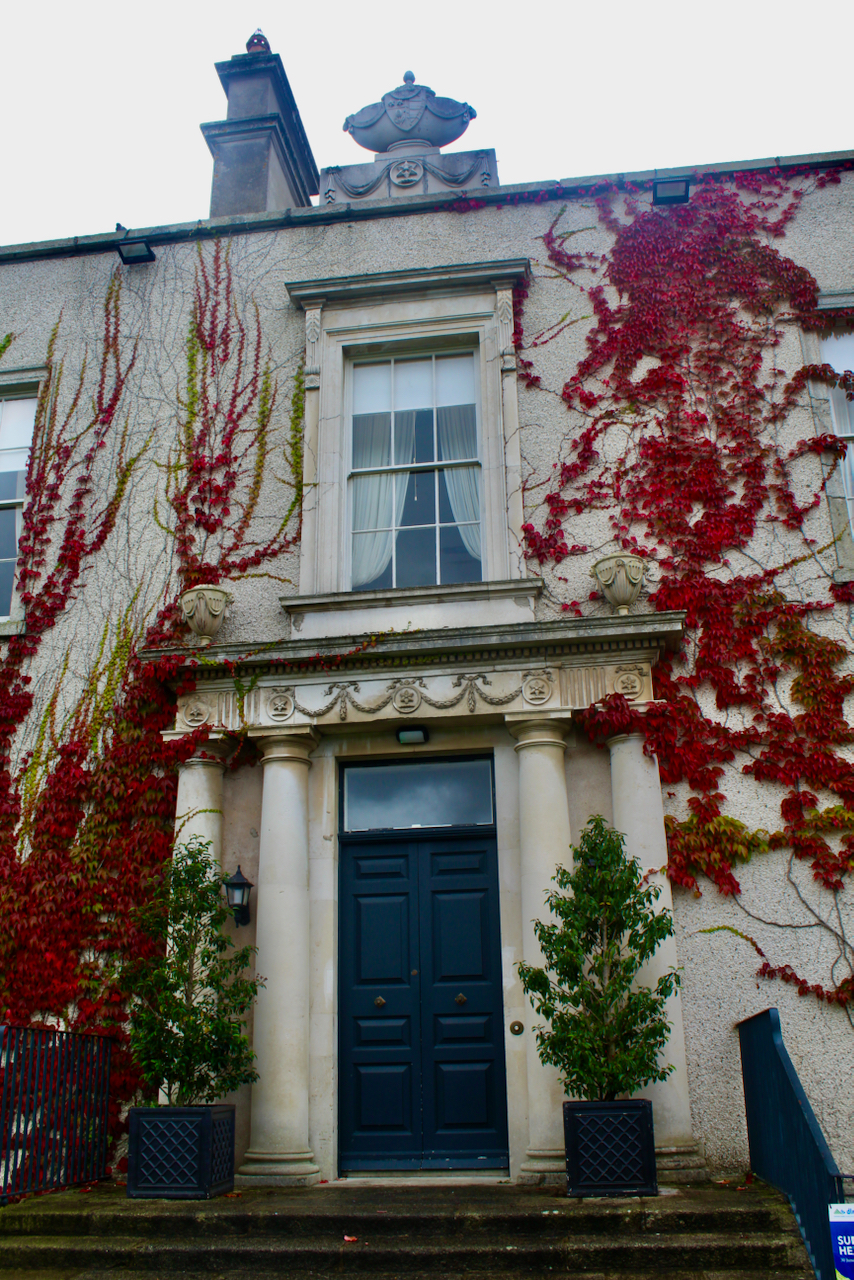
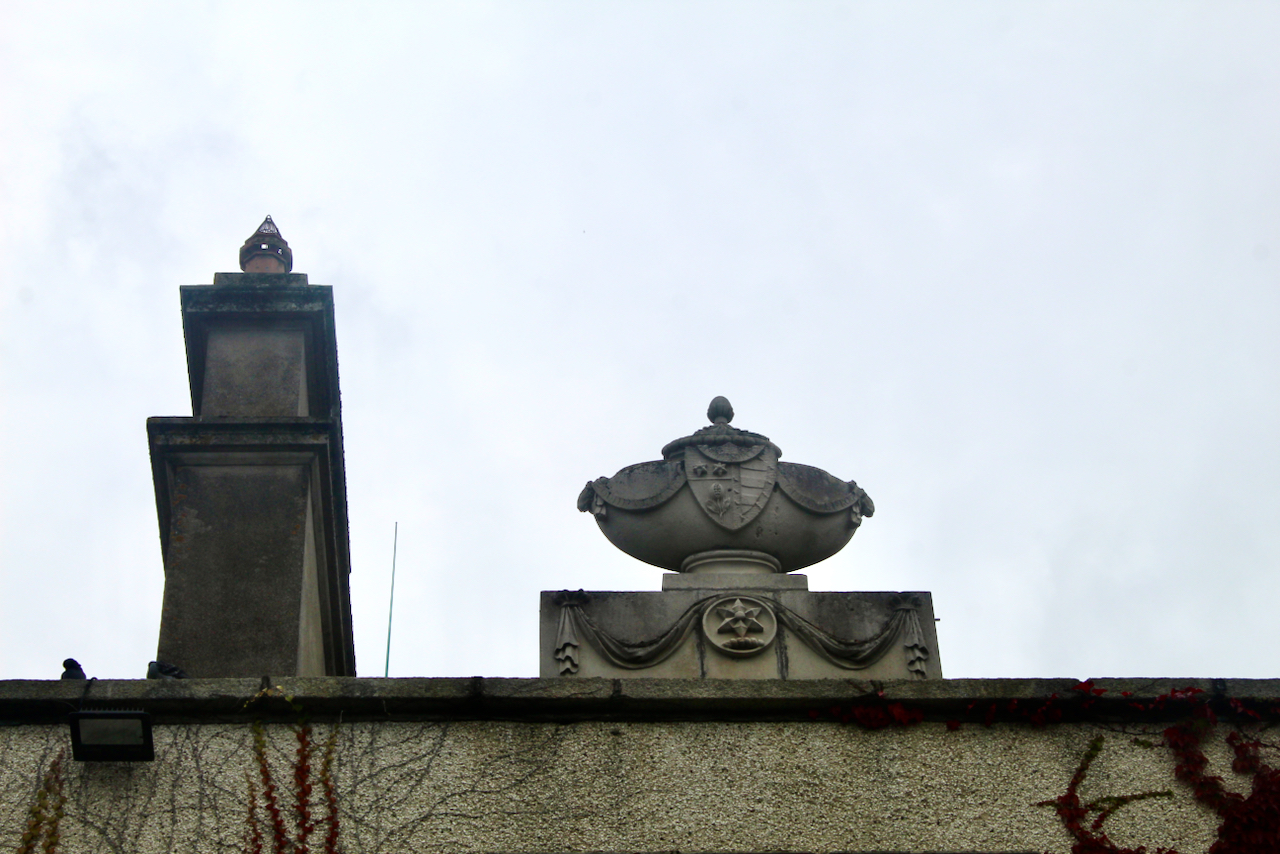
Front of Marlay House, with crest of pomegranate on the urn on top of roof, and star symbol under urn. September 2025. Photograph © Jennifer Winder-Baggot, www.irishhistorichouses.com
Marlay House, with crest of pomegranate on the urn on top of roof, and star symbol under urn. September 2025. Photograph © Jennifer Winder-Baggot, www.irishhistorichouses.com
Crest with pomegranate on Harristown House. Photograph © Jennifer Winder-Baggot, www.irishhistorichouses.com
The La Touche crest, in 85 St. Stephen’s Green, Dublin. Photograph © Jennifer Winder-Baggot, www.irishhistorichouses.com
Marlay House, County Dublin, September 2025. Photograph © Jennifer Winder-Baggot, www.irishhistorichouses.com

Marlay House is two storeys over a basement. It has a seven bay front with a central door framed by what Mark Bence-Jones calls a frontispiece of coupled engaged Doric columns. The frontispiece has an entablature enriched with medallions and swags, and urns on the top at either end. The window above is also framed with an entablature on console brackets.
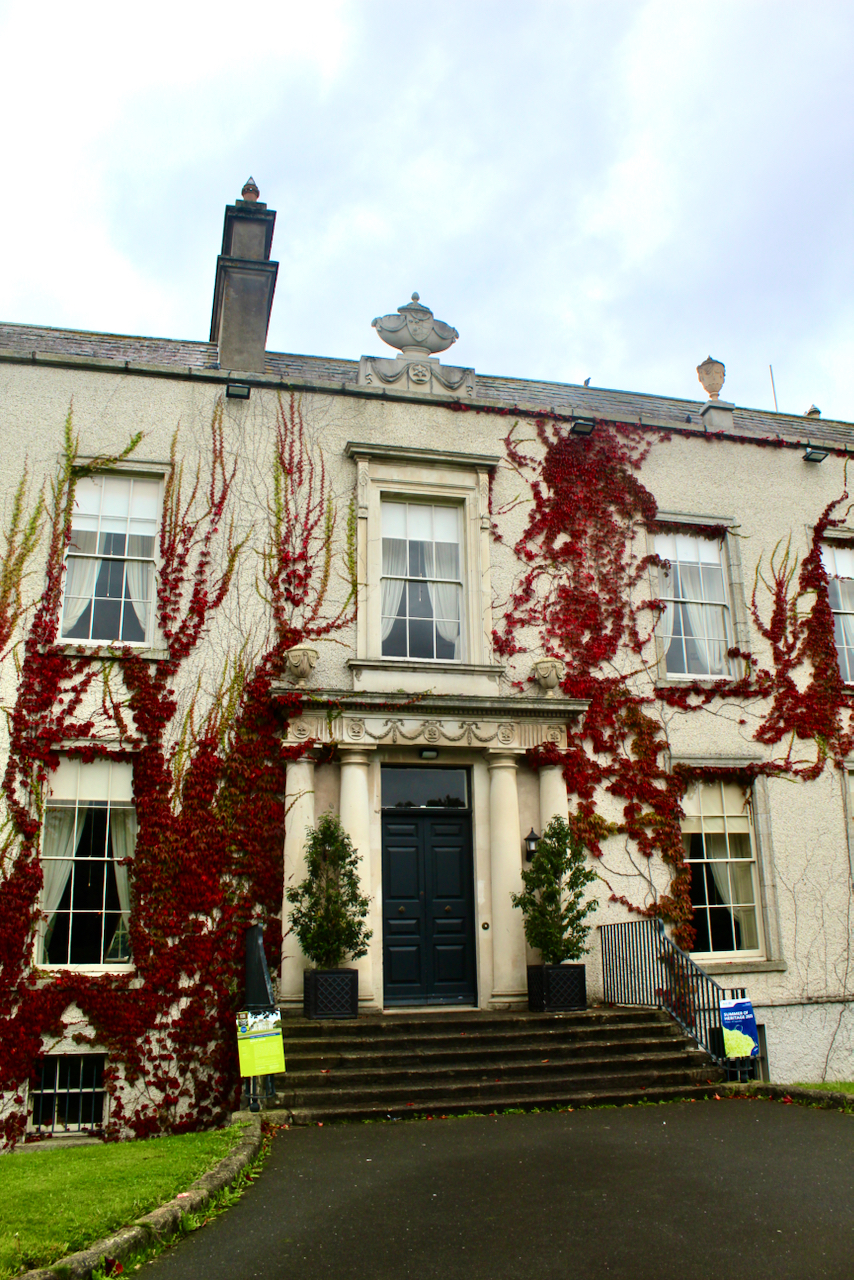
Marlay House, County Dublin, September 2025. Photograph © Jennifer Winder-Baggot, www.irishhistorichouses.com

The large central urn located on the roof parapet is on a plinth carved with swags, and there are smaller urns dotted around the roof.

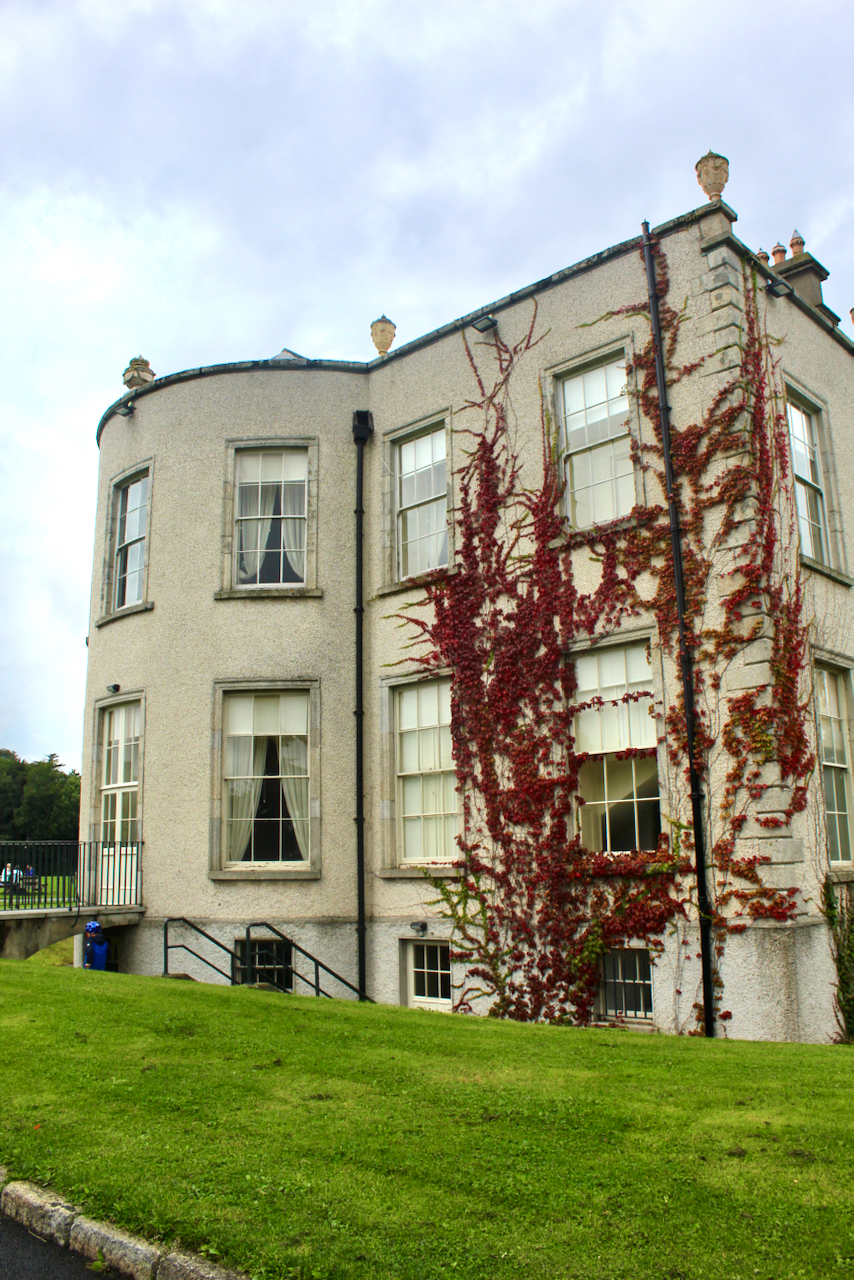
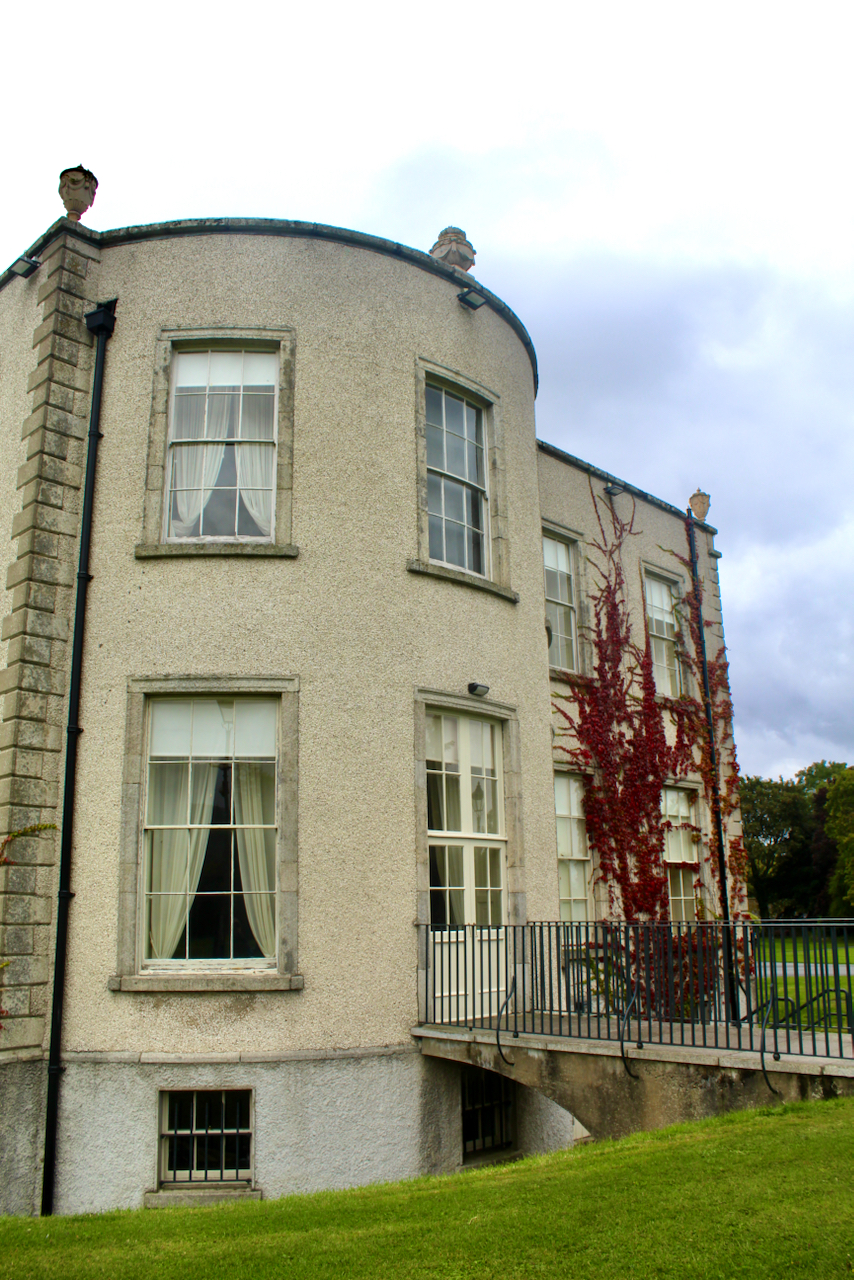
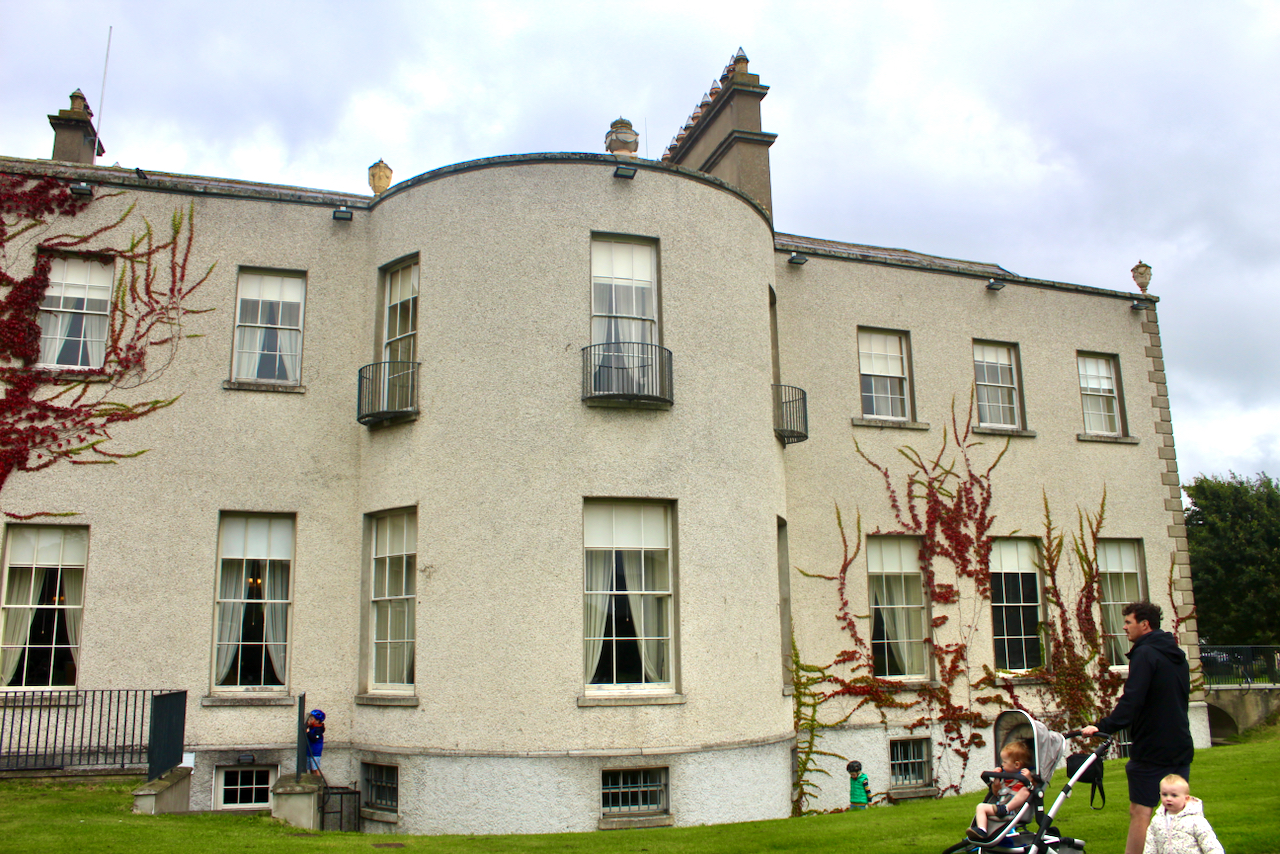
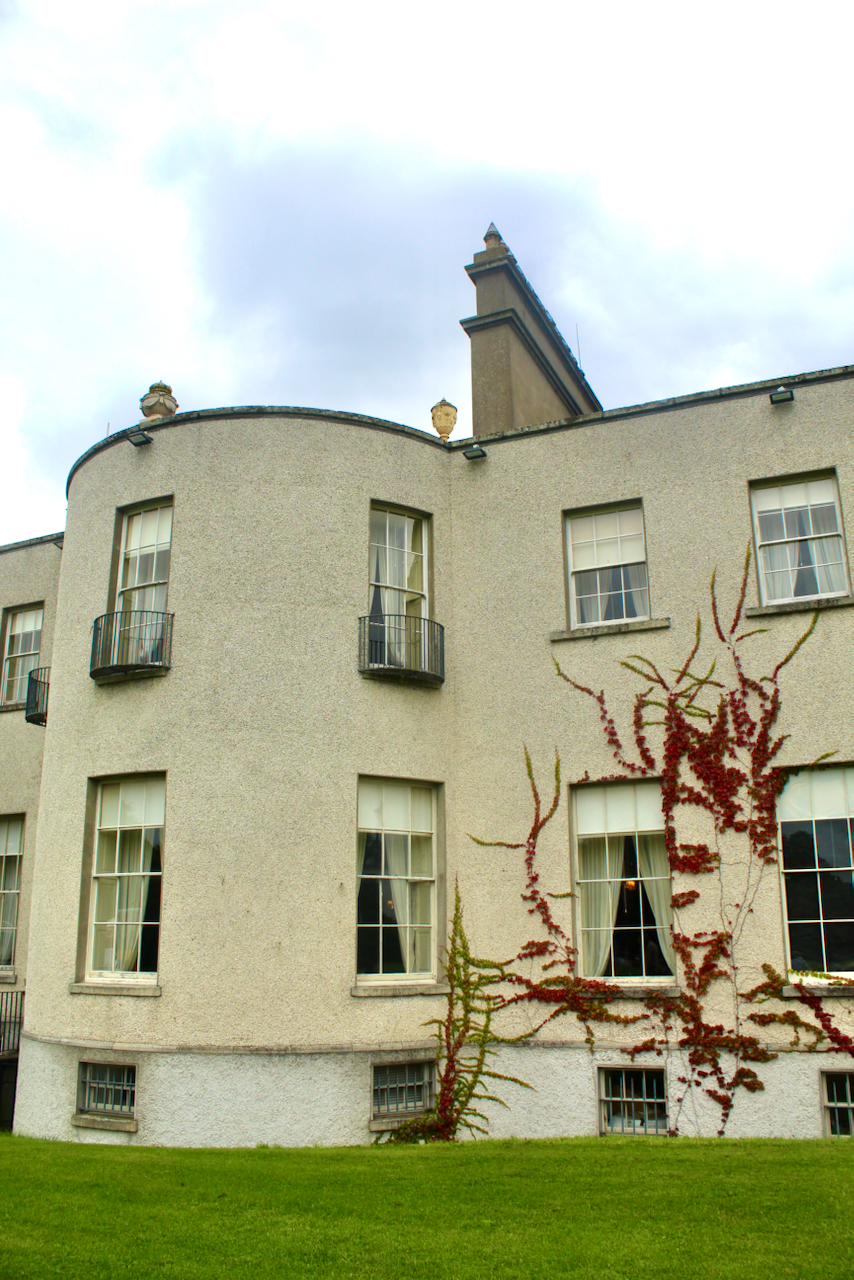
There is a bow at the side of the house and another at the back. The kitchen and staff areas were in the Grange part of the house. We were lucky to tour the Grange as well, to see the large kitchen, which has a galley level, where the lady of the house would instruct the cook what to prepare, remaining well away from the servants.
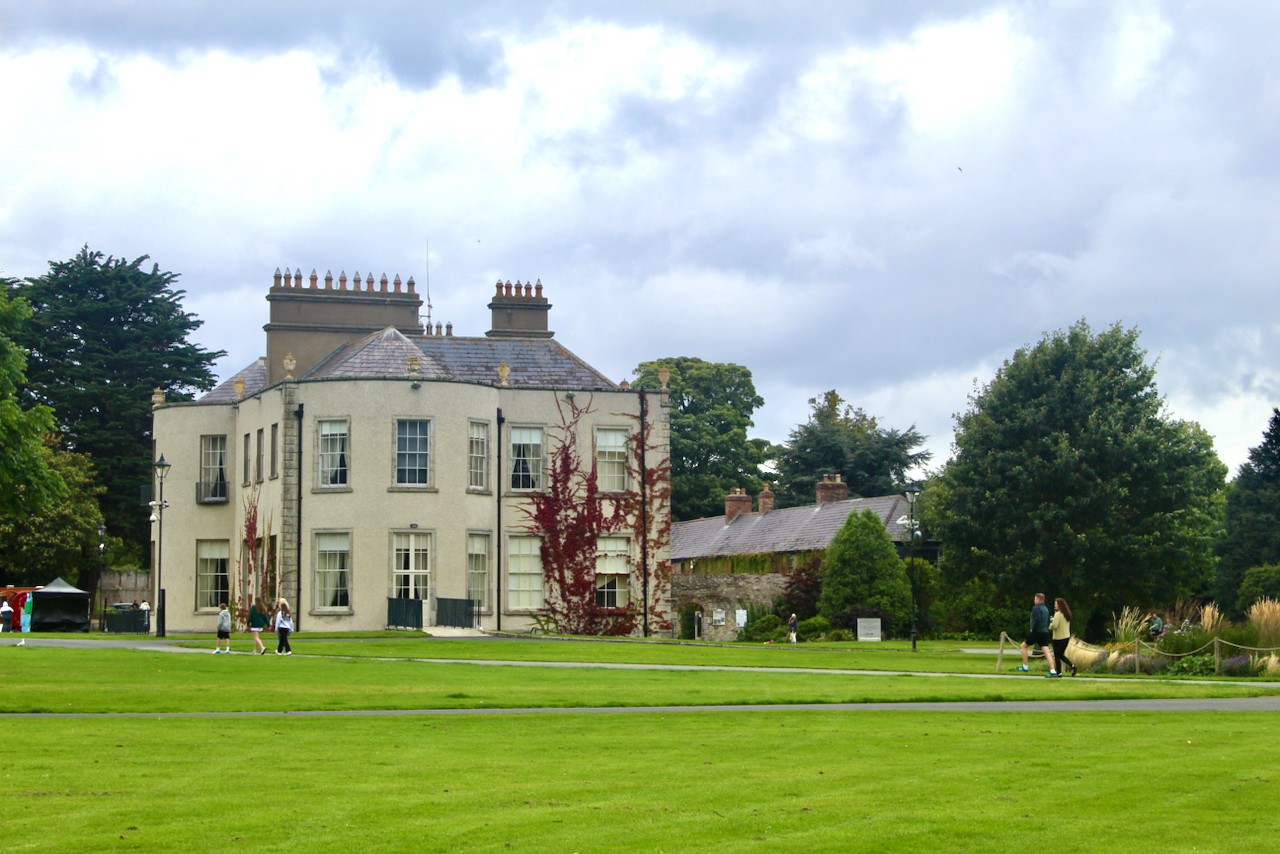
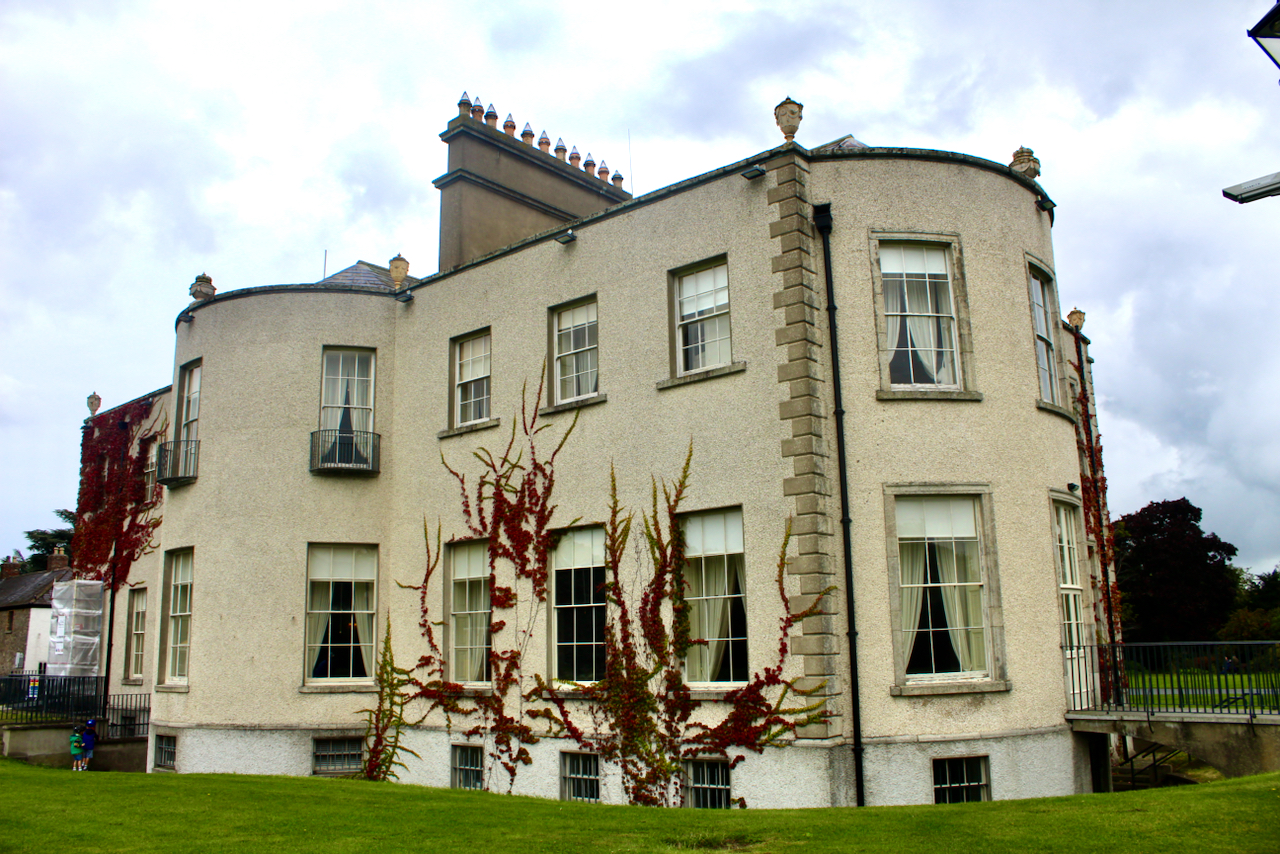
Marlay House, County Dublin, September 2025. Photograph © Jennifer Winder-Baggot, www.irishhistorichouses.com
Side of Marlay House, County Dublin, September 2025. Photograph © Jennifer Winder-Baggot, www.irishhistorichouses.com
Rear view of Marlay House, County Dublin, September 2025. Photograph © Jennifer Winder-Baggot, www.irishhistorichouses.com
Rear bow, Marlay House, County Dublin, September 2025. Photograph © Jennifer Winder-Baggot, www.irishhistorichouses.com

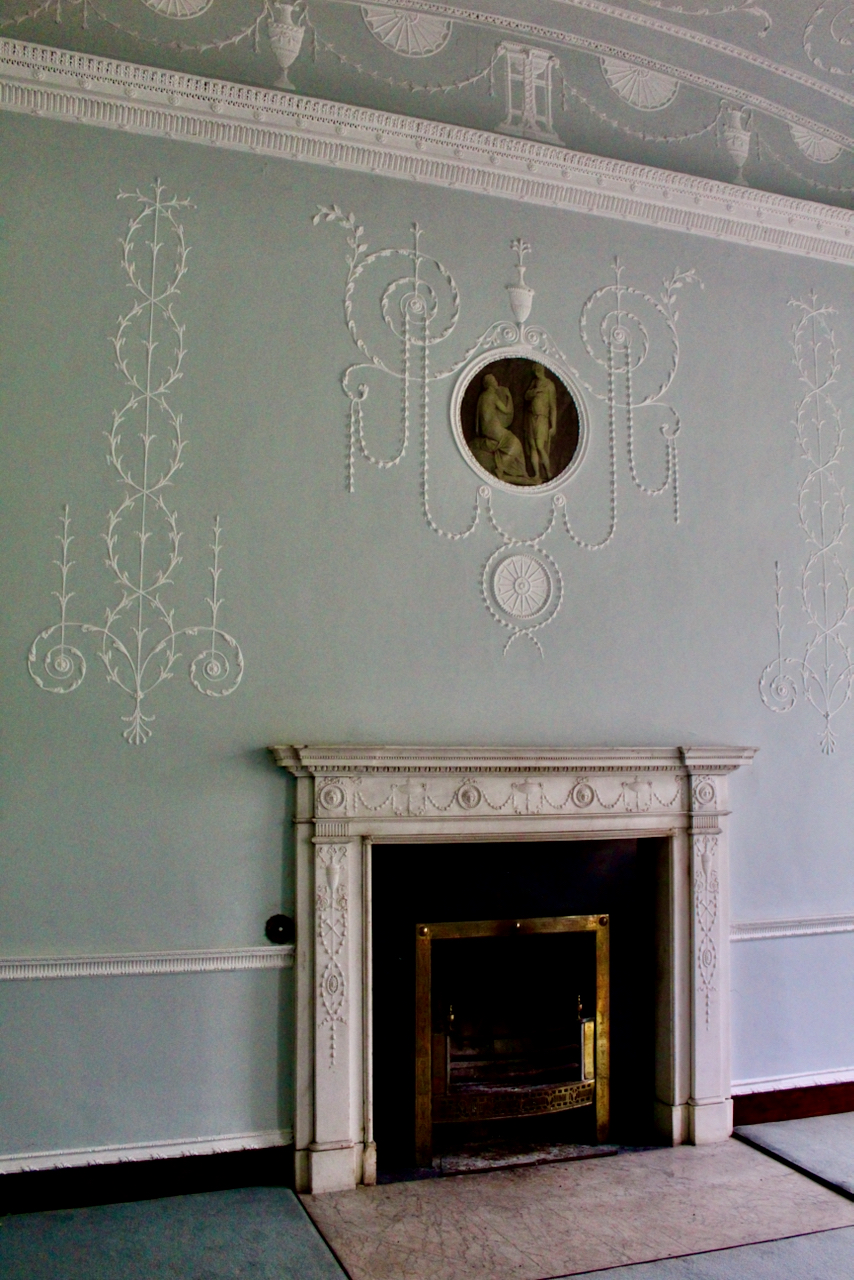
Unfortunately one is not allowed photography inside the house, but there are a few photographs on the County Council website. The house includes an elegant entrance hall, ballroom, and unusual oval music room, with decorative plasterwork by Michael Stapleton. 
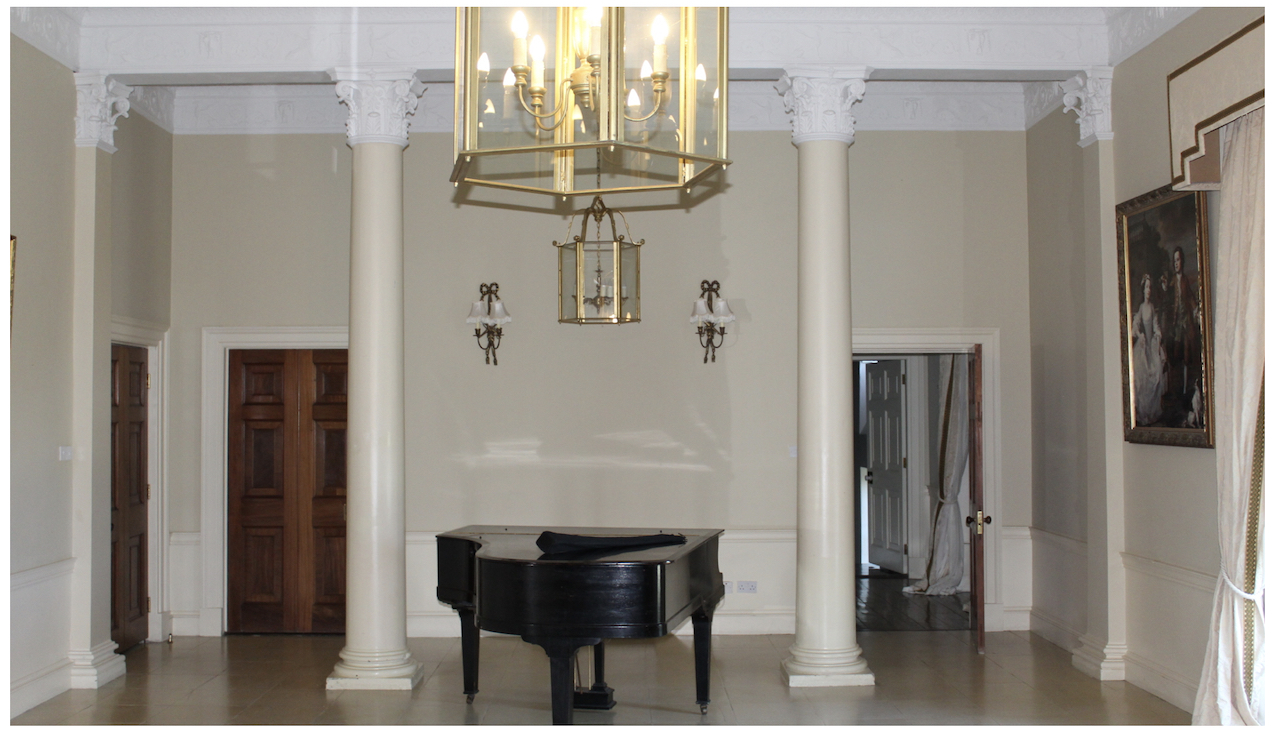
Marlay House front hall, photograph courtesy of Dun Laoghaire/Rathdown County Council website.

The Hall has a screen of Corinthian columns and frieze of tripods and winged sphinxes. Our guide pointed out that it is a large front hall for the size of the house. This is because it was built to impress visitors. It is not perfectly symmetrical, but has a dummy door to improve the symmetry.

The smaller Dining Room, off the front hall, also has a dummy door. It has a good frieze and cornice, and is the smaller dining room used for family dining. The house retains nearly all of the original chimneypieces. Our guide pointed out that one can surmise the age of the chimneypiece from the width of the mantlepiece. The Georgian mantlepieces were narrow, made to hold a mirror, which was tilted slightly upward to reflect light, and also to reflect a decorative ceiling. Later mantlepieces were made wider in the Victorian age when people liked to display objects.

There isn’t a feature staircase. There are two staircases, which are more functional than showy. There’s a servant staircase beside the small dining room.

The larger dining room could also act as a ballroom. It has beautiful delicate plasterwork mostly likely to have been made by Michael Stapleton, with a gorgeous ceiling and a decorative niche for a sideboard.
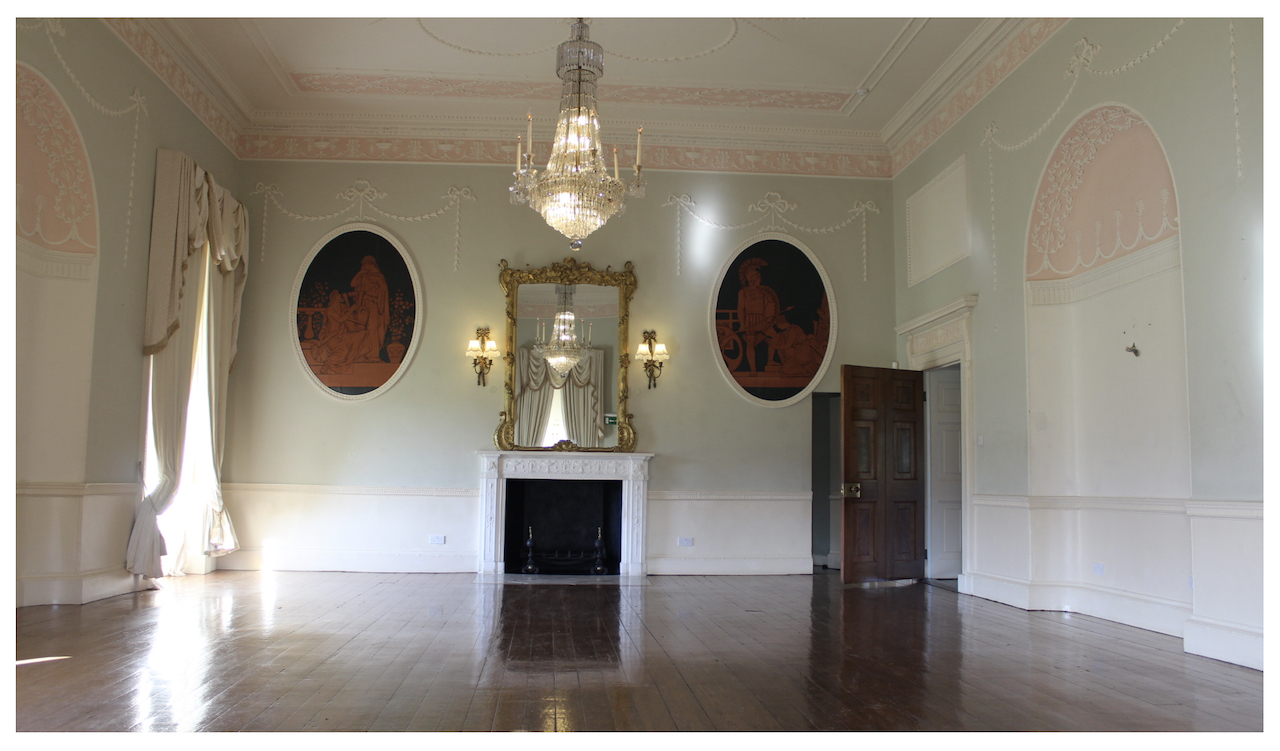
The larger dining room, Marlay House, photograph courtesy of Dun Laoghaire/Rathdown County Council website.

The walls have plaster swags and painted medallions.

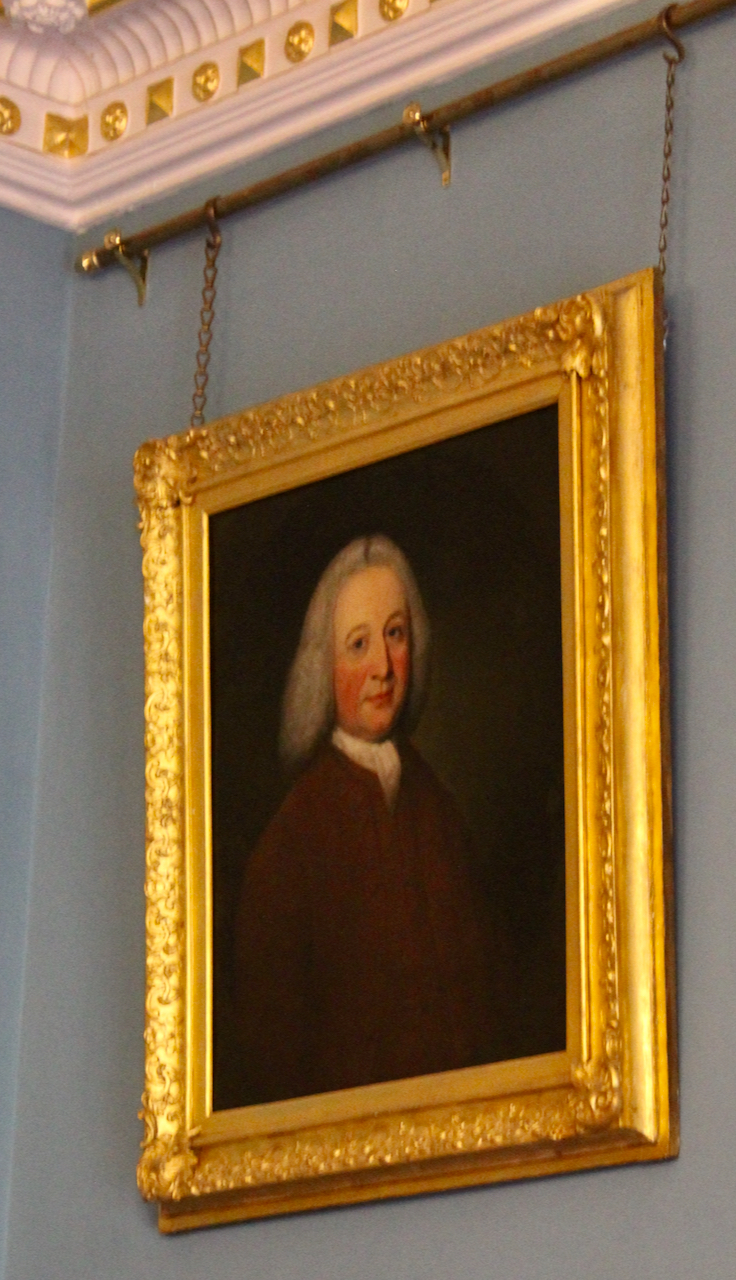
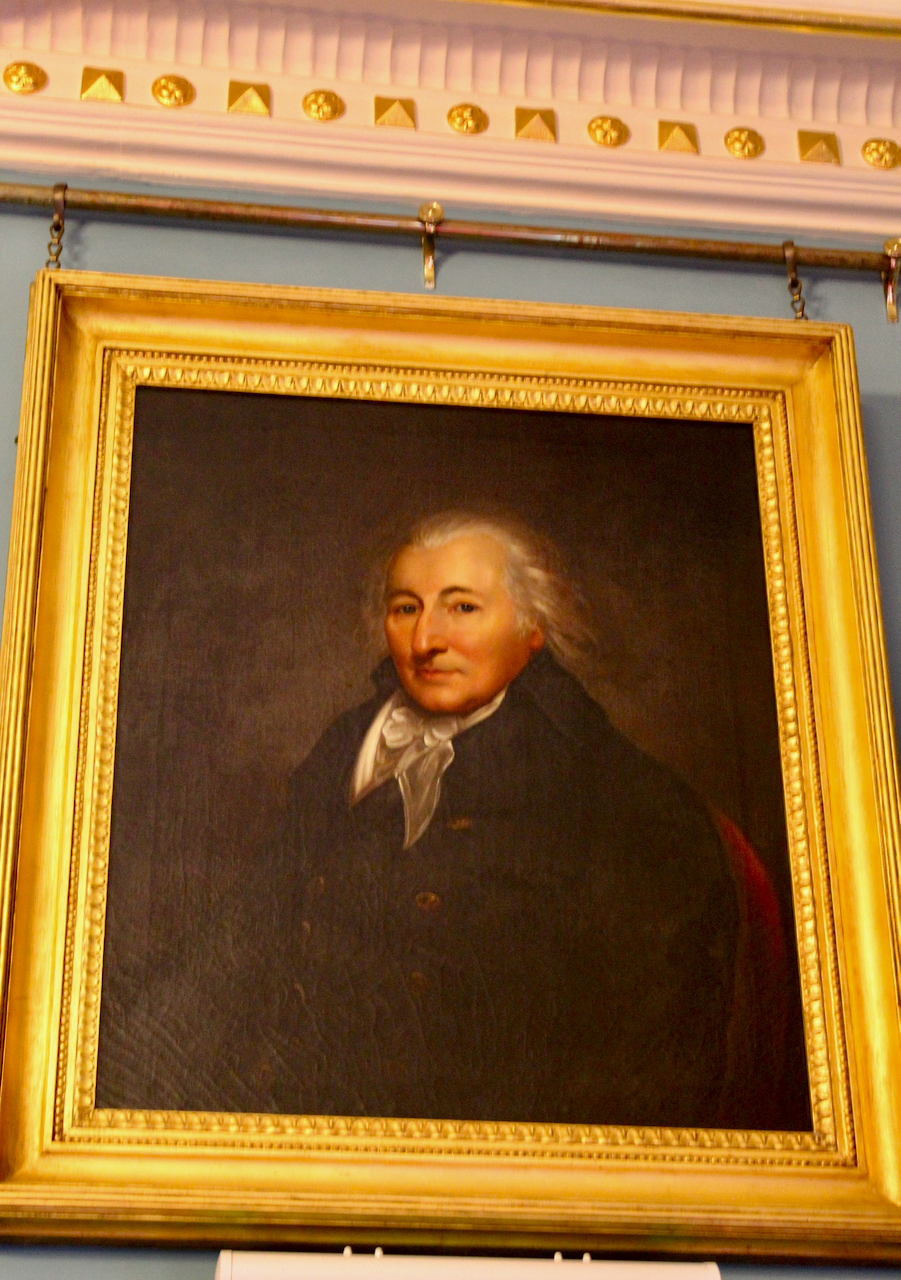
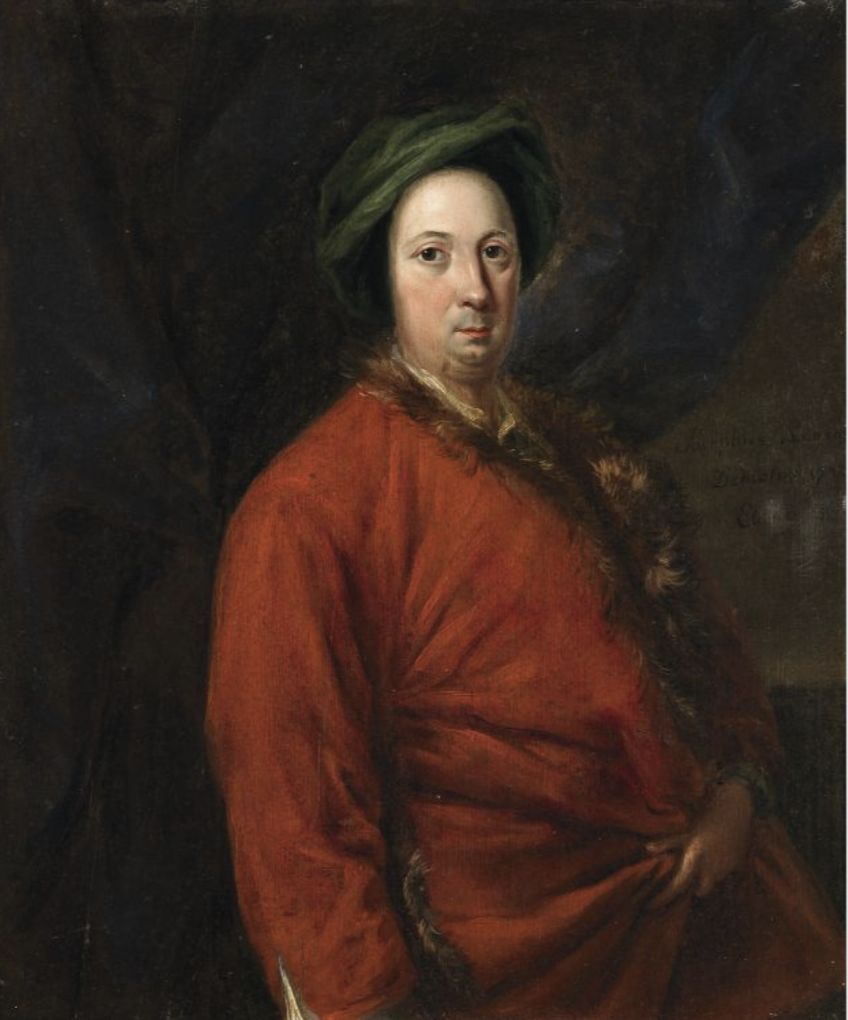
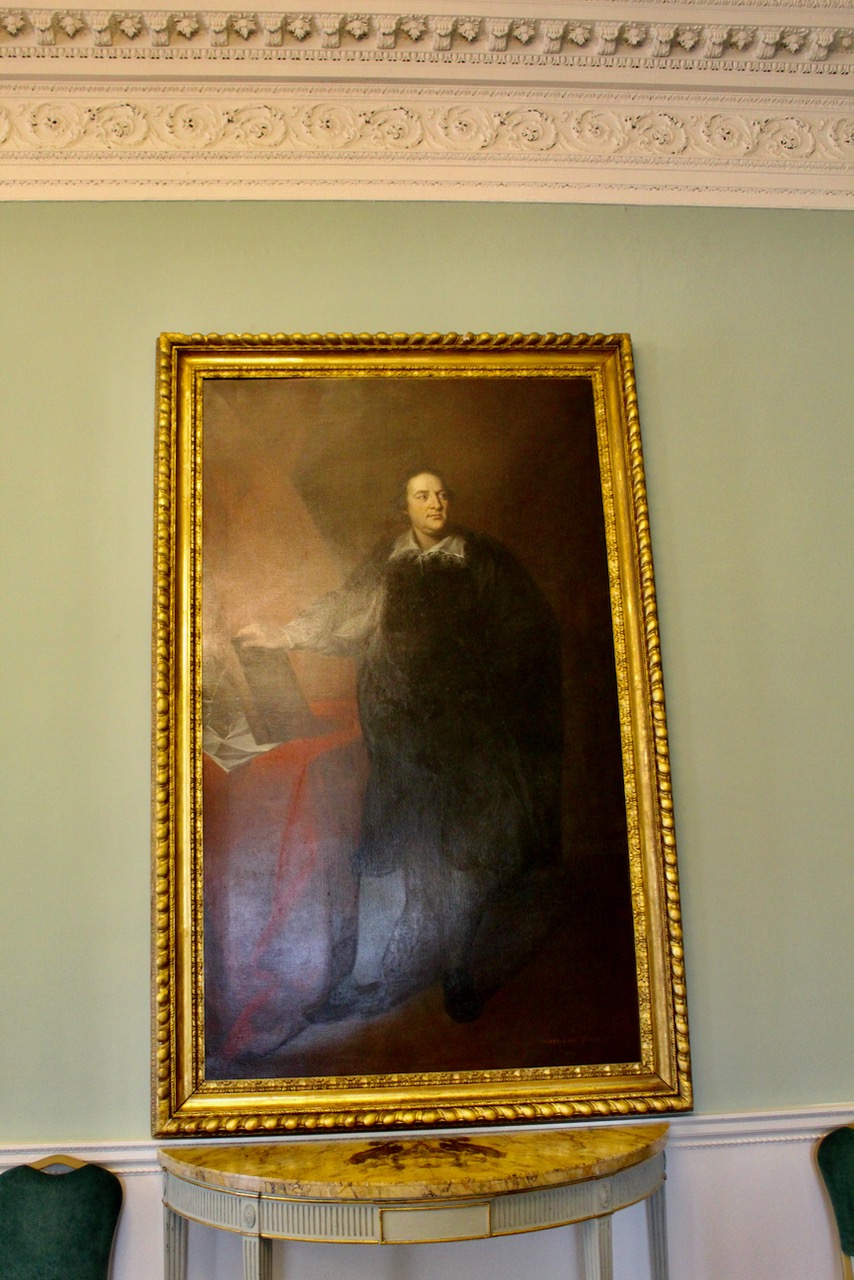
There is a portrait of David La Touche in military outfit, and of his father in a soft turban-style hat.

A “jib” door leads to a corridor to the oval room. This room has a portrait of George Marlay, Bishop of Dromore. Musical instruments in the plaster ceiling show that this was a music room. The windows are curved as well as the walls.
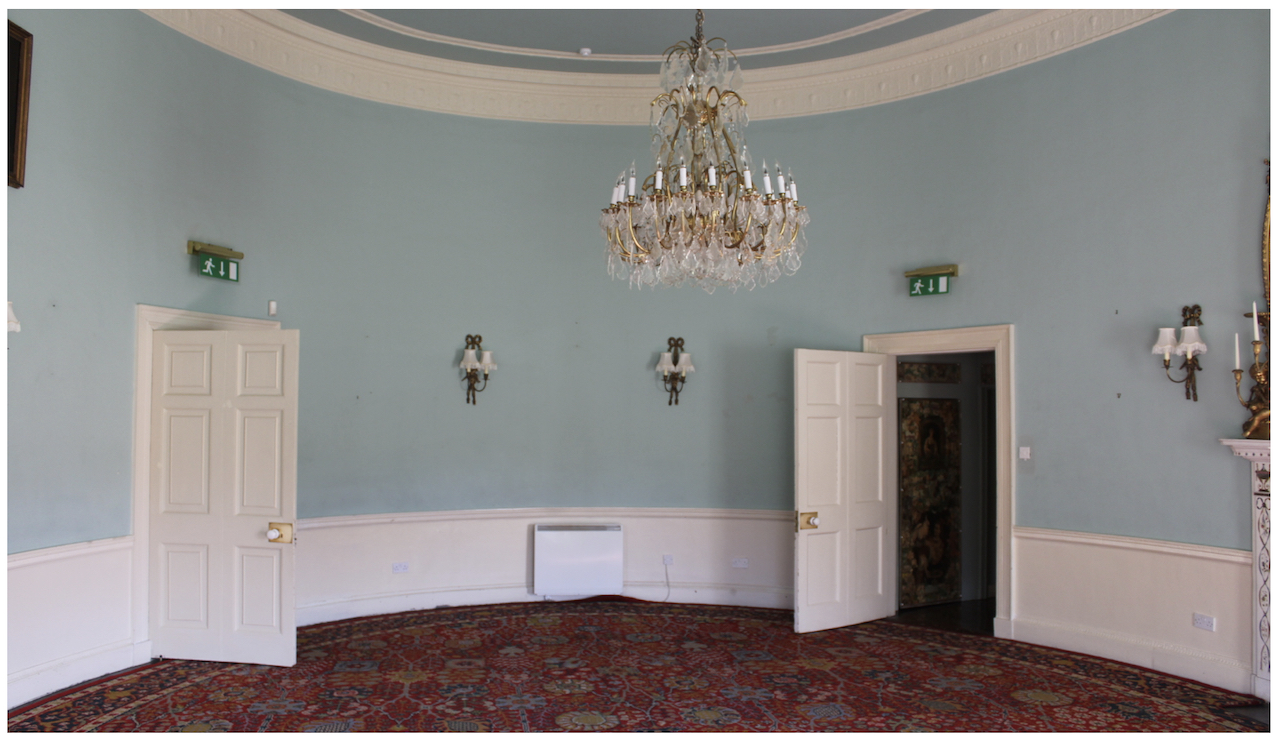
Marlay House oval room, photograph courtesy of Dun Laoghaire/Rathdown County Council website.

There is also a fine plasterwork ceiling in the oval room. Unfortunately the photographs do not show the ceiling.
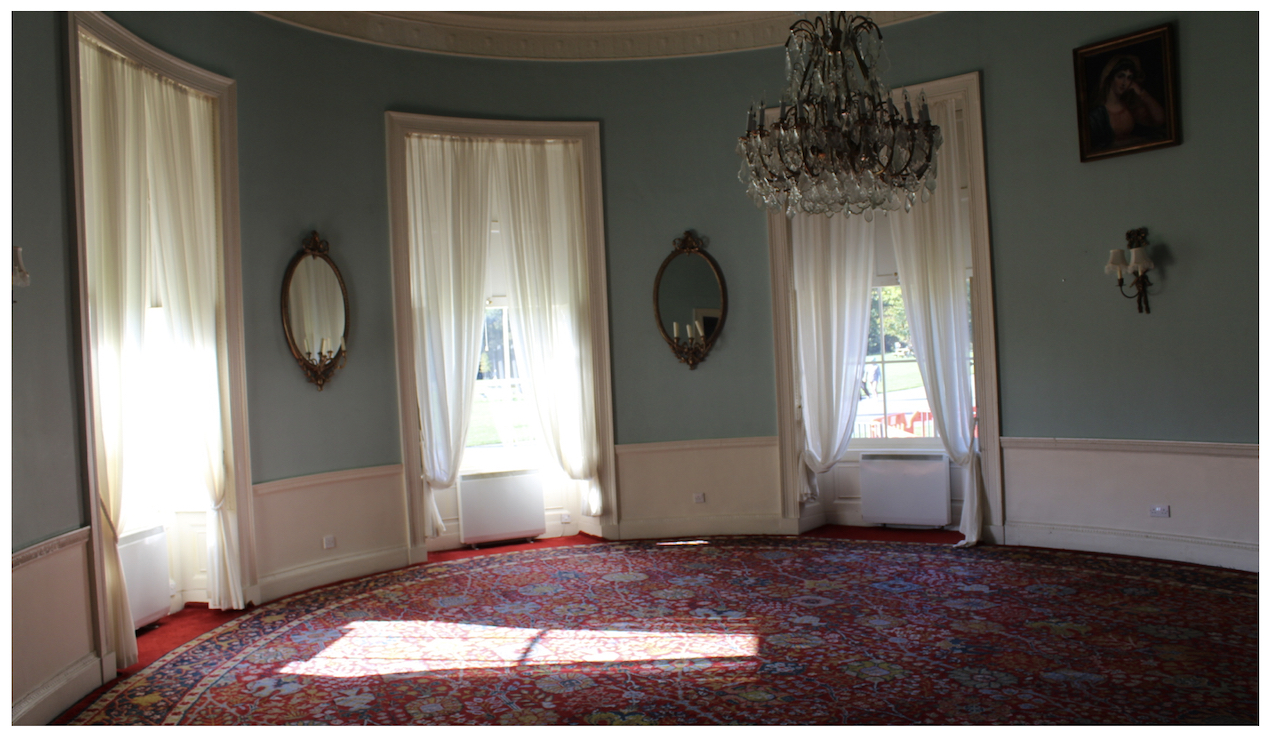
Marlay House interior, photograph courtesy of Dun Laoghaire/Rathdown County Council website.

There is a small vaulted vestibule off the oval room, which has more decorative plasterwork. Othere rooms include a library and another bow room with a decorative ceiling, which has drawings by the La Touche children. One of the library’s walls is dedicated to work by Evie Hone, since she spent time living and working in the courtyard.

In 1781 on a visit, Austin Cooper mentions the house as well as ponds with islands, rustic bridges, waterfalls, gardens with hothouses and greenhouses, an aviary and a menagerie. [8] The grounds were landscaped by Thomas Leggett (fl. 1770s-1810s) and Hely Dutton (fl. 1800s-1820s). [9] 

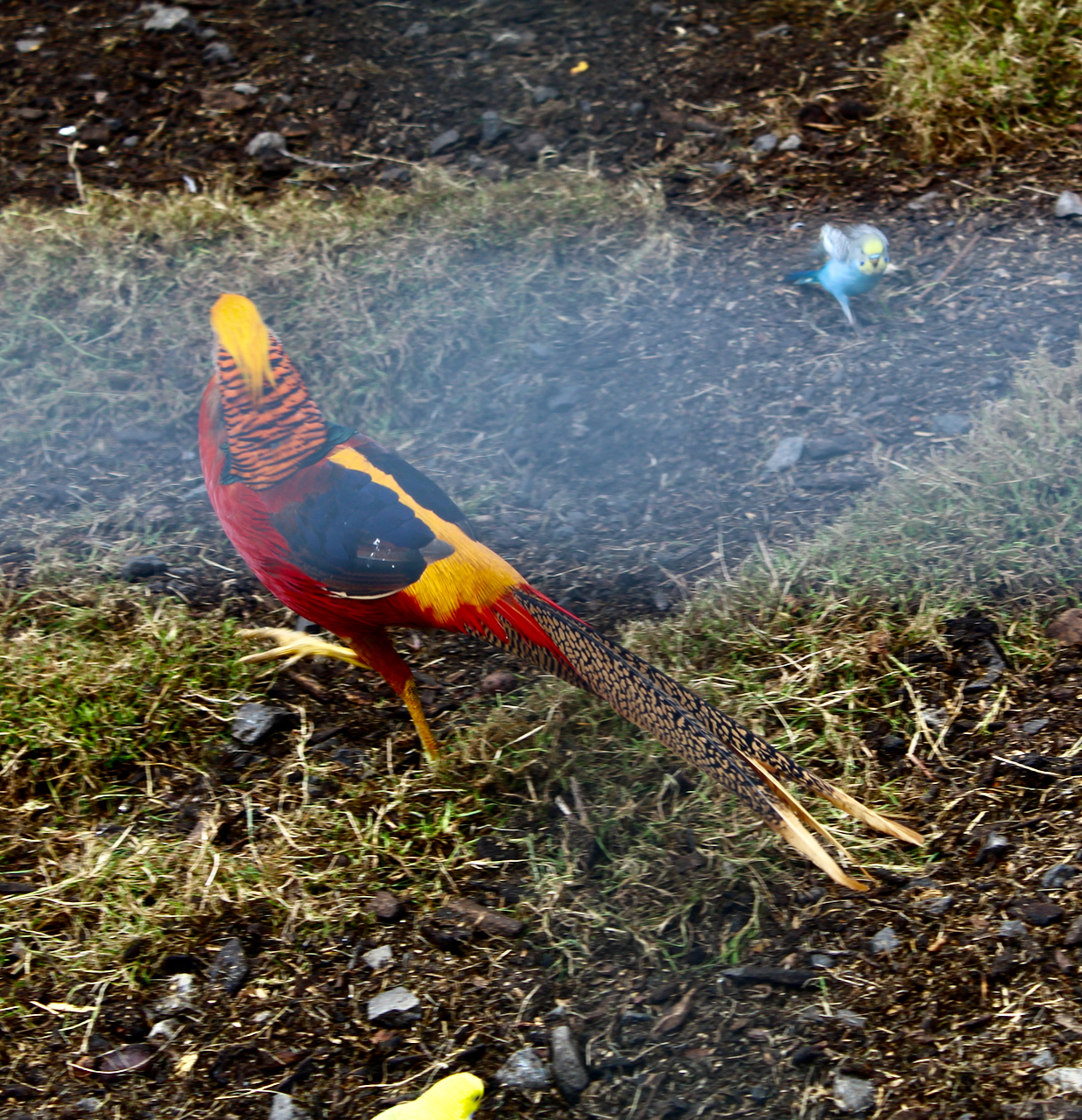
The house once again has an aviary!
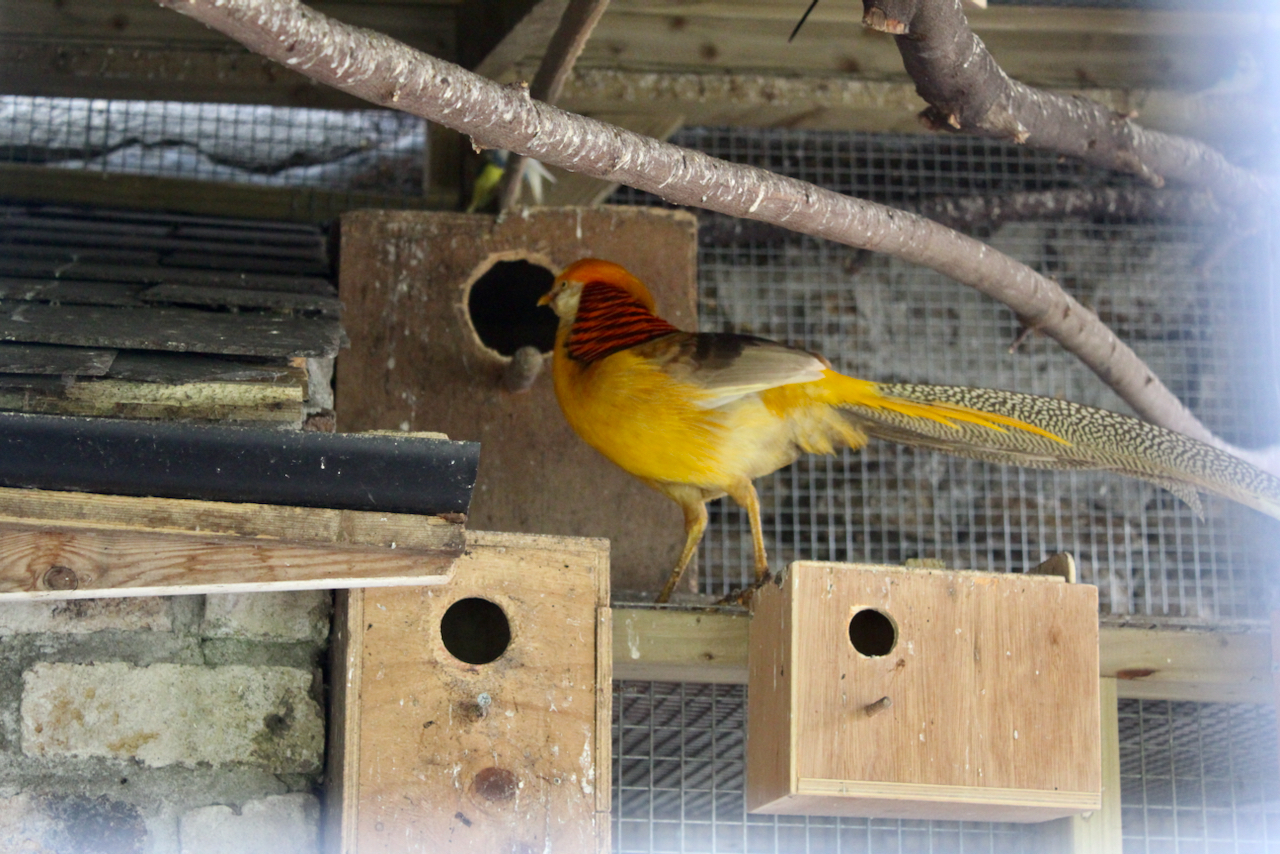
The aviary at Marlay House. September 2025. Photograph © Jennifer Winder-Baggot, www.irishhistorichouses.com

A website about the La Touche family tells us that David (1729-1817) was an investor in the Grand Canal Company, and in 1800 he was its Treasurer. He and his brothers were founding members of the Kildare Street Club in the 1780s. They were also Freemasons. The La Touches were generous and supported most of the large charitable and cultural organisations of the time. [10] David developed an interest in farming and developed a model farm at Marlay.

David La Touche had many children, who married very well. Their daughter Elizabeth (1764-1788) married Robert Henry Butler 3rd Earl of Lanesborough and became the Countess of Lanesborough.
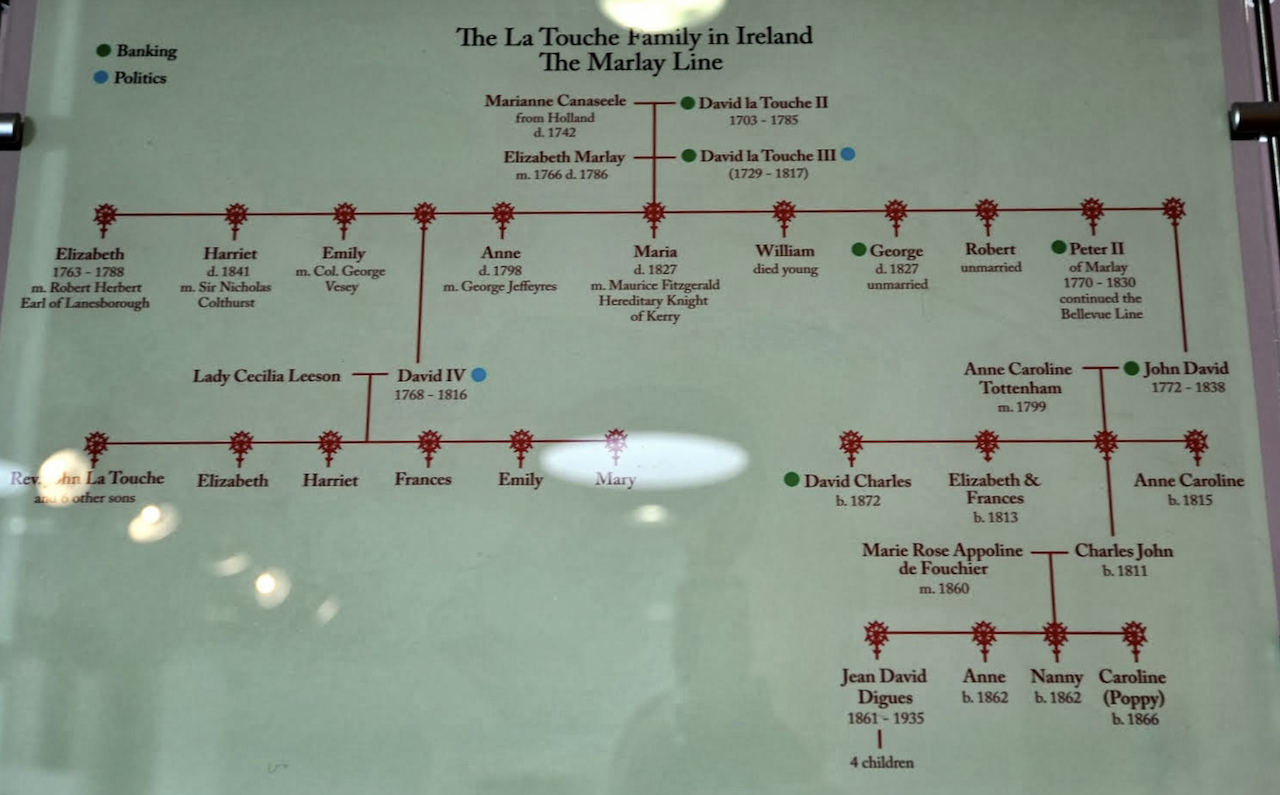
Photograph courtesy of La Touche Legacy website.
Elizabeth, Countess of Lanesborough (née La Touche), (1764-1788), wife of 3rd Earl Date 1791 Engraver Francesco Bartolozzi, Italian, 1725-1815 After Horace Hone, English, 1756-1825, photograph courtesy of National Gallery of Ireland.

Daughter Emily (1767-1854) married Colonel George Vesey, and they lived in Lucan House (see my entry https://irishhistorichouses.com/2025/12/20/lucan-house-lucan-county-dublin/ ). Her husband’s father Agmondisham Vesey (1708–85) was, interestingly, a member of the house of commons for Harristown, Co. Kildare, 1740–60. He was an amateur architect and designed his residence, Lucan House, built in 1772, with the help of William Chambers, and consulted with James Wyatt (1746-1813) of London and Michael Stapleton for the interiors of the house. There are several similarities between Marlay House and Lucan House, including the bows, and the work by Michael Stapleton. Lucan also has a screen of Corinthian pillars in the front hall, and an oval room.

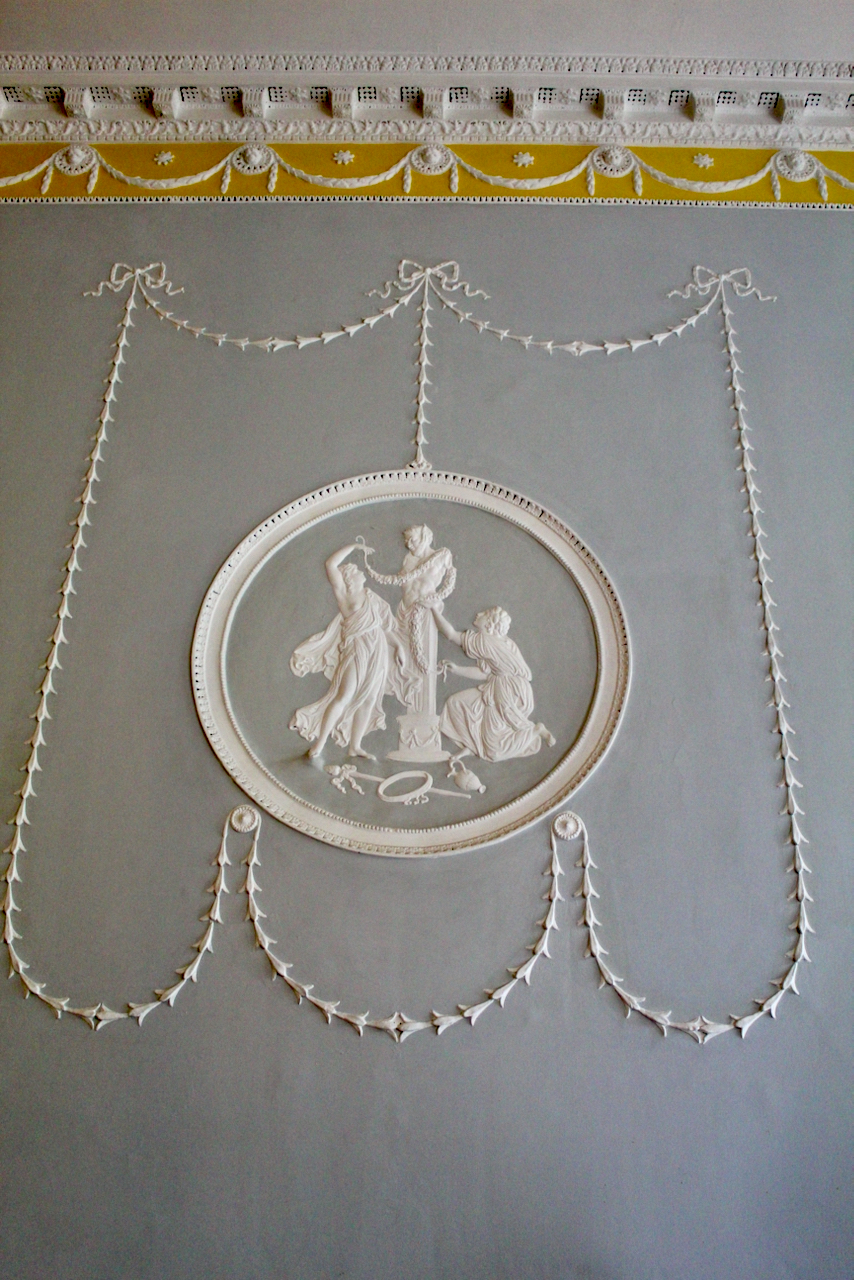
Lucan House, Dublin, October 2025. Photograph © Jennifer Winder-Baggot, www.irishhistorichouses.com
Plasterwork probably by Michael Stapleton in Lucan House, Dublin, October 2025. Photograph © Jennifer Winder-Baggot, www.irishhistorichouses.com
The Oval Room in Lucan House, Dublin, October 2025. Photograph © Jennifer Winder-Baggot, www.irishhistorichouses.com

Daughter Harriet (d. 1841) married Nicholas Colthurst, 3rd Baronet of Ardum, Co. Cork. Another daughter, Anne (d. 1798) married George Jeffereyes (1768-1841) of Blarney Castle (see my entry https://irishhistorichouses.com/2022/09/23/blarney-castle-rock-close-blarney-co-cork/ ). Daughter Maria (d. 1829) married Maurice Fitzgerald, 18th Knight of Kerry, of Glin Castle in County Limerick. David and Elizabeth née Marlay’s sons were David (1769-1816), John David (1772-1838), George (1770-1824), Peter (1777-1830), Robert, who didn’t marry, and William, who is probably the one who lay the foundation stone of the house, who died young.

David La Touche (1769-1816) married Cecilia , daughter of Joseph Leeson, 1st Earl of Milltown, of Russborough House. The Dictionary of Irish Biography tells us that David served as MP for the borough of Newcastle (1790–97, 1798–1800) and MP for Co. Carlow (1802–16) in the UK parliament.

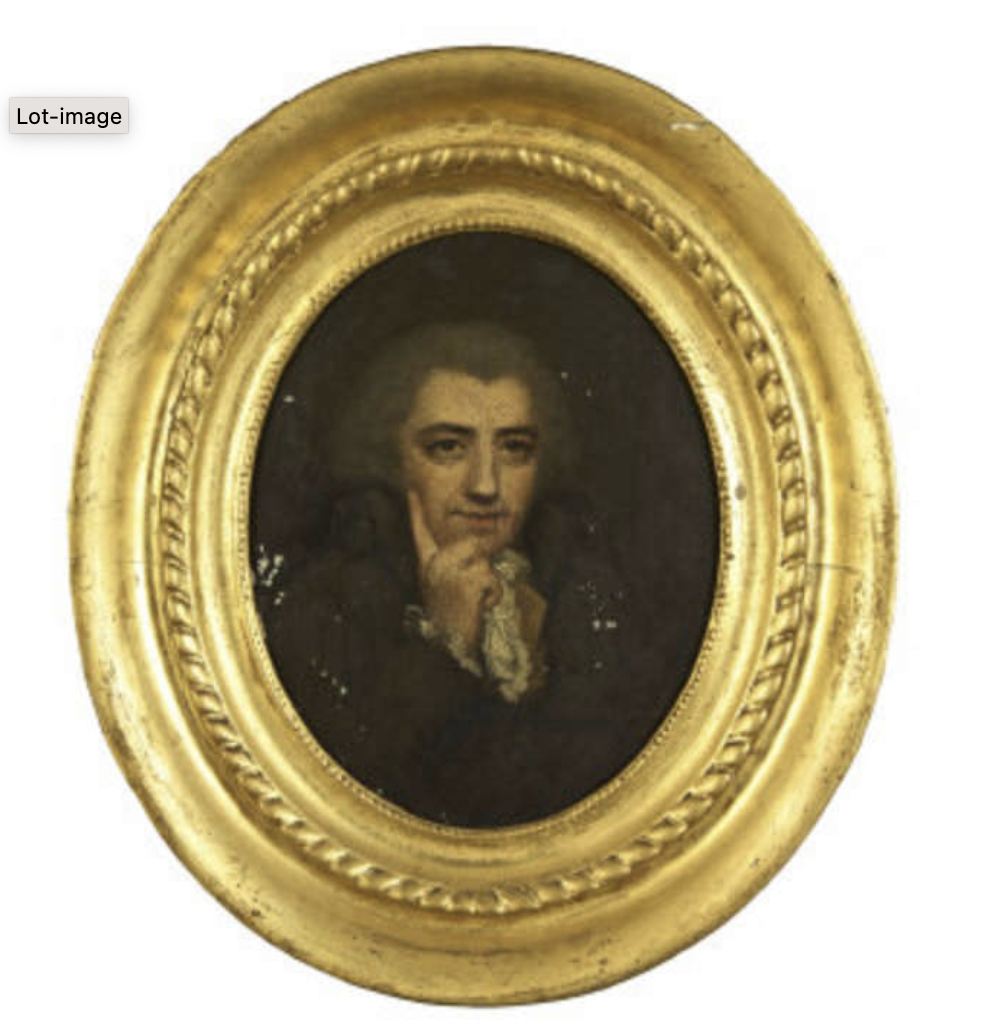
David La Touche of Marlay, Dublin (1734-1806) by Hugh Douglas Hamilton courtesy Christies Old Master & British Drawings and Watercolour.
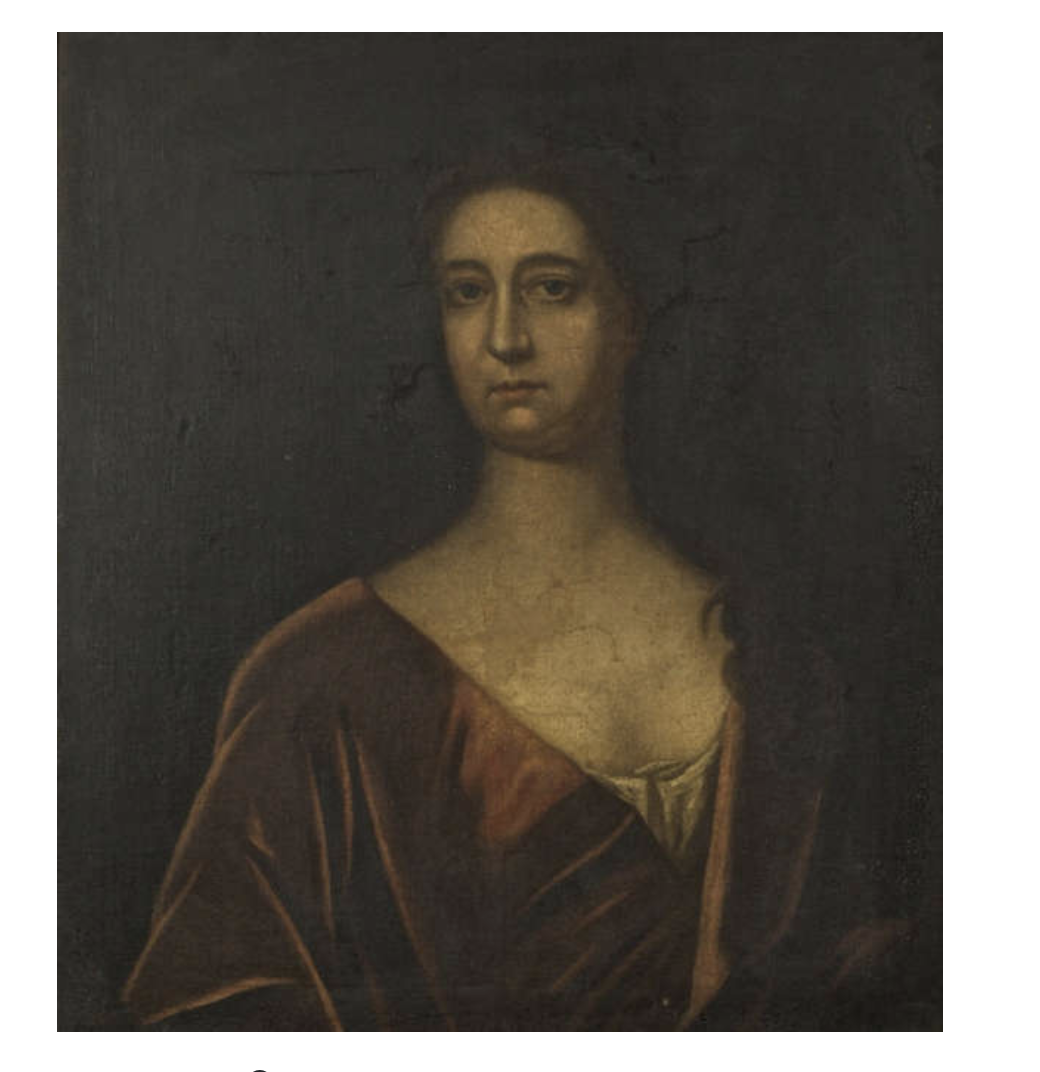
Cecilia La Touche née Leeson (about 1769-1848).

John David (1772-1838) married Anne Caroline, daughter of Charles Tottenham of New Ross, County Wexford.

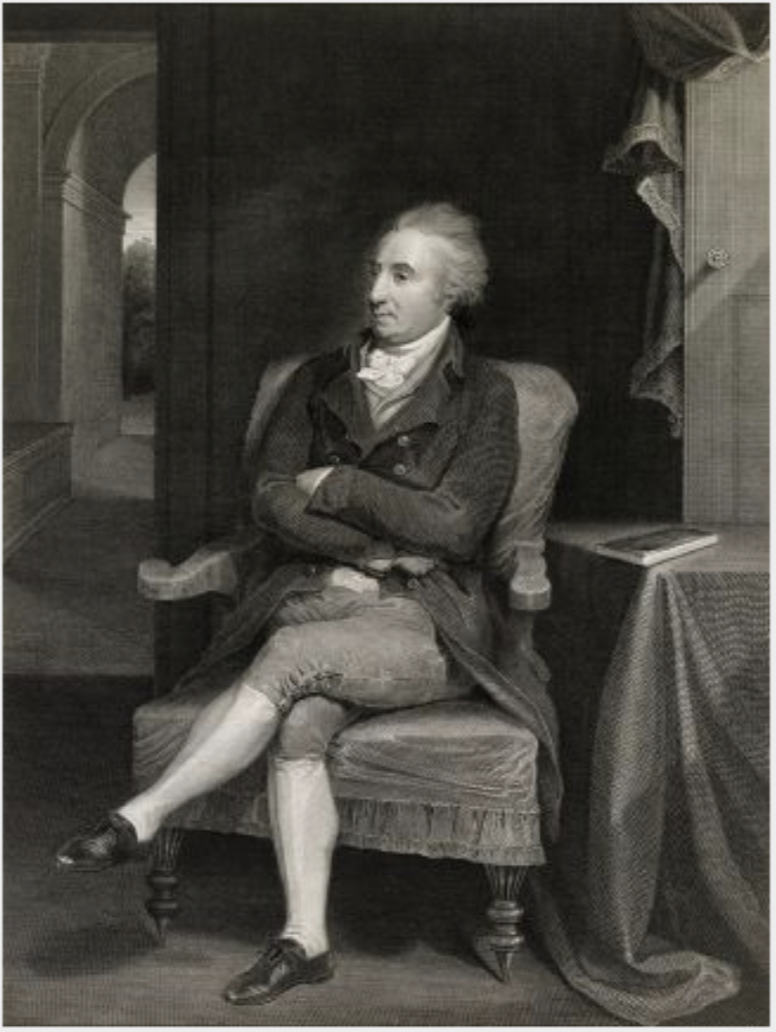
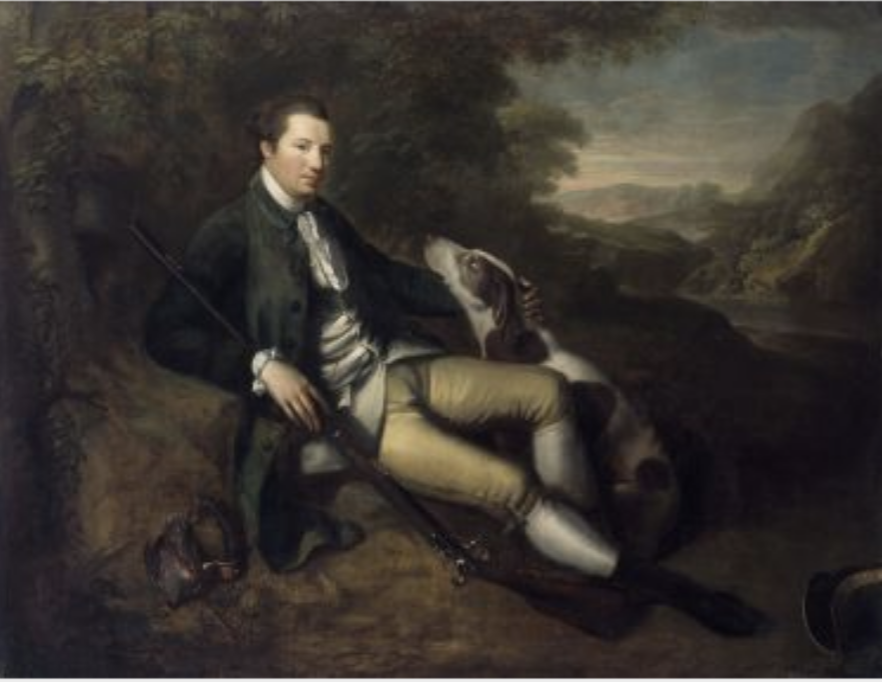
John David La Touche of Marlay, Dublin (1772–1830), full-length, in a taupe frock coat and jabot, with Taormina and Mount Etna beyond by Hugh Douglas Hamilton courtesy Old Master & British Drawings and Watercolours, Christies.
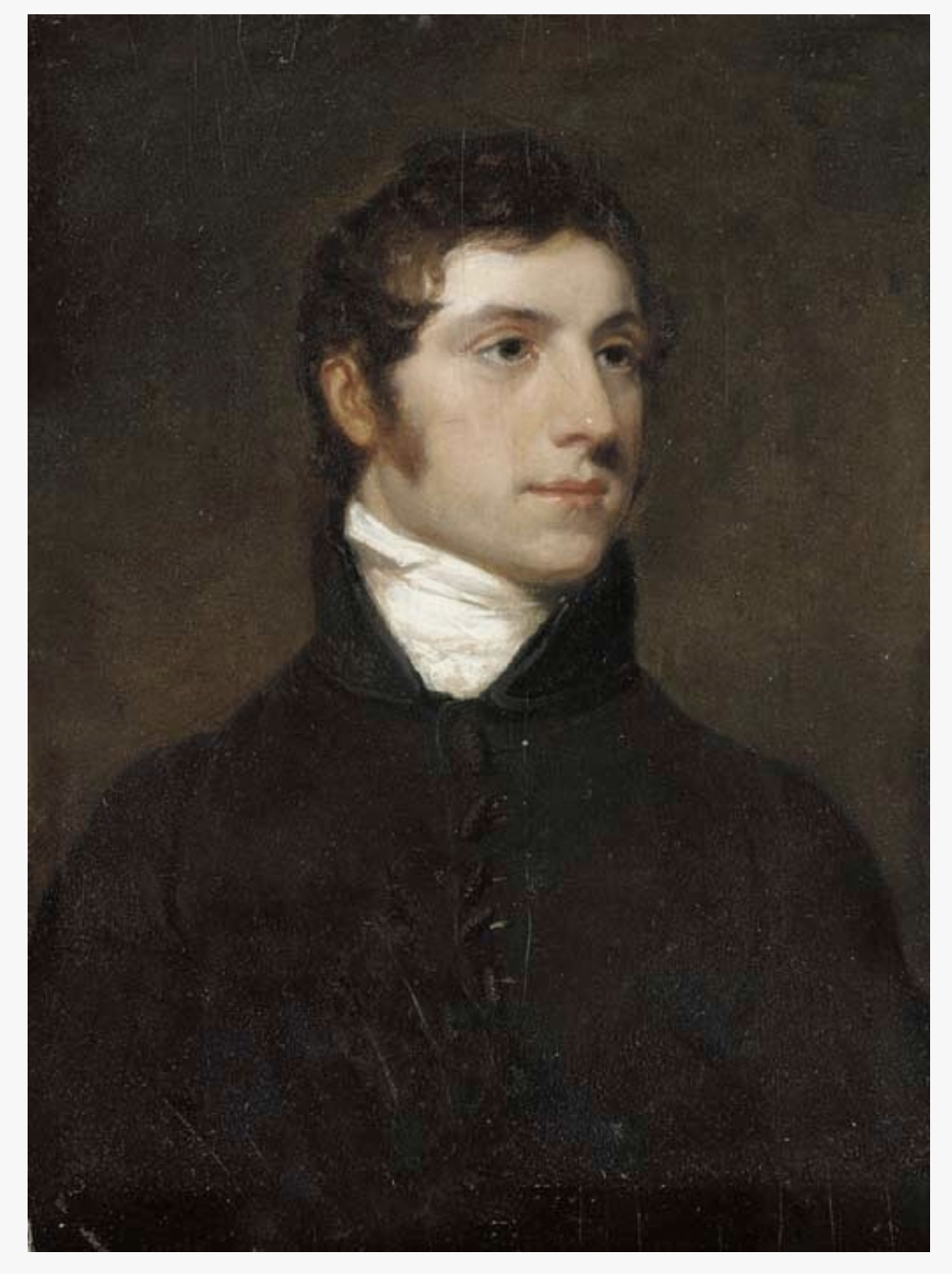
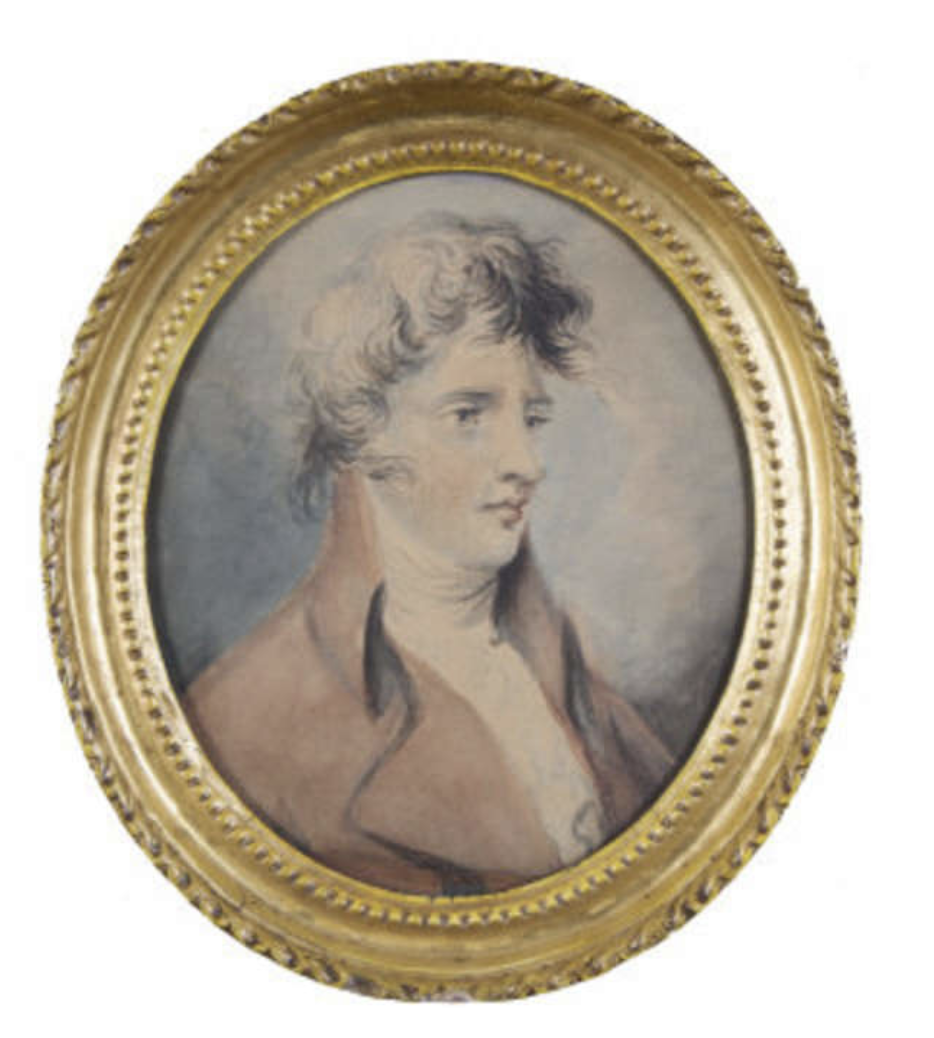
Gentleman believed to be Robert La Touche by Hugh Douglas Hamilton courtesy Christies Irish Sale 2003. Robert died when a stand collapsed at the Curragh Races.

Peter (1777-1830) married Charlotte, daughter of Cornwallis Maude 1st Viscount Hawarden. Peter inherited the estate at Bellevue owned by his uncle Peter La Touche.

The family enjoyed theatricals, and the Masque of Comus was performed in 1778 with an epilogue by Henry Grattan, a cousin of Mrs. La Touche. [see 8] The house had its own theatre.

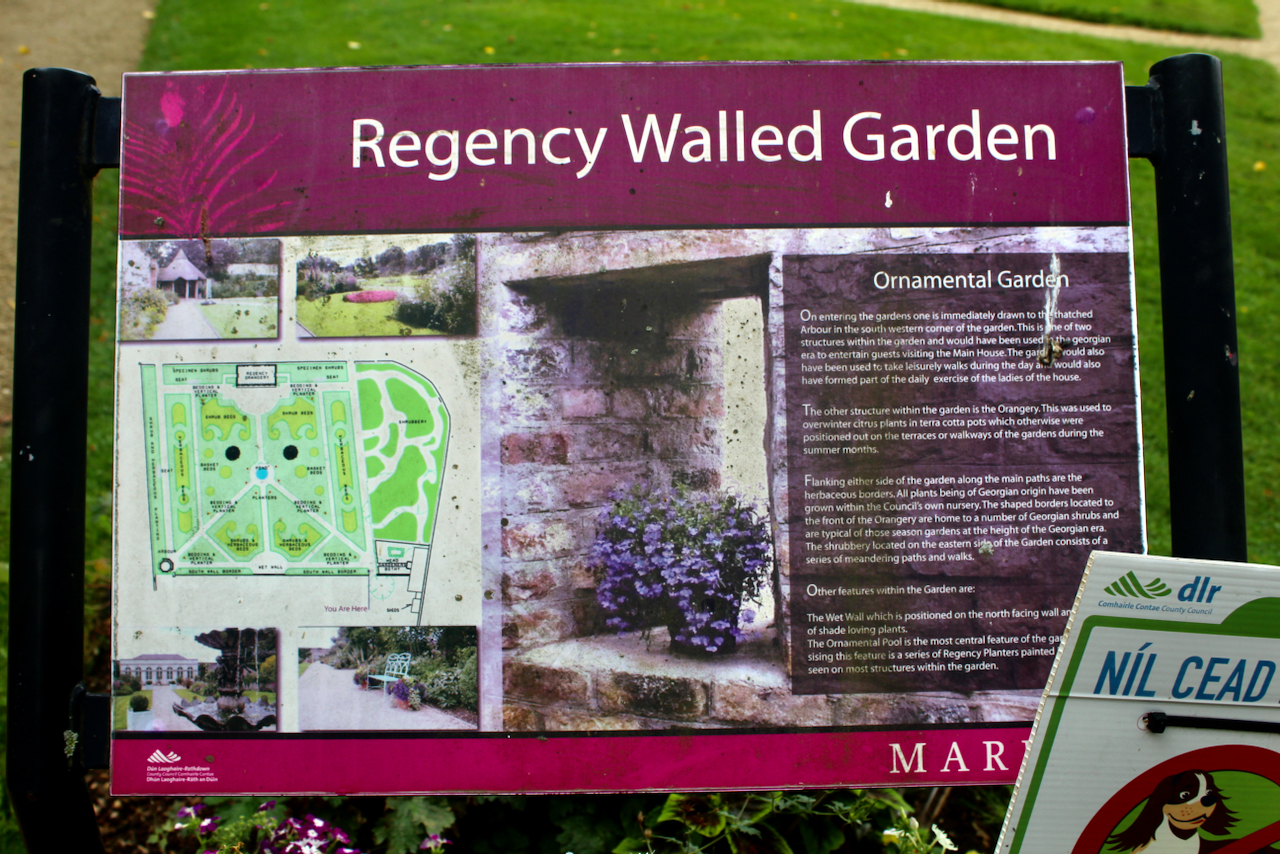
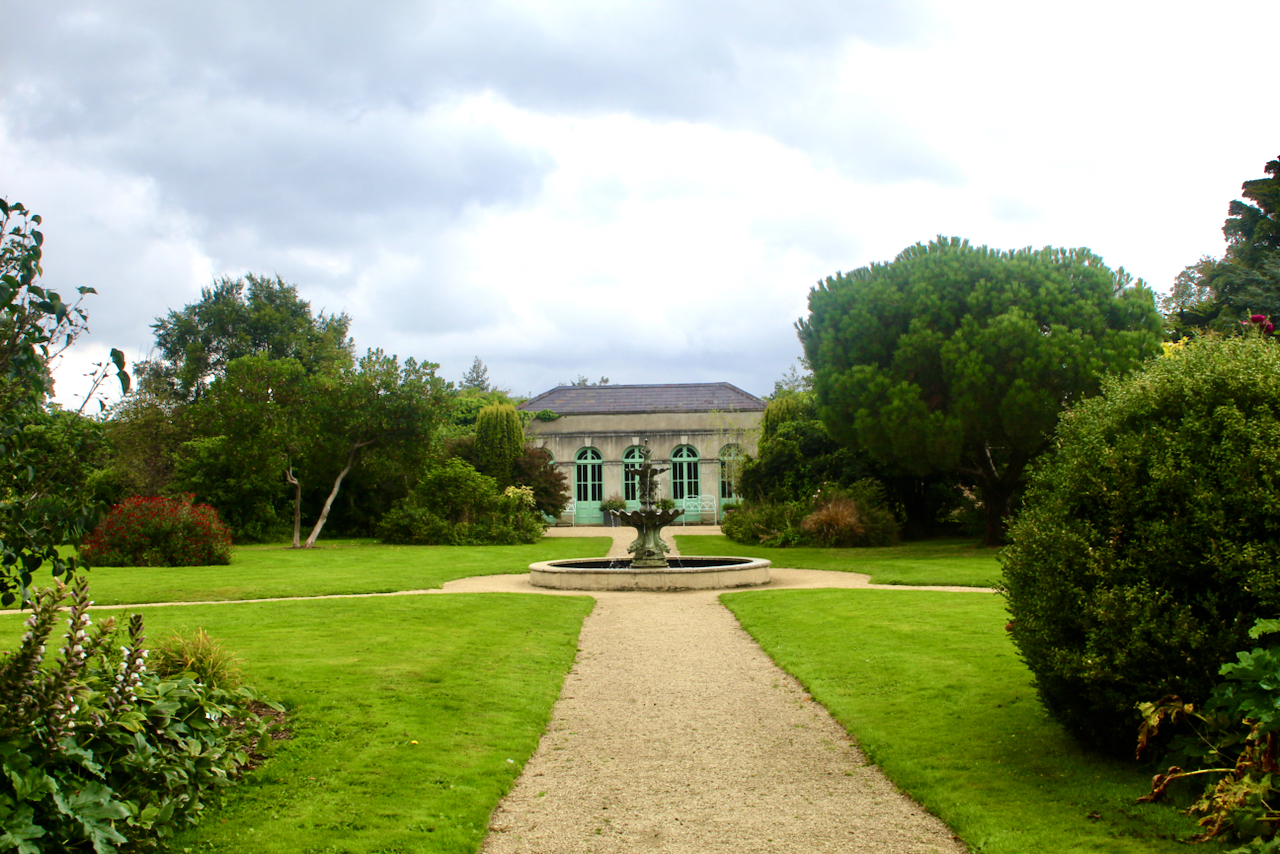
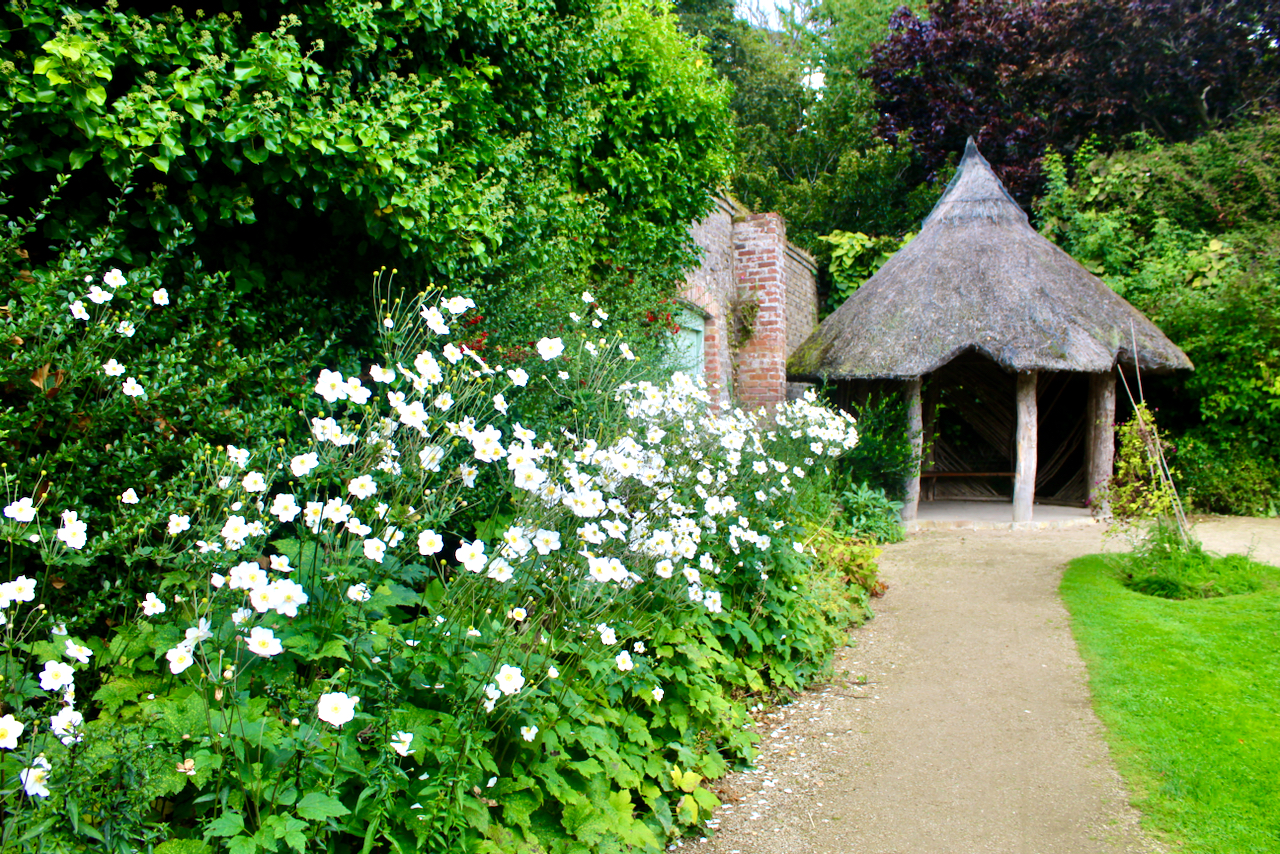
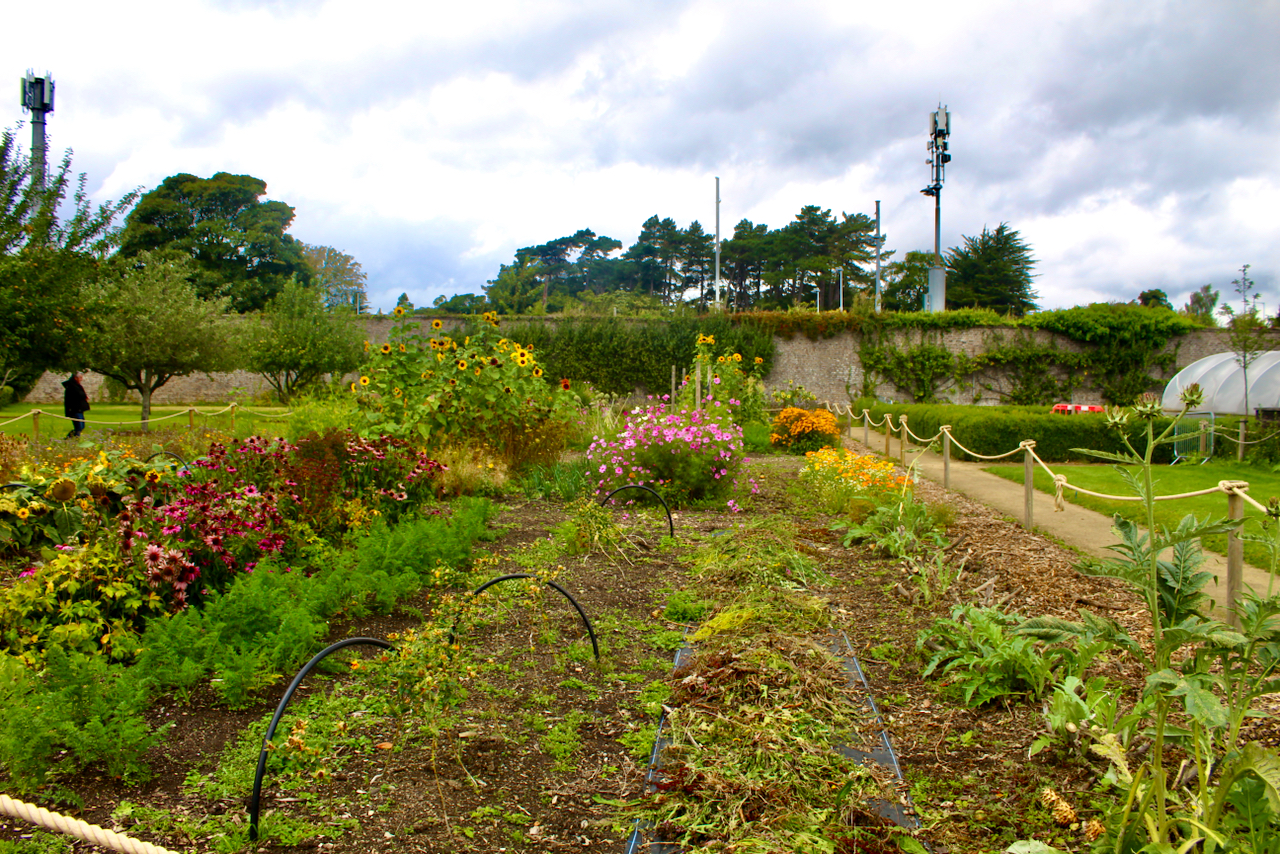
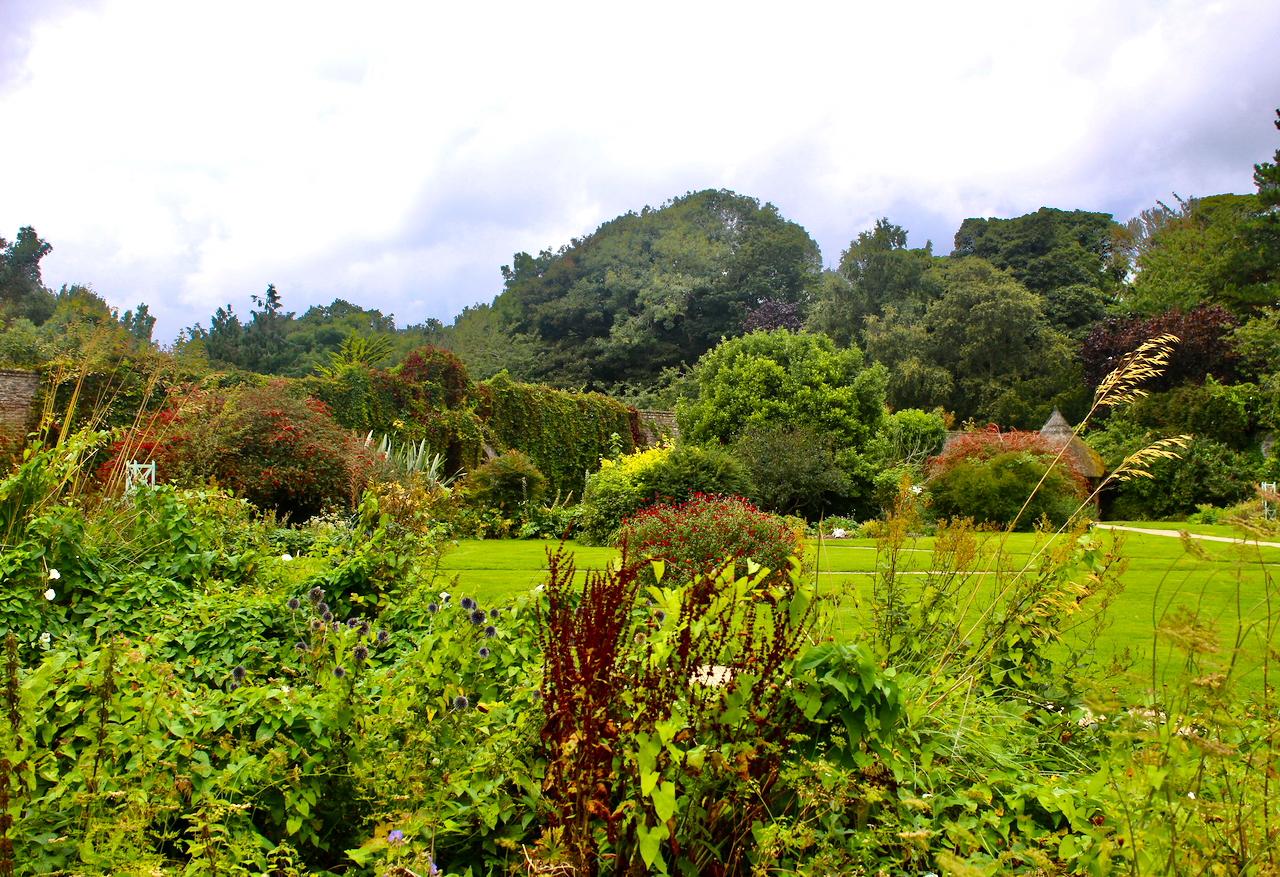
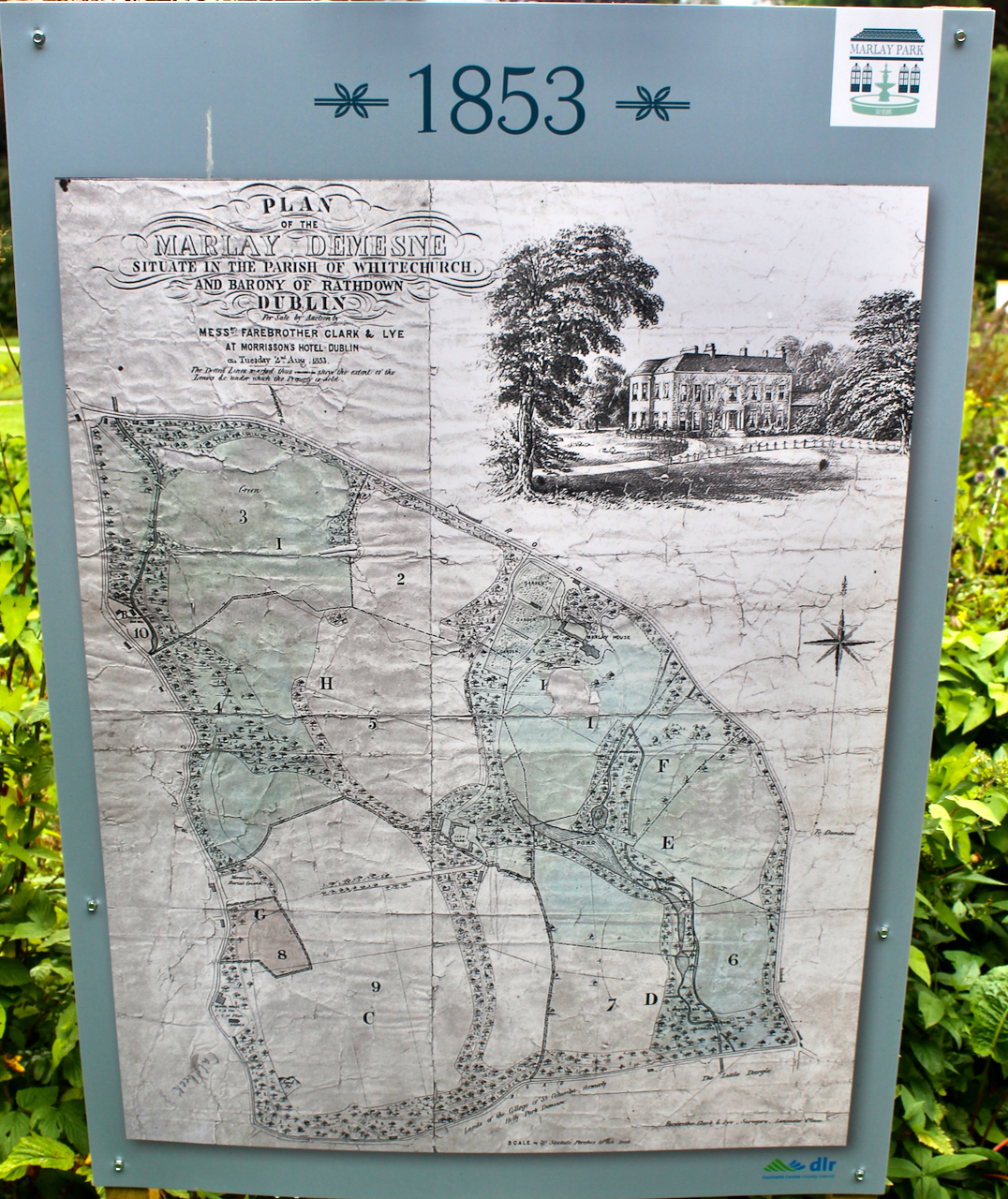
The walled garden in Marlay was built around 1794.
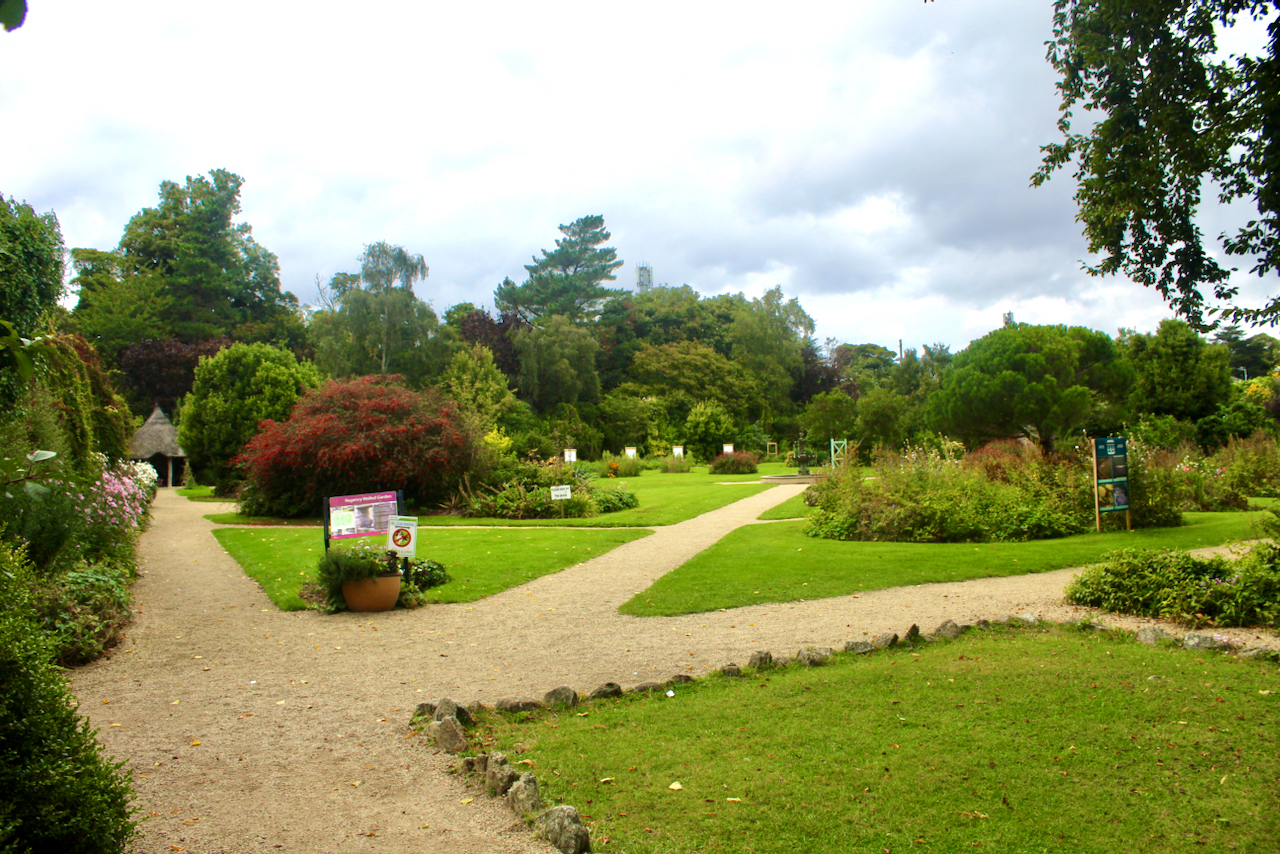
The walled garden at Marlay House. September 2025. Photograph © Jennifer Winder-Baggot, www.irishhistorichouses.com
The Regency Orangerie in the walled garden at Marlay House. September 2025. Photograph © Jennifer Winder-Baggot, www.irishhistorichouses.com
The thatched arbour in the walled garden at Marlay House. September 2025. Photograph © Jennifer Winder-Baggot, www.irishhistorichouses.com
The walled garden at Marlay House. September 2025. Photograph © Jennifer Winder-Baggot, www.irishhistorichouses.com
Marlay House. September 2025. Photograph © Jennifer Winder-Baggot, www.irishhistorichouses.com

John David La Touche was the next to live in Marlay. He was succeeded by his son David Charles La Touche (1800-1872). He died without marrying, so his brother, Charles John Digges La Touche (1811-1884), succeeded him. The La Touche legacy website tells us that Charles had been at Oxford and knew Newman (later a Cardinal). In 1844, Charles caused consternation among the wider family by becoming a Roman Catholic and moving to Tours in France. Charles had a son, John David (1861-1935), who worked in China in the Imperial Chinese Customs Service, and on his retirement, he returned to Ireland in 1925 and bought a fine residence at Kiltimon, Co. Wicklow. [see 10]

In 1871 the La Touche bank was acquired by Munster Bank.

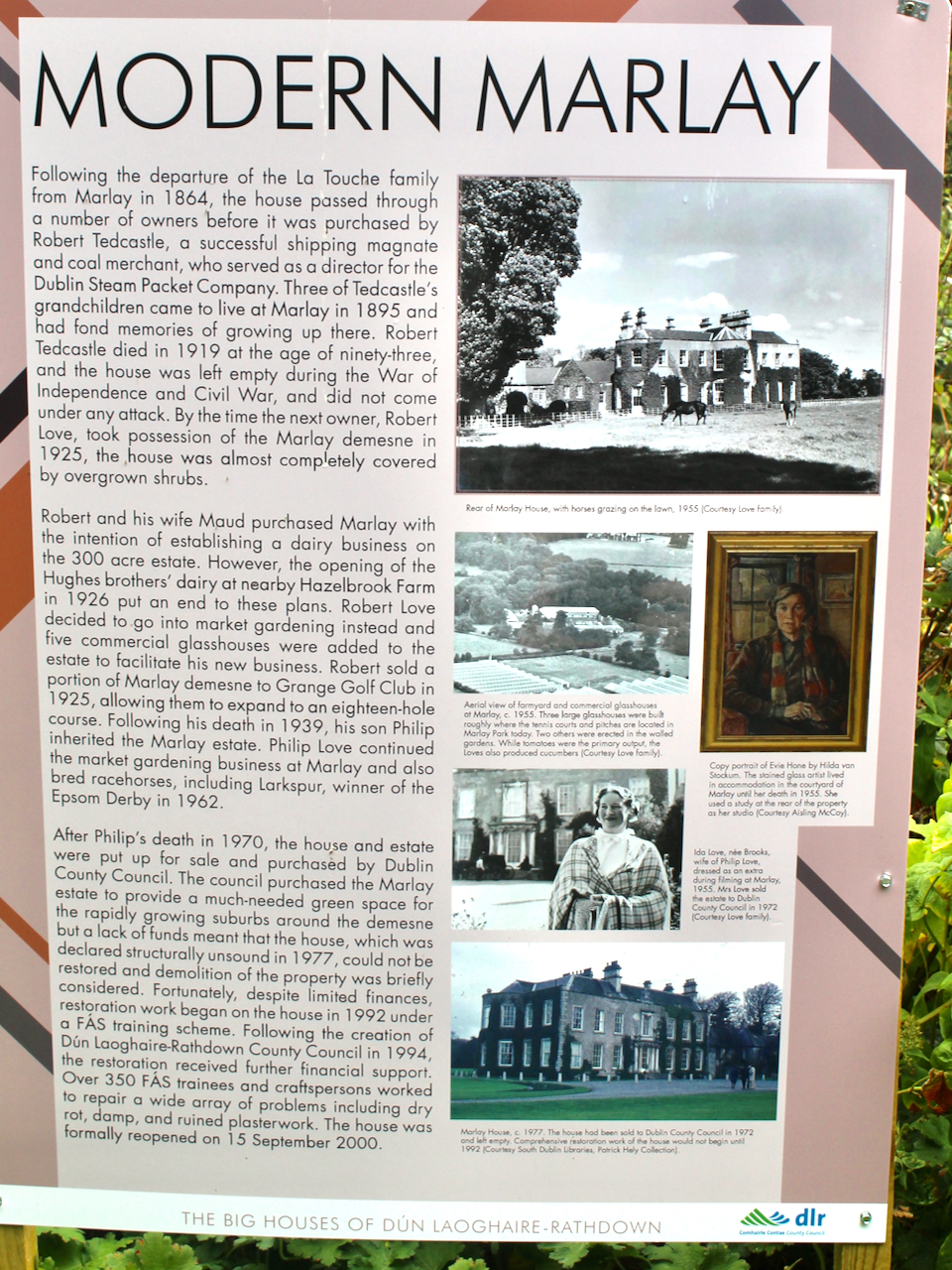
The La Touches sold the property to Robert Tedcastle around 1850. The Tedcastle family owned a fleet of cargo ships, one of which they named “Marlay”.  The “Marlay” was used to carry freight, such as coal, and passengers between Dublin and Liverpool. Tedcastle was a devout Christian and he led a quiet life so the house was no longer a place for parties. His grandchildren came to live with him. One of his grandsons wrote a memoir which discusses growing up in the house. When Robert Tedcastle died, the house went to a distant cousin, but lay empty.

The Tedcastle family lived at Marley until 1925, when Robert Ketton Love bought the house. He lived there until his death in 1939. Robert and his wife Maud bought the property to build a dairy to make icecream, but nearby a rival firm set up so the business didn’t succeed. They then established a market garden at the property. When Robert died in 1939, his son Philip inherited the estate and market garden. He was the largest tomato producer in Ireland, I believe, and also bred racehorses. He died in August 1970 and in 1972 it was bought by Dublin County Council.
Marlay House. September 2025. Photograph © Jennifer Winder-Baggot, www.irishhistorichouses.com

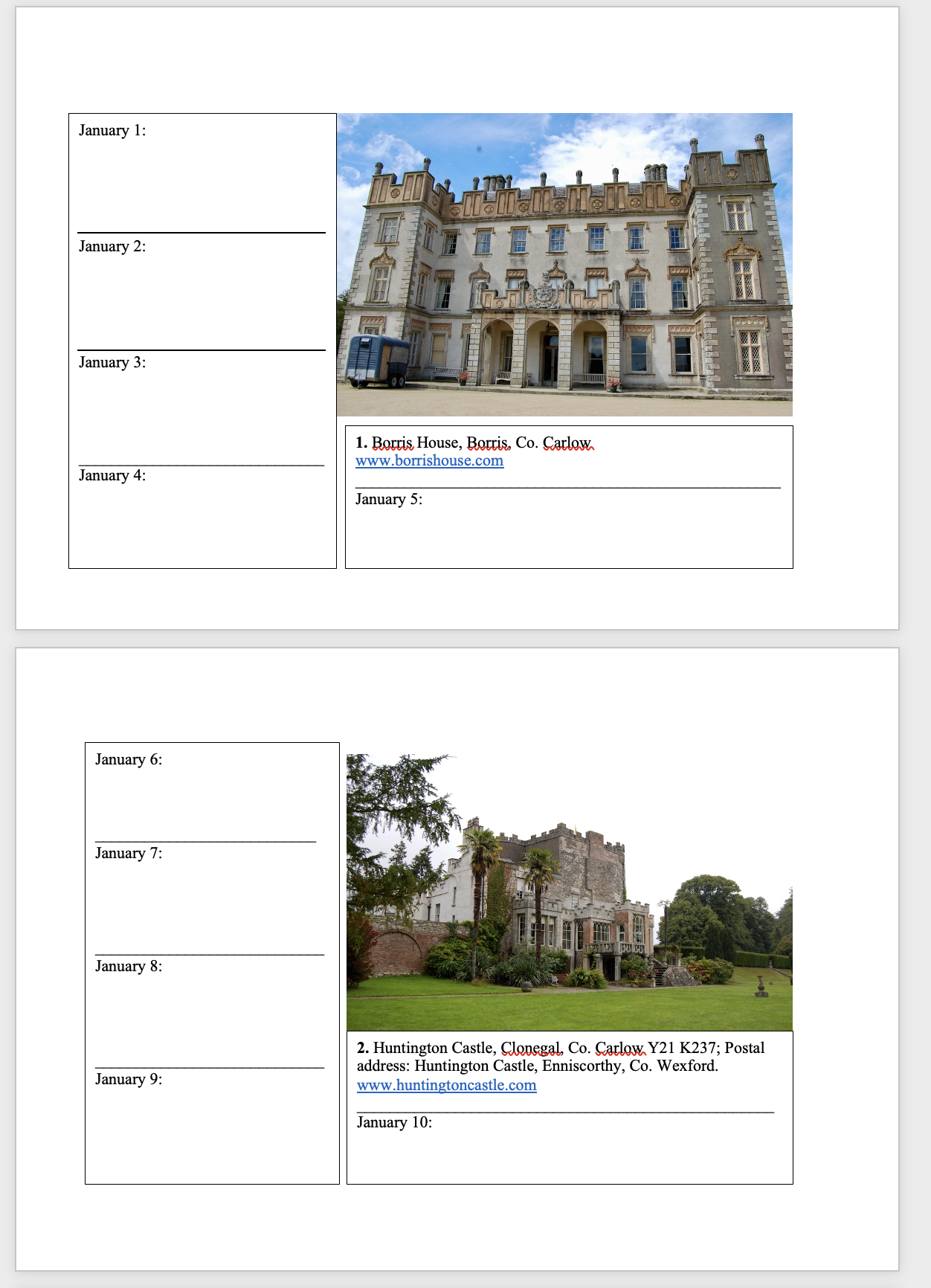
2025 Diary of Irish Historic Houses (section 482 properties)

To purchase an A5 size 2025 Diary of Historic Houses (opening times and days are not listed so the calendar is for use for recording appointments and not as a reference for opening times) send your postal address to jennifer.baggot@gmail.com along with €20 via this payment button. The calendar of 84 pages includes space for writing your appointments as well as photographs of the historic houses. The price includes postage within Ireland. Postage to U.S. is a further €10 for the A5 size calendar, so I would appreciate a donation toward the postage – you can click on the donation link.

€20.00

donation

Help me to pay the entrance fee to one of the houses on this website. This site is created purely out of love for the subject and I receive no payment so any donation is appreciated!

€15.00
Donation towards website.

I receive no funding nor aid to create and maintain this website, it is a labour of love. The website costs €300 annually on wordpress. Help to fund the website.

€150.00

[1] http://lordbelmontinnorthernireland.blogspot.com/2012/05/marlay-grange.html

[2] http://marleygrange.ie/history-of-marley-grange/

[3] https://www.hxparish.ie/history

[4] Mark Bence-Jones, A Guide to Irish Country Houses (originally published as Burke’s Guide to Country Houses volume 1 Ireland by Burke’s Peerage Ltd. 1978); Revised edition 1988 Constable and Company Ltd, London.

p. 202. “(La Touche/IFR) The original early C18 house here, known as the Grange and built by Thomas Taylor, was sold ca 1760 to the banker, David La Touche, MP, afterwards 1st Governor of the Bank of Ireland, who renamed it Marlay, having married a daughter of Rt. Rev George Marlay, bishop of Dromore; and who rebuilt the house later in C18. Of two storeys over a basement. Seven bay front, central window-door framed by frontispiece of coupled engaged Doric columns, entablature enriched with medallions and swags, and urns; window above it with entablature on console brackets; large central urn on plinth carved with swags in centre of roof parapet; smaller urns on either side. Side elevation of 2 bays on either side of a curved bow. Delicate interior plasterwork, said to be by Michael Stapleton. Hall with screen of Corinthian columns and frieze of tripods and winged sphinxes. Fine plasterwork ceilings in dining room and oval room, that in the dining room incorporating a painted medallion; husk ornamentation on dining room walls. Sold ca 1867 to one of the Tedcastle famliy, of the well-known firm of coal merchants. From ca 1925 to 1974 the home of the Love family; for a period, the stained glass artist, Evie Hone, occupied a house in the stable court. Now owned by the local authority and empty, used by Radio-Telefis Eireann as Kilmore House in their recent feature.” 

[5] Young, M.F. “The La Touche Family of Harristown,” Journal of the Kildare Archaological Society, volume 7. 1891. https://archive.org/details/journalofcountyk07coun/page/36/mode/2up

[6] https://www.greystonesahs.org/gahs3/index.php/talks-and-visits?view=article&id=214:journal-volume-4-article-6-1&catid=87

[7] p. 129. Bunbury, Turtle and Art Kavanagh, The Landed Gentry & Aristocracy of County Kildare. Published by Irish Family Names, 11 Emerald Cottages, Grand Canal St., Dublin 4 and Market Square, Bunclody, Co. Wexford, Ireland, 2004.

[8] p. 61-62, Ball, Francis Elrington, A History of the County Dublin: the people, parishes and antiquities from the earliest times to the close of the eighteenth century. Volume III. Alex. Thom, 1902-20.

On Thomas Taylor’s grave in Kilgobbin, it says “Here lieth the body of Thomas Taylor of Harold’s Grange who departed this life the 22nd November 1727. Underneath lie the remains of Samuel Taylor Esq. who departed this life 22nd April 1881 aged 79 years and six months leaving only one daughter who married to the Rev. Dr. Vesey of the City of Dublin. Mrs. Anna Taylor who departed this life Feb 22nd 1821 aged 66 years daughter of John Eastwood Esq. of Castletown, County Louth, wife of Mathew Beresford Taylor Esq who died 8th March 1828 aged 74 years. Mrs. Isabella Taylor who departed this life 1st March 1830, daughter to Sir Barry Collies Meredyth Bart wife of John Keatinge Taylor Esq. aged 36 years Captain 8th Hussars who died 3rd March 1836 aged 52 years. His widow Mary daughter of William Poole of Ballyroan Esq died 28th January 1892. Isabella their eldest child died 1834 aged two years.”

[9] https://www.buildingsofireland.ie/buildings-search/building/60220011/marlay-house-grange-road-co-dun-laoghaire-rathdown

[10] http://latouchelegacy.com/the-marlay-rathfarnham-family/
Portraits L

L

Hugh de Lacy (d. 1186) 4th Baron Lacy portrait by Gerald of Wales – Expugnatio Hibernica (1189) https///www.isos.dias.ie/NLI/NLI_MS_700
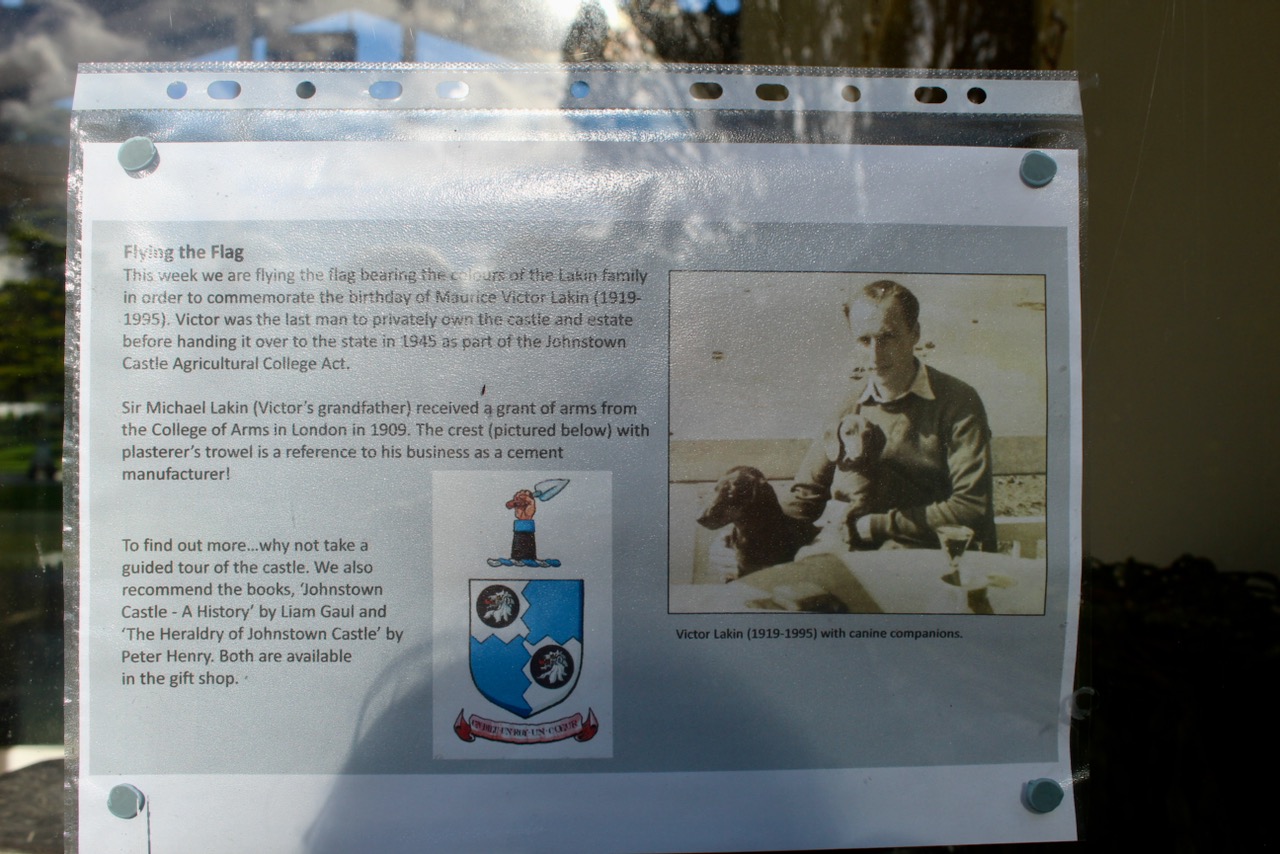
Maurice Victor Lakin (1919-1995), last man to privately own Johnstown Castle, County Wexford, before handing it over to the state in 1945.
Frances Thomasine, Countess Talbot (née Lambart), (1782-1819), Wife of the 3rd Earl Talbot Date 1822 Engraver John Samuel Agar, British, c.1773-1858 After Charles Robertson, Irish, 1759-1821, courtesy of National Gallery of Ireland.
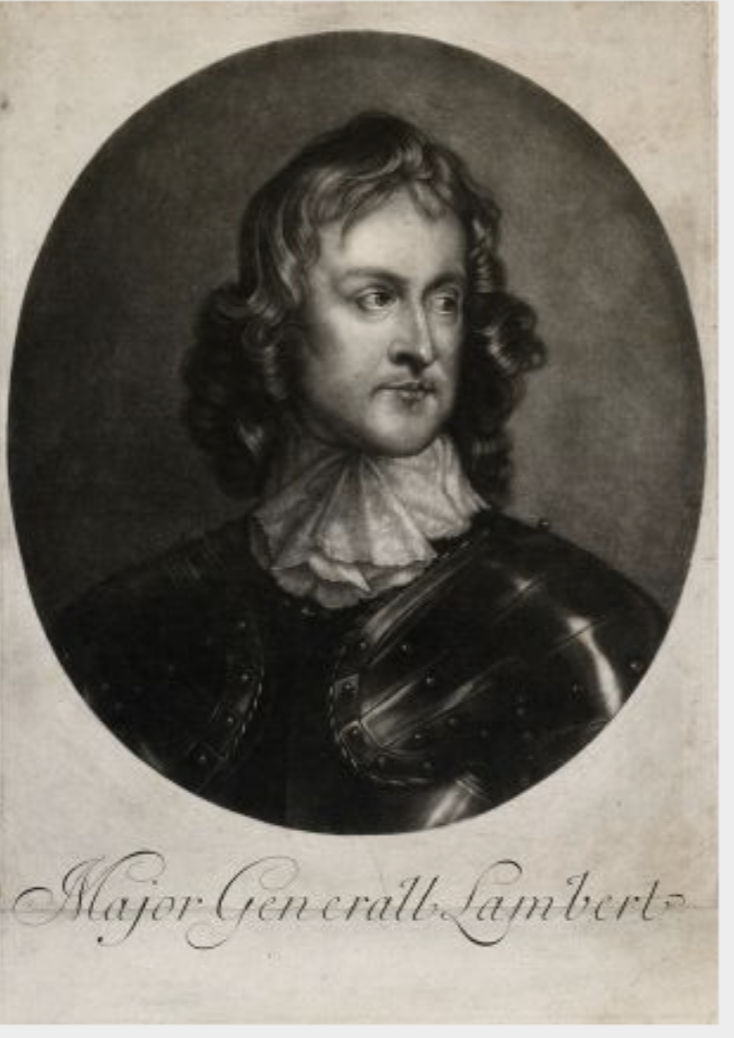
Major-General John Lambert, (1619-1683), Parliamentarian, Deputy Lord Lieutenant of Ireland, courtesy of National Gallery of Ireland.
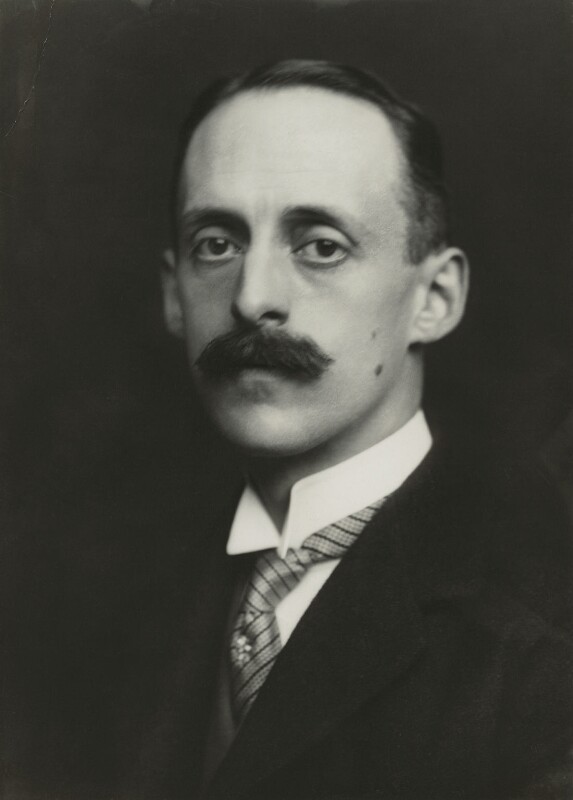
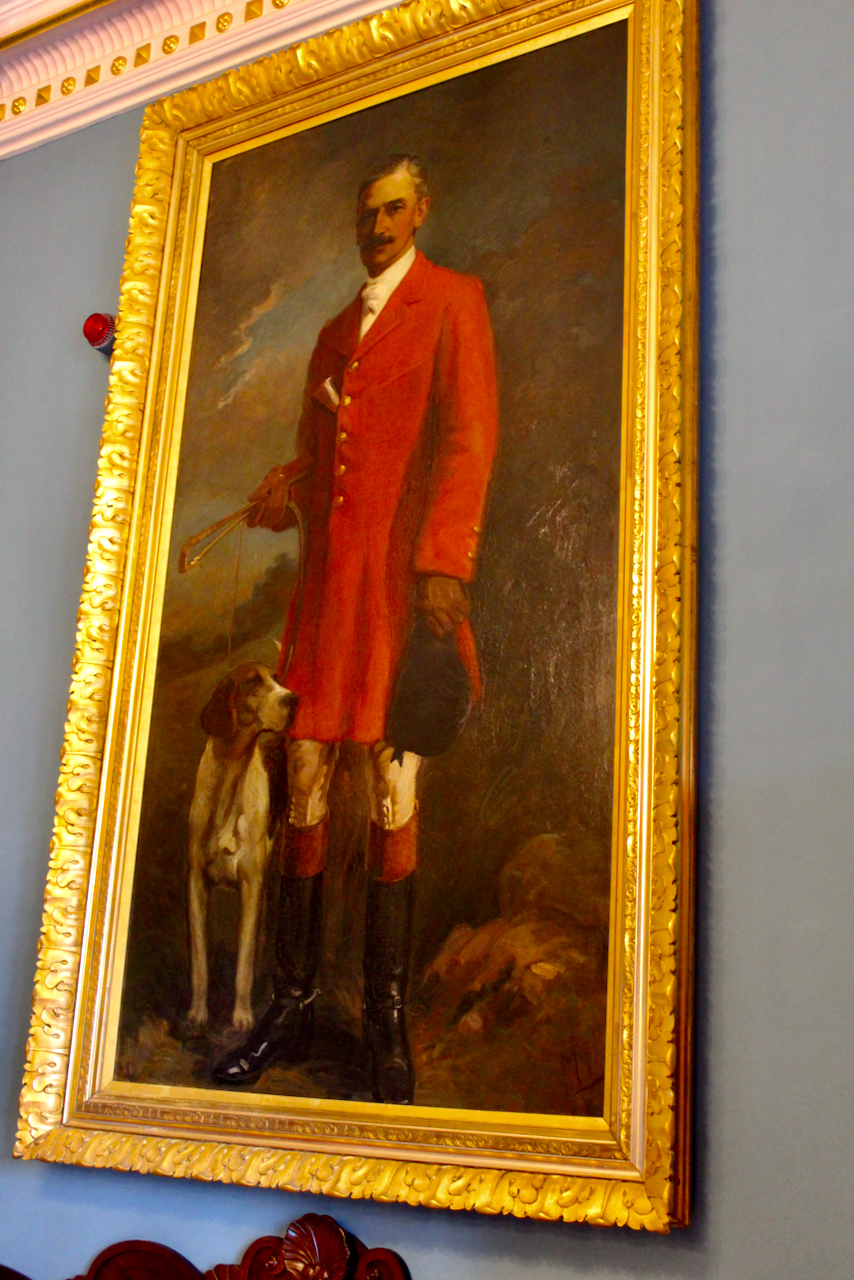
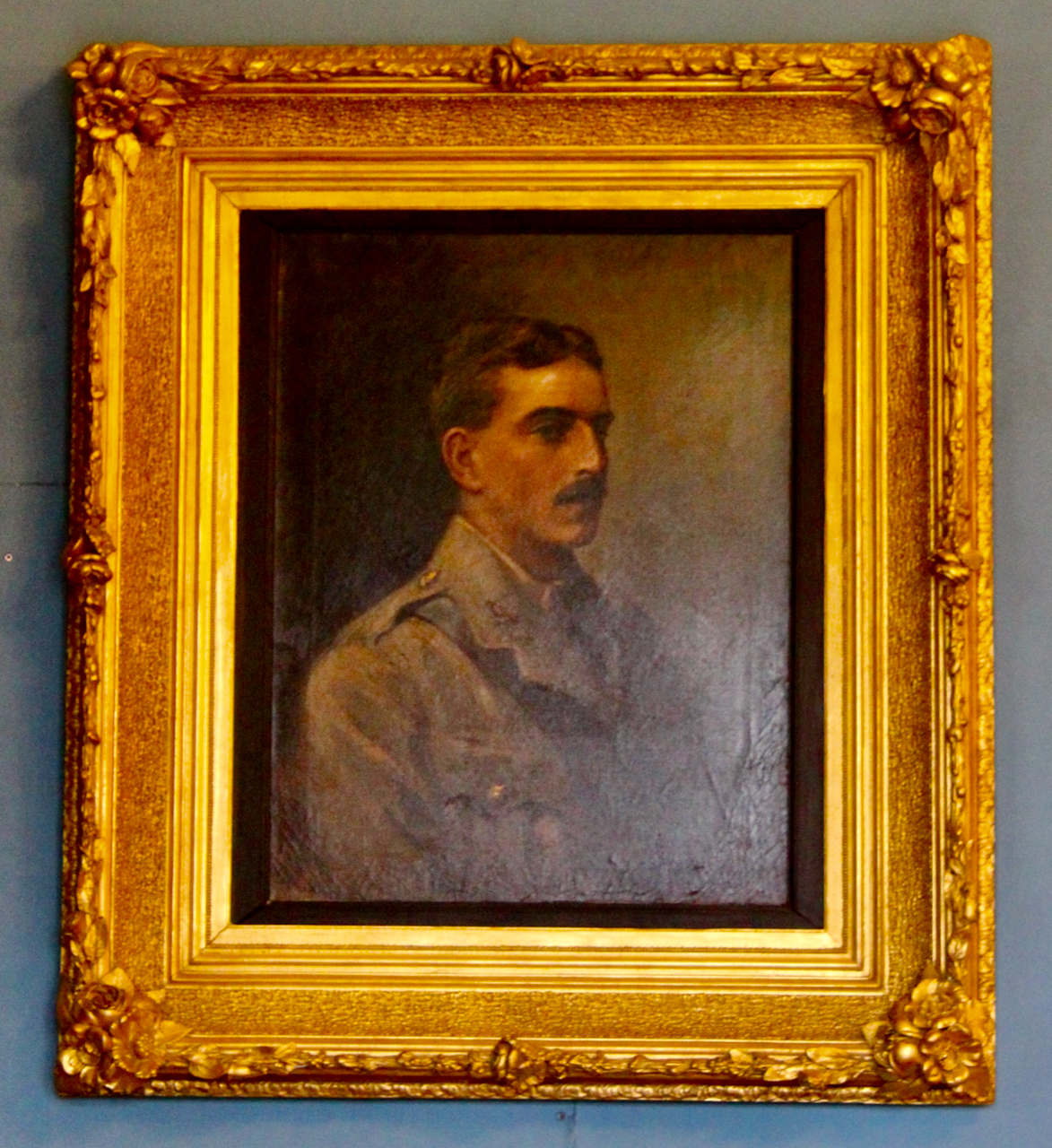
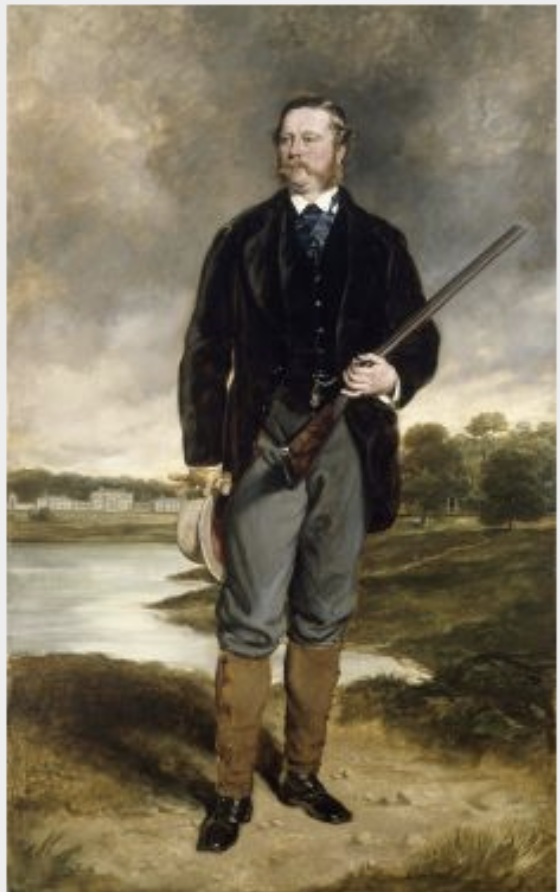
Hugh Percy Lane (1875-1915) by George Charles Beresford, 1909, NPG x6528.
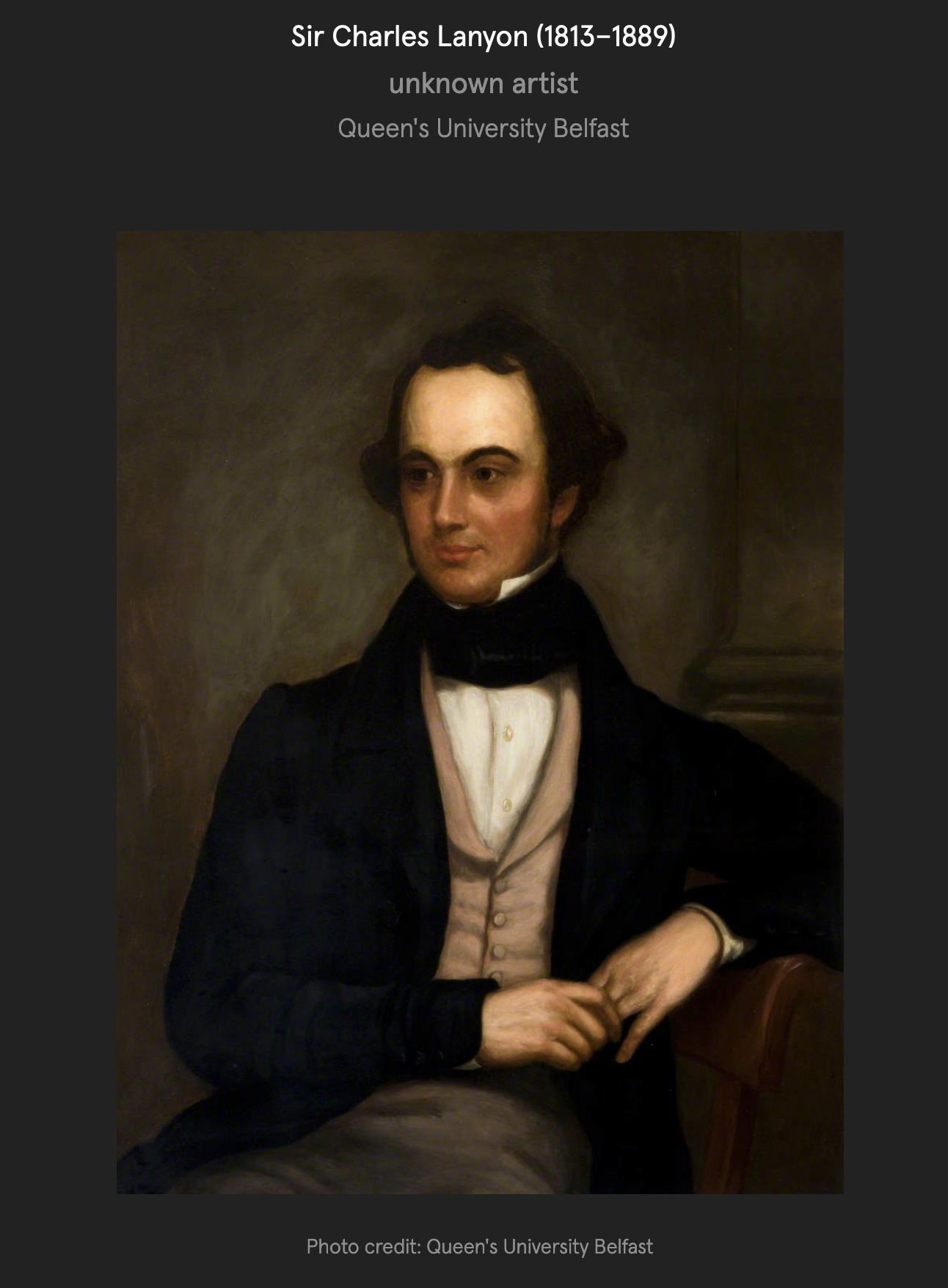
Charles Lanyon (1813-1889) courtesy of Queen’s University Belfast.
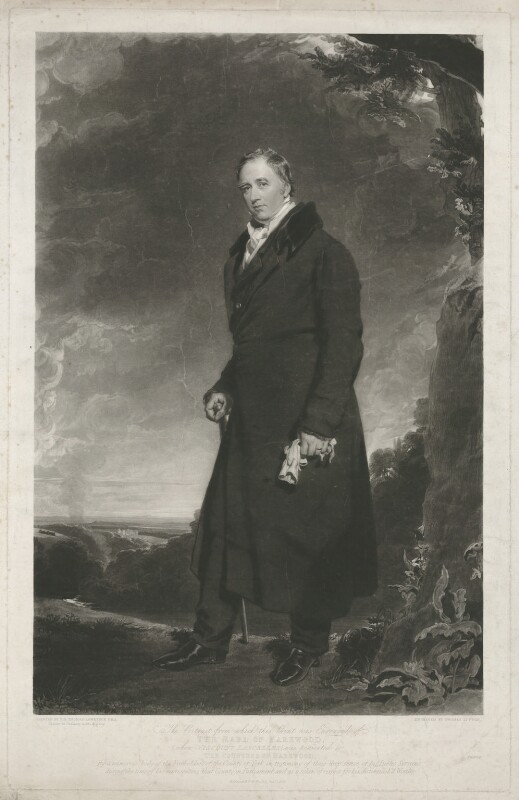
Henry Lascelles (1767-1841) 2nd Earl of Harewood by Thomas Goff Lupton after Sir Thomas Lawrence 1823, NPG D35437.
David Digges La Touche (1703-1785), of Bellevue, County Wicklow, courtesy of National Gallery of Ireland.
William Digges La Touche (d.1803) of no. 4, St Stephen’s Green courtesy of Adam’s 1st April 2009, Irish School, late 18th Century. He was a brother of David Digges La Touche (1703-1785), of Bellevue, County Wicklow.

David Digges La Touche (1703-1785) had sons David (1729-1817) and John (d. 1805)

David La Touche (1729-1817), of Marlay, 1800 by Hugh Douglas Hamilton, courtesy of National Gallery of Ireland.
David Digges La Touche (1729-1817) of Marlay, County Dublin, by James Fittler, photograph courtesy of National Gallery of Ireland.
John La Touche (1732-1805) by Angelica Kauffmann courtesy of MutualArt.com

First, let us look at his son David’s family, and then at John’s. David La Touche (1729-1817) and his wife, née Marlay, had many children:

Harriet married Nicholas Colthurst, 3rd Bt of Ardrum, County Cork;

Anne (d. 1798) married George Charles Jefferyes (d. 1841) of Blarney Castle, County Cork;

Emily married Col. George Vesey of Lucan House, Dublin;

Maria (d. 1829) married Maurice Fitzgerald, 18th Knight of Kerry;

Elizabeth (d. 1788) married Robert Butler, 3rd Earl of Lanesborough;

Elizabeth, Countess of Lanesborough (née La Touche), (1764-1788), wife of Robert Henry Butler 3rd Earl of Lanesborough. Date 1791 Engraver Francesco Bartolozzi, Italian, 1725-1815 After Horace Hone, English, 1756-1825, photograph courtesy of National Gallery of Ireland.

David married Cecilia Leeson, daughter of Joseph Leeson 1st Earl of Milltown;

Cecilia La Touche (d. 1848) née Leeson (about 1769-1848), by Hugh Douglas Hamilton. She married David La Touche (1769-1816). She was the daughter of Joseph Leeson (1701-1783), 1st Earl of Milltown and Elizabeth French. Photograph courtesy of English Heritage, Kenwood.

There was a son John David La Touche born 1772 who had a son: Peter La Touche (1777-1830) married Charlotte daughter of Cornwallis Maude, 1st Viscount Hawarden.

Peter La Touche of Bellevue (1733-1828) Date 1775 by Robert Hunter, Irish, 1715/1720-c.1803, photograph courtesy of National Gallery of Ireland.
Portrait Of A Young Gentleman, Believed To Be Peter Digges La Touche courtesy of Adam’s 1st April 2009, Irish School, late 18th Century.
Mrs La Touche of Bellevue by Stephen Catterson Smith 1806-1872, courtesy of National Gallery of Ireland NGI 628.

Now let’s go back and look at the family of John La Touche (1732-1805). He had a son Robert La Touche (d. 1844). He lived in Harristown in County Kildare. He married Emily Trench (1790-1816), daughter of William Power Keating Trench, 1st Earl of Clancarty.

They had a daughter Gertrude (1812-1864) who married Henry Stanley McClintock. Robert and Emily née Trench had a son John (1814-1904) who married Maria Price (1824-1906).

Maria La Touche née Price (1824-1906) of Harristown, she married John La Touche (1814-1904).

John (1814-1904) and Maria née Price (1824-1906) had a daughter Emily Maria (1846-1868) who married Bernard Matthew Ward, son of Edward Southwell Ward, 3rd Viscount Bangor.

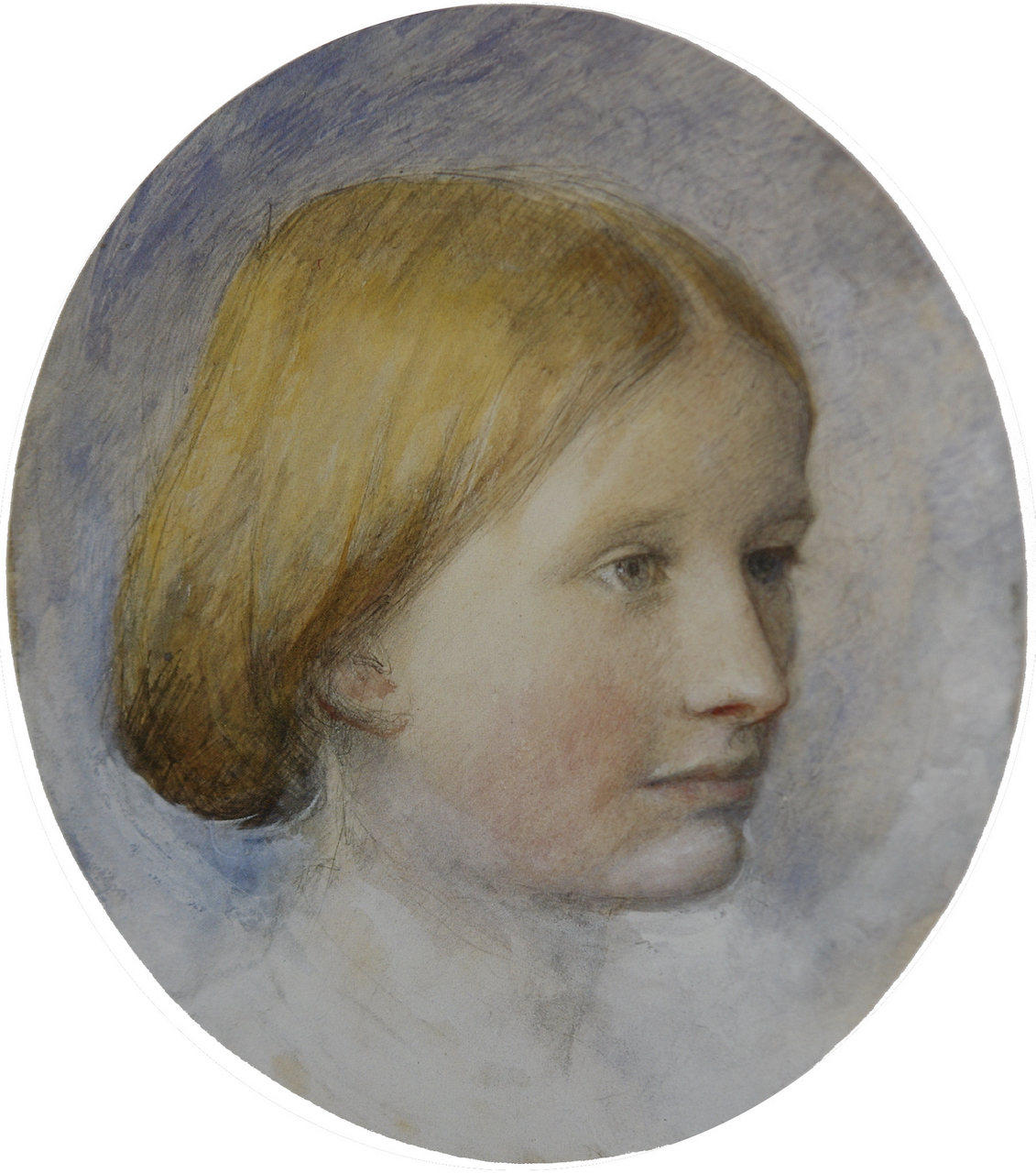
Rose La Touche, 1861, by John Ruskin From “Ruskin, Turner and the pre-Raphaelites”, by Robert Hewison, 2000.
Gentleman believed to be Robert La Touche by Hugh Douglas Hamilton courtesy Christies Irish Sale 2003. Robert died when a stand collapsed at the Curragh Races.
Elizabeth La Touche née Vicars (1756-1842), wife of Peter La Touche, by John Whitaker National Portrait Gallery of London D18415.
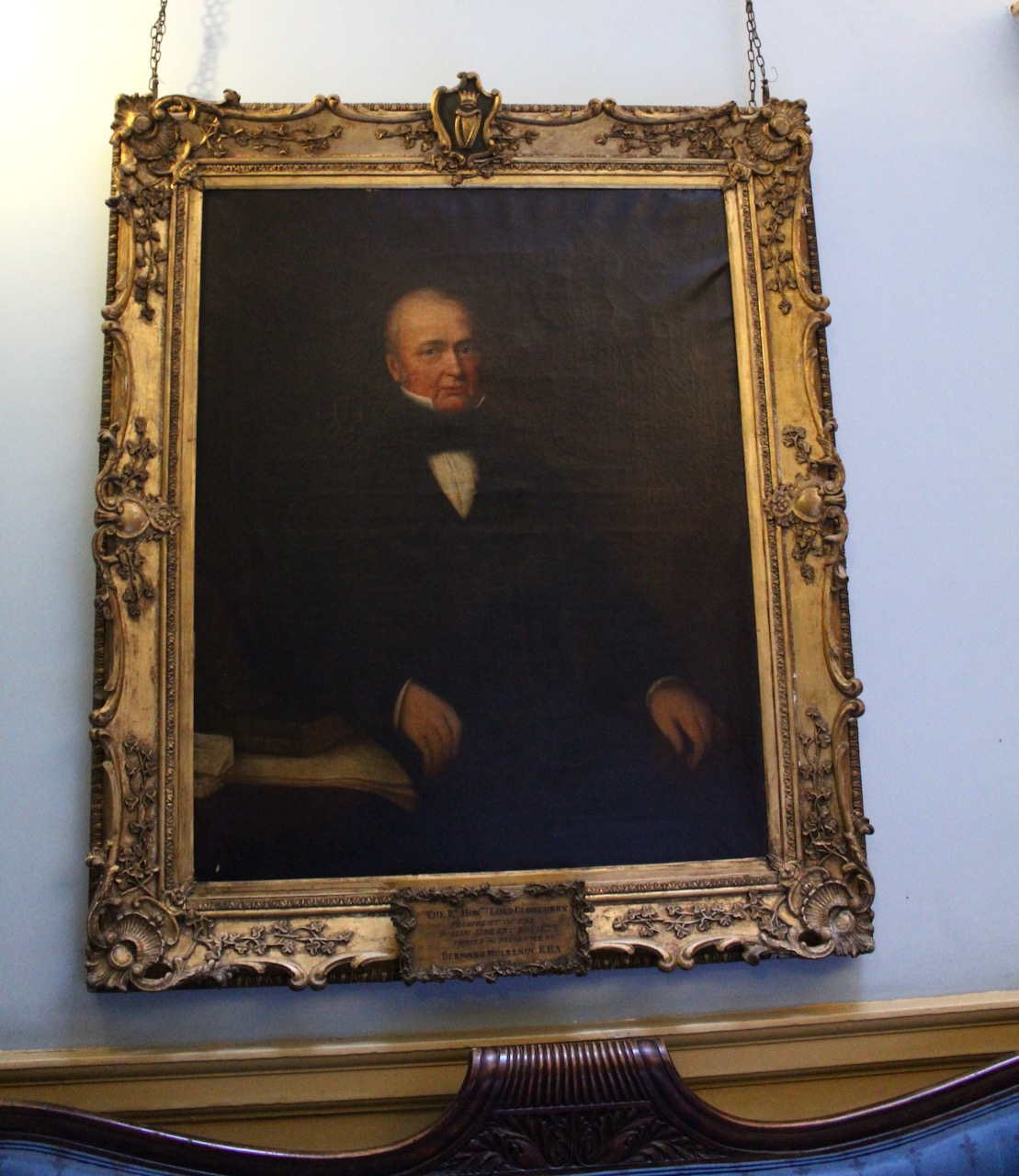
Valentine Lawless (1773-1853) 2nd Baron Cloncurry, member of the Society of United Irishmen and President of the Dublin Literary Society, he lived at the Lyons estate in County Kildare. He married first Elizabeth Gergiana Morgan, daughter of General Charles Morgan but divorced her and married secondly Emily Douglas, third daughter of Archibald Douglas and Mary Crosbie, and widow of the Hon. Joseph Leeson. Photograph © Jennifer Winder-Baggot, www.irishhistorichouses.com
Suzannah, Daughter of John Benson, wife of George Digby Leake of Rathkeale Abbey, Son of Sir John Leake and Great-Grandson of Francis Leake, Earl of Scarsdale of Sutton, Derbyshire; His Wife Suzannah, Daughter of John Benson courtesy Adam’s 11 Oct 2011, IRISH SCHOOL 18TH CENTURY
Colonel George Leake of Rathkeale Abbey, Son of Jones Benson Leake courtesy Adam’s 11 Oct 2011, IRISH SCHOOL 18TH CENTURY.
George D’Alton Leake of Rathkeale Abbey, Elder Son of George Leake and of Alice D’Alton Furnell courtesy Adam’s 11 Oct 2011, IRISH SCHOOL 18TH CENTURY.
Portrait of Joseph Leeson (1660-1741) of Saint Stephen’s Green Date c.1772, photograph courtesy of National Gallery of Ireland.

Joseph Leeson (1660-1741) married Margaret Brice.

Margaret Leeson née Brice wife of Joseph Leeson (1660-1741), c. 1772 by unknown artist, courtesy of National Gallery of Ireland NGI 1649.

Their daughter Anne married Hugh Henry (d. 1743). Their daughter Joyce married Robert Blackwood, 1st Bt. of Ballyleidy, Co. Down, and their son Joseph (1701-1783) became 1st Earl of Milltown.

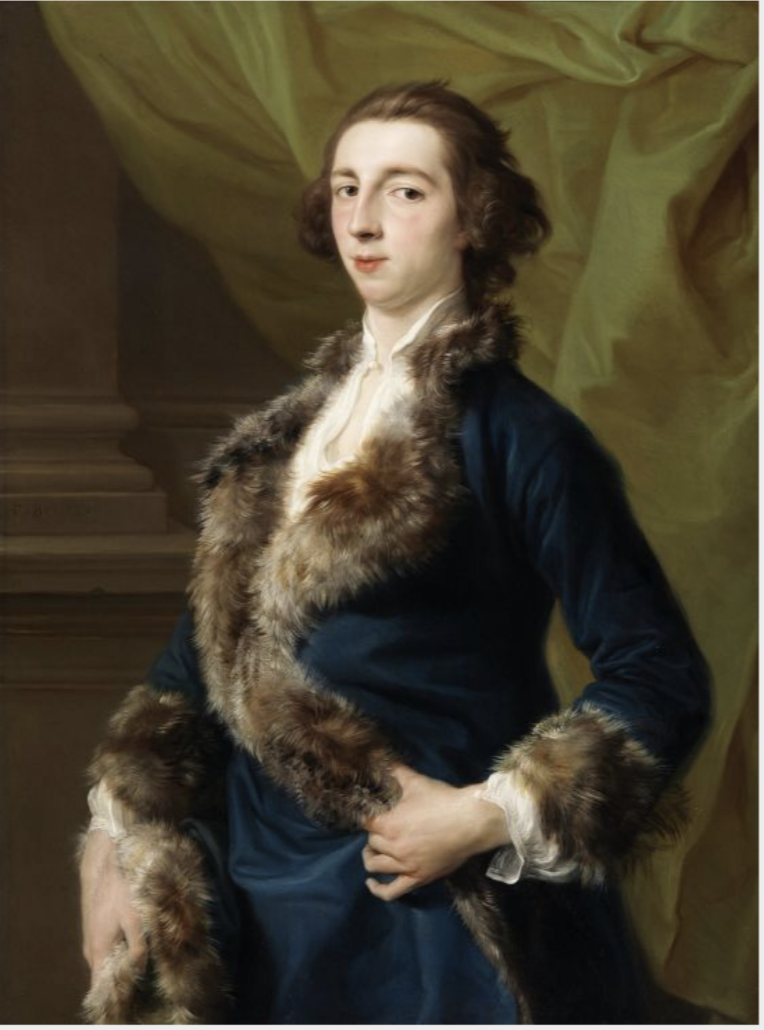
Joseph Leeson (1701-1783), later 1st Earl of Milltown, 1744, by Pompeo Batoni, National Gallery of Ireland 701. Photograph © Jennifer Winder-Baggot, www.irishhistorichouses.com
Joseph Leeson (1701-1783) 1st Earl of Milltown, painted by Anthony Lee. Portrait from the National Gallery of Ireland. Later he was created 1st Earl of Milltown. He had Russborough House built in County Wicklow. Photograph © Jennifer Winder-Baggot, www.irishhistorichouses.com

Joseph Leeson (1701-1783) 1st Earl of Milltown married first Cecelia Leigh (d. 1731?). Their daughter Mary (d. 1794) married John Bourke, 2nd Earl of Mayo. A son Joseph Leeson (1730-1801) succeeded as 2nd Earl of Milltown. He died unmarried and his brother Brice (1735-1807) succeeded as 3rd Earl of Milltown.

Cecilia Leeson née Leigh d. 1737, painted by Anthony Lee, courtesy of National Gallery of Ireland.
Joseph Leeson (1730-1801) later 2nd Earl of Milltown, 1751 by Pompeo Batoni, courtesy of National Gallery of Ireland.

Joseph Leeson (1701-1783) 1st Earl of Milltown then married Anne Preston (d. 1766) daughter of Nathaniel Preston of Swainstown, County Meath. They had a daughter Anne who married her cousin Hugh Henry.

Third, Joseph Leeson (1701-1783) 1st Earl of Milltown married Elizabeth French (d. 1842), daughter of Reverend William French.

Joseph Leeson (1701-1783) 1st Earl of Milltown with his third wife Elizabeth née French and their daughter Cecilia and his grandson Joseph later 3rd Earl of Milltown, 1772, after Pompeo Batoni,courtesy of National Gallery of Ireland, NGI.1697. This is what the Gallery website says, but I think this 3rd Earl of Milltown was Brice Leeson (1735-1807).

Joseph Leeson (1701-1783) 1st Earl of Milltown and Elizabeth née French (d. 1842) had a daughter Cecelia who married David La Touche. A daughter Frances Isabella (d. 1840) married Marcus Beresford (1764-1797). They also had sons William (1770-1819) and Robert (1773-1842).

Cecilia La Touche (d. 1848) née Leeson (about 1769-1848), by Hugh Douglas Hamilton. She married David La Touche (1769-1816). She was the daughter of Joseph Leeson (1701-1783), 1st Earl of Milltown and Elizabeth French. Photograph courtesy of English Heritage, Kenwood.

Brice (1735-1807) 3rd Earl of Milltown married Maria Graydon and she gave birth to Joseph (1766-1800); John (1767-1835) and Robert (d. 1842).

Joseph (1766-1800) married Emily Douglas (d. 1841) and she gave birth to their heir, Joseph (1799-1866) who succeeded as 4th Earl of Milltown.

Emily Douglas (d.1841) by James Dowling Herbert courtesy of National Gallery of Ireland NGI 6271. She was wife of Joseph Leeson (1766-1800) mother of 4th Earl of Milltown.

Joseph (1799-1866) 4th Earl of Milltown married Barbara (d. 1874), daughter of Joshua Colles Meredyth, 8th Bt of Greenhills, Co. Kildare, widow of Eyre Tilson Coote, 3rd Baron Castle Coote. She gave birth to both the 5th and the 6th Earls of Milltown.

Edward Nugent Leeson, 6th Earl of Milltown (1835-1890), 1875 by Francis Grant, Courtesy of National Gallery of Ireland NGI.1036.
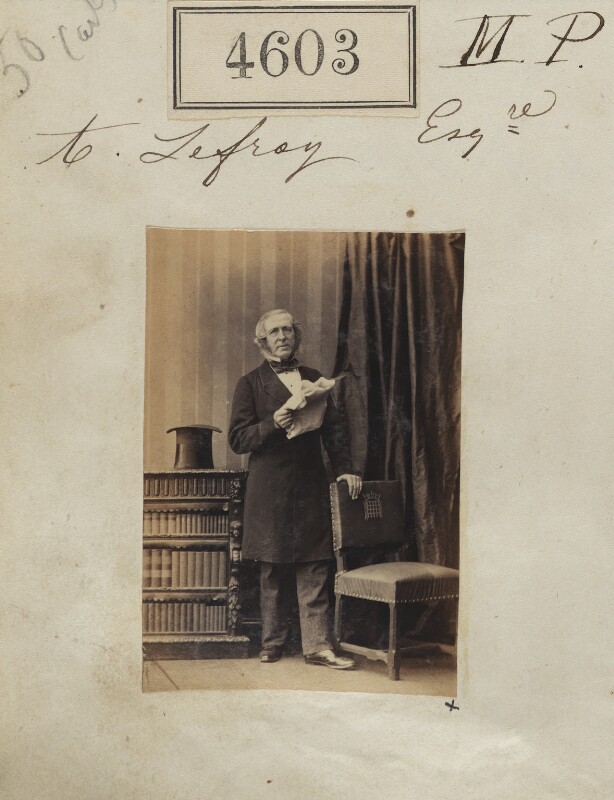
Anthony Lefroy (1800-1890), Conservative politician; MP for Longford and Dublin University, by Camille Silvy 1861 courtesy of National Portrait Gallery NPG Ax54615.
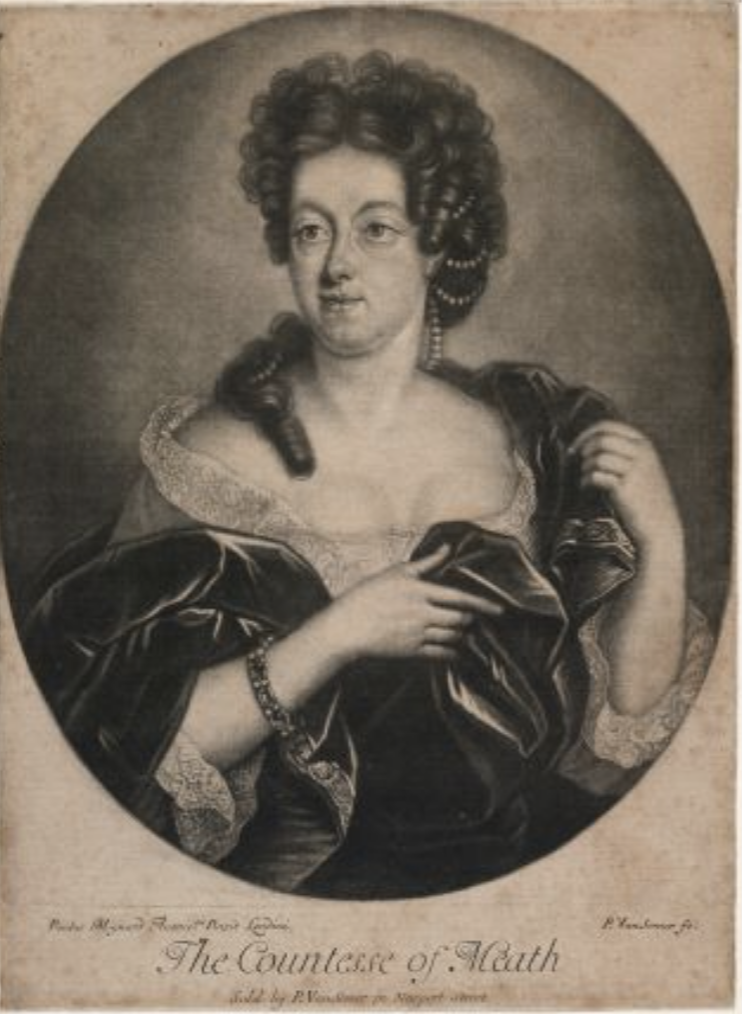
Elizabeth née Lennard (1670-1701), Countess of Meath, wife of 3rd Earl, 1701 engraving by Paul Van Somer II after Paul Mignard, photograph courtesy of National Gallery of Ireland.
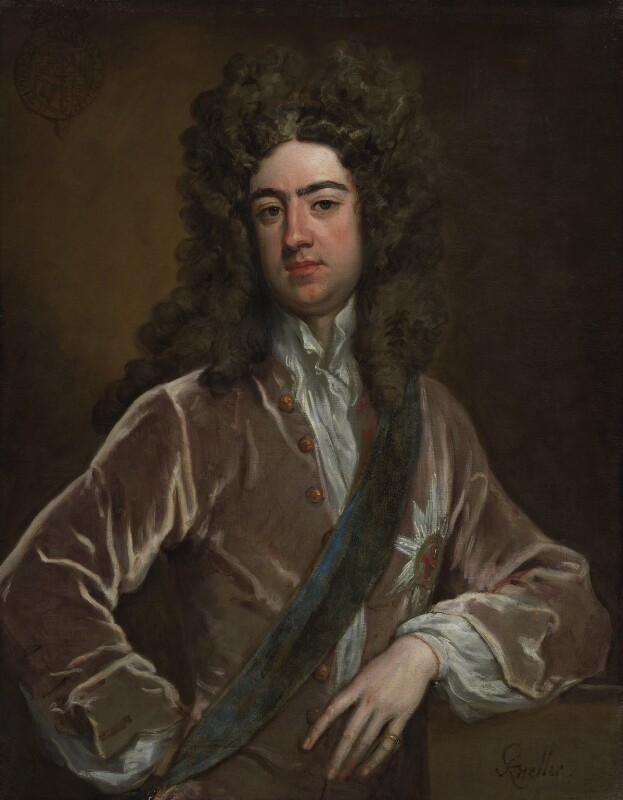
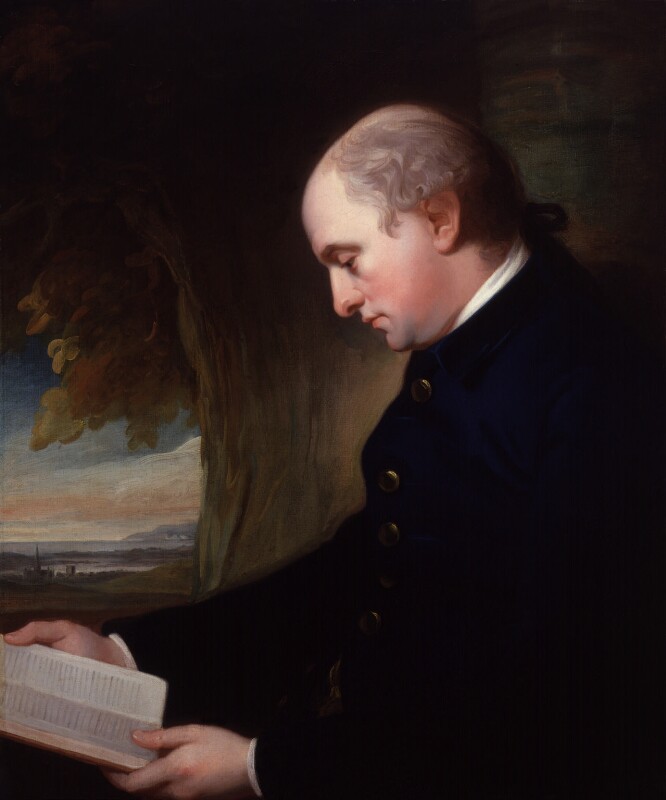
Charles Lennox (1672-1723) 1st Duke of Richmond and Lennox, Courtier; son of King Charles II, by Sir Godfrey Kneller, Bt c. 1703 courtesy of National Portrait Gallery NPG 3221.

Charles Lennox (1672-1723) 1st Duke of Richmond and Lennox was an illegitimate son of King Charles II, by Louise Renée de Penancoët de Kérouaille, Duchess of Portsmouth. His son Charles Lennox (1701-1750) succeeded as 2nd Duke of Richmond and married Sarah Cadogan (1705-1751).

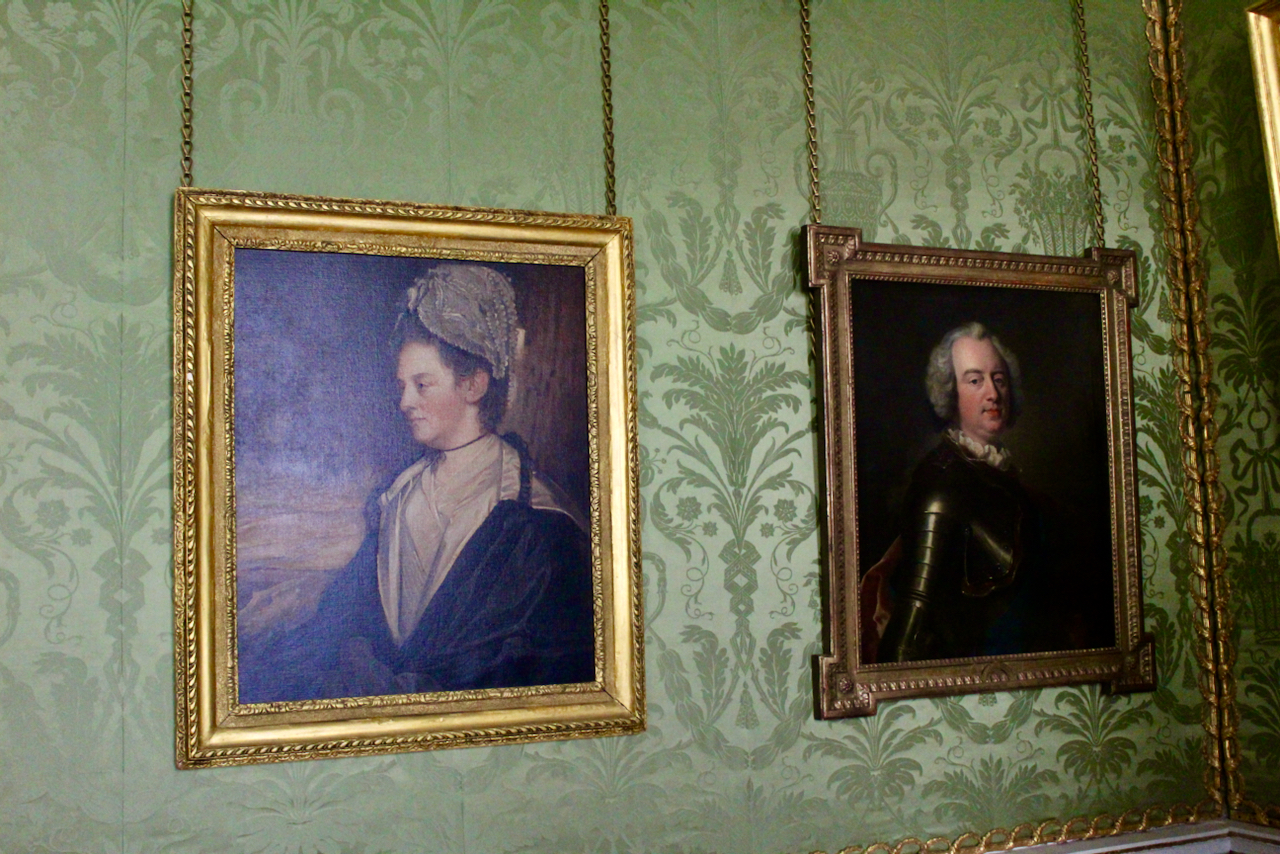
Sarah Lennox née Cadogan (1705-1751) and Charles Lennox (1701-1750) 2nd Duke of Richmond. Photograph © Jennifer Winder-Baggot, www.irishhistorichouses.com
Charles Lennox 2nd Duke of Richmond (1701-1750). Photograph © Jennifer Winder-Baggot, www.irishhistorichouses.com
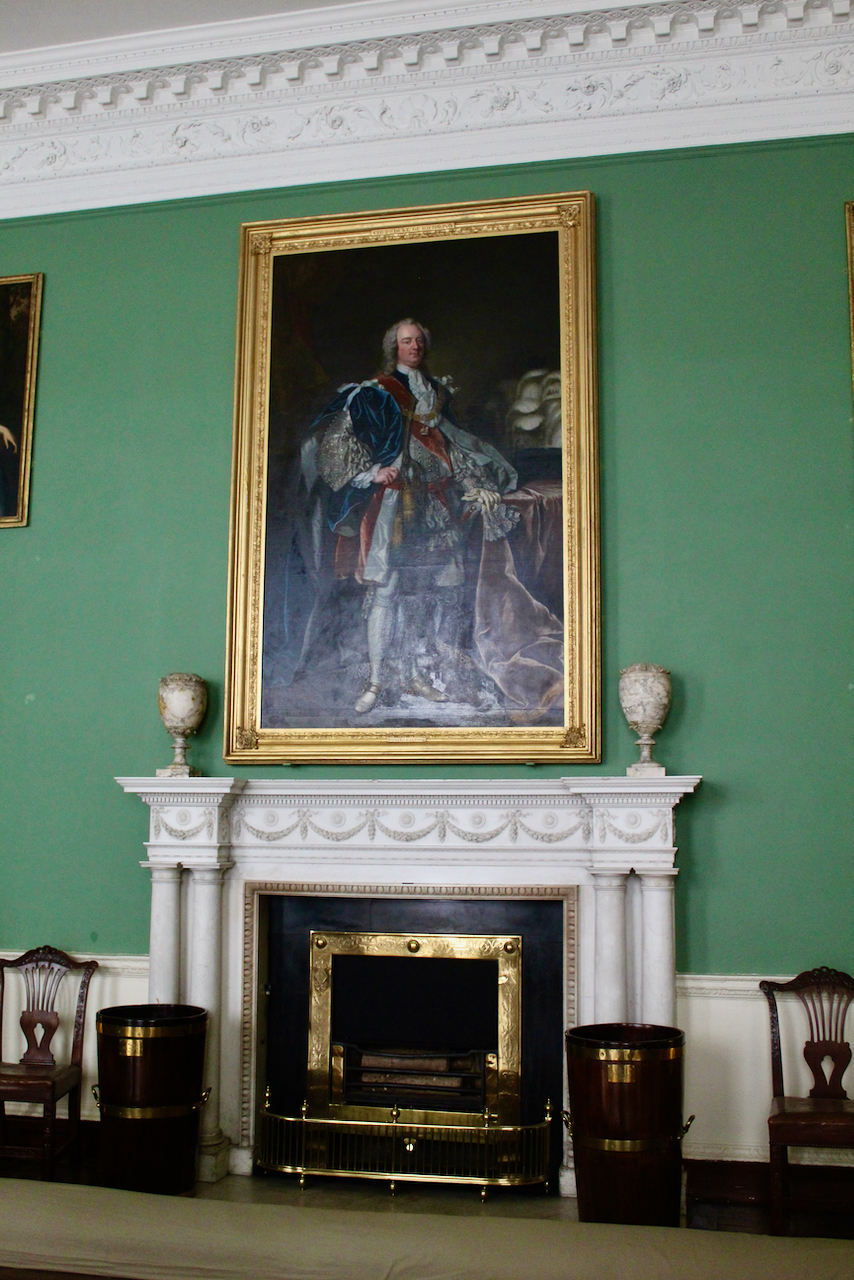
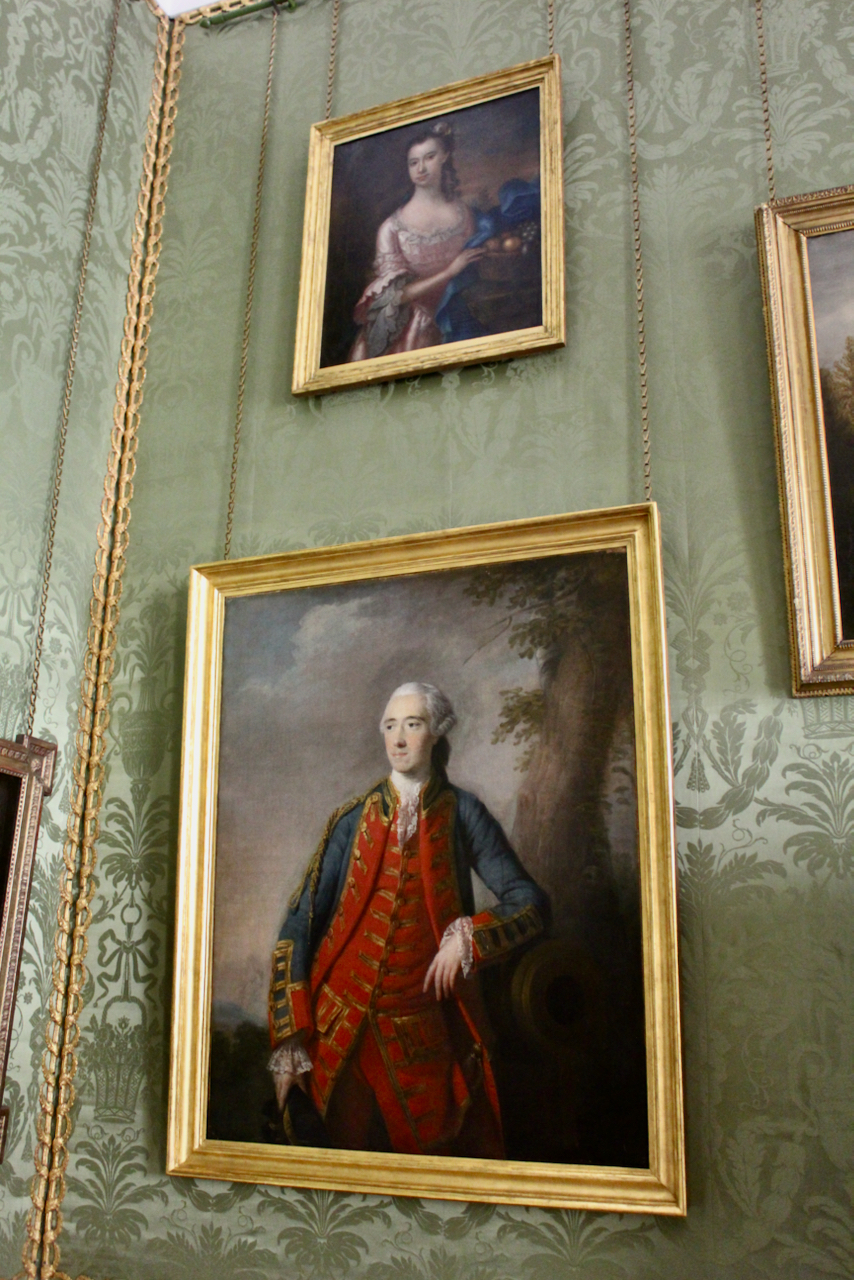
The portrait over the fireplace in the dining room is a half-length portrait of Charles Lennox (1701–1750), 2nd Duke of Richmond and 2nd Duke of Lennox, wearing armour with the ribbon of the Order of the Garter. Photograph © Jennifer Winder-Baggot, www.irishhistorichouses.com

Charles Lennox (1701-1750) 2nd Duke of Richmond and Sarah née Cadogan (1705-1751) had several children:

Georgiana Carolina (1723-1774) married Henry Fox, 1st Baron Holland of Foxley;Emilia Mary

Emilia Mary (1731-1814) married James Fitzgerald 1st Duke of Leinster;

Emilia Mary Fitzgerald née Lennox (1731-1814) Duchess of Leinster, courtesy of National Gallery of Ireland. She was married to James FitzGerald 1st Duke of Leinster, 1st Marquess of Kildare, 20th Earl of Kildare.
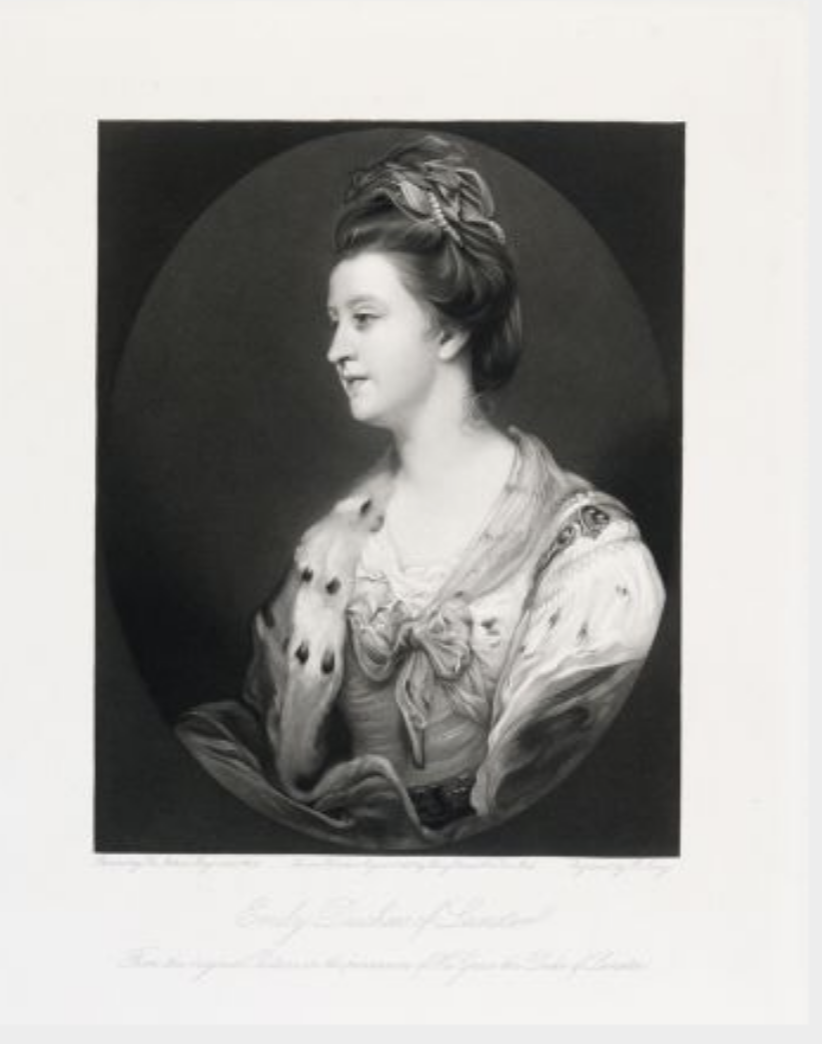
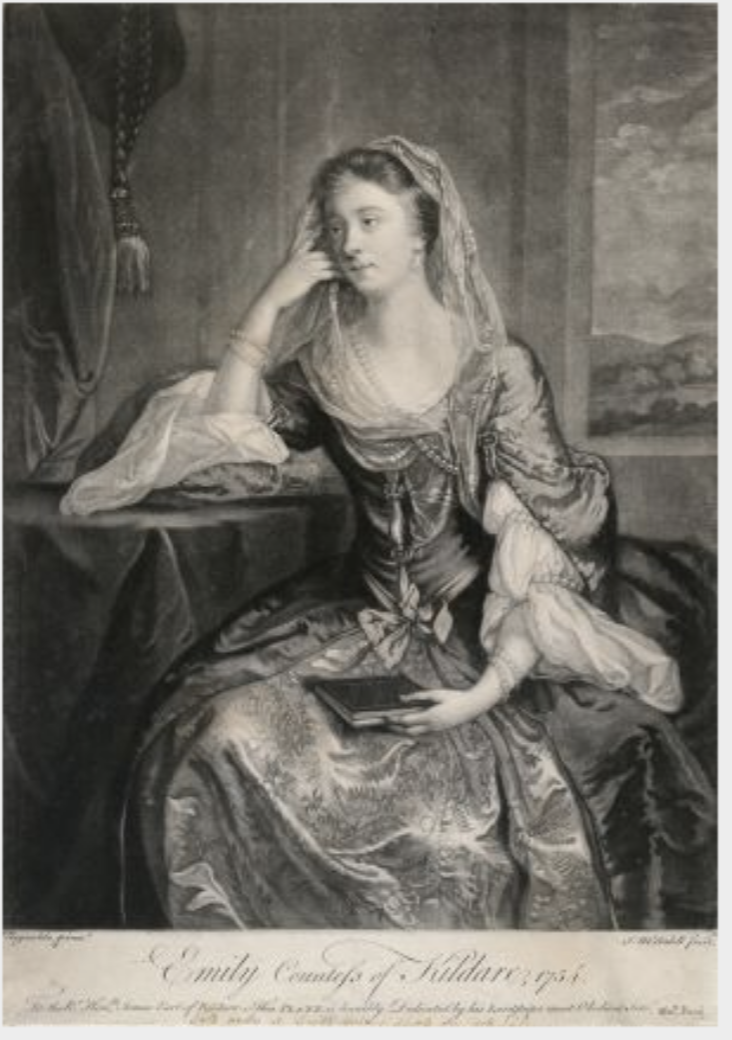
Emilia née Lennox (1731-1814), Countess of Leinster, engraving after Joshua Reynolds, courtesy of National Gallery of Ireland.

Louisa Augusta (1743-1821) married Thomas Conolly;

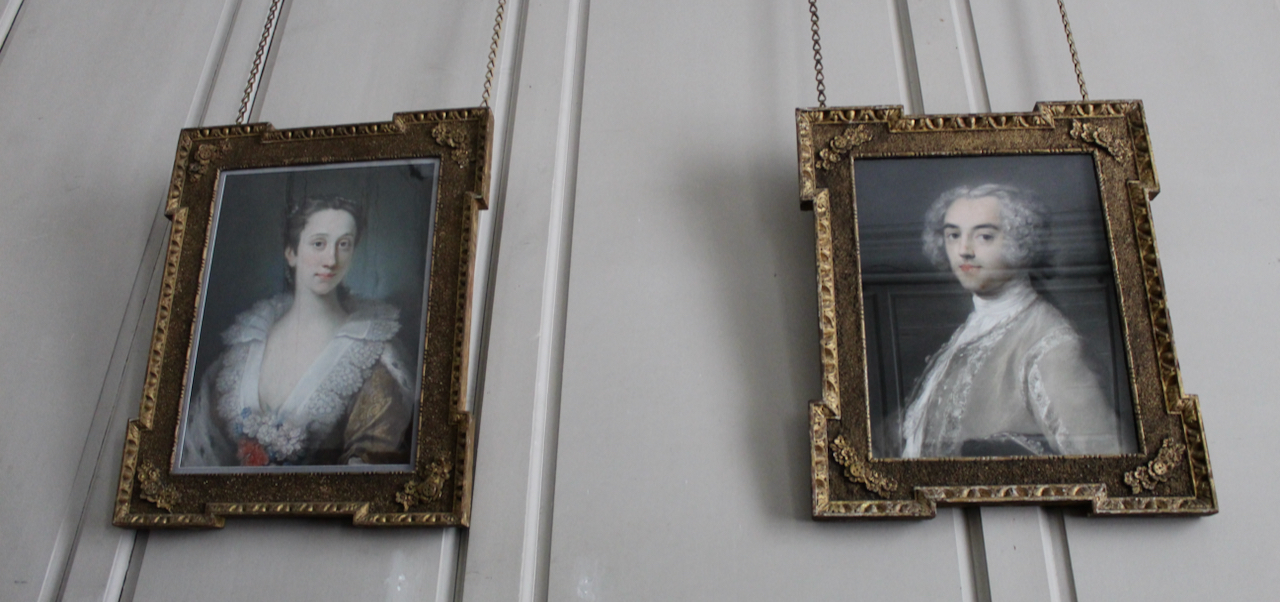
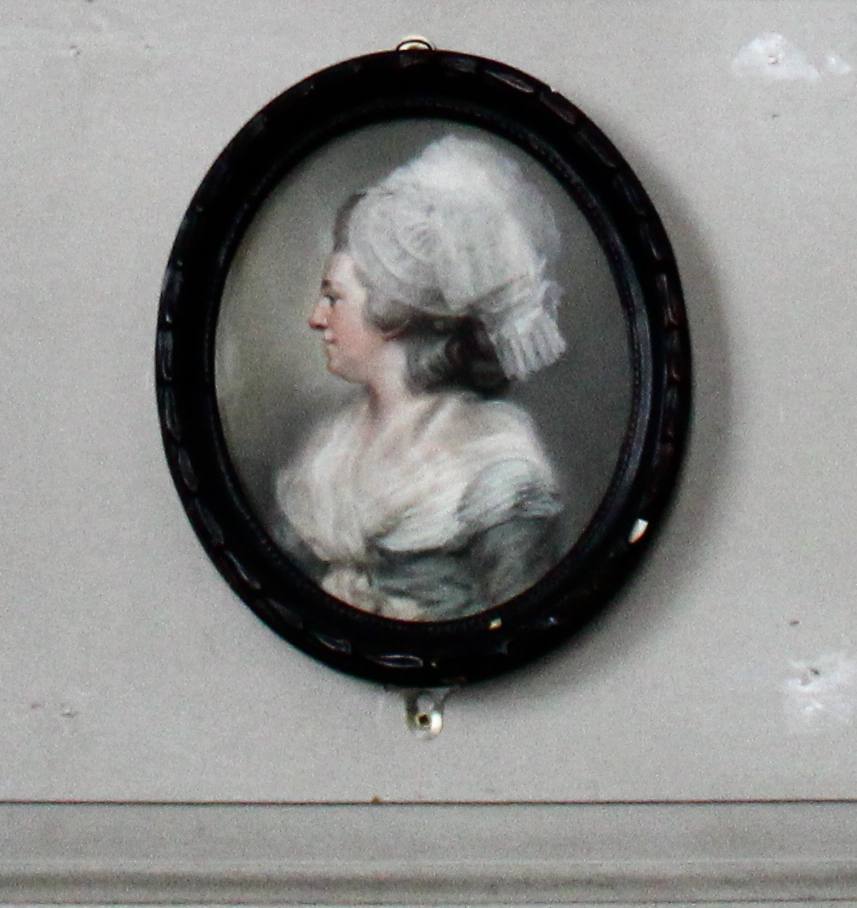
Pastel of Lady Louisa Lennox (1743-1817), circle of George Knapton, c.1747. Photograph © Jennifer Winder-Baggot, www.irishhistorichouses.com
The portrait of Lady Louisa Conolly née Lennox (1743-1817) is after Reynolds (the original is in the Fogg Art Museum, Harvard). She was the daughter of Charles 2nd Duke of Richmond and Lennox, and wife of Thomas Conolly (1734-1803). Photograph © Jennifer Winder-Baggot, www.irishhistorichouses.com
Louisa Conolly née Lennox (1743-1817) who married Thomas Conolly (1734-1803). Photograph © Jennifer Winder-Baggot, www.irishhistorichouses.com
Louisa Conolly née Lennox (1743-1817), by Hugh Douglas Hamilton. Photograph © Jennifer Winder-Baggot, www.irishhistorichouses.com
The small medallion in the centre is Lady Louisa by Hugh Douglas Hamilton. The one of the two girls on the right is of Louisa Staples (1770-1833) and her sister, by Hugh Douglas Hamilton. William James Conolly (1712-1754) was the nephew of William Conolly who built Castletown, and he inherited the estate. He was the father of Thomas Conolly (1734-1803). Thomas’s sister Harriet married John Staples (1736-1820), and their daughter was Louisa Staples. Louisa married Thomas Pakenham (1757-1836). It was their son, Edward Michael (1786-1849) who inherited Castletown, and added Conolly to his surname, to become Pakenham Conolly. Photograph © Jennifer Winder-Baggot, www.irishhistorichouses.com

Sarah (1745-1826) married Thomas Charles Bunbuy 6th Baronet then George Napier, and another daughter, Cecily (1750-1769) married Robert XI Arthur Geoffrey Nicholls, Comte de Cherbourg. A son, George Henry Lennox (d. 1805) married Louisa, daughter of General William Henry Kerr, 4th Marquess of Lothian. The elder son, Charles Lennox, (1734/5-1806) succeeded as 3rd Duke of Richmond.

I think this is a portrait of Louisa’s brother Charles Lennox (1734-1806), 3rd Duke of Richmond. Photograph © Jennifer Winder-Baggot, www.irishhistorichouses.com
Charles Lennox (1734-1806) 3rd Duke of Richmond and Lennox, courtesy of National Gallery of Ireland.

Charles Lennox, (1734/5-1806) 3rd Duke of Richmond had a daughter so his nephew General Charles Lennox (1764-1819) succeeded as 4th Duke of Richmond.

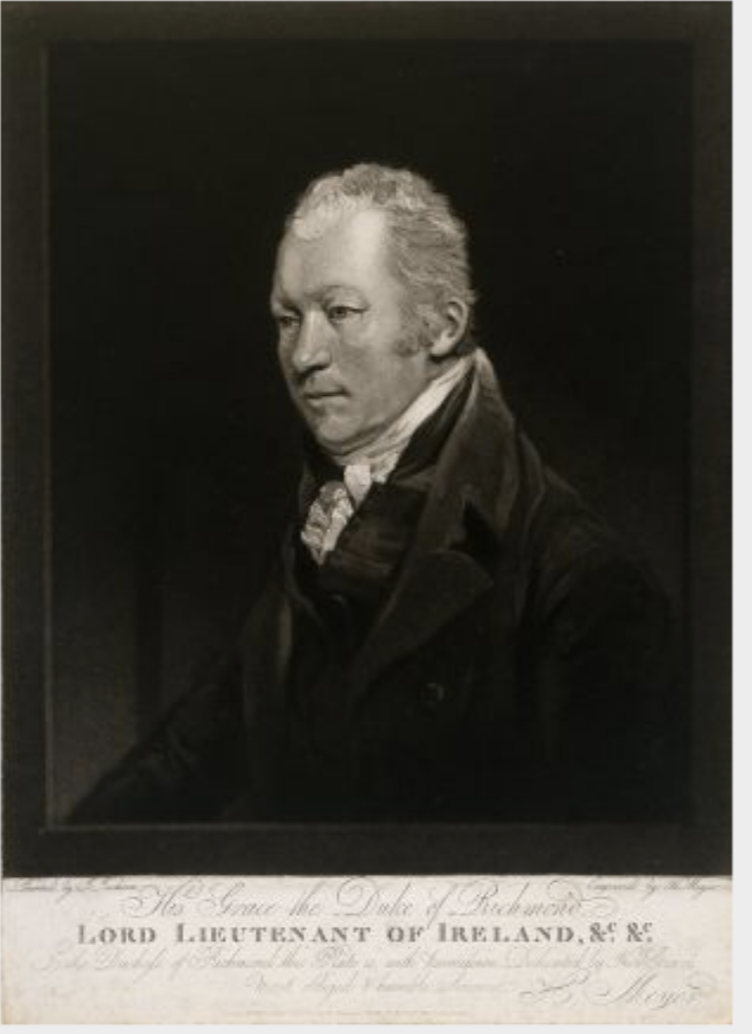
Charles Lennox (1764-1819) 4th Duke of Richmond, engraver Henry Hoppner Meyer, after painter John Jackson, courtesy of National Gallery of Ireland.
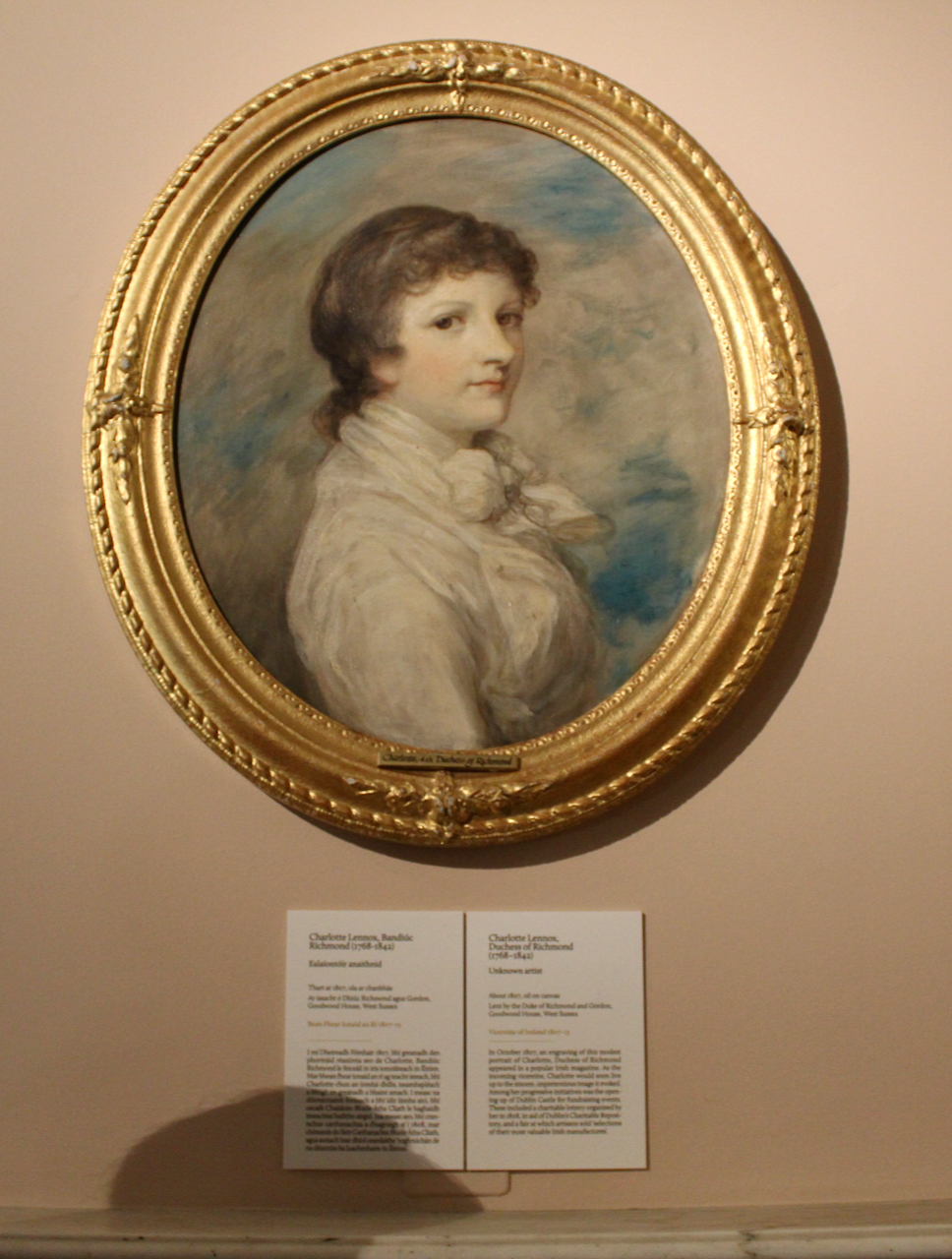
Charlotte Lennox née Gordon (1768-1842), Duchess of Richmond, Vicereine 1807-1813, wife of Charles Lennox, 4th Duke of Richmond. Photograph © Jennifer Winder-Baggot, www.irishhistorichouses.com
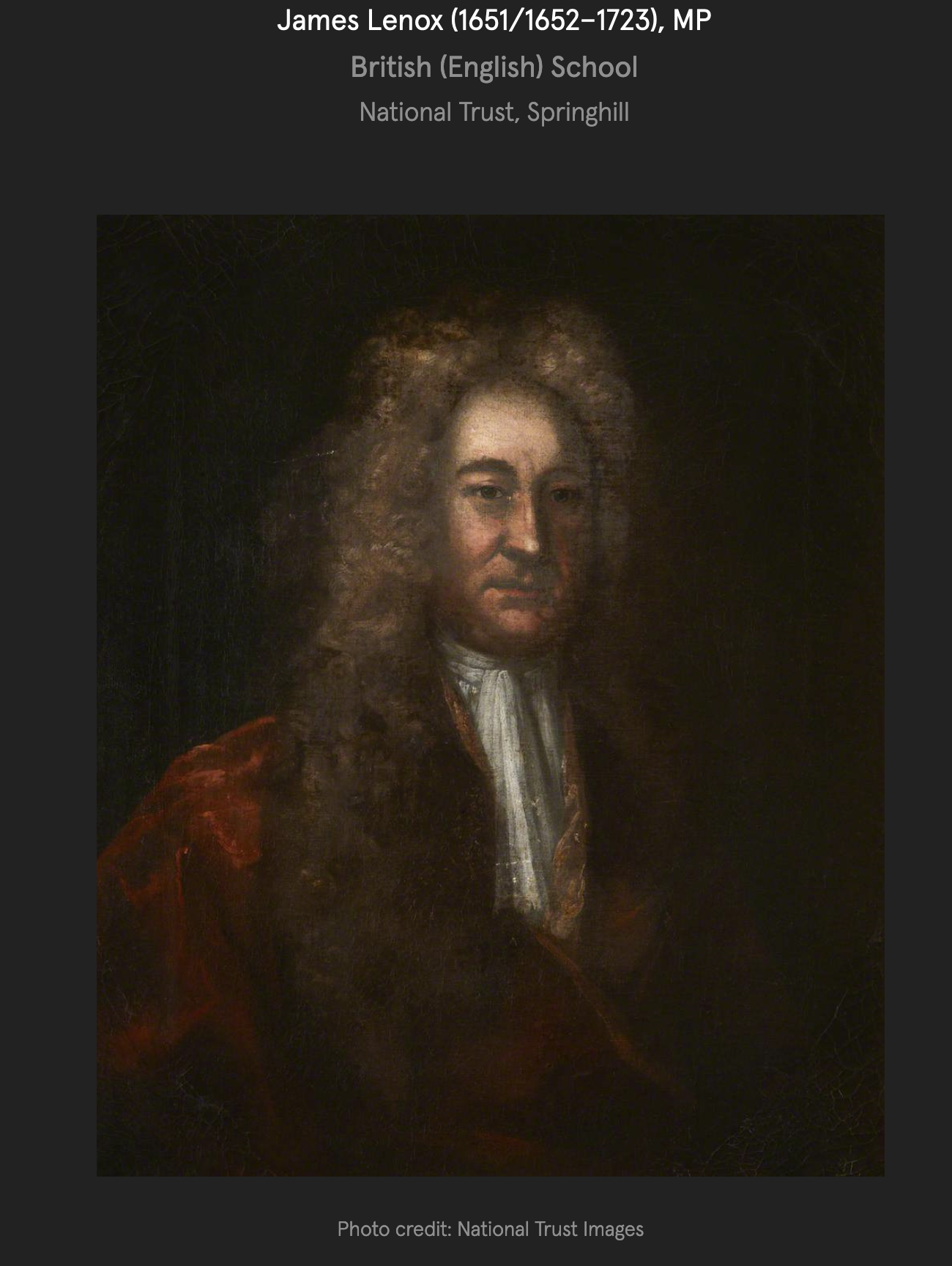
James Lenox (1651/2-1723) courtesy of National Trust, Springhill, County Derry. He was the grandfather of Clotworthy Lenox (d. 1785).
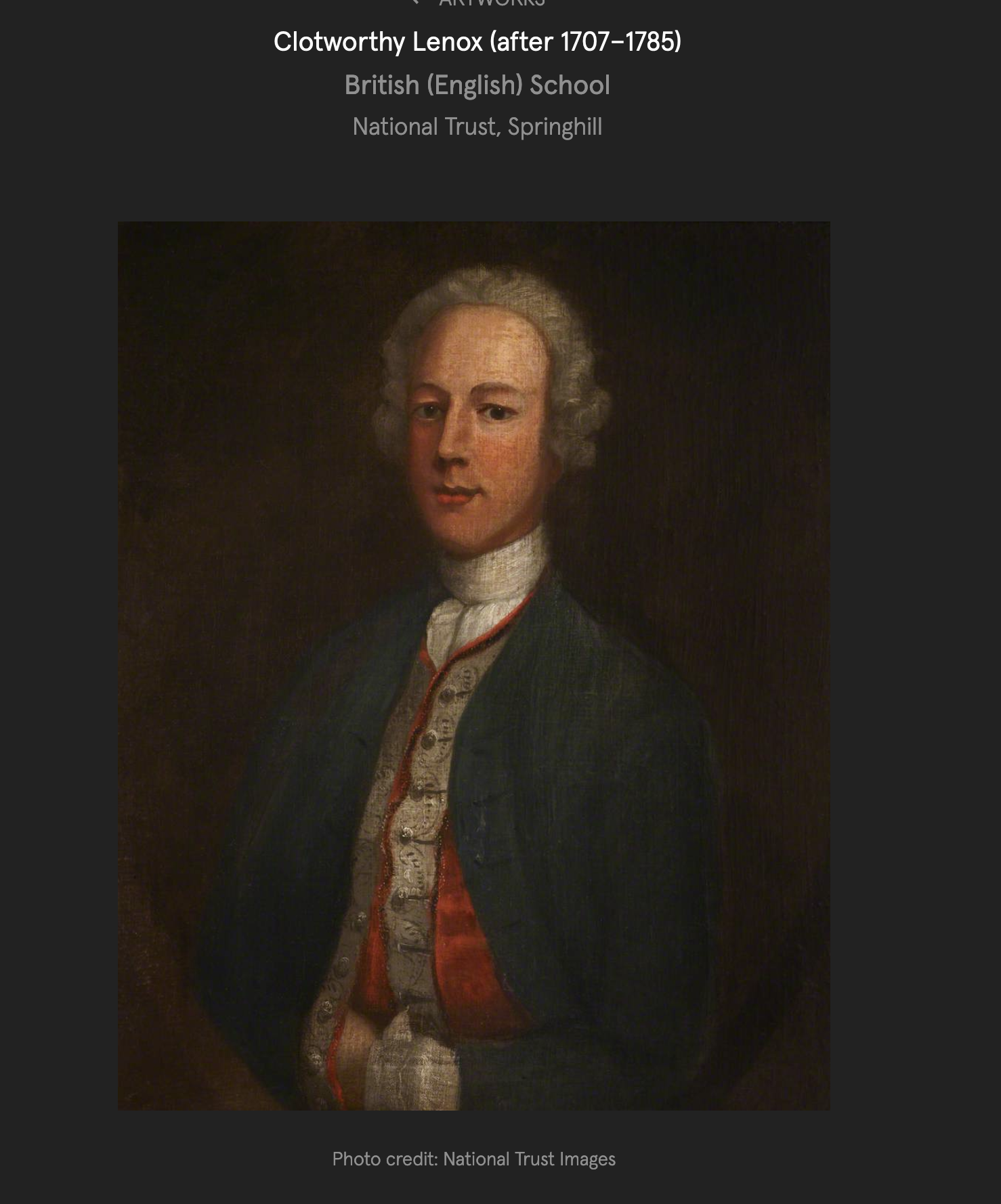
Clotworthy Lenox (d. 1785) courtesy of National Trust, Springhill, County Derry.
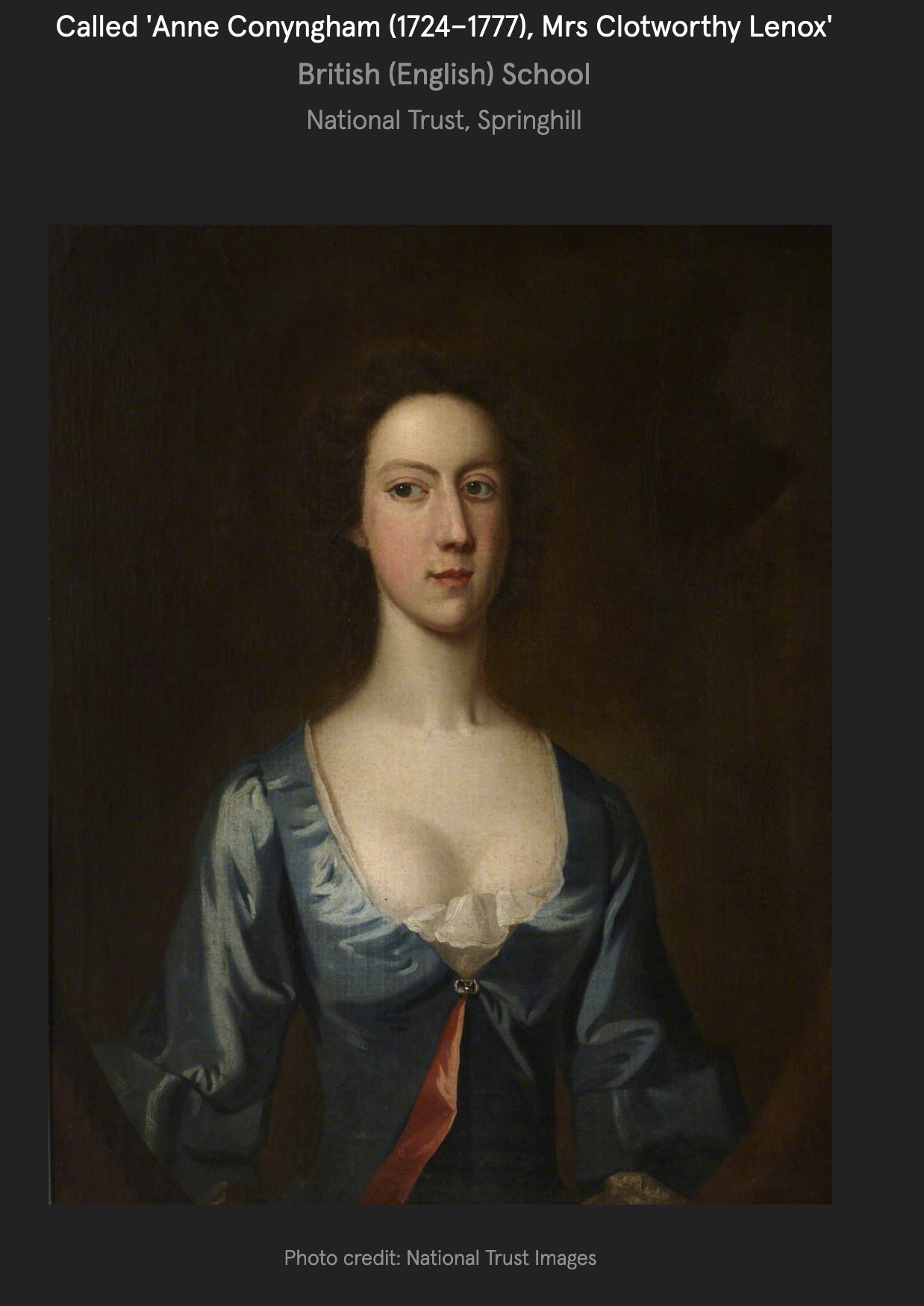
Called Anne Conyngham (1724-1777) Mrs Clotworthy Lenox, courtesy of National Trust. Springhill, County Derry. She was the daughter of George Butle Conyngham (1690-1765).
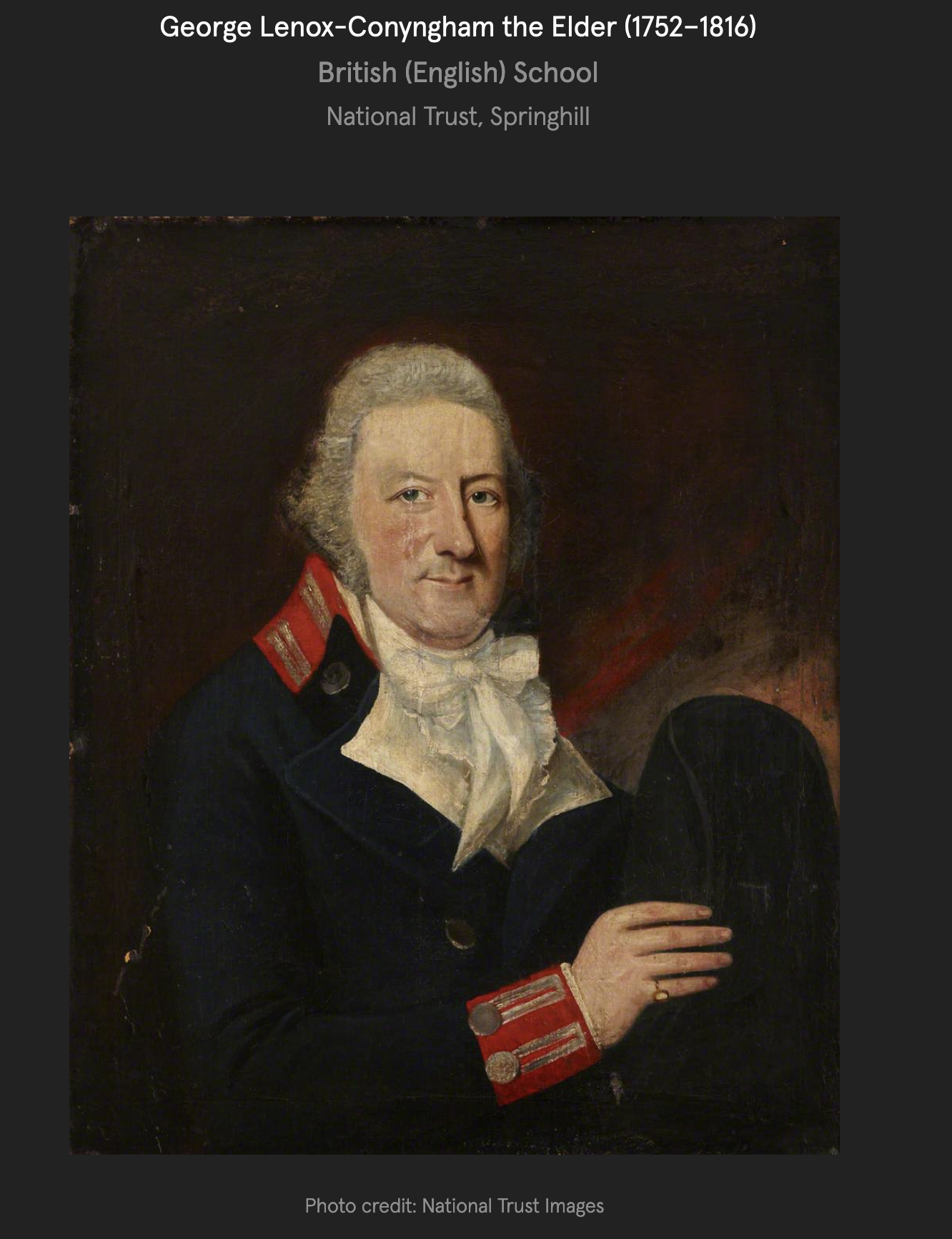
George Lenox-Conyngham (1752-1816) courtesy of National Trust. Springhill, County Derry. He was the son of Clotworthy Lenox (d. 1785) and Anne Conyngham (1724-1777).
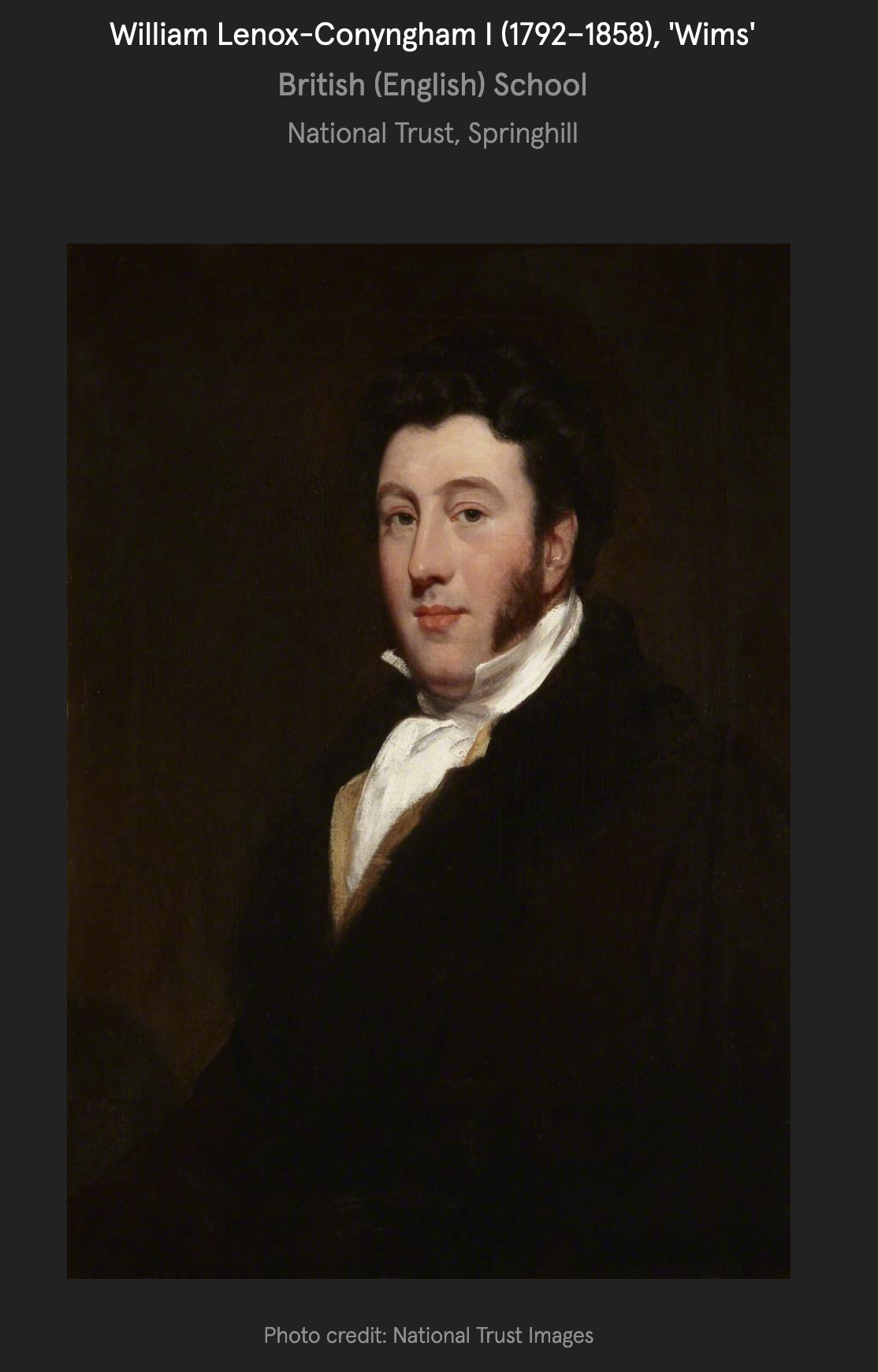
William Lenox-Conyngham (1792-1858) courtesy of National Trust, Springhill, County Derry. He was the son of George Lenox-Conyngham (1752-1816).
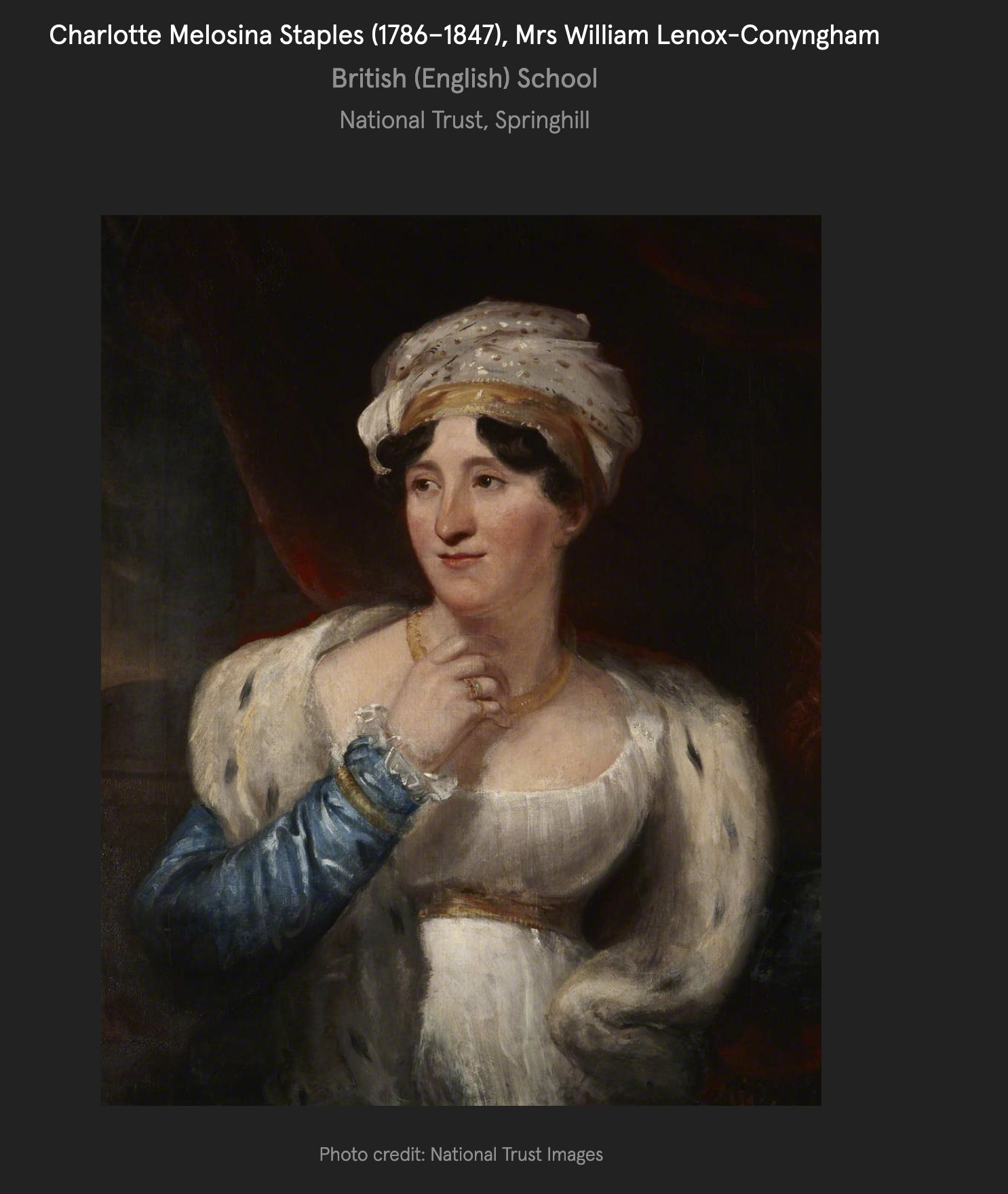
Charlotte Melosina Staples (1786-1847), wife of William Lenox-Conyngham (1792-1858), courtesy of National Trust. Springhill, County Derry.
Jean Hamilton (d. 1788), Mrs William Conyngham, by Joshua Reynolds, courtesy of National Trust, Springhill, County Derry.

Reverend John Leslie (d. 1671) married Katherine Conyngham. They had a son John Leslie (1645-1721) who married Elizabeth Hamilton, and a son Reverend Charles Leslie (1650-1722).

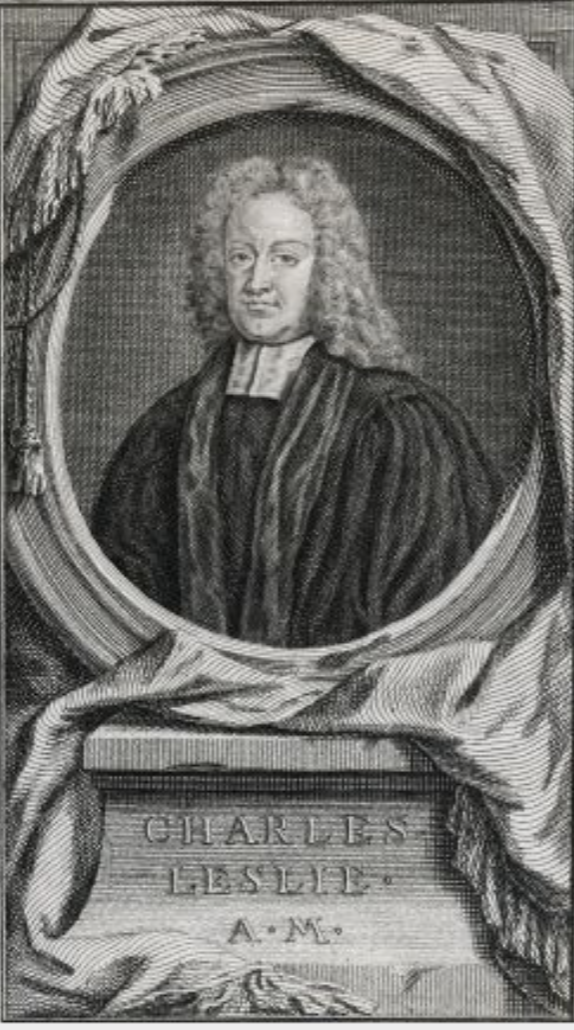
Rev. Charles Leslie (1650-1722), painting after Alexis Simon Belle, courtesy of National Gallery of Ireland.

Reverend Charles Leslie (1650-1722) married Jane Griffith and they had a son, Robert (d. 1743). He married Frances, daughter of John Rogerson, and they had a son, Charles Powell Leslie (1732-1800).

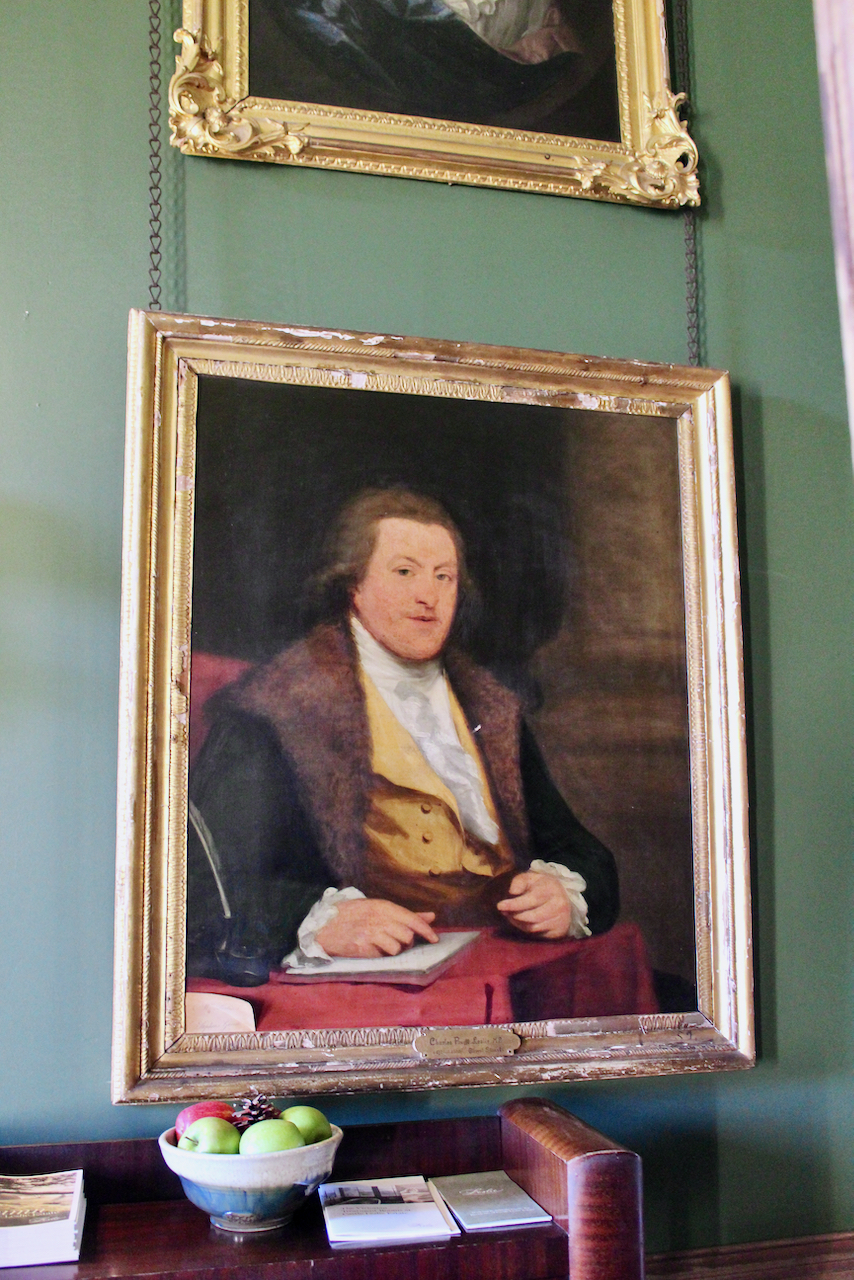
Portrait of Charles Powell Leslie (c. 1731-1800) of Castle Leslie, County Monaghan. Photograph © Jennifer Winder-Baggot, www.irishhistorichouses.com

Charles Powell Leslie (1732-1800) married first Prudence Penelope Hill-Trevor she gave birth to their heir, Charles Powell Leslie (1769-1831). They had a second son, Reverend John Leslie (1772-1854) who married Isabella St. Lawrence (d. 1830), and who served as Bishop of Dromore and Bishop of Elphin.

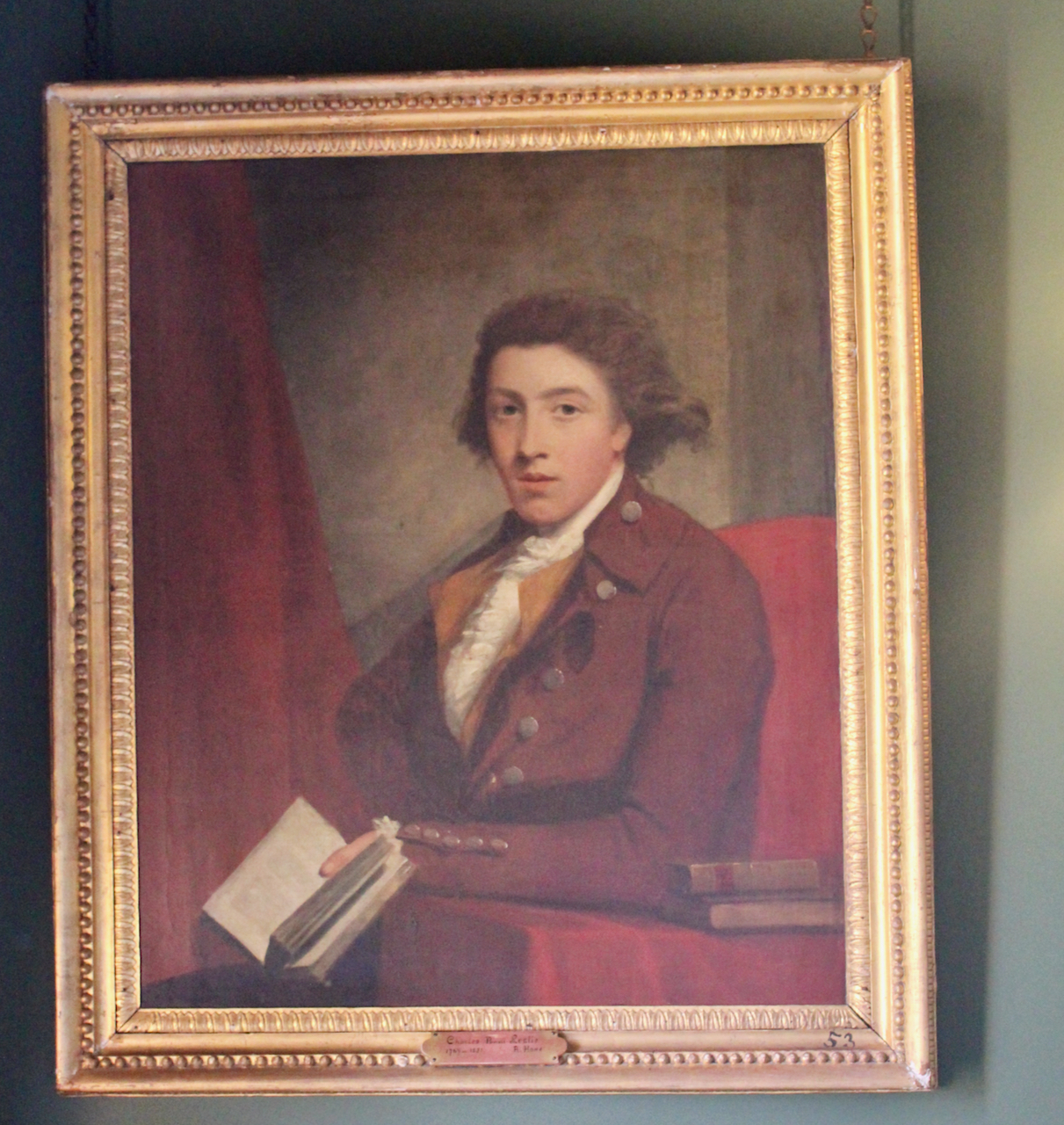
Charles Powell Leslie (1769-1831), Castle Leslie, County Monaghan. Photograph © Jennifer Winder-Baggot, www.irishhistorichouses.com
Bishop John Leslie (1772-1854), Corravahan, County Cavan. Photograph © Jennifer Winder-Baggot, www.irishhistorichouses.com
Frances King (d. 1835), daughter of Robert Edward King 1st Viscount Lorton, who married Right Reverend Charles Leslie (1810-1870) of Corravahan, County Cavan, Bishop of Kilmore, who was son of Reverend John Leslie (1772-1854) and Isabella née St. Lawrence (d. 1830).

Charles Powell Leslie (1732-1800) married secondly Mary Anne Tench and they had several children.

Colonel Charles Powell Leslie (d. 1831) married Christiana Fosbery and they had several children, including Charles Powell Leslie (1821-1871) who died unmarried, and John Leslie (1822-1916) who became 1st Baronet of Castle Leslie.

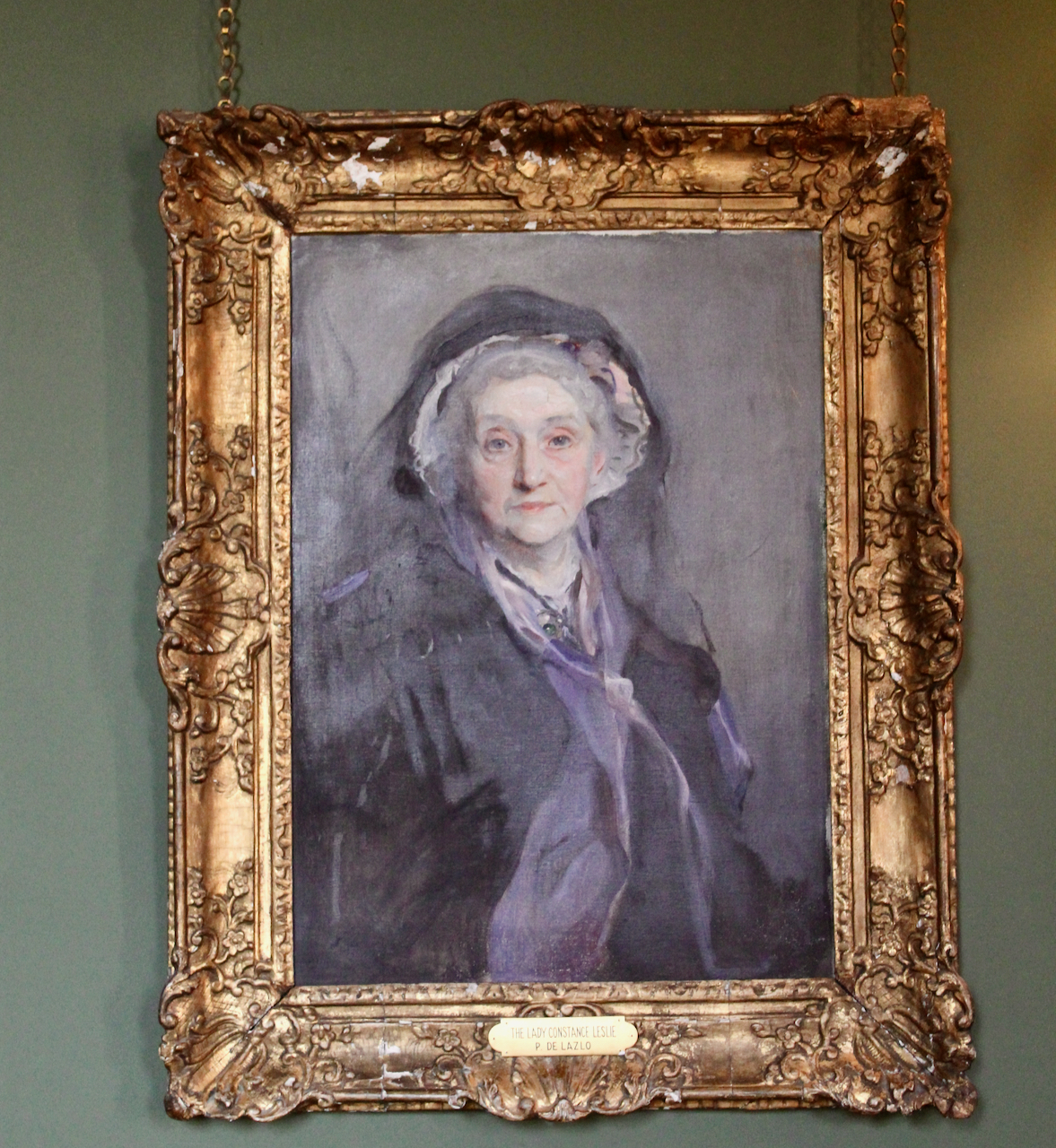
A portrait of Lady Constance Leslie (née Dawson Damer) in later life, of Castle Leslie, County Monaghan, wife of John Leslie (1822-1916) 1st Baronet of Glaslough, Co Monaghan. Photograph © Jennifer Winder-Baggot, www.irishhistorichouses.com
Shane Leslie (1885-1781), 3rd Baronet of Glaslough, County Monaghan. Photograph © Jennifer Winder-Baggot, www.irishhistorichouses.com
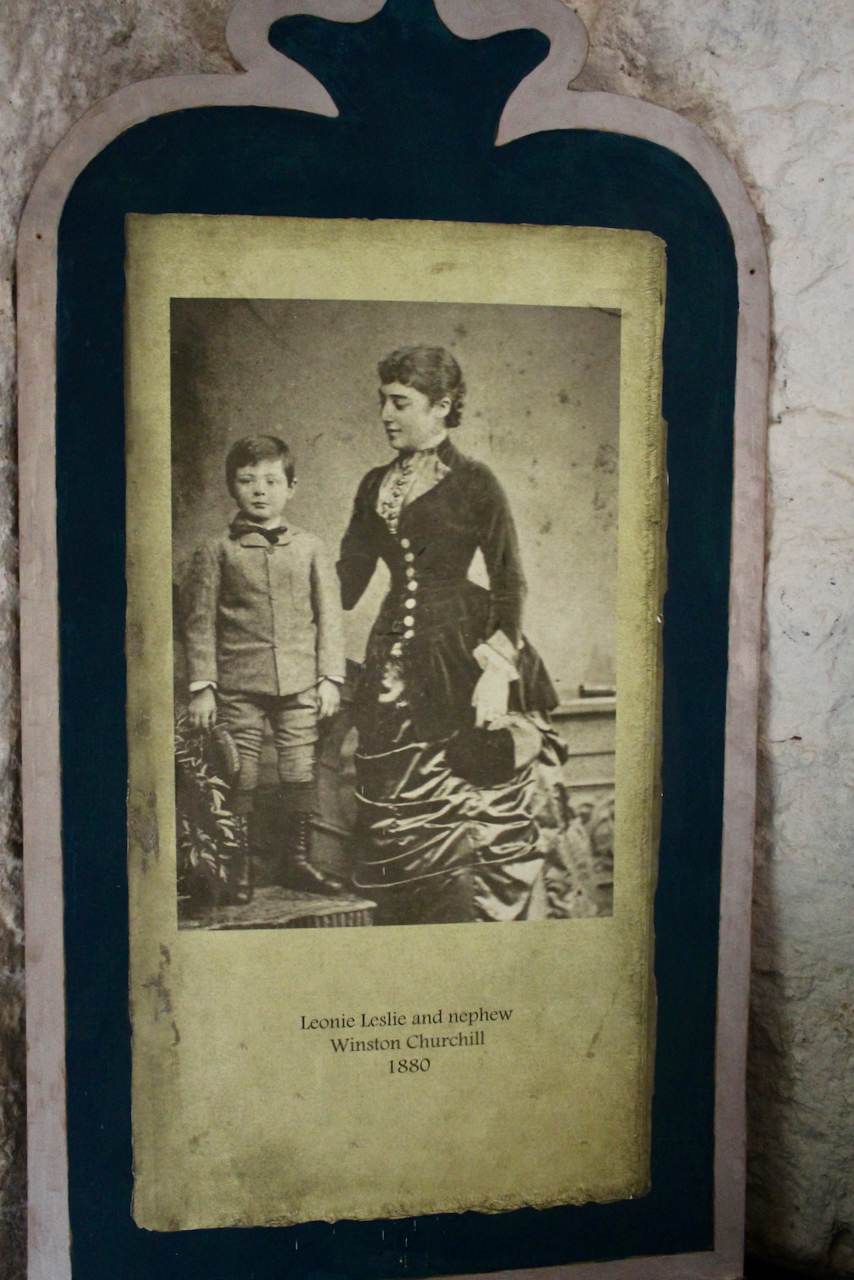
Leonie Leslie (1859-1943), Shane Leslie’s mother. Originally Leonie Jerome, her sister Jennie was Winston Churchill’s mother. Photograph © Jennifer Winder-Baggot, www.irishhistorichouses.com
Maria Phipps née Liddell, Marchioness of Normanby (1798-1882) by George Hayter. Photograph © Jennifer Winder-Baggot, www.irishhistorichouses.com
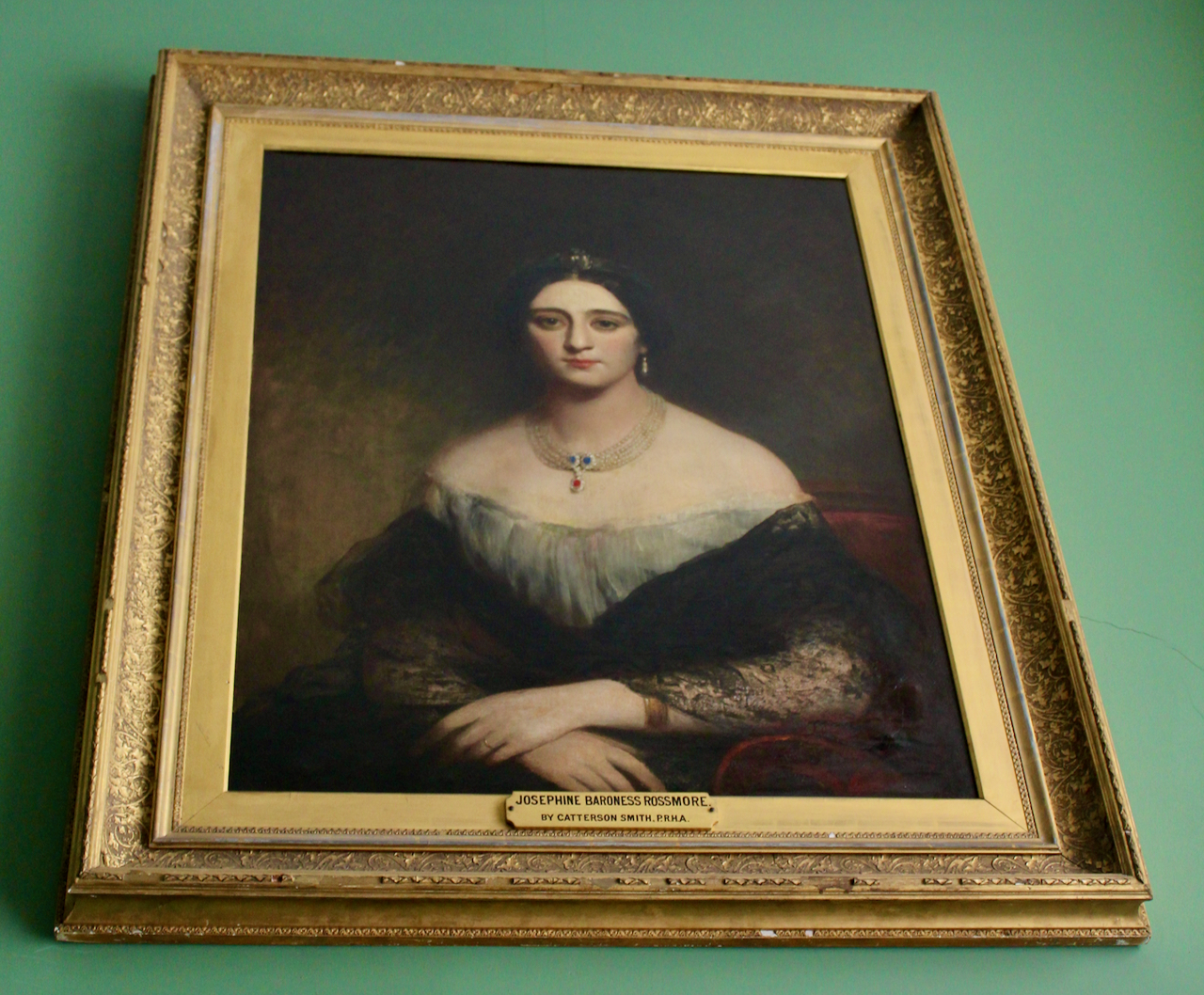
Josephine Lloyd (1827-1912) who married Henry Robert Westenra, 2nd (UK) and 3rd Baron (Ireland) Rossmore of Monaghan. Photograph © Jennifer Winder-Baggot, www.irishhistorichouses.com
Archbishop-Chancellor Adam Loftus (1533-1605). The portrait is in Trinity College Dublin, as he was the first Provost. Photograph © Jennifer Winder-Baggot, www.irishhistorichouses.com

Adam Loftus (1533-1605) married Jane Purdon and they had several children:

Anne married Henry Colley and then Edward Blayney, 1st Lord Blayney, Baron of Monaghan;

Martha (d. 1609) married Thomas Colclough (1564-1624) of Tintern Abbey in County Wexford;

Isabelle (d. 1597) married William Ussher (1561-1659);

Alice (d. 1609) married Henry Warren of Warrenstown, County Offaly;

Katherine married Francis Berkeley; Margaret married George Colley; Dorothy (d. 1633) married John Moore (1570-1633).

Adam Loftus and Jane née Purdon had a son Thomas (d. 1635); Adam (d. 1599); Edward (d. 1601) and Dudley (b. 1561).

Dudley Loftus (b. 1561) married Anne Bagenal and they had a son, Adam, who married Jane daughter of Walter Vaughan of Golden Grove, County Offaly. They had other sons: Samuel, Edward and Nicholas (1592-1666).

Adam Loftus and Jane née Vaughan had several children. Their daughter Lettice married Richard son of William Parsons, 1st Baronet; Margaret married Walter Burrowes 2nd Baronet; Elizabeth married Nicholas Forde; Mary married Thomas Boyd of Dublin. Their son Arthur married Dorothy Boyle (1617-1668), daughter of Richard Boyle 1st Earl of Cork. She married secondly Gilbert Talbot, son of William 1st Baronet Talbot, of Carton, Co. Kildare.

Arthur Loftus and Dorothy Boyle (1617-1668) had a daughter Ellen who married Theobald Bourke 4th Viscount of Mayo. Arthur and Dorothy had a son Arthur (1632-1691), who became 1st (and last) Viscount Lisburne.

Lucy Loftus née Brydges (1654-1681? or 1646-1689?) of Sudeley Manor, Gloucestershire, England, by Peter Lely, wife of Adam Loftus (1632-1691), 1st and last Viscount Lisburne. Photograph © Jennifer Winder-Baggot, www.irishhistorichouses.com

Dudley Loftus (b. 1561) and Anne née Bagenal’s son Nicholas (1592-1666) of Fethard, County Tipperary, married Margaret Chetham and they had a son Nicholas (b. 1635) who had three daughters, and Henry (1636-1716), who lived at Loftus Hall in County Wexford.

Henry Loftus (1636-1716) married first Amy Gorges and they had a daughter Jane (d. 1734) who married Thomas Cosby (d. 1735) of Stradbally Hall in County Laois, and a daughter Margaret who married Highgate Boyd.

Henry Loftus (1636-1716) then married Anne Crewkern and they had a son Henry who died unmarried and a son Nicholas (d. 1763) who became 1st Viscount Loftus of Ely.

Nicholas Loftus, 1st Viscount Ely (1687-1763). Rathfarnham Castle. Photograph © Jennifer Winder-Baggot, www.irishhistorichouses.com

Nicholas Loftus (d. 1763) 1st Viscount Loftus of Ely married Anne, daughter of William Ponsonby, 1st Viscount Duncannon. They had several children:

Mary (d. 1779) married William Alcock (d. 1779) of Wilton Castle in County Wexford;

Anne (d. 1768) married Charles Tottenham (1716-1795).

Elizabeth (d. 1747) married John Tottenham, 1st Bt (d. 1786);

Nicholas (d. 1766) who took the name Hume-Loftus and became 1st Earl of Ely. He married Mary Hume, daughter of Gustavus Hume, 3rd Baronet. Their son Nicholas Loftus Hume (1738-1769) 2nd Earl of Ely and on his death the Earldom expired.

Nicholas Hume Loftus, 1st Earl of Ely (1708-1766) by Jacob Ennis. He added Hume to his name after marrying Mary Hume, daughter of Gustavus Hume 3rd Baronet of Castle Hume, Co Fermanagh. Photograph © Jennifer Winder-Baggot, www.irishhistorichouses.com

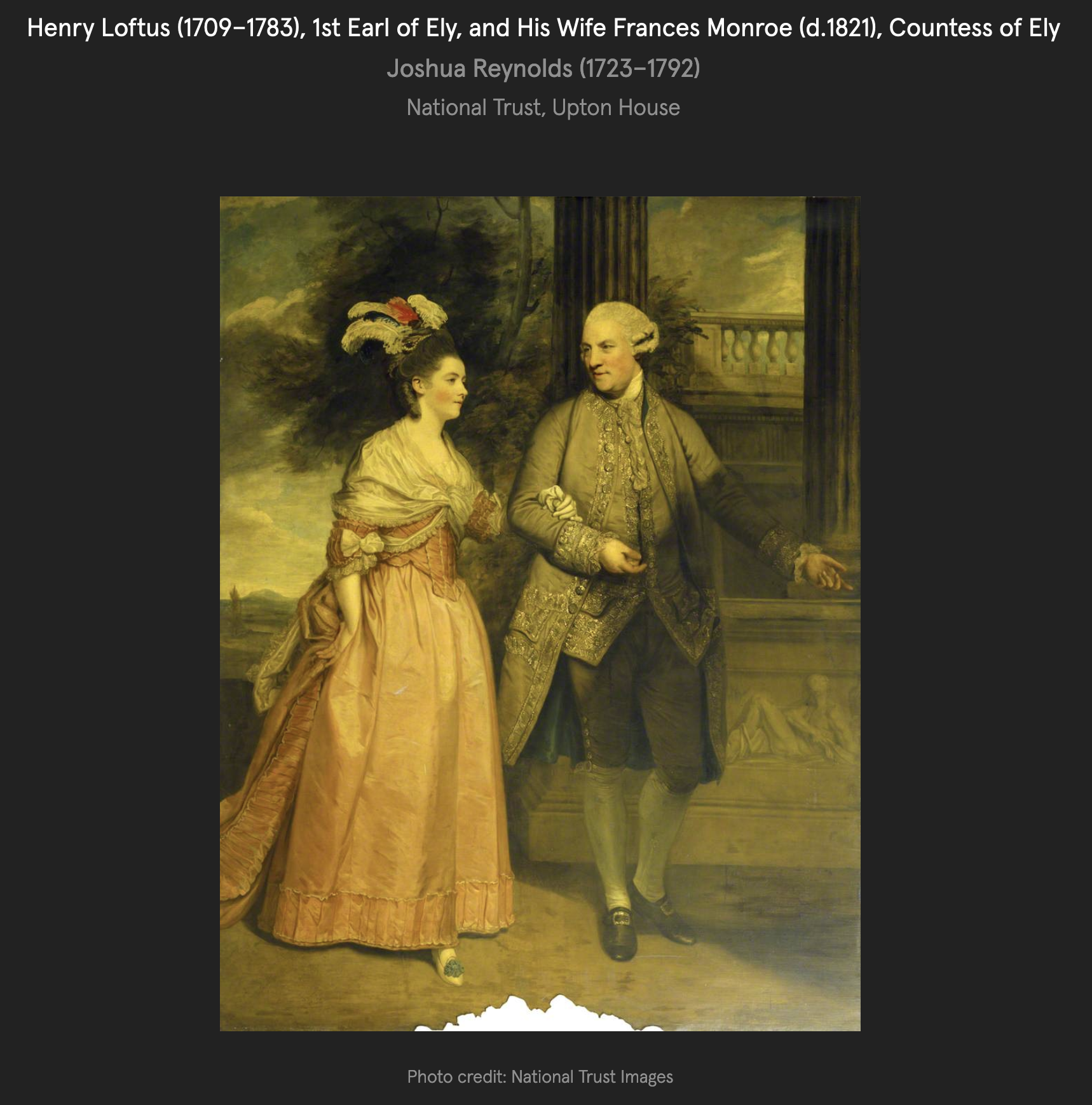
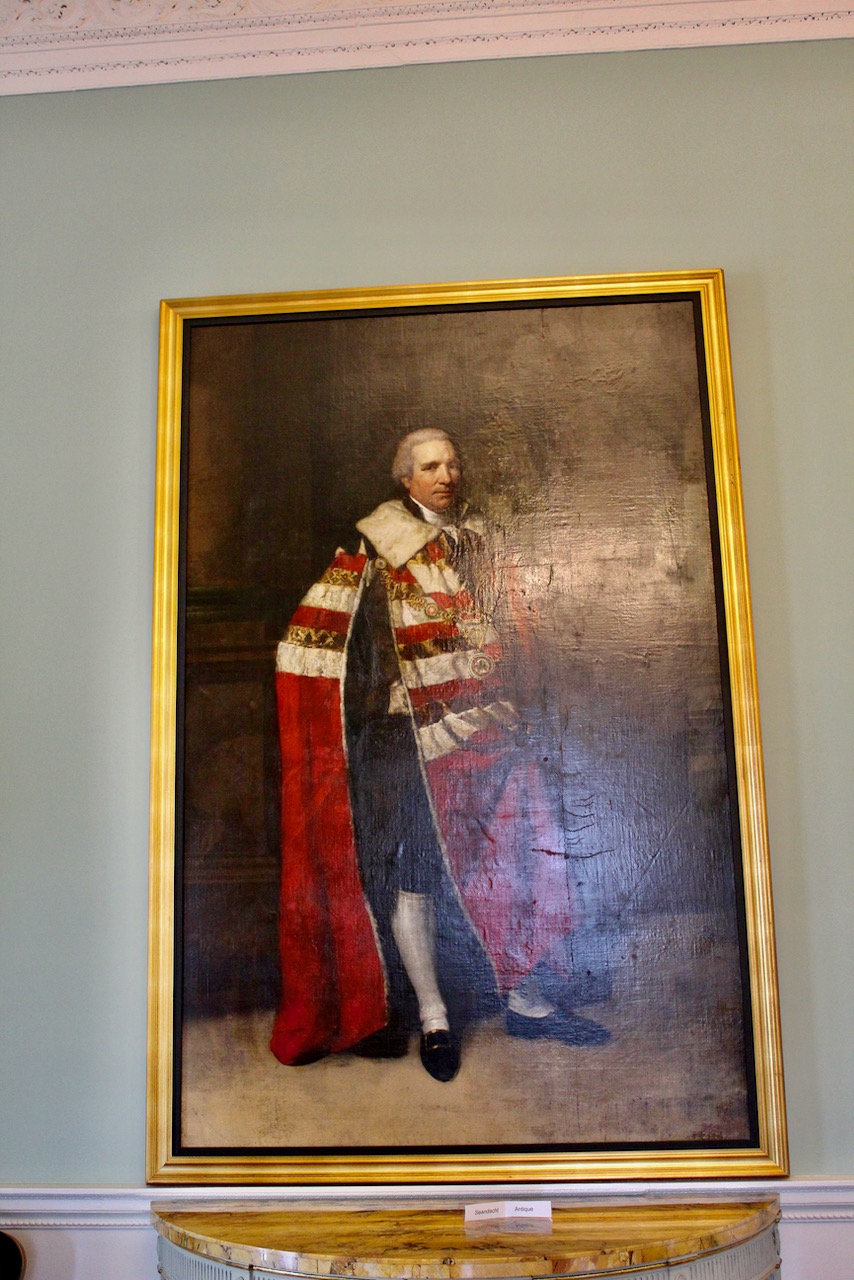
Nicholas Loftus (d. 1763) 1st Viscount Loftus of Ely and Anne née Ponsonby had another son Henry Loftus (1709-1783) who became 1st (and last Earl) of Ely of the second creation.

Henry Loftus, 1st Earl of Ely of the 2nd Creation (1709-1783) by Angelica Kauffman. He was the son of Nicholas Loftus, 1st Viscount Ely (1687-1763). Rathfarnham Castle. Photograph © Jennifer Winder-Baggot, www.irishhistorichouses.com
Henry Loftus (1709-1783) and wife Frances Monroe, Countess of Ely (d.1821) by Sir Joshua Reynolds courtesy of National Trust Upton House.

Nicholas Loftus (d. 1763) 1st Viscount Loftus of Ely and Anne née Ponsonby’s daughter Elizabeth (d. 1747) who married John Tottenham, 1st Bt (d. 1786) had a son Charles (1738-1806) who took the surname Loftus in 1784, and was created 1st Marquess of Ely.

Charles Tottenham Loftus (1738-1806) 1st Marquess of Ely by Hugh Douglas Hamilton, at Rathfarnham Castle. He was the son of John Tottenham 1st Baronet Tottenham and Elizabeth Loftus, daughter of Nicholas Loftus 1st Viscount Loftus of Ely, of Loftus Hall in County Wexford. Photograph © Jennifer Winder-Baggot, www.irishhistorichouses.com

Charles Tottenham Loftus (1738-1806) 1st Marquess of Ely married Jane Myhill and they had two sons: John Loftus (1770-1845) who succeeded as 2nd Marquess of Ely, and Rt. Rev. Lord Robert Ponsonby Tottenham (1773-1850) who served as Bishop of Clogher.

Oil painting on canvas, John Loftus, 2nd Marquess of Ely (1770-1845), attributed to Sir Thomas Lawrence (1769-1830). A three-quarter-length portrait, in a brown coat and blue sash. Peer’s robes to the right, red curtain to the background. A picture of the sitter’s wife by Lawrence is in the Art Institute of Chicago. Sothebys, Public Domain, https://commons.wikimedia.org/w/index.php?curid=15266849
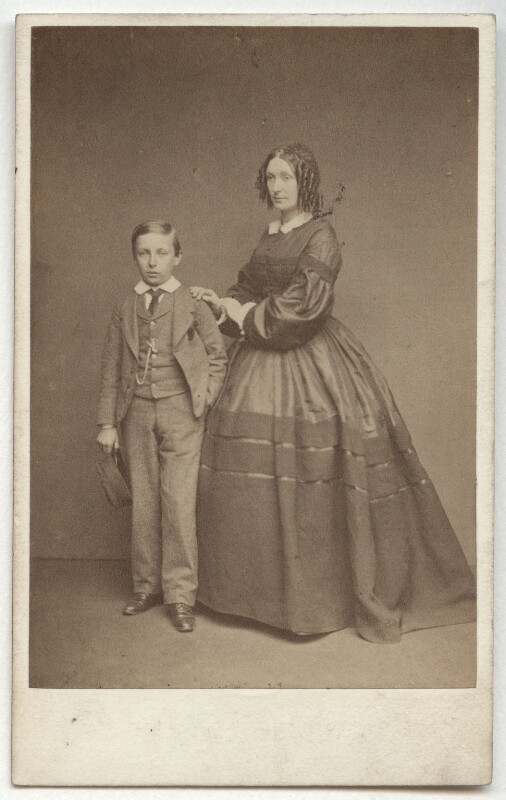
John Henry Wellington Graham Loftus (1849-1889) 4th Marquess of Ely with Jane Loftus née Hope-Vere Marchioness of Ely by John & Charles Watkins c. 1860, NPG x134191.
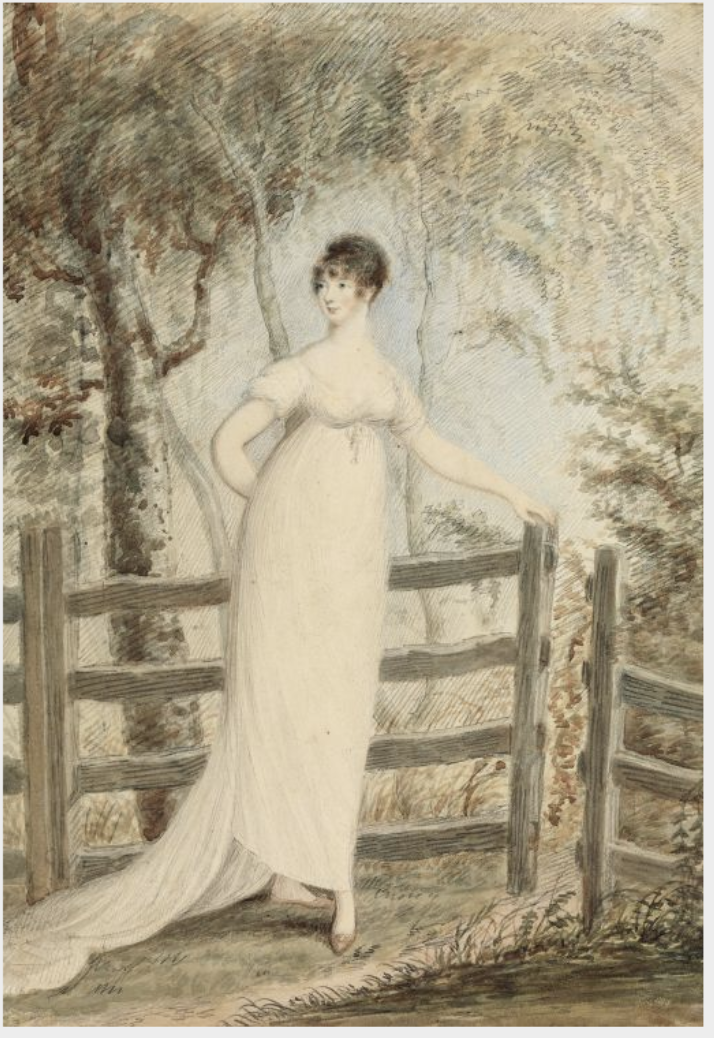
Inscription verso reads, ‘Harriette / Née McClintock – wife of Richard Longfield of Longueville Co. Cork.’ courtesy of Whyte’s May 2016. Harriet Elizabeth (c. 1814-1834) was the daughter of John McClintock (1770-1855) of County Louth and Elizabeth Trench (1784-1877), and she married Richard Longfield (1802-1889) of Longueville, County Cork.
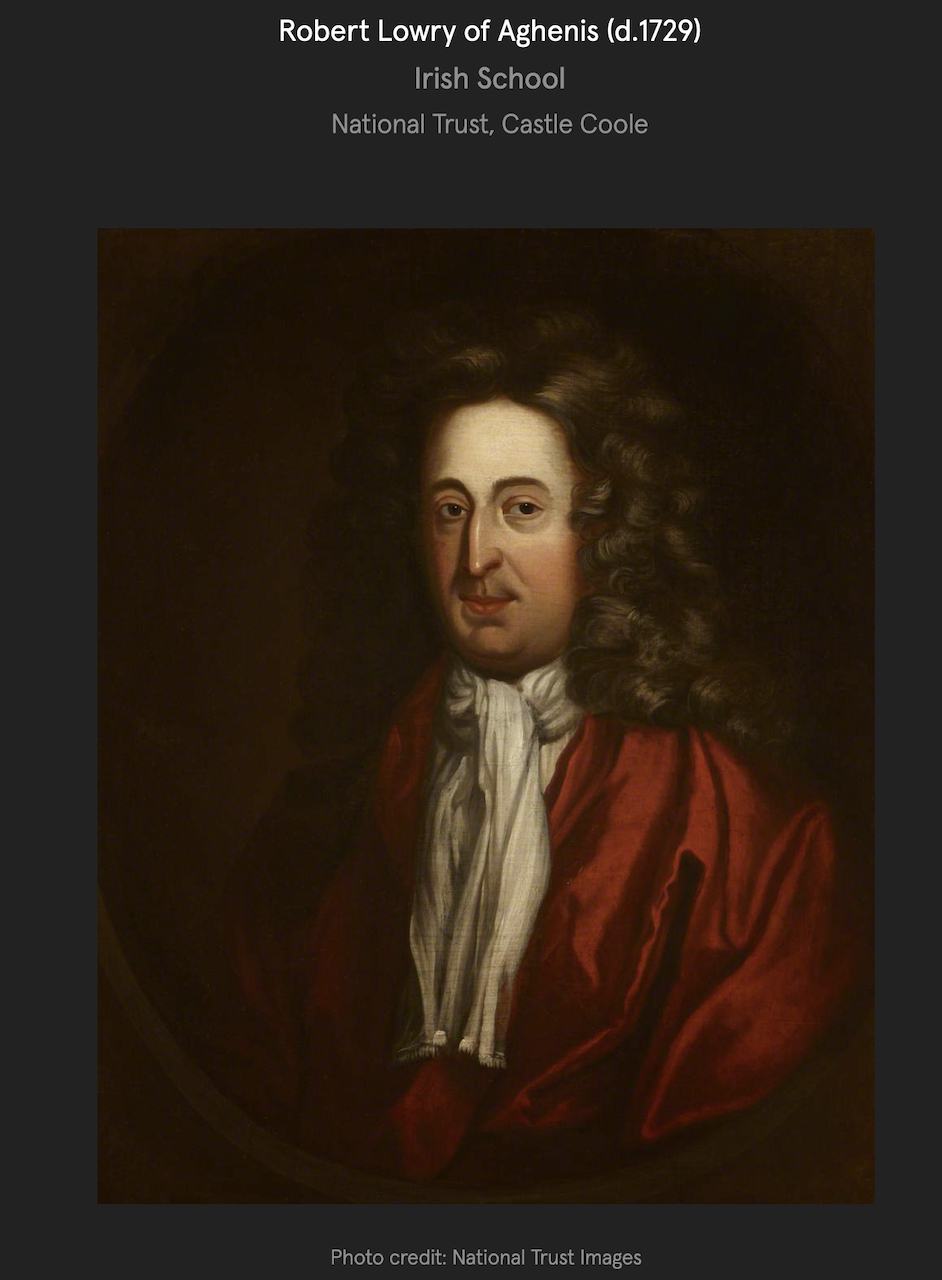
Lowry, Robert (d. 1729) of Aghenis Irish school courtesy of National Trust Castle Coole. He was the father of Galbraith Lowry-Corry (1706-1769).
Galbraith Lowry-Corry (1706-1769) courtesy of National Trust, Castle Coole, County Fermanagh.
Sarah Corry (1709-1779) later Mrs Galbraith Lowry Corry, by Anthony Lee courtesy of National Trust, Castle Coole, County Fermanagh.
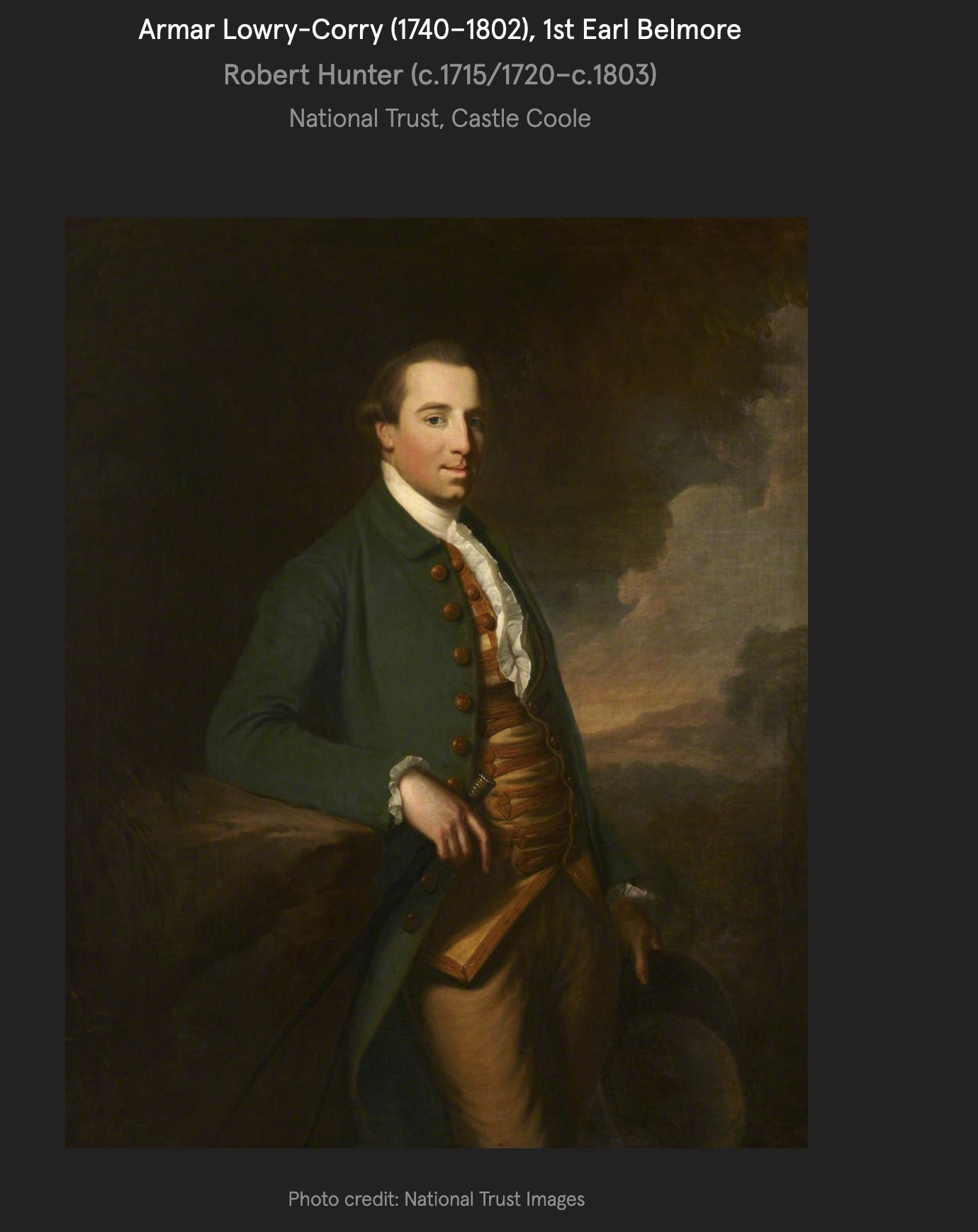
Armar Lowry-Corry (1740-1802) 1st Earl Belmore, by Robert Hunter, courtesy of National Trust, Castle Coole, County Fermanagh. He was the son of Galbraith Lowry-Corry (1706-1769) and Sarah Corry (1709-1779).
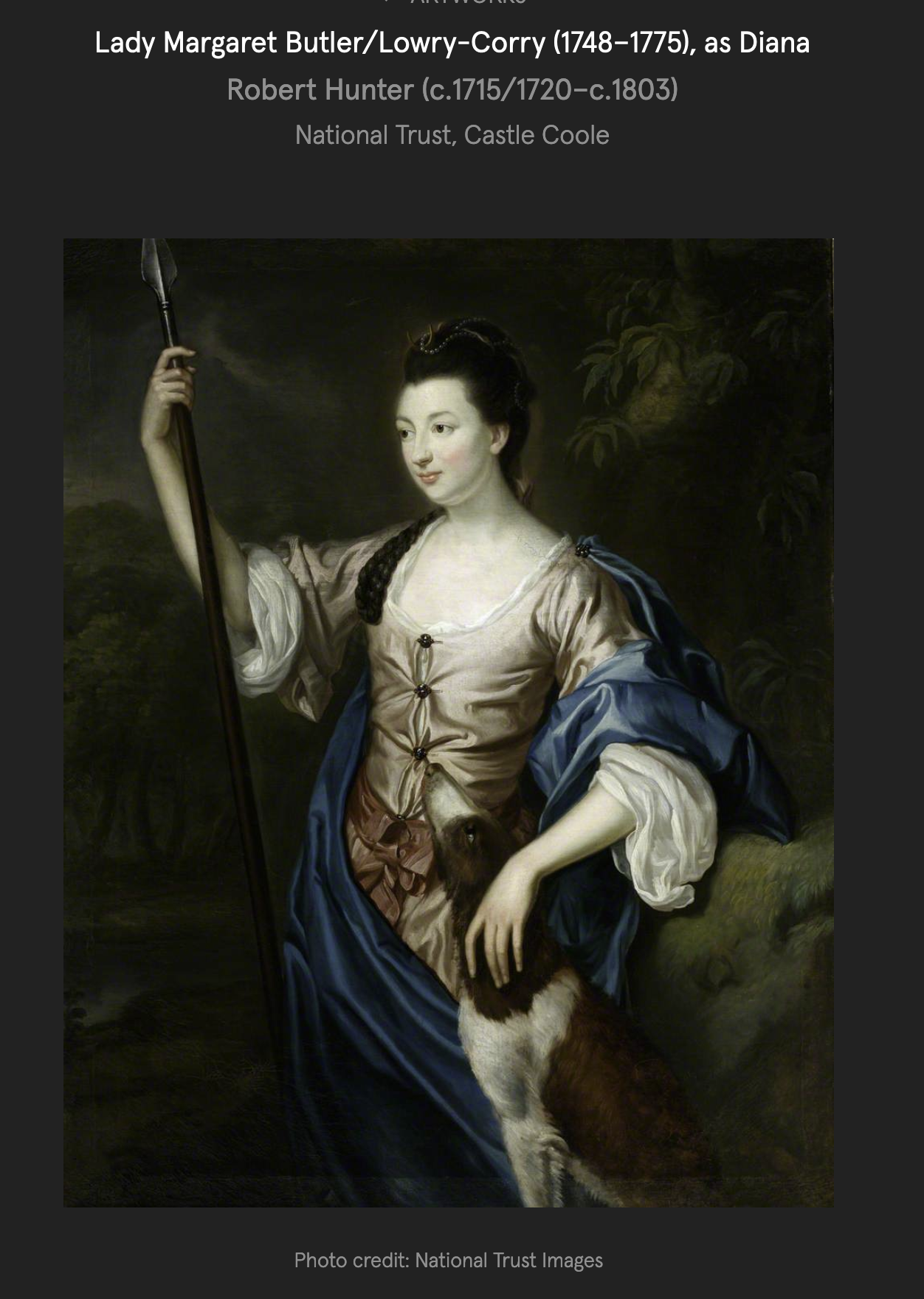
Margaret Lowry-Corry née Butler (1748-1775) by Robert Hunter, courtesy of National Trust, Castle Coole, County Fermanagh. She was 1st wife of Armar Lowry-Corry (1740-1802) 1st Earl Belmore.
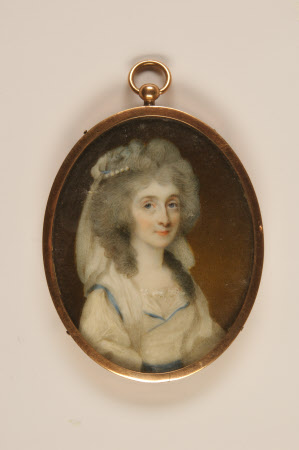
Anne Lowry-Corry, Countess of Enniskillen (1742-1802) by Horace Hone c.1785, watercolour painting on ivory, courtesy National Trust Florence Court. Sister of Armar Lowry-Corry (1740-1802) 1st Earl Belmore and wife of William Willoughby Cole 1st Earl of Enniskillen.
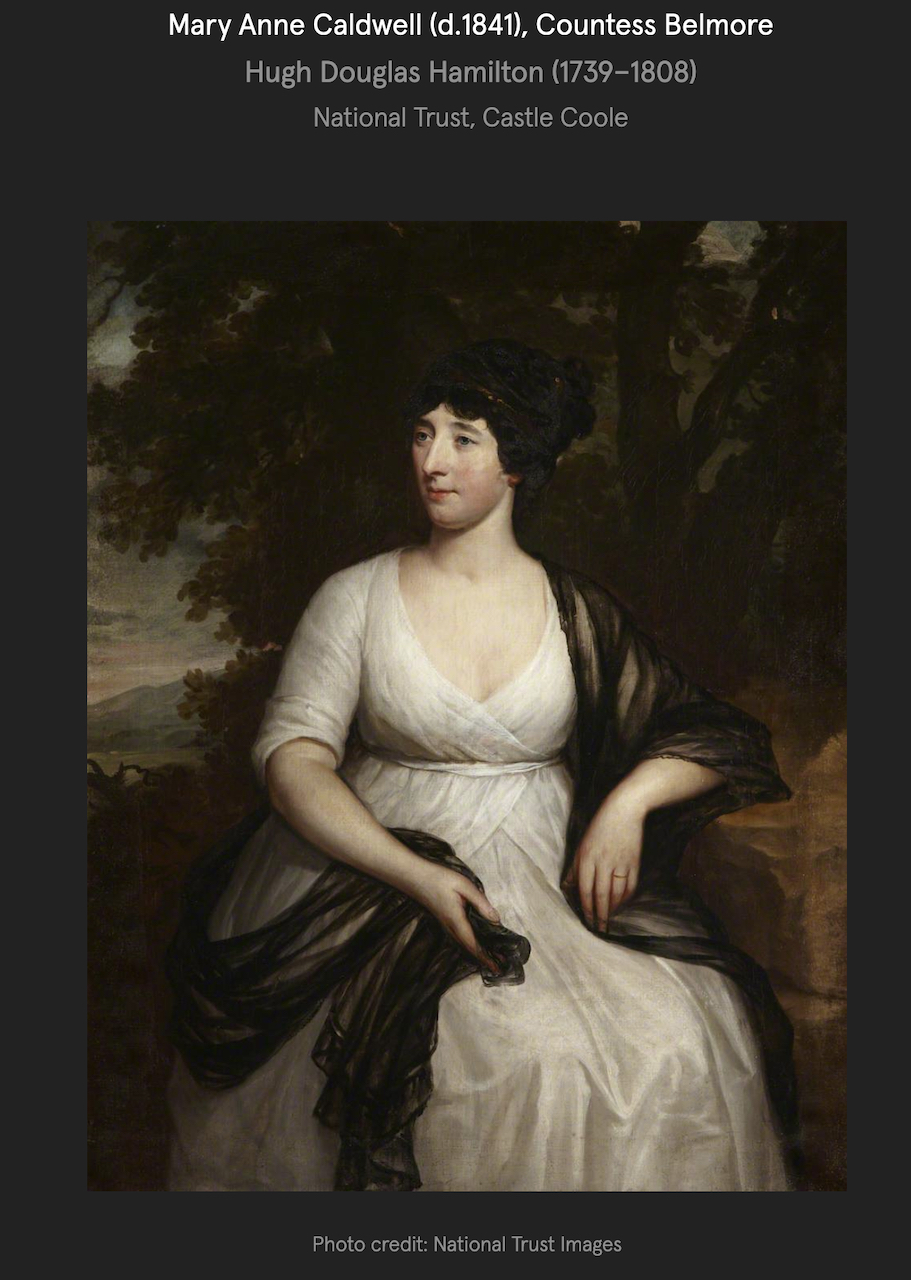
Mary Anne Lowry-Corry née Caldwell, (d. 1841) Countess Belmore by Hugh Douglas Hamilton courtesy of National Trust Castle Coole. She was the daughter of John Caldwell 4th Baronet of Castle Caldwell in County Fermanagh. She was 3rd wife of Armar Lowry-Corry (1740-1802) 1st Earl Belmore. His second wife was Henrietta Hobart, daughter of John Hobart 2nd Earl of Buckinghamshire.
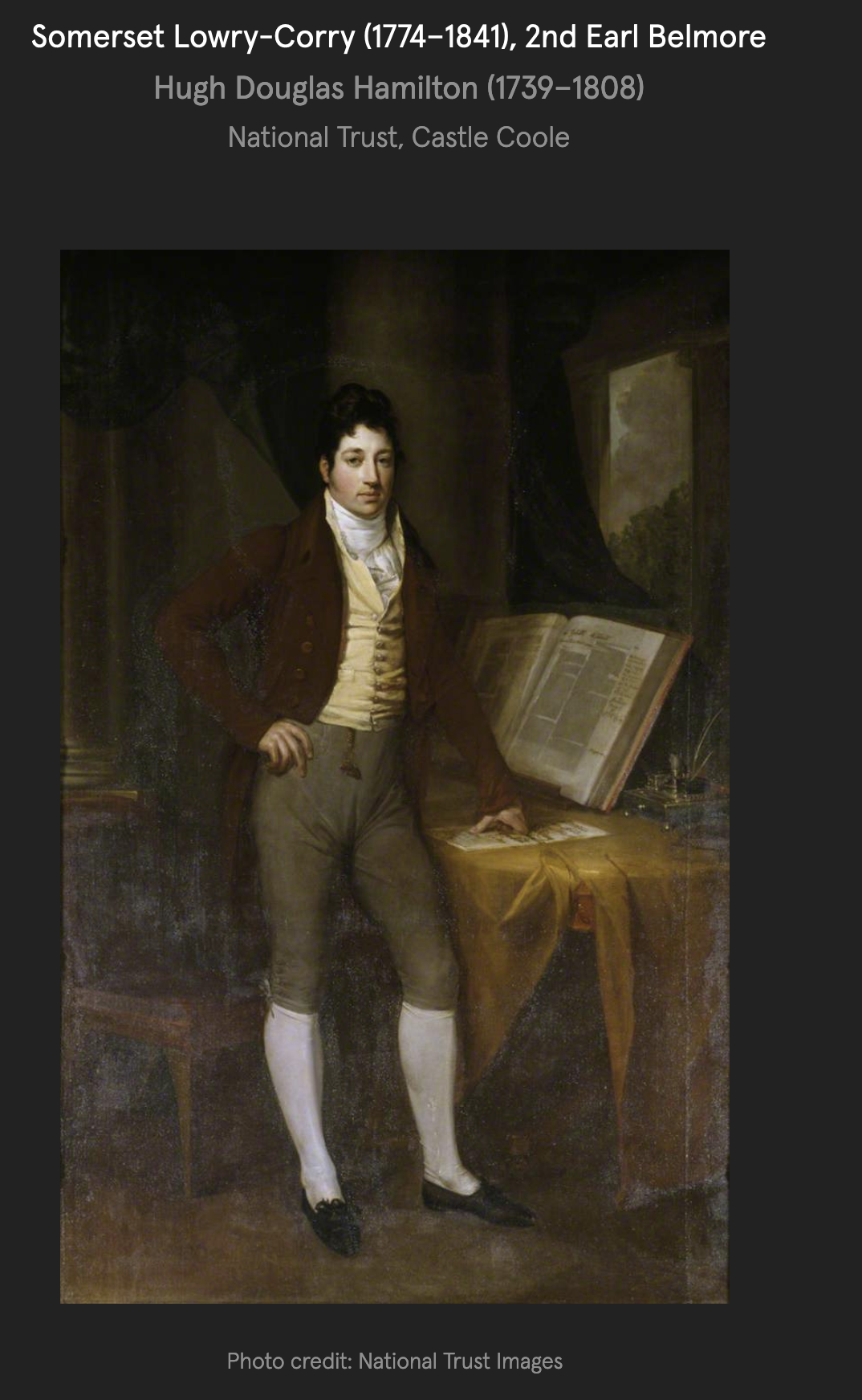
Somerset Lowry-Corry (1774-1841) 2nd Earl Belmore, by Hugh Douglas Hamilton, courtesy of National Trust, Castle Coole, County Fermanagh. He married Juliana Butler (1783-1861), daughter of Henry Thomas Butler 2nd Earl of Carrick (2nd Creation).
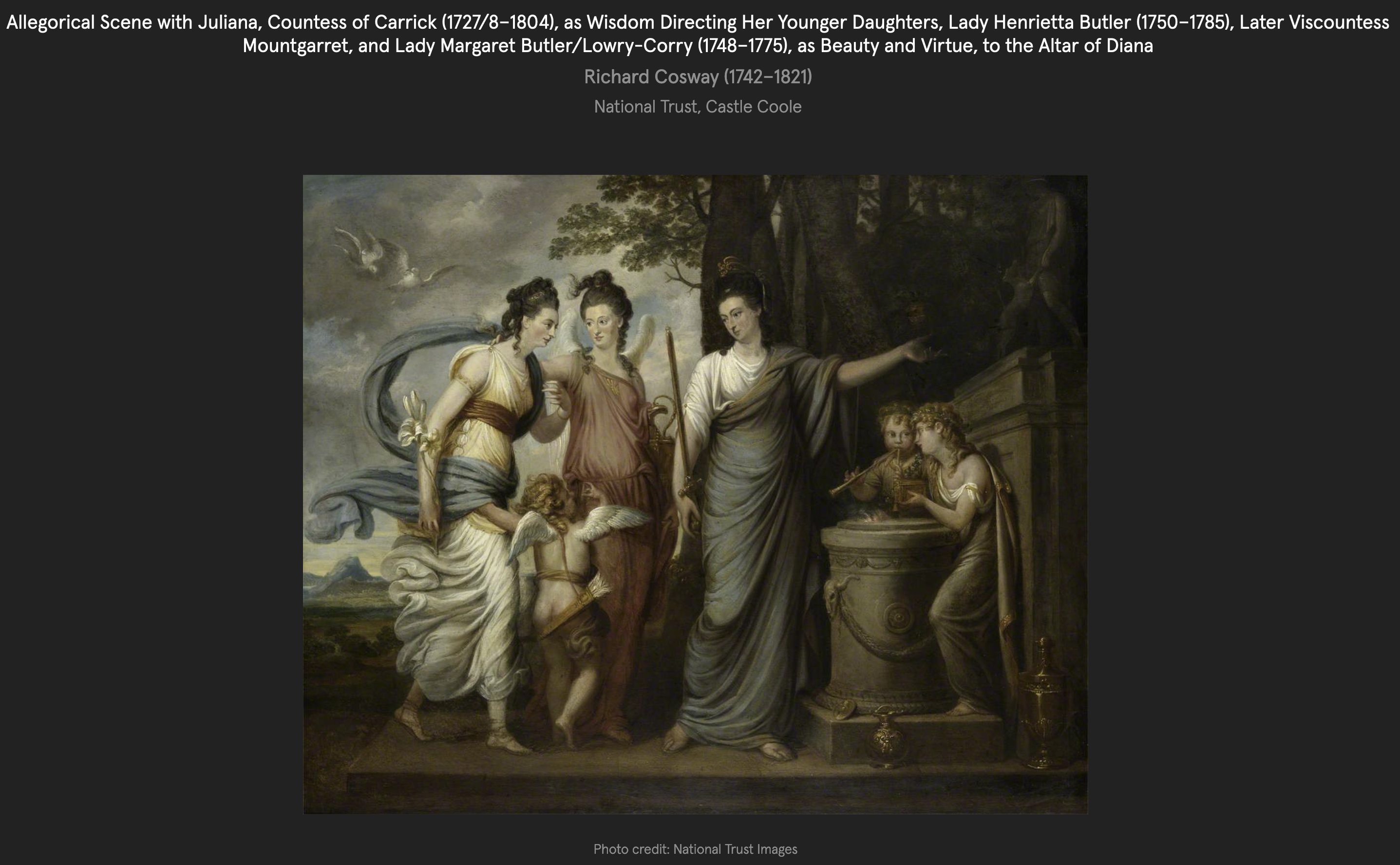
Juliana Butler (1727/8-1804) Countess of Carrick, with her younger daughters Lady Henrietta Butler (1750-1785), later Viscountess Mountgarret, and Lady Margaret Butler/Lowry-Corry (1748-1775), by Richard Cosway, courtesy of National Trust, Castle Coole, County Fermanagh.
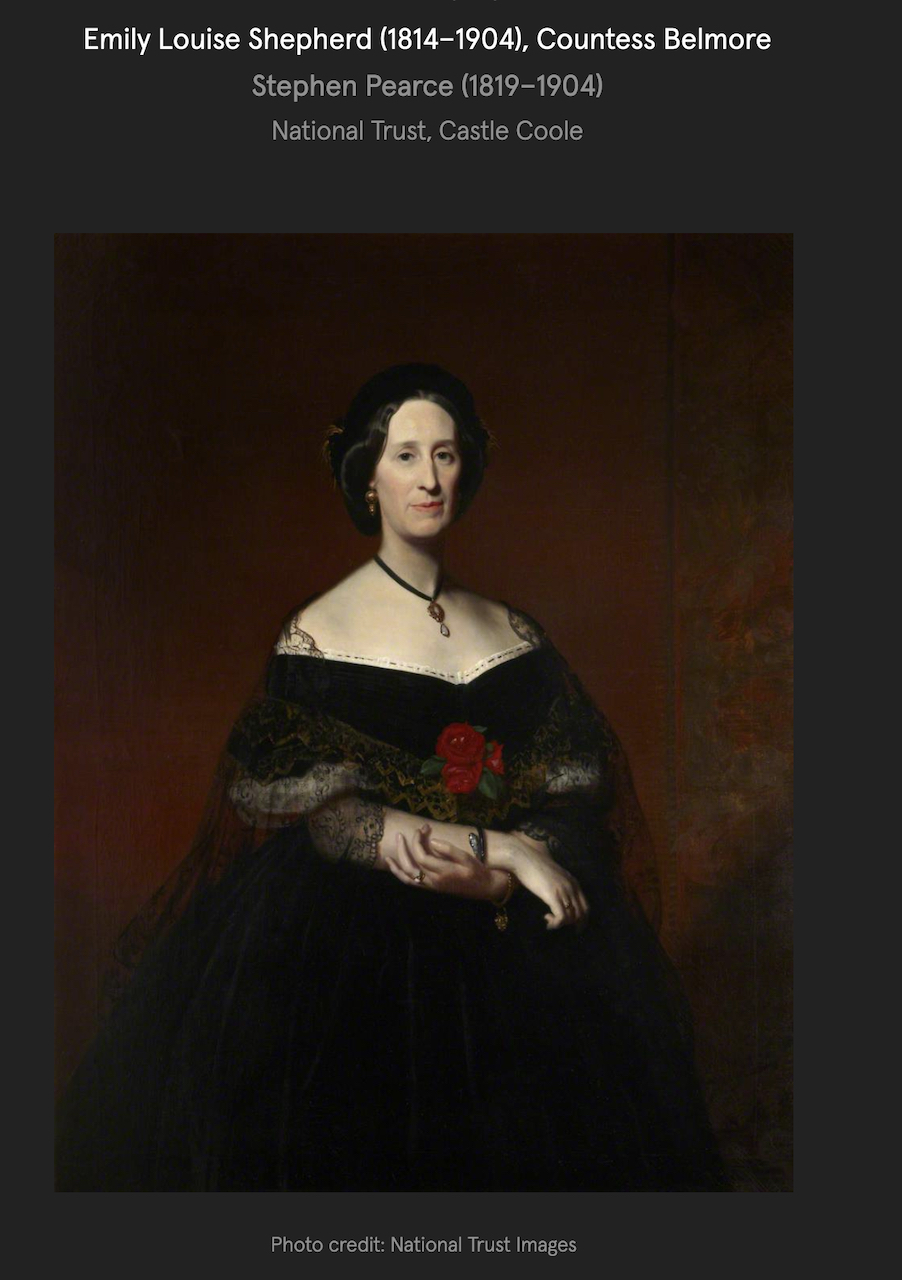
Emily Louise Lowry-Corry née Shepherd (1814-1904) Countess Belmore, wife of Armar Lowry-Corry 3rd Earl of Belmore, by Stephen Pearce courtesy of National Trust Castle Coole.
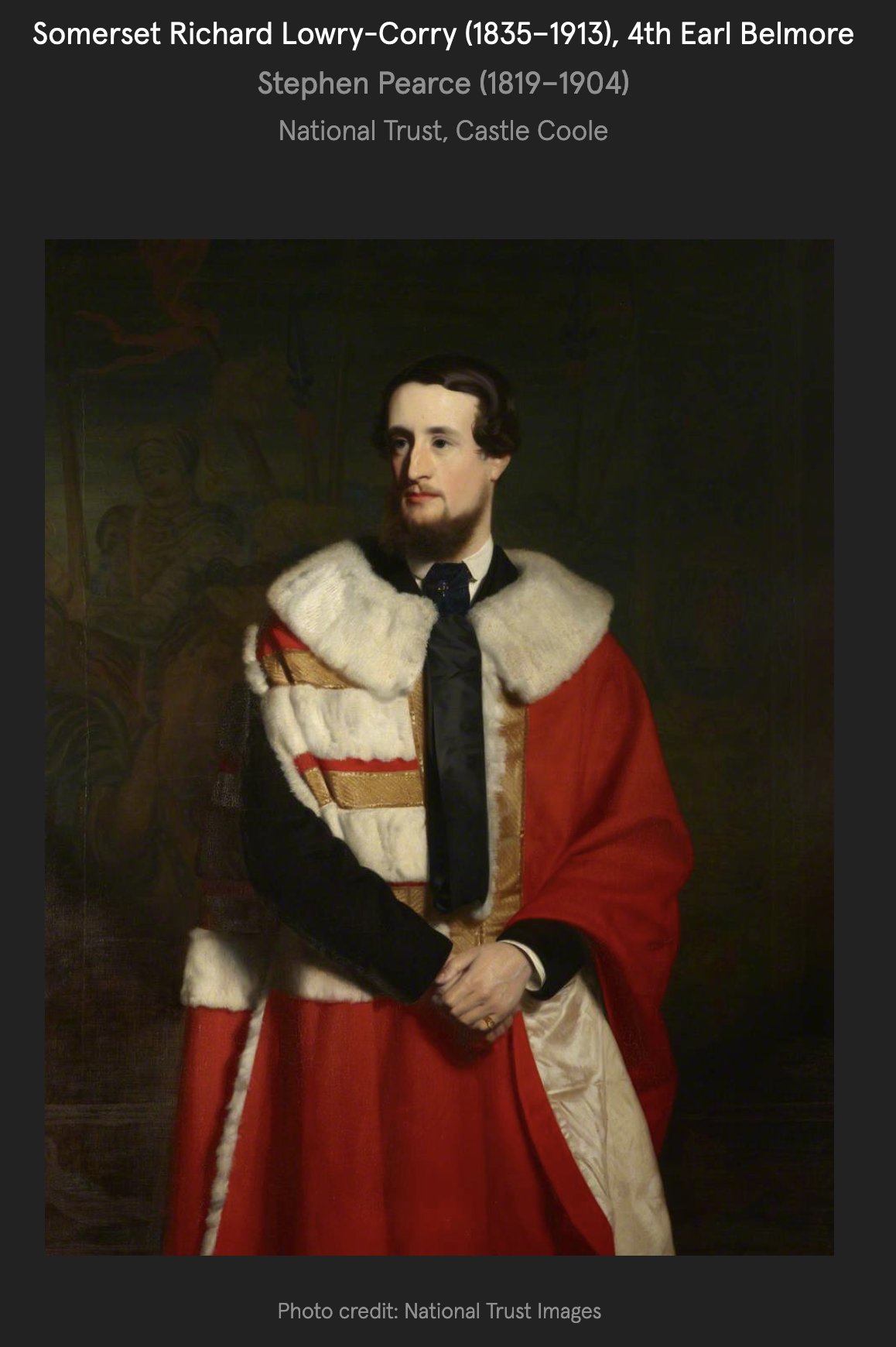
Somerset Richard Lowry-Corry (1835-1913) 4th Earl Belmore, by Stephen Pearce, courtesy of National Trust, Castle Coole, County Fermanagh. He was son of Armar Lowry-Corry 3rd Earl of Belmore.
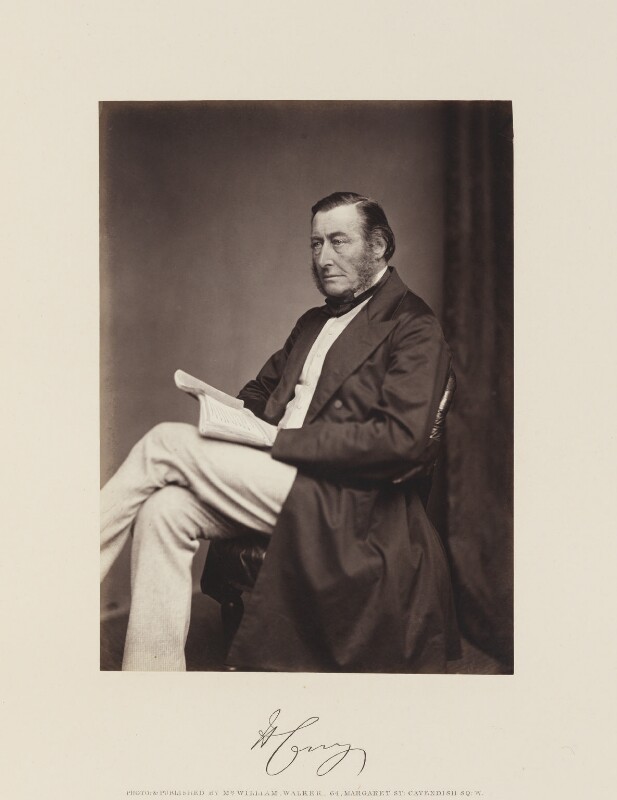
Henry Thomas Lowry Corry (1803-1873) by and published by William Walker 1867, NPG Ax15852.
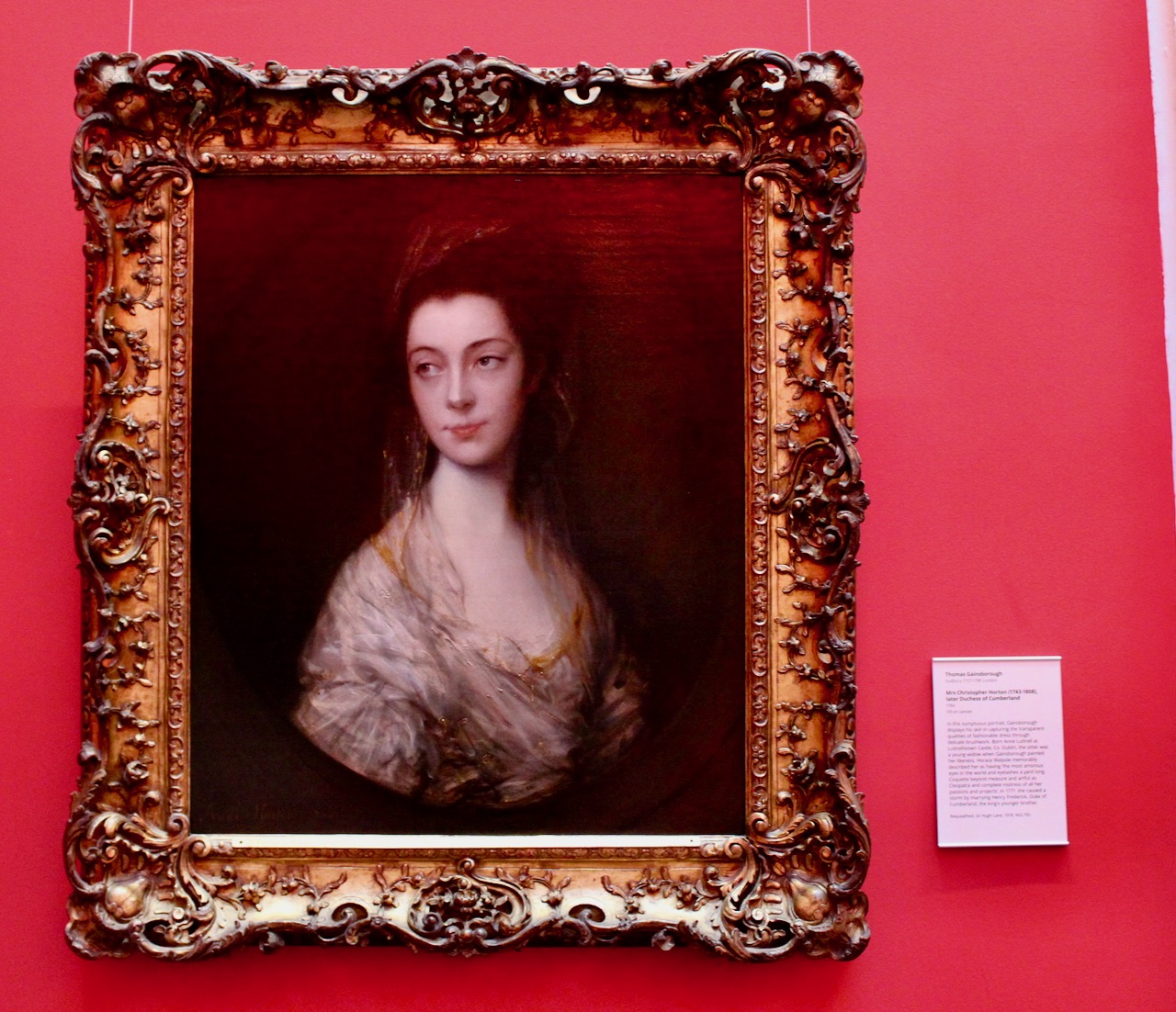
Anne Luttrell (1743-1808), who married Christopher Horton and later, Henry Frederick, Duke of Cumberland, painted by Thomas Gainsborough, National Gallery of Ireland, NGI795. Photograph © Jennifer Winder-Baggot, www.irishhistorichouses.com
Georgiana Pakenham née Lygon (1774-1880). She married Thomas Pakenham 2nd Earl of Longford. Photograph © Jennifer Winder-Baggot, www.irishhistorichouses.com