Moore Abbey, Monasterevin, County Kildare
Mark Bence-Jones. A Guide to Irish Country Houses (originally published as Burke’s Guide to Country Houses volume 1 Ireland by Burke’s Peerage Ltd. 1978); Revised edition 1988 Constable and Company Ltd, London.
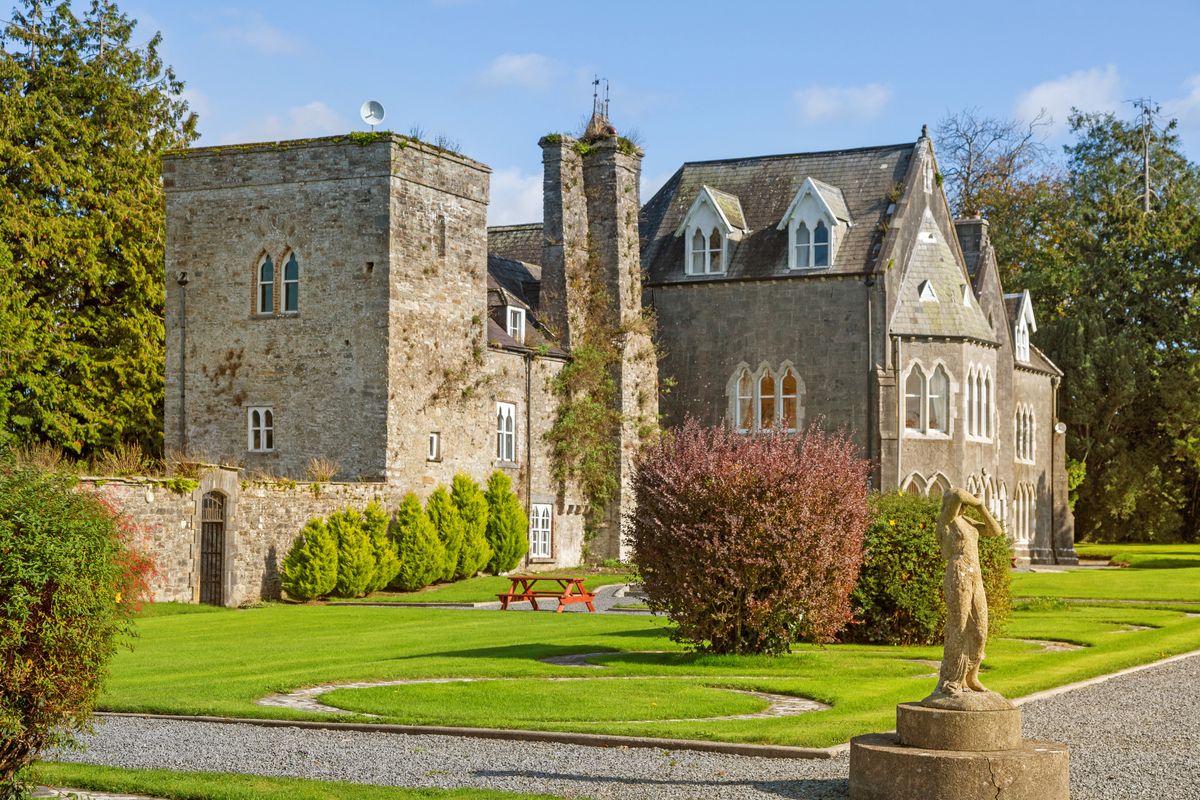
p. 210. “Loftus, V/DEP andsub Ely, M/PB; Moore, Drogheda, E/OB) One of the only two surviving examples of mid-C18 Gothic in major Irish country houses which are not old castles remodelled, the other being the Gothic front of Castleward, Co Down. A 1767 Gothic rebuilding, by Field Marshal Sir Charles Moore, 6th Earl and 1st Marquess of Drogheda, of a C17 house built on the site of a medieval abbey acquired in the reign of Elizabeth by the Loftuses, whose heiress married into the Moores 1699; and of which some fragments of carved stonework are built into a wall of the present house. Principal front consisting of a seven bay centre block of three storeys over basement; all the windows in the centre and wings – including those in teh basement – being uniform, with pointed heads and Gothic astragals; those in the principal storeys having Gothic hood mouldings. The roof parapets of the centre and wings are battlemented. Small C19 projecting porch, with tracery windows; C19 Gothic balustrade on the braod flight of steps leading up to the porch, and along the area. Large single-storey hall, said to be basically C17 and where Adam, Viscount Loftus, Lord Chancellor of Ireland, held his Chancery Court 1641; but now wholly C19 Tudor-Gothic in character; with an elaborately fretted plasterwork ceiling, oak wainscot with trefoil-headed panels, a carved stone chimney piece and a screen of pointed arches. Drawing room and dining room with a frieze of delicate C18 Gothic plasterwork, and similar Gothic ornament on the entablatures of the very handsome doorcases. Staircase with balustrade of simple uprights, lit by Perpendicular style window. Gothic stable court behind house with battlemented tower. Impressive castellated entrance gateway to demesne. In latter C19, Moore Abbey had the name for being a very cold house…During 1920s the house was let to Count John McCormack, the singer…At the end of Count MaCormack’s tenancy, 10th Earl of Drogheda sold Moore Abbey to a religious order. It is now a hospital run by the Sisters of Charity of Jesus and Mary.”

Not in national inventory
entry in MacDonnell, Randal. The Lost Houses of Ireland. A chronicle of great houses and the families who lived in them. Weidenfeld and Nicolson. London, 2002
p. 163. “A early C17 house which was the first to be gothicized in Ireland. Once the home of the Earls and Marquesses of Drogheda, Moore Abbey is now owned by a religious order.”
p. 165. “the original house at Monasterevan was built on the site of a monastery, which, in various foundations, had stood there since at least the 10th century. The place was called after Saint Evin, a Munster man, who founded a monastery that was originally called Ros-Glaise (The Green Wood). … In 1563, Owen O’Dempsey “Chief Captain of his Nation,” submitted to Elisabeth and surrendered his lands to the crown. These were largely re-granted but were forfeited in 1641 and not restored by Charles II. In 1631, the O’Dempsey chief accepted the title of Viscount Clanmalier, the second and last of whom died in 1690.
At the Dissolution of the Monasteries, the property passed to the Crown, and between 1556 and 1558 was converted to secular use. In 1596 Moore was described as having ‘a fair hall, a stable, kitchens and other rooms.’ In this year it was demised to the Earl of Essex who agreed to ‘keep up and maintain the house of Evon with slate, thatching and mud walls, and other necessary repairs.’ [p. 166] He also agreed to let the Lord Deputy use the house and its stable, reserving only his own lodging for himself. The actual resident was probably Captain Warham St Leger, who received the Lord Deputy Russell there in the same year. As for Essex, he did not have much time to enjoy his new property since he was beheaded for treason in 1601. Lord Mountjoy, the Lord Deputy, stayed there in 1600-1 during his winter campaign against the rebellious Irish.
…Adam Loftus, who had arrived in Ireland as chaplain to the Earl of Sussex, became Archbishop of Dublin in 1567; by 1578 he was Lord Chancellor of Ireland. His daughter, Dorothy, married Sir John Moore, the scion of another family of English adventurers and soldiers of fortune, who arrived in Ireland during the reign of Eliz 1. The fortunes of the Loftus and Moore families would intersect during the next hundred years, eventually leading to the lands of Monasterevan passing to the Moores.
The first Adam Loftus died in 1605. He was followed by his nephew, another Adam, who was created Viscount Loftus of Ely in 1622 and served as Lord Chancellor of Ireland between 1619 and 1638. [p. 167] He received the abbey and lands of Monasterevin from the Crown in 1613, but may have leased the property before that date since there is a stone with the date 1607 in one of the walls. There is also a series of strange carvings inserted into the walls of the present house that combine native Irish designs and early 16C Italian engravings. Lord Loftus built the house on the abbey site where he lived until Lord Wentworth’s legislation forced him to pay a large sum of money in settlement of a very dubious claim. Wentworth is said to have held court in the present Great Hall. Loftus fell foul of Strafford and was imprisoned in Dublin Castle. On his release he left Ireland and died in Yorkshire. His daughter married Charles Moore, later the 1st Earl of Drogheda.
“Charles’s great grandfather, Sir Edward Moore, had come over from Kent with his brother, Sir Thomas. Sir Edward received a grant of Mellifont Abbey in County Louth in 1566 from Queen Elizabeth as part of the ongoing redistribution of the Monastic lands in Ireland. His son Gerald was knighted by the Earl of Essex in 1599 for his part in smashing the attempt of Aodh O Neill – the Earl of Tyrone – to achieve an independent Gaelic Ireland. In 1616 Gerald was created Baron Moore of Mellifont by James I and in 1621-2 was raised a step in the peerage to become Viscount Moore of Drogheda.
A cannon shot in 1643 killed his son, the 2nd Viscount, who fought for the Parliament in the Civil War. In 1634, Lord Wentworth wrote about the Viscount’s wife, a daughter of Lord Loftus of Ely, ‘that unclean mouthed daughter of his busieth herself up and down the Court.’ She conspired to betray Drogheda and Dundalk to the Parliamentary forces and was imprisoned in Dublin Castle in 1645. She died in 1649 ‘of a gangreene’ as a result of breaking her leg in a fall from a horse. The 3rd Viscount was made Earl of Drogheda in 1661. He decided to develop the land that he owned in Dublin and named the new streets after himself and his countess. These names are mostly still with us. He was Henry Moore, Earl of Drogheda, and his wife was called Mary; thus we have Henry Street, Moore street, North and South Earl Streets as well as Mary Street.
The 3rd Earl was attainted by James II and fought at the Boyne on the side of William of Orange. Obviously fond of the bottle, the Earl is described, in 1791 during [p. 168] the proclamation of Queen Anne, by Ulster King of Arms, as being so bad with the gout that he was unable to get out of his coach. His grandson Henry Moore, the 4th Earl, inherited the property at Monasterevin and changed its name to Moore Abbey. The estate came to him because his mother, Jane, was the heiress of the 3rd, and last, Viscount Loftus of Ely. Profligate, the 4th Earl managed to amass £180,000 in debts before his death at the age of 27.
The heir to the title was his brother, who was married to Lady Sarah Ponsonby, daughter of the 1st Earl of Bessborough. In 1758, the earl and his son Edward were drowned on their way back from England. …
Lord Drogheda’s heir was his second son, Charles. This nobleman was a founder Knight of the Most Illustrious Order of Saint Patrick. He was created Marquess of Drogheda in 1791 and even became a field marshall in 1821. He gothicized Moore Abbey in 1767.
“The Anthologia Hibernica magazine reported that “Charles, the 6th Earl of Drogheda, in 1767, beautifully repaired the ancient abbey by enlarging the windows, placing a new roof and repartitioning the whole; preserving, however, the external walls and original form, except somewhat lengthening the eastern front. The great hall and the ancient door of the southern front still retain their primitive state, and the whole has the venerable appearance of the Gothic structures. His Lordship also pulled down the old church, which stood near the monastery on the right side of the east front, and rebuilt it in a neat Gothic style at the other end of the town. He walled in the demesne with a high wall, except on the side near the river. The demesne contains about 1000 acres, nearly in the centre of which rises a large conical hill of 200 acres, well planted and commanding an extensive and beautiful view of the country. Near the deer park, on the north side of the hill, are some remains of an ancient wood last occupied by one James O’Dempsey, commonly called Shamus na-Coppuil (James of the Horses), the highwayman.”
p. 170. The second Marquess was insane for the last 45 years of his life. He died in 1837 and, on the death of his undistinguished nephew in 1892, the marquessate became extinct. The earldom, however, passed to a cousin who, as the 9th Earl, was a Representative Peer for Ireland between 1899 and his death in 1909.
….Lord Drogheda sold the house to an order of Belgian nuns, who still own and maintain the house.
https://archiseek.com/2011/1767-moore-abbey-monasterevin-co-kildare
1767 – Moore Abbey, Monasterevin, Co. Kildare
Architect: Christopher Myers
Gothic rebuilding, carried for 6th Earl of Drogheda by Christopher Myers, who ‘in 1767, beautifully repaired the ancient abbey by enlarging the windows, placing a new roof, and recompartitioning the whole; preserving however the external walls and original form, except somewhat lenghtening the eastern front’. Formerly a convent, now a home for people with intellectual disabilities.
Featured in Irish Country Houses, Portraits and Painters. David Hicks. The Collins Press, Cork, 2014.
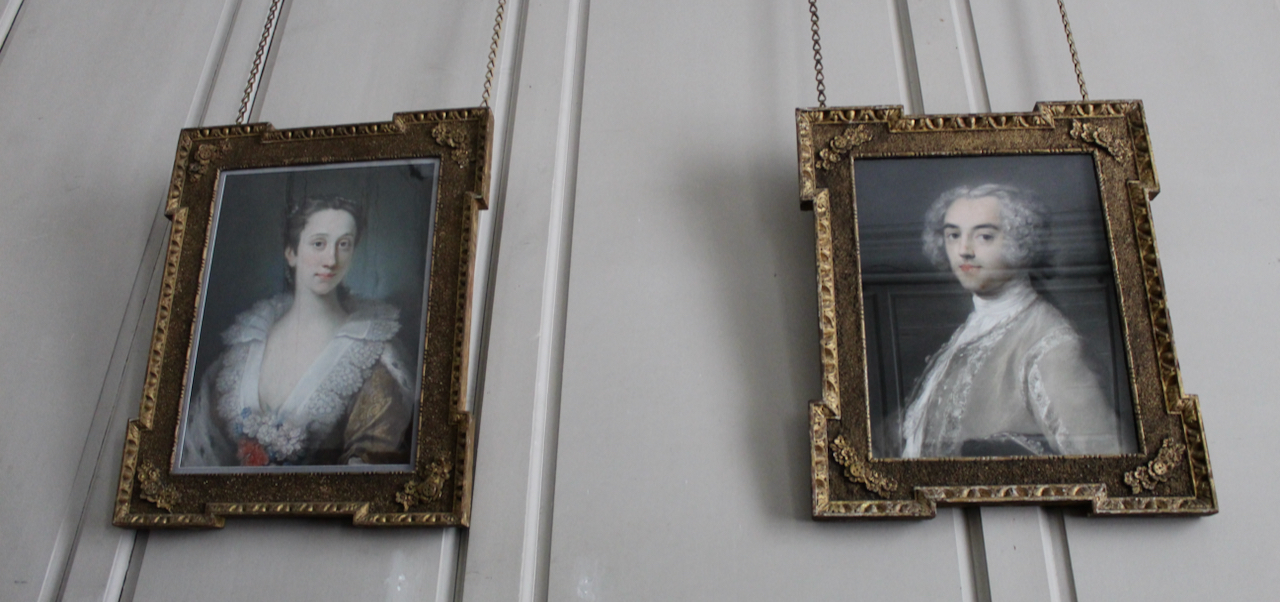
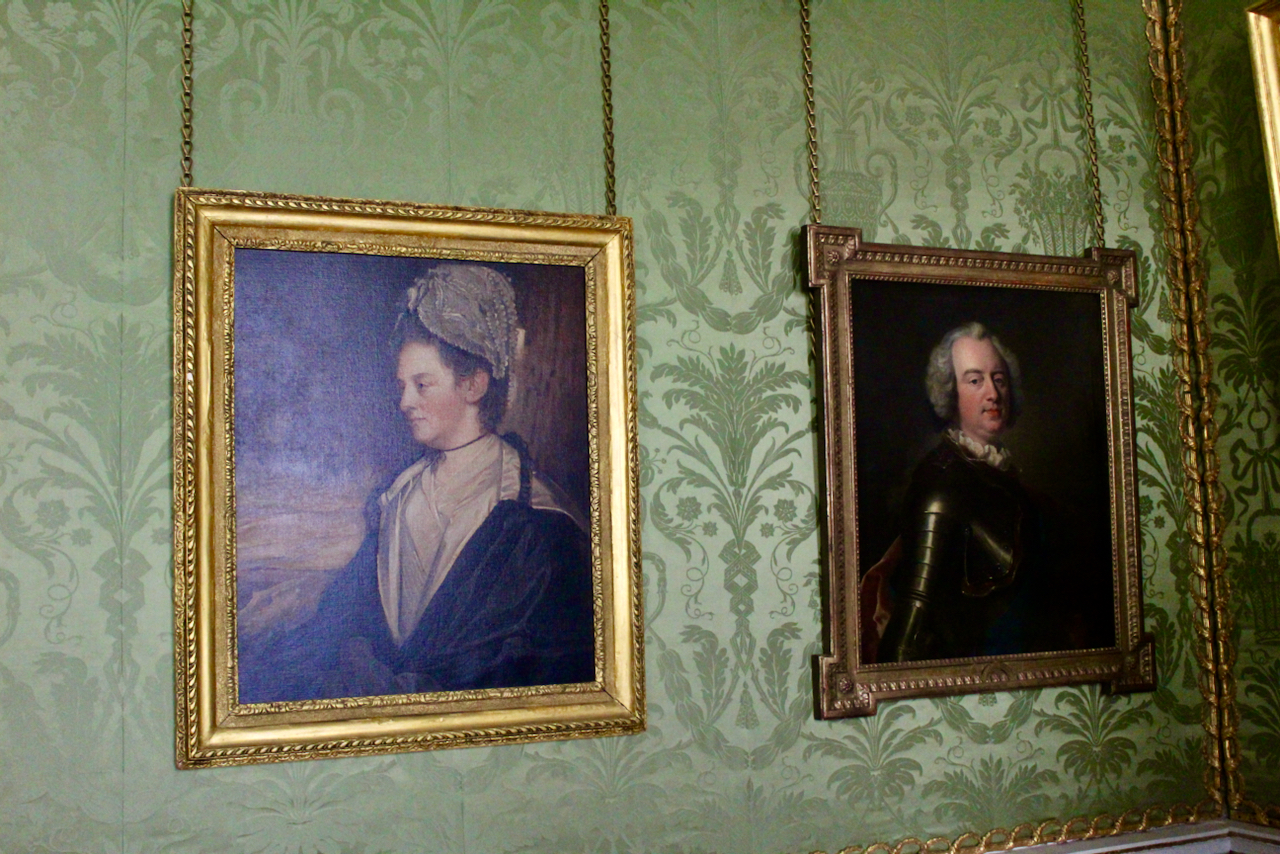
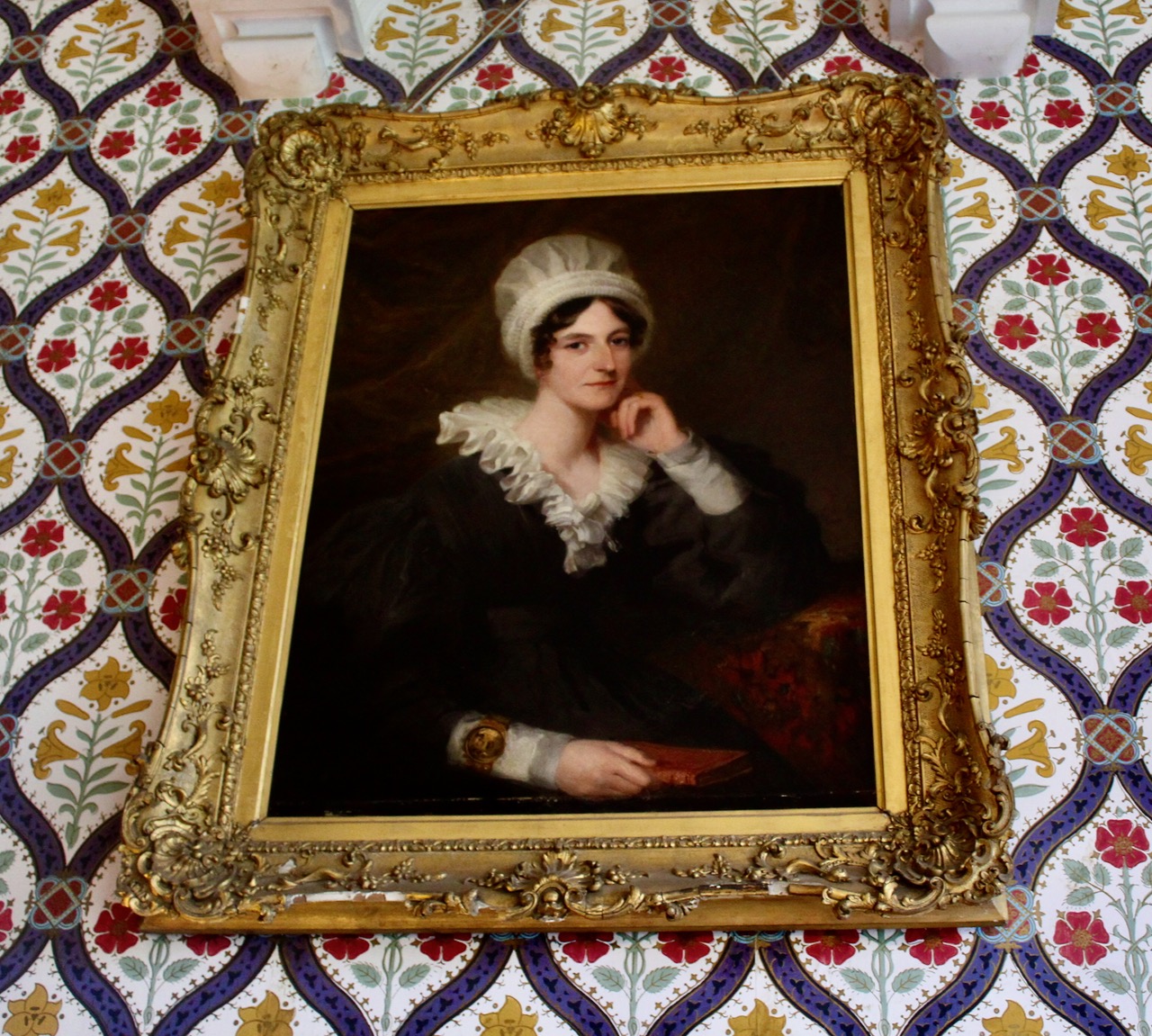
p. 63. Count John McCormack was an extravagant man; he collected the best of everything, from art and antiques to racehorses, and Moore Abbey was another expensive bauble. He appreciated art and spent vast sums of money collecting old masters while also commissioning many portraits from a number of the established artists of the day. Moore Abbey, his former home, endures today and as one walks through its rooms there are still remnants of its former occupants. In a corner of the Grand Hall sits the piano where once Count John McCormack would have entertained friends and family. In the adjoining library, accessed through a secret door from the hall, hang the paintings of the ninth Earl and Countess Drogheda, while on a sideboard sits a photograph of their son, the tenth Earl. Today Moore Abbey serves a different purpose, as an institution that provides support to people with intellectual disabilities and their families. However, 100 years ago it was the centre of the active social life of the Earl of Drogheda who held grand gatherings that were attended by the upper echelons of society of the time.
Moore Abbey’s monastic name originates form the 12th century Cistercian abbey which once stood on the site. This abbey was built on the ruins of a medieval predecessor, the monastery of St Evin, after which the town of Monasterevin is named. Following the appropriation of Church lands by the Crown in the /p. 64. 16th century, the abbey was granted to George, Lord Audley. It became a royal stronghold and was reserved for used by the Lord Deputy who could station a garrison there. In 1613 the property was granted to Sir Adam Loftus who became Viscount Loftus of Ely in 1622 and during the time the abbey changed use but little is known about the conversion of the abbey for secular purposes. Adam Loftus held the Court of Chancery in the great hall of the monastery during the rebellion of 1641. …Moore Abbey was Gothicised in 1767; it incorporates the fabric of a medieval abbey from around 1150 and a later house from 1650. Also at this time the demesne, which comprised over 1000 acres, was walled in….
[p. 65] Further improvements were made to the Abbey in 1823 which resulted in the house becoming known as one of the coldest houses in Ireland. Once, when a guest came to stay, the servants were carrying his extremely heavy trunk up the staircase. Due to its excessive weight, the trunk was dropped and burst open whereupon it was found to contain coal. In 1837, Moore Abbey was described as “a spacious mansion, erected on the site of the ancient conventual buildings, of which the only remains are some sculpted ornaments inserted into the gable end of the domestic chapel.”
In 1845 the architect John Howard Louch designed additions for Henry Francis Seymour, Marquis of Drogheda, with the foundations beign laid in June 1845. It was around this time that the gateway and stables were constructed, with formal gardens and terraces also being created. The steps and entrance porch were also added to the main building. Charles, the sixth Earl of Drogheda, was created Marquis of Drogheda in 1791 and in June 1801 became Baron Moore, a peer of the UK. As a result in each subsequent generation the eldest male inherited two titles.
p. 64. AFter a fire in 1947, the west wing was rebuilt and the previously hipped roof was replaced with a flat roof. To preserve the symmetry, the roof of the east wing was also replaced with a flat roof.
The porch and steps were part of the improvements made to Moore Abbey by the third Marquis of Drogheda, to celebrate his coming of age. The family crest is over the front door.
p. 65. Moore Abbey is situated on teh banks of the River Barrow near the town of Monasterevin, which is known as the Venice of Ireland, owing to the large number of bridges there. Note the large brutalist water tank to the rear of Moore Abbey, a legacy from when the Abbey was renovated and adapted to suit its current institutional purpose.
p. 66. The 9th Earl of Drogheda, Ponsonby William Moore, was a patron of music and fine arts. He supported Hugh Lane’s exhibition of modern art and was involved in the establishment of the Municipal Art Gallery in Harcourt STreet, Dublin.
The Prince of Wales, later Edward VII, visited Moore Abbey and planted a tree in the grounds, to commemorate the event. This was the period when the Prince, who was in the nearby Curragh Camp, became involved with Nellie Clifden, an Irish actress. Teh affair caused great upset to his parents and Queen Victoria always blamed the scandal as one of the reasons for the early death of her husband, Prince Albert, later that year.
p. 67. The 10thEarl married Olive May Meatyard in 1922, an actress and one of the famous Gaiety Girls. He had previously been married to Kathleen Pelham Burn but they were divorced in 1921….the house was ‘entailed’ so he could not get rid of it. The Earl had never really wanted to live at Moore Abbey and after the expenses associated with his divorce it became difficult to maintain. In 1921 he offered the contents for sale at an auction to be held in late October that year. Possibly because of the entail, Moore Abbey was instead leased to John McCormack under a 15 year agreement which brought to an end the Moores’ centuries-old residency in Monasterevin.
p. 68. The ceiling of the Great Hall was damaged in 1947 by water used to extinguish the fire in the west wing.
p. 69. A crest on the fireplace in the Great Hall appears to represent the Union of the Crowns when James VI inherited the English and Irish thrones in 1603 with the addition of the Royal Coat of Arms of Ireland to represent the Kingdom of Ireland.
p. 75. After the auction and the departure of the McCormacks, Moore Abbey was sold in early 1940 to an order of nuns, the Sisters of Charity, who postponed moving in until 1948, after the SEcond World War. The purchase price was said to be little more than £8000; however, as the 10th Earl did not have to maintain it any more, it meant a saving of £500 a year for him. The sale included 300 acres; numerous repairs had to be carried out on the house as it had been neglected during WWII. In 1947 a fire broke out in the Abbey…isolated to the west wing of the building. Damage was also caused to the central section and teh east wing suffered water and smoke damage but it was not extensive. Teh first and second floor of the west wing were destroyed and the roof collapsed….”
https://lordbelmontinnorthernireland.blogspot.com/2013/08/moore-abbey.html
THE MARQUESSES OF DROGHEDA WERE THE SECOND LARGEST LANDOWNERS IN COUNTY KILDARE, WITH 16,609 ACRES
This noble family came from France very early after the Conquest, and having acquired a good estate in Kent, resided at the manor of Moore Place, as early as the reign of HENRY II.
THOMAS MOORE, living in the reign of EDWARD II, was ancestor, after ten generations, of
JOHN MOORE, of Benenden Place, Kent, living, in 1519, married Margaret, daughter of John Brent, and had, among other issue,
Owen;
EDWARD (Sir), father of 1st Viscount Moore;
George;
THOMAS (Sir), ancestor of the Earls of Charleville;Nicholas.
Sir Edward and Sir Thomas went over to Ireland, as soldiers of fortune, in the reign of ELIZABETH I.
SIR EDWARD MOORE, the elder brother, obtained for his services, from Her Majesty, a lease of the dissolved abbey of Mellifont, with its appurtenances, in County Louth, which he made the principal place of his abode; and it so continued that of his descendants until their removal to Moore Abbey, County Kildare, the seat of the Viscounts Loftus, of Ely, which devolved upon the Earl of Drogheda.
He married Mildred, daughter and co-heir of Nicholas Clifford, of Great Chart, in Kent, and was succeeded at his decease by his eldest son,
SIR GARRET MOORE (1564-1627), Knight, of Mellifont, MP for Dungannon, 1613-15, who rendered distinguished assistance to the government of ELIZABETH I, in quelling the Irish rebellion, and received at Mellifont the submission of Hugh O’Neill, Earl of Tyrone.
Sir Garret was elevated to the peerage in 1616, in the dignity of Baron Moore; and advanced to a viscountcy, in 1621, as Viscount Moore, of Drogheda.
His lordship wedded Mary, daughter of Sir Henry Colley, Knight, of Castle Carbery, County Kildare.
He was succeeded by his eldest surviving son,
CHARLES, 2nd Viscount (1603-43), who was killed at Portlester, County Meath, in the service of CHARLES I; in which he had previously distinguished himself as a gallant and enterprising officer.
His lordship espoused Alice, younger daughter of Adam, 1st Viscount Loftus, and was succeeded by his eldest son,
HENRY, 3rd Viscount, who was created, in 1661, EARL OF DROGHEDA.
His lordship married Alice, fifth daughter of William, 2nd Baron Spencer, of Wormleighton, by Lady Penelope Wriothesley, daughter of Henry, Earl of Sunderland.
He died in 1676, was succeeded by his eldest son,
CHARLES, 2nd Earl, who wedded, in 1669, the Lady Letitia Isabella Robartes, daughter of John, Earl of Radnor, Lord Lieutenant of Ireland; but dying in 1679 without surviving issue, the honours devolved upon his brother,
HENRY, 3rd Earl, who had assumed the surname of HAMILTON upon inheriting the estates of his brother-in-law, Henry, Earl of Clanbrassil.
His lordship espoused, in 1675, Mary, daughter of Sir John Cole Bt, of Newland, near Dublin, and sister of Arthur, Baron Ranelagh, and had issue,
CHARLES, father of 3rd & 4th Earls;
Arthur, dsp;
Henry, in holy orders;
John, in holy orders;
William;
Robert;
Capel;
Elizabeth.
The 3rd Earl died in 1714, and was succeeded by his grandson,
HENRY, 4th Earl (1700-27); who inherited the Loftus estates upon the decease of his maternal grandfather in 1725; but dying without an heir in 1727 (he had married Charlotte, daughter of Hugh, 1st Viscount Falmouth), those and the family honours and estates devolved upon his brother,
EDWARD, 5th Earl (1701-58), who wedded firstly, in 1727, the Lady Sarah Ponsonby, daughter of Brabazon, 1st Earl of Bessborough, and had issue,
CHARLES, his successor;
Ponsonby;
Edward, in holy orders.
His lordship married secondly, in 1747, Bridget, daughter of William Southwell, niece of Thomas, Lord Southwell, by whom he had two other sons,
William;
Robert.
The 5th Earl and his son, the Hon and Rev Edward Moore, were lost in their passage to Dublin in 1758.
He was succeeded by his eldest son,
CHARLES, 6th Earl (1730-1822), KP PC, who was created, in 1791, MARQUESS OF DROGHEDA.
His lordship wedded, in 1766, Lady Anne Seymour, daughter of Francis, 1st Marquess of Hertford, by whom he had issue,
CHARLES;
Henry Seymour;
Elizabeth Emily; Mary;
Gertrude; Frances.
His lordship was succeeded by his eldest son,
CHARLES, 2nd Marquess.
- Charles Moore, 2nd Marquess (1770–1837);
- Henry Francis Seymour Moore, 3rd Marquess (1825–1892).
Earls of Drogheda (1661; Reverted)
- Ponsonby William Moore, 9th Earl (1846–1908);
- Henry Charles Ponsonby Moore, 10th Earl (1884–1957);
- Charles Garrett Ponsonby Moore, 11th Earl (1910–89);
- Henry Dermot Ponsonby Moore, 12th Earl (b1937).
The heir apparent is the present holder’s son Benjamin Garrett Henderson Moore, styledViscount Moore.
The 1st and 3rd Marquesses were Knights of St Patrick (KP).
The 11th Earl was a Knight of the Garter (KG).
The 10th Earl was the last Lord-Lieutenant of County Kildare, from 1918 until 1922.
MOORE ABBEY, near Monasterevin, County Kildare, was the large and luscious demesne of the Marquesses of Drogheda.
It was erected on the site of a medieval abbey.
The mansion was greatly repaired and improved about 1767; and is an extensive and commodious edifice, somewhat in the conventual style, yet quite destitute of all strongly marked architectural character.
The great hall is lined with Irish oak and is remarkable as the apartment in which the Court of Chancery was held by Adam, 1st Viscount Loftus, at the beginning of the 1641 rebellion.
The the site of the mansion is low, watery and without prospect, yet the surrounding demesne is very large and possesses some fine varieties of scenery; and the adjoining countryside ascends from the flat and boggy region on the north-east into a gentle and undulating mixture of low, pleasant and well-wooded hills.
The main front consists of a seven-bay central block of three storeys over a basement, with four-bay projecting wings of two storeys.
The windows all have pointed heads and Gothic astragals.
The roof parapets are battlemented.
There is an elaborate castellated entrance gateway to the demesne.
Following the dissolution of the monasteries, Moore Abbey passed to George, Lord Audley, who assigned it to Adam, Viscount Loftus.
The site was eventually acquired by the Moore family, Earls of Drogheda.
They were responsible for building the town of Monasterevin and much of Dublin.
In 1767, the 6th Earl pulled down the old abbey and used the stones to build a parish church, which has now been replaced by St John’s parish church.
He replaced the abbey with a Neo-Gothic style mansion, now Moore Abbey.
Preparations for a sunken garden, in 1846, exposed a mass of skeletons on what was presumably the site of the abbey cemetery.
In 1924, John McCormack, the world famous operatic tenor, leased the house from Lord Drogheda.
In 1938 the Sisters of Charity of Jesus bought Moore Abbey where they now have a training school for nurses of the mentally disabled.
Former town residence ~ Sackville Street, Dublin (now called O’Connell Street).
First published in August, 2011. Drogheda arms courtesy of European Heraldry.
https://theirishaesthete.com/2014/04/26/down-memory-lane/
An early 20th century house party photographed on the steps of Moore Abbey, County Kildare. On the site of a mediaeval abbey and from c.1699 home to successive generations of the Moore family, Earls (and for a period Marquesses) of Drogheda, the building is significant for being one of the earliest examples of the gothick style in Ireland: at the request of the sixth earl, in 1767 Christopher Myers ‘beautifully repaired the ancient abbey by enlarging the windows, placing a new roof, and recompartitioning the whole; preserving however the external walls and original form, except somewhat lengthening the eastern front.’ (Anthologia Hibernica III, February 1794) It underwent further alterations in the 19th century before being sold by the Moores in 1945 to the Sisters of Charity and subjected to much redevelopment. In this group photograph taken with the garden front as backdrop, the moustachioed gentleman sitting on the steps and holding a dog is the dealer and art collector Sir Hugh Lane. Next Tuesday, April 29th at 10.30 am I shall be giving a talk on Lane at the National Gallery of Ireland, focussing on his too-brief tenure as Director of that institution. Admission is free.
https://curiousireland.ie/moore-abbey-monasterevin-co-kildare-1760/
This was originally the site of the 7th century monastery of St Evin. In the 12th century it became a rich and powerful Cistercian Monastery and after the suppression of the monasteries it was granted to Lord Audley, then to Lord Viscount Ely and then to the Marquis of Drogheda’s family. The beautiful building you see today was built by the 6th Earl of Drogheda in 1760 and designed by the English engineer Christopher Myers in the Gothic style. The 10th Earl of Drogheda abandoned the house after the First World War and it was leased to John Count McCormack, a famous tenor of the time, from 1925 to 1937. The 10th Earl then put the abbey up for sale shortly after Count McCormack moved out and in 1938 it became the Irish headquarters of the Sisters of Charity of Jesus and Mary, now known as the Muiriosa Foundation. This former convent is now a home for people with intellectual disabilities.
http://www.turtlebunbury.com/history/history_family/hist_family_mooredrogheda.html
Moore of Moore Abbey – Earls of Drogheda
p. 170. Readers of magazines such as Architectural Digest, Harpers & Queens and Nest may be familiar with the work of the prolific interiors photographer Derry Moore. These same readers might be surprised to learn that Derry Moore is also the 12th Earl of Drogheda, head of a prominent Kildare family who resided in Monasterevin for exactly 200 years between 1725 and 1925. Although the Moores left Ireland early in the 20th century, their ancestral home, Moore Abbey, built in the mid 18th century, continues to stand today, being the Irish headquarters of the Sisters of Charity of Jesus and Mary.
FAMILY ORIGINS
As with the Moores of Tullamore and Charleville, the Moores of Monasterevin are said to descend from a Saxon family active in Kent during the Middle Ages. Thomas de la More held the Manor of More Place in Ivy Church in the days of Henry II. They later moved to Moore Court at Benenden, a property that still exists, albeit in considerably altered form. The first mention of a family member in Ireland is Sir Edward Moore, a senior figure in Queen Elizabeth’s army, who married Elizabeth Clifford, widow of Sir William Brabazon, former Vice-Treasurer of Ireland. As a reward for his services to the Crown, Sir Edward received a phenomenal estate exceeding 50,000 acres in Counties Louth and Meath. This included the lease on the dissolved abbey of Mellifont in County Louth, which became the Moore’s family home until 1725. Mellifont Abbey had formerly been the principal Irish base of the Cistercians, a zealous Catholic order who traced their origins back to the days of the enigmatic Knights Templar.
THE 1ST VICSOUNT
p. 171. Contemporary records indicate Sir Edward, who died in 1601, had a “strong link of amity” with both Hugh O’Neill, the “Great Earl” of Tyrone, and Hugh O’Donnell, Earl of Tyrconnell. The friendship survived when the two Earls went into rebellion against the English in 1594. His son and heir, Sir Garret Moore, was also close to both. On March 25th 1603, Lord Deputy Mountjoy, who was staying with Sir Garrett at Mellifont, offered O’Neill one last chance to surrender. Sir Garrett personally delivered the offer, which came with a guarantee of safe-conduct. Nobody in Ireland yet knew Queen Elizabeth had died the previous day; King James VI of Scotland was already en route to London to claim the throne. O’Neill duly arrived at Mellifont, went down on his knees before the Lord Deputy and “made submission in all penitence”. The Nine Years War was over at last.
In 1607, shortly before he and the other surviving rebel leaders fled to the Continent, O’Neill again visited Sir Garrett in Mellifont. The story runs that O’Neill left in tears, unable to tell his friend he was abandoning Ireland forever. Another guest, Sir Arthur Chichester, later recalled “the manner of his departure, carrying his little son who was brought up in Sir Garret’s house, made me suspect he had some mischief in his head…’ At the time, Sir Garrett was involved in an increasingly public feud with Lord Howth whom he accused of being “an idle-headed lord, a speaker of untruths, one that would crack and brag much, yea, that would draw a man into the field, but when he came there would not and durst not fight him”. Lord Howth’s response was to make a formal charge of treason against Sir Garrett for aiding and abetting in the so-called “Flight of the Earls”. Sir Garrett was subsequently acquitted of the charge and rose through the ranks of the new elite in Ireland to become President of Munster in 1616. The same year he was raised to the peerage of Ireland as Baron Moore of Mellifont and, in 1621, as Viscount Moore of Drogheda. He married Mary, a daughter of Sir Henry Colley of Castle Carbery in Co. Kildare.[1]
THE 2nd VISCOUNT
p. 172. The 1st Viscount died in the winter of 1627, two years after the ill-fated Charles I ascended the throne. His 24-year-old son Charles succeeded as 2nd Viscount. Charles initially distinguished himself as a strong supporter of the Stuart monarch during the ensuing English Civil War. He withstood a 16-week siege by some 14,000 rebels at Drogheda in 1642. On 7th August 1643, he led a cavalry unit to engage with Owen Roe O’Neill’s troops on the banks of the Boyne near Portlester Mill, Co. Meath. O’Neill secured a remarkable fluke victory over the Parliamentary forces when, during a demonstration to his officers as to how one might best use a perspective glass to train a canon’s trajectory, he fired a ball that blew the 2nd Viscount’s head clean off. The leaderless Parliamentarians were then defeated so badly it took nearly three years for Cromwell to reassert his dominance in Ireland.
Charles was married to Alice Loftus, a reputedly unpleasant woman who, in April 1645,was imprisoned for her attempts to betray the garrisons of Dundalk and Drogheda to Cromwell’s army. Her father, Adam Loftus, Viscount Ely (1568 – 1643), was one of the first “New English” career men to settle in Ireland during the late Elizabethan age. He was originally brought over in the 1590s by his uncle and namesake, Adam Loftus, Archbishop of Dublin, through whose patronage he was granted an arch-deanery, a knighthood and, of most significance to the Moores, the church lands at Monasterevin in the west of Kildare.[2] Like Mellifont, the abbey at Monasterevin previously belonged to the Cistercians. Its substantial estate was seized during the 1540s by the English authorities in Dublin who regarded it as of indispensable strategic value to the on-going conquest of Ireland. The abbey itself, sited on the banks of the river Barrow, was converted into a vice-regal residence in 1558. In 1619 Adam Loftus received a plantation grant in Wexford and was appointed Lord Chancellor, a position he allegedly purchased from King James’s homosexual lover, the Duke of Buckingham. As to his daughter Alice, she fell from her horse in January 1649, broke a leg and died of gangrene some days later.
THE 1st EARL
The fate of the family now lay with Charles and Alice’s only surviving son, Henry, 3rd Viscount Moore, who was appointed Governor of Counties Meath and Louth in 1643 and of Dundalk in 1645. On 8th August 1647 he commanded a troop of cavalry in action against Irish rebels at Dungan’s Hill near Trim, a vicious battle that left more than 6000 Irish dead. To secure his continued support during Cromwell’s Interregnum, he was awarded £6953 by the Parliamentarian government in 1653 which amounted to nearly twice his estate’s net rental.
p. 173. Upon the Restoration of Charles II in 1660, he was appointed a Privy Councilor and Governor of Drogheda. The latter appointment paved the way for his elevation, on 14th June 1661, to the Earldom of Drogheda. The 1st Earl’s influence was undoubtedly increased by his marriage to Alice Spencer, a younger sister of the dashing Earl of Sunderland killed during the battle of Newbury in 1643. Indeed, the kinship would prove of increasing significance during the next generation when the Spencer’s cousin, the famous Duke of Marlborough, became one of the most powerful figures in Europe.
THE 2nd EARL
The 1st Earl died in January 1675 and was succeeded by his eldest son Charles. The 2nd Earl married Lady Letitia Robartes, daughter of Lord Radnor, an English tin magnate who stood as Viceroy of Ireland immediately before the Duke of Ormonde’s return in 1660. The 2nd Earl left no surviving issue and died at his Dublin house on North Earl Street in June 1679.[3] He was succeeded by his younger brother Henry, 3rd Earl of Drogheda.[4] The 3rd Earl resided at Drogheda House (later the Hibernian Bible Society) in Dublin and used his wealth to develop property on the cities north side. He evidently had a fine sense of self-importance for he named the streets after himself – Henry Street, Moore Street, Earl Street and Drogheda Street.[5] There was even an “Of Lane” for a while although when this became a notorious red light area frequented by sailors, the Corporation re-designated it as ‘Henry Place’. The 3rd Earl died in 1714, the year George I became King, and was succeeded by his 14-year-old grandson Henry.
Horse racing became all the rage during the early years of George I’s reign and the young 4th Earl was not immune from its charms. Unlike his grandson, the 6th Earl, the 4th Earl does not appear to have had a great knack for choosing winners and the archives are replete with tales of other horses defeating his gallant steeds at Newmarket. His financial woes obliged him to sell some 5000 acres of his Louth estates (including the village of Collon) to the Foster and Fortescue families.[6]
p. 174. In 1725 the 4th Earl married Charlotte, a daughter of Hugh, 1st Viscount Falmouth.[7] In 1725 his luck changed when he succeeded to the Kildare estates of his mother Jane Loftus, only child of the last Viscount Ely, making him one of the largest landowners in Ireland during the Georgian age.[8] The Loftus’s 1100 acre estate of Monasterevin would soon become the Moore family’s principal base in Ireland.
EDWARD, THE 5th EARL
The 4th Earl died in May 1727 without issue at the age of 27 and was succeeded by his brother Edward who, earlier that year, married Lady Sarah Ponsonby. This marriage was of immense significance to the Moore fortunes. Lady Sarah’s father, Brabazon Ponsonby, became Commissioner of the Revenue in Ireland during the Lord Lieutenancy of the Duke of Devonshire (1737 – 45) and was later created 1st Earl of Bessborough. Her eldest brother William, later the 2nd Earl, was a lover of George III’s daughter Princess Amelia while another brother, John, succeeded their father at the Revenue Board and became Speaker of the Irish House of Commons. Lady Sarah died in January 1737, shortly after the birth of her third son, Edward. The 5th Earl was remarried the following October to Bridget Southwell, a niece of the 1st Lord Southwell of Castle Mattress, Co. Limerick.
On 28th October 1758, the 5th Earl and his son Edward, now chaplain to the House of Commons, were sailing across the Irish Sea when their ship capsized killing all on board.
CHARLES, THE 6th EARL
The 5th Earl’s eldest son Charles, a prominent officer in the British Army, duly succeeded as 6th Earl. The following year, the 6th Earl raised a cavalry regiment known as “Lord Drogheda’s Light Horse” to assist England in its Seven Years War against France.[9] He would go on to command the Light Horse for an astonishing 62 years, rising to the rank of Field Marshal and Master-General of the Ordinance. The regiments’ first task was to oust an army of 1500 Frenchmen, commanded by Admiral Thurot, who had captured the town of Carrickfergus in February 1759. The French withdrew and were later captured after a naval action in Belfast Lough.[10]
p. 175. In 1766 the 6th Earl married Lady Anne Seymour, a daughter of the Marquess of Hertford, a popular Lord Lieutenant of Ireland in the 1760s. A year after his marriage, he commissioned the little known English engineer Christopher Myers to assist in the construction of a new house in the Strawberry Hill Gothic style on the banks of the River Barrow in Monasterevin. The new house, sited on Saint Evin’s 7th century abbey, was to be called Moore Abbey.[11] The old Protestant Church inside the gates of Moore Abbey was simultaneously demolished and St. John’s Church built in its place. Monasterevin continued to grow around the abbey, particularly with the arrival of the Grand Canal in 1786. Indeed, the number of bridges erected in the town inspired some to call it the “Venice of Ireland”.
p. 176. On 11th March 1783 the 6th Earl became one of the first fifteen men to be appointed a Knight of St. Patrick.[12] However, for all his connections, the 6th Earl sees to have been a quiet character on the political scene, earning a reputation as one who “seldom speaks”. On 5th July 1791 he was created Marquess of Drogheda. Having taken an active role in the suppression of local rebels during the 1798 Rising, he supported the 1801 Union and was duly rewarded with £15,000, a place in the Representative Peerage and a title in the English peerage – Baron Moore of Moore Place.[13] The latter effectively entitled him and his heirs to a permanent seat in the House of Lords.
THE 3rd MARQUESS
The 1st Marquess died shortly before Christmas in 1821 and was succeeded by his eldest son Edward, who was declared insane nearly thirty years beforehand. The 2nd Marquess died unmarried in 1837 whereupon the title and estates devolved upon his nephew, Henry Francis Seymour Moore.[14]
p. 177. The bushy bearded 3rd Marquess (and 8th Earl) enjoyed a prominent career in Victorian England, serving as Lord Lieutenant and custos rotolorum of Co. Kildare, vice-Admiral of Leinster and Ranger of the Curragh. In 1852, the 26-year-old Marquess established his first contact with the Turf Club by registering his colours. In 1863 he was elected a member of the club, becoming Steward three years later and dominating the Club until his death. In 1866, he combined forces with Lord Howth and the Earl of Charlemont to inaugurate the running of the first Irish Derby in 1866. He was instrumental in the development of Punchestown and of promoting both steeplechase and flat racing throughout Ireland. At one key juncture in the mid-1880s, his dual membership of both the Turf Club and Newmarket’s Jockey Club enabled him to successfully negotiate with the latter when they attempted to disqualify Irish horses from competing in British races. He had a seat on the Privy Council and was an honorary Colonel of the Royal Dublin Fusiliers. His wife Lady Mary, a colourful figure in London society, was a sister of the railway magnate, the 1st Earl of Wharncliffe. During the 8th Earl’s day, Moore Abbey was regarded as one of the oldest houses in Ireland. The 4th Earl of Clonmell, a popular figure, once came to stay bearing an unusually heavy suitcase. As the footmen were heaving it up the stairwell, the portmanteau broke open and large chunks of coal came a-tumbling down the steps.
For all their efforts, the Drogheda’s must have felt the pressure of public discontent as the Land Wars erupted across Ireland from 1879; a notice was nailed to the gate of Moore Abbey offering £1,000 [sterling] for his lordship’s head and £100 for that of his agent. The 8th Earl died unexpectedly, without issue, on the eve of Derby Day, June 1892. The Drogheda Memorial Fund and Drogheda Memorial Hospital were founded in tribute to his memory. The Marquessate became extinct and the Earldom devolved upon his distant cousin, Ponsonby William Moore. The 9th Earl was a great-great grandson of the 5th Earl and Lady Sarah Ponsonby. He was 46-years old when he succeeded, having served as Deputy Lieutenant for the Queen’s County and JP for Kildare. His Scottish wife, Lady Ann, was a daughter of George Moir, Sheriff of Stirlingshire. In 1905, he made his presence felt in Monasterevin when he commissioned the building of a Market House (now the Bank of Ireland). He passed away in October 1908 and was succeeded by his only son Henry, 10th Earl.
HENRY MOORE, 10th EARL & THE SALE OF MOORE ABBEY
p. 178. Henry Charles Ponsonby Moore was 24-years-old when he succeeded his father as 10th Earl of Drogheda. As a young man he served as a Clerk in the British Foreign Office, holding the rank of lieutenant in the newly created Irish Guards. On 1st March 1909 he married Kathleen Pelham Burn, an enigmatic cigarette-smoking 20th century lady famous for dabbling in the occult. The séances she hosted at her London townhouse were attended by such social celebrities as Mrs Keppel, Baroness d’Erlanger, Lady Ponsonby, Jacob Epstein, Sir Ernest Cassel, Augustus John and Wyndham Lewis. Rumours as to the latter’s relationship with Lady Drogheda whispered on the London breeze; the two certainly shared a passion for technology, aviation, speed and sensation.[15]
The Drogheda’s were divorced in 1921, leaving one son, Garret, later the 11th Earl. [15b] Kathleen subsequently married (and divorced) Mexican playboy Billy de Landa y Escandon, the son of a former Governor of Mexican City. (15c)
In 1922, the 10th Earl married Miss May Meatyard, one of the celebrated Gaiety Girls.[16] Her greatest moment probably came in March 1911 when, as she sang “The Lass With a Lasso”, a popular performance in which “Miss. May” roped a sextet of uniformed chorus boys on stage one by one whilst singing how she was from way “out west … where a horse’s hooves, the beating of a heart and the swish of a lasso are the only sounds heard on the prairie”. The 10th Earl was appointed a Representative Peer of Ireland in 1913 and was one of those scheduled to sit in the cabinet should Irish Home Rule have become a reality in the wake of the Great War. However, between the complications of his personal life and the on-going violence in Ireland, he abandoned Moore Abbey after the First World War and settled in London where he became a barrister.
In 1925, the family home at Moore Abbey was leased to the popular Irish tenor, Count John McCormack, who remained there until 1937. Born in Athlone in 1884, McCormack made his operatic debut at Covent Garden, London, in 1907, before going on to perform in the New York Opera House, Carnegie Hall and a, perhaps most famously, at the Eucharistic Conference held in Dublin’s Phoenix Park in 1932. The Count marked his tenure in Monasterevin by hosting a special performance, alongside the Spanish soprano Lucrezia Bori, in the town’s St. Peter & Paul’s Church. The McCormack family lived in great style at Moore Abbey, throwing lavish dinner parties during which the Count would sing and play on the grand piano. In 1930 Moore Abbey became the location of “Song of my Heart”, the first “talkie” movie made in Ireland, during which McCormack sang “A Fairy Story by the Fire” to a crowd of local children.
p. 179. The 10th Earl put Moore Abbey and 300 acres up for sale shortly after the McCormack’s departure in 1937. By 1946, the property had been purchased by the Congregation of the Sisters of Charity of Jesus and Mary, a religious institute founded in Belgium in 1803. The following March, a fire broke out and gutted the entire west wing of the building. The house was gradually repaired – complete with kitchen, dining hall, laundry room, dormitory and community room – and the hospital officially opened for business in September 1948. New buildings were added in the 1970s. Moore Abbey remains the principal Irish headquarters of the Sisters of Charity.
As to the Drogheda’s, the 10th Earl enjoyed an influential role in later life. A close friend of Churchill, he served as Minister of Economic Warfare in Britain’s wartime cabinet from 1942 to 1945. In 1946 he was elected Deputy Speaker of the House of Lords and Chairman of Committees.[17] He also served as Chairman of the Cinematograph Film Council from 1944 to 1954 during which time the Ealing comedies were made. Among his many medals were the Grand Officer Order of Orange-Nassau of the Netherlands, the Knight Commander of the Order of St Michael and St George. On 30th January 1954, he was created a peer of the United Kingdom as Baron Moore of Cobham, Co. Surrey.
GARRET MOORE, 11th EARL
The 10th Earl died on 22nd November 1957 and was succeeded by his 47-year-old son Garrett, 11th Earl. Educated at Eton and Trinity College Cambridge, the 11th Earl served as a captain with the Royal Artillery in 1940 and on the Staff of the Ministry of Production from 1942 to 1945. After the war, he became greatly involved with the British press, serving as managing director of the Financial Timesfrom 1945-70 and as its chairman from 1971-75. Together with the editor Sir Gordon Newton, he transformed the newspaper from a modest eight pages selling 50,000 copies a day to one averaging 40 pages with a circulation of 200,000. He was also Director of The Economist and Chairman of the Royal Opera House in Covent Garden.[18] As to his character, The Spectator’s Clement Crisp regarded him as “a brilliant and great man”, Norman Lebrecht as an “insufferable snob” and Richard Witts as “one of the dimmest men ever to dither with the arts”.
p. 180. In 1946 he was awarded the OBE. In May 1935 he married Joan Eleanor Carr. They lived principally at Parkside House, Englefield Green in Surrey. In the summer of 1956 they let the house to Marilyn Monroe and her husband Arthur Miller while she filmed the comedy “The Prince And The Showgirl”. The 11th Earl was created a Knight of the Garter in 1972. He died in 1990.
DERRY MOORE
The present head of the family is (Henry Dermot Ponsonby) Derry Moore, 12th Earl of Drogheda. Born in January 1937 and educated at Eton and Cambridge, Derry Moore left the Life Guards to pursue a career in cinema and the fine arts. He found work assisting a Harpers & Queens photographer in a shoot of the renovated interiors of Versailles’ Petit Trianon. The photographer had already left on holiday when word came through to Derry that the magazine needed more photographs of the palace. Derry took a gamble and went off with his own camera; his photographs were published. Now regarded as one of the world’s foremost interiors photographers, the sharp dressing 12th Earl is also well know for his portraits. His sitters include Alan Bennett, Baron Rothschild, Rudolf Nureyev, John Bayley, Iris Murdoch and Quinlan Terry. His books include “Evening Ragas: A Photographer in India”, “The Stately Homes of Britain” and “Inside the House of Lords”, in which he describes “a wistful last walk through the majestic master work of Charles Barry and AWN Pugin, reflecting on the noble Arthurian mythologies coded into the buildings décor and the perilous path of politics which delivered the hereditary peers to their powerless end”.[19] He has made his mark in the House by his continuing calls for more financial support of the British film industry. He is married to Alexandra, Countess of Drogheda, only child of Sir Nicholas Henderson, the former British Ambassador to Washington, and his wife, Lady Mary, the popular fashion writer. Alexandra has worked as executive producer of “Panorama”, editor of “Great Britons” and deputy head of the BBC’s political programs. In April 2004, she became head of the new events and special programming division of Talent TV. She is mother to the 12th Earl’s children.
With thanks to Barry Kennerk.
FOOTNOTES
[1] By his daughter Eleanor, Sir Garrett was grandfather to the poet John Denham.
[2] Adam Loftus, Archbishop of Armagh and Dublin, was one of the founding fathers of Trinity College Dublin.
[3] His widow then married William Wycherley, a well-known Restoration dramatist and poet, to whom she later bequeathed the family estate in North Dublin. However, her will was disputed and the law-suit ruined the playwright to such an extent he was confined in the Fleet Prison for seven years.
[4] The 3rd Earl also succeeded to substantial estates in County Down which belonged to his childless brother-in-law, Henry Hamilton, Earl of Clanbrassil
[5] Drogheda Street became Sackville Street in 1809 and is now O’Connell Street.
[6] The likelihood is that well over half the Foster estate in Louth and Meath, which totaled 6,500 acres in 1778, came from the Moore family as a whole.
[7] Her brother was the British naval hero, Admiral Edward Boscawen, the man responsible for capturing Louisburg in 1758 and annihilating the French fleet at Lagos Bay in 1759.
[8] By 1767 Lord Drogheda’s rental from the former Loftus estates amounted to £5425 a year.
[9] Some trees planted at Moore Abbey to commemorate the founding of the Light Dragoons still stand today.
[10] The regiment was renamed the 18th Hussars in 1807 and given Prussian style uniforms. However, disgrace followed when charges of looting were leveled against them in the wake of the battle of Vittoria (during which they lost an entire squadron). The regiment was disbanded in 1821, the 6th Earl of Drogheda having held the colonelcy for 62 years, the longest in the British Army.
[11] Myers also worked on Glanarm Castle and Ballycastle Harbour in Co. Antrim, as well as many locks on the River Shannon.
[12] The Order of St. Patrick was instituted by George III in 1783,for the purpose of establishing in Ireland a fraternity of knights as a counterpart to the Order of the Garter in England and the Order of the Thistle in Scotland.
[13] The Duke of Portland, in a private and confidential letter to the Viceroy, dated June 27, 1800, declares that Lord Drogheda’s claims to be a member of the representative peerage were “irresistible.” [Castlereagh Correspondence, vol. iii., p. 345.]
[14] In 1846, he had a portico and great steps built at Moore Abbey.
[15] Oscar Wilde’s Last Stand, Philip Hoare (Arcade, 1998)
[15a] See The Times law report from November 23, 1921 (p. 4). I made a hasty transcription of the report here below:
PROBATE, DIVORCE AND ADMIRALTY DIVISION. LADY DROGHEDA’S PETITION. DROGHEDA (COUNTESS OF) v. DROGHEDA (EARL OF).
Probate, Divorce, And Admiralty Division. (Before the RT HON. SIB HENRY DUFE, President.) The Countess of Drogheda, of Wilton- cresoent, W., whose maiden name was Kathleen Pelham Burn, prayed in this un- defended suit for the dissolution of her marriage with the Right Hon. Henry Charles Ponsonby, 10th Earl of Drogheda, on the grounds of his adultery and failure to comply with a decree for restitution of conjugal rights. The respondent had appeared in the suit, but he had had no answer. The petitioner and the respondent were married on March 3, 1000, at St. Giles”s Church, Edinburgh. There were two children. Mr. Bayford, K.C., and Lord Erleigh ap- peared for the petitioner; Sir Harold Smith held a watching brief for the respondent
Mr. BAYFORD said that his Lordship might at lst glance suppose that, as the respondent’s was an Irish title, a question of domicile might arise. As a fact. from the time of the marriage in 1909 the petitioner and the respondent had had their permanent home in England. The respondent’s connexion with Ireland was that he was tenant of Moore Park, which was entailed, so that he could not get rid of it. He (counsel) could not say that the parties had never been there, for they had visited Moore Park occasionally, but they never stayed longer than a fortnight.
The President .-Where has their home been?
Mr. BAYFOnD.- At Wilton-crescent, London.
Lady Droghcda, examined by Mr. BAYFORD, said that the house in Wilton-crescent was taken before her marriage, and it had been their home ever since the marriage. Her husband and she lived happily. In 1920 they and the children were staying at North Berwick with her mother. The respondent left North Berwick a few days before she did, and when she came to London she found that he had left Wilton-crescent and had left no Address. She had an interview with him about a week afterwards, and she did everything in her power to persuade him, but she could not get him to come back. She then took proceedings for restitution of conjugal rights, and a decree was pronounced on May 25 last. (See The Times of May’ 26.)
MR. BAYFORD (handing a document).-Is your husband’s signature on this document ? -It is.
Counsel.-That, my Lord, is an acknowledgment signed by the respondent that he has been served with the restitution decree.
The PRESIDENT.-I take this opportunity of saying that some observations which I made recently on proof, of the service of decrees for restitution of conjugal rights appear to have been misunderstood. This is one of the class of cases in which the question arises, and as disobedience to the restitution decree is the basis of the relief claimed, and at a hearing in open Court evidence on affidavit is not received except in special circumstances, I said that it was not sufficient to produce evidence on affidavit of service of the restitution decree. It seems to have been understood that in all cases the Court would insist on oral proof by the, person who served the decree. That is not the case. The fact of service can be proved in the same way as any other fact, and the course here taken of relying on admission of service signed by the respondent is quite a proper course.
The petitioner, continuing her evidence,; said that she had received the following letter from the respondent:-
June 9. 1921.- Savile House, Berkeley-street. W.l.
I have duly received the order of the Court to return to vou. Nothing will induce me to comply with the order, and if at any time you desire to divorce me I think you will discover all the evidence you require at the Great Central Hotel.-D.
She consulted her solicitor and after inquiries she presented her petition.
Mr. BAYFORD.-You did not stay with your husband at the Great Central Hotel on the night of January 4 last ?-
No; I have never been there.
The witness said that an entry, “Mr. and Mrs. C. Moore,” in the register of the Great- Central Hotel was in the respondent’s hand- writing. Evidence was given that the respondent and a woman, who was not the petitioner, had stayed at the Great Central Hotel on June 4 last and occupied the same bedroom.
The PRESIDENT pronounced a decree nisi, with costs, and gave the petitioner the custody of the children. Solicitors: Messrs. Lewis and Lewis Messrs. Charles Russell and Co..
[15c] COUNTESS MARRIED. Quiet Wedding of Lady Drogheda. The marriage took place yesterday at St. George’s Register Office, Prince’s-row, Buckingham Palace-road. London, of Kathleen Countess of Drogheda, of 40, Wilton-crescent, S.W., youngest daughter of Mr. Charles Pelham-Burn, of Prestonfield, Midlothian, and Mr. Guillermo de Landa, ofEscandon, at present staying atClaridge’?s Hotel. The register office is in a quiet side street, and the arrival of the bride and bridegroom and friends was witnessed by only a few people. The bridegroom was stated to betwenty-nine years of age, a bachelor ofindependent means, son of Guillermo de Landa of Escandon. The bride’??s name was given as Kathleen Moore, thirty-three, formerly Pelham-Burn, formerly wife of Henry Charles Ponsonby Moore, ninth earl Drogheda, from who she obtained a divorce. She was described as Countess of Drogheda, daughter of Charles Maitland Pelham-Burn. The register was Harry T. Page and Ellen Lamport. About 25 photographers were waiting outside the register’??s office to obtain photographs. The newly-married couple, however, rushed into a taxicab, whichwas waiting at the side entrance, and laughingly drove off, leaving the brides car standing at the front. (Leeds Mercury – Friday 01 September 1922)
The elder de Landa y Escandon was a close friend of General Diaz, as per a report by Mrs Alec Tweedie in the Pall Mall Gazette – Monday 16 June 1902, and served as Governor of Mexico City. His sister Madame de Mier, a close friend of the Dutch royal family, was married (1) in 1921 to William Arbuthnot-Leslie of Warthill and (2) to Captain Ronald Harlow, Gordon Highlanders, in 1944.
Decree For Former Lady Drogheda. Mrs Kathleen de Landa. formerly the Countess of Drogheda. was the petitioner in a suit which came before the President (Lord Merrivale) in the Divorce Court yesterday- She sought a dissolution of her marriage onthe ground of the misconduct of her husband, Mr Guillermo de Landa. The suit was not defended and the President granted a “Decree nisi” with costs. Western Daily Press – Wednesday 17 April 1929
‘Madame De Landa, who returned to London from America last week, is at present in Edinburgh, where her son, Viscount Moore, is suffering from the effects of a motor accident.’ Dundee Evening Telegraph – Tuesday 24 September 1929
‘MR G. DE LANDA DIES IN MEXICO CITY THE death is reported from Mexico City of Mr Guillermo (Billy) de Landa, brother of Mrs Ronald Warlow, of Lickleyhead Castle, Aberdeenshire. He will be remembered in the North-east of Scotland—where he was a frequent visitor to Lickleyhead Castle before the war—as an enthusiastic soortsman and a lover of the Scottish countryside. He was also an outstanding polo player. Mr de Landa, who was educated in this country and went to Cambridge, was a son of a former governor of Mexico City under Gerteral Diaz. Requiem Mass will be celebrated at the Church of the Immaculate Conception, Farm Street, London, on Friday.’ (Aberdeen Press and Journal – Wednesday 14 April 1948)
[16] She divorced Lord Victor Paget, MC, in 1921
[17] In 1954 he was Chairman of the Home Office Advisory Council on the Treatment of Offenders.
[18] His association with the Royal Opera House is recalled in the name of the “Drogheda Circle”, an exclusive group of 15 – 20 souls who support a production by contributing £1000 a head every four years. In return they are given a post performance supper with the cast and senior members of the company.
[19] Inside the House of Lords, Derry Moore, Clive Aslet (Harper Collins, 1998).


















 Irish Historic Houses