Hugh de Lacy (d. 1186) 4th Baron Lacy portrait by Gerald of Wales – Expugnatio Hibernica (1189) https///www.isos.dias.ie/NLI/NLI_MS_700Maurice Victor Lakin (1919-1995), last man to privately own Johnstown Castle, County Wexford, before handing it over to the state in 1945.Frances Thomasine, Countess Talbot (née Lambart), (1782-1819), Wife of the 3rd Earl Talbot Date 1822 Engraver John Samuel Agar, British, c.1773-1858 After Charles Robertson, Irish, 1759-1821,courtesy of National Gallery of Ireland.Major-General John Lambert, (1619-1683), Parliamentarian, Deputy Lord Lieutenant of Ireland, courtesy of National Gallery of Ireland.Hugh Percy Lane (1875-1915) by George Charles Beresford, 1909, NPG x6528.
John Langrishe (1660-1735), son of Hercules Langrishe (the first member of the family who settled in Ireland), became proprietor of the borough of Knocktopher, County Kilkenny.
Mr Langrishe, High Sheriff of County Kilkenny, 1696, married firstly, Alicia, second daughter of Harry, 2nd Baron Blayney, and widow of Thomas Sandford, of Sandford Court; and secondly, Miss Sandford, daughter of Colonel Sandford; but had issue by neither of those ladies.
He wedded thirdly, Mary, daughter of Robert Grace, feudal baron of Courtstown, and had an only son, his successor, Robert Langrishe (c.1696-1769).
Robert served as High Sheriff of County Kilkenny in 1740 amd Gentleman Usher of the Black Rod in Ireland 1745-9. His son and heir Hercules Langrishe (1731-1811) served as MP for Knocktopher 1761-1800. Hercules was created a baronet in 1777, denominated of Knocktopher Abbey, County Kilkenny.
Sir Hercules, who was a member of the Privy Council, represented the borough of Knocktopher in the Irish parliament for forty years, during which period he ranked amongst the most distinguished of its members, and was the first who advocated and obtained a partial relaxation of the most atrocious code of laws which oppressed the Roman Catholics of Ireland, a code that consigned 80% of the population to unmitigated and grinding slavery, and reduced the whole of the state to semi-barbarism. He was Commissioner of Excise and Revenue.
In 1755 he married Hannah, daughter and co-heir of Robert Myhill, of Killarney, County Kilkenny, and sister of Jane, wife of Charles, 1st Marquess of Ely. His successor was his son Robert Langrishe, 2nd Baronet (1756-1835).
David Digges La Touche (1703-1785) had sons David (1729-1817) and John (d. 1805)
David La Touche (1729-1817), of Marlay, 1800 by Hugh Douglas Hamilton, courtesy of National Gallery of Ireland.David Digges La Touche (1729-1817) of Marlay, County Dublin, by James Fittler, photograph courtesy of National Gallery of Ireland.John La Touche (1732-1805) by Angelica Kauffmann courtesy of MutualArt.com
First, let us look at his son David’s family, and then at John’s. David La Touche (1729-1817) and his wife, née Marlay, had many children:
Harriet married Nicholas Colthurst, 3rd Bt of Ardrum, County Cork;
Anne (d. 1798) married George Charles Jefferyes (d. 1841) of Blarney Castle, County Cork;
Emily married Col. George Vesey of Lucan House, Dublin;
Maria (d. 1829) married Maurice Fitzgerald, 18th Knight of Kerry;
Elizabeth (d. 1788) married Robert Butler, 3rd Earl of Lanesborough;
Elizabeth, Countess of Lanesborough (née La Touche), (1764-1788), wife of Robert Henry Butler 3rd Earl of Lanesborough. Date 1791 Engraver Francesco Bartolozzi, Italian, 1725-1815 After Horace Hone, English, 1756-1825, photograph courtesy of National Gallery of Ireland.
David married Cecilia Leeson, daughter of Joseph Leeson 1st Earl of Milltown;
Cecilia La Touche (d. 1848) née Leeson (about 1769-1848), by Hugh Douglas Hamilton. She married David La Touche (1769-1816). She was the daughter of Joseph Leeson (1701-1783), 1st Earl of Milltown and Elizabeth French.Photograph courtesy of English Heritage, Kenwood.
There was a son John David La Touche born 1772 who had a son: Peter La Touche (1777-1830) married Charlotte daughter of Cornwallis Maude, 1st Viscount Hawarden.
Peter La Touche of Bellevue (1733-1828) Date 1775 by Robert Hunter, Irish, 1715/1720-c.1803, photograph courtesy of National Gallery of Ireland.Portrait Of A Young Gentleman, Believed To Be Peter Digges La Touche courtesy of Adam’s 1st April 2009, Irish School, late 18th Century.Mrs La Touche of Bellevue by Stephen Catterson Smith 1806-1872, courtesy of National Gallery of Ireland NGI 628.
Now let’s go back and look at the family of John La Touche (1732-1805). He had a son Robert La Touche (d. 1844). He lived in Harristown in County Kildare. He married Emily Trench (1790-1816), daughter of William Power Keating Trench, 1st Earl of Clancarty.
They had a daughter Gertrude (1812-1864) who married Henry Stanley McClintock. Robert and Emily née Trench had a son John (1814-1904) who married Maria Price (1824-1906).
Maria La Touche née Price (1824-1906) of Harristown, she married John La Touche (1814-1904).
John (1814-1904) and Maria née Price (1824-1906) had a daughter Emily Maria (1846-1868) who married Bernard Matthew Ward, son of Edward Southwell Ward, 3rd Viscount Bangor.
Margaret Leeson née Brice wife of Joseph Leeson (1660-1741), c. 1772 by unknown artist, courtesy of National Gallery of Ireland NGI 1649.
Their daughter Anne married Hugh Henry (d. 1743). Their daughter Joyce married Robert Blackwood, 1st Bt. of Ballyleidy, Co. Down, and their son Joseph (1701-1783) became 1st Earl of Milltown.
Joseph Leeson (1701-1783) 1st Earl of Milltown married first Cecelia Leigh (d. 1731?). Their daughter Mary (d. 1794) married John Bourke, 2nd Earl of Mayo. A son Joseph Leeson (1730-1801) succeeded as 2nd Earl of Milltown. He died unmarried and his brother Brice (1735-1807) succeeded as 3rd Earl of Milltown.
Cecilia Leeson née Leigh d. 1737, painted by Anthony Lee, courtesy of National Gallery of Ireland.Joseph Leeson (1730-1801) later 2nd Earl of Milltown, 1751 by Pompeo Batoni, courtesy of National Gallery of Ireland.
Joseph Leeson (1701-1783) 1st Earl of Milltown then married Anne Preston (d. 1766) daughter of Nathaniel Preston of Swainstown, County Meath. They had a daughter Anne who married her cousin Hugh Henry.
Third, Joseph Leeson (1701-1783) 1st Earl of Milltown married Elizabeth French (d. 1842), daughter of Reverend William French.
Joseph Leeson (1701-1783) 1st Earl of Milltown with his third wife Elizabeth née French and their daughter Cecilia and his grandson Joseph later 3rd Earl of Milltown, 1772, after Pompeo Batoni,courtesy of National Gallery of Ireland, NGI.1697. This is what the Gallery website says, but I think this 3rd Earl of Milltown was Brice Leeson (1735-1807).
Joseph Leeson (1701-1783) 1st Earl of Milltown and Elizabeth née French (d. 1842) had a daughter Cecelia who married David La Touche. A daughter Frances Isabella (d. 1840) married Marcus Beresford (1764-1797). They also had sons William (1770-1819) and Robert (1773-1842).
Cecilia La Touche (d. 1848) née Leeson (about 1769-1848), by Hugh Douglas Hamilton. She married David La Touche (1769-1816). She was the daughter of Joseph Leeson (1701-1783), 1st Earl of Milltown and Elizabeth French.Photograph courtesy of English Heritage, Kenwood.
Brice (1735-1807) 3rd Earl of Milltown married Maria Graydon and she gave birth to Joseph (1766-1800); John (1767-1835) and Robert (d. 1842).
Joseph (1766-1800) married Emily Douglas (d. 1841) and she gave birth to their heir, Joseph (1799-1866) who succeeded as 4th Earl of Milltown.
Emily Douglas (d.1841) by James Dowling Herbert courtesy of National Gallery of Ireland NGI 6271. She was wife of Joseph Leeson (1766-1800) mother of 4th Earl of Milltown.
Joseph (1799-1866) 4th Earl of Milltown married Barbara (d. 1874), daughter of Joshua Colles Meredyth, 8th Bt of Greenhills, Co. Kildare, widow of Eyre Tilson Coote, 3rd Baron Castle Coote. She gave birth to both the 5th and the 6th Earls of Milltown.
Edward Nugent Leeson, 6th Earl of Milltown (1835-1890), 1875 by Francis Grant, Courtesy of National Gallery of Ireland NGI.1036.Anthony Lefroy (1800-1890), Conservative politician; MP for Longford and Dublin University, by Camille Silvy 1861 courtesy of National Portrait Gallery NPG Ax54615.Elizabeth née Lennard (1670-1701), Countess of Meath, wife of 3rd Earl, 1701 engraving by Paul Van Somer II after Paul Mignard, photograph courtesy of National Gallery of Ireland.Charles Lennox (1672-1723) 1st Duke of Richmond and Lennox, Courtier; son of King Charles II, by Sir Godfrey Kneller, Bt c. 1703 courtesy of National Portrait Gallery NPG 3221.
Charles Lennox (1672-1723) 1st Duke of Richmond and Lennox was an illegitimate son of King Charles II, by Louise Renée de Penancoët de Kérouaille, Duchess of Portsmouth. His son Charles Lennox (1701-1750) succeeded as 2nd Duke of Richmond and married Sarah Cadogan (1705-1751).
Charles Lennox (1701-1750) 2nd Duke of Richmond and Sarah née Cadogan (1705-1751) had several children:
Georgiana Carolina (1723-1774) married Henry Fox, 1st Baron Holland of Foxley;Emilia Mary
Emilia Mary (1731-1814) married James Fitzgerald 1st Duke of Leinster;
Emilia Mary Fitzgerald née Lennox (1731-1814) Duchess of Leinster, courtesy of National Gallery of Ireland.She was married to James FitzGerald 1st Duke of Leinster, 1st Marquess of Kildare, 20th Earl of Kildare.Emilia née Lennox (1731-1814), Countess of Leinster, engraving after Joshua Reynolds, courtesy of National Gallery of Ireland.
Louisa Augusta (1743-1821) married Thomas Conolly;
Sarah (1745-1826) married Thomas Charles Bunbuy 6th Baronet then George Napier, and another daughter, Cecily (1750-1769) married Robert XI Arthur Geoffrey Nicholls, Comte de Cherbourg. A son, George Henry Lennox (d. 1805) married Louisa, daughter of General William Henry Kerr, 4th Marquess of Lothian. The elder son, Charles Lennox, (1734/5-1806) succeeded as 3rd Duke of Richmond.
Reverend John Leslie (d. 1671) married Katherine Conyngham. They had a son John Leslie (1645-1721) who married Elizabeth Hamilton, and a son Reverend Charles Leslie (1650-1722).
Rev. Charles Leslie (1650-1722), painting after Alexis Simon Belle, courtesy of National Gallery of Ireland.
Reverend Charles Leslie (1650-1722) married Jane Griffith and they had a son, Robert (d. 1743). He married Frances, daughter of John Rogerson, and they had a son, Charles Powell Leslie (1732-1800).
Charles Powell Leslie (1732-1800) married first Prudence Penelope Hill-Trevor she gave birth to their heir, Charles Powell Leslie (1769-1831). They had a second son, Reverend John Leslie (1772-1854) who married Isabella St. Lawrence (d. 1830), and who served as Bishop of Dromore and Bishop of Elphin.
Charles Powell Leslie (1732-1800) married secondly Mary Anne Tench and they had several children.
Colonel Charles Powell Leslie (d. 1831) married Christiana Fosbery and they had several children, including Charles Powell Leslie (1821-1871) who died unmarried, and John Leslie (1822-1916) who became 1st Baronet of Castle Leslie.
Adam Loftus (1533-1605) married Jane Purdon and they had several children:
Anne married Henry Colley and then Edward Blayney, 1st Lord Blayney, Baron of Monaghan;
Martha (d. 1609) married Thomas Colclough (1564-1624) of Tintern Abbey in County Wexford;
Isabelle (d. 1597) married William Ussher (1561-1659);
Alice (d. 1609) married Henry Warren of Warrenstown, County Offaly;
Katherine married Francis Berkeley; Margaret married George Colley; Dorothy (d. 1633) married John Moore (1570-1633).
Adam Loftus and Jane née Purdon had a son Thomas (d. 1635); Adam (d. 1599); Edward (d. 1601) and Dudley (b. 1561).
Dudley Loftus (b. 1561) married Anne Bagenal and they had a son, Adam, who married Jane daughter of Walter Vaughan of Golden Grove, County Offaly. They had other sons: Samuel, Edward and Nicholas (1592-1666).
Adam Loftus and Jane née Vaughan had several children. Their daughter Lettice married Richard son of William Parsons, 1st Baronet; Margaret married Walter Burrowes 2nd Baronet; Elizabeth married Nicholas Forde; Mary married Thomas Boyd of Dublin. Their son Arthur married Dorothy Boyle (1617-1668), daughter of Richard Boyle 1st Earl of Cork. She married secondly Gilbert Talbot, son of William 1st Baronet Talbot, of Carton, Co. Kildare.
Arthur Loftus and Dorothy Boyle (1617-1668) had a daughter Ellen who married Theobald Bourke 4th Viscount of Mayo. Arthur and Dorothy had a son Arthur (1632-1691), who became 1st (and last) Viscount Lisburne.
Dudley Loftus (b. 1561) and Anne née Bagenal’s son Nicholas (1592-1666) of Fethard, County Tipperary, married Margaret Chetham and they had a son Nicholas (b. 1635) who had three daughters, and Henry (1636-1716), who lived at Loftus Hall in County Wexford.
Henry Loftus (1636-1716) married first Amy Gorges and they had a daughter Jane (d. 1734) who married Thomas Cosby (d. 1735) of Stradbally Hall in County Laois, and a daughter Margaret who married Highgate Boyd.
Henry Loftus (1636-1716) then married Anne Crewkern and they had a son Henry who died unmarried and a son Nicholas (d. 1763) who became 1st Viscount Loftus of Ely.
Nicholas Loftus (d. 1763) 1st Viscount Loftus of Ely married Anne, daughter of William Ponsonby, 1st Viscount Duncannon. They had several children:
Mary (d. 1779) married William Alcock (d. 1779) of Wilton Castle in County Wexford;
Anne (d. 1768) married Charles Tottenham (1716-1795).
Elizabeth (d. 1747) married John Tottenham, 1st Bt (d. 1786);
Nicholas (d. 1766) who took the name Hume-Loftus and became 1st Earl of Ely. He married Mary Hume, daughter of Gustavus Hume, 3rd Baronet. Their son Nicholas Loftus Hume (1738-1769) 2nd Earl of Ely and on his death the Earldom expired.
Nicholas Loftus (d. 1763) 1st Viscount Loftus of Ely and Anne née Ponsonby had another son Henry Loftus (1709-1783) who became 1st (and last Earl) of Ely of the second creation.
Nicholas Loftus (d. 1763) 1st Viscount Loftus of Ely and Anne née Ponsonby’s daughter Elizabeth (d. 1747) who married John Tottenham, 1st Bt (d. 1786) had a son Charles (1738-1806) who took the surname Loftus in 1784, and was created 1st Marquess of Ely.
Charles Tottenham Loftus (1738-1806) 1st Marquess of Ely married Jane Myhill and they had two sons: John Loftus (1770-1845) who succeeded as 2nd Marquess of Ely, and Rt. Rev. Lord Robert Ponsonby Tottenham (1773-1850) who served as Bishop of Clogher.
Tourist Accommodation Facility – since it is listed in Revenue Section 482 as Tourist Accommodation Facility, it does not have to open to the public. Open for accommodation in 2026: all year, National Heritage Week events August 15-23
donation
Help me to pay the entrance fee to one of the houses on this website. This site is created purely out of love for the subject and I receive no payment so any donation is appreciated!
As a treat for Stephen’s birthday we booked ourselves in to Castle Leslie for two nights at the end of November. What luxury! I assumed we could not afford it as I only heard of it when Paul McCartney married there in 2002. But it is amazingly reasonable! In Christmas regalia, its beauty and opulence took my breath away, as did the generosity of the owners, allowing us to wander every nook and cranny and to sleep in a bed that was made in the year 1617!
DAY 1: Our Castle Tour and the history of the Leslies
We had to make sure we left Dublin in time for the tour at 1pm, which does not run every day but several days a week. Our tour guide, Enda, shared only the tip of the iceberg of his knowledge of the castle and family in a tour that lasted an hour. We were able to mine him for even more tidbits later and still I felt we only scratched the surface!
The castle is a relative youngster at just 130 years old, a “grey stone Victorian pile” as Mark Bence-Jones calls it [2], or in Scottish Baronial style, according to Maurice Curtis and Desmond Fitzgerald [3]. It was designed by Sir Charles Lanyon and William Henry Lynn, built ca. 1870 for John Leslie, MP, incorporating part of an earlier house. William Henry Lynn (1821-71) was a Belfast based architect and the Castle is considered to be his masterpiece. It is set in a 1000 acre estate (much reduced from its original size) overlooking a lake, and the castle is near another residence, the Lodge (formerly the Hunting Lodge), which houses the bar and restaurant.
Charles Lanyon (1813-1889) courtesy of Queen’s University Belfast.
The Lodge was designed by one of the Leslies, Charles Powell Leslie II, and was built before the present castle. The hotel includes an excellent Equestrian centre on its grounds – a perfect way to explore the huge estate of lakes, forest, parkland and streams. The Estate has three lakes, Glaslough (Green Lake), Kilvey Lake and Dream Lake. [4] There is more accommodation in the restored Old Stable Mews, or in holiday cottages in the village.
We drove through the picturesque village of Glaslough to reach the “crow stepped gabled gate lodges” marking the entrance to the Castle Leslie estate. (see [1])
Our tour began in the front hall of the Castle, soon after we arrived, so we left our suitcases at the front desk, to check into our room afterwards. The front hall contained arms from the Leslie family.
Originally Hungarian, the first of the family moved to Ireland in 1633. They have lived at Castle Leslie since 1665. Our guide traced the family back to 1040. Their genealogy reaches even further back to Attila the Hun (he died in the year 453).
According to the Castle Leslie website, Bartholomew Leslie, a Hungarian nobleman, was the chamberlain and protector of Margaret Queen of Scotland, who was wife of King Malcolm III (he lived 1031-1093). One day, fleeing from enemies, Queen Margaret rode behind Bartholomew on his horse. When fording a river, the queen fell off and Bartholomew threw her the end of his belt and told her to “grip fast” the buckle. He saved the Queen’s life and from that day onwards she bestowed the motto “Grip Fast” on the Leslies. [5]
Our guide told us that King Malcolm’s sister Beatrice married Bartholomew Leslie. They moved to Aberdeenshire in Scotland.
Five hundred or so years later a descendent John Leslie was born in 1571 in Aberdeenshire. He received his Doctorate of Divinity from Cambridge and was Privy Councillor to Kings James I and Charles I. He was promoted to become Bishop of the Scottish Isles, and in 1633 transferred to Donegal to the Bishopric of Raphoe.
When Oliver Cromwell came to Ireland, John Leslie, friend of the monarchy, raised a private army to battle against Cromwell, as so he earned the moniker “The Fighting Bishop.” His troops beat Cromwell in the Battle of Raphoe. When King Charles II was restored to the throne in 1660, he rewarded the Bishop with £2000 – note that the Bishop was ninety years old by this time! Despite his age, he became Bishop of the Diocese of Clogher in 1661.
With the £2000, in 1665 Bishop Leslie bought the estate at Glaslough with an existing castle which had been built in 1608 by Sir Thomas Ridgeway. Bishop Leslie died at the age of one hundred, and left the estate to his wife, Catherine Cunningham (or Conyngham) of Mount Charles in Donegal (an ancestor of the present Lord Henry Mount Charles of Slane Castle), and children. He had married at the age of 67 the 18 year old Catherine and sired five (according to our guide) or 10 (according to Wikipedia, [6]) children! Only two of his children survived to adulthood and only one has descendants.
Due to the limitation of the tour’s length our guide jumped forward to the 1880s. I am guessing that it was he who wrote the history of the Leslies on the Castle’s website, so I will defer to that to fill in the gaps. We moved from the front hall into the hallway of the grand staircase, where our guide told us about the people in the various portraits. We then moved through a room with a large table, to the drawing room and the dining room, where the guide spoke about more of the family and their portraits.
The Bishop’s son John, another cleric, the Dean of Dromore, inherited the estate. He never married so when he died, the estate passed to his brother, Charles, at 71 years of age. Charles was a theologian and defended the Catholics, opposing the penal laws which prevented Catholics from participating in political life. King William III had him arrested for high treason, but he escaped to France. The next king, George I, pardoned him, saying “Let the old man go home to Glaslough to die.” (see [5], which provides most of my narrative)
Rev. Charles Leslie (1650-1722), Jacobite Religious Controversialist and Pamphleteer. Portrait After [i.e. print created from a portrait by] Alexis-Simon Belle, French, 1674-1734. Photograph courtesy of the National Gallery of Ireland.
Charles married Jane Griffith, daughter of the Very Reverend Richard Griffith, Dean of Ross [7] had three children: Robert, Henry, and the unusually named “Vinegar” Jane. Robert and Henry were friends with Jonathan Swift, who wrote the following about the family:
“Here I am in Castle Leslie
With rows and rows of books upon the shelves
Written by The Leslies
All about themselves.”
I’m not sure what was written at that stage, but certainly when we stayed, there were plenty of books by the Leslies! I had a good browse through them – more on them later.
Robert wedded, in 1730, Frances, daughter of Stephen Ludlow.
Their son Charles Powell Leslie (c. 1738-1800), took over the Estate in 1743. He devoted himself to the improvement of farming methods in the district. He was elected MP for Hillsborough in 1771 and MP for Monaghan in 1776. Like his grandfather, he supported the Catholics. At the time, due to Poynings Law, all Irish legislation had to be approved by the British Privy Council. Henry Grattan and others, including Charles Powell Leslie, sought legislative independence. Once this was achieved, Grattan fought in parliament for Catholic Emancipation from the Penal Laws, so that Catholics could be treated as equal citizens of Ireland. In his election speech of 1783, Charles Powell Leslie stated ”I desire a more equal representation of the people and a tax upon our Absentee Landlords”.
In 1765 Charles Powell married Prudence Penelope Hill-Trevor, daughter of Arthur Hill-Trevor, 1st Viscount Dungannon. They had two sons, Charles Powell II and John. After his first wife died, Charles Powell Leslie I married, in 1785, Mary Anne Tench, and had a third son. The heir, Charles Powell II, also represented Monaghan in parliament.
Arthur Hill-Trevor’s elder daughter, Anne, married Garret Wesley, the 1st Earl of Mornington, of Dangan Castle County Meath, and their son grew up to be the Duke of Wellington who defeated Napolean at Waterloo. According to the website, Charles Powell Leslie gave his impoverished brother-in-law, Lord Mornington, the money to educate his son Arthur, in Eton and then military school in France (Stephen and I found it ironic that the Duke of Wellington, who beat Napoleon, hence France, received his military training in France!). Arthur, the Duke of Wellington, married Kitty Pakenham of Tullynally, County Westmeath.
Charles Powell Leslie II, an amateur architect, designed the present farm buildings and the gate lodge. (see [8] for more about Charles Powell Leslie II). He died in 1831 and his wife Christiana took over the running of the estate. She managed to feed the needy during the great famine of 1845, setting up soup kitchens, and gave employment by having a wall built around the estate. The population of County Monaghan was 208,000 before the Famine. It went down to 51,000 during and after the Famine and is now only 61,000 – still far less than its pre-Famine population. It is said that nobody perished on the Leslie estate. As well as the soup kitchen, Christiana suspended rents.
Her son Charles Powell III (1821-71) also enjoyed architecture, and had flamboyant taste. He designed the entrance lodges at the main gates of the estate. He had many other grand building plans but died, choking on a fishbone, and it was his brother John (1822-1916) who built the new castle – to a much more modest design than Charles’s. Charles never married so John succeeded to the estate, in 1871.
John Leslie married Constance Dawson Damer, the daughter of Mary Seymour who was allegedly George IV’s daughter by Mrs. Fitzherbert.
Maria, born Smythe, was a Catholic. She married a wealthy Catholic landowner when she was just 18 years old. He died tragically, and she married a second time, but her second husband died when she was just 24! Her uncle decided to bring her out into society, and brought her to the opera. There, she met King George IV. He pursued her, and a marriage between them is recognised by the Catholic church, but not by the Monarchy. He moved her to Brighton and the Royal family took care of her, although George was married off to European Royalty, Princess Caroline.
Maria had two children, reputedly, with George IV. The daughter was adopted by a friend of George IV, Hugh Seymour. It was this Mary Seymour who married George Dawson Damer, and her daughter Constance married John Leslie. Constance burned all the evidence of her background, as it was not approved by the Royal Family. It is therefore not a definitive history, just, shall we say, rumour. Her descendant Shane Leslie wrote a biography of Mrs. Fitzherbert.
It was the portrait above, of Lady Constance, which a nurse, who had been attending the dying Leonie (wife of Constance and John’s heir, John), recognised as the lady who had visited Leonie’s deathbed – despite Constance having been dead for nearly twenty years!
Before his brother died, John brought Constance to live in the old castle. Constance must have wanted a place of her own so in 1860, they moved into the Hunting Lodge in order to live separately from Charles Powell III and his mother.
However, once they inherited the old castle, not content with her Lodge or the old castle, it was Constance who insisted that John build the new castle. While it was being built she and her husband went on a Grand Tour and collected much of the present furniture in the house including the blue and white Della Robbia chimneypiece in the drawing room, and a mosaic floor in the hall which is a replica of a two thousand year old Roman villa floor. Constance was a connoisseur of fine art and antiques.
Their travels influenced the style of the Castle, built by Sir Charles Lanyon and William Henry Lynn. An Italian Renaissance cloister (said to have been copied from Michaelangelo’s cloister at Santa Maria degli Angeli in Rome, according to Mark Bence Jones (see [2]) joins the main block of the castle to a single-storey wing containing the library and former billiard-room.
Behind the cloister runs a long top-lit gallery divided by many arches, with pre-Raphaelite style frescoes of angels and other figures, including portraits of members of the family, painted by John Leslie, a talented artist. One of his paintings was hung in the Royal Academy in the same year. He later become 1st Baronet of Glaslough.
The next to inherit the estate was the 2nd Baronet, Sir John Leslie (1857–1944). He married Leonie Jerome, one of the three beautiful daughters of Leonard Jerome of New York. Her sister Jenny married Lord Randolph Churchill and was the mother of Prime Minister Winston Churchill. Winston did not get on well with his mother but was very close to his aunt Leonie. The young Winston Churchill paid visits here to his uncle and aunt, except when he was temporarily banished by his uncle on account of his espousal of Home Rule! Leonie’s correspondence with Winston is in Blenheim Castle in England, the estate of the Churchills. When his beloved aunt died in August 1943, Winston couldn’t attend the funeral due to the war, but he telephoned Eamon de Valera to request permission for the flyover of an Royal Air Force Spitfire plane. It was her son, Desmond Leslie, who was in the RAF, who flew the Spitfire and dropped a huge wreath from Winston Churchill to the funeral.
Sir John Leslie died in 1944 and was succeeded by his son Sir Shane Leslie (1885–1971). Shane was one of four brothers: he was christened John, and changed his name to Shane in 1921 when he embraced Irish nationalism; the other brothers were Lionel, Norman and Seymour.
Shane Leslie.
Shane grew up to be an ardent nationalist (he joined the Irish Volunteers, a group founded in response to the Ulster Volunteers in Northern Ireland who opposed Home Rule – he thus rejected the support his father gave to the Ulster Volunteers!) and Irish speaker, and converted to Catholicism, under the influence of Cardinal Henry Newman, when he was in Cambridge. He hoped to retreat to a Monastery but instead married another American beauty, Majorie Ide of Vermont. According to the history of the Leslie family recounted on the website, Majorie’s father, Henry Clay Ide, was Chief Justice of Samoa, a tropical paradise where he and his daughters became great friends of fellow islander Robert Louis Stevenson. He was also Governor General of the Philippines. Later in our stay, our guide told us that before she married, Majorie and her sister accompanied U.S. President Teddy Roosevelt’s daughter on a trade mission to China. The President considered the women to be suitable ambassadors because the current monarch of China was an Empress (the last Empress of China). There are many Chinese objects in Castle Leslie which Majorie brought with her.
Sir Shane, as a poet and Nationalist, was not fond of running the estate so transferred it to his son John Norman Leslie (1916-2016), who became 4th Baronet. Shane Leslie travelled to London when Michael Collins was negotiating the Treaty granting Ireland its independence from the United Kingdom. Shane’s brother Norman on the other hand fought in the British army, and was killed by a sniper. The bedrooms in the Castle are now named after the family, and Stephen and I stayed in “Norman’s Room”!
Shane had three children: Anita, John (Jack) and Desmond. Jack transferred the estate over to his sister Anita, owing to ill health after five years in a prisoner of war camp. He had been Captain in the Irish Life Guards in WWII. He moved to Rome where he lived for forty years, finally returning to Castle Leslie in 1994. He died only a few years ago, at 99 years old, inheriting the hardy genes of the Fighting Bishop, and is obviously much missed in the castle which houses many of his mementos and memorabilia.
Later in our stay, Enda the guide told us more about Anita, as we were admiring the paintings of Anita, Jack and Desmond at the bottom of the grand staircase.
Anita married Pavel Rodzianko, a dashing soldier from Russia, Equerry to Tsar Nicholas and Alexandra. Anita was just 23 years old but bowled over by the 47 year old Pavel. The marriage lasted only three years. This marriage explains the presence of the paintings of Nicholas and Alexandra which Stephen and I had noticed in the bar area.
Pavel tried to rescue the Tsar and his family. He followed with other soldiers loyal to the Tsar, as the Royal family was moved from place to place by those who had overthrown the Tsar. When they caught up with the family Pavel and his companions were too late: the family had been shot in the basement and their bodies burned. Pavel found little Alexi’s dog Joy still alive. Pavel saved the dog and brought her to his home next to Windsor Castle in England, where Pavel lived after leaving Castle Leslie, where Joy lived the rest of her life. Pavel went on to train the Irish show-jumping team, who won the Agha Khan trophy in the Royal Dublin Society (RDS) Horse Show.
During World War II Anita joined the French army as an ambulance driver and married Bill King, a submarine commander. In the 1960s she moved to Oranmore in Galway (Oranmore Castle is a Section 482 property so I hope to visit it!) and transferred Glaslough to her younger brother Desmond (the Spitfire pilot). In 1991 he handed the Estate over to his five children and Castle Leslie Estate is now run by his daughter Samantha Leslie.
I mentioned earlier that many Leslies have written books. I browsed through books by Shane Leslie and Jack. Anita Leslie wrote about her time in the army in The Train to Nowhere. Desmond’s wife Agnes Bernaur is also a published writer. I copied the family tree from Shane Leslie’s book, and notice that the sister of John Leslie 2nd Baronet, Theodisia, married a Bagot! She married Josceline Fitzroy Bagot, of Levens Hall. I may be distantly related to this Bagot, as we are rumoured to be descended from the Bagots of Staffordshire! I confess I have not found the link.
After our tour, we were shown to our room. We were thrilled with it, and especially with our 1617 four poster oak bed. The bed was so high that it required steps to get up to it:
According to the website, Sammy started her ambition of bringing the Estate back to life by establishing tea rooms in the old conservatory. This had been a painting studio for John Leslie, as it was created to have lots of light.
“Between 1995 and 1997, Sammy refurbished fourteen of the Castle bedrooms and bathrooms, each in its own unique style, in an effort to maintain the individuality and uniqueness of the property. Dinners were served by candlelight in the original dining room, just as it had been in the old days, with pre-dinner drinks served in the Drawing Room or Fountain Garden. The Castle at Castle Leslie Estate was soon rewarded with The Good Hotel Guide Caesar Award for being ‘utterly enjoyable and mildly eccentric’.” [9]
Perhaps one of the mildly eccentric details referred to are the beautiful old fashioned porcelain toilets such as the one in our en suite:
After the tour, we still had so much of the castle to explore! The tour had only taken in a few of the rooms! We were tired after the tour and lay on our wonderful bed for a nap before dinner. While we were reading, we heard a knock on our door. The staff had brought us a much appreciated, delicious strong cup of coffee! Perfect!
We emerged for dinner. We chose to eat in the bistro rather than the fancier restaurant. The reception staff offered us a lift over to the Lodge, but we chose to walk the short distance up the drive, as it was a beautiful crisp night.
We did a little exploring back at the castle after dinner. We discovered more beautiful rooms to sit in, and a lovely library, and it was only now that we found the bar and the long painted gallery!
Many new features have been added to the estate, including a spa, a bar and restaurant, and a cookery school.
A new pavilion, adjacent to the long gallery of the main house, facilitates conferences, weddings and other large events – see the pathway leading to the pavilion in the photograph below.
The website tells us that five new sub-ground floor bedrooms were added to the castle in 2005: the Desmond Leslie room, the Agnes Bernelle Room, the Helen Strong Room, Sir Jack’s Room and the only room in the castle not named after a family member, The Calm Room.
DAY 2: Horse riding! And exploring the Lodge
Stephen and I only saw the castle in daylight the next day, as we had been too tired to explore outside after the tour. It was only then that we saw the cloisters, and the lake! We wandered outside in the evening. Earlier in the day, we decided to avail of the Equestrian Centre, since Stephen confided that he had never sat on a horse!
We booked a one hour walking session, a gentle wander through woods on the estate, hand-led by a guide. I felt safe enough walking without a guide at the reins, as I endured two years of weekly riding lessons when I was young! I say “endured” as I was scared of the horses and fell often! The horses we rode during my lessons in Australia were a more cantankerous brood than those that bless Castle Leslie!
Our guide, Chris, told us a bit more about the estate as we relaxed onto the hip swinging gait of our horses, and we passed one of the lodges. I knew Stephen would be imagining himself back in the 1700s, familiarising himself with the atmosphere of the former mode of transportation. We both lost our balance as we slid off our horses, Stephen doing the full topple onto the sand, but we were elated! You can see a map of the estate on the castle website. [10]
After lunch in the Lodge, we explored. I took some photographs inside the lodge.
Sammy’s most recent project (begun in 2015) is renovating the walled garden. I’m sorry I reached it so late in the day, compromising my photographs. These were built in 1860 by Charles Powell Leslie III.
According to information posted in the walled garden, they cover about four acres, and contain two forty metre greenhouses heated by individual underground boilers fed by rainwater collected from the glass roofs. The flues were built originally under the paths to chimneys hidden in the surrounding garden wall! Ingenious ancestors! Charles Leslie consulted with Joseph Paxton, the Duke of Devonshire’s head gardener, who created the “Crystal Palace” of the 1851 Great Exhibition in Hyde Park in London for Queen Victoria’s consort Prince Alfred.
Outside the Walled Garden was a third large greenhouse, a Tropical House. Charles Powell Leslie III, according to the information boards in the garden, wooed an opera singer with weekly hampers of bananas, melons and mangoes sent from Castle Leslie to her dressing room in Covent Gardens in London!
The Pump House, built from approximately 1848, was one of the first water systems to be constructed for a village and estate. One can still see the ornate cast iron fountains in the village, along with the statue of Charles Powell Leslie III.
Day Three: A walk to the stables and goodbye to Castle Leslie!
The next day dawned bright, a crisp November day. We followed our map of the estate to see the Stable Mews, for a bit of exercise before we had to depart.
[2] Mark Bence-Jones. A Guide to Irish Country Houses.[originally published as Burke’s Guide to Country Houses volume 1 Ireland by Burke’s Peerage Ltd. 1978; Revised edition 1988 Constable and Company Ltd, London.]
[3] Curtis, Maurice and Knight of Glin, Ireland Observed. Mercier Press, Dublin and Cork 1970.
Note that this website states that Charles and his wife had only one child whereas the Castle Leslie website claims that they had three children.
[8] see [7]. CHARLES POWELL LESLIE II, JP (c1767-1831), Colonel, County Monaghan Militia, High Sheriff of County Monaghan, 1788, MP for County Monaghan, 1801-26, New Ross, 1830-1, who espoused firstly, Anne, daughter of the Rev Dudley Charles Ryder, and had issue, three daughters.
He married secondly, in 1819, Christiana, daughter of George Fosbery, and had further issue,
Charles Powell (1821-71); JOHN, his heir; Thomas Slingsby; Prudentia Penelope; Christiana; Julia; Emily.
Open dates in 2026: May 1-4, 8-10, 15-17, 22-24, 29-31, June 1, 5-7, 12-14, 19-21, 26-28, July 3-5, 10-12, 17-19, 24-26, 31, Aug 1-3, 7-9, 14-23, 28-30, 10am-4pm
Fee: adult/OAP/student, full tour €22, garden tour €8, child under12 years free
“Curraghmore House in Waterford is the historic home of the 9th Marquis of Waterford. His ancestors (the de la Poers) came to Ireland from Normandy after a 100-year stopover in Wales around 1170, or about 320 years before Columbus ‘discovered’ the New World.
“Some 2,500 acres of formal gardens, woodland and grazing fields make this the largest private demesne in Ireland and one of the finest places to visit in Ireland….
“This tour takes in some of the finest neo-classical rooms in Ireland which feature the magnificent plaster work of James Wyatt and grisaille panels by Peter de Gree.”
The website continues: “Curraghmore, meaning great bog, is the last of four castles built by the de la Poer family after their arrival in Ireland in 1167. The Castle walls are about 12 feet thick and within one, a tight spiral stairway connects the lower ground floor with the roof above. Of the many curious and interesting features of Curraghmore, the most striking is the courtyard front of the house, where the original Castle is encased in a spectacular Victorian mansion with flanking Georgian ranges.“
We came across a link to the De La Poer family, also called Le Poer or Power, in Salterbridge, and will meet them again in Powerscourt in Wicklow and Dublin.
The core of the house is the medieval tower, visible from the courtyard facing side of the house, built by the original owners, the La Poers, and the house is still owned by the same family today. The tower may stretch back all the way to the original La Poer occupants from 1167. When we went inside, we stood in what was the original tower, and we could see the 12 foot thick walls.
It was difficult to find Curraghmore House. We drove two kilometres up a stony track; without the reassuring directions, we would not have believed we were on the right road. The road winds along by the River Clodagh. As our guide told us later, the distance from anything else in all directions is one reason the house remains intact. There are three entrances, and all have drives of about 1.5km to the house.
Mark Bence-Jones describes Curraghmore in A Guide to Irish Country Houses as a medieval tower with a large three storey house behind it.He writes that the “original Castle is encased in a spectacular Victorian mansion” with flanking Georgian ranges housing servants, stables, etc. [1] The house is seven bays wide (see garden front) and seven bays deep.
The guide told us that when James Wyatt added to the house, he specifically created windows and no door in the room that faces the garden, to avail of the view. However, the windows are deceptive and are actually “doors,” as they fully open to let in visitors.
“The tower survives from the old castle of the Le Poers or Powers; the house was in existence in 1654, but was rebuilt 1700 and subsequently enlarged and remodelled; it extends round three sides of a small inner court, which is closed on fourth side by the tower. The 1700 rebuilding was carried out by James Power, 3rd and last Earl of Tyrone of first creation, whose daughter and heiress, Lady Catherine Power, married Sir Marcus Beresford…The 1st Beresford Earl of Tyrone remodelled the interior of the old tower and probably had work done on the house as well.“
Mark Bence-Jones continues his description of the house: “The tower and the house were both refaced mid-C19. The house has a pediment in the garden front; and, like the tower, a balustraded roof parapet. The tower has three tiers of pilasters framing the main entrance doorway and triple windows in the two storeys above it, and is surmounted by St. Hubert’s Stag, the family crest of the Le Poers.” (see [1])
We explored the buildings flanking the courtyard while waiting for the guided tour, and found the entrance to the gardens, through an arch, with an honesty box, in which we duly deposited our fee. We had missed the earlier house tour so had a couple of hours to wait for the next tour. We wandered out into the gardens. The gardens are amazing, in their formal arrangement.
I’ll write more about the gardens later, as we learned more about them on the tour.
We gathered with others for a tour. The tour guide was excellent. She told us that the gardens only opened to the public a few years ago, when the more private father of the current (ninth) Marquess died.
As usual, we were not permitted to take photographs inside, unfortunately. You can see some on the website. There is also a new book out, July 2019, it looks terrific! [2] More on the interior later – first I will tell you of the history of the house.
POWER AND MONEY AND MARRIAGE: Don’t be put off by the complications of Titles!
The estate was owned by the la Poer (or de la Poer or Le Poer – I have seen it written several ways) family for over 500 years, during which time the family gained the titles Baron la Poer (1535), Viscount Decies and Earl of Tyrone (1673, “second creation”, which means the line of the first Earls of Tyrone died out or the title was taken from them – in this case the previous Earl of Tyrone, Hugh O’Neill, rose up against the British throne during the Nine Years War and fled from Ireland when arrest was imminent, so lost his title).
The La Poer family was Norman originally, and the name has been sometimes Anglicised to “Power.”
Piers Power (or Le Poer) of Curraghmore, who held the office of Sheriff of County Waterford in 1482, cemented the family’s influence with a strategic marriage to the House of Fitzgerald. His wife, Katherine, was a daughter of Sir Gerald Fitzgerald, Lord of the Decies.
Piers’s son and heir, Richard, further strengthened the power of the family by marrying a daughter of the 8th Earl of Ormond (Piers Butler, d. 1539), Katherine. The rival families of Butler and Fitzgerald, into both of which the Le Poers had married, effectively ran the country at this time when English influence in Ireland had been in decline for several decades. [4]
Richard was created 1st Baron le Power and Coroghmore, Co. Waterford on 13 September 1535. [5]
Richard 1st Baron le Power and Coroghmore died on 10 November 1538, killed by Conor O’Callaghan while intervening (on the Crown’s behalf) in the issue of the succession of the Earldom of Desmond.
After Richard died, his wife married James John Fitzgerald, 13th Earl of Desmond, in 1549/50, who held the office of Lord High Treasurer of Ireland.
I shall intervene here to give a summary of the rank of titles, as I’m learning them through my research on houses. They rank as follows, from lowest to highest:
Baron – female version: Baroness
Viscount – Viscountess
Earl – Countess
Marquess – Marchioness
Duke – Duchess
In 1538 Richard was succeeded by his eldest son, Piers (1526-1545). Piers was a soldier and fought in Boulogne in France for King Henry VIII. After Piers’s premature death in 1545, he was succeeded by his younger brother, John “Mor” Power (d. 1592), 3rd Baron. In 1576, Henry Sidney, the Lord Deputy of Ireland and father of the poet Philip Sidney, stayed with John Mor at Curraghmore. He wrote:
“The day I departed from Waterford I lodged that night at Curraghmore, the house that the Lord Power is baron of. The Poerne country is one of the best ordered countries in the English Pale, through the suppression of coyne and livery. The people are both willing and able to bear any reasonable subsidy towards the finding and entertaining of soldiers and civil ministers of the laws; and the lord of the country, though possessing far less territory than his neighbour (ie: Sir James Fitzgerald of the Decies, John Mor’s cousin) lives in show far more honourably and plentifully than he or any other in that province.” [6]
Sir Henry Sidney (1529-1586), Lord Deputy of Ireland, after painter Arnold Van Brounkhorst, courtesy of National Gallery of Ireland.
“Coign and livery” was the practice of getting a ruler’s subjects to host the ruler. I think Sidney must have meant that Lord Power’s subjects were willing to participate in entertainment because they were well treated by Lord Power.
Turtle Bunbury writes of the Le Poer family history in his blog (see [4]). I wonder if I can turn my blog into a way of learning Irish history, through Irish houses? I will continue to quote Mr. Bunbury’s blog here, so I can try to see connections between various house owners as I continue my travels around the country.
It was a common practice at the time for the aristocracy to send their sons to the English Court. It was a way to for the artistocracy to secure favour and contacts, and for the King to secure the loyalty of the aristocracy and their Protestant faith.
John Mor the 3rd Baron married Eleanor, daughter of James FitzGerald the 13th Earl of Desmond, who bore his heir. After she died, he married Ellen MacCartie, widow of the 3rd Viscount Barry. He died in 1592 and was succeeded by his son Richard (d. 1607), 4th Baron Le Poer. The 4th Baron married his step-sister, Katherine Barry, daughter of his step-mother Ellen MacCartie and her first husband the 3rd Viscount Barry.
The oldest son of the 4th Baron, John “Og”, died young, in 1600, predeceasing his father, but not before he married Helen Barry, daughter of the 5th Viscount Barry, Viscount Buttevant, and produced an heir. John “Og” was killed by Edmond FitzGibbon (The White Knight).
The 4th Baron’s other children married well. His daughter Elizabeth married David Barry and gave birth to David, 1st Earl of Barrymore.
His daughter Gille married Thomas Fitzmaurice, 16th Baron of Kerry and Lixnaw. His son Piers married Katherine, daughter of Walter Butler the 11th Earl of Ormond.
After the 4th Baron died, his widow Helen remarried, espousing Thomas Butler the 10th Earl of Ormond, “Black Tom” (you can read more about him in my entry about the Ormond Castle in Carrick-on-Suir, an OPW property www.irishhistorichouses.com/2022/06/26/opw-sites-in-munster-clare-limerick-and-tipperary/). She married a third time, after he died, in 1631, to 1st (and last) Viscount Thomas Somerset, of Cashell, County Tipperary.
The family were very powerful and influential, and Catholic. Despite dying young, John “Og” and Helen had daughters, Ellen, who married Maurice Roche, 8th Viscount Roche of Fermoy (the Peerage website tells us that “She died in 1652, hanged by the Commonwealth regime on a trumped up charges of murder“) and Elinor who married Thomas Butler, 3rd Baron Caher.
King James I ordered Richard the 4th Baron to send his grandson and heir, John, the 5th Baron (born circa 1584), to England for his education, in order to convert John to Protestantism. John lived with a Protestant Archbishop in Lambeth. However, John didn’t maintain his Protestant faith. Furthermore, he later suffered from mental illness.
Julian Walton, in a talk I attended in Dromana House in Waterford (another section 482 house), told us about a powerful woman, Kinbrough Pyphoe (nee Valentine). [7] She is named after a Saxon saint, Kinbrough. Her unfortunate daughter Ruth was married to John Power of the “disordered wits” (the 5th Baron). In 1642, Kinbrough Pyphoe wrote for to the Lord Justices of Ireland for protection, explaining that Lord Le Poer had “these past twelve years been visited with impediments” which had “disabled him from intermeddling with his own estate.” As a result, when Oliver Cromwell arrived in Ireland, he issued a writ on 20th September 1649 decreeing that Lord Power and his family be “taken into his special protection.” In this way, Kinbrough Pyphoe saved the family and estates from being confiscated by the Cromwellian parliament or overtaken by Cromwellian soldiers.
Despite his mental illness, John and Ruth had a son Richard (1630-1690) (along with many other children), who succeeded as the 6th Baron. One of their daughters, Catherine (1641-1660), married John Fitzgerald (1642-1664), Lord of the Decies, of Dromana, County Waterford. We will come back to her later.
Richard (1630-1690) married Dorothy Annesley, daughter of Arthur, 1st Earl of Anglesey in 1654. Richard was Governor of Waterford City and County Waterford in 1661, and MP for County Waterford from 1661-1666.
Richard (1630-1690) married Dorothy Annesley, daughter of Arthur, 1st Earl of Anglesey: portrait of Arthur Annesley (1614-1686) 1st Earl of Anglesey, after John Michael Wright based on a work of 1676, NPG 3805.
In 1672 King Charles II made Richard the 1st Earl of Tyrone, and elevated Richard’s son John to the peerage as Viscount Decies.
Turtle Bunbury writes that Richard the 1st Earl of Tyrone sat on Charles II’s Privy Council from 1667-1679. However, Richard was forced to resign when somebody implicated him in the “Popish Plot.” The “Popish Plot” was caused by fear and panic. There never was a plot, but many people assumed to be sympathetic to Catholicism were accused of treason. In 1681, Richard Power was brought before the House of Commons and charged with high treason. He was imprisoned. He was released in 1684.
WHO TO SUPPORT? CATHOLIC OR PROTESTANT? JAMES II OR WILLIAM III?
James II came to the throne after the death of his brother Charles II, and he installed Richard in the Irish Privy Council in 1686.
When William of Orange and Mary came to the throne, taking it from Mary’s father James II, Richard was again charged with high treason, this time for supporting James II, and he was imprisoned in the Tower of London and died there, in 1690. He was succeeded by his son 25-year-old son John, who became 2nd Earl of Tyrone.
John married his first cousin, the orphaned heiress Catherine Fitzgerald, daughter of above-mentioned Catherine (1641-1660) who married John Fitzgerald (1642-1664), Lord of the Decies, of Dromana, County Waterford. They were married as children in 1673, in order for John to marry Catherine’s wealth. However, Catherine managed to have the marriage declared null and void, so that she could marry in March 1676 her true love, Edward Villiers, son and heir of George, 4th Viscount Grandison [I write more on this in my entry on Dromana www.irishhistorichouses.com/2021/02/06/dromana-house-cappoquin-co-waterford/].
John died aged just 28 in 1693 and was succeeded by his brother James. Before he died, it is said that John made a prediction:
“One night in 1693 when Nichola, Lady Beresford [nee Hamilton, wife of 3rd Baronet Beresford of Coleraine, daughter of Hugh Hamilton, 1st Viscount of Glenawly, Co Fermanagh], was staying in Gill Hall, her schoolday friend, John Power, [2nd] Earl of Tyrone, with whom she had made a pact that whoever died first should appear to the other to prove that there was an afterlife, appeared by her bedside and told her that he was dead, and that there was indeed an after-life. To convince her that he was a genuine apparition and not just a figment of her dreams, he made various prophecies, all of which came true: noteably that she would have a son who would marry his niece, the heiress of Curraghmore and that she would die on her 47th birthday. He also touched her wrist, which made the flesh and sinews shrink, so that for the rest of her life she wore a black ribbon to hide the place.” [8]
At the time of his death, his neice was not yet born! It makes a good story. She was born eight years later in 1701 to John’s brother James.
James, the 3rd Earl of Tyrone, marriedAnne Rickard, eldest daughter and co-heir of Andrew Rickard of Dangan Spidoge, County Kilkenny. He had fought with the Jacobites (supporters of James II), but when William III came to the throne, the 3rd Earl of Tyrone claimed that he had only supported James II because his father had forced him to (this is the father who died in the Tower of London for supporting James II). In 1697 James Le Poer received a Pardon under the Great Seal and he served as Governor of Waterford from 1697 until his death in 1704.
DEVELOPING THE CASTLE In 1700 the 3rd Earl, James, commissioned the construction of the present house at Curraghmore on the site of the original castle. Mark Bence-Jones writes: “the house was in existence in 1654, but was rebuilt 1700 and subsequently enlarged and remodelled; it extends round three sides of a small inner court, which is closed on fourth side by the tower.“(see [1])
Photograph from flickr commons, National Library of Ireland, by Robert French, The Lawrence Photographic Collection, between ca. 1865-1914, ref. L_CAB_04065.
In 1704 the male line of the la Poers became extinct as James had no sons.
The predictions of John the 2nd Baron of Curraghmore came true. Lady Nichola did indeed die on her 47th birthday, and her son Marcus married John’s niece, Catherine Power, or de la Poer.
Catherine de la Poer (1701-1769), the sole child of her parents, could not officially inherit the property at the time. Her Catholic mother made a deal with a Bishop that Catherine would marry a Protestant of his choosing, in order to keep her land. Fortunately, the property was kept for her and she was married to Marcus Beresford (1694-1763), in 1717. This ensured that the house stayed in her family, as Marcus joined her to live in Curraghmore.
Sir Marcus Beresford of Coleraine (born 1694) was already a Baronet by descent in his family. After he married Catherine, he became Viscount Tyrone and 1st Baron Beresford, of Beresford, County Cavan. In 1746 he was created 1st Earl of Tyrone. Proud of her De La Poer background, when her husband died in 1763, Catherine, now titled the Dowager Countess of Tyrone, requested the title of Baroness La Poer.
The Guide told us a wonderful story of the stag on top of the house. It has a cross on its head, and is called a St. Hubert’s Stag. This was the crest of the family of Catherine de la Poer. To marry Marcus Beresford, she had to convert to Protestantism, but she kept the cross of her crest. The Beresford crest is in a sculpture on the front entrance, or back, of the house: a dragon with an arrow through the neck. The broken off part of the spear is in the dragon’s mouth.
The IRA came to set fire to the house at one point. They came through the courtyard at night. The moon was full, and the stag and cross cast a shadow. Seeing the cross, the rebels believed the occupants were Catholic and decided not to set fire to the house. The story illustrates that the rebels must not have been from the local area, as locals would have known that the family had converted to Protestantism centuries ago. It is lucky the invaders did not approach from the other side of the house!
When I was researching Blackhall Castle in County Kildare, I came across more information about St. Hubert’s Stag. The stag with the crucifix between its antlers that tops Curraghmore is in fact related to Saint Eustachius, a Roman centurion of the first century who converted to Christianity when he saw a miraculous stag with a crucifix between its antlers. This saint, Eustace, was probably the Patron Saint of the Le Poers since their family crest is the St. Eustace (otherwise called St. Hubert’s) stag. I did not realise that St. Eustace is also the patron saint of Newbridge College in Kildare, where my father attended school and where for some time in the 1980s and 90s my family attended mass!
I read in Irish Houses and Gardens, from the archives of Country Life by Sean O’Reilly, [Aurum Press, London: 1998, paperback edition 2008] that the St. Hubert Stag at Curraghmore was executed by Queen Victoria’s favourite sculptor, Sir Joseph Edgar Boehm. He was also responsible for the beautiful representation in the family chapel at Clonegam of the first wife of the 5th Marquess, who died in childbirth. [9]
THE INTERIOR OF THE HOUSE
The entrance hall, which is in the old tower, has a barrel vaulted ceiling covered with plasterwork rosettes in circular compartments which dates from 1750; it was one of the rooms redecorated by Marcus Beresford and his wife Catherine (see [1]). Sadleir and Dickinson tell us of the house and the Hall:
p. 49. “Careful remodelling has given to the back of the structure the lines of a complete architectural whole, but there can be no doubt from internal evidence that at least three important additions are in fact embodied; it is also probable that a portion of the centre, which differs in character from the surroundings, was rebuilt in consequence of a fire.“
The entrance hall is part of the original tower house, and you can see the thickness of the walls. The hall now has a Georgian ceiling of bold, regular design. On the wall in the front hall is a huge portrait of Catherine, Marcus Beresford, and their children. Three stuffed lions stand guard, which were brought back from India by a descendant of Catherine and Marcus (more on the lions later).
Sadleir and Dickinson continue: “A flight of stone steps leads up to a corridor giving access to the spacious staircase hall, a late eighteenth century addition, with Adam ornament on the ceiling and walls. The grand staircase, which has a plain metal balustrade, is gracefully carried up along the wall to a gallery, giving access to the billiard room and bedrooms.” (see [6])
Photograph courtesy of Curraghmore website: the corridor from the front hall to the staircase hall.
The staircase hall wasn’t added until the next generation. Above the front hall in the tower house, Marcus Beresford had a magnificent room created, now the Billiard room. Unfortunately we didn’t see it on the tour, but there are photographs on the website.
It has a tremendously impressive coved ceiling probably by Paul and Philip Francini, according to Mark Bence-Jones. The ceiling is decorated with rococo foliage, flowers, busts and ribbons in rectangular and curvilinear compartments. The chimneypiece, which has a white decorative overmantel with a “broken” pediment (i.e. split into two with the top of the triangular pediment lopped off to make room for a decoration in between) and putti cherubs, is probably by John Houghton, German architect Richard Castle’s carver. Bence-Jones describes that the inner end of the room is a recess in the thickness of the old castle wall with a screen of fluted Corinthian columns. There is a similar recess in the hall below, in which a straight flight of stairs leads up to the level of the principal rooms of the house.
The Great Room in the old tower was transformed into a billiard room and has an exquisite 18th century plasterwork ceiling, Photograph courtesy of Curraghmore website.Photograph of Curraghmore mantel in billiard room from Georgian Mansions In Ireland by Thomas U. Sadleir and Page L. Dickinson, printed for the authors at the Dublin University Press, by Ponsonby & Gibbs, 1915. (see [6])Photograph from Georgian Mansions In Ireland by Thomas U. Sadleir and Page L. Dickinson, printed for the authors at the Dublin University Press, by Ponsonby & Gibbs, 1915.Mark Bence-Jones writes that the ceiling in the billiards room was probably decorated by the Francini brothers. (see [6])
The entry via the servants’ quarters, which I thought odd, has indeed always been the approach to the house. Catherine had the houses in the forecourt built for her servants in 1740s or 50s. She cared for the well-being of her tenants and workers, and by having their houses built flanking the entrance courtyard, perhaps hoped to influence other landlords and employers.
Someone asked about the sculptures in the niches in the courtyard. Why are there only some in niches – are the others destroyed or stolen? That in itself was quite a story! A visitor said they could have the sculptures cleaned up, by sending them to England for restoration. The Marquess at the time agreed, but said only take every second one, to leave some in place, and when those are back, we’ll send the remaining ones. Just as well he did this, since the helper scuppered and statues were never returned.
Bence-Jones writes of the forecourt approach to the house:
“[The house] stands at the head of a vast forecourt, a feature which seems to belong more to France, or elsewhere on the Continent… having no counterpart in Ireland, and only one or two in Britain… It is by the Waterford architect John Roberts, and is a magnificent piece of architecture; the long stable ranges on either side being dominated by tremendous pedimented archways with blocked columns and pilasters. There are rusticated arches and window surrounds, pedimented niches with statues, doorways with entablatures; all in beautifully crisp stonework. The ends of the two ranges facing the front are pedimented and joined by a long railing with a gate in the centre.“
Since bad weather threatened on our visit in 2019 (and in 2023!), the tour guide took us out to the Shell House in the garden first. This was created by Catherine. A friend of Jonathan Swift, Mrs. Mary Delany, started a trend for shell grottoes, which progressed to shell houses.
Mary Delany (née Granville) (1700-1788) Paper collage artist; memoir and letter writer, by John Opie, 1792, courtesy of National Portrait Gallery NPG 1030.
Catherine had the house specially built, and she went to the docks nearby to ask the sailors to collect shells for her from all over the world, who obliged since their wages were paid by the Marquess. She then spent two hundred and sixty one days (it says this in a scroll that the marble sculpture holds in her hand) lining the structure with the shells (and some coral). The statue in the house is of Catherine herself, made of marble, by the younger John van Nost (he did many other sculptures and statues in Dublin, following in his father’s footsteps). Robert O’Byrne has a lovely video about shell grottoes and tells us more about this shell house on his website. [10]
Catherine also adorned the interior of Curraghmore with frescoes by the Dutch painter van der Hagen, and laid out the garden with canals, cascades, terraces and statues, which were swept away in the next century in the reaction against formality in the garden. In the nineteenth century, the formal layout was reinstated. [11]
Marcus and Catherine has many children. John de la Poer Beresford (1738-1805) served as first Commissioner of the Revenue.
John Beresford (1738-1805), first commissioner of the Revenue in Ireland, engraver Charles Howard Hodges, after Gilbe, courtesy of National Gallery of Ireland.John Beresford (1738-1805), MP by Gilbert Stuart c. 1790, courtesy of National Gallery of Ireland NGI 1133Barbara Montgomery (?1757-1788), second wife of John Beresford (1738-1805) by Hugh Douglas Hamilton, courtesy of National Gallery of Ireland P5547. His first wife was Anne Constantia Ligondes.John Claudius Beresford, Lord Mayor of Dublin courtesy Adam’s 8 March 2006 in style of William Cuming PRHA. He was the son of John Beresford (1738-1805).Elizabeth Cobbe née de la Poer Beresford (1736-1806), wife of Thomas Cobbe (1733-1814) of Newbridge House, Dublin, in a costume evocative of Mary Queen of Scots, miniature, Cobbe Collection. She is the daughter of Marcus Beresford 1st Earl of Tyrone.
Marcus Beresford was succeeded by his fourth but eldest surviving son, the second Earl, George Beresford (1734-1800), who also inherited the title Baron La Poer from his mother in 1769.
The Honourable George de la Poer Beresford (1735–1800), 2nd Earl of Tyrone, Later 1st Marquess of Waterford by Johann Zoffany, courtesy of National Trust Images.
In 1786 he was created Baron Tyrone. Three years later he was made Marquess of Waterford in the Peerage of Ireland. He was therefore the 1st Marquess of Waterford. The titles descended in the direct line until the death of his grandson, the third Marquess, in 1859.
George de la Poer Beresford (1735-1800) First Marquess of Waterford by Gilbert Stuart, courtesy of Bonhams and commons.
Note on spelling of Marquis/Marquess: on the Curraghmore website “Marquis” is used, but in other references, I find “Marquess.” According to google:
Amarquess is “a member of the British peerage ranking below a duke and above an earl. … A marquis is the French name for a nobleman whose rank was equivalent to a German margrave. They both referred to a ruler of border or frontier territories; in fact, the oldest sense of the English word mark is ‘a boundary land’.”
I shall therefore use the spelling “marquess.” If quoting – I’ll use the spelling used by the source. I prefer “marquis”, as “marquess” sounds female to me, although it refers to a male!
George the 1st Marquess had the principal rooms of the house redecorated to the design of James Wyatt in the 1780s. Perhaps this was when the van der Hagen paintings were lost! We can see more of Van der Hagen’s work in a house sometimes open to the public, Beaulieu in County Louth. At the same time, George the 1st Marquess probably built the present staircase hall, which had been an open inner court, and carried out other structural alterations.
The Staircase Hall with its impressive sweeping staircase was created by James Wyatt in the 1780s, Curraghmore, County Waterford, Copyright Christopher Simon Sykes/The Interior Archive Ltd, PhotoShelter ID/ I0000CSsOaT_f.Fk, CS_GI14_39.Photograph from Georgian Mansions In Ireland by Thomas U. Sadleir and Page L. Dickinson, printed for the authors at the Dublin University Press, by Ponsonby & Gibbs, 1915.
As Bence-Jones describes it, the principal rooms of the house lie on three sides of the great staircase hall, which has Wyatt decoration and a stair with a light and simple balustrade rising in a sweeping curve. Our tour paused here for the guide to point out the various portraits of the generations of Marquesses, and to tell stories about each.
Photograph courtesy of Curraghmore website.The large portraits of the women at the bottom of the stairs are the Stuart sisters. Louisa Stuart was wife of Henry, 3rd Marquess of Waterford. She was the daughter of Charles Stuart 1st and last Baron Stuart de Rothesay. Her sister Charlotte married Charles John Canning, 1st Viceroy to India.On the right had side of the photograph is Christiana née Leslie, wife of the 4th Marquess, who previously lived in Castle Leslie in County Monaghan.Elizabeth Stuart née Yorke (1789-1867). Lady Stuart de Rothesay, with her daughters Charlotte (1817-1861) and Louisa (1818-1891) by George Hayter, photograph courtesy of UK Government Art Collection.Photograph courtesy of Curraghmore website.
Bence-Jones writes that the finest of the Wyatt interiors are the dining room and the Blue drawing room, two of the most beautiful late eighteenth rooms in Ireland, he claims.
The dining room is decorated with grisaille panels by Peter de Gree and an ornamented ceiling. Photograph courtesy of Curraghmore website.
The walls have grissaille panels by Peter de Gree, which are imitations of bas-reliefs, so are painted to look as if they are sculpture. De Gree was born in Antwerp, Holland [12]. In Antwerp he met David de la Touche of Marlay, Rathfarnham, Dublin, who was on a grand tour. The first works of de Gree in Ireland were for David de la Touche for his house in St. Stephen’s Green in Dublin. [13]
Photograph courtesy of Curraghmore website.Photograph courtesy of Curraghmore website.
The dining room has delicate plasterwork on the ceiling, incorporating rondels attributed to Antonio Zucchi (1726-1795, an Italian painter and printmaker of the Neoclassic period) or his wife Angelica Kauffman (a Swiss Neoclassical painter who had a successful career in London and Rome).
Angelica Kauffmann (1741-1807) by Angelica Kauffmann, oil on canvas, circa 1770-1775, courtesy of National Portrait Gallery NPG 430.Photograph from Georgian Mansions In Ireland by Thomas U. Sadleir and Page L. Dickinson, printed for the authors at the Dublin University Press, by Ponsonby & Gibbs, 1915.
The Blue Drawing Room has a ceiling incorporating roundels by de Gree and semi-circular panels attributed to Zucchi.
Sadlier and Dickinson tell us: “The principal drawing room is a large apartment, somewhat low, with three windows, four doors, and Adam overdoors; there is a pretty Adam ceiling in pale green and white, the work in relief being slightly gilt.“
Photograph courtesy of Curraghmore website.Photograph courtesy of Curraghmore website.Photograph from Georgian Mansions In Ireland by Thomas U. Sadleir and Page L. Dickinson, printed for the authors at the Dublin University Press, by Ponsonby & Gibbs, 1915.The circular plaques are decorated in monochrome by De Gree, while four semi-circular compartments are believed to have been painted by Zucci, the husband of Angelica Kauffman.
Sadleir and Dickinson continue: “The circular plaques are decorated in monochrome by De Gree, while four semi-circular compartments are believed to have been painted by Zucci, the husband of Angelica Kauffman. The heavy white marble mantel, of classic design, is possibly contemporary with the decoration…A door communicates with the yellow drawing room, smaller but better proportioned, which has an uncoloured Adam ceiling, and a pretty linen-fold mantel in white marble [plate XXXI]. It is lighted by three windows … “
Photograph courtesy of Curraghmore website.“A pretty linen-fold mantel in white marble” [plate XXXI] Photograph from Georgian Mansions In Ireland by Thomas U. Sadleir and Page L. Dickinson, printed for the authors at the Dublin University Press, by Ponsonby & Gibbs, 1915.
Sadleir and Dickinson continue the tour: “A door to the right gives access from the Hall to the library, which has an Adam ceiling with circular medallion heads, and an Adam mantel with added overshelf, the design of the frieze being repeated in the mantel and bookcases. Most of the books belonged to Lord John George Beresford, Archbishop of Armagh, whose portrait hangs over the fireplace.“
John George Beresford was a son of George, the 1st Marquess.
John George Beresford was a son of George, the 1st Marquess.Photograph courtesy of Curraghmore website.The library, Photograph courtesy of Curraghmore website.Photograph from Georgian Mansions In Ireland by Thomas U. Sadleir and Page L. Dickinson, printed for the authors at the Dublin University Press, by Ponsonby & Gibbs, 1915.
MARQUESSES OF WATERFORD
I am aided here by the wonderfully informative website of Timothy Ferres. [14]
George, 1st Marquess of Waterford had several children including some illegitimate. His illegitimate son Admiral Sir John de la Poer Beresford was raised to the British peerage as 1st Baronet Beresford, of Bagnall, Co. Waterford. His other illegitimate son was Lt.-Gen. William Carr Beresford, created 1st and last Viscount Beresford of Beresford. His first legitimate son died in a riding accident.
Harriet Elizabeth Peirse (1790-1825) Lady Beresford, wife of Admiral Sir John de la Poer Beresford (1766-1844) 1st Bt Beresford, of Bagnall, Co. Waterford, by Thomas Lawrence, courtesy of National Trust Hatchlands.Her husband was a son of the 1st Marquess.The first legitimate son of the 1st Marquess, Marcus Gervais de la Poer Beresford (1771-1783), killed in a riding accident.Photograph from Georgian Mansions In Ireland by Thomas U. Sadleir and Page L. Dickinson, printed for the authors at the Dublin University Press, by Ponsonby & Gibbs, 1915.Photograph courtesy of National Portrait Gallery, London, https://artuk.org/discover/artworks/search/keyword:de-la-poer–referrer:global-search
He was succeeded by his second legitimate son, Henry, 2nd Marquess (1772-1826), who wedded, in 1805, Susanna, only daughter and heiress of George Carpenter, 2nd Earl of Tyrconnell. Henry, who was a Knight of St Patrick, a Privy Counsellor in Ireland, Governor of County Waterford, and Colonel of the Waterford Militia, was succeeded by his eldest son, Henry, 3rd Marquess.
Henry de la Poer Beresford (1772-1826) 2nd Marquess of Waterford by William Beechy courtesy of Eton College.Thought to be Elizabeth Louisa Reynell (1783-1856) née De La Poer and formerly wife of Sir Denis Pack, courtesy of Whyte’s Nov 2011. She was the daughter of the 1st Marquess of Waterford, and she married Denis Pack of County Kilkenny and later, Thomas Reynell, 6th Baronet.James Beresford (1816-1841), 4th son of Henry De la Poer Beresford 2nd Marquess, by Joseph Clover, courtesy of Ingestrue Hall Residential Arts Centre.
In an interview with Patrick Freyne, the current Marquess, whom the townspeople call “Tyrone,” explained that it was the third Marquess, Henry who originated the phrase “painting the town red” while on a wild night in Miltown Mowbray in 1837: he literally painted the town red! [15]
I wonder was this the Marquess who, as a boy in Eton, was expelled, and took with him the “whipping bench,” which looks like a pew, from the school. It remains in the house, in the staircase hall! We can only hope that it meant than no more boys in Eton were whipped.
In 1842, Henry the third Marquess of Waterford married Louisa Stuart, daughter of the 1st Baron Stuart de Rothesay, and settled in Curraghmore House. Sadly, when she came to Curraghmore with her husband she had an accident which prevented her from having children.
Louisa Anne Beresford née Stuart (1818-1891) by Sir Francis Grant 1859-1860, NPG 3176.The National Portrait Gallery tells us: “Louisa Stuart was brought up mostly in Paris, where her father was British Ambassador to the French court. She was taught to draw from an early age and art, along with religion and philanthropy, was one of her main interests throughout her life. A gifted amateur watercolourist, she did not exhibit at professional galleries until the 1870s. With a strong interest in the welfare of the tenants on her Northumberland estate, she rebuilt the village of Ford. She provided a school and started a temperance society in the village. Her greatest artistic achievement was the decoration of the new school with life sized scenes from the Old and New testaments that used children and adults from the village as models.”
Louisa laid out the garden. She had been raised in France and modelled the gardens on those at Versailles.
According to the website:
“After Wyatt’s Georgian developments, work at Curraghmore in the nineteenth century concentrated on the gardens and the Victorian refacing to the front of the house.
Formal parterre, tiered lawns, lake, arboretum and kitchen gardens were all developed during this time and survive to today. At this time some of Ireland’s most remarkable surviving trees were planted in the estate’s arboretum. Today these trees frame miles of beautiful river walks (A Sitka Spruce overlooking King John’s Bridge is one of the tallest trees in Ireland).“
Tragically, The 3rd Marquess broke his neck in a fall while hunting, in 1859, and died.
He was succeed by his younger brother, John (1814-1866), who became the 4th Marquess. It was this Marquess who bought the scarey statues in the garden. The tour guide told us that perhaps the choice of statue reflected the Marquis’s personality.
The 4th Marquess had studied to join the clergy. He did not want to be the heir to the estate, with all of the responsibilites that came with it. He became more religious and more forboding as he aged.
John entered the ministry and served as Prebendary of St Patrick’s Cathedral, under his uncle, Lord John (John George de la Poer Beresford, Lord Archbishop of Armagh, the brother of his father the second Marquess).
Our guide told us that John forbade his wife from horseriding, which she adored. When he died in 1866, the sons were notified. Before they went to visit the body, when they arrived home they went straight to the stables. They took their father’s best horse and brought it inside the house, and up the grand staircase, right into their mother’s bedroom, where she was still in bed. It was her favourite horse! They “gave her her freedom.” She got onto the horse and rode it back down the staircase – one can still see a crack in the granite steps where the horse kicked one on the way down – and out the door and off into the countryside!
The oldest of these sons, John Henry de La Poer Beresford (1844-1895), became 5th Marquess, and also a Member of Parliament and Lord Lieutenant of Waterford. Wikipedia tells us that W. S. Gilbert of Gilbert and Sullivan fame refers to John Henry in his opera “Patience” as “reckless and rollicky” in Colonel Calverley’s song “If You Want A Receipt For That Popular Mystery”!
The second son, Admiral Charles William de la Poer Beresford, was created the 1st and last Baron Beresford of Metemmeh and Curraghmore, County Waterford in the British peerage. His daughter Kathleen Mary married Maj.-Gen. Edmund Raoul Blacque and in 1926 she purchased Castletown Cox, a Georgian classical mansion in County Kilkenny.
Kathleen Mary married Maj.-Gen. Edmund Raoul Blacque and in 1926 she purchased Castletown Cox, County Kilkenny, photograph courtesy of Knight Frank.It was designed by Davis Duckart, built 17567-71 for Michael Cox, Archbishop of Cashel, whose father, Sir Richard Cox, Lord Chancellor of Ireland, had obtained a lease of the estate from the Duke of Ormonde.Castletown Cox, photograph courtesy of Knight Frank.Castletown Cox, photograph courtesy of Knight Frank. It has fancy Castletown Cox, photograph courtesy of Knight Frank.
The 5th Marquess eloped with Florence Grosvenor Rowley, wife of John Vivian, an English Liberal politician, and married her on 9 August 1872. She died in 1873, and he married secondly, Lady Blanche Somerset, daughter of Henry Somerset, 8th Duke of Beaufort, on 21 July 1874. The second Lady Waterford suffered from a severe illness which left her an invalid. She had a special carriage designed to carry her around the estate at Curraghmore.
Lady Blanche Waterford, daughter of the 8th Duke of Beaufort, wife of the 5th Marquess, John Henry, in her specially designed invalid carriage 1896, photograph courtesy of National Library of Ireland, from Flickr constant commons.
Sadly, John Henry killed himself when he was 51, leaving his son Henry to be 6th Marquess (1875-1911).
Henry the 6th Marquess served in the military. He married Beatrix Frances Petty-Fitzmaurice. He died tragically in a drowning accident on the estate aged only 36. His daughter Blanche Maud de la Poer Beresford married Major Richard Desiré Girouard and had a son Mark Girouard, architectural historian, who worked for Country Life magazine.
January 10, 1902, Group shot of guests at a Fancy Dress Ball held at Curraghmore House, Portlaw, Co. Waterford, courtesy of National Library of Ireland.
His son John Charles became the 7th Marquess (1901-34). He too died young. He served as a Second Lieutenant in the Royal Regiment of Horse Guards but died at age 33 in a shooting accident in the gun room at Curraghmore. He married Juliet Mary Lindsay. Their son John Hubert (1933-2015) thus became 8th Marquess at the age of just one year old.
A story is told that a woman’s son was hung, and she cursed the magistrate, the Marquess, by walking nine times around the courtyard of Curraghmore and cursing the family, wishing that the Marquess would have a painful death. It seems that her curse had some effect, as tragedy haunted the family. It was the fourth son who inherited the property and titles of Marcus Beresford, all other sons having died.
Provenance Originally housed at Castletown Cox, Co. Tipperary. Reputedly the sitter was the lady who put the curse on the Beresford Family of Curraghmore. Courtesy Fonsie Mealy Oct 2018.
The obituary of the 8th Marquis of Waterford gives more details on the curse, which was described to us by our guide, with the help of the portraits:
“The 8th Marquis of Waterford, who has died aged 81, was an Irish peer and a noted player in the Duke of Edinburgh’s polo team.
That Lord Waterford reached the age he did might have surprised the superstitious, for some believed his family to be the object of a particularly malevolent curse. He himself inherited the title at only a year old, when his father, the 7th Marquis, died aged 33 in a shooting accident in the gun room at the family seat, Curraghmore, in Co Waterford.
The 3rd Marquis broke his neck in a fall in the hunting field in 1859; the 5th shot himself in 1895, worn down by years of suffering from injuries caused by a hunting accident which had left him crippled; and the 6th Marquis, having narrowly escaped being killed by a lion while big game hunting in Africa, drowned in a river on his estate in 1911 when he was 36.” [16]
The lion, along with some pals, stand in the front hallway in a museum style diorama!
The Hunt, January 11, 1902, courtesy of National Library of Ireland.According to the National Library, this is an Otter Hunt! At Curraghmore, May 14, 1901.
It is not all fun and games at the house, as in the pictures above! The guide told us a bit about the lives of the servants. In the 1901 census, she told us, not one servant was Irish. This would be because the maidservants were brought by their mistresses, who mostly came from England. The house still doesn’t have central heating, and tradition has it that the fireplace in the front hall can only be lit by the Marquis, and until it is lit, no other fires can be lit. The maids had to work in the cold if he decided to have a lie-in!
Household staff of Curraghmore, around 1905, courtesy of National Library of Ireland.
John Hubert served as a lieutenant in the Royal Horse Guards’ Supplementary Reserve and was a skilled horseman. From 1960 to 1985, he was captain of the All-Ireland Polo Club, and he was a member of the Duke of Edinburgh’s Windsor Park team. After retiring from the Army, John Hubert, Lord Waterford, returned to Curraghmore and became director of a number of enterprises to provide local employment, among them the Munster Chipboard company, Waterford Properties (a hotel group) and, later, Kenmare Resources, an Irish oil and gas exploration company. He was a founder patron of the Waterford International Festival of Light Opera.
In 1957 he married Lady Caroline Olein Geraldine Wyndham-Quin, daughter of the 6th Earl of Dunraven and Mount-Earl, of Adare Manor in County Limerick. The 8th Marquess and his wife Caroline carried out restoration of the Library and Yellow Drawing Room. Lord Waterford devoted much of his time to maintaining and improving the Curraghmore estate, with its 2,500 acres of farmland and 1,000 acres of woodland.
He was succeeded by his son, Henry de La Pore Beresford (b. 1958), the current Marquess. He and his wife now live in the House and have opened it up for visitors. His son is also a polo professional, and is known as Richard Le Poer.
The website tells us, as did the Guide, of the current family:
“The present day de la Poer Beresfords are country people by tradition. Farming, hunting, breeding horses and an active social calendar continues as it did centuries ago. Weekly game-shooting parties are held every season (Nov. through Feb.) and in spring, calves, foals and lambs can be seen in abundance on Curraghmore’s verdant fields. Polo is still played on the estate in summer. Throughout Ireland’s turbulent history, this family have never been ‘absentee landlords’ and they still provide diverse employment for a number of local people. Change comes slowly to Curraghmore – table linen, cutlery and dishes from the early nineteenth century are still in use.“
Behind the houses and stables on one side were more buildings, probably more accommodation for the workers, as well as more stables, riding areas and workplaces such as a forge. I guessed that one building had been a school but we later learned that the school for the workers’ children was in a different location, behind a the gate lodge by the entrance gate (nearly 2 km away, I think).
Last but not least, Curraghmore is now the venue for the latest music festival, Alltogethernow. There’s a stag’s head made by a pair of Native American artists, of wooden boughs that were gathered on the estate. It was constructed for the festival last year but still stands, ready for this year (2019)! Some of my friends will be at the festival. The house will be railed off for the event.
Help me to fund my creation and update of this website. It is created purely out of love for the subject and I receive no payment so any donation is appreciated!
€10.00
[1] Mark Bence-Jones, A Guide to Irish Country Houses. (originally published as Burke’s Guide to Country Houses volume 1 Ireland by Burke’s Peerage Ltd. 1978); Revised edition 1988 Constable and Company Ltd, London.
[3] Thomas U. Sadleir and Page L. Dickinson. Georgian Mansions in Ireland with some account of the evolution of Georgian Architecture and Decoration. Printed for the Authors at the Dublin University Press, by Ponsonby & Gibbs, 1915.
Turtle Bunbury on his website writes of the history of the family:
“On his death on 2nd August 1521, Sir Piers was succeeded as head of the family by his eldest son, Sir Richard Power, later 1st Baron le Poer and Coroghmore…. In 1526, five years after his father’s death, Sir Richard married Lady Katherine Butler, a daughter of Piers, 8th Earl of Ormonde, and aunt of ‘Black Tom’ Butler, Queen Elizabeth’s childhood sweetheart. The marriage occurred at a fortuitous time for Power family fortunes. English influence in Ireland had been in decline for several decades and the rival Houses of Butler and Fitzgerald effectively ran the country. The Powers of Curraghmore were intimately connected, by marriage, with both.”
As a description of the times, and the issue of the succession of the Earls of Desmond, I shall include here some history panels I came across in the Desmond Banqueting Hall in Newcastle West in Limerick (see my entry on Office of Public Works properties in County Limerick):
Information panel on the Earls of Desmond, the Desmond Banqueting Hall in Newcastle West in Limerick.Information panel on the Earls of Desmond, the Desmond Banqueting Hall in Newcastle West in Limerick.
[6] Quoted p. 51, Thomas U. Sadleir and Page L. Dickinson. Georgian Mansions in Ireland with some account of the evolution af Georgian Architecture and Decoration. Printed for the Authors at the Dublin University Press, by Ponsonby & Gibbs, 1915.
[8] Mark Bence-Jones describes it in his book, A Guide to Irish Country Houses (originally published as Burke’s Guide to Country Houses volume 1 Ireland by Burke’s Peerage Ltd. 1978); Revised edition 1988 Constable and Company Ltd, London.
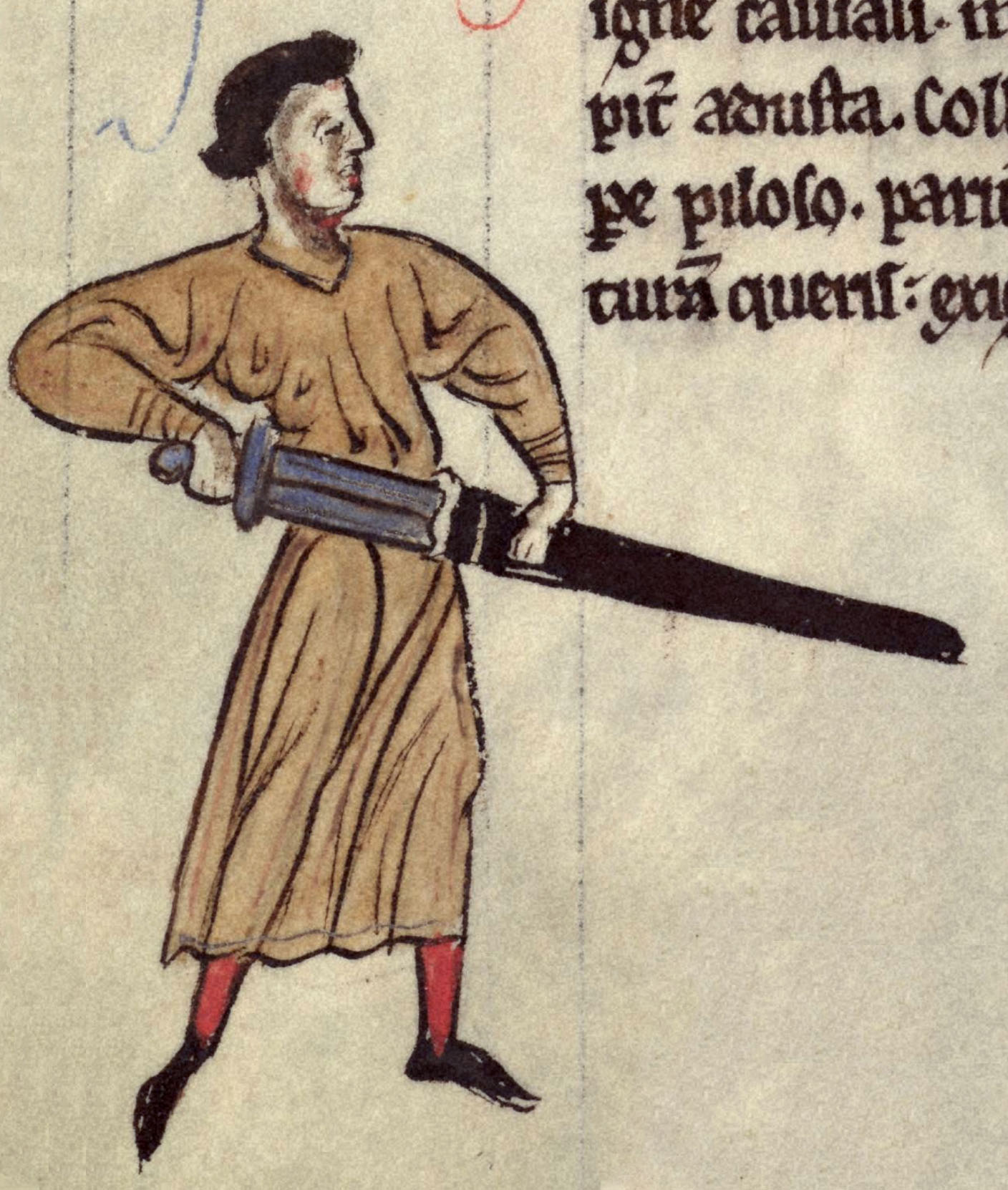
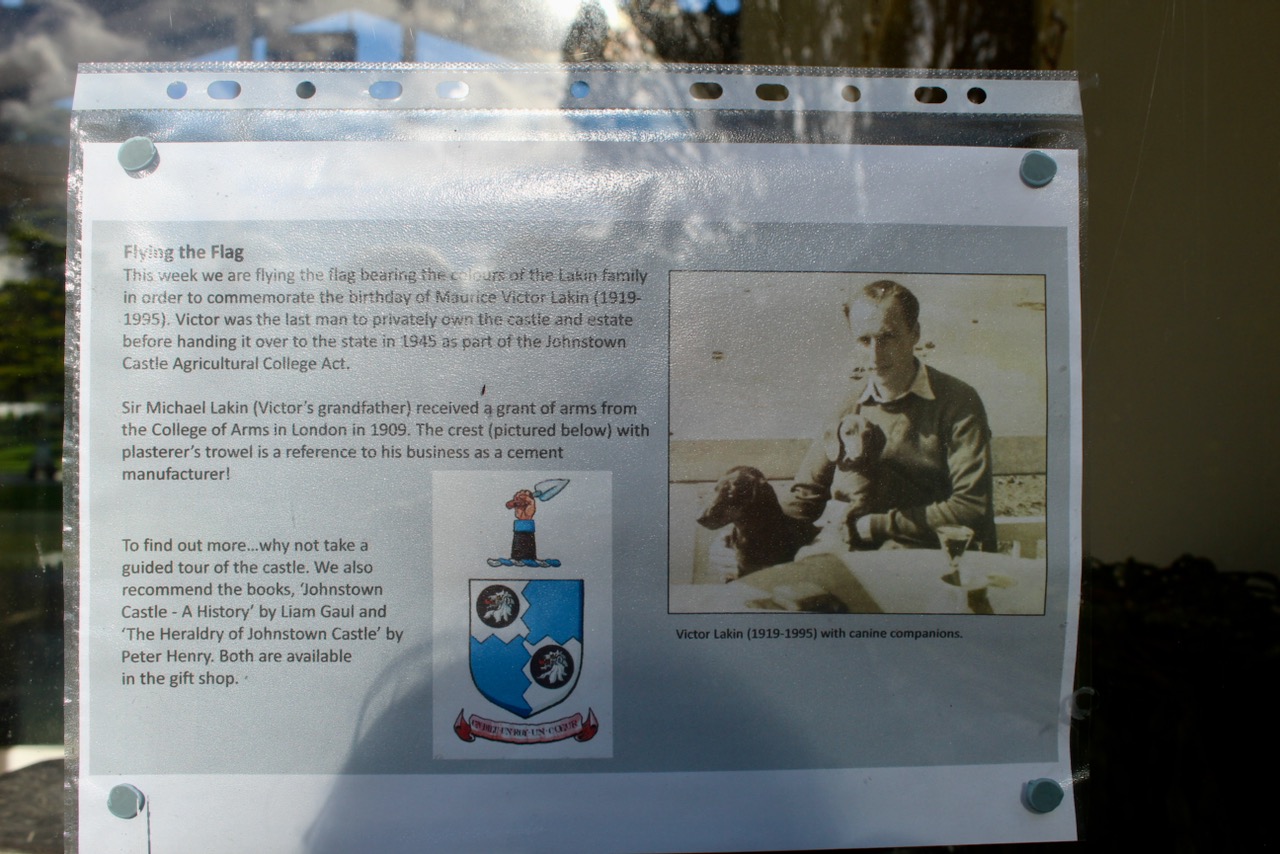

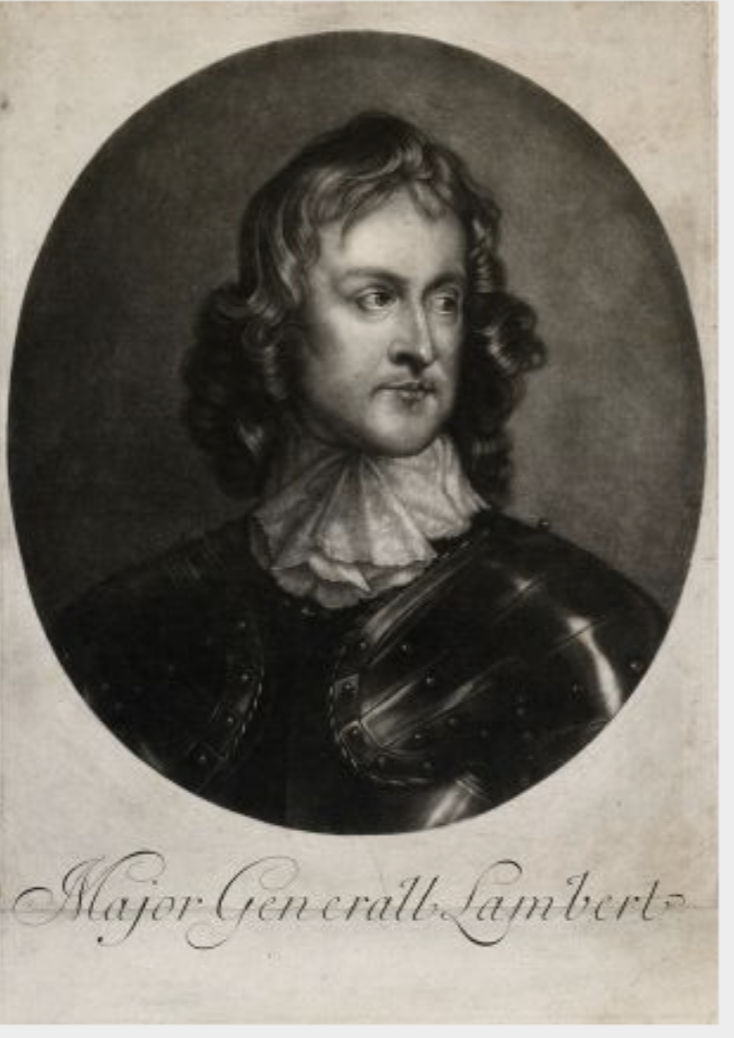
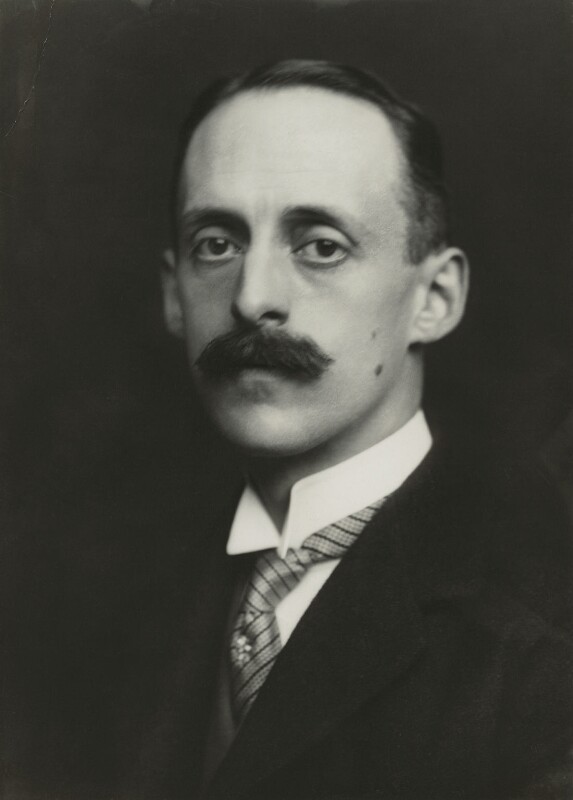
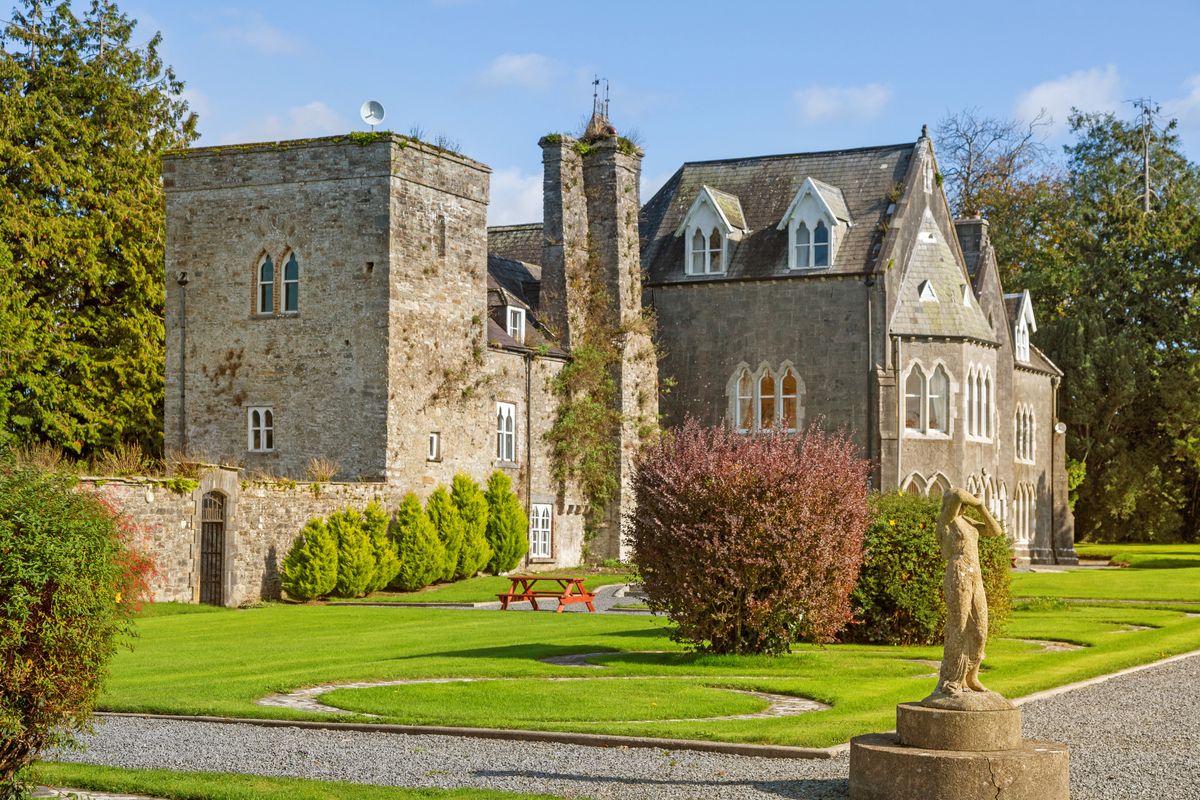
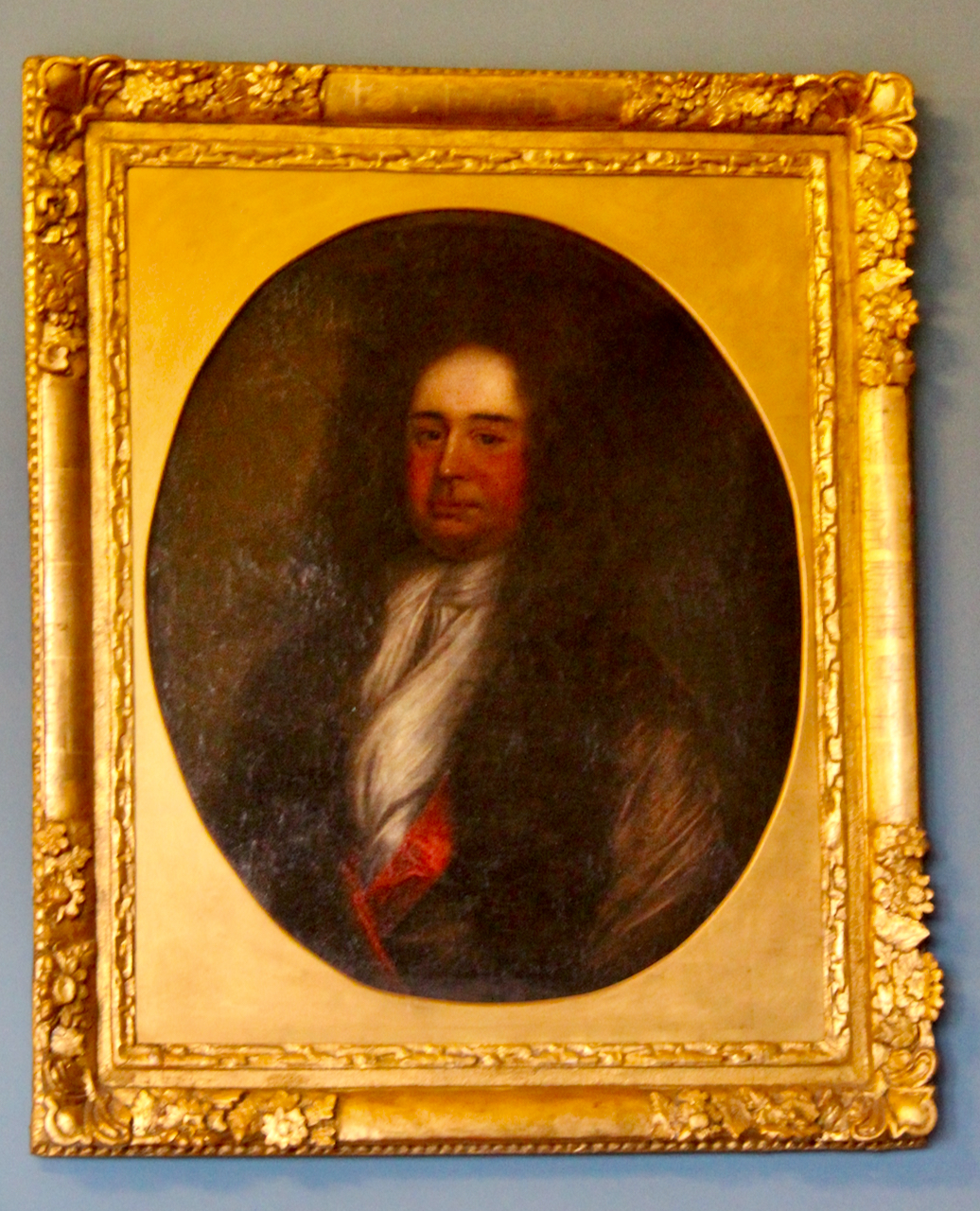
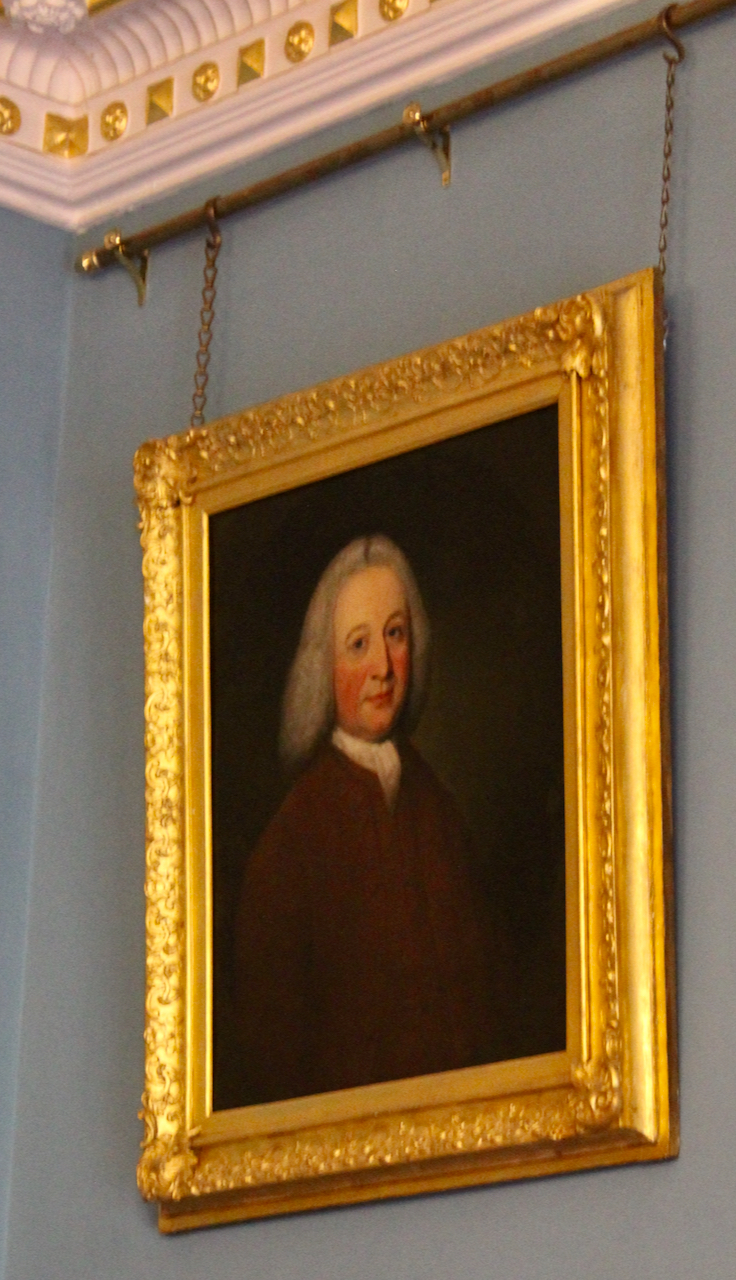
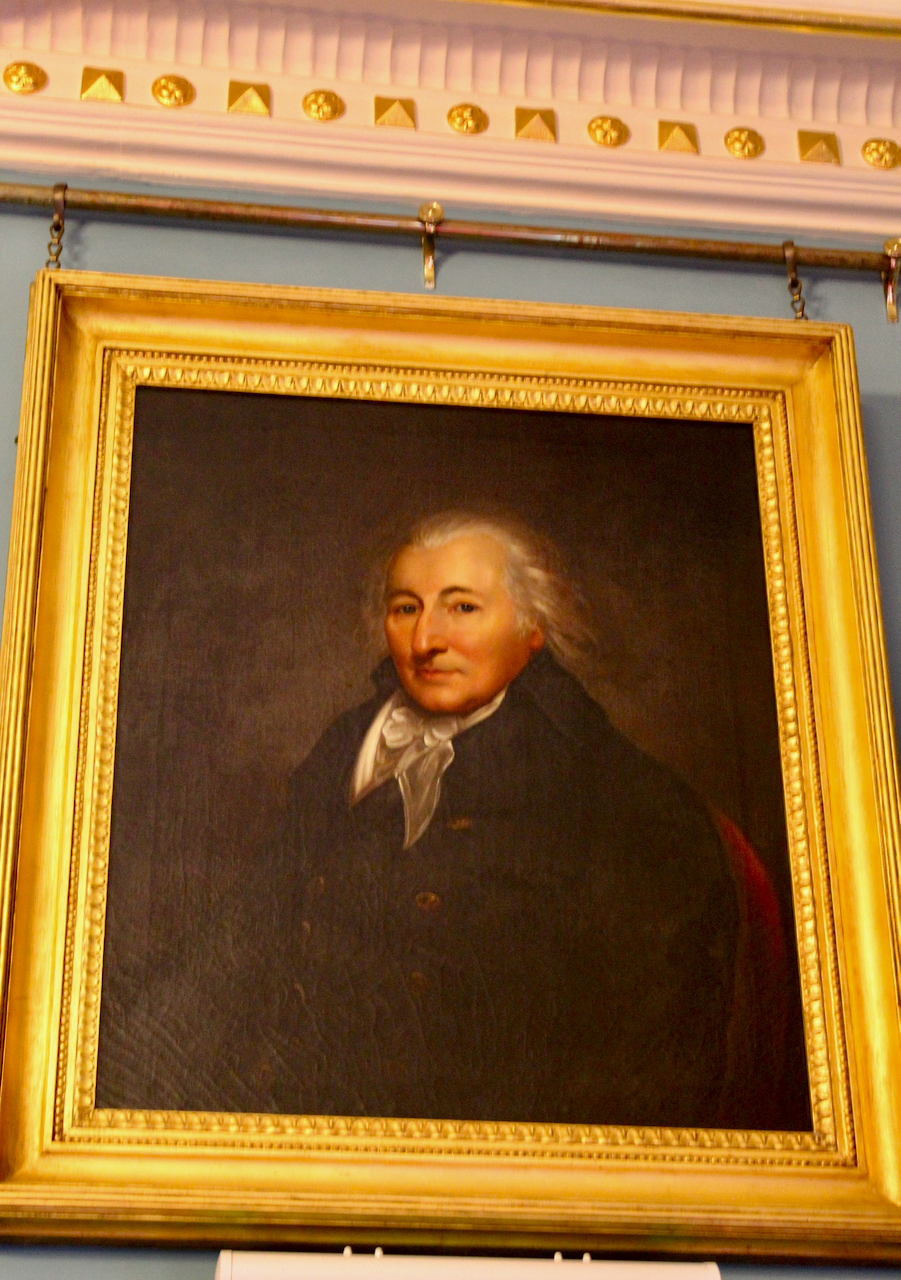
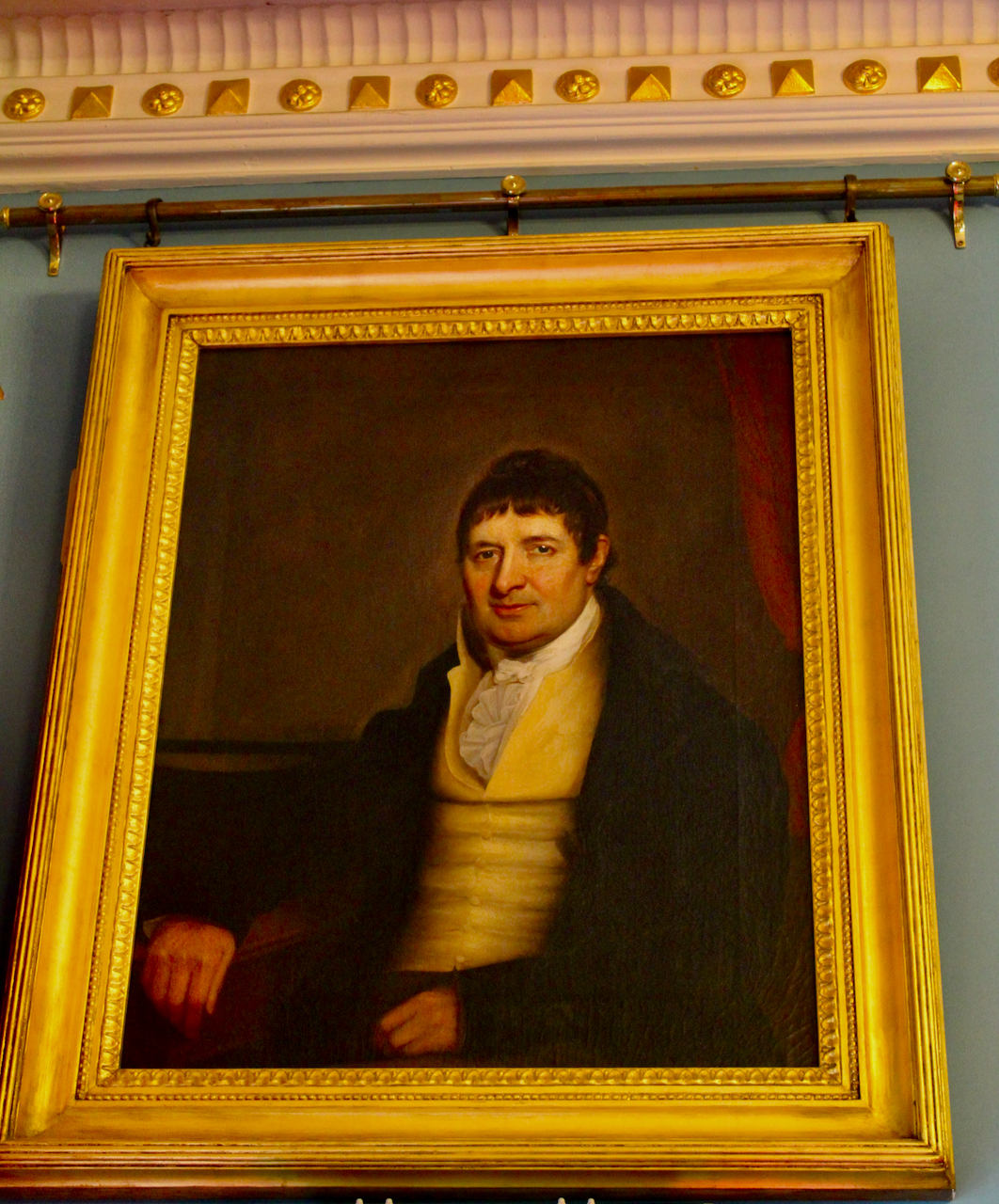
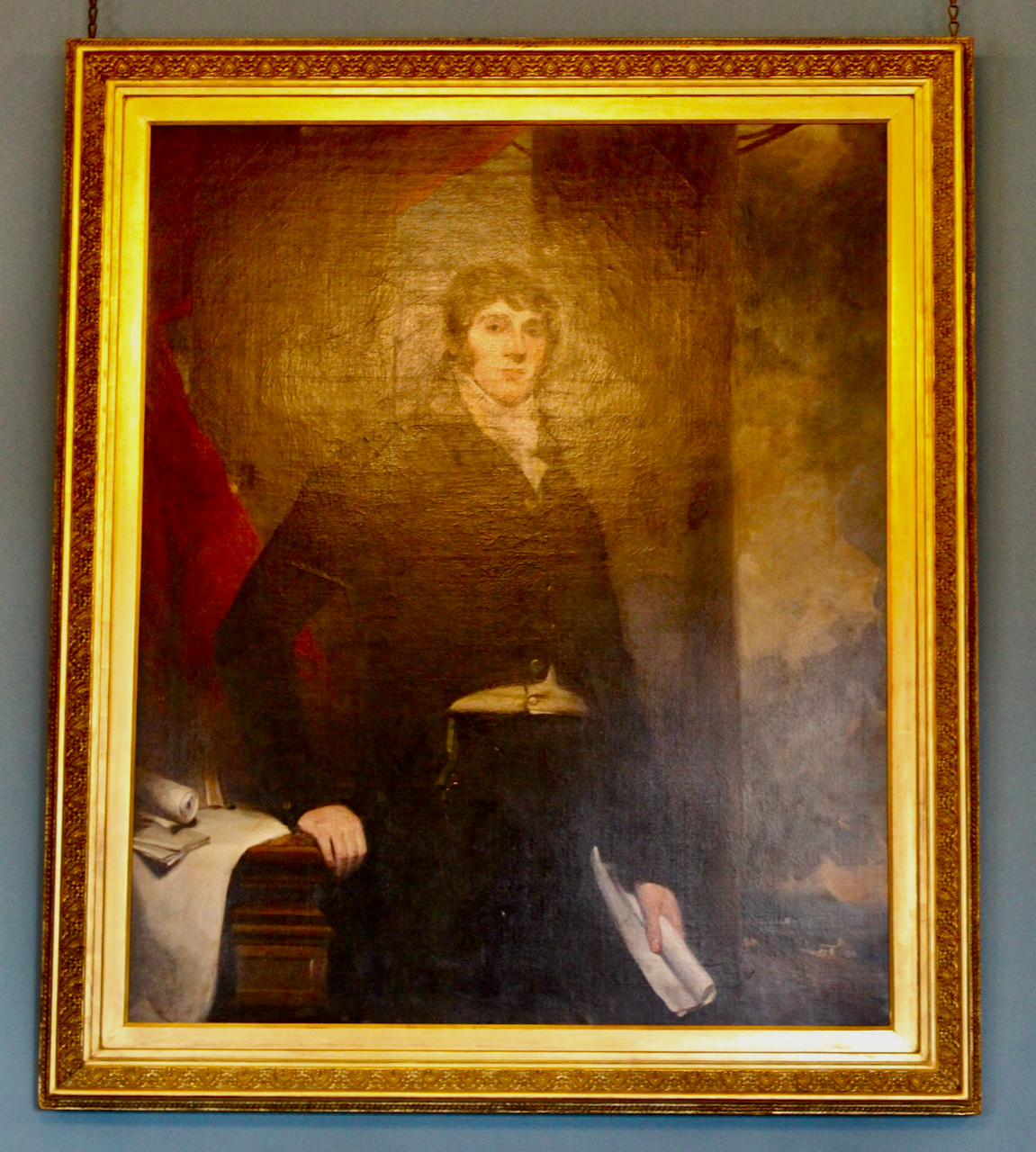
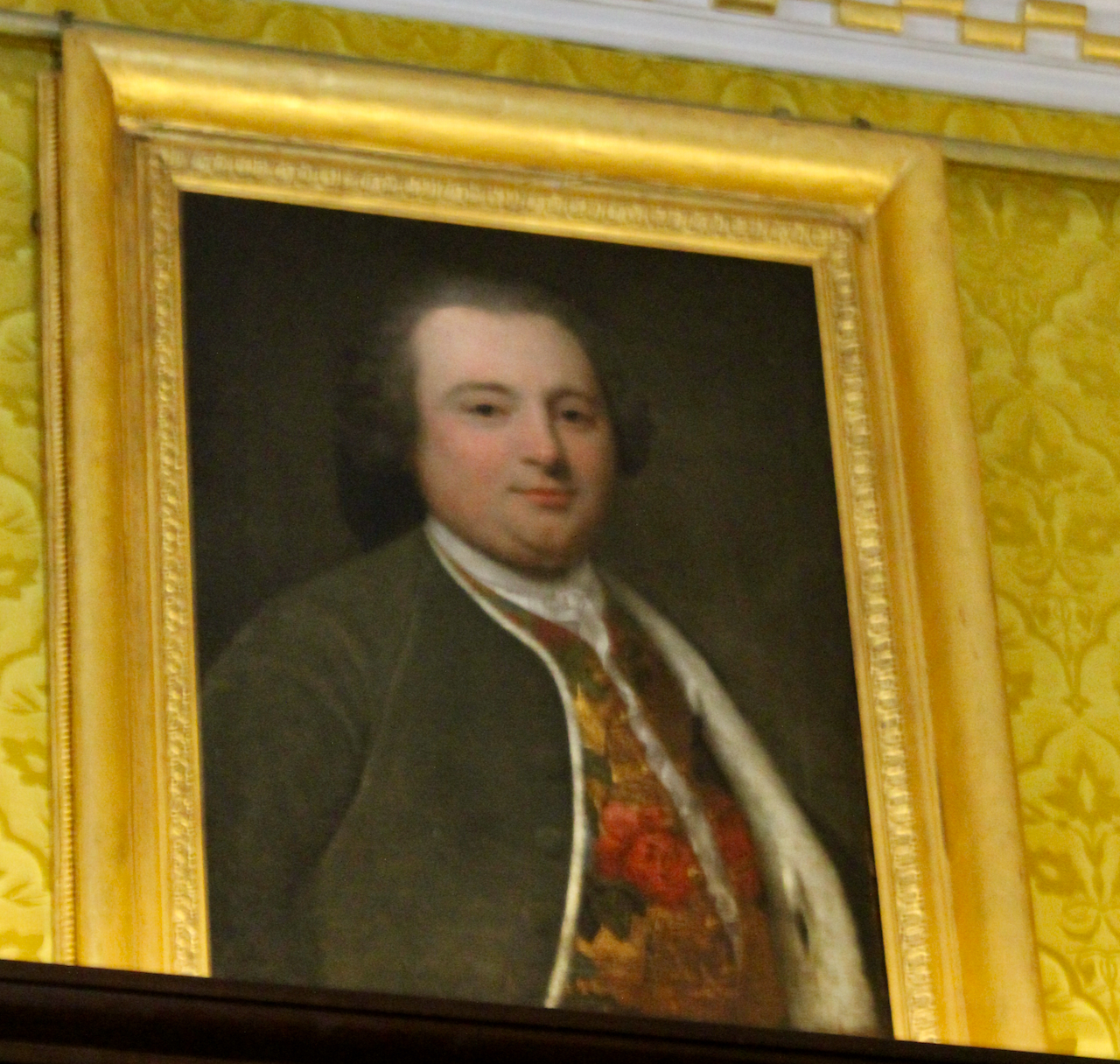
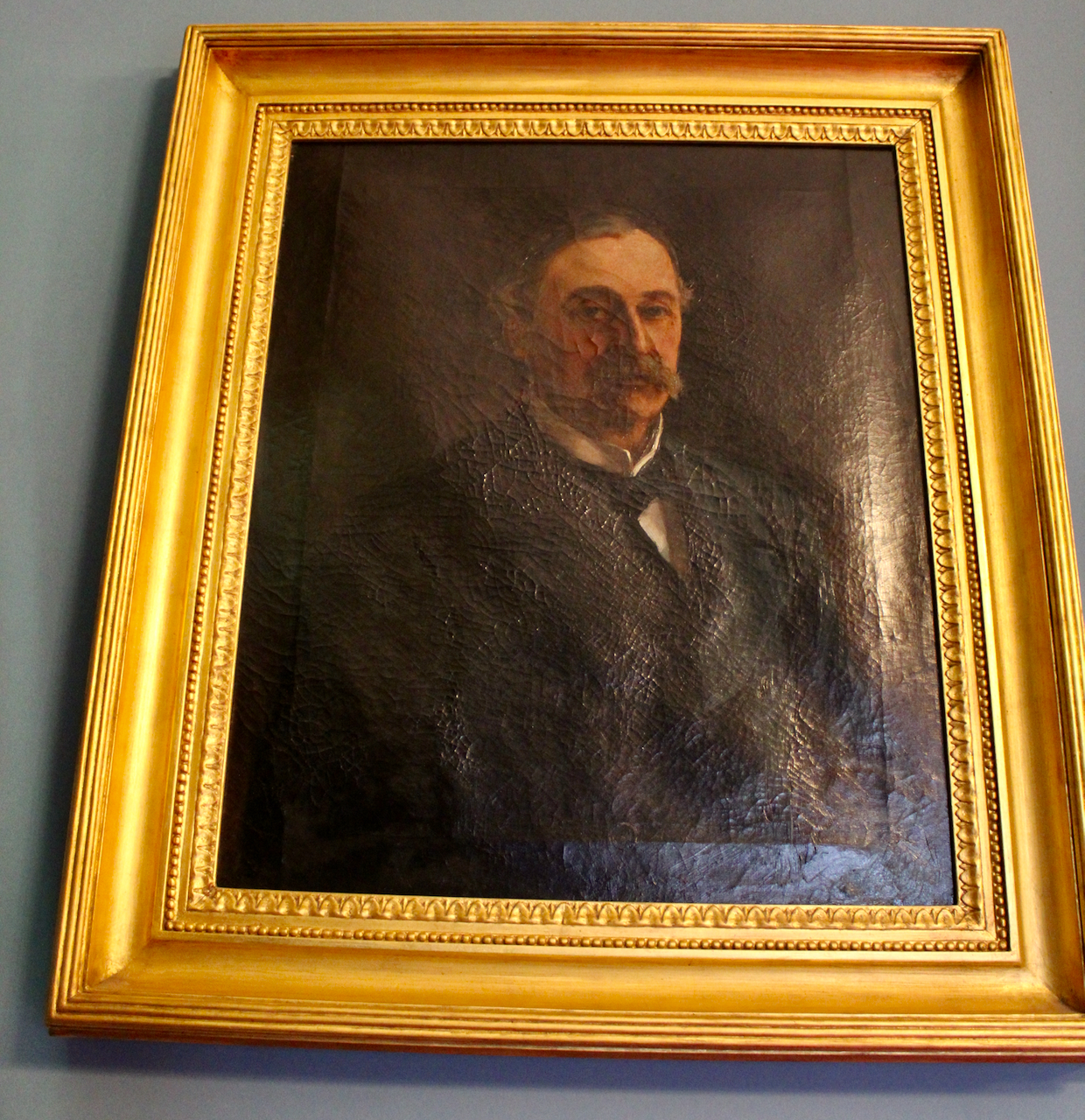
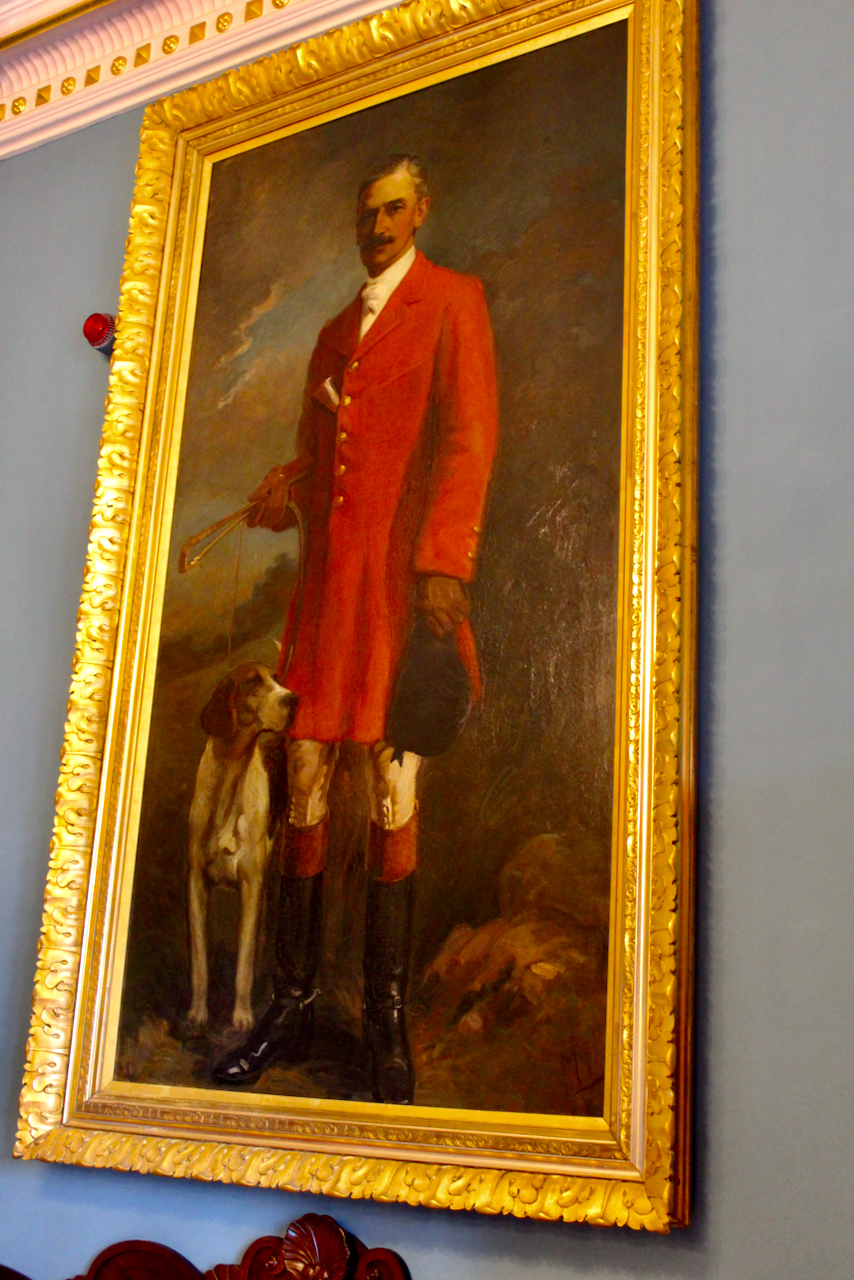
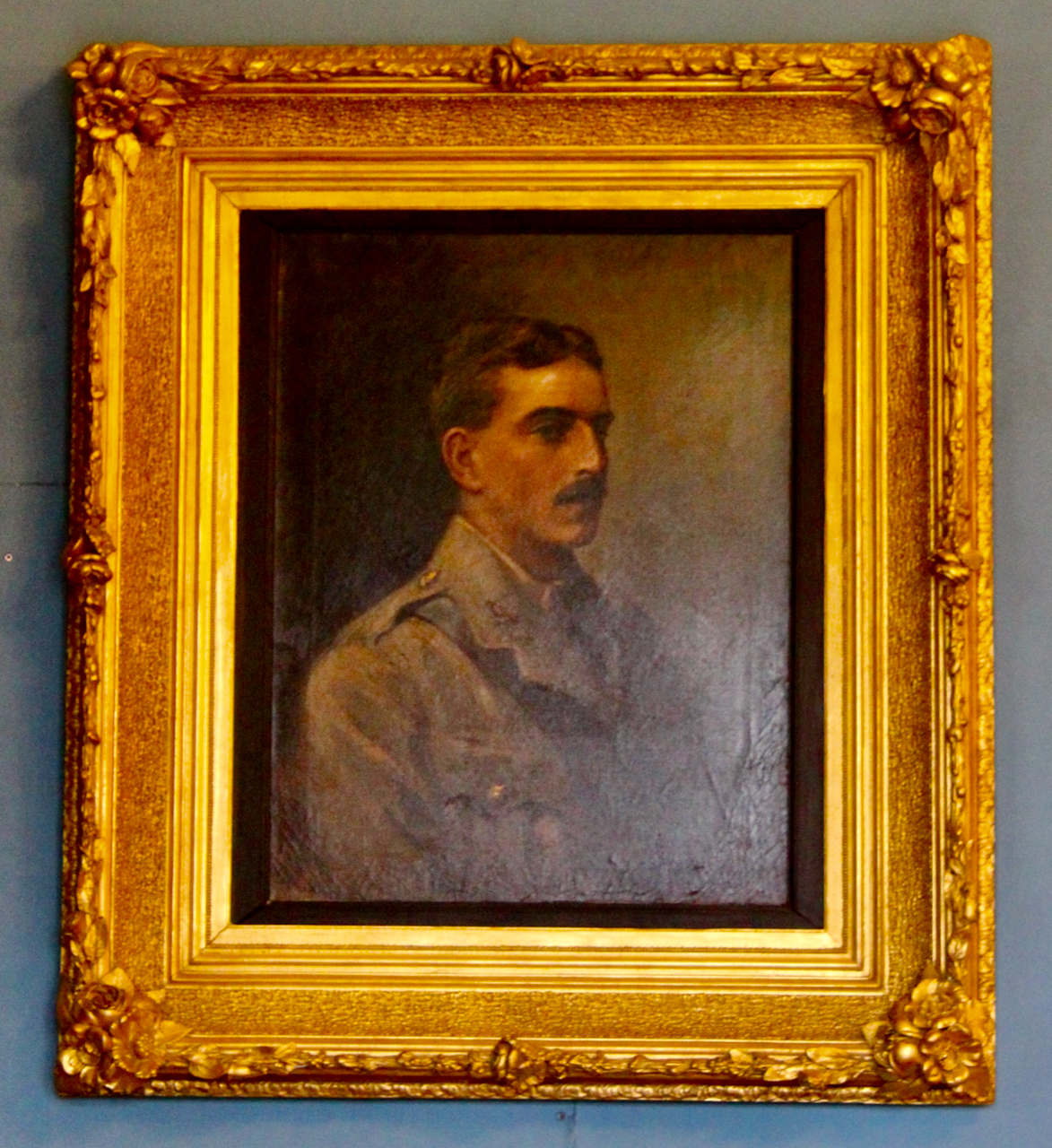
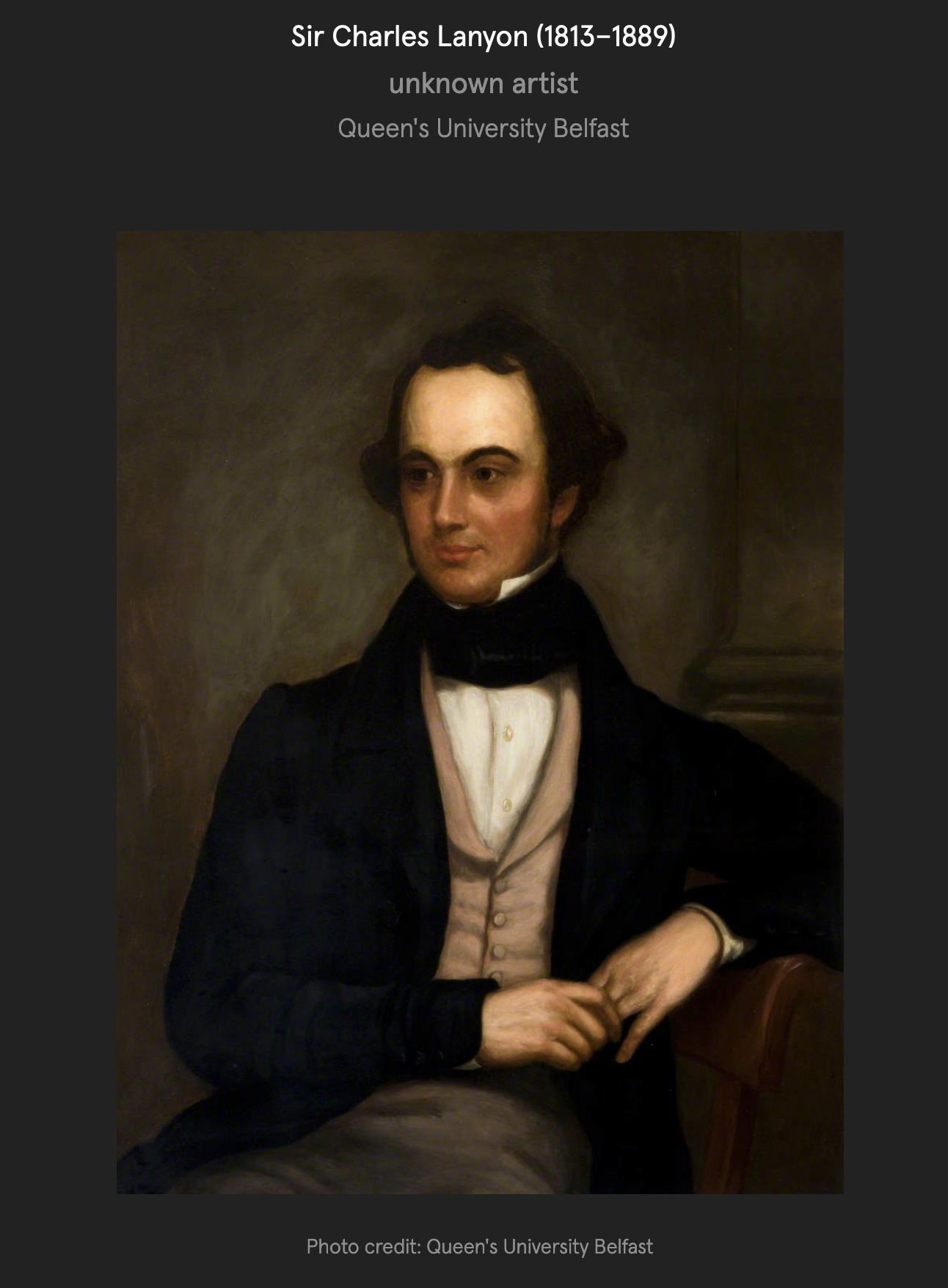
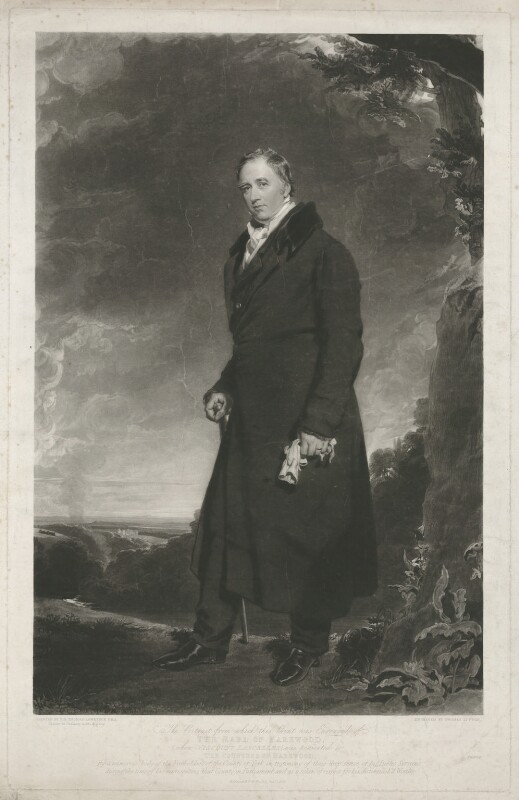
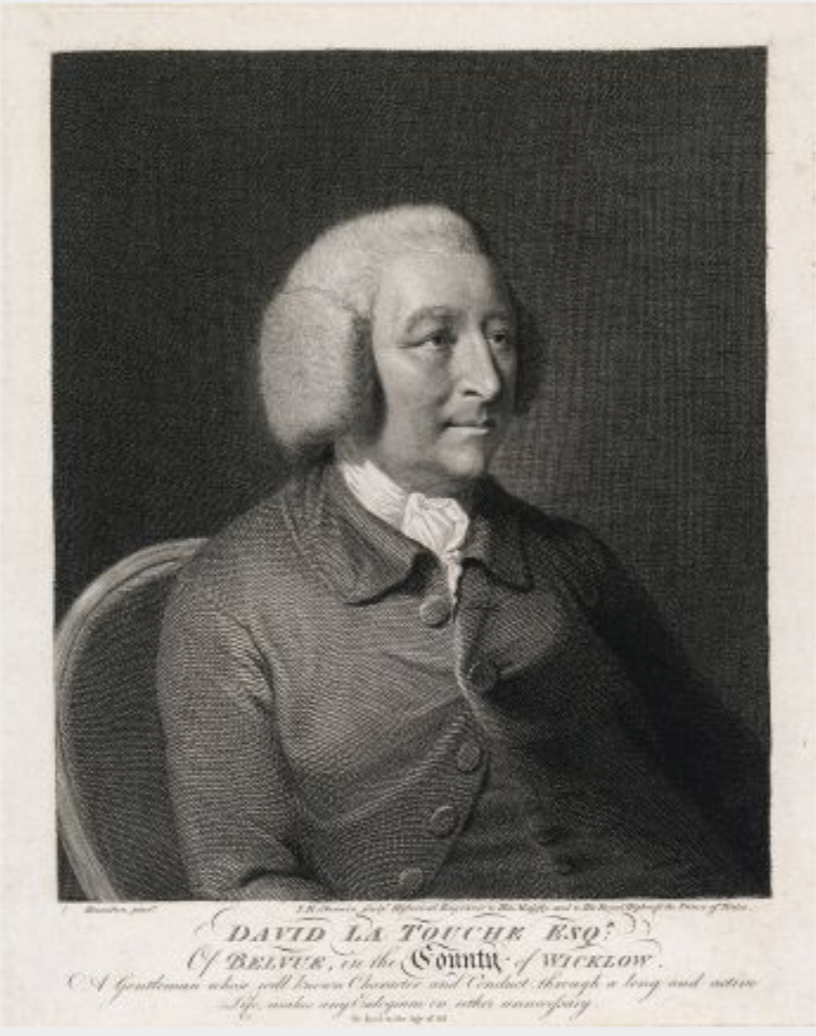
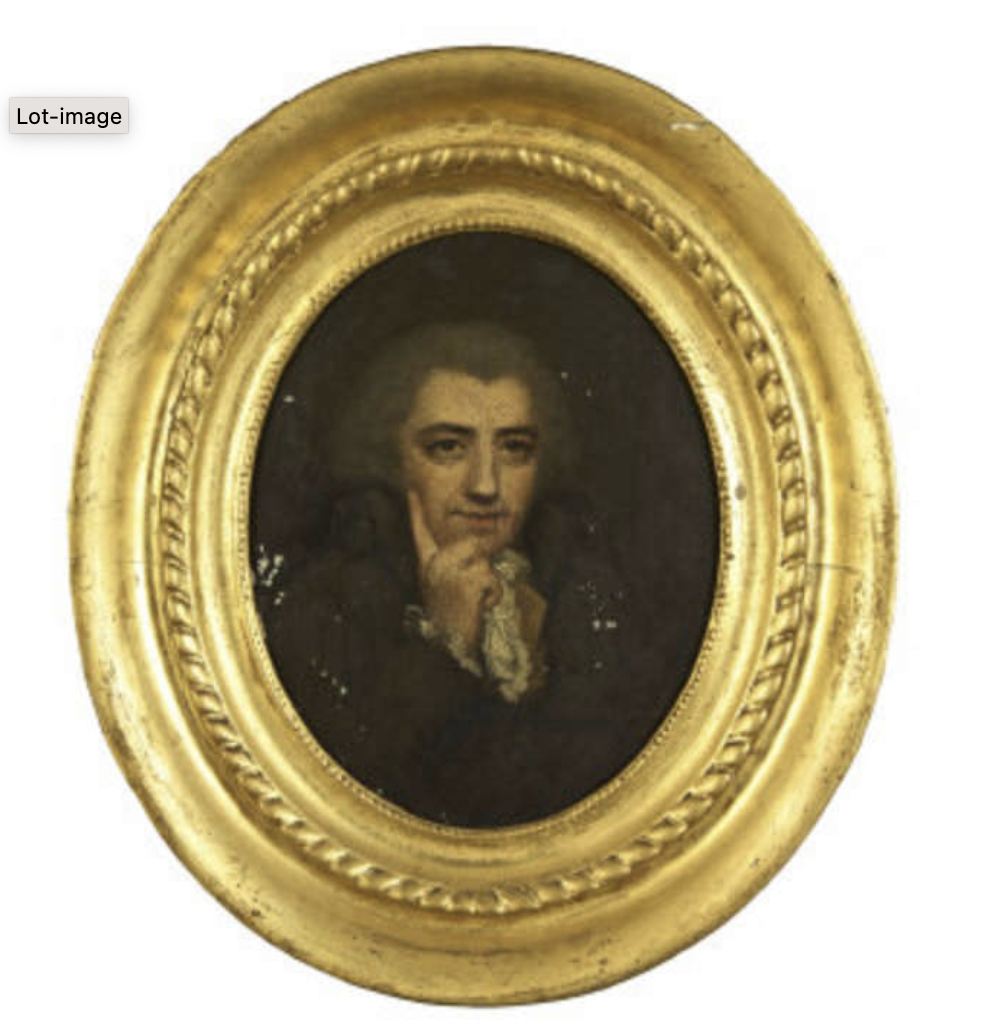
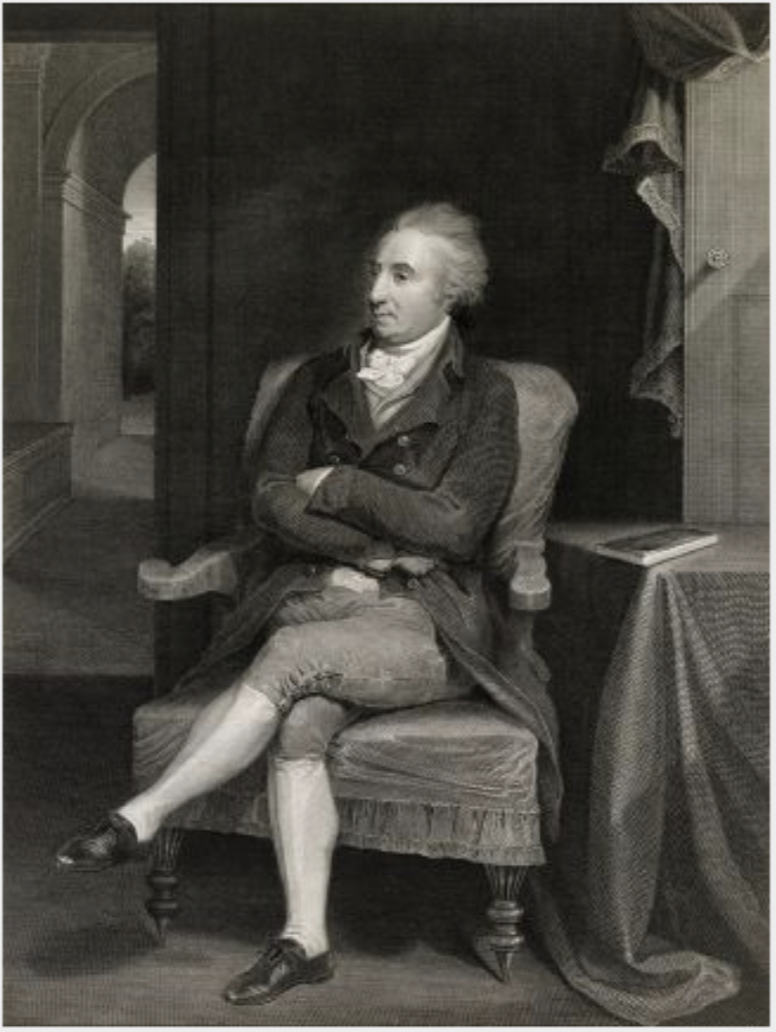
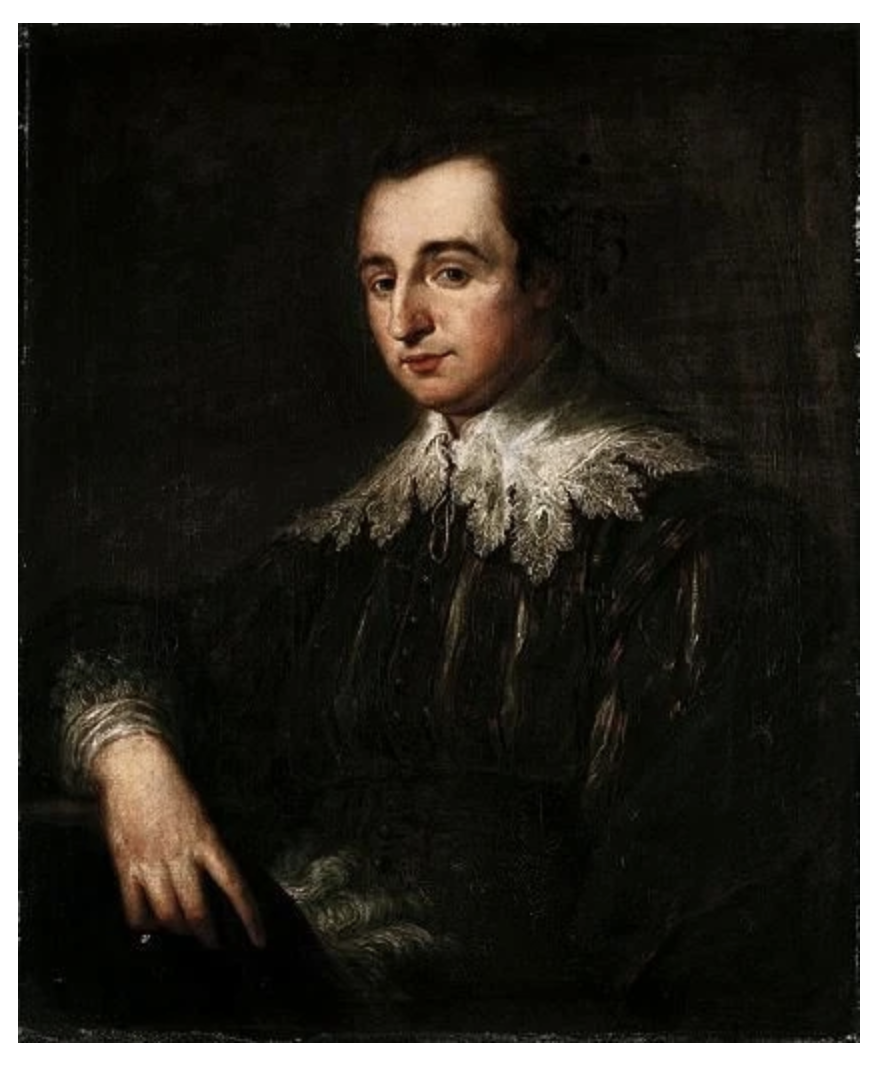


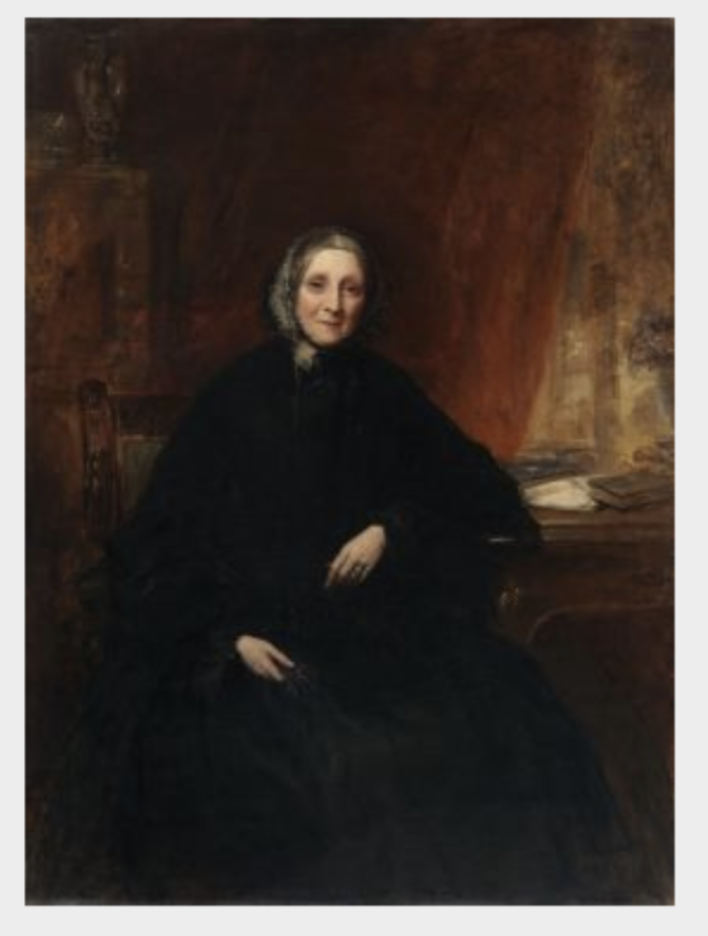
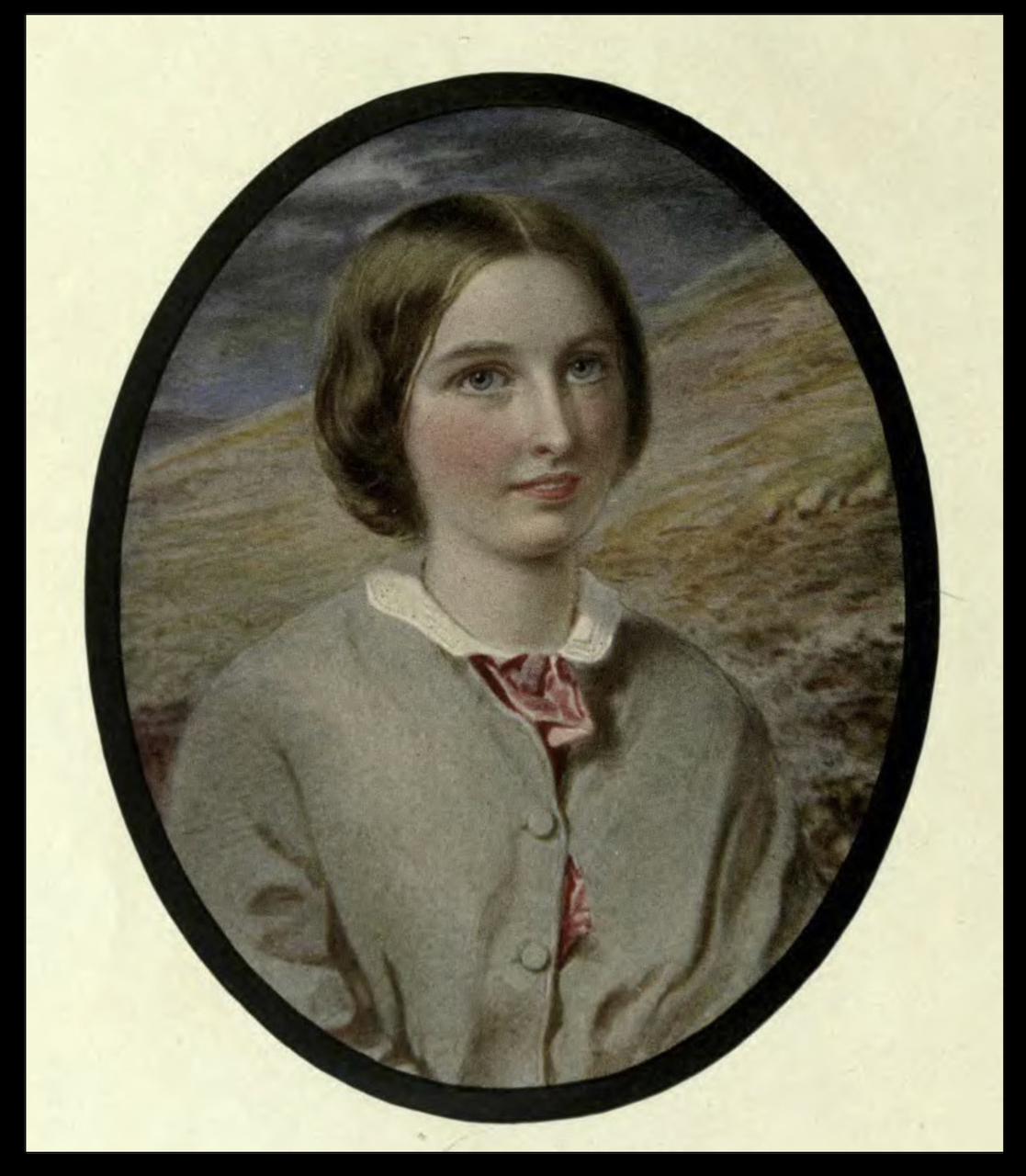
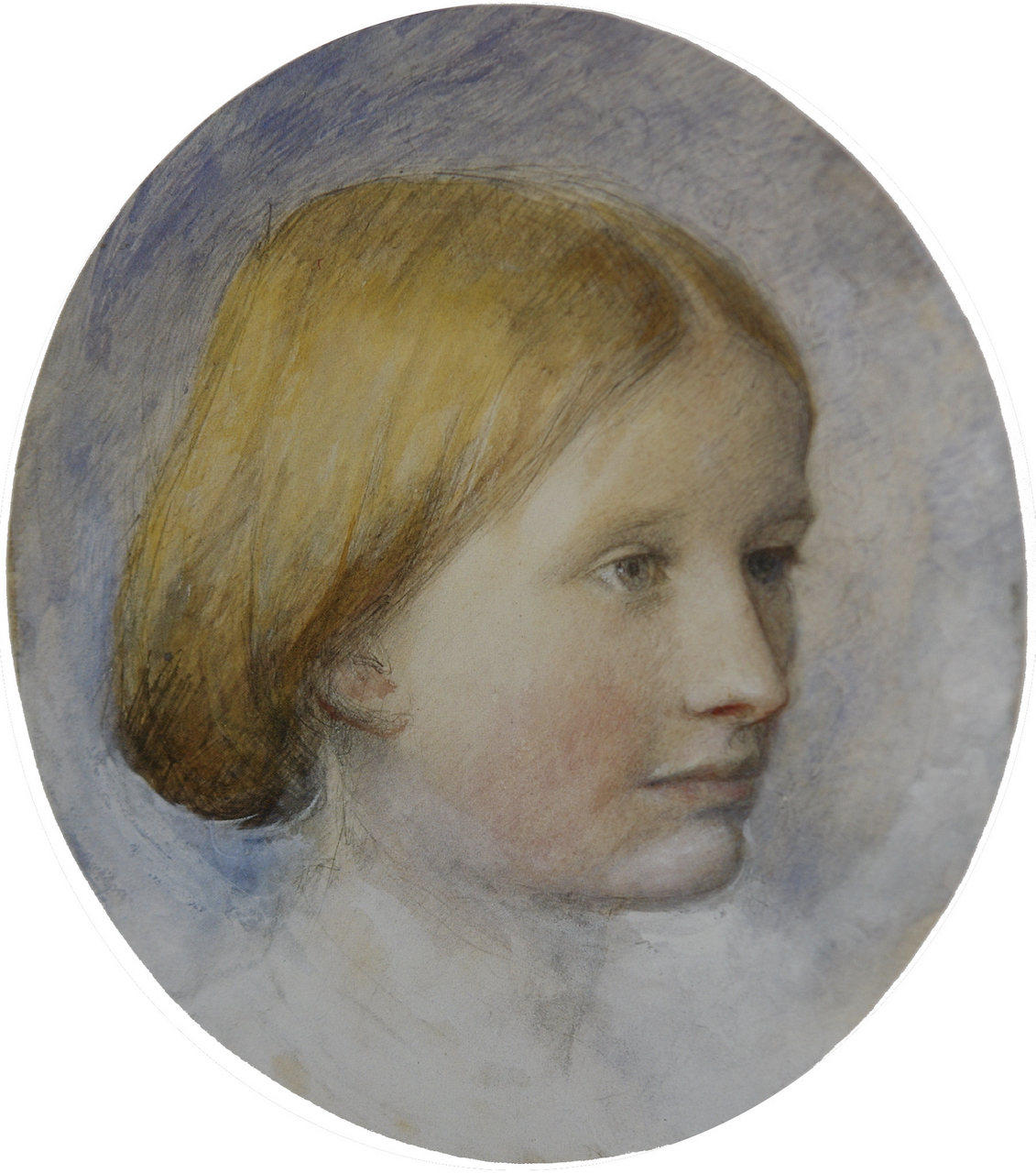
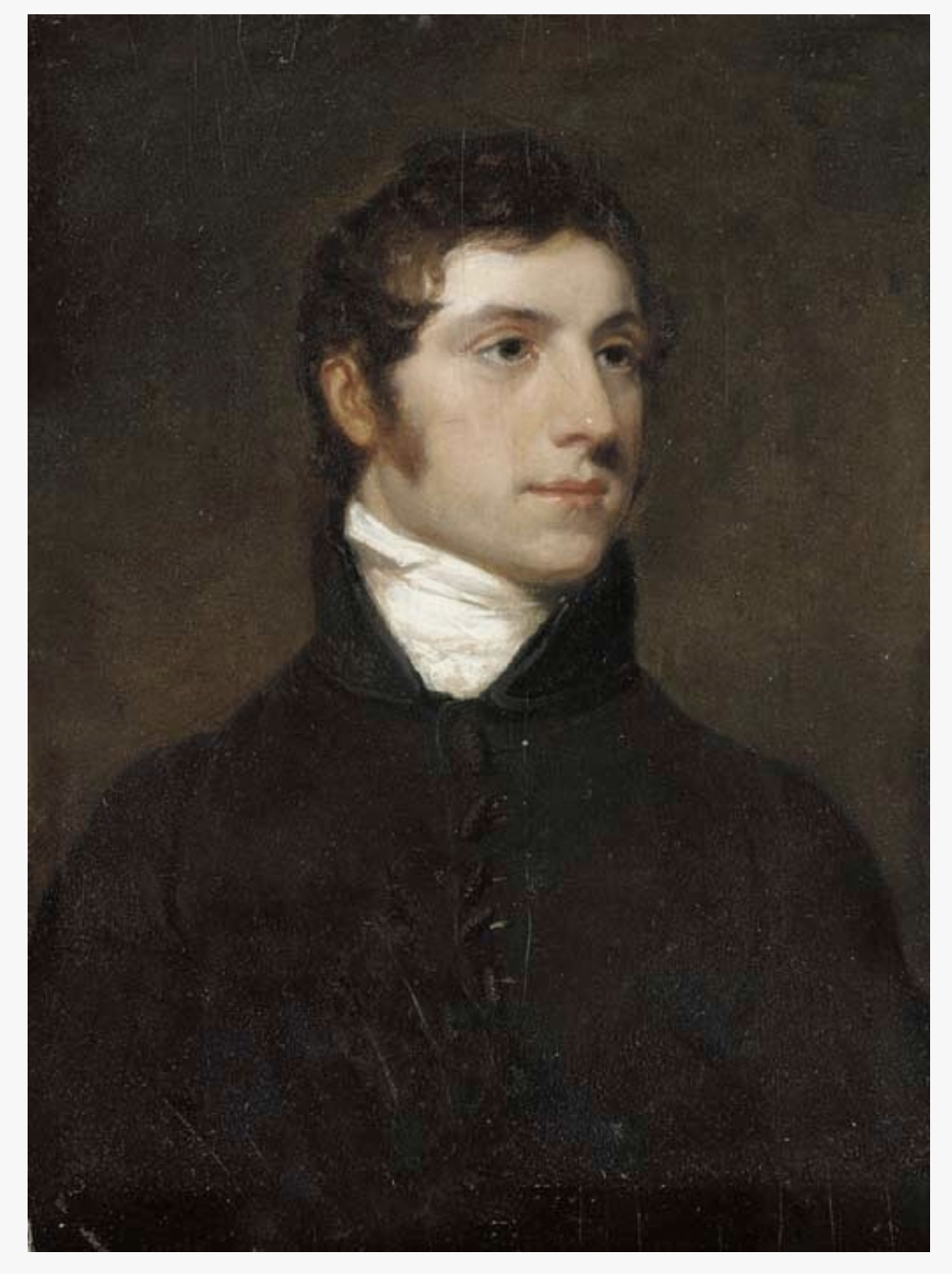
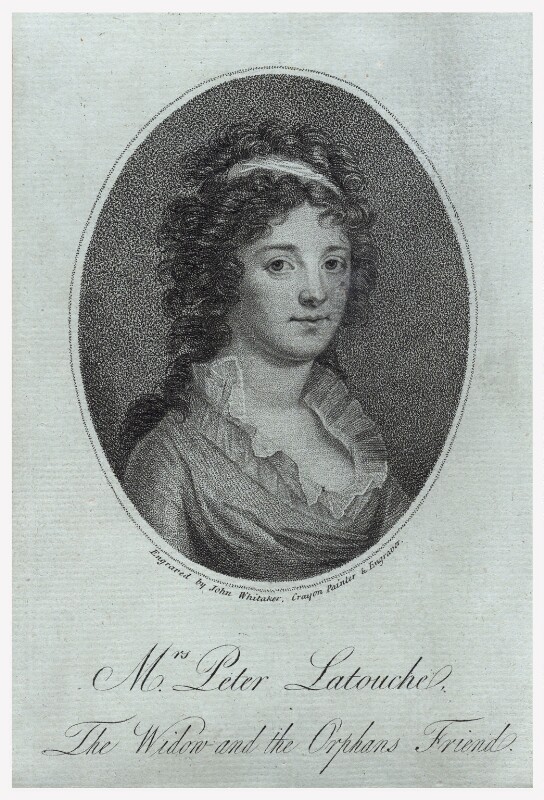
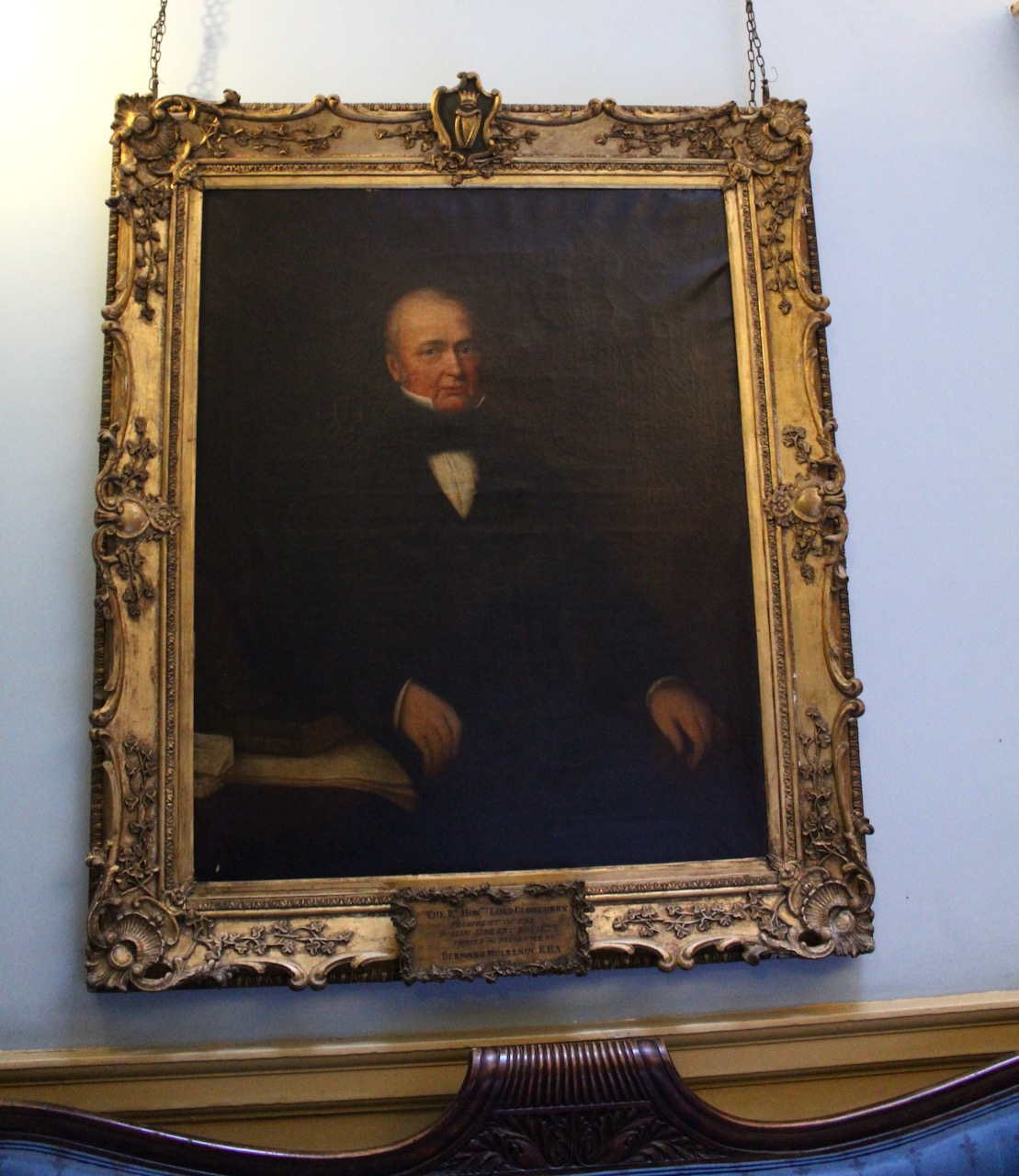

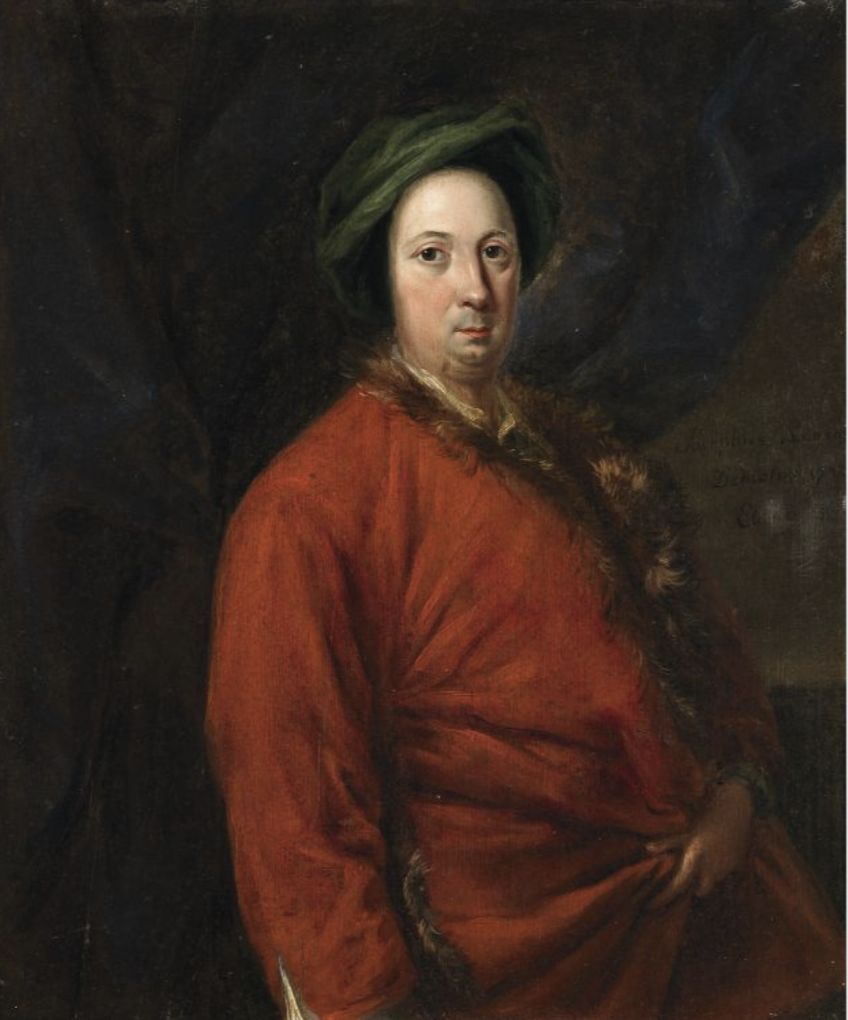


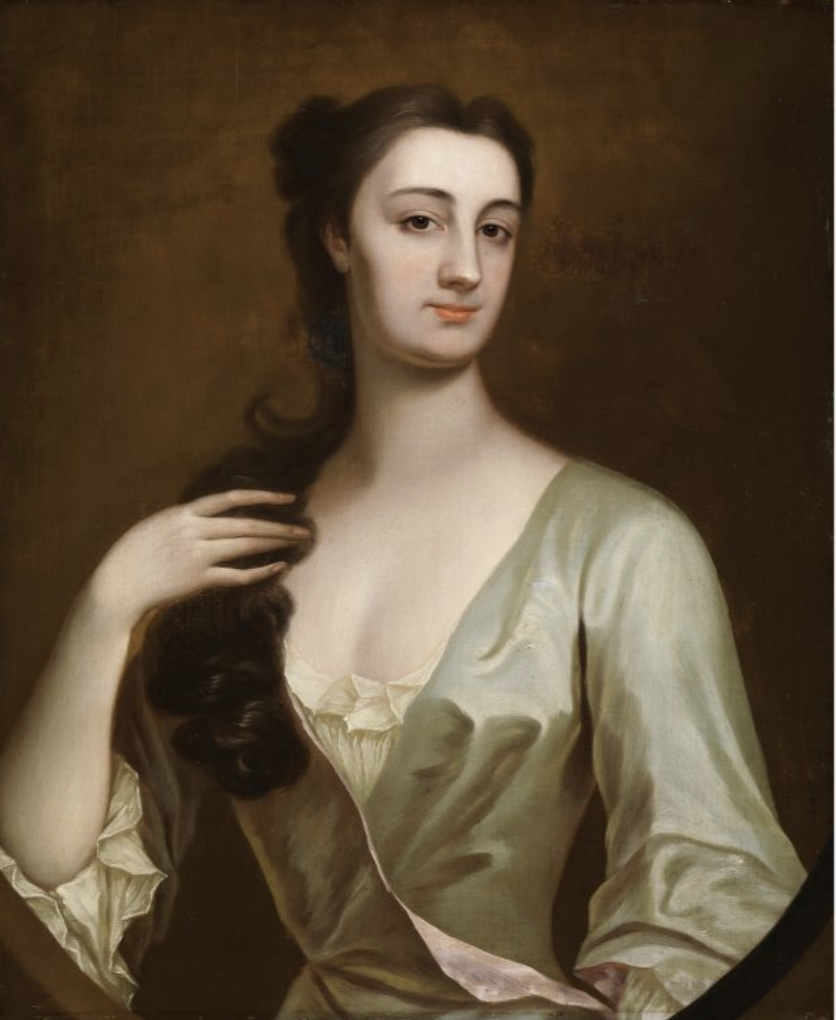
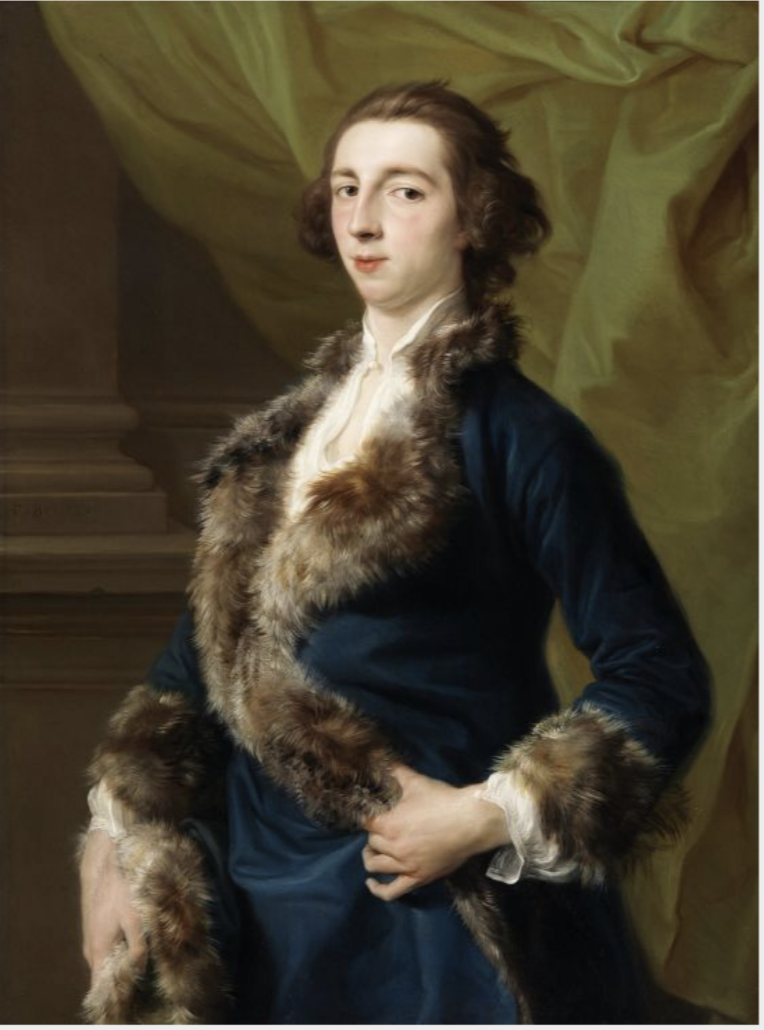
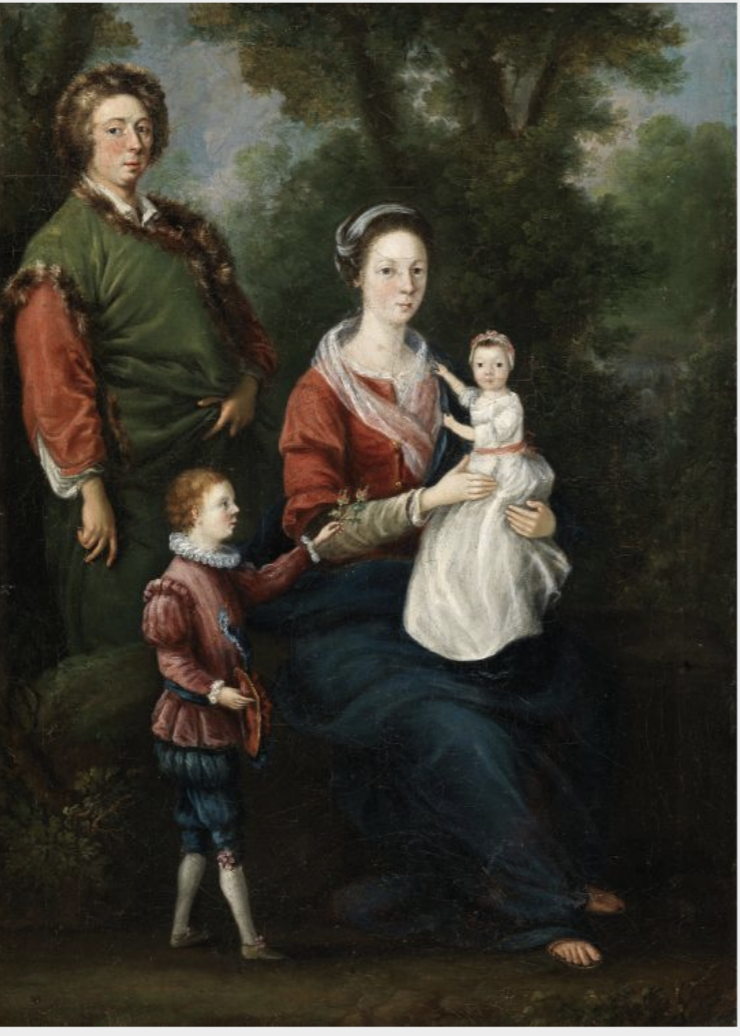
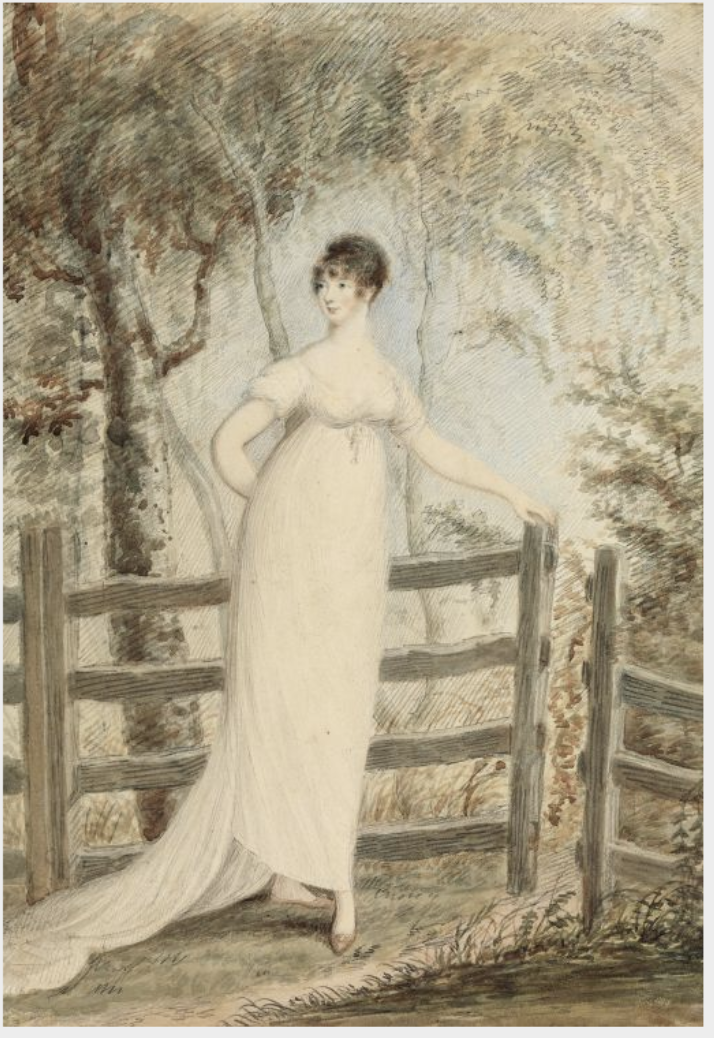
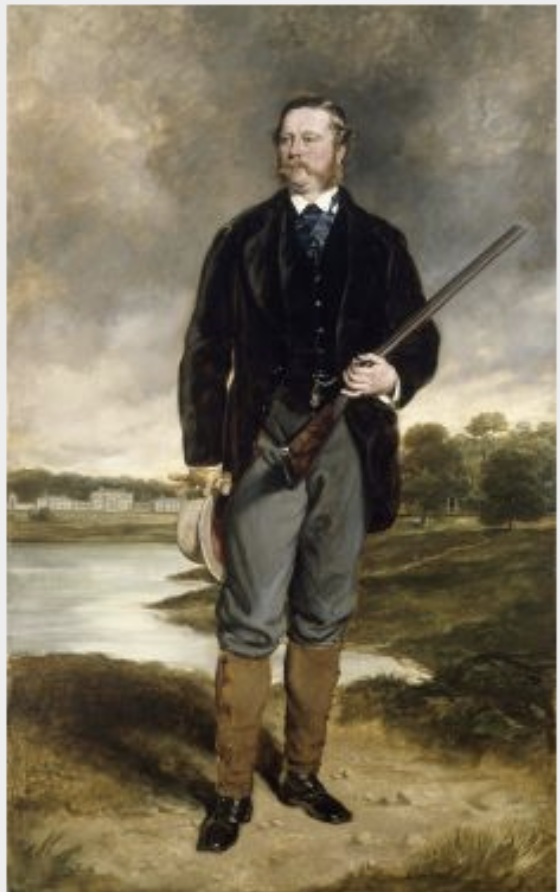
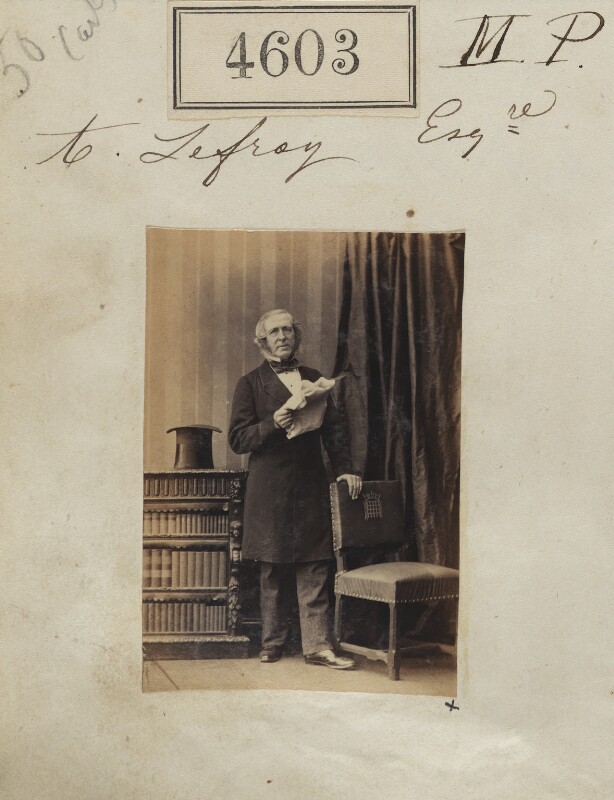
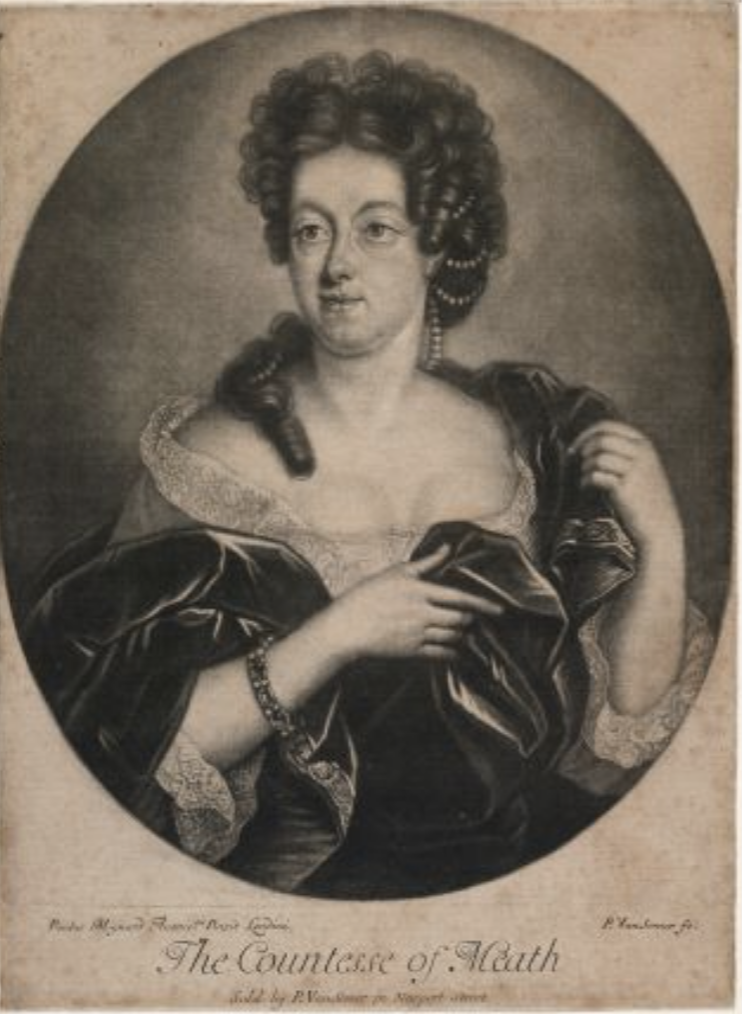
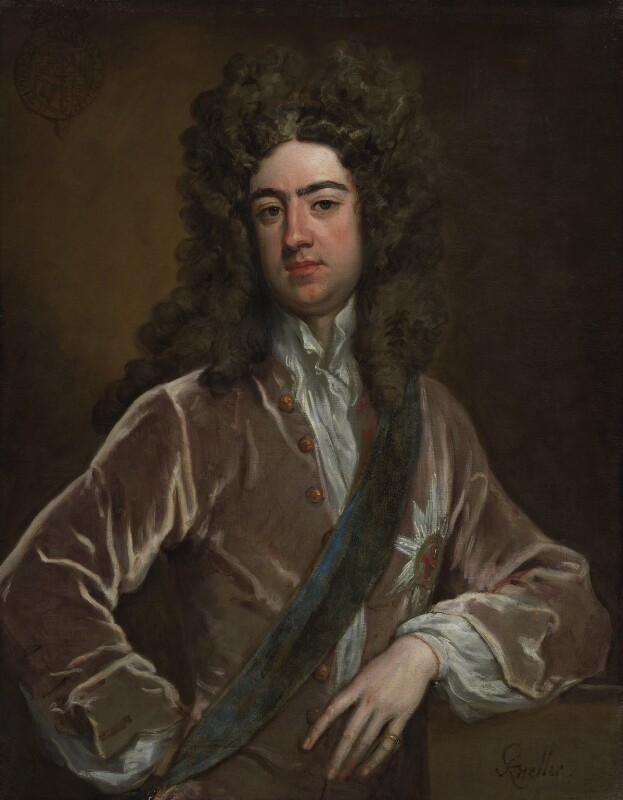
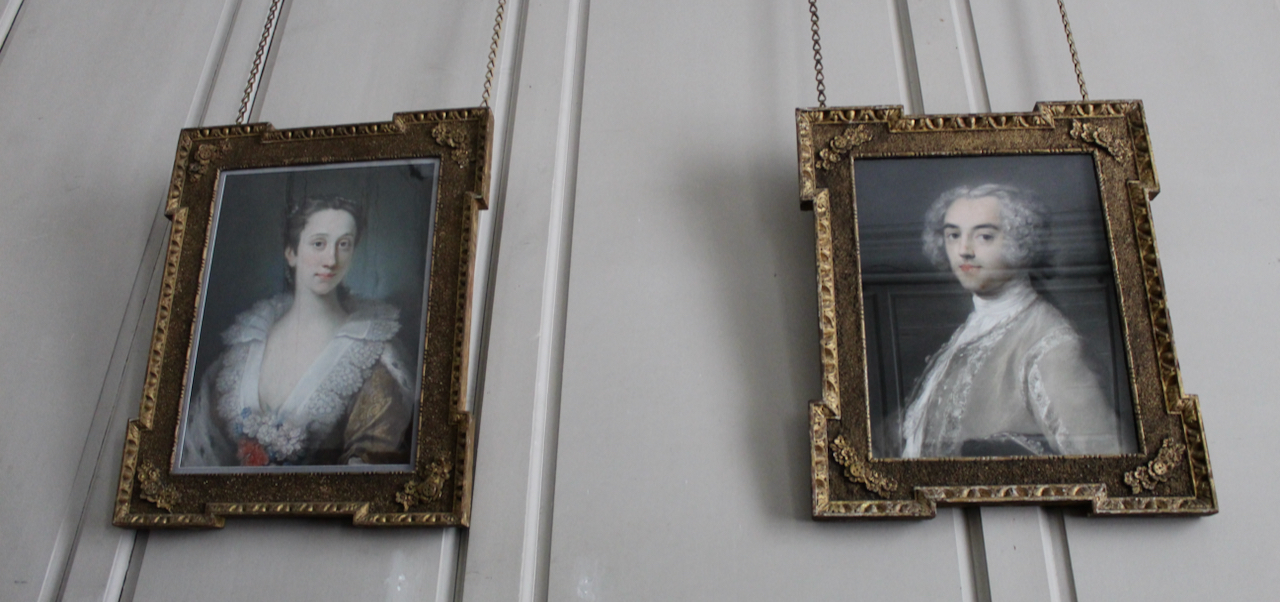
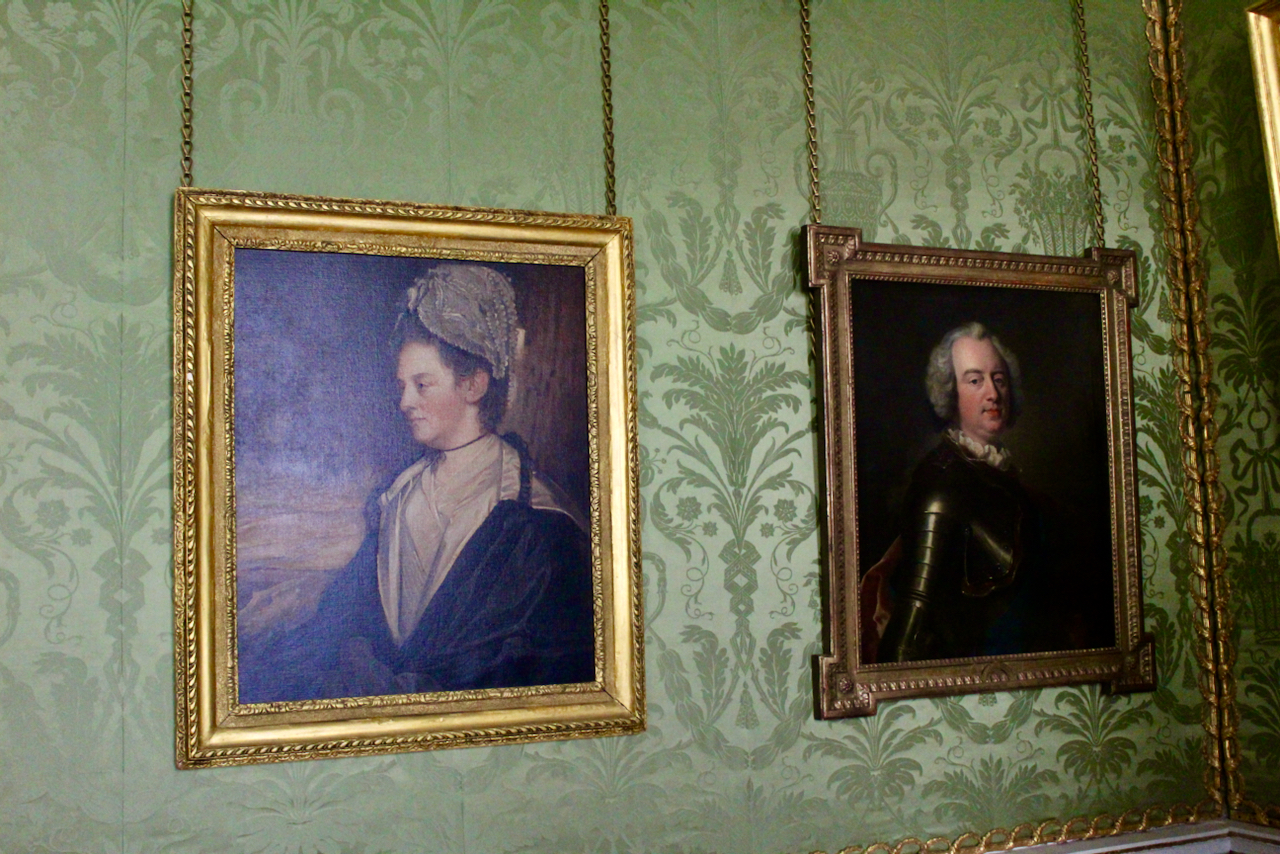
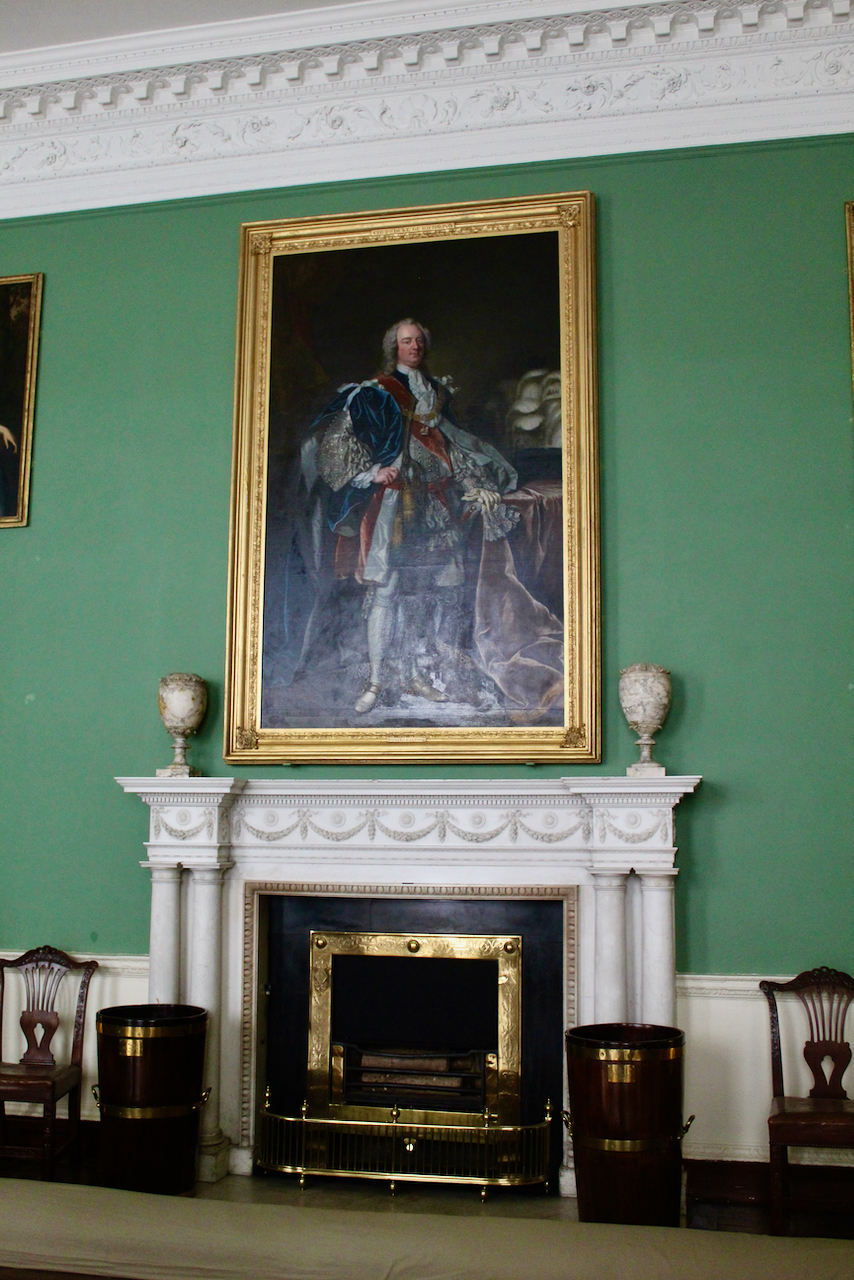
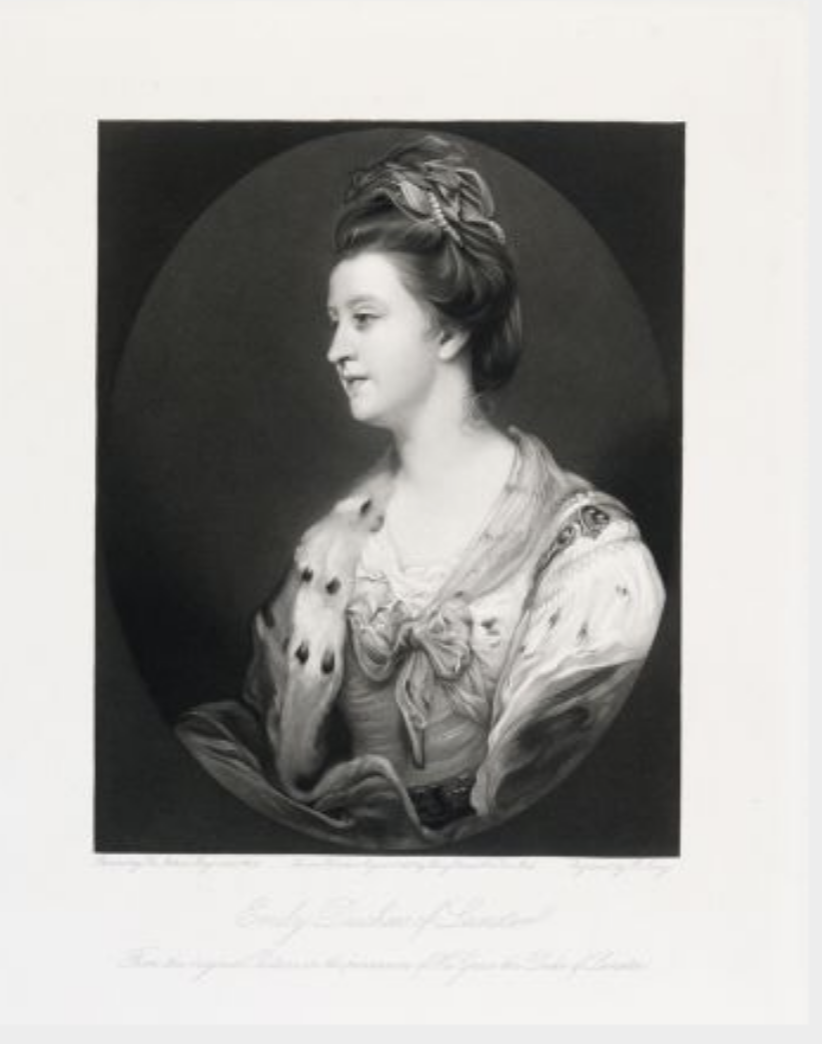
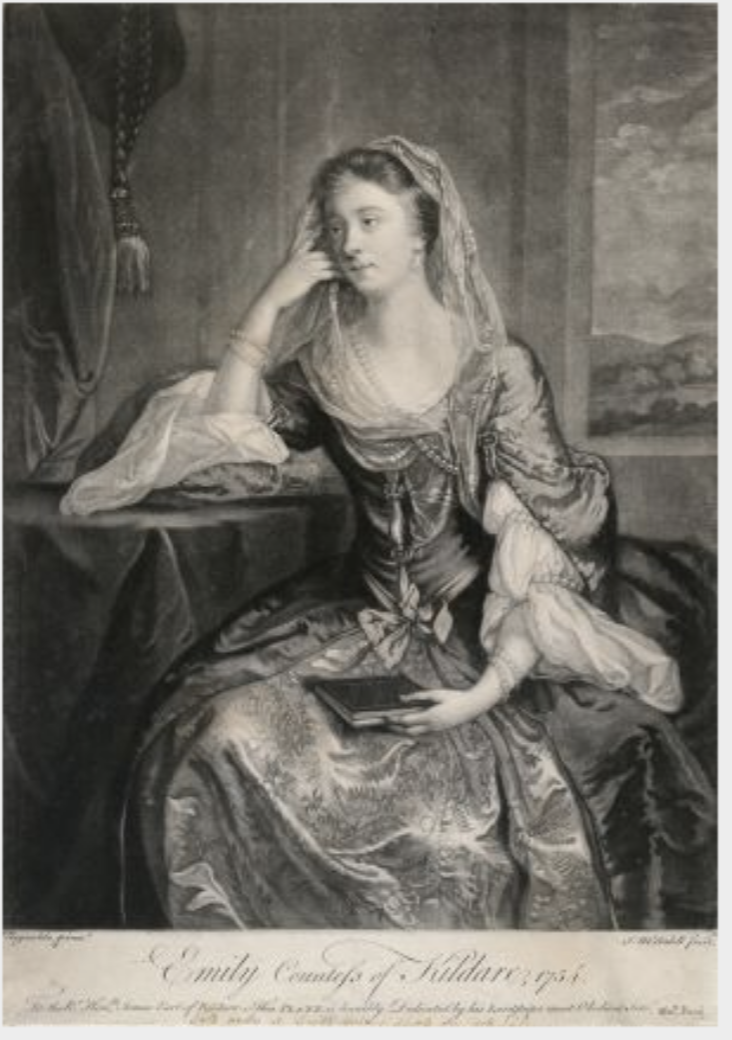


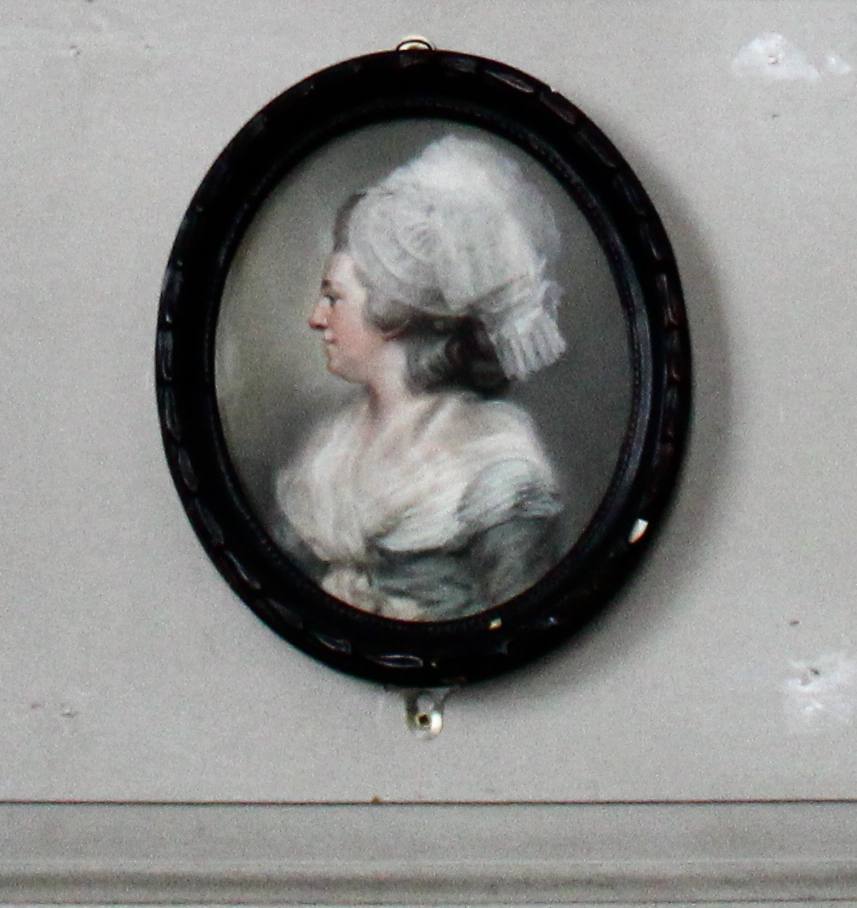

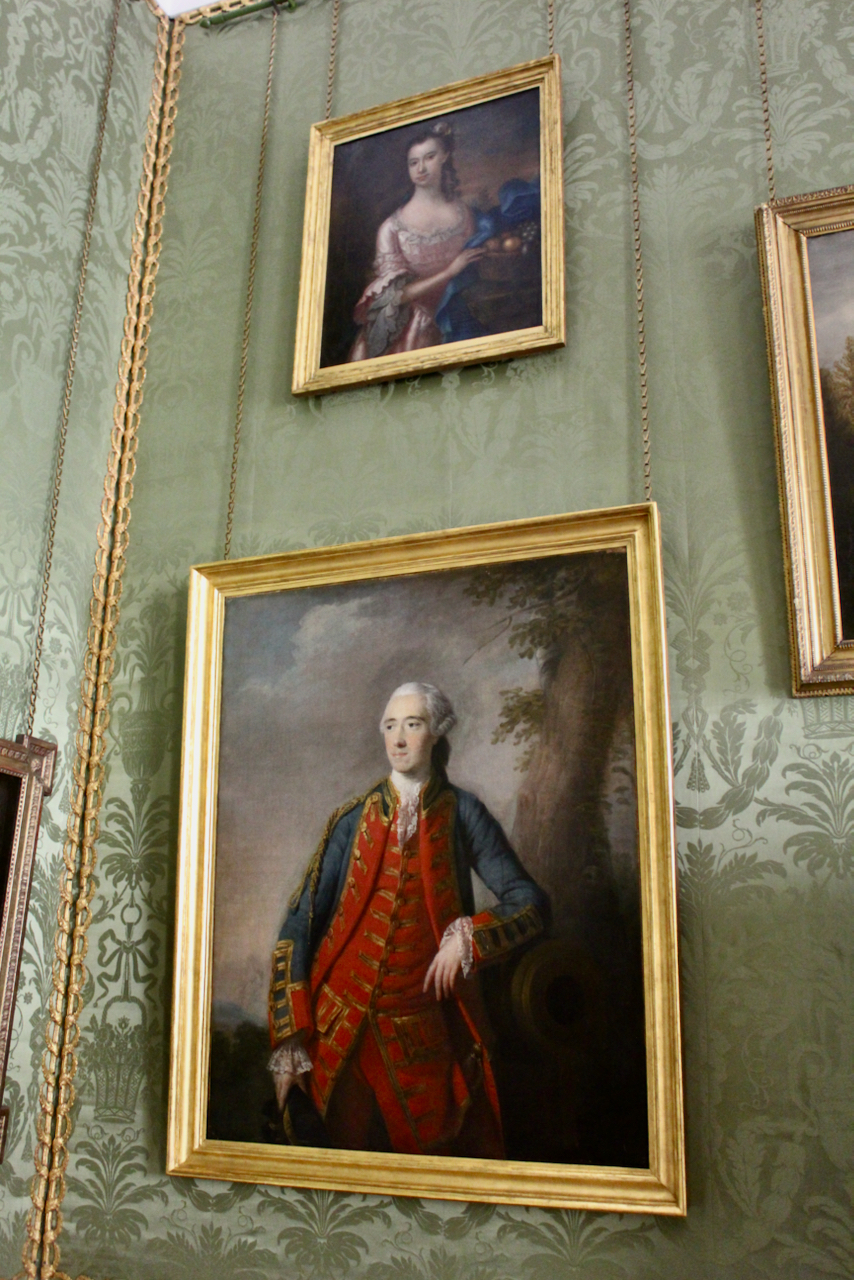
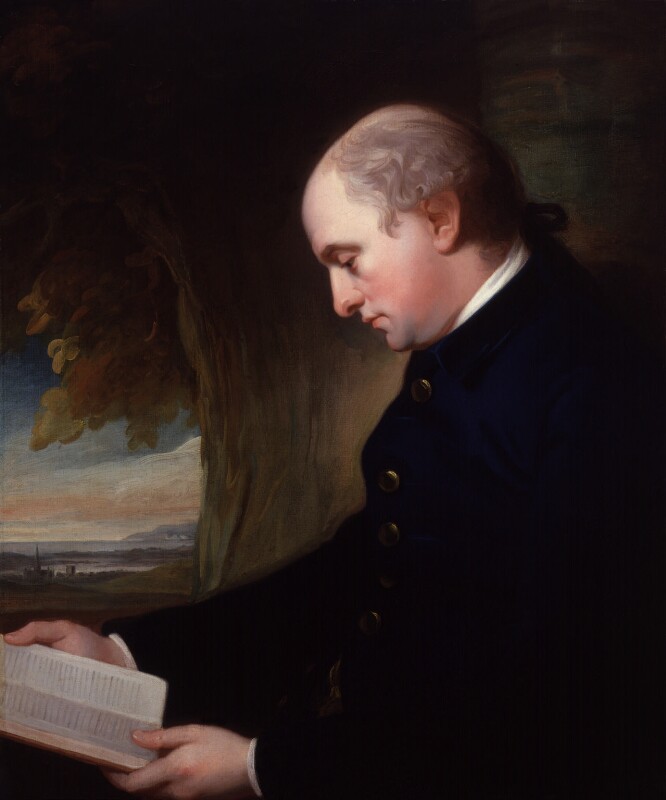
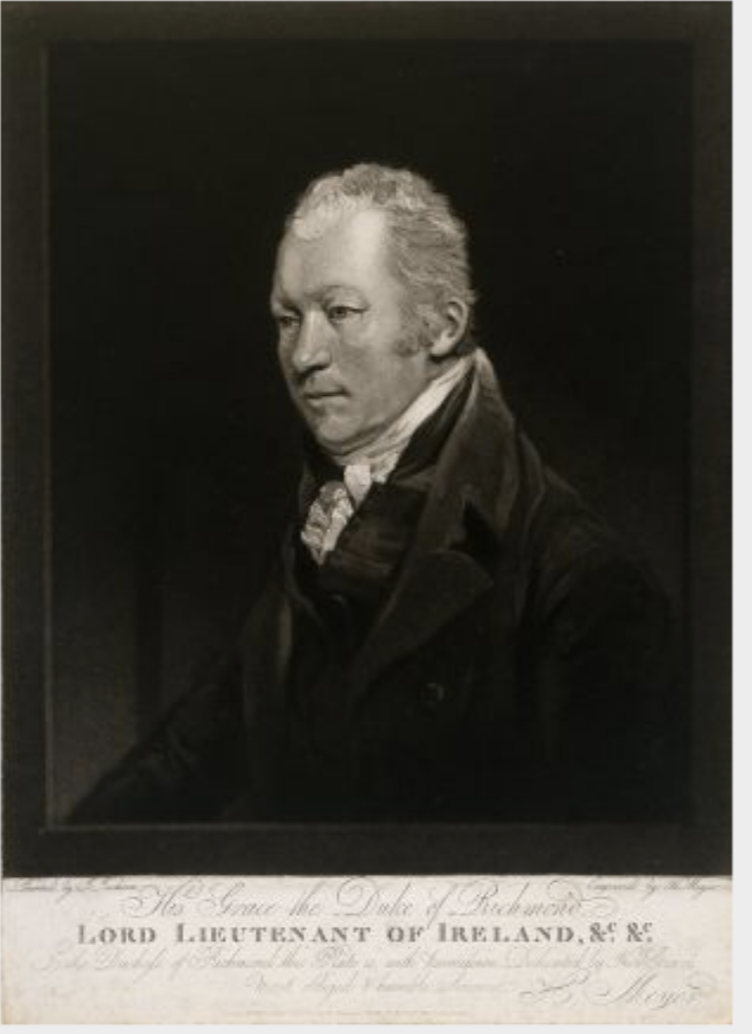
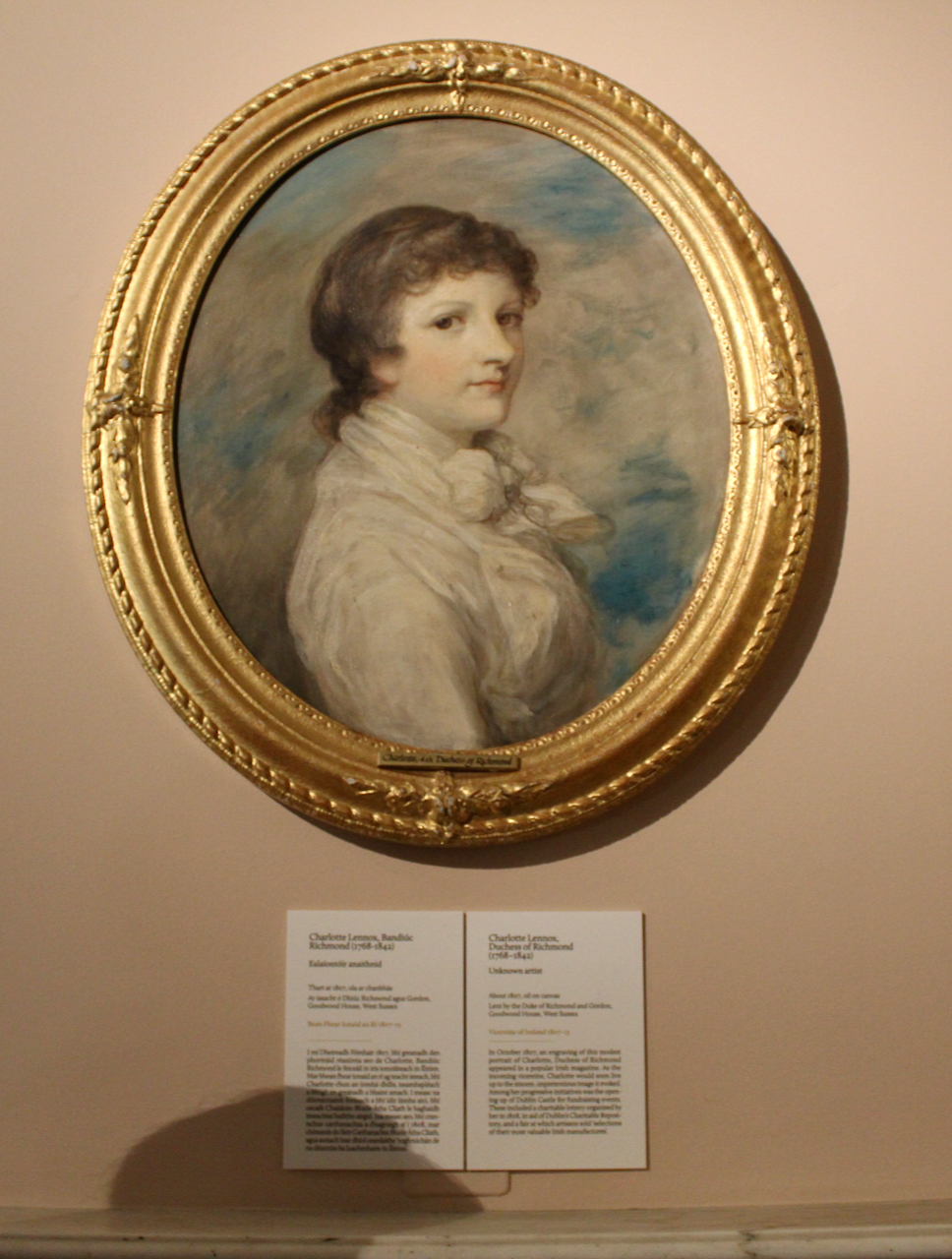
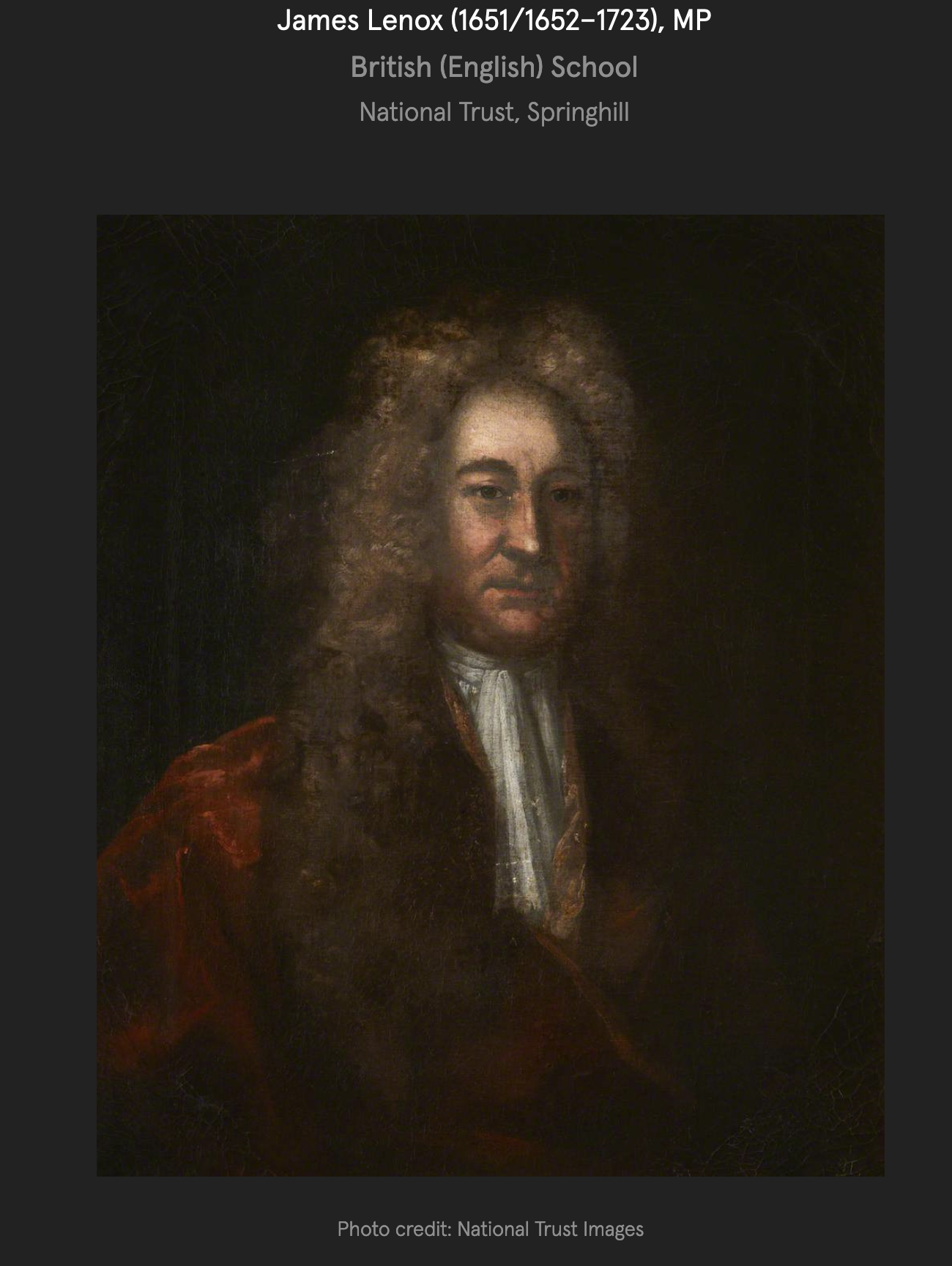
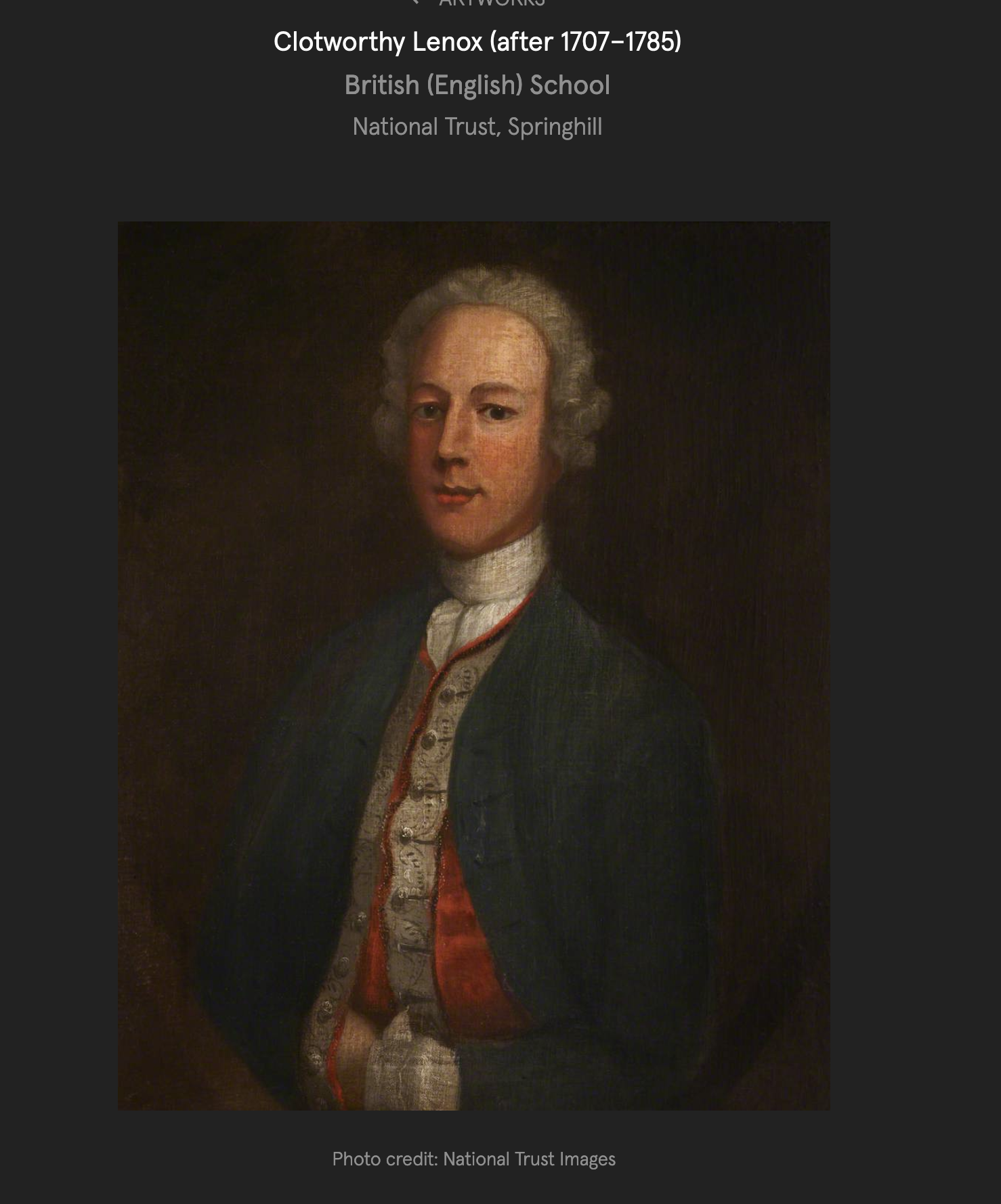
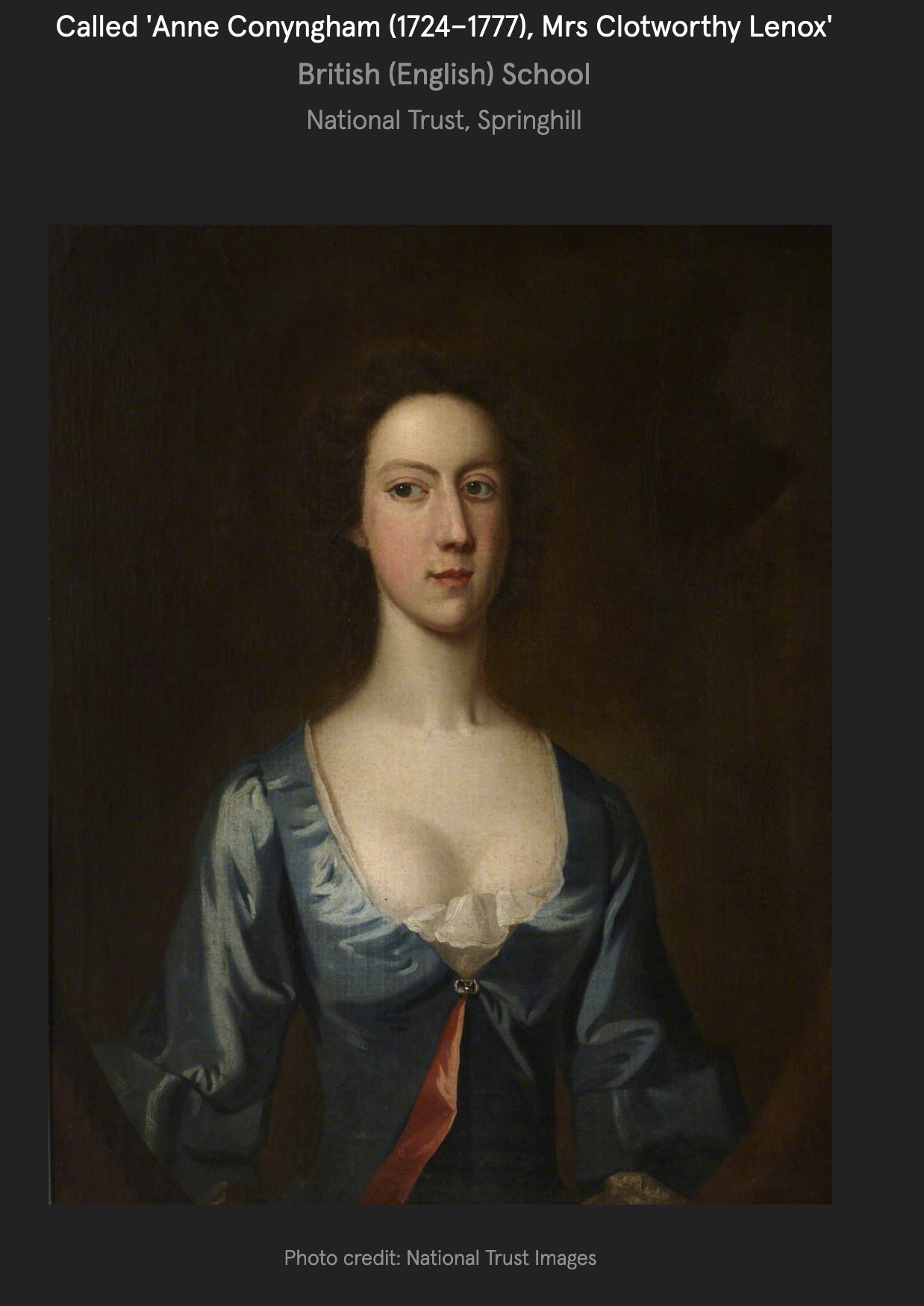
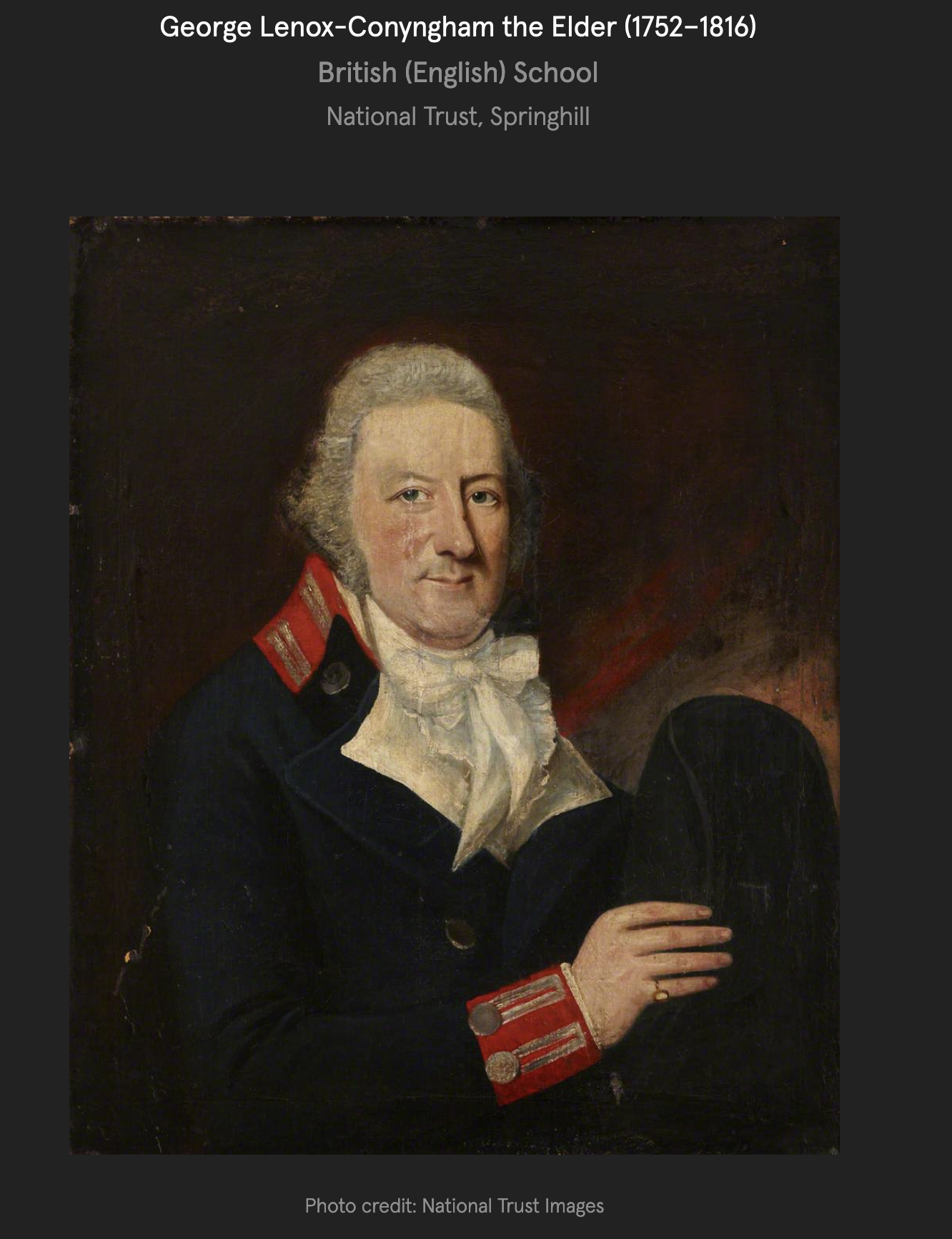
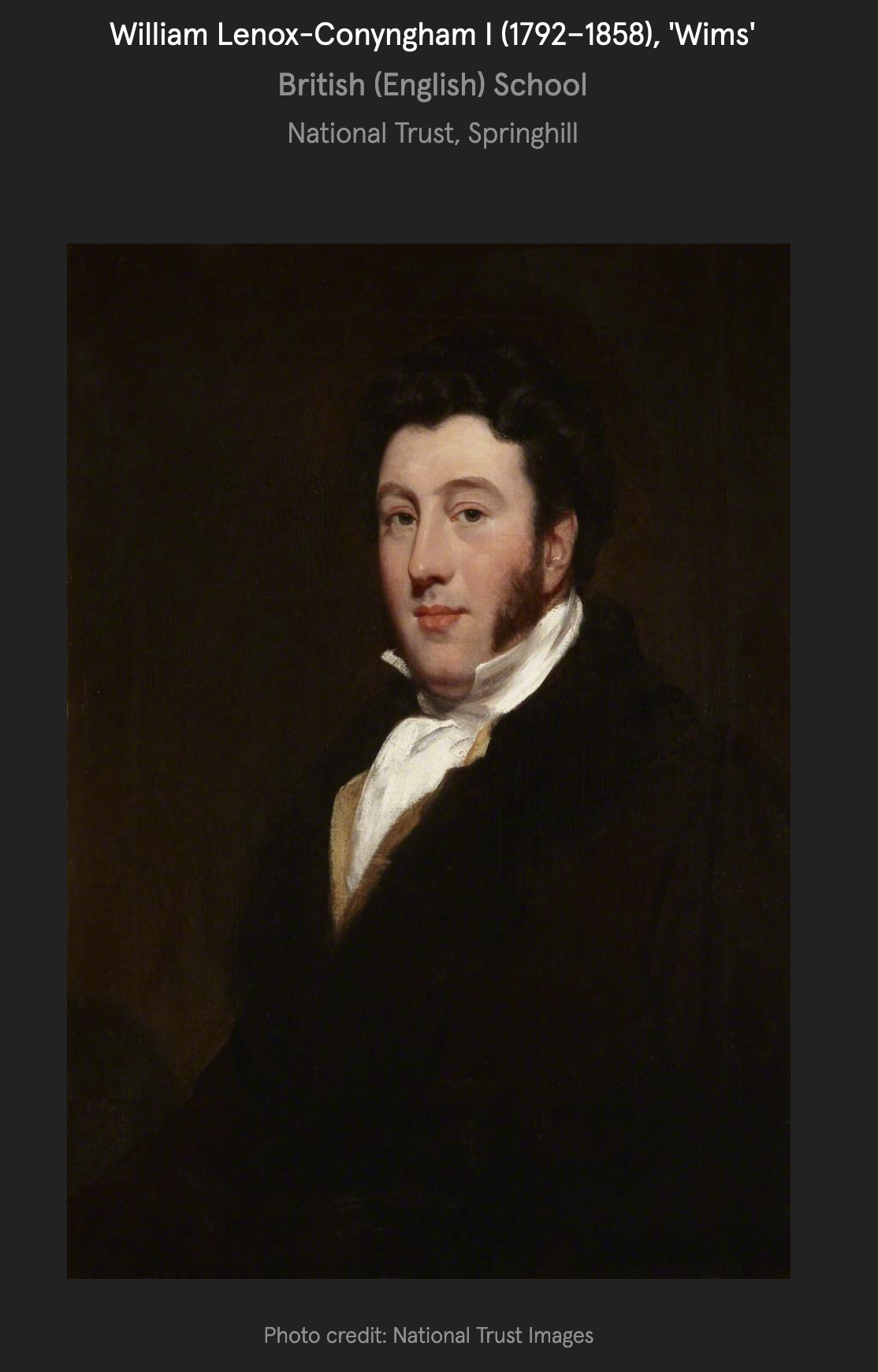
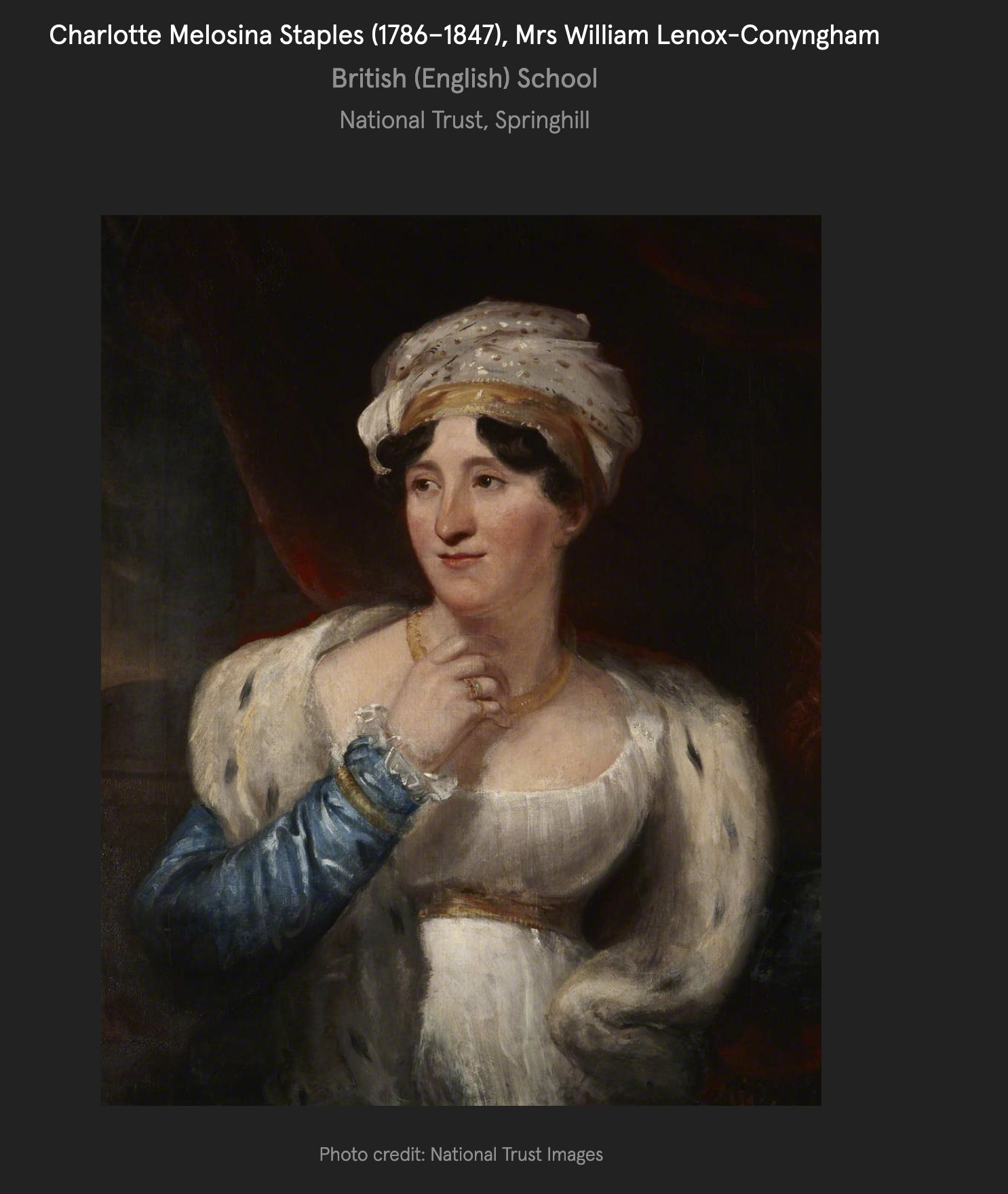

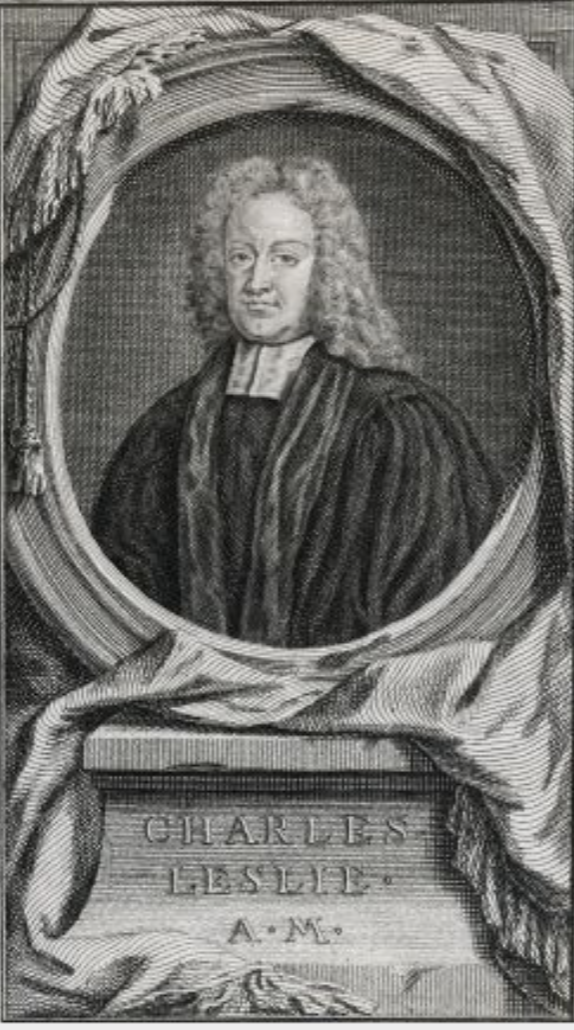
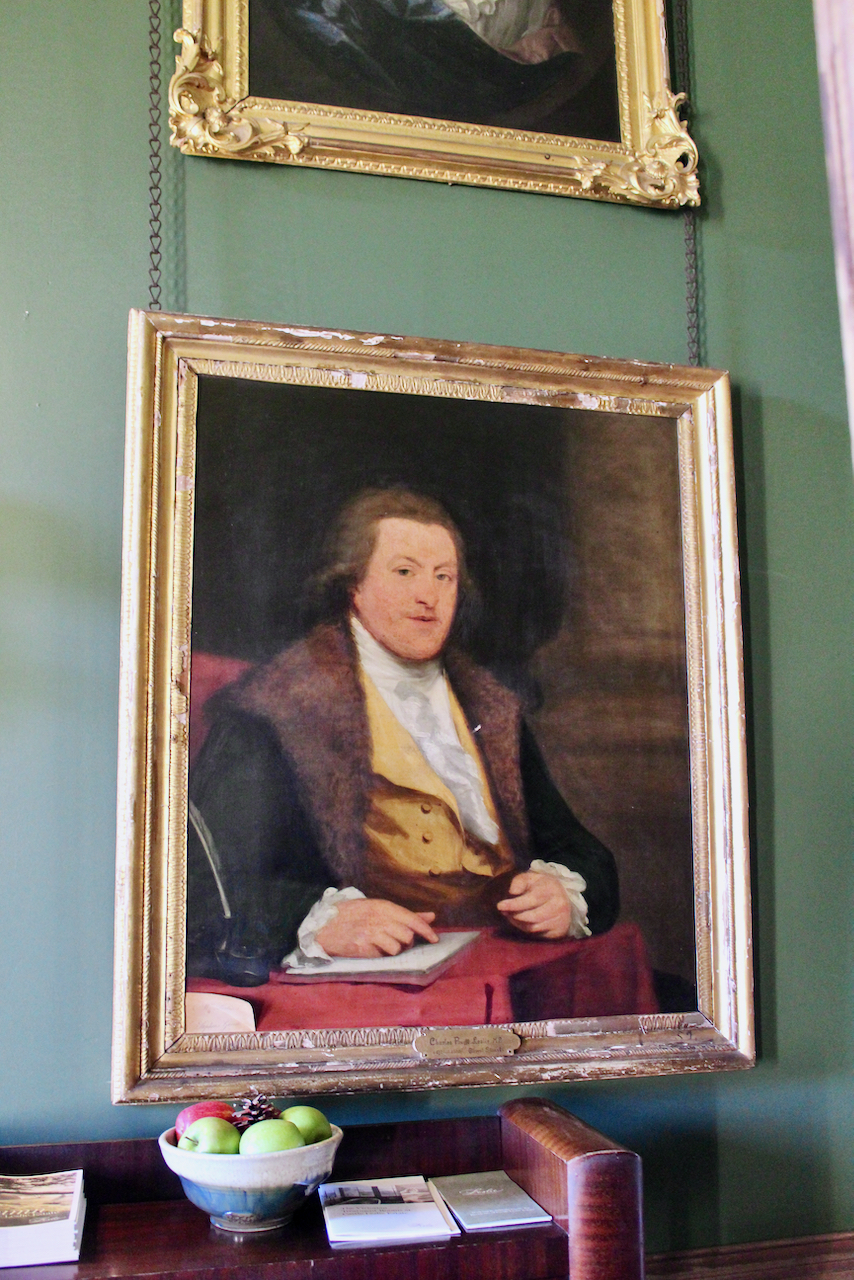
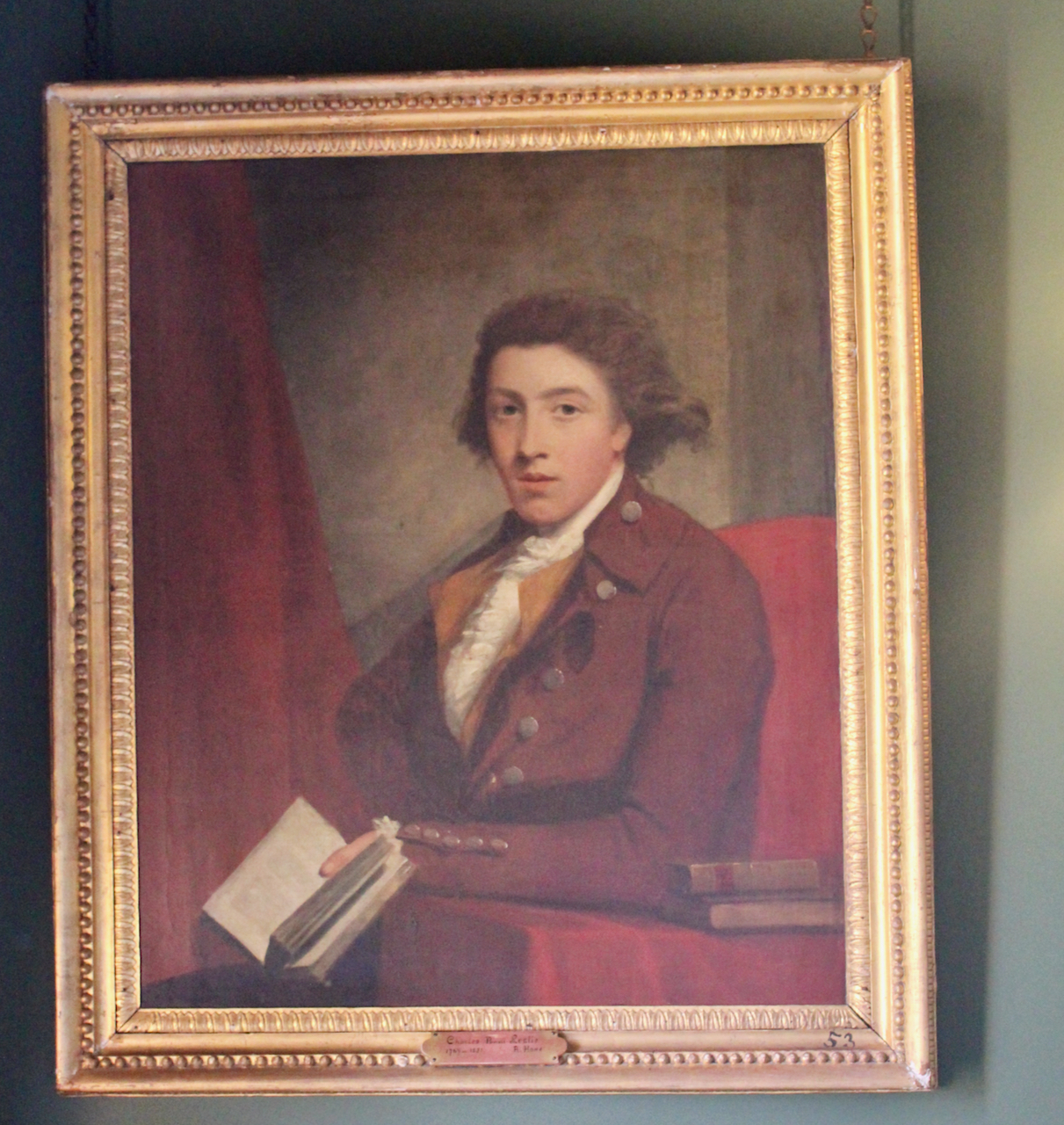
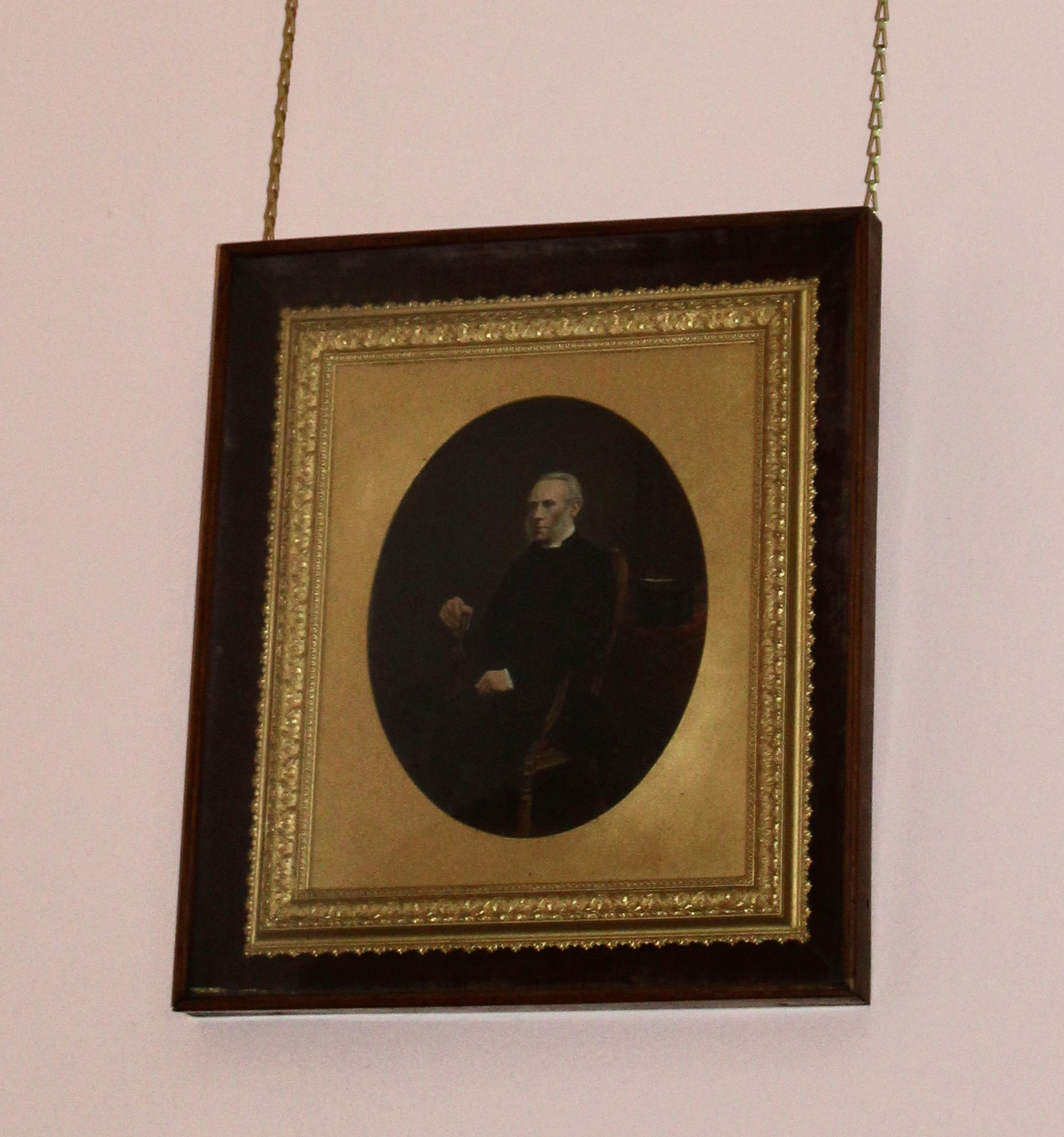

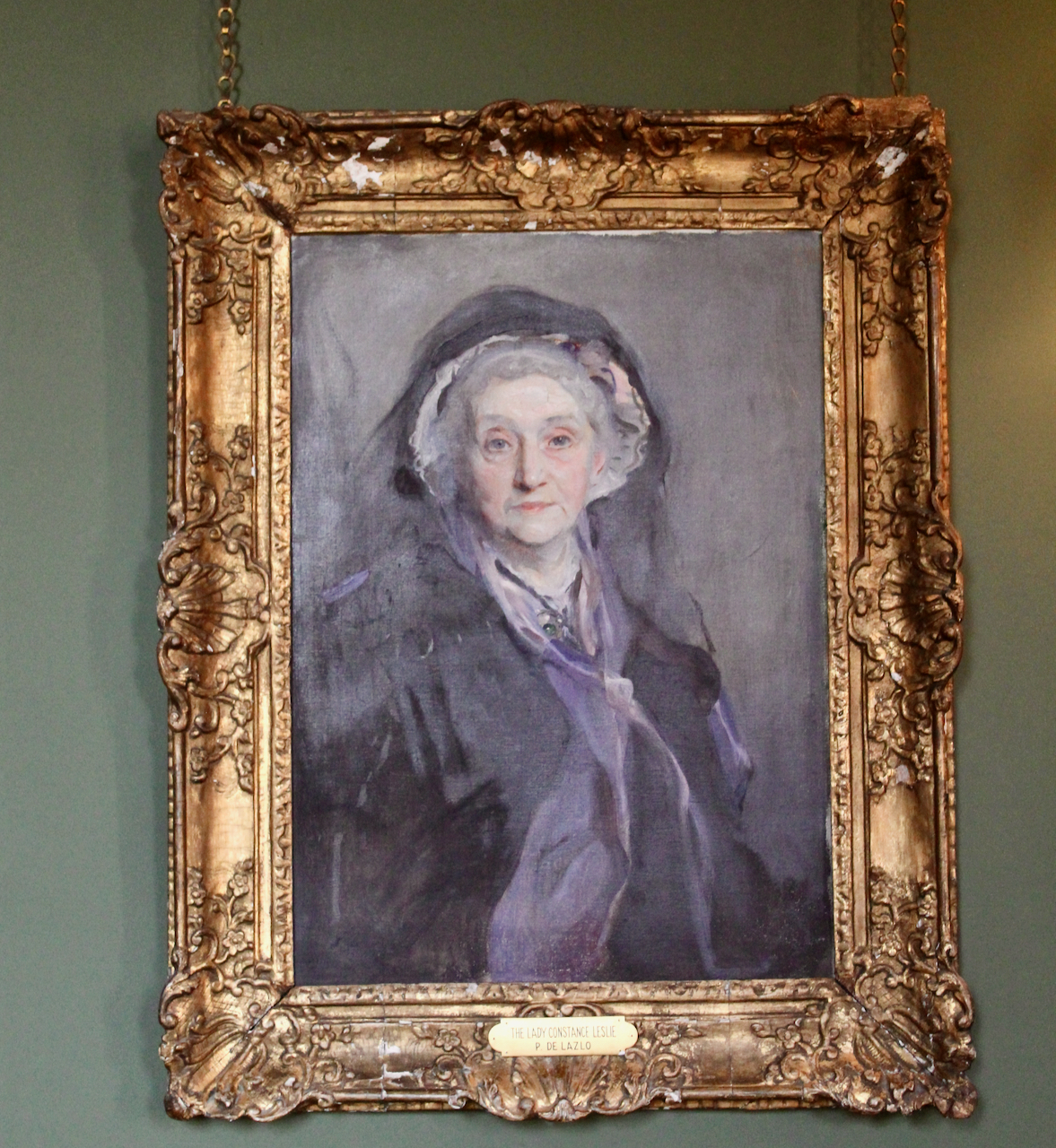

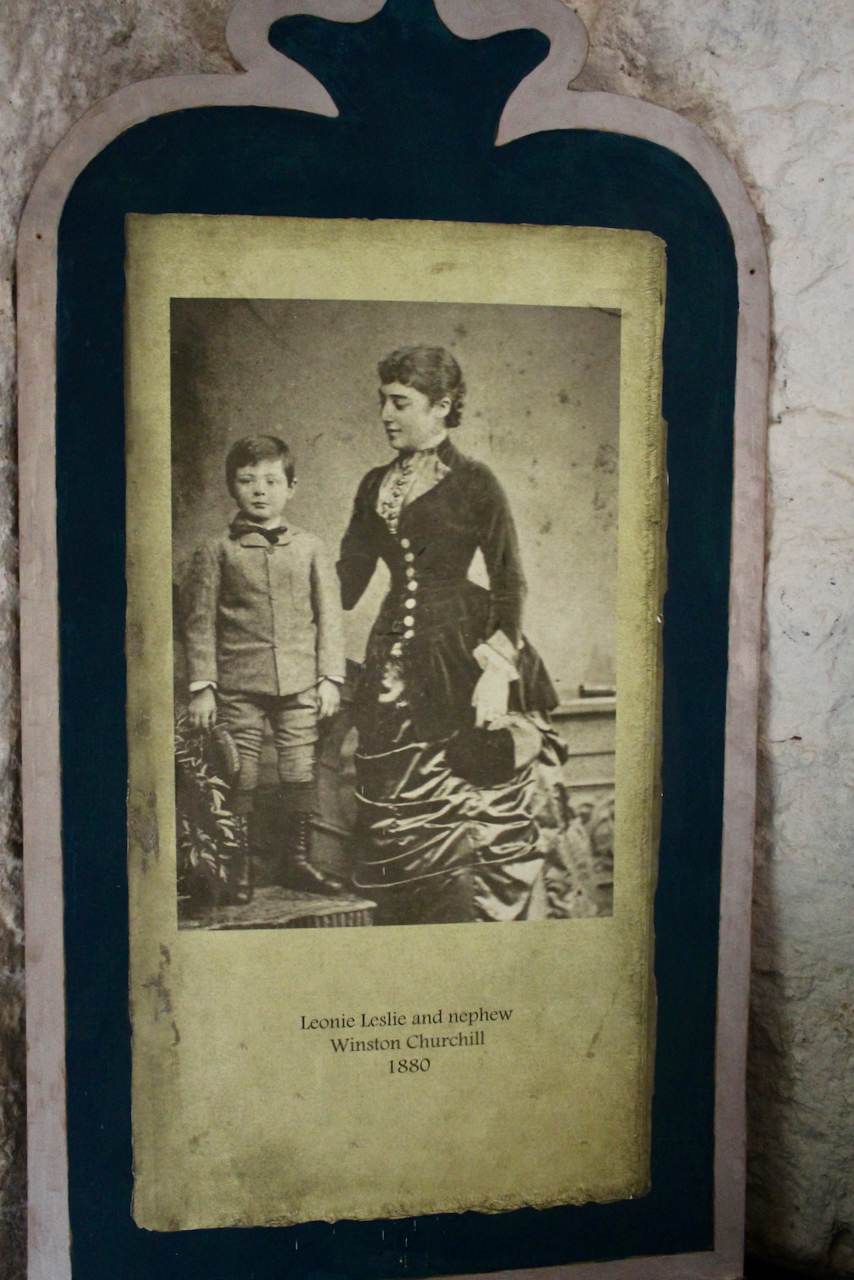

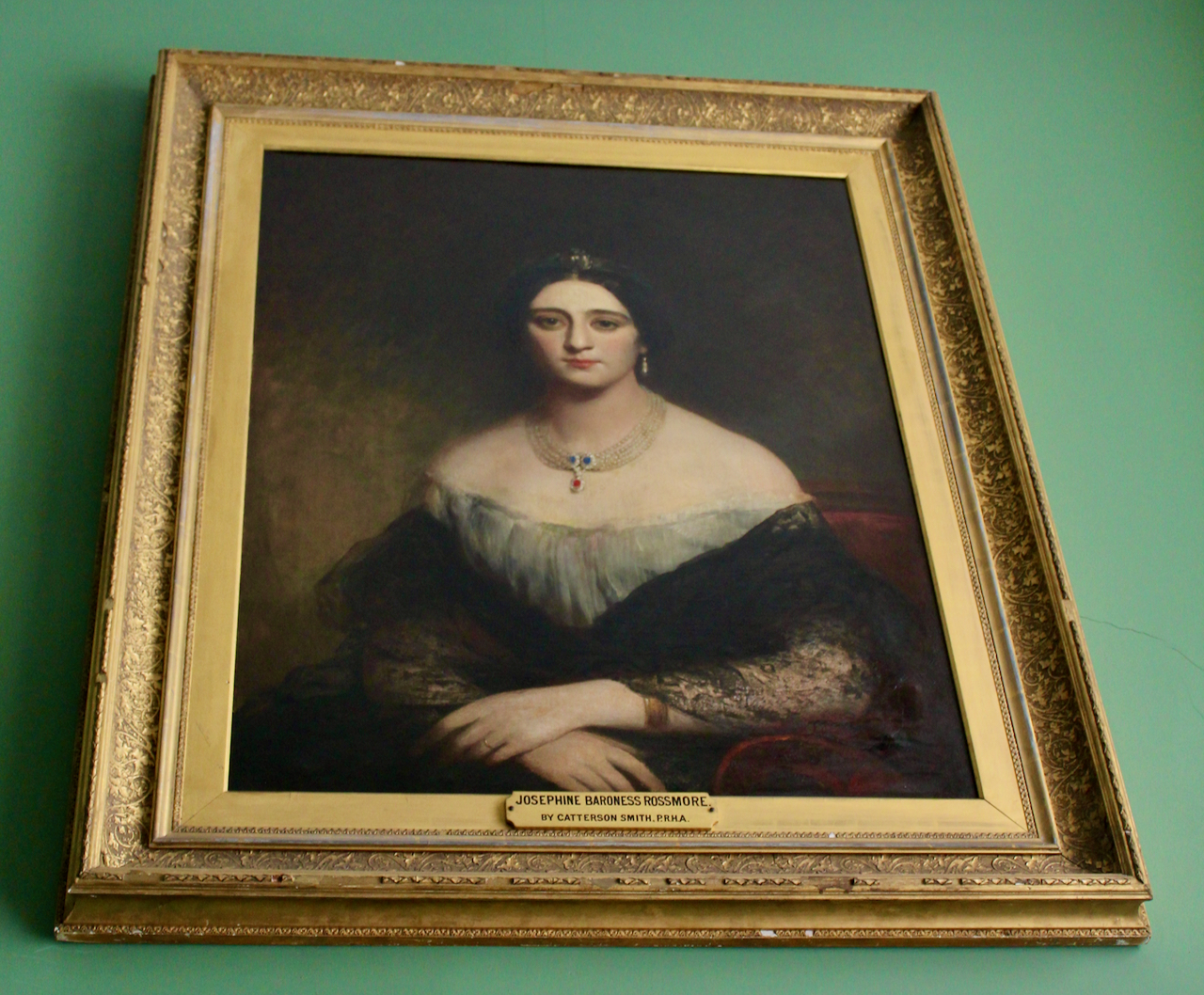
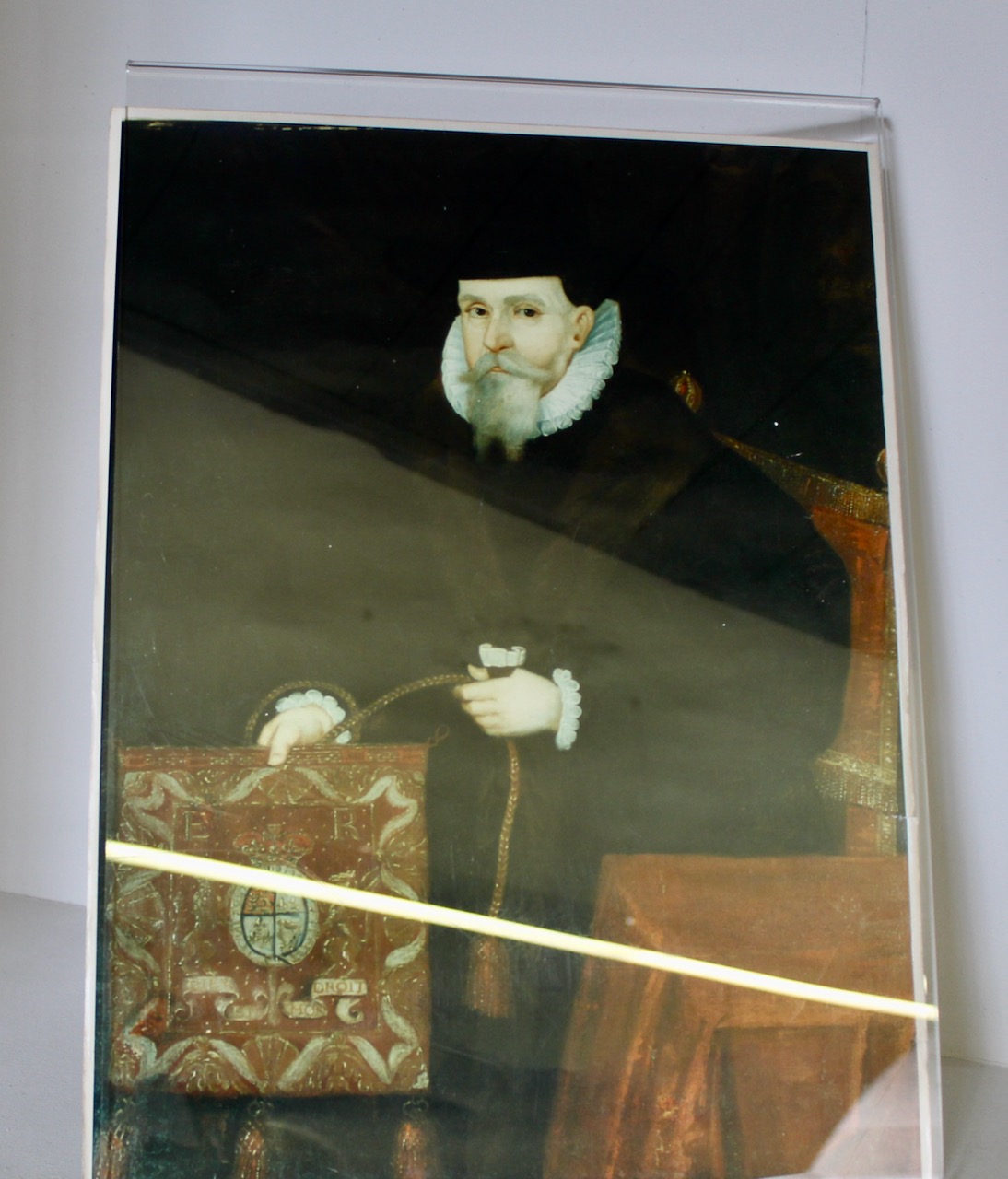
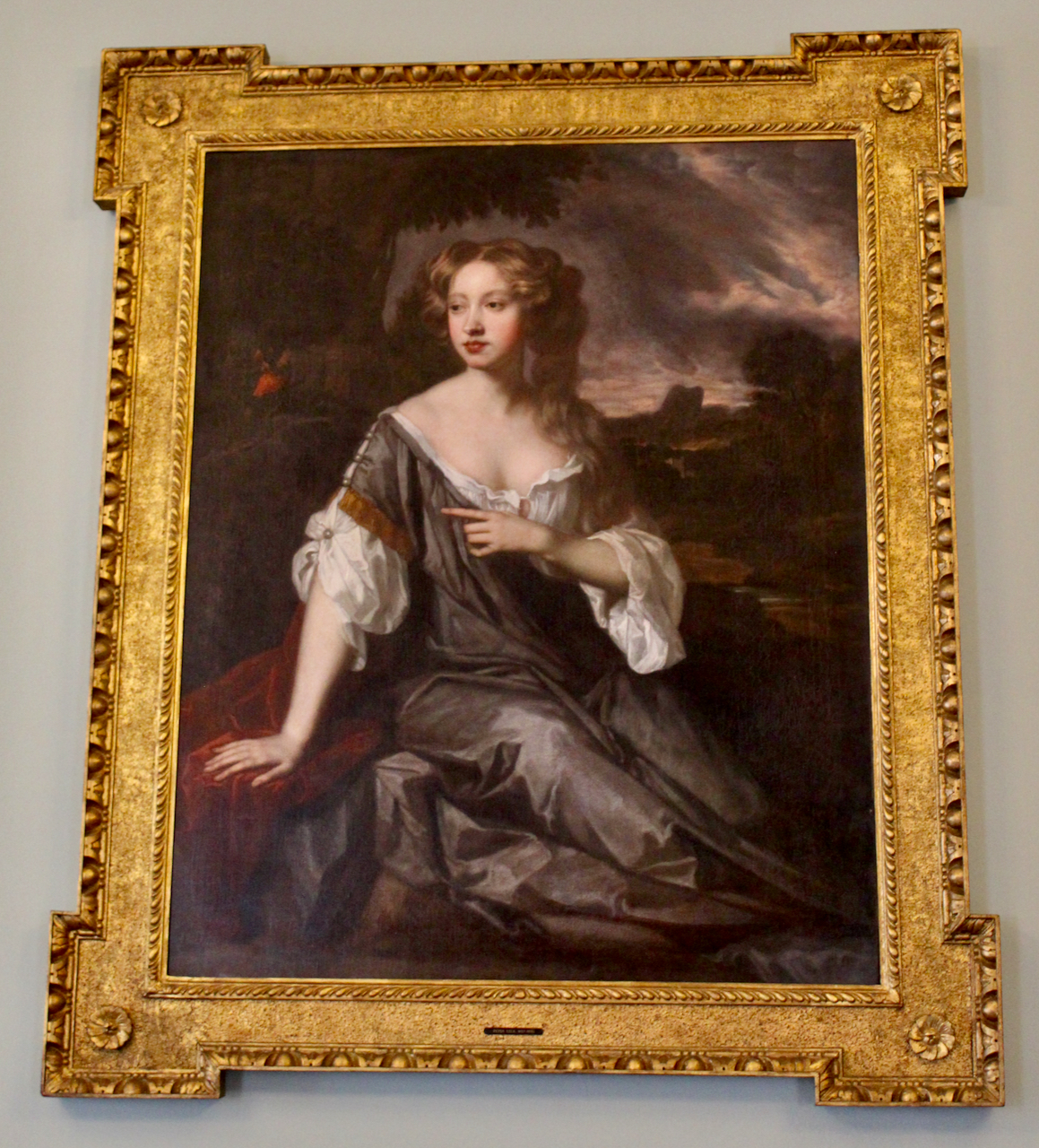
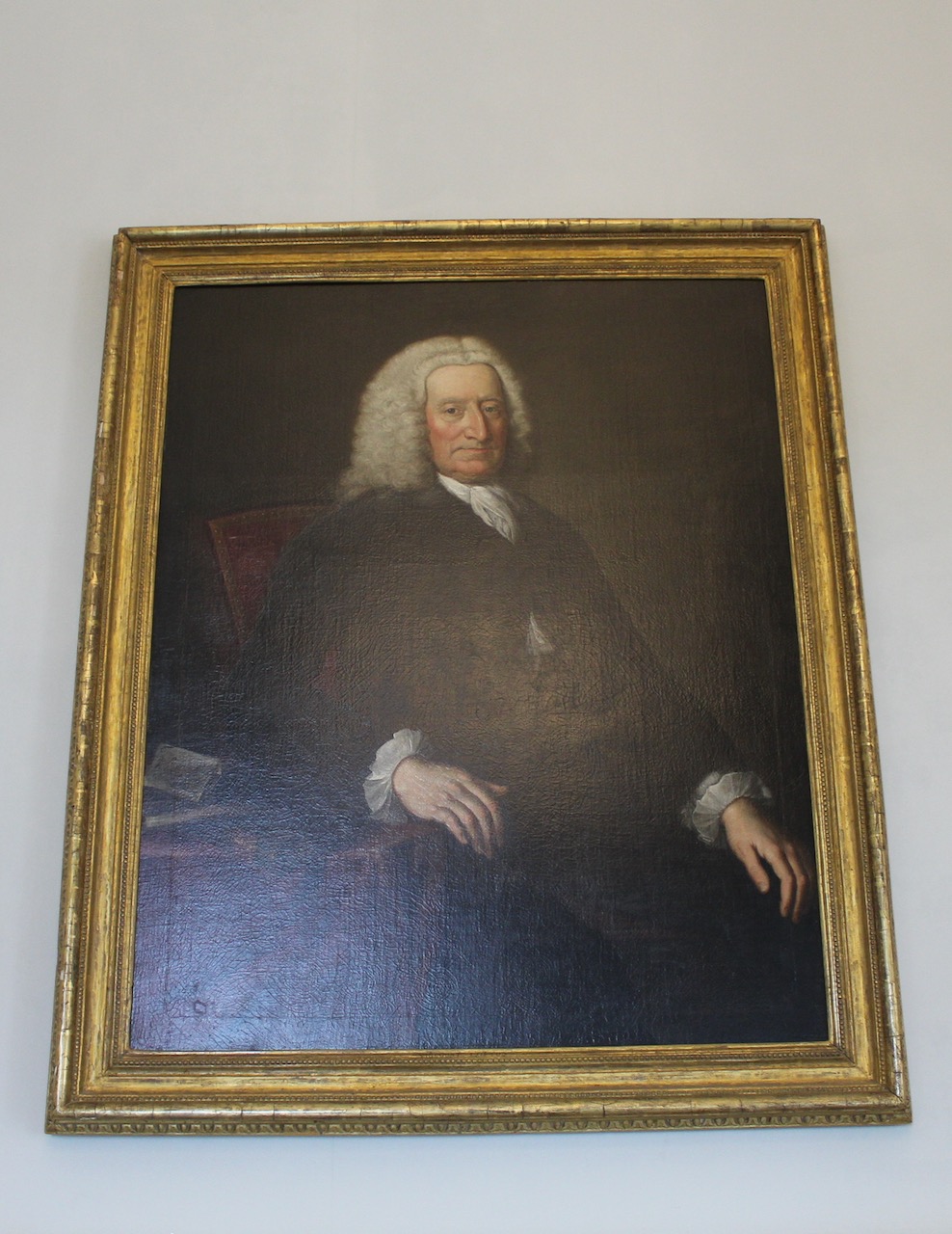
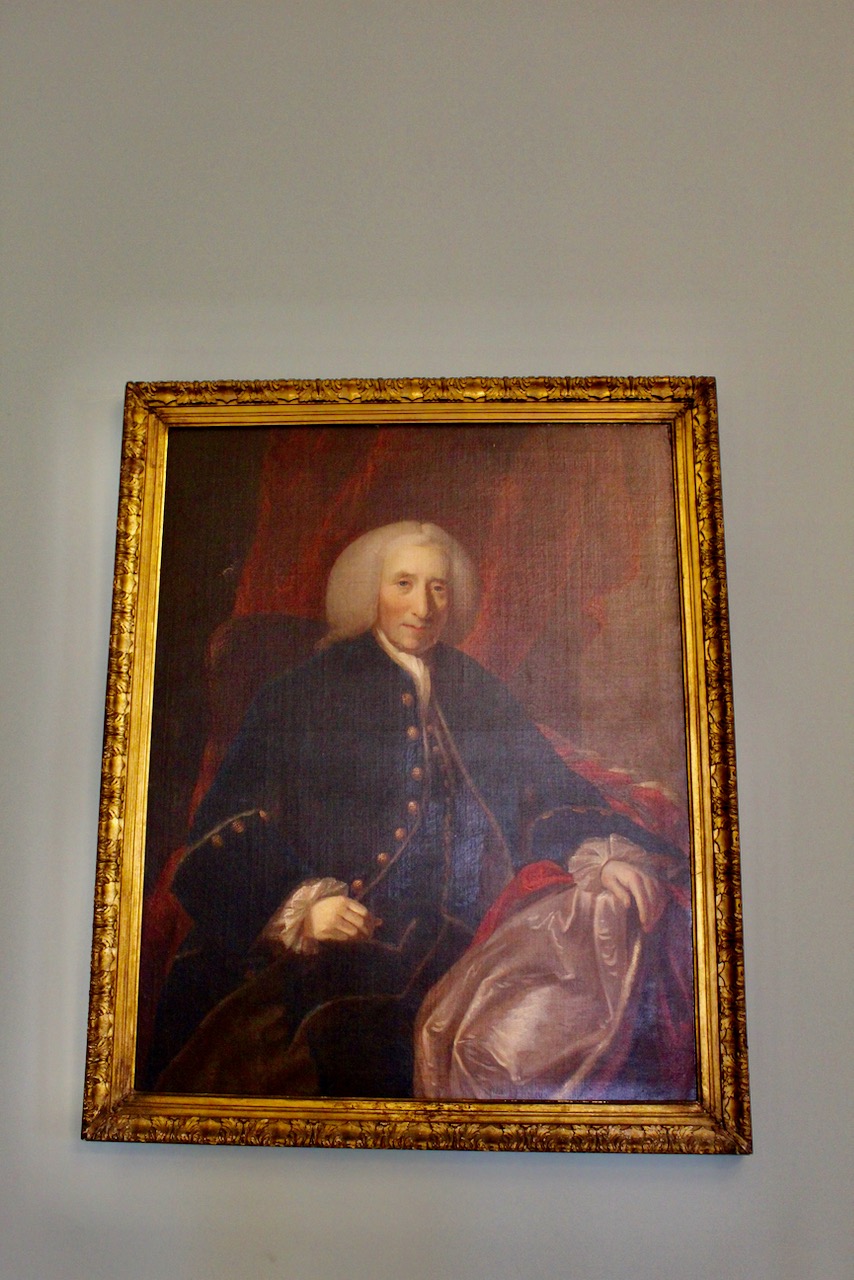
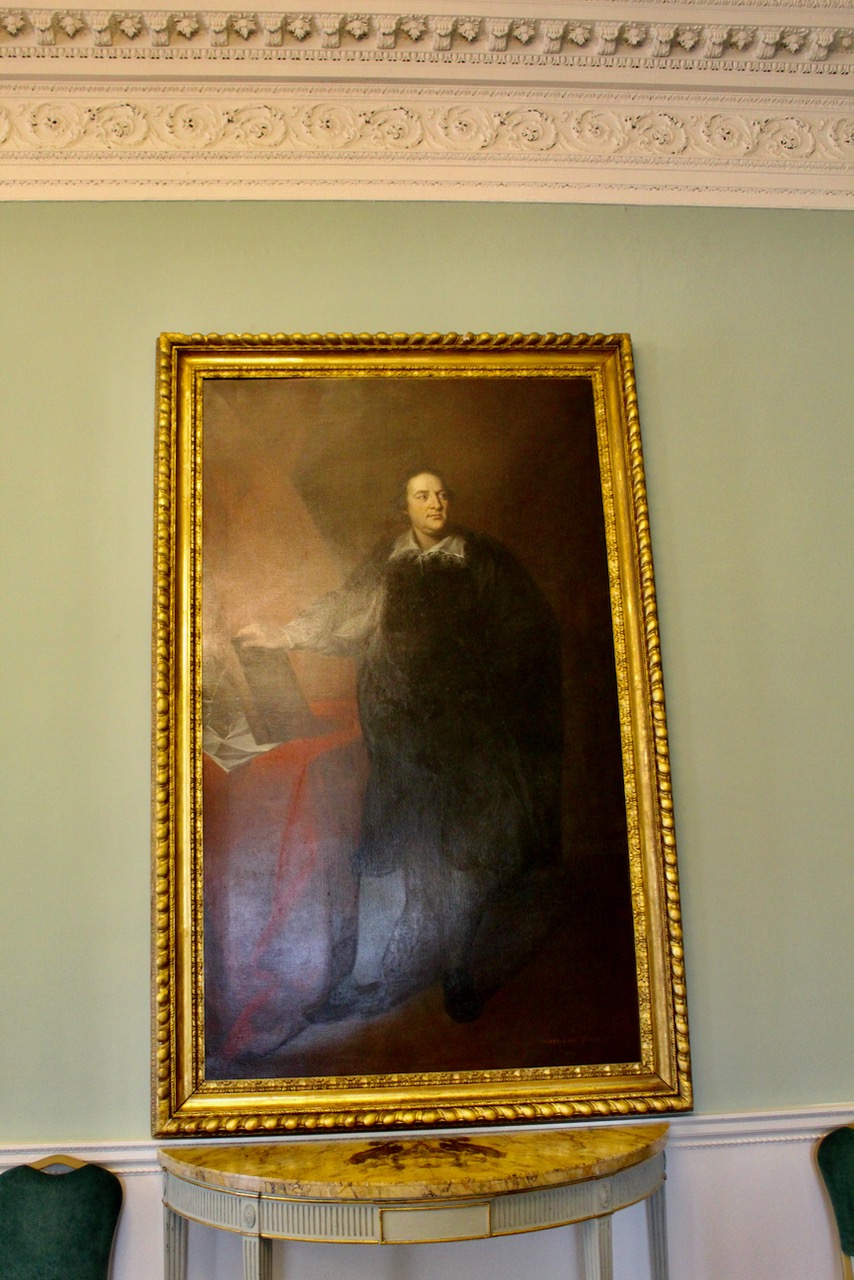
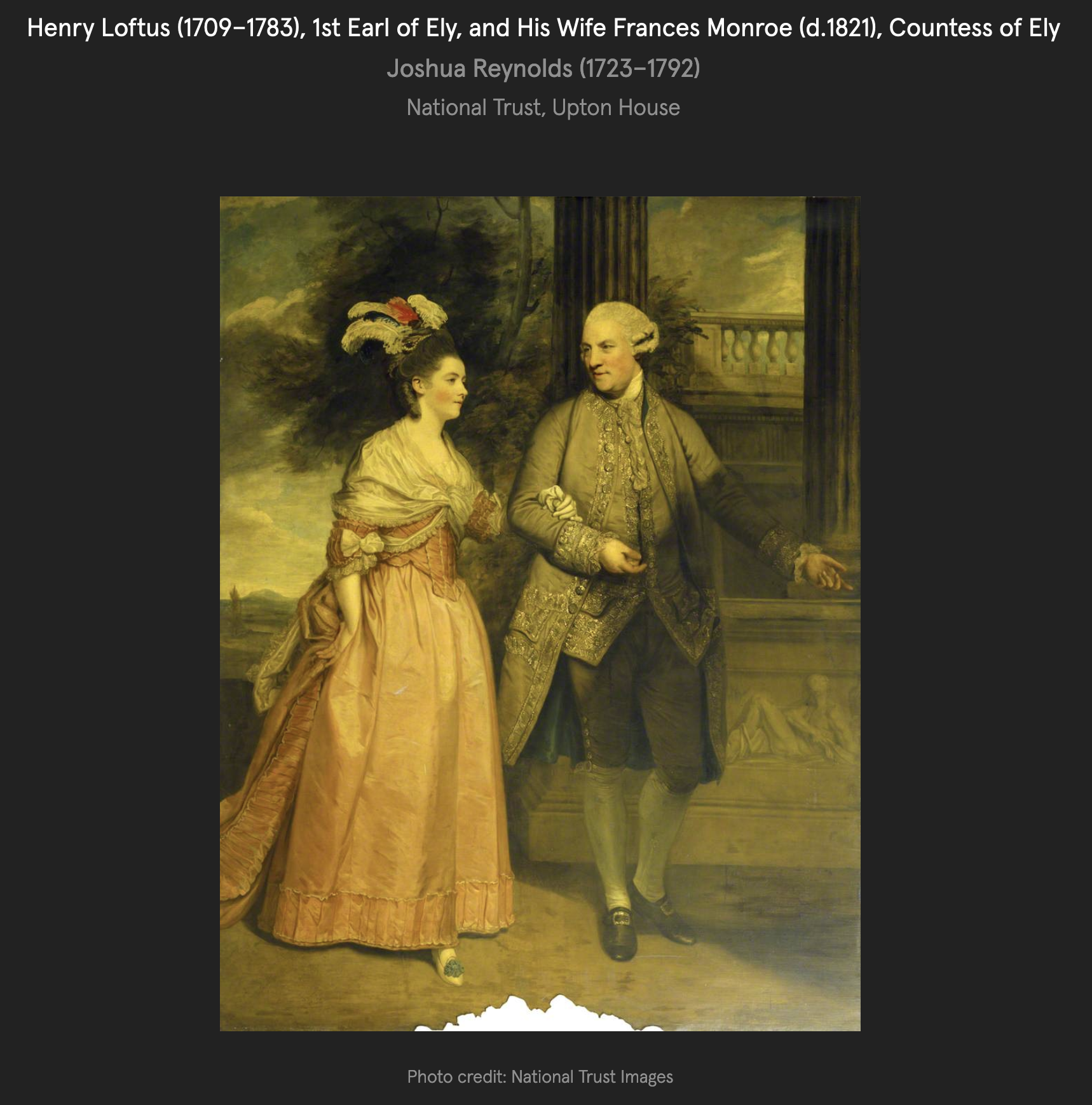
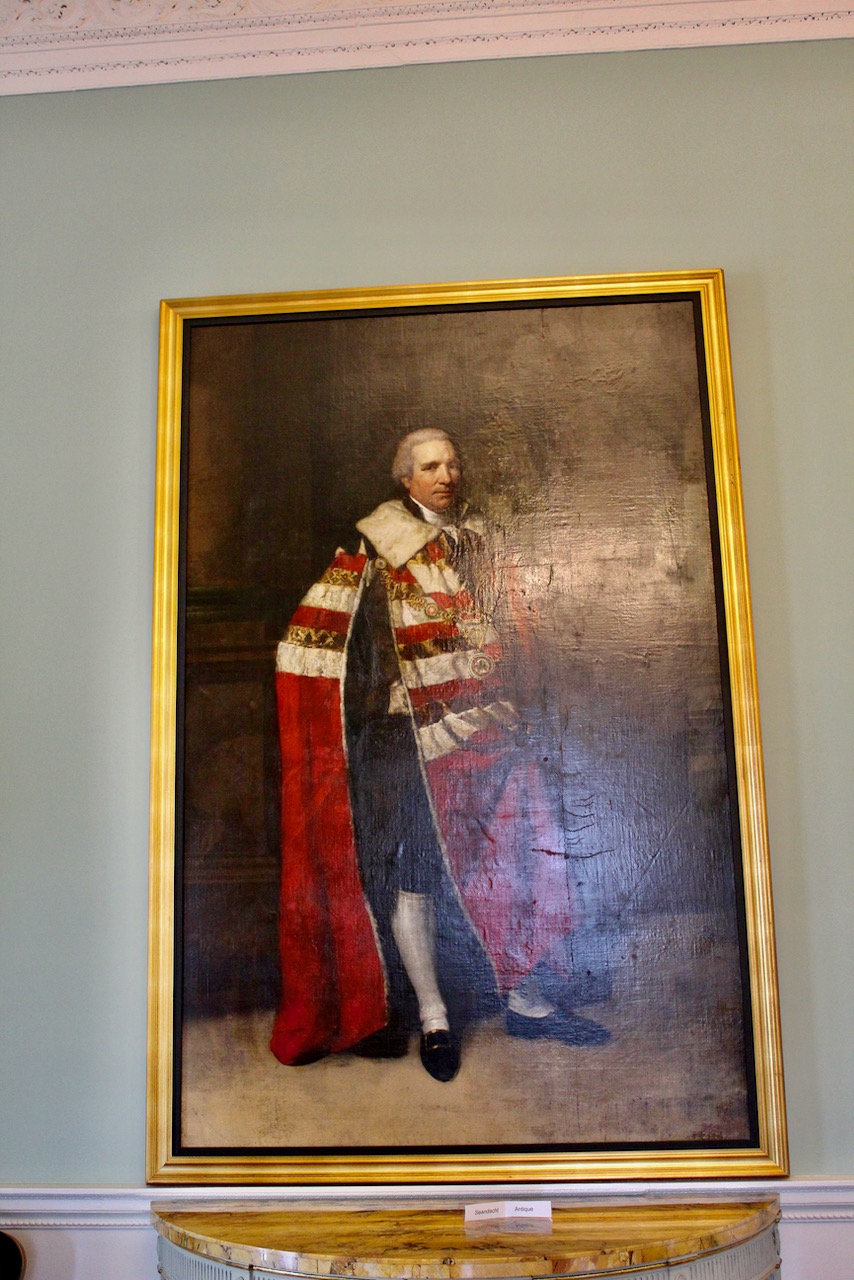

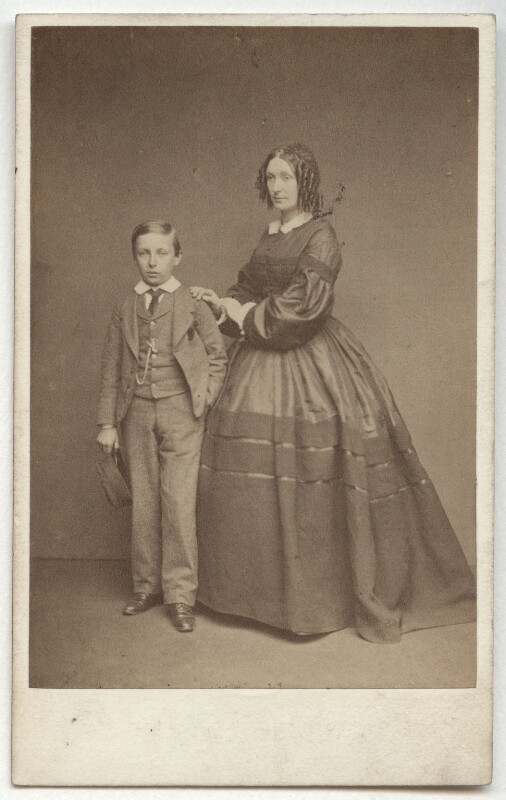
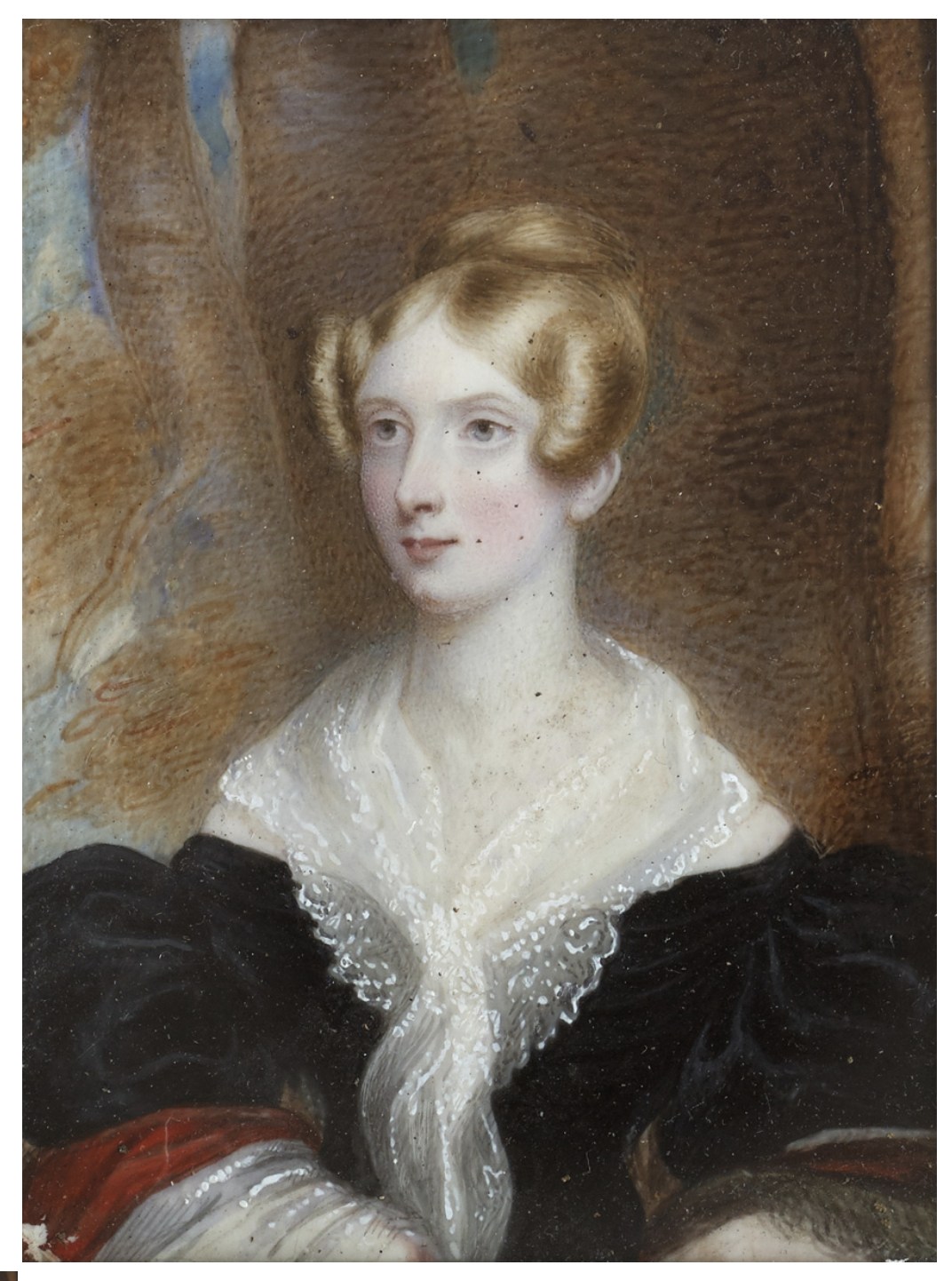
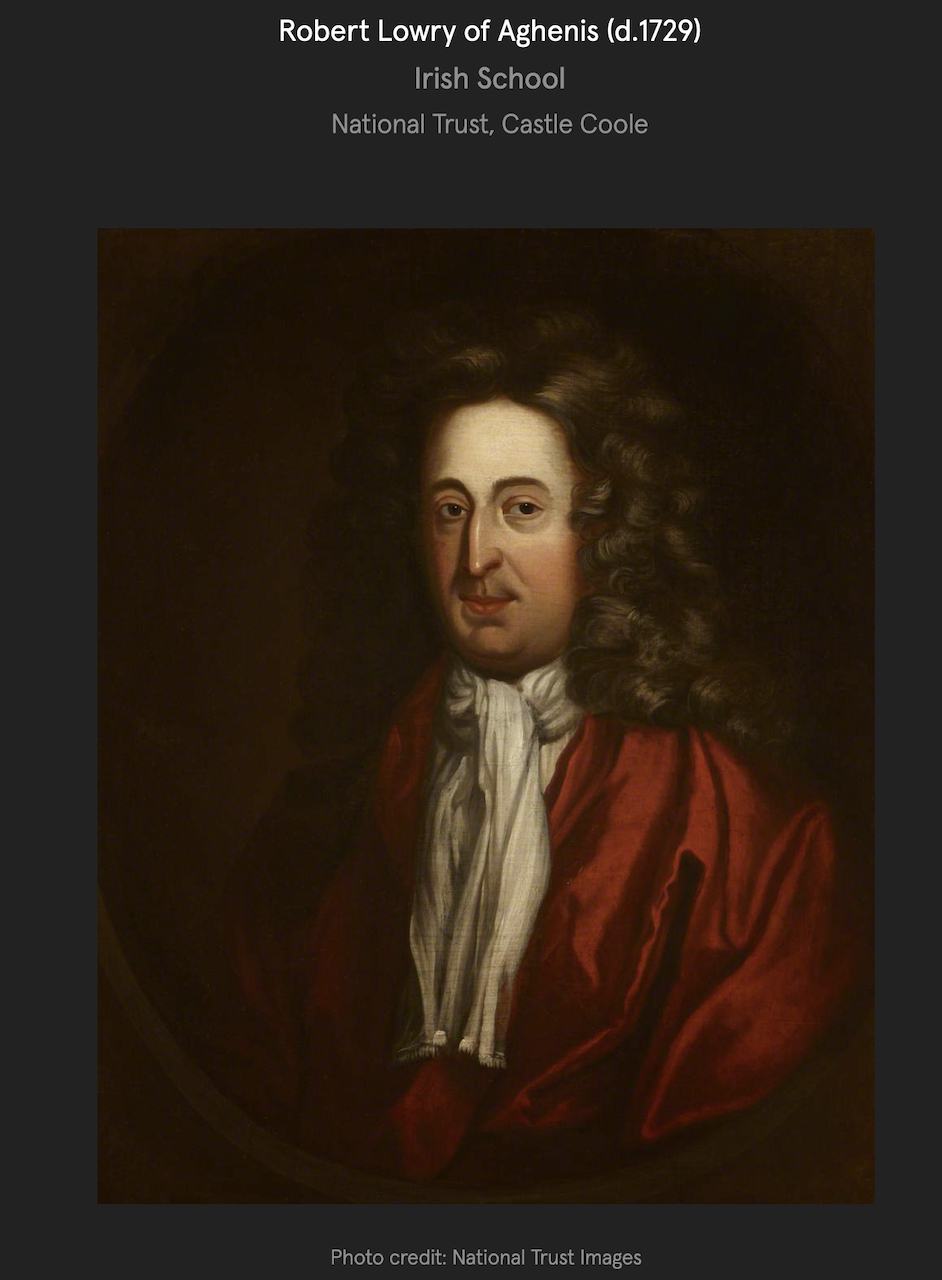


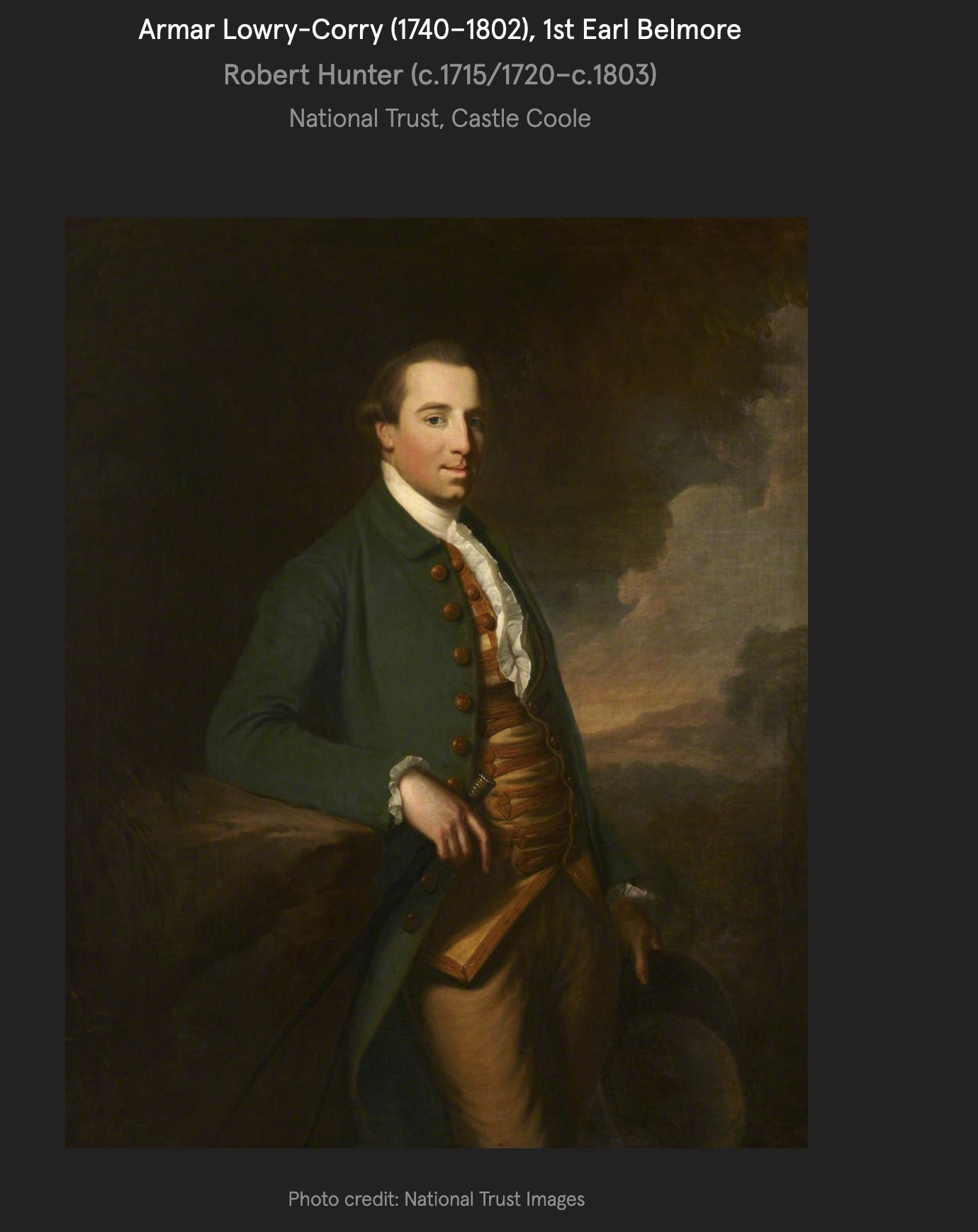
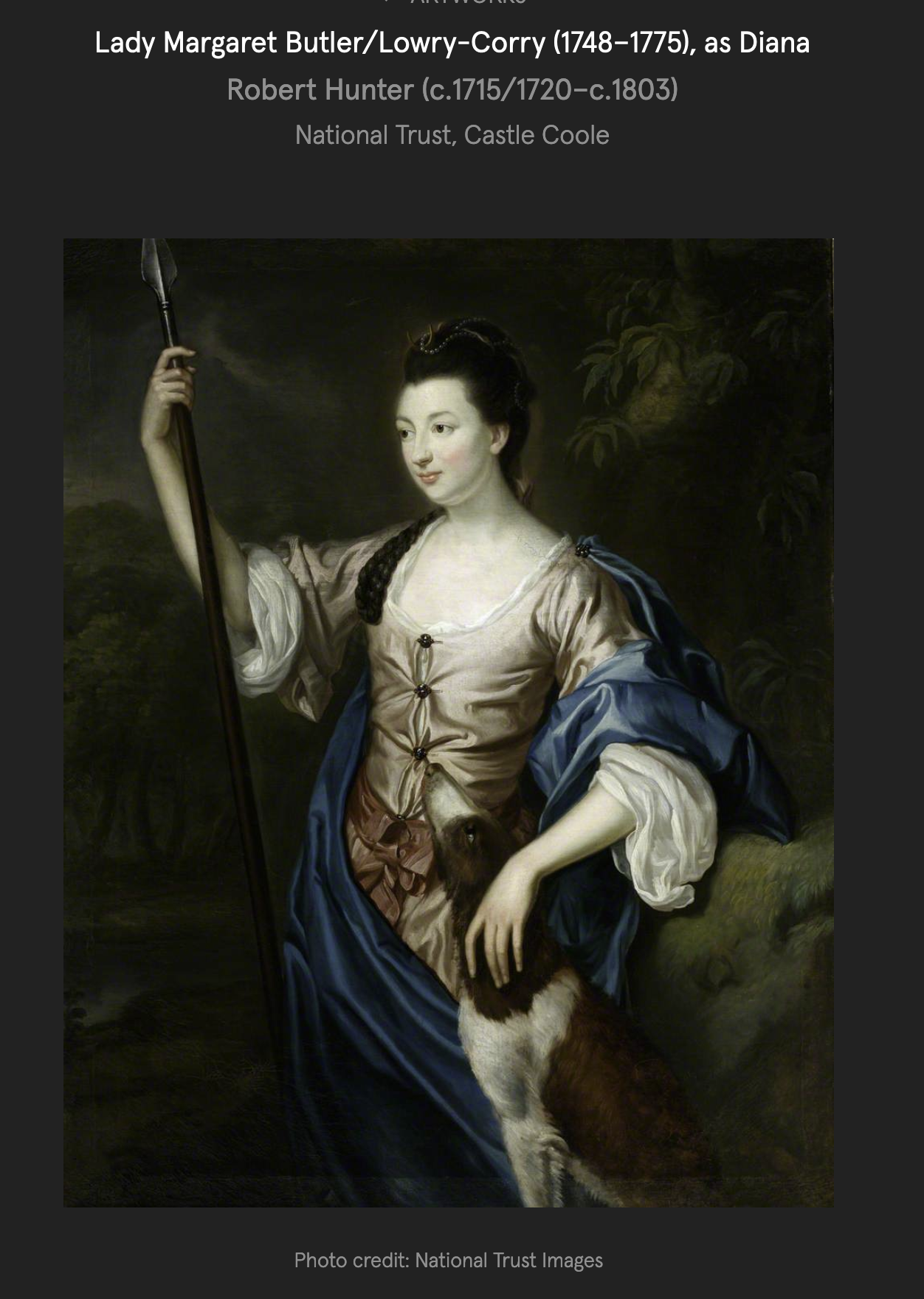
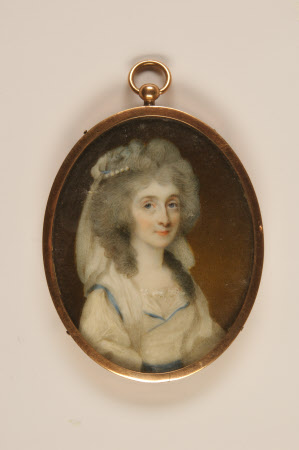
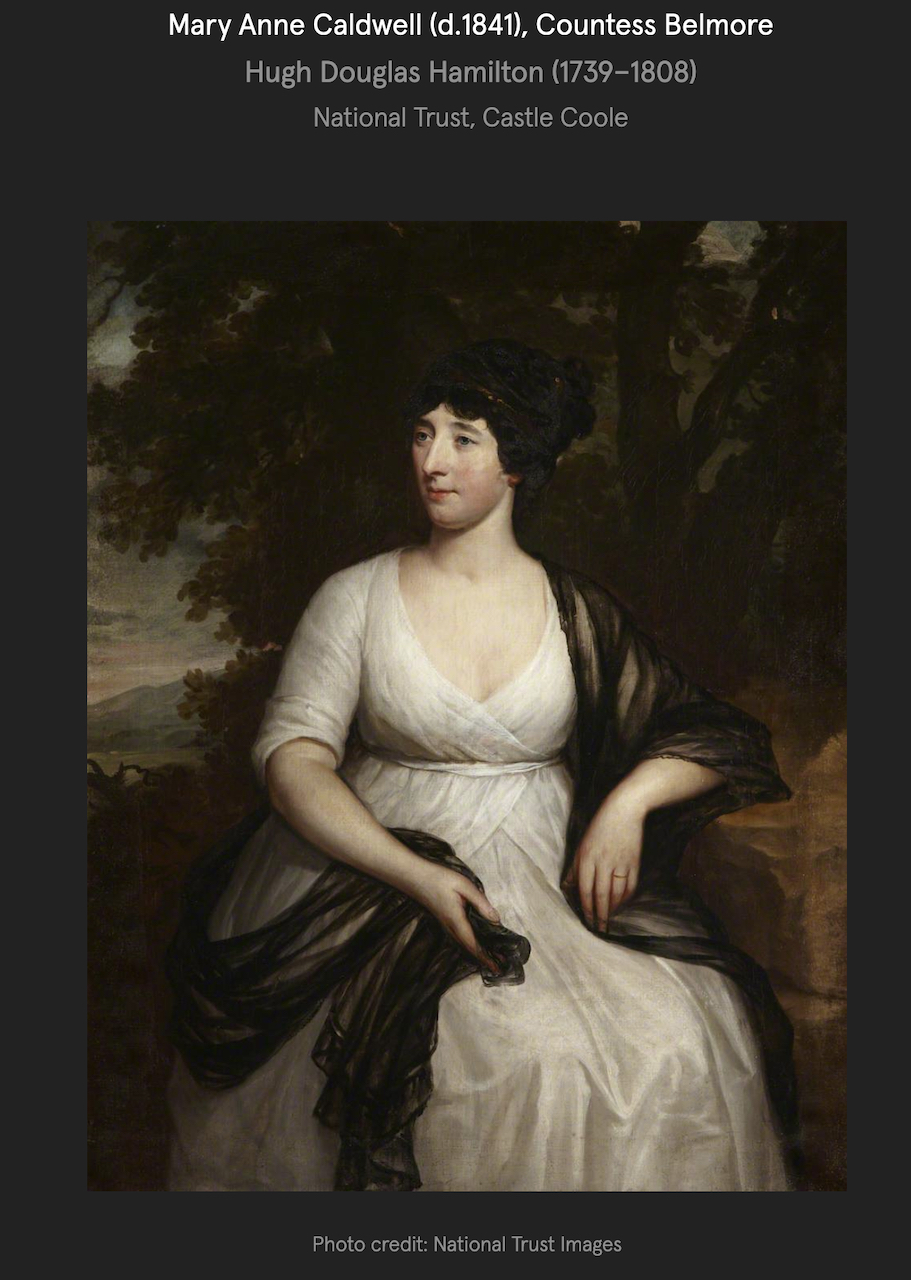
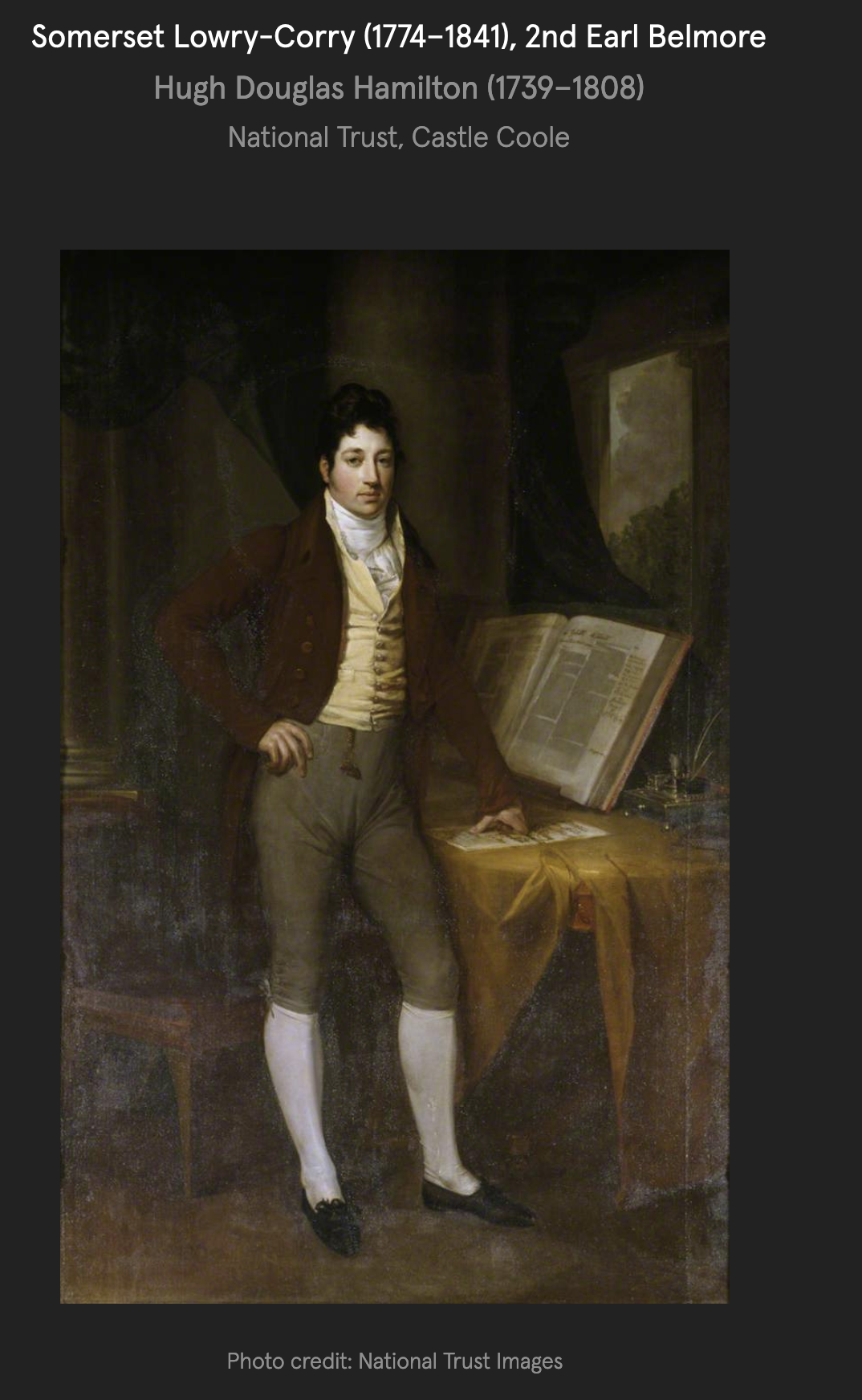
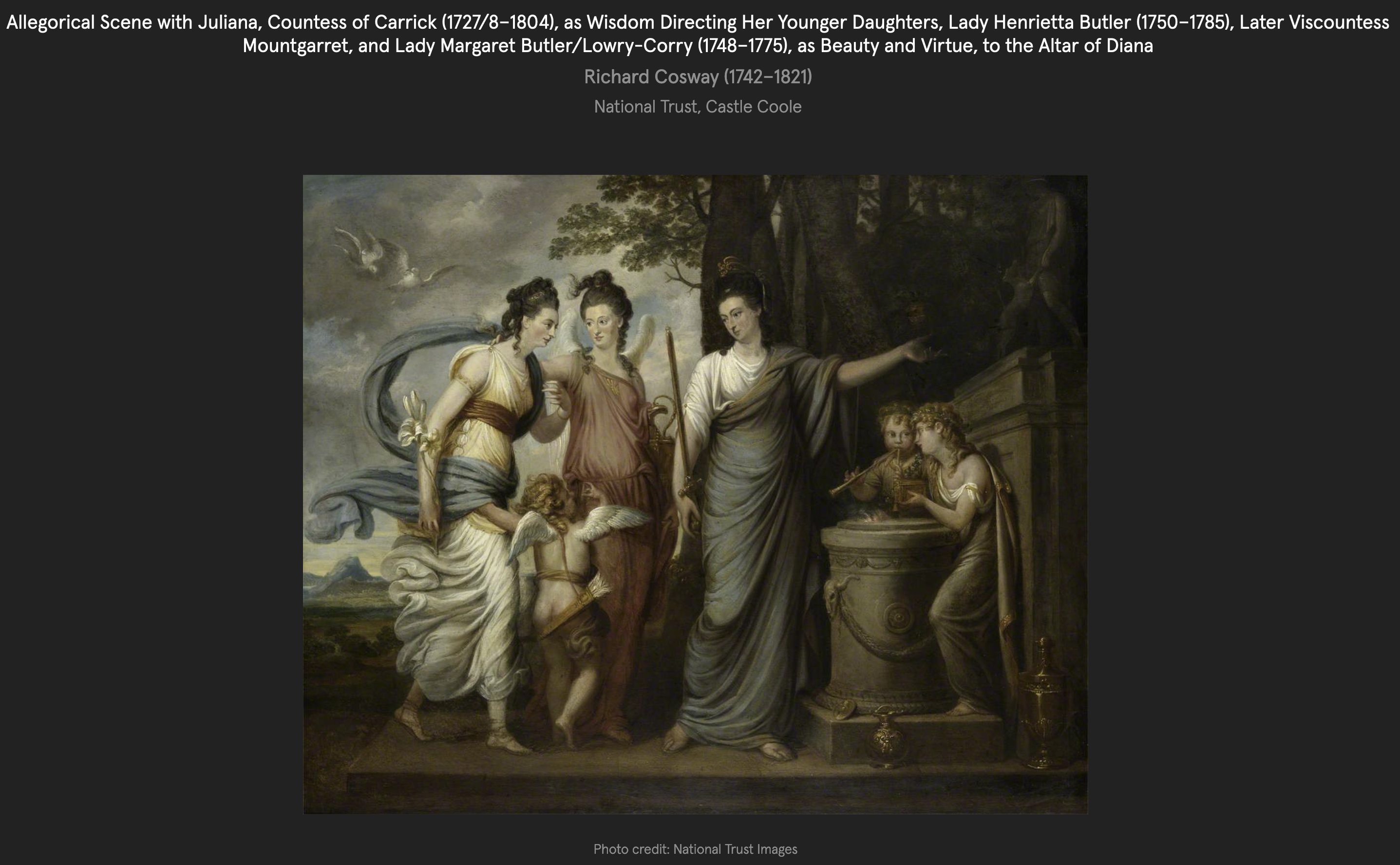
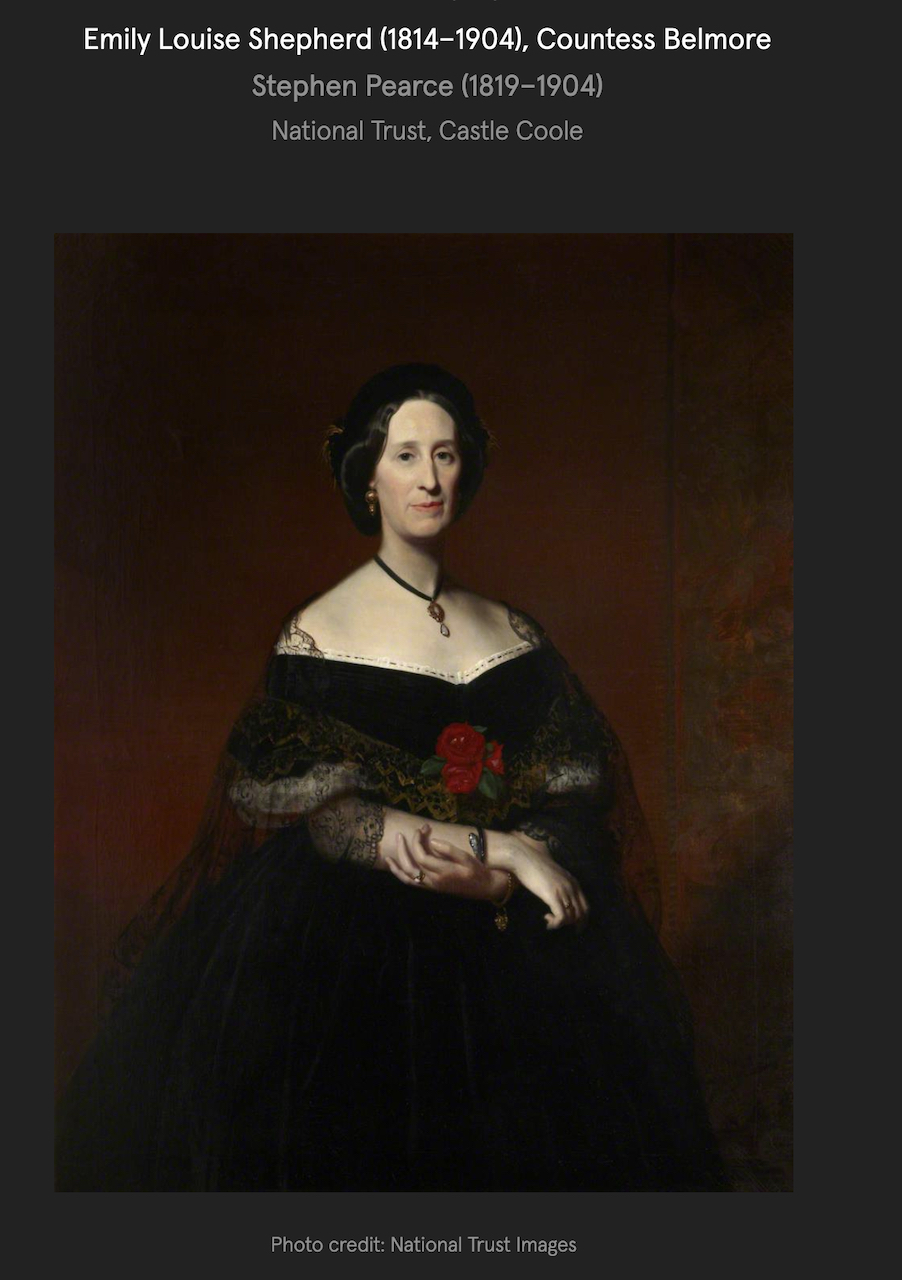
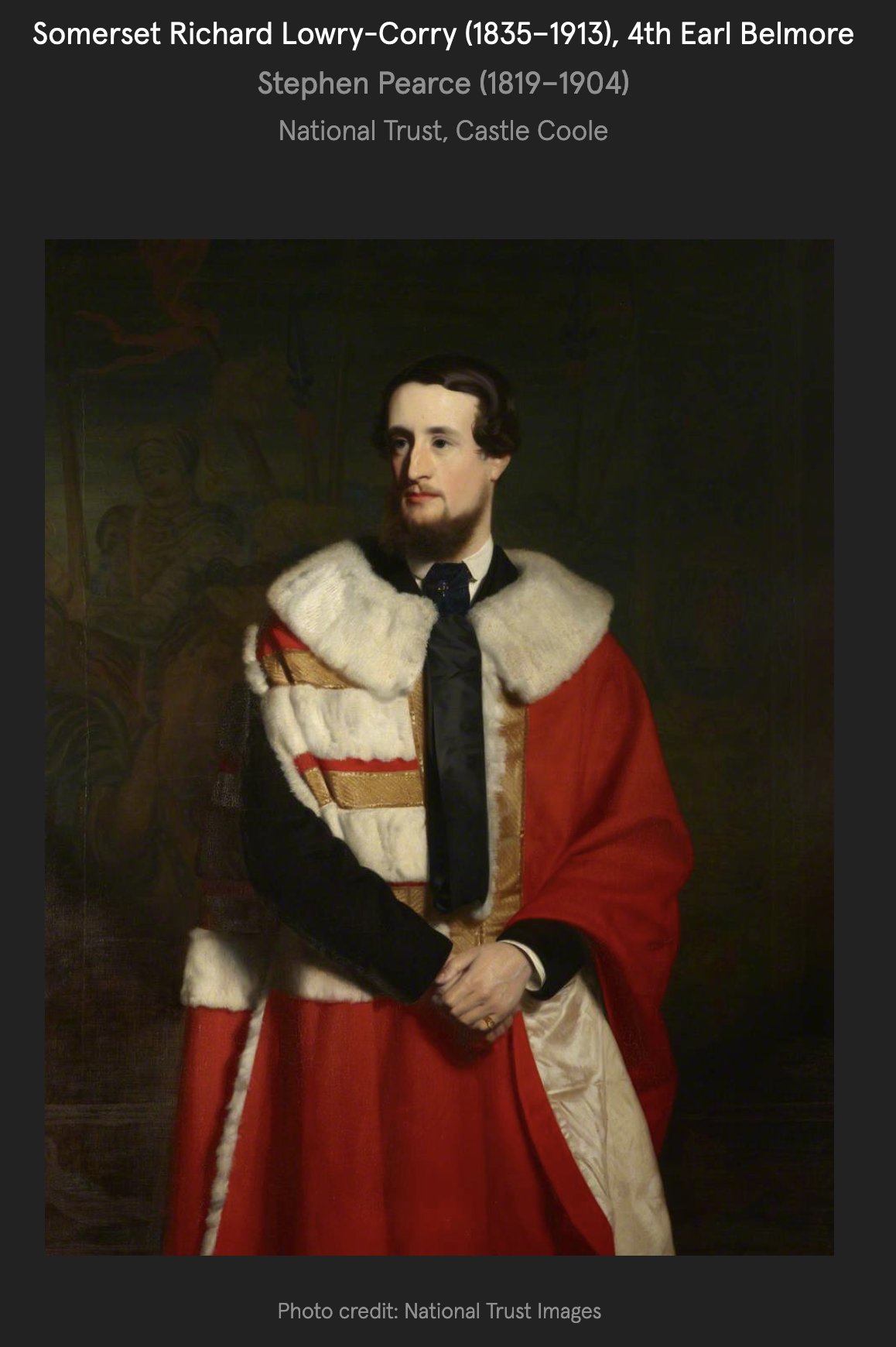
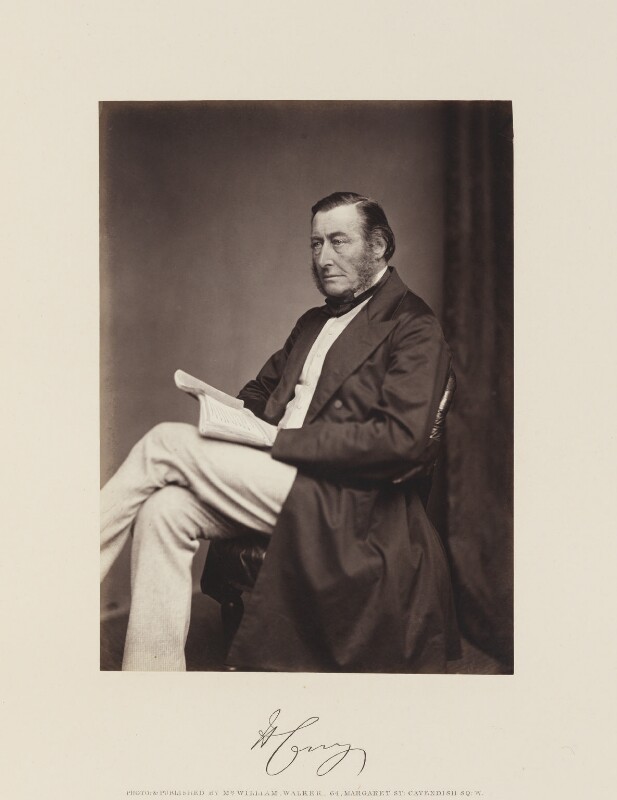
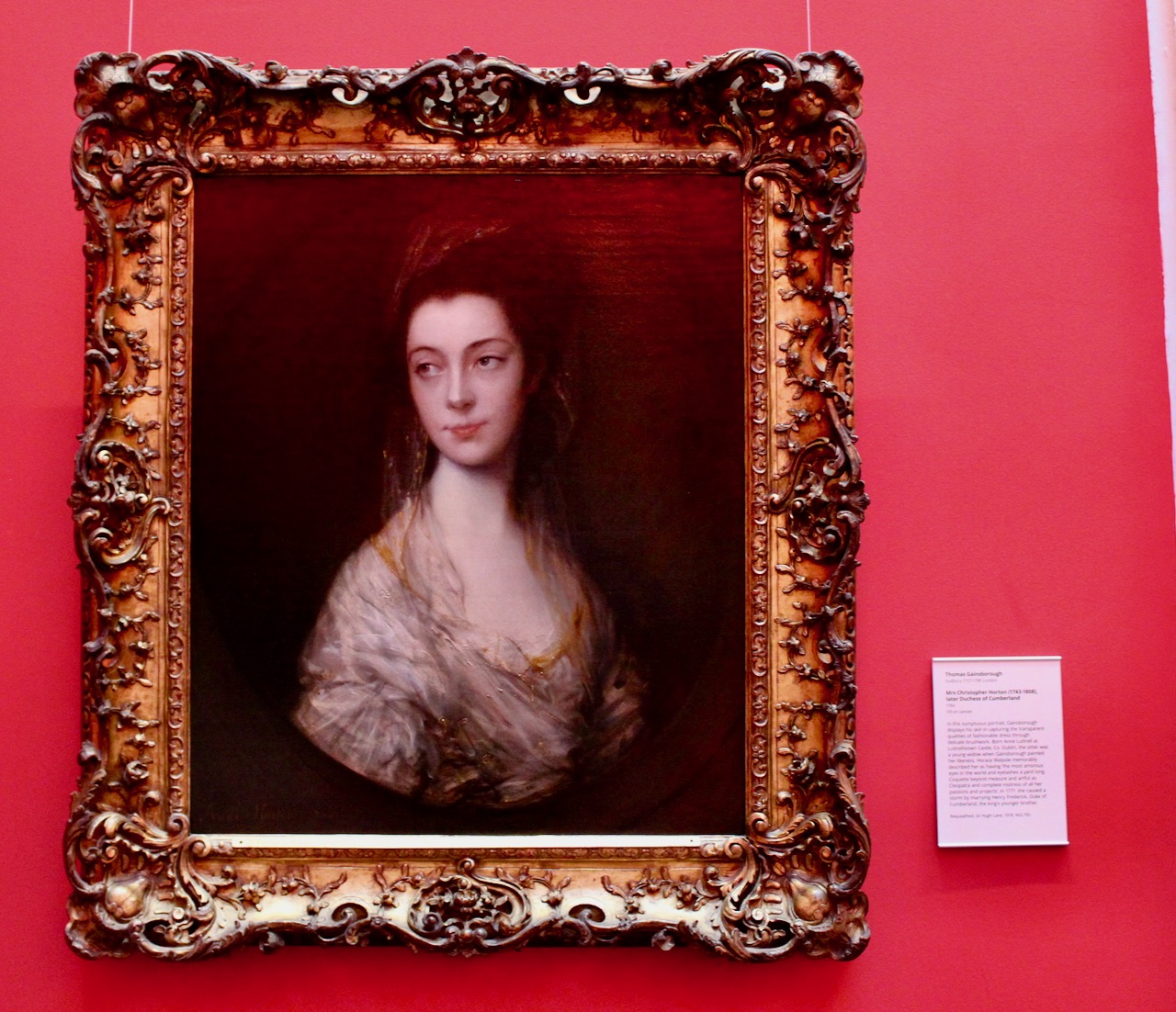
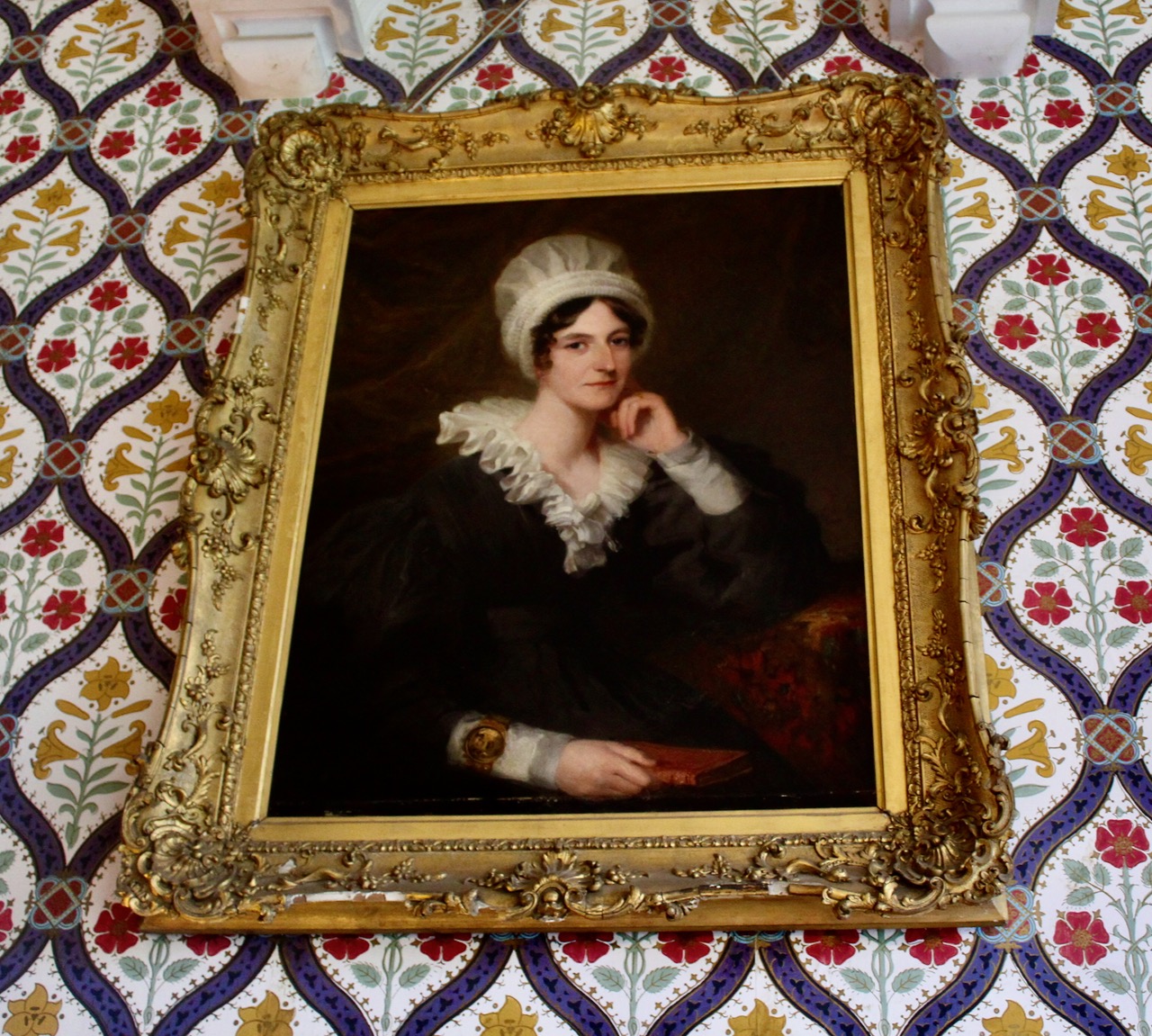

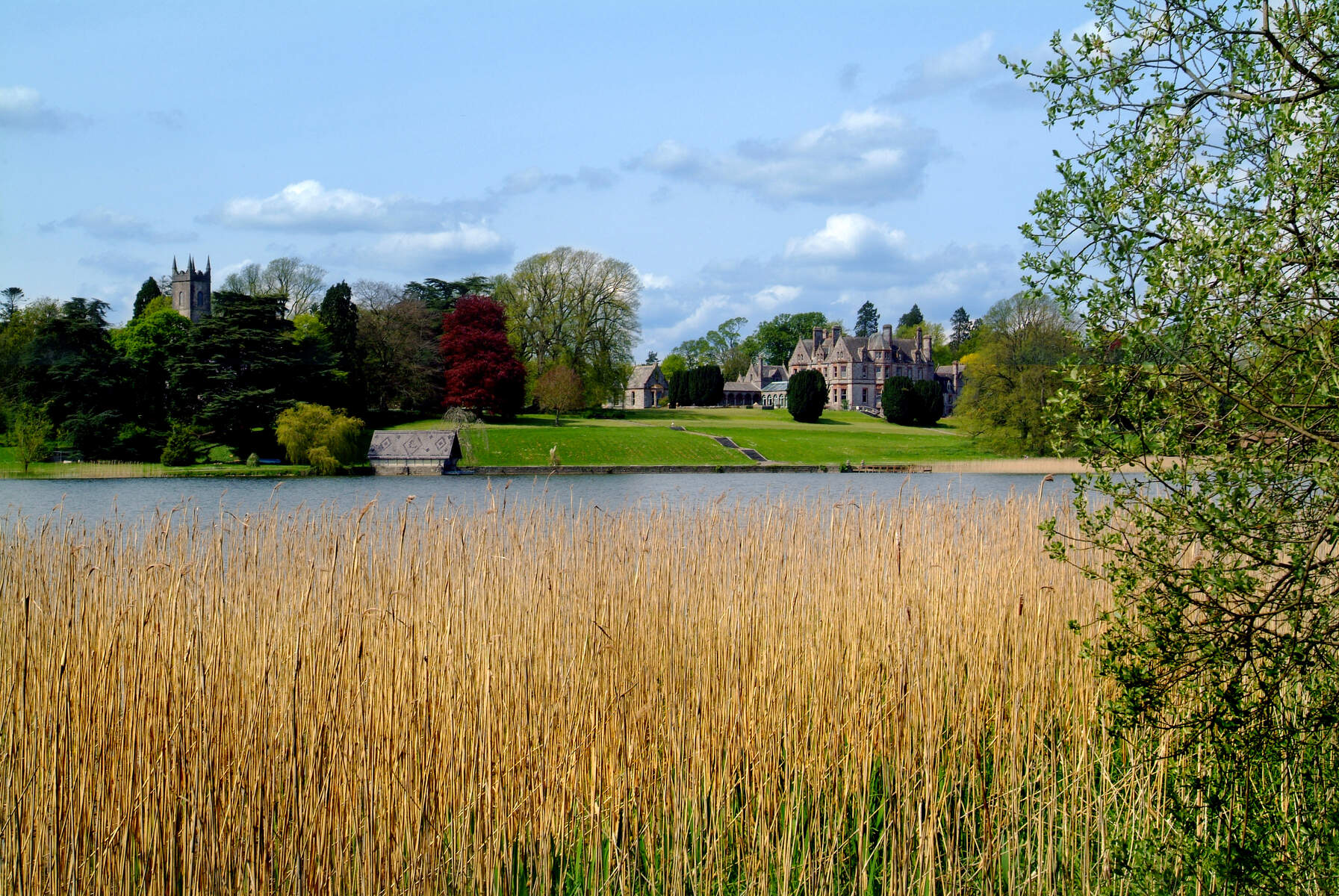

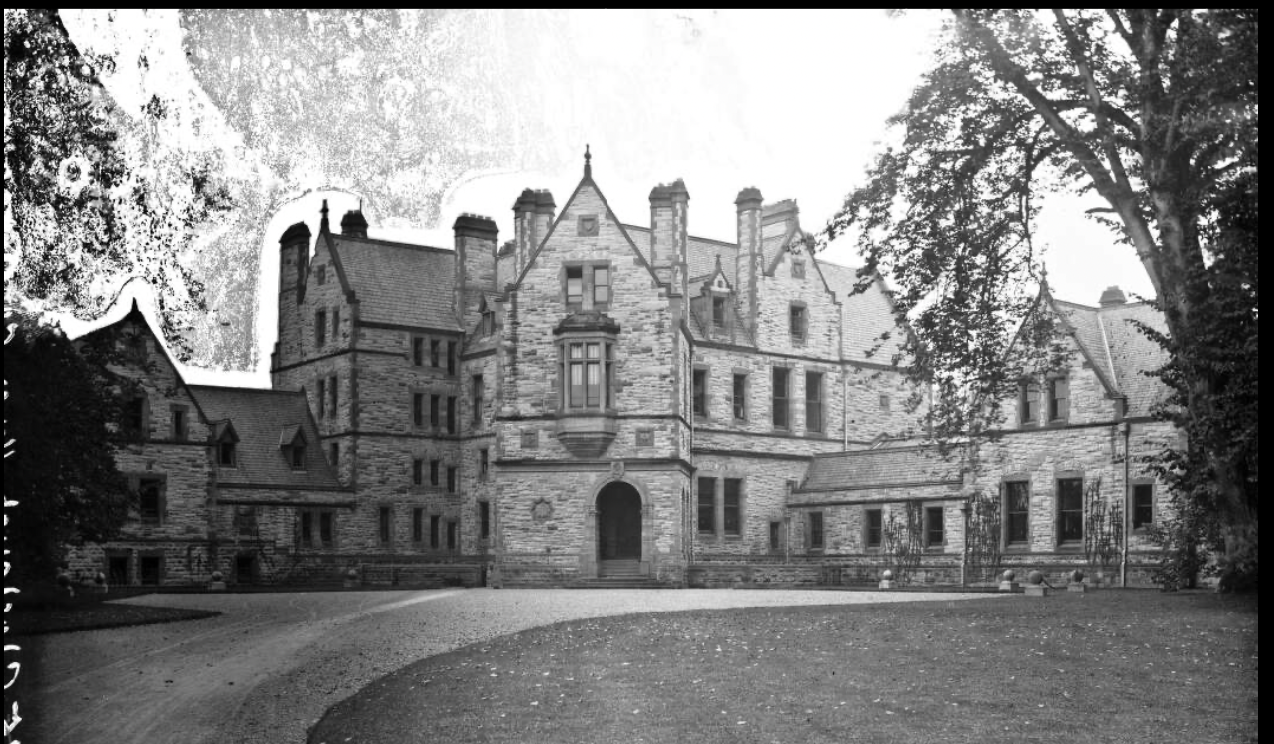
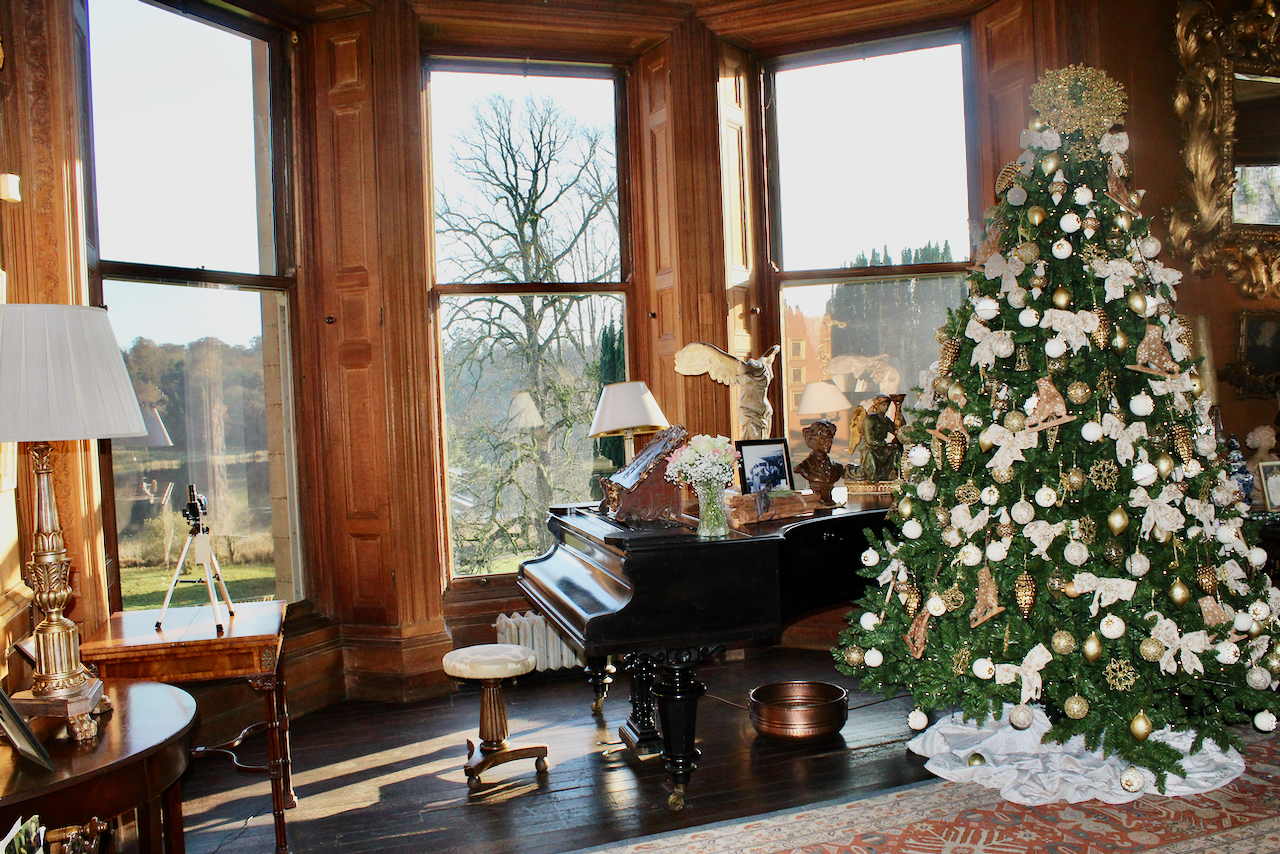

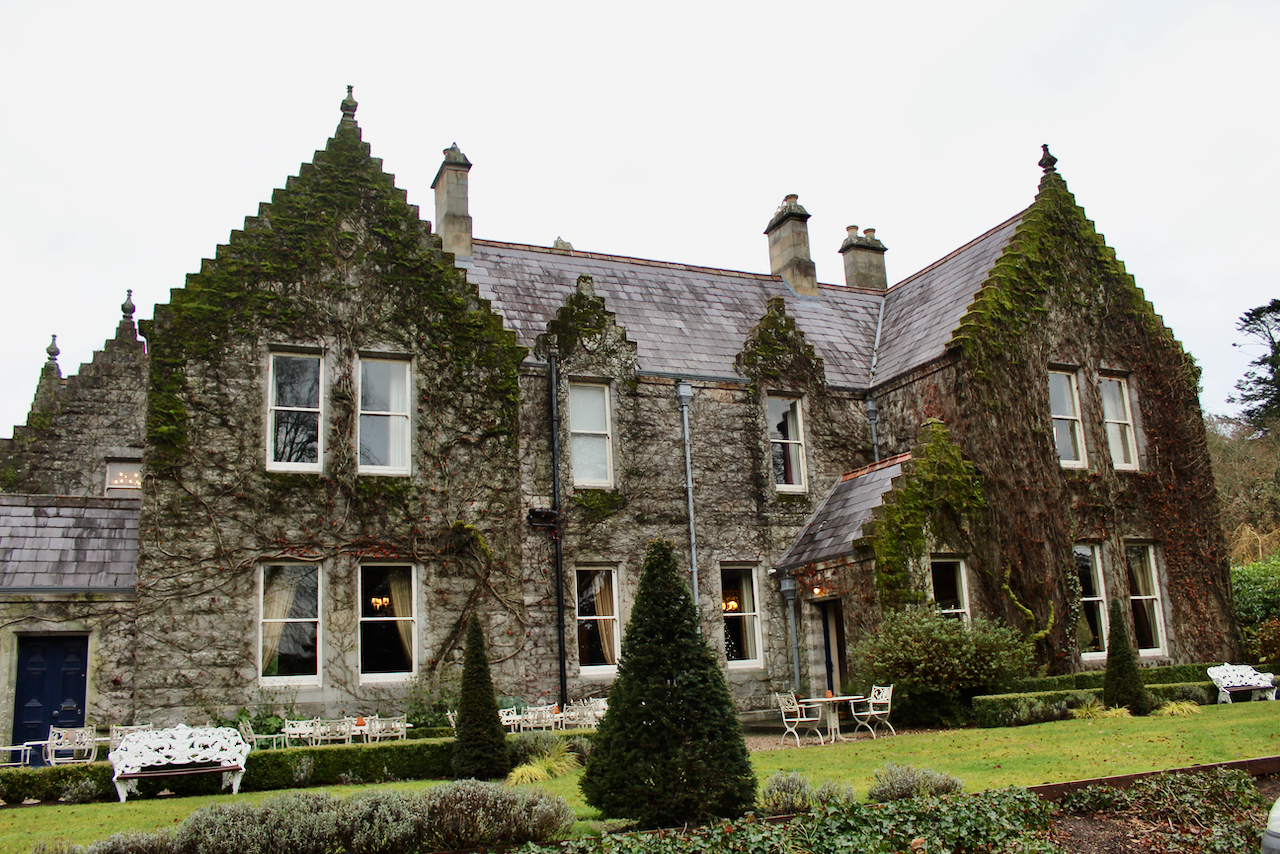

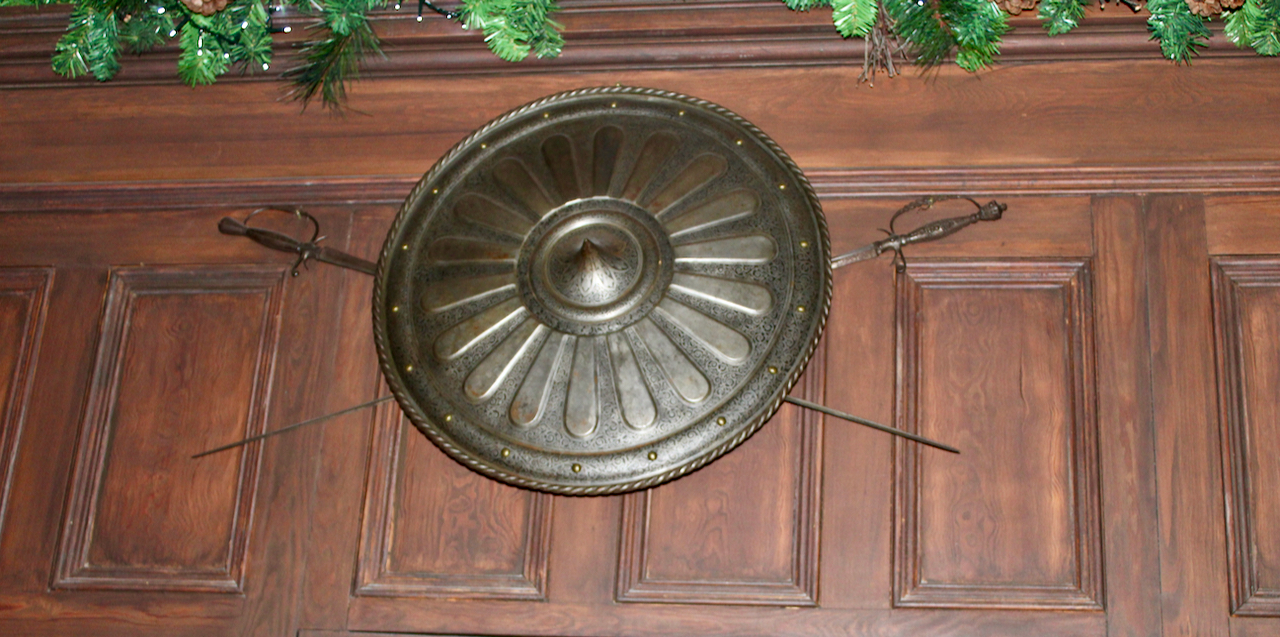
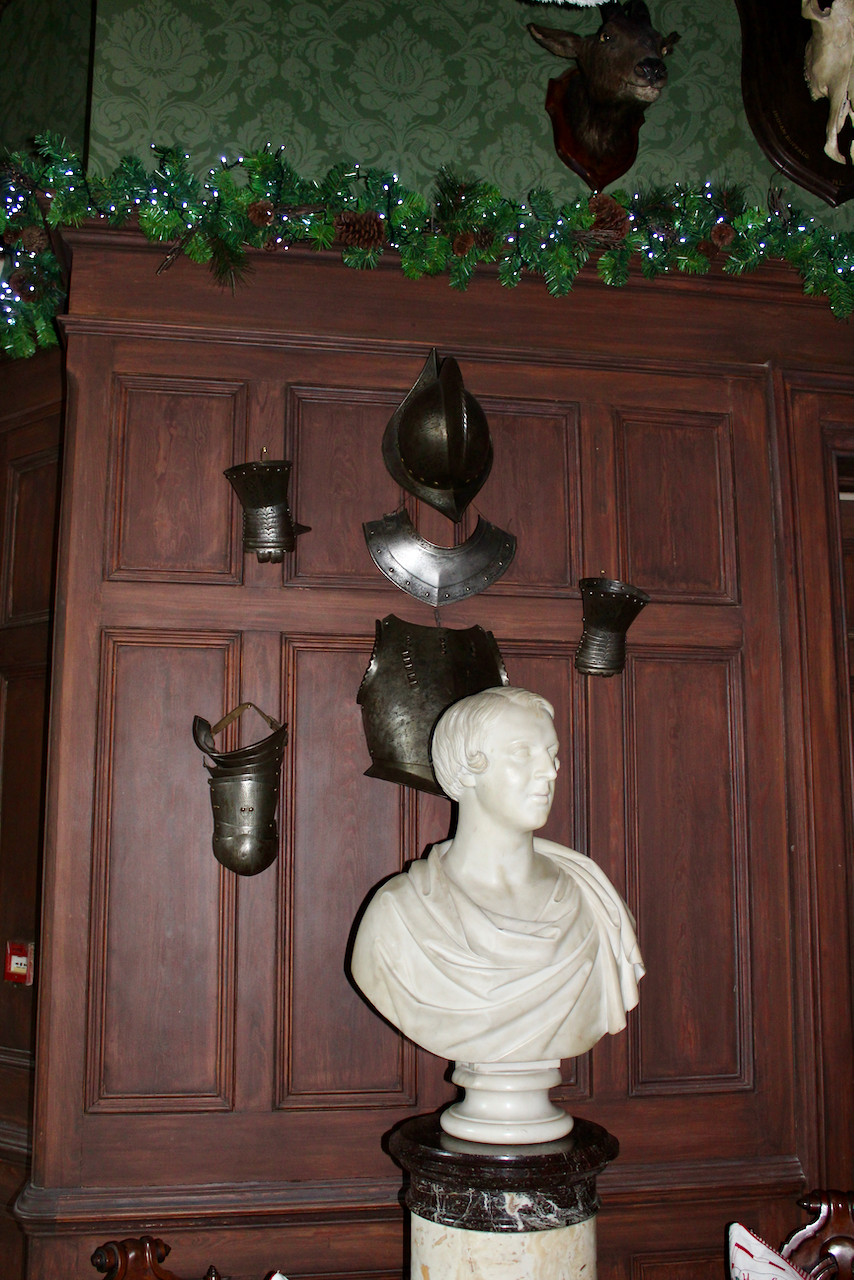
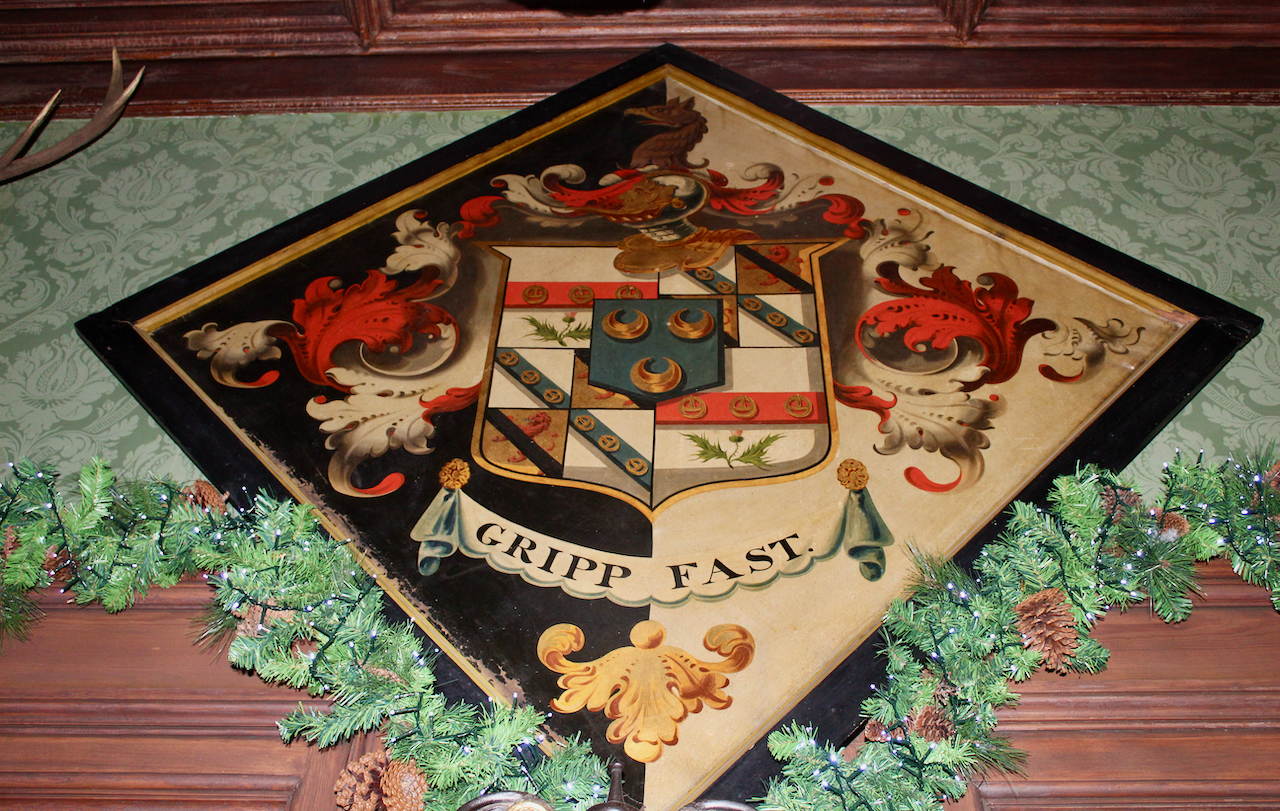
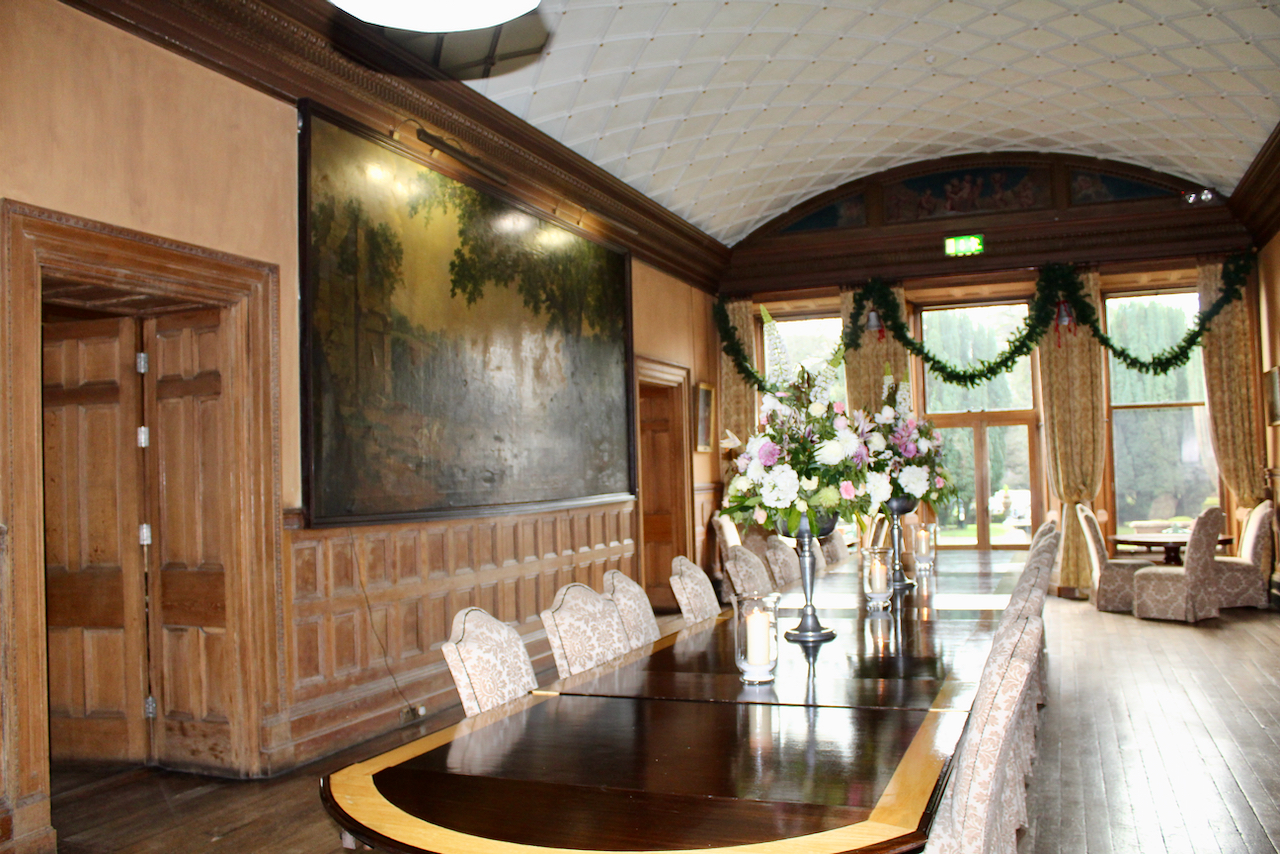

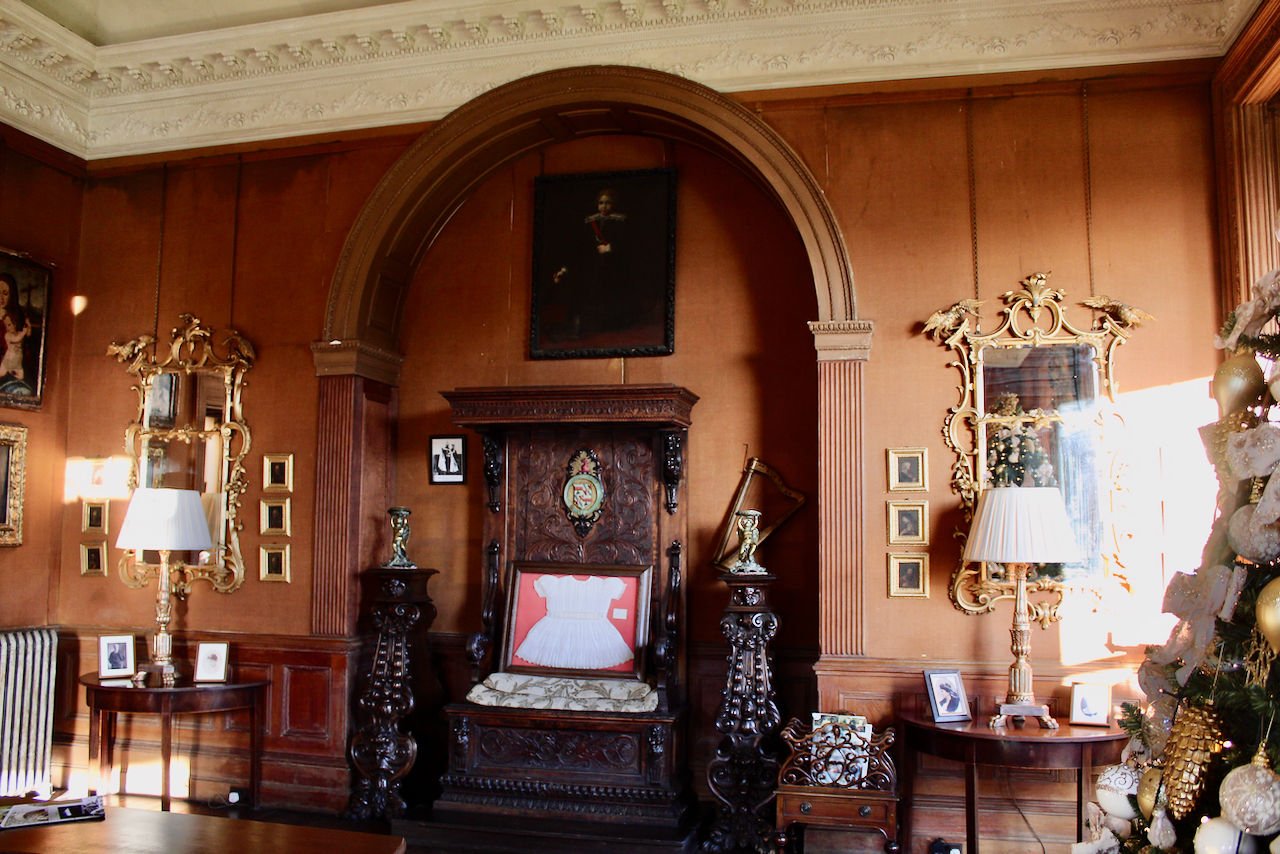
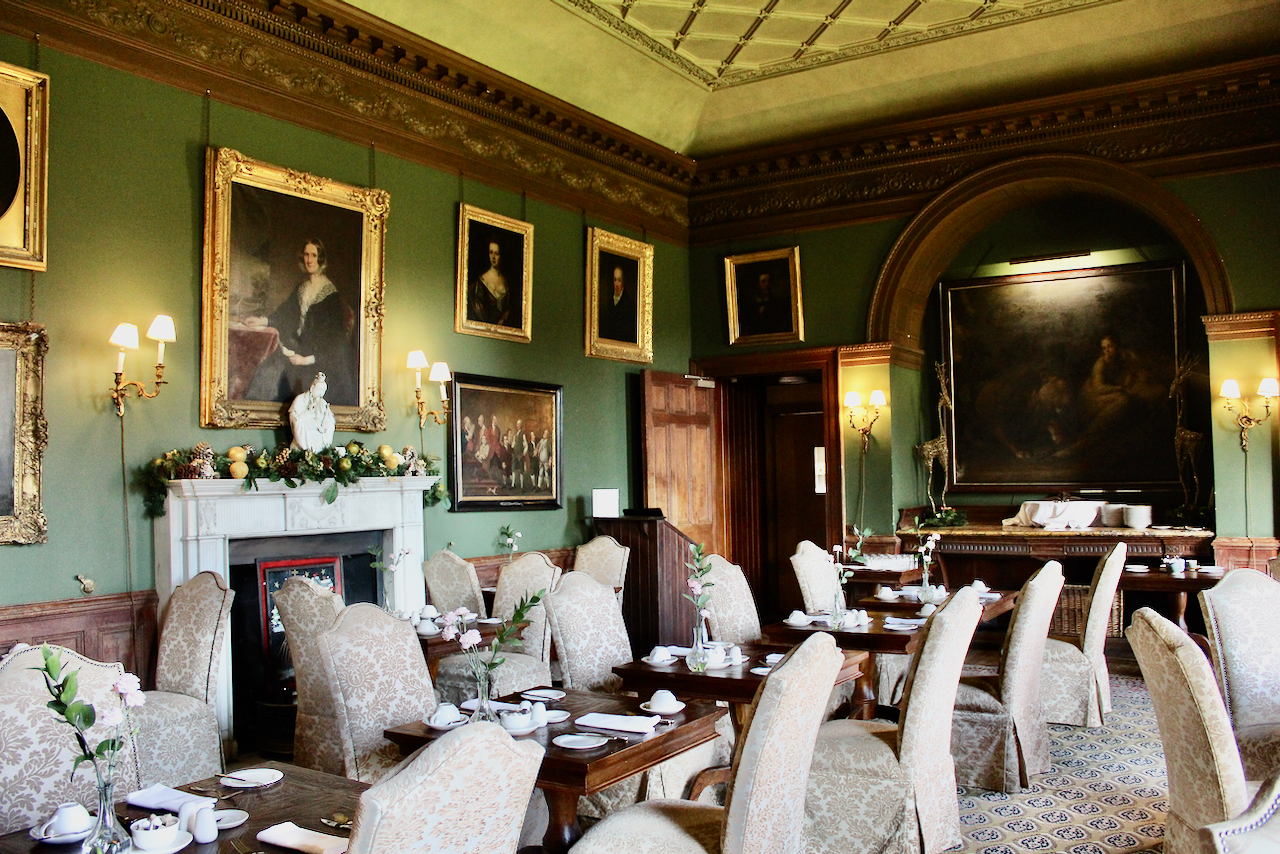
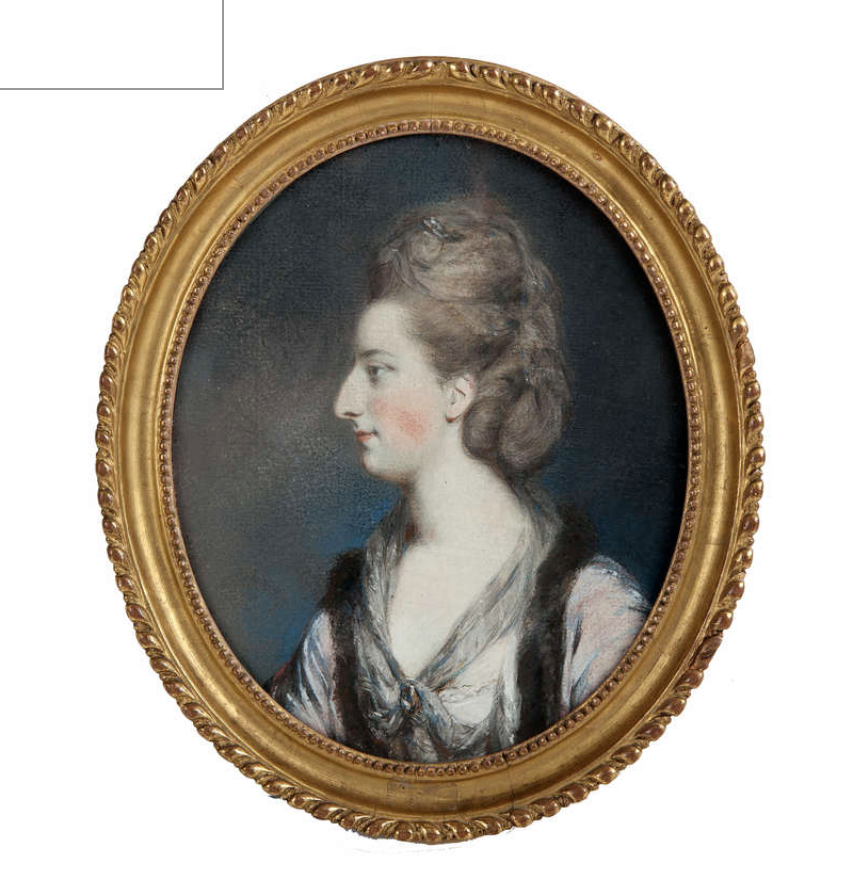
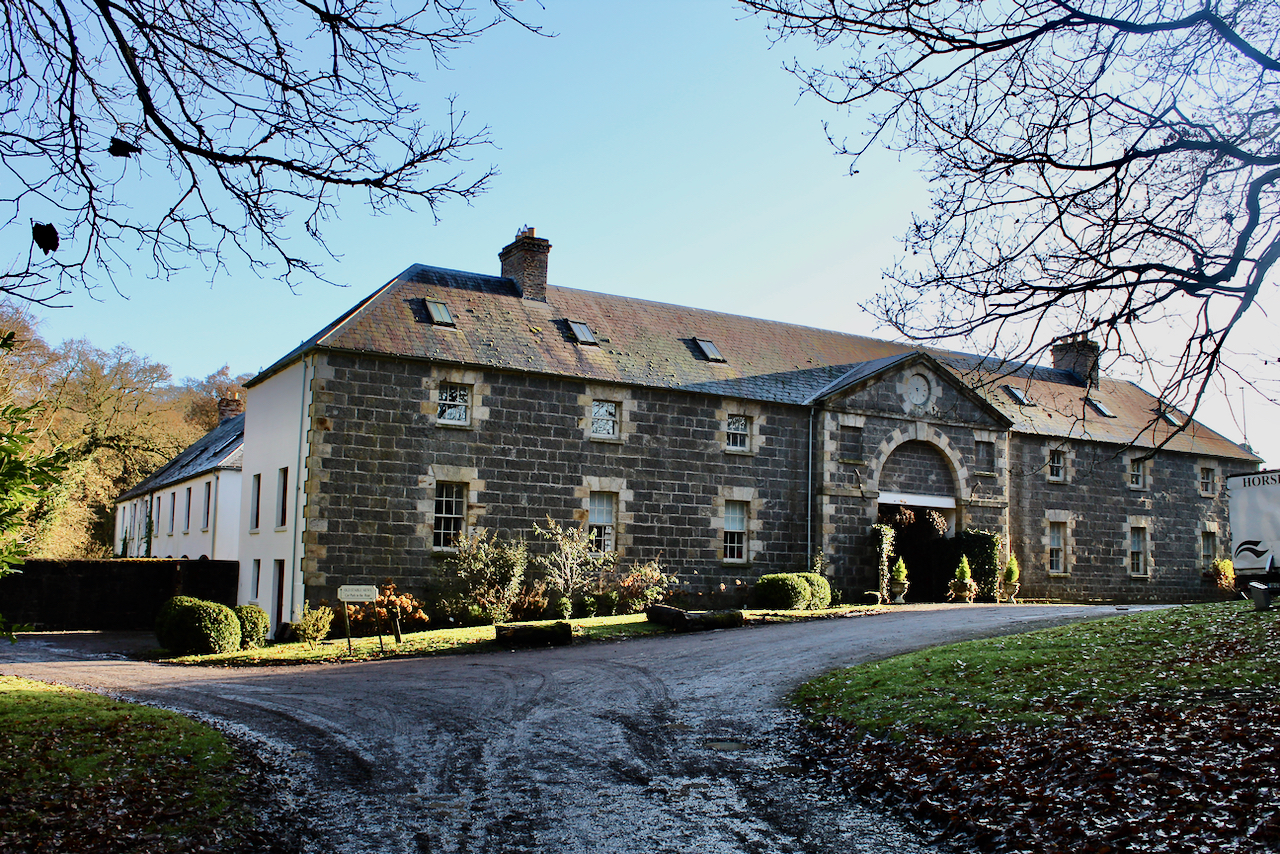
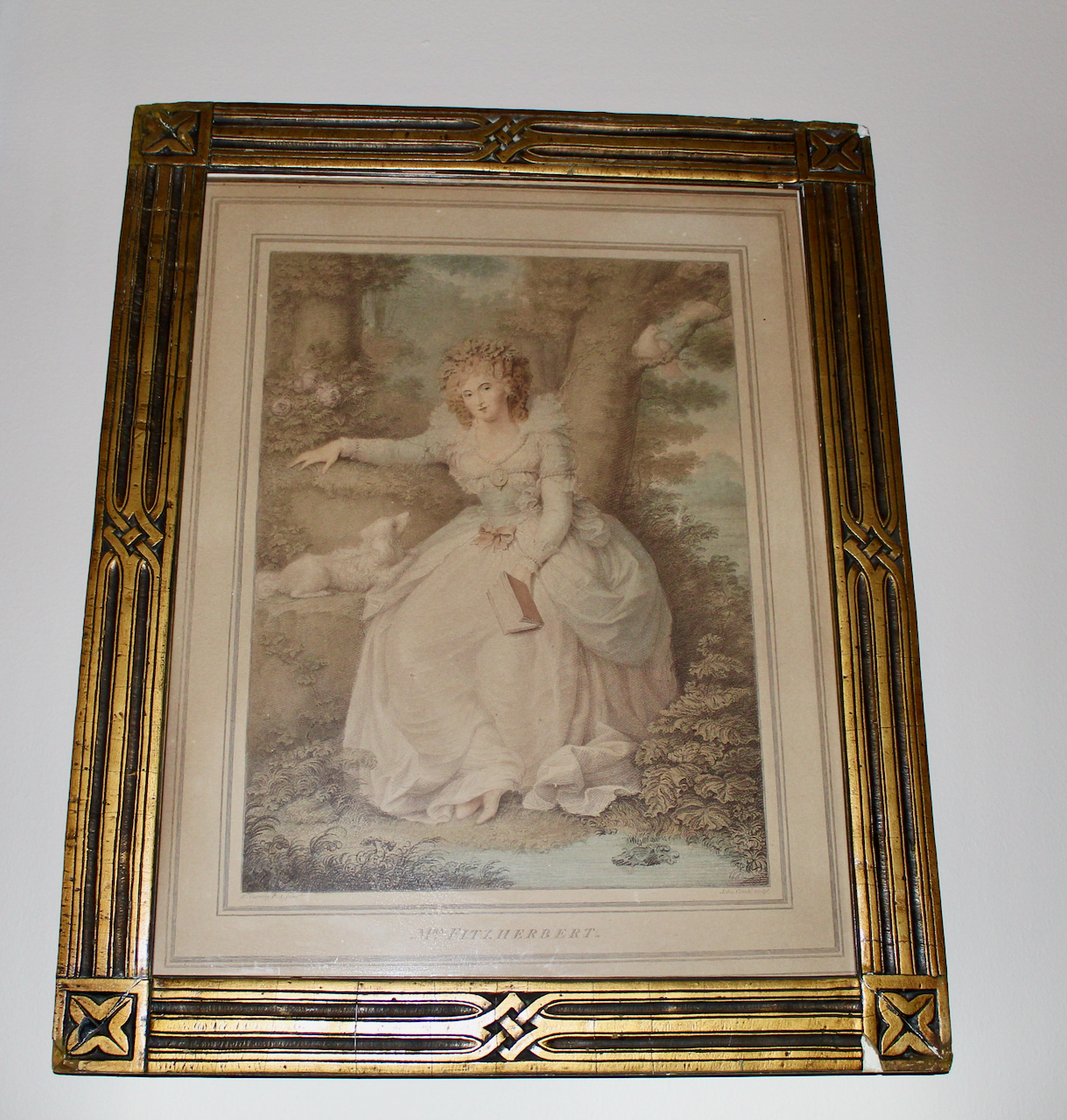
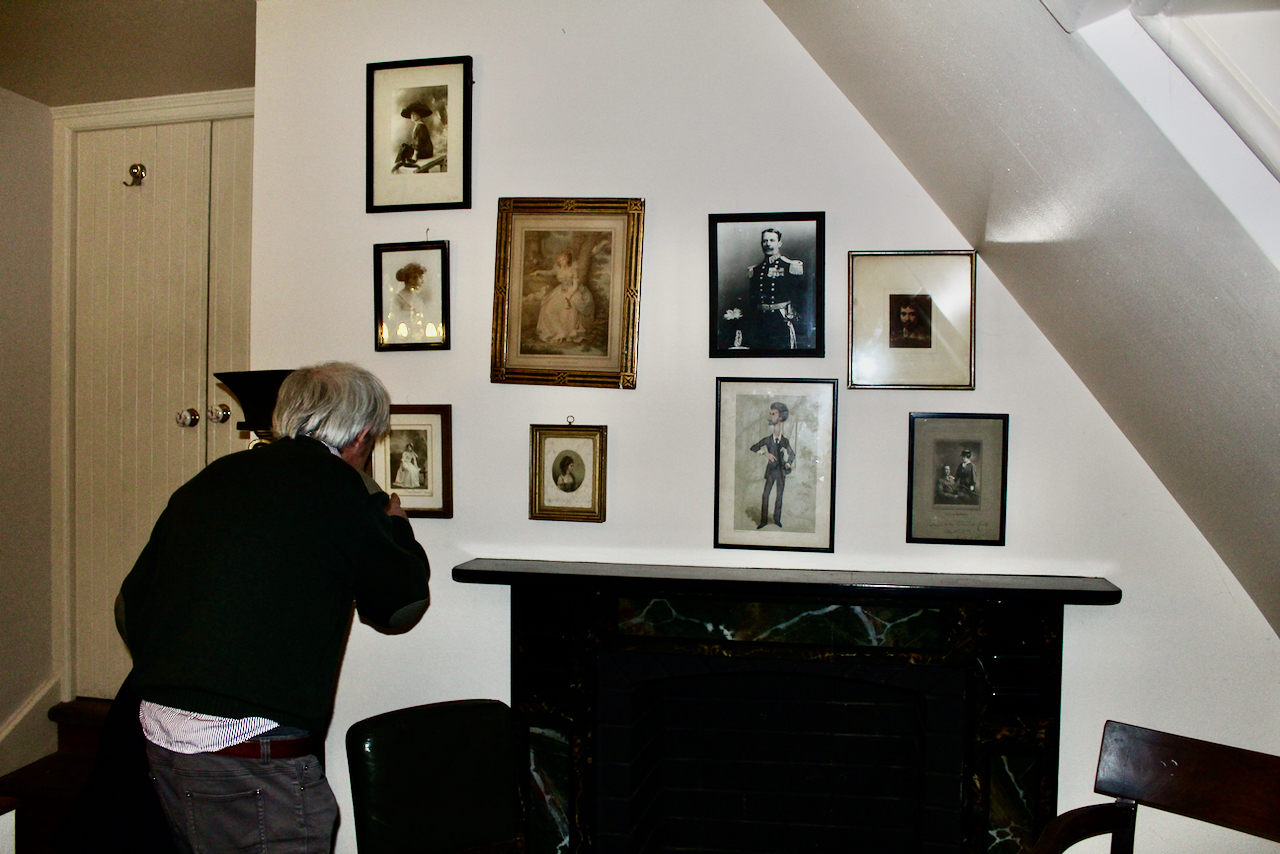
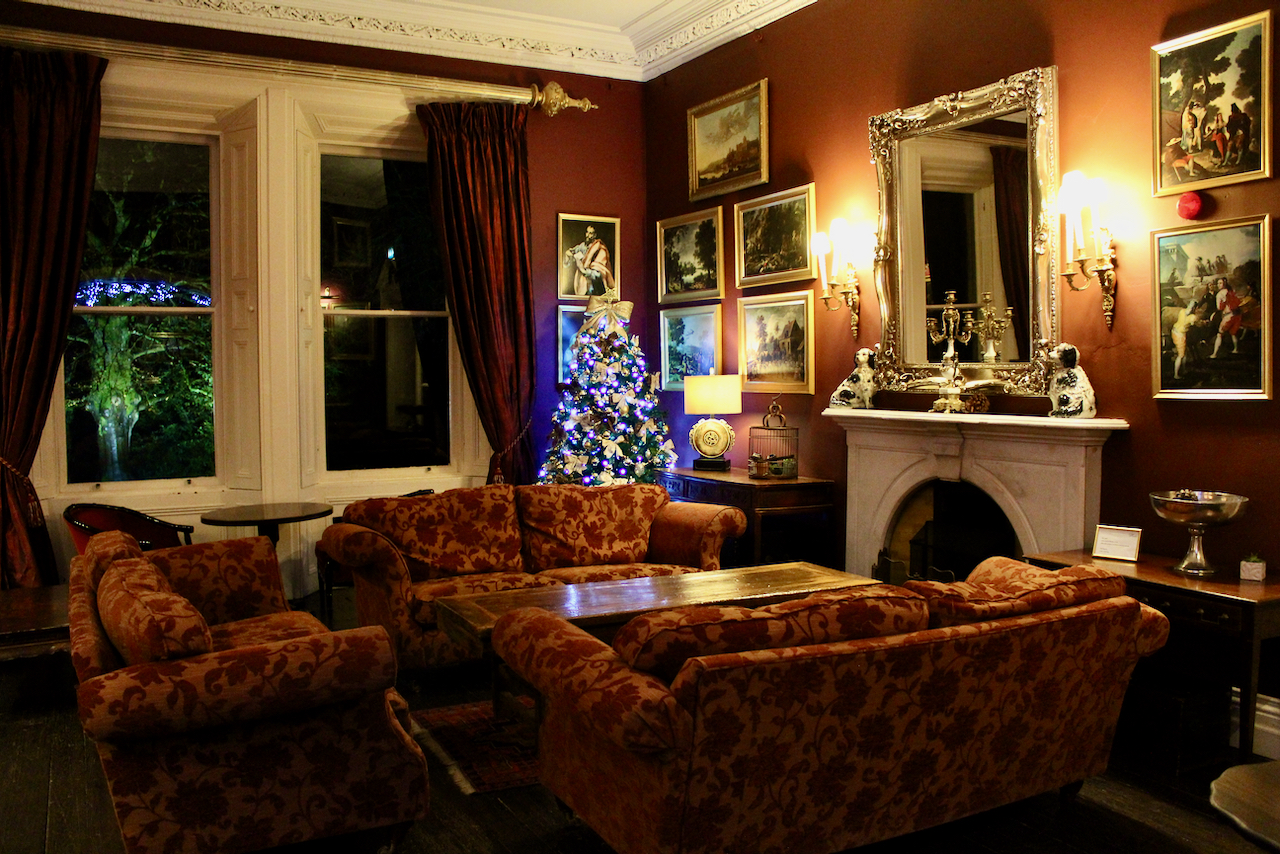
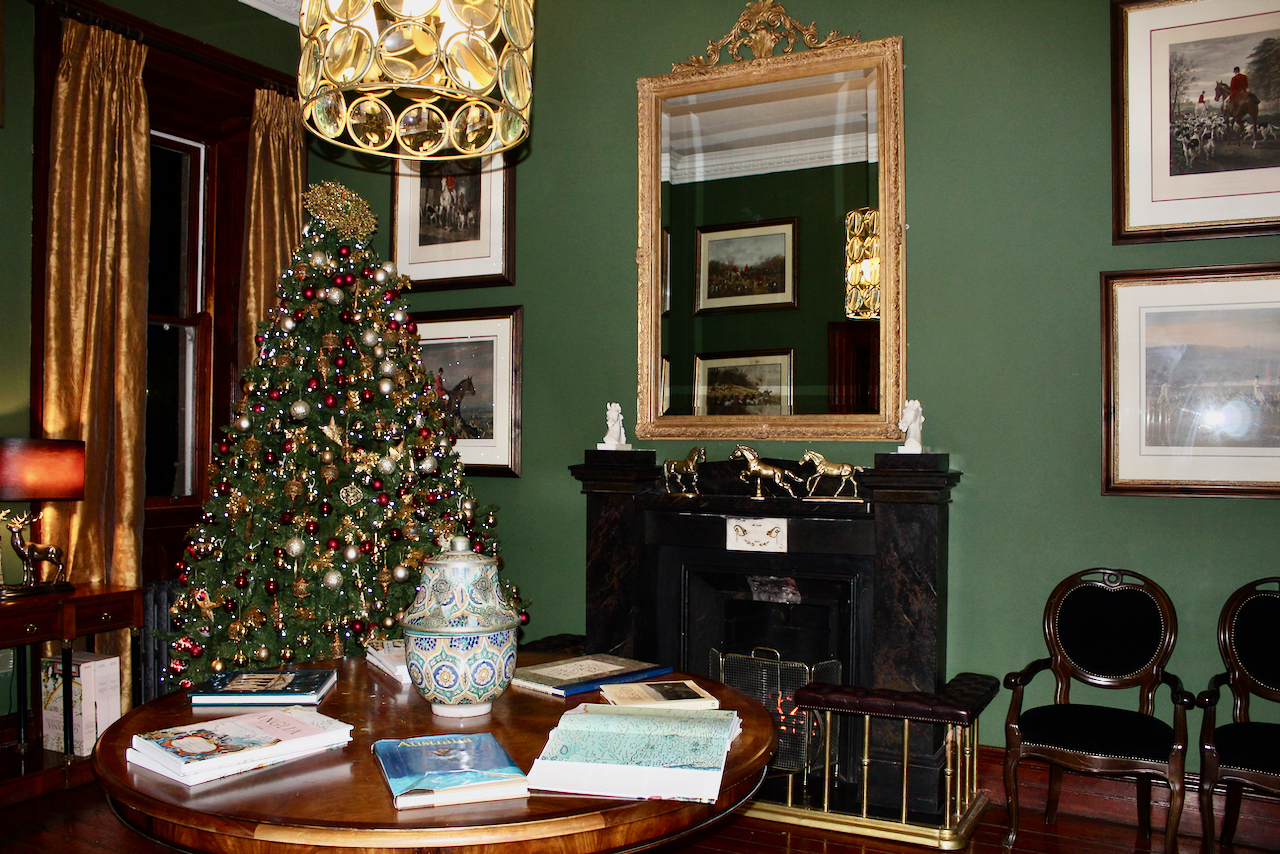

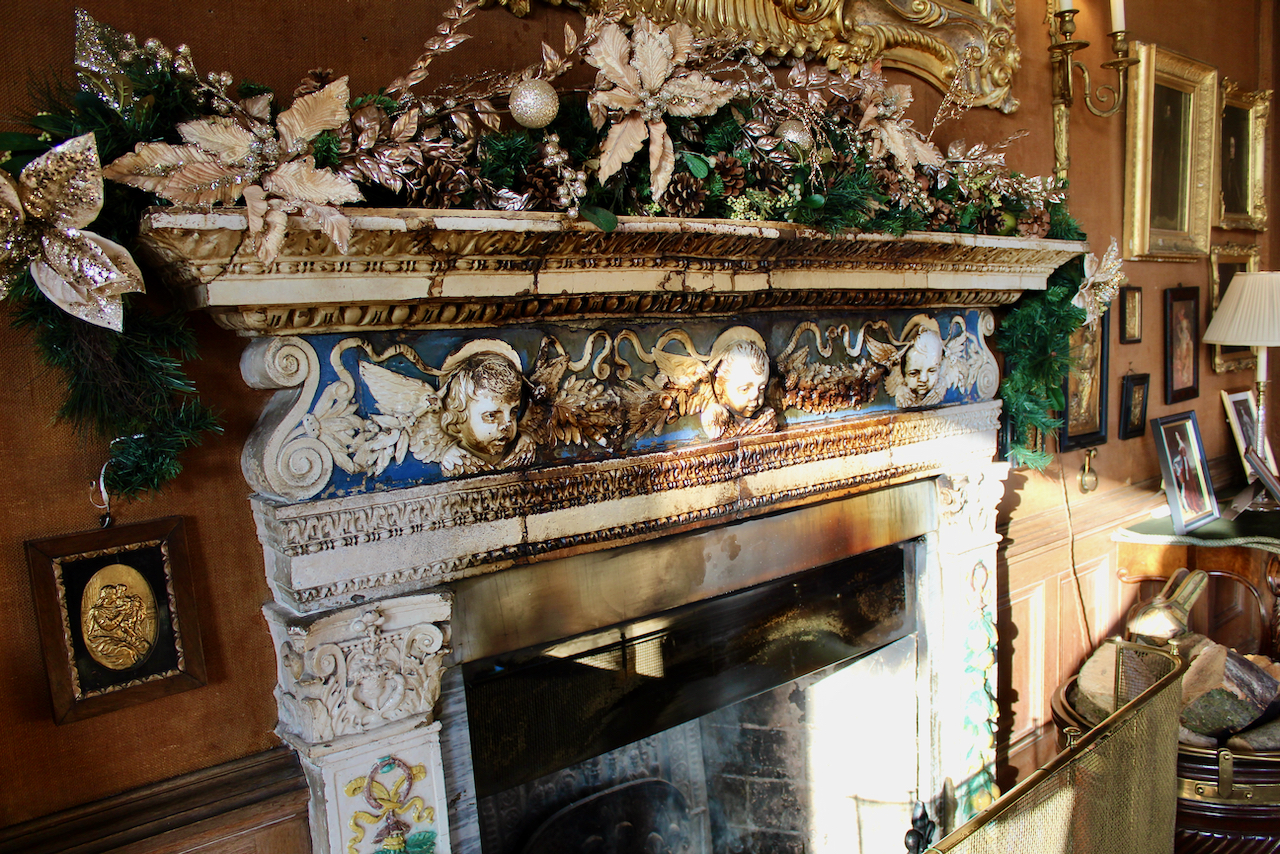
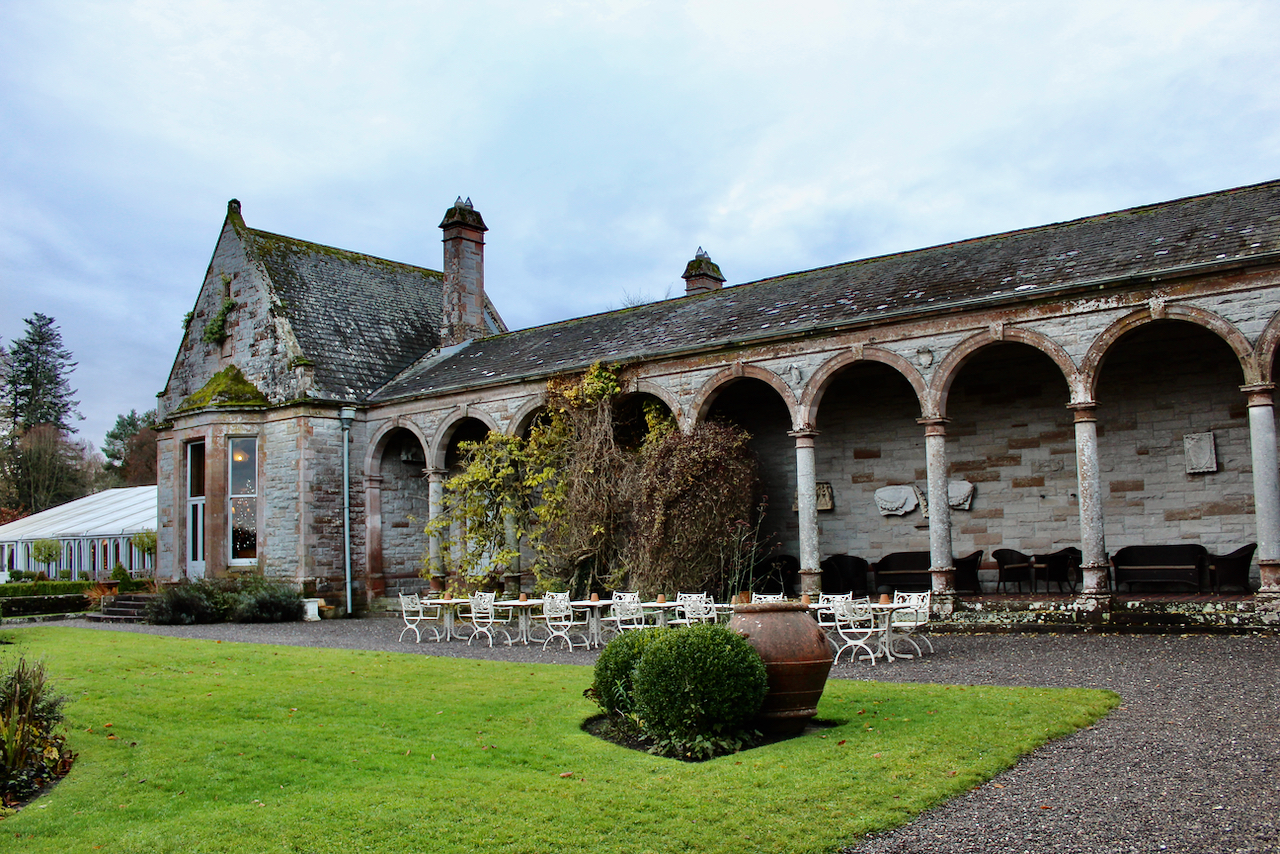

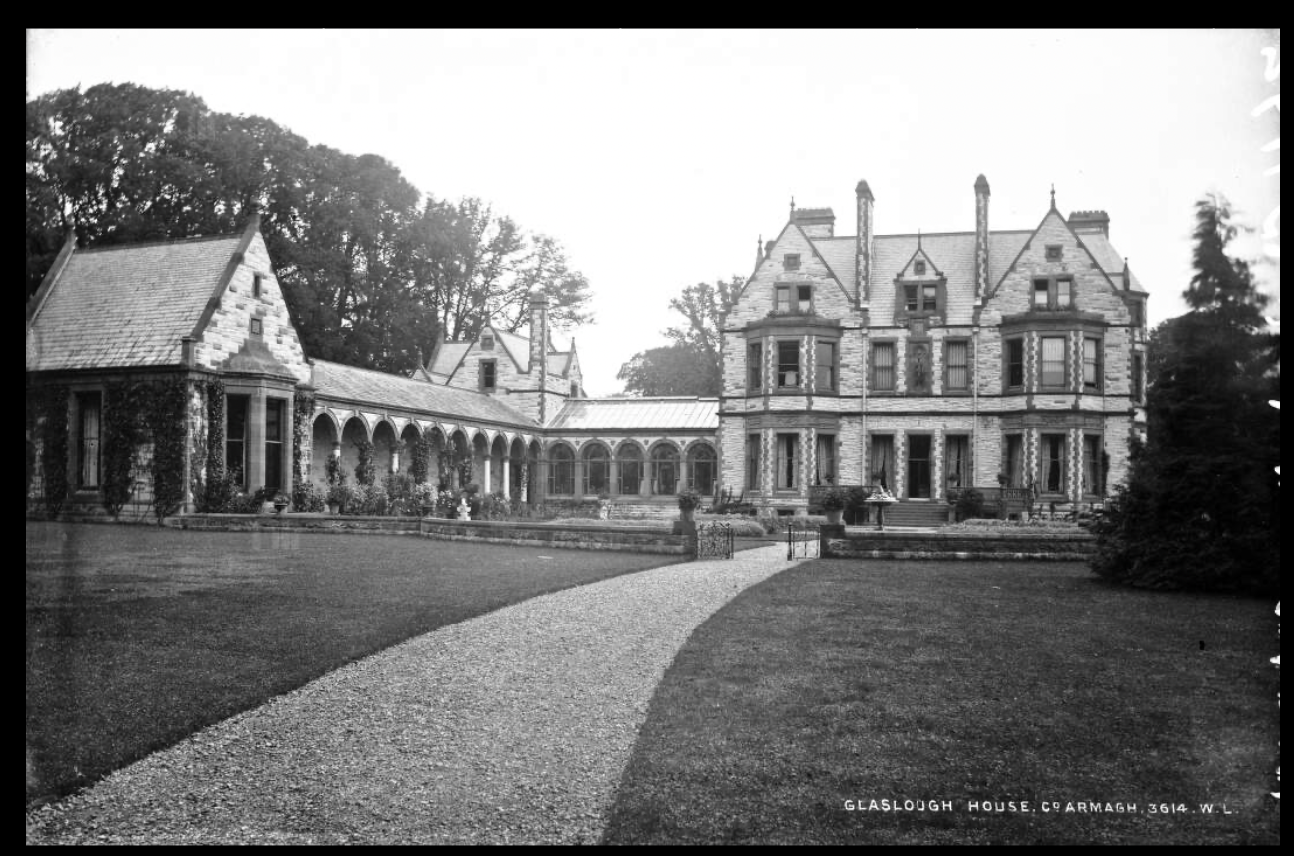
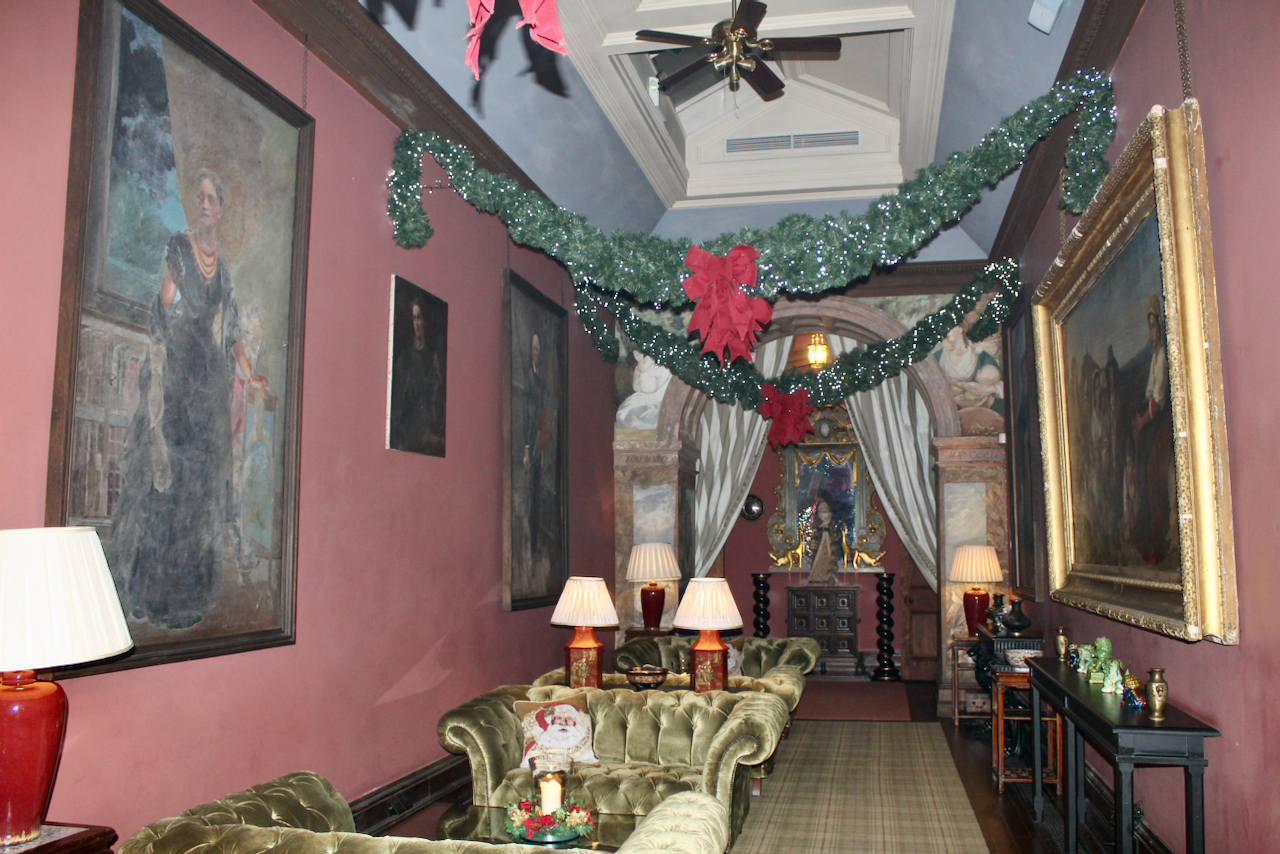

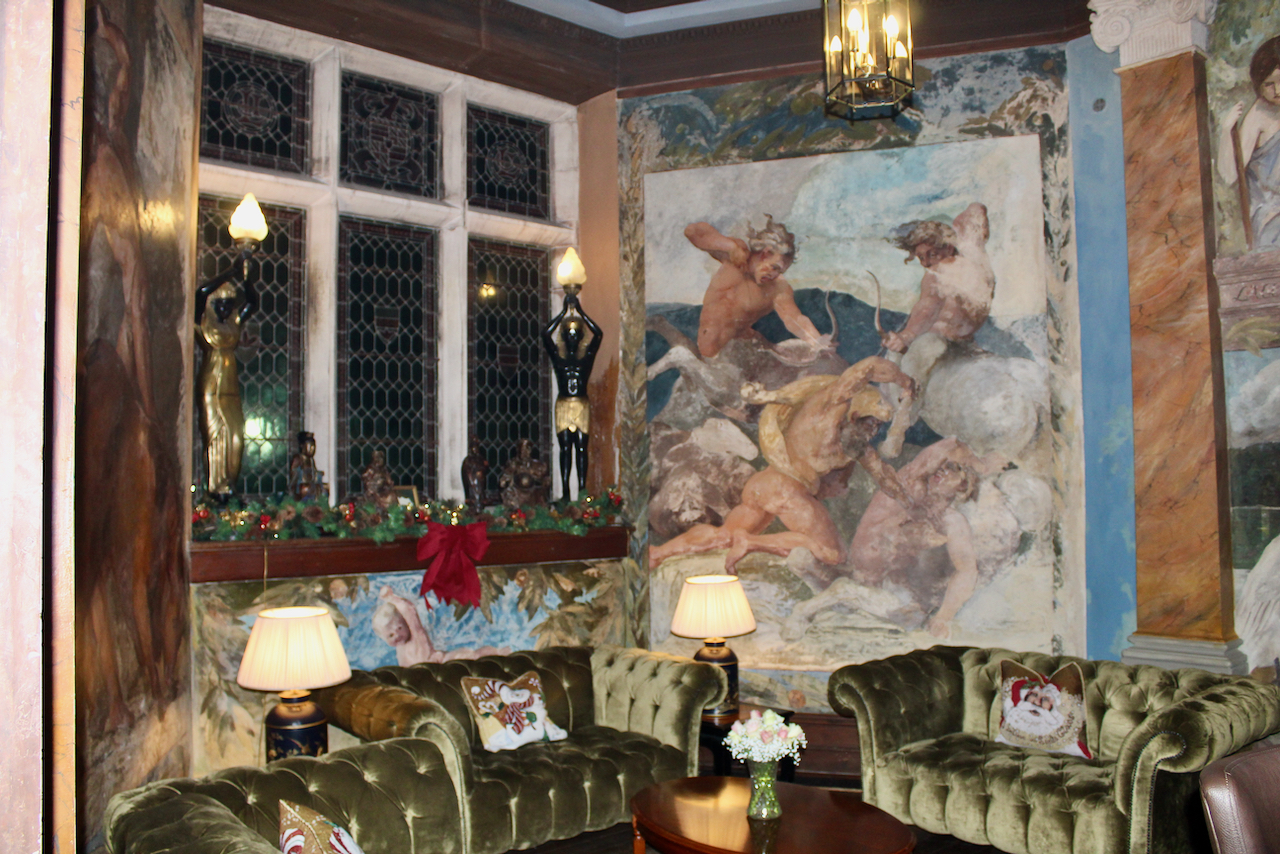


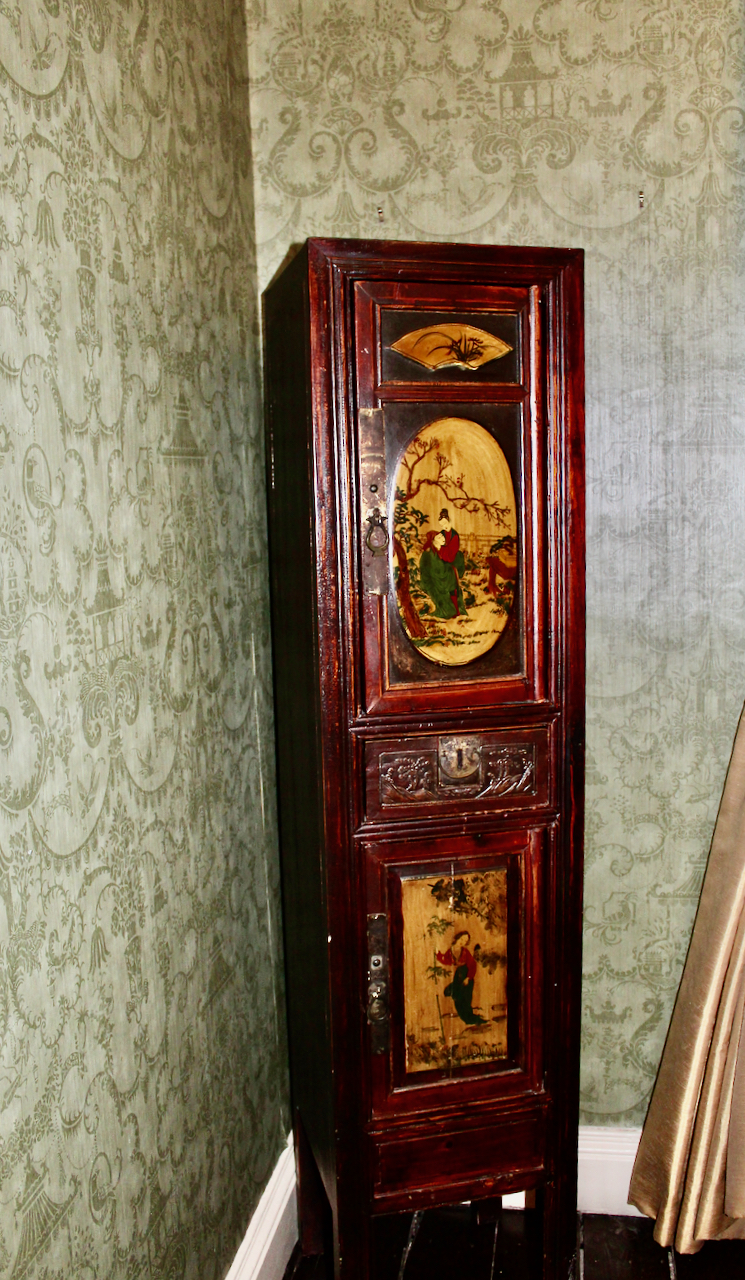
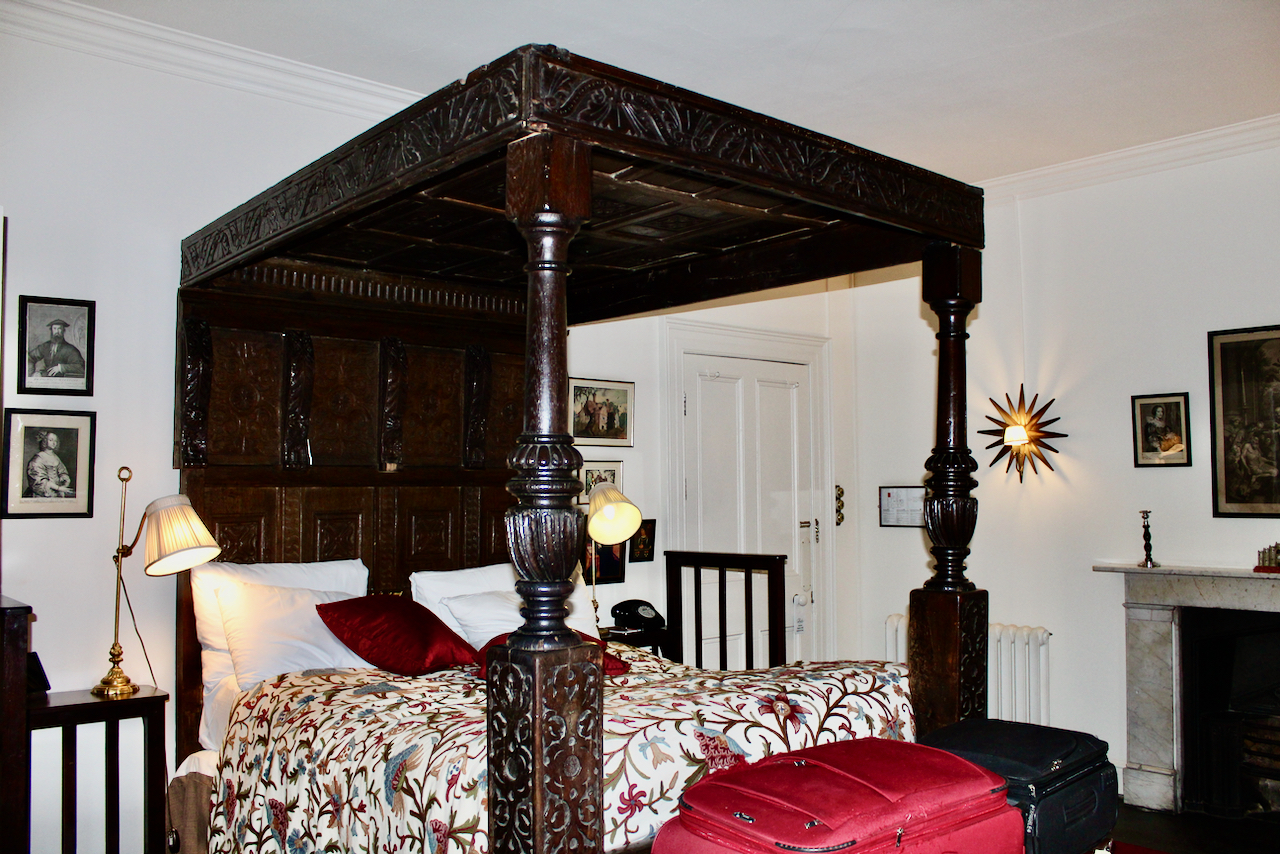
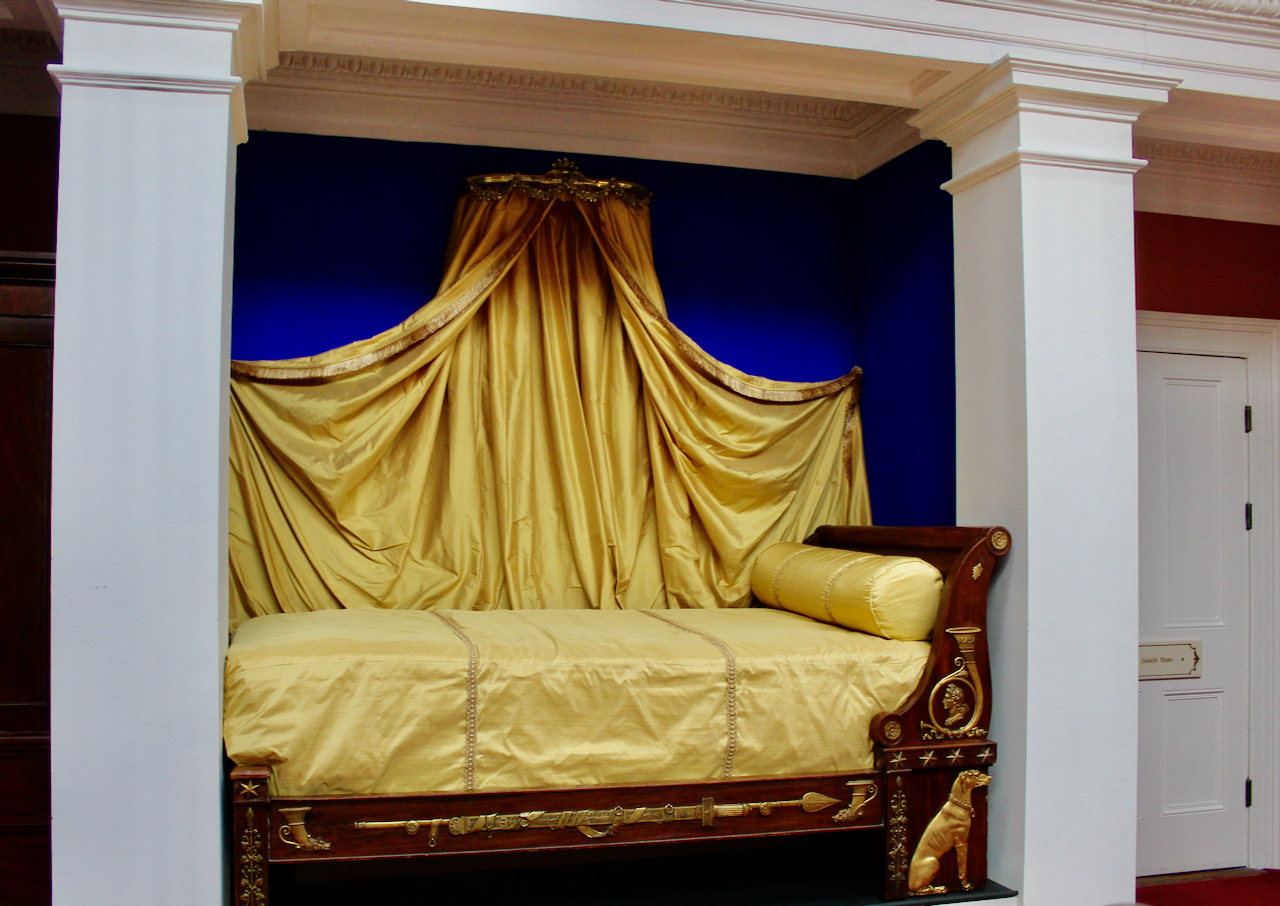

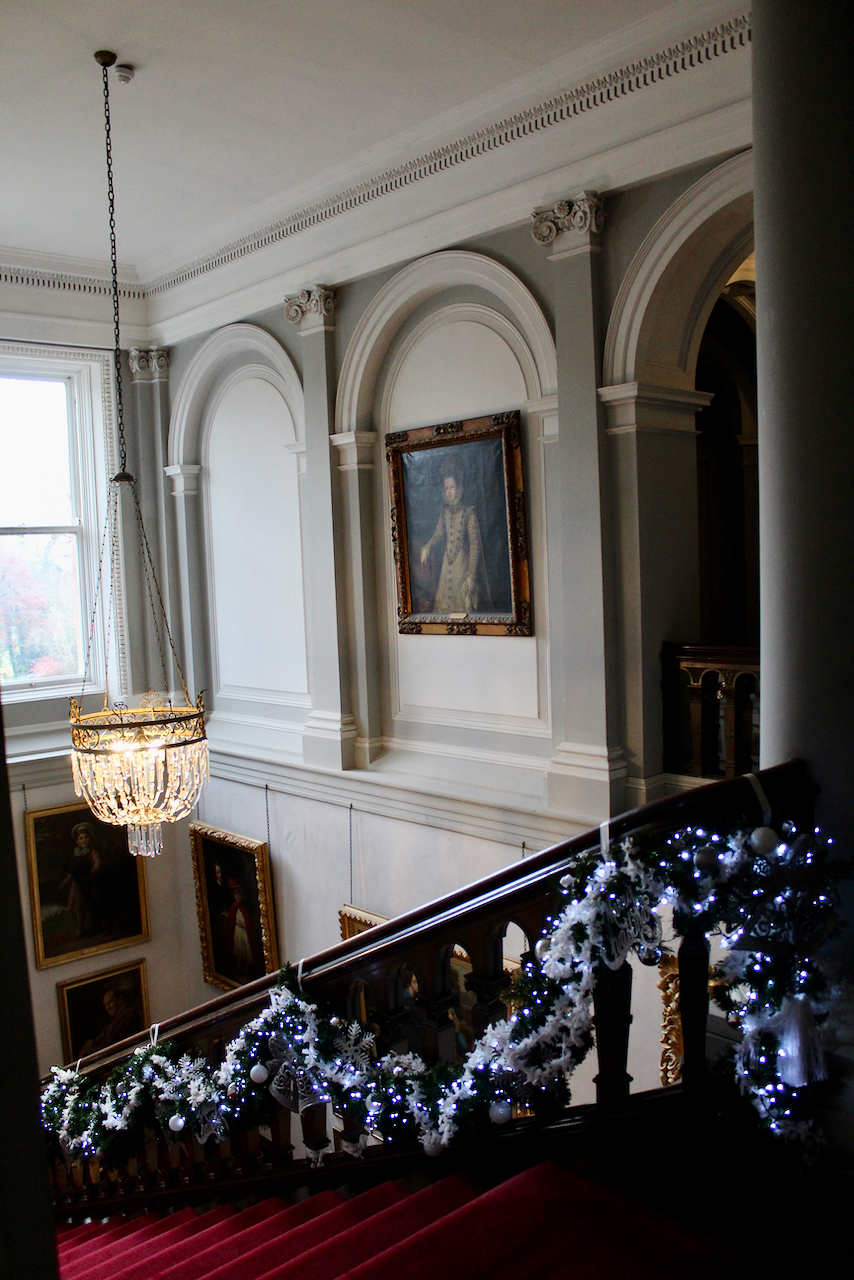
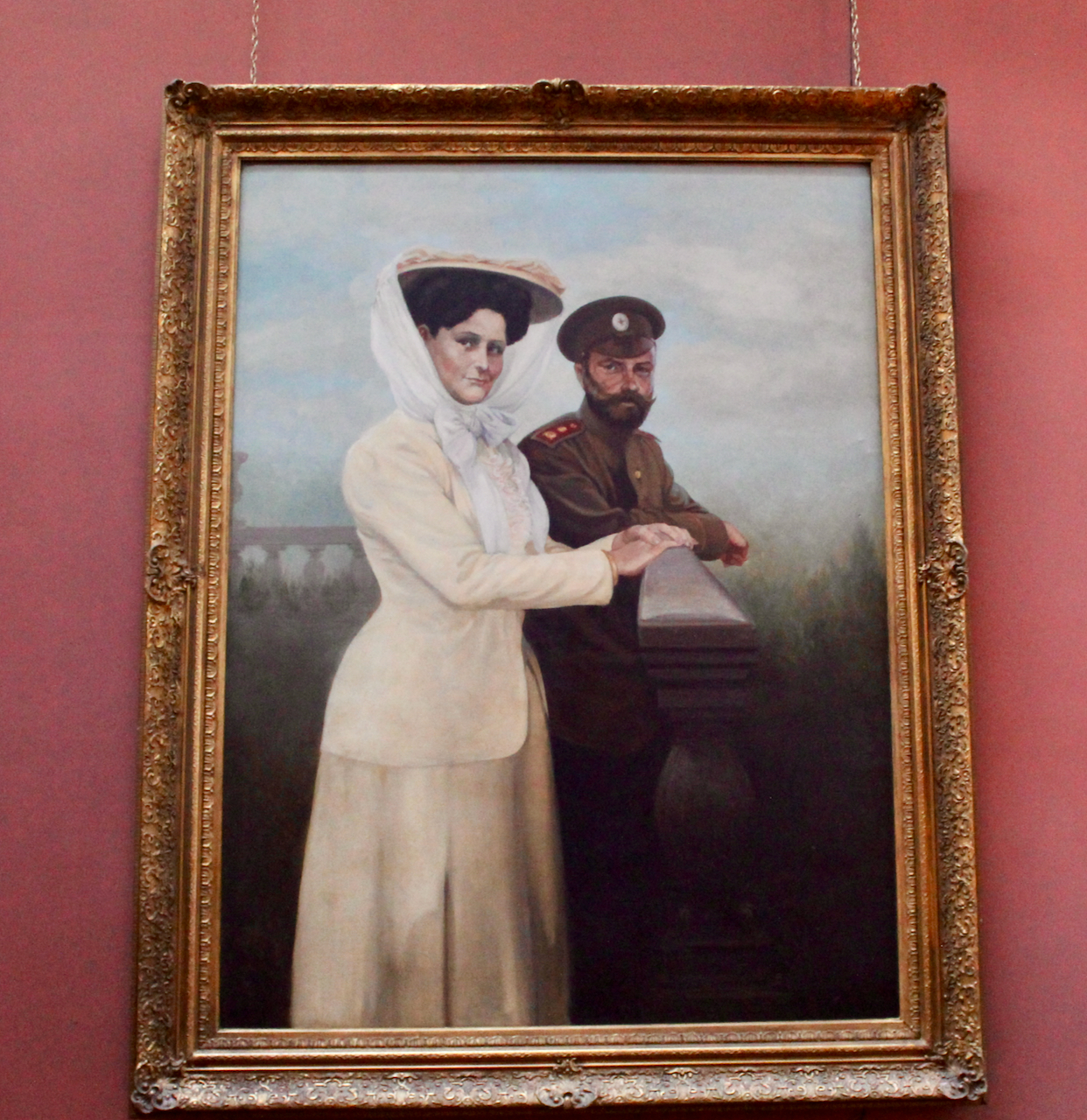
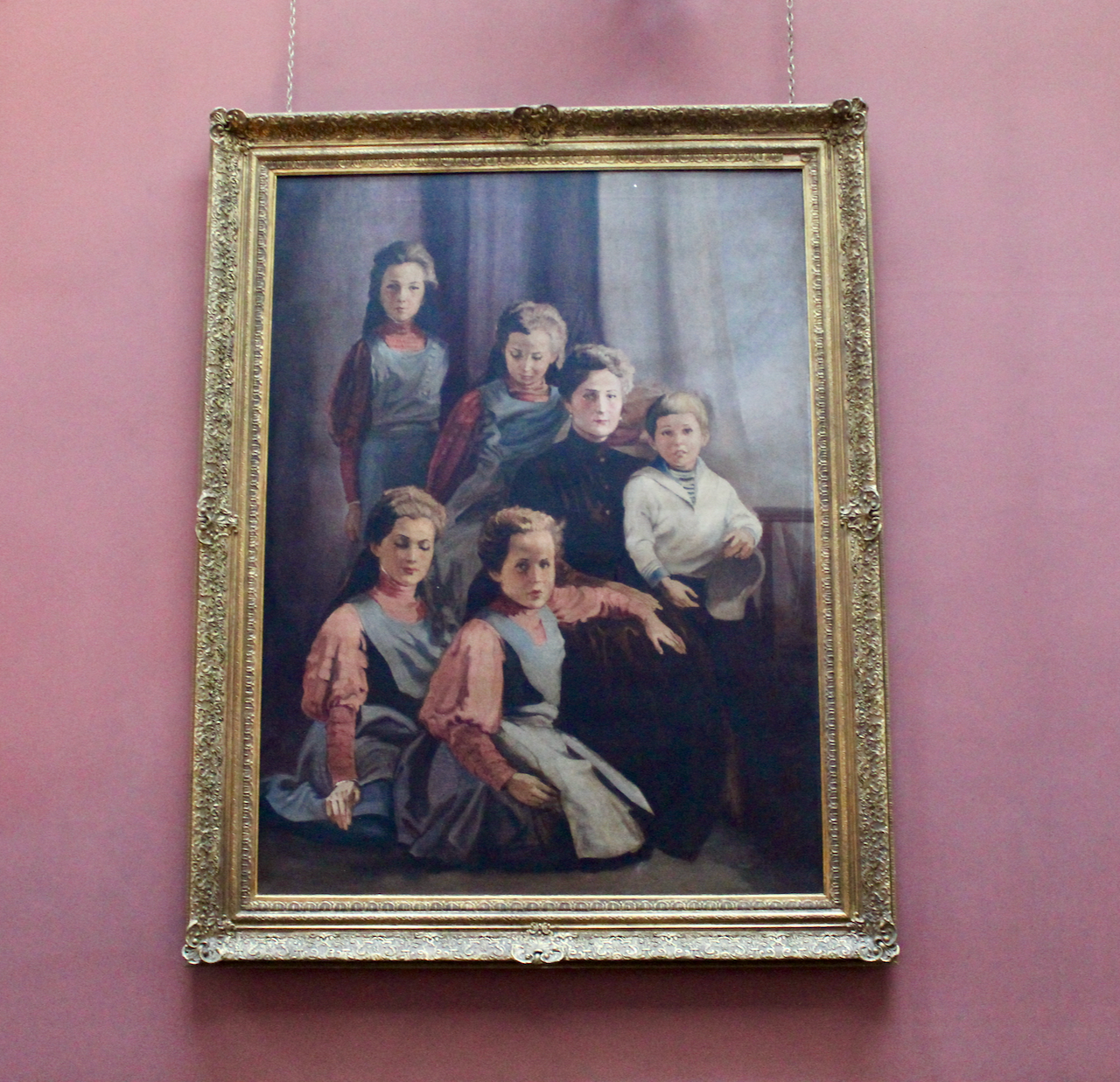
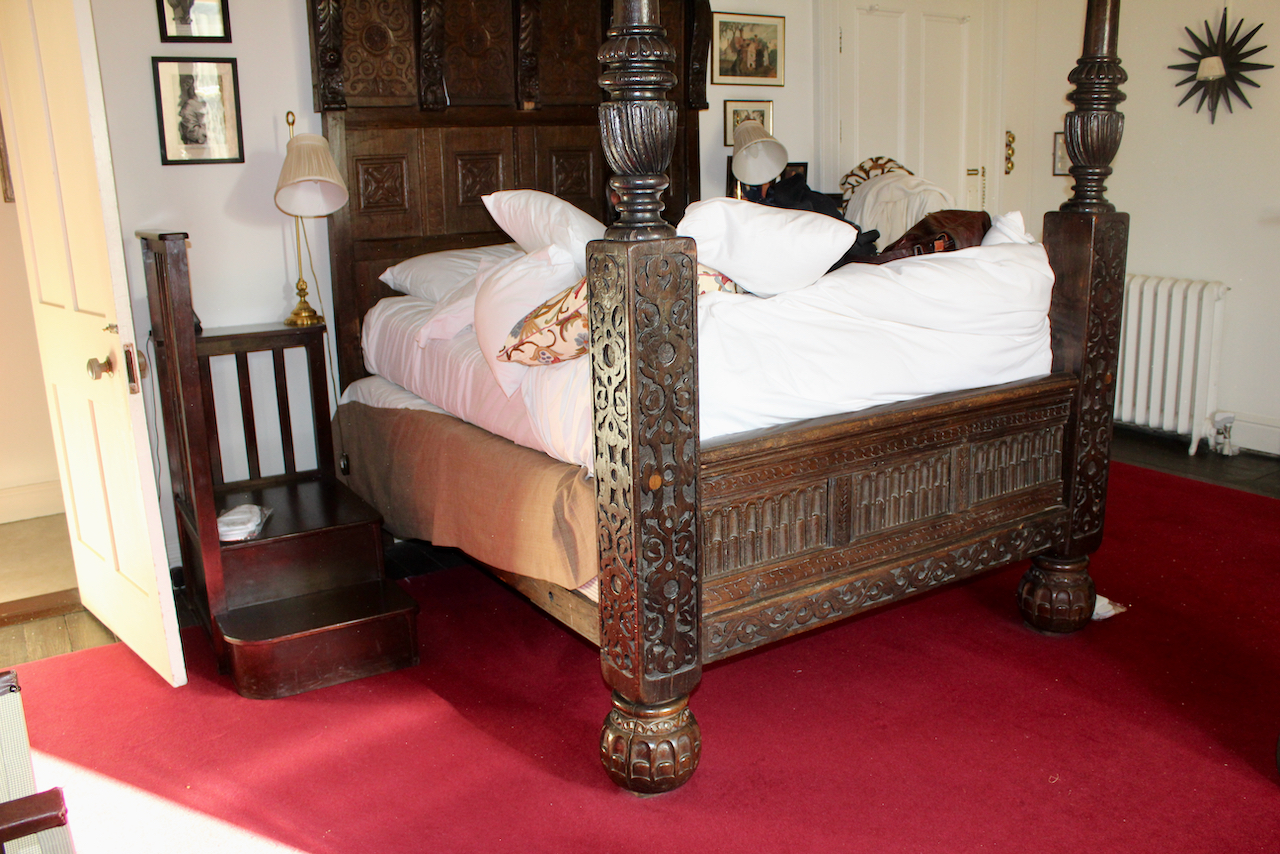
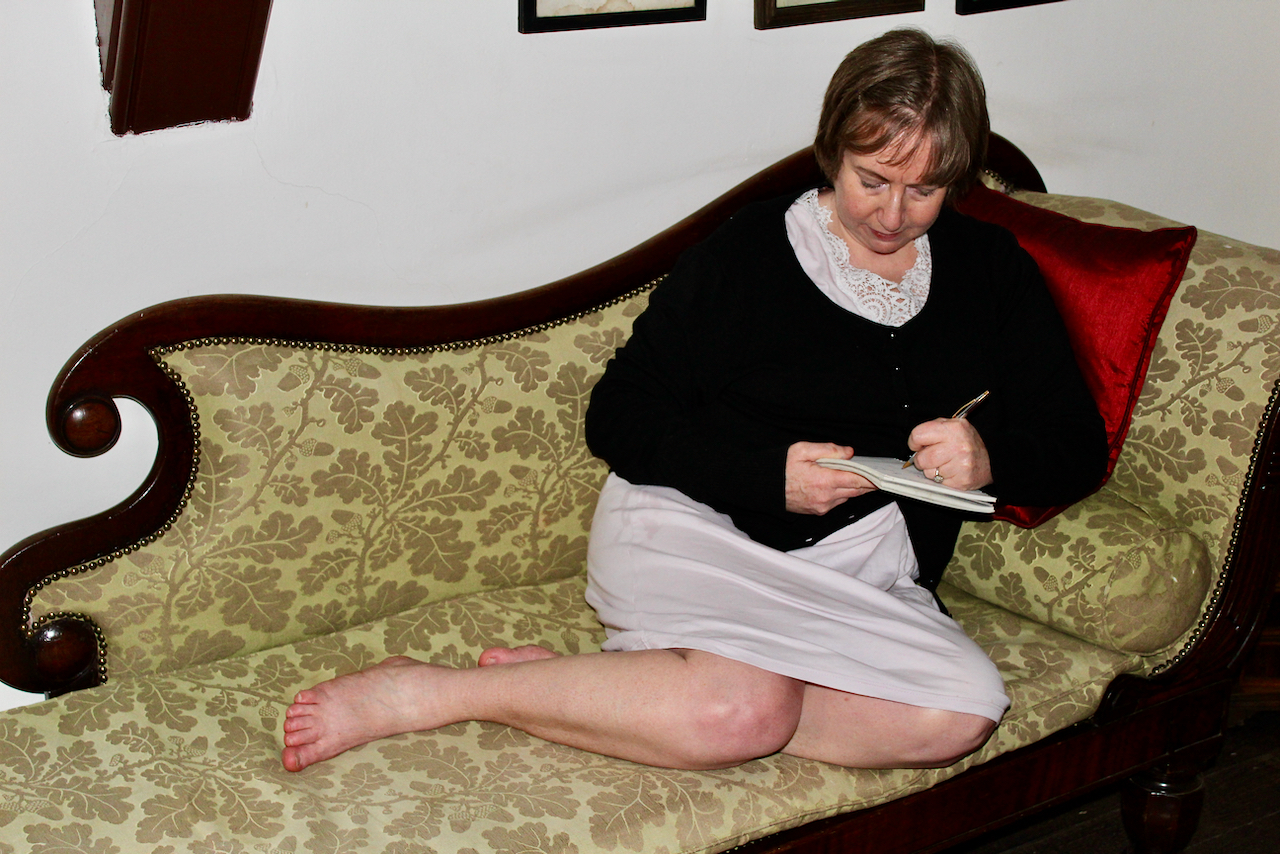

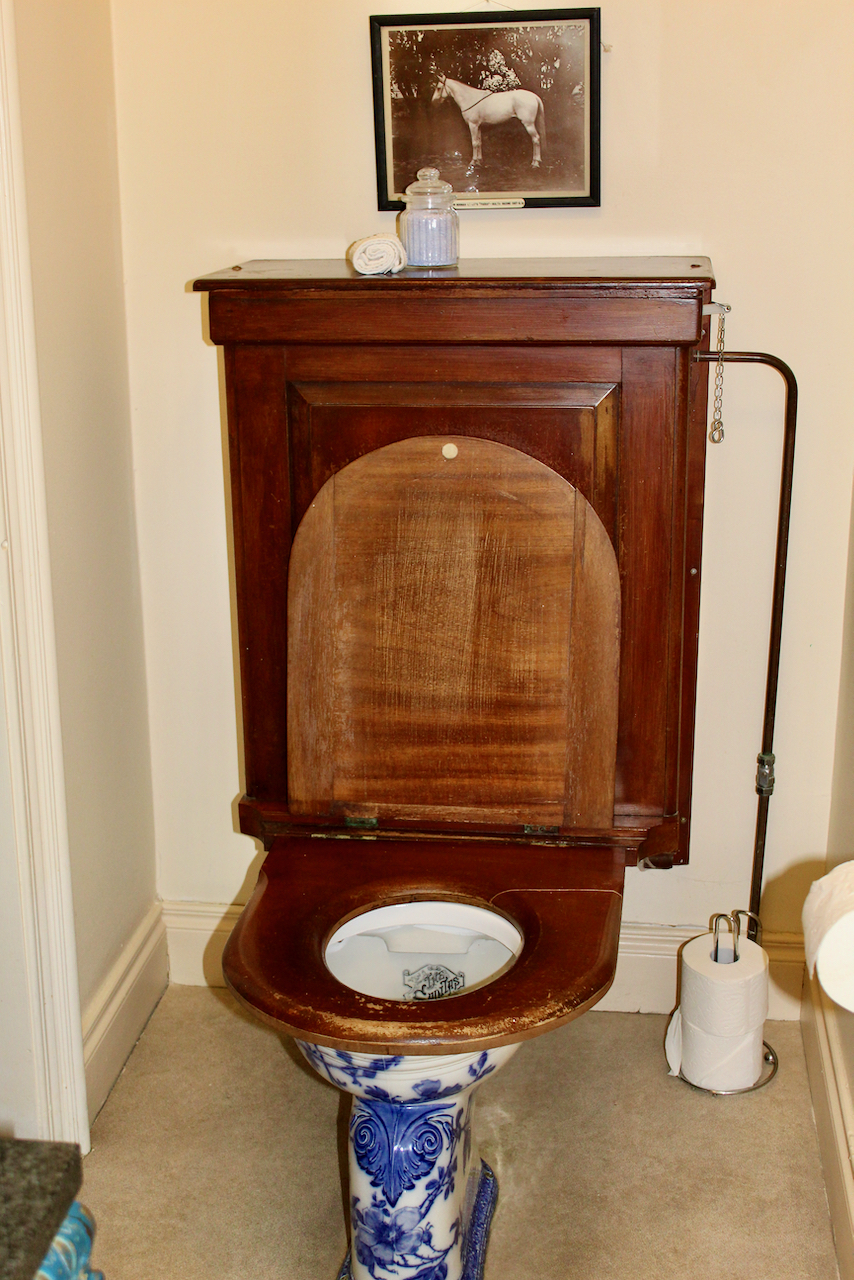
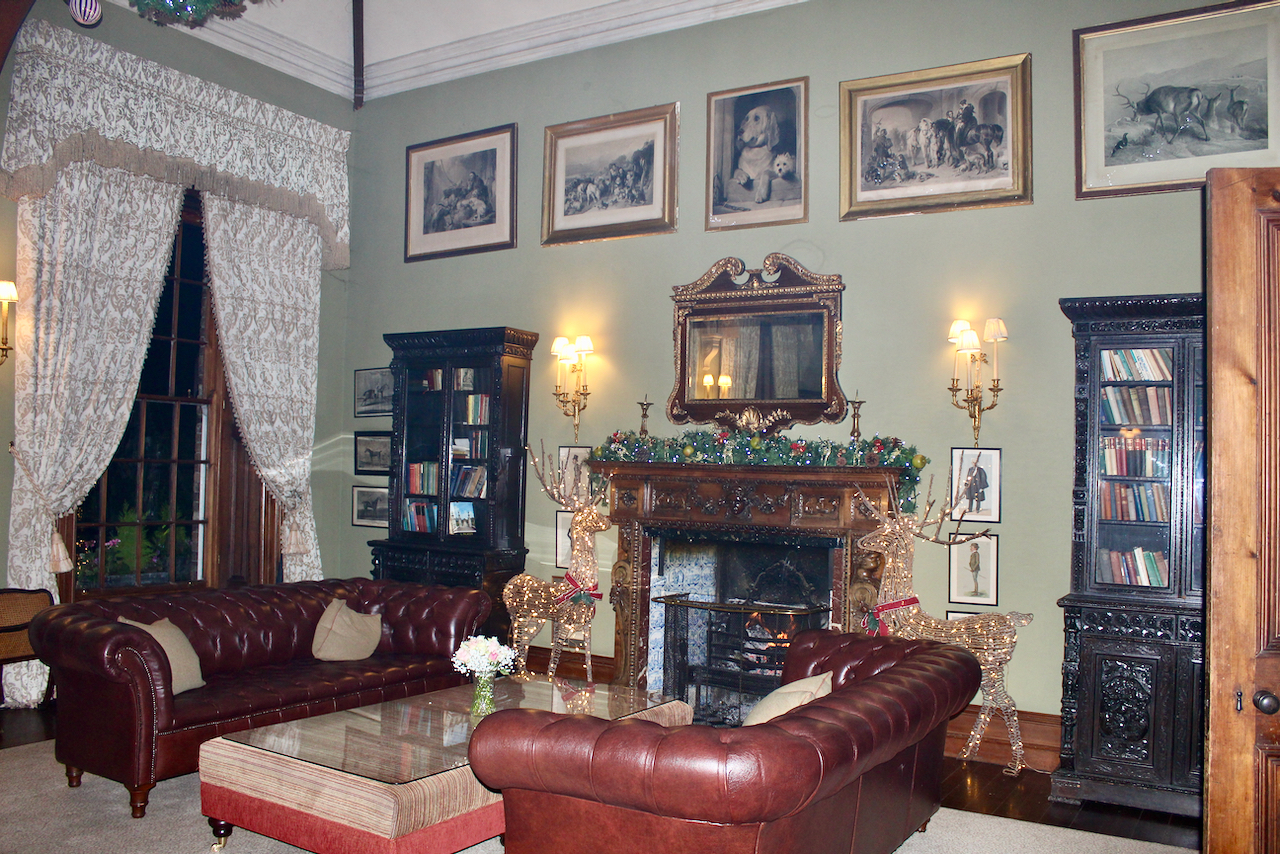

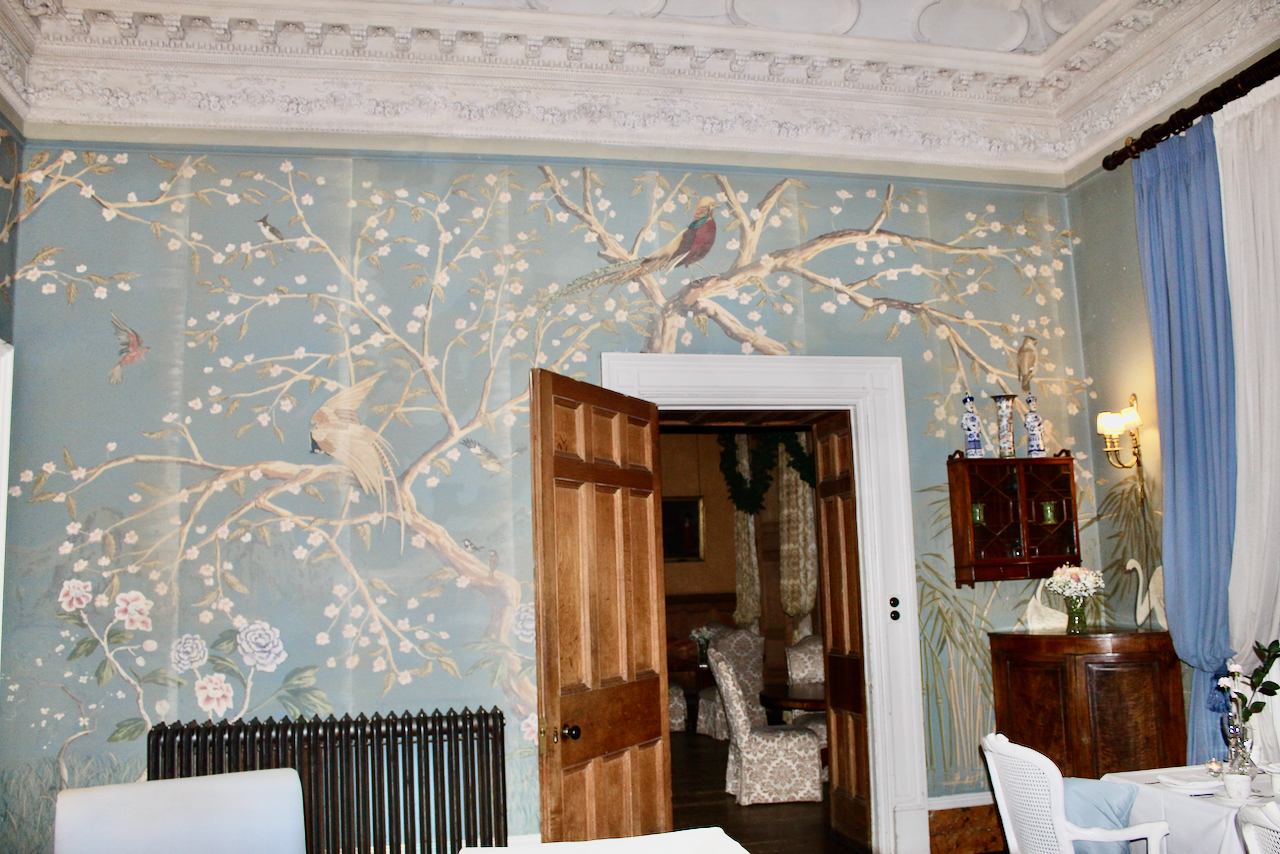

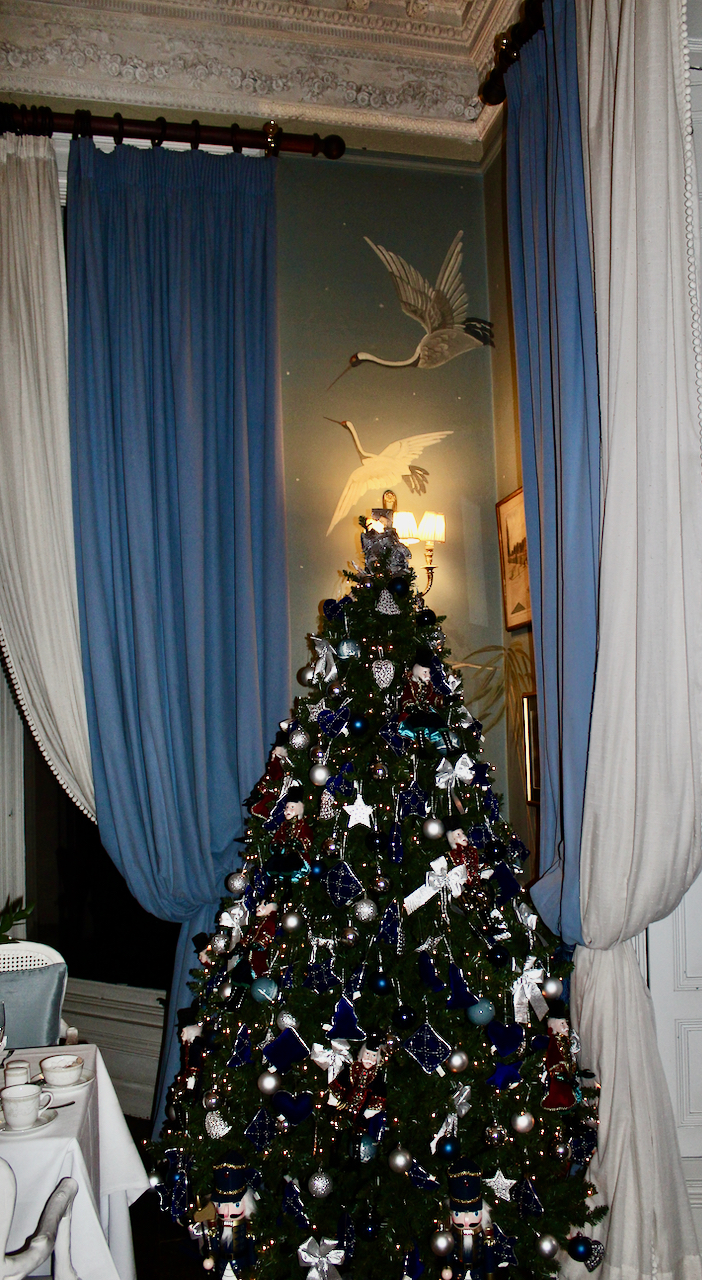


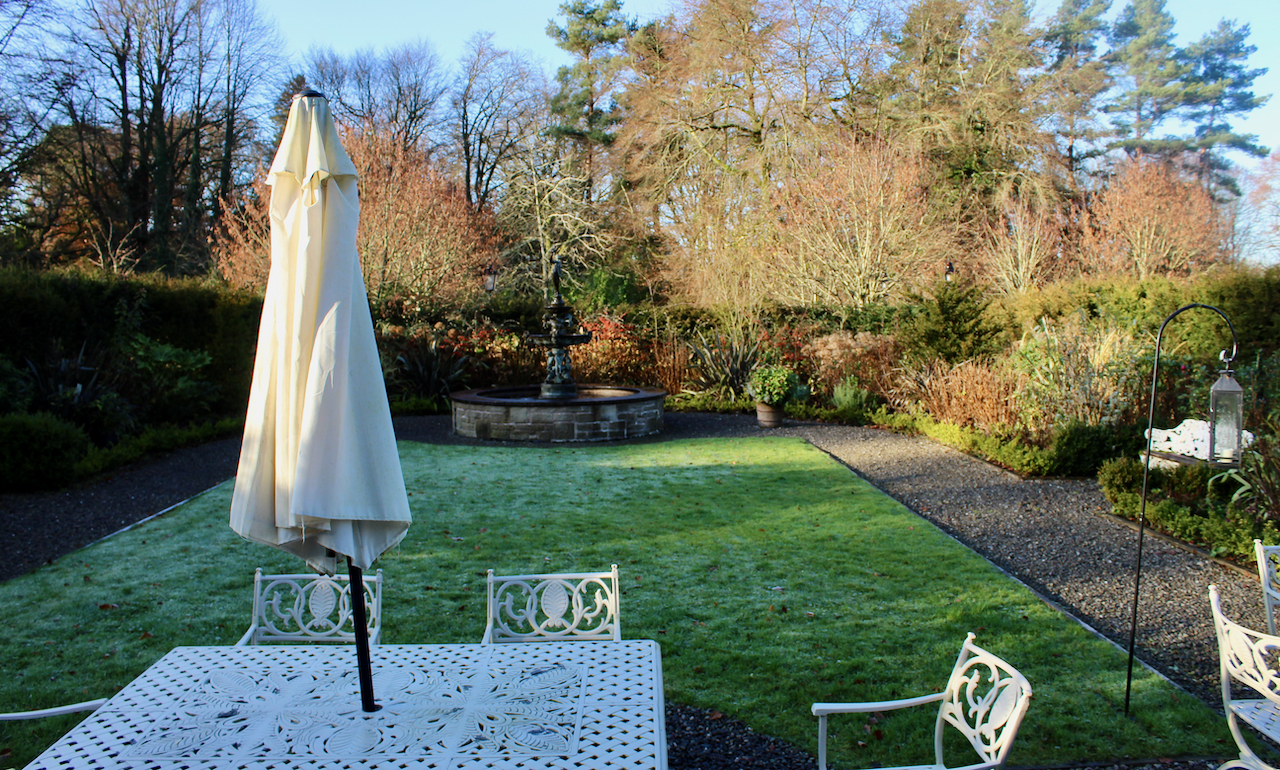

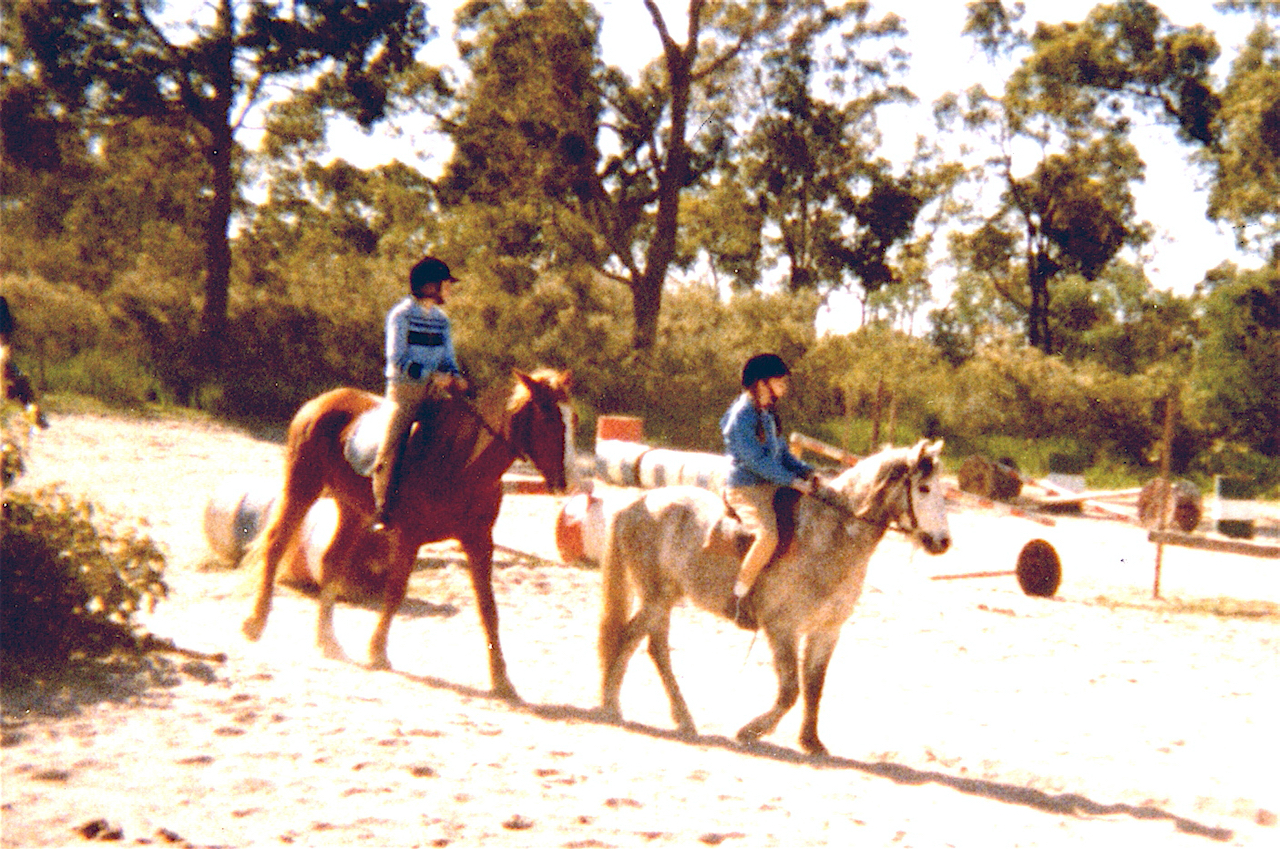
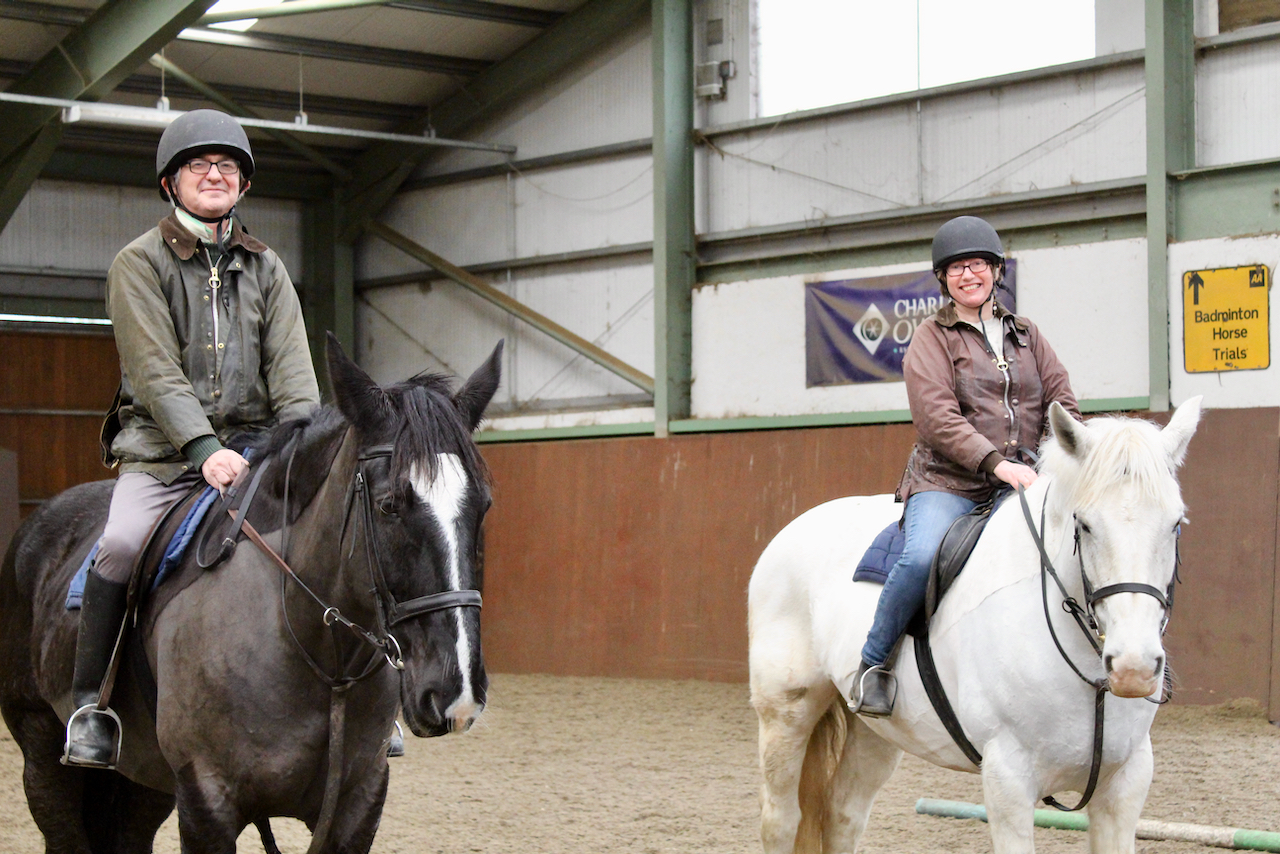
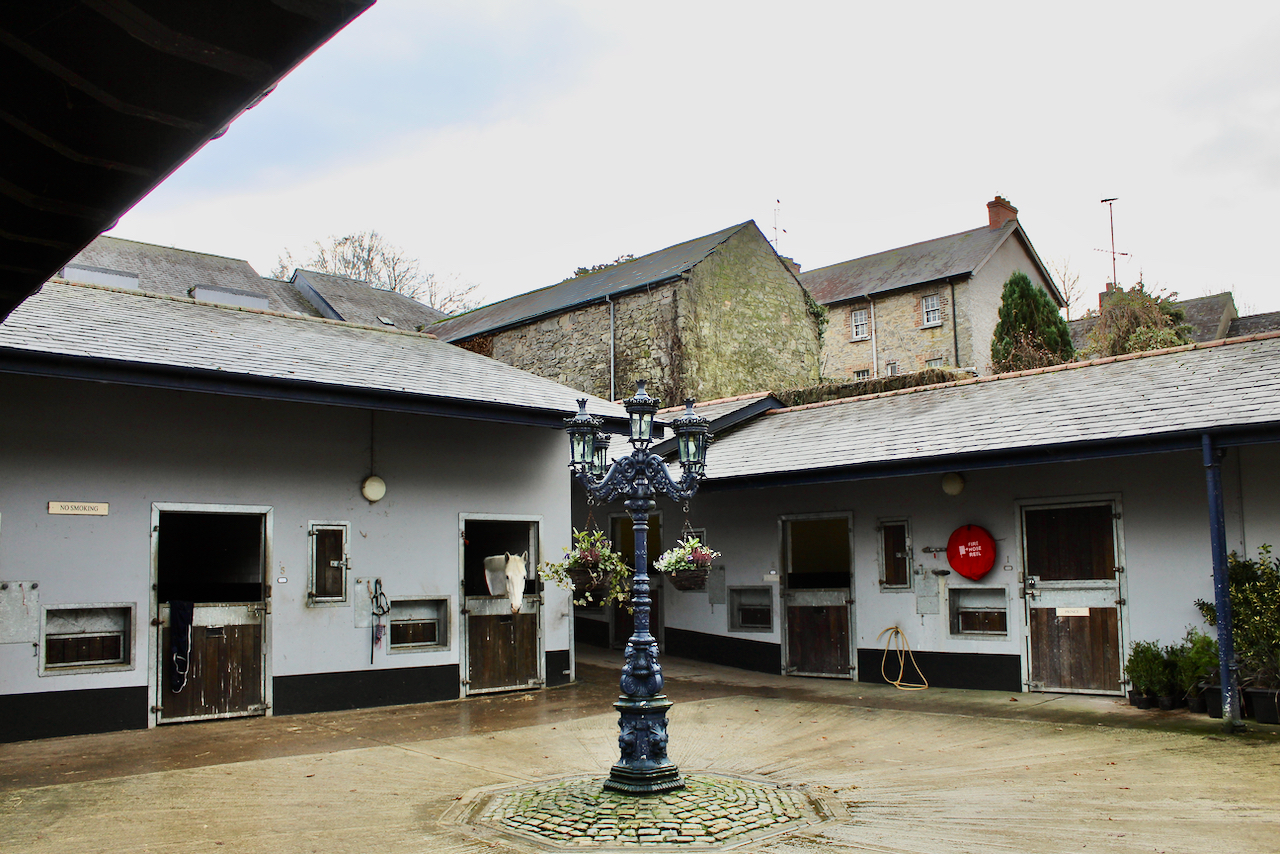

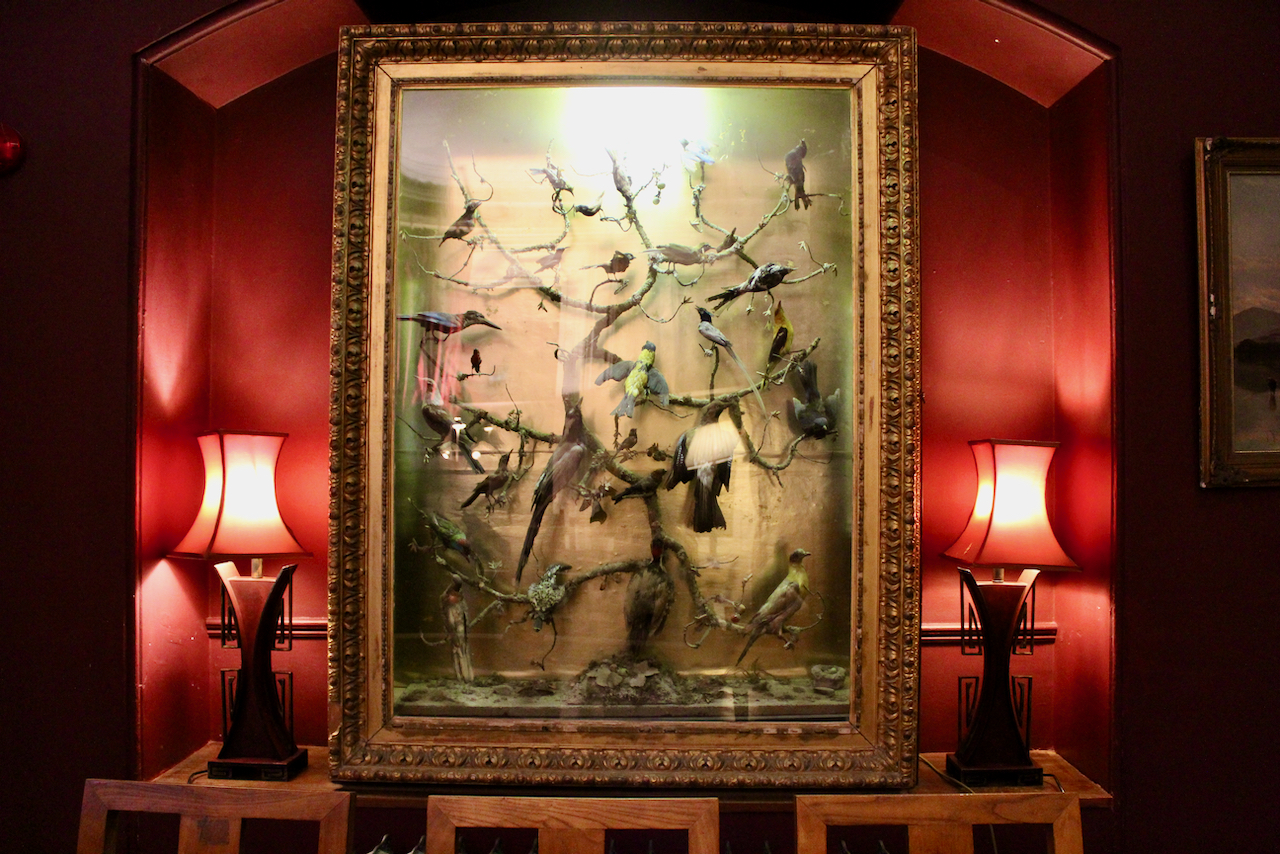
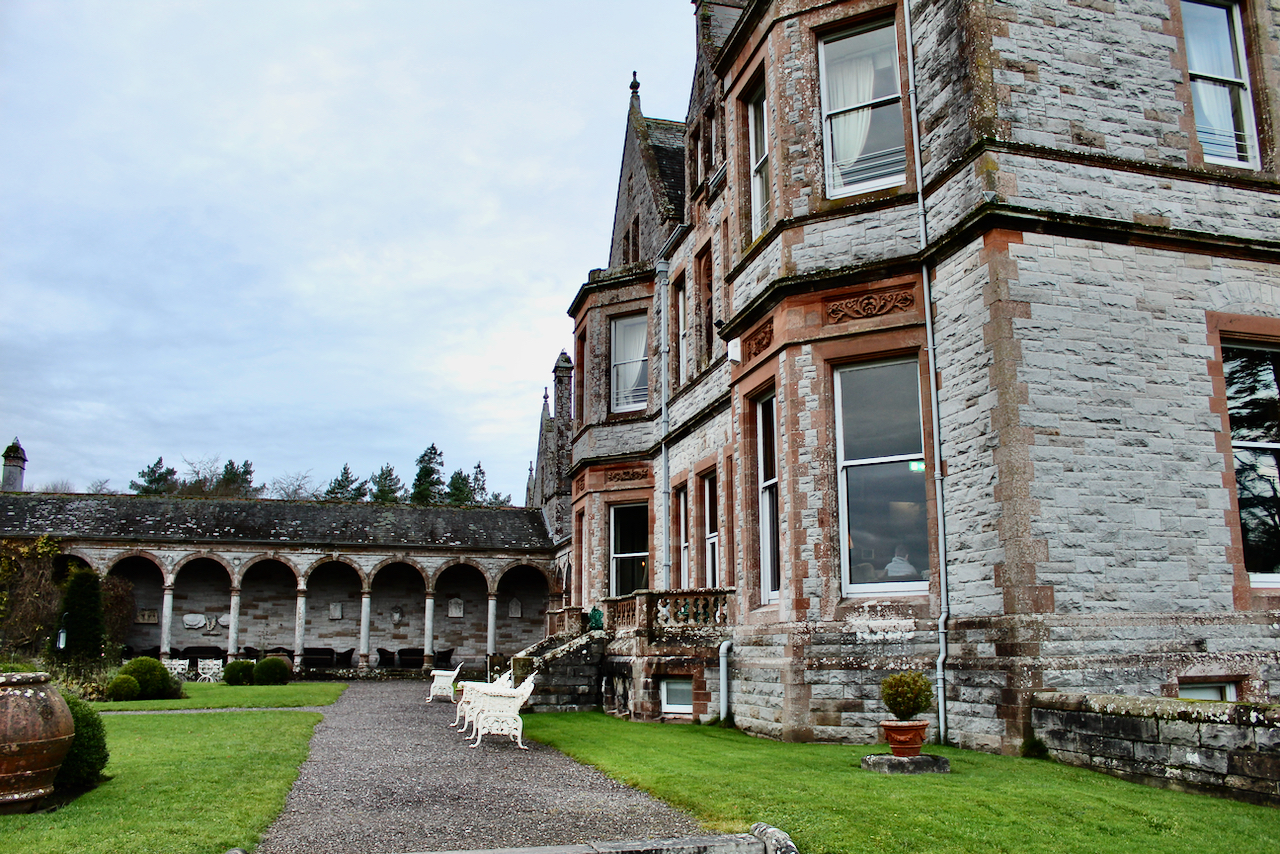


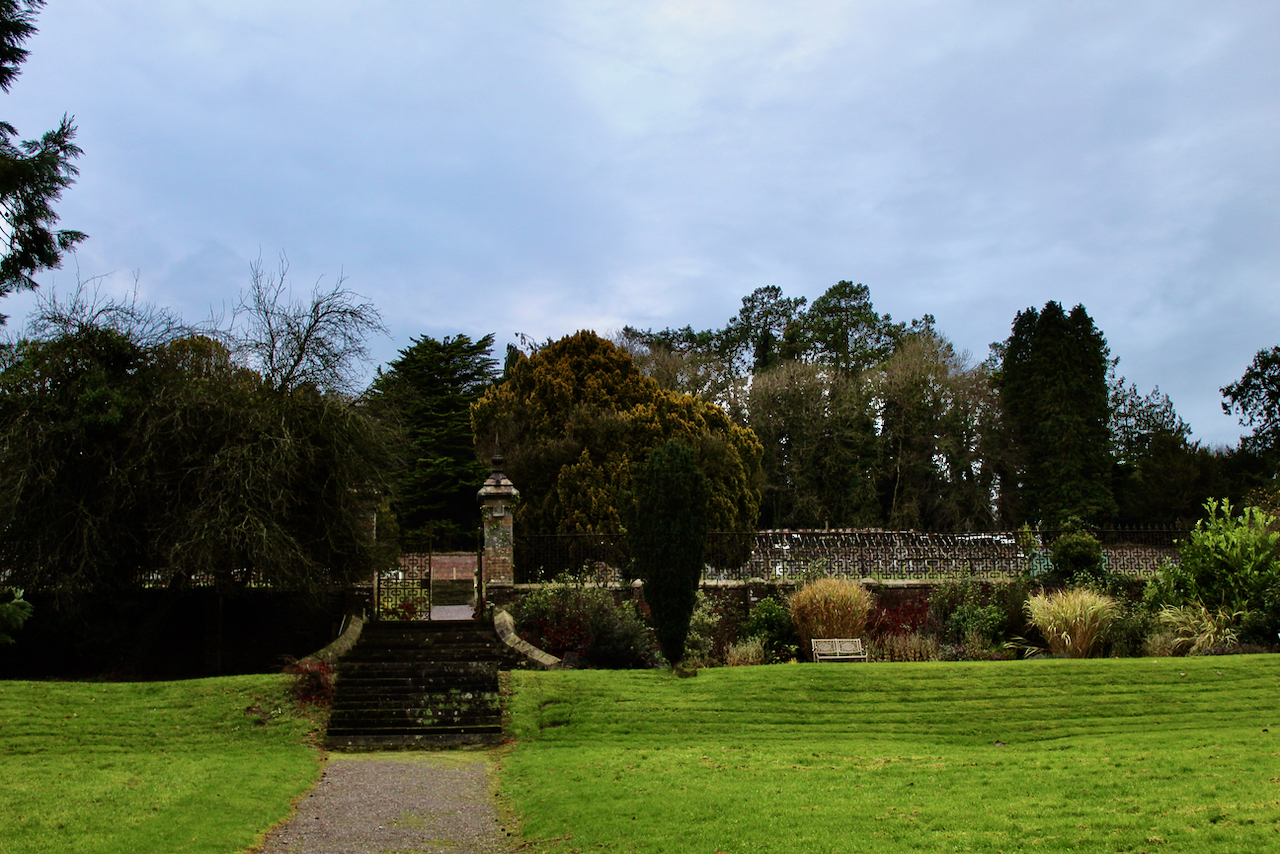
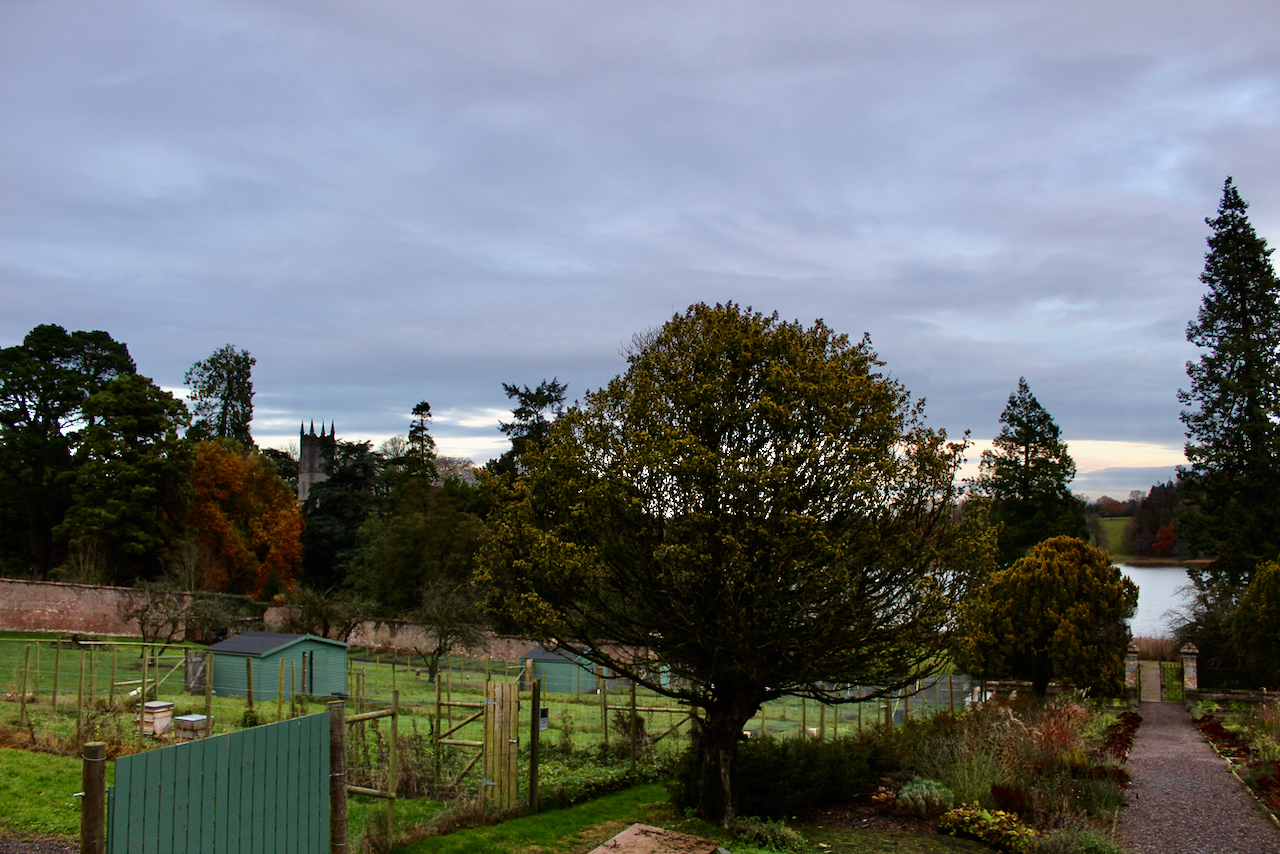
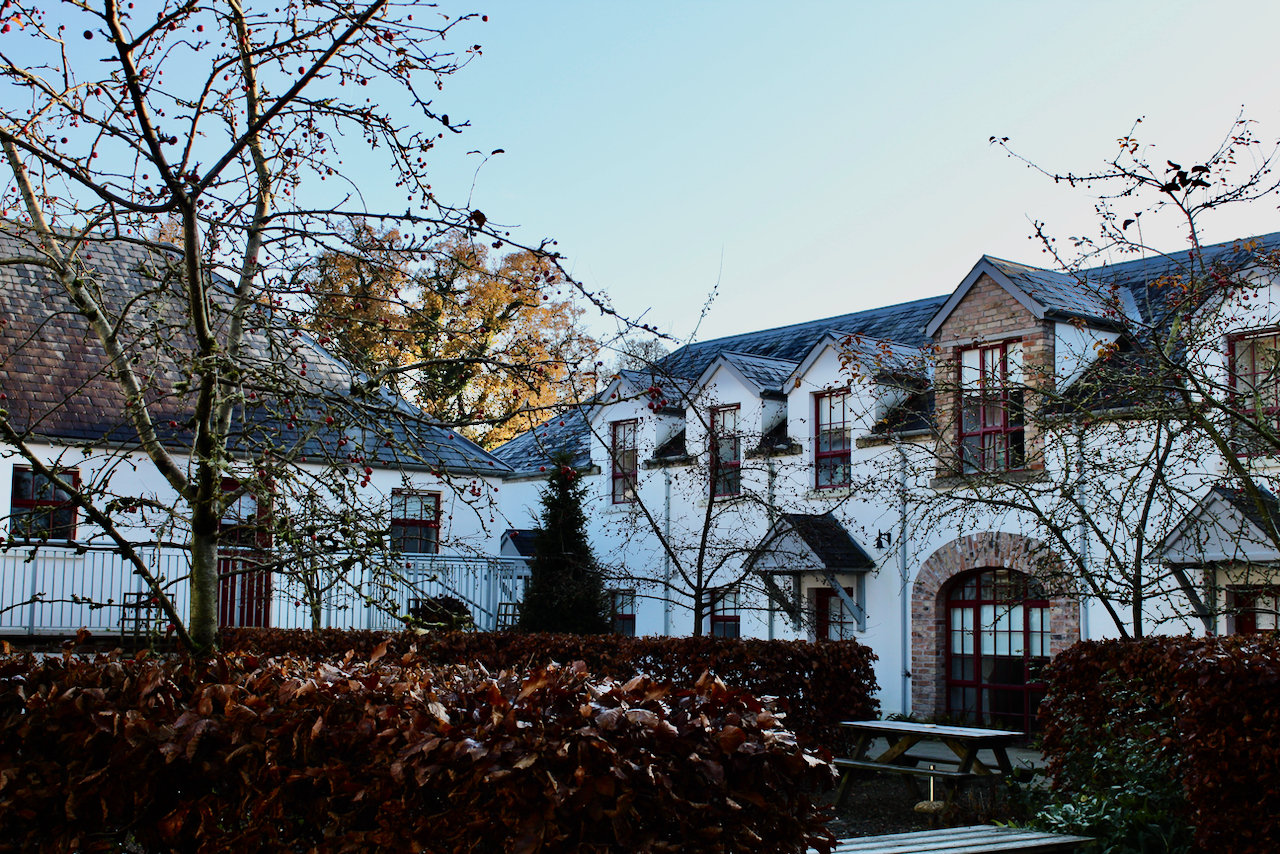
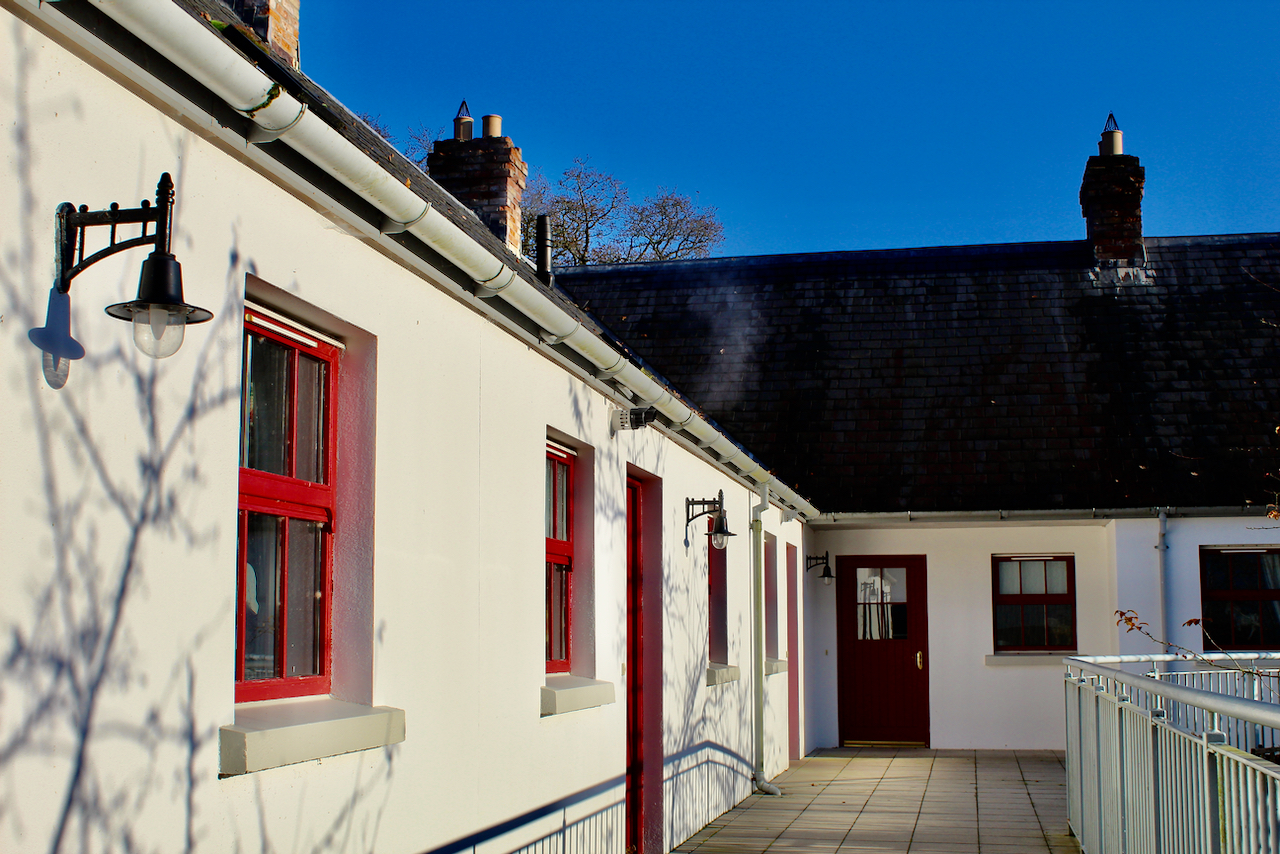
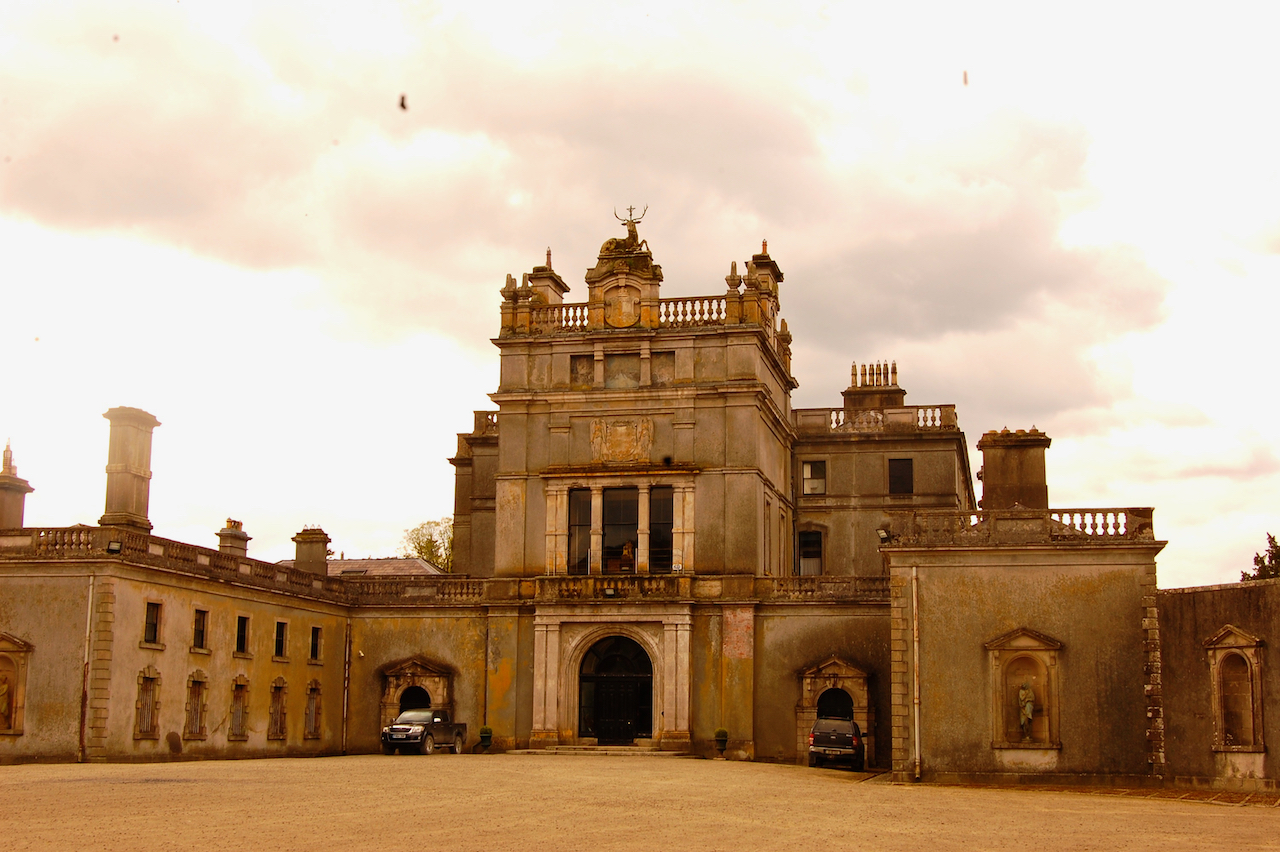
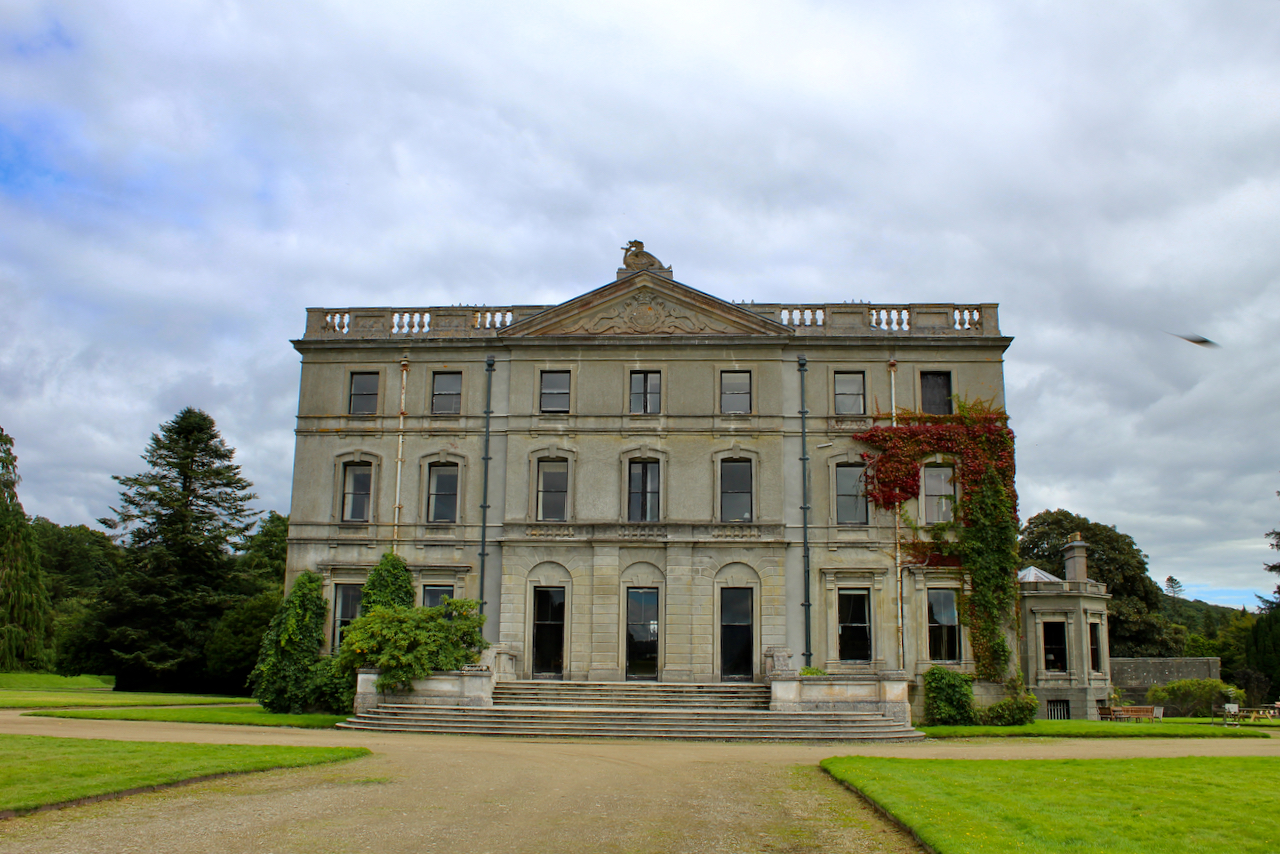

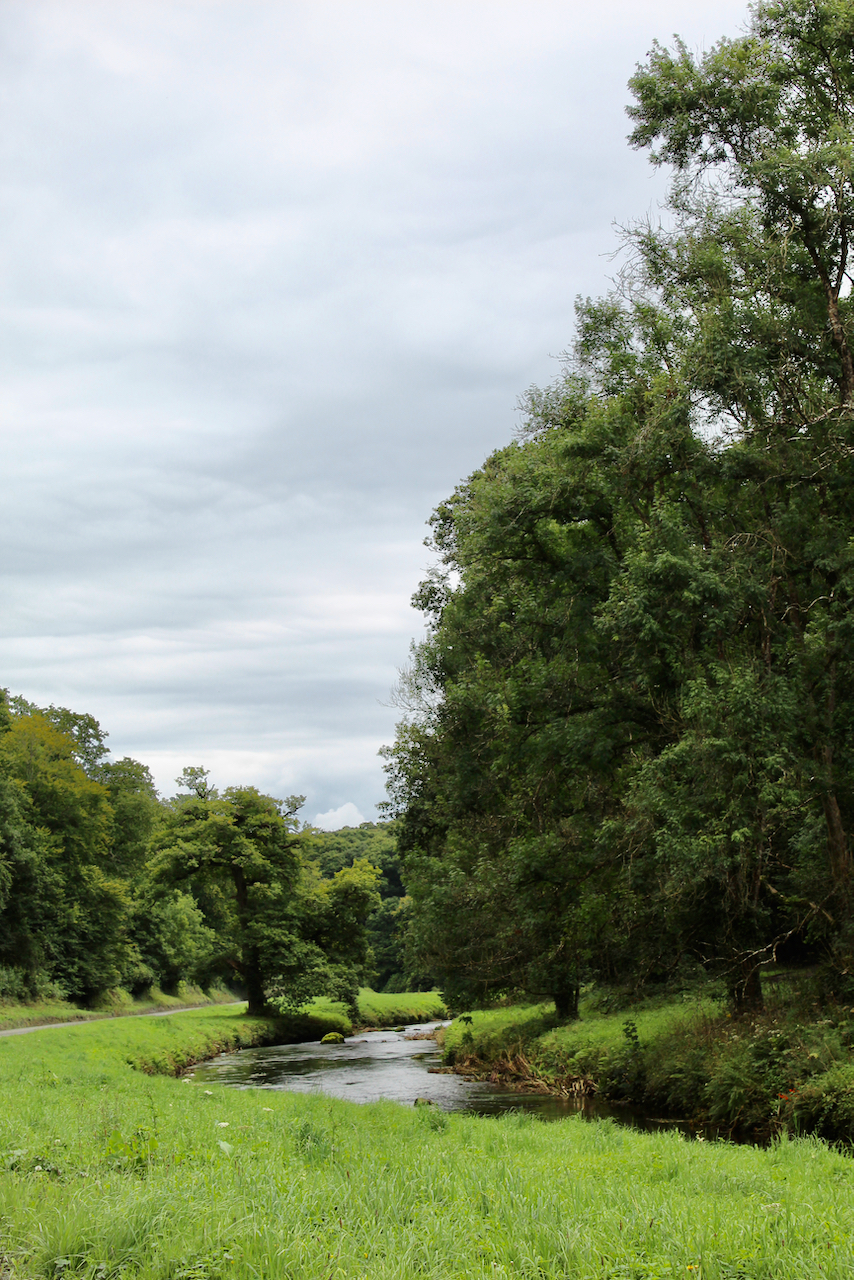

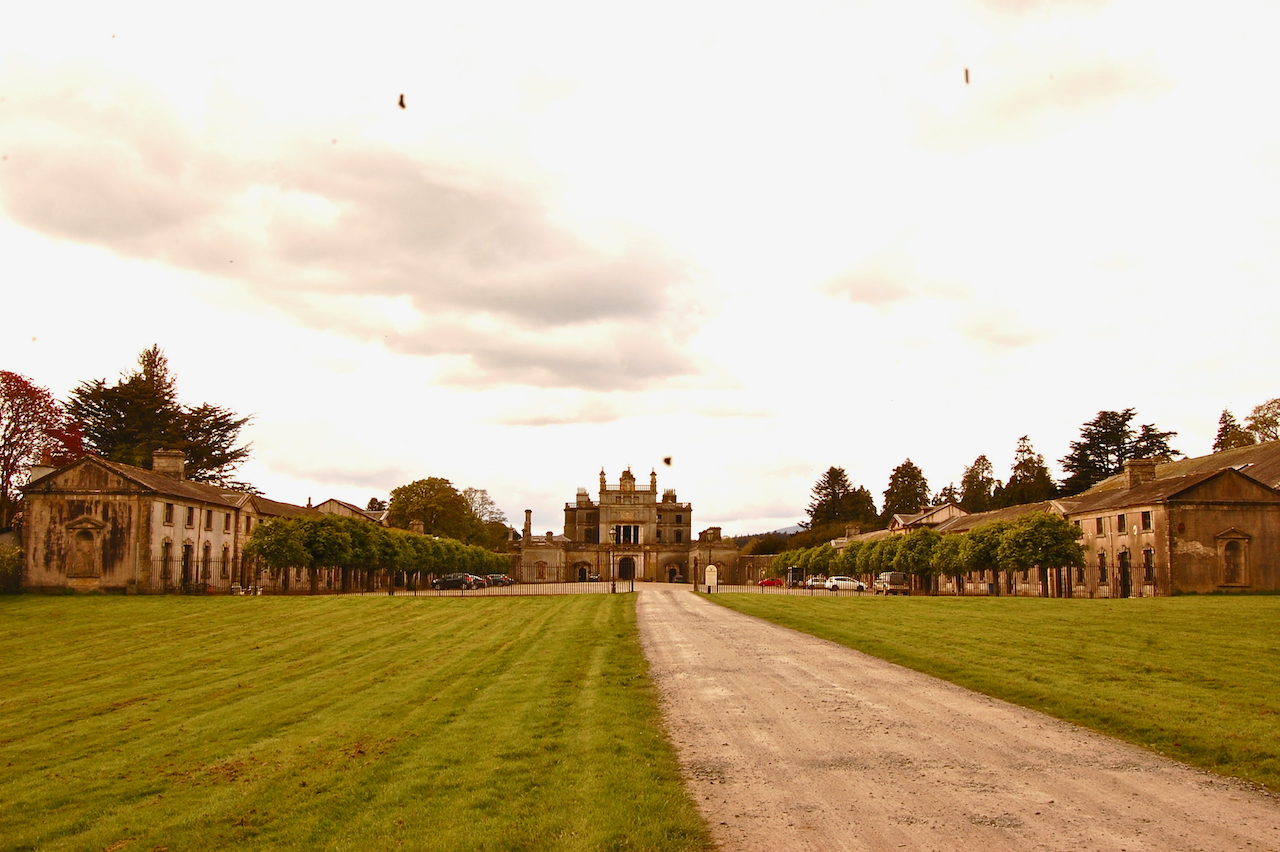
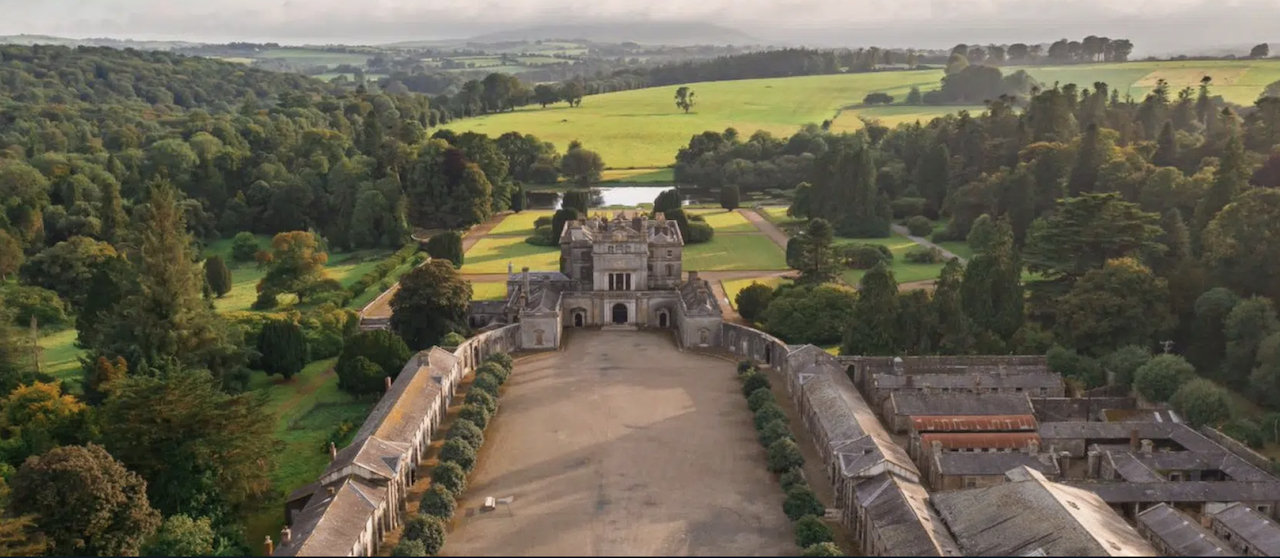
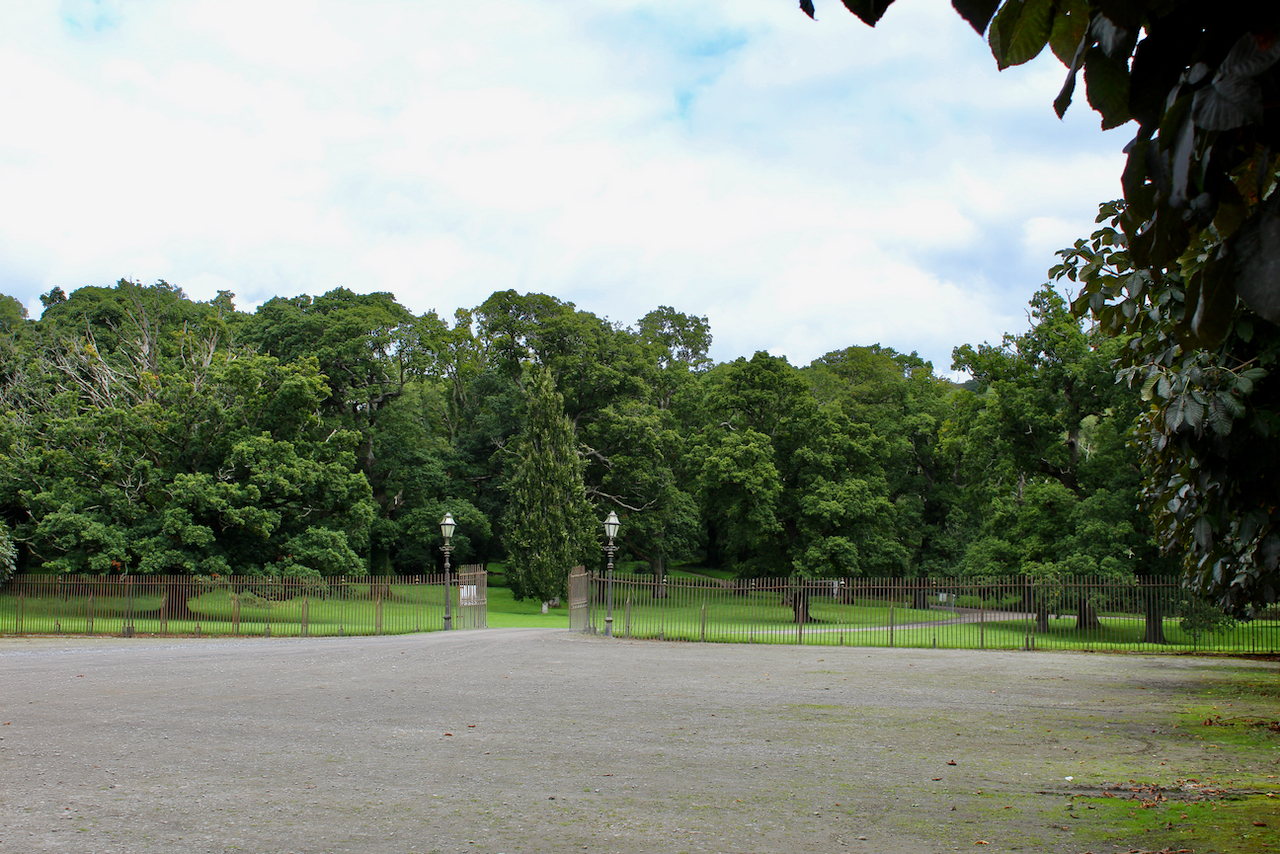

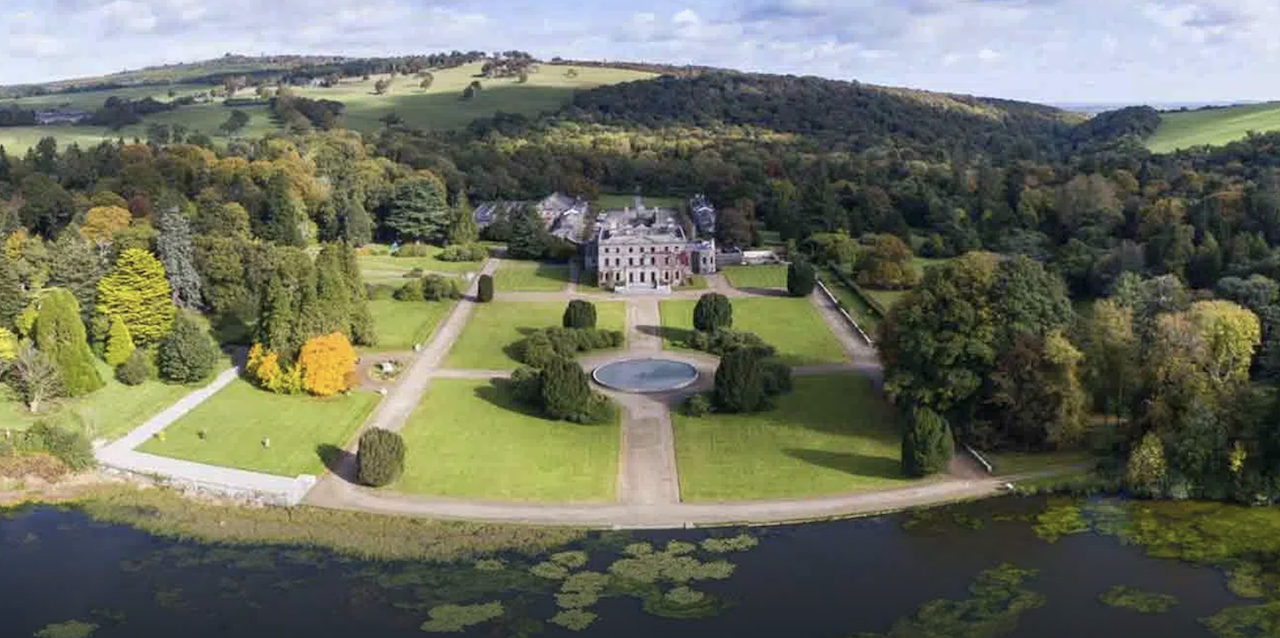
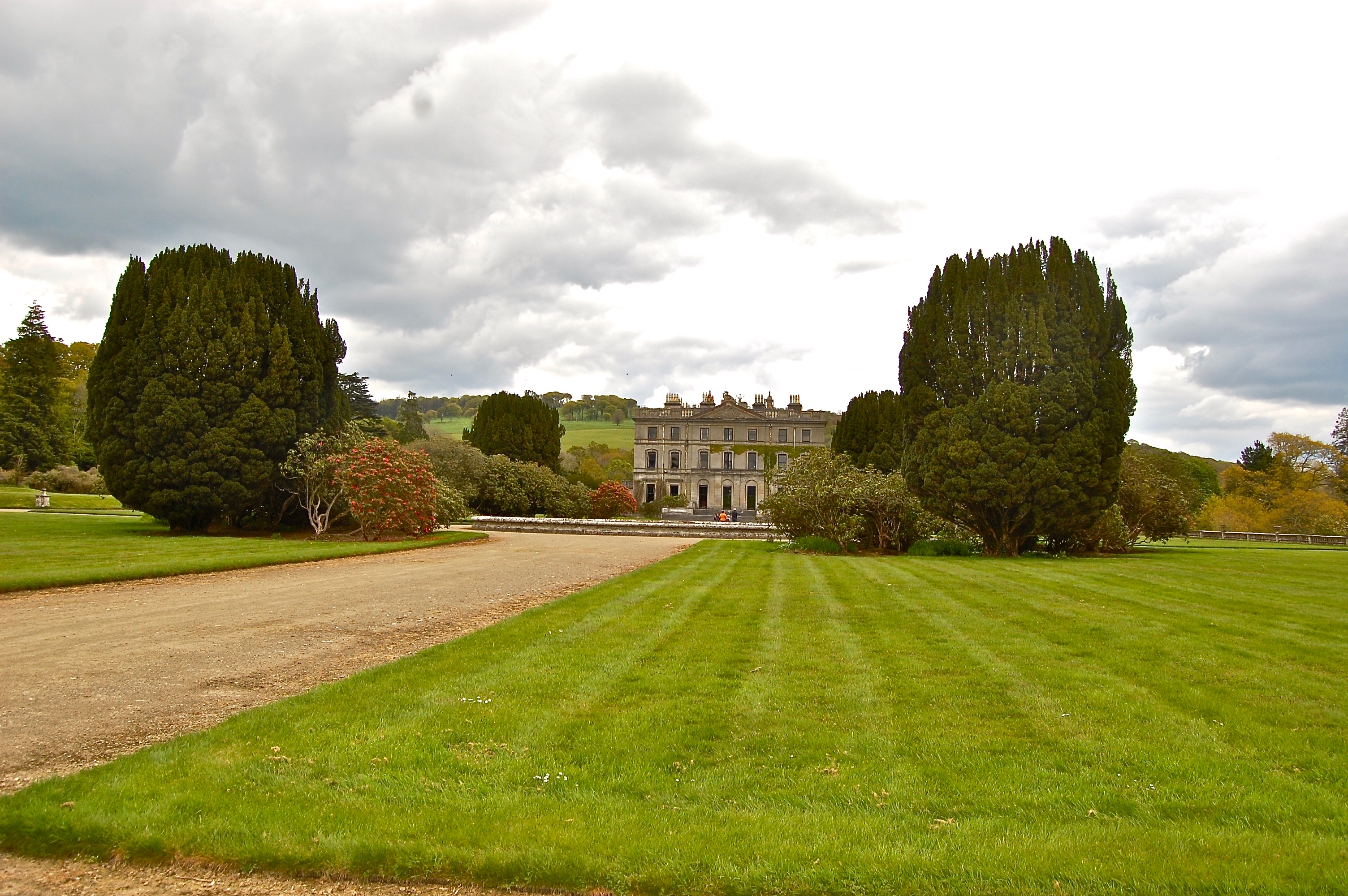

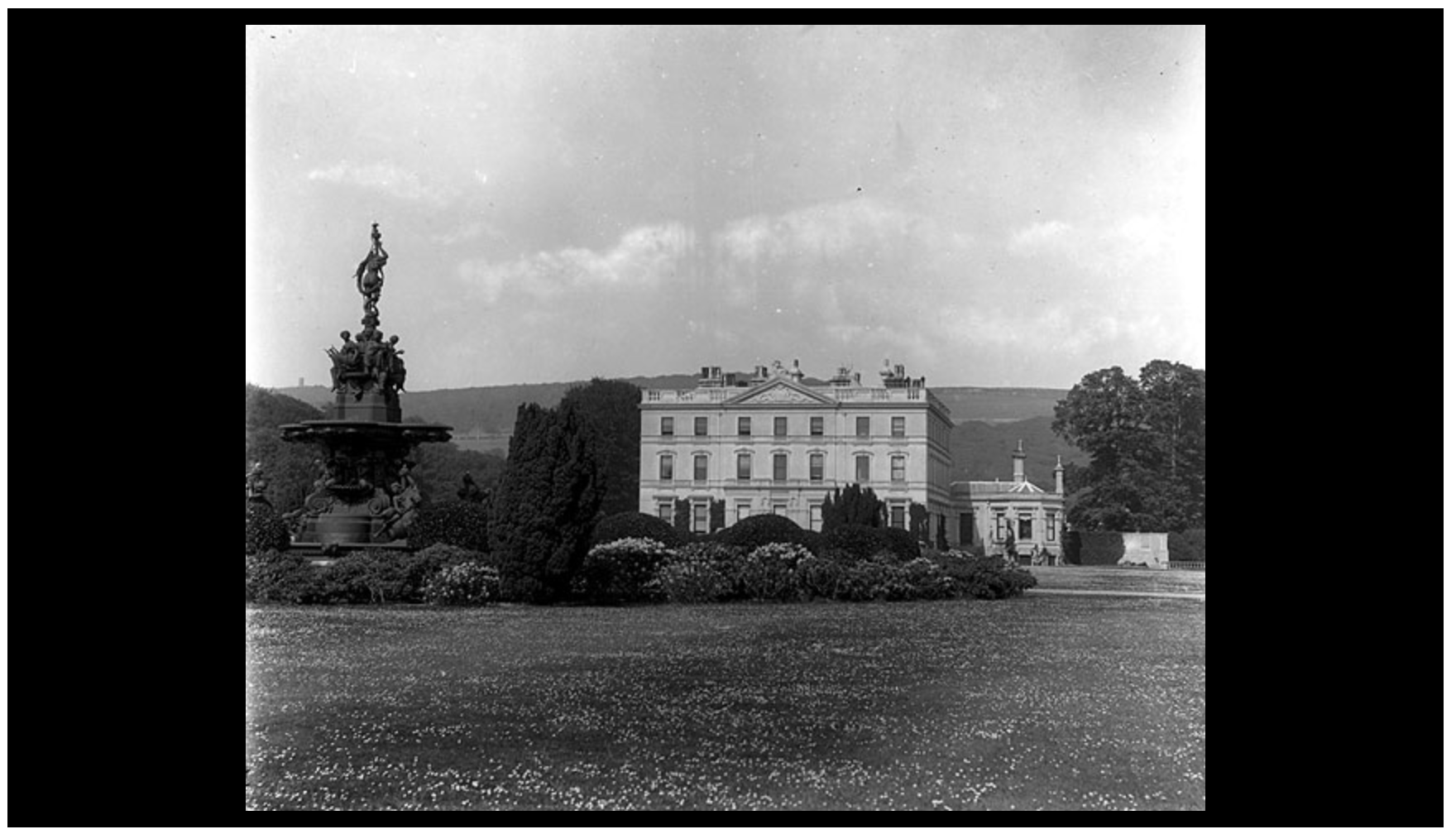
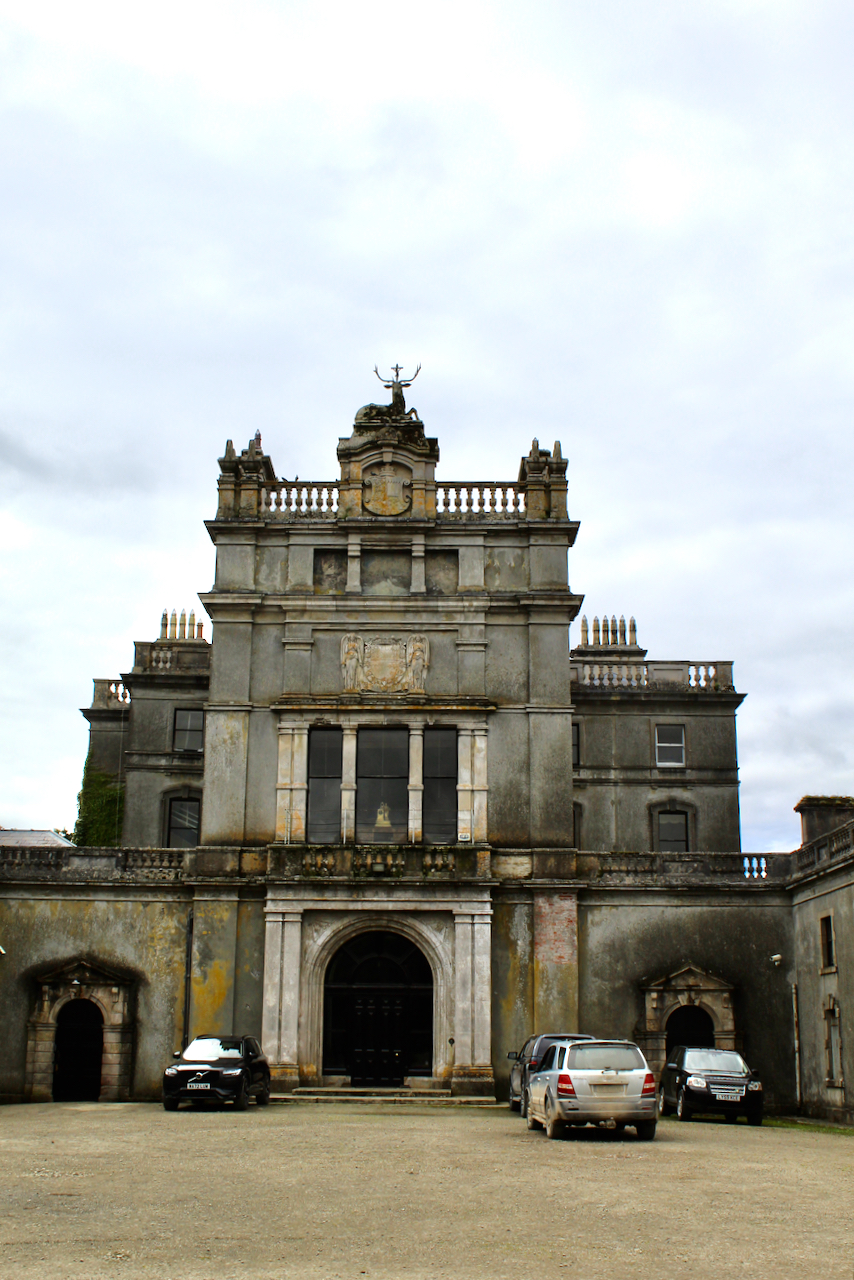
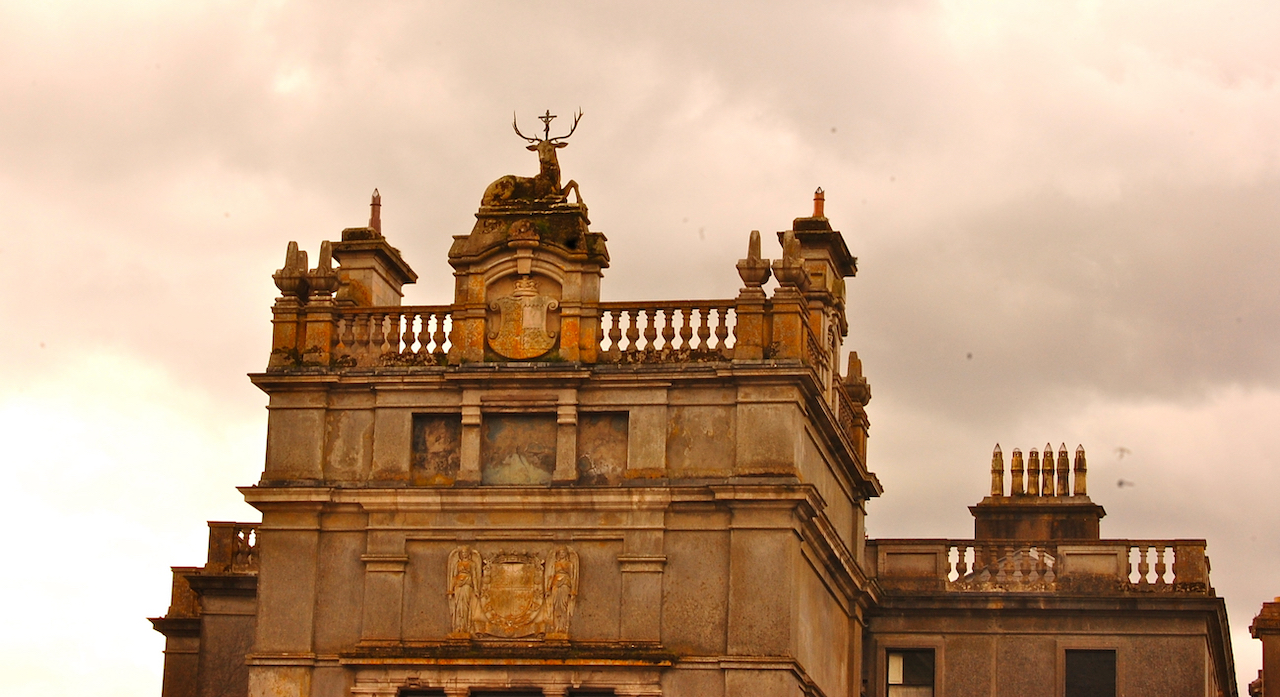

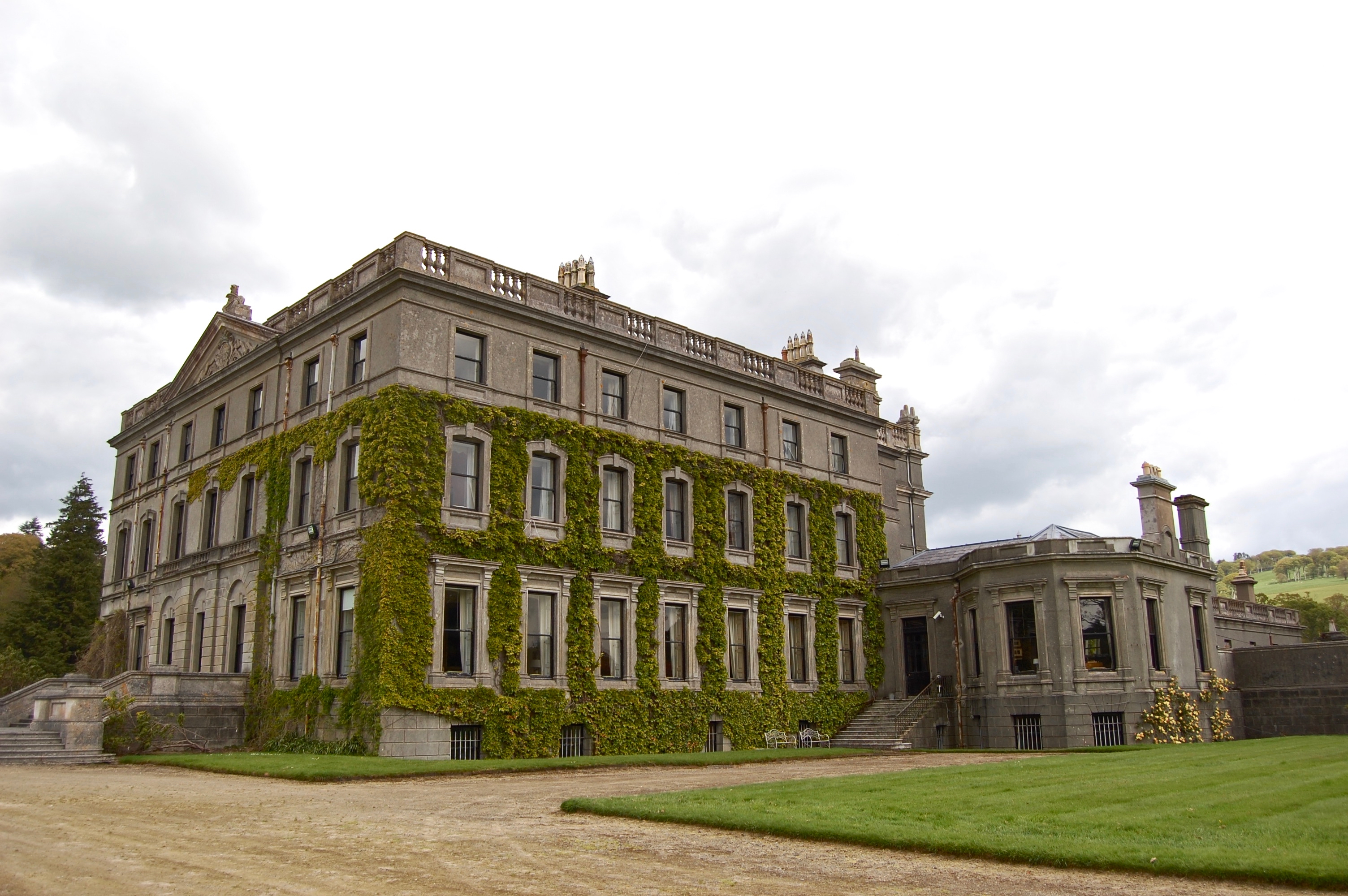

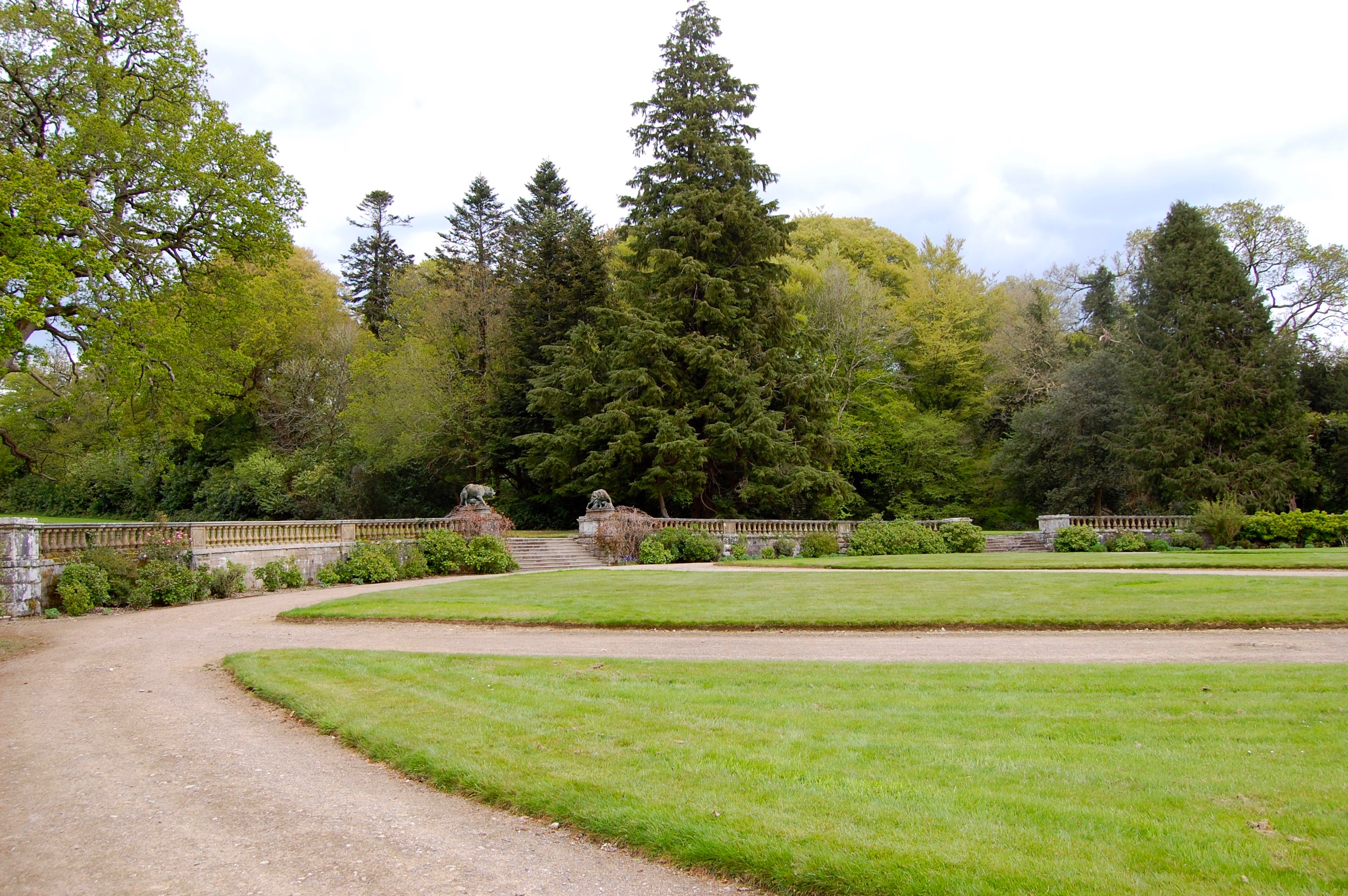
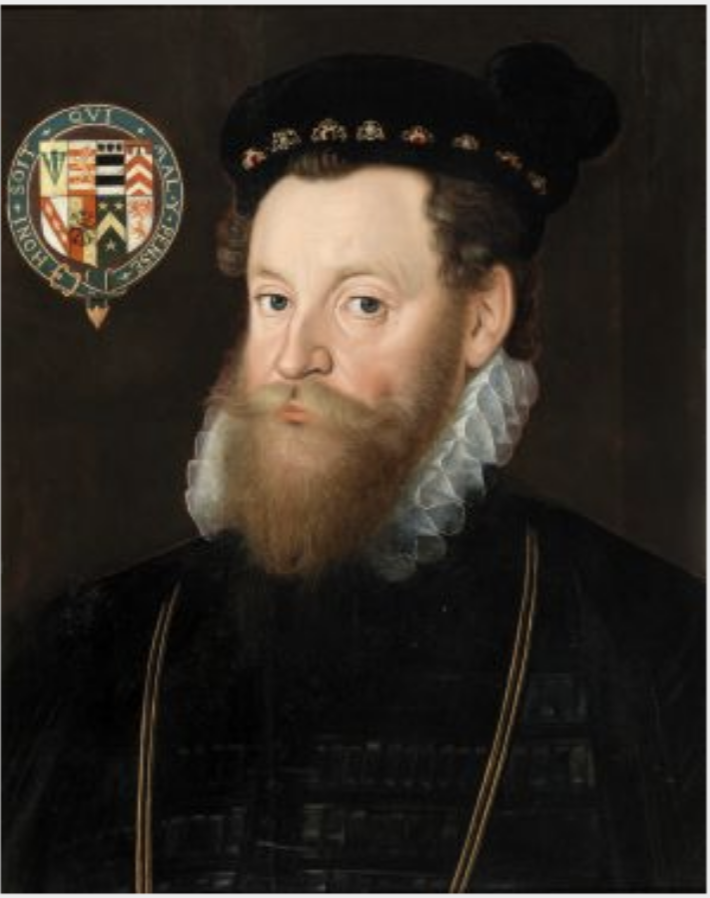
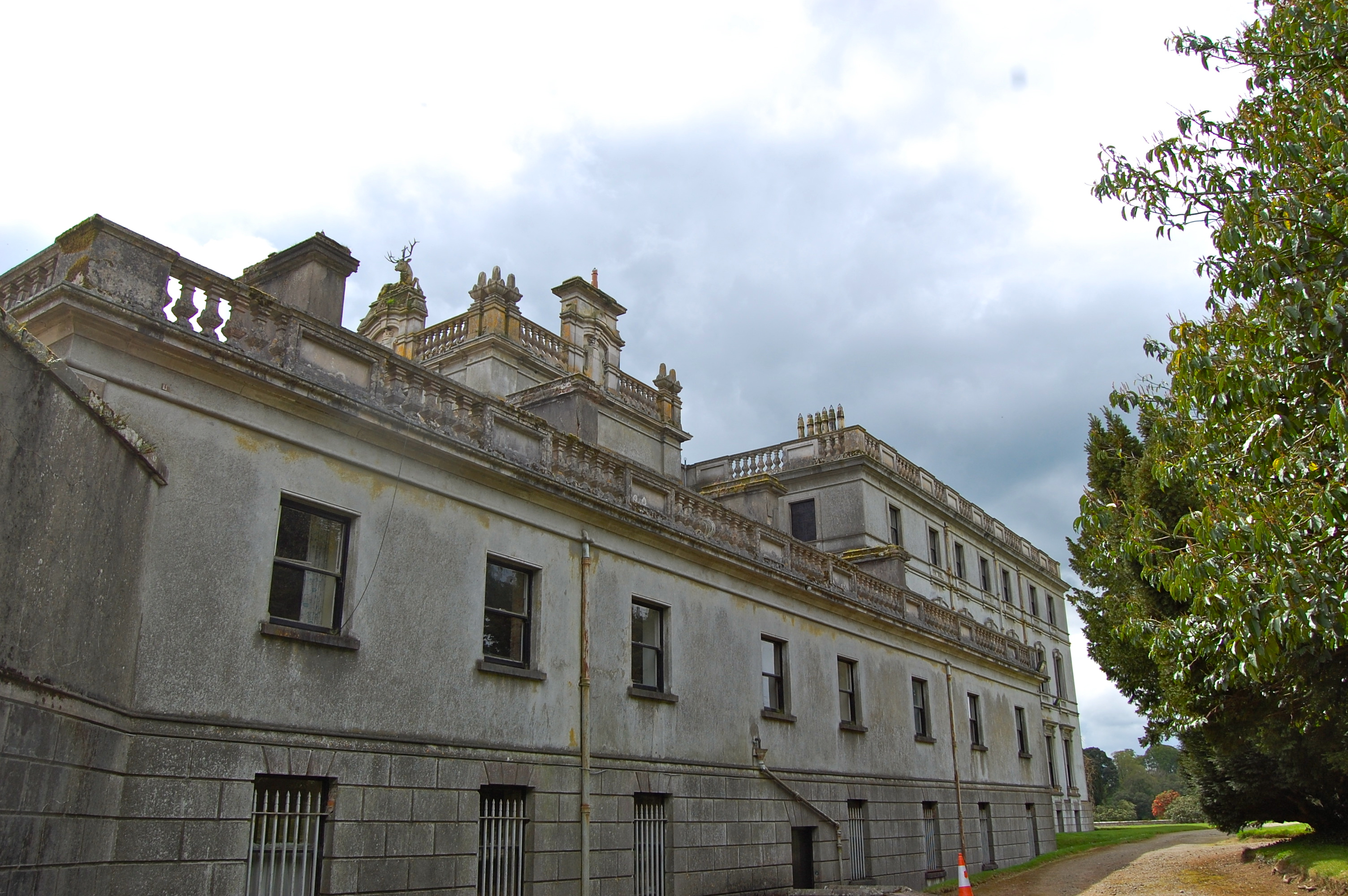
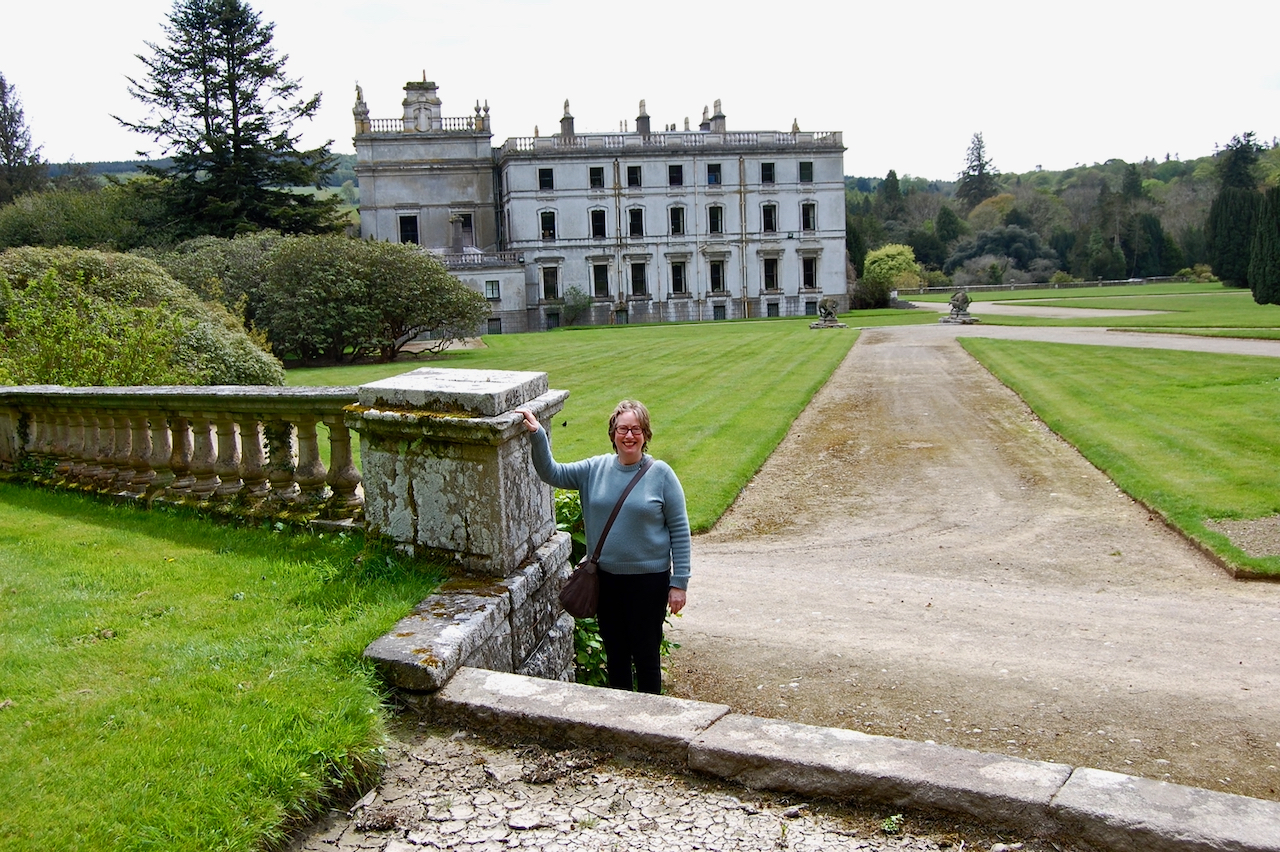
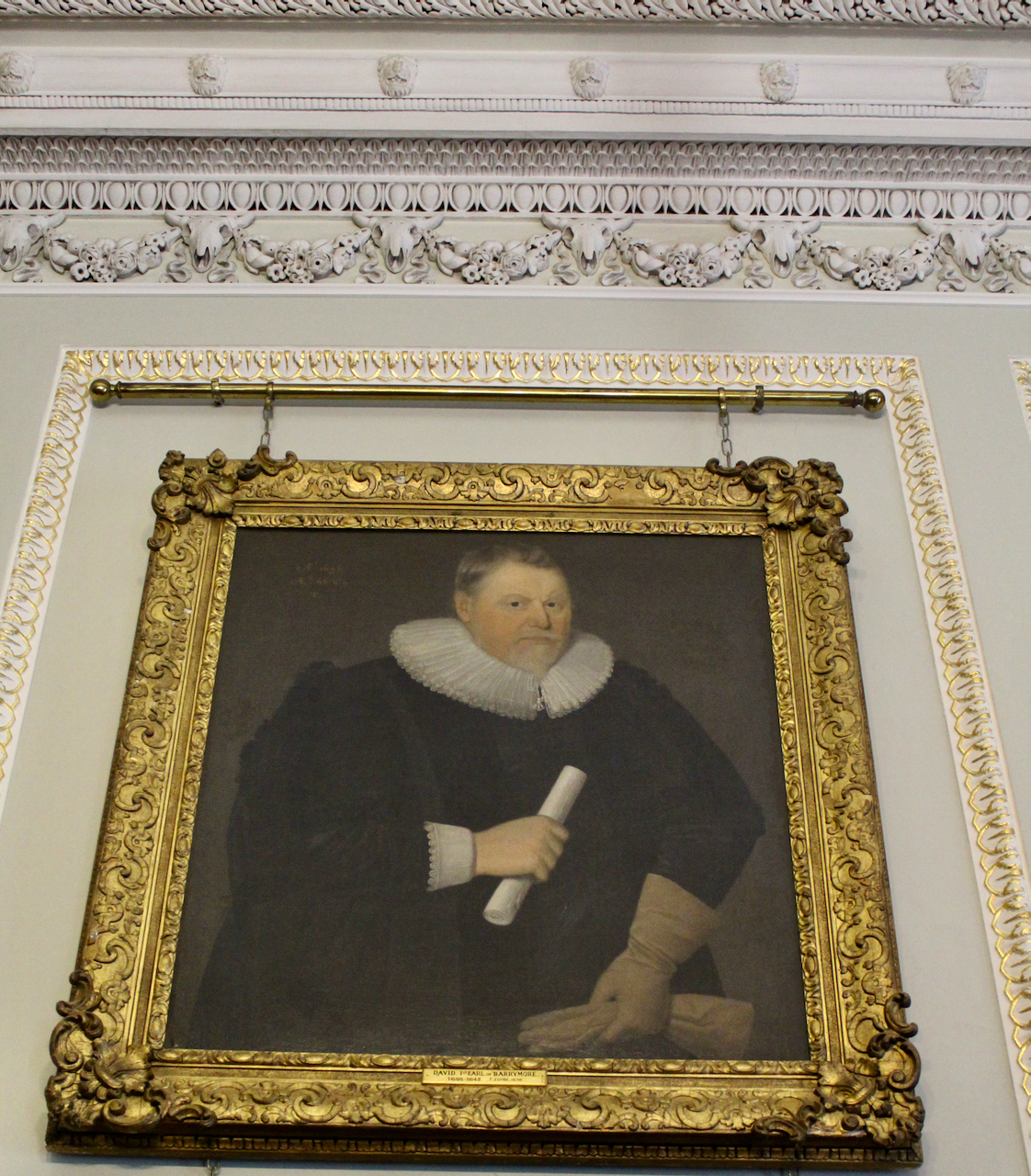


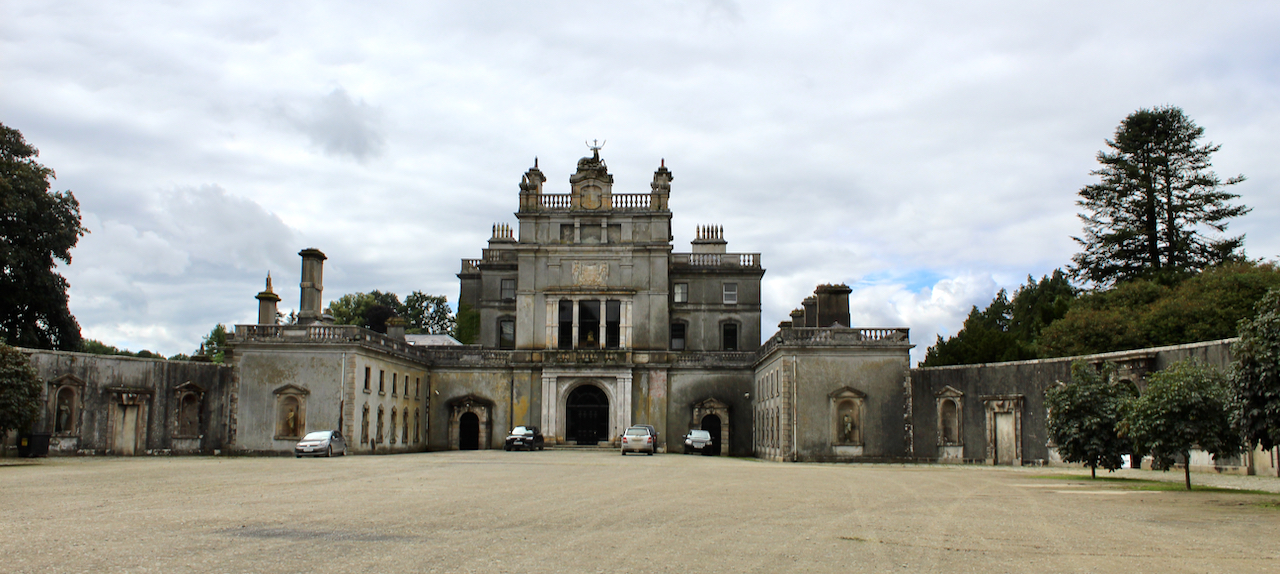


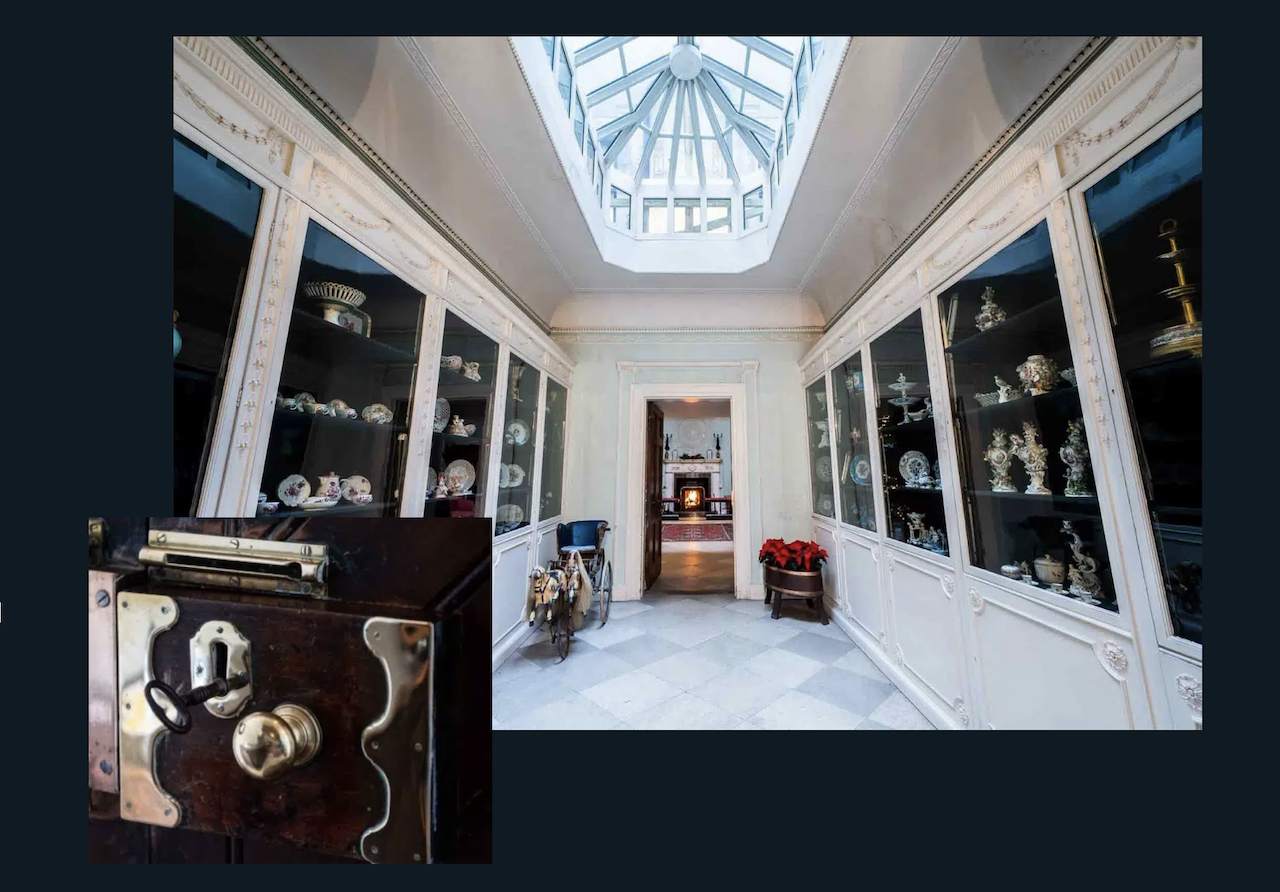

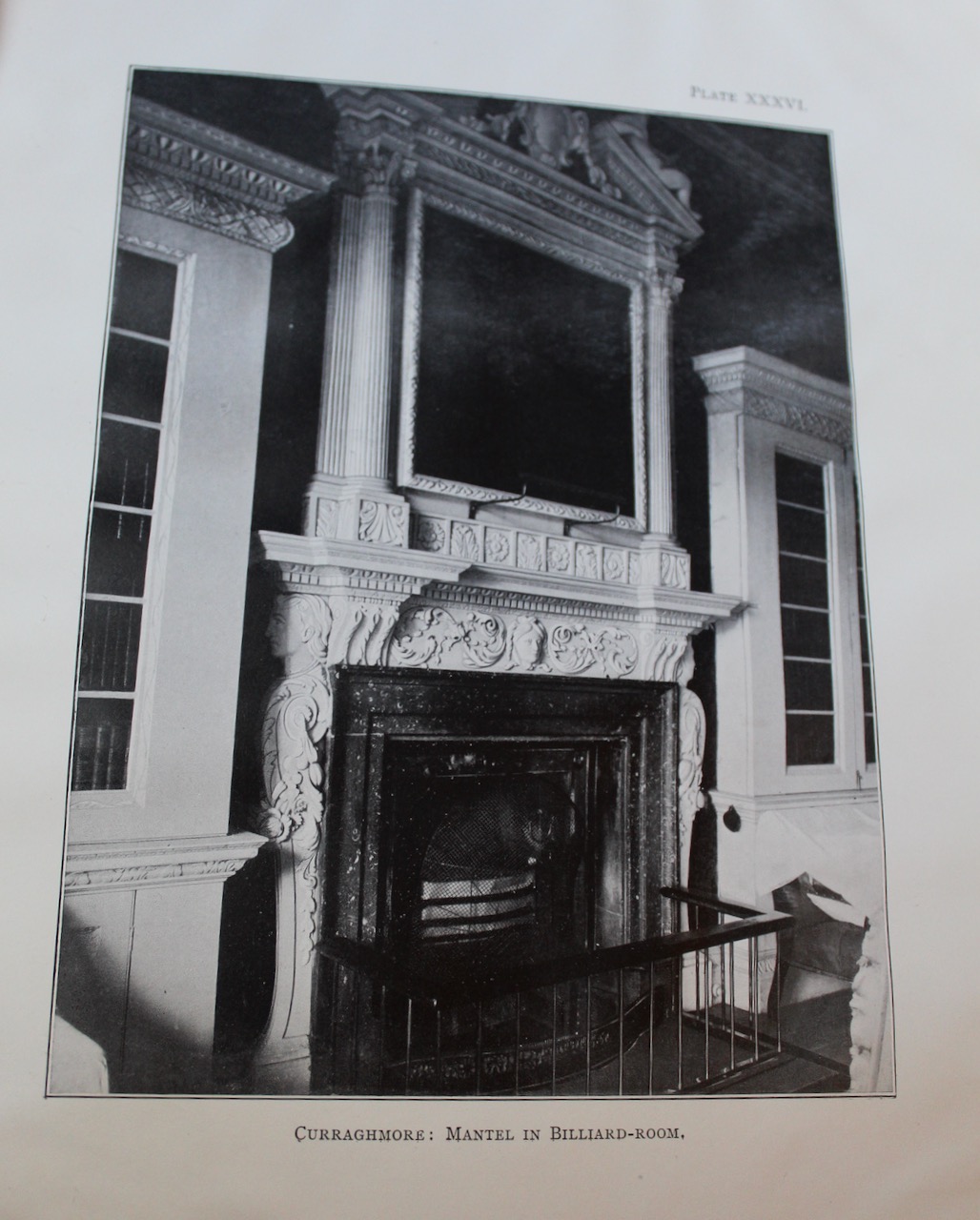


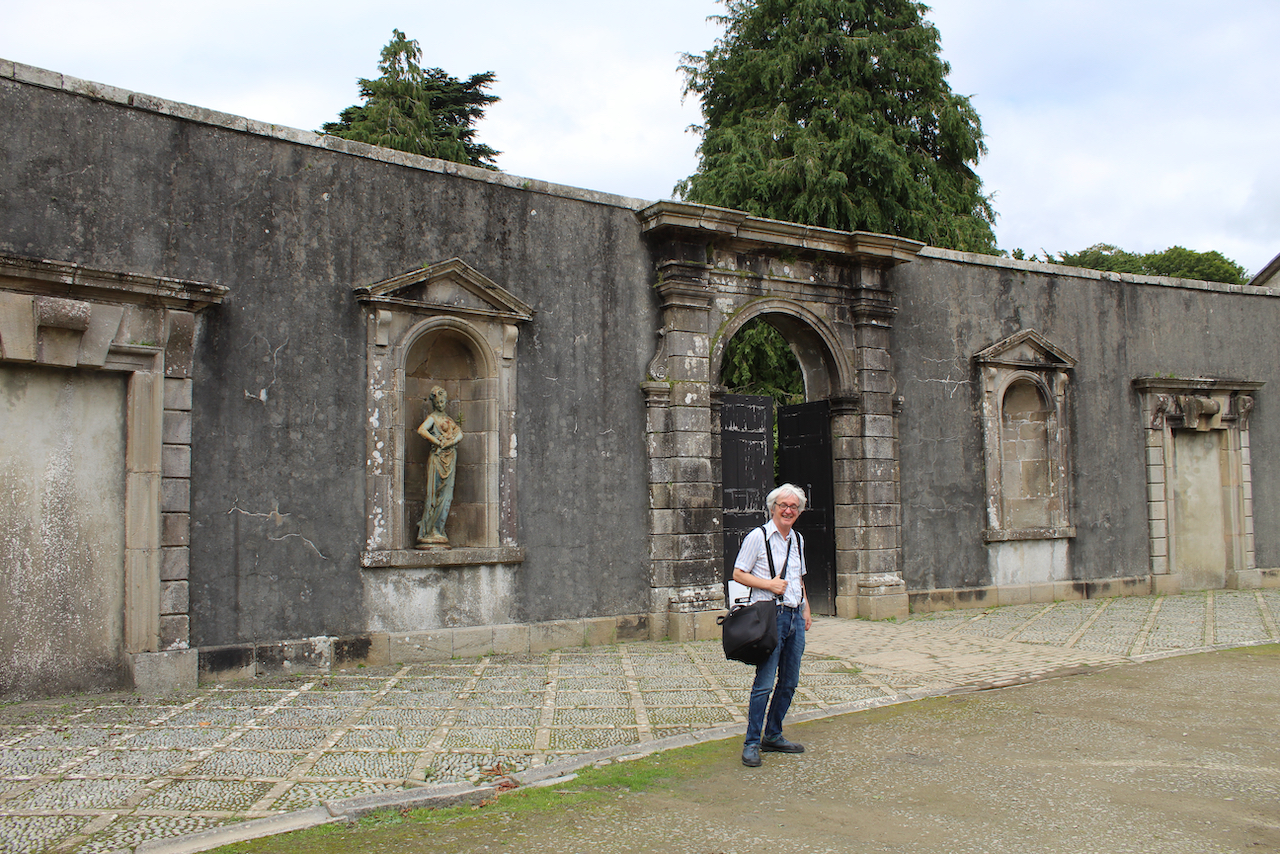

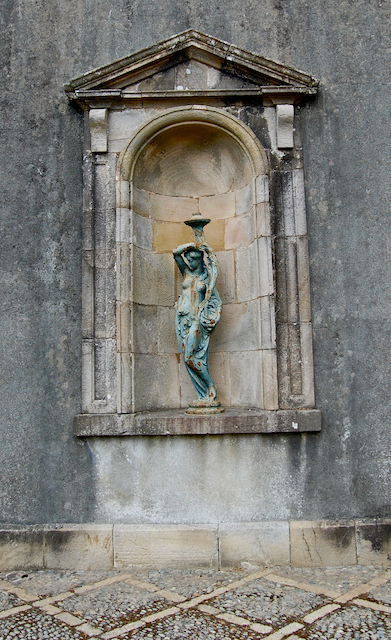
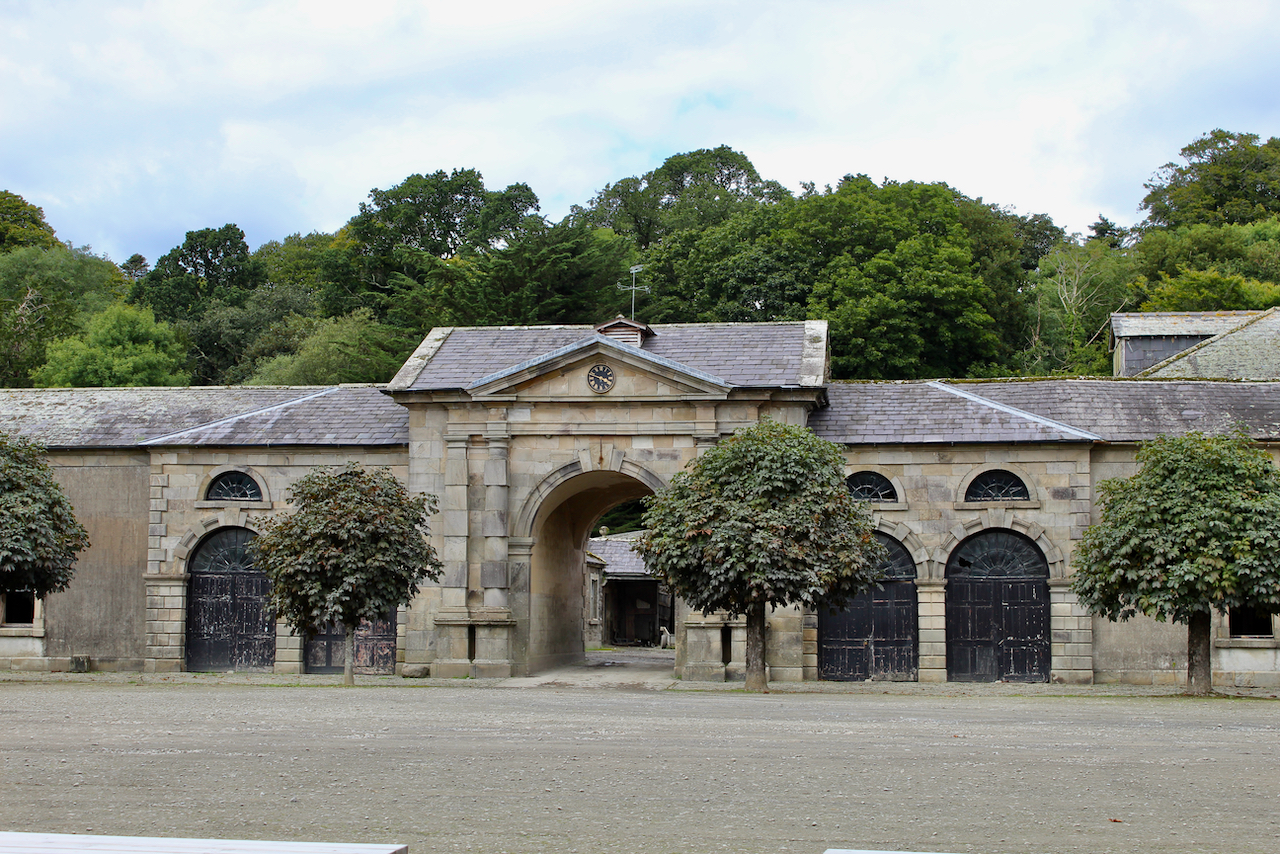
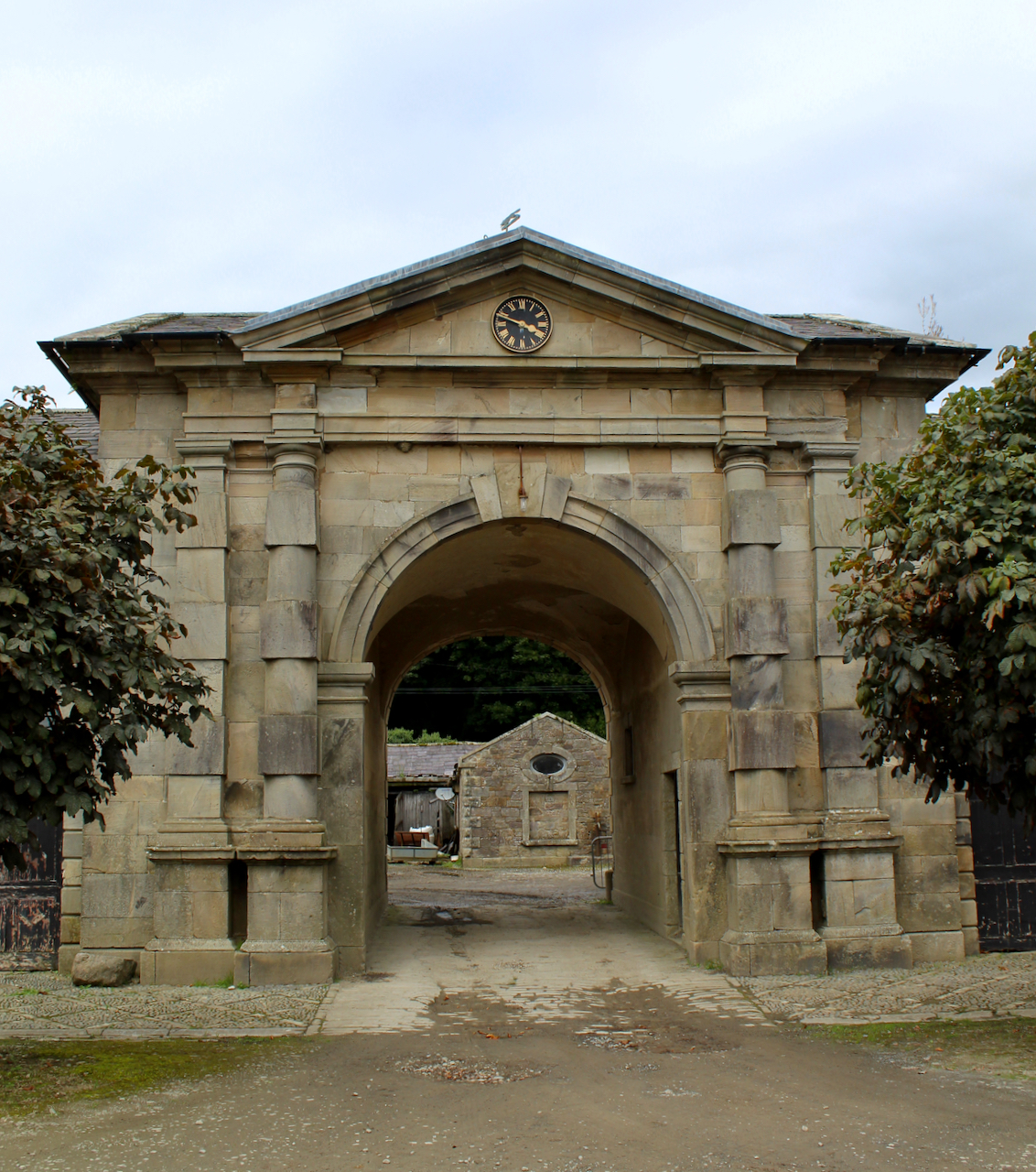
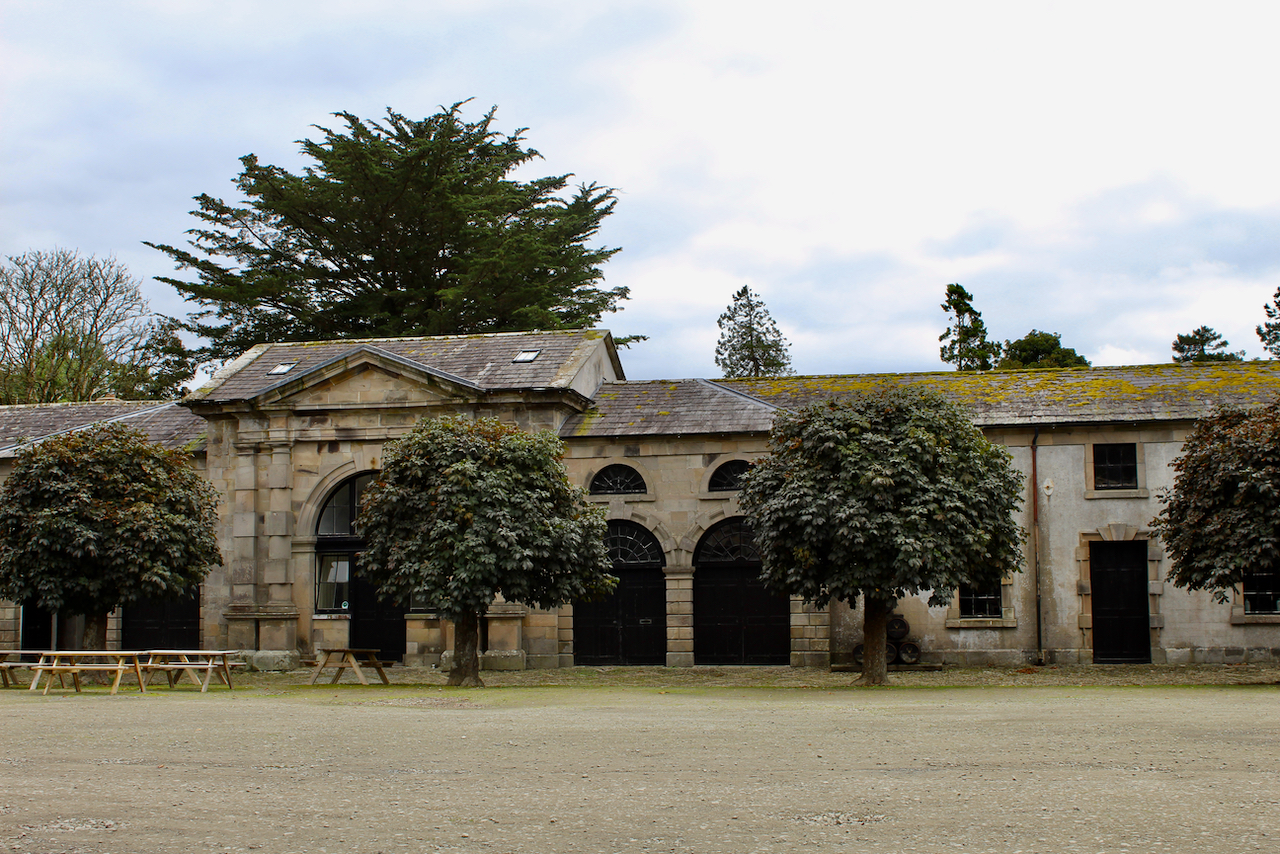

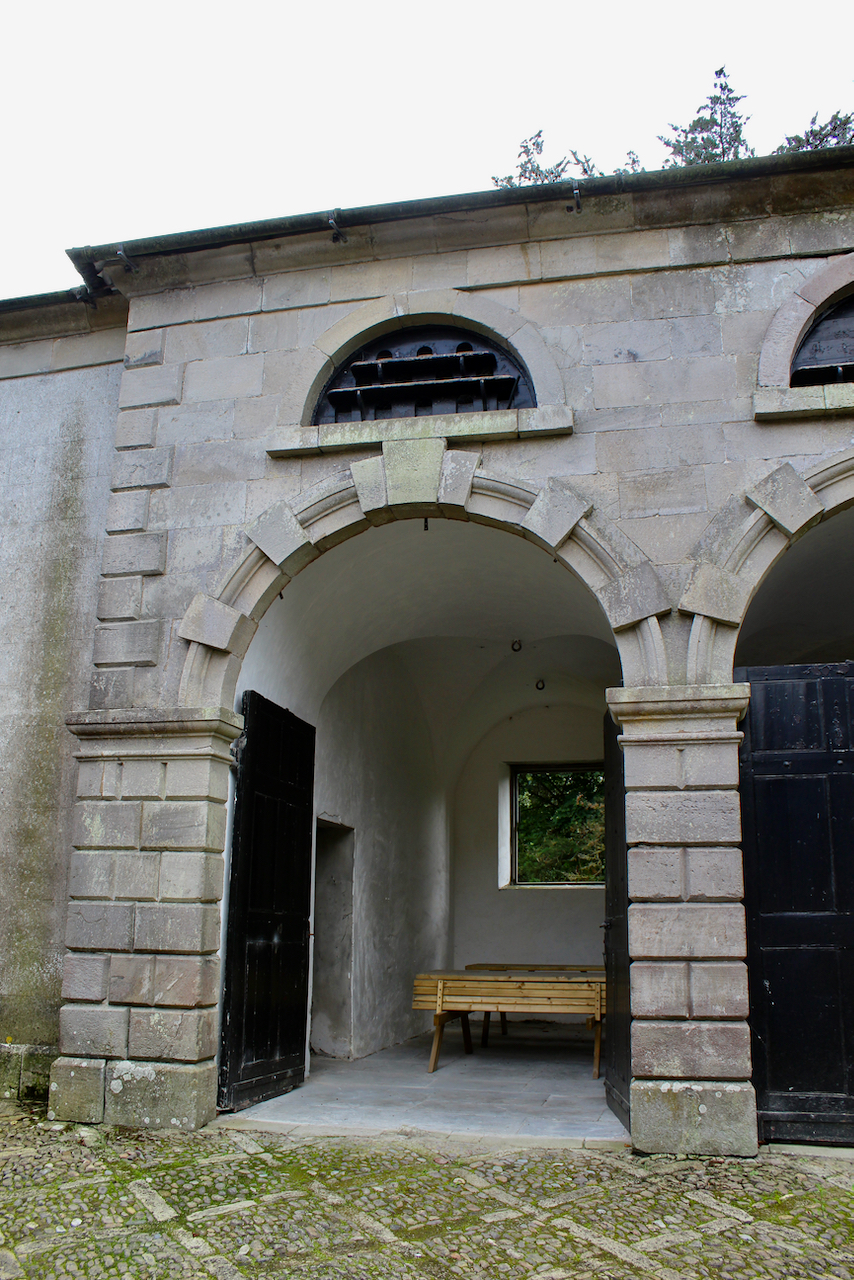

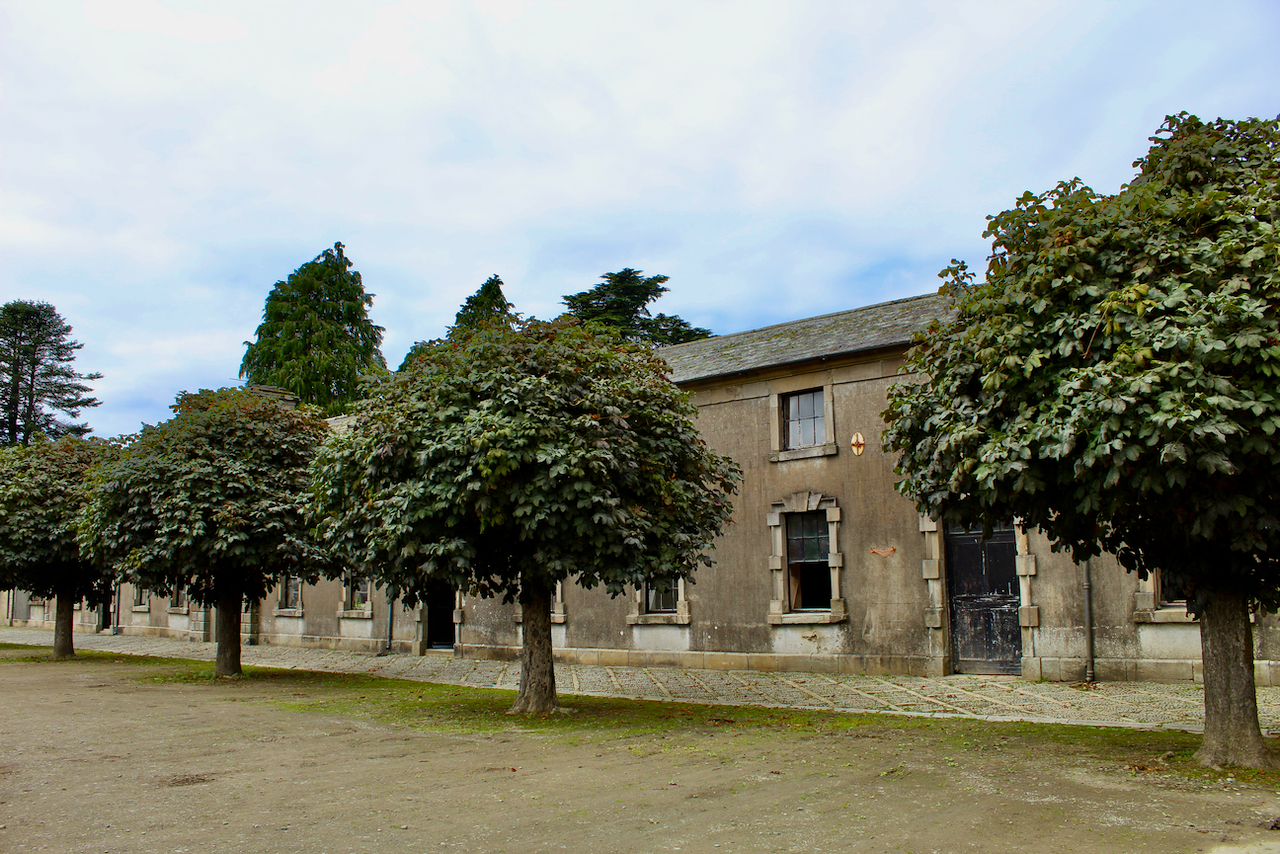
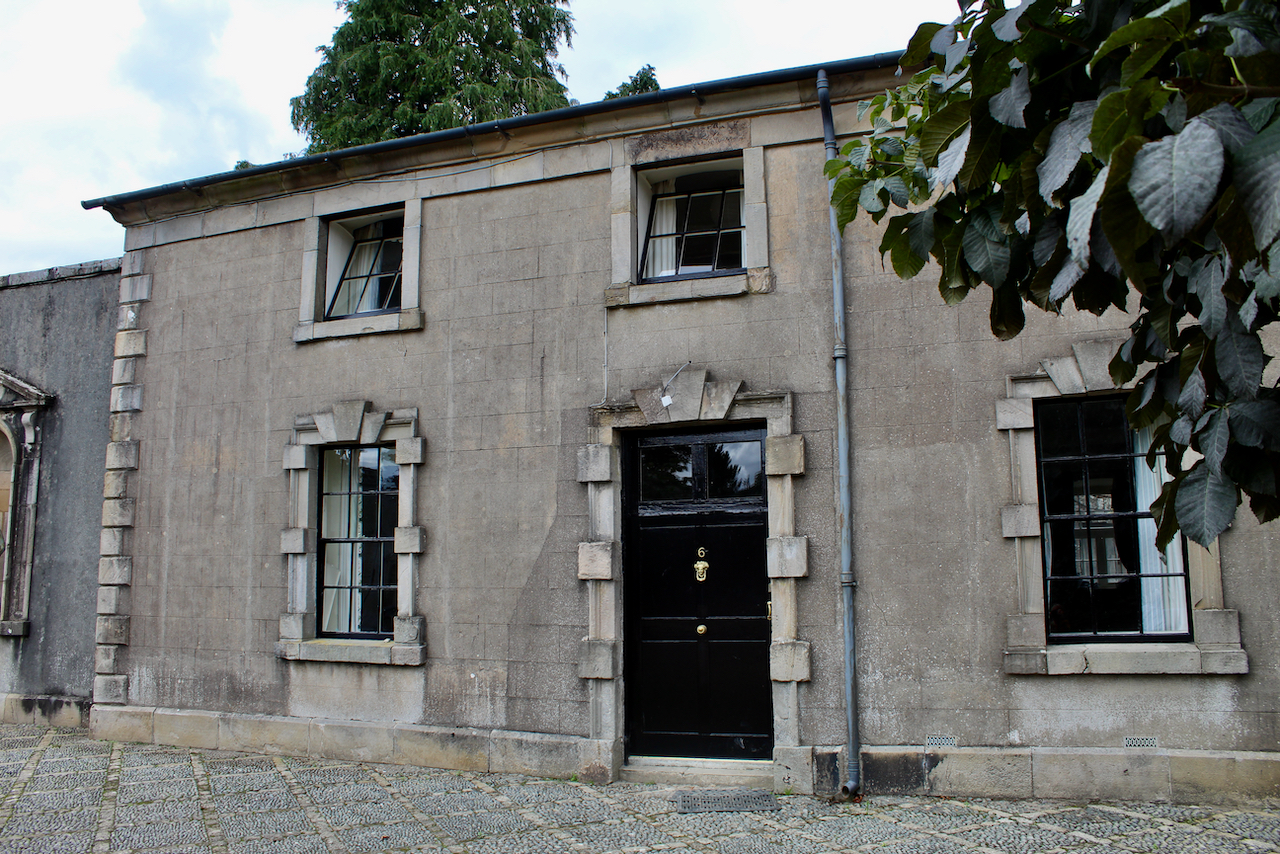


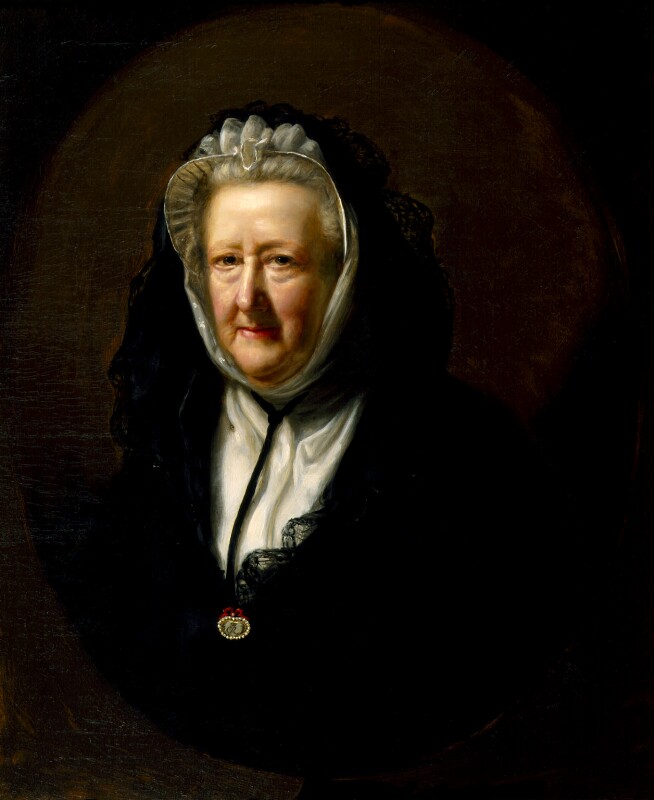
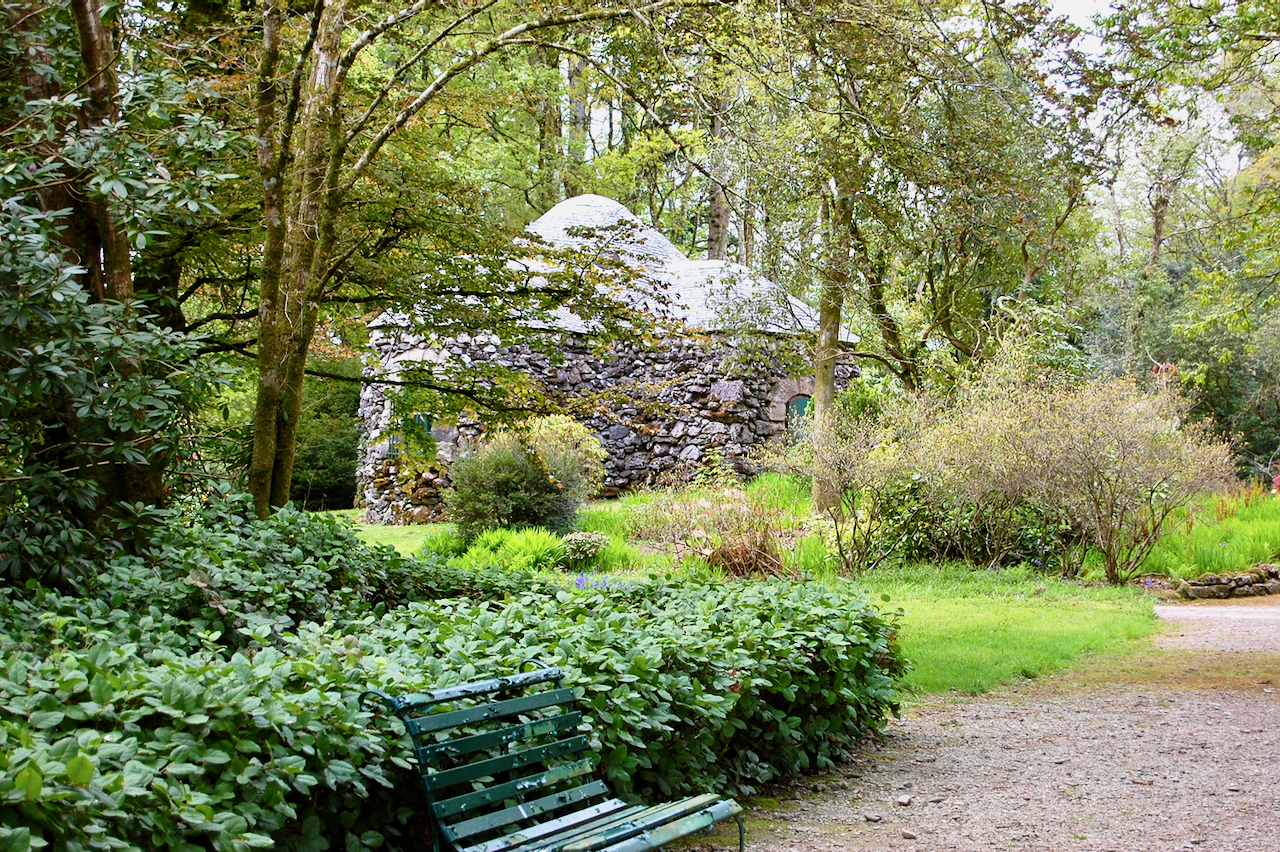

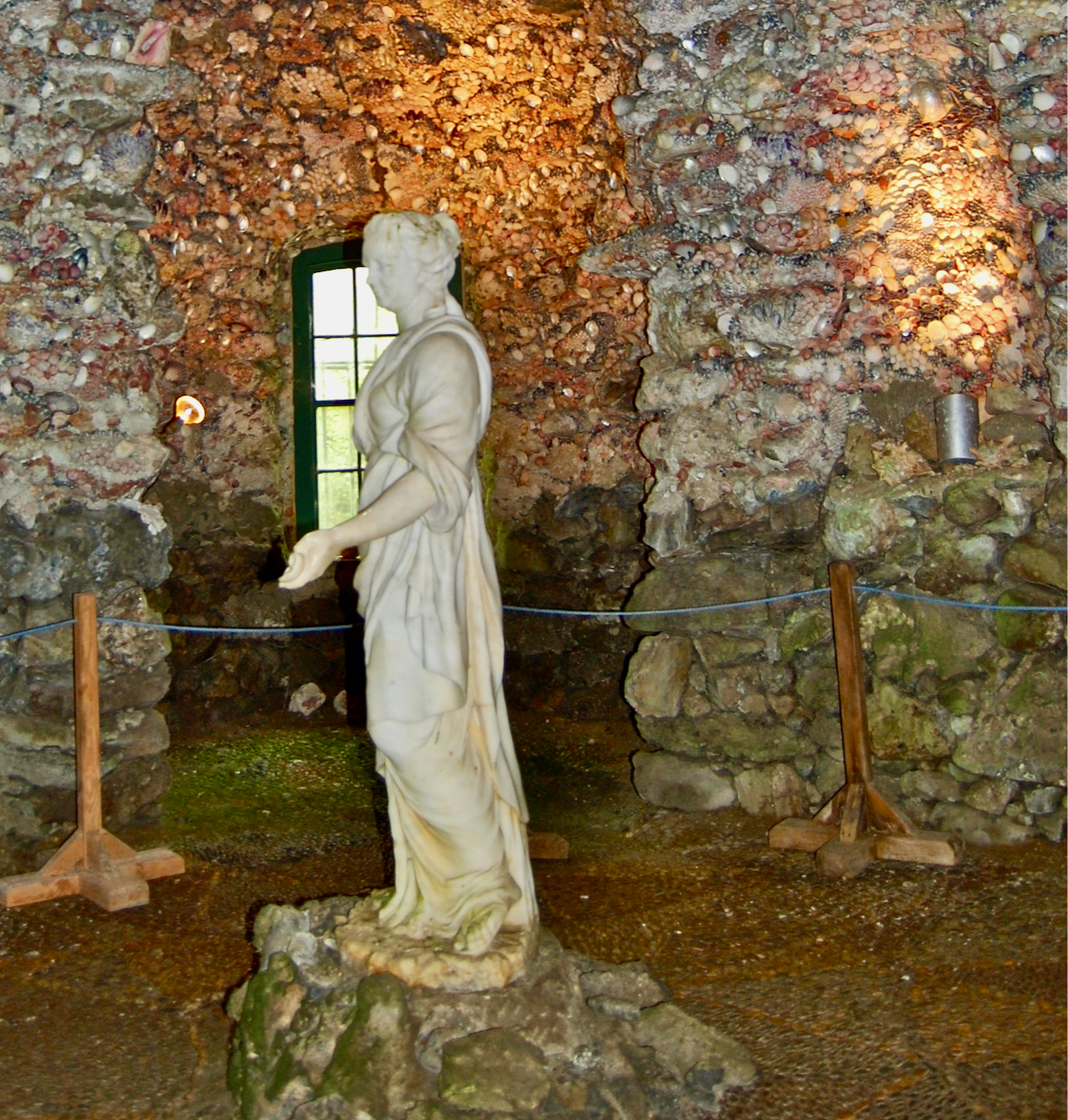


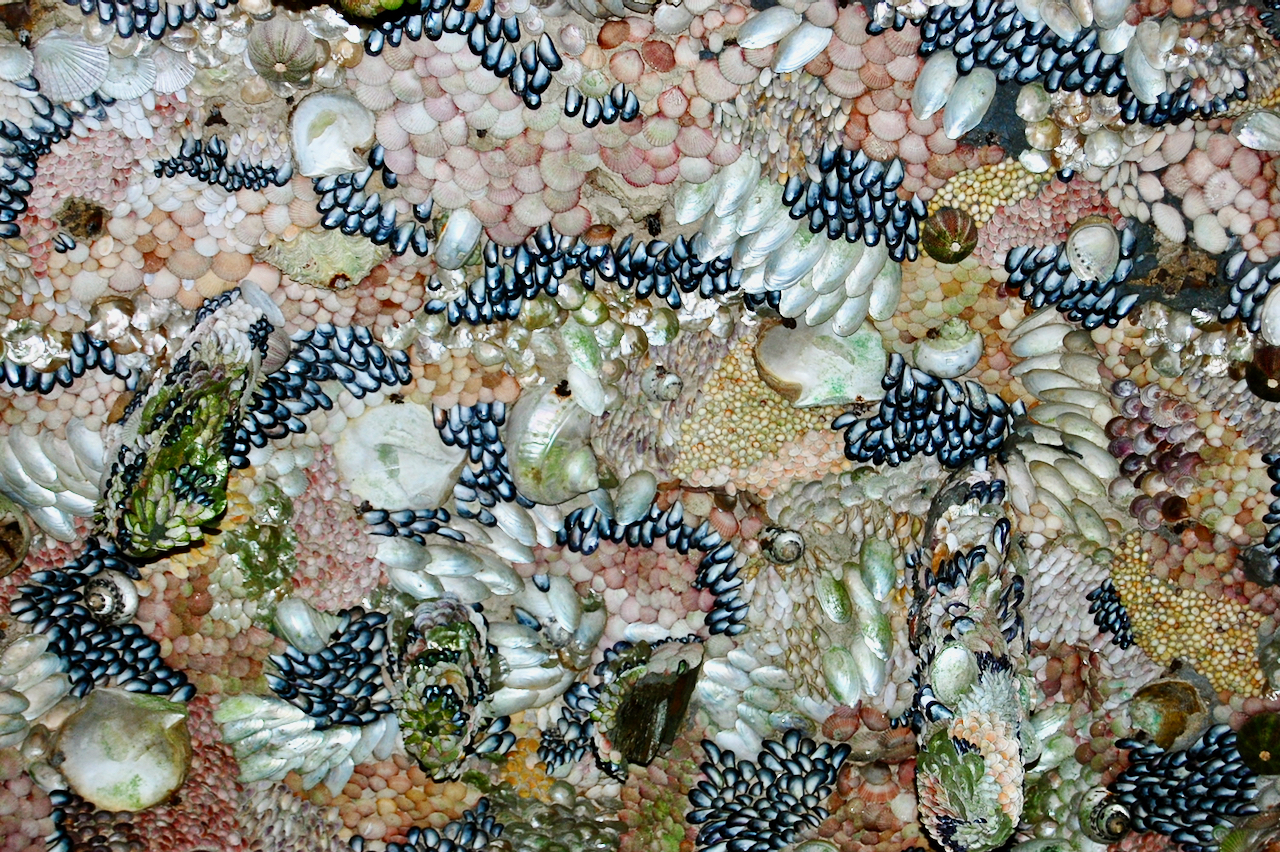
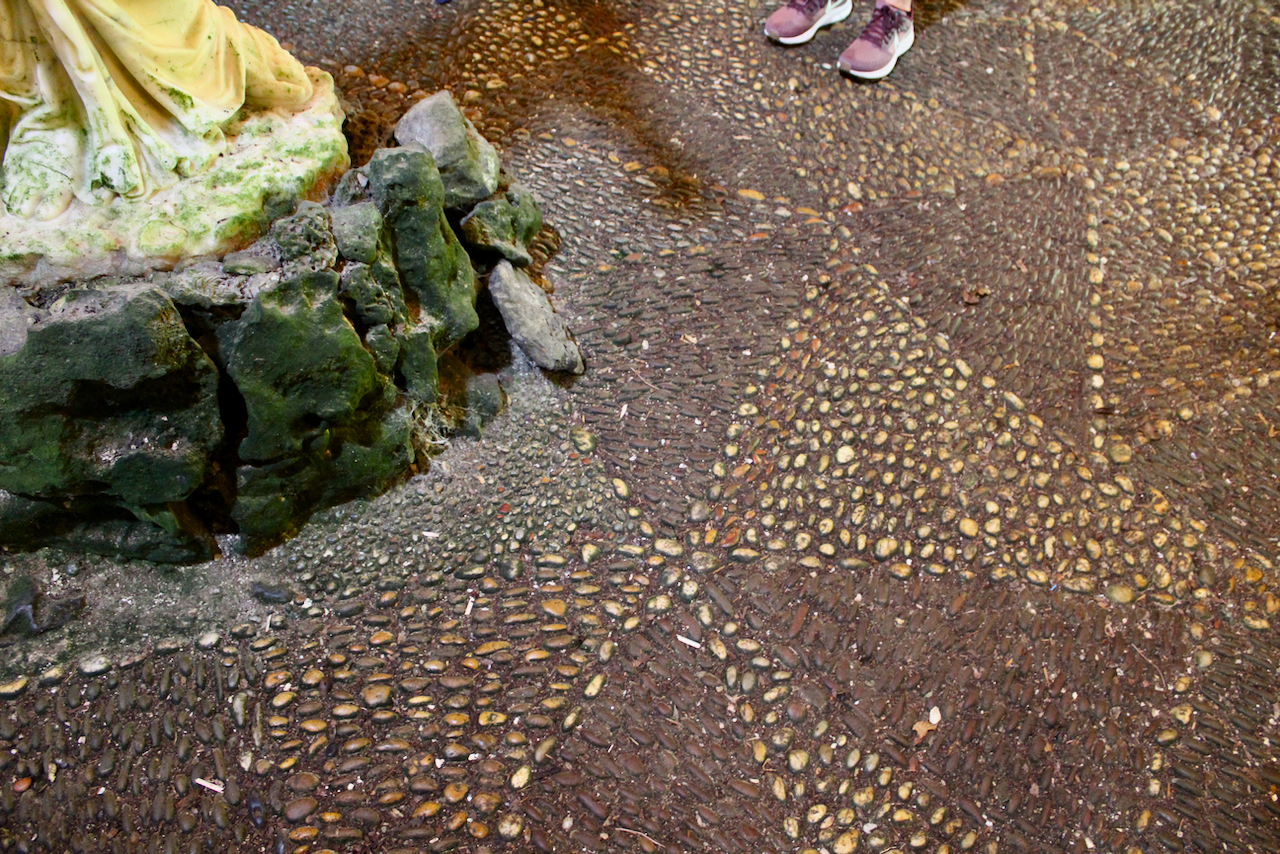
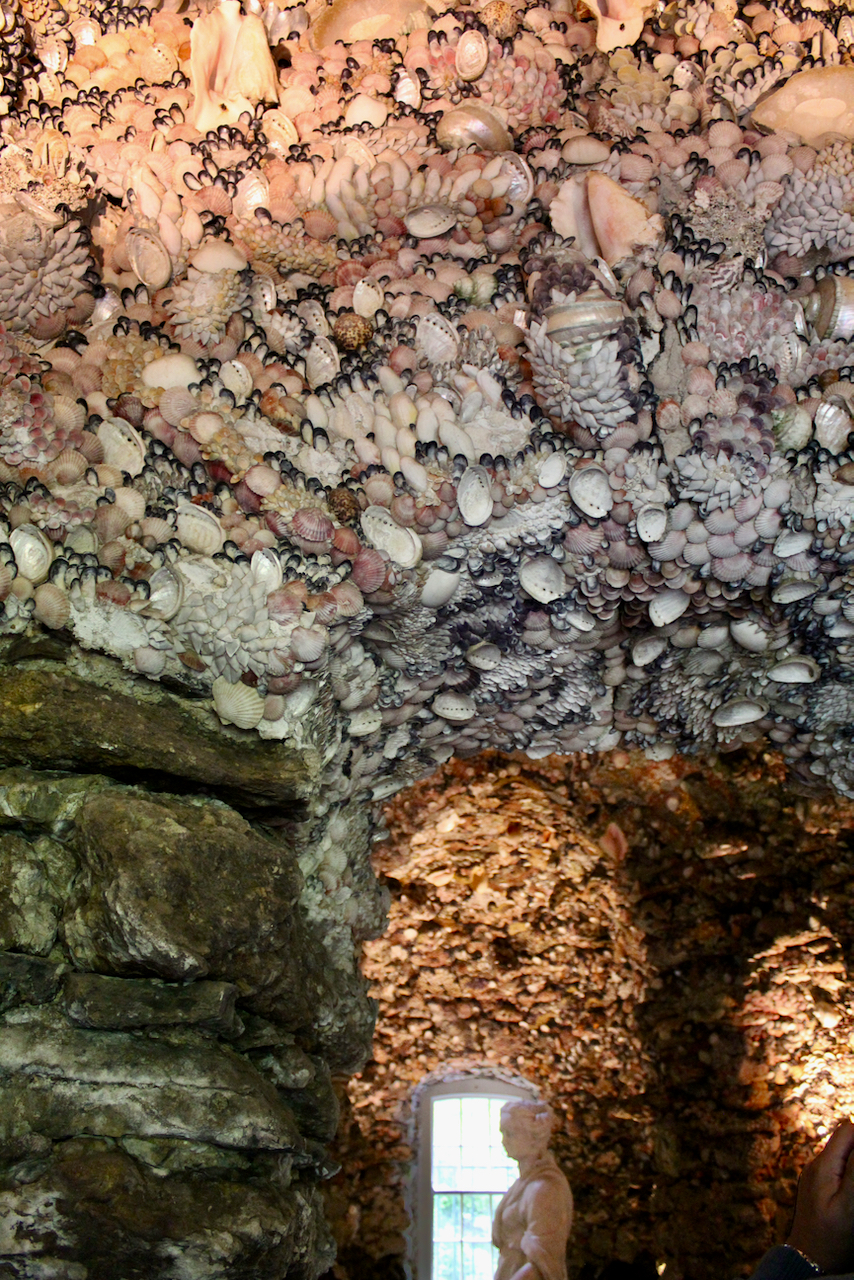
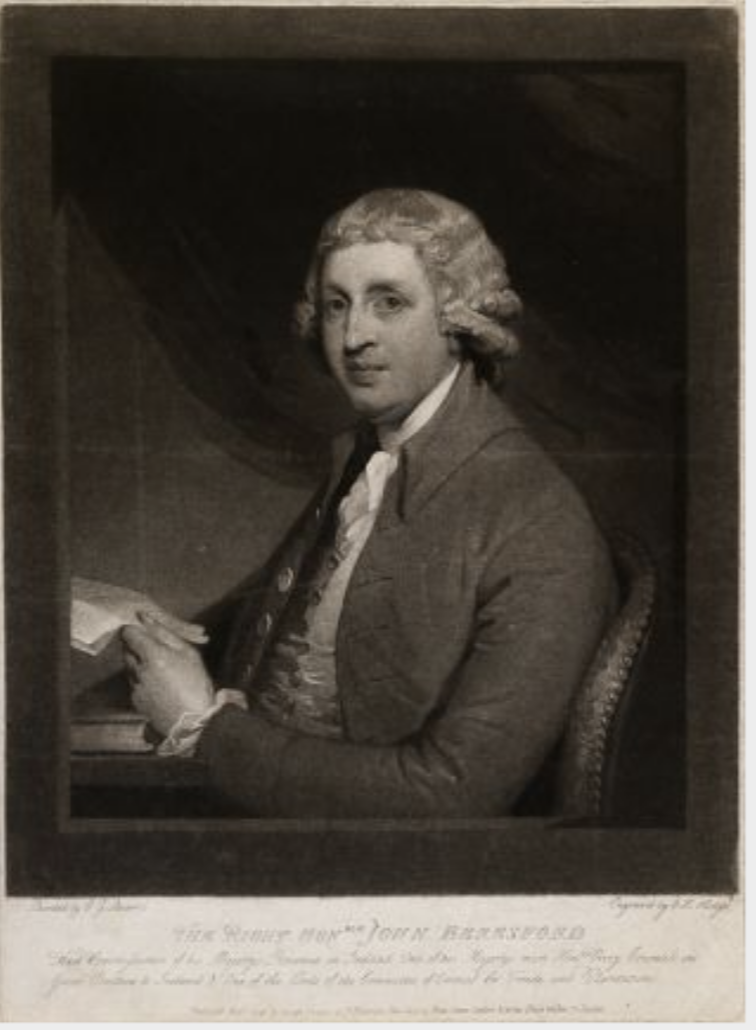


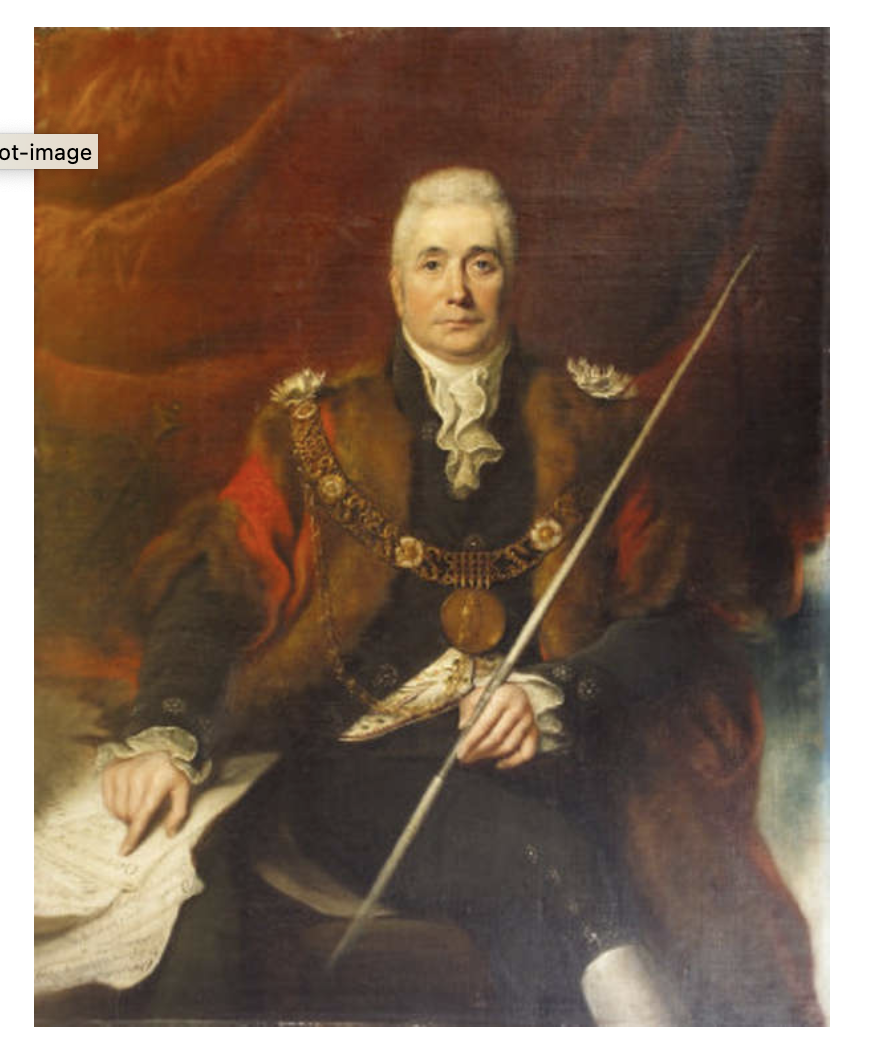


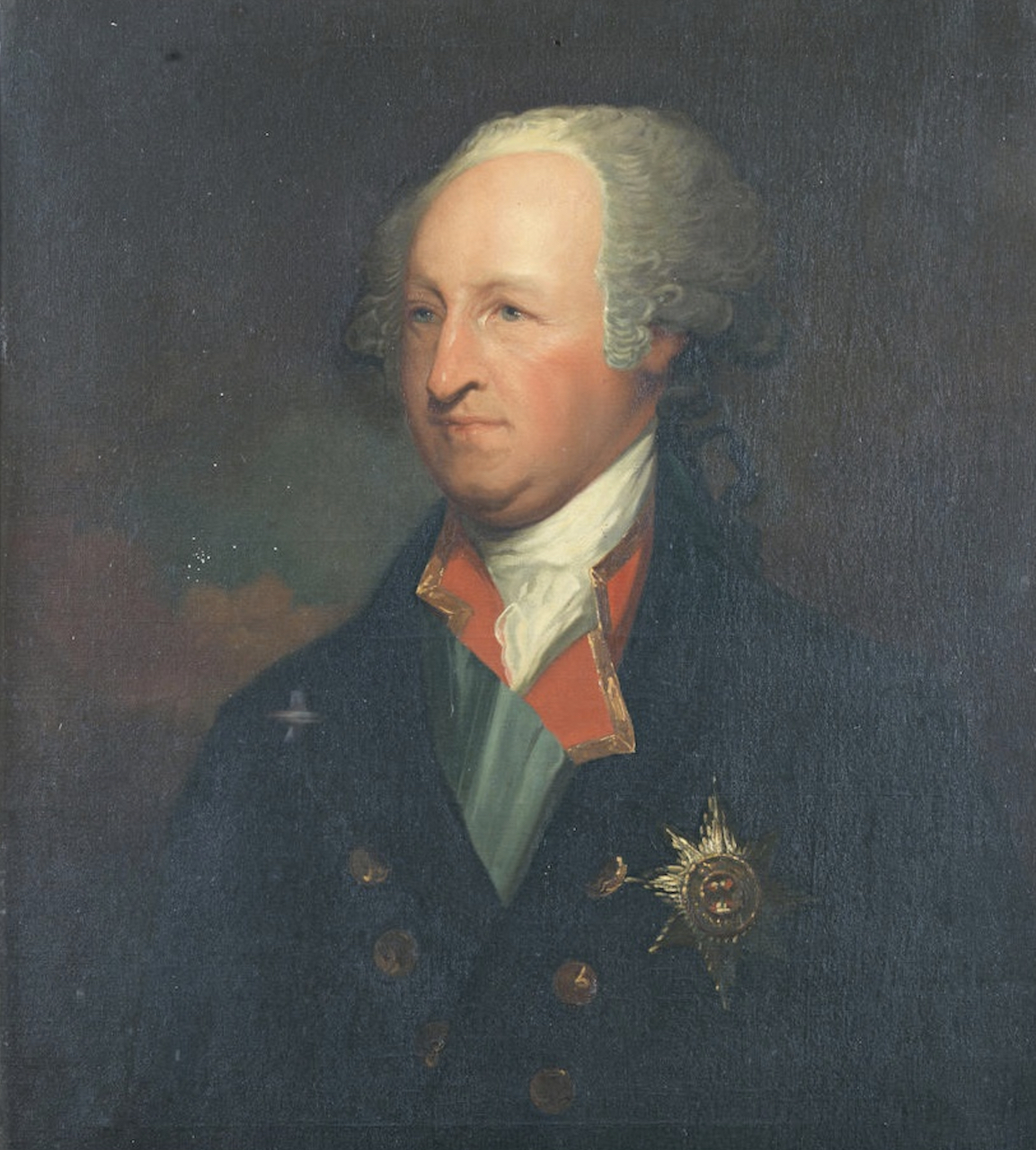

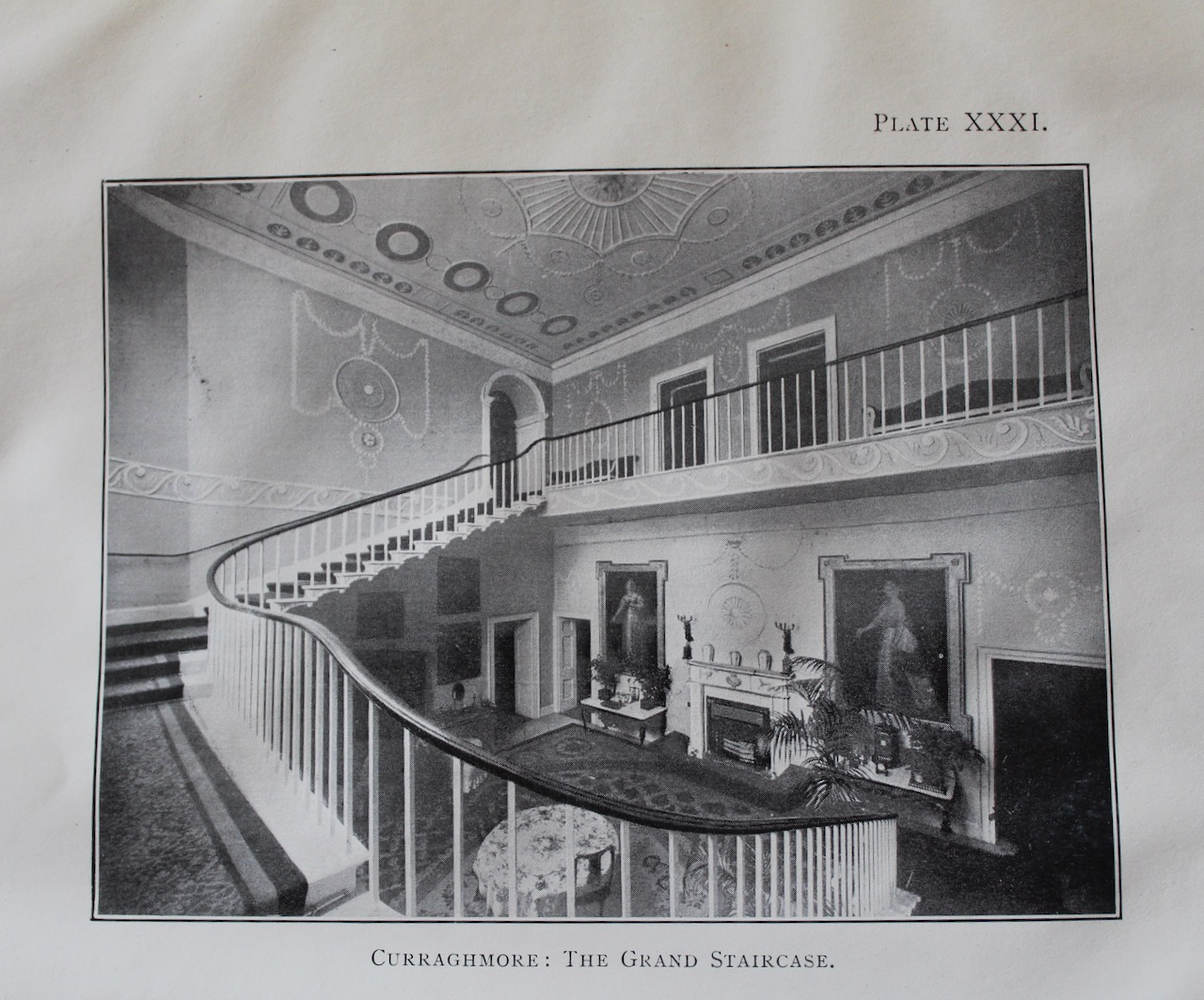
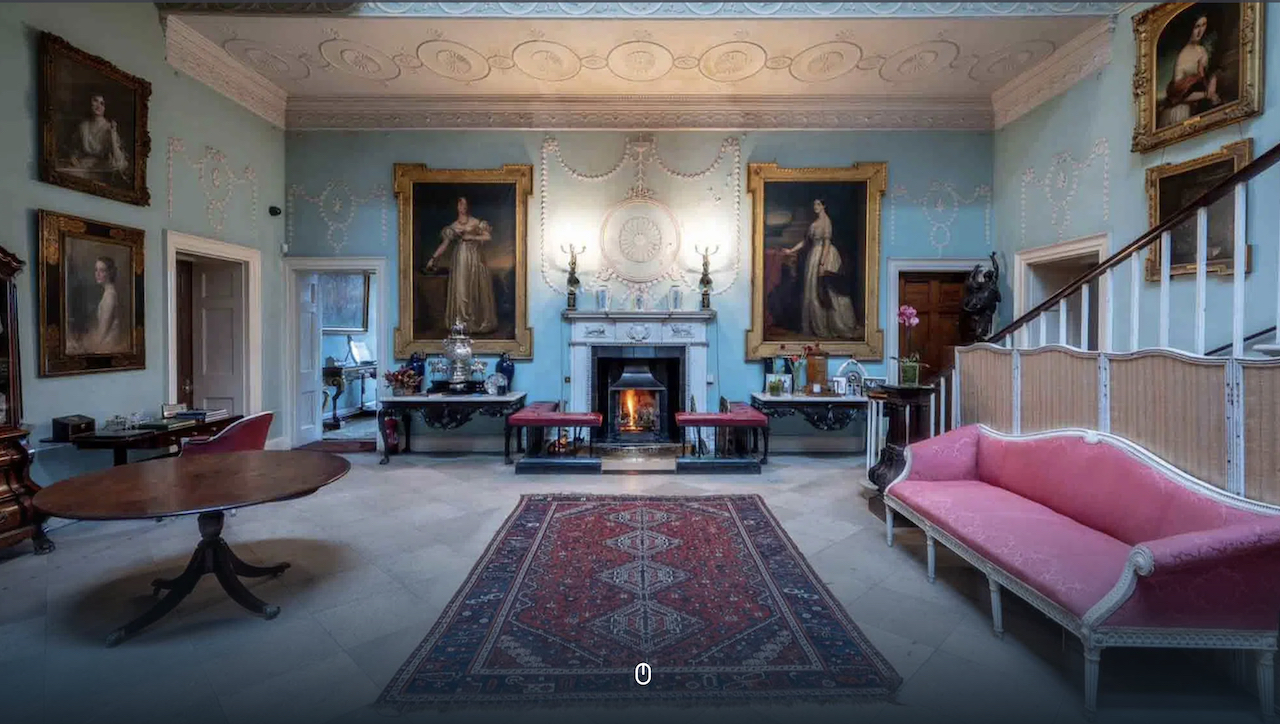
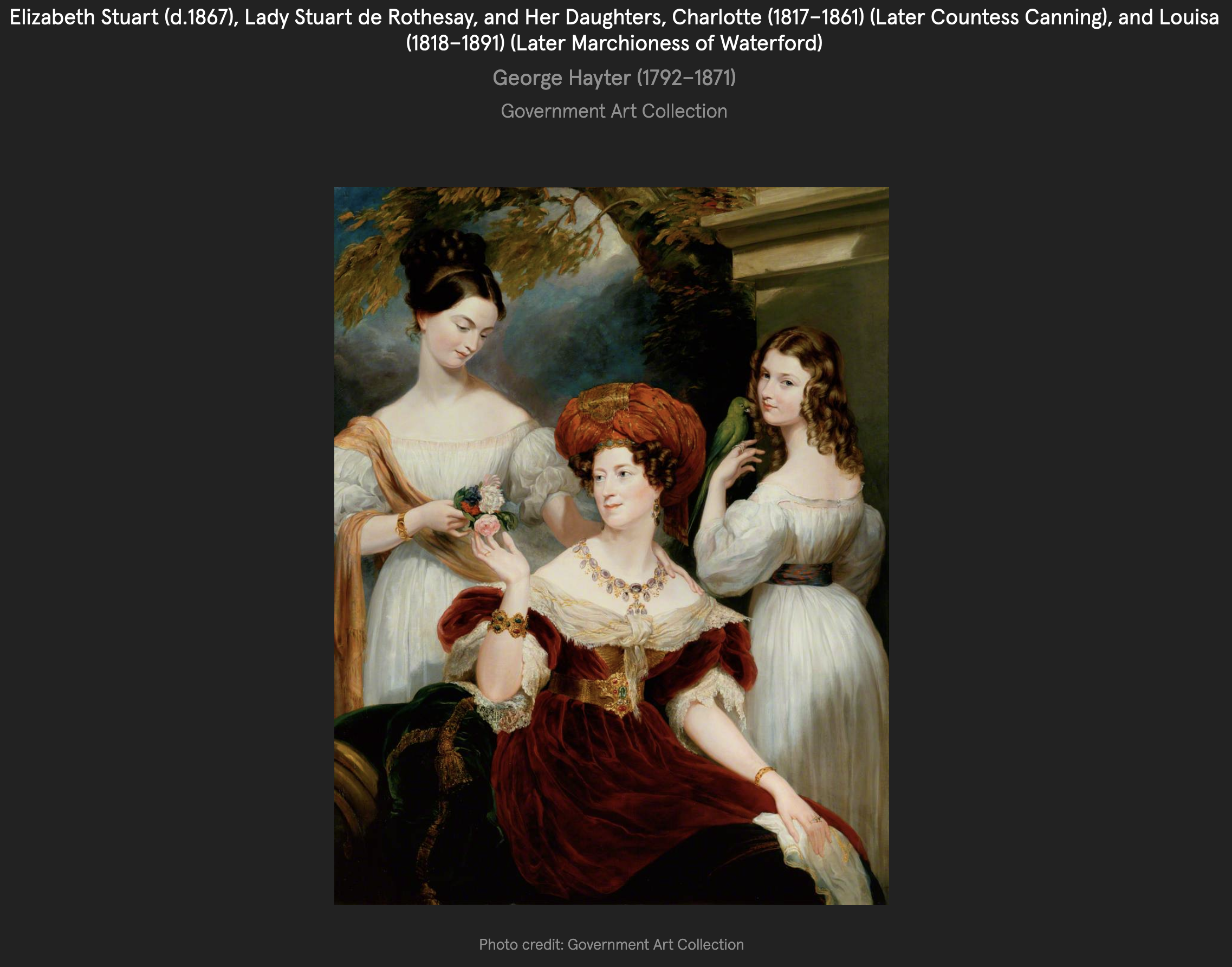

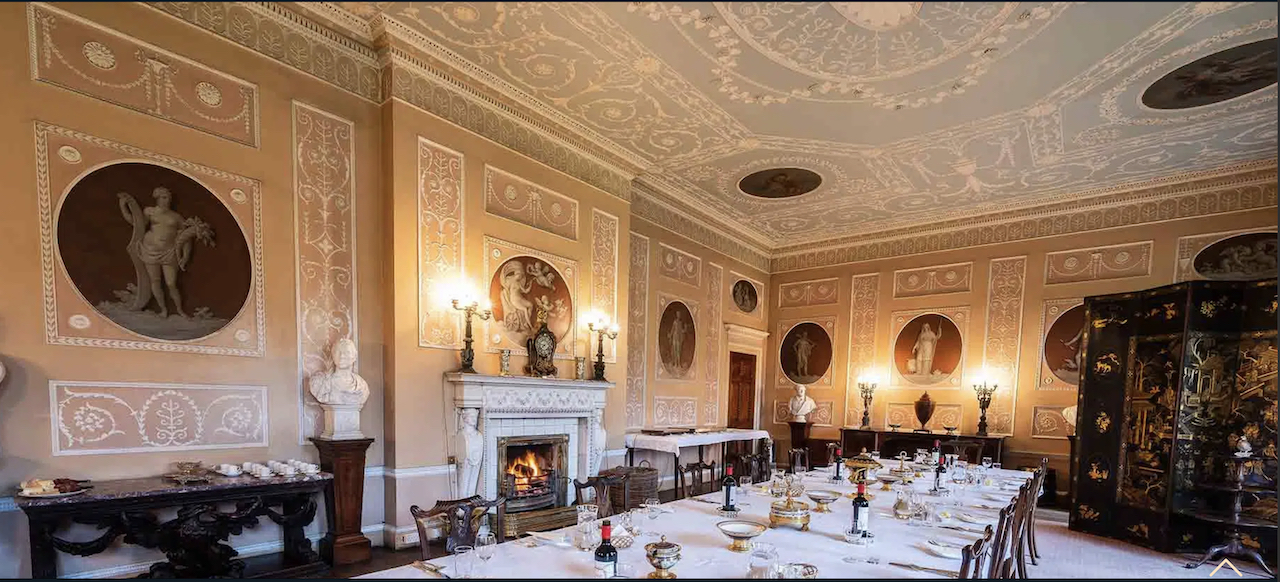
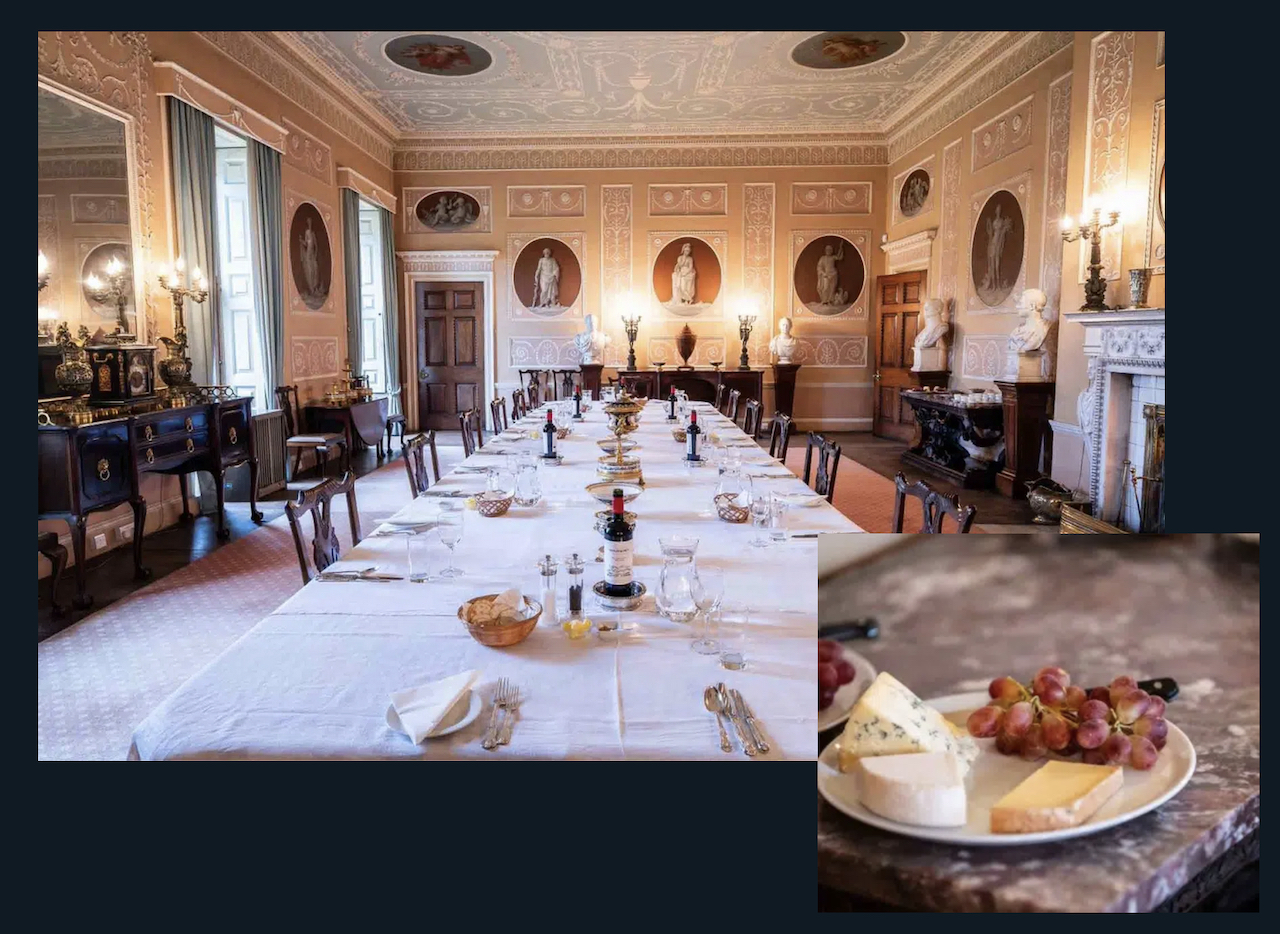
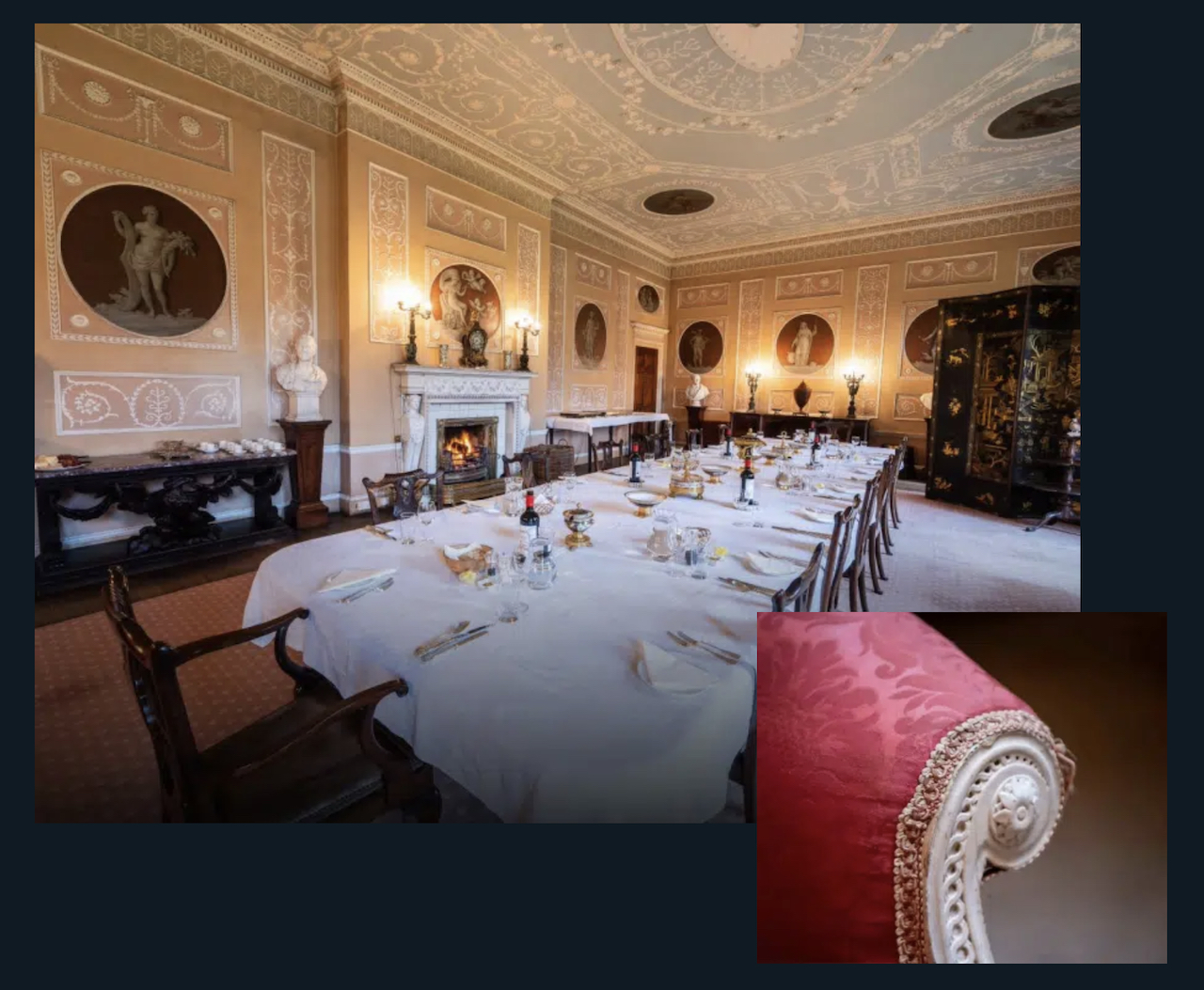

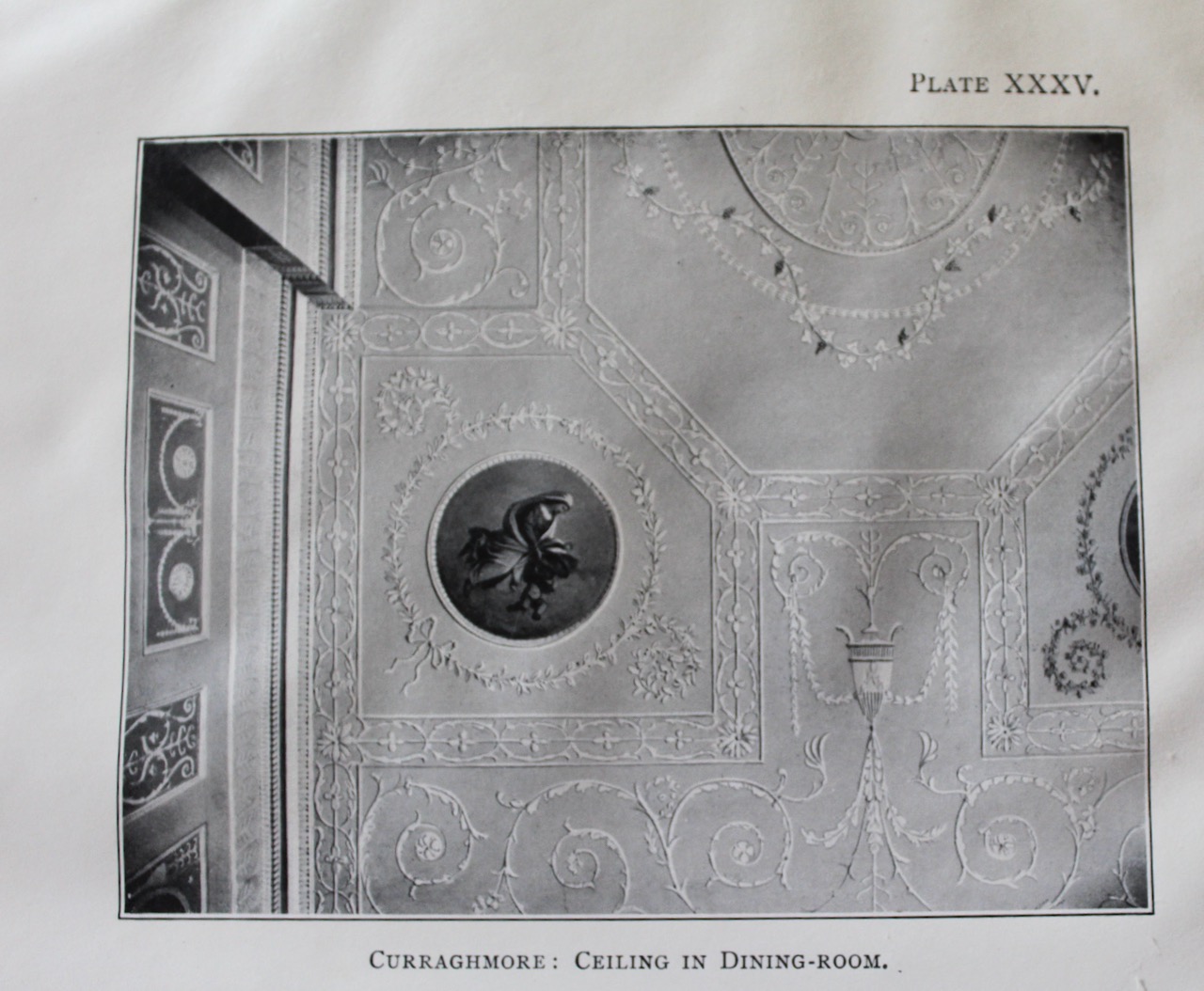
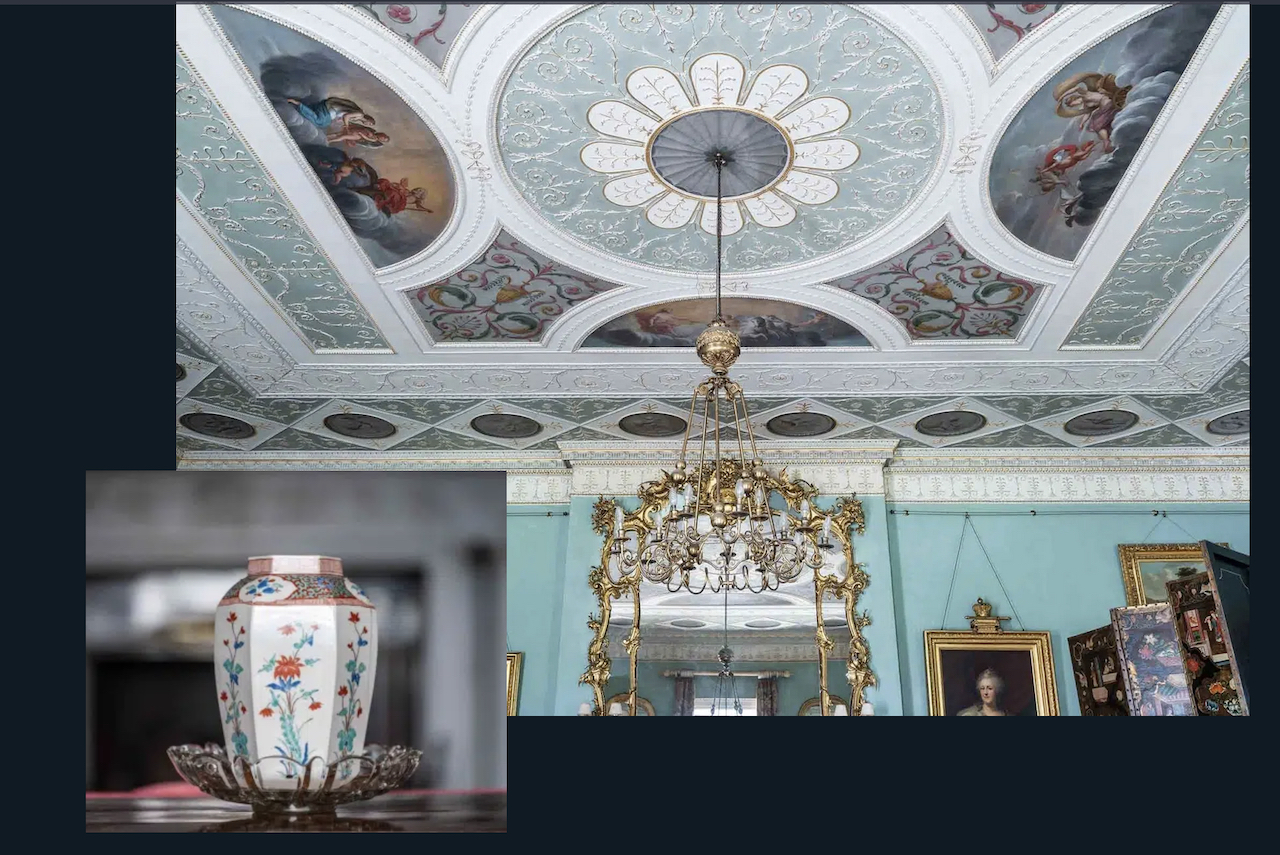

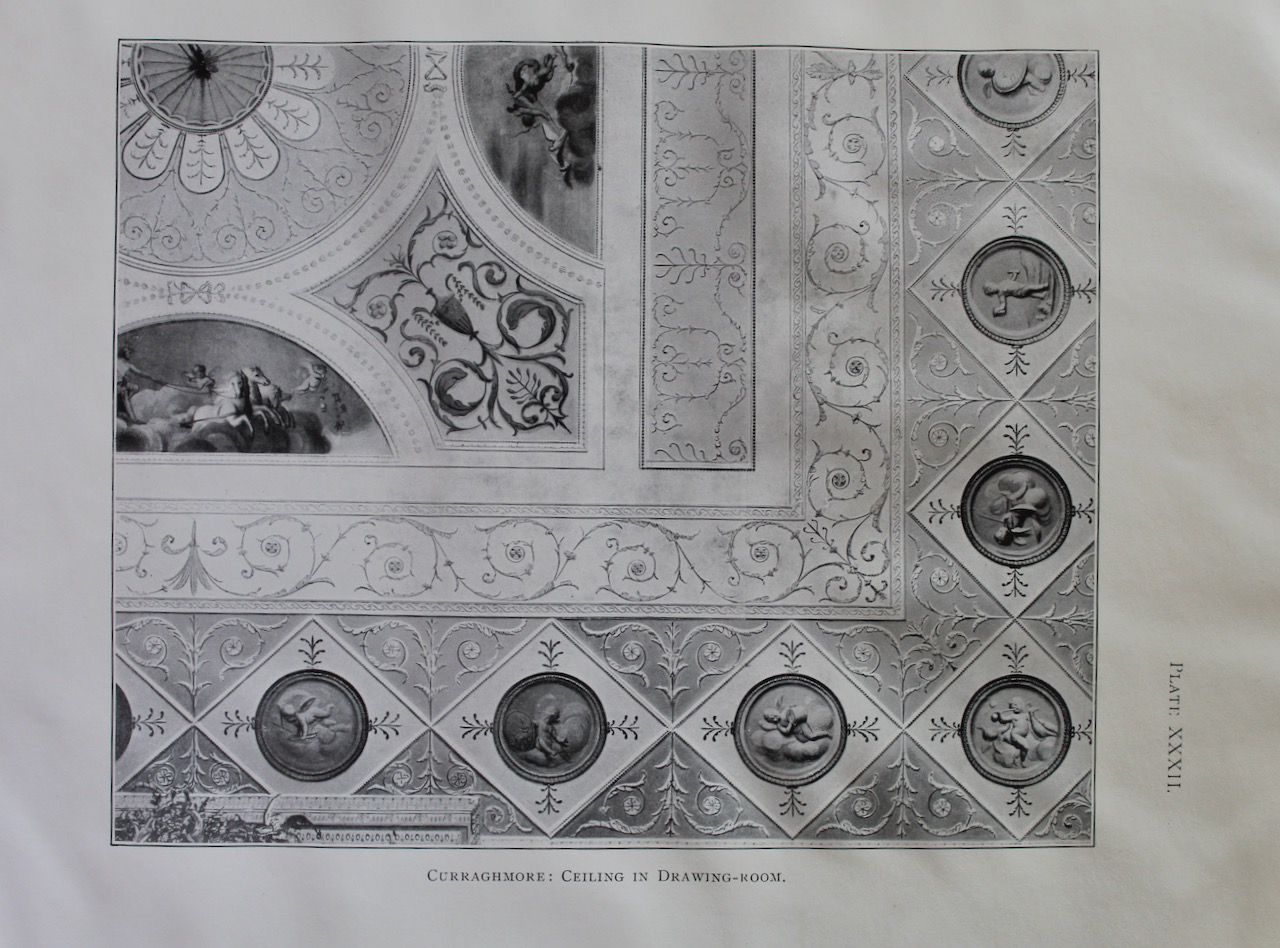
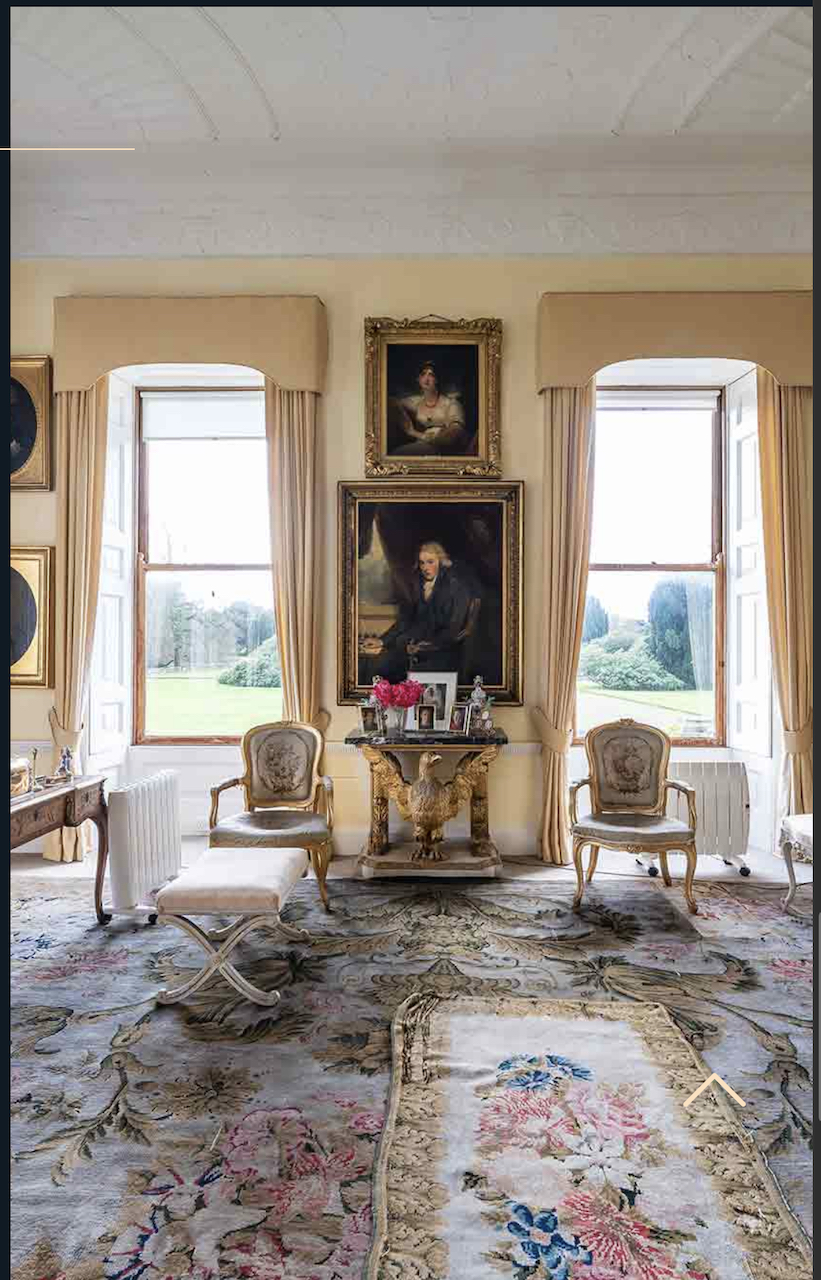
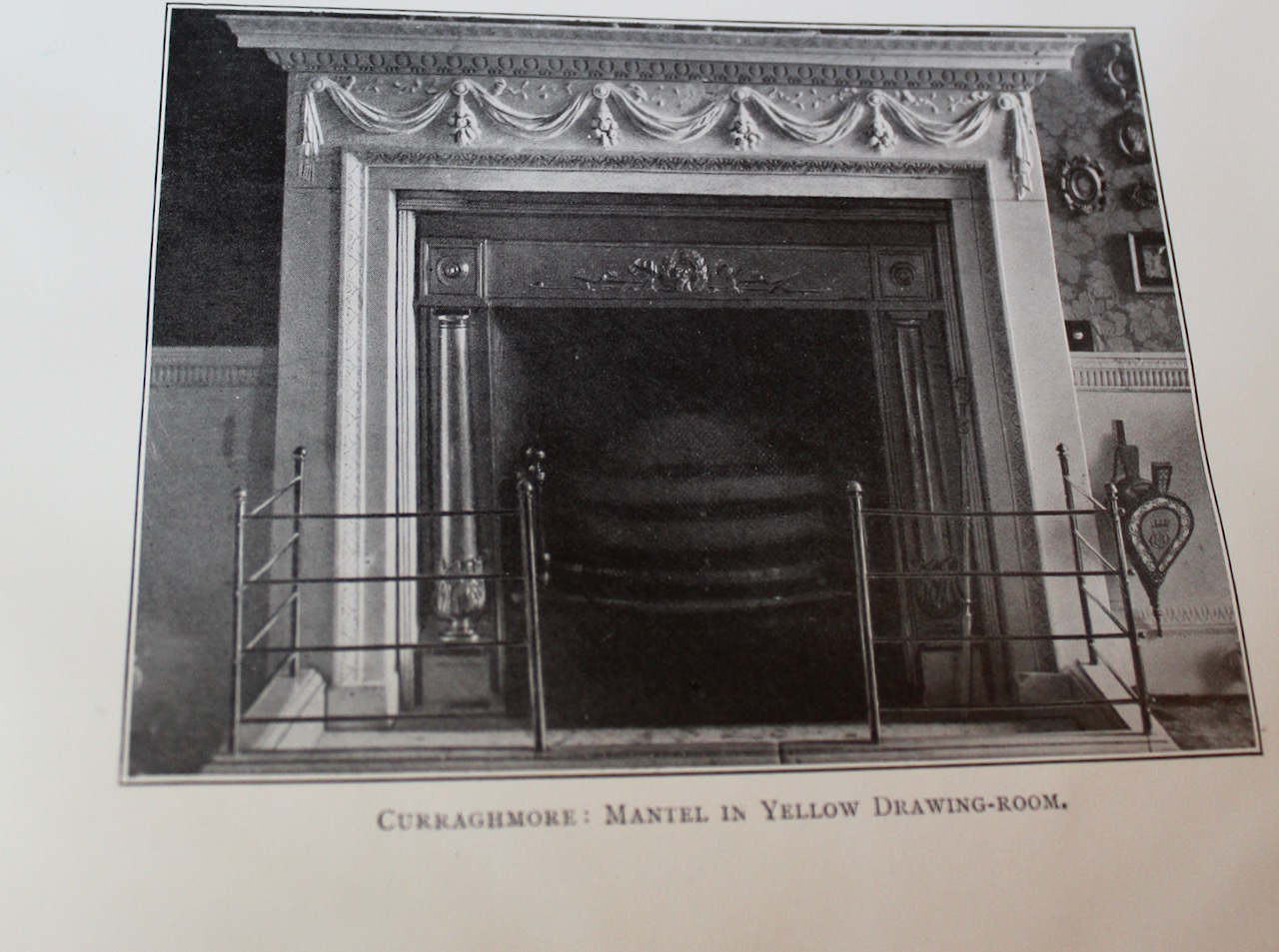

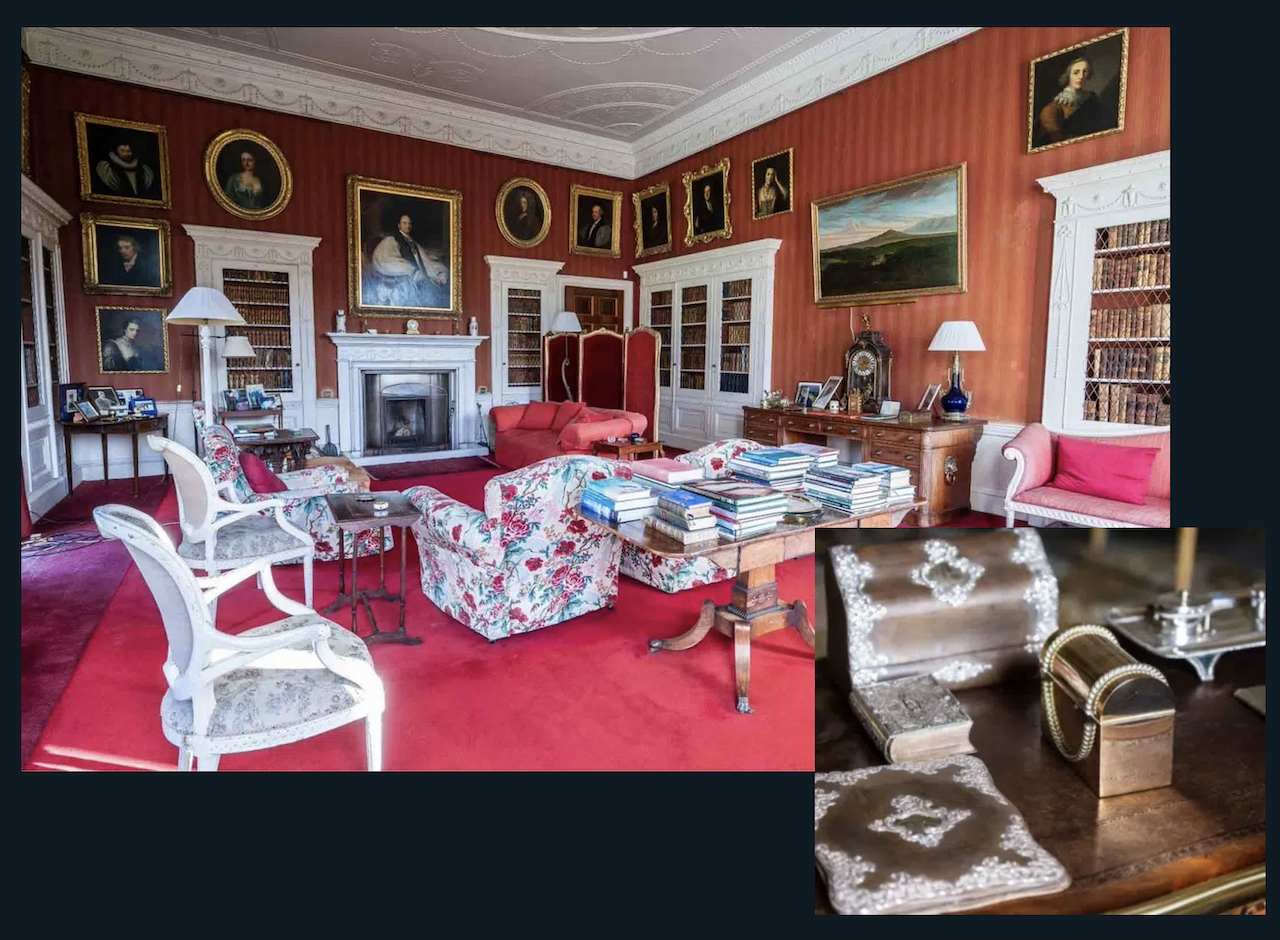

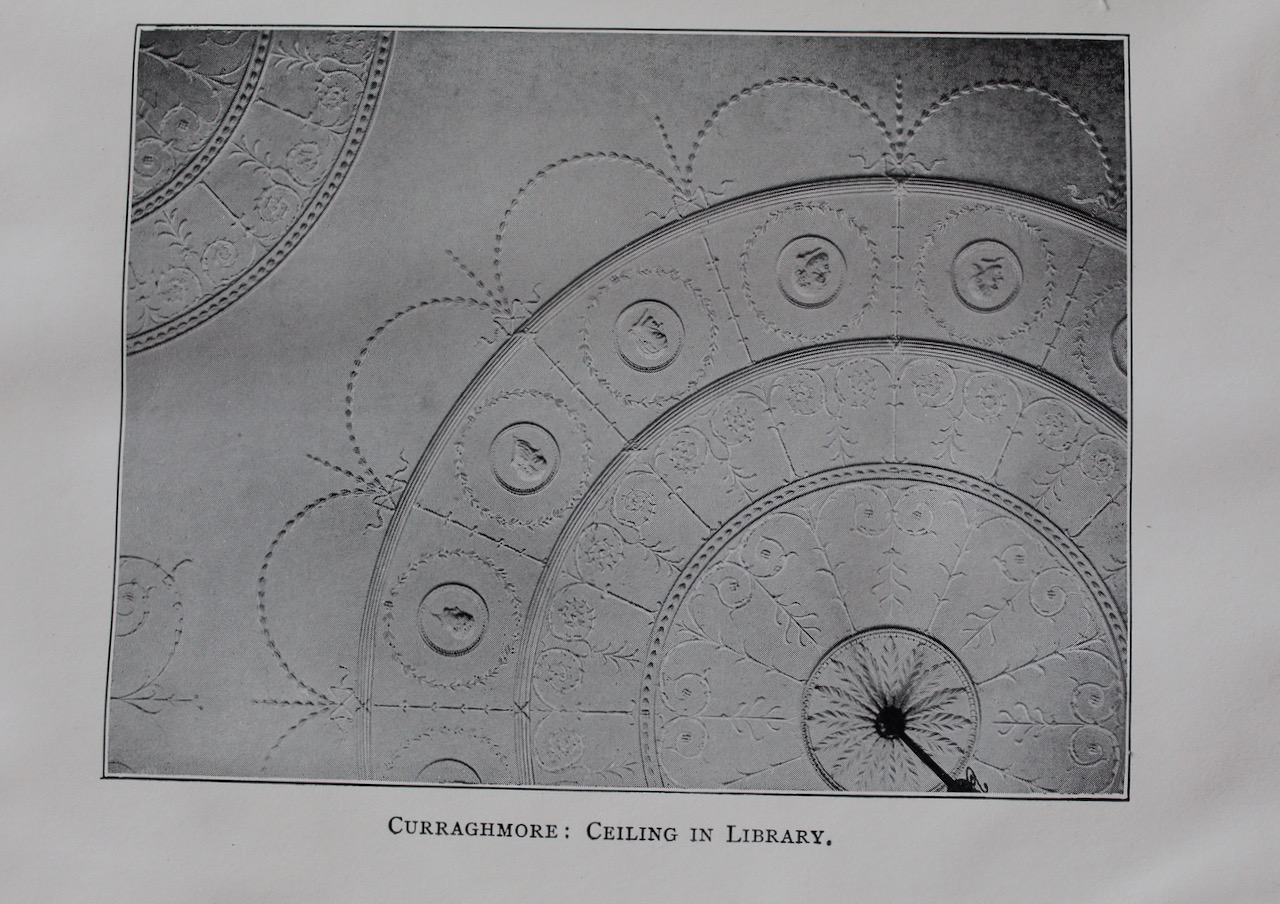

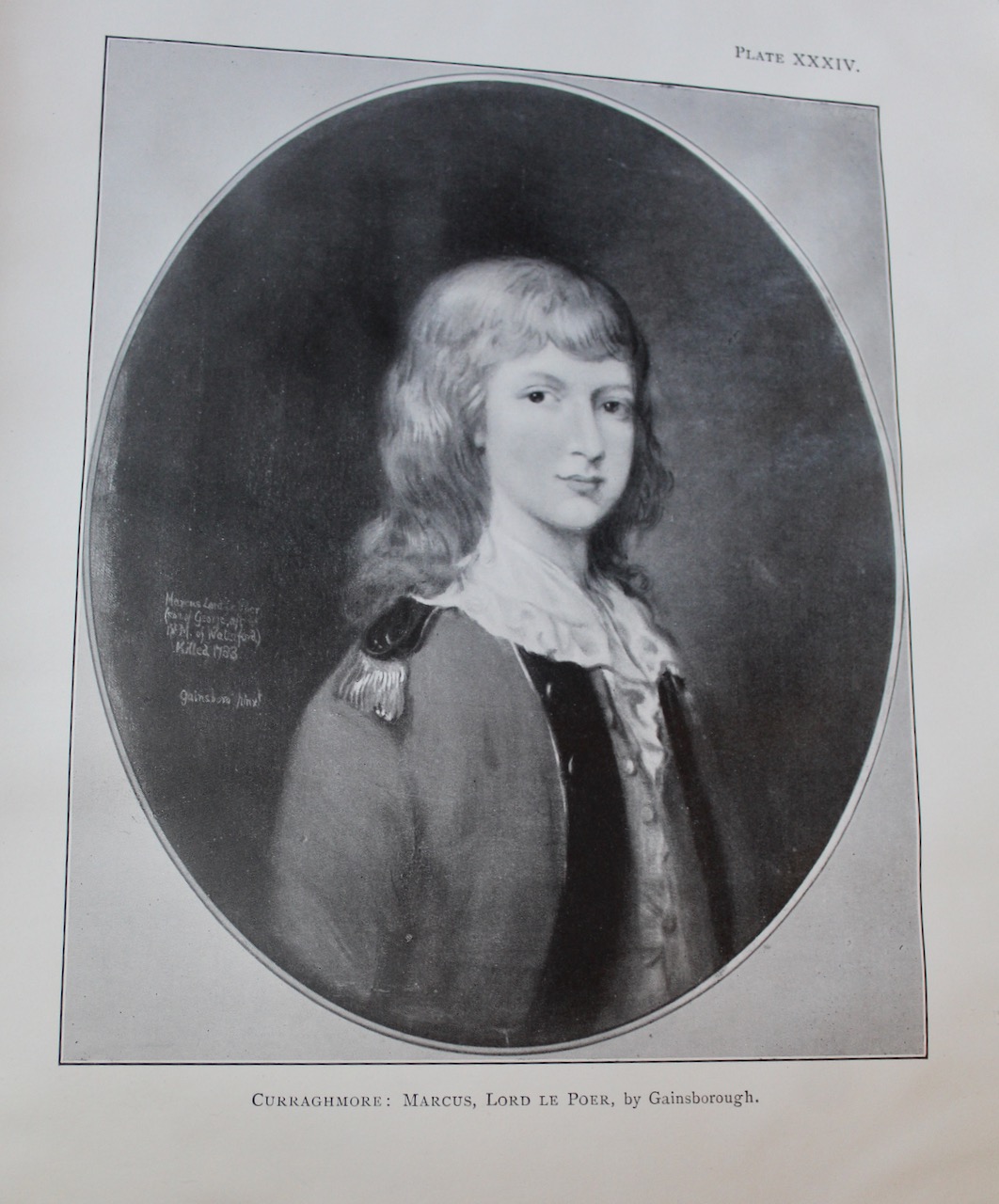
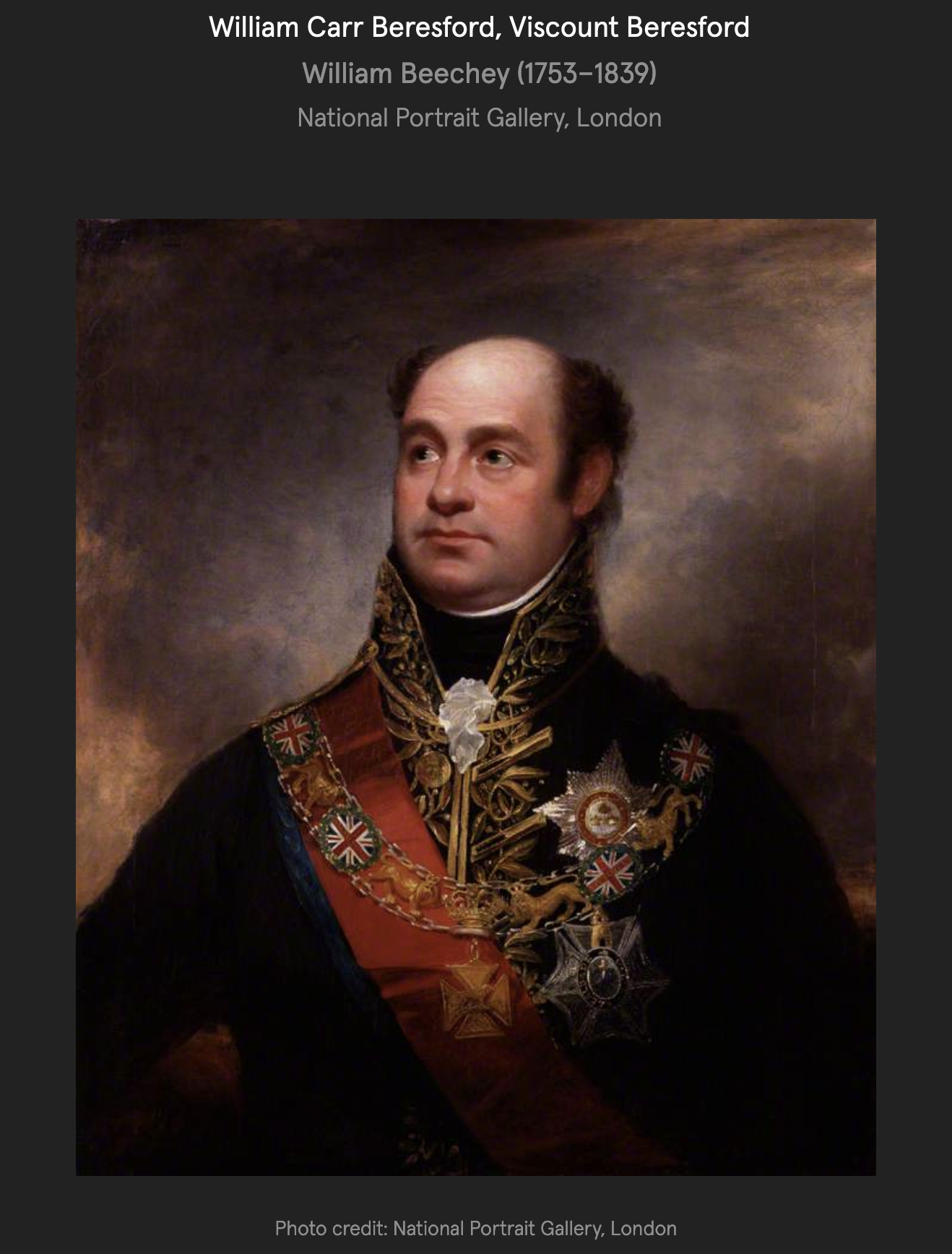
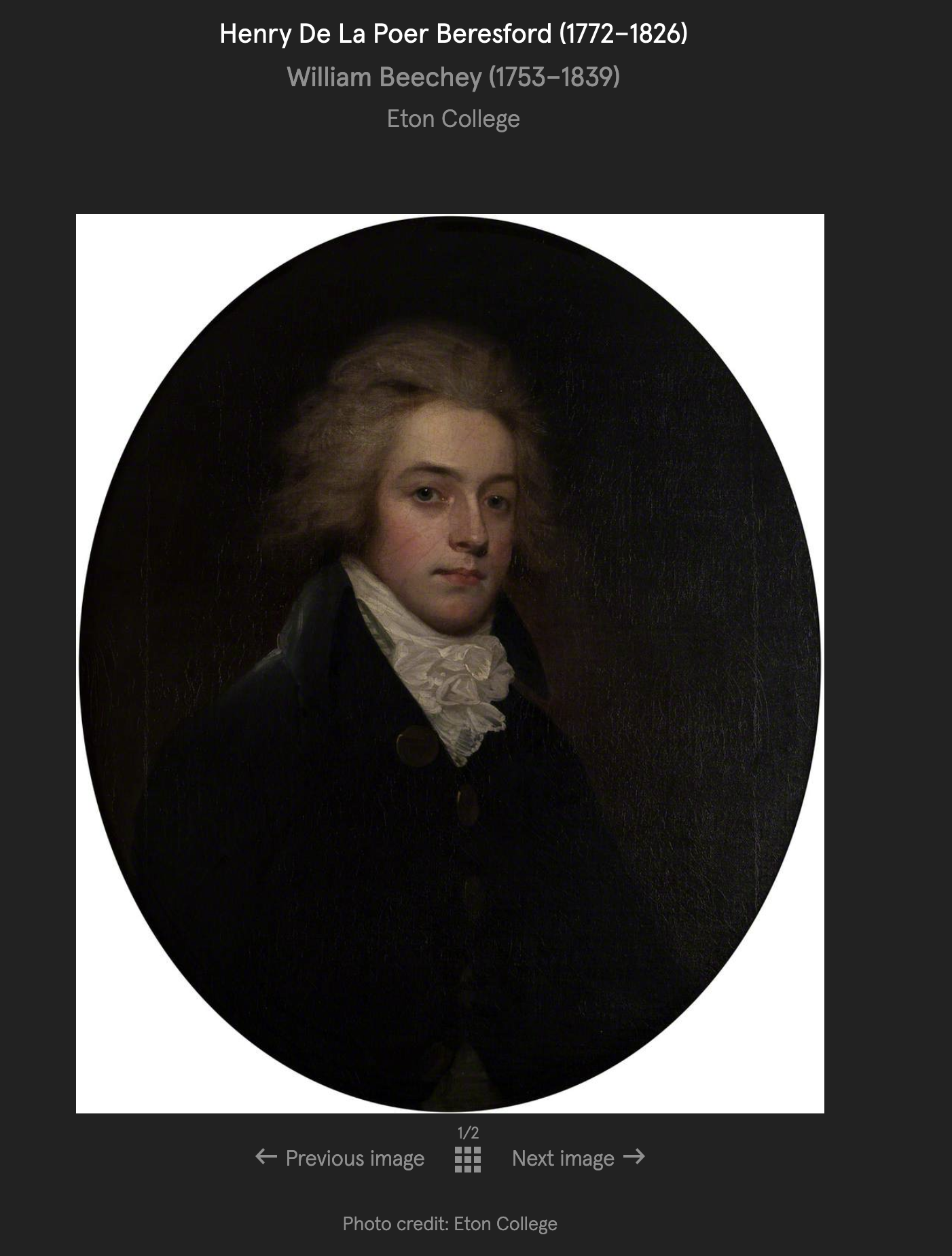


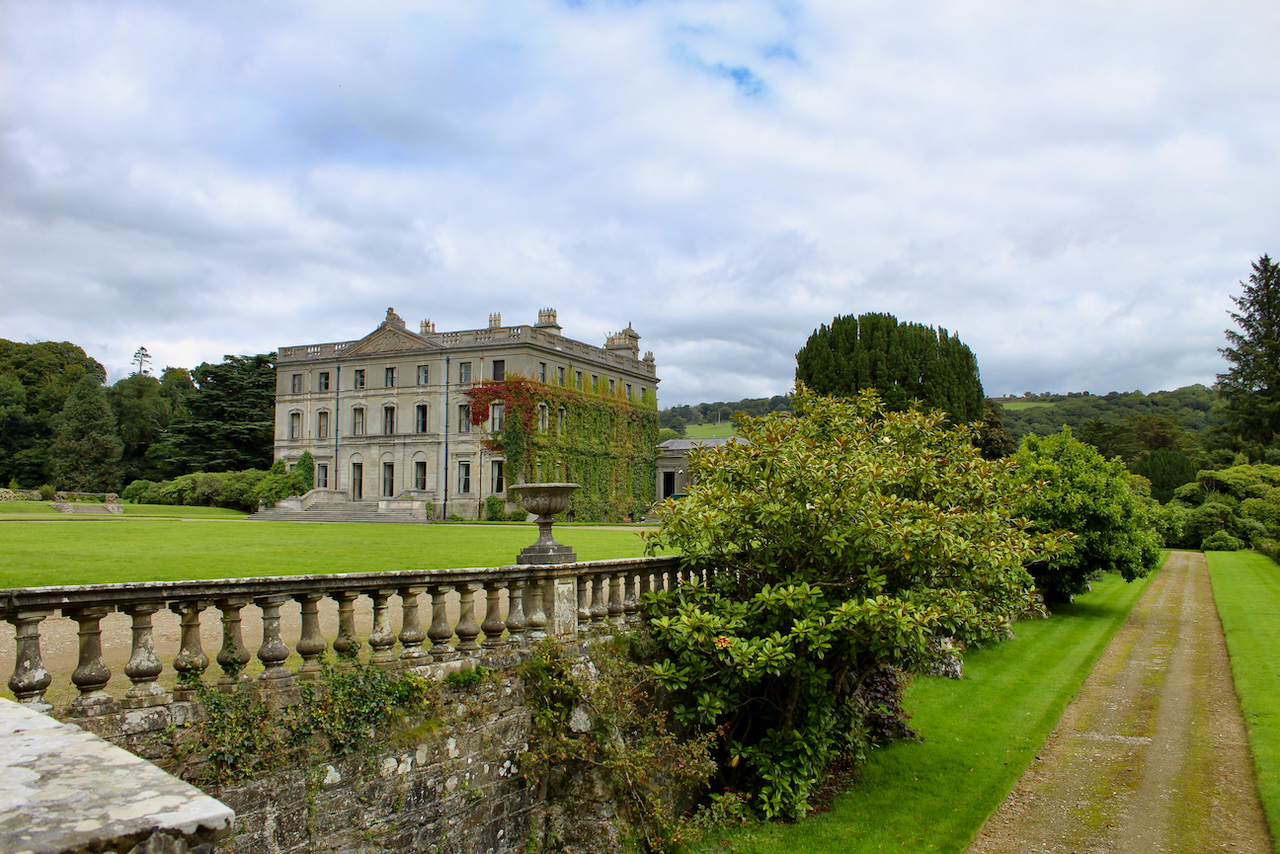
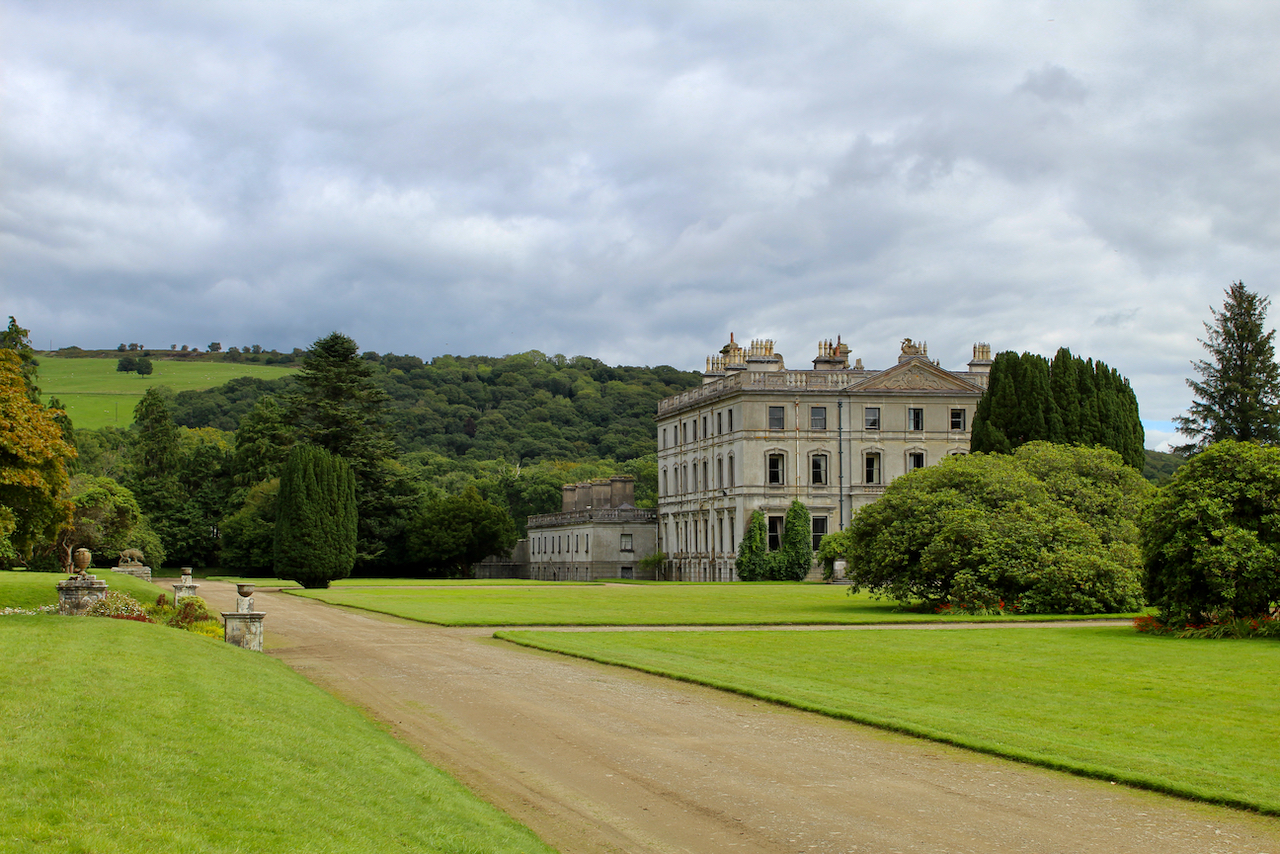

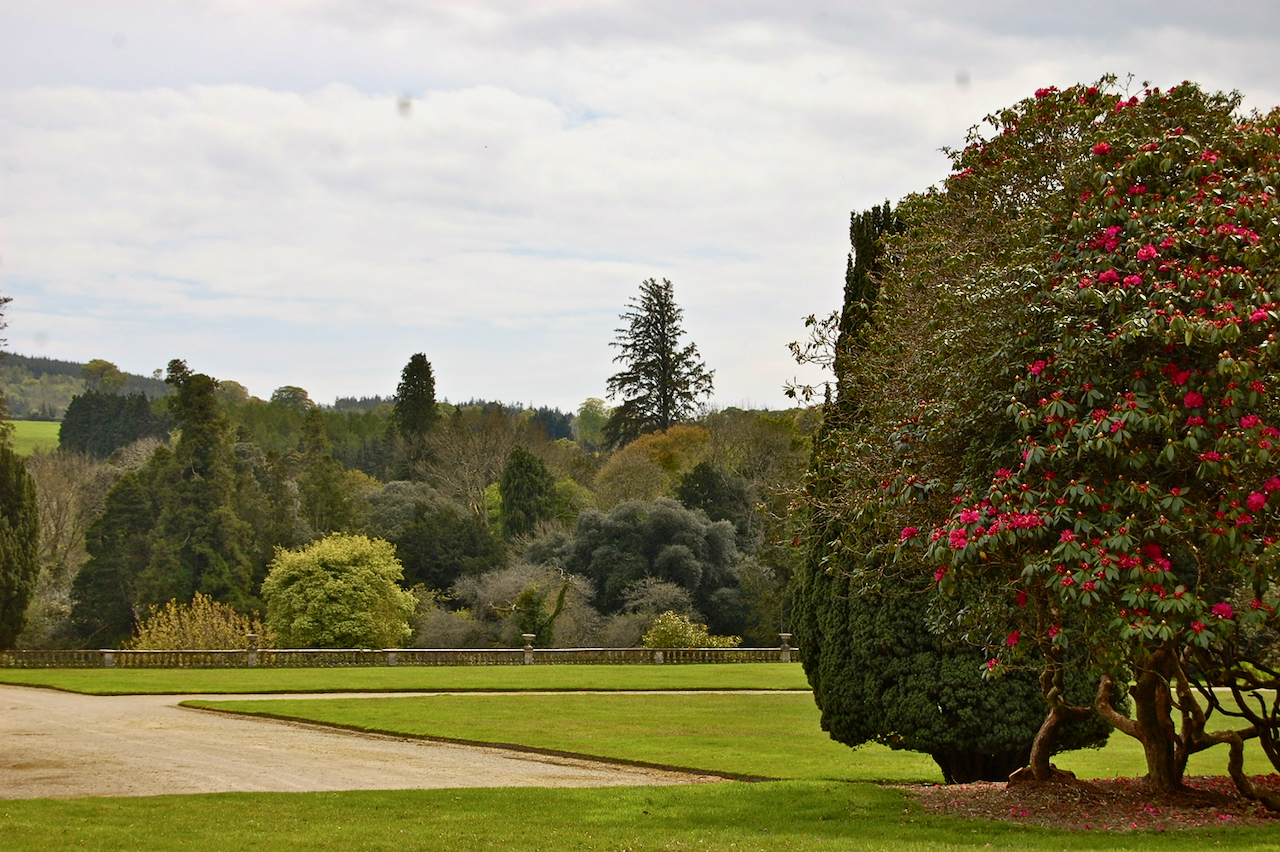

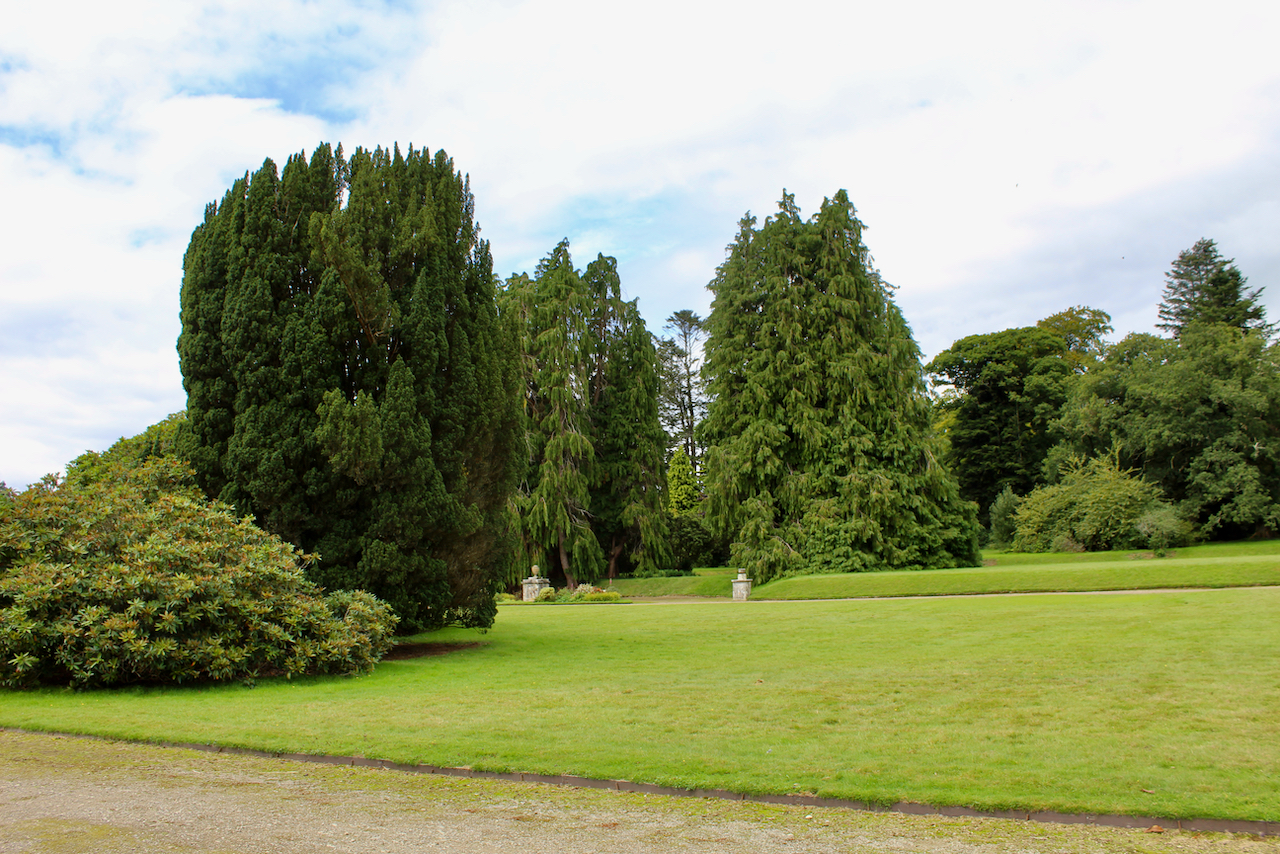
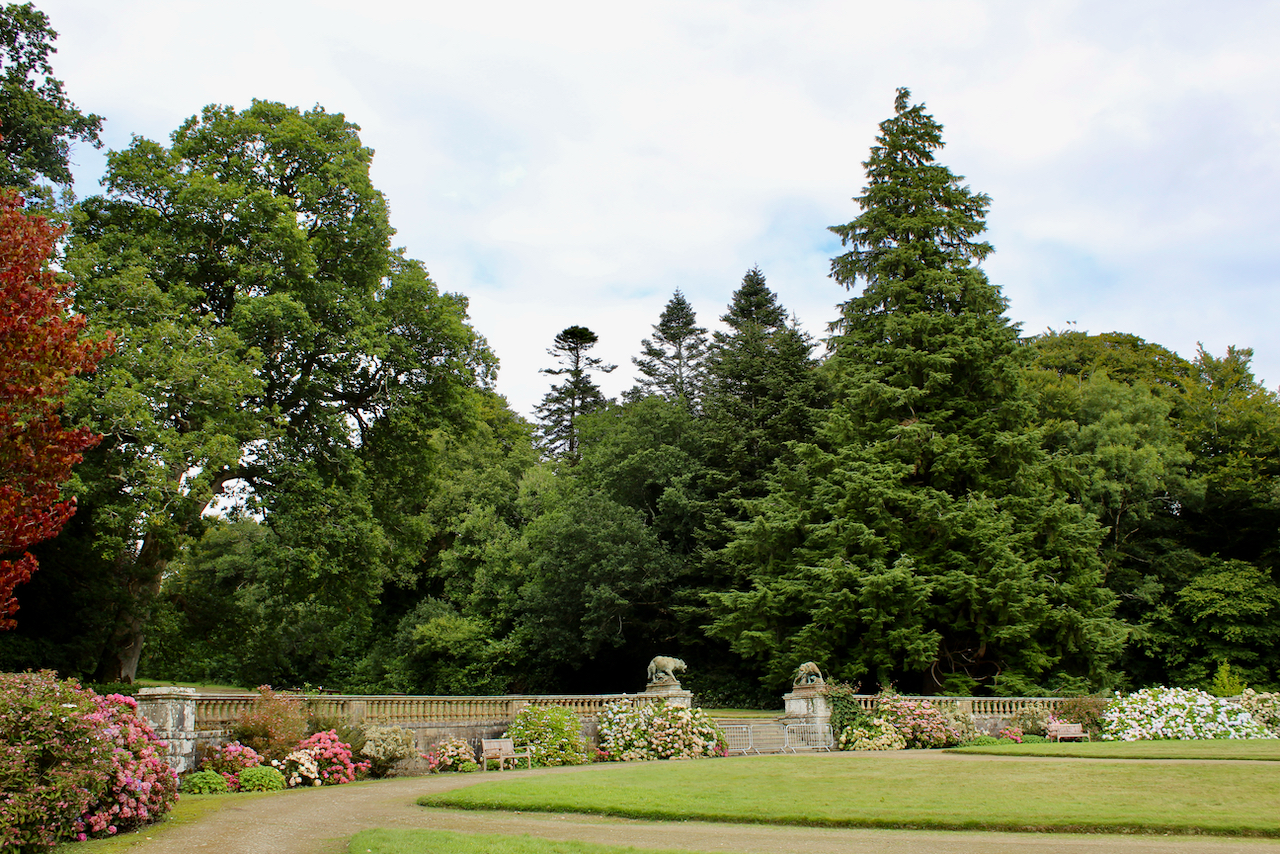
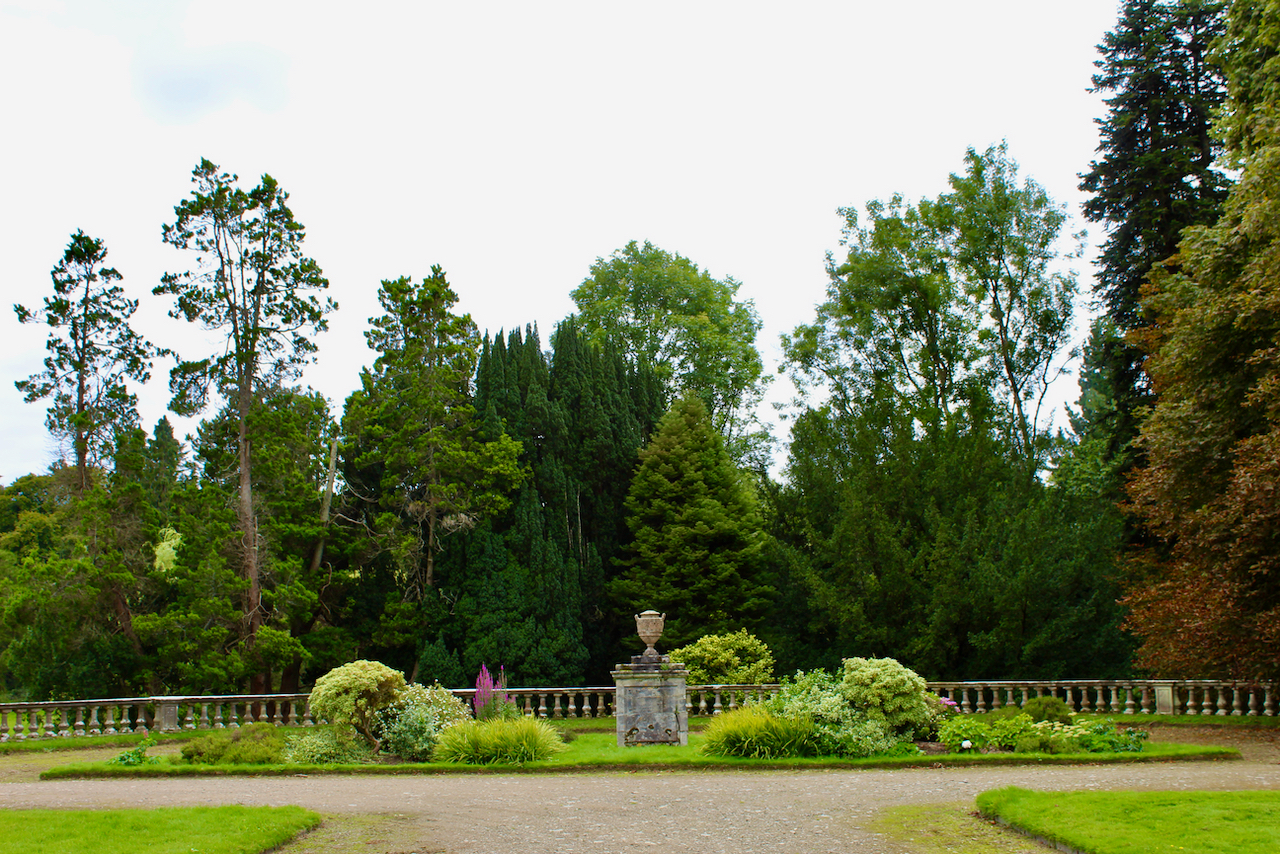


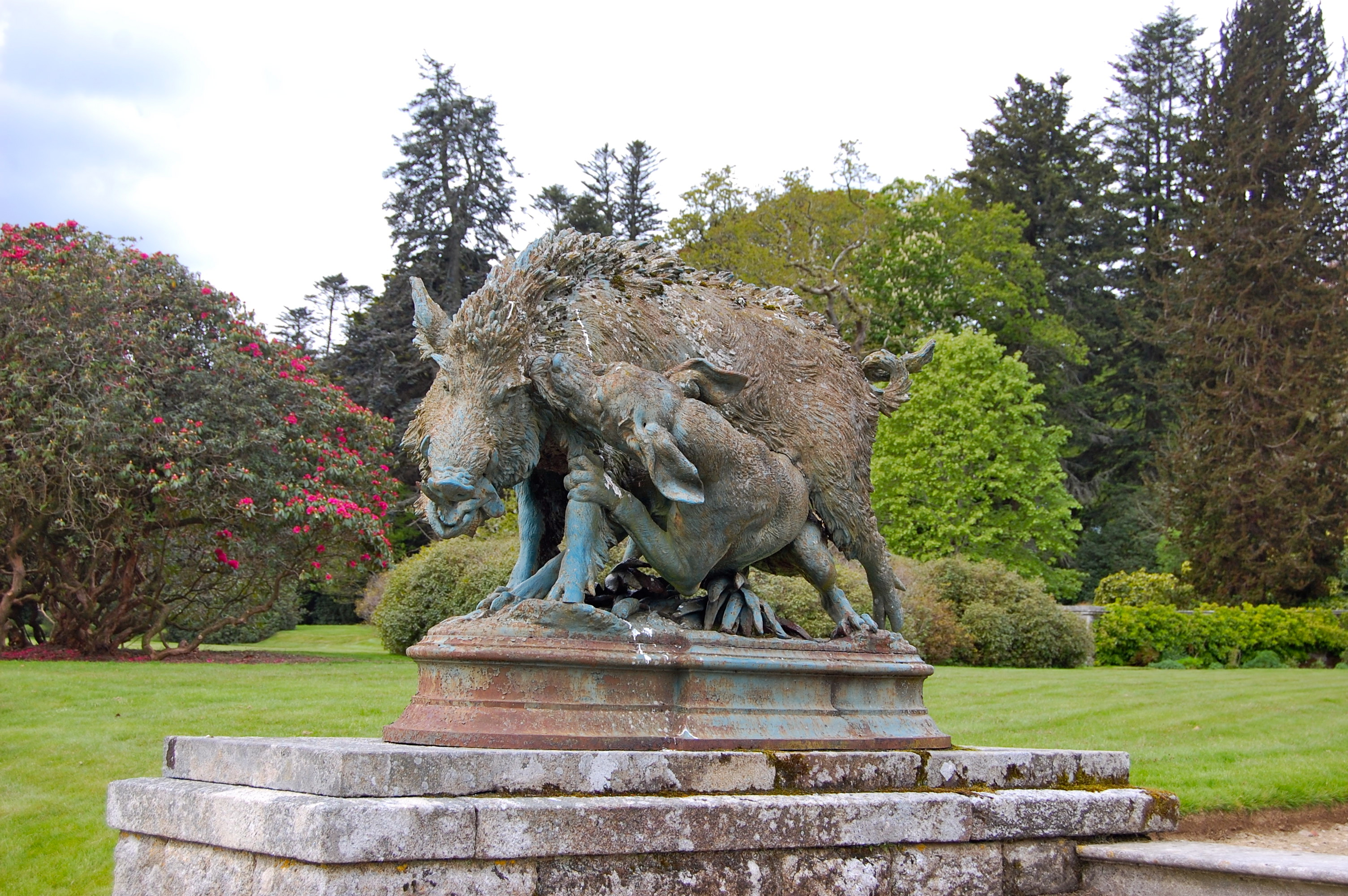
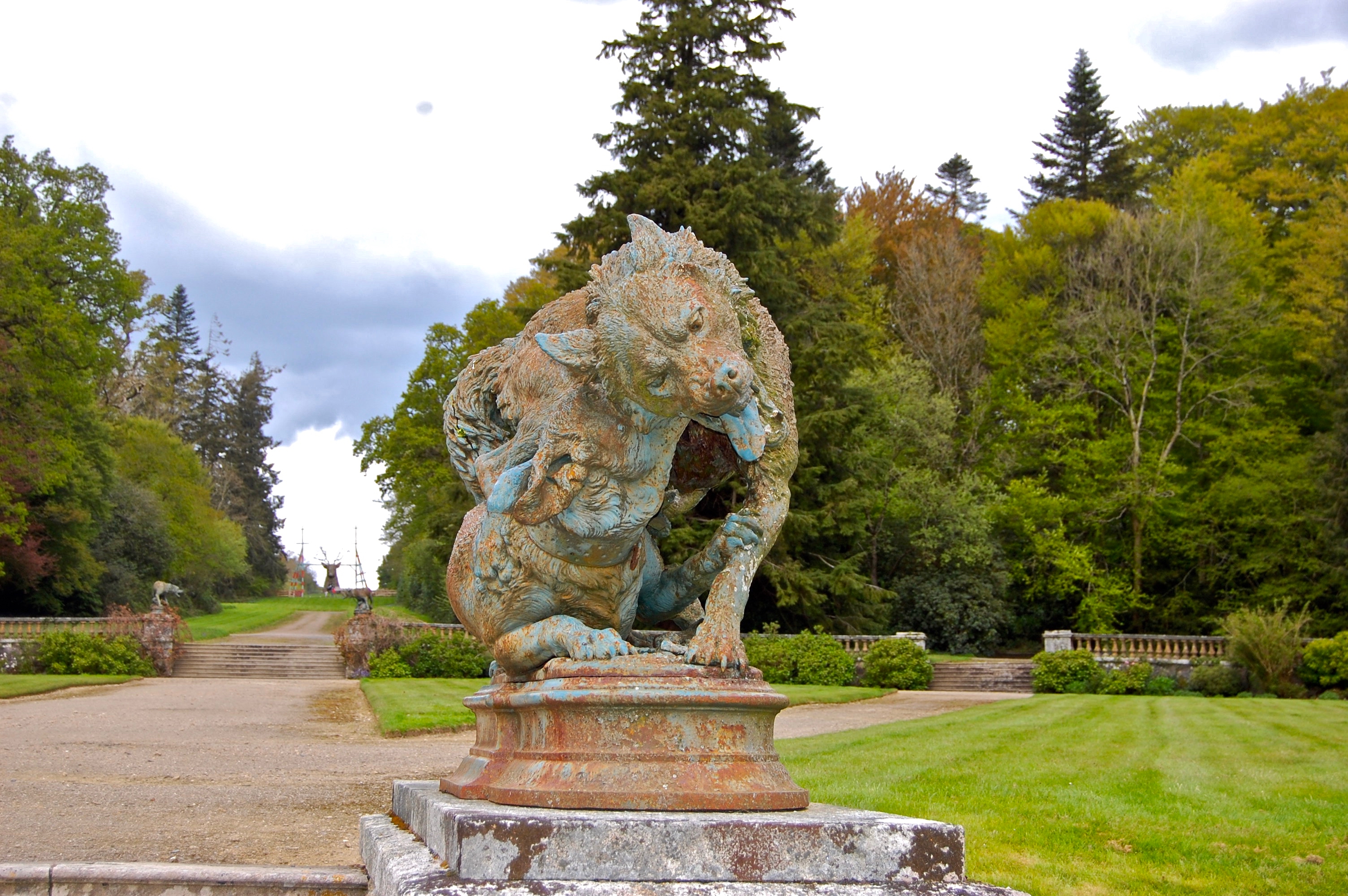
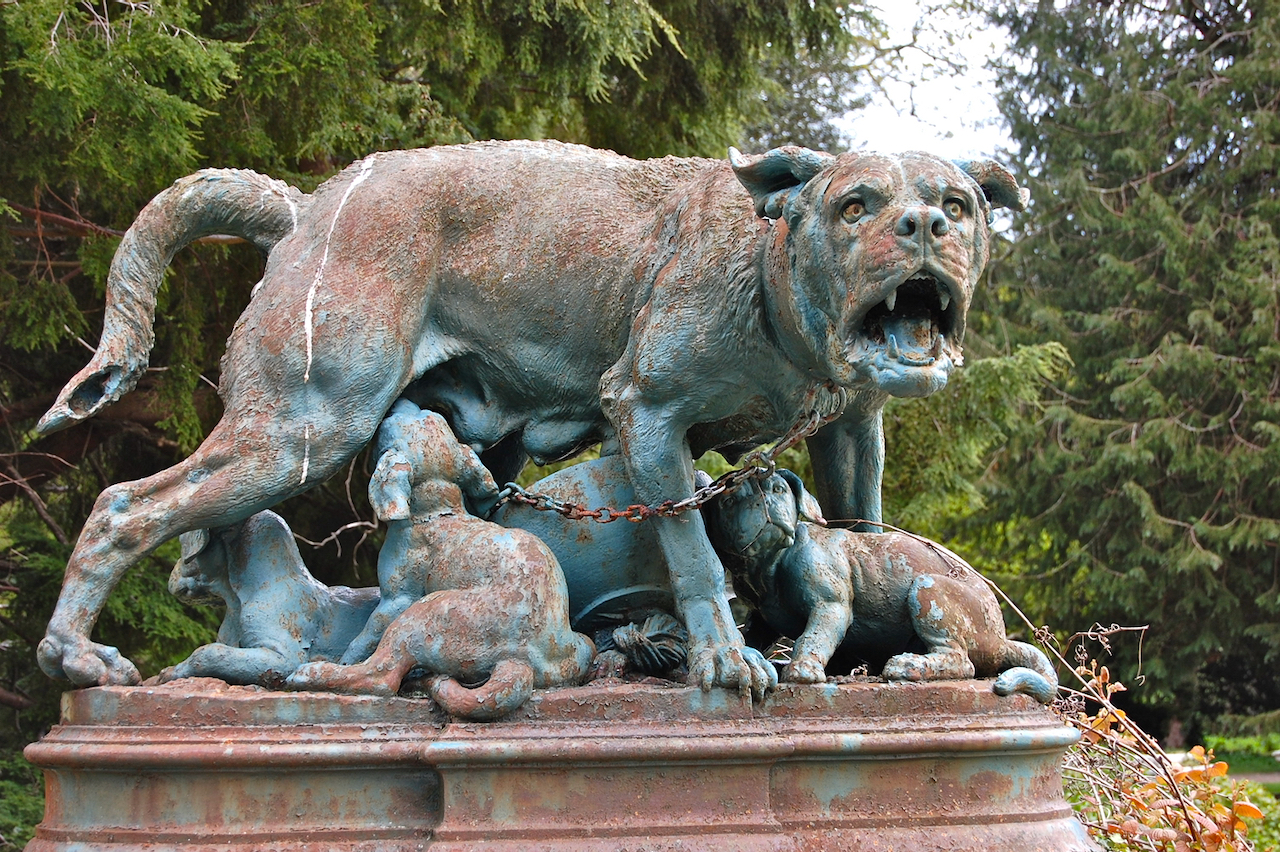
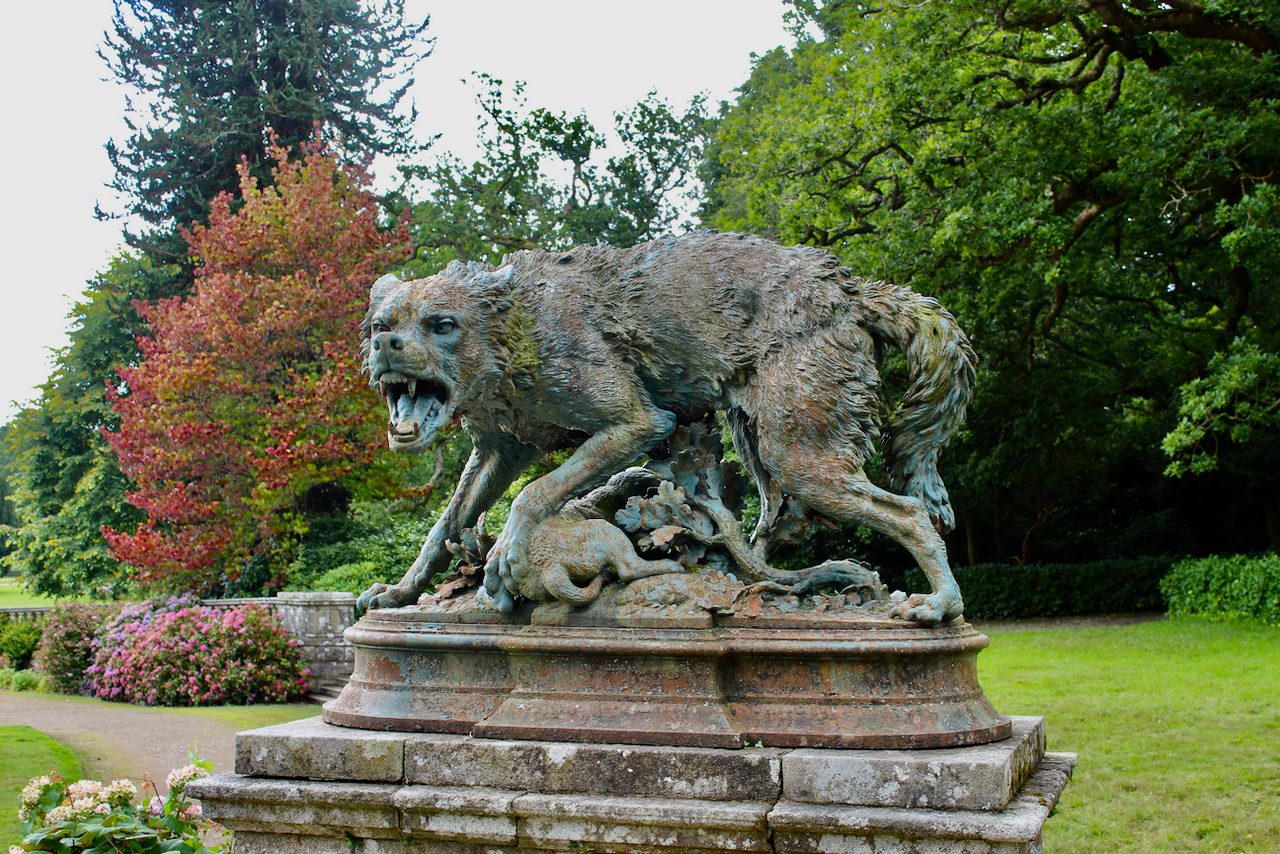
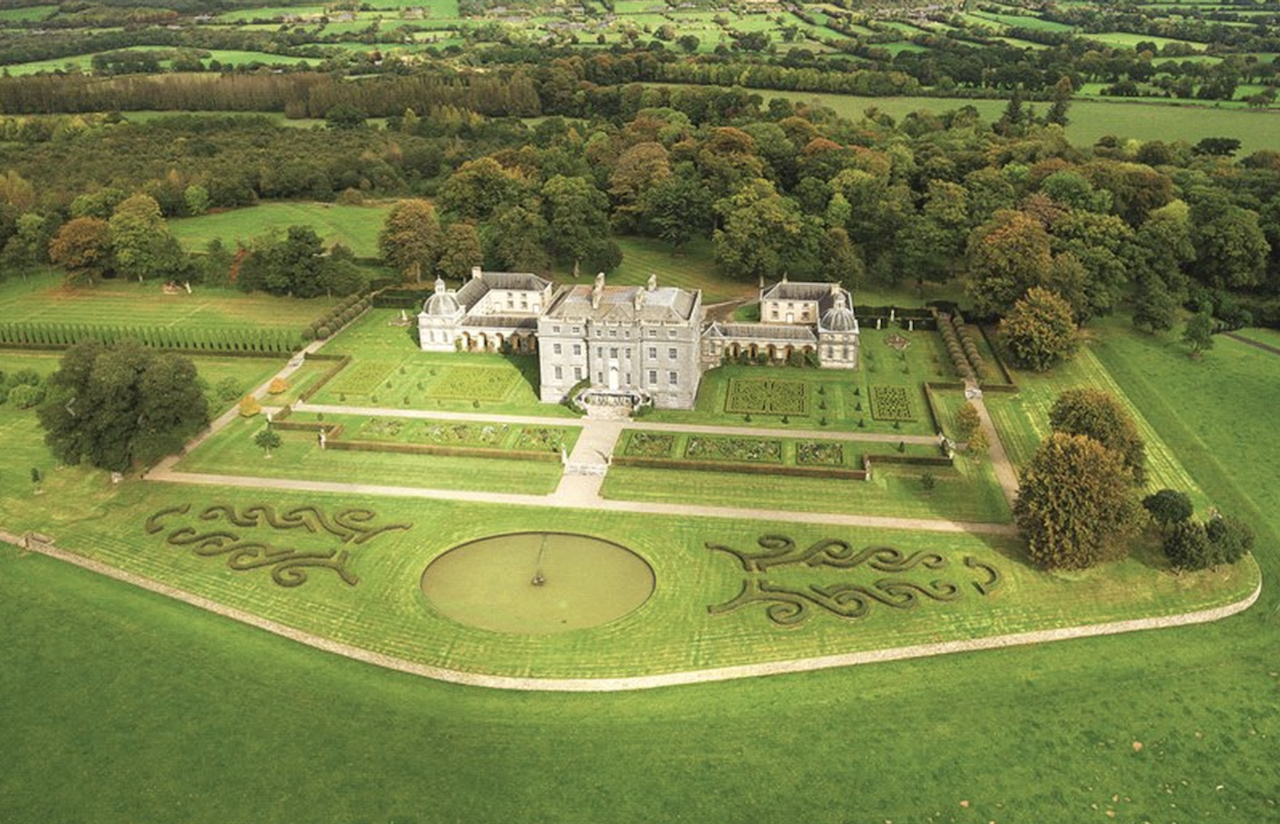
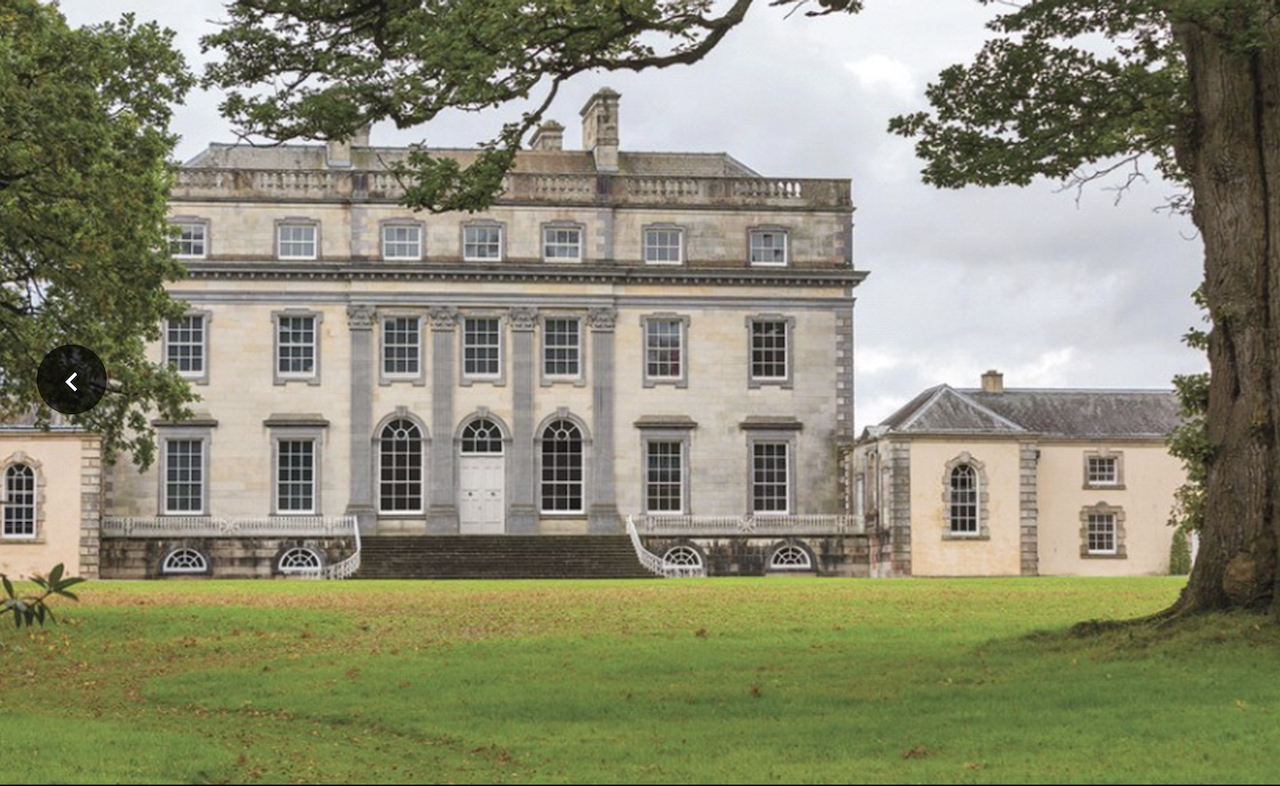
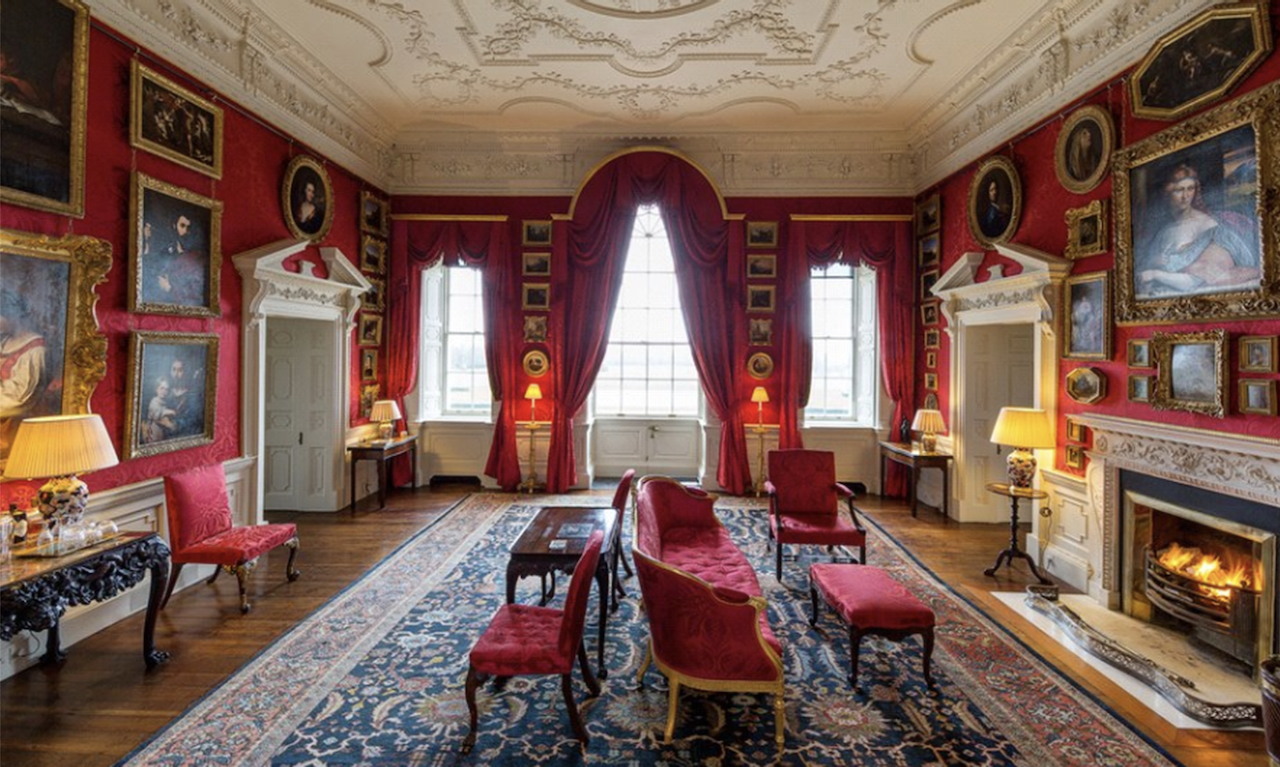

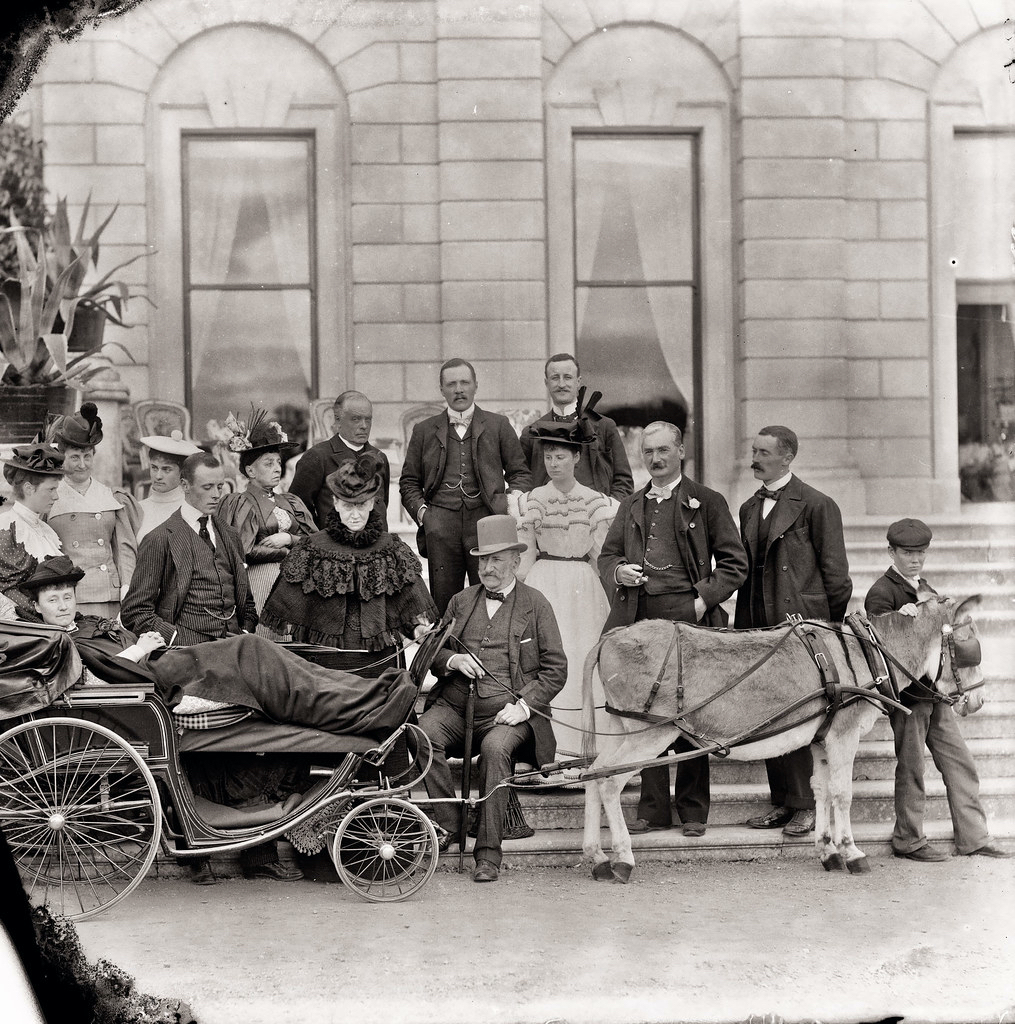
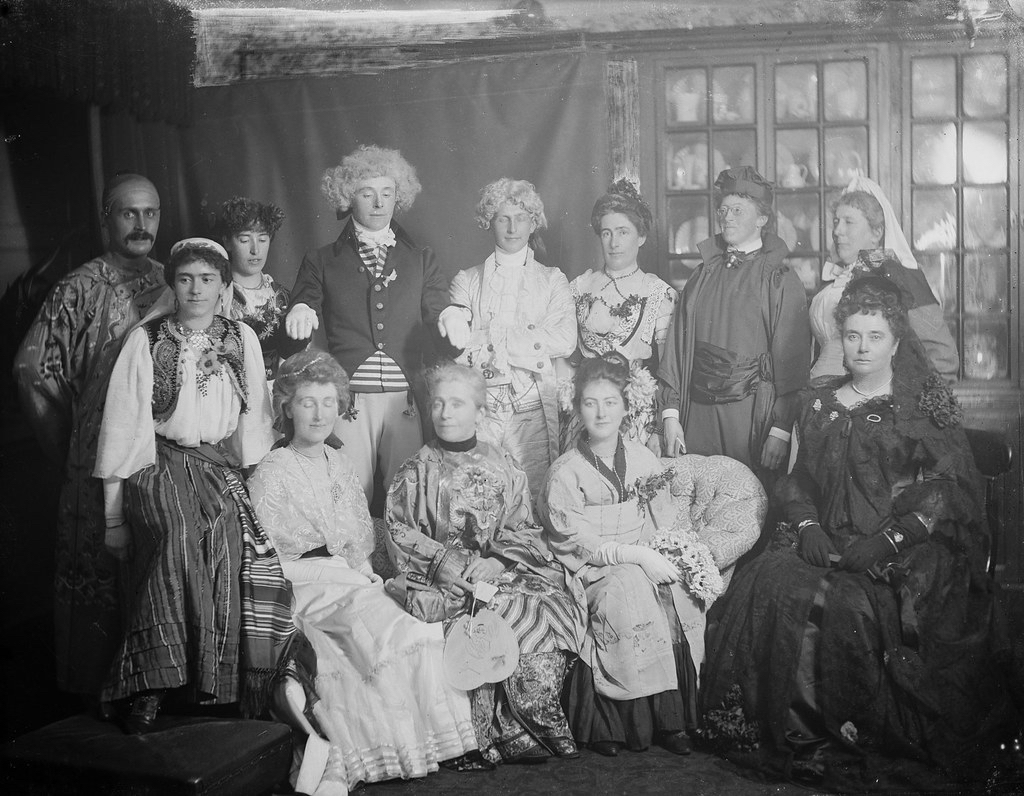
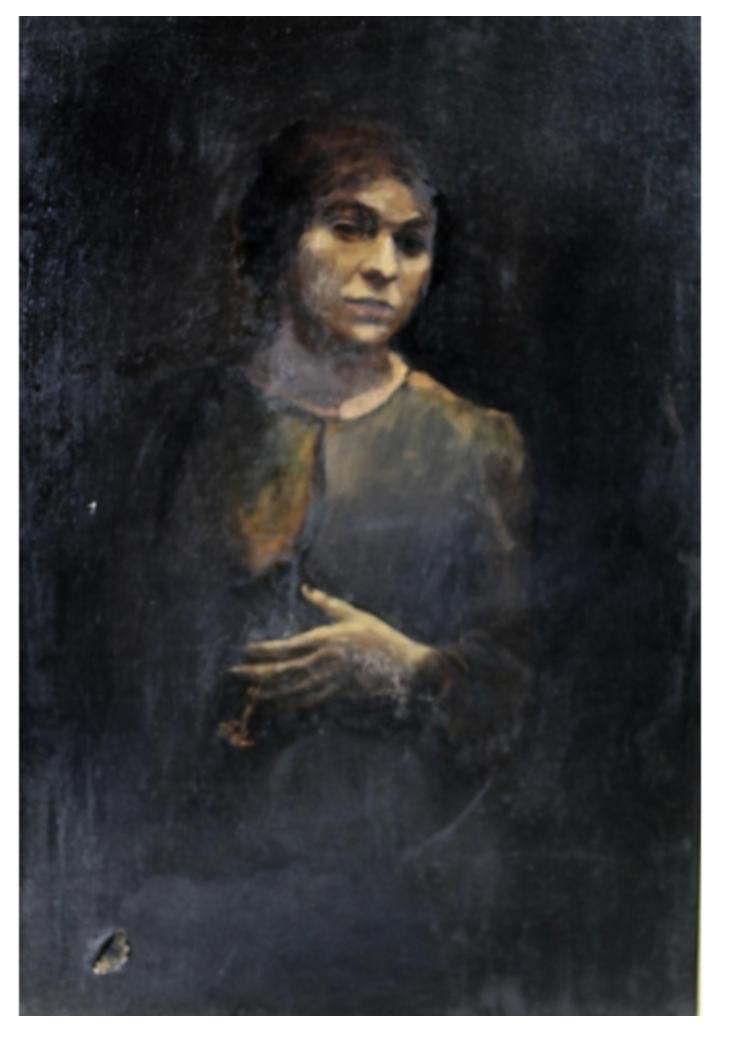
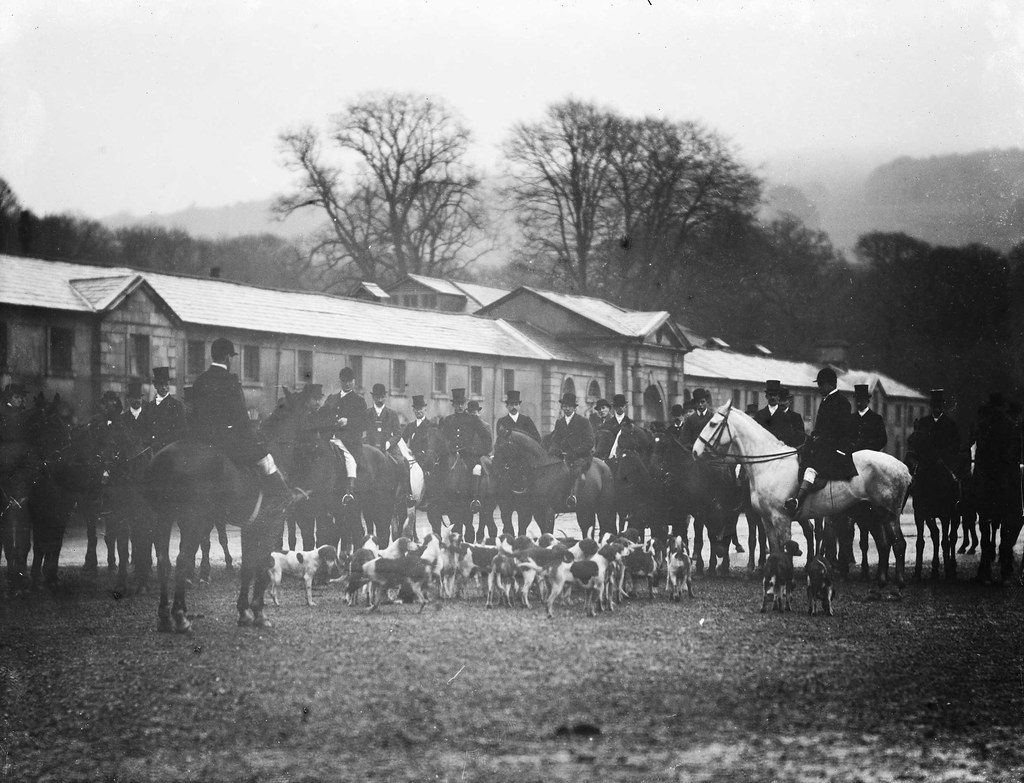
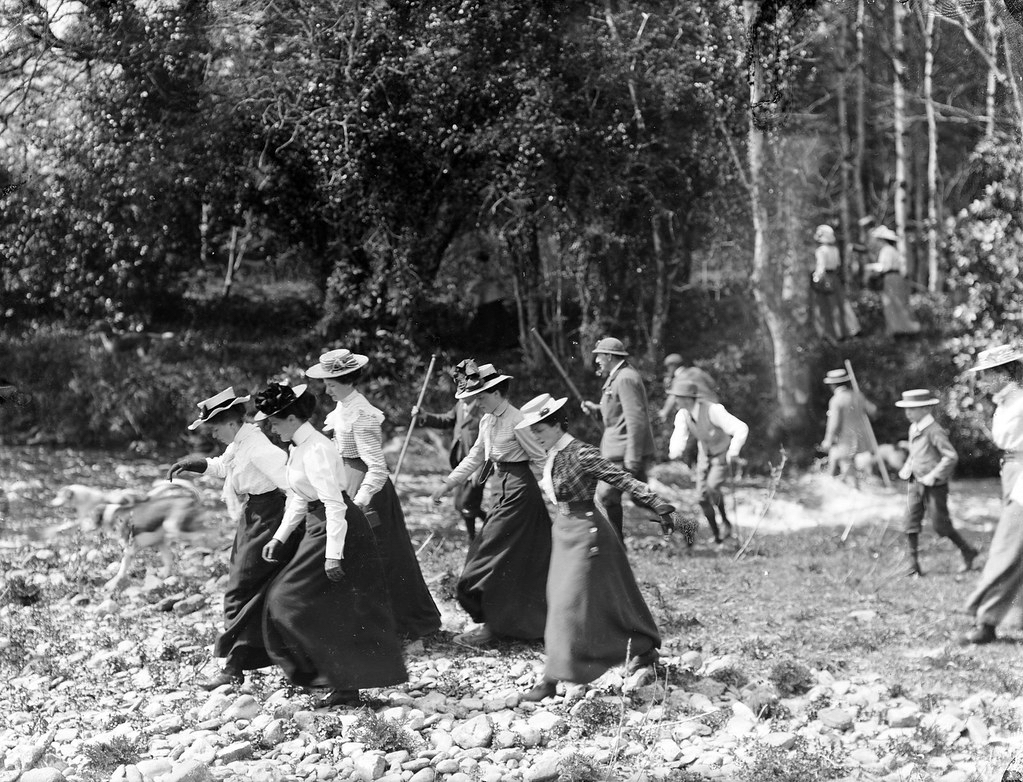

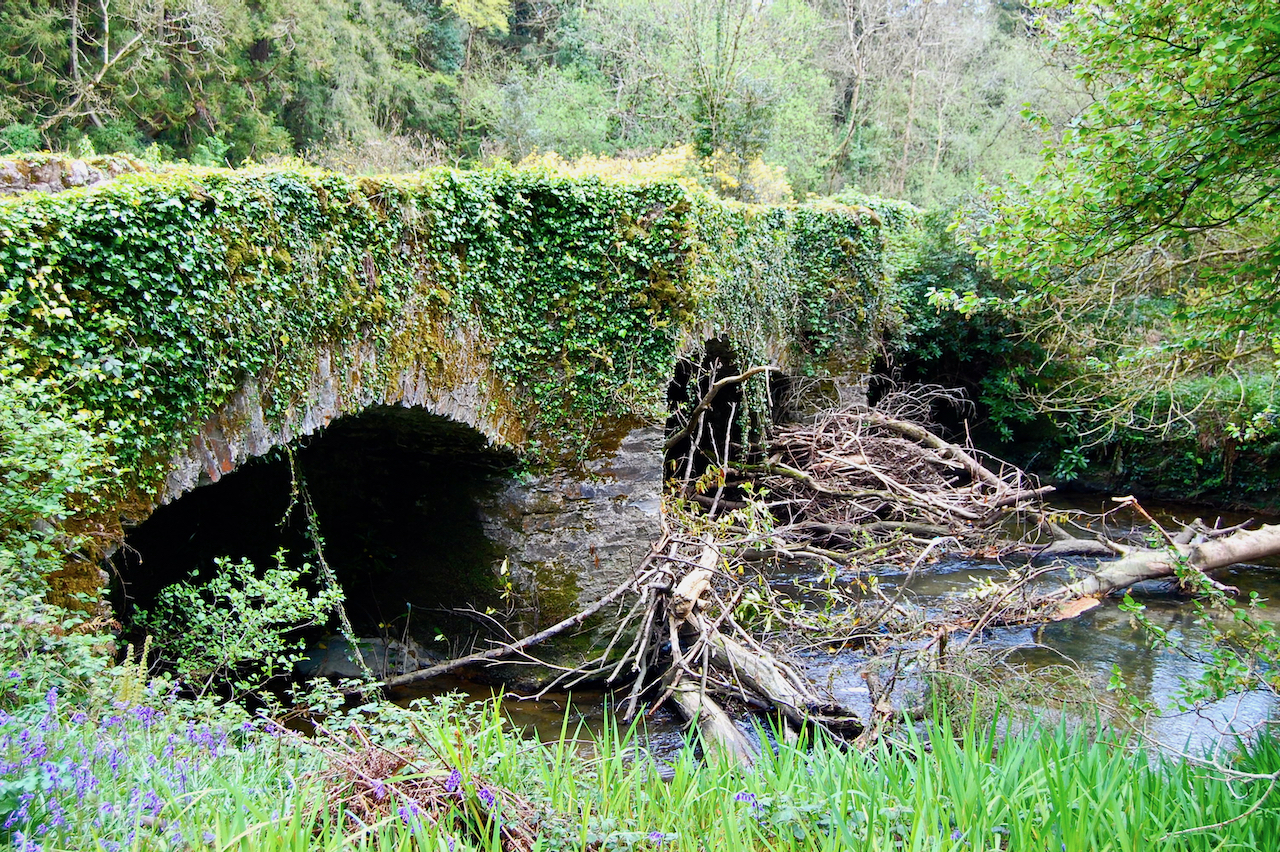

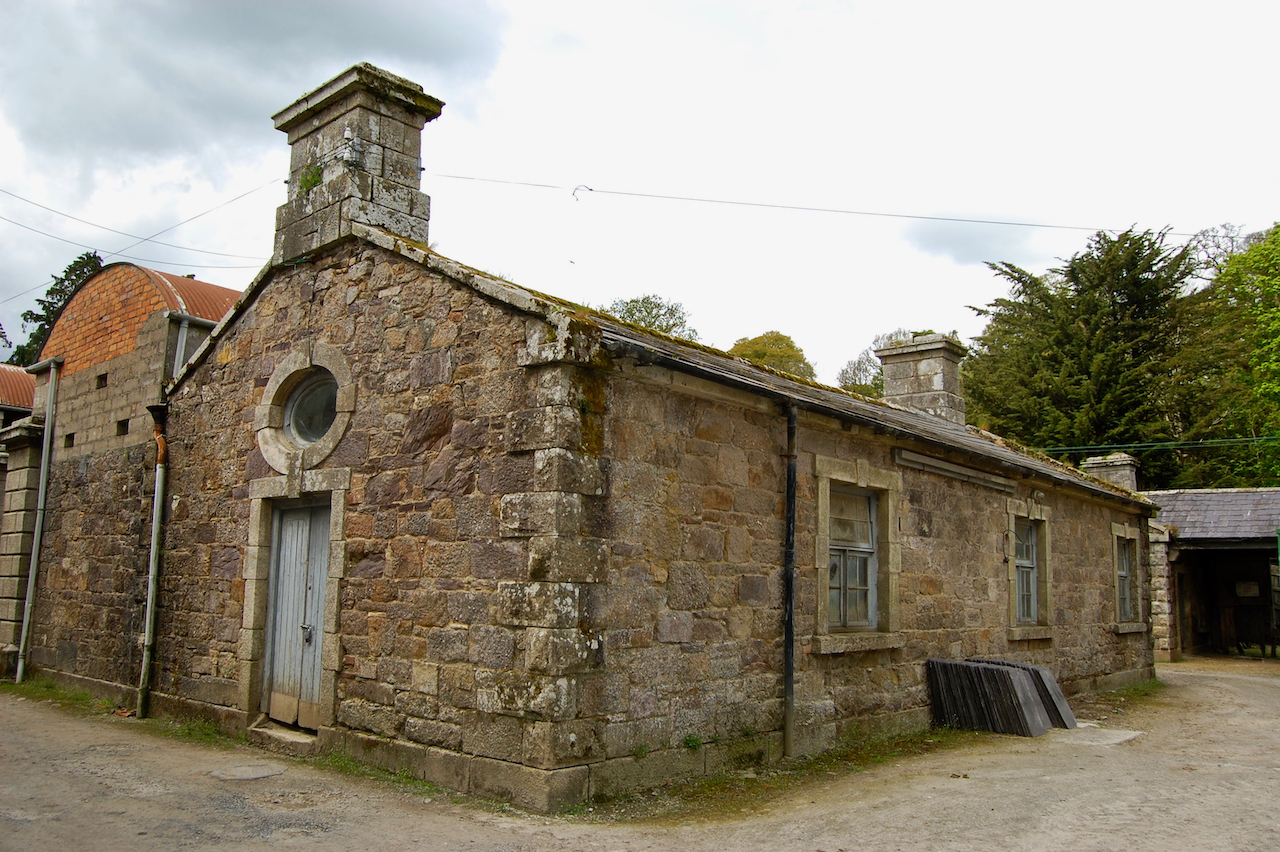
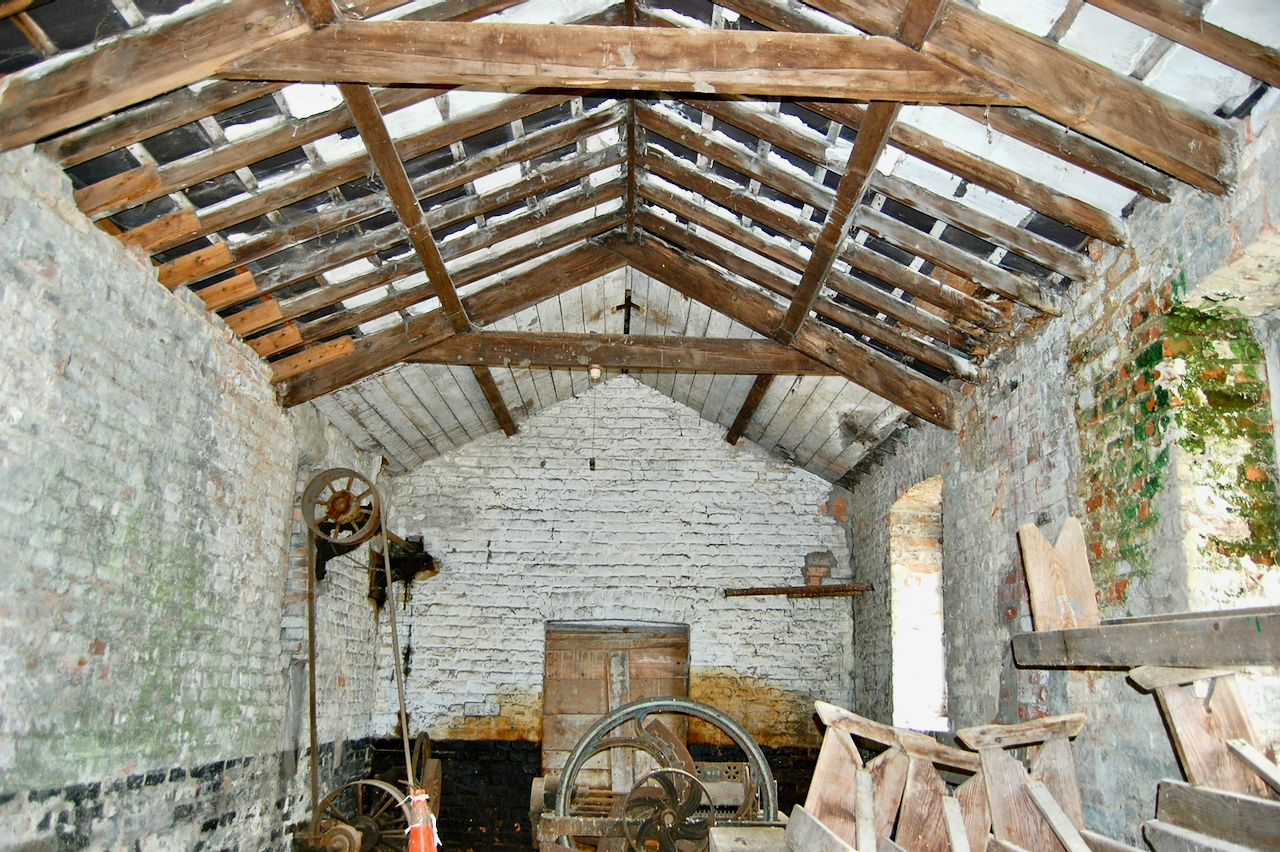

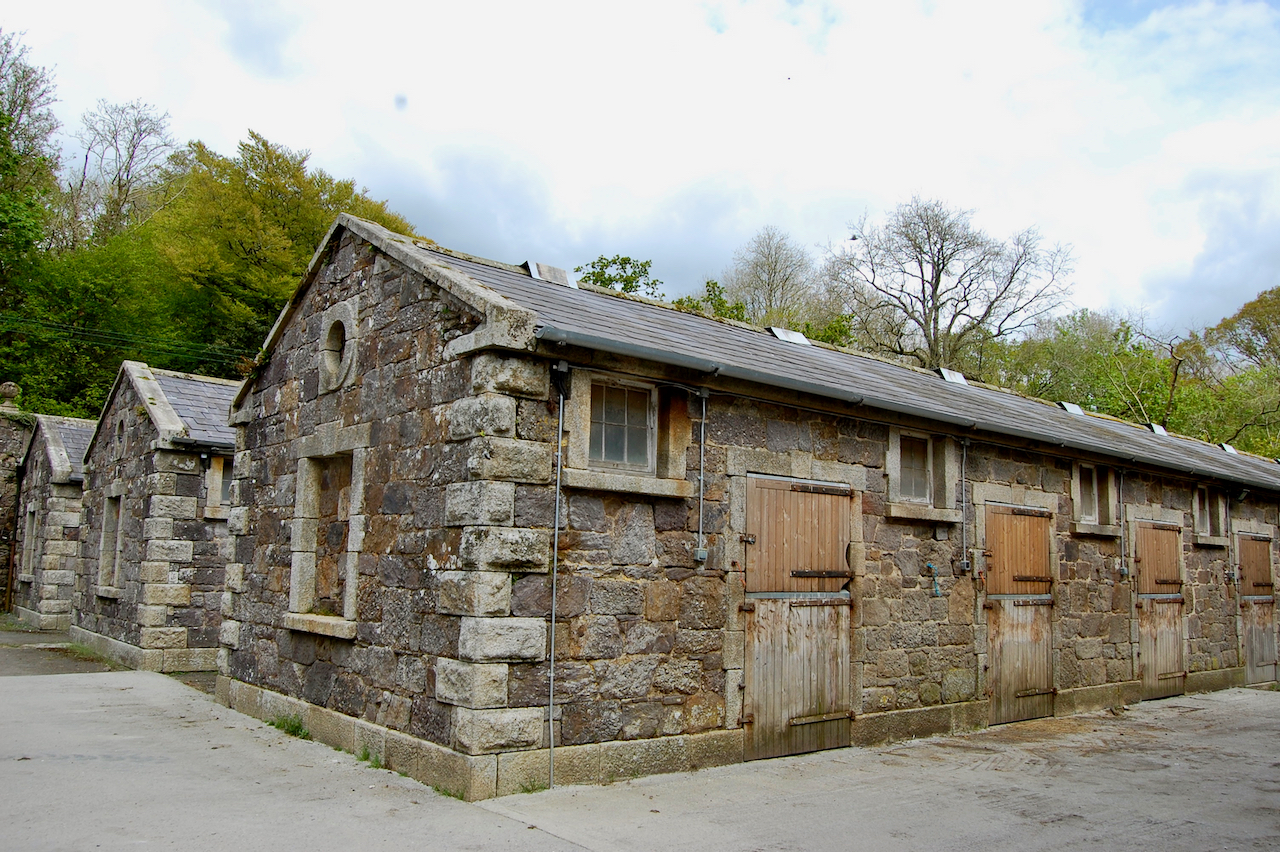
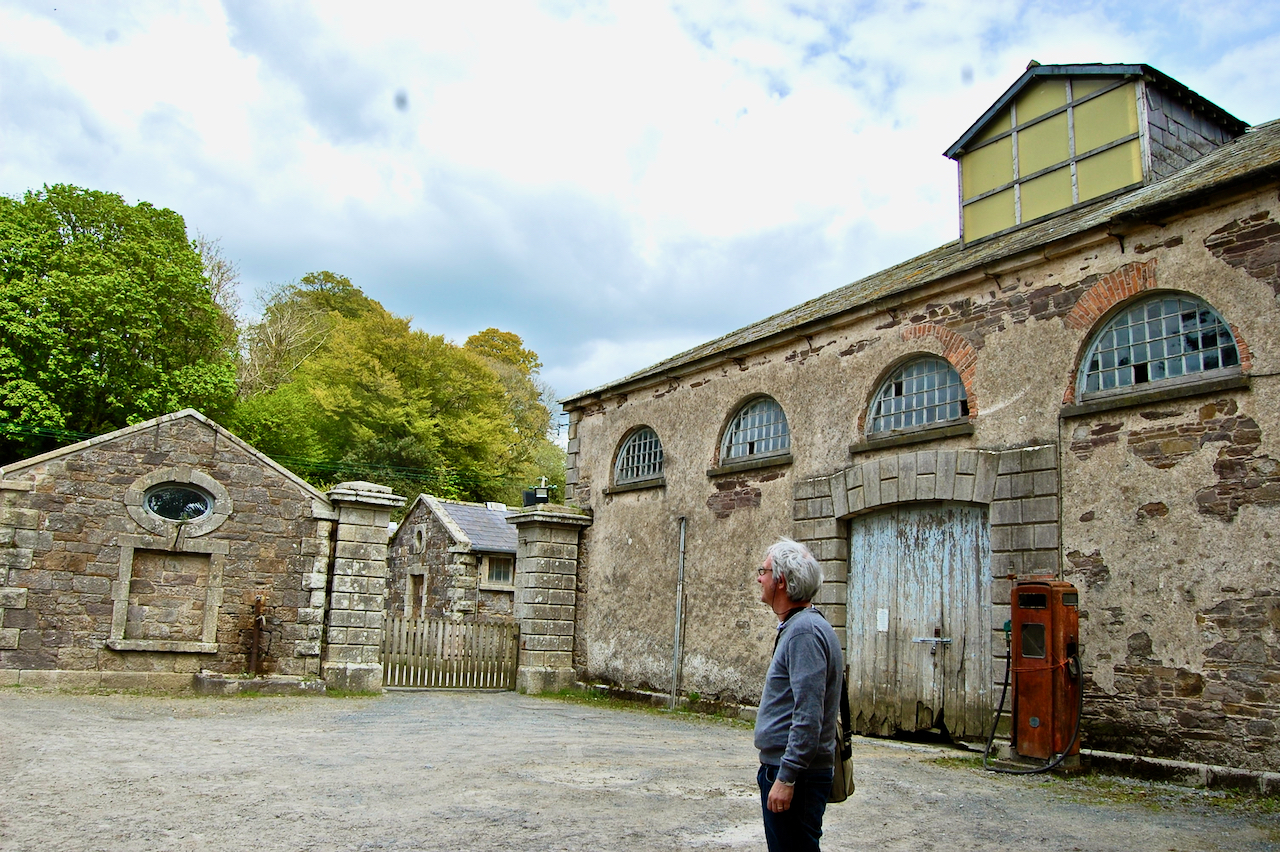
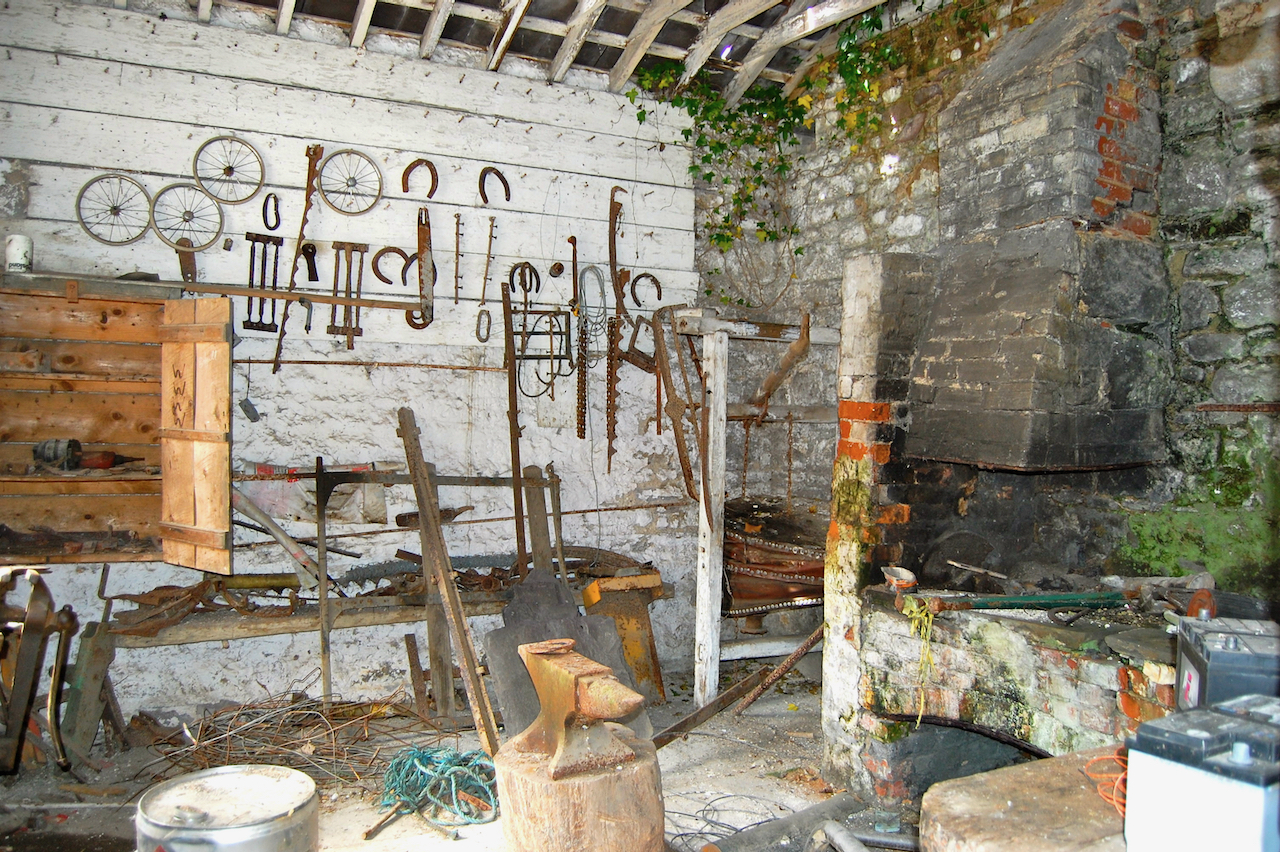
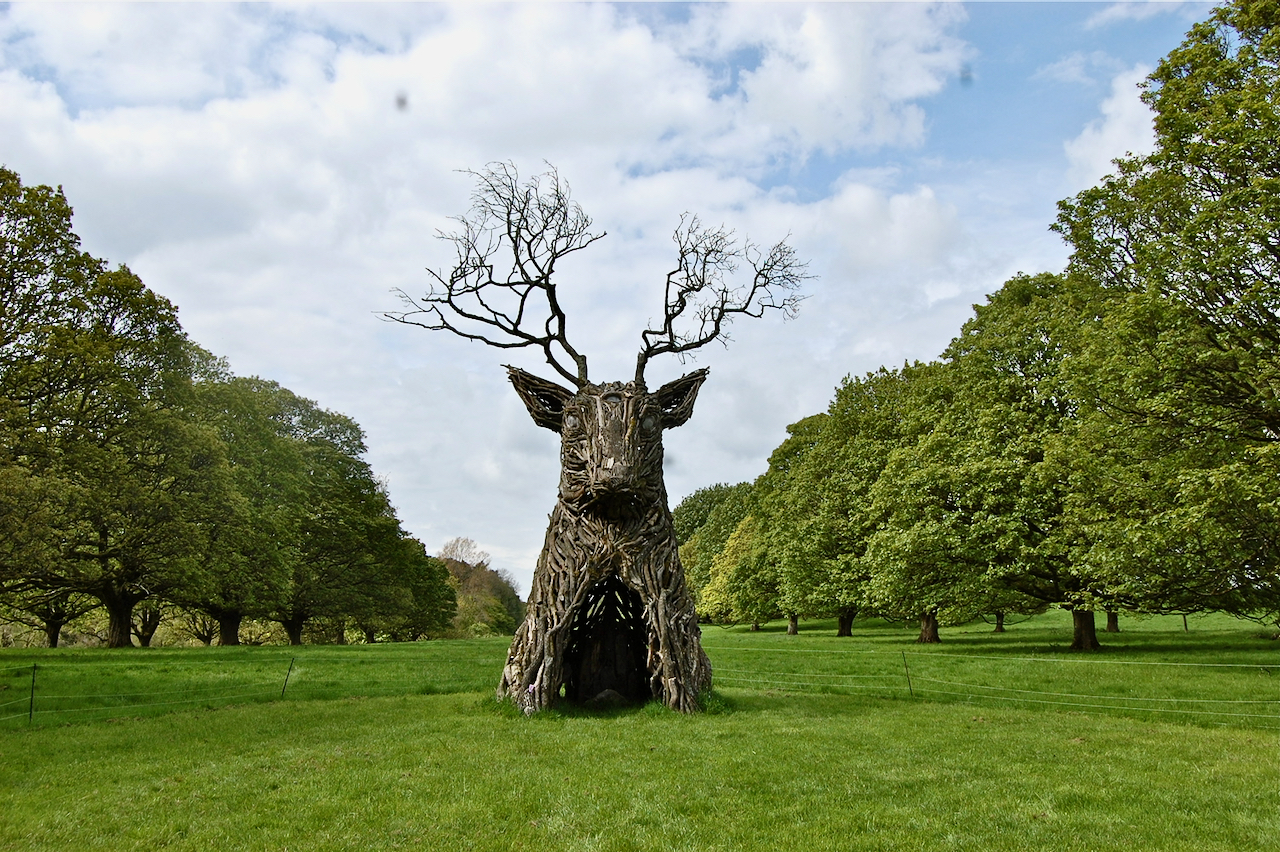
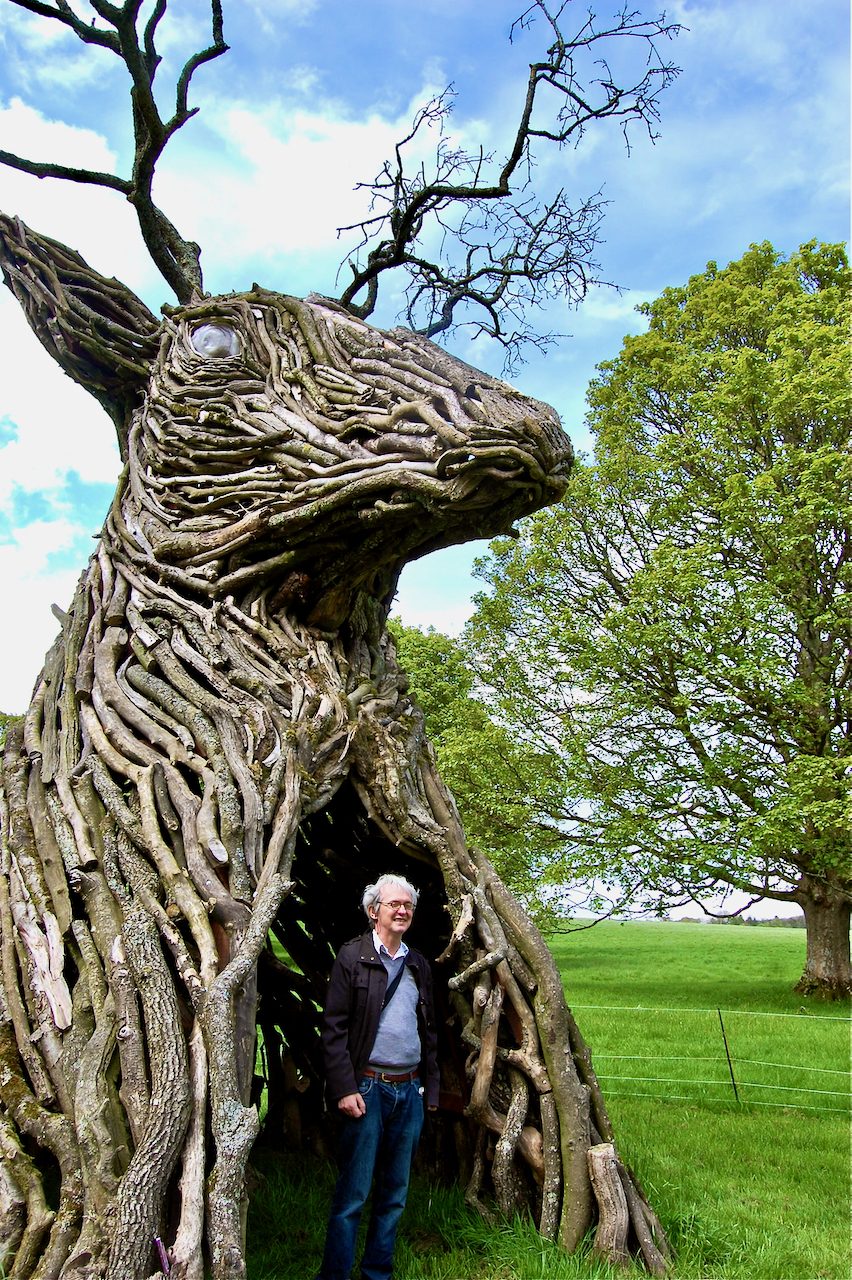
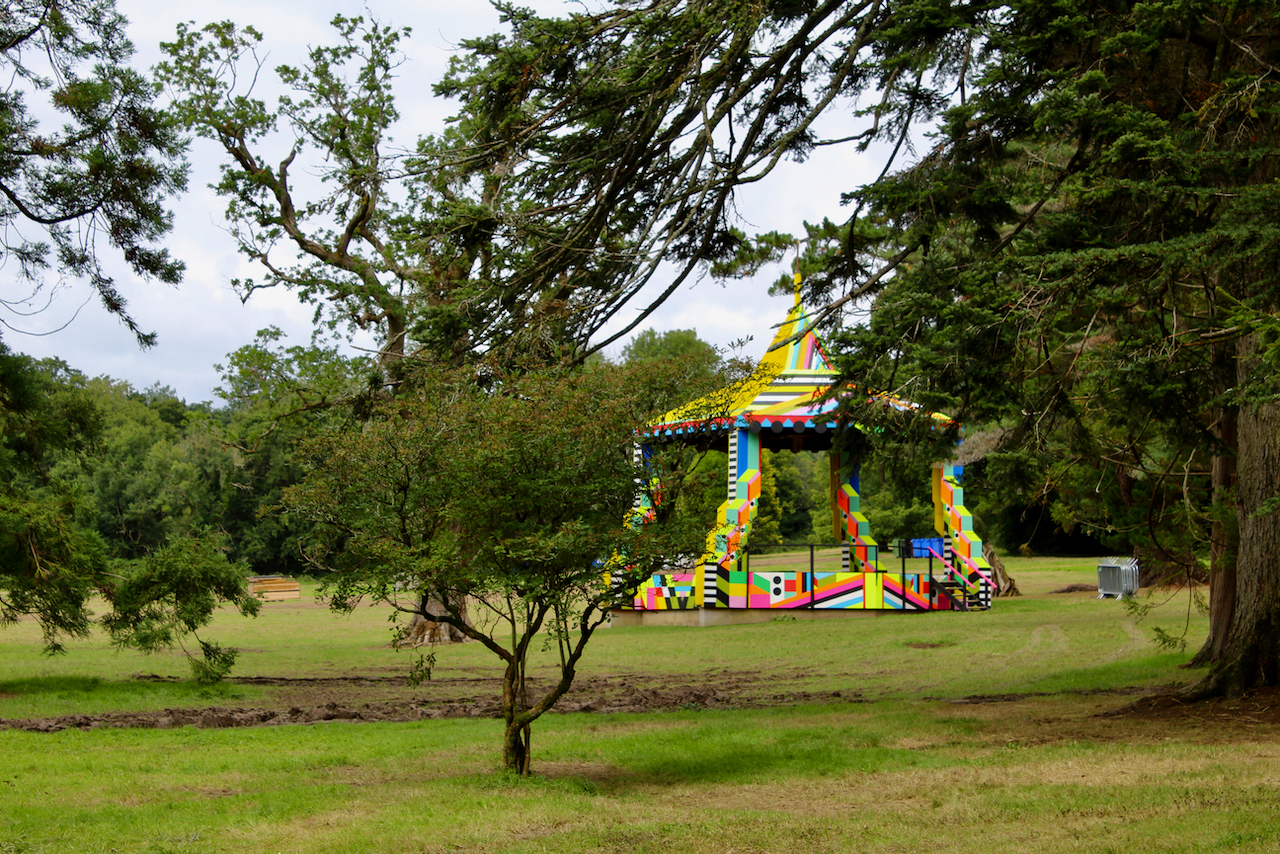
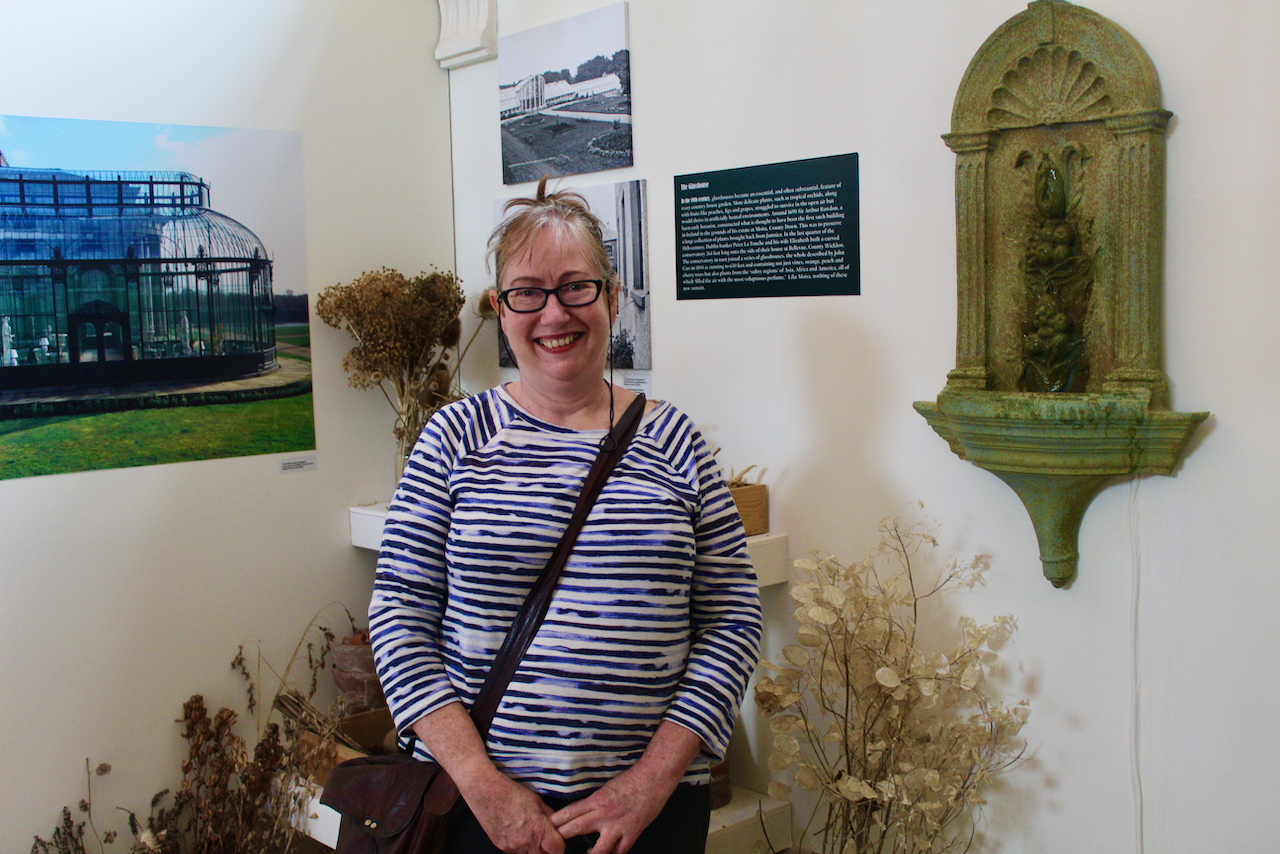
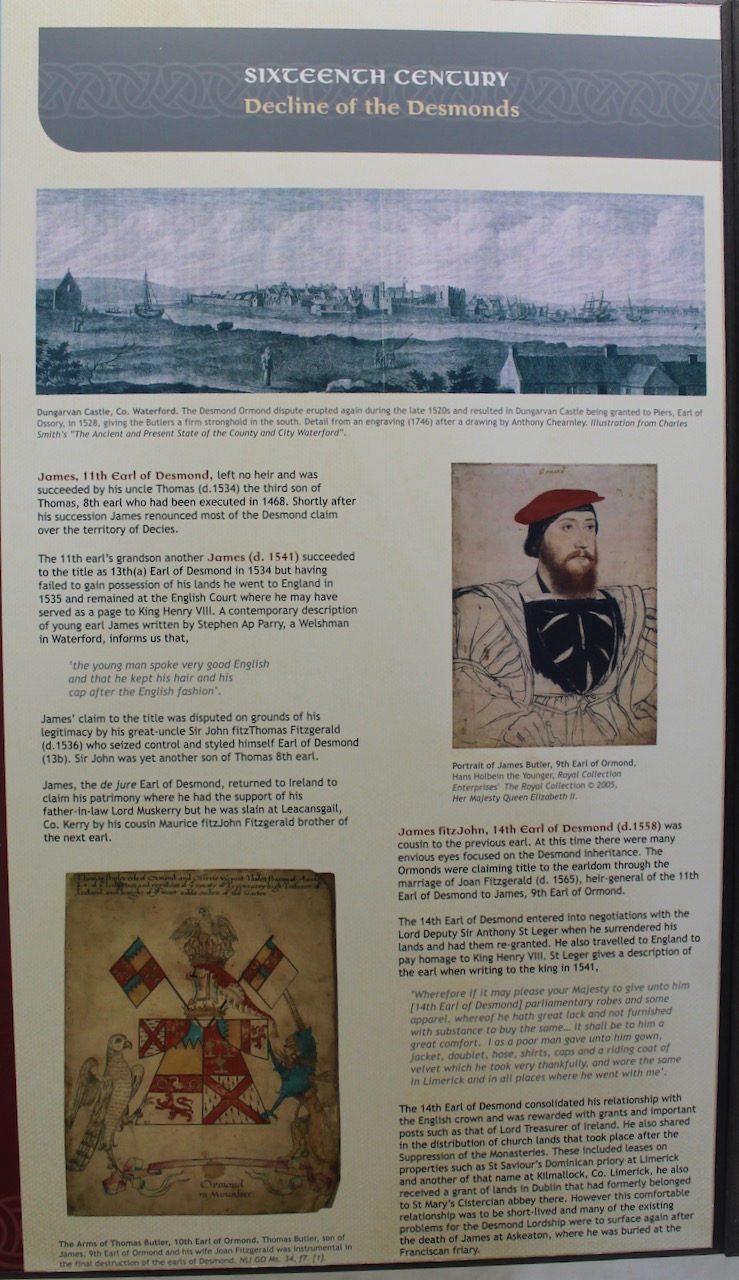
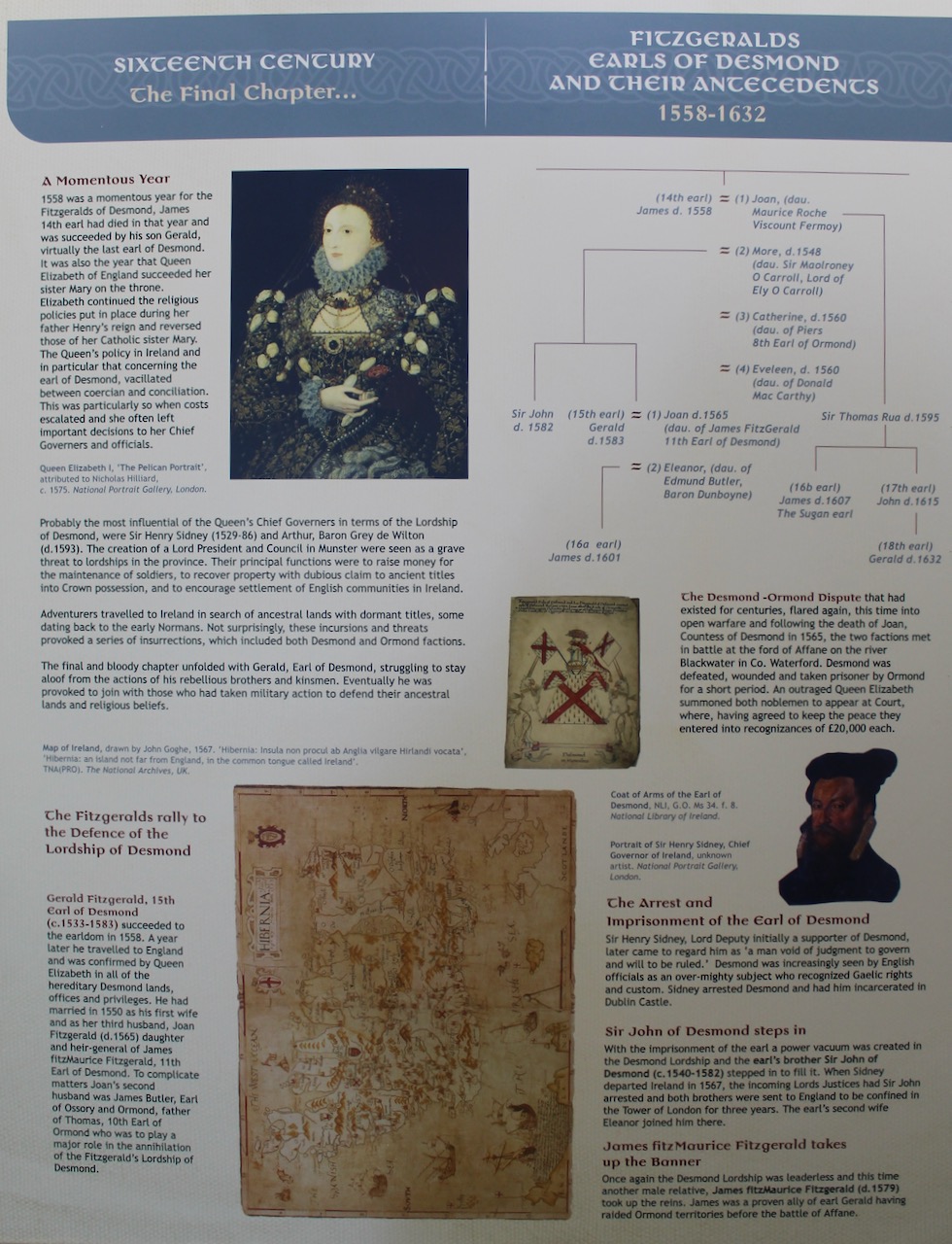
 Irish Historic Houses