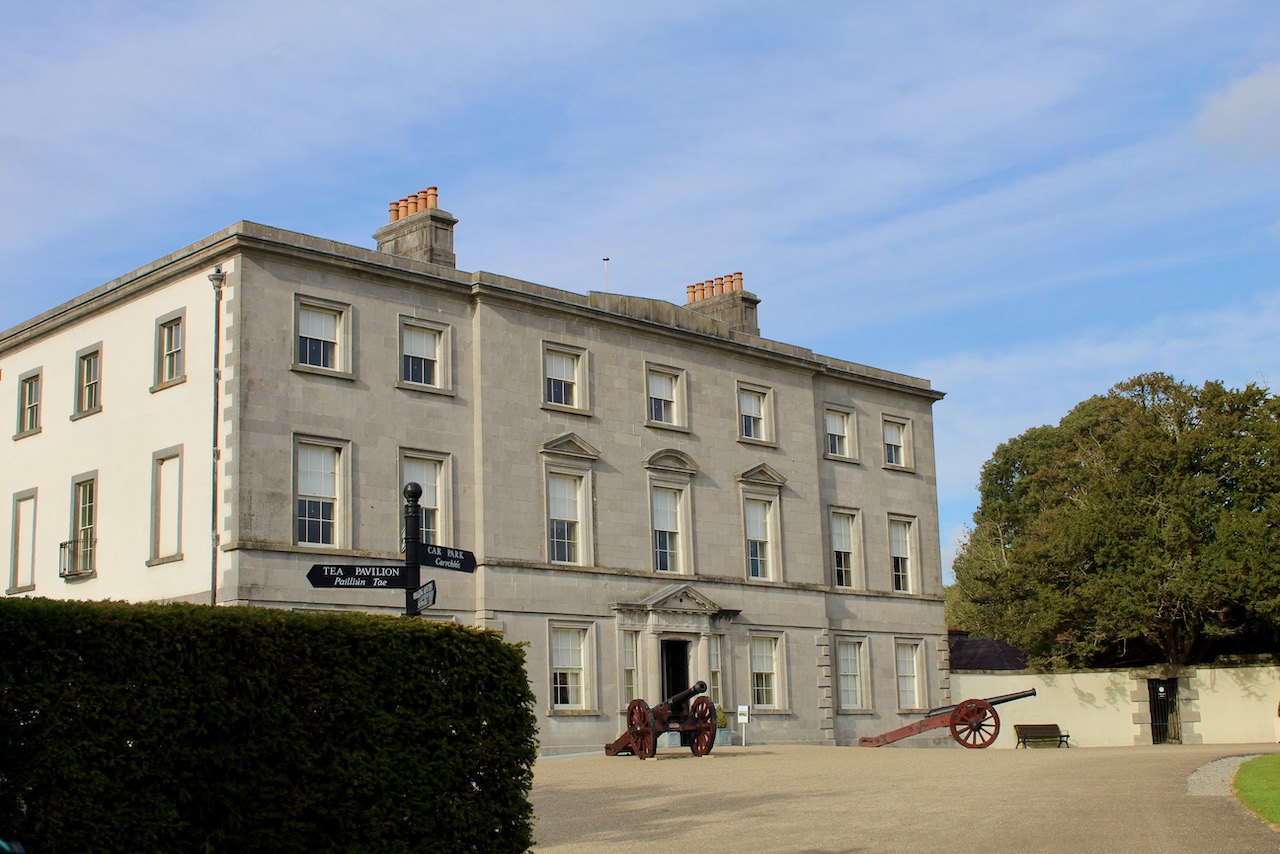
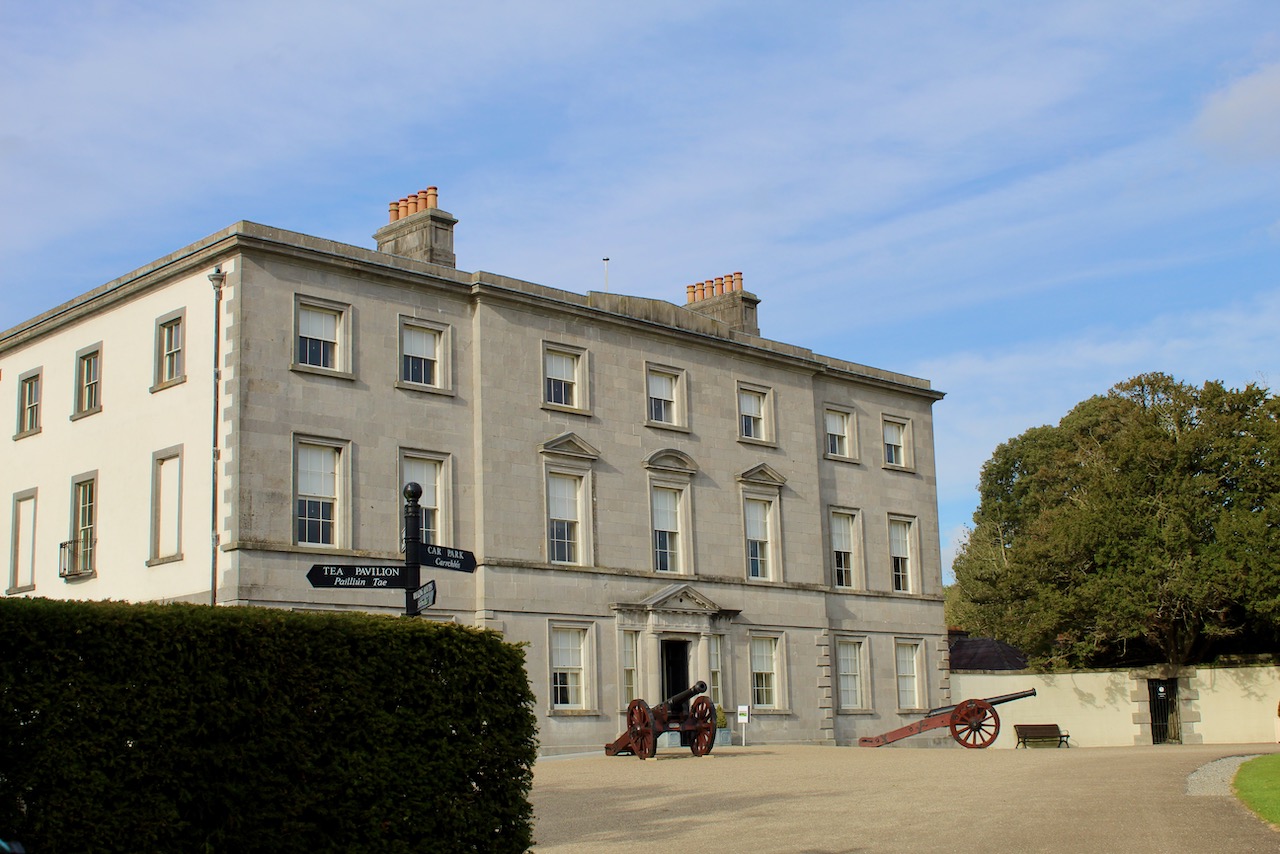
The Battle of the Boyne museum is housed in Oldbridge Hall, which is built on the site where the battle of the took place. The house is maintained by the Office of Public Works.
Stephen and I have a personal connection, as Oldbridge was built by the Coddington family, and a daughter from the house, Elizabeth Coddington (1774-1857), married Stephen’s great great grandfather Edward Winder (1775-1829).
Battle of the Boyne painted by Jan Wyck, in the National Gallery of Ireland. The point of view is that of the Williamites who were based on high ground north of the River Boyne, looking southwards towards Donore Hill where James II and his troops were based.
The Battle of the Boyne, 1st July 1690, was just one of several battles that took place in Ireland when the rule of King James II was challenged by his son-in-law, a Dutch Protestant Prince, William of Orange. James II was Catholic, and he attempted to introduce freedom of religion, but this threatened families who had made gains under the reformed Protestant church. When James’s wife gave birth to a male heir in 1688, many feared a permanent return to Catholic monarchy and government. In November 1688, seven English lords invited William of Orange to challenge the monarchy of James II. William landed in England at the head of an army and King James feld to France and then to Ireland. William followed him over to Ireland in June 1690.
There were 36,000 men on the Williamite side and 25,000 on the side of King James, the Jacobites. William’s army included English, Scottish, Dutch, Danes and Huguenots (French Protestants). Jacobites were mainly Irish Catholics, reinforced by 6,500 French troops sent by King Louis XIV. Approximately 1,500 soldiers were killed at the battle.
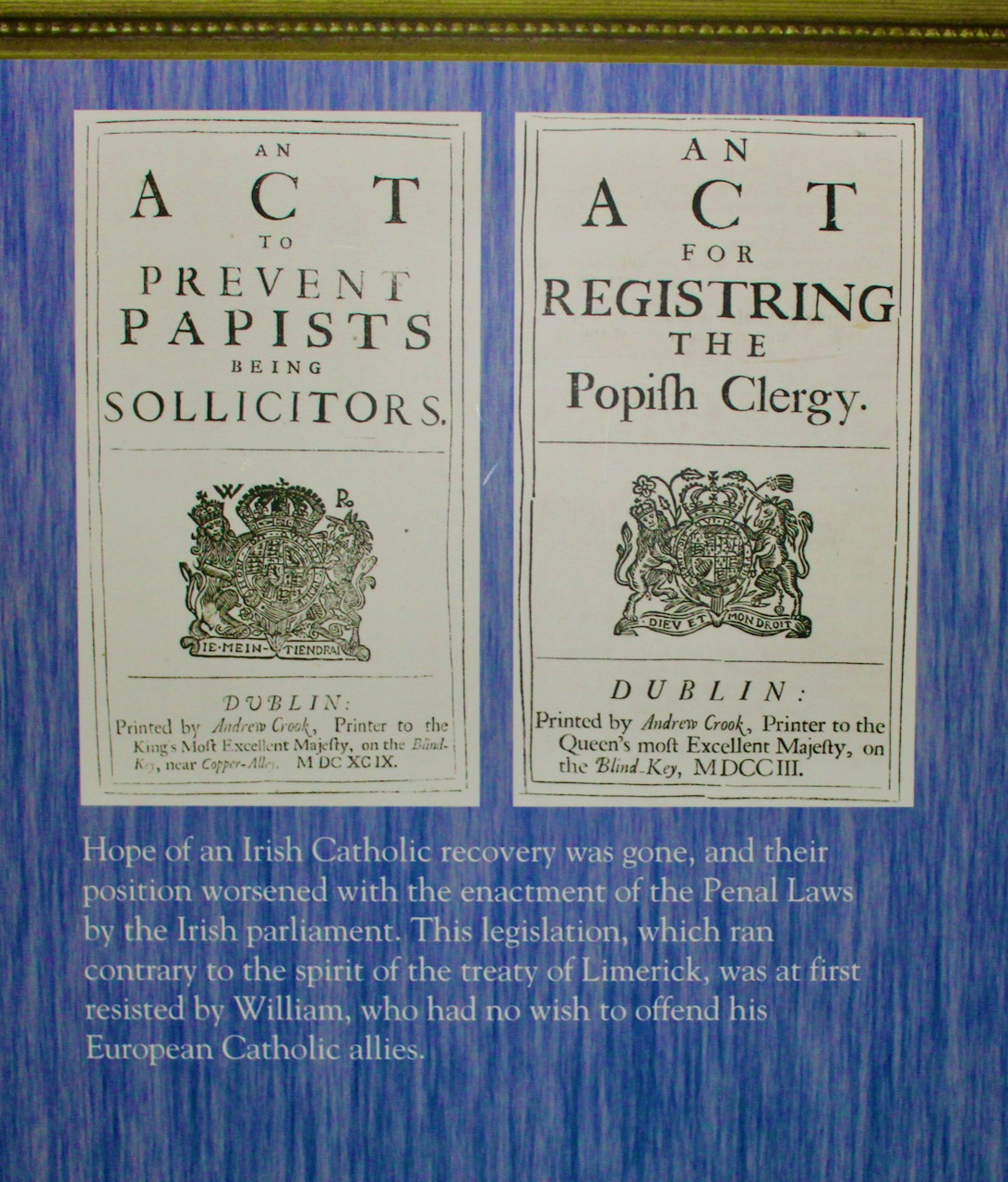
After winning the battle, William gained control of Dublin and the east of Ireland. However, the war continued until the Battle of Aughrim in July 1691, which led to the surrender at Limerick the following autumn. The surrender terms promised limited guarantees to Irish Catholics and allowed the soldiers to return home or to go to France. The Irish Parliament however then enacted the Penal Laws, which ran contrary to the treaty of Limerick and which William first resisted, as he had no wish to offend his European Catholic allies.
John Coddington (1691-1740) purchased the land in 1729 from Henry Moore the 4th Earl of Drogheda. John’s father Dixie (1665-1728) fought in the Battle of the Boyne in 1690 on the side of King William III. The unusual name “Dixie” comes from the maternal side, as Dixie’s father Captain Nicholas Coddington of Holm Patrick (now Skerries) in Dublin married as his second wife Anne Dixie, possibly a daughter of Sir Wolstan Dixie, 1st Baronet (1602-1682).
John married Frances Osbourne in 1710, and with the marriage came property in County Meath including Tankardstown. Tankardstown House is a boutique hotel and a section 482 property (see my entry https://irishhistorichouses.com/2020/07/11/tankardstown-estate-demesne-rathkenny-slane-co-meath/ ). John Coddington served as High Sheriff of County Meath in 1725, before he acquired the property at Oldbridge.
John’s son, also named John, predeceased him, tragically drowning in the Boyne. In the Meath History Hub Noel French recounts a story about how a young woman refused to marry John because she dreamed that he would die, as he did, before the age of twentyone. [1] I have obtained most of my information in today’s entry from the wonderfully informative Meath History Hub website.
Noel French tells us that the office of High Sheriff had judicial, electoral, ceremonial and administrative functions and executed high court writs. The usual procedure for appointing the sheriff from 1660 onwards was that three persons were nominated at the beginning of each year from the county and the Lord Lieutenant then appointed his choice as High Sheriff for the remainder of the year. Often the other nominees were appointed as under-sheriffs. Members of the Coddington family held the position in 1725, 1754, 1785, 1798, 1843, 1848 and 1922. [see 1]
After John’s death in 1740 the house at Oldbridge was advertised for lease, described as the house, gardens and demesne, so the house must have been built by this time. [see 1] The property passed to John’s brother Nicholas’s son, Dixie Coddington (1725-1794).
I am confused about the date of construction. According to the notice for lease, a house stood at the site in 1740. Evidence that the current house was built around 1750 however was found in an inscription on piece of baseboard of a stair removed during repairs carried out in 1960s that reads: ‘ December 1836 Patrick Kelly of the City of Dublin / Put up these Staircases. / I worked at this building from April / till now. / 86 years from the first / Building of this house/ till now as we see by a stick like this found.’
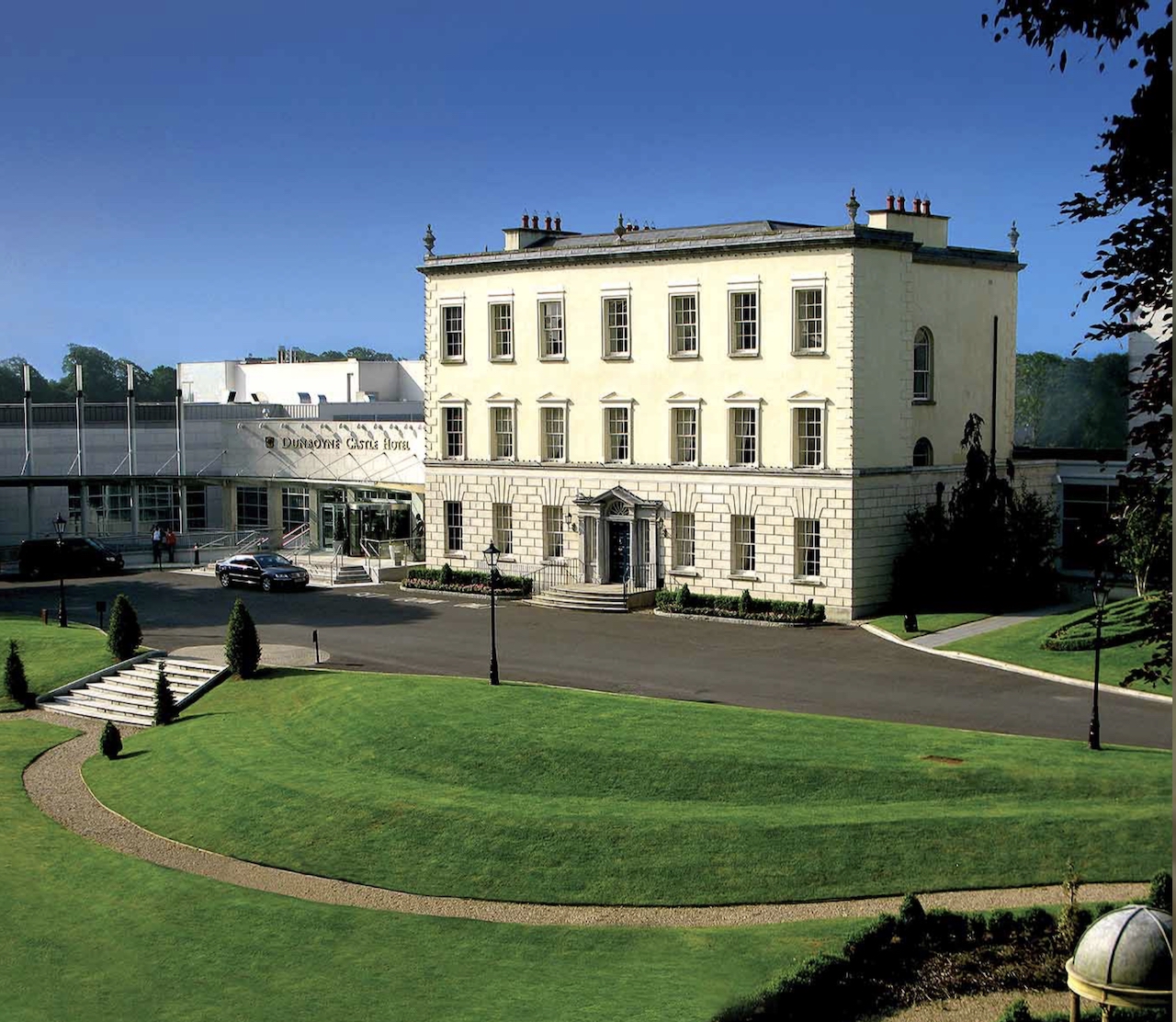
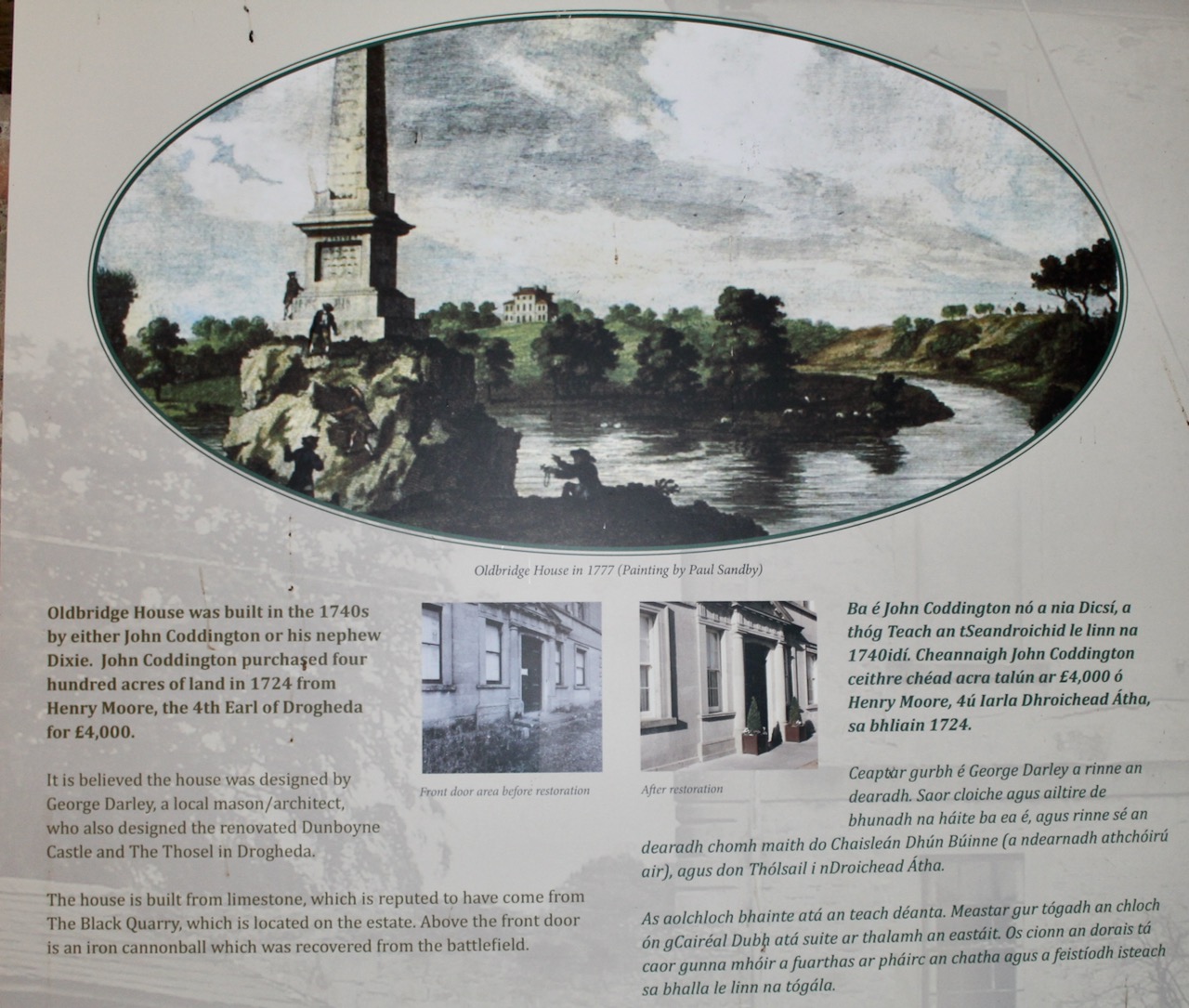
In The Buildings of Ireland: North Leinster, The Counties of Longford, Louth, Meath and Westmeath (published in 1993), Casey and Rowan accept that the house was built around 1750. They suggest that it may have been designed by George Darley (1730-1817), due to affinities with Dowth Hall nearby and to Dunboyne Castle.
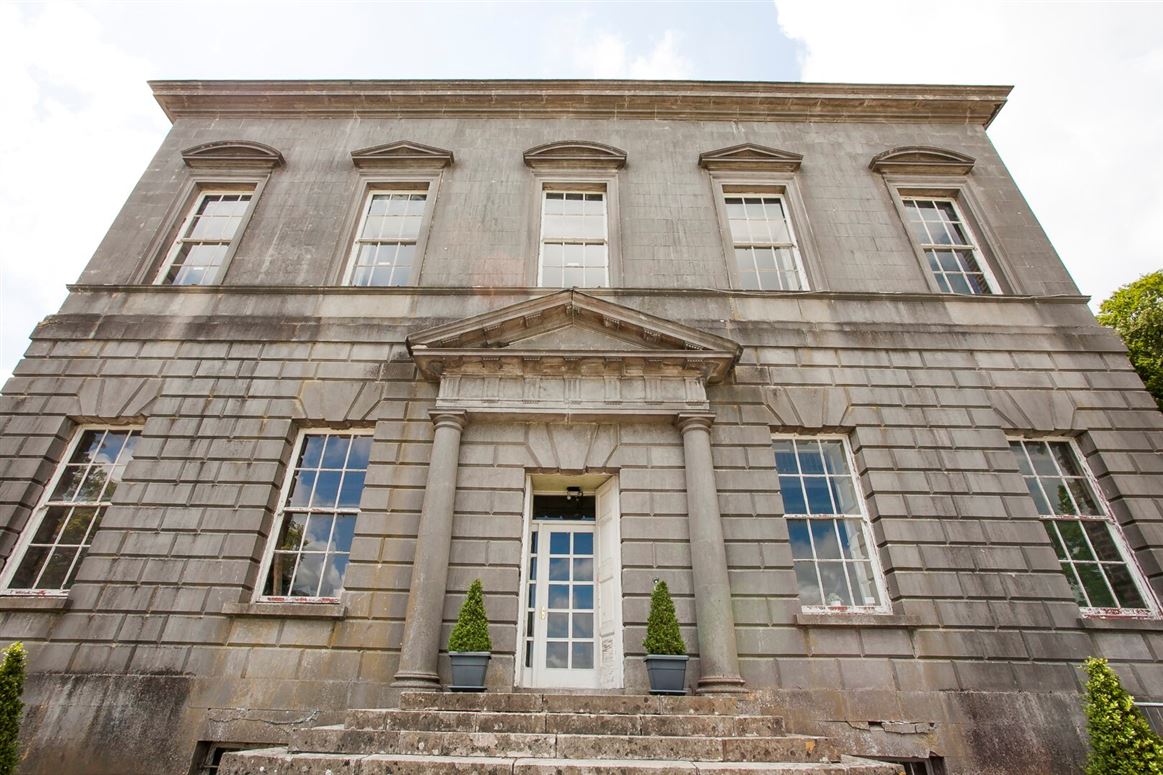
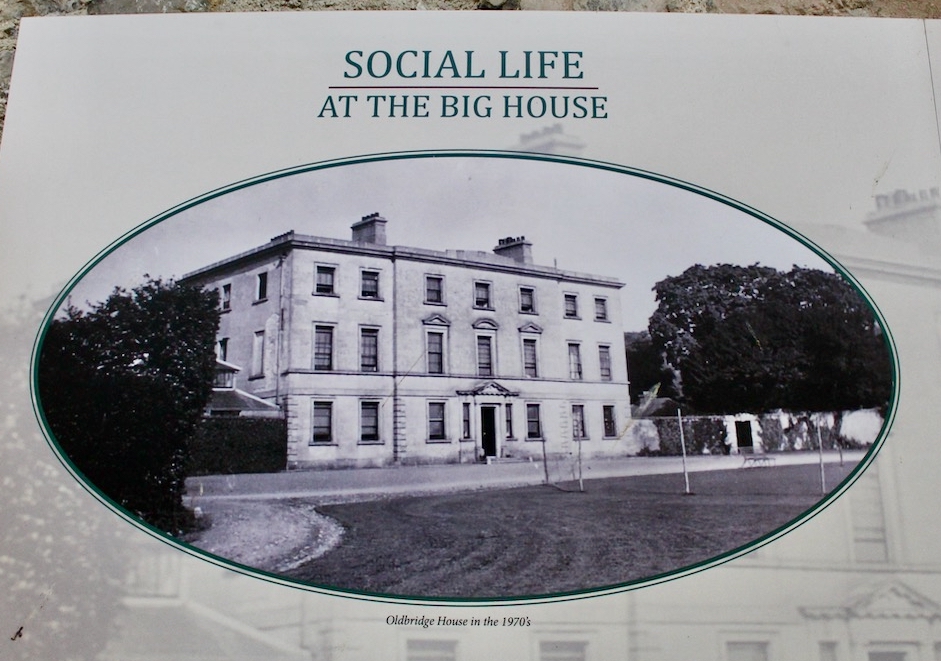
Dowth Hall, County Meath, photograph courtesy Sherry Fitzgerald.Dowth Hall, County Meath, photograph courtesy Sherry Fitzgerald.Dunboyne Castle, County Meath, now a hotel, photograph courtesy of hotel website.Signage at Oldbridge House, County Meath, including an old photograph of the house.
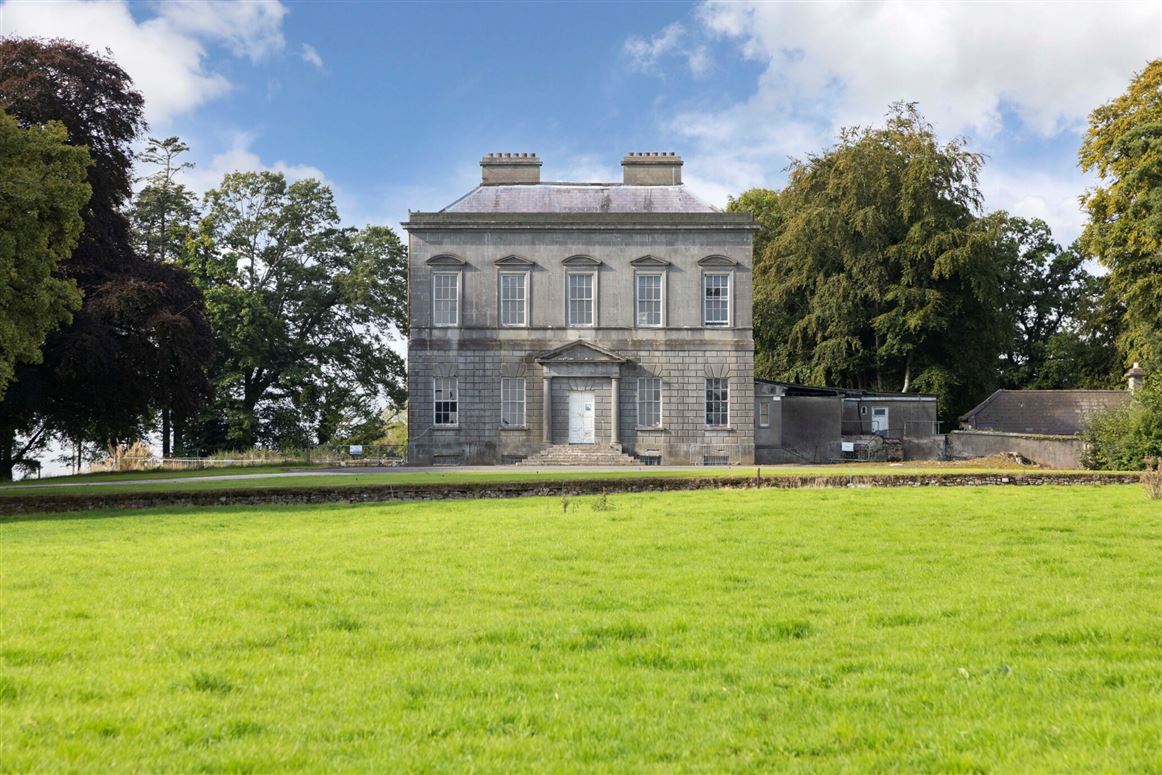
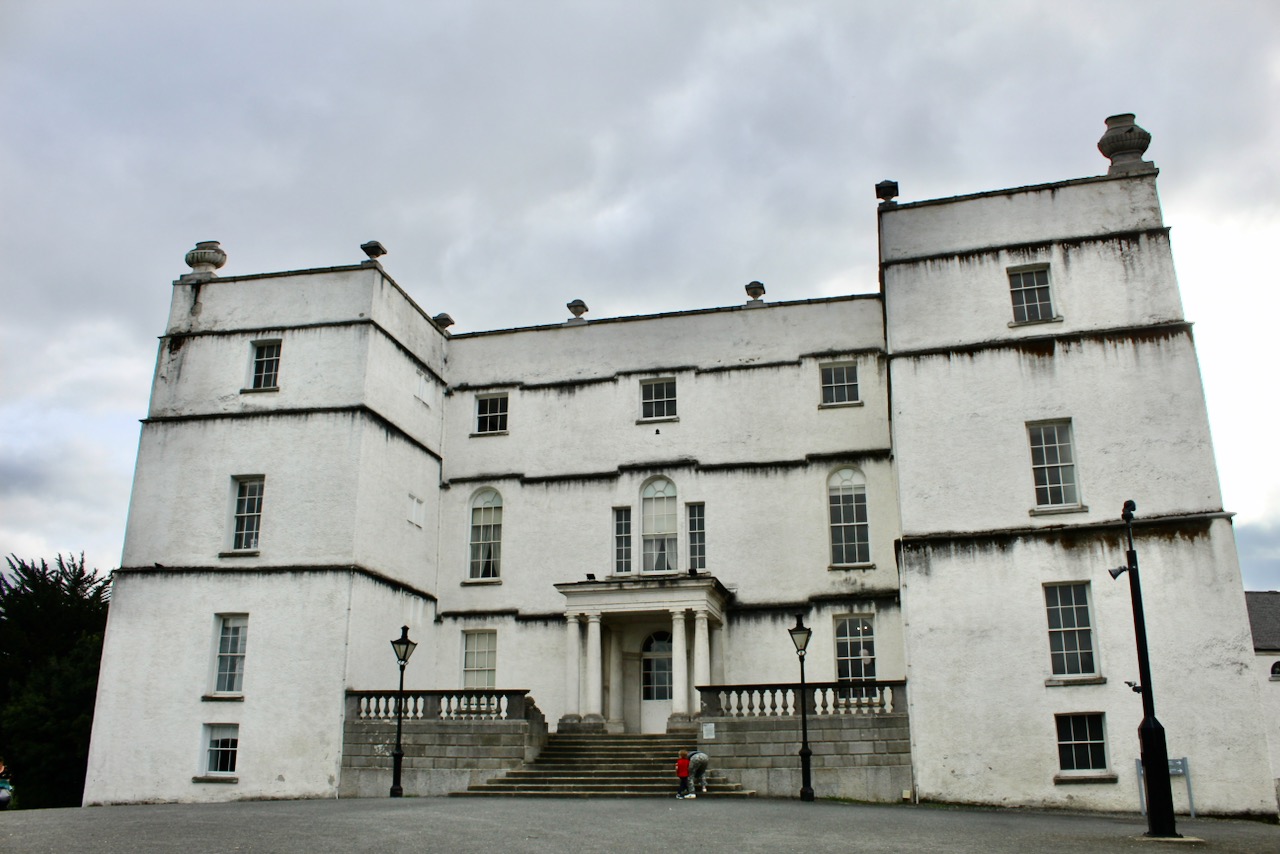
The house is three storey with a plain ashlar frontage of seven bays, with the centre three slightly advanced. Christine Casey and Alistair Rowan tell us in The Buildings of Ireland: North Leinster, The Counties of Longford, Louth, Meath and Westmeath (published in 1993) that the house was originally designed as a three bay three storey block with low single-storey wings, and the upper stories of the wings were added later. [2]
In the early nineteenth century two floors were added to each wing. Casey and Rowan tell us that this was apparently carried out by Frederick Darley (1798-1872).
Quadrant walls link the house to its park, with rusticated doors.
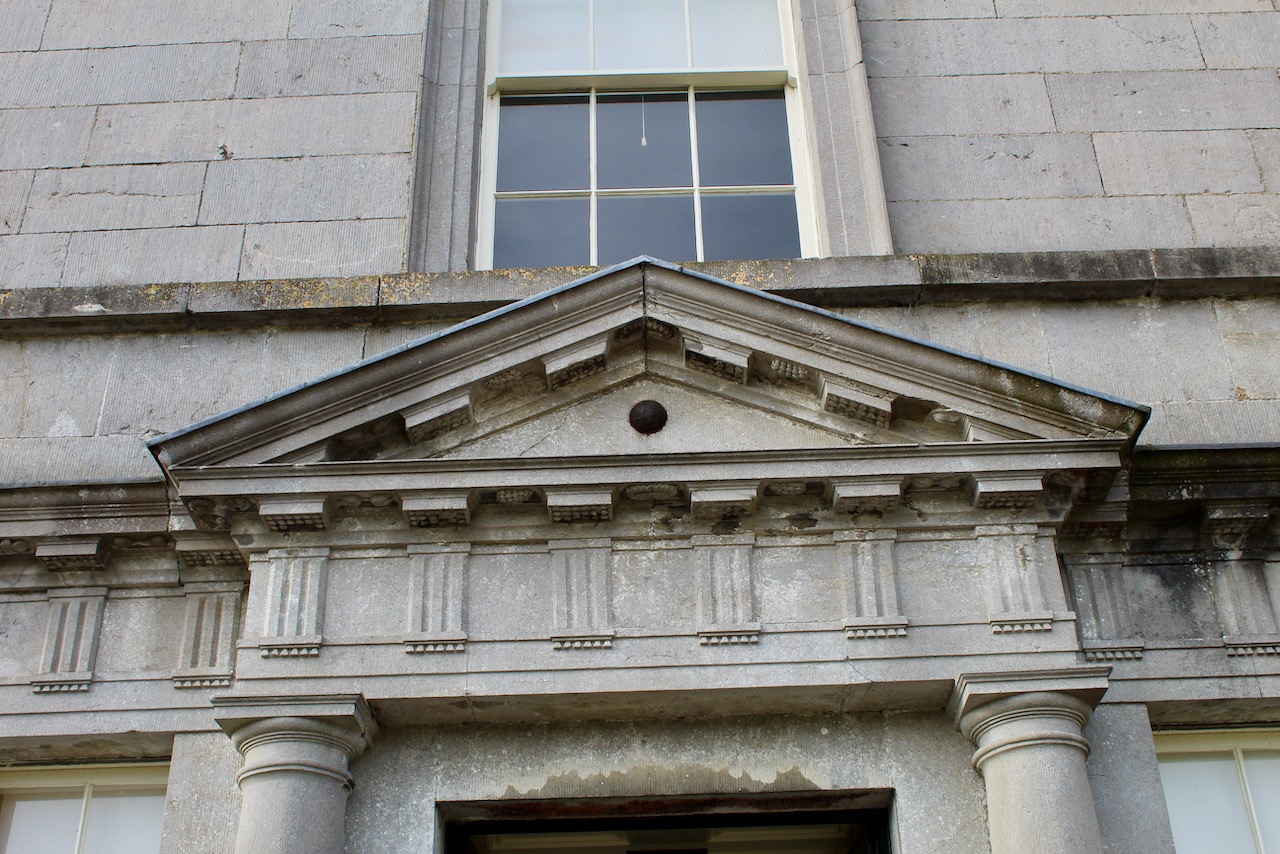
It has a centrally located tripartite doorcase with pilasters surmounted by a closed pediment, which holds a canonball from the fields of the Battle of the Boyne. It has a string course between ground and first floors and sill course to first floor, and three central windows on first floor with stone architraves. [3]
Dixie Coddington (1725-1794) married Catherine Burgh, daughter of Thomas Burgh (1696-1754) of Burgh (or Bert) house in County Kildare. Burgh Quay in Dublin is named after a sister of Thomas Burgh’s, Elizabeth, who was the wife of the Speaker of the House in Ireland, Anthony Foster. Thomas Burgh’s uncle, another Thomas Burgh (1670-1730), was Surveyor General and architect.
On 13 April 1757 Dixie Coddington of Oldbridge sold Tankardstown. [see 1]
Dixie Coddington served as MP for Dunleer, County Louth. He and his wife had several daughters who all died in infancy, and no son, so Oldbridge passed to his brother, Henry Coddington (1728-1816). Dixie had previously leased Oldbridge to his brother, and has spent most of his life living in Dublin on Raglan Road. [see 1]
Henry Coddington (1728-1816) was father to Stephen’s ancestor Elizabeth. Henry was a barrister, and served as MP for Dunleer, County Louth, and he married Elizabeth Blacker from Ratheskar, County Louth. He served as High Sheriff for County Louth, then for County Meath, and was Deputy Serjeant-at-Arms between 1791 and 1800. He served as Justice of the Peace also for Counties Louth and Meath.
Henry and Elizabeth’s son Nicholas (1765-1837) followed in his father’s footsteps, and served as MP for Dunleer before the Act of Union in 1800, and also served as high sheriff for counties Louth and Meath. Nicholas and his son, Henry Barry, carried out a number of improvements on the estate. The house was re-modelled in the 1830s to the drawing of Frederick Darley. [see 1]
The Oldbridge Estate then passed to Henry-Barry Coddington, son of Nicholas. Henry-Barry Coddington was born on May 22nd in the year 1802; he was the eldest surviving son of Nicholas Coddington and Laetitia Barry. Henry Barry took a Grand Tour of Europe and kept a diary. He married Maria Crawford, eldest daughter of William Crawford of Bangor Co. Down in 1827.
Noel French tells us of Maria Crawford’s father and his role in tenant land rights:
“William Sharman Crawford, was the owner of 5,748 acres in County Down … as well as 754 acres at Stalleen in County Meath. William Sharman Crawford took an active interest in politics. He is best known for his advocacy of Tenant Right – the Ulster Custom which gave a tenant greater security through the three “f”s: fair rent, fixity of tenure and free sale of goodwill. Crawford called this “The darling object of my heart”. This idea was not popular with other landlords, but Crawford remained a strong advocate of it for the rest of his life. In 1843 Crawford managed to persuade Sir Robert Peel, the Conservative prime minister, to establish the Devon Commission to investigate the Irish land question. Tenant right, the subject of eight successive bills drafted by Sharman Crawford, was eventually conceded in the Land Acts of 1870 and 1881.”
Despite the admirable work of his father-in-law, Henry-Barry Coddington was a slave owner. He inherited an estate in Jamaica from his great uncle, Fitzherbert Richards. The estate, Creighton Hall in the parish of St. Davids in Jamaica, had previously belonged to Fitzherbert’s brother Robert Richards. The estate was 1165 acres. 399 acres was planted with sugar cane in 1790. The plantation produced sugar, rum, molasses, cotton, ginger, coffee, cocoa and pimento. [see 1]
In A Parliamentary Return of 1837-38, which listed names of those who claimed a loss of “property” after slavery was abolished in 1834, Henry-Barry Coddington was recorded as the `Master` to 235 enslaved individuals. It seems, however, that Coddington was unsuccessful in his claim for compensation.
Oldbridge House was occupied by the National Army in July 1922. In 1923 Arthur F. Coddington of Oldbridge brought a claim against the government for damages done by the National Army forces when they occupied Oldbridge House. The repairs included slates, plumbing, painting and six trees felled.[see 1]
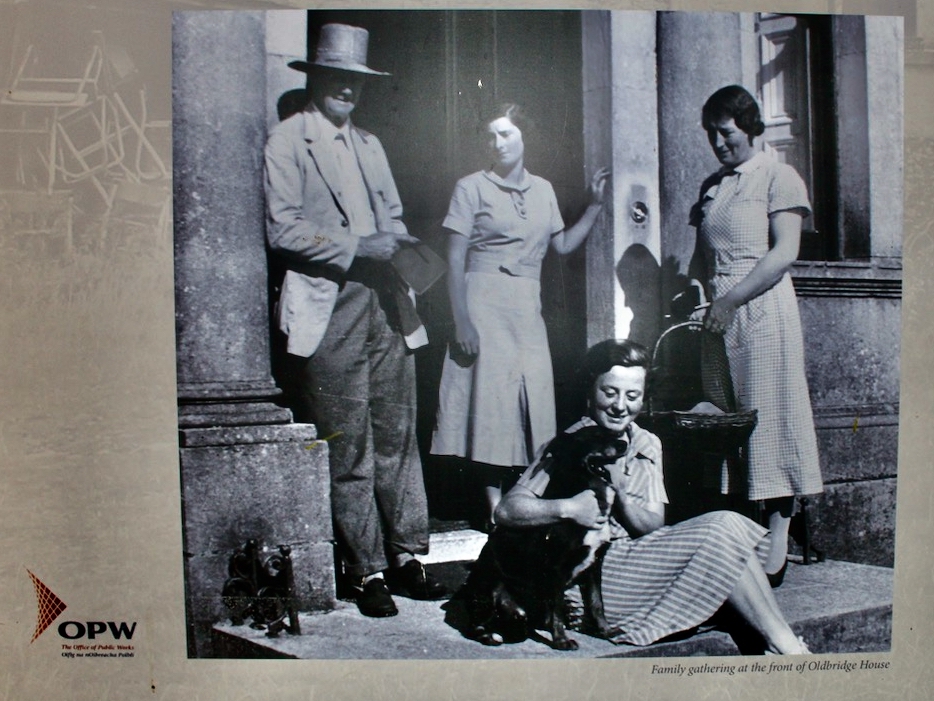
Captain Arthur Coddington, his daughter Diana with the dog, Arthur’s wife Dorothea née Osborne from Smithstown, Julianstown in County Meath, and possibly Denise another daughter.
Arthur’s son Dixie fought in World War II then returned to live in Oldbridge, where he began a commercial market gardening business, and where he trained young people in horticulture.
The Meath History hub tells us that in 1982 a gang broke into Oldbridge House and stole £600,00 in antiques. Two years later, Dixie’s son Nicholas and his wife were held at gunpoint for eleven terrifying hours in their house. Among the items stolen was an eight-foot picture of King William III, dating back to 1700, a number of landscape paintings and a number of family portraits. The haul included items that had been recovered from the robbery two years previously. In 1984 Nicholas Coddington put the house and contents up for sale.
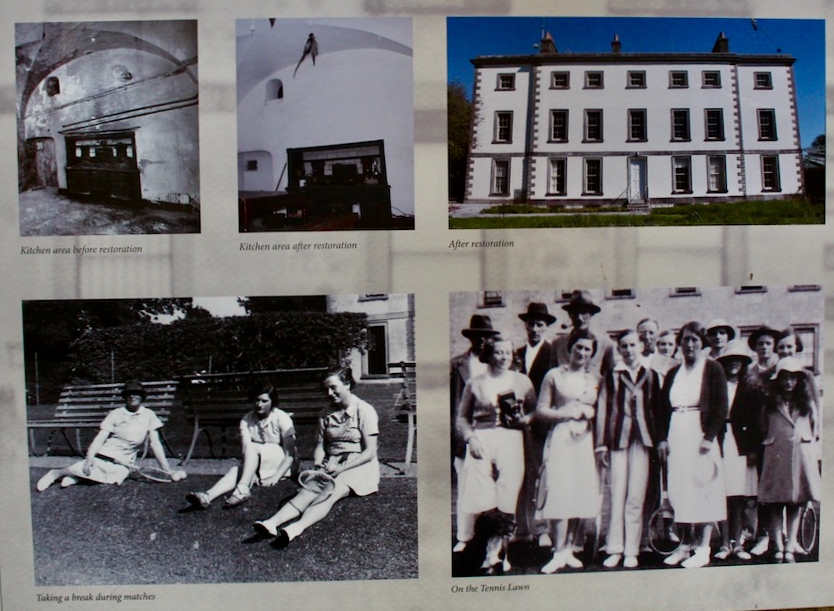
Oldbridge House was purchased by the state in 2000 as part of the Good Friday Peace Agreement, and renovation began.
Oldbridge House, County Meath.Coddington photographs of a tennis match at the house.
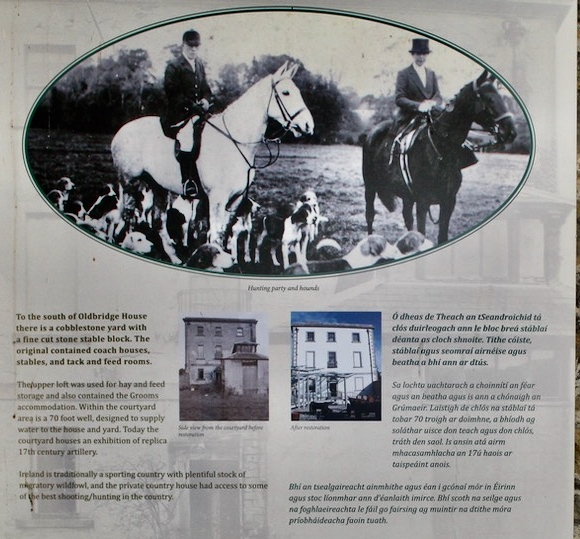
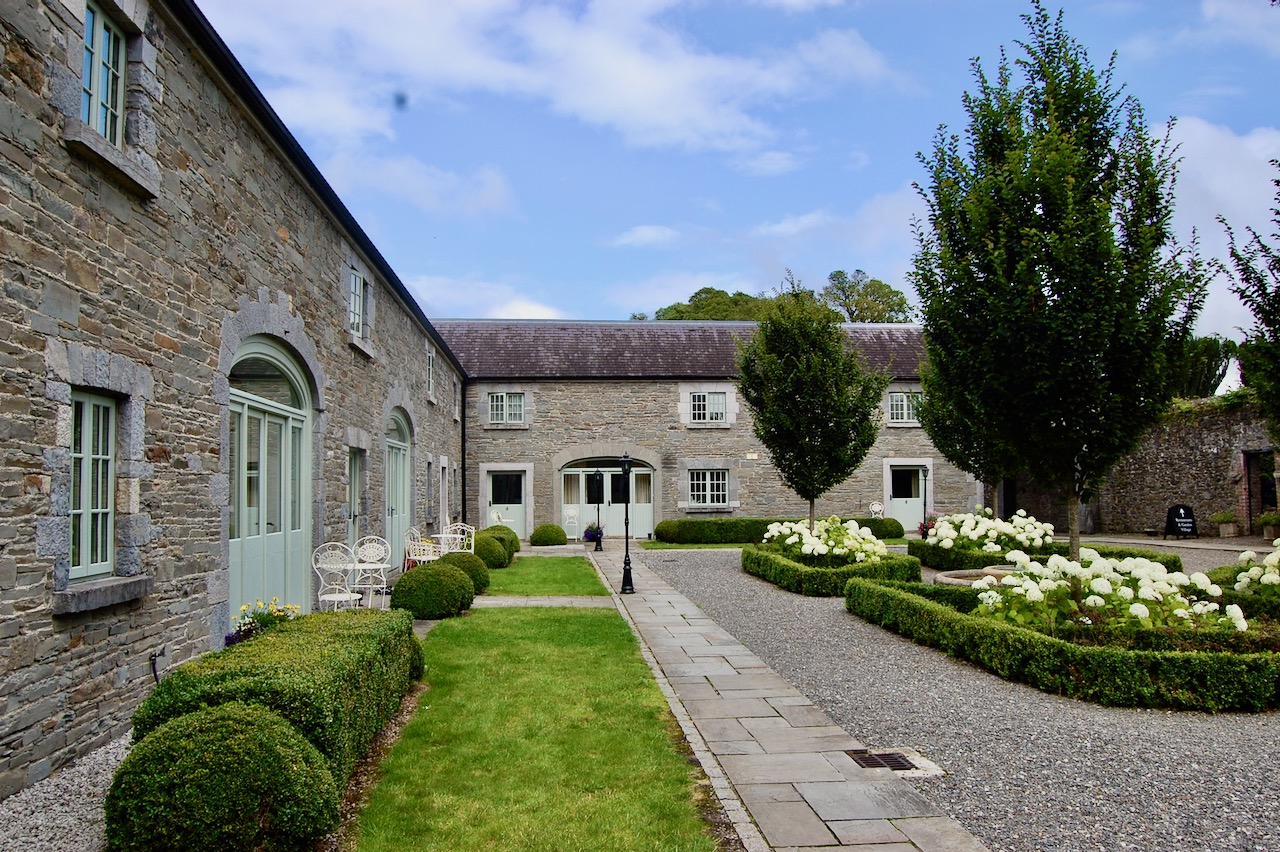
To the left of the house there is a cobble stone stable yard with fine cut stable block. This originally contained coach houses, stables, tack and feed rooms.
To the right of the house is a small enclosed courtyard which contains the former butler’s house.
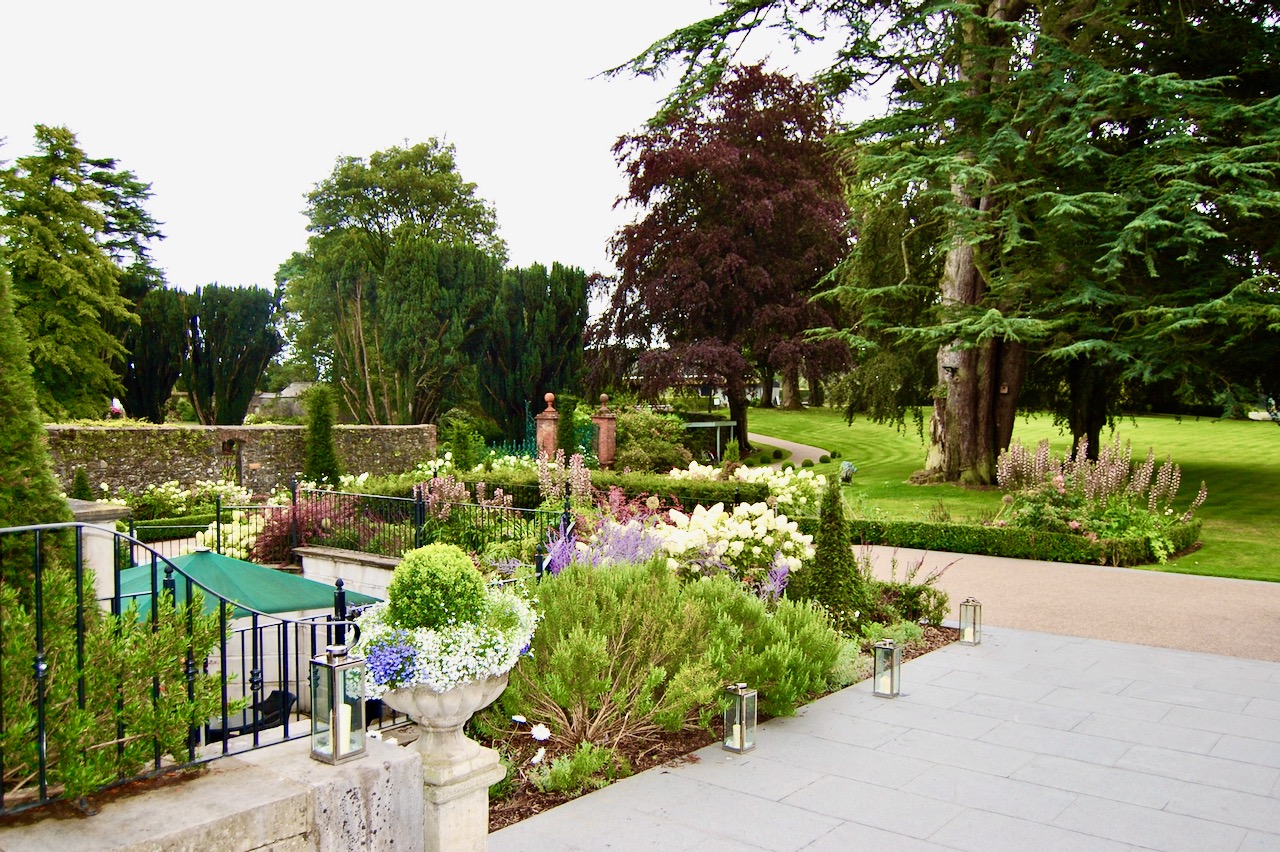
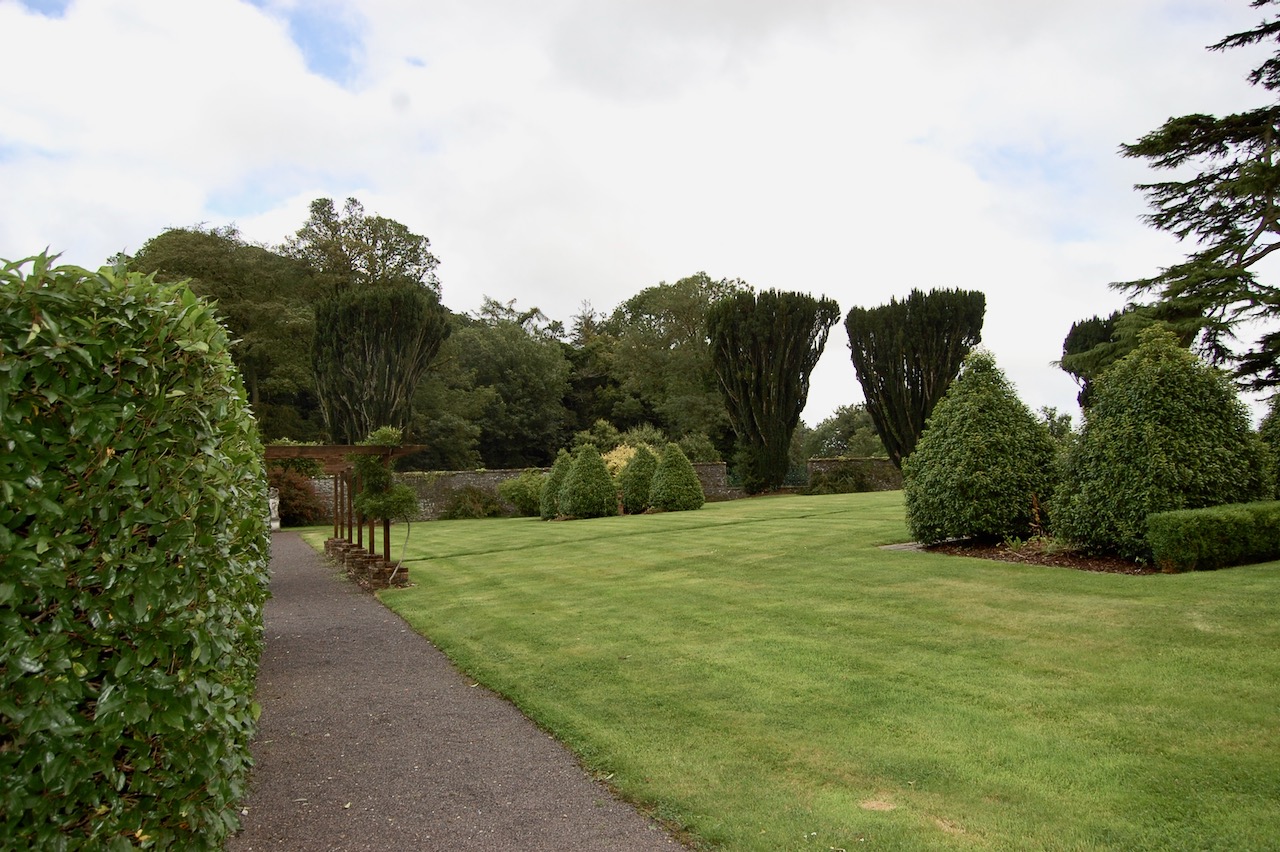
The gardens of Oldbridge House have been restored, with an unusual sunken octagonal garden, peach house, orchard and herbaceous borders, with a tearoom in the old stable block. Throughout the year outdoor theatre, workshops and events such a cavalry displays and musket demonstrations help to recreate a sense of what it might have been like on that day in July 1690.
[2] p. 446. Casey, Christine and Alistair Rowan, The Buildings of Ireland: North Leinster, The Counties of Longford, Louth, Meath and Westmeath. Penguin Books, UK, 1993.
Help me to pay the entrance fee to one of the houses on this website. This site is created purely out of love for the subject and I receive no payment so any donation is appreciated!
€15.00
2026 Diary of Irish Historic Houses (section 482 properties)
To purchase an A5 size 2026 Diary of Historic Houses (opening times and days are not listed so the calendar is for use for recording appointments and not as a reference for opening times) send your postal address to jennifer.baggot@gmail.com along with €20 via this payment button. The calendar of 84 pages includes space for writing your appointments as well as photographs of the historic houses. The price includes postage within Ireland. Postage to U.S. is a further €10 for the A5 size calendar, so I would appreciate a donation toward the postage – you can click on the donation link.
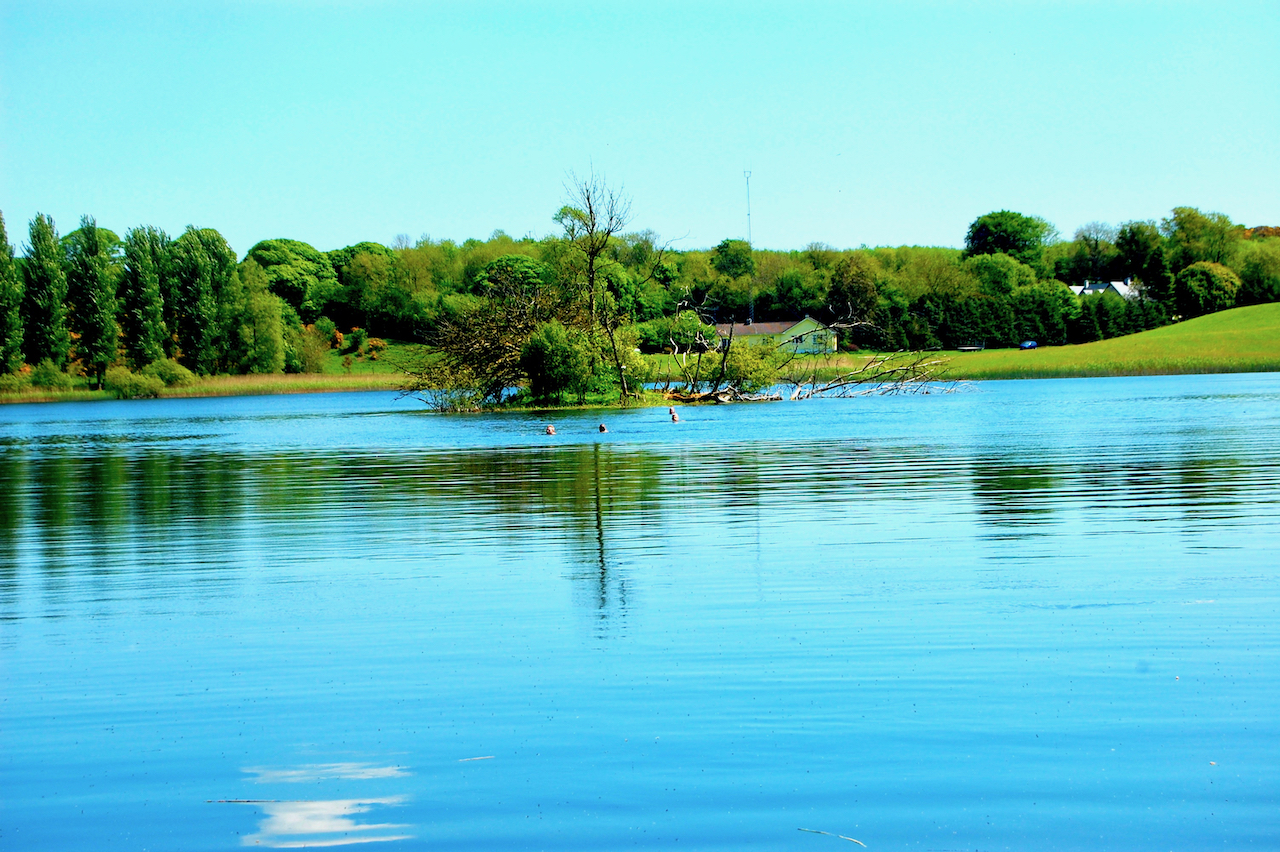
Loughcrew is listed under the Revenue Section 482 listing as Tourist Accommodation. Stephen and I stayed there along with about eighteen friends for our combined “Hen-Stag” in 2010! We spent a wonderful sunny May weekend, where we had a dinner at one long dining table, danced in the function room and swam in the nearby lake.
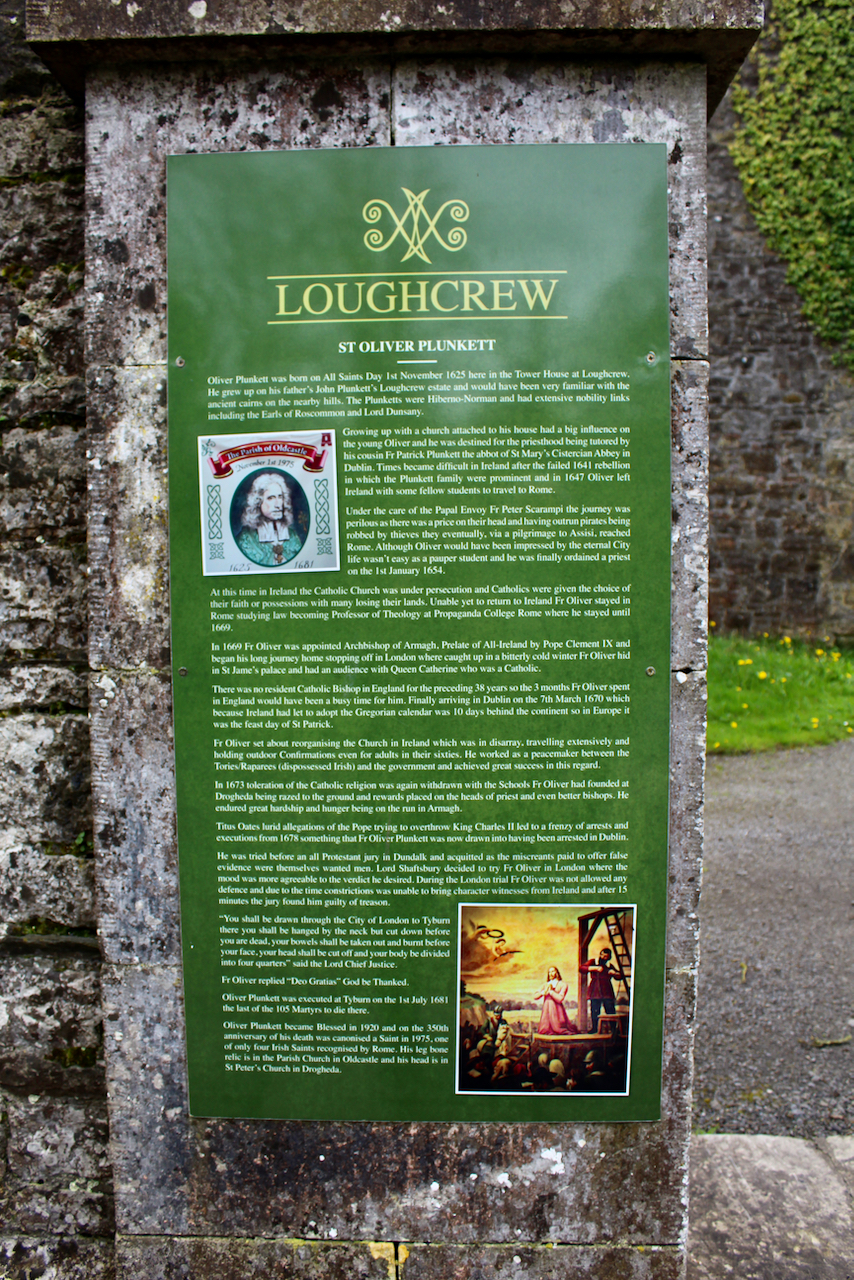
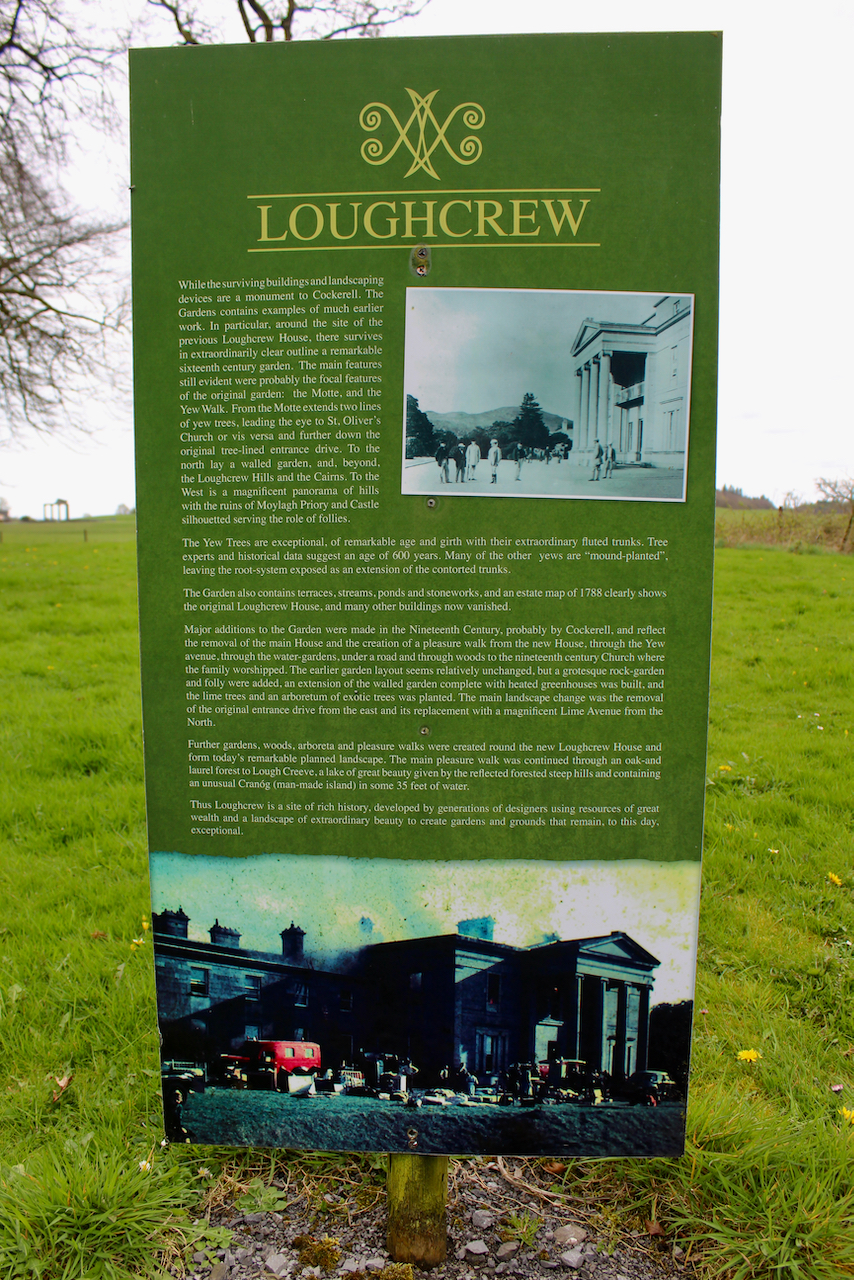
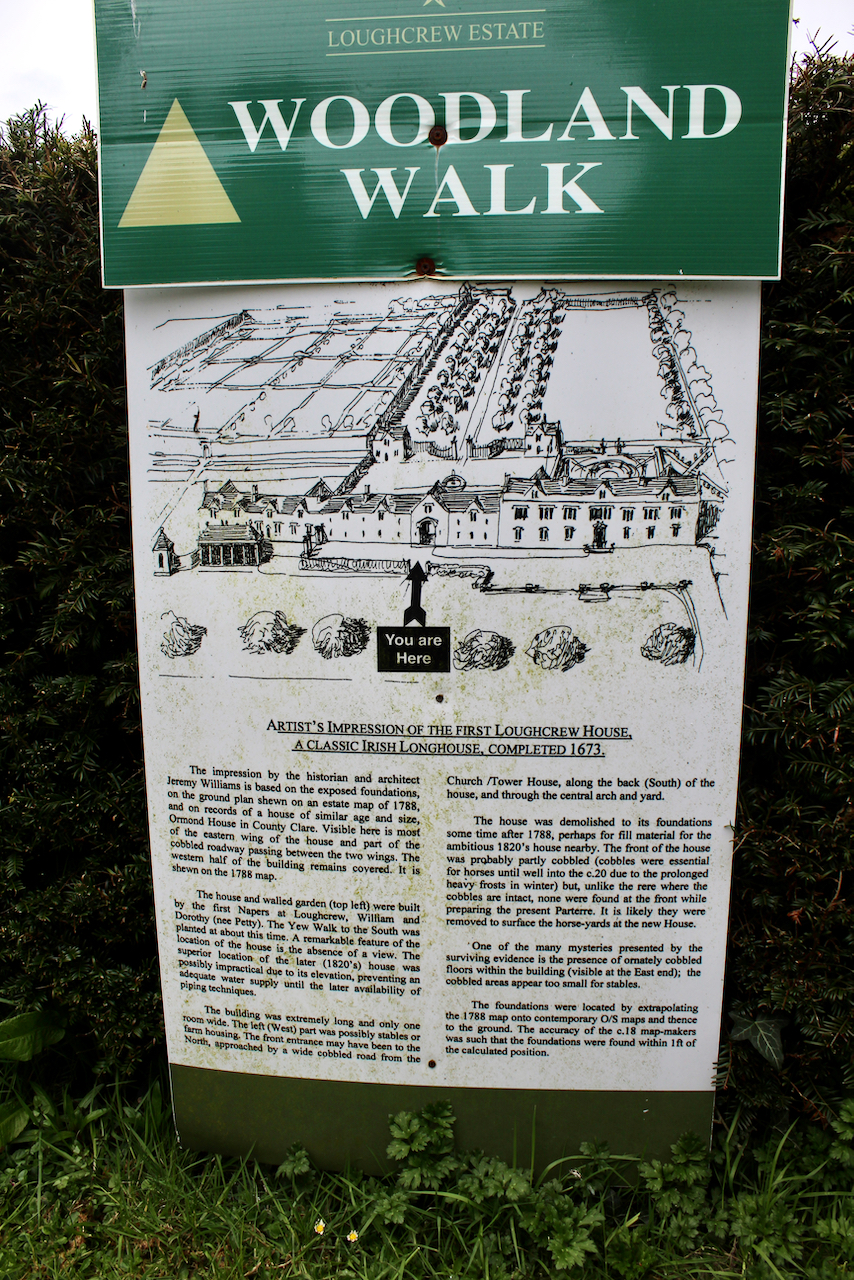
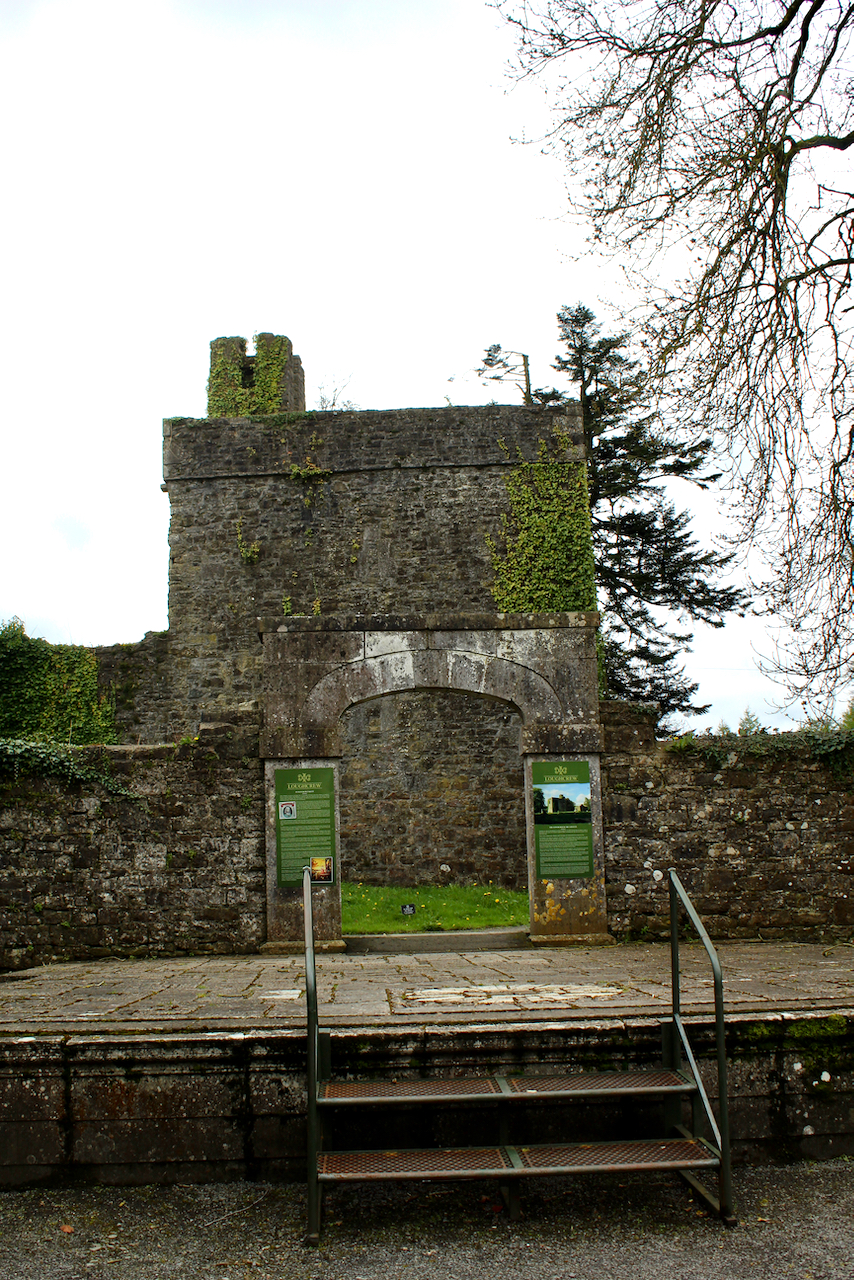
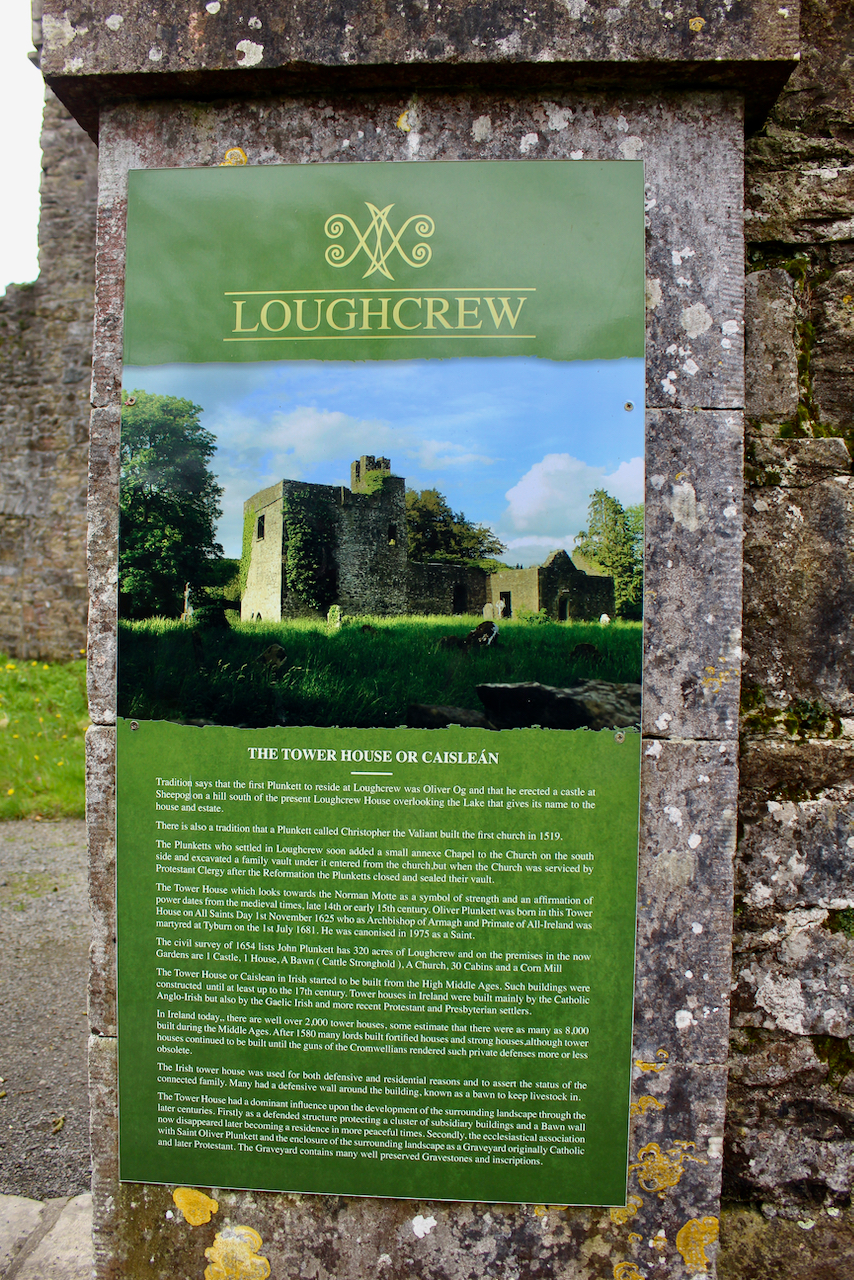
Originally the seat of the Plunkett family, its most famous member being St. Oliver Plunkett (1625-1681), whose church still remains today on the estate, the first Loughcrew House was built in the 1600s by the Naper family. The property is still owned by the Napers.
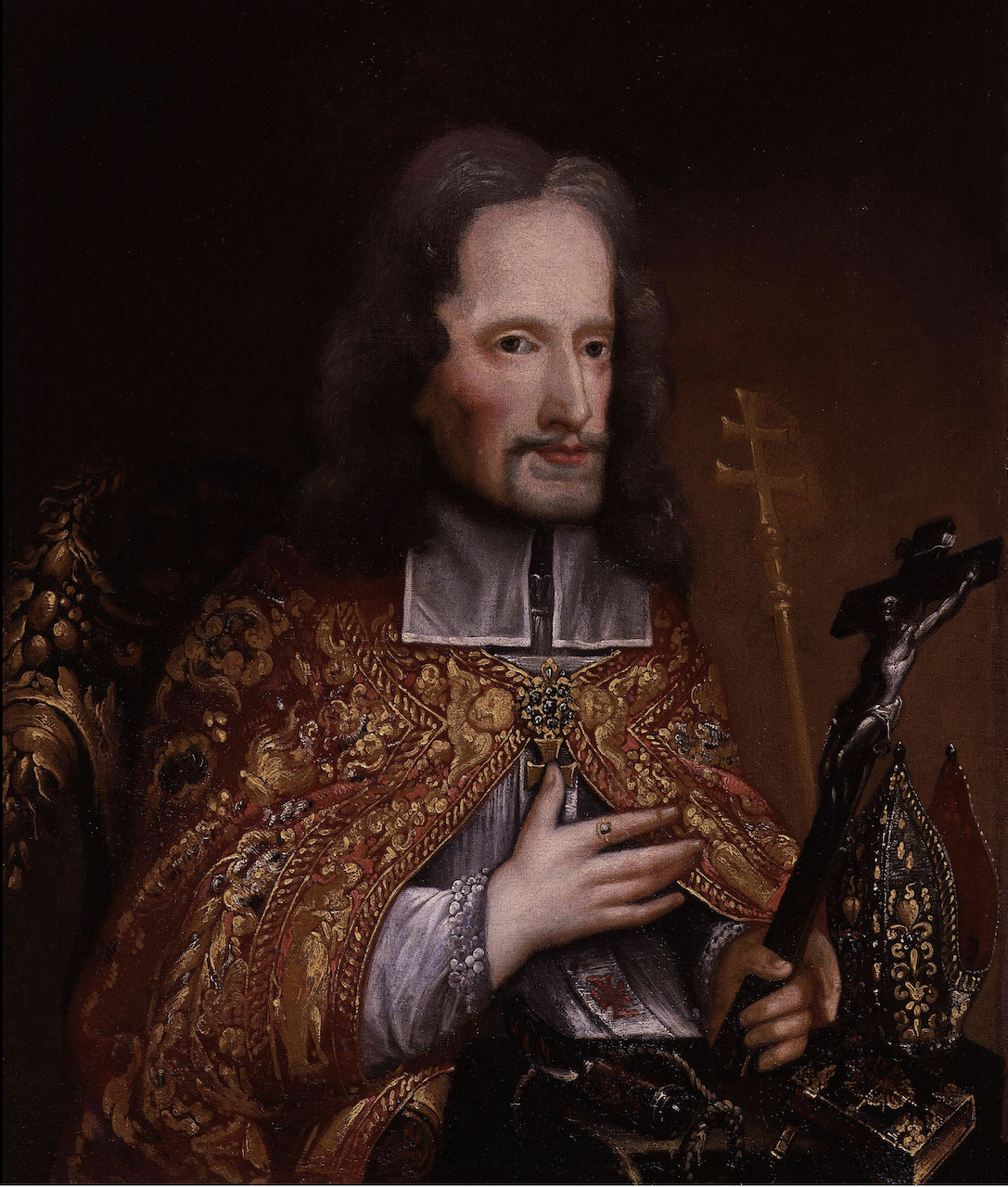
Oliver Plunkett became a Catholic Archbishop of Armagh, but Catholics were persecuted in his time. He was accused of being part of the fictitious Popish Plot and was executed in Tyburn in London in 1681. He was canonised as a saint in 1975. His head is kept as a relic in St. Peter’s church in Drogheda.
Loughcrew, April 2023.Oliver Plunket, by Edward Luttrell courtesy of National Portrait Gallery London.
Mark Bence-Jones writes in his A Guide to Irish Country Houses (1988) that the house was said to have a curse on it, for it was burnt three times within 100 years.
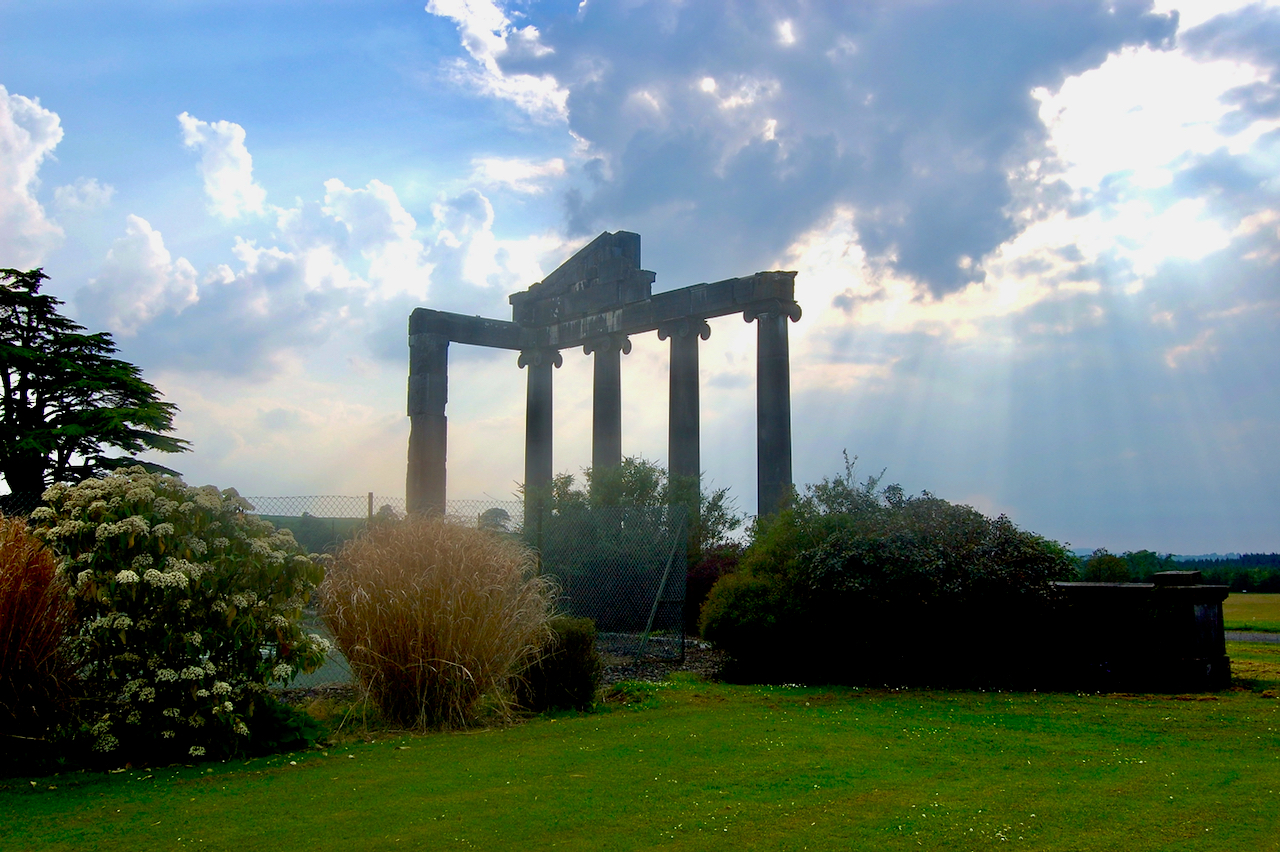
On the first two occasions the was rebuilt. The 1820s version was designed by Charles Robert Cockerell (1788-1863) for James Lenox William Naper (1791-1868). Charles Robert Cockerell was an English writer, architect and archaeologist who spent seven years on his Grand Tour. A lodge, lake, garden and conservatory were also designed at this time. The house was destroyed by fire in 1888 and rebuilt by Thomas Newenham Deane & Son.
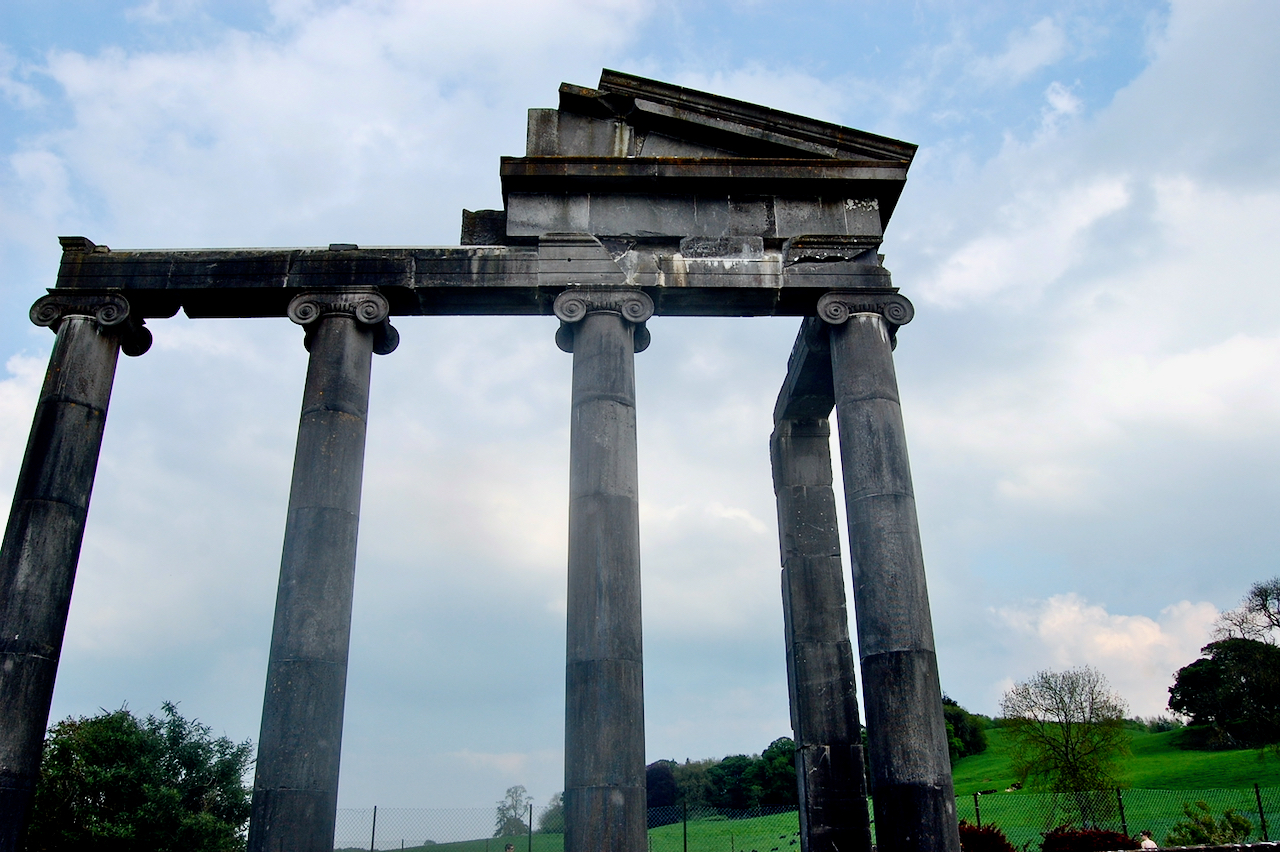
After the third fire, in 1964, the ruin was demolished and “the vast stones and fallen capitals are now strewn about the ground like the remains of some lost city of antiquity.”
Timothy William Ferres tells us that the Napers were the second largest landowners in County Meath, with 18,863 acres.
James Naper (abt. 1625-1676), fourth son of Sir Samuel Naper MP, of Moor Crichel, Dorset, and grandson of Robert Napier, Chief Baron of the Irish Exchequer, 1593, married Dorothy daughter of Sir Anthony Petty, of Romsey, Hampshire, and sister of the William Petty of Down Survey fame. [2]
James of Loughcrew and Dorothy had three sons and two daughters: William, the oldest son, died unmarried. The next son, James (d. 1718), was the successor. There was another son, Lt. Gen Robert, and then daughters Frances and Elizabeth.
Elizabeth (1660-1736/7) married Thomas Bligh (d. 1710) of Rathmore, County Meath, who served as MP for County Meath. Frances married Richard Ingoldsby (d. 1712), whose father had moved from England and was Mayor of Limerick.
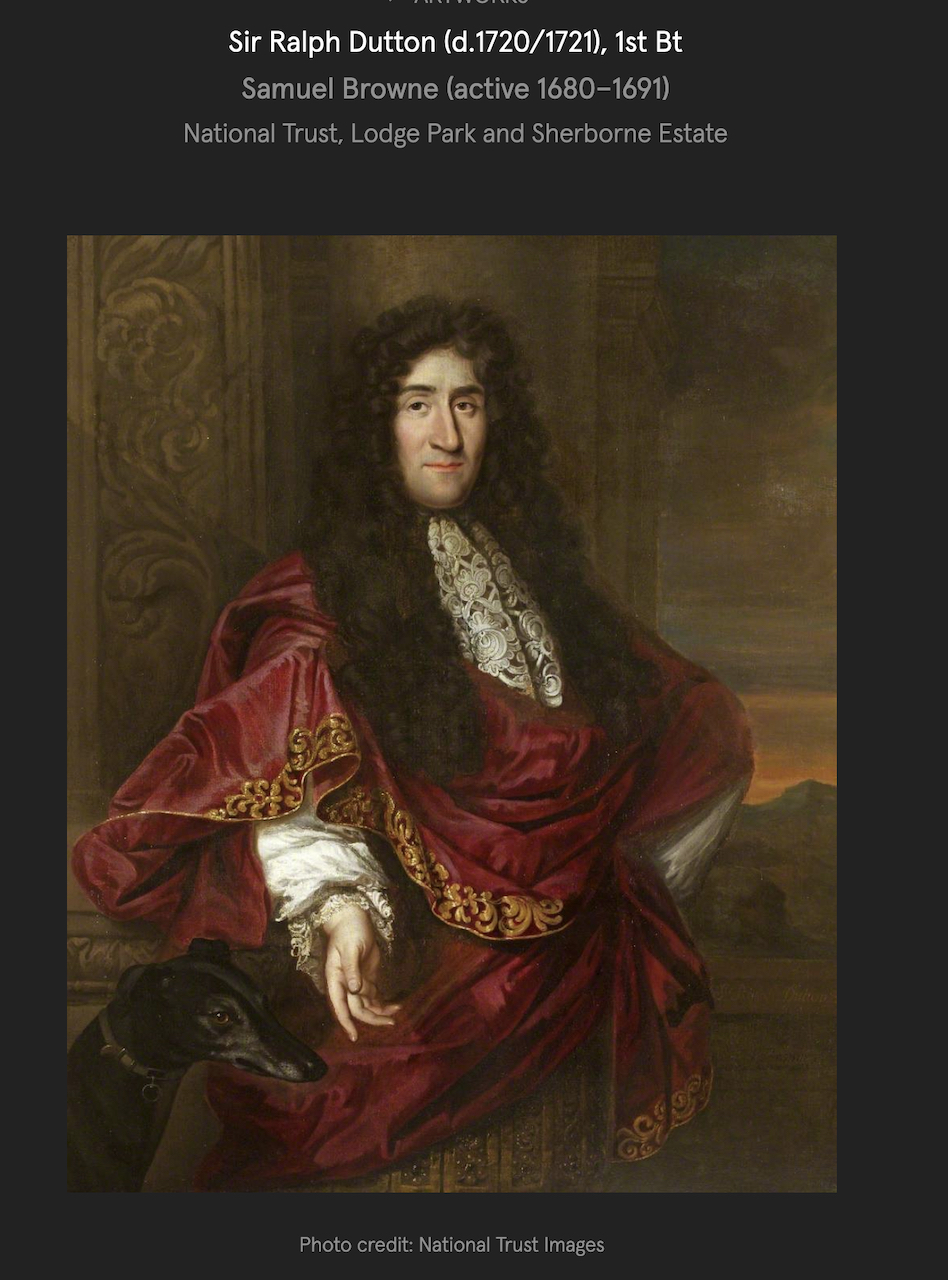
James (d. 1718) was High Sheriff of County Meath in 1702 [see 2]. In 1684 he married Elizabeth, daughter of James Tandy, of Drewstown, County Meath, and by her had two daughters, Dorothy and Sarah. He then married Elizabeth Barry in 1695, daughter of Richard Barry (d. 1694) 2nd Baron Barry of Santry. Third, he married Anne, daughter of Ralph Dutton 1st Baronet Dutton, of Sherborne, Co. Gloucester.
Ralph Dutton, 1st Baronet Dutton, of Sherborne, Co. Gloucester. His daughter Anne married James Naper.
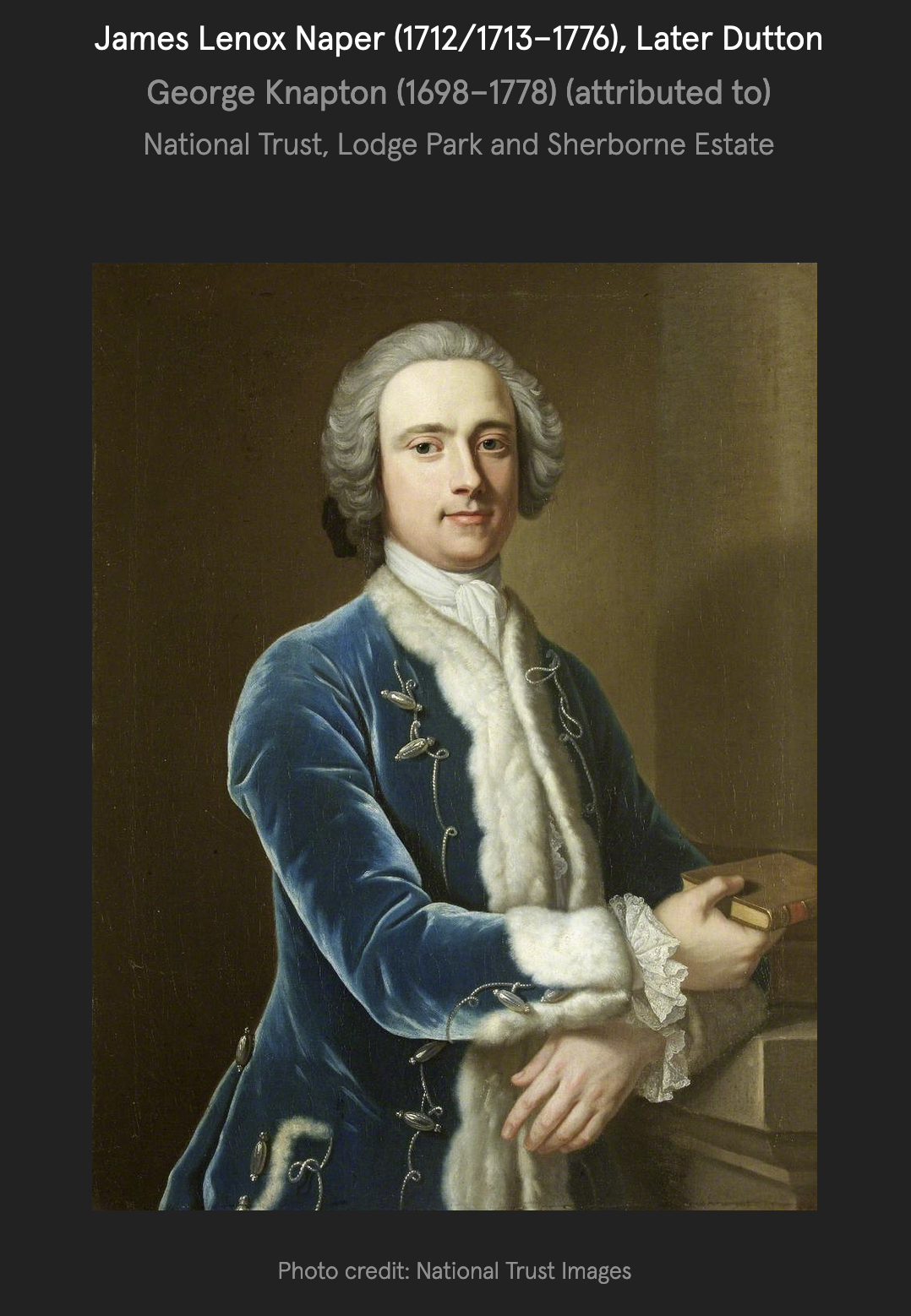
James and his third wife Anne had a son, James Lenox Naper (c. 1713-1776). He changed his name to Dutton so must have inherited property through his mother. 2nd Baronet Dutton died in 1743 with no heir so this must be when James inherited and changed his name to Dutton.
James Lenox Naper (c. 1713-1776) took the surname Dutton.
James Dutton né Lenox was High Sheriff of County Meath in 1740. In 1734 he married Catherine, daughter of Henry Ingoldsby, by whom he had an only child, John, who died unmarried in 1771. Secondly he married Jane, daughter of Christopher Bond, of Newland, Gloucestershire, and they had many children.
Their daughter Frances married Charles Lambart (d. 1819) whom we came across before as he lived at Beauparc in County Meath, another Section 482 property.
Their oldest son, James (1744-1820) succeeded as the 1st Baron Sherborne, of Sherborne, Co. Gloucester, the title from his great-uncle. It was the second son of James and Jane née Bond, William (1749-1791) who inherited Loughcrew. Since his older brother had continued the name of Dutton, circa 1777 William’s name was legally changed to William Naper by Act of Parliament, under the terms of his father’s will.
William married Jane Travell, daughter of the Rev Ferdinando Tracy Travell, of Gloucestershire. Loughcrew passed to their son, James Lenox William Naper (1791-1868). He was M.P, Justice of the Peace and Deputy Lieutenant for County Meath. He married Selina Skipworth, daughter of Grey, 8th Baronet Skipwith, of Prestwould, Co. Leicester, who lived in Newbold Hall, Warwickshire.
James Lennox William Naper (1791-1868) commissioned the building of Loughcrew House in 1823, a year after he was appointed High Sheriff of Meath. Ferres tells us that he was a busy landlord and writer, and he served as chairman of the Poor Law Guardians during the Famine years and subsidised the emigration of tenants to Canada in the 1830s. [see 2]
James and Selina’s daughter Lelia Jane married Lt.-Col. John Nicholas Coddington (1828-1917) of Oldbridge, County Meath, the house that is now the location of the Battle of the Boyne museum (see my entry about Places to visit in County Meath).
James and Selina’s son James Lenox Naper (1825-1901) inherited the estate of Loughcrew. A younger son, William Dutton Naper, was Justice of the Peace and had a son, Lenox Arthur Dutton Naper (1877-1965).
James Lenox Naper (1825-1901), like his forebears, also served as Deputy Lieutenant. In 1877, at the age of 52, he married Catharine Frances Rowley, daughter of Clotworthy Wellington William Robert Rowley, 3rd Baron Langford of Summerhill, County Meath.
The first major fire at Loughcrew House in 1888, in James Lenox and Catharine Frances’s time. They hired Thomas Newenham Deane & Son to rebuild the house.
James Lenox and Catharine Frances had a son, William Lenox Naper (1879-1942). He gained the rank of Captain in the Royal Horse Guards, and also served as Justice of the Peace. In 1902 he married Adela Mary Charlotte, eldest daughter of Colonel Walter Rodolph Trefusis. William Lenox Naper died at the age of 63 without having any children.
Lenox Arthur Dutton Naper (1877-1965) married Laura Daphne Theodora Annesley in 1912. She was the daughter of Major Oliver Francis Theodore Annesley. Lenox Arthur Dutton gained the rank of Lieutenant-Colonel in the Royal Artillery. It was his son, Nigel William Ivo Naper (1922-1978), who inherited the estate of Loughcrew.
Nigel married Carola Elisabeth Darley, daughter of Lt.-Col. Denis George Farren Darley of Prospect, Sallins, County Kildare. He fought in World War II and was awarded the Military Cross.
There were two more major fires in the house in 1959 and 1964.
The Irish Land Commission took 600 acres of the estate in 1967 and it was divided between his three sons on Nigel`s death in 1978: James Denis Merrik Naper, Charles William Lenox Naper and Francis Graham Dutton Naper.
Charles married Emily Jane Dashwood in 1981. Emily and Charles Naper have converted the old conservatory Garden House, pavilions, servant quarters and stables into the current living area, school of gilding and studio area. The Garden House is attached to the original courtyards.
They have revived the 17th century gardens and established Loughcrew Garden Opera. Loughcrew Garden Opera has been holding operas and concerts in the grounds of the estate since 2000 during the summer months, which has proved immensely popular.
Weddings, exhibitions and craft workshops have also been held in the large rooms within the courtyard buildings.
The house currently comprises two principal reception rooms, two sun-rooms, kitchen, five bedrooms, a basement, and a guest wing with three further bedrooms.
Lougcrew Gardens have been created by generations of the Naper family since the 1660s. The Gardens are open to the public for a number of months during the year.
Carlow, Dublin, Kildare, Kilkenny, Laois, Longford, Louth, Meath, Offaly, Westmeath, Wexford and Wicklow are the counties that make up the Leinster region.
I have noticed that an inordinate amount of OPW sites are closed ever since Covid restrictions, if not even before that (as in Emo, which seems to be perpetually closed) [these sites are marked in orange here]. I must write to our Minister for Culture and Heritage to complain.
Laois:
1. Emo Court, County Laois – house closed at present
2. Heywood Gardens, County Laois
Longford:
3. Corlea Trackway Visitor Centre, County Longford
Louth:
4. Carlingford Castle, County Louth
5. Old Mellifont Abbey, County Louth – closed at present
Meath:
6. Battle of the Boyne site, Oldbridge House, County Meath
7. Hill of Tara, County Meath
8. Loughcrew Cairns, County Meath – guides on site from June 16th 2022
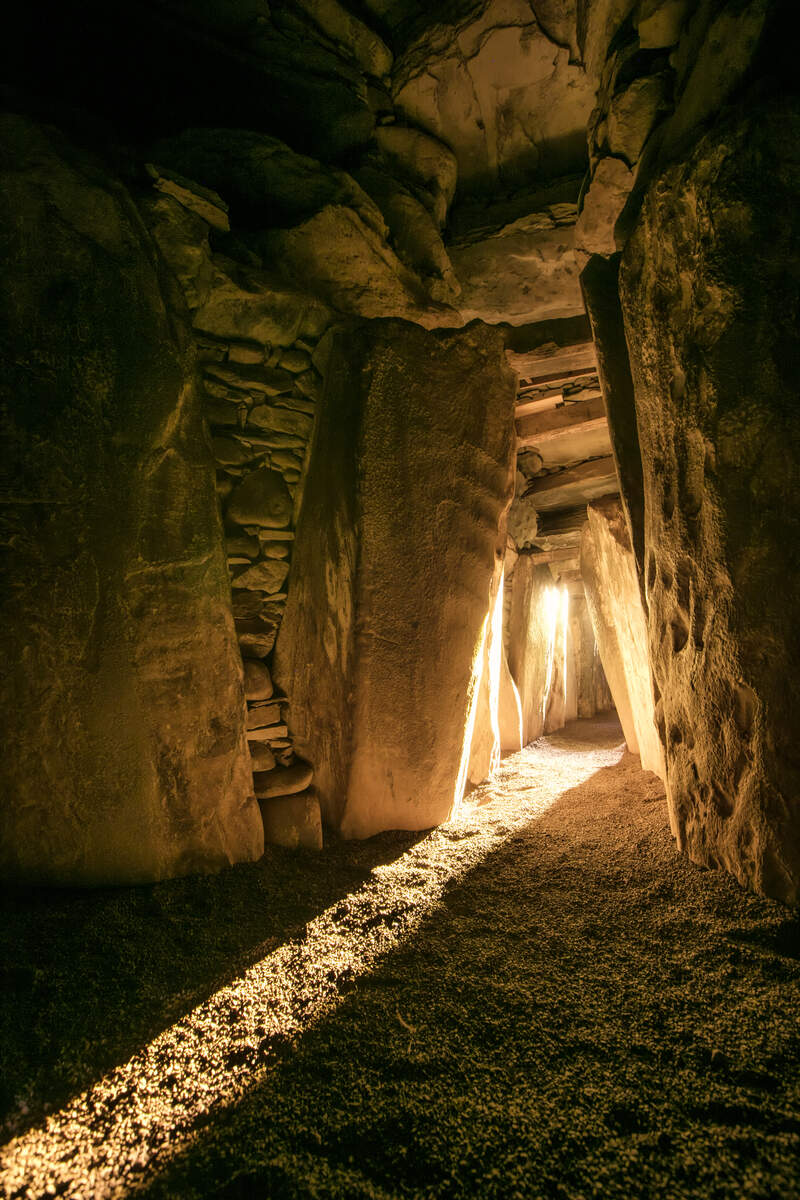
9. Newgrange, County Meath
10. Trim Castle, County Meath
Offaly:
11. Clonmacnoise, County Offaly
donation
Help me to pay the entrance fee to one of the houses on this website. This site is created purely out of love for the subject and I receive no payment so any donation is appreciated!
“Emo Court is a quintessential neo-classical mansion, set in the midst of the ancient Slieve Bloom Mountains. The famous architect James Gandon, fresh from his work on the Custom House and the Four Courts in Dublin, set to work on Emo Court in 1790. However, the building that stands now was not completed until some 70 years later [with work by Lewis Vulliamy, a fashionable London architect, who had worked on the Dorchester Hotel in London and Arthur & John Williamson, from Dublin, and later, William Caldbeck].
“The estate was home to the earls of Portarlington until the War of Independence forced them to abandon Ireland for good. The Jesuits moved in some years later [1920] and, as the Novitiate of the Irish Province, the mansion played host to some 500 of the order’s trainees.
“Major Cholmeley-Harrison took over Emo Court in the 1960s and fully restored it [to designs by Sir Albert Richardson]. He opened the beautiful gardens and parkland to the public before finally presenting the entire estate to the people of Ireland in 1994.
“You can now enjoy a tour of the house before relaxing in its charming tearoom. The gardens are a model of neo-classical landscape design, with formal lawns, a lake and woodland walks just waiting to be explored.” [2]
[1] p. 336. Tierney, Andrew. The Buildings of Ireland: Central Leinster: Kildare, Laois and Offaly. Yale University Press, New Haven and London, 2019.
“The entrancing eighteenth-century landscape at Heywood Gardens, near Ballinakill, County Laois, consists of gardens, lakes, woodland and some exciting architectural features. The park is set into a sweeping hillside. The vista to the south-east takes in seven counties.
“The architect Sir Edwin Lutyens designed the formal gardens [around 1906], which are the centrepiece of the property. It is likely that renowned designer Gertrude Jekyll landscaped them.
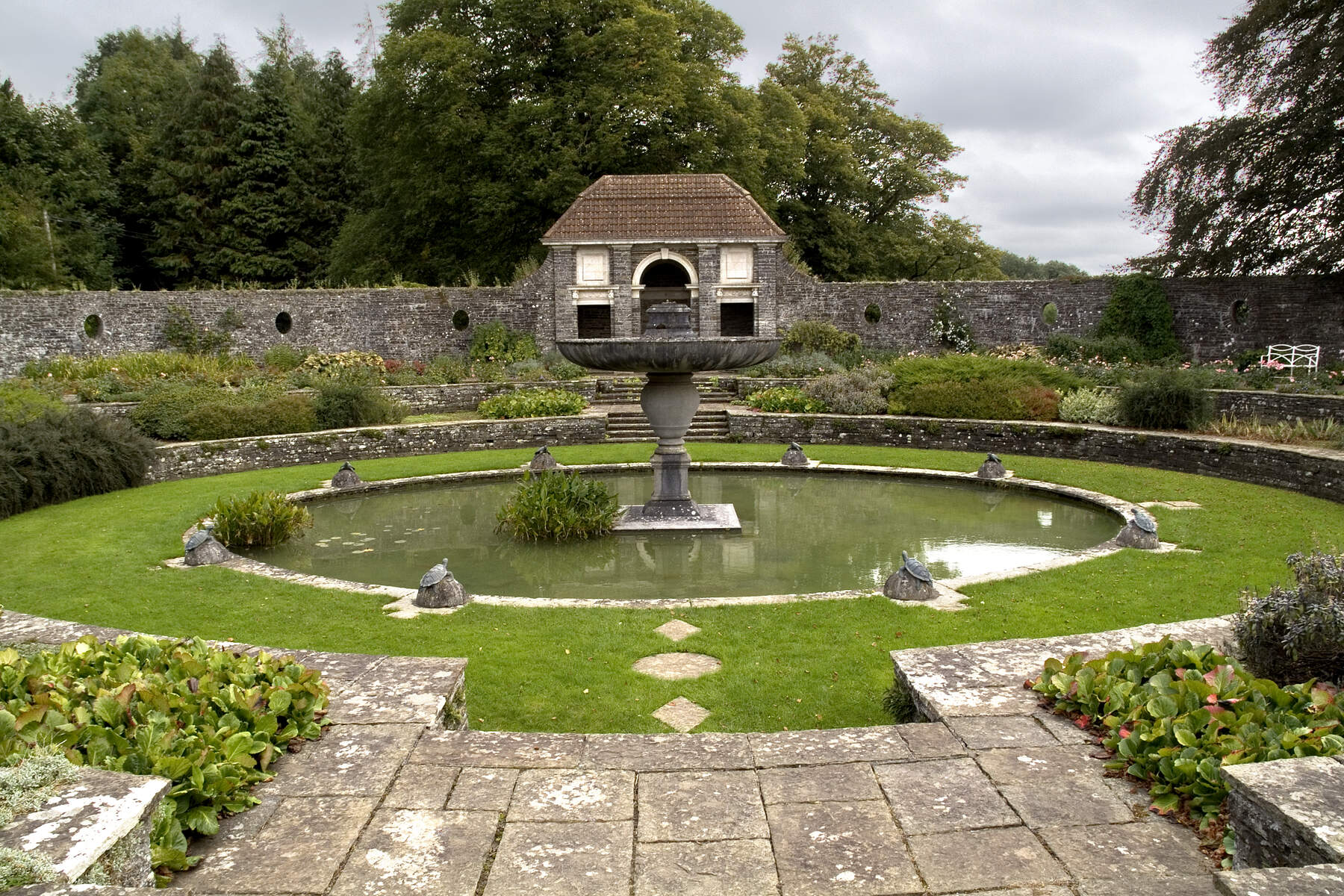
“The gardens are composed of elements linked by a terrace that originally ran along the front of the house. (Sadly, the house is no more.) One of the site’s most unusual features is a sunken garden containing an elongated pool, at whose centre stands a grand fountain.
“The Heywood experience starts beside the Gate Lodge. Information panels and signage will guide you around the magical Lutyens gardens and the surrounding romantic landscape.“
Longford:
3.Corlea Trackway Visitor Centre, Kenagh, County Longford:
Corlea Trackway Visitor Centre, Co. Longford, photograph by Chris Hill 2018 for Tourism Ireland, Ireland’s Content Pool. [see 6]Corlea Trackway Visitor Centre, Co. Longford, photograph by Chris Hill 2018 for Tourism Ireland, Ireland’s Content Pool. [see 6]
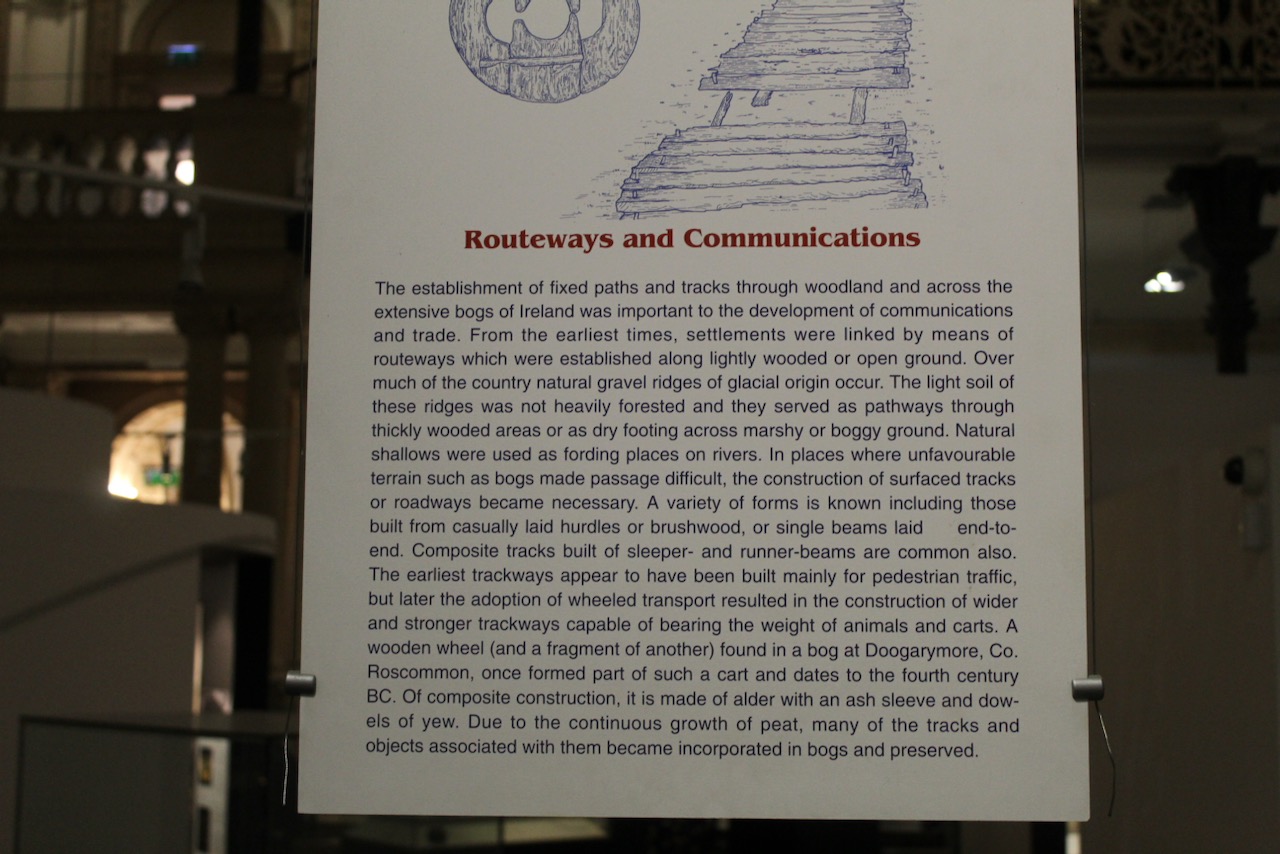
“Hidden away in the boglands of Longford, not far from Kenagh village, is an inspiring relic of prehistory: a togher – an Iron Age road – built in 148 BC. Known locally as the Danes’ Road, it is the largest of its kind to have been uncovered in Europe.
“Historians agree that it was part of a routeway of great importance. It may have been a section of a ceremonial highway connecting the Hill of Uisneach, the ritual centre of Ireland, and the royal site of Rathcroghan.
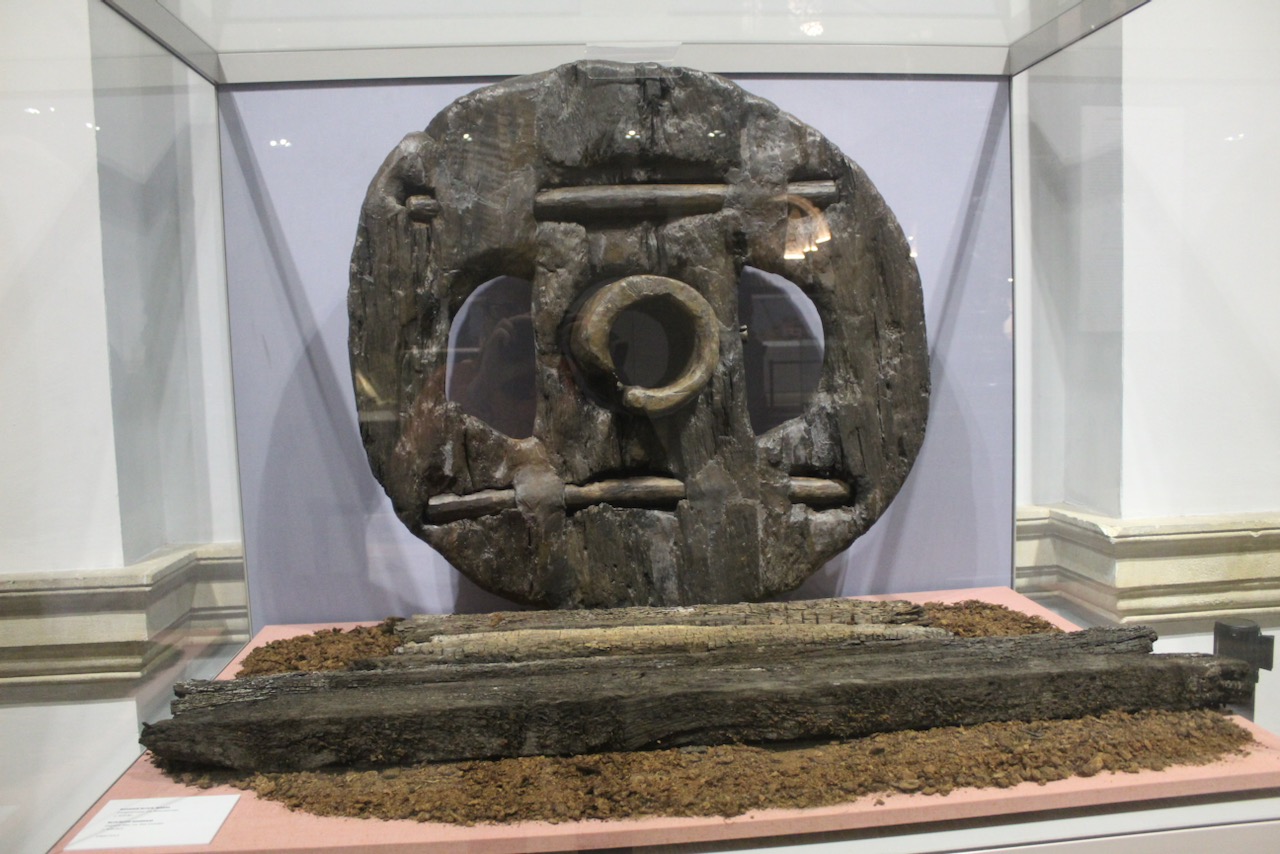
“The trackway was built from heavy planks of oak, which sank into the peat after a short time. This made it unusable, of course, but also ensured it remained perfectly preserved in the bog for the next two millennia.
“Inside the interpretive centre, an 18-metre stretch of the ancient wooden structure is on permanent display in a hall specially designed to preserve it. Don’t miss this amazing remnant of our ancient past.“
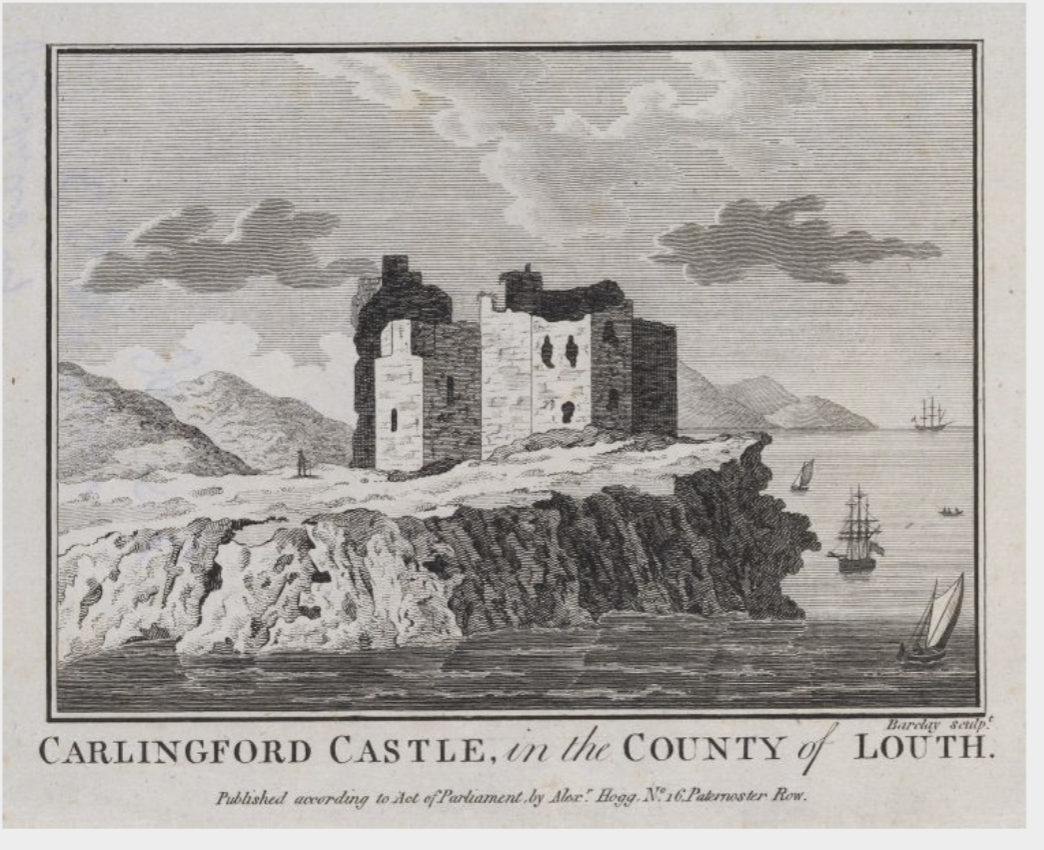
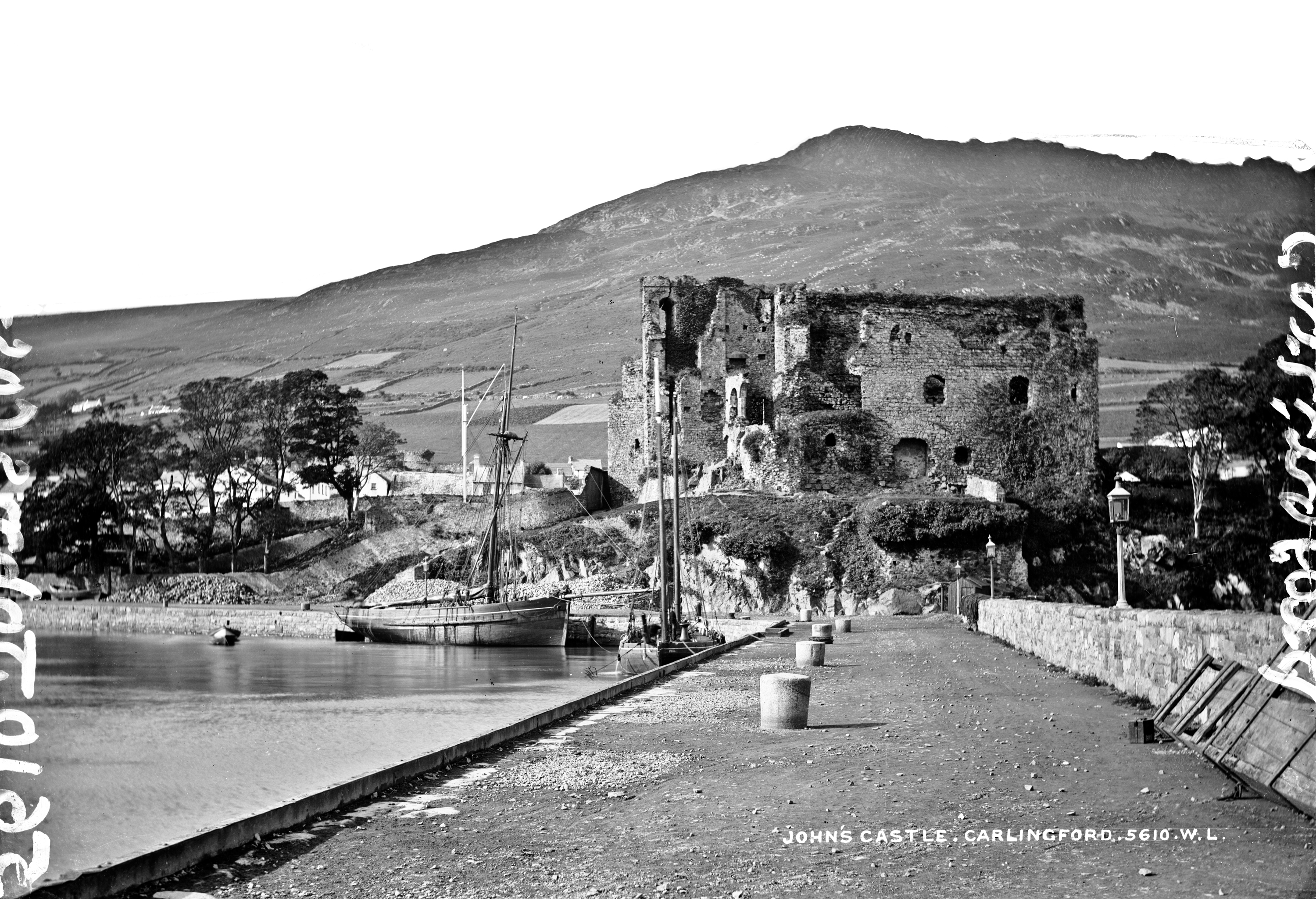
Carlingford Castle, also known as King John’s Castle (not to be confused with the one in Limerick), County Louth, photograph by Brenda Harris 2021 for Fáilte Ireland, Ireland’s Content Pool. [see 6]
“Carlingford lies in the shade of Slieve Foye, a mountain that in legend takes its form from the body of the sleeping giant Finn MacCumhaill. The castle dominates the town and overlooks the lough harbour. It was a vital point of defence for the area for centuries.
“Carlingford Castle was built around 1190, most likely by the Norman baron Hugh de Lacy. By this time Hugh’s family had grown powerful enough to make King John of England uneasy. John forced them into rebellion and seized their property in 1210. He reputedly stayed in his new castle himself. It is still known as King John’s Castle.“
Carlingford Castle, County Louth
“The Jacobites fired on the castle in 1689; William of Orange is said to have accommodated his wounded soldiers there following the Battle of the Boyne.
“Carlingford Lough Heritage Trust provides excellent guided tours of this historic Castle from March to October.“
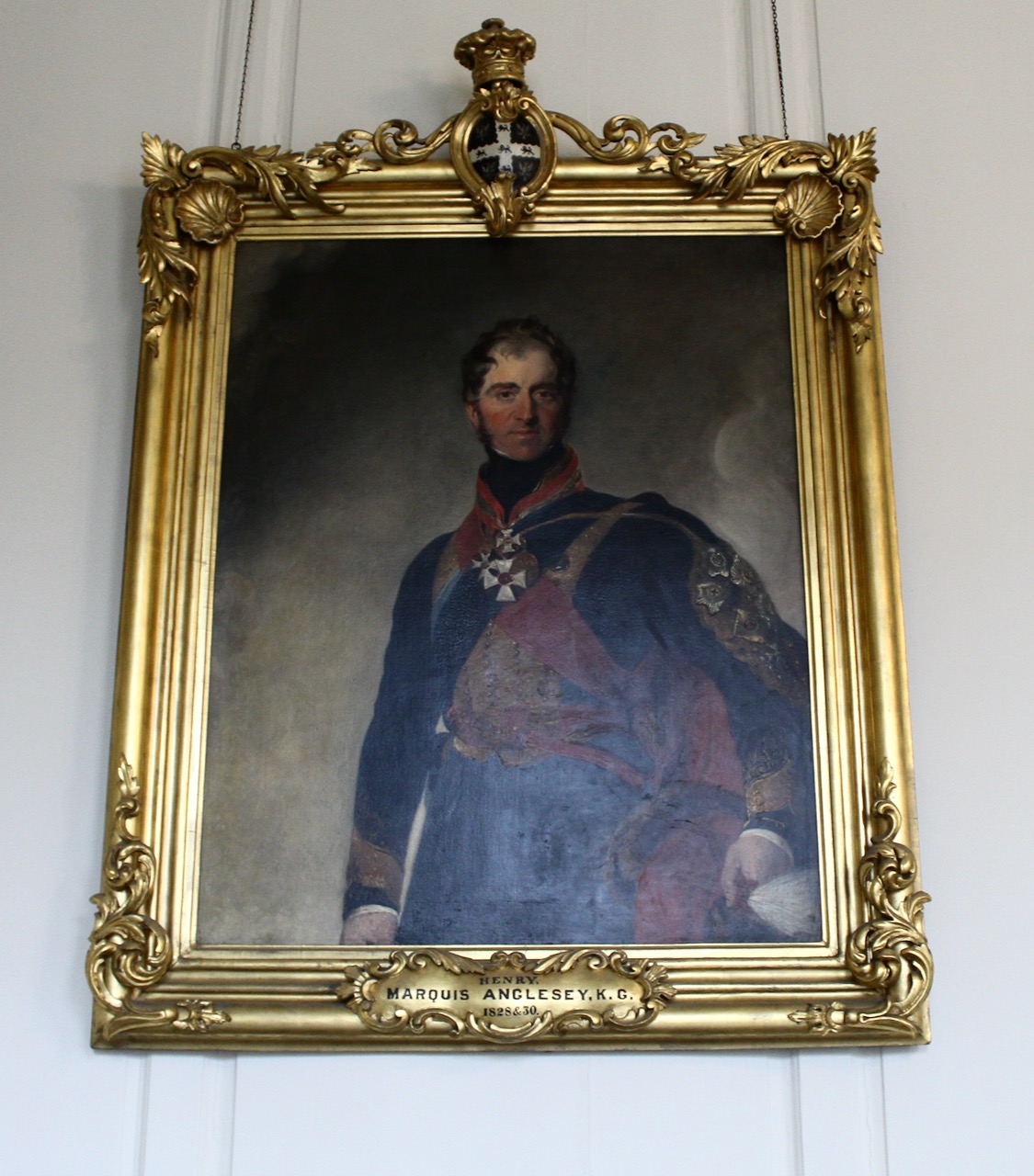
By 1778 the building was ruinous. The task of repair and preservation was begun by the Henry Paget the 1st Marquess of Anglesey in the later nineteenth century (he served as Lord Lieutenant of Ireland from 1848, and as Master General of the Ordinance), and has been continued by the OPW. [13]
Carlingford Castle Co Louth National Library of Ireland by Robert French, Lawrence Photograph Collection.Henry Paget, 1st Marquess of Anglesey (1768-1854), Viceroy in 1828 and 1830.
5. Old Mellifont Abbey, Tullyallen, Drogheda, County Louth:
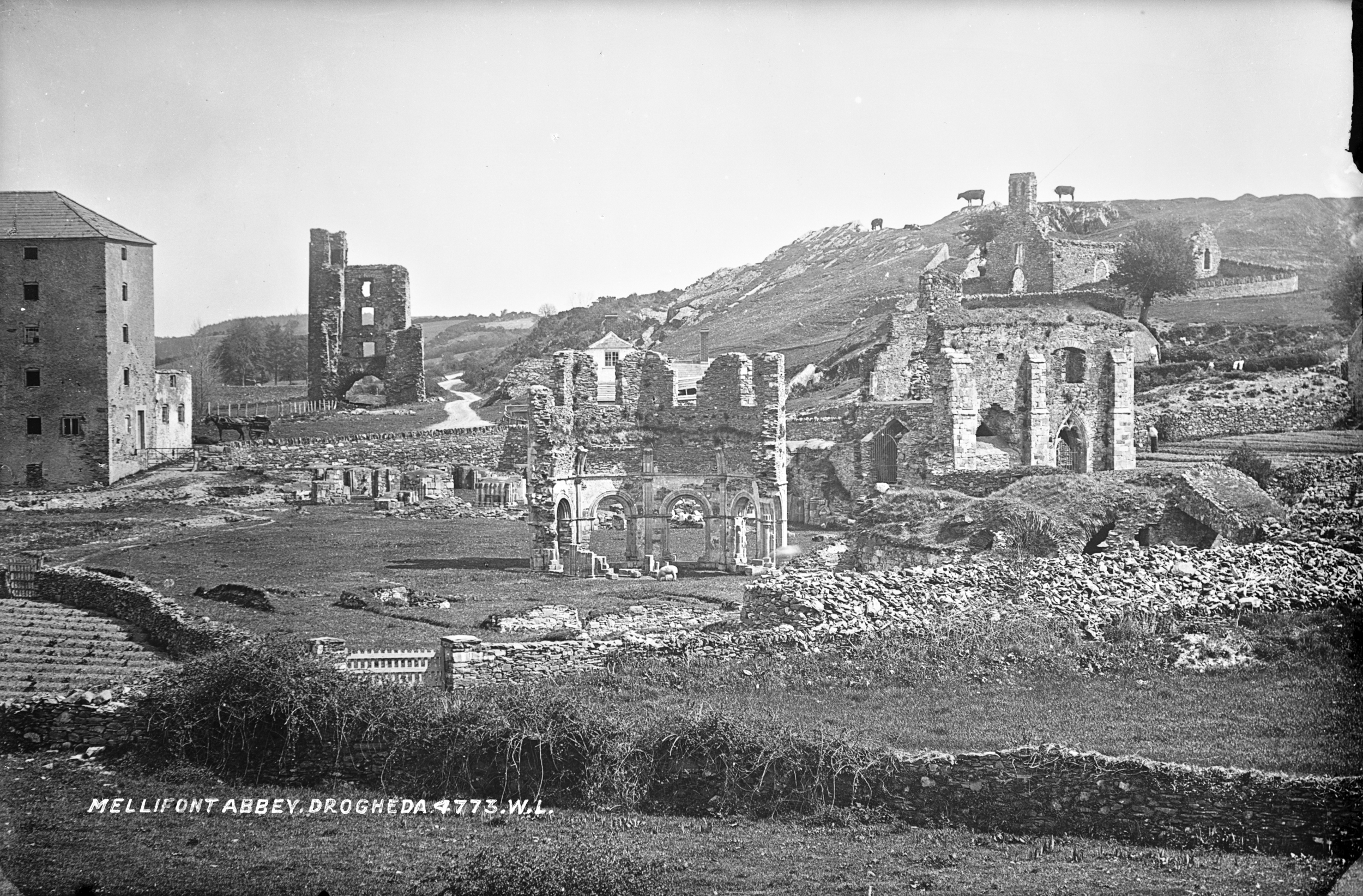
Old Mellifont Abbey, photograph by Eilish Tierney, 2020 for Fáilte Ireland, Ireland’s Content Pool. [see 6]Mellifont Abbey from National Library of Ireland Lawrence photograph collection, flickr constant commons.
General enquiries: 041 982 6459, mellifontabbey@opw.ie. Mellifont means “fountain of honey.”
“Mellifont Abbey was the first Cistercian monastery in Ireland. St Malachy of Armagh created it in 1142 with the help of a small number of monks sent by St Bernard from Clairvaux [and with the aid of Donough O’Carroll, King of Oriel – see 14]. The monks did not take well to Ireland and soon returned to France, but the abbey was completed anyway and duly consecrated with great pomp.
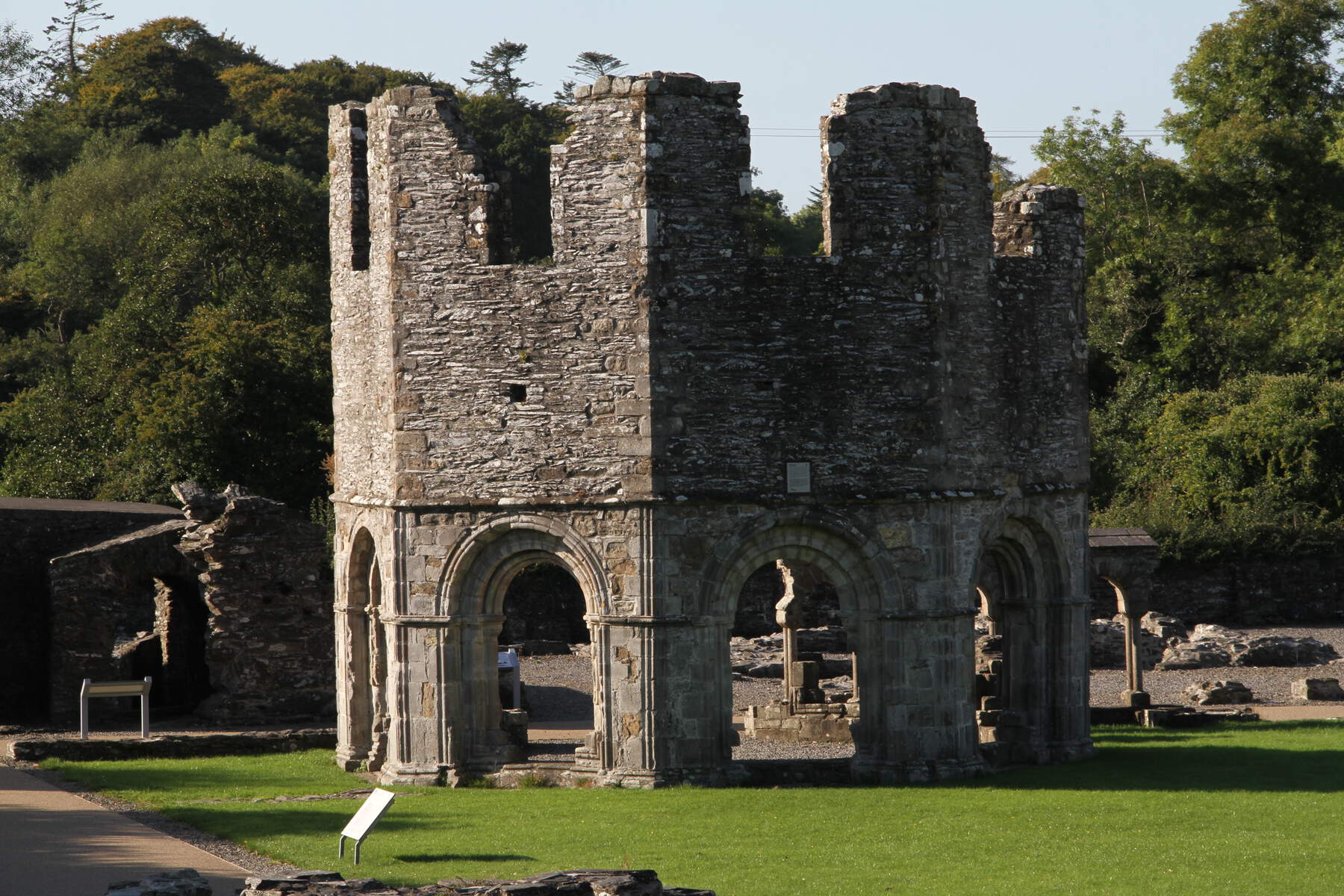
“It has several extraordinary architectural features, the foremost of which is the two-storey octagonal lavabo [the monk’s washroom].
“The monks at Mellifont hosted a critical synod in 1152. The abbey was central to the history of later centuries, too, even though it was in private hands by then. The Treaty of Mellifont, which ended the Nine Years War, was signed here in 1603, and William of Orange used the abbey as his headquarters during the momentous Battle of the Boyne.“
Mellifont Abbey ruins, the octagonal lavabo, built in around 1200, photograph by Brian Harte, 2015 for Tourism Ireland, Ireland’s Content Pool. [see 6]
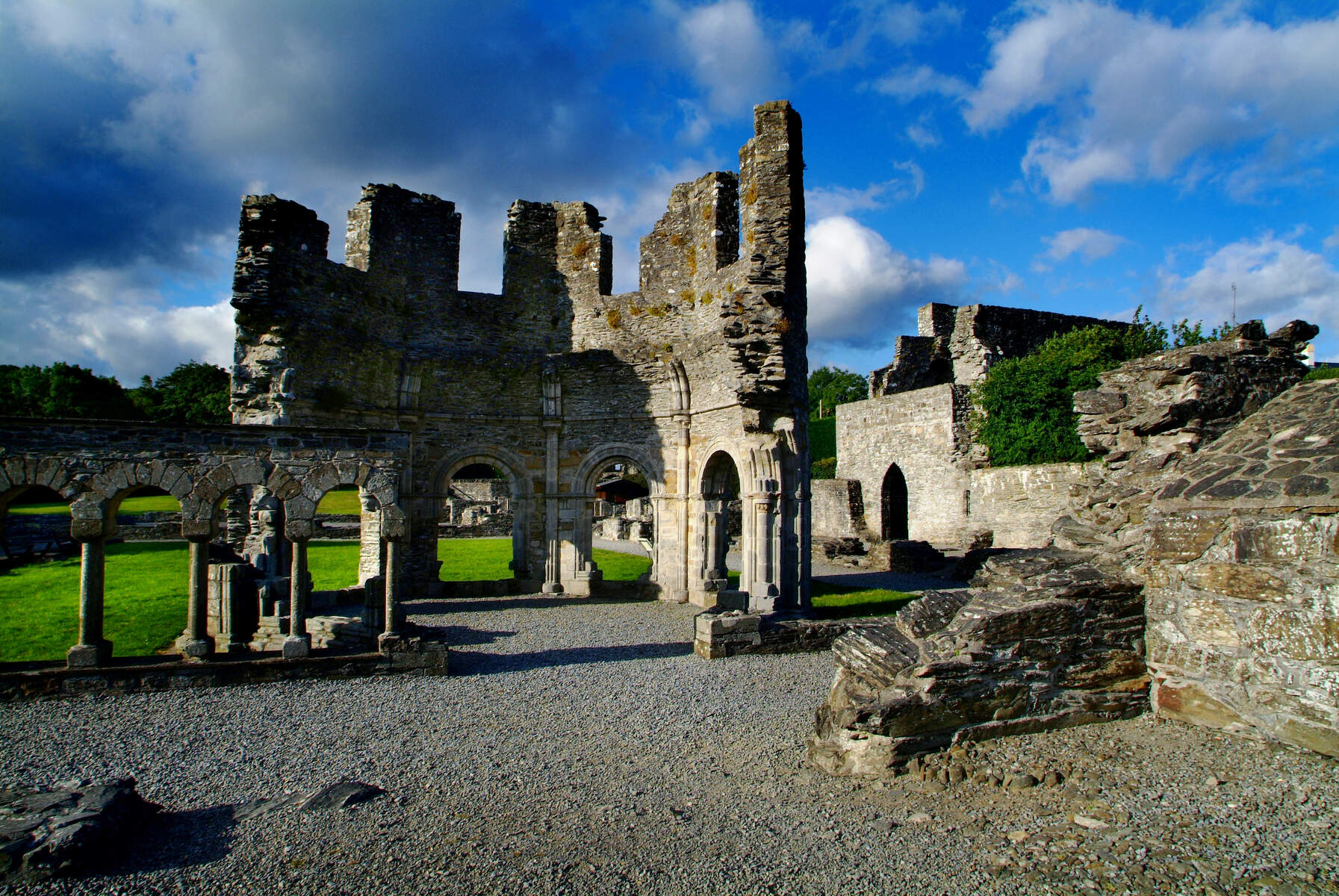
The ruins contain the medieval gatehouse, parish church, chapter house and lavabo. The octagonal lavabo was designed as a freestanding structure of two storeys, with an octagonal cistern to supply the water located at the upper level over the wash room. Wash basins were arranged around a central pier, now gone, which supported the weight of the water above. [14] The entire monastery was surrounded by a defensive wall. After the dissolution of the monasteries, Mellifont was acquired in 1540 by William Brabazon (died 1552), Vice Treasurer of Ireland, and passed later to Edward Moore (Brabazon’s wife Elizabeth Clifford remarried three times after Brabazon’s death, and one of her husbands was Edward Moore), who established a fortified house within the ruins around 1560. His descendents (Viscounts of Drogheda) lived there until 1727 (until the time of Edward Moore, 5th Earl of Drogheda), after which the house, like the abbey, fell into disrepair.
Garret Moore, 1st Viscount of Drogheda, hosted the negotiations which led to the Treaty of Mellifont in 1603.
Mellifont Abbey ruins, photograph by Chris Hill, 2014 for Tourism Ireland, Ireland’s Content Pool. [see 6]
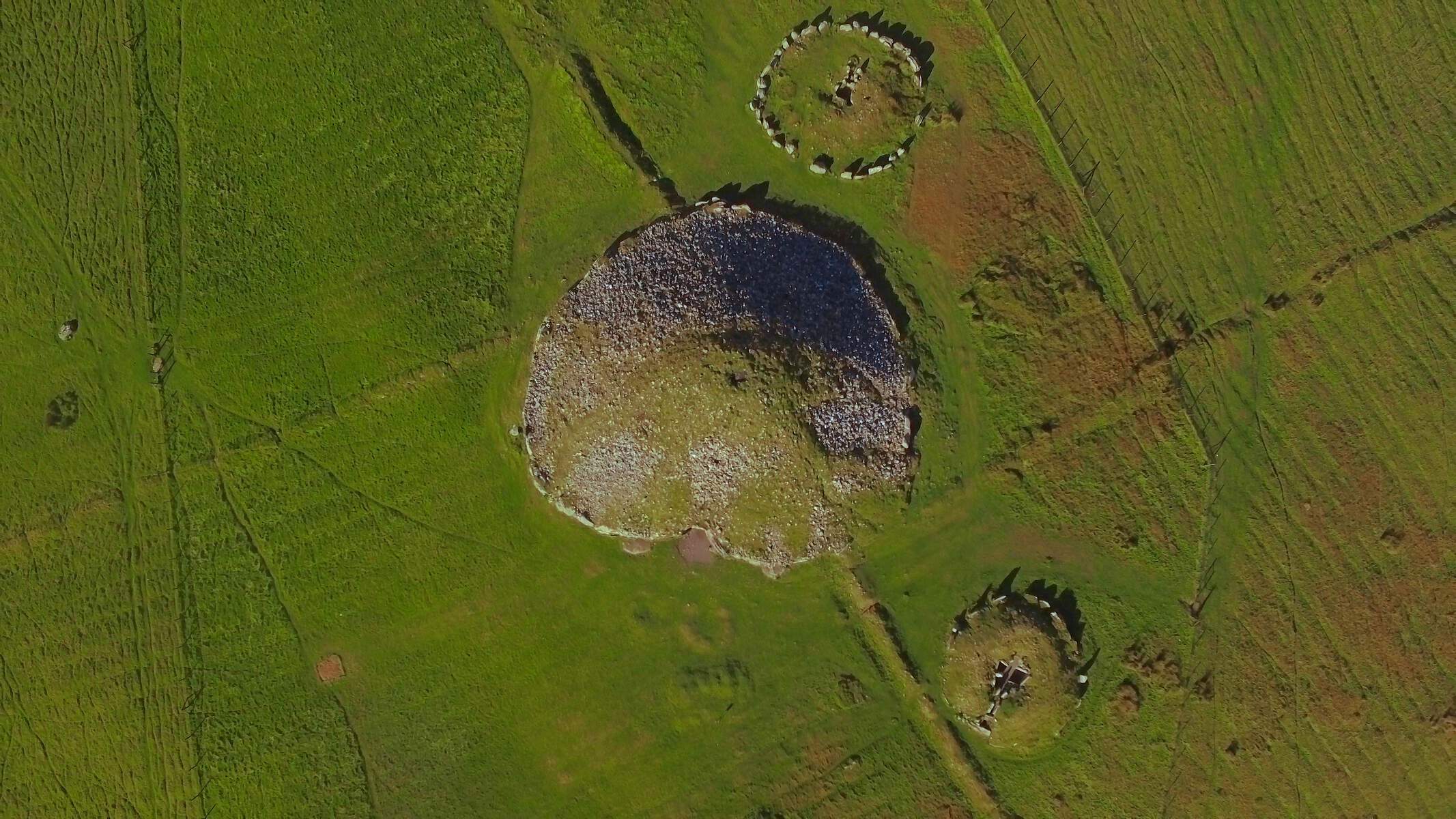
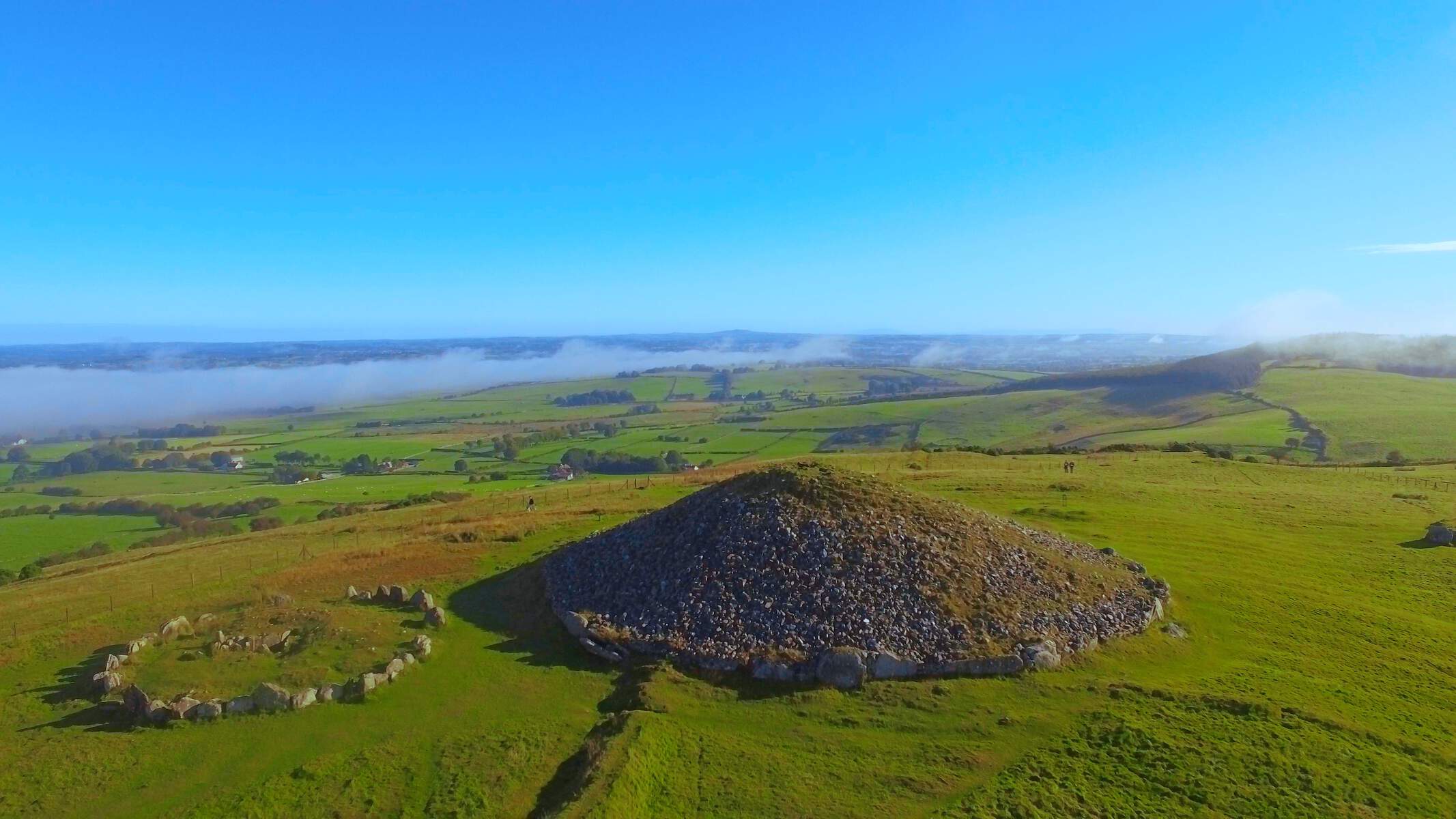
“The Loughcrew cairns, also known as the Hills of the Witch, are a group of Neolithic passage tombs near Oldcastle in County Meath. Spread over four undulating peaks, the tombs are of great antiquity, dating to 3000 BC.
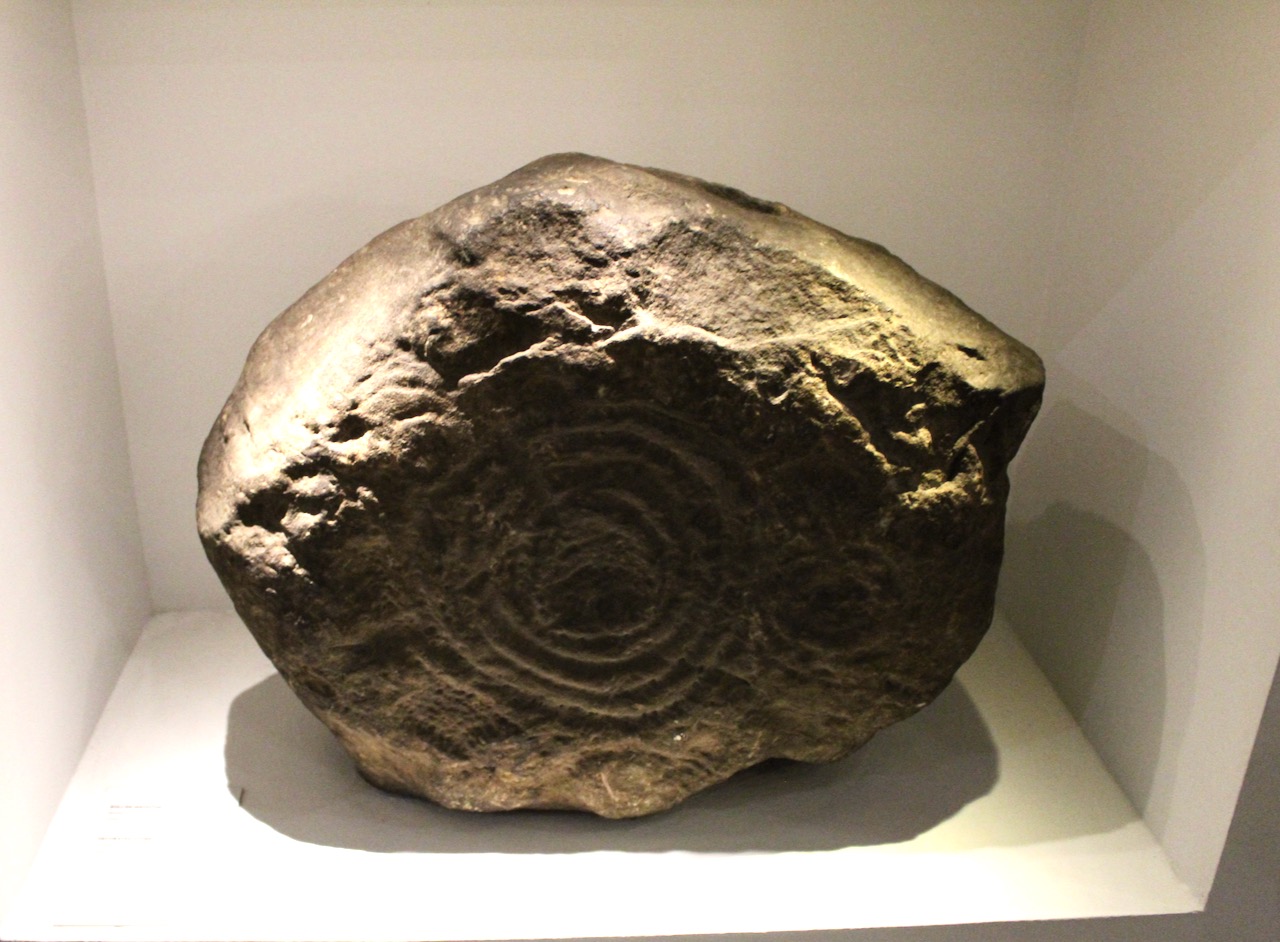
“Cairn T is one of the largest tombs in the complex. Inside it lies a cruciform chamber, a corbelled roof and some of the most beautiful examples of Neolithic art in Ireland. The cairn is aligned to sunrise at the spring and autumn equinoxes and at these times people gather there to greet the first rays of the sun.“
8. Brú na Bóinne Visitor Centre, Newgrange and Knowth, County Meath.
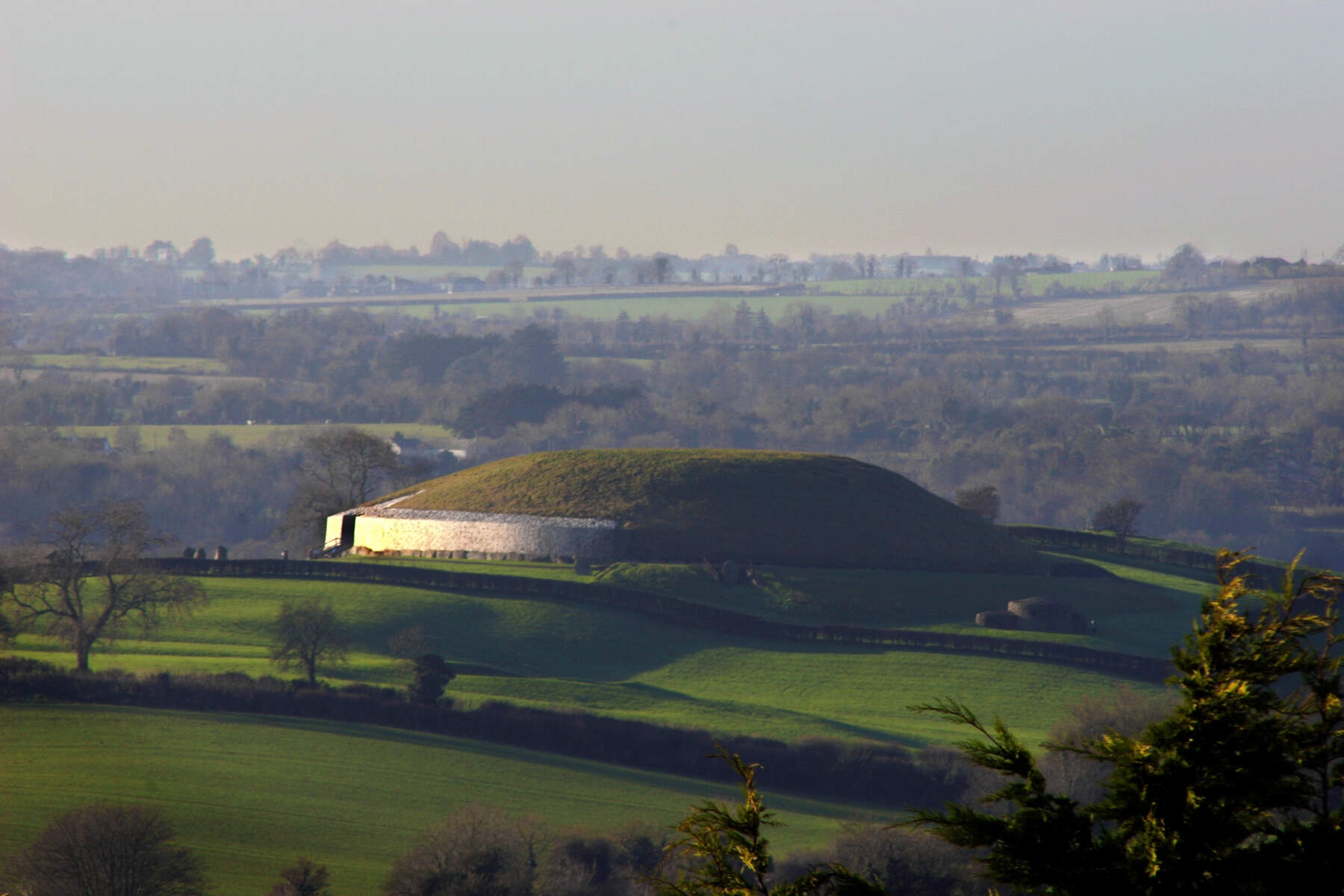
Newgrange, seen from the top of another nearby tumulus, Dowth. Newgrange is a UNESCO World Heritage Site, and dates to some 5,000 years ago…Photograph by Dave Walsh, 2004 for Tourism Ireland. [see 6]
General Information: 041 988 0300, brunaboinne@opw.ie
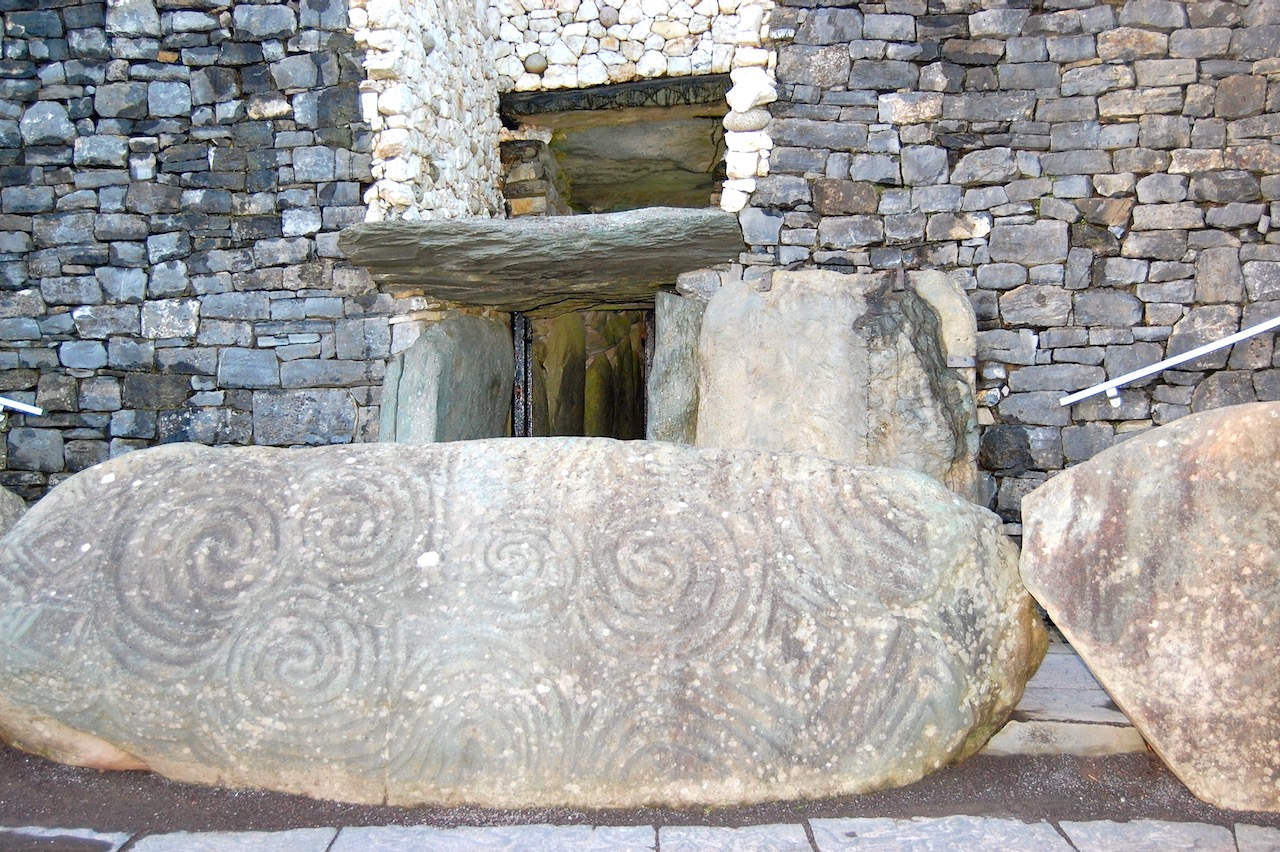
“The World Heritage Site of Brú na Bóinne is Ireland’s richest archaeological landscape and is situated within a bend in the River Boyne. Brú na Bóinne is famous for the spectacular prehistoric passage tombs of Knowth, Newgrange and Dowth which were built circa 3200BC. These ceremonial structures are among the most important Neolithic sites in the world and contain the largest collection of megalithic art in Western Europe.“
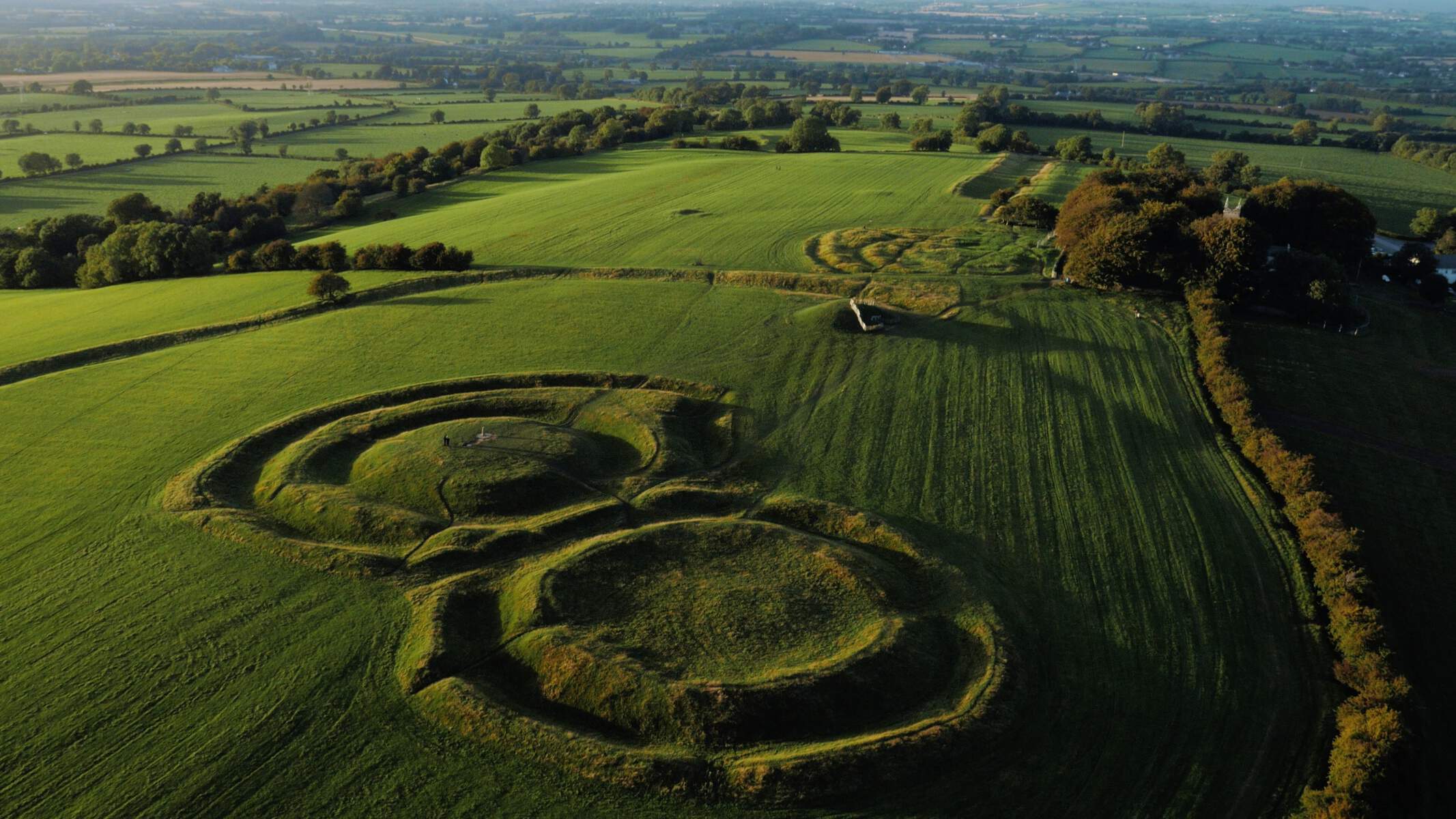
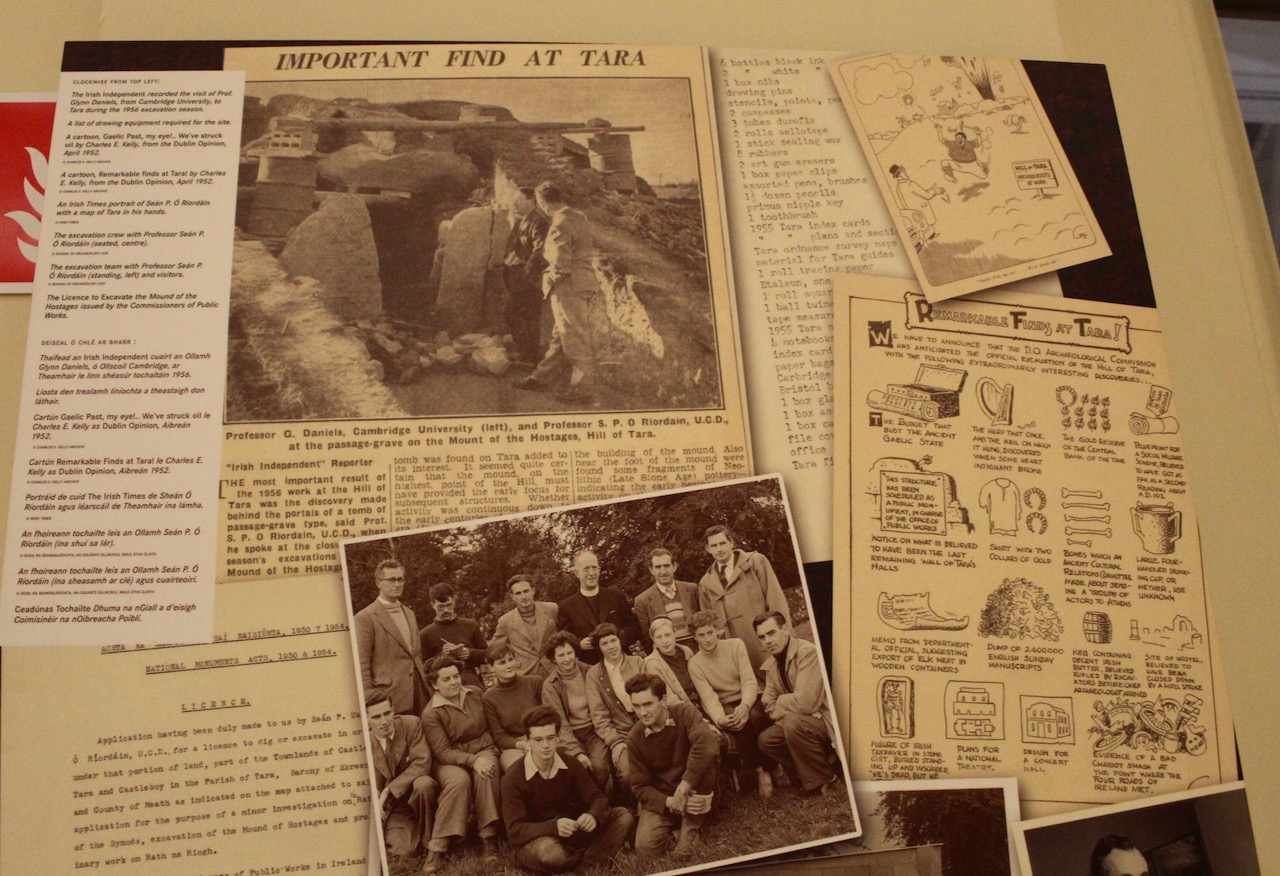
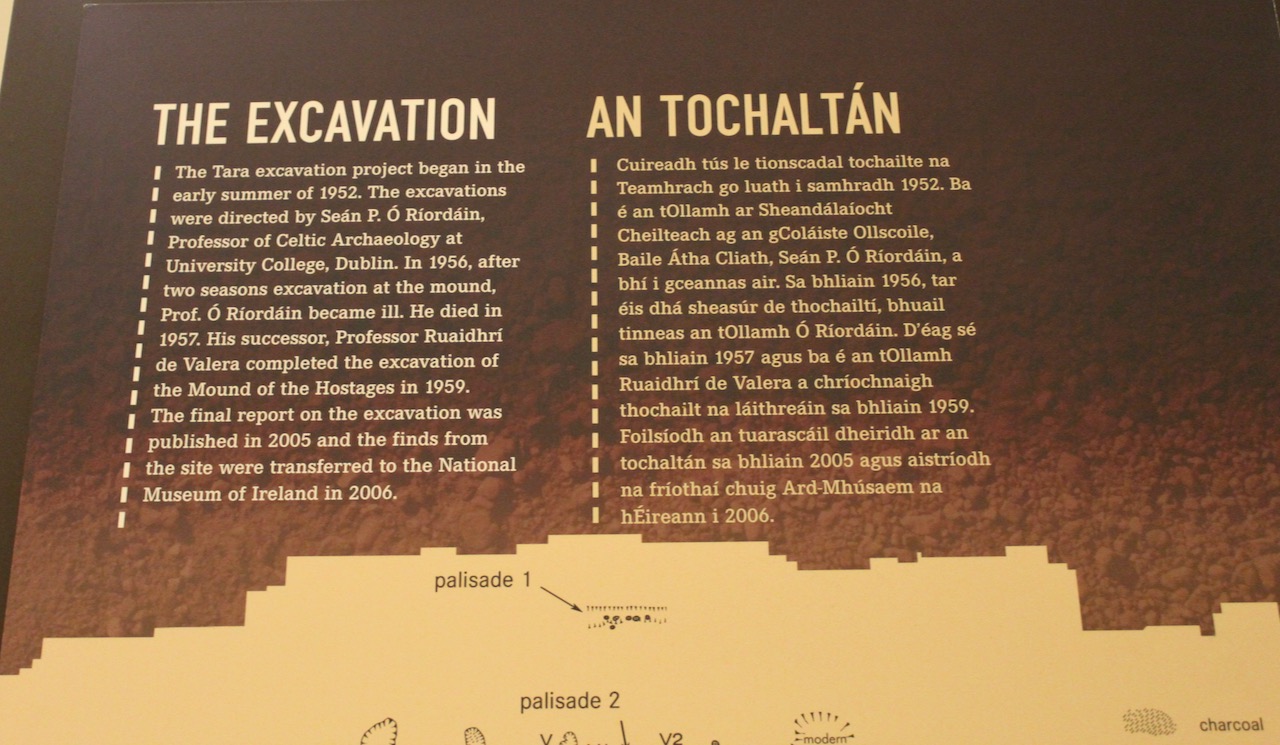
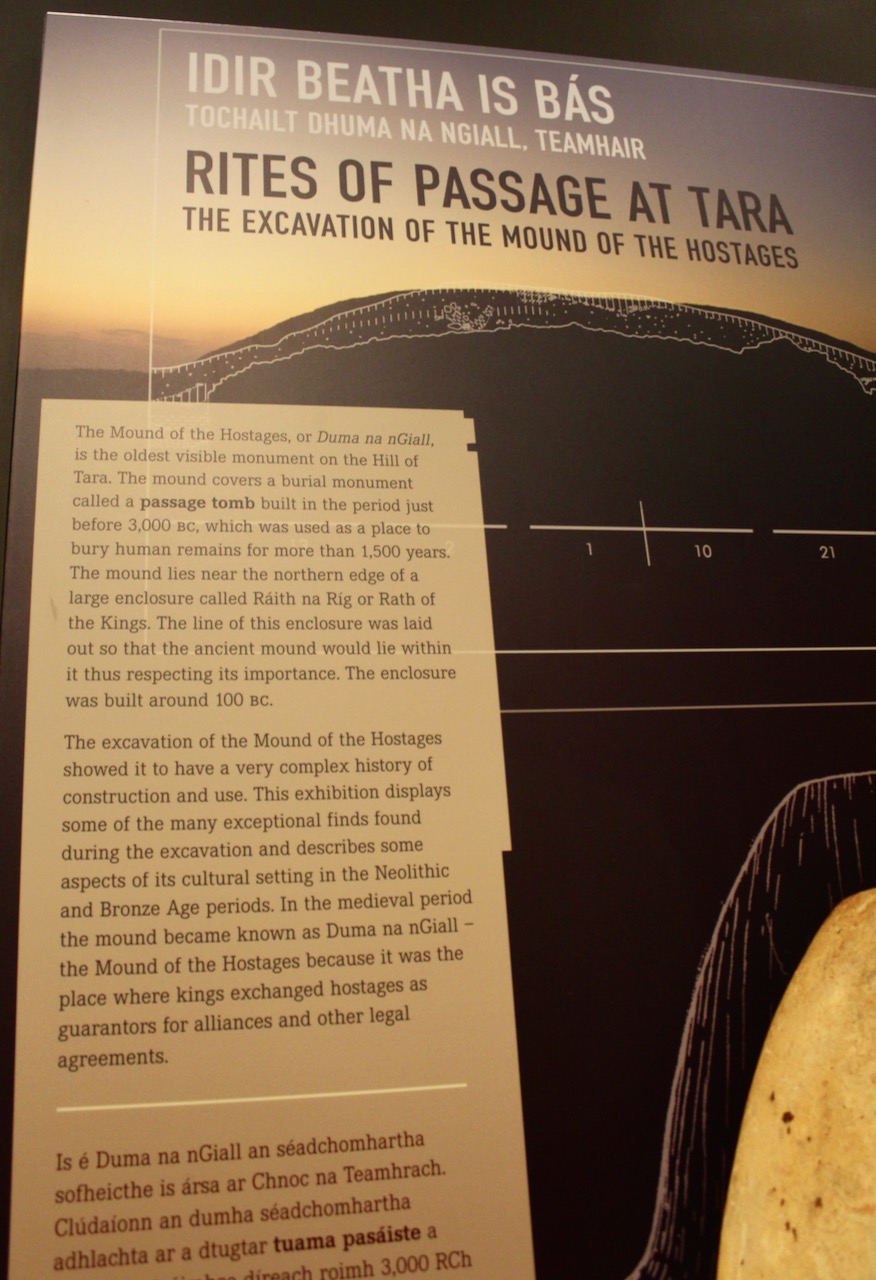
Hill of Tara, County Meath, photograph by macmillan media 2015 for Tourism Ireland, Ireland’s Content Pool. [see 6]Diorama of Tara in the National Museum of Ireland, Kildare Street, Dublin, 2022.Key: 2. Rath/Fort of the Kings, a hilltop enclosure; 3: Royal Seat, a barrow; 4. Cormac’s House, a ringfort; 5. Stone of Destiny, Liah Fail, a standing stone; 6. Mound of the Hostages, a passage tomb; 7. Rath of the Synods, an enclosure; 8. Banqueting Hall, a linear earthwork.
General information: 046 902 5903, hilloftara@opw.ie
From the OPW website:
“The Hill of Tara has been important since the late Stone Age, when a passage tomb was built there. However, the site became truly significant in the Iron Age (600 BC to 400 AD) and into the Early Christian Period when it rose to supreme prominence – as the seat of the high kings of Ireland. All old Irish roads lead to this critical site.
“St Patrick himself went there in the fifth century. As Christianity achieved dominance over the following centuries, Tara’s importance became symbolic. Its halls and palaces have now disappeared and only earthworks remain.
“There are still remarkable sights to be seen, however. Just one example is the Lia Fáil – the great coronation stone and one of the four legendary treasures of the Tuatha Dé Danann – which stands proudly on the monument known as An Forradh.
“Guided tours of the site will help you understand the regal history of this exceptional place and imagine its former splendour.“
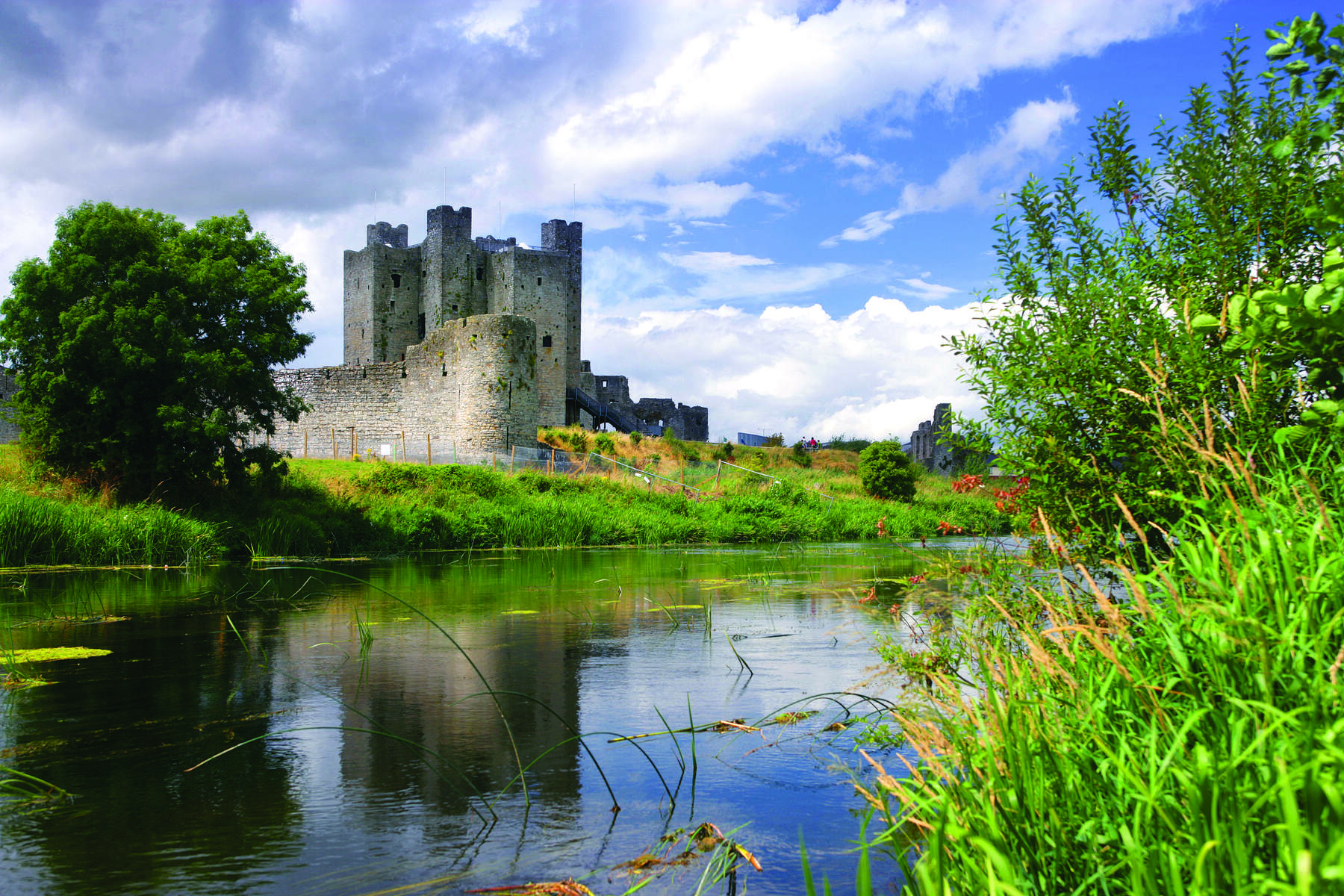
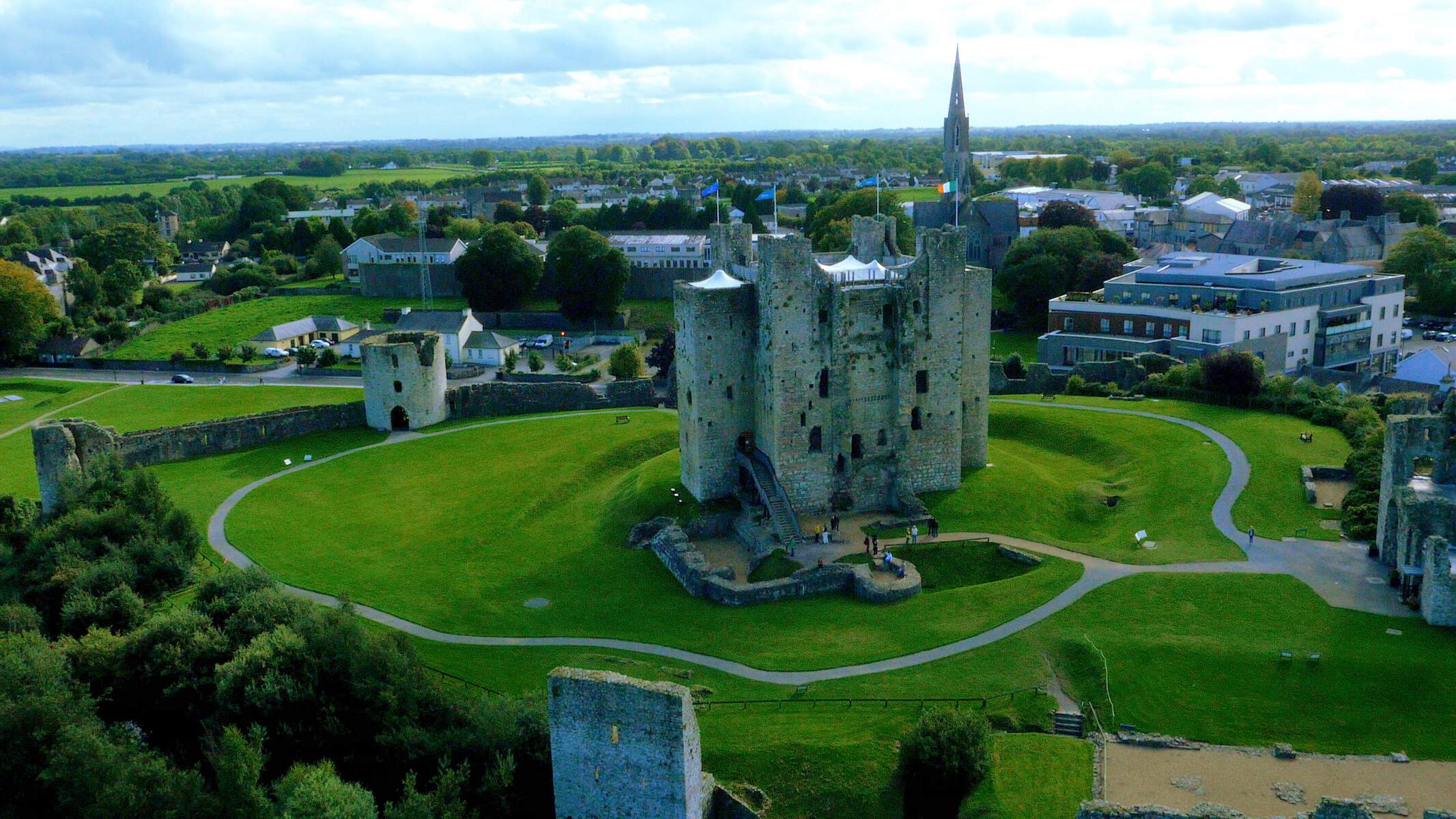
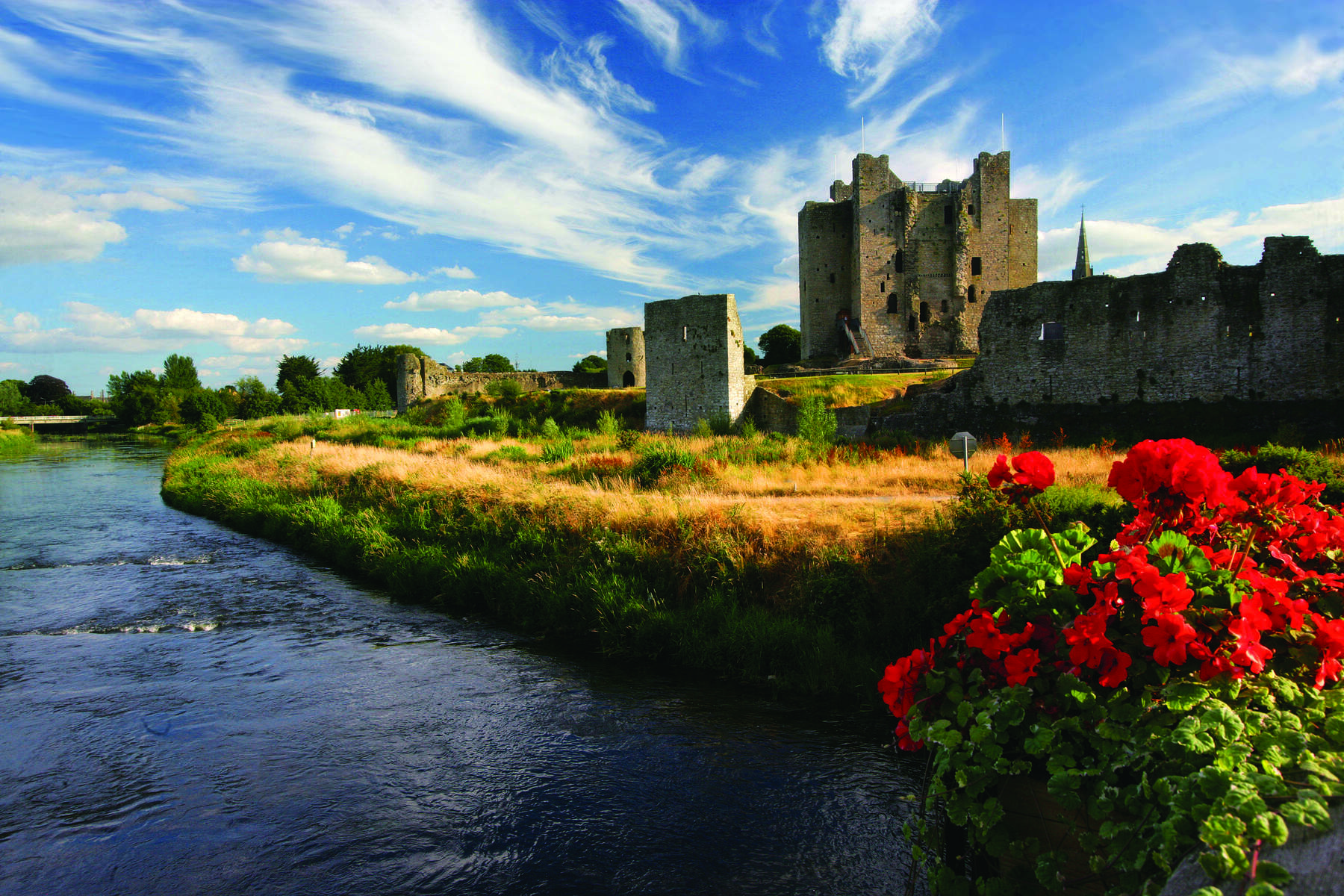
Trim Castle and the River Boyne, photograph by Brian Morrison, 2015 for Tourism Ireland, Ireland’s Content Pool. [see 6]Trim Castle and the River Boyne, photograph by macmillan media, 2015 for Tourism Ireland, Ireland’s Content Pool. [see 6]
General information: 046 943 8619, trimcastle@opw.ie
“Few places in Ireland contain more medieval buildings than the heritage town of Trim. Trim Castle is foremost among those buildings.
“In fact, the castle is the largest Anglo-Norman fortification in Ireland. Hugh de Lacy and his successors took 30 years to build it.
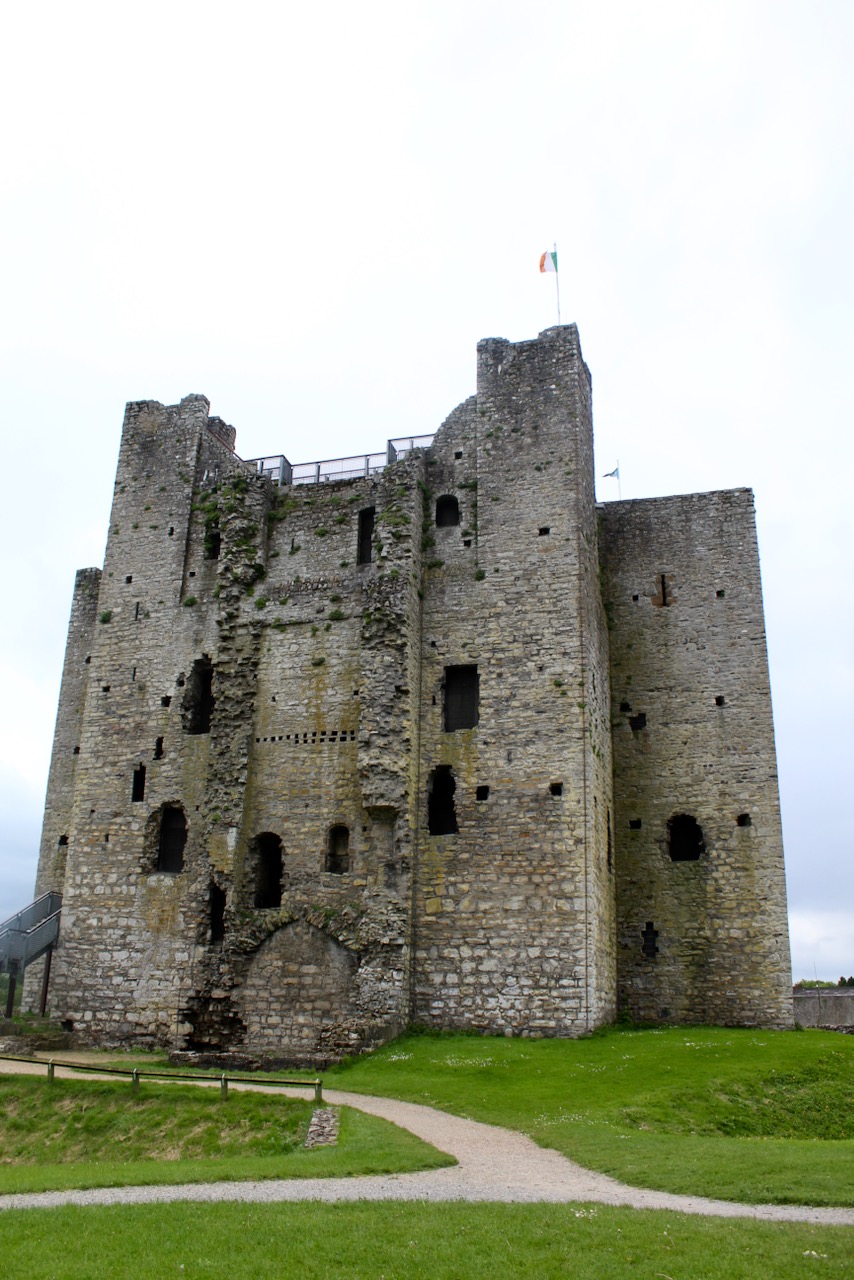
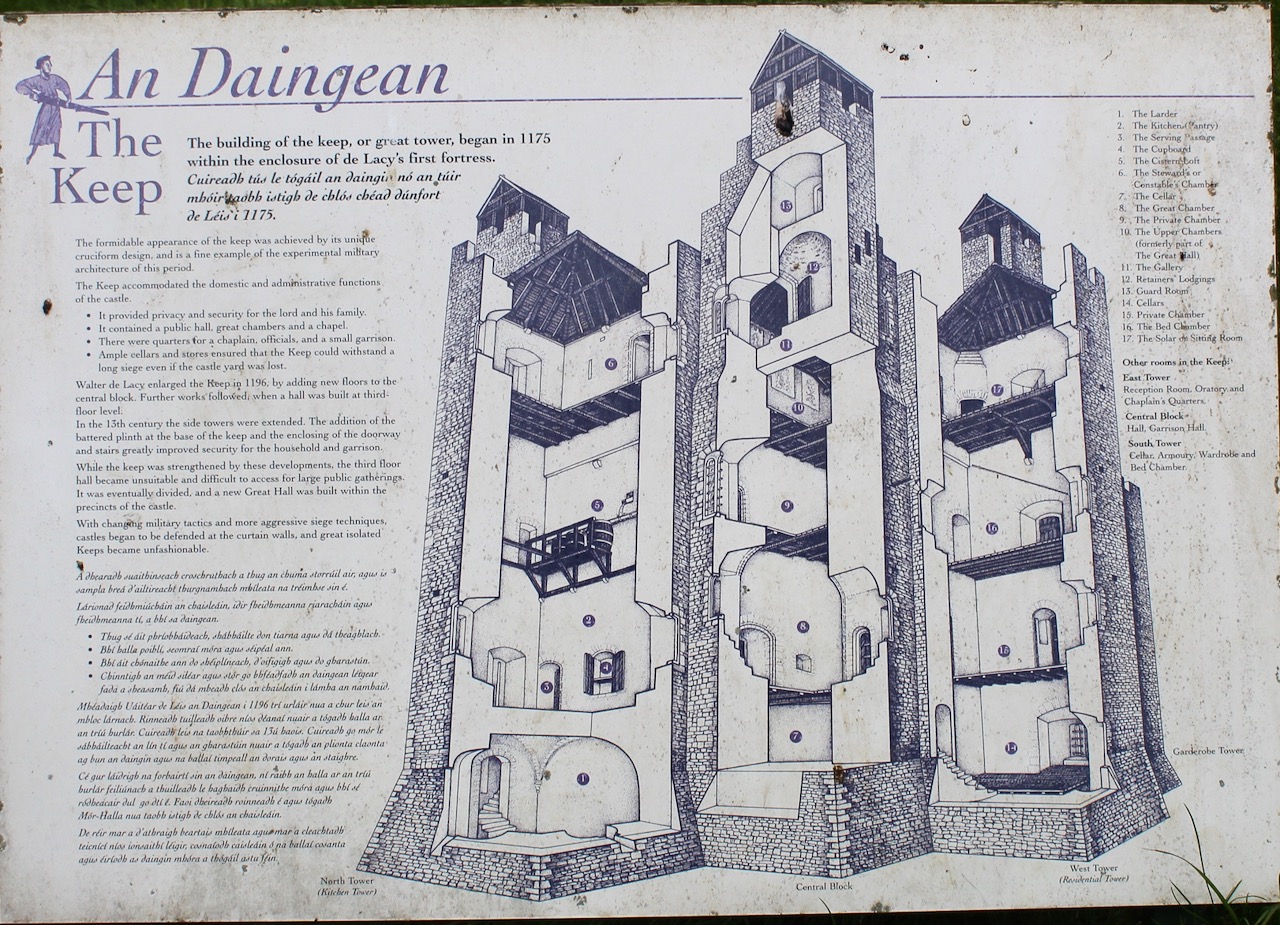
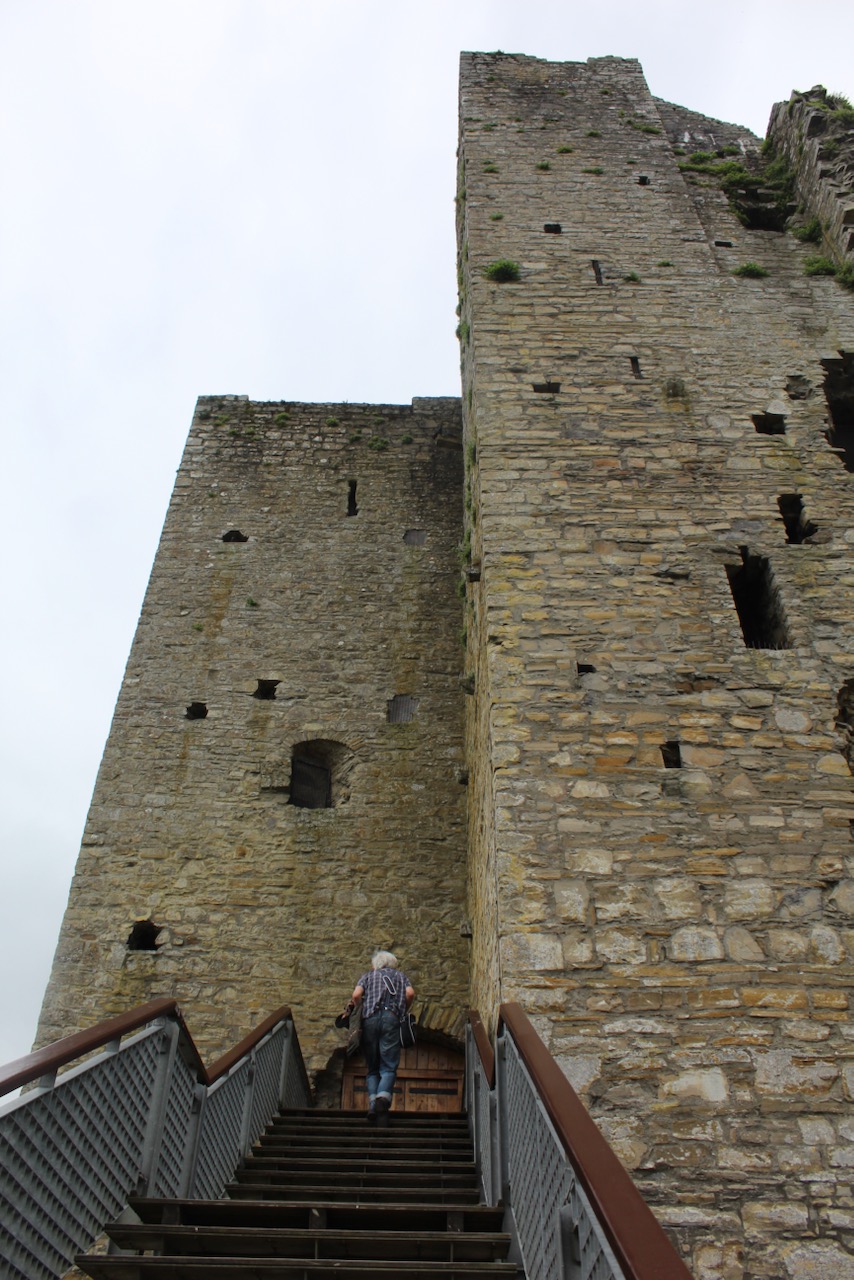
“The central fortification is a monumental three-storey keep. This massive 20-sided tower, which is cruciform in shape, was all but impregnable in its day. It was protected by a ditch, curtain wall and water-filled moat.
“Modern walkways now allow you to look down over the interior of the keep – a chance to appreciate the sheer size and thickness of the mighty castle walls.
“The castle is often called King John’s Castle although when he visited the town he preferred to stay in his tent on the other side of the river. Richard II visited Trim in 1399 and left Prince Hal later Henry V as a prisoner in the castle.” I never knew we had such a link to King Henry V and Shakespeare’s play, Henry IV!
Trim Castle and the River Boyne, photograph by Brian Morrison, 2006 for Tourism Ireland, Ireland’s Content Pool. [see 6]
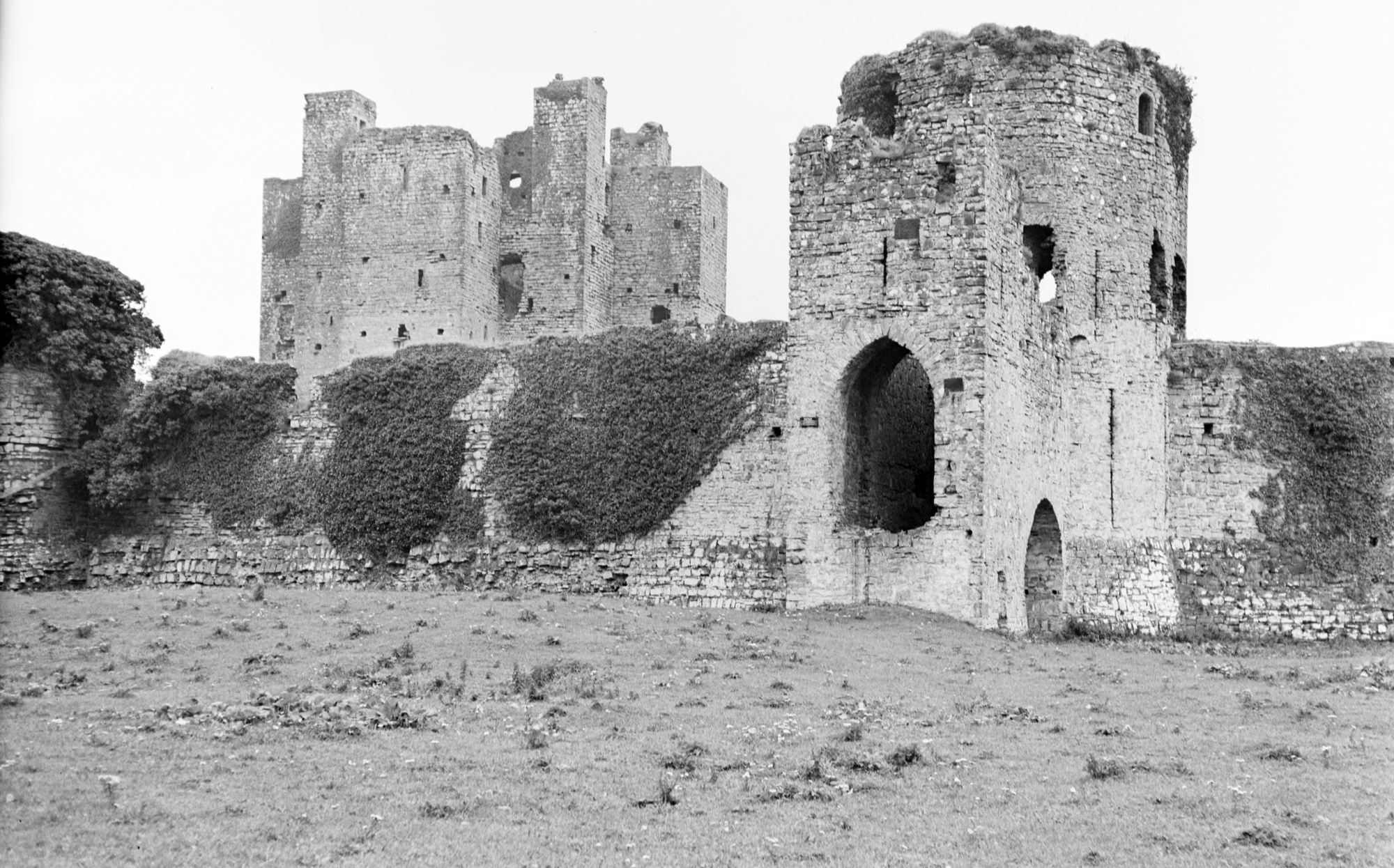
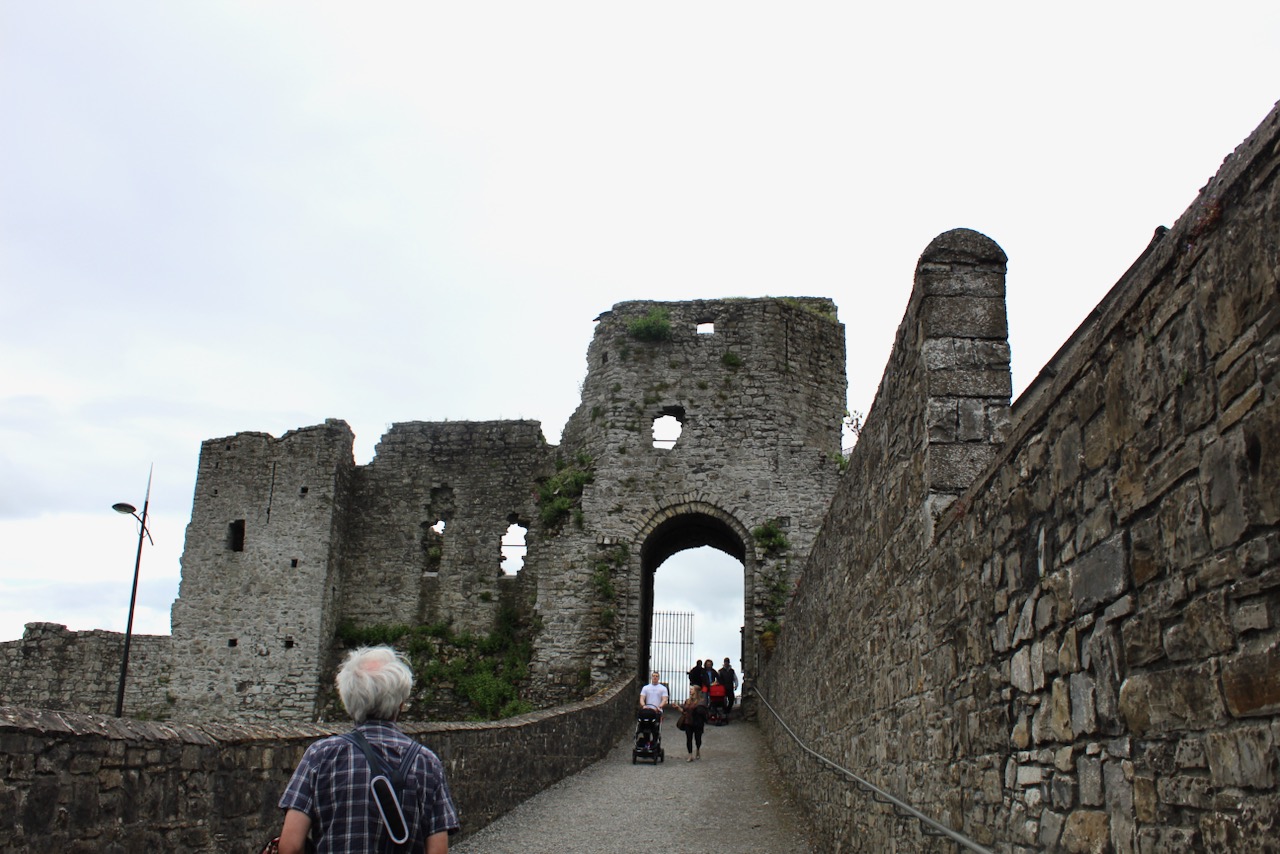
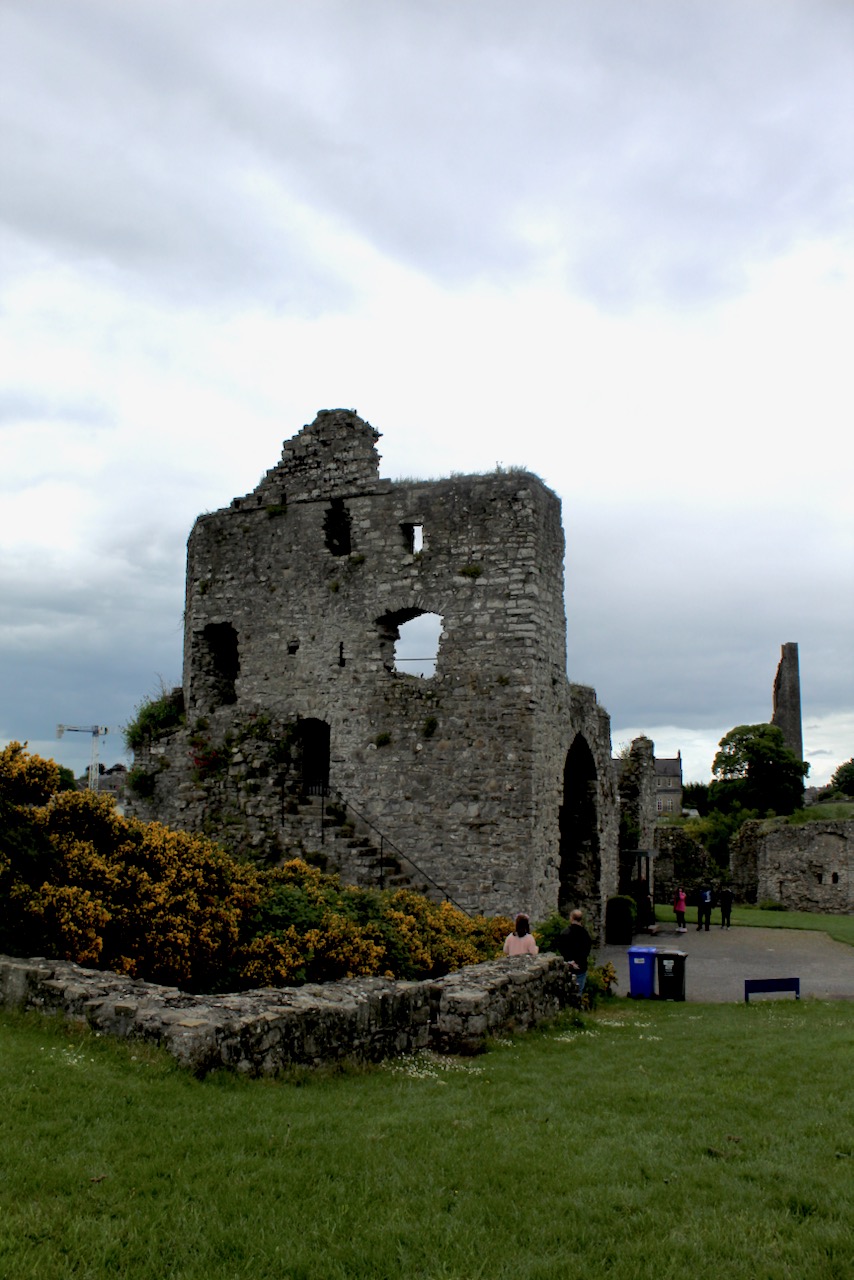
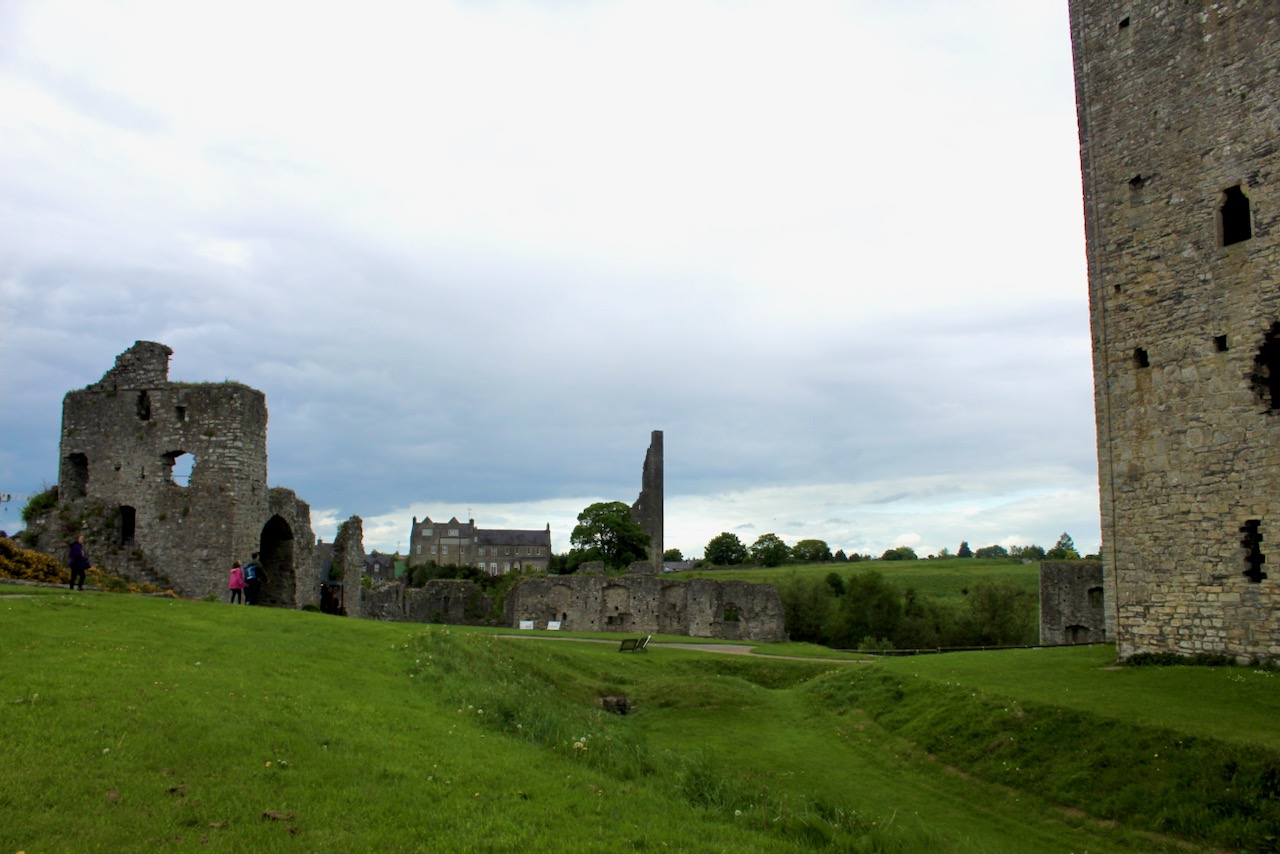
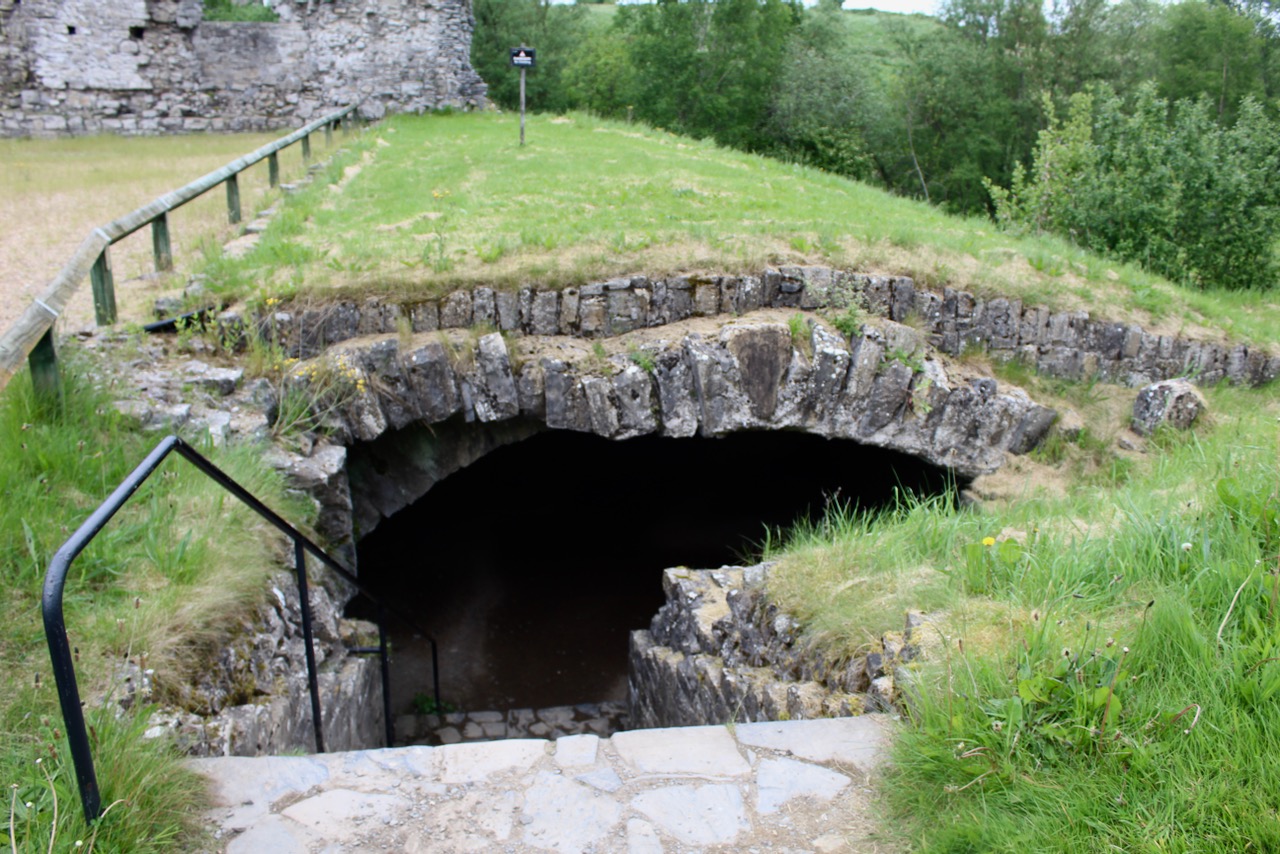
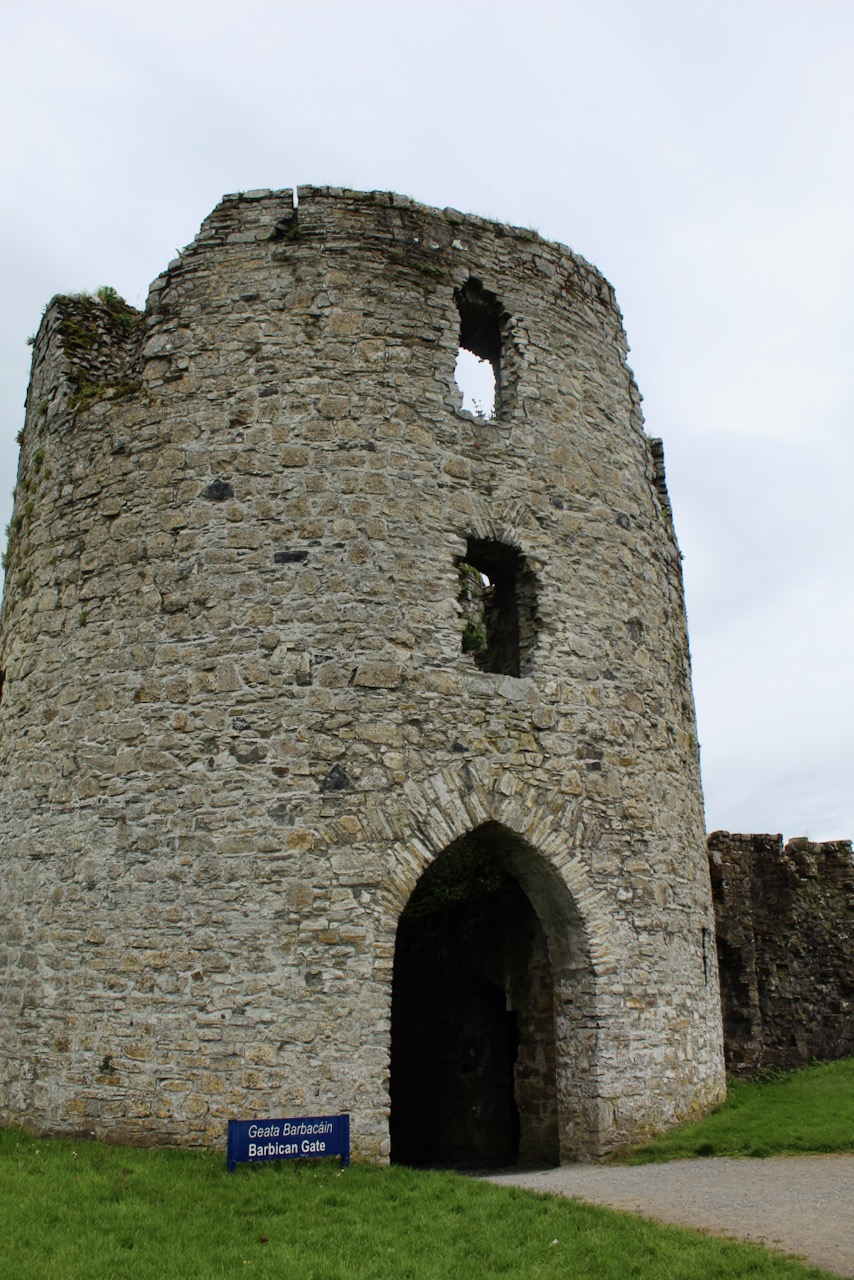
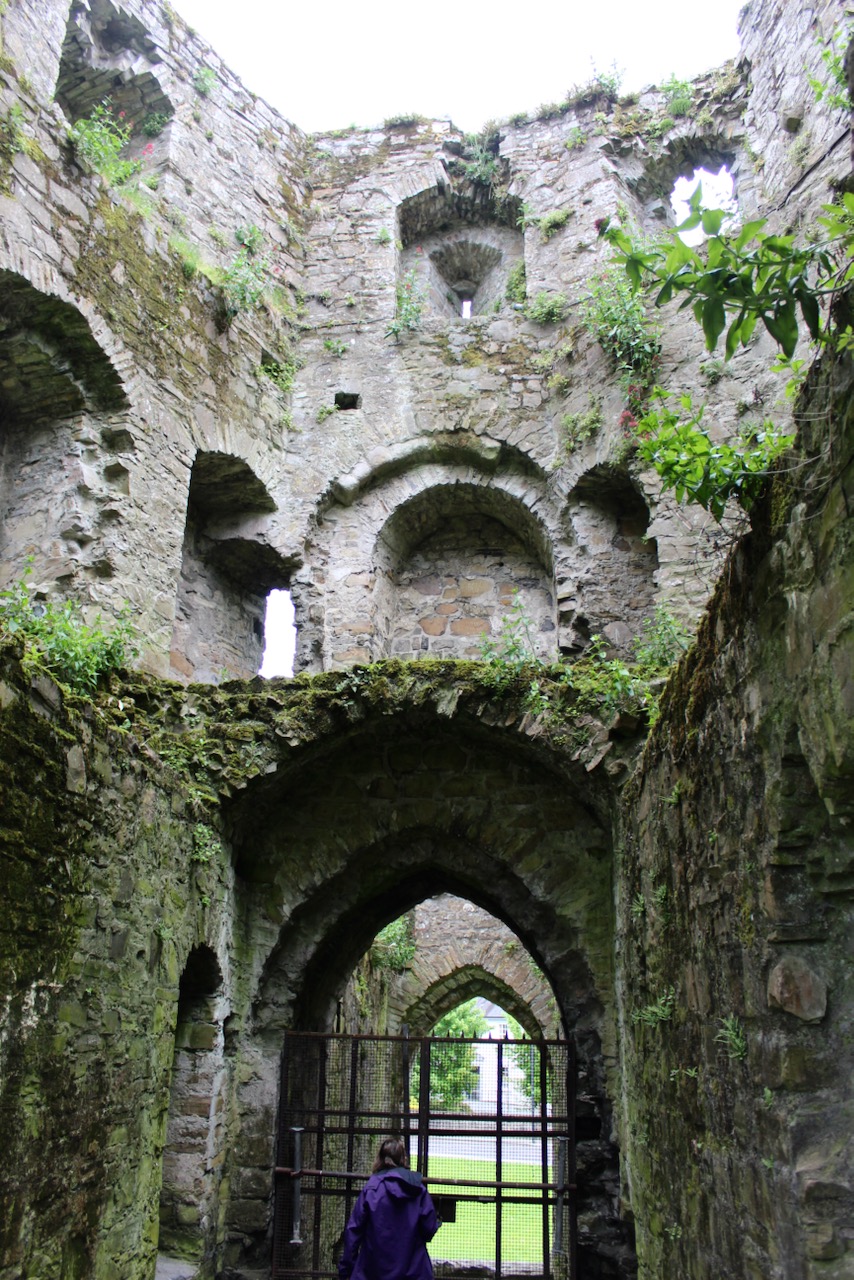
Patrick Comerford gives an excellent history of Trim Castle in his blog. [18] The castle stands within a three acre bailey, surrounded by a defensive perimeter wall. The curtain wall of the castle is fortified by a series of semicircular open-back towers. There were two entrances to Trim Castle, one, beside the car park, is flanked by a gatehouse, and the second is a barbican gate and tower. [19]
We visited in May 2022, after visiting St. Mary’s Abbey (also called Talbot’s Castle) – more on that soon. We were late entering so the entry to inside the castle was closed, unfortunately – we shall have to visit again!
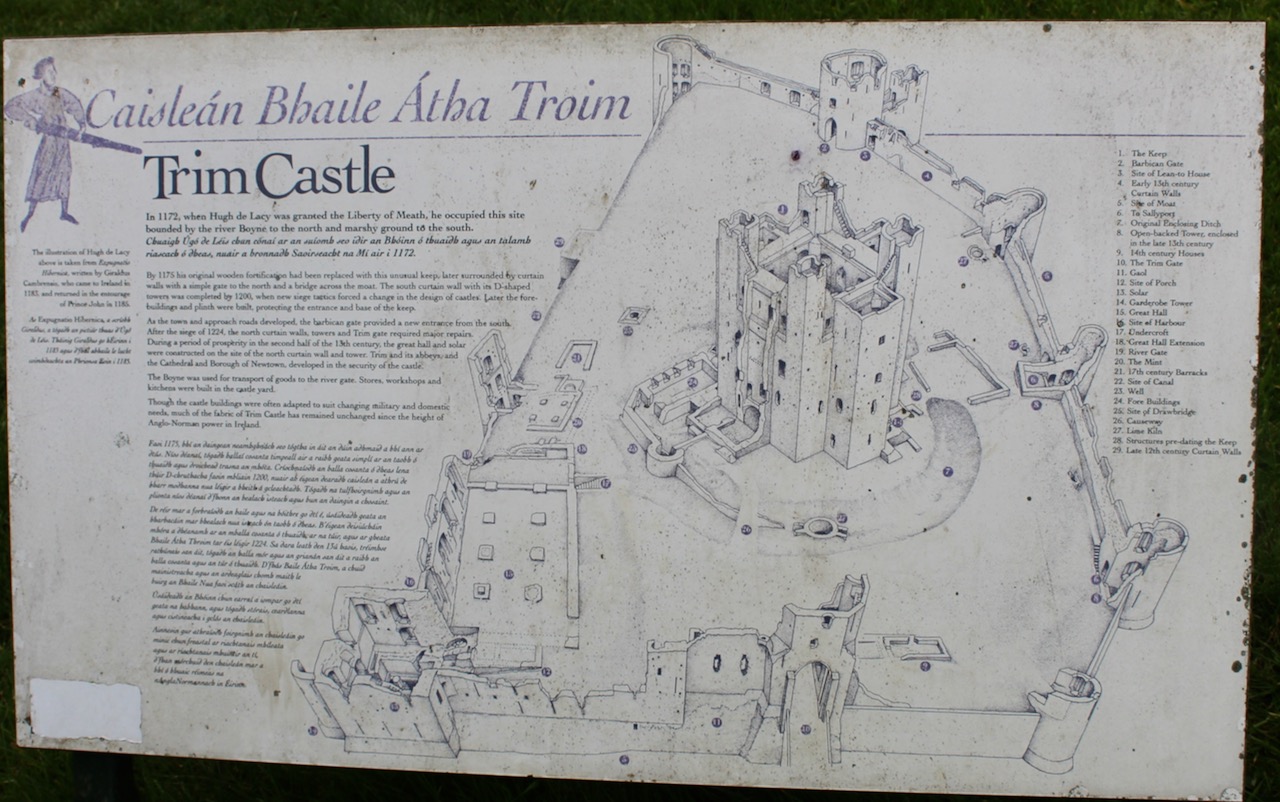
The information board tells us that in 1182 when Hugh de Lacy was granted the Liberty of Meath, he occupied this site bounded by the River Boyne to the north and marshy ground to the south. By 1175 his original wooden fortification had been replaced by this unusual keep, later surrounded by curtain walls with a simple gate to the north and a bridge across the moat. The south curtain wall with its D shaped buildings was completed by 1200, when new siege tactics forced a change in the design of castles. Later, the forebuildings and plinth were built, protecting the entrance and base of the keep.
Trim Castle, May 2022.
Sometime before 1180, Hugh de Lacy replaced the timber palisade fence enclosing the keep with a stone enclosure. The fore-court enclosed stables and stores and protected the stairway and door to the keep. The new entrance was on the north side of the enclosure and had a drawbridge over the deepened ditch.
With the development of the curtain walls, the inner enclosure became obsolete.
The ditch was filled and three defensive towers – two survive – were built on its site. The drawbridge was replaced by a stone causeway leading to an arched gate and entrance stairway. A reception hall was built to accommodate visitors before they entered the Keep.
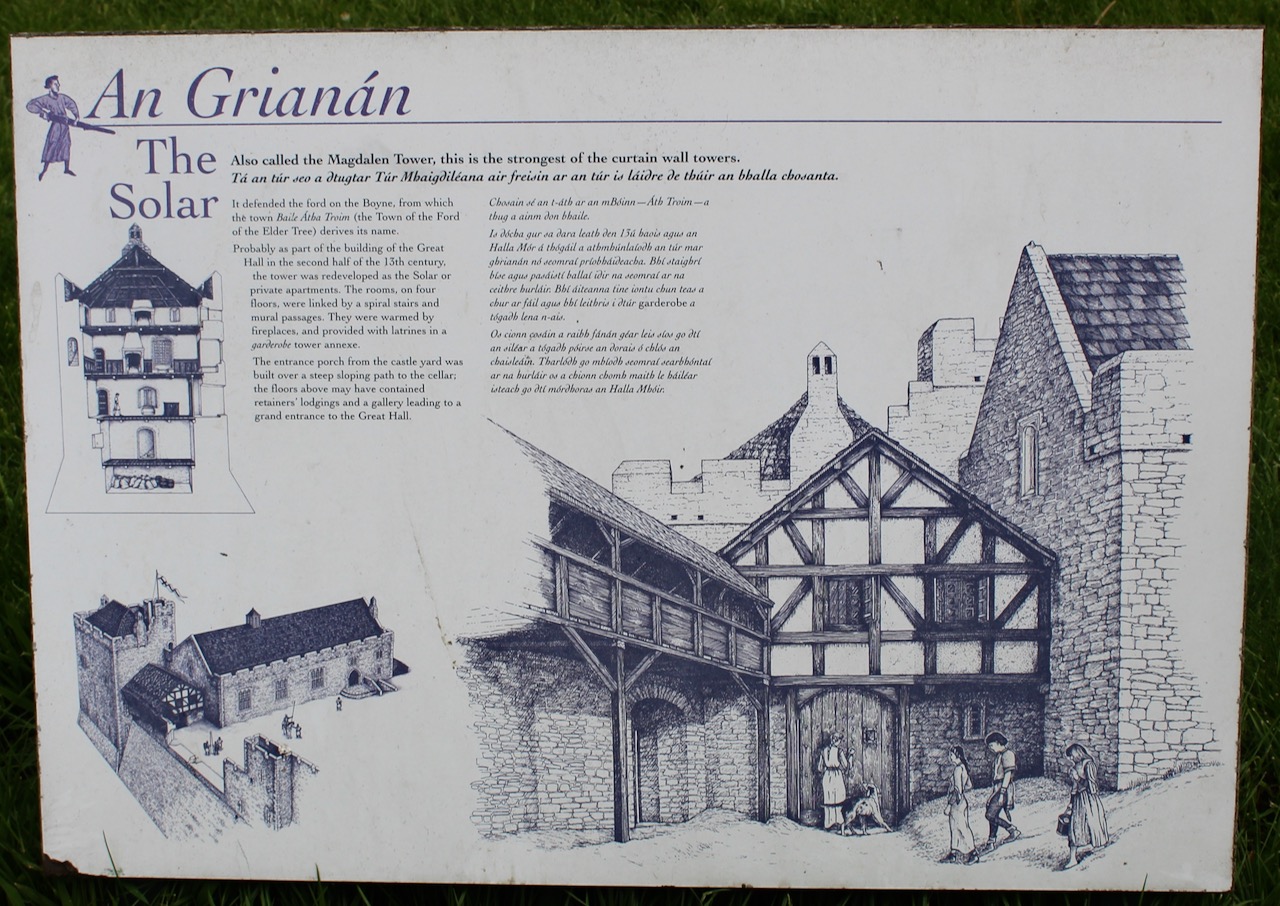
As the town and approach roads developed, the barbican gate provided a new entrance from the south. After the siege of 1224, the north curtain walls, towers and Trim gate required major repairs. During a period of prosperity in the second half of the 13th century, the great hall and solar were constructed on the site of the north curtain wall and tower. Trim and its abbeys and the Cathedral and borough of Newtown developed in the security of the castle.
The Boyne was used for transport of goods to the river gate. Stores, workshops and kitchens were built in the castle yard.
Though the castle buildings were often adapted to suit changing military and domestic needs, much of the fabric of Trim Castle has remained unchanged since the height of Anglo-Norman power in Ireland.
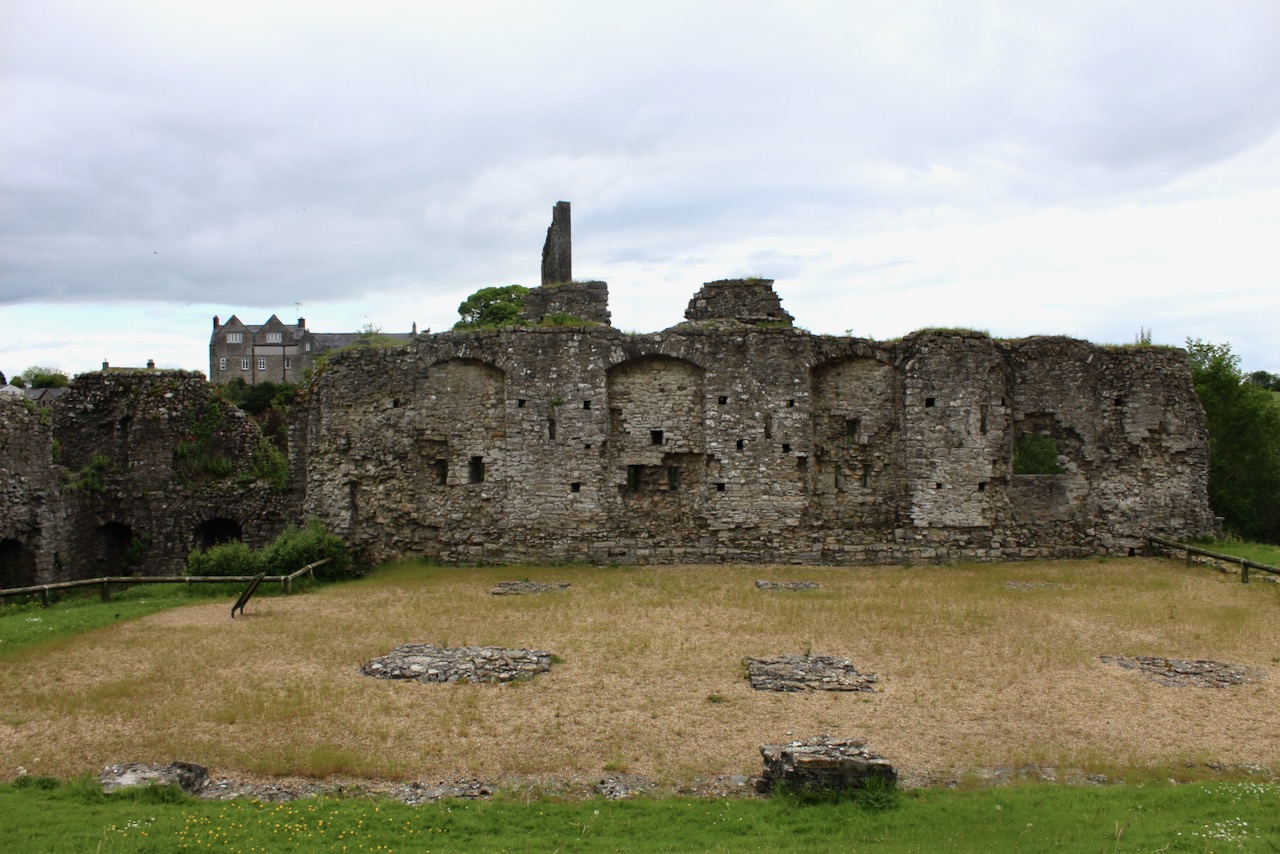
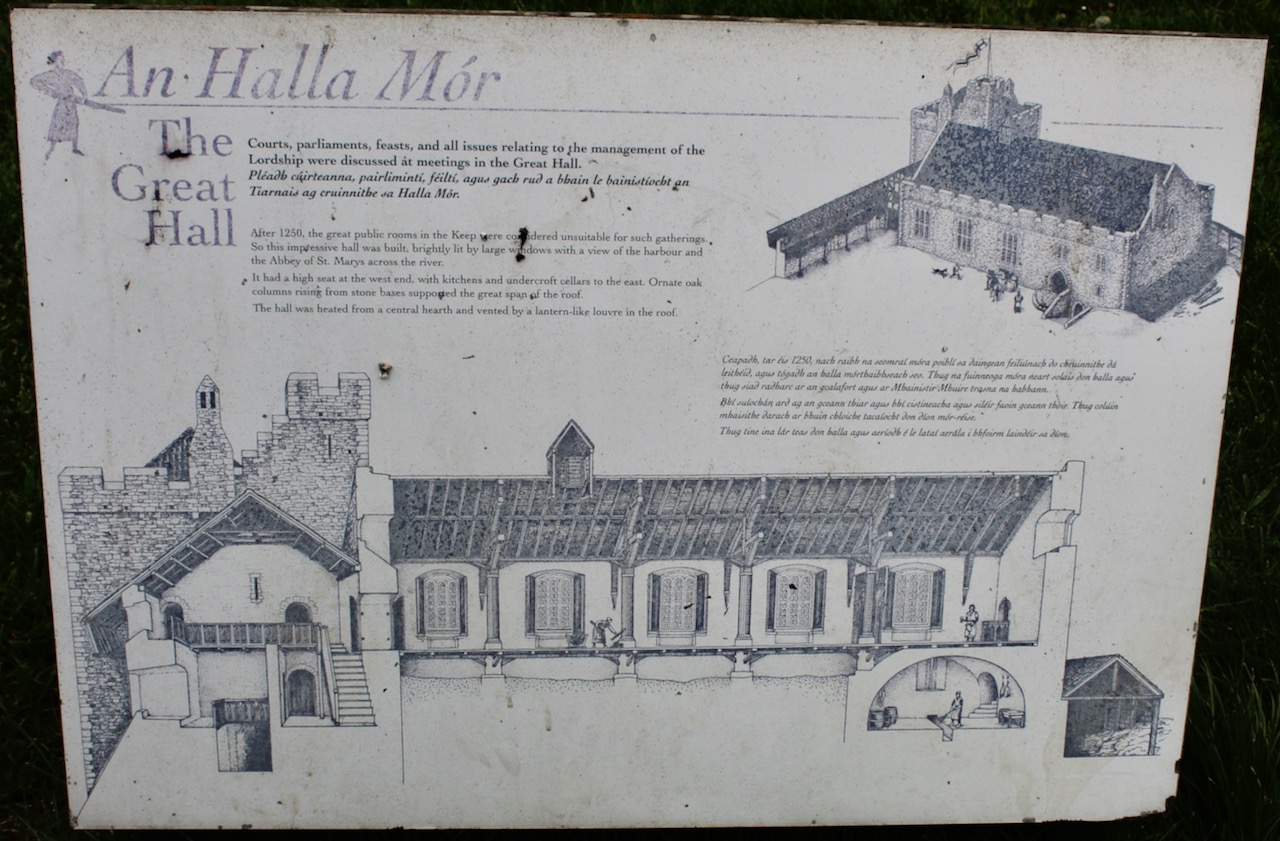
The information board tells us that courts, parliaments, feasts and all issues relating to the management of the Lordship were discussed at meetings in the Great Hall. After 1250, the great public rooms in the Keep were considered unsuitable for such gatherings, so this hall was built, lit by large windows with a view of the harbour and the Abbey of St. Mary’s across the river. The hall had a high seat at the west end, with kitchens and undercroft cellars to the east. Ornate oak columns rising from stone bases supported the great span of the roof.
The hall was heated from a central hearth and vented by a lantern-like louvre in the roof.
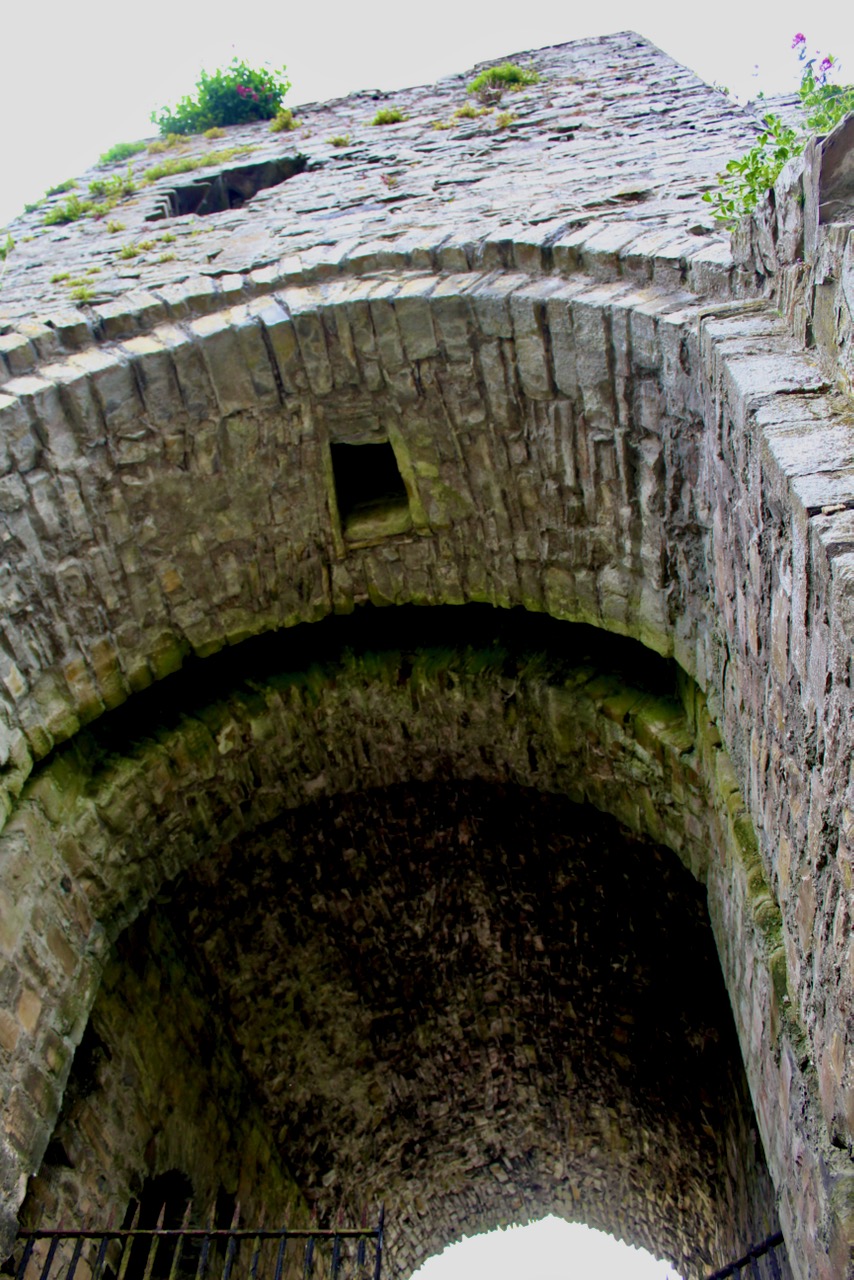
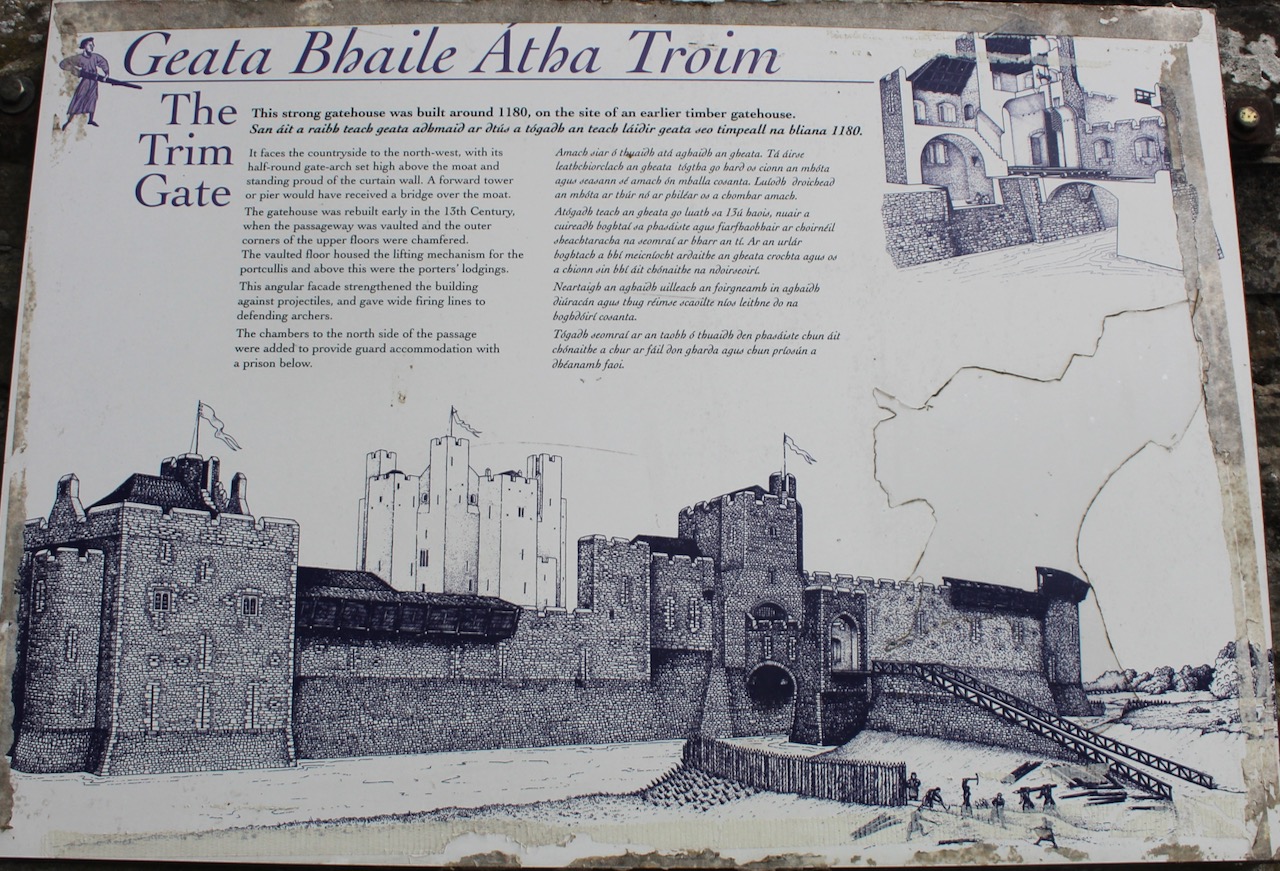
Early in the 13th century the weirs were completed on the Boyne, allowing the moat to be flooded, and the Leper River was channelled along the south curtain wall. A new gate was constructed guarding the southern approaches to the castle. This gatehouse, of a rare design, was built as a single cylindrical tower with a “barbican,” defences of a forward tower adn bridge. An elaborate system of lifting bridges, gates and overhead traps gave the garrison great control over those entering the castle. The arrangement of plunging loops demonstrates the builders’ knowledge of the military requirements of defending archers.
By the middle of the 13th century, the design of castle gates was further developed and a twin tower gatehouse with a passage between the two towers became standard.
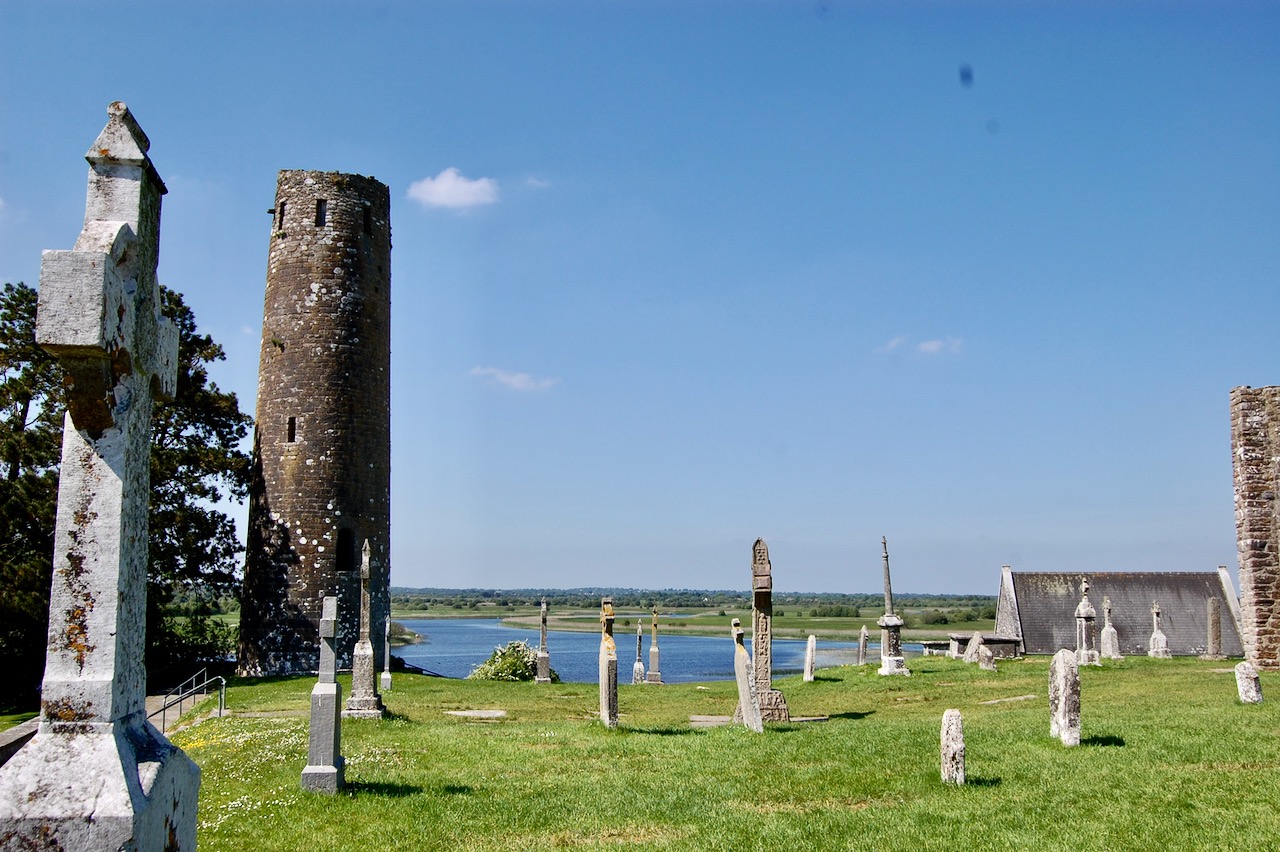
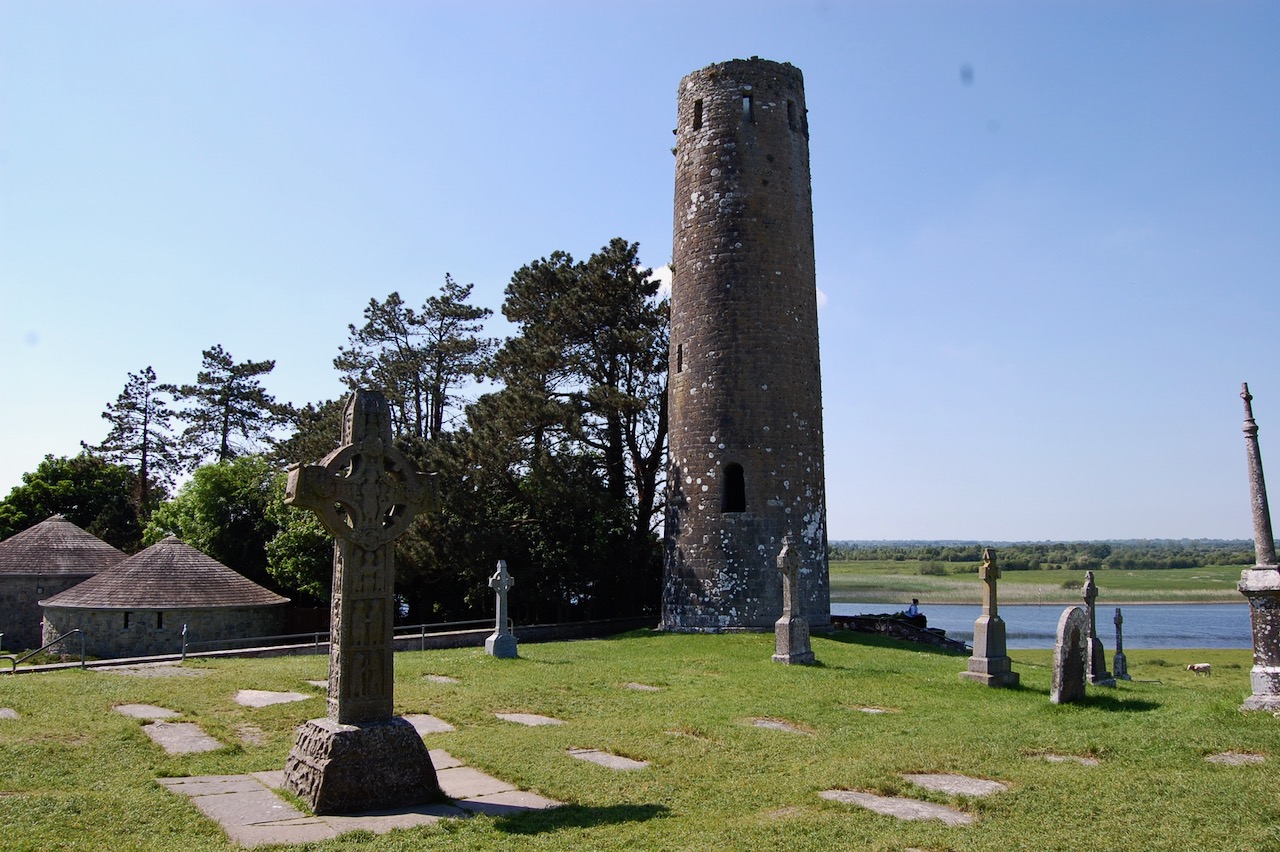
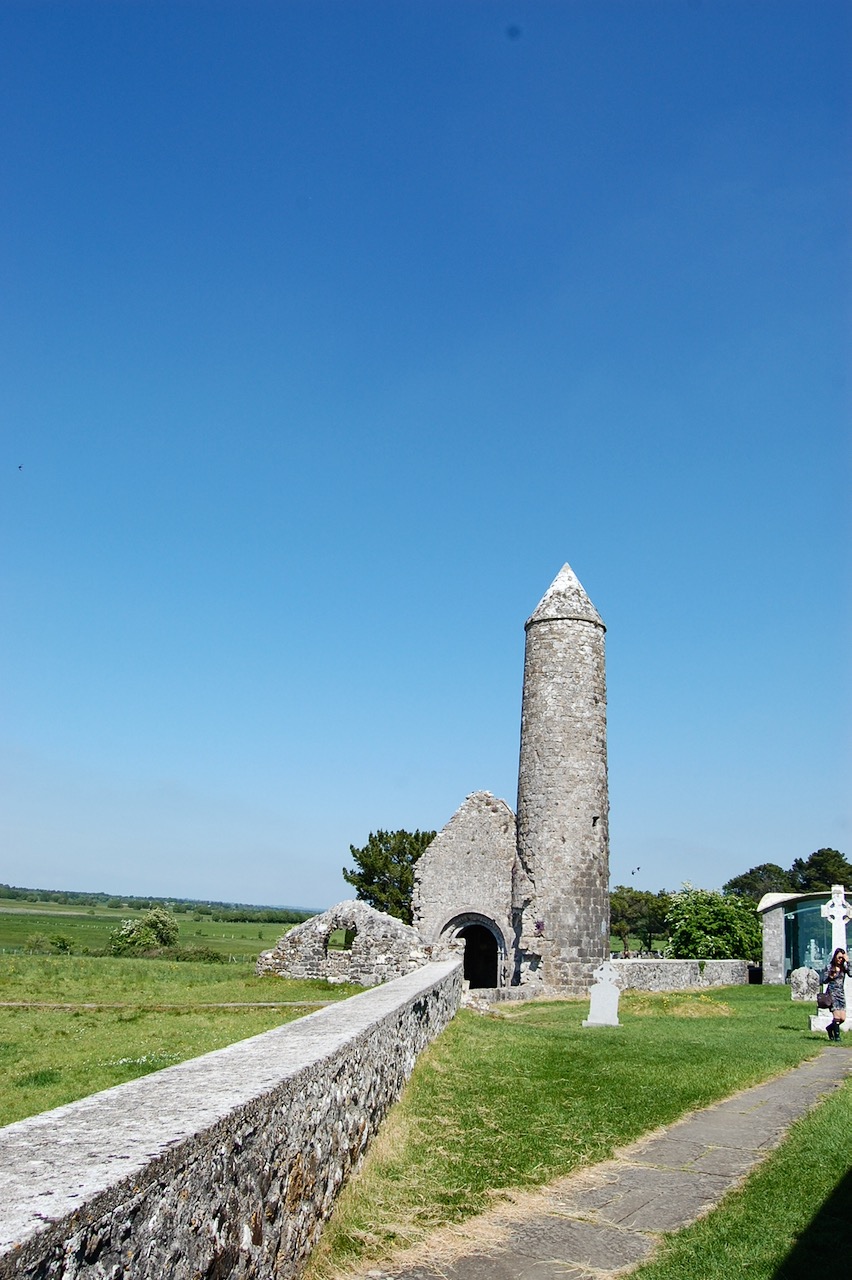
“St Ciarán founded his monastery on the banks of the River Shannon in the 6th Century. The monastery flourished and became a great seat of learning, a University of its time with students from all over Europe.
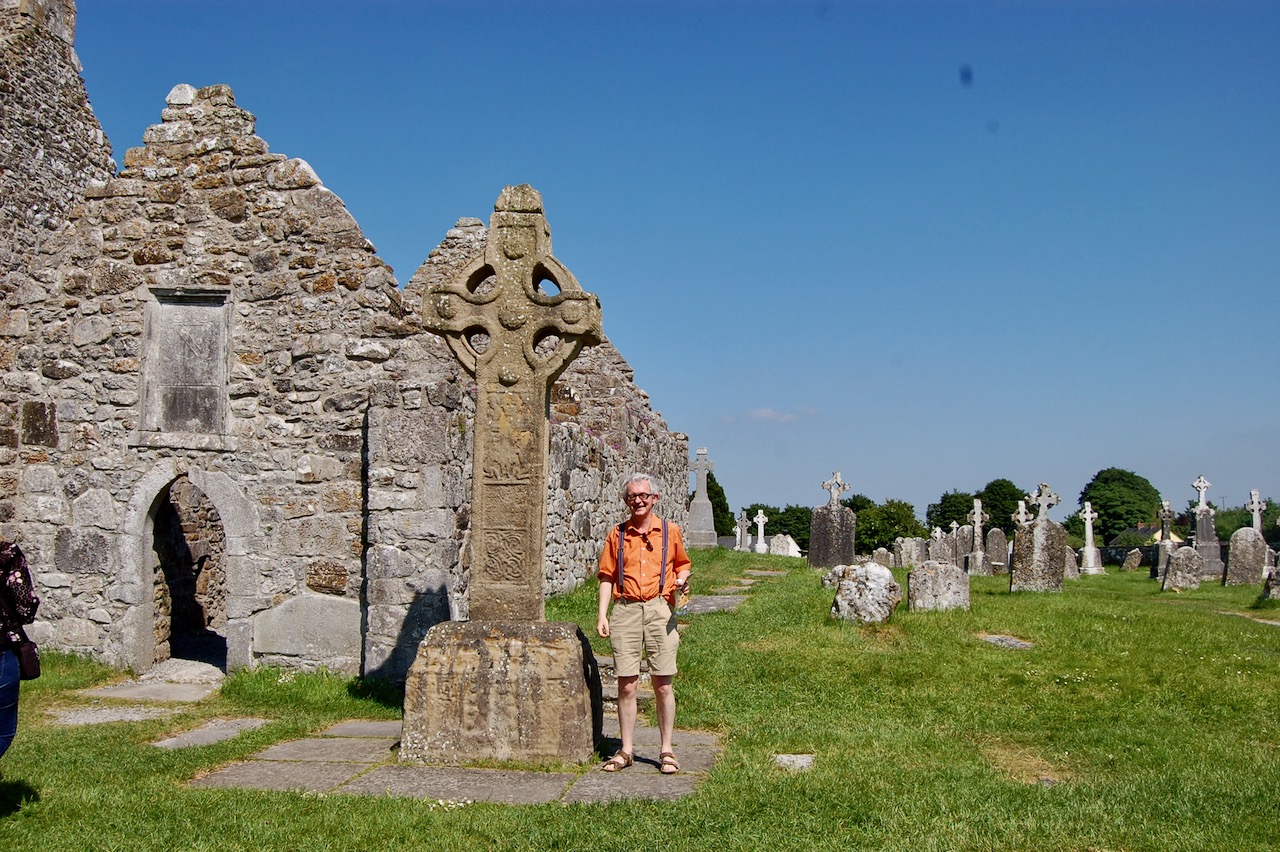
“The ruins include a Cathedral, two round Towers, three high crosses, nine Churches and over 700 Early Christian graveslabs.
“The original high crosses, including the magnificent 10th century Cross of the Scriptures area on display in a purpose built visitor centre adjacent the monastic enclosure.
“An audiovisual presentation will give you an insight into the history of this hallowed space.“
[3] p. 119. Bence-Jones, Mark. A Guide to Irish Country Houses (originally published as Burke’s Guide to Country Houses volume 1 Ireland by Burke’s Peerage Ltd. 1978); Revised edition 1988, Constable and Company Ltd, London.
Canonbrook, Lucan: “Detached multiple-bay two-storey over basement house, c.1800, on an L-plan. A handsome, substantial rural Georgian house which, though altered, retains its imposing form and feel, and is situated in mature grounds. Historically important as the former home of James Gandon.”Gandon is also said to have designed Primrose Hill House in Lucan, which is a section 482 property.
[9] p. 96. Sadleir, Thomas U. and Page L. Dickinson. Georgian Mansions in Ireland with some account of the evolution af Georgian Architecture and Decoration. Dublin University Press, 1915.
[10] p. 356. Tierney, Andrew. The Buildings of Ireland: Central Leinster: Kildare, Laois and Offaly. Yale University Press, New Haven and London, 2019.
[11] p. 61. O’Reilly, Sean. Irish Houses and Gardens. From the Archives of Country Life. Aurum Press Ltd, London, 1998.
[13] p. 175, Casey, Christine and Alistair Rowan. The Buildings of Ireland: North Leinster: the counties of Longford, Louth, Meath and Westmeath. Penguin Books, London, 1993.
[14] p. 387, Casey, Christine and Alistair Rowan. The Buildings of Ireland: North Leinster: the counties of Longford, Louth, Meath and Westmeath. Penguin Books, London, 1993.
[19] p. 511, Casey, Christine and Alistair Rowan. The Buildings of Ireland: North Leinster: the counties of Longford, Louth, Meath and Westmeath. Penguin Books, London, 1993.
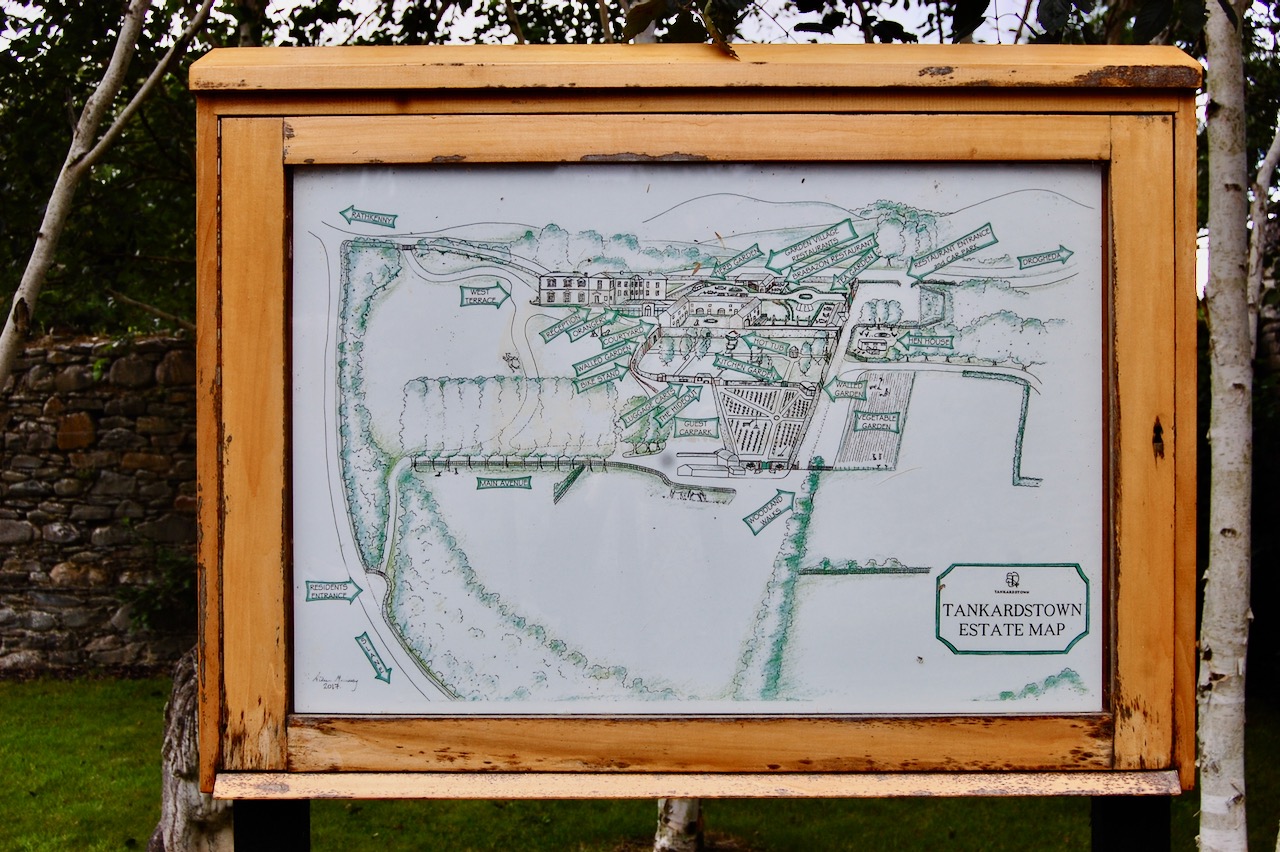
Stephen and I went to Tankardstown on the way to Monaghan in 2019, where we were staying a night on our drive to Donegal to visit his Mum.
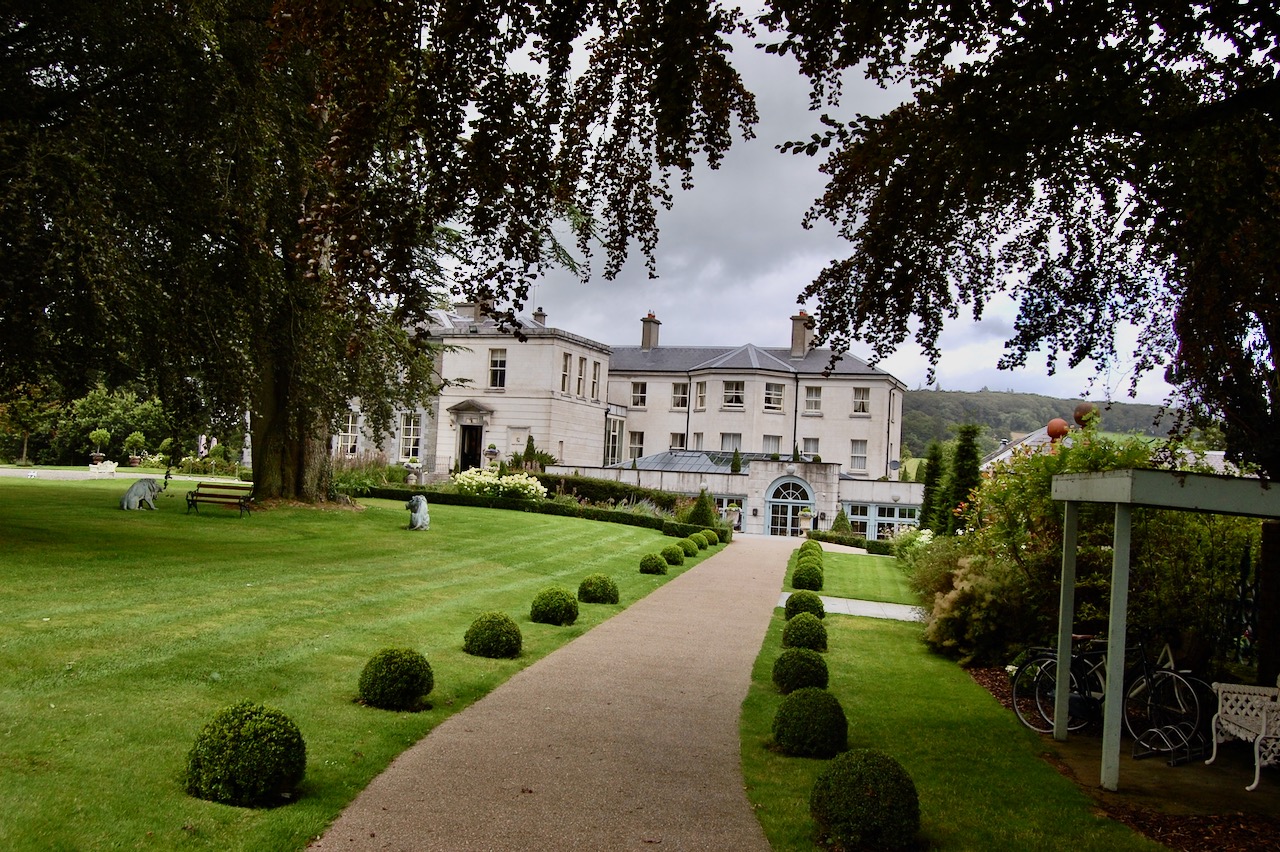
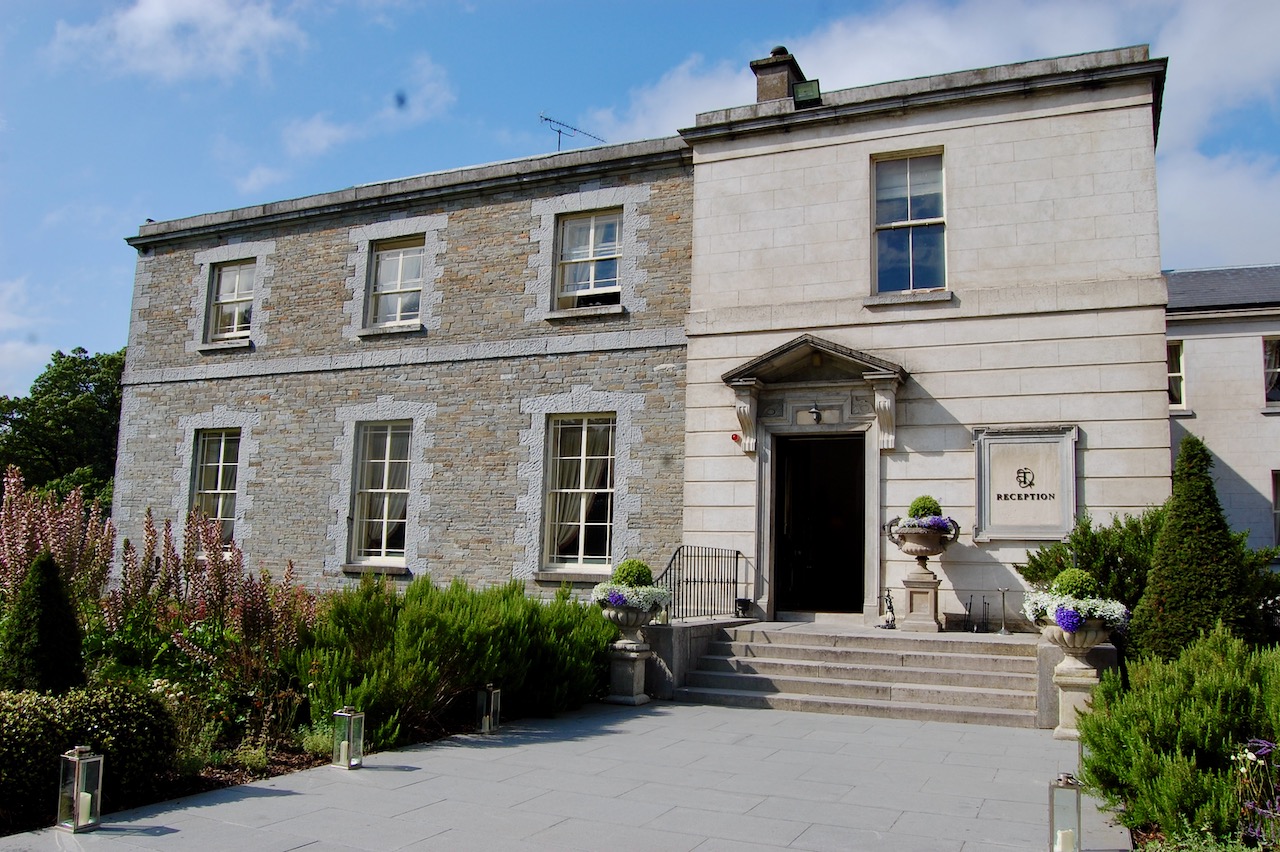
Tankardstown is now a boutique hotel, although the manager Tadhg who showed us around prefers it not to be called a hotel, as it is more like an opulent modernized seventeenth century home. Unfortunately we were not staying the night!
In his Guide to Irish Country Houses (1988) Mark Bence-Jones describes Tankardstown as a two storey late-Georgian house. According to wickipedia, the Georgian period is 1740-1837.
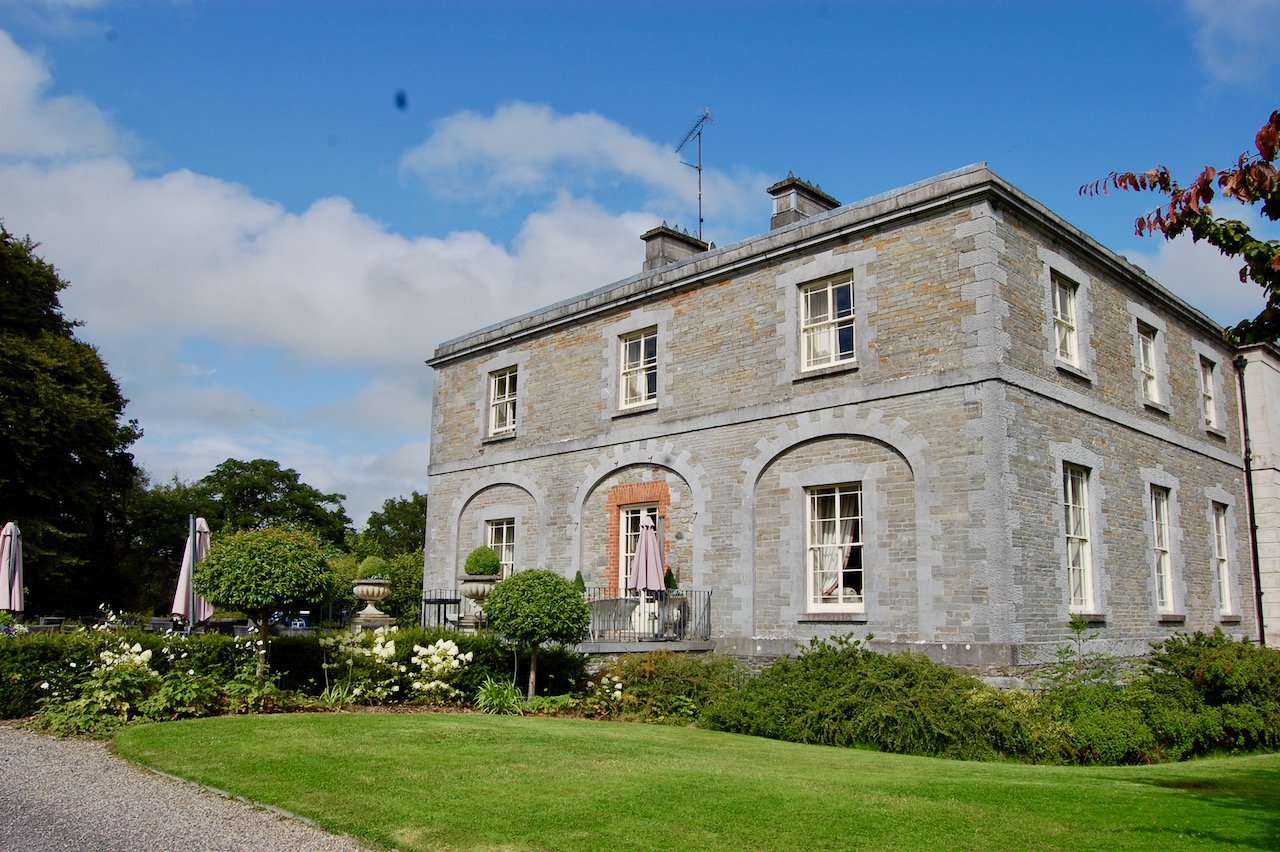
He writes that the entrance front consists of three bays and an end bay breaking forward, as you can see in the photograph above. The entrance doorway has a pediment on consoles, not in line with the window above. [1] There are steps up to the front door.
It has a three bay side elevation, with ground floor windows set in arched recesses with blocking (the use of alternating large and small blocks of stone, or of intermittent large blocks, in a doorcase, window surround or similar feature. Also known as rustication), with blocking around the first floor windows also. Bence-Jones also mentions its parapeted roof (“a low protective wall along the edge of a roof, bridge, or balcony”).
John Coddington purchased nearby Oldbridge Estate from the Earl of Drogheda in 1729 (Oldbridge is now the Battle of the Boyne museum). It looks as though a nephew of John’s, Dixie Coddington, Sheriff, lived in Tankardstown at some point, perhaps with his wife Catherine de Burgh and seven daughters.
Coincidentally, a brother of Dixie, Henry Coddington of Oldbridge (1728 – 1816) had a daughter, Elizabeth Coddington, who married Edward Winder of Bellview in 1798. This Edward Winder is an ancestor of Stephen’s! So our relatives, by marriage, owned Tankardstown!
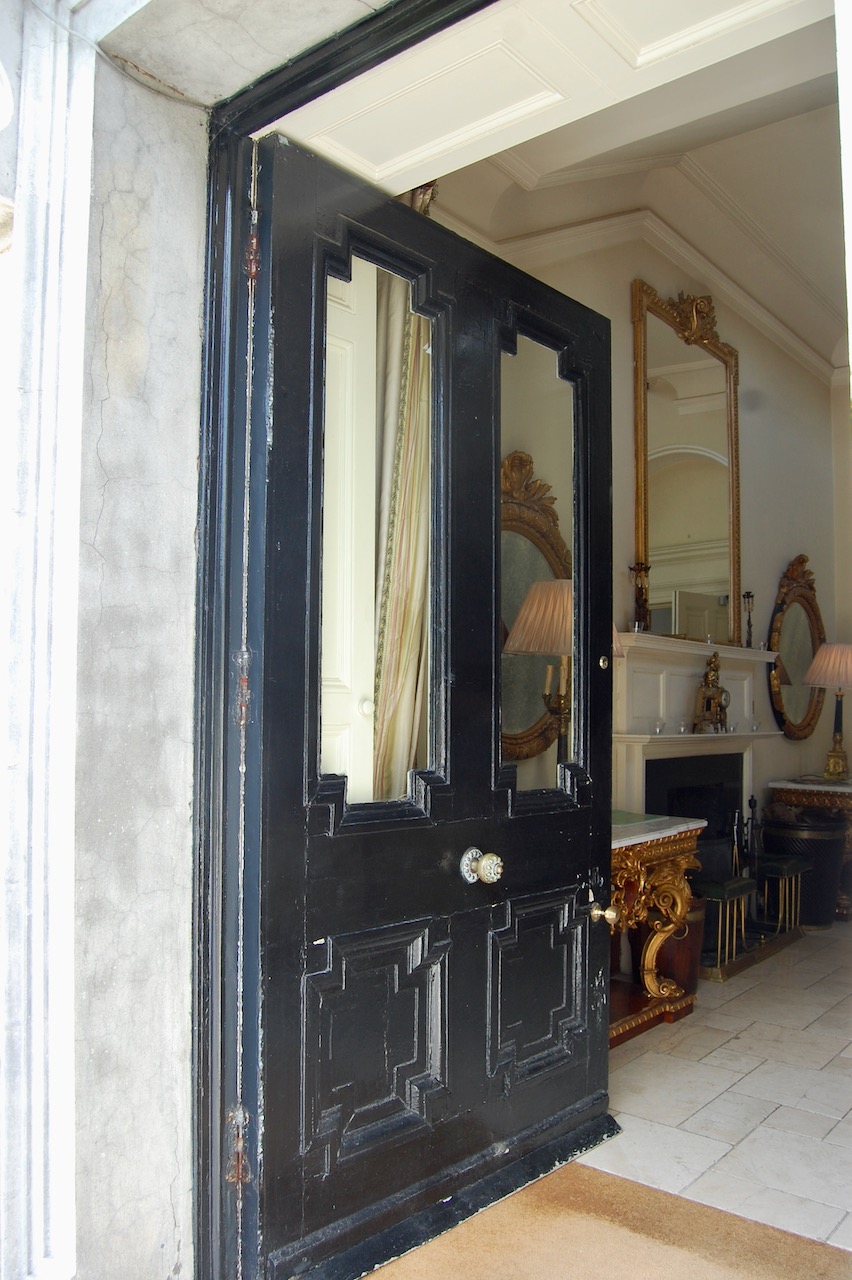
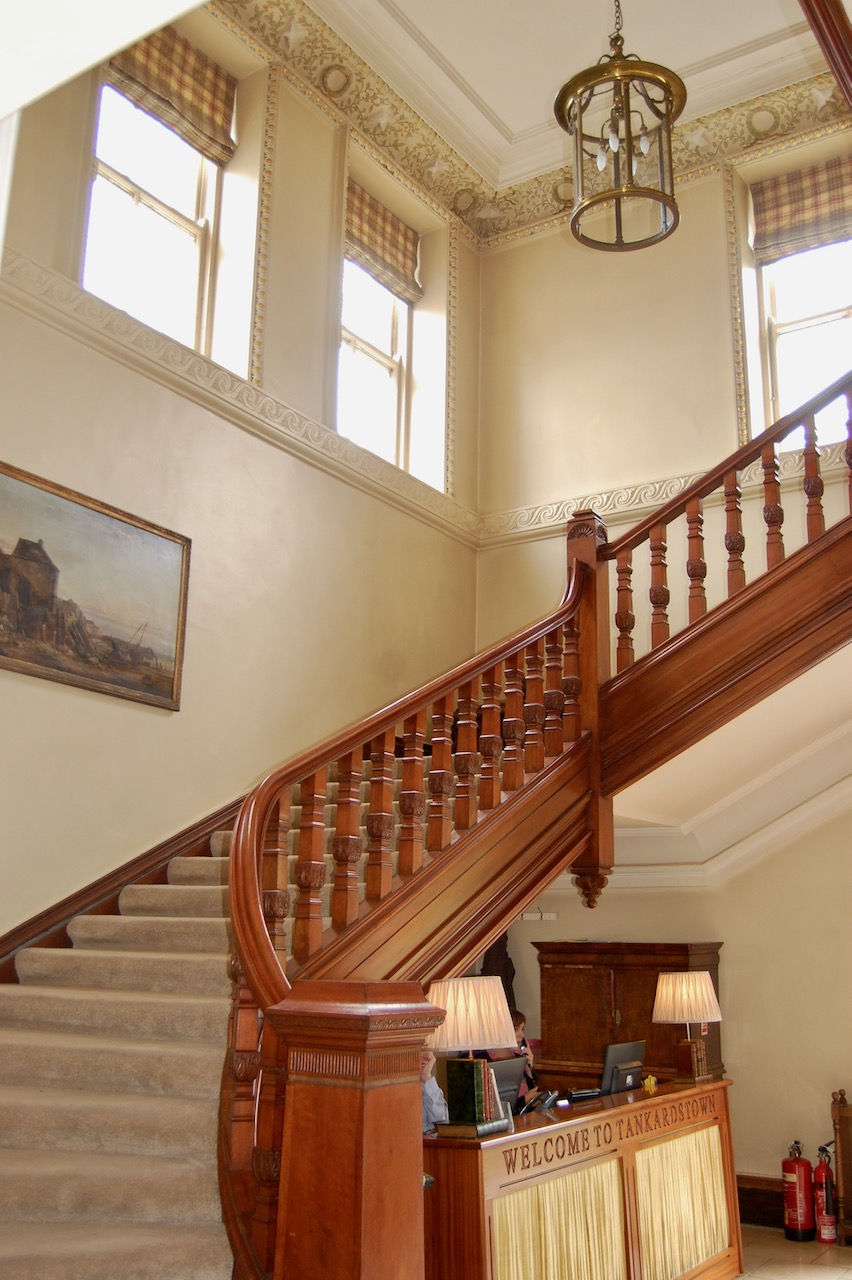
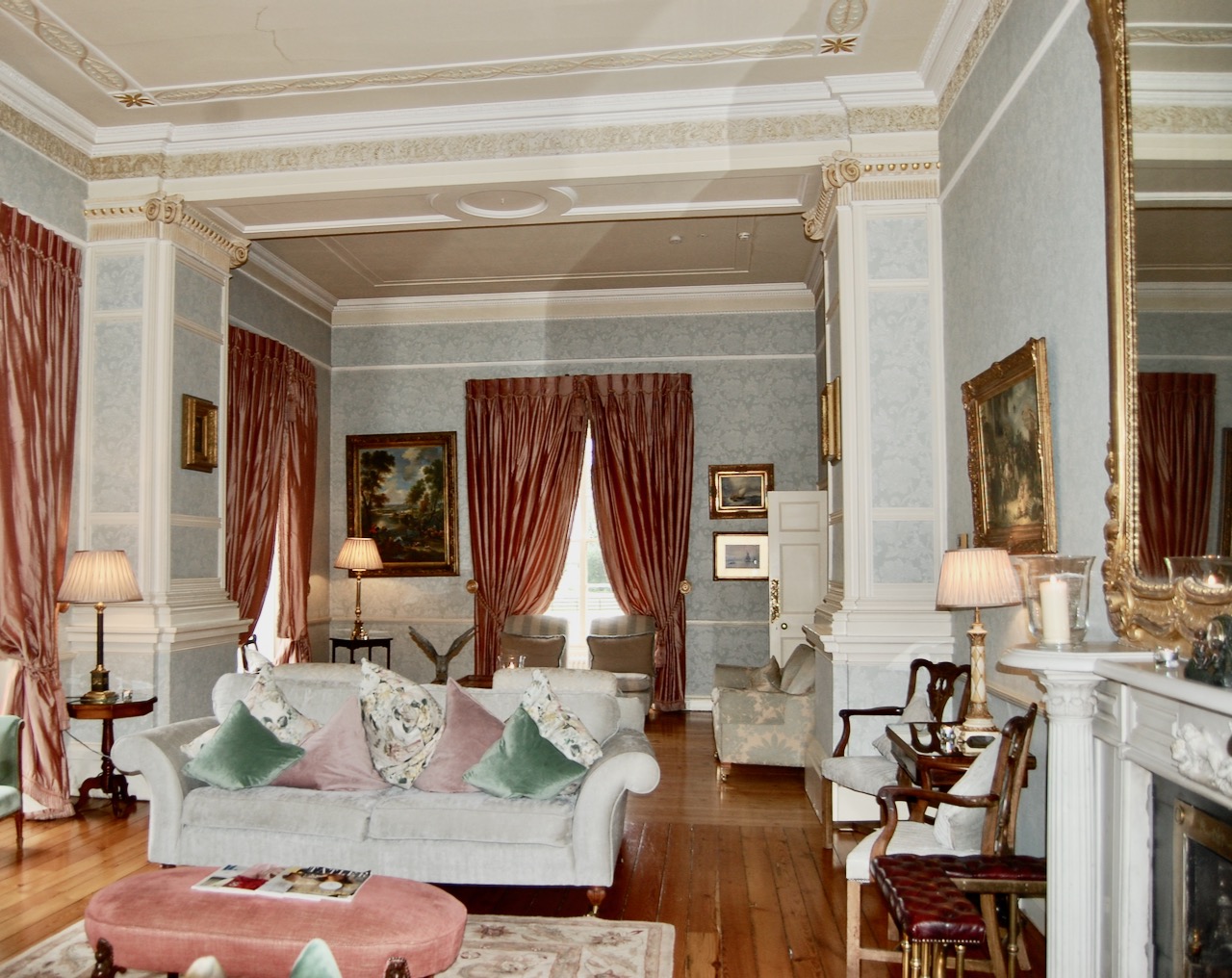
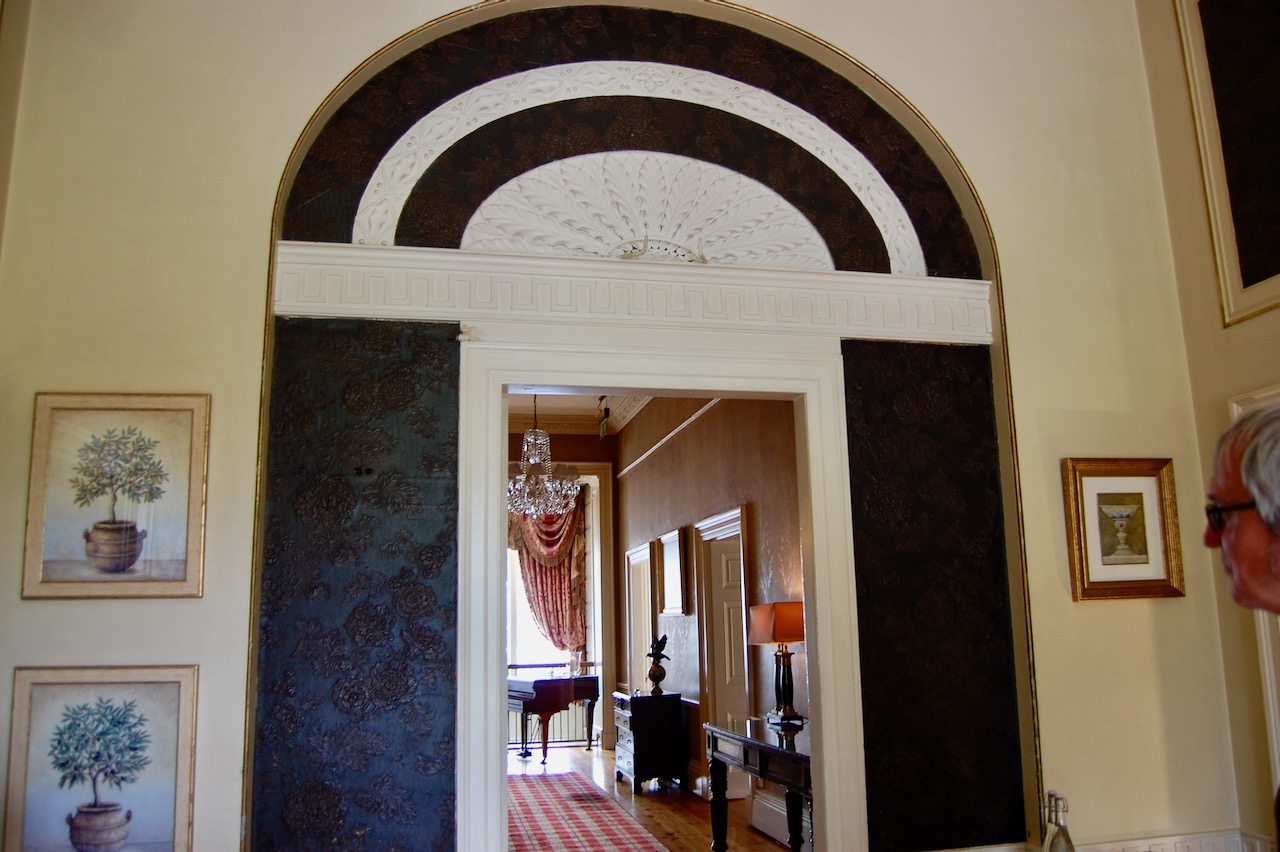
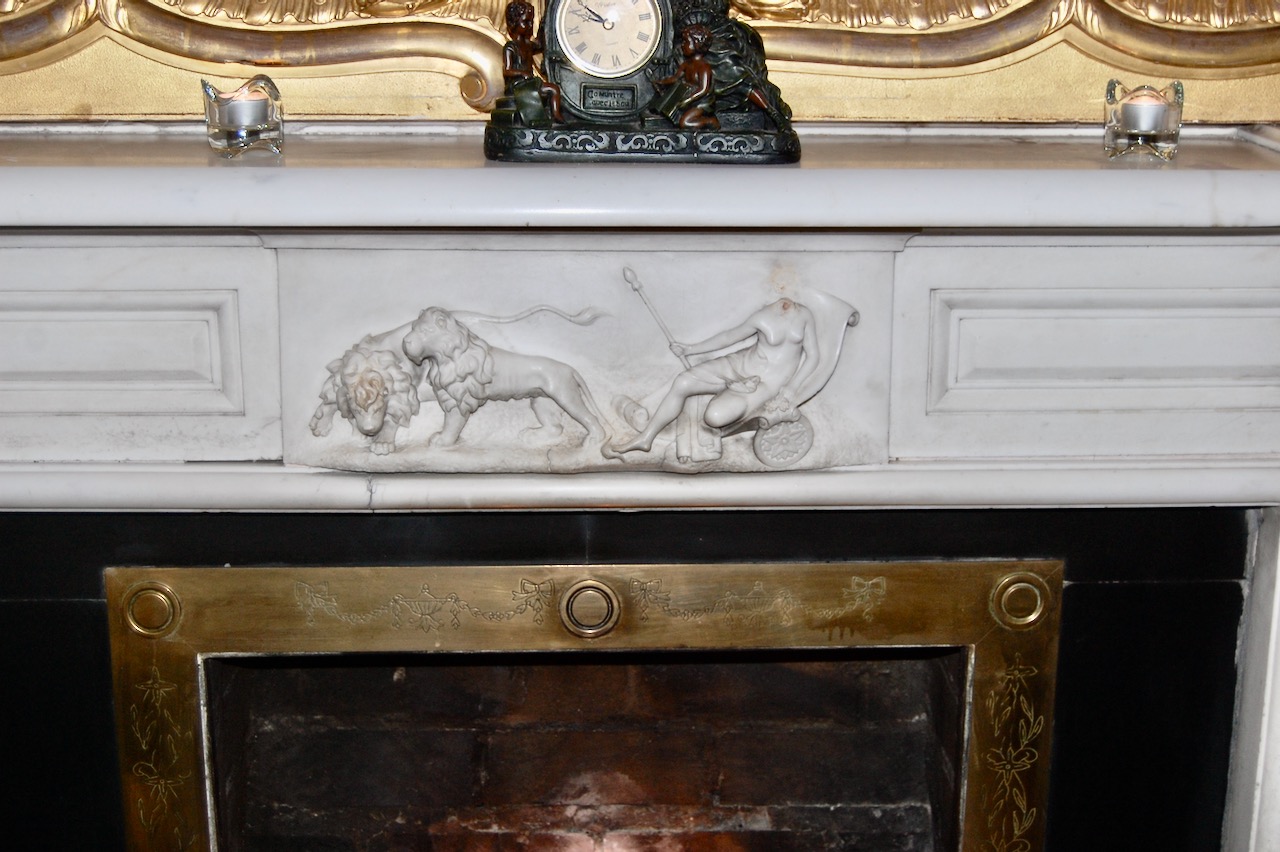
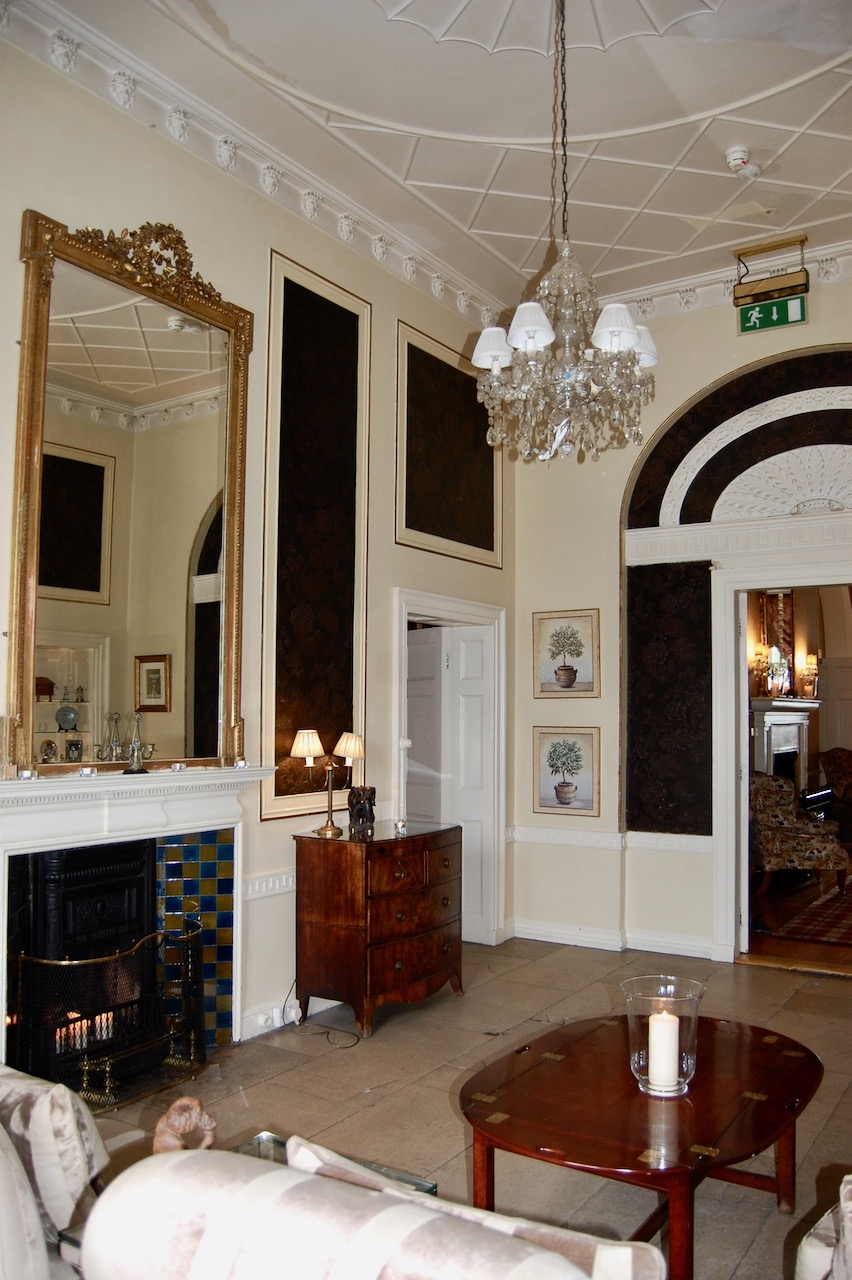
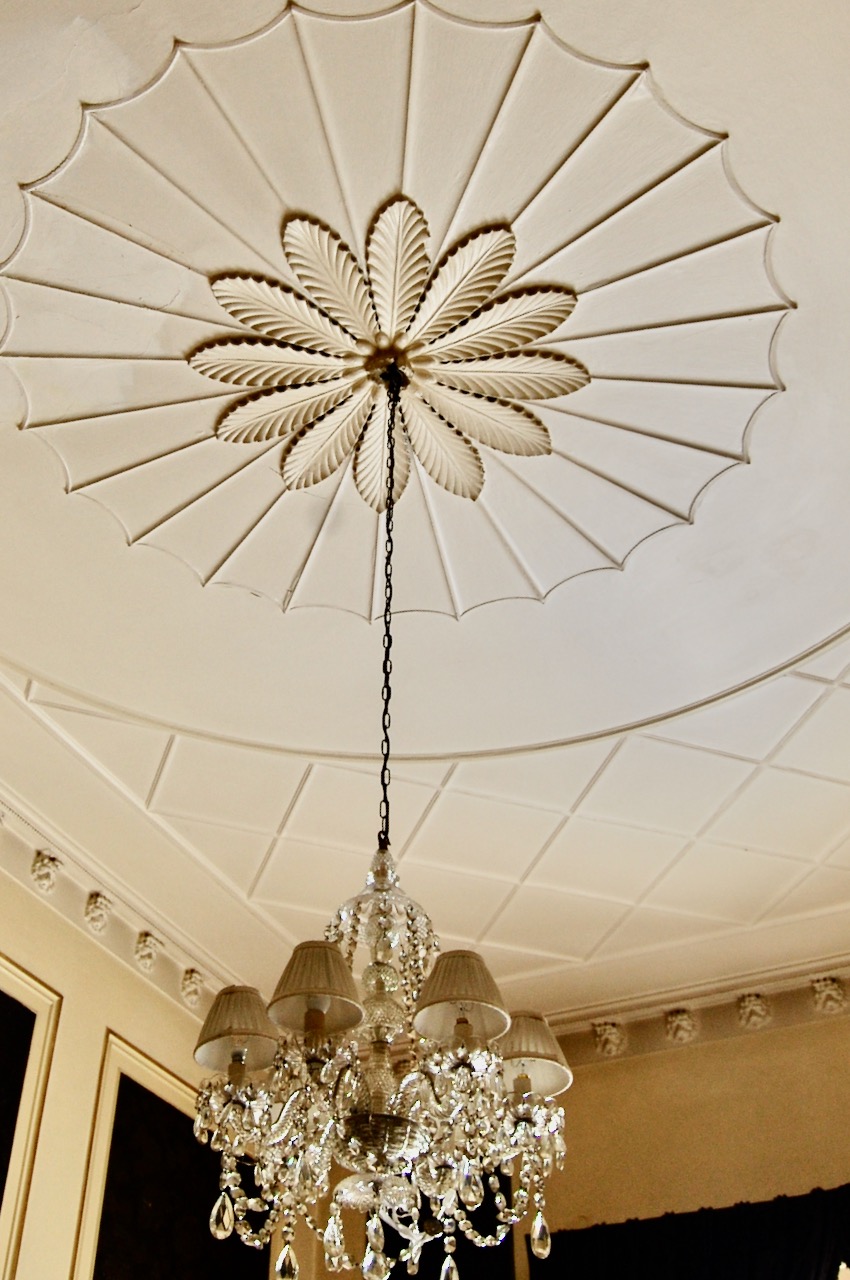
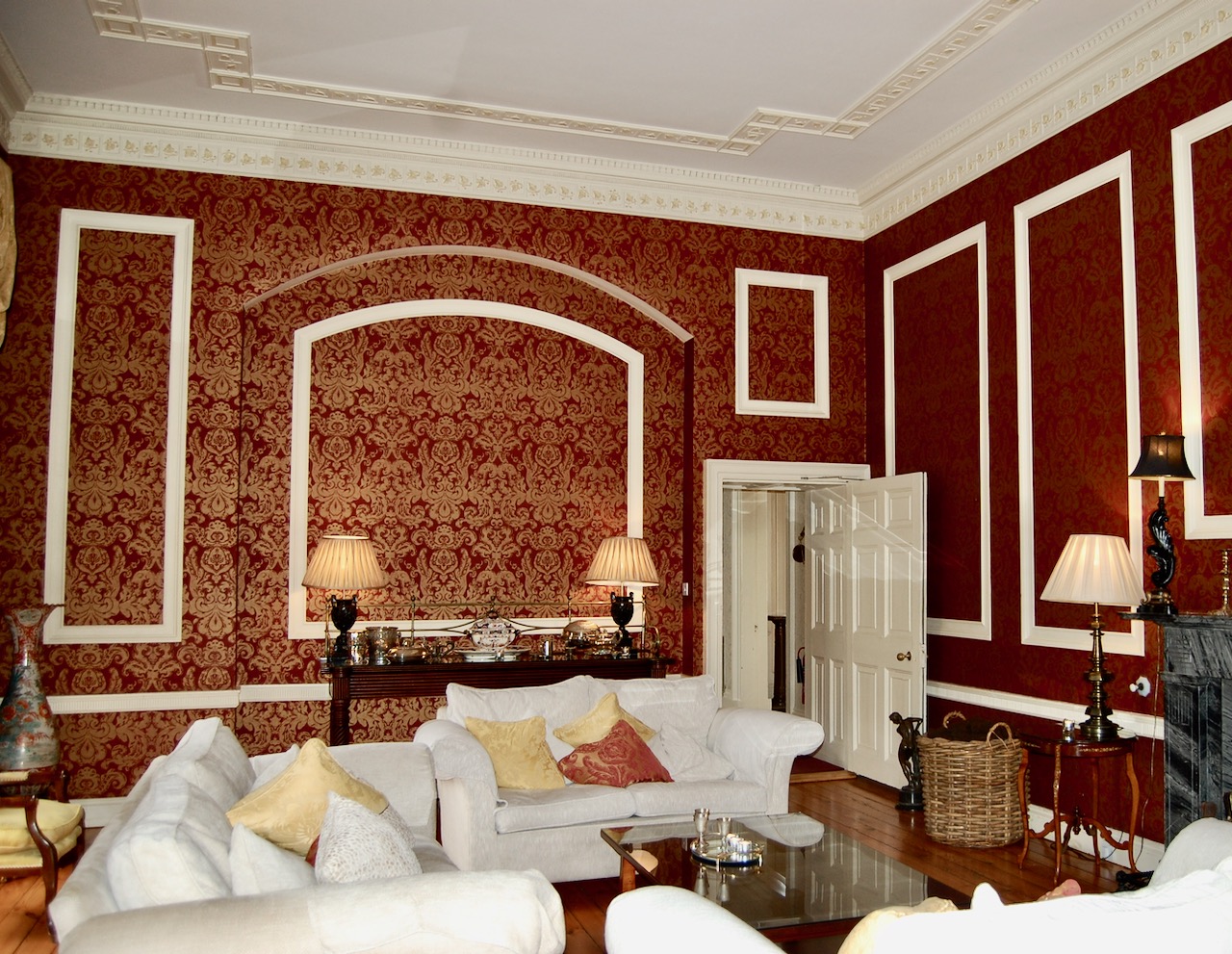
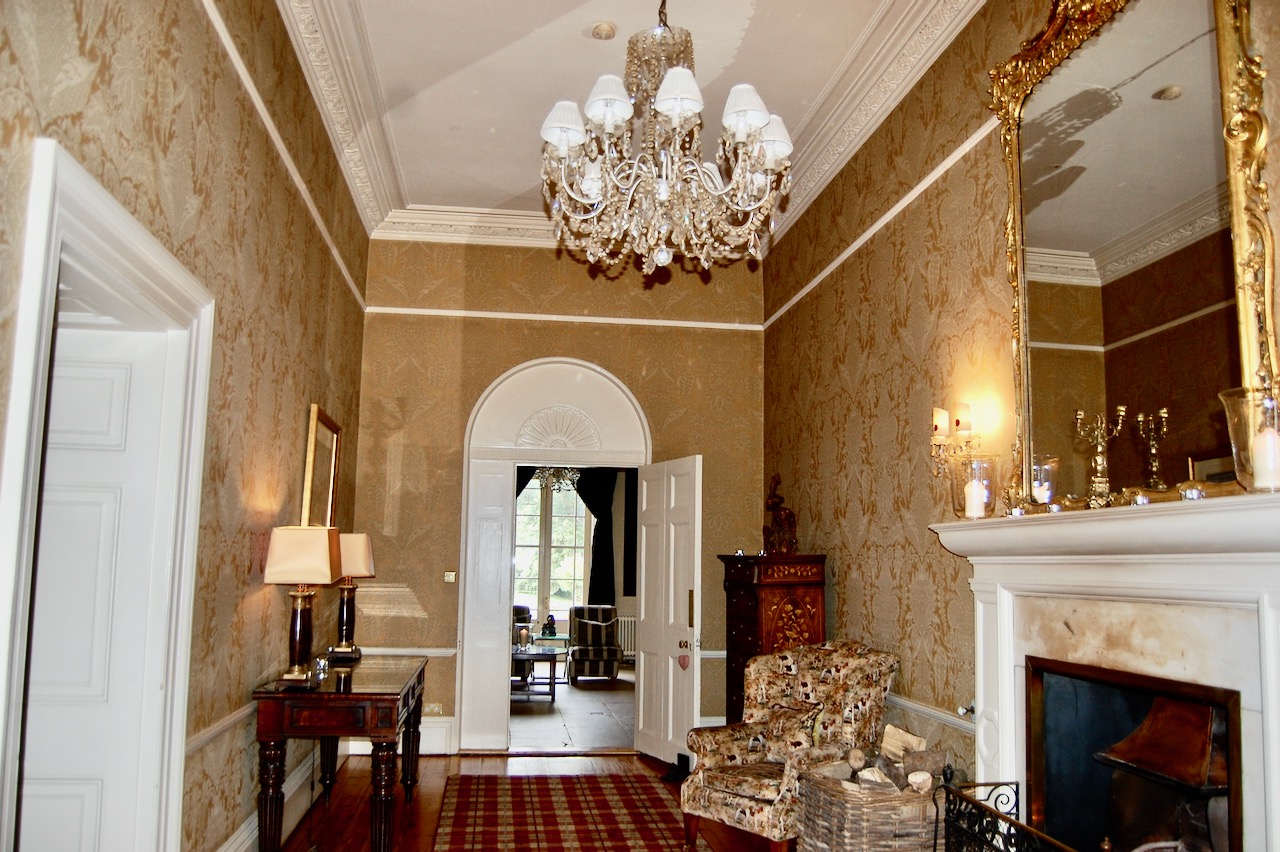
The house, as you can see from the photographs, is incredibly opulent with many period features which I assume are original. Above, one can see the unusual black rose patterned wall panels in the inner doorway of the hall, with an arch of alternate black panelling and stuccowork. The drawing room has painted stuccowork on the ceiling and a carved marble fireplace.
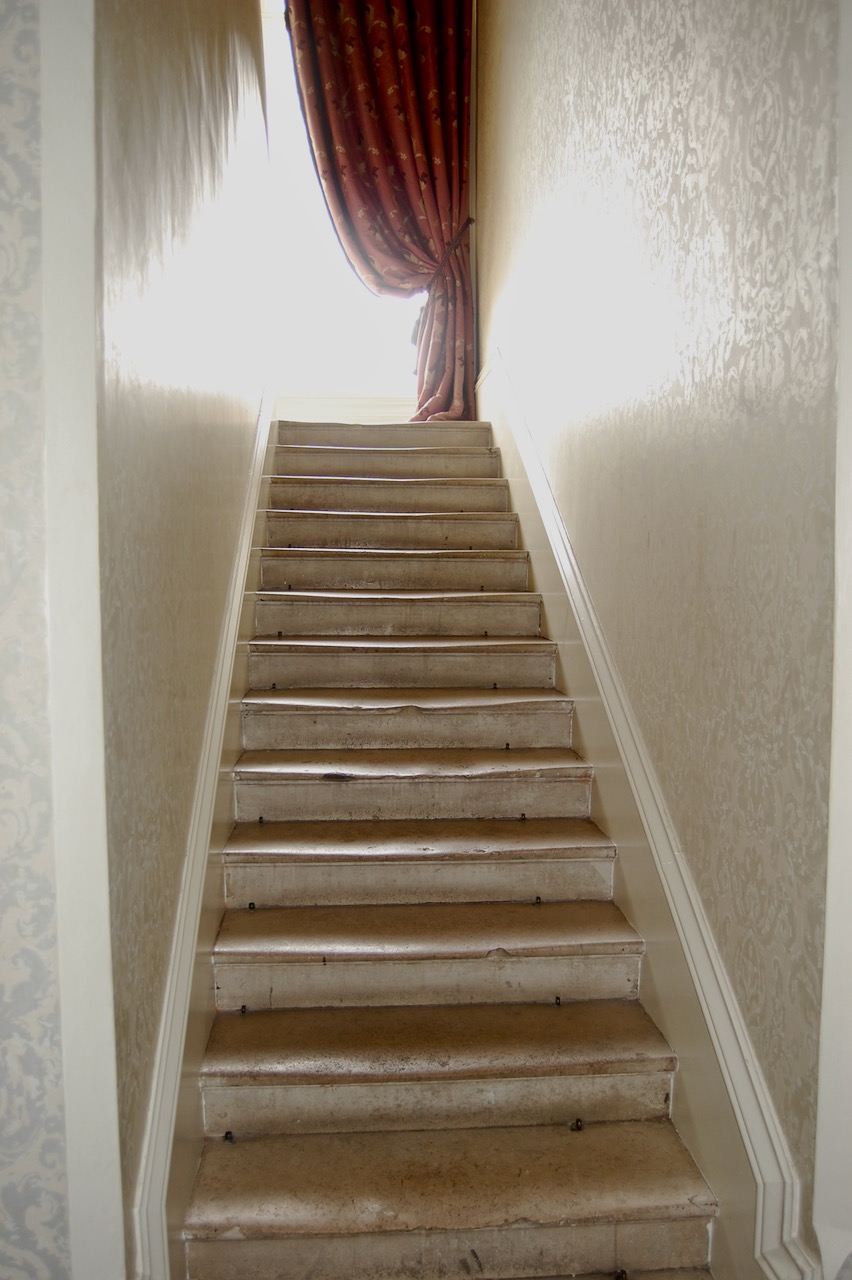
The plush furnishings and decor are so overwhelming that the place that touched me most, in terms of feeling a link with the former residents, feeling the house’s history, were some worn stone stairs:
The Coddingtons sold the house to Brabazon Morris. According to Ireland’s Blue Book [5], Brabazon Morris built a neo-Classical villa on the land in 1789, in part on the foundations of a tenth century castle, close to pre-existing stone yards which were built in 1745. The present Tankardstown house must be his neo-Classical villa so the house the Coddingtons inhabited was probably incorporated into this house.
Brabazon Morris married Anne Hamlin (she died before 1800 aged just 52) [3] and had a daughter Anne, who married Reverend Frederick Cavendish (1803-1875) in 1834, son of Frederick Cavendish and Eleanor Gore, sixth daughter of Arthur Gore the Second Earl of Arran [4].
Brabazon Morris mortgaged the house in 1791 until it was bought by Francis Blackburne in 1815, as his country residence.
Francis Blackburne (1782-1867), Lord Chancellor of Ireland Date 1852 Engraver George Sanders, Scottish, 1810-c.1876 After Stephen Catterson Smith, Irish, 1806-1872. Photograph courtesy of National Gallery of Ireland.
According to an article in the Irish Independent newspaper by Anthony Smith, Francis Blackburne was born in 1782 and lived to be 84 years old [6]. He married Jane Martley of Ballyfallen, County Meath. [7] He was called to the bar in 1805 and became Attorney General of Ireland in 1831. He was a devout Protestant and Unionist and prosecuted Daniel O’Connell. In 1852 he was appointed Lord Chancellor of Ireland.
With his new position, Francis Blackburne must have felt he needed something more grand, and purchased Rathfarnham Castle in Dublin. However his position as Lord Chancellor ended later the same year. He obtained the position again in 1866 shortly before his death. He gave Tankardstown to his second son, Judge Francis William Blackburne (d. 1921). His older son inherited Rathfarnham Castle.
Judge Francis Blackburne married Olivia Beatrice Louisa Anstruther-Thomson, and had a son Jack and two daughters, Elena and Amable. The Blackburnes carried out extensive additions, refurbishment and redecoration in the 1880s. Jack Blackburne inherited the estate and worked the farm though his first love was racing cars. (see [6])
Judge Blackburne’s daughter Elena married Charles Maurice Waddington Loftus Townshend (called Maurice) (1899-1966) of Castle Townshend, County Cork, in 1928. They moved to Zimbabwe (then Rhodesia) for a while, where two of his brothers as ex-British officers were granted free land, but returned to Ireland when WWII broke out. They lived in Tankardstown after Jack died in the 1940s. They had two children, Francis b. 1930 and Maurice born 1932 [8]. C. Maurice Townshend seems to have been a little eccentric as he believed he had a sort of second sight – he was able to point to a place on a map where his sister’s missing friend was located. He also pursued the art of water divination. [9]
When Maurice Townsend died in 1966, Judge Blackburne’s other daughter, Amable, moved back to Tankardstown, and she and her sister ran the farm as best they could. Anthony Smith, writer of the Irish Times article, remembers the two elderly ladies giving him treats in the kitchen while his father serviced Jack’s Aston Martin racing car. The article does not mention Elena’s sons but one moved to Australia and the other studied agriculture and farmed in Meath.
Eventually in the 1970s the sisters Elena and Amable sold the house and moved into a smaller house built at the rear entrance to the estate. I am not sure who owned the house directly after the Blackburnes. Both sisters died in 1996. Brian Conroy bought the estate when it came on the market in 2002. [see 2]
Brian and his wife Patricia spent four years restoring the mansion from complete disrepair. It was to be their dream home.
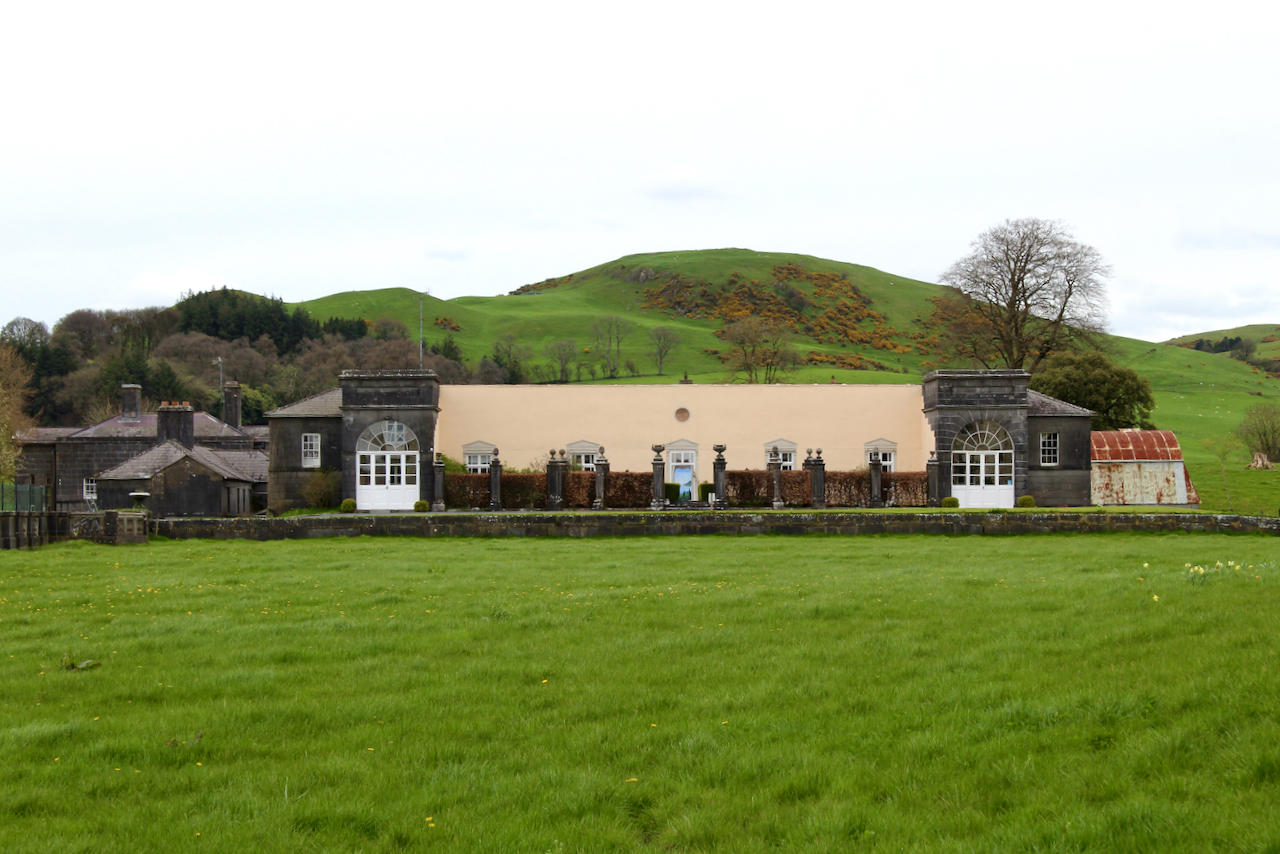
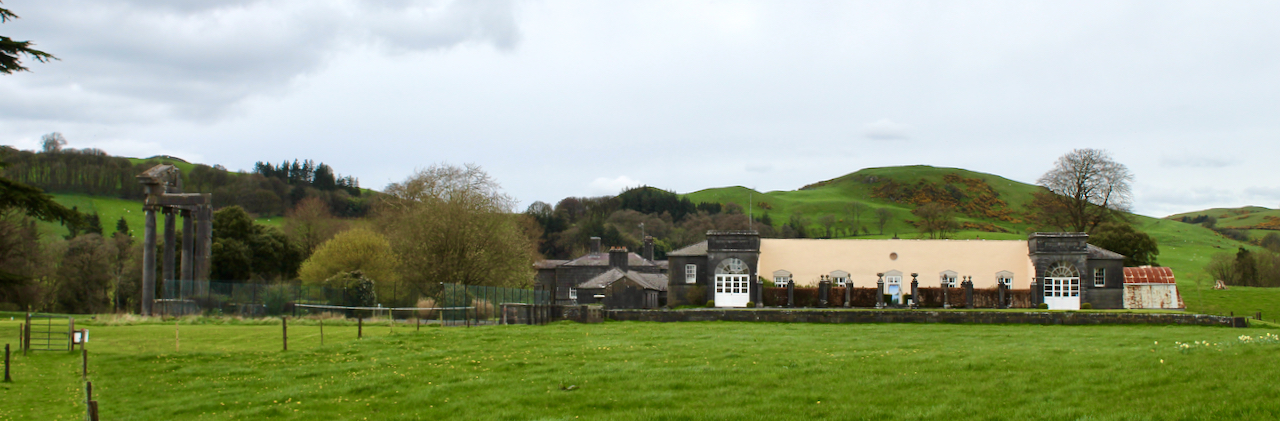
In the lead up to the Ryder Cup golf tournament which was being held in Ireland that year, a scout contacted Trish and asked if they could rent her property for the duration of the tournament. When the scout visited Tankardstown, she noticed the stable block next to the house and proposed that if it could be refurbished in time, they would rent that out for the tournament as well! The stable block now holds self-contained accommodation.
It has a large function room, formerly the Orangerie, for weddings and events.
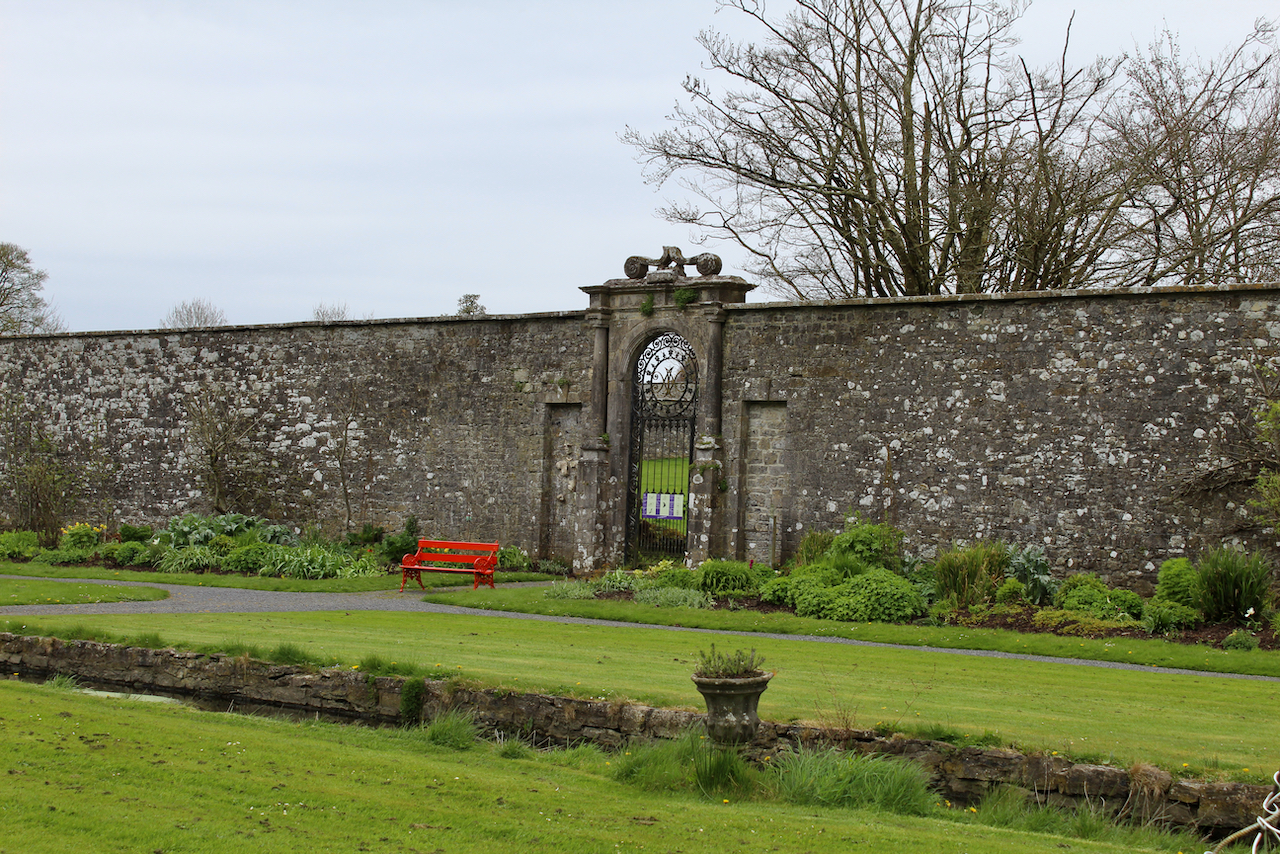
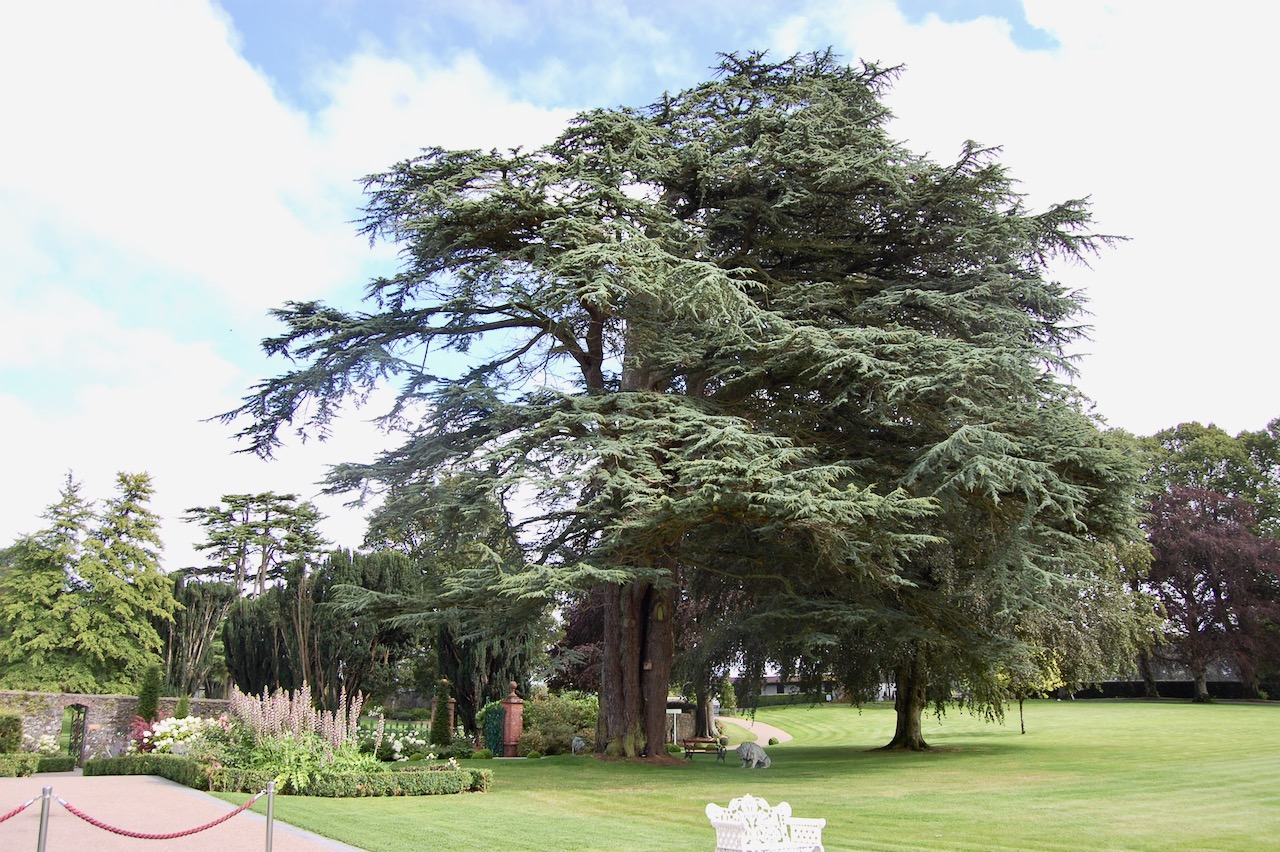
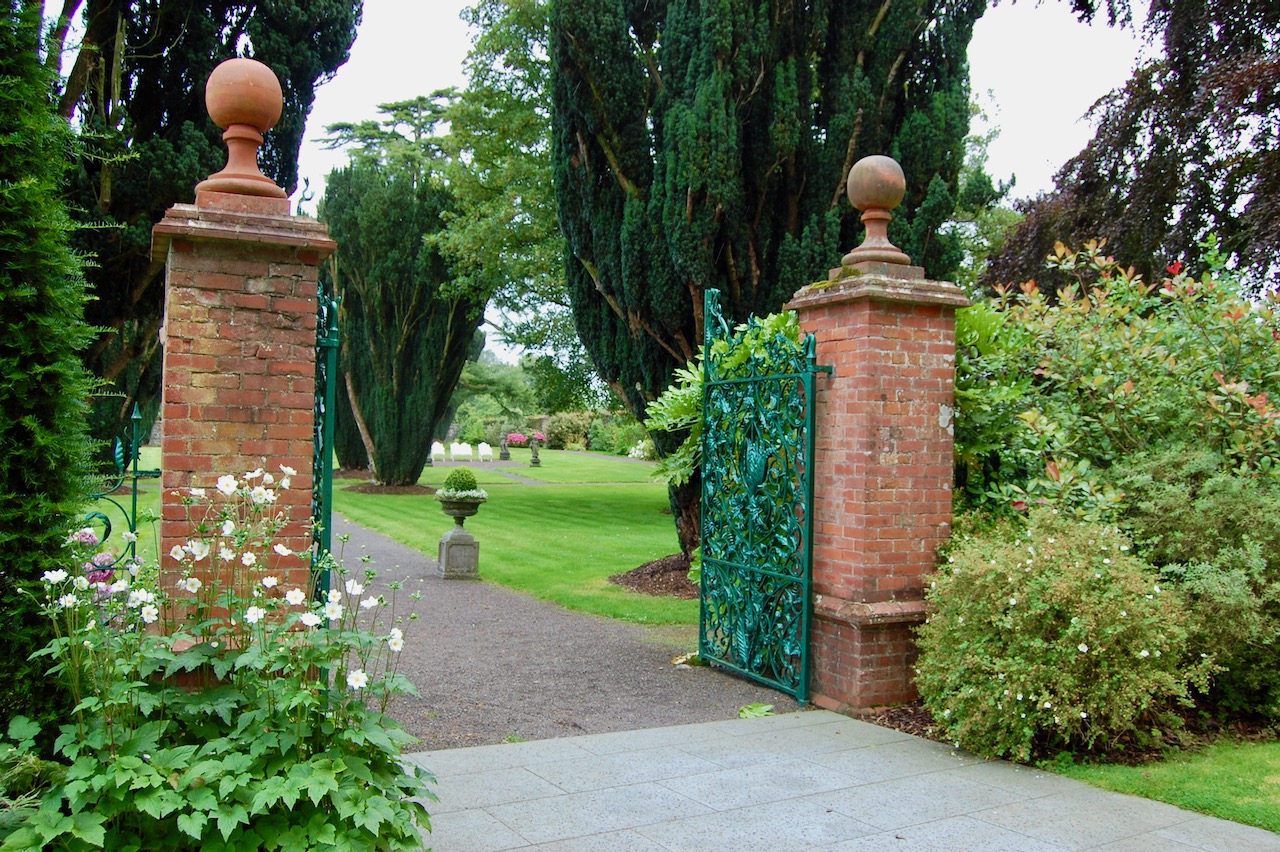
The house is situated on an 80 acre estate with woodland, rolling parkland and walled gardens. There is also a pampering treatment room in a “hide-out” beside the walled garden.
Brian Conroy is an entrepreneur with a successful track record in property development, restoration of heritage buildings and operation of hospitality venues. Having grown up in Monkstown, Co Dublin, he moved to the UK and built an engineering and property business before returning with his family to Tankardstown, Co Meath. He also owns another property on the section 482 register in 2019 which is also now a hotel, Boyne House, Slane (formerly known as Cillghrian Glebe). [10]
Donation
Help me to fund my creation and update of this website. It is created purely out of love for the subject and I receive no payment so any donation is appreciated! For this entry I paid for petrol to drive to our destination from Dublin.




















































 Irish Historic Houses