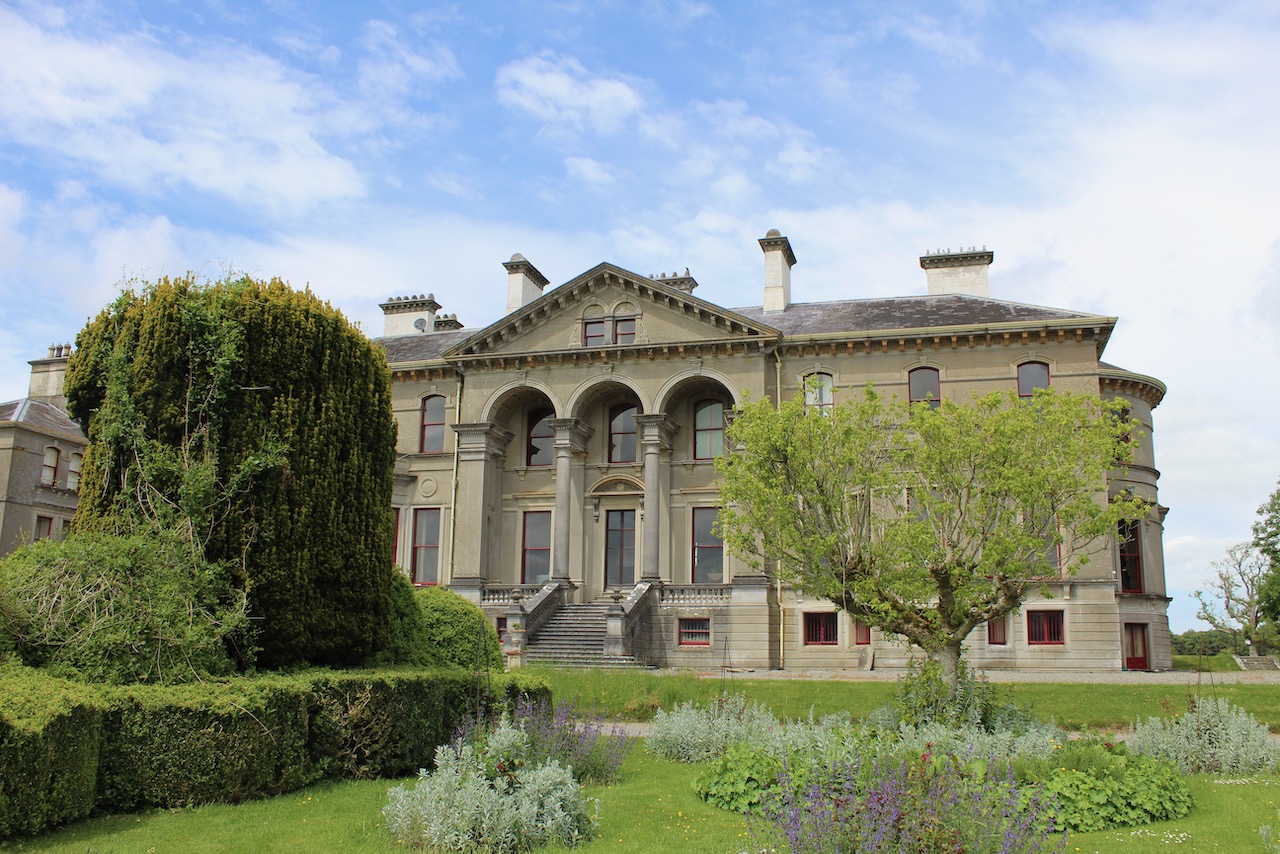
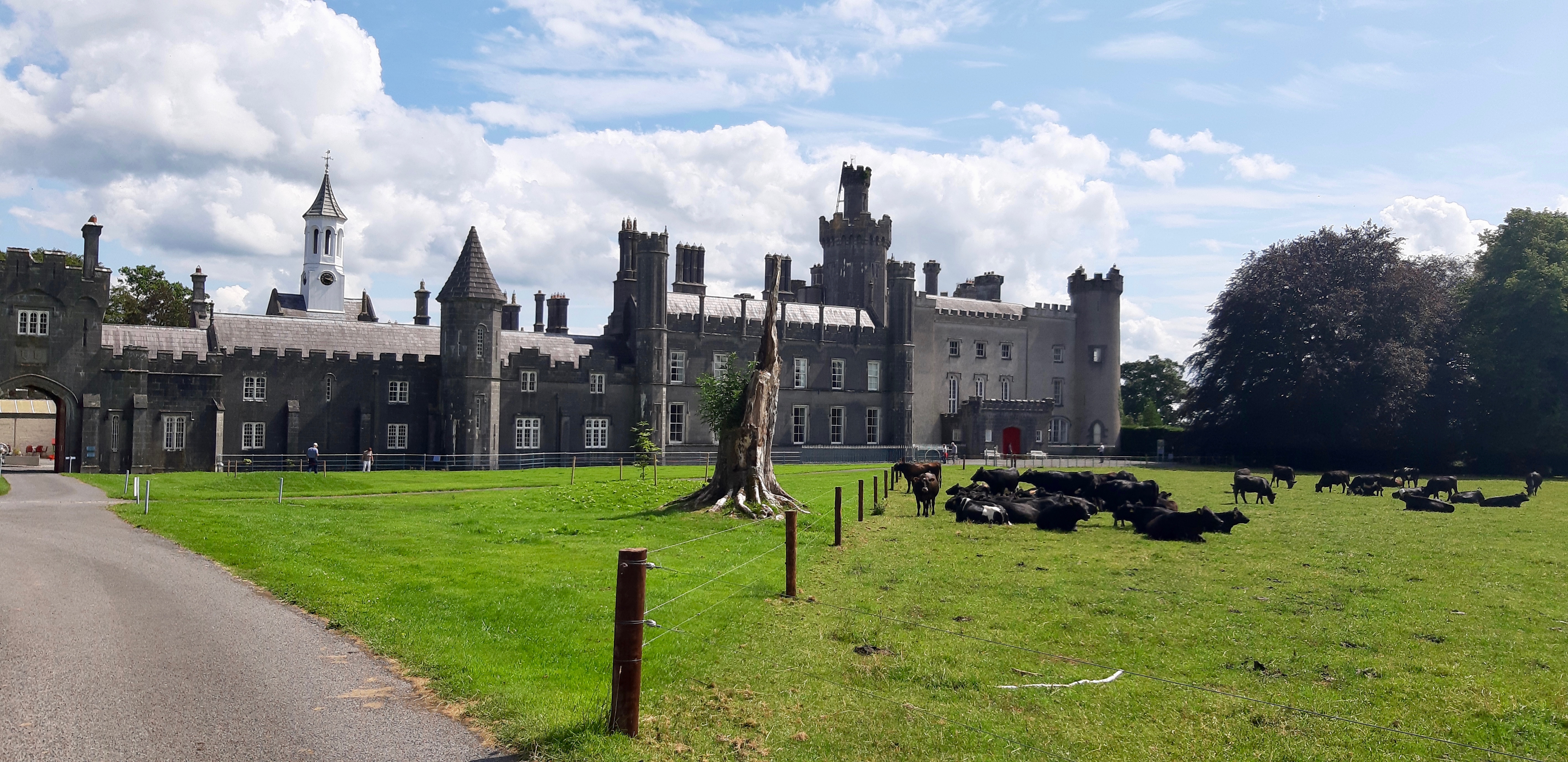
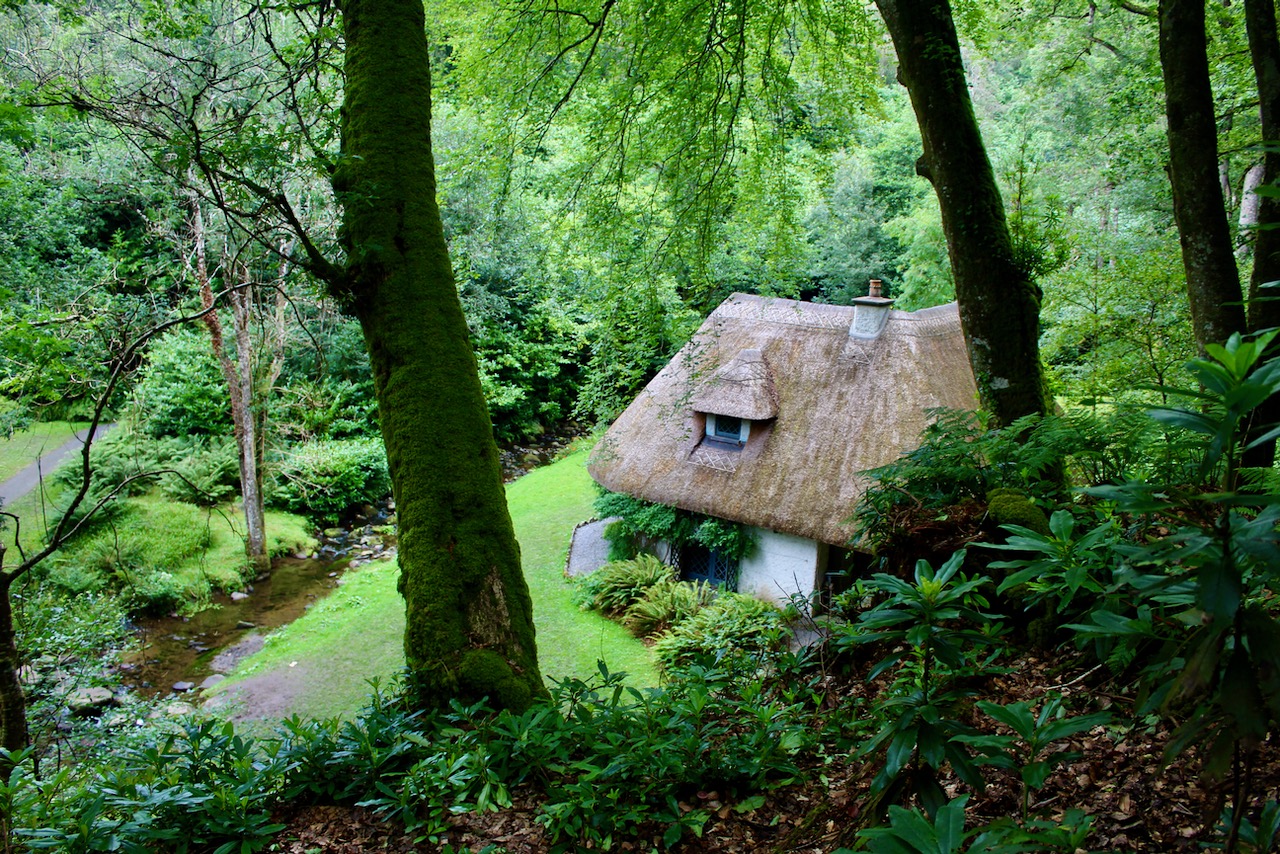
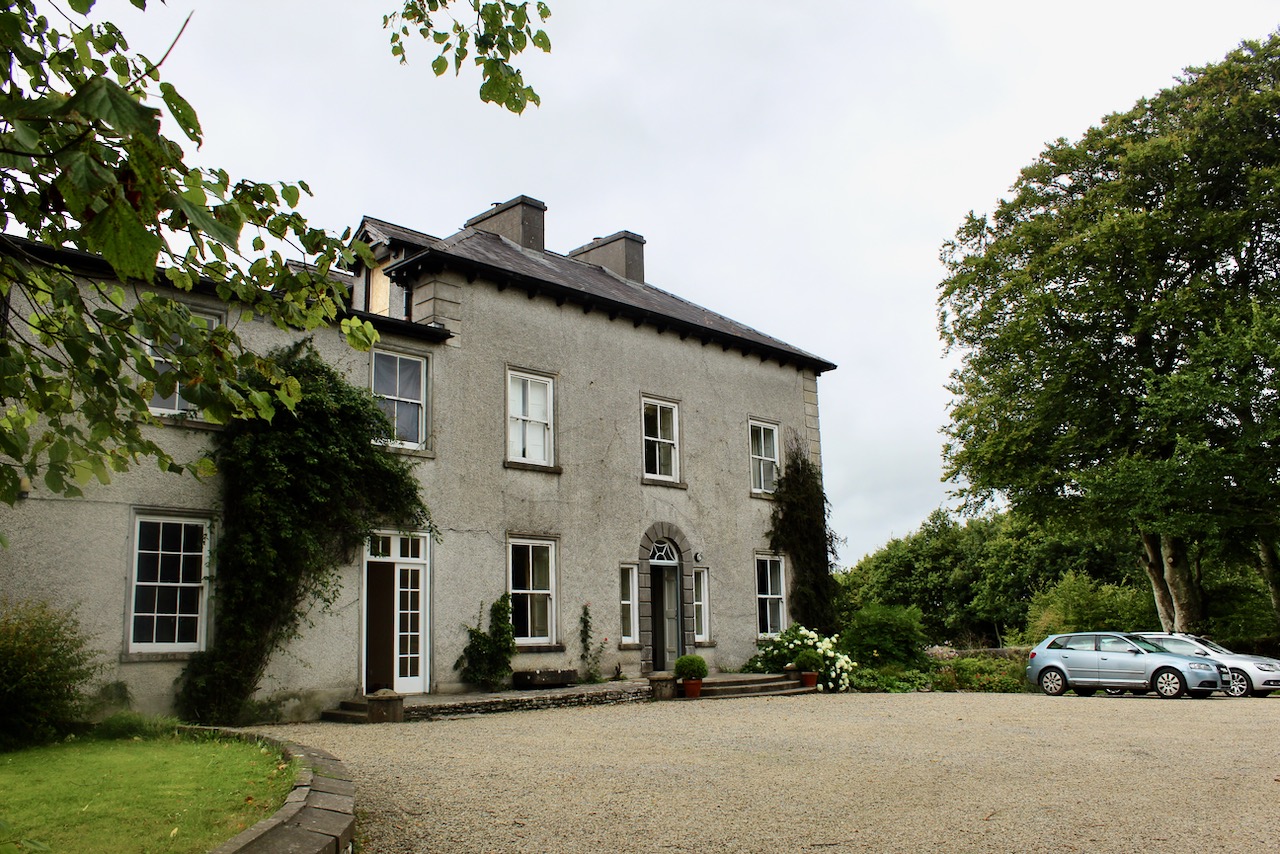
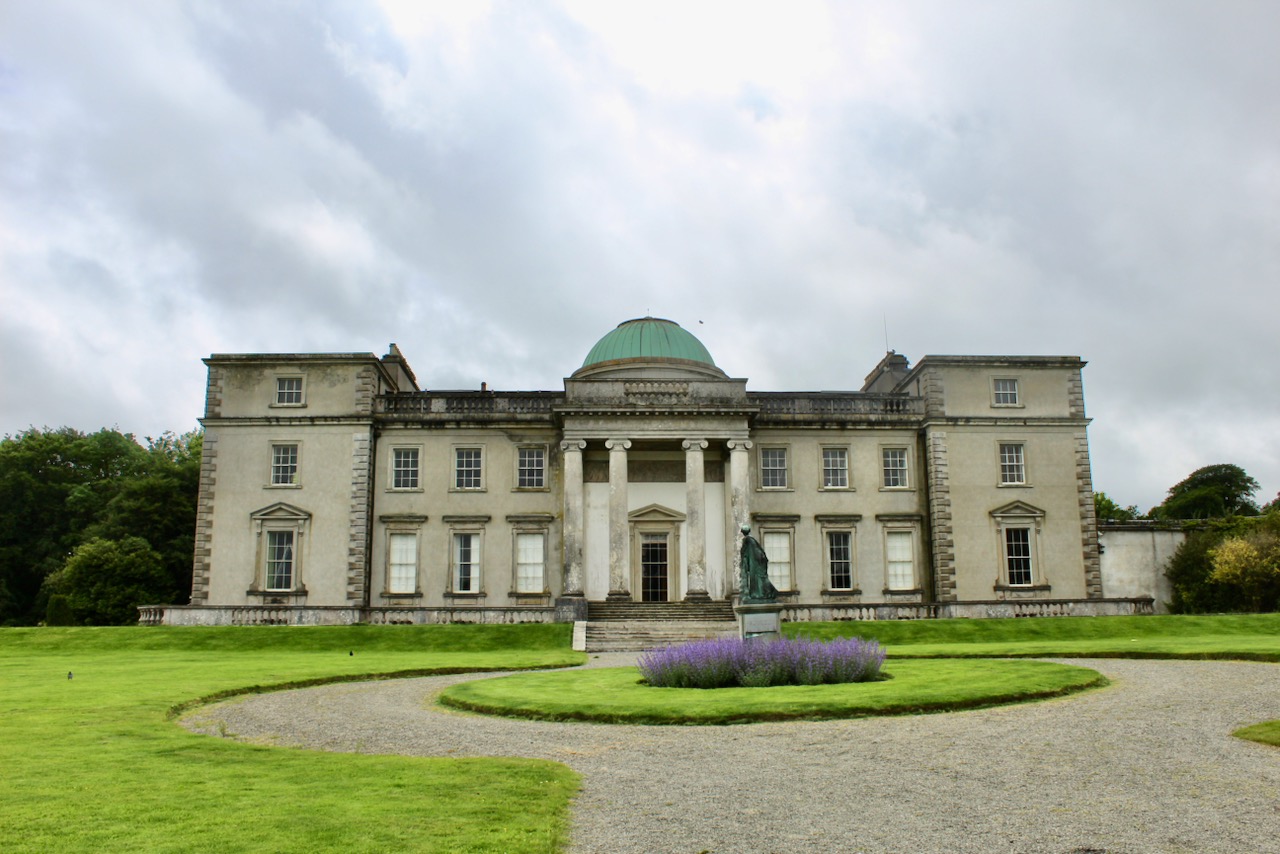
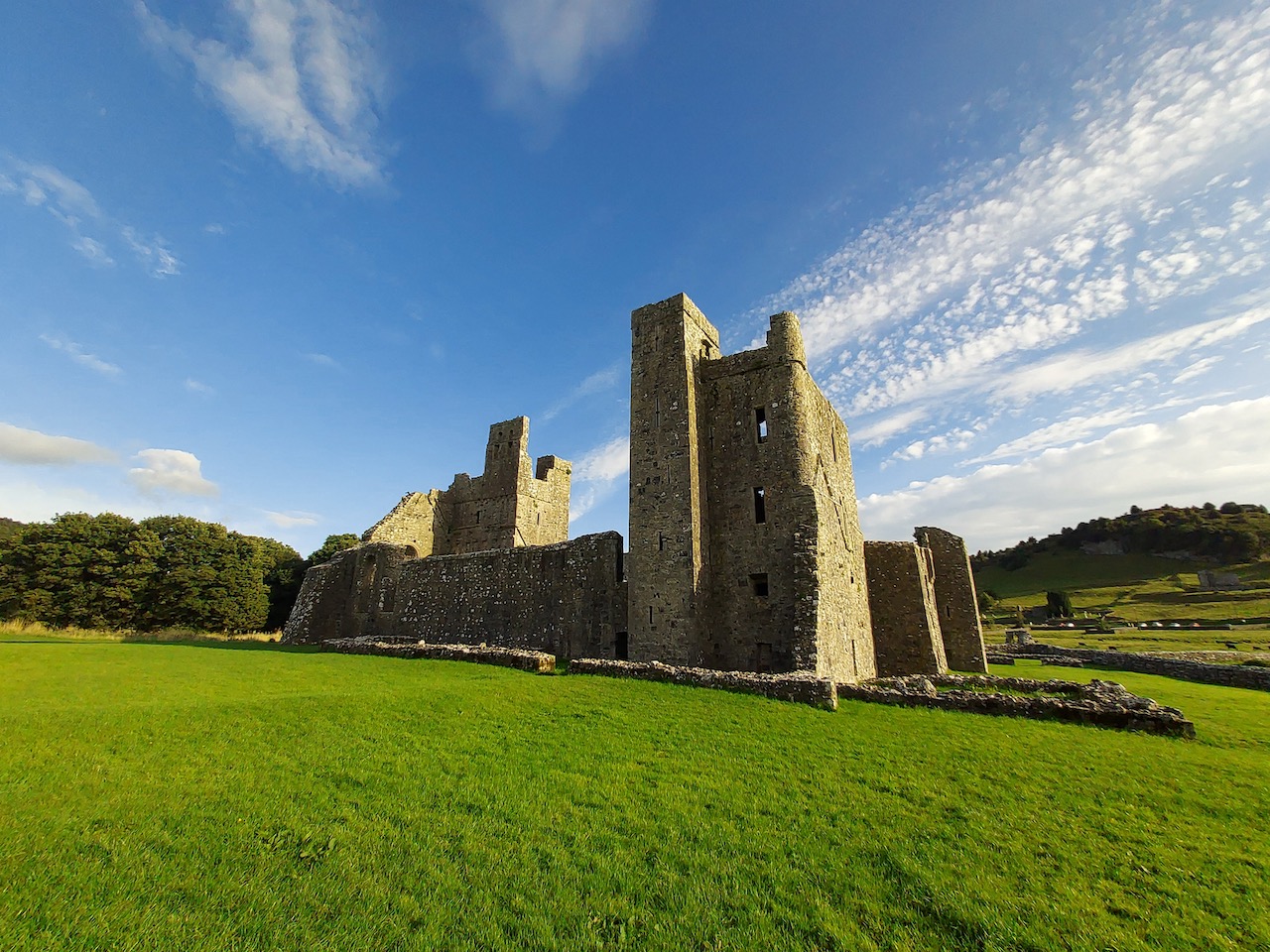
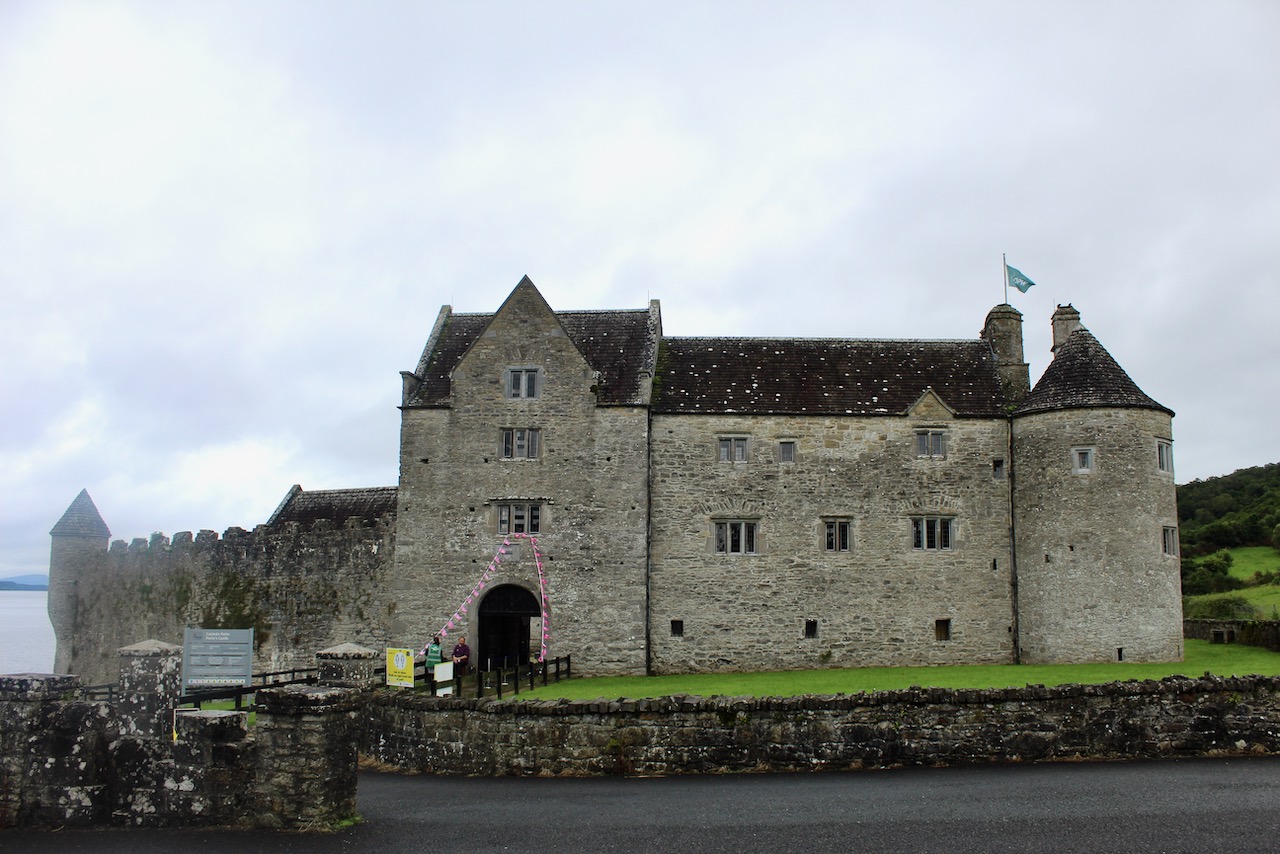
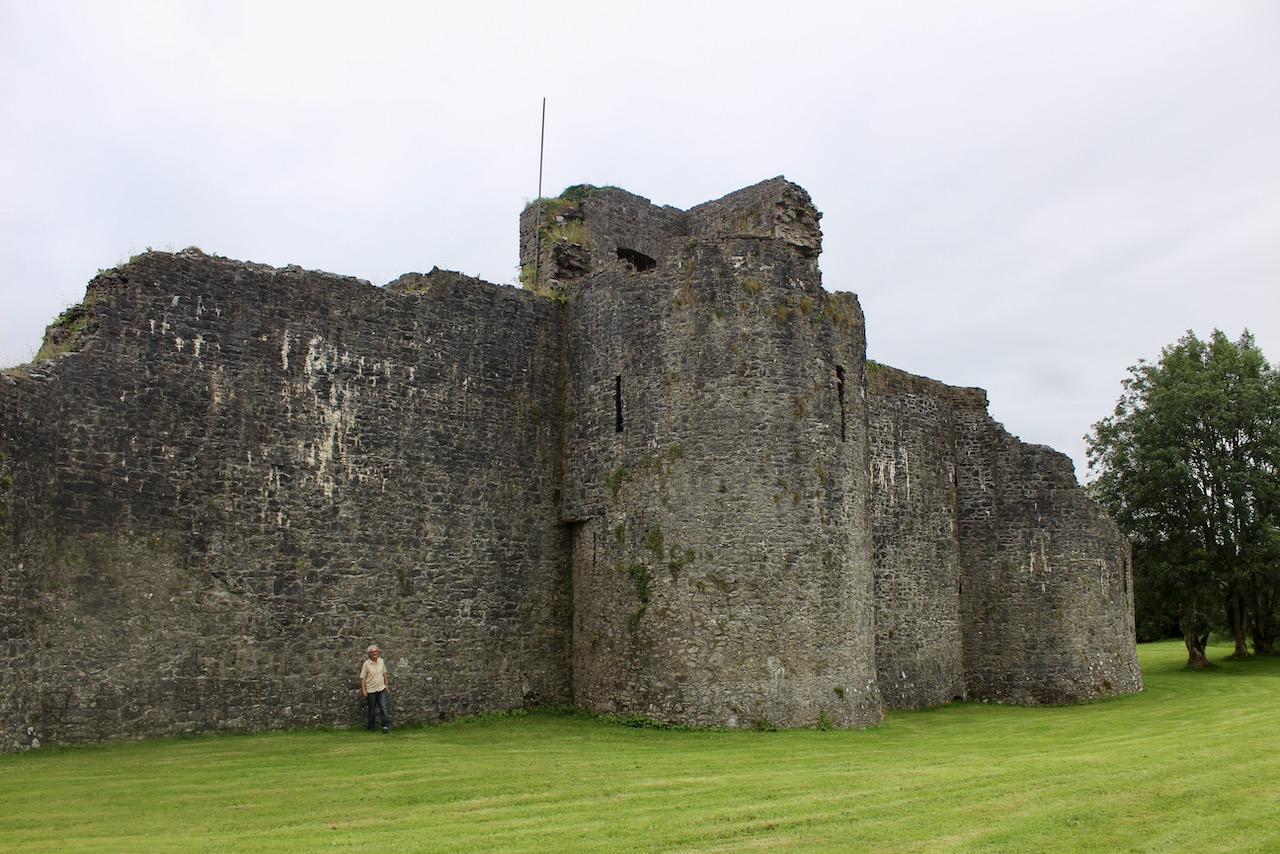
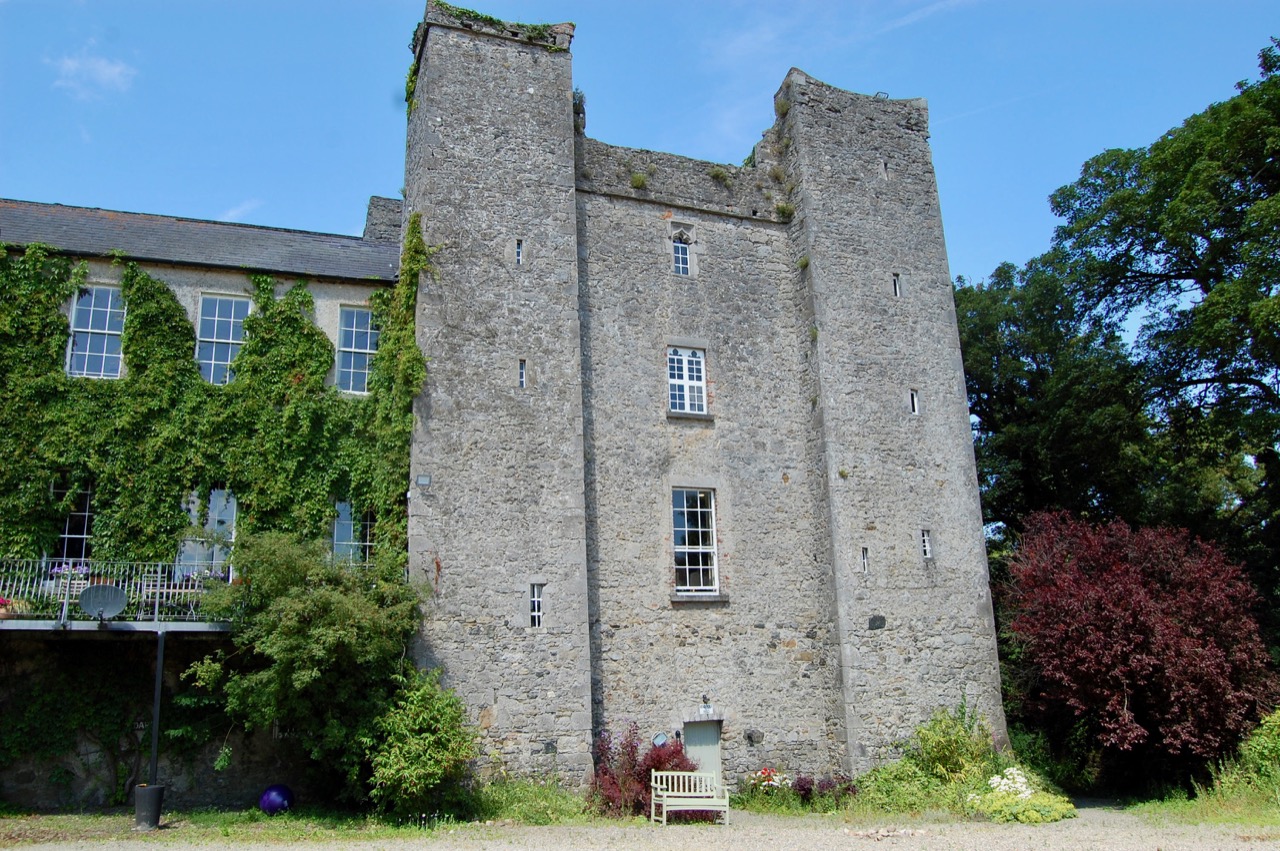
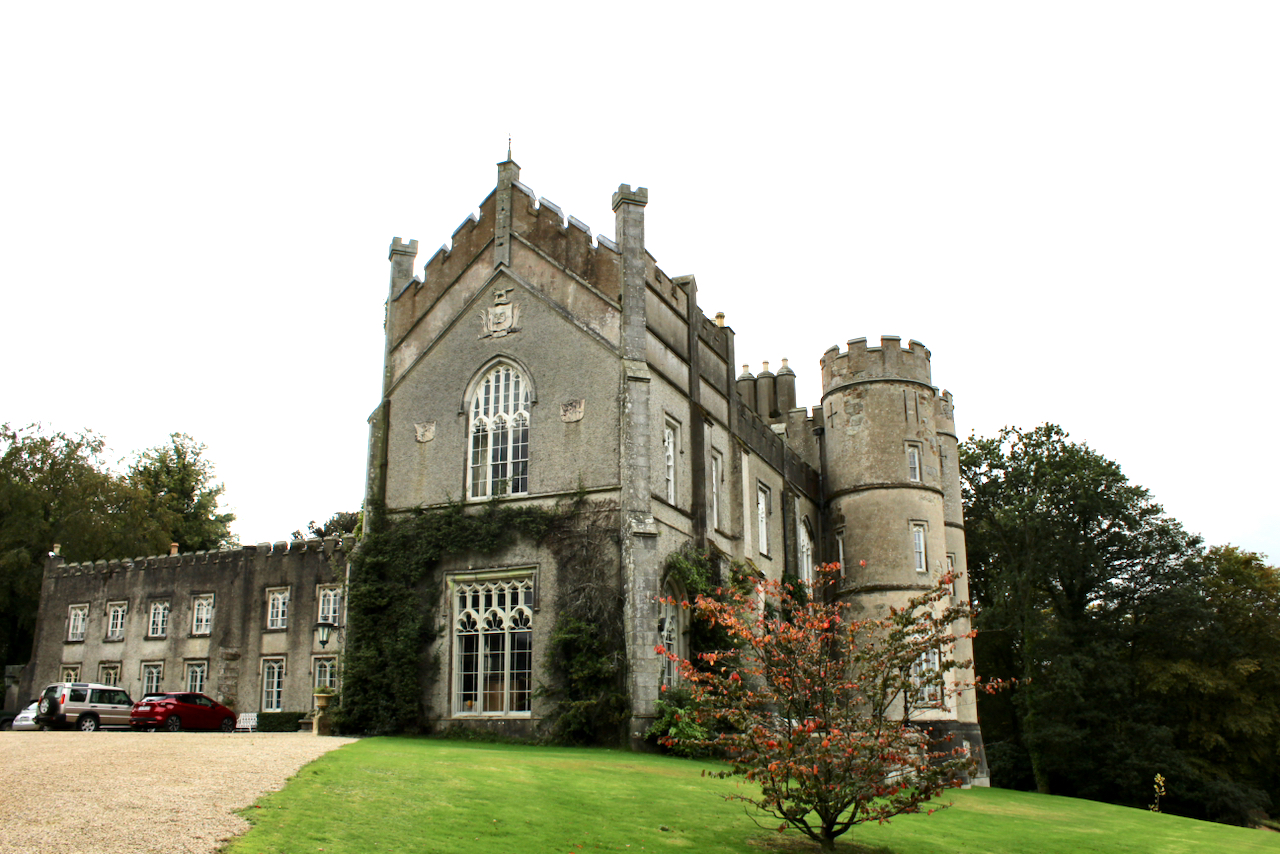
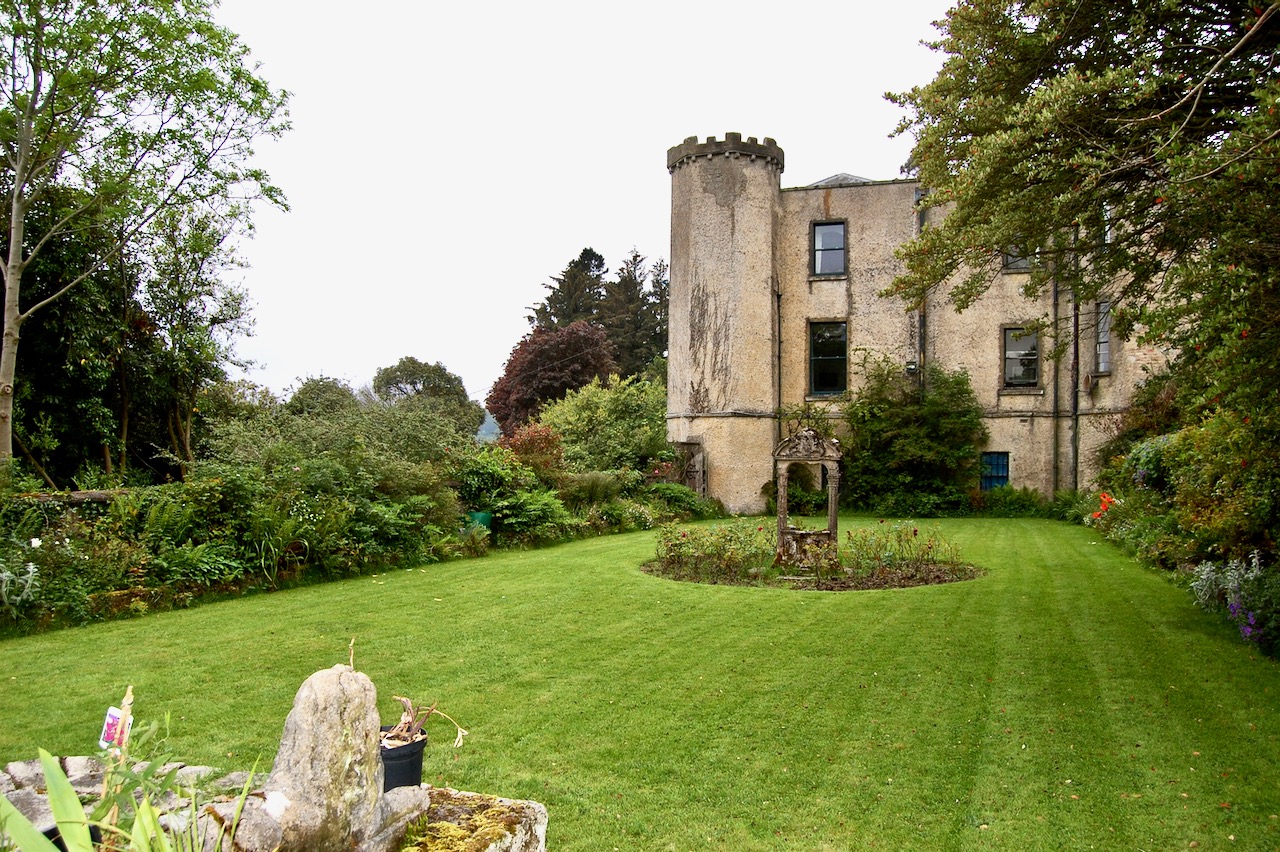
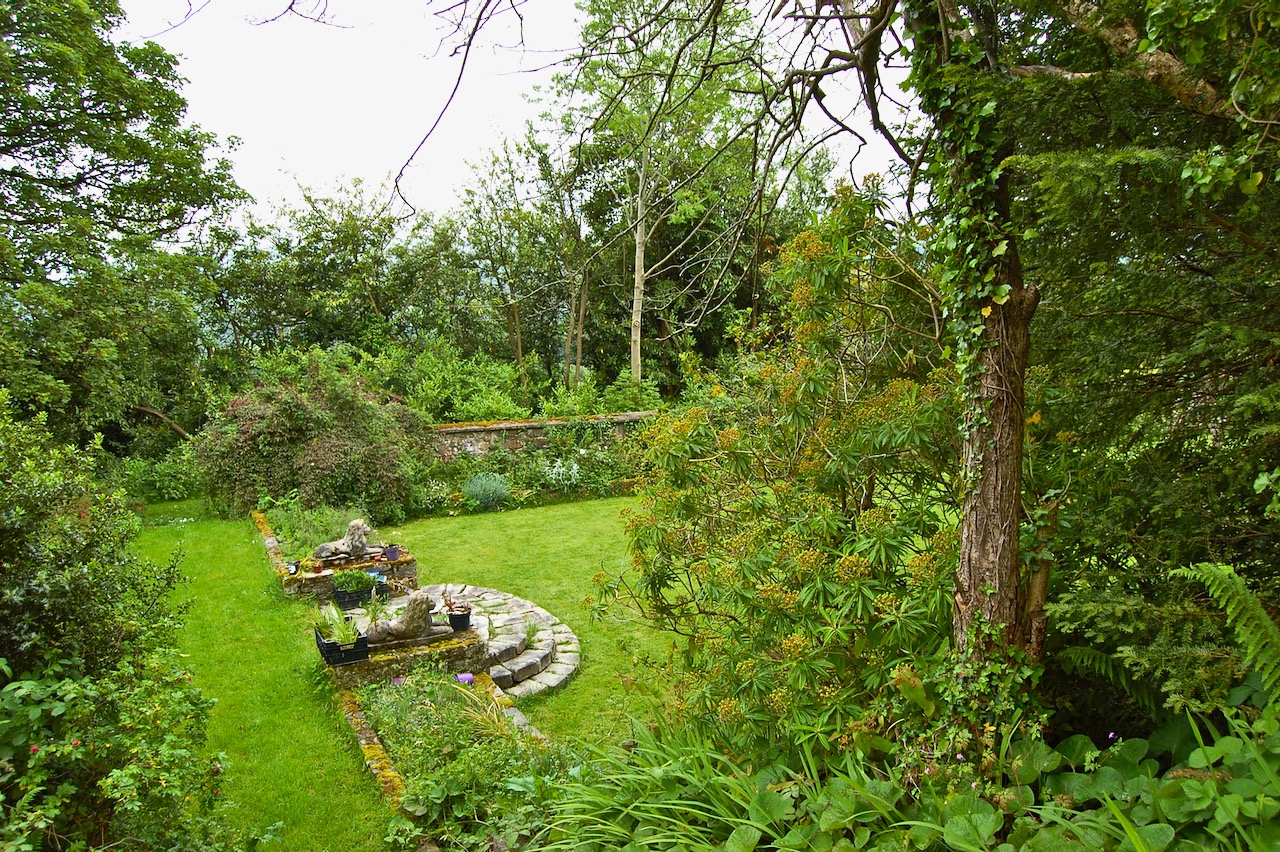
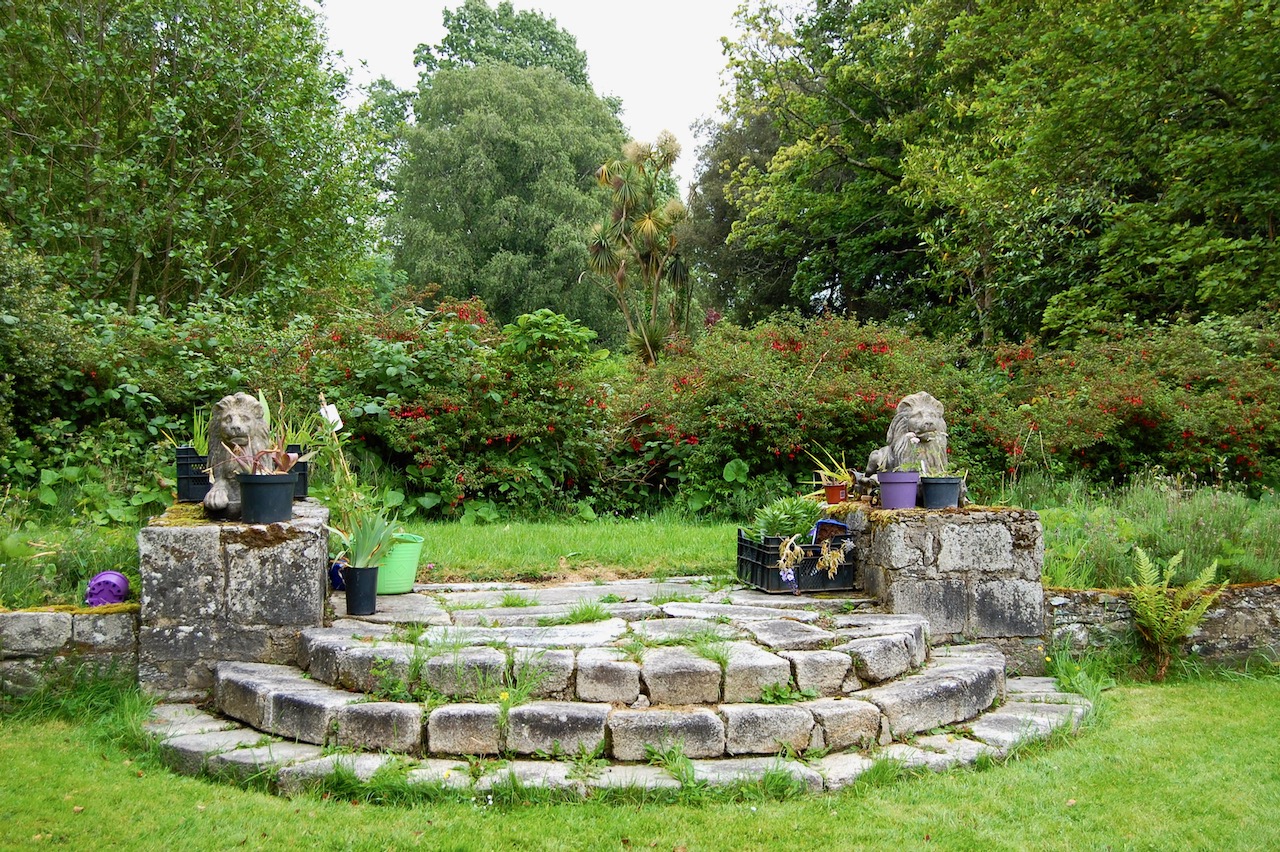
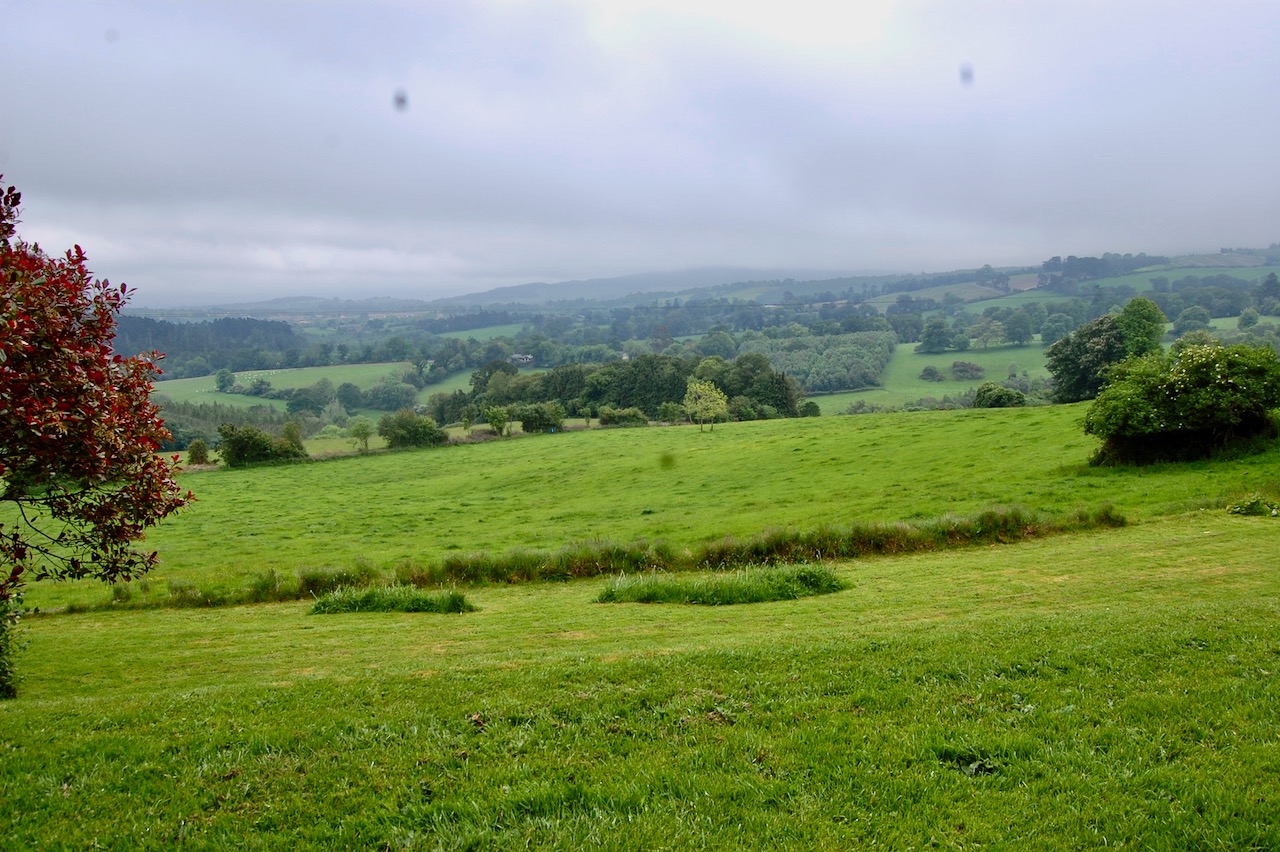
Hamwood House, Dunboyne, Co. Meath – section 482

www.hamwood.ie

Open dates in 2025: Feb 5-9, 12-16, 19-23, 26-28, Mar 1, May 8-11, 15-18, June 5-8, 11-13, 19-20, July 1-3, 9-11, 16-18, August 6-8, 12-14, 16-24, 11am-1pm, 3pm-5pm

Fee: adult/OAP/student €20, child under 10 years free
2025 Diary of Irish Historic Houses (section 482 properties)

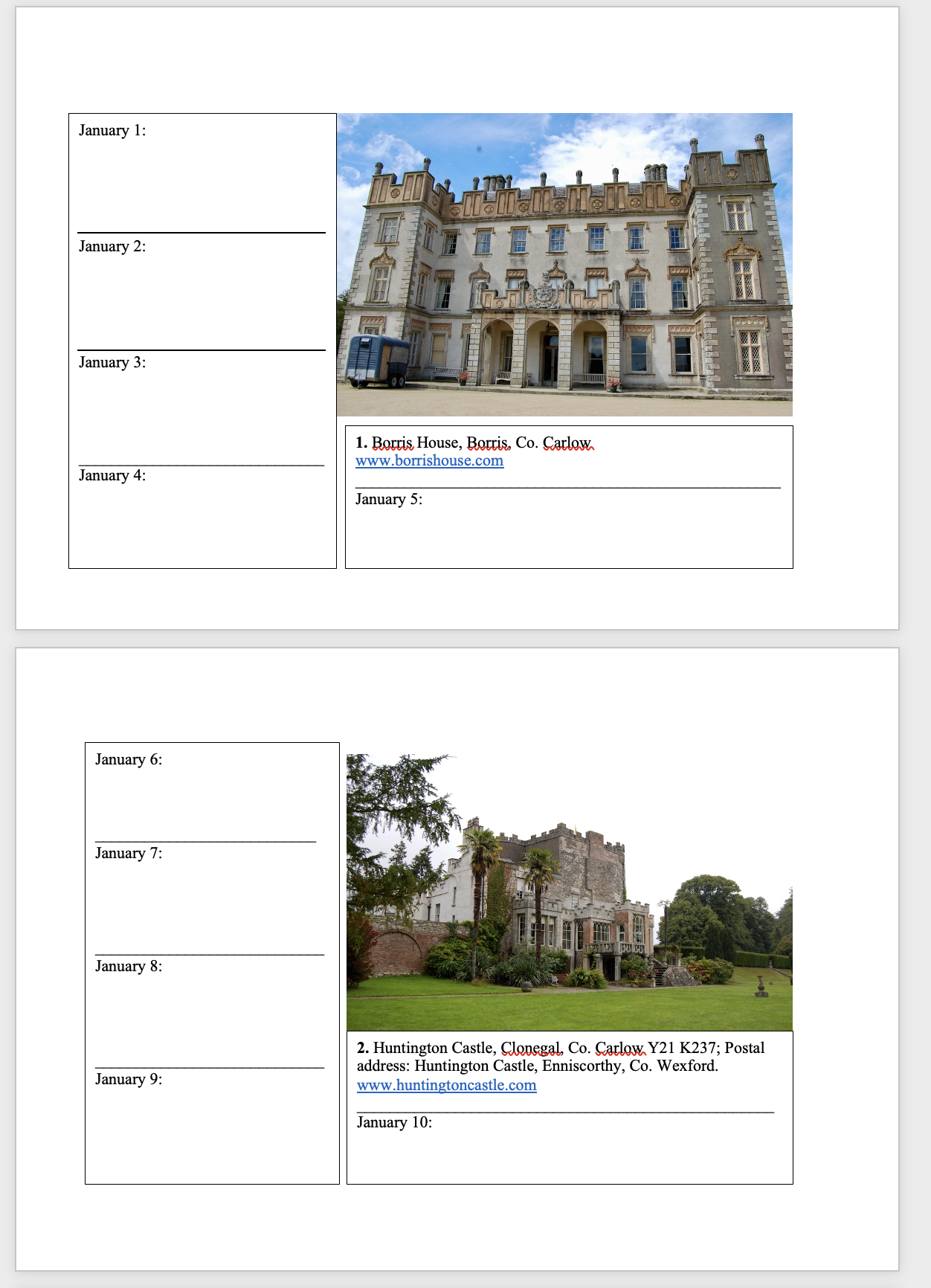
To purchase an A5 size 2025 Diary of Historic Houses (opening times and days are not listed so the calendar is for use for recording appointments and not as a reference for opening times) send your postal address to jennifer.baggot@gmail.com along with €20 via this payment button. The calendar of 84 pages includes space for writing your appointments as well as photographs of the historic houses. The price includes postage within Ireland. Postage to U.S. is a further €10 for the A5 size calendar, so I would appreciate a donation toward the postage – you can click on the donation link.

€20.00

donation

Help me to pay the entrance fee to one of the houses on this website. This site is created purely out of love for the subject and I receive no payment so any donation is appreciated!

€15.00
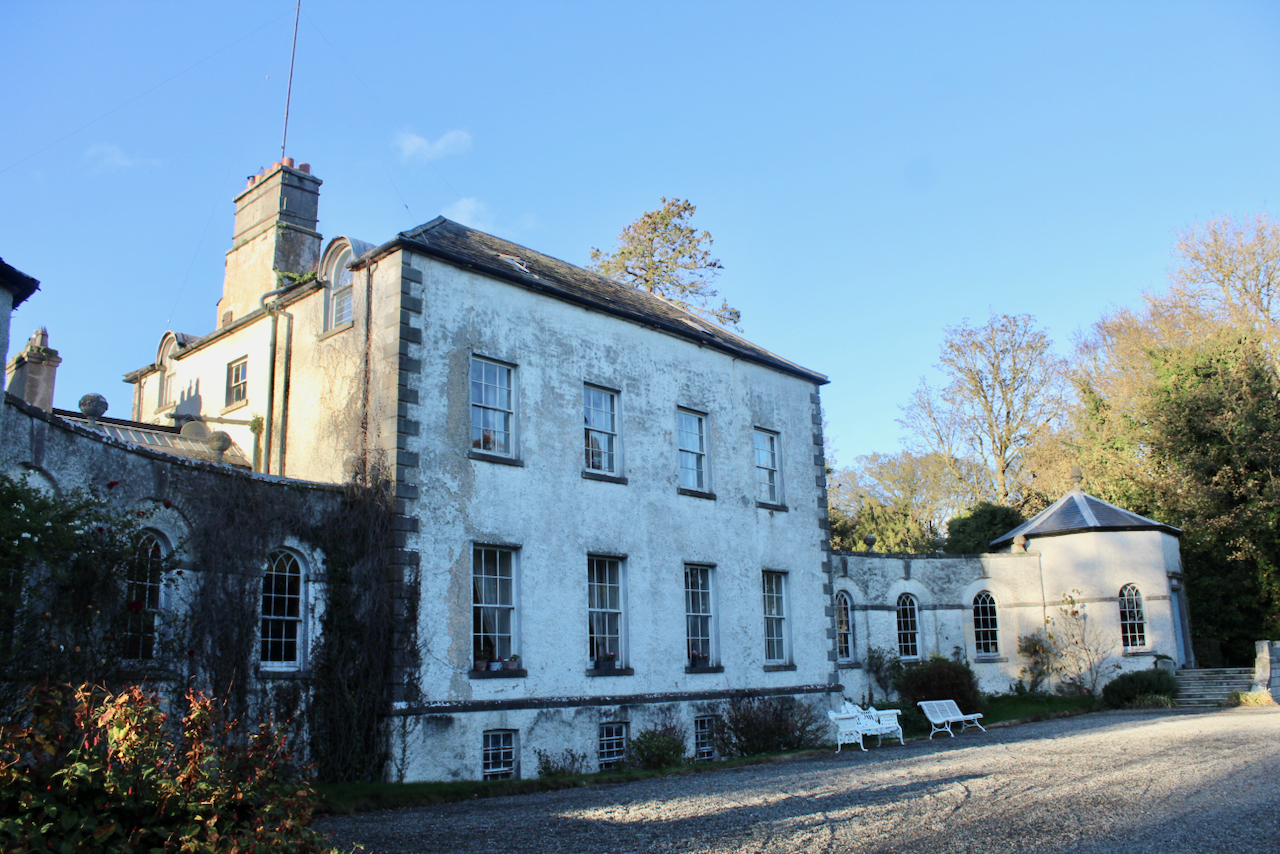
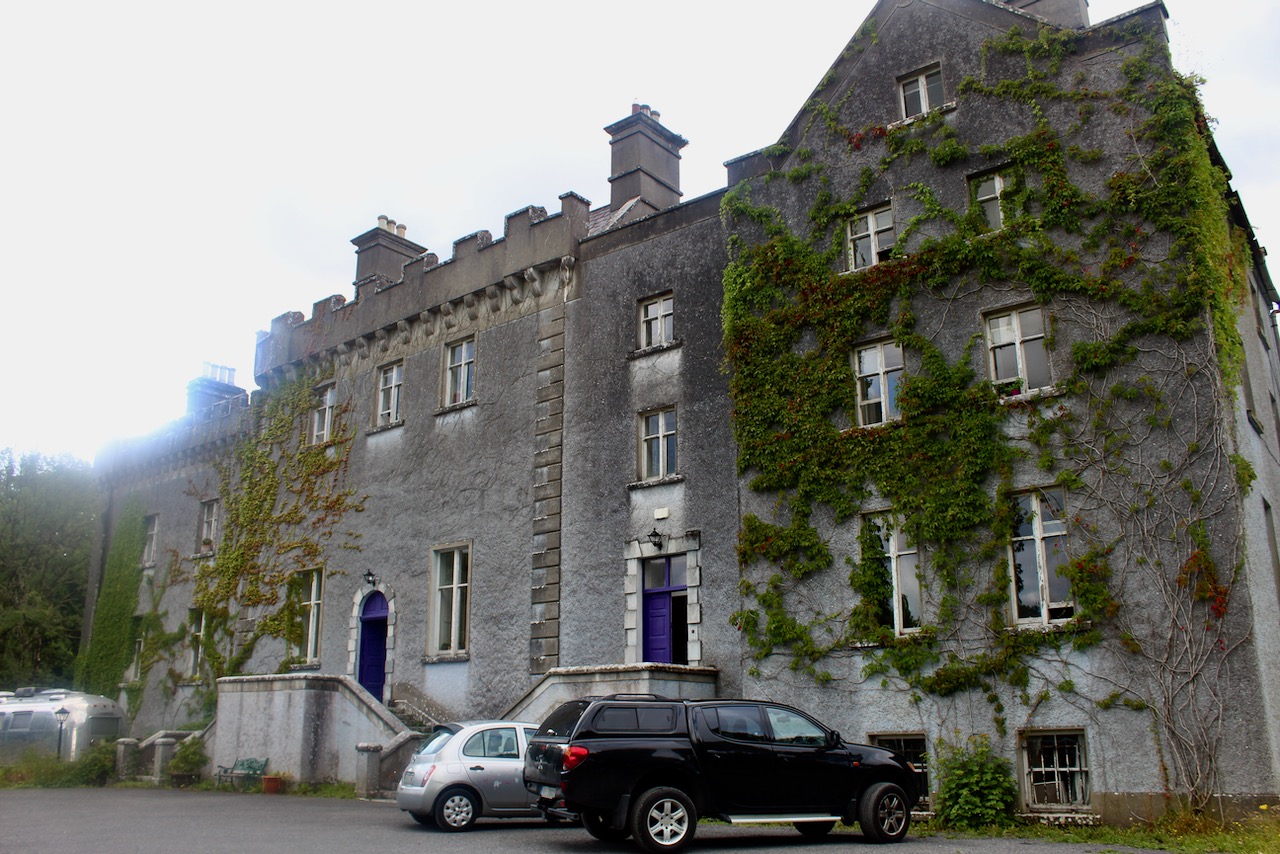
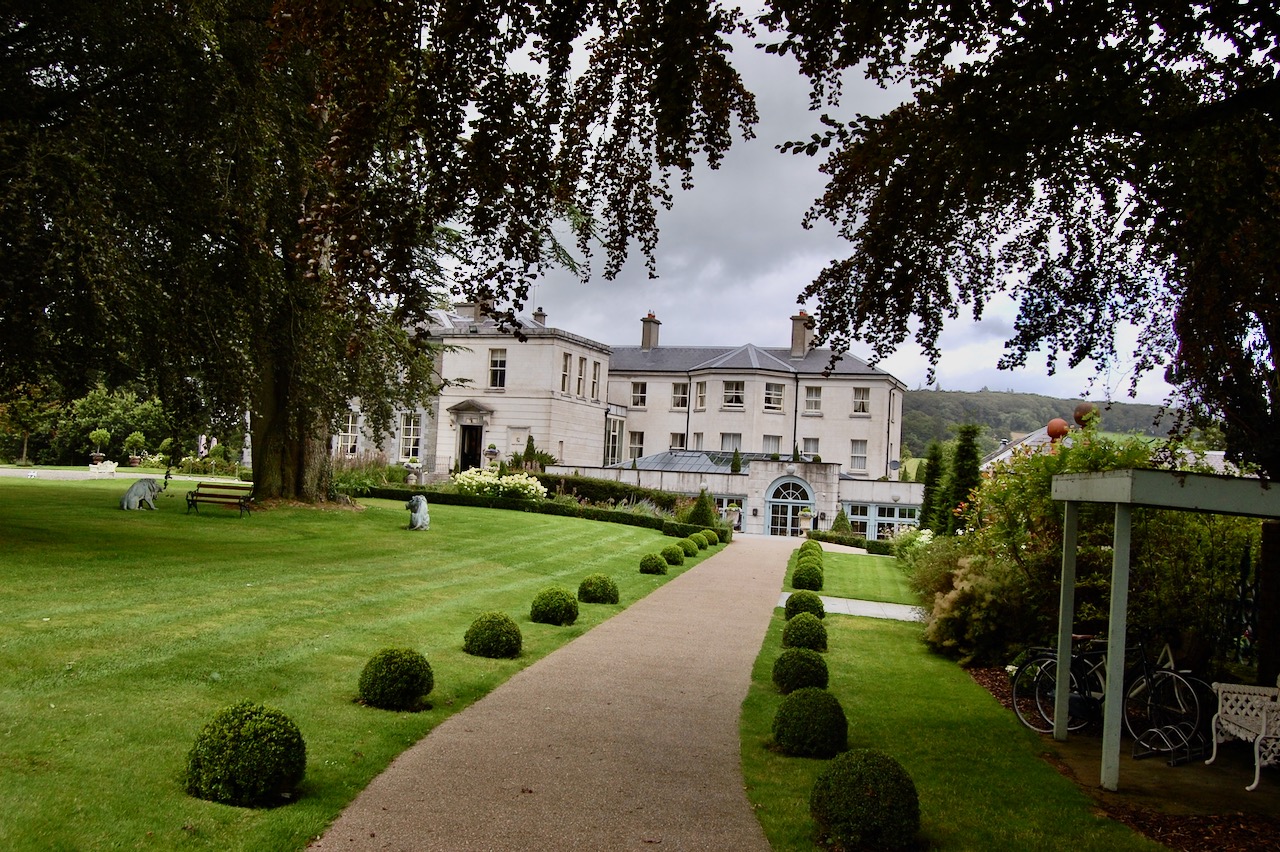
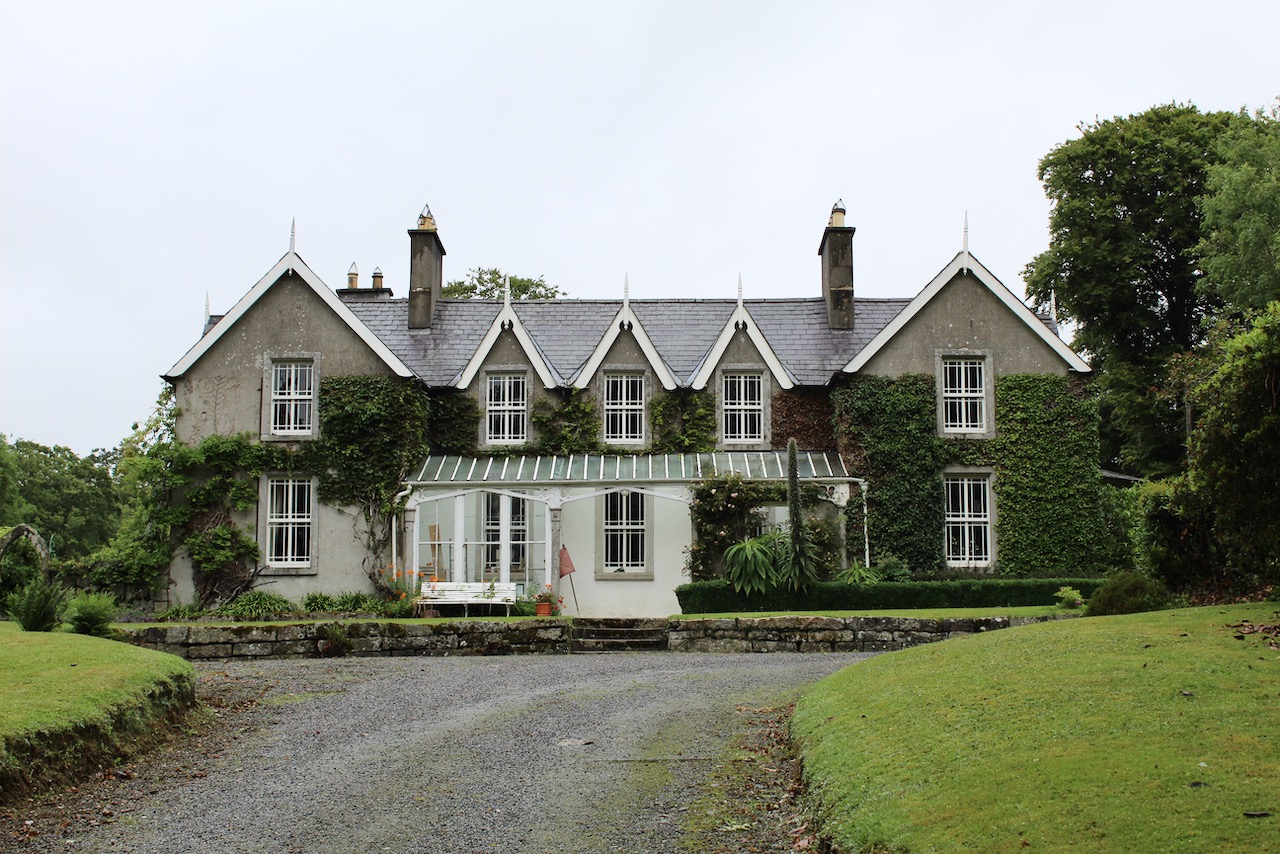
Hamwood, November 2022. Photograph © Jennifer Winder-Baggot, www.irishhistorichouses.com

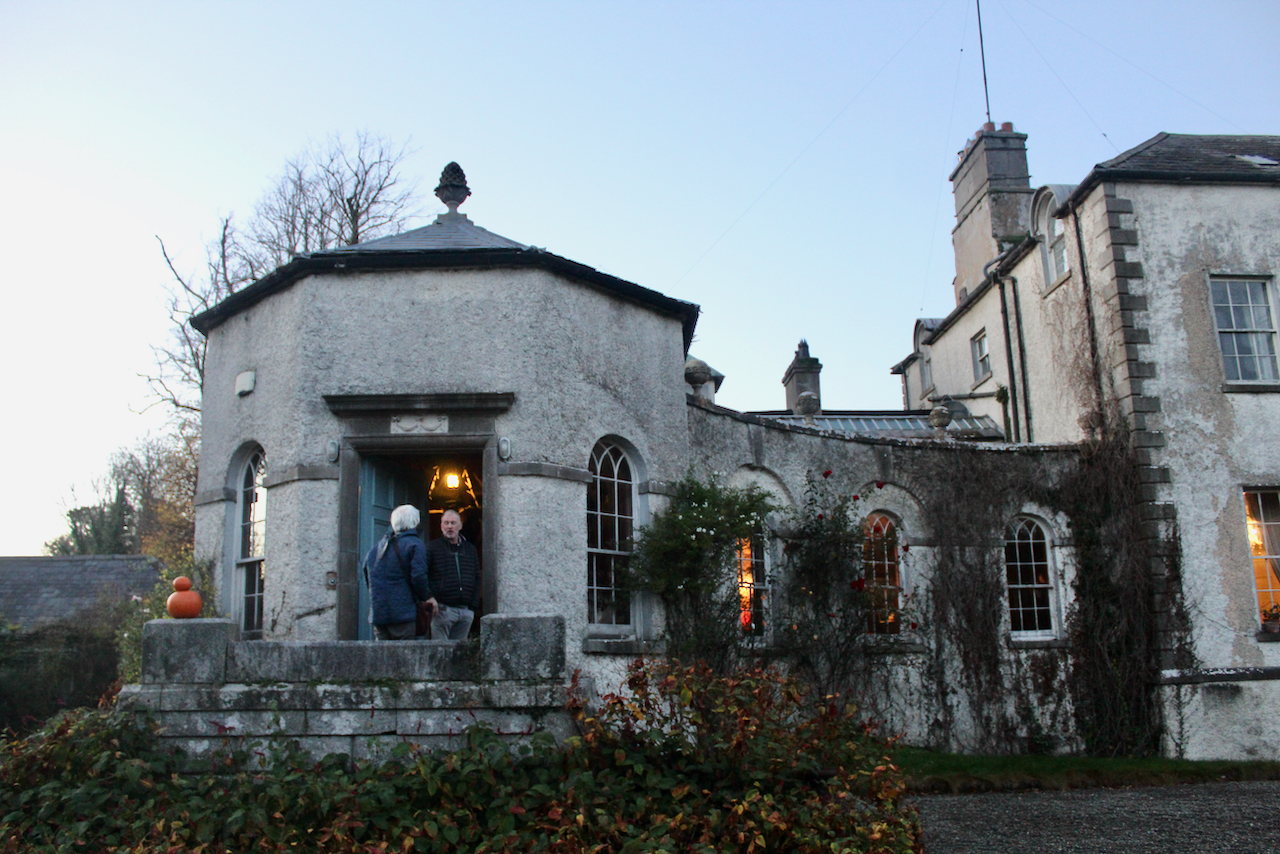
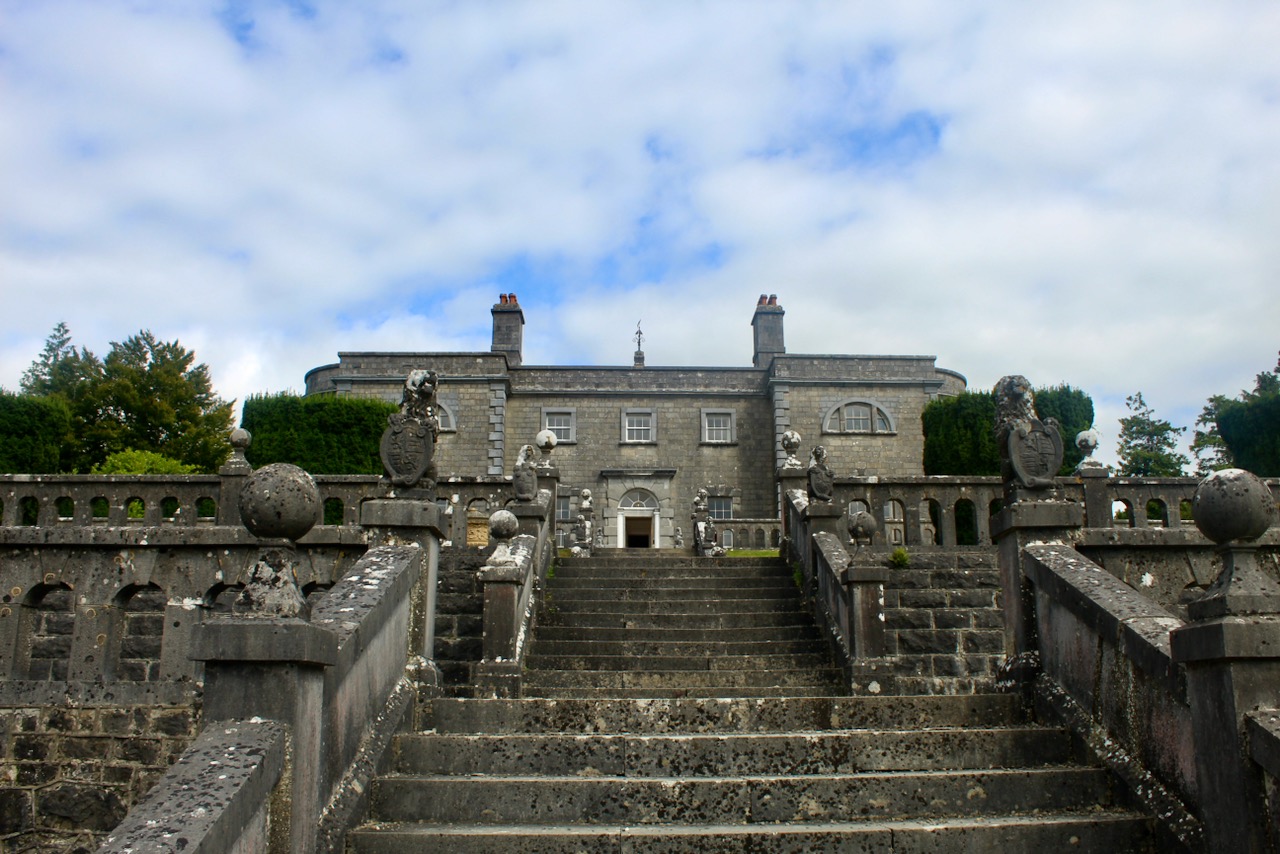
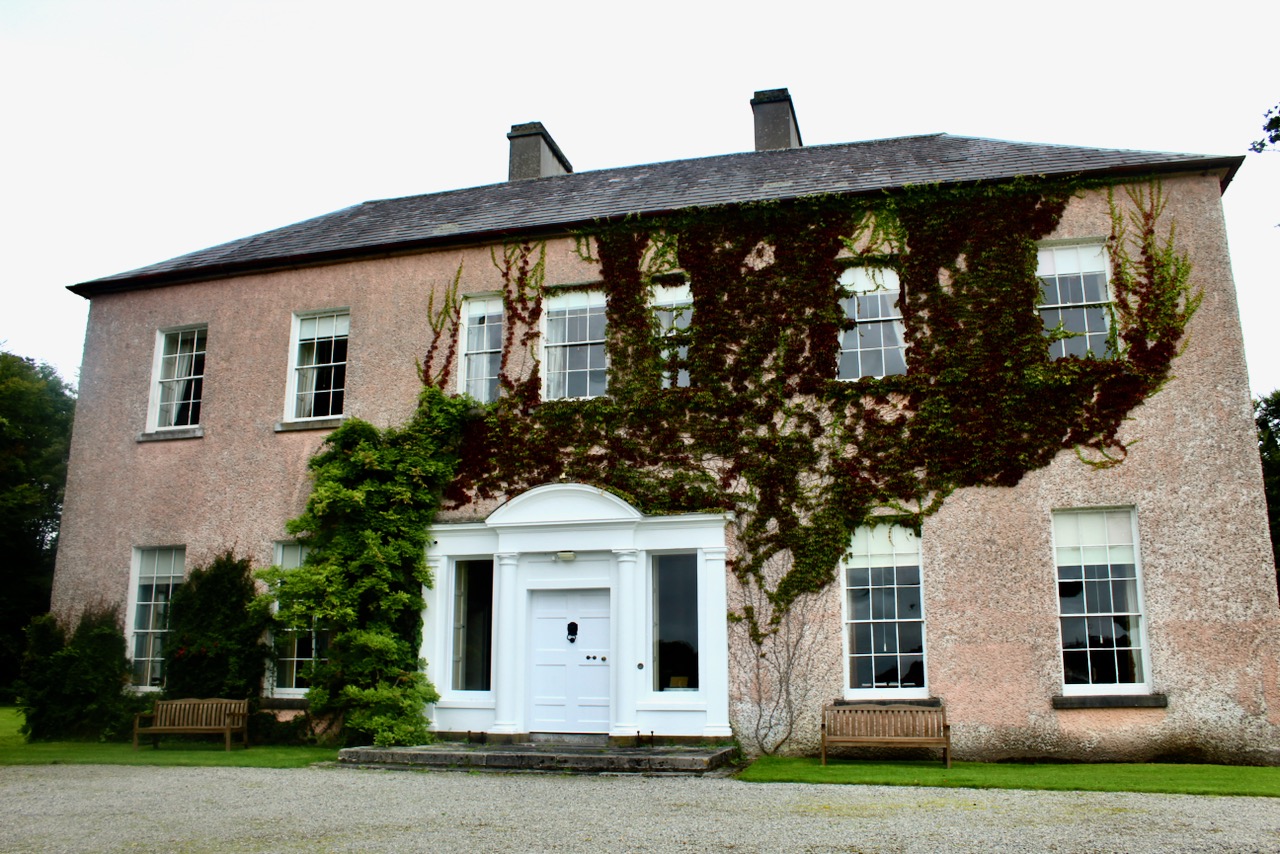
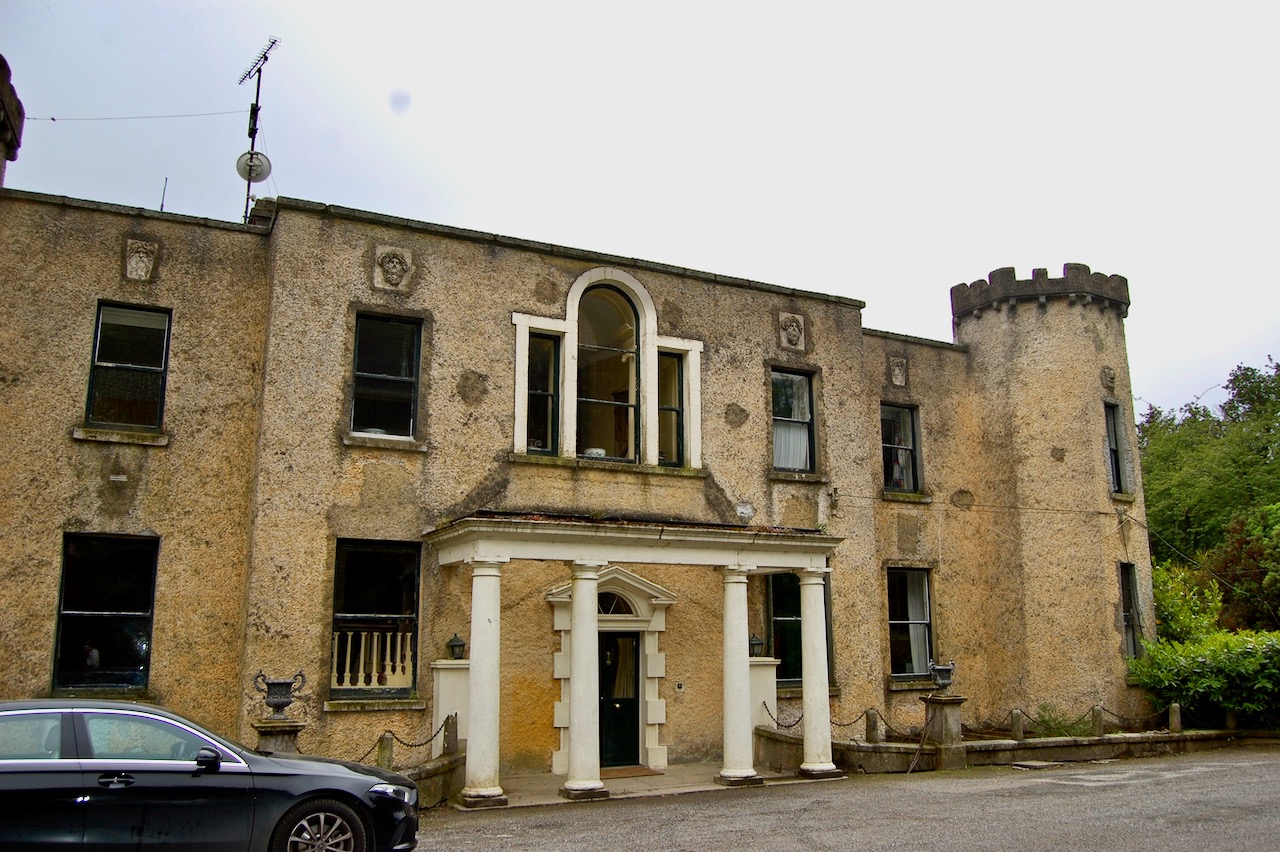
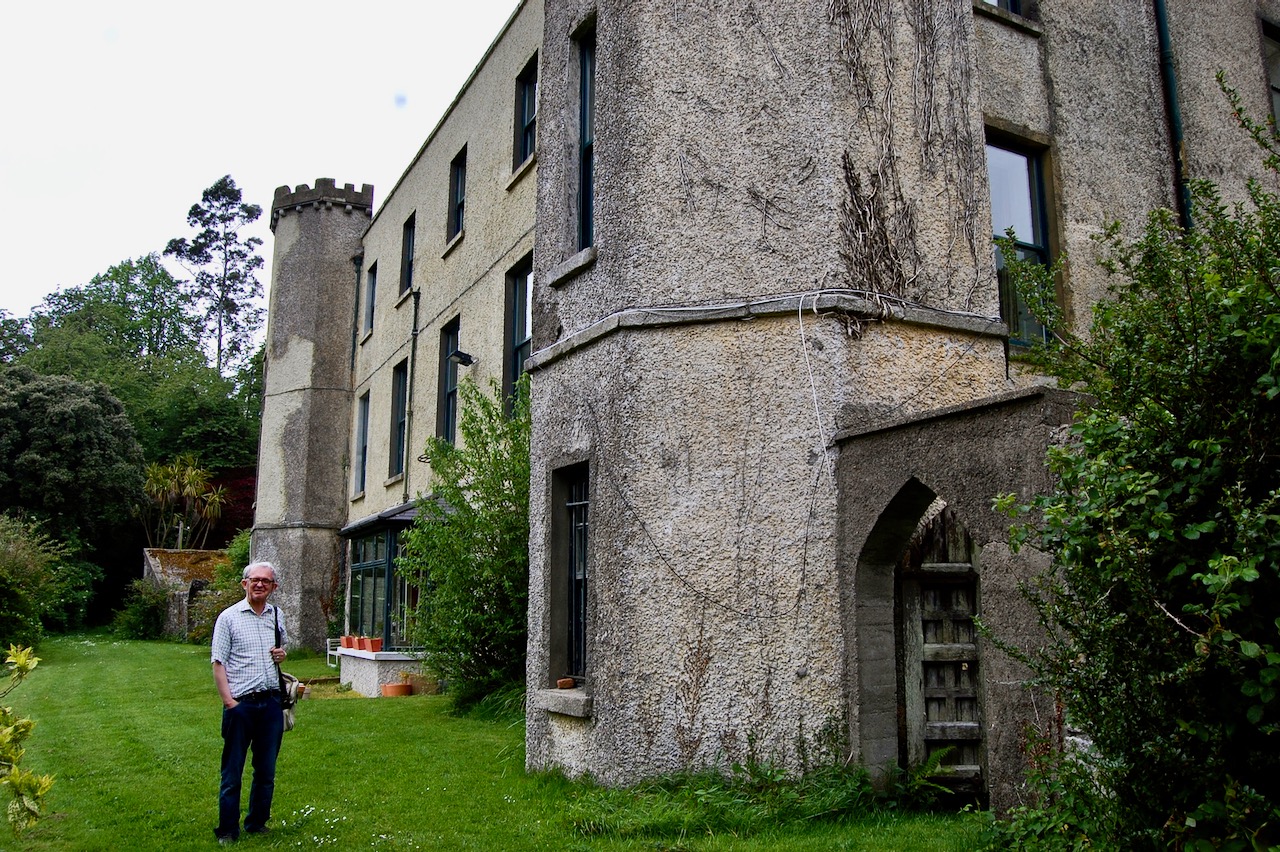
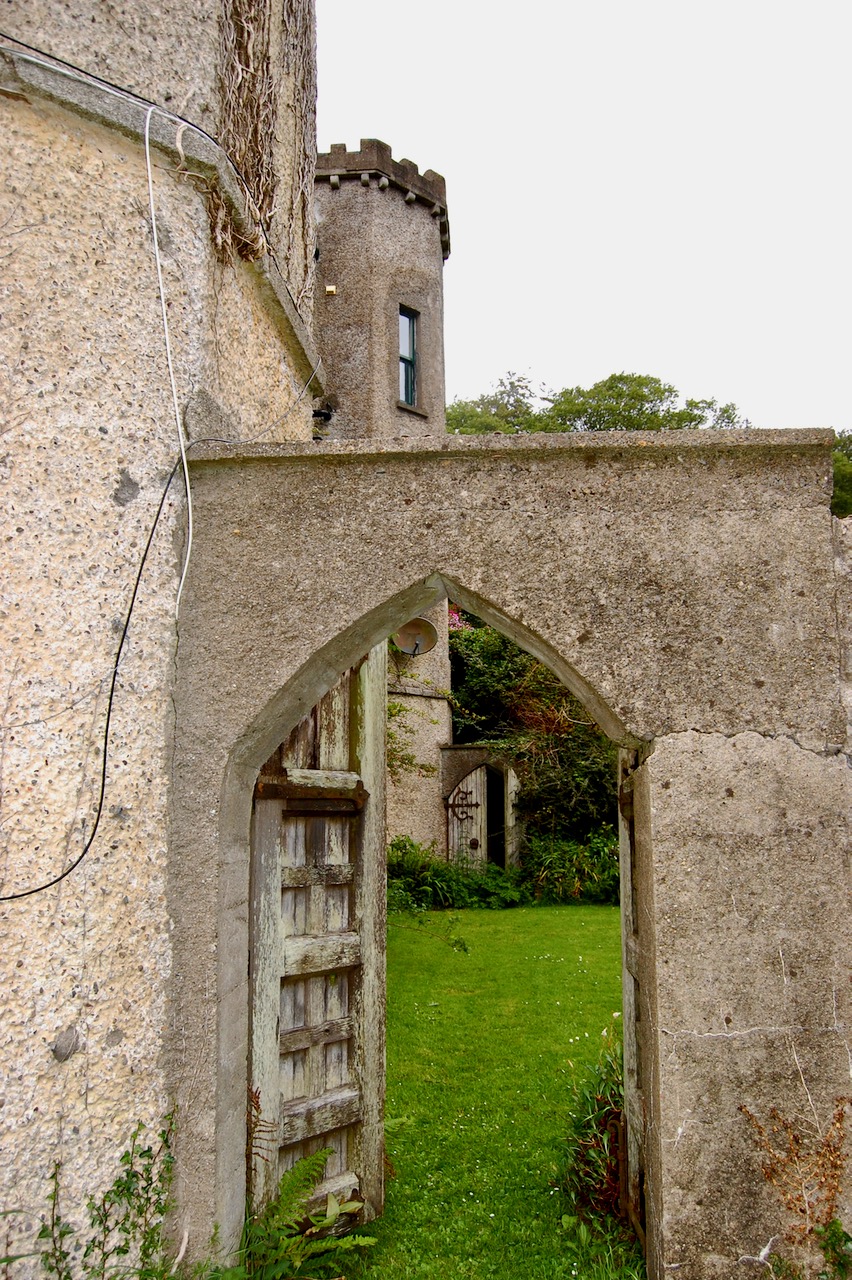
Hamwood is a small Palladian style house built in around 1770. We visited in November 2022 and the owner Charles Hamilton, a descendant of the original owner, gave us a tour of the house. It is two storey over basement with single storey octagonal “pepperpot” wings joined to the central block by curved hallways.

In a chapter in Great Irish Houses (Forewards by Desmond FitzGerald and Desmond Guinness) published by IMAGE Publications in 2008, we are told that it was built by Joseph O’Brien from Dublin. An original Joseph O’Brien drawing of Hamwood, dated 1789, exists. [1]

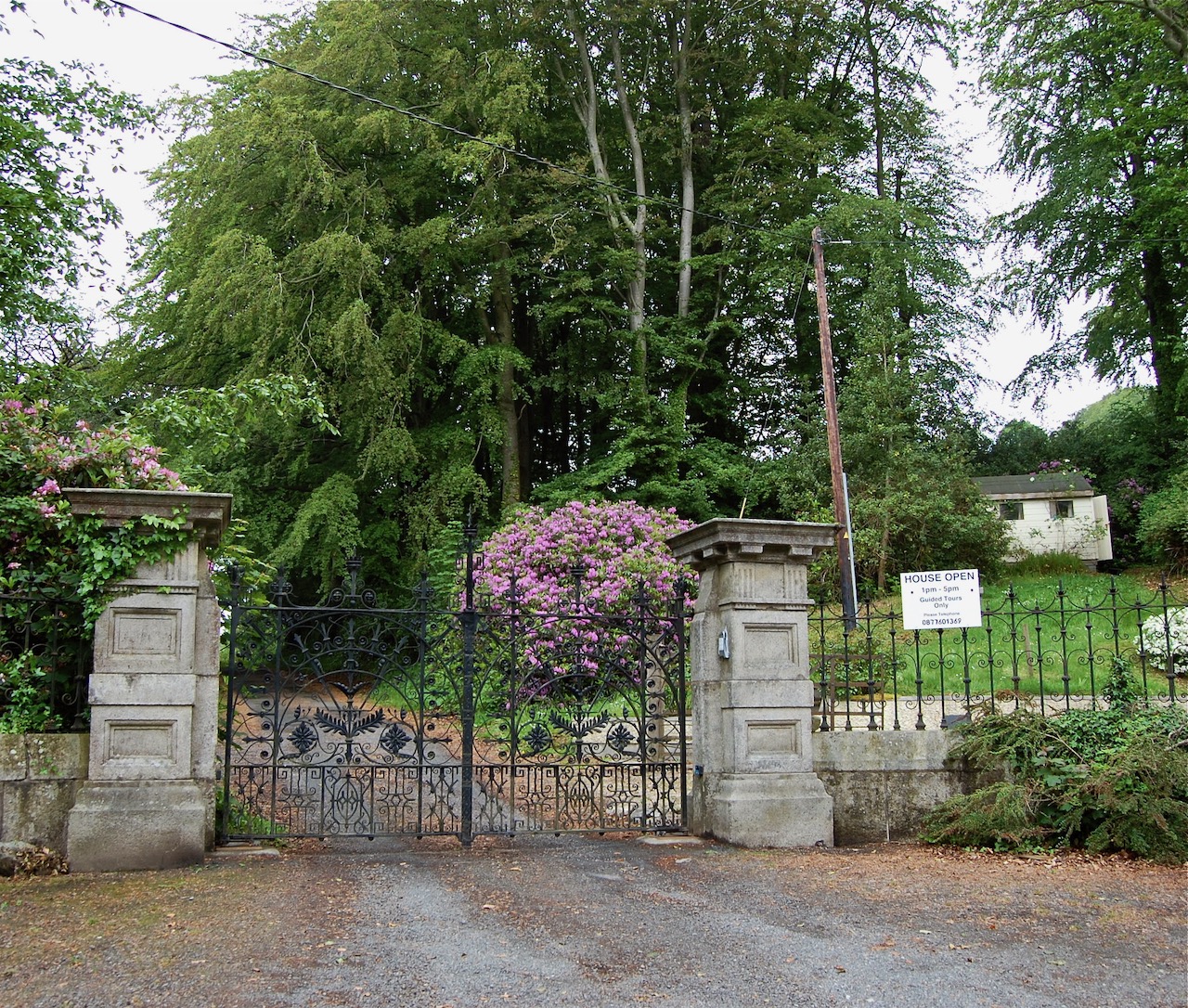
We passed a lovely gate lodge on the way in to the property, which has the date 1783 on its side, which is the year it must have been built.

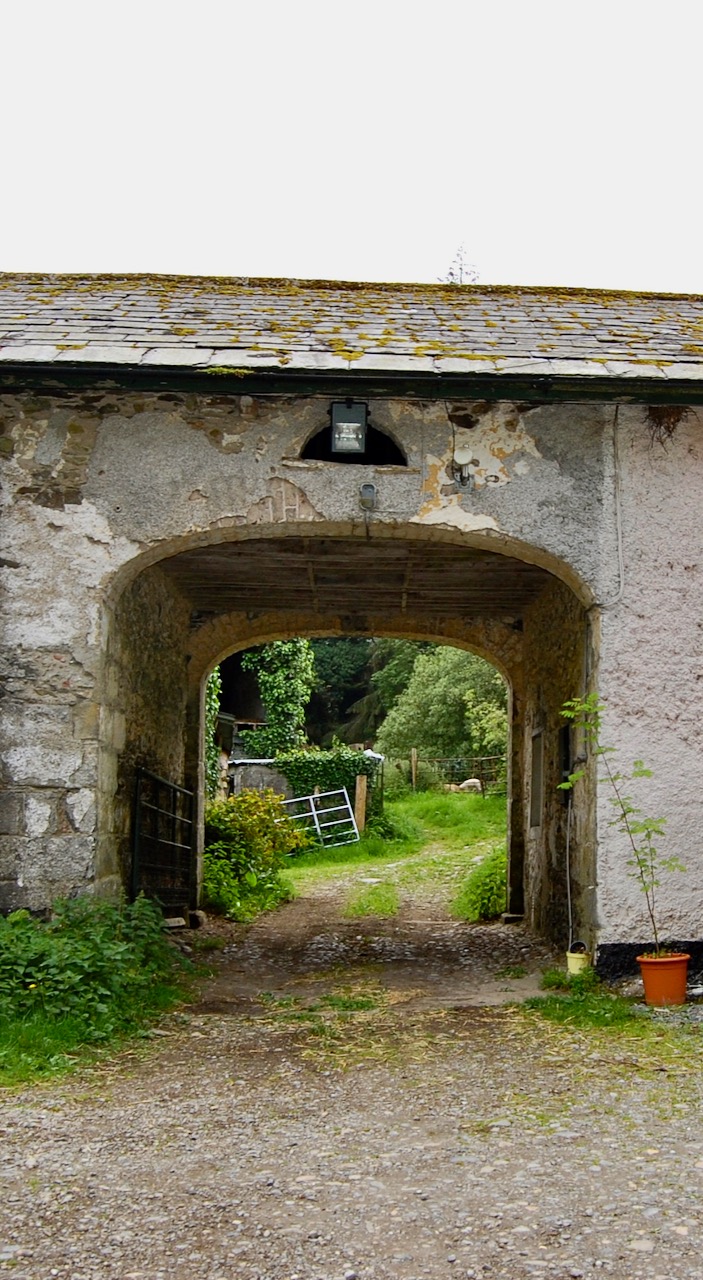
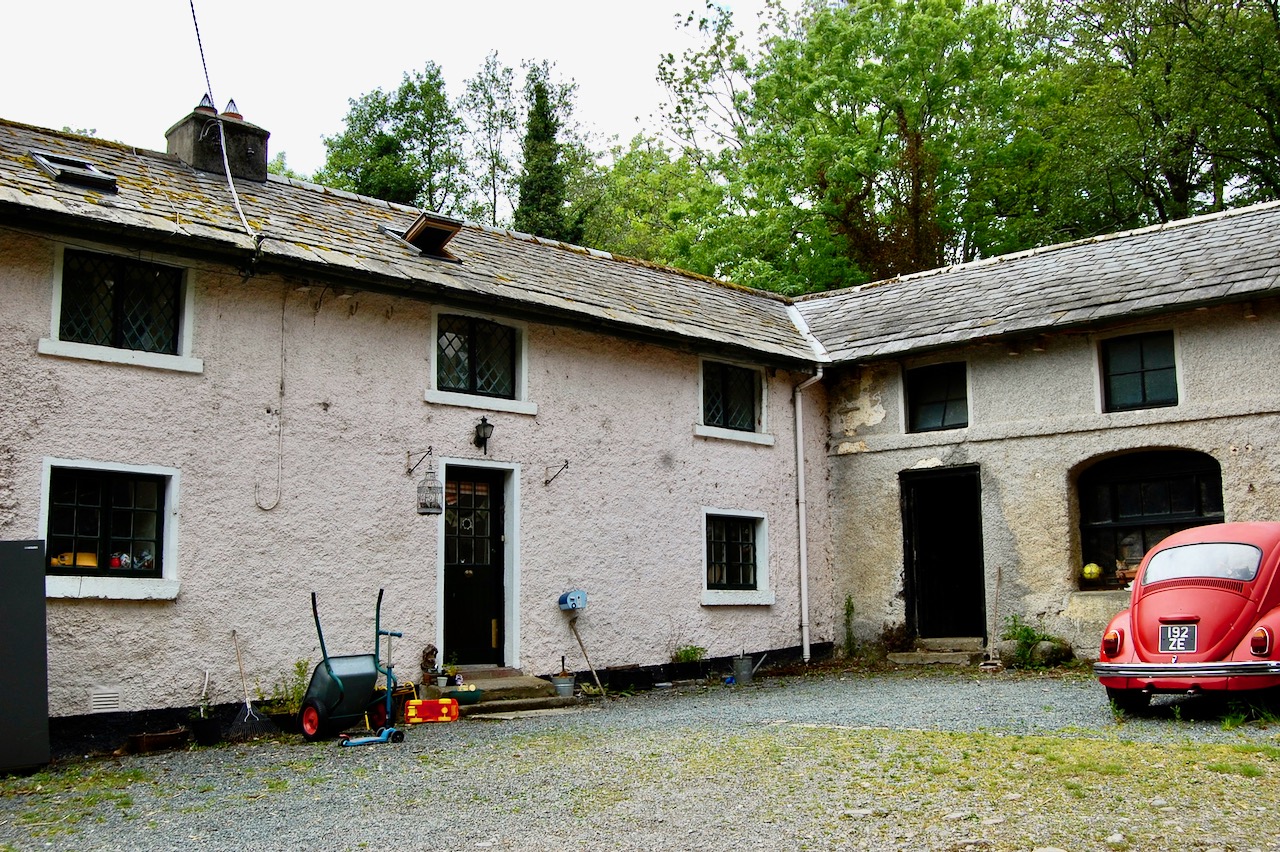
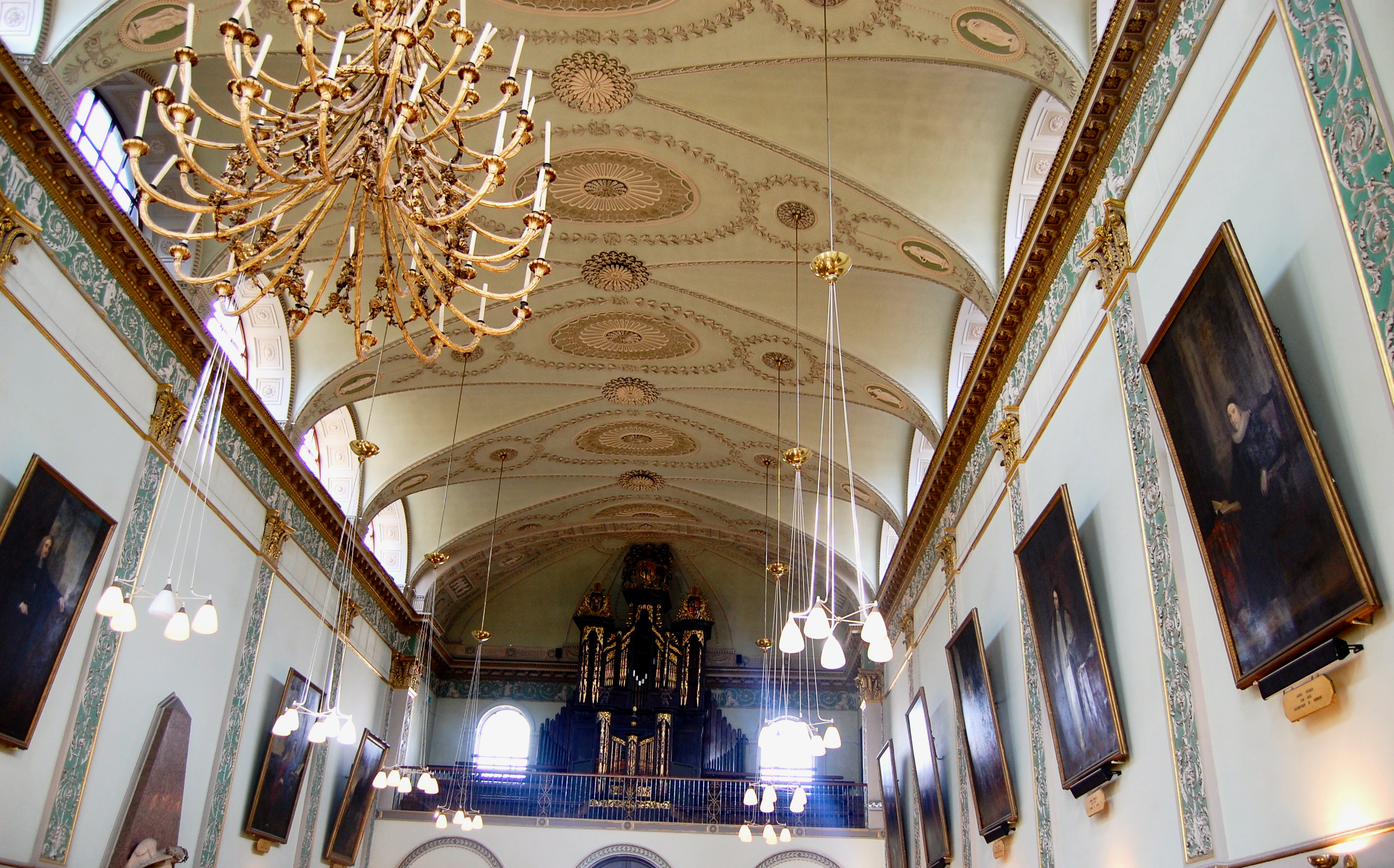
Hamwood, November 2022. Photograph © Jennifer Winder-Baggot, www.irishhistorichouses.com

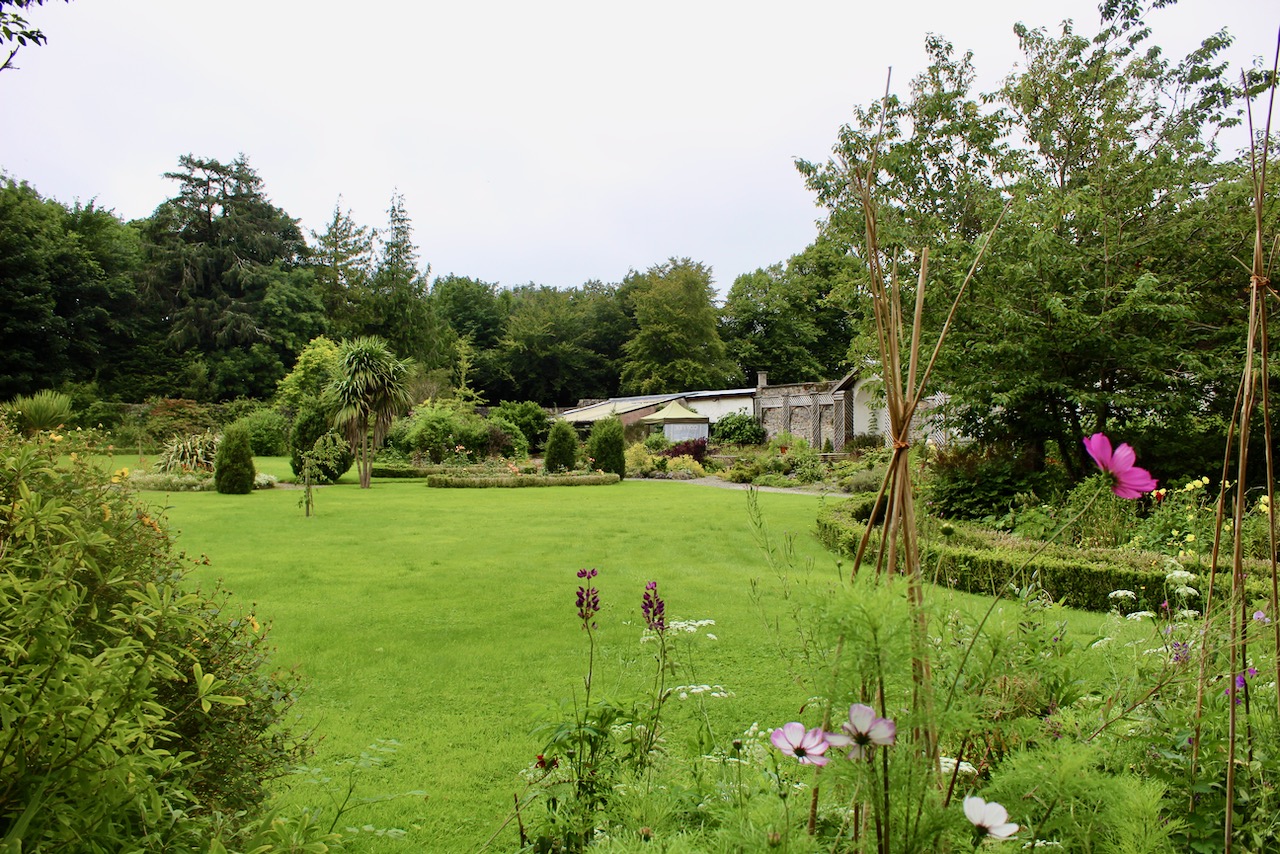
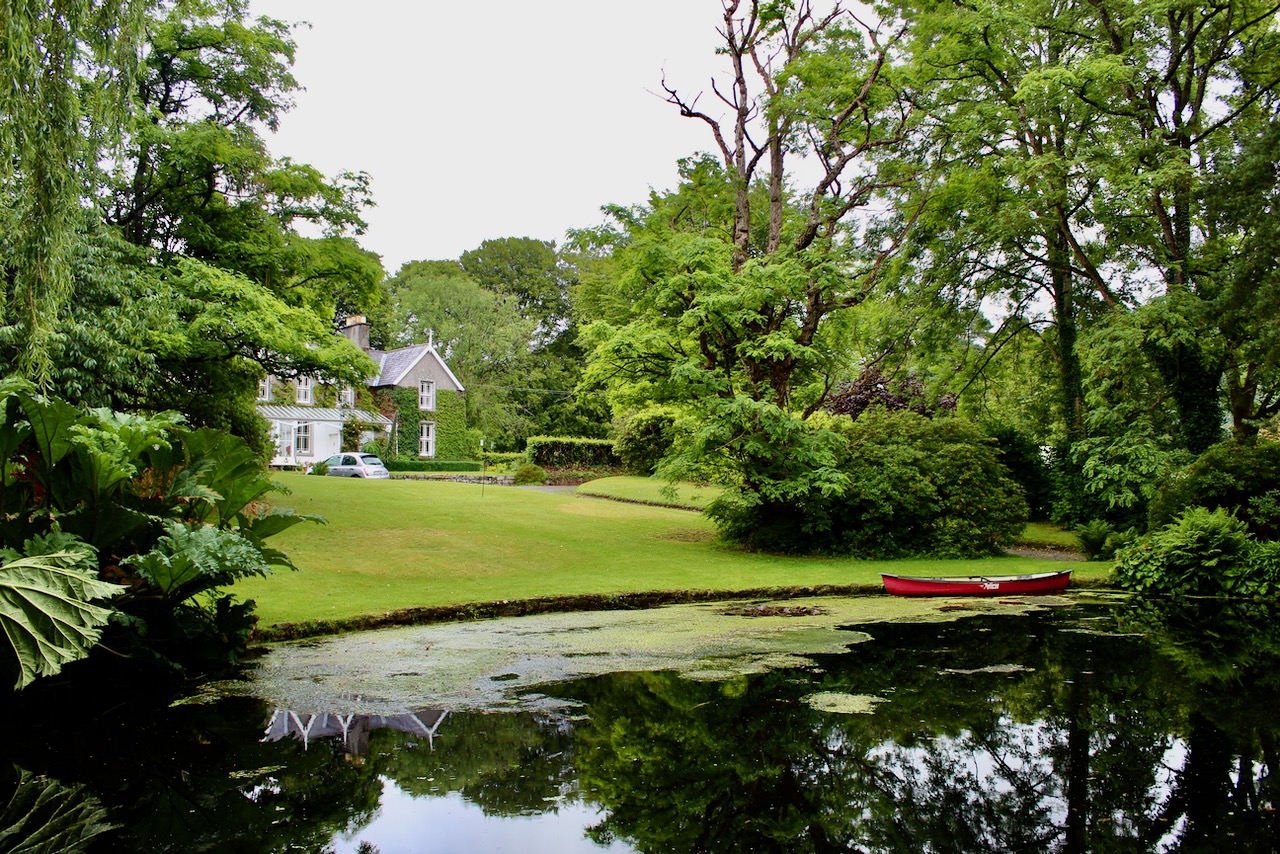
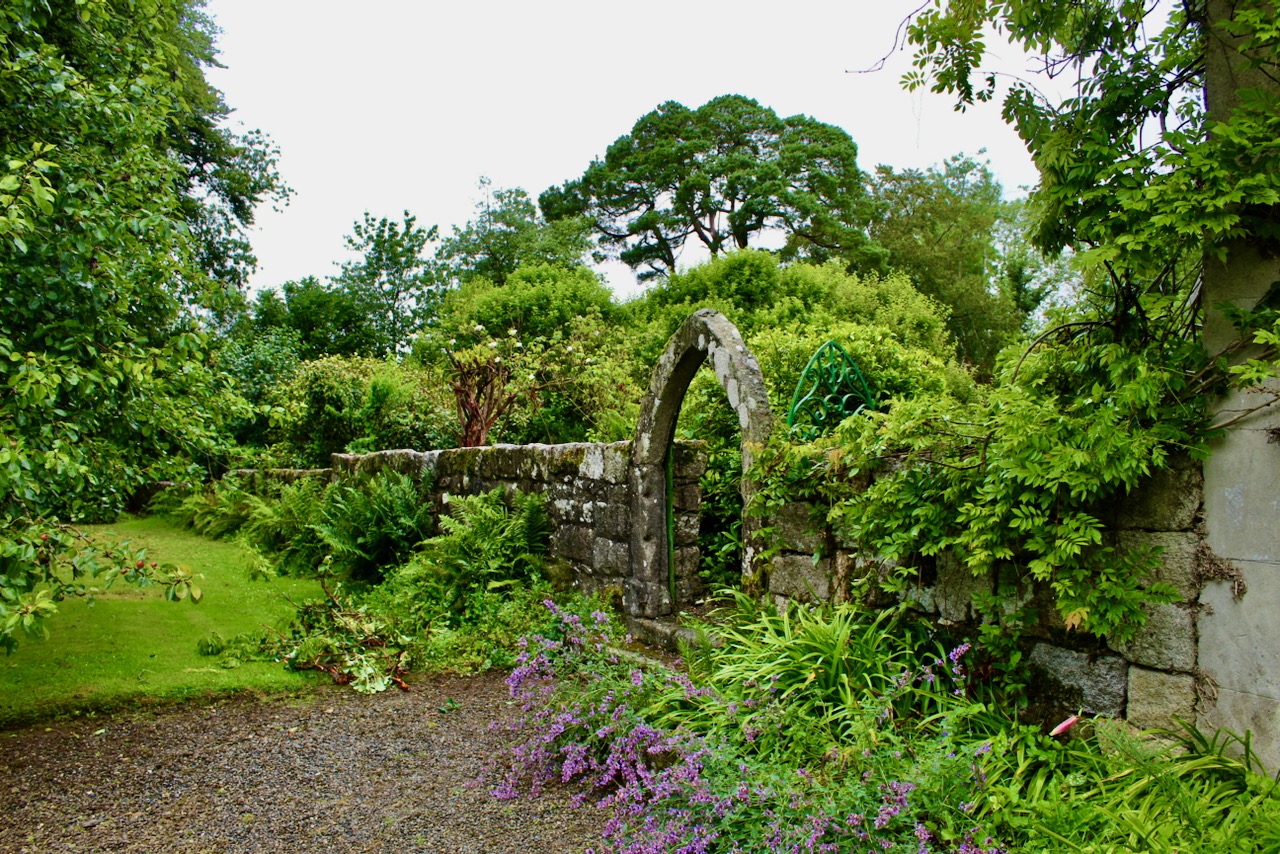
We drove in to the farmyard area as directed by signs and we had to wander around a little to find the house. The gardens are also open to the public and we walked through the walled garden.

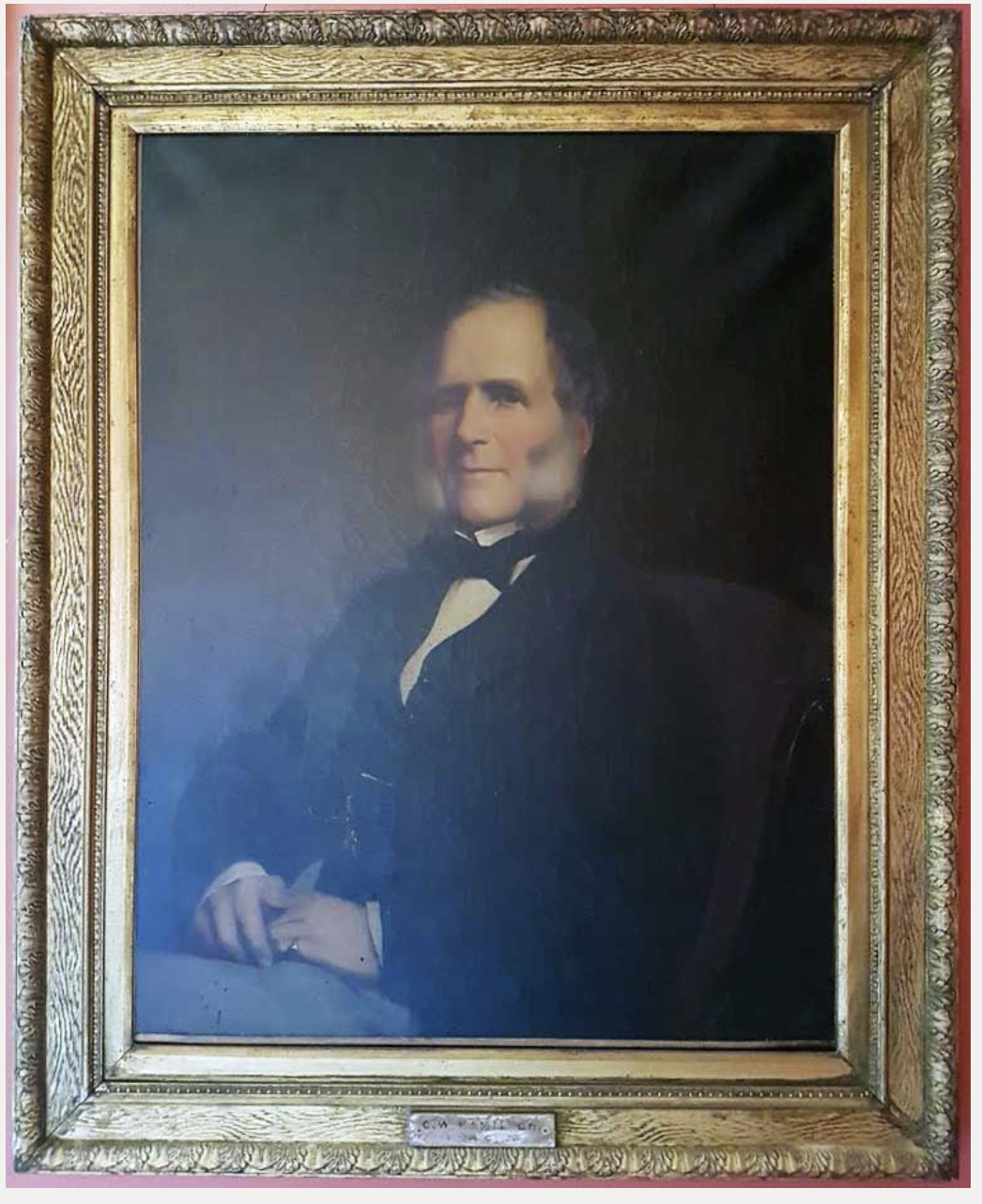
The house was built for Charles Hamilton (1738-1818) and his wife Elizabeth Chetwood (or Chetwode), and the name “Hamwood” is formed by joining their two names.
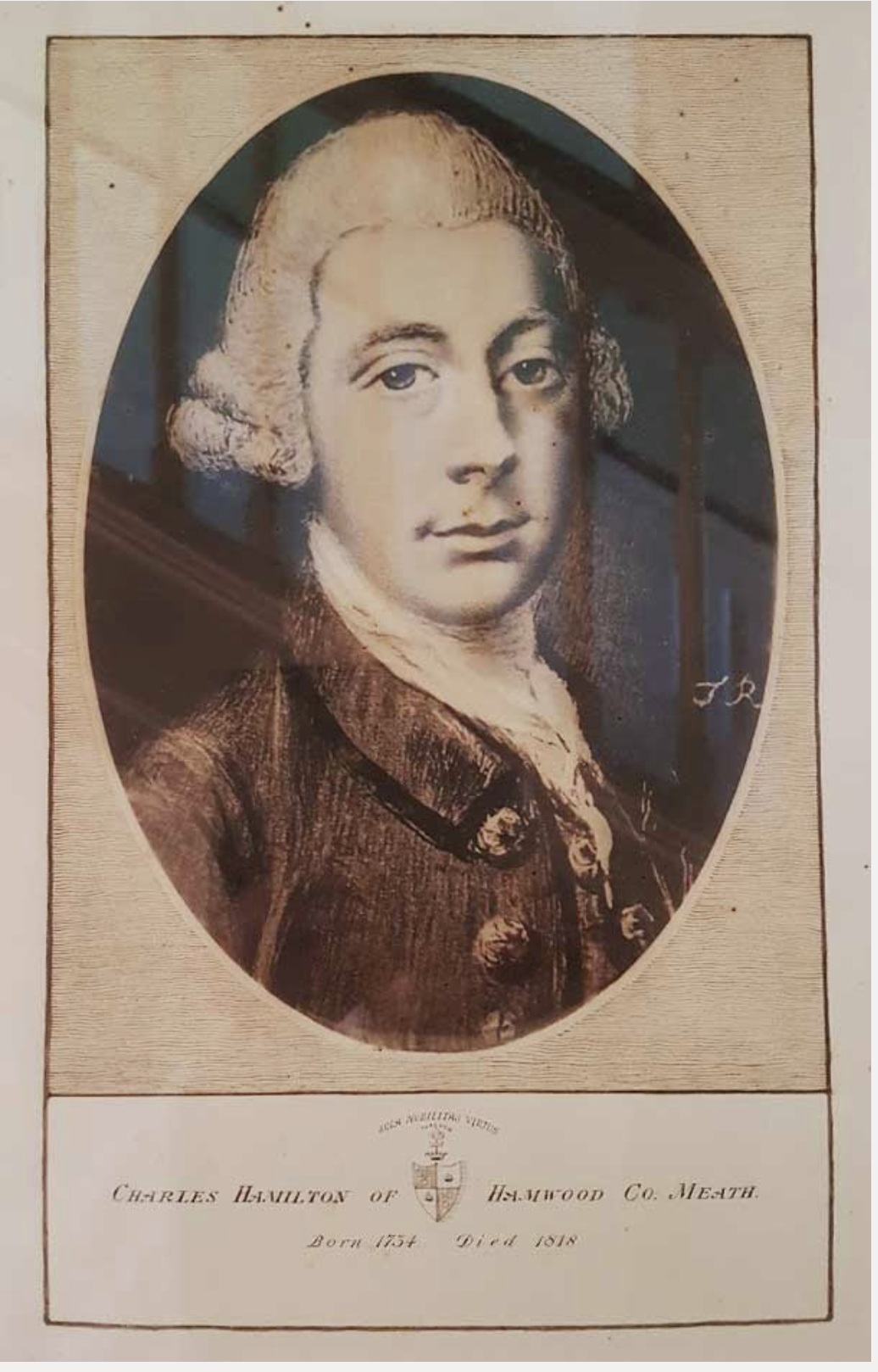
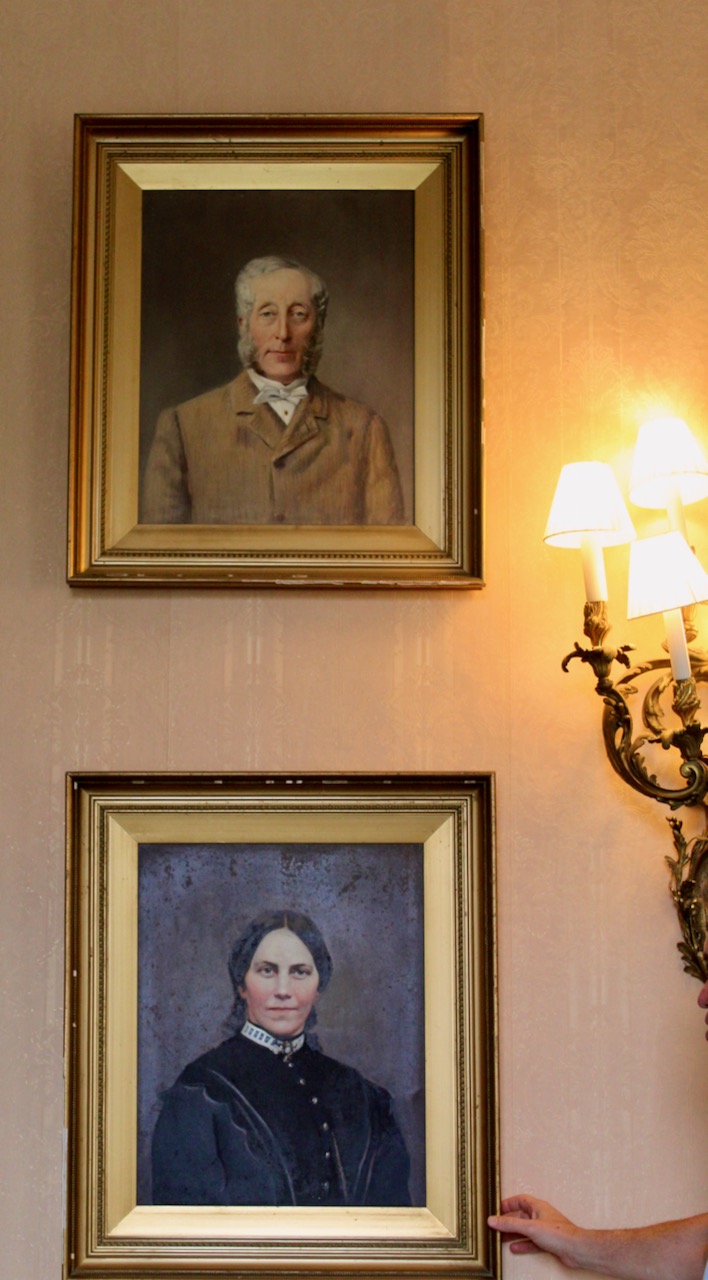
Charles Hamilton (1738-1818) who built Hamwood, photograph courtesy of Hamwood House website.

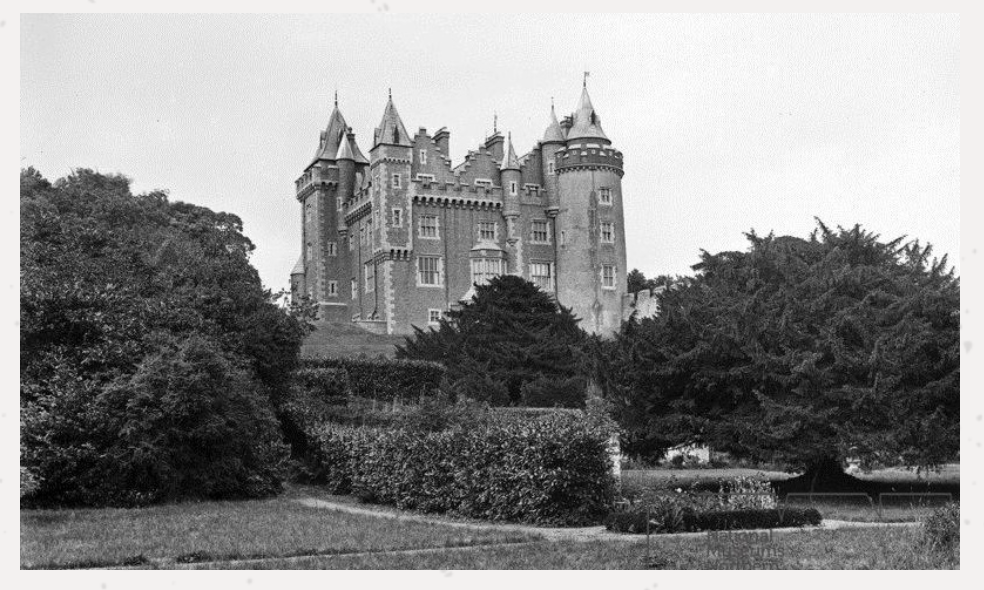
Charles was the son of Alexander Hamilton (1690-1768), MP for Killyleagh in County Down (now in Northern Ireland), who settled in Knock, a townland in Balbriggan, County Dublin. The family of Alexander, despite being MP for Killyleagh, seem to be a different family of Hamiltons from those of Killyleagh Castle, as the Hamwood website will tell us. Hamiltons still live in Killyleagh Castle, parts of which date back to 1180. It came into the Hamilton family in the time of James Hamilton (1559-1643), 1st Viscount Claneboy, County Down. Alexander’s ancestor Hugh Hamilton (1572-1655) came to Ireland from Scotland. The 1st Viscount Claneboy also moved to Ireland from Scotland. Alexander’s brother George built a house at Tyrella in County Down.
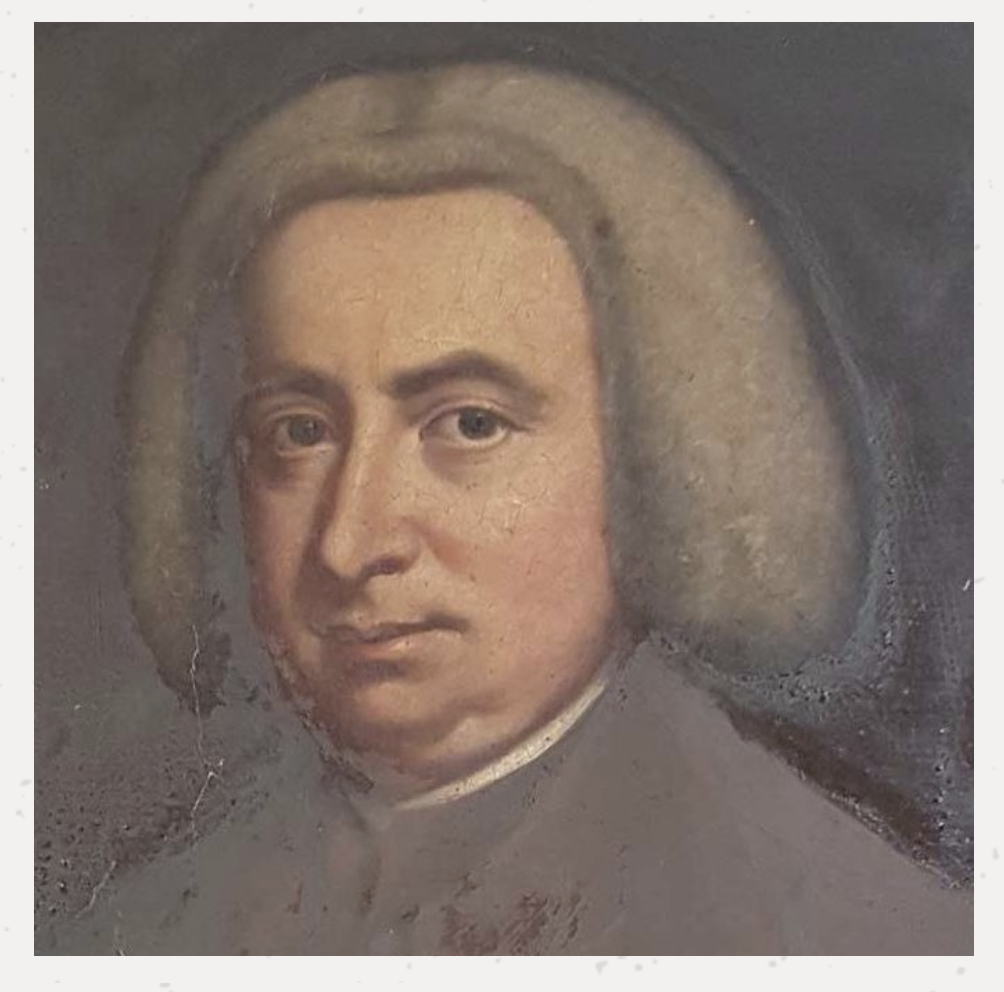
Alexander Hamilton 1690-1768, MP for Killyleagh in County Down, who settled in Knock, a townland in Balbriggan, County Dublin. Photograph courtesy of Hamwood house website.
Killyleagh Castle, County Down, photograph courtesy of Hamwood house website.

Alexander was a wealthy landowner, owning town lands worth £50,000. He married Isabella Maxwell of Finnebrogue, County Down. The Hamwood website tells us that his son Hugh (1729-1805) became Dean of Armagh and Bishop of Ossory and a professor of Mathematics at Trinity College Dublin.
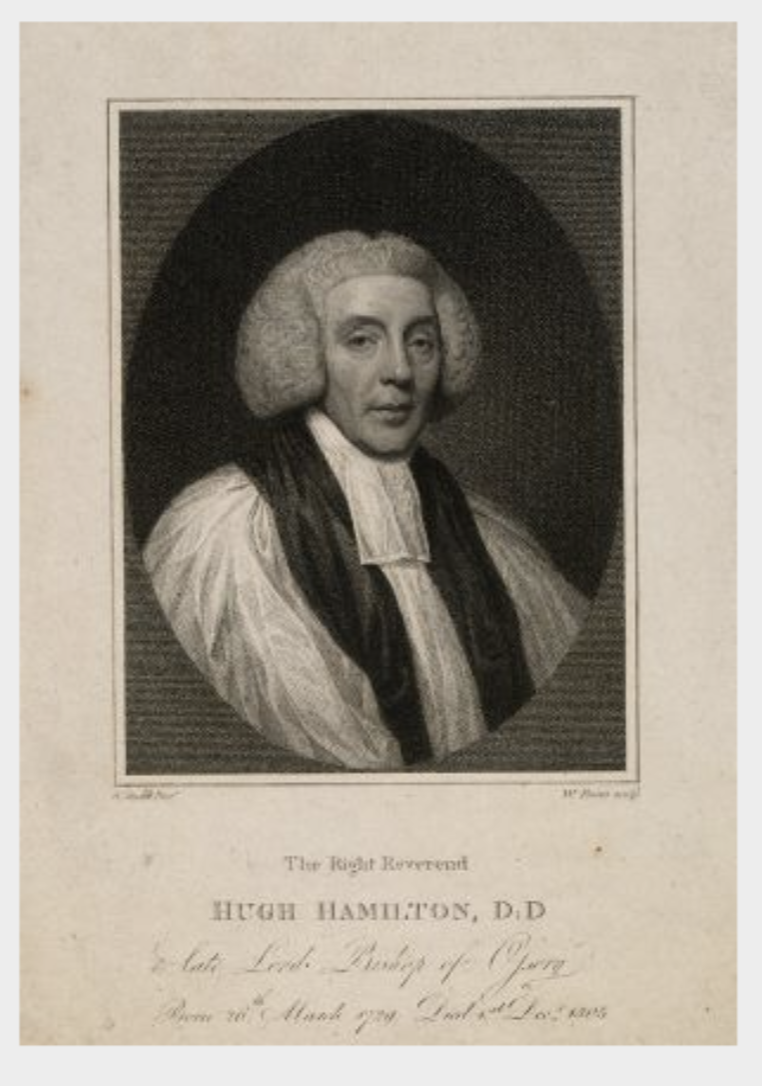
Hugh Hamilton (1729-1805), Protestant Bishop of Ossory, by engraver William Evans, after artist Gilbert Stewart, courtesy of National Gallery of Ireland, NGI.10622.

Another son, George (1738-1793), was MP for Belfast in 1769-1776 and settled at Hampton Hall, Balbriggan (which burned down in 1901 but has been rebuilt). George developed the fishing village into a flourishing town with cotton mills and a trading port with a lighthouse. I came across a newspaper article about a book published in 2004 about the Hamiltons of Balbriggan, written by Stephanie Bourke in conjunction with the Balbriggan and District Historical Society, The Hamilton Family and the making of Balbriggan.

A daughter, Anne, married Colonel Henry Caldwell, who fought in Canada under General James Wolfe (1727-1759) in the battle between France and England for control of Quebec. Wolfe died of his wounds, and as Wolfe’s Aide De Campe, Caldwell was sent to England to announce news of the victory over the French. Anne and Colonel Caldwell subsequently settled near Quebec. Later Hamiltons also travelled to live in Canada, which we will see in the house. Henry Caldwell was the son of John, 3rd Baronet Caldwell, of Wellsburrow, Co. Fermanagh.

Alexander’s son Charles, the website tells us, started working life as apprentice to a wine merchant in Portstewart in County Derry. He subsequently started his own business and moved to Mount Venus in Rathfarnham, County Dublin. He married Elizabeth Chetwood. The Chetwoods were from Woodbrook House in County Laois, a fine house which sold recently. Another brother of Charles, Robert, married her sister Hester. 
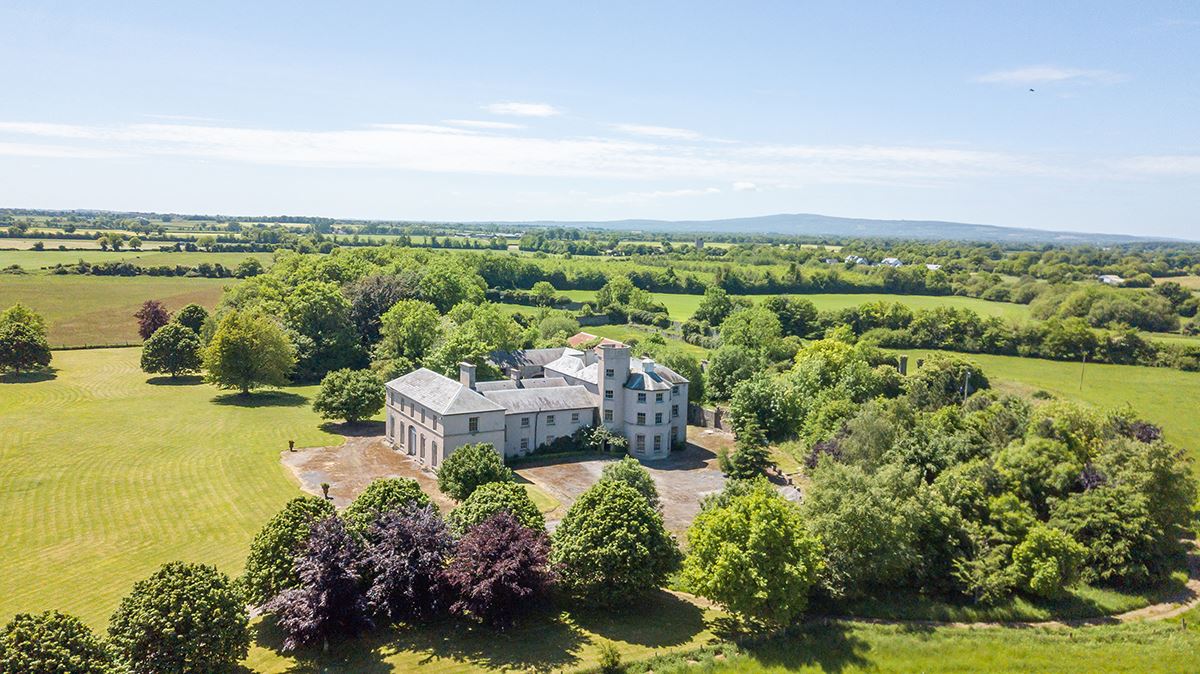
Woodbrook, County Laois, the house where Elizabeth Chetwood grew up, recently for sale, photograph from myhome.ie.

Charles was left a townland in the North of Ireland which he sold for £7,000 and bought land which had been part of the estate of Ballymacoll, County Meath (now an Equestrian stud farm) from James Hamilton. The website tells us that these Hamiltons are not related. James Hamilton was from a family who lived in Sheephill Park in County Dublin, which later became Abbotstown and housed part of the veterinary school of Dublin (and was the reason I lived in Blanchardstown when I was born), and is now a sports centre. This Hamilton family also traces back to Killyleagh, to a younger brother of James Hamilton 1st Viscount Claneboy.

Hamwood House, County Meath, photograph from Hamwood house website. This is better than my photographs since it was November when we visited and the light was fading.

Charles became the land agent for the Archbishop of Dublin and for Lord Lansdowne (William Petty-Fitzmaurice, 1st Marquess of Lansdowne). I’m not sure what dates he worked for the Archbishop of Dublin so don’t know which one it was but it could have been Charles Cobbe who was Archbishop of Dublin from 1743 to 1765, who built Newbridge House in Donabate, not too far from Balbriggan, between 1747 and 1752. The next Archbishop of Dublin (I am assuming it was a Church of Ireland archbishop since Catholic ones would not have a land agent) was only in place for the year of 1765 as he died in office, William Carmichael. The next Archbishop was Arthur Smyth who served for five years until 1771. The next archbishops were John Cradock (served 1772-1778) then Robert Fowler (1779-1801).

Art Kavanagh tells us in his The Landed Gentry and Aristocracy, Meath (published 2005) that Land agents were not paid a salary but were paid between four and five percent of the amount of rentals they collected. On some estates with large rentals this could amount to quite a substantial sum. In addition many agents became middlemen themselves and so made even more profits.

At the time Charles and his family mainly used Hamwood as a summer retreat as he lived in the city of Dublin in 40 Dominick Street. Art Kavanagh tells us that Charles had business interests in Dublin and was the owner of land in Ringsend. He was also involved with Arthur Pomeroy, Viscount Harberton (later of Carberry, Co Kildare), who appeared to be his partner in some land dealings in the Fitzwilliam Square area of Dublin. [2]

The Hamwood website tells us that in 1798 some rebels captured Charles along with the agent to William Robert Fitzgerald (1749-1804), 2nd Duke of Leinster. The Duke’s agent was killed but a local man named O’Reilly, whose family still practice as blacksmiths in the area, recognised Charles Hamilton and asked that Mr Hamilton be spared as “he was more useful (to them) alive than dead.” It was said that this was probably in recognition of his moral, learned and industrious character. As well as being a Land Agent, he farmed his own land.

William Robert Fitzgerald, 2nd Duke of Leinster, (1749-1804) Date 1775 by Engraver John Dixon, Irish, After Joshua Reynolds, courtesy of National Gallery of Ireland.

Charles Hamilton suggested to the Duke of Leinster that he fill the now vacant position as his land agent. The Duke owned and lived in Leinster House in Dublin (now the government buildings) and had Carton in County Kildare as his country residence (now a hotel – see my entry Places to visit and stay in County Kildare). This role passed through later generations of Hamiltons until as late as the current owner’s father. The Duke of Leinster donated the granite steps at Hamwood, as well as several trees. The website explains that the site is exposed to strong winds and the wooded surroundings helped to create shelter.

Charles became a member of the notorious “Hellfire Club” which met in the Wicklow hills for drinking, gambling and carousing. He became “toastmaster” of the club and the family still have the gavel which he used to bring the members to order.

Henry Clements (1698-1745), Col Henry Ponsonby (1685-1745), Richard St George (d. 1775), Simon Luttrell, Henry Barry 3rd Baron Santry (1680-1735), members of the Hellfire Club, painted by another member, and co-founder, James Worsdale, photograph of portrait in the National Gallery of Ireland.

Charles and his wife had fifteen children but not all survived to adulthood.

Charles’s son, also named Charles (II, 1772-1857) added the wings to the house and moved the entrance door to the unusual position in one of the pepperpot additions. His wife persuaded him to do this to keep draughts from the house. At some stage, the back of the house became the front, Charles told us.

Charles [II] Hamilton (1772-1857), photograph courtesy of Hamwood house website.
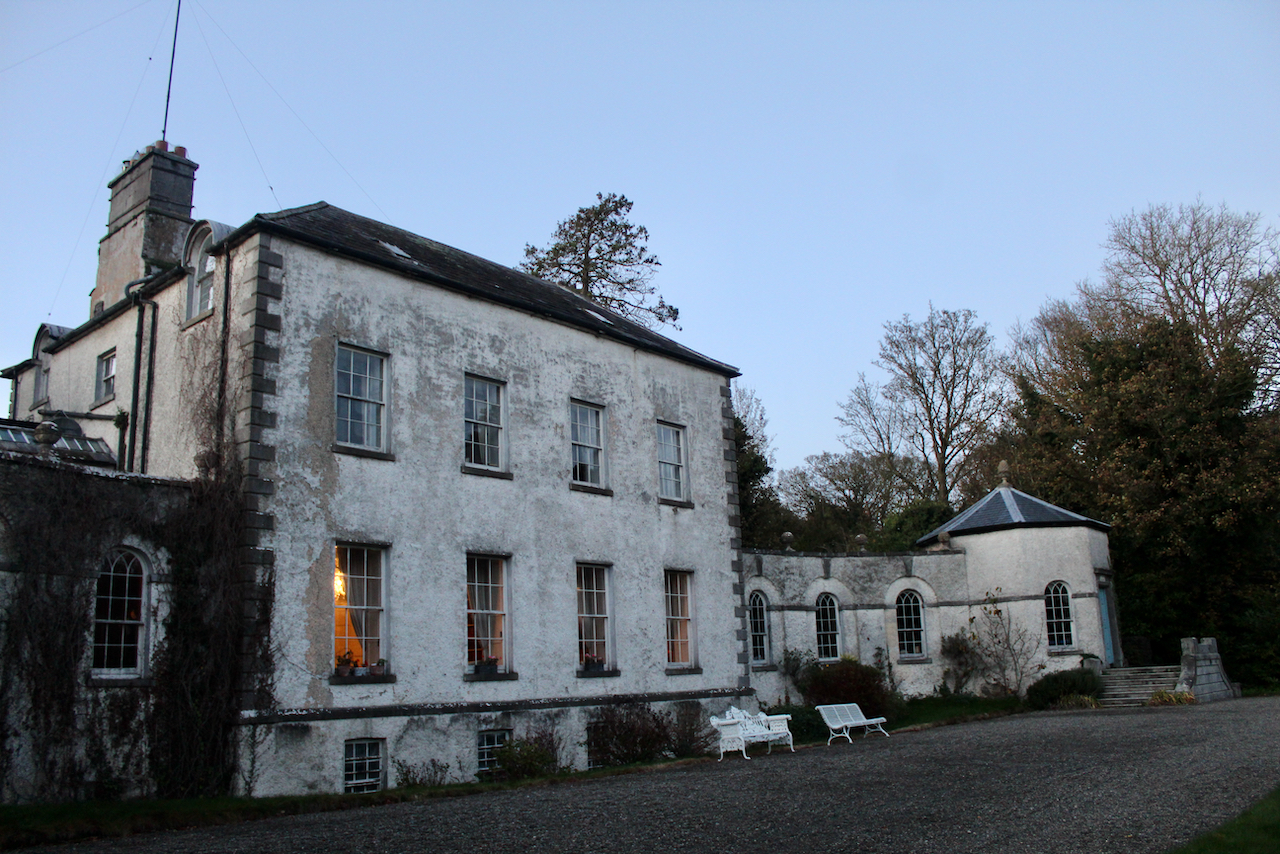
Charles’s son added the wings to the house in 1783 and moved the entrance door to the unusual position in one of the pepperpot additions. The further wing is known as “the schoolroom.” Photograph © Jennifer Winder-Baggot, www.irishhistorichouses.com
The entrance door, in one of the wings. The wings are topped with pineapple decorations, which are a sign of welcome, and of the wealth one would have needed to own hothouses to grow pineapples. Photograph © Jennifer Winder-Baggot, www.irishhistorichouses.com
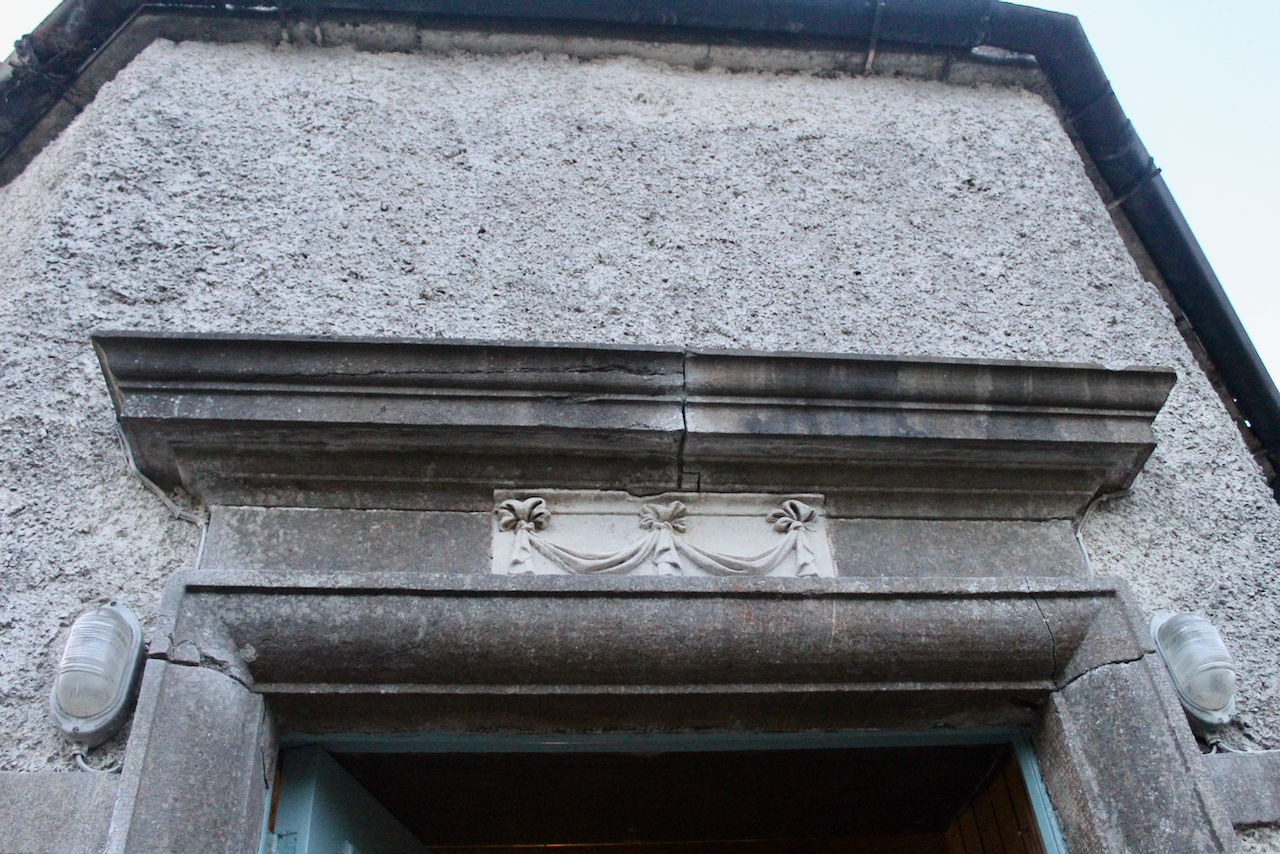
The door has drapery decoration above. Photograph © Jennifer Winder-Baggot, www.irishhistorichouses.com
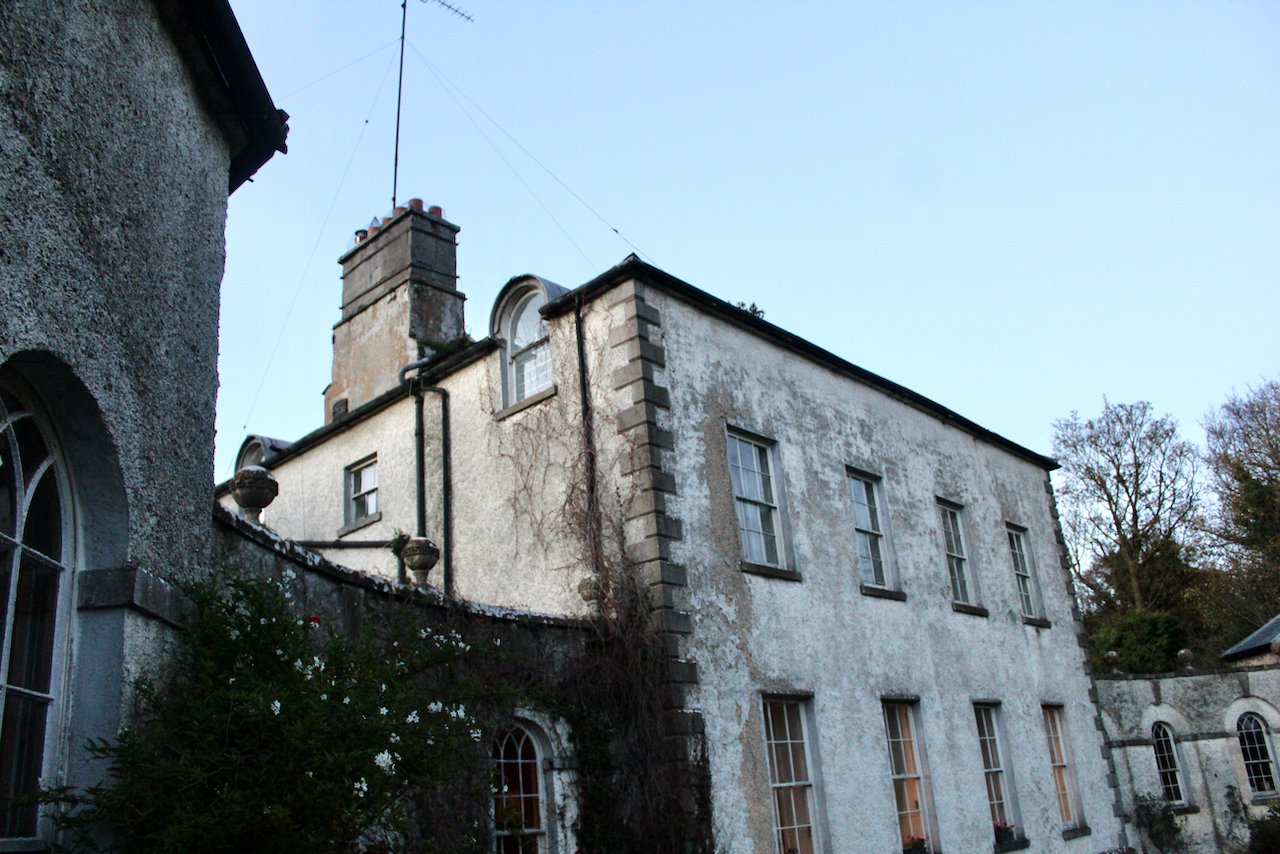
I liked the arched window breaking the roof parapet. Photograph © Jennifer Winder-Baggot, www.irishhistorichouses.com

Charles II was a classics scholar and completed his education at Trinity College Dublin before being called to the Bar in 1792. He spent some years in London while practicing as a lawyer before returning to Ireland. In 1801 he married Marianne Caroline Tighe (1777-1861) of Rosanna, Co Wicklow, daughter of William, MP for Athboy and Sarah Fownes, who inherited Woodstock in County Kilkenny. She was the cousin of the poet Mary Tighe, whom we came across when we visited Altidore in County Wicklow.

Another son of Charles I and Elizabeth Chetwood was George (d. 7 January 1839), who emigrated to Canada and was founder of Hawkesbury Lumber Mills. The moose heads in the front hall in the pepperpot entrance come from Canada.

Another son, William Henry, moved to Quebec in Canada also. Sons Robert and John became merchants in Liverpool.
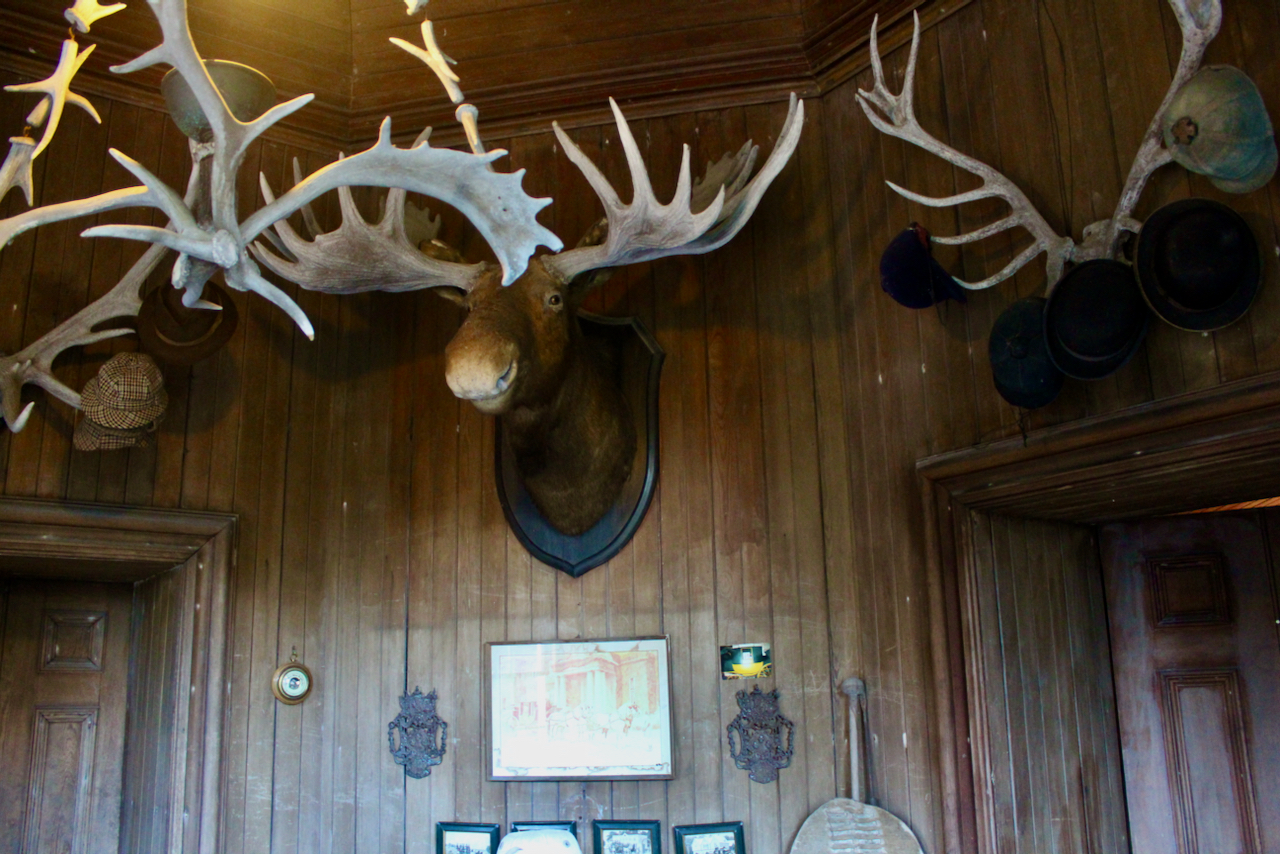
The wood in the front hall in the pepperpot entrance comes from Russia. The moose heads are from visits to relatives in Canada. A picture shows the funeral cortege of the Duke of Wellington – Charles told us that the wheels fell off his hearse! Photograph © Jennifer Winder-Baggot, www.irishhistorichouses.com
Ceiling of the pepperpot addition which contains the front door. Photograph © Jennifer Winder-Baggot, www.irishhistorichouses.com
The curved corridor between the entrance hall and the rest of the house. Photograph © Jennifer Winder-Baggot, www.irishhistorichouses.com
Hamwood, November 2022. Photograph © Jennifer Winder-Baggot, www.irishhistorichouses.com

The website tells us that Charles II and Marianne Caroline, who went by Caroline, set about making major improvements to Hamwood, extending the existing house and adding the wings, and also the interior adding ornate furniture wall coverings etc. Much of the furniture was procured for the house, some of it specially designed and fitted. 
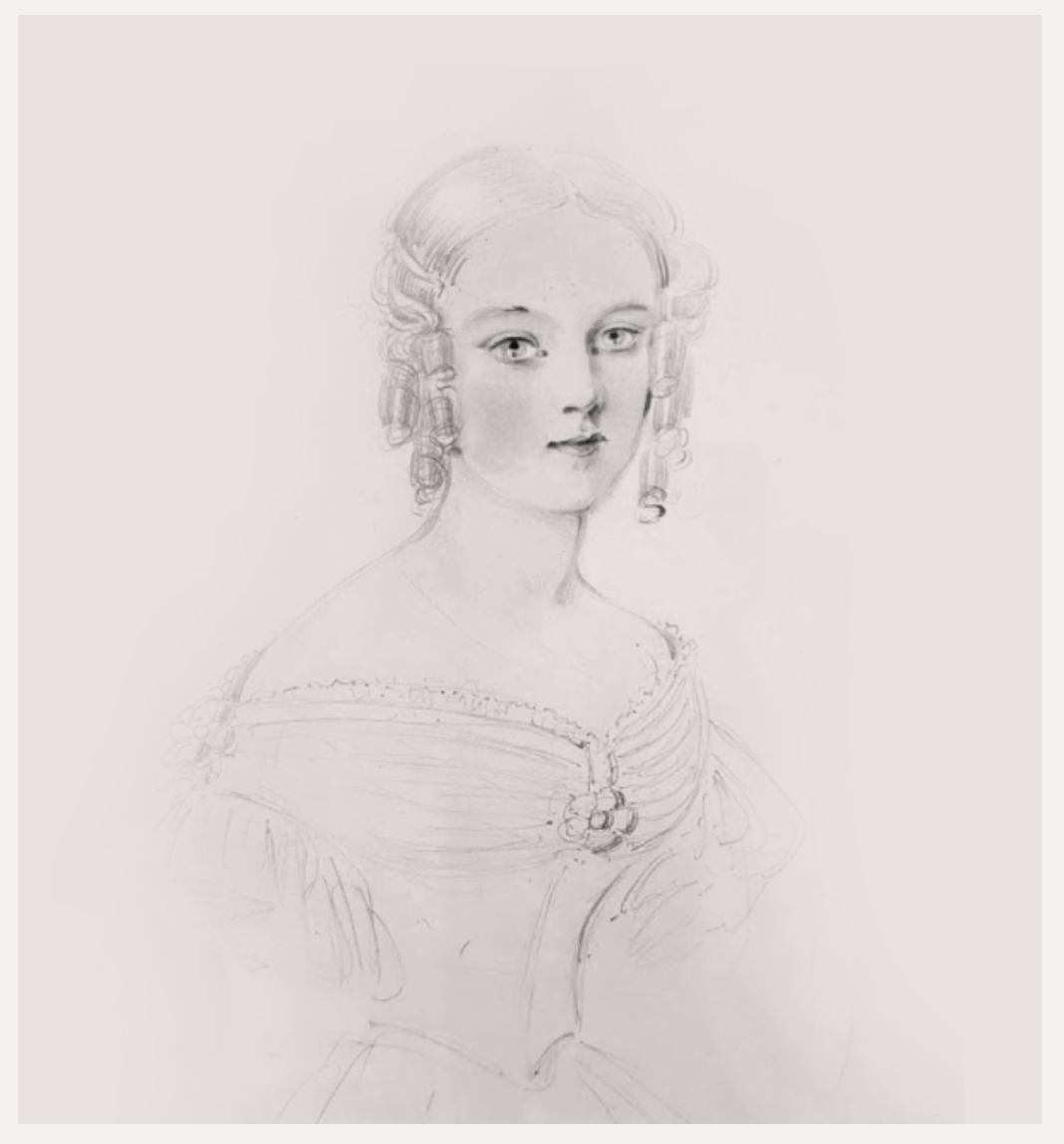
Caroline Hamilton (1777-1861), photograph courtesy of Hamwood house website.

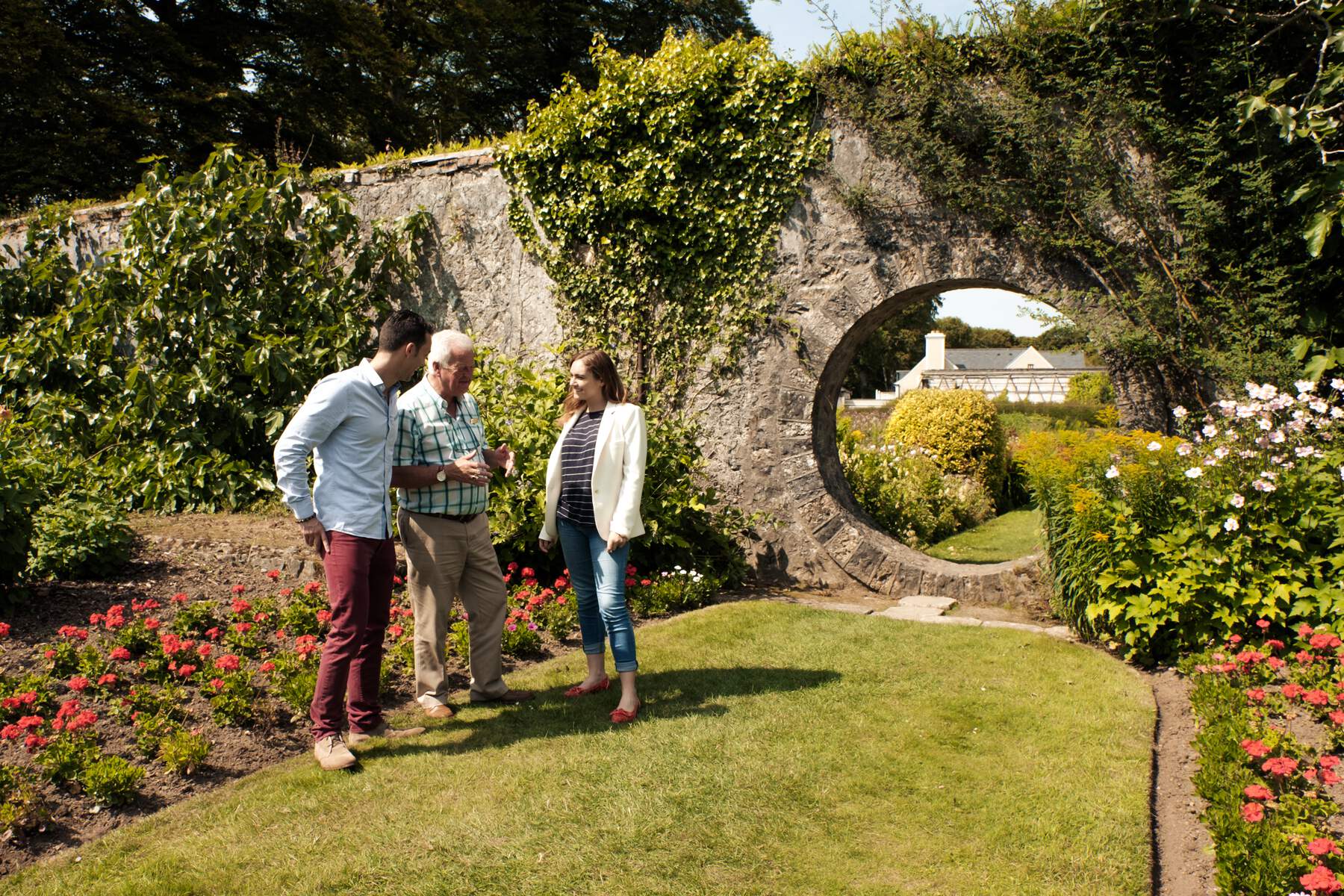
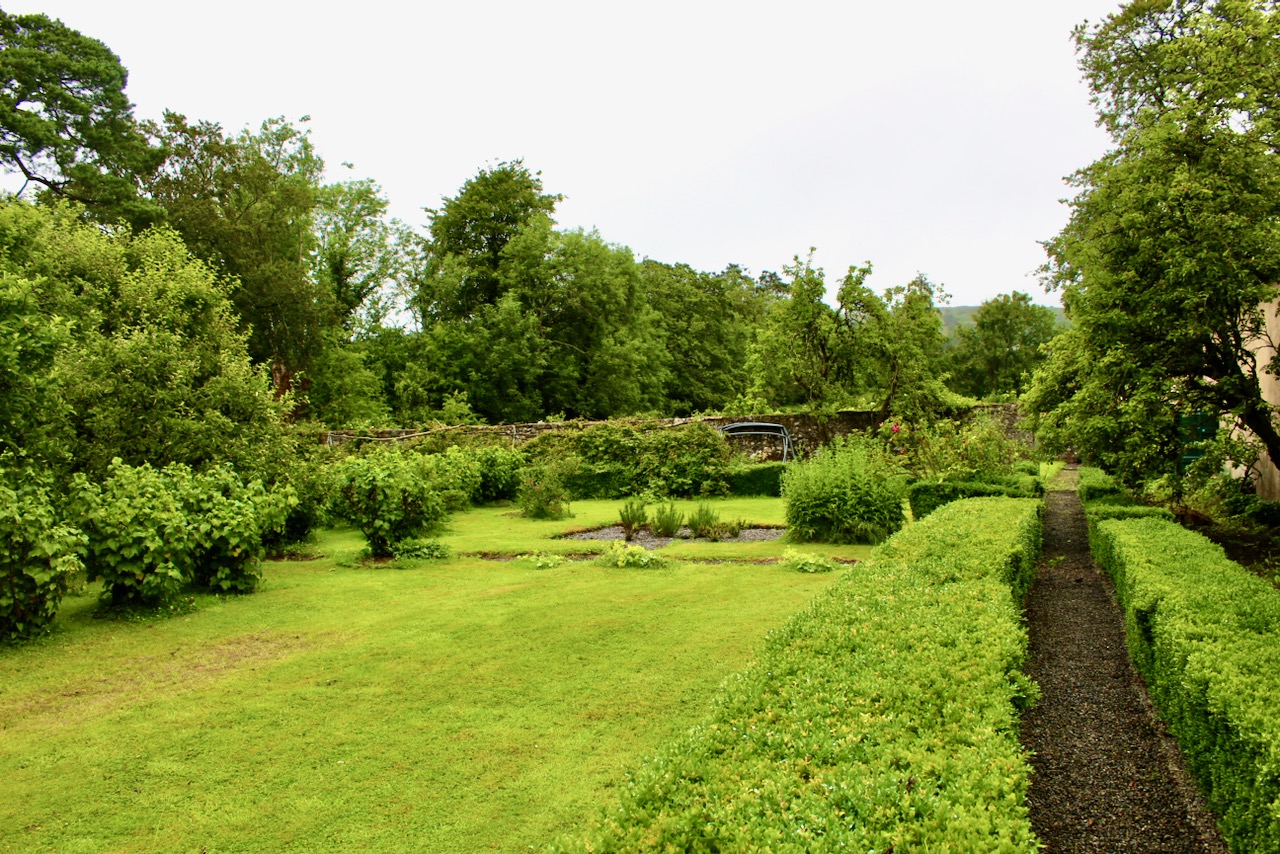
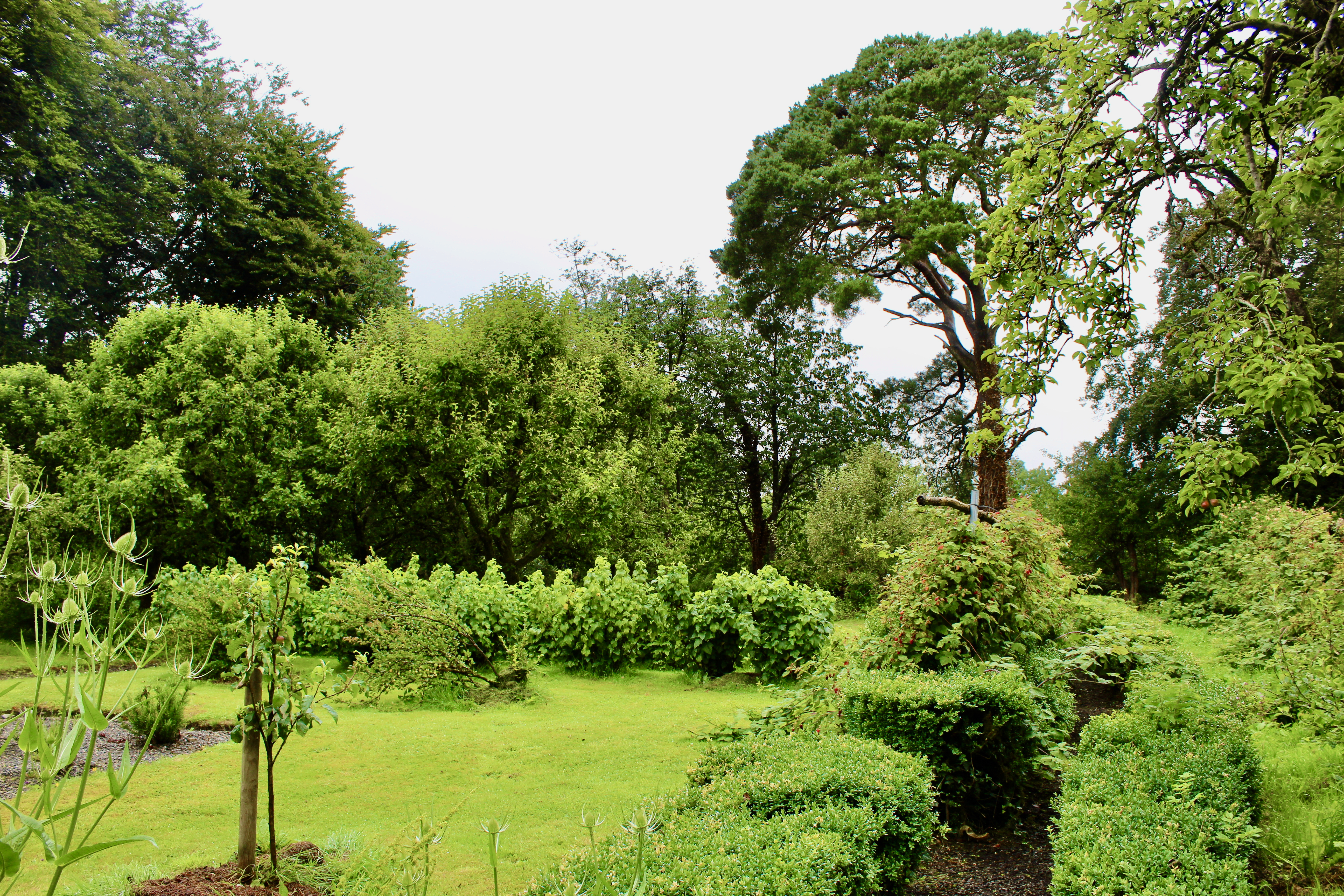
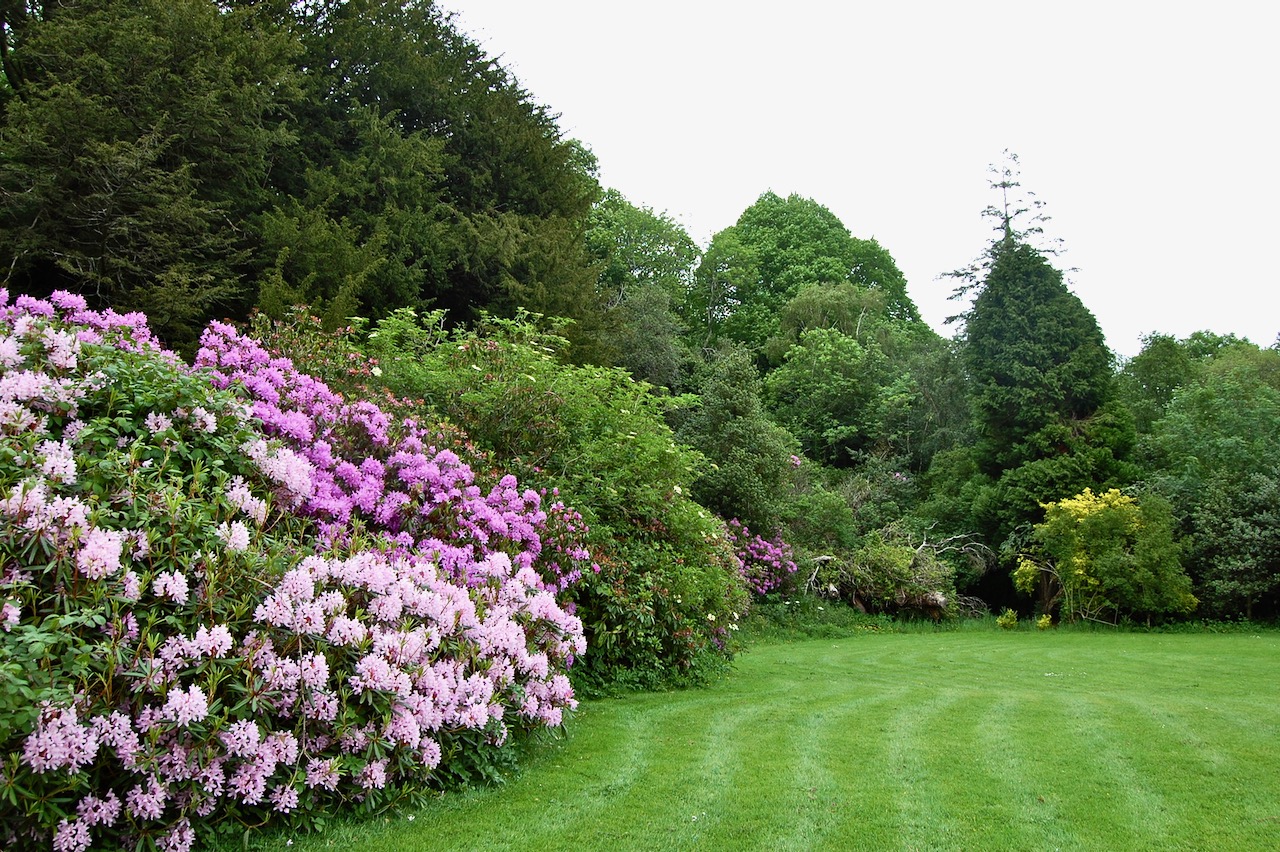
Charles II was responsible for laying the foundations of the Gardens, and from her diaries, we know his wife Caroline was also very involved. The website tells us about the walled garden, which was not at its best when we visited since it was November:

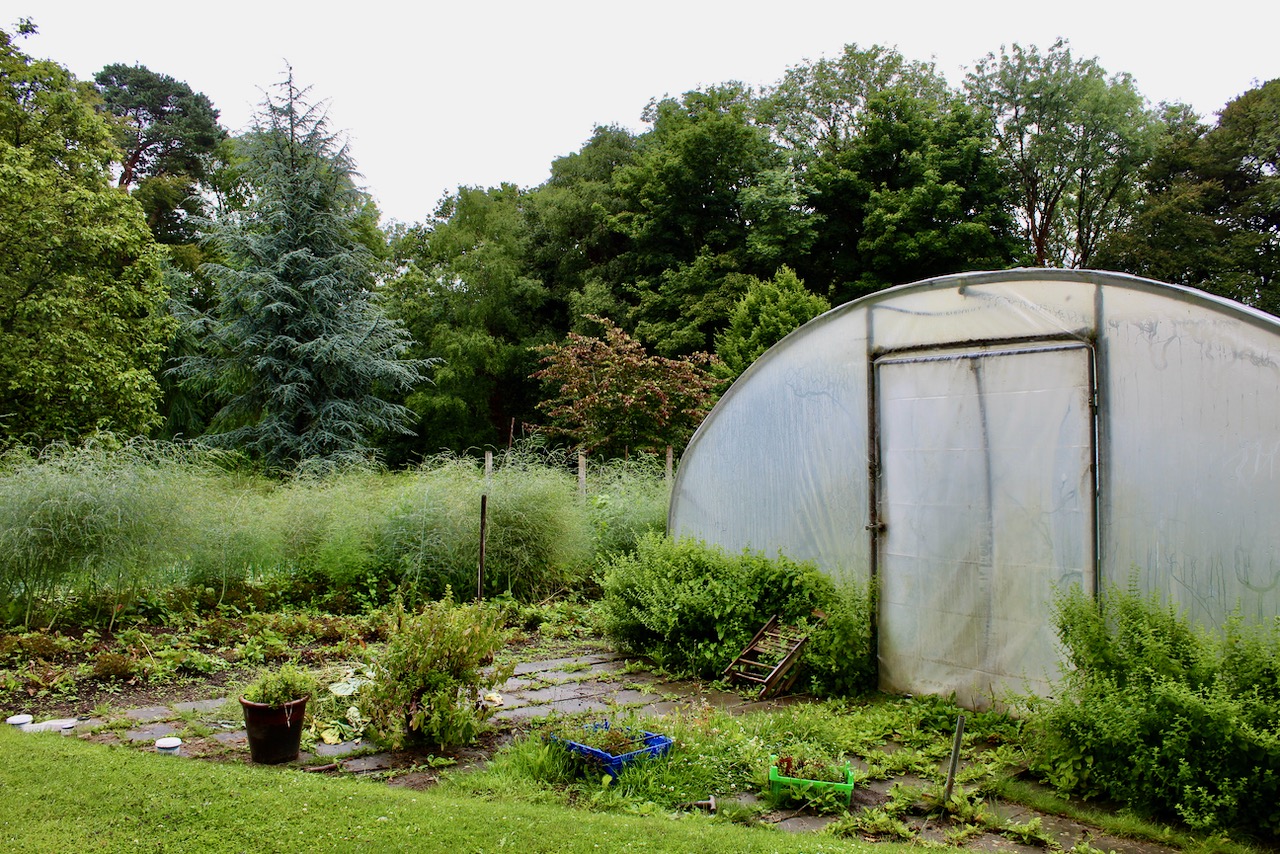
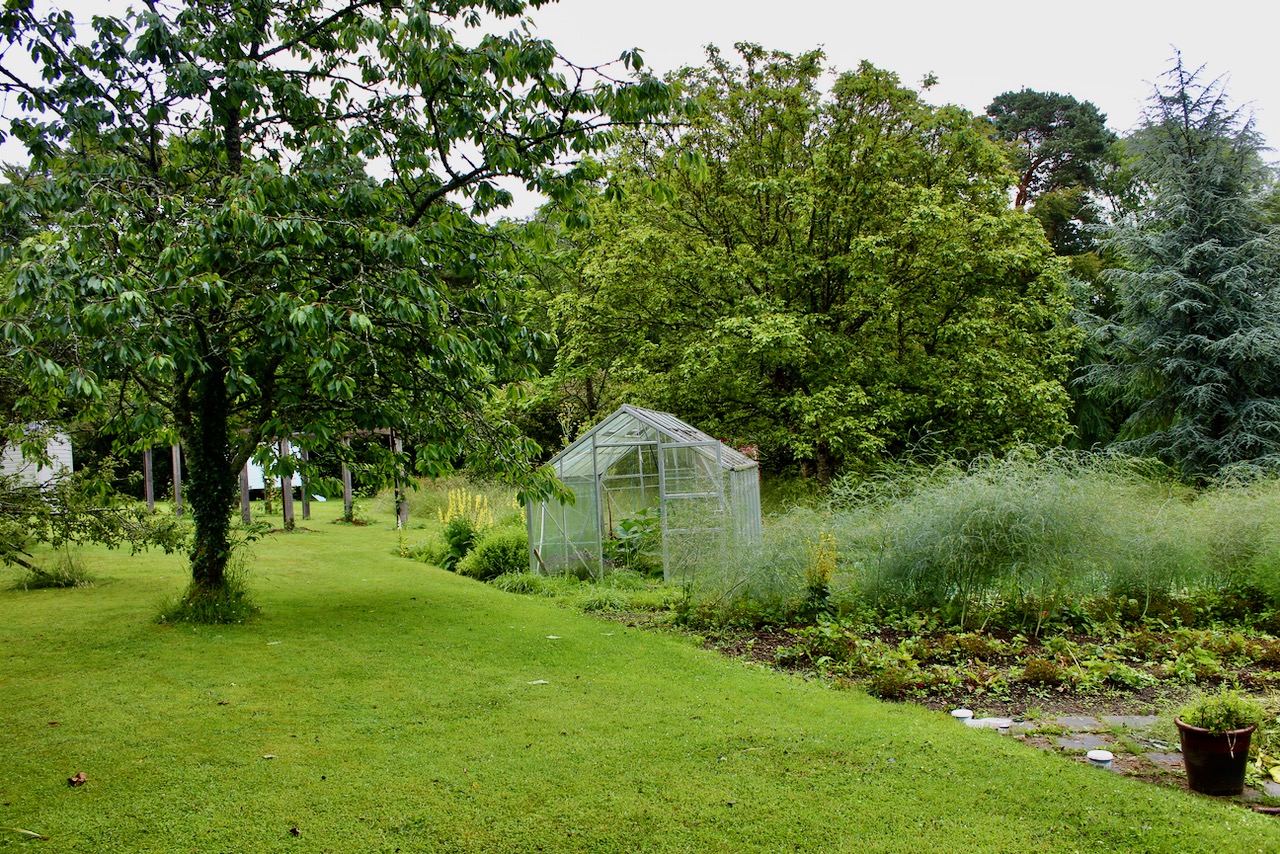
The walled garden began in 1777 when Charles Hamilton I built its walls. Part of the wall existed as stone, but this was later added to in brick. To make it look like a seamless brick wall, the stone walls were rendered and the brickwork painted on. At the time, the walled garden was mainly used to grow fruit, vegetables and flowers for the household. Charles II created the rock garden and with his wife Caroline, they designed the triangular shaped Knot garden. Charles III, otherwise known as Charles William, was an amateur artist as was his wife Letitia Armstrong and created to the front and rear of the house a parterre – an intricate design of flowers in beds which would resemble a cluster of fine jewels at a distance.

The walled garden was not looking its best as it was November when we visited. Photograph © Jennifer Winder-Baggot, www.irishhistorichouses.com

Caroline was an artist who became especially well-known for her satirical sketches. The website tells us about her:

Caroline spent much of her younger years in London and took lessons in art from the notable printmaker and portrait painter John Spilsbury (1737-1812) who had taught at Harrow where her brother was at school, and later Maria Spilsbury  (1776-1820), his daughter. She became a skilled artist, especially in creating pen and ink drawings of Irish society of the day, using a satirist angle on  such subjects as religion, education and the ruling classes.  

A sketch attributed to Caroline Hamilton, belonging to the National Gallery of Ireland.

The website continues: “After rearing and educating her six children, Caroline dedicated her time to the improvement and development of Hamwood House and its gardens, her art and, in particular, her writing. Her Memoirs are one of the most significant records of Irish life of the time, and in addition, she became heir to the diaries of the Ladies of Llangollen, which are now in the collection of the Hamwood papers held in the National Library, Dublin. Caroline’s cousin, Mary Tighe (1772-1810), was an accomplished poet best known for her poem, Psyche. Her artistic talent and to some extent, that of her husband, Charles III, passed down to her great-grandchildren, Eva and Letitia.

The Ladies of Llangollen, Sarah Ponsonby and Charlotte Eleanor Butler, by Richard James Lane, printed by Jérémie Graf, after Lady Mary Leighton (née Parker) courtesy of National Portrait Gallery NPG D32504.

The “ladies of Llangollen” were Eleanor Butler (1739–1829) and Sarah Ponsonby (1755–1831) – Sarah grew up in Woodstock in County Kilkenny, with her cousins, which was the house inherited by Caroline’s mother – it is now a ruin but has wonderful gardens, see my entry for Places to visit and stay in County Kilkenny. The two friends ran away together and set up house in Llangollen, Wales, and became famous for their audacity, and were visited by many people including Percy Bysshe Shelley, William Wordsworth and the Duke of Wellington.
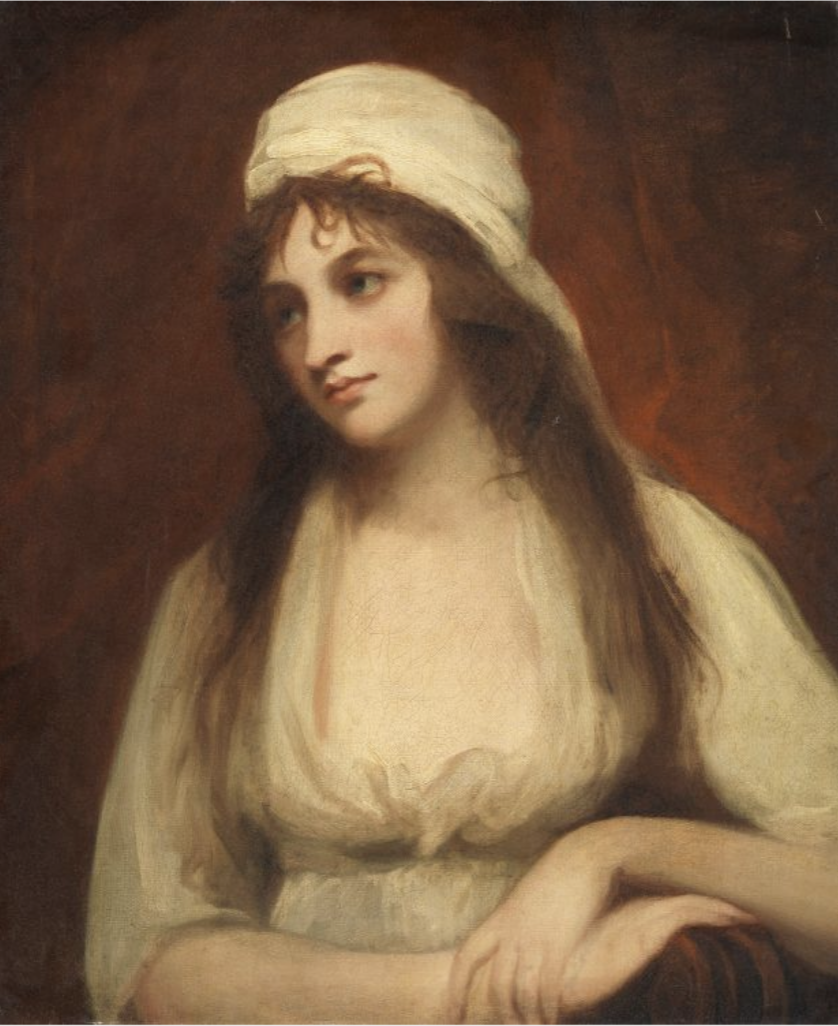
Mary Tighe née Blachford (1747-1791), courtesy of National Gallery of Ireland.

Caroline wrote a history of her family, detailing the lives of Theodosia and Mary Blachford and Sarah Ponsonby. Her memoir was published in 2010 as the edited volume Reminiscences of Marianne-Caroline Hamilton (1777–1861).

Caroline wrote and drew in a satirical style, providing a critical depiction of the Anglo-Irish ascendancy from that period. Her best known works include Domestic happiness as acted in the city: a tragic comic farceThe Kingston to Holyhead packet, and Society.

Charles II continued as Agent for the Earls of Leinster. The 2nd Earl died in 1804. The next, 3rd Duke, was Augustus Frederick FitzGerald (1791-1874).
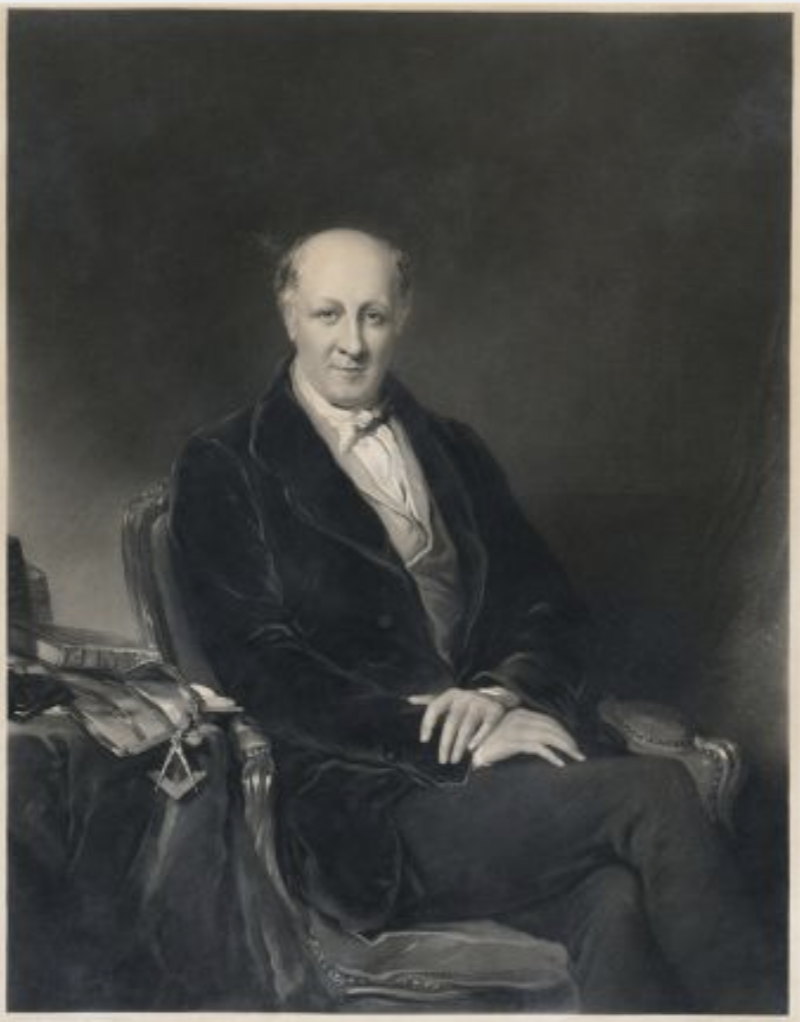
Augustus Frederick FitzGerald, 3rd Duke of Leinster, (1791-1874) Engraver George Sanders, After Stephen Catterson Smith, photograph courtesy of National Gallery of Ireland.

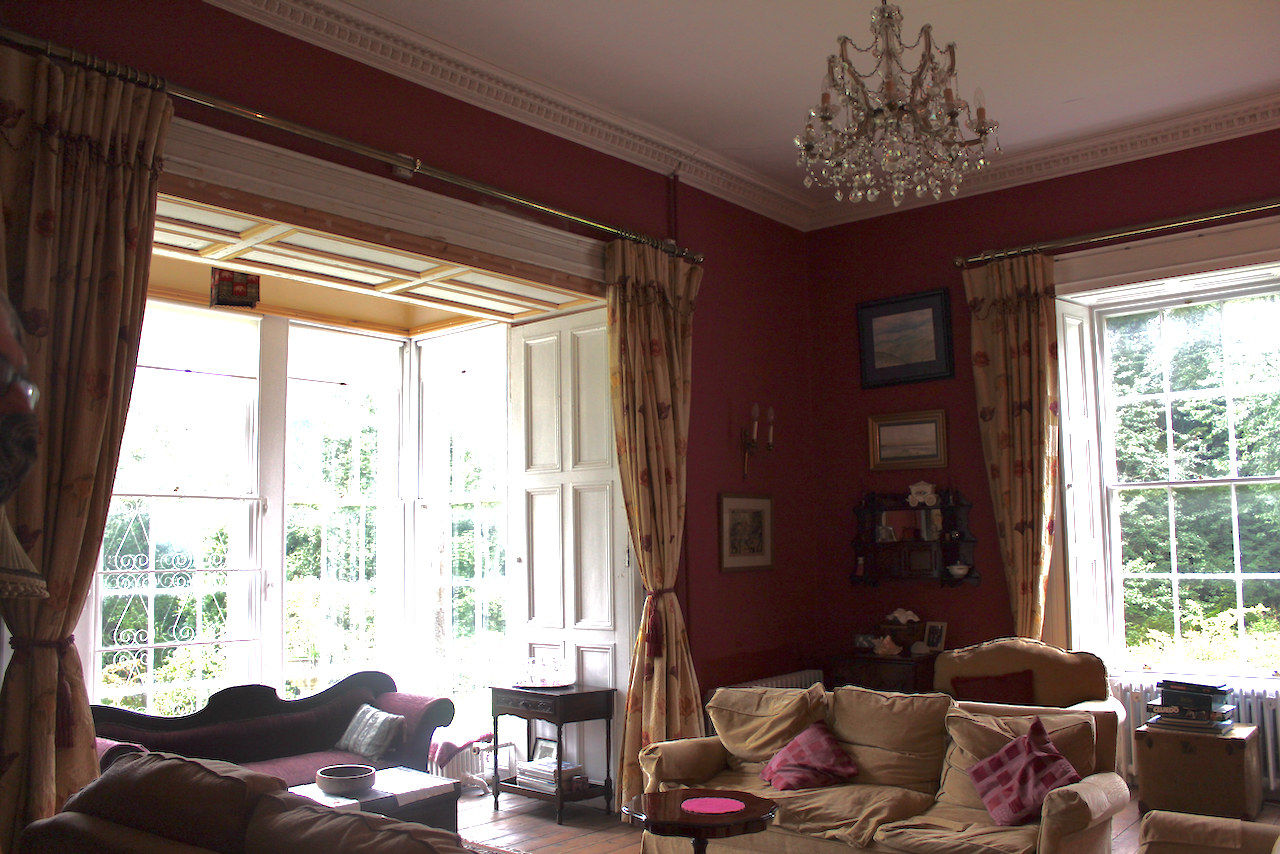
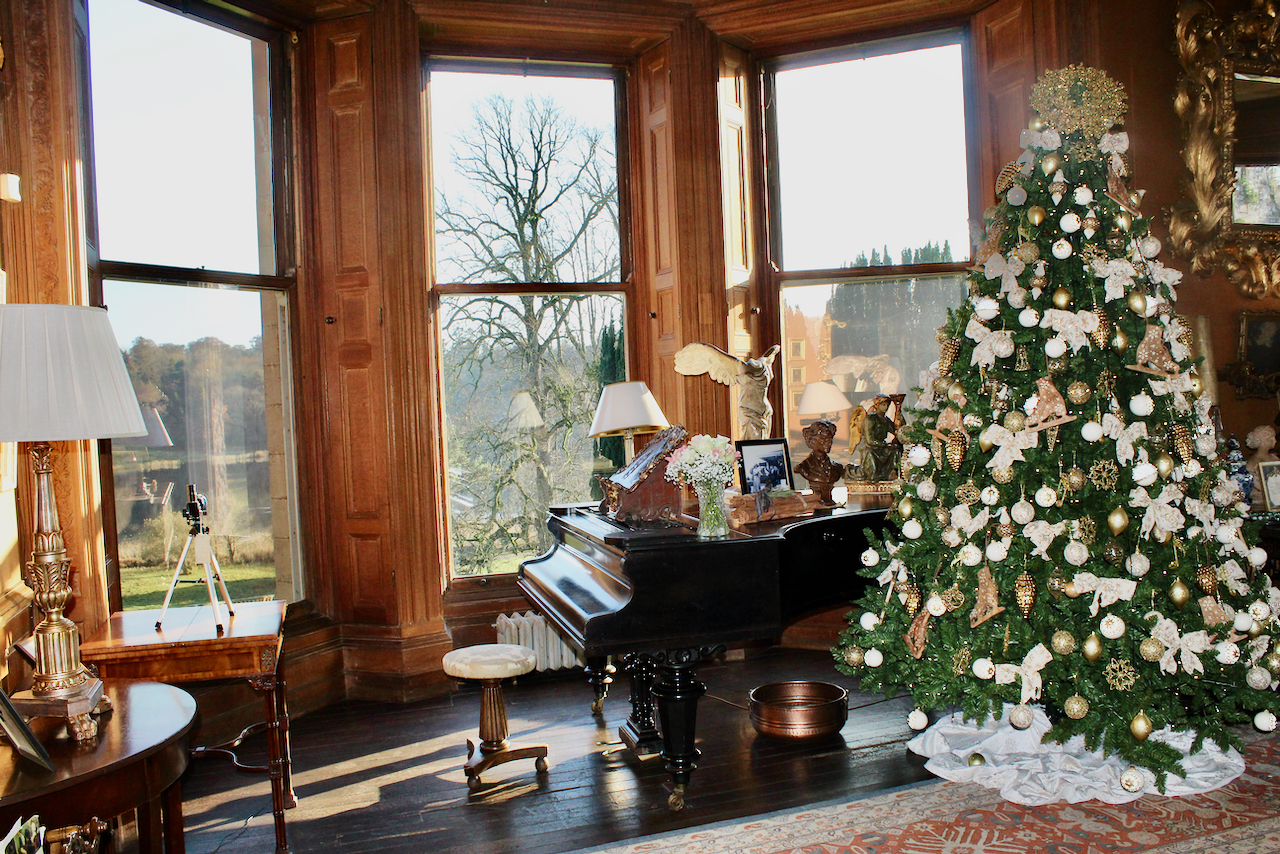
Moving the front door to one of the wings created a double drawing room that runs along the entire length of the facade. [3] The double drawing room is separated into two by an arch, an alteration possibly made by Caroline Hamilton in the 19th century. [see 1] It is a large comfortable room, not overly formal.
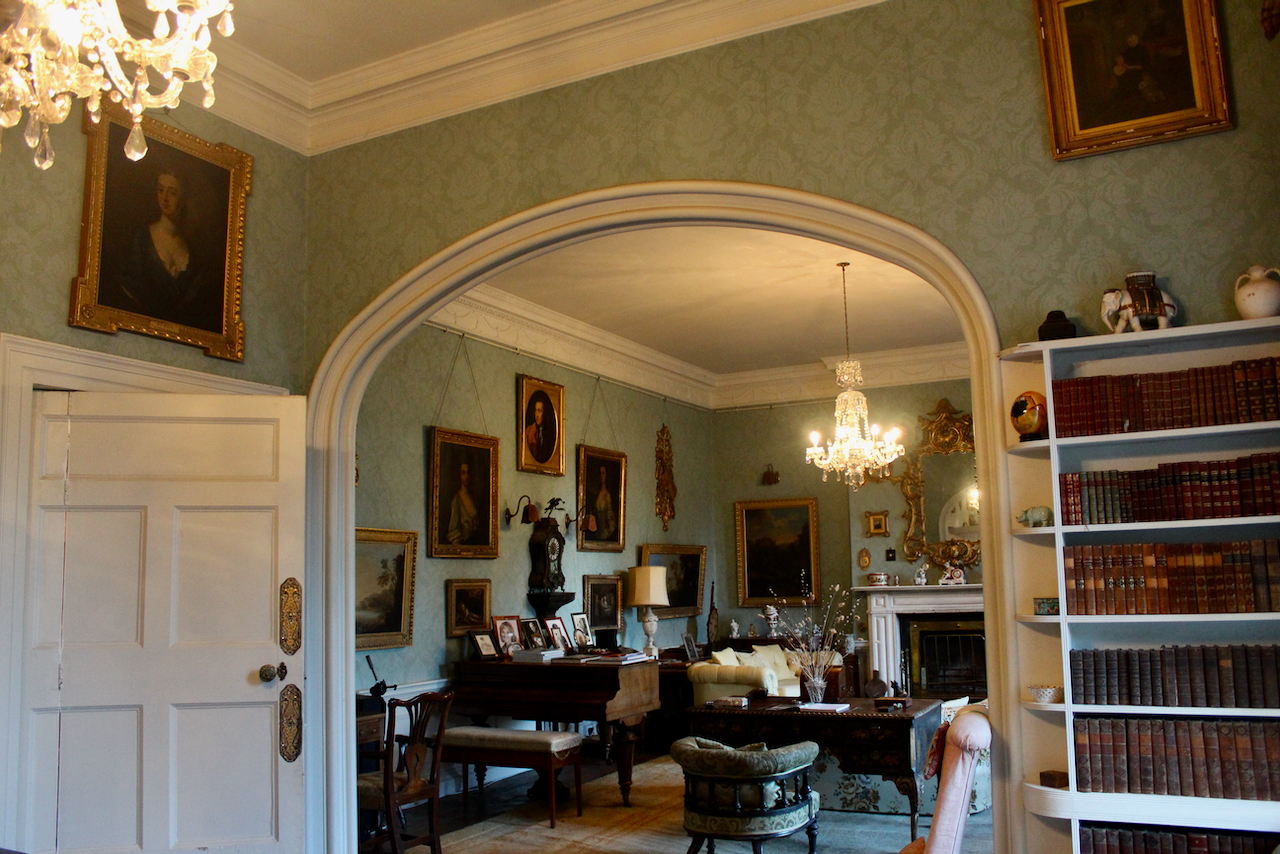
Hamwood, November 2022.

David Skinner of Skinner and Sons, specialists in wallpaper design and conservation, advised on the decoration of the dining room where a rustic red wallpaper has replaced a cream colour. [see 1]

One of the rooms of Hamwood. Moving the front door to one of the wings created a double drawing room that runs along the entire length of the facade. Photograph © Jennifer Winder-Baggot, www.irishhistorichouses.com
Hamwood, November 2022. Photograph © Jennifer Winder-Baggot, www.irishhistorichouses.com

Charles and Caroline’s daughter Sarah married Reverend Francis Howard, son of the 3rd Earl of Wicklow. Sarah was his second wife, as he had been previously married to Frances Beresford, who died in 1833. Sarah’s sons became the 5th and 6th Earls of Wicklow, who would have inherited the marvellous Shelton Abbey, which was gothicized by Richard Morrison.

Shelton Abbey, courtesy of National Library of Ireland, now an open prison.

Their daughter Caroline married twice but had no children and another daughter, Mary, remained unmarried.

Of their sons, Charles William (1802-1880) inherited the property when his father died in 1857. He continued his father’s position as the land agent for the 3rd Duke of Leinster. He married Letitia Charlotte Armstrong of Mount Heaton, County Offaly (now known as Mount St. Joseph’s) in 1841. The website tells us of Charles III:

He had a keen interest in Agriculture and was deeply involved in the Royal Dublin Society. He was particularly concerned about the state of Agriculture in the country prior to the Famine of 1845 and he urged the Repeal MP William Smith O’Brien to set up agricultural societies and colleges throughout Ireland to instruct farmers in modern methods. He corresponded frequently with Prime Minister William Gladstone about the terrible conditions caused by the potato blight and deplored the lack of assistance given. Although the effects were not nearly so bad in Leinster, soup kitchens were available to those who needed it, one being at Hamwood. 

One of Charles William’s passions was painting and he toured extensively, visiting Scotland and France, where he was arrested by the French whilst painting a warship in Antibes harbour. Presumably he convinced them he was simply an artist and no spy and was released! 

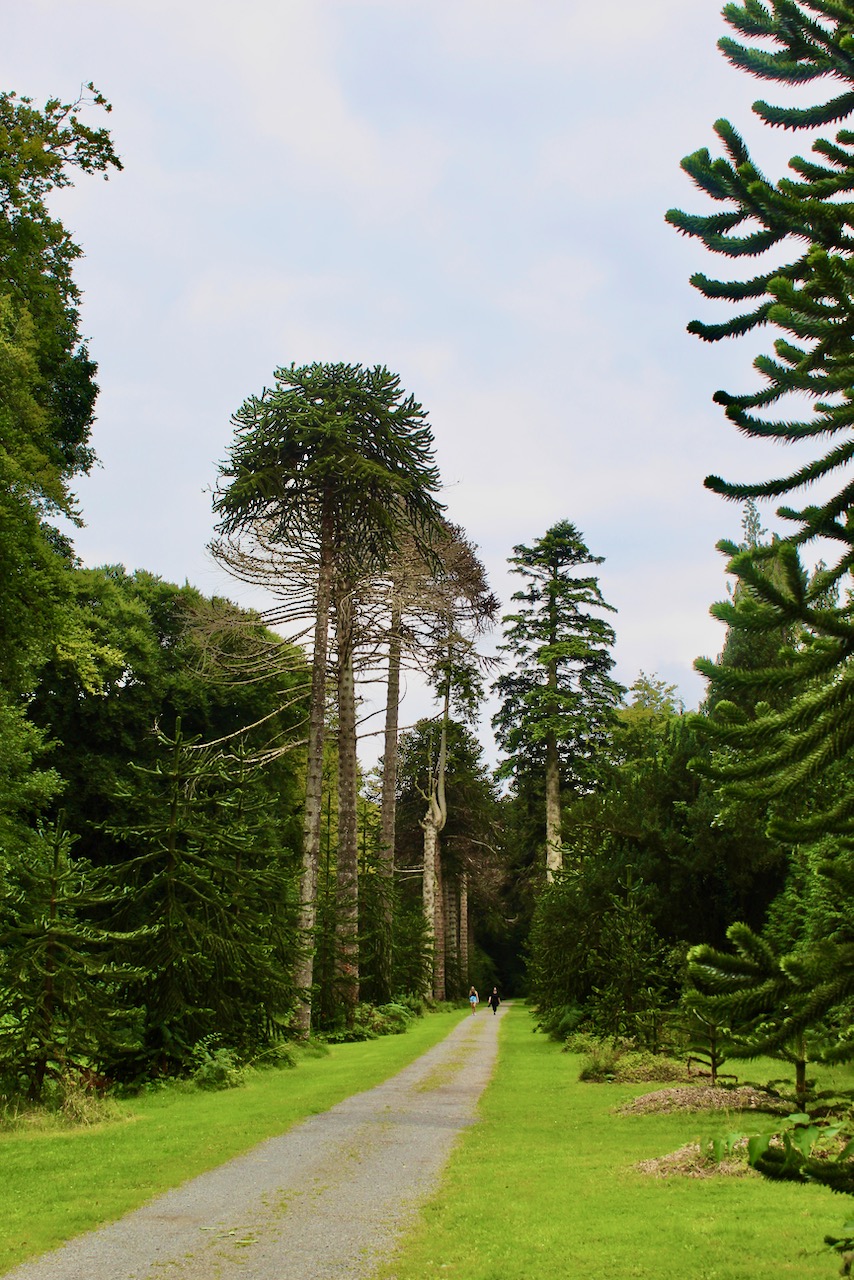
At Hamwood he planted the Pine Walk ca 1860, at a time when trees were becoming available from across the globe particularly from North America and the Himalayas. A Monterey Pine still stands among various Cedars, Sequoia and large Pines lining this Walk.

Charles [III] William Hamilton (1802-1880), photograph courtesy of Hamwood house website.

The 3rd Duke of Leinster died in 1874 and then Charles William continued as Agent for Charles William FitzGerald (1819-1887) 4th Duke of Leinster. and then for Gerald FitzGerald (1851-1893) the 5th Duke. Charles told us that the wife of this Duke, Hermione, daughter of William Ernest Duncombe, 1st Earl Feversham of Ryedale, County York in England, was rather wild!

The lives of the Hamiltons of Hamwood were closely tied to the Fitzgeralds of Carton. Charles told us of the next generation of Fitzgeralds: the first son was mentally unstable and unable to manage the property, the second son died in the first world war, so the third son, Edward FitzGerald (1892-1976), 7th Duke of Leinster, inherited when his brother died in 1916. The oldest son, the unstable 6th Earl, died in 1922.

Charles and Letitia had several children and the artistic bent passed to their grandchildren. Their heir was another Charles, Charles Robert (1846-1913). He married Louisa Caroline Elizabeth Brooke, daughter of Francis Richard Brooke and Henrietta Monck. The Hamwood website tells us Charles:

“… married Louise Brooke in 1874 who had 10 children, of whom 2 boys died in infancy, one being the first born and heir. The two chestnut trees in the Lawn field seen from the Trail were planted in their memory. There were 6 daughters among whom were the exceptional artists Letitia and Eva, and of the boys, Gerald Charles the future heir, and Freddie.

Charles Robert IV 1846-1913, photograph courtesy of Hamwood house website. He is probably seated with his wife Louisa Caroline Elizabeth née Brooke.

The website tells us of Charles Robert’s development of the garden:

Charles Robert was educated at home by a governess and at the age of 17 he went to Trinity to study law. He was a member of the Kildare Street Club and was passionate about the garden at Hamwood, where he transformed the Walled Garden, and in order to create an impact he employed a head gardener from Kew Gardens in London. He gained a great deal of help from his large family, particularly Connie (Constance) [b. 1883 and did not marry], who took up landscaping professionally.

Charles Robert travelled with his wife to the continent frequently and at times further afield to visit relations in Canada near Montreal. He corresponded with Kew Gardens in London and in particular with Sir Frederick Moore at The Royal Botanical Gardens Glasnevin. Sir Frederick was a Keeper of Glasnevin from 1879-1922. Charles IV and F.W. Moore became well known to each other and traded extensively in exotic and rare plants and trees discovered by the ‘Plant hunters’ of the day.

The Hamwood website has great entries about the daughters Eva and Letitia:

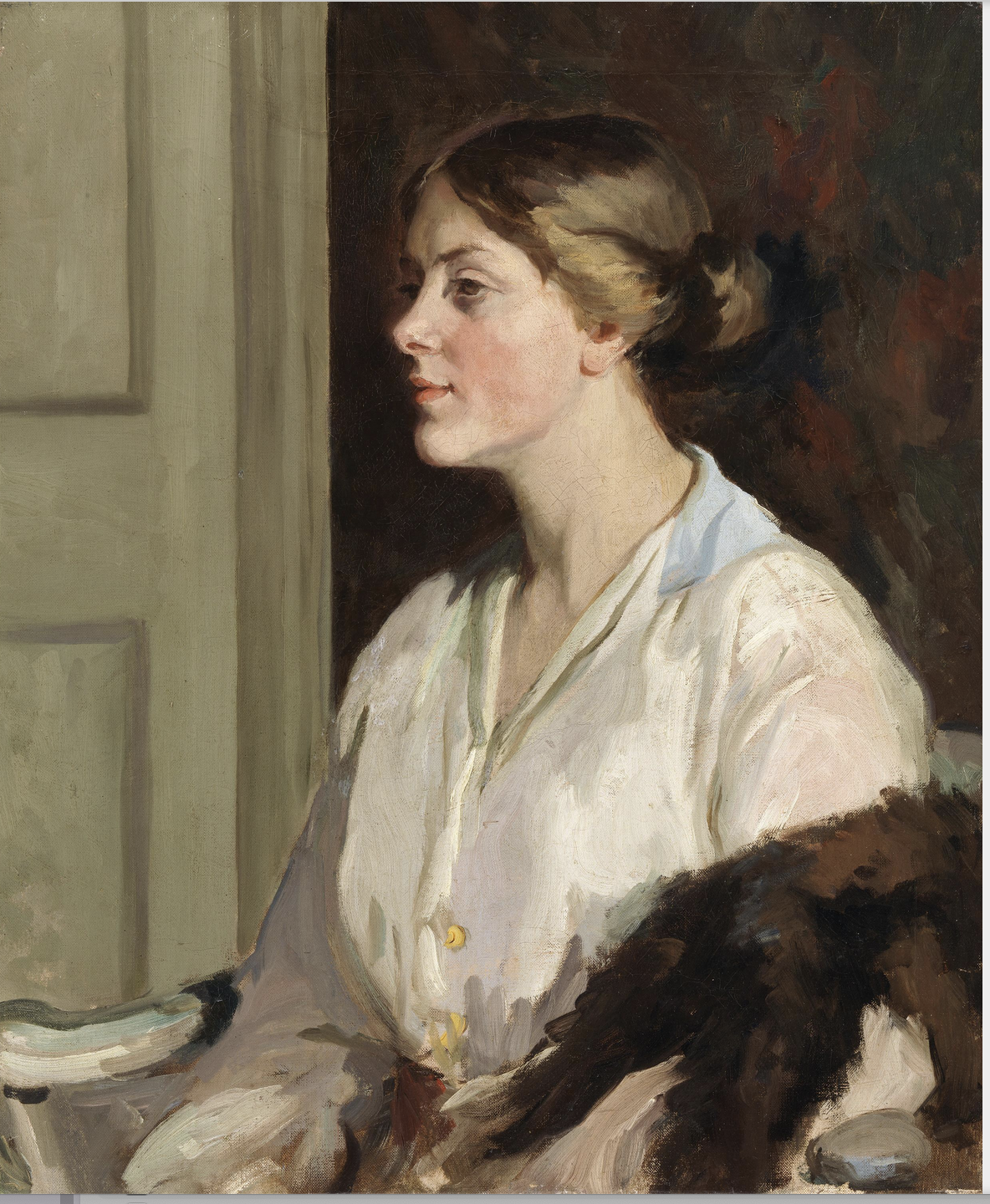
Eva Henrietta Hamilton (1876-1960) was born and reared at Hamwood, as was her sister, Letitia. One of five sisters and two brothers, only one sister, Lily, got married, with Eva and Letitia becoming established artists. Both fought for recognition in a society where art was considered as a male preserve and women artists were not treated as equals. Eva was an exceptional portrait artist having studied under Sir William Orpen ( 1878-1931) at the Dublin Metropolitan School of Art (DMSA) which she entered in 1907 at the age of 31 and later, under Henry Tonks, at the Slade in London. Many of her portraits were commissioned by members of her extended family and their social circle. Normally painted against a simple background, Eva’s skill was in reading the character of her sitters and transferring that on to her canvas. With the coming of independence in Ireland in 1922, the market for these type of portraits was much reduced and Eva switched her attention to landscapes which, although not particularly innovative in their production, were attractive and well observed.

Self Portrait, c.1906 by Eva Henrietta Hamilton (1876-1960), courtesy of Whyte’s auction Sept 2009.
Portrait of Rose Dorothy Brooke, Cousin of the Artist 1913 by Eva Henrietta Hamilton, photograph courtesy of National Gallery of Ireland.

The website continues:

Eva was the first of the sisters to exhibit her work, showing a portrait and a figure subject in 1898 at the annual exhibition of the Water Colour Society of Ireland (WCSI). Watercolours were then seen as an acceptable medium for women artists. Her works were shown in London, Paris and Brussels as well as the Irish International Exhibition in Dublin in 1907. She first exhibited at the Royal Hibernian Academy (RHA) in Dublin in 1904 where she continued to exhibit until 1945.

With the death of their mother in 1922, Eva assumed much of the housekeeping role and had less time to devote to her painting. The sisters lived together for most of their lives, in their later years in a series of large rented houses. Among these was Fonthill in Palmerstown, now the offices of the Ballymore construction company. In 1946, they made their final move to Woodville in Lucan, an eighteenth century house designed by the architect, Richard Castle (1690-1751). Fondly known as ‘the Aunts’ nest’ they continued to give memorable parties in their rather eccentric lifestyles. A tree with many sweeping branches stood in the garden from where old umbrellas hung, and in a rather artistic way resembled a tree with huge drooping fruit!

I found a painting of the house online from a sales catalogue of DeVeres auctioneers, by Letitia.

The Hamilton Family at Woodville House, Lucan County Dublin by Letitia Hamilton.

The website also has an entry about Letitia:

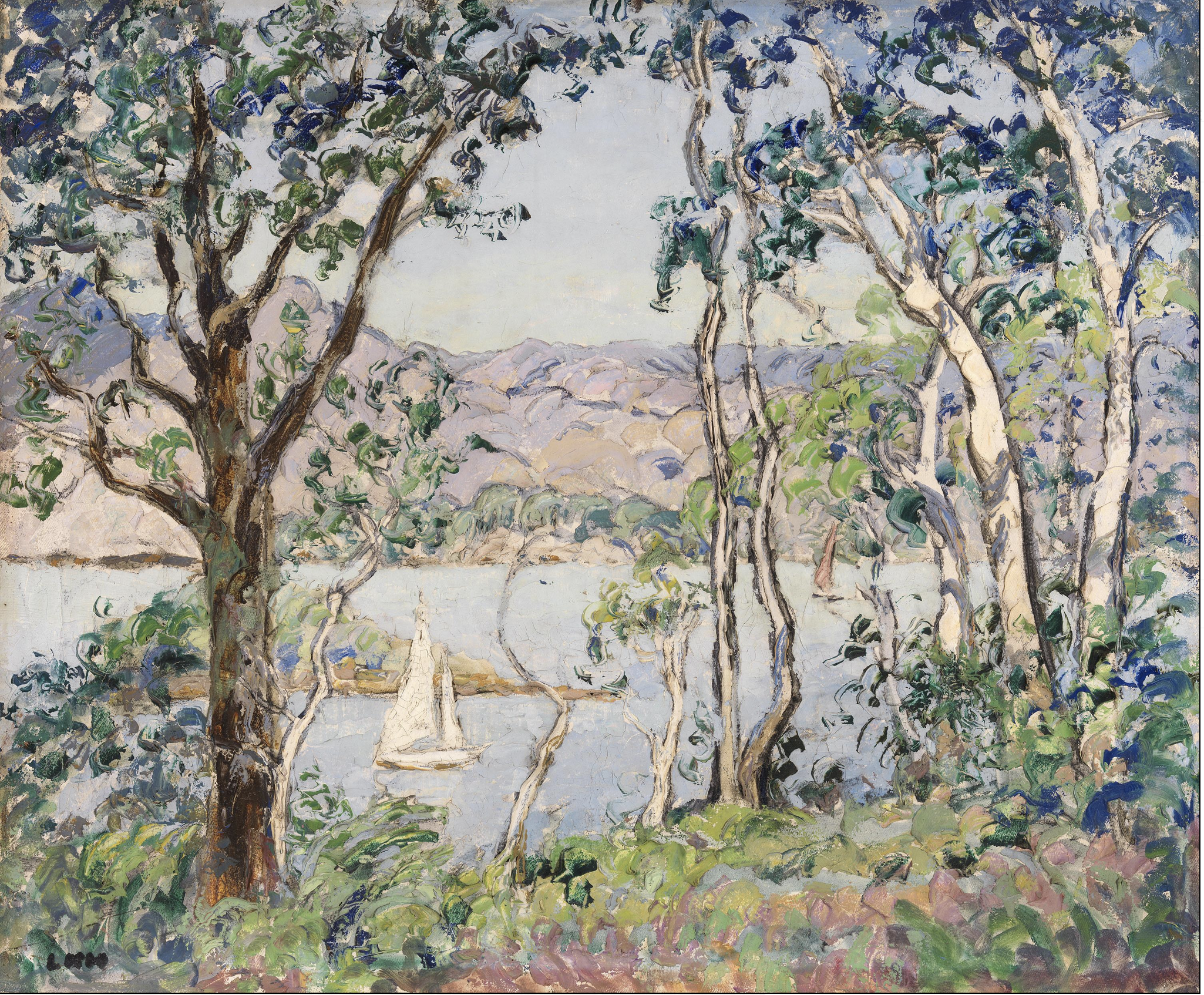
Letitia Marion Hamilton (1878-1964) was a talented and prolific landscape artist who, like her sister, studied under Orpen in the DMSA. Compared to Eva, she remained less influenced by him and more by the works of European artists that she saw during her time abroad. An inveterate traveller, she made trips to France, Belgium and Holland before the war in Europe curtailed these visits... With the cessation of hostilities, Letitia’s travels recommenced with trips abroad, often accompanied by Eva. During the 1920s, she travelled widely in France, Italy and Yugoslavia. She visited Venice for the first time in the autumn of 1923 and during the 1930s made regular visits to the city and northern Italian lakes.

“…they both blazed a trail for women artists in Ireland at a time when it was dominated by their male counterparts such as Sean Keating, Paul Henry and Jack Yeats. Eva and Letitia’s images of pre-war Europe and scenes from Irish towns and villages preserve a way of life that has now vanished for ever.

Bantry Bay with a Sailing Boat Seen Through Woodland c. 1940s by Letitia Marion Hamilton (1878-1964), photograph courtesy of National Gallery of Ireland.

Letitia won an Olympic medal in the 1948 Olympics, the only Irish medal winner that year, for Art featuring sport! Unfortunately that’s no longer an Olympic “sport.”

Their brother Francis Charles (1877-1961) was heir to Hamwood. He studied agriculture in England and acted as Land Agent for some estates in England before returning to Hamwood after the death of his father in 1913. There he continued in the position of Land Agent to the Duke of Leinster: from 1916 he would have been Agent for Edward FitzGerald (1892-1976), 7th Duke of Leinster. Mark Bence-Jones tells us that

“[The] 7th Duke was unable to live here having, as a young man, signed away his expectations to the “50 Shilling Tailor” Sir Henry Mallaby-Deeley, in return for ready money and an annuity. As a result of this unhappy transaction, Carton had eventually to be sold. It was bought 1949 by 2nd Lord Brocket…” [4]
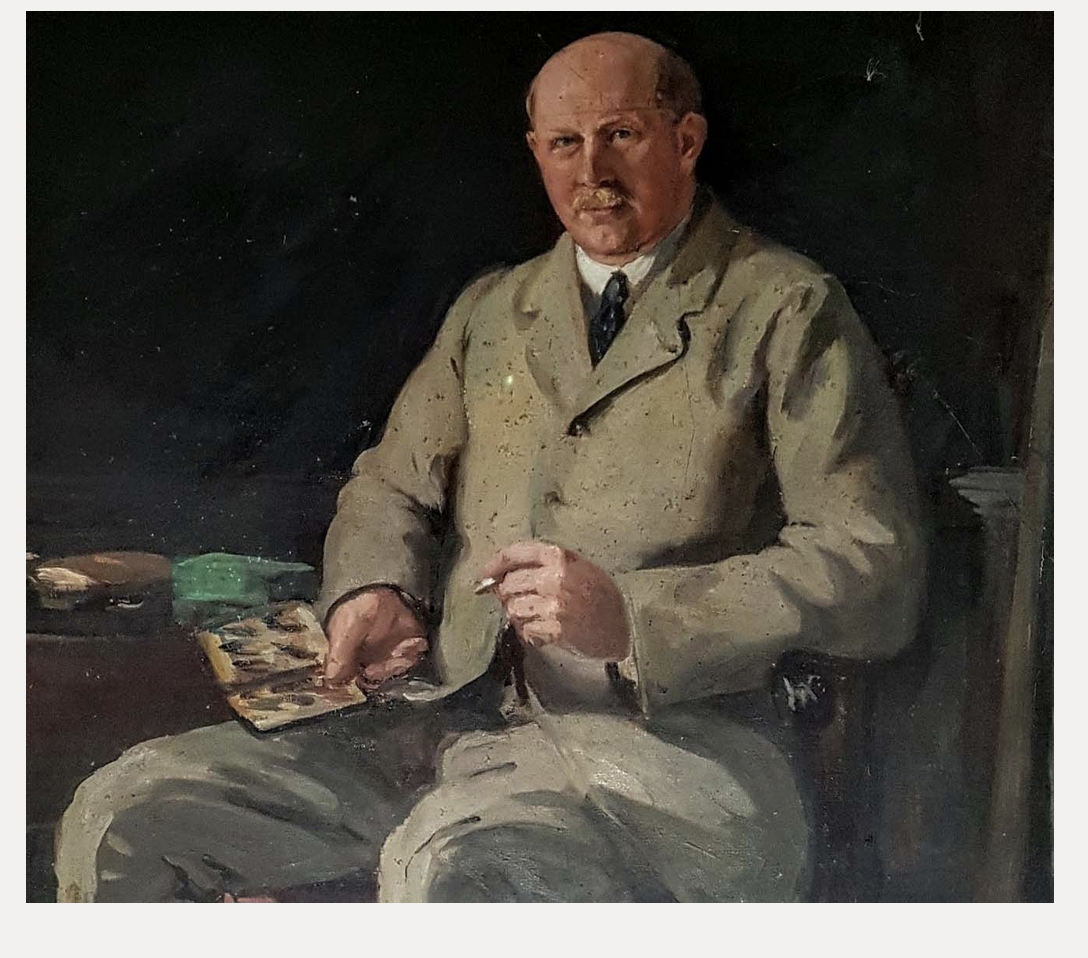
Francis Charles [V] Hamilton (1877-1961), photograph courtesy of Hamwood house website.

A distant cousin from the family who moved to Hawkesbury in Canada, Violet Travers Hamilton, travelled to England to “do the season,” and Francis Charles was instructed to escort her. He fell in love and they married.

The Hamwood website tells us that:

Violet died prematurely in 1947. A few years later Francis Charles married Rosamund Bauer who built up Hamwood’s dairy herd and helped see the estate through some difficult times during post war depression... Francis Charles died in 1961 and left the estate to his son Charles.

Charles (1918-2005) was called “The Major” due to his time in the Indian army, and he served in World War II. Like his father, he also acted as Land Agent to some properties in England before returning to Hamwood. He returned to Ireland and lived in Galway where he was agent for Clonbrock, before returning to Hamwood in 1963, following the death of his father. He also acted as Land Agent for the Conynghams of Slane for a period. Although Carton was sold by the 7th Earl he continued to work as Agent. He may have met my grandfather, as my Grandfather John Baggot of Aghaboe and Abbeyleix in County Laois kept cattle there at some point!
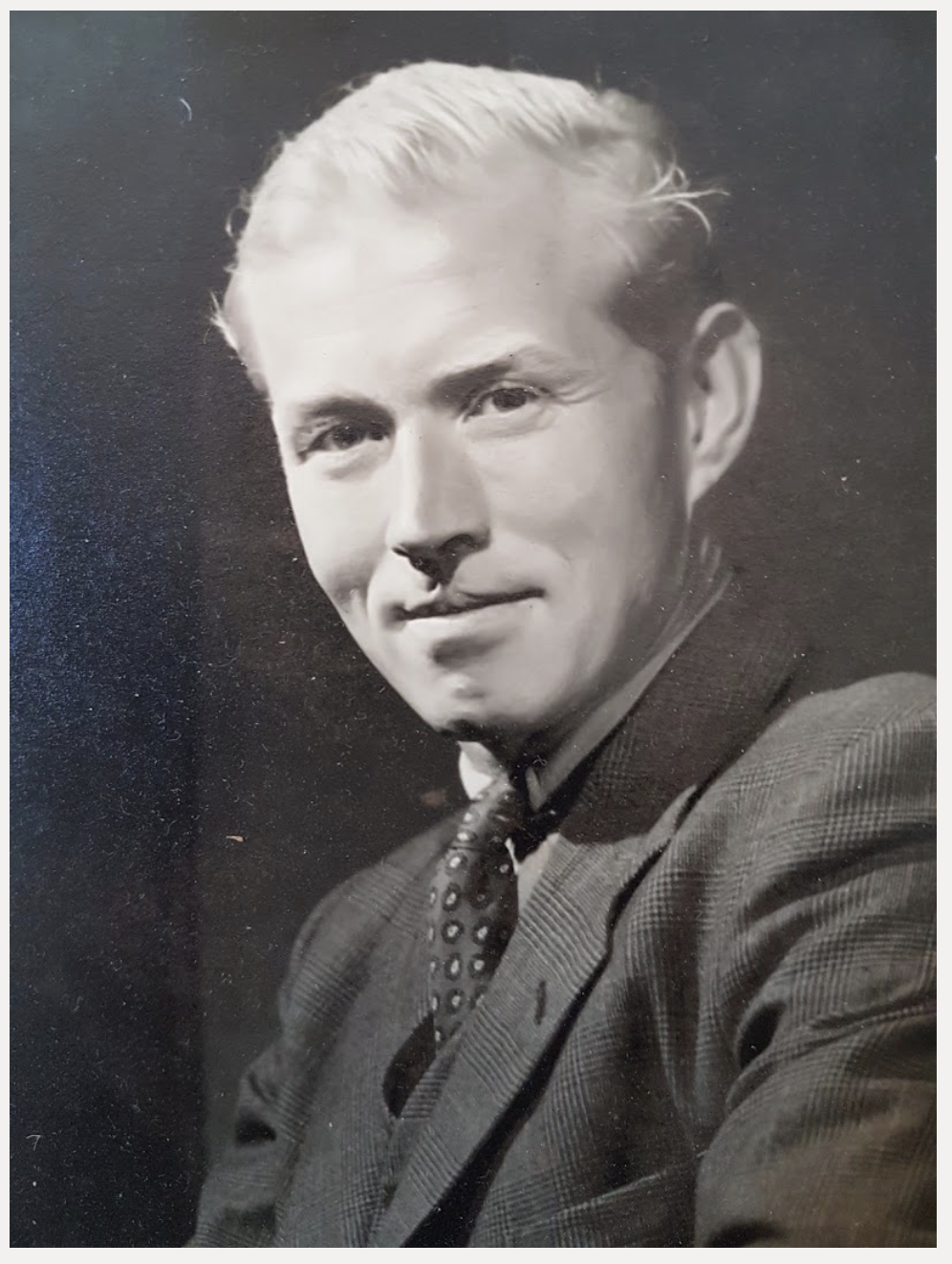
Charles [VI] Hamilton (1918-2005) was called “The Major,” photograph courtesy of Hamwood house website.

In 1958 Charles married Anne Spicer from Carnew Castle, County Wicklow, where her family moved from England after the second world war. Her family had ties to Ireland, where they holidayed when she was a child, and William Wellesley-Pole (1763-1845) 3rd Earl of Mornington, of Dangan Castle in County Meath (now a ruin), the older brother of the Duke of Wellington, was an ancestor.

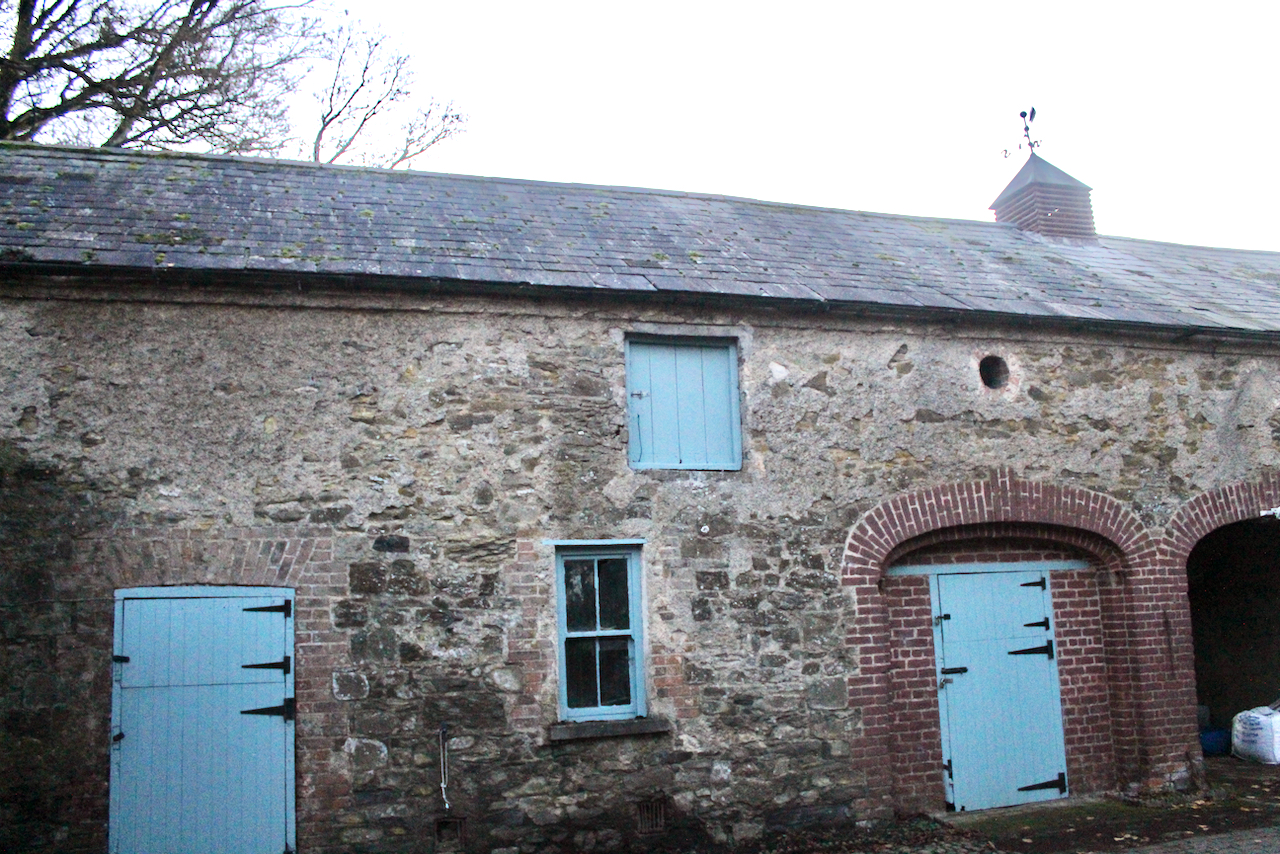
Charles took an interest in the garden and added to the plant collection and he ran the farm and bred cattle. Charles, who now lives in the house and showed us around, is their son. He continues the upkeep of the house, gardens and farm. He has created a woodland trail for visitors, and runs a seasonal courtyard café, Café des artistes. The family host events and have opened allotments. One can buy membership to have regular access to the gardens and café.
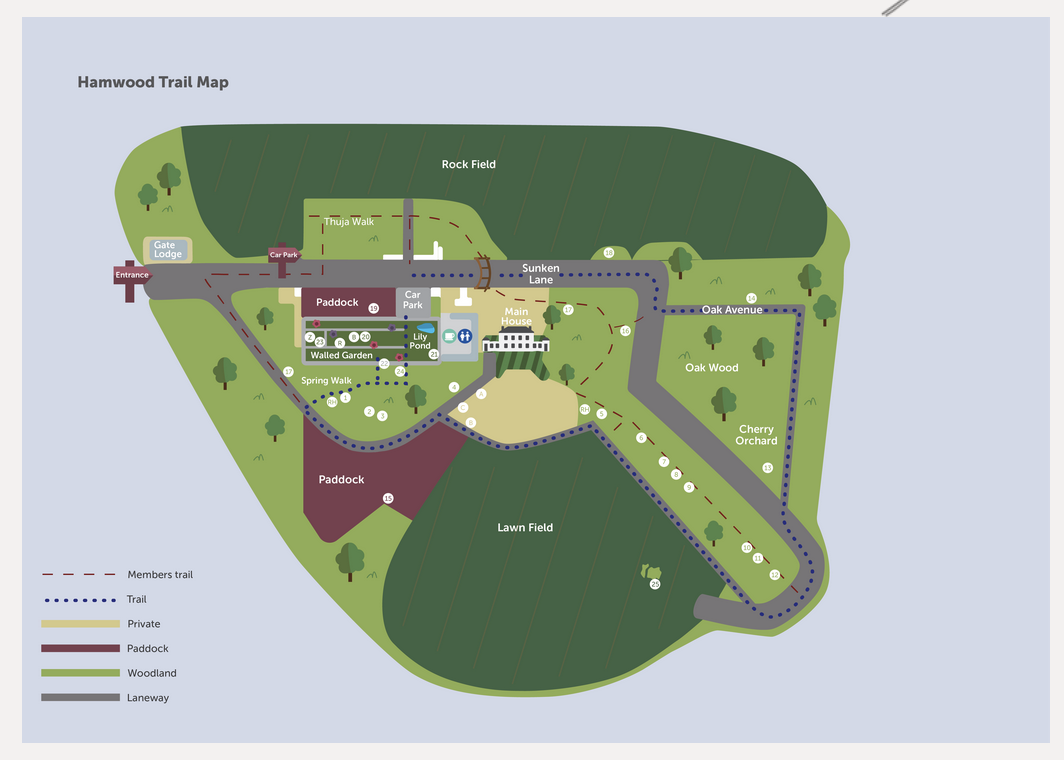
Map courtesy of Hamwood house website.
Hamwood, November 2022. Photograph © Jennifer Winder-Baggot, www.irishhistorichouses.com

[1] Great Irish Houses (Forewards by Desmond FitzGerald and Desmond Guinness) published by IMAGE Publications in 2008

[2] p. 117, Kavanagh, Art. The Landed Gentry and Aristocracy, Meath, 2005, published by Irish Family Names, Dublin 4.

[3] http://www.ihh.ie/index.cfm/houses/house/name/Hamwood

[4] Bence-Jones, Mark. A Guide to Irish Country Houses (originally published as Burke’s Guide to Country Houses volume 1 Ireland by Burke’s Peerage Ltd. 1978); Revised edition 1988 Constable and Company Ltd, London.

Text © Jennifer Winder-Baggot, www.irishhistorichouses.com
Places to visit and stay in County Kilkenny, Leinster.

On the map above:

blue: places to visit that are not section 482

purple: section 482 properties

red: accommodation

yellow: less expensive accommodation for two

orange: “whole house rental” i.e. those properties that are only for large group accommodations or weddings, e.g. 10 or more people.

green: gardens to visit

grey: ruins

Carlow, Dublin, Kildare, Kilkenny, Laois, Longford, Louth, Meath, Offaly, Westmeath, Wexford and Wicklow are the counties that make up the Leinster region.

As well as places to visit, I have listed separately places to stay, because some of them are worth visiting – you may be able to visit for afternoon tea or a meal.

For places to stay, I have made a rough estimate of prices at time of publication:

€ = up to approximately €150 per night for two people sharing (in yellow on map);

€€ – up to approx €250 per night for two;

€€€ – over €250 per night for two.

For a full listing of accommodation in big houses in Ireland, see my accommodation page: https://irishhistorichouses.com/accommodation/

donation

Help me to pay the entrance fee to one of the houses on this website. This site is created purely out of love for the subject and I receive no payment so any donation is appreciated!

€15.00

Places to visit in County Kilkenny:

1. Aylwardstown, Glenmore, Co Kilkenny – section 482 

2. Ballybur Castle, Ballybur, Cuffesgrange, Co. Kilkenny – section 482

3. Ballysallagh House, Johnswell, Co Kilkenny – section 482 

4.  Kilfane Glen & Waterfall Garden, Thomastown, County Kilkenny – 482 – garden only

5. Kilkenny Castle, Kilkenny – OPW

6. Kilkenny Design Centre, Castle Yard, Kilkenny – Design Centre on 482

7. Kilrush House, County Kilkenny, ihh member, by appt. 

8. Rothe House, Kilkenny, County Kilkenny  

9. Shankill Castle, Paulstown, Co. Kilkenny – section 482 

10. Tybroughney Castle, Piltown, Co Kilkenny – 482 

11. Woodstock Gardens and Arboretum, Woodstock, Inistioge, Kilkenny

Places to stay, County Kilkenny

1. Ballyduff, Thomastown, Co Kilkenny – wedding venue, B&B 

2. Blanchville Coachyard, Dunbell, County Kilkenny €

3. Butler House, Kilkenny, co Kilkenny – accommodation 

4. Clomantagh Castle, Co Kilkenny – €€ for two, € for 3-8

6. Lyrath House, near Kilkenny, County Kilkenny – hotel 

7.  Mount Juliet, Thomastown, County Kilkenny – hotel 

8. Tubbrid Castle, County Kilkenny €€€ for two, € for 8

9. Waterside Guest House, Graiguenamanagh, County Kilkenny

Whole House Rental County Kilkenny:

1. Annamult House, Bennettsbridge, Co Kilkenny – whole house accommodation

2. Ballybur Castle, County Kilkenny €€€ for two, € for 10

3. Castle Blunden, County Kilkenny – whole house accommodation

Places to visit in County Kilkenny:

1. Aylwardstown, Glenmore, Co Kilkenny – section 482 

http://www.kelvale.com
Open dates in 2025: Aug 1-31, Sept 1-30, 10am-5pm

Fee: adult €5, OAP/student €3, child free

Open dates in 2025: Aug 1-31, Sept 1-30, 2pm-6pm
Fee: Free

See my entry: https://irishhistorichouses.com/2024/12/19/ballybur-castle-ballybur-upper-cuffesgrange-co-kilkenny/

Photograph courtesy of Ballybur website.

3. Ballysallagh House, Johnswell, Co Kilkenny R95 A6P1 – section 482 

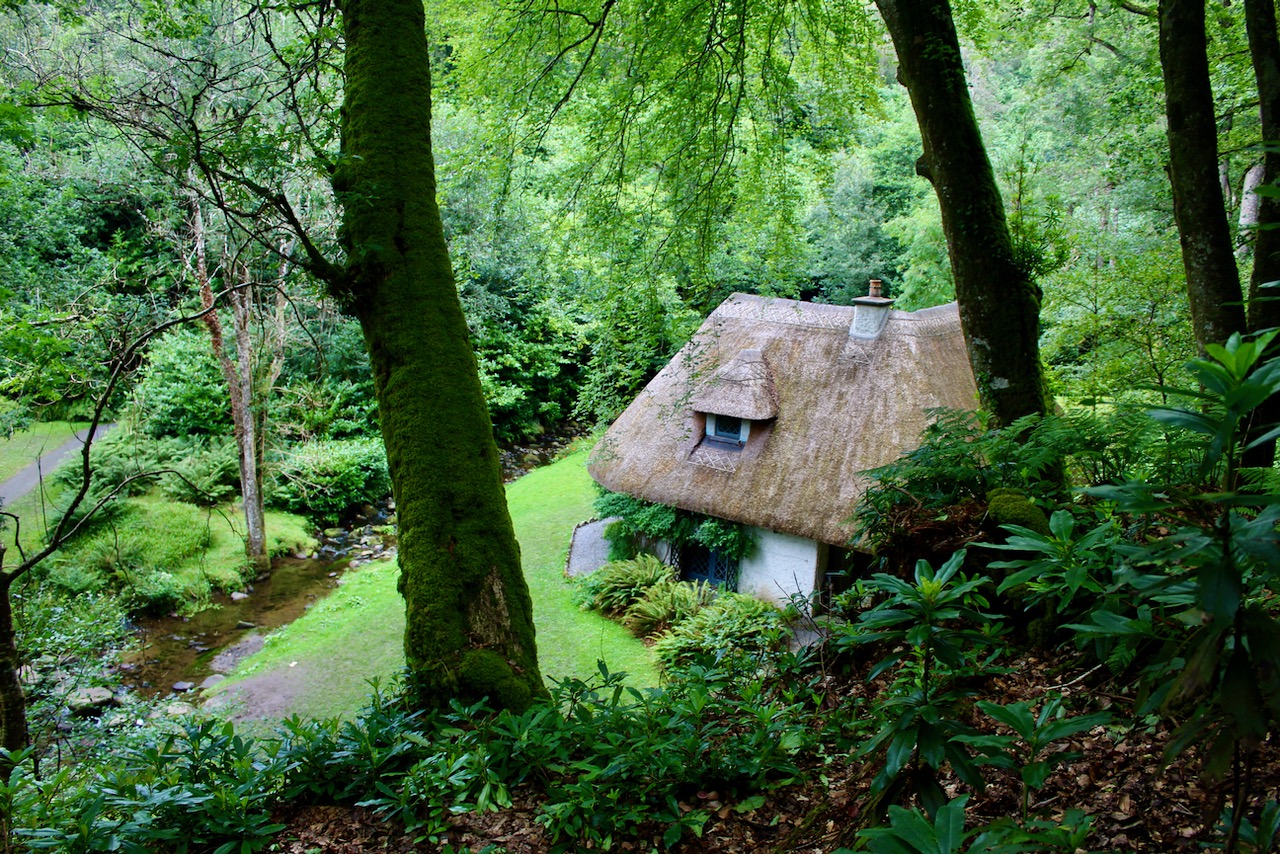
Ballysallagh House, County Kilkenny, February 2022. Photograph © Jennifer Winder-Baggot, www.irishhistorichouses.com
Open dates in 2025: Feb 1-20, May 1-31 Aug 16-24, 9am-1pm

Fee: adult €10, OAP/student €7.50, child €5

See my entry: https://irishhistorichouses.com/2022/06/17/ballysallagh-house-johnswell-co-kilkenny/

4.  Kilfane Glen & Waterfall Garden, Thomastown, County Kilkenny R95 RXO5 – 482 – garden only

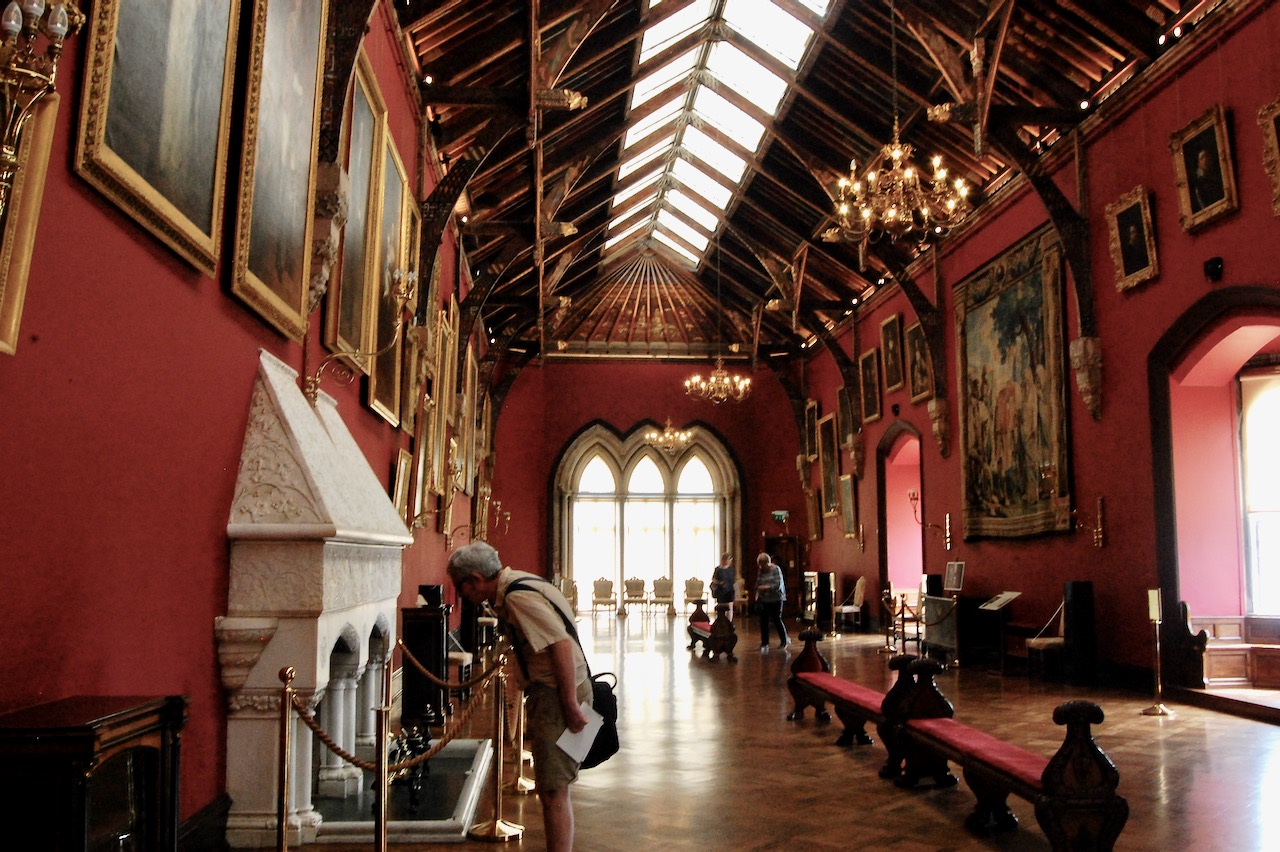
Kilfane, County Kilkenny, August 2021. Photograph © Jennifer Winder-Baggot, www.irishhistorichouses.com
See my entry:

https://irishhistorichouses.com/2021/12/16/kilfane-glen-waterfall-kilfane-thomastown-co-kilkenny/

www.kilfane.com

Open dates in 2025: July 1-31, Aug 1-31, 11am-6pm
Fee: adult €7, OAP/student €6.50, child €6

5. Kilkenny Castle, Kilkenny – OPW

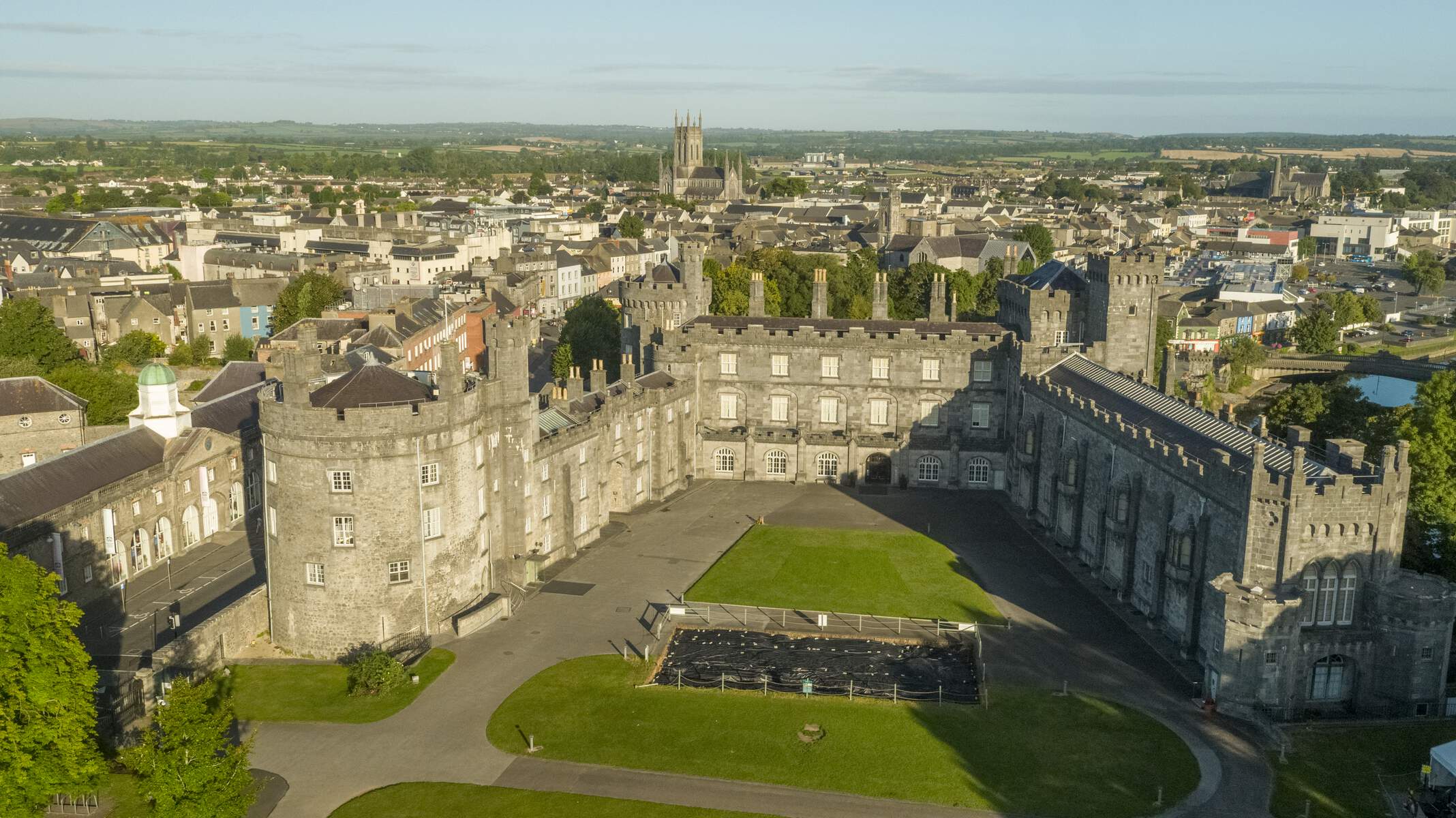
Kilkenny Castle, May 2018. Photograph © Jennifer Winder-Baggot, www.irishhistorichouses.com
Kilkenny Castle, Kilkenny City by Sonder Visuals for Failte Ireland 2014.

see my entry https://irishhistorichouses.com/2024/04/08/kilkenny-castle-county-kilkenny-an-office-of-public-works-property/

6. Kilkenny Design Centre, Castle Yard, Kilkenny – Design Centre on 482

www.kilkennydesign.com
Open dates in 2025: Jan 1 new year’s day 12 noon-5.30pm, Jan 2-Dec 23, 27-31, Jan, Feb, Mar, Apr, Oct, Nov, Dec, Sun, 11am-6pm, Mon-Sat, 10am-6pm, May, 10am-6pm, June, July, Aug, Sept, Sun, 10am-6pm, Mon- Sat, 9am-6pm,
Fee: Free

7. Kilrush House, County Kilkenny, ihh member, by appt. 

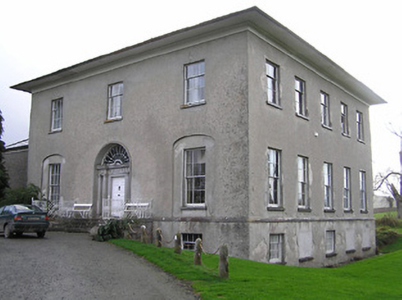
Kilrush House, photograph courtesy of National Inventory of Architectural Heritage
Kilrush House, photograph courtesy of National Inventory of Architectural Heritage.

The Historic Houses of Ireland website tells us:

William Robertson (1777 – 1850) was a native of Kilkenny where the patronage of Lord Ormonde stood him in good stead, since most of his work can be found in Kilkenny and the neighbouring counties of Laois, Tipperary and Waterford. When Richard St. George wished to move from his medieval castle at Kilrush near Freshford in 1820, Robertson was the obvious choice. His work is less exuberant than that of his namesake Daniel but he was a talented architect and produced an interesting early nineteenth century reinterpretation of the typical late-Georgian country house. 

The St Georges are a Norman family who ‘came over to England with the Conqueror’ and arrived in Ireland in the sixteenth century. They quickly became established here, with several branches in County Kilkenny and others in Galway, Leitrim and Roscommon.

The St Georges of Kilrush were active in political and cultural circles in the seventeenth and eighteenth centuries. Richard St George was an M.P. in the Irish Parliament, with a town house at No. 8 Henrietta Street, while his cousin St George Ashe was the Provost of Trinity College and a close friend of Dean Swift. St. George was also a founding member of the Dublin Philosophical Society, which encouraged his numerous publications of scientific and national interest.

Richard considered moving out of his tower-house at Kilrush in the middle of the eighteenth century but this decision was left to his heirs, who built the existing house in the early nineteenth century. Kilrush has a three bay façade, a five bay garden front, a hipped roof with widely overhanging eaves, a single very large, central chimney-stack into which all the flues are diverted, and an interesting ground plan.

The cut-stone door case is a handsome arrangement of Doric half-columns and pilasters, supporting a deep entablature with swags beneath a semi-circular leaded fanlight. The ground floor windows to either side are set in shallow recesses with elliptical heads; otherwise the elevations are quite plain.

The most interesting internal space is the landing, a perfect Doric rotunda supporting a delicately glazed dome. This partly lights the inner hall below through a circular well in the floor. The dining and drawing rooms are both finely proportioned apartments, with many original fittings and furnishings, and their original wallpaper.

Kilrush looks out over mature parkland to a large mill, almost half a mile off.  The gardens contain a stupendous collection of snowdrops, there is a tower house, the former residence of the family in the attached yard, while an interesting early garden layout with connected canals has recently been identified and is currently in the course of restoration.” [1]

8. Rothe House, Kilkenny, County Kilkenny  

Rothe House, Kilkenny, photograph by Brian Morrison 2015 for Tourism Ireland [2]

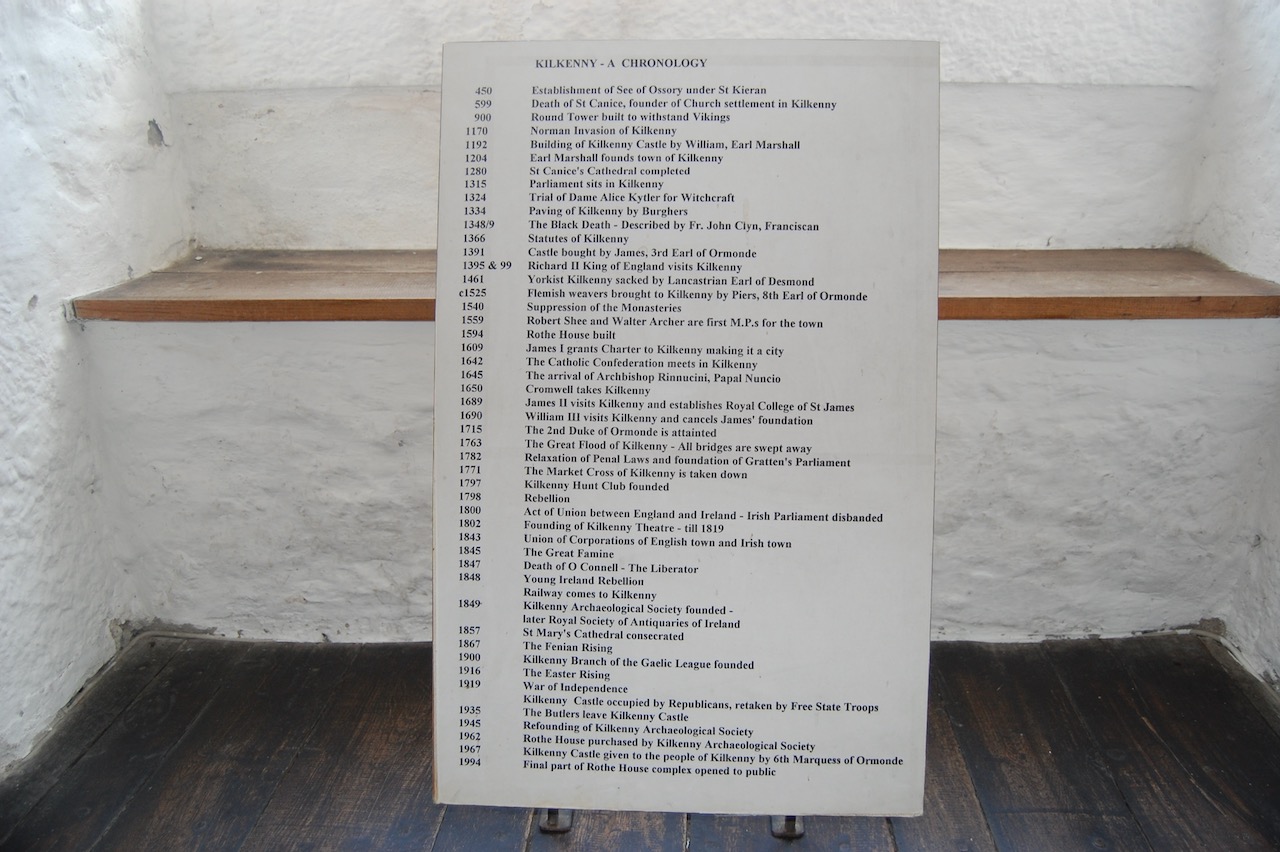
Rothe House is a treasure, older than any house in Dublin! It was built around 1594-1610, by John Rothe FitzPiers (1560-1620) for his wife Rose Archer, and is the last merchant’s townhouse in Kilkenny surviving from the early post-medieval period. [3] The house, purchased by Kilkenny Archaeological Society in 1962, is open to the public as a museum displaying a selection of the historic artefacts collected by the Society since its founding in 1947.  The artefacts relate to Kilkenny heritage throughout the ages and some date from prehistoric times.  The adjoining garden has since 2008 been open to the public and is a faithful reconstruction of an early seventeenth-century urban garden. 

Garden at Rothe House, May 2018. Photograph © Jennifer Winder-Baggot, www.irishhistorichouses.com
Rothe House, May 2018. Photograph © Jennifer Winder-Baggot, www.irishhistorichouses.com
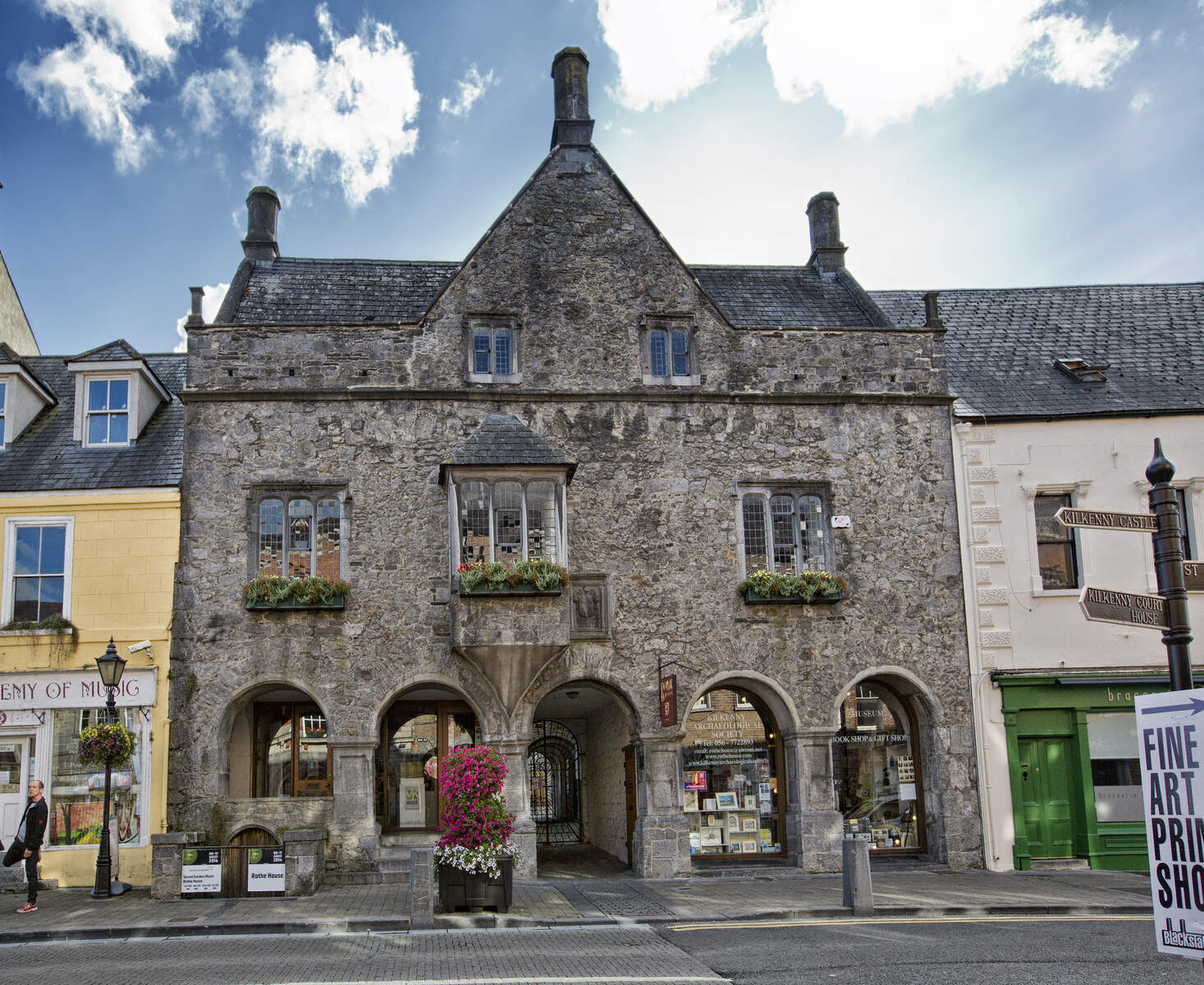
The National Inventory describes it:

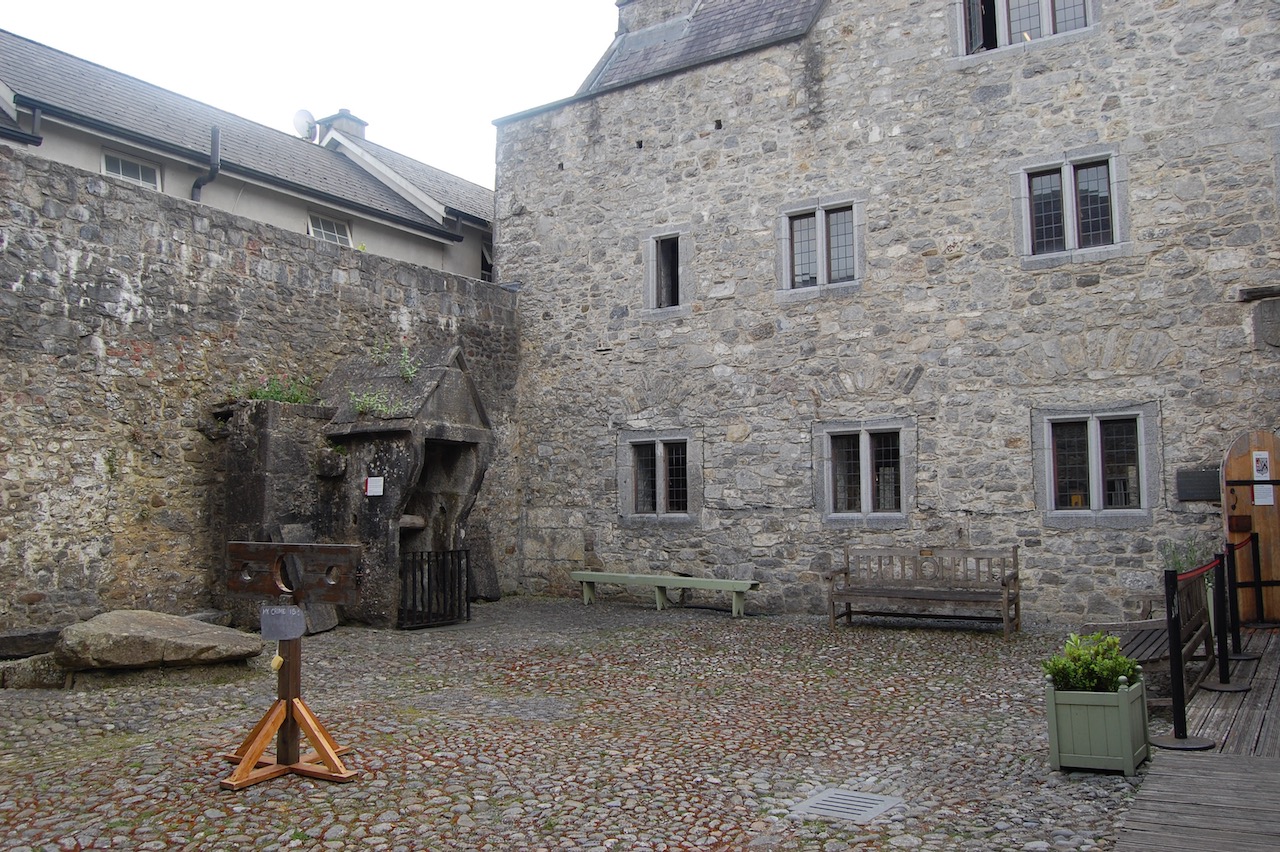
Terraced five-bay two-storey over basement house with dormer attic on a U-shaped plan about a stone cobbled (east) courtyard with two-bay two-storey gabled central bay having jettied box oriel window to first floor, series of five round-headed openings to ground floor forming arcade, single-bay three-storey linking range to north-west, and three-bay three-storey parallel range to west (completing U-shaped plan about a courtyard) originally three-bay two-storey having round-headed carriageway to right ground floor. In use as school, c.1750. Restored, 1898, to accommodate use as Gaelic League house. Converted to use as museum, 1963-5. Restored, 1983. Restored, 1999, to accommodate use as offices.”

Rothe House, May 2018. Photograph © Jennifer Winder-Baggot, www.irishhistorichouses.com
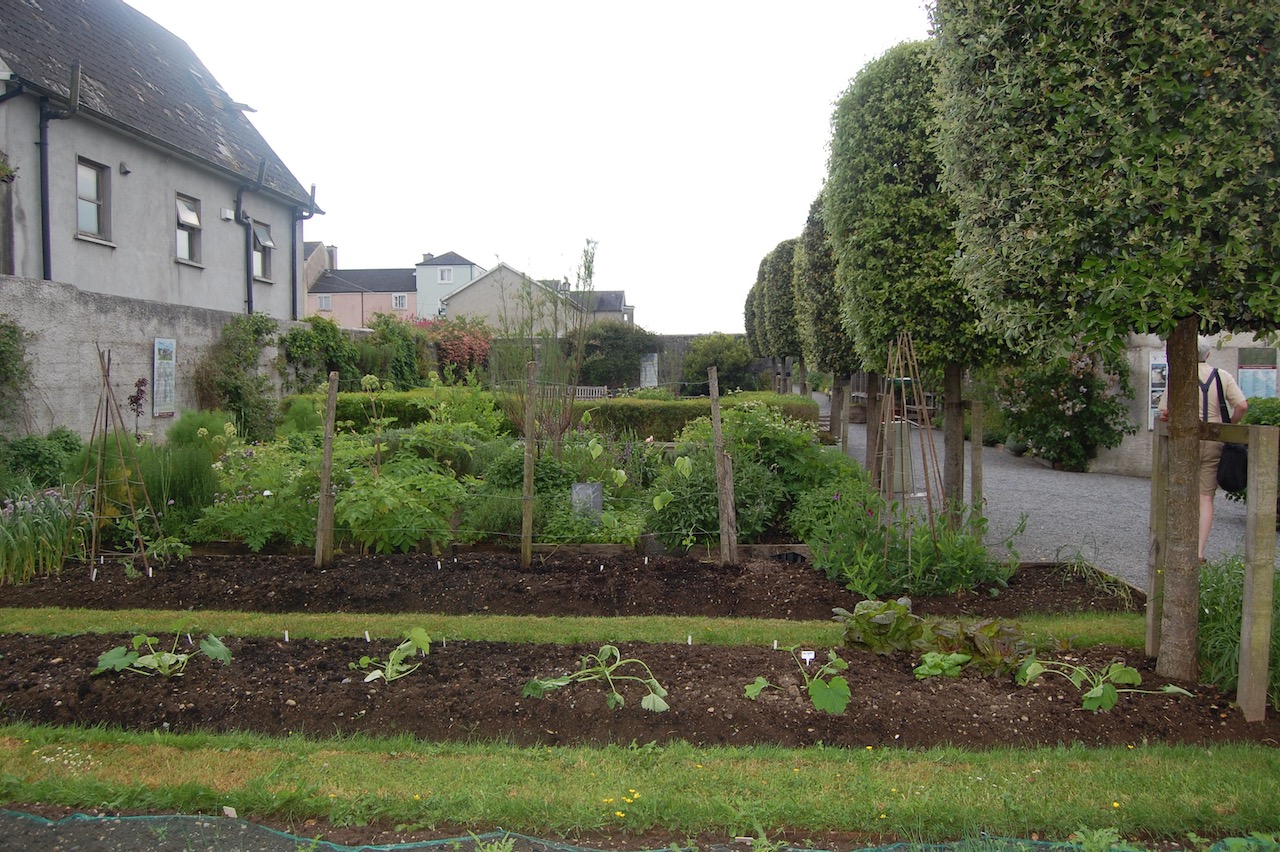
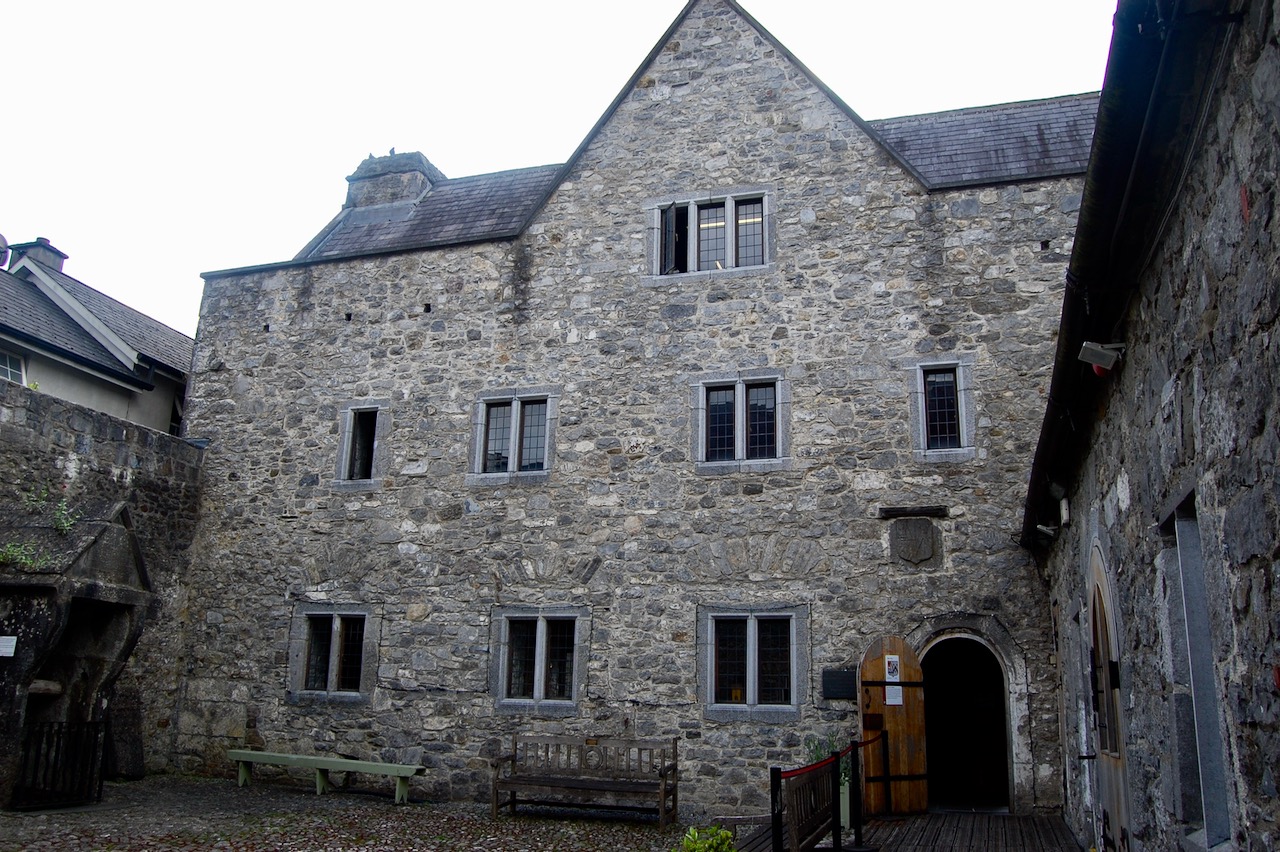
The Archiseek website tells us:

In 1594 a wealthy merchant called John Rothe built this magnificent Tudor mansion. Second and third generation houses were built around the cobelled courtyards and a well dating to 1604. The façade houses shops, one of them was John Rothe’s own. During the Confederation of Kilkenny, many dignitaries were entertained here by John Rothe and his cousin, the Bishop of Ossory. The building has been restored magnificently and is now home to Kilkenny Archaeological Society.” [4]

Rothe House, May 2018. Photograph © Jennifer Winder-Baggot, www.irishhistorichouses.com
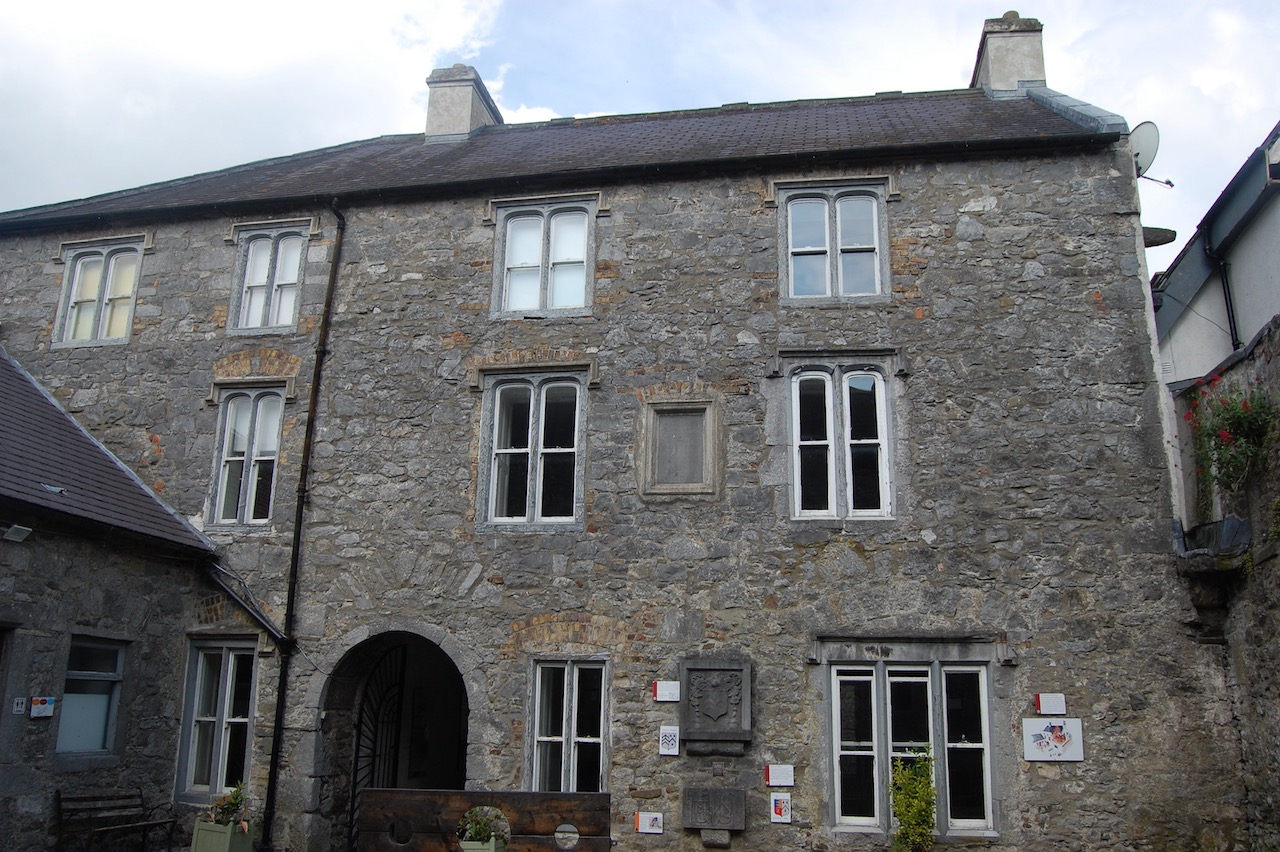
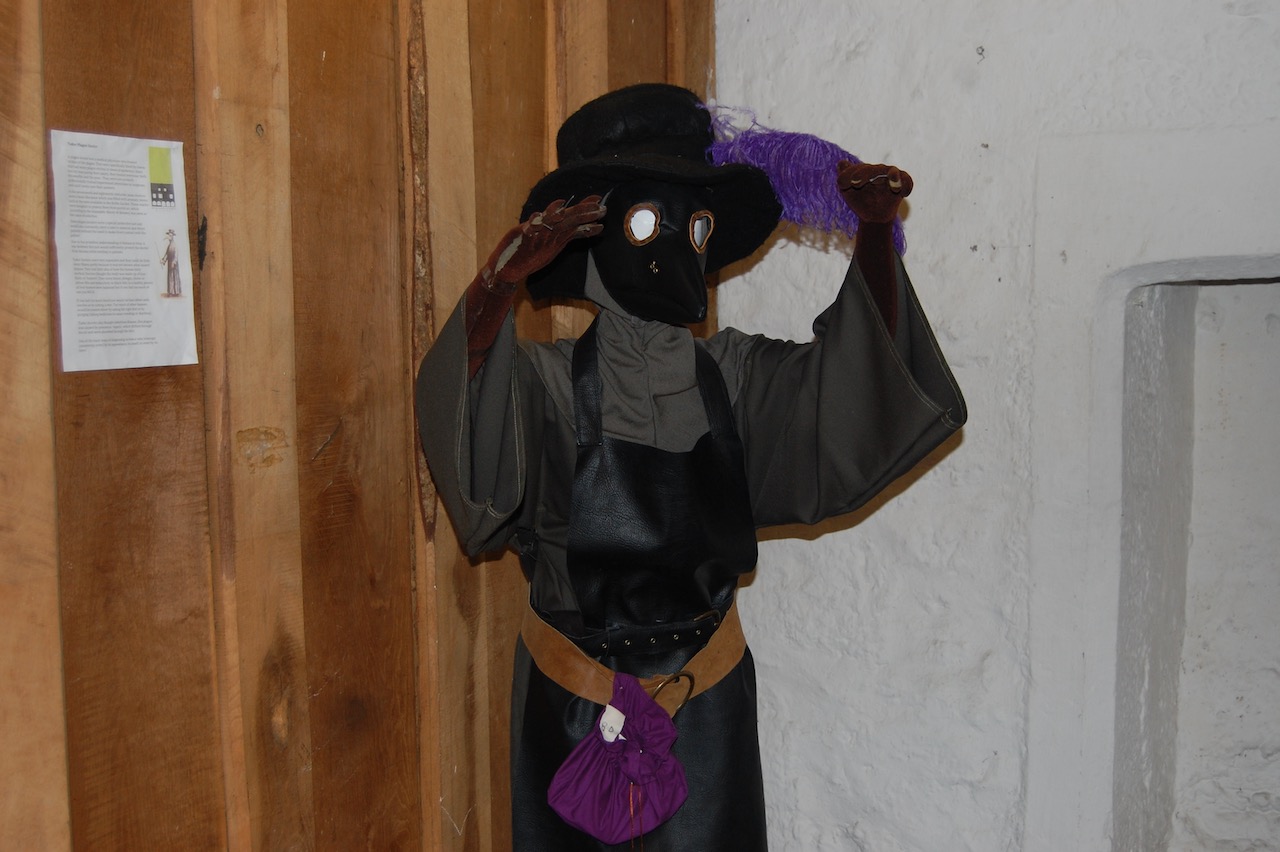
Plague Doctor! In 1348 there was Plague in Kilkenny. Friar John Clyn in the Franciscan Abbey across the road  recorded the effect of the plague on the town and the friary. He himself fell victim to the epidemic.  Photograph © Jennifer Winder-Baggot, www.irishhistorichouses.com
Rothe House, May 2018. Photograph © Jennifer Winder-Baggot, www.irishhistorichouses.com
Artefacts from the Confederation of Kilkenny. Photograph © Jennifer Winder-Baggot, www.irishhistorichouses.com
Rothe House, May 2018.
Rothe House, May 2018. Photograph © Jennifer Winder-Baggot, www.irishhistorichouses.com
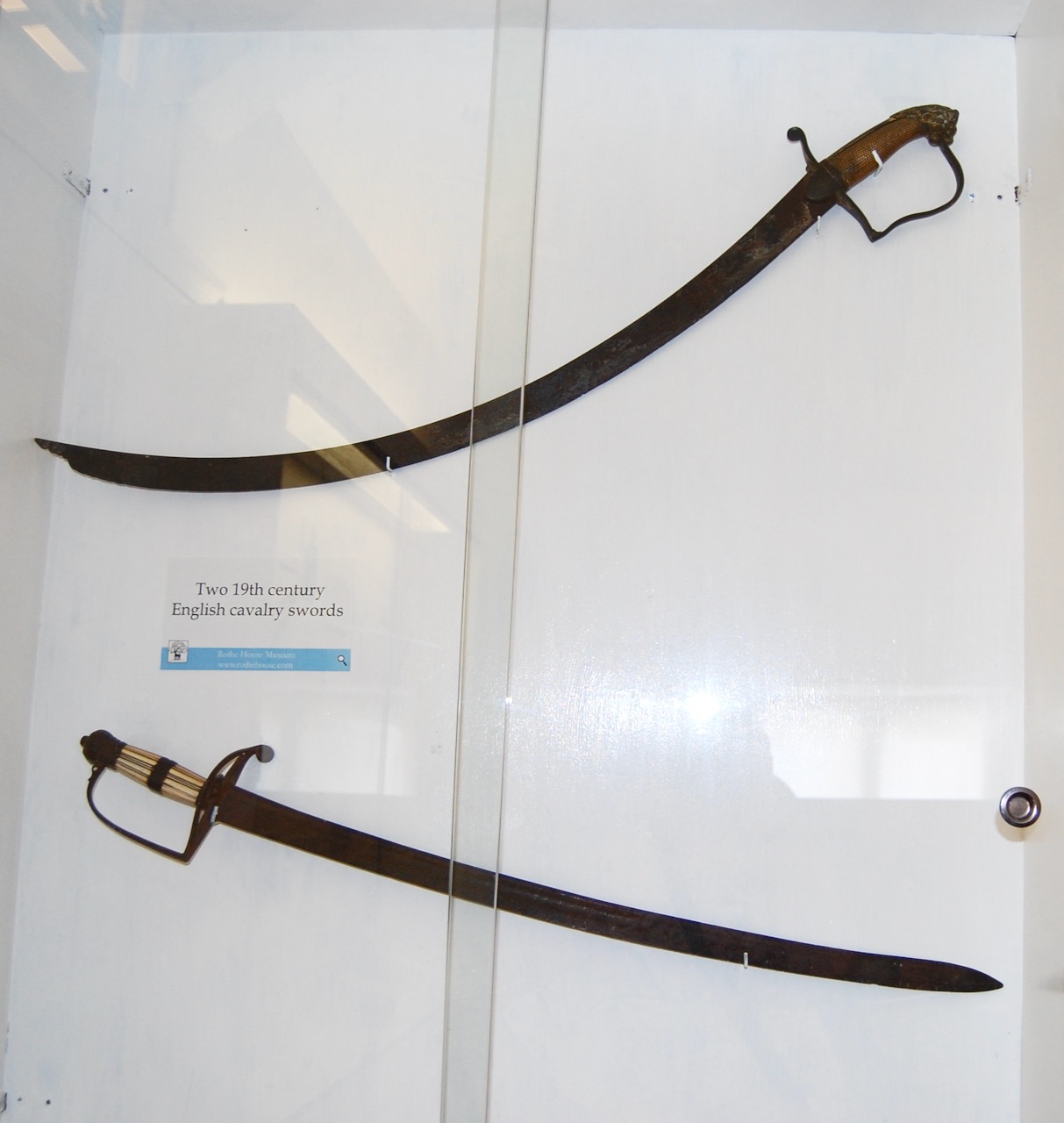
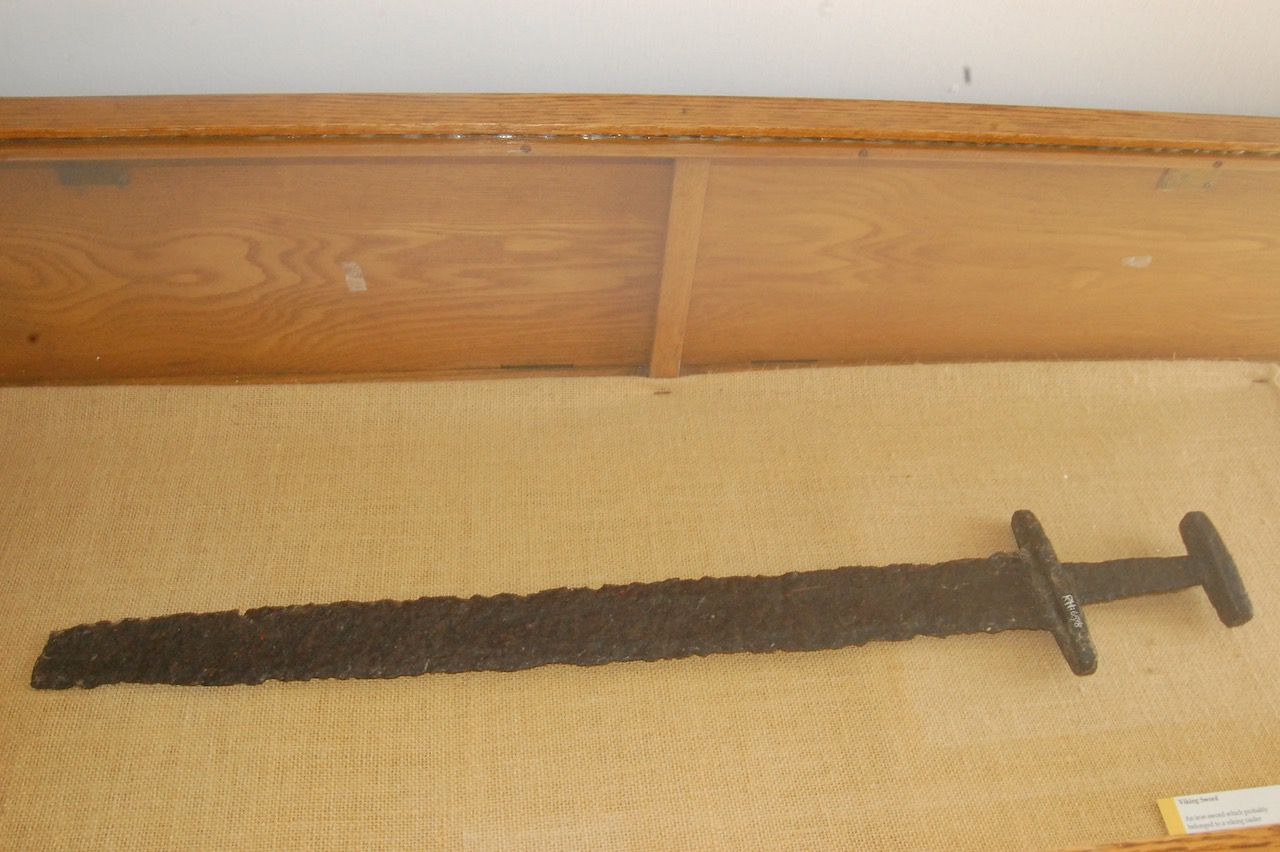
Viking Sword. Photograph © Jennifer Winder-Baggot, www.irishhistorichouses.com
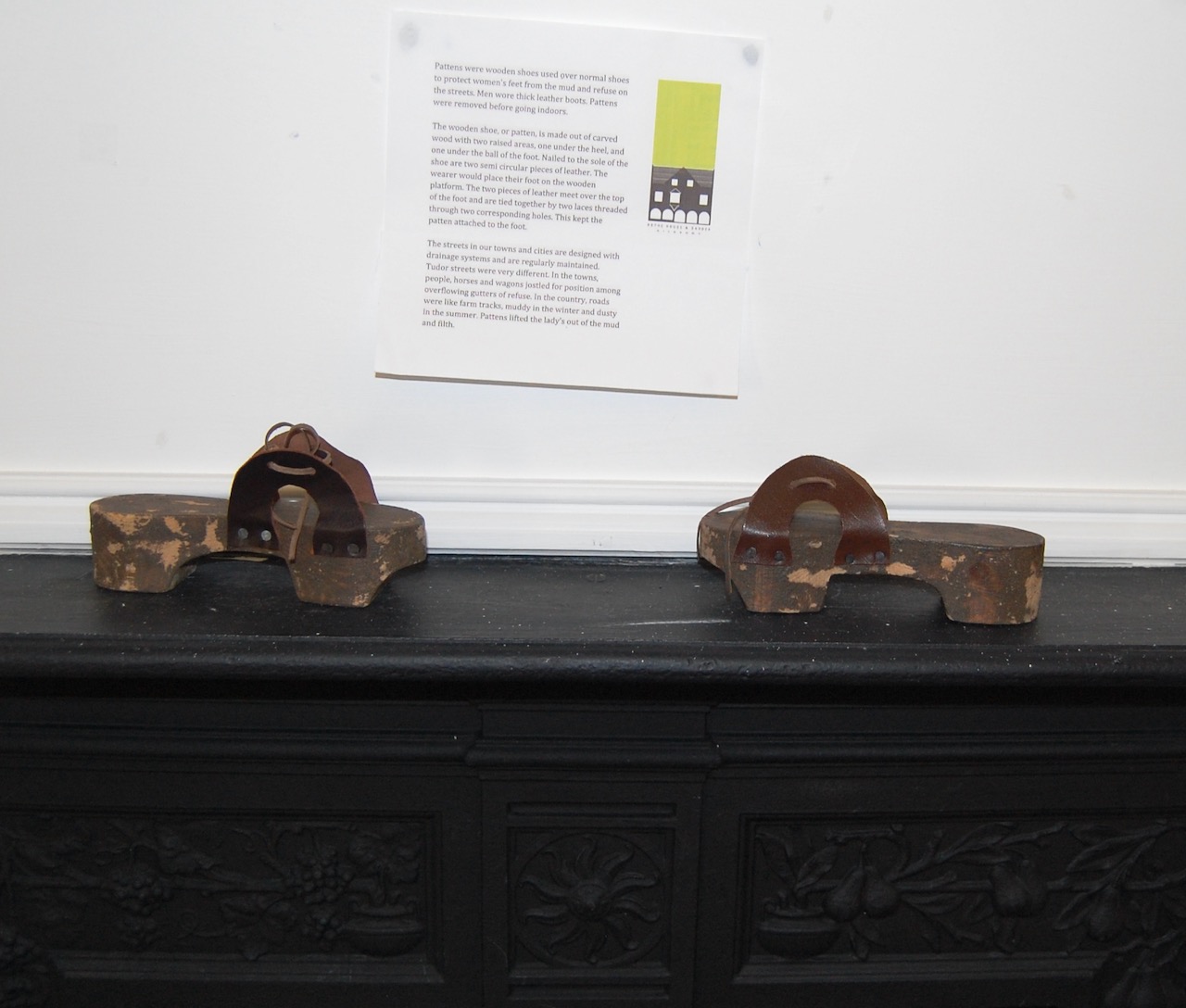
“Pattens” – wooden shoes worn by women over their regular shoes to protect from mud. Photograph © Jennifer Winder-Baggot, www.irishhistorichouses.com

9. Shankill Castle, Paulstown, Co. Kilkenny R95 T8X7 – section 482 

www.shankillcastle.com
Open dates in 2025: Feb 1-2, 8-9, 15-16, 22-23, Apr 5-6, 12-13, 19-20, 26-27, May 3-4, 10-11,17-18, 24-25, 31, June 1, 5-8, 12-15, 19-22, 26-29, July 3-6, 10-13, 17-20, 24-27, 31, Aug 1-3, 7-10, 14-24, 28-31, Sept 6-7, 13-14, 20-21, 27-28, Oct 4-5, 11-12, 18-19, 25-26, 11am-5pm

Fee: house & garden, adult €12 garden €6, OAP/student €10, garden €5, child €6, garden €3

See my entry https://irishhistorichouses.com/2023/11/30/shankill-castle-paulstown-county-kilkenny-r95-t8x7/

Shankill Castle County Kilkenny 3rd June 2023. Photograph © Jennifer Winder-Baggot, www.irishhistorichouses.com
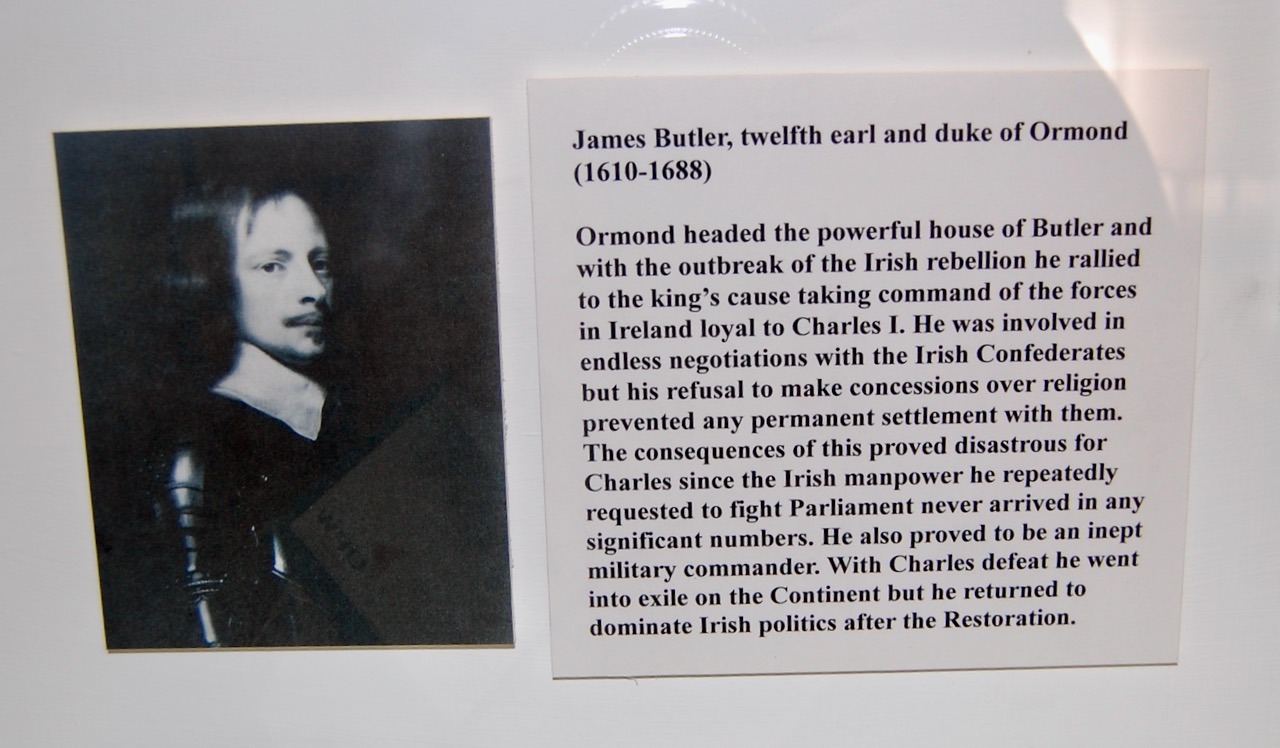
10. Tybroughney Castle, Piltown, Co Kilkenny – 482 

Tybroughney, photograph courtesy of National Inventory of Architectural Heritage.

Open dates in 2025: May 21-31, June 1-30, Mon-Sat, July1-15, Aug 16-24, 11am-3pm

Fee: adult €5, student €3, child/OAP free

11. Woodstock Gardens and Arboretum, Woodstock, Inistioge, Kilkenny, maintained by Kilkenny County Council

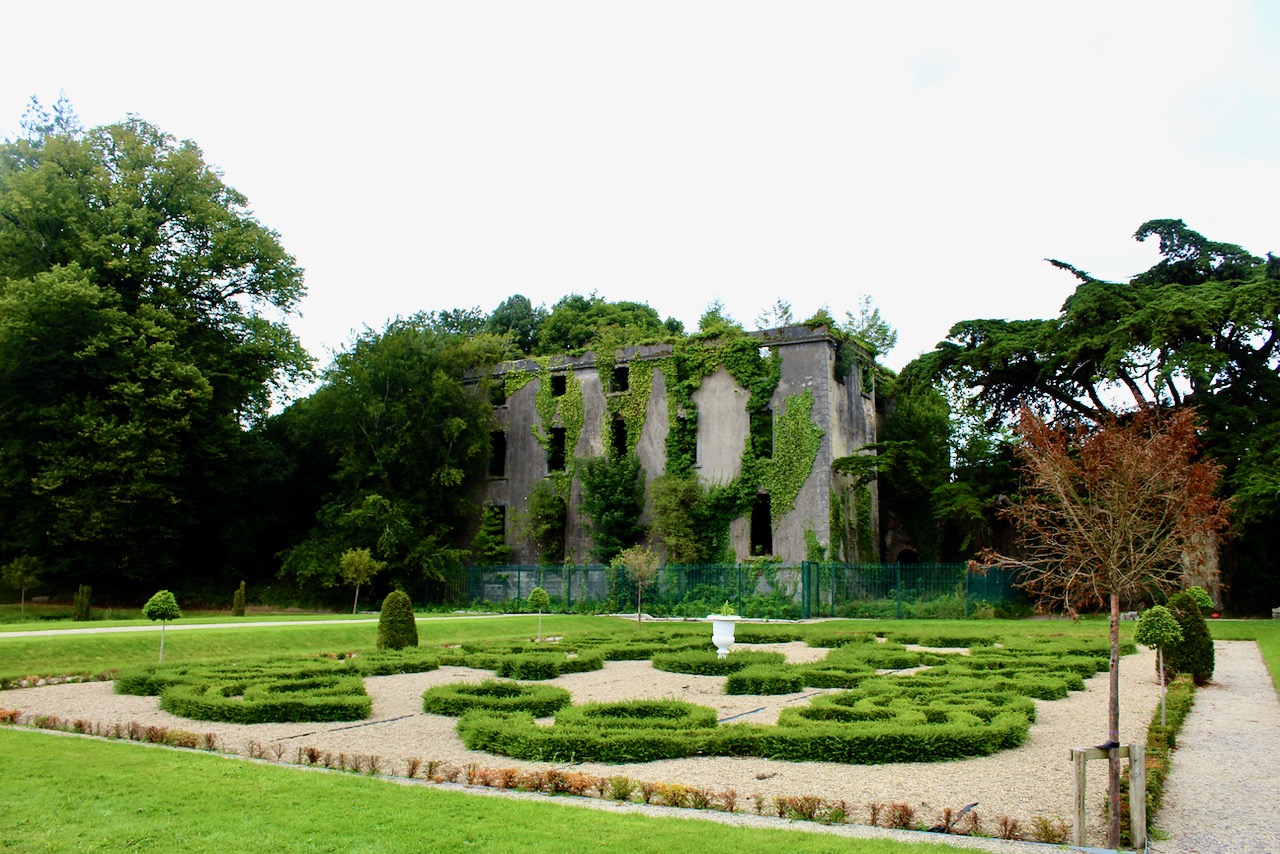
Woodstock, County Kilkenny. Photograph © Jennifer Winder-Baggot, www.irishhistorichouses.com
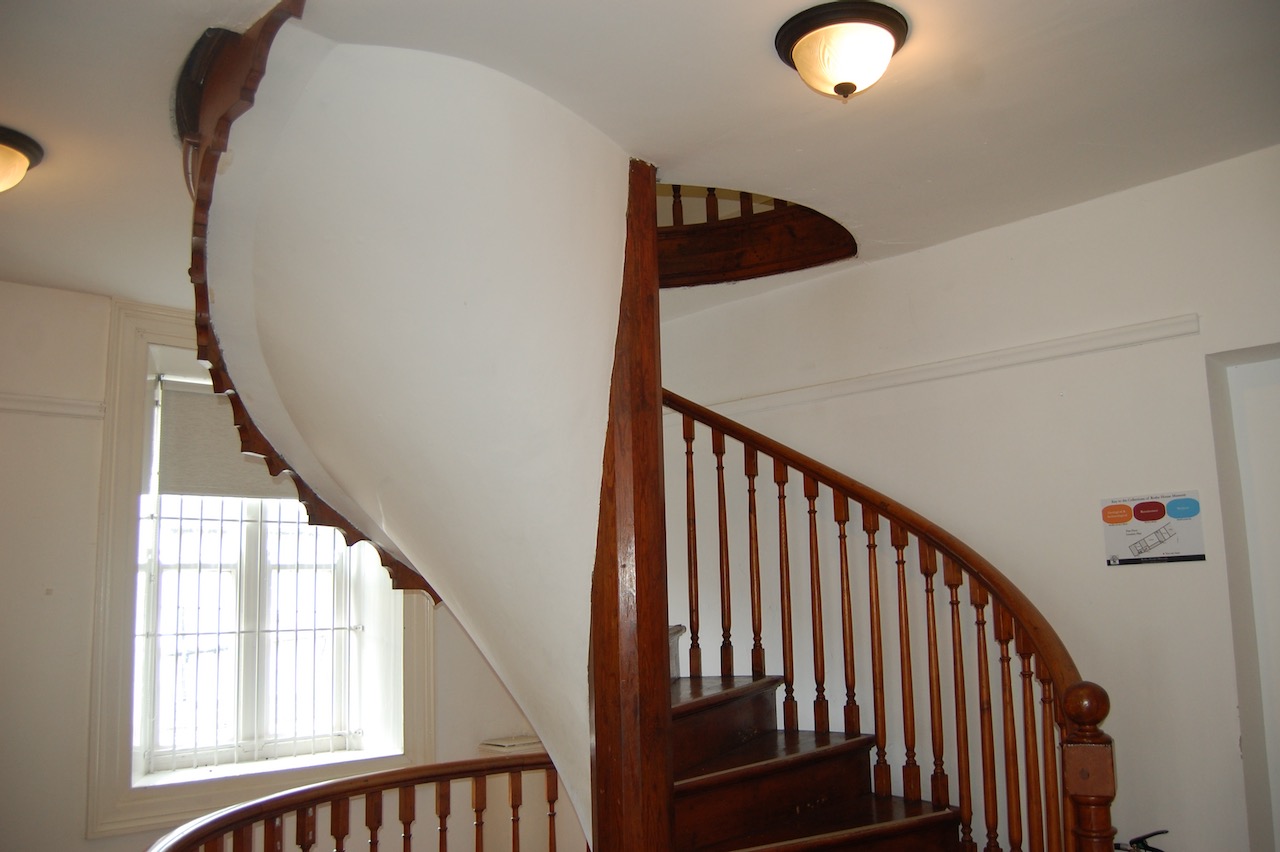
Woodstock Gardens, photograph from Lawrence Photograph Collections, National Library of Ireland, photograph from “In Harmony with Nature” exhibition at the Irish Georgian Society curated by Robert O’Byrne.

Mark Bence-Jones writes about Woodstock (1988):

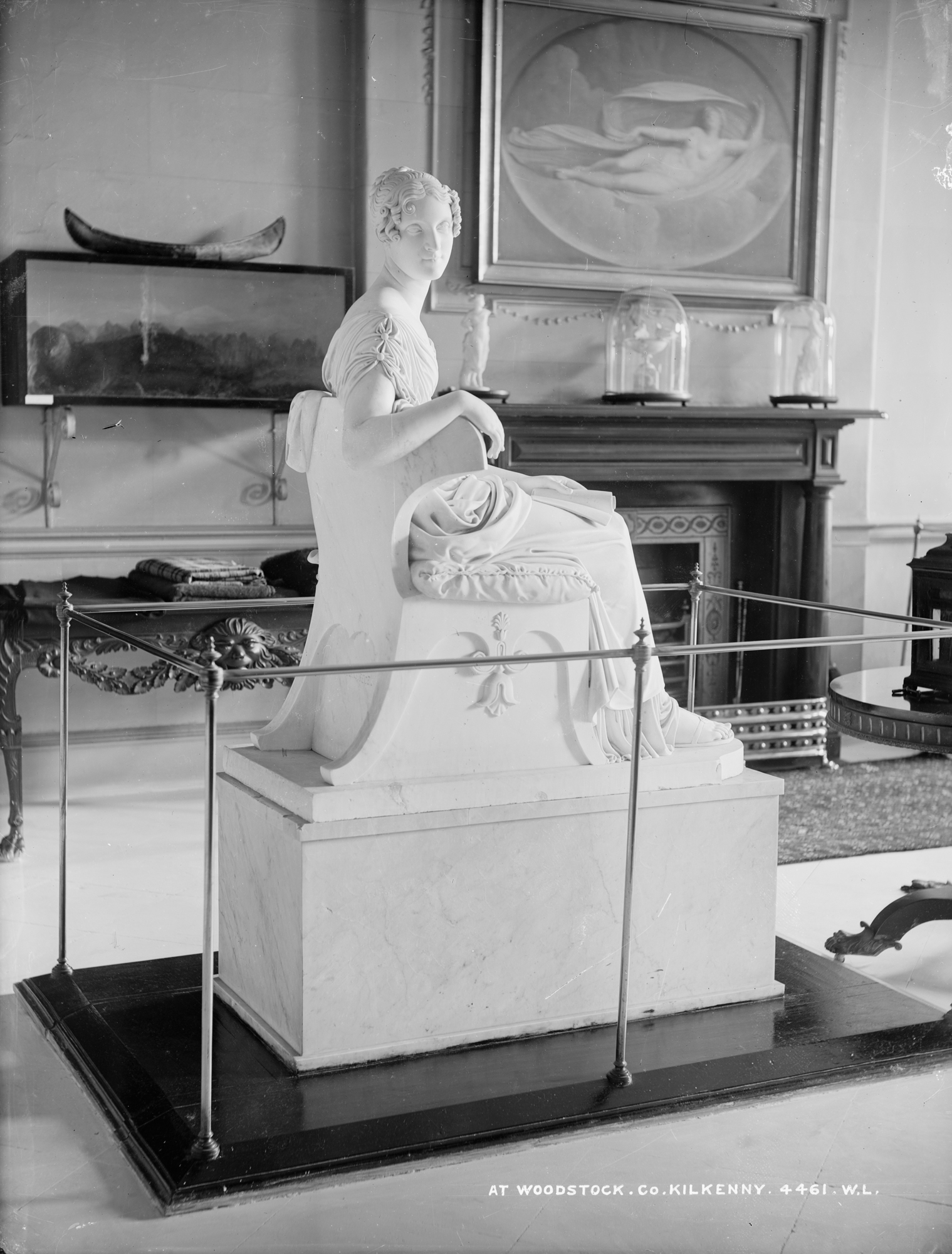
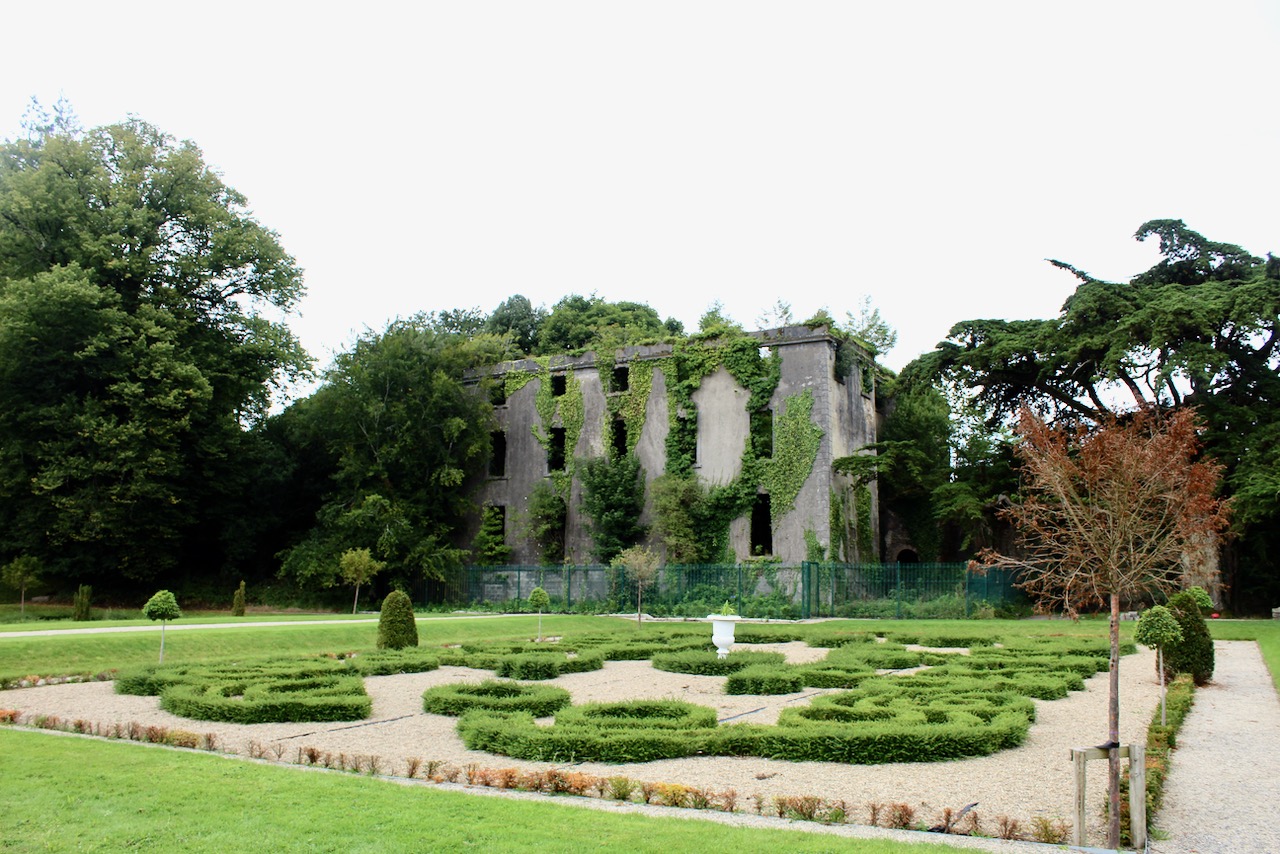
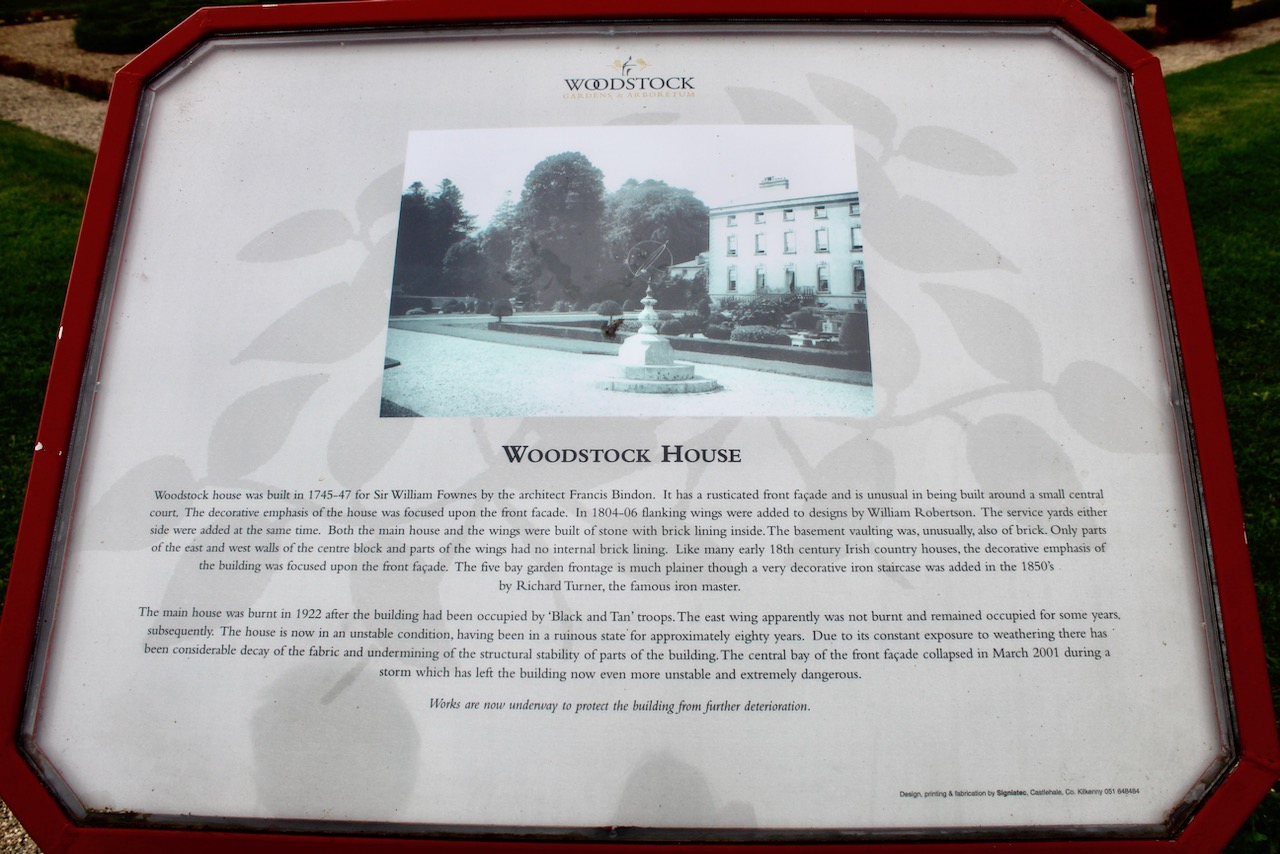
p. 286. “(Fownes, Bt/EDB; Tighe/IFR) A house by Francis Bindon [for William Fownes, 2nd Baronet], probably dating from 1740s, which is unusual in being built round a small inner court, or light-shaft. Three storeys; handsomely rusticated entrance front of six bays with a central niche and statue above the entrance doorway…In 1770s Sarah Ponsonby lived here with her cousins, Sir William and Betty Fownes [born Elizabeth Ponsonby]; her friend, Eleanor Butler, having escaped from Borris, co Carlow, where she was being kept in disgrace, was let into Woodstock through a window, hiding herself in Sarah’s room for 24 hours before being discovered; shortly afterwards, the two friends left for Wales, where they subsequently became famous as the “Ladies of Llangollen.” Woodstock passed to the Tighes with the marriage of the daughter and heiress of Sir William Fownes to William Tighe, whose daughter-in-law was Mary Tighe, the poet, author of Psyche; she died at Woodstock 1810 aged 37, and Flaxman’s monument to her is in a small neo-Classical mausoleum behind the Protestant church in the village of Inistioge, at the gates of the demesne. There was also a statue of her in one of the rooms in the house. Woodstock was burnt ca 1920, and is now a ruin, but the demesne, with its magnificent beechwoods, still belongs to the Tighes.” [6]

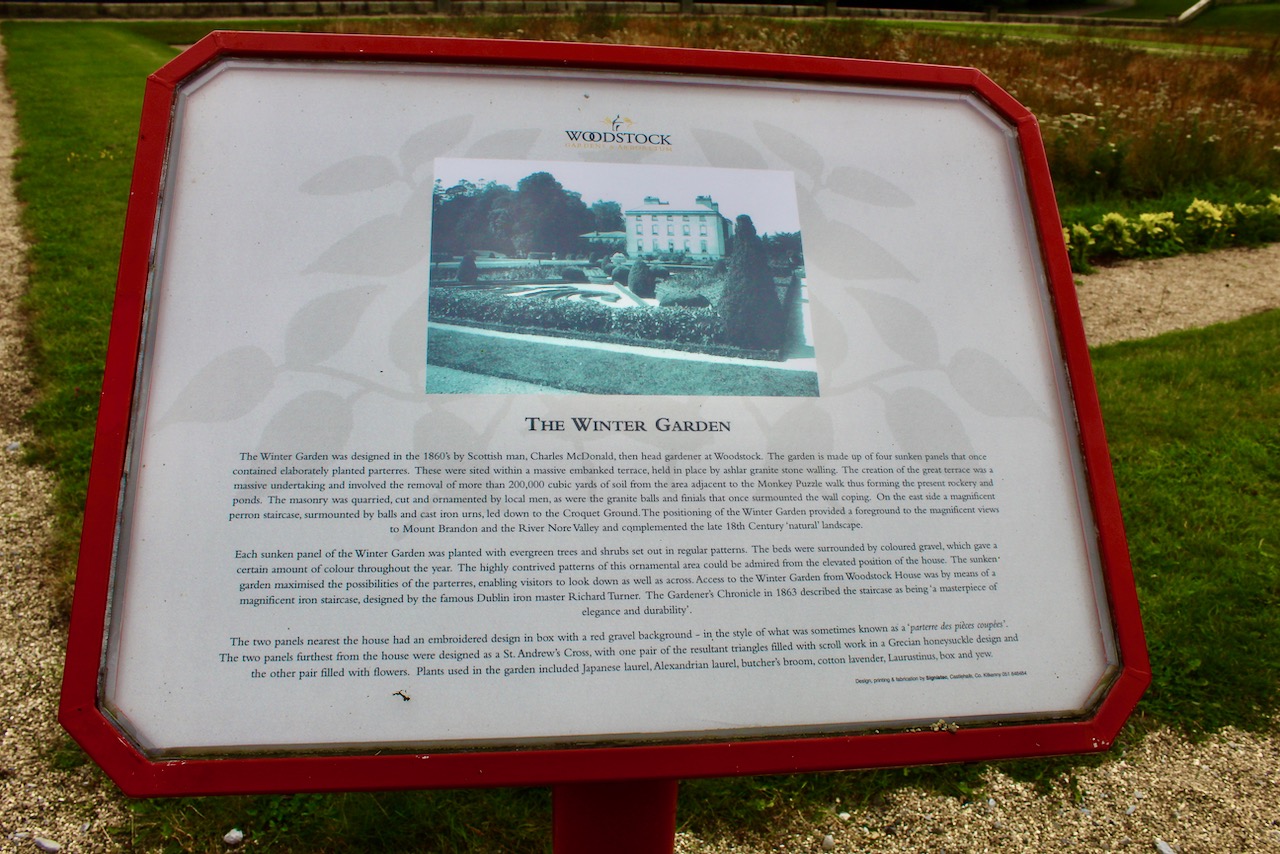
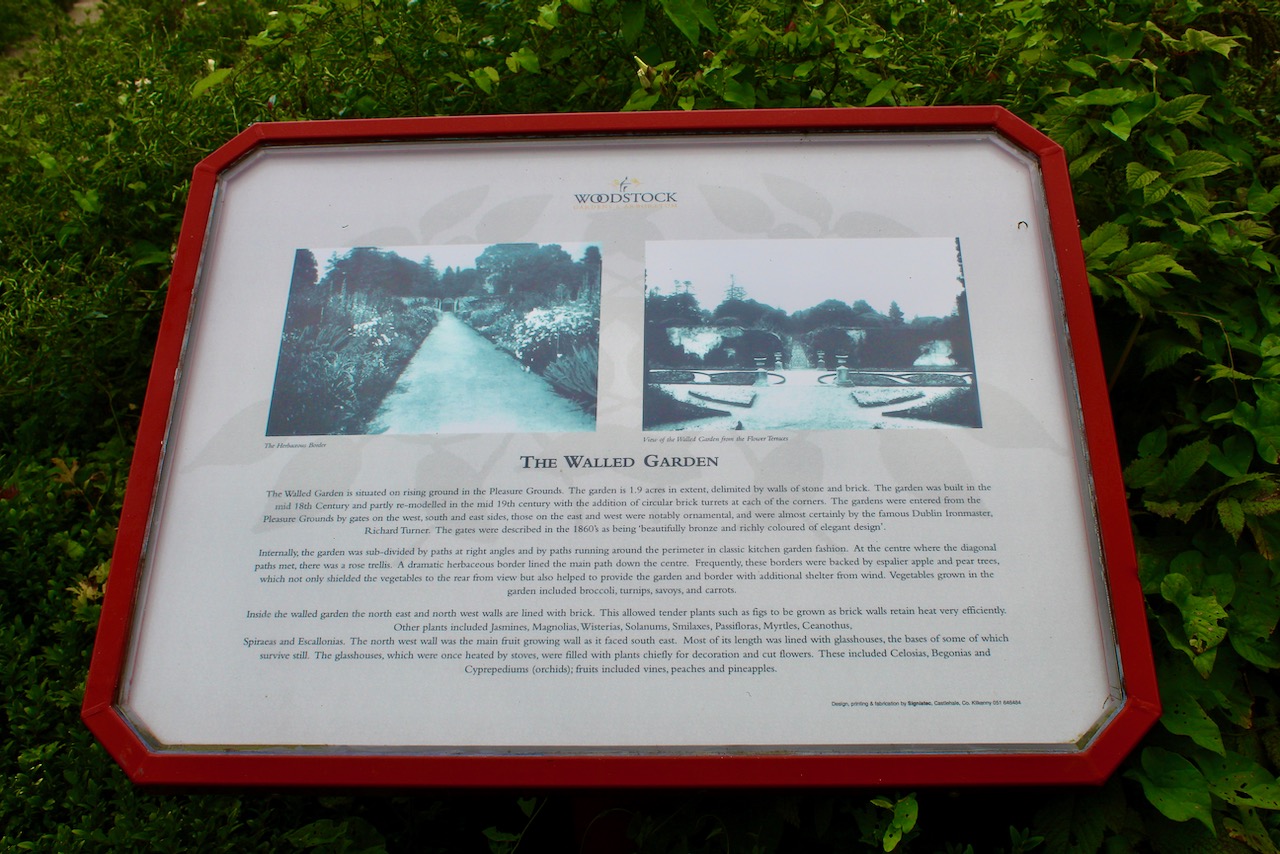
The information board tells us that in 1804 flanking wings were added to designs by William Robertson (1770-1850). The house was burned in 1922 after being occupied by the Black and Tans.
The gardens at Woodstock, County Kilkenny, August 2021. The gardens at Woodstock, gloriously situated above the River Nore, were conceived on a grand scale by Colonel William Tighe (1794-1878) and Lady Louisa Lennox (1803-1900) as the centrepiece of a great estate. Photograph © Jennifer Winder-Baggot, www.irishhistorichouses.com
The Ladies of Llangollen, Sarah Ponsonby and Charlotte Eleanor Butler, by Richard James Lane, printed by Jérémie Graf, after Lady Mary Leighton (née Parker) courtesy of National Portrait Gallery NPG D32504.
Mary Tighe née Blachford (1747-1791), courtesy of National Gallery of Ireland.

The formal parterres were created in the 1860s by a Scotsman, Charles McDonald, for Colonel William Tighe (1794-1878) and his wife Lady Louisa née Lennox (1803-1900, daughter of Charles, 4th Duke of Richmond – she is not to be confused with Louisa Lennox (1743-1817) daughter of Charles 2nd Duke of Richmond, who married Thomas Conolly of Castletown, County Kildare). The parterre incorporates a shamrock motif. Robert O’Byrne tells us in his exhibition “In Harmony with Nature” at the Irish Georgian Society July 2022 that creating the parterres involved removing 200,000 cubic yards of earth and retention by a wall of cut granite quarried on the estate and ornamented by local craftsmen with stone finials, balls and vases.

Woodstock Gardens, photograph from Lawrence Photograph Collections, National Library of Ireland, photograph from “In Harmony with Nature” exhibition at the Irish Georgian Society July 2022 curated by Robert O’Byrne.

The estate passed to the daughter, Sarah, of William Fownes and Elizabeth Ponsonby, and Sarah married William Tighe (1738-1872) of Rossana, County Wicklow.

William Tighe of Rosanna! Portrait by by Charles Jervas (c.1675-1739), courtesy of Adams auction 19 Oct 2021.
This information board tells us about the Arboretum at Woodstock, where a number of exotic trees were planted in the nineteenth century.
Woodstock, County Kilkenny.
Entrance to walled garden at Woodstock. Photograph © Jennifer Winder-Baggot, www.irishhistorichouses.com
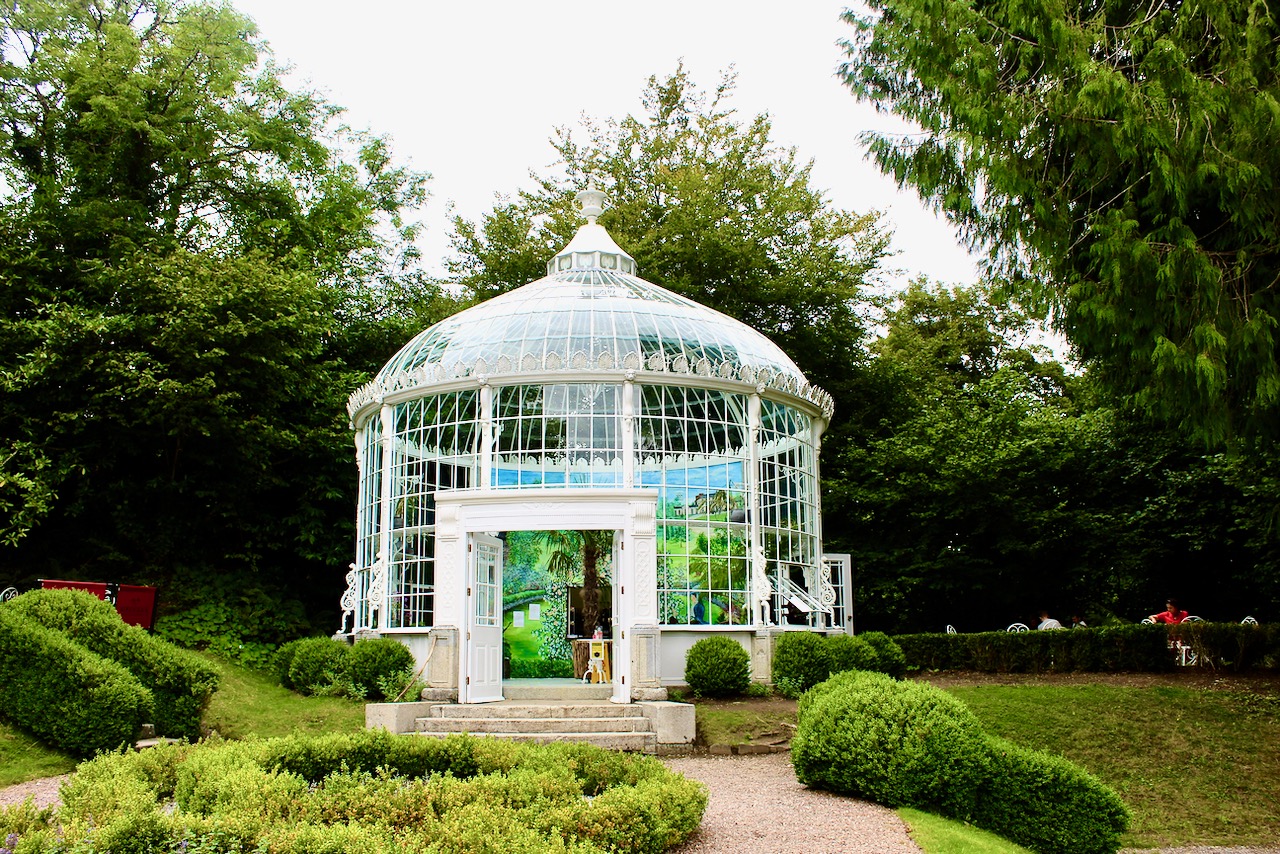
Gardens at Woodstock, with reproduction Turner glasshouse. Photograph © Jennifer Winder-Baggot, www.irishhistorichouses.com
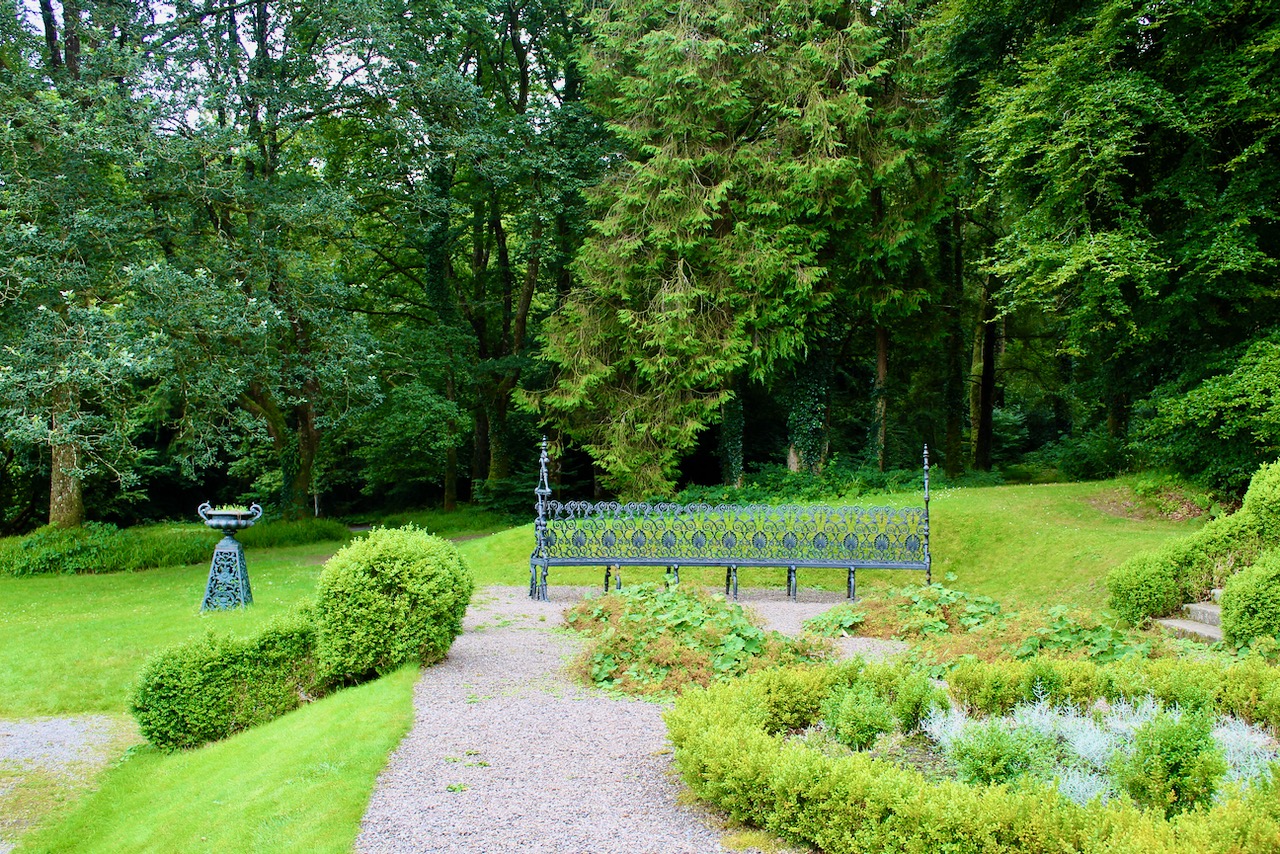
“Turner bench” which matches the glasshouse at Woodstock. Photograph © Jennifer Winder-Baggot, www.irishhistorichouses.com
The longest and oldest Monkey Puzzle Walk in Europe, at Woodstock. Photograph © Jennifer Winder-Baggot, www.irishhistorichouses.com

Places to stay, County Kilkenny

1. Ballyduff, Thomastown, Co Kilkenny – wedding venue, B&B 

http://ballyduffhouse.ie/booking-enquiries/ 

Ballyduff House, courtesy of National Inventory of Architectural Heritage.

The website tells us:

Ballyduff House is a classic Georgian country house with a 14th century castle, steeped in Irish history and full of the warmest of welcomes.

The River Nore sparkles as it runs along Ballyduff’s riverbank while sheep and cattle graze the pasture either side.

Open fires, the book lined library and the comfortable bedrooms furnished with Irish antiques capture an early 18th century experience tempered by discreet 21st century comfort.

This is real Ireland – calm, green and beautiful, set alongside the picturesque village of Inistioge with Dublin only an hour away.

The National Inventory tells us:

A country house representing an important component of the mid eighteenth-century domestic built heritage of County Kilkenny with the architectural value of the composition, one abutting a “roofed down” tower house, confirmed by such attributes as the deliberate alignment maximising on panoramic vistas overlooking broad parkland and the wooded River Nore; the compact rectilinear plan form centred on a restrained doorcase showing a simple radial fanlight; the diminishing in scale of the openings on each floor producing a graduated visual impression with the principal “apartments” or reception rooms defined by Wyatt-style tripartite glazing patterns; and the slightly oversailing roofline. Having been well maintained, the elementary form and massing survive intact together with substantial quantities of the original fabric, both to the exterior and to the interior, including crown or cylinder glazing panels in hornless sash frames: meanwhile, contemporary joinery; restrained chimneypieces; and sleek plasterwork refinements, all highlight the artistic potential of the composition. Furthermore, an adjacent farmyard complex ; and a walled garden (extant 1839), all continue to contribute positively to the group and setting values of a self-contained estate having historic connections with the Coghill family including Sir Josiah Coghill (1773-1850), third Baronet (Lewis 1837 II, 18); the Connellans of nearby Coolmore House (see 12403210); and Lieutenant-Colonel Frederick William John Shore (1844-1916), fourth Baron Teignmouth (NA 1901; NA 1911). NOTE: Given as the birthplace of Sir John Joscelyn Coghill (1826-1905) of Glen Barrahane in Castletownshend, County Cork (Dod’s Peerage Baronetage and Knightage 1865, 186); and George Leopold Bryan (1828-80) of Jenkinstown (Dod’s Parliamentary Companion 1875, 174).

2. Blanchville Coachyard, Dunbell, County Kilkenny

https://blanchville.ie/

Blanchville Coachyard, Dunbell, County Kilkenny, photograph from website https://blanchville.ie/

The Coach Houses & Gardener’s Cottage are, as the name suggests, part of the beautiful old stone building that was originally the Coach House at Blanchville. The building has been sensitively and extensively refurbished and now offers guests comfortable and inviting Self-Catering Accommodation in three self-contained Holiday Homes.

These Heritage Holiday Lets feature a cosy woodburning stove or open fire, fully fitted modern kitchen and relaxing bedrooms – the perfect requisite for an enjoyable weekend break or holiday in Kilkenny.

3. Butler House, Kilkenny, co Kilkenny – accommodation 

https://www.butler.ie

View to Butler House and Garden, Kilkenny Leo Byrne Photography 2015. (see [2])

The National Inventory tells us about Butler house: “Semi-detached three-bay three-storey over basement house, built 1786, with pair of three-bay full-height bowed bays to rear (east) elevation. Extended, 1832, comprising two-bay three-storey perpendicular block to right. Renovated, 1972. Now in use as hotel. One of a pair…An elegantly-composed Classically-proportioned substantial house built either by Walter Butler (1713-83), sixteenth Earl of Ormonde or John Butler (1740-95), seventeenth Earl of Ormonde as one of a pair of dower houses…Distinctive attributes including the elegant bowed bays to the Garden (east) Front contribute positively to the architectural design value of the composition while carved limestone dressings with particular emphasis on the well-executed doorcase displaying high quality stone masonry further enliven the external expression of the house in the streetscape.”

The house was home to Lady Eleanor Butler who lived here after the death of her husband Walter in 1783. Lady Eleanor Butler was the mother of John, the 17th Earl of Ormonde and her daughter, also Eleanor, was one of the famous “Ladies of Langollen”.

James, Earl of Ormonde (1777-1838, and 1st Marquess) resided in the house while the Castle was under reconstruction in 1831. A soup kitchen was run from here during the cholera epidemic of 1832.

The Royal Historical and Archaeological Association of Ireland held their meetings in Butler House in 1870. Kilkenny Design, the state design agency, restored Butler House in 1972. The decor and furnishings reflect a certain 1970s Art Deco style, which because of the muted colours and natural fabrics used, proved sympathetic to the original features of the house. In 1989, the Kilkenny Civic Trust acquired both Butler House and the Castle Stables. 

4. Clomantagh Castle, Co Kilkennyaccommodation, whole house on airbnb: €€ for two, € for 3-8

Clomantagh Castle, courtesy of National Inventory of Architectural Heritage.

https://www.airbnb.ie/rooms/29346656?federated_search_id=050f383f-6e5e-45b5-9989-b166bfe7e70d&source_impression_id=p3_1650104926_er%2FjFSqCgEWzQLW5

The National Inventory tells us it is a farmhouse erected by John Shortal (d. 1857) or Patrick Shortal (d. 1858) representing an integral component of the mid nineteenth-century domestic built heritage of County Kilkenny with the architectural value of the composition, one occupying the site of a hall adjoining the fifteenth-century Clomantagh Castle.

Clomantagh Castle - was home to the [8th] Earl of Ormond, Pierce Ruadh (1467-1539). When he died in 1539 the castle along with other properties was passed to his son Richard Butler, first Viscount Mountgarret (1500-1571). The castle and its estate stayed in the Butler family until it was forfeited during the war with Cromwell to Lieutenant Arthur St. George [ancestor of the Kilrush family]. After the war the castle changed hands twice more and a farmhouse was added by the Shortall family, the owners in the 1800’s, before its last owner  Willie White a local vet. The property is now owned by a non profit making charity called the Landmark Trust who preserve historic buildings. 

The Landmark site tells us:

The name Clomantagh comes from the Irish “cloch mantaigh”, meaning missing tooth or gappy smile. Locals gave this name to the castle as the irregular castellation reminded them of someone smiling with missing teeth.  

“It has been established that the tower and bawn were built in the 15th century (c.1430). The tower house has been modified and extended over the centuries, and in the early 19th century a farmhouse was added providing accommodation with comfort, rather than defence, in mind. In recent times, the bawn walls have sheltered the buildings of a 20th century working farm. It also has a rare clochán (small dome-roomed structure) knit into the bawn walls. Five other tower houses can be seen from the roof of Clomantagh Castle, and they were all strategically aligned for defence purposes.

Clomantagh followed mainstream castle design, emerging as an almost square building, six storeys high, with massive walls built from local limestone, and a corner staircase. Inserted high on the south wall is a Sheela-na-Gig. This pagan symbol was adopted by medieval builders and incorporated as the building was erected. High up the remains of the stepped battlement walls, the merlons can be seen – a specifically Irish feature whose inspiration is considered to be Venetian. Inside the battlements a wide walkway gave access to all sides of the building. In the north east corner, a high watchtower has been built. This is knows as Moll Gearailt’s Chair, after the particularly ferocious original mistress of the house, Maighréad nhee Gearóid, who used to sit watching over her fields to ensure that her labourers were not slacking at their work. The walkway, or Alure, was sloped outward to allow run off water through drainage holes and stone spouts. Generally, battlement walls have not survived well, their thinner construction and unstable sloping bases have contributed to their disappearance from tower houses.” [6]

You can stay in the main house or in smaller private accommodation https://cullintrahouse.com

The website tells us: “A countryside retreat in the heart of Co Kilkenny, Ireland – surrounded by acres of woodland, farmland and secret places to explore, Cullintra House offers guests a unique accommodation experience.

The house is furnished with your host Patricia Cantlon’s artistic style to the fore – each room has unique pieces of furniture or bespoke decorative touches that make Cullintra House a special find in Co Kilkenny.

6. Lyrath House, near Kilkenny, County Kilkenny – hotel

Lyrath Estate by Colin Whittaker 2009, flickr creative commons.

https://www.lyrath.com

Mark Bence-Jones writes:

p. 184. “(Wheeler-Cuffe, Bt/PB1934; Tupper/LGI1958) Originally a Tobin castle, acquired by the Wheeler family C17. By 1826, the house here consisted of a simple two storey five bay pedimented front facing west, with two wings running back from it to enclose a small three sided office court; the entrance door being on the south side; under a Regency veranda. In 1861, Sir Charles Wheeler-Cuffe, 2nd Bt, married Pauline Villiers-Stuart, daughter of Lord Stuart de Decies [of Dromana House, County Waterford – see my entry], whose parents did not regard this house as grand enough for her; so in that same year he rebuilt the main western block on a larger scale and in a rich Italianate style, while leaving the two storey wings more of less as they were.; his architect being John McCurdy. The entrance was moved from the south side to the new west front, which is pedimented and of five bays like its predecessor, but not entirely symmetrical; having a pair of windows on the ground floor to the left of centre, but a single window on the right. Entrance door framed by Ionic columns carrying a balustrade, above which is a Venetian window framed by an aedicule with a segmental pediment. All the ground floor windows have semi-circular heads, while the heads of the windows of the upper storey – apart from the central Venetian windows – are cambered. The garden front to the north has two single-storey balustraded curved bows, the windows of which are treated as arcades supported by Romanesque columns of sandstone. There is another Romanesque column separated the pair of windows in the centre of the front. The windows in the bow are glazed with curved glass. The roof is carried on a deep bracket cornice and there are prominent string courses, which give the elevations a High Victorian character. Hall with imposing imperial staircase, the centre ramp of which rises between two fluted Corinthian columns. There is a similarity between the staircase here and that at Dromana, Co Waterford, Pauline Lady Wheeler-Cuffe’s old home; except that the Dromana staircase was of stone, whereas that at Leyrath is of wood, with ornate cast-iron balustrades. On the centre ramp of the staircase there is still a chair with its back legs cut down to fit the steps; this was put there in 1880s for Pauline when she became infirm. Hall has a ceiling cornice of typical C19 plasterwork in a design of foliage, and door with entablatures which still have their original walnut graining. To the left of the hall, in the garden front, are the drawing room, ante-room and dining room, opening into each other with large double doors’ they have ceiling cornices similar to that in the hall, and good C19 white chimneypieces, enriched with carving; the drawing room and ante-room keep their original white and gold wallpaper. In the south wing there are smaller and lower rooms surviving from before the rebuilding; while first floor rooms in this wing have barrel ceilings throughout and contain some C18 chimneypieces of black marble.” 

The website tells us more about the history:

The name Lyrath is thought to date back to Norman times when “Strongbow” settled in Ireland during the Norman invasion. The area was originally called Le Rar or Le Rath by the French speaking De Ponte family who during the 12th century lived in the Monastery which was once located within the grounds. There is also a mention of a castle which was once said to have been situated within the grounds.

Prior to 1653 the lands were owned by the Shortall family, who then rented the ‘old castle in repair’ and land to Thomas Tobin, Constable of the Barony of Gowran. In 1664, a gentleman named Thomas Mances, paid a sum of 4s ‘hearth money’ for the old castle.

Later in the Seventeenth Century the property was acquired by Richard Wheeler through his kinship to Jonah Wheeler the Bishop of Ossary. By then the original ‘Tobin’ castle had been demolished.

Richard Wheeler’s son, Jonah Wheeler, married Elisabeth Denny-Cuffe, a descendant of the Desart-Cuffe family who had extensive landed property in the Counties of Carlow and Kilkenny, on his marriage Jonah decided to adopt the name Cuffe.

In 1814 the grandson of Jonah, also named Jonah, was living in the house with his with Elisabeth Browne, from Brownes Hill in neighbouring Carlow. Sir Jonah died in 1853 and his elder son, Sir Charles Denny Wheeler-Cuffe succeeded him.

To redesign the house Sir Charles engaged the services of John McCurdy, a Dublin born Architect, whose other commissions with his partner, William Mitchell, include Kilkenny’s Knocktopher Abbey, Dublin’s famous ‘Shelbourne Hotel’ and the South City Markets.

The current house is one of the most important surviving country houses built by John McCurdy.

Sir Charles and Pauline had no children, so on the death of Sir Charles, his nephew Sir Ottway Fortesque Luke Wheeler-Cuffe inherited the baronetcy and demesne of Lyrath and became the primary resident. Sir Ottaway married Charlotte Isabel Williams in 1897. Lady Charlotte was the earliest known botanical explorer to reach the remote areas Burma and it was during these trips that she discovered several plants including two new species of Rhododendrons, Burmanicum, and Cuffianum (named after her). Cuffianum, the white rhododendron is extremely rare and has not been collected by any botanist since Lady Wheeler-Cuffe found in 1911.

Sir Ottway and Lady Charlotte stayed in Burma until Sir Ottway’s retirement in August 1921 when they finally returned to live at Lyrath. On her return to Lyrath, Lady Charlotte redesigned the gardens. The Conservatory adjacent to Tupper’s Bar in the new Hotel overlooks the Victorian garden designer by her which has been carefully restored to her original design (based on family records and drawings), they are also home to the ancient yew trees which are now protected by a preservation order.

Lady Charlotte lived in the house until her death in 1966 in her 100th year.

Following the death of Lady Charlotte, in 1967 the property was inherited by Lieutenant-Colonel G.W. Tupper whose grandfather had married Sir Charles’ sister in 1846. Reginald’s great nephew, Captain Anthony Tupper and his wife moved into the house and ran it as a traditional estate farm with a herd of Jersey cows, hens, and geese in the yard, calves in the haggard field and a big old-fashioned kitchen with dogs and cats which rambled in and out at will.

The Tuppers remained in the house until 1997.

When the Tuppers left, there was an auction at the house of all the furniture and the bits and pieces accumulated over several lifetimes laid out and labelled for sale. Fortunately, Xavier McAuliffe managed to obtain many of the items on auction that day, these items are now on display in the house and include to original large portraits hanging in the hallway and other paintings on display.

Xavier purchased the Estate in 2003 and developed the house into Lyrath Estate Hotel and Convention Centre, which opened its doors to the public in 2006.

7. Mount Juliet, Thomastown, County Kilkenny – hotel

Mount Juliet Gardens, Thomastown, Co Kilkenny, photograph by Finn Richards 2015 for Tourism Ireland, Ireland’s Content Pool. (see [2])
Drawing room of Mount Juliet, County Kilkenny, Date 2 November 1920 courtesy of National Library of Ireland NLI Ref. P_WP_2886.

https://www.mountjuliet.ie/

Mark Bence-Jones writes of Mount Juliet:

p. 214. “(Butler, Carrick, E/PB; McCalmont/IFR) A mid to late C18 house built by the 1st Earl of Carrick [Somerset Hamilton Butler, 8th Viscount Ikerrin and 1st Earl of Carrick (1719-1774)] across the River Nore from the former family seat, Ballylinch Castle on an estate which he had bought ca 1750 from Rev Thomas Bushe [1727-1795], of Kilmurry; traditionally named by him after his wife [Juliana Boyle, daugher of the 1st Earl of Shannon]. Of three storeys over basement, front of seven bays between two shallow curved bows, each having three windows. One bay central breakfront, with Venetian windows in the two upper storeys above tripartite pedimented and fanlighted doorway. Centre window in two lower storeys of bows roundheaded. Perron and double steps in front of entrance door, with iron railings. High pitched roof and massive stacks. Sold 1914 by 6th Earl of Carrick to the McCalmonts who had leased the house for some years. Major Dermot McCalmont made a new entrance in what had formerly been the back of the house, where the main block is flanked by two storey wings, extending at right angles from  it to form a shallow three sided court, and joined to it by curved sweeps. The interior of the house was richly decorated by 2nd Earl of Carrick 1780s with plasterwork in the manner of Michael Stapleton. The hall, which is long and narrow, is divided by an arcade carried on fluted Ionic columns, beyond which rises a bifurcating staircase with a balustrade of plain slender uprights; the present entrance being by way of a porch built out at the back of the staircase. The rooms on either side of the hall in what was formerly the entrance front and is now the garden front have plasterwork ceilings; one with a centre medallion of a hunting scene, another with a medallion of a man shooting. One of these rooms, the dining room, also has plasterwork on the walls, incorporating medallions with Classical reliefs. One of the wings flanking the present entrance front contains a ballroom made by Major Dermot McCalmont 1920s, with a frieze of late C18 style plasterwork; it is reached by way of a curving corridor. The demesne of Mount Juliet is one of the finest in Ireland, with magnificent hardwoods above the River Nore ; it includes the Ballylinch demesne across the river. There is a series of large walled gardens near the house Mount Juliet is famous for its stud, founded by Major Dermot McCalmont 1915. Sold 1987.” 

Reverend Thomas McCalmont, 2nd Son of Hugh McCalmont, of Abbey Lands, Belfast. Born 1809, Died 1872, courtesy Sheppard’s Nov 7 2023.

8. Tubbrid Castle, County Kilkenny €€€ for two, € for 8

https://www.tubbridcastle.com/

Tubbrid Castle, photograph courtesy of https://www.tubbridcastle.com/

and https://www.airbnb.ie/rooms/29598290?adults=2&category_tag=Tag%3A8047&children=0&infants=0&search_mode=flex_destinations_search&check_in=2022-06-05&check_out=2022-06-10&federated_search_id=6eebbe51-3470-4008-be61-4228d4019473&source_impression_id=p3_1652359358_O%2F1m3ENyNNeiOZ%2Bf

The entry tells us:

Tubbrid Castle is a unique 15th-century tower house, uninhabited for the last century and now restored to its former glory. We’ve highlighted original features to let you step back in time and added luxury touches so you can indulge your inner prince or princess.

Heritage

Tubbrid Castle stands at an important point on the borders of the ancient kingdoms of Laighean and Mumhan. Built as a defensive structure to protect the territory of the Butlers of Ormond, the tower house was home to generations of families allied to the Butlers of Kilkenny Castle. The architectural significance of Tubbrid Castle is denoted by its designation as a National Monument and a Protected Structure.

In 942 AD, Muircheartach, King of modern-day Ulster, marched his army of 1000 Leather Cloaks south to avenge his allies, who had been attacked by Callaghan, King of Cashel. Muircheartach’s bard, Colmanach, recorded the journey in an epic poem, Circuit of Ireland, in which he praised the beauty of Osraí (now Kilkenny), and the hospitality of its people. At the edge of enemy territory and on the cusp of battle, Muircheartach’s army set up camp in Tubbrid, on a plain that a millennium later is still called Bán an Champa (the Field of the Encampment). The King himself is thought to have slept at the fort where Tubbrid Castle now stands. A thousand years later, the people of Kilkenny still pride ourselves on our warm hospitality and from the top floor bedroom of Tubbrid Castle you can survey Bán an Champa and enjoy lodgings befitting a king.

Tubbrid Castle, photograph courtesy of https://www.tubbridcastle.com/

The website tells us that Margeret Fitzgerald, 8th Countess of Ormond, is supposed to have had the castle built. When the Countess visited Tubbrid, she is said to have slept at the castle’s highest point, to keep her safe from enemy attackers. She is buried with her husband Piers Butler (8th Earl of Ormond) under elaborate effigies at St Canice’s Cathedral, in Kilkenny City.

A detailed written description of the castle comes from James Mease in 1851, writing for the Transactions of the Kilkenny Archaeological Society. Mease claims that, according to locals at the time, there were three ditches surrounding the castle, which had been dug away for manure. Supposedly a cannon ball was found during these works. No trace of these outer fortifications survives today. Mease believed that the castle may have been built on an ancient mound or rath, and perhaps at an old habitation site that might have been the location where the King of Aileach, mentioned in the poem of 971 camped. The ground and second floor were wicker-vaulted and at the time this paper was written, some of the wicker was still in place. We know from the Griffith Valuation that this castle was owned at the time by Arthur St. George, Esq. and leased to Catherine Campion.

Around the turn of the 19th century, the roof was removed from Tubbrid Castle, leaving it open to the elements and accelerating structural decay. By the turn of the millenium, the corners were crumbling and floors were sagging.

John Campion Snr began working on the tower house, aiming at first simply to prevent its collapse. Over several years he repointed the facade and applied a traditional lime mortar, known as harling. The tower house was re-roofed in green oak, in the same style as the original, with no nails or screws.

“In 2016, John Campion Jnr took over the restoration of Tubbrid Castle. Following archaeological impact reports, and with input from the National Monuments Office, John completed the restoration and fit-out of the tower house, turning it into a three-bedroom home.”

9. Waterside Guest House, Graiguenamanagh, County Kilkenny

https://www.watersideguesthouse.com

Phone: (059) 9724246

Email: info@watersideguesthouse.com

Waterside Guesthouse Graiguenamanagh, County Kilkenny, photograph courtesy of website.

This is set in a beautiful old 19th century granite corn store on the River Barrow in Graiguenamanagh.

Whole House rental, County Kilkenny:

1. Annamult House, Bennettsbridge, Co Kilkenny – whole house rental 

Annamult House, courtesy of Annamult website.

https://annamultcountryhouseestate.com

Annamult House, courtesy of Annamult website.

The website tells us:

Annamult County House Estate is a lovely Grade I listed ancient Manor House in the heart of the countryside in Kilkenny with parts dating back to the 16th century. But unlike other grand old homes, Annamult Country House Estate is warm, friendly and welcoming with unlimited hot water, central heating and log fires throughout with beautiful antiques. A uniquely beautiful Country Estate. It’s light, bright and airy. And the moment you step through the door it feels like home.

The website describes the accommodation as 7 Bedrooms, 1 on the lower ground floor, 1 wheelchair accessible bedroom on the ground floor and 4 very large formal bedrooms upstairs and our Japanese Bedroom at the heart of the house . 4 Bedrooms are ensuite with the Bed 1 and 2 sharing a Bathroom nestled between them

Annamult House, courtesy of Annamult website.

The National Inventory describes Annamult: “Detached four-bay two-storey double gable-fronted Tudor-style country house, c.1825, incorporating fabric of earlier house, pre-1771, with three-bay single-storey flat-roofed projecting open porch to centre ground floor, three-bay two-storey side elevations, and five-bay three-storey lower wing to left having single-bay (two-bay deep) two-storey connecting return to east...Forming a picturesque landmark rising above a mature wooded setting on a bank at the confluence of the Kings River and the River Nore a large-scale country house exhibiting a robust Tudor theme represents an important element of the architectural heritage of County Kilkenny. Having origins in an eighteenth-century range the architectural design value of the composition is identified by elegant attributes including the porch displaying high quality stone masonry reminiscent of a similar treatment at the contemporary (c.1825) Shankill Castle (12306002/KK-16-06-02), the Classically-inspired Wyatt-style tripartite openings, the enriched parapet, and so on: the wing incorporating minimal surface detailing is comparatively demure in quality. Having been carefully maintained to present an early aspect the house makes a significant contribution to the character of the locality. The house remains of additional importance for the associations with the Prim, the Nevill (Neville), and the Bayley families.

Annamult House, courtesy of Annamult website.

“You can dine inside or outside in luxury
you can picnic on the island , the riverside or in the woods .
You can relax or play on the lawns .
Climb trees
Boules on the lawns
Croquet on the lawns
You can swim in the river
You can fish in the river
You can walk in the woods
You can relax in the silence
You can star gaze at the firepit
You can play loud music
Great exploration for kids
you can birdwatch and spot some fab wildlife like our buzzards and hawks .
You may come across the deer in the woods
Watch out for badgers … Its ok they are nocturnal only .
Various local suppliers will run group activities on the grounds from yoga to tag archery.”

Annamult House, courtesy of Annamult website.

2. Ballybur Castle, County Kilkenny €€€ for two, € for 10

http://www.ballyburcastle.com/

See above.

3. Castle Blunden, County Kilkenny – whole house rental

hhiref@castleblunden.com https://www.castleblunden.com/

Castle Blunden courtesy of National Inventory of Architectural Heritage.

The Historic Houses of Ireland website tells us:

A few miles from the cathedral city of Kilkenny, Castle Blunden stands on an elevated site in the midst of mature parkland. Dating from the 1750s, and still owned by the Blunden family, this pretty seven-bay building is typical of County Kilkenny houses from the mid-Georgian period. The house is rendered, with a profusion of cut limestone decoration and details, and a handsome sprocketed roof, while the later Doric porch compliments the symmetry of the facade. The basement is concealed by a ramped gravel approach, which makes the house appear both lower and wider than is actually the case, while the small lakes to either side add to the overall air of enchantment.” [7]

The National Inventory tells us:

Representing an important element of the mid eighteenth-century architectural legacy of County Kilkenny a Classically-composed substantial country house built to designs attributed to Francis Bindon (c.1698-1765) in a manner reminiscent of the contemporary (1737) Bonnettstown Hall (12401909/KK-19-09) nearby has been very well maintained to present an early aspect with the original composition attributes surviving in place together with most of the historic fabric both to the exterior and to the interior. Sparsely-detailed the external expression of the house is enlivened by limestone dressings including a somewhat squat portico displaying high quality stone masonry. Forming the centrepiece of a large-scale estate the resulting ensemble having long-standing connections with the Blunden family makes a pleasant contribution to the visual appeal of the local landscape.”

[1] https://www.ihh.ie/index.cfm/houses/house/name/Kilrush%20House

[2] https://www.irelandscontentpool.com/en

[3] https://www.buildingsofireland.ie/buildings-search/building/12000025/rothe-house-15-16-parliament-street-gardens-st-johns-par-kilkenny-co-kilkenny

[4] https://archiseek.com/2010/1594-rothe-house-kilkenny-co-kilkenny/

[5] Bence-Jones, Mark. A Guide to Irish Country Houses (originally published as Burke’s Guide to Country Houses volume 1 Ireland by Burke’s Peerage Ltd. 1978); Revised edition 1988 Constable and Company Ltd, London.

[6] https://www.irishlandmark.com/wp-content/uploads/2013/06/Clomantagh_castle.pdf

and http://kilkennyarchaeologicalsociety.ie

[7] https://www.ihh.ie/index.cfm/houses/house/name/Castle%20Blunden

Text © Jennifer Winder-Baggot, www.irishhistorichouses.com

Coopershill House, Riverstown, Co. Sligo F52 EC52 – section 482 accommodation

www.coopershill.com
Tourist Accommodation Facility
Open in 2025 for accommodation: May-Oct 2025

Coopershill, August 2021. Photograph © Jennifer Winder-Baggot, www.irishhistorichouses.com
While we stayed in Annaghmore [1] during Heritage Week in August 2021 with Durcan O’Hara and his wife Nicola, we first visited Durcan’s cousin in nearby Newpark [2], then another cousin, Simon O’Hara, at Coopershill.

The O’Haras were a Gaelic family who managed to keep their position of importance through changes in sovereignty, from the invasion of the Normans through the Tudor and Stuart monarchy, the Cromwellian Parliament and the overthrow of King James II. The O’Haras of Coopershill and Annaghmore are of descendants of the “O’Hara Boy” family – the other O’Hara family of Sligo is the O’Hara Reogh family.

An ancestor, Tadgh O’Hara, encouraged his sons, Tadgh and Kean, to convert to Protestantism in order to be better able to hold on to their land. On Tadgh’s death in 1616 his sons, still minors, became Wards of Court. The eldest son, Tadgh, was raised by Sir Charles Coote (1581-1642), 1st Baronet Coote of Castle Cuffe, Queen’s County, who was Provost Marshal of Connaught and had much land in the area. Edward Cooper of Markree, another property which we visited, was a cornet in Sir Charles Coote’s dragoons. Tadgh died in 1634 and his property passed to his brother Kean. Some of the O’Hara relatives were implicated in the Rebellion of 1641 but Kean, as an Irish Protestant, was able to hold on to his property [3]. Coopershill belonged to the Cooper family but passed by marriage to the O’Hara family, as we will see below.

According to the Historic Houses of Ireland website, Arthur Cooper (born around 1716) and his wife Sarah (born Carleton, from Enniskillen, County Fermanagh) lived in a sixteenth century fortified house on the River Unsin (or Unshin), near the village of Riverstown. This house still exists as a ruin on the property of Coopershill, and we passed it as we approached the main house.

Arthur Cooper, b. 1716. Photograph © Jennifer Winder-Baggot, www.irishhistorichouses.com
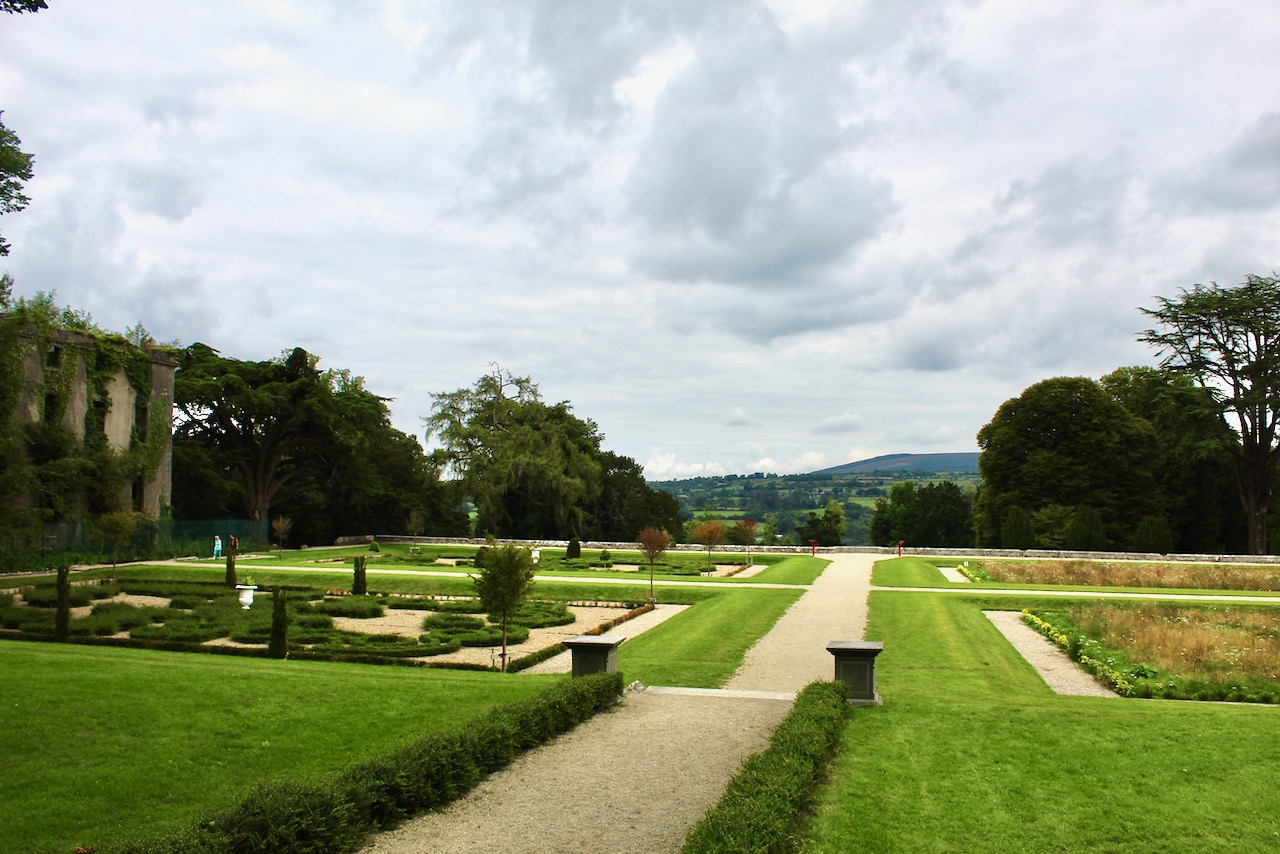
Sarah Carleton (born around 1718), wife of Arthur Cooper. Photograph © Jennifer Winder-Baggot, www.irishhistorichouses.com
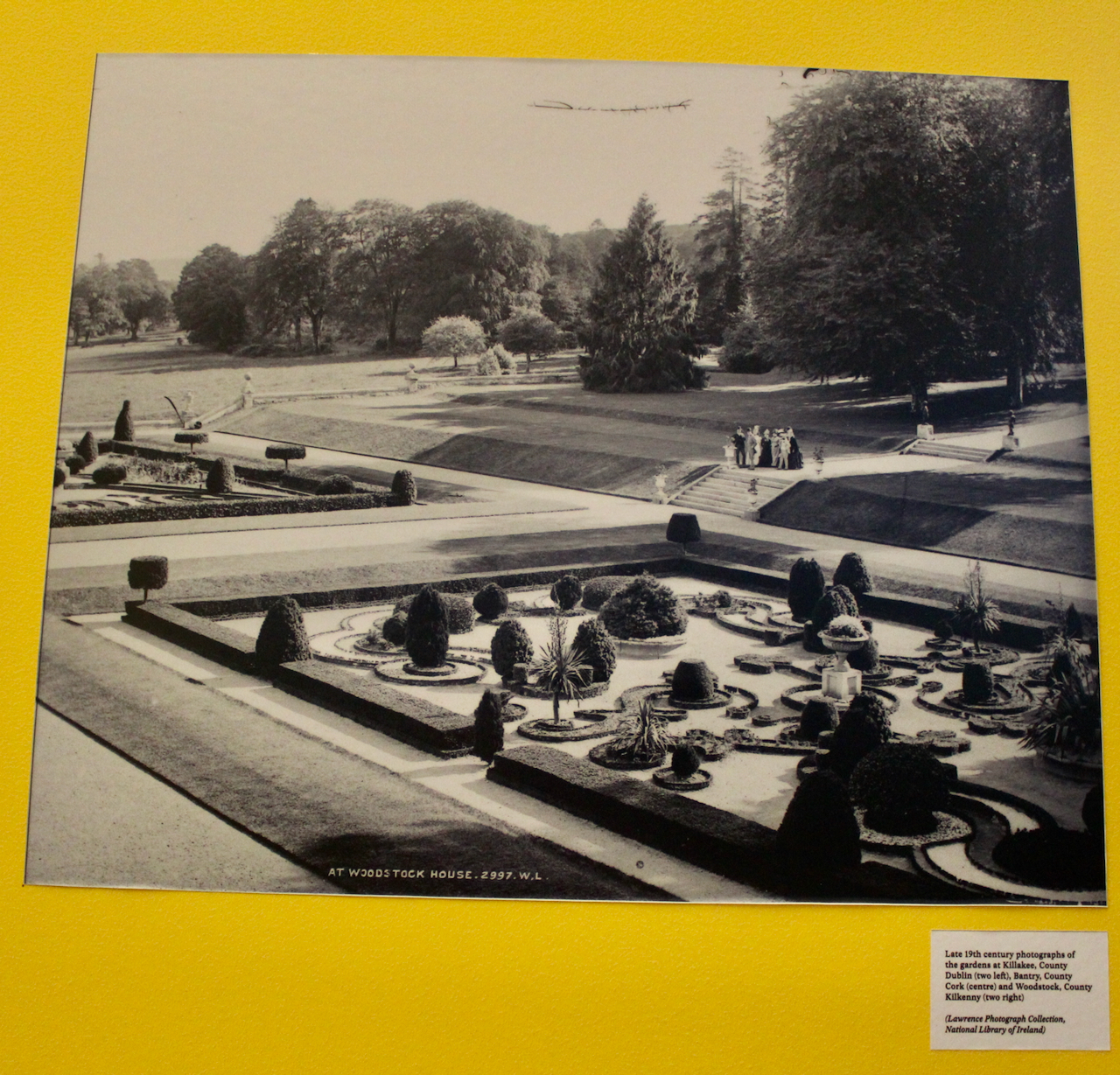
The pre-1700s house is attached to a farm building which was built in about 1830, according to the National Inventory of Architectural Heritage. The ruin is evocative and may have been retained in order to embody the picturesque notion of nostalgic antiquity. The newer house was positioned to been seen from a bridge, in a deliberately created picturesque view. The grounds were landscaped with plantings of trees and a deerpark, which remains today.

Pre-1700 ruin, called Tanzyfort House [4] Photograph © Jennifer Winder-Baggot, www.irishhistorichouses.com
The pre-1700 ruin is attached to an 1830s farm building. Photograph © Jennifer Winder-Baggot, www.irishhistorichouses.com
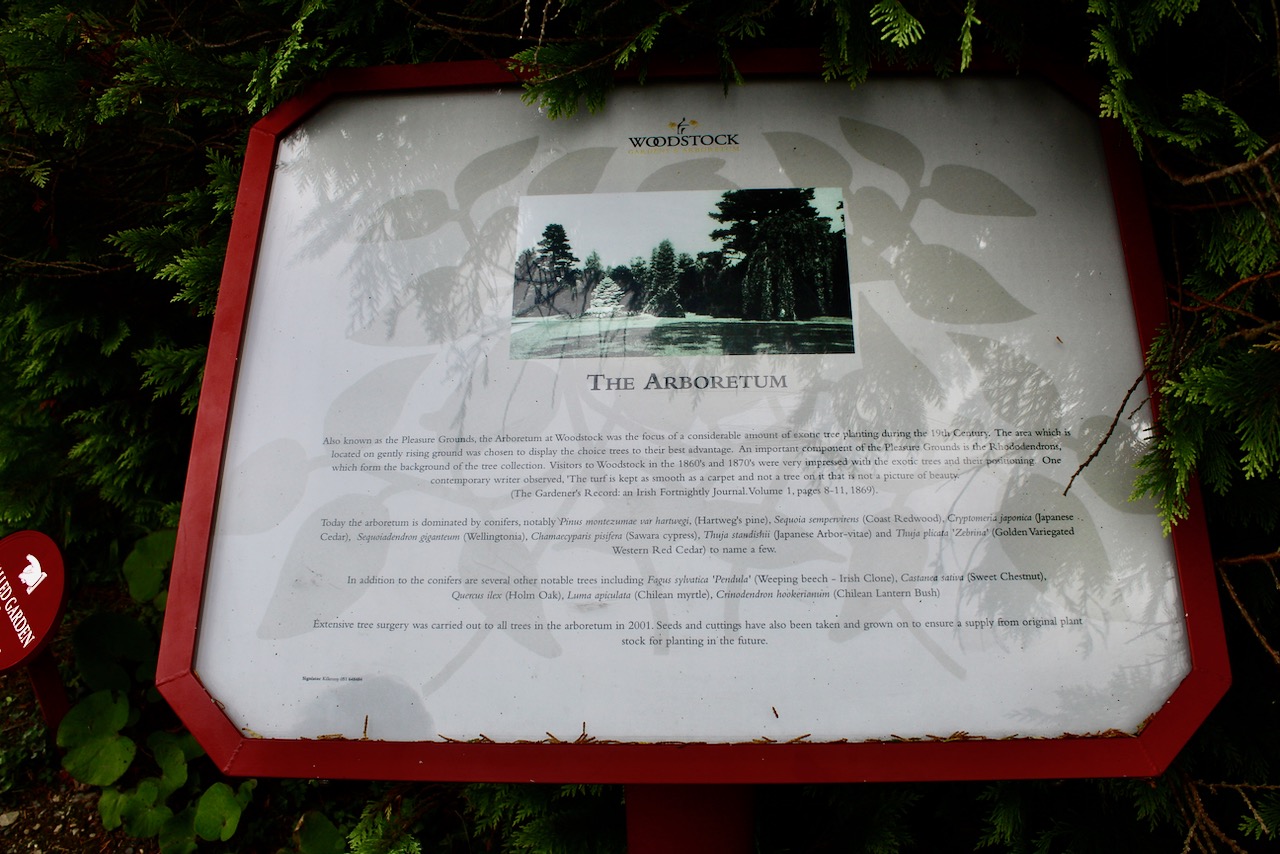
The farm building, called The Kennels, which housed the groundskeeper and the hunting dogs. Photograph © Jennifer Winder-Baggot, www.irishhistorichouses.com
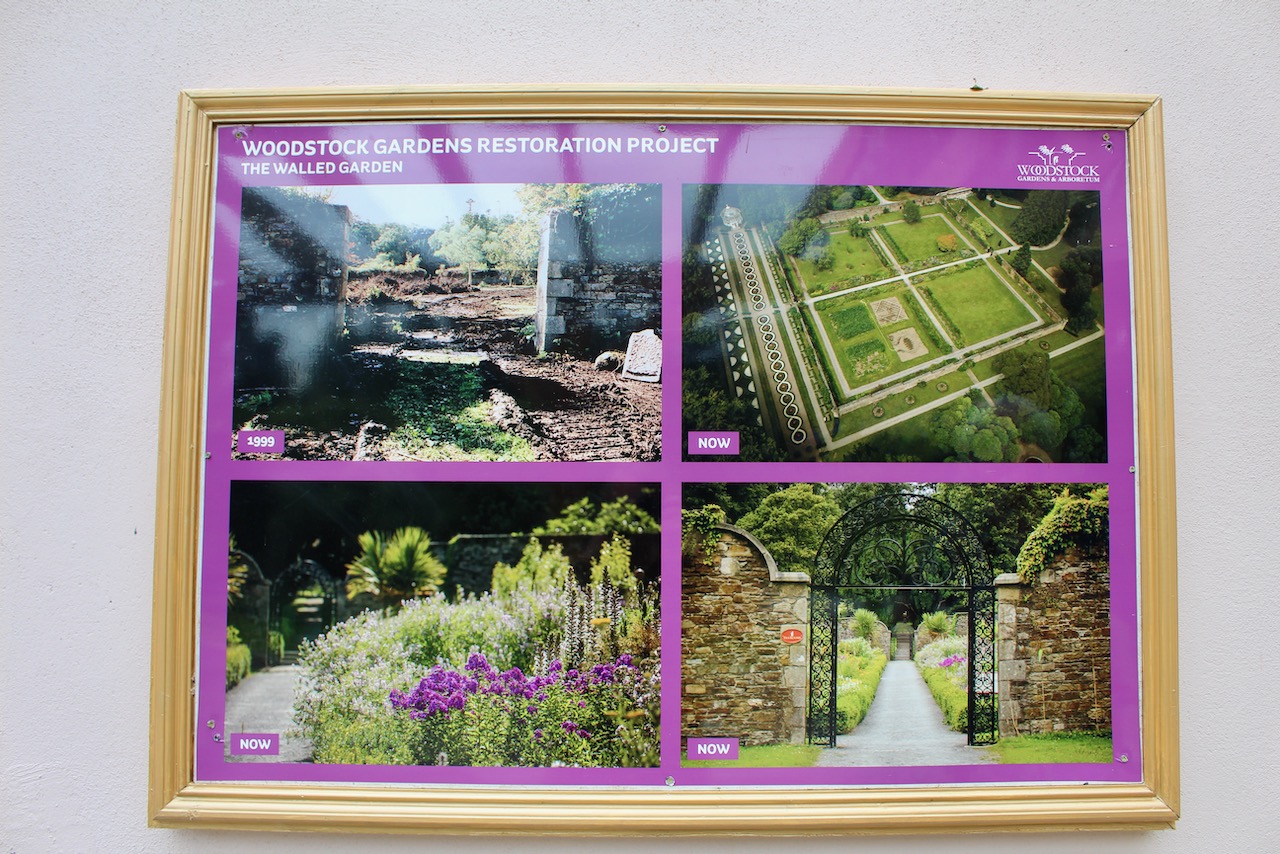
Legend has it that in the early 1750s, Arthur and Sarah Cooper engaged an architect and placed two buckets of gold sovereigns on the ground, instructing him to build a suitable house on a hill in the middle of their County Sligo estate, Cooper’s Hill. [5] The architect’s plans overshot the budget and the sovereigns ran out even before the walls were built! Arthur Cooper was forced to sell some of his land to continue building, and the house was completed around twenty years after it was started, in 1774. The completion date is noted on the keystone over the front door.

The keystone of the front door surround is inscribed “1774”, the date of completion. The O’Hara armorial plate would have been put up later, as the house was still belonging to the Coopers in 1774. Photograph © Jennifer Winder-Baggot, www.irishhistorichouses.com
O’Hara Crest. Photograph © Jennifer Winder-Baggot, www.irishhistorichouses.com
O’Hara crest on the stables at Annaghmore. Photograph © Jennifer Winder-Baggot, www.irishhistorichouses.com

Coopershill has two similar facades, at the front and back of the house.

The front of Coopershill. Photograph © Jennifer Winder-Baggot, www.irishhistorichouses.com
The back facade of the house, almost exactly the same as the front. Photograph © Jennifer Winder-Baggot, www.irishhistorichouses.com
The stone, a high quality local ashlar, took eight years to quarry. [6] One would assume that the Coopers of Markree Castle and the Coopers of Coopershill are related, but Durcan told us that he has not found the connection.

The house has been attributed by Desmond FitzGerald, the Knight of Glin, to Francis Bindon, who also designed Woodstock in County Kilkenny (1740), which we visited later in the week. [7] Bindon also painted portraits, including those of Jonathan Swift and Charles Cobbe, Archbishop of Dublin. FitzGerald writes:

Perhaps Bindon’s very last mansion is Coopershill, County Sligo, although like most of these houses, no documentary evidence exists for it. Tower-like and stark, of similar proportions to Raford [County Galway], it is made up of two equivalent fronts composed with a central rusticated Venetian window and door, and a third floor three-light window. The fenestration is reminiscent of [Richard] Castle’s demolished Smyth mansion in Kildare Place, Dublin. Coopershill is sited particularly well and stands high above a river reminding one of the feudal strength of the 17th century towerhouse. As at Raford, the roof is overlapping and 19th century.” [8]

Raford House, County Galway, also attributed to Francis Bindon, built around 1760. Photograph from National Inventory of Architectural Heritage. It has the same tripartite door structure, with a Venetian window above and a grouping of three windows together above that.
Woodstock House, County Kilkenny, also designed by Francis Bindon. Photograph © Jennifer Winder-Baggot, www.irishhistorichouses.com
A detail of Woodstock house, which shows some similarity to the tripartite window with rusticated surrounds above the front door at Coopershill. Photograph taken from the National Inventory of Architectural Heritage.

The front has two bays on either side of the Gibbsian doorcase (a Gibbsian doorcase usually has “blocking” where rectangular blocks stick out at intervals). A “Gibbsian surround” is an eighteenth century treatment of a door or window, seen particularly in the work of James Gibbs (1682-1754); it usually has columns or pilasters with an architrave, that is, a lintel resting on columns, and voussoirs (wedge shaped elements, usually stones, forming an arch), a keystone (wedge shaped stone at the top of an arch) and pediment (a formalized gable derived from that of a temple). [9] Above the doorcase of Coopershill is a rusticated Venetian window (which Bence-Jones describes as “a window with three openings, that in the centre being round-headed and wider than those on either side; a very familiar feature of Palladian architecture”), and a three-light window on the centre of the top storey. All of the other windows in the front have rusticated surrounds (that is, a particular treatment of joints or faces of masonry to give an effect of strength).

There is a hardwood door with fifteen raised-and-fielded panels, an interlaced fanlight, and sandstone steps with dressed limestone parapet walls bridging the basement area. [10]

The Gibbsian doorcase – a Gibbsian doorcase usually has “blocking” where rectangular blocks stick out at intervals. In this case, the doorcase includes two “sidelight” windows, though this is not typical of a “Gibbsian” doorcase. Above the doorcase is a Venetian window. Photograph © Jennifer Winder-Baggot, www.irishhistorichouses.com
view from the front of the house. Photograph © Jennifer Winder-Baggot, www.irishhistorichouses.com
Bridge which we crossed on the drive through the demesne. Photograph © Jennifer Winder-Baggot, www.irishhistorichouses.com

To reach the house we drove across a lovely bridge, pictured above, which was built at the same time as the house, in 1771. The foundation stones kept sinking into the mud and eventually sheepskin was laid on the ground, which stopped the stones sinking. This same technique is being used nowadays in the bog to create paths for walking. One’s first view of the house is attained when crossing the bridge.

A great little face carved into the bridge along with the date 1771. Photograph taken from the National Inventory of Architectural Heritage.
The view of Coopershill from the bridge. Photograph © Jennifer Winder-Baggot, www.irishhistorichouses.com

Simon welcomed us, the seventh generation of the family to live here. Arthur and Sarah Cooper’s son, Arthur Brooke Cooper (1775-1854) (“Brooke” was Sarah’s mother’s maiden name), inherited Coopershill and married Jane Frances O’Hara, the daughter of Charles Edward O’Hara (1746-1822) from nearby Annaghmore.

Arthur Brooke Cooper (c. 1775-1854). Photograph © Jennifer Winder-Baggot, www.irishhistorichouses.com

Their eldest son, also named Arthur Brooke Cooper, predeceased his father in 1845, so their second son, Charles William (1817-1898), inherited Coopershill on the death of his father in 1854. He also inherited Annaghmore on the death in 1860 of Jane Frances’s brother, Charles King O’Hara (1784-1860), on condition that Charles William take the name “O’Hara.”

The tennis court. The cousins from Annaghmore, Coopershill and Newpark play tennis together every week. Photograph © Jennifer Winder-Baggot, www.irishhistorichouses.com

Fortunately Charles William Cooper O’Hara married well by marrying Anne Charlotte Streatfeild, daughter of Richard Shuttleworth Streatfeild of the Rocks, Uckfield, Sussex. They moved to Annaghmore and Charles William’s sisters, Margaret Sarah and Mary Jane Caroline Cooper, remained living in Coopershill.

Portraits of Charles William Cooper, who took the name O’Hara when he inherited his uncle’s estate, and his wife Anne Streatfield. Photograph © Jennifer Winder-Baggot, www.irishhistorichouses.com

Stephen and I were excited to learn that an ancestor of Simon’s and Durcan’s who had lived at Annaghmore (albeit an earlier house), Charles O’Hara (c.1705-1776), was not only a friend of Edmund Burke, politician, writer and philosopher who wrote Reflections on the Revolution in France and A Philosophical Enquiry into the Origin of Our Ideas of the Sublime and Beautiful, but also of Stephen’s ancestor George Macartney (1737-1806).

Annaghmore, County Sligo, which also belongs to the O’Hara family, and where we were staying while visiting Section 482 properties in Sligo. The principal seat of the O’Hara family since medieval times, the current house replaced an earlier house, and was built around 1820 for Charles O’Hara (1746-1822), MP for County Sligo, and enlarged and remodelled around 1860 to designs by the architect James Franklin Fuller, for Charles William Cooper, who took the name O’Hara when he inherited from his uncle. Photograph © Jennifer Winder-Baggot, www.irishhistorichouses.com
The bedroom in which we stayed at Annaghmore. Photograph © Jennifer Winder-Baggot, www.irishhistorichouses.com

Charles William and Anne Charlotte’s eldest son, Charles Kean O’Hara (1860-1947) inherited Annaghmore, and the second son, Arthur Cooper O’Hara (1862-1934), inherited Coopershill.

Charles Kean O’Hara of Annaghmore also did not marry and had no children, so when he died in 1947, Annaghmore passed to his nephew, Donal, eldest son of his brother, Frederick William O’Hara (1875-1949).

Three bay side of Coopershill. Photograph © Jennifer Winder-Baggot, www.irishhistorichouses.com
Three bay side of Coopershill plus basement. Photograph © Jennifer Winder-Baggot, www.irishhistorichouses.com
Basement of Coopershill. Photograph © Jennifer Winder-Baggot, www.irishhistorichouses.com

Charles Kean O’Hara had many brothers and sisters. His sister Charlotte Jane O’Hara married Alexander Perceval of Temple House, County Sligo, another section 482 property which unfortunately we did not visit on this trip to Sligo. Charles Kean’s brother Richard Edward had meanwhile purchased Newpark, another section 482 property which we visited. Another brother, Alexander, moved to the United States. Although his brother Frederick was not the next eldest, his son inherited Annaghmore because his older brother, Richard Edward, only had a daughter. As we were told when we visited Newpark, if Richard Edward’s daughter had been a son instead, that child would have inherited Annaghmore!

Arthur Cooper O’Hara (1862-1934) also did not have any children, so Coopershill passed to his nephew, Francis Cooper O’Hara (1906-1982), second son of his brother Frederick. Francis had married an English woman, Joan Bridgeman, during his career of tea planting in India. After his father’s death in 1947, Frank and Joan moved to Coopershill to start a new life in agriculture.

The impressive front hall of Coopershill. Photograph © Jennifer Winder-Baggot, www.irishhistorichouses.com
The front hall of Coopershill. Upon entry, one is greeted by a pair of busts in niches, deer heads, and a door with pilasters, pediment and fanlight. Photograph © Jennifer Winder-Baggot, www.irishhistorichouses.com
Thomas Wentworth, the 1st Earl of Strafford (1593-1641). Photograph © Jennifer Winder-Baggot, www.irishhistorichouses.com

The front hall has decorative plasterwork and carved door surrounds, with two doorcases on either side and one leading to the stair hall, with niches on either side. There is a nice contrast in the yellow of the walls, darker in the niches and plasterwork for emphasis. The hall features a large portrait of Thomas Wentworth, 1st Earl of Strafford (1593-1641). From 1632 to 1640 he was Lord Deputy of Ireland. He was a loyal supporter of King Charles I and was condemned to death by the Parliament and like Charles I himself, executed. He is not to be confused with the later Thomas Wentworth, 1st Earl of Strafford of a later creation (1672-1739) whose daughter Anne married William James Conolly, father of Thomas Conolly of Castletown, County Kildare.

The lock on the front door with its heart shape reminded me of the lock on the door of Cregg Castle in Galway. Photograph © Jennifer Winder-Baggot, www.irishhistorichouses.com
The heart-shaped lock in Cregg Castle in County Galway. Photograph © Jennifer Winder-Baggot, www.irishhistorichouses.com

After Frank and Joan’s family of six children had grown up, they began to take paying guests into their home. The website tells us some families came year after year for the childrens’ riding as the stables had several ponies. Frank died in 1982, and Joan continued for another four years on her own, joining a growing group of owners of large manor houses from all over Ireland who could only keep their houses in shape with the aid of income generated by taking paying guests.

Frank and Joan’s son Brian Cooper O’Hara and his wife Lindy took over the Country House Hotel in early 1987, and continued until their retirement in 2007. They now live in a new stone house beside the stables and their son Simon lives in Coopershill continues the business.

Stone accommodation next to the stables. Photograph © Jennifer Winder-Baggot, www.irishhistorichouses.com

The dining room contains portraits of the ancestors, and the house has the original fireplaces. The room has a simple decorative cornice.

Coopershill, August 2021. Photograph © Jennifer Winder-Baggot, www.irishhistorichouses.com

We then entered the Drawing Room, painted a bold turquoise. It too has a decorative cornice, tall windows with shutters and a marble fireplace.

Coopershill. Photograph © Jennifer Winder-Baggot, www.irishhistorichouses.com
Stephen admires the grandfather clock. Photograph © Jennifer Winder-Baggot, www.irishhistorichouses.com
Coopershill. Photograph © Jennifer Winder-Baggot, www.irishhistorichouses.com
Through the windows, a wonderful view of the old bridge. Photograph © Jennifer Winder-Baggot, www.irishhistorichouses.com
Coopershill, August 2021. Photograph © Jennifer Winder-Baggot, www.irishhistorichouses.com

The Historic Houses of Ireland entry about Coopershill points out that the service staircase is of stone but the principal staircase is constructed from timber in a reversal of the usual fashion. There is good decorative plasterwork of the 1770s in the reception rooms and especially over the main staircase.

The view into the front hall from the staircase – one can see the lovely old floor tiles. The doorframe mirrors those in the front hall, with carved pilasters and pediment. Photograph © Jennifer Winder-Baggot, www.irishhistorichouses.com
A rent table in the staircase hall. A tenant could place his rent in the drawer facing him then the table top spun around to the landlord. In this way other tenants may not see how much a particular tenant is paying. Photograph © Jennifer Winder-Baggot, www.irishhistorichouses.com

The staircase hall has another niche, and portraits of William and Mary hang either side of the door. It’s unusual to have the Royalist Wentworth as well as William and Mary – Stephen says the family are keeping in with both sides! (normally a monarchist supporter of Charles I would be a supporter of King James II, who was overthrown by William). In fact the O’Hara ancestor, Kean O’Hara, was careful to keep in with both the Jacobites and the Williamites.

The fine timber staircase. Although there are pikes on either side of the window overlooking the stairs, the family were not rebels in 1641 or 1798, although some of their relatives might have been! Photograph © Jennifer Winder-Baggot, www.irishhistorichouses.com
Ancient pikes. Photograph © Jennifer Winder-Baggot, www.irishhistorichouses.com

There are not only pikes, but many other souvenirs from battles and travels.

An old blunderbuss. Photograph © Jennifer Winder-Baggot, www.irishhistorichouses.com
A gong made from an enormous shell casing. Photograph © Jennifer Winder-Baggot, www.irishhistorichouses.com
Simon showing us up the stairs. Photograph © Jennifer Winder-Baggot, www.irishhistorichouses.com
Beautiful Adamesque plasterwork on the ceiling of the staircase hall. Photograph © Jennifer Winder-Baggot, www.irishhistorichouses.com
The position of the staircase crosses the doorcase of the back facade of the house rather awkwardly, which is probably a result of the house being built over two decades. Photograph © Jennifer Winder-Baggot, www.irishhistorichouses.com

Upstairs are the bedrooms, available for accommodation. All are en suite and several have canopied beds. You can see photographs of all of the bedrooms on the website.

Coopershill. Photograph © Jennifer Winder-Baggot, www.irishhistorichouses.com
The bedrooms doors also have elaborate carved doorcases. Photograph © Jennifer Winder-Baggot, www.irishhistorichouses.com

We continued on up the stairs to the third storey.

Coopershill. Photograph © Jennifer Winder-Baggot, www.irishhistorichouses.com
Coopershill, August 2021. Photograph © Jennifer Winder-Baggot, www.irishhistorichouses.com

After our tour upstairs, Simon took us down to the basement. Here he showed us some wonderful leather ammunition pouches that must be very old as they bear the initials of Arthur Brooke Cooper.

Coopershill. Photograph © Jennifer Winder-Baggot, www.irishhistorichouses.com
Coopershill, August 2021. Photograph © Jennifer Winder-Baggot, www.irishhistorichouses.com

He also showed us the laundry, which still contains an beautiful old washing unit as well as the new ones. There is also a working, certified abbatoir, for processing the deer in the deer park for venison, which can be purchased (along with Coopershill honey, from their own bees).

Old laundry boiler, with lovely details. Photograph © Jennifer Winder-Baggot, www.irishhistorichouses.com
Coopershill. Photograph © Jennifer Winder-Baggot, www.irishhistorichouses.com
An example of an old bell alert system for the servants, in the basement of Coopershill. Photograph © Jennifer Winder-Baggot, www.irishhistorichouses.com
More complete set of bells for servants in Annaghmore. Photograph © Jennifer Winder-Baggot, www.irishhistorichouses.com
A newer bell system at Coopershill. Photograph © Jennifer Winder-Baggot, www.irishhistorichouses.com

We went outside after our tour to take a quick look around the stables and gardens.

Fresh fruit and vegetables from the garden are served to guests at Coopershill. Photograph © Jennifer Winder-Baggot, www.irishhistorichouses.com
Coopershill. Photograph © Jennifer Winder-Baggot, www.irishhistorichouses.com
Archway leading past the tennis court to the stable yard. Photograph © Jennifer Winder-Baggot, www.irishhistorichouses.com
Coopershill. Photograph © Jennifer Winder-Baggot, www.irishhistorichouses.com
Coopershill, August 2021. Photograph © Jennifer Winder-Baggot, www.irishhistorichouses.com

donation

Help me to pay the entrance fee to one of the houses on this website. This site is created purely out of love for the subject and I receive no payment so any donation is appreciated!

€15.00

[1] https://www.annaghmore.ie/

[2] https://irishhistorichouses.com/2021/11/30/newpark-house-and-demesne-newpark-ballymote-co-sligo/

[3] Bartlett, Thomas. “The O’Haras of Annaghmore c. 1600—c. 1800: Survival and Revival.”

Irish Economic and Social History. Vol. 9 (1982), pp. 34-52. Published on JStor, https://www.jstor.org/stable/24337261?seq=1#metadata_info_tab_contents

[4] Orser, Charles E. Jr. “Symbolic Violence and Landscape Pedagogy: An Illustration from the Irish Countryside” Historical Archaeology. Vol. 40, No. 2 (2006), pp. 28-44. Published on JStor, https://www.jstor.org/stable/25617328?read-now=1&refreqid=excelsior%3Ab2963d83c7041caf7fce13fe69e6dc6b&seq=5#page_scan_tab_contents

[5] http://www.ihh.ie/index.cfm/houses/house/name/Coopershill

[6] Mark Bence-Jones. A Guide to Irish Country Houses (originally published as Burke’s Guide to Country Houses volume 1 Ireland by Burke’s Peerage Ltd. 1978); Revised edition 1988, Constable and Company Ltd, London.

[7] FitzGerald, Desmond, “Francis Bindon (c. 1690-1765) His Life and Works,” Quarterly Bulletin of the Irish Georgian Society April-Sept 1967.

[8] I am indebted to the blog of “Lavender’s Blue” for this quote from Desmond FitzGerald. https://lvbmag.wpcomstaging.com/2018/10/02/coopershill-house-county-sligo-francis-bindon/

[9] https://irishhistorichouses.com/2020/04/18/architectural-definitions/

[10] https://www.buildingsofireland.ie/buildings-search/building/32313019/coopershill-house-cooperhill-riverstown-sligo

Text © Jennifer Winder-Baggot, www.irishhistorichouses.com
Happy New Year!

I love starting a new year. The new listing for Section 482 properties won’t be published until February or March, so at the moment we will have to rely on 2021 listings (January listings below).

I had an amazing 2021 and visited lots of properties! As well as those I’ve written about so far, I am hoping to hear back for approval for a few more write-ups. Last year Stephen and I visited thirteen section 482 properties, thirteen OPW properties, and some other properties maintained by various groups.

The Section 482 properties we visited were Mount Usher gardens and Killruddery in County Wicklow; Killineer House and gardens in County Louth; Salthill Gardens in County Donegal; Stradbally Hall in County Laois; Enniscoe in County Mayo; Tullynally in County Westmeath; Kilfane Glen and Waterfall in County Kilkenny; Killedmond Rectory in County Carlow; Coopershill, Newpark and Markree Castle in County Sligo and Wilton Castle in County Wexford.

Mount Usher Gardens, County Wicklow (June 2021). Photograph © Jennifer Winder-Baggot, www.irishhistorichouses.com
Killruddery, County Wicklow (we visited in April 2021). Photograph © Jennifer Winder-Baggot, www.irishhistorichouses.com
Killineer House and Gardens, County Louth (visited in June 2021). Photograph © Jennifer Winder-Baggot, www.irishhistorichouses.com
Salthill Gardens, County Donegal (visited in July 2021.) Photograph © Jennifer Winder-Baggot, www.irishhistorichouses.com
Stradbally Hall, County Laois (visited in June 2021). Photograph © Jennifer Winder-Baggot, www.irishhistorichouses.com
Enniscoe, County Mayo (visited in August 2021). Photograph © Jennifer Winder-Baggot, www.irishhistorichouses.com
Tullynally, County Westmeath (visited in August 2021). Photograph © Jennifer Winder-Baggot, www.irishhistorichouses.com
Kilfane Glen and Waterfall, County Kilkenny (visited in August 2021). Photograph © Jennifer Winder-Baggot, www.irishhistorichouses.com
Gardens at Killedmond Rectory, County Carlow (visited in August 2021). Photograph © Jennifer Winder-Baggot, www.irishhistorichouses.com
Coopershill, County Sligo (visited in August 2021). Photograph © Jennifer Winder-Baggot, www.irishhistorichouses.com
Newpark House, County Sligo (visited in August 2021). Photograph © Jennifer Winder-Baggot, www.irishhistorichouses.com
Markree Castle, County Sligo (visited in August 2021). Photograph © Jennifer Winder-Baggot, www.irishhistorichouses.com
Wilton Castle, County Wexford (visited in November 2021). Photograph © Jennifer Winder-Baggot, www.irishhistorichouses.com

The OPW properties we visited were Dublin Castle, the Irish National War Memorial Gardens, National Botanic Gardens, Rathfarnham Castle, St. Stephen’s Green, Iveagh Gardens, Phoenix Park and Royal Hospital Kilmainham in Dublin; Emo Court, County Laois; Portumna Castle, County Galway; Fore Abbey in County Westmeath; Parke’s Castle, County Leitrim; and Ballymote Castle, County Sligo.

Inside Dublin Castle (visited in September 2021). Photograph © Jennifer Winder-Baggot, www.irishhistorichouses.com
Irish National War Memorial Gardens, Dublin, designed by Lutyens (we go walking here all the time!). Photograph © Jennifer Winder-Baggot, www.irishhistorichouses.com
National Botanic Gardens, Dublin (visited in September 2021). Photograph © Jennifer Winder-Baggot, www.irishhistorichouses.com
Inside Rathfarnham Castle (visited in September 2021). Photograph © Jennifer Winder-Baggot, www.irishhistorichouses.com
The Iveagh Gardens, Dublin (visited in October 2021). Photograph © Jennifer Winder-Baggot, www.irishhistorichouses.com
The Gardens at Royal Hospital Kilmainham (visited in January 2022). Photograph © Jennifer Winder-Baggot, www.irishhistorichouses.com
Emo Park, County Laois (visited in June 2021). Photograph © Jennifer Winder-Baggot, www.irishhistorichouses.com
Portumna Castle, Galway (visited in July 2021). Photograph © Jennifer Winder-Baggot, www.irishhistorichouses.com
Fore Abbey, County Westmeath (visited in August 2021). Photograph © Jennifer Winder-Baggot, www.irishhistorichouses.com
Parke’s Castle, County Leitrim, maintained by the OPW (visited in August 2021). Photograph © Jennifer Winder-Baggot, www.irishhistorichouses.com
Ballymote Castle, County Sligo (visited in August 2021). Photograph © Jennifer Winder-Baggot, www.irishhistorichouses.com

We also visited Duckett’s Grove, maintained by Carlow County Council; Woodstock Gardens and Arbortetum maintained by Kilkenny County Council; Johnstown Castle, County Wexford maintained by the Irish Heritage Trust (which also maintains Strokestown Park, which we have yet to visit – hopefully this year! it’s a Section 482 property – and Fota House, Arboretum and Gardens, which we visited in 2020); Dunguaire Castle, County Clare, which is maintained by Shannon Heritage, as well as Newbridge House, which we also visited in 2021. Shannon Heritage also maintains Bunratty Castle, Knappogue Castle and Cragganowen Castle in County Clare, King John’s Castle in Limerick, which we visited in 2019, Malahide Castle in Dublin which I visited in 2018, GPO museum, and the Casino model railway museum. We also visited Belvedere House, Gardens and Park – I’m not sure who maintains it (can’t see it on the website).

Duckett’s Grove, County Carlow (visited in August 2021). Photograph © Jennifer Winder-Baggot, www.irishhistorichouses.com
Woodstock House, County Kilkenny, maintained by Kilkenny County Council (visited in August 2021). Photograph © Jennifer Winder-Baggot, www.irishhistorichouses.com
Johnstown Castle, County Wexford, maintained by the Irish Heritage Trust (visited in November 2021). Photograph © Jennifer Winder-Baggot, www.irishhistorichouses.com
Dunguaire Castle, County Clare (visited in July 2021). Photograph © Jennifer Winder-Baggot, www.irishhistorichouses.com
Newbridge House, County Dublin (visited in June 2021). Photograph © Jennifer Winder-Baggot, www.irishhistorichouses.com
Belvedere House, County Westmeath (visited in August 2021). Photograph © Jennifer Winder-Baggot, www.irishhistorichouses.com

We were able to visit two historic properties when we went to view auction sales at Townley Hall, County Louth and Howth Castle, Dublin.

The domed rotunda in Townley Hall, County Louth (visited in October 2021). Photograph © Jennifer Winder-Baggot, www.irishhistorichouses.com
Howth Castle, County Dublin (visited in September 2021). Photograph © Jennifer Winder-Baggot, www.irishhistorichouses.com

Finally some private Big Houses that we visited, staying in airbnbs, were Annaghmore in County Sligo and Cregg Castle in Galway.

Annaghmore, County Sligo, where we stayed as airbnb guests with Durcan and Nicola O’Hara (in August 2021). Photograph © Jennifer Winder-Baggot, www.irishhistorichouses.com
Cregg Castle, County Galway (in July 2021). Photograph © Jennifer Winder-Baggot, www.irishhistorichouses.com

Here are the listings for January 2021:

Cavan

Cabra Castle (Hotel)

Kingscourt, Co. Cavan

Howard Corscadden.

Tel: 042-9667030

www.cabracastle.com

Open dates in 2021: all year, except Dec 24, 25, 26, 11am-12 midnight

Fee: Free

Cabra Castle, County Cavan. Photograph © Jennifer Winder-Baggot, www.irishhistorichouses.com

Corravahan House & Gardens

Corravahan, Drung, Ballyhaise, Co. Cavan

Ian Elliott

Tel: 087-9772224

www.corravahan.com

Open dates in 2021: Jan 4-5, 11-12, 18-19, 25-26, Feb 1-2, 8-9, 15-16, 22-23, Mar 1-2, 8-9, May 4- 5, 9-12, 16-19, 23-26, 30-31, June 1-4, Aug 14-31, Sept 1-2, 9am-1pm, Sundays 2pm- 6pm
Fee: adult €10, OAP/student/child €5 

Corravahan, County Cavan. Photograph © Jennifer Winder-Baggot, www.irishhistorichouses.com

Clare

Newtown Castle

Newtown, Ballyvaughan, Co. Clare

Mary Hawkes- Greene

Tel: 065-7077200

www.newtowncastle.com , www.burrencollege.ie

Open dates in 2021: Jan 4-May 31, Mon-Fri, June 1-30 Mon-Sat, July 1-Aug 31 daily, Sept 1-Dec 17 Mon-Fri, 10am-5pm
Fee: Free 

Newtown Castle, County Clare. Photograph from National Inventory of Architectural Heritage.

Cork

Blarney Castle & Rock Close

Blarney, Co. Cork

C. Colthurst

Tel: 021-4385252

www.blarneycastle.ie

Open dates in 2021: all year except Christmas Eve & Christmas Day, Jan-Mar, Mon-Sat, 9am- sundown, Sun, 9am-6pm 

Apr-May, 9am-6pm, June-Aug, Mon-Sat, 9am-7pm, Sun, 9am-6pm, Sept, Mon-Sat, 9am-6.30pm, Sun, 9am-6pm,
Oct, Nov, Dec daily 9am-6pm,
Fee: adult €18, OAP/student €15, child €10, family and season passes 

Brideweir House

Conna, Co. Cork

Ronan Fox

Tel: 087-0523256

Open dates in 2021: Jan 1-Dec 24, 11am-4pm 

Fee: adult €10, OAP/student €5, child free

Woodford Bourne Warehouse

Sheares Street, Cork

Edward Nicholson

Tel: 021-4273000

www.woodfordbournewarehouse.com

Open dates in 2021: all year except Christmas Eve, Christmas Day, 1pm-11pm 

Fee: Free

Donegal

Portnason House 

Portnason, Ballyshannon, Co. Donegal
Madge Sharkey
Tel: 086-3846843
Open dates in 2021: Jan 18-22, 25-29, Feb 1-5, 8-12, Aug 14-30, Sept 1-17, 20-23, 27-28, Nov 15- 19, 22-26, Dec 1-3 6-10, 13-14, 9am-1pm 

Fee: adult €8, OAP/student/child €5 

Dublin City

Bewley’s 

78-79 Grafton Street/234 Johnson’s Court, Dublin 2

Peter O’ Callaghan

Tel 087-7179367

www.bewleys.com

Open dates in 2021: all year except Christmas Day, 

11am-7pm Fee: Free 

Hibernian/National Irish Bank

23-27 College Green, Dublin 2

Dan O’Sullivan 

Tel: 01-6755100

www.clarendonproperties.ie

Open dates in 2021: all year, except Dec 25, Wed-Fri 9.30am-8pm, Sun 11am-7pm, Sat, Mon, Tue, 9.30-7pm 

Fee: Free 

Powerscourt Townhouse Centre

59 South William Street, Dublin 2

Mary Larkin

Tel: 01-6717000

Open dates in 2021: All year except New Year’s Day, Easter Sunday, Easter Monday, Christmas Day, St. Stephen’s Day & Bank Holidays, Mon-Sat, 10am-6pm, Thurs, 10am-8pm, Sundays, 12 noon-6pm

Fee: Free

Powerscourt Townhouse, Dublin City. Photograph © Jennifer Winder-Baggot, www.irishhistorichouses.com

10 South Frederick Street

Dublin 2

Joe Hogan

Tel: 087-2430334

Open dates in 2021: Jan 1-24, May 1, 3-8, 10-15, 17-22, 24-27, Aug 14-22, 2pm-6pm 

Fee: Free 

County Dublin 

“Geragh” 

Sandycove Point, Sandycove, Co. Dublin

Gráinne Casey

Tel: 01-2804884

Open dates in 2021: Jan 28-29, Feb 1-5, 8-12, 15-22, May 4-31, Aug 14-22, Sept 1-3, 2pm-6pm Fee: adult €7, OAP €4, student €2, child free  

Meander

Westminister Road, Foxrock, Dublin 18,

Ruth O’Herlihy, 

Tel: 087-2163623

Open dates in 2021: Jan 4-8, 11-15, 18-22, 25-29, May 1, 4-8, 10-11, 17-22, June 8-12, 14-19, 21- 26, Aug 14-22, 9am-1pm 

Fee: adult €5, OAP/child/student €2 

Tibradden House

Mutton Lane, Rathfarnham, Dublin 16

Selina Guinness

Tel: 01-4957483

www.selinaguinness.com

Open dates in 2021: Jan 14-17, 23-24, 28-29, Feb 4-7, 11-12, 19-21, 26-28, May 3-13,16, 18-20, 23-27, June 2-4, 8-10, 14-16, 19-20, Aug 14-22, weekdays 2.30pm-6.30pm, weekends 10.30am-2.30pm
Fee: adult/OAP €8 student €5, child free, Members of An Taisce the The Irish Georgian Society (with membership card) €5 

Galway 

Woodville House Dovecote & Walls of Walled Garden 

Craughwell, Co. Galway
Margarita and Michael Donoghue
Tel: 087-9069191
www.woodvillewalledgarden.com
Open dates in 2021: Jan 29-31, Feb 1-28, Apr 1-13, 11am- 4.30pm, June 1, 6-8, 13-15, 21-22, 27- 29, July 10-11, 17-18, 24-25, 31, Aug 1-2, 6-8, 13-22, 27-29, Sept 4-5, 11am-5pm Fee: adult/OAP €6, child €3, student, €5, family €20, guided tours €10 

Kerry

Derreen Gardens

Lauragh, Tuosist, Kenmare, Co. Kerry

John Daly

Tel: 087-1325665

www.derreengarden.com 

Open dates in 2021: all year, 10am-6pm

Fee: adult/OAP/student €8, child €3, family ticket (2 adults and all children under 18 and 2 maps) €20 

Kildare

Farmersvale House

Badgerhill, Kill, Co. Kildare

Patricia Orr

Tel: 086-2552661

Open dates in 2021: Jan 18-31, Feb 1-6, July 23-31, Aug 1-31, 9.30am-1.30pm
Fee: adult €5, student/child/OAP €3, (Irish Georgian Society members free) 

Harristown House

Brannockstown, Co. Kildare

Hubert Beaumont
Tel: 087-2588775

www.harristownhouse.ie

Open dates in 2021: Jan 11-15, 18-22, Feb 8-12, 15-19, May 4-28, June 7-11, Aug 14-22, Sept 6-10, 9am-1pm 

Fee: adult/OAP/student €10, child €5 

Harristown House, County Kildare. Photograph © Jennifer Winder-Baggot, www.irishhistorichouses.com

Kildrought House

Celbridge Village, Co. Kildare

June Stuart

Tel: 01-6271206, 087-6168651

Open dates in 2021: Jan 1-20, May 18-26, Aug 11-31,10am-2pm
Fee: adult €6, OAP/student/child €3, child under 5 years free, school groups €2 per head 

Moyglare Glebe

Moyglare, Maynooth, Co. Kildare

Joan Hayden

Tel: 01-8722238

Open dates in 2021: Jan 4-8, 11-15, 18-22, 25-29, May 1-31, Aug 14-22, Sept 4-7, 8.30am-12.30pm Fee: adult €6, OAP/student/child €3 

Kilkenny

Kilkenny Design Centre

Castle Yard, Kilkenny

Joseph O’ Keeffe, Tel: 064-6623331

www.kilkennydesign.com

Open dates in 2021: all year,10am-7pm 

Fee: Free

Laois

Ballaghmore Castle

Borris in Ossory, Co. Laois

Grace Pym

Tel: 0505-21453

www.castleballaghmore.com

Open dates in 2021: all year, 9.30am-6pm
Fee: adult €5, child/OAP €3, student free, family of 4, €10 

Leitrim

Manorhamilton Castle (Ruin)

Castle St, Manorhamilton, Co. Leitrim

Anthony Daly

Tel: 086-2502593

Open dates in 2021: Jan 7-Dec 21, National Heritage Week, Aug 14-22, closed Sat & Sun, 10am- 5pm
Fee: adult €5, child free 

Limerick

Ash Hill 

Kilmallock, Co. Limerick

Simon and Nicole Johnson 

Tel: 063-98035

www.ashhill.com

(Tourist Accommodation Facility)

Open dates in 2021: Jan 15-Oct 31, Nov 1-29, Dec 1-15, 9am-4pm Fee: adult/student €5, child/OAP free 

Glebe House

Bruff, Co. Limerick

Colm McCarthy

Tel: 087-6487556

Open dates in 2021: Jan 4-29, May 10-28, Aug 13-22, Sept 13-24, Mon-Fri, 5.30pm-9.30pm, Sat- Sun, 8am-12 noon 

Fee: Free 

Mayo

Brookhill House

Brookhill, Claremorris, Co. Mayo

Patricia and John Noone

Tel: 094-9371348

Open dates in 2021: Jan 13-20, Apr 13-20, May 18-24, June 8-14, July 13-19, Aug 1-23, 2pm-6pm

Fee: adult €6, student €3, OAP/child/National Heritage Week free

Meath

Cillghrian Glebe now known as Boyne House Slane (or Stackallan)

Slane, Co. Meath

Alan Haugh

Tel: 041-9884444

www.boynehouseslane.ie

Open dates in 2021: all year, National Heritage Week, Aug 14-22, 9am-1pm Fee: Free 

Dardistown Castle

Dardistown, Julianstown, Co. Meath

Lizanne Allen

Tel: 086 -2774271

www.dardistowncastle.ie

Open dates in 2021: Jan 9-31, Feb 11-21, May 15-21, Aug 14-31, Sept 1-30, 10am-2pm Fee: adult €6, student/OAP €5, child free 

Dardistown Castle, County Meath. Photograph © Jennifer Winder-Baggot, www.irishhistorichouses.com

Gravelmount House 

Castletown, Kilpatrick, Navan, Co. Meath
Brian McKenna
Tel: 087-2520523
Open dates in 2021: Jan 1-13, May 10-30, June 1-20, Aug 14-22, 9am-1pm Fee: adult €6, OAP/student/child €3 

Moyglare House

Moyglare, Co. Meath

Postal address Maynooth Co. Kildare

Angela Alexander

Tel: 086-0537291

www.moyglarehouse.ie

Open dates in 2021: Jan 1, 4-8, 11-15, 18-22, 25-29, May 1-21, 24-28, 31, June 1-3, Aug 14-22, 9am-1pm
Fee: adult €7.50, OAP/student/child €5 

St. Mary’s Abbey

High Street, Trim, Co. Meath

Peter Higgins 

Tel: 087-2057176

Open dates in 2021: Jan 25-29, Feb 22-26, Mar 8-12, Apr 12-16, May 24-30, June 21-27, July 19- 25, Aug 14-22, Sept 13-17, 20-24, 2pm-6pm 

Fee: adult €5, OAP/student/child €2 

Tankardstown House 

Rathkenny, Slane, Co. Meath

Tadhg Carolan, Tel: 087-7512871

www.tankardstown.ie

Open dates in 2021: All year including National Heritage Week, 9am-1pm

Fee: Free

Tankardstown, County Meath. Photograph © Jennifer Winder-Baggot, www.irishhistorichouses.com

Monaghan

Castle Leslie

Glaslough, Co. Monaghan

Samantha Leslie 

Tel: 047-88091

www.castleleslie.com

(Tourist Accommodation Facility)

Open dates in 2021: all year, National Heritage Week, events August 14-22 Fee: Free 

Castle Leslie, County Monaghan. Photograph © Jennifer Winder-Baggot, www.irishhistorichouses.com

Offaly

Ballybrittan Castle

Ballybrittan, Edenderry, Co. Offaly

Rosemarie

Tel: 087-2469802 

Open dates in 2021: Jan 3-4, 10-11, 17-18, 23-24, 30-31, Feb 6-7, 13-14, 20-21, 27-28, Mar 6-7,13- 14, 20-21, 27-28, May 1-2, 8-9, 15-16, 22-23, June 12-13,19-20, 26-27, July 3-4,10- 11,17-18, 24-25, 31, Aug 14-22, Sept 4-14, 2pm-6pm. 

Fee: free – except in case of large groups a fee of €5 p.p. 

Corolanty House

Shinrone, Birr, Co. Offaly

Siobhan Webb

Tel: 086-1209984

Open dates in 2021: Jan, Feb, July, Aug, Sept, daily 2pm-6pm

Fee: Free

Crotty Church

Castle Street, Birr, Co. Offaly

Brendan Garry

Tel: 086-8236452

Open dates in 2021: All year, except Dec 25, 9am-5pm 

Fee: Free

High Street House

High Street, Tullamore, Co. Offaly

George Ross

Tel: 086-3832992

www.no6highstreet.com

Open dates in 2021: Jan 4-8, 11-15, 18-22, 25-29, May 1-18, Aug 14-22, Sept 1-24, 9.30am-1.30pm Fee: adult/student €5, OAP €4, child under 12 free 

Springfield House 

Mount Lucas, Daingean, Tullamore, Co. Offaly Muireann Noonan
Tel: 087-2204569
www.springfieldhouse.ie 

Open dates in 2021: Jan 1-14, 1pm-5pm, May 14-16, 24-28, July 2-4, 9-11, 16-18, Aug 7-29, 2pm- 6pm, Dec 26-31, 1pm-5pm
Fee: Free 

Roscommon

Strokestown Park House

Strokestown Park House, Strokestown, Co. Roscommon

Ciarán

Tel: 01-8748030

www.strokestownpark.ie

Open dates in 2021: Jan 2-Dec 20, Jan, Feb, Mar 1-16, Nov, Dec,10.30am-4pm, March 17-Oct 31, 10.30am-5.30pm,
Fee: adult €14, €12.50, €9.25, OAP/student €12.50, child €6, family €29, groups €11.50 

Tipperary

Beechwood House

Ballbrunoge, Cullen, Co. Tipperary

Maura & Patrick McCormack

Tel: 083-1486736

Open dates in 2021: Jan 4-8, 18-22, Feb 1-5, 8-12, May 1-3, 14-17, 21-24, June 11-14, 18-21, Aug 14-22, Sept 3-6, 10-13, 17-20, 24-27, 10.15am-2.15pm 

Fee: adult €5, OAP/student €2, child free, fees donated to charity 

Waterford 

The Presentation Convent 

Waterford Healthpark, Slievekeel Road,Waterford Michelle O’ Brien
www.rowecreavin.ie
Tel: 051-370057 

Open dates in 2021: Jan 1-Dec 31, excluding Bank Holidays and Sundays, Mon-Fri, 8am-6pm, Sat, 10am-2pm, National Heritage Week, Aug 14-22
Fee: Free 

Wexford

Clougheast Cottage

Carne, Co. Wexford

Jacinta Denieffe

Tel: 086-1234322

Open dates in 2021: Jan 11-31, May 1-31 August 14-22, 9am-1pm Fee: €5 

Wilton Castle

Bree, Enniscorthy, Co. Wexford

Sean Windsor

(Tourist Accommodation Facility)

Tel: 053-9247738 

www.wiltoncastleireland.com   

Open dates in 2021: all year

Wilton Castle, County Wexford. Photograph © Jennifer Winder-Baggot, www.irishhistorichouses.com

Wicklow

Castle Howard

Avoca, Co. Wicklow

Mark Sinnott

Tel: 087-2987601

Open dates in 2021: Jan 11-13, Feb 1-5, Mar 1-3, 22-24, June 10-12, 14-15, 19, 21-26, 28, July 5-9, 19-22, Aug 13-22, Sept 6-11, 18, 25, Oct 4-6, 11-13, 9am-1pm 

Fee: adult €8.50, OAP/student €6.50, child €5 

Castle Howard, County Wicklow. Photograph © Jennifer Winder-Baggot, www.irishhistorichouses.com

Mount Usher Gardens

Ashford, Co. Wicklow

Caitriona Mc Weeney

Tel: 0404-49672

www.mountushergardens.ie

Open dates in 2021: all year 10am-6pm

Fee: adult €8, student/OAP €7, child €4, no charge for wheelchair users

Powerscourt House & Gardens

Powerscourt Estate, Enniskerry, Co. Wicklow

Sarah Slazenger

Tel: 01-2046000

www.powerscourt.ie

Open: All year, closed Christmas day and St Stephens day, 9.30am-5.30pm, ballroom and garden rooms Sun, 9.30am-1.30pm
Fee: Mar-Oct, adult €11.50, OAP €9, student €8.50, child €5, family ticket €26, Nov- Dec, adult €8.50, OAP €7.50, student €7, child €4, family ticket 2 adults + 3 children €18, children under 5 free 

Powerscourt, County Wicklow. Photograph © Jennifer Winder-Baggot, www.irishhistorichouses.com

An exhibition in the Irish Georgian Society

High Summer, Burtown House and Gardens, County Kildare, oil on canvas, by Lesley Fennell. Photograph © Jennifer Winder-Baggot, www.irishhistorichouses.com

Today an exhibition opened in the City Assemby House in South William Street in Dublin, the home of the Irish Georgian Society, of paintings of walled gardens of Ireland. The exhibition coincides with a television documentary about walled gardens airing this Sunday on RTE. There will also be a conference in May 2022 about the Irish country house garden, along with another exhibition, and a book edited by Finola O’Kane-Crimmins on the same subject.

https://www.igs.ie/updates/article/igs-year-of-the-country-house-garden

Burtown Gardens, which I visited this summer with Stephen and our friend Gary – the house is listed in Section 482 so we’ll be visiting it again at some point. It is the home of the artist Lesley Fennell.

The exhibition features the work of four artists, all owners of big houses: Lesley Fennell of Burtown, County Kildare; Andrea Jameson of Tourin, County Waterford; Alison Rosse of Birr Castle, County Offaly; and Maria Levinge of Clohamon, County Wexford. All of the houses but the last are on the Section 482 listing this year.

Many walled gardens are pictured, and I was delighted to recognise some.

Enniscoe, County Mayo, by Maria Levinge. Oil on board. We visited Enniscoe this year and had a wonderful tour with owner Susan Kellett, who brought history to life as if she had been present, such as when she told us of the 1798 visit of French soldiers to the house.
Maria Levinge’s painting captures the pink Enniscoe House in the background of her painting. Photograph © Jennifer Winder-Baggot, www.irishhistorichouses.com
The walled garden of Enniscoe House, which contains a museum. As the house is also on the Section 482 list, I’ll be writing about it soon. Photograph © Jennifer Winder-Baggot, www.irishhistorichouses.com

I will be invigilating the exhibition on Wednesday 29th September 10:00 – 1:30, along with some other dates, and was there today. The launch was last night, and I was delighted that some of the artists dropped in today while I was there.

Robert O’Byrne curated the exhibition and introduced the invigilators to the work. During the year the Georgian Society ran a programme of interviews with the artists, by Robert O’Byrne, and these are available to watch at the exhibition.

My photographs, taken on my phone rather than with my Canon camera, do not do justice to the paintings.

The Formal Gardens, Birr Castle, by Alison Rosse. Photograph © Jennifer Winder-Baggot, www.irishhistorichouses.com

We visited Birr Castle in 2019 and I took the same view as that painted above!

The Formal Gardens were designed by Anne, Countess of Rosse, on her marriage in 1935, in the form of a monastic cloister, complete with windows, cut into the hornbeam hedge. Photograph © Jennifer Winder-Baggot, www.irishhistorichouses.com

According to the small catalogue, which is available for purchase, there are about 8,000 walled gardens in Ireland! The exhibition features about thirty different walled gardens, some public and some private.

Lissadell, County Sligo, by Maria Levinge. Oil on board. We drove right up to the gates of Lissadell last month but unfortunately it is not open to the public this year due to Covid, so we will have to visit another time! Photograph © Jennifer Winder-Baggot, www.irishhistorichouses.com

Many Section 482 houses featured in this blog have walled gardens. Most recently, I wrote about Killineer in County Louth, which is not in this exhibition. Barmeath, also in Louth, and Cappoquin in County Waterford, are included, as well as Lodge Park and Larchill in Kildare, both of which are listed in Section 482 and which I have yet to visit.

I like this one by Maria Levinge of the garden at IMMA, the Royal Hospital Kilmainham, as it also pictures the relatively newly built apartments in the background, which I often pass on my way to the Memorial Gardens. Photograph © Jennifer Winder-Baggot, www.irishhistorichouses.com

I think Robert Wilson-Wright was digging the pond featured in Lesley Fennell’s painting of Coolcarrigan, on the day that we visited!

The Pond at Coolcarrigan, County Kildare, by Lesley Fennell. Oil on canvas. Photograph © Jennifer Winder-Baggot, www.irishhistorichouses.com
Coolcarrigan, County Kildare, September 2019. Photograph © Jennifer Winder-Baggot, www.irishhistorichouses.com

I didn’t realise that the splendid greenhouse at Woodstock, County Kilkenny, which we visited last month, is not the original Turner-built one, but a reproduction of it.

The greenhouse at Woodstock, County Kilkenny.
The Turner conservatory at Woodstock, County Kilkenny by Lesley Fennell. Oil on canvas. Photograph © Jennifer Winder-Baggot, www.irishhistorichouses.com

I particularly liked the painting that Andrea Jameson did of herself struggling to paint “en pleine aire” in the wind in her garden in Tourin.

Andrea Jameson painting in her garden at Tourin, self-portrait. Oil on canvas. Photograph © Jennifer Winder-Baggot, www.irishhistorichouses.com

The painters paint their own gardens, and each others’. Gardens featured which are open to the public include Lismore Castle in Waterford, Altamont in Carlow, Kilmacurragh in County Wicklow, Heywood in County Laois (my father remembers seeing the fire which burnt down the house!), Doneraile in County Cork, and Russborough, which I didn’t know has a walled garden.

Adamnan Lodge, Birr, County Offaly by Alison Rosse. Oil on board. Photograph © Jennifer Winder-Baggot, www.irishhistorichouses.com
Red Geranium, Greenhouse, Tourin, by Andrea Jameson. Oil on canvas. Photograph © Jennifer Winder-Baggot, www.irishhistorichouses.com

Some of the gardens are in Northern Ireland, such as at Glenarm and Crom Castle.

Stephen and I have been lucky enough to visit many walled gardens in our explorations of Section 482 properties, and have many more still to visit. We toured rather extensively around Ireland during Heritage Week this year and I have lots to write that I hope to publish soon!

The Old Rectory, Killedmond, Borris, Co Carlow R95 N1K7 – section 482

https://www.blackstairsecotrails.ie/

Open dates in 2024: July 1-31, Aug 1-31, 9am-1pm
Fee: adult €10, OAP/student €6, child free.

Entrance to the Old Rectory, 2020. Photograph © Jennifer Winder-Baggot, www.irishhistorichouses.com
A five bay two storey Tudor-Gothic Revival house with three dormer windows and a loggia. Photograph © Jennifer Winder-Baggot, www.irishhistorichouses.com

This is such a pretty house, a “cottage ornée,” a little like a gingerbread house! According to the Irish Historic Houses website, the Old Rectory in Killedmond, near Borris in County Carlow, is:

a mid-19th century house in a restrained Tudor-Revival style, which looks out over the valley of the River Barrow to the Blackstairs Mountains beyond. Designed by the architect Frederick Darley for the Kavanagh family of nearby Mount Leinster Lodge, the house is an accomplished and dramatic arrangement that uses gables, dormer windows, bargeboards and finials to produce a symmetrical five-bay façade. The three central bays on the ground floor are recessed behind a glazed loggia, flanked by the end bays, which break forward and terminate in wide gables.” [1] [2]

I arranged with Mary White to visit in the first week that the Covid 19 lockdown lifted. Mary and her husband Robert run a business, the Blackstairs Eco Centre, from their home, as can be seen on the lovely wooden sign outside their gates. They have four sweet “shepherds huts” for overnight stays, and hold tree trail walks and wild food courses on the property. [3]

In the article in the Irish Times which first prompted me to embark on the project of visiting Section 482 houses, there was a picture of Mary swimming in her own lake. That to me looked like heaven. We had a few minutes to wander in the gardens around the house before we met Mary so I was delighted to find and photograph the small lake, which is fed by mountain streams. It lies in front of the house.

The lake by the Old Rectory, 2020. Photograph © Jennifer Winder-Baggot, www.irishhistorichouses.com
Old Rectory, 2020. Photograph © Jennifer Winder-Baggot, www.irishhistorichouses.com

One can walk all around the lake, and cross the stream on one of the several small granite bridges.

We were greeted warmly by Mary. We walked around the gardens before entering the house.

Mary and her husband moved into the property about forty years ago, and have done massive amounts of work on the garden (and on the house). On the left, when facing the house, through a lovely old arch, is a fruit garden.

The Old Rectory, 2020. Photograph © Jennifer Winder-Baggot, www.irishhistorichouses.com
IMG_2107
Old Rectory, 2020. Photograph © Jennifer Winder-Baggot, www.irishhistorichouses.com

On the right hand side, facing the house, toward the front of the property, is a vegetable growing area complete with a wonderful large polytunnel.

I envied the White’s long, productive asparagus patch. Photograph © Jennifer Winder-Baggot, www.irishhistorichouses.com
Polytunnel at The Old Rectory, 2020. Photograph © Jennifer Winder-Baggot, www.irishhistorichouses.com
The greenhouse, with a herb garden to one side. Photograph © Jennifer Winder-Baggot, www.irishhistorichouses.com

I have an allotment so Mary and I bonded swapping notes on our vegetable production.  Their production is all organic and they even use a “vegan” manure! I had to think hard to picture what that must be – no animals involved of course!

The trees near the vegetable growing area can be identified by the time they were planted. In forty years, the Whites have built up an interesting tale in their trees. One was a wedding present. One was planted when their daughter was born. Another is the “election tree” when Mary was elected to be a Green TD in government.

Beyond the vegetable garden, the shepherds huts sit dotted carefully around a lawn, each positioned in such a way that their windows don’t look into another hut so each is supremely peaceful and private.

Shepherd’s huts. Photograph © Jennifer Winder-Baggot, www.irishhistorichouses.com
Shepherd’s hut. Photograph © Jennifer Winder-Baggot, www.irishhistorichouses.com
Old Rectory, 2020. Photograph © Jennifer Winder-Baggot, www.irishhistorichouses.com

The website describes the huts:

The Shepherds Huts are centrally heated and very cozy with a double bed in each – suitable for two. Each Hut has three windows including a half door to look out onto a completely natural wooded area set beneath the Blackstairs Mountains. All you will hear is the soft cooing of wood pigeons!

We peered into one, which was prepared to receive guests at the weekend, and it looked lovely. You can see photographs of the interior of the huts on the website. [see 3] It is a short distance to the barn, which is also a protected historic structure but which has been fully adapted for use as a kitchen, toilets, sitting room and demonstration area for wild food preparation. It has been carefully refurbished maintaining historic structure, with recycled materials, natural wooden furniture, cedar doors and ecological heating and electricity, which also provide the house.

The wildflower meadow next to the barn. Photograph © Jennifer Winder-Baggot, www.irishhistorichouses.com
Inside the barn: the kitchen and demonstration area, with large tables for gatherings including hen parties, which can be fully catered. The kitchen can be used by those renting the shepherds huts, as well as the relaxation and reading areas. Photograph © Jennifer Winder-Baggot, www.irishhistorichouses.com
Inside the barn. Photograph © Jennifer Winder-Baggot, www.irishhistorichouses.com
Upstairs in the barn, a place for visitors to relax. Photograph © Jennifer Winder-Baggot, www.irishhistorichouses.com
Old Rectory, 2020. Photograph © Jennifer Winder-Baggot, www.irishhistorichouses.com

The Barn is separated from the house by a cobble courtyard. The guests also have use of an outdoor eating and barbeque area:

Old Rectory, 2020. Photograph © Jennifer Winder-Baggot, www.irishhistorichouses.com

I had to stop to have a go on the swing, hanging from a large beech tree.

We definitely want to return to walk the Celtic tree trail. The property has an example of each of the 21 trees native to Ireland. The sculpture of an ogham stone, by sculptor Martin Lyttle [4], has the cut line lettering representing each type of native Irish tree. As part of the Tree Trail we will get to see the sixteen minute film that has been made about the trees on the property.

The sculpture of an ogham stone, by sculptor Martin Lyttle. Photograph © Jennifer Winder-Baggot, www.irishhistorichouses.com
Old Rectory, 2020. Photograph © Jennifer Winder-Baggot, www.irishhistorichouses.com

Ogham is the earliest form of writing in Ireland and dates to the fourth century A.D. The alphabet is made up of a series of strokes along or across a line. The letters each relate, also, to a species of tree. The letters were carved on standing stones often as a memorial to a person, using the edge of the stone as a central line. The letters are read from the bottom up. [5]

We noticed the electric car charger near the barn when wandering the gardens:

Old Rectory, 2020. Photograph © Jennifer Winder-Baggot, www.irishhistorichouses.com

I was also thrilled to see a solar panel array in a field:

Old Rectory, 2020. Photograph © Jennifer Winder-Baggot, www.irishhistorichouses.com

Mary and her husband cultivated a rose garden, surrounded by a small canal, forming a “parterre” or patterned garden.

A rose garden, surrounded by a small canal, forming a “parterre” or patterned garden. Photograph © Jennifer Winder-Baggot, www.irishhistorichouses.com
Canal by rose garden. See the granite bridges, and the barn in the background. Photograph © Jennifer Winder-Baggot, www.irishhistorichouses.com

In the rose garden, we admired the sculpture of Dionysus, sculpted by her friend in college, Alice Greene, and presented to Mary as a birthday gift. [6]

Old Rectory, 2020. Photograph © Jennifer Winder-Baggot, www.irishhistorichouses.com

The property contains wooded area with walking trails, which we didn’t explore as it was rainy and we were heading to my cousin’s house nearby for lunch!

Stepping stones. Photograph © Jennifer Winder-Baggot, www.irishhistorichouses.com
Old Rectory, 2020. Photograph © Jennifer Winder-Baggot, www.irishhistorichouses.com

According to the Irish Historic Houses website:

Two other fronts are virtually identical, with the exception of a half-octagonal bay window on the Eastern side, while the vertically paired windows, culminating in a series of matching gables, create an illusion of symmetry that is greatly enhanced by a profusion of plants and creepers on the walls. Their openings all have simple chamfered granite dressings while the sash windows retain their heavy mullions and delicate marginal glazing bars.” [note: “chamfered” means an edge between two faces, usually at a 45 degree angle.] [2]

The Whites carried out extensive repairs on the house over the years. The wooden bargeboards and finials were rotting and had to be repaired. The house was completely reroofed with expensive blue Bangor slates. The windows have thirty six panes, and when windows were repaired the original glass was retained. Mary pointed out where someone has scratched their name onto the window pane – there was a tradition of scratching names into glass in the past, and Mary dates this scratch to about 1905. It reads “W. Pennyfeather” and “Nicholas Pennyfeather.” Nicholas was rector of the parish from 1900 and lived in the house. I have come across several occasions of scratching names on window panes in my reading, and saw a short film that refers to the tradition, “Words on a Window Pane,” by Mary McGuckian, made in 1994, an adaptation of a play by W.B. Yeats about Dublin spiritualists visited by the ghosts of Jonathan Swift and the two women associated with him, Vanessa (Esther Vanhomrigh) and Stella (Esther Johnson).

There is a more unusual scratched illustration on the glass in a bedroom upstairs. Someone has used a diamond to carve the profile of a girl into the window, but has written “Sidney is a very ugly girl”! The girl in the portrait is not ugly though! I suspect some sister came along to mar the effect, out of jealousy, or maybe Sidney herself was feeling extremely fed-up and self-deprecating one day.

We walked back around to the front of the house, past the herbaceous border, to have a tour inside.

The herbaceous border. Photograph © Jennifer Winder-Baggot, www.irishhistorichouses.com
The herbaceous border and to the left of the photograph, the “flower tower” or Echium plant. Photograph © Jennifer Winder-Baggot, www.irishhistorichouses.com

The Irish Historic Houses (IHH) website mentions the “loggia” at the front of the house. This is a conservatory-like structure, a Victorian sort of folly. Wikipedia describes a loggia as a covered exterior gallery or corridor, where the outer wall is open to the elements and is usually supported by a series of columns or arches. This one does not have a wall open to the elements but as described, it is not meant for an entrance but as an out-of-door sitting room. A loggia differs from a veranda in that it is more architectural in form and is part of the main edifice of the house.

Old Rectory, 2020. Photograph © Jennifer Winder-Baggot, www.irishhistorichouses.com

According to the IHH website, the loggia is supported by cast-iron brackets on slender granite columns while the upper level of the central section is treated as an attic storey with tall, gabled dormer windows in the steeply sloping roof. The loggia, Mary told us, is wonderfully warm, and a lovely place to sit.

The house was designed by Frederick Darley (1798-1872), whose father was also an architect and builder. Frederick Darley built many buildings in Trinity College Dublin, as well as many civic and church buildings (including Lorum church, nearby [7]). He built New Square in Trinity, where my husband Stephen lived for a year! His father served as Alderman in Dublin and as Lord Mayor of Dublin in 1808-09. His mother Elizabeth Guinness was the eldest daughter of Arthur Guinness (1725-1803), founder of the Guinness brewery, of Beaumont House, Drumcondra (now the Beaumont Convalescent Home behind Beaumont Hospital). In 1843 Frederick Darley Junior was the Ecclesiastical Commission architect for the Church of Ireland diocese of Dublin. He was a pupil of Francis Johnston, and lived on Lower Fitzwilliam Street in Dublin. [8]

The house was a hunting lodge for the Kavanagh family who owned nearby Mount Leinster Lodge. I haven’t been able to find out more about James Kavanagh who owned the house. In Victorian times the house became the rectory for nearby Killedmond Church but was sold in the early twentieth century. Subsequently it passed through a succession of different families. Mary told us that a former owner was a Captain Temple Bayliss, who was a Captain in the Royal Navy, with his wife Patricia and daughter, Philippa, both of whom are accomplished artists. [9]

The historic houses website tells us that the interior is largely original, with good joinery, chimneypieces and plasterwork, and stained glass panels in the original front door. I took a photograph of the beautiful stained glass in the door:

The Old Rectory, 2020. Photograph © Jennifer Winder-Baggot, www.irishhistorichouses.com
Old Rectory, 2020. Photograph © Jennifer Winder-Baggot, www.irishhistorichouses.com

The front hall is floored with beautiful tiles original to the house:

Old Rectory, 2020. Photograph © Jennifer Winder-Baggot, www.irishhistorichouses.com

The rooms are a nice size with high ceilings and the sitting room with a bay window, and plaster ceiling decoration in the form of a border with decorative rondelles. The chimneypieces are indeed lovely and as Mary pointed out, they have the traditional white for the drawing room and black for the dining room. I had never heard of that before!

The bay window of the Drawing room. Photograph © Jennifer Winder-Baggot, www.irishhistorichouses.com

The current owners have two lovely studies, with built-in bookcases and a display of books that Stephen and I admired – Mary and her husband are also book-lovers, and I admired a lovely bound set of Virginia Woolf essays.

The flagstones in the back hallway are also original, and had to be lifted to install geothermal heating.

Old Rectory, 2020. Photograph © Jennifer Winder-Baggot, www.irishhistorichouses.com

Mary makes great use of her larder, which was a place formerly used for storing milk and butter, the flagstones keep it cool. Large saucepans hang from original hooks in the ceiling, ready for making jams and chutneys from the garden produce.

I like the style of the kitchen with repurposed cupboards discarded from a local school, and an old Aga cooker. Mary told us that the Aga company contacted her as they keep records of where they installed their cookers, and hers is rather rare. The feature that distinguishes it from less rare versions is, wonderfully, a “full stop” at the end of the warning on its lower door: “Keep tightly closed.”

Old Rectory, 2020. Photograph © Jennifer Winder-Baggot, www.irishhistorichouses.com

We got on so well with Mary and had so much to talk about that our tour lasted for two hours! I look forward to a return visit.

Old Rectory, 2020. Photograph © Jennifer Winder-Baggot, www.irishhistorichouses.com

Addendum: We returned in August in 2021, to stay a couple of nights in a shepherd’s hut! We stayed in the red hut.

Stephen in the Shepherd hut, 2021. Photograph © Jennifer Winder-Baggot, www.irishhistorichouses.com
Old Rectory, 2021. Photograph © Jennifer Winder-Baggot, www.irishhistorichouses.com

We learned a little more about the shepherd’s huts, which Mary had custom-built, from a book left in the hut for us to read.

In the Shepherd hut, 2021.
Old Rectory, 2021.

We met lovely people staying in the other huts – our first night, only one other hut was occupied, and the second night, a mother and daughter occupied the third hut. We enjoyed trading tips and stories when we met in the barn, for breakfast or when making our dinner. The others went cycling by the Barrow River – one can rent bikes – and also canoeing/kayaking.

One of the couples went kayaking at Clashganny – in 2019, I went swimming there. Photograph © Jennifer Winder-Baggot, www.irishhistorichouses.com

From our base at Mary’s, we made trips to Kilfane gardens and waterfall and to Woodstock gardens, both in nearby County Kilkenny. I will be writing a separate entry about our trip to Kilfane, since the gardens are listed in the Revenue Section 482.

Woodstock House, outside Inistioge, County Kilkenny, built in 1745-47 for Sir William Fownes by architect Francis Bindon. The house was burnt in 1922. Photograph © Jennifer Winder-Baggot, www.irishhistorichouses.com
Woodstock House.

In the 1770s Sarah Ponsonby (1755-1831) lived at Woodstock with her cousins William and Betty Fownes (nee Ponsonby), when her dear friend Eleanor Butler (1739-1829) made her way here from from Borris House in Carlow and the two young women escaped their families to go to live in Wales, where they became known in literary circles as the “Ladies of Llangollen.” (see my entry on Borris House).

William Fownes had only one child, a daughter, Sarah, who married William Tighe of Rossanagh House, County Wicklow, thus Woodstock passed in to the Tighe family. William Tighe’s grandson, also named William, married Louisa Lennox, the great-niece of Louisa Lennox of Carton House, and it was she who did much work to create the gardens at Woodstock.

Woodstock, 2021.
Woodstock, 2021. Photograph © Jennifer Winder-Baggot, www.irishhistorichouses.com
Woodstock House. Photograph © Jennifer Winder-Baggot, www.irishhistorichouses.com

The gardens of Woodstock include an Arboretum of exotic trees planted in the nineteenth century. It includes Montezuma pines, California redwoods, Wellingtonia, cypresses and cedars, as well as beech, chestnut, and an avenue of monkey puzzle trees. The gradual restoration of the gardens began in 1996 under the Great Gardens of Ireland Restoration Programme.

Monkey puzzle tree walk,trees planted in 1861-62 (replacing trees planted in 1845). Photograph © Jennifer Winder-Baggot, www.irishhistorichouses.com
The Walled Garden at Woodstock is 1.9 acres
Woodstock, 2021. Photograph © Jennifer Winder-Baggot, www.irishhistorichouses.com
The Turner Conservatory at Woodstock, designed by Richard Turner. Photograph © Jennifer Winder-Baggot, www.irishhistorichouses.com
The Turner bench. Photograph © Jennifer Winder-Baggot, www.irishhistorichouses.com
Woodstock Gardens. Photograph © Jennifer Winder-Baggot, www.irishhistorichouses.com

And finally, on our last day at the Old Rectory in Killedmond, I was able to imitate the photograph that started me on this whole wonderful adventure of exploring historic houses, the photograph that was in the Irish Times of Mary White swimming in her own lake.

Me swimming in the lake at the Old Rectory. Photograph © Jennifer Winder-Baggot, www.irishhistorichouses.com

Donation

Help me to fund my creation and update of this website. It is created purely out of love for the subject and I receive no payment so any donation is appreciated! For this entry I paid for petrol to our destination, plus accommodation when we stayed on our second visit, in the Shepherd’s hut! On our visit, Mary kindly waived the entrance fee. I also paid the entrance fee to Woodstock.

€10.00

[1] http://www.ihh.ie/index.cfm/houses/house/name/Killedmond

[2] architectural definitions

[3] https://www.blackstairsecotrails.ie/

[4] https://lithicworks.com/

The fact that Martin Lyttle’s sculpture stands on the property is perfect, as Martin’s family lived in the Old Rectory for seven years before Mary White acquired it!

[5] http://www.megalithicireland.com/Ogham%20Stones%20Page%201.htm

[6] https://www.dralicegreene.com/phdi/p1.nsf/supppages/greene?opendocument&part=7

[7] Record of Protected Structures, County Carlow

[8] https://en.wikipedia.org/wiki/Frederick_Darley_(architect)

[9] https://philippabayliss.art/

Text © Jennifer Winder-Baggot, www.irishhistorichouses.com

Altidore Castle, Kilpeddar, Greystones, County Wicklow A63 X227 – Section 482

Open dates in 2025: Mar 10-30, May 1-31, June 1-5, 1pm-5pm, Aug 16-24, 2pm-6pm

Fee: adult €10, OAP/child/student €8

Altidore Castle, a seven bay, two storey over basement house. © Jennifer Winder-Baggot, www.irishhistorichouses.com
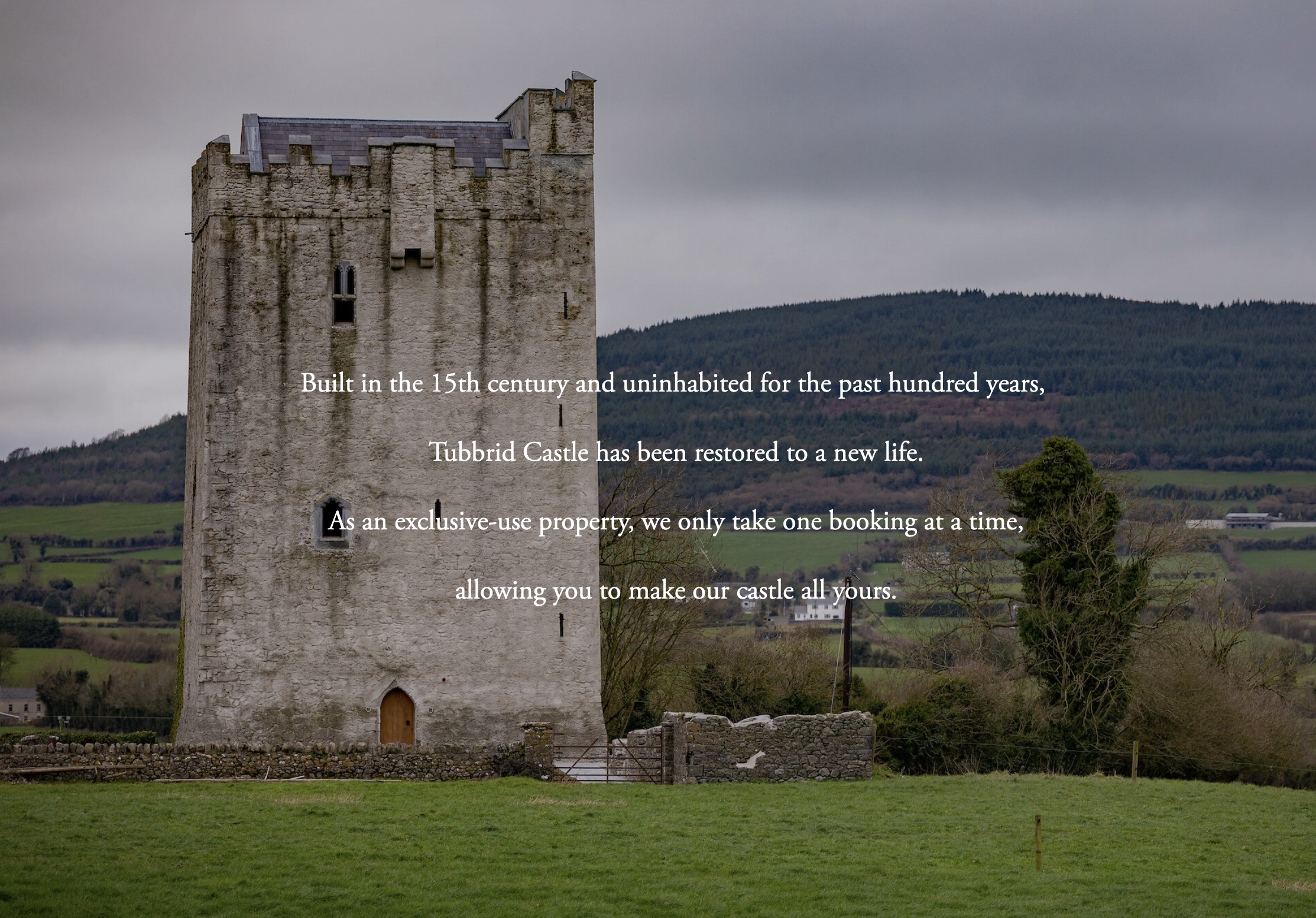
Beautiful wrought iron gates at the entrance to the farm, and square panelled pillars. © Jennifer Winder-Baggot, www.irishhistorichouses.com
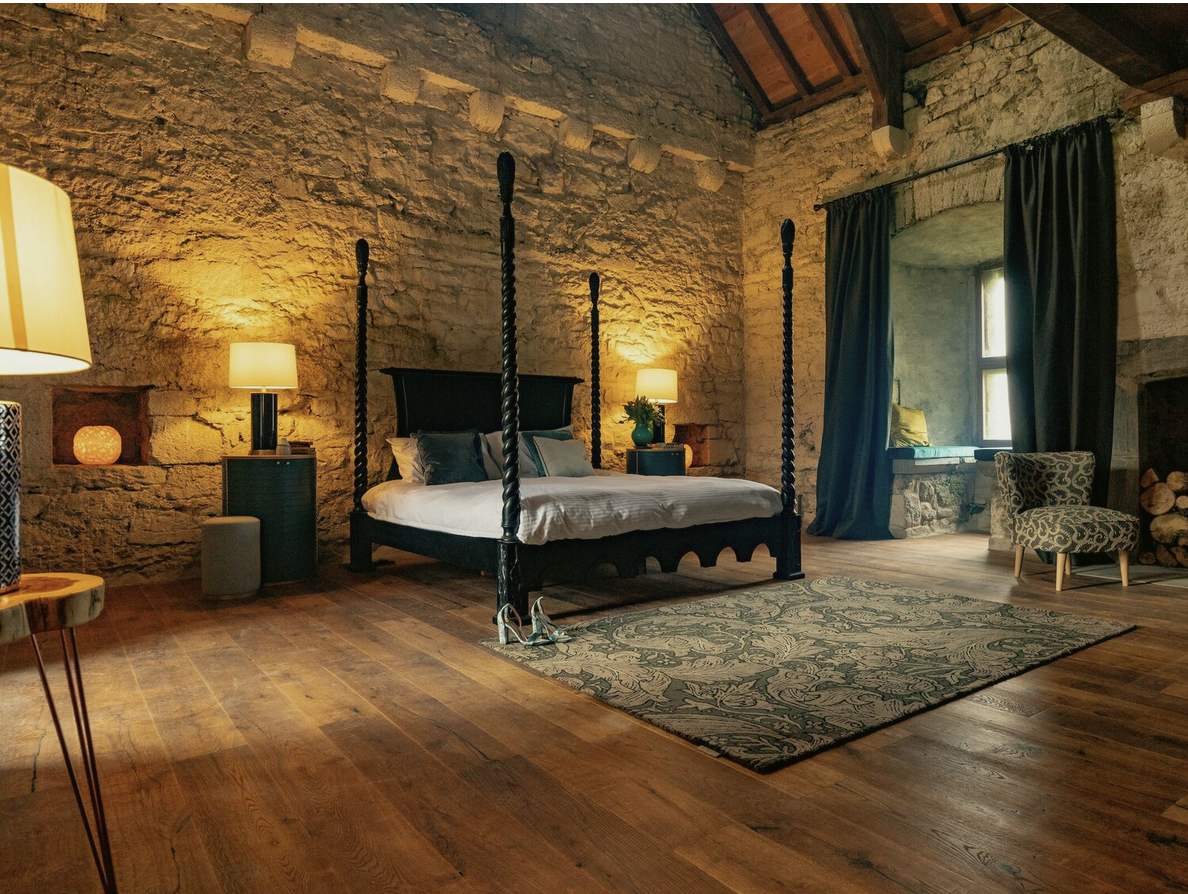
Stephen and I visited Altidore Castle on a grey Saturday, June 1st 2019. I contacted Philip Emmet beforehand and he suggested we come at 3pm for a tour of the house. Philip Emmet is a descendant of the family of the Irish rebel Robert Emmet, who was hung for treason in 1803.

Execution of Robert Emmet, copyright 1897 by Kurz & Allison-Art publishers, Chicago

We arrived early and Philip’s wife Vicky suggested we look around the gardens until the other couple who were coming for the tour arrived. We had spied a pond to our left on our way up the long driveway, and there were stone steps up from the driveway across from the front of the house to a large rectangle of a lawn, edged by huge rhododendrons, so we headed off to explore.

The garden at Altidore, © Jennifer Winder-Baggot, www.irishhistorichouses.com
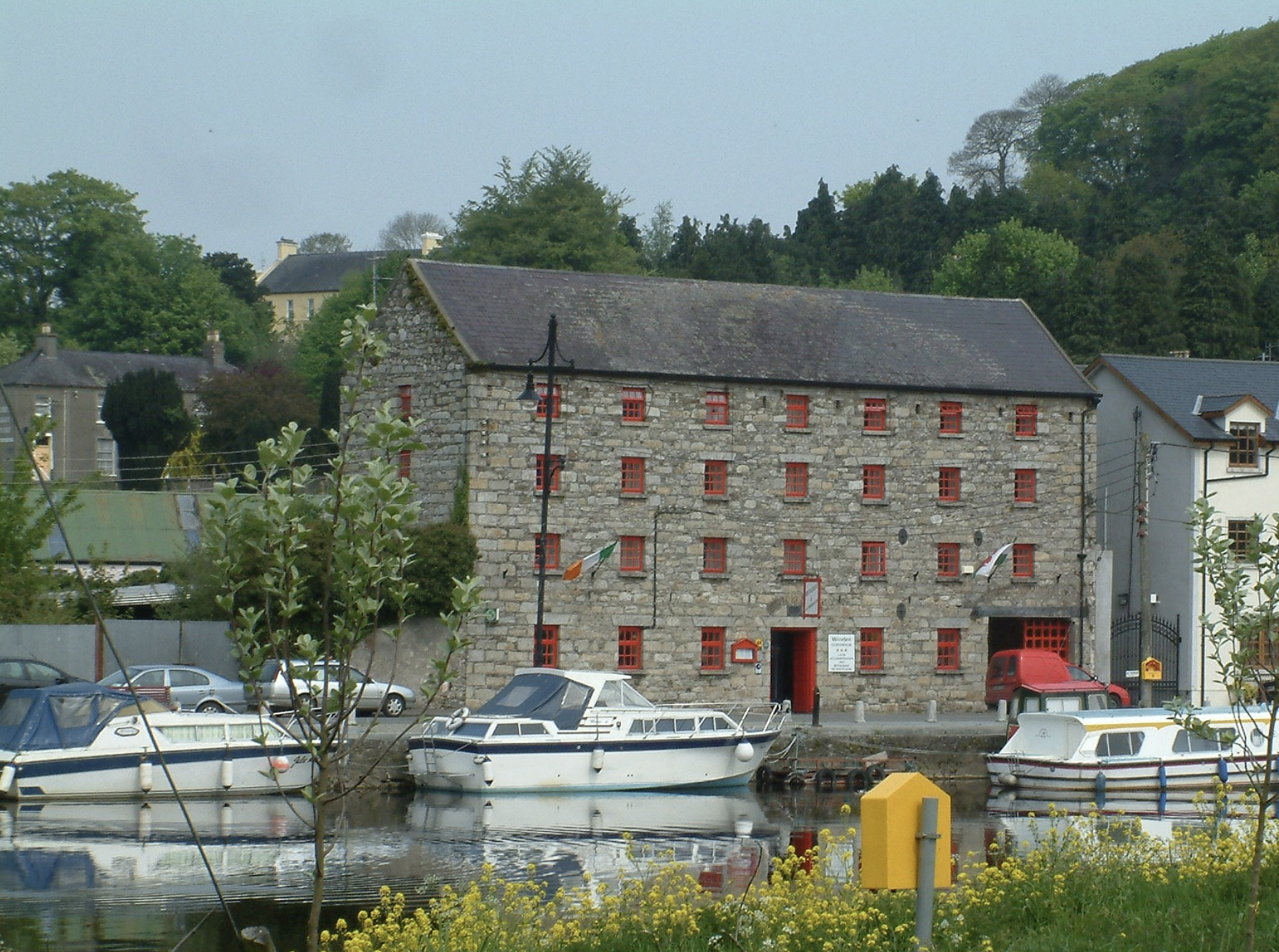
We only had about fifteen minutes, so after looking at the lawn above, we went down toward the pond and the gardens directly outside the house. We found a lovely sunken garden with two lions guarding it, containing a “wishing well.”

Altidore, County Wicklow. © Jennifer Winder-Baggot, www.irishhistorichouses.com
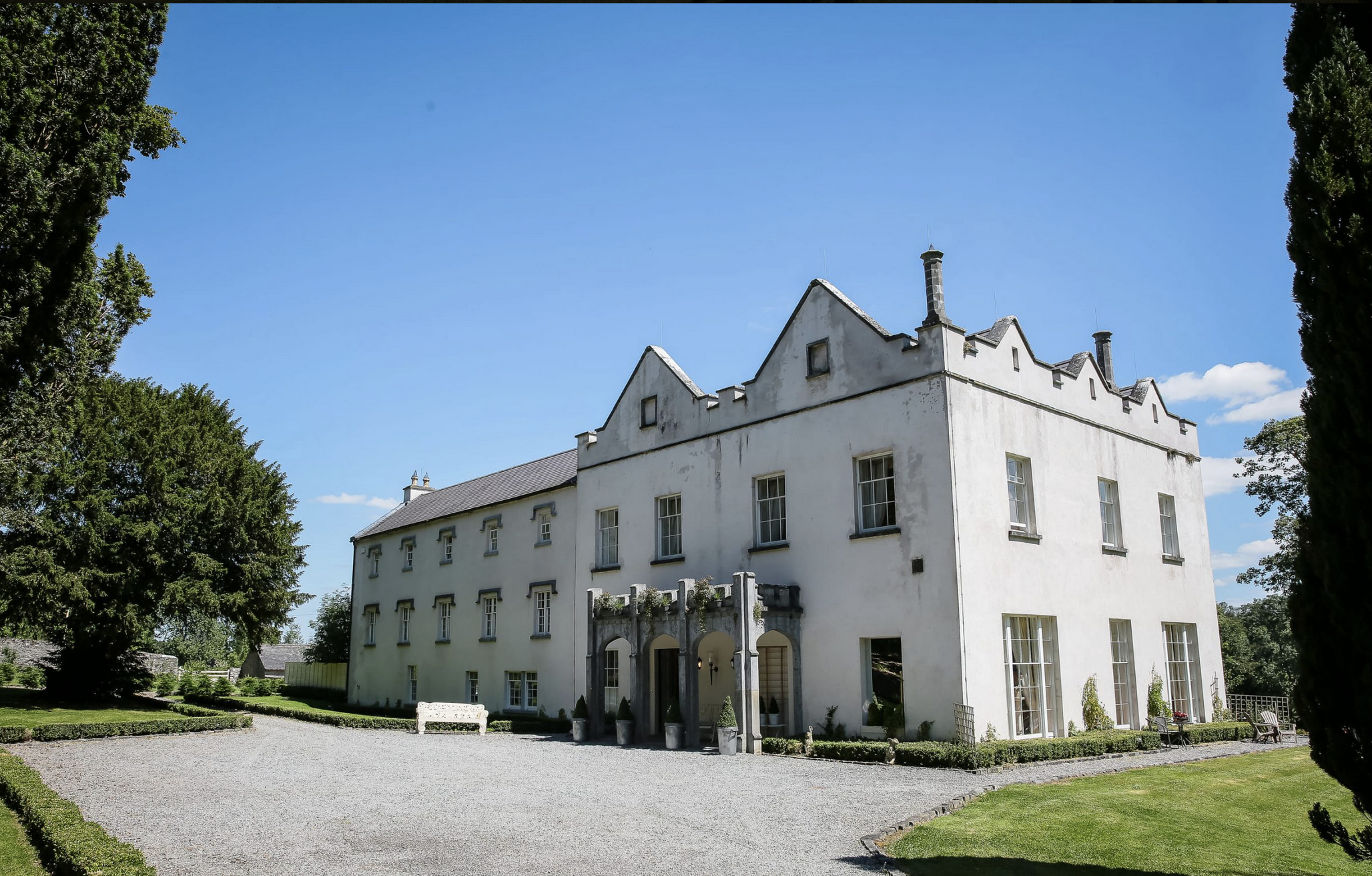
Steps down to the sunken garden. © Jennifer Winder-Baggot, www.irishhistorichouses.com
Lions flank the steps to the sunken garden. © Jennifer Winder-Baggot, www.irishhistorichouses.com
Stephen at the wishing well. I could not make out what was on the top of the well. © Jennifer Winder-Baggot, www.irishhistorichouses.com
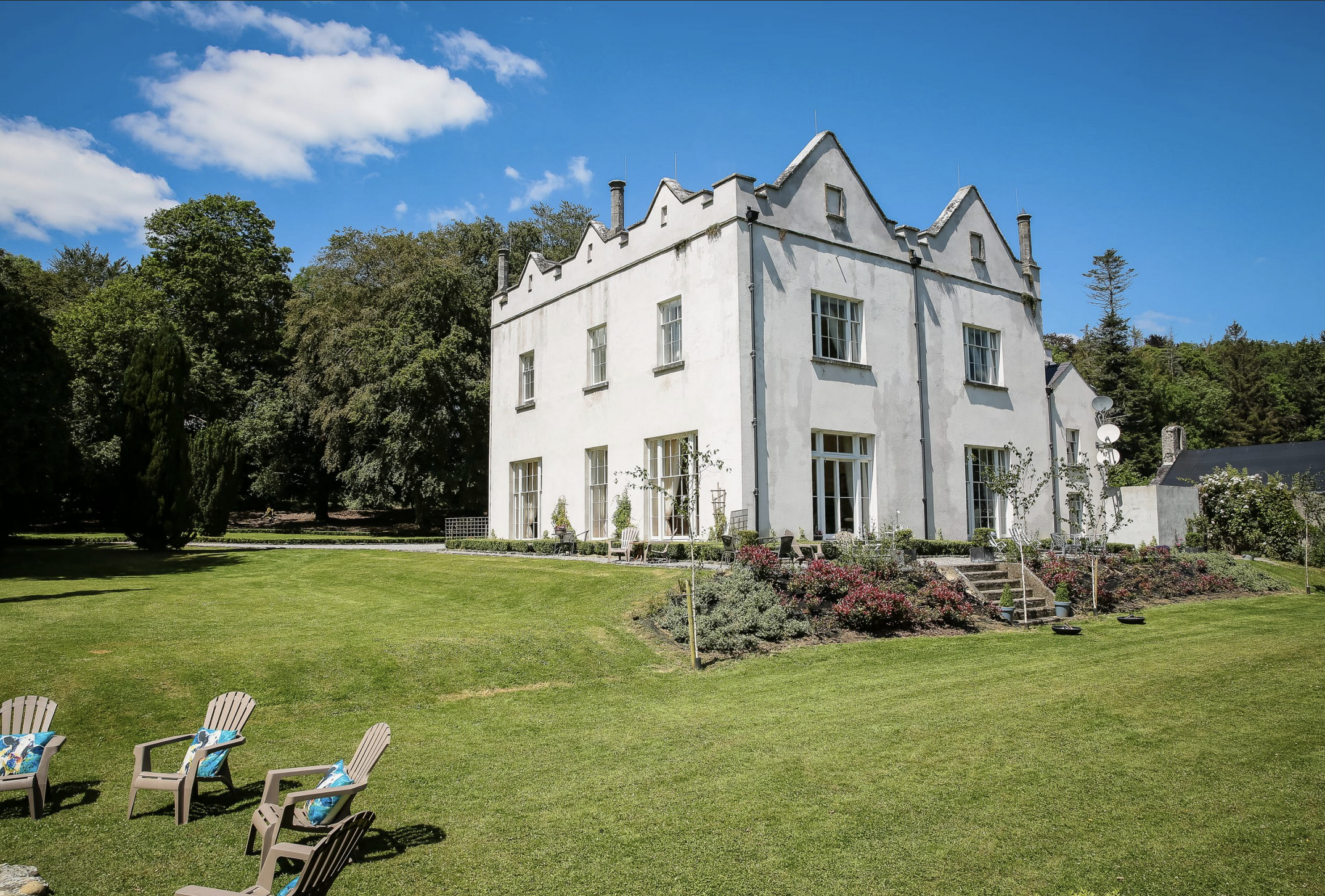
The well has Corinthian columns and a crest on top with two heads, and a cast iron embellishment. © Jennifer Winder-Baggot, www.irishhistorichouses.com

We walked around the back, I was conscious that we could look in the windows and not wanting to disturb or pry, I carefully kept my back to the windows and gazed at the impressive view of the wide valley below. What a view!

The view from Altidore Castle. © Jennifer Winder-Baggot, www.irishhistorichouses.com
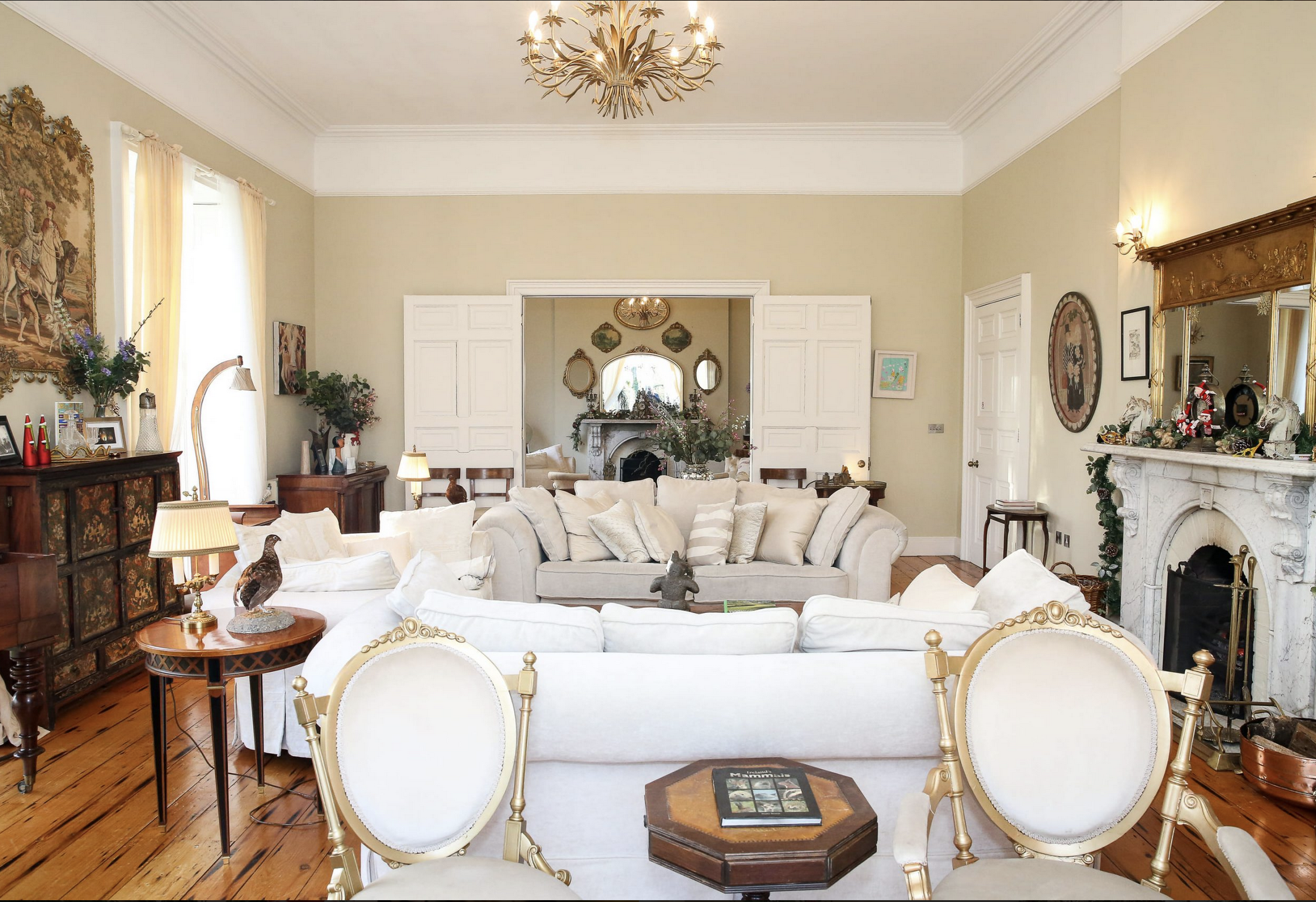
We headed back to the front of the house then. It is a most odd-looking home. It’s quite small but has imposing castellations. This must be why it is called a “toy fort” (by Mark Bence-Jones) or a “toy castle” (National Inventory of Historic Architecture).

Mark Bence-Jones describes it in his A Guide to Irish Country Houses:

A charming late-Georgian “toy fort,” with four octagonal corner turrets; of two storeys on the entrance side and three on the other sides, where the ground falls away. Despite the battlements on the turrets, the house is more Classical than Gothic; it is symmetrical and has a central Venetian window over a pillared porch. [1]

The Venetian (tripartite) window over a single-storey pillared porch. © Jennifer Winder-Baggot, www.irishhistorichouses.com
The back of the house is three storeys whereas the front is two, due to the slope of the ground. The basement forms the ground floor in the back. © Jennifer Winder-Baggot, www.irishhistorichouses.com
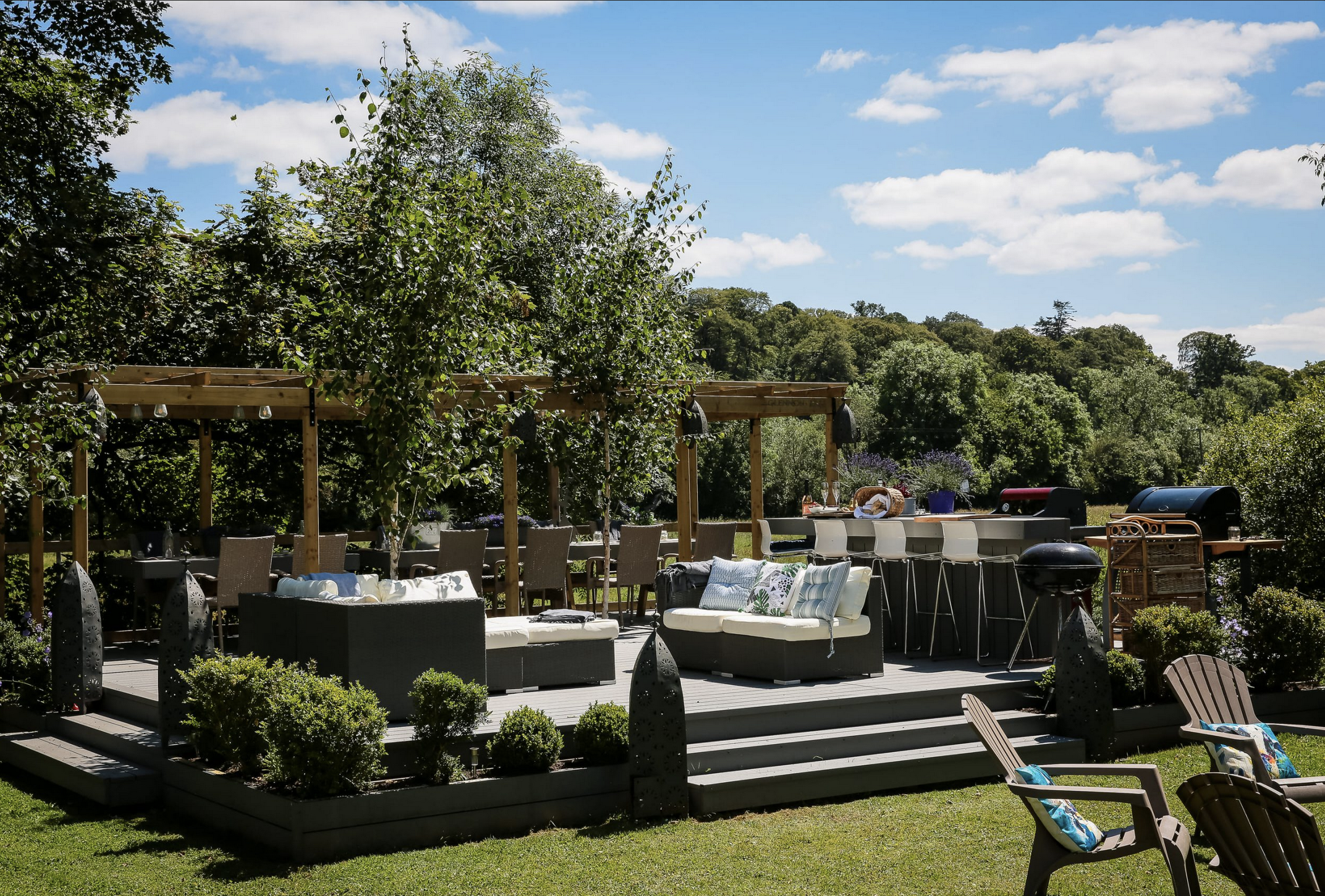
The house was built for General Thomas Pearce around 1730. It may have been designed by his nephew, Edward Lovett Pearce. General Thomas Pearce (ca. 1670-1739) was a British Army officer, a privy councillor and member of Parliament. He was appointed to Ireland in 1715, ultimately becoming General of His Majesty’s Forces in Ireland. He represented Limerick in Parliament from 1727 until his death. He married Mary daughter of William Hewes of Wrexham, and they had three sons and two daughters. His daughter Anne married her first cousin, Edward Lovett Pearce. [2]

Edward Lovett Pearce was a young Irish architect, born in 1699. He favoured the Palladian style of architecture and studied initially under his cousin the English Baroque architect John Vanbrugh. Lovett Pearce is best known for his work on Castletown House and the Irish Houses of Parliament, which later became the Bank of Ireland on College Green in Dublin. In Italy he met the Florentine architect Alessandro Galilei who was making plans for Castletown. Pearce seems to have taken over the work on Castletown based on Galilei’s plans.

Pearce was also commissioned by his uncle-in-law Thomas Coote (Coote married Edward Lovett Pearce’s aunt Anne Lovett – she was Thomas Coote’s third wife) to build Bellamont House in Cootehill, County Cavan (around 1730). He also designed two houses on Henrietta Street in Dublin, including number 9, for his cousin Mrs. Thomas Carter, and he designed Summerhill, County Meath. He died of an abscess at the young age of 34 in his home The Grove in Stillorgan, Dublin, and is buried in St. Mary’s Graveyard, now a closed graveyard in Donnybrook, which I was lucky enough to see in a tour a couple of years ago.

Archway from the sunken garden to the back of the house. © Jennifer Winder-Baggot, www.irishhistorichouses.com

We followed the other couple in through the porch to meet Philip Emmet, who welcomed us. We stepped into a large high-ceilinged hall.

The inside of the front hall and staircase is odd as the windows don’t look as if they fit the plans, or else the staircase has been moved. Philip does not know a lot about the background of the house. The Irish Historic Houses website states that Altidore was enlarged and modified for a subsequent owner, Major Henry Brownrigg. [3] We did not go upstairs, but Mark Bence-Jones tells us that the staircase is “of stout but elegant joinery with a scrolled end to its balusters.”

By 1773 the house was owned by Reverend William Blachford, Librarian of Marsh’s Library in Dublin. Philip has a portrait of Reverend Blachford’s daughter Mary Tighe, a poet who was famous in her time and was grouped with the Romantic writers Byron and the revolutionary Mary Wollestonecraft. The poet John Keats admired her work. I must borrow her book, Psyche or the Legend of Love from the library!

Mary Tighe (1747-1791), Poet, by George Romney, courtesy of National Gallery of Ireland.

Mary, nee Blachford, had a severely religious upbringing. William Blachford died in 1773 leaving his wife Theodosia (daughter of William Tighe of Rossana, County Wicklow), a son John and daughter Mary. Theodosia converted to Methodism, founded by John Wesley, and was involved in many charitable works including supporting the Leeson Street Magdalen Asylum for unmarried mothers, and the Female Orphan House on Prussia Street in Dublin. [4]

Theodosia Blachford née Tighe (c.1780) A self portrait, seated three-quarter length, with her children, Mary and John courtesy of Adam’s 2 April 2008.
William Tighe of Rosanna! Portrait by by Charles Jervas (c.1675-1739), courtesy of Adams auction 19 Oct 2021.

At the young age of 21, Mary married her cousin Henry Tighe (1771-1836), son of William Tighe of Woodstock, County Kilkenny. Henry served as an MP in the Irish Parliament representing Inistioge, County Kilkenny.

Mary contracted tuberculosis and lived her final months as an invalid in her brother-in-law William Tighe’s estate of Woodstock, where she died at the age of 37.

A marble statue of Mary, commissioned by her son after her death and carved by Lorenzo Bartolini of Tuscany, stood in the hall of Woodstock before the house was burnt in 1922. Although the original statue was destroyed in the fire at Woodstock, the plaster original of Bartolini’s statue is in the Accademia in Florence. There is also another life-size sculpture of her by English sculptor John Flaxman in her mausoleum in the graveyard attached to the former Augustinian priory in Inistioge, County Kilkenny. [5]

Mary Blachford Tighe (1772-1810) as sculpted by Lorenzo Bartolini ca. 1820, photograph from National Library of Ireland, flickr constant commons.

Woodstock was not rebuilt after it was burned in 1922 and it remains a ruin but the gardens are open to the public.

Woodstock, County Kilkenny, where Mary Tighe spent her final years. © Jennifer Winder-Baggot, www.irishhistorichouses.com
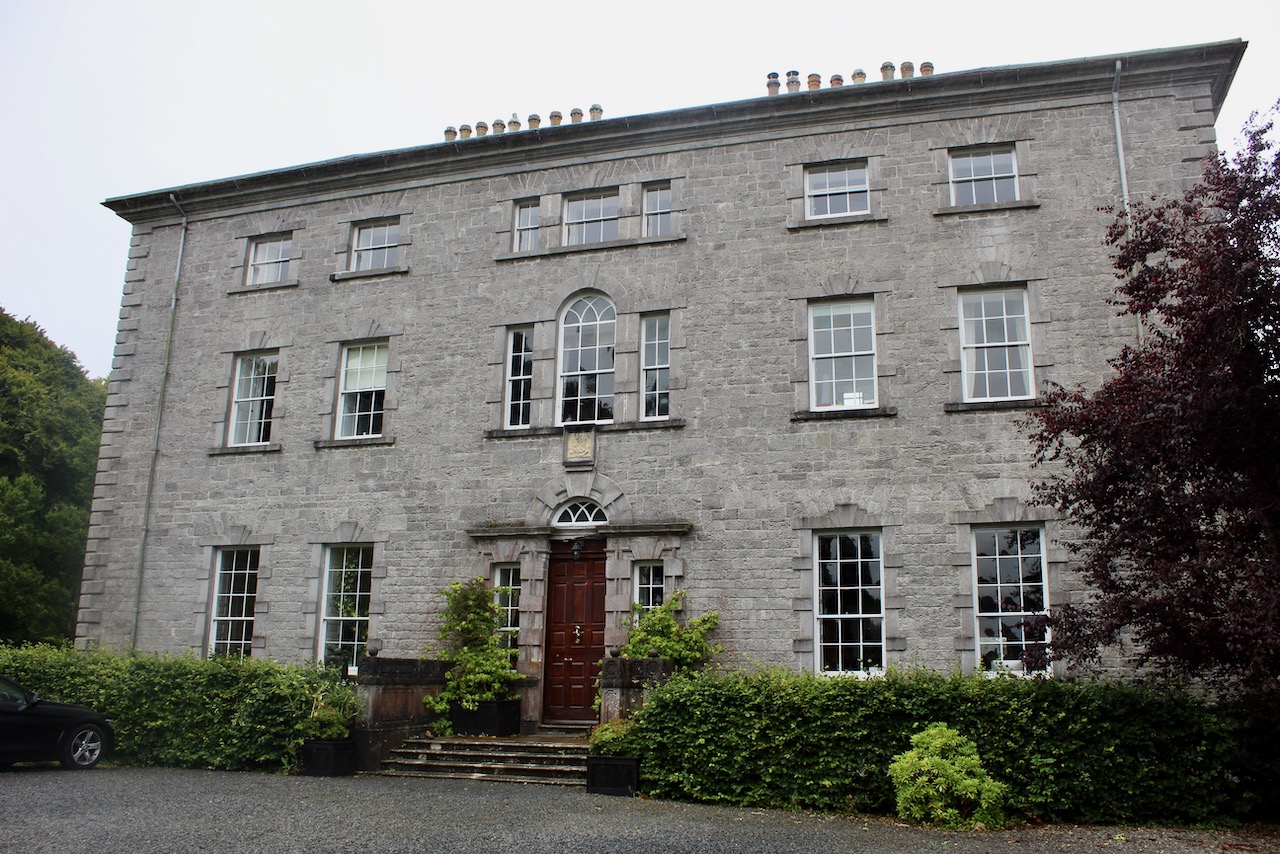
Reverend Blachford’s son John inherited Altidore and lived there with his wife Mary Anne, daughter of Henry Grattan MP (1746-1820) from nearby Tinnehinch [6]. I don’t think they had any children.

Henry Grattan (1746-1820).

There was another fascinating portrait in one of the beautifully decorated rooms, this time of an Indian military man, who was a servant of an ancestor of Philip’s wife. This ancestor, named Dennehy, worked in India under Queen Victoria, and introduced Victoria to Indian servants – and through him she met her beloved Indian servant, about whom, and their relationship, there was a movie a few years ago, “Victoria and Abdul”! Philip’s wife was in Osbourne, Victoria’s home on the Isle of Wight, and noticed that there is a series of these pictures, matching her own, of Queen Victoria’s other Indian servants. Stephen and I also loved the tv series about young Victoria.

Before the Emmets purchased the house in 1944, the Dopping-Hempenstals owned the house, from 1834-1918. They owned extensive lands in County Wicklow. They rarely lived in Altidore and instead leased it out. At one stage it housed a tuberculosis sanatorium. According to the Irish Historic Houses website, Altidore changed hands many times over the next decades and was owned by two different banks on separate occasions.

Finally, in 1945, James Albert Garland Emmet (who went by “Garland”) purchased the house on three hundred acres from Percy Burton, a bachelor. The Emmets carried out extensive restoration and created a large new garden, centred on a pair of canals from the early 18th century garden layout. These are the bodies of water we saw on the way in. The present owners, Philip (grandson of Garland Emmet) and his wife Vicky, have farmed the estate organically for nearly 20 years.

One of the “canals.” © Jennifer Winder-Baggot, www.irishhistorichouses.com
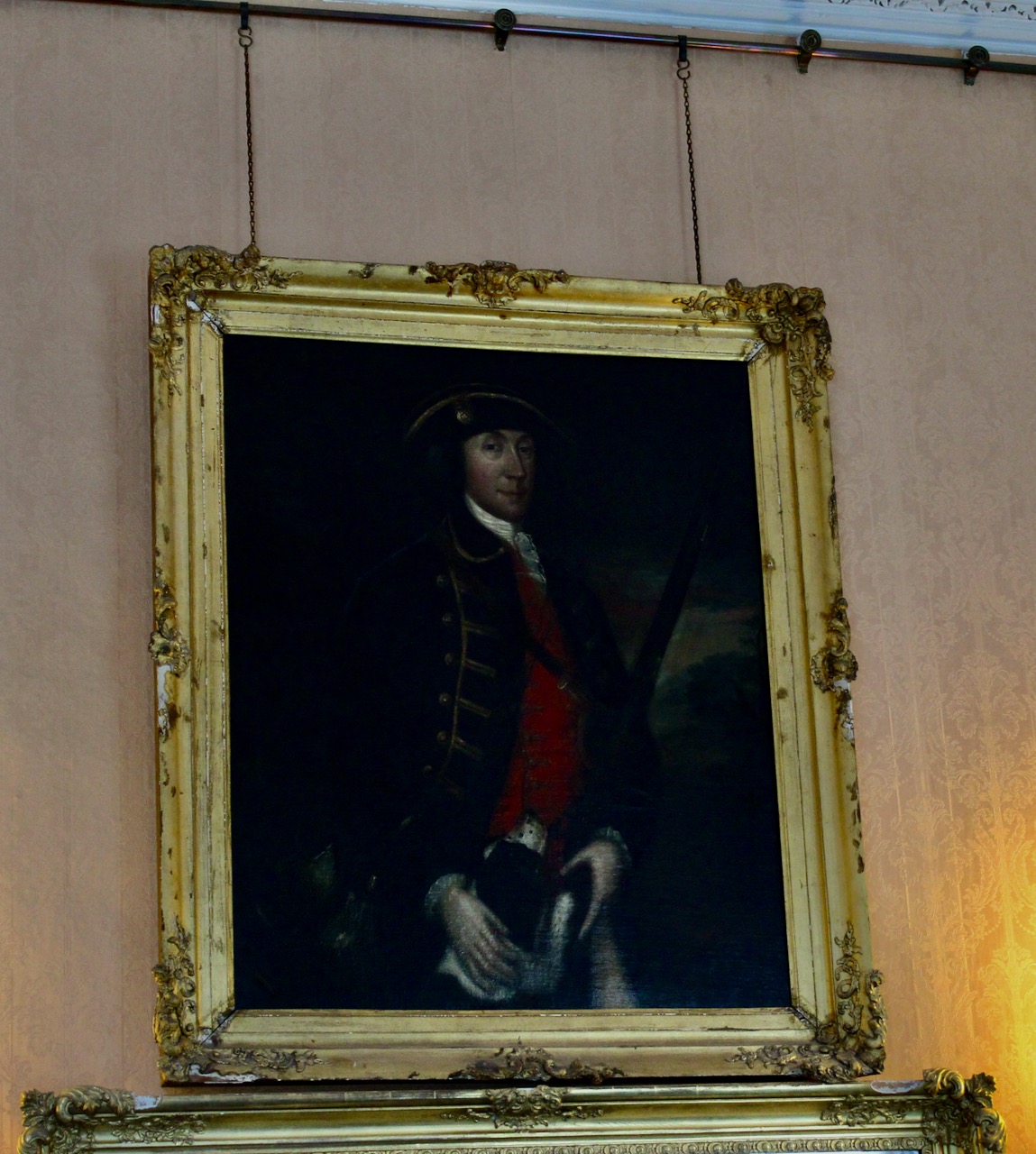
Altidore, June 2019. © Jennifer Winder-Baggot, www.irishhistorichouses.com
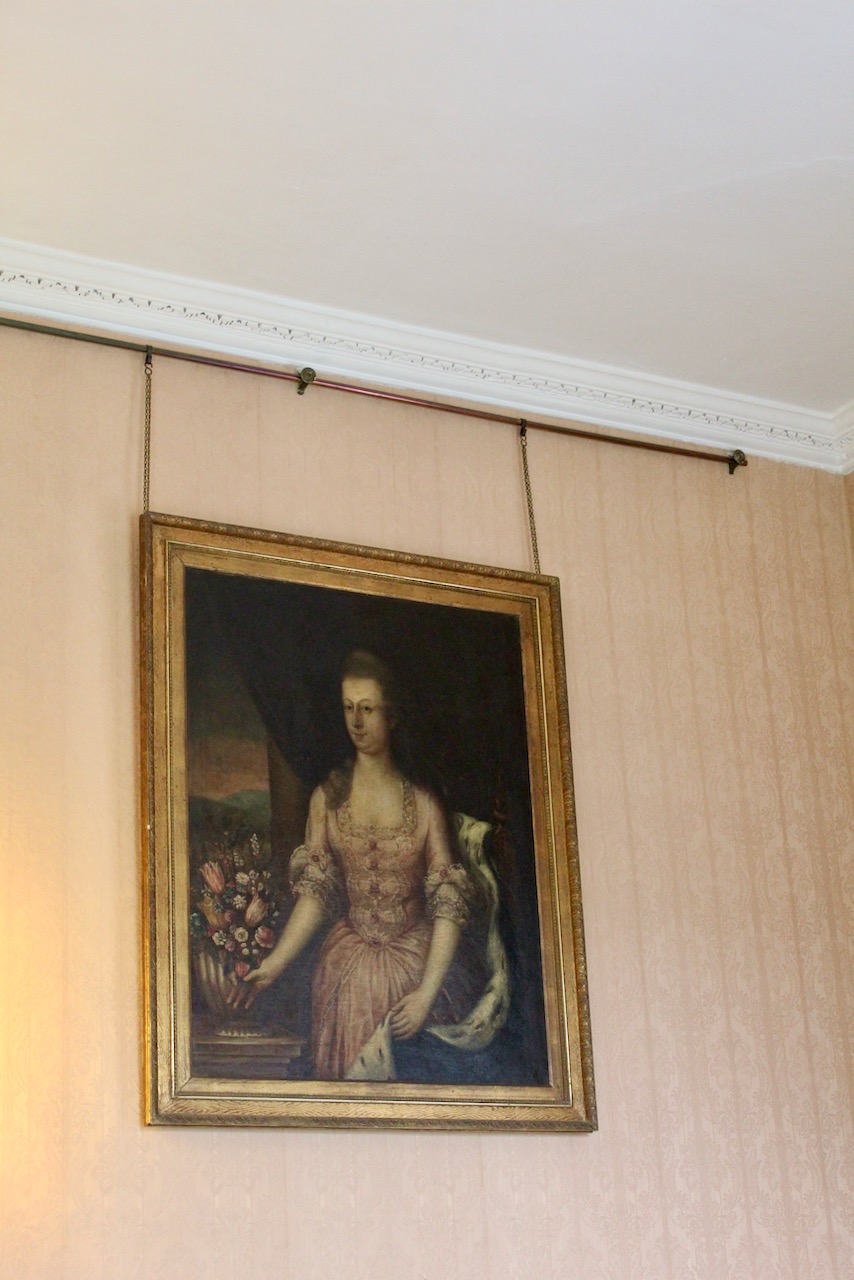
We moved from the drawing rooms to the dining room. The walls are adorned with fine medallions of Classical figures in stucco relief. They were uncovered when the walls were being redone, under layers of paint and wallpaper! The Irish Aesthete writes about them, and has beautiful photographs on his website:

“One of the past year’s most fascinating personal discoveries was the dining room at Altidore Castle, County Wicklow …. Much of the interior decoration dates from that period [ca. 1730], including the dining room’s panelling. In the last quarter of the 18th century, however, additional ornamentation was added with the introduction of oval and circular plaster medallions featuring female classical deities and graces: this would have been around the period that Altidore was owned by Rev William Blachford … During the same period the interiors of nearby Mount Kennedy – designed by James Wyatt in 1772 but only built under the supervision of Thomas Cooley the following decade – was being decorated by the celebrated stuccadore Michael Stapleton. The medallions are not unlike those seen in Lucan House, County Dublin where Stapleton also worked: might he have had a hand in the plasterwork at Altidore?” [7]

Michael Stapleton (1747-1801) was a famous Irish stuccodore, known as the “Dublin Adam,” referring to the Scottish architect and interior designer Robert Adam (1728-1792), who worked in the neo-Classical style of plasterwork. [8] 

Side view of the house. © Jennifer Winder-Baggot, www.irishhistorichouses.com

Philip told us that his ancestors, the Emmets, had to leave Ireland after Robert (1778-1803) and his brother Thomas Addis Emmet rebelled. Thomas Addis Emmet moved to the United States.

Robert Emmet. Published by Fishel, Alder & Schwartz 64 Fulton St. New York (1880), coloured and framed and entitled ”Robert Emmett, The Irish Patriot” courtesy Adam’s auction 18 April 2012
Thomas Addis Emmett (1764-1827) by William Carroll, bearing inscription on back Thomas Addis Emmet by William O’Carroll, 57 Henry Street Dublin, courtesy of Adam’s auction 22 Nov 2015.

Thomas Addis Emmet (1764-1827) was a lawyer and politician from a wealthy Anglo-Irish Protestant family. He sought to end discrimination against Catholics and Protestant Dissenters such as Presbyterians. He tried to find a peaceful way of introducing a non-sectarian democracy to Ireland.

He acted as a legal advisor for the Society of United Irishmen. However, the United Irishmen were declared illegal, so efforts for a peaceful Catholic emancipation were abandoned. Instead, the United Irishmen sought  independence from Britain by armed rebellion. Thomas Addis Emmet advocated waiting until the French had arrived for the rebellion, but Edward Fitzgerald (1763-1798) was more impatient and decided to go ahead with the rebellion in 1798. British intelligence infiltrated the United Irishmen and arrested most of the leaders, including Thomas Addis Emmet, on the eve of their rebellion on March 12, 1798. On his release in 1802 he went to Brussels, where he was visited by his brother Robert in October that year, who informed of the preparations for a fresh rising in Ireland in conjunction with French aid. However, at that stage France and Britain were briefly at peace, and the Emmets’ pleas for help were turned down by Napoleon.

I came across this painting of the Emmet house in St. Stephen’s Green in Dublin in the museum at Lissadell.

Thomas received news of the failure of Robert Emmet’s rising in July 1803 in Paris. Robert was hung for treason in front of St. Catherine’s Church in Thomas Street in Dublin on September 20th 1803. Thomas Addis then emigrated to the United States and joined the New York bar where he had lucrative practice.

DSC_0963
Memorial in front of St. Catherine’s church, Thomas Street, Dublin. © Jennifer Winder-Baggot, www.irishhistorichouses.com
DSC_0964
Plaque in front of St. Catherine’s church, Thomas Street, Dublin. © Jennifer Winder-Baggot, www.irishhistorichouses.com

Thomas Addis Emmet became a member of the “New York Society for Promoting the Manumission of Slaves, and Protecting Such of Them as Have Been, or May Be Liberated,” commonly known as the New-York Manumission Society (N-YMS). Emmet denounced slavery for destroying the character, dignity and natural rights of man. [9]

Thomas Addis’s son John Patten Emmet (1796–1842) studied medicine and developed an interest in Chemistry. He was a chemistry professor at the University of Virginia from 1825 until his death in 1842.

Thomas Addis Emmet’s grandson, son of John Patten Emmet, also named Thomas Addis Emmet (1828-1919), visited Ireland in 1880. He hoped to move to Ireland but unfortunately he was not allowed by the government to live in Ireland, although he was a gynaecologist by profession, because it was thought that, like his ancestors, he may harbour rebellious tendencies. He requested that he be buried in Ireland so he could “rest in the land from which my family came.” Dr Emmet was interred according to his wishes in Glasnevin Cemetery in Dublin in 1922. His grave marker was designed by the father and brother of the revolutionary Padraig Pearse (they also sculpted the statues adorning St. Augustine and St. John church on Thomas Street).

It was Dr. Thomas Addis Emmet’s grandson, James Garland Emmet, who returned to Ireland and purchased Altidore Castle in 1944. He married Jocelyn Portman, daughter of Claud Berkeley Portman, 4th Viscount Portman of Bryanston, County Dorset in England.

He set up his home as the base the Irish branch of the Emmet family and gathered objects for a collection of Emmet memorabilia. Altidore still hosts an Emmet Museum. Fascinated, Stephen lingered in the museum room and traded stories with Philip. There are lovely miniatures of the Emmet family, and a sketch of Emmet done from his time in court, by – oh, who was it? Someone famous! [10] They also have Robert Emmet’s college books, with his sketches of uniforms – he was a good artist! He was thrown out of Trinity for being a revolutionary. The house also has some artifacts from Thomas Addis Emmet, and also Robert Emmet’s final letter from prison – written not to his fiance, Sarah Curran, as Stephen and I had believed, but to a politician, to urge him to excuse himself for not anticipating the rebellion. Robert Emmet was reknown for his secrecy.

A memorial plaque in St. Patrick’s Cathedral in Dublin, to the Emmet family. It tells us that this plaque is in the place which held the Emmet family vault, and that Thomas Addis Emmet MD of New York and other members of his family placed the plaque in 1908. © Jennifer Winder-Baggot, www.irishhistorichouses.com

We wandered back out to the ponds, which are divided into three, and are part of a canal running down the mountain. We found the old walled garden – not in use currently – and looked around the farm and the beautiful old farm buildings.

© Jennifer Winder-Baggot, www.irishhistorichouses.com

Altidore, County Wicklow. © Jennifer Winder-Baggot, www.irishhistorichouses.com
Above the arch is a half-circle oculus. © Jennifer Winder-Baggot, www.irishhistorichouses.com
Altidore outbuildings, © Jennifer Winder-Baggot, www.irishhistorichouses.com

Donation

Help me to fund my creation and update of this website. It is created purely out of love for the subject and I receive no payment so any donation is appreciated! For this entry I paid for petrol to drive from Dublin and for the entrance fee for myself and Stephen.

€10.00

[1] Bence-Jones, Mark. A Guide to Irish Country Houses published by Constable and Company Limited, London, 1988, previously published by Burke’s Peerage Ltd as Burke’s Guide to Country Houses, vol. 1 Ireland, 1978.

[2] https://en.wikipedia.org/wiki/Thomas_Pearce_(British_Army_officer)

[3] https://www.ihh.ie/index.cfm/houses/house/name/Altidore%20Castle

[4] Mary Delany (1700-1788) whose letters are published, was Godmother to a musician in the Wesley family, and explains how the Methodist Wesleys were cousins of Arthur Wellesley, the Duke of Wellington – who is honoured in the Wellington obelisk in the Phoenix Park.

[5] https://theirishaesthete.com/2013/05/13/of-wonderous-beauty-did-the-vision-seem/

The Irish Aesthete also notes: A new biography of Mary Tighe by Miranda O’Connell has been published by the Somerville Press.

[6] Tinnehinch was presented to Grattan, according to Mark Bence-Jones, in gratitude for  the part he played in obtaining freedom from British control in 1782. The house has been destroyed by fire but one storey of the ruin still stands and has been made into a feature of the garden of the present house, which is in the former stables.

[7] https://theirishaesthete.com/2016/01/02/getting-thoroughly-plastered/

[8] Other work by Michael Stapleton can be seen in Marlay House in Dublin, several houses in North Great George’s Street including Belvedere House, Powerscourt Townhouse, 59 South William Street, Dublin 2 and in Trinity College Dublin, especially in the Exam Hall and the Chapel. Note that Stapleton was the executor of Robert West’s will, and may have trained with Robert West. We came across Robert West’s characteristic stucco work in Colganstown.

DSC_0657 (1)
Examination Hall, Trinity College Dublin.

[9] Landy, Craig A. “Society of United Irishmen Revolutionary and New-York Manumission Society Lawyer: Thomas Addis Emmet and the Irish Contributions to the Antislavery Movement in New York” New York History, Vol. 95, No. 2 (Spring 2014), pp. 193-222 (30 pages).

[10] Perhaps the artist was John Comerford, who sketched Robert Emmet during his trial, and a miniature has been made from the sketch. The miniature is now in the National Gallery.