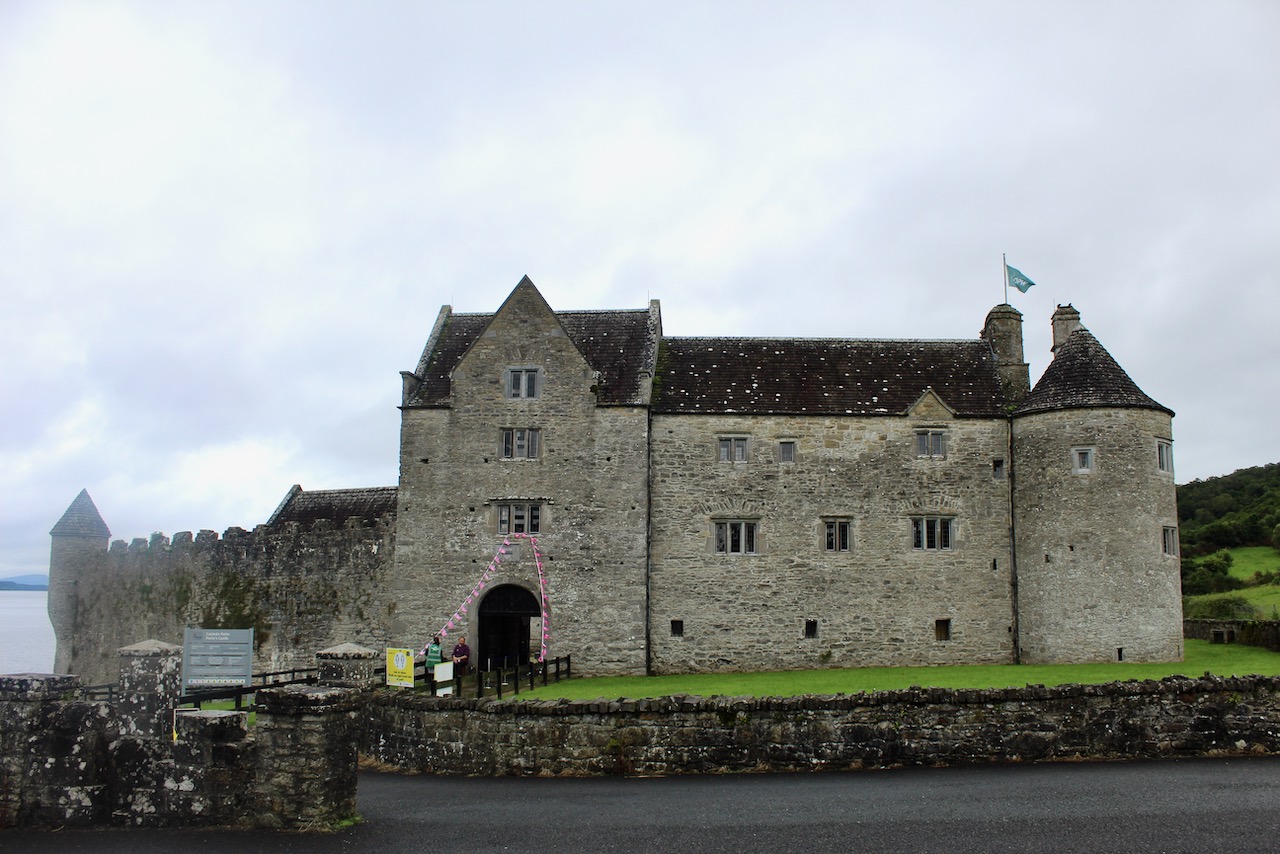
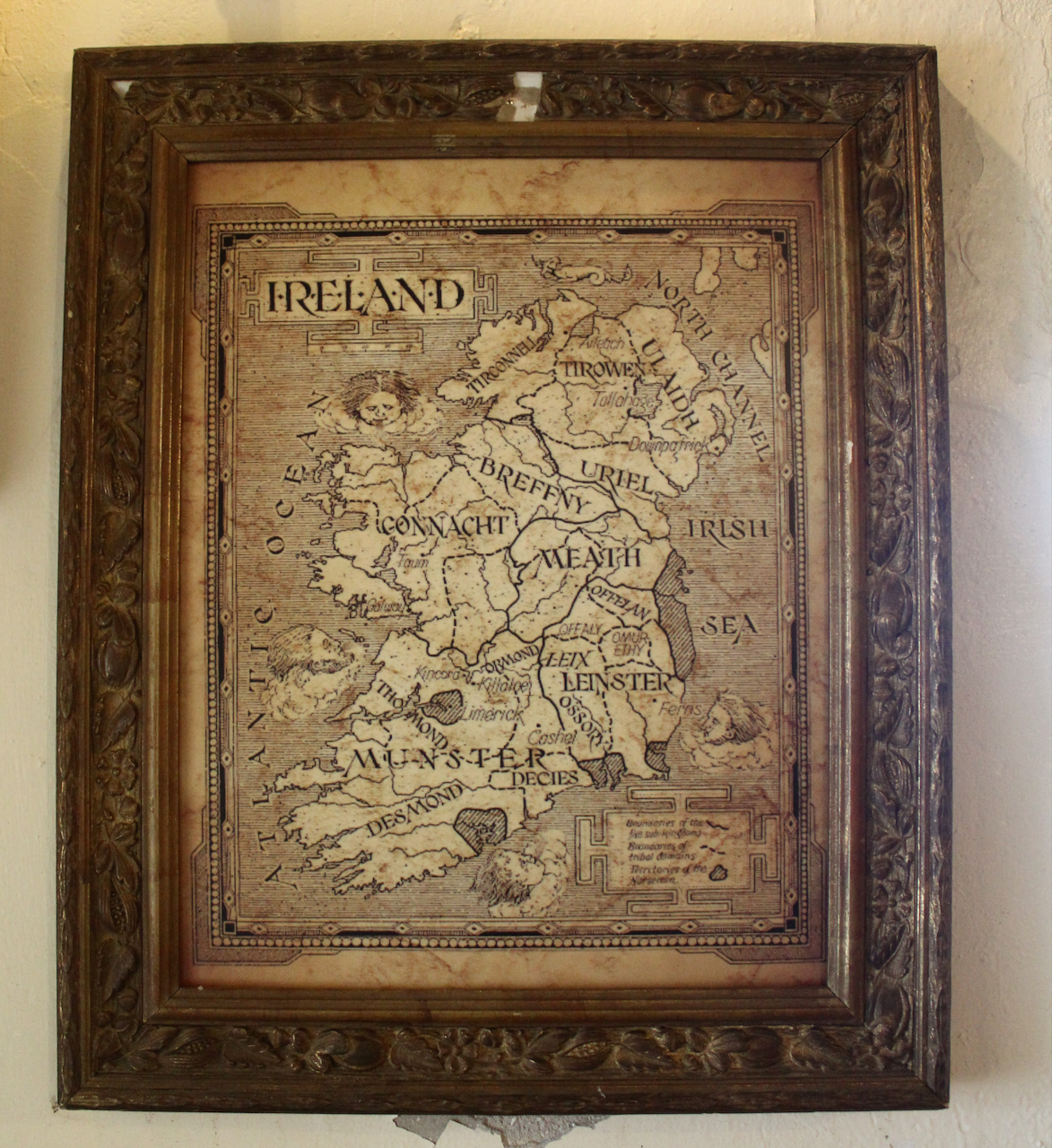
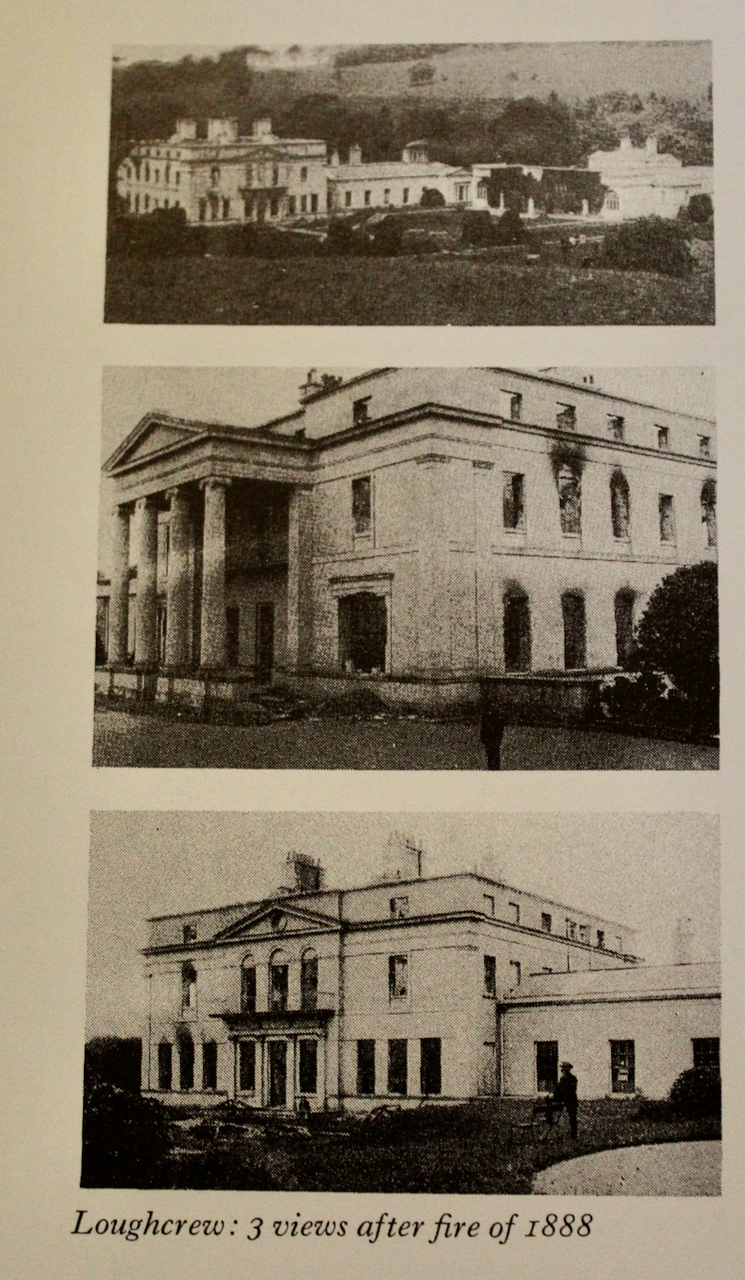
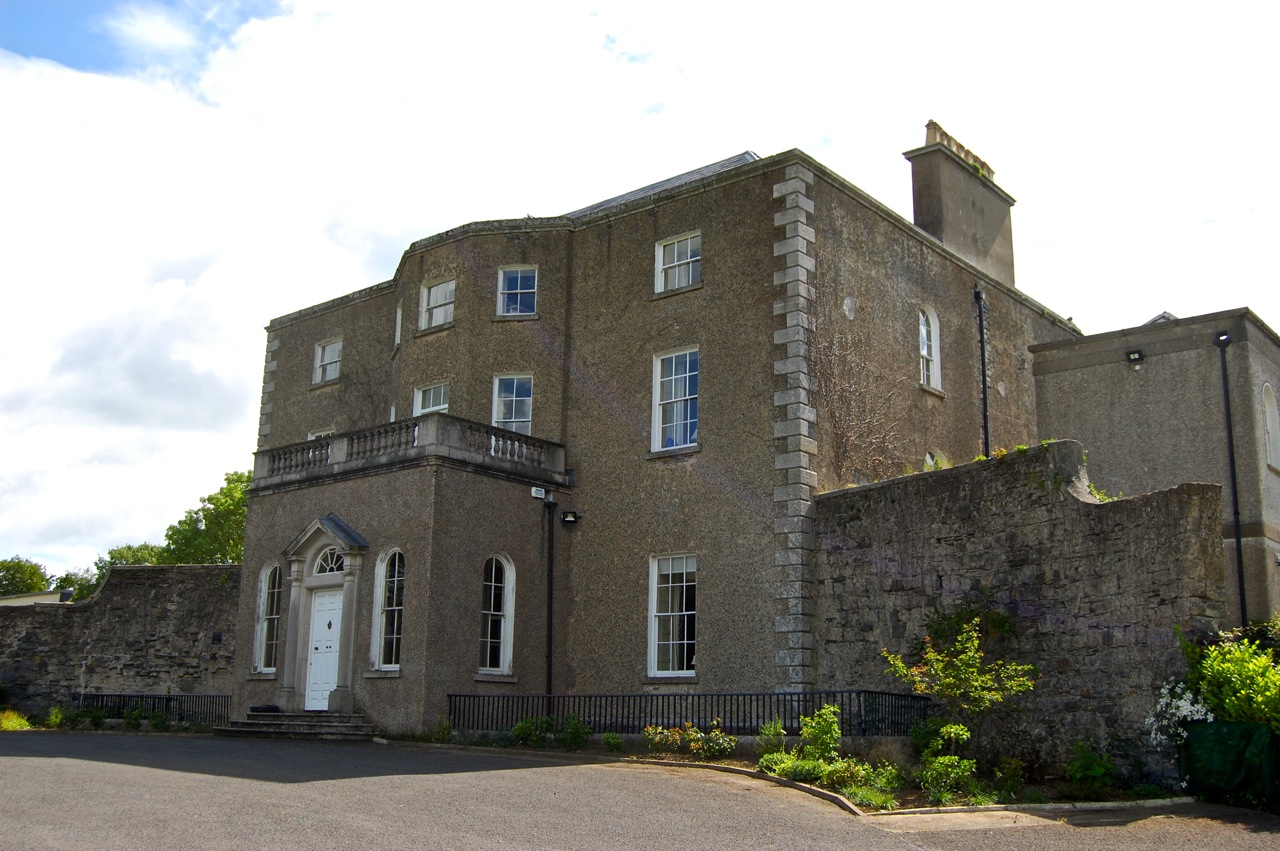
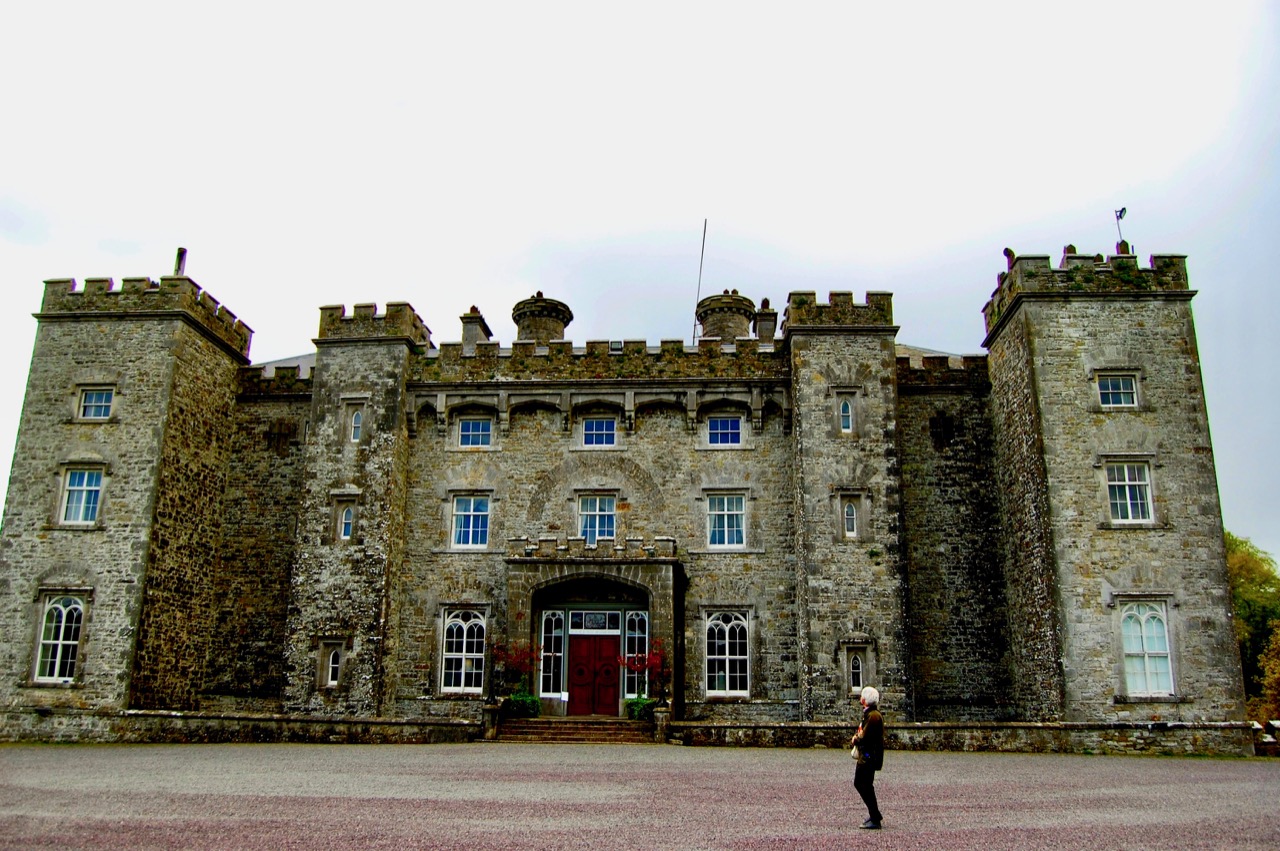
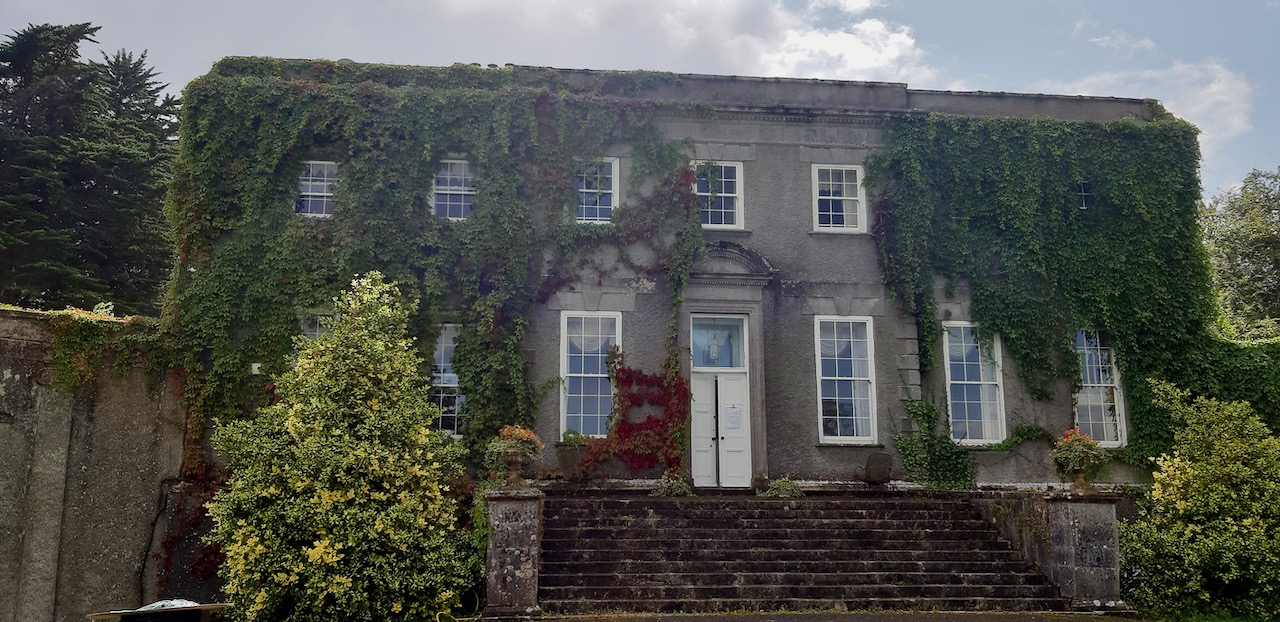
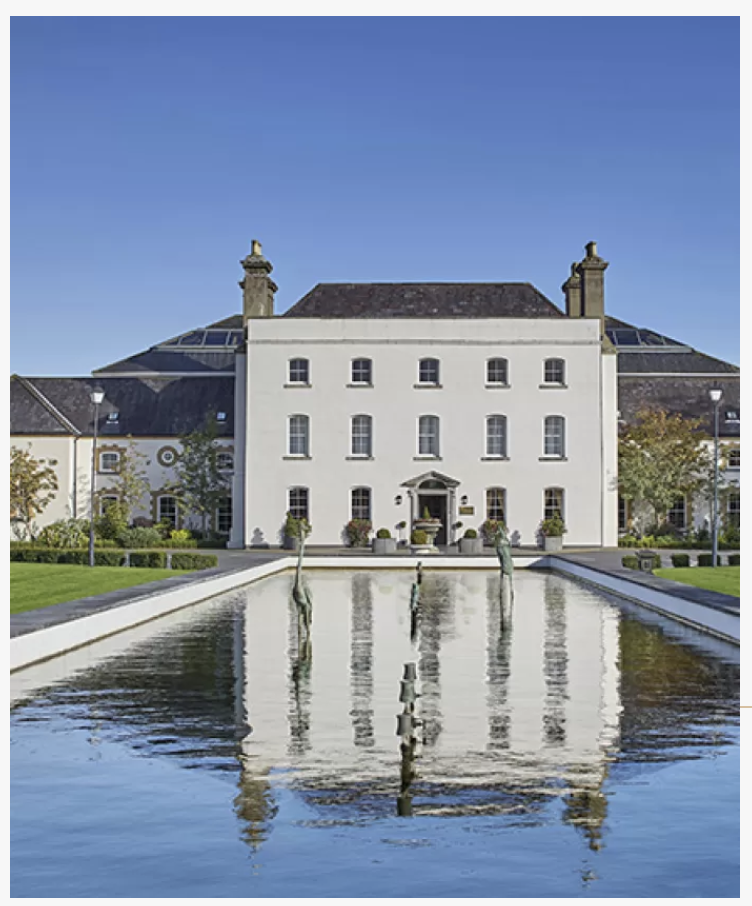
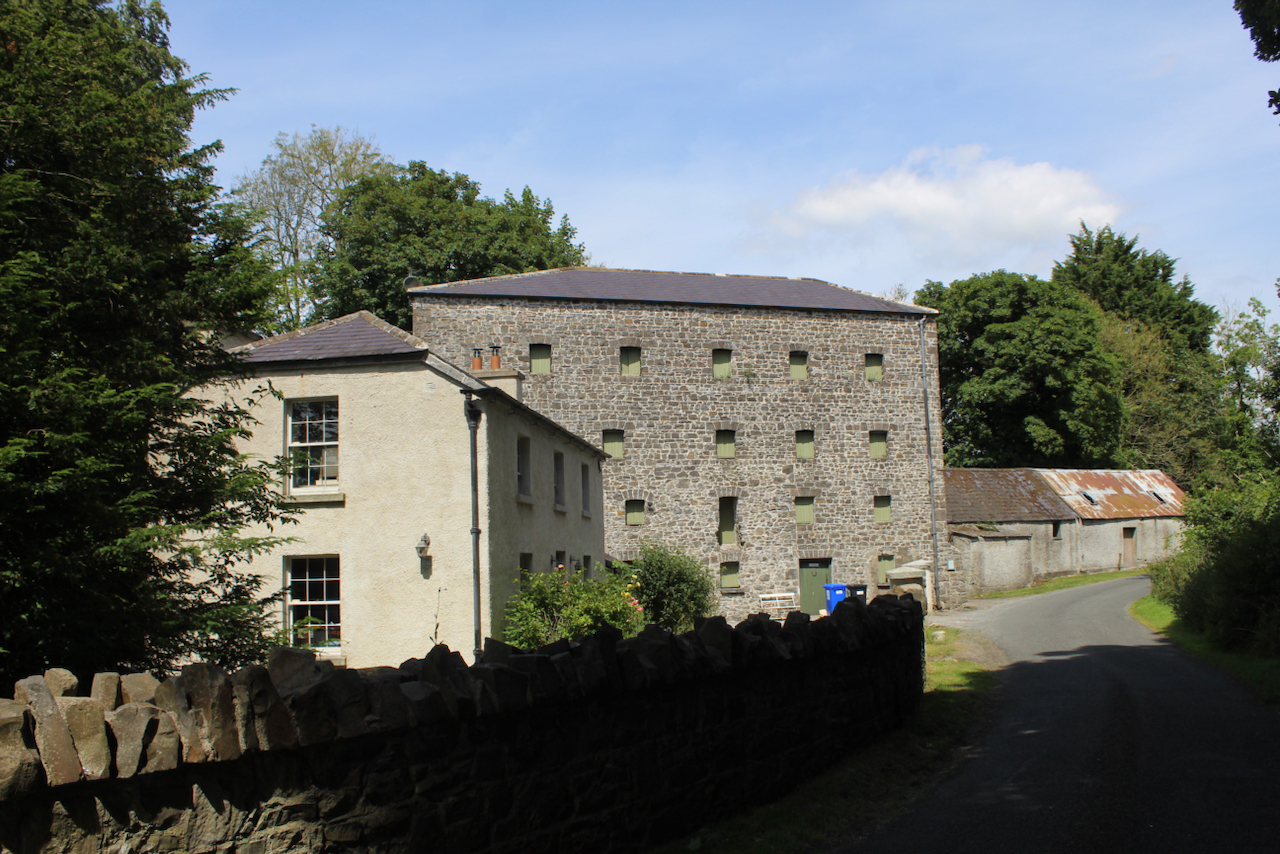
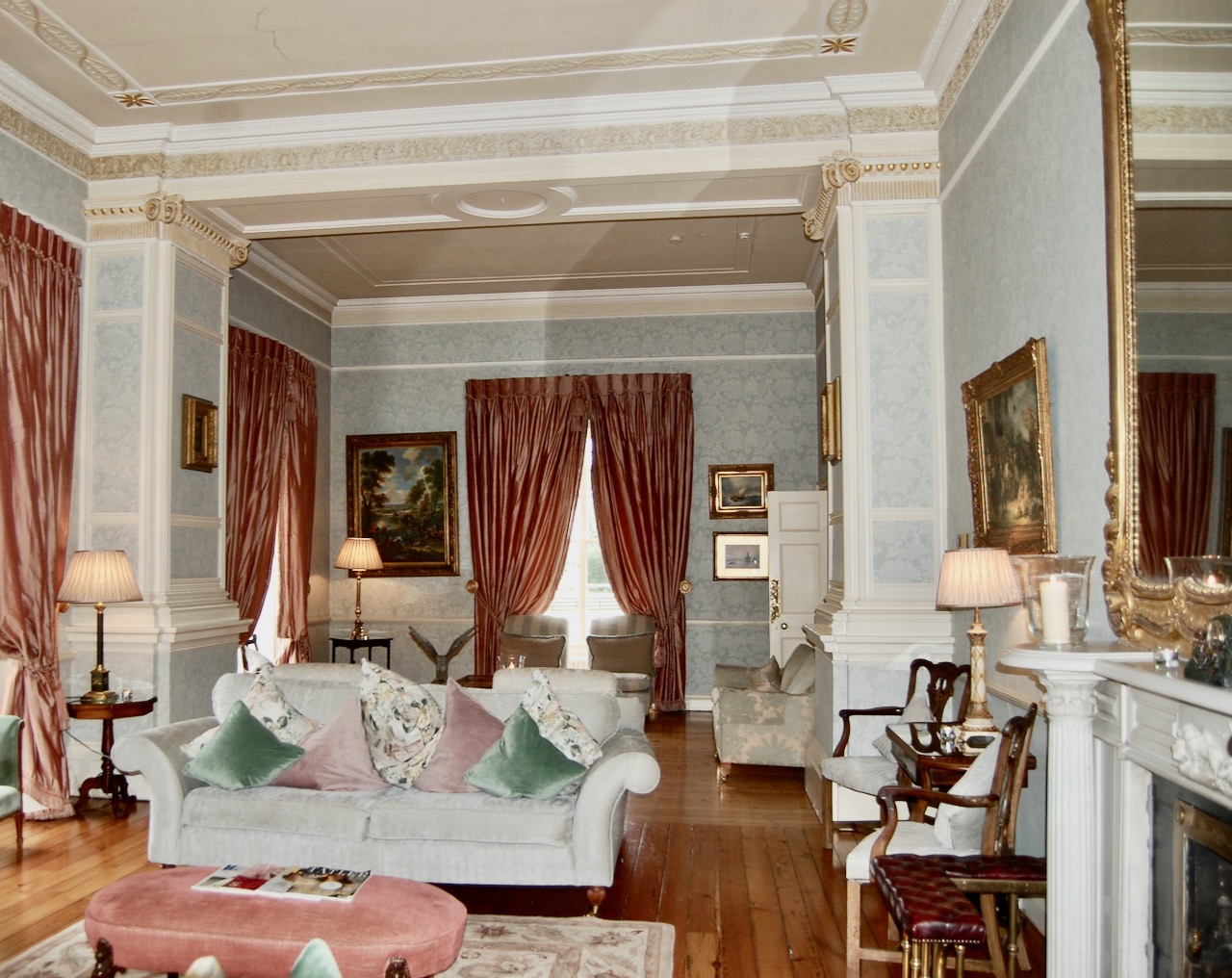
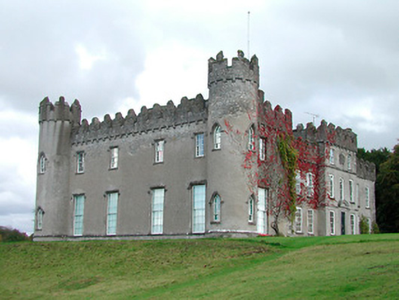
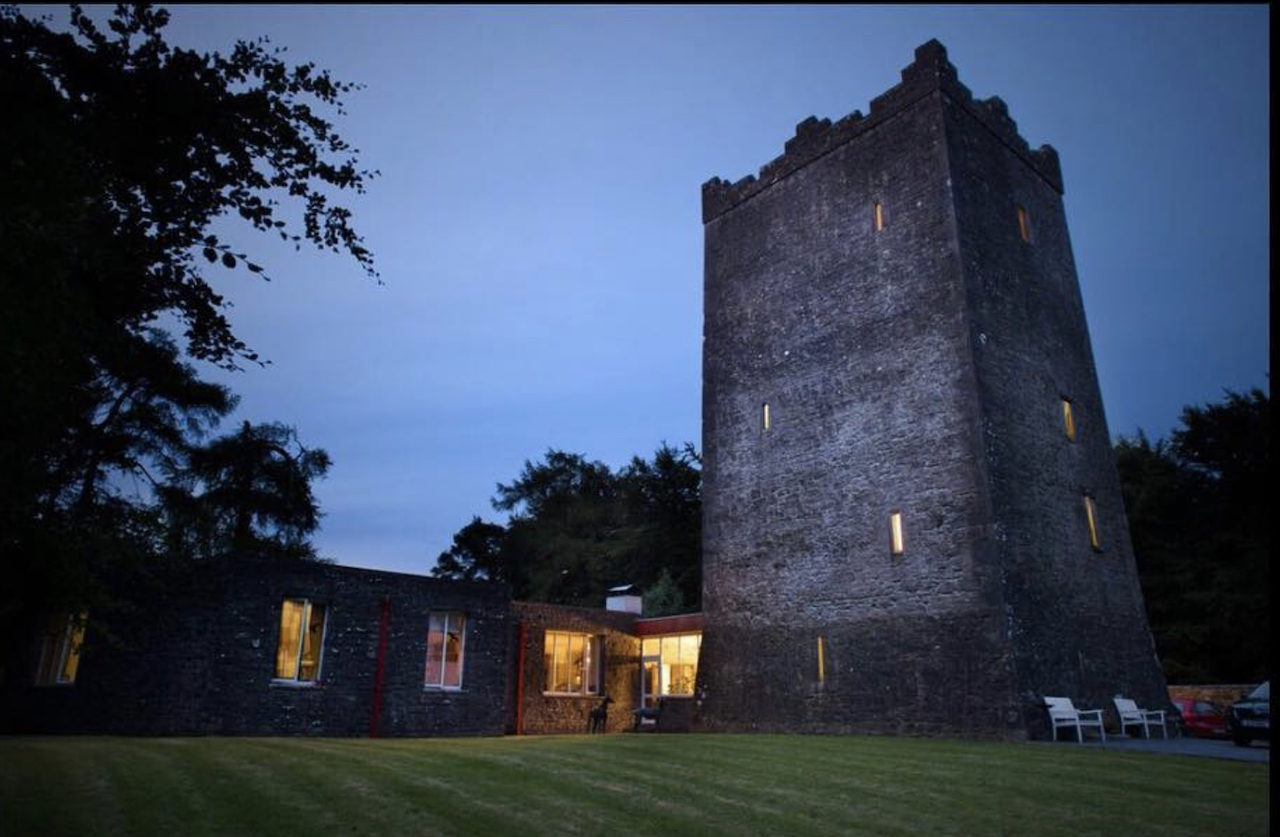
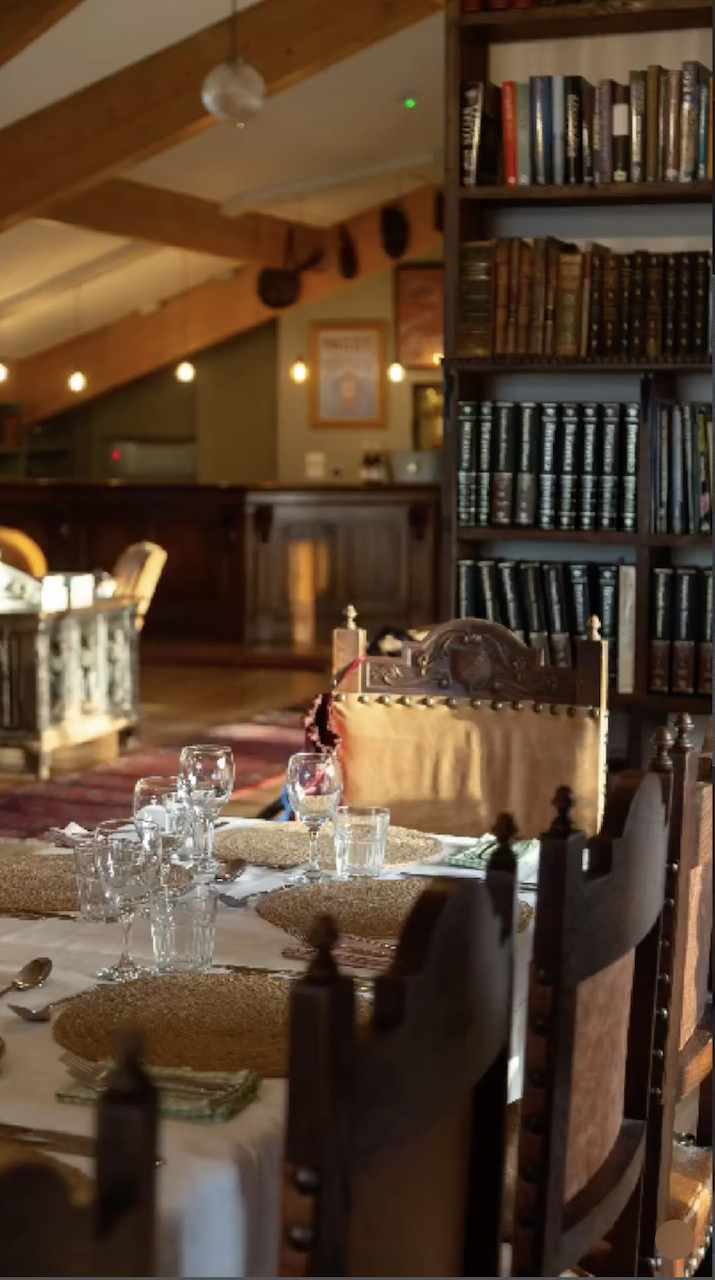
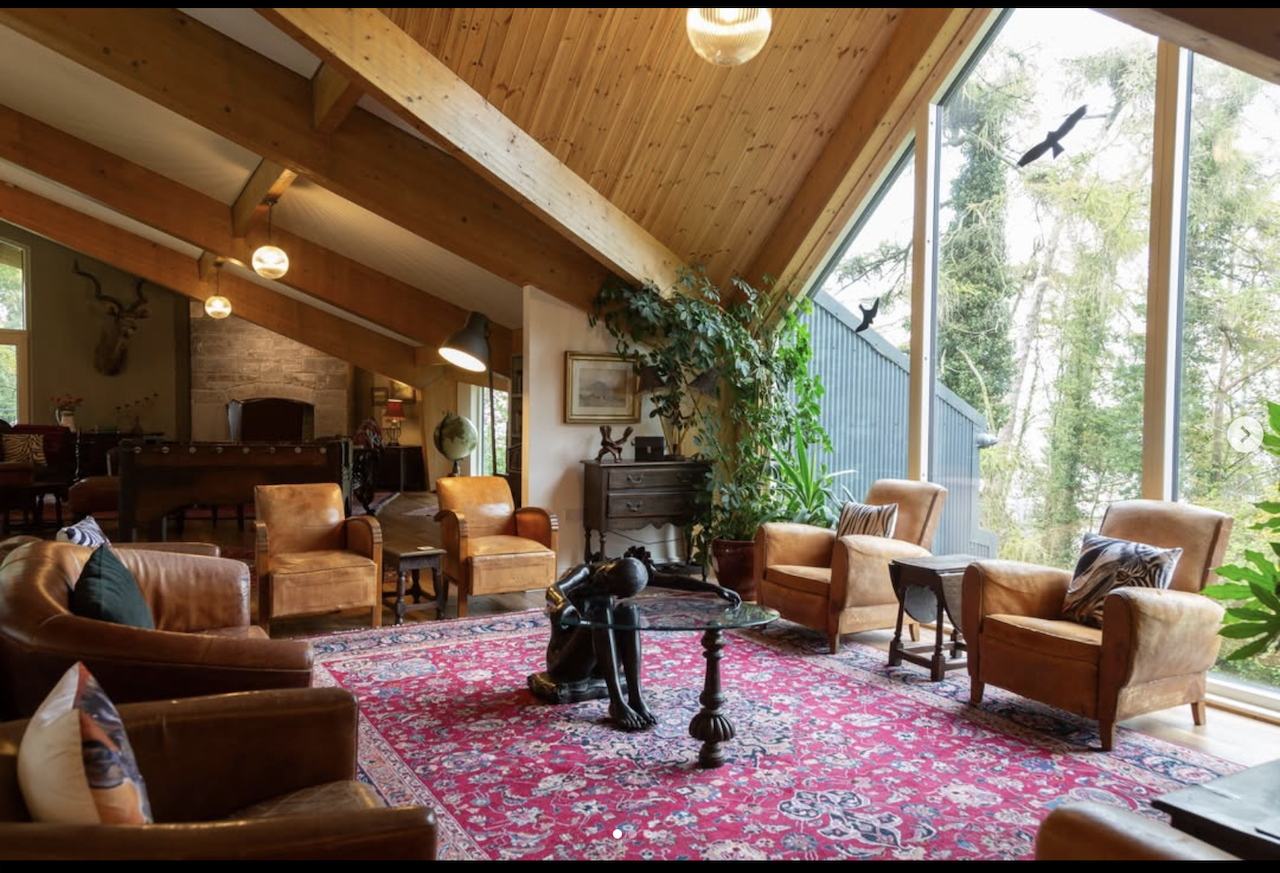
Places to visit and stay in County Kilkenny, Leinster.

On the map above:

blue: places to visit that are not section 482

purple: section 482 properties

red: accommodation

yellow: less expensive accommodation for two

orange: “whole house rental” i.e. those properties that are only for large group accommodations or weddings, e.g. 10 or more people.

green: gardens to visit

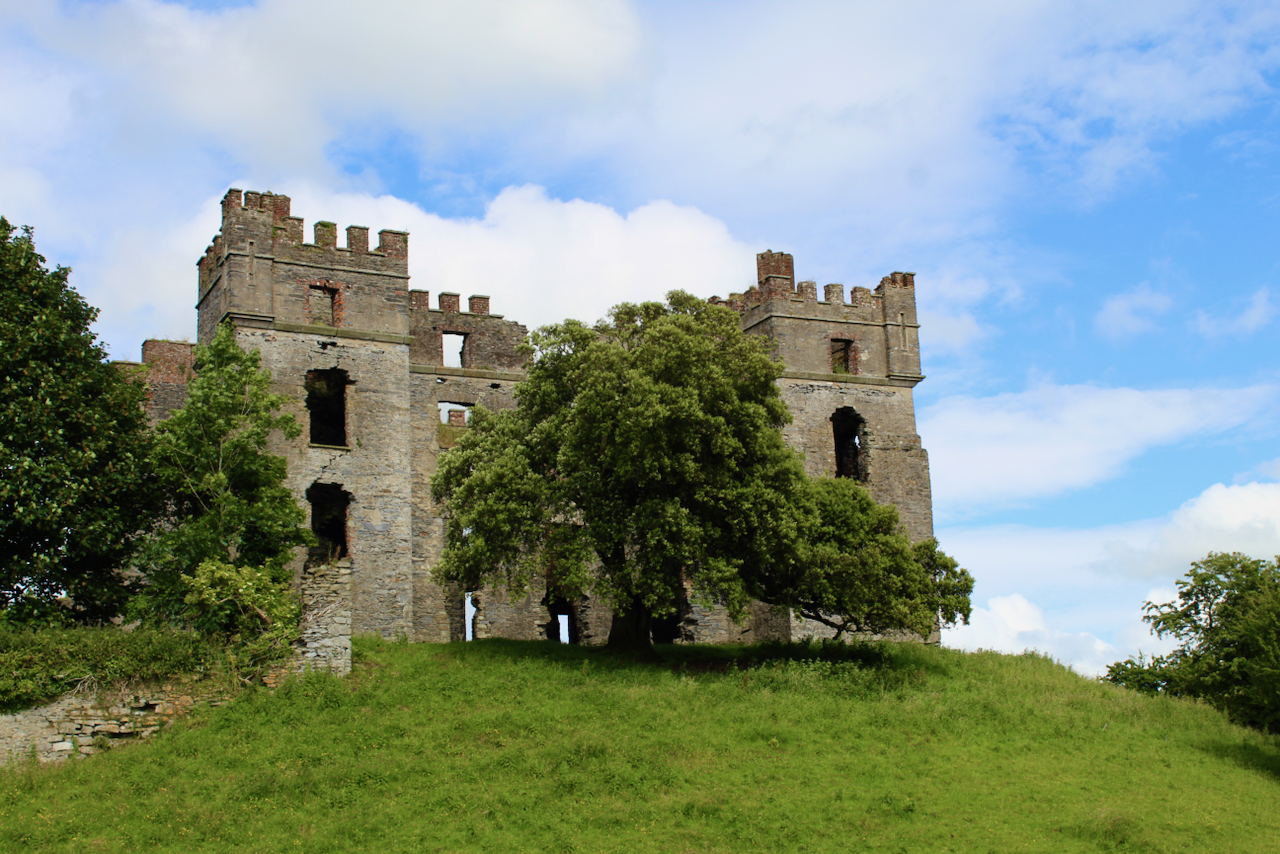
grey: ruins

Carlow, Dublin, Kildare, Kilkenny, Laois, Longford, Louth, Meath, Offaly, Westmeath, Wexford and Wicklow are the counties that make up the Leinster region.

As well as places to visit, I have listed separately places to stay, because some of them are worth visiting – you may be able to visit for afternoon tea or a meal.

For places to stay, I have made a rough estimate of prices at time of publication:

€ = up to approximately €150 per night for two people sharing (in yellow on map);

€€ – up to approx €250 per night for two;

€€€ – over €250 per night for two.

For a full listing of accommodation in big houses in Ireland, see my accommodation page: https://irishhistorichouses.com/accommodation/

donation

Help me to pay the entrance fee to one of the houses on this website. This site is created purely out of love for the subject and I receive no payment so any donation is appreciated!

€15.00

Places to visit in County Kilkenny:

1. Aylwardstown, Glenmore, Co Kilkenny – section 482 

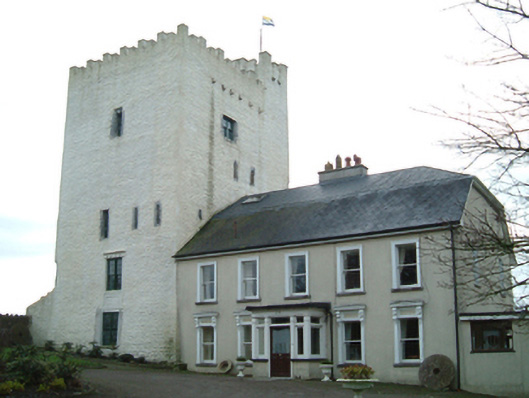
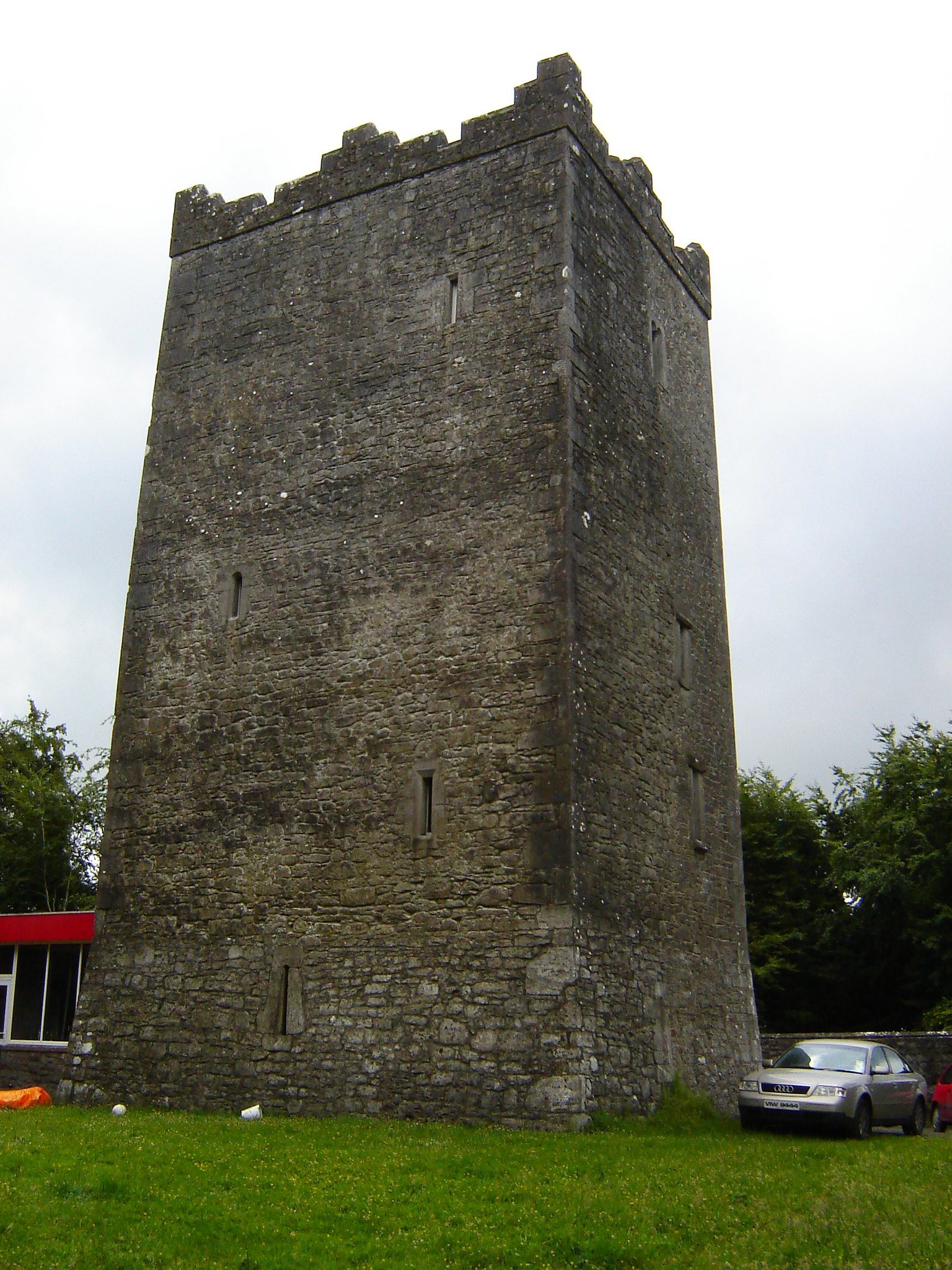
2. Ballybur Castle, Ballybur, Cuffesgrange, Co. Kilkenny – section 482

3. Ballysallagh House, Johnswell, Co Kilkenny – section 482 

4.  Kilfane Glen & Waterfall Garden, Thomastown, County Kilkenny – 482 – garden only

5. Kilkenny Castle, Kilkenny – OPW

6. Kilkenny Design Centre, Castle Yard, Kilkenny – Design Centre on 482

7. Kilrush House, County Kilkenny, ihh member, by appt. 

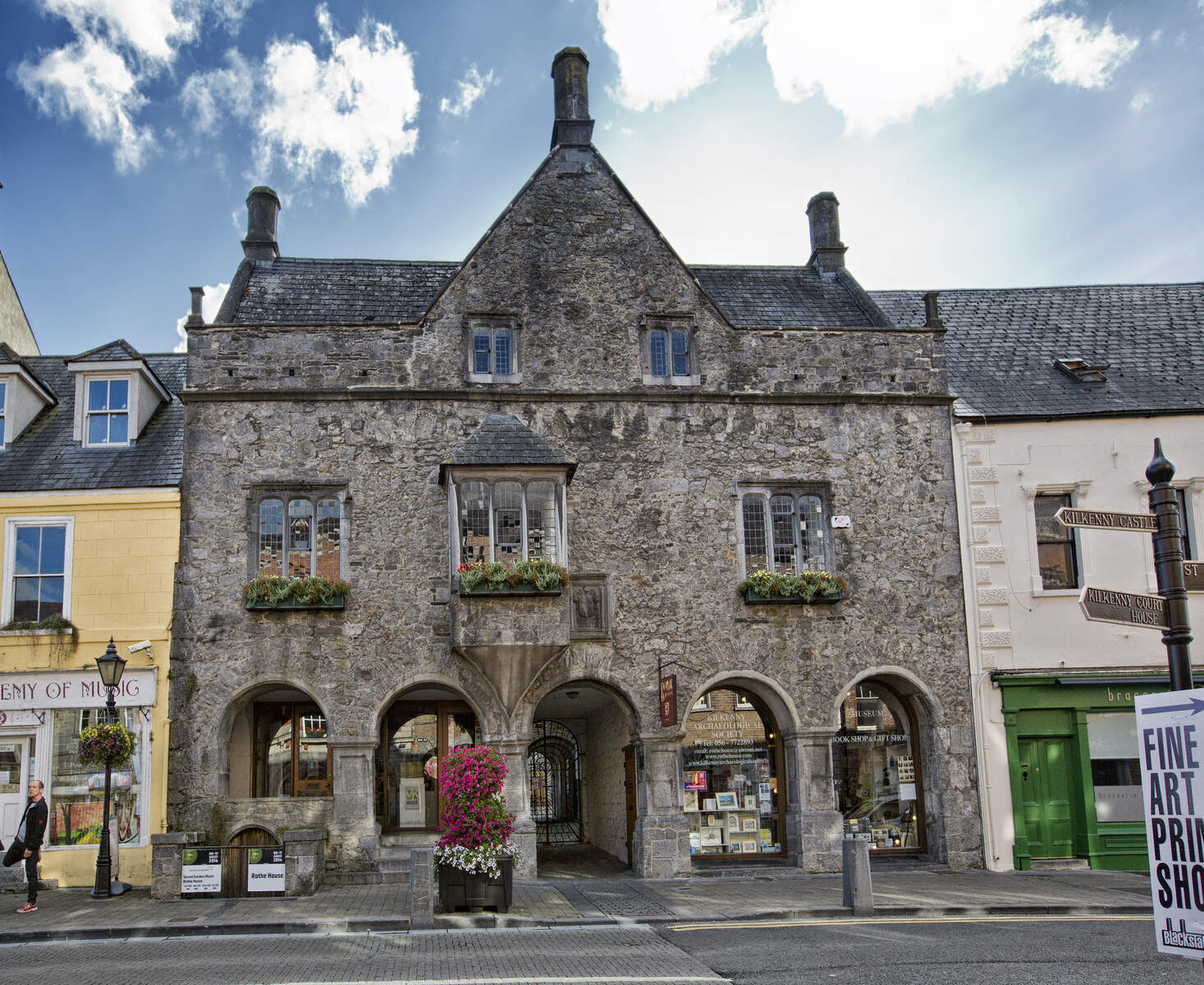
8. Rothe House, Kilkenny, County Kilkenny  

9. Shankill Castle, Paulstown, Co. Kilkenny – section 482 

10. Tybroughney Castle, Piltown, Co Kilkenny – 482 

11. Woodstock Gardens and Arboretum, Woodstock, Inistioge, Kilkenny

Places to stay, County Kilkenny

1. Ballyduff, Thomastown, Co Kilkenny – wedding venue, B&B 

2. Blanchville Coachyard, Dunbell, County Kilkenny €

3. Butler House, Kilkenny, co Kilkenny – accommodation 

4. Clomantagh Castle, Co Kilkenny – €€ for two, € for 3-8

6. Lyrath House, near Kilkenny, County Kilkenny – hotel 

7.  Mount Juliet, Thomastown, County Kilkenny – hotel 

8. Tubbrid Castle, County Kilkenny €€€ for two, € for 8

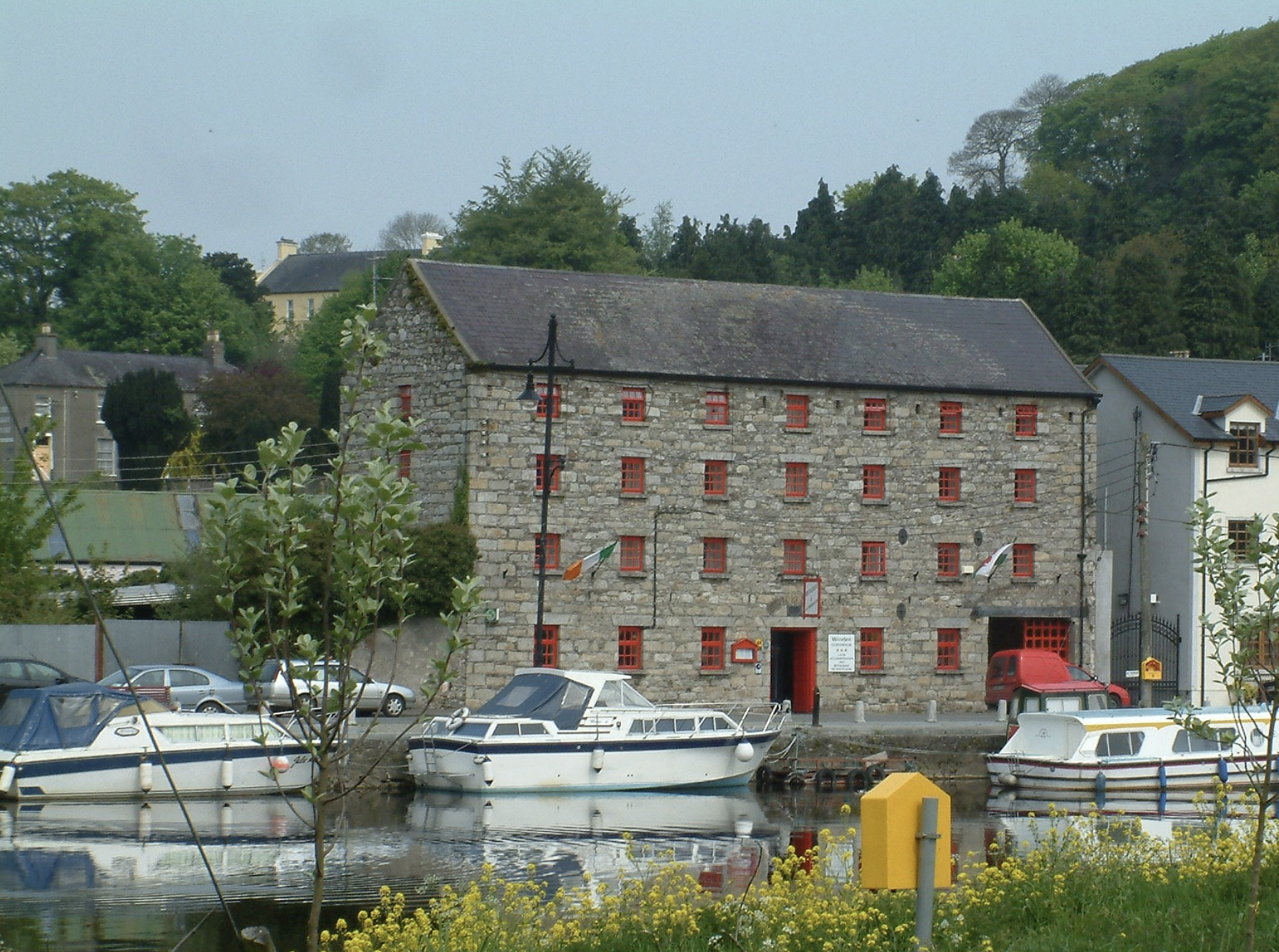
9. Waterside Guest House, Graiguenamanagh, County Kilkenny

Whole House Rental County Kilkenny:

1. Annamult House, Bennettsbridge, Co Kilkenny – whole house accommodation

2. Ballybur Castle, County Kilkenny €€€ for two, € for 10

3. Castle Blunden, County Kilkenny – whole house accommodation

Places to visit in County Kilkenny:

1. Aylwardstown, Glenmore, Co Kilkenny – section 482 

http://www.kelvale.com
Open dates in 2025: Aug 1-31, Sept 1-30, 10am-5pm

Fee: adult €5, OAP/student €3, child free

Open dates in 2025: Aug 1-31, Sept 1-30, 2pm-6pm
Fee: Free

See my entry: https://irishhistorichouses.com/2024/12/19/ballybur-castle-ballybur-upper-cuffesgrange-co-kilkenny/

Photograph courtesy of Ballybur website.

3. Ballysallagh House, Johnswell, Co Kilkenny R95 A6P1 – section 482 

Ballysallagh House, County Kilkenny, February 2022. Photograph © Jennifer Winder-Baggot, www.irishhistorichouses.com

Open dates in 2025: Feb 1-20, May 1-31 Aug 16-24, 9am-1pm

Fee: adult €10, OAP/student €7.50, child €5

See my entry: https://irishhistorichouses.com/2022/06/17/ballysallagh-house-johnswell-co-kilkenny/

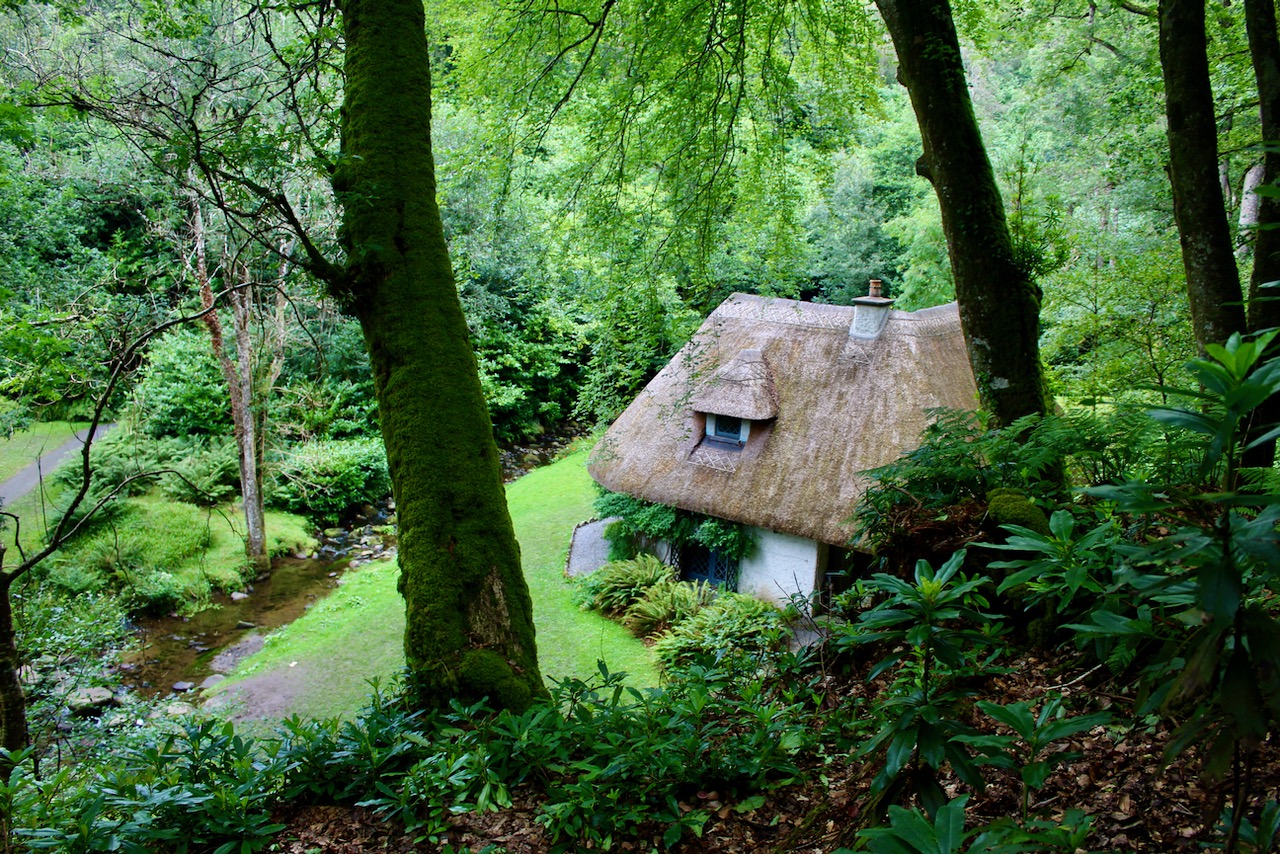
4.  Kilfane Glen & Waterfall Garden, Thomastown, County Kilkenny R95 RXO5 – 482 – garden only

Kilfane, County Kilkenny, August 2021. Photograph © Jennifer Winder-Baggot, www.irishhistorichouses.com

See my entry:

https://irishhistorichouses.com/2021/12/16/kilfane-glen-waterfall-kilfane-thomastown-co-kilkenny/

www.kilfane.com

Open dates in 2025: July 1-31, Aug 1-31, 11am-6pm
Fee: adult €7, OAP/student €6.50, child €6

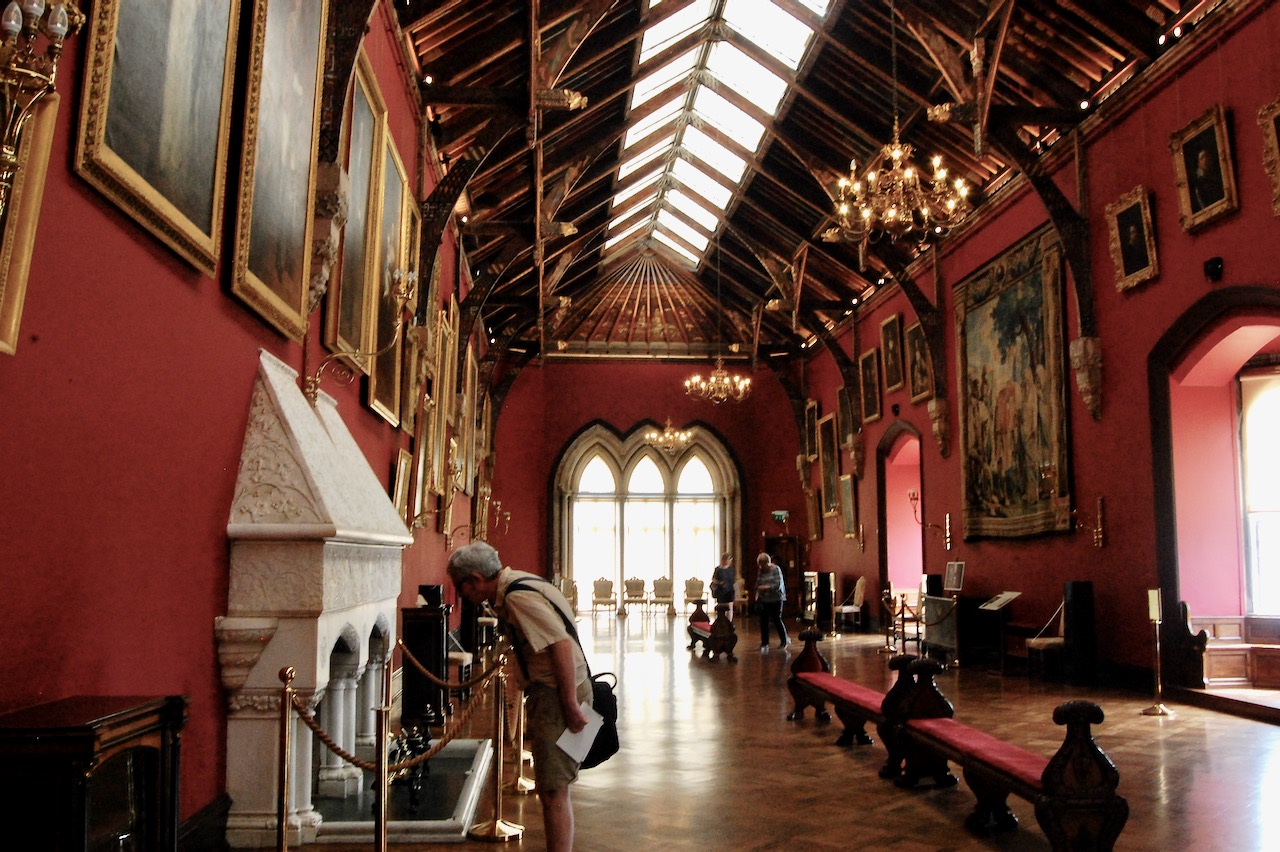
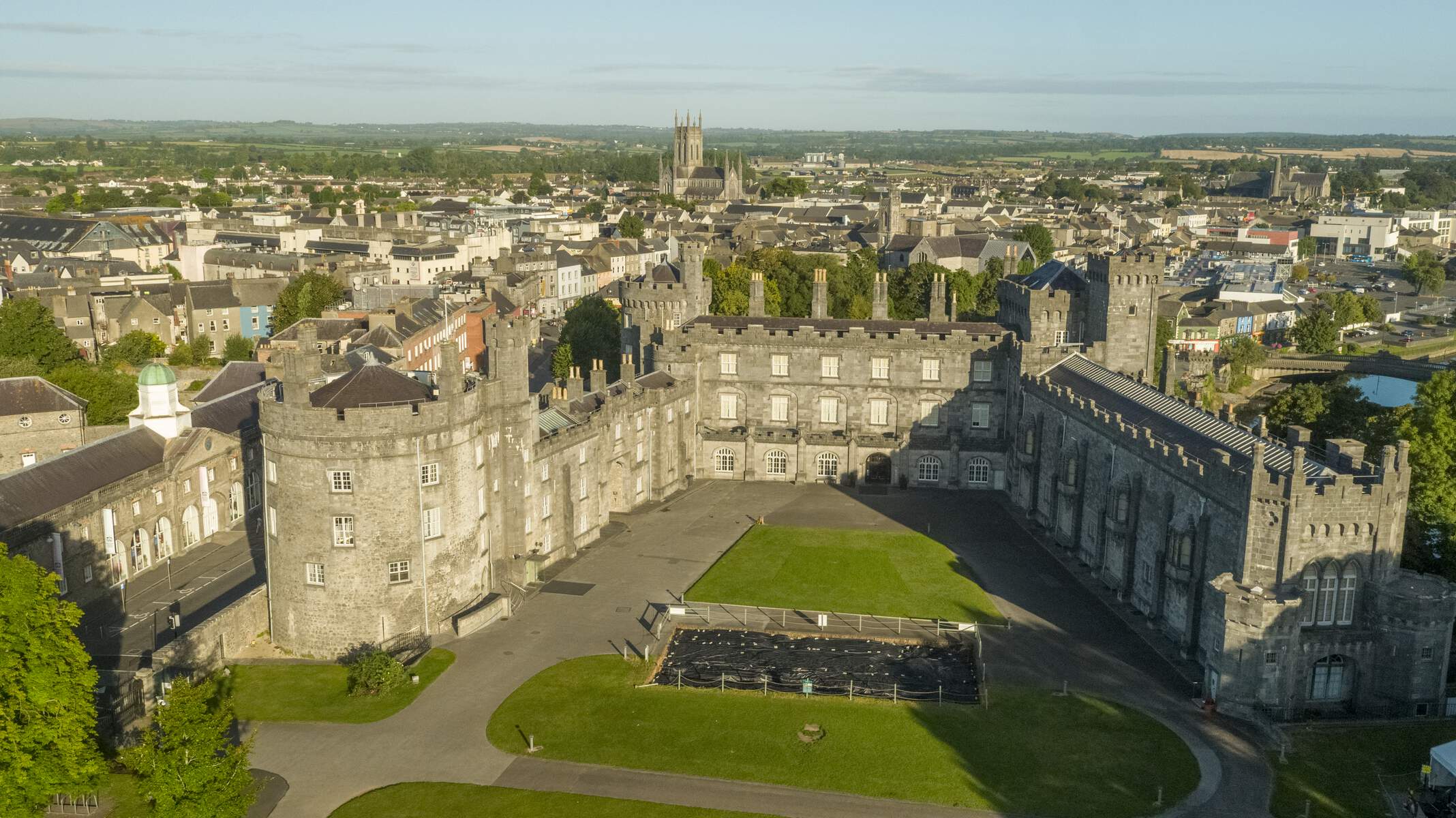
5. Kilkenny Castle, Kilkenny – OPW

Kilkenny Castle, May 2018. Photograph © Jennifer Winder-Baggot, www.irishhistorichouses.com
Kilkenny Castle, Kilkenny City by Sonder Visuals for Failte Ireland 2014.

see my entry https://irishhistorichouses.com/2024/04/08/kilkenny-castle-county-kilkenny-an-office-of-public-works-property/

6. Kilkenny Design Centre, Castle Yard, Kilkenny – Design Centre on 482

www.kilkennydesign.com
Open dates in 2025: Jan 1 new year’s day 12 noon-5.30pm, Jan 2-Dec 23, 27-31, Jan, Feb, Mar, Apr, Oct, Nov, Dec, Sun, 11am-6pm, Mon-Sat, 10am-6pm, May, 10am-6pm, June, July, Aug, Sept, Sun, 10am-6pm, Mon- Sat, 9am-6pm,
Fee: Free

7. Kilrush House, County Kilkenny, ihh member, by appt. 

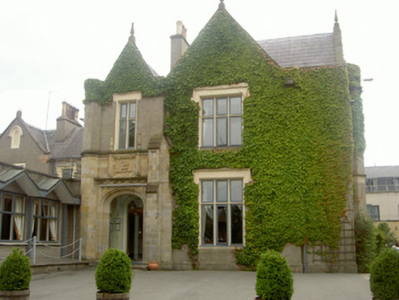
Kilrush House, photograph courtesy of National Inventory of Architectural Heritage
Kilrush House, photograph courtesy of National Inventory of Architectural Heritage.

The Historic Houses of Ireland website tells us:

William Robertson (1777 – 1850) was a native of Kilkenny where the patronage of Lord Ormonde stood him in good stead, since most of his work can be found in Kilkenny and the neighbouring counties of Laois, Tipperary and Waterford. When Richard St. George wished to move from his medieval castle at Kilrush near Freshford in 1820, Robertson was the obvious choice. His work is less exuberant than that of his namesake Daniel but he was a talented architect and produced an interesting early nineteenth century reinterpretation of the typical late-Georgian country house. 

The St Georges are a Norman family who ‘came over to England with the Conqueror’ and arrived in Ireland in the sixteenth century. They quickly became established here, with several branches in County Kilkenny and others in Galway, Leitrim and Roscommon.

The St Georges of Kilrush were active in political and cultural circles in the seventeenth and eighteenth centuries. Richard St George was an M.P. in the Irish Parliament, with a town house at No. 8 Henrietta Street, while his cousin St George Ashe was the Provost of Trinity College and a close friend of Dean Swift. St. George was also a founding member of the Dublin Philosophical Society, which encouraged his numerous publications of scientific and national interest.

Richard considered moving out of his tower-house at Kilrush in the middle of the eighteenth century but this decision was left to his heirs, who built the existing house in the early nineteenth century. Kilrush has a three bay façade, a five bay garden front, a hipped roof with widely overhanging eaves, a single very large, central chimney-stack into which all the flues are diverted, and an interesting ground plan.

The cut-stone door case is a handsome arrangement of Doric half-columns and pilasters, supporting a deep entablature with swags beneath a semi-circular leaded fanlight. The ground floor windows to either side are set in shallow recesses with elliptical heads; otherwise the elevations are quite plain.

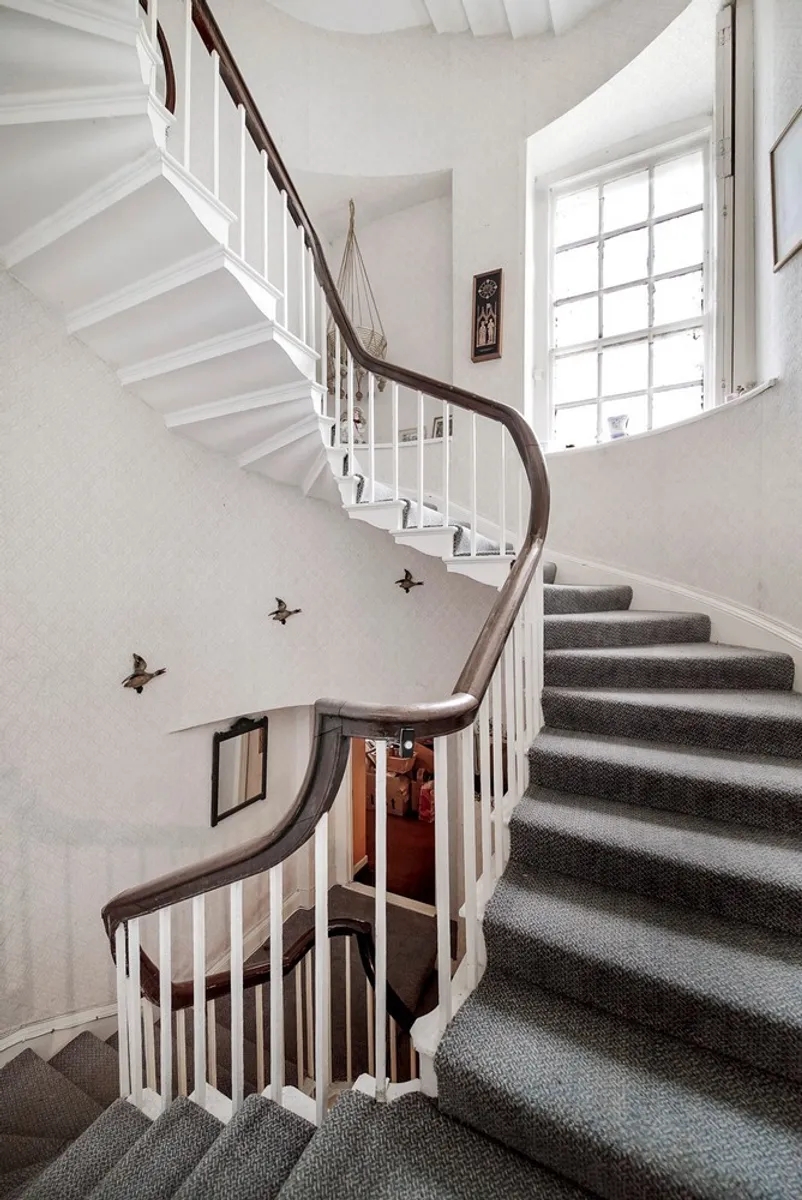
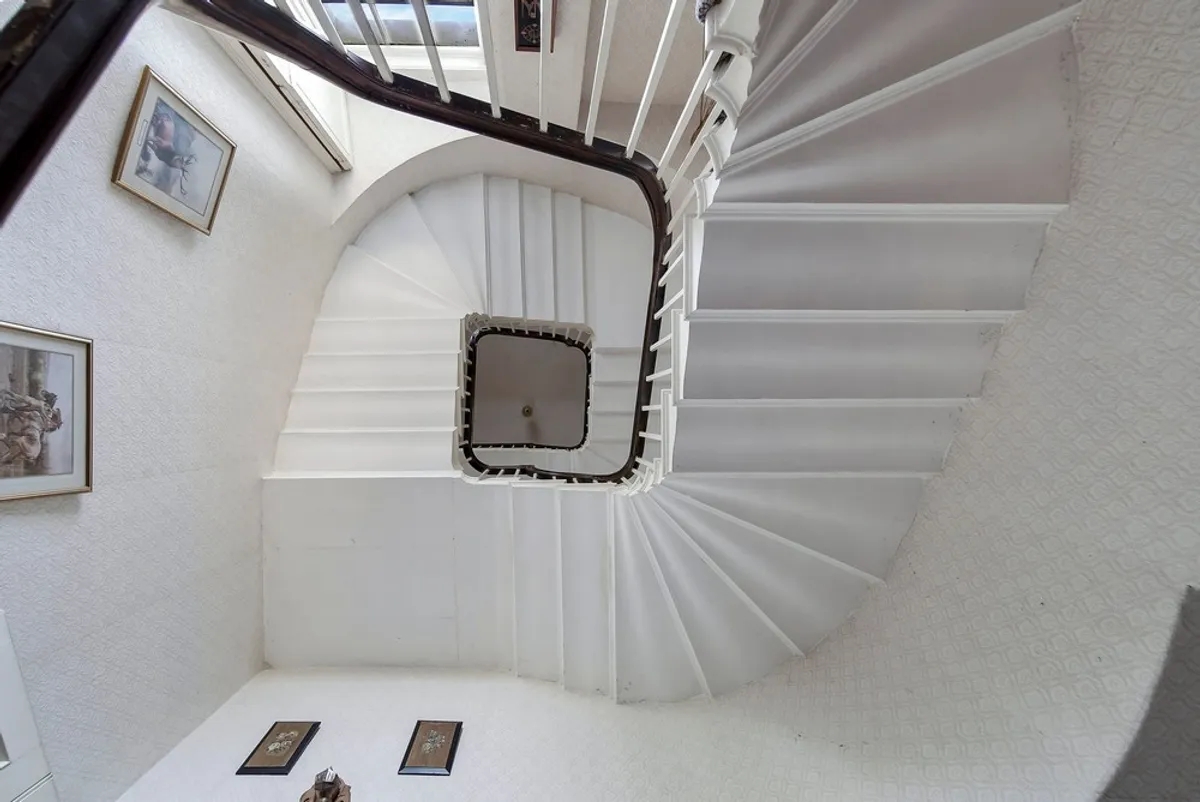
The most interesting internal space is the landing, a perfect Doric rotunda supporting a delicately glazed dome. This partly lights the inner hall below through a circular well in the floor. The dining and drawing rooms are both finely proportioned apartments, with many original fittings and furnishings, and their original wallpaper.

Kilrush looks out over mature parkland to a large mill, almost half a mile off.  The gardens contain a stupendous collection of snowdrops, there is a tower house, the former residence of the family in the attached yard, while an interesting early garden layout with connected canals has recently been identified and is currently in the course of restoration.” [1]

8. Rothe House, Kilkenny, County Kilkenny  

Rothe House, Kilkenny, photograph by Brian Morrison 2015 for Tourism Ireland [2]

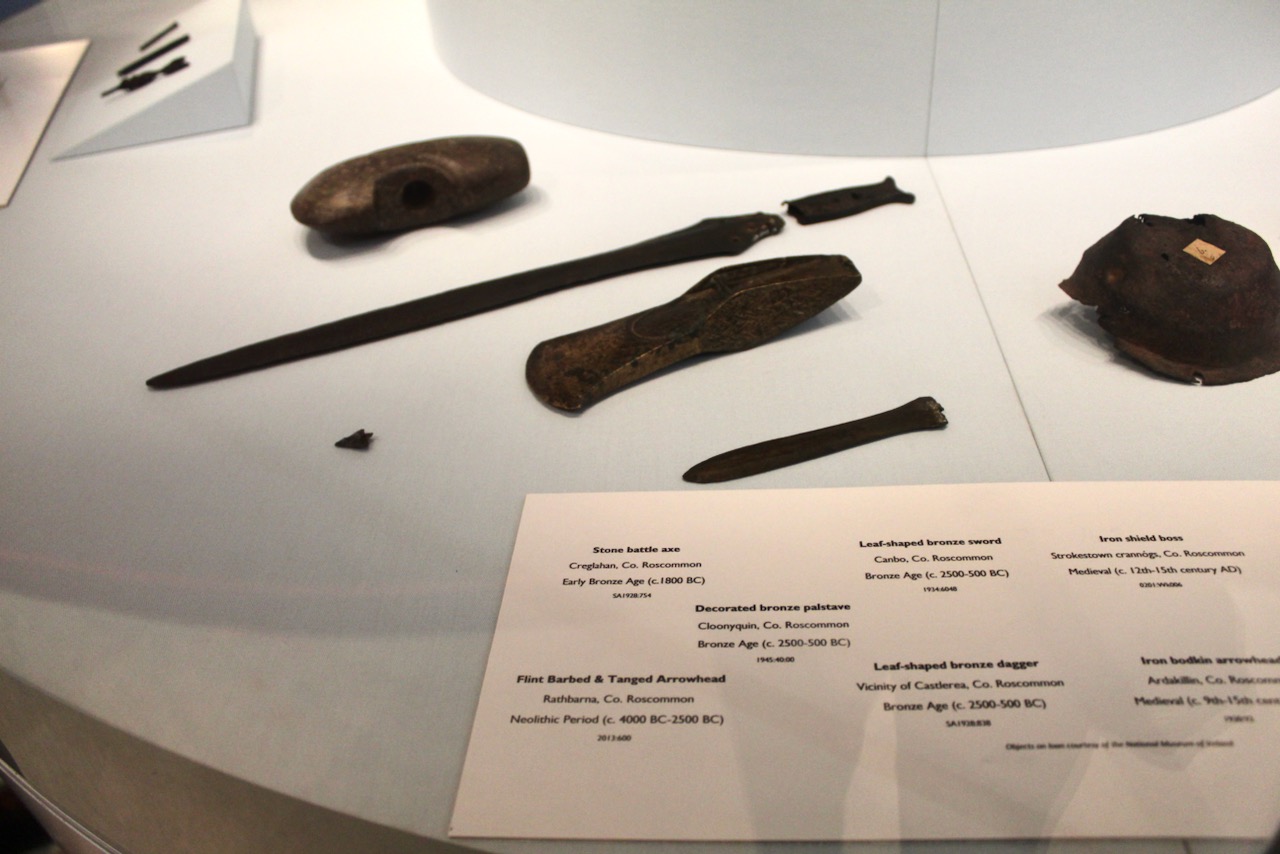
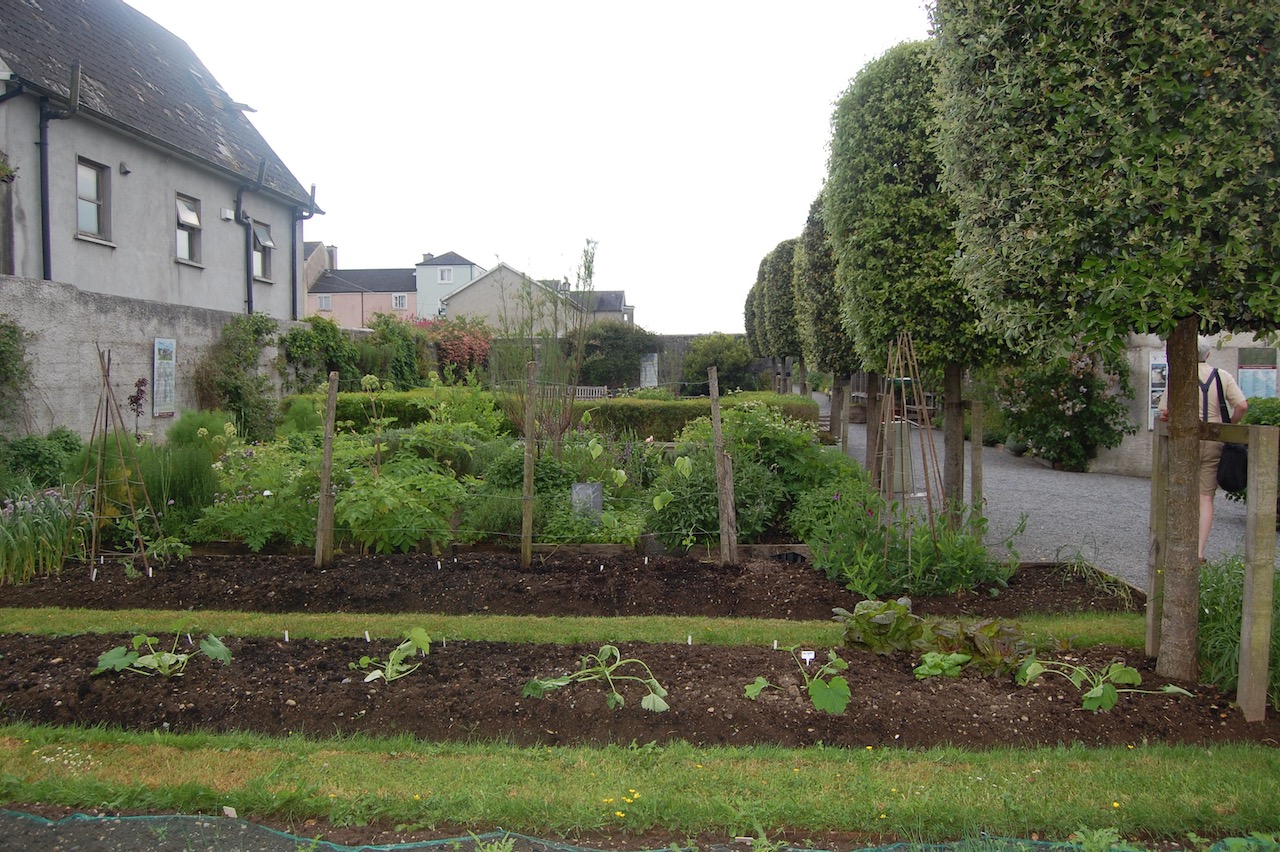
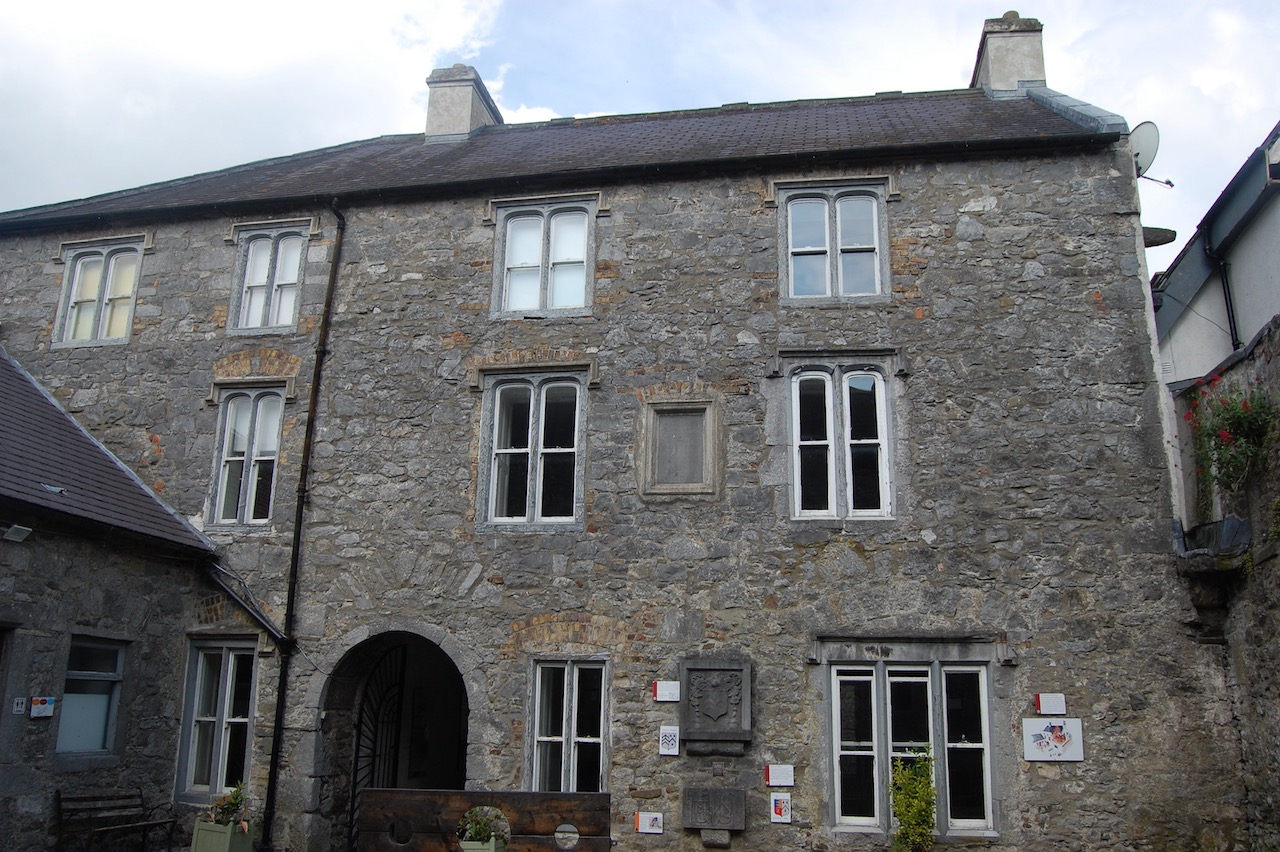
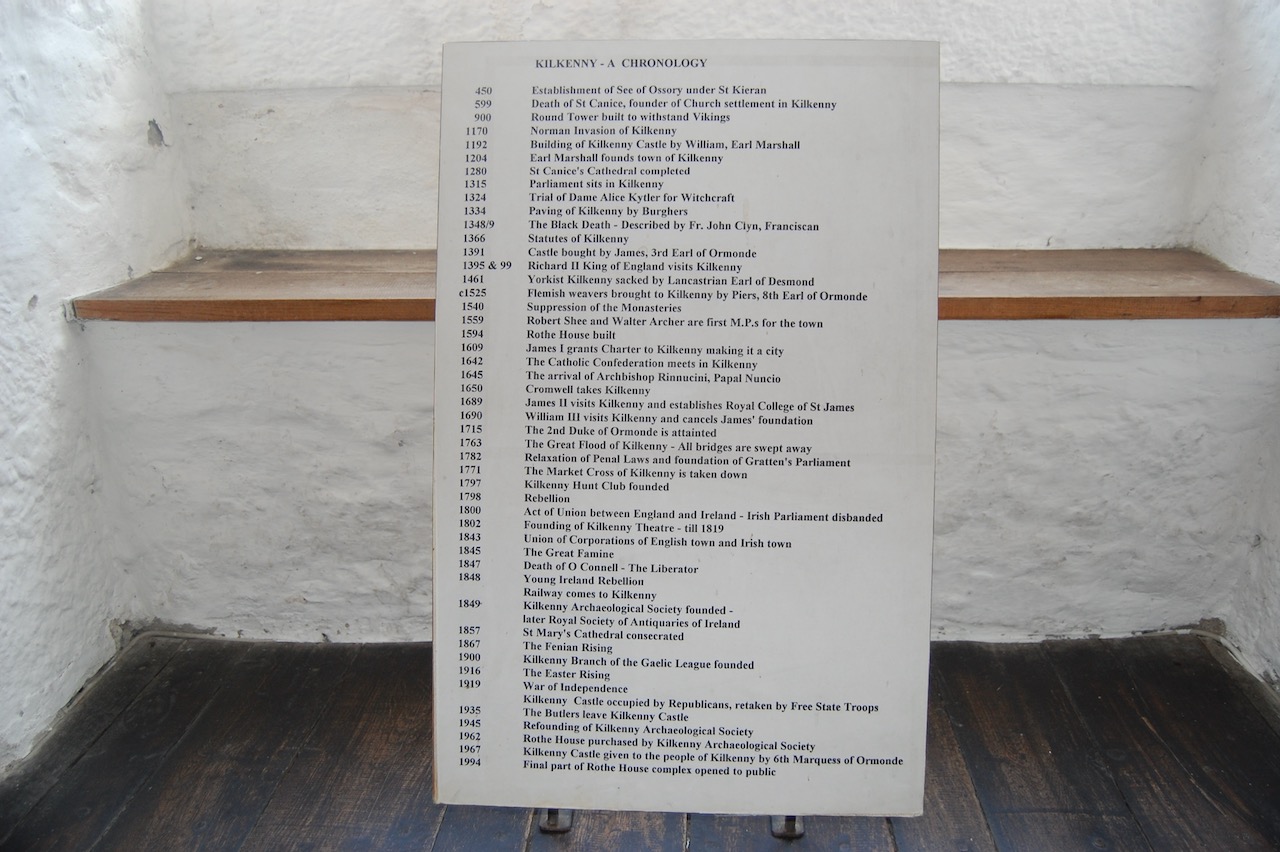
Rothe House is a treasure, older than any house in Dublin! It was built around 1594-1610, by John Rothe FitzPiers (1560-1620) for his wife Rose Archer, and is the last merchant’s townhouse in Kilkenny surviving from the early post-medieval period. [3] The house, purchased by Kilkenny Archaeological Society in 1962, is open to the public as a museum displaying a selection of the historic artefacts collected by the Society since its founding in 1947.  The artefacts relate to Kilkenny heritage throughout the ages and some date from prehistoric times.  The adjoining garden has since 2008 been open to the public and is a faithful reconstruction of an early seventeenth-century urban garden. 

Garden at Rothe House, May 2018. Photograph © Jennifer Winder-Baggot, www.irishhistorichouses.com
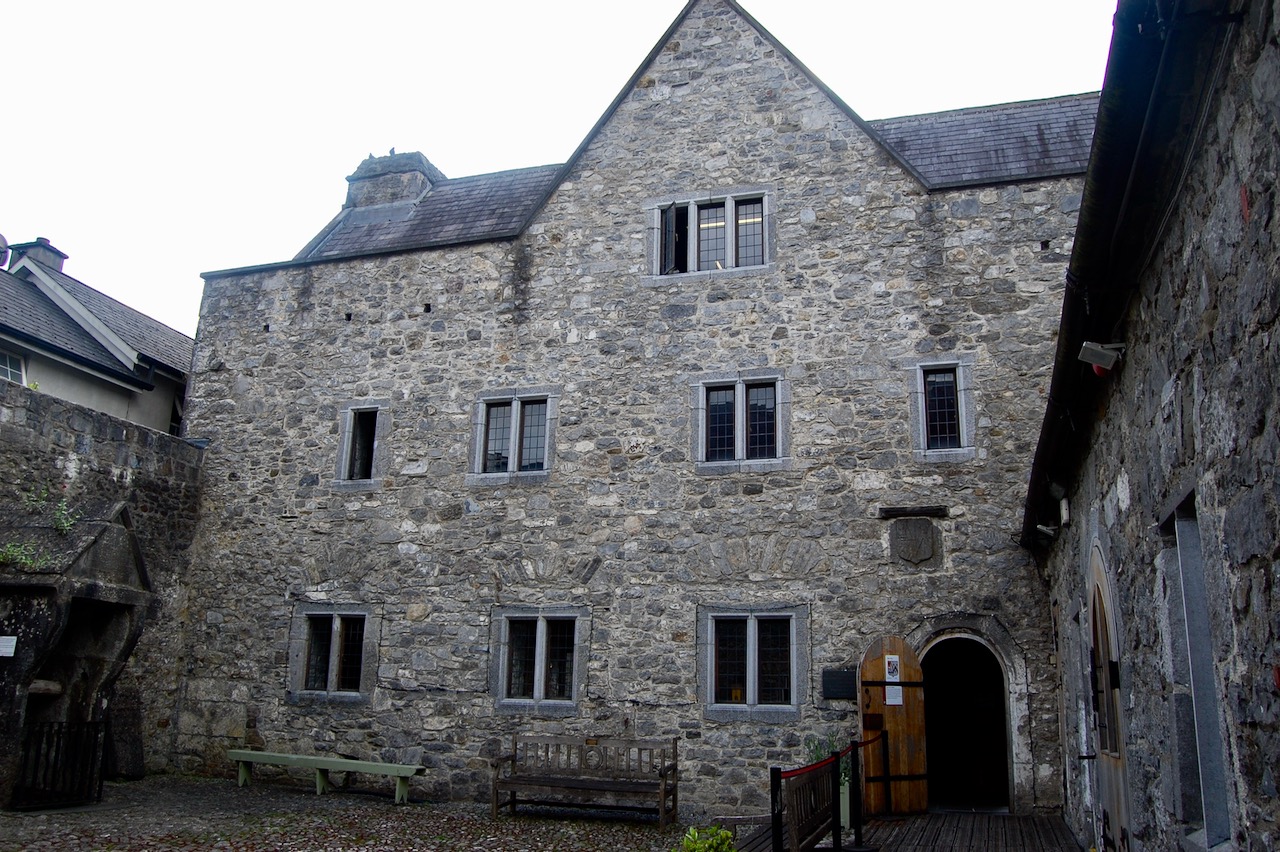
Rothe House, May 2018. Photograph © Jennifer Winder-Baggot, www.irishhistorichouses.com

The National Inventory describes it:

Terraced five-bay two-storey over basement house with dormer attic on a U-shaped plan about a stone cobbled (east) courtyard with two-bay two-storey gabled central bay having jettied box oriel window to first floor, series of five round-headed openings to ground floor forming arcade, single-bay three-storey linking range to north-west, and three-bay three-storey parallel range to west (completing U-shaped plan about a courtyard) originally three-bay two-storey having round-headed carriageway to right ground floor. In use as school, c.1750. Restored, 1898, to accommodate use as Gaelic League house. Converted to use as museum, 1963-5. Restored, 1983. Restored, 1999, to accommodate use as offices.”

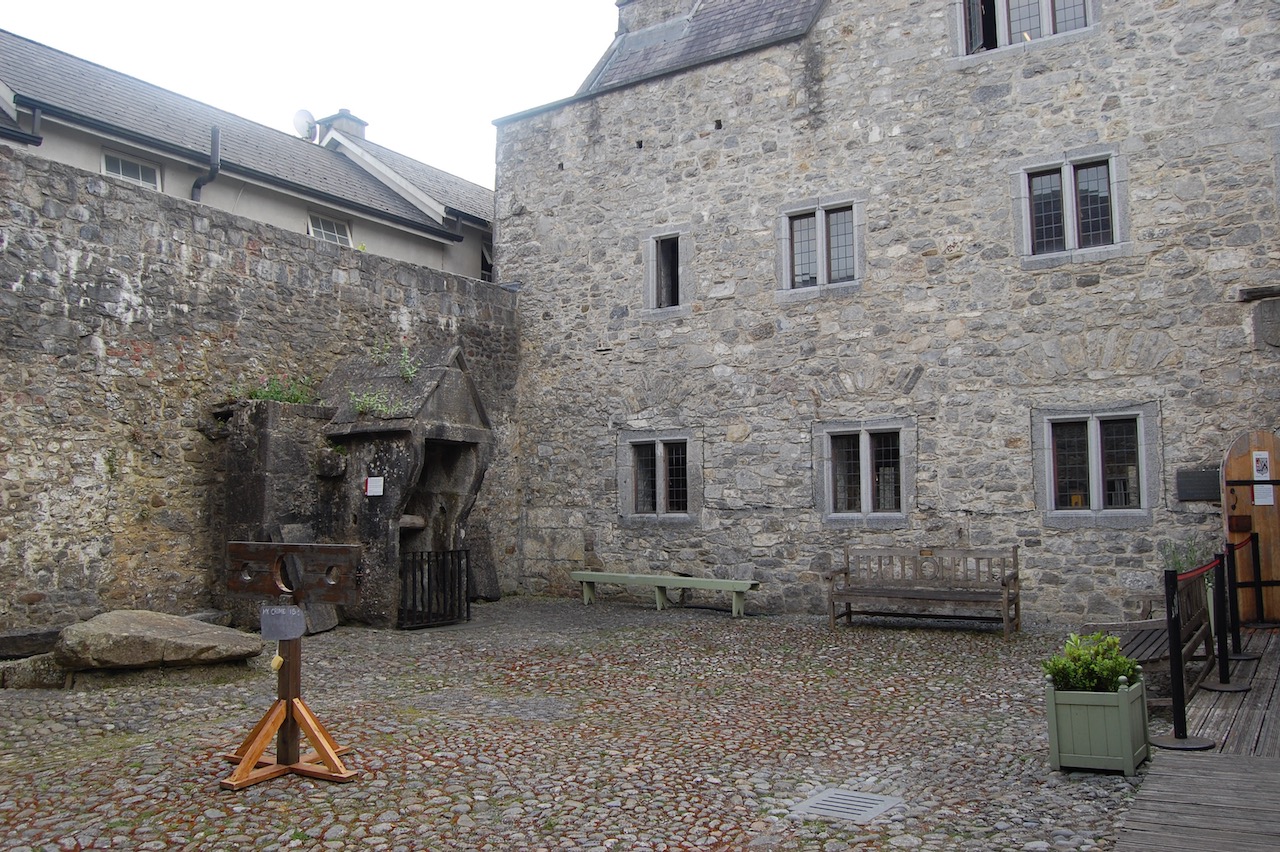
Rothe House, May 2018. Photograph © Jennifer Winder-Baggot, www.irishhistorichouses.com

The Archiseek website tells us:

In 1594 a wealthy merchant called John Rothe built this magnificent Tudor mansion. Second and third generation houses were built around the cobelled courtyards and a well dating to 1604. The façade houses shops, one of them was John Rothe’s own. During the Confederation of Kilkenny, many dignitaries were entertained here by John Rothe and his cousin, the Bishop of Ossory. The building has been restored magnificently and is now home to Kilkenny Archaeological Society.” [4]

Rothe House, May 2018. Photograph © Jennifer Winder-Baggot, www.irishhistorichouses.com
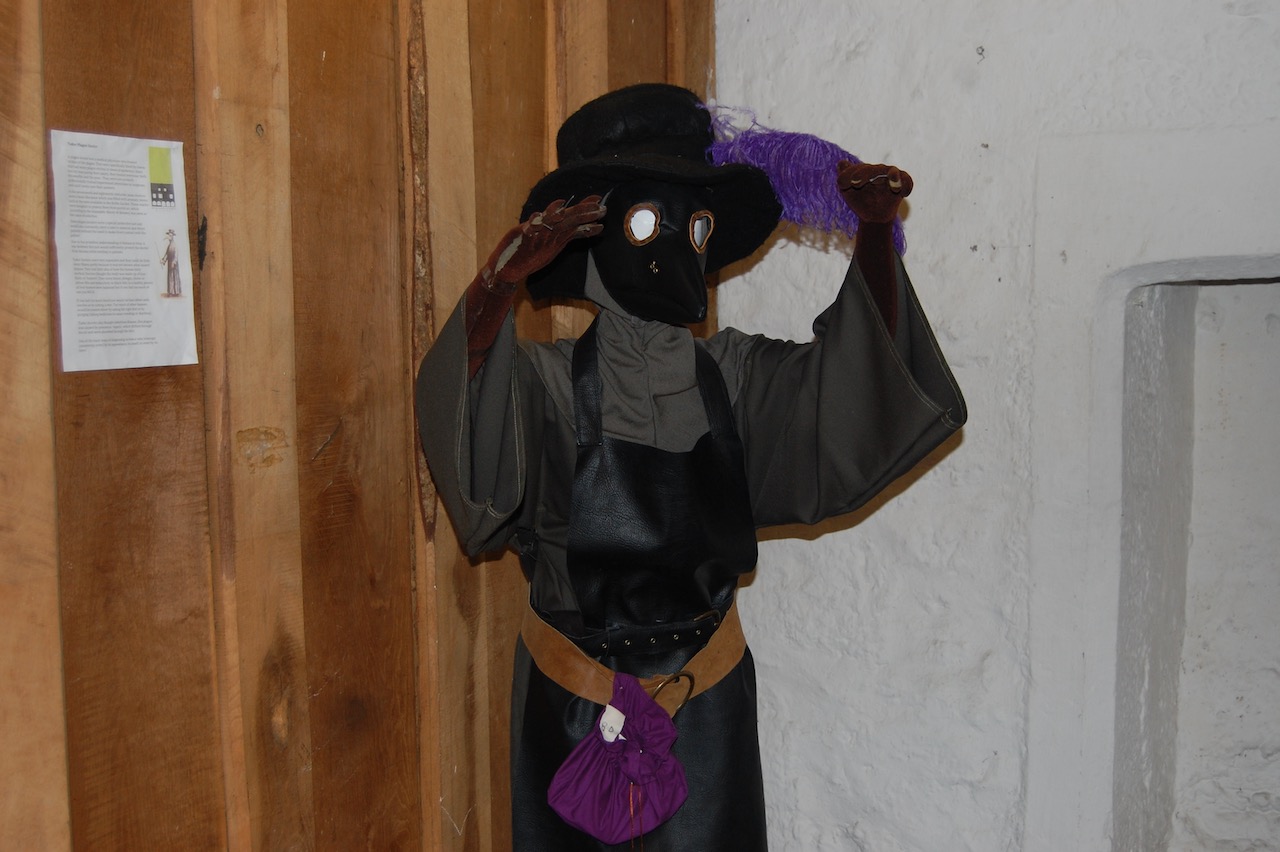
Plague Doctor! In 1348 there was Plague in Kilkenny. Friar John Clyn in the Franciscan Abbey across the road  recorded the effect of the plague on the town and the friary. He himself fell victim to the epidemic.  Photograph © Jennifer Winder-Baggot, www.irishhistorichouses.com
Rothe House, May 2018. Photograph © Jennifer Winder-Baggot, www.irishhistorichouses.com
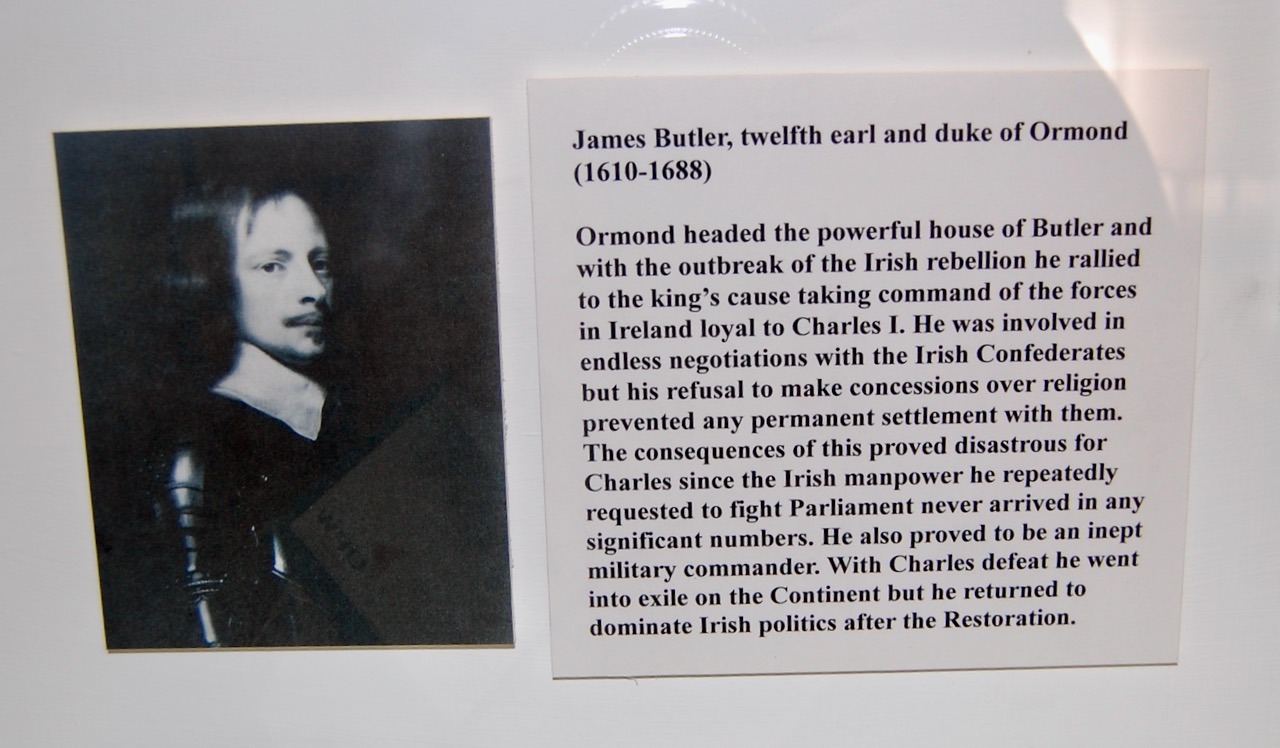
Artefacts from the Confederation of Kilkenny. Photograph © Jennifer Winder-Baggot, www.irishhistorichouses.com
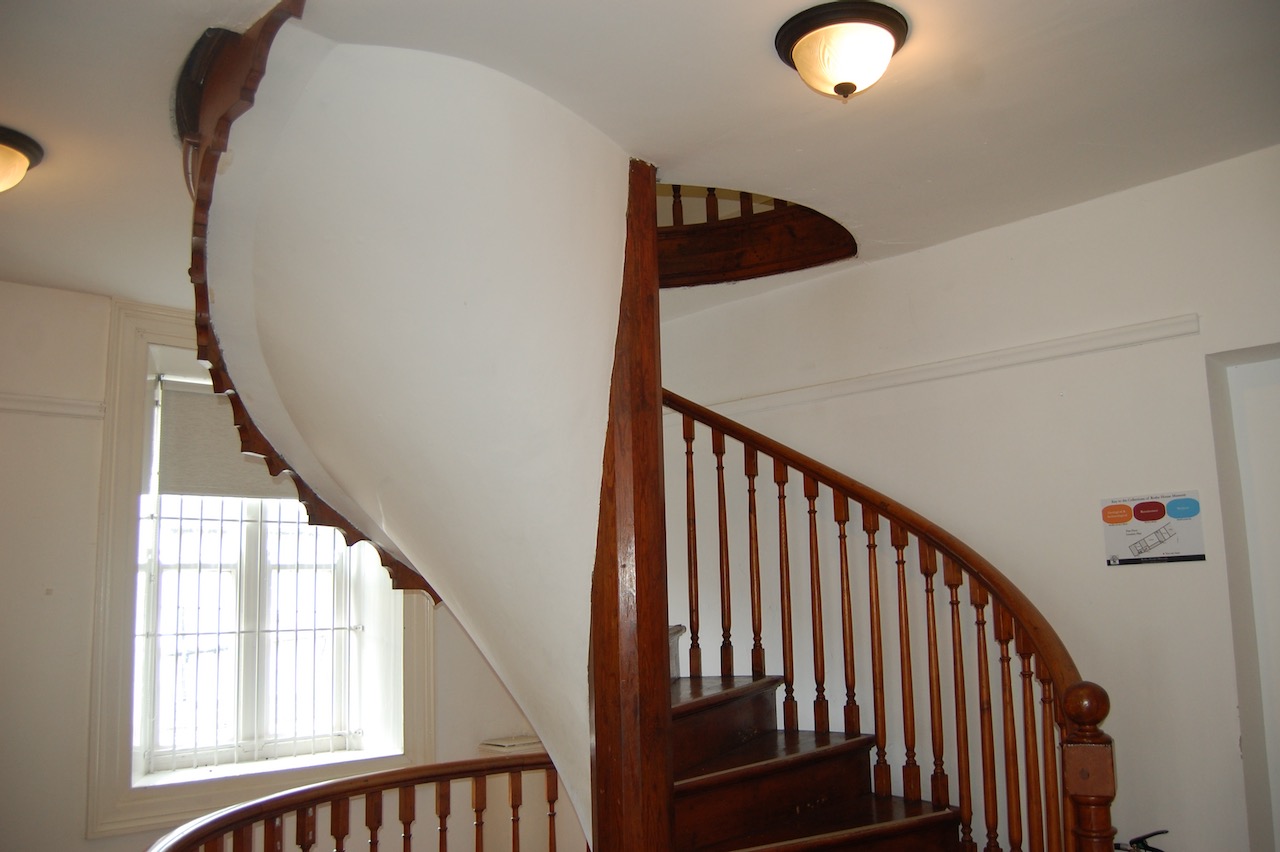
Rothe House, May 2018.
Rothe House, May 2018. Photograph © Jennifer Winder-Baggot, www.irishhistorichouses.com
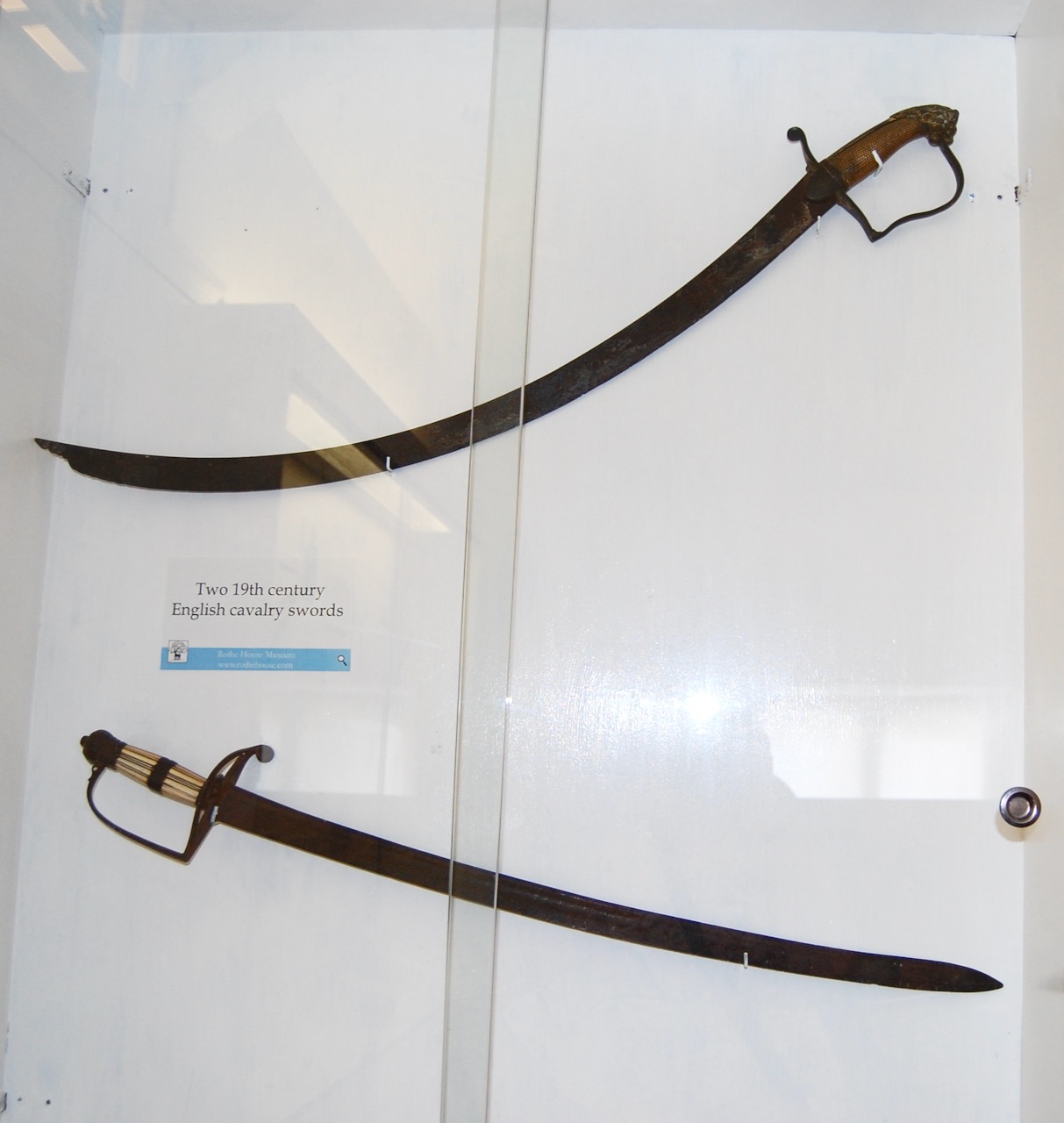
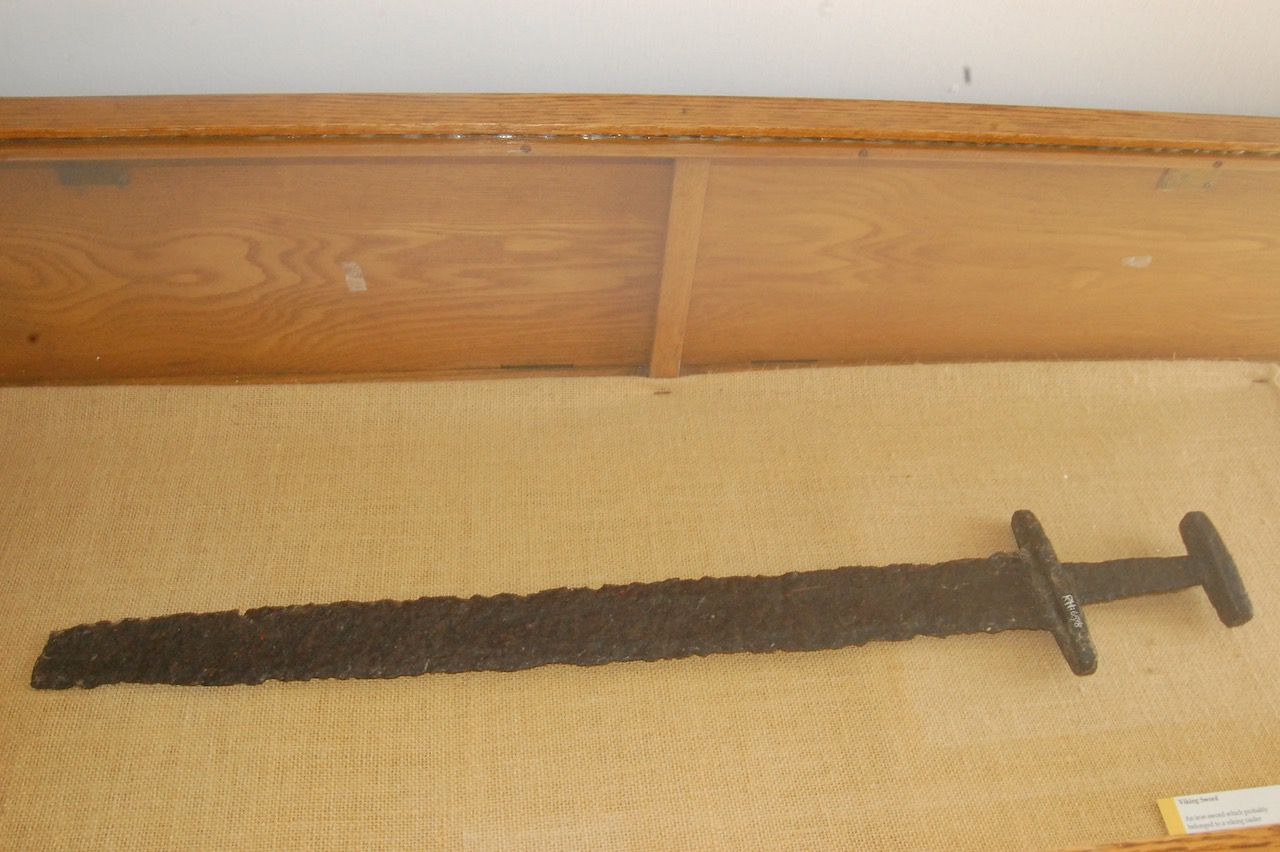
Viking Sword. Photograph © Jennifer Winder-Baggot, www.irishhistorichouses.com
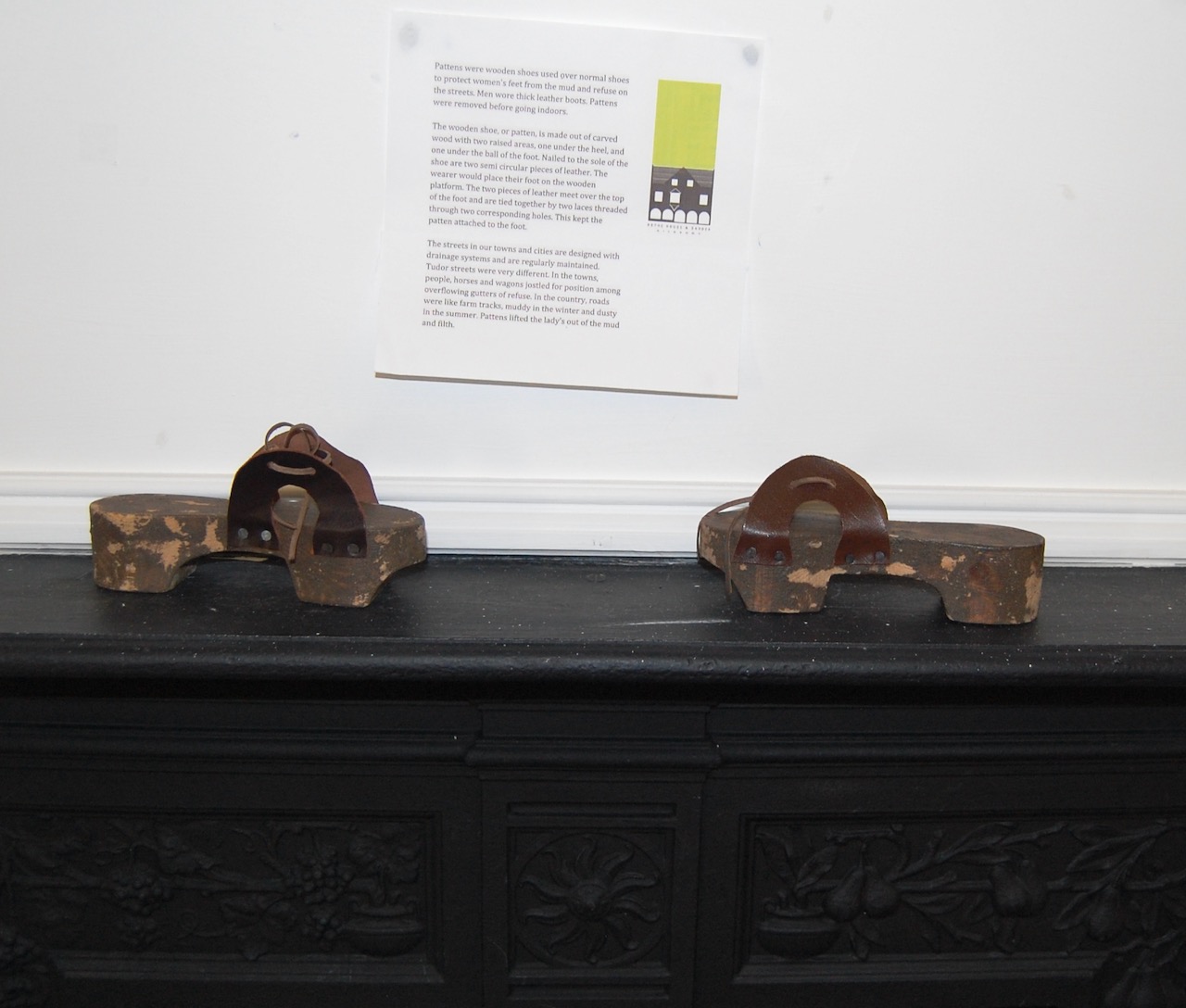
“Pattens” – wooden shoes worn by women over their regular shoes to protect from mud. Photograph © Jennifer Winder-Baggot, www.irishhistorichouses.com

9. Shankill Castle, Paulstown, Co. Kilkenny R95 T8X7 – section 482 

www.shankillcastle.com
Open dates in 2025: Feb 1-2, 8-9, 15-16, 22-23, Apr 5-6, 12-13, 19-20, 26-27, May 3-4, 10-11,17-18, 24-25, 31, June 1, 5-8, 12-15, 19-22, 26-29, July 3-6, 10-13, 17-20, 24-27, 31, Aug 1-3, 7-10, 14-24, 28-31, Sept 6-7, 13-14, 20-21, 27-28, Oct 4-5, 11-12, 18-19, 25-26, 11am-5pm

Fee: house & garden, adult €12 garden €6, OAP/student €10, garden €5, child €6, garden €3

See my entry https://irishhistorichouses.com/2023/11/30/shankill-castle-paulstown-county-kilkenny-r95-t8x7/

Shankill Castle County Kilkenny 3rd June 2023. Photograph © Jennifer Winder-Baggot, www.irishhistorichouses.com

10. Tybroughney Castle, Piltown, Co Kilkenny – 482 

Tybroughney, photograph courtesy of National Inventory of Architectural Heritage.

Open dates in 2025: May 21-31, June 1-30, Mon-Sat, July1-15, Aug 16-24, 11am-3pm

Fee: adult €5, student €3, child/OAP free

11. Woodstock Gardens and Arboretum, Woodstock, Inistioge, Kilkenny, maintained by Kilkenny County Council

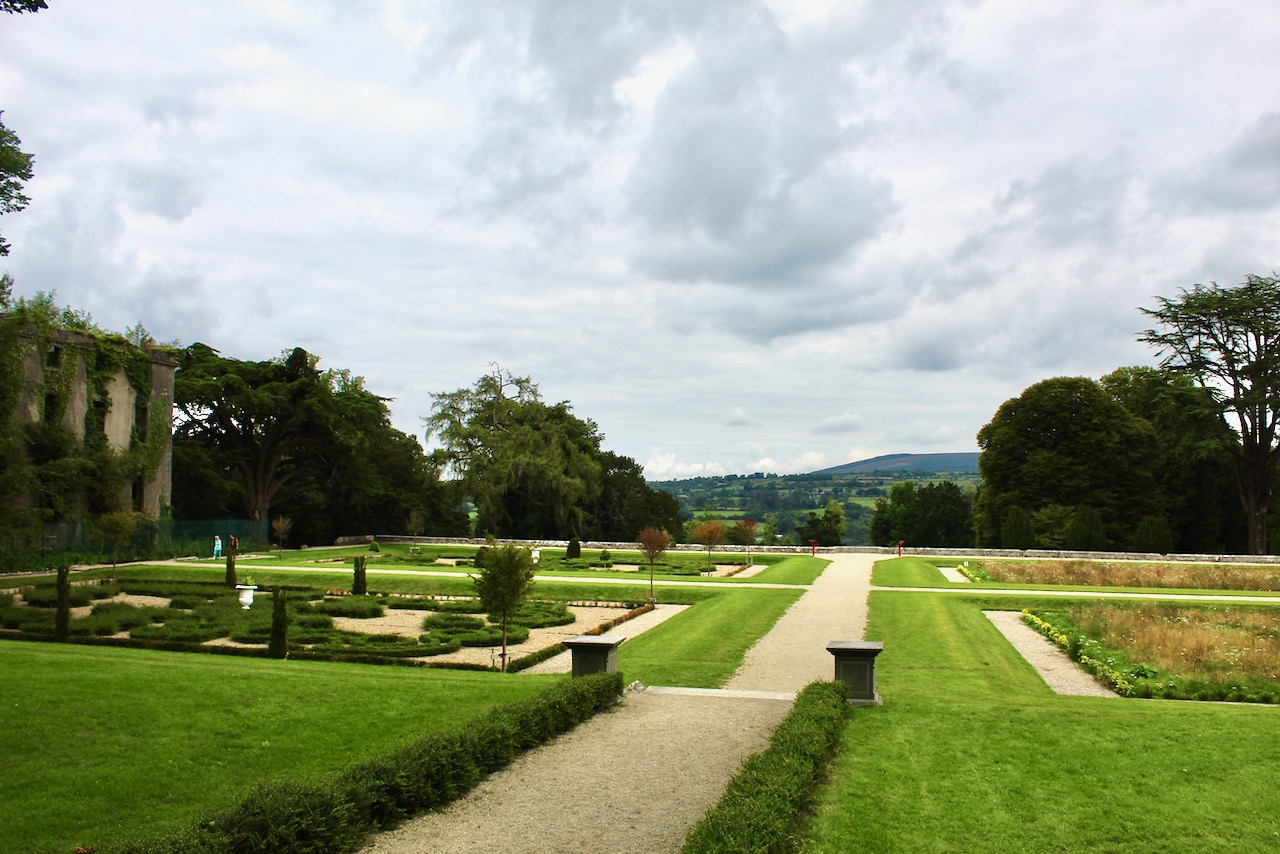
Woodstock, County Kilkenny. Photograph © Jennifer Winder-Baggot, www.irishhistorichouses.com

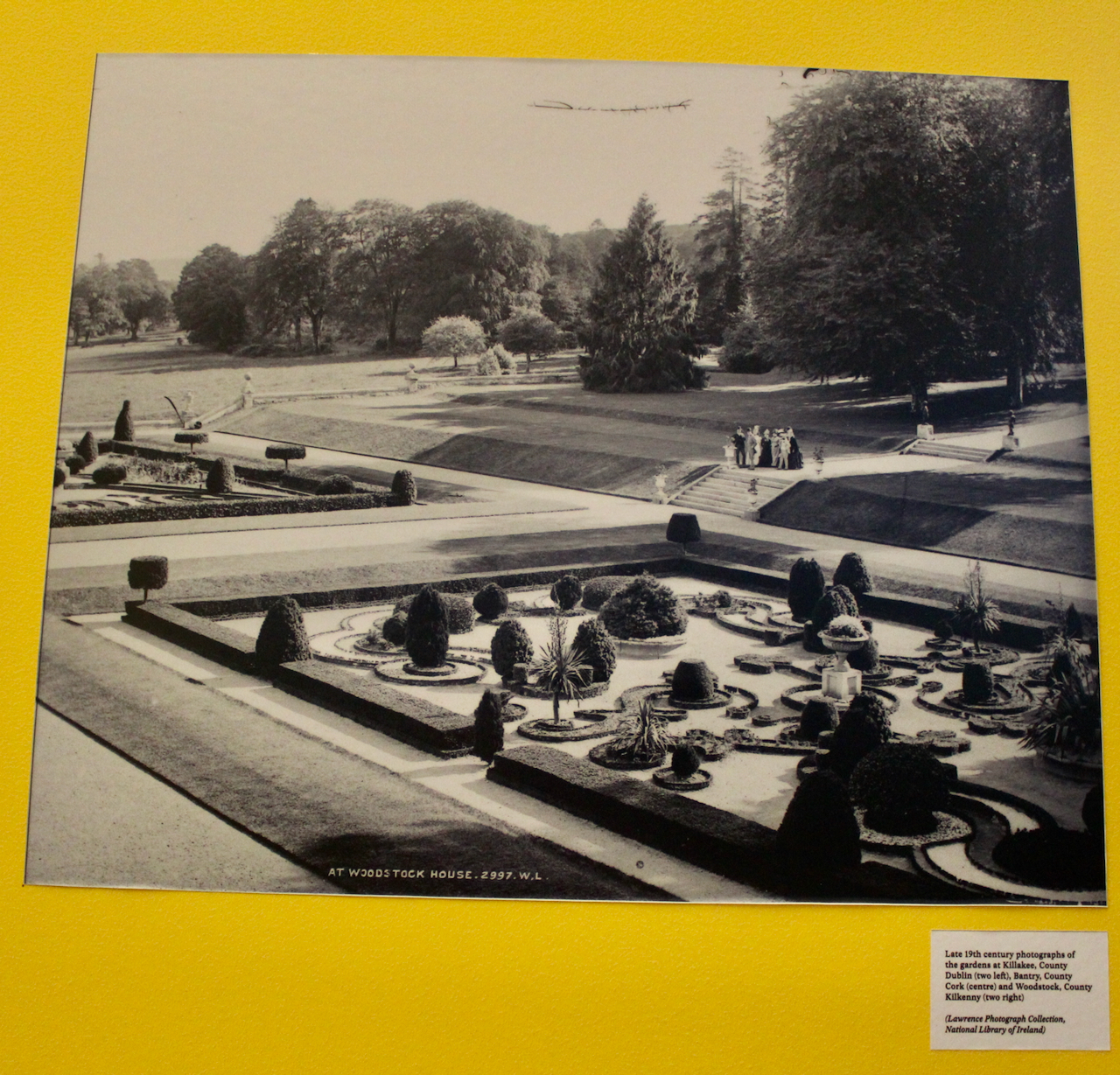
Woodstock Gardens, photograph from Lawrence Photograph Collections, National Library of Ireland, photograph from “In Harmony with Nature” exhibition at the Irish Georgian Society curated by Robert O’Byrne.

Mark Bence-Jones writes about Woodstock (1988):

p. 286. “(Fownes, Bt/EDB; Tighe/IFR) A house by Francis Bindon [for William Fownes, 2nd Baronet], probably dating from 1740s, which is unusual in being built round a small inner court, or light-shaft. Three storeys; handsomely rusticated entrance front of six bays with a central niche and statue above the entrance doorway…In 1770s Sarah Ponsonby lived here with her cousins, Sir William and Betty Fownes [born Elizabeth Ponsonby]; her friend, Eleanor Butler, having escaped from Borris, co Carlow, where she was being kept in disgrace, was let into Woodstock through a window, hiding herself in Sarah’s room for 24 hours before being discovered; shortly afterwards, the two friends left for Wales, where they subsequently became famous as the “Ladies of Llangollen.” Woodstock passed to the Tighes with the marriage of the daughter and heiress of Sir William Fownes to William Tighe, whose daughter-in-law was Mary Tighe, the poet, author of Psyche; she died at Woodstock 1810 aged 37, and Flaxman’s monument to her is in a small neo-Classical mausoleum behind the Protestant church in the village of Inistioge, at the gates of the demesne. There was also a statue of her in one of the rooms in the house. Woodstock was burnt ca 1920, and is now a ruin, but the demesne, with its magnificent beechwoods, still belongs to the Tighes.” [6]

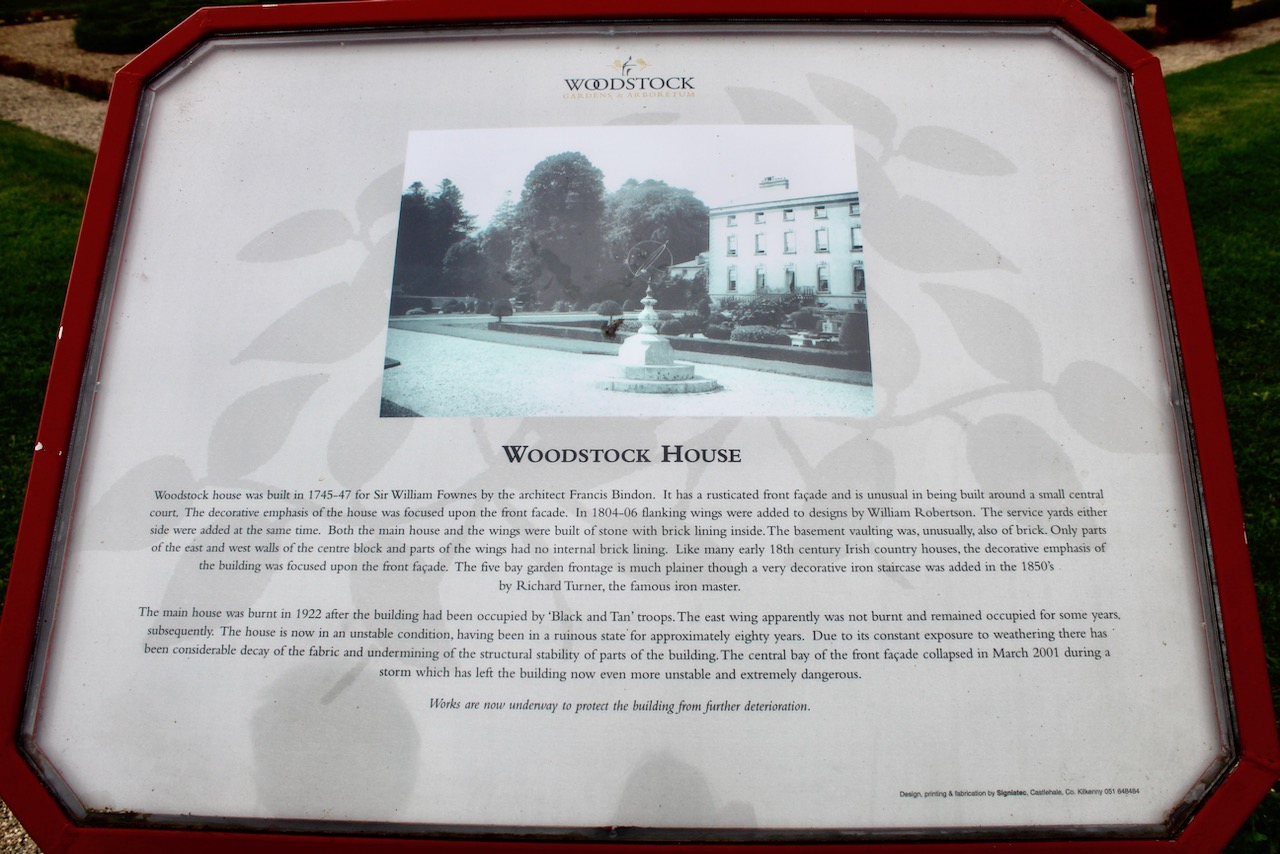
The information board tells us that in 1804 flanking wings were added to designs by William Robertson (1770-1850). The house was burned in 1922 after being occupied by the Black and Tans.
The gardens at Woodstock, County Kilkenny, August 2021. The gardens at Woodstock, gloriously situated above the River Nore, were conceived on a grand scale by Colonel William Tighe (1794-1878) and Lady Louisa Lennox (1803-1900) as the centrepiece of a great estate. Photograph © Jennifer Winder-Baggot, www.irishhistorichouses.com
The Ladies of Llangollen, Sarah Ponsonby and Charlotte Eleanor Butler, by Richard James Lane, printed by Jérémie Graf, after Lady Mary Leighton (née Parker) courtesy of National Portrait Gallery NPG D32504.
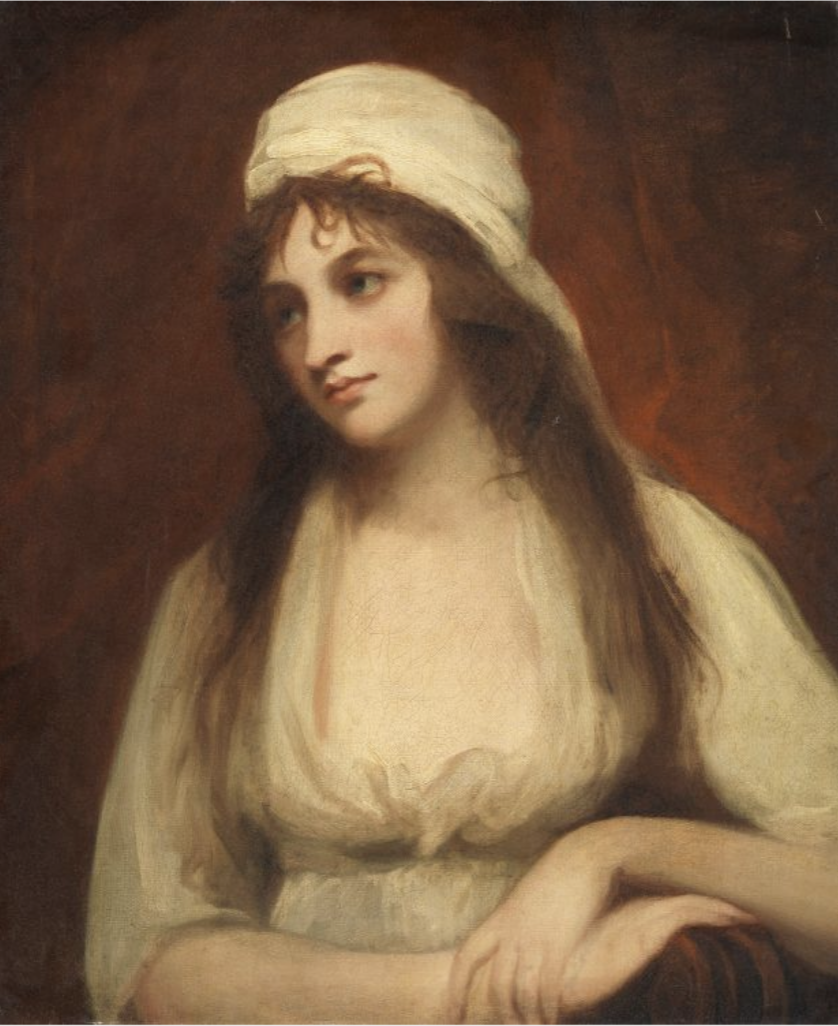
Mary Tighe née Blachford (1747-1791), courtesy of National Gallery of Ireland.

The formal parterres were created in the 1860s by a Scotsman, Charles McDonald, for Colonel William Tighe (1794-1878) and his wife Lady Louisa née Lennox (1803-1900, daughter of Charles, 4th Duke of Richmond – she is not to be confused with Louisa Lennox (1743-1817) daughter of Charles 2nd Duke of Richmond, who married Thomas Conolly of Castletown, County Kildare). The parterre incorporates a shamrock motif. Robert O’Byrne tells us in his exhibition “In Harmony with Nature” at the Irish Georgian Society July 2022 that creating the parterres involved removing 200,000 cubic yards of earth and retention by a wall of cut granite quarried on the estate and ornamented by local craftsmen with stone finials, balls and vases.

Woodstock Gardens, photograph from Lawrence Photograph Collections, National Library of Ireland, photograph from “In Harmony with Nature” exhibition at the Irish Georgian Society July 2022 curated by Robert O’Byrne.

The estate passed to the daughter, Sarah, of William Fownes and Elizabeth Ponsonby, and Sarah married William Tighe (1738-1872) of Rossana, County Wicklow.

William Tighe of Rosanna! Portrait by by Charles Jervas (c.1675-1739), courtesy of Adams auction 19 Oct 2021.
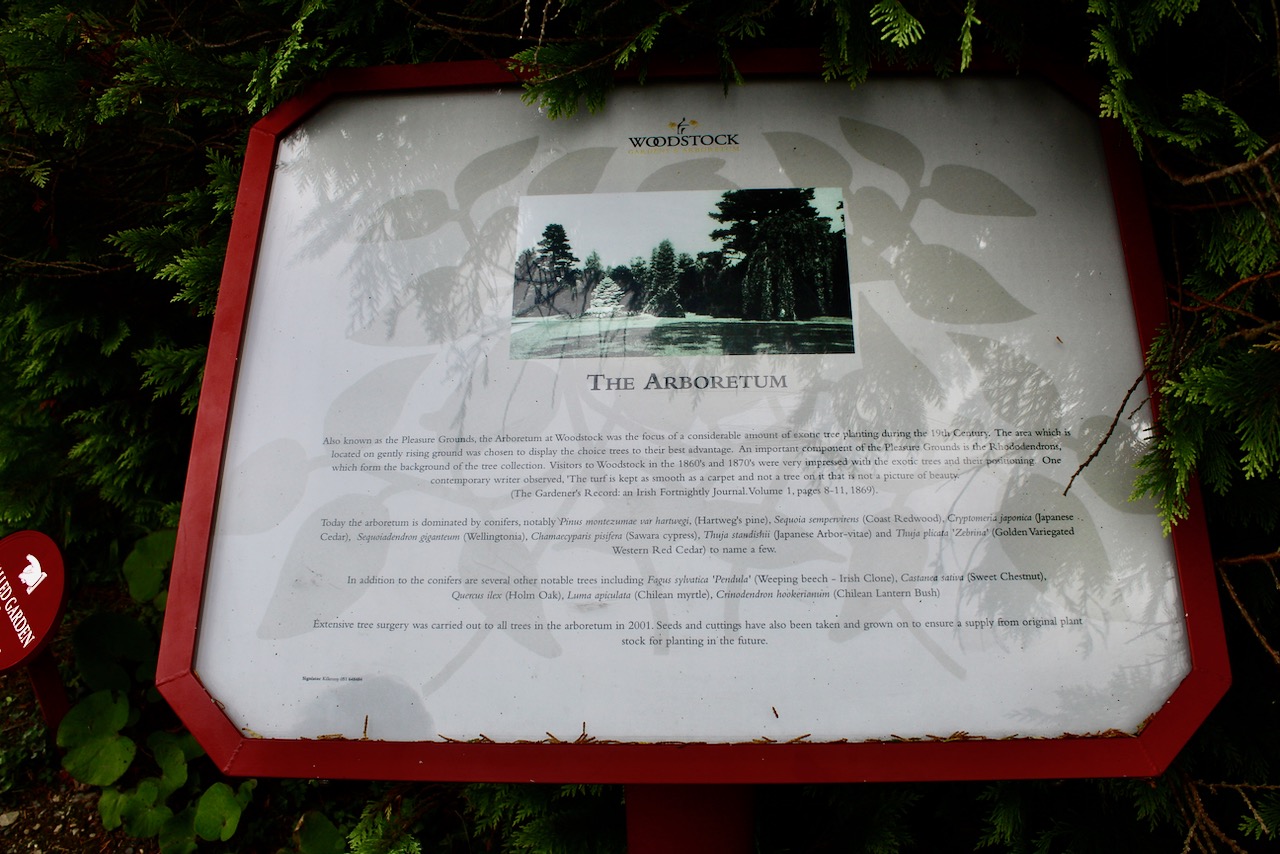
This information board tells us about the Arboretum at Woodstock, where a number of exotic trees were planted in the nineteenth century.
Woodstock, County Kilkenny.
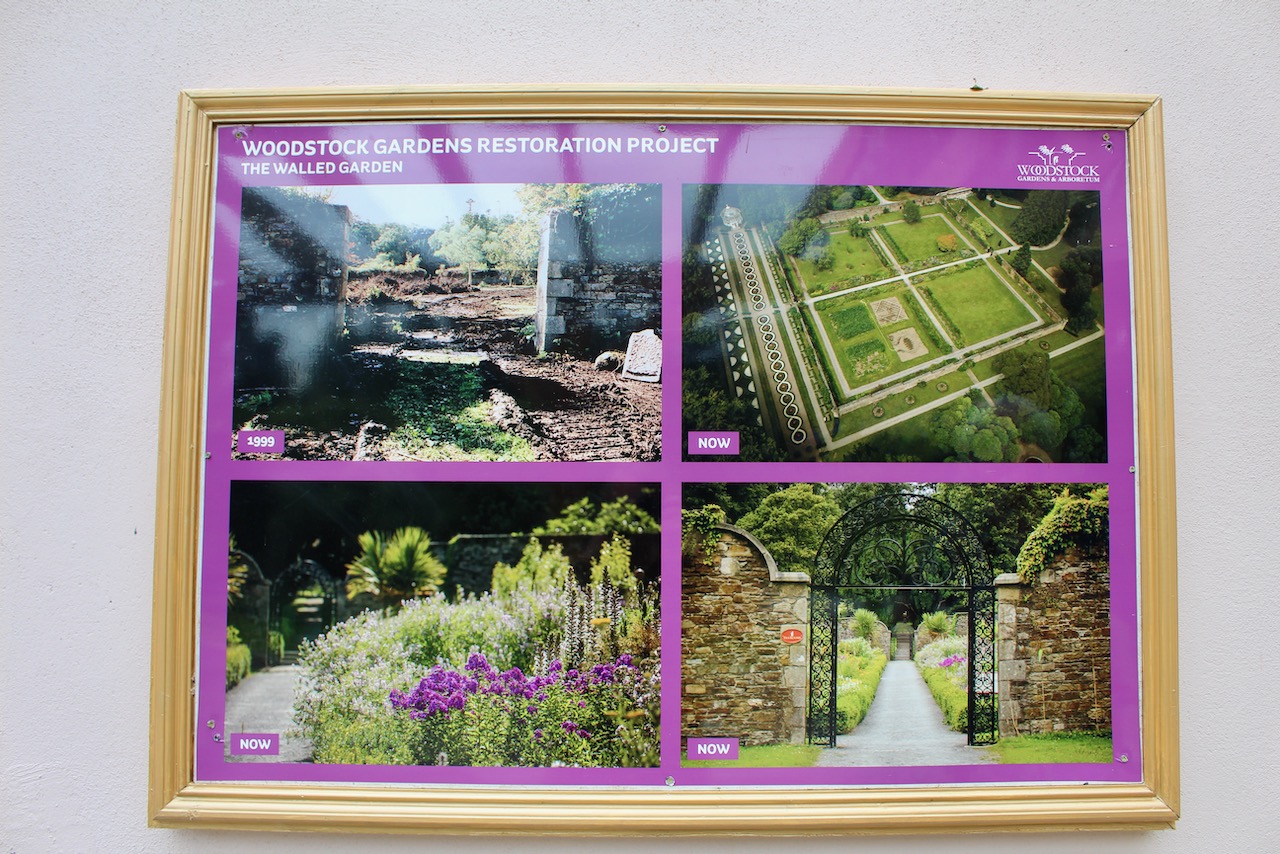
Entrance to walled garden at Woodstock. Photograph © Jennifer Winder-Baggot, www.irishhistorichouses.com
Gardens at Woodstock, with reproduction Turner glasshouse. Photograph © Jennifer Winder-Baggot, www.irishhistorichouses.com
“Turner bench” which matches the glasshouse at Woodstock. Photograph © Jennifer Winder-Baggot, www.irishhistorichouses.com
The longest and oldest Monkey Puzzle Walk in Europe, at Woodstock. Photograph © Jennifer Winder-Baggot, www.irishhistorichouses.com

Places to stay, County Kilkenny

1. Ballyduff, Thomastown, Co Kilkenny – wedding venue, B&B 

http://ballyduffhouse.ie/booking-enquiries/ 

Ballyduff House, courtesy of National Inventory of Architectural Heritage.

The website tells us:

Ballyduff House is a classic Georgian country house with a 14th century castle, steeped in Irish history and full of the warmest of welcomes.

The River Nore sparkles as it runs along Ballyduff’s riverbank while sheep and cattle graze the pasture either side.

Open fires, the book lined library and the comfortable bedrooms furnished with Irish antiques capture an early 18th century experience tempered by discreet 21st century comfort.

This is real Ireland – calm, green and beautiful, set alongside the picturesque village of Inistioge with Dublin only an hour away.

The National Inventory tells us:

A country house representing an important component of the mid eighteenth-century domestic built heritage of County Kilkenny with the architectural value of the composition, one abutting a “roofed down” tower house, confirmed by such attributes as the deliberate alignment maximising on panoramic vistas overlooking broad parkland and the wooded River Nore; the compact rectilinear plan form centred on a restrained doorcase showing a simple radial fanlight; the diminishing in scale of the openings on each floor producing a graduated visual impression with the principal “apartments” or reception rooms defined by Wyatt-style tripartite glazing patterns; and the slightly oversailing roofline. Having been well maintained, the elementary form and massing survive intact together with substantial quantities of the original fabric, both to the exterior and to the interior, including crown or cylinder glazing panels in hornless sash frames: meanwhile, contemporary joinery; restrained chimneypieces; and sleek plasterwork refinements, all highlight the artistic potential of the composition. Furthermore, an adjacent farmyard complex ; and a walled garden (extant 1839), all continue to contribute positively to the group and setting values of a self-contained estate having historic connections with the Coghill family including Sir Josiah Coghill (1773-1850), third Baronet (Lewis 1837 II, 18); the Connellans of nearby Coolmore House (see 12403210); and Lieutenant-Colonel Frederick William John Shore (1844-1916), fourth Baron Teignmouth (NA 1901; NA 1911). NOTE: Given as the birthplace of Sir John Joscelyn Coghill (1826-1905) of Glen Barrahane in Castletownshend, County Cork (Dod’s Peerage Baronetage and Knightage 1865, 186); and George Leopold Bryan (1828-80) of Jenkinstown (Dod’s Parliamentary Companion 1875, 174).

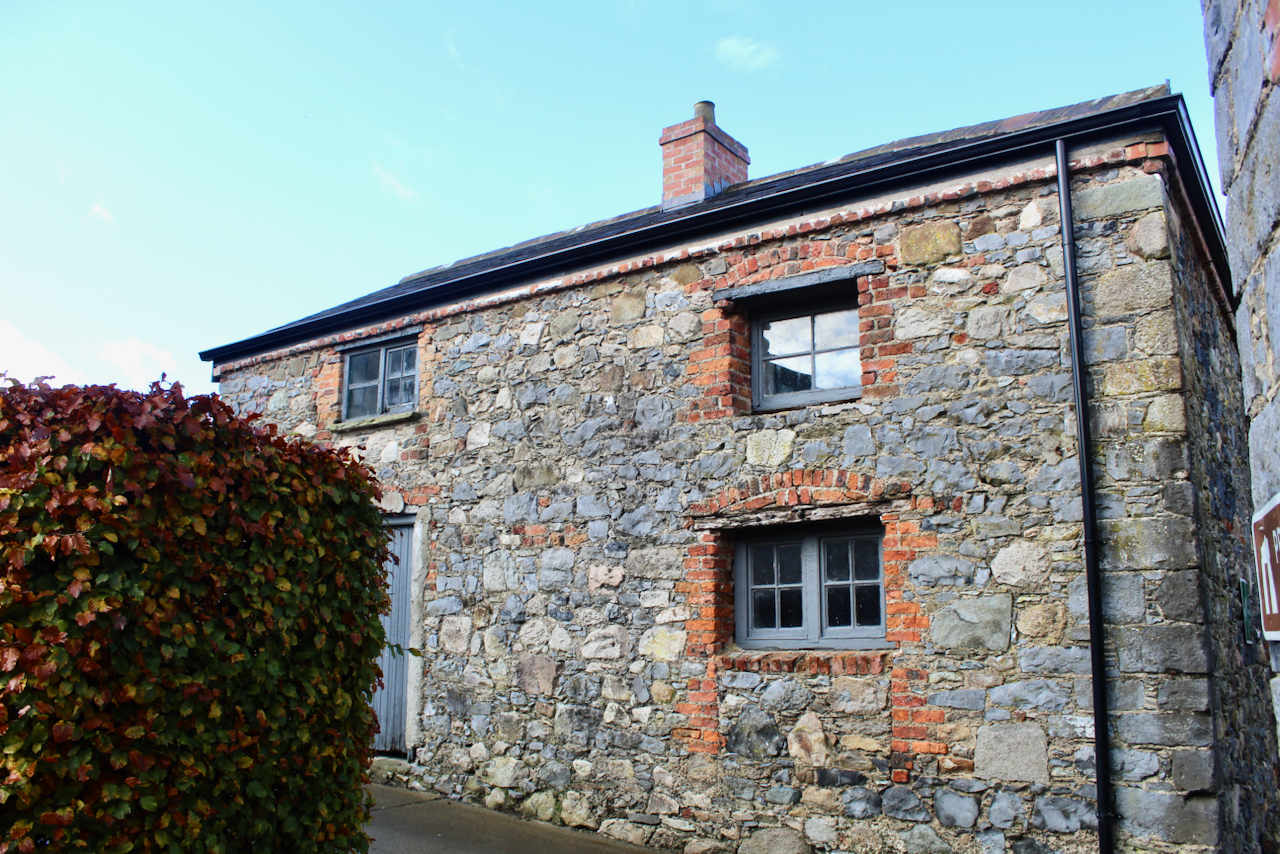
2. Blanchville Coachyard, Dunbell, County Kilkenny

https://blanchville.ie/

Blanchville Coachyard, Dunbell, County Kilkenny, photograph from website https://blanchville.ie/

The Coach Houses & Gardener’s Cottage are, as the name suggests, part of the beautiful old stone building that was originally the Coach House at Blanchville. The building has been sensitively and extensively refurbished and now offers guests comfortable and inviting Self-Catering Accommodation in three self-contained Holiday Homes.

These Heritage Holiday Lets feature a cosy woodburning stove or open fire, fully fitted modern kitchen and relaxing bedrooms – the perfect requisite for an enjoyable weekend break or holiday in Kilkenny.

3. Butler House, Kilkenny, co Kilkenny – accommodation 

https://www.butler.ie

View to Butler House and Garden, Kilkenny Leo Byrne Photography 2015. (see [2])

The National Inventory tells us about Butler house: “Semi-detached three-bay three-storey over basement house, built 1786, with pair of three-bay full-height bowed bays to rear (east) elevation. Extended, 1832, comprising two-bay three-storey perpendicular block to right. Renovated, 1972. Now in use as hotel. One of a pair…An elegantly-composed Classically-proportioned substantial house built either by Walter Butler (1713-83), sixteenth Earl of Ormonde or John Butler (1740-95), seventeenth Earl of Ormonde as one of a pair of dower houses…Distinctive attributes including the elegant bowed bays to the Garden (east) Front contribute positively to the architectural design value of the composition while carved limestone dressings with particular emphasis on the well-executed doorcase displaying high quality stone masonry further enliven the external expression of the house in the streetscape.”

The house was home to Lady Eleanor Butler who lived here after the death of her husband Walter in 1783. Lady Eleanor Butler was the mother of John, the 17th Earl of Ormonde and her daughter, also Eleanor, was one of the famous “Ladies of Langollen”.

James, Earl of Ormonde (1777-1838, and 1st Marquess) resided in the house while the Castle was under reconstruction in 1831. A soup kitchen was run from here during the cholera epidemic of 1832.

The Royal Historical and Archaeological Association of Ireland held their meetings in Butler House in 1870. Kilkenny Design, the state design agency, restored Butler House in 1972. The decor and furnishings reflect a certain 1970s Art Deco style, which because of the muted colours and natural fabrics used, proved sympathetic to the original features of the house. In 1989, the Kilkenny Civic Trust acquired both Butler House and the Castle Stables. 

4. Clomantagh Castle, Co Kilkennyaccommodation, whole house on airbnb: €€ for two, € for 3-8

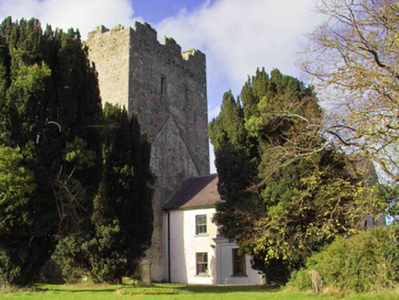
Clomantagh Castle, courtesy of National Inventory of Architectural Heritage.

https://www.airbnb.ie/rooms/29346656?federated_search_id=050f383f-6e5e-45b5-9989-b166bfe7e70d&source_impression_id=p3_1650104926_er%2FjFSqCgEWzQLW5

The National Inventory tells us it is a farmhouse erected by John Shortal (d. 1857) or Patrick Shortal (d. 1858) representing an integral component of the mid nineteenth-century domestic built heritage of County Kilkenny with the architectural value of the composition, one occupying the site of a hall adjoining the fifteenth-century Clomantagh Castle.

Clomantagh Castle - was home to the [8th] Earl of Ormond, Pierce Ruadh (1467-1539). When he died in 1539 the castle along with other properties was passed to his son Richard Butler, first Viscount Mountgarret (1500-1571). The castle and its estate stayed in the Butler family until it was forfeited during the war with Cromwell to Lieutenant Arthur St. George [ancestor of the Kilrush family]. After the war the castle changed hands twice more and a farmhouse was added by the Shortall family, the owners in the 1800’s, before its last owner  Willie White a local vet. The property is now owned by a non profit making charity called the Landmark Trust who preserve historic buildings. 

The Landmark site tells us:

The name Clomantagh comes from the Irish “cloch mantaigh”, meaning missing tooth or gappy smile. Locals gave this name to the castle as the irregular castellation reminded them of someone smiling with missing teeth.  

“It has been established that the tower and bawn were built in the 15th century (c.1430). The tower house has been modified and extended over the centuries, and in the early 19th century a farmhouse was added providing accommodation with comfort, rather than defence, in mind. In recent times, the bawn walls have sheltered the buildings of a 20th century working farm. It also has a rare clochán (small dome-roomed structure) knit into the bawn walls. Five other tower houses can be seen from the roof of Clomantagh Castle, and they were all strategically aligned for defence purposes.

Clomantagh followed mainstream castle design, emerging as an almost square building, six storeys high, with massive walls built from local limestone, and a corner staircase. Inserted high on the south wall is a Sheela-na-Gig. This pagan symbol was adopted by medieval builders and incorporated as the building was erected. High up the remains of the stepped battlement walls, the merlons can be seen – a specifically Irish feature whose inspiration is considered to be Venetian. Inside the battlements a wide walkway gave access to all sides of the building. In the north east corner, a high watchtower has been built. This is knows as Moll Gearailt’s Chair, after the particularly ferocious original mistress of the house, Maighréad nhee Gearóid, who used to sit watching over her fields to ensure that her labourers were not slacking at their work. The walkway, or Alure, was sloped outward to allow run off water through drainage holes and stone spouts. Generally, battlement walls have not survived well, their thinner construction and unstable sloping bases have contributed to their disappearance from tower houses.” [6]

You can stay in the main house or in smaller private accommodation https://cullintrahouse.com

The website tells us: “A countryside retreat in the heart of Co Kilkenny, Ireland – surrounded by acres of woodland, farmland and secret places to explore, Cullintra House offers guests a unique accommodation experience.

The house is furnished with your host Patricia Cantlon’s artistic style to the fore – each room has unique pieces of furniture or bespoke decorative touches that make Cullintra House a special find in Co Kilkenny.

6. Lyrath House, near Kilkenny, County Kilkenny – hotel

Lyrath Estate by Colin Whittaker 2009, flickr creative commons.

https://www.lyrath.com

Mark Bence-Jones writes:

p. 184. “(Wheeler-Cuffe, Bt/PB1934; Tupper/LGI1958) Originally a Tobin castle, acquired by the Wheeler family C17. By 1826, the house here consisted of a simple two storey five bay pedimented front facing west, with two wings running back from it to enclose a small three sided office court; the entrance door being on the south side; under a Regency veranda. In 1861, Sir Charles Wheeler-Cuffe, 2nd Bt, married Pauline Villiers-Stuart, daughter of Lord Stuart de Decies [of Dromana House, County Waterford – see my entry], whose parents did not regard this house as grand enough for her; so in that same year he rebuilt the main western block on a larger scale and in a rich Italianate style, while leaving the two storey wings more of less as they were.; his architect being John McCurdy. The entrance was moved from the south side to the new west front, which is pedimented and of five bays like its predecessor, but not entirely symmetrical; having a pair of windows on the ground floor to the left of centre, but a single window on the right. Entrance door framed by Ionic columns carrying a balustrade, above which is a Venetian window framed by an aedicule with a segmental pediment. All the ground floor windows have semi-circular heads, while the heads of the windows of the upper storey – apart from the central Venetian windows – are cambered. The garden front to the north has two single-storey balustraded curved bows, the windows of which are treated as arcades supported by Romanesque columns of sandstone. There is another Romanesque column separated the pair of windows in the centre of the front. The windows in the bow are glazed with curved glass. The roof is carried on a deep bracket cornice and there are prominent string courses, which give the elevations a High Victorian character. Hall with imposing imperial staircase, the centre ramp of which rises between two fluted Corinthian columns. There is a similarity between the staircase here and that at Dromana, Co Waterford, Pauline Lady Wheeler-Cuffe’s old home; except that the Dromana staircase was of stone, whereas that at Leyrath is of wood, with ornate cast-iron balustrades. On the centre ramp of the staircase there is still a chair with its back legs cut down to fit the steps; this was put there in 1880s for Pauline when she became infirm. Hall has a ceiling cornice of typical C19 plasterwork in a design of foliage, and door with entablatures which still have their original walnut graining. To the left of the hall, in the garden front, are the drawing room, ante-room and dining room, opening into each other with large double doors’ they have ceiling cornices similar to that in the hall, and good C19 white chimneypieces, enriched with carving; the drawing room and ante-room keep their original white and gold wallpaper. In the south wing there are smaller and lower rooms surviving from before the rebuilding; while first floor rooms in this wing have barrel ceilings throughout and contain some C18 chimneypieces of black marble.” 

The website tells us more about the history:

The name Lyrath is thought to date back to Norman times when “Strongbow” settled in Ireland during the Norman invasion. The area was originally called Le Rar or Le Rath by the French speaking De Ponte family who during the 12th century lived in the Monastery which was once located within the grounds. There is also a mention of a castle which was once said to have been situated within the grounds.

Prior to 1653 the lands were owned by the Shortall family, who then rented the ‘old castle in repair’ and land to Thomas Tobin, Constable of the Barony of Gowran. In 1664, a gentleman named Thomas Mances, paid a sum of 4s ‘hearth money’ for the old castle.

Later in the Seventeenth Century the property was acquired by Richard Wheeler through his kinship to Jonah Wheeler the Bishop of Ossary. By then the original ‘Tobin’ castle had been demolished.

Richard Wheeler’s son, Jonah Wheeler, married Elisabeth Denny-Cuffe, a descendant of the Desart-Cuffe family who had extensive landed property in the Counties of Carlow and Kilkenny, on his marriage Jonah decided to adopt the name Cuffe.

In 1814 the grandson of Jonah, also named Jonah, was living in the house with his with Elisabeth Browne, from Brownes Hill in neighbouring Carlow. Sir Jonah died in 1853 and his elder son, Sir Charles Denny Wheeler-Cuffe succeeded him.

To redesign the house Sir Charles engaged the services of John McCurdy, a Dublin born Architect, whose other commissions with his partner, William Mitchell, include Kilkenny’s Knocktopher Abbey, Dublin’s famous ‘Shelbourne Hotel’ and the South City Markets.

The current house is one of the most important surviving country houses built by John McCurdy.

Sir Charles and Pauline had no children, so on the death of Sir Charles, his nephew Sir Ottway Fortesque Luke Wheeler-Cuffe inherited the baronetcy and demesne of Lyrath and became the primary resident. Sir Ottaway married Charlotte Isabel Williams in 1897. Lady Charlotte was the earliest known botanical explorer to reach the remote areas Burma and it was during these trips that she discovered several plants including two new species of Rhododendrons, Burmanicum, and Cuffianum (named after her). Cuffianum, the white rhododendron is extremely rare and has not been collected by any botanist since Lady Wheeler-Cuffe found in 1911.

Sir Ottway and Lady Charlotte stayed in Burma until Sir Ottway’s retirement in August 1921 when they finally returned to live at Lyrath. On her return to Lyrath, Lady Charlotte redesigned the gardens. The Conservatory adjacent to Tupper’s Bar in the new Hotel overlooks the Victorian garden designer by her which has been carefully restored to her original design (based on family records and drawings), they are also home to the ancient yew trees which are now protected by a preservation order.

Lady Charlotte lived in the house until her death in 1966 in her 100th year.

Following the death of Lady Charlotte, in 1967 the property was inherited by Lieutenant-Colonel G.W. Tupper whose grandfather had married Sir Charles’ sister in 1846. Reginald’s great nephew, Captain Anthony Tupper and his wife moved into the house and ran it as a traditional estate farm with a herd of Jersey cows, hens, and geese in the yard, calves in the haggard field and a big old-fashioned kitchen with dogs and cats which rambled in and out at will.

The Tuppers remained in the house until 1997.

When the Tuppers left, there was an auction at the house of all the furniture and the bits and pieces accumulated over several lifetimes laid out and labelled for sale. Fortunately, Xavier McAuliffe managed to obtain many of the items on auction that day, these items are now on display in the house and include to original large portraits hanging in the hallway and other paintings on display.

Xavier purchased the Estate in 2003 and developed the house into Lyrath Estate Hotel and Convention Centre, which opened its doors to the public in 2006.

7. Mount Juliet, Thomastown, County Kilkenny – hotel

Mount Juliet Gardens, Thomastown, Co Kilkenny, photograph by Finn Richards 2015 for Tourism Ireland, Ireland’s Content Pool. (see [2])
Drawing room of Mount Juliet, County Kilkenny, Date 2 November 1920 courtesy of National Library of Ireland NLI Ref. P_WP_2886.

https://www.mountjuliet.ie/

Mark Bence-Jones writes of Mount Juliet:

p. 214. “(Butler, Carrick, E/PB; McCalmont/IFR) A mid to late C18 house built by the 1st Earl of Carrick [Somerset Hamilton Butler, 8th Viscount Ikerrin and 1st Earl of Carrick (1719-1774)] across the River Nore from the former family seat, Ballylinch Castle on an estate which he had bought ca 1750 from Rev Thomas Bushe [1727-1795], of Kilmurry; traditionally named by him after his wife [Juliana Boyle, daugher of the 1st Earl of Shannon]. Of three storeys over basement, front of seven bays between two shallow curved bows, each having three windows. One bay central breakfront, with Venetian windows in the two upper storeys above tripartite pedimented and fanlighted doorway. Centre window in two lower storeys of bows roundheaded. Perron and double steps in front of entrance door, with iron railings. High pitched roof and massive stacks. Sold 1914 by 6th Earl of Carrick to the McCalmonts who had leased the house for some years. Major Dermot McCalmont made a new entrance in what had formerly been the back of the house, where the main block is flanked by two storey wings, extending at right angles from  it to form a shallow three sided court, and joined to it by curved sweeps. The interior of the house was richly decorated by 2nd Earl of Carrick 1780s with plasterwork in the manner of Michael Stapleton. The hall, which is long and narrow, is divided by an arcade carried on fluted Ionic columns, beyond which rises a bifurcating staircase with a balustrade of plain slender uprights; the present entrance being by way of a porch built out at the back of the staircase. The rooms on either side of the hall in what was formerly the entrance front and is now the garden front have plasterwork ceilings; one with a centre medallion of a hunting scene, another with a medallion of a man shooting. One of these rooms, the dining room, also has plasterwork on the walls, incorporating medallions with Classical reliefs. One of the wings flanking the present entrance front contains a ballroom made by Major Dermot McCalmont 1920s, with a frieze of late C18 style plasterwork; it is reached by way of a curving corridor. The demesne of Mount Juliet is one of the finest in Ireland, with magnificent hardwoods above the River Nore ; it includes the Ballylinch demesne across the river. There is a series of large walled gardens near the house Mount Juliet is famous for its stud, founded by Major Dermot McCalmont 1915. Sold 1987.” 

Reverend Thomas McCalmont, 2nd Son of Hugh McCalmont, of Abbey Lands, Belfast. Born 1809, Died 1872, courtesy Sheppard’s Nov 7 2023.

8. Tubbrid Castle, County Kilkenny €€€ for two, € for 8

https://www.tubbridcastle.com/

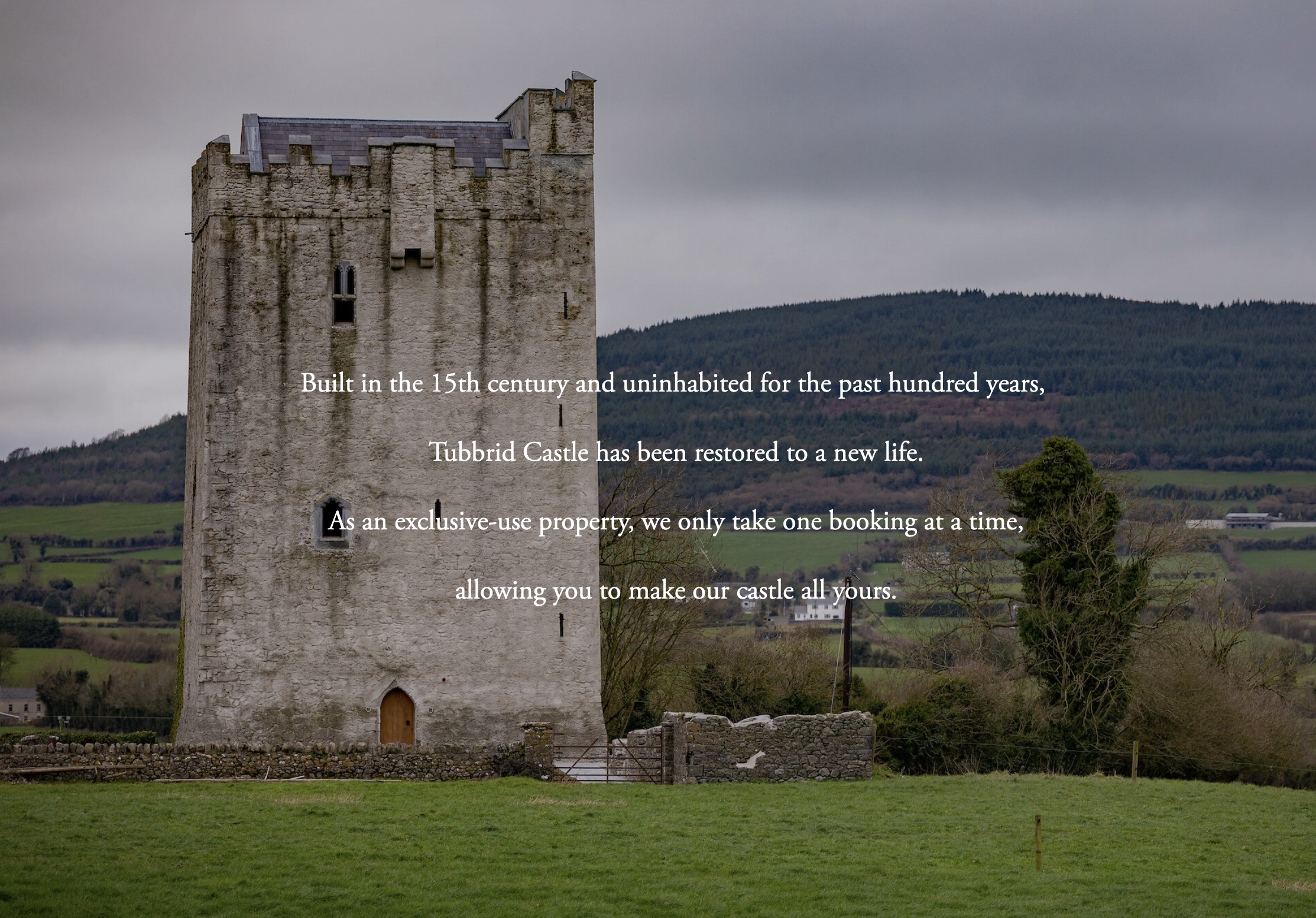
Tubbrid Castle, photograph courtesy of https://www.tubbridcastle.com/

and https://www.airbnb.ie/rooms/29598290?adults=2&category_tag=Tag%3A8047&children=0&infants=0&search_mode=flex_destinations_search&check_in=2022-06-05&check_out=2022-06-10&federated_search_id=6eebbe51-3470-4008-be61-4228d4019473&source_impression_id=p3_1652359358_O%2F1m3ENyNNeiOZ%2Bf

The entry tells us:

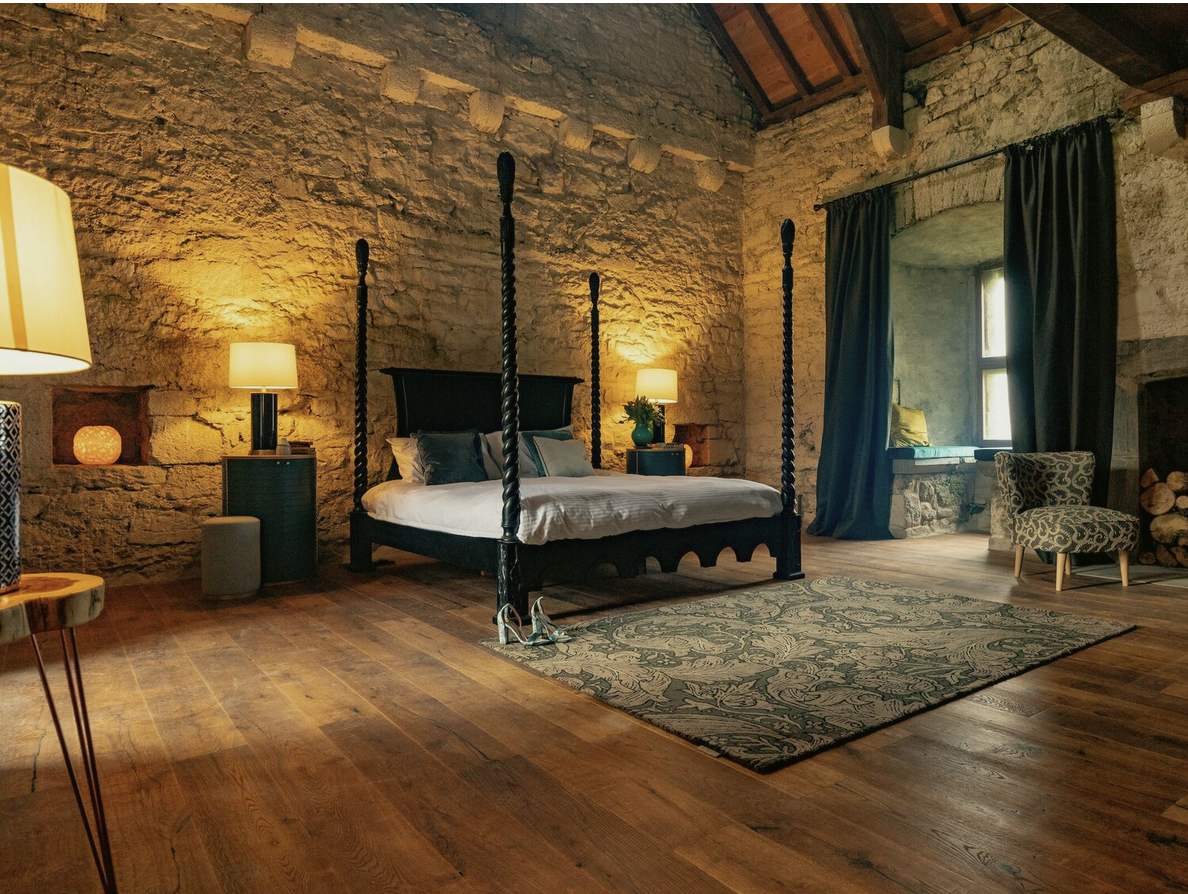
Tubbrid Castle is a unique 15th-century tower house, uninhabited for the last century and now restored to its former glory. We’ve highlighted original features to let you step back in time and added luxury touches so you can indulge your inner prince or princess.

Heritage

Tubbrid Castle stands at an important point on the borders of the ancient kingdoms of Laighean and Mumhan. Built as a defensive structure to protect the territory of the Butlers of Ormond, the tower house was home to generations of families allied to the Butlers of Kilkenny Castle. The architectural significance of Tubbrid Castle is denoted by its designation as a National Monument and a Protected Structure.

In 942 AD, Muircheartach, King of modern-day Ulster, marched his army of 1000 Leather Cloaks south to avenge his allies, who had been attacked by Callaghan, King of Cashel. Muircheartach’s bard, Colmanach, recorded the journey in an epic poem, Circuit of Ireland, in which he praised the beauty of Osraí (now Kilkenny), and the hospitality of its people. At the edge of enemy territory and on the cusp of battle, Muircheartach’s army set up camp in Tubbrid, on a plain that a millennium later is still called Bán an Champa (the Field of the Encampment). The King himself is thought to have slept at the fort where Tubbrid Castle now stands. A thousand years later, the people of Kilkenny still pride ourselves on our warm hospitality and from the top floor bedroom of Tubbrid Castle you can survey Bán an Champa and enjoy lodgings befitting a king.

Tubbrid Castle, photograph courtesy of https://www.tubbridcastle.com/

The website tells us that Margeret Fitzgerald, 8th Countess of Ormond, is supposed to have had the castle built. When the Countess visited Tubbrid, she is said to have slept at the castle’s highest point, to keep her safe from enemy attackers. She is buried with her husband Piers Butler (8th Earl of Ormond) under elaborate effigies at St Canice’s Cathedral, in Kilkenny City.

A detailed written description of the castle comes from James Mease in 1851, writing for the Transactions of the Kilkenny Archaeological Society. Mease claims that, according to locals at the time, there were three ditches surrounding the castle, which had been dug away for manure. Supposedly a cannon ball was found during these works. No trace of these outer fortifications survives today. Mease believed that the castle may have been built on an ancient mound or rath, and perhaps at an old habitation site that might have been the location where the King of Aileach, mentioned in the poem of 971 camped. The ground and second floor were wicker-vaulted and at the time this paper was written, some of the wicker was still in place. We know from the Griffith Valuation that this castle was owned at the time by Arthur St. George, Esq. and leased to Catherine Campion.

Around the turn of the 19th century, the roof was removed from Tubbrid Castle, leaving it open to the elements and accelerating structural decay. By the turn of the millenium, the corners were crumbling and floors were sagging.

John Campion Snr began working on the tower house, aiming at first simply to prevent its collapse. Over several years he repointed the facade and applied a traditional lime mortar, known as harling. The tower house was re-roofed in green oak, in the same style as the original, with no nails or screws.

“In 2016, John Campion Jnr took over the restoration of Tubbrid Castle. Following archaeological impact reports, and with input from the National Monuments Office, John completed the restoration and fit-out of the tower house, turning it into a three-bedroom home.”

9. Waterside Guest House, Graiguenamanagh, County Kilkenny

https://www.watersideguesthouse.com

Phone: (059) 9724246

Email: info@watersideguesthouse.com

Waterside Guesthouse Graiguenamanagh, County Kilkenny, photograph courtesy of website.

This is set in a beautiful old 19th century granite corn store on the River Barrow in Graiguenamanagh.

Whole House rental, County Kilkenny:

1. Annamult House, Bennettsbridge, Co Kilkenny – whole house rental 

Annamult House, courtesy of Annamult website.

https://annamultcountryhouseestate.com

Annamult House, courtesy of Annamult website.

The website tells us:

Annamult County House Estate is a lovely Grade I listed ancient Manor House in the heart of the countryside in Kilkenny with parts dating back to the 16th century. But unlike other grand old homes, Annamult Country House Estate is warm, friendly and welcoming with unlimited hot water, central heating and log fires throughout with beautiful antiques. A uniquely beautiful Country Estate. It’s light, bright and airy. And the moment you step through the door it feels like home.

The website describes the accommodation as 7 Bedrooms, 1 on the lower ground floor, 1 wheelchair accessible bedroom on the ground floor and 4 very large formal bedrooms upstairs and our Japanese Bedroom at the heart of the house . 4 Bedrooms are ensuite with the Bed 1 and 2 sharing a Bathroom nestled between them

Annamult House, courtesy of Annamult website.

The National Inventory describes Annamult: “Detached four-bay two-storey double gable-fronted Tudor-style country house, c.1825, incorporating fabric of earlier house, pre-1771, with three-bay single-storey flat-roofed projecting open porch to centre ground floor, three-bay two-storey side elevations, and five-bay three-storey lower wing to left having single-bay (two-bay deep) two-storey connecting return to east...Forming a picturesque landmark rising above a mature wooded setting on a bank at the confluence of the Kings River and the River Nore a large-scale country house exhibiting a robust Tudor theme represents an important element of the architectural heritage of County Kilkenny. Having origins in an eighteenth-century range the architectural design value of the composition is identified by elegant attributes including the porch displaying high quality stone masonry reminiscent of a similar treatment at the contemporary (c.1825) Shankill Castle (12306002/KK-16-06-02), the Classically-inspired Wyatt-style tripartite openings, the enriched parapet, and so on: the wing incorporating minimal surface detailing is comparatively demure in quality. Having been carefully maintained to present an early aspect the house makes a significant contribution to the character of the locality. The house remains of additional importance for the associations with the Prim, the Nevill (Neville), and the Bayley families.

Annamult House, courtesy of Annamult website.

“You can dine inside or outside in luxury
you can picnic on the island , the riverside or in the woods .
You can relax or play on the lawns .
Climb trees
Boules on the lawns
Croquet on the lawns
You can swim in the river
You can fish in the river
You can walk in the woods
You can relax in the silence
You can star gaze at the firepit
You can play loud music
Great exploration for kids
you can birdwatch and spot some fab wildlife like our buzzards and hawks .
You may come across the deer in the woods
Watch out for badgers … Its ok they are nocturnal only .
Various local suppliers will run group activities on the grounds from yoga to tag archery.”

Annamult House, courtesy of Annamult website.

2. Ballybur Castle, County Kilkenny €€€ for two, € for 10

http://www.ballyburcastle.com/

See above.

3. Castle Blunden, County Kilkenny – whole house rental

hhiref@castleblunden.com https://www.castleblunden.com/

Castle Blunden courtesy of National Inventory of Architectural Heritage.

The Historic Houses of Ireland website tells us:

A few miles from the cathedral city of Kilkenny, Castle Blunden stands on an elevated site in the midst of mature parkland. Dating from the 1750s, and still owned by the Blunden family, this pretty seven-bay building is typical of County Kilkenny houses from the mid-Georgian period. The house is rendered, with a profusion of cut limestone decoration and details, and a handsome sprocketed roof, while the later Doric porch compliments the symmetry of the facade. The basement is concealed by a ramped gravel approach, which makes the house appear both lower and wider than is actually the case, while the small lakes to either side add to the overall air of enchantment.” [7]

The National Inventory tells us:

Representing an important element of the mid eighteenth-century architectural legacy of County Kilkenny a Classically-composed substantial country house built to designs attributed to Francis Bindon (c.1698-1765) in a manner reminiscent of the contemporary (1737) Bonnettstown Hall (12401909/KK-19-09) nearby has been very well maintained to present an early aspect with the original composition attributes surviving in place together with most of the historic fabric both to the exterior and to the interior. Sparsely-detailed the external expression of the house is enlivened by limestone dressings including a somewhat squat portico displaying high quality stone masonry. Forming the centrepiece of a large-scale estate the resulting ensemble having long-standing connections with the Blunden family makes a pleasant contribution to the visual appeal of the local landscape.”

[1] https://www.ihh.ie/index.cfm/houses/house/name/Kilrush%20House

[2] https://www.irelandscontentpool.com/en

[3] https://www.buildingsofireland.ie/buildings-search/building/12000025/rothe-house-15-16-parliament-street-gardens-st-johns-par-kilkenny-co-kilkenny

[4] https://archiseek.com/2010/1594-rothe-house-kilkenny-co-kilkenny/

[5] Bence-Jones, Mark. A Guide to Irish Country Houses (originally published as Burke’s Guide to Country Houses volume 1 Ireland by Burke’s Peerage Ltd. 1978); Revised edition 1988 Constable and Company Ltd, London.

[6] https://www.irishlandmark.com/wp-content/uploads/2013/06/Clomantagh_castle.pdf

and http://kilkennyarchaeologicalsociety.ie

[7] https://www.ihh.ie/index.cfm/houses/house/name/Castle%20Blunden

Text © Jennifer Winder-Baggot, www.irishhistorichouses.com

Places to visit and stay in County Louth, Leinster

On the map above:

blue: places to visit that are not section 482

purple: section 482 properties

red: accommodation

yellow: less expensive accommodation for two

orange: “whole house rental” i.e. those properties that are only for large group accommodations or weddings, e.g. 10 or more people.

green: gardens to visit

grey: ruins

Carlow, Dublin, Kildare, Kilkenny, Laois, Longford, Louth, Meath, Offaly, Westmeath, Wexford and Wicklow are the counties that make up the Leinster region.

As well as places to visit, I have listed separately places to stay, because some of them are worth visiting – you may be able to visit for afternoon tea or a meal.

For places to stay, I have made a rough estimate of prices at time of publication:

€ = up to approximately €150 per night for two people sharing (in yellow on map);

€€ – up to approx €250 per night for two;

€€€ – over €250 per night for two.

For a full listing of accommodation in big houses in Ireland, see my accommodation page: https://irishhistorichouses.com/accommodation/

donation

Help me to pay the entrance fee to one of the houses on this website. This site is created purely out of love for the subject and I receive no payment so any donation is appreciated!

€15.00

Places to visit in County Louth

1. Barmeath Castle, Dunleer, Drogheda, Co. Louth – section 482

2. Carlingford Castle, County Louth – OPW

3. Castle Bellingham, Co. Louth 

4. Collon House, County Louth

5. Killineer House & Garden, Drogheda, Co. Louth – section 482

6. Old Mellifont Abbey, County Louth – OPW

7. Rokeby Hall, Grangebellew, Co. Louth – section 482

Places to stay, County Louth:

1. Ballymascanlon House, Louth  – hotel 

2. Collon House, Ardee Street, Collon, Louth [also Oriel Temple] – B&B, plus guided tours 

3. Darver Castle, County Louth

4. Ghan House, Co Louth – accommodation 

Whole House Rental, County Louth:

1. Barmeath Castle, Dunleer, Drogheda, Co. Louth – section 482, €€€ for two, € for 6-12

2. Bellurgan Park, County Louth

3. Castle Bellingham, Co. Louth – weddings

Places to visit in County Louth

1. Barmeath Castle, Dunleer, Drogheda, Co. Louth A92 P973 – section 482

Barmeath, County Louth, October 2019. Photograph © Jennifer Winder-Baggot, www.irishhistorichouses.com

See my entry:

https://irishhistorichouses.com/2020/10/23/barmeath-castle-dunleer-drogheda-county-louth/

Open dates in 2025: May 1-31, June 1-10, Aug 16-24, Oct 1-20, 9am-1pm

Fee: house, adult/OAP/student €5, garden, adult/OAP/student €5, child free

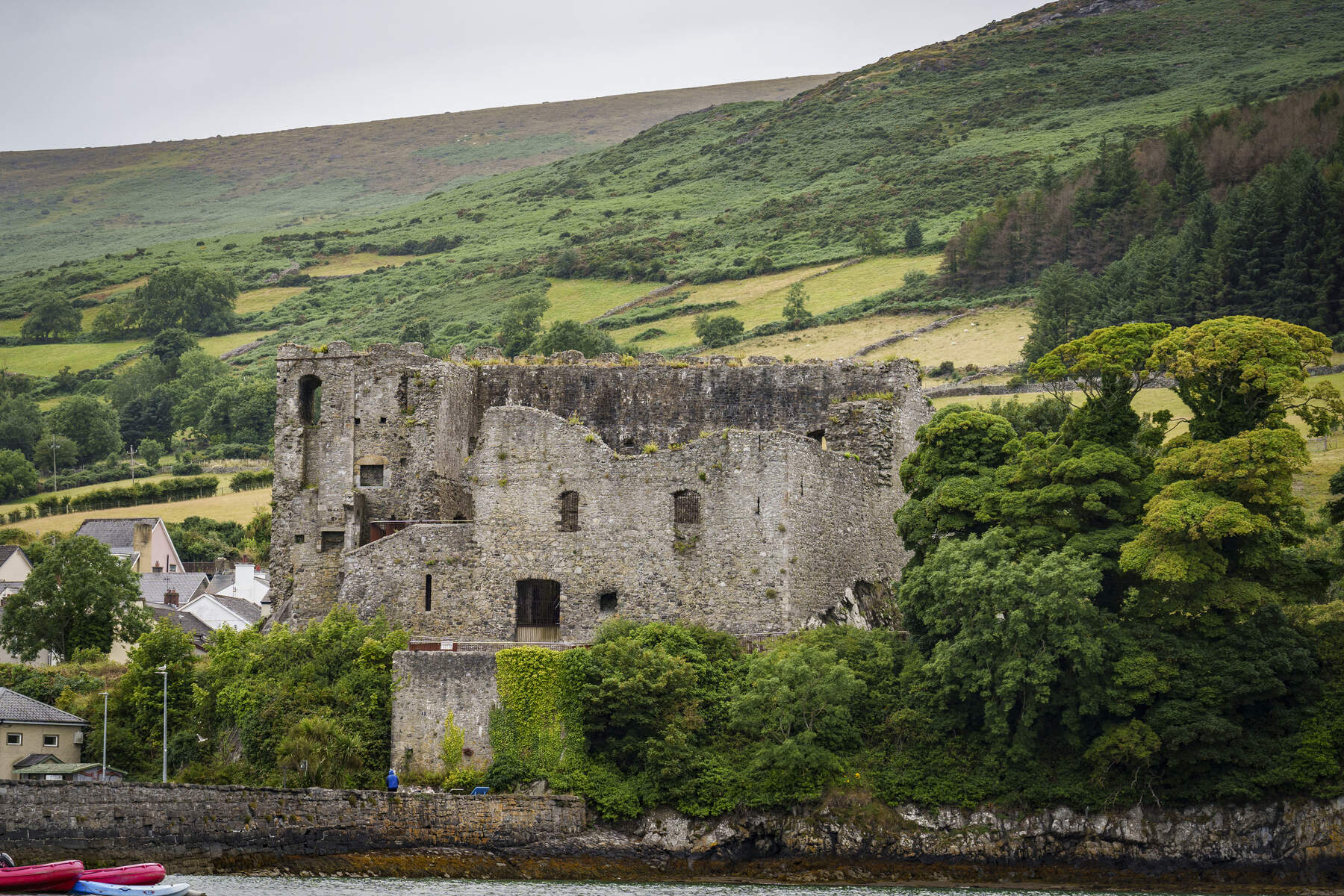
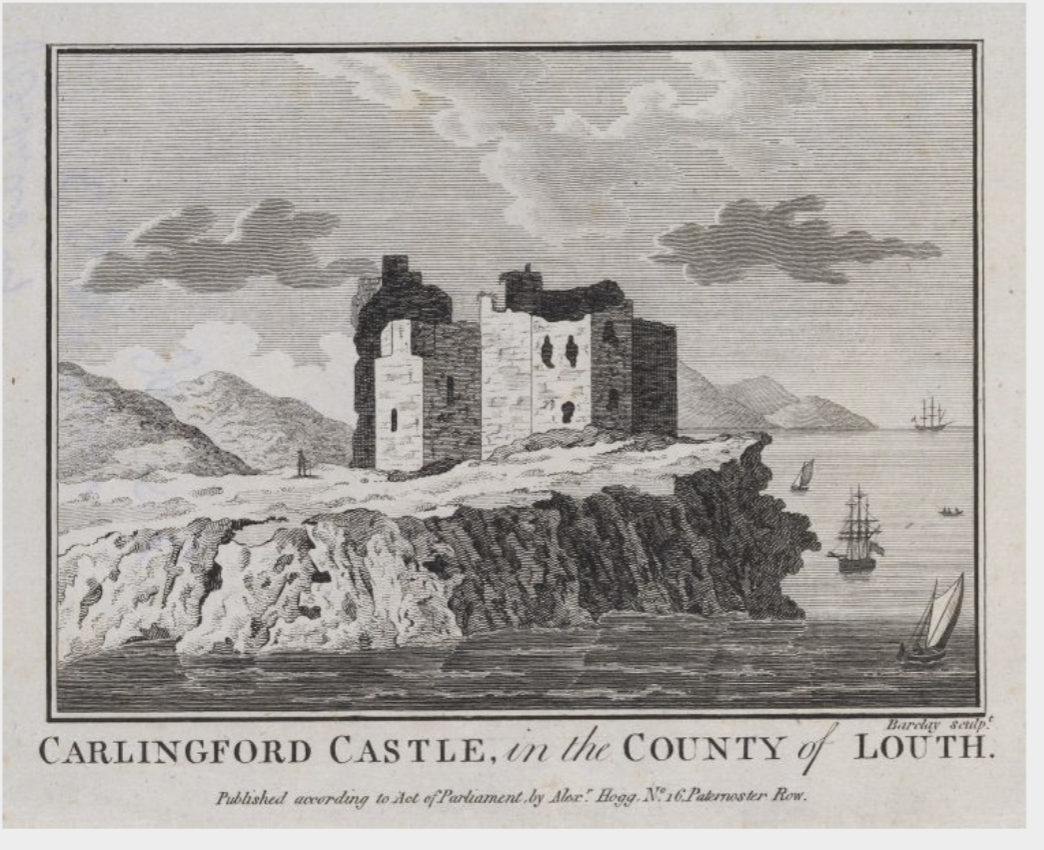
2. Carlingford Castle, County Louth – OPW

See my entry https://irishhistorichouses.com/2022/02/07/office-of-public-works-properties-leinster-laois-longford-louth-meath-offaly-westmeath-wexford-wicklow/

King John’s Castle, Carlingford, Co Louth, photograph by Nomos Production for Failte Ireland 2022.
Carlingford Castle, Carlingford Lough, County Louth, photograph courtesy of National Gallery of Ireland.

3. Castle Bellingham, Co. Louth – for weddings, and open to public for visits:

Open to the public between the hours of 1pm and 3pm, Monday to Friday for viewing year-round. Please call in advance to ensure there is somebody at the castle to show you around! (Closed December 24, 25 and 26)

Castle Bellingham, County Louth, November 2022. Photograph © Jennifer Winder-Baggot, www.irishhistorichouses.com

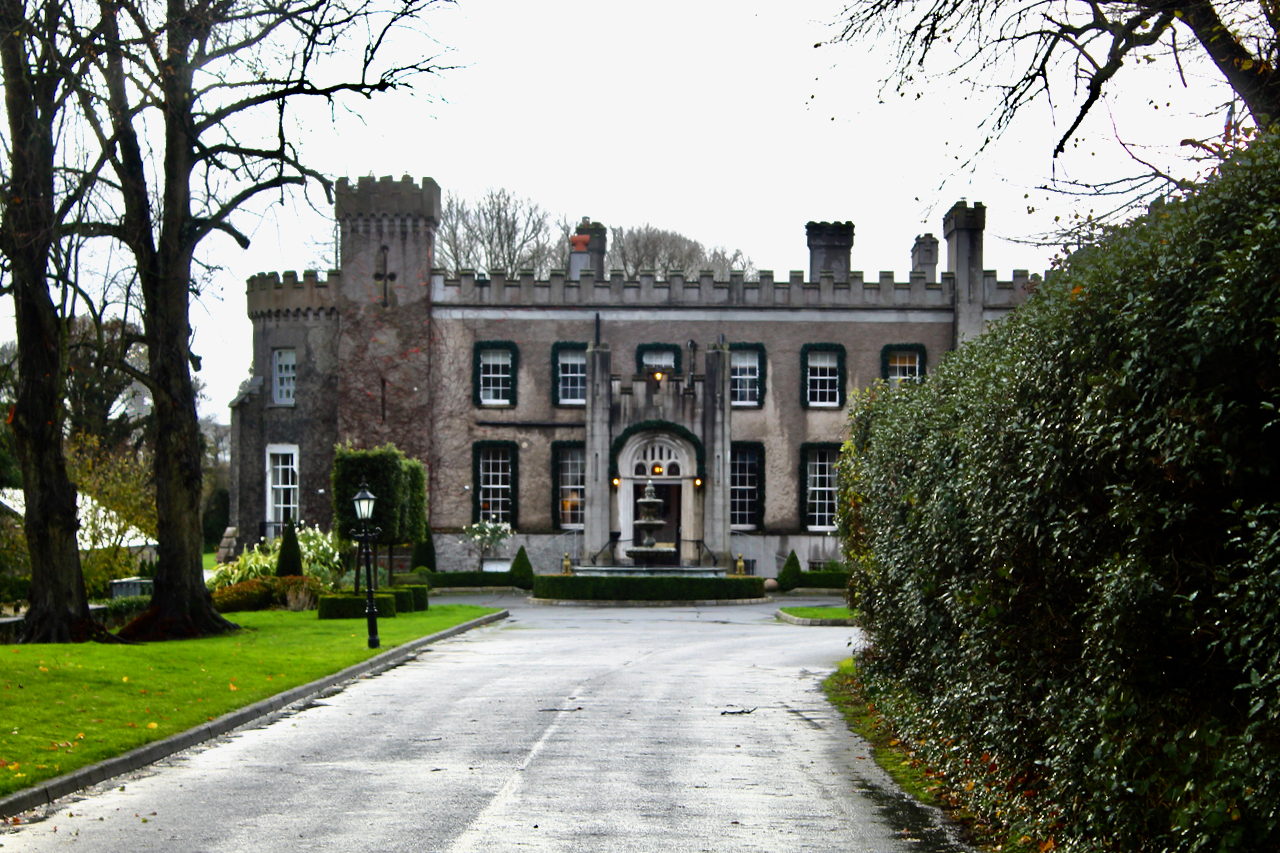
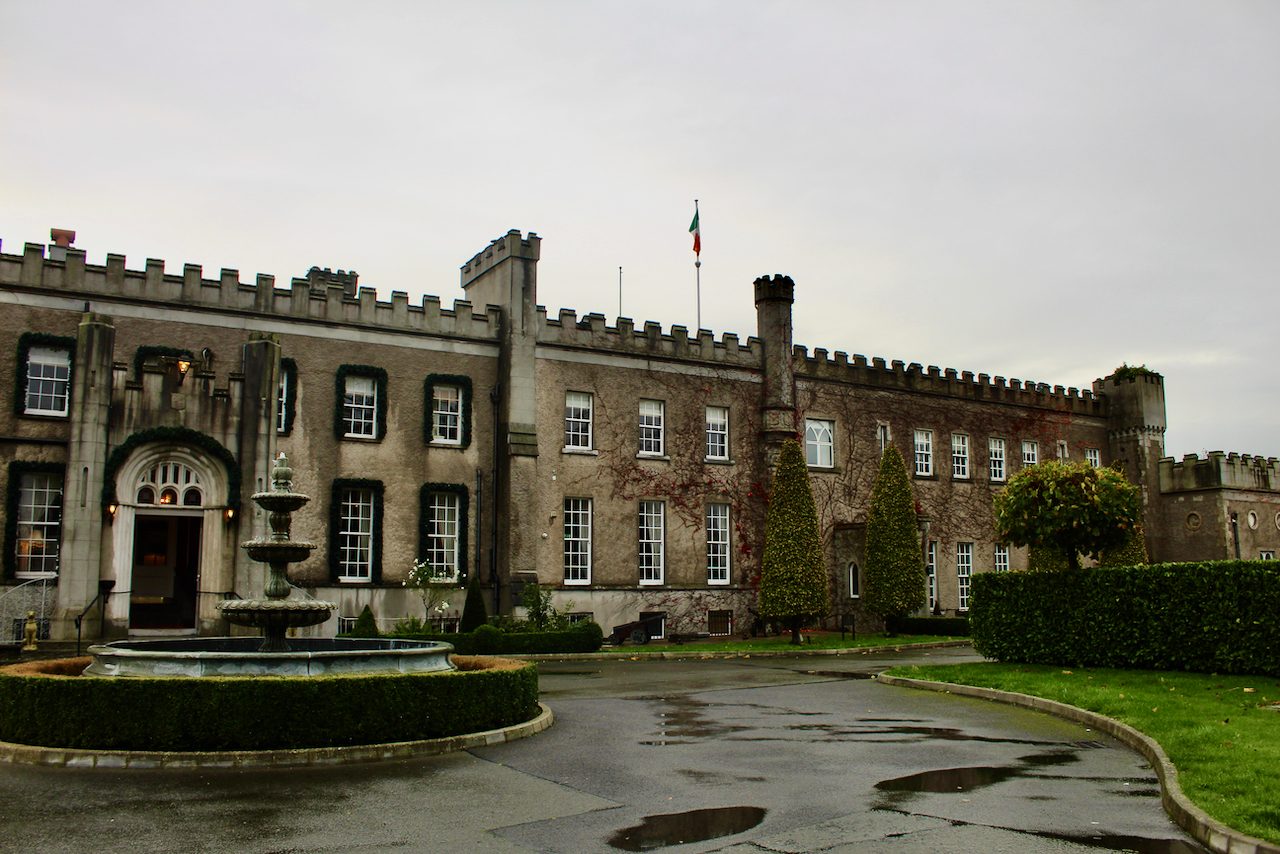
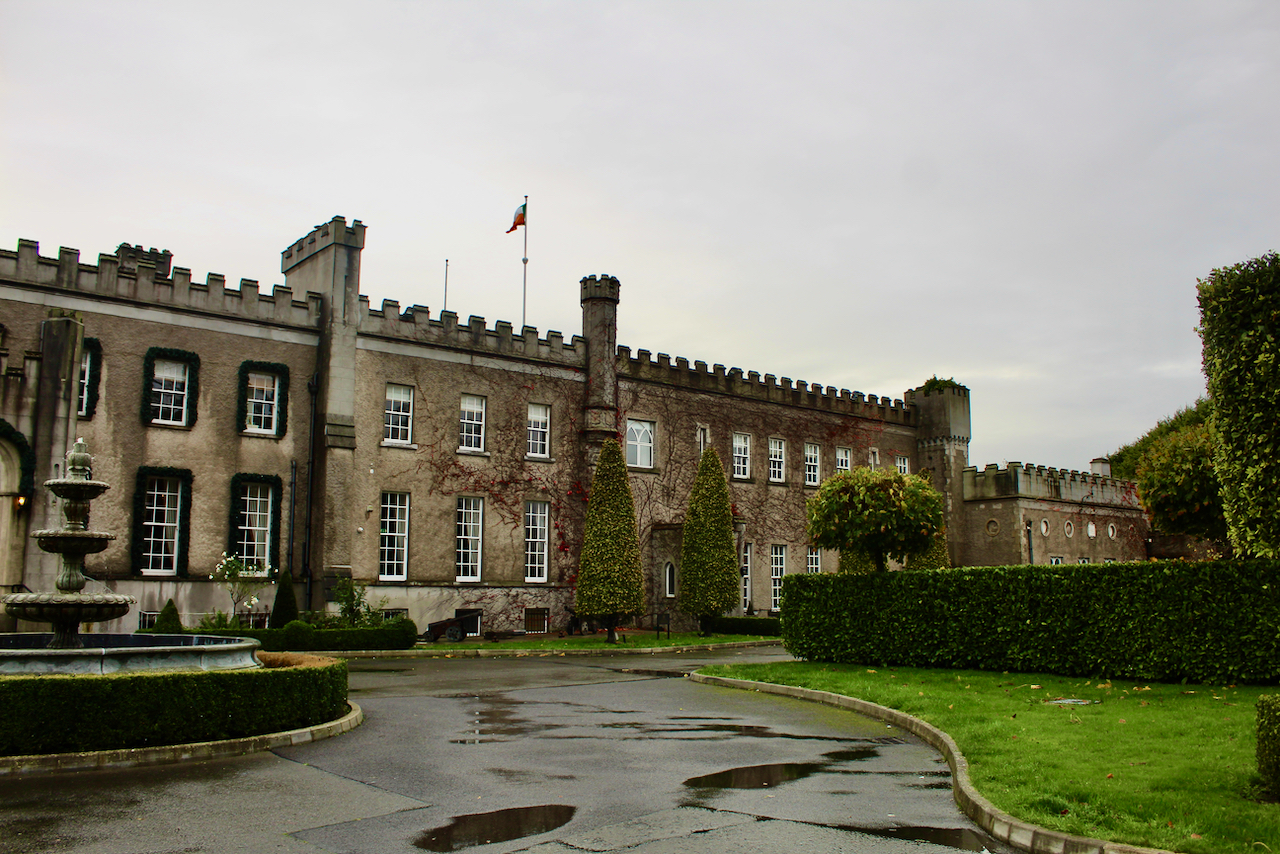
We visited Castle Bellingham in November 2022, and Mr. Corscadden gave us a tour. It’s a beautiful castle venue, for weddings or events, and is sometimes available for accommodation.

It was a rainy November day and the castle is long so I didn’t capture the whole front facade in one shot, so I include to older photograph from the National Inventory of Architectural Heritage.

Castle Bellingham in November 2022. Photograph © Jennifer Winder-Baggot, www.irishhistorichouses.com

The Castle is owned by the Corscadden family, who also own Cabra Castle in County Cavan, Markree in County Sligo, and the other we have yet to visit, Ballyseede in County Kerry.

https://www.bellinghamcastle.ie

The website tells us:

At Bellingham Castle, the welcome is warm, the facilities luxurious and the memories, eternal. Nestled in the medieval village of Castlebellingham in County Louth along Ireland’s Ancient East, Bellingham Castle is an elegant and spacious 17th Century authentic Irish Castle available for exclusive hire, to allow you become King or Queen of your very own castle for a truly memorable experience. The Castle opens for overnight stays on select dates throughout the year, but is predominantly a venue for spectacular Weddings, conferences or events.

Castle Bellingham in November 2022. Photograph © Jennifer Winder-Baggot, www.irishhistorichouses.com

Set at the gateway to the Cooley mountains and on the banks of the glistening River Glyde, Bellingham Castle is the centrepiece of a 17-acre estate that includes a weir and man-made river island where you can create memories that last a lifetime. The opulent 17th Century Irish castle is bursting with rich history, splendour and old-world luxury.

Fully refurbished, yet retaining all of its character and charm, Bellingham Castle prides itself on elegance and sophistication, intimacy and cosiness, luxury and exclusivity – all just 50 minutes from both Dublin and Belfast.

Castle Bellingham in November 2022. Photograph © Jennifer Winder-Baggot, www.irishhistorichouses.com

We wanted to create something different at Bellingham Castle, an exquisite combination of a welcoming atmosphere and luxury castle experience. From dreamy and palatial bedrooms, to magnificent reception rooms and meticulously manicured gardens, we ensure each guest enjoys high-quality, bespoke service in an idyllic and inspirational location.

Castle Bellingham, County Louth, photograph from National Inventory of Architectural Heritage [1]

Mark Bence-Jones writes of Castle Bellingham (1988):

p. 62. “The original castle here, called Gernonstown, which was acquired by Henry Bellingham [1622-1676] mid C17, was burnt by King James’s soldiers before the Battle of the Boyne, when its then owner, Colonel Thomas Bellingham [1645-1721], was fighting for King William. Col Bellingham built a new house 1690/1700 [the National Inventory says 1712] and named it Castle Bellingham; it had a high-pitched roof and is said to have resembled Beaulieu, in the same county. Mrs Delany described it (1745) as “one of the prettiest places I have seen in Ireland.”

Castle Bellingham, County Louth, November 2022. Photograph © Jennifer Winder-Baggot, www.irishhistorichouses.com

The house was remodelled in later C18, when a third storey was added, and again in early C19, when it was given a battlemented parapet, some turrets and a few other mildly medieval touches. The final result was not so much a castle as a castellated house, with plain Georgian sash windows. The nine bay entrance front, which appears to be only of two storeys owing to the higher ground on this side; the entrance, through a Gothic porch not centrally placed, is, in fact, on the first floor, where the principal rooms are situated. The opposite front, which also just misses being symmetrical – with three bays on one side of a shallow, curving bow and two bays and a turret on the other – also has a curved bow. Simple, pleasant rooms; a small staircase in a narrow hall at right angles to the entrance. Garden with terraces overlooking the river Glyde, formerly adorned with statues brought from Dubber Castle, the seat of another branch of the Bellinghams; vista to shrine of the Virgin Mary, erected by Henry Bellingham, a convert to Catholicism during the later years of the Oxford Movement. Straight avenue aligned on the entrance front of the house, terminated at the opposite end by a castellated gatehouse facing the village green. Having been sold by the Bellinghams ca 1956, Castle Bellingham is now an hotel.” [2]

Castle Bellingham, County Louth, November 2022. Photograph © Jennifer Winder-Baggot, www.irishhistorichouses.com

The website gives a further history of the castle:

Bellingham Castle served as one of the ancestral homes for the Bellingham family from the 17th Century until the 1950s. The original castle was built around 1660 by Sir Henry Bellingham [1622-1676], who was a cornet in the Army during the Civil War.

He purchased the lands of Gernonstowne, Co. Louth, from a fellow soldier who had been granted them in lieu of arrears of pay. The purchase was confirmed by King Charles II.

There is some variation on the spelling of Gernonstowne. On various maps and other documents, it is spelled Gernonstowne, Gernonstown, Gernon’s-Town, Gormanstown, Germanstown, Garlandstown and Garland.

Irish road signs show the English as Castlebellingham, while the Irish translation still refers to Baile an Ghearlanaigh – or Gernonstown. It was not called Castlebellingham for at least 40 years after the purchase. The name does not appear on any document before the year 1700. Around 1710, it began to appear in journals and other sources as Castlebellingham.

The castle was occupied by troops and burned down in the autumn of 1689 by King James II, in revenge for Colonel Thomas Bellingham [1645-1721] being a guide for William III, prior to the Battle of the Boyne. It is said that King William’s armies camped the night before the Battle of the Boyne in the grounds of the castle.

Thomas Bellingham had a son, Henry. The estate passed Henry’s son Henry, but he had no children so when he died in 1755 it passed to his brother Alan Bellingham (1709-1796).

Alan’s son O’Bryen Bellingham (d. 1798) set up a brewery on site around 1770. The website tells us:

The website continues: “Over time, Castlebellingham became an important gathering point in the county. Fairs were held there every year and a church was constructed next door to the castle, along with a graveyard that houses the Bellingham family vault. The Bellinghams became one of the most powerful and influential families in the county; for over 100 years, a Bellingham held the seat in Parliament for County Louth.

Records also note Castlebellingham for having ‘the best malt liquor’ in Ireland. A brewery was built on site about 1770 and belonged to an O’Bryen Bellingham [d. 1798, a son of Alan Bellingham]. For a number of years, a brewery partnership ran their liquor business. The brewery is still there but now houses the ‘button factory’ or Smallwares Ltd. The brewery was the main supplier of drink to the Boer War troops.

Alan’s son William married  Hester Frances Cholmondeley, daughter of Reverend Robert Cholmondeley and was created 1st Baronet Bellingham, of Castle Bellingham, Co. Louth. He did not have any children and the title passed to his brother Alan’s son, another Alan (1740-1800), who became 2nd Baronet Bellingham of Castle Bellingham, County Louth.

The website continues: “A history of the parish, dated 1908, states that the impressive Calvary standing at the entrance to Bellingham Castle was erected by Sir [Alan] Henry Bellingham [4th Baronet]as a monument to the memory of his first wife, Lady Constance.

A collection of inset religious panels can be seen on the upper facades of many of the village buildings. These are also a reflection of Sir Henry’s religious sentiments, and they are unique in Ireland. In addition to the many panels, there are biblical quotations cut into the stone window sills of some buildings. North of the castle is a carefully preserved group of ‘widows’ dwellings’, built from charitable motives by Sir Henry.

In 1905, Bellingham Castle was the venue for the romantic wedding celebrations of Augusta Mary Monica Bellingham, daughter of Sir Alan Bellingham [1846-1921], 4th Baronet to the 4th Marquis of Bute, John Crichton-Stuart.

The Marquis, who was one of the wealthiest men in the British Isles at the time, spared no expense and treated his bride and guests to a lavish celebration, including chartering the Princess Maud steamer to take their guests and the Isle of Bute pipe band across the Irish Sea to Bellingham Castle for the wedding. As the society event of the year, the wedding attracted worldwide media attention, from California to New Zealand.

Footage from the wedding celebrations still exists. This remarkable film is believed to be the one of the earliest wedding films in the world. Bellingham Castle is clearly depicted in the footage, together with scenes at nearby Kilsaran Church and the village of Annagassan, from where the wedding party and their guests arrived and departed by steamer.

Castlebellingham was the ancestral home of the Baronetcy until the late 1950s. The last Bellingham to live there was Brigadier General Sir Edward Bellingham [5th Baronet], born in 1879, who was the last Lord Lieutenant and Guardian of the Rolls (Custos Rotulorum).

It was purchased by Dermot Meehan in 1958 from the Irish Land Commission for £3,065.00. Mr Meehan spent several years converting the house into a hotel. The Meehan family sold the hotel and 17 acres in 1967 for £30,636.61 to Mr John Keenan and under the Keenan family stewardship, the castle prospered over the following four decades.

In December 2012, the castle – including the 17 acres – was acquired by the Corscadden family. The family also own Ballyseede Castle in Tralee, Co. Kerry; Cabra Castle, Kingscourt, Co. Cavan, and Markree Castle, Co. Sligo.

“The next chapter in the history of Bellingham Castle has begun, as an exclusive venue for private weddings, civil ceremonies, conferences, meetings and corporate events.

Bellingham Castle is a building of intrinsic historical and architectural interest and is open to the public between the hours of 1pm and 3pm, Monday to Friday for viewing year-round. Please call in advance to ensure there is somebody at the castle to show you around! (Closed December 24, 25 and 26).

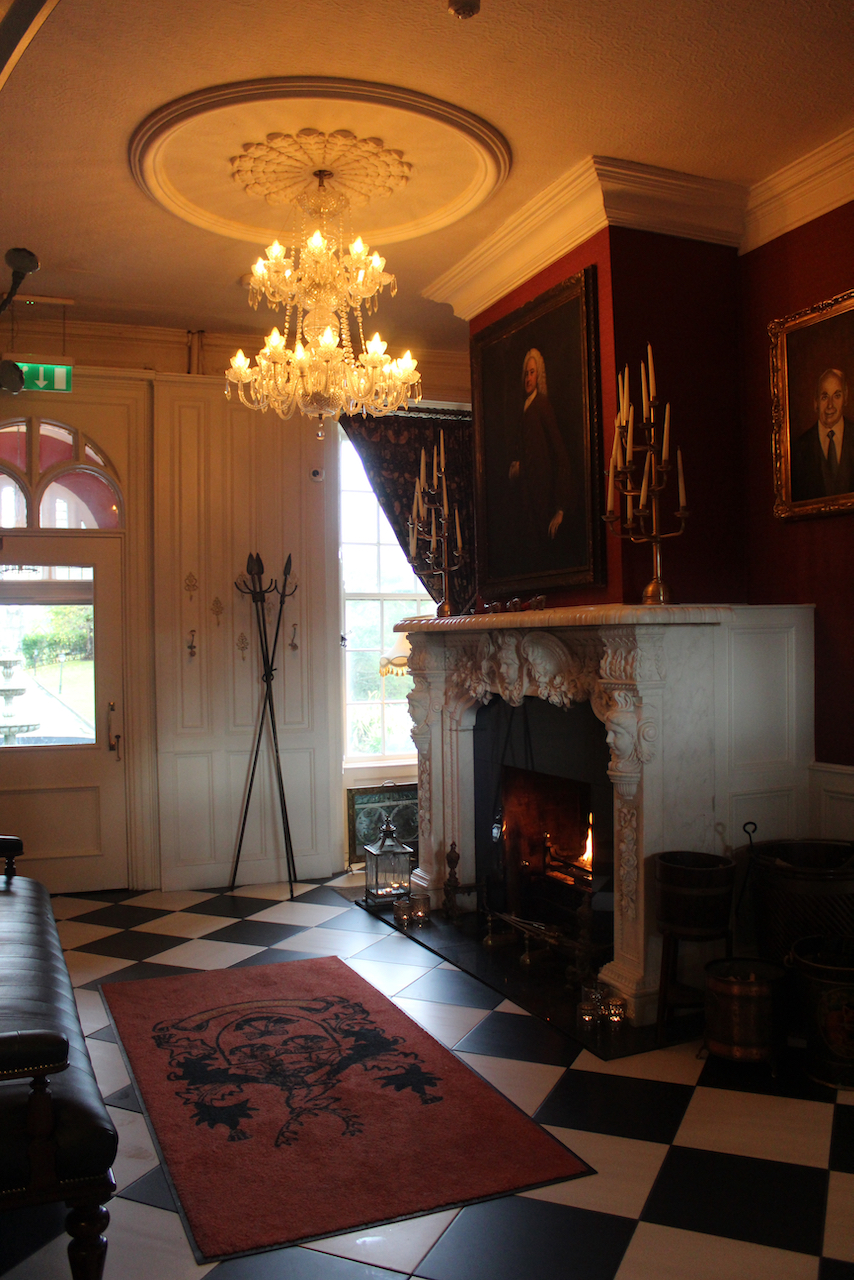
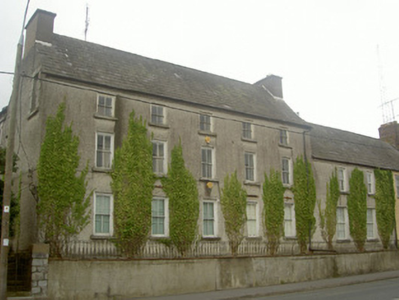
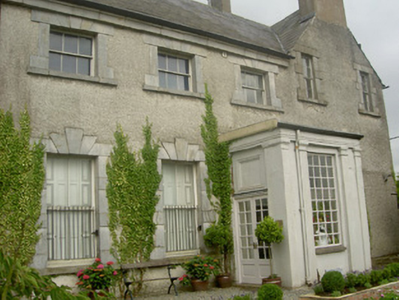
4. Collon House, County Louth

Collon House, County Louth, photograph from National Inventory of Architectural Heritage [3]

https://www.collonhouse.com

The website tells us:

Collon House, steeped in history, is full of character and charm; its gracious rooms are exquisitely furnished with period antiques and paintings, retaining the atmosphere of early Georgian living, making this a rare opportunity to experience less than one hour from Dublin City Centre, thirty minutes from Dublin Airport and just five miles from historic Slane.

Collon House is a perfect location from which to enjoy the wonderful treasures of the Boyne Valley. Bru na Boinne (Newgrange) prehistoric megalithic sites, The Battle of the Boyne visitors centre at Oldbridge, Slane Castle, Old Mellifont Abbey and Monasterboice High Crosses are all less than twenty minutes drive from Collon House.

The Historic Houses of Ireland (HHI) website tells us:

Anthony Foster [1705-1778], Lord Chief Baron of the Exchequer, purchased the Collon estate in 1740 and chose to build in the centre of the County Louth village, now a market town on the road from Dublin to Derry. His early Georgian house was extended in the 1770s to form a substantial L-shaped dwelling, set back from the street at the central crossroads. The original dwelling is long and low but the later building is taller and more generous in scale with more elaborate interiors and a “handsome half-turn stair” that gives access to the upper floors.” [4]

Anthony Foster married Elizabeth Burgh of Bert House (now called de Burgh Manor, available as a whole house rental, see my entry www.irishhistorichouses.com/2022/04/27/places-to-visit-and-to-stay-leinster-kildare-kilkenny-laois/), County Kildare.

The HHI website continues: 

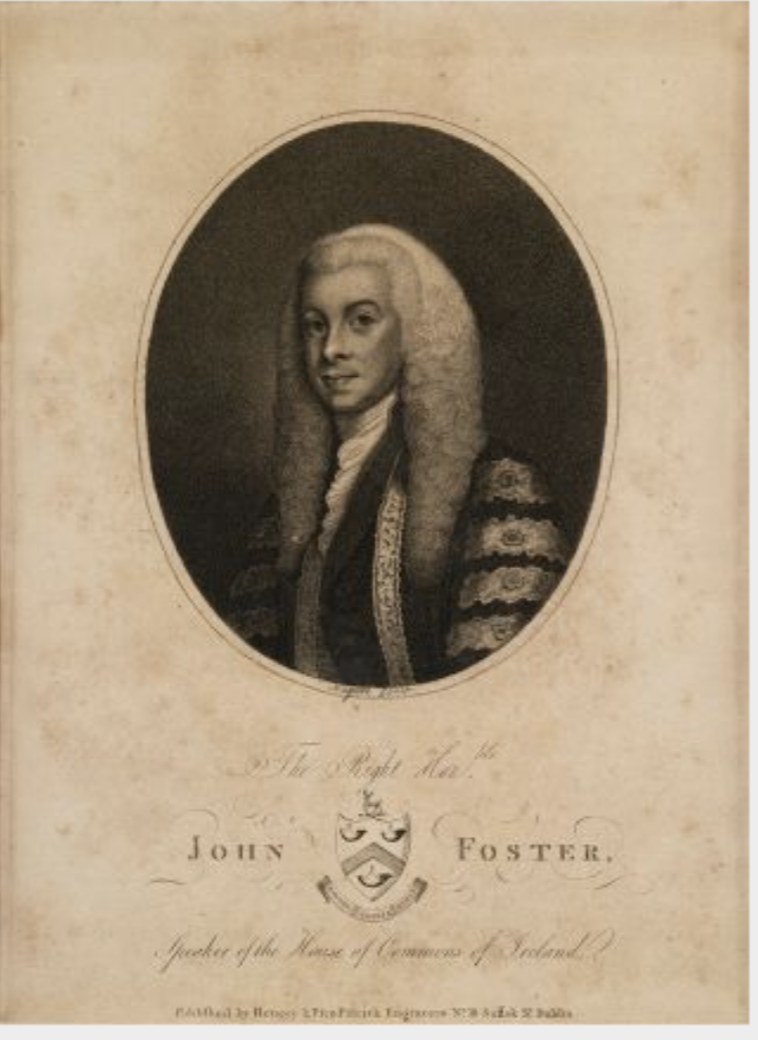
Anthony’s son John [1740-1828] was elected to the family borough of Dunleer and became the member for Louth in 1768 at the age of twenty-one. Considered ‘the best informed man in the house’ he was briefly Chancellor of the Irish Exchequer before his election as Speaker of the Irish Commons. He held office from 1785 until 1800, when Parliament was dissolved for ever under the Act of Union, a measure which Foster had strenuously opposed. As Speaker he pronounced the final words at the closing session, choosing to retain his official mace ‘for future contingencies’. Mr. Speaker Foster was returned to Westminster after the Union and was finally rewarded with a UK peerage in 1821 (his wife had previously been granted two Irish titles) after an illustrious political career that spanned more than sixty years. 

In ‘A Tour of Ireland published in 1780, the agronomist Arthur Young mentions Foster whose improvements on the Collon estate “were of a magnitude that I have never heard of before.” These included Oriel Temple, an elaborate and chastely classical lakeside folly, which was subsequently enlarged to form the principal family seat. Foster’s son Thomas married an heiress, Harriet Skeffington, and the family moved to Antrim Castle when she succeeded as Viscountess Massereene.”

John Foster, (1740-1828), Last Speaker of the Irish House of Commons, later 1st Baron Oriel Date 1799 Engraver Patrick Maguire, Irish, fl.1783-1820 After Gilbert Stuart, American, 1755-1828. Photograph courtesy of the National Gallery of Ireland.

For more about the Foster family see my Cabra Castle entry, www.irishhistorichouses.com/2021/03/28/cabra-castle-kingscourt-county-cavan/ 

The HHI website continues: “Collon House has been altered over the intervening years but the building retains many fine Georgian interiors, now greatly enhanced by sympathetic restoration, fine furniture, glass, porcelain, pictures and objects. Their rich decoration makes a striking contrast with the plain exterior.

The gardens have also been restored with inspired and authentic planting. The entrance overlooks a sunken garden with an intricate box parterre, while the herbaceous border in the ornamental garden leads to a classical summer house in the Grecian style.” [4]

Collon House, County Louth, photograph from National Inventory of Architectural Heritage [3]

The National Inventory tells us it is a: “Corner-sited attached five-bay three-storey house, built c. 1770. Rectangular-plan, extended by two-bays into two-storey terrace to east, three-bay two-storey wing to north, extended former mews buildings surrounding courtyard to north, single-storey flat-roofed entrance porch to west elevation…This imposing house, the principal home of the Foster family, at the heart of Collon, has historical associations with John Foster, the last man to speak in the Irish House of Commons. It contains many details of interest, such as stone window dressings. Its prominence at the heart of the village is of intrinsic importance to the architectural heritage of Collon.” (see [3])

5. Killineer House & Garden, Drogheda, Co. Louth A92 P8K7 – section 482

Killineer, Drogheda, County Louth, June 2021. Photograph © Jennifer Winder-Baggot, www.irishhistorichouses.com

See my entry:

https://irishhistorichouses.com/2021/08/10/killineer-house-county-louth/

www.killineerhouse.ie
Open dates in 2025: Feb 1-20, May 1-31, Aug 16-24, 9am-1pm

Fee: house and garden, adult/OAP/child/student, €12, house €5, garden €7

6. Old Mellifont Abbey, County Louth – OPW

See my entry https://irishhistorichouses.com/2022/02/07/office-of-public-works-properties-leinster-laois-longford-louth-meath-offaly-westmeath-wexford-wicklow/

7. Rokeby Hall, Grangebellew, Co. Louth – section 482

Rokeby, County Louth, September 2019. Photograph © Jennifer Winder-Baggot, www.irishhistorichouses.com

See my entry:

https://irishhistorichouses.com/2020/08/17/rokeby-hall-grangebellew-county-louth/

www.rokeby.ie
Open dates in 2025: June 1-30, Aug 1-31, 10am-2pm

Fee: adult/OAP €10, child/student €5

Places to stay, County Louth:

1. Ballymascanlon House, Louth  – hotel

 https://www.ballymascanlon.com

Ballymascanlon House, County Louth, November 2022. Photograph © Jennifer Winder-Baggot, www.irishhistorichouses.com

We treated ourselves to a stay in Ballymascanlon House hotel in November 2022.

The website tells us: “The Ballymascanlon House is set on 130 acres of beautiful parkland, this impressive Victorian House forms the heart of this Hotel. It is one of the most remarkable historical estates in Ireland dating back to 833 A.D. Steeped in history, Ballymascanlon estate is located in Ireland’s North East on the Cooley Peninsula in close proximity to the Irish Sea and Mourne Mountains. Less than 1 hour from Dublin and Belfast, and 20 minutes from the medieval town of Carlingford. We are delighted to welcome you to our beautiful luxurious venue, ideal for both Business and Leisure.”

Ballymascanlon House, County Louth, November 2022. Photograph © Jennifer Winder-Baggot, www.irishhistorichouses.com

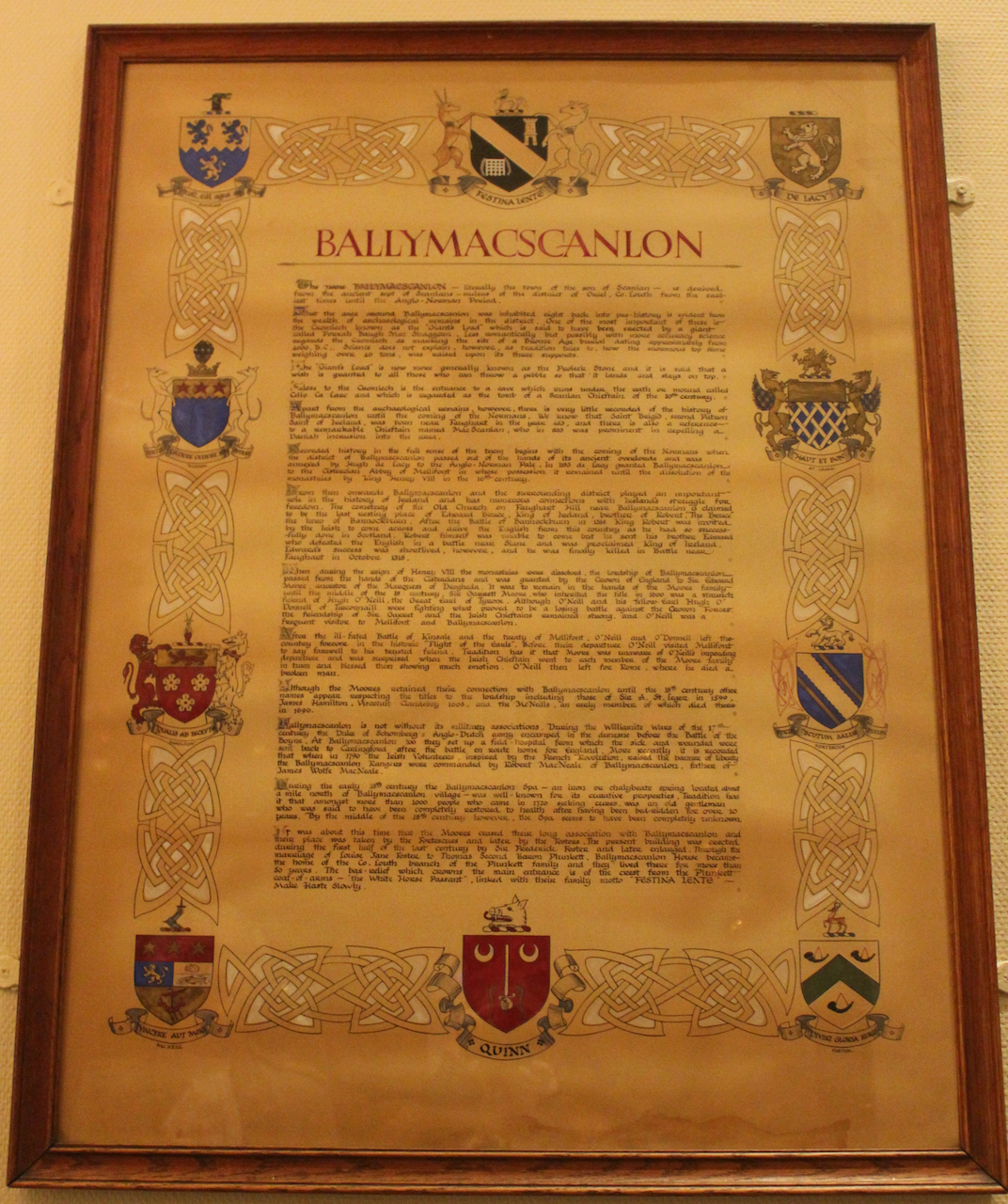
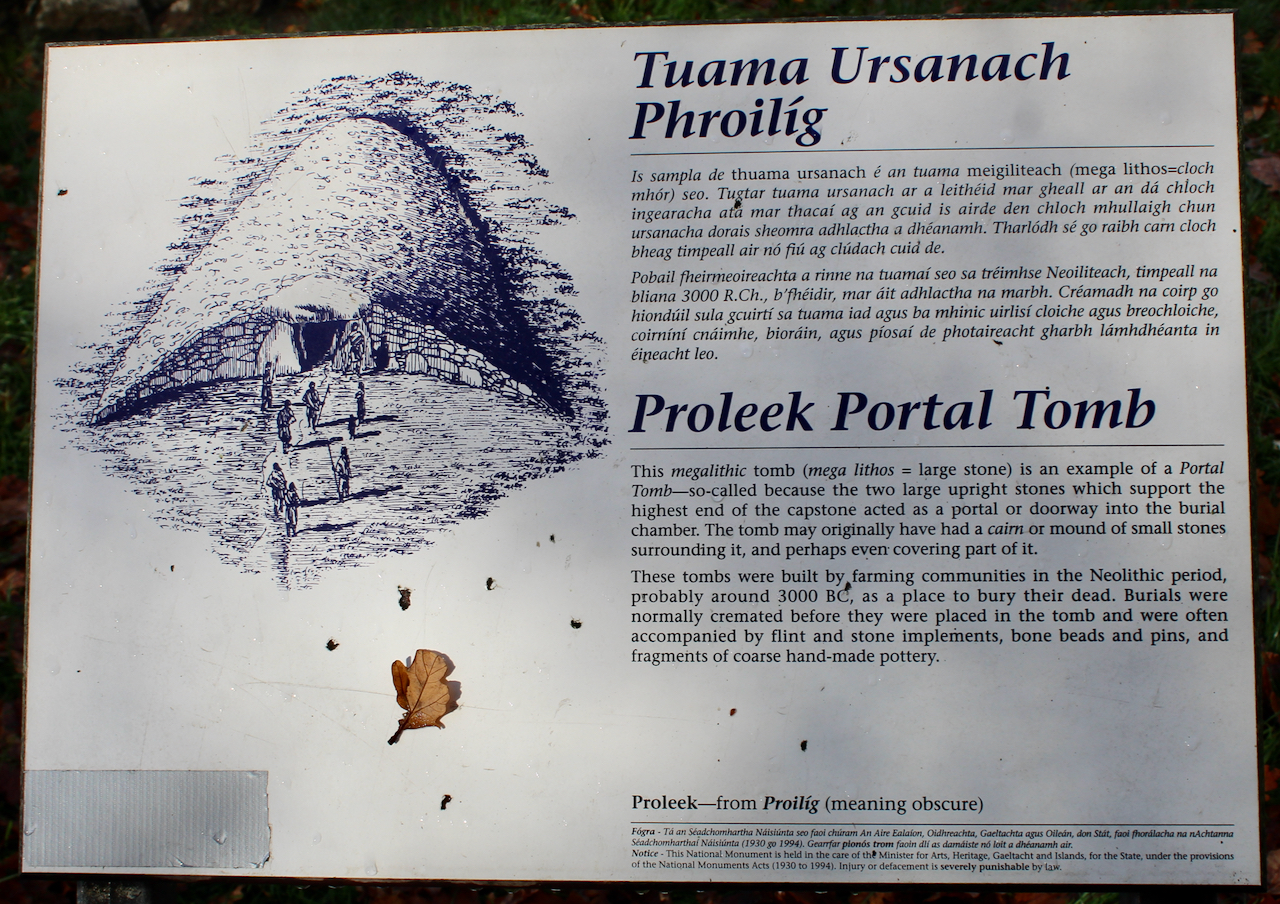
Ballymascanlon means the town of the son of Scanlan, and was part of the ancient Sept of Scanlan. I noticed that locals call it “Ballymac” and it would seem the “mac” would be correct if it’s “son of” though the name now skips that “c” – it’s not named “Ballymac scanlan” any longer. A document in the front hall tells us of its history. The area is full of ancient archaeological features including the Proleek Dolmen which dates to approximately 4000 BC. The information tells us that a chieftain, MacScanlan, expelled a Danish incursion into the area, before the Anglo-Normans came to Ireland.

Ballymascanlon House, County Louth, November 2022. Photograph © Jennifer Winder-Baggot, www.irishhistorichouses.com
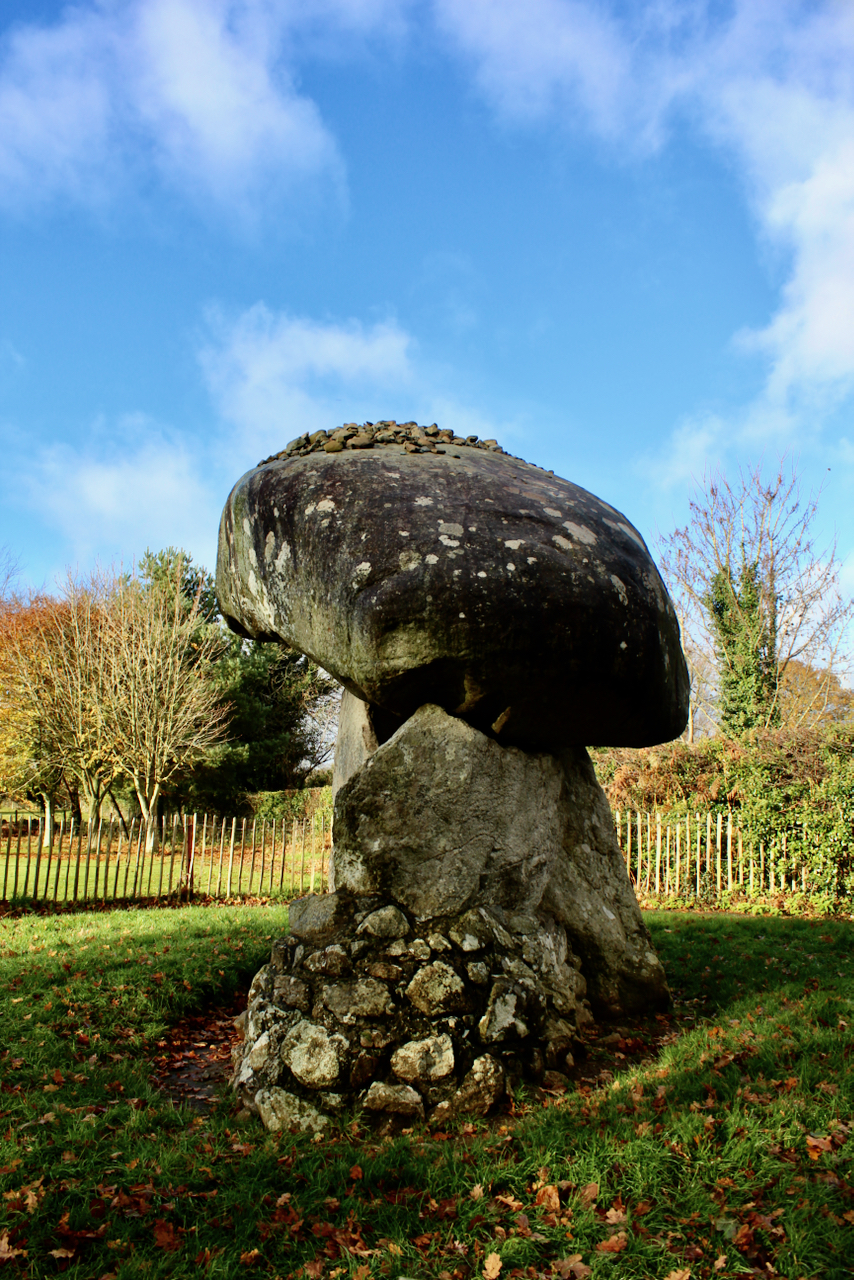
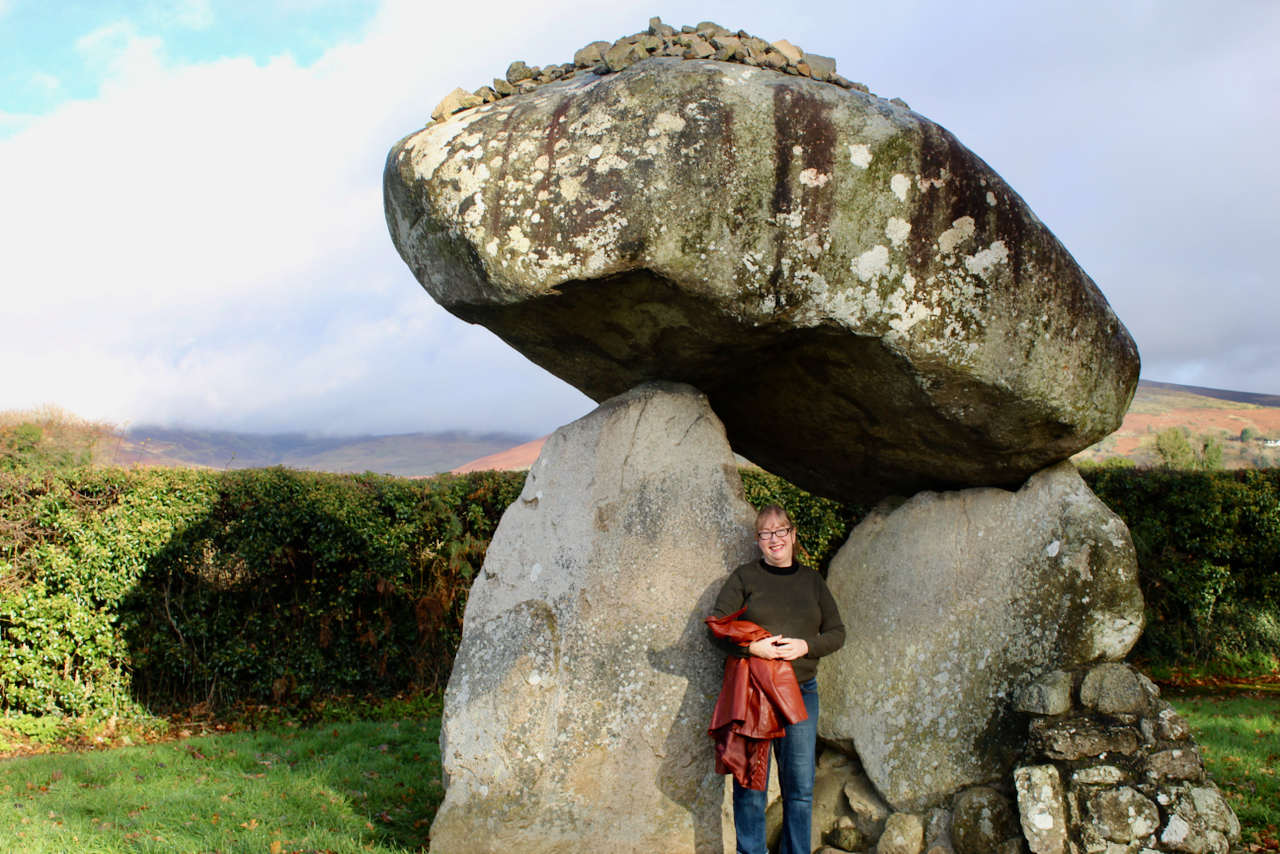
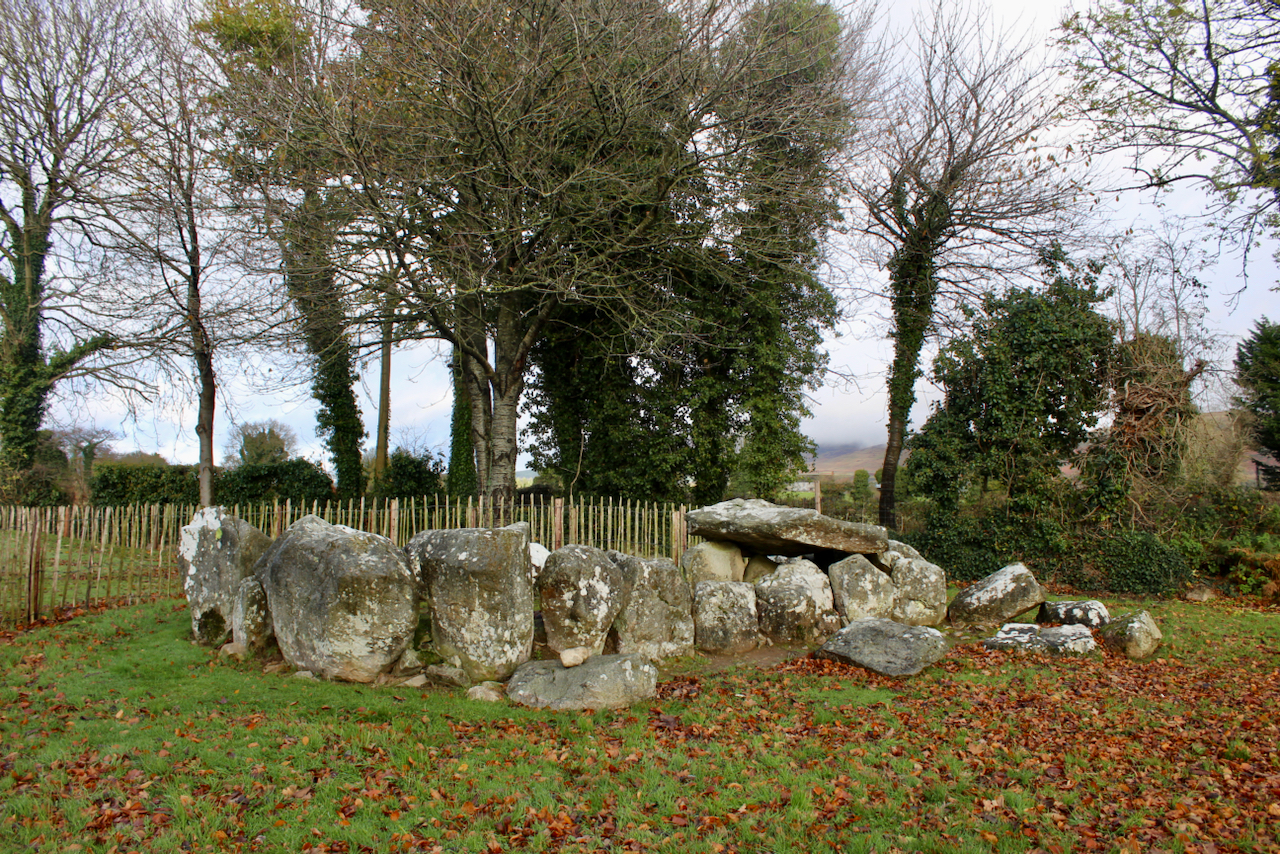
The Proleek Dolmen, on the grounds of Ballymascanlon. Legend has it if you toss a stone and it stays on top, you can make a wish. Despite not wanting to desecrate a grave, Stephen and I took part in the tradition – I had no luck but Stephen managed! It’s an unfortunate tradition though, I think, not the right way to treat a sacred site. Photograph © Jennifer Winder-Baggot, www.irishhistorichouses.com
Ballymascanlon House, County Louth, November 2022. Photograph © Jennifer Winder-Baggot, www.irishhistorichouses.com
Ballymascanlon House, County Louth, November 2022.
A smaller dolmen grave near the Proleek Dolman. Photograph © Jennifer Winder-Baggot, www.irishhistorichouses.com

When the Anglo-Normans came, Hugh de Lacy gave this area to the Cistercian Mellifont Abbey. After the dissolution of the monastery by King Henry VIII the land was given to Edward Moore (1540-1601), ancestor of the Marquess of Drogheda.

The document also tells us that the Duke of Schomberg camped here before the Battle of the Boyne, and that a field hospital was set up. Later the Irish Volunteer branch, the Ballymascanlon Rangers, were led by Robert MacNeale of Ballymascanlon, father of James Wolf MacNeil, who built the building we see today.

Ballymascanlon House is a multiple-bay two-storey over basement with attic Tudor-Revival house, built in 1863 for James Wolfe MacNeil, incorporating fabric of earlier building which had been built for Frederick Foster, with gables, mullioned windows, hood-mouldings and a recessed doorway. [5] MacNeil owned the nearby corn mills. There may be been a house previously located on the site, David Hicks tells us in Irish County Houses, A Chronicle of Change. [6]

Hicks tells us that the house was sold and further improved by architect P.J. Byrne for Frederick Foster. The red brick gate lodge was added at this time. Frederick Foster (1799-1888) married Isabella Vere. He was the son of John William Foster (1745-1809). Frederick had no children. His sister Louisa Jane married Thomas Span Plunkett, 2nd Baron Plunket of Newton.

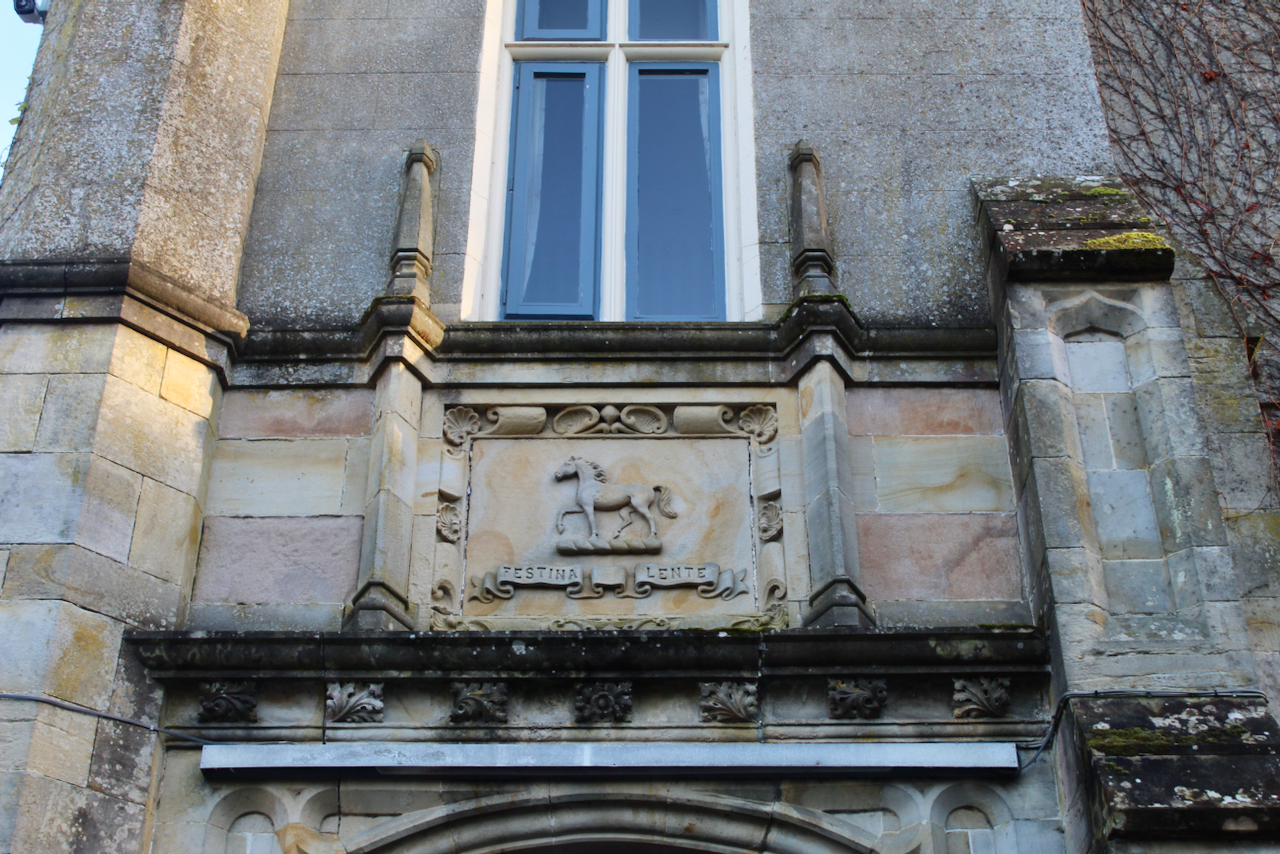
Further building works were carried out in 1904 and 1919 for Katherine Plunkett, daughter of Louisa Jane and Thomas Span Plunkett, who then owned the house. The house has high pitched gables and projecting bays. The Plunkett coat of arms over the front door depicts and horse and the Plunkett motto, Festina Lente, or Make Haste Slowly.

Ballymascanlon House, County Louth, November 2022. Photograph © Jennifer Winder-Baggot, www.irishhistorichouses.com
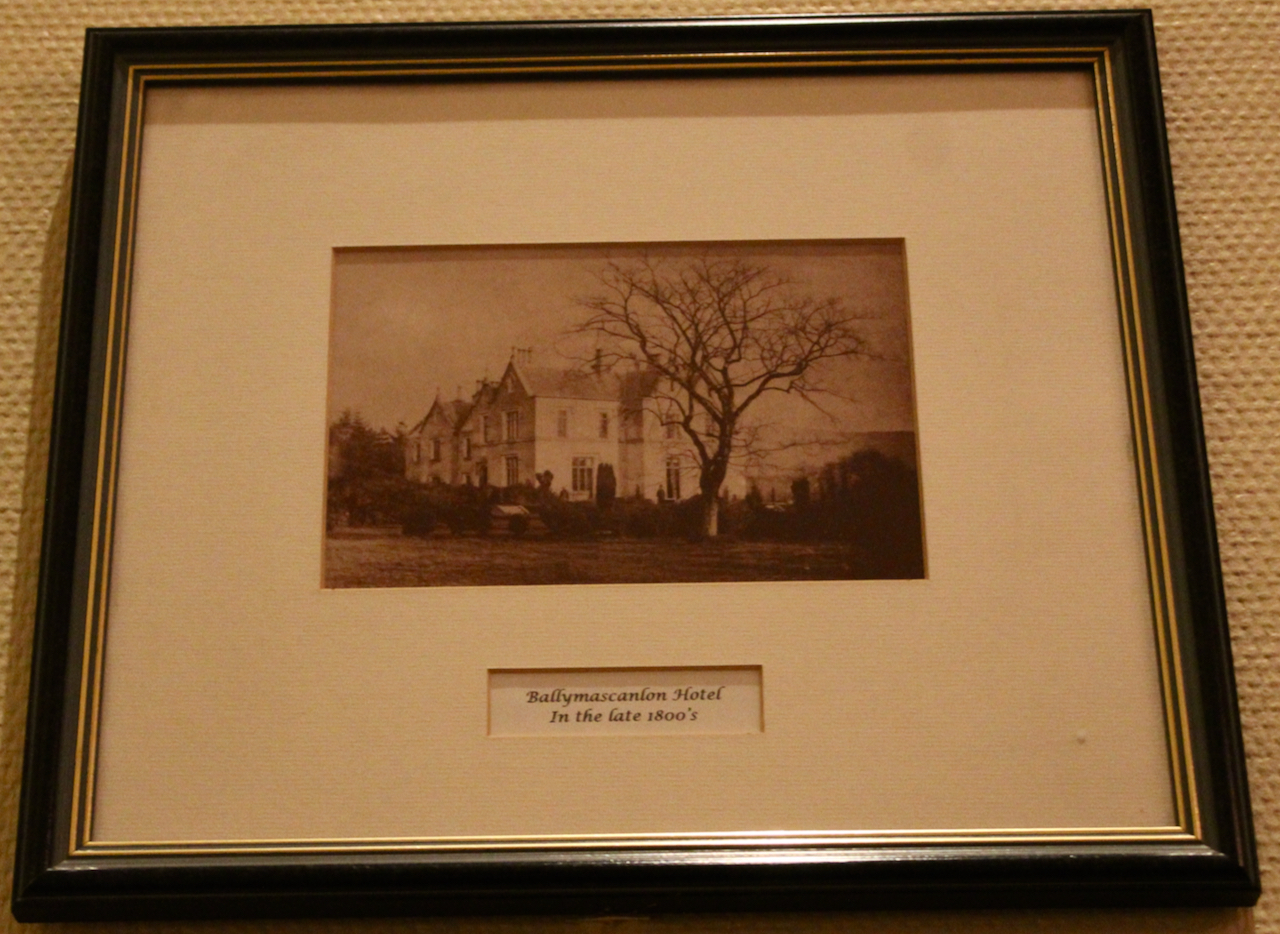
Ballymascanlon in the late 1800s.

Hicks continues his description:

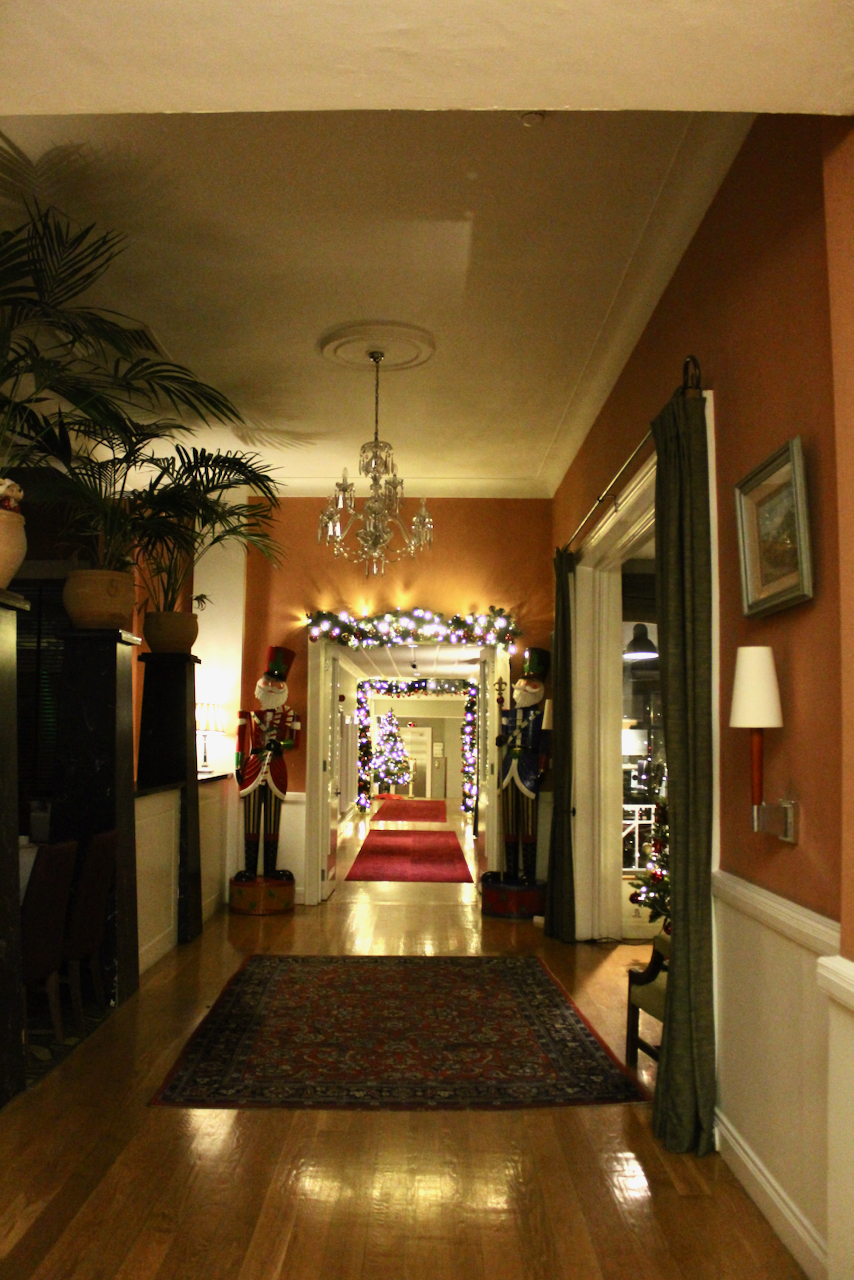
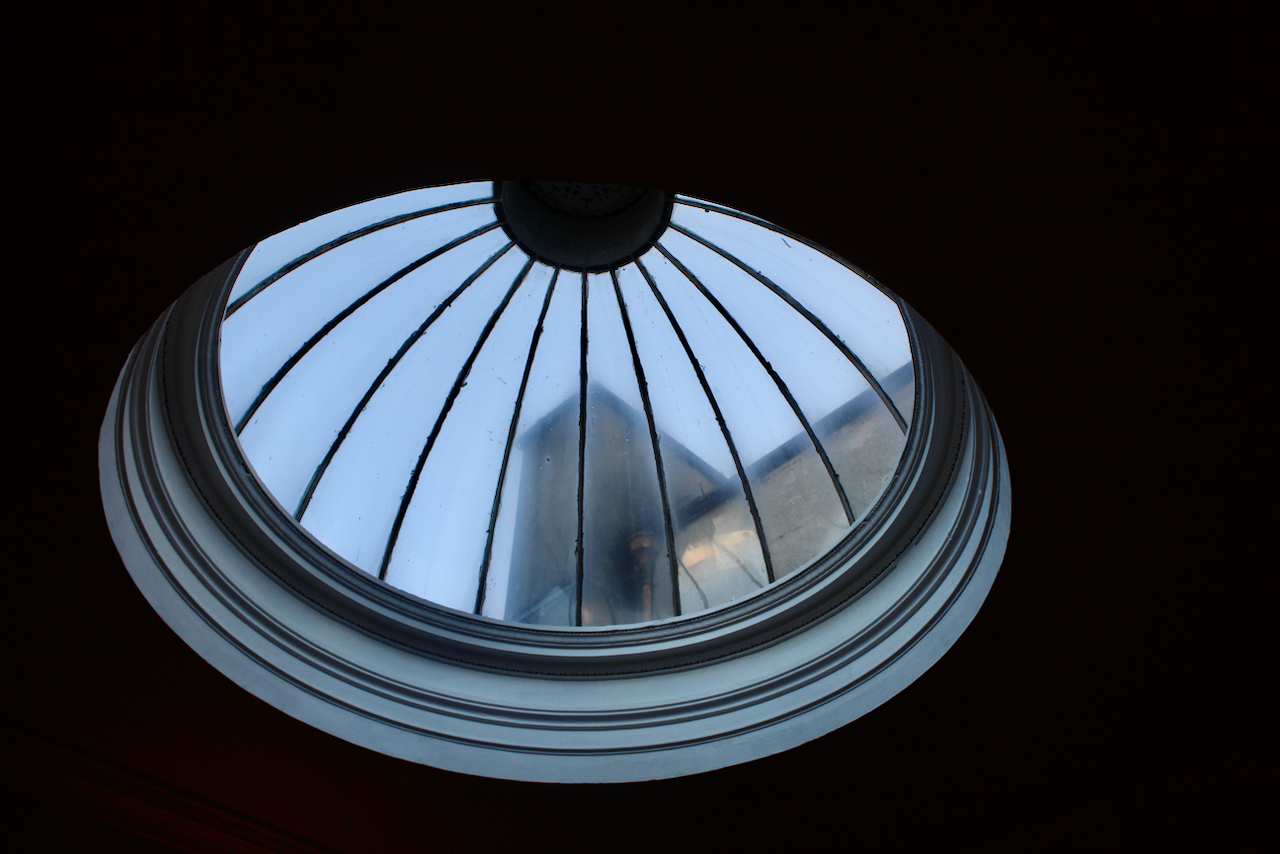
Inside, a spine corridor leads past the various reception rooms that overlook the gardens through mullioned windows. This corridor provided ample space for family portraits and landscapes that once decorated the walls. One of the most interesting features of the interior is the glazed dome that provides light to the inner hall at the centre of the house where the hotel reception is. The various reception rooms of the house are tastefully decorated and have retained much of their old world charm.

Ballymascanlon House, County Louth, November 2022. Photograph © Jennifer Winder-Baggot, www.irishhistorichouses.com
One of the most interesting features of the interior is the glazed dome that provides light to the inner hall at the centre of the house where the hotel reception is located. Photograph © Jennifer Winder-Baggot, www.irishhistorichouses.com
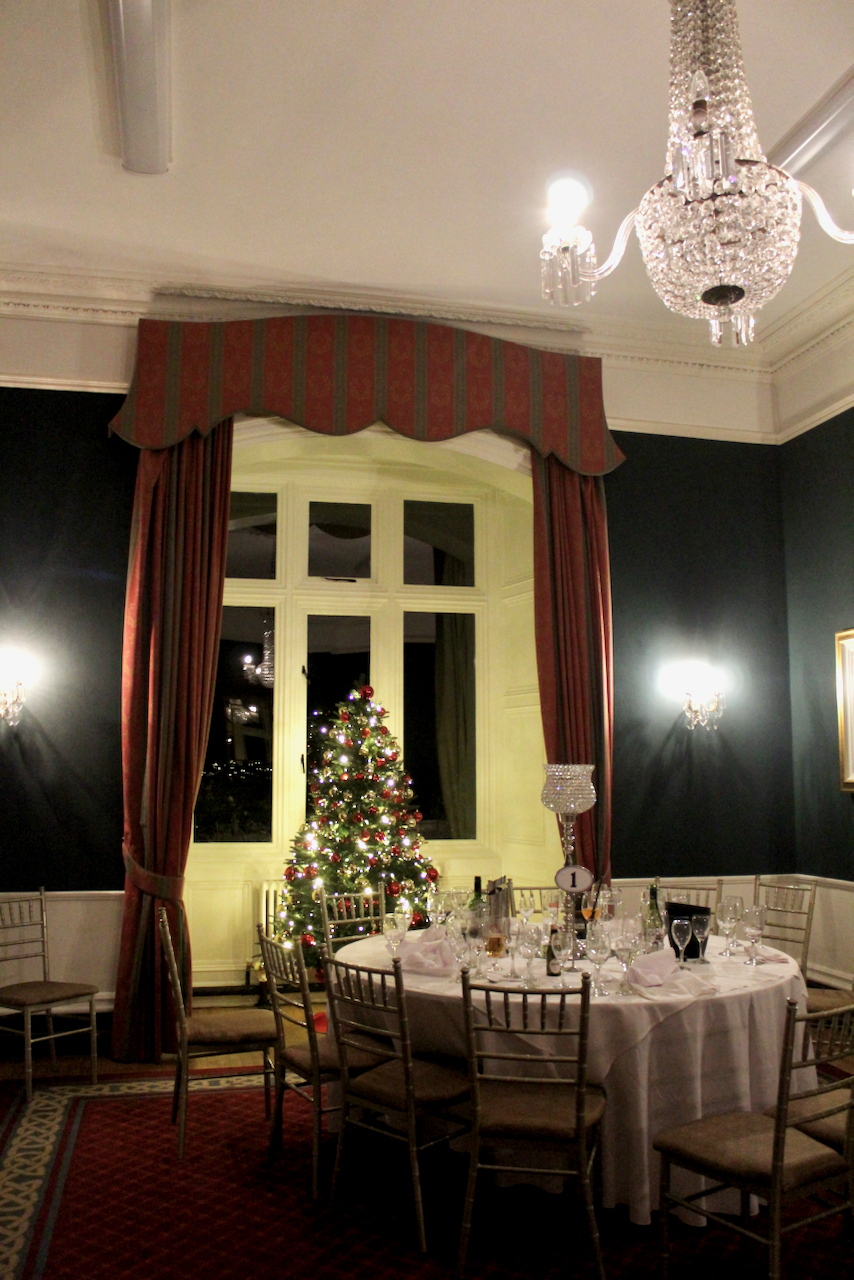
Ballymascanlon House, County Louth, November 2022. Photograph © Jennifer Winder-Baggot, www.irishhistorichouses.com

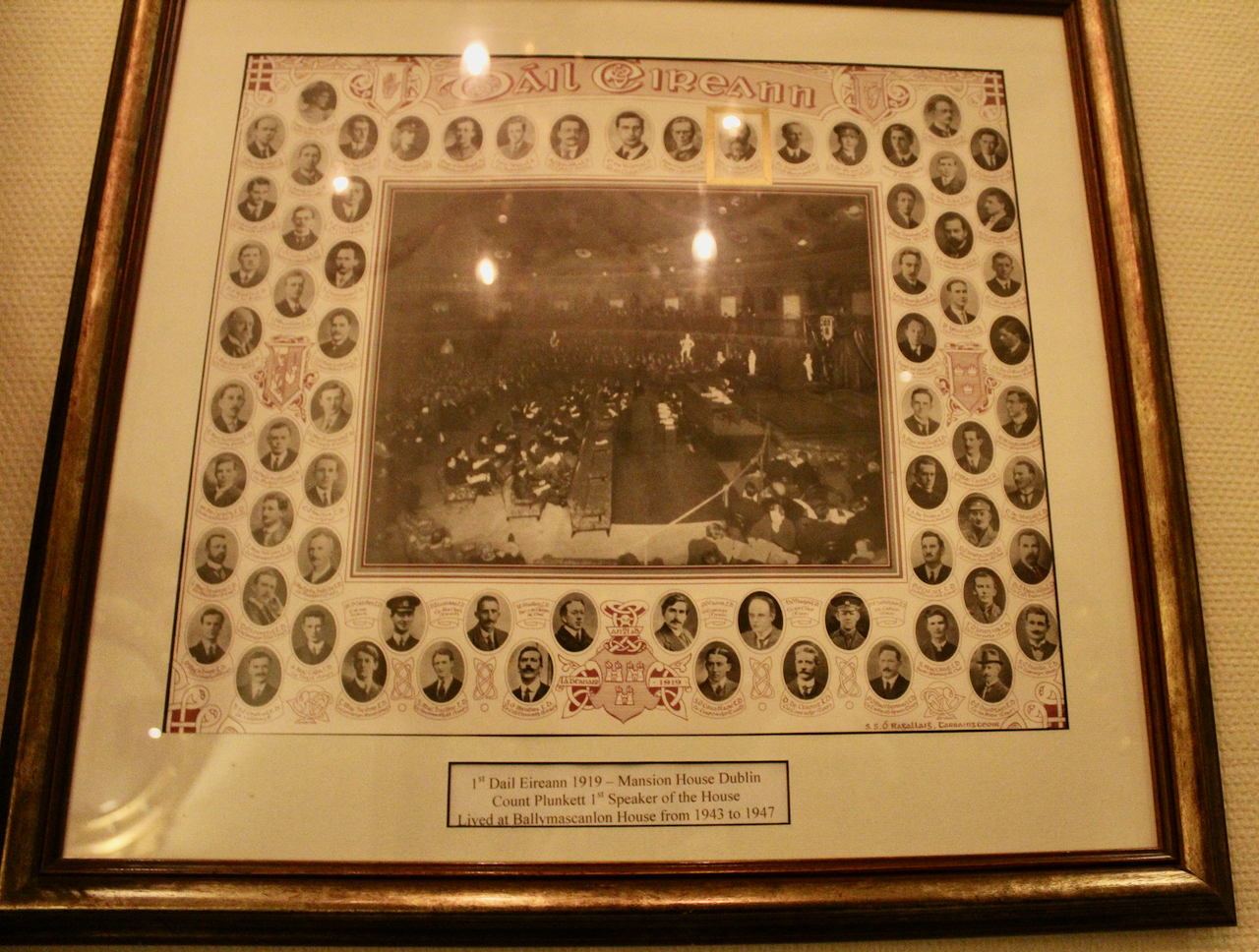
The house was offered for sale in 1943 and purchased by George Noble Plunkett, a Papal court who received his title from Pope Leo XIII for donating money to Catholic charities. He was the father of Joseph Mary Plunkett, one of the signatories of the Proclamation of the Irish Republic, who was executed for his part in the 1916 Rising.

Dáil Eireann 1919.

George Noble Plunkett and his wife Josephine Cranny were children of Pat Plunkett and Pat Cranny, two successful property developers who built many of the red brick Victorian houses in Dublin. Count Plunkett began his professional life as the director of the National Museum. After his son was killed he entered politics. After his wife died, he sold the house to the Quinn family, who turned it into a hotel.

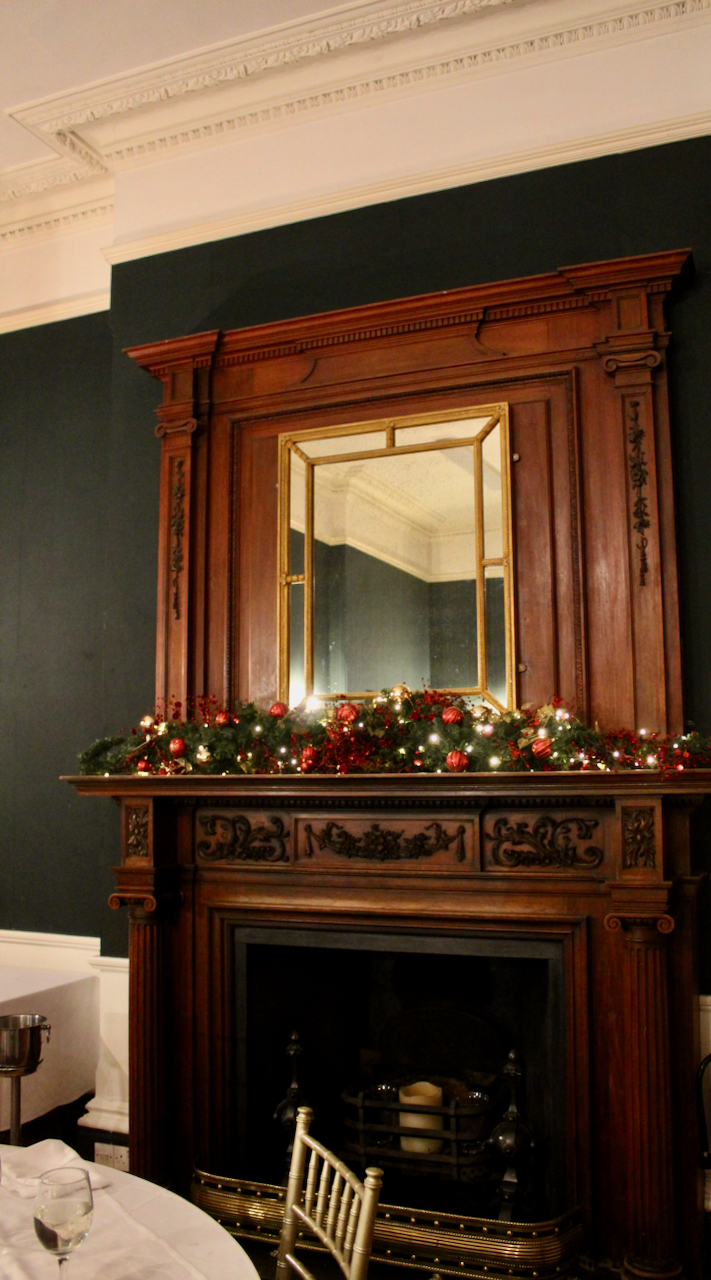
Ballymascanlon House, County Louth, November 2022. Photograph © Jennifer Winder-Baggot, www.irishhistorichouses.com
Outbuildings at Ballymascanlon House, County Louth, November 2022 Photograph © Jennifer Winder-Baggot, www.irishhistorichouses.com
Bridge on the grounds of Ballymascanlon. Photograph © Jennifer Winder-Baggot, www.irishhistorichouses.com

2. Collon House, Ardee Street, Collon, Louth – see above

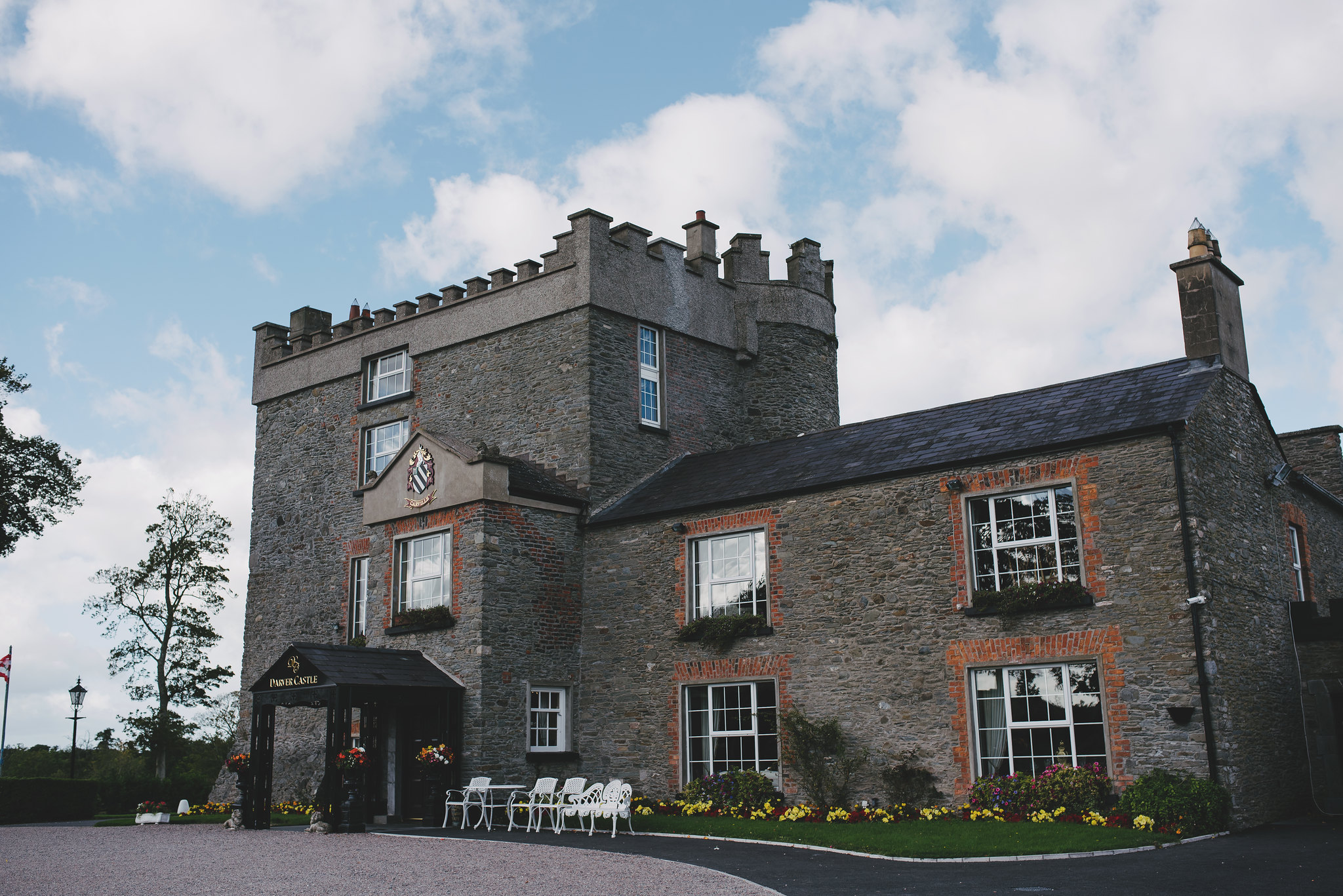
3. Darver Castle, County Louth

Darver Castle by Barry McGee 2016 courtesy of Flickr constant commons.

https://www.darvercastle.ie/home/

The website tells us:

The Castle, dating from the 15th century is situated in a fine parkland setting and surrounded by mature trees. The courtyard, approached through a medieval arched gateway has lofted stone faced buildings while the outer yard has very impressive stone faced buildings with stabling for 20 horses. Also included is an outdoor manège, partly walled garden and orchard. The lands, all in old pasture, have excellent road frontage and are renowned for their fattening qualities.In the early 12th Century a man named Patrick Babe was given 500 acres of land in the parish of Derver by King James II. He built a castle for himself and his family to live in on the grounds formerly owned by the church. The castle was built on the north side of the hill north of the cave and on the edge of the deep slope that led to the banks of two rivers, which provided fish and eels for the family food.The rivers acted as security from the enemy advancing from the north. With a large yard wall to the east 12 feet high and 20 acres of woodland to the west helped keep the enemy out. But a problem arose on the southside of the hill as it sloped to a deep valley and joined the high hill of newtown Darver. As the top of this hill is just 4 feet higher than the level of the top of the castle. So the soldiers were unable to see the enemy approaching from the south. Patrick Babe had a round tower built on the very top of the hill and placed soldiers into this garrison which gave them a clear view for 40 miles away so no enemy ever got near Darver Castle Estate during all the wars.

The church was never reached by Cromwell because of the protection from the hilltower. When the wars were over, Patrick Babe had wings put on the front of the tower and converted it into a windmill, and used it to ground corn for himself and his tenants. This continued for 150 years until large mills were built on the edge of the rivers, powered by the water, so that the use of the towermill ended and it was later demolished and the land around made arable. The hill is still known as windmill hill. 12thC Patrick Babe built the castle. Later he built 14 tenant houses. 1385 John Babe was given the advocasy of the church 1655 The Babes rented the castle to Abraham Ball. He died in 1742. 1740 James Babe sold the castle and 500 acres of land to Richard Fiscall Dublin for $4,000 1777 According to a survey done by Taylor and Skinner. The castle was idle. 1789 John Booth bought the castle. He died in 1840. 1840 Joseph Booth appears. He added the new wing and porch. 1857 John Filgate Booth died there. 1890 Frances Rutherford died there. 1894 Elizabeth Booth died there. 1906 Charles Rutherford died there. 1921 Zane Booth died there. 1980 John Booth died there. 1993 McCormack family took over and shortly afterwards Aidan and his wife Mary took ownership. Through a lot of hard-work and love for the castle, they have transformed it into the castle wedding venue it is today. The Carville family still continue to care for the castle, with improvements happening endlessly.

4. Ghan House, Co Louth

 https://www.ghanhouse.com

The National Inventory tells us: “Built in 1727 by William Stannus, this building, with its unadorned façade and finely-balanced elegant classical proportions, is a handsome representative of architectural developments during the Georgian era. It retains a large amount of original and early fabric, including handsome boundary walls, corner tower and carriage arch.”

Whole House Rental, County Louth:

1. Barmeath Castle, Dunleer, Drogheda, Co. Louthsection 482, see above, €€€ for two, € for 6-12

2. Bellingham Castle, Co. Louth – for weddings, and open to public for visits 

https://www.bellinghamcastle.ie

See above

3. Bellurgan Park, County Louth

https://www.bellurganpark.ie/

[1] https://www.buildingsofireland.ie/buildings-search/building/13826003/bellingham-castle-castlebellingham-castlebellingham-castlebellingham-louth

[2] Bence-Jones, Mark. A Guide to Irish Country Houses (originally published as Burke’s Guide to Country Houses volume 1 Ireland by Burke’s Peerage Ltd. 1978); Revised edition 1988 Constable and Company Ltd, London.

[3] https://www.buildingsofireland.ie/buildings-search/building/13828001/collon-house-drogheda-street-ardee-street-collon-collon-louth

[4] https://www.ihh.ie/index.cfm/houses/house/name/Collon%20House

[5] https://www.buildingsofireland.ie/buildings-search/building/13900756/ballymascanlon-house-ballymascanlan-ballymascanlon-louth

[6] p. 147. Hicks, David. Irish County Houses: Chronicle of Change. Collins Press, Cork, 2012. 

Text © Jennifer Winder-Baggot, www.irishhistorichouses.com

Places to visit and stay in County Meath, Leinster

On the map above:

blue: places to visit that are not section 482

purple: section 482 properties

red: accommodation

yellow: less expensive accommodation for two

orange: “whole house rental” i.e. those properties that are only for large group accommodations or weddings, e.g. 10 or more people.

green: gardens to visit

grey: ruins

Carlow, Dublin, Kildare, Kilkenny, Laois, Longford, Louth, Meath, Offaly, Westmeath, Wexford and Wicklow are the counties that make up the Leinster region.

As well as places to visit, I have listed separately places to stay, because some of them are worth visiting – you may be able to visit for afternoon tea or a meal.

For places to stay, I have made a rough estimate of prices at time of publication:

€ = up to approximately €150 per night for two people sharing (in yellow on map);

€€ – up to approx €250 per night for two;

€€€ – over €250 per night for two.

For a full listing of accommodation in big houses in Ireland, see my accommodation page: https://irishhistorichouses.com/accommodation/

donation

Help me to pay the entrance fee to one of the houses on this website. This site is created purely out of love for the subject and I receive no payment so any donation is appreciated!

€15.00

Places to visit in County Meath

1. Beauparc House, Navan, Co. Meath, C15 D2K6 – section 482

2. Dardistown Castle, Dardistown, Julianstown, Co. Meath, A92 Y9N6 – section 482

3. Dunsany Castle, Dunsany, Co. Meath – section 482

4. Gravelmount House, Castletown, Kilpatrick, Navan, Co. Meath – section 482

5. Hamwood House, Dunboyne, Co. Meath – section 482

6. Loughcrew House, Loughcrew, Old Castle, Co. Meath – section 482

7. Moyglare House, Moyglare, Co. Meath – section 482

8. Oldbridge House, County Meath – Battle of the Boyne Museum – OPW

9. Slane Castle, Slane, Co. Meath

10. St. Mary’s Abbey, High Street, Trim, Co. Meath – section 482

11. Swainstown House, Kilmessan, Co. Meath, C15 Y60F – section 482

12. Tankardstown House, Rathkenny, Slane, Co. Meath, C15 D535 – section 482

13. Trim Castle, County Meath – OPW

Places to stay, County Meath:

1. Bellinter House near Bective, County Meath – hotel and restaurant €€

2. Boyne House Slane (formerly Cillghrian Glebe), Chapel Street, Slane, Co. Meath, C15 P657 – section 482 accommodation €

3. Clonleason Gate Lodge, Fordstown, County Meath:

4. Dardistown Castle, Dardistown, Julianstown, Co. Meath, A92 Y9N6 – section 482

6. Highfield House, Trim, County Meath

7. Johnstown Estate, Enfield, Co Meath – hotel

8. Killeen Mill, Clavinstown, Drumree, Co. Meath – section 482 accommodation

9. Moyglare House, Moyglare, Co. Meath – section 482

11. Rosnaree, Slane, Co Meath – accommodation 

12. Ross Castle, Mountnugent, County Meath whole castle €€€ for 2, € for 10 or self-catering accommodation €

14. Tankardstown House, Rathkenny, Slane, Co. Meath, C15 D535 – section 482

Whole house booking/wedding venues, County Meath

1. Ballinlough Castle, County Meath

2. Boyne Hill estate, Navan, County Meath – whole house rental

4. Durhamstown Castle, Bohermeen, County Meath – whole house rental

5. Loughcrew House, Loughcrew, Old Castle, Co. Meath – section 482

6. Mill House, Slane – weddings

8. Ross Castle, Mountnugent, County Meath whole castle €€€ for 2, € for 10 or self-catering accommodation €

Places to visit:

1. Beauparc House, Navan, Co. Meath C15 D2K6 – section 482

Beauparc House, County Meath, Photograph © Jennifer Winder-Baggot, www.irishhistorichouses.com

Open dates in 2025: Mar 1-20, May 1-31, Aug 16-24, 10am-2 pm

Fee: adult €10, OAP/student/child €8

See my entry https://irishhistorichouses.com/2022/07/22/beauparc-house-beau-parc-navan-co-meath/

2. Dardistown Castle, Dardistown, Julianstown, Co. Meath A92 Y9N6 – section 482

Dardistown Castle, County Meath, July 2019. Photograph © Jennifer Winder-Baggot, www.irishhistorichouses.com

See my entry:

https://irishhistorichouses.com/2019/07/19/dardistown-castle-county-meath/

www.dardistowncastle.ie
Open dates in 2025: Feb 3-8, 10-15, 17-22, 24-25, May 31, June 2-7, 9-14, 16-17, 21, 28, August 1-2, 4-9, 11-30, 10am-2pm

Fee: adult €6, student/OAP/child €3

3. Dunsany Castle, Dunsany, Co. Meath – section 482

www.dunsany.com
Open dates in 2025: June 26-30, July 1-31, Aug 1-24, 10am-2pm

Fee: adult €25, OAP €20, student €15, child under 12 years free

Dunsany Castle, County Meath, June 2019. Photograph © Jennifer Winder-Baggot, www.irishhistorichouses.com
Dunsany Castle by Alexander Campbell ‘Monkey’ Morgan National Library of Ireland.

4. Gravelmount House, Castletown, Kilpatrick, Navan, Co. Meath – section 482

Open dates in 2025: Jan 2-11, May 1-31, Aug 16-24, Dec 10-19, 9am-1pm

Fee: adult €6, OAP/student/child €3

See my entry https://irishhistorichouses.com/2024/06/13/gravelmount-house-castletown-kilpatrick-navan-co-meath/

5. Hamwood House, Dunboyne, Co. Meath – section 482

www.hamwood.ie
Open dates in 2025: Feb 5-9, 12-16, 19-23, 26-28, Mar 1, May 8-11, 15-18, June 5-8, 11-13, 19-20, July 1-3, 9-11, 16-18, August 6-8, 12-14, 16-24, 11am-1pm, 3pm-5pm

Fee: adult/OAP/student €20, child under 10 years free

Hamwood House, County Meath, photograph from Country Life.

We visited in November 2022 – https://irishhistorichouses.com/2023/08/03/hamwood-house-dunboyne-co-meath/

6. Loughcrew House, Loughcrew, Old Castle, Co. Meath – section 482, garden only open to public

Tourist Accommodation Facility Open for accommodation: all year

www.loughcrew.com

Since Loughcrew is listed under Revenue Section 482 as Tourist Accommodation facility, it does not have to open to the public. However, the gardens are located nearby and are open to the public.

Garden: all year, 11am-5pm
Fee: €8, OAP/student €6, child €4, carers free

Ruins of Loughcrew House, 22nd May 2010. Photograph © Jennifer Winder-Baggot, www.irishhistorichouses.com
Photographs of Loughcrew in Mark Bence-Jones’s A Guide to Irish Country Houses.
Lough Crew 22nd May 2010. Photograph © Jennifer Winder-Baggot, www.irishhistorichouses.com

The website tells us:

Loughcrew is an estate made up of 200 acres of picturesque rolling parkland complete with a stunning house and gardens. It provides the perfect family friendly day out as there is something to suit all ages and interests.

The House and Gardens within at Loughcrew Estate date back to the 17th century – making it a landscape of historical and religious significance. Here, you’ll find a medieval motte and St. Oliver Plunkett’s family church among other old buildings. You’ll also find lime and yew avenues, extensive lawns and terraces, a water garden and a magnificent herbaceous border. There is a Fairy Trail for children and a coffee shop too!”

See my entry https://irishhistorichouses.com/2023/09/21/loughcrew-house-loughcrew-old-castle-co-meath/

7. Moyglare House, Moyglare, Co. Meath – section 482

Moyglare House, County Meath, June 2019. Photograph © Jennifer Winder-Baggot, www.irishhistorichouses.com

See my entry:

https://irishhistorichouses.com/2021/02/15/moyglare-house-county-meath/
Postal address Maynooth Co. Kildare

www.moyglarehouse.ie
Open dates in 2025: Jan 1-3, 6-10, 13-17, 20-24, 27-28, May 26-31, June 1-20, 23-27, Aug 16-24,

9am-1pm

Fee: adult/OAP €12, child/student €6

8. Oldbridge House, County Meath – Battle of the Boyne Museum – OPW

see my OPW entry, https://irishhistorichouses.com/2022/02/07/office-of-public-works-properties-leinster-laois-longford-louth-meath-offaly-westmeath-wexford-wicklow/

9. Slane Castle, Slane, Co. Meath

Slane Castle, County Meath, April 2019. Photograph © Jennifer Winder-Baggot, www.irishhistorichouses.com

See my entry:

https://irishhistorichouses.com/2019/07/19/slane-castle-county-meath/

www.slanecastle.ie

(Tourist Accommodation Facility)
Open in 2025: January, February, May, June, July, August, (Mar-Apr, Sept-Dec, Mon-Thurs)

Fee: adult €14, OAP/student €12.50, child €8.40 under 5 years free

St. Mary’s Abbey house, County Meath, Photograph © Jennifer Winder-Baggot, www.irishhistorichouses.com

Open dates in 2025: Feb 8-14, 24-28, Mar 3-7, 26-28, May 10-18, June 23-30, July 21-27, Aug 16-24, Sept 14-20, 2pm-6pm

Fee: adult €5, OAP/student/child €2

See my entry: https://irishhistorichouses.com/2022/09/17/st-marys-abbey-high-street-trim-co-meath/

11. Swainstown House, Kilmessan, Co. Meath C15 Y60F – section 482

Swainstown House, County Meath, August 2019. Photograph © Jennifer Winder-Baggot, www.irishhistorichouses.com

See my entry:

https://irishhistorichouses.com/2020/10/10/swainstown-house-kilmessan-county-meath/

Open dates in 2025: Mar 4-5, 7-8, April 7-8, 10-11, May 5-11, June 2-8, July 7-13, Aug 16-24, Sept 8-12, 15-19, Oct 6-7, 9-10, Nov 3-4, 6-7, Dec 1-2, 4-5, 11am-3pm

Fee: adult €8, OAP/student/child €5, National Heritage Week free

13. Tankardstown House, Rathkenny, Slane, Co. Meath C15 D535 – section 482

Tankardstown House, County Meath, August 2019. Photograph © Jennifer Winder-Baggot, www.irishhistorichouses.com

See my entry:

https://irishhistorichouses.com/2020/07/11/tankardstown-estate-demesne-rathkenny-slane-co-meath/

www.tankardstown.ie
Open in 2025: all year, National Heritage Week, Aug 16-24, 9am-1pm

Fee: Free

14. Trim Castle, County Meath – OPW

see my OPW entry: https://irishhistorichouses.com/2022/02/07/office-of-public-works-properties-leinster-laois-longford-louth-meath-offaly-westmeath-wexford-wicklow/

Places to stay, County Meath:

1. Bellinter House near Bective, County Meath – hotel and restaurant €€ 

www.bellinterhouse.com

Bellinter House from flickr constant commons 2007.
Bellinter House, photograph for Tourism Ireland, Ireland’s Content Pool. [3]

The website tells us:

A magnificent 18th century Georgian house, located in the heart of the Boyne Valley, less than 5 minutes of the M3 and under 30 minutes from Dublin City centre and Dublin airport.

A property designed originally by Richard Castles for John Preston [1700-1755], this house was once used as a country retreat for the Preston Family, to abscond from the city for the summer months.

Following over 270 years of beautiful history the purpose of Bellinter House remains the same, a retreat from ones daily life.

On arriving, you will find yourself succumb to the peacefulness and serenity that is Bellinter House.

The National Inventory tells us about Bellinter House:

Designed by the renowned architect Richard Castle in 1751. Bellinter is a classic mid eighteenth-century Palladian house with its two-storey central block, linked to two-storey wings by single-storey arcades, creating a forecourt in front of the house. This creates a building of pleasant symmetry and scale which is of immediate architectural importance. The building is graded in scale from ground to roofline. It gets progressively lighter from semi-basement utilising block and start windows on ground floor to lighter architraves on first floor to cornice. The house forms an interesting group with the surviving related outbuildings and entrance gates.” [4]

Art Kavanagh tells us in his The Landed Gentry and Aristocracy: Meath, Volume 1 (published by Irish Family Names, Dublin 4, 2005) that John Joseph Preston (1815-1892) had only a daughter, and he leased Bellinter House to his friend Gustavus Villiers Briscoe. When John Joseph Preston died he willed his estate to Gustavus.

Much of the land was dispersed with the Land Acts, but Bellinter passed to Gustavus’s son Cecil Henry Briscoe. His son George sold house and lands to the Holdsworth family, who later sold the land to the Land Commission. The house was acquired by the Sisters of Sion in 1966, who sold it in 2003.

[See Robert O’Byrne’s recent post, https://theirishaesthete.com/2022/05/21/crazy-wonderful/ for more pictures of Bellinter.]

2. Boyne House Slane (formerly Cillghrian Glebe), Chapel Street, Slane, Co. Meath C15 P657 – section 482 accommodation €

www.boynehouseslane.ie
(Tourists Accommodation Facility)
Open in 2025: all year, National Heritage Week, Aug 16-24, 9am-1pm

“Boyne House Slane boasts 6 tastefully appointed luxury ensuite Heritage Bedrooms in the Main House along with 4 additional Bedrooms in the Coach House, offering luxurious accommodation and private rental in the heart of Slane village.” Photograph courtesy of website.

The website tells us: “Boyne House Slane is a former rectory dating from 1807, magnificently renewed, whilst retaining much of its original features to offer luxury accommodation comprising 10 guest bedrooms offering exceptional levels of comfort and style, the perfect retreat for the visitor after exploring 5,000 years of history and culture in the area.

Discreetly tucked away behind the centrally located Village Garden and recreation area, ‘Boyne House Slane’ is set in its own grounds, comprising a small patch of woodland with well-aged Copperbeech, Poplar and Chestnut trees.

Originally named Cillghrian Glebe, the property was built in 1807 as a rectory or Glebe. The name Cillghrian, sometimes anglicised as Killrian, derives from the words ‘cill’ for church and ‘grian’ which translated as ‘land’ giving the house the simple name ‘church land’. The house retains many of its original features complete with excellent joinery, plasterwork and chimneypieces.”

Boyne House Slane, Photograph courtesy of website.
Boyne House Slane, from website: “Discreetly tucked away behind the centrally located Village Garden and recreation area in Slane, Boyne House Slane is set in its own grounds, comprising a small patch of woodland with well aged Copperbeech, Poplar and Chestnut trees.”

3. Clonleason Gate Lodge, Fordstown, County Meath: Hidden Ireland €

www.clonleason.com

Clonleason gate lodge, photograph courtesy of myhome.ie – Clonleason House was advertised for sale in September 2022 so gate lodge accommodation may no longer be available.

Our 18th century riverside cottage has been converted into an elegant one bedroom hideaway for a couple. Set in blissful surroundings of gardens and fields at the entrance to a small Georgian house, the cottage is surrounded by ancient oak trees, beech and roses. It offers peace and tranquillity just one hour from Dublin.

A feature of the cottage is the comfy light filled sitting room with high ceiling, windows on three sides, an open fire, bundles of books and original art. The Trimblestown river, once famous for its excellent trout, runs along the bottom of its secret rose garden. Garden and nature lovers might enjoy wandering through our extensive and richly planted gardens where many unusual shrubs and trees are thriving and where cyclamen and snowdrops are massed under trees. The Girley Loop Bog walk is just a mile down the road.

The bedroom is luxurious and the kitchen and bathroom are well appointed. There is excellent electric heating throughout.

We offer luxury self-catering accomodation in an idyllic setting. Our self-sufficient cottage, furnished and fitted to a high standard, sleeps 2 and boasts a kitchen, a wetroom w/c with a power shower plus ample relaxation space, all kept warm and cosy by a woodburning stove.

“Ideally suited to couples who are looking for a luxurious, romantic break in the peaceful and beautiful countryside of Ireland.

4. Dardistown Castle, Dardistown, Julianstown, Co. Meath – section 482, see above

https://irishhistorichouses.com/2019/07/19/dardistown-castle-county-meath/

www.dardistowncastle.ie

Dardistown Castle, photograph courtesy of Dardistown airbnb website.

Originally home to The Butlers of Dunboyne, the original Castle on the Dunboyne Estate was destroyed during the Cromwellian invasion of Ireland as a result of the family’s refusal to convert to Protestantism. The ceiling over the staircase depicts the four elements to life at this time; War, Music, Education & Love. The current house was built around 1764, incorporating fabric of earlier house, c.1720, and it was designed by George Darley. [see National Inventory of Architectural Heritage, https://www.buildingsofireland.ie/buildings-search/building/14341018/dunboyne-castle-maynooth-road-castlefarm-dunboyne-co-meath

6. Highfield House, Trim, County Meath

https://highfieldguesthouse.com

Highfield House, photograph courtesy of website.

The website tells us:

Highfield House is an elegant, 18th century residence run by Edward and Geraldine Duignan and situated in the beautiful heritage town of Trim. Known as the birthplace of Ireland’s Ancient East, Trim is renowned as one of Ireland’s most beautiful towns. The award winning accommodation boasts magnificent views of Trim Castle, The Yellow Steeple, and the River Boyne. 

Guests can book Highfield House for their overnight stay while visiting the area, or book the entire property as a self catering option in Meath.

The house was built in the early 1800’s and was opened as a stately maternity hospital in 1834 and remained so up to the year 1983, making it 175 years old. A host of original, antique interior features still remain. Spend the morning sipping coffee on our patio, relax with a book in our drawing room or wile away the afternoon people watching from our garden across the river.”

7. Johnstown Estate, Enfield, Co Meath – hotel

https://thejohnstownestate.com

Johnstown Estate, photograph courtesy of website.

The website tells us:

The original manor – or The Johnstown House as it was known – is as storied as many other large country house in Ireland.  Luckily, the house itself has stood the test of time and is the beating heart of the hotel and all its facilities which together form The Johnstown Estate. 

Built in 1761, The Johnstown House (as it was then known) was the country residence of Colonel Francis Forde [1717-1769], his wife Margaret [Bowerbank] and their five daughters. Colonel Forde was the 7th son of Matthew Forde, MP, of Coolgraney, Seaforde County Down, and the family seat is still in existence in the pretty village of Seaforde, hosting Seaforde Gardens.

The Colonel had recently returned from a very successful military career in India and was retiring to become a country gentleman.  Enfield – or Innfield as it was then known –  satisfied his desire to return to County Meath where his Norman-Irish ascendants (the de la Forde family) had settled in Fordestown (now Fordstown), Meath, in the 13th century. Enfield was also close to Carton House in Maynooth, the home of the Duke of Leinster – at the time the most powerful landowner in Ireland.

After 8 years completing the house and demesne and establishing income from his estates, Colonel Forde left for a further military appointment in India. His boat, The Aurora, touched the Cape of Good Hope off Southern Africa on December 27th, 1769 and neither he, nor the boat, were heard from again.

Thereafter the house was owned by a variety of people including a Dublin merchant, several gentlemen farmers, a Knight, another military man, an MP and a Governor of the Bank of Ireland.  In 1927 the Prendergast family bought the house and Rose Prendergast, after whom ‘The Rose’ private dining room is named, became mistress of Johnstown House for over fifty years.

The house was restored to its previous glory in the early years of the new millennium and a new resort hotel developed around it to become The Johnstown House Hotel.  In 2015, under new ownership, the hotel was extensively refurbished, expanded and rebranded to become The Johnstown Estate.

8. Killeen Mill, Clavinstown, Drumree, Co. Meath – section 482 accommodation

Killeen Mill, July 2022. Photograph © Jennifer Winder-Baggot, www.irishhistorichouses.com

(Tourists Accommodation Facility) Open for accommodation: April 1- Sept 30 2025

See my entry https://irishhistorichouses.com/2024/12/26/killeen-mill-clavinstown-drumree-co-meath-section-482-tourist-accommodation/

9. Moyglare House, Moyglare, Co. Meath – section 482, see above

https://irishhistorichouses.com/2021/02/15/moyglare-house-county-meath/
Postal address Maynooth Co. Kildare

www.moyglarehouse.ie

10. Rockfield House Courtyard Apartment, Kells, County Meath

https://rockfieldhouse.com/accommodation/

The Courtyard Apartment is a luxurious two bedroom apartment overlooking the stables. 

The fully equipped kitchen has a dining area for five, while the separate lounge room with open fire and plush period furnishings is a lovely space to relax after a busy day. 

Outside, you can ramble around the grounds, check for eggs as you go or visit the Fred and Ted our resident (and rather free-spirited) goats – or they might visit you!. 

Rates at time of publication (check website): 

1 person – 1 night €150 2 nights €300 
2 people – 1 night €160 2 nigts €320 
3 people – 1 night €225 2 nights €420 
4 people – 1 night €280 2 nights €520 
5 people – 1 night €320 2 nights €600 

11. Rosnaree, Slane, Co Meath – accommodation

https://www.facebook.com/theRossnaree/ 

The website tells us: “This stylish historic country house in Slane, County Meath, offers boutique bed and breakfast with magnificent views across the Boyne Valley and the megalithic passage tomb of Newgrange.

Rossnaree (or “headland of the Kings”) is a privately owned historic country estate in Slane, County Meath, located only 40 minutes from Dublin and less than an hour from Belfast.

An impressive driveway sweeps to the front of Rossnaree house, standing on top of a hill with unrivalled views across the River Boyne to Ireland’s famous prehistoric monuments, Knowth, Dowth and Newgrange.

Rossnaree has been transformed into a boutique bed and breakfast, offering four luxury rooms for guests and also an original venue for special events and artistic workshops.

12. Ross Castle, Mountnugent, County Meath whole castle €€€ for 2, € for 10 or self-catering accommodation €

https://www.ross-castle.com

See my County Cavan entry, https://irishhistorichouses.com/2020/07/03/county-cavan-historic-houses-to-see-and-stay/

(Tourist Accommodation Facility)

Open: January, February, May, June, July, August, (Mar-Apr, Sept-Dec, Mon-Thurs)

Fee: adult €14, OAP/student €12.50, child €8.40 under 5 years free

14. Tankardstown House, Rathkenny, Slane, Co. Meath – section 482

Tankardstown, County Meath, August 2019. Photograph © Jennifer Winder-Baggot, www.irishhistorichouses.com

www.tankardstown.ie

See my entry:

https://irishhistorichouses.com/2020/07/11/tankardstown-estate-demesne-rathkenny-slane-co-meath/

Whole house booking/wedding venues, County Meath

1. Ballinlough Castle, Clonmellon, Navan, County Meath

https://www.ballinloughcastle.ie/

Ballinlough Castle, photograph from National Inventory of Architectural Heritage.

The website tells us Ballinlough Castle is available for exclusive hire of the castle and the grounds (minimum hire 3 nights) is available for private or corporate gatherings. Focussing on relaxed and traditional country house hospitality, assisted by a local staff.

Ballinlough Castle, photograph from National Inventory of Architectural Heritage

The website tells us of its history:

The Nugent family at Ballinlough were originally called O’Reilly, but assumed the surname of Nugent in 1812 to inherit a legacy. They are almost unique in being a Catholic Celtic-Irish family who still live in their family castle.

The castle was built in the early seventeenth century and the O’Reilly coat of arms over the front door carries the date 1614 along with the O’Reilly motto Fortitudine et Prudentia.

The newer wing overlooking the lake was added by Sir Hugh O’Reilly (1741-1821) in the late eighteenth century and is most likely the work of the amateur architect Thomas Wogan Browne, also responsible for work at Malahide Castle, the home of Sir Hugh O’Reilly’s sister Margaret.  

Sir Hugh was created a baronet on 1795 and changed the family name in 1812 in order to inherit from his maternal uncle, Governor Nugent of Tortola.

As well as the construction of this wing, the first floor room above the front door was removed to create the two-storey hall that takes up the centre of the original house. The plasterwork here contains many clusters of fruit and flowers, all different. A new staircase was added, with a balcony akin to a minstrel’s gallery, and far grander than the original staircase that still remains to the side.

Sir Hugh’s younger brothers James and Andrew entered Austrian military service, the latter becoming Governor-General of Vienna and Chamberlain to the Emperor. His portrait hangs in the castle’s dining-room.

The family traces directly back to Felim O’Reilly who died in 1447. Felim’s son, John O’Reilly was driven from his home at Ross Castle near Lough Sheelin and settled in Kilskeer. His grandson Hugh married Elizabeth Plunket with whom he got the estate of Ballinlough, then believed to have been called Bally-Lough-Bomoyle. It was his great-grandson James who married Barbara Nugent and about whom an amusing anecdote is told in Duffy’s Hibernian Magazine of 1860:

During the operation of the penal laws in Ireland, when it was illegal for a Roman Catholic to possess a horse of greater value than five pounds, he was riding a spirited steed of great value but being met by a Protestant neighbour who was on foot, he was ordered by him to relinquish the steed for the sum of five pounds sterling.  This he did without hesitation and the law favoured neighbour mounted his steed and rode off in haughty triumph.  Shortly afterwards, however, James O’Reilly sued him for the value of the saddle and stirrups of which he was illegally deprived and recovered large damages.

The investment in the castle by James’ son, Hugh was recorded in The Irish Tourist by Atkinson 1815, which contained the following account of a visit to Ballinlough:

The castle and demesne of Ballinlough had an appearance of antiquity highly gratifying to my feelings ….. I reined in my horse within a few perches of the grand gate of Ballinlough to take a view of the castle; it stands on a little eminence above a lake which beautifies the demesne; and not only the structure of the castle, but the appearance of the trees, and even the dusky colour of the gate and walls, as you enter, contribute to give the whole scenery an appearance of antiquity, while the prospect is calculated to infuse into the heart of the beholder, a mixed sentiment of veneration and delight.  

Having visited the castle of Ballinlough, the interior of which appears a good deal modernised, Sir Hugh had the politeness to show me two or three of the principal apartments; these, together with the gallery on the hall, had as splendid an appearance as anything which I had, until that time, witnessed in private buildings.  The rooms are furnished in a style- I cannot pretend to estimate the value, either of the furniture or ornamental works, but some idea thereof may be formed from the expenses of a fine marble chimney-piece purchased from Italy, and which, if any solid substance can in smoothness and transparency rival such work, it is this.  I took the liberty of enquiring what might have been the expense of this article and Sir Hugh informed me only five hundred pounds sterling, a sum that would establish a country tradesman in business! The collection of paintings which this gentleman shewed me must have been purchased at an immense expense also- probably at a price that would set up two: what then must be the value of the entire furniture and ornamental works?

Sir Hugh was succeeded in the baronetcy by his eldest son James, who was succeeded by his brother Sir John, who emulated his uncle in Austria in becoming Chamberlain to the Emperor.  His eldest son Sir Hugh was killed at an early age so the title then passed to his second son Charles, a racehorse trainer in England. Sir Charles was an unsuccessful gambler which resulted in most of the Ballinlough lands, several thousand acres in Westmeath and Tipperary being sold, along with most of the castle’s contents.

Sir Charles’ only son was killed in a horseracing fall in Belgium in 1903, before the birth of his own son, Hugh a few months later.  Sir Hugh inherited the title on the death of his grandfather in 1927 and, having created a number of successful businesses in England, retuned to Ballinlough and restored the castle in the late 1930s.  His son Sir John (1933- 2010) continue the restoration works and the castle is now in the hands of yet another generation of the only family to occupy it.”

2. Boyne Hill estate, Navan, County Meath – whole house rental

https://www.boynehillhouse.ie

Set in 38 acres of pretty gardens and parklands and just 35 minutes from Dublin, this stunning country house estate becomes your very own private residence for your special day.

3. Durhamstown Castle, Bohermeen, County Meath – whole house rental

https://durhamstowncastle.com

Durhamstown Castle is 600 years old inhabited continuously since 1420. Its surrounded by meadows, dotted with mature trees. We take enormous pleasure in offering you our home and hospitality.

The website tells us that in 1590:

The Bishop of Meath, Thomas Jones [1550-1619], who resided in next door Ardbraccan, at this time, owned Durhamstown Castle & we know from the records, that he left it to his son, Lord Ranelagh, Sir Roger Jones; who was Lord President of Connaught. Thomas Jones was witness & reporter to the Crown on negotiations between the Crown Forces & the O’Neills. He was known to be close to Robert Devereux, The Earl of Essex – Queen Elizabeth’s lover. (Later, executed for mounting a rebellion against Her.) Letters are written – copies of which are in the National Library – from Devereux to the Queen both from Ardbraccan & Durhamstown (“the Castle nearby”).

Roger Jones, 1st Viscount Ranelagh (before 1589 – 1643) was a member of the Peerage of Ireland and lord president of Connaught. He was Chief Leader of the Army and Forces of Connaught during the early years of the Irish Confederate Wars. In addition to Viscount Ranelagh, he held the title Baron Jones of Navan.

Jones was the only son of Archbishop of Dublin and Lord Chancellor of Ireland, Thomas Jones, and his wife Margaret Purdon. He was knighted at Drogheda on 24 March 1607. In 1609, he married Frances Moore, the daughter of Sir Garret Moore, eventual 1st Viscount Moore of Drogheda. Jones was a member of the Parliament of Ireland for Trim, County Meath from 1613 to 1615. In 1620, he was named to the privy council of Ireland. He was the Chief Leader of the Army and Forces of Connaught and was Vice President of Connaught from 1626.

In 1608 his father became involved in a bitter feud with Lord Howth, in which Roger also became embroiled. His reference to Howth as a brave man among cowards was enough to provoke his opponent, a notoriously quarrelsome man to violence. In the spring of 1609, Jones, Howth and their followers engaged in a violent fracas at a tennis court in Thomas Street, Dublin, and a Mr. Barnewall was killed. The Lord Deputy of Ireland, Sir Arthur Chichester, an enemy of Howth, had him arrested immediately, though he was never brought to trial.

On 25 August 1628, Jones was created Baron Jones of Navan and 1st Viscount Ranelagh by King Charles I. He was made Lord President of Connaught on 11 September 1630 to serve alongside Charles Wilmot, 1st Viscount Wilmot.

Jones was killed in battle against Confederate forces under the leadership of Owen Roe O’Neill in 1643.

An Uncle, Colonel Michael Jones, was the military Governor of Dublin at the time and supported Cromwell’s landing at Ringsend, after the Battle of Rathmines. Troops assembled at Durhamstown to fight on Cromwell’s side. When they marched on Drogheda they laid the place waste & murdered all before them. They brought the severed heads of the Royalist Commanders to Dublin. The Jones’ generally seem to have been a bloodthirsty lot; & were known to be unrelenting in their enforcement of the new Credo. Michael Jones even had his own nephew executed. Roger Jones’ son, Arthur was also embroiled in huge controversy when, as Chancellor of the Exchequer, he was supposed to have diverted all the taxes to pay for the King’s Mistresses!

“[From 1750] From this time onwards we think the Thompsons lived here. One of the Thompsons was said to have died from septicaemia as a result of an apoplectic rage caused by his Irish labourers refusing to knock down the Church of Durhamstown. He is alleged to have grabbed the shovel & attempted the work himself ; only for the shovel to bounce back & bury itself in his leg, or in some recordings it hacked off his leg; which subsequently became septic & “he died miserably from his wounds” But the stones & spire were taken to build Ardbraccan Church.

In 1840 “One of the Thompsons married a Roberts from Oatlands just at the back of Durhamstown, & they lived here up until 1910. A couple of years ago Janice Roberts, from America, called to the House but we were out!! Luckily Ella, a neighbour realised the importance of it & arranged for her & her husband to call back. We had a fascinating afternoon going through old photographs & records & tramping quietly round the nearby graveyards with them, filling in the blanks. She promised us a photograph of an oil painting of the Castle intact. Her grandfather lived in Durhamstown & later he sold it, taking some of the furniture & artefacts to his house in Dalkey, called Hendre.

In 1996 Sue (Sweetman) & Dave Prickett buy Durhamstown Castle. “And we have been working on it ever since! We have re-roofed the entire Castle & the majority of the Buildings in the Yard. It was in a ruinous state when we bought it.

4. Loughcrew House, Loughcrew, Old Castle, Co. Meath – section 482

www.loughcrew.com

See above, under places to visit.

5. Mill House, Slane – weddings

https://www.themillhouse.ie

The Mill House, Slane, March 2022. Photograph © Jennifer Winder-Baggot, www.irishhistorichouses.com

The website tells us:

Built in 1766, The Millhouse and The Old Mill Slane, the weir and the millrace were once considered the largest and finest complex of its kind in Ireland. Originally a corn mill powered by two large water wheels, the harvest was hoisted into the upper floor granaries before being dried, sifted and ground.

​”Over time, the Old Mill became a specialised manufacturer of textiles turning raw cotton into luxury bed linen. Times have changed but this past remains part of our history, acknowledged and conserved.

​”In 2006, The Millhouse was creatively rejuvenated, transformed into a hotel and wedding venue of unique character – a nod to the early 1900’s when it briefly served as a hotel-stop for passengers on pleasure steamer boats.”

The Murtagh Family welcomes you to Rockfield House. Located just outside the heritage town of Kells in Co. Meath, in the heart of the Boyne Valley and Irelands Ancient East, originally built in the 18th century, the house has recently been restored to its former glory but with 21st century comforts.

Sitting on 68 Acres of lush green fields, with 10 bedrooms sleeping up to 30 people and a separate Courtyard 2 bedroom apartment with its own entrance which can accommodate a further 5 people, there is an abundance of space to entertain and and be entertained.

Rockfield House was built by Thomas Rothwell at the end of the eighteenth century. His son Richard carried out improvements around 1840/41. At the time it was built, the Rothwell family owned well over 3,000 acres in County Meath. Thomas Rothwell married Louisa Pratt, daughter of Mervin Pratt and his wife Madeline Jackson of Cabra Castle and Enniscoe House, respectively. Over the generations, the Rothwells married local land-owning families, including Nicholson (Balrath Bury) and Fitzherbert (Blackcastle).

During the 20th century it was owned by the Pigeon and Cameron families and at the turn of the 21st Century it was purchased by Trevor and Bernie Fitzherbert (originally from Blackcastle Estate).  They carried out a substantial programme of refurbishment and redecoration and returned the house and surrounding courtyards and walled garden to its former glory.

In 2022 the house was purchased by the Murtagh family, from nearby Causey Farm, with the intention of using it as a place to support foster families with their Nurturing in Nature programme. The current owners also intend to continue the tradition of parties and events that Rockfield has been renowned for over the centuries.

8. Ross Castle, Mountnugent, County Meath whole castle €€€ for 2, € for 10 or self-catering accommodation €

https://www.ross-castle.com

Photograph by Rowan McLaughlin, flickr constant commons.

See my County Cavan entry, https://irishhistorichouses.com/2020/07/03/county-cavan-historic-houses-to-see-and-stay/

[1] https://meathhistoryhub.ie/houses-a-d/

[2] https://www.ihh.ie/index.cfm/houses/house/name/Hamwood

[3] https://www.irelandscontentpool.com/en

[4] https://www.buildingsofireland.ie/buildings-search/building/14403107/bellinter-house-ballinter-meath

[5] https://www.ihh.ie/index.cfm/houses/house/name/Killyon%20Manor%20

Text © Jennifer Winder-Baggot, www.irishhistorichouses.com

Places to visit and stay in County Laois, Leinster

On the map above:

blue: places to visit that are not section 482

purple: section 482 properties

red: accommodation

yellow: less expensive accommodation for two

orange: “whole house rental” i.e. those properties that are only for large group accommodations or weddings, e.g. 10 or more people.

green: gardens to visit

grey: ruins

Carlow, Dublin, Kildare, Kilkenny, Laois, Longford, Louth, Meath, Offaly, Westmeath, Wexford and Wicklow are the counties that make up the Leinster region.

As well as places to visit, I have listed separately places to stay, because some of them are worth visiting – you may be able to visit for afternoon tea or a meal.

For places to stay, I have made a rough estimate of prices at time of publication:

€ = up to approximately €150 per night for two people sharing (in yellow on map);

€€ – up to approx €250 per night for two;

€€€ – over €250 per night for two.

For a full listing of accommodation in big houses in Ireland, see my accommodation page: https://irishhistorichouses.com/accommodation/

donation

Help me to pay the entrance fee to one of the houses on this website. This site is created purely out of love for the subject and I receive no payment so any donation is appreciated!

€15.00

Places to visit in County Laois:

1. Ballaghmore Castle, Borris in Ossory, Co. Laois – section 482

2. Ballintubbert House and Gardens, Stradbally, Co Laois – gardens sometimes open to public 

3. Gardens at Castle Durrow, County Laois

4. Emo Court, County Laois – OPW

5. Heywood Gardens, County Laois – OPW

6. Stradbally Hall, Stradbally, Co. Laois – section 482

Places to Stay, County Laois:

1. Ballaghmore Castle, Borris in Ossory, Co. Laois – section 482

2. Ballyfin House, Co. Laois – hotel €€€

3. Castle Durrow, Co Laois a hotel 

4. Coolanowle Country House, Ballickmoyler, County Laois

5. Inch House, County Laois €

6. Roundwood, Mountrath, Co Laois – guest house

and the forge and writer’s cottage at Roundwood

Whole House Rental County Laois:

1. Ballintubbert House, County Laois – whole house and weddings

2. Inch House, County Laois

3. Preston House, Abbeyleix, County Laois – whole house accommodation

Places to visit in County Laois:

1. Ballaghmore Castle, Borris in Ossory, Co. Laois – section 482

www.castleballaghmore.com
Open dates in 2025: all year except Christmas Day, 11am-5pm

Fee: adult €15 with Guide, child over 7 years /OAP/student €8, family of 4 €30

Castle Ballaghmore, photograph courtesy of website.

The website tells us:

Ballaghmore Castle was built in 1480 by the Gaelic Chieftain MacGiollaphadraig (now called Fitzpatrick), meaning son of the servant of Patrick. Lords of Upper Ossory. They defended North Munster, strategically placed as they were on the old Irish Road. A Sheela-na-Gig carved in stone is on the front facing wall, a pagan fertility symbol to ward off evil.

Castle Ballaghmore, photograph courtesy of website.

Ballaghmore was partially destroyed by Cromwell’s forces in 1647. It was restored in 1836 by a Mr. Ely who found a hoard of gold on the land. Ely was shot by an angry tenant and never lived in the castle. The castle was then used as a granary and afterwards fell into disuse, until the present owner Gráinne Ní Cormac, bought it in 1990 and restored it. Now furnished.

Castle Ballaghmore, photograph courtesy of website.

Gráinne (Grace) will delight you with stories of the history of the MacGiollaphadraigs (changed to Fitzpatrick by order of Henry 8th of England) which goes back to 500 B.C.

Castle Ballaghmore, photograph courtesy of website.

2. Ballintubbert House and Gardens, Stradbally, Co Laois – open to public 

https://www.discoverireland.ie/laois/ballintubbert-gardens-house

The gardens at Ballintubbert have been described as ‘An enchanting work of art – intimate and extraordinarily peaceful”. 

The historic gardens at Ballintubbert have been expanded with an Arts & Crafts influence to include an impressive variety of over 40 ‘garden rooms’ and pedimented yew cloisters within 14 acres. 

Of particular note is the Sir Edwin Lutyens design water garden complimented by Gertrude Jekyll style planting schemes. 

There are wild flower meadows and woodlands influenced by William Robinson’s approach to ‘wild gardening’ in contrast to the formal lime walks that flank a hundred meter canal in the more classical gardening tradition. 

Opening Hours: see website.

3. Gardens at Castle Durrow, County Laois

www.castledurrow.com 

See below, under places to stay.

The website tells us that the gardens were started 300 years ago.

After the Ashbrook Family left, the garden fell into a period of neglect until the Castle was opened as a hotel and restaurant in 2000 by the Stokes family. The gardens are a work in progress, years of renovations and restoration with the end nowhere in sight. In its present form Castle Durrow’s garden is a mature, charming and very beautiful garden. With 50 acres of lush lawns, colourful borders, green parkland, wild forest, meandering river and plentiful orchards. With each season, the gardens change and grow, giving each visit a unique feel.

Masses of bulbs in springtime, going up the tree lined avenue and in the walled garden.

A Haven for Connoisseurs and Amateurs, our Gardens are, like the Hotel they surround, divided into Rooms each with their own Identity, Feel and Character. At the Back of the House, Follow Your Nose and Walk up the Steps into our Courtyard room, filled with hundreds of fragrant David Austin Roses. From Here Step into the Walled Garden, where Some of the areas are Decorated Picturesque ,like the Orchard, Filled with Old Fruit Trees and Inhabited by Our Duck Family and the Chickens. Others areas are very grand, like our Sunken Garden with the canal and its Ornamental Pots and Statues.

Via the Main Corridor with its Majestic Blue and Pink Hued Borders, you step into the Foodie Room, our Kitchen Garden, it’s Produce handpicked daily by our Award Winning Head Chef, Graham Gallagher. Follow the meandering path by the recently Restored Ha-Ha flanked by spring, summer and autumn bulbs, towards the Victorian Grotto. The pleasure garden is where historically the gardeners would have planted the specimen trees. We have started to plant oak here again after many years.

4. Emo Court, County Laois – OPW

see my entry https://irishhistorichouses.com/2024/10/22/emo-court-county-laois-office-of-public-works/

Emo Court, County Laois. Photograph © Jennifer Winder-Baggot, www.irishhistorichouses.com

5. Heywood Gardens, County Laois – OPW

See my entry https://irishhistorichouses.com/2025/05/02/heywood-gardens-ballinakill-county-laois-office-of-public-works/

Heywood gardens, County Laois, April 2025. Photograph © Jennifer Winder-Baggot, www.irishhistorichouses.com

6. Stradbally Hall, Stradbally, Co. Laois – section 482

Stradbally Hall, County Laois, June 2021. Photograph © Jennifer Winder-Baggot, www.irishhistorichouses.com

www.stradballyhall.ie
Open dates in 2025: May 1-31, June 1-9, Aug 16-24, Oct 1-14, 9am-1pm

Fee: adult €10, OAP/student €5, child free

See my entry:

https://irishhistorichouses.com/2021/10/14/stradbally-hall-stradbally-co-laois/

Places to Stay, County Laois:

1. Ballaghmore Castle, Borris in Ossory, Co. Laois – section 482 – see above.

There is the tower house castle, a farmhouse or a cottage to stay in.

2. Ballyfin House, Co. Laois – hotel €€€

https://ballyfin.com

Ballyfin, photograph by Tony Pleavin 2018 for Tourism Ireland [1].

The website tells us: “Steeped in Irish history, the site of Ballyfin has been settled from ancient times and was ancestral home in succession to the O’Mores, the Crosbys, the Poles, the Wellesley-Poles (the family of the Duke of Wellington) and later the Cootes.”

Ballyfin, photograph from “In Harmony with Nature, The Irish Country House Garden 1600-1900” in the Irish Georgian Society, July 2022, curated by Robert O’Byrne.
Photograph courtesy of Ballyfin website.

The website continues:

The Coote family was descended from Sir Charles Coote, an Elizabethan adventurer who came to Ireland in 1601. The Coote coat-of-arms is prominently displayed above the entrance to Ballyfin.

“The house itself was built in the 1820s for another Sir Charles Coote to designs by the great Irish architects Sir Richard and William Morrison. The Cootes enjoyed the house for exactly one hundred years employing a large team of servants to preserve the life of refined leisure that is documented in Edwardian photographs showing tea on the terrace or skating in the walled garden. As the political situation changed with the dawning of the Irish Independence, the Cootes sold the estate to the Patrician Brothers who, for much of the twentieth century, ran a much-loved school at Ballyfin. After many years of restoration Ballyfin reopened its doors in May 2011.

The restoration project took nine years – significantly longer than it took to build the house in the first place. Every single aspect of the house from the roof down required remedial attention. Skilled craftsmen worked on the elaborate inlaid floors, repaired the gilding and the stucco work or treated the stone work of the house which was disintegrating. After this emergency work, a process of redecoration could begin with carefully selected paint finishes, papers and textiles bringing the interiors back to life. The house has been furnished with a collection of Irish art and antiques from around the world, fine Irish mahogany, French chandeliers and mirrors by Thomas Chippendale. The result was spectacular, and one of Ireland’s most endangered great houses emerged ready for the current century, a place of grandeur, yet warmth, providing the kind of welcome envisaged when the house was first built.”

Ballyfin, photograph by Tony Pleavin 2018 for Tourism Ireland (see [1]). Wrought-iron curvilinear Victorian conservatory, c.1855, on a rectangular plan with apsidal ends and glazed corridor linking it to Ballyfin House. Designed by Richard Turner.
Photograph courtesy of Ballyfin website.

Ballyfin was built between 1821 and 1826 by Charles Henry Carr Coote (1794-1864) 9th Baronet of Castle Cuffe, Queens County, or County Laois (1794-1864). He was the son of Chidley Coote of Ash Hill, County Limerick, where Stephen and I stayed during Heritage Week in 2022 – another Section 482 property. The 8th Baronet Coote of Castle Cuffe, Charles Henry Coote, who was also the 7th Earl of Mountrath, had no legitimate children. The 8th and 9th Baronet Cootes seem to be rather distantly related.

Charles Coote 1st Earl of Mountrath (c.1610 –1661), 2nd Baronet, ca. 1642, before he was ennobled, Circle of William Dobson.

Coote’s house replaced a long, plain house of 1778 which had been the seat of William Wellesley-Pole (1763-1835), afterwards 1st Baron Maryborough and 3rd Earl of Mornington, a brother of the Duke of Wellington. They had lived in Dangan Castle in County Westmeath. Coote, the Premier Baronet of Ireland, bought the estate from Wellesley-Pole ca 1812. William Wellesley-Pole was born William Wellesley and added the name Pole to his surname when he inherited from his cousin, William Pole (1713-1801), who owned Ballyfin. William Pole married Sarah Moore, daughter of Edward, 5th Earl of Drogheda. A bedroom in the hotel is named after Sarah. She dedicated much attention to the gardens at Ballyfin. She and William had no children, and so William Wellesley (Pole) inherited Ballyfin.

William Wellesley-Pole, later 1st Baron Maryborough and 3rd Earl of Mornington (1763-1845) by Thomas Lawrence courtesy of wikipedia and Bonhams.
William Pole of Ballyfin (d. 1781), English school of 18th century, pastel, courtesy of Christies auction, wikimedia commons. He married Sarah Moore, daughter of the 5th Earl of Drogheda.

William Pole’s sister Sarah married Dudley Cosby (1662-1729) of Stradbally Hall also in County Laois.

William Wellesley-Pole’s father was Garret Wesley (1735-1781) who was created 1st Earl of Mornington. His father was Richard Wesley (c. 1758) who was born Richard Colley, who in 1728 inherited the estates of Dangan and Mornington, County Meath, on the death of his cousin, Garret Wesley. So there are many name changes in the family! Richard Colley’s sister Anne married William Pole (1680-abt. 1732) and they were the parents of William Pole who owned Ballyfin and who left it to his cousin William Wellesley-Pole.

Charles Coote 9th Baronet married Caroline Whaley, granddaughter of “Burn Chapel” Whaley (Richard Chapel Whaley) whom we came across when we visited the Museum of Literature of Ireland in St. Stephen’s Green in Dublin.

Caroline Elizabeth Coote née Whaley courtesy of wikitree, uploaded by Desmond William Kelly Lynch SD

Mark Bence-Jones tells us that Charles Coote seems to have (p. 21) “…employed an architect named Dominick Madden, who produced a design for a two storey house with a long library at one side running from front to back, and extending into a curved bow in the centre of the side elevation; a room very similar to the library at Emo Court, a few miles away.

When this end of the house – which also contained a top-lit rotunda, another feature doubtless inspired by Emo – had been built, Coote switched from Madden to Richard Morrison, who, assisted by his son William Vitruvius Morrison, completed the house according to a modified plan, but incorporating Madden’s library wing which forms the side elevation of Morrison’s house, just has it would have done of Madden’s; it is of one bay on either side of the central curved bow, which is fronted by a colonnade of giant Ionic columns.” [2]

The south front of Ballyfin, with the grand bow window for the library. Image from archive of Country Life 31/08/2011  [Not Used]. Photograph by Paul Barker.
Ballyfin, County Laois, from “In Harmony with Nature, The Irish Country House Garden 1600-1900” in the Irish Georgian Society, July 2022, curated by Robert O’Byrne.

Bence-Jones continues: “The side elevation is now prolonged by a gracefully curving glass and iron conservatory of ca 1850. The principal front is of thirteen bays with a giant pedimented Ionic portico, the two end bays on either side being stepped back.

The interior, almost entirely by the Morrisons, is of great magnificence and beautifully finished, with exciting spatial effects and a wealth of rich plasterwork, scagiola columns in Siena porphyry, green and black; and inlaid parquetry floors; originally the rooms contained a fine collection of pictures and sculpture and furniture said to have been made for George IV as Prince of Wales. A rather restrained entrance hall, with a coffered ceiling and a floor of mosaic brought from Rome, leads into the top-lit saloon in the centre of the house, which has a coved ceiling decorated with the most elaborate plasterwork and a screen of Corinthian columns at each end.” [2]

The hall at Ballyfin, built in the 1820s for Sir Charles Coote to designs by Sir Richard and William Morrison. The mosaic centrepiece on the floor came from Rome in 1822. Image from archive of Country Life 31/08/2011  [Not Used]. Photograph by Paul Barker.
Ballyfin Hallway, photograph courtesy of Ballyfin website.
Image from archive of Country Life 31/08/2011  [Not Used]. Photograph by Paul Barker. The portrait is of Thomas Crooke, 1st Baronet of Baltimore (1574-1630) an English settler accused of piracy! We came across him in Baltimore Castle in County Cork.

The upstairs top-lit saloon reminds me of that at Stradbally Hall. The first son of Charles Coote and Caroline Whaley died unmarried, the second son predeceased the first son, after marrying Margaret Mary Cosby of Stradbally. The third son, Algernon, became 11th Baron Coote and joined the clergy. He died in 1920 and afterwards the house was sold.

Ballyfin, the top-lit saloon in the centre of the house, which has a coved ceiling decorated with the most elaborate plasterwork and a screen of Corinthian columns at each end. Image from archive of Country Life 31/08/2011  [Not Used]. Photograph by Paul Barker.
Ballyfin top-lit saloon, photograph courtesy of Ballyfin website.
Ballyfin, the top-lit saloon in the centre of the house, which has a coved ceiling decorated with the most elaborate plasterwork and a screen of Corinthian columns at each end. Image from archive of Country Life 31/08/2011  [Not Used]. Photograph by Paul Barker.
Detail of the ceiling in the saloon at Ballyfin. Image from archive of Country Life 31/08/2011  [Not Used]. Photograph by Paul Barker.

Bence-Jones continues: The saloon is flanked by the rotunda, which is surrounded by Ionic columns and has a coffered dome, and the staircase hall, which has pairs of engaged and recessed columns round its upper storey; the balustrade of the stairs and gallery being of brass uprights.

The rotunda at Ballyfin, which is encircled by eight Siena scagliola columns. The coffered dome is ornamented with hexagonal panels containing decorative stars set in an emphatic geometrical lattice. Country Life 31/08/2011  vol. CCV. Photograph by Paul Barker.
Image from archive of Country Life 31/08/2011  [Not Used]. Photograph by Paul Barker.
The staircase hall at Ballyfin. Image from archive of Country Life 31/08/2011  [Not Used]. Photograph by Paul Barker.
The staircase hall at Ballyfin. Country Life 31/08/2011  vol. CCV. Photograph by Paul Barker.
Charles Coote, 4th Earl of Mountrath, c. 1710 by Charles Jervas, pictured in the stair hall.
photograph courtesy of Ballyfin website.
Eyre Coote (1726-1783) attributed to Henry Robert Morland, c. 1763, National Portrait Gallery of London NPG124. We can see a copy of this portrait in the stair hall.
The doorway in the saloon at Ballyfin, looking through to the staircase hall. Image from archive of Country Life 31/08/2011  [Not Used]. Photograph by Paul Barker.

Bence-Jones continues: “There is a splendid vista through the centre of the house, from the staircase hall to the library, which lies at right angles to this central axis, beyond the rotunda; it is divided by screens of Ionic columns. The drawing room has characteristic Morrison ceiling and gilt Louis XV decoration on the walls dating from 1840s and by a London decorator. Classical entrance gates with piers similar to those at Kilruddery, Co Wicklow and Fota, Co Cork; and a folly castle in the park. Ballyfin was sold by the Coote family 1920s and is now a college run by the Patrician brothers.” 

The library at Ballyfin, with screens of Scagliola columns, photograph courtesy of Ballyfin website.
The library at Ballyfin. Image from archive of Country Life 31/08/2011  [Not Used]. Photograph by Paul Barker.
The Gold Drawing Room at Ballyfin, photograph courtesy of Ballyfin website.
The Gold Room in Ballyfin during restoration, photograph courtesy of Ballyfin website.
The “Whispering Room” at Ballyfin, photograph courtesy of Ballyfin website.
The dining room at Ballyfin, photograph courtesy of website.
The Lady Caroline Coote Room at Ballyfin, photograph courtesy of Ballyfin website. With its gracefully rococo stucco work ceiling, the Lady Caroline Coote Room (formerly Lady Coote’s boudoir) is among the most pleasingly elegant bedrooms at Ballyfin.
The decoration with a vivid, electric blue wallpaper transforms the room into a suggestive tent-like enclosure. It perfectly reflects the interest in textiles seen in interiors of the Empire period. The colour serves as an ideal foil for the early-Georgian portrait over the chimneypiece showing Henry Meredyth of Newtown, County Meath, by the Irish artist Charles Jervas.
The Westmeath bedroom, with a wonderfully carved French bed positioned prominently in the centre of room and richly patterned wallpaper. The portrait above the chimneypiece, from the studio of Sir Thomas Lawrence, depicts the dashing Marianne Jeffreys of Blarney Castle, County Cork, after whom the room is namedshe married the 7th Earl of Westmeath.
Mary Ann Cavendish Bradshaw also known as the Countess of Westmeath. Portrait painted by Sir Thomas Lawrence in 1806. She was born Marianne Jeffreys, and married George Frederick Nugent, the 7th Earl of Westmeath and she became the Countess of Westmeath. In 1796 in a sensational court case she divorced Nugent and soon after married Augustus Cavendish Bradshaw.

The Ballyfin website tells us:

At Ballyfin, stone walls enclose 614 acres of parkland, a lake and ancient woods, delightful garden buildings, follies and grottoes. The landscape, laid out in the mid-eighteenth century, is among the finest examples in Ireland of the natural style of gardening inspired by ‘Capability’ Brown.

There are many highlights that will keep garden lovers and outdoor enthusiasts exploring for days. These include the medieval-style tower, built as a folly in the 1860’s, the walled garden with its formal borders and kitchen gardens, the abundant wildlife to be seen on early morning walks and the restored Edwardian rock garden.”

Image from archive of Country Life 31/08/2011  [Not Used]. Photograph by Paul Barker.
Photograph courtesy of Ballyfin website.
The new cascade and classical temple at Ballyfin. Image from archive of Country Life 31/08/2011  [Not Used]. Photograph by Paul Barker.
Image from archive of Country Life 31/08/2011  vol. CCV. Photograph by Paul Barker.
The south front of Ballyfin, with the grand bow window for the library. Beyond is the lake made in the 1750s. Photograph courtesy of Ballyfin website.

3. Castle Durrow, Co Laois – a hotel 

https://www.castledurrow.com

Mark Bence-Jones writes of Castle Durrow (1988):

p. 66. “(Flower, Ashbrook, V/PB) An early C18 house of an attractive pinkish stone, with a high-pitched roof and tall stacks’ built 1716-18 by Col William Flower [b. 1685], MP, afterwards 1st Lord Castle Durrow, who employed a builder named Benjamin Crawley or Crowley. Of two storeys – originally with a dormered attic in the roof – and nine bays; the front being divided into three groups of three bays by giant Doric pilasters and entablature with urns; now erected on the front of a C19 enclosed porch. Alterntive triangular and segmental pediments over ground floor windows. Originally the house was flanked by single-storey outbuildings with mullion-and-transom windows; but these have since been replaced by other outbuildings; while the front has been extended by the addition of two projecting bays at one side. The interior was originally panelled, the hall and dining room in oak; but the panelling now survived only in two rooms. Subsequent generations of the family, who from 1751 held the title of Viscount Ashbrook [Henry Flower (1712-1752)], adorned the house with C18 plasterwork and C19 stained glass; as well as building the impressive castellated entrance gate in the square of the little town of Durrow. Castle Durrow was sold by 9th Viscount Ashbrook 1922 and is now a convent school.In recent years, the attic dormers have been removed.” 

The 4th Viscount, Henry Flower, married Deborah Susannah Freind. Their son the 5th Viscount, Henry, married Frances Robinson, daughter of John Robinson, who became 1st Baronet Robinson, of Rokeby Hall, Co. Louth, a section 482 property (see my entry). He was born John Freind, and changed his name to Robinson when he inherited Rokeby. The 6th and 7th Viscounts had no male heirs and the 8th Viscount, Colonel Robert Thomas Flower, was the son of the 5th Viscount. It was his son, the 9th Viscount, who sold Castle Durrow.

The website tells us:

Colonel William Flower commenced with the construction of the Manor in 1712. The Flower family assumed residence of Castle Durrow in 1716 and continued to expand and improve their estate on various occasions during their 214 year reign. Past research indicates that the Ashbrook family were generally regarded as benevolent landlords and of course the largest employer of Durrow Village.

In 1922 the banks finally foreclosed and the Flower family were forced to relocate to Britain. The castle was sold to Mr Maher of Freshford, County Kilkenny who was primarily interested in the rich timber reserves of the Estate and sold of most of the beautiful old oak trees to Britain, by 1928 the old hard wood forests of Durrow were scarce.

The Land Commission divided up the arable portions of the property and the Forestry department took over many of the woods for further plantation. During this time the great manor house remained entirely empty. The Bank of Ireland acquired the town and consequently for the next 40 years house property in Durrow was purchased from that bank.

In 1929 with the Bishop’s approval the Parish of Durrow acquired the Estate for the purchase price of £1800 and Castle Durrow was transformed into a school, St. Fintan’s College and Convent. The establishing of a school at Castle Durrow was testimony to the fact that beautiful buildings of the past could be used in the modern world. The Presentation order ran the castle as a closed convent before they opened up the castle as a primary and secondary school which stayed open until 1987.

In the 90’s, Peter and Shelly Stokes purchased Castle Durrow and began the castle’s renovations. The works took over 3 years to complete. The renovations were a bigger job than originally was thought; the roof had to be completely replaced, new wiring and plumbing was put in through the whole castle. When the roof was renewed the original black oak beams were exposed and they are now a feature in the oriental rooms. Irish oak floors with underfloor heating were put in. New wooden sash windows were made for the castle to replace the old rotten ones. The stained glass windows, fire places and magnificent plastered ceilings were all restored. Furniture for the entire house was handpicked from Irish and European auction houses and many family heirlooms and antiques can be found dotted around the grounds. The Stokes family manage the daily running of the castle and they are an intricate part of the charming homely feel.

4. Coolanowle Country House, Ballickmoyler, County Laois

http://www.coolanowle.com

The website tells us:

Coolanowle Country House is a multi award winning County House B&B offering an inviting and welcoming stay for all its guests. It also offers two tastefully restored  self catering holiday cottages as well as a cosy log house self catering chalet. In total it can accommodate up to 38 guests. 

Coolanowle is the perfect venue for small parties & events.  Set on 3 acres of natural woodland with historic flax ponds, it’s the perfect place to experience country living. Famous for organic traditional food and personal attention to detail, a stay here at Coolanowle will rejuvinate, regenerate and revive!  

5. Inch House, County Laois €

https://inchhouseireland.ie/

Inch House, Monaferrick, Stradbally, Co Laois, ©Michael Fitzpatrick _Inch House Ireland.

The National Inventory tells us that it was built around 1830.

6. Roundwood, Mountrath, Co Laois – guest house

https://roundwoodhouse.com 

and the forge and writer’s cottage at Roundwood

The website tells us: “Nestled in 18 acres of native woodland, just over an hour from Dublin, Roundwood House is a B&B and restaurant with six bedrooms in the Main House, four in the older restored Yellow House, two self-catering cottages, a wonderful library, a dog that gives walking tours, two little girls, some hens and ducks to greet you on arrival and a rooster named Brewster.”

The website tells us a little of the history of the house: “Built in 1731 for a prosperous Quaker family of cloth makers by the name of Sharp, it retains much of its charm and feel from its early days.

Most of its original features remain intact including chimney pieces of Black Kilkenny marble, carved timber architraves, sash windows and Rococo plasterwork.The 1970s were a particularly colourful time in Roundwood’s history. Then, under the ownership of the Irish Georgian Society, Roundwood became a party house for a young, upper-class, bohemian setSome individuals stand out during the 1970s in Roundwood, including Brian Molloy, who abandoned his law degree in favour of working on restoring houses with the Irish Georgian Society. Molloy brought the derelict Roundwood back to life and guests remember his hospitality, with candlelight, bouquets of wild flowers and “music floating out from somewhere”.

Hannah’s parents, Frank and Rosemary Kennan, bought Roundwood in 1983, after it had been rescued by the Irish Georgian Society from the fate of demolition. A decade of restoration by the Society followed, after which Hannah’s parents opened their home to guests and lovingly ran it for 25 years.

Just over a decade ago, Hannah & Paddy took the reins. Paddy Flynn, a musician from Canada, met Hannah in Galway where she was studying Classical Civilization. They decided that a life as live-in hosts in a Georgin Country House was an appealing prospect and so left their city life behind to do just that. They and their two girls, Amélie and Lucie, look forward to welcoming you into their beautiful home.

An added feature of Roundwood is a special library:

Frank’s Library is situated in the old Coach House on the grounds of Roundwood House. It is an English language library with approximately two thousand volumes.

The library is intended to facilitate a general understanding of the development of civilisation & to celebrate those individuals who successfully climbed onto the shoulders of millions to give us something new & beautiful; a poem, a philosophy, a scientific theory, a painting, a symphony, a new kind of politics or technology. The intention is to do this within the overall picture of our history from the beginning, with our darkest periods included.

Spread over two levels, with ample desks and armchairs in cosy corners, the library is couched in exposed brick, with beautiful brass lighting fixtures, a wrought-iron gallery and spiral staircase. Its book cases are packed wall to wall with everything from Fisk’s tome on the Middle East to an impressive fine art and limited edition facsimile copy of the Book of Kells.

The Library is open to guests staying in the house and the self-catering cottages. For anyone  not booked to stay, but interested in visiting the library , please contact us in advance.

Whole House Rental County Laois:

1. Ballintubbert House, County Laois – whole house and weddings

https://www.ballintubbert.com/exclusive-hire/manor-house/

Ballintubbert is a five-bay two-storey over basement rectory, c. 1835. It was previously owned by actor John Hurt, and poet Cecil Day-Lewis.

The Manor House has five double bedrooms and the Garden Wing has four additional double bedrooms. A beautiful country style kitchen, two stunning living rooms and a dining room that sits twenty. The house has six bathrooms.

2. Inch House, County Laois – see above

3. Preston House, Abbeyleix, County Laois – whole house accommodation

https://hiddenireland.com/house-pages/preston-house/

Hidden Ireland tells us:

We are delighted that you have found our beautifully restored 18th Century Georgian House, with a private courtyard and wooded garden, located on the Main Street of the picturesque Heritage Town of Abbeyleix.

Preston House is the perfect space to unite for family gatherings or private parties. Boasting the home from home comforts of a fully equipped country kitchen, a drawing room, a music parlour & two dining rooms, our six luxurious suites are individually decorated with a quirky mix of chic and antique furnishings, providing ample living space to comfortably accommodate 14 people.

Our country manor kitchen, with an Aga to boot, was originally designed to cater for up to 80 people but it’s perfect for large or small gatherings. The individual room mixes are the perfect setting for family dining, relaxing with friends or celebrations. The house as a whole can be transformed into an event or workshop space, a cultural gathering or wellness space.

With a beautiful courtyard for outdoor dining, historic curtledge and a wonderful tree lined garden Preston House is the perfect place for a family break, a celebration or a unique wedding setting.

The Lords Walk is just a short walk from Preston House, every day, there is an adventure waiting in Laois. With its mountains, canals, forest trails, rivers & lakes, Laois is truly an outdoor enthusiast’s paradise, Preston House and Abbeyleix is the perfect starting point to explore!

Each of the suites in Preston House has its own unique & fascinating story to tell. The Pembroke Suite was named after Pembroke Terrace, a group of four impressively designed houses built as part of a dowry by the 11th Earl of Pembroke & Montgomery when his daughter Emma married Thomas De Vesci the 3rd. At the turn of the century a constabulary barracks, an inspector’s house and the post office occupied Pembroke Terrace. The Preston Suite was named after a previous incarnation of this fine premises which was a post-primary school. Mr A. E. M. Charleton of Galway Grammar School was appointed Head Master in 1895. Two months later the school opened to both boarders and day pupils. It served as an excellent educational establishment until it closed in September 1966. The Heritage Suite was named after our local tourism and community centre Heritage house: It was a Boys National School until 1995, it now serves as heritage centre with a museum, meeting rooms and playground. It’s open to the public for guided tours, cultural events and exhibitions. Exhibits include ancient artifacts and recent traditional craft from Laois as well as artifacts from the Titanic Carpet factory here in Abbeyleix.

The Sexton Suite was named after Sexton House. On the retirement of the last sexton (an officer of a church), the house became somewhat derelict but as it forms a significant part of the town’s heritage its restoration was widely welcomed and it is now a notable stop on the Heritage Trails around the town. The Bramley Suite is named after Bramley’s premises on lower Main St dates back to the early 19th century. The first business was a saddlery and post office. Early in the 20th Century, the first automobile garage in Abbeyleix was opened at the rear of Bramley’s premises. The property beside Bramley’s was formerly the site of the Abbeyleix Carpet Factory, which closed in 1914. The De Vesci Suite is named after Abbeyleix House, home of the De Vesci family for over 300 years. It is a magnificent building built beside the Nore and situated in the rolling pastureland of the estate. It is now in private ownership. The estate is rich in history with the ruins of the Cistercian Abbey and the tomb of Malachy, King of Laois on its grounds.

[1] https://www.irelandscontentpool.com/en

[2] Bence-Jones, Mark. A Guide to Irish Country Houses (originally published as Burke’s Guide to Country Houses volume 1 Ireland by Burke’s Peerage Ltd. 1978); Revised edition 1988 Constable and Company Ltd, London.

Text © Jennifer Winder-Baggot, www.irishhistorichouses.com

Places to visit and stay in County Donegal

On the map above:

blue: places to visit that are not section 482

purple: section 482 properties

red: accommodation

yellow: less expensive accommodation for two

orange: “whole house rental” i.e. those properties that are only for large group accommodations or weddings, e.g. 10 or more people.

green: gardens to visit

grey: ruins

The province of Ulster contains counties Antrim, Armagh, Cavan, Derry, Donegal, Down, Fermanagh, Monaghan and Tyrone.

For places to stay, I have made a rough estimate of prices at time of publication:

€ = up to approximately €150 per night for two people sharing (in yellow on map);

€€ – up to approx €250 per night for two;

€€€ – over €250 per night for two.

For a full listing of accommodation in big houses in Ireland, see my accommodation page: https://irishhistorichouses.com/accommodation/

donation

Help me to pay the entrance fee to one of the houses on this website. This site is created purely out of love for the subject and I receive no payment so any donation is appreciated!

€15.00

Places to visit in County Donegal:

1. Cavanacor House, Ballindrait, Lifford, Co. Donegalsection 482

2. Doe Castle, County Donegal – OPW

3. Donegal Castle, County Donegal – OPW

4. Glebe Art Museum, County Donegal – OPW

5. Glenveagh Castle, County Donegal

6. Oakfield Park Garden, Oakfield Demesne, Raphoe, Co. Donegal – section 482, garden only

7. Salthill Garden, Salthill House, Mountcharles, Co. Donegal – section 482, garden only

Places to Stay, County Donegal

1. Bruckless House Gate Lodge, Bruckless, County Donegal

2. Castle Grove, County Donegal – hotel €€

3. Cavangarden, Ballyshannon, Co Donegal – B&B

4. Dunmore, Carrigans, Co Donegal – weddings and accommodation

5. Frewin, Ramelton, Co Donegal – B&B and self-catering €

6. Lough Eske Castle, near Donegal, Co Donegal – hotel €€€

7. Rathmullan House, Co Donegal – hotel €€

8. Railway Crossing Cottage near Donegal town: Irish Landmark property €€

9. Rock Hill, Letterkenny, Co Donegal – hotel €€€

10. St. Columb’s, St Mary’s Road, Buncrana, Co Donegal

11. St John’s Point Lighthouse cottage, Dunkineely, County Donegal € for 3-4

12. Termon House, Dungloe, County Donegal, whole house rental: € for 3-6 

13. Woodhill House, Ardara, County Donegal

Whole House Rental, County Donegal:

1. Drumhalla House, Rathmullen, County Donegalwhole house rental and wedding venue

2. Dunmore, Carrigans, Co Donegal – weddings and accommodation

Places to visit in County Donegal:

1. Cavanacor House, Ballindrait, Lifford, Co. Donegal F93 F573 – section 482

Cavanacor House, courtesy of National Inventory of Architectural Heritage.

www.cavanacorgallery.ie
Open dates in 2025: Feb 1-20, Aug 16-25, Sept 1-30, 1pm-5pm

Fee: adult €8, OAP/student/child €6

2. Doe Castle, County Donegal – OPW

Doe Castle, Sheephaven Bay, Co Donegal, Gareth Wray Photography for Failte Ireland 2021.

see OPW entry https://irishhistorichouses.com/2022/01/18/office-of-public-works-properties-ulster/

3. Donegal Castle, County Donegal – OPW

Donegal Castle, Feb 2014. Photograph © Jennifer Winder-Baggot, www.irishhistorichouses.com

see OPW entry https://irishhistorichouses.com/2022/01/18/office-of-public-works-properties-ulster/

4. Glebe Art Museum, County Donegal – OPW

see OPW entry https://irishhistorichouses.com/2022/01/18/office-of-public-works-properties-ulster/

5. Glenveagh Castle, County Donegal

www.glenveaghnationalpark.ie

You can take a virtual tour online on the website. And see my entry https://irishhistorichouses.com/2024/08/01/glenveagh-castle-county-donegal-a-castle-and-garden-open-to-the-public/

Glenveagh Castle, County Donegal, photograph by Gareth Wray, 2020 for Tourism Ireland, Ireland’s Content Pool

The website tells us about the gardens:

The two major elements of the Garden, the Pleasure Gardens and the Walled Garden were constructed in the late 1880’s. The original Victorian Garden layout remains intact. It was for Mrs. Cornelia Adair that the gardens were constructed. Mrs. Adair had a Gardener’s House constructed at the top of the Walled Garden and employed a Kew trained gardener to lay out the gardens. Some of the planting in the Pleasure Grounds such as the purple maples and the shelter belt of Scots pine trees were planted at this time.…”

“…Glenveagh is well known today for its rich collection of trees and shrubs specialising in southern hemisphere species and a diverse Rhododendron collection. Displays of Rhododendrons are at their best from late March to the end of May. A large collection of old narcissi varieties from Donegal gardens fills the walled garden in March and April. Displays of colour in the Walled Garden are at their best through the summer months. Fine specimens of the white flowered Eucryphia adorn the gardens in late summer. Dramatic autumn colour follows in October.

April 2011, gardens of Glenveagh Castle. Photograph © Jennifer Winder-Baggot, www.irishhistorichouses.com
April 2011, the walled garden of Glenveagh Castle. Photograph © Jennifer Winder-Baggot, www.irishhistorichouses.com
April 2011, gardens of Glenveagh Castle. Photograph © Jennifer Winder-Baggot, www.irishhistorichouses.com
April 2011, Glenveagh Castle. Photograph © Jennifer Winder-Baggot, www.irishhistorichouses.com

www.oakfieldpark.com

Open dates in 2025: Apr 9-13, 16-20, 23-27, 30, May 1-4, 7-11, 14-18, 21-25, 28-31, 12 noon-6pm, June 1-30, July 1-31, Aug 1-31, 11am-6pm, Sept 3-7, 10-14, 17-21, 24-28, 12 noon-6pm. Oct 11-12, 12 noon-6pm, 25-27, 2pm-9pm, Nov 28-30, Fri 4pm-10pm, Sat/Sun 11.30am-10pm, Dec 3-7, 10-14, 17-23, 4pm-10pm, Sundays, 4.30-10pm

Fee: adult €12, OAP/student €10.80, child €8, carers free

See my entry https://irishhistorichouses.com/2022/11/03/oakfield-park-oakfield-demesne-raphoe-co-donegal-garden-only/

Oakfield Park, County Donegal, July 2022. Photograph © Jennifer Winder-Baggot, www.irishhistorichouses.com
Train, Oakfield Park. Photograph © Jennifer Winder-Baggot, www.irishhistorichouses.com
Boardwalk, Oakfield Park. Photograph © Jennifer Winder-Baggot, www.irishhistorichouses.com
Folly, Oakfield Park, July 2022. Photograph © Jennifer Winder-Baggot, www.irishhistorichouses.com

7. Salthill Garden, Salthill House, Mountcharles, Co. Donegal F94 H524 – section 482, garden only

Salthill Garden, County Donegal, July 2021. Photograph © Jennifer Winder-Baggot, www.irishhistorichouses.com

See my write-up:

https://irishhistorichouses.com/2021/10/06/salthill-garden-salthill-house-mountcharles-county-donegal/

www.donegalgardens.com
Open dates in 2025: May 2-3, 9-10, 16-17, 23-24, 30-31, June 5-6, 13-14, 20-21, 27-28, July 2-5, 9-12, 16-19, 23-26, 30-31 Aug 1-2, 6-9, 13-24, 27-30, Sept 4-5, 11-12, 18-19, 25-26,

2pm-6pm

Fee: adult/OAP/student €8, child 10 years and under €2 

Places to Stay, County Donegal

1. Bruckless House Gate Lodge, Bruckless, County Donegal

www.hiddenireland.com/stay/self-catering-holiday-rentals

The website tells us:

Open all year round, Bruckless House Gate Lodge is available to rent for self-catering holidays. Situated on 18 acres of parkland, the Gate Lodge is surrounded by its own garden just off the private driveway leading to Bruckless House. Guests can stroll down the avenue to reach the rocky shoreline of Bruckless Bay. They are always welcome to call at Bruckless House with its informal gardens and cobbled yard, where poultry wander between the Connemara Ponies.

The Gate Lodge is comprised of four rooms in total. Bruckless Gate Lodge has an open plan living room and kitchen with an open fireplace, a full-sized bathroom and two bedrooms. There is a television set provided and all rooms have electric storage heating. Free wireless Internet connection is also available to guests at Bruckless Gate Lodge.

Bruckless House was built in mid-18th century by a Plantation family, Nesbitt, but quickly passed into the hands of an Irish family, the Cassidys. It remained with them right into the 20th century. Legend has it that a Gate Lodge was built along with the House and that it was located at the then main entrance, near the River Stank off the present-day main road. Today there are no signs of this building – it was probably demolished to make way for the tracks of the County Donegal Railway. By 1894 the main entrance had been removed to the present location, using a bridge to cross the railway, but no Gate Lodge was built until the new century.

2. Castle Grove, County Donegal – hotel €€

Castlegrove, County Donegal. Photograph from National Inventory of Architectural Heritage.

https://www.castlegrove.com

Mark Bence-Jones writes in his A Guide to Irish Country Houses (1988):

p. 70. “(Campbell-Grove/IFR) A two storey Georgian house, repaired and modernized by Thomas Brooke (nee Grove) ca. 1825. Tripartite pedimented doorcase, with Doric columns and pilasters. Attractive early C19 conservatory of glass and wood flanking entrance front.” 

Photograph from National Inventory of Architectural Heritage.

The website tells us:

Castle Grove Country House Hotel is one of the few remaining family run private estates in the North West of Ireland.  Located six miles north of Letterkenny, it provides the perfect base to explore the beautiful scenery of Donegal and the Wild Atlantic way. 

This near-original Georgian house was built in 1695 and is situated at the end of a mile-long avenue on the shores of Lough Swilly. The 250 acre grounds are made up of farmland and extensive gardens that were designed by Capability Brown.

The Grove family estate dates to 1656 when William Grove resided at Castle Shanaghan, approximately 1 mile from the current location. During the ‘Siege of Derry’, James II lauded William Grove for his military knowledge, which led to the family house being burnt down after the siege.

After the ‘Siege of Derry’ in 1690, Castle Grove House was built in 1695 nearer Lough Swilly and was later added to between 1750 and 1780. 

The ownership of Castle Grove throughout the years is as significant as the history of the house. It remained in the Grove family until 1970 when the last of the family died. 

The Grove/Boyton family played a pivotal role in the election of Daniel O’Connell to Parliament in 1828. Another famous son who left Castle Grove to achieve greatness was General Richard Montgomery who left the British Army in 1772 and emigrated to America where he later led the cavalry in the Battle of Quebec where he was slain in 1775.  His bravery was later honoured by having his remains interred at St. Pauls cathedral in New York City.

In 1970 Castle Grove passed to a relative who used it as a private home until 1989 when it was sold to the current owners, The Sweeney’s.

3. Cavangarden, Ballyshannon, Co Donegal – B&B 

http://www.cavangardenhouse.com

The website tells us:

Cavangarden House, a spacious Georgian period residence offering B&B accommodation dates back to 1750 when it was built by the Atkinson family and it still retains the character of that by-gone age, with antique furniture, majestic gardens and a private tree-lined entrance.

Located in the tranquil Donegal countryside the house is now owned by the Mc Caffrey family and is surrounded by a working farm of 380 acres.

Mark Bence-Jones writes in his A Guide to Irish Country Houses (1988):

p. 81. “Atkinson/LFI1958) A two storey gable ended house built 1781 by John Atkinson. Entrance front of one bay on either side of a central bow, to which an enclosed pillared porch was later added. Attic lit by windows in gable-ends; gable-ends truncated, making the roof partly hipped.” 

Self-catering in Cavangarden Court http://www.cavangardencourt.com/

4. Dunmore, Carrigans, Co Donegal – accommodation € 

https://www.dunmoregardens.ie/our-history/

Dunmore House, County Donegal. Photograph from National Inventory of Architectural Heritage.
The Suite, Dunmore Gardens, County Donegal, photograph courtesy of Dunmore Gardens.

The website tells us that Dame Agatha Christie (1890-1976) apparently visited Dunmore and enjoyed its gardens on a few occasions as a guest of the McClintocks of Dunmore, to whom she was related through marriage! The website informs us that the siege of Derry is a key event in the history of the area and that the army of King James II may have burnt the original house as it retreated.

In 1709 the McClintocks demolished the ruins of Dunmore although the cellars remained and thus predate the existing house. The house as we know it was built in 1742.

The house was purchased by the current owner’s grandfather, and was turned into a guest house and wedding venue in 2017. There is also a log cabin for accommodation.

The bedroom suite, Dunmore, photograph courtesy of Dunmore Gardens.
Log Cabin accommodation, Dunmore.

The history of Dunmore starts with the Ulster plantations. Dunmore is situated just outside Carrigans, near Derry. It overlooks the Foyle and is just down the road from the castle of Mongavlin, where Red Hugh O’Donnell was born. After the flight of the Earls in 1607, when the O’Neills and the O’Donnells fled, the estates of these great Gaelic lords were confiscated and distributed among planters. Carrigans was a planter town. And it was the Scottish Stewarts and Cunninghams who settled in the area.

The Harveys of Malin Head, who had been merchants in Bristol, originally owned Dunmore. Their daughter, Elizabeth, married William McClintock [1657-1724], apparently in 1685.

A gatepost shows four key dates associated with Dunmore:

  • 1620
  • 1678 dh (David Harvey)
  • 1709 wm (William McClintock)
  • 1742 jm (John McClintock).
  • Mark Bence-Jones describes Dunmore House in Burke’s Guide to Country Houses 1978 as “A gable ended mid C18 house which Dr Craig considers may be by Michael Priestly. 2 storey with an attic lit by windows in the gable ends, 5 bay front with central venetian window above tripartite doorway later obscured by a porch. Lower 2 storey wing added later.  Staircase extending into central projection at the back of house.”
Entrance to Dunmore House, County Donegal. Photograph from National Inventory of Architectural Heritage.

Robert McClintock, 1804 -1859 [grandson of William], built the walls of the walled garden in the early 19th century. Certainly there was work on the walls as famine relief. There is a plague on the wall of the garden with the date of 1845.

The oldest known picture of Carrigans village shows a mill. The mill was apparently built on the ruins of Carrigans castle.

In the 20th century Robert McClintock lived at Dunmore. He was a keen and talented engineer. He built a series of interconnected ponds and a collection of sundials, scattered through the walled gardens. He also invented the Bangalore torpedo while in the British Indian Army unit, the Madras Sappers and Miners, at Bangalore, India, in 1912. They were a means of exploding booby traps and barricades left over from the Boer and Russo-Japanese Wars and were used at the Battle of the Somme.

Photograph from National Inventory of Architectural Heritage.

5. Frewin, Ramelton, Co Donegal – B&B and self-catering cottage accommodation

Frewin House, County Donegal, Photograph from National Inventory of Architectural Heritage.Detached multiple-bay two-storey with attic level former Church of Ireland rectory on complex L-shaped plan, built c. 1890.

https://www.frewinhouse.com/

The website tells us:

Frewin is an important, unaltered Victorian house, in mature wooded grounds, on the outskirts of the historic town of Ramelton in County Donegal. Located in one of the most beautiful parts of Ireland, it is within easy reach of many amenities, e.g., golf, deep-sea angling, river & lake fishing, pubs and many fine restaurants.

Opening its doors in 1999 as an historic Irish house offering guests accommodation (bed and breakfast), in an atmosphere of comfort and relaxation. Our priority at Frewin is to provide an ambience in which our guests may completely unwind.”

Formerly a rectory. The National Inventory tells us:

This fine and well-maintained late nineteenth-century\late Victorian former Church of Ireland rectory retains its early form and character, and is one of the most attractive examples of its type and date in County Donegal. Its complex and eclectic form with advanced bays, canted bays, gablets, gable-fronted bays, half-dormers, irregular fenestration pattern, and a variety of differently-shaped window openings helps to create a varied composition of some picturesque appeal. The deliberate asymmetry to the main elevations is a characteristic feature of many late Victorian and Edwardian middle class domestic houses and structures found throughout Ireland. Its visual appeal and integrity is enhanced by the retention of all its salient fabric including natural slate roof, a variety of timber sliding sash windows, and timber panelled door. Although probably originally rendered (rubble stone masonry), the contrast between the pale dimension stone and the extensive red sandstone and red brick trim adds textural interest to this unusual house on the outskirts of Ramelton. Interest is added at roofscape level by the tall, well-detailed red brick chimneystacks, the terracotta ridge tiles and finial, and the detailing to the gable-fronted bay and half-dormers….It appears to have been built by 1894 (Slater’s Directory) when a Revd. H.F. McDonald was the rector.

Frewin House, County Donegal, Photograph from National Inventory of Architectural Heritage.
Entrance to Frewin House, County Donegal, Photograph from National Inventory of Architectural Heritage.

6. Lough Eske Castle, near Donegal, Co Donegal – 5 * hotel €€€

Lough Eske Castle in County Donegal, photograph by Robert French, Lawrence Photograph Collection, National Library of Ireland.

https://www.lougheskecastlehotel.com

The Castle was largely gutted by fire in 1939, but has been rebuilt and renovated and is now an upscale hotel.

Mark Bence-Jones writes in his A Guide to Irish Country Houses (1988):

p. 192. “(Brooke, sub Brookeborough, V/PB; White/LGI1912) A Tudor-Baronial castle of 1866 by FitzGibbon Louch, built for the Donegal branch of the Brookes whose progenitor built Donegal Castle. Of ashlar; two storeys built over high basement, with four storey square tower at one end. Imposing Gothic porch betwen two oriels; battlemented parapet with two curvilinear blind gables. Tower with machicolations, crow-step battlements and curved corbelled oriels. Lower two storey battlemented range with corner turret at other end of front. Sold 1894, after the death of Thomas Brooke, to Major-Gen H.G. White. Largely gutted by fire 1939; but one wing remains intact and is still occupied.” 

Lough Eske Castle, County Donegal, Photograph from National Inventory of Architectural Heritage.

The National Inventory tells us that after the fire in 1939 Lough Eske was unoccupied and derelict until c. 2007. Now rebuilt (2007) and in use as a hotel with multiple modern extensions to the rear (north-west) and to the south-west elevation.

David Hicks has a chapter about Lough Eske Castle in his book Irish County Houses: Chronicle of Change (Collins Press, Cork, 2012). He tells us that it was built for Thomas Young, who inherited the property from his mother’s brother, Thomas Grove, who had taken the name Brooke when he inherited the Lough Eske property from his uncle Henry Vaughan Brooke (1743-1807). As a condition of inheriting the property, Thomas Young also had to adopt the Brooke name and coat of arms, so he became Thomas Young Brooke.

The family are descended from Basil Brooke (1567-1633) who lived in Brooke Manor in County Donegal. He was granted Donegal Castle and large amounts of land in Donegal, including the land on which Lough Eske was built.

Lough Eske Castle in County Donegal, photograph by Robert French, Lawrence Photograph Collection, National Library of Ireland.

His son Henry (d. 1671) lived in Brookeborough, County Fermanagh. He was granted land in Fermanagh after he fought to suppress the 1641 uprising. He married three times and had several children. Henry’s son Basil Brooke (1638-1692) married and had a son, Henry Brooke (1692-abt. 1725). He married Elizabeth Vaughan, daughter of Colonel George Vaughan of Buncrana, County Donegal. They had a son, Basil Brooke (abt. 1705-1768), who married Jane Wray from Castle Wray, County Donegal. Their children were Henry Vaughan Brooke and Rose Vaughan Brook.

Henry Vaughan Brooke (1743-1807) inherited Lough Eske. His sister was Rose Vaughan Brooke. She married James Grove (1725-1793) of Castle Grove, County Donegal. It was their son Thomas Grove who took the name Brooke. He, however, died childless in 1830, so the property passed to Thomas Young, son of Jane Grove (Thomas Grove Brooke’s sister) and Thomas Young.

Thomas Young Brooke (1804-1884) placed the Brooke coat of arms over the front door of the castle which he had built. It was built on the site of an old Jacobean house. His architect, Fitzgibbon Louch was from Derry. The National Inventory tells us that the present edifice replaced earlier houses on the same site, which where built in 1621 and 1751. It is possible that the building retains fabric from the earlier 1751 house as the south-east part of the house occupies much the same footprint as the earlier building. The 1621 house, the Inventory tells us, “was probably built for the Knox family, who owned the Lough Eske Castle until 1717 when it passed, through marriage, into the ownership of the Brooke family.” I’m not sure about this, I can’t find the Knox family who owned the property nor can see what married this refers to.

Lough Eske Castle hotel, photograph by Brian Morrison, 2014 for Tourism Ireland, Ireland’s Content Pool (see [3]).
Lough Eske Castle, County Donegal, Photograph from National Inventory of Architectural Heritage.

The entrance front of the castle is 130 feet long, and the front door is under a carved stone porch.

Lough Eske Castle, County Donegal, Photograph from National Inventory of Architectural Heritage.

The National Inventory description continues:

Set back from road in extensive mature wooded and landscaped grounds to the south-west corner of Lough Eske, and to the north-east of Donegal Town. Mature parkland to the south and wooded grounds to the west and the south-west. Modern gravel forecourt to the south-east. Associated outbuildings to the rear, walled garden to the north-east, gate lodges to the east and to the south/south-west , memorial cross to the east, and two-storey building to the north. Rubble stone boundary wall to estate, now largely ruinous. Remains of earlier castle in grounds to the east. [this is an O’Donnell castle]

This rambling Elizabethan-style or Tudor Revival house, with its dramatic roofline of Tudoresque chimneystacks, turrets, curvilinear gables, machicolations and crenellated parapets, is one of the more important elements of the built heritage of County Donegal. It is well-built using local ashlar sandstone masonry and it is extensively detailed with carved and cut sandstone of the highest quality (the sandstone is apparently from Monaghan’s Quarry near Frosses, and was transported to the site along a road specifically constructed for the task). The central three-storey block with the entrance porch flanked by canted-bay windows is symmetrical, but the other elevations of the main block, the tower, and the ancillary wings are irregular, which creates an interesting and complex plan with contrasting elevations and perspectives.

Lough Eske Castle, County Donegal, Photograph from National Inventory of Architectural Heritage.

The National Inventory continues: “Lough Eske Castle is a notable example of the nineteenth century penchant for dramatic architecture, and is built in a highly effective revivalist fifteenth/sixteenth/early seventeenth-century architectural idiom that compliments the spectacular site and perhaps references the history of the surrounding area (the history of the Brooke family who arrived as part of the Plantation at the start of the seventeenth century and of Donegal Castle in particular). Lough Eske Castle was originally built to designs by Fitzgibbon Louch (1826 – 1911) for Thomas Brooke. The main contractor involved was Albert Williams, and the clerk of works was a Michael Stedman. The finely carved coat-of-arms/family crest over the main doorway is of the Brooke family.”

Lough Eske Castle, County Donegal, Photograph from National Inventory of Architectural Heritage.

When Thomas Young Brooke died in 1884 the castle was advertised for sale. It was purchased by Major General Henry George White in 1894, who moved his family here from Wales. His son Major Henry White (d. 1936) inherited the castle in 1906. A Celtic high cross marks his father’s grave on the property.

Henry extended the castle in 1911, adding a ballroom wing, and he modernised it with electricity and new plumbing.

Lough Eske Castle, County Donegal, Photograph from National Inventory of Architectural Heritage.

The family left the castle during the Irish Civil War, since many big houses were being burned down. The contents were sold and the house placed on the market.

The National Inventory continues: “The estate later passed into the ownership of the Knee family who ran a hotel here from 1930 until 1939. The castle was largely burnt-out during a disastrous fire in 1939, and remained derelict until c. 2007 when it was renovated and extended to form a hotel. The façade was re-created in these works using the original designs. This fine edifice forms the centrepiece of an extensive collection of related structures along with the outbuildings to the rear, the walled garden to the north-east, gate lodges to the east and to the south/south-west , memorial cross to the east, and a two-storey building to the north, and represents an important element of the built heritage and history of the local area.”

The castle was sold after the fire to Scott Swan, David Hicks tells us, who renovated and lived in one of the wings. It was sold again and lay empty for years until Donegal man Pat Doherty, CEO, chairman and founder of Harcourt Developments, who renovated it to be a five star hotel.

7. Rathmullan House, Co Donegal – hotel €€

WWW.RATHMULLANHOUSE.COM

Rathmullan House, photograph courtesy of National Inventory of Architectural Heritage.

The website tells us:

The original house was built in typical Georgian style around 1760s and was part of the Knox family estates. Bishop Knox of Derry and Raphoe built the house as a bathing place when he left the priory in Rathmullan to move to Prehen in Derry. Later in the 18oo’s it became the country residence of the Batt family who were linen brokers and founders of the Belfast bank, now the Northern and Northern Irish Bank. The Batt family townhouse in Belfast is now Purdysburn Hospital.

Thomas Batt’s substantial renovations in 1870 doubled the house in size. The three bay windows were added and the grounds extensively planted. The Batt family resided here until the 1940’s. After the war the Holiday Fellowship used the house as a centre for walking holidays until the train service to Buncrana ceased.

Bob and Robin Wheeler bought the house in 1961. After lovingly transforming the dormitories back into the original bedrooms, they opened the house in 1962 as a 22 bedroom hotel. The original pavilion dining room designed by the late Dr Liam Mc Cormick was built in 1969 with a swimming pool and a new bedroom wing added in the 1990’s. In 2004, the new regency bedroom wing opened along with The Gallery Room and the Cook & Gardener restaurant was renovated and redesigned.

Mark and Mary are now the second generation to run the house and take pride in keeping as many original features whilst adding in modern comforts for their guests.

8. Railway Crossing Cottage near Donegal town €€

www.irishlandmark.com

Sleeps two, from €350 for two nights.

9. Rockhill House, Letterkenny, Co Donegal – hotel €€€

Rockhill House, photograph courtesy of National Inventory of Architectural Heritage.

https://www.rockhillhouse.ie

The website tells us of the history of Rockhill House:

Rockhill House can trace its roots to the 17th Century plantation of Ulster. Seat of the Chambers family for 172 years, the property was acquired in 1832 by the aristocratic ornithologist, John Vandeleur Stewart. Stewart engaged famed Dublin architect, John Hargrave [c. 1788-1833], to design a radical extension and remodelling of the house, and the new owner carried out comprehensive draining, planting and cultivation of the lands to create the lush, Georgian idyll that remained in his family until the 1936 break-up of the Estate and sale of the property and 100 acres to the Commissioner of Public Works.

A headquarters of the Irish Defence Forces through to early 2009, the Army’s exit began a period of vacancy that allowed Rockhill House to slip into disrepair and decay. The Estate, too, was a shadow of what it was during its days of care and plenty under the Stewarts.

When today’s owners, the Molloy family, got the keys in 2014, a vast task met them. When they first stepped into the house, it was possible to stand in the basement and see the roof, three storeys above!

This began a three-year labour of love for the Molloys, whose sensitive restoration, while being true to Rockhill’s rich past, now takes it into a great new heyday. Once again, the great halls and galleries of the Big House are filled with light and the colours and textures of its Georgian tastemakers.

Original features – from cornices, ceiling roses, and spiral staircases to picture rails, ironwork and fireplaces – have been salvaged where possible, and historically replicated wherever the original has been lost to time. The Estate is springing back to life, with verdant gardens adorned with Temple and fountain; and lost woodland walks uncovered for new exploration.”

Rockhill House, photograph courtesy of National Inventory of Architectural Heritage.

10. St. Columb’s, St Mary’s Road, Buncrana, Co Donegal

~ Tel: 087 4526696 ~ Email: info@stcolumbshouse.com

https://stcolumbshouse.com

St Columbs House B&B is a beautifully restored 6 bedroom period house located on the Wild Atlantic Way in the historic seaside town of Buncrana on the Inishowen peninsula. It has a Catholic Church across the road and on its doorstep is a variety of bustling restaurants, bars and a variety of shopping, all just a short walk away.

11. St John’s Point Lighthouse cottage, Dunkineely, County Donegal € for 3-4

SJ Schooner: “Schooner is located on St. John’s Point Lighthouse station in Co. Donegal. It’s quite a thrill driving down to St. John’s Point Lighthouse, to see it looming at the end of one of the longest peninsulas in Ireland. Stay at Schooner and enjoy all that St. John’s Point, Donegal and surrounds have to offer.” Sleeps 4. From €442 for 2 nights.

and SJ Clipper: “Clipper is located on St. John’s Point Lighthouse station in Co. Donegal. It’s quite a thrill driving down to St. John’s Point Lighthouse, to see it looming at the end of one of the longest peninsulas in Ireland. Stay at Clipper and enjoy all that St. John’s Point, Donegal and surrounds have to offer.” Sleeps 4. From €442 for 2 nights.

https://www.irishlandmark.com/properties/

12. Termon House, Dungloe, County Donegal, whole house rental: € for 3-6 

Termon House, photograph courtesy of National Inventory of Architectural Heritage.

https://www.irishlandmark.com/propertytag/cottages-and-houses/?gclid=Cj0KCQiApL2QBhC8ARIsAGMm-KFInICcRSxwLSiDxfFNk5WFytNcVrLvOQYhzJbIBes4V-M65iXz0gYaAln_EALw_wcB

Termon House, a former 18th century land agent’s house in Maghery, near Dungloe, is located in the heart of the Gaeltacht area. Sleeps 6. From €487 for 2 nights.

13. Woodhill House, Ardara, County Donegal

https://www.woodhillhouse.com

The website tells us:

Woodhill House is an historic coastal manor house dating back in parts to the 17th century. The 6th century religious relic, St. Conal’s Bell, was mysteriously stolen from Woodhill House in 1845.

The house which overlooks the beautiful Donegal Highlands is set in its own grounds with an old walled garden. It is half a mile from the sea and a quarter of a mile from the coastal town of Ardara on the ‘Wild Atlantic Way’. The house offers unusual and interesting accommodation with private bathrooms, 3 star rated. There is a fully licensed lounge bar, which has occasional music sessions for tourists and locals alike. Woodhill House is well known for its high quality and reasonably priced restaurant which accommodates house guests and the general public. The menu is French/Contemporary Irish based using fresh Irish produce, especially seafood from nearby Killybegs.”

Whole House Rental, County Donegal

1. Drumhalla House, Rathmullen, County Donegal – whole house rental and wedding venue

https://drumhallahouse.ie

Steeped in history, the house was originally built in 1789 by Dr Knox of Lifford. The house and grounds have now been beautifully restored by the present owner and offer luxury accommodation as well as a unique, private location for a variety of functions including weddings and corporate events. Drumhalla House offers superior 5 star accommodation and is a much sought after and unique wedding venue.

Panoramic views over Lough Swilly and the renowned Kinnegar beach provide the perfect backdrop for your wedding day. The beautifully maintained grounds and lawns at Drumhalla House make it perfect for your guests to enjoy and explore.

Allow our Country Manor House, complete with 5 star accommodation at Drumhalla to transform your wedding ideas into the fairytale you always dreamed of.

All of our bedrooms are individual and unique and everything one would expect in a much loved Manor House. The rooms are very comfortable and traditional in style and filled with carefully chosen furnishings. They are located on the 1st floor of the house and provide varied views over the gardens and beach.

Places to visit and stay in County Offaly

On the map above:

blue: places to visit that are not section 482

purple: section 482 properties

red: accommodation

yellow: less expensive accommodation for two

orange: “whole house rental” i.e. those properties that are only for large group accommodations or weddings, e.g. 10 or more people.

green: gardens to visit

grey: ruins

Carlow, Dublin, Kildare, Kilkenny, Laois, Longford, Louth, Meath, Offaly, Westmeath, Wexford and Wicklow are the counties that make up the Leinster region.

As well as places to visit, I have listed separately places to stay, because some of them are worth visiting – you may be able to visit for afternoon tea or a meal.

For places to stay, I have made a rough estimate of prices at time of publication:

€ = up to approximately €150 per night for two people sharing (in yellow on map);

€€ – up to approx €250 per night for two;

€€€ – over €250 per night for two.

For a full listing of accommodation in big houses in Ireland, see my accommodation page: https://irishhistorichouses.com/accommodation/

donation

Help me to pay the entrance fee to one of the houses on this website. This site is created purely out of love for the subject and I receive no payment so any donation is appreciated!

€15.00

Offaly:

1. Birr Castle, Birr, Co. Offaly

[at some time, to re-open to the public, the gardens at Bellefield – see Robert O’Byrne’s blog: https://theirishaesthete.com/2022/05/02/bellefield/

2. Charleville Forest Castle, Tullamore, County Offaly – sometimes open to the public

3. Clonony Castle, County Offaly (check before visiting – I am not sure if it is still open to the public)

4. Crotty Church, Castle Street, Birr, Co. Offaly

5. Gloster House, Brosna, Birr, Co. Offaly

6. High Street House, High Street, Tullamore, Co. Offaly

7. Leap Castle, County Offaly

8. Loughton, Moneygall, Birr, Co. Offaly

9. Springfield House, Mount Lucas, Daingean, Tullamore, Co. Offaly

Places to stay, County Offaly

1. Ballynacard House, Birr, County Offaly €

2. Kinnity Castle (formerly Castle Bernard), Kinnity, County Offaly €€

3. Loughton House, County Offaly

4. The Maltings, Castle Street, Birr, Co. Offaly

Whole house rental, County Offaly:

1. Ballycumber, County Offaly – whole house rental (13 guests)

2. Loughton House, County Offaly

Places to visit in County Offaly:

1. Birr Castle, Birr, Co. Offaly

www.birrcastle.com

Open dates in 2025: May 16-17, 19-24, 26-31, June 2-7, 9-14, 16-21, 23-28, 30, July 1-5, 7-12, 14-19, 21-26, 28-31, Aug 1-2, 4-9, 11-30, Sept 1-6, 11am-3pm

Fee: adult €12.50, OAP/student €11, child 7, family 2 adults and 2 children €34, guided castle tour €22

See my entry https://irishhistorichouses.com/2025/07/21/birr-castle-county-offaly-section-482/

Birr Castle, photograph by Chris Hill 2018, for Tourism Ireland, Ireland’s Content Pool. [1]

2. Charleville Forest Castle, Tullamore, County Offaly – sometimes open to public

Charleville Castle, August 2018. Photograph © Jennifer Winder-Baggot, www.irishhistorichouses.com

http://www.charlevillecastle.ie/

See my entry https://irishhistorichouses.com/2024/08/29/charleville-forest-castle-tullamore-county-offaly-sometimes-open-to-public-run-by-charleville-castle-heritage-trust/

Charleville Castle was built 1800-1812 for Charles William Bury (1764-1835), later 1st Earl of Charleville, and was designed by Francis Johnston.

Mark Bence-Jones writes (1988):

p. 82. “(Bury/IFR) The finest and most spectacular early C19 castle in Ireland, Francis Johnston’s Gothic masterpiece, just as Townley Hall, County Louth, is his Classical masterpiece. Built 1800-1812 for Charles William Bury, 1st Earl of Charleville, replacing a C17 house on a different site known as Redwood. A high square battlemented block with, at one corner, a heavily machicolated octagon tower, and at the other, a slender round tower rising to a height of 125 feet, which has been compared to a castellated lighthouse. From the centre of the block rises a tower-like lantern. The entrance door, and the window over it, are beneath a massive corbelled arch. The entire building is cut-stone, of beautiful quality.” [2]

Charleville Castle, County Offaly, August 2024. Photograph © Jennifer Winder-Baggot, www.irishhistorichouses.com

Mark Bence-Jones continues:

The interior is as dramatic and well-finished as the exterior. In the hall, with its plaster groined ceiling carried on graceful shafts, a straight flight of stairs rises between galleries to piano nobile level, where a great double door, carved in florid Decorated style, leads to a vast saloon or gallery running the whole length of the garden front.”

Charleville Woods Castle, Tullamore, 17 Aug 2024. Photograph © Jennifer Winder-Baggot, www.irishhistorichouses.com
Charleville Castle Tullamore by Matt McKnight 2007, courtesy of flickr constant commons.

The house stood almost empty, with a caretaker, for years. When Charles Kenneth died in 1963, the property passed to a cousin, the grandson of the 3rd Earl’s sister with whom he had quarrelled. She had married Edmund Bacon Hutton and her grandson William Bacon Hutton legally changed his surname to Hutton-Bury when he inherited in 1964. The castle remained empty, until it was leased for 35 years to Michael McMullen in 1971. It had been badly vandalised at this stage. He immediately set to restore the castle.

More repairs were carried out by the next occupants, Bridget “Bonnie” Vance and her parents, who planned to run a B&B and wedding venue. Today the castle is run by Charleville Castle Heritage Trust.

Charleville Woods Castle, Tullamore, 17 Aug 2024. Photograph © Jennifer Winder-Baggot, www.irishhistorichouses.com

3. Clonony Castle, County Offaly – for sale May 2023, I am not sure if still open to the public

Clonony Castle County Offaly, photograph by Gareth McCormack/garethmccormack.com for Tourism Ireland, 2022
Interior, Clonony Castle County Offaly, photograph by Gareth McCormack/garethmccormack.com for Tourism Ireland, 2022

https://www.visitoffaly.ie/Things-to-do/Culture-Heritage/Clonony-Castle/

The website tells us:

Clonony Castle, built in the 1490’s by the Coghlan Clan, was seized by Henry VIII during the war of dominion by England. He ceded it to Thomas Boleyn, making him the Earl of Ormond, his daughter, the ill-fated Ann, a countess and marriageable by a king. When Henry tired of Ann and the Boleyns fell from grace, two ladies, Mary and Elizabeth, were sent back to Clonony and remained for the rest of their lives. Their tombstone lays beneath a tree in the castle bawn.

Following the ladies demise, a merchant, Sir Matthew de Renzi, wrote to Queen Elizabeth of the great significance of the castle and begged to be awarded it. These DeRenzi letters have become very important as they tell us what life was like in the 16th Century in the midlands. Possessing a great facility for language, speaking and trading with many countries, he wrote the first English/Irish dictionary.

Today the castle has been sensitively restored to reflect the way of life through this historical period and now is open to the public casually from 12 to 5 on Friday, Saturday, and Sunday through summer and anytime by appointment on 0877614034. There is no fee, but donations toward the maintenance of the castle is greatly appreciated. In June, the castle will open on weekends for glamping (glamourous camping). Early booking is essential.”

4. Crotty Church, Castle Street, Birr, Co. Offaly

Open dates in 2025: Jan 1- Dec 31, Mon-Fri, excluding Bank Holidays, National Heritage Week Aug 16-24, 12 noon-5pm [caution: when we visited during Heritage Week 2024, it was not open]

Fee: Free

See my entry https://irishhistorichouses.com/2024/11/14/crotty-church-birr-county-offaly-section-482/

5. Gloster House, Brosna, Birr, Co. Offaly

Open dates in 2025: Jan 2-29, Mon-Fri, May 1-31, Aug 16-24, 9am-1pm

Fee: adult/child €10, OAP/student €8

Gloster, County Offaly, February 2023. Photograph © Jennifer Winder-Baggot, www.irishhistorichouses.com

The Historic Houses of Ireland website tells us:

Just east of the road between Birr and Roscrea, Gloster is County Offaly’s most important remaining eighteenth century house. The formal facade, overlooking the steeply terraced garden, is unusually long and low, and is very grand. Thirteen bays wide and two stories high, the house is constructed in blue-grey limestone with a wealth of early architectural details in warm contrasting sandstone. The interior is equally splendid, especially the two principal rooms; the richly decorated double-height entrance hall and the great barrel-vaulted hall, or landing, on the piano nobile.

Gloster, County Offaly, February 2023. Photograph © Jennifer Winder-Baggot, www.irishhistorichouses.com

The Lloyd’s ancestor came to Ireland from Denbighshire, to serve in the army of King Charles I, and he acquired the estate in 1639 through  marriage with an heiress, Margaret Medhop. Presumably they and their descendants lived in an earlier dwelling, of which no trace remains, until the present house was completed sometime after 1720. The architectural historian Maurice Craig, who edited the book of Pearce’s drawings, observed that, “Gloster has features which can hardly derive from anyone other than Sir Edward Lovett Pearce” (c.1699-1733). Craig also believed that, while Pearce may well have provided a design for his cousin, Trevor Lloyd, he almost certainly left the execution to others since “for all its charm, it is provincial in almost every respect”.

Pearce began work in Ireland in 1724 under Alessandro Galilea on Castletown House, in County Kildare. He later designed Parliament House in College Green in Dublin.

Trevor Lloyd and Rose Medhop had a son and named him Medhop Lloyd (c. 1670-1734). He married into the Lovett family, marrying Mary, daughter of Christopher Lovett, who at one time held the position of Lord Mayor of Dublin. 

The Gloster we see today was built by the son of Medhop and Mary, Trevor Lloyd (d. 1747). His mother Mary was the sister of Frances Lovett, who married Edward Pearce (1658-1715), and Frances and Edward were the parents of architect Edward Lovett Pearce. Therefore Lovett Pearce was a first cousin of Trevor Lloyd (d. 1747), who inherited the property. 

Trevor Lloyd, Tom Alexander had a photograph made of a print by Charles Jervas. Jervas was born nearby in County Offaly.

We visited Gloster House in County Offaly in February 2023. I was excited to see it after looking at pictures on Robert O’Byrne’s blog. Previously it had been a school, purchased by an order of nuns in 1958. The nuns ran the house as a convalescent home. To its rear they erected a chapel and school buildings to accommodate a female boarding school. Nearly all of the farm buildings were demolished to allow for these new buildings, but the original house survived conversion to an institution reasonably well apart from the destruction of a complete wing on the north-western elevation. The order of nuns left Gloster in 1990 and following two subsequent changes of owners, in 2001 it became the property of Tom and Mary Alexander, who moved from Dublin to Birr. They have been working on the restoration of Gloster ever since.

The house and gardens are available as an exclusive private venue for corporate functions, family celebrations and weddings. It is also a home to the Alexander family.

The Gloster website tells us that the present house is thought to date from between 1700 and 1720, and it is possible that a house existed on the same site at Gloster from 1639.

In Great Irish Houses (with forewards by Desmond FitzGerald and Desmond Guinness published by IMAGE Publications in 2008) we are told that King Charles I granted lands at Gloster to the Medhop family. “Gloster” is a derivative of Glasderrymore, meaning the big green wood. 

The Historic Houses of Ireland website continues: “The central breakfront is relatively plain, apart from the typically 1700s hooded door case with pilasters to either side, while two recessed bays at either end of the facade are treated as wings, with Pearcean blind niches in place of windows on the upper storeys. Meanwhile the three intervening bays to either side are further divided by vertically paired pilasters, Doric below the string course and Corinthian above, and their positions are reflected in the cornice, the parapet and in the intervals of the balustrade.

“Inside, the elaborate double-height entrance-hall has a series of bust-filled niches while there is very grand upper hall on the piano nobile. This is approached by twin staircases and overlooks the entrance-hall though a series of round-headed openings with a profusion of architectural detail.

Samuel Chearnley may have had a hand in designing the gardens, which contain a canal, a lime avenue and a pedimented arch, flanked by obelisks in the manner of Vanburgh, while a series of later terraces in front of the house descend to a small lake.

The Dictionary of Irish Architects tell us Chearnley became a protégé of Sir Lawrence Parsons of Birr, Co. Offaly, where he died in 1746, aged only 29. Between October 1745 and May 1746 he produced a manuscript set of designs for garden buildings, which he entitled ‘Miscelanea Structura Curiosa’. Most of the designs were his own, though five were conceived by Parsons and merely drawn up by him.

The view from Gloster house of the stew ponds, which contained fish, and the folly beyond. Photograph © Jennifer Winder-Baggot, www.irishhistorichouses.com
Gloster, County Offaly, February 2023. Photograph © Jennifer Winder-Baggot, www.irishhistorichouses.com

The Historic Houses of Ireland website continues: “Gloster was sold in 1958 and became a convent and nursing home, with a new school complex built on the site of the former stables. The school closed shortly after 1990 and the house fell into considerable disrepair. Happily Tom and Mary Alexander purchased the house and have carried out a thorough and sympathetic restoration.

Famous visitors to Gloster include John Wesley, who preached here in 1749, while the famous Australian “diva” Dame Nellie Melba sang from the gallery in the upper hall early in the 20th century.” [6]

The folly at Gloster, probably designed by Edward Lovett Pearce. Photograph © Jennifer Winder-Baggot, www.irishhistorichouses.com

The Gloster website tells us: “The interiors of Gloster House, some with elaborate plaster panelling to the walls and others with timber mouldings, appear to be early-to-mid-eighteenth century. However work could have been carried out to the house during the nineteenth and early-twentieth century, successively by Hardress Lloyd (d.1860), his son John Lloyd (d.1883) and his grandson Brigadier-General John Hardress Lloyd (d.1952).

John (c. 1753-1811) was a son of Trevor Lloyd and Henrietta Waller. He married Jane Le Hunt (d. 1822), daughter of Thomas Le Hunt, of Artramon, County Wexford. The website tells us that throughout the nineteenth century Lloyd successors perpetuated at Gloster, variously as MPs (Members of Parliament), JPs (Justices of the Peace) and in the military. 

John and Jane’s daughter Alice (d. 1867) married Laurence Parsons (1758-1841) 2nd Earl of Rosse of Birr Castle. Her sister Harriet married Reverend Henry King of Ballylin County Offaly (now gone but gates remain).

John and Jane’s son Hardress Lloyd (d.1860) was for some years Lieutenant-Colonel of South Down Militia and MP for King’s County (County Offaly) 1807-16. Colonel Lloyd died unmarried but had a son, John Lloyd (d. 1883). John married Susanna Frances Julia (1850-1886), second daughter of John Thomas Rossborough Colclough of Tintern Abbey, County Wexford (see my entry about OPW properties in County Wexford), in 1872, and they had many children. John was Deputy Lieutenant and High Sheriff of King’s County in 1866.

Their son Brigadier-General John Hardress Lloyd, a distinguished World War I general, married Adeline Wilson, an Australian heiress, in 1903. They met in India, where she was sent to meet a husband. The website tells us that this marriage injected substantial financial benefits into the estate which resulted in a certain degree of internal remodelling of the house and a major enhancement of the gardens. 

Adeline died in 1933, the General in 1952. As they had no children the estate devolved to their nephew Major Evan Talbot Trevor Lloyd (1919-1964). He was the son of John and Susanna Frances Julia’s son Evan Colclough Lloyd (1877-1945).

Evan Talbot Trevor Lloyd sold the house to the nuns in 1958. The Lloyds are buried at Ettagh cemetery and a fine monument stands there as a reminder of their legacy.

6. High Street House, High Street, Tullamore, Co. Offaly, R35 T189

www.no6highstreet.com

Open dates in 2025: Jan 6-31, Mon -Fri, May 2-19, Aug 16-24, Sept 1-24, 9.30am-1.30pm

Fee: adult/student €10, OAP €5, child under 12 years free

7. Leap Castle, County Offaly

https://www.visitoffaly.ie/Things-to-do/Culture-Heritage/Leap-Castle/

Sean Ryan of Leap Castle, insisted that he doesn’t fabricate when telling the story of what he and his wife see and hear at their home. Where most would refer to these apparitions as ghosts, Sean prefers to call them spirits. He describes the regular visions as people with a haze around them. Sometimes there is a lot of activity; other times less so. The sounds they hear are footsteps, doors opening and closing and crowds talking. However, on occasions that he has gone in the direction of the noise, nothing is apparent there, with the location of the spirits always out of reach. There is spirit, though, a lady, who touches off people. A lot of guests to the castle have also felt her presence. The remarkable thing Sean told us was that this experience never seems to alarm his guests, rather they always remain very calm, something that surprises them! Sean doesn’t regard his home as haunted and, as far as he is concerned, the spirits he sees and hears have as much right to live there as he does. Sean is happy to continue to live alongside them as he has done since 1994, when restoration on the castle began.

Leap Castle by Brian Morrison, 2015 for Tourism Ireland, Ireland’s Content Pool. (see [2])

The Leap Castle website gives us more information: http://leapcastle.net

Built in the early 1500’s under the supervision of the powerful and warring O’Carroll clan, Leap Castle has been the centre of much bloodshed.

Leap Castle by Brian Morrison, 2015 for Tourism Ireland, Ireland’s Content Pool. (see [2])

The O’Carrolls were a fierce and brutal clan, continually struggling for power and supremacy. They were known to be particularly violent and cunning in the attempts for domination. John O’Carroll was thought to be the first Prince of Ely who lived at Leap Castle. It is very probable that it was he who was responsible for the construction of the earliest sections of Leap Castle. John O’Carroll died at Leap Castle, suffering from the plague. John O’Carroll was succeeded by his son named Mulrony O’Carroll.
Mulrony O’Carroll was renowned for his strength, bravery and valour and was considered a great leader. The Great Mulrony as he was known died (most likely) at Leap in 1532 after a rulership of forty two years. Mulrony was succeeded by his son Fearganhainm.

The website continues with the history of one brother after another killing each other for supremacy.

The website tells us:

In 1629 John O’Carroll, nephew of Charles O’Carroll was given the official ownership of the Leap Estate. The year 1649 the property of Leap Castle was handed over to the first of the Darby line, Jonathon. He was a soldier of the Cromwellian forces and was handed the property and land in lieu of pay.

1664 saw the property handed back to John O’Carroll due to his continued loyalty to Charles the 1st. This arrangement was unfortunately reversed in 1667 due to the differing views of Charles the 2nd. The Leap Castle was once again back in the hands of the Darbys.

Leap Castle by Brian Morrison, 2015 for Tourism Ireland, Ireland’s Content Pool. (see [2])

Jonathon Darby the 2nd, a Cromwellian soldier obtained Leap Castle in 1649. This was lieu of payment for his services. Jonathon and his wife Deborah had a son also named Jonathon.

The estate was passed through a line of Jonathan Darbys.

Vice-Admiral George Darby, circa 1720-90 by George Romney, courtesy of National Maritime Museum, Greenwich, London, Caird Collection. He was the second son of Jonathan Darby of Leap Castle and Anna Marie Frend.

“Jonathon Darby the 5th maintained the Leap Estate until his death in 1802. As Jonathon fathered no male children, Leap Castle was passed on to his younger brother Henry. 

Henry d’Esterre Darby, born in 1750 climbed through the Naval ranks to become Admiral Sir Henry d’Esterre Darby in 1799. Henry died in 1823 bearing no children of his own. Upon Henry’s death, the Leap Castle estate was inherited by his brother John Darby. 

John Darby married Anne Vaughan and died in 1834. He was succeeded by their sons William Henry, Christopher, George, Susan, Jonathon, Horatio d’Esterre, John Nelson and Sarah Darby.

William Henry Darby inherited Leap Castle died in 1880.  His eldest son had died in 1872 aged 45 so the Leap Estate was passed on to his grandson Jonathon Charles Darby.

Jonathon married Mildred Dill aka Mildred Darby in 1889.

Leap Castle by Brian Morrison, 2015 for Tourism Ireland, Ireland’s Content Pool. (see [2])

In the early hours of Sunday morning, 30 July 1922 a party of eleven raiders set fire to the Leap totally destroying the North and larger wing and its valuable contents. Giving evidence in the claims court Richard Dawkins said that on 30 July 1922, he was living in the Castle as caretaker with his wife and baby. They were the only persons in the castle that night. Richard Dawkins stated that at 2.20am there was a knock on the door. He opened the window, put out his head, and saw men outside who stated that they wanted a night’s lodging. They ordered him to open the door. He went down and opened the door and was subsequently held at gunpoint. The raiders then stated that they were going to burn the castle.  Dawkins asked for time to get his wife and child out and was given twenty minutes to do so. The raiders then went into the castle and poured petrol over the rooms, and set them on fire. They kept the family outside from 2.30am to 5.00am. Each of the men had a tin of petrol, and all were armed. Some had trench coats and other had bandoleers over their civilian clothes. The men broke furniture before setting the castle on fire.

In a newspaper report Jonathan Darby said that it looked as if there were explosives used in the destruction of the castle he had found some dynamite in the cellar where the raiders got so drunk they could not explode it.  He said that it was the locals who burned the castle.” 

–          Noel Guerin

Leap Castle by Brian Morrison, 2015 for Tourism Ireland, Ireland’s Content Pool. (see [2])

8. Loughton, Moneygall, Birr, Co. Offaly E53 WK16

Loughton House, County Offaly, May 2019. Photograph © Jennifer Winder-Baggot, www.irishhistorichouses.com

See my entry:

https://irishhistorichouses.com/2020/11/01/loughton-house-moneygall-county-offaly/

www.loughtonhouse.com
Open dates in 2025: May 1-3, 6-10, 13-17, 20-24, 27-31, June 3-7, 10-14, 17-21, 24-28, Aug 5-9, 12-24, 11am-3pm

Fee: adult €8, OAP €7, child/student free

9. Springfield House, Mount Lucas, Daingean, Tullamore, Co. Offaly R35 NF89

Springfield House County Offaly. Photograph © Jennifer Winder-Baggot, www.irishhistorichouses.com

www.springfieldhouse.ie

Open dates in 2025: Feb 1-3, 22-23, Mar 8-9, 15-17, Apr 5-6, May 3-5,10-11, 17-18, July 5-6, 26-30, Aug 1-24, Sept 29-30, Oct 1-5, 25-27, 2pm-6pm

Fee: Free

See my entry https://irishhistorichouses.com/2022/06/01/springfield-house-mount-lucas-daingean-tullamore-co-offaly/

Places to stay, County Offaly

1. Ballynacard House, Birr, County Offaly €

https://www.airbnb.ie/rooms/15047018?adults=1&children=0&infants=0&check_in=2022-11-13&check_out=2022-11-18&federated_search_id=55bd223e-425a-45e1-a04c-cb9351d956fe&source_impression_id=p3_1666786186_071XUwjc1PN7OXUB&modal=DESCRIPTION

The airbnb entry tells us:

We look forward to welcoming you to Ballincard House! Take a step back in time and enjoy the charm of your private apartment located on the second floor of our 19th Century Georgian home. If desired, we are delighted to guide you through the house and share with you almost 200 years of our home’s rich history. Roam freely through our 120 acres of gardens, farmland and woodlands, or enjoy a guided tour of our grounds and learn of present day efforts to transform our land into a nature reserve.

The space:

Access to the apartment is through the main house.

The apartment has a large bedroom with a king sized and single bed with an en suite bathroom

The living room has an open fire (firewood provided) which will be lit in advance of your arrival if requested. There is also a table which can be used as a dining table or desk. There is a sofa bed which sleeps 2 people.

The kitchen has all appliances and kitchenware needed to cook breakfast, lunch or dinner. Tea, coffee and some basic cooking ingredients (milk, bread, salt, pepper, spices, cooking oil) are provided

IMPORTANT: For groups staying, we’d like to note that the bathroom is an ensuite off of the bedroom in the apartment. All guests will need to pass through the bedroom to use the bathroom.

The bathroom has a shower (there is not a bath tub).”

2. Kinnitty Castle (formerly Castle Bernard), Kinnity, County Offaly

https://www.kinnittycastlehotel.com/index.html

Kinnitty Castle Hotel, 2014, photographer unknown, for Tourism Ireland, Ireland’s Content Pool. (see [2])

We treated ourselves to a stay in Kinnitty Castle in February 2023. It is now a hotel. See my entry https://irishhistorichouses.com/2025/04/13/kinnitty-castle-formerly-castle-bernard-kinnity-county-offaly-now-a-hotel/

Mark Bence-Jones writes in his 1988 book of Kinnitty Castle, formerly named Castle Bernard: p. 62. [Castle Bernard]: “[Bernard 1912; De la Poer Beresford, Decies] A Tudor-Revival castle of 1833 by James and George Pain. Impressive entrance front with gables, oriels and tracery windows and an octagonal corner tower with battlements and crockets; all in smooth ashlar. Subsequently the home of 6th Lord Decies [Arthur George Marcus Douglas De La Poer Beresford (1915-1992)], by whom it was sold ca. 1950. Now a forestry centre [at the time Mark Bence-Jones wrote this].” 

Kinnitty Castle, County Offaly, 9th February 2023. The National Inventory tells us that the oriel window over the castellated entrance porch was added at a later date. Photograph © Jennifer Winder-Baggot, www.irishhistorichouses.com
Kinnity Castle (Castle Bernard) County Offaly, photograph by Robert French, Lawrence c. 1865-1914 Photographic Collection National Library of Ireland ref L_Cab_09230.
The impressive staircase of Kinnitty Castle. Photograph © Jennifer Winder-Baggot, www.irishhistorichouses.com
I love the angels on this overhead light. Photograph © Jennifer Winder-Baggot, www.irishhistorichouses.com
Kinnitty Castle, February 2023. Photograph © Jennifer Winder-Baggot, www.irishhistorichouses.com
Kinnitty Castle Hotel, 2014, photographer unknown, for Tourism Ireland, Ireland’s Content Pool. (see [2])
This room is now a dining room, 2023. Photograph © Jennifer Winder-Baggot, www.irishhistorichouses.com
The Library Bar in Kinnitty Castle. Photograph © Jennifer Winder-Baggot, www.irishhistorichouses.com
Another hallway in Kinnitty Castle. Photograph © Jennifer Winder-Baggot, www.irishhistorichouses.com
Our lovely bedroom at Kinnitty Castle. Photograph © Jennifer Winder-Baggot, www.irishhistorichouses.com
Photograph © Jennifer Winder-Baggot, www.irishhistorichouses.com

The Stable yard is in use as a banqueting hall, called the Great Hall of the O’Carrolls, and kitchens.

There’s even an arrow loop in the ruins by the stable yard. Photograph © Jennifer Winder-Baggot, www.irishhistorichouses.com
The stableyard of Kinnitty Castle. Photograph © Jennifer Winder-Baggot, www.irishhistorichouses.com
The Banqueting Hall in the stable yard of Kinnitty Castle. Photograph © Jennifer Winder-Baggot, www.irishhistorichouses.com
The Banqueting Hall of Kinnitty Castle has a mezzanine, or Minstrels Gallery. Photograph © Jennifer Winder-Baggot, www.irishhistorichouses.com
The Banqueting Hall of Kinnitty Castle. Photograph © Jennifer Winder-Baggot, www.irishhistorichouses.com
Photograph © Jennifer Winder-Baggot, www.irishhistorichouses.com

There’s a bar in the cellar of the hotel, called the Dungeon Bar.

The Dungeon Bar in the basement of the hotel. Photograph © Jennifer Winder-Baggot, www.irishhistorichouses.com
A snug in the Dungeon Bar. Photograph © Jennifer Winder-Baggot, www.irishhistorichouses.com
An old horse trough in the rather ecclesiastical bar looks for a moment like a coffin! Photograph © Jennifer Winder-Baggot, www.irishhistorichouses.com
The atmospheric Dungeon Bar at Kinnitty Castle. Photograph © Jennifer Winder-Baggot, www.irishhistorichouses.com

The River Camcor winds through the property.

A map of the Demesne at Kinnitty.
The River Camcor crosses the property at Kinnity Castle, and one can go for lovely walks in the grounds, along the river. Photograph © Jennifer Winder-Baggot, www.irishhistorichouses.com
The bridge has odd sunburst decorative iron circular framing at one end. Photograph © Jennifer Winder-Baggot, www.irishhistorichouses.com
The gate lodge at Kinnity used to be the Day Spa but is was empty when we visited in February 2023, perhaps a victim of Covid. The National Inventory tells us that it was built around 1835. Photograph © Jennifer Winder-Baggot, www.irishhistorichouses.com

3. Loughton House, County Offaly see above

https://loughtonhouse.com

4. The Maltings, Castle Street, Birr, Co. Offaly

www.canbe.ie

(Tourist Accommodation FacilityOpen in 2025: all year

The Maltings accommodation, Birr, County Offaly. Photograph © Jennifer Winder-Baggot, www.irishhistorichouses.com

Whole house rental, County Offaly:

1. Ballycumber, County Offaly – whole house rental (13 guests)

https://www.airbnb.ie/rooms/21064152?source_impression_id=p3_1646848147_zcYarfp2zhDKFdHo

The National Inventory of Architectural Heritage tells us about Ballycumber:

Originally built as a castle in 1627 and remodelled at a later date, the regular from of this well proportioned house is enhanced by architectural detailing such as the finally executed doorcase and attractive, steeply-pitched hipped roof. The building retains many notable features and materials such as the timber sash windows with the date plaque, which adds historical interest to the site. The related outbuildings and walled garden create an interesting group of agricultural structures, while the folly and landscaped tree-lined river walk make a positive contribution to the setting of the house, reflecting the era of the large country estate.

The Offaly history blog tells us more about the occupants of Ballycumber:

Ballycumber House was bought by Francis Berry Homan Mulock in 1899 from the Armstrong family who had been in possession of the estate for successive generations. Originally built as a castle in 1627 by the Coghlan family, it was extensively remodelled by the Armstrongs in the eighteenth century into a detached five-bay two storey over basement country house, much as it is today.” [7]

I would love to stay at Ballycumber because the Bagot family of County Offaly intermarried with the Armstrong family who owned Ballycumber. I’m not sure if my own Baggot family is related to the Bagots of Offaly but there is a good possibility!

2. Loughton House, County Offaly – see above

[1] https://www.irelandscontentpool.com/en

[2] Bence-Jones, Mark. A Guide to Irish Country Houses (originally published as Burke’s Guide to Country Houses volume 1 Ireland by Burke’s Peerage Ltd. 1978); Revised edition 1988 Constable and Company Ltd, London.

[4] p. 136. O’Reilly, Sean. Irish Houses and Gardens. From the Archives of Country Life. Aurum Press Ltd, London, 1998. 

[5] https://www.buildingsofireland.ie/buildings-search/building/14942001/corolanty-house-curralanty-offaly

[6] https://www.ihh.ie/index.cfm/houses/house/name/Gloster%20House

[7] https://offalyhistoryblog.wordpress.com/2018/03/31/sun-too-slow-sun-too-fast-ethel-and-enid-homan-mulock-of-ballycumber-house-by-lisa-shortall/

Text © Jennifer Winder-Baggot, www.irishhistorichouses.com

Places to Visit and Stay in County Roscommon, Connaught

On the map above:

blue: places to visit that are not section 482

purple: section 482 properties

red: accommodation

yellow: less expensive accommodation for two

orange: “whole house rental” i.e. those properties that are only for large group accommodations or weddings, e.g. 10 or more people.

green: gardens to visit

grey: ruins

I am continuing to separate “province” entries into counties, as the province entries for places to visit and stay were too long.

The five counties of Connaught are Galway, Leitrim, Mayo, Roscommon and Sligo.

As well as places to visit, I have listed separately places to stay, because some of them are worth visiting – you may be able to visit for afternoon tea or a meal.

For places to stay, I have made a rough estimate of prices at time of publication:

€ = up to approximately €150 per night for two people sharing (in yellow on map);

€€ – up to approx €250 per night for two;

€€€ – over €250 per night for two.

For a full listing of accommodation in big houses in Ireland, see my accommodation page: https://irishhistorichouses.com/accommodation/

donation

Help me to pay the entrance fee to one of the houses on this website. This site is created purely out of love for the subject and I receive no payment so any donation is appreciated!

€15.00

Places to visit in County Roscommon:

1. Boyle Abbey, County Roscommon – OPW

2. Castlecoote House, Castlecoote, Co. Roscommon – section 482

3. Clonalis House, Castlerea, Co. Roscommon – section 482

4. King House, Main Street, Boyle, Co. Roscommon – section 482

5. Rathcroghan, County Roscommon – OPW

6. Shannonbridge Fortifications, Shannonbridge, Athlone, Co. Roscommon – section 482

7. Strokestown Park House, Strokestown Park House, Strokestown, Co. Roscommon – section 482

Places to stay, County Roscommon:

1. Abbey Hotel, Abbeytown, Ballypheasan, Roscommon, Co Roscommon €

2. Castlecoote, County Roscommon (also Section 482)whole house rental

3. Clonalis House cottages Castlerea, Co Roscommon

4. Edmondstown (Bishop’s Palace or St. Nathy’s), Ballaghaderreen Co Roscommon – section 482 € 

6.  Kilronan Castle (formerly Castle Tenison), Ballyfarnan, County Roscommon – hotel € 

Places to visit in County Roscommon:

1. Boyle Abbey, County Roscommon – OPW

Boyle Abbey County Roscommon. Photograph © Jennifer Winder-Baggot, www.irishhistorichouses.com

See my entry https://irishhistorichouses.com/2022/02/14/office-of-public-works-properties-connacht/

2. Castlecoote House, Castlecoote, Co. Roscommon F42 H288 – section 482

Castlecoote House, County Roscommon, photograph courtesy of National Inventory of Architectural Heritage.

www.castlecootehouse.com
Open in 2025: May 14-18, 21-25, 28-31, June 1, 4-8, 11-15, 18-22, 25-29, July 2-6, 9-13, 16-20, 23-27, 30-31, Aug 16-24, 2pm-6pm

Fee: adult €12, OAP/student €10, children under 5 years €5

See my entry https://irishhistorichouses.com/2025/09/17/castlecoote-house-castlecoote-co-roscommon/

3. Clonalis House, Castlerea, Co. Roscommon F45 H265 – section 482

Clonalis, County Roscommon, Photograph © Jennifer Winder-Baggot, www.irishhistorichouses.com

https://irishhistorichouses.com/2020/10/16/clonalis-castlerea-county-roscommon/
www.clonalishouse.com
Listed Open dates in 2025: Jun 21-30, July 1-5, 7-12, 14-19, 21-26, 28-31, Aug 1-2, 4-9, 11-30, 11am-3.45pm

Fee: adult €15, OAP/student €12.50, child €5

4. King House, Main Street, Boyle, Co. Roscommon F52 HM50 – section 482

King House, County Roscommon, August 2022. Photograph © Jennifer Winder-Baggot, www.irishhistorichouses.com

www.visitkinghouse.ie

Open dates in 2025: May 4, 6-11, 13-18, 20-25, 27-31, June 1-30, July 1-31, Aug 1-31, Sept 2-7, 9-14, 16-21, 23-29, Oct 1-5, 7-12, 14-19, 21-26, 28-31, weekdays 11am-5pm, Sun 11am-4pm, Nov 29-30, Fri 5pm-9pm, Sat 10am-5pm

Fee: adult €10, OAP/student/child €7, family €30 (2 adults & 2 children)

We visited King House during Heritage Week in 2022 – https://irishhistorichouses.com/2023/02/02/king-house-main-street-boyle-co-roscommon/

5. Shannonbridge Fortifications, Shannonbridge, Athlone, Co. Roscommon – section 482

Shannonbridge Fortifications, courtesy of National Inventory of Architectural Heritage.

www.shannonbridgefortifications.ie 

Open in 2025: May 1-Sept 30, noon-4pm

Fee: Free

6. Strokestown Park House, Strokestown Park House, Strokestown, Co. Roscommon – section 482

Strokestown Park, County Roscommon, August 2022. Photograph © Jennifer Winder-Baggot, www.irishhistorichouses.com

www.strokestownpark.ie

www.irishheritagetrust.ie
Open in 2025: Jan 10-Dec 24, Jan-Feb, Nov-Dec 10.30am-4pm, Mar-May, Sept-Oct, 10am-5pm, June-Aug, 10am-6pm

Fee: adult house €14.50, tour of house €18.50, child €7, tour of house €10, OAP/student €12, tour of house €14.50, family €31, tour of house €39

See my entry, https://irishhistorichouses.com/2023/03/09/strokestown-park-house-strokestown-co-roscommon/

We visited in 2022 during Heritage Week but unfortunately the house was being renovated and was not open to the public yet. We did manage to get inside, to see a few rooms, as we attended a talk about the darkroom that had been installed in Strokestown by a previous owner, Henry Pakenham Mahon (1851-1922). We also toured the excellent famine museum, which manages to be fascinating rather than depressing, especially due to the final act, as it were, where the steward for the Pakenham Mahons was shot by one of the disgruntled tenants. And we need to make another visit to see the rest of the interior of Strokestown House.

Places to stay, County Roscommon:

1. Abbey Hotel, Abbeytown, Ballypheasan, Roscommon, Co Roscommon € 

https://www.abbeyhotel.ie

The website tells us: “The 4* Abbey Hotel located in the heart of the Irish Midlands town of Roscommon is considered by many as one of Ireland’s last few remaining authentic family-run hotels.

The National Inventory tells us it is a five-bay two-storey house, built c. 1800, now in use as a hotel, with advanced two-bay tower with entrance and with recessed two-bay gable-fronted block to south end of façade and modern single-storey extensions to east and south.

This Georgian House was remodelled as a miniature Gothic castle possibly by Richard Richards. Though the form of this building has been altered with many extensions added to facilitate its new function as a hotel, it still maintains many original materials. The elaborate entranceway, turrets and castellated parapet combine to make this a very striking building. The landscaped grounds with castellated turrets offset the ruins of the medieval Abbey located to the south of the hotel.

2. Castlecoote, County Roscommon (also Section 482) – see above, whole house rental

www.castlecootehouse.com

3. Clonalis House cottages, Castlerea, Co Roscommon – accommodation and 482 – see above

4. Edmondstown (Bishop’s Palace or St. Nathy’s), Ballaghaderreen Co Roscommon – section 482 and airbnb

Edmondstown (Bishop’s Palace or St. Nathy’s), Ballaghaderreen Co Roscommon, photograph from the National Inventory of Architectural Heritage.

Open in 2025: April 1-Sept 30

https://www.airbnb.ie/rooms/27927866?source_impression_id=p3_1580207144_IGlnwq6lh1FFj9pW

https://edmondstown-house.inn.fan/index.php

https://www.facebook.com/edmondstownhouse

The Bishop’s Palace (aka Edmondstown House) was built in 1864 by Captain Arthur Robert Costello. The house was designed by John McCurdy, who also remodelled the Shelbourne Hotel in Dublin. It is built in the High Victorian Gothic style. 

For 100 years the house was the residence of the Bishop of Achonry.  

A historically interesting building with beautiful grounds (and a full Irish breakfast!) 

The National Inventory tells us:

Edmondstown House, otherwise known as Saint Nathy’s, is a rare example of High Victorian Gothic in County Roscommon. The construction of such an architecturally expressive structure was an ambitious project for the original owner, Captain Arthur Costello. Edmondstown House exhibits many features typical of High Victorian architecture, famously employed by architect such as Deane and Woodward, and J.S. Mulvany. These architectural elements include the octagonal tower and the string courses of red brick framing the pointed-arch window openings, and the decorative cast-iron roof finials.

A member of the Historic Houses of Ireland assocation, the website tells us:

The imposing five bay, three-storey Georgian Frybrook House is without a doubt one of the most impressive buildings in Boyle, Co. Roscommon.  Henry Fry, an Edenderry merchant invited to establish a weaving business in Boyle by Lord Kingston in 1742, built Frybrook as his family home in 1753.  “The imposing five bay, three-storey Georgian Frybrook House is without a doubt one of the most impressive buildings in Boyle, Co. Roscommon.  Henry Fry, an Edenderry merchant invited to establish a weaving business in Boyle by Lord Kingston in 1742, built Frybrook as his family home in 1753.  

Topped by a hipped slate roof with cut-stone chimneystacks, Frybrook lies at the end of a sweeping avenue and is surrounded by three acres of charming grounds. It retains many original Georgian features, not least its high ceilings, delicate cornicing, timber flooring, an imposing staircase, marble fireplaces, cast iron radiators, roll top baths, sash windows and window shutters. Its beautifully classical proportions and sober design centre around simple Palladian motifs, including a pedimented doorcase and a tooled limestone Palladian window in the central bay of the façade and its distinguishing oculus window on the second floor. Unusually for a house of its size and date, Frybrook has no basement, due to its proximity to the Boyle river.

After lying empty for a number of years, the house was purchased in 2018 by the current passionate owners who have renovated it meticulously in the intervening years, and see themselves as custodians to preserve Frybrook and its history for future generations.

In 2024, Frybrook will open its doors to the public as a small elegant Guesthouse, and also offer function space for the local community and beyond.

6.  Kilronan Castle (formerly Castle Tenison), Ballyfarnan, County Roscommon – hotel 

Amazingly, when this was photographed for the National Inventory, it was a ruin! It has now been completely renovated. https://www.kilronancastle.ie

Kilronan Castle courtesy of National Inventory of Architectural Heritage, photograph taken before it was renovated to become a hotel!
Kilronan Castle today, from the hotel website.

The website tells us:

Kilronan Castle Estate & Spa should be on your list of castles to stay at in Ireland. The luxury 4 star castle hotel is situated in County Roscommon in a secluded corner of the idyllic West of Ireland. Built in the 18th century, the Kilronan Castle resort welcomes its guests through a set of magnificent medieval gates at the top of a meandering driveway through an ancient forest which is surrounded by fifty acres of lush green estate and next to a beautiful lough making the castle look like something straight out of a fairytale.

Kilronan Castle Estate is also a site that is full of history as it was lovingly transformed from the ancestral home of a royal family into a luxurious Irish castle hotel with a spa. The castle hotel seamlessly mixes the elegance, sophistication and tradition of the past with the luxury and comfort of the modern era. This makes Kilronan Castle Estate & Spa one of the most luxurious castle hotels in Ireland to stay in. Kilronan Castle’s location and surroundings include breathtaking views as well as peace and quiet which makes a break at Kilronan Castle feel like time is standing still.

The name Kilronan comes from the Gaelic ‘Cill Ronain’, meaning Ronan’s Abbey. According to tradition, St. Ronan and his daughter St. Lasair established a church here on the banks of Lough Meelagh in the 6th century. However, it is the building of a home for a famous land-owning family, that has made this part of Roscommon famous the world over. That said, it wasn’t always known as Kilronan Castle.

During the era of Edward I in the late 13th century, there was a family known as the Tenisons. Although they originated from Oxfordshire, their descendents eventually settled in the north of Ireland in the mid-17th century. Down through the ages, they would fight with the Irish Brigade in France, Spain and Portugal and then serve as members of The Irish Guards during the Boer Wars. Although valiant soldiers, generation after generation of Tenison heirs would famously squander their inheritances, only to reimburse themselves by marrying wealthy heiresses.

Marrying into majesty

One such advocate of this technique was Thomas Tenison. Initially an MP for Boyle in 1792, he later became a lieutenant colonel in the Roscommon Militia. In 1803, he married the Lady Frances Anne King, daughter of Edward, 1st Earl of Kingston. As a result, this branch of the family became known as the King-Tenisons. At this stage the King-Tenisons held extensive estates, with over 17, 726 acres to their name in Roscommon alone. Within the year, Colonel King-Tenison and his new bride would demolish their humble house and build a residence fit for a family of their great stature – Castle Tenison.

At the end of a short tree-lined avenue, on the banks of the beautiful Lough Meelagh, their new home consisted of a magnificent three storeys, with three bay-symmetrical castellated blocks and slender corner turrets. The well-proportioned rooms and delicate fan-vaulting plaster work on the stairs and landing made it a spacious and costly modern-built edifice and one worthy of their name.

From extension to destruction

In 1876, Lieutenant-Colonel Edward King-Tenison, the 12th Earl of Kingston, and his wife Lady Louisa, extended the castle to five storeys. They also added a magnificent over-basement baronial tower and battlements. The Earl and Countess of Kingston enjoyed the estate immensely and the quality of the shooting available on their grounds drew people from across Ireland to share in their incredible home.

Unfortunately, the political and social change that was happening in Ireland at that time ensured their stays in their home became less and less frequent. Although fully furnished, the castle was seldom occupied and was eventually closed and sold along with many other great country estates in Ireland at that time. While religious orders and, at one time the Free State Military, ensured the castle remained unoccupied, the contents of the castle were sold by auction in 1939 and the roof was even removed in the 1950s in an attempt to mitigate taxation.

A labour of unrivalled love

By 2004, all that remained was the perimeter walls and a huge challenge for the new owners, the Hanly Group. In 2006, Irish Father & Son Albert and Alan Hanly undertook a significant restoration project to rejuvenate Kilronan Castle into the luxury castle estate and spa. Combined with the painstaking sourcing and procurement of many antique fixtures and fittings, original paintings of some of the extended members of the Tenison family were also acquired. What’s more, historians and curators were also commissioned to ensure faithful attention to detail including the sensitive selection of interior design and materials from a bygone era. A secluded location, standard-setting craftsmanship, breathtaking views and the perfect blend of old-world elegance and new-world luxury, has turned Kilronan Castle from a forgotten ruin into a truly magical destination once again.

Places to visit and stay in County Wicklow, Leinster

I have been dividing previous entries that were divided by Province into division by county as my entries were too long!

On the map above:

blue: places to visit that are not section 482

purple: section 482 properties

red: accommodation

yellow: less expensive accommodation for two

orange: “whole house rental” i.e. those properties that are only for large group accommodations or weddings, e.g. 10 or more people.

green: gardens to visit

grey: ruins

As well as places to visit, I have listed separately places to stay, because some of them are worth visiting – you may be able to visit for afternoon tea or a meal.

For places to stay, I have made a rough estimate of prices at time of publication:

€ = up to approximately €150 per night for two people sharing (in yellow on map);

€€ – up to approx €250 per night for two;

€€€ – over €250 per night for two.

For a full listing of accommodation in big houses in Ireland, see my accommodation page: https://irishhistorichouses.com/accommodation/

donation

Help me to pay the entrance fee to one of the houses on this website. This site is created purely out of love for the subject and I receive no payment so any donation is appreciated!

€15.00

Places to visit in County Wicklow:

1. Altidore Castle, Kilpeddar, Greystones, Co. Wicklow – section 482

2. Avondale House, County Wicklow

3. Castle Howard, Avoca, Co. Wicklow – section 482

4. Charleville, Enniskerry, Co. Wicklow – section 482

5. Corke Lodge, Co Wicklow – gardens open to visitors – section 482

6. Dower House, Rossanagh, Ashford, Co Wicklow – gardens open by appointment 

7. Greenan More, Rathdrum, Co Wicklow – section 482

8. Huntingbrook, County Wicklow – gardens open to public 

9. Killruddery House & Gardens, Southern Cross Road, Bray, Co. Wicklow – section 482

10. Kiltimon House, Newcastle, Co. Wicklow – section 482

11. Kingston House, Rathdrum, Co. Wicklow – section 482

13. Mount Usher Gardens, Ashford, Co. Wicklow – section 482, garden only

14. Powerscourt House & Gardens, Powerscourt Estate, Enniskerry, Co. Wicklow – section 482

15. Russborough, The Albert Beit Foundation, Blessington, Co. Wicklow – section 482

16. Tinode, Blessington, Co Wicklow – June Blake’s Garden, open from Springtime 2022 

Places to stay, County Wicklow:

1. Ballyknocken House, Ashford, County Wicklow

2. Bel Air Hotel (formerly Cronroe), Ashford, Co Wicklow

3. Brook Lodge and Macreddin Village, County Wicklow

4. Clone House, Count Wicklow

5. Croney Byrne, Rathdrum, Co Wicklow – courtyard accommodation

6. Druid’s Glen hotel and golf club (formerly Woodstock), Newtownmountkennedy, Co Wicklow

8. June Blake’s Garden, Turkey House and Cow House, Tinode, Blessington, Co Wicklow – June Blake’s Garden 

9. Rathsallagh, Co Wicklow – accommodation €€

10. Summerhill House Hotel, County Wicklow €€

11. Tinakilly House, Rathnew, Co Wicklow – country house hotel

12. Tulfarris, Blessington, Co Wicklow - hotel 

13. Wicklow Head Lighthouse, Dunbur Head, County Wicklow € for 4

14. Gate Lodge, Woodenbridge, Avoca, County Wicklow €€

Place to visit in County Wicklow:

1. Altidore Castle, Kilpeddar, Greystones, Co. Wicklow A63 X227 – section 482

Altidore, County Wicklow, June 2019. Photograph © Jennifer Winder-Baggot, www.irishhistorichouses.com

see my write-up:

https://irishhistorichouses.com/2020/06/25/altidore-castle-kilpeddar-greystones-county-wicklow/

Open dates in 2025: Mar 10-30, May 1-31, June 1-5, 1pm-5pm, Aug 16-24, 2pm-6pm

Fee: adult €10, OAP/child/student €8

2. Avondale House, County Wicklow

We visited in March 2023. The house was built in 1779 for Samuel Hayes and may have been designed by James Wyatt, or by Samuel Hayes himself. Photograph © Jennifer Winder-Baggot, www.irishhistorichouses.com
Avondale, Rathdrum, Co Wicklow, photograph by Sonder Visuals, 2014, Courtesy Failte Ireland.

We visited in March 2023. The house was built in 1779 for Samuel Hayes and may have been designed by James Wyatt (1746-1813), or by Samuel Hayes himself. It then passed to the Parnell family and was the birthplace of the politician Charles Stewart Parnell. In 1904 the state purchased the Avondale Estate to develop modern day forestry in Ireland.

Avondale, County Wicklow, photograph by Robert French [between ca. 1865-1914], Lawrence Photographic Collection, National Library of Ireland.

Mark Bence-Jones writes in his  A Guide to Irish Country Houses (1988):

p. 15. “A square house of two storeys over basement, built 1779 for Samuel Hayes, a noted amateur architect who possibly designed it himself. Five bay entrance front, the three centre bays breaking forward under a pediment; small Doric porch with paired columns, Coade stone panels with swags and medallions between lower and upper windows. Garden front with central bow; the basement, which in the entrance front is concealed, is visible on this side with its windows have Gibbsian surrounds. Magnificent and lofty two storey hall with C18 Gothic plasterwork and gallery along inner wall. Bow room with beautiful Bossi chimneypiece. Dining room with elaborate neo-Classical plasterwork on walls and ceiling; the wall decorations incorporating oval mirrors and painted medallions. Passed to William Parnell-Hayes, brother of the 1st Baron Congleton, and grandfather of Charles Steward Parnell, who was born here and lived here all his life with his mother and elder brother. Now owned by the dept of Lands, Forestry Division, which maintains the splendid demesne as a forest park…The house has in recent years been restored by the Board of Works.” [1]

Avondale, 2023. Photograph © Jennifer Winder-Baggot, www.irishhistorichouses.com
Photograph © Jennifer Winder-Baggot, www.irishhistorichouses.com

Samuel Hayes who built the house also planted a forest. He was an expert on trees and wrote books and planted experimentally to see what trees grow best in Ireland. Hayes wrote A practical treatise on planting and the management of woods and coppices (1794). Intended to be a practical guide to the planting of trees and the managing of wood for timber, it was in fact Ireland’s first full-length book on trees. It is fitting that the property is now owned by Coillte, and that they also grow trees and ran the “Great Tree Experiment” here at Avondale. For several years after the house passed into the ownership of the state a forestry school was located in the property.

Avondale, County Wicklow, photograph by Robert French [between ca. 1865-1914], Lawrence Photographic Collection, National Library of Ireland.

The house contains Gothic features in the front hall, especially in the stuccowork. The front hall is double-height and has an overlooking balcony.


Charles Stewart Parnell was a very shy man, and so he used to practice his speeches from the balcony in the front hall of Avondale. For this reason, his family called him “the Blackbird.” Photograph © Jennifer Winder-Baggot, www.irishhistorichouses.com
Avondale, 2023. Photograph © Jennifer Winder-Baggot, www.irishhistorichouses.com
The door has Samuel Hayes’s initials, and the date which the house was completed. Photograph © Jennifer Winder-Baggot, www.irishhistorichouses.com
Photograph © Jennifer Winder-Baggot, www.irishhistorichouses.com

The first room we entered from the hall is dedicated to Samuel Hayes.

Avondale, 2023. Photograph © Jennifer Winder-Baggot, www.irishhistorichouses.com
Samuel Hayes (1743-1795), who built Avondale House. Photograph © Jennifer Winder-Baggot, www.irishhistorichouses.com
Avondale, 2023. Photograph © Jennifer Winder-Baggot, www.irishhistorichouses.com
As well as being an amateur architect, a politician and expert on trees, Samuel Hayes designed this bridge that was built over the Avondale River. Unfortunately it no longer exists.

Samuel Hayes was the great grandson of Thomas Parnell (1625-1686), the first of the Parnell family to come to Ireland, and from whom Charles Stewart Parnell was also descended. Thomas’s son John (1680-1727) became Judge of the Court of King’s Bench and built a house at Rathleague in County Laois. According to the family tree framed in the Drawing Room, John had a daughter Anne who married John Hayes and gave birth to the builder of Avondale, Samuel Hayes.

Photograph © Jennifer Winder-Baggot, www.irishhistorichouses.com

In 1766 Samuel Hayes married Alice Le Hunt, daughter of Thomas Le Hunt, MP and wide streets commissioner of Dublin, but he died childless. The estate was initially inherited by Sir John Parnell (1744–1801), 2nd baronet. John Parnell (1680-1727) married Mary Whitshed, daughter of Thomas, Member of Parliament (M.P.) for Carysfort, County Wicklow between 1692 and 1698. Their son John (d. 1782) became 1st Baronet Parnell, of Rathleague, Queen’s County in 1766, after being High Sheriff for County Laois and MP for Maryborough in Laois (now Portlaoise).

1st Baronet Parnell married Anne Ward from Castle Ward in County Down. They had a son John (1744–1801), 2nd Baronet. He married Laetitia Charlotte Brooke, daughter of Arthur, 1st Baronet Brooke, of Colebrooke, Co. Fermanagh.

Portrait of John Parnell, 2nd Baronet, by Pompeo Girolamo Batoni, from National Trust, Castle Ward.

By the terms of Hayes’s will, Avondale passed from the 2nd Baronet to his son William Parnell (1777–1821), writer, landlord, and MP. Hayes stipulated in his will that rather than being inherited by the eldest son of the family, the estate would be inherited by a younger son. William was the younger brother of John Augustus, 3rd Baronet, who was disabled and died childless, and of Henry Brooke Parnell, who became 4th Baronet Parnell and later, 1st Baron Congleton, of Congleton, Cheshire, which had been the birthplace of the original Thomas Parnell who emigrated to Ireland.

As a result of his inheritance of Avondale, William Parnell assumed the name ‘Parnell-Hayes.’ [2] William married Francis Howard, granddaughter of Ralph Howard, 1st Viscount Wicklow. They had a son John Henry, who was Charles Stewart Parnell’s father. Charles Stewart Parnell inherited Avondale as he also was not the oldest son, but the seventh of eleven children. It was an unusual stipulation that Samuel Hayes made.

The plasterwork in the dining room is lovely, as is the marble fireplace. Photograph © Jennifer Winder-Baggot, www.irishhistorichouses.com
Avondale, 2023. Photograph © Jennifer Winder-Baggot, www.irishhistorichouses.com
Charles Stewart Parnell’s mother Delia. She was an American, daughter of the famous “Old Ironsides,” Admiral Charles Stewart.
Photograph © Jennifer Winder-Baggot, www.irishhistorichouses.com

Delia was a member of the Plymouth Brethren, and converted a building on the property into house for worship. The 2nd Baron Congleton also converted to the Plymouth Brethren who met in Aungier Street in Dublin.

Avondale, 2023. Photograph © Jennifer Winder-Baggot, www.irishhistorichouses.com
The Cowshed. Photograph © Jennifer Winder-Baggot, www.irishhistorichouses.com
Avondale, 2023. Photograph © Jennifer Winder-Baggot, www.irishhistorichouses.com
The Drawing Room contains a beautiful Bossi fireplace. Photograph © Jennifer Winder-Baggot, www.irishhistorichouses.com
Photograph © Jennifer Winder-Baggot, www.irishhistorichouses.com

When Charles Stewart Parnell inherited Avondale estate, it was mired in debt. He sought to increase his income by mining the local area. He became a politician chiefly, our tour guide told us, to earn money to support the estate. The Dictionary of Irish Biography tells us:

Parnell invested heavily in mining and quarrying ventures in Wicklow, in particular stone quarrying at Big Rock, near Arklow, from which he supplied paving setts to Dublin corporation. He expended money and effort in seeking to revive the old lead mine and to relocate the lodes of iron and seams of copper that had formerly been worked in the vicinity of Avondale. Through the late 1880s his chief recreation was the quest for gold in Wicklow, assaying samples of ore in his workshops successively at Etham and Brighton.” [3]

Parnell assaying his gold. Photograph © Jennifer Winder-Baggot, www.irishhistorichouses.com
Photograph © Jennifer Winder-Baggot, www.irishhistorichouses.com

He may have been influenced in his politics by his mother’s Republican views, i.e. anti-monarchy. He sought home rule for Ireland and was President of the Land League, which sought to enable tenants to own the land on which they worked. He was arrested for this and put in rather luxurious quarters in Kilmainham Gaol, where he was incarcerated for six months.

Photograph © Jennifer Winder-Baggot, www.irishhistorichouses.com

By this time he was having an affair with Katherine O’Shea who was called “Kitty” in the press in order to belittle her. She was the wife of another MP who allowed the affair, presumably to maintain his position in parliament as Parnell commanded wide support. He fathered three children with Katherine and when her husband divorced her, they married, but she was unable to inherit Avondale, which passed to Parnell’s older brother.

The Irish turned against Parnell due to his affair, as discussed in James Joyces’s Portrait of the Artist as a Young Man where Stephen Daedalus’s father and aunt argue about Parnell and Stephen’s father laments “Ireland’s poor dead King.” There is a lengthy biography about him in the Dictionary of Irish Biography.

Parnell’s monument in Glasnevin Cemetery, Dublin. Photograph © Jennifer Winder-Baggot, www.irishhistorichouses.com

The Dictionary of Irish Biography tells us:

Katharine Parnell lived on in deteriorating circumstances and died in Littlehampton, Sussex, on 5 February 1921. After Claude Sophie, who died shortly after her birth, Parnell and Katharine had two further daughters, Clare (1883–1909) and Katharine (‘Katie’) (1884–1947). Clare, who bore a haunting resemblance to Parnell, died in labour. Her son Assheton Clare Bowyer-Lane Maunsell, a lieutenant in the Lancashire Fusiliers, died of enteric fever in India on 29 July 1934, aged 24. As Parnell’s biographer F. S. L. Lyons wrote, ‘the line of direct descent from Parnell therefore ends in a cemetery in Lahore.’ “

The wedding ring which Parnell gave Katherine is the one on the right. The other is made from gold mined on the Parnell property. Photograph © Jennifer Winder-Baggot, www.irishhistorichouses.com
This room is mostly dedicated to “Old Ironsides,” who gave the desk-cabinet to his son-in-law. Photograph © Jennifer Winder-Baggot, www.irishhistorichouses.com
Avondale, 2023. Photograph © Jennifer Winder-Baggot, www.irishhistorichouses.com
Photograph © Jennifer Winder-Baggot, www.irishhistorichouses.com

Like many old houses, Avondale had a tunnel for the servants, to the outbuildings.

Avondale, 2023. Photograph © Jennifer Winder-Baggot, www.irishhistorichouses.com
Different types of wood, labelled, in one of the rooms which was used as a Forestry School. Photograph © Jennifer Winder-Baggot, www.irishhistorichouses.com

The forest planted by Samuel Hayes mostly did not last, as we see from a photograph from 1900. However, the forestry school reinstated the forest, now owned by Coillte.

Photograph © Jennifer Winder-Baggot, www.irishhistorichouses.com

There are many walks on the estate, including a “tree top walk” and a viewing tower, which has a large enclosed screwshaped slide, which Stephen and I could not resist sliding down! Be prepared to lose all control to speed!

Avondale, 2023. Photograph © Jennifer Winder-Baggot, www.irishhistorichouses.com
Photograph © Jennifer Winder-Baggot, www.irishhistorichouses.com

[1] Bence-Jones, Mark. A Guide to Irish Country Houses (originally published as Burke’s Guide to Country Houses volume 1 Ireland by Burke’s Peerage Ltd. 1978); Revised edition 1988 Constable and Company Ltd, London.

[2] https://www.dib.ie/biography/hayes-samuel-a3878

[3] https://www.dib.ie/biography/parnell-charles-stewart-a7199

3. Castle Howard, Avoca, Co. Wicklow – section 482

Castle Howard, County Wicklow, September 2019. Photograph © Jennifer Winder-Baggot, www.irishhistorichouses.com

See my entry:

https://irishhistorichouses.com/2020/11/13/castle-howard-avoca-county-wicklow/
Open dates in 2025: Jan 6-8, Feb 10-14, Mar 3-5, 18-20, June 4-7, 9-11, 23-28, July 7-12, 21-24, Aug 16-24, Sept 1-6, 13, 20, 28-30, Oct 1, 6-8, 9am-1pm

Fee: adult €8.50, OAP/student €6.50, child €5

4. Charleville, Enniskerry, Co. Wicklow A98 V293 – section 482

Charleville, County Wicklow, August 2020. Photograph © Jennifer Winder-Baggot, www.irishhistorichouses.com

See my entry:

https://irishhistorichouses.com/2020/09/18/charleville-county-wicklow/
Open dates in 2025: Feb 4-7, 10-14, 17-21, 24-28, May 1-2, 6-30, June 3-6, 9, Aug 16-24, Mon-Fri, 1pm-5pm, May and Aug, Sat-Sun, 9am-1pm

Fee: house €10, gardens €6

5. Corke Lodge, Co Wicklow A98 X264 – gardens open to visitors 

www.corkelodge.com
Open dates in 2025: June 2-27, Mon-Fri, July 1-26, Tue-Sat, Aug 4-24, 10am-2pm

Fee: adult €10, entrance fee is a voluntary donation in honesty box at door

No pets allowed.

The website tells us:

The house was built on and incorporates the remains of an older structure, visible on the 1750 maps of Dublin. Situated on the lands owned by Hannagh Tilson Magan it was commissioned by her or by her son William Henry Magan between 1815 and 1820.

William Magan is known to have employed the Architect William Farrell to design a country house, Clonearl, in Co. Offaly in 1815. This house was destroyed by fire in the 1840’s but it is clear from the surviving plans that the distinctive pillastered design is mirrored in both Killyon manor, Co. Meath another Magan/Loftus house and in Corke Lodge. Unusual fenestration and similar door treatments also link the two surviving properties. Close by the church at Crinken, endowed by Hannagh Magan was also designed by Farrell. So it would not be unreasonable to assume that Corke Lodge, which has all the hallmarks of an architectural ‘capriccio’ is by the same hand. The main façade and the two front reception rooms are in the classical style. The rooms at the back and above have gothic detailing.

The last Magan owner of this property as well as the other huge Magan/Tilson/Loftus estates was Augusta. Her eccentricities and reclusive life are said to have inspired Charles Dickens, who visited Dublin, in his creation of Miss Haversham, in the Great Expectations. 

The most striking feature of the house is the bold architectural treatment of the classical facade, a miniature of the two great houses mentioned above. By contrast, the back elevations are in a flat gothic stile reflecting the romantic nature of the planted ‘wilderness’. The interiors retain all their original features in terms of marble mantle pieces, pillared architraves and plasterwork. Although the house originally would not have been used for more than a few days a year by the Magans when bathing in the nearby sea or visiting the family tombs at Crinken, it has been continuously inhabited since its incorporation into the Woodbrook estate By Sir Stanley Cochrane in 1906. Sir Stanley, heir to a mineral water fortune, was an accomplished athlete and opera singer who created on his estate championship cricket pitches a golf course and the Laurel Park Opera House, precursor of Glyndebourne, and where Dame Nellie Melba sang.

The house as it presents itself today was restored and furnished in 1980 by architect Alfred Cochrane. It pioneered the current trends in historicist restoration of country houses and was featured in a number of local and international publications.

6. Dower House, Rossanagh, Ashford, Co Wicklow – gardens open by appointment 

https://www.dublingardengroup.com/the-dower-house/

Opening (if Covid allows) April 2nd  to July 1st, 2022.
By appointment only.

The gardens surrounding this late eighteenth century house (c.1790) were laid out towards the end of the nineteenth century with plantings of many fine specimens including Rhododendron arboreum,  Magnolia soulangeana ‘Alba’, and Camellia japonica. Also included are a number of specimen mature trees, including a fine Chilean myrtle, Luma apiculata, planted c. 1880. When the Butler family acquired the property, a white garden in a sheltered enclosure behind the house was added together with a wild meadow which reaches its peak in mid June.

The indefatigable Mrs Delany, eighteenth century social commentator, diarist, artist and friend of Dean Jonathan Swift commenting on Rossanagh demesne on which Dower House was built wrote: ‘It is a very pretty place… neatly kept’. As early as 1733, A.C. Forbes noted that the largest tree in Ireland, a Spanish chestnut flourished in the demesne. It was under this tree that Methodist preacher, the Reverend John Wesley preached during one of his many visits in June, 1789. Rossanagh holds links to many well known ‘personalities’ of the day including musician/composer, Thomas Moore, artists, George Romney, Maria Spilsbury-Taylor, politicians, Henry Grattan and William Pitt, the Younger together with Patrick Bronte, father of distinguished English novelists, Charlotte, Emily and Anne. Described as one of ‘Wicklow’s finest gardens’ (Jane Powers), the gardens are open each year in aid of The Wicklow Hospice.

7. Greenan More, Rathdrum, Co Wicklow – section 482

www.greenanmore.ie
Open dates in 2025: May 31, June 1, 4-8, 11-15, 18-22, 25-29, July 2-6, 9-13, 16-20, 23-27, 30-31, Aug 1-3, 6-10, 13-24, 10am-3pm

Fee: adult €6, OAP €5, child €3, student free

8. Huntingbrook, County Wicklow – gardens open to public 

https://www.huntingbrookgardens.com

The Gardens open Wednesday 6th April until Saturday 24th September 2022

Hours
Wednesday – Saturday
11am–4pm

Designed to be a thoroughly immersive experience, the gardens are home to one of Ireland’s largest private collections of plants. A riot of colour, shape and texture, the gardens are always on the move with fresh surprises at every visit.” 

9. Killruddery House & Gardens, Southern Cross Road, Bray, Co. Wicklow – section 482

Killruddery, County Wicklow, April 2021. Photograph © Jennifer Winder-Baggot, www.irishhistorichouses.com

www.killruddery.com
Open dates in 2025: Apr 1-6, 8-13, 15-20, 22-27, 29-30, May 1-11, 13-18, 20-25, 27-31, June 1-8, 10-15, 17-22, 24-29, July 1-6, 8-13, 15-20, 22-27, 29-31, Aug 1-10, 12-24, 26-31, Sept 2-7, 9-14, 16-21, 23-28, 30, Oct 1-5, 7-12, 14-19, 21-31, Nov 1-2, Apr, Oct, Nov, 9.30- 5pm, May-Sept 9.30am-6pm

Fee: adult house and garden tour €15.50, garden €10.50, OAP/student house and garden tour €13, garden €9.50, house and garden child 4-12 years €13, garden €4, concession-members garden entry free and house tours €6

See my entry https://irishhistorichouses.com/2019/08/31/killruddery-southern-cross-road-bray-county-wicklow/

10. Kiltimon House, Newcastle, Co. Wicklow – section 482

Kiltimon House, County Wicklow, photograph courtesy of National Inventory of Architectural Heritage.

contact: Michelle O’Connor
Tel: 087-2505205
Open dates in 2025: Jan 6- 8, 10, 13-15, 17, 20-22, 24, 27-29, 31, Feb 4, 7, 11, 14, May 6, 9, 13, 16-17, 20, 23-24, 27, June 3, 6, 10, 13, 17, 20, 24, Aug 16-24, Sept 2, 5-6, 8-9, 12-13, 15, 19-20, 22-23, 26-27, 30, 9am-1pm, Jan 6, 8, 13, 15, 20, 22, 27, 29, Sept 8, 15, 22,

2pm-6pm

Fee: adult €10, OAP/student/child €5

11. Kingston House, Rathdrum, Co. Wicklow A67 DV25 – section 482

Open dates in 2025: Aug 1-31, Sept 1-30, 10am-2pm
Fee: adult €3, OAP/student/child €2, concession-locals are free of charge

Open dates in 2025: Apr 6-10, 13-17, 20-24, June 1-5, 8-12, 15-19, July 6-10, 13-17, 20-24, Aug 10-24, 9.30am-1.30pm

Fee: Free

Knockanree, County Wicklow.

13. Mount Usher Gardens, Ashford, Co. Wicklow A67 VW22 – section 482, garden only

Mount Usher, County Wicklow, June 2021. Photograph © Jennifer Winder-Baggot, www.irishhistorichouses.com

See my entry https://irishhistorichouses.com/2021/06/30/mount-usher-gardens-ashford-co-wicklow/

www.mountushergardens.ie

www.avoca.com/en
Open in 2025: all year, except Christmas Day and St. Stephen’s Day, Jan-Mar, Nov-Dec,

10am-5pm, Apr-Oct, 10am-5.30pm

Fee: adult €10, student/OAP €8, child over 4 years €5, under 4 years free, group rate (10 or more people) €8 per person

14. Powerscourt House & Gardens, Powerscourt Estate, Enniskerry, Co. Wicklow A98 W0D0 – section 482

Powerscourt House and Gardens, photograph by Chris Hill 2015, for Tourism Ireland, Ireland’s Content Pool. Photograph © Jennifer Winder-Baggot, www.irishhistorichouses.com

See my entry: https://irishhistorichouses.com/2020/04/26/powerscourt-house-gardens-enniskerry-county-wicklow/

www.powerscourt.ie
Open in 2025: Jan 1-Dec 24, 27-31, house and garden, 9.30am-5.30pm, ballroom and garden rooms, 9.30am-1.30pm

Fee: Jan-Oct, adult €14, OAP, €12, student €10.50, child €5.50, family €20, Nov-Dec, adult €10.50, OAP €9.50, student €9, child €5.50, Jan- Oct, concessions-family ticket 2 adults and 3 children under 18 years €33, concession-Nov-Dec family 2 adults and 3 children under 18 €25

15. Russborough, The Albert Beit Foundation, Blessington, Co. Wicklow W91 W284 – section 482

Russborough House, County Wicklow, photography by Chris Hill 2015 for Tourism Ireland, Ireland’s Content Pool. [2]

See my entry:

https://irishhistorichouses.com/2020/11/08/russborough-house-blessington-county-wicklow/
enc@russborough.ie
Open dates in 2025: Feb 1-Dec 23, 27-31, Feb, Nov, Dec 9am-5.30pm, Mar-Oct 9am-6pm

Fee: adult €14.50 OAP/student €12, child €6.50, group rates on request

http://www.russborough.ie

16. Tinode, Blessington, Co Wicklow – June Blake’s Garden, open from Springtime 2022 
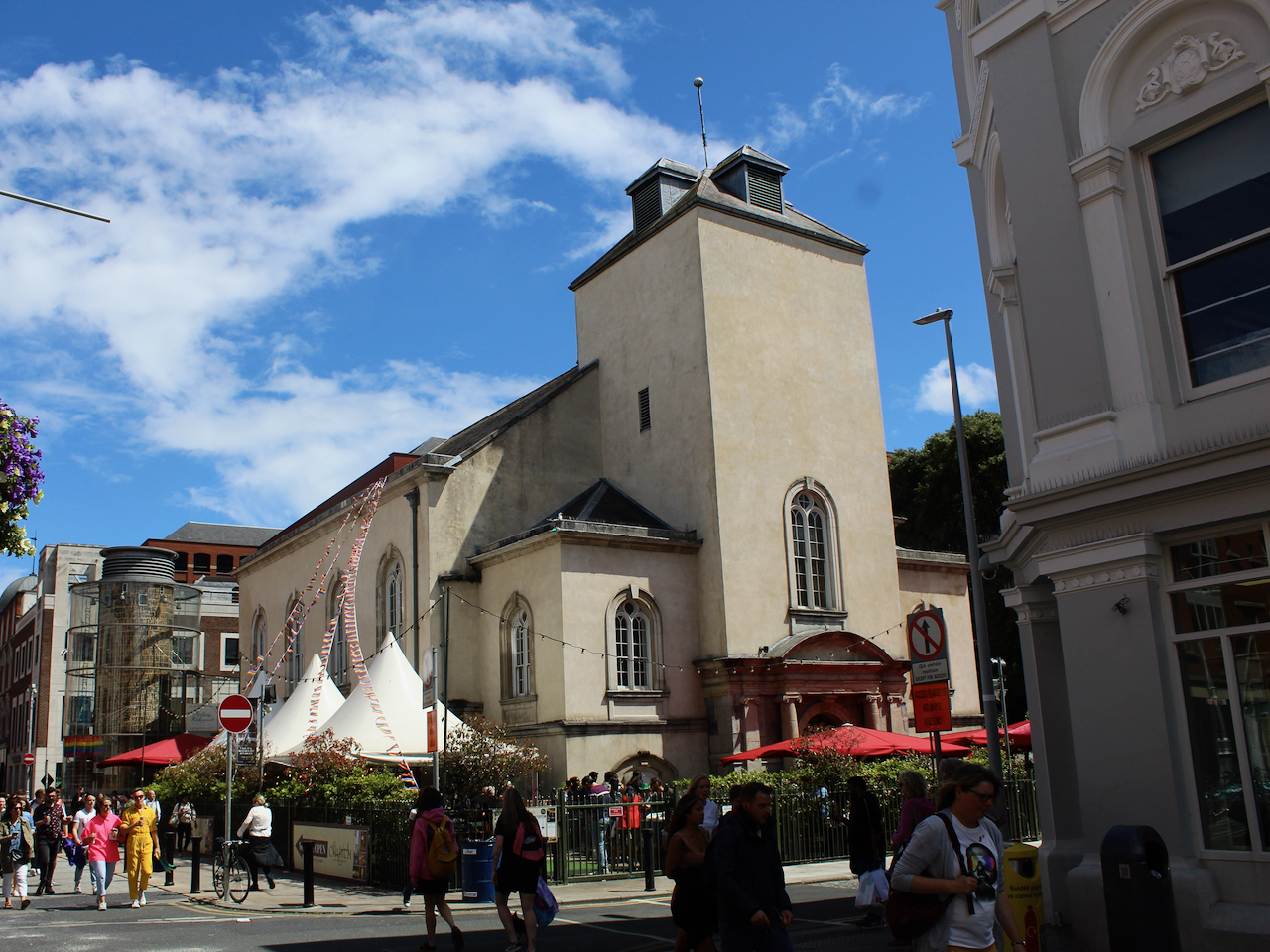
http://www.juneblake.ie/cms/

The very best gardens intrigue and restore us, and so it is with June Blake’s garden which is a rare fusion of inspired design and painterly planting. Situated in the townland of Tinode in west Wicklow, and spread over three rural acres, it wraps itself around June’s home, a handsome Victorian farm-steward’s cottage surrounded by a huddle of austerely beautiful, granite-stone farm buildingsone of which -the Cow House- has recently been the subject of an award-winning, modern architectural conversion. In a previous life, Blake was a gifted jewellery maker. Those same carefully honed skills- a razor sharp eye and keen attention to detail, an artist’s deep appreciation of colour, texture and form, as well as the ability to take a raw, unpolished material and expertly craft it into something aesthetically deeply satisfying- still shine through brightly in her excitingly contemporary country garden. Within it are many different areas of interest. These include intricately planted borders of gem-like beauty, swathes of naturalistic, prairie-style planting, sculptural landforms, a flower meadow that comes to life in spring with sprinkles of crimson red Tulip ‘Red Shine’, generous stretches of woodland intersected by curving cobble paths and filled with choice shade-lovers, and a formal, rectangular pool whose silver sliver of water is a mirror to the cloud-streaked Wicklow sky. Each one is so thoughtfully, imaginatively and expertly executed that it would be enough by itself to bring joy to the heart of any gardener. But it is when they are combined together as a whole that they form what is, without doubt, a truly remarkable garden.” Fionnuala Fallon.

The house was designed by William Caldbeck in 1864. Tinode House was burned to the ground in 1922 by the IRA, and has since been partially rebuilt.

Places to stay, County Wicklow:

1. Ballyknocken House, Ashford, County Wicklow

www.ballyknocken.ie

The website tells us:

Ballyknocken House, Farm and Cookery SchoolScenically located on 280 acres only 47 km south of Dublin City Centre in County Wicklow, Ireland. Our charming 4* Victorian style farm guesthouse offers 7 guest bedrooms plus a 3-bedroom Milking Parlour apartment, surrounded by scented kitchen gardens, offering a farm to fork experience. Home to celebrity chef and award-winning food writer, Catherine Fulvio, we pride ourselves on continuing the family tradition of providing B&B accommodation for over fifty years here in County Wicklow.

We offer an intimate, cosy, warm and friendly experience not only for individual guests for Foodie Short Breaks and for visiting Wicklow but we also welcome private parties, whether it’s a corporate, friend and family gathering or hen party. Ballyknocken can be booked exclusively for accommodation, cookery events and onsite activities for your company day out or your celebration.

2. Bel Air Hotel (formerly Cronroe), Ashford, Co Wicklow

www.belairhotelequestrian.com 

The website tells us:

Bel-Air is an old Manor House Hotel on 200 acres farm and parkland. The house and stable yard are in the middle of the estate, with the land surrounding it in all directions. There is wonderful parkland to the front of the house looking out to the coast, while the tillage land is behind the house. In the centre of the estate is old woodland, which has lovely jumping lanes. In the spring, bluebells and wild garlic bring colour and aroma to the tracks and trails. And the heady scent and sight of the vibrant yellow gorse makes your heart sing.

The stable yard is from ca 1750 and the current house was built in 1890. Both the house and the yard are listed for preservation and wherever you look you find evidence of the old days.

Even though we are less than an hour from Dublin, you feel like you are miles from anywhere and you also take a leap back in time. Bel-Air is not just a place – it’s a way of life!

3. Brook Lodge and Macreddin Village, County Wicklow

https://www.originalirishhotels.com/hotels/brooklodge-macreddin-village

The website tells us:

Relax and unwind at The Wells Spa, a designated ‘resort spa’. Dine at The Strawberry Tree, Ireland’s first certified Wild and Organic Restaurant, or La Taverna Armento, a Southern Italian style bistro. We also host Actons Country Pub, The Orchard Café, an Organic Bakery, a Smokehouse and a Wild Food Pantry and much more. Macreddin Golf Course designed by European Ryder Cup Captain Paul McGinley is a short stroll from BrookLodge.

Macreddin Village has twice won AA Hotel of the Year, Ireland’s Culinary Hotel of the Year and Ireland’s Luxury Eco-Friendly Hotel. Other recent awards for The Strawberry Tree Restaurant include titles such as Best Restaurant and Best Organic Restaurant.

4. Clone House, Count Wicklow

https://clonehouse.com

The website tells us:

Clone House, first built around 1650, is surrounded by five acres of private land and gardens.

Based in the heart of vibrant and beautiful County Wicklow, just an hour south of Dublin, Clone House offers a unique holiday experience and quality accommodation for up to 26 guests.

We cater for events such as family reunions, corporate events, hens & stags and small weddings.

Clone House was originally built by the O’Byrne family in the 1650’s. Back then it was the Manor House on a large estate stretching across Moneyteigue, Clone and Coolahullen. The house’s history is as grand and interesting as its demeanor. Clone House provided refuge to the famous Billy Byrne of Ballymanus, was burnt down in the 1798 Rebellion, restored around 1805 and nowadays functions as a beautiful guesthouse.

5. Croney Byrne, Rathdrum, Co Wicklow – courtyard accommodation

https://croneybyrne.ie

The website tells us:

Wicklow is a great holiday destination and you will love staying in our luxurious Self Catering Holiday Homes in one of the most beautiful locations in Irelands Ancient East. Croneybyrne Courtyard is a family friendly destination where children love our park with playground and collecting their eggs for breakfast from our hens and geese. See our accommodation page for more details.
A mere 1 hour drive from Dublin city it is a great escape with many acres of wilderness on our doorstep including Clara Vale Bird Sanctuary and Wildlife Reserve where you can spend hours exploring without seeing another soul or hearing the sound of modern distractions. There you will see Sika Deer as well as Badger, Fox, Rabbits and the occasional Hare, not to mention the myriad of Birds, including the spectacular Red Kite and Spotted Woodpecker.

There are forest and mountain walks, we are near the Avonmore Trails and within easy reach of the Wicklow Way and the beautiful Vartry Tracks and Trails. Or for the more adventurous, there are challenging Rock Climbing activities as well as hiking on the highest mountain in Wicklow Lugnaquilla or the many mountain tops in the area. If you are looking for a Walking Holiday in Wicklow see our Walking/Hiking pages for a list of our top walks in the area.

6. Druid’s Glen hotel and golf club (formerly Woodstock), Newtownmountkennedy, Co Wicklow

https://www.druidsglenresort.com

Druid’s Glen courtesy of website.

Mark Bence-Jones writes of Woodstock, which has now been converted to Druid’s Glen hotel:

p. 287. “(Tottenham, sub Ely, M/PB) A three storey five bay block of ca 1770, with  single-storey five bay block added ca 1840 by Rt Rev Lord Robert [Ponsonby] Tottenham [1773-1850], Bishop of Clogher [son of Charles Tottenham Loftus 1st Marquess of Ely], who bought the property after 1827; it had previously been rented for a period by the Lord Lieutenant, Marquess Wellesley. The centre block has a one bay breakfront and a die which was probably added by Bishop Tottenham at the same time as the single-storey Ionic portico, which is by Sir Richard Morrison. Giant blind arches in end pavilions; balustraded parapets on wings. Garden front with curved bow in central breakfront; now asymmetrical because of projecting C19 wing on one side and other additions. Hall running through the full depth of the house, divided by a screen of columns from the staircase, which is of fine solid C18 joinery; rococo plasterwork in the manner of Robert West in panels on the walls above the staircase, and curving round the apse at the back of the hall in the bow of the garden front; similar plasterwork on the ceiling of the staircase and landing. Dining room with rococo plasterwork in centre of ceiling. Large and lofty drawing room in right hand wing with frieze and cornice of elaborate C19 plasterwork, rather in the manner of Sir Richard Morrison. Handsome C19 room with bold cornice and ceiling medallion in wing flanking garden front. Sold 1947, afterwards the home of Mr and Mrs G. Van den Bergh. It is now the home of Mr and Mrs William Forwood, who have carried out a most sympathetic restoration of the house, with the help of Mr Jeremy Benson.” 

The National Inventory tells us:

Detached five-bay three-storey over basement former country house, built in 1770, now in use as a hotel / country club. The original house was probably to designs by Robert West the eminent Irish stuccodore. Two-storey wing additions added in c.1830 to designs by Sir Richard Morrison. There are later additions to the rear elevation. The walls are finished in painted lined render. A short flight of stone steps rises to the front door; it has a four-pane fanlight and is flat-headed. This is set within a projecting portico with Ionic columns. Window openings are flat-headed and have moulded surrounds; those to the piano nobile also have blocking courses and projecting cornice. The hipped roof is finished with natural slate and cast-iron rainwater goods. Chimneystacks are rendered with plain caps and clay pots. Much of the late Georgian interior has been retained; this includes rococo plaster work to the hallway, the original stair and fireplaces to principal rooms. The building is set within a large demesne which is now in use as a golf course.” [3]

8. June Blake’s Garden, Turkey House and Cow House, Tinode, Blessington, Co Wicklow – June Blake’s Garden, see above 

http://www.juneblake.ie/cms/ 

9. Rathsallagh, County Wicklow – accommodation €€

Rathsallagh, photograph courtesy of Rathsallagh House.

www.rathsallagh.com

It was built around 1750 as stables and converted in 1798. The range consists of four wings based around a large courtyard with the main wing to the front (west) having two-storey projections to its north and south ends.

The website tells us: “Rathsallagh House has been owned and run by the O’Flynn family for over 30 years, it has a happy and relaxed atmosphere with log and turf fires in the bar and drawing rooms. The food at Rathsallagh is country house cooking at its best, Game in season and fresh fish are specialities. Breakfast in Rathsallagh is an experience in itself and has won the National Breakfast Awards a record four times.

Rathsallagh also has conference and meeting rooms, Spa room, billiard room, and tennis court and is surrounded by the magnificant Rathsallagh Golf Club.

Joanna and David at Rathsallagh, photograph courtesy of Rathsallagh House.
Rathsallagh House, County Wicklow, photograph courtesy of Rathsallagh House.
Rathsallagh, photograph courtesy of Rathsallagh House.
J Channing RS Rooms, Rathsallagh, photograph courtesy of Rathsallagh House.
Rathsallagh, photograph courtesy of Rathsallagh House.

10. Summerhill House Hotel, County Wicklow €€

https://summerhillhousehotel.com

The website tells us: “Summerhill House Hotel is where glamour and the countryside blend in one of Ireland’s prettiest villages. Our location in the cosy village of Enniskerry is a gloriously refreshing antidote to city living or stressful lives. Reconnect with family and friends and let the kids run free. Lose track of time as you breathe in clean air, stride for miles through nature walks on your doorstep, stargaze under big skies, and, most importantly – relax, with a dose of the finest Wicklow hospitality.

11. Tinakilly House, Rathnew, Co Wicklow – country house hotel

https://tinakilly.ie 

The website tells us:

Set in 14 acres of mature landscaped gardens overlooking the Irish Sea Tinakilly offers peace and tranquillity yet is only 45 minutes from Dublin. This stunning award winning Country House Hotel in Wicklow is steeped in history and oozes charm and sophistication.

Mark Bence-Jones writes (1988):

p. 304. “A house of 1870 by James Franklin Fuller, built for Commander Robert Charles Halpin, RN, who commended the steamship Great Eastern when she laid the first Atlantic cable. In vaguely Queen Anne revival style; entrance front with two bay centre between three sided bows; pedimented porch. Roof on bracket cornice with central dormer. Side elevation with central three sided bow. Very impressive central hall, an early example of the hall-cum-living room which was to become an almost obligatory feature of late Victorian and Edwardian country houses; with an imperial staircase rising to a bridge gallery which continues around two of the walls. The ceiling is elaborately coved and coffered; the soffits of the stairs and gallery are richly ornamented with plasterwork. The fireplace is surmounted by a triple window, so that the flue appears to vanish; a conceit which, like the “living hall” itself, became increasingly popular towards the turn of the century. Halpin died 1894; his widow was living at Tinakilly 1912.” 

The website gives us the history:

Tinakilly House was constructed for Captain Robert Halpin, who was born in Wicklow Town and who succeeded in becoming Commander of The Great Eastern when it laid most of the world’s transoceanic telegraph cables.  The cable connecting Europe to America was laid in 1866 from Valentia Bay in Ireland to Hearts Content in Canada.  A section of this cable and a fine colour print of The Great Eastern can be seen today in Tinakilly Country House Hotel & Gardens.  Most of Captain Halpin’s memorabilia is in the National Maritime Museum in Dun Laoghaire.

Halpin is reputed to have been given an open cheque by the British Government to build his new mansion in gratitude for his contribution to improving world communications and thereby world trade.  He recruited the then very fashionable Irish architect, James Franklin Fuller, to design the house. The timber, which is so evident and gives such character, was selected in London by Halpin. The doors on the ground floor are of Burmese mahogany with many panels of different woods, the best of which are in “birds eye” maple. The architraves window shutters and stairs are in American pitch pine. Fireplaces were imported from Italy with the exception of the drawing room where a fine Georgian one graces the room.

In 1870 the land extended to 400 acres, two Head Gardener’s were employed, one for inside the walled garden to grow fruit and vegetables and the other to supervise the seven acres of pleasure gardens. There are fine stands of beech eucalyptus and evergreen oak while two giant sequoias (American Redwood) are at either end of the old tennis court. The site chosen for the house is on elevated ground two miles north of Wicklow Town, overlooking Broadlough Bird Sanctuary and the Irish Sea.

Halpin married the daughter of a wealthy Canadian whaling merchant. They had three daughters, the youngest of whom, Belle, lived in Tinakilly until the early 1950’s. Captain Halpin died at the young age of 58 from blood poisoning after cutting his toe.

In 1949 the house and lands were purchased by Augustus Cullen, a Wicklow solicitor. The Trustee’s sold on condition that Belle Halpin retain the house for her lifetime, which she did until 1952. Rumour has it that her ghost continued to occupy the house as well as Miss Halpin’s housekeeper – hence the Cullen’s never took occupation. During the last six years of Mr Cullen’s ownership, the house was only used in the summer when it was rented by a group of Jesuit priests for summer retreats.  Any ghosts quickly departed.

In 1959 the house and lands were sold to Mr Gunther Smith whose nephew, Mr Heinrich Rolfe, inherited the property in 1962.  His wife ran the house as a guesthouse while Mr Rolfe concentrated on farming.  A colourful Frenchman called Jean Claude Thibaud then rented the house and ran it as a “Restaurant Francais”.  A thatched cottage bar was constructed in the hall while stucco plaster on the dining room walls appeared to give an effect of “waves by the sea”.  One day Jean Claude discovered his kitchen chimney was blocked by the home of a family of building crows.  Not wishing to climb out onto the roof to discover which of the 36 chimney pots needed freeing, he took a sledgehammer to a top floor bedroom and through the flue of a fireplace allowing the smoke into the bedroom.  He then opened the window and closed the door.  A French solution to an Irish problem.

In 1978 an Irish couple, Dermot & Anne Garland, who had experience in running the Pembroke Restaurant in Dublin, swapped with the Thibauds and completed a purchase agreement for Tinakilly House. The Garland’s redecorated Tinakilly and ran a successful restaurant. Dermot tragically died leaving Anne to struggle on with their two young sons.

In 1982 Tinakilly sold to William & Bee Power, who decided to develop a full hotel putting bathrooms ensuite and installing a modern fully equipped kitchen. Redecorating and furnishing of the hotel was undertaken by William & Bee to ensure the homely Victorian character so evident to the visitor today. Great care has been taken in all reconstruction work to maintain the nautical theme.  Bedrooms were named after ships. 

In 1991 the Power’s constructed 15 suites all overlooking the Irish Sea and Broadlough Bird Sanctuary.  Sunrise is a spectacle to behold.  The Victorian Halpin Suite was developed to cater for conferences and weddings.

In 1997 the East wing was extended northwards with the addition of 24 suites and a lift, bringing the total compliment of bedrooms to 51. Also in that year, a new dining room, the Brunel, was built to the west of the house. All of this work has been architect controlled to ensure the true character of Tinakilly is maintained. In January 2000, Tinakilly was taken over by William & Bee’s son and daughter-in-law, Raymond & Josephine.

In 2013 Tinakilly House changed hands again, the owners are passionate about this grand country manor, adding refreshing touches through out the house but always in keeping with the character. The Great Hall is alive again with chatty conservations over afternoon tea, the Brunel restaurant and menus are refreshing, wedding guest fill the house with laughter and joy.  So check back with us to see the old and new meld to give this beautiful Victorian manor a new chapter in history.

12. Tulfarris, Blessington, Co Wicklow - hotel 

www.tulfarrishotel.com

The website tells us: “Tulfarris Hotel & Golf Resort is a luxury 4 star retreat situated in the garden of Ireland, County Wicklow. Perched on the banks of the Blessington Lakes against the backdrop of the Wicklow mountains, yet only 45 minutes drive from Dublin. Offering delicious food, relaxed bars and deluxe guest accommodation, the views are breathtaking and the golf course is immense. Step back in time as you enter the 18th century Manor House which stands imposingly at the heart of our 200 acre resort. Get married, get your colleagues together or get some rest and relaxation. Tulfarris Hotel in Wicklow is yours to enjoy.

The website tells us of the history of the house:

Tulfarris House derives its name from the land it is situated on. Tulfarris comes from the Gaelic ‘Tulach Fherghuis’ meaning Fergus’ Hill.   

From a document known as the Faints, which contains legal judgements from the Tudor period, it is clear that the lands known as Tulfarris were included with the manor of Rathmore, Co. Kildare. This estate was in the possession of Gerald Fitzgerald (Garret Oge), 9th Earl of Kildare. Until 1534, the Fitzgerald dynasty dominated both the lands and events that occurred in much of Ireland. The rebellion of Gerald’s son Thomas, popularly known as Silken Thomas, resulted in the confiscation of the entire estate by the crown. In 1541, the crown to Walter Troot, Vicar of Rathmore, leased the manors of Rathmore, including Tulfarris.

Gerald Fitzgerald (1487-1534) 9th Earl of Kildare

Shortly afterwards in 1545, the lands were granted in full to Sir John Travers, a knight from Monkstown, Co. Dublin. Sir John Travers had an heir by his first marriage, Henry. Henry married Gennet Preston [d.1599], daughter of the third Viscount of Gormanstown [Jenico Preston, d. 1560]. Henry however, died young leaving two daughters, Mary & Catherine. John Travers died in 1562 and the lands were inherited by Henry’s daughters, Mary & Catherine.

Mary married James Eustace, 3rd Viscount of Baltinglass. After James played a leading role in the Desmond Rebellion of 1579, The Baltinglass estate including Mary’s share of Rathmore, were confiscated by the crown. Mary managed to have her share of the estate returned to her in her husband’s lifetime.

Her sister Catherine married John Cheevers of Macetown, Co. Meath. Catherine’s share of the Rathmore Estate included Tulfarris and was inherited by Catherine’s son Henry. Henry in turn married Catherine Fitzwilliam and their son Walter inherited the title to Tulfarris. Inquisitions dated 24th September 1640, detail the size of the estate at the time of Henry Cheever’s death. According to this document, Tulfarris contained one ruined Castle, 20 messuages, 70 acres of land and a manor.

Tulfarris’ turbulent history continued and in a list of outlaws intended for the House of Lords and dated 1641-1647, five entries for Tulfarris were found. During that time, the crown again confiscated Tulfarris.

Tulfarris and other properties were granted to Colonel Randall Clayton on 15th October 1667, in trust for the officers of the Cromwellian soldiers of 1649. Tulfarris was subsequently granted to Captain John Hunt of the Cromwellian soldiers of 1649. His son, Vere Hunt, later sold the land to John Borrowes of Ardenode, Co. Kildare. In 1713, Robert Graydon of Russellstown held Tulfarris. The means of transfer of ownership between Borrowes and Graydon is uncertain, however, Borrowe’ss niece and granddaughter both married Graydons.

Much of the house’s more recent history is associated with the Hornridge family who held the land from the early eighteenth century until the 1950’s. James Hornridge came to Ireland from Gloucester with Cromwell’s parliamentary Army in 1659 and settled in Colemanna in Co. Carlow.

The Historical information regarding how the Hornridge’s came to own Tulfarris is unclear. His son Richard Hornridge married Hester Hogshaw of Burgage, Blessington Co. Wicklow in 1699. It is most likely that Tulfarris came into the Hornridge’s possession through this marriage.”

13. Wicklow Head Lighthouse, Dunbur Head, County Wicklow € for 4

https://www.irishlandmark.com/property/wicklow-head-lighthouse/

14. Gate Lodge, Woodenbridge, Avoca, County Wicklow €€

Airbnb: https://www.airbnb.ie/rooms/32381149?adults=2&category_tag=Tag%3A8047&children=0&infants=0&search_mode=flex_destinations_search&check_in=2022-07-10&check_out=2022-07-15&federated_search_id=c0dd098c-52b4-4f57-8873-90347b40e6c0&source_impression_id=p3_1652453929_%2FOAm61MZ%2FV9wewli

Gatelodge, Woodenbridge, photograph courtesy of airbnb site.

Beautifully restored small Castle situated in the Vale of Avoca, within walking distance of the Golf Club. Only 4km from Arklow Town and only 3km from the stunning Avoca Village. The Castle is ideal for those who are looking for a relaxing break to take in the beautiful scenery, walk ways, fishing and golfing.

The space
If you choose to book the Gatelodge, you and your guests will have full use of the Small Castle.

[1] Bence-Jones, Mark. A Guide to Irish Country Houses (originally published as Burke’s Guide to Country Houses volume 1 Ireland by Burke’s Peerage Ltd. 1978); Revised edition 1988 Constable and Company Ltd, London.

[2] https://www.irelandscontentpool.com/en

[3] https://www.buildingsofireland.ie/buildings-search/building/16401304/druids-glen-golf-club-woodstock-demesne-co-wicklow

Text © Jennifer Winder-Baggot, www.irishhistorichouses.com

Places to visit and stay in County Sligo, Connaught

On the map above:

blue: places to visit that are not section 482

purple: section 482 properties

red: accommodation

yellow: less expensive accommodation for two

orange: “whole house rental” i.e. those properties that are only for large group accommodations or weddings, e.g. 10 or more people.

green: gardens to visit

grey: ruins

For places to stay, I have made a rough estimate of prices at time of publication:

€ = up to approximately €150 per night for two people sharing (in yellow on map);

€€ – up to approx €250 per night for two;

€€€ – over €250 per night for two.

For a full listing of accommodation in big houses in Ireland, see my accommodation page: https://irishhistorichouses.com/accommodation/

donation

Help me to pay the entrance fee to one of the houses on this website. This site is created purely out of love for the subject and I receive no payment so any donation is appreciated!

€15.00

Sligo:

1. Ballymote Castle, County Sligo (OPW)

2. Ballynafad Castle (or Ballinafad), Co Sligo – a ruin, OPW

3. Lissadell House & Gardens, Lissadell, Ballinfull, Co. Sligo – section 482

4. Markree Castle, Collooney, Co Sligo – section 482

6. Newpark House and Demesne, Newpark, Ballymote, Co. Sligo – section 482

7. Rathcarrick House, Rathcarrick, Strandhill Road, Co. Sligo – section 482

Places to stay, County Sligo:

1. Annaghmore, Colloony, County Sligo

2. Schoolhouse at Annaghmore, County Sligo € for 3/4

3. Ardtarmon Castle, Ballinfull, Co Sligo – accommodation

4. Castle Dargan Lodges, Ballygawley, Co. Sligo, Ireland 

5. Carrowcullen old Irish Farmhouse, County Sligo

7. Lissadell rental properties, County Sligo

8. Markree Castle, Collooney, Co Sligo – section 482

10. Newpark House and Demesne, Newpark, Ballymote, Co. Sligo – section 482

11. Temple House, Ballymote, Co. Sligo – section 482

Whole house rental:

1. Coopershill House, Riverstown, Co. Sligo – section 482

Sligo:

1. Ballymote Castle, County Sligo (OPW)

Ballymote Castle, County Sligo, Photograph © Jennifer Winder-Baggot, www.irishhistorichouses.com

see my OPW entry: https://irishhistorichouses.com/2022/10/31/office-of-public-works-properties-in-connaught-counties-leitrim-mayo-roscommon-and-sligo/

2. Ballynafad Castle (or Ballinafad), Co Sligo – a ruin, OPW

3. Lissadell House & Gardens, Lissadell, Ballinfull, Co. Sligo – section 482

Lissadell, August 2022. Photograph © Jennifer Winder-Baggot, www.irishhistorichouses.com

www.lissadell.com
Open dates in 2025: June 1-2, 4-8, 11-15, 18-22, 25-29, July 2-6, 9-13, 16-20, 23-27, 30-31, Aug 1-4, 6-10, 13-24, 27-31, 10.30am-6pm

Fee: adult €16, OAP/student €14, child €8, tour groups of over 30 persons who pay in advance receive a discount

See my entry https://irishhistorichouses.com/2023/04/27/lissadell-house-gardens-lissadell-ballinfull-co-sligo/

4. Markree Castle, Collooney, Co Sligo – section 482

Markree Castle, County Sligo, Photograph © Jennifer Winder-Baggot, www.irishhistorichouses.com

See my entry:

https://irishhistorichouses.com/2021/11/06/markree-castle-collooney-co-sligo/

http://www.markreecastle.ie

Open in 2025, but check in advance due to events and weddings: July, Aug, Sept 12 noon-4pm 
Fee: Free to visit.

10am-4pm

Fee: Free

Markree Castle Home Farm, County Sligo. Photograph © Jennifer Winder-Baggot, www.irishhistorichouses.com

6. Newpark House and Demesne, Newpark, Ballymote, Co. Sligo F56 X985 – section 482

Newpark, County Sligo, Photograph © Jennifer Winder-Baggot, www.irishhistorichouses.com

See my entry:

https://irishhistorichouses.com/2021/11/30/newpark-house-and-demesne-newpark-ballymote-co-sligo/

Open dates in 2025: Jan 20-24, 27-31, Feb 10-14, 17-21, May 6-10, 12-23, June 9-13, 23-29, Aug 16-24, 29-30, 9.30am-1.30pm

Fee: adult €7, OAP/student €5, child free

7. Rathcarrick House, Rathcarrick, Strandhill Road, Co. Sligo F91 PK58 – section 482

Open dates in 2025: June, July, Aug, Tue-Sat, National Heritage Week, Aug 16-24, 2pm-6pm

Fee: adult €5, child/OAP/student free

Places to stay, County Sligo:

1. Annaghmore, Colloony, County Sligo €

https://www.annaghmore.ie/history

Annaghmore, County Sligo. Photograph © Jennifer Winder-Baggot, www.irishhistorichouses.com

We stayed here during Heritage Week in 2021 and will be visiting again in 2022! You can book to stay with the owners on airbnb.

Our lovely bedroom in Annaghmore, County Sligo. Photograph © Jennifer Winder-Baggot, www.irishhistorichouses.com

The website tells us:

The O’Hara’s were Chiefs of Luighne, an extensive territory in the County of Sligo, and maintained an independent position down to the time of Oliver Cromwell. The family have always had a residence on the present site, as well as castles at Castlelough, Memlough and other parts of Leyne prior to the modern Annaghmore house being built in the 1790s. The house was dramatically added to in the 1830s and again in the 1870s by architect James Franklin Fuller, to form the unusually restrained classical house it is today.   We are one of the very few original old Gaelic families to still live in the family seat.   Over generations The O’Hara’s have made a profound contribution to Irish history both at home and abroad; holding important roles in politics, the military, religious, cultural and sporting arenas.  Annaghmore is a living testimony to the family’s achievements and steadfast commitment and love for the people of Sligo, well documented through manuscripts, paintings, personal diaries, maps and photographs still very much visible within the house today.

Annaghmore, County Sligo, photograph by Robert French, Lawrence Photographic Collection, National Library of Ireland. Some of the house was taken down.

Mark Bence-Jones tells us (1988):

p. 4. “[O’Hara] A house of ca. 1820, consisting of a 2 storey 3 bay centre with single-storey Ionic portico and single-storey 2 bay wings, greatly enlarged ca. 1860-70 by C. W. O’Hara to the design of James Franklin Fuller; the additions being in the same late-Georgian style as the original house. The wings were raised a storey and extended back so that the house had a side elevation as high as the front and as long, or longer, consisting of 1 bay, curved bow, 3 further bays and a three-sided bow. At the same time, the fenestration of the original centre was altered, paired windows being inserted into the two outer bays instead of the original single window above a Wyatt window. All the ground floor windows except for those in the three sided bow have plain entablatures over them. Parapeted roof. Short area balustrade on either side of centre. Curved staircase behind entrance hall. Doorcases with reeded architraves and rosettes.” [1]

2. Schoolhouse at Annaghmore, County Sligo € for 3-4

https://www.irishlandmark.com/propertytag/cottages-and-houses/?gclid=Cj0KCQiApL2QBhC8ARIsAGMm-KFInICcRSxwLSiDxfFNk5WFytNcVrLvOQYhzJbIBes4V-M65iXz0gYaAln_EALw_wcB

The Schoolhouse in Annaghmore was built in the 1860s to educate local children.

The schoolhouse at Annaghmore, County Sligo. Photograph © Jennifer Winder-Baggot, www.irishhistorichouses.com

3. Ardtarmon Castle, Ballinfull, Co Sligo – accommodation 

https://www.ardtarmoncastle.com

The website tells us: “Spend Your Holidays or your Honeymoon in a Castle at Seaside in Ireland – All Apartments in our Castle are South Facing with view to the Sea – Self Catering Holiday and Honeymoon Apartment in an Irish Castle.

The National Inventory tells us Ardtarmon is multiple-bay two-storey rendered castle built c. 1640. Oblong plan, circular towers to north and south ends of main east elevation and centre of west elevation, seven-bay two-storey extension c.1995 with corner turret to south-west, bawn to west. “This national monument is a transitional early-seventeenth century semi-fortified house. Although extensively renovated for residential use, the castle has retained many of its original features.

“… Ardtarmon Castle which commanded the sea approaches to Sligo town when first built around 1648. Its founder Sir Francis Gore was a distant ancestor of Constance Gore-Booth and founder of the Gore Booth family. It was the original home of the Gore-Booths before they moved to Lissadell in the early 18th century after a fire burned Ardtarmon to the ground. It is one of the two buildings built in the style of the Cromwell period that survive in the area. The other is Park’s Castle on the Shores of Lough Gill in Co. Leitrim.

Rebuilt in the late 20th century to its former glory by Holger & Erika Schiller the castle now offers state of the art luxury self-catering accommodation, with design and interiors faithful to the original but with modern day comfort including under floor heating and dishwashers in all apartments.” 

4. Castle Dargan Lodges, Ballygawley, Co. Sligo, Ireland

https://www.castledargan.com

The website tells us: “Welcome to Castle Dargan Estate, a magnificent, rambling country estate on 170 rolling acres in W.B. Yeats’ beloved County Sligo. The great poet was inspired to write of its charms in The King of The Great Clock Tower and a hundred years later we invite you to be enchanted by a timeless elegance and unique atmosphere that will stay with you forever.

Accommodation at Castle Dargan Estate offers guests a diverse range of 4-star hotel accommodation including luxury suites in the 18th century Castle Dargan House, one and two bed Walled Garden Suites which are perfect for family breaks, and self-catering lodges available for holiday rentals. With a rich history brought in to 21st century, Castle Dargan Estate offers more to our guests than hospitality and fantastic settings, it offers classic grandeur that remains timeless.

The website also tells us about Castle Dargan’s history:

Castle Dargan: I liked the place for its romance.”  – W.B.Yeats 

Beautifully situated, having delightful views of the surrounding scenery and the mansion house being suitable for the residence of a gentleman of the highest respectability.” – Patrick E. O’Brien 

Such was the description of Castle Dargan prior to public auction in 1875, lands that has been residence to many during five millenia. Extensive archaeological remains bear witness to a continuity; stone age burial sites on the heights of Sliabh Daeane to the north, a possible henge ritual site, bronze age cooking and washing sites, and until recently unknown souterrain – the underground refuge and foodstore of early medieval farmers, and ring forts beside the 5th fairway and on the high ground above the 18th hole. The old castle area, a complex of habitation from the 15 to 18 centuries and built on an earlier cashel or stone-built ring fort, has not yet been interpreted satisfactorily.

By the early 14 century, the MacDonaghs ruled the barony of Tirerrill, that eastern half of Sligo that stretches from the southern shores of Lough Arrow to Castle Dargan. In a dispute of 1422 over the strategic construction of a castle by Conor MacDonagh of Collooney – Castle Dargan was subject to Collooney – the castle was captured by an army of O’Neill and O’Donnell forces, allies of the Castledargan MacDonaghs; which having partaken of overnight hospitality in Castle Dargan, returned north the following day. On a return visit in 1516 another O’Donnell raided Sligo taking several castles, among them and took hostages.

Following the submission of O’Conor Sligo to Queen Elizabeth in 1585, the MacDonaghs found themselves paying fees to the Crown and liable to fines or confiscation. The Collooney family became one of the leading Gaelic families representing Sligo in the early 1600s, a period which ended with the death in rebellion of its leader Brian Óg MacDonagh in 1643.

In the aftermath of the subsequent Cromwellian Wars, the MacDonaghs withdrew into modest circumstances or returned to a tradition of military service in continental armies. Castle Dargan lands were split between three owners, Coote, Crofton and the Strafford & Radcliffe estate which later sold its interest to the Burton family, ancestors of the Cunninghams of Slane. The new ownership provided the opportunity in 1687 for the arrival in Castle Dargan of Stephen Ormsby, great-grandson of an Elizabethan soldier, Thomas Ormsby of Lincolnshire, who had married well in Mayo.

The Castle Dargan Ormsbys leased rather than owned land for several generations. William, Stephen’s grandson, married well during the 1740s, his wife bringing the 408 acres of nearby Knockmullen as a dowry. Having renewed the lease of Drumnamackin ‘called commonly the name of Castle Dargan’ in 1749 he was recorded as paying a chief rent of £3 for it in 1775; during those intervening years Castle Dargan had obviously come into full Ormsby ownership. Subsequently, he took out a lease on three townlands for 400 years in 1781.

Reflecting these improved circumstances, William built the original Castle Dargan House in the second half of the eighteenth century. He also developed the demesne, its farmlands and, probably, the walled and ornamental gardens in the castle area. He died in 1784 ‘deservedly lamented’ and was succeeded in turn by each of his sons, Nicholson and Thomas, both of whom died unmarried, and William who was in turn succeeded by his son, John.

John, the most public person of the Castle Dargan Ormsbys was elected a Burgess of Sligo Borough in 1824, appointed Provost in 1829 and 1839, High Sheriff of the county in 1834 and was regularly a Grand Juror of the Assizes. He was a founder member of and contributed to the first Famine Relief Committee of 1846 and served over many years as a Resident Magistrate. He died in 1870 and was succeeded by his son, Nicholson, who survived him by one year only and by his grandson, John Robert, the last Ormsby of Castle Dargan House.

In John Robert’s time, the young W.B. Yeats visited Castle Dargan House ‘where lived a brawling squireen’, married to one of his Middleton cousins; Mary Middleton was married to John Robert. It was, as he said, “the last household where I could have found the reckless Ireland of a hundred years ago in final degradation. But I liked the place for the romance of its two castles facing one another across a little lake, Castle Dargan and Castle Furey”; the Ormsbys were well-known for their country pursuits.

They had historically taken a dramatic place in Irish folklore when it is recorded that a group of Elizabethan adventurers, arriving by boat on a western shore, were promised a grant of land to the first to set foot on land. Ormsby, a veteran of the continental wars cast his cork-leg ahead of him, wading ashore at his leisure.

Cock-fighting in the Sligo of 1781 was noted in reporting the rivalry of Nicholson Ormsby and Philip Perceval of Temple house, in which Ormsby lost the princely prize of two hundred guineas. Nicholson’s reputation was such that, Archdeacon O’Rorke, writing his otherwise sober in 1889, made an exception in the case of Nicholson Ormsby, recounting tales of his practical jokes, for which he had some notoriety.

Over many years the Ormsbys had participated in Sligo horse-racing, its gentlemen and young ladies remarked upon among the attendance of the ‘beauty and fashion of the County’ at such gatherings, their racing successes beginning at the first festival of racing at Bowmore in Rosses Point in September 1781. This love of horses continued with the hunt and the hosting of several times a season. Ormsby hospitality was once remarked upon when, following ‘as good a run on so fine a day as any could wish for’, the hunting party ‘came to lunch at Castle Dargan House, where the usual hospitality of the owner was taken every advantage of’.

Inevitably, stories of Castle Dargan and Ormsby exploits made their way into Yeats’s works. Reflecting the folklore of spectral dancers in well-lit ruins; the royal attendant of, more than half a century later, sang –

    O, but I saw a solemn sight;

    Said the rambling, shambling travelling-man;

    Castle Dargan’s ruin all lit,

    Lovely ladies dancing in it.

High over Castle Dargan on Sliabh Daeane – the mountain of the two birds – is the passage tomb of Its name recalls the legend of The Old Woman of Beara – Bird Mountain Clooth-na-BareThe Hosting of the Sidhe

The host is riding from Knocknarea

    And over the grave of Clooth-na-bare;

    Caoilte tossing his burning hair,

    And Niamh calling Away, come away …

An event, not recalled in genealogies, in which an Ormsby daughter is said to have eloped with a groom, married and happily raised a family in nearby Coolaney, is reputedly evoked in; an event which may be reflected when the old man tells his son;

My mother that was your grand-dam owns it, This scenery and this countryside kennel and stables, horse and hound –She had a horse at the Curragh, and there met my father, a groom in a training stable, looked at him and married him.Her mother never spoke to her again,

By March 1875 a series of financial reversals finally forced the sale by the Landed Estates Court of the various Ormsby interests in almost 2000 acres. Castle Dargan was bought for £12,000 by William Middleton, Mary Ormsby’s father, with a five year £10,000 loan from Andrew Hosie, a successful miller of Dromahair.

William Middleton died in 1882, the loan unpaid and John Robert Ormsby having departed unexpectedly and alone for the United States. The 959 acres of Castle Dargan were auctioned in September 1883, Andrew Hosie being the sole bidder and Mary Ormsby and her family of seven children retired to Elsinore, a Middleton property in Rosses Point. A daughter, Amy Frances Vernon, subsequently achieved fame as a County Sligo lady golfer winning Irish and South African Ladies’ Championships; Larry (Arthur) Vernon, her husband, won the inaugural West of Ireland Championship at County Sligo Golf Club in 1923.

Andrew Hosie died in1888, having already vested Castle Dargan in his nephew, John, in December 1883. Following extensive repairs to the house in 1884, the current hall-door entrance and bay-windows were added in 1895. The demesne was farmed by John’s son, James, and grandson, John, until the death of John C. Hosie in November 1997. With the sale of the mountain lands in 1894 to the Coopers of Markree Castle, and of several smaller sections in the intervening years, the remaining 145 acres of Castle Dargan demesne and the nineteen acres of Carrigeenboy near the gate-lodge were sold in 1998 by Mrs Kathleen Hosie to Dermot Fallon of Ballinacarrow, Co. Sligo.

With that, the continuous occupation of three families over almost six centuries was finally drawn to a close.”

5. Carrowcullen old Irish Farmhouse, County Sligo

https://hiddenireland.com/house-pages/old-irish-farmhouse-carrowcullen/

The website tells us:

Carrowcullen: The Old Irish Farmhouse is an 1880s six room stone traditional farmhouse, with a low hipped slate roof which drew from earlier building traditions of the 1820s/1830s and offers a ‘walk back in time’ experience so that when visitors arrive they enter the farmhouse kitchen, as they would have in the past and find themselves at centre the house as would have happened traditionally.

On the first floor, the Carrowcullen: Old Irish Farmhouse offers a master bedroom, twin bedroom, a small bedroom and a bathroom with Victorian cast-iron bath with overhead shower and cast-iron cistern. On the ground floor is the kitchen, flanked on either side by the parlour and sitting room. The master and twin bedrooms have sinks. On the ground floor the sitting room also has a single bed, sink and toilet, in the event that guests may not be able to manage the narrow and irregular original stairs. The kitchen has a Stanley 8 stove (matching the original), gas cooker, microwave and toaster. An under-stairs cloakroom is off the kitchen provides additional flexibility for guests. An immersion heater provides hot water when the boiler is not being used for heating.

The Old Irish Farmhouse offers a ‘walk back in time’ experience: the fridge, microwave, dishwasher are hidden, so that when visitors arrive they enter the farmhouse kitchen, as they would the centre the house traditionally. Antique furniture, furnishings and sanitary ware are appropriate with the house’s age and some are original to the house.

Situated in Co Sligo, Carrowcullen: The Old Irish Farmhouse is set today on the fourteen acres of rugged farmland along the Wild Atlantic Way and set well back from a quiet country lane, the farmhouse is accessed by a private lane (with public access) which links with a forestry lane, providing for an easy ‘loop’ walk. Two natural springs are in the east and west pastures, and a river, the Ardnaglass runs on two sides of the east pasture; it runs from Loch Acree on Ladies Brae ultimately flowing to Dunmoran Sands. The farmhouse has spectacular views of the Ox Mountain ranges & Knocknarea. Intentionally , the Old Irish Farmhouse is embodied as a living house – as it always had been– not a ‘replica’ which would arbitrarily ‘assign’ ‘a ‘date’ to the house, from which eliminating decisions and associations would cascade. As a living house, it contains artwork associated with my family and with my family’s and my connections with American artists from the 1970 onwards and with the Swedish arts and crafts traditions. (I crochet lace using my Swedish grandmother’s patterns and paint ordinary objects with flowers inspired by those on Carrowcullen’s pastures, in the Swedish tradition; Carrowcullen gifts are available to purchase).

Carrowcullen: The Old Irish Farmhouse meets with the ‘Fáilte Ireland Welcome Standard’ and promotes sustainability and recycling as an integral part of the ‘message’ and ‘dialogue’ of Carrowcullen as re-envisioned since 2016. Biodiversity projects record plant, animal and bird species and precise times of year they appear and guests may contribute to this recording, should they so wish.

Come stay and experience late 19th c objects and farmhouse life at Carrowcullen!

Carrowcullen: The Old Irish Farmhouse is set on an east west axis with its south gabled end facing Ladies Brae, a dramatic steep passage on the Ox Mountains, from which fierce winds and rain sweep. The Sligo walking trails are directly accessible from the house and the quiet country lane. Beaches such as Dunmoran Strand and Aughris Head (with the Beach Bar) are minutes drive away. Nearby, Beltra Country Market on Saturday mornings offers home-produced food and vegetables in addition to crafts and activities. Other activities in the area include Surfing and horseriding. Local shops (Collery’s and Ardabrone) service the area. The anticipated nearby Coolaney National Mountain Bike Centre will soon be opening. The Skreen Dromard guild of the Irish Countrywomen’s Association meets on Wednesday evenings and welcomes guest visitors! With prior arrangement, guests may experience the daily sheep herding and checks. Carrowcullen also offers visitors an opportunity to engage with our roaming hens and quails who provide fresh eggs which are available to purchase and not forgetting the flock of Japanese and Jumbo Italian quails.

6. Lissadell rental properties, County Sligo

http://lissadellhouse.com/lissadellrentals/

7. Markree Castle, Collooney, Co Sligo – section 482, see above

https://irishhistorichouses.com/2021/11/06/markree-castle-collooney-co-sligo/

http://www.markreecastle.ie

9. Newpark House and Demesne, Newpark, Ballymote, Co. Sligo – section 482, see above

https://irishhistorichouses.com/2021/11/30/newpark-house-and-demesne-newpark-ballymote-co-sligo/

10. Temple House, Ballymote, Co. Sligo F56 NN50 – section 482

www.templehouse.ie
Tourist Accommodation Facility

Open for accommodation in 2025: January, April-December

See my entry https://irishhistorichouses.com/2025/11/15/temple-house-ballymote-county-sligo/

Temple House, photograph courtesy of Temple House website.
Vestiblue of Temple House, photograph courtesy of Temple House website.
Temple House, photograph courtesy of Temple House website.
Vestibule of Temple House, photograph courtesy of Temple House website.
Stair hall of Temple House, photograph courtesy of Temple House website.
Dining room at Temple House, photograph courtesy of Temple House website.
Temple House, photograph courtesy of Temple House website.
Morning Room at Temple House, photograph courtesy of Temple House website.
Temple House, photograph courtesy of Temple House website.
Wedding at Temple House, County Sligo, photograph from website.

and Gardener’s Cottage, https://hiddenireland.com/house-pages/temple-house/the-gardeners-cottage/

Gardens at Temple House, photograph courtesy of Temple House website.
The Knights Templar ruin at Temple House, photograph courtesy of Temple House website.

1. Coopershill House, Riverstown, Co. Sligo whole house rental

http://www.coopershill.com

Tourist Accommodation Facility Open May-October 2025.

See my entry: https://irishhistorichouses.com/2022/01/11/coopershill-house-riverstown-co-sligo/

Coopershill, County Sligo, Photograph © Jennifer Winder-Baggot, www.irishhistorichouses.com

[1] Bence-Jones, Mark. A Guide to Irish Country Houses (originally published as Burke’s Guide to Country Houses volume 1 Ireland by Burke’s Peerage Ltd. 1978); Revised edition 1988 Constable and Company Ltd, London.

Text © Jennifer Winder-Baggot, www.irishhistorichouses.com

Places to Visit and Stay in County Leitrim, Connaught

On the map above:

blue: places to visit that are not section 482

purple: section 482 properties

red: accommodation

yellow: less expensive accommodation for two

orange: “whole house rental” i.e. those properties that are only for large group accommodations or weddings, e.g. 10 or more people.

green: gardens to visit

grey: ruins

For places to stay, I have made a rough estimate of prices at time of publication:

€ = up to approximately €150 per night for two people sharing (in yellow on map);

€€ – up to approx €250 per night for two;

€€€ – over €250 per night for two.

For a full listing of accommodation in big houses in Ireland, see my accommodation page: https://irishhistorichouses.com/accommodation/

donation

Help me to pay the entrance fee to one of the houses on this website. This site is created purely out of love for the subject and I receive no payment so any donation is appreciated!

€15.00

Leitrim:

1. Lough Rynn Castle gardens, Mohill, Co Leitrim 

2. Manorhamilton Castle (Ruin), Castle St, Manorhamilton, Co. Leitrim – section 482

3. Parke’s Castle, County Leitrim (OPW)

Places to stay, Leitrim

1. Bush Hotel, Carrick on Shannon, Co Leitrim 

2. Lough Rynn Castle, Mohill, County Leitrim €

Leitrim:

1. Lough Rynn Castle gardens, Mohill, Co Leitrim

https://www.loughrynn.ie/

Loughrynn, photograph courtesy of hotel website.

The website tells us:

Lough Rynn Castle Hotel Estate & Gardens is one of the top luxury castle hotels to stay in. Located in County Leitrim, Lough Rynn Castle exceeds expectations as one of the most preferred hotels in Ireland.

It is the ancestral home of the Clements family and the legendary Lord Leitrim. Our magical Irish castle hotel has been transformed from an incredible ancestral home into a place where old world elegance mixes seamlessly with unimaginable modern hotel luxury.

Staying in a luxurious Castle Hotel in Ireland is a once in a lifetime experience and one that deserves to take place at a location full of history, luxury and charm. Take a step back in time as you approach imposing entrances at Lough Rynn Castle which offers acres of breathtaking scenery, historical sites and walled gardens. Our entire Irish castle hotel’s estate comprises of over 300 acres of land that is idyllic, rich in history and charmed with natural beauty. Take a romantic walk in our walled gardens overlooking our lough and come back to the castle hotel for some exquisite dining in our restaurant or drinks at the Dungeon Bar. Relax and take in the authentic Irish castle atmosphere in the Baronial Hall or in the John McGahern Library.

Lough Rynn, County Leitrim, Irish Tourist Collection National Library of Ireland ref NPA ITA 1377 (Box VII).

Mac Raghnaill family (1210 –1621)

The current Lough Rynn estate is built on the ancestral lands of Clan Maelsechlainn-Oge Mac Raghnaill, the pre-Conquest rulers of this part of County Leitrim known as Muintir Eolais. The Annals of Loch Cé and Annals of Connacht refer to “the crannóg of Claenloch” (Lough Rynn) in the High Middle Ages, 1247AD, with the structure marked on some maps as “Crannoge” or “Crane Island”, while the medieval Mac Raghnaill‘s Castle is mentioned in 1474AD.

The ruins of the Mac Raghnaill‘s Castle are located close to the lake and some 500 meters from the existing Lough Rynn Castle. The historian, Fiona Slevin, describes the structure of the Mac Raghnaill castle as “fairly standard for the time, but it did have a few unusual – and clever – features. Although a square shape, the castle had rounded corners that made it more impervious to artillery attacks and it had a straight stairway carved into the hollow of a wall, rather than the more usual spiral stair in one corner.”

The Mac Raghnaill family had played an important role in the Nine Years War on the side of Aodh Mór Ó Néill resisting the English conquest of Ireland.

Crofton family (1621–1750)

In the English Plantation of 1621, the Mac Raghnaill lands in Lough Rynn were confiscated and granted to an English family named Crofton. The Croftons brought British Protestant settlers with them and in the 1620s and 1630s the native Irish were gradually removed from the land.

In 1749, a wealthy landowner named Nathaniel Clements purchased around 10,000 acres in the Mohill area of County Leitrim. Upon doing so, his son Robert became the 1st Earl of Leitrim. On their new estate, the Clements family took up residence in a modest dwelling already on the estate. However, they had their eyes on building a far more impressive residence worthy of their name and their stature – a magnificent castle.

Clements family (1750–1978)

“In 1750 the Croftons were replaced by another English family named the Clements. Daniel Clements, an officer in Oliver Cromwell‘s army, had been granted land in County Cavan which had been confiscated from the Irish following the Cromwellian conquest of Ireland. In 1750 Nathaniel Clements acquired the Lough Rynn estate, while remaining on his lands in Cavan. Nevertheless, the Clements started to become more involved in political life in Leitrim with Robert Clements becoming sheriff for the county in 1759. In 1795 Robert Clements became the first Earl of Leitrim. In 1833, Robert Bermingham [Clements (1805-1839)], Viscount Clements [grandson of the 1st Earl of Leitrim], built a mock Tudor revival house overlooking Lough Rynn. It is this property which is the basis for the current Lough Rynn Castle.

Robert Clements, later First Earl of Leitrim, by Pompeo Batoni, about 1753–1754, Hood Museum of Art.

By the start of the 19th century, work had begun on the Clements family’s new home under the watchful eyes of the Earl. Sometime in 1839, Robert Clements died both suddenly and young, which passed the management of the estate to his brother William Sydney Clements. Although Sydney worked with his brother managing the build of Lough Rynn, as a second son, he never expected to inherit the lands or titles. However, in 1854, that’s exactly what he did, taking full ownership of the estate on the death of his father, thus becoming the 3rd Earl of Leitrim or Lord Leitrim as he preferred.

Robert Clements (1732-1804) 1st Earl of Leitrim by Gilbert Stuart courtesy of Christie’s Irish Sale 2001.

Upon Robert’s death in 1839, management of Lough Rynn estate passed to his brother, William Sydney Clements [(1806-1879) 3rd Earl of Leitrim]. In 1854, when their father Nathaniel Clements, 2nd Earl of Leitrim, died William Sydney Clements became the 3rd Earl of Leitrim. He inherited an estate of a massive 90,000 acres which stretched across four counties. From around this time Sydney Clements asserted his control over the estate in an authoritarian manner which won him many opponents among the tenantry. He was unpopular in the locality and in Ireland, his assassination received widespread publicity in Ireland and abroad, with proponents of land reform using it as evidence of the need to protect tenants from the abuses of tyrannical landlords. His funeral in Dublin was marked by further riots, while none of the three assassins were convicted of his death.

The inheritor of the Lough Rynn estate was Sydney Clements’ English-educated cousin who lived in Cavan, Colonel Henry Theophilus Clements [1820-1904], rather than the heir presumptive to the title who lived in England. This Colonel Clements embarked on an extensive expansion and refurbishment of the castle. He added a new wing, built a Baronial Hall designed by Thomas Drew with heavy plaster cornices, a large ornate Inglenook fireplace, and a fretted ceiling and walls wainscoted in solid English oak. Upon its completion in 1889, the principal floor of the house contained a main hall, Baronial Hall, chapel, reception room, living room and dining room. Two pantries, a kitchen, study, smokehouse and store were accessed by a separate entrance. In the basement there were stores and a wine cellar. There were fourteen bedrooms and four bathrooms upstairs.

By 1952, when Marcus Clements took over the Lough Rynn estate, most of it had been sold off to former tenants under the land acts of the late nineteenth and early twentieth centuries. Clements lived there until the 1970’s. The estate remained largely empty until 1990 when it was purchased by an Irish-American investor, for a short time it was open to visitors but it was still in need of more investment and care.

Hanly Family (2001- Present)

In 2001 Lough Rynn estate was purchased by the current owners, the Hanly family. They invested substantially in the castle and the grounds. In September 2006 when Lough Rynn Castle finally opened as a hotel, the estate extended to three hundred acres. Local father and son Alan and Albert Hanly purchased the castle and grounds. Over the seven years that followed, they lovingly brought it back to its former glory, so that it’s magic, luxury and history could be embraced.

A secluded location, standard-setting craftsmanship, breathtaking views and the perfect blend of old-world elegance and new-world luxury, has turned Lough Rynn Castle into a truly magical destination.

2. Manorhamilton Castle (Ruin), Castle St, Manorhamilton, Co. Leitrim – section 482

www.manorhamilton.ie

Open dates in 2025: Jan 3, 6, 10, 13, 17, 20, 24, 27, 31, Feb 3, 7, 10, 14, 17, 21, 24, 28, Mar 3, 7, 10, 14, 17, 21, 24, 28, 31, Apr 4, 7, 11, 14, 18, 21, 25, 28, May 2-5, 9-12, 16-19, 23, 26, 30, June 2, 6, 9, 13, 16, 20, 23, 27, July 4, 7, 11, 14, 18, 21, 25, Aug 1, 4, 8, 15-25, 29, Sept 1, 5, 8, 12, 15, 19, 22, 26, 29, 10am-4pm

Fee: adult €5, child/OAP/student free

Manorhamilton Castle. Photograph © Jennifer Winder-Baggot, www.irishhistorichouses.com

See my entry https://irishhistorichouses.com/2025/02/20/manorhamilton-castle-castle-st-manorhamilton-co-leitrim/

3. Parke’s Castle, County Leitrim (OPW)

see my OPW entry: https://irishhistorichouses.com/2022/10/31/office-of-public-works-properties-in-connaught-counties-leitrim-mayo-roscommon-and-sligo/

Parkes Castle, County Leitrim. Photograph © Jennifer Winder-Baggot, www.irishhistorichouses.com

Places to stay, Leitrim

1. Bush Hotel, Carrick on Shannon, Co Leitrim

https://www.bushhotel.com/

Our charming award-winning boutique heritage hotel is in the centre of Carrick on Shannon, County Leitrim.”

The website tells us of its history:

Since the late Eighteenth Century the simple bush that grew outside the local inn has been the symbol of a unique and historic establishment. Now in its fourth century, the Bush Hotel has maintained the Irish tradition of the Teach Aiochta, the ‘house of hospitality’ in all the changing circumstances of the passing years.

The early Eighteenth Century was a totally different world to present-day Ireland. An increasingly large rural population in Counties Leitrim and Roscommon lived in great poverty and dreadful housing.  They were mostly Irish speaking, illiterate and dependant on the potato as their main source of food.  There was a small middle class of larger farmers, merchants and lower clergy.  A tiny but powerful upper class was made up of landlords, their agents, government officials and Established Church Clergy.

Early in the life-time of the Bush Hotel, in 1798, in a bloody aftermath of that year’s Rebellion, 200 captured rebels were brought to Carrick on Shannon, and following a ‘lottery of death’ 17 were hanged in the town centre.  The following years were marked by periodic famine, outbreaks of cholera and typhus, and rural unrest in reaction to land scarcity and rack-renting.  The grievances of the rural poor found expression in secret agrarian societies like The Ribbonmen, who used terror and even death to achieve their ends.  These subversives feature in Anthony Trollop’s first novel, The McDermotts of Ballycloran, set in Leitrim in that era.

The Bush Hotel, complete with rush-covered floors, is the scene of some of the action in the book.The greatest National leader of this era was Daniel O’Connell, who visited Carrick on Shannon in 1828. He led the successful campaign for Catholic Emancipation and the unsuccessful one for Repeal of the Act of Union.

The greatest tragedy in Irish history was the Great Famine 1845- 1850. Caused by the failure of the potato crop and the inadequate steps taken by the British government to deal with the resulting starvation, it marked a turning point in Ireland. One million died: another million left the country, starting a stream of emigration that lasted till recent decades.

The Famine Memorial Graveyard at St Patrick’s Hospital is a permanent local reminder of that terrible time and is within 10 minutes walk of the Bush Hotel.

As the country slowly recovered in the wake of the Famine, an increasing middle class emerged.  Towns like Carrick on Shannon took on a new more prosperous appearance as the second half of the Century moved on.  The humble way-side inn became a fine hotel, one of the larger buildings in the town centre, along with the banks, the larger shops and new Catholic Church, across from the Bush Hotel.  The extension of the railway from Longford to Sligo in 1862 provided Carrick on Shannon with its own railway station, a major economic boost.

During this tour of Roscommon, Leitrim and Cavan in the early 1860’s the Fenian leader, Jeremiah O’Donovan Rossa, stayed in the Bush Hotel.  His mission was to convert the agrarian Ribbonmen to the more nationalist and republican Fenianism.

An important Irish leader who stated in the Bush Hotel in the 1880’s was Charles Steward Parnell, the ‘Uncrowned King of Ireland’. Along with Michael Davitt he addressed a huge Land League meeting in Carrick on Shannon.  At this time the Catholic Parish Priests of County Leitrim, wishing to assert the political influence they held since the time of Daniel O’Connell, met in the Bush to nominate their own candidate during a general election.

At the end of Parnell’s career, the Irish Home Rule Party Split into two factions over his leadership.  A public meeting of the Anti-Parnellites, outside the Bush Hotel was attacked and disrupted by Parnellites from Drumshanbo, and had to withdraw behind the railings and gates of St Mary’s Church.

The arrival of the Marist Sisters in 1873 and the Presentation Brothers in 1894 enhanced Carrick on Shannon as a centre of education for over a century.

Two matters of interest in the story of the Bush Hotel are remembered from the Nineteenth century.  The first was a tragic accident, when a male guest, who had a wooden leg, over-balanced and fell down the stairs, sustaining fatal injuries.  The other was a ghostly presence in the attic, which may have been fact or phantom!In 1898, The Local Government Act replaced the old Grand Jury with the more Democratic Leitrim County Council.

The meetings of the Council, the sessions of the Courts, and the business of commercial travellers all brought additional trade to the Hotel.  Despite emigration the town still catered for a large rural population.  Agriculture was modernising, the setting up of the local Kiltoghert Co-operative Creamery being a good example. Emigrants’ remittances from America helped the local economy.

The coming of the Twentieth century was a time of great hope and expectation.  It was marked for the Bush Hotel by the building in 1902 of the present three-story structure facing on to Main St., as the business continued to expand.

The coming of the motor car brought a new dimension to travel and the Bush Hotel was a popular stop on the Dublin-Sligo Road.

Early events in the new century were the expectation of Home Rule, the setting up of the Ulster and National Volunteers, the First World War, the 1916 Rising, all with local repercussions.

In August 1917 a then little known visitor arrived at the Bush Hotel. He had come to organise the Sinn Fein Party in Carrick on Shannon, Drumlion and Gowel.  His name was Michael Collins, who soon became the heroic leader in the War of Independence (1919-21) and a victim of the Civil War (1922-23).

Other events were the setting up of the Irish Free State 1922, the replacement of the Royal Irish Constabulary by An Garda Siochana, and important bye-election in 1925 when Sam Holt, Carrick on Shannon’s only T.D. was elected.

The period 1939-45 was a difficult time for business because of war-time scarcity, but the country maintained its neutrality and was spared the horrors of the Second World War.  In the 1950’s Carrick on Shannon developed as a centre for angling tourism. Later the establishment of the Local Marina made Carrick on Shannon a leading centre for river cruising. These developments helped to make tourism a major part of the local economy.

The building of the riverside service road gave a new access to the Bush Hotel property and enabled major expansion, which includes the Orchard Conference Centre and spacious car parks.

In 1997, because of her family ties with the Carrick on Shannon area Mary McAleese chose the Bush Hotel to Launch her successful campaign for President of Ireland – Uachtaran na hEireann.

The Hotel was demolished and rebuilt in 1920. Throughout the Twentieth Century the Bush Hotel, County Leitrim has continued to be a major centre of social and commercial life in Carrick on Shannon.

Hotel was acquired by the Dolan Family in 1992 after 3 years closure and following a complete refurbishment  opened in 1993 with 11 employees (8 of whom are still with us and two sadly are deceased). 

Dolan Family decided to move on and since April of 2022 the Hotel is recently operated by an Irish Firm called Hotels Properties with great Portfolio of Hotels across Ireland and the UK.” 
2. Lough Rynn Castle, Mohill, County Leitrim

See above in places to visit.

https://www.loughrynn.ie/

and self-catering cottages https://www.loughrynn.ie/self-catering/

Text © Jennifer Winder-Baggot, www.irishhistorichouses.com