Open dates in 2026: Feb 1-Dec 23, 27-31, Feb, Oct, Nov, Dec 9am-5.30pm, Mar-Sept 9am-6pm
Fee: adult €15.50 OAP/student €13, child €750, group rates on request
donation
Help me to pay the entrance fee to one of the houses on this website. This site is created purely out of love for the subject and I receive no payment so any donation is appreciated!
In his A Guide to Irish Country Houses, Mark Bence-Jones calls Russborough House “arguably the most beautiful house in Ireland.” [1] We are lucky that Russborough House is open to the public, thanks to the Beit Foundation. Sir Alfred and Lady Clementine Beit left the property to the state in 1978, to be cared for by a Trust established for the purpose. The Irish Aesthete Robert O’Byrne tells us about the Beits: “The couple had no immediate connection with Ireland, although Lady Beit’s maternal grandmother had been raised in this country and being a Mitford, she was first cousin of the Hon Desmond Guinness’s mother.” [2]
Russborough House was built for Joseph Leeson (1701-1783) in 1741 when he inherited a fortune from his father, also named Joseph (1660-c. 1741), and purchased land owned by John Graydon, and it was designed by Richard Castle.
Leeson went to great expense creating the grounds for the building of his house: “Leeson’s development of the garden terraces was extravagant. The house gained its fine prominence from sitting on an embankment created by the opening of the lakes and ponds, all reputedly costing some £30,000.” [3]
We came across Richard Castle (c.1690-1751) (or Cassels, as his name is sometimes spelled) in Powerscourt in County Wicklow. The Dictionary of Irish Architects tells us that, oddly, he was born David Riccardo, and it is not known when or why he changed his name. [4]
Castle originally trained as an engineer. He worked in London, where he was influenced by Lord Burlington. Richard Boyle, 3rd Earl of Burlington and 4th Earl of Cork, is credited with bringing the Palladian style of architecture to Britain and Ireland, after Grand Tours to Europe. [5] Palladian architecture is a style derived from the designs of the Venetian architect Andrea Palladio (1508-1580). Palladio’s work was strongly based on the symmetry, perspective, and values of the formal classical temple architecture of the ancient Greeks and Romans.
Portrait of Richard Boyle, 3rd Earl of Burlington (1694-1753) by Jonathan Richardson, courtesy of London’s National Portrait Gallery NPG 4818.
Castle came to the attention of Sir Gustavus Hume of County Fermanagh, who invited Castle to Ireland in 1728 to build him a home on the shores of Lough Erne, Castle Hume, which unfortunately no longer exists. [6] Castle was a contemporary of Edward Lovett Pearce, and early in his career in Dublin worked with him on the Houses of Parliament in Dublin. Both Lovett Pearce and Castle favoured the Palladian style, and when Lovett Pearce died at the tragically young age of 34, in 1733, Castle took over all of Lovett Pearce’s commissions.
The Dictionary of Irish Architects gives us a flavour of what Castle was like as a person:
“According to the short biography in Anthologia Hibernica for October 1793, Castle was a man of integrity, of amiable though somewhat eccentric manners, kept poor by his improvidence and long afflicted by gout resulting from intemperance and late hours. The same source states that he often pulled down those of his works which were not to his liking, ‘and whenever he came to inspect them … required the attendance of all the artificers who followed him in a long train’. “
Castle began work on Powerscourt House in County Wicklow in 1730, finishing in 1741. He also began work on Westport House in County Mayo in 1730. He worked on Carton House, in County Kildare, which is now an upmarket hotel, from 1739-1744. In Dublin City he built Tyrone House (which now houses the Department of Education) for Marcus Beresford, Earl of Tyrone (we came across him at Curraghmore in County Waterford) [7]. He designed and built the hunting lodge called Belvedere in County Westmeath around 1740, and began to work on Russborough House around 1742. He was still working on Russborough House when he died suddenly, while at Carton House, in 1751, while writing a letter to a carpenter employed at Leinster House (begun in 1745 for James FitzGerald, the 20th Earl of Kildare, the house was at initially called Kildare House, and now houses the government in Dublin). Desmond FitzGerald, the Knight of Glin, wrote about Richard Castle and his work, and attributes another section 482 property to him, Strokestown House in County Roscommon. FitzGerald attributes many more buildings to Castle. [8]
Joseph Leeson (1711-1783) was the grandson of Hugh Leeson, who came to Ireland from England as a military officer in 1680, and settled in Dublin as a successful brewer. Hugh married Rebecca, daughter of Dublin Alderman Richard Tighe. Joseph inherited the brewing fortune from his father, another Joseph, who had married the daughter, Margaret, of a Dublin Alderman and Sheriff, Andrew Brice.
Margaret Leeson née Brice wife of Joseph Leeson (1660-1741), c. 1772 by unknown artist, courtesy of National Gallery of Ireland NGI 1649.
As well as young Joseph, his father Joseph and Margaret née Brice had a daughter, Anne, who married Hugh Henry (d. 1743) of Straffan House in County Kildare and Lodge Park in County Kildare, the latter also a section 482 property. Another daughter, Joyce, married Robert Blackwood, 1st Baronet Blackwood, of Ballyleidy, County Down.
Young Joseph Leeson entered politics and from 1743 sat in the House of Commons. By this time, he had already married, been widowed by his first wife, Cecelia Leigh, and remarried, to Anne Preston (daughter of Nathaniel Preston, ancestor of the owners of a house we have visited, Swainstown in County Meath – which was built later than the start date of Russborough, in 1750, and which Richard Castle may also have designed), and inherited his fortune from his brewer father, and started building Russborough House. He was raised to the peerage first as Baron Russborough in 1756, and as Earl of Milltown in 1763.
Cecilia Leeson (born Leigh) (d.1737) Date 1735-1737 by Anthony Lee, Irish, fl.1724-1767. First wife of Joseph Leeson. Photograph courtesy of the National Gallery of Ireland.
Anne died on 17 January 1766, and Leeson married thirdly Elizabeth French, daughter of the Very Reverend William French, Dean of Ardagh, on 10 February 1768.
Photo taken by Jeremy Hylton, showing the extent of the centre block with the curving Doric colonnades and two-storey seven bay wings. Beyond the wings on either side of the central block, one can see the arches with cupolas. The full stretch contains kitchen and stable wings.
The entrance front of Russborough stretches for over 700 feet, reputedly the longest house in Ireland, consisting of a seven bay centre block of two storeys over a basement, joined by curving Doric colonnades to wings of two storeys and seven bays which are themselves linked to further outbuildings by walls with rusticated arches surmounted by cupolas. In this structure, Russborough is rather like Powerscourt nearby in Wicklow, and like Powerscourt, it is approached from the side.
The residential part of the house is quite small, and is entirely housed in the central block. Of seven bays across, it houses three rooms along its front. It is made of local granite from Golden Hill quarry rather than the more expensive Portland stone often imported from Britain. In Sean O’Reilly’s discussion of the house in his Irish Houses and Gardens (from Country Life), he explains the styles used on the facade of the house:
“the different functions of the building’s elements are appropriately distinguished though Castle’s frank, if unsubtle, use of the orders: Corinthian for the residence, Doric for the colonnades, Ionic for the advancing wings, and a robust astylar threatment for the ranges beyond.” [9]
The lions at the foot of the entrance steps carry the heraldic shield of the Milltowns, which must have been put in place after 1763 when Joseph Leeson was promoted to be Earl of Milltown. Photo by Jeremy Hylton.Photograph by Jeremy Hylton of central block.
The main central block has a pediment on four Corinthian columns, with swags between the capitals of the columns. Above the entrance door is a semi-circular fanlight window.
The garden front of the centre block has a few urns on the parapet, and a pair of Corinthian columns with an entablature framing a window-style door in the lower storey which opens onto broad balustraded stone steps down to the garden.
Inside, we see Castle’s difference from Edward Lovett Pearce, in his fondness for the Baroque, which is described in wikipedia:
“The Baroque style used contrast, movement, exuberant detail, deep colour, grandeur and surprise to achieve a sense of awe. The style began at the start of the 17th century in Rome, then spread rapidly to France, northern Italy, Spain and Portugal, then to Austria, southern Germany and Russia…excess of ornamentation…The classical repertoire is crowded, dense, overlapping, loaded, in order to provoke shock effects.“
The Baroque effect is most obvious in the wonderful plasterwork. The plasterwork may be by the Francini brothers – it is not definite who carried it out but the Francini brothers certainly seem to have had a hand in some of the beautiful stucco work.
In his book, Big Irish Houses, Terence Reeves-Smyth describes the entrance hall:
“Ascending the broad flight of granite steps guarded by a pair of carved lions, the visitor enters the front hall – a well-proportioned room with a floor of polished oak and an ornate but severe compartmental ceiling with Doric frieze quite similar to the one Castle deigned for Leinster House. The monumental chimneypiece is of black Kilkenny marble, much favoured by Castle for entrance halls, while above it hangs a striking painting by Oudry of Indian Blackbuck with Pointers and Still Life, dated 1745.” [11]
The principal reception rooms lead from one to the other around the central block: the saloon, drawing-room, dining-room, tapestry room and the grand staircase. They retain their original doorcases with carved architraves of West Indian mahogany, marble chimneypieces and floors of inlaid parquetry.
The house took ten years to complete, and development of the house followed Leeson’s trips to Europe, where he bought items to populate his house. In 1744 and in 1751 he travelled to Rome and purchased extensive Roman materials, as well as many artworks. He had his portrait painted by Pompeo Batoni, and was aided in his purchases by dealers including an Irishman named Robert Wood. A book details his collection, as well as later owners of Russborough, Russborough: A Great Irish House, its Families and Collections by William Laffan and Kevin V Mulligan.
The Saloon occupies the three central bays of the north front of the house. It has a coved ceiling with rococo plasterwork incorporating flowers, garlands, swags and putti bearing emblems of the Seasons and the Elements, which on stylistic grounds can be attributed to the Francini brothers of Italy. [Rococo is the asymmetrical freely-modelled style of decoration originating in France and popular in Ireland from about 1750 to 1775. Craig, Maurice and Knight of Glin, Ireland Observed, A Handbook to the Buildings and Antiquities. Mercier Press, Dublin and Cork, 1970]. Terence Reeves-Smyth describes the room:
“The walls are covered with a crimson cut Genoese velvet dating from around 1840 – an ideal background for paintings which include many pictures from the Beit collection. The room also has Louis XVI furniture in Gobelins tapestry signed by Pluvinet, a pair of Japanese lacquer cabinets from Harewood House and a chimney-piece identical to one at Uppark in Sussex, which must be the work of Thomas Carter (the younger) of London.
“A striking feature of the room is the inlaid sprung mahogany floor with a central star in satinwood. This was covered with a green baize drugget when the house was occupied by rebels during the 1798 rebellion. The potential of the drugget for making four fine flags was considered but rejected, lest “their brogues might ruin his Lordship’s floor.” The rebels, in fact, did virtually no damage to the house during their stay, although the government forces who occupied the building afterwards were considerably less sympathetic. It is said that the troops only left in 1801 after a furious Lord Milltown challenged Lord Tyrawley to a duel “with blunderbusses and slugs in a sawpit.” [11]
Next to the Saloon is the music room with another wonderful rococo ceiling, and then the library, which was formerly the dining room, both have ceilings probably by the Francini brothers. There aren’t records to tell us who created the stucco work of the house, and stylistically different parts of the house have been done by different hands.
“The coffered and richly decorated barrel-vaulted ceiling of the tapestry room, to the south of the music room, is by a less experienced artist, though the room is no less impressive than the others and contains an English state bed made in London in 1795 and two Soho tapestries of Moghul subjects by Vanderbank.“
“Infused with a restless energy the plasterwork of the adjacent drawing-room spills onto the walls, where fantastic plaster frames surround the four oval marine scenes by Vernet representing morning, noon, evening and night. Although part of the patrimony of the house, these pictures were sold in 1926 and only after a determined search were recovered 43 years later by Sir Alfred Beit. [12]
“Beyond lies the boudoir, a charming little panelled apartment with a Bossi chimney-piece dating around 1780. From here visitors pass into the tapestry-hung corridor leading to the pavilion, formerly the bachelor’s quarters. The dining-room, formerly the library, on the opposite side of the hall has a monumental Irish chimney-piece of mottled grey Sicilian marble. The walls are ornamented both by paintings from the Beit collection and two magnificent Louis XIV tapestries.” [11]
Reeves-Smyth goes on to say that “No one who visits Russborough is likely to forget the staircase with its extraordinary riot of exuberant plasterwork; there is nothing quite like it anywhere else in the British Isles.
“In later years the decorator Mr. Sibthorpe is reported to have remarked that it represented “the ravings of a maniac,” adding that he was “afraid the madman was Irish.”
Sean O’Reilly tells us that the Knight of Glin pointed out that Castle “cribbed the idea of the balustraded upper landing lit by a lantern window at Russborough from Pearce’s superb Palladian villa of Bellamont Forest, Co Cavan, built circa 1730 for his uncle Lord Justice Coote (and recently immaculately restored by the designer John Coote from Australia)”. Sadly since this was written, John Coote has died. I did not take a photograph of the upper landing, but you can see it on the Russborough website or better yet, during a visit to the house. The rooms off the this top-lit lobby would have been the bedrooms.
Joseph the 1st Earl of Milltown and his first wife Cecelia had several children including the heir, Joseph (1730-1801), who succeeded as 2nd Earl of Milltown, and his brother Brice (1735-1807) who succeeded as 3rd Earl. They also had a daughter, Mary (1734-1794) who married John Bourke, 2nd Earl of Mayo. Joseph 1st Earl and his second wife, Anne Preston, had a daughter, also named Anne, who married her cousin Hugh Henry, son of Hugh Henry (d. 1743) and her aunt Anne Leeson.
Joseph the 1st Earl of Milltown died in 1783, and his bachelor son Joseph succeeded to the peerages and to Russborough. The first Earl’s third wife and widow, Elizabeth French, lived on to a very great age until 1842. She and the 1st Earl had a daughter Cecelia who married Colonel David La Touche of Marlay. They als had a daughter Frances Arabella who married Marcus de la Poer Beresford, son of John the 1st Marquess of Waterford (of Curraghmore House, which we visited, another section 482 property). They also had sons Robert (1773-1842) and William (1770-1819).
Joseph Leeson, 1st Earl of Milltown with his third Wife Elizabeth, their daughter Cecilia and his grandson Joseph, later 3rd Earl of Milltown Date c.1772 after Pompeo Batoni. Photograph courtesy of National Gallery of Ireland.Joseph Leeson, later 2nd Earl of Milltown (1730-1801) Date 1751 by Pompeo Batoni, Italian, 1708-1787, photograph courtesy of the National Gallery of Ireland.
When the 2nd Earl of Milltown died in 1801, his brother Brice succeeded to Russborough and to the title to become the 3rd Earl of Milltown.
Cecilia La Touche née Leeson (about 1769-1848).She was the daughter of Joseph 1st Earl of Milltown and she married Colonel David la Touche.
Russborough remained in the possession of the Earls of Milltown until after the 6th Earl’s decease – the 5th, 6th and 7th Earls of Milltown were all sons of the 4th Earl of Milltown. The 6th Earl’s widow, the former Lady Geraldine Stanhope, daughter of the 5th Earl of Harrington, Co. Northampton in England, lived on at Russborough until 1914.
Emily Douglas (d.1841) by James Dowling Herbert courtesy of National Gallery of Ireland NGI 6271. She was wife of Joseph Leeson (1766-1800) mother of 4th Earl of Milltown.Edward Nugent Leeson, 6th Earl of Milltown (1835-1890), 1875 by Francis Grant, Courtesy of National Gallery of Ireland NGI.1036.
The family collection of pictures in the house was given by Lady Geraldine to the National Gallery of Ireland, in 1902 (the Milltown wing was thus created in the National Gallery). [13] On the death of Lady Milltown in 1914, it passed to a nephew, Sir Edmund Turton (the son of the 4th Earl’s daughter Cecelia), who rarely stayed there, as he lived in Yorkshire and was an MP in the British Parliament. After Turton’s death in 1928, his widow sold the house to Captain Denis Bowes Daly (of the Dalys of Dunsandle, County Galway – now a ruin) in 1931.
Alfred Beit, heir to a fortune made in gold and diamond mining by his uncle in South Africa, saw Russborough in an article in Country Life in 1837. He was so impressed that he had the dining room chimneypiece copied for a chimney in his library in his home in Kensington Palace Gardens in London. [see 13] In 1952 he bought Russborough from Captain Daly to house his art collection and in 1976 established the Alfred Beit Foundation to manage the property. The foundation opened the historic mansion and its collections to the Irish public in 1978.
Sir Alfred died in 1994 but Lady Beit remained in residence until her death in 2005. [14] The Beits donated their art collection the National Gallery of Ireland in 1986, and a wing was dedicated to the Beits.
Russborough House is now a destination for all the family. Inside, rooms have been filled with information about the Beits, their life and times. They entertained many famous friends, travelled the world, and collected music, photographs and films, all now on display.
The Russborough website tells us: “In 1939 Sir Alfred joined the Royal Air Force. In this room, extracts can be heard from some of the many romantic letters that Sir Alfred Beit wrote to his wife during the Second World War.”
“The exhibition includes a short film that starts in 2D and then moves to the third dimension. We display 3D images taken by Sir Alfred on his world travels in the 1920s and 1930s.
“This private auditorium is arguably one of the most interesting rooms in the house, and was created by Sir Alfred himself when he bought Russborough so that he could share his adventures with friends and enjoy movies on the silver screen.
“Visitors can also sit and watch fascinating footage from around the world in the glamorous 1920s at the touch of a button.”
Outside near the former riding arena, hedges have been shaped into a maze.
[1] Mark Bence-Jones. A Guide to Irish Country Houses (originally published as Burke’s Guide to Country Houses volume 1 Ireland by Burke’s Peerage Ltd. 1978); Revised edition 1988, Constable and Company Ltd, London.
Open dates in 2026: May 1–31, June 1- 30, Aug 1–23, 11am-3pm
Fee: adult €5, OAP €4, child/student free, family €10
donation
Help me to pay the entrance fee to one of the houses on this website. This site is created purely out of love for the subject and I receive no payment so any donation is appreciated!
We drove up a long tree-lined avenue to Loughton House. Stephen rang from the car on our way and spoke to Michael Lyons, who was out chopping wood, so told us that Andrew would be at the house to meet us.
Loughton House was built on the site of a previous house, in 1777. When we arrived, we wondered why there were two front doors. I think Andrew Vance, who greeted us, explained, but we were so busy introducing ourselves and immediately got along so well, that I forget what he told me about the two doors. That’s a question for next time!
According to the website, alterations were made to the house in 1835 by James and George Pain. I don’t know who the architect of the 1777 house is, but originally the house faced north, with a shallow full-height half hexagon bow in the centre.
Mark Bence-Jones describes the house in his A Guide to Irish Country Houses:
“Of elegant and restrained late-Georgian character, the main front consisting of two wide and shallow three sided bows of three bays each, with a two bay centre between them. Single storey wing of two bays, adorned with pilasters. Pediments and entablatures on console brackets over ground floor and first floor windows. Parapeted roof. Very handsome Georgian stables.” [1]
The 1777 house was built for Major Thomas Pepper. Thomas, born around 1735, of Ballygarth, Julianstown, Co Meath, son of Lambert Pepper and Jane Otway, was Major in the 14th Light Dragoons. The Peppers acquired Ballygarth Castle (now a ruin) and lands in County Meath after the Restoration of Charles II to the British throne in 1660, for their loyalty to the Stuart monarchy. [2] Thomas Pepper married Mary Ryder, daughter of John Ryder, the Archbishop of Tuam, County Roscommon. The 14th Light Dragoons was originally called James Dormer’s Dragoons, and were raised in the south of England in 1715 in response to the Jacobite Rebellion. They were sent to Ireland in 1717. In 1747 they were renamed the 14th Regiment of Dragoons, and became the Light Dragoons in 1776 [3]. Loughton House passed to their son Thomas Ryder Pepper (1760-1828), who in 1792 married Anne Bloomfield, daughter of John Benjamin Bloomfield and Charlotte Anne Waller, of Newport, County Tipperary. The Bloomfield family had originally settled at Eyrecourt, County Galway.
Thomas Ryder Pepper (1760-1828) with The Old Castle, Loughton in the background from Loughton house auction, 2016, Shepphards.
When Thomas Ryder Pepper died, the house passed to his brother-in-law, Benjamin Bloomfield, 1st Baron Bloomfield (1815) of Oakhampton and Redwood (1768-1846). Redwood House in County Tipperary no longer exists. Oakhampton, also in Tipperary, still stands. He was Lieutenant General in the British Army and fought the rebels in 1798 at Vinegar Hill, County Wexford. He rose in the ranks to become Keeper of the Privy Purse for King George IV. This was a particularly difficult job – we came across King George IV before at several houses listed in the Revenue Section 482 Property list. The king enjoyed a romance with Elizabeth Conyngham of Slane Castle, and relished the good life: food, drink and beauty in the form not only of women but in architecture, with the help of John Nash. He was therefore rather a Big Spender. Naturally, therefore, he came to resent Benjamin Bloomfield and his efforts to tighten the purse strings.
Benjamin Bloomfield (1768-1846) 1st Baron Bloomfield as Keeper of His Majestys Privy Purse at the Coronation of George IV, by Henry Meyer, after Philip Francis Stephanoff 1826, NPG D31893.Benjamin Bloomfield (1768-1846) 1st Baron Bloomfield, by John Lilley, from Loughton house auction catalogue, 2016, ShepphardsBenjamin Bloomfield (1768-1846) 1st Baron Bloomfield, Irish school, 19th c, from Loughton house sale, 2016, Shepphards.Portrait of Lady Bloomfield, from Loughton house sale, 2016, Shepphards
We have already seen that several houses underwent alterations in expectation of a visit from King George IV in 1821. In Charleville, County Wicklow, a new floor was installed at great expense. Here in Loughton, a bedroom was done up for the King. Unfortunately, the King never made it to Loughton.
It was later that Bloomfield hired James and George Richard Pain to renovate Loughton House, in 1835.
James and George were sons of James Pain, an English builder and surveyor. Their Grandfather William Pain was the author of a series of builder’s pattern books, so they had architecture in the blood. According to the Dictionary of Irish Architects, James and his younger brother George Richard were both pupils of John Nash, one of the foremost British architects of his day responsible for the design of many important areas of London including Marble Arch, Regent Street and Buckingham Palace. He was architect to the prolific lover of architecture the Prince Regent, later King George IV. When Nash designed Lough Cutra Castle in County Galway for Charles Vereker in 1811, he recommended that the two brothers should be placed in charge of the work, so it was at this time that they came to Ireland. Lough Cutra is an amazing looking castle privately owned which is available for self-catering rental. [4] James Pain settled in Limerick and George in Cork, but they worked together on a large number of buildings – churches (both Catholic and Protestant), country houses, court houses, gaols and bridges – almost all of them in the south and west of Ireland. [5] In 1823 James Pain was appointed architect to the Board of First Fruits for Munster, responsible for all the churches and glebe houses in the province.
The Pains Gothicized and castellated Dromoland Castle in County Clare at some time from 1819-1838, now a luxury hotel. [6] They took their Gothicizing skills then to Mitchelstown Castle in 1823-25, but that is now a ruin. In 1825 they also worked on Convamore (Ballyhooly) Castle but that too is now a ruin. They also probably worked on Quinville in County Clare and also Curragh Chase in County Limerick (now derelict after a fire in 1941), Blackrock Castle in County Cork (now a science centre, museum and observatory which you can visit [7]), they did some work for Adare Manor in County Limerick (also now a luxury hotel), Clarina Park in Limerick (also, unfortunately, demolished, but you can get a taste of what it must have been like from its gate lodge), Fort William in County Waterford, probably they designed the Gothicization and castellation of Ash Hill Towers in County Limerick (also a section 482 property!), alterations and castellation of Knoppogue Castle, County Clare (you can also visit and stay, or attend a medieval style banquet), Aughrane Castle mansion in County Galway (demolished – Bagots used to own it, I don’t know if we are related!), a castellated tower on Glenwilliam Castle, County Limerick and more.
The Pain brothers reoriented Loughton House to face south, and the main doorcase was put to the east end, the Loughton House website tells us. In his Buildings of Ireland: Central Leinster. Counties of Kildare, Laois and Offaly, Andrew Tierney tells us that this oblique approach of typical of James Pain. [8]
The National Inventory of Architectural Heritage claims that Loughton House is probably the Pain’s finest Classical work [9]. The exterior is relatively plain, with limestone window dressings with keystones. The north facing side is the original house, whereas the south facing side, of eight bays instead of the seven in the north side, is by the Pain brothers. The windows on this side have moulded cement detailing: architrave, cornice and consoles, and pediments. We saw more of the Pains’ work inside, in the Drawing and Dining Rooms which date from their renovation, and the wonderful curved stone cantilevered staircase.
The current owners, who acquired the house in 2016, are both medical doctors, as was the previous owner, Dr. James Reilly, who was also a former Minister for Health in the Irish government. When we visited, the house exuded a comfortable quirky chic, with marble busts on pillars in the front hall and a touch of whimsy, with a stag’s head draped in a fur at the bottom of the sweeping cantilevered staircase.
The Loughton House website tells us:
“The house has very fine detailing – traces of the late eighteenth-century decoration can be seen in the house as well as early nineteenth-century changes in internal layout.
“The ground floor is laid out with bright and generously proportioned formal reception rooms with magnificent decorative cornicing and ceilings, ornate plaster work and large original period fireplaces. The original wood floors remain throughout and the grand sash bay windows permit torrents of light into the house. Most notable are the wood-carved shutters and door panels in the original Billiard room.” [10]
Loughton passed to Bloomfield’s son, John Arthur Douglas Bloomfield (1802-1879). He succeeded as 2nd Baron Bloomfield on his father’s death. He was a diplomat and travelled widely, was envoy to St. Petersburg and Ambassador to Austria. He was appointed Privy Counsellor on 17 December 1860. He was created 1st Baron Bloomfield of Ciamhaltha, Co. Tipperary on 7 August 1871. In 1834 his father had a hunting lodge built, Ciamhaltha House, County Tipperary, so the new title referred to this house [11]. He and his wife Georgiana Liddell had no son and the titles ended with his death. Georgina served as a Maid of Honour to Queen Victoria between 1841-45. Upon Georgiana’s marriage to Baron Bloomfield in 1845, when Georgiana left her position in the house of the Queen, Victoria gave her a cutting from a vine, which still grows at Loughton House today. Georgiana wrote the book Reminiscences of Court and Diplomatic Life, published 1883. It sounds fascinating!
John Arthur Douglas Bloomfield (1802-1879) 2nd Baron Bloomfield, wearing a burgundy red jacket and fur collar, Painting After Sir Thomas Lawrence, from Loughton house auction catalogue, 2016, ShepphardsGeorgiana Bloomfield née Liddell, Lady Bloomfield from Loughton house auction catalogue, 2016, Shepphards.
The house passed to the Baron’s sister, Georgiana, and her husband, Henry Trench, of Cangort Park, County Offaly (still standing, privately owned). The Landed Estates website tells us that in the 1870s, Henry Trench owned 4,707 acres in county Tipperary, 2,113 acres in county Offaly, 1,926 acres in county Limerick, 1,581 acres in county Galway, 704 acres in county Clare and 432 acres in county Roscommon. [12]
Frederick Trench (1755-1840) 1st Baron Ashtown from Loughton sale Sept 2016 by Shepphards. He was an uncle of Henry Trench who married Georgiana Bloomfield.A portrait of Blanche Trench (1852-1937), from Loughton house sale, 2016, Shepphards. She was a daughter of Henry Trench and Georgiana née Bloomfield.
When James Reilly sold Loughton House, he unfortunately sold its contents, including an archive of family papers. Michael Parsons of The Irish Times wrote of the auction:
“Lot 2066, The Loughton Papers circa 1749-1960 – an archive of documents including correspondence, diaries, journals, sketch books and recipe books created by the various families who had lived at Loughton House – sold for €12,000 (above the estimate of €5,000-€8,000).“
“Sheppard’s said the buyer was Galway businessman Pat McDonagh, founder and managing director of the Supermac’s fast-food chain and owner of the Barack Obama Plaza – a services area on the M8 motorway just outside the village of Moneygall built following the visit of the US president.”
Fortunately, the article continues to reassure the readers that the documents will be properly preserved and accessible:
“In a statement issued via the auction house, Mr McDonagh described the archive “part of a tapestry of history” and that his “first priority” was its “preservation for historians, the community and the country”.
“The statement said: “Mr McDonagh commended Offaly County Council for their interest in working with Supermac’s for the preservation of the papers” which will be digitised, and that “historians owe a debt of gratitude to the owners of Loughton House, Dr James Reilly and his wife Dorothy”.
“Mr McDonagh “confirmed also that the visitor centre at the Barack Obama Plaza will host a Loughton House section, where extracts from the archive will be displayed on a rolling basis.” He said the plaza would work to ensure that the heritage of the house was not lost to the community, adding that he would encourage local and expert input to ensuring that the archive would be educational, appropriate and accessible.” [13]
A portrait of Dora Agnes Caroline Trench (1858-1899) née Turnor, wife of Benjamin Bloomfield Trench, from Loughton house sale, 2016, Shepphards. A portrait of Mr Trench, dated 1920, from Loughton house sale, 2016, Shepphards.
The wood carved panels shutters and door panels in the billiards room, now a dining room, were decorated by one of the Trenches, Dora. The form of decoration, with details rendered by a hot poker, is exquisitely done. The portrait of the artist, Dora, hangs next to the doors. Dora was Henry Trench’s son Benjamin Bloomfield Trench’s wife, Dora Agnes Caroline Turnor. Dora Trench died in 1899, after a brief illness. Benjamin and Dora had two daughters, Sheelagh Georgiana Bertha and Theodora Caroline. [14]
Dora illustrated the doors with crests and intricate patterns, and all of the doors from the room are decorated, along with the shutters. I was delighted when Stephen asked if I could take a photograph of the door – I didn’t like to ask, knowing that most section 482 houses forbid indoor photography. Andrew’s assent typified his warm welcome. You can see photographs of the room, called Dora’s Room, on the Loughton website, along with photographs of the other reception rooms, the Library, Dining and Drawing Rooms. “Dora’s Room” contains a long table and chairs, and an intricately carved fireplace.
The fireplace in Dora’s Room can be seen on the Loughton website. It is, Andrew Tierney tells us in his Buildings of Ireland: Central Leinster, it is Tudor Revival, of 1862. The male caryatid figure on the right is the original, Andrew thinks, whereas the figure on the left is a copy. It’s strange how such fireplaces are carved in wood and manage to survive the fire they contain. Andrew said it throws out great heat. It has a second flue behind, from which the fire can draw its oxygen, rather than drawing from the warmed air inside the room.
The Loughton website tells us that the Trenches remained in residence until 1973 when the property was passed to the Atkinson family.
Major Anthony Guy Atkinson (b. 1909) inherited Loughton in 1970 from his cousins Thora and Sheelah Trench (Dora’s daughters). Henry Trench, Georgina Bloomfield’s husband, had a sister, Anne Margaret Trench. She married Guy Caddell Atkinson. They inherited Cangort Park in County Tipperary and Major Anthony Guy Atkinson was a descendant of Anne Margaret Trench. [15] He made Loughton over to his son, Guy Nevill Atkinson (b. 1950), who sold it in 2001.
From Dora’s Room we came upon the hallway with the sweeping floating stone cantilever staircase. This was originally the entrance hall, before James Pain added the staircase and moved the entrance to the east end.
Andrew drew our attention to an old tall clock with barometer. It was from Lissadell House, and, appropriately, was made by a man named Yates – not the poet Yeats who frequented the house, note the different spelling, but in a nice touch, the picture hanging beside it was of the poet. Incidentally, one of the Trench family, a sister of Benjamin Bloomfield Trench who inherited Loughton, Louisa Charlotte, married Colonel James Gore-Booth, of the Lissadell family. The owners have taken their time to populate the house appropriately, with respect for its history and a dash of humour.
I was most enamoured with the next room, the library, with its floor to ceiling built in bookshelves. It retains original wallpaper, worn but still in situ.
“This is where we sit in the evenings, with a glass of wine,” Andrew told us. I could just see myself there too, in the well-worn couches, facing the fireplace. You can also see this room on the website, with its comfy leather armchairs. The Equine pictures are appropriate as Andrew is Master of the local Hunt!
In the Drawing Room, a formal room with sofas, carpets and lovely salmon pink walls, gorgeous cabinets, piano and ornate gilt overmantel mirror, Andrew pointed out another treasure: the fire insurance plaque from a building. The various insurance companies had their own firetrucks and teams, and they only put out fires of the buildings insured by them. Unfortunate neighbours burned down. I was excited to see the plaque as I had seen one on the Patriot Inn in Kilmainham, one of the few remaining, and learned about them in a lecture in Warrenmount in Dublin.
Loughton, May 2019.
We then entered the second dining room (if we consider Dora’s Room, the former Billiards room, to be a dining room also, as it is currently furnished), a larger room than the first. This dining room also has a clever fireplace, this one of steel, with secret cabinets at the sides to keep the plates and dishes hot. It also had vents, and further vents built into the walls of the room, to control temperature and air flow.
A painting above the door is by Sarah, Lady Langham, an artist, who has also applied her creative skills to the house, and who manages the day-to-day operation of the house. She has made curtains and even the wallpaper of The King’s Bedroom. On our way to the back staircase we ran into Sarah herself, as I was photographing the chain that was used to pull the coal to the upper floors.
The final rooms we viewed are Sarah’s piece de resistance, “the King’s Suite,” which comprises two rooms – the room where George IV was meant to sleep, and a room next to it also furnished with a bed, which might have been his dressing room or a parlour.
Sarah created the wallpaper. It features a crest of a unicorn and a lion around the top – and a stag that is pictured in the recurring motifs below. She also made the magnificant curtains and pelmet.
The fireplace is interesting. It is made of limestone, which contains fossils of tubular sea creatures:
This, along with other rooms, is available for guest accommodation.
There is a stable complex to one side of the house. Andrew brought us out to show us the function room, which was originally a coal shed. It’s huge, and would be wonderful for parties, and is available for hire. The garden outside it, which would also be available for the functions, is romantic and beautiful, with a pond and stone walls.
Michael joined us briefly and shared with us a photograph he had found in the national archives in England, of a group gathered at what is now the back of the house.
Andrew then urged us to wander in the gardens. We walked over to what looks like a Norman keep. It is Ballinlough Castle (not to be confused with Ballinlough Castle of County Westmeath), which dates back to the early seventeeth century, and belonged to the O’Carroll family. I climbed nearly all the way to the top (at my own peril!)!
[1] Mark Bence-Jones. A Guide to Irish Country Houses. (originally published as Burke’s Guide to Country Houses volume 1 Ireland by Burke’s Peerage Ltd. 1978); Revised edition 1988 Constable and Company Ltd, London.
[8] p. 472. Tierney, Andrew. Buildings of Ireland: Central Leinster. The Counties of Kildare, Laois and Offaly. Yale University Press, New Haven and London, 2019.
Help me to pay the entrance fee to one of the houses on this website. This site is created purely out of love for the subject and I receive no payment so any donation is appreciated!
€15.00
Information panel about Barmeath from the Battle of the Boyne museum.
I was excited to see Barmeath Castle as it looks so impressive in photographs. We headed out on another Saturday morning – I contacted Bryan Bellew in advance and he was welcoming. We were lucky to have another beautifully sunny day in October.
We drove up the long driveway.
Barmeath Castle, courtesy of Historic Houses of Ireland website.Photograph taken from National Inventory of Architectural Heritage [1] I myself didn’t manage to take a photograph of the entire building.
The Bellew family have lived in the area since the 12th century, according to Timothy William Ferres. [2] The Bellews were an Anglo-Norman family who came to Ireland with King Henry II. The Castle was built in the 15th century by previous owners, the Moores, as a tower house. The Moores were later Earls of Drogheda, and owned Mellifont Abbey after the Dissolution of the Monasteries, which became the Moore family home until 1725. [3] Edward Moore (c.1530–1602), ancestor of the Earl of Drogheda, served in the English garrison at Berwick on the Scottish border during the 1550s before going to Ireland c.1561, probably having been encouraged to do so by his kinsman Henry Sidney, who had held senior appointments in Ireland in the late 1550s.
We were greeted outside the castle by Lord and Lady Bellew – the present owner is the 8th Lord Bellew of Barmeath. I didn’t get to take a photograph of the house from the front as we immediately introduced ourselves and Lord Bellew told us the story of the acquisition of the land by his ancestor, John Bellew.
Photograph taken from National Inventory of Architectural Heritage [1]. Square tower which was added in 1839, with its Romanesque arch and portcullis.
The name “Barmeath” comes from the Irish language, said to derive from the Gaelic Bearna Mheabh or Maeve’s Pass. Reputedly Queen Maeve established a camp at Barmeath before her legendary cattle raid, which culminated in the capture the Brown Bull of Cooley, as recounted in the famous epic poem, The Tain.
The Historic Houses of Ireland website tells us:
“Barmeath Castle stands proudly on the sheltered slopes of a wooded hillside in County Louth, looking out over the park to the mountains of the Cooley Peninsula and a wide panorama of the Irish sea. The Bellew family was banished to Connacht by Cromwell but acquired the Barmeath estate in settlement of an unpaid bill.” [4]
Photograph taken from National Inventory of Architectural Heritage [1]
John Bellew fought against Cromwell and lost his estate in Lisryan, County Longford, and was banished to Connaught.
Theobald Taaffe (d. 1677) 1st Earl of Carlingford, County Louth, also lost lands due to his opposition to Cromwell and the Parliamentarians and loyalty to King Charles I. The Taaffes had also lived in Ireland since the twelfth or thirteenth century, and owned large tracts of land in Louth and Sligo. Theobald Taaffe, who was already 2nd Viscount, was advanced in 1662 to be 1st Earl of Carlingford. He engaged John Bellew as his lawyer to represent him at the Court of Claims after the Restoration of King Charles II (1660).
Theobald Taaffe’s mother was Anne Dillon, daughter of Theobald Dillon 1st Viscount of Costello-Gallin, County Mayo. John Bellew, while banished to Connaught, married a daughter of Robert Dillon of Clonbrock, County Galway. The Clonbrock Dillons were related to the Viscounts Dillon, so perhaps it was this relationship which led Lord Carlingford to engage John Bellew as his lawyer.
Bellew won the case and as payment, he was given 2000 of the 10,000 acres which Lord Carlingford won in his case, recovered from Cromwellian soldiers and “adventurers” who had taken advantage of land transfers at the time of the upheaval of Civil War. Lord Carlingford may have taken up residence in Smarmore Castle in County Louth, which was occupied by generations of Taaffes until the mid 1980s and is now a private clinic. A more ancient building which would have been occupied by the Taaffe family is Taaffe’s Castle in the town of Carlingford.
The Baronetcy of Barmeath was created in 1688 for Patrick Bellew (d. 1715/16), the lawyer John’s son, for his loyalty to James II. [see 2] John Bellew’s daughter Mary married Gerald Aylmer 2nd Baronet of Balrath, County Meath. His son Christopher gave rise to the Bellews of Mount Bellew in County Galway and established the market town, Mount Bellew.
Patrick, who was High Sheriff of County Louth in 1687, married Elizabeth Barnewall, daughter of Richard, 2nd Baronet Barnewall of Crickstown, County Meath (a little bit of a ruin survives of this castle). His son John (c. 1660-1734) inherited Barmeath and the title, 2nd Baronet of Barmeath.
The castle we see today was built onto the 15th century tower house, in 1770, for Patrick Bellew (c. 1735-1795) 5th Baronet, and enlarged and castellated in 1839 by Sir Patrick Bellew (1798-1866), 7th Bt, afterwards 1st Baron Bellew.
John Bellew 1st Baron (d. 1691) by Garrett Morphy, courtesy of http://www.galleryofthemasters.com . He commanded a regiment of infantry in Ireland and was a Roman Catholic peer who sat in James II’s Parliament of 1689. He died of wounds received in the Battle of Aughrim.
Casey and Rowan speculate: “An explanation for the quality of the interiors at Barmeath may lie in the remarkable propensity which Bellews displayed for marrying heiresses in the eighteenth century. In 1688 Patrick Bellew of Barmeath was created a Baronet of Ireland. His son Sir John Bellew, the second Baronet, married an heiress; so did the third Baronet, Sir Edward, who died in 1741.”
The 2nd Baronet married first, in 1685, Mary, daughter of Edward Taylor, who was eventually heiress of her brother, Nicholas Taylor. He married secondly, Elizabeth, daughter of Edward Curling, storekeeper of Londonderry during the siege of that city.
Edward the 3rd Baronet married Eleanor, eldest daughter and co-heir of Michael Moore of Drogheda.
Patrick Bellew (c. 1735-1795) 5th Baronet inherited Barmeath and also owned considerable land in County Galway, which he sold in August 1786 to his Galway Bellew cousins, with whom he maintained close contact. He married Mary, daughter and co-heiress of Matthew Hore, of Shandon, County Waterford.
Henry Grattan Bellew, 3rd Baronet of Mount Bellew in County Galway, b.1860, married Sophia Forbes, daughter of the Earl of Granard, by Dermod O’Brien, courtesy of Adam’s auction 10 Oct 2017
The Bellews are historically a prominantly Catholic family. Patrick Bellew the 5th Baronet was active in promoting the cause of Catholics in Ireland. The Dictionary of Irish Biography tells us:
“Politically assertive, Sir Patrick was active in catholic politics from the early 1760s, reassuring the government of catholic loyalty and petitioning for catholics to be allowed enter the army in 1762. As the gentry began to supplant the Dublin middle classes in the Catholic Committee in the 1770s, he increasingly became involved in its affairs and was appointed to its select committee in 1778. In 1778 he contributed and raised funds for catholic agitation and spent much of the year in England lobbying for repeal of the penal laws; his efforts were rewarded with the passing of the 1778 relief act.” [5]
Bence-Jones writes in his Life in an Irish Country House that it was Patrick Bellew, the 5th Baronet, who remodelled the house and had the decorative library ceiling made. [6]
The rococo interior details pre-date the exterior Gothicization of Barmeath Castle. The egg-and-dart mouldings around the first floor doors, Corinthian columns and staircase all seem to date, according to Casey and Rowan, to approximately 1750, which would have been the time of the 4th and 5th Baronets; John the 4th Baronet (1728-50) died of smallpox, unmarried, and the title devolved upon his brother, Patrick (c. 1735-95), 5th Baronet. The library might be from a little later. Casey and Rowan describe it:
“The finest room, the library, set on the NE side of the house above the entrance lobby, is possibly a little later. Lined on its N and S walls with tall mahogany break-front bookcases, each framed by Ionic pilasters and surmounted by a broken pediment, it offers a remarkable example of Irish rococo taste. The fretwork borders and angular lattice carving of the bookcases are oriental in inspiration and must reflect the mid-C18 taste for chinoiserie, made popular by pattern books such as Thomas Chippendale’s Gentleman and Cabinet Maker’s Director (1754). The ceiling has a deep plasterwork cove filled with interlaced garland ropes, a free acanthus border, oval motifs and shells set diagonally in the corners. Free scrolls, flowers and birds occupy the flat area with, in the centre, a rather artless arrangement of Masonic symbols, including three set-squares, three pairs of dividers, clouds and the eye of God.” [7]
The Dictionary of Irish Biography continues: “Sir Patrick was succeeded by his eldest son, Sir Edward Bellew (1758?–1827), 6th baronet. Active in the Catholic Committee from the 1780s, Sir Edward was named as a trustee of Maynooth College at its foundation in 1795. He continued to work for emancipation after the union and was one of the delegates who presented the Irish catholic petition to parliament in 1805. Representative of the aristocratic tendency on the Catholic Board, he disapproved of the populist style of agitation of Daniel O’Connell, and in December 1816 he seceded from the board in protest at O’Connell’s uncompromising opposition to a government veto on episcopal appointments.” [see 5]
The 6th Baronet continued the fortuitous tradition of marrying an heiress as he married, in 1786, Mary Anne, daughter and sole heir of Richard Strange, of Rockwell Castle, County Kilkenny. Casey and Rowan write that due to this marriage, “it was no doubt his accumulated wealth and that of his bride…which enabled his son, Patrick, the first Lord Bellew, to recast the house in its elaborate castle style.“
The title Baron Bellew of Barmeath was created in 1848 for Patrick Bellew, previously 7th Baronet, who represented Louth in the House of Commons as a Whig, and also served as High Sheriff and Lord Lieutenant of County Louth. He was Commissioner of National Education in Ireland between 1839 and 1866. He married Anna Fermina de Mendoza, daughter of Admiral Don José Maria de Mendoza y Rios of Spain.
It was probably his elevation from Baronet to Baron which encouraged Patrick Bellew “to turn his sensible mid-Georgian home into a Norman pile of straggling plan and flamboyant silhoutte,” as Christine Casey or Allistair Rowan write in The Buildings of Ireland: North Leinster (1993).
Part of a genuine tower house is still part of the castle, detectable by the unusual thickness of the window openings at the northeastern corner of the building. [see 7] Before the 1839 enlargement, it was a plain rectangular block, two rooms deep and three storeys high, with seven windows across the front, and a central main door.
Mark Bence-Jones suggests in his A Guide to Irish Country Houses that the design for the enlargement may have been by John Benjamin Keane. [8] Lord Bellew recalled Mr. Bence-Jones’s visit to the house! However, Casey and Rowan write that the Hertfordshire engineer Thomas Smith (1798-1875), who had also worked in Dundalk, designed of the Neo-Norman castle.
Casey and Rowan tell us that Smith replaced the eaves cornice of the house with battlements and added round towers at each end of the original front of the house.
“On the north, Smith provided a Norman gateway to the yard, with a pair of dumpy machicolated towers, and he also added, to the northwest corner of the house itself, a new entrance tower, rectangular in plan, with a circular stair turret, which gives an asymmetrical accent to the entire composition.” [see 7]
Photograph taken from National Inventory of Architectural Heritage [1] “On the north, Smith provided a Norman gateway to the yard, with a pair of dumpy machicolated towers.”
At this time, Bence-Jones tells us, the castle kept its Georgian sash-windows, though some of them lost their astragals later in the nineteenth century. The entire building was cased in cement, lined to look like blocks of stone, and hoodmouldings were added above the windows.
The property passed to the 1st Baron’s son, Edward Joseph Bellew (1830-1895), who became 2nd Baron Bellew of Barmeath.
Edward Joseph Bellew (1830-1895) 2nd Baron Bellew by unknown photographer 1860s courtesy of National Portrait Gallery NPG Ax196758.
The Bellews brought us inside, and Lady Bellew had us sign the visitors’ book. I told them I am writing a blog, and mentioned that we visited Rokeby Hall and met Jean Young, who had told us that she is reading the archives of Barmeath. Lord Bellew proceeded with the tour.
Casey and Rowan describe the interior:
” A neo-medieval lobby off the porte cochére, with a heavy flat lierne vault and central octagonal boss, is the only part of the house which attempts to sustain the style of the exterior. The rest of Barmeath is finished in a fine taste, mostly with mid-eighteenth century rococo classical details or, on the drawing room floor, in light Tudor manner. The core of the house is the hall and staircase which occupy the centre of the main range and are linked by an arcaded screen. The room is square in plan, lit by an Ionic Palladian window with a boldly scaled modillion cornice.“
On the staircase, we chatted about history and enjoyed swapping stories. Lord Bellew pointed out the unusually large spiral end of the mahogany staircase handrail, perpendicular to the floor – it must be at least half a metre in diameter. The joinery of the staircase is eighteenth century, with Corinthian balusters.
Mark Bence-Jones describes it:
“Staircase of magnificent C18 joinery, with Corinthian balusters and a handrail curling in a generous spiral at the foot of the stairs, opening with arches into the original entrance hall; pedimented doorcases on 1st floor landing, one of them with a scroll pediment and engaged Corinthian columns.”
Casey and Rowan tell us that the long first-floor drawing room and a second sitting room at the south end of the front were redesigned by Smith. They tell us “they have pretty diaper reeded ceilings of a neo-Elizabethan pattern, with irregular octagonal centres.” Bence-Jones continues his description:
“Long upstairs drawing room with Gothic fretted ceiling. Very handsome C18 library, also on 1st floor; bookcases with Ionic pilasters, broken pediments and curved astragals; ceiling of rococo plasterwork incorporating Masonic emblems. The member of the family who made this room used it for Lodge meetings. When Catholics were no longer allowed to be Freemasons, [in accordance with a Papal dictat, in 1738], he told his former brethren that they could continue holding their meetings here during his lifetime, though he himself would henceforth be unable to attend them.”
When in the library, I told Lord Bellew that I’d read about his generous ancestor who continued to allow the Freemasons to meet in his home despite his leaving the organisation. Lord Bellew pointed out the desk where Jean works when she visits the archives. What a wonderful room in which to spend one’s days!
Next we headed outside, and Lord Bellew took us on a tour of the garden. Barmeath Castle is set on 300 acres of parkland with 10 acres of gardens, including a lake with island. There’s a walled garden and an archery ground. The main design of the garden is by Thomas Wright who came to Ireland in 1745. The Boyne Valley Garden Trail website tells us that the gardens were abandoned between 1920 and 1938, but were brought back to life by Jeanie Bellew, the present incumbent’s grandmother. These improvements continue with Rosemary and Bryan Bellew. [10]
I found a short video of Lord Bellew discussing the castle on youtube, and he tells how his son made the “temple” on the island, in return for the gift of a car! The temple is very romantic in the distance, and extremely well-made, looking truly ancient.
The Irish Historic Houses website tells us about the gardens:
“The lake and pleasure grounds were designed by the garden designer and polymath, Thomas Wright of Durham (1711-1785), who visited Ireland in 1746 at the invitation of Lord Limerick and designed a series of garden buildings on his estate at Tollymore in County Down. Wright explored ‘the wee county’ extensively and his book “Louthiana”, which describes and illustrates many of its archaeological sites, is among the earliest surveys of its type. His preoccupation with Masonic ‘craft’ indicates that Wright is likely to have been a Freemason, which probably helped to cement his friendship with the Bellew of the day [this would have been John the 4th Baronet]. He may well have influenced the design for the Barmeath library and indeed the mid-eighteenth century house.
“Wright’s highly original layout, which is contemporary with the house, is remarkably complete and important, and deserves to be more widely known. It includes a small lake, an archery ground, a maze, a hermitage, a shell house and a rustic bridge, while the four-acre walled garden has recently been restored.” [11]
We walked along the lake to the specially created bridge by Thomas Wright. We walked over it, and I marvelled at how it stands still so solid, after two hundred and fifty years!
Thomas Wright also designed the perhaps more famous “Jealous Wall” and other follies at Belvedere, County Westmeath. He may have designed them especially for Robert Rochfort, Lord Belvedere, or else Lord Belvedere used Wright’s Six Original Designs of Grottos (1758) for his follies. The Jealous Wall was purportedly built to shield Rochfort’s view of his brother George’s house, Rochfort House (later called Tudenham Park).
The gardens are open to the public as part of the Boyne Valley Gardeners Trail. [12] More visitors were scheduled to arrive so Lord Bellew saw us to our car and we headed off.
Later, on a visit to the Battle of the Boyne museum, we saw the Bellew regalia pictured on a soldier.
[6] p. 38. Bence-Jones, Mark. Life in an Irish Country House. Constable and Company Ltd, London, 1996.
[7] p. 152-154. Casey, Christine and Alistair Rowan. The Buildings of Ireland: North Leinster. Penguin Books, London, 1993.
[8] Mark Bence-Jones. A Guide to Irish Country Houses.(originally published as Burke’s Guide to Country Houses volume 1 Ireland by Burke’s Peerage Ltd. 1978); Revised edition 1988 Constable and Company Ltd, London.
Listed Open dates in 2026: From June 21 -Aug 31, Mon – Sat, open all of Heritage Week 15-23 Aug,
11am-3pm
Fee: adult €14, OAP/student €12, child €5
donation
Help me to pay the entrance fee to one of the houses on this website. This site is created purely out of love for the subject and I receive no payment so any donation is appreciated!
Stephen and I were invited to join friends for a weekend in County Westmeath and took the opportunity to visit Clonalis House in County Roscommon. We were particularly eager to visit the house once Stephen heard that it is the house belonging to the O’Conor Dons. The O’Conor Dons are descended from the last High Kings of Ireland. Stephen knew the last O’Conor Don, Father Charles O’Conor, at school, as a gentle elderly priest sweeping leaves in Clongowes Wood College. Stephen has affectionate memories of him, and was impressed by his humility and contentedness. Unfortunately since Father Charles became a Catholic priest, the line died out. The house was bequeathed to Father Charles’s sister, Gertrude, who married Richard Rupert Nash, and passed then to her son Pyers, who added the name O’Conor to his last name Nash. The term “Don” refers originally to hair colour, and there was another branch of the O’Conor family called “Rua” or red, but the line has died out. However, the term “O’Conor Don” is a title, applying to the Chieftain of the O’Conors of Connacht.
We were running late as I find Google always underestimates the time it will take to any destination over an hour away, so we arrived just in time for the last house tour at 4pm. I took the wrong turn as we drove up the long entrance driveway, turning off to the self-catering holiday homes in a former courtyard, by mistake. I was in such a rush that I didn’t notice the beauty of the drive up to the house, which I stopped to appreciate on the way out. The drive is one third of a mile long, stretching through parkland.
We had contacted the O’Conor Nashes in advance, and a young historian who now gives tours of the house welcomed us. She has a lot of facts to learn! The house is bursting with history. The family, impressively, can date their genealogical tree back to 1100 BC; there is a book detailing their pedigree in the library, signed and legitimised by Sir William Betham, Ulster King of Arms, in 1825. There is also a chart in the library listing the male line, which goes back to 75AD. The family produced 11 high kings of Ireland and 24 kings of Connacht. [1]
Our guide began the tour outside. She pointed out a large stone in front of the house. It was brought from Rathcroghan in County Roscommon, about nine miles from the house. Upon this stone, called the Coronation Stone, the High Kings of Ireland were crowned.
There is an indentation like a footprint on the top of the stone, and this is supposed to be where each king put a foot during his coronation. According to Mrs. Pyers O’Conor-Nash’s entry in Sybol Connolly’s book, In An Irish House, published by Weidenfeld and Nicolson in London in 1988, one of the last to be crowned king of Connaught was Felim O’Conor, who was killed in the battle of Athenry when fighting against his Connaught neighbours the de Burghs and the de Berminghams in 1316.
Phelim O’Connor (d. 1315) King of Connaught, photograph courtesy of National Gallery of Ireland.
The Clonalis website describes the ceremony of inauguration of a king. He symbolically married the soil over which he was to rule, and the sacred stone acted as the King’s bride in the ceremony known as “Banais Ri” (the King’s Marriage”). This stone was probably used to inaugurate thirty O’Conor kings!
Randall MacDonnell tells us in his book The Lost Houses of Ireland that in 1175 Roderick O’Conor, the High King of Ireland, agreed to the following: “Henry [King Henry II of England] grants to Roderick, his liege King of Connacht, as long as he faithfully serves him, that he shall be King under him…and as his man.” This agreement is known to history as the Treaty of Windsor, which St. Laurence O’Toole had negotiated on behalf of the Irish High King. Sadly, Roderick’s own sons plotted against him so, in 1187, he abdicated and spent the remainder of his life as a religious in the Abbey of Cong in the west of Ireland. According to the website, at the height of O’Conor\O’Connor power, as High Kings of Ireland in the 12th century, Tuam and Dunmore in Galway were their Ecclesiastic and Administrative centres. O’Conor castles from the 14th century can be found in Ballintubber, County Roscommon, and in Roscommon town, and the one is Ballintubber is still owned by the family, although they have not resided there since the seventeenth century.
Possession of the lands can be traced back to the O’Conor Dons for over 1,500 years. The original house was built in the late seventeenth century, and incorporated a medieval castle, but it flooded regularly due to its position by the River Suck, so a new house was built by Charles Owen O’Conor Don (1838-1906) and the family moved in 1880 to the present house. The old house is now a ruin and can be seen from the driveway. On the official website, the current resident, Pyers O’Conor Nash writes touchingly that Charles Owen built the new house also because the old house made him too sad, as he lost his parents when living there at the age of seven, and then at the age of 27, lost his wife Georgina.
The branch of the O’Conor family who now live at Clonalis only came into the title of “O’Conor Don” in 1820. This branch descend from a younger son, Cathal (1597-1634), of Hugh O’Conor Don who died in 1627.
The title O’Conor Don passed to Hugh’s son Calvach but he did not have surviving children, so it passed to the grandson of his brother Hugh, who married Jane Dillon, daughter of Theobald, 1st Viscount of Costello-Gallin in County Mayo. Hugh and Jane’s son Daniel married Anne Bermingham, daughter of Francis, 12th Lord Athenry, and their son was Andrew, the O’Conor Don. The title passed then to one then the other of Andrew’s sons, but they did not have children and so the title passed to the branch that now live in Clonalis. Before this branch, the O’Conor Don branch lived at Clonalis in the older house, and the branch that lives in Clonalis now lived previously in Belanagare.
The current house is two storeys over basement with a dormered attic. It was designed by a young English architect Frederick Pepys Cockerell. It is a mixture of Queen Anne Revival and Victorian Italianate style. Frederick Pepys Cockerell had spent time studying architecture in Italy, and established a practice in Ireland. He also built Blessingbourne in County Tyrone for the Montgomery family [2].
Clonalis has a rendering of cement and is one of the first concrete houses constructed in Ireland [3]. Cockerell died shortly after building work at Clonalis began in 1879.
The Italianate feature is the central projecting tower, containing the main entrance in a balustraded porch, and a pyramidal roof. The front double-leaf door inside the porch is timber-panelled and glazed, and is flanked in the porch by sidelights. The porch has Doric pilasters, and Ionic pilasters on the storey above. Mark Bence-Jones, in his Irish Country Houses, points out the scroll-pediments over the windows on the ground floor, some set in round-headed recesses. [4]
The garden front has projecting ends, and a centre which breaks forward. Bence-Jones describes how the centre is crowned with a pedimented dormer gable and a balustraded balcony on very heavy console brackets. The side projections are also surmounted with balustrades and smaller dormer gables. In the centre is a doorcase with scrolled pediment. [5]
You can see photographs of the interior of the house on the Clonalis website.
We entered the large Hall. To my untrained eye, the décor looked quite medieval. This is probably due to the large oak staircase beyond an archway, the fireplace, and the banner hanging over the stairs, which reminded me of the tattered banners than hang in St. Patrick’s Cathedral in Dublin. The banner, our guide explained, was carried by Denis O’Conor Don (1869-1917) at the coronation of George V in 1911. Later we saw the military uniform which Denis wore to the coronation in a museum room in the house. Denis O’Conor Don was the first person to represent Irish Gaelic families at an English coronation. Our guide referred us to the Ionic columns of marble, explaining that the pink colour of the marble is unusual, and is from Mallow in County Cork. The ceiling of the hall has a modillion cornice and arches. [6]
Clonalis Entrance Hall, photograph by Joanne Murphy, 2020, for Failte Ireland.
We walked though the broad arched corridor which leads from one side of the hall to the main reception rooms: the Drawing Room, Dining Room and Library. Terence Reeves-Smyth describes:
“The first of these to be entered is the large and rather charming drawing room, which has fine Boulle furniture and some beautifully modelled figures of Meissen, Limoges and Minton porcelain.“
Photo by Chris Hill, 2014, Tourism Ireland, Ireland’s Content Pool
The room is bright and airy with large windows and lovely mirrors, and marble chimneypieces which were transferred by Cockerell from the old house. Reeves-Smyth continues:
“In the library mahogany bookcases are over 5000 books, including the diaries of Charles O’Conor of Belnagare (1710-90), the great historian and antiquary.”
We were bowled over by the library, as is our tour guide, as she told us that she would not dare touch any of the books – and we are not allowed to either! We itched to, of course. I longed to see if the cream bound set of Jane Austen was a first edition. Bence-Jones writes that the bookcases are mahogany, designed by Pepys-Cockerell. Much of the library was collected by Charles O’Conor of Belanagare (1710–1791). We saw the genealogical pedigrees, and our guide used the portraits, mostly in the dining room, to tell us more about the history of the family. You can see great photographs of the library on the Irish Aesthete’s website. [7] The marble chimneypiece is flanked by niches for turf, and was also designed by Pepys-Cockerell.
Photo by Chris Hill, 2014, Tourism Ireland, Ireland’s Content PoolPhoto by Chris Hill, 2014, Tourism Ireland, Ireland’s Content Pool
I was interested to hear that one of the family, Hugh O’Conor (1734-1779), a younger son of Daniel (1694–1769) O’Conor Don, founded Tucson, Arizona! When I visit my sister in the U.S., I fly in to Tucson.
The branch of the O’Conor family descend from Cathal O’Conor (1597-1634) of Belanagare. His son Major Owen of Ballintubber lost his lands under Cromwell, regained them under Charles II and mortgaged them to raise troops for James II. He served as Governor of Athlone for King James II. He married Elinor O’Ferrall, the widow of Oliver Tuite 2nd Baronet of Sonagh, County Westmeath, but Owen did not have any sons.
The family were able to buy back some of the land but some was never recovered. Major Owen backed the wrong man, as indeed did my Baggot ancestors, being loyal to the Catholic James II rather than supporting William III, James’s son-in-law and nephew (Charles II arranged for his brother James’s daughter Mary to marry William III, to appease the Protestants, to prove that despite his brothers’ leaning toward Catholicism, he was raising his children to be good Protestants).
Parliament invited William III to be King of England and to replace James II when James had a son, since the son was the heir to the throne and could be Catholic. To fight this, James II came to Ireland to raise troops. William however brought troops from nearly a dozen countries, and James II left Ireland after lack of success at the Battle of the Boyne. I hate to hear the bad names James has been called, as he was in fact an excellent military man, as proven by his earlier leadership of the British navy. But ultimately William III was crowned king alongside his wife Mary, and the O’Conors were no longer in favour!
The website tells us that the fortunes of the family were devastated and they were reduced to peasantry. Major Owen did not have children, and it was the son of Major Owen’s brother Charles, Denis O’Conor (1674-1750), who recovered 600 acres of their former land, while living in a mud cottage in Kilmactranny in County Sligo.
The website has terrific accounts of the family history. You can read more about the Penal Laws and about Denis O’Conor, who regained the O’Conor property, which is now farmed by the O’Conor Nash family.
Denis O’Conor of Ballinagare (Donnchadh Liath) (b. 1674), picture from Charles O’Conor of Ballinagare, ed. Luke Gibbons and Kieran O’Conor.
Denis’s son Charles (1710-1791) wrote the book Dissertations on the History of Ireland. He was an antiquarian and Irish language scholar. He was also co-founder of the Catholic Committee, which helped to secure the repeal of most of the Penal Laws.
Charles O’Conor of Ballinagare (1710–1791), courtesy of Royal Irish Academy.Charles O’Conor of Ballinagare (1710–1791), in middle age, from Charles O’Conor of Ballinagare, ed. Luke Gibbons and Kieran O’Conor.
Charles’s son Denis (1732-1804) married in 1760 and took over care of the family lands.
Denis O’Conor of Ballinagare (1732–1804), Charles’ eldest son, in middle age, from Charles O’Conor of Ballinagare, ed. Luke Gibbons and Kieran O’Conor.
In 1820 the “Ballanagare” [there seems to be a variety of spellings of this townland] O’Conors succeeded to the O’Conor estates at Clonalis as the Clonalis branch became extinct in the male line.
Denis’s son Owen (1763-1831) became the next O’Conor Don in 1820.
Owen O’Conor of Ballinagare. He purchased Clonalis estate in 1805 and inherited the O’Conor Don title in 1820. Owen moved his family and household to Clonalis in that year and left Ballinagare Castle.Photograph courtesy of Charles O’Conor of Ballinagare, ed. Luke Gibbons and Kieran O’Conor.
Owen (1763-1831), the O’Conor Don, served as MP for County Roscommon.
The O’Conor family remained Catholic, and they have a Catholic chapel in the house. Our guide pointed out a chalice on the altar. It can be taken apart into three pieces, to be more easily hidden, as required during the time when Catholic priests were outlawed. The chalice belonged to Bishop Thaddeus O’Rourke, consecrated in 1722. He had to go into hiding and stayed with the O’Conor family – Denis O’Conor (b. 1674) had married Mary O’Rourke, daughter of Colonel Tiernan O’Rourke of the noble Ó Ruairc family of Breifne, and Thaddeus O’Rourke was her brother.
Many houses have secret “priest’s holes” where Catholic priests could hide. The altar in the chapel is called a penal altar as it was taken from the original house and dates to the time when masses had to be celebrated in secret.
There is a photograph of the Father Charles whom Stephen knew in Clongowes standing next to a cross in the National Museum. The cross was commisssioned by Turlough Mor O’Conor, who reigned from 1119 to 1156, so is nine hundred years old! It is called the Cross of Cong. Turlough Mor O’Conor was not just king of Connacht but High King of Ireland. See the website for more about this King and his cross. It bears the inscription, “A prayer for Turlough O’Conor, King of Erin, for whom this shrine was made.” [8] Turlough Mor founded a port in 1124 which was later developed into the city of Galway. He is buried in Clonmacnoise. [see 3].
Owen moved his family to Clonalis. His son Denis (1794-1847) was the next O’Conor Don, and also served as MP for County Roscommon, as well as a Lord of Treasury. His two sons became MPs, one for Roscommon and one for Sligo. His five daughters all became nuns.
Denis’s son Charles Owen O’Conor (1838-1906) built the present house at Clonalis, into which the family moved in 1880. He married Georgina Mary Perry and they had several children. His wife died in 1872, and he married for a second time seven years later, just before the family moved into their new home. His second wife was Ellen Letitia More O’Ferrall, daughter of John Lewis More O’Ferrall (whose mother was an Ann Bagot – so maybe related to me!)
Charles Owen O’Conor (1838-1906) by Thomas Cranfield National Portrait Gallery of London Ax8644
The house contains two museum-style rooms, displaying historical items from the family. One room displays letters and documents. The first president of Ireland, Douglas Hyde, was a neighbour, so there are letters from him. Charles Owen O’Conor (1838-1906), who joined the Irish Liberal Party and became MP for Roscommon, was President of the Society for the Preserving the Irish Language, a precursor to the Gaelic League. When he died, Douglas Hyde wrote of him: “It was owing to his foresighted statesmanship that the Irish language was originally placed by Parliament upon the curriculum of the Board of Intermediate Education and from that day until his death he never ceased… to champion its cause. Few men in Ireland know how much they owe to the watchful care of the O’Connor Don in this matter.” Charles Owen wrote the book, The O’Conors of Connacht.
One of the oldest documents is, according to Marguerite O’Conor-Nash, “the last judgement handed down by the Brehon lawmakers.” Stephen and I puzzled over that, wondering who exactly determined Brehon laws, but that is research for another day! The day we visited, I was most excited to see the signature of King Louis XVI of France, the king who was beheaded, husband of Marie Antoinette. I was also excited to see a letter penned by the author (and surprisingly, cleric – surprising if you read his novel The Life and Opinions of Tristram Shandy, Gentleman, as it contains rather risqué material!) Laurence Sterne. Reeves-Smyth also notes that there are pieces written by such famous personalities as O’Connell, Parnell, Gladstone, Trollope, Napper Tandy, and Samuel Johnson. It was a pity we were on the last tour of the day; I could see that Stephen longed to linger.
After Catholic Emancipation the O’Conor family played a pivotal role in Ireland’s history as Members of Parliament for County Roscommon, as one can see from the letters.
The other museum room had artefacts such as clothing and antiques, armour, etc. The family treasure their piece of history from the famous blind musician Turlough Carolan (1670-1738) whose memorial one can see in St. Patrick’s Cathedral in Dublin, who often played at Clonalis, and once remarked “When I am with the O’Conors, the harp has the old sound in it.”
Charles Owen O’Conor’s son Denis inherited the title. It was he who attended the King’s coronation in 1911. He didn’t marry, and when he died his brother Owen Phelim became the next O’Conor Don. He had only a daughter so the next to inherit the title and land was the son of another brother, Charles Hugh O’Conor. Charles Hugh married Ellen Letitia More O’Ferrall. It was their son, Reverend Charles Denis Mary Joseph Anthony O’Conor, who became the next O’Conor Don, who was the priest Stephen knew at Clongowes. His sister Gertrude married Richard Rupert Nash of Shannon View, Castletroy, County Limerick, father of the current owner of Clonalis. Another sister, Fearga, married a brother of Richard Rupert Nash.
The house is surrounded by formal lawns and terraces, with fine views over the park. We wanted to start our drive back to Westmeath before darkness, but took a few minutes to walk outside, and the beauty of the gardens enticed us to explore further.
Then we walked further around to the back of the house, down a path past the sweeping view of parkland trees, into a wooded area leading into a splendid garden.
But we still couldn’t quite yet drag ourselves from the area. How could we leave without trying to find the intriguingly named location on our map, the “elephant’s grave”? We could see pillar in the near distance in a graveyard and wondered if that could be it, so abandoned the car to have a look. Unfortunately it was not the elephant’s grave and we didn’t find it, but we did come across the O’Conor graves. [9]
[1] MacDonnell, Randal. The Lost Houses of Ireland. A chronicle of great houses and the families who lived in them. Weidenfeld and Nicolson. London, 2002
[2] Terence Reeves-Smyth, Irish Big Houses, published in 2009 by Appletree Press Ltd, Belfast. See https://www.blessingbourne.com/
and Mark Bence-Jones. A Guide to Irish Country Houses [originally published as Burke’s Guide to Country Houses volume 1 Ireland by Burke’s Peerage Ltd. 1978]; Revised edition 1988 Constable and Company Ltd, London.
[5] Mark Bence-Jones. A Guide to Irish Country Houses [originally published as Burke’s Guide to Country Houses volume 1 Ireland by Burke’s Peerage Ltd. 1978]; Revised edition 1988 Constable and Company Ltd, London.
Open dates in 2026: Mar 2-3, 5-6, April 6-7, 9-10, May 4-10, June 1-7, July 6-12, Aug 15-23, Sept 7-11, 14-18, Oct 5-6, 8-9, Nov 2-3, 5-6, Dec 7-8, 10-11, 11am-3pm
Help me to pay the entrance fee to one of the houses on this website. This site is created purely out of love for the subject and I receive no payment so any donation is appreciated!
€15.00
We visited Swainstown House on Monday 19th August 2019, during Heritage Week. Stephen took the entire week off work. It was an opportunity to visit the section 482 Houses, as all are open that week!
Swainstown is a house built in 1750 of two storeys with a seven bay centre block attached to two wings by curved sweeps with Ionic pilasters, in the Palladian style. It is not known who the architect was, but the Irish Aesthete suggests that Richard Castle may have had a hand in designing it. The wings originally housed the servants’ quarters and the stables. The centre block has a breakfront of three bays, and an arched pediment over the front door. The Irish Aesthete comments on the limestone window lintels, which he says show a “whimsical caprice,”along with the exaggeratedly tall and narrow doorcase [1]. I think the caprice of the lintels must be that the ones on the first storey resemble the ones on the lower storey upside-down. The front door is approached by a broad flight of stone steps.
I always like when the house is still owned by descendants, and Swainstown is one such property. It was built for Nathaniel Preston, an ancestor of the current owner, John “Punch” Preston. Caroline, the listed contact, is his wife. I contacted Caroline in advance, and she told me that Anne, who stood in as tour guide while Caroline was away, would meet us at the door at 2pm. Indeed she was there as promised, and gave us a tour of the house. “Punch” farms the land, and his son Arthur now also farms and has started a chemical-free produce business, Swainstown Farm. [2] We came across Punch in the yard in a tractor when we explored the grounds after the house tour. Caroline and her husband live in the main house and her son in what was formerly the servants’ area.
Nathaniel was given the lands of Swainstown by his father, John (1611 – 1686). According to a website about the history of Navan, John Preston was a grandson of Jenico Preston, 3rd Viscount Gormanston [3]. After much digging, I have found that he was in fact the great grandson. [4]
Stephen found this reference to John Preston in his ancestor Earl George Macartney’s papers! Stephen’s six-times great aunt, Elizabeth Winder, married George Macartney (1695-1779). Earl Macartney recorded genealogical data of some prominent families in Ireland. He writes that John Preston, Alderman of Dublin, was son of Hugh Preston of Bolton in Lancashire. The Prestons originally came from Lancashire.
John’s grandfather Martin, although being the son of Viscount Gormanston, was the youngest son so did not inherit a fortune. John Preston therefore had to build up his own fortune, and so he went into business as a merchant in Dublin. There are conflicting accounts of how John acquired land beyond Dublin. According to a website on Bellinter House, a house built on lands which John purchased, he bought up property after Oliver Cromwell confiscated lands of those who had fought against his Parliamentary armies. The land of Swainstown previously belonged to the Nangle family, an Anglo-Norman family who held the title Baron of Navan. They were Catholic and fought in the army against Cromwell, so were outlawed and their lands confiscated. Confiscated lands were parcelled out to Cromwell’s soldiers as a means of payment for their services. Many of these soldiers sold the land if they had no interest in farming or of living in Ireland. John Preston took advantage of this to establish his family country seats, acquiring 7,859 acres of land in County Meath and Queens County (now Laois) in 1666.
Bellinter House, County Meath, photograph courtesy of Bellinter website. Bellinter is now a hotel, https://www.bellinterhouse.com
The website also tells us of a clever ploy utilised by Preston to protect his land from being returned to its original owners. He placed 1,737 acres in trust for the keeping of two schools, one in Navan and one in Ballyroan in Laois. The website for Bellinter House tells us that this placing of land in trust for schools was probably done in order to make it more difficult for the original owners to seek return of their property, since charitable institutions were now involved! [5]
There is a note, however, on the Navan History website, that “It is reputed that John Preston married a daughter of Baron Nangle of Navan and that this was how he came into the lands in Co. Meath. However, this cannot be confirmed.” I think instead that John Preston’s mother was a Nangle, Mary Margaret, grand-daughter of Thomas Nangle, the 17th Baron of Navan. He may therefore have come into some of his land through his mother. Using the website ancestry.co.uk, I believe Mary Margaret’s father was Jocelyn Nangle, and that he fought in the rebellion of 1641. He probably had land confiscated, but as his family supported Charles II, much of their land was restored to them. A study of the history of the Prestons and the families with which they intermarried would certainly give a fascinating picture of land ownership in the tumultuous and violent times of the Civil War between the armies of Charles I and Oliver Cromwell and struggles for land ownership and restoration under King Charles II.
As well as being a merchant, John Preston was also involved in government and administration. He was appointed as Clerk of the Tholsel (the seat of Dublin city council) in 1650. The Tholsel building stood on the site that is now Dublin’s City Hall. Two days after being appointed as Clerk he was elected as Alderman in the Corporation of Dublin. A few years later he was elected to be Lord Mayor of Dublin in 1653.
John was elected as a Member of Parliament for Navan in 1661. His land ownership was confirmed under the Act of Settlement after the restoration of the monarchy to Charles II. He also owned property in Dublin and he donated the site for the “Hospital and Free School of King Charles II” or more informally called Blue Coat School, a school which was founded in 1669, which is now the home of the Law Society of Ireland. The building of the school became quite controversial as it became a tool for showing off one’s wealth and generosity, and subsequently the building, built by Thomas Ivory, was far grander than that required for a school.
John married, first, Mary Morris of Lancashire, and had three children with her: Mary, Phineas and Samuel. She died in 1654 and he married a second time, to Katherine Ashburnham, widow of a John Sherlock. He married a third time, to Anne Tighe, who was the daughter of Richard Tighe who had also served as an Alderman and then Mayor of Dublin, and had two more sons, John and Nathaniel [6]. He distributed the land he had acquired to his four sons: Phineas, Samuel, John and Nathaniel.
Ardsallagh, which had formerly been a property of the Nangles, went to his son Phineas, although Phineas died before his father so it went to Phineas’s son, John. By the way, it is exciting to note as a former philosophy student that Ardsallagh passed down to the English philosopher Bertrand Russell! According to the Bellinter website, Ardsallagh was passed down through the family and was left by the heirless George James Ludlow, Third Earl of Ludlow, to the Duke of Bedford, as they shared the same political views. This Duke willed the property to his brother Lord John Russell, who became Prime Minister of England. From him, the estate passed down to Bertrand Russell!
Ardsallagh House, County Tipperary, courtesy of myhome.ie
John’s second son Samuel inherited land in County Laois (around Ballyroan and Emo, although Emo Court was not built for another 100 years, by Joshua Dawson in 1790). He married Mary Sandford, daughter of Theophilus Sandford of Moyglare, County Meath.
The third son, John, inherited land in Balsoon, County Meath, and built Bellinter House, near to Swainstown, and Nathaniel, the fourth son, inherited Swainstown.
Nathaniel was born around 1678. In 1713 he followed in the footsteps of his father and was elected M.P. for Navan, and he held this position until 1760, the year he died. He married Anne Dawson in 1719, sister of Joshua Dawson (1660-1725) who developed Dawson Street, Dublin (as well as Anne Street – probably named for his wife Anne [nee Carr] and Grafton Street, and also organised construction of the Mansion House in Dublin in 1710 which was purchased in 1715 to be the official residence of the Mayor of Dublin). [The Navan history website says Nathaniel’s wife was a niece of Joshua Dawson but according to the Peerage website, she was a sister.] Nathaniel’s daughter Anne married Joseph Leeson, 1st Earl of Milltown – another prominent Dublin street name! He had Russborough House in County Wicklow built, so Nathaniel’s daughter married very well!
The Navan history website quotes a lovely description of Nathaniel Preston, written by Mrs. Delaney:
“an old prim beau, as affected as a fine lady: but an honest man, obstinate in his opinions, but the pink of civility in his own house, which is as neat as a cabinet, and kept with an exactness which is really rather troublesome.‟ [7]
Mary Delany (née Granville) (1700-1788) Paper collage artist; memoir and letter writer, by John Opie, 1792, courtesy of National Portrait Gallery NPG 1030.
Nathaniel’s second son, also named Nathaniel, born in 1723, became a Protestant clergyman. His older brother died, and he inherited Swainstown. Reverend Nathaniel died in 1796 and left Swainstown in turn to his son, also named Nathaniel (the third, 1752-1812) – the name was passed on through the family and continues today. [8]
Reverend Nathaniel (1724-1796) married first Alice Dillon, daughter of John of Lismullen. They had several children. After she died, he married again, this time to Mary Hamilton, granddaughter of Gustavus Hamilton, 1st Viscount Boyne, and they didn’t have any more children.
The Preston ancestors are interred in a vault under Kilmessan Church, next to Swainstown.
Mary Preston youngest daughter of the Hon. Henry Hamilton, by Hugh Douglas Hamilton Adam’s auction 20 Sept 2015.Mary Hamilton married in 1764 (as his second wife) the second Nathaniel Preston (1724-1796), Reverend, of Swainstown, Co. Meath. Her father was a younger son of Viscount Boyne of Stackallan, Co. Meath and her parents were intimate with Mrs Delaney who of them said – “I never saw a couple better suited than Mr Hamilton and his wife, their house like themselves looks cheerful and neat…., they have four children, whose behaviour shows the sense of their parents”. Mary’s brother, Sackville Hamilton became a competent and respected Civil Servant.
Swainstown is built on land near an old abbey – Anne showed us the remains of the abbey on the property.
We were also shown Caroline Preston’s book, This Tumult, when we told Anne that we honed our interest in history first by researching our family genealogies. Caroline too researched her family history and what she found was so interesting that she wrote a book about what she found!
It was raining on and off, so we didn’t get to explore the grounds as much as we would have liked, but Anne did show us around close to the house and I took some photographs. I envied them the pool they had installed a few years ago! Also the beautiful grounds.
I love the bridge which we could see from the back of the house! Arthur is developing a path through the woods, that will lead to the ice house, which is being restored. I look forward to returning for a walk in the woods!
According to the peerage website http://www.thepeerage.com/p14786.htm#i147860, the Reverend Nathaniel Preston (second Nathaniel) married Mary Hamilton. However, as the third Nathaniel was born in 1752, Mary Hamilton must have been Reverend Nathaniel’s second wife, as he married Mary Hamilton in 1763.
The Navan history website also claims that this Reverend Nathaniel served on the Grand Jury of Meath in 1801 and 1811, and that his wife Alice’s father John Dillon, his son Charles, and Nathaniel Preston formed a company to exploit a vein of copper ore on the Walterstown lands of Nathaniel Preston. As the second Nathaniel died in 1796, I wonder if it was the third Nathaniel Preston who served on the Grand Jury and who formed the mining company i.e. not the Reverend but the Reverend’s son.
Nathaniel (the third, b. 1752 died 1812) also had a son named Nathaniel (the fourth, b. 1813), who inherited and lived in Swainstown. The fourth Nathaniel is said on the peerage website to have died in 1840, but elsewhere is said to have had his son Nathaniel (the fifth), ie. Nathaniel Francis Preston, in 1843, so the death in 1840 does not make sense. The Bomford website says he died in 1853, which makes more sense. The fourth Nathaniel (b. 1813) married Margaret Winter in 1839. When his father died he inherited Swainstown, which at the time consisted of about 320 acres.
Nathaniel Francis Preston married Augusta Florence Caulfield of Bloomfield, Mullingar, in 1865. According to the Navan history website, a cousin, Arthur John Preston, inherited Swainstown from this Nathaniel, in 1903. Arthur John Preston had a son, John Nathaniel (Nat) Preston. Arthur John was killed along with most of the Dublin Fusiliers in Gallipoli in August 1915. He had written letters to his wife and to his father at Swainstown the day he was killed. His son, Nat, born the same year his father died, inherited Swainstown. He let the lands while in agricultural college in England, then returned to farm the land. He also established a saw mill. He married Madeleine Emily Shirley in 1938, and they had five children. John Peter William Preston, “Punch,” was born in 1947 and inherited Swainstown, and married Caroline.
www.borrishouse.com Open dates in 2026: Open: Apr 1, 2, 7-12, 14-26, 28-30, May 5-10, 19-24, June 12-14, 16-18, 23-25, 30, Aug 5, 12-23, 25, 26, Sept 1, 2, 8, 9, 22, 23, 29 12pm-4pm Fee: adult €12, OAP/student €10, child under 12 free
Borris House, Carlow, photograph by Suzanne Clarke, 2016 for Tourism Ireland, Ireland’s Content Pool.
donation
Help me to pay the entrance fee to one of the houses on this website. This site is created purely out of love for the subject and I receive no payment so any donation is appreciated!
I had been particularly looking forward to visiting Borris House. It feels like I have a personal link to it, because my great great grandmother’s name is Harriet Cavanagh, from Carlow, and Borris House is the home of the family of Kavanaghs of Carlow, and the most famous resident of the house, Arthur MacMurrough Kavanagh, was the son of a Harriet Kavanagh! Unfortunately I don’t think there’s a connection.
We were able to park right outside on the main street of Borris, across from the entrance. My fond familial feelings immediately faded when faced with the grandeur of the entrance to Borris House. I shrank into a awestruck tourist and meekly followed instructions at the Gate Lodge to make my way across the sweep of grass to the front entrance of the huge castle of a house.
Unlike other section 482 houses – with the few exceptions such as Birr Castle and Tullynally – Borris House has a very professional set-up to welcome visitors as one goes through the gate lodge. The website does not convey this, as it emphasises the house’s potential as a wedding venue, but the property is in fact fully set up for daily guided tours, and has a small gift shop in the gate lodge, through which one enters to the demesne. Borris House is still a family home and is inhabited by descendants of the original owners.
Originally a castle would have been located here on the River Barrow to guard the area. From the house one can see Mount Leinster and the Blackstairs Mountains.
The current owner Morgan Kavanagh can trace his ancestry back to the notorious Dermot MacMurrough (Diarmait mac Murchadha in Irish), who “invited the British in to Ireland” or rather, asked for help in protecting his Kingship. The MacMurroughs, or Murchadhas, were Celtic kings of Leinster. “MacMurrough” was the title of an elected Lord. Dermot pledged an oath of allegiance to King Henry II of Britain. The Norman “Strongbow,” or Richard de Clare, 2nd Earl of Pembroke, came to Ireland to fight alongside Dermot MacMurrough against Dermot’s enemies. As a reward, Dermot MacMurrough offered Strongbow the hand of his daughter Aoife. This was less a love match than a chance to become the next King of Leinster. Succeeding generations of MacMurrough family controlled the area, maintaining their Gaelic traditions.
The Marriage of Aoife and Strongbow, Richard de Clare 2nd Earl of Pembroke at Waterford in 1170, by Daniel Maclise, in National Gallery of Ireland. Conceived for the decoration of the Palace of Westminster, a note tells us, the painting is an ambiguous representation of the victorious Normans and the vanquished Irish. Strongbow places his foot upon a fallen Celtic cross, King Dermot looks on in alarm, and an elderly musician slumps of his harp.
Timothy William Ferres tells us that in 1171, the name Kavanagh was given to Donell, son of Dermot MacMorrough. [1*]
In the late 14th century, Art mac Murchadha (d. around 1417) was one of the Irish kings who was offered a knighthood by King Richard II of England. In the 1500s, King Henry VIII sought to reduce the power of the Irish kings and to have them swear loyalty to him. In 1550 Charles MacMurrough Kavanagh (the Anglicised version of the name ‘Cahir MacArt’ MacMurrough Kavanagh) “submitted himself, and publicly renounced the title and dignity of MacMorrough, as borne by his ancestors.” [2] (note the various spellings of MacMorrough/MacMurrough). The head of the family was still however referred to as “the MacMorrough.”
We gathered with a few others to wait outside the front of the house for our tour guide on a gloriously sunny day in July 2019. Some of the others seemed to be staying at the house. For weddings there is accommodation in the house and also five Victorian cottages. We did not get to see these in the tour but you can see them on the website. Unfortunately our tour guide was not a member of the family but she was knowledgeable about the house and its history.
The current house was built originally as a three storey square house in 1731, incorporating part of a fifteenth century castle. We can gather that this was the date of completion of the house from a carved date stone.
According to the Borris House website, the 1731 house was built for Morgan Kavanagh, a descendant of Charles MacMurrough Kavanagh. However, I have the date of 1720 as the death for Morgan Kavanagh. Irish Aesthete Robert O’Byrne writes that the 1731 house was built by Brian Kavanagh. [3] Morgan Kavanagh has a son named Brian (d. 1741), so it could be the case that the house was commissioned by Morgan and completed by his son.
The house was damaged in the 1798 Rebellion and rebuilt and altered by Richard and William Vitruvius Morrison around 1813 into what one sees today. According to Edmund Joyce in his book Borris House, Co. Carlow, and elite regency patronage, it was Walter Kavanagh, grandson of the aforementioned Brian (d. 1741) who commissioned the work, which was taken over by brother Thomas (1767-1837) when Walter died in 1818. [4]. The Morrisons gave it a Tudor exterior although as Mark Bence-Jones points out in his Guide to Irish Country Houses, the interiors by the Morrisons are mostly Classical.
The Morrisons kept the original square three storey building symmetrical. Edmund Joyce references McCullough, Irish Building Traditions, writing that “The Anglo-Irish landlords at the beginning of the 19th century who wanted to establish a strong family history with positive Irish associations were beginning to use the castle form – which had long been a status of power both in Ireland and further afield – to embed the notion of a long and powerful lineage into the mindset of the audience.”
In keeping with this castle ideal, the Morrisons added battlemented parapets with finials, the crenellated arcaded porch on the entrance, as well as four square corner turrets to the house, topped with cupolas (which are no longer there). The porch has slightly pointed arches, and is unusual with its bricklike rustication, and elongated mini towers on top with tawny detailing in between, reflected in the roof parapet.
They also created rather fantastical Tudor Gothic curvilinear hood mouldings over the windows, some “ogee” shaped (convex and concave curves; found in Gothic and Gothic-Revival architecture) [5].
These mouldings drop down from the top of the windows to finish with sculptured of heads of kings and queens. These are not representations of anyone in particular, the guide told us, but are idealised sculptures representing royalty to remind one of the Celtic kingship of the Kavanaghs.
As well as illustrating their heritage in architecture, Walter Kavanagh (d. 1718) commissioned an illustrated book of the family pedigree, titled “The pedigree of the ancient illustrious noble and princely house of Kavanagh in ancient times monarchs of Ireland and at the period of the invasion by Henry the second, kings of Leinster,” which traces the family tree back to 1670 BC! The connections to the prominent families of Butlers, Fitzjohns, De Mariscos and FitzGeralds are highlighted, which are also illustrated in the stained glass window in the main stairwell at Borris.
The guide pointed to the many configurations of windows on the front facade of the house. They were made different deliberately, she told us, to create the illusion that the different types of windows are from different periods, even though they are not! This was to reflect the fact that various parts of the building were built at different times.
The crest of the family on the front of the house on the portico features a crescent moon for peace, sheaf of wheat for plenty and a lion passant for royalty. The motto is written in Irish, to show the Celtic heredity of the Kavanaghs, and means “peace and plenty.”
Charles MacMurrough Kavanagh married Cecilia, daughter of Gerald Fitzgerald, 9th Earl of Kildare. Charles’s son Brian (c. 1526-1576) converted to Protestantism and sent his children to be educated in England. One of them, Sir Morgan Kavanagh, acquired the estate of Borris when he was granted the forfeited estates of the O’Ryans of Idrone in County Carlow.
When Protestants were attacked in 1641 by a Catholic rebellion, when Morgan’s son Brian (1595-1662) was “The MacMorrough,” the MacMurrough Kavanaghs were spared due to their ancient Irish lineage. Later, when Cromwell rampaged through Ireland, they were spared since they were Protestant, so they had the best of both worlds during those turbulent times.
Brian Kavanagh (1595-1662) married twice. His first wife was Elinor, daughter of Thomas Colclough of Tintern Abbey in County Wexford. His second wife was Elinor Blancheville of Blanchevillestown in County Kilkenny.
The tour guide took us first towards the chapel. She explained the structure of the house as we trooped across the lawn. She pointed out the partially demolished stretch between the square part of the house and the chapel. All that remains of this demolished section is a wall. The octagonal towerlike structures built into the wall were chimneys and the demolished part was the kitchen.
The square tower that joins the house to the demolished kitchen contained the nursery. The wing was demolished to reduce the amount of rates to be paid. The house was reoriented during rebuilding, the guide told us, and a walled garden was built with a gap between the walls which could be filled with coal and heated! I love learning of novel mechanisms in homes and gardens, techniques which are no longer used but which may be useful to resurrect as we try to develop more sustainable ways of living (not that we’d want to go back to using coal).
It is worth outlining some of the genealogy of this ancient family, as they intermarried with many prominent families of their day. Morgan Kavanagh (1668-1720) who probably commissioned the building of the 1730s house married Frances Esmonde, daughter of Laurence Esmonde (1634-1688) 2nd Baronet of Ballynastragh, County Wexford, who lived at Huntington Castle (another section 482 property I visited). After her death, he married Margaret Morres of Castle Morres in County Kilkenny.
Morgan and Frances née Esmonde’s son Brian (1699-1741) married Mary Butler, daughter of Thomas Butler (d. 1738) of Kilcash. Their son Thomas (1727-1790) married another Butler, Susanna, daughter of the 16th Earl of Ormonde.
It was the following generation, another Thomas (1767-1837), who is relevant to our visit to the chapel.
This Thomas (1767-1837) was originally a Catholic. He married yet another Butler, Elizabeth, daughter of the 17th Earl of Ormonde, in 1799. At some time he converted to Protestantism. It must have been before 1798 because in that year he represented Kilkenny City in Parliament and at that time only members of the Established Church could serve in Parliament.
As I mentioned, the house was badly damaged in 1798, when the United Irishmen rose up in an attempt to create an independent Ireland. Although the Kavanaghs are of Irish descent and are not a Norman or English family, this did not save them from the 1798 raids. The house was not badly damaged in a siege but outbuildings were. The invaders were looking for weapons inside the house, the guide told us. Robert O’Byrne the Irish Aesthete writes tells us: “Walter MacMurrough Kavanagh wrote to his brother-in-law that although a turf and coal house were set on fire and efforts made to bring ‘fire up to the front door under cover of a car on which were raised feather beds and mattresses’ [their efforts] were unsuccessful.” [6]
Edmund Joyce describes the raid in his book on Borris House (pg. 21-22):
“The rebels who had marched overnight from Vinegar Hill in Wexford…arrived at Borris House on the morning of 12 June. They were met by a strong opposing group of Donegal militia, who had taken up their quarters in the house. It seems that the MacMurrough Kavanaghs had expected such unrest and in anticipation had the lower windows…lately built up with strong masonry work. Despite the energetic battle, those defending the house appear to have been indefatigable, and the rebels, ‘whose cannons were too small to have any effect on the castle…’ the mob retreated back to their camps in Wexford.”
The estate was 30,000 acres at one point, but the Land Acts reduced it in the 1930s to 750 acres, which the present owner farms organically. The outbuildings which were built originally to house the workings of the house – abbatoir, blacksmith, dairy etc, were burnt in one of the sieges and so all the outbuildings now to be seen, the guide told us, were built in the nineteenth century.
Walter Kavanagh (1766-1813), brother of Thomas (1767-1837) (M.P.) and Morgan Kavanagh (who married Alicia Grace of Gracefield, Queens County). Courtesy Fonsie Mealy March 2019.
Thomas’s second wife, Harriet Le Poer Trench, daughter of the 2nd Earl of Clancarty, was of staunch Scottish Protestant persuasion [7]. When he converted, the chapel had to be reconsecrated as a Protestant chapel. According to legend, Lady Harriet had a statue of the Virgin Mary removed from the chapel and asked the workmen to get rid of it. The workmen, staunch Catholics, buried the statue in the garden. People believed that for this act, Lady Harriet was cursed, and it was said that one day her family would be “led by a cripple.”
The story probably came about because Harriet’s third son, Arthur, was born without arms or legs. As she had given birth to two older sons, and he had another half-brother, Walter, son of Thomas’s first wife, it seemed unlikely that Arthur would be the heir. However, the three older brothers all died before Arthur and Arthur did indeed become the heir to Borris House.
Arthur MacMorrough Kavanagh, M.P., (1831-1839), Politician and Sportsman Date after 1889 Engraver Morris & Co. Photograph courtesy of the National Gallery of Ireland.
The plasterwork in the chapel, which is called the Chapel of St. Molin, is by Michael Stapleton.
In Jimmy O’Toole’s book The Carlow Gentry: What will the neighbours say! (published by Jimmy O’Toole, Carlow, Ireland, 1993. Printed by Leinster Leader Ltd, Naas, Kildare), he tells us of a rather miraculous finding of a Bible giving evidence of Thomas’s early Catholicism:
p. 130. “In the early 1950s, Borris House needed an electrical rewire. It was the kind of job in this rambling mansion that would take tradesmen into all sorts of unused nooks and crannies, attics untouched since the last electricians were there, and of course, there was the necessary task, dreaded by owners, the lifting of floor boards…What the electricians turned up from underneath the floor boards in the library of borris House was an 18C missal, which had been carefully wrapped and placed there by the Catholic Thomas Kavanagh either when he conformed to the Established Church, or when he married for the second time in 1825. The missal was a gift from his mother, the former Lady Suzanna Butler, bearing the hopeful inscription that he would remain faithful to the Catholic religion practised for centuries by his forebears, who could trace their ancestry back to early Christian times.”
Jimmy O’Toole also tells us that Borris House stands on 9th century dungeons!
While we sat in the chapel, our guide told us about the amazing Arthur MacMurrough Kavanagh. When her husband Walter died, Harriet and her children went travelling. They travelled broadly, and she painted, and collected objects which she brought back to Ireland, including a collection of artefacts from Egypt now in the National Museum of Ireland. When Arthur was 17 years old his mother sent him travelling again, to get him away from his high jinks with the local girls. Arthur kept diaries, which are available for perusal in the National Library. I must have a look! I have a special interest in diaries, since I have been keeping my own since I was twelve years old. Some of Arthur’s adventures include being captured and being cruelly put on display by a tribe. He also fell ill and found himself being nursed back to health in a harem – little did the Sultan or head of the harem realise that Arthur was perfectly capable of impregnating the ladies!
Arthur’s brother and tutor died on their travels and Arthur found himself alone in India. He joined the East India Company as a dispatch rider – he was an excellent horseman, as he could be strapped in to a special saddle, which we saw inside the house, now mounted on a children’s riding horse! I was also thrilled to see his wheelchair, in the Dining Room, which is now converted into a dining chair.
Arthur MacMurrough’s saddle in mounted on the rocking horse. Photograph by Paul Barker, 2011, for Country Life.
When Arthur came home as heir, he found his mother had set up a school of lacemaking, now called Borris Lace, to help the local women to earn money during the difficult Famine years. The lace became famous and was sold to Russian and English royalty. The rest of the estate, however, was in poor shape. Arthur set about making it profitable, bringing the railway to Borris, building a nearby viaduct, which cost €20,000 to build. He also built cottages in the town, winning a design medal from the Royal Dublin Society, and he set up a sawmill, from which tenants were given free timber to roof their houses. He set up limekilns for building material, and also experimented (unsuccessfully) with “water gas” to power the crane used to built the viaduct. His mother built a fever house, dower house and a Protestant school, and Arthur’s sisters built a Catholic school. There is a little schoolhouse (with bell) behind the chapel.
Arthur seems to have had a great sense of humour. On one of his visits to Abbeyleix, he remarked to Lady De Vesci, “It’s an extraordinary thing – I haven’t been here for five years but the stationmaster recognised me.”
Arthur married Mary Frances Forde-Leathley and fathered six children. He became an MP for Carlow and Kilkenny, and sat in the House of Commons in England, which he reached by sailing as far as London, where he was then carried in to the houses of Parliament.
He lost when he ran again for Parliament in 1880, beaten by the Home Rule candidates. He returned from London after his defeat and saw bonfires, which were often lit by his tenants to celebrate his return. However, this time, horrifically, he saw his effigy being burned on the bonfires by tenants celebrating the triumph of the Home Rule candidates. He must have been devastated, as he had worked so hard for his tenants and treated them generously. For more about him, see the Irish Aesthete’s entry about him. [8]
Jimmy O’Toole’s book gives a detailed description of politics at the time of Arthur’s defeat and explains why the tenants behaved in such a brutal way. Elections grew heated and dangerous in the days of the Land League and of Charles Stewart Parnell, when tenants hoped to own their own land. In the 1841 election, tenants of the Kavanaghs were forced to vote for the Tory candidate against Daniel O’Connell Jr., despite a visit from Daniel O’Connell Sr, “The Liberator” who fought for Catholic emancipation.
The land agent for the Kavanaghs, Charles Doyne, threatened the tenants with eviction if they did not vote for his favoured candidate. In response to threats of eviction, members of the Land League forced tenants to support their cause by publicly shaming anyone who dared to oppose them. People were locked into buildings to prevent them from voting, or on the other hand, were locked in to protect them from attacks which took place if they planned to support the Tory candidate. Not all Irish Catholics supported the Land League. Labourers realised that landlords provided employment which would be lost if the land was divided for small farmers.
It was Arthur’s grandfather, Thomas (b. 1727), who undertook much of the renovation work at Borris in the 1800s, with money brought into the family by his wife, Susanna Butler. [9] Under her influence, Italian workmen were employed and ceilings were decorated and Scagliola pillars installed. After hearing the stories about amazing Arthur, we returned across the lawn to enter the main house.
The front hall is square but is decorated with a circular ceiling of rich plasterwork, “treated as a rotunda with segmental pointed arches and scagliola columns; eagles in high relief in the spandrels of the arches and festoons above,” as Mark Bence-Jones describes in his inimitable style [see 5, p. 45]. We were not allowed to take photographs but the Irish Aesthete’s site has terrific photographs [see 3]. The eagles represent strength and power. There are also the sheafs of wheat, crescent moons and lion heads, symbols from the family crest. Another common motif in the house is a Grecian key pattern.
Photograph by Paul Barker, 2011, from Country Life picture library.Borris House front hall, photograph from Borris House instagram, @karinalee.studioBorris House front hall, photograph from Borris House instagram, @karinalee.studioPhotograph by Paul Barker, 2011, from Country Life picture library.
The craftwork and furnishings of the house are all built by Irish craftsmen, including mahogany doors. There is a clever vent in the wall that brings hot air from the kitchens to heat the room.
We next went into the music room which has a beautiful domed oval ceiling with intricate plasterwork. It includes the oak leaf for strength and longevity.
The drawing room has another pretty Stapleton ceiling, more feminine, as this was a Ladies’ room. It has lovely pale blue walls, and was originally the front entrance to the house. When it was made into a circular room the leftover bits of the original rectangular room form small triangular spaces, which were used as a room for preparing the tea, a small library with a bookcase, and a bathroom. The curved mahogany doors were also made by Irish craftsmen in Dublin, Mack, Williams and Gibton.
The dining room has more scagliola columns at one end, framing the serving sideboard, commissioned specially by Morrison for Borris House. It was sold in the 1950s but bought back by later owners. [10] The room has more rich plasterwork by Michael Stapleton: a Celtic design on the ceiling, and ox skulls represent the feasting of Chieftains. With the aid of portraits in the dining room, the guide told us more stories about the family. It was sad to hear how Arthur had to put an end to the tradition of the locals standing outside the dining room windows, and gentry inside, to observe the diners. He did not like to be seen eating, as he had to be fed.
The grand dining room, photograph courtesy of Borris House instagram.
We saw the portrait of Lady Susanna’s husband, whom her sister Charlotte Eleanor dubbed “Fat Thomas.” Eleanor formed a relationship with Sarah Ponsonby, and they ran away from their families to be together. As a result, Eleanor was taken to stay with her sister’s family in Borris House, and she must have felt imprisoned by her sister’s husband, hence the insulting moniker. Eleanor managed to escape and to make her way to Woodstock, the house in County Kilkenny where Sarah was staying. Finally their families capitulated and accepted their plans to live together. They set up house in Wales, in Llangollen, and were known as The Ladies of Llangollen They were visited by many famous people, including Anna Seward, William Wordsworth, Sir Walter Scott, Charles and Erasmus Darwin, Sir Arthur Wellesley and Josiah Wedgewood.
The Ladies of Llangollen, Sarah Ponsonby and Charlotte Eleanor Butler, by Richard James Lane, printed by Jérémie Graf, after Lady Mary Leighton (née Parker) courtesy of National Portrait Gallery NPG D32504.
Mark Bence-Jones describes an upstairs library with ceiling of alternate barrel and rib vaults, above a frieze of wreaths that is a hallmark of the Morrisons, which unfortunately we did not get to see. We didn’t get to go upstairs but we saw the grand Bath stone cantilevered staircase. The room was originally an open courtyard.
We then went out to the Ballroom, which was originally built by Arthur as a billiard room, with a gun room at one end and a planned upper level of five bedrooms. The building was not finished as planned as Arthur died. It is now used for weddings and entertainment.
In 1958 the house faced ruin when Joane Kavanagh’s husband Lieutenant Colonel Archibald Macalpine-Downie died, and she decided to move to a smaller house. However, her son, Andrew Macalpine-Downie, returned to Borris after a career as a jockey in England. with his wife Tina Murray. He assumed the name Kavanagh, and set himself the task of preventing the house from becoming a ruin. [11]
[2] p. 33, MacDonnell, Randal. The Lost Houses of Ireland. A chronicle of great houses and the families who lived in them. Weidenfeld and Nicolson. London, 2002.
The Borris website claims that the 1731 house was built for Morgan Kavanagh, but the Irish Aesthete Robert O’Byrne writes that the 1731 house was built by Brian Kavanagh, incorporating part of the fifteenth century castle. I have the date of 1720 as the death for Morgan Kavanagh and he has a son, Brian, so it could be the case that the house was commissioned by Morgan and completed by his son Brian.
[4] Joyce, Edmond. Borris House, Co. Carlow, and elite regency patronage. Four Courts Press, Dublin, 2013.
and Mark Bence-Jones. A Guide to Irish Country Houses [originally published as Burke’s Guide to Country Houses volume 1 Ireland by Burke’s Peerage Ltd. 1978]; Revised edition 1988 Constable and Company Ltd, London.
This entry also has lovely pictures of the inside of Borris House and more details about the history of the house and family.
[7] p. 130. O’Toole, Jimmy. The Carlow Gentry: What will the neighbours say! Published by Jimmy O’Toole, Carlow, Ireland, 1993. Printed by Leinster Leader Ltd, Naas, Kildare.
[9] for more on the Butlers see John Kirwan’s book, The Chief Butlers of Ireland and the House of Ormond, An Illustrated Genealogical Guide, published by Irish Academic Press, Newbridge, County Kildare, 2018. Stephen and I went to see John Kirwan give a fascinating talk on his book at the Irish Georgian Society’s Assembly House in Dublin.
[10] p. 115. Fitzgerald, Desmond et al. Great Irish Houses. Published by IMAGE Publications Ltd, Dublin, 2008.
[11] p. 134. O’Toole, Jimmy. The Carlow Gentry: What will the neighbours say! Published by Jimmy O’Toole, Carlow, Ireland, 1993. Printed by Leinster Leader Ltd, Naas, Kildare.
Open dates in 2026: Feb 2-6, 9-13, Mar 9-13, 16-20, May 1-13, July 20-24, 27-31, Aug 4-23, 9am-1pm
Fee: adult/ OAP/student/child €10
donation
Help me to pay the entrance fee to one of the houses on this website. This site is created purely out of love for the subject and I receive no payment so any donation is appreciated!
Last week I wrote about Charleville in County Wicklow, a house designed by Whitmore Davis. This week I am writing about another house by Davis, Harristown House. This house is magnificently situated at the top of a gently sloping hill, overlooking the River Liffey. I contacted the owner Hubert Beaumont, the husband of the listed contact, Noella, to arrange a visit on Thursday 22nd August 2019, during Heritage Week.
A British Parliamentary Paper, a Royal Commission appointed to inquire into the municipal corporations in Ireland, in 1833, tells us that in the 33rd year of Charles II’s reign [he was restored to the British throne in 1660 but some would claim that his reign began with the death of his father, Charles I, in 1649], the Borough of Harristown was incorporated by a Charter which created the Manor of Harristown, which could hold a Court and make judgements, by “Seneschals” (a governor or other administrative or judicial officer) appointed by Sir Maurice Eustace and his heirs. He could also hold a market and fairs, on particular days, and have a prison. The borough could return two Members of Parliament. The Commission continues to describe the borough in the present day of 1833: the borough was the property of the La Touche family, and at the Union [1801], John La Touche obtained compensation for loss of the elective franchise. [1]
“The Piked Eustace” (painting piked in 1798) Maurice Eustace, c. 1689, by circle of James Gandy. He was Lord Chancellor of Ireland after the Restoration of Charles II. Courtesy Fonsie Mealy Aug 2023.
The Eustace family acquired the land of Harristown in the sixteenth century. The Harristown house website agrees with Mark Bence-Jones that the current house at Harristown was built by Whitmore Davis [2]. However, a website about the La Touche family claims that the present Harristown House was built in 1662, for Maurice Eustace (circa 1590-1665), but does not mention an architect [3]. Maurice Eustace became Lord Chancellor of Ireland after the Restoration of Charles II to the throne, because he was loyal to the monarchy. Wikipedia refers to Maurice Eustace’s beloved “Harristown Castle,” “which he was rebuilding after the damage it had suffered during the Civil War, and which by the time of his death was considered to be one of the finest houses in Ireland.” [4] This seems to refer to a house Eustace built near the original castle.
After much soul-searching, Maurice left Harristown as well as a large fortune to a nephew, Maurice (d. 1703). The Lord Chancellor had an illegitimate son with a woman of, apparently, “some social standing,” also named Maurice and he promised his inheritance both to this son and to his nephews, sons of his brother William (d. 1673/4) and William’s wife Anne Netterville. He consulted a preacher as to whether his promise to his lover was binding, and the preacher cruelly advised that it was not. Sadly, Maurice the Lord Chancellor also had a daughter by this liaison, Mary.
As well as the mother of the two illegitimate children, Maurice had a wife, Cicely (or Charity) Dixon (1605-1678), daughter of the Lord Mayor of Dublin, Robert Dixon, but with her had no children. He left not only his country estates but a townhouse, named “Damask,” on the street which is now named after him, Eustace Street. He eventually left his inheritance to his nephews. The eldest son of his brother William, John, had died in 1697, so it went to the younger, Maurice (d. 1703).
This nephew Maurice married Anne Colville, daughter of Robert Colville (1625-1697). After she died in 1685, he married secondly, Clotilda Parsons. He had no male heirs and his fortune was divided on his death between his three daughters. The Harristown estate went to his daughter by his first wife, also named Anne. It’s sad to me that the house was inherited by a daughter after all, when the first Maurice Eustace’s illegitimate daughter, Mary, unlike her brother, was never even considered for inheritance.
His daughter Penelope married Robert Echlin (d. 1706), MP for Downpatrick and for Newry, son of Henry Echlin 1st Baronet Echlin of Clonagh, Co. Kildare.
Anne married the Irish MP Benjamin Chetwood (or Chetwode), who served as Member of Parliament for Harristown, and her son Eustace Chetwood inherited Harristown. He became MP for Harristown but mismanaged his estates [5] and it passed to James FitzGerald, the 1st Duke of Leinster.
Anne and Benjamin’s daughter Elizabeth married Christopher Ussher of Mount Usher, County Wicklow, another Section 482 property (see my entry).
James FitzGerald’s son William, who had no need for Harristown since he had also inherited Castletown House in County Kildare, sold it to David La Touche (1703-1785) in 1768. [6]
David (Digges) La Touche of Bellevue, County Wicklow, (1703-1785) purchased Harristown in 1768.
I cannot find the original date of construction of the house – Mark Bence-Jones in his Guide to Irish Country Houses identifies it as late Georgian, which generally means 1830-1837, but the Georgian period began in 1714 so “late” could mean as early as around 1800, which is more likely, as Charleville was built in 1797. I suspect that this house was built earlier, perhaps around the time when Whitmore Davis worked for the Bank of Ireland, because the Bank of Ireland was set up in 1783, and The La Touche family were major contributors to the bank.
The La Touche family was a Huguenot family. Huguenots, who were French Protestants, fled from France due to the punishment and killing of Protestants after Louis XIV revoked the Edict of Nantes – the Edict of Nantes had promoted religious toleration. Earlier in the week, Stephen and I had a tour of another La Touche house, Marlay House in Marlay Park in Rathfarnham. Marlay House is now owned by Dun Laoghaire and Rathdown County Council and it has been restored and furnished and holds tours by arrangement. [7]
Marlay House in Marlay Park, Rathfarnham, Dublin. Photo from National Inventory of Architectural History [8] When we mentioned to Mr. Beaumont that we had been to Marlay House earlier in the week, he commented on the incongruity between the two parts of that house – the 1690 part and the later part commissioned by David La Touche. It’s true that the two parts of the house are very different.
It was David Digues La Touche, born in the Loire Valley, who fled from France after the Revocation of the Edict of Nantes. He fled to Holland, where his uncle obtained for him a commission in the army of William of Orange. He fought in the Battle of the Boyne in the regiment under General Caillemotte. [9] He left the army in Galway, where he was billeted on a weaver who sent him to Dublin to buy wool yarn (worsteds). He decided then to stay in Dublin, and with another Huguenot, he set up as a manufacturer of cambric and rich silk poplin. Where I live in Dublin is an area where many Huguenots lived and weaved – we are near “Weaver Square,” and our area is called “The Tenters” because cloth was hung out to dry and bleach in the sun and looked like tents, hung on “tenterhooks”!
The La Touches began banking when Huguenots left their money and valuables with David for safekeeping when they would travel out of the capital. He began to advance loans, and so the La Touche bank began. He had two sons, David La Touche (1703-1785) and James Digues (later corrupted to Digges) La Touche. This David La Touche purchased properties which passed to his sons: Marlay House to David (1729-1817), Harristown to John (1732-1805), and Bellevue, County Wicklow, to Peter (1733-1828). Bellevue has since been demolished, in the 1950s [10].
David La Touche of Marley, County Dublin, (1729-1817), M.P., Banker and Privy Counsellor. Photograph courtesy of National Gallery of Ireland.Peter La Touche of Bellevue (1733-1828) Date 1775 by Robert Hunter, Irish, 1715/1720-c.1803, photograph courtesy of National Gallery of Ireland.Elizabeth La Touche née Vicars (1756-1842), wife of Peter La Touche, by John Whitaker National Portrait Gallery of London D18415.Mrs La Touche of Bellevue by Stephen Catterson Smith 1806-1872, courtesy of National Gallery of Ireland NGI 628.
As I mentioned last week, the biography about Whitmore Davis in the Dictionary of Irish Architects is not flattering. Descriptions include: “By 1786 he had became architect to the Bank of Ireland at St Mary’s Abbey, where he was employed on minor works, but in 1788 he was reprimanded for lack of attention to his responsibilities ….Although he was employed as architect of the new Female Orphan House in 1792-93, his performance was not judged satisfactory; the Board’s minutes register ‘much disappointment’ at his not having completed the building within the time stipulated…. his architectural practice appears to have been going into decline and by February 1797 he had been declared bankrupt. [my italics]” However, things picked up for him eventually: “by 1803 he had succeeded Richard Harman as Surveyor of the Revenue Buildings for the Port of Dublin, a post which he still held in 1811.” [11]
The La Touches purchased Harristown and its lands in 1768, and presumably the house that was built by Maurice Eustace still stood on the land. They were involved with the establishment of the Bank of Ireland at Mary’s Abbey in 1783 and David La Touche was a major investor. It could have been at this time, when Whitmore Davis was architect for the Bank of Ireland 1786-91, that the La Touches had him build the new house at Harristown. Peter La Touche hired Whitmore Davis in 1789 to build a church in Delgany, County Wicklow, and the Orphan House on North Circular Road, also by Whitmore Davis, was commissioned by John La Touche in 1792.
Like Charleville, Harristown is ashlar faced, and has nine bays with a central breakfront of three bays, but it was originally three storey over basement. After a fire in 1890 it was rebuilt to designs by James Franklin Fuller, and was reduced to the two storeys you can see in the photograph above. As it stands now, the windows in the breakfront are grouped together under a wide “relieving” arch, as Mark Bence-Jones describes (I’m not sure what this means – if you know, please enlighten me! – perhaps it means that it is “in relief” ie. raised from the background), with a coat of arms and swags. There is a single-storey portico of Ionic columns. (see [2])
The crest on the over the portico in Harristown features the same pomegranate symbol, for fertility, as features in the La Touche crest on Marlay House on an urn over the front door, as well as a star shaped symbol. The guide at Marlay House was unable to explain the star shaped symbol to us but thought it might be the shape of the pomegranate flower. This shape features on the front pillar gates of Harristown House also, as well as a Greek key pattern.
Front of Marlay House, with crest of pomegranate on the urn on top of roof, and star symbol under urn. Photo from National Inventory of Architectural History [see 8].
Just a little diversion to tell you about Marlay House: David La Touche purchased the land of Marlay Park in Rathfarnham in 1764. Before La Touche, the land in Rathfarnham had belonged to St. Mary’s Abbey, until King Henry VIII dissolved the monasteries. In 1690, Thomas Taylor, one time Mayor of Dublin, acquired the land and built a house, which he called “The Grange.” He farmed the land, and both his son and grandson held key political positions in Dublin in the 1740-60s. Part of this house still stands and is incorporated into the present Marlay House. David La Touche (1729-1817) renamed the house “Marlay” in honour of his wife, Elizabeth Marlay, and her father, George Marlay (1691-1743), Bishop of Dromore.
David La Touche enlarged the Marlay house. I don’t know what architect designed the enlargement of the original Taylor house at Marlay for La Touche. If it was done in 1764 it can’t have been Whitmore Davis as he only joined the Dublin Society’s School of Drawing in Architecture in 1770. Marlay house does have bows, similar to Harristown. Turtle Bunbury claims that the enlargement was indeed by Whitmore Davis so perhaps it was done some years after purchase of the estate, which is perfectly possible as David and his wife and family would have spent much of their time in their townhouse closer to the city centre. His father had developed much of the area around St. Stephen’s Green, Aungier Street and the Liberties.
David La Touche (1729-1817), of Marlay, 1800 by Hugh Douglas Hamilton, courtesy of National Gallery of Ireland.
John La Touche (1732-1805), David’s brother, who was gifted Harristown by his father, enclosed the present Harristown desmesne and built a new road and bridge over the Liffey.
John represented the Borough of Harristown in Parliament. He married Gertrude Uniacke-Fitzgerald (d. 1818), daughter of Robert Uniacke-Fitzgerald. They had several children. He died in 1805.
Two of John’s sons also sat in Parliament. His son John inherited the estate. He was artistic and travelled in Italy, enriching his home with paintings and marbles. He died in 1822 and the estate passed to his brother, Robert La Touche (1773-1844), who was also an MP for Harristown.
Robert had married Lady Emily Le Poer Trench (1790-1816), daughter of William Power Keating Trench (1741-1805) 1st Earl of Clancarty of Garbally in Ballinasloe, and they had four children. They also owned a house on Merrion Square in Dublin. Their daughter Gertrude (1812-1864) married Henry Stanley McClintock (1812-1898) of Kilwarlin House, County Down.
A son, another John (1814-1904), succeeded his father in 1844, the year after he married Maria Price. John had a twin, William, but William died in the same year as his father. John was called “the Master” as he was a keen huntsman, and was Master of the Kildare Hounds 1841-45. He had a serious fall off a horse, however, and stopped hunting, and the same year, his brother Robert died tragically in a stand at the Curragh races – I think the stand collapsed.
John lived at Harristown for sixty-two years. His wife, Maria was artistic, with a particular interest in botany, drawing, languages and poetry. She was an avid letter-writer and wrote a number of tracts on religious and social themes. She also wrote two novels, “The Clintons” (1853), and “Lady Willoughby” (1855). According to the La Touche legacy website, she had a horror of blood sports – and no wonder, with her husband’s nasty fall – and complained often about the enthusiastic hunting pursued by neighbouring gentry.
Maria La Touche née Price (1824-1906) of Harristown.
During the Famine, John initiated drastic measures in his household: “allowing no white bread or pastry to be made, and only the simplest dishes to appear on his table. The deer-park at Harristown ceased at this time to have any deer in it; all were made into food for the starving people.” He busied himself with his farm tenants, and supported Land Reform under Gladstone.
In 1857 John La Touche heard the preaching of C.H. Spurgeon, which led him to become a Baptist. In 1882, he built a Baptist Chapel and a fine Manse (minister’s house) at Brannockstown, and was a regular benefactor of Baptist work throughout Ireland. John had an interest in education, as did all the La Touches, and he knocked down the remains of Portlester Castle to build a school at Brannockstown, which opened in 1885. This school prospered for twenty years, but under his son, Percy, the pupils moved to the Carnalway National School. It re-opened in 1928 under Catholic management and it is still in use. For more on the La Touches and education and banking, see Turtle Bunbury’s chapter on the La Touches in his book The Landed Gentry & Aristocracy of County Kildare.
Maria La Touche’s friend, Louisa, Lady Waterford (whom we came across in Curraghmore, the wife of the 3rd Marquess), introduced her to the famous art critic John Ruskin, and she asked him to tutor her children, especially her daughter Rose, in art.
John Ruskin by W. & D. Downey 1863, National Portrait Gallery of London ref. x12958.
The relationship between Rose and Ruskin is fascinating and sad. They grew to be very fond of each other, and he fell in love with her when she was still a young girl. Ruskin proposed marriage but due to the fact that his first marriage, to Effie Gray (featured in the film “Effie Gray” written by Emma Thompson), was annulled due to his impotence, Rose’s parents would not allow the marriage. [12] [13] According to a wikipedia article, Rose’s parents feared that if Rose did become pregnant by Ruskin, the marriage would be invalidated since the reason for his annulment would be disproved! Ruskin proposed again, when Rose came of age. She must have had some sort of illness or unusual anatomy because doctors had told her that she was “unfit for marriage.” She said would only agree to the marriage if it could remain unconsummated. Ruskin, however, refused this, “for fear of his reputation” (again, according to wikipedia).
The La Touche legacy website is less sensationalistic about Rose – it claims that she had ill health and this was one reason that her parents were worried about a potential marriage to Ruskin, and they also didn’t like his professed atheism. Given their firm religious faith this seems a most probable reason for their disapproval. Rose went to London in January 1875 for medical care and Ruskin attended her, but she soon died.
According to wikipedia, Rose was placed by her parents in a Dublin nursing home in her mid-20s, and :
“Various authors describe the death as arising from either madness, anorexia, a broken heart, religious mania or hysteria, or a combination of these. Whatever the cause, her death was tragic and it is generally credited with causing the onset of bouts of insanity in Ruskin from around 1877. He convinced himself that the Renaissance painter Vittore Carpaccio had included portraits of Rose in his paintings of the life of Saint Ursula. He also took solace in Spiritualism, trying to contact Rose’s spirit.”
Another daughter, Emily Maria (1846-1868) married Bernard Matthew Ward (1831-1918), son of Edward Southwell Ward, 3rd Viscount Bangor of Castle Ward, County Down.
In 1891 a fire gutted the three storey house. It was rebuilt to the designs of James Franklin Fuller. One storey was removed, which Mr. Beaumont pointed out to us when we were inside, makes the house brighter than it would have been with a further storey. The brightness is further aided with lantern skylights. Franklin Fuller also rebuilt the small Church of Ireland at the entrance to the estate, Carnalway church. It was done in a Hiberno Romanesque style similar to his masterpiece at Millicent. The church also has stained glass windows by Harry Clarke and Sir Ninian Comper.
When “The Master” died in 1904 in his 90th year, his son, Robert Percy (1846-1921), succeeded to the estate. He moved in the highest levels of society and was a favourite of King Edward the Seventh. He married Lady Annette Scott (1844-1920), a sister of the John Henry Reginald, 4th Earl of Clonmel, but they had no children. After his death in 1921, his sister Emily’s son succeeded, Ernest Otway Ward (1867-1965), who added La Touche to his surname upon inheritance, but he sold it soon afterwards. [14]
The estate passed through two other owners before being sold to Major Michael Whitley Beaumont (1903-1958), grandfather to the present owner, Hubert Beaumont, in 1964.
Hubert’s grandfather Michael set about renovating, and shipped furniture and interiors, even panelling and wallpaper, from the home he purchased from Lord Buckingham in England in 1929, Wootton (or Wotton) House. Wotton House was later to be owned by the actor John Guilgood, and Tony and Cherie Blaire, amongst others. Major Beaumont sold Wotton House in 1947.
Hubert Beaumont inherited the house from his grandfather Michael’s widow, Doreen (the Major’s second wife, daughter of Herbert William Davis-Goff, 2nd Baronet Davis-Goff, of Glenville, Co. Waterford and of Horetown, Co. Wexford. It was his first wife, Faith Pease, daughter of the 1st Baron Gainford, who was Hubert’s grandmother). Hubert’s father, Lord Timothy Wentworth Beaumont, Baron Beaumont of Whitley, was a British politician in the Liberal Party, Liberal Democrats and Green Party, and also an Anglican clergyman. Major Michael’s father was also a politician in the Liberal Party, Hubert Beaumont (1864-1922). There’s a strong line of politicians in the family, and they are related to George Canning, who served as Prime Minister of the UK from April 1827 until he died in August later that year.
Wotton House, Buckinghamshire, 2007, photograph courtesy of British Listed Buildings, photograph by Peter Harris.
The house is spacious, bright, and beautifully decorated with the items that the Beaumonts brought from their former home in Buckinghamshire. Wootten’s interior was designed by Sir John Soane, and Doreen Beaumont brought some of the Soanian influence to her new home. [15] The colours she used are not traditionally associated with an Irish Georgian house. You can see pictures of the interior on the website.
The front hall is a large double room which opens into the three main reception rooms: the library, drawing room and dining room. The beautiful fireplaces were brought from Wootten. A sitting room leading from the drawing room features delicate sixteenth century Chinese wallpaper, depicting birds against a sky blue background. The mounted wallpaper was imported from England, so an artist was hired to continue the pattern (although it is not a “pattern” as such as the birds are all hand-painted and none are repeated) on the remaining wall. I was particularly delighted with the little mouse painted over the skirting board – the artist found the room so full of mice as the house was being renovated, he decided to commemorate one. The artist also commemorated Doreen’s beloved dogs, and painted a Chow Chow on the wall. A portrait in the room of Mr. Beaumont’s grandmother features her standing next to a chair occupied by her chow!
Upstairs the stairs lead on to a magnificent bright landing corridor lined with long wooden bookshelves, which were also brought from Wootton, along with much of the library from that house, which also feature in the library downstairs. One bedroom is paneled in Tudor oak, brought from a sixteenth century house in England and is older than the house! This interior could be from the Jacobean Dorton House in Buckinghamshire, another house which Major Michael Beaumont had owned. The room contains a four poster bed and heavy French Empire pelmets.
A feature normally lost in old houses which Harristown retains is the servants’ tunnel under the house that leads from the basement to the yard.
In the basement we saw some of the vaulted storage rooms and what would have been the kitchen. The Beaumonts have opened their house to film crews and a recent film set in the house is one I’d love to see, “Vita and Virginia” about Virginia Woolf and Vita Sackville-West. The tunnel was also used in one of our favourite TV series, “Foyle’s War”!
After our tour, Mr. Beaumont invited us to explore outside. We wandered over to the farmyard first, which has marvellous old barns, and a beautiful weather vane.
There is extra accommodation in a converted stableyard where Noella teaches English and French to live-in students. Some teenagers emerged when we were passing and we asked where we could find the walled garden. Noella followed them out, welcomed us, and pointed us in the right direction. We walked along a grassy path past a delightful henhouse – the hens also have their own portico!
[2] Mark Bence-Jones, A Guide to Irish Country Houses (originally published as Burke’s Guide to Country Houses volume 1 Ireland by Burke’s Peerage Ltd. 1978); Revised edition 1988 Constable and Company Ltd, London.
[10] p. 129. Bunbury, Turtle and Art Kavanagh, The Landed Gentry & Aristocracy of County Kildare. Published by Irish Family Names, 11 Emerald Cottages, Grand Canal St., Dublin 4 and Market Square, Bunclody, Co. Wexford, Ireland, 2004.
[13] a different view of the marriage and annulment between Ruskin and Effie Gray is discussed in the following article, a review of a book that claims that Ruskin did not consummate the marriage with Effie Gray because he learned that she married him for money and not love. https://www.theguardian.com/books/2013/mar/29/ruskin-effie-marriage-inconvenience-brownell
[14] p. 137, Bunbury, Turtle and Art Kavanagh, The Landed Gentry & Aristocracy of County Kildare. Published by Irish Family Names, 11 Emerald Cottages, Grand Canal St., Dublin 4 and Market Square, Bunclody, Co. Wexford, Ireland, 2004.
Open dates in 2026: Feb 3-6, 9-13, 16-20, 23-27, May 1, 5-29, June 2-5, 8,9, Aug 15-23, Mon-Fri, 1pm-5pm, May and Aug, also open Sat-Sun, 9am-1pm
Fee: house €15, gardens €6
donation
Help me to pay the entrance fee to one of the houses on this website. This site is created purely out of love for the subject and I receive no payment so any donation is appreciated!
This was the least personal of our tours to date, when we went on Saturday May 18th 2019, as there was no sign of the owners, the Rohan family, living in the grand reception rooms, although it is their family home. Ken and Brenda Rohan purchased the house in 1981. A visit to a house that is no longer owned by descendants of the early occupiers resonates less history, although in this case one must admit the current owners are probably no less invested than if their ancestors had occupied it for centuries, as they have maintained it to a high standard, and have carried out sensitive restoration to both house and garden. Dublin architect John O’Connell oversaw work on the interiors.
We are told in Great Irish Houses that the demesne is intact, with the original estate walls and entrance gates surviving. [1]
The National Inventory of Architectural Heritage website tells us that Charleville is a detached nine bay two storey Palladian style mansion, built in 1797 to designs by Whitmore Davis, an architect originally from County Antrim, who was then based in Dublin [2]. He also built another Section 482 house, Harristown House in County Kildare [3].
The house has a three-storey pedimented breakfront, the pediment is carried on four Ionic columns at the second and third storey level of the house, the ground floor level of the breakfront being “rusticated” as if it were a basement. [4] The windows on the ground floor level in the breakfront are arched. The Buildings of Ireland website claims that the breakfront facade is inspired by Lucan House in County Dublin, which is indeed very similar. Lucan House was designed by its owner, Agmondisham Vesey, consulting with architect William Chambers, a British architect who also designed the wonderful Casino at Marino in Dublin, as well as Charlemont House in Dublin (now the Hugh Lane Municipal Art Gallery) and the Examination Hall and Chapel in Trinity College Dublin.
It was hard to find, as we were directed to the back entrance, and the gps gave us directions to a different entrance. However the person to whom I’d spoken, from Rohan Holdings, specified where to go. We found someone waiting to let us in. He was very friendly and when I stated my name, for him to write down along with licence plate of car, for security, he asked was I related to the Baggots of Abbeyleix! Indeed, I am the daughter of a Baggot of Abbeyleix! And are they related to the Clara Baggots, he asked? Yes indeed, they are my cousins! So that was a great welcome! He opened the gates for us and said he would see us on the way out, and he directed us down the driveway, toward visitor parking.
Our tour guide came outside to meet us and invited us into the house. We entered a large impressive entry room. The guide told us that George IV was due to visit the house, but never came, as he was “inebriated.” After visiting Slane Castle, we knew all about George IV’s visit, and why he did not get to Charleville – he was too busy with his mistress in Slane Castle! The marquentry wooden flooring (applying pieces of veneer to a structure to form decorative patterns, designs or pictures) in the front hall was installed at great expense in preparation for his visit to the house. It’s still in excellent condition.
The well-informed guide told us about the previous owners and shared details about the furniture and paintings. The house is perfectly suitably decorated, sumptuous and beautiful. The main reception rooms lead off the entrance hall and run the length of the facade. The house was built for Charles Stanley Monck (1754-1802), 1st Viscount Monck of Ballytrammon, County Wexford, after his former house on the property was destroyed by fire in 1792.
Charles Stanley Monck succeeded his uncle Henry Monck to the estate when his uncle died in 1787. Henry Monck had inherited from his father, Charles Monck (1678-1752). Charles Monck, a barrister who lived on St. Stephen’s Green in Dublin, came into the property of Charleville through his marriage in 1705 to Agneta Hitchcock, the daughter and heiress of Major Walter Hitchcock. [5]
Although Henry Monck had no son to inherit his estate, he had a daughter, Elizabeth, who married George de la Poer Beresford (January 1734/35-1800), 1st Marquess of Waterford, of Curraghmore.
The Honourable George de la Poer Beresford (1735–1800), 2nd Earl of Tyrone, Later 1st Marquis of Waterford by Johann Zoffany, courtesy of National Trust Images.
Charles Stanley Monck was the son of Henry’s brother Thomas Monck (1723-1772) and Judith Mason (1733-1814) from Masonbrook, County Galway. Thomas Monck was a barrister, and served as MP for Old Leighlin in County Carlow.
Charles Stanley Monck married Anne Quin in 1784, daughter of Dr. Henry Quin and Anne Monck (she was a daughter of Charles Monck and Agneta Hitchcock so was a first cousin). He rebuilt the house in the same year that he was raised to the peerage as Baron Monck of Ballytrammon, County Wexford. He served as MP for Gorey, County Wexford from 1790 to 1798. In 1801, as a reward for voting for the Union of Britain and Ireland, he was awarded a Viscountcy.
As well as having Charleville rebuilt, he had a terrace of houses built in Upper Merrion Street in Dublin. Number 22 of this terrace was known as “Monck House,” and number 24 was Mornington House (where some say the Duke of Wellington was born) – the terrace is better known today for housing the Merrion Hotel.
The large entry hall has fluted Ionic columns, a ceiling with coving and central rosette plasterwork, an impressive fireplace and several doors. It is full of portraits, including, over the fireplace, a painting of the family of the Verekers, Viscount Gort. The double-door leading to the staircase hall is topped with a decorative archway, and the passageway between the front hall and the staircase hall is vaulted.
Leading off the hallway were large double doors, “elevator style” (see Salterbridge), the guide pointed out that they are not hinged, and are held in place by the top and bottom instead, swinging on a small bolt from frame into door on top and bottom. They are extremely sturdy, smooth and effective.
The tour is limited to the outer and inner entrance halls, the morning, drawing and dining rooms.
Charles Stanley did not have long to enjoy his house as he died just a few years later in 1802. He was succeeded by his son Henry Stanley Monck (1785-1848), 2nd Viscount, who was also given the title the Earl of Rathdowne. It was this Henry who made the alterations to the house in preparation for the visit of George IV in 1821.
The Earl of Rathdowne married Frances Mary Trench, daughter of William Power Keating Trench, 1st Earl of Clancarty.
William Power Keating Trench (1741-1805) (later first Earl of Clancarty) by Hugh Douglas Hamilton (1739-1808), courtesy Adam’s 28 March 2012. He was the father of Frances Mary, who married Henry Stanley Monck, 2nd Viscount of Ballytrammon, County Wexford and 1st Earl of Rathdowne.
Mark Bence-Jones in his A Guide to Irish Country Houses tells us that the Grecian Revival plasterwork is probably designed by Richard Morrison. There are also floor length Wyatt windows to the side of the house, similar to ones added to Carton in Kildare in 1817 by Richard Morrison.
The staircase hall contains a cantilevered Portland stone staircase and a balustrade of brass banisters. Hanging prominently over the stairs is a huge portrait of George IV’s visit to Ireland, picturing the people saying goodbye to him at the quay of Dun Laoghaire. He stands tall and slim in the middle. The painter flatters the King who in reality was overweight. The other faces were all painted by the artist from life, as each went to pose for him in his studio. The scene never took place, our guide told us, as George IV was too drunk to stand on the quays as pictured!
The sitting room has a barrel-vaulted ceiling and the decorative plasterwork features musical instruments, gardening implements and sheaves of corn. Desmond Guinness pointed out that the plasterwork installed at Powerscourt for the royal visit is similar to decoration found at Charleville. [6] The dining room’s centrepiece of shamrock and foliage is probably earlier than 1820 but the acanthus frieze may have been added. The impressive gilt pelmets were purchased in the sale of the contents after fire destroyed the house at neighbouring Powerscourt. The drawing room also has impressive ceilings. It is furnished beautifully and has magnificent curtains framing views. The trellis-pattern rose-pink and red carpet was woven specially for the room, and the wallpaper replicates a found fragment. In their attention to detail, the Rohans had the wallpaper replicated by Cowtan of London.
The Library and Morning Room sit behind the front reception rooms. The regency plasterwork in Greek-Revival style contains laurel and vine leaves.
An Irish Times article sums up the continuation of the Monck family in Charleville:
“As Henry had no living sons (but 11 daughters), when he died in 1848, the Earldom went with him. His brother became 3rd Viscount for a year until his own death in 1849, and his son, Charles, became 4th Viscount for almost the remainder of the century, until 1894. Charles married his cousin—one of Henry’s 11 daughters who had lost out on their inheritance because of their gender. He was Governor General of Canada from 1861 – 1868. The last Monck to live at Charleville was Charles’ son, Henry, 5th Viscount who died in 1927. As he was pre-deceased by his two sons and his only brother, he was the last Viscount Monck. There are extensive files in the National Library for the Monck family.” [7]
Charles the 4th Viscount entertained Prime Minister Gladstone at some point in Charleville and Gladstone planted a tree near the house to mark the occasion. Later Charles fell out with Gladstone over Home Rule in 1886 as Charles maintained the strongly Unionist views of his family. He married Elizabeth Louise Mary Monck (d. 1892). Charles Monck (1819-1894) 4th Viscount served as Lord-Lieutenant of County Dublin between 1874 and 1892.
Henry Power Charles Stanley Monck, 5th Viscount Monck of Ballytrammon (1849-1927) gained the rank of Captain in the Coldstream Guards. He held the office of Vice-Lord-Lieutenant of County Wicklow, High Sheriff of County Wicklow and Justice of the Peace for County Dublin. He married Edith Caroline Sophia Scott, daughter of John Henry Scott, 3rd Earl of Clonmell.
Henry the 5th Viscount’s widow Edith continued to live in Charleville after his death. She died in 1929. Their daughter married Arthur William de Brito Savile Foljambe, 2nd Earl of Liverpool and lived in England. Their son the 6th Viscount married but predeceased his father, and his children moved away. The house was then purchased by Donald Davies. He established one of his “shirt dress” manufacturing bases in the stables.
Davies and his family lived in the house for forty years. His only daughter, Lucy, married first, Michael Edward Lindsay-Hogg, 5th Baronet of Rotherfield Hall, Rotherfield, County Sussex, but they divorced in 1971 and she married Antony Charles Robert Armstrong-Jones, 1st Earl of Snowdon, the photographer son of Anne née Messel, Countess of Rosse of Birr Castle. He had been previously married to Princess Margaret, Queen Elizabeth II’s sister. He and Lucy later divorced, but had a daughter together.
According to the article in the Irish Times:
“before the Rohan family became owners, the place was popular for film settings. An American couple called Hawthorne were the previous owners, and filled it in summertime with orphaned children. Before the Hawthornes, it was owned by Donald Davies, famous for his handwoven, fine wool clothes, who had his workshops in the courtyard to the back of the house.”
The gardens are also beautiful. I believe they are open to the public at certain times of the year. [8]
The article goes on to mention the gardens:
“And then there are the gardens….It was wet and lovely, along the hedged walks and bowers, by the Latinate barbeque terrace where a lime tree was in fruit, in the rose garden, and orchard. Old flowers clustered in bursts of colour – lupins and peony roses, forget-me-not and hydrangea, wisteria covering a wall.
One steps out of the house and goes around one side, by the courtyard and stables, through that courtyard to the tennis courts. One passes along the tennis court to reach the central part of the garden.
We liked the sundial especially, which in itself as a pillar was the dial in a way, though there was a proper sundial on the top also, on the sides of the pillar, on two sides.
[1] Great Irish Houses. Forwards by Desmond FitzGerald, Knight of Glin; The Hon Desmond Guinness; photography by Trevor Hart. Image Publications Ltd, Dublin, 2008.
[5] Charles Monck married and came into Charleville. Charles’s sister Rebecca married John Foster and had a daugther who married Bishop George Berkeley, the famous philosopher! My husband Stephen is also distantly related to the Monck family as his third great aunt, Jane Alicia Winder, married William Charles Monck Mason.
Jane Winder
Charles’s older brother, George (1675-1752) married Mary Molesworth and had a daughter, Sarah, who married Robert Mason, and they were parents of Henry Monck Mason who was the father of William Charles Monck Mason.
[6] p. 257. Montgomery-Massingberd, Hugh and Christopher Simon Sykes. Great Houses of Ireland. Laurence King Publishing, London, 1999.
Open dates in 2026: Feb 16-20, 23-27, Mar 2-6, 9-13, May 11-22, June 8-19, Aug 15-23, 31, Sept 1-6, 9am-1pm
Fee: adult €10, OAP/student €5, child free, no charge for school visits
donation
Help me to pay the entrance fee to one of the houses on this website. This site is created purely out of love for the subject and I receive no payment so any donation is appreciated!
€15.00
I am publishing my Leixlip Castle blog this week to honour Desmond Guinness who died last month. The Irish Aesthete Robert O’Byrne published a thoughtful tribute on his website. [1]
It was a beautiful sunny day on Saturday June 15th 2019 when we headed to Leixlip Castle. It is just outside of Leixlip, not far from Dublin on the N4, though confusing to find when one drives into Leixlip – don’t get it confused with the Manor! Keep going through the town and you’ll see it on your left as you are heading to veer right – so don’t veer right but turn left instead. You cannot see it in advance so I’m sure one could cause an accident if a car follows close behind!
A note on the gate listed tour times – I think they were every hour at quarter past the hour, on open days. We made it in time for the 11:15 tour. We were early, so had time to walk around the grounds. This is the place so far where I most want to live! It is so beautiful, especially the garden.
We passed a gate lodge on the way in – impressive itself!
Not sure where to park, I parked outside the gate lodge. We then walked up toward the house, along a cobbled driveway with wildflower meadow alongside and gorgeous sylvan landscape.
We approached the castle: impressive with a rounded tower immediately in view and castellated wall, with gothic mullioned windows, approached by a sweeping lawn:
The oldest part of the castle, the round tower, was built in 1172 – there is a stone noting that date [2] – by Adam de Hereford, an Anglo-Norman knight. A lovely coincidence is that when I looked up Adam de Hereford on Wikipedia, I have discovered that amongst the land bestowed by Strongbow on de Hereford, was “half the vill of Aghaboe.” My Grandfather purchased the house and farm at Aghaboe, which contains the Abbey of Aghaboe in County Laois! Unfortunately the Land Commission placed a compulsory purchase order on the land when my Grandfather, John Baggot, died in 1977. Our family was left the house and about ten acres. The family sold the remaining land and house in 1985, much to my disappointment.
John Colgan has complied a chronology of Leixlip, 1200-1499. [3] According to this, the grant from King John to Adam de Hereford is given in 1202. A website called “Curious Ireland” claims that soon after the castle was built, it was used as a hunting base by King John when he was Lord of Ireland in 1185. [4]
According to Mark Bence-Jones in his A Guide to Irish Country Houses, it later belonged to the Crown [more on this later], and was then granted in 1569 to Sir Nicholas Whyte, Master of the Rolls [again, we shall learn more about these details later]. In 1731, it was sold by John Whyte to Rt Hon William Conolly (1712-1754), nephew and heir of Speaker Conolly, the builder of nearby Castletown. William Conolly left Leixlip for Castletown after his aunt’s death in 1752, but it remained in the Conolly family until 1914, being let to a succession of tenants.
Bence-Jones writes that remodelling of the castle appears to date from when William Conolly lived in it, and also perhaps slightly later, during the tenancy of Primate George Stone, which was from 1752 onwards. The wing which forms a projection on the entrance front, balancing the old round tower, was more or less rebuilt at this period, and has a regular three storey four bay front towards the river. The windows on this projection are pointed and have Gothic astragals (a term used loosely to denote the glazing bars in the window). Similar windows, Bence-Jones adds, “were pierced in the thick old wall of the entrance front, and were glazed with diamond panes, in a delightful Batty Langley manner.” [5]
Archbishop George Stone (1708-1754), Primate of Ireland by Alan Ramsay.
Beyond the round tower in the other direction there are steps leading up to a small terrace:
The other side of the cobbled driveway leads to outbuildings with a path down to farmbuildings. Ahead of us, was a doorway in the wall, leading to the gardens.
According to the National Inventory of Architectural Heritage Buildings of Ireland website, the castle was completed in 1837. I find it hard to correlate the descriptions of the castle with the castle itself: the inventory describes:
Detached four-bay two-storey over part-raised basement rubble stone house, completed 1837, incorporating fabric of earlier castle, dated 1172, and subsequent reconstructions with two-bay two-storey advanced end bay to left (north-east), four-bay three-storey side elevation to north-east and single-bay three-storey corner tower to west on a circular plan having battlemented parapet.…Set back from road in own extensive landscaped grounds. [6]
Leixlip Castle has been owned by Desmond Guinness, the founder of the Irish Georgian Society in 1958. The Georgian Society is dedicated to the conservation and research into eighteenth century Irish art and architecture. His wife Penny joined us in the front hall, before Jenny took us on a tour of the house. The tour guide, Jenny, a young Philipino woman who was hired to take care of Desmond’s parents, and has been with the family for seventeen years and at the time we visited, took care of Desmond. Before entering the house, however, we had to find where to enter!
There’s a front door to the front of the castle but moss growing on the steps indicated to me that that door is not used. We went around to the side, to the terrace. The door is small – the handle very low, so I imagined Sleepy, Doc or Grumpy opening the door! Jenny explained that the floor had to be raised and that they just cut the door to make it fit.
Jenny had us sign the book and started to tell us about the castle, when another couple arrived and joined us for the tour. There is an accompanying brochure written by Desmond Guinness about the house and its contents. Jenny told us we are allowed to take photos! I began eagerly to snap away, as well as to take notes.
The pamphlet explains that the Irish name for Leixlip, Leim an Bhradain, means “leap of the salmon,” and that the name derives from the Danish Lax-Hlaup, as the village was first established by the Vikings.
The pamphlet says that the castle was built just after 1192, so this must be the part built on to the earlier 1172 tower. It was built where the Rye Water and the River Liffey meet.
From 1300, a family called Pypard lived in Leixlip. Sources online state that in 1302 Ralph Pypard “surrendered all his castles etc to the Crown, and in consequence Richard de Kakeputz, who was constable of Leixlip, was ordered to deliver it up to the king. [7] “Curious Ireland” adds that in 1316 the castle withstood a four day siege by Edward Bruce’s army.
According to the leaflet written by Desmond Guinness, the Pypards occupied Leixlip until King Henry VII granted Leixlip to Gerald Fitzgerald 8th Earl of Kildare, upon his marriage to Dame Elizabeth Saint John, between 1485-1509. Known as “Garret the Great” (Gearóid Mór) or “The Great Earl”, he was Ireland’s premier peer. He served as Lord Deputy of Ireland from 1477 to 1494, and from 1496 onwards. His power was so great that he was called “the uncrowned King of Ireland”. A legend, retold by Nuala O’Faoláin, says that Fitzgerald was skilled in the black arts, and could shapeshift. However, he would never let his wife see him take on other forms, much to her chagrin. After much pleading, he yielded to her, and turned himself into a goldfinchbefore her very eyes. A sparrowhawk flew into the room, seized the “goldfinch”, and he was never seen again. [8]
Due to the rebellion of Silken Thomas Fitzgerald, 10th Earl of Kildare, in 1534, Leixlip Castle was taken back by the Crown. In 1569 the Manor and Castle were granted to Sir Nicholas Whyte, Master of the Rolls, and the house remained in the family for nearly 200 years.
Thomas FitzGerald, 10th Earl of Kildare, “Silken Thomas,” c. 1530 attributed to Anthony Van Dyck.
An article in The Journal of County Kildare, based on notes on Leixlip principally taken from a pamphlet called “Leixlip Castle,” written by the late Very Rev. James Canon O’Rourke, in 1885 (when Parish Priest of Maynooth), states:
“In 1538 the Manor and Castle of Leixlip were surrendered by Matthew King, of Dublin, on which John Alen, the Chancellor, obtained a lease of them for twenty-one years; in 1561 they passed to William Vernon, gent., for a like period; and in 1569 they were granted to Sir Nicholas Whyte, Master of the Rolls, in whose family they remained till about the beginning of the eighteenth century.” [9]
Nicholas Whyte, or White, c.1532 – 1592, was the son of a Steward for the Earl of Ormond. He served in the Irish Parliament and was Justice of the Peace in County Kilkenny. Master of the Rolls was a senior judicial office in Ireland. Due to political turmoil in his lifetime, he was incarcerated in the Tower of London later in life and died soon after.
Reverend O’Rourke continues: “Sir Nicholas Whyte’s successor at Leixlip was his fourth son, Charles, who had served in Spain, and in 1689 was Governor of the County Kildare; he died about the year 1697, was buried at Leixlip, and was succeeded by his son John, from whom, I believe, the Conollys of Castletown purchased Leixlip, which remains at present in the possession of that family.”
William James Conolly (died 1754), nephew, heir and namesake of Speaker (of the Irish House of Commons) William Conolly (1662-1729) of Castletown, County Kildare, purchased Leixlip Castle in 1731 and it remained the property of the family until 1914. It was frequently let during this period. Desmond Guinness purchased Castletown House in 1967 to preserve it from destruction, nearly ten years after purchasing Leixlip Castle!
Mark Bence-Jones mentions two of the tenants of Leixlip Castle during this period: in the eighteenth century, Primate George Stone, Archbishop of Armagh, “the most powerful man in Ireland in his day,” and 4th Viscount (afterwards 1st Marquess) George Townshend (1724-1807), when he was Viceroy.
George Townshend, 1st Marquess Townshend (1724-1807) by George Romney.
O’Rourke tells us:
“Lewis, in his “ Topographical Dictionary of Ireland,” speaking of Leixlip Castle, says: — “ This venerable mansion was the favourite retreat of several of the viceroys, of whom Lord Townsend usually spent the summer here; it is at present (1837) the residence of the Hon. George Cavendish, by whom it has been modernized and greatly improved.”…
George Cavendish (1766-1849), of Waterpark, County Cork, added “unobtrusive” battlements, according to Mark Bence-Jones. O’Rourke continues:
“In the autumn of 1856, John Michael Henry, Baron de Robeck, then a tenant of the Castle, was drowned in the Liffey during a great flood. He was High Sheriff for the County Kildare in 1834, for the County Dublin in 1838, and for the County Wicklow in 1839. His remains were deposited in the vault in the Maynooth Church tower.”… “In 1878 Captain the Honourable Cornwallis Maude, son and heir to the Earl of Montalt, took up his residence in the Castle after his marriage in this year. When the Boer war broke out, he volunteered for service, and was numbered with the dead after the disastrous Majuba Hill affair on the 27th February, 1881. The present resident in the Castle is William Mooney, Esq., j.p., who so kindly admitted the members of the County Kildare Archaeological Society into his demesne to visit the Salmon Leap, and showed them over the old Castle in 1896.”
John Michael Henry Fock 3rd Baron De Robeck (1790-1856) by unknown artist.
In 1914, John de La Poer Beresford, 5th Baron Decies, Chief Press Censor, purchased the property and added the kitchen wing. Bence-Jones tells us that he replaced some of the Georgian-Gothic windows with Tudor-style mullions, and panelled one or two rooms in oak. Unable to sell it in 1923, the castle was let to more tenants, and for a while served as residence for the French ambassador. In 1945 the castle was sold to William Kavanagh (see [4], and when I googled him, I found, interestingly, a painting for auction by Whytes in 2004 of the Salmon Weir, Leixlip, and it was owned by William Kavanagh, “Rathgar, a well known specialist in the work of O’Connor in the 1920s to 1940s” ). Finally, Desmond Guinness purchased the castle in 1958. His ancestor Richard Guinness had a brewery in Leixlip in the mid eighteenth century, before Richard’s son, Arthur, founded the Guinness brewery in Dublin!
The pamphlet we obtained in the hallway states that an electric dam was built in1947, completely submerging the salmon leap.
Jenny had us sign the Guest Book and then began to tell us of the contents of the grand hallway in which we stood.
Desmond Guinness’s pamphlet describes the contents also. The black Kilkenny marble mantel was originally made for Ardgillan Castle, Balbriggan, County Dublin, in 1744. The coat of arms featured over the fireplace belongs to the Gorges family of Ratoath, County Meath. The tapestry to the right of the fireplace was made in Florence in around 1730 and a manufactory by the name of Bennini, and it has the Medici arms, with the balls. When Stephen and I travelled to Florence for a holiday, we saw these balls on many buildings.
To the right of the side door hangs a mirror from Clonfert Palace, County Galway (palace of the Church of Ireland bishops of Clonfert, unfortunately a ruin since 1950).
The wooden-headed antlers are probably of German origin and come from Powerscourt, County Wicklow. The tapestry is seventeenth century and depicts Theodotus offering the head of Pompey to Caesar. [10]
Desmond Guinness states that the dining room chairs are eighteenth century “Irish Chippendale,” and were purchased at the Malahide Castle sale in 1976, as were the two black side tables.
The tapestries, in the “Chinese taste,” were woven in Bavaria in around 1750. The picture over the fireplace is an early view of Leixlip Castle of unknown origin. The ornate frame came originally from the eighteenth century house that was replaced by the present Dromoland Castle in County Clare. There is also a picture of the Holy Family by Cambiasi, the leaflet tells us.
As we read the pamphlet we can see Desmond Guinness’s love of antiques and history, which brought us the great treasure that is the Georgian Society. His generosity spills from the house, in the way he let us photograph, and he teaches us patiently through his leaflet.
The pamphlet states that the plasterwork in the Library dates from the mid 18th Century. An Irish library cabinet stands between the windows. These windows, and the bookcases, are modern and were installed by the present owner, who also devised the print room decoration on the walls. The prints are laid out in a way similar to those of the Print Room in Castletown House, which were done by the Lennox sisters.
The prints in Leixlip Castle were put up by Nicola Windgate-Saul in 1976. The engravings, according to the pamphlet, relate to the decoration in the Galerie des Glaces in Versailles, executed in 1755 by Jean Baptiste Masse, based on the seventeeth century paintings of Charles le Brun (gardener to Louis XIV I believe – see my entry on Curraghmore).
The gilt mirror over the mantel was originally in a bedroom (Lady Kildare’s, Jenny told us) at Castletown, as well as the golden plasterwork, and was made in Dublin by the firm of Francis and John Booker in the mid-18th century.
We could not identify the origin of the death mask:
There are a lot of mongooses (mongeese?) in Grenada in the West Indies, I remember. They supposedly harbour rabies. One rarely sees one, however. We did have an injured one come into our garden in Grenada, which we discovered due to our dog Minky barking madly from the safety of the patio. The poor mongoose, like the one above, died. Mongoose can kill snakes and snails. I need one for my allotment!
The pamphlet tells of the treat in the Drawing Room: the large 18th century Dolls House that originally came from Newbridge House. It was given to Desmond’s daughter Marina when she was ten years old (his children’s mother is his first wife, Mariga).
The little plates in the dolls’ house are decorated with the initials “JG” for Desmond’s granddaughter Jasmine Guinness, now a model in London. The building blocks beside the dolls’ house were for the boys.
There are also drawings of the six Mitford sisters by William Acton. These sisters are the mother and aunts of Desmond Guinness.
The one on the top left is Nancy Mitford the writer. Diana Mitford, below her, is Desmond Guinness’s mother: she left his father, Bryan Walter Guinness, in order to be with Robert Mosley, the Nazi, and Hitler was the best man at their wedding, five years after she had married Bryan Guinness. Next to Nancy on top is Unity Mitford, a friend of Hitler, and below her, Deborah, who married Andrew Cavendish, 11th Duke of Devonshire, who inherited Lismore Castle in Waterford, a real fairytale-looking castle with gardens which are open to the public.
On the way to the grand staircase we passed another painting of Desmond’s mother – one she was not so fond of, as you can imagine, as it’s a bit risque. It highlights the blue of her eyes, however, which are inherited by her son.
The woodwork of the staircase dates from the early 18th century or late 17th. The window is twentieth century and probably replaces a Venetian window, Guinness tells us in the pamphlet, in an attempt to make the interior look earlier than it is.
The carved wooden heads “supporting” the upstairs landing came from a shop front in Dawson Street, Dublin, where they were unrecognisable due to many layers of paint. They may be the work, Guinness tells us, of Edward Smyth who carved the Riverine heads on the facade of the Custom House in Dublin, besides much of the sculptural ornament on public buildings in Dublin.
The tapestry was woven in Brussels in the seventeenth century and depicts Caesar in a green toga, making the crossing to Brindisium, protected on the way by the goddess Fortuna, who hovers aloft. It was a present to Desmond from his mother, who brought it from France (somehow!).
Our last room, the Tower Room, is not usually one shown to guests, I think, because it’s not always kept tidy, but Jenny found us such enthusiastic guests, along with the other couple, that we were privileged with a view of the room and even the toilet off it.
[5] p. 183. Bence-Jones, Mark. A Guide to Irish Country Houses (originally published as Burke’s Guide to Country Houses volume 1 Ireland by Burke’s Peerage Ltd. 1978); Revised edition 1988 Constable and Company Ltd, London.
“Sir Nicholas Whyte, Knt., was the son of James Whyte, of King’s Meadows, in the County Waterford. He was in 1564 Recorder of Waterford; in 1569 he was appointed Seneschal of the County of Wexford and Constable of the Castle of Wexford; and in 1572 he was made Master of the Rolls — an office which he held till his death on the 20th March, 1593. In 1569 he was granted the lands of St. Catherine’s, on the opposite bank of the Liffey, in the County Dublin, and in the following year he obtained a grant of the Manor of Leixlip, two castles, a water-mill, a salmon-weir, two fishing-places, called the Salmon Leap, on the river Analiffey, Priortown Meade, and other demesne lands of the manor, 6d. rent for licence to have a right of way from Confey to Leixlip, the right of pasture on the great common of Moncronock, and rents out of several townlands, to hold for ever in capite by the service of a fortieth part of a knight’s fee, at a rent of £36 13s. 4d.Irish (or 1227 10s.sterling)….”
[16] And to finish off, if you have had the mammoth attention-span to get through this all in one go (and even if you have not!), we’ll end with a Ghost Story by Charles Robert Maturin (a favourite writer of Oscar Wilde’s):
Bibliographical note: First published in The Literary Souvenir; or, Cabinet of Poetry and Romance (London: Hurst & Robinson 1825); rep. in The Grimoire and Other Supernatural Stories, collected by Montague Summers (Fortune Press 1936), pp.23-27.
Source: The Literary Souvenir, or Cabinet of Poetry and Romance (1825), at “The Literary Gothic Website” [online] – supplied by Dr. Dick Collins (Inchigeela, Co. Cork, Ireland) [accessed 30.11.2007.]
THE INCIDENTS of the following tale are not merely founded on fact, they are facts themselves, which occurred at no very distant period in my own family. The marriage of the parties, their sudden and mysterious separation, and their total alienation from each other until the last period of their mortal existence, are all facts. I cannot vouch for the truth of the supernatural solution given to all these mysteries; but I must still consider the story as a fine specimen of Gothic horrors, and can never forget the impression it made on me when I heard it related for the first time among many other thrilling traditions of the same description.
C.R.M.
The tranquillity of the Catholics of Ireland during the disturbed periods of 1715 and 1745, was most commendable, and somewhat extraordinary; to enter into an analysis of their probable motives, is not at all the object of the writer of this tale, as it is pleasanter to state the fact of their honour, than at this distance of time to assign dubious and unsatisfactory reasons for it. Many of them, however, showed a kind of secret disgust at the existing state of affairs, by quitting their family residences and wandering about like persons who were uncertain of their homes, or possibly expecting better from some near and fortunate contingency.
Among the rest was a Jacobite Baronet, who, sick of his uncongenial situation in a Whig neighbourhood, in the north – where he heard of nothing but the heroic defence of Londonderry; the barbarities of the French generals; and the resistless exhortations of the godly Mr Walker, a Presbyterian clergyman, to whom the citizens gave the title of ‘Evangelist’; – quitted his paternal residence, and about the year 1720 hired the Castle of Leixlip for three years (it was then the property of the Connollys, who let it to triennial tenants); and removed thither with his family, which consisted of three daughters – their mother having long been dead.
The Castle of Leixlip, at that period, possessed a character of romantic beauty and feudal grandeur, such as few buildings in Ireland can claim, and which is now, alas, totally effaced by the destruction of its noble woods; on the destroyers of which the writer would wish ‘a minstrel’s malison were said’. – Leixlip, though about seven miles from Dublin, has all the sequestered and picturesque character that imagination could ascribe to a landscape a hundred miles from, not only the metropolis but an inhabited town. After driving a dull mile (an Irish mile) [1] in passing from Lucan to Leixlip, the road – hedged up on one side of the high wall that bounds the demesne of the Veseys, and on the other by low enclosures, over whose rugged tops you have no view at all – at once opens on Leixlip Bridge, at almost a right angle, and displays a luxury of landscape on which the eye that has seen it even in childhood dwells with delighted recollection. – Leixlip Bridge, a rude but solid structure, projects from a high bank of the Liffey, and slopes rapidly to the opposite side, which there lies remarkably low. To the right the plantations of the Vesey’s demesne – no longer obscured by walls – almost mingle their dark woods in its stream, with the opposite ones of Marshfield and St Catherine’s. The river is scarcely visible, overshadowed as it is by the deep, rich and bending foliage of the trees. To the left it bursts out in all the brilliancy of light, washes the garden steps of the houses of Leixlip, wanders round the low walls of its churchyard, plays, with the pleasure-boat moored under the arches on which the summer-house of the Castle is raised, and then loses itself among the rich woods that once skirted those grounds to its very brink. The contrast on the other side, with the luxuriant walks, scattered shrubberies, temples seated on pinnacles, and thickets that conceal from you the sight of the river until you are on its banks, that mark the character of the grounds which are now the property of Colonel Marly, is peculiarly striking.
Visible above the highest roofs of the town, though a quarter of a mile distant from them, are the ruins of Confy Castle, a right good old predatory tower of the stirring times when blood was shed like water; and as you pass the bridge you catch a glimpse of the waterfall (or salmon-leap, as it is called) on whose noon-day lustre, or moon-light beauty, probably the rough livers of that age when Confy Castle was ‘a tower of strength’, never glanced an eye or cast a thought, as they clattered in their harness over Leixlip Bridge, or waded through the stream before that convenience was in existence.
Whether the solitude in which he lived contributed to tranquillize Sir Redmond Blaney’s feelings, or whether they had begun to rust from want of collision with those of others, it is impossible to say, but certain it is, that the good Baronet began gradually to lose his tenacity in political matters; and except when a Jacobite friend came to dine with him, and drink with many a significant ‘nod and beck and smile’, the King over the water – or the parish-priest (good man) spoke of the hopes of better times, and the final success of the right cause, and the old religion – or a Jacobite servant was heard in the solitude of the large mansion whistling ‘Charlie is my darling’, to which Sir Redmond involuntarily responded in a deep bass voice, somewhat the worse for wear, and marked with more emphasis than good discretion – except, as I have said, on such occasions, the Baronet’s politics, like his life, seemed passing away without notice or effort. Domestic calamities, too, pressed sorely on the old gentleman: of his three daughters the youngest, Jane, had disappeared in so extraordinary a manner in her childhood, that though it is but a wild, remote family tradition, I cannot help relating it:-
The girl was of uncommon beauty and intelligence, and was suffered to wander about the neighbourhood of the castle with the daughter of a servant, who was also called Jane, as a nom de caresse. One evening Jane Blaney and her young companion went far and deep into the woods; their absence created no uneasiness at the time, as these excursions were by no means unusual, till her playfellow returned home alone and weeping, at a very late hour. Her account was, that, in passing through a lane at some distance from the castle, an old woman, in the Fingallian dress (a red petticoat and a long green jacket), suddenly started out of a thicket, and took Jane Blaney by the arm: she had in her hand two rushes, one of which she threw over her shoulder, and giving the other to the child, motioned to her to do the same. Her young companion, terrified at what she saw, was running away, when Jane Blaney called after her – ‘Good-bye, good-bye, it is a long time before you will see me again.’ The girl said they then disappeared, and she found her way home as she could. An indefatigable search was immediately commenced – woods were traversed, thickets were explored, ponds were drained – all in vain. The pursuit and the hope were at length given up. Ten years afterwards, the housekeeper of Sir Redmond, having remembered that she left the key of a closet where sweetmeats were kept, on the kitchen table, returned to fetch it. As she approached the door, she heard a childish voice murmuring – ‘Cold – cold – cold how long it is since I have felt a fire!’ – She advanced, and saw, to her amazement, Jane Blaney, shrunk to half her usual size, and covered with rags, crouching over the embers of the fire. The housekeeper flew in terror from the spot, and roused the servants, but the vision had fled. The child was reported to have been seen several times afterwards, as diminutive in form, as though she had not grown an inch since she was ten years of age, and always crouching over a fire, whether in the turret-room or kitchen, complaining of cold and hunger, and apparently covered with rags. Her existence is still said to be protracted under these dismal circumstances, so unlike those of Lucy Gray in Wordsworth’s beautiful ballad:
Yet some will say, that to this day She is a living child – That they have met sweet Lucy Gray Upon the lonely wild; O’er rough and smooth she trips along, And never looks behind; And hums a solitary song That whistles in the wind.
The fate of the eldest daughter was more melancholy, though less extraordinary; she was addressed by a gentleman of competent fortune and unexceptionable character: he was a Catholic, moreover; and Sir Redmond Blaney signed the marriage articles, in full satisfaction of the security of his daughter’s soul, as well as of her jointure. The marriage was celebrated at the Castle of Leixlip; and, after the bride and bridegroom had retired, the guests still remained drinking to their future happiness, when suddenly, to the great alarm of Sir Redmond and his friends, loud and piercing cries were heard to issue from the part of the castle in which the bridal chamber was situated.
Some of the more courageous hurried up stairs; it was too late – the wretched bridegroom had burst, on that fatal night, into a sudden and most horrible paroxysm of insanity. The mangled form of the unfortunate and expiring lady bore attestation to the mortal virulence with which the disease had operated on the wretched husband, who died a victim to it himself after the involuntary murder of his bride. The bodies were interred, as soon as decency would permit, and the story hushed up.
Sir Redmond’s hopes of Jane’s recovery were diminishing every day, though he still continued to listen to every wild tale told by the domestics; and all his care was supposed to be now directed towards his only surviving daughter. Anne, living in solitude, and partaking only of the very limited education of Irish females of that period, was left very much to the servants, among whom she increased her taste for superstitious and supernatural horrors, to a degree that had a most disastrous effect on her future life.
Among the numerous menials of the Castle, there was one withered crone, who had been nurse to the late Lady Blaney’s mother, and whose memory was a complete Thesaurus terrorum. The mysterious fate of Jane first encouraged her sister to listen to the wild tales of this hag, who avouched, that at one time she saw the fugitive standing before the portrait of her late mother in one of the apartments of the Castle, and muttering to herself – ‘Woe’s me, woe’s me! how little my mother thought her wee Jane would ever come to be what she is!’ But as Anne grew older she began more ‘seriously to incline’ to the hag’s promises that she could show her her future bridegroom, on the performance of certain ceremonies, which she at first revolted from as horrible and impious; but, finally, at the repeated instigation of the old woman, consented to act a part in. The period fixed upon for the performance of these unhallowed rites, was now approaching – it was near the 31st of October – the eventful night, when such ceremonies were, and still are supposed, in the North of Ireland, to be most potent in their effects. All day long the Crone took care to lower the mind of the young lady to the proper key of submissive and trembling credulity, by every horrible story she could relate; and she told them with frightful and supernatural energy. This woman was called Collogue by the family, a name equivalent to Gossip in England, or Cummer in Scotland (though her real name was Bridget Dease); and she verified the name, by the exercise of an unwearied loquacity, an indefatigable memory, and a rage for communicating, and inflicting terror, that spared no victim in the household, from the groom, whom she sent shivering to his rug, [2] to the Lady of the Castle, over whom she felt she held unbounded sway. The 31st of October arrived – the Castle was perfectly quiet before eleven o’clock; half an hour afterwards, the Collogue and Anne Blaney were seen gliding along a passage that led to what is called King John’s Tower, where it is said that monarch received the homage of the Irish princes as Lord of Ireland and which was, at all events, the most ancient part of the structure. [3]
The Collogue opened a small door with a key which she had secreted, about her, and urged the young lady to hurry on. Anne advanced to the postern, and stood there irresolute and trembling like a timid swimmer on the bank of an unknown stream. It was a dark autumnal evening; a heavy wind sighed among the woods of the Castle, and bowed the branches of the lower trees almost to the waves of the Liffey, which, swelled by recent rains, struggled and roared amid the stones that obstructed its channel. The steep descent from the Castle lay before her, with its dark avenue of elms; a few lights still burned in the little village of Leixlip – but from the lateness of the hour it was probable they would soon be extinguished. The lady lingered – ‘And must I go alone?’ said she, foreseeing that the terrors of her fearful journey could be aggravated by her more fearful purpose. ‘Ye must, or al
l will be spoiled,’ said the hag, shading the miserable light, that did not extend its influence above six inches on the path of the victim. ‘Ye must go alone – and I will watch for you here, dear, till you come back, and then see what will come to you at twelve o’clock. The unfortunate girl paused. ‘Oh! Collogue, Collogue, if you would but come with me. Oh! Collogue, come with me, if it be but to the bottom of the castlehill.’
‘If I went with you, dear, we should never reach the top of it alive again, for there are them near that would tear us both in pieces.’
‘Oh! Collogue, Collogue – let me turn back then, and go to my own room – I have advanced too far, and I have done too much.’
‘And that’s what you have, dear, and so you must go further, and do more still, unless, when you return to your own room, you would see the likeness of some one instead of a handsome young bridegroom.’
The young lady looked about her for a moment, terror and wild hope trembling at her heart – then, with a sudden impulse of supernatural courage, she darted like a bird from the terrace of the Castle, the fluttering of her white garments was seen for a few moments, and then the hag who had been shading the flickering light with her hand, bolted the postern, and, placing the candle before a glazed loophole, sat down on a stone seat in the recess of the tower, to watch the event of the spell. It was an hour before the young lady returned; when her face was as pale, and her eyes as fixed, as those of a dead body, but she held in her grasp a dripping garment, a proof that her errand had been performed. She flung it into her companion’s hands, and then stood, panting and gazing wildly about her as if she knew not where she was. The hag herself grew terrified at the insane and breathless state of her victim, and hurried her to her chamber; but here the preparations for the terrible ceremonies of the night were the first objects that struck her, and, shivering at the sight, she covered her eyes with her hands, and stood immovably fixed in the middle of the room. It needed all the hag’s persuasions (aided even by mysterious menaces), combined with the returning faculties and reviving curiosity of the poor girl, to prevail on her to go through the remaining business of the night. At length she said, as if in desperation, ‘I will go through with it: but be in the next room; and if what I dread should happen, I will ring my father’s little silver bell which I have secured for the night – and as you have a soul to be saved, Collogue, come to me at its first sound.’
The hag promised, gave her last instructions with eager and jealous minuteness, and then retired to her own room, which was adjacent to that of the young lady. Her candle had burned out, but she stirred up the embers of her turf fire, and sat, nodding over them, and smoothing the pallet from time to time, but resolved not to lie down while there was a chance of a sound from the lady’s room, for which she herself, withered as her feelings were, waited with a mingled feeling of anxiety and terror.
It was now long past midnight, and all was silent as the grave throughout the Castle. The hag dozed over the embers till her head touched her knees, then started up as the sound of the bell seemed to tinkle in her ears, then dozed again, and again started as the bell appeared to tinkle more distinctly – suddenly she was roused, not by the bell, but by the most piercing and horrible cries from the neighbouring chamber. The Cologue, aghast for the first time, at the possible consequences of the mischief she might have occasioned, hastened to the room. Anne was in convulsions, and the hag was compelled reluctantly to call up the housekeeper (removing meanwhile the implements of the ceremony), and assist in applying all the specifics known at that day, burnt feathers, etc., to restore her. When they had at length succeeded, the housekeeper was dismissed, the door was bolted, and the Collogue was left alone with Anne; the subject of their conference might have been guessed at, but was not known until many years afterwards; but Anne that night held in her hand, in the shape of a weapon with the use of which neither of them was acquainted, an evidence that her chamber had been visited by a being of no earthly form.
This evidence the hag importuned her to destroy, or to remove: but she persisted with fatal tenacity in keeping it. She locked it up, however, immediately, and seemed to think she had acquired a right, since she had grappled so fearfully with the mysteries of futurity, to know all the secrets of which that weapon might yet lead to the disclosure. But from that night it was observed that her character, her manner, and even her countenance, became altered. She grew stern and solitary, shrunk at the sight of her former associates, and imperatively forbade the slightest allusion to the circumstances which had occasioned this mysterious change.
It was a few days subsequent to this event that Anne, who after dinner had left the Chaplain reading the life of St Francis Xavier to Sir Redmond, and retired to her own room to work, and, perhaps, to muse, was surprised to hear the bell at the outer gate ring loudy and repeatedly – a sound she had never heard since her first residence in the Castle; for the few guests who resorted there came, and departed as noiselessly as humble visitors at the house of a great man generally do. Straightway there rode up the avenue of elms, which we have already mentioned, a stately gentleman, followed by four servants, all mounted, the two former having pistols in their holsters, and the two latter carrying saddle-bags before them: though it was the first week in November, the dinner hour being one o’clock, Anne had light enough to notice all these circumstances. The arrival of the stranger seemed to cause much, though not unwelcome tumult in the Castle; orders were loudly and hastily given for the accommodation of the servants and horses – steps were heard traversing the numerous passages for a full hour – then all was still; and it was said that Sir Redmond had locked with his own hand the door of the room where he and the stranger sat, and desired that no one should dare to approach it. About two hours afterwards, a female servant came with orders from her master, to have a plentiful supper ready by eight o’clock, at which he desired the presence of his daughter. The family establishment was on a handsome scale for an Irish house, and Anne had only to descend to the kitchen to order the roasted chickens to be well strewed with brown sugar according to the unrefined fashion of the day, to inspect the mixing of the bowl of sago with its allowance of a bottle of port wine and a large handful of the richest spices, and to order particularly that the pease pudding should have a huge lump of cold salt butter stuck in its centre; and then, her household cares being over, to retire to her room and array herself in a robe of white damask for the occasion.
At eight o’clock she was summoned to the supper-room. She came in, according to the fashion of the times, with the first dish; but as she passed through the ante-room, where the servants were holding lights and bearing the dishes, her sleeve was twitched, and the ghastly face of the Collogue pushed close to hers; while she muttered ‘Did not I say he would come for you, dear?’ Anne’s blood ran cold, but she advanced, saluted her father and the stranger with two low and distinct reverences, and then took her place at the table. Her feelings of awe and perhaps terror at the whisper of her associate, were not diminished by the appearance of the stranger; there was a singular and mute solemnity in his manner during the meal. He ate nothing. Sir Redmond appeared constrained, gloomy and thoughtful. At length, starting, he said (without naming the stranger’s name), ‘You will drink my daughter’s health?’ The stranger intimated his willingness to have that honour, but absently filled his glass with water; Anne put a few drops of wine into hers, and bowed towards him. At that moment, for the first time since they had met, she beheld his face – it was pale as that of a corpse. The deadly whiteness of his cheeks and lips, the hollow and distant sound of his voice, and the strange lustre of his large dark moveless eyes, strongly fixed on her, made her pause and even tremble as she raised the glass to her lips; she set it down, and then with another silent reverence retired to her chamber.
There she found Bridget Dease, busy in collecting the turf that burned on the hearth, for there was no grate in the apartment. ‘Why are you here?’ she said, impatiently.
The hag turned on her, with a ghastly grin of congratulation, ‘Did not I tell you that he would come for you?’
‘I believe he has,’ said the unfortunate girl, sinking into the huge wicker chair by her bedside; ‘for never did I see mortal with such a look.’ ‘But is not he a fine stately gentleman?’ pursued the hag.
‘He looks as if he were not of this world,’ said Anne.
‘Of this world, or of the next,’ said the hag, raising her bony fore-finger, ‘mark my words – so sure as the – (here she repeated some of the horrible formularies of the 31st of October) – so sure he will be your bridegroom.’ ‘Then I shall be the bride of a corpse,’ said Anne; ‘for he I saw tonight is no living man.’
A fortnight elapsed, and whether Anne became reconciled to the features she had thought so ghastly, by the discovery that they were the handsomest she had ever beheld – and that the voice, whose sound at first was so strange and unearthly, was subdued into a tone of plaintive softness when addressing her or whether it is impossible for two young persons with unoccupied hearts to meet in the country, and meet often, to gaze silently on the same stream, wander under the same trees, and listen together to the wind that waves the branches, without experiencing an assimilation of feeling rapidly succeeding an assimilation of taste; – or whether it was from all these causes combined, but in less than a month Anne heard the declaration of the stranger’s passion with many a blush, though without a sigh. He now avowed his name and rank. He stated himself to be a Scottish Baronet, of the name of Sir Richard Maxwell; family misfortunes had driven him from his country, and forever precluded the possibility of his return: he had transferred his property to Ireland, and purposed to fix his residence there for life. Such was his statement. The courtship of those days was brief and simple. Anne became the wife of Sir Richard, and, I believe, they resided with her father till his death, when they removed to their estate in the North. There they remained for several years, in tranquility and happiness, and had a numerous family. Sir Richard’s conduct was marked by but two peculiarities: he not only shunned the intercourse, but the sight of any of his countrymen, and, if he happened to hear that a Scotsman had arrived in the neighbouring town, he shut himself up till assured of the stranger’s departure. The other was his custom of retiring to his own chamber, and remaining invisible to his family on the anniversary of the 31st of October. The lady, who had her own associations connected with that period, only questioned him once on the subject of this seclusion, and was then solemnly and even sternly enjoined never to repeat her inquiry. Matters stood thus, somewhat mysteriously, but not unhappily, when on a sudden, without any cause assigned or assignable, Sir Richard and Lady Maxwell parted, and never more met in this world, nor was she ever permitted to see one of her children to her dying hour. He continued to live at the family mansion and she fixed her residence with a distant relative in a remote part of the country. So total was the disunion, that the name of either was never heard to pass the other’s lips, from the moment of separation until that of dissolution.
Lady Maxwell survived Sir Richard forty years, living to the great age of ninety-six; and, according to a promise, previously given, disclosed to a descendent with whom she had lived, the following extraordinary circumstances.
She said that on the night of the 31st of October, about seventy-five years before, at the instigation of her ill-advising attendant, she had washed one of her garments in a place where four streams met, and peformed other unhallowed ceremonies under the direction of the Collogue, in the expectation that her future husband would appear to her in her chamber at twelve o’clock that night. The critical moment arrived, but with it no lover-like form. A vision of indescribable horror approached her bed, and flinging at her an iron weapon of a shape and construction unknown to her, bade her ‘recognize her future husband by that.’ The terrors of this visit soon deprived her of her senses; but on her recovery, she persisted, as has been said, in keeping the fearful pledge of the reality of the vision, which, on examination, appeared to be incrusted with blood. It remained concealed in the inmost drawer of her cabinet till the morning of the separation. On that morning, Sir Richard Maxwell rose before daylight to join a hunting party – he wanted a knife for some accidental purpose, and, missing his own, called to Lady Maxwell, who was still in bed, to lend him one. The lady, who was half asleep, answered, that in such a drawer of her cabinet he would find one. He went, however, to another, and the next moment she was fully awakened by seeing her husband present the terrible weapon to her throat, and threaten her with instant death unless she disclosed how she came by it. She supplicated for life, and then, in an agony of horror and contrition, told the tale of that eventful night. He gazed at her for a moment with a countenance which rage, hatred, and despair converted, as she avowed, into a living likeness of the demon-visage she had once beheld (so singularly was the fated resemblance fulfilled), and then exclaiming, ‘You won me by the devil’s aid, but you shall not keep me long,’ left her – to meet no more in this world. Her husband’s secret was not unknown to the lady, though the means by which she became possessed of it were wholly unwarrantable. Her curiosity had been strongly excited by her husband’s aversion to his countrymen, and it was so – stimulated by the arrival of a Scottish gentleman in the neighbourhood some time before, who professed himself formerly acquainted with Sir Richard, and spoke mysteriously of the causes that drove him from his country – that she contrived to procure an interview with him under a feigned name, and obtained from him the knowledge of circumstances which embittered her after-life to its latest hour. His story was this:
Sir Richard Maxwell was at deadly feud with a younger brother; a family feast was proposed to reconcile them, and as the use of knives and forks was then unknown in the Highlands, the company met armed with their dirks for the purpose of carving. They drank deeply; the feast, instead of harmonizing, began to inflame their spirits; the topics of old strife were renewed; hands, that at first touched their weapons in defiance, drew them at last in fury, and in the fray, Sir Richard mortally wounded his brother. His life was with difficulty saved from the vengeance of the clan, and he was hurried towards the seacoast, near which the house stood, and concealed there till a vessel could be procured to convey him to Ireland. He embarked on the night of the 31st of October, and while he was traversing the deck in unutterable agony of spirit, his hand accidentally touched the dirk which he had unconsciously worn ever since the fatal night. He drew it, and, praying ‘that the guilt of his brother’s blood might be as far from his soul, as he could fling that weapon from his body,’ sent it with all his strength into the air. This instrument he found secreted in the lady’s cabinet, and whether he really believed her to have become possessed of it by supernatural means, or whether he feared his wife was a secret witness of his crime, has not been ascertained, but the result was what I have stated.
The separation took place on the discovery: – for the rest,
I know not how the truth may be, I tell the Tale as ’twas told to me.
1. An Irish mile – a distance of undetermined length. In the West of Ireland, any distance up to about sixty kilometres may be expressed as ‘about a mile or so.’ 2. His rug – the horse-rug under which he sleeps. 3. King John – king of England 1199-1216. Was Lord of Ireland for a brief period; having mortally insulted the Irish chieftains, he was hastily withdrawn by his father, the great Henry II (1154-1189). This is why he was called ‘John Lackland.’
www.corravahan.com Open dates in 2026: Jan 8-9, 15-16, 22-23, 29-30, Feb 5-6, 12-13, 19-20, 26-27, Mar 5-6, 12-13, May 7-10, 14-17, 21-24, Aug 6-9, 13-23, 27-30, Sept 3-6, 10-13, 17 2pm-4pm
Fee: adult €10, OAP/student/child €5
Tours on the hour, or by appointment. Last admission 1 hour before closing time. CCTV in operation
donation
Help me to pay the entrance fee to one of the houses on this website. This site is created purely out of love for the subject and I receive no payment so any donation is appreciated!
€15.00
Corravahan, courtesy of Ian Elliot.
This house is a delight! The owners, the Elliotts, who purchased the house in 2003, appreciate the intricacies of the house and its history, and convey this with enthusiasm. Corravahan House has an excellent website which describes the history of the house and its occupants, along with photographs from former days.
Ian Elliott obliged us by opening on a day not normally scheduled. Visits are further curtailed by Covid-19 restrictions and distancing and safety requirements. I appreciate when anyone is willing to accommodate a visit this year.
We drove to the house on our way to Donegal to visit Stephen’s mother. We stopped a night in Monaghan, so had plenty of time for our visit. Unfortunately it was raining so we didn’t get to see the gardens – we will have to visit another time!
The National Inventory of Historic Architecture tells us that Corravahan House is an Italianate style three-bay three-storey over basement former rectory, built 1841. It has a one-storey projecting entrance porch to the front, containing a four-panelled timber door. The Inventory website also mentions “glazed tripartite loggia” and the bow on the rear elevation.
The Inventory notes the slate roof “with oversailing eaves” and the cornice on the chimneystacks. The garden facing walls are of “random rubble” with large corner stones at the rear elevation, and other walls have been rendered.
On the garden elevation, there is a Wyatt window with plain stone mullions and projecting cornice under red-brick relieving arch, and brick dressings to window openings on upper floors, garden front.
The Inventory mentions the “ruled-and-lined rendered walls.” Ian pointed this out to us inside the timber lean-to. One can see the original wall, and the lines hand-drawn. The lines are to make the rendered wall appear to be made of stone blocks! We can see a clearer, more recent example of this on a new structure built in the yard, but again, more on this later.
The windows in the bow have curved sashes and timber, although the glass in the windows is flat. These windows would be particularly difficult to craft, to fit the curve of the bowed wall.
Ian greeted us, along with a friendly dog. We stepped into the porch, which has four-over-four timber sash windows to the sides. A further door leads into the entrance hall.
The house was built for a clergyman, Marcus Gervais Beresford (1801-1885). Before he had this house built, he rented nearby as he was the Vicar for Drung, appointed by his father in 1828. The previous parsonage had been condemned as unfit for use. Reverend Marcus Beresford was the great-grandson of Marcus Beresford, the 1st Earl of Tyrone (1694-1763), whom we came across when we visited Curraghmore in County Waterford (the husband of Catherine, who built the Shell House). The 1st Earl’s son John, an MP for County Waterford, was Marcus Gervais’s grandfather, and John’s son, George (1765-1841), Marcus Gervais’s father, became Bishop for Kilmore, County Cavan. Bishop George Beresford married Frances, a daughter of Gervase Parker Bushe and Mary Grattan (a sister of Henry Grattan (1746-1820), the politician and lawyer who supported Catholic emancipation) [2]. Marcus Gervais followed in his father’s footsteps, and as the third son, joined the Church.
Marcus Gervais Beresford, P. Archbishop of Armagh, (1801-1885), as Prelate of the Order of St Patrick by Engraver John Richardson Jackson, After Stephen Catterson Smith. Photograph courtesy of National Gallery of Ireland. The house was built for him.John Beresford (1738-1805), MP by Gilbert Stuart c. 1790, courtesy of National Gallery of Ireland NGI 1133. He was the grandfather of Marcus Gervais Beresford of Corravahan, and son of Marcus 1st Earl of Tyrone.He had the Custom House built in Dublin, designed by Gandon.
The website for Corravahan tells us that the Beresfords engaged the services of the architect William Farrell, who had recently completed the new See House at Kilmore for Bishop George, to construct Corravahan as the new rectory for the parish. According to Wikipedia, William Farrell was a Dublin-based Irish architect who was the “Board of First Fruits” architect for the Church of Ireland ecclesiastical province of Armagh from 1823-1843. In this time he designed several Church of Ireland churches, as well as houses for the clergy. He built several houses in County Cavan, including Rathkenny [ca. 1820] and Tullyvin [built ca 1812], Shaen House in Laois (now a hospital), Clonearl House in County Offaly, and Clogrennan House in County Carlow.
Due to the family’s connections and status, the house was designed to impress. It is the details that indicate its quality, and visitors who were meant to be impressed would have recognised the signs. The National Inventory of Architectural Heritage lists some of the details – for example: “Entrance hall has decorative timber panelled walls set in round headed arch recesses with panelled pilasters having squared Doric entablature. Flooring of decorative black and white tiles mimicking Italian marble.”
The vestibule is Grecian Classical in style. The arches are of plaster. Ian reckons the floor tiles are Portland stone – a stone of particularly good quality – and a darker limestone, perhaps Kilkenny marble. You can see in the photograph the quality craftsmanship of the wood panelling on the walls. And this is just the front hall! A door to the right leads into what would have been the Vicar’s office where he would meet his parishioners. Guests to be entertained would enter straight ahead into the main part of the house.
We entered a room that is now the library. It is the second library of the house. The first room, the Bishop’s office, was the first library. A later resident of the house, Charles Robert Leslie, became wheelchair bound and an elevator was installed into the house where the first library had been, so a second room was converted into a library, which had previously been the morning room. A window was covered over with bookcases, which is still visible from the outside of the house.
Marcus Beresford followed in his father’s footsteps and was appointed Bishop of Kilmore, Elphin and Ardagh in 1854. He moved out of Corravahan, and the next Vicar of Drung moved in, the Reverend Charles Leslie (1810-1870).
This Charles Leslie’s father, John (1772-1854), was the son of Charles Powell Leslie I, whom we came across when we visited Castle Leslie in County Monaghan. John was Charles Powell Leslie’s second son, and since he was not to inherit Castle Leslie, he joined the Church.
Reverend John Leslie (1772-1854) rose quickly due to his connections, and became Bishop of Dromore in 1812 and Bishop of Kilmore, Elphin and Ardagh in 1841. He married the daughter of the Bishop of Ross, Isabella St. Lawrence, from the Howth Castle family of St. Lawrences (her grandfather was the 1st Earl of Howth. The castle was still in private hands, until sold by the Gaisford-St. Lawrence family in 2019. I would love to see it!). He preceded Marcus Beresford as Bishop of Kilmore, Elphin and Ardagh. His eldest son, Charles became vicar of Drung in 1855. He moved into Corravahan with his wife and children (or as they liked to call it, “Coravahn.” [3] Their only daughter, Mary, died shortly afterwards, aged just 15.
Charles Leslie married, first, Frances King, daughter of General Robert Edward King, 1st Viscount Lorton of Boyle, County Roscommon, and his wife Frances Parsons (daughter of the 1st Earl of Rosse, the family who own Birr Castle, County Offaly, another section 482 property), in 1834. After she died, childless, he married Louisa Mary King, daughter of Lt-Col Henry King, 1st cousin of his first wife. The Corravahan website tells us that in 1836, Charles went on a tour of Europe with the Viscount and some members of his family, including his late wife’s cousin, Louisa, who he would marry the following year.
Charles Leslie continued to serve as the Vicar of Drung until 1870. He was then appointed, following in the footsteps of his father and of the former resident of Corravahan Reverend Marcus Beresford, Bishop of Kilmore. He died, however, three months after his appointment and so never moved from Corravahan. Following his death, his widow and five sons retained the house as a private residence, while providing a new, more modest rectory for the parish on nearby land. This house is also listed in the National Inventory of Historic Architecture, as Drung Rectory. The entry incorrectly states that it no longer serves as a rectory. It does in fact still serve the parishes of the Drung Group. It was built around 1870, to the east of the walled garden of Corravahan.
Charles Leslie’s second son, Charles Robert Leslie (1841-1904), lived on the estate, running it for his father after retiring from the British army (the oldest son, John Henry Leslie, married and subsequently lived in England). It was he who became disabled and for whom the elevator was installed. Stephen and I were fascinated to learn that he kept diaries, and that the diaries are on the shelves in the library at Corravahan!
They would be fascinating to read, as he was engaged in Canada as Captain of the 25th King’s Own Borderers, who repelled a Fenian invasion from New York state! The Fenians, an Irish Republican organisation based in the United States, conducted raids on British army forts, custom posts and other targets in Canada in an attempt to pressure the British to withdraw Ireland [4].
Charles never married and when he died, in September 1904, ownership of Corravahan passed to his younger brother, Cecil, third son of Reverend Charles Leslie and Louisa.
The Corravahan website tells us that Cecil Edward St. Lawrence Leslie (1843-1930) was educated at Oxford, returning to live permanently at Corravahan, and served periodically on the judiciary in Cavan, otherwise living off his investments and rental income on lands he owned. The website continues:
“In 1876, he married Emily Louisa Massy-Beresford (1854-1890), a first-cousin-twice-removed of Rt. Rev. Marcus Gervais Beresford, the builder of Corravahan. She was the daughter of Very Rev. John Maunsell Massy, Dean of Kilmore, who had wisely added the name Beresford (by royal licence) subsequent to his equally wise marriage to Emily Sarah Beresford, daughter of Rev. John Isaac Beresford of Macbie Hill, Peebles-shire, who was the grand-niece of George, Bishop of Kilmore and great-great-granddaughter of the Earl of Tyrone. Cecil and “Loo” had two sons, Charles and Cecil George, the last children raised at Corravahan before the present.”
The elder son, Charles, died at the age of 13. The younger, Cecil George, nicknamed “Choppy,” joined the military. He died of tuberculosis in 1919, predeceasing his father.
A fourth son of Reverend Charles and Louisa, Henry King Leslie (1844-1926) married Ruth Hungerford-Eagar. The website tells us that he served as a land agent to numerous estates, and it was while he was living at Kilnahard, Mountnugent, possibly working for the Nugent family of Bobsgrove, or Farren Connell, that Ruth gave birth to their son, Frank King Leslie, in 1885. He died in Gallipoli in 1915. Henry and Ruth also had two daughters, Madge and Joan, to whom we will return presently.
The youngest of Reverend Charles’s five sons, Arthur Trevor Leslie (1847-1886), also joined the military, and died in 1886 at Corravahan, probably due to illness contracted in his service.
By 1930, then, all of Rev. Charles Leslie’s five sons had died, the only survivors of the subsequent generation were Henry’s daughters, Margaret Ruth Leslie (1886-1972) and Nancy Joan Leslie (1888-1972). Thus upon Cecil’s death in 1930 he left Corravahan to his nieces, along with the accumulated wealth of the previous generations. The sisters remained unmarried.
Frank King Leslie’s fiancee, May Haire-Forster, remained close to the family and joined Madge and Joan to live in Corravahan after 1930. The three women lived together in the house for forty years. They modernised the house, having inherited quite a bit of money from their brothers, so they were able to install electricity and central heating. They were careful to preserve many elements of the house that they may have remembered fondly as children, however, in a way that someone who did not grow up in the house may not have retained. They were popular in the neighbourhood and continued to give employment to people of the area.
The sisters installed electric lights before rural electrification of Ireland, which occurred in 1957. The sisters innovatively used a wind turbine system to create their electricity.
The house passed in 1972 to Madge’s god-daughter, Elizabeth Lucas-Clements, daughter of the Lucas-Clements family of nearby Rathkenny House. Rathkenny, also designed by William Farrell, was built for Theophilus Lucas-Clements in the 1820s [5]. Having sold Corravahan and its contents in 1974, largely to meet various bills for death-duties, Elizabeth Lucas-Clements retained much material that was personal to the Leslie family, and, among other items, gave the diaries of Charles Robert Leslie to the current owner.
The house then stood empty for five years and was occupied only occasionally for a further twenty-five years, until it was purchased by its current owners, the Elliotts. The surrounding farmland and outbuildings, walled garden and orchard no longer belong to the house. The National Inventory tells us: “The walled garden is located to the south-east of the lawns, and once formed part of an extensive landscape of gardens, woods, paths, and ponds more in the style of a country house demesne reflecting the particularly wealthy status of the clergy incumbents of Beresford and following him Rev. Charles Leslie.” The Elliotts are restoring the eight acres they have remaining around the house.
We moved from the former morning room to the drawing room.
The room has an egg and dart pattern ceiling cornice and a large bay window. This is the “glazed tripartite loggia having steps to the garden” mentioned in the National Inventory [see 1. And we saw a loggia before in the Old Rectory in Killedmond, County Carlow]. It does not look like a door, but the middle panel of the windows slides up into the frame in an ingenious manner to make a door. Ian is not sure if this bay window is original to the house. On the one hand, it is not well-constructed as it does not have a relieving arch over it, which would lend solidity, and as a result, the ceiling has cracked over time. This seems particularly odd as there is a relieving arch over another window. But William Farrell has built similar designs in other places. Ian has seem something similar to the door/window in Castle Ward, County Down, and apparently there is something like it in Abbeville in Dublin, another Beresford residence.
On a purely personal note, the ironwork on the windows reminded me of the protecting grille on our windows and doors in Grenada, though the Grenada one is simpler.
It was not. There were doors here between the drawing room and the former morning room, closed up when the second library was created. You can see Stephen wearing his mask in the photograph, as we were all protecting ourselves from Covid-19!
We entered the dining room next. Ian pointed out that as we followed the typical daily progress of a house resident from room to room: morning room to drawing room to dining room, we followed the path of the sun shining in to the house! It was well designed!
The bow makes the room look grander and larger than it would with straight walls. It necessitates having slightly curved wooden window frame joinery, however, requiring skill and extra expense. The glass in the windows, fortunately, is not curved, as that would be even more expensive and difficult. The room has more beautiful curtain pelmets and decorative plaster coving.
Interestingly, it appears that the Beresfords had a smaller sideboard than the Leslies. The Leslies had to have the recess widened! They did not leave their sideboard but the Elliotts were lucky enough to find one that fit perfectly!
The room has the Classical feature of symmetrical details, which includes the doors. There are four doors in the room. Two of them, however, exist merely for balance. One leads to a drinks cabinet and the other appears to have been used as a cupboard for the silverware, as it has a strong lock. The other doors lead from the main house, and to the servants’ area, for serving the food.
I was also delighted to see the old fashioned railing around the top of the walls – a tapestry rail. It is perfect for hanging pictures. In the room there was a picture of Marcus Gervais Beresford, who later became the Archbishop of Armagh, and one of Bishop John Leslie, the father of Charles who moved into the house when Marcus Beresford left.
The tapestry rail runs all around the room along the ceiling. On the right, above, is Marcus Gervais Beresford. Note that on the top of the portrait frame is the mitre of an Archbishop. The portrait of Bishop John Leslie is on the left hand side, and in the photograph below:
Next, we went out to the servants’ hall. It has large built-in cupboard along the wall:
This was specially built to hold extra leaves of the dining room table! I wondered what was the purpose of the little shelf under the cupboard. Ian explained – the board on the wall across from the ledge comes down to form a shelf, on which the dishes coming from the kitchen were placed. There is another shelf that can be lowered behind where I was standing to take the photograph, that is on the other side of the door coming from the dining room, which would have been for the dirty dishes!
Before the cupboard was built for the leaves of the table, the wall had what looked like wooden panelling. Guests would have seen this if they glimpsed out into the hall from the dining table, and they would have been impressed to see that even the serving hall was panelled.
What looks like carved wood panelling, is actually wallpaper! I couldn’t believe it – the wood looks so real! I had to run my finger over it, and still found it hard to believe! Unfortunately the rest of the wallpaper has been painted over, below the leaf cupboard. The wood appearance wallpaper would have come halfway up the wall to look like wood panelling.
From the hall we entered a kitchen which is inside the timber lean-to. This was added on since the original kitchen was in the basement. A dumbwaiter was built into this lean-to for the sisters Madge and Joan, for the ease of their housemaid.
Inside the shaft where the dumb waiter goes up and down, Ian pointed out the original wall of the house. It was here that we could see the way the wall had been drawn on, “ruled and lined rendered walls,” to make it look like it was made of stone.
The servants would have lived in the basement and in the outbuildings to the side of the house in the coachyard and stable block. The top of the house was the nursery. I took a photo of the outbuildings from the top floor of the house, the attic storey.
You can just about see the solar panels which have been carefully installed, in such a way as not to damage the roof slates, which have been repaired and replaced by the current owners. The building on the left is new, but has been so well-made that it looks like the older buildings! Here again Ian pointed out how the render has been decorated so that around the new arches, it looks like stonework but is really cement plaster, carefully etched to mimic the original cut stone of the adjacent coach-house doorways.
There are two staircases in the house – the back stairs for the servants, and the main staircase.
The rooms upstairs are airy and bright and surprisingly large. Looking out a window, we had a bird’s eye view of the giant old Lebanon Cedar tree, which must be about 300 years old.
We then used the main staircase to return downstairs. It has a mahogany handrail and carved timber balusters, and is overlooked by a grand arched window.
This Wyatt window topped with arches is a style favoured by the architect William Farrell. There are similar windows in other houses he built, Rathkenny House and the See House in Kilmore. There is also a window like this in the courthouse in Virginia, County Cavan, but this is not an original – the window was originally an arch and was copied from Farrell’s windows.
The stairs are ornamented with Vitruvian scrolls, which is a motif from Greek temples. The fact that these were carved in stone in temples lends to the idea that the stairs are made of stone, although they are of wood. The bannisters are painted black and can be mistaken at a glance for wrought iron.
We ended our tour at the bottom of the stairs in another lovely hall space complete with fireplace. We signed the guest book, and look forward to returning to see the garden and to explore more outside!
“At this stage the house passed to Elizabeth Lucas-Clements ( Margaret’s god daughter) of the aforementioned neighbouring Rathkenny. Catherine Beresford, daughter of the Rt. Hon John de la Poer Beresford had, years before, married Henry Theophilus Clements of also nearby Ashfield Lodge, a cousin of the Rathkenny Lucas-Clements.”
The blog gives a great image of the way the gentry families intermarried and connected:
“These houses and families can often be like circles looping into each other, not unlike Olympic rings, connecting at a point, distant again perhaps for a period, but uniting again before this “pattern “ frequently continues unabated.”

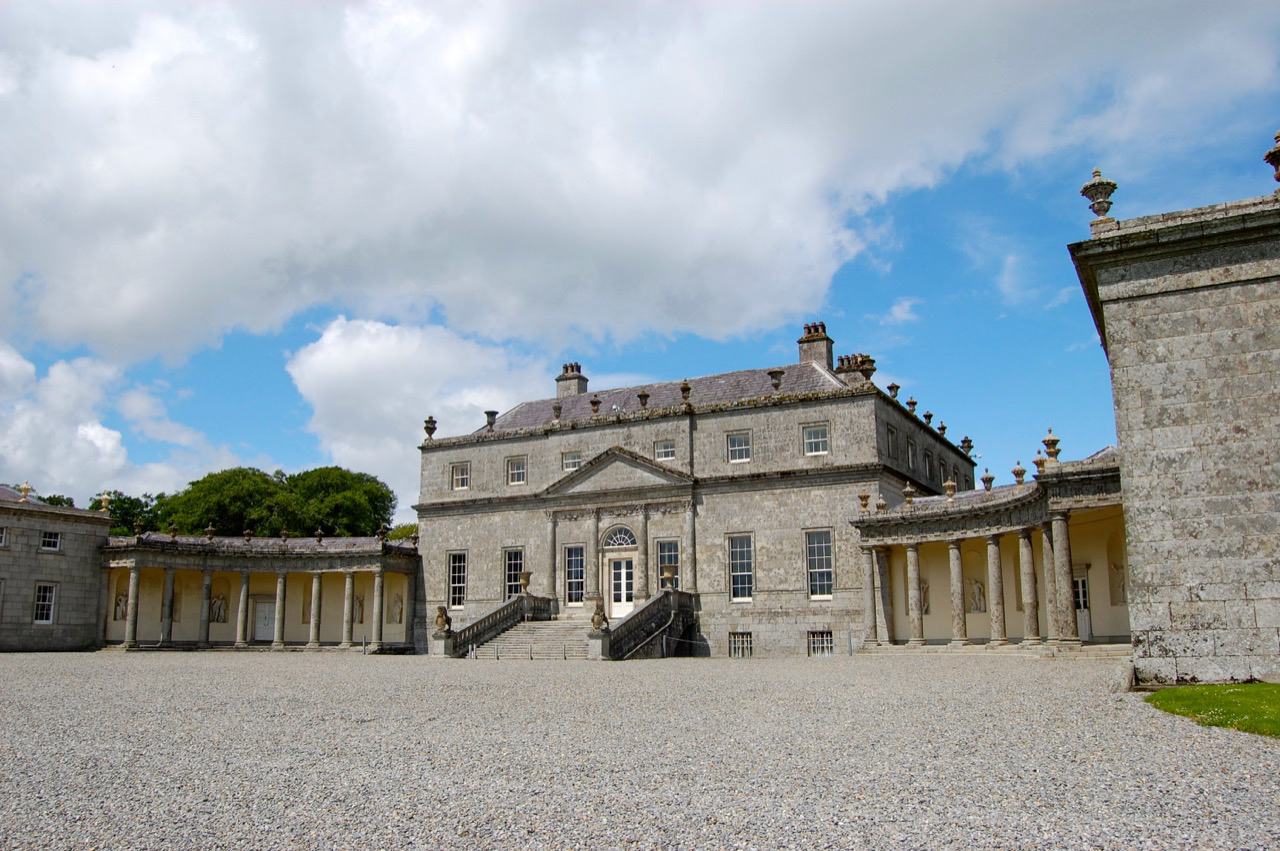
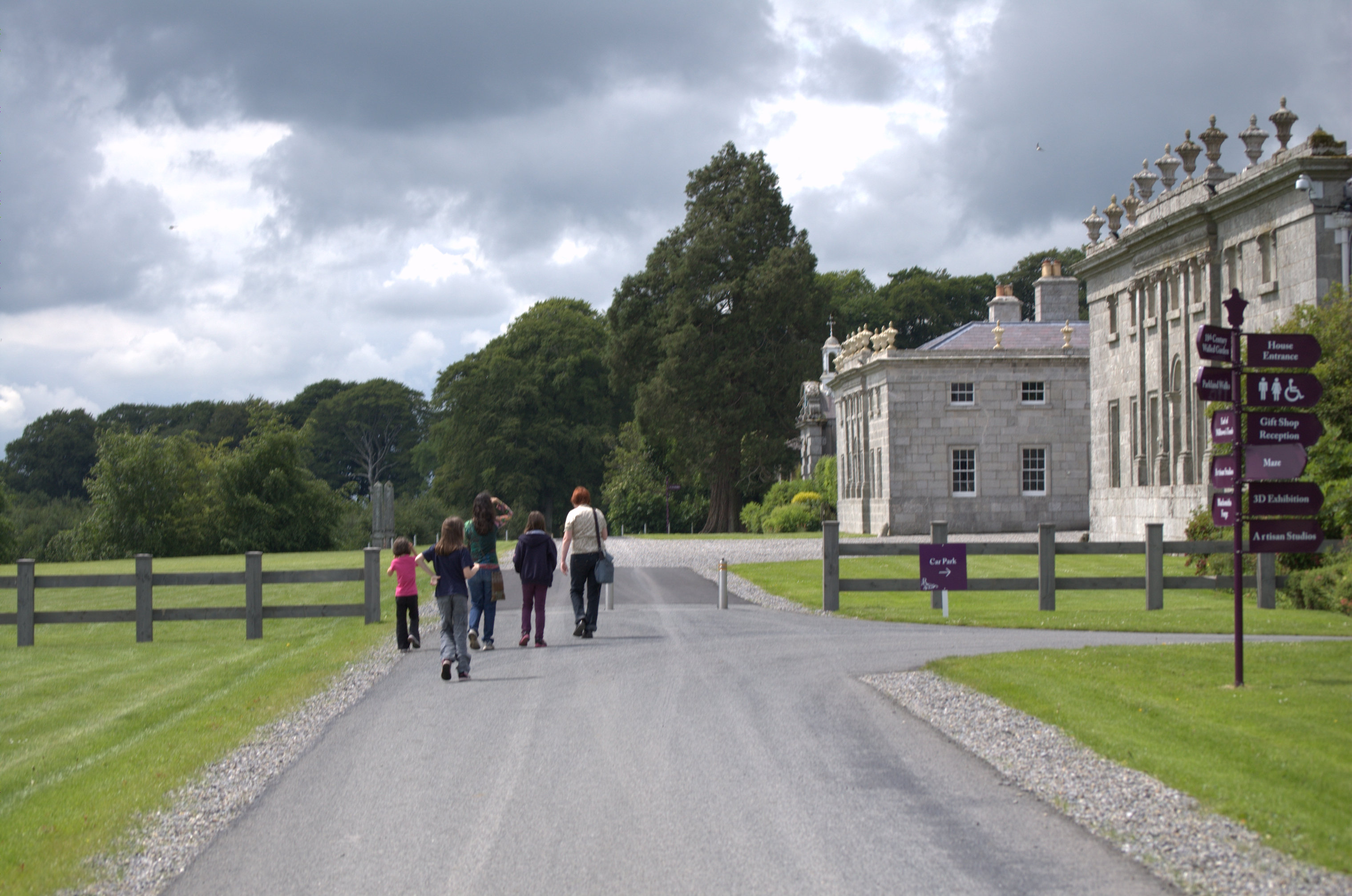
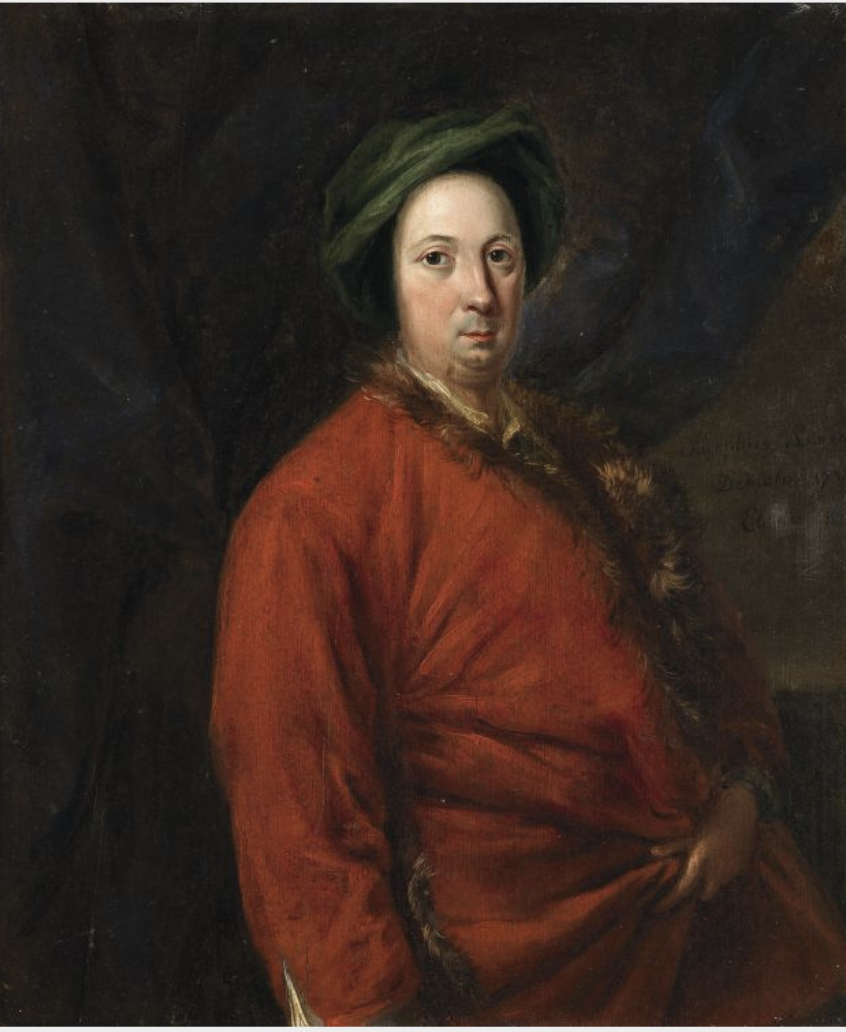
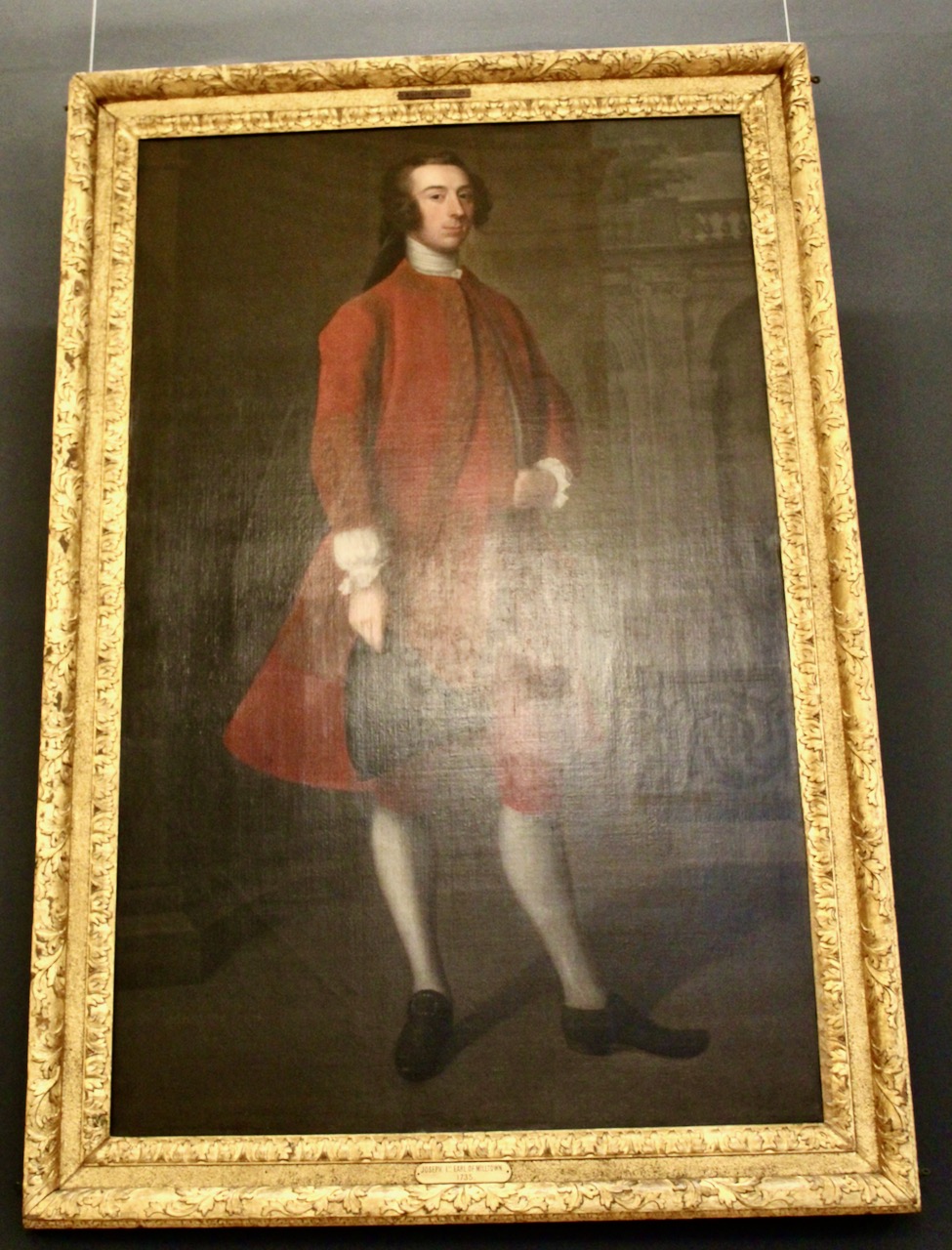
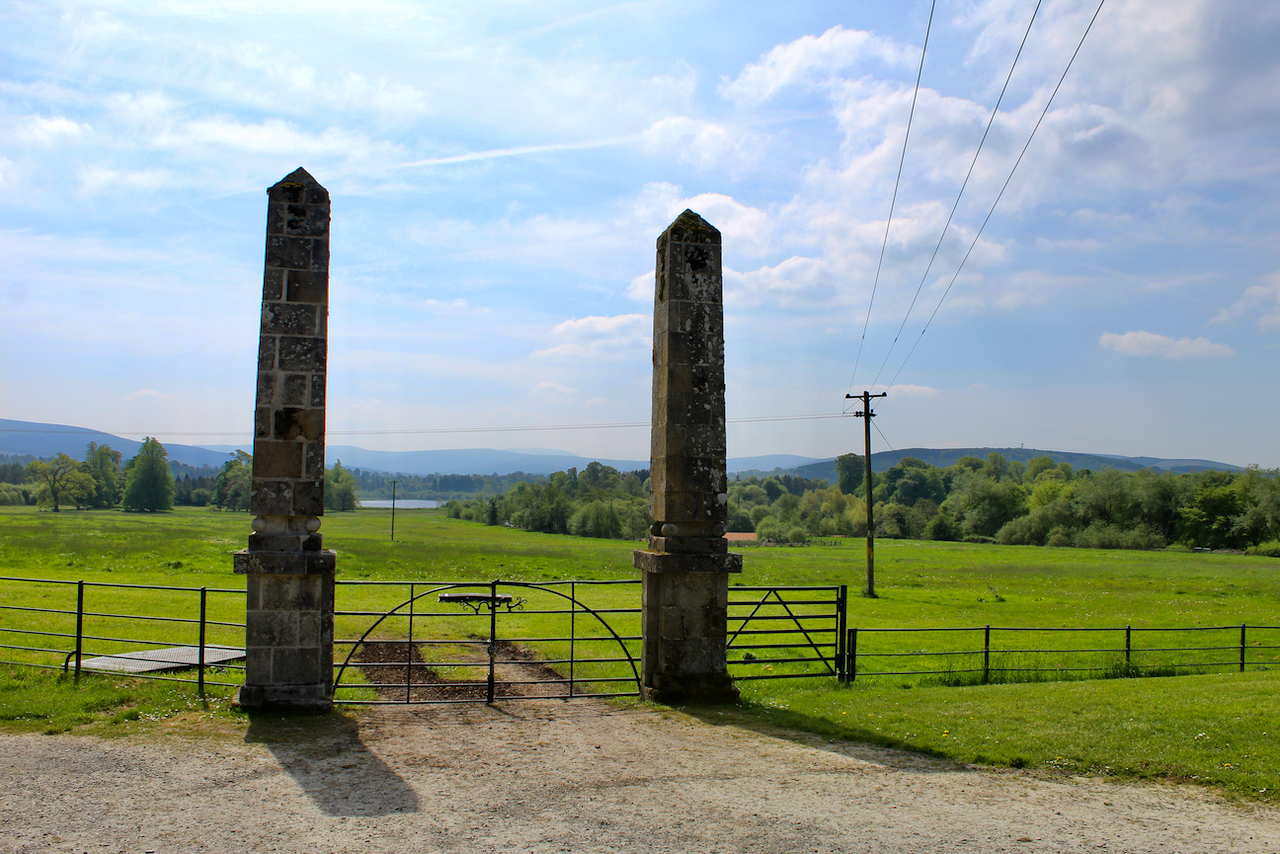
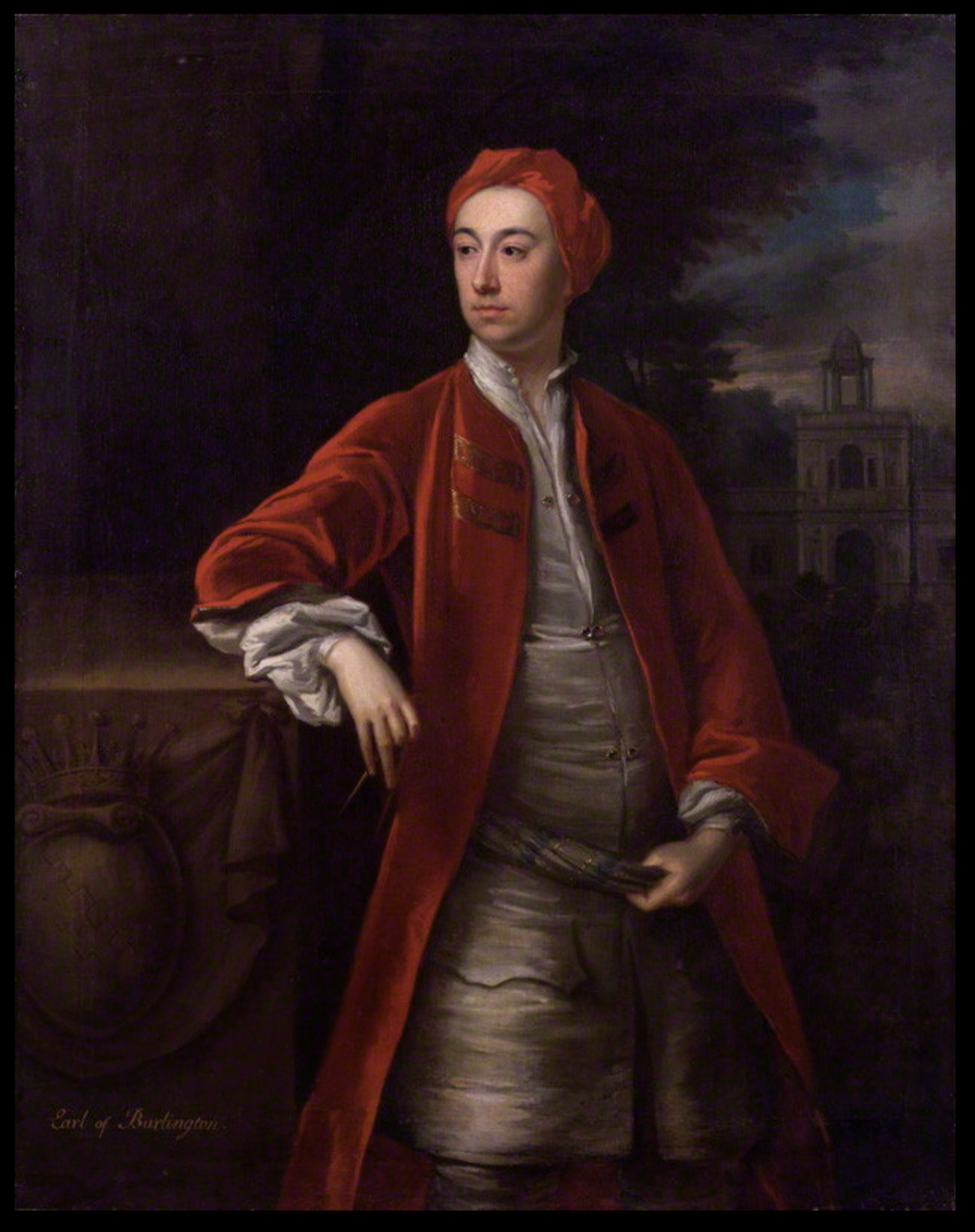
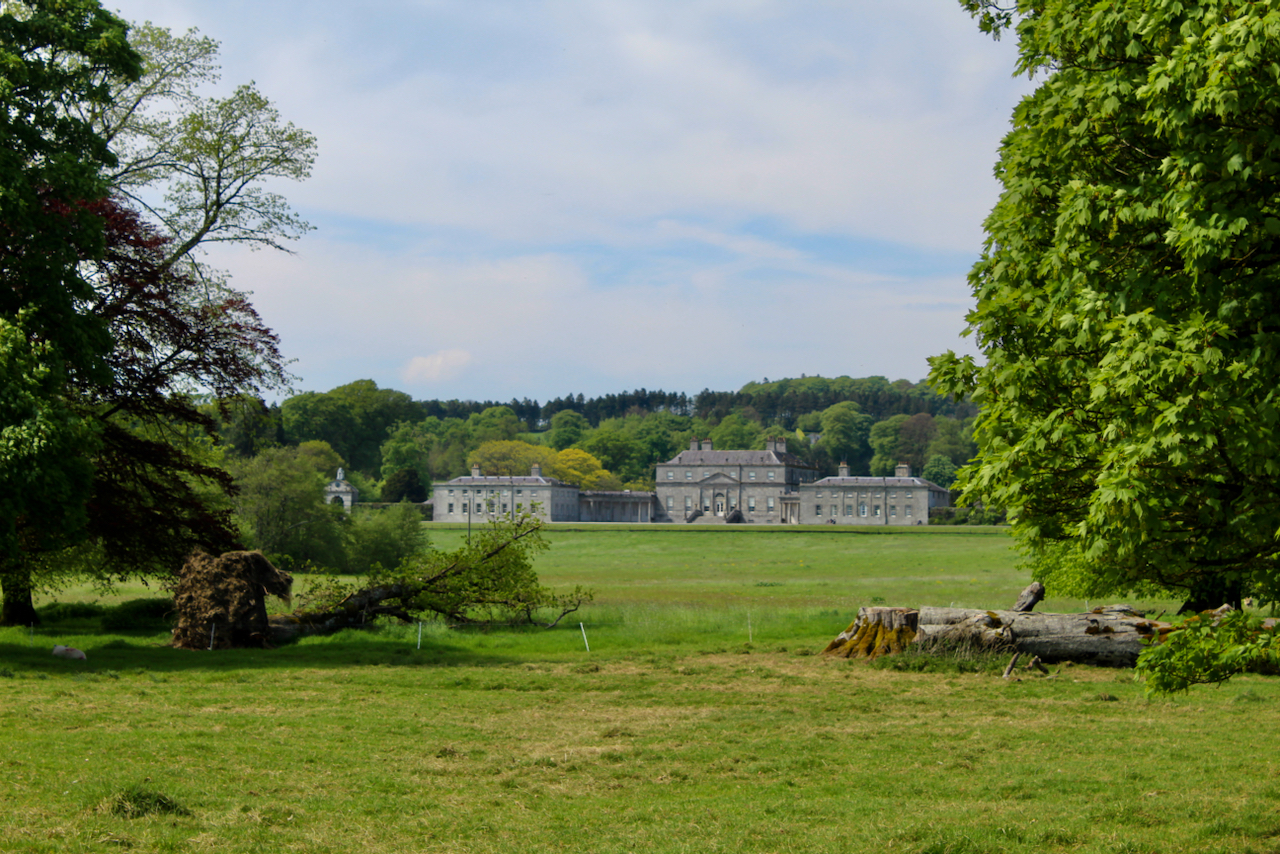
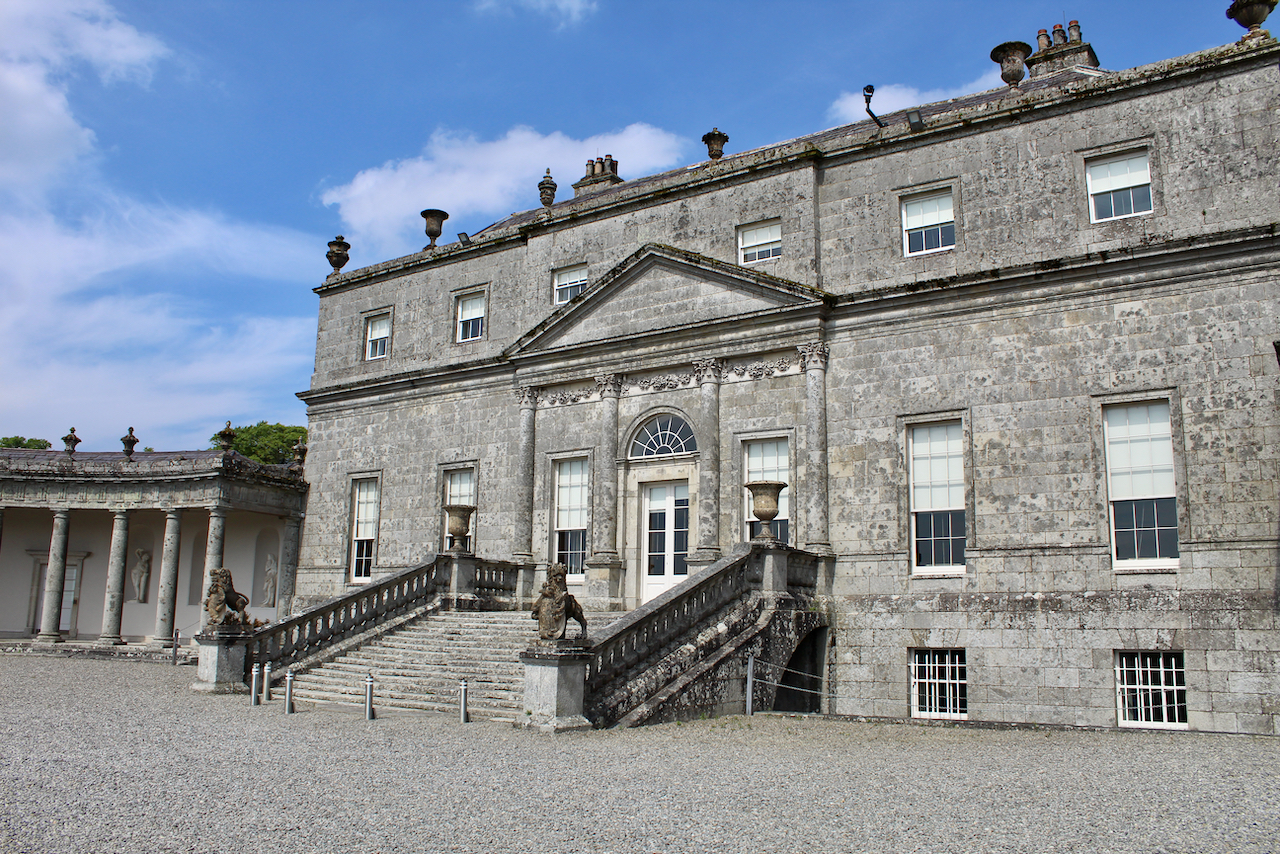

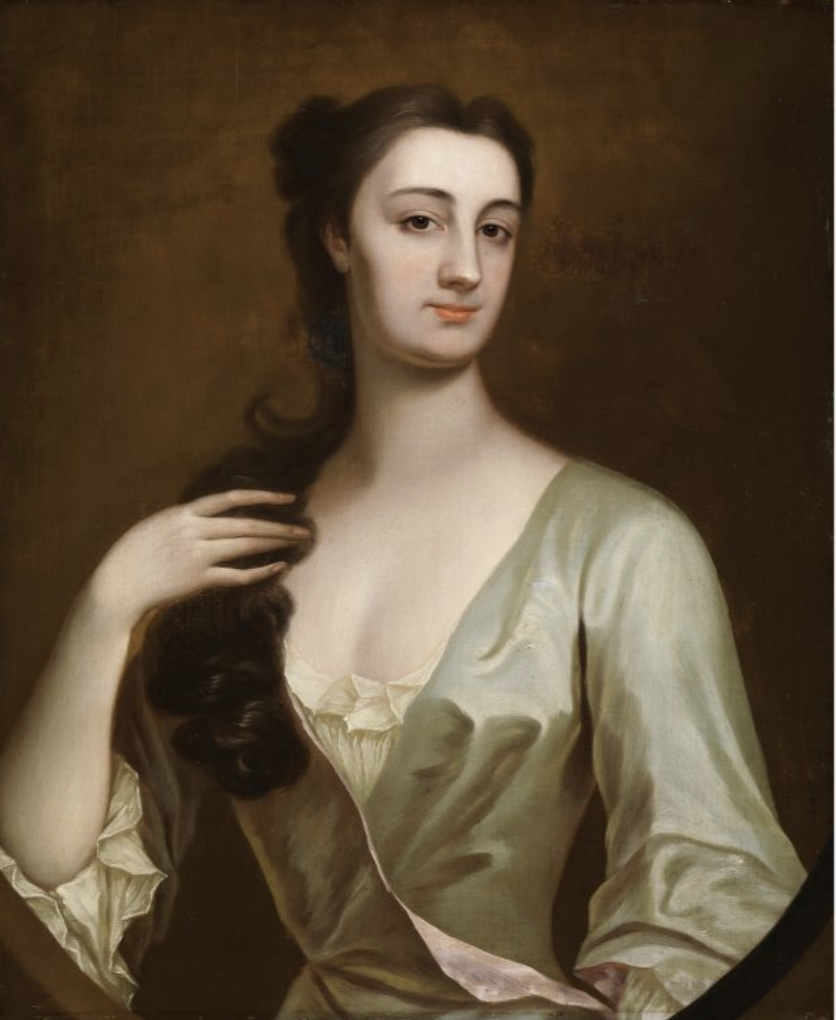
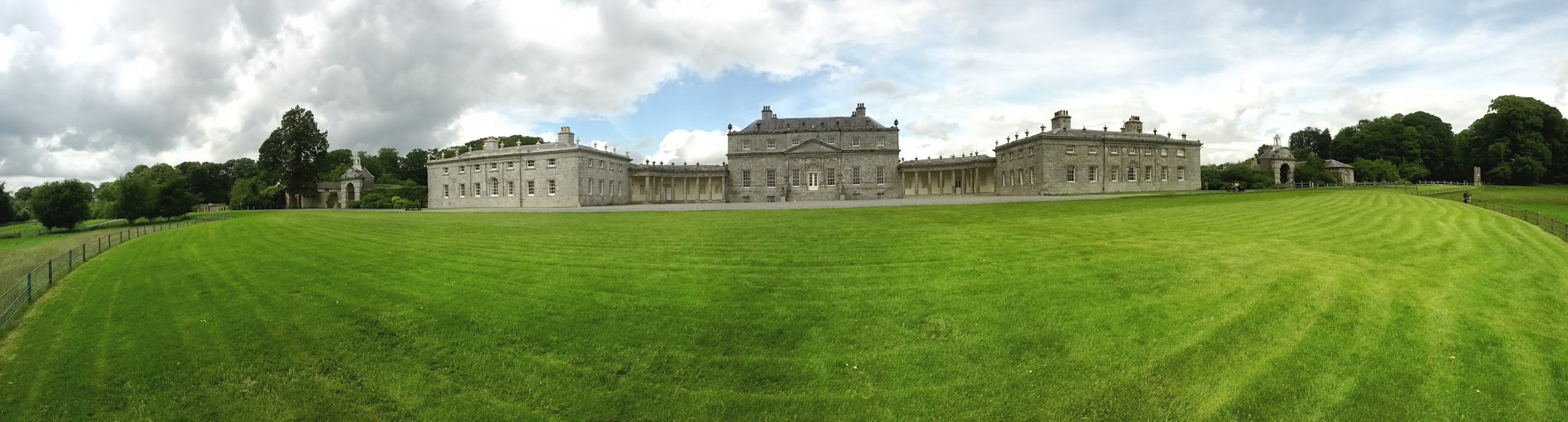
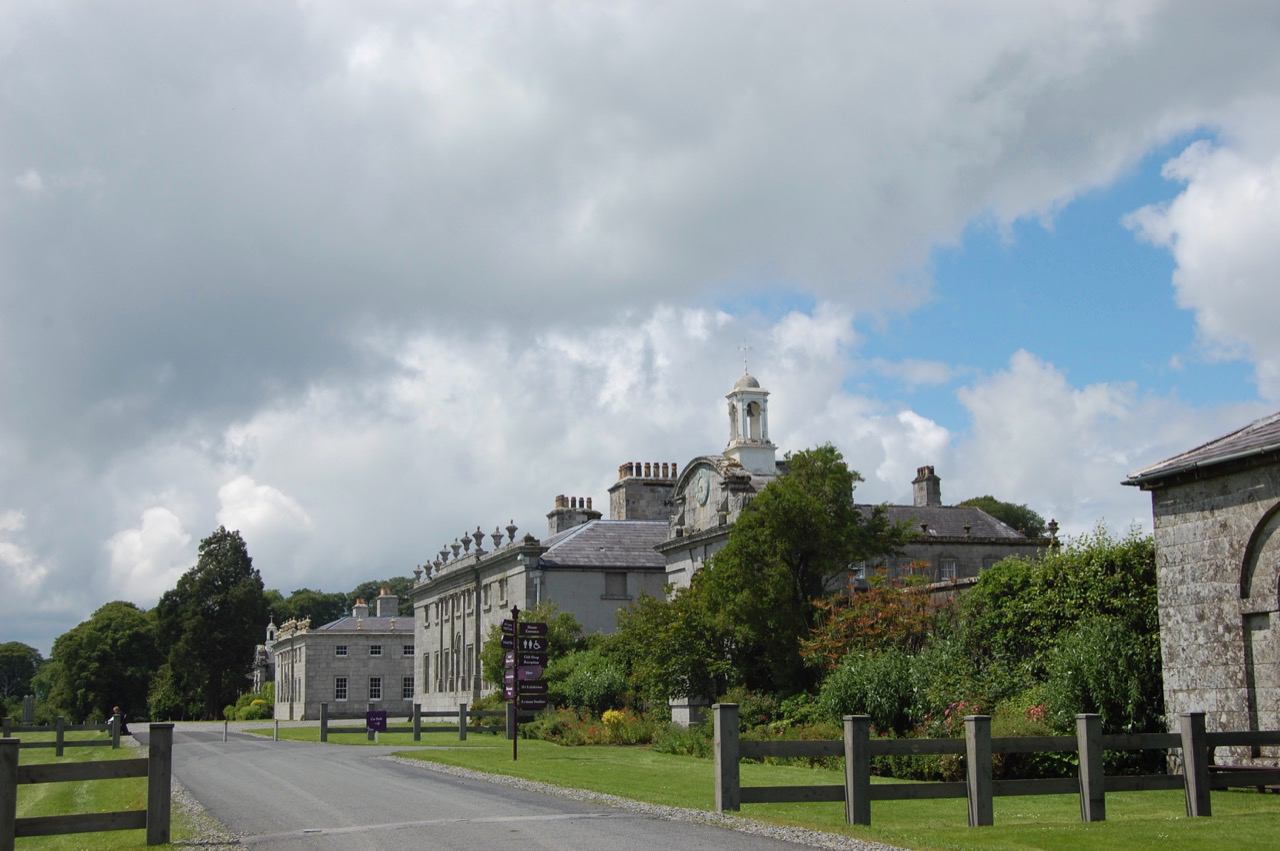
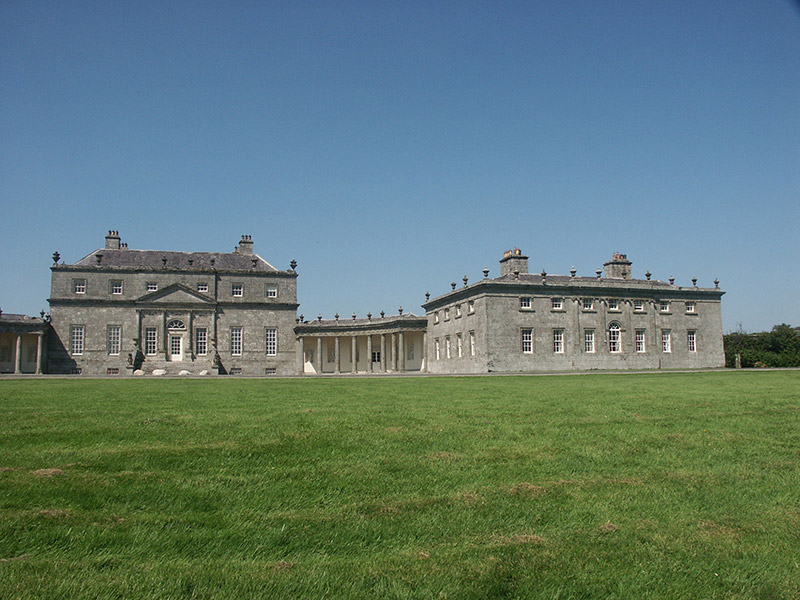
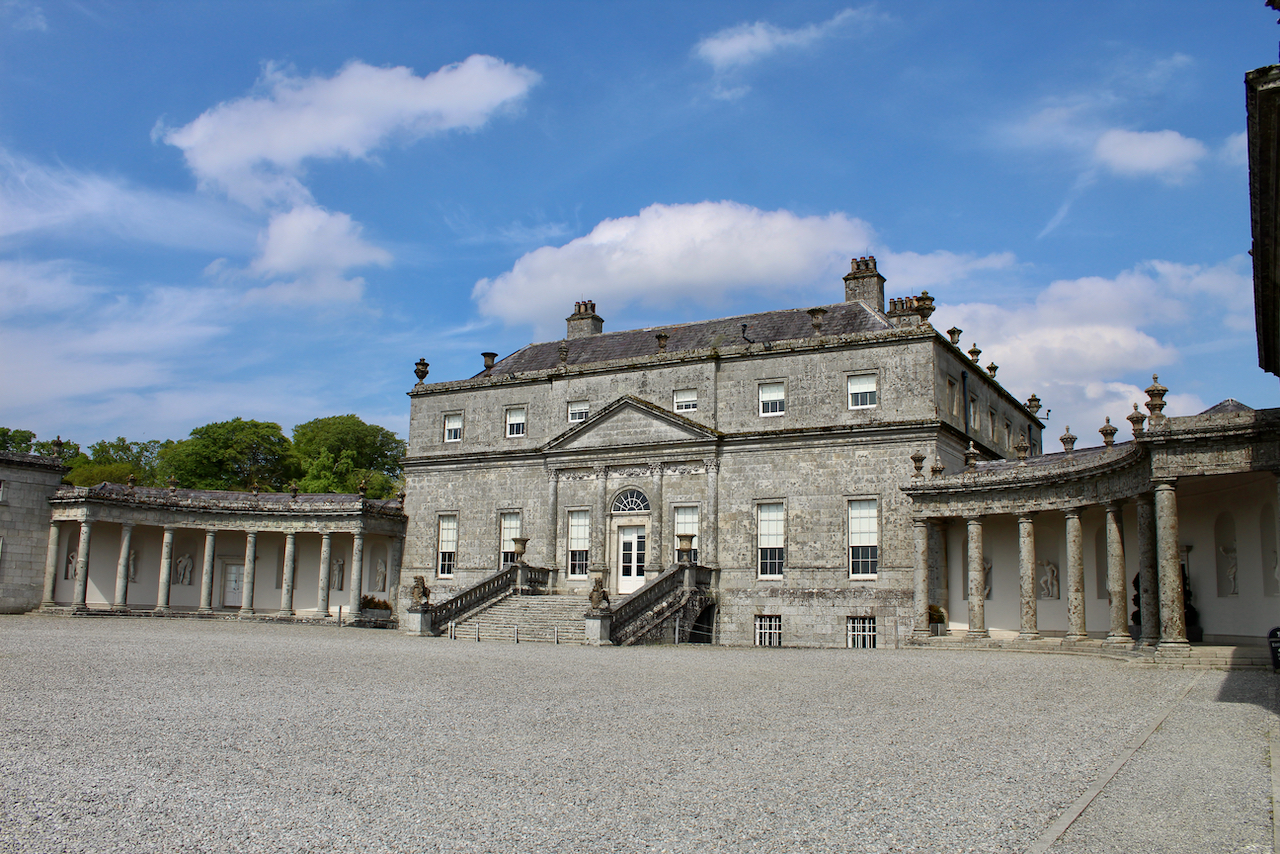
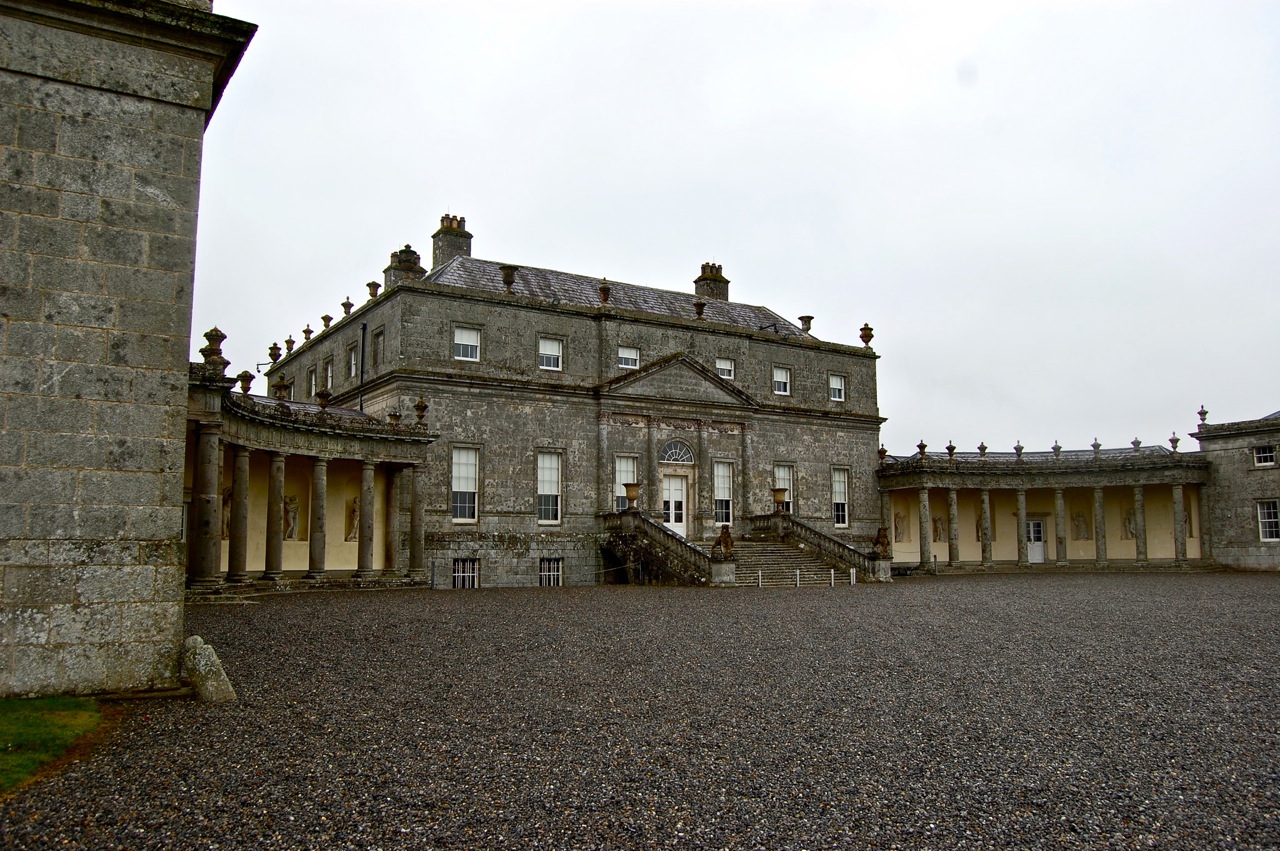
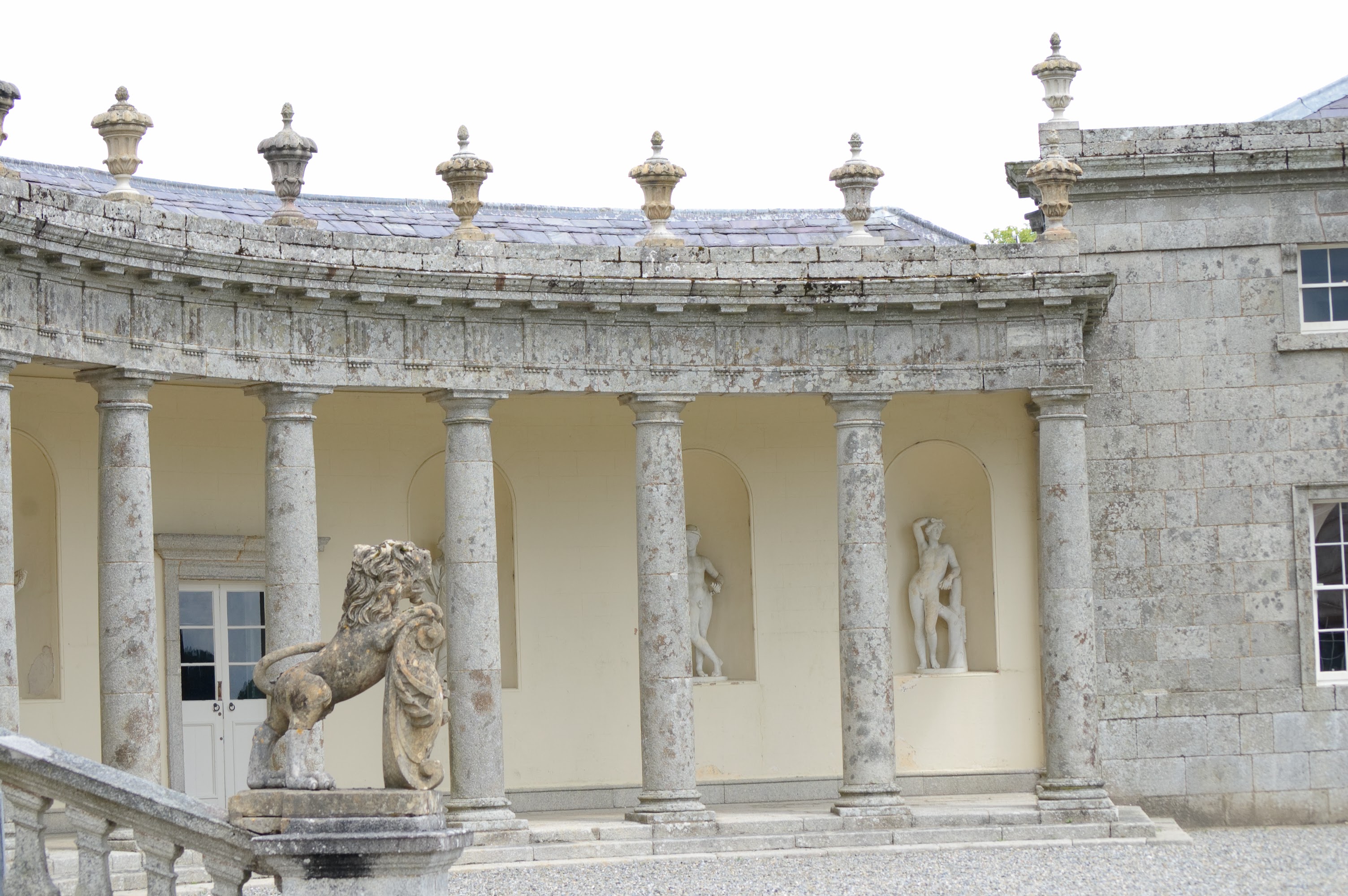

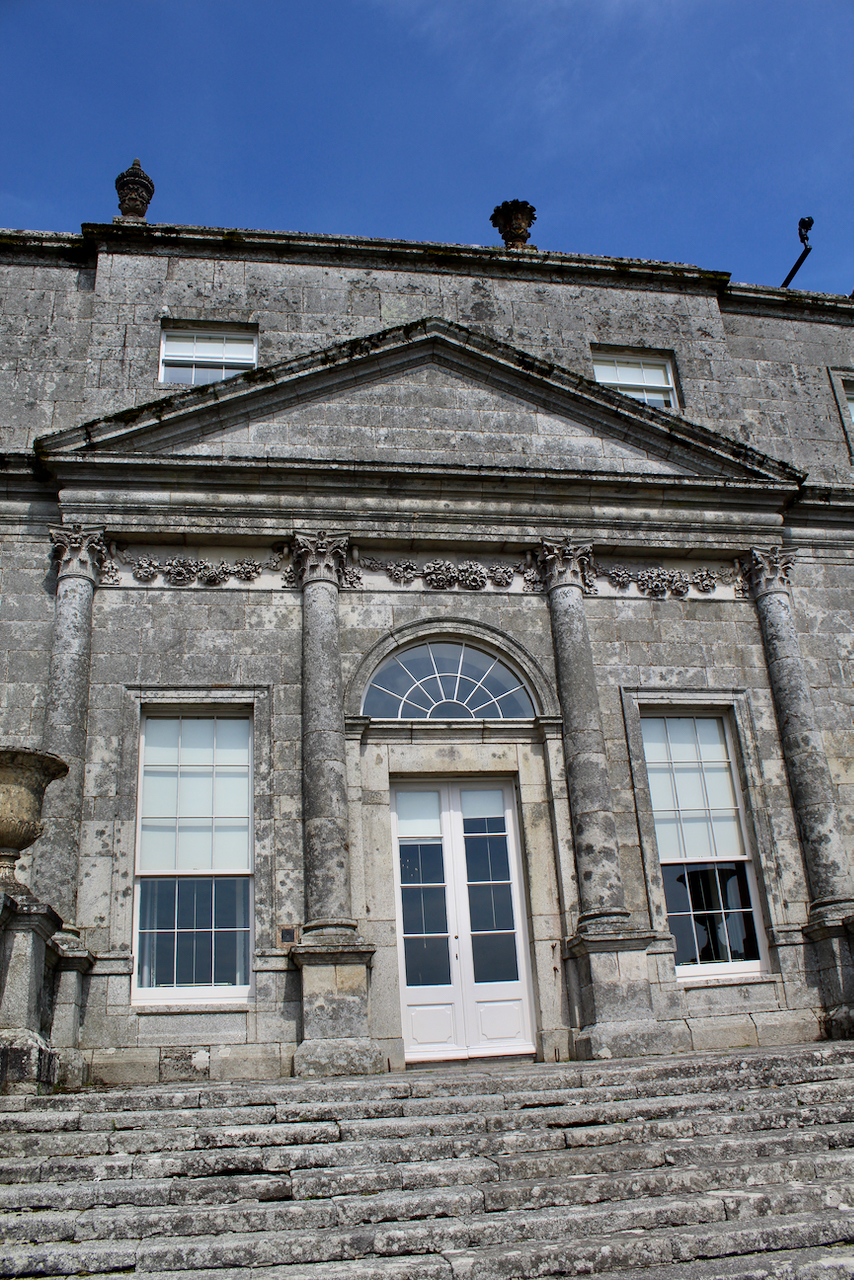
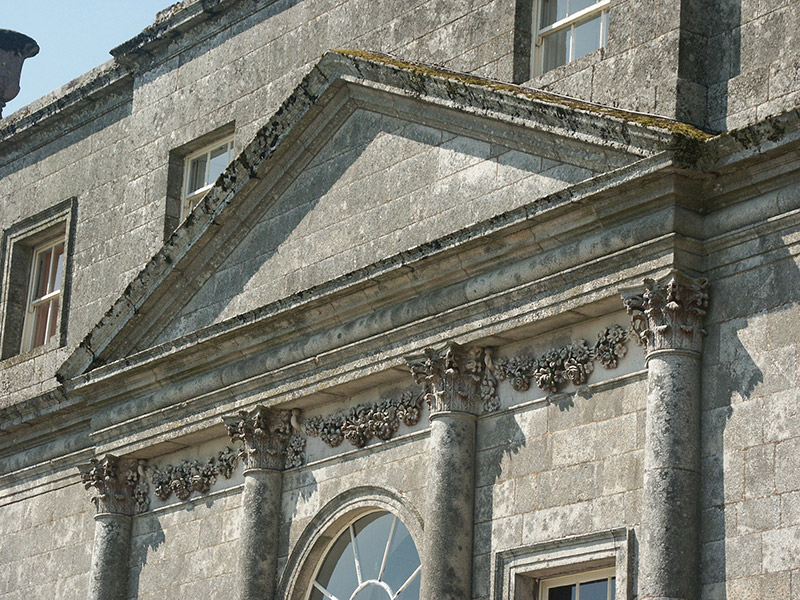
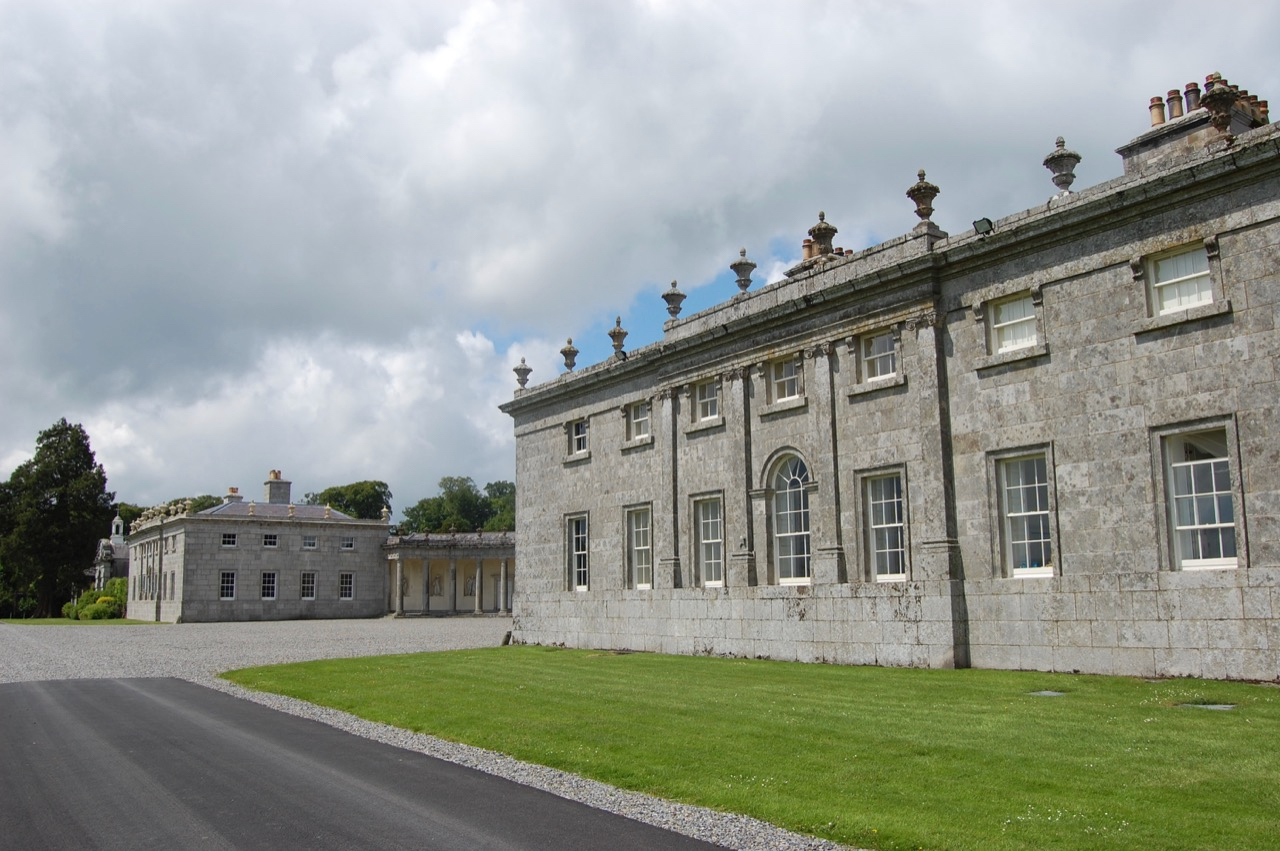
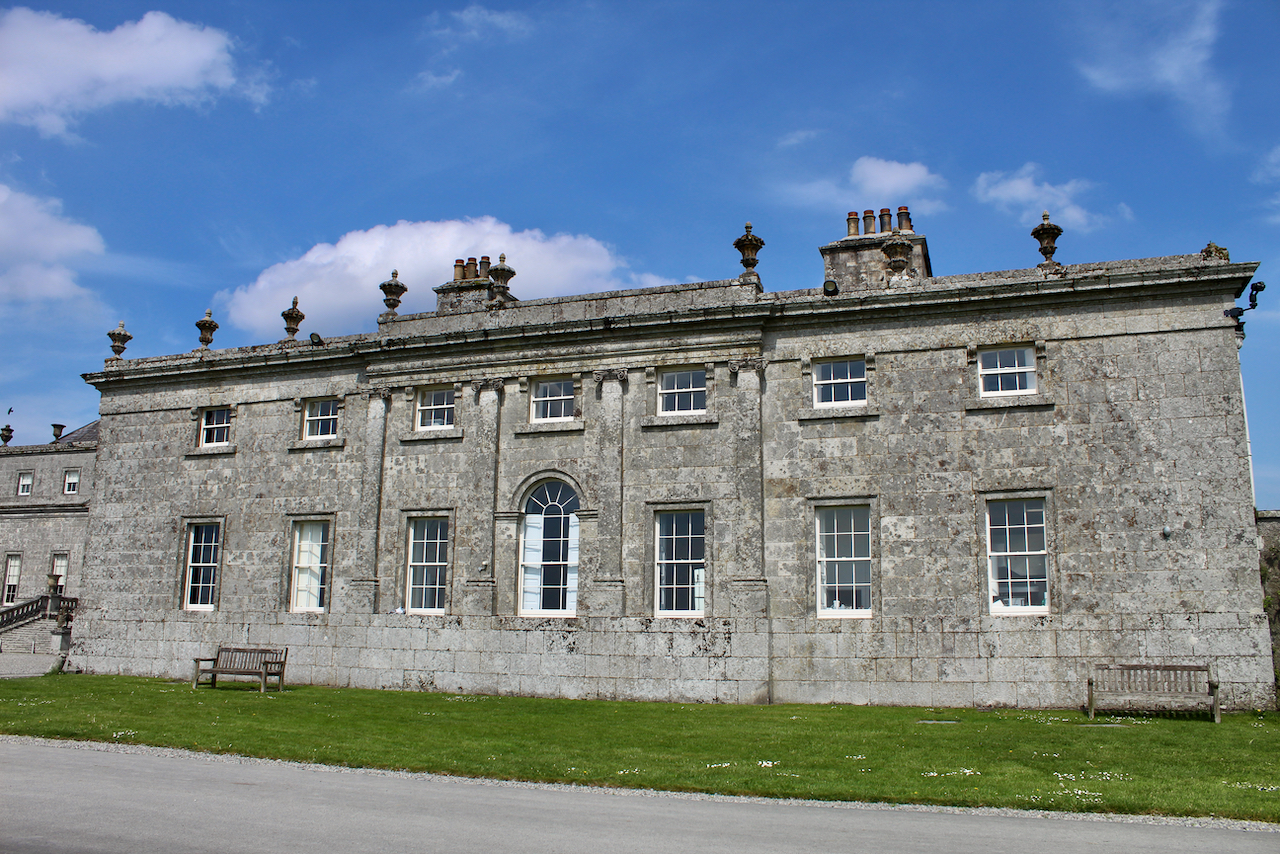
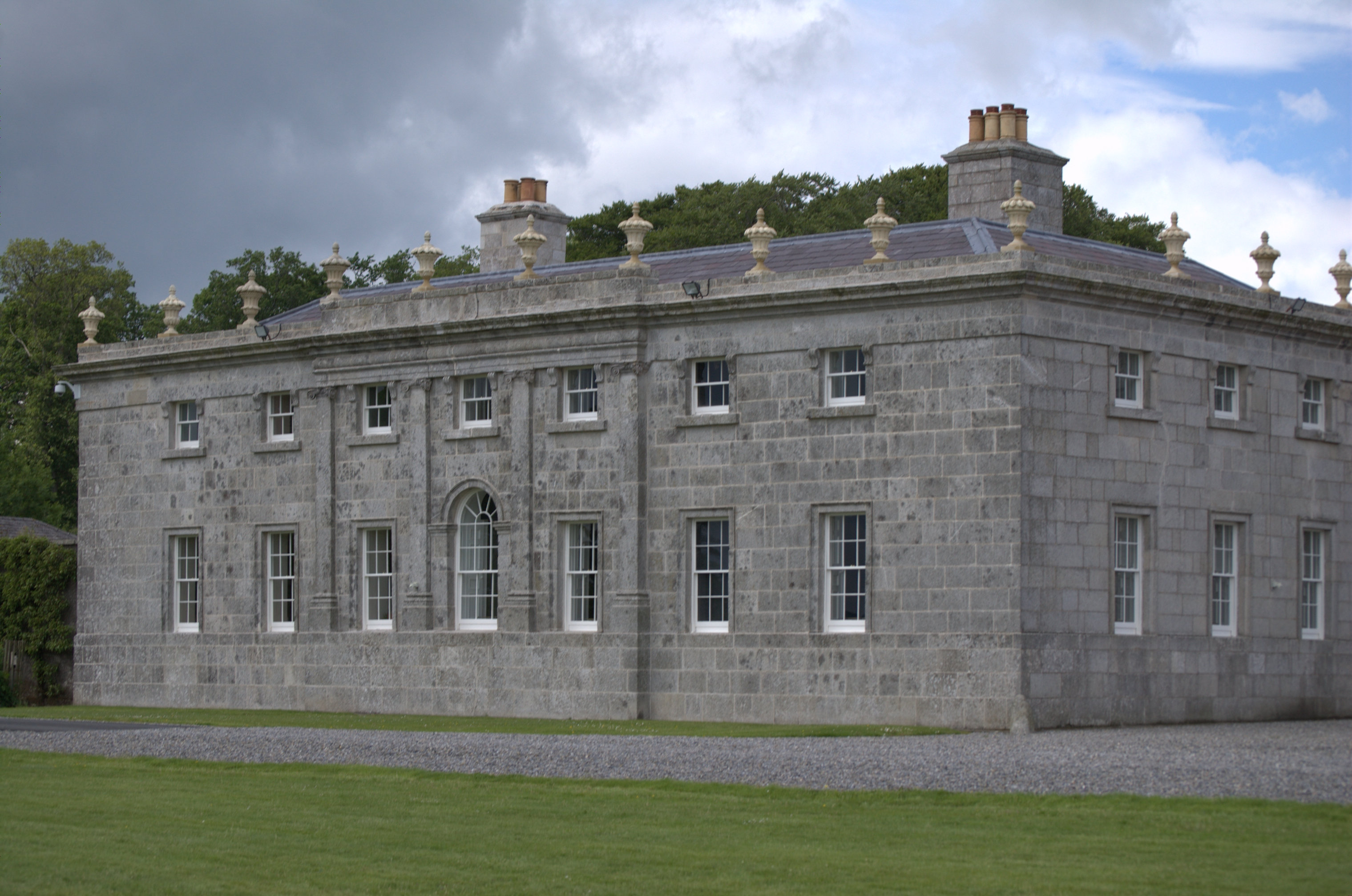
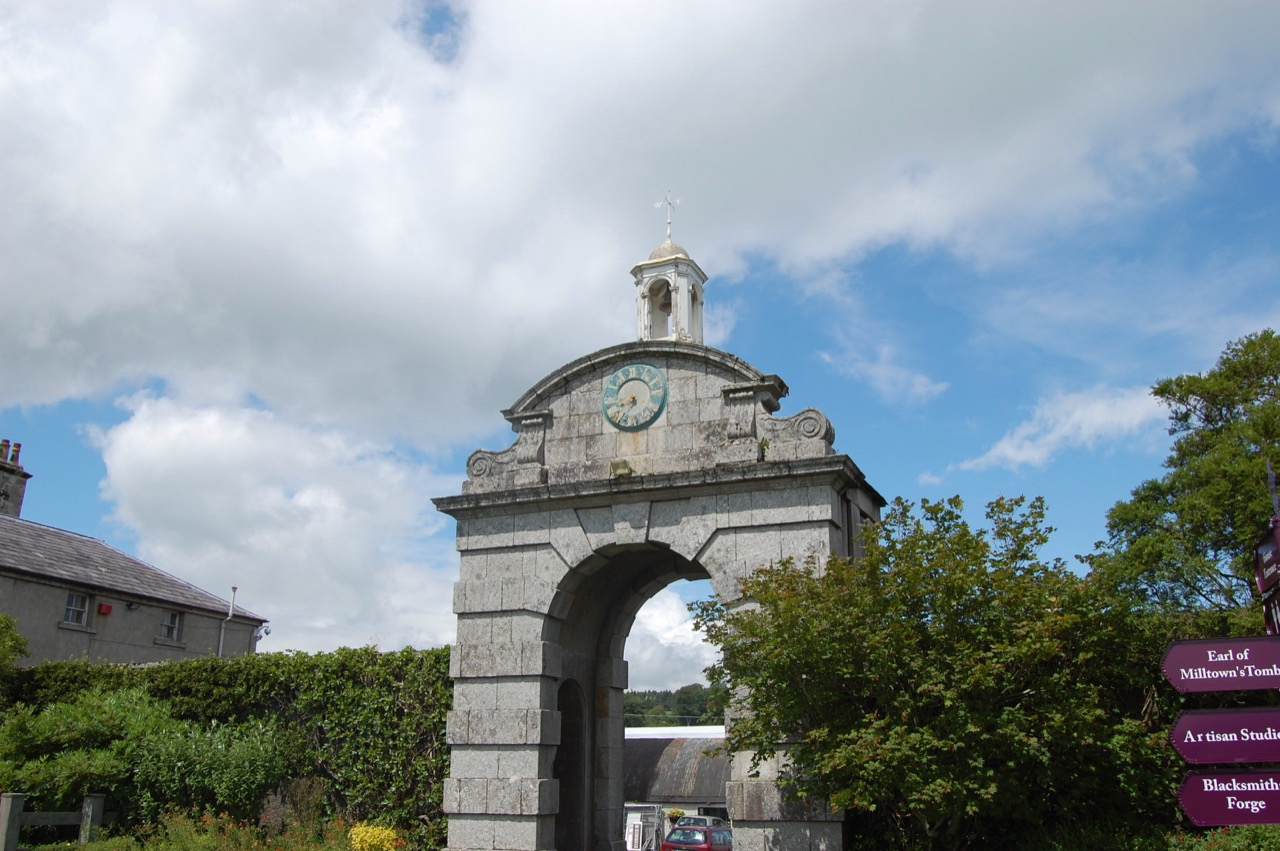
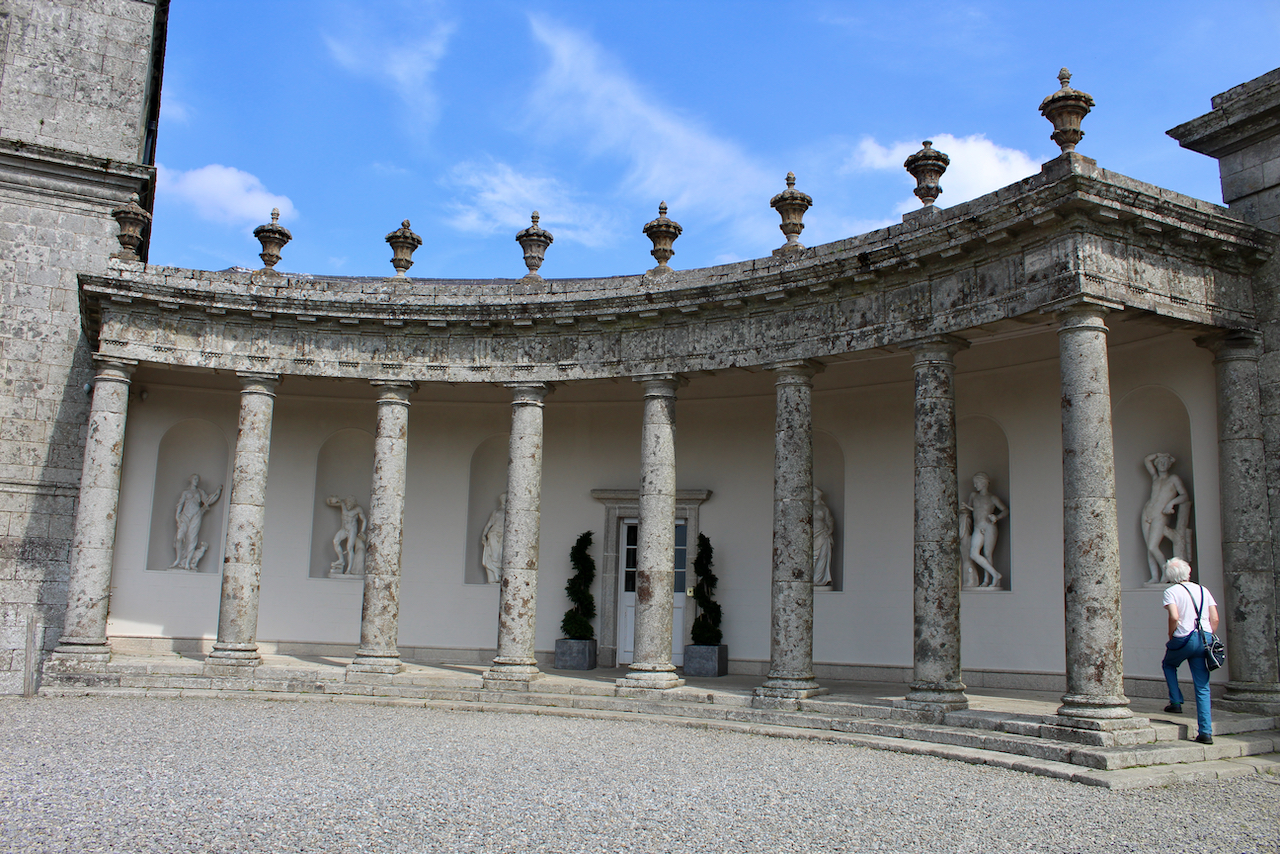
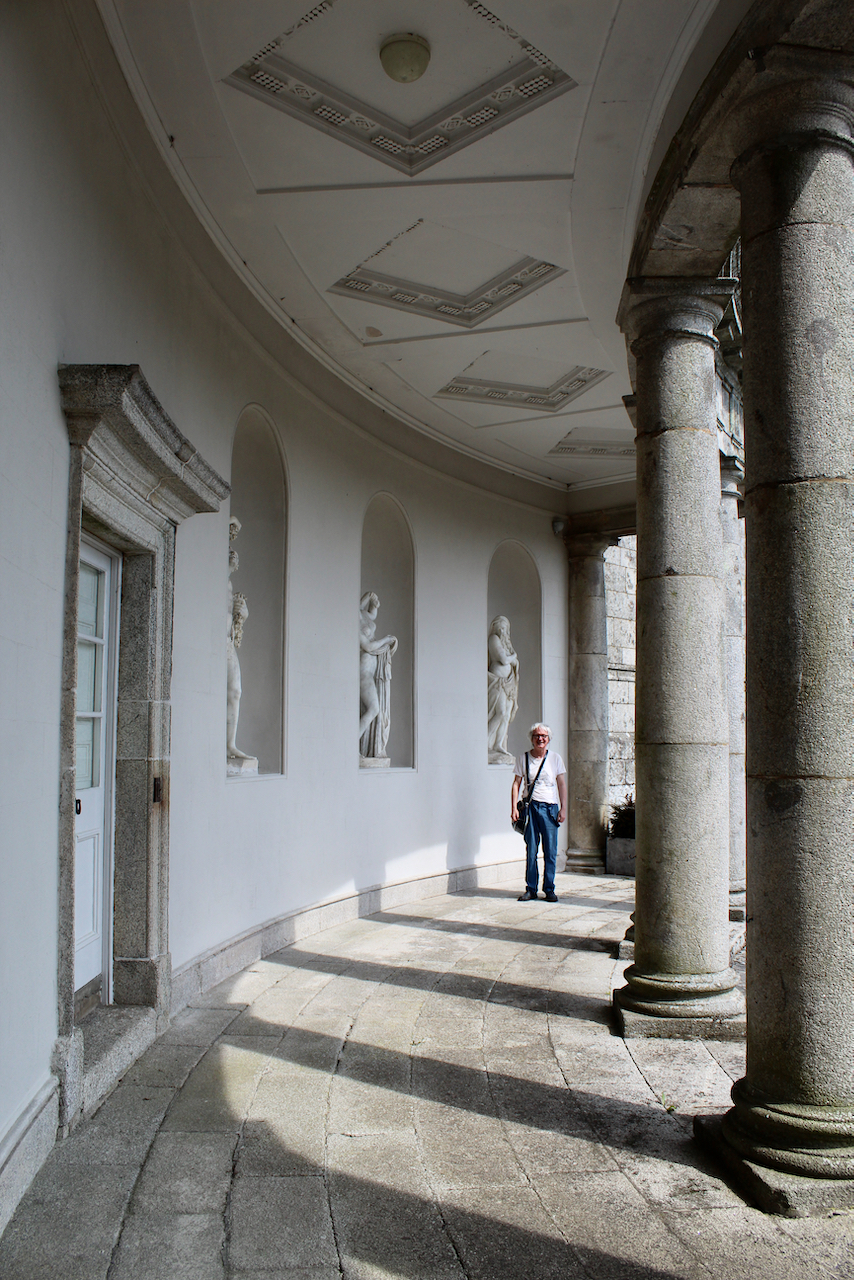
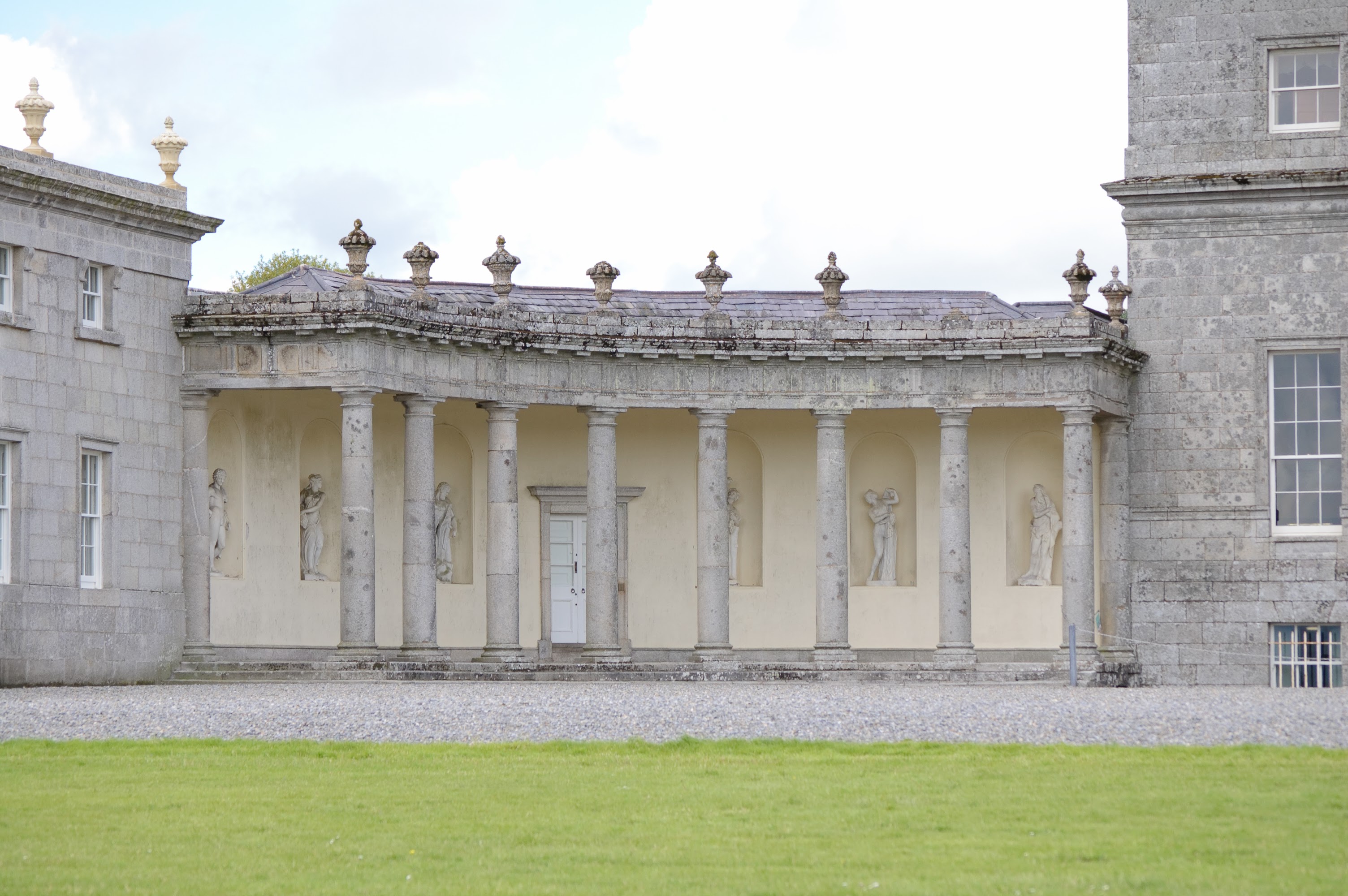
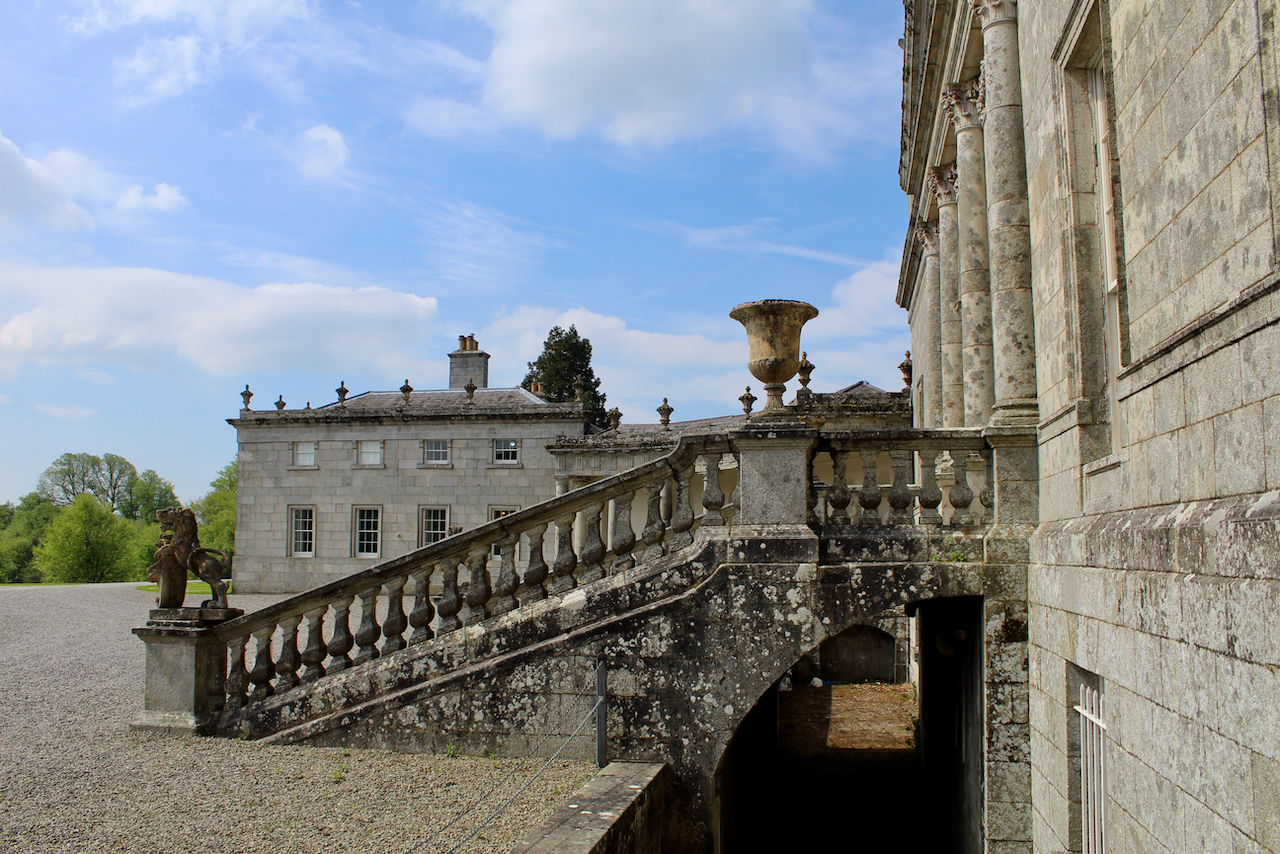
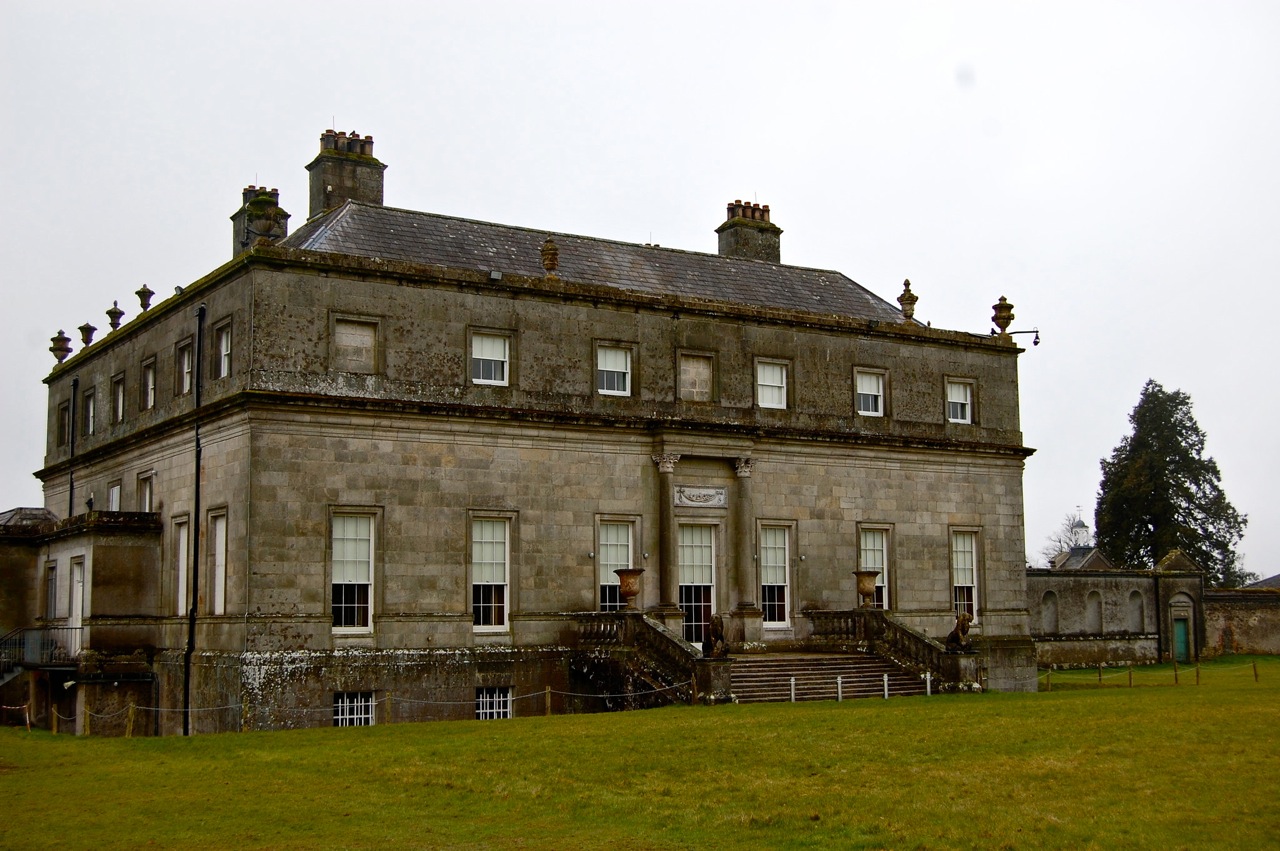
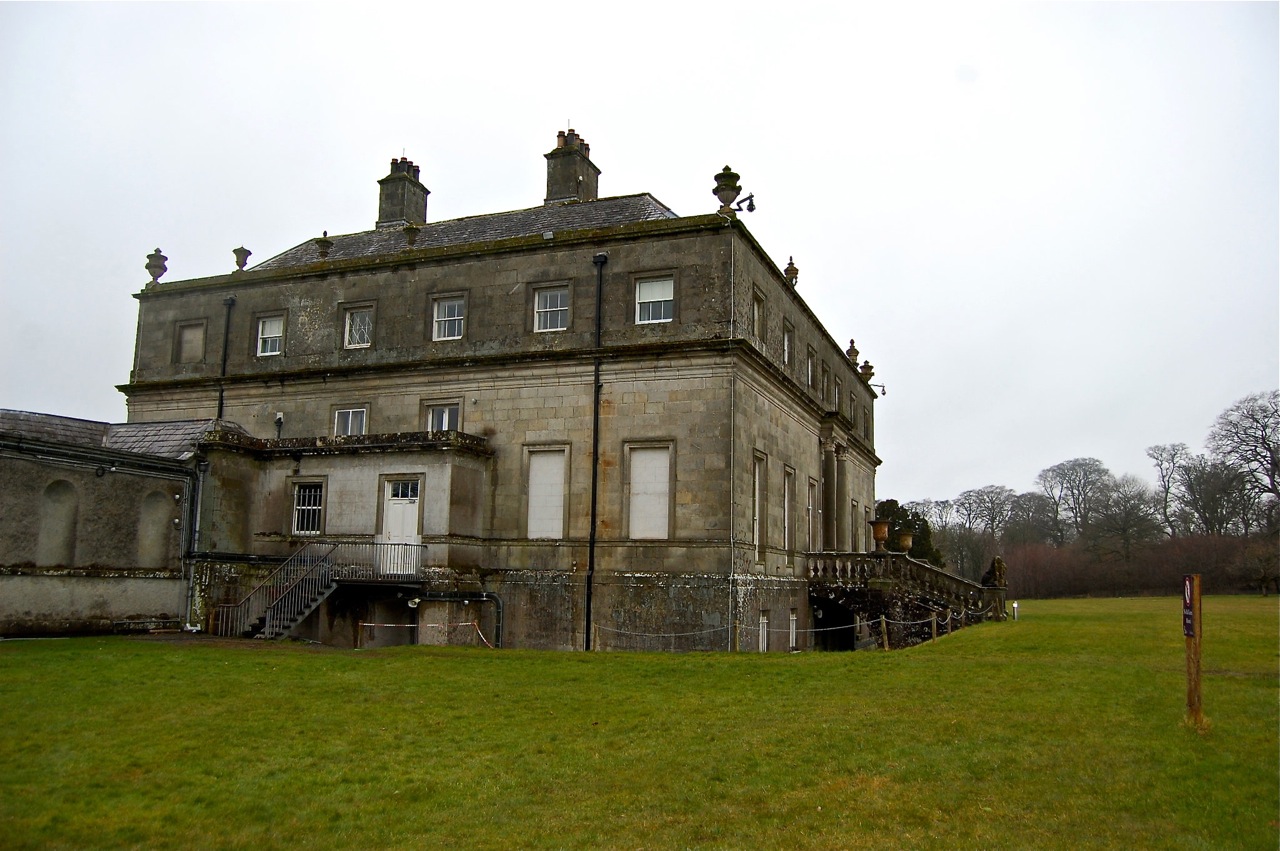
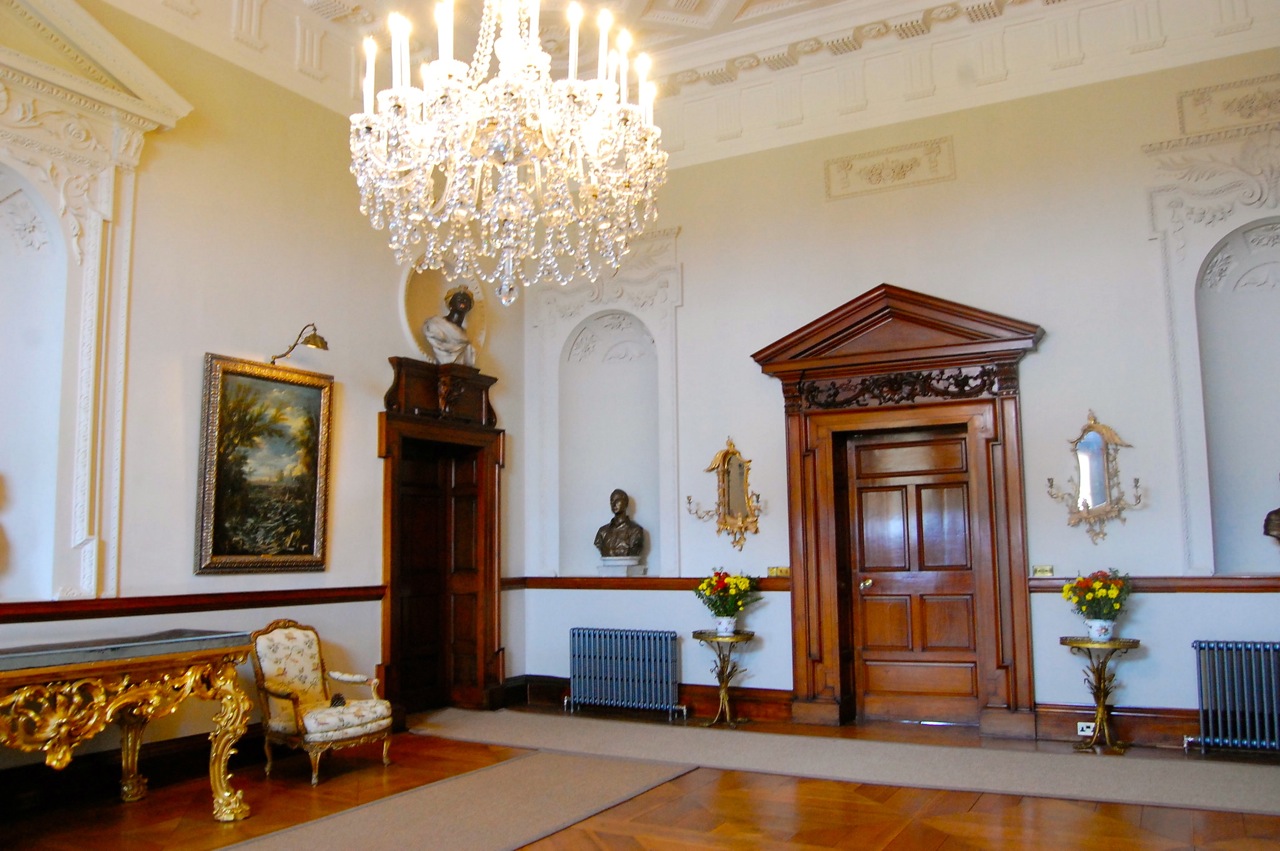
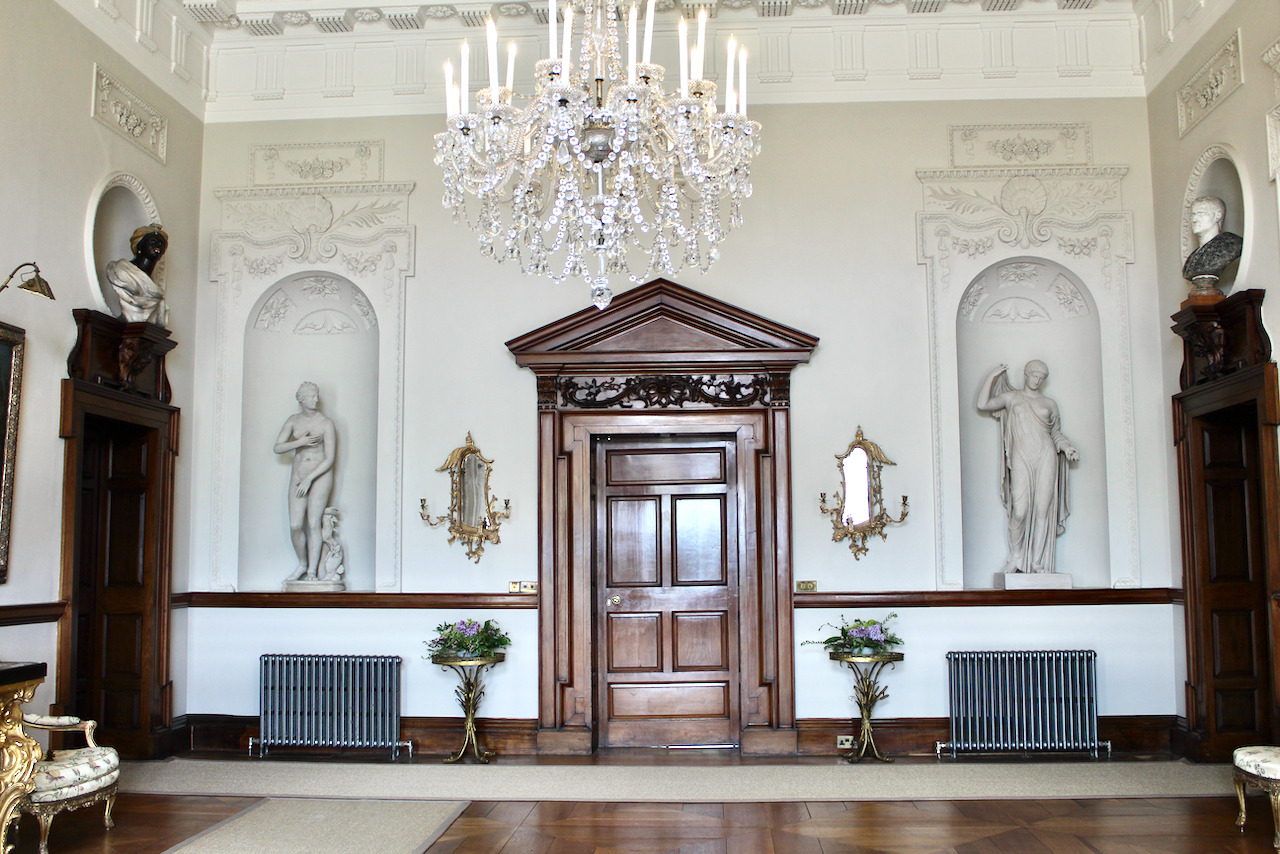
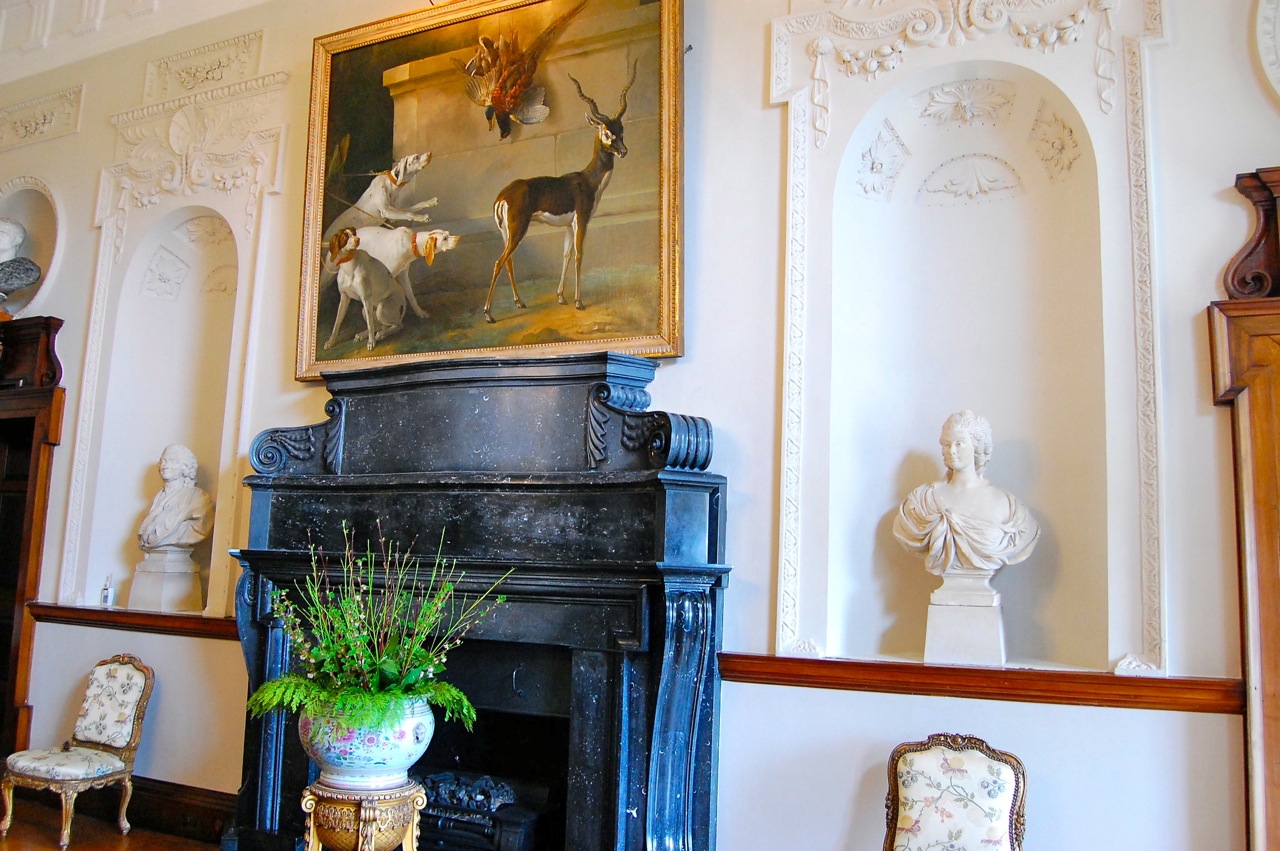
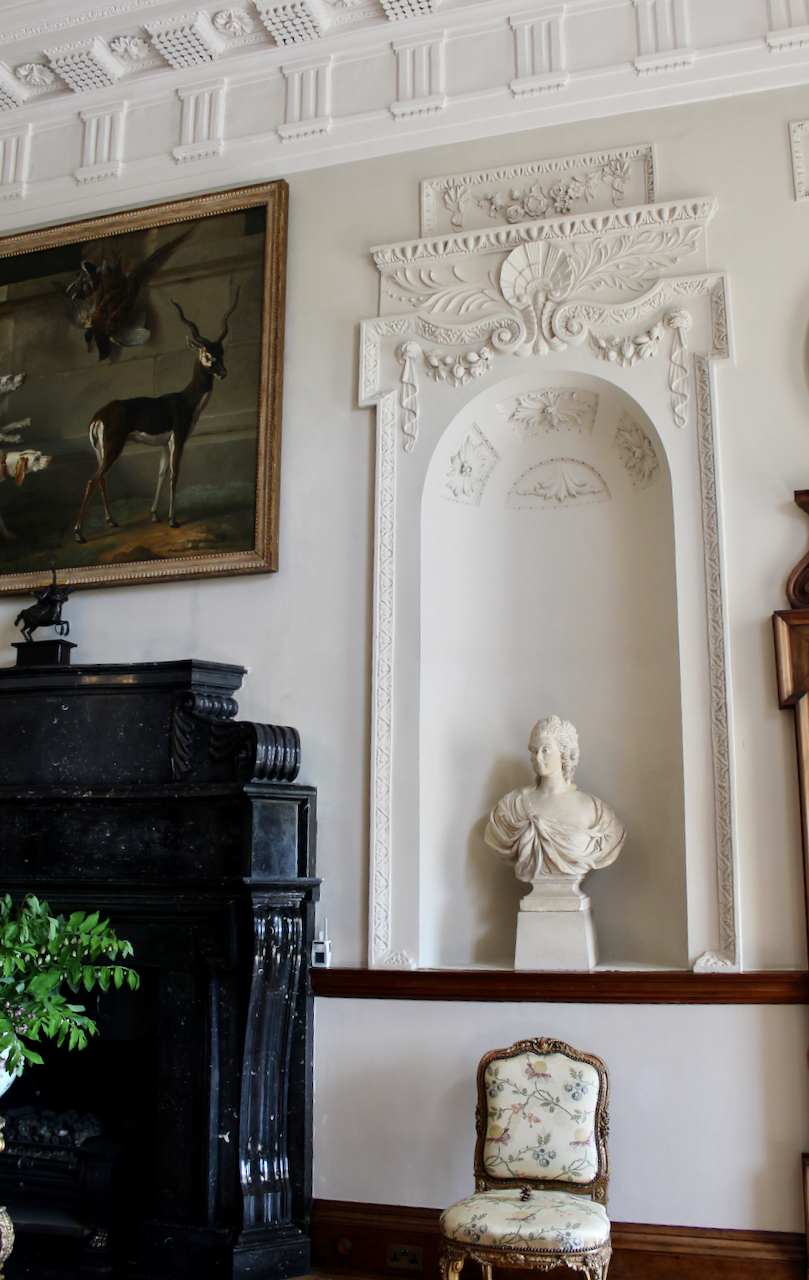
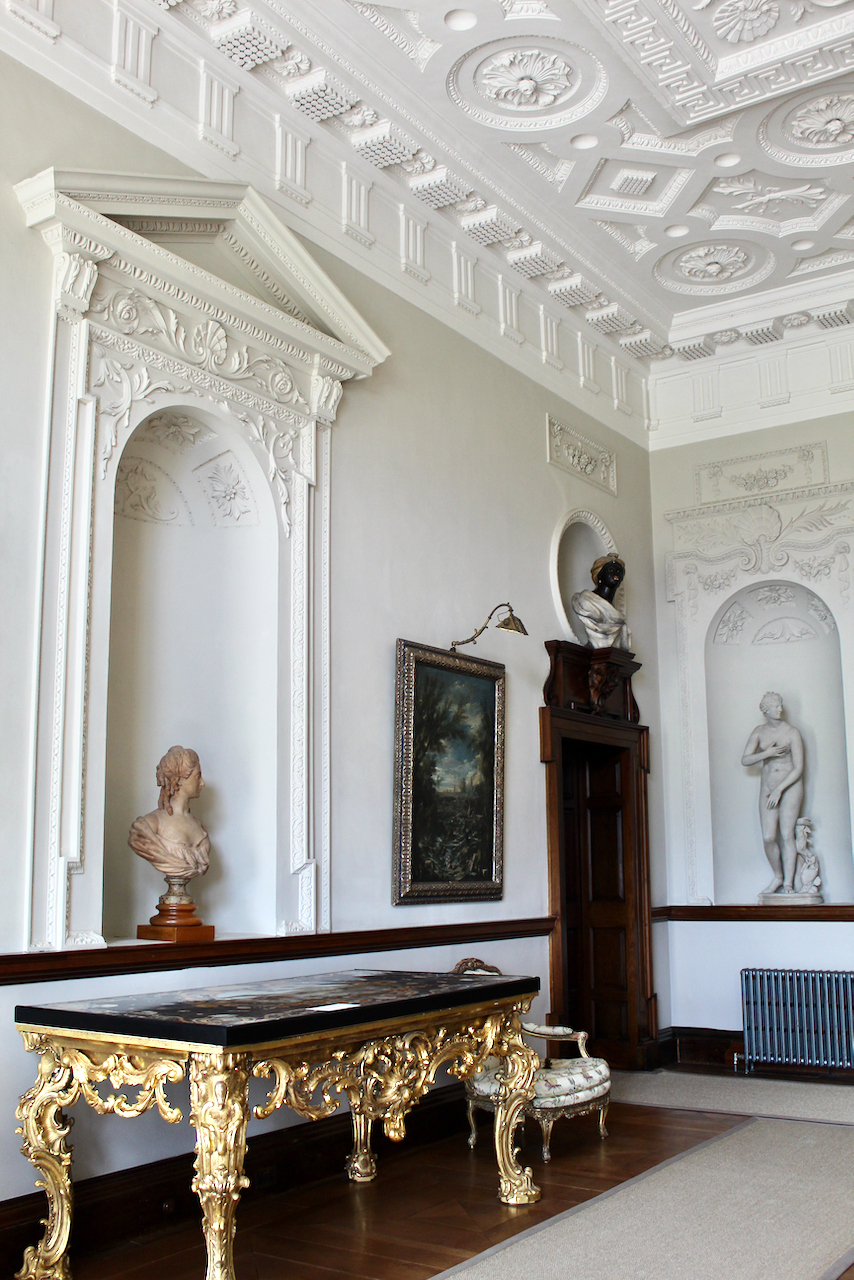
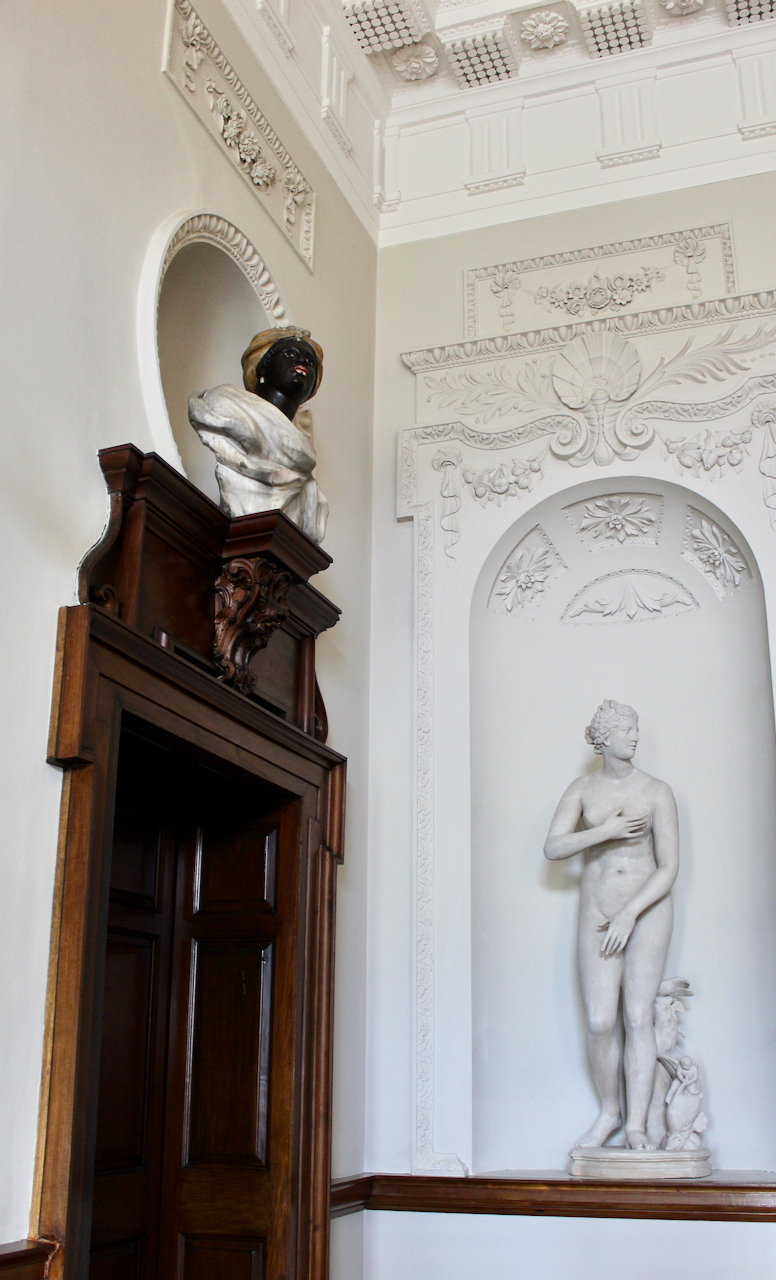
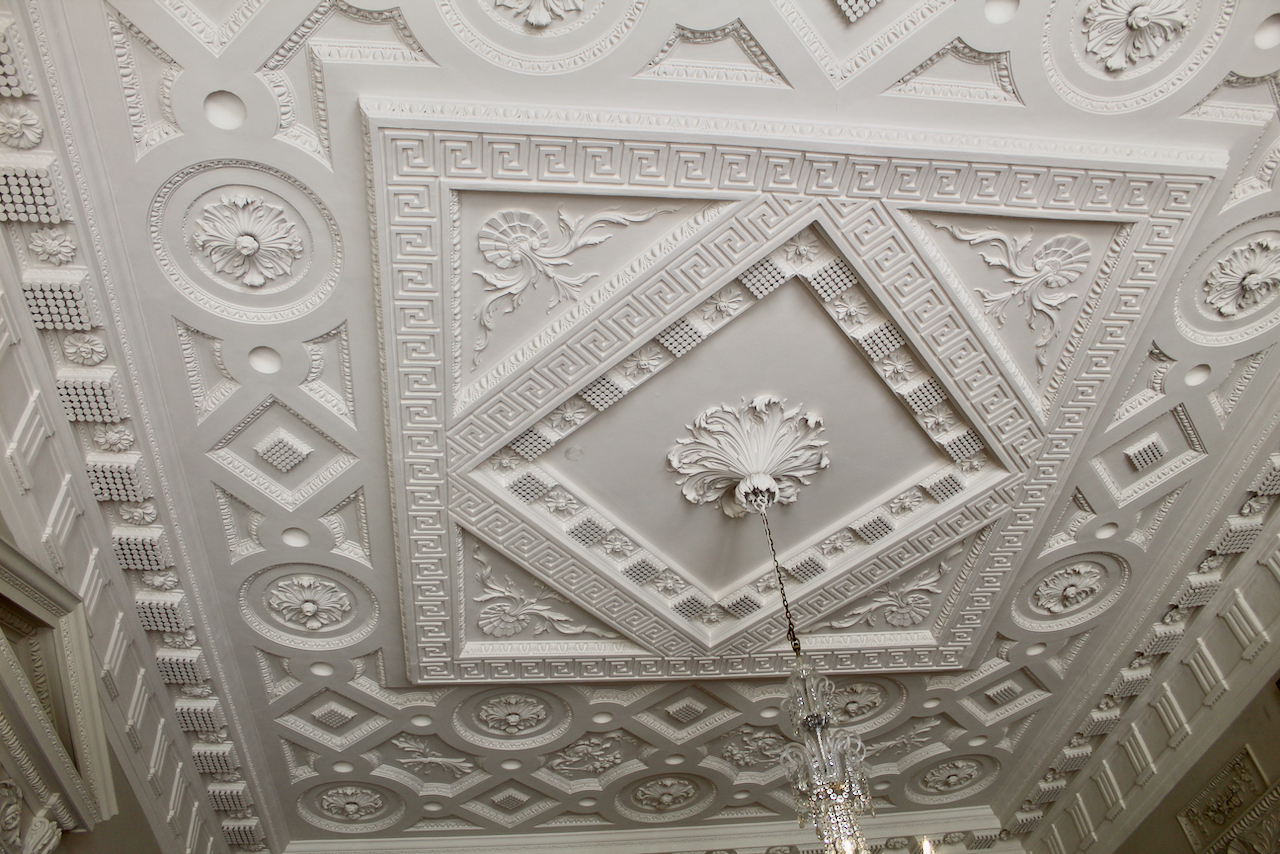
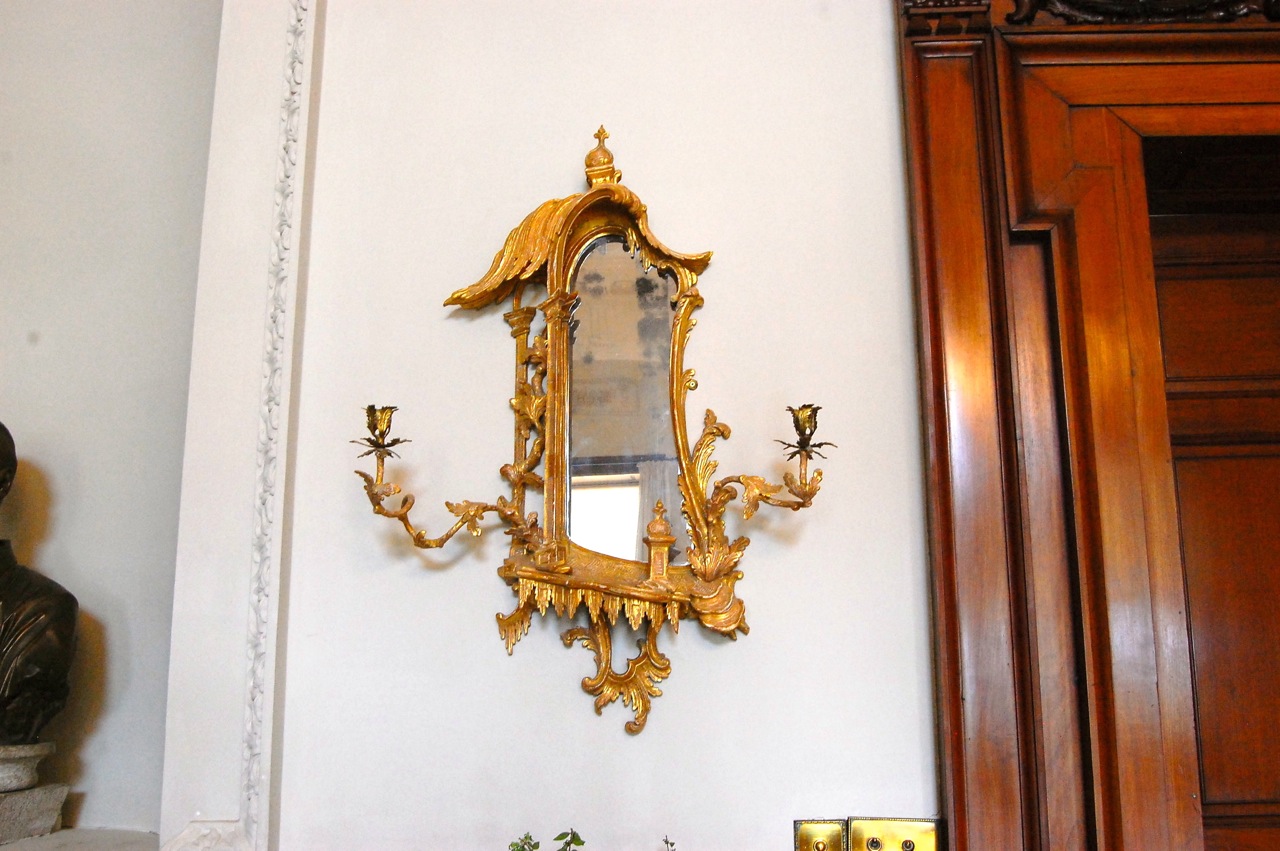


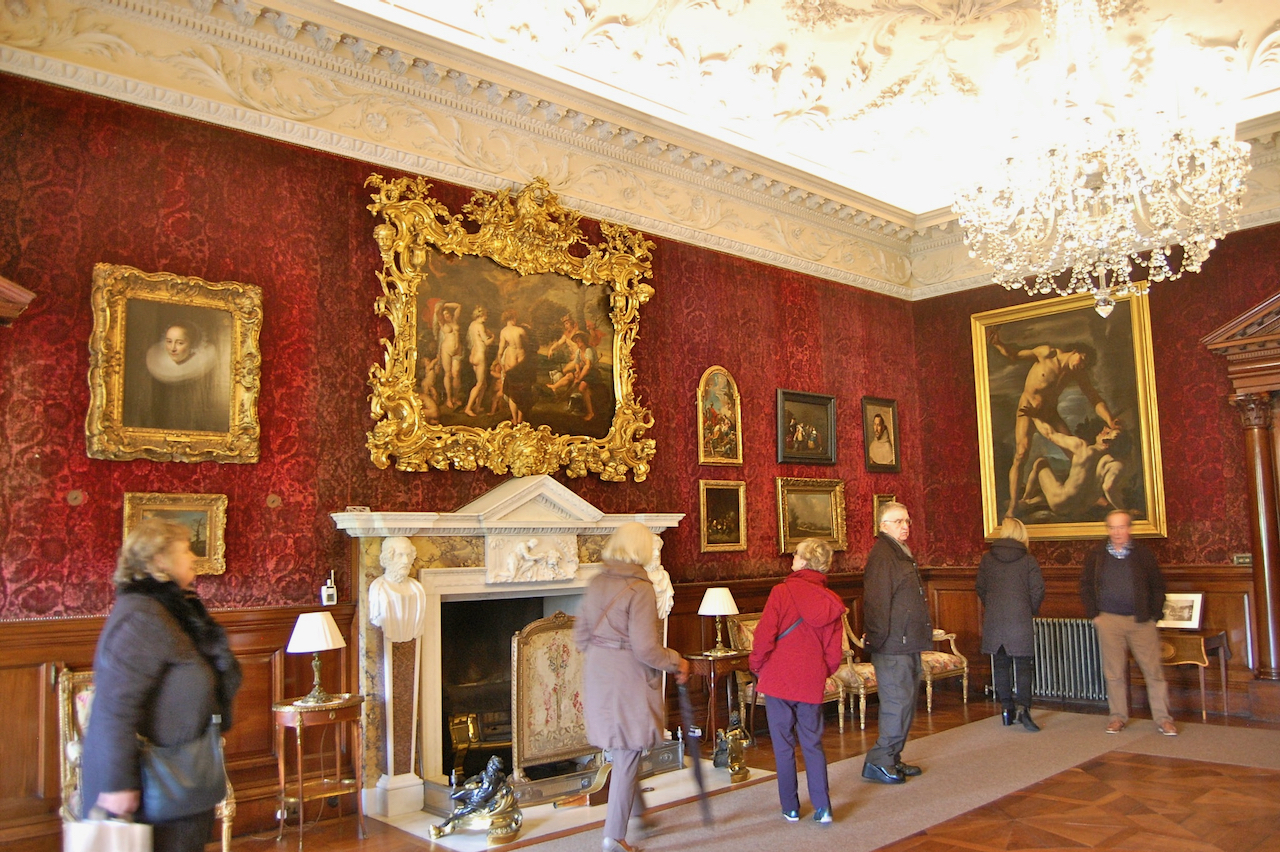
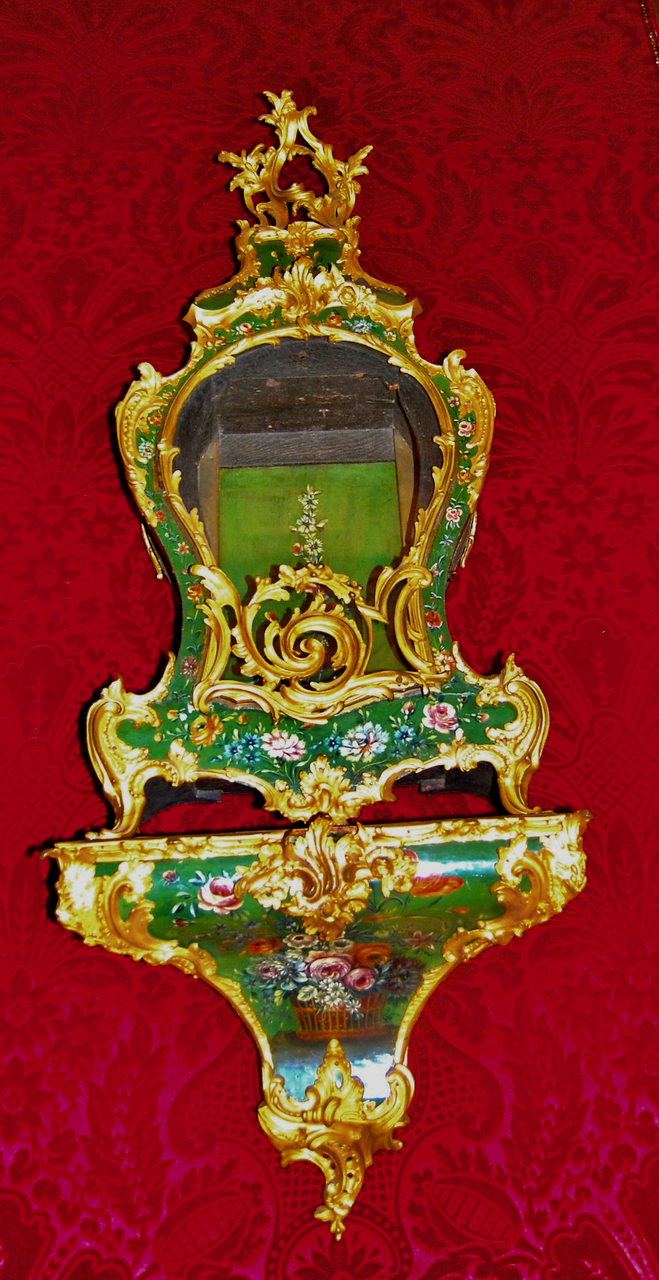
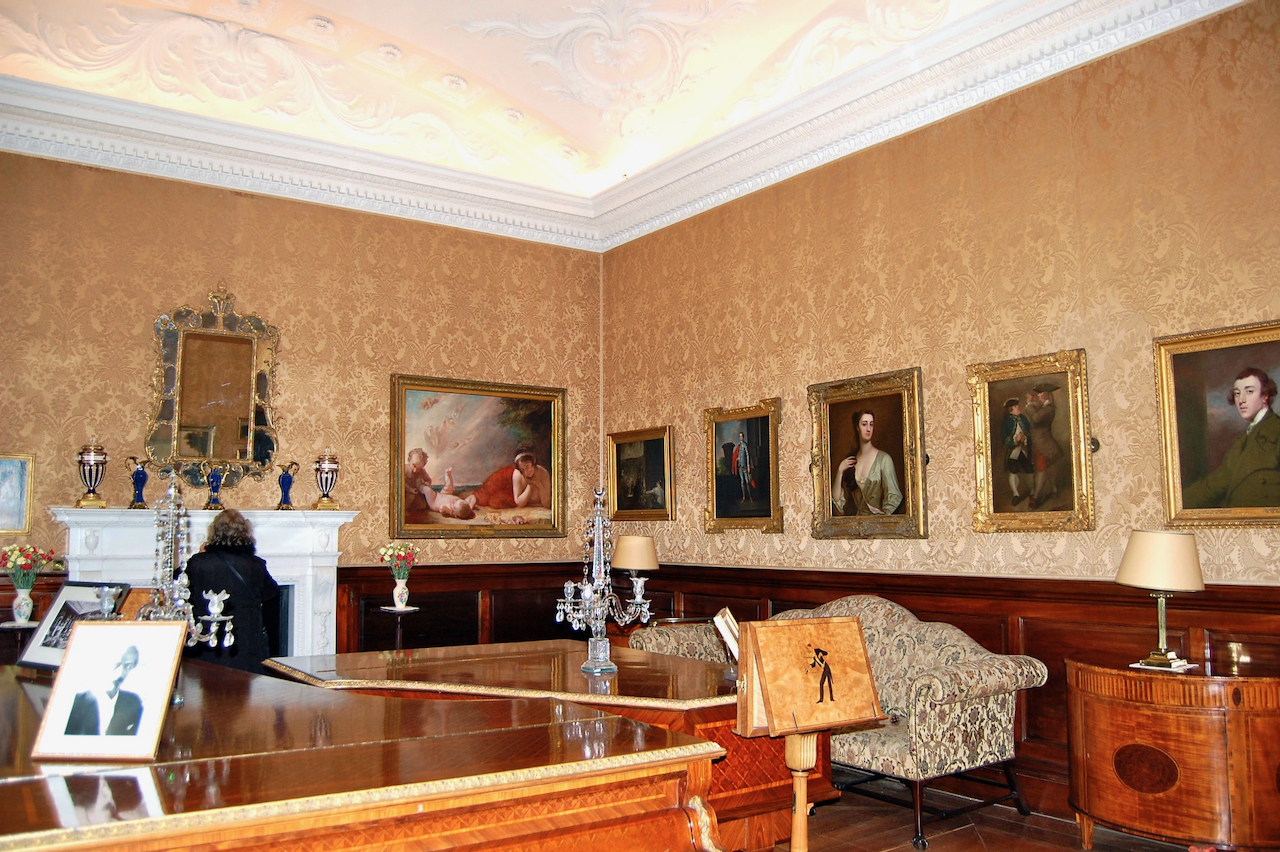


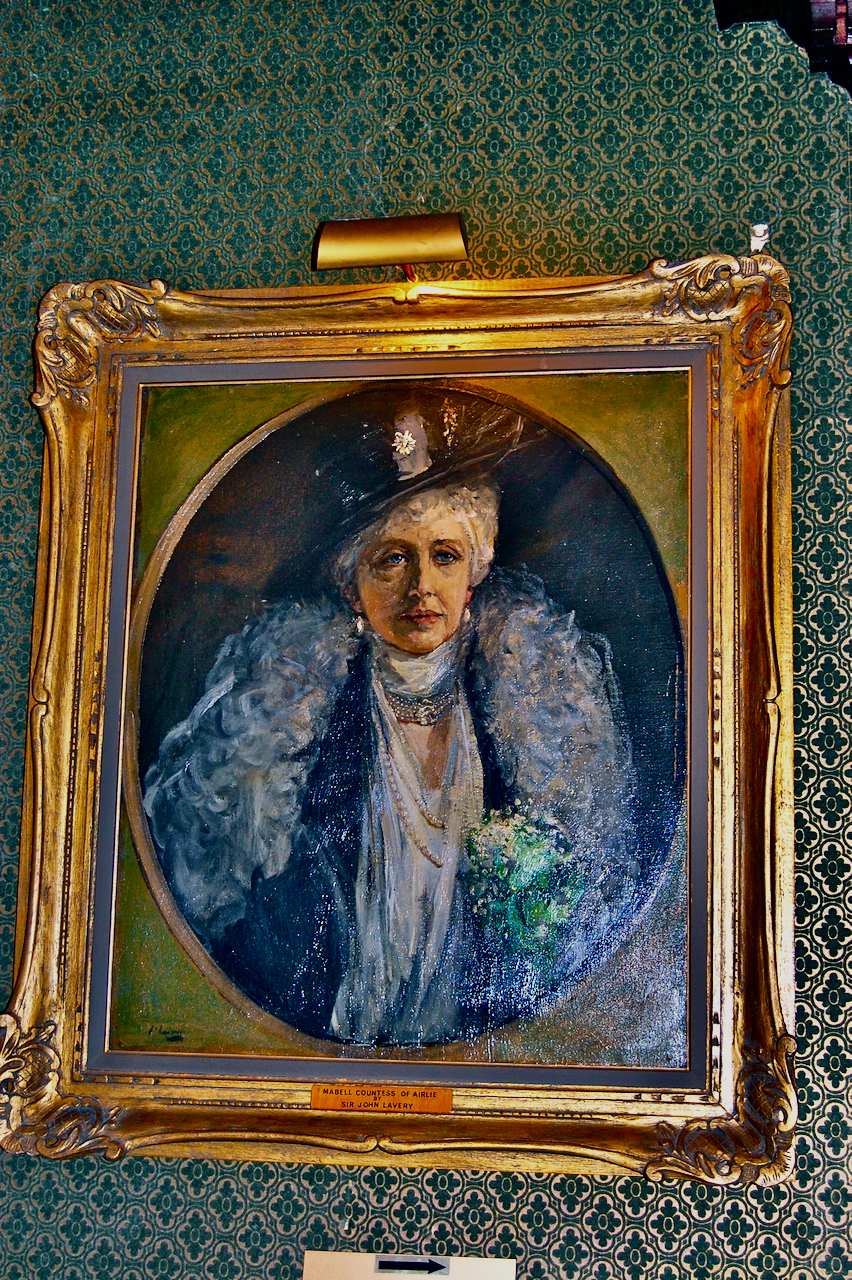

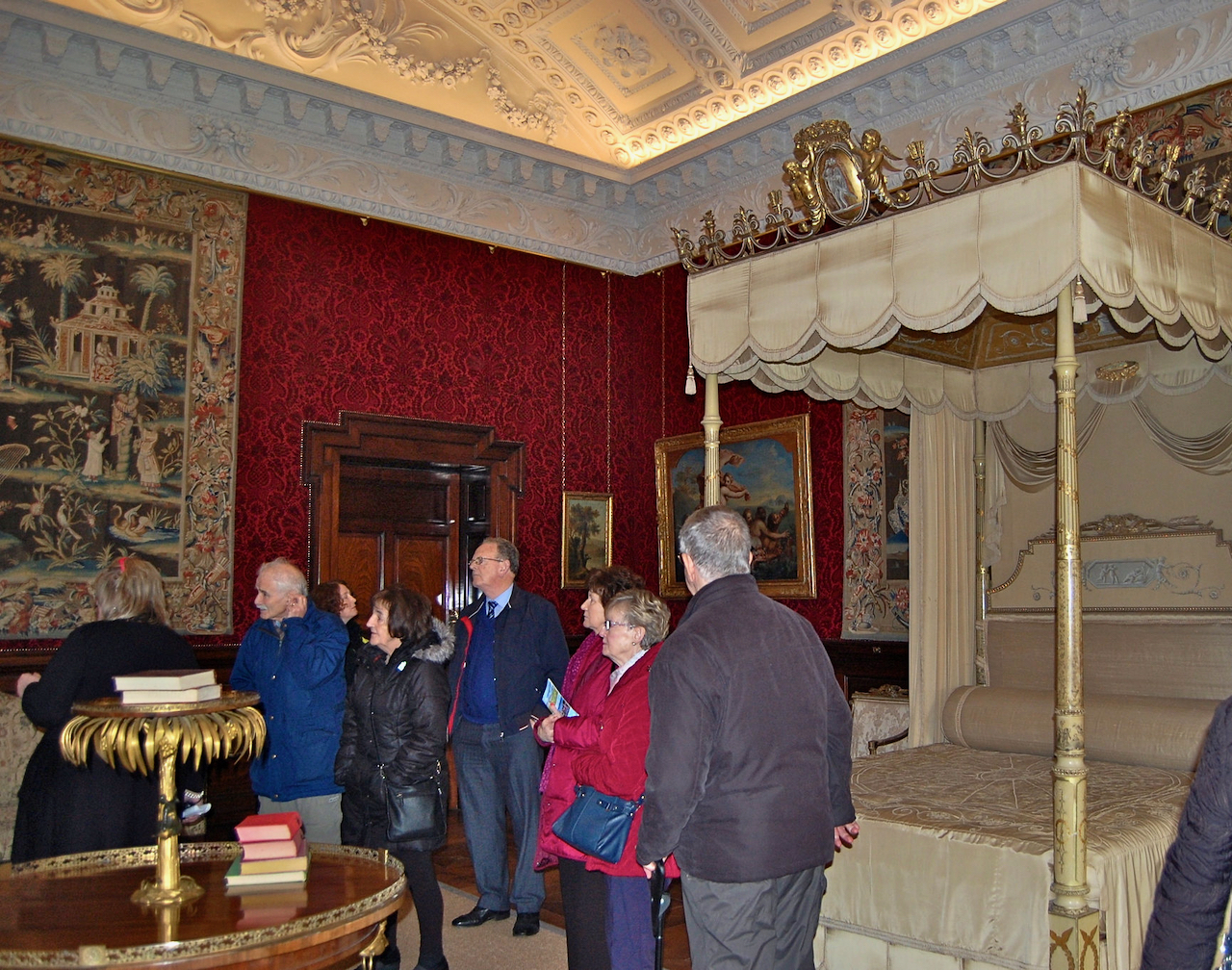
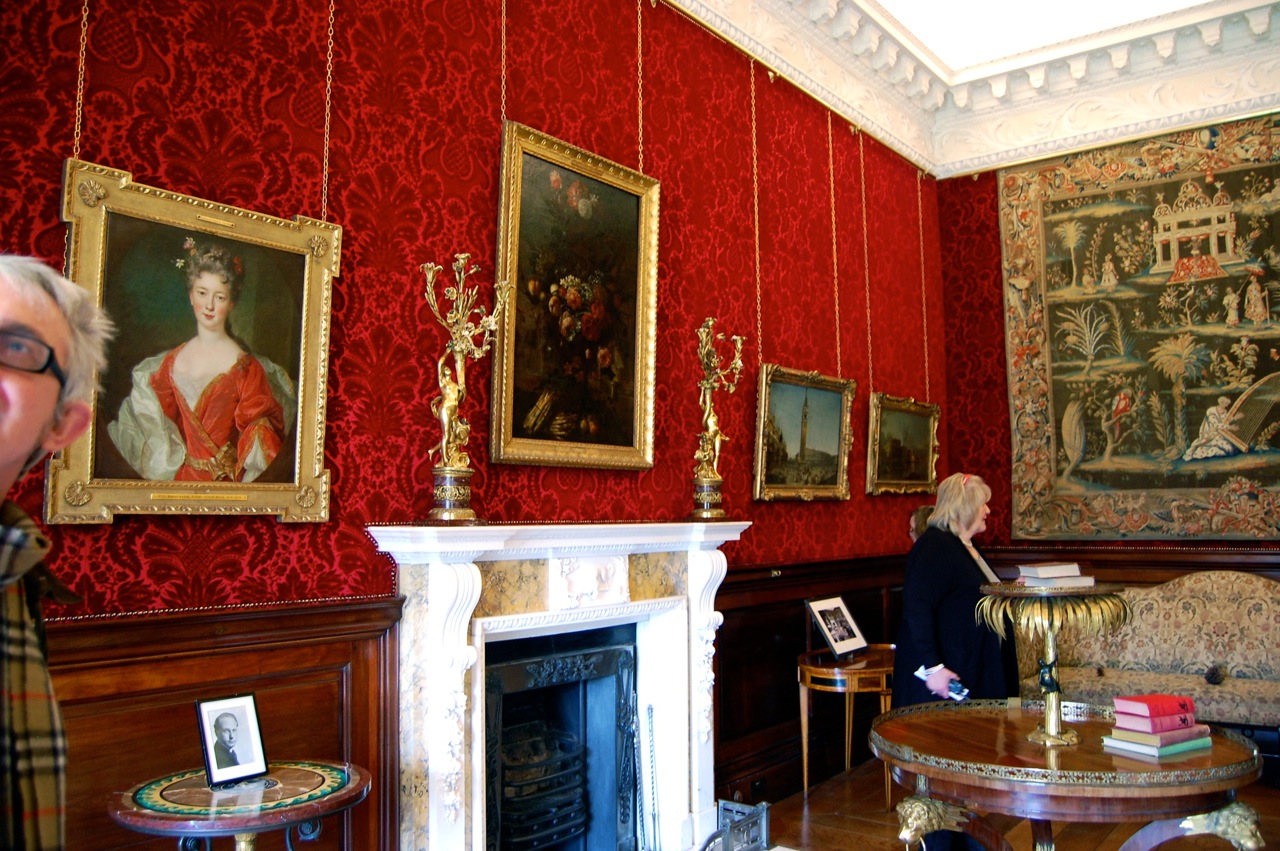
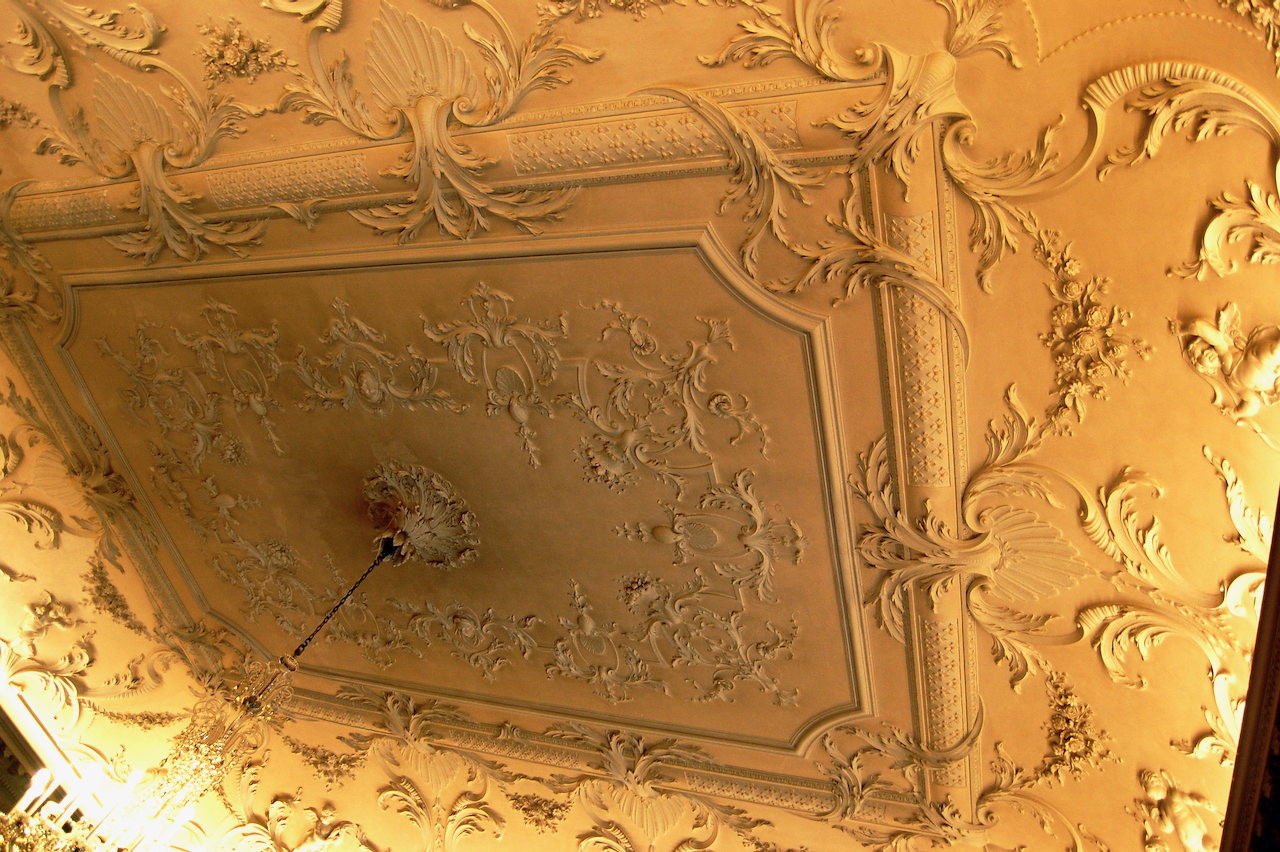
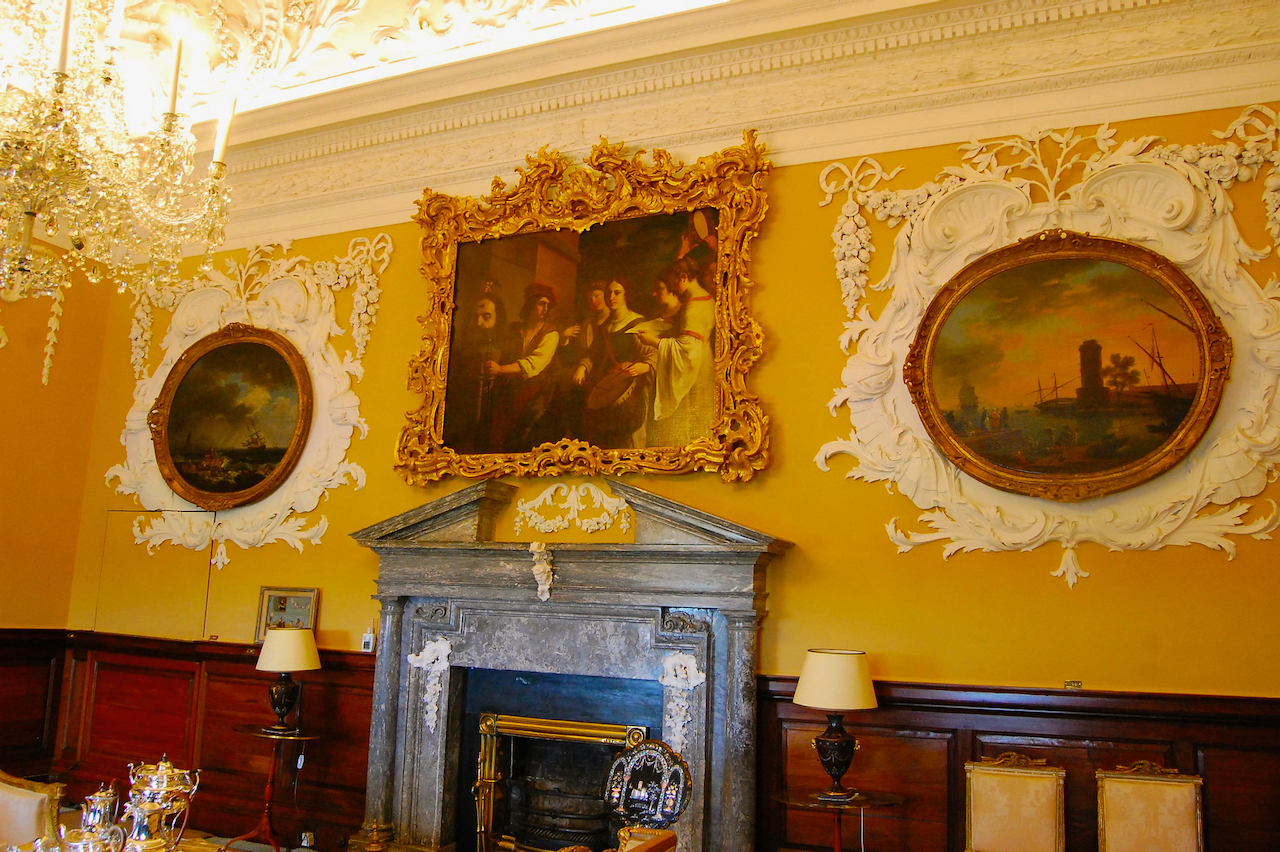


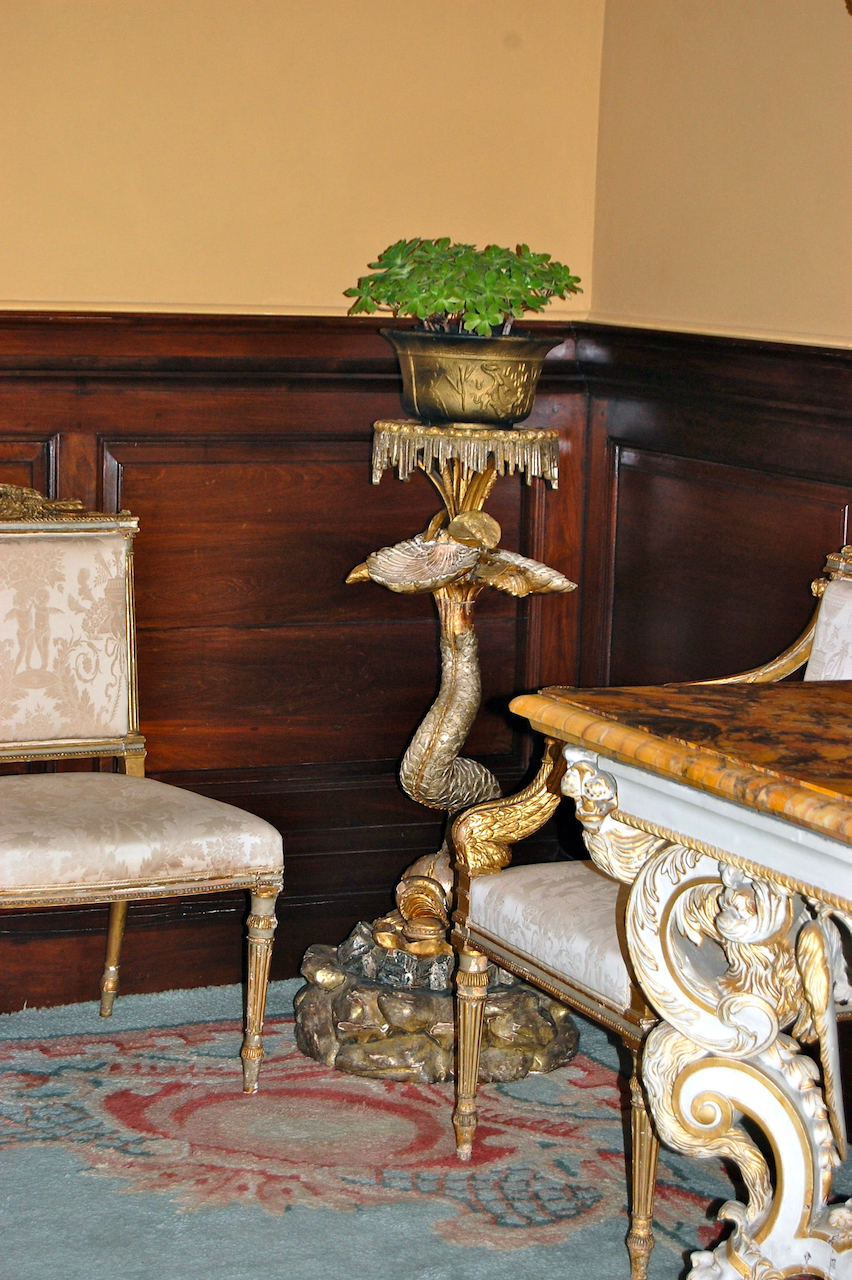
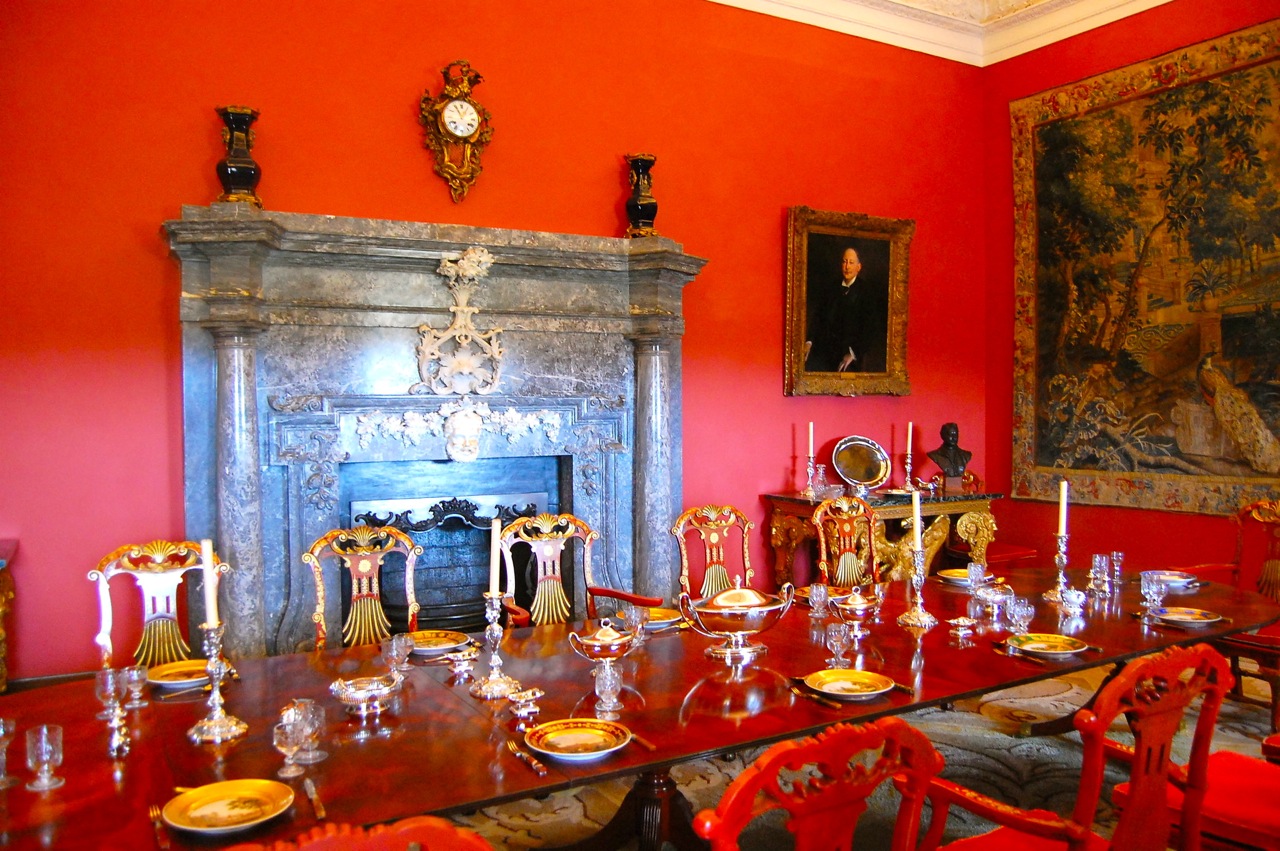

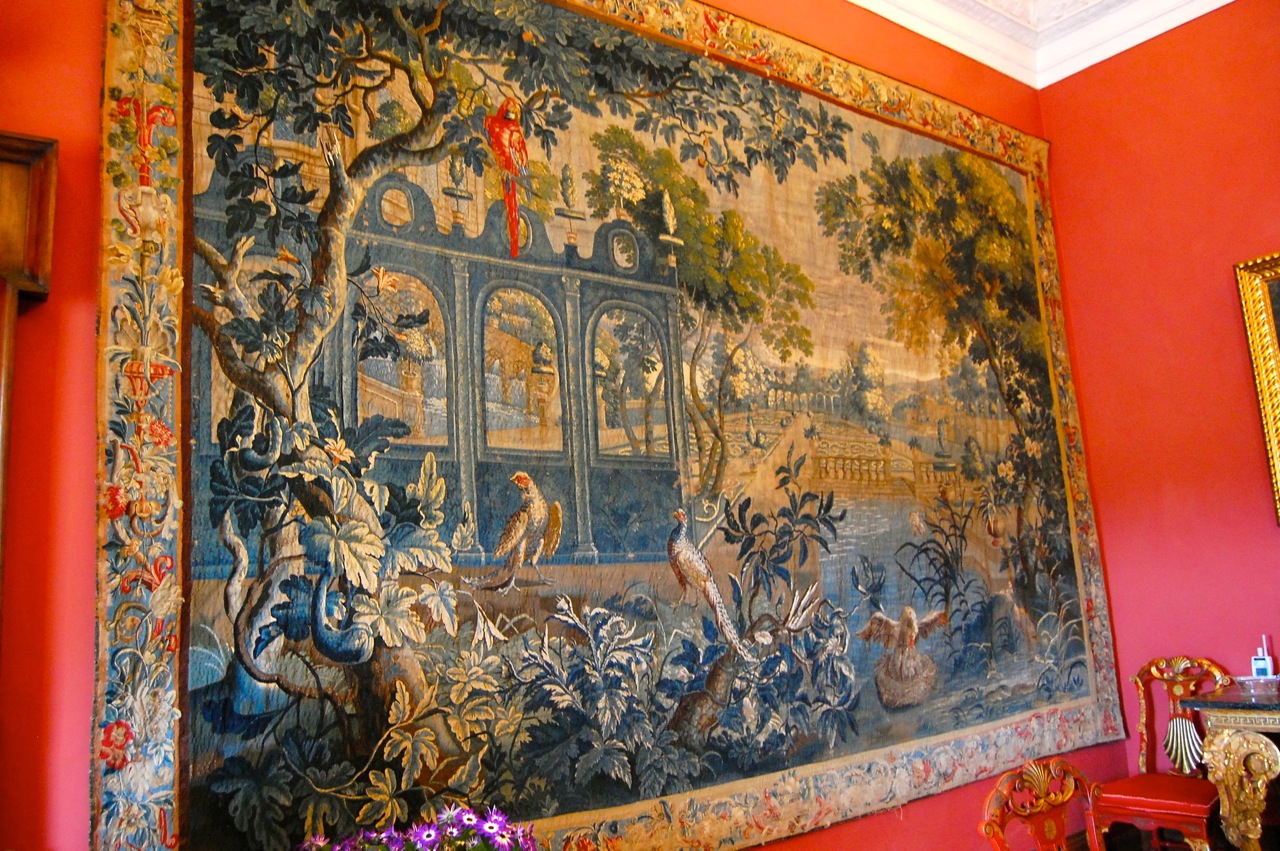
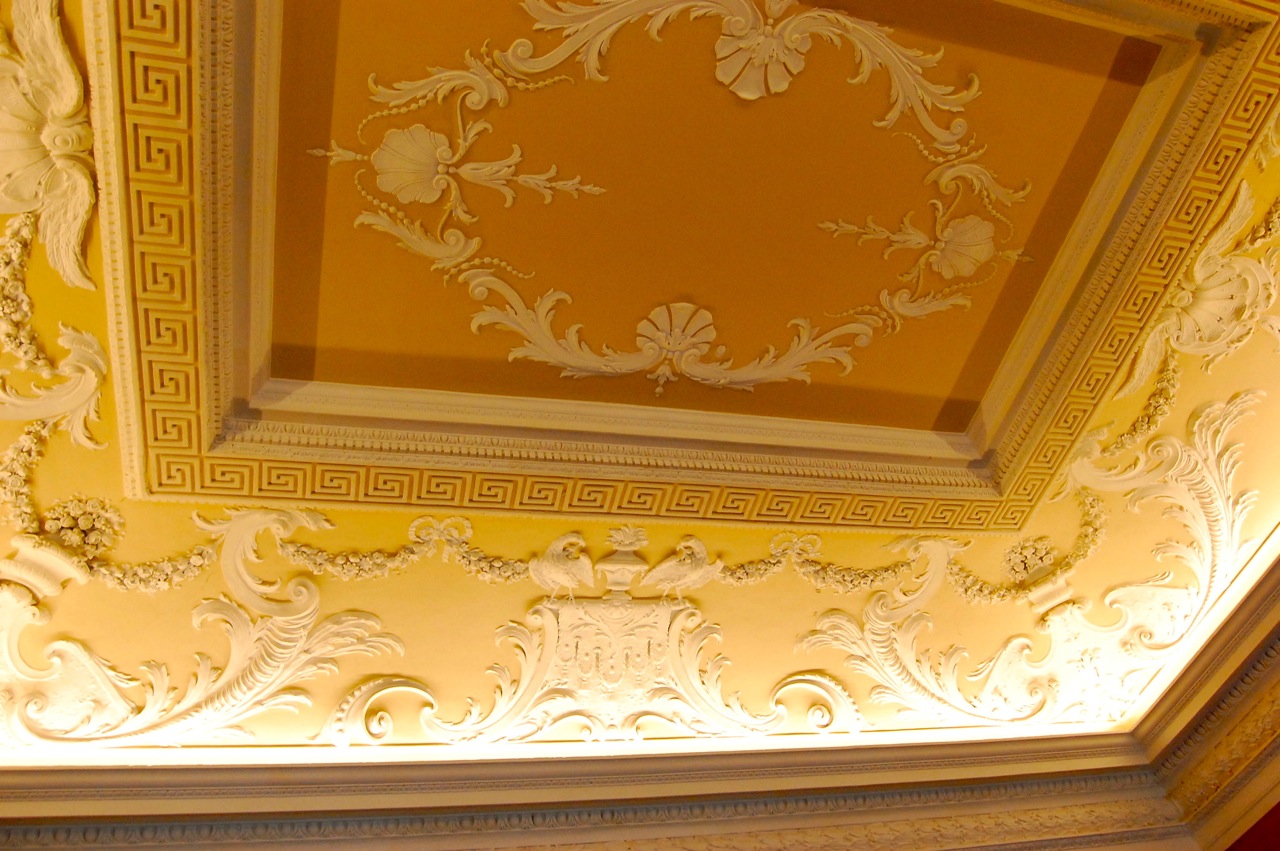


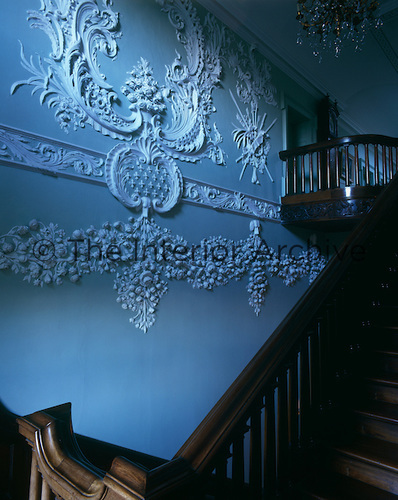

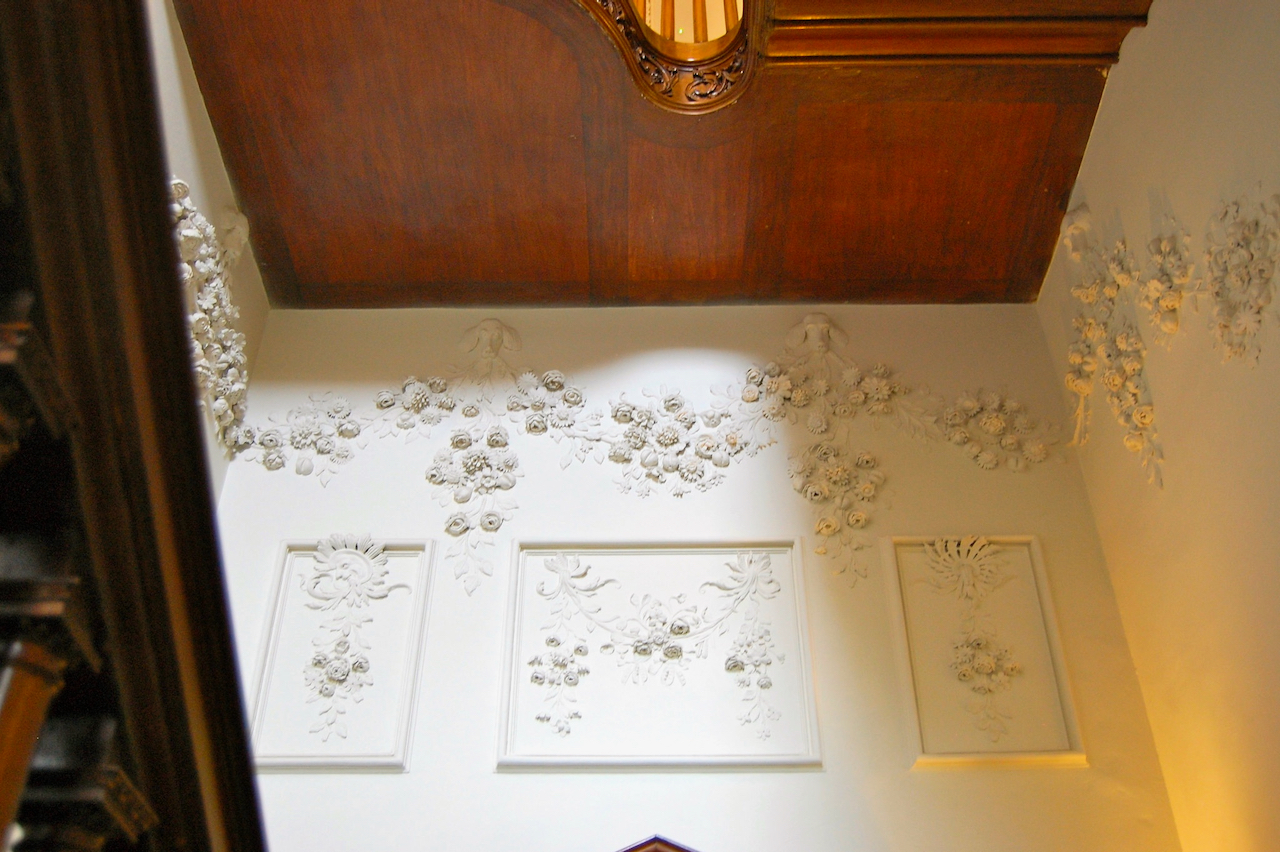
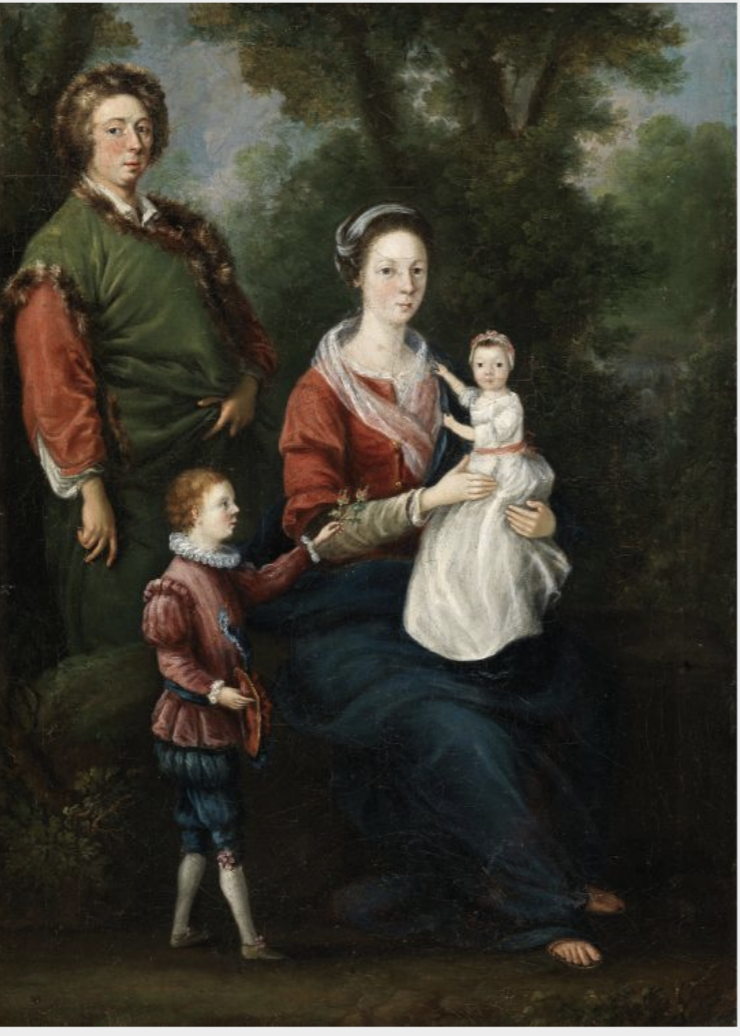
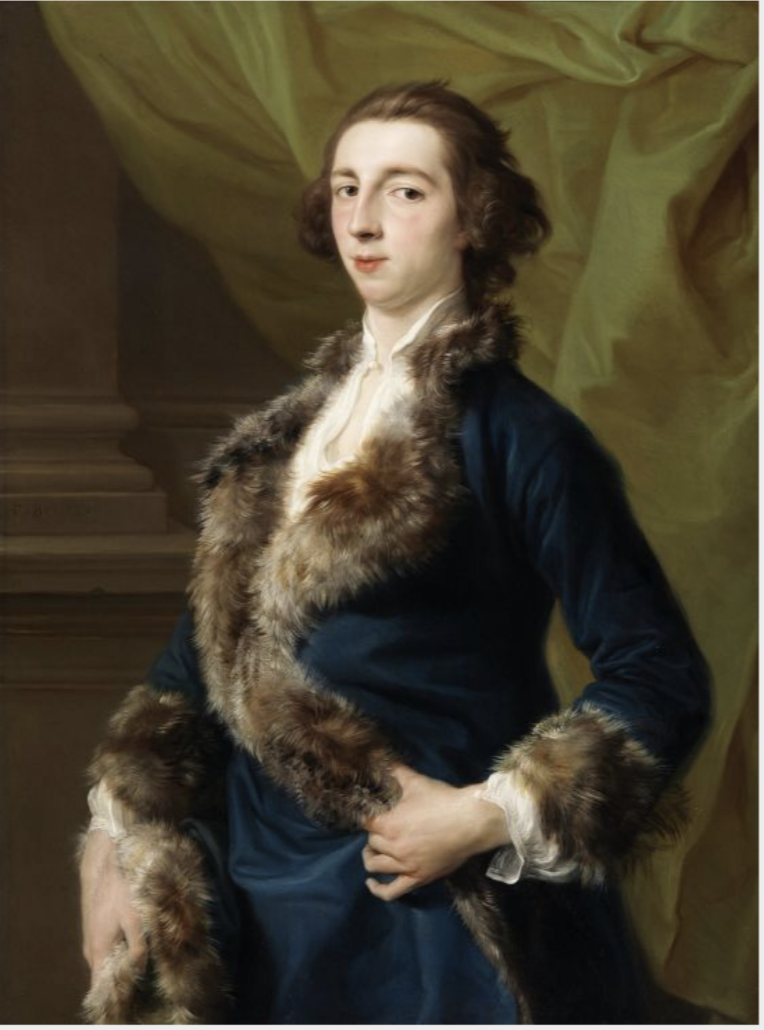

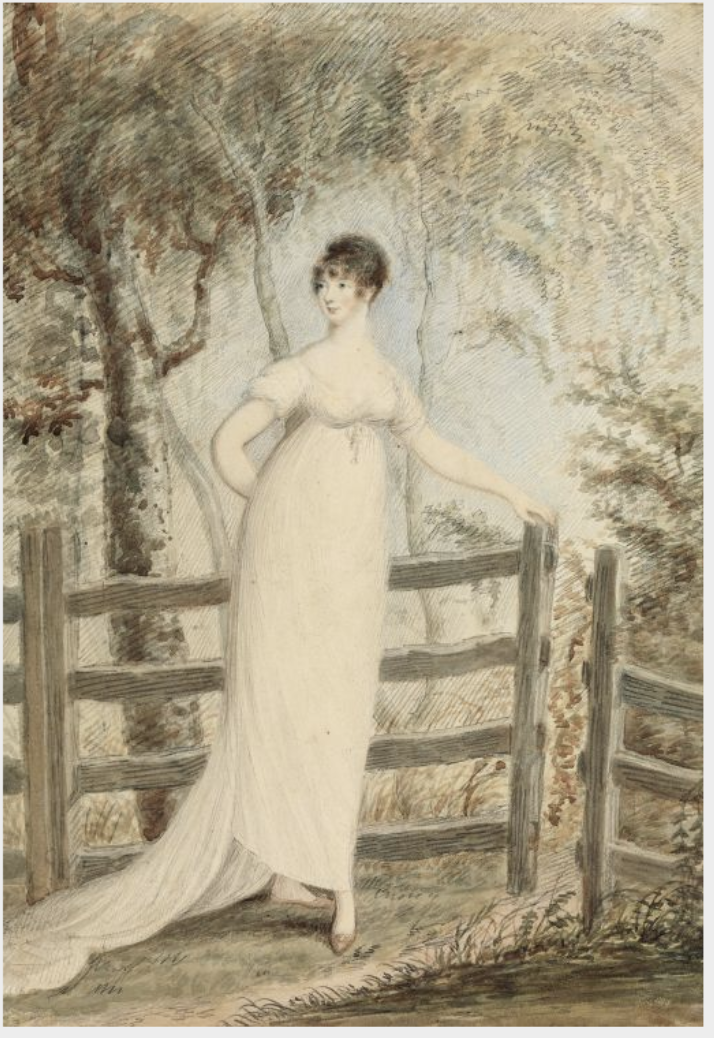
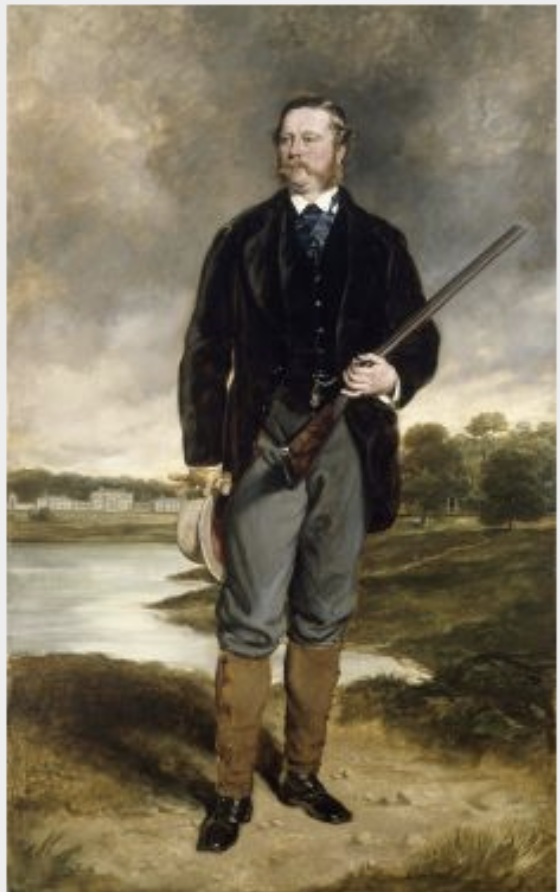

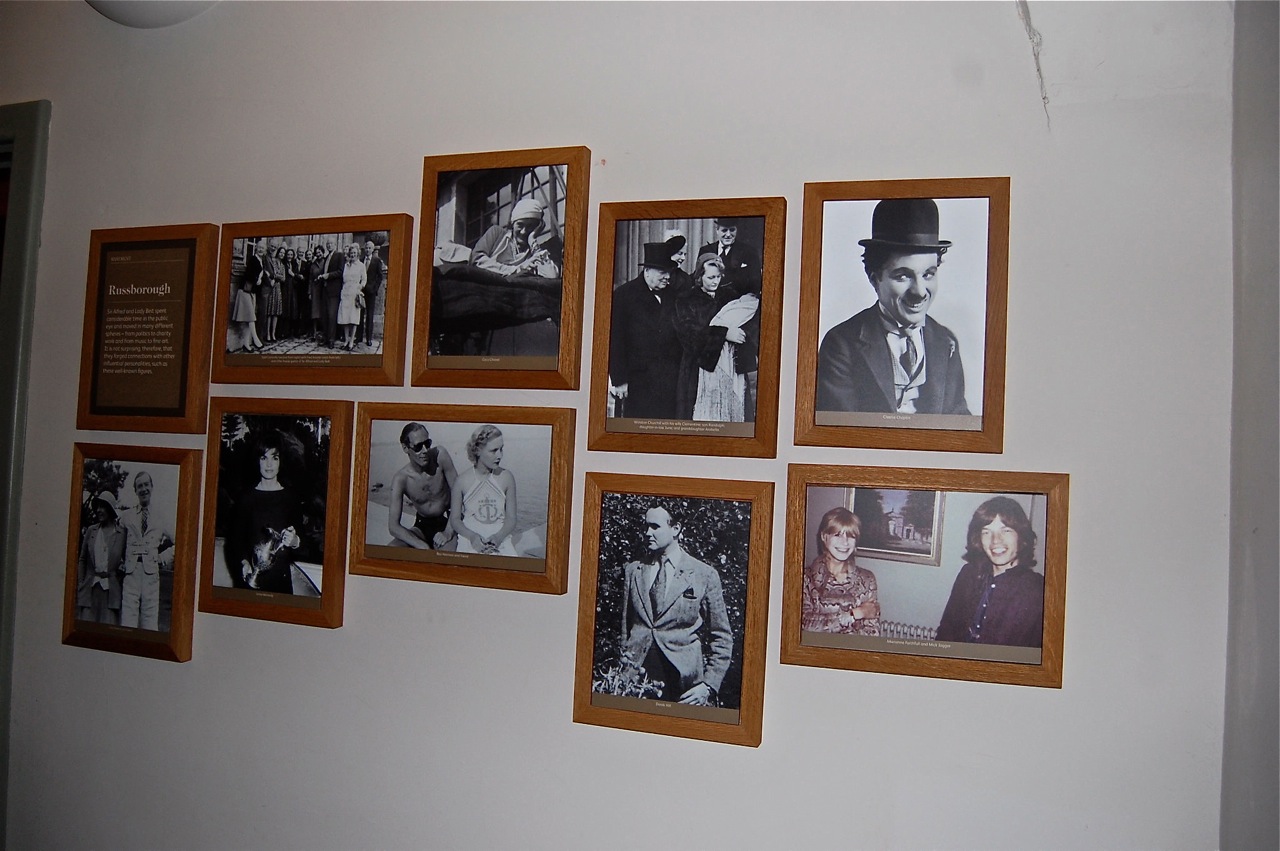

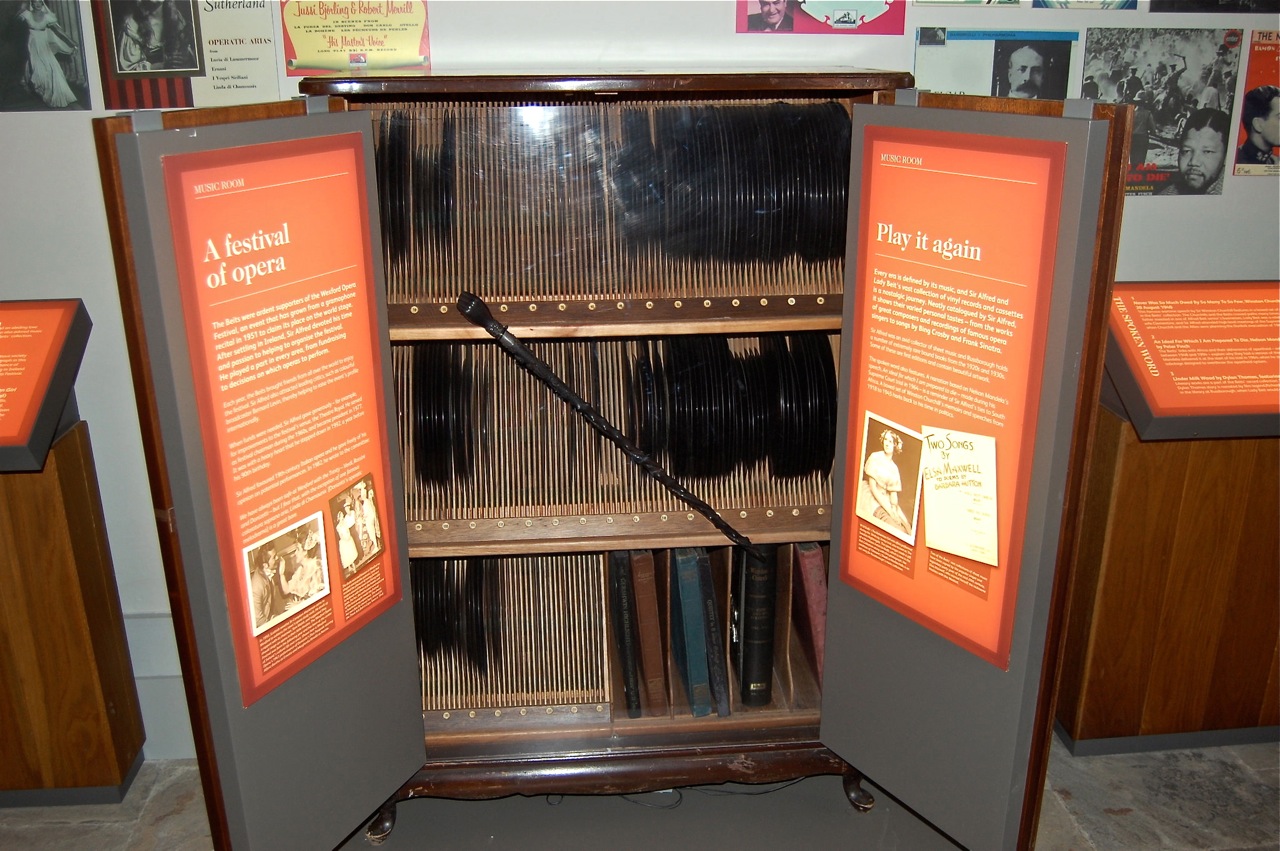
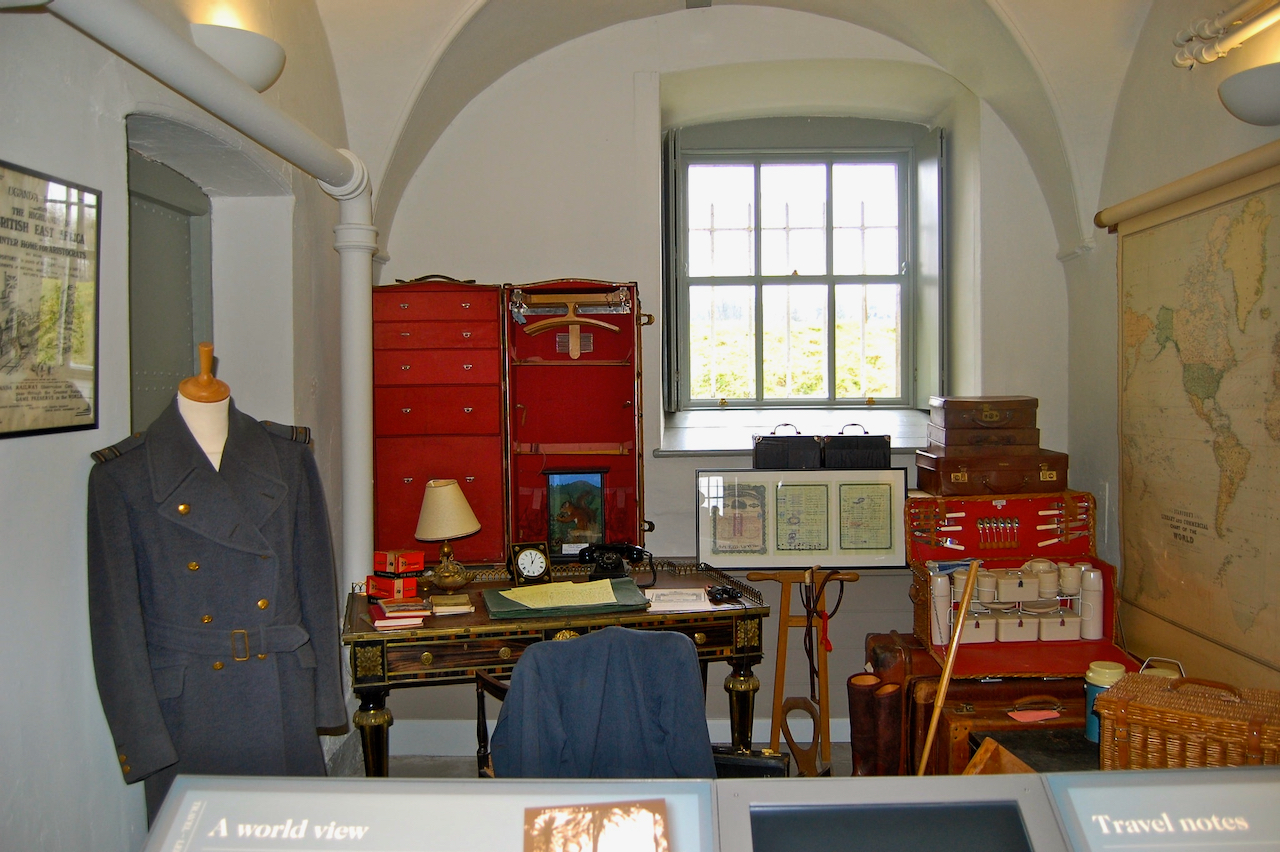

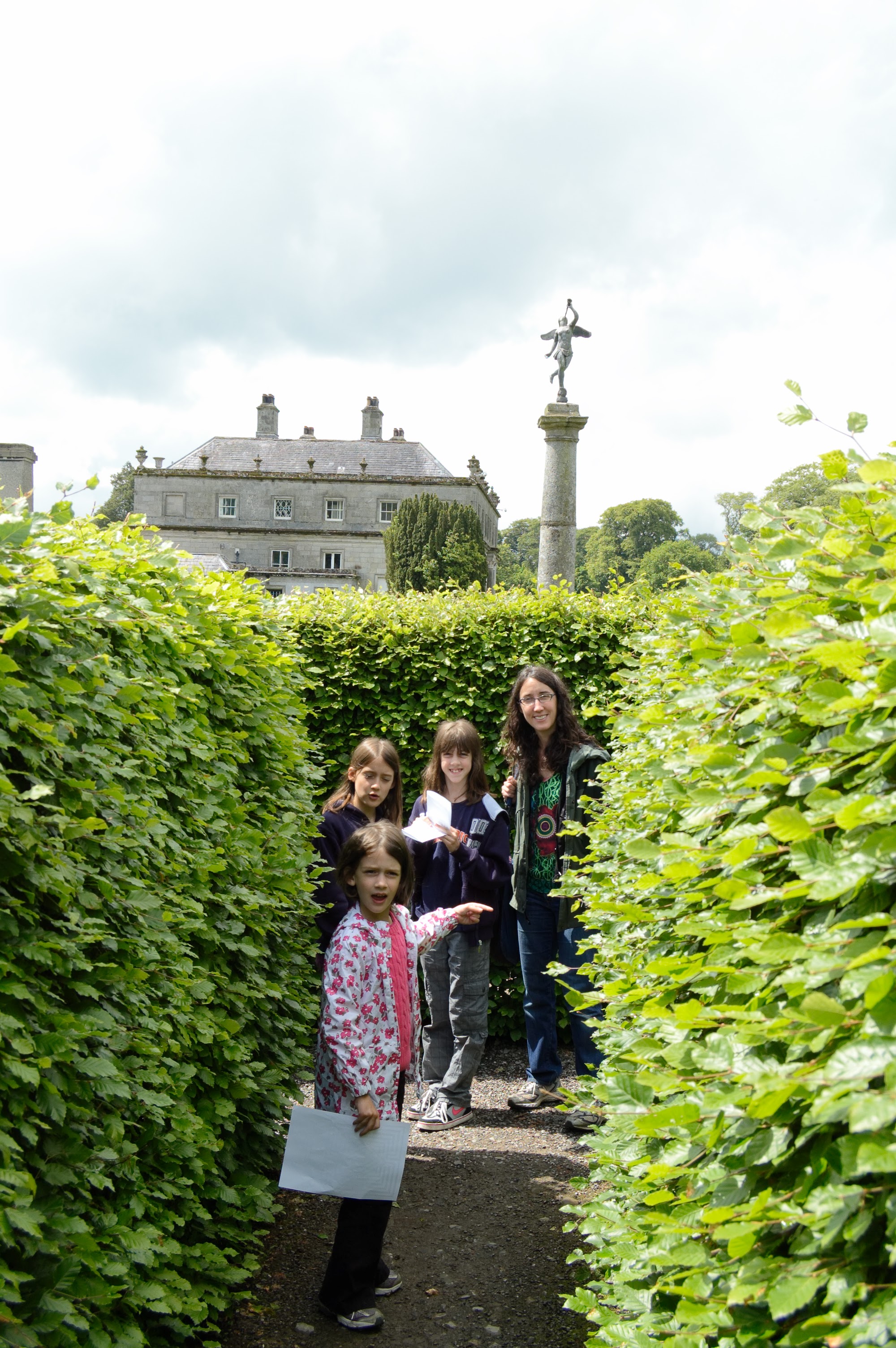

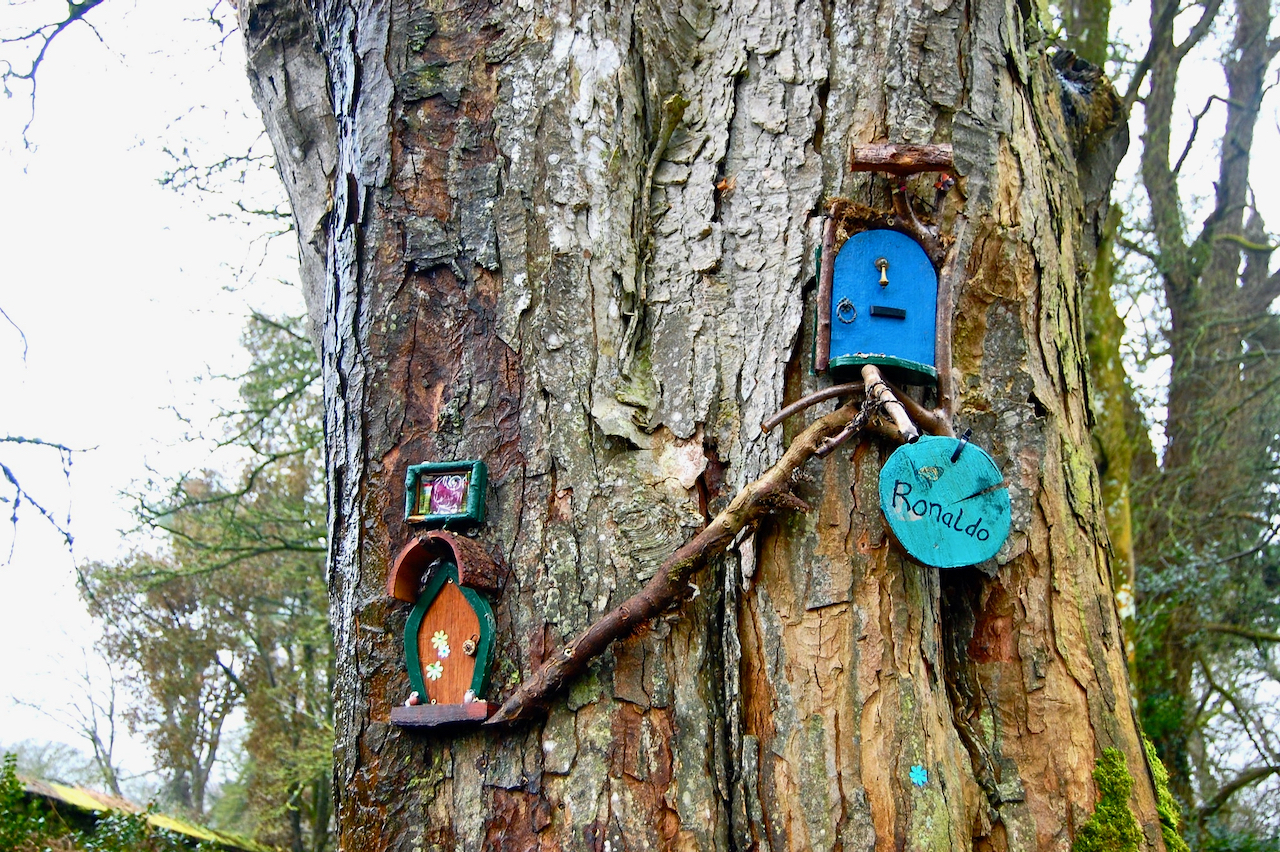

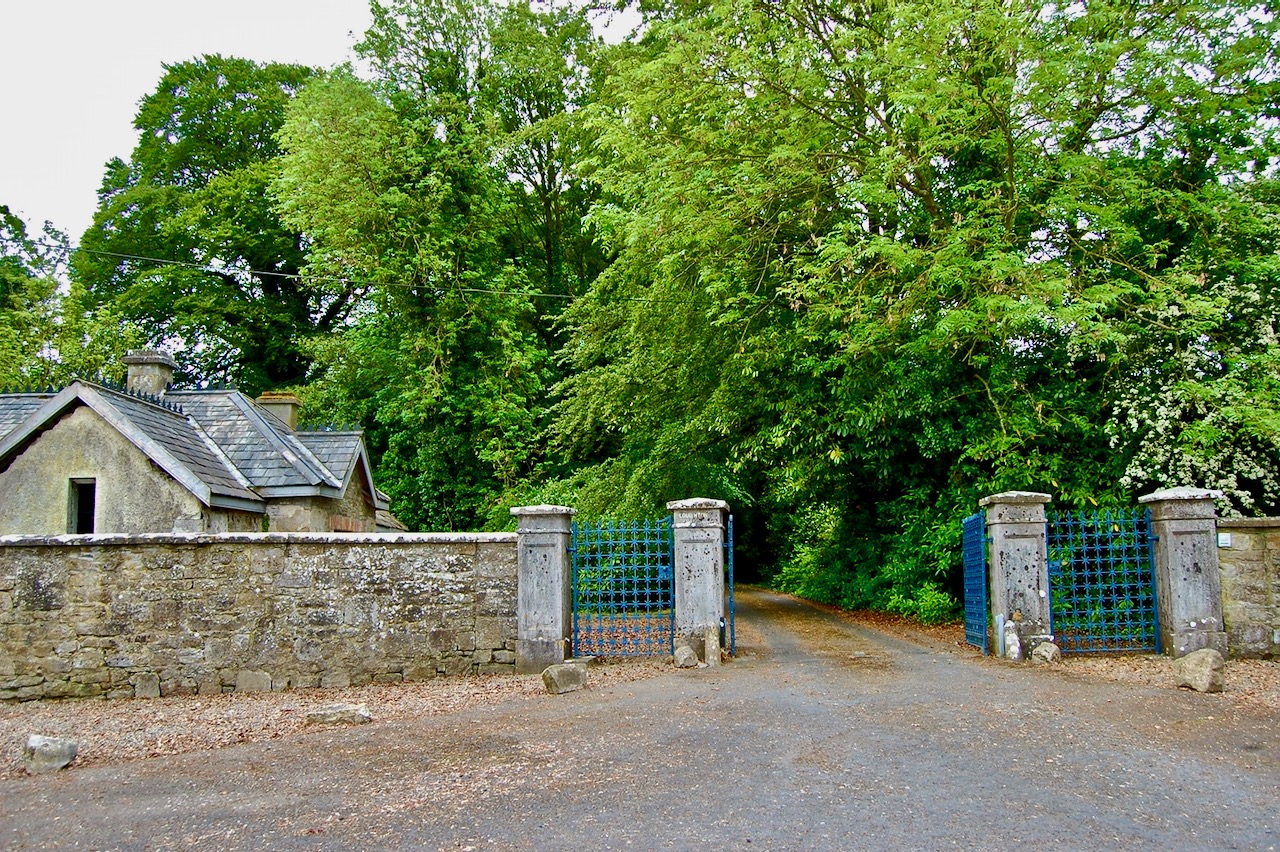
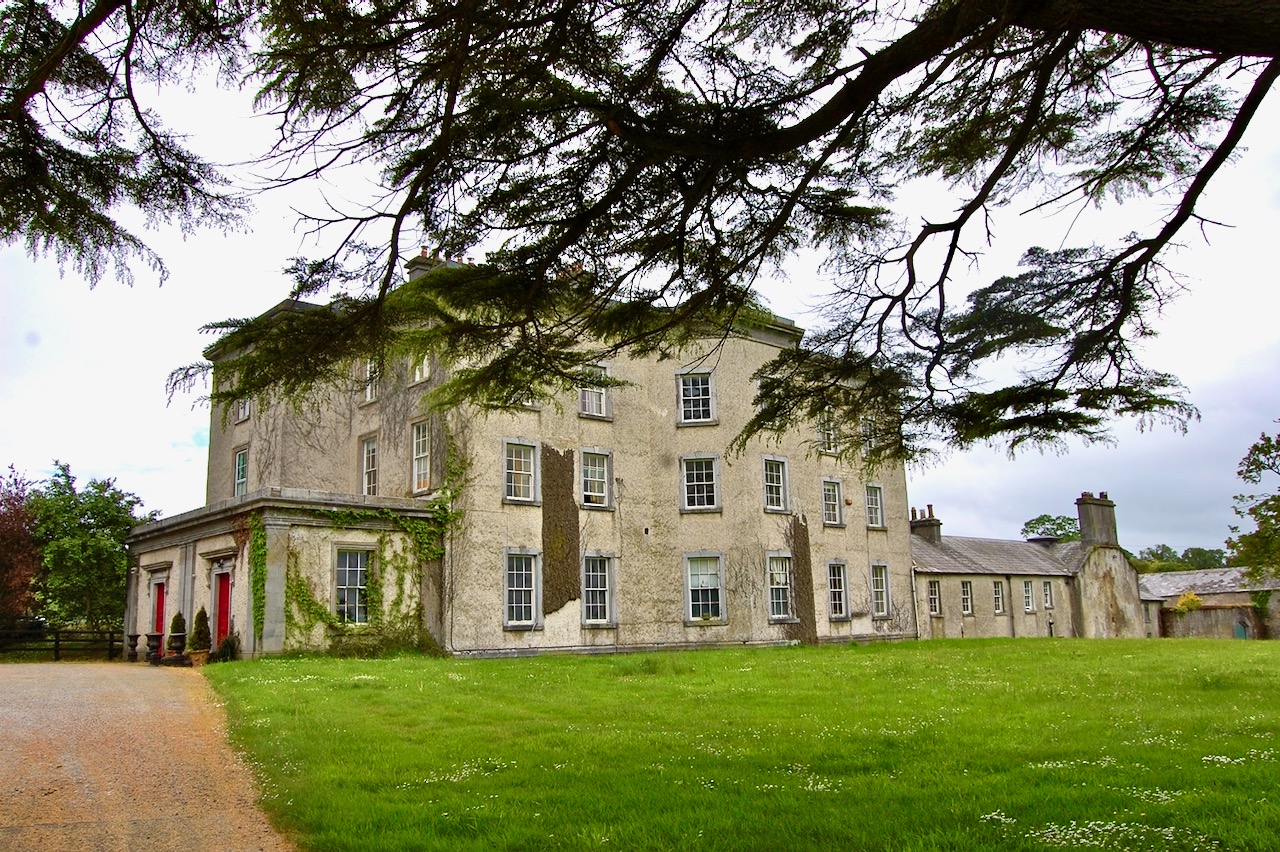
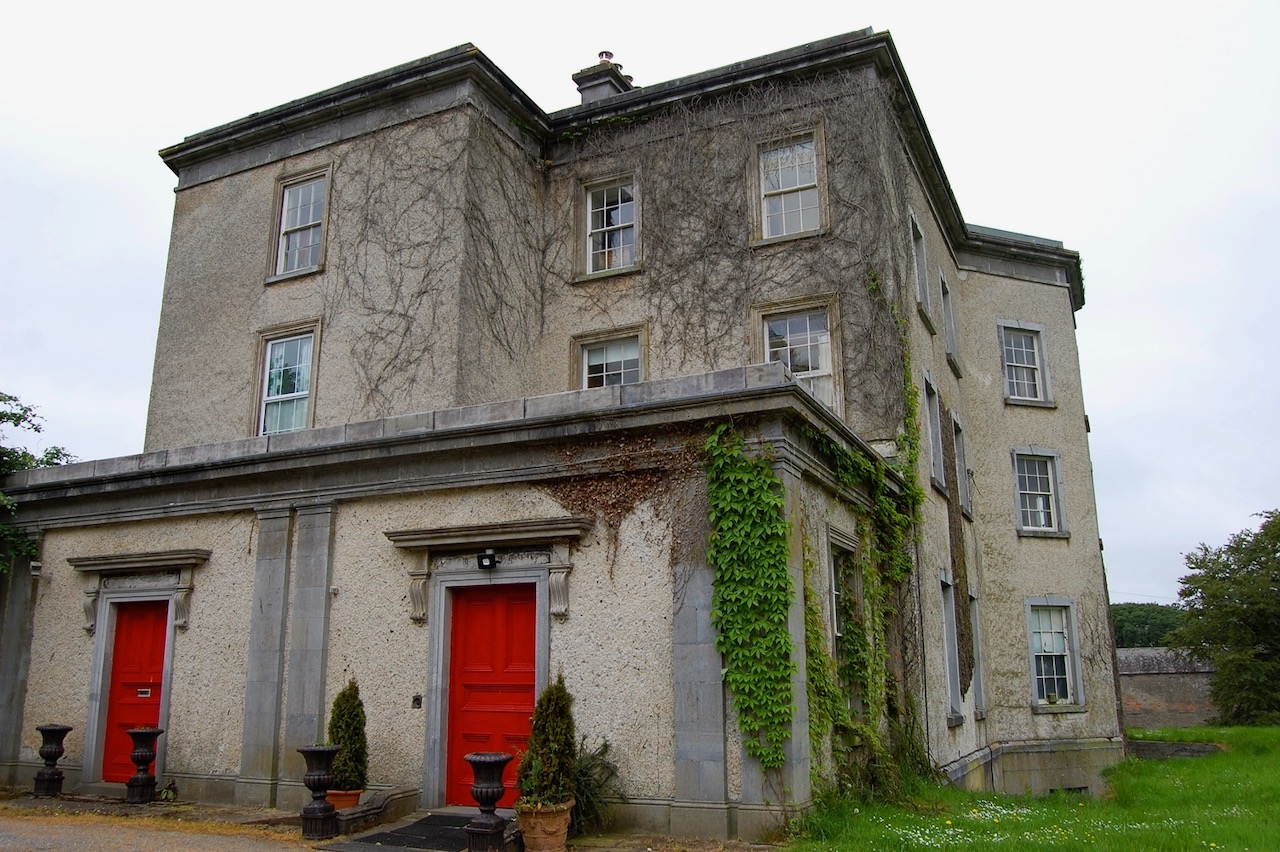
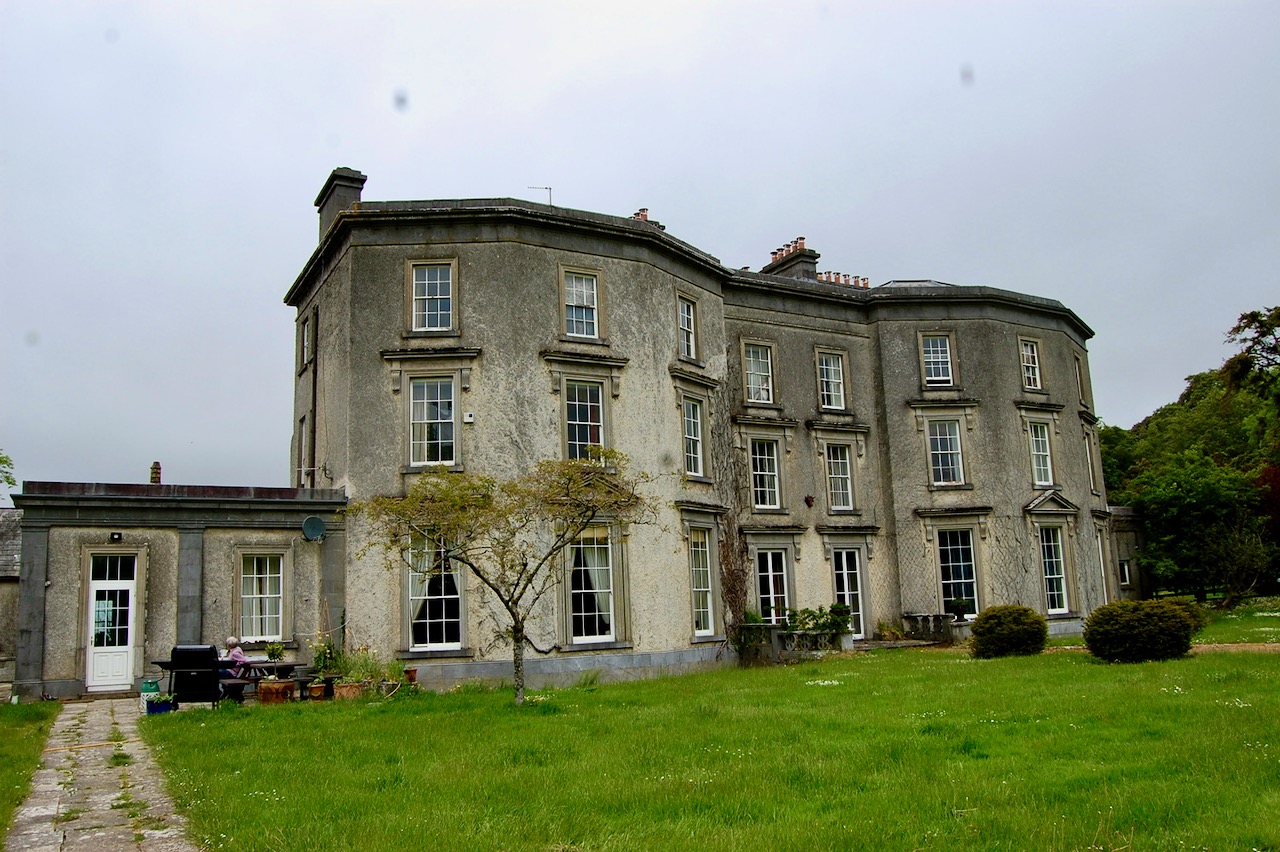

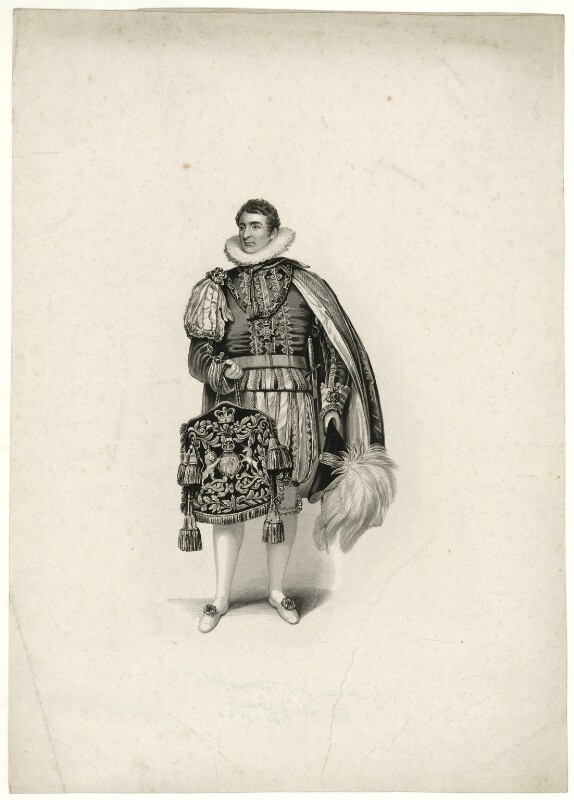
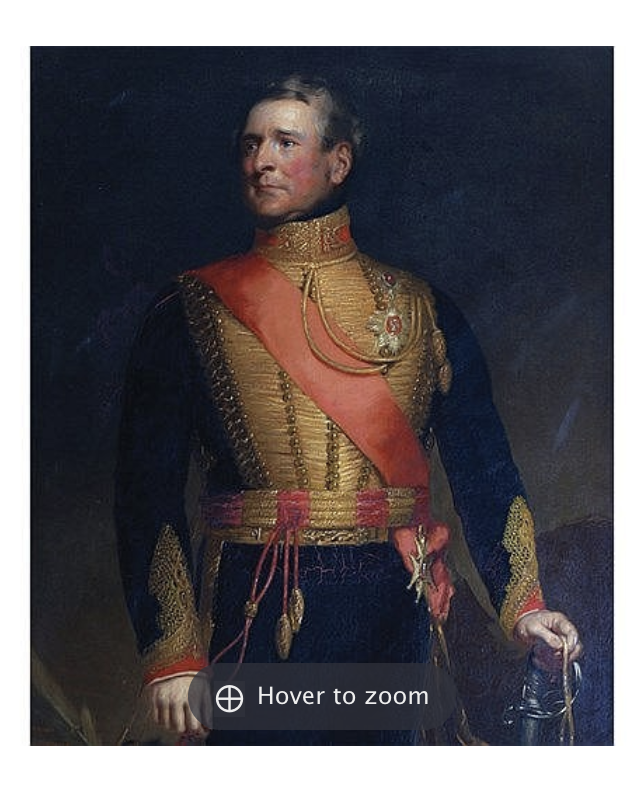
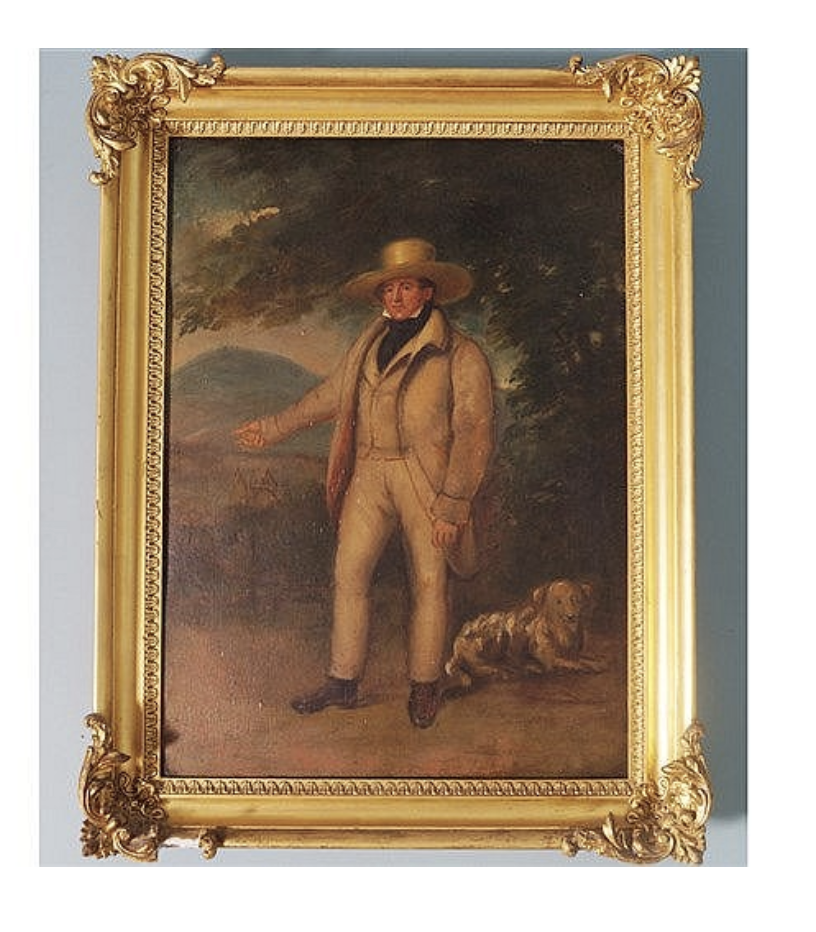
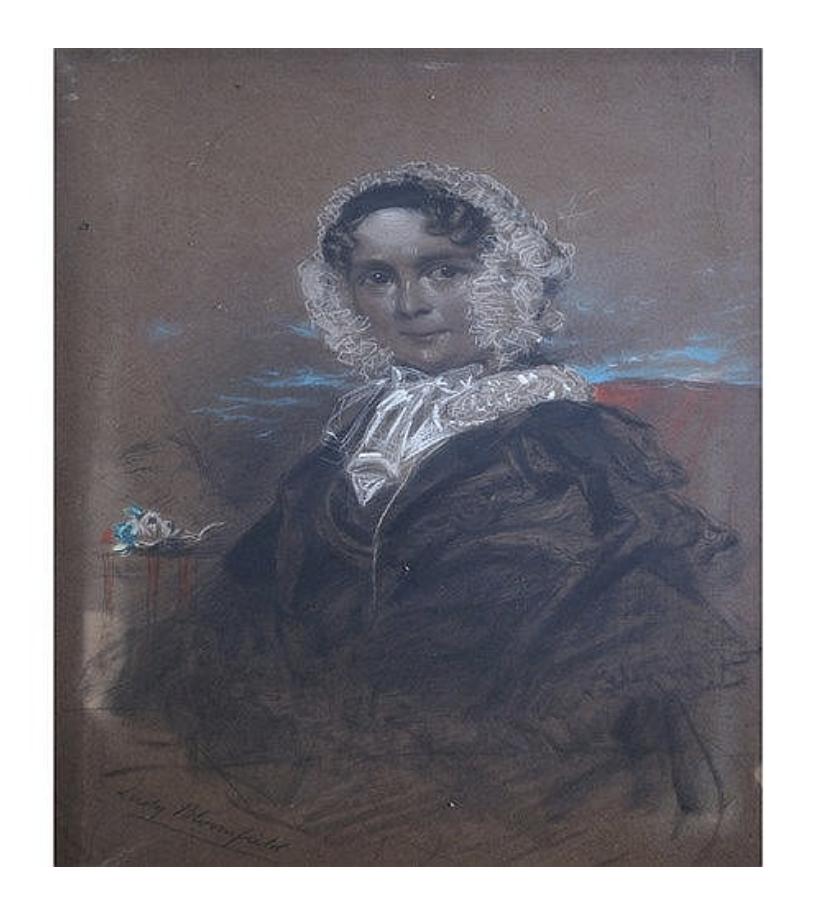
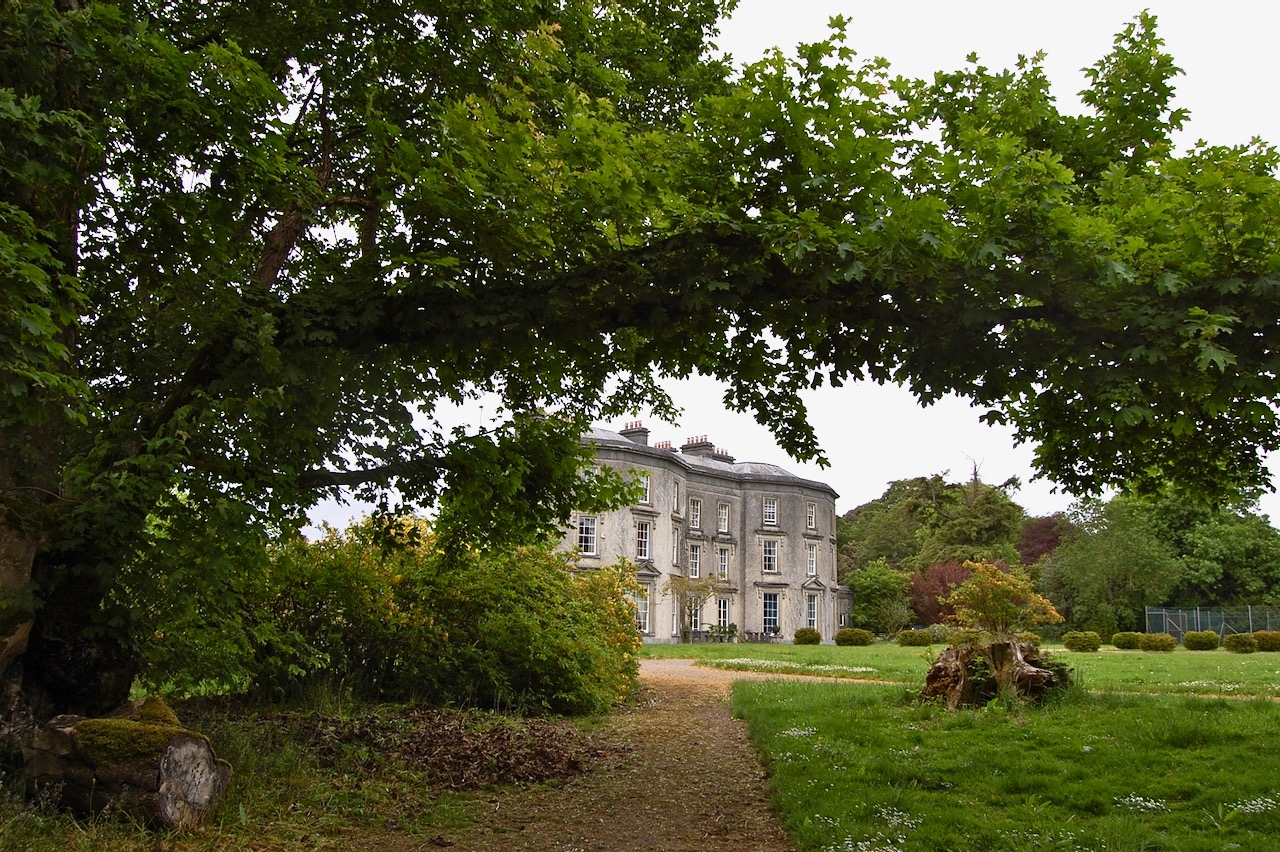
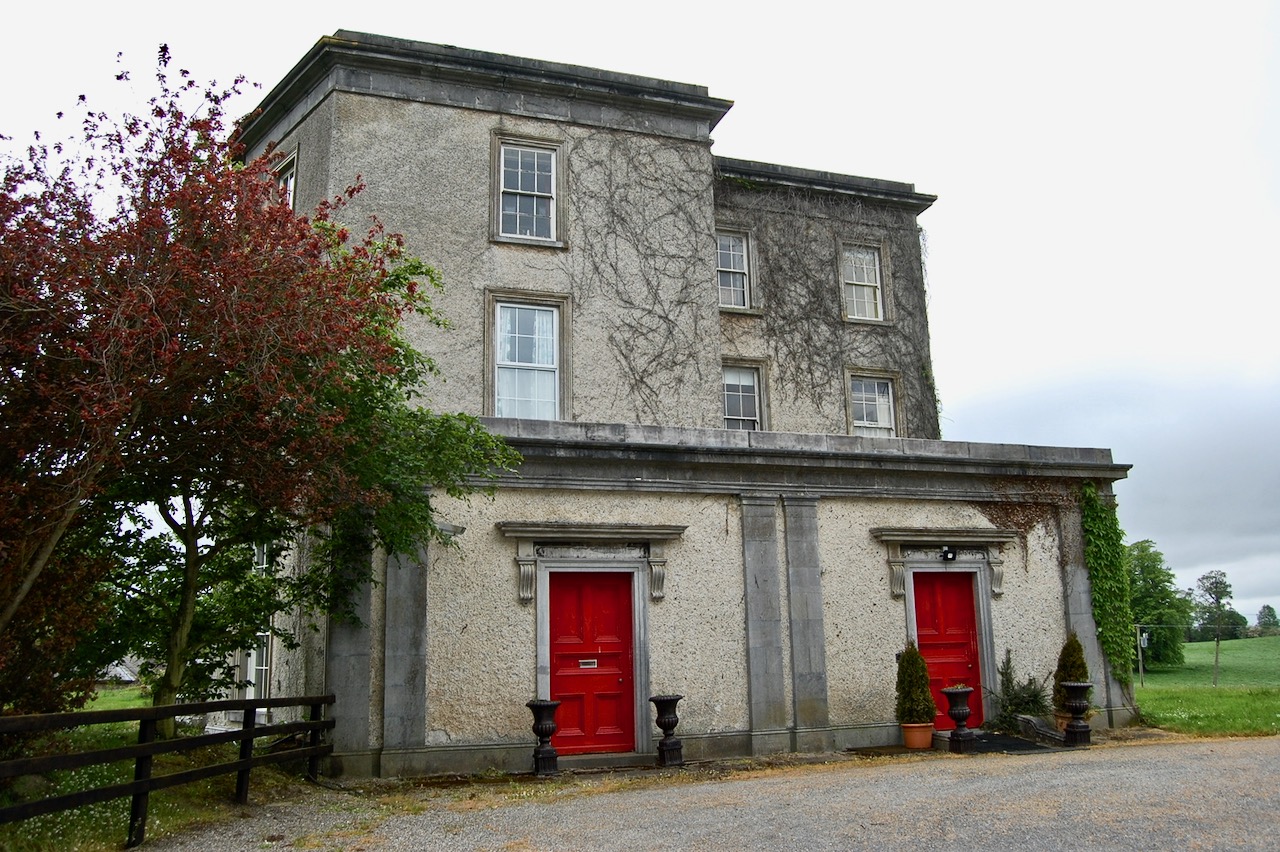
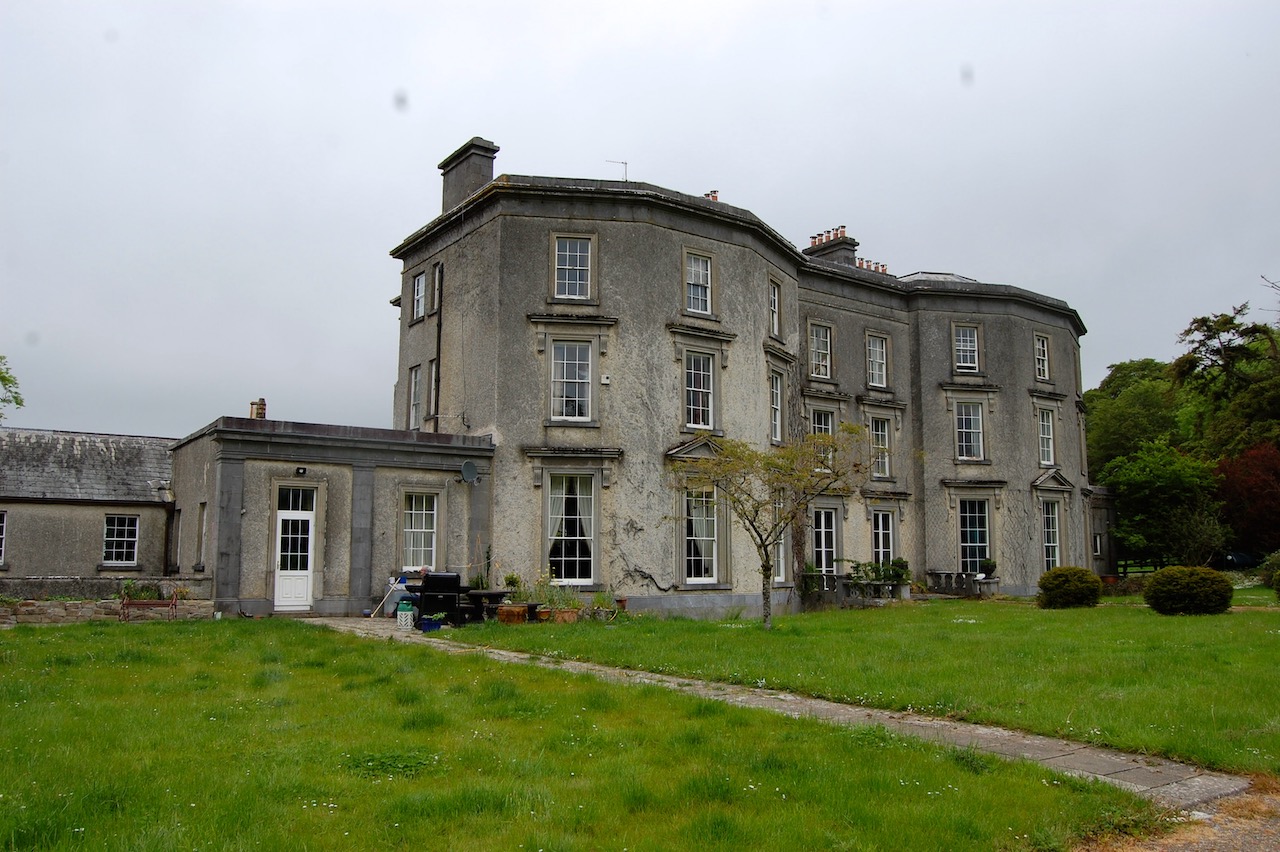
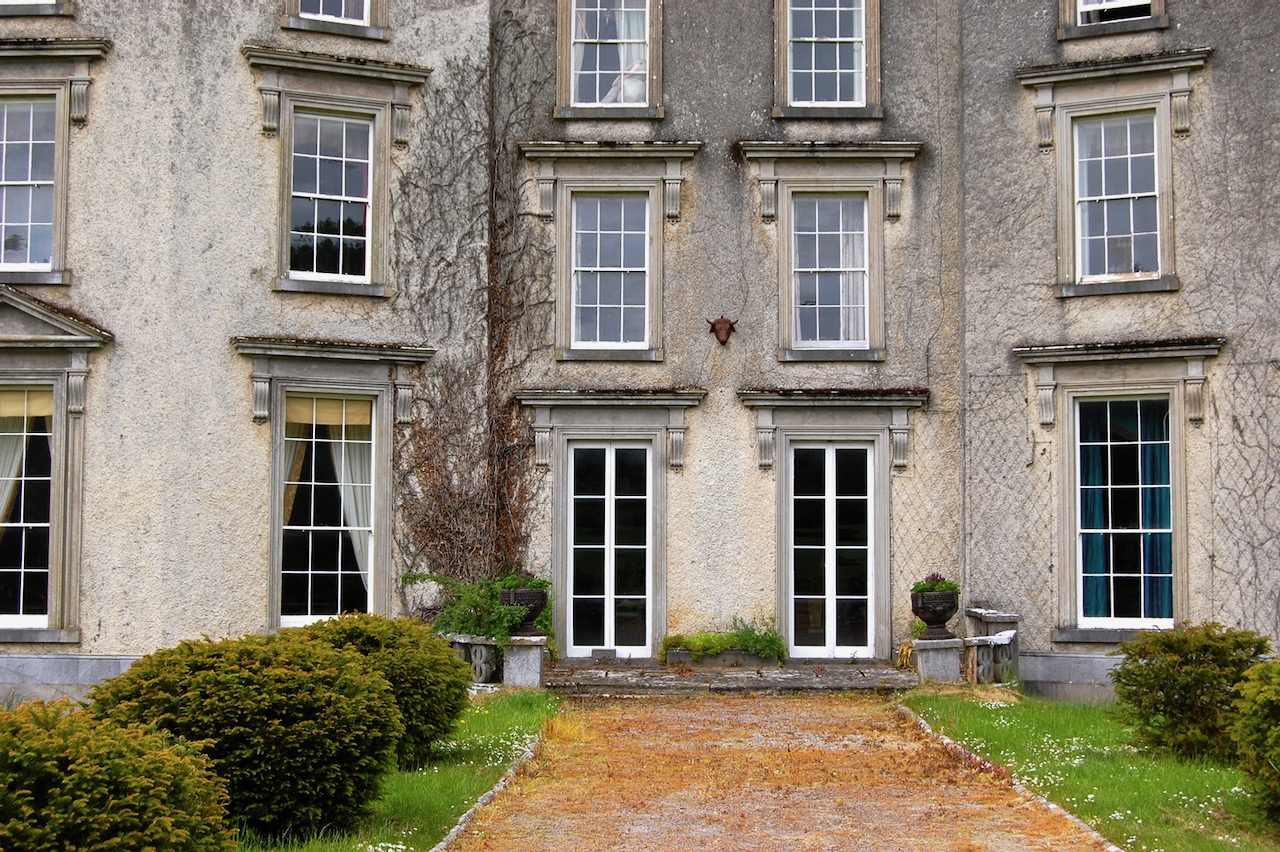
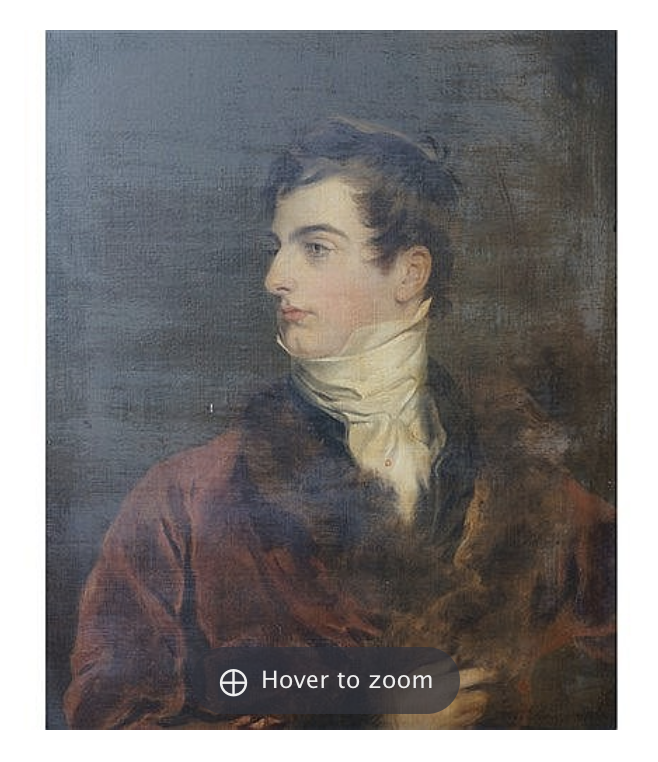
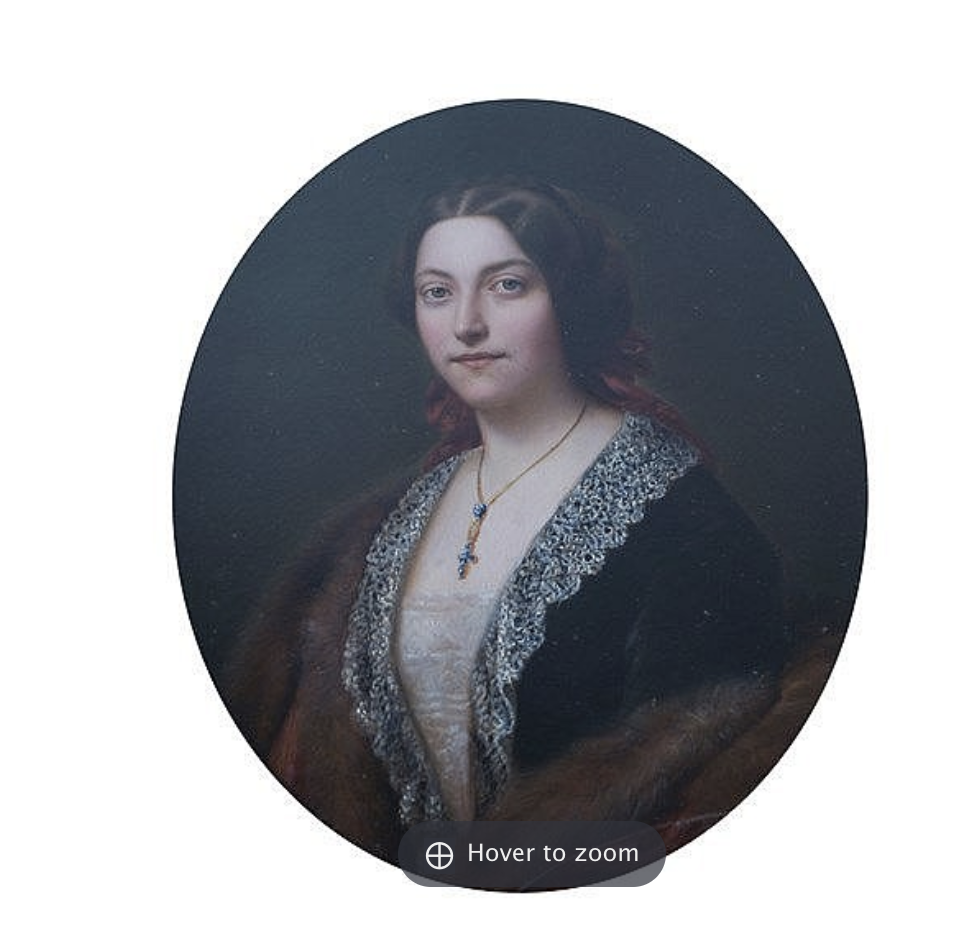

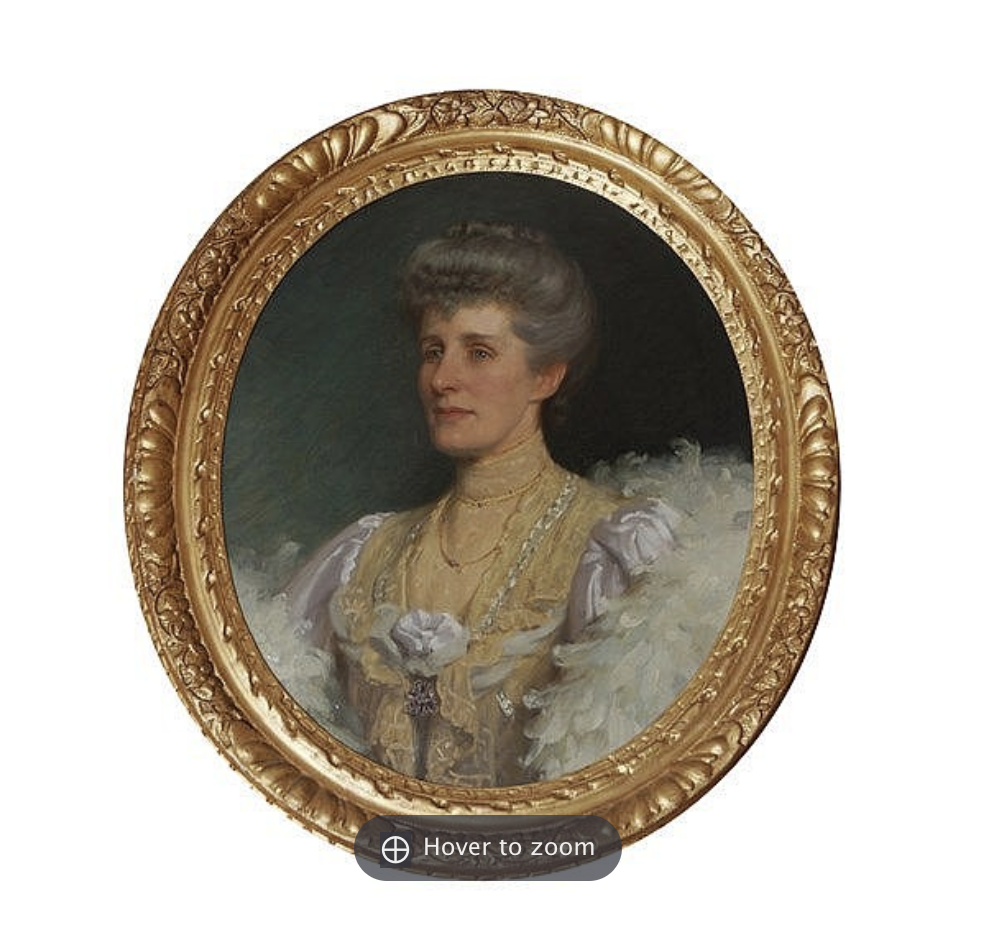
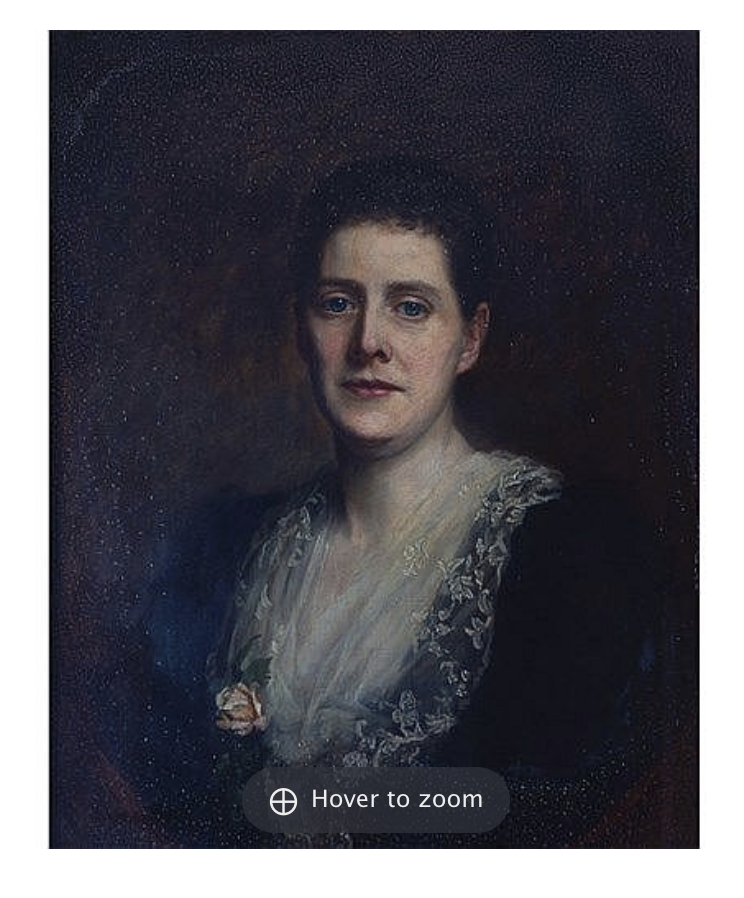

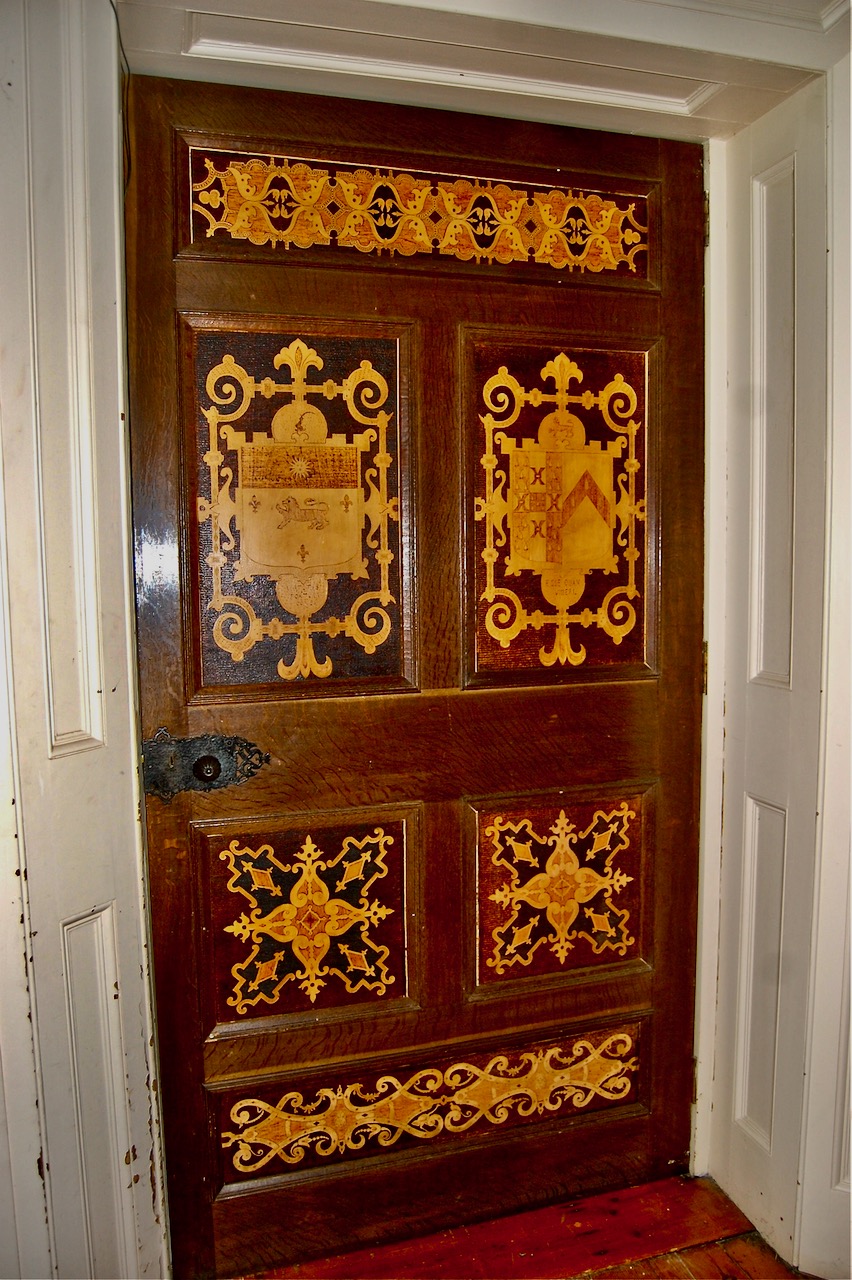
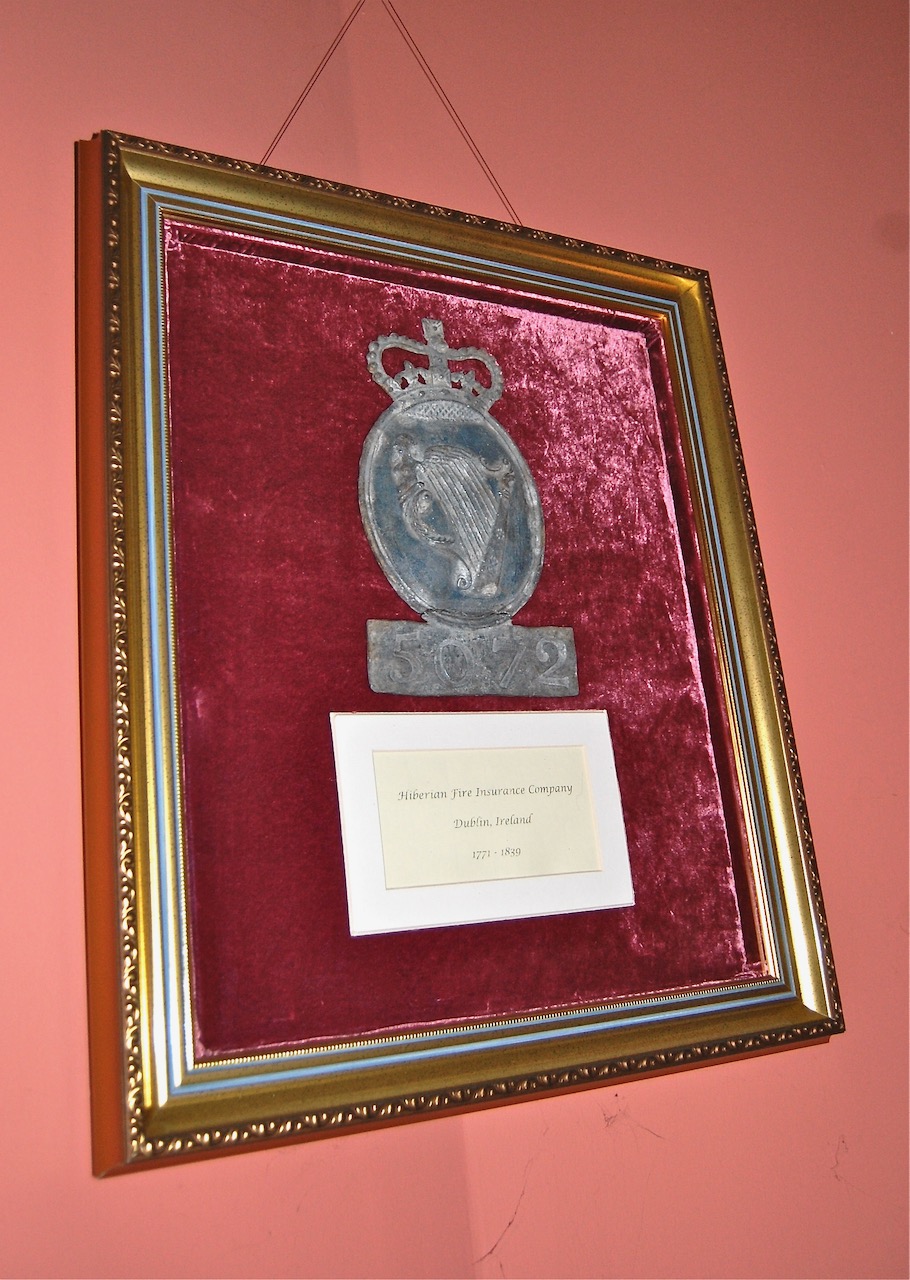
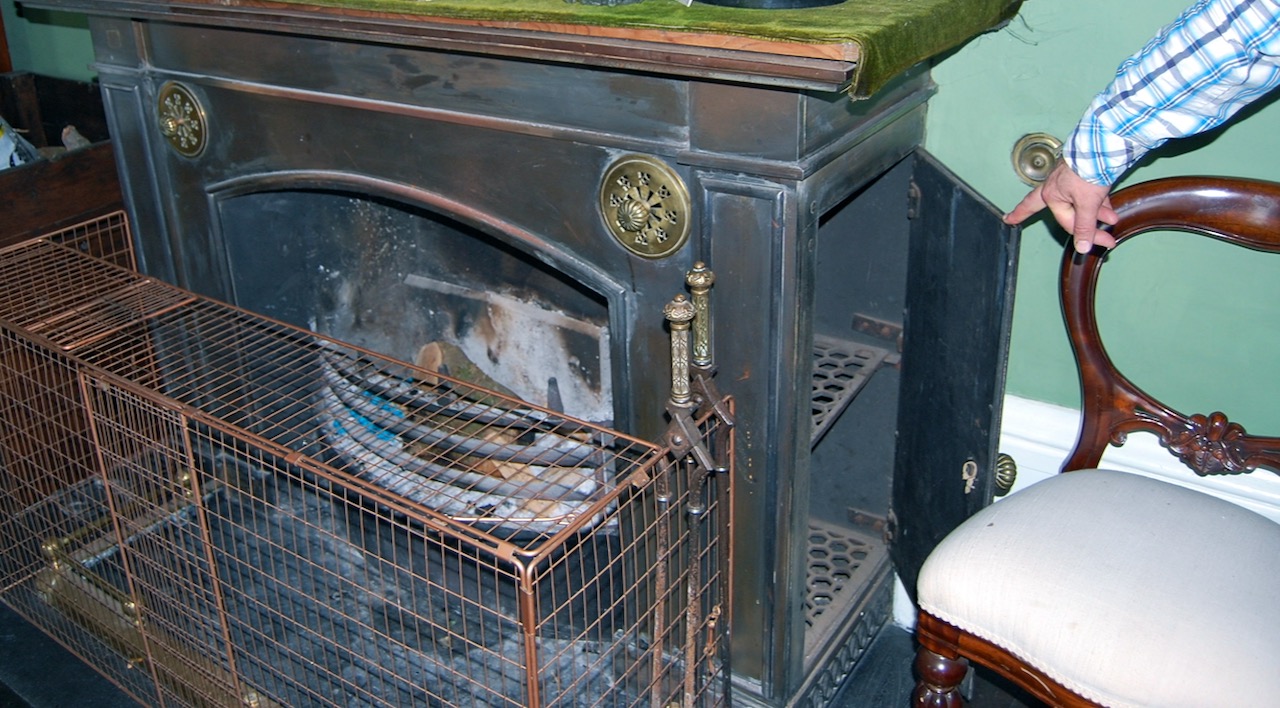
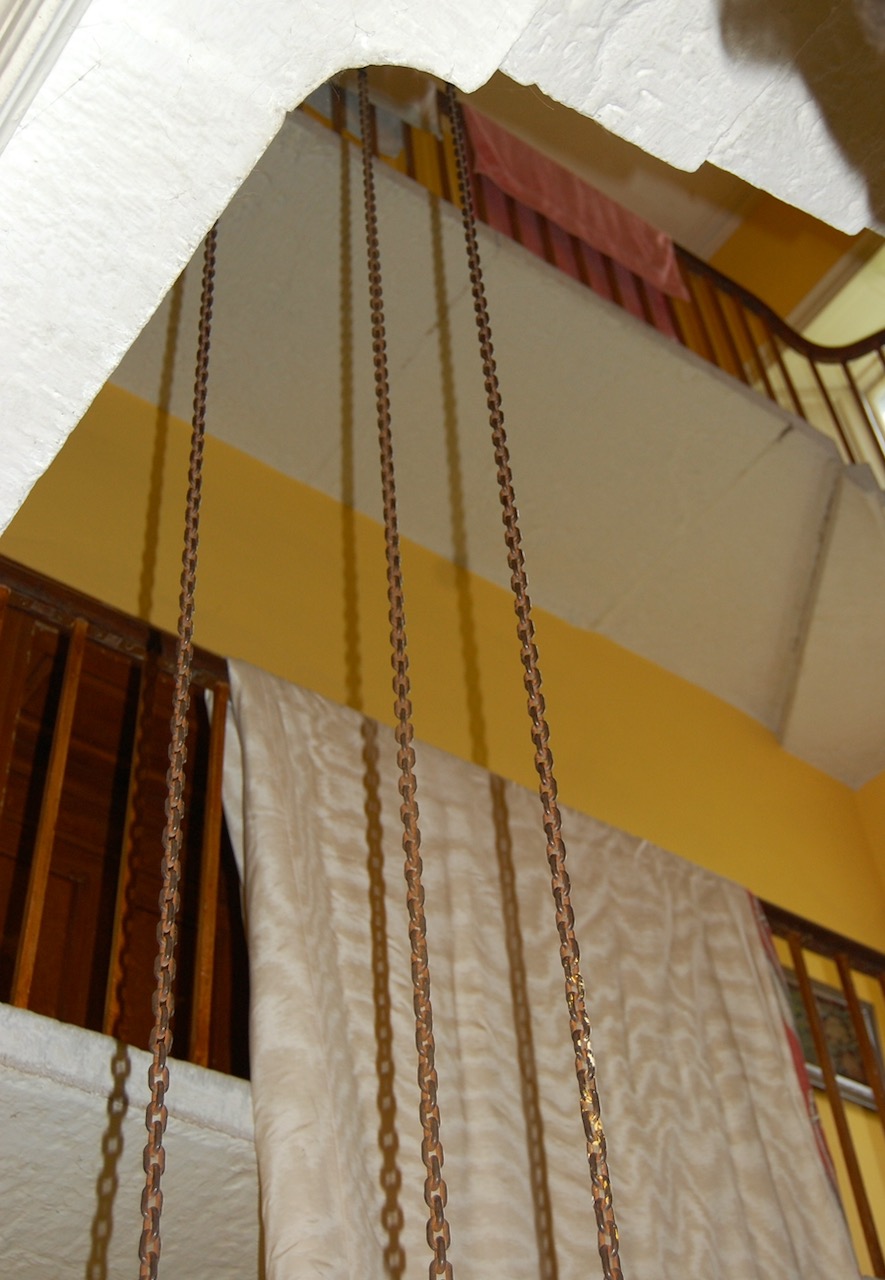
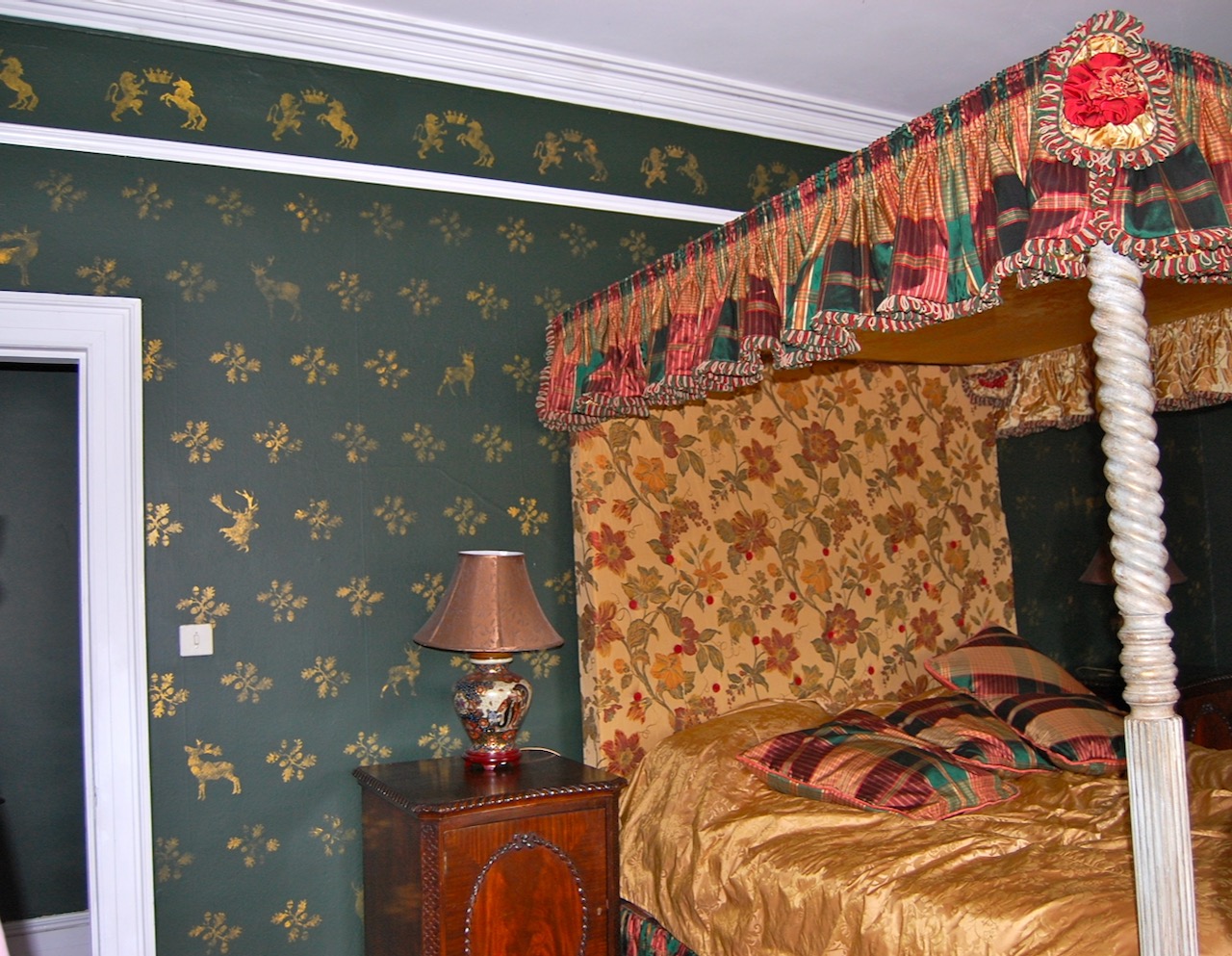
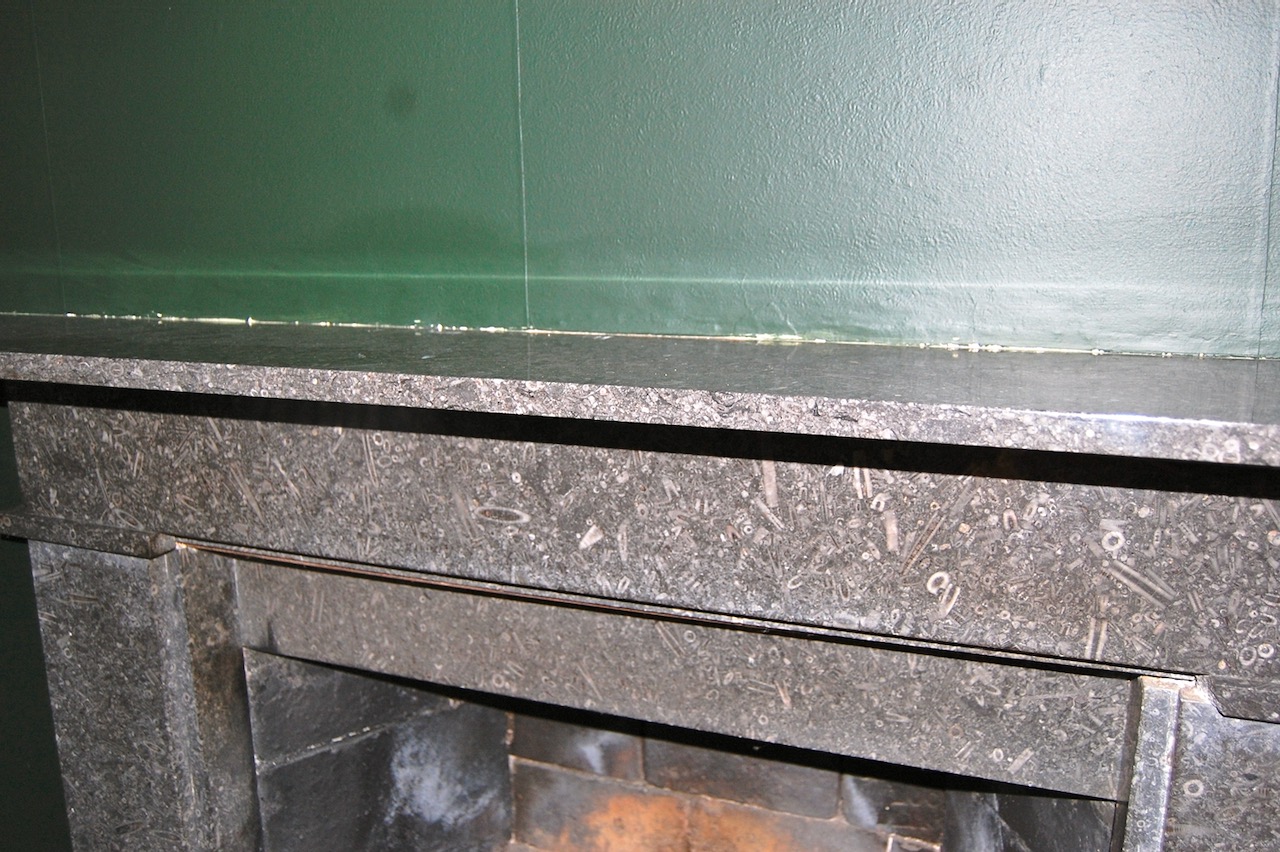
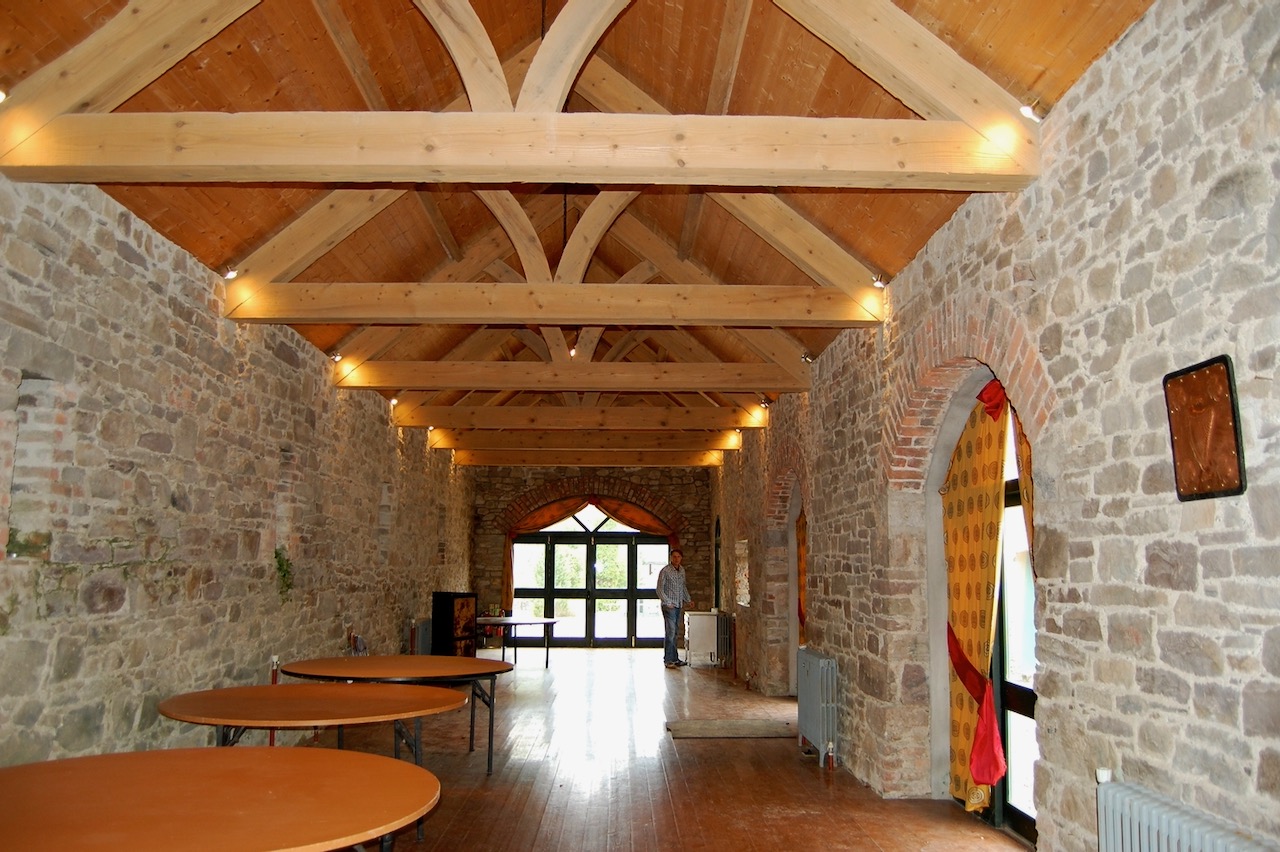
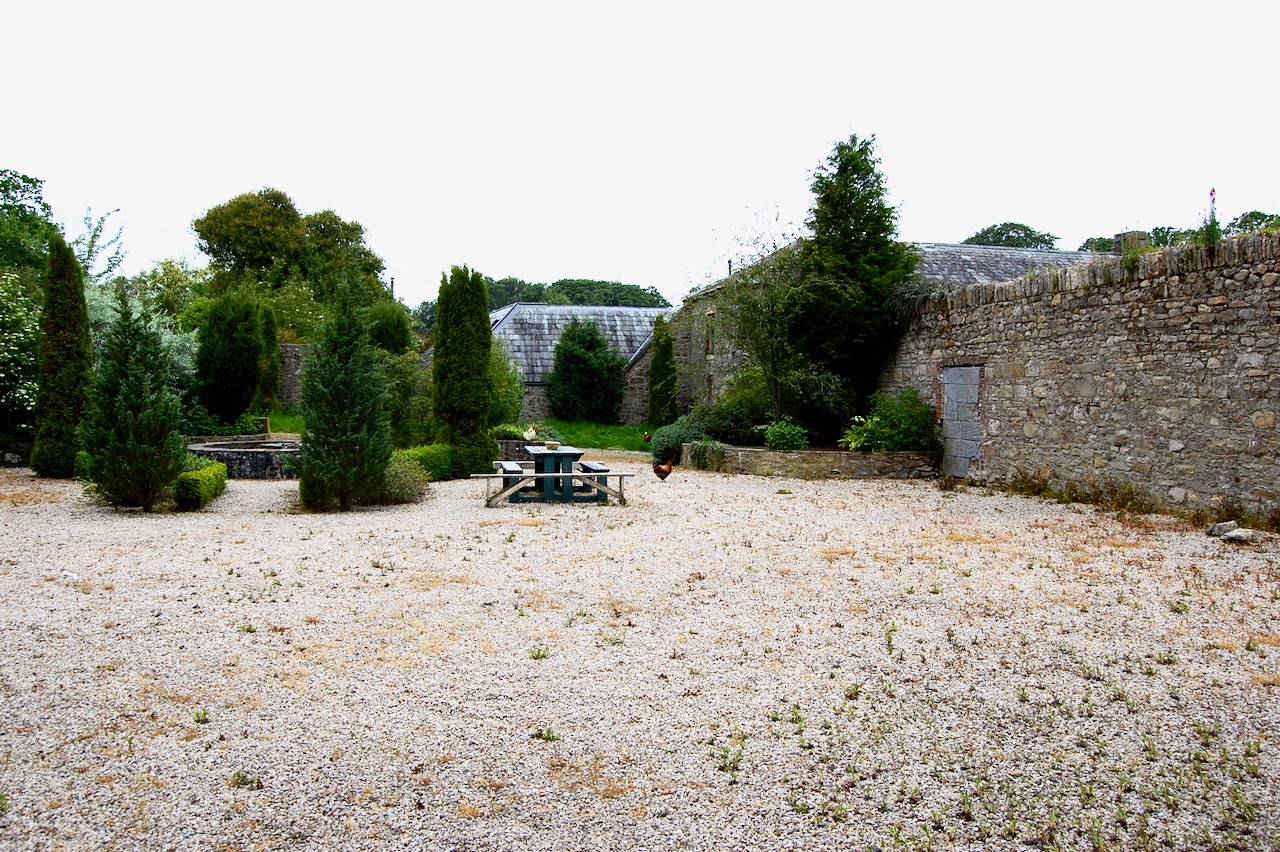
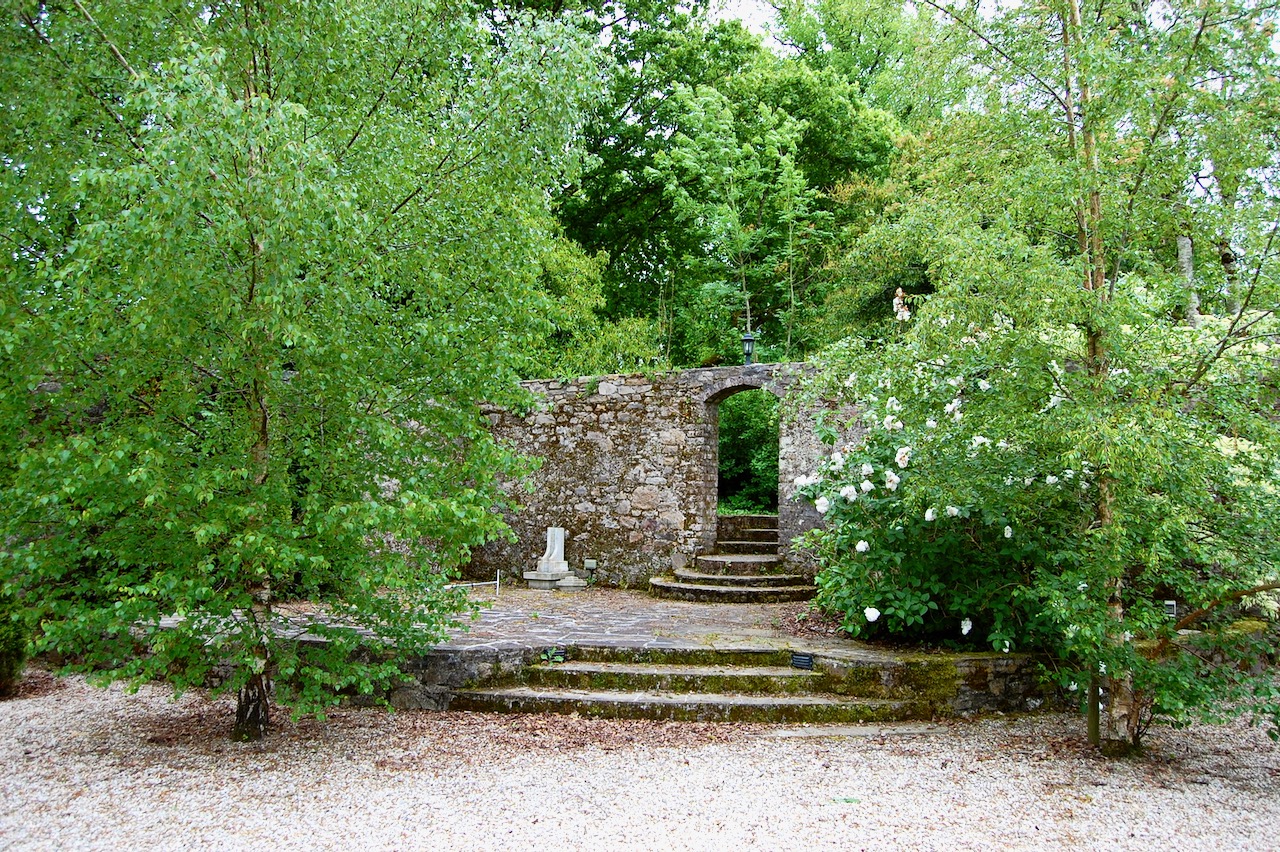
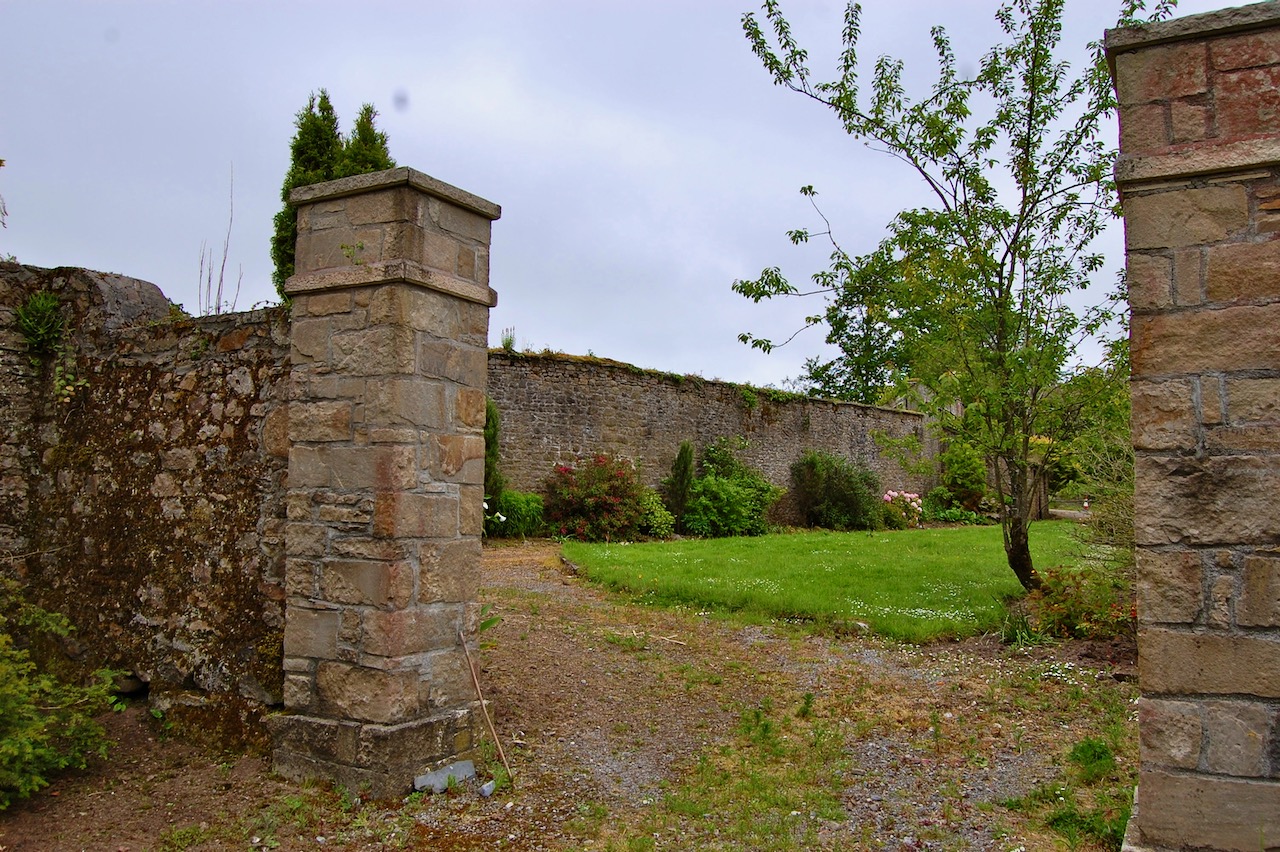
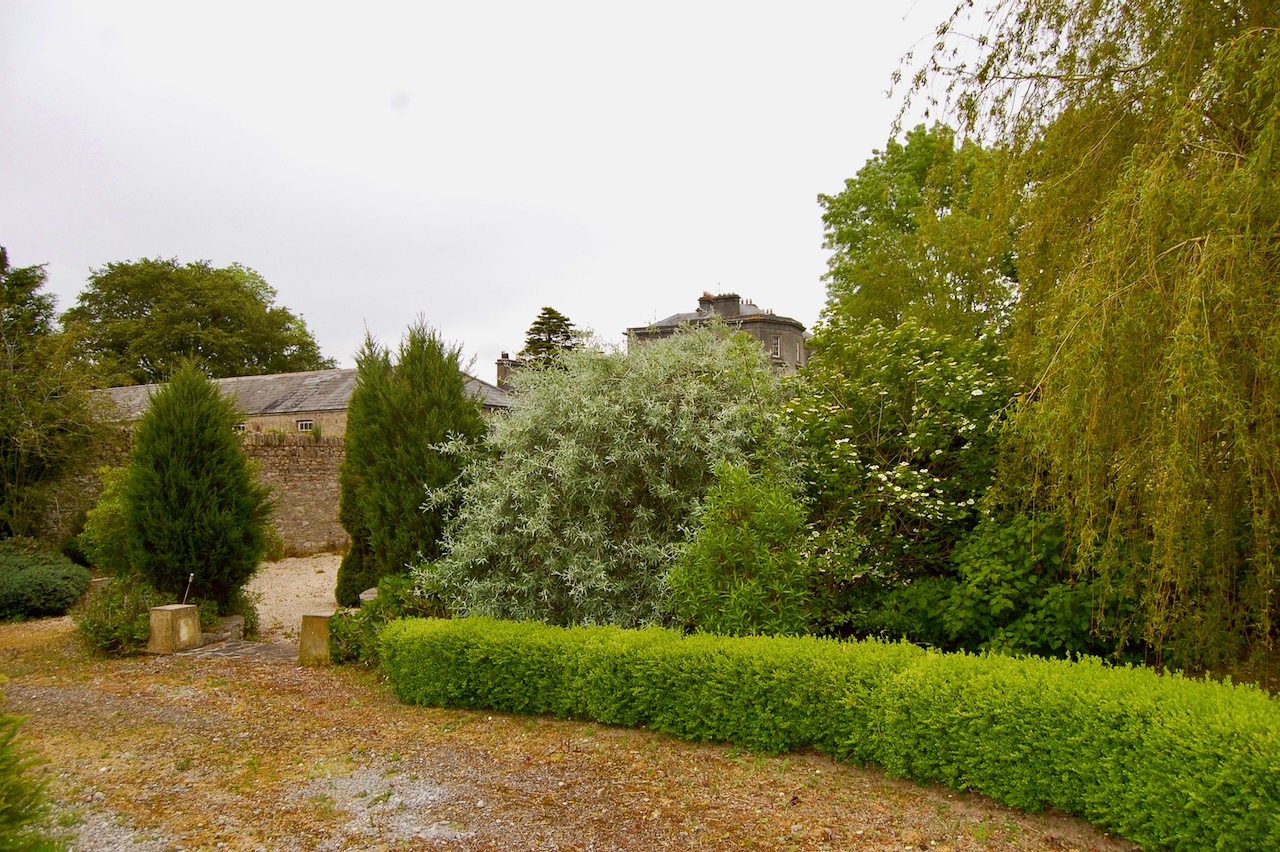
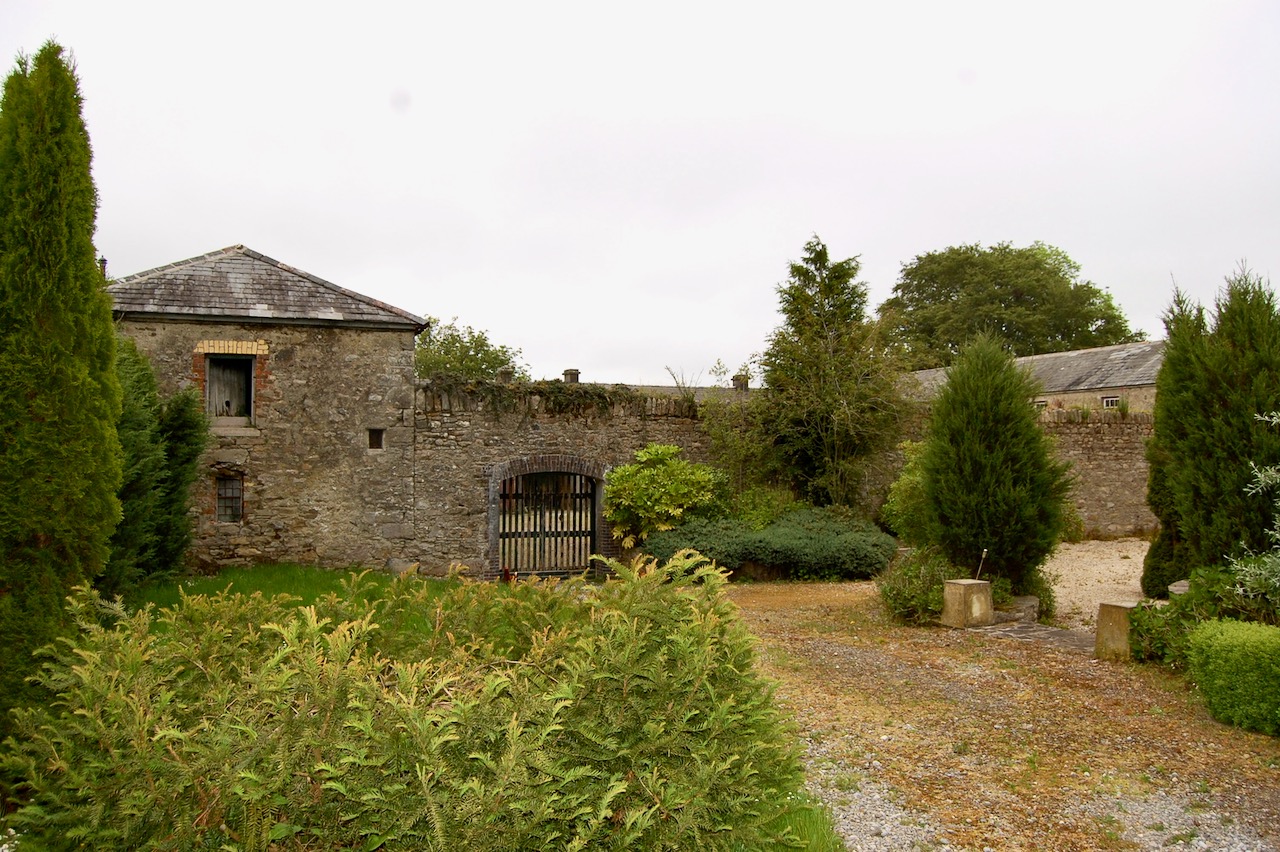
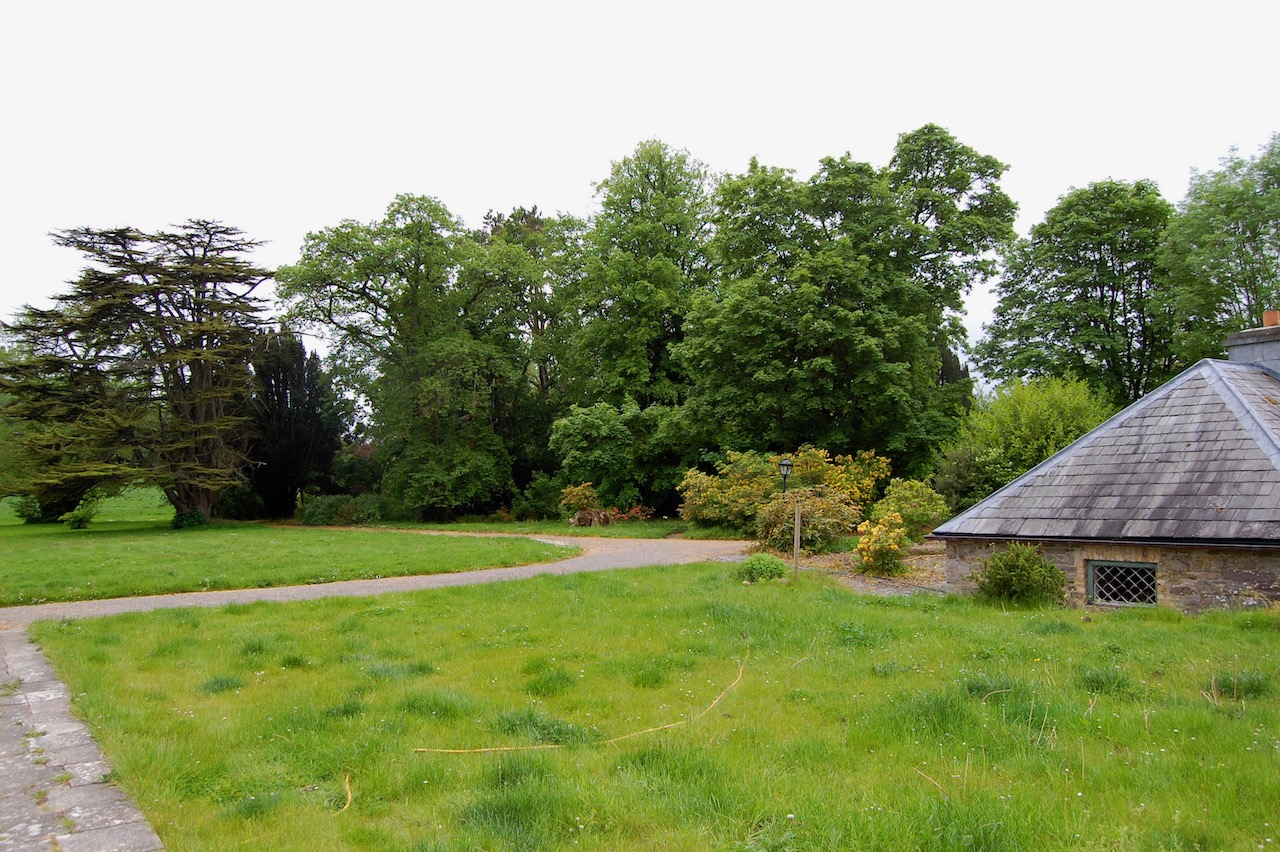
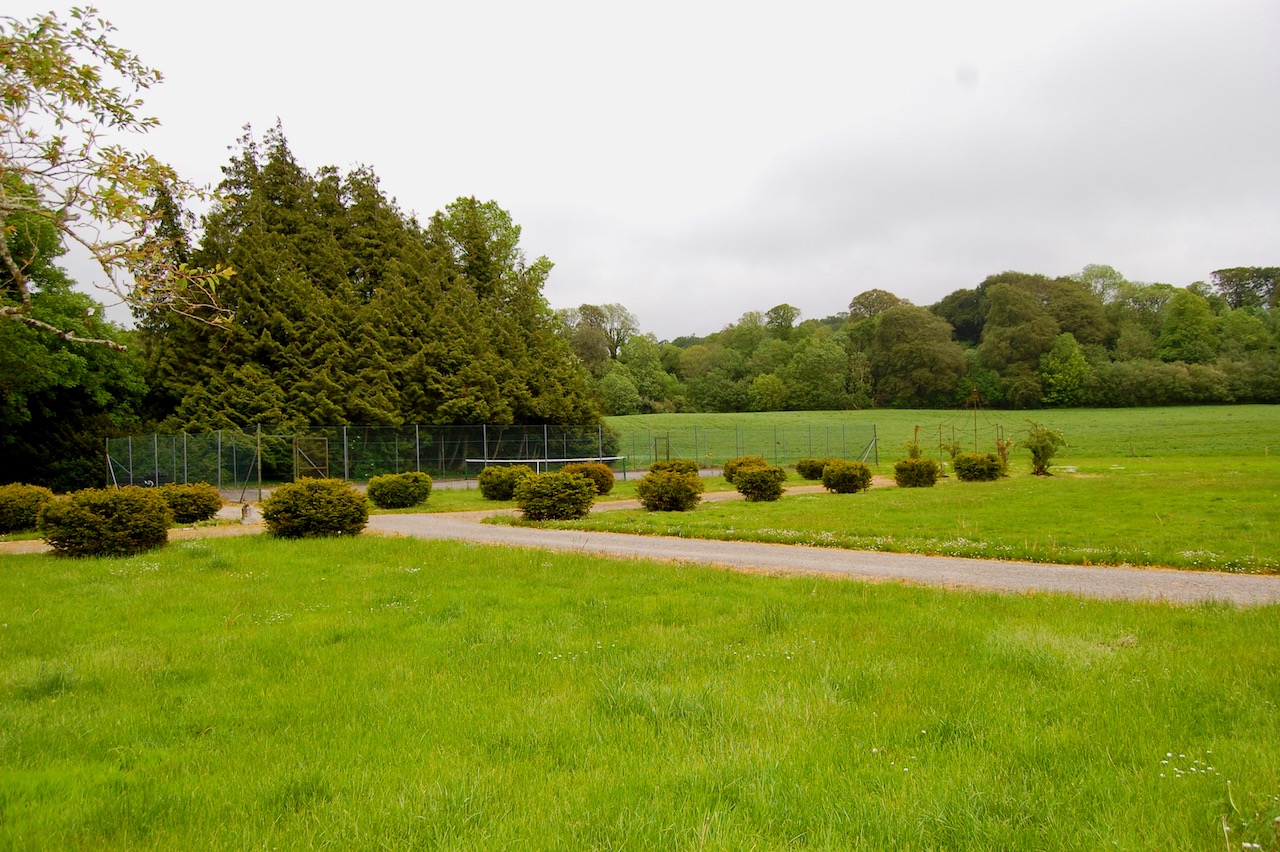
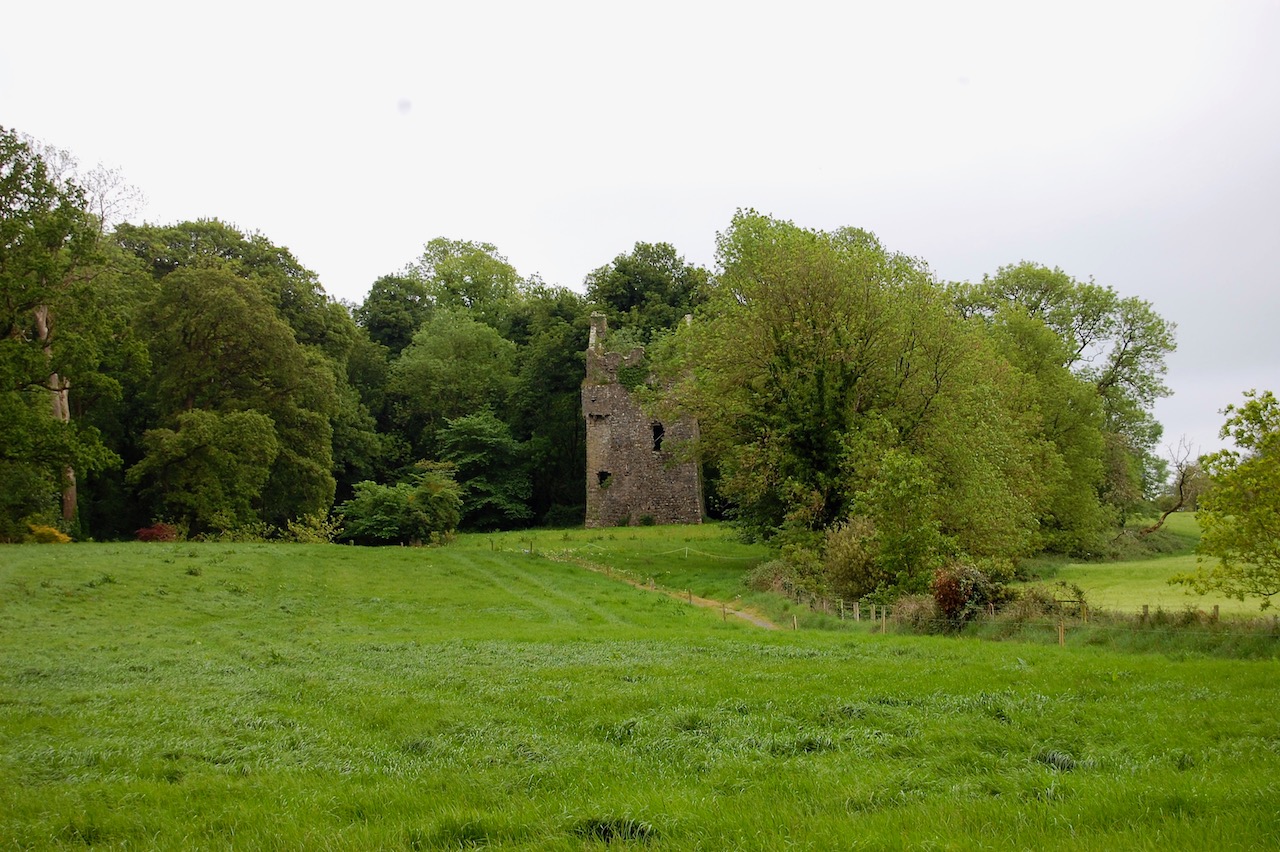
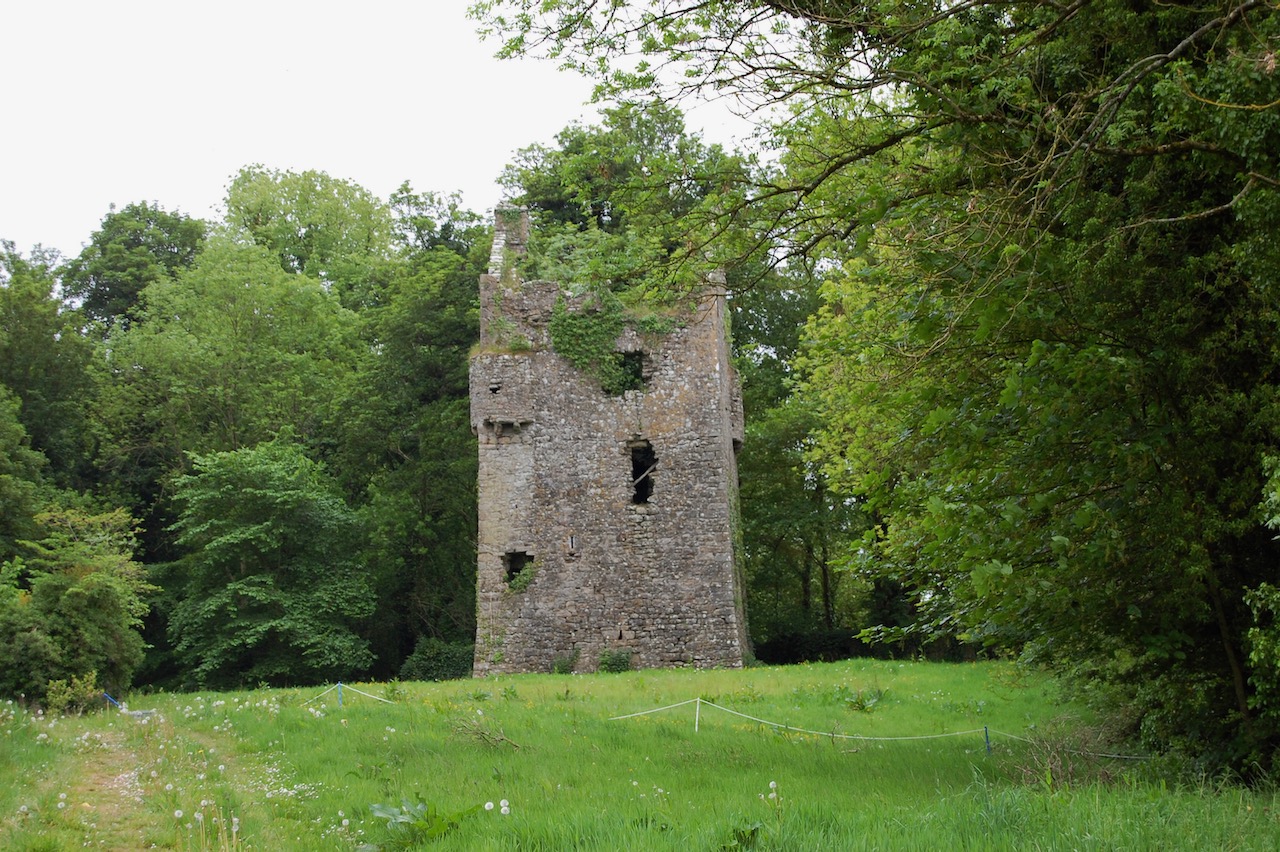
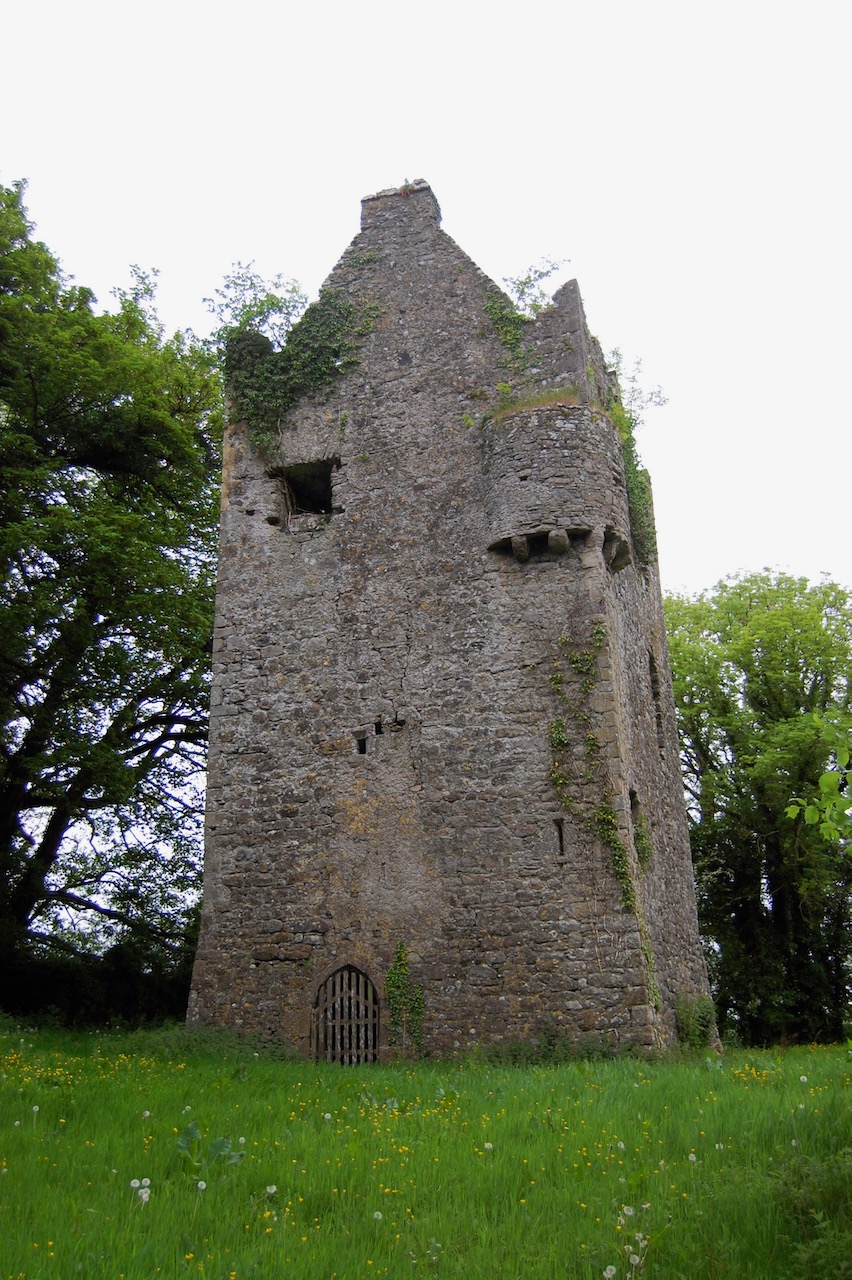
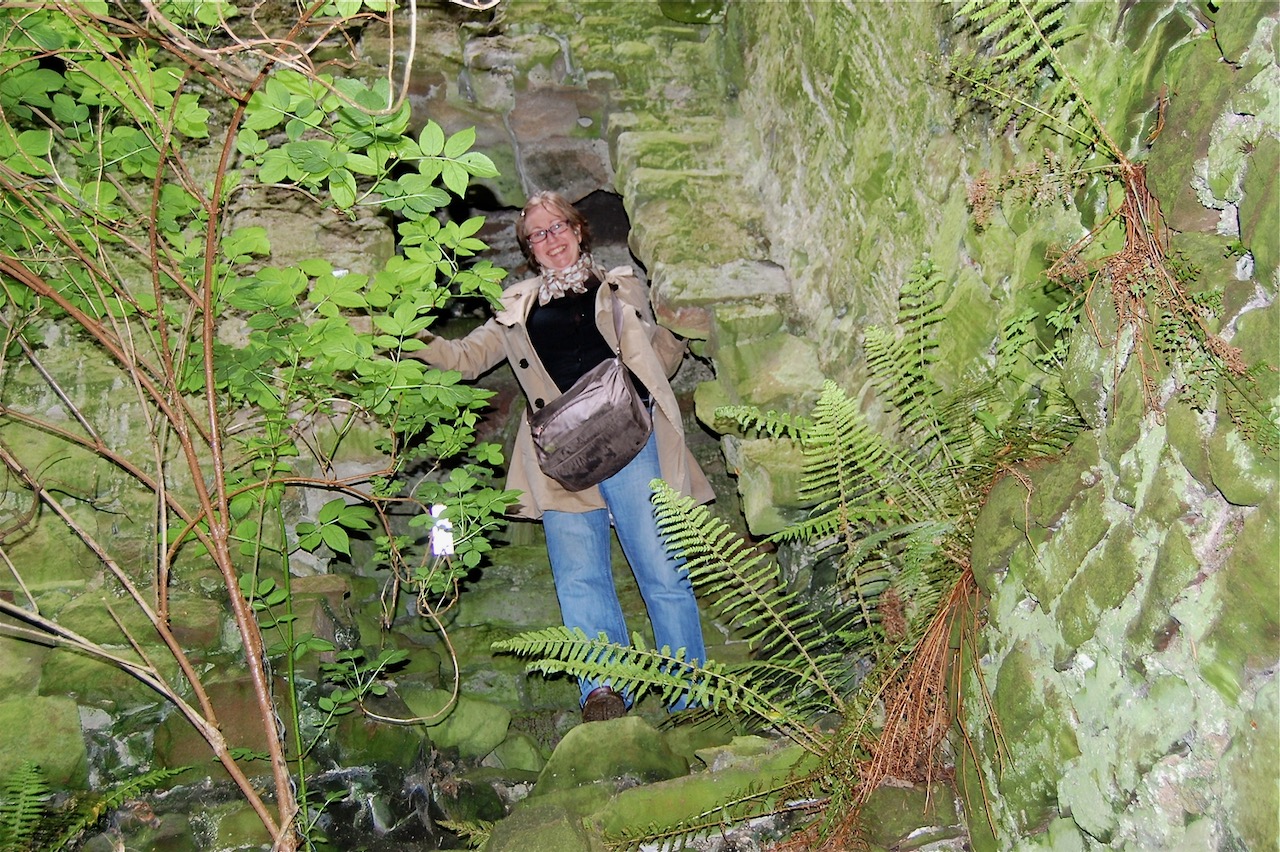
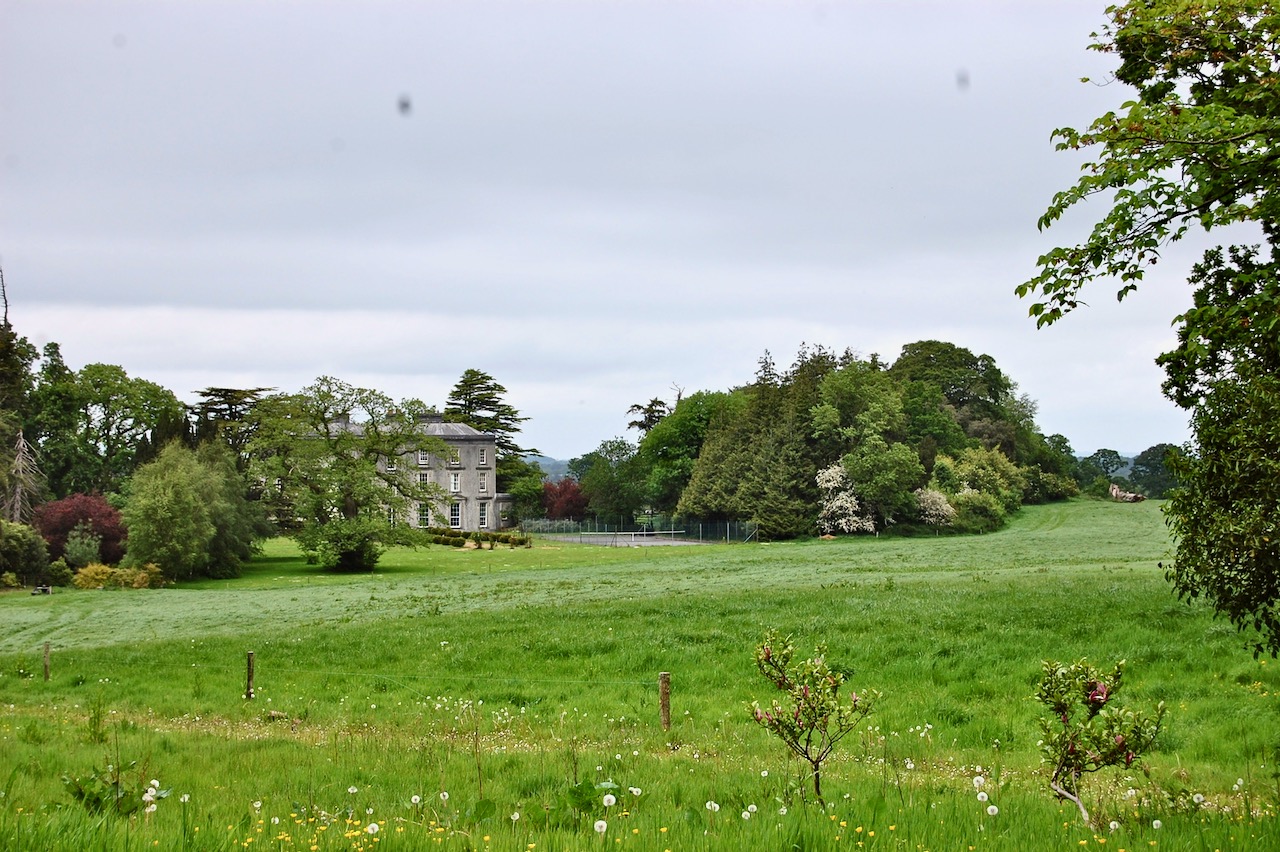
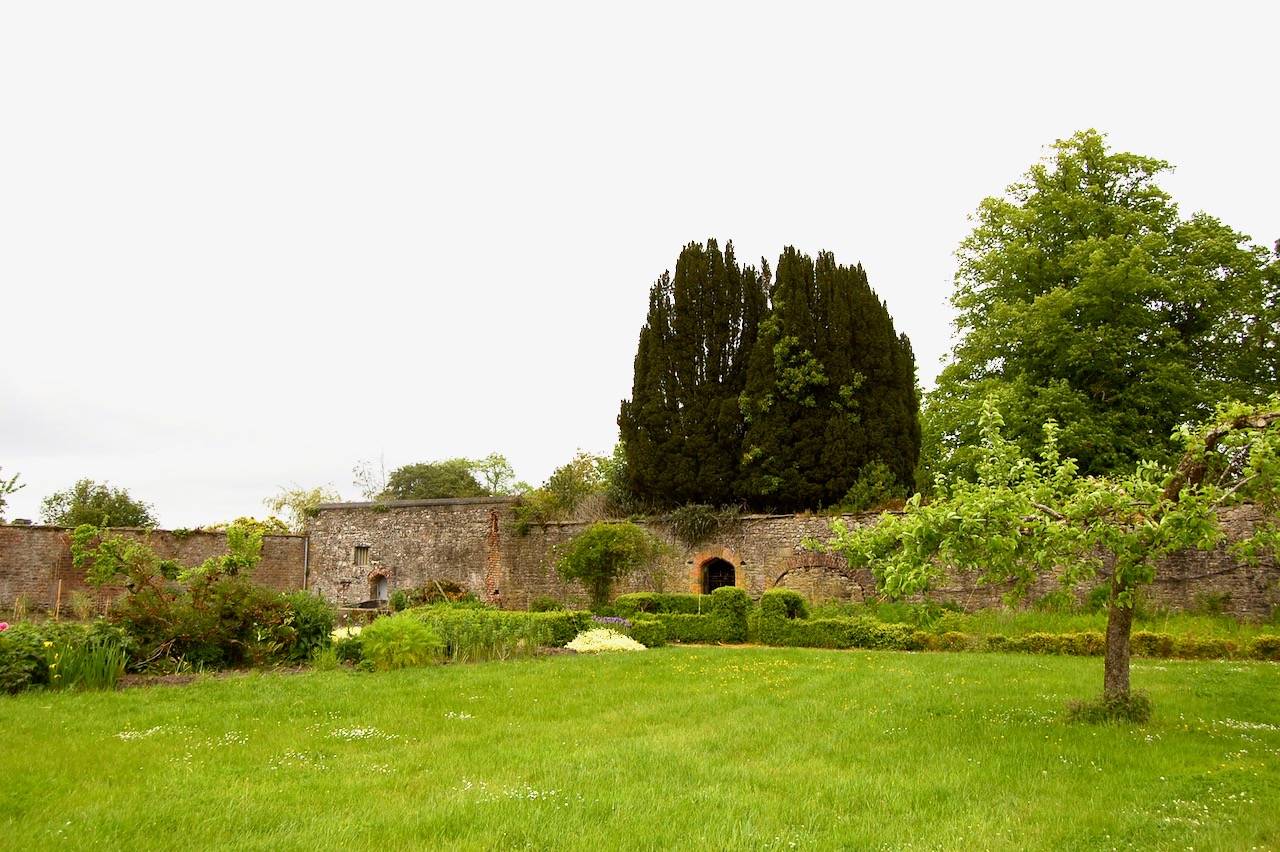
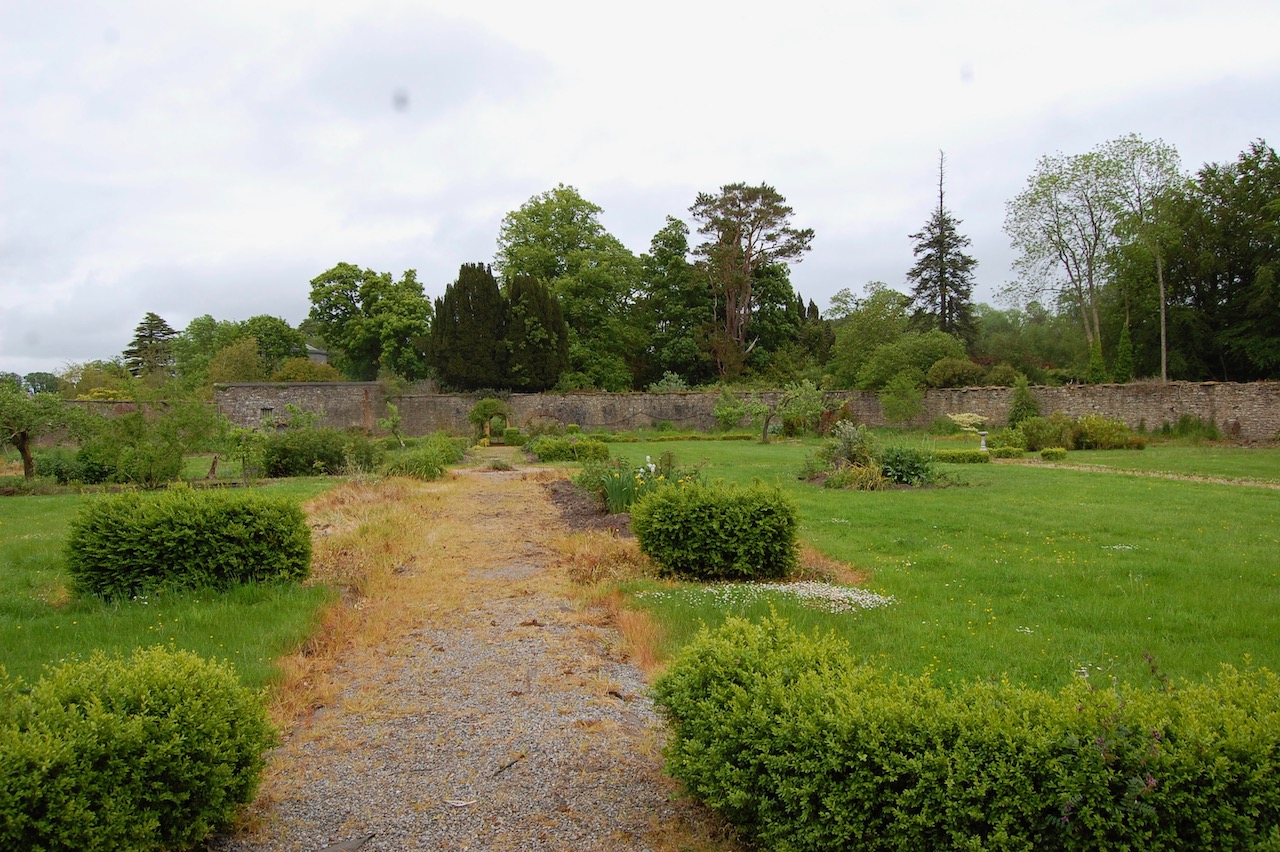
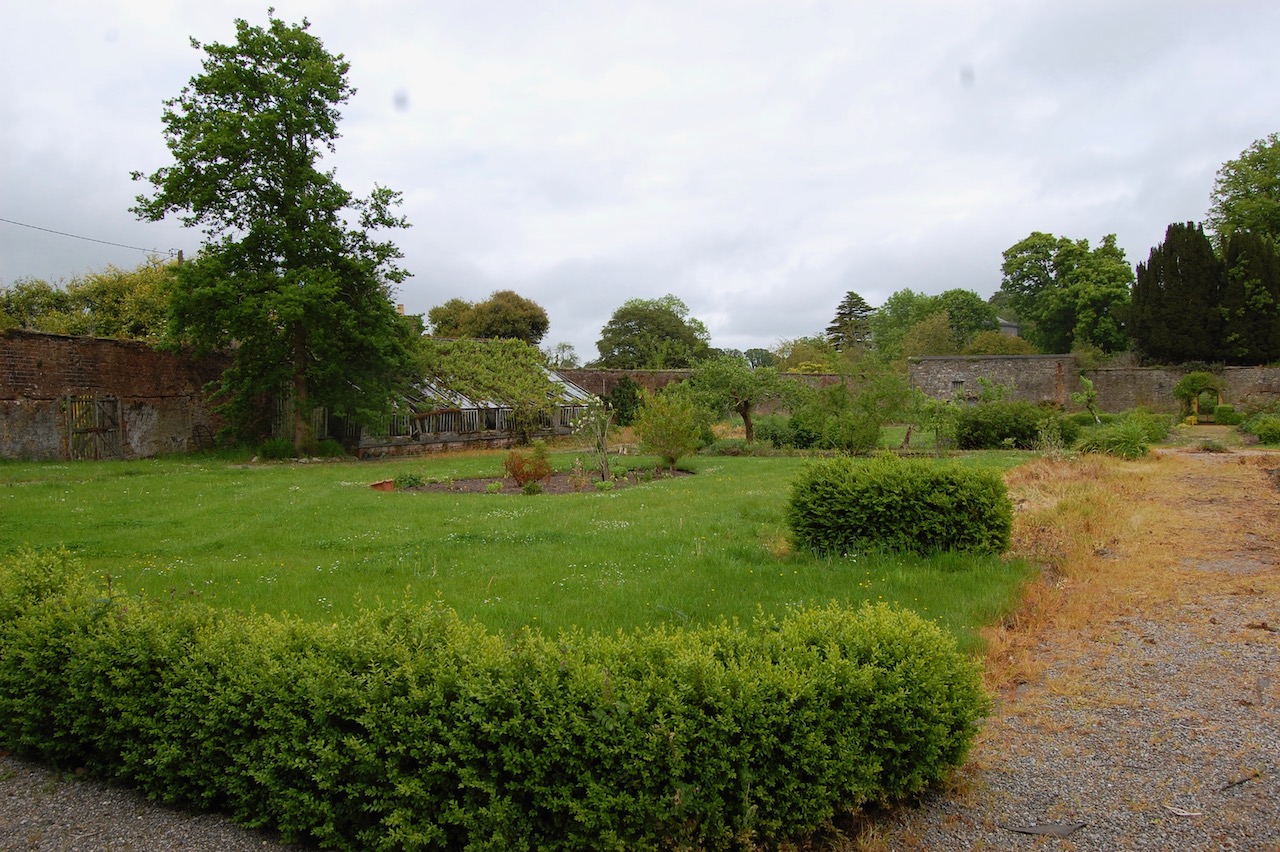
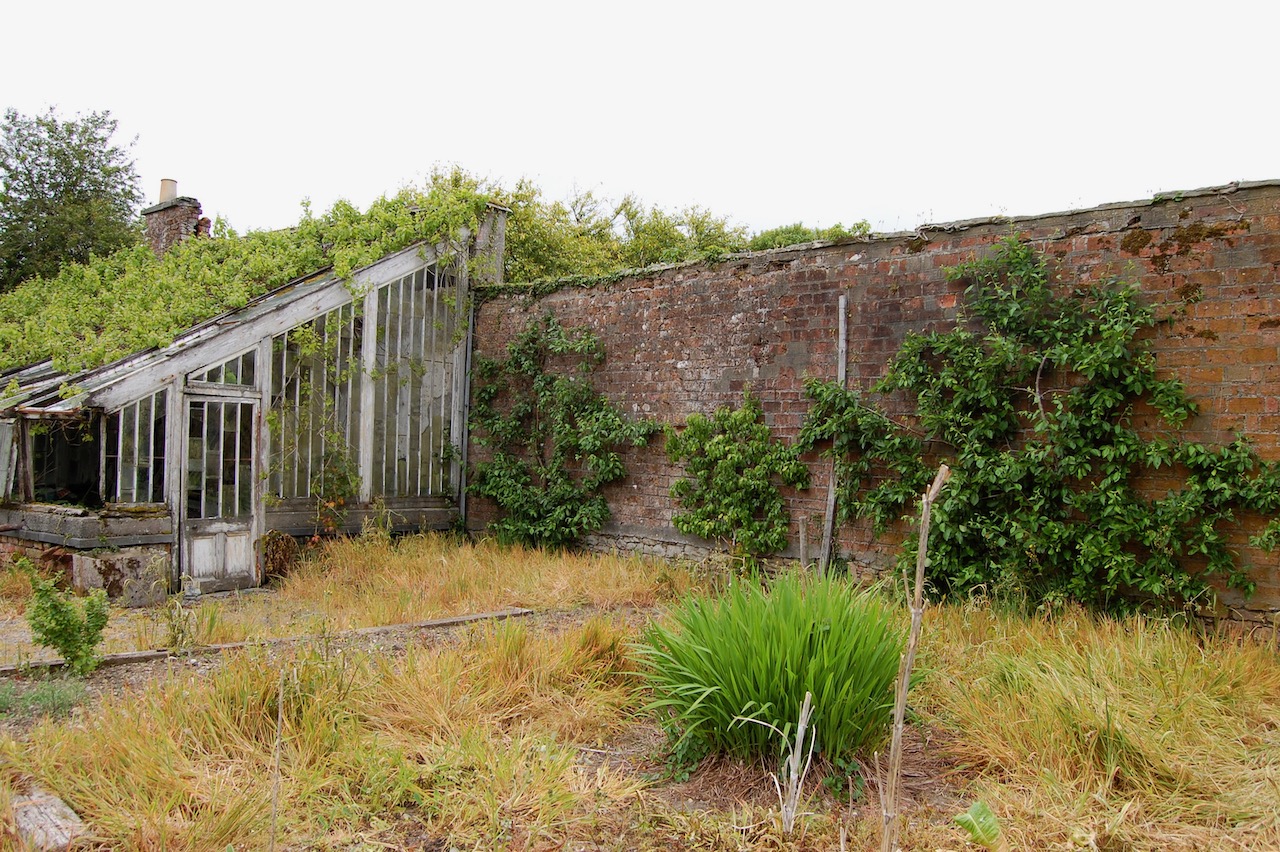
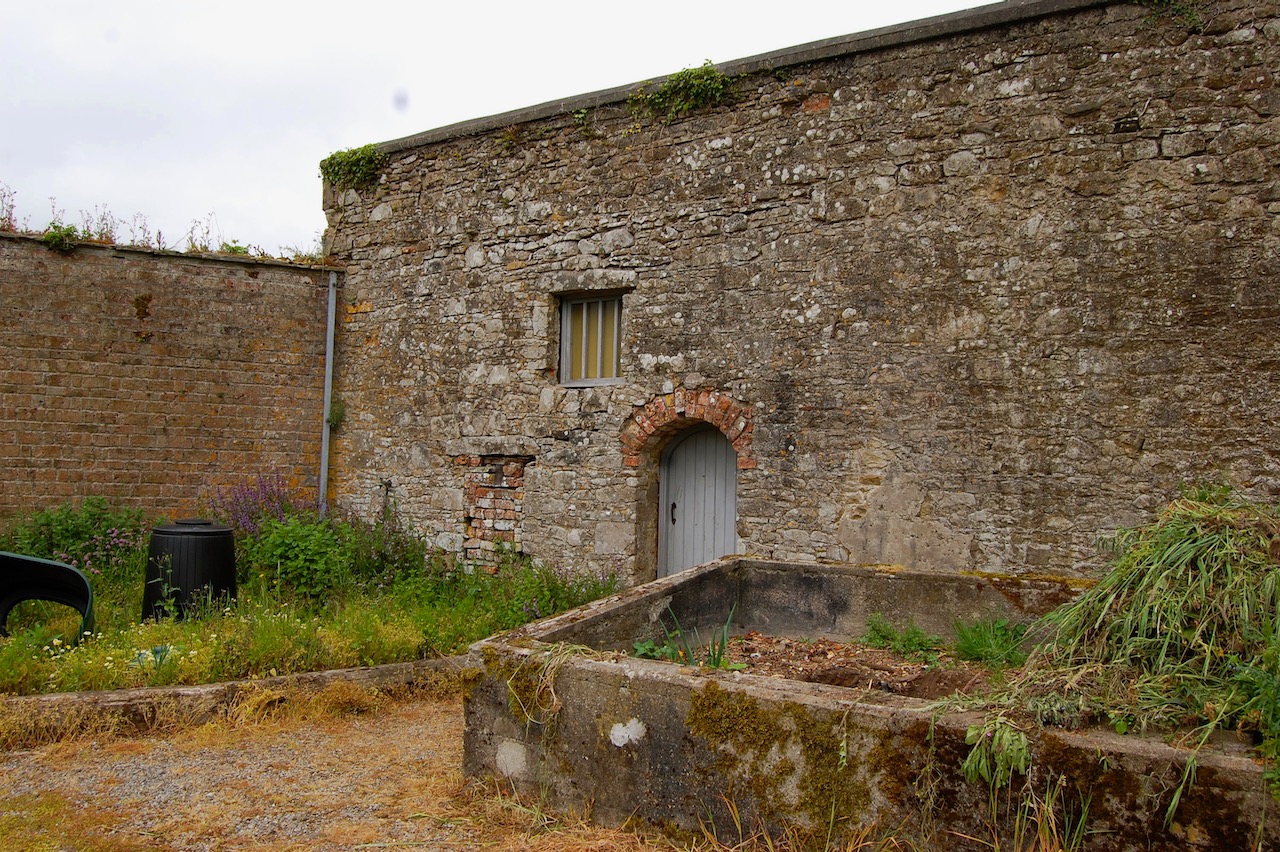
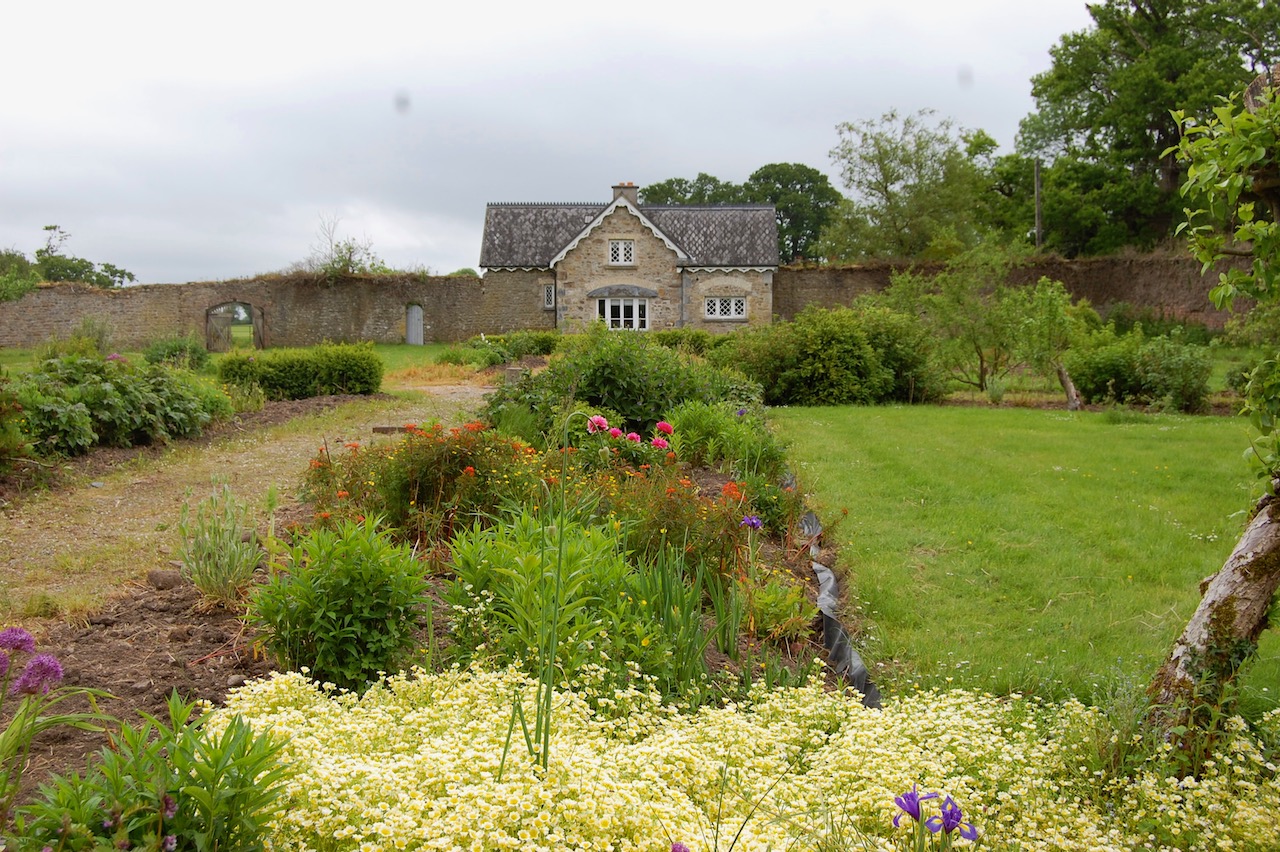
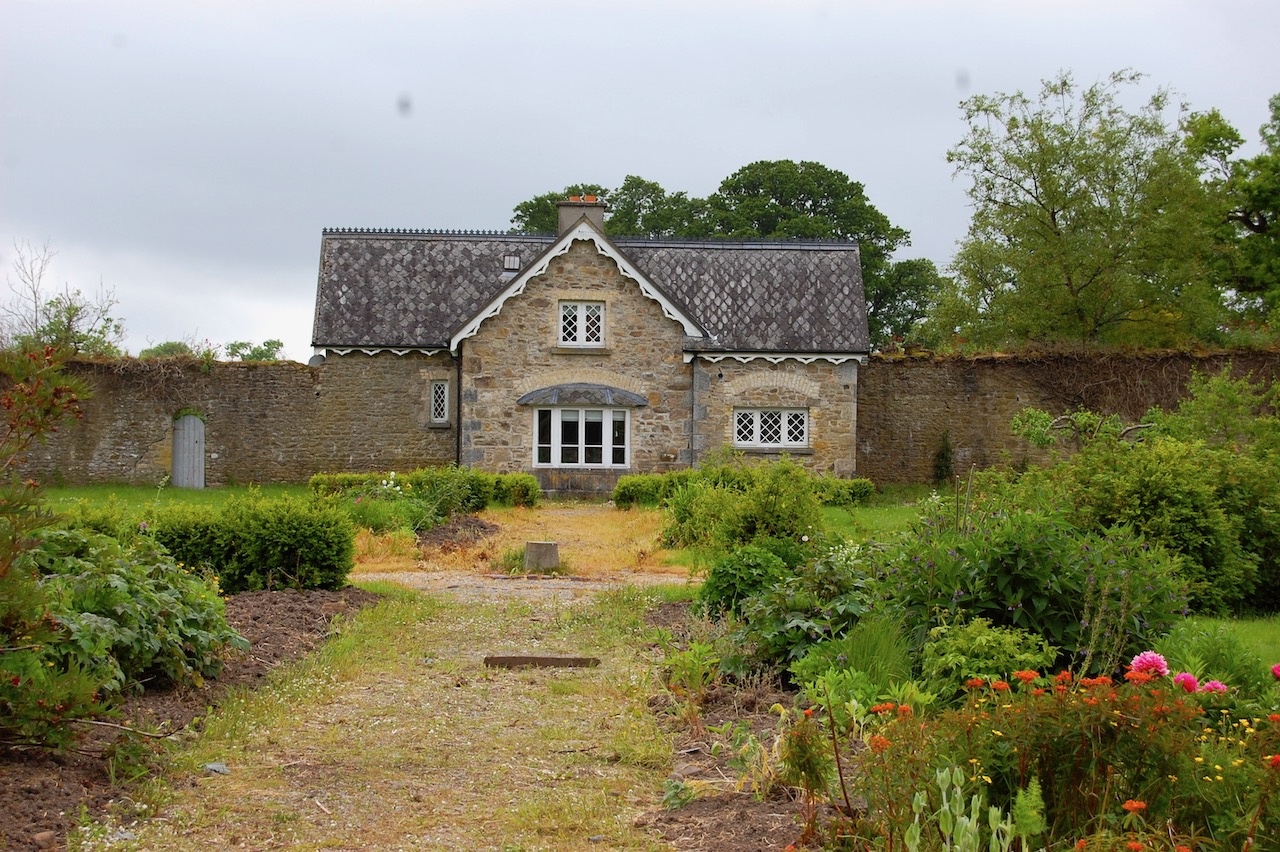
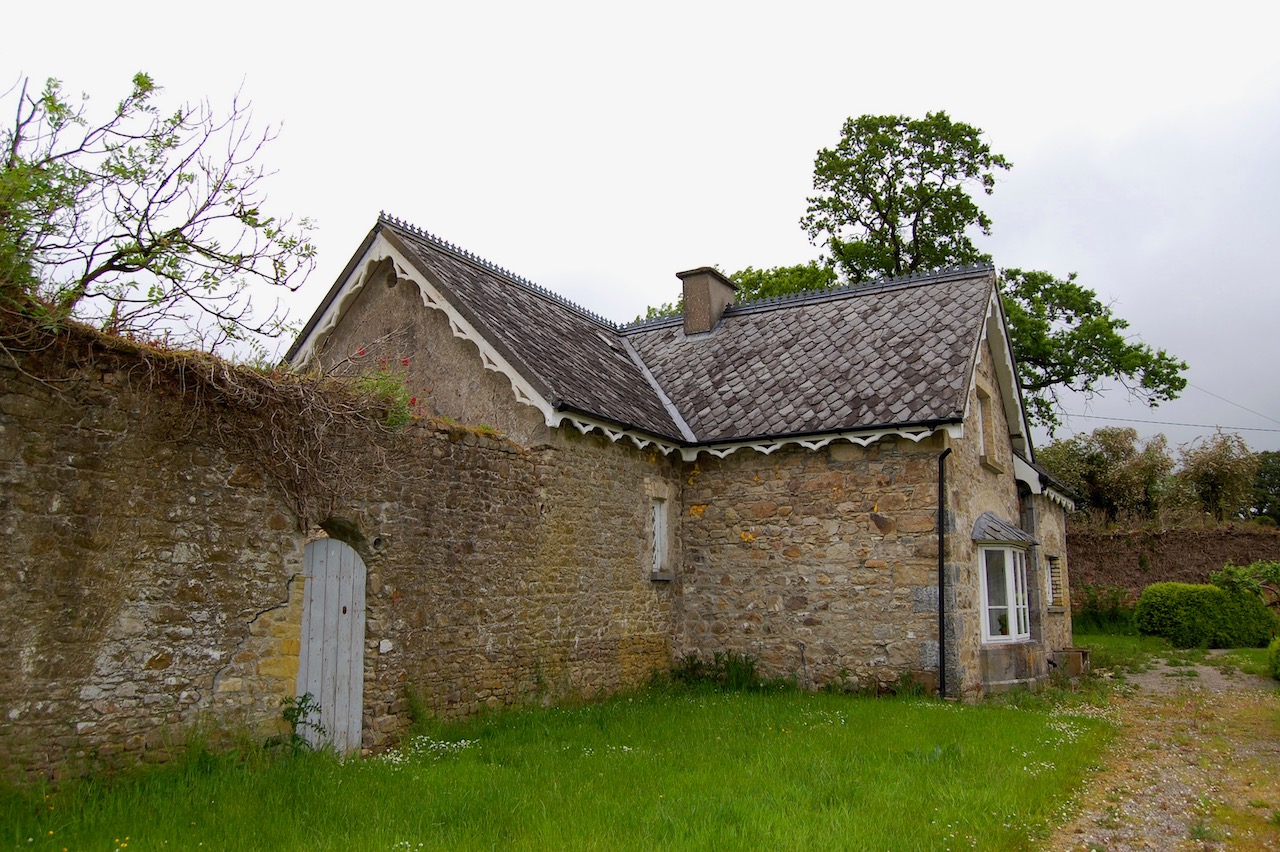
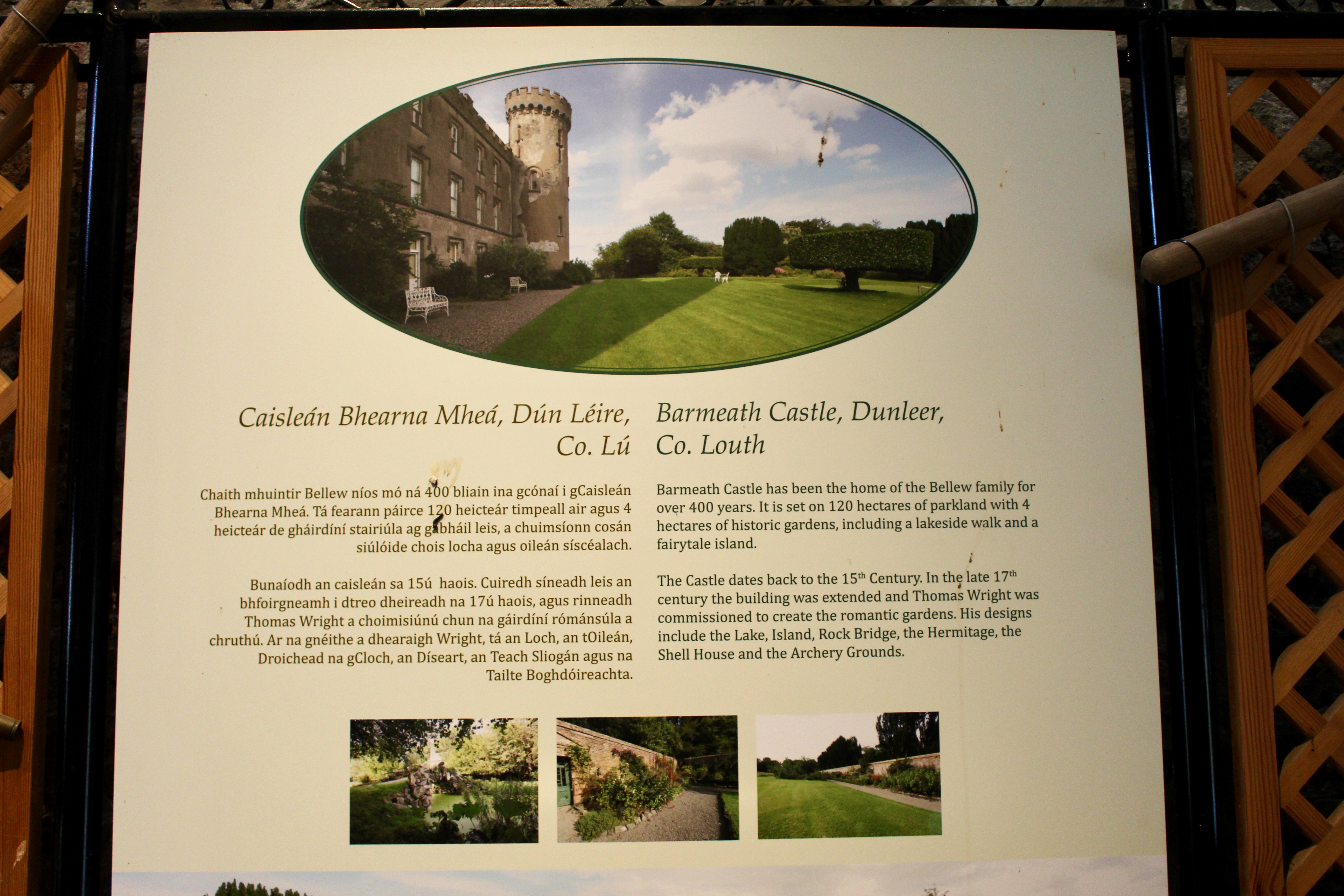
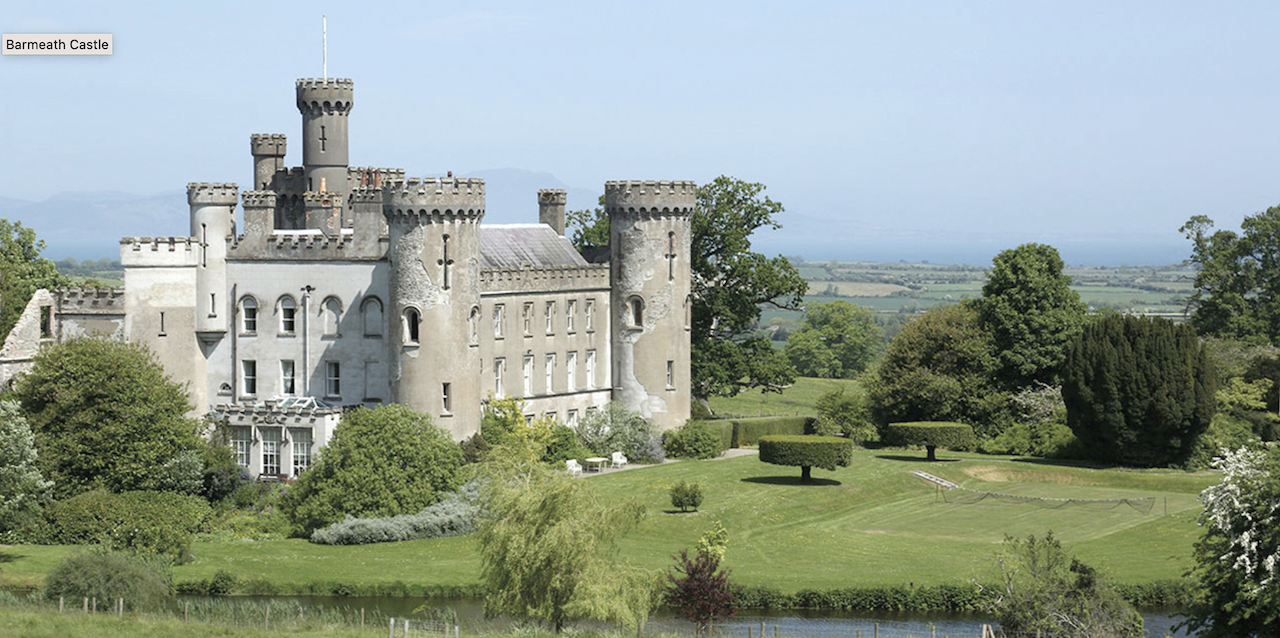
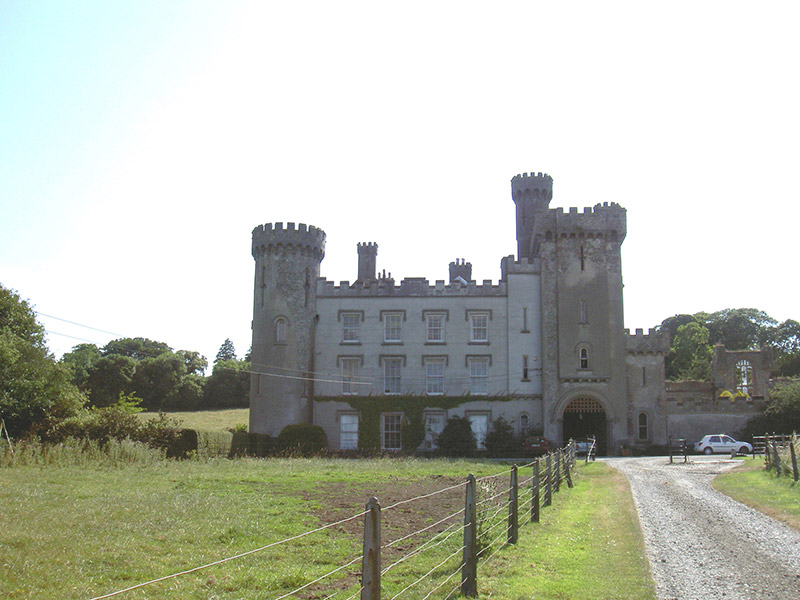
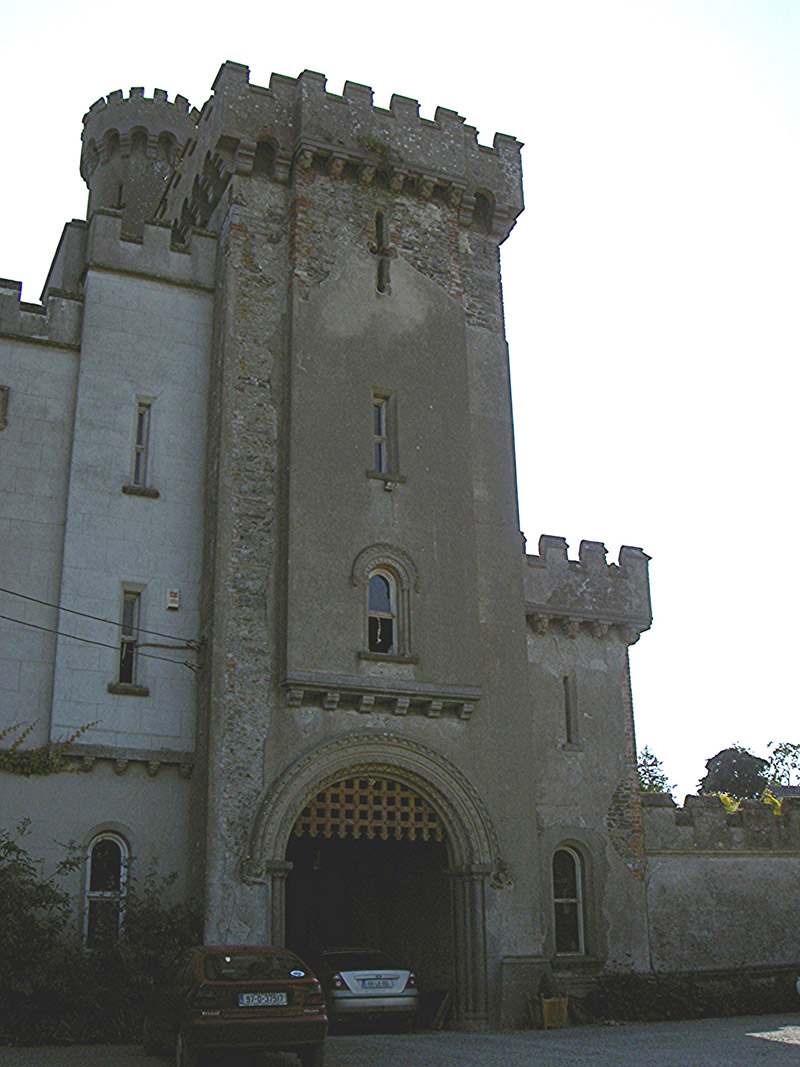
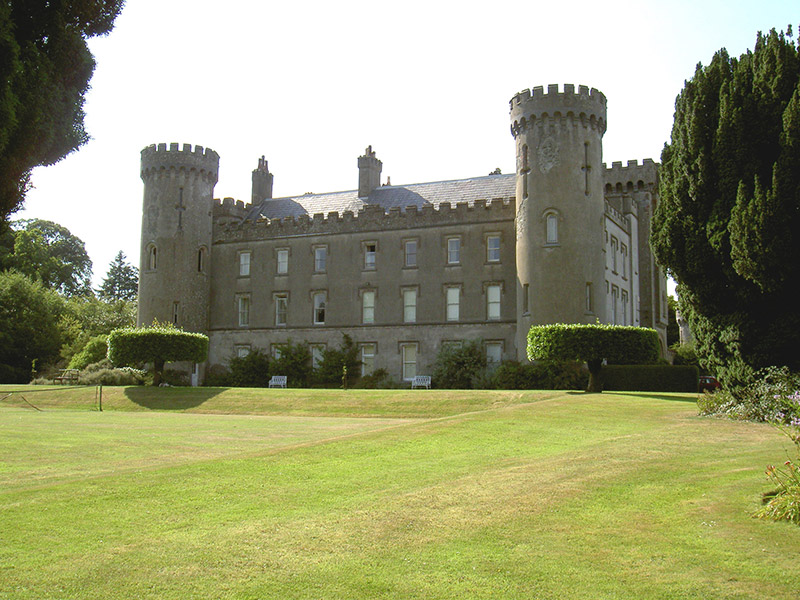
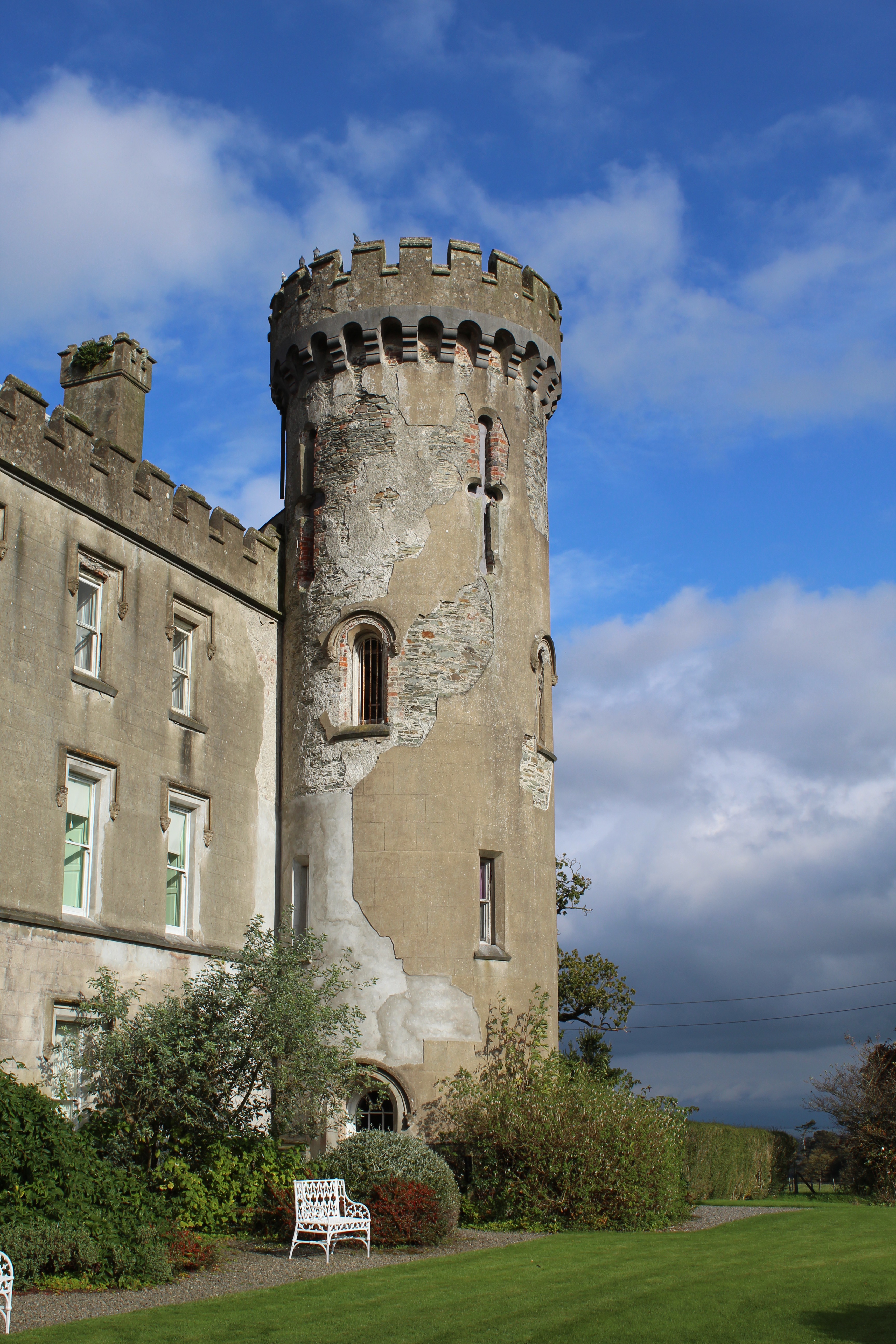


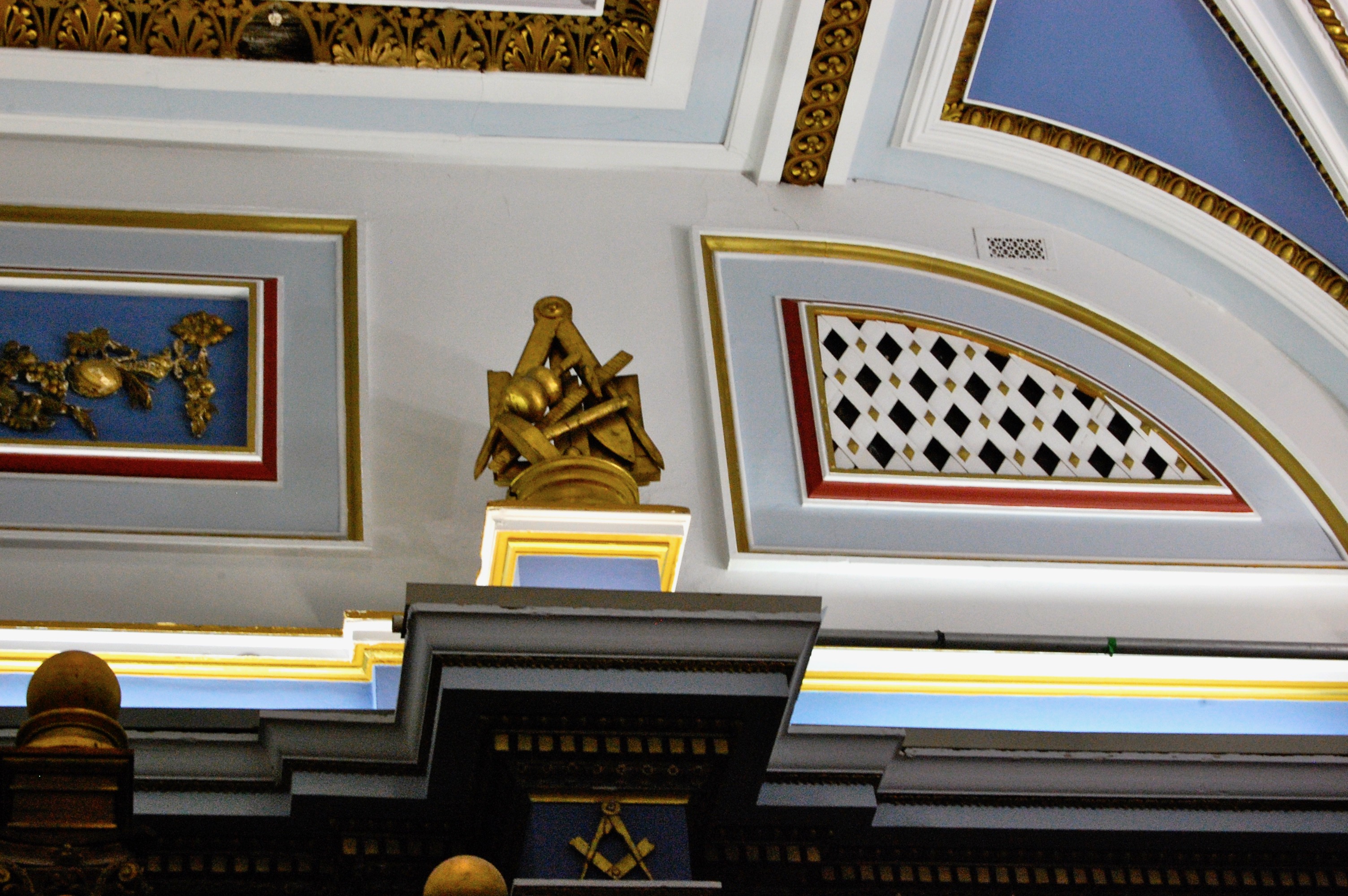
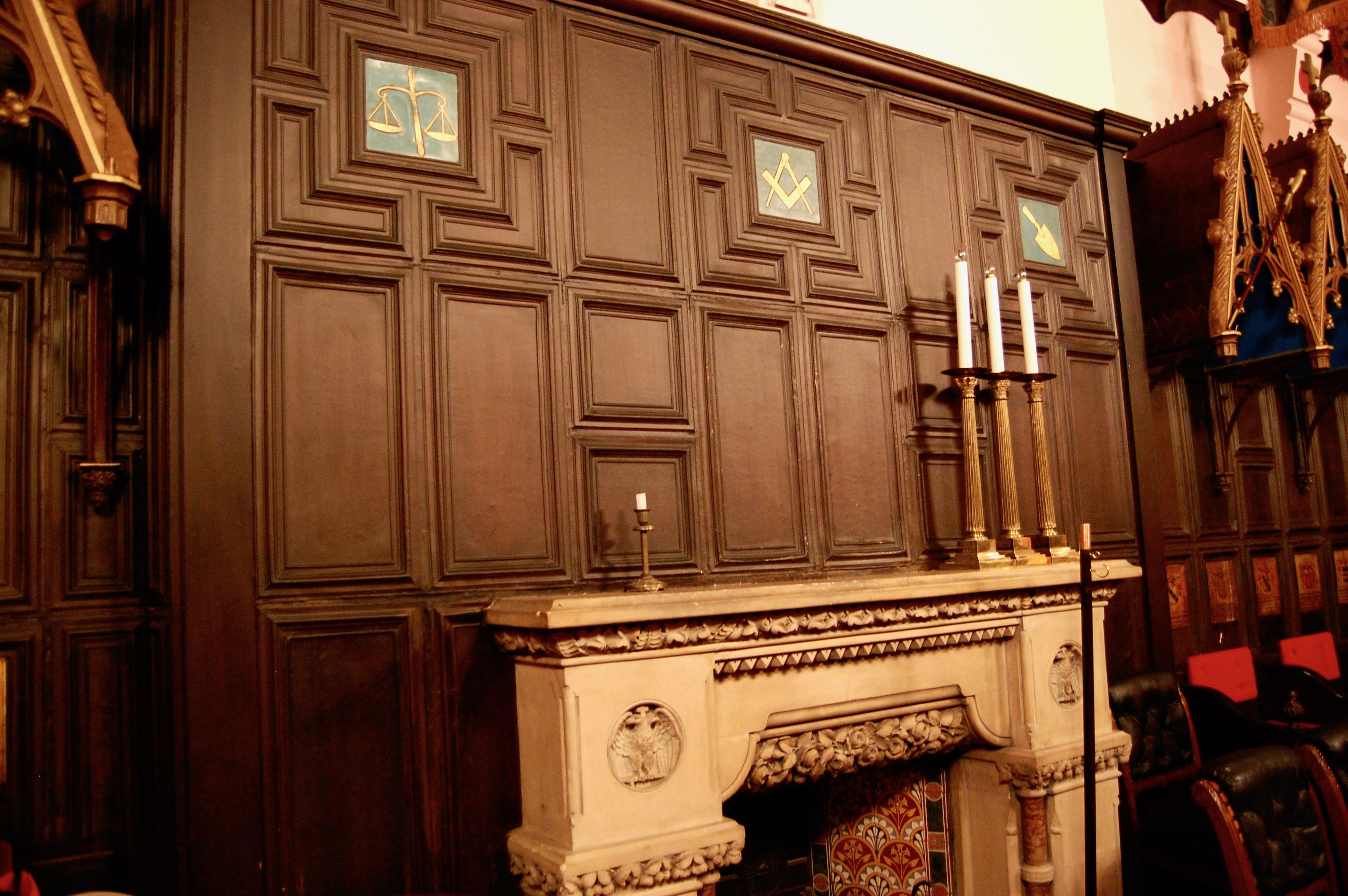
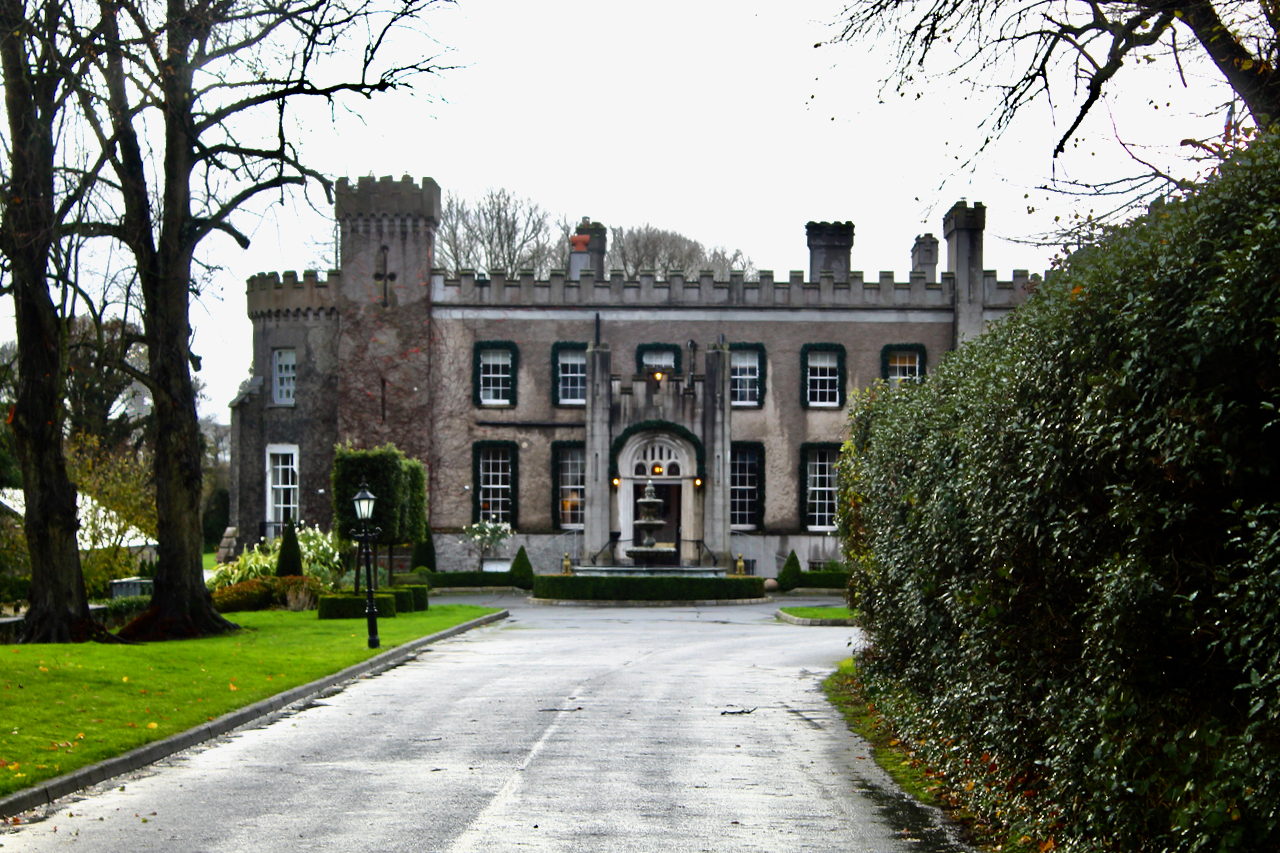
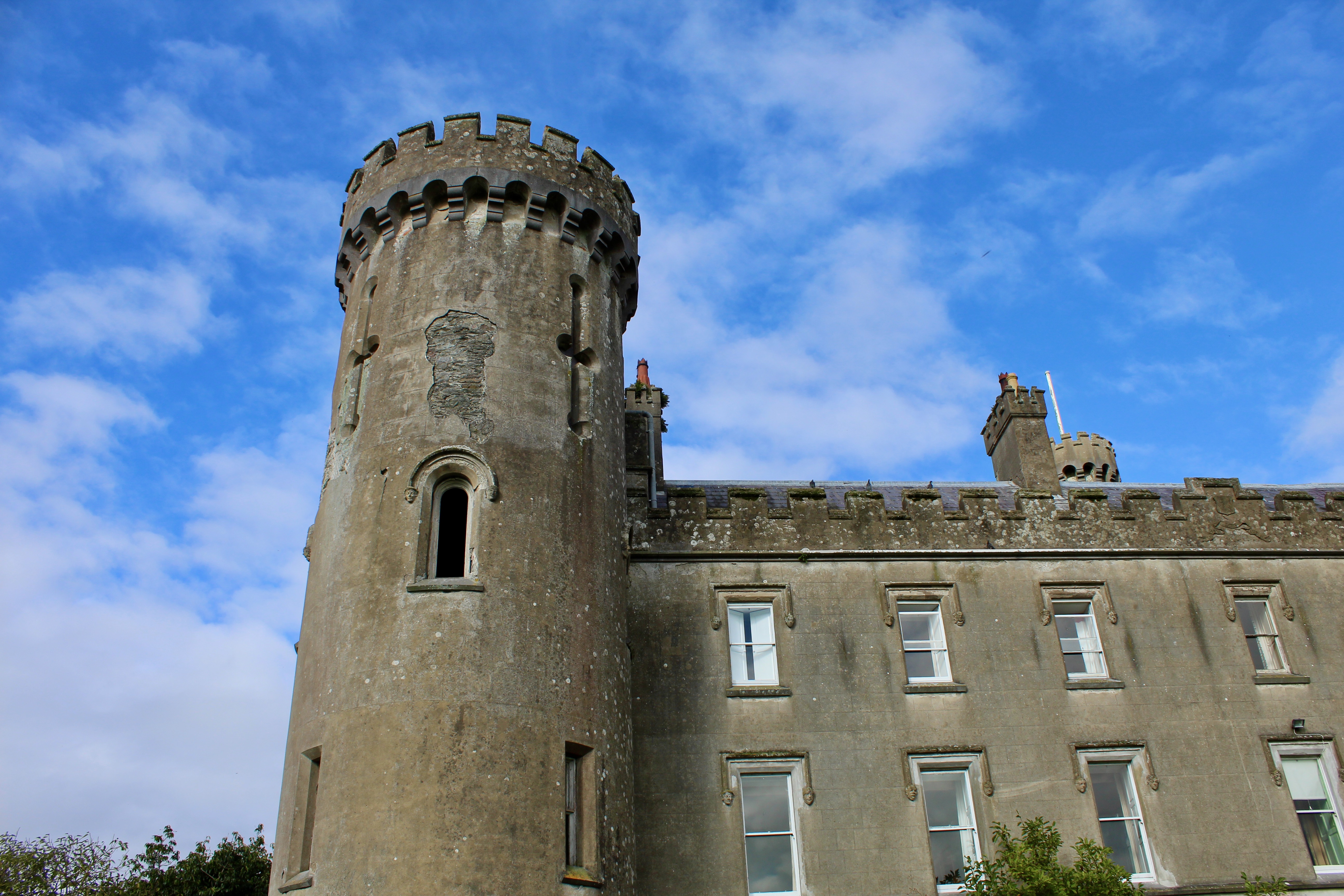
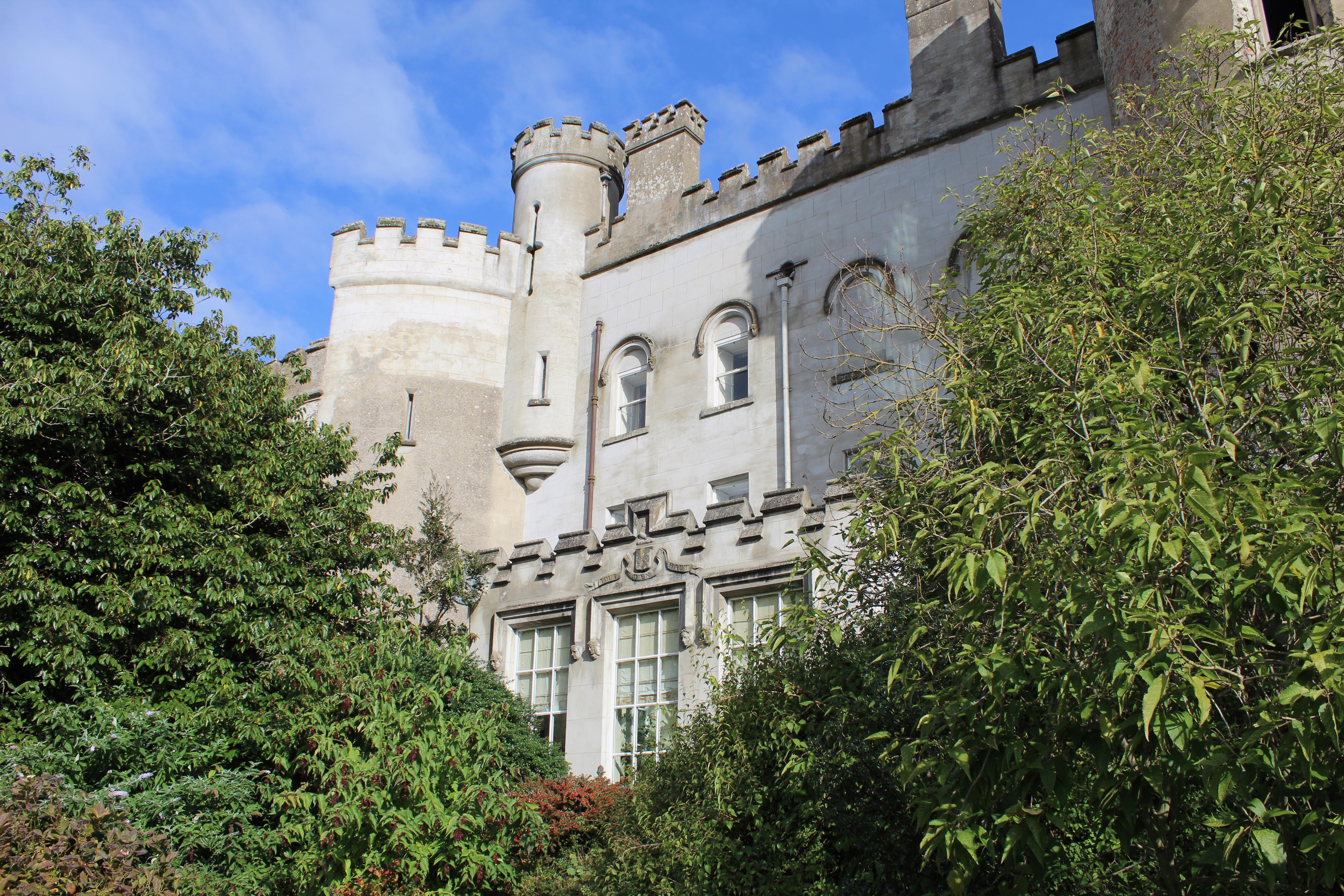
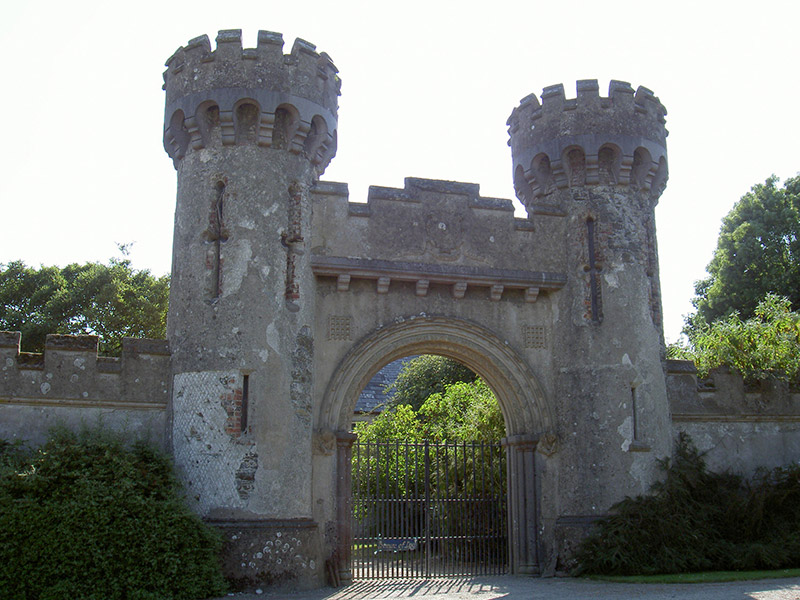
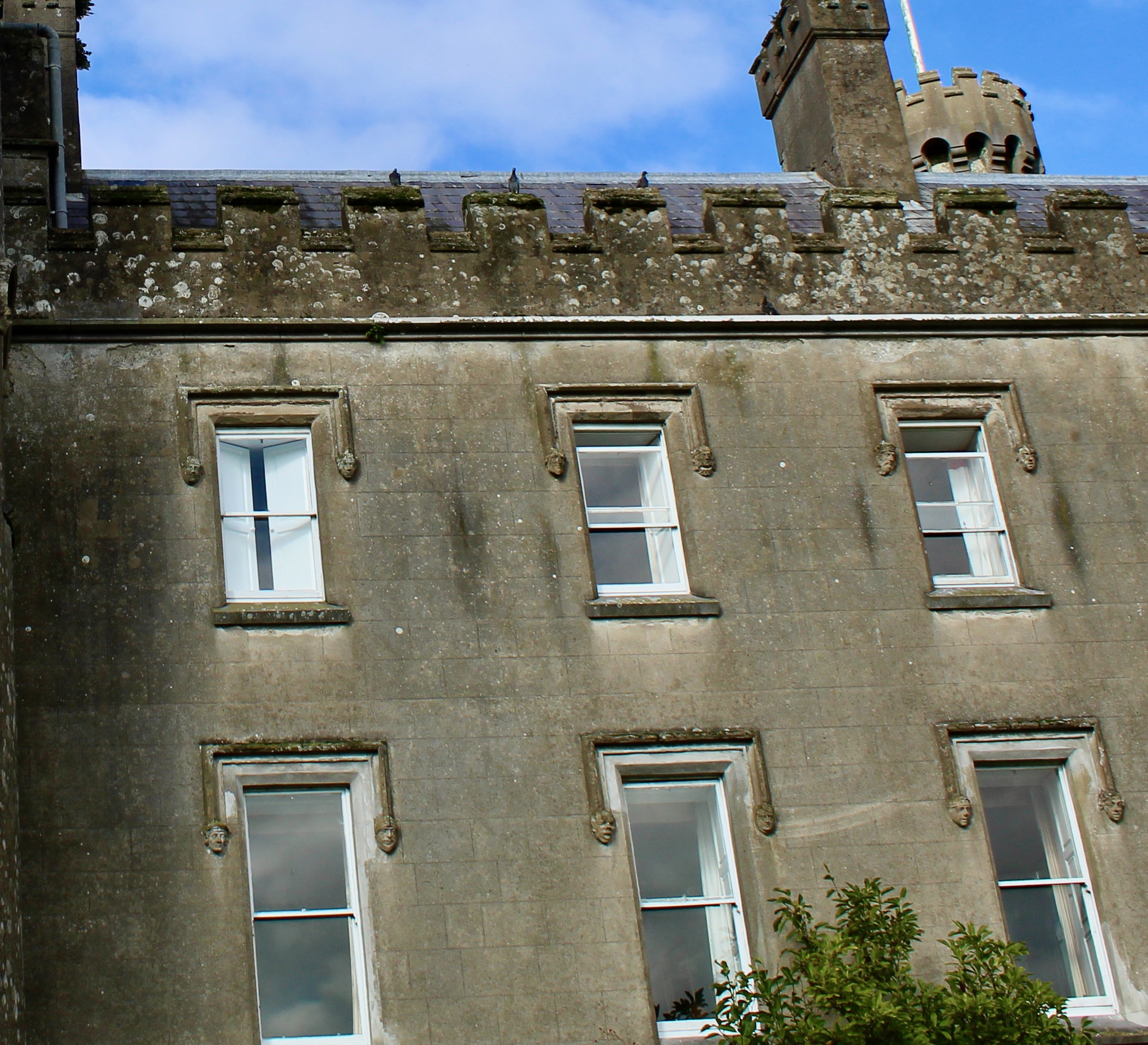
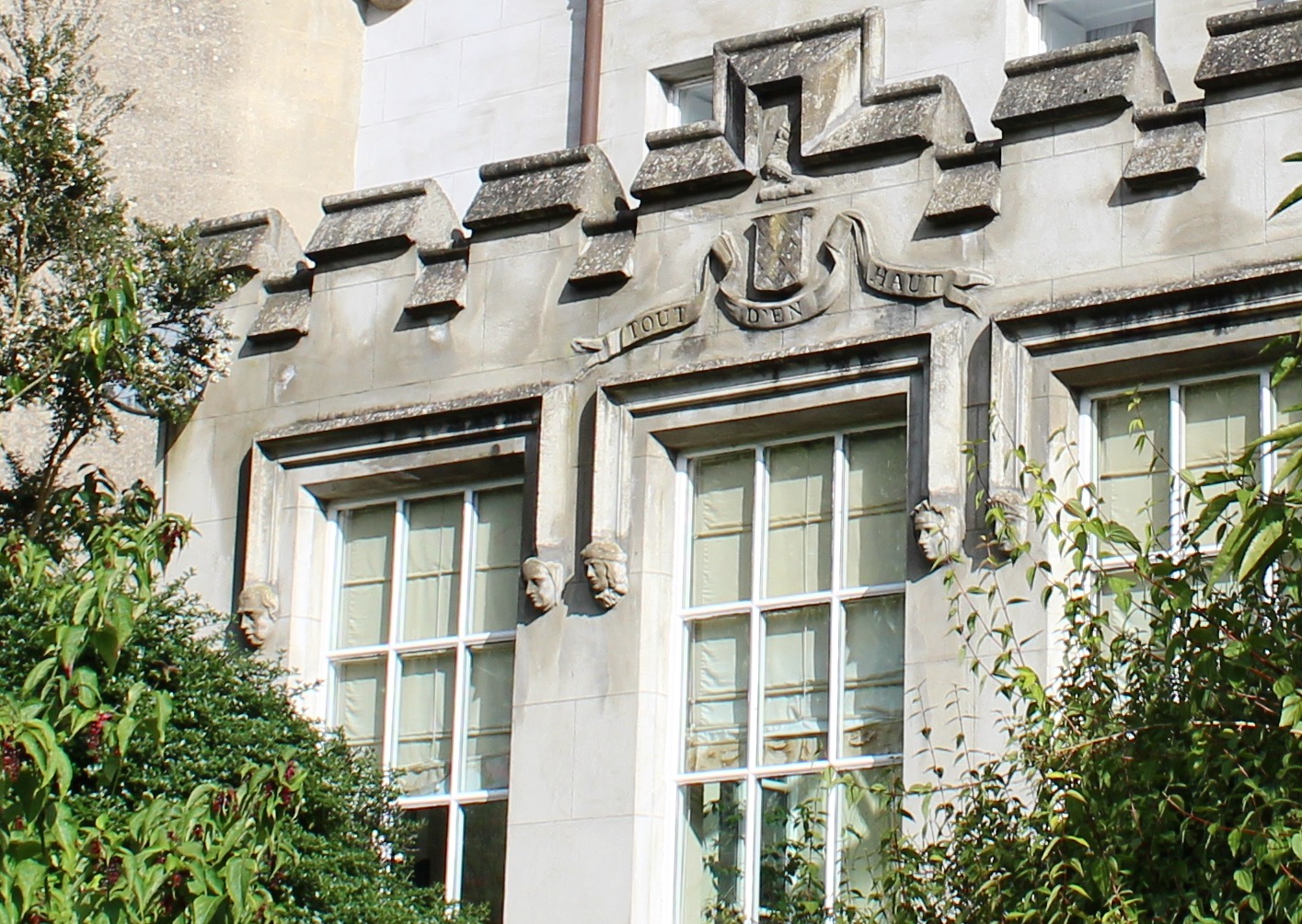
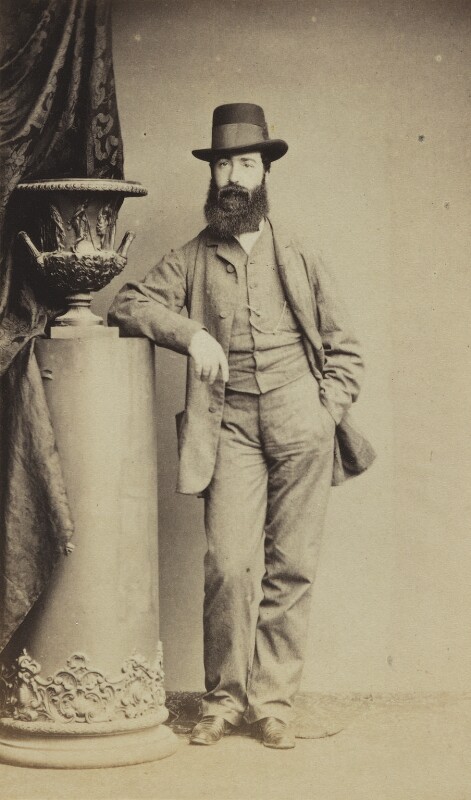
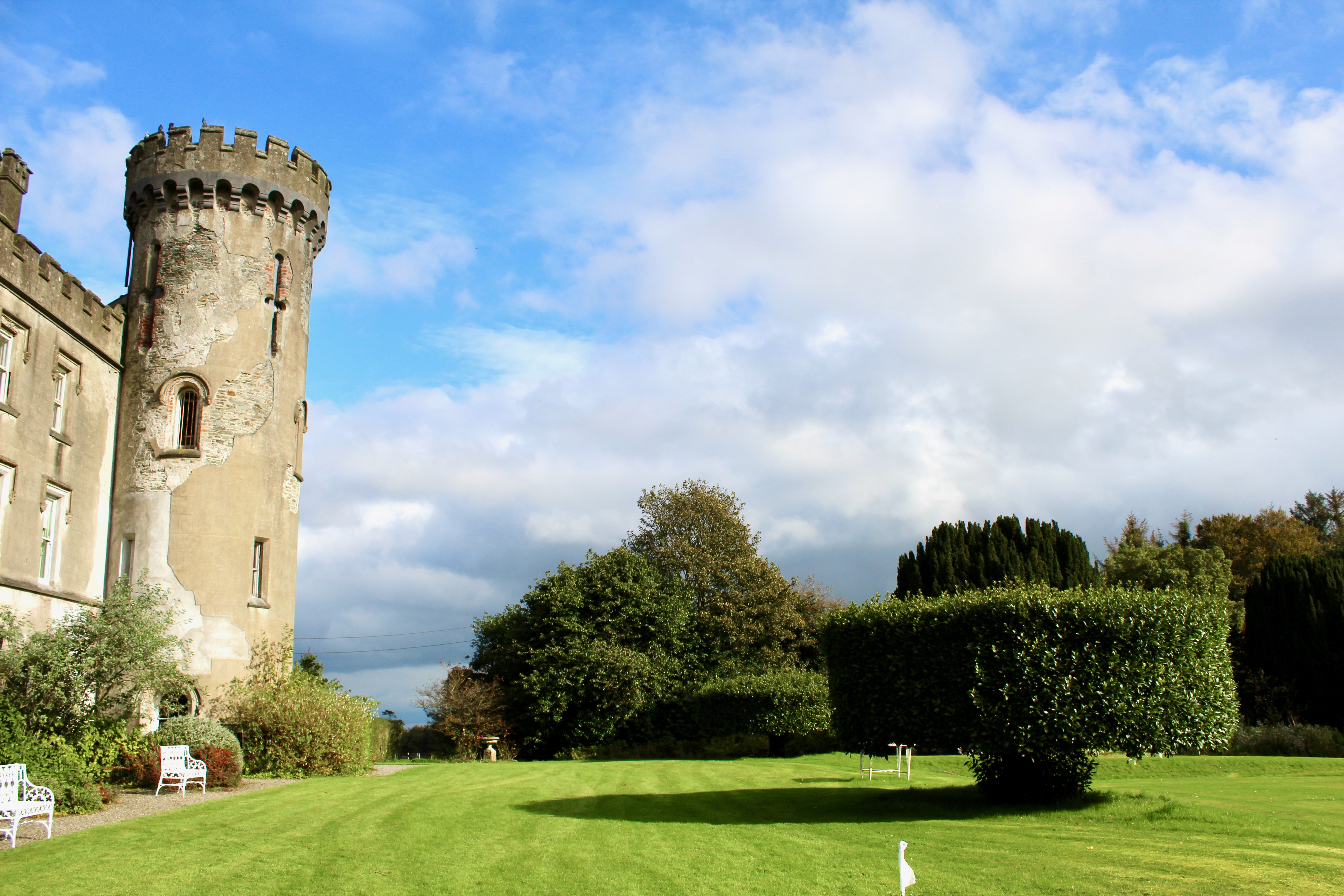
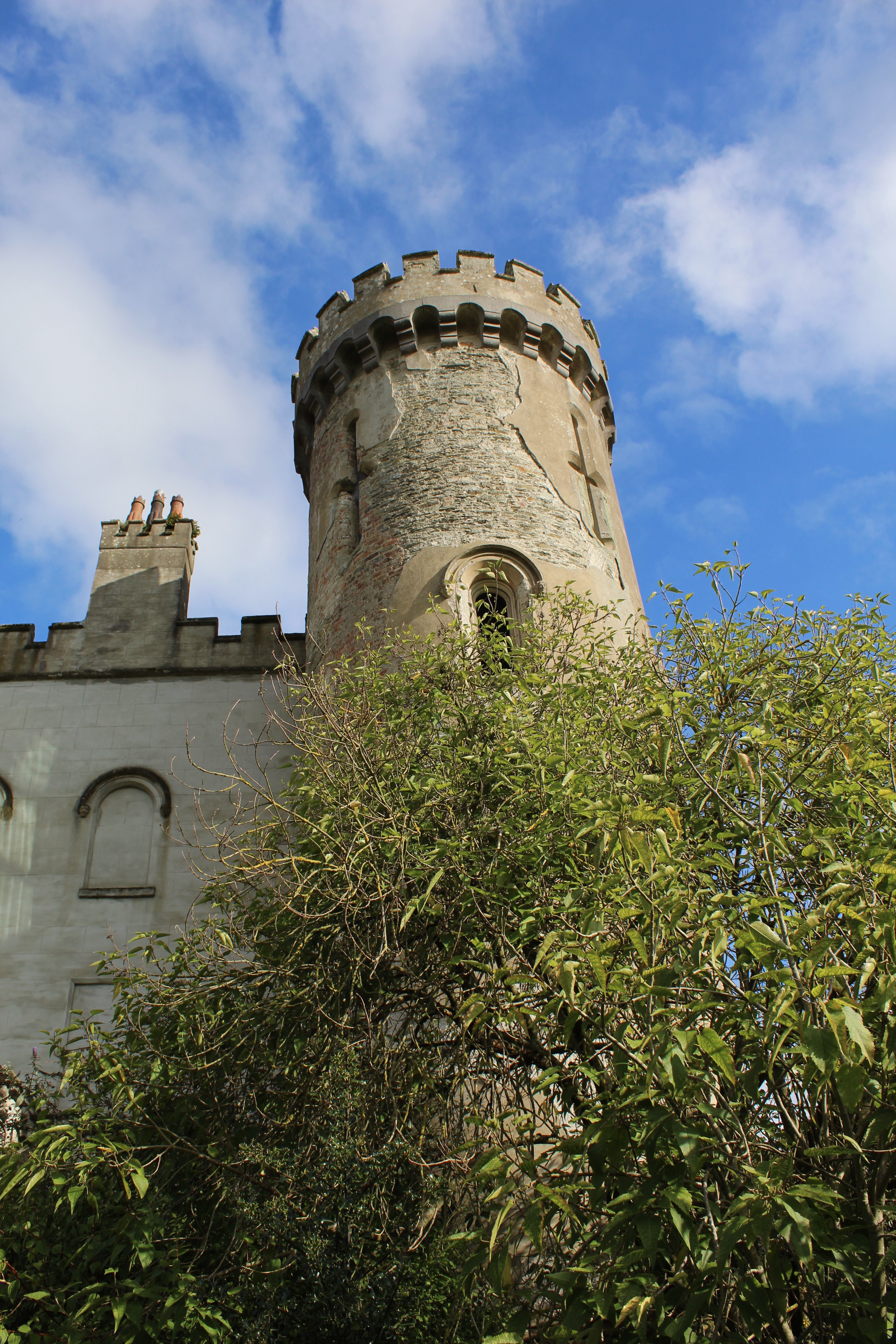
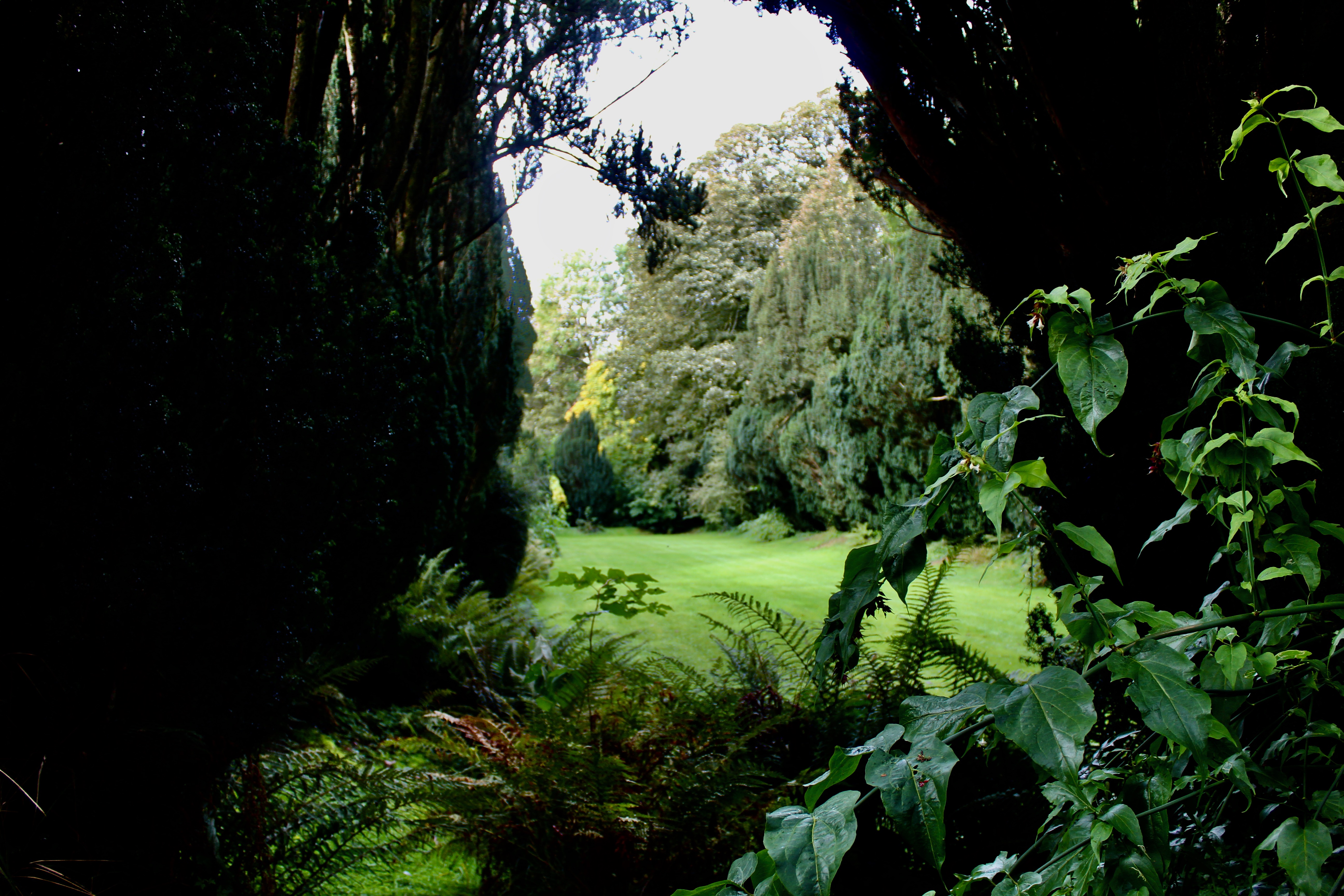
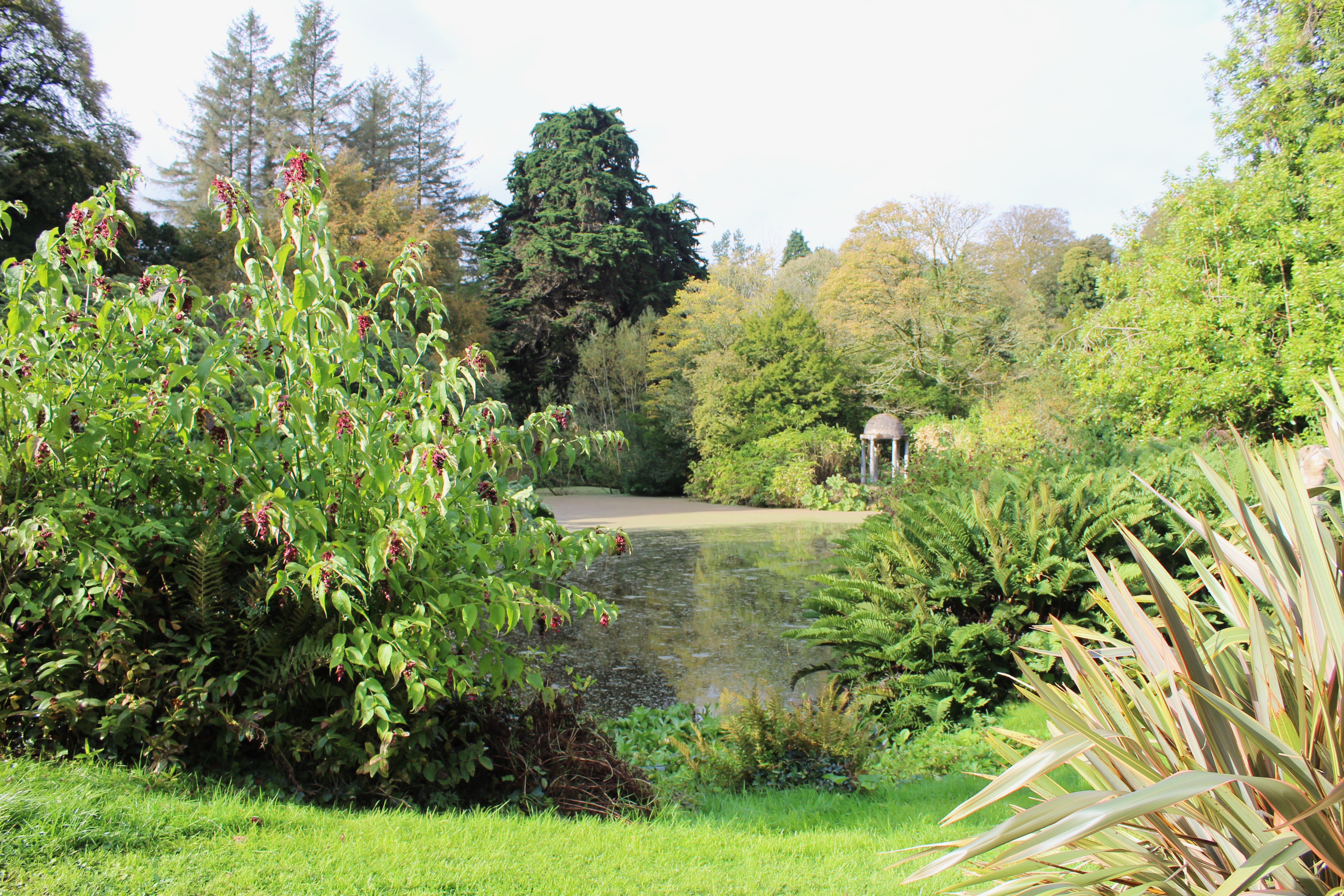
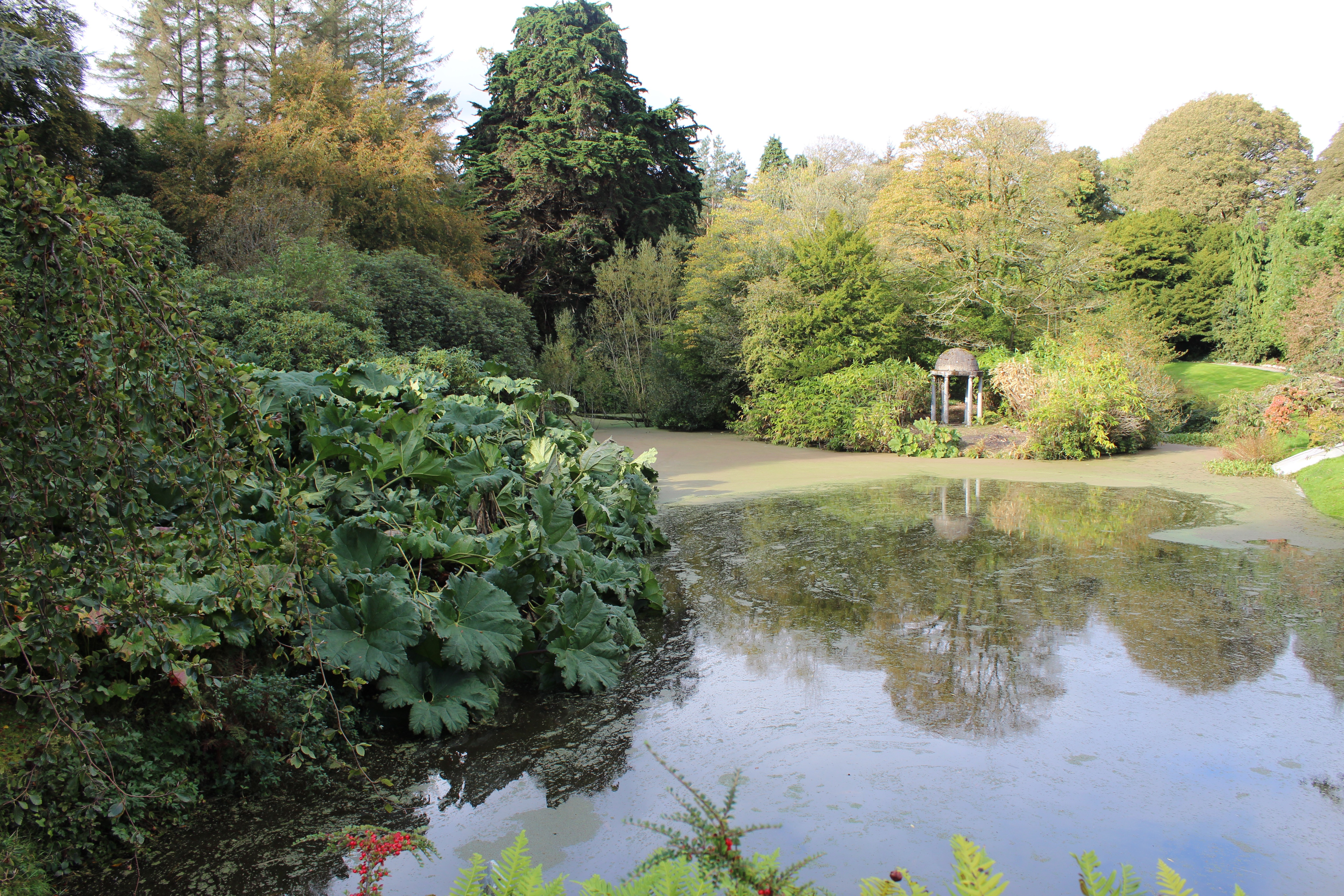
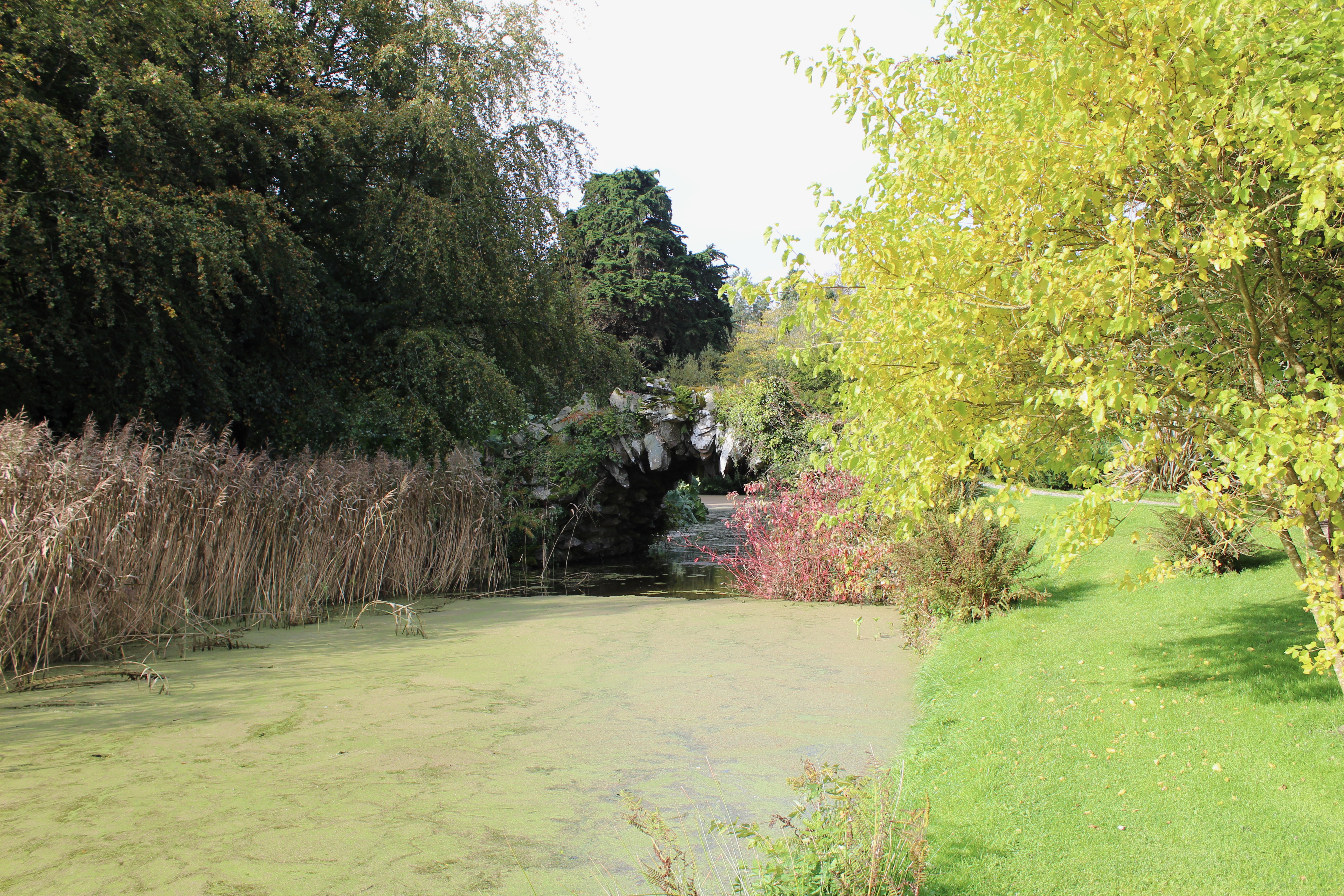

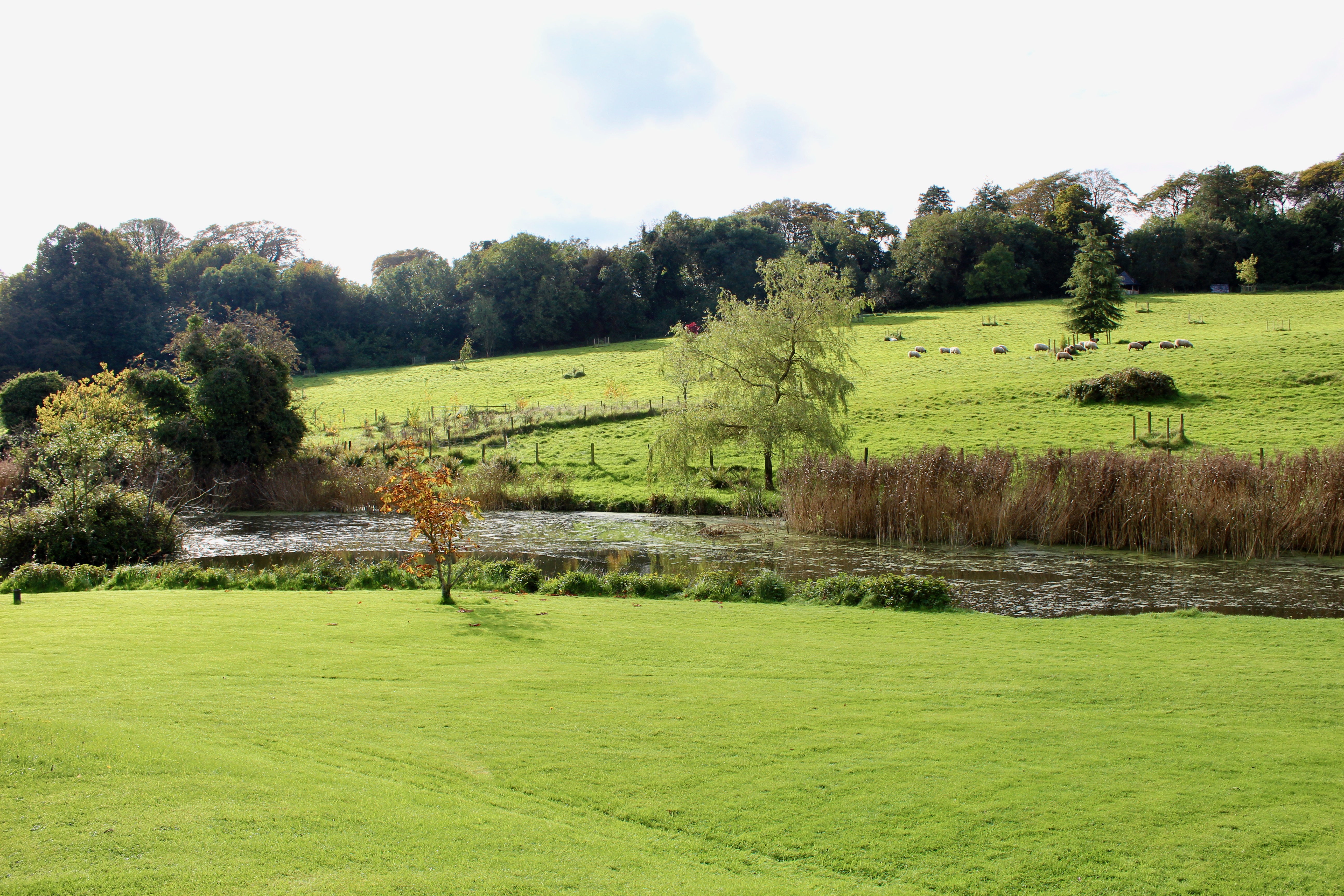
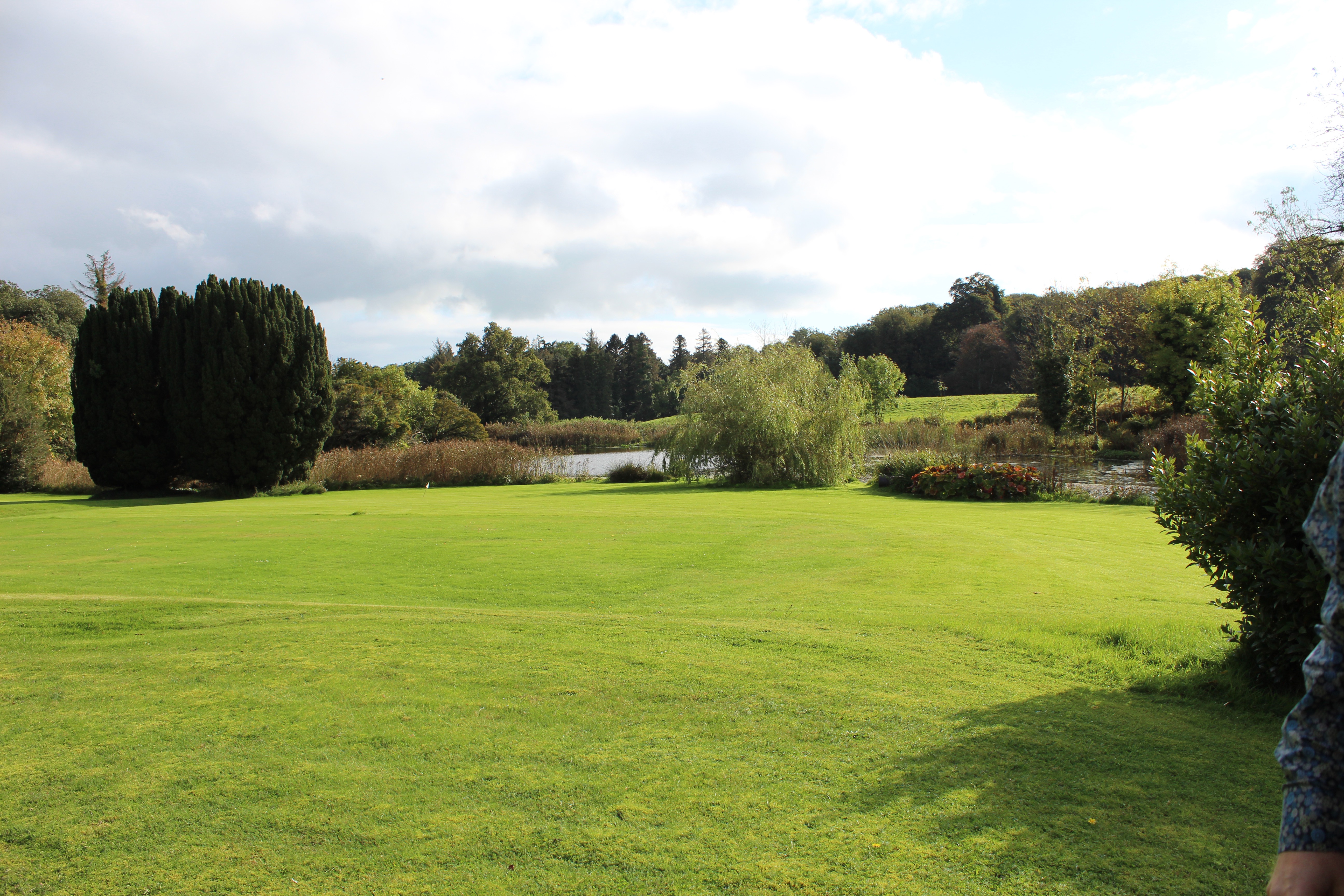
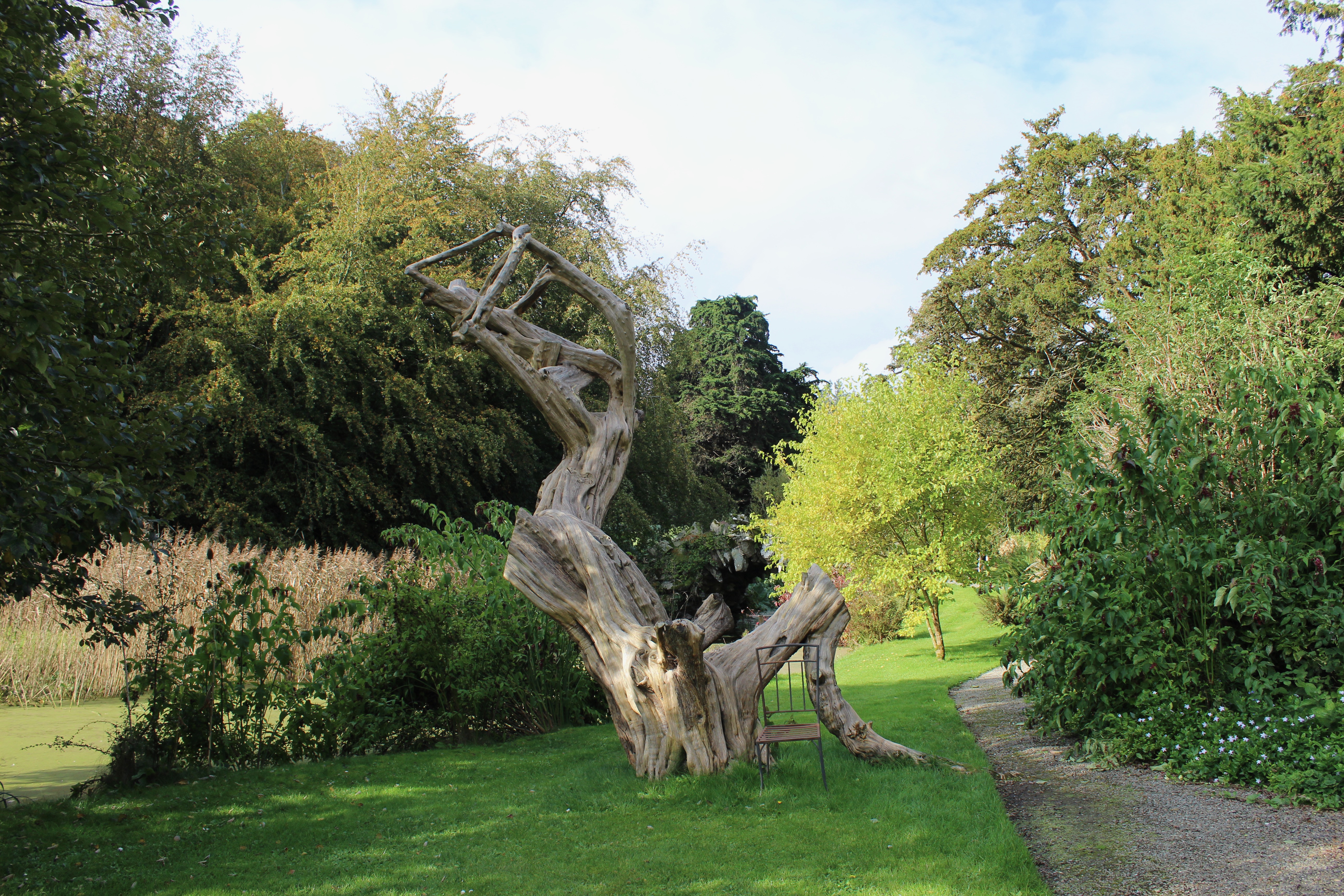
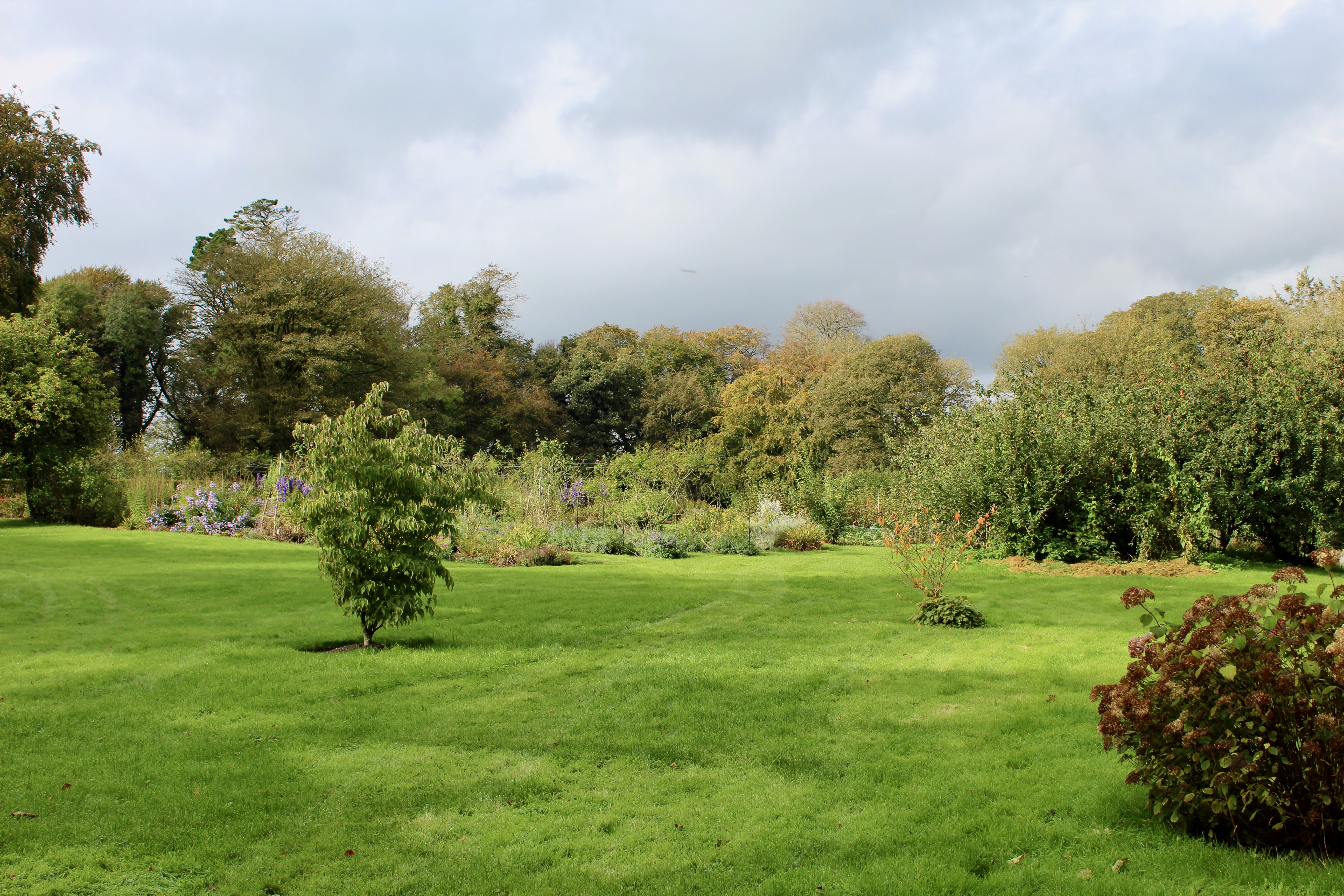
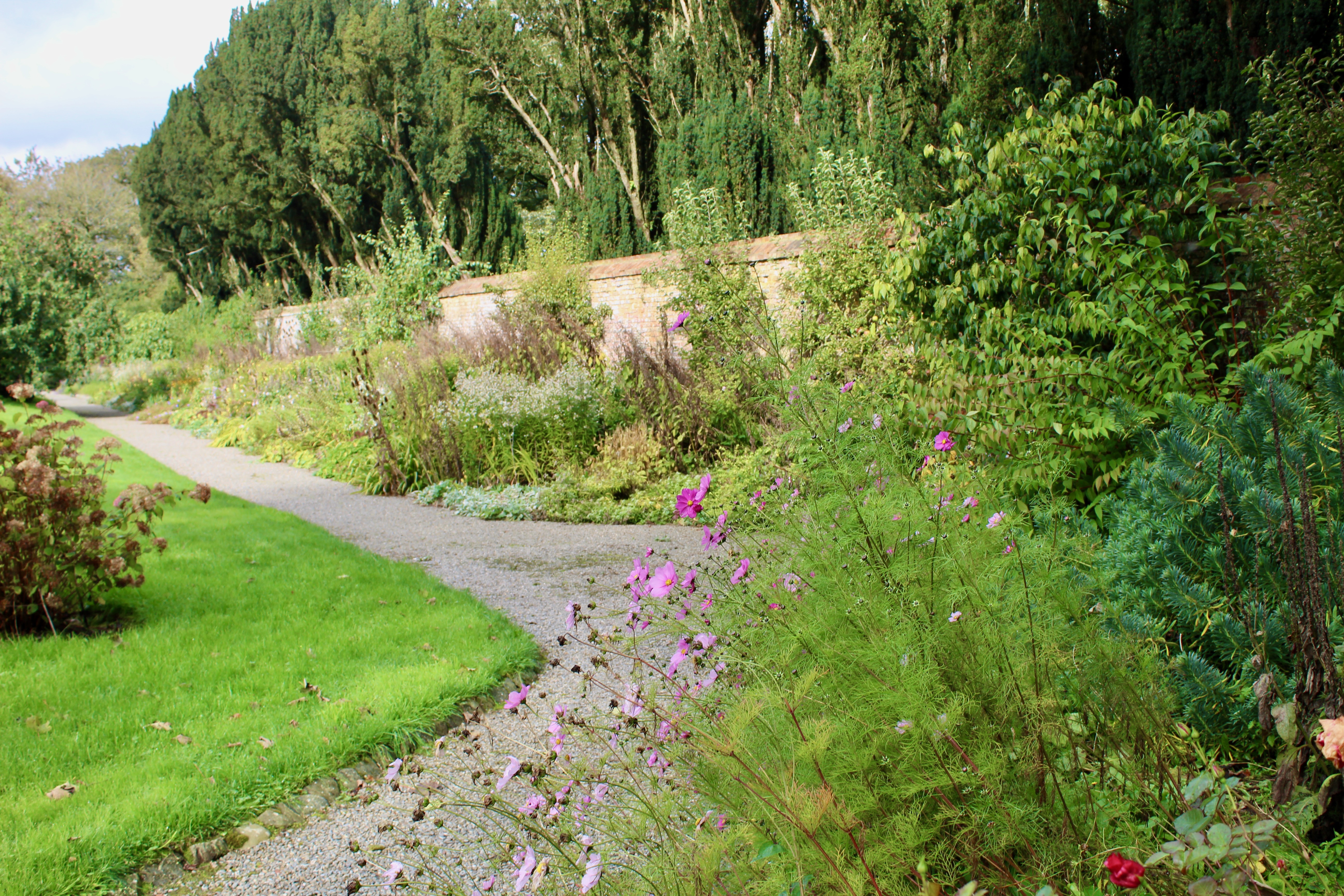
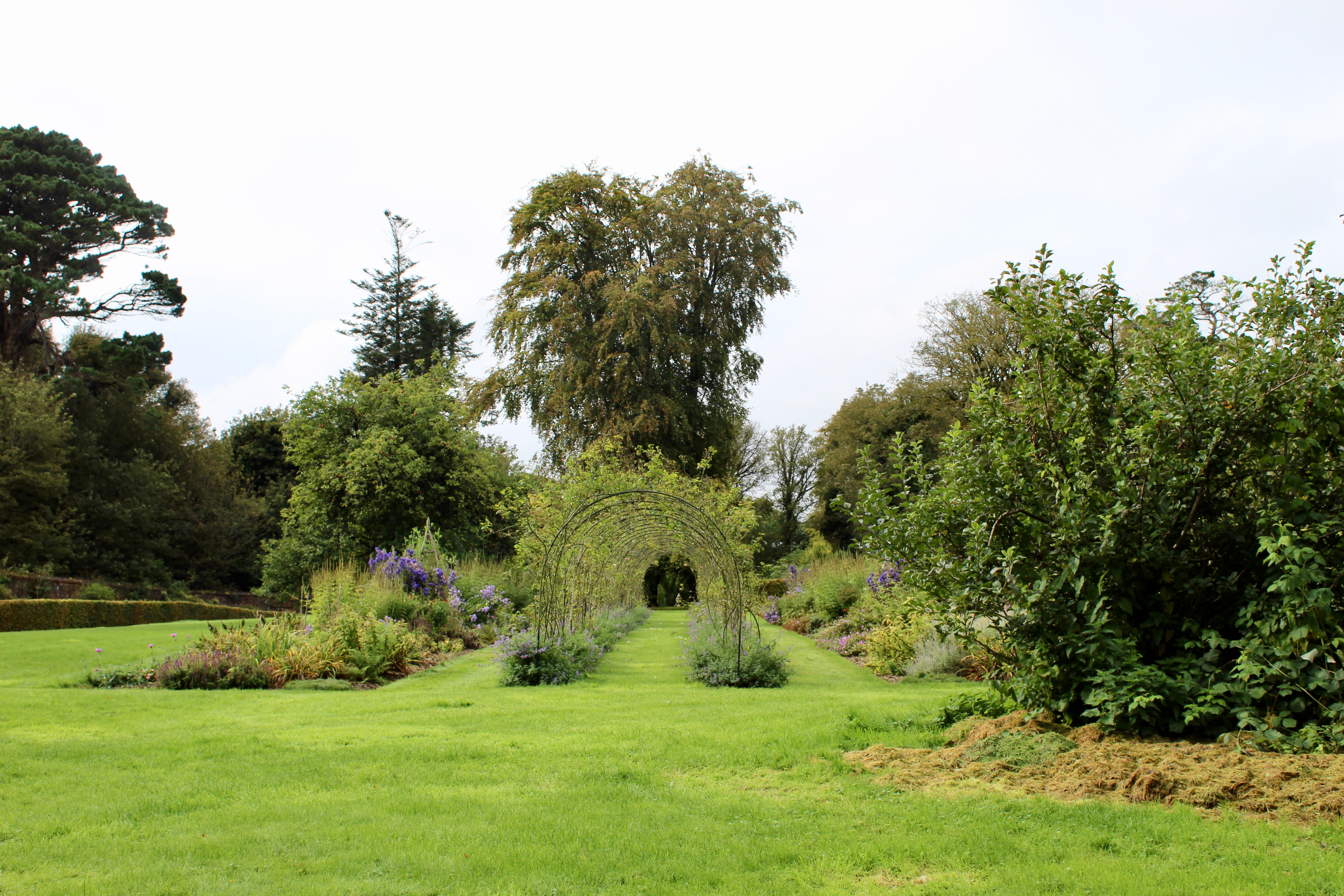
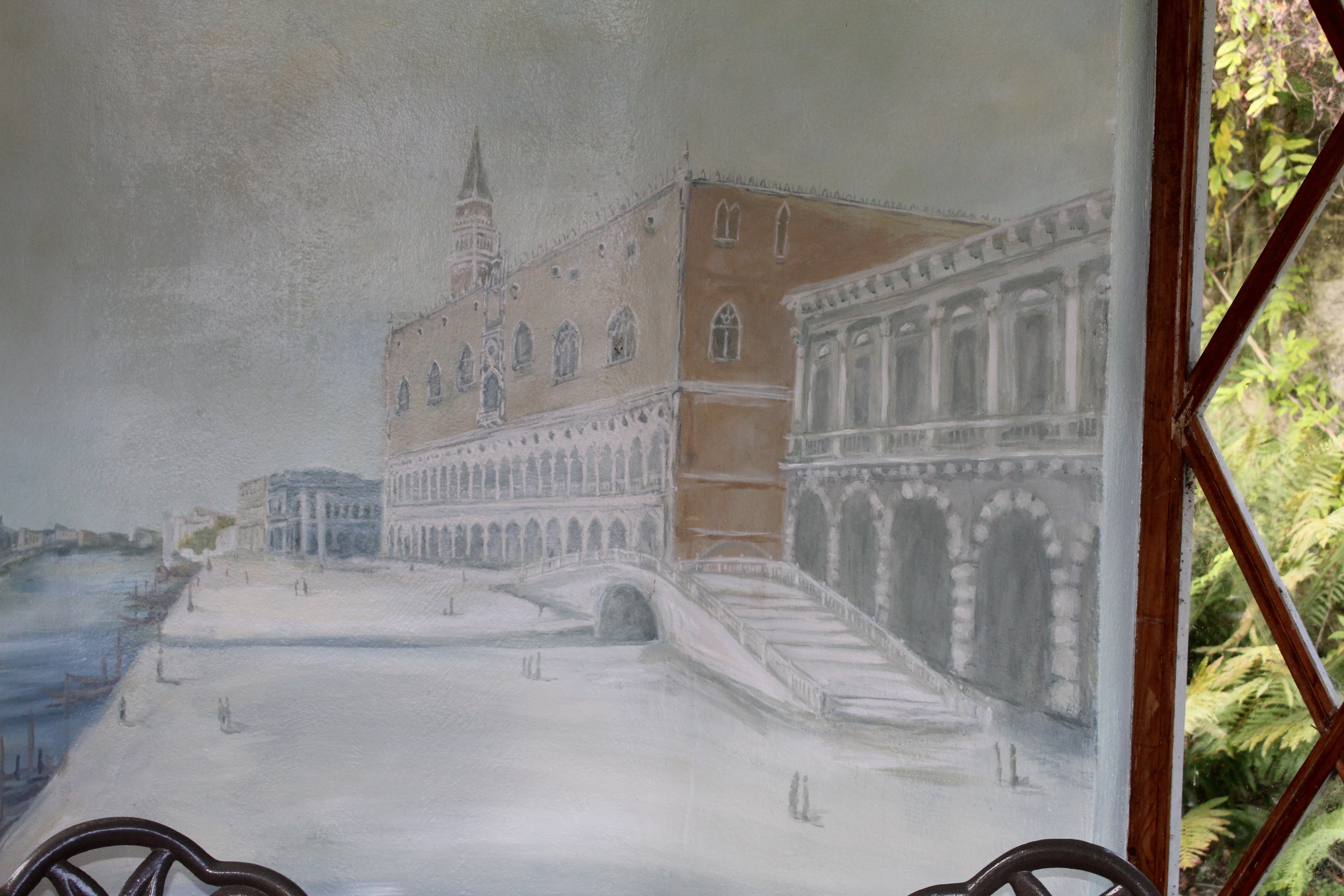
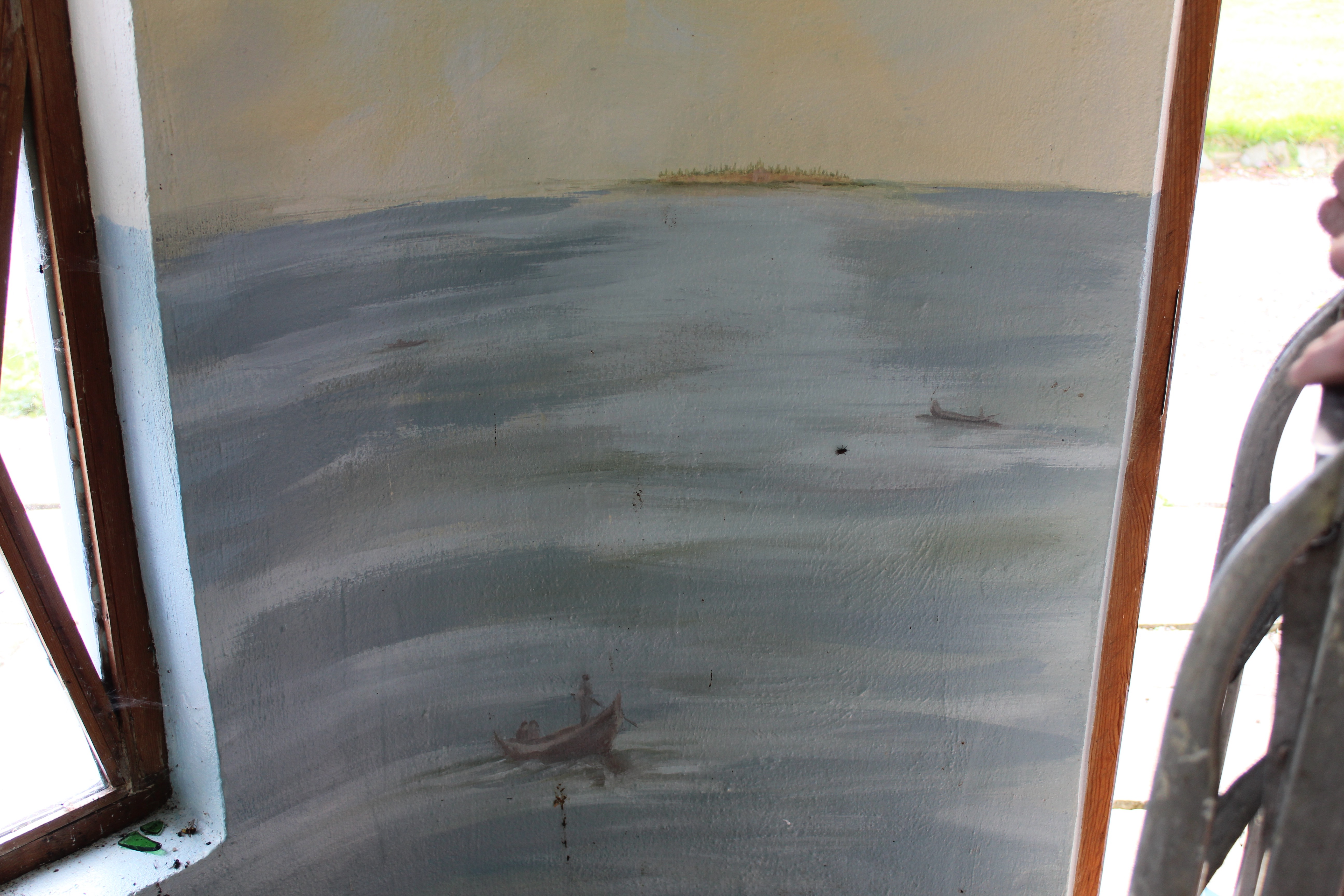
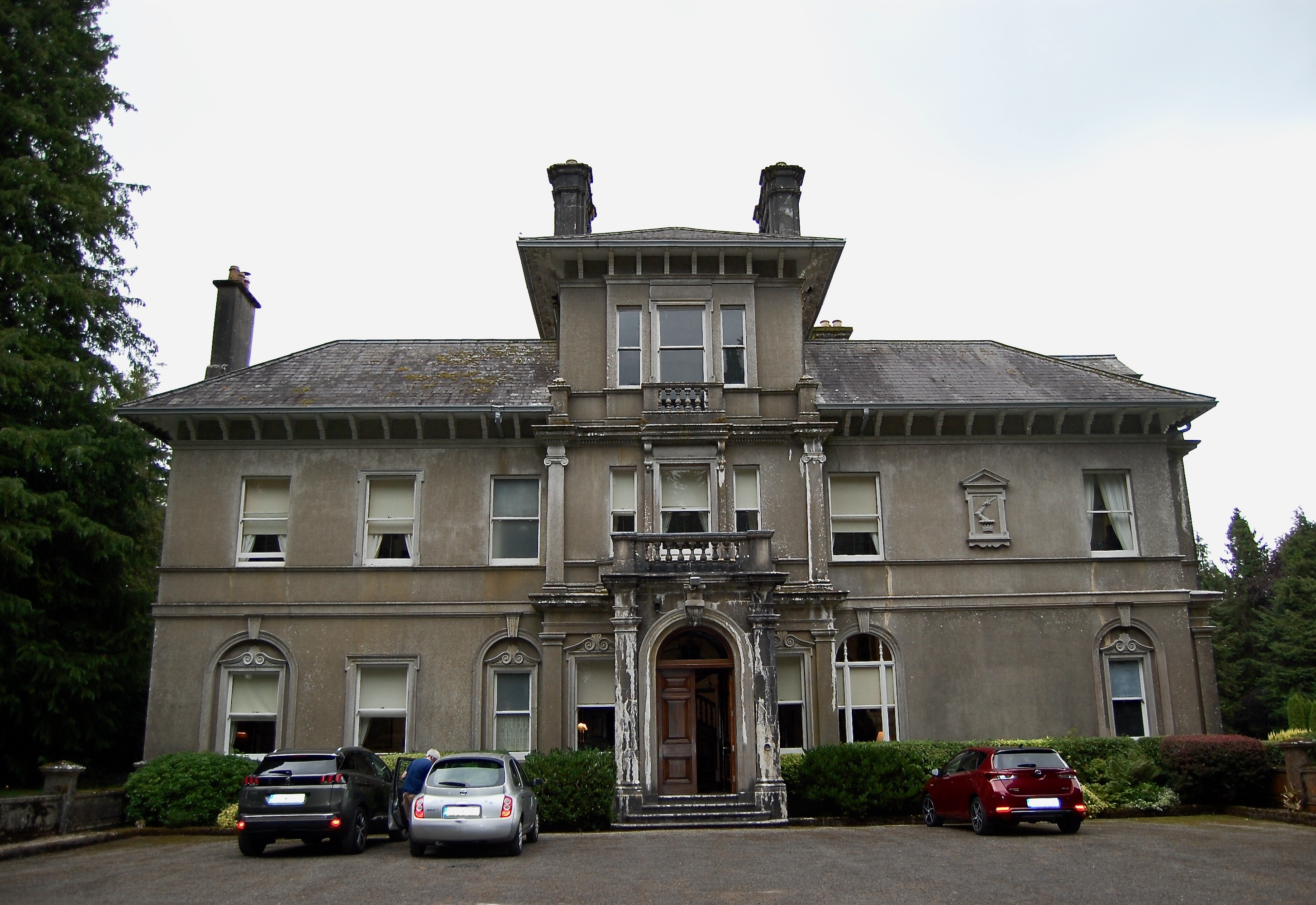


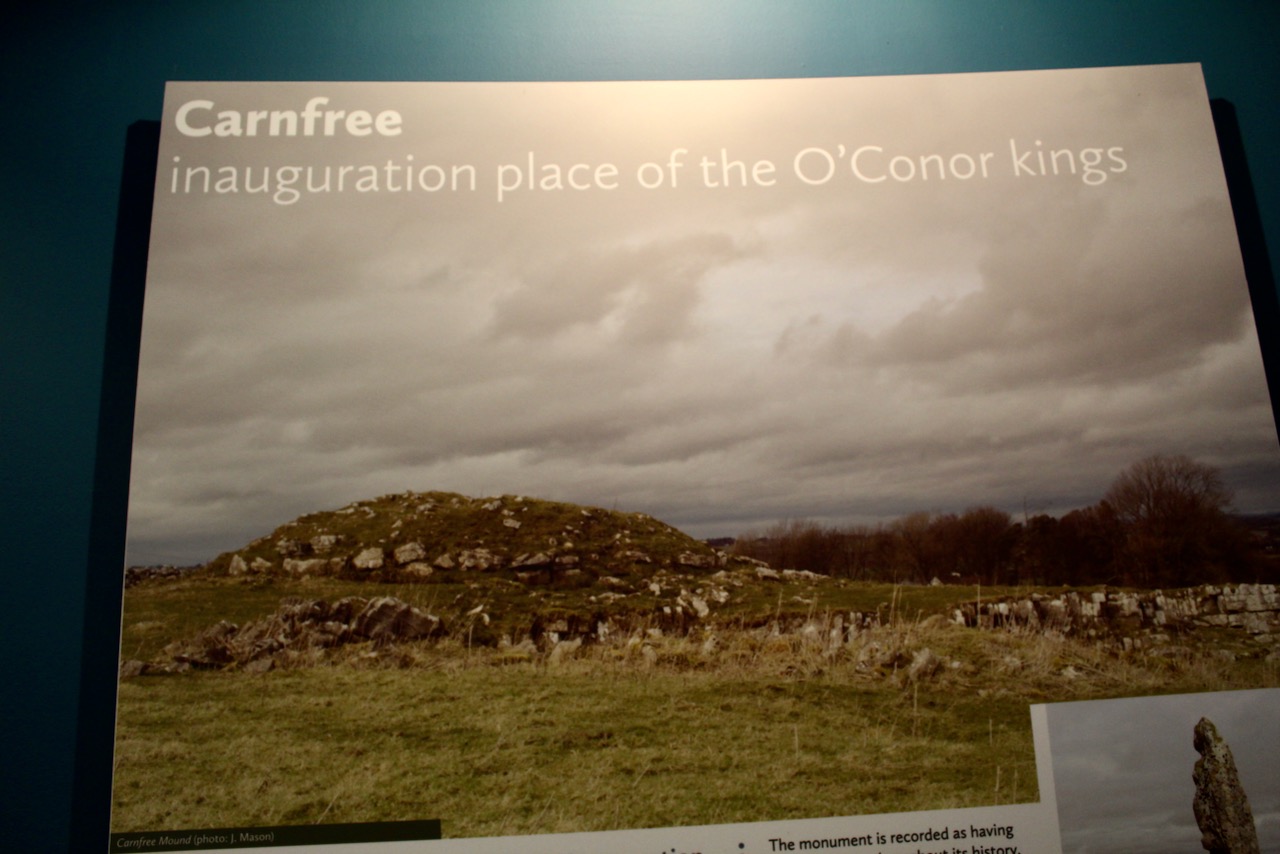
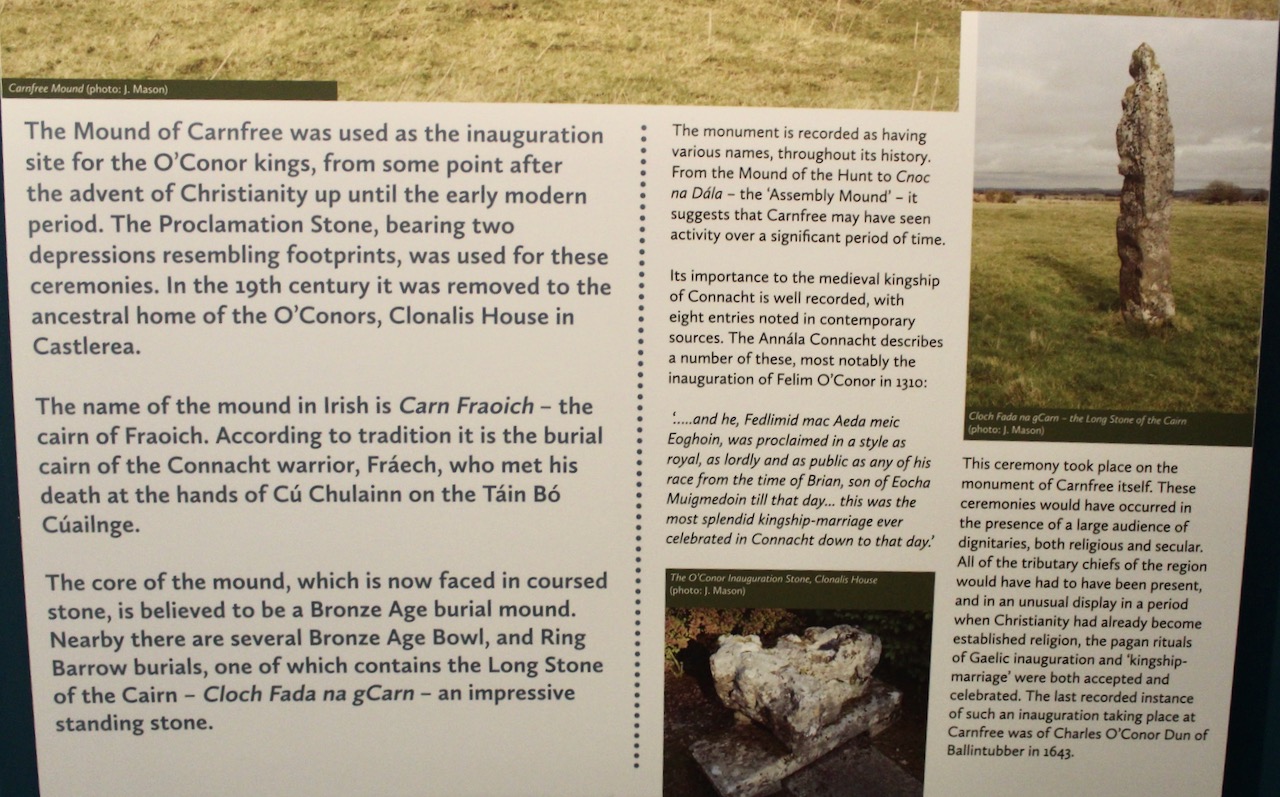
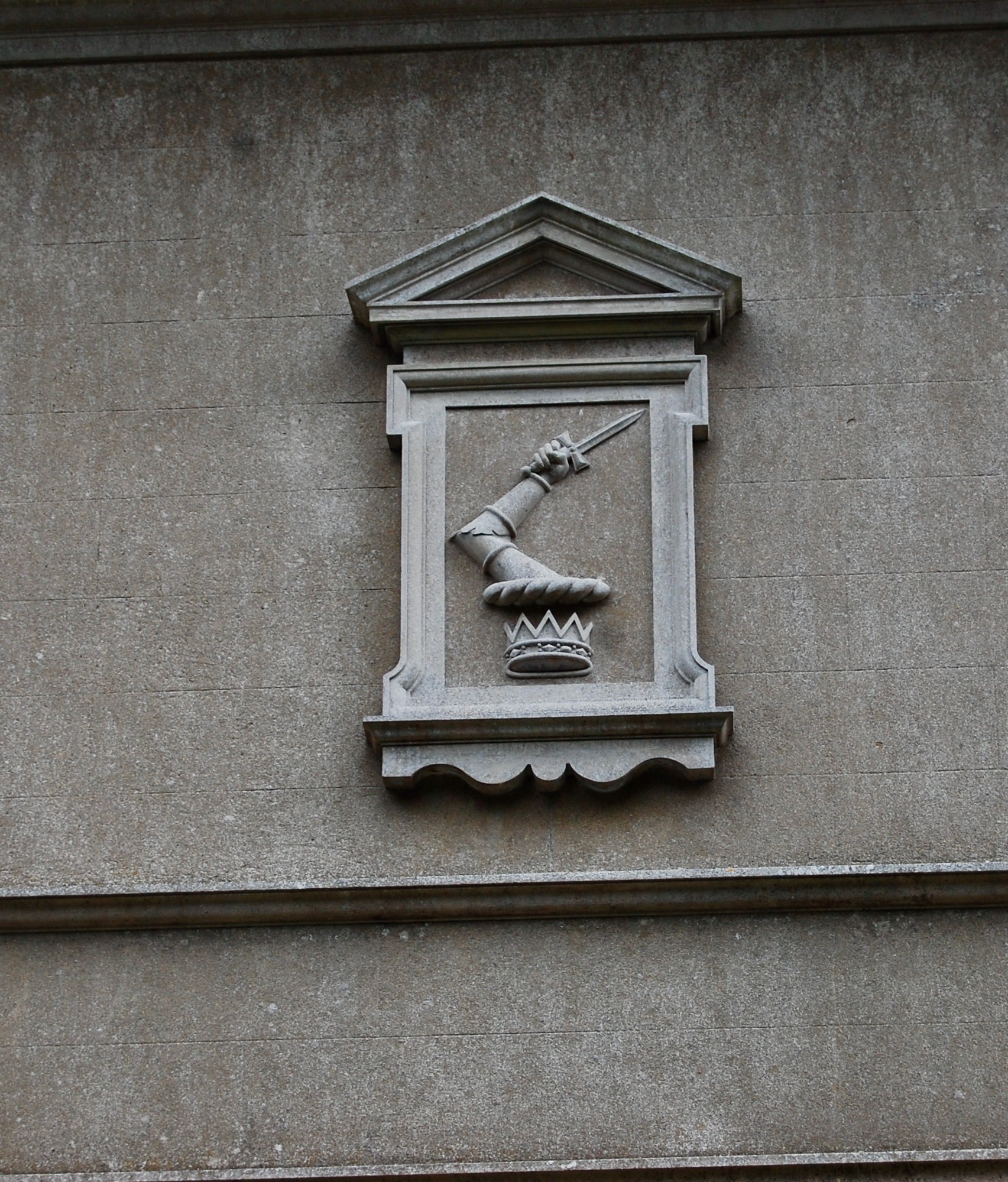
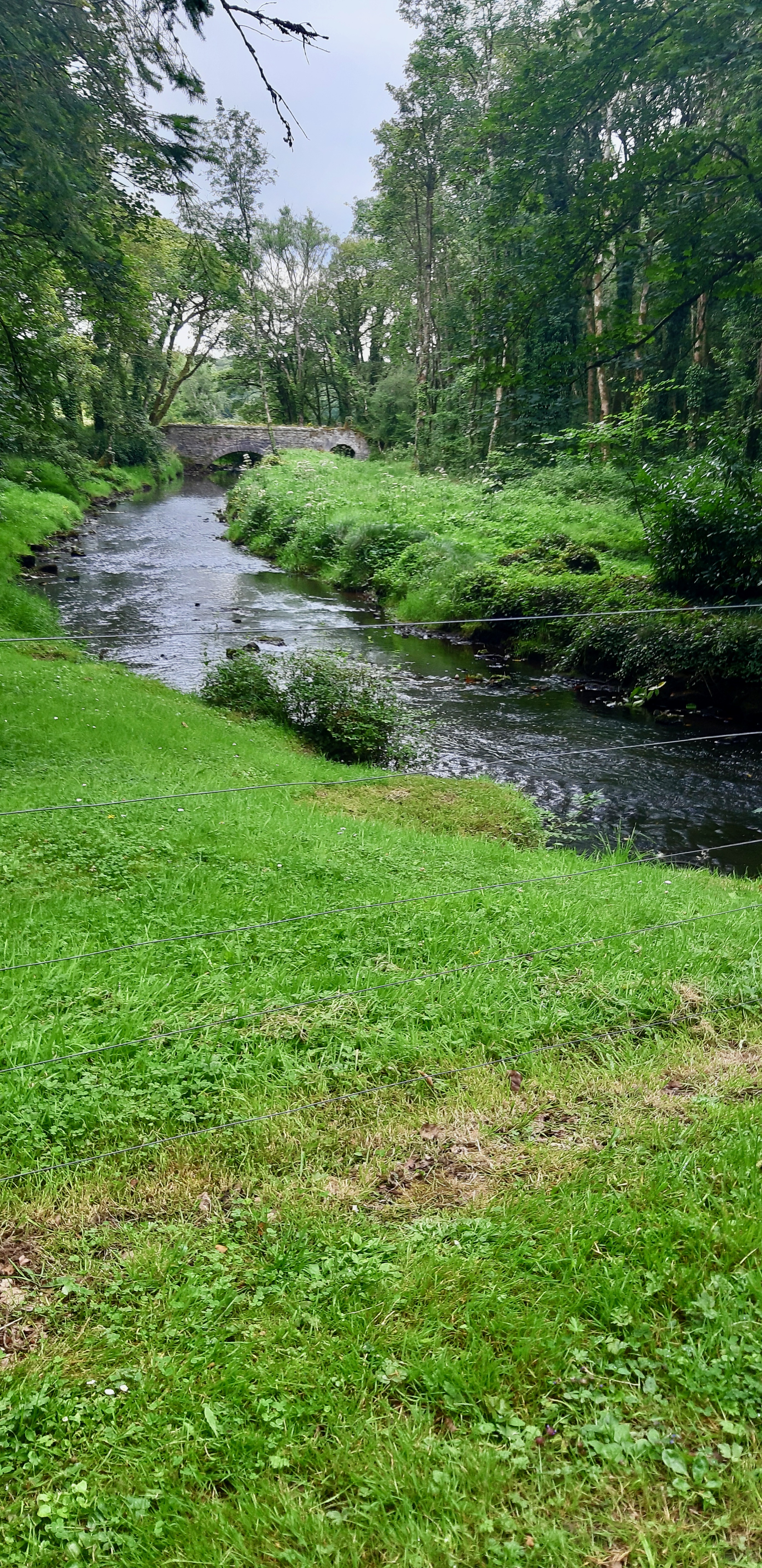
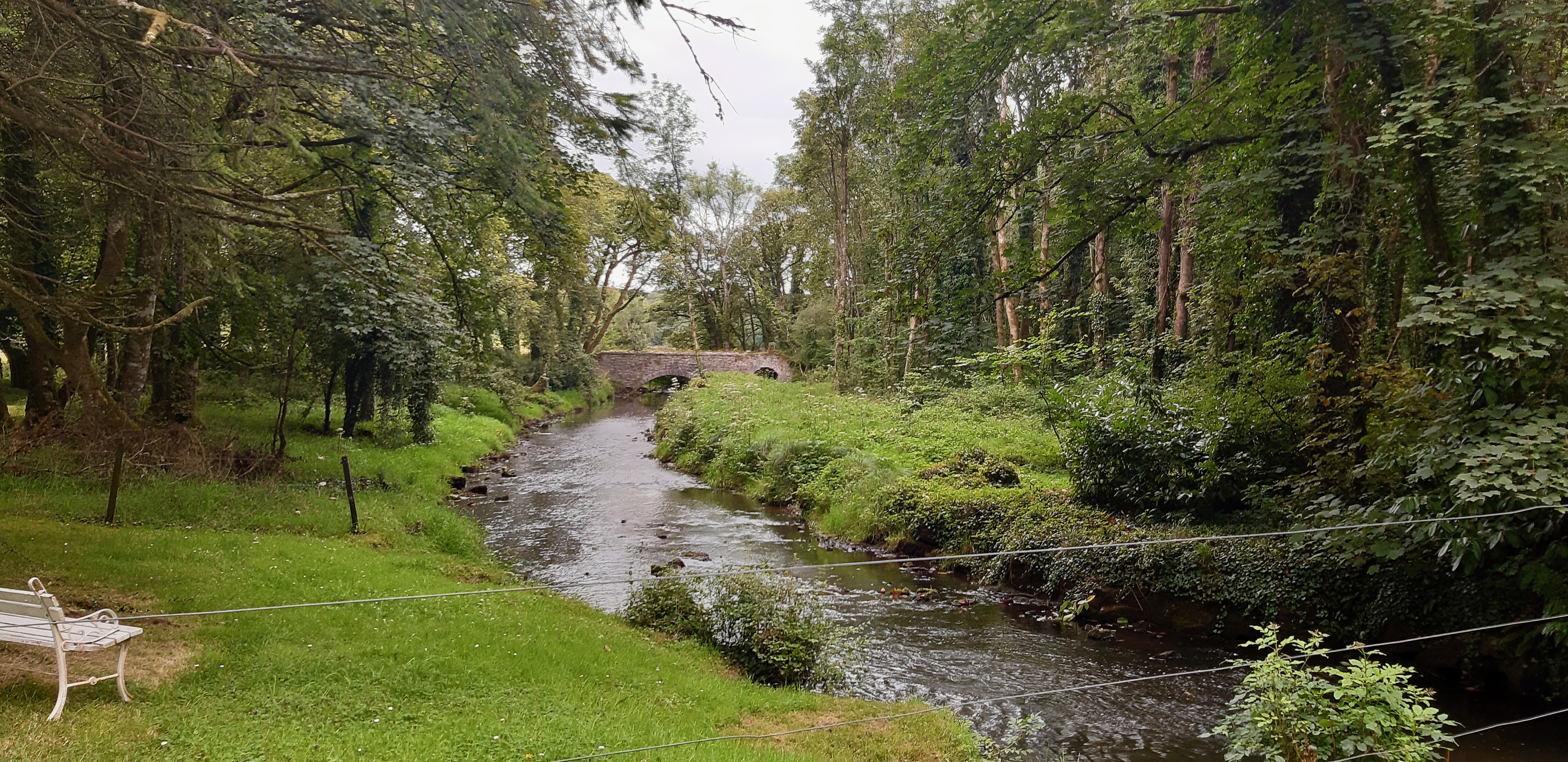
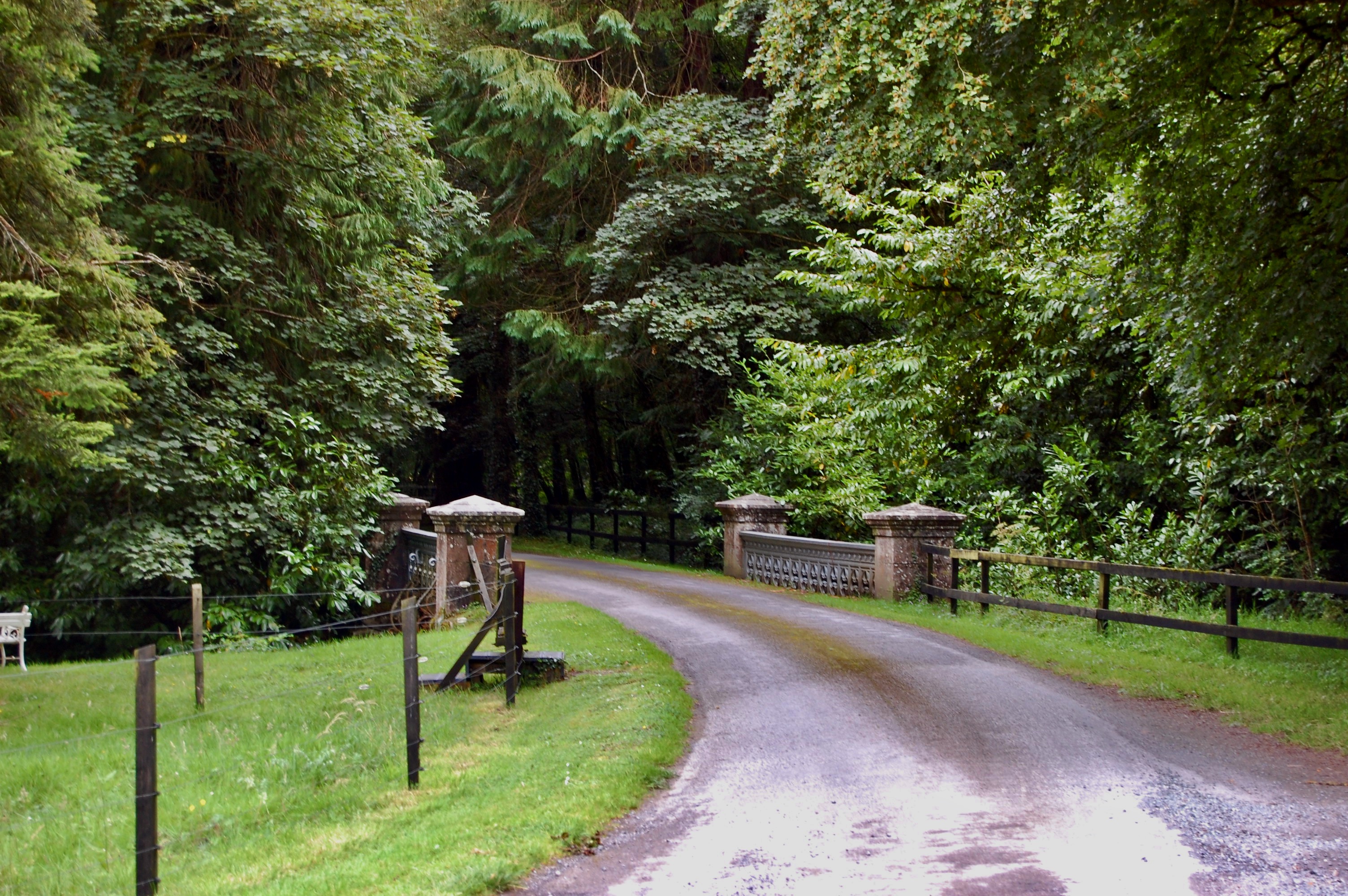
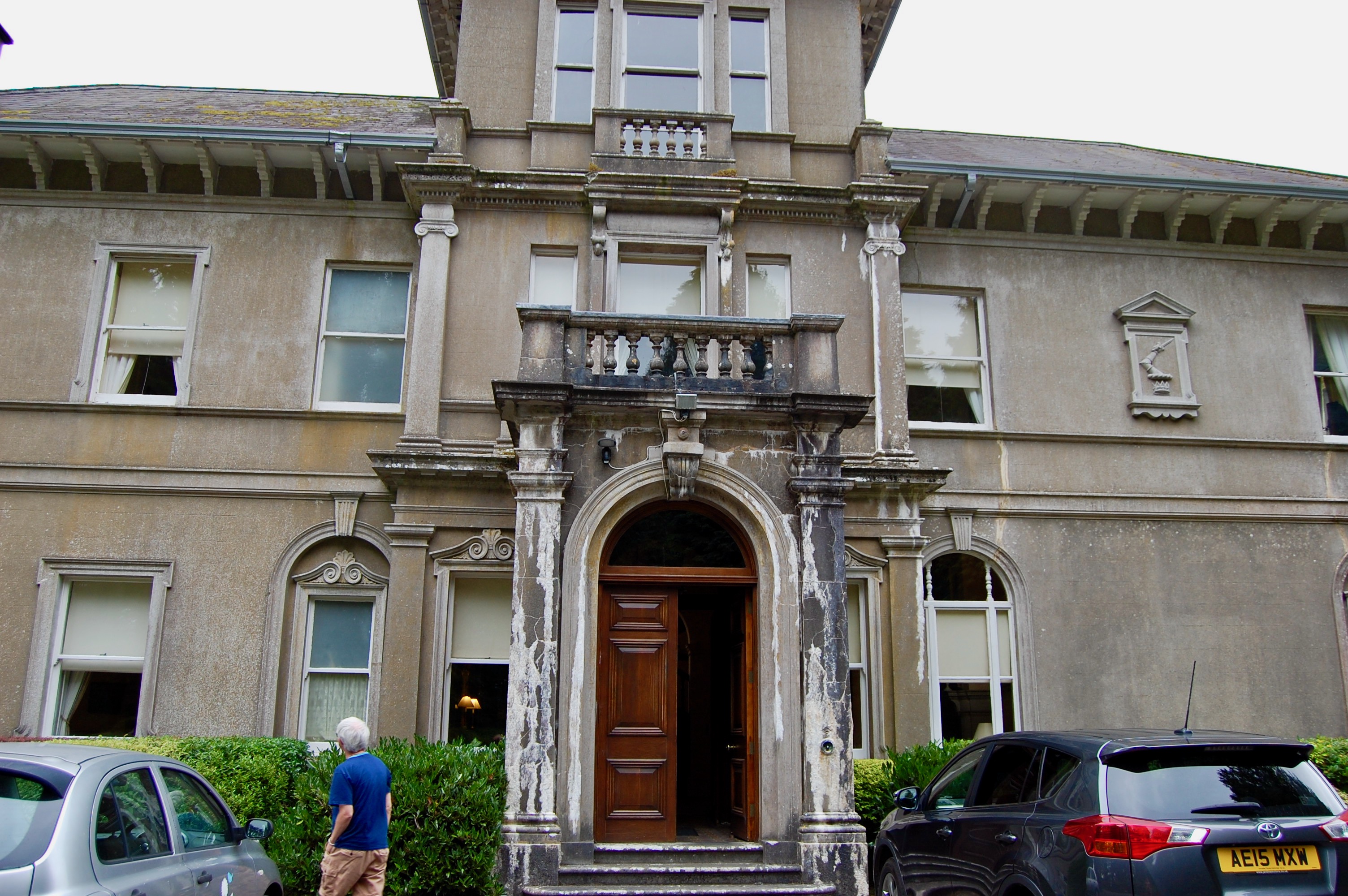
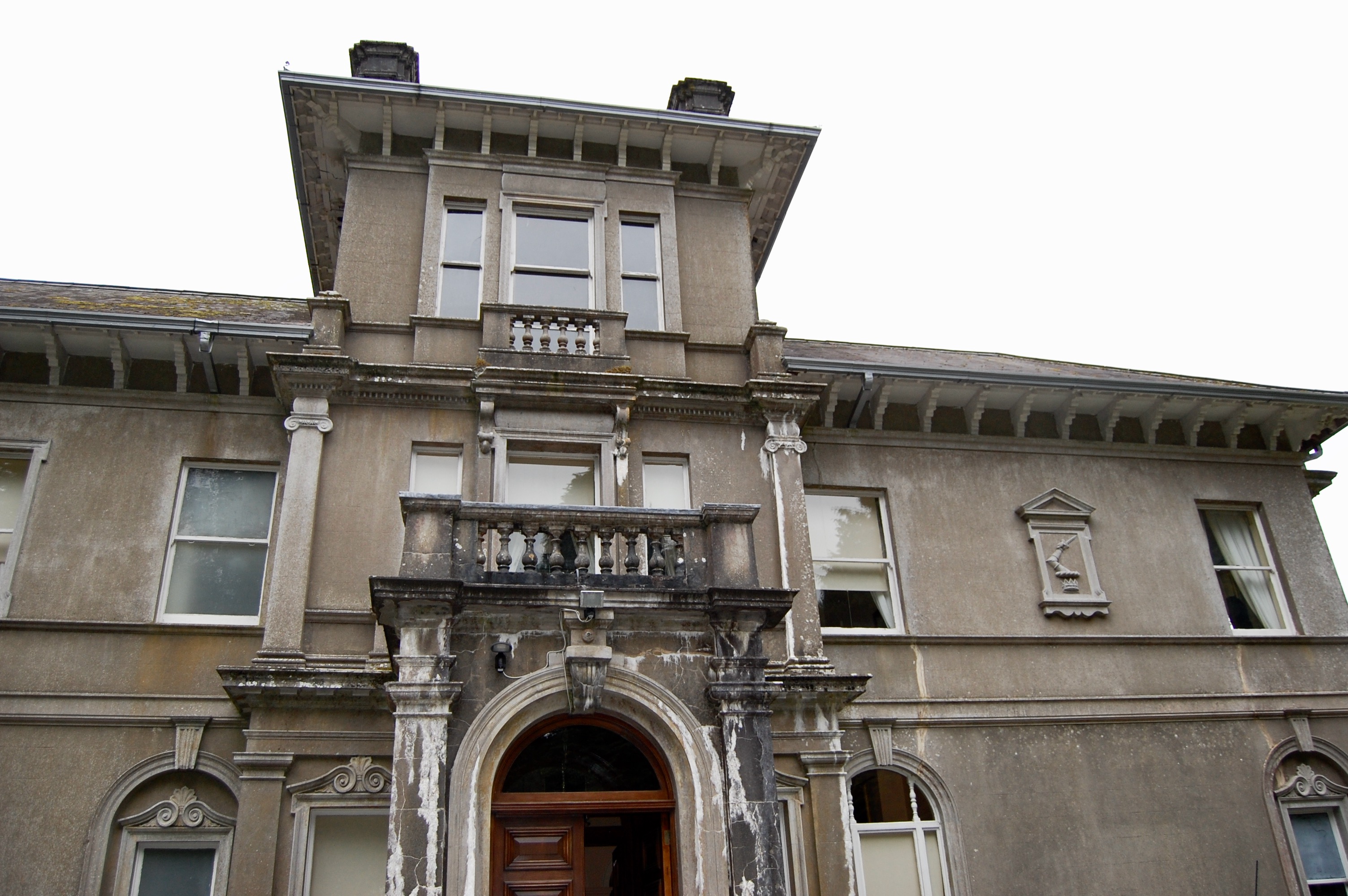
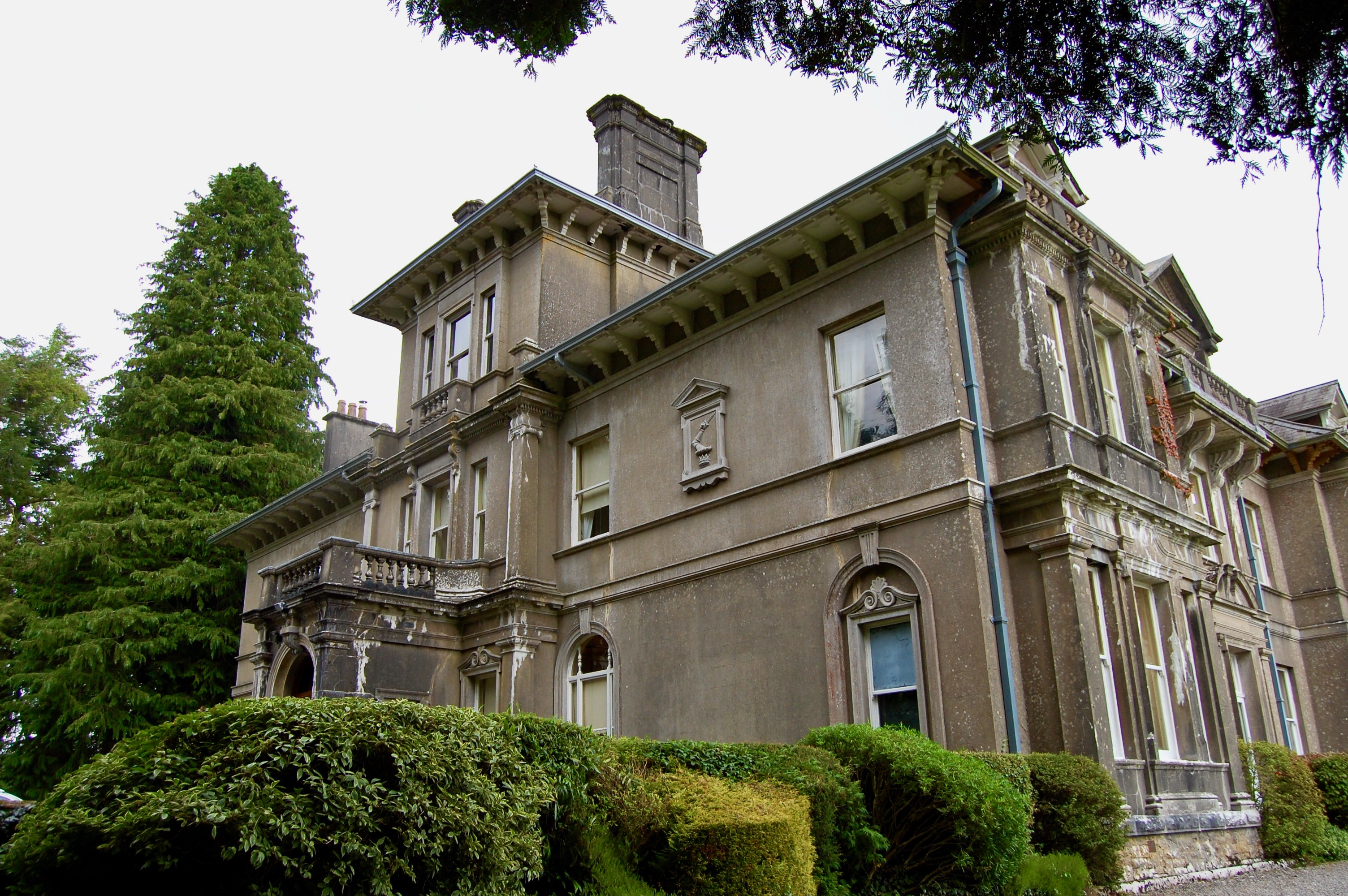
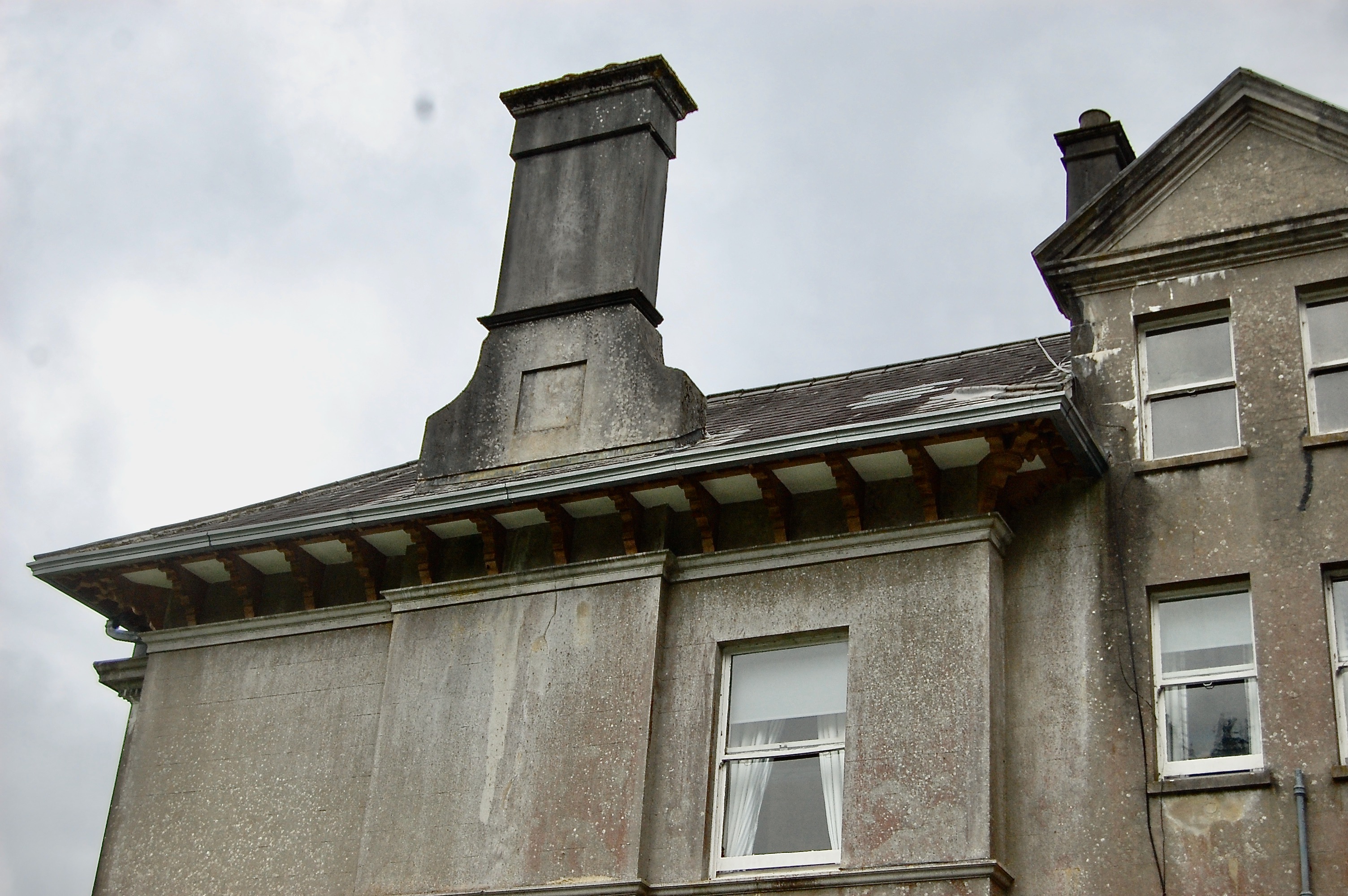
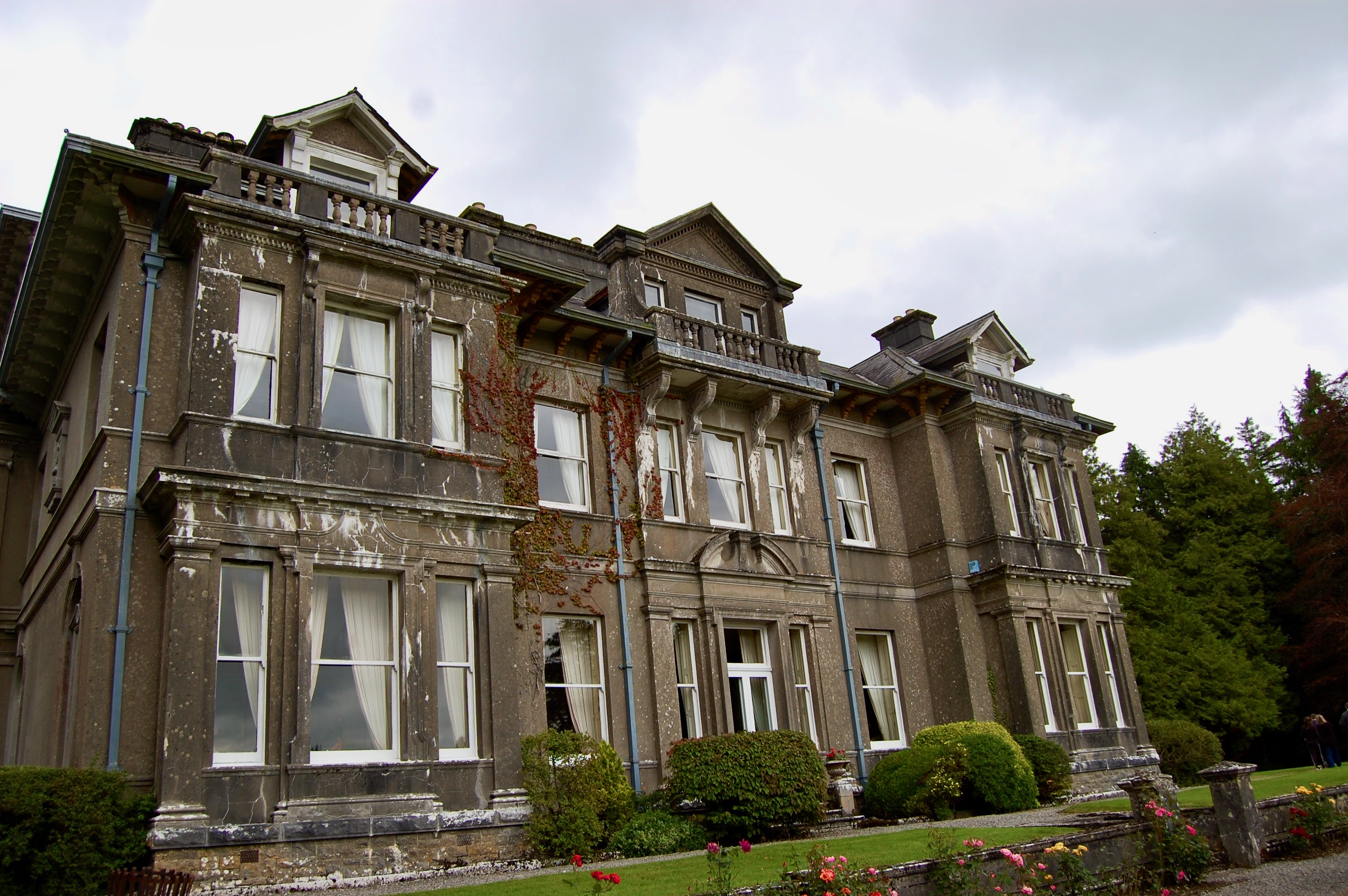
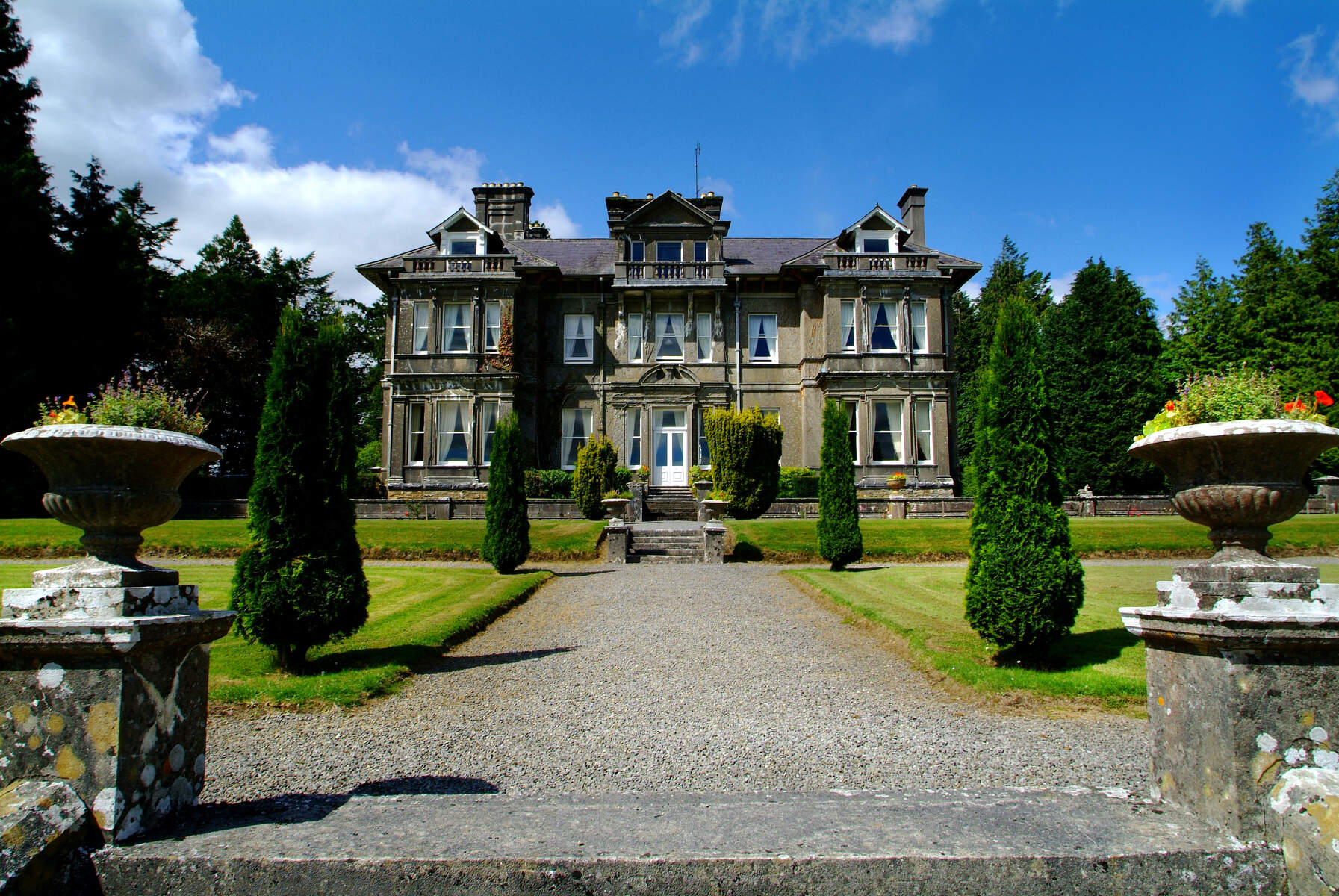


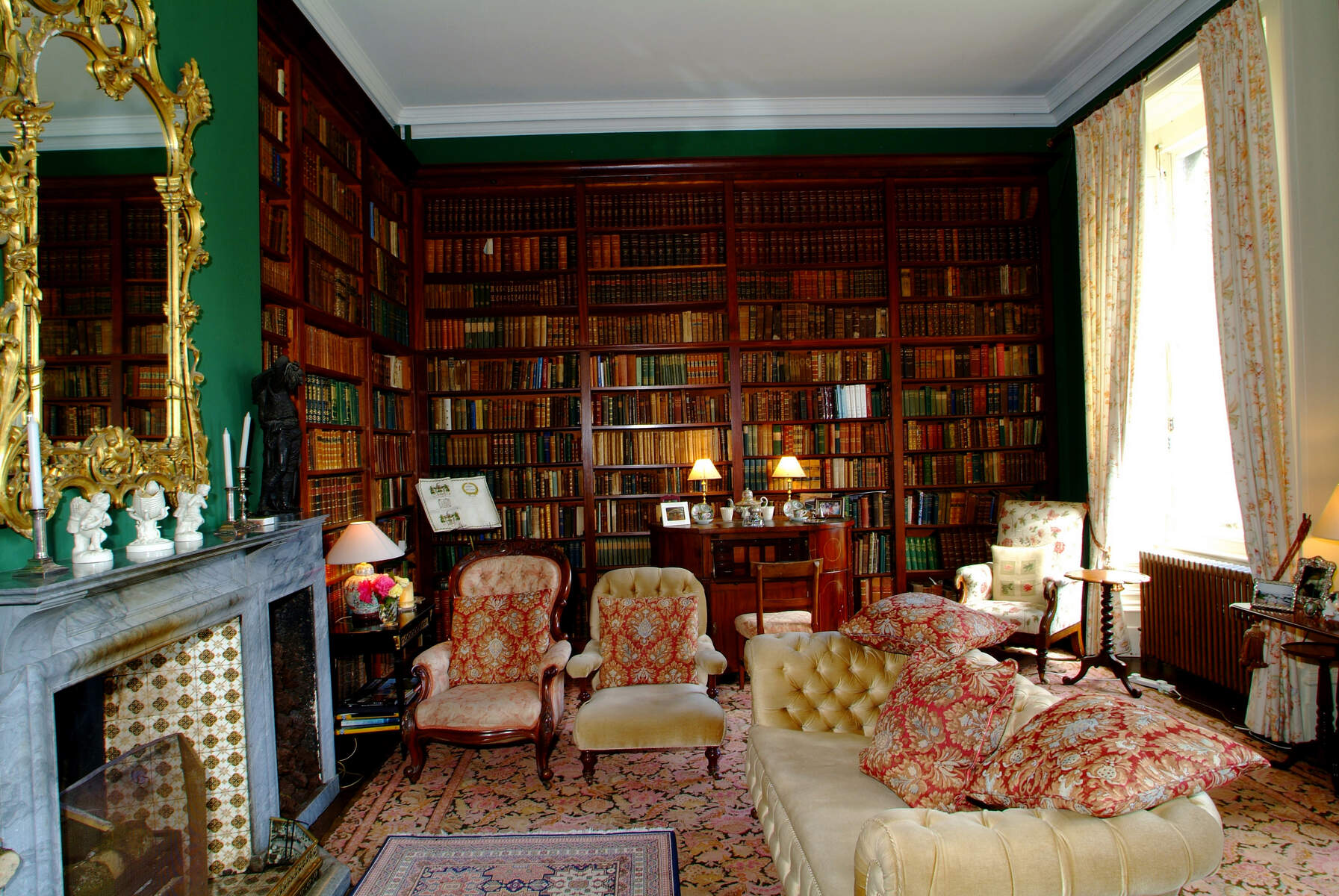
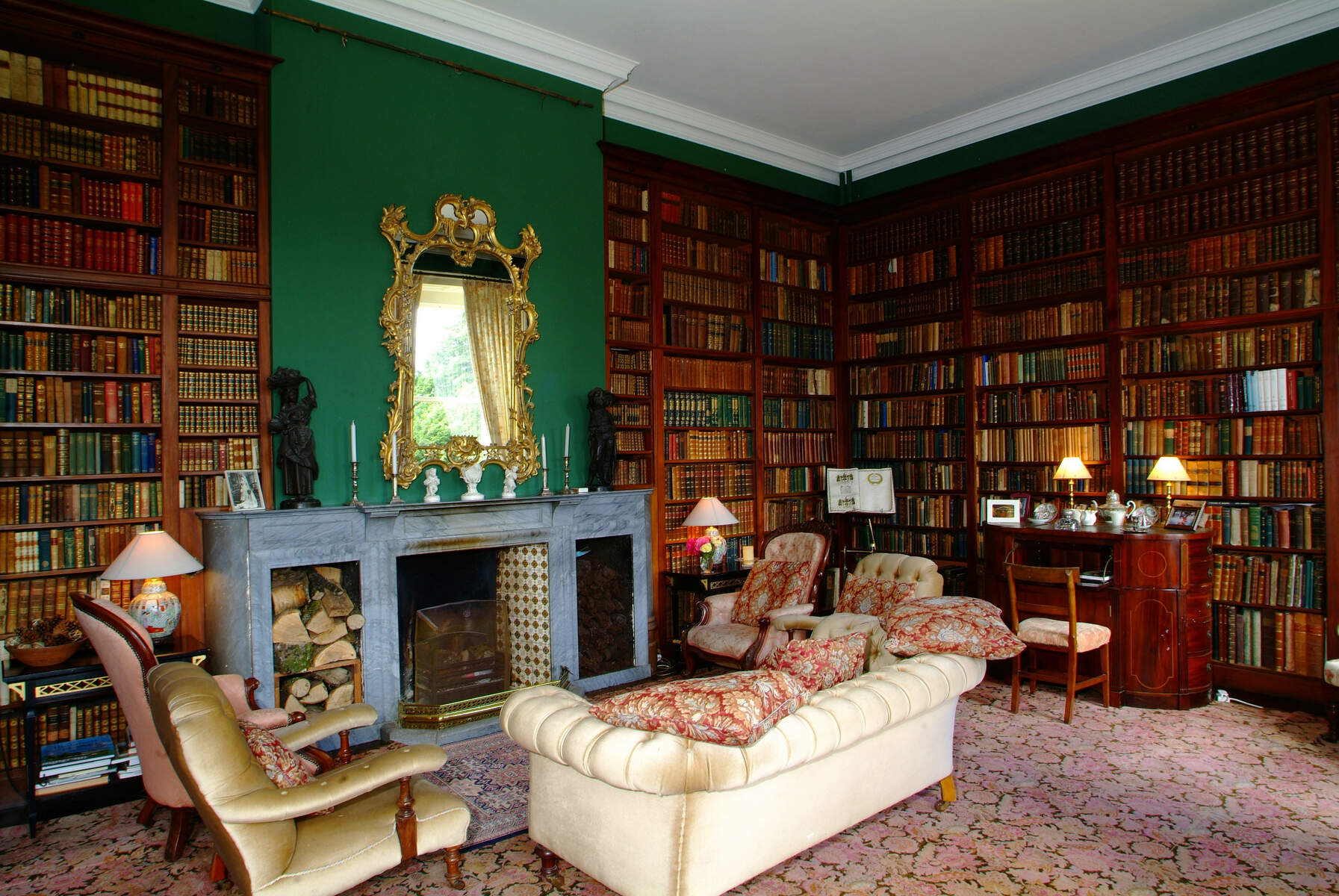
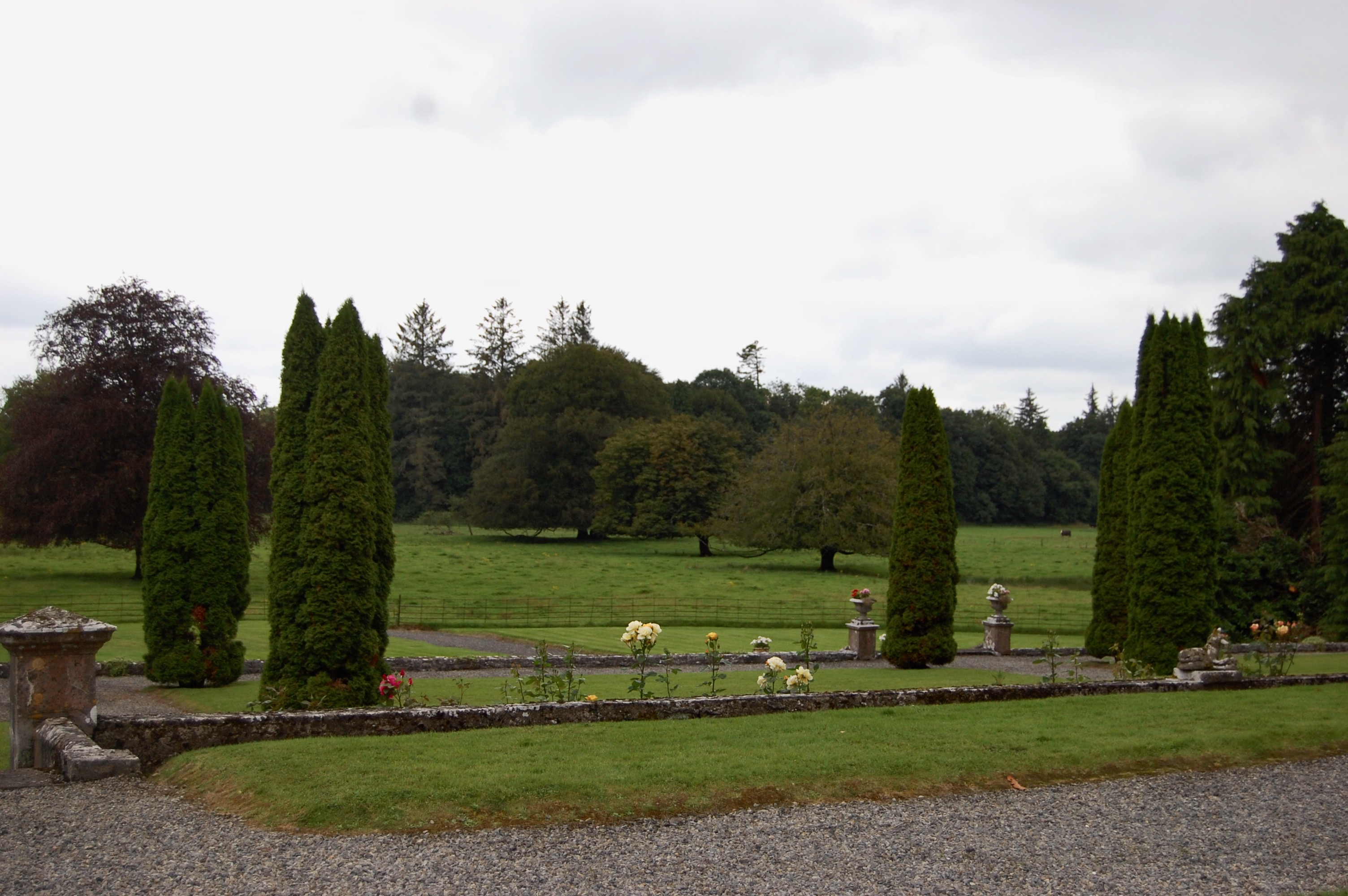

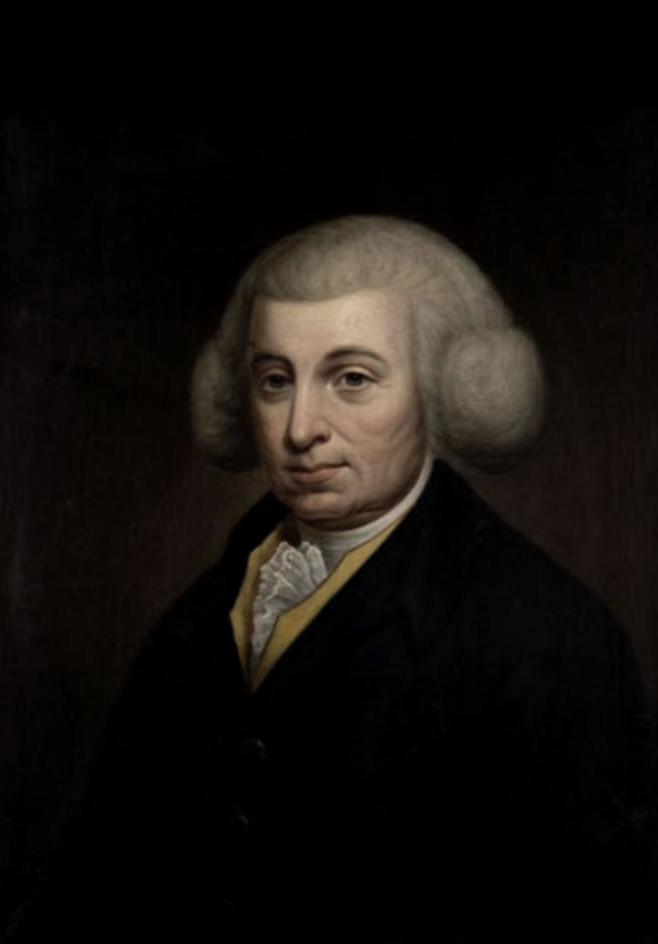


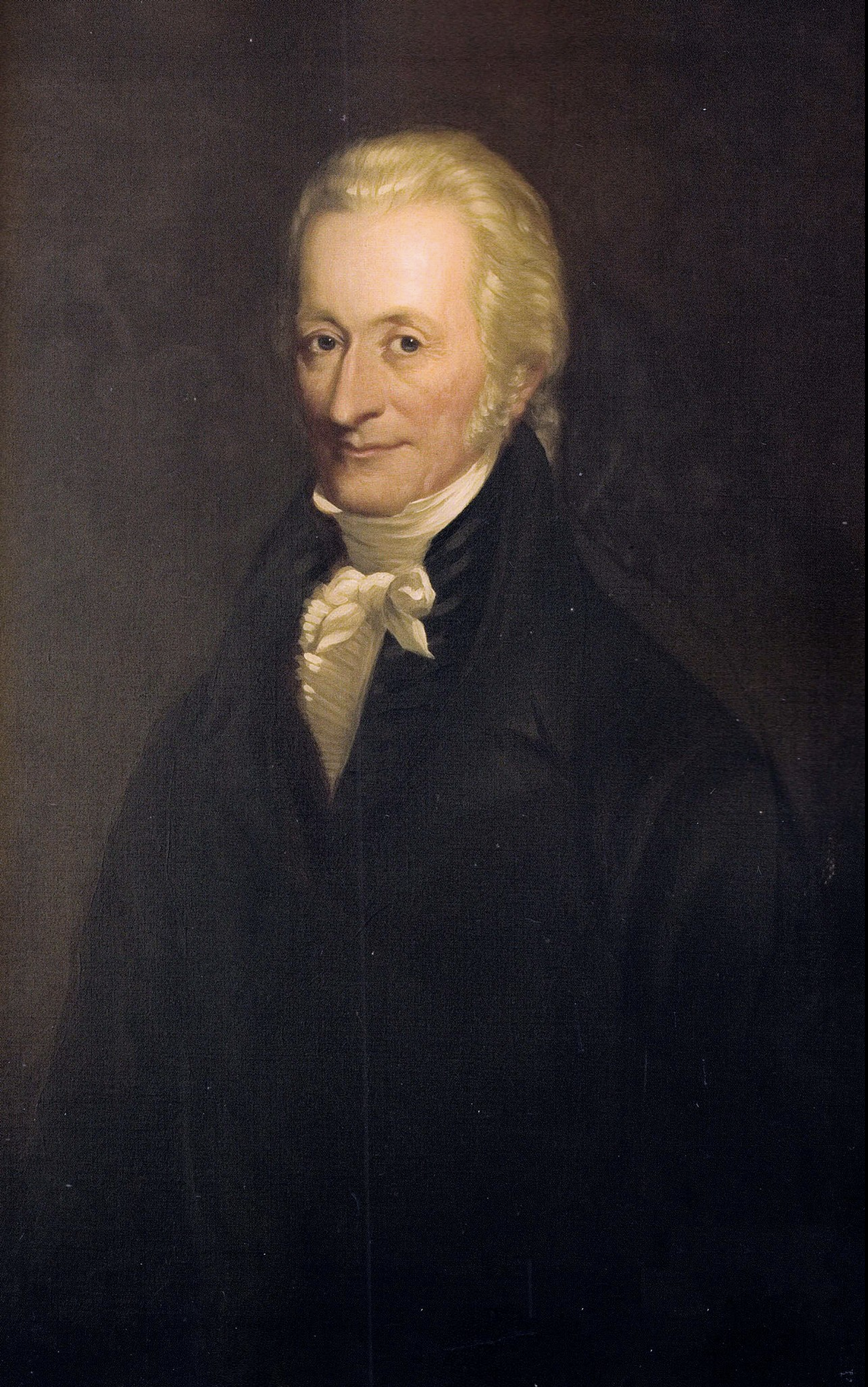
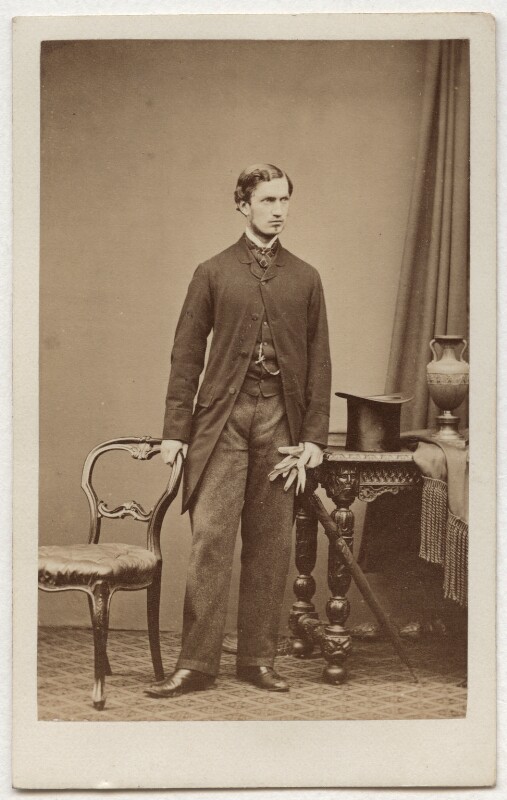
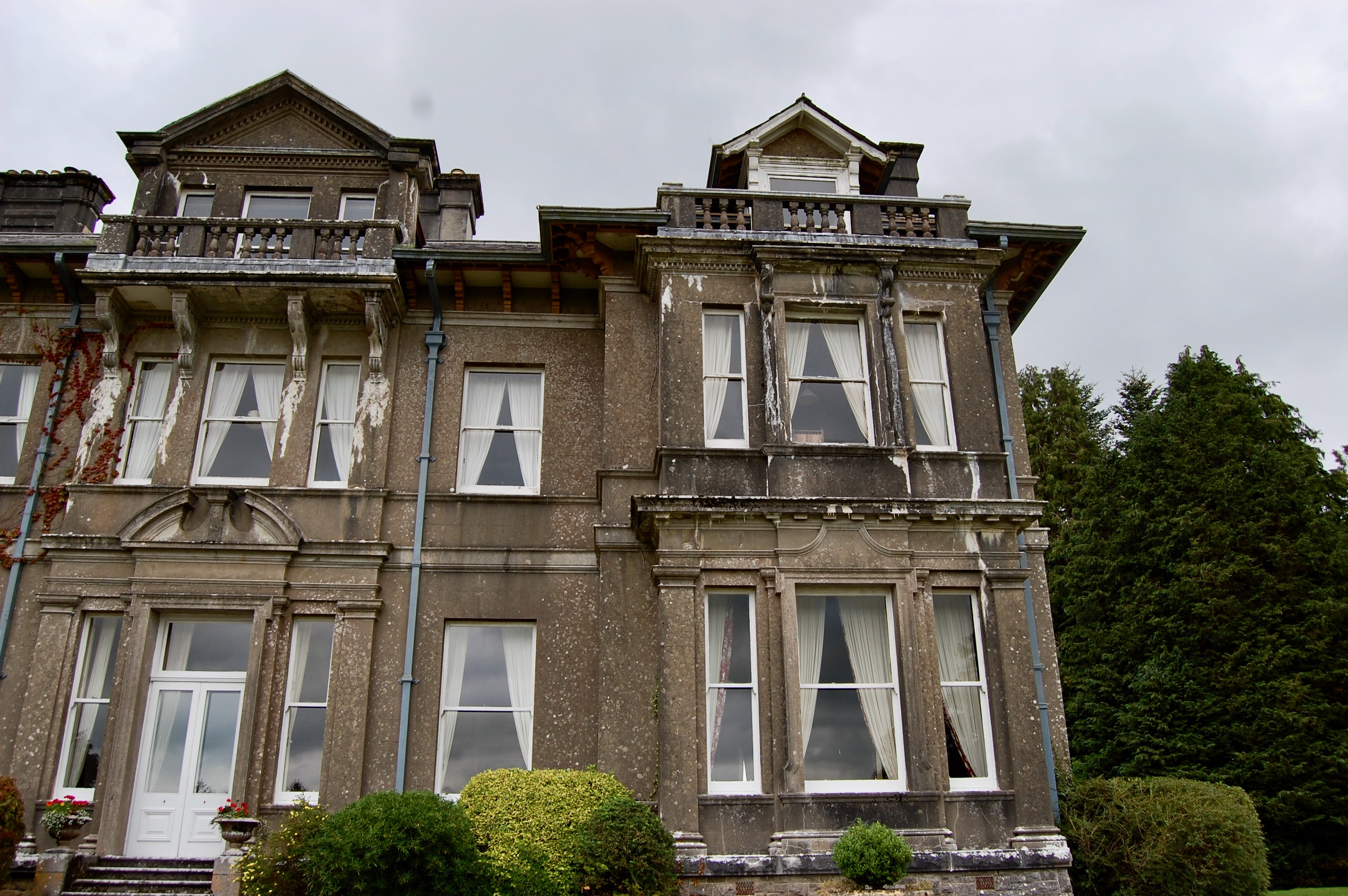
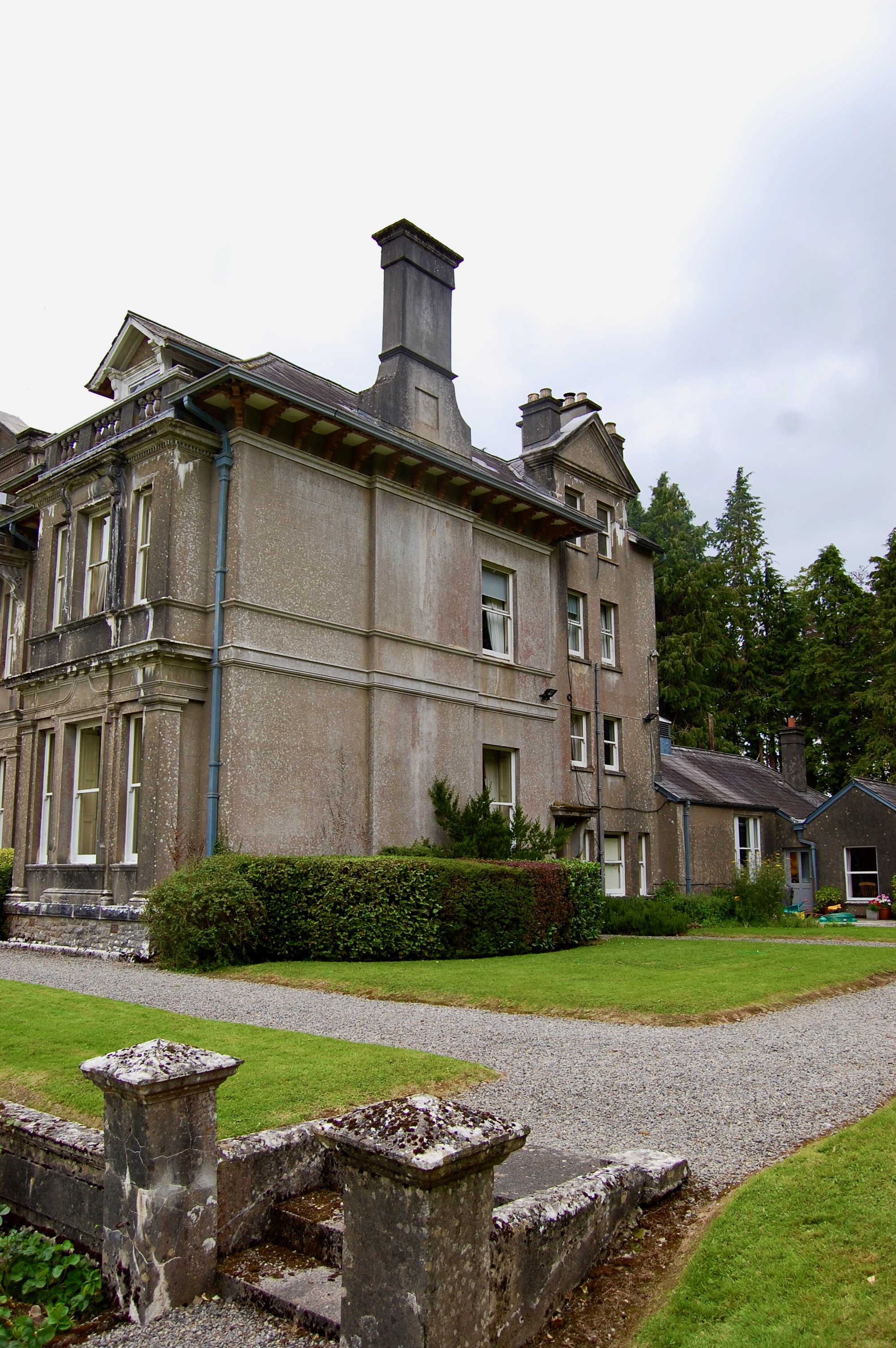

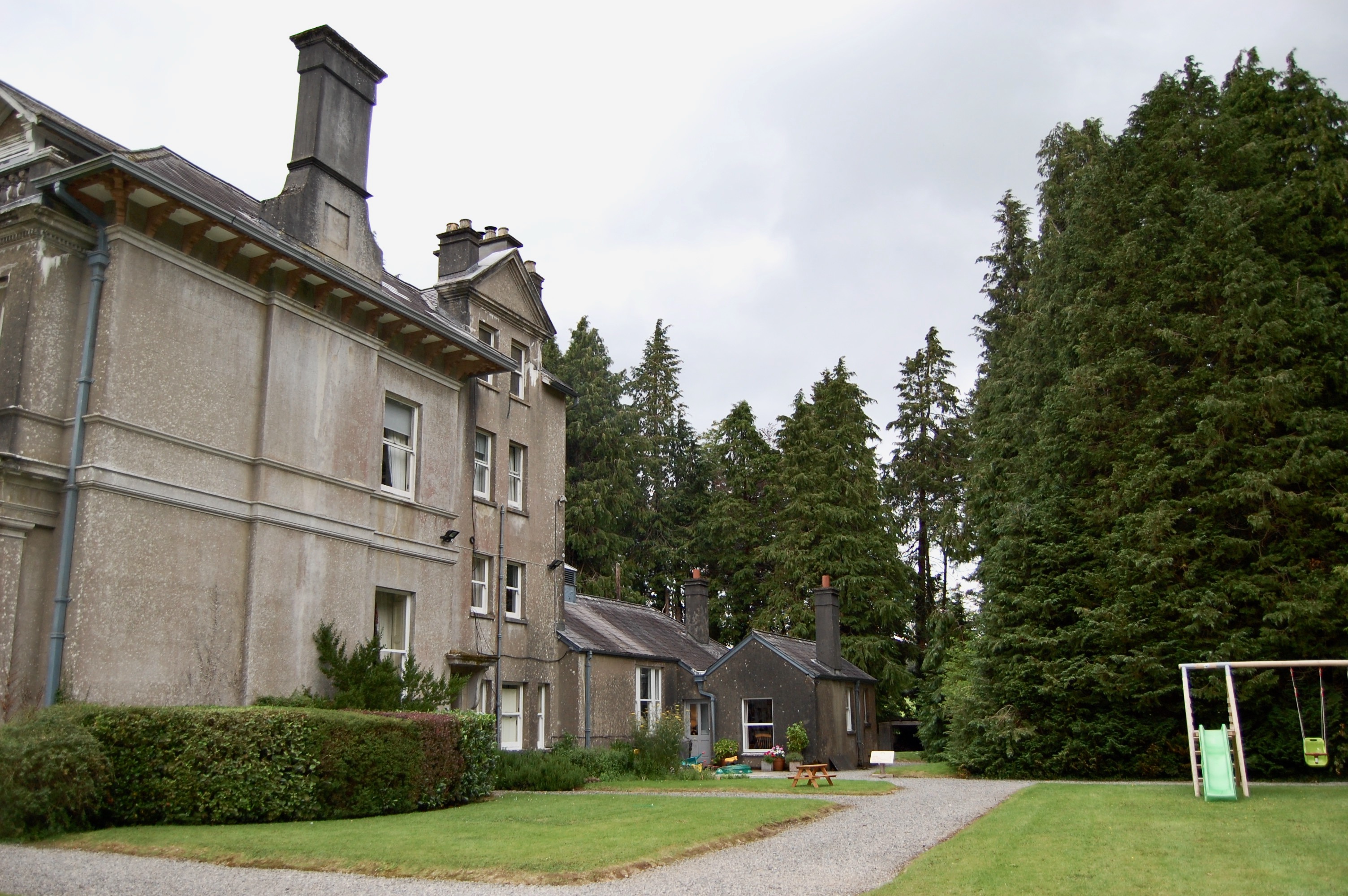
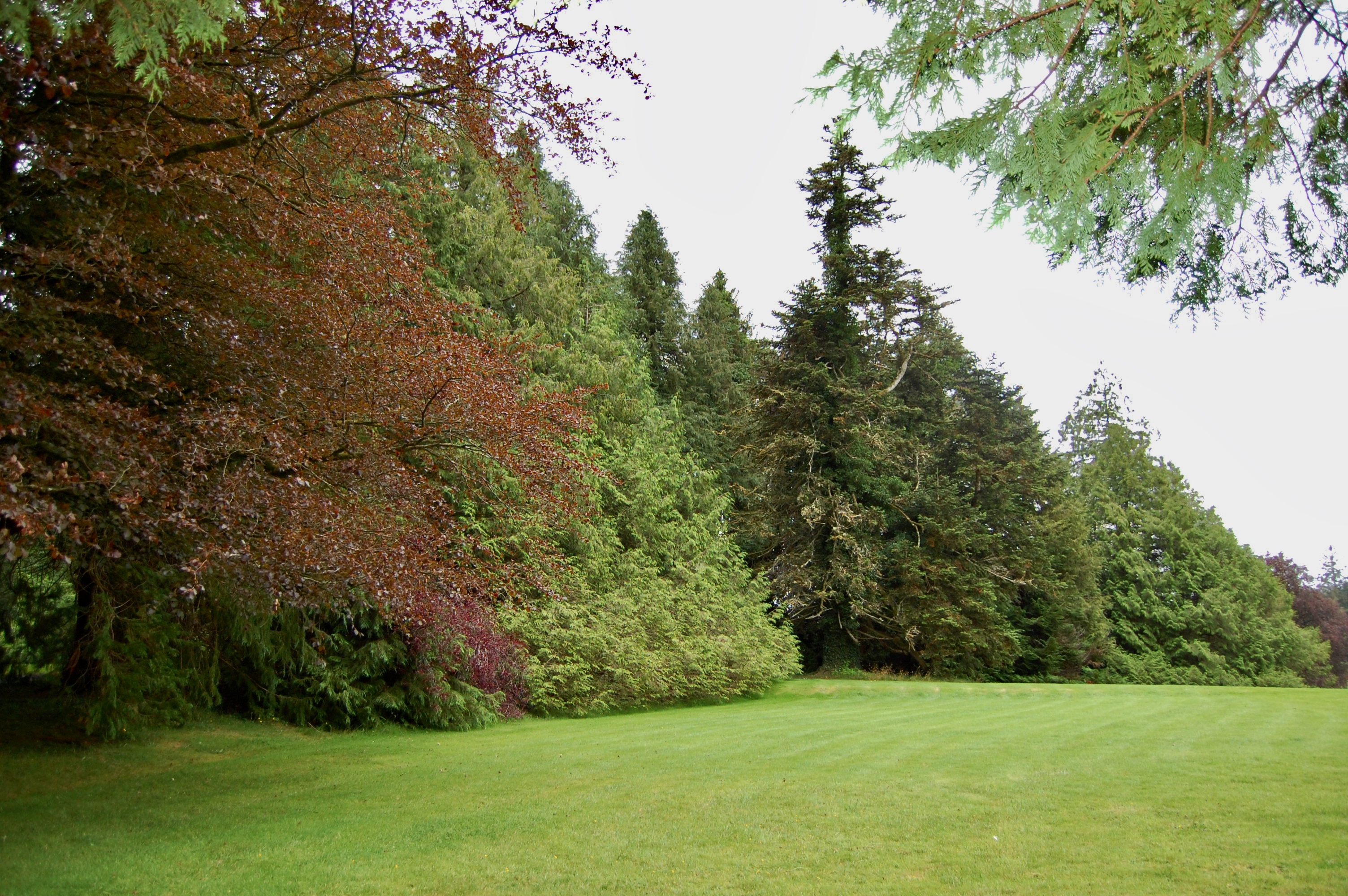

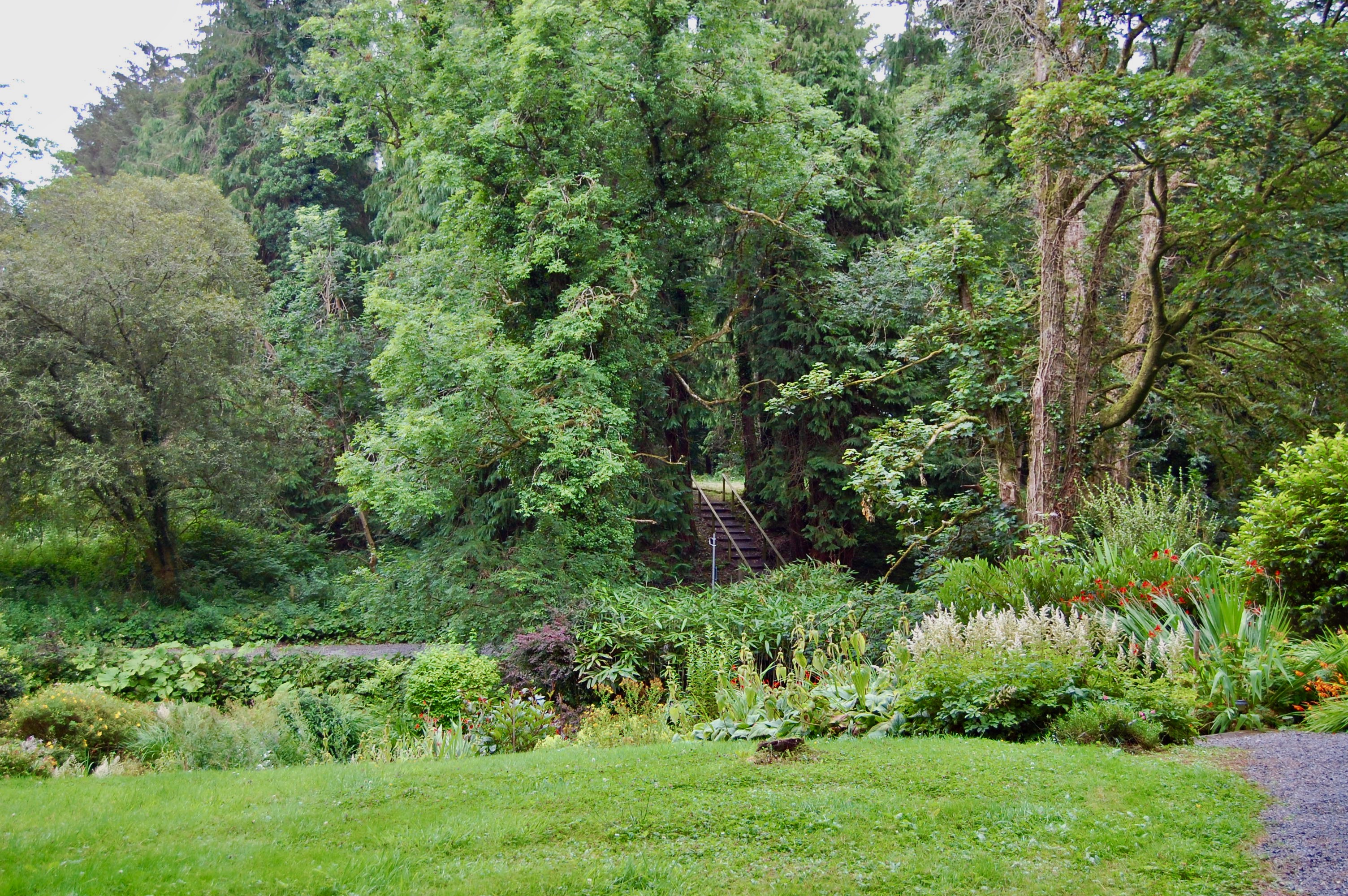

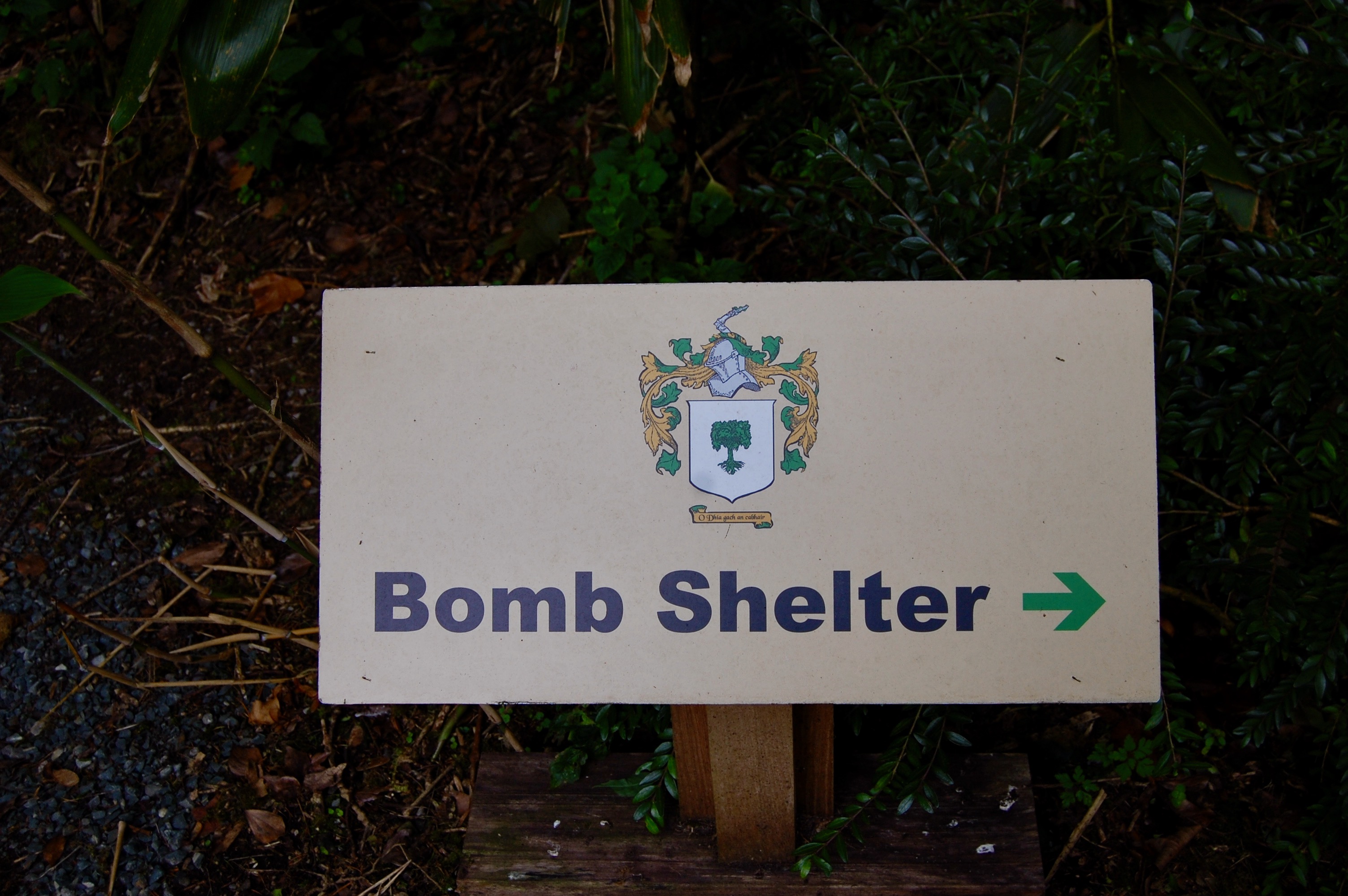
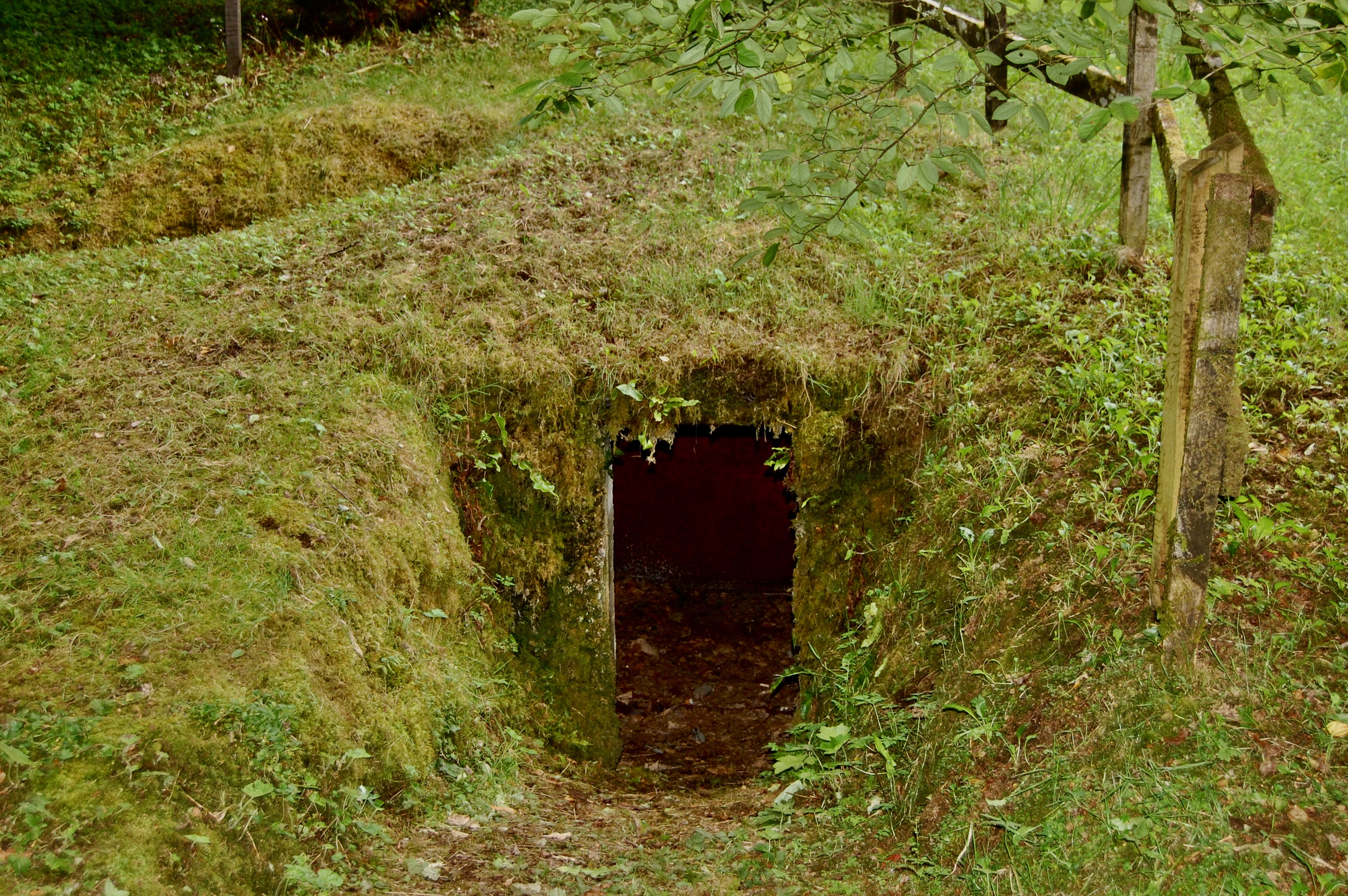




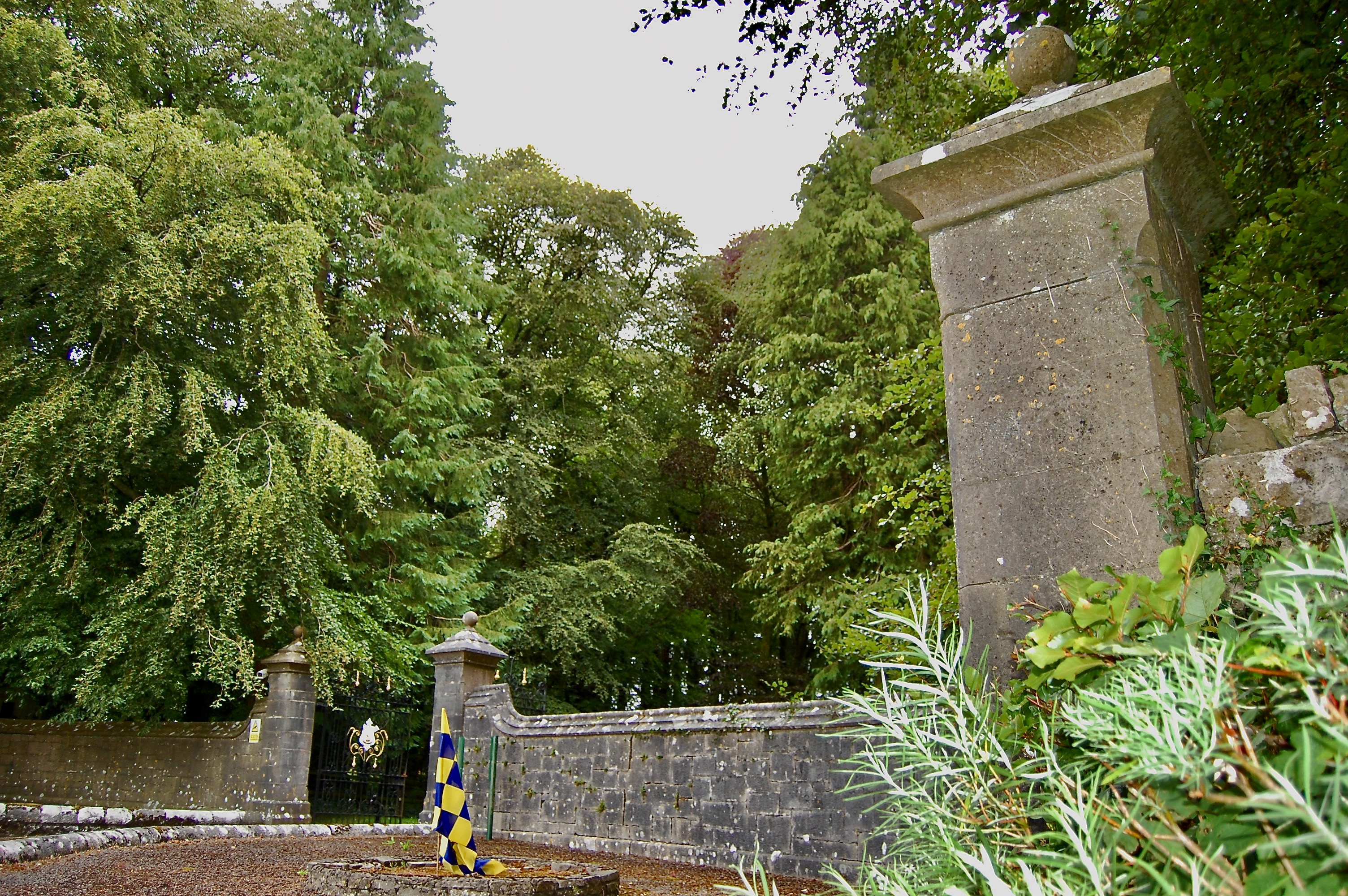
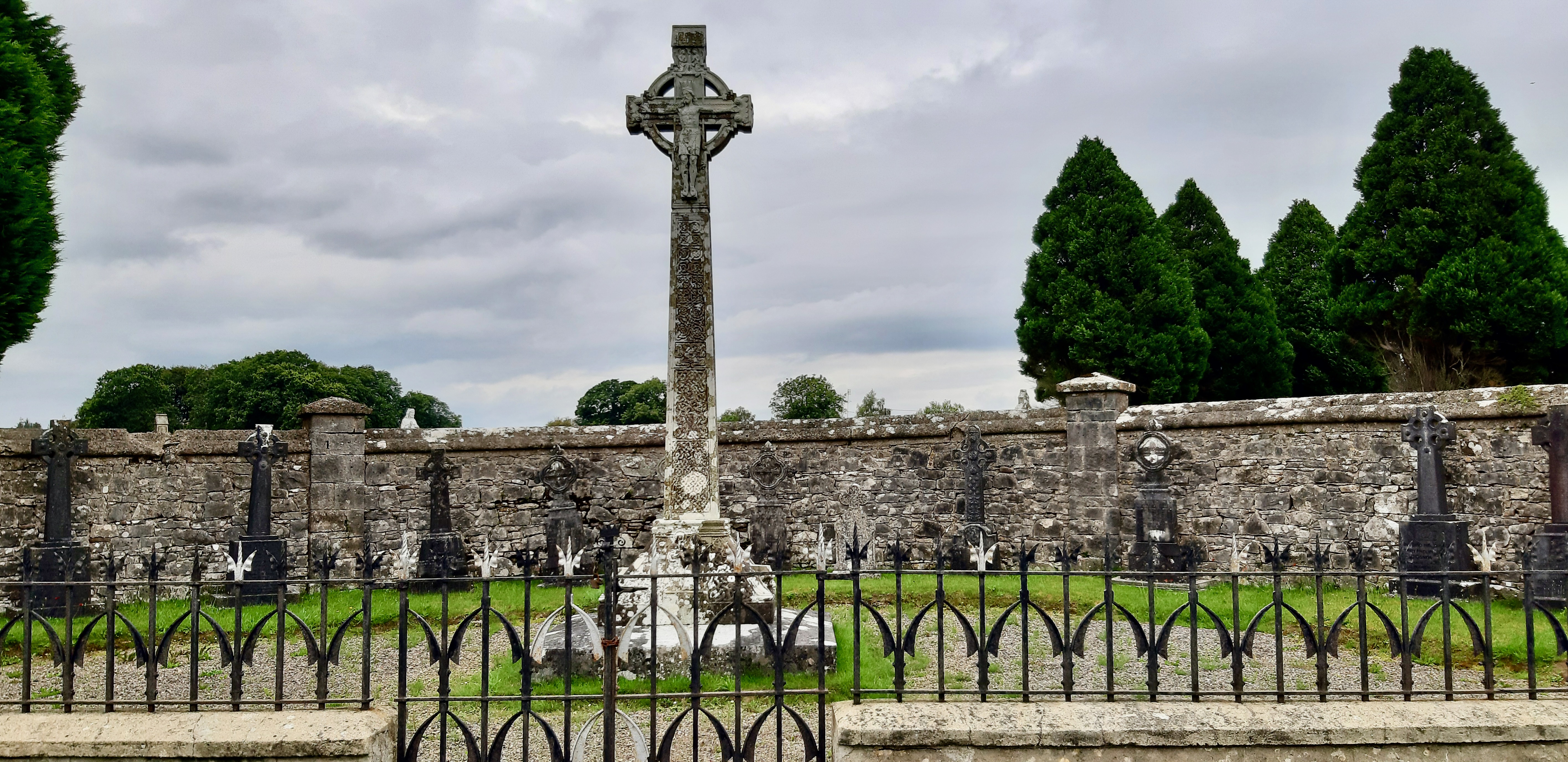

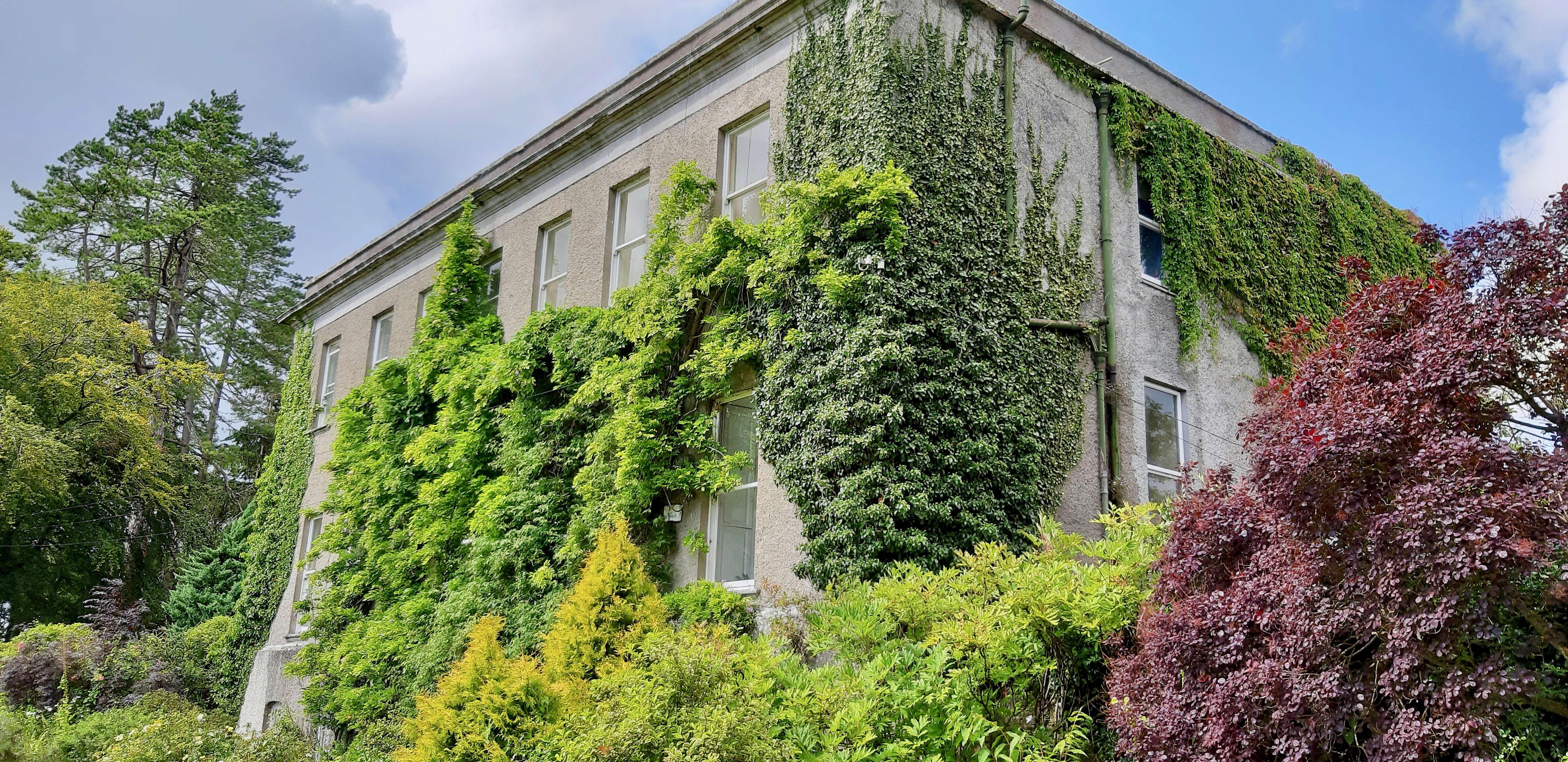
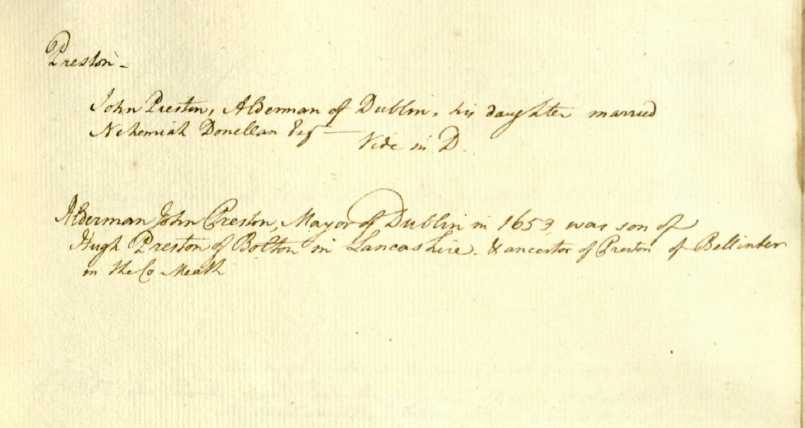

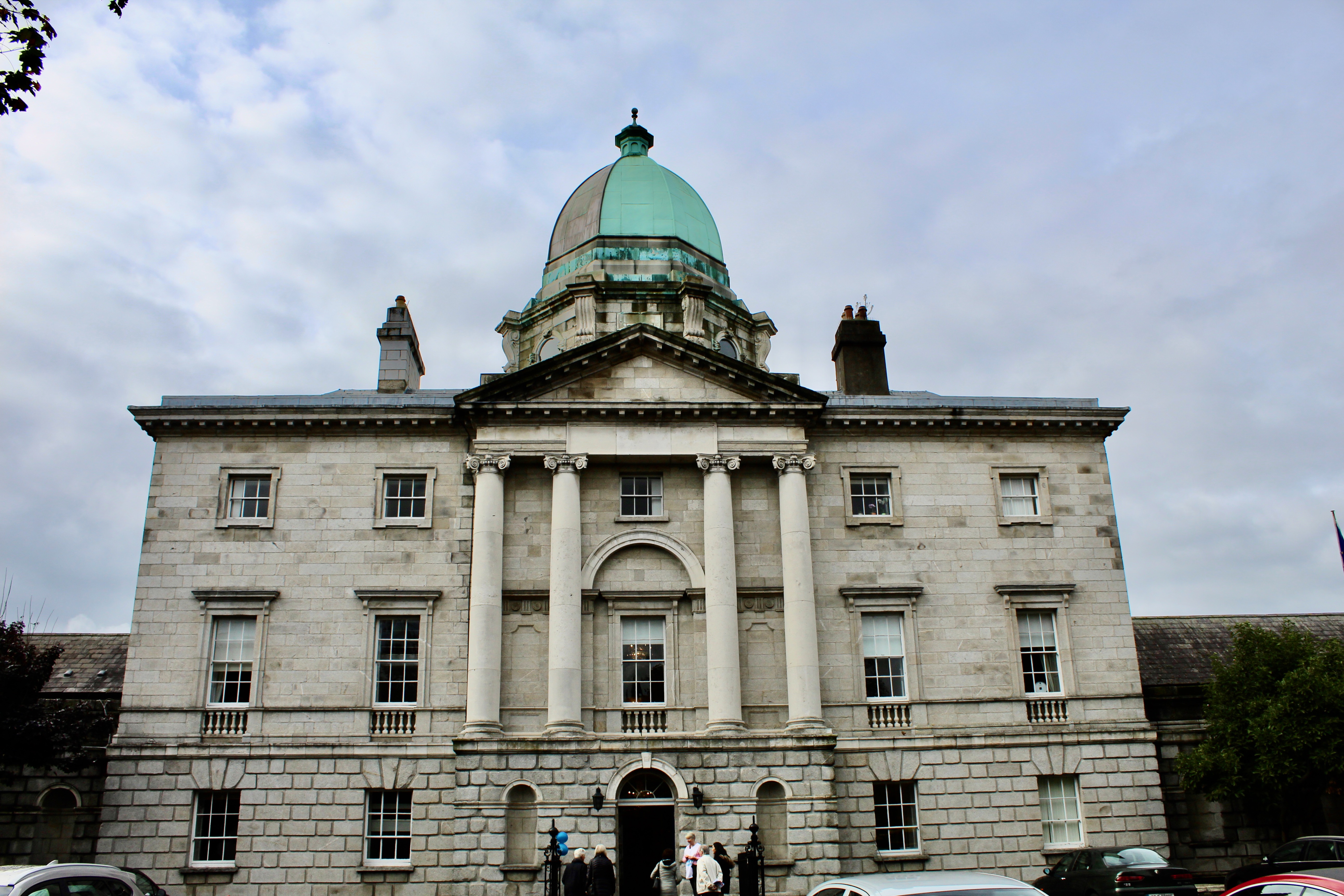
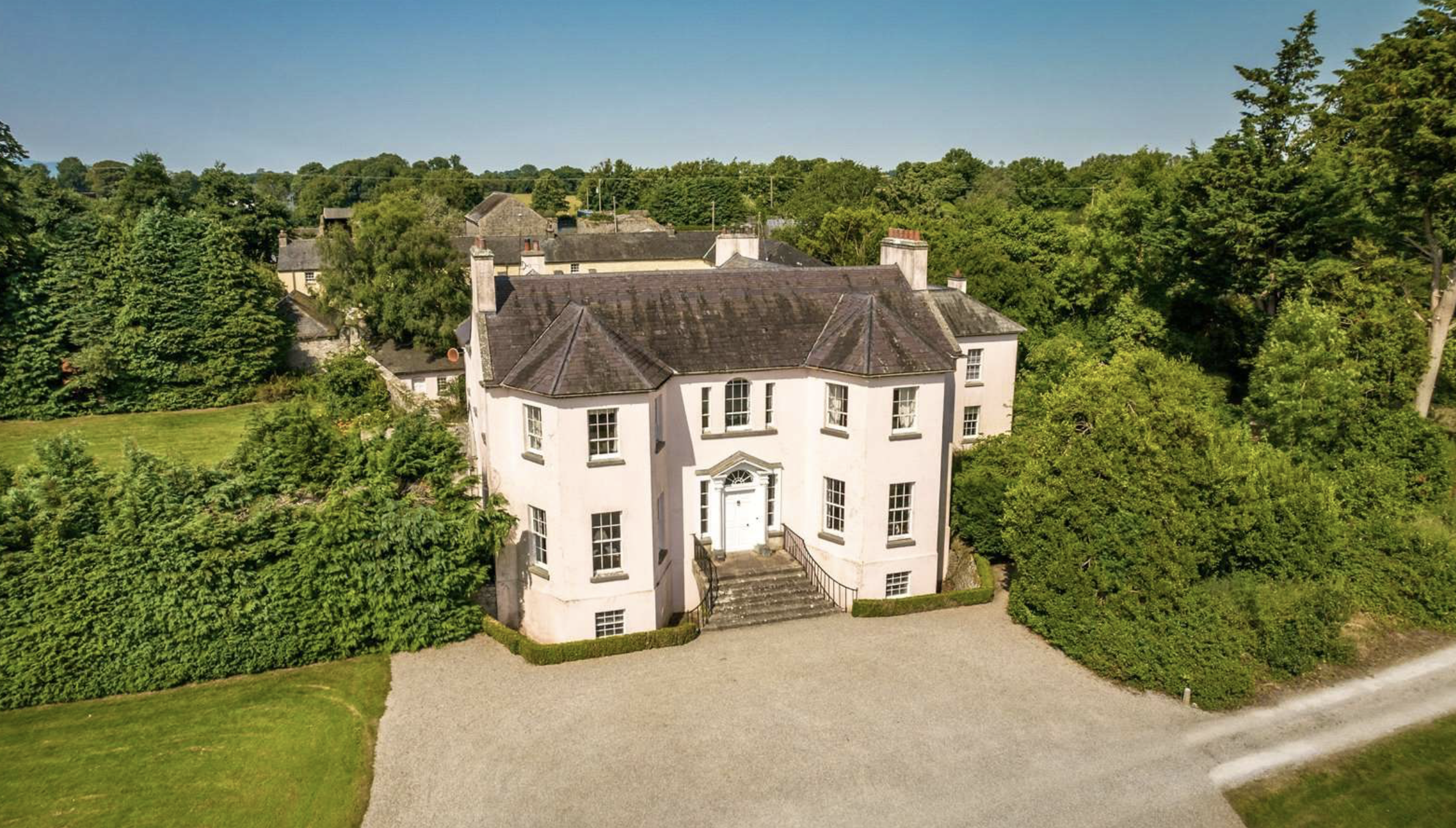

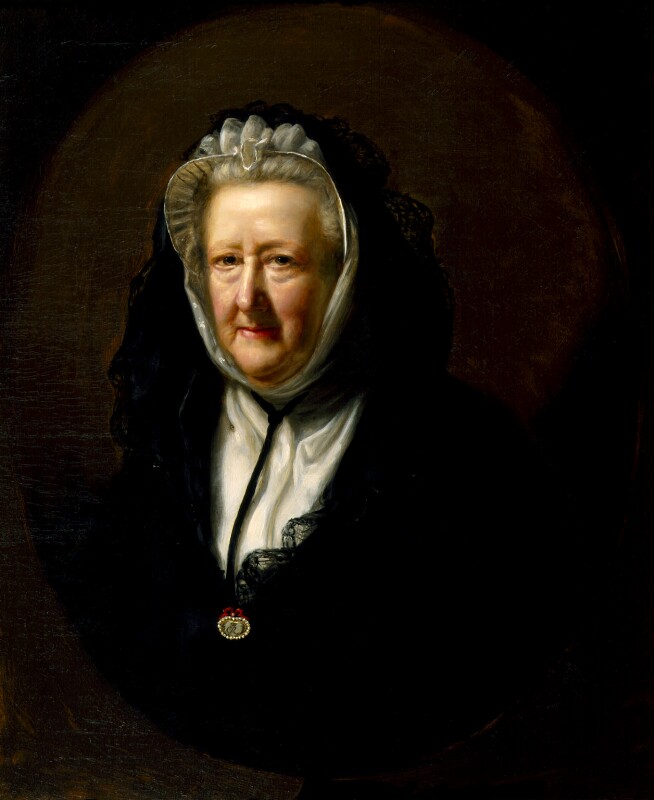
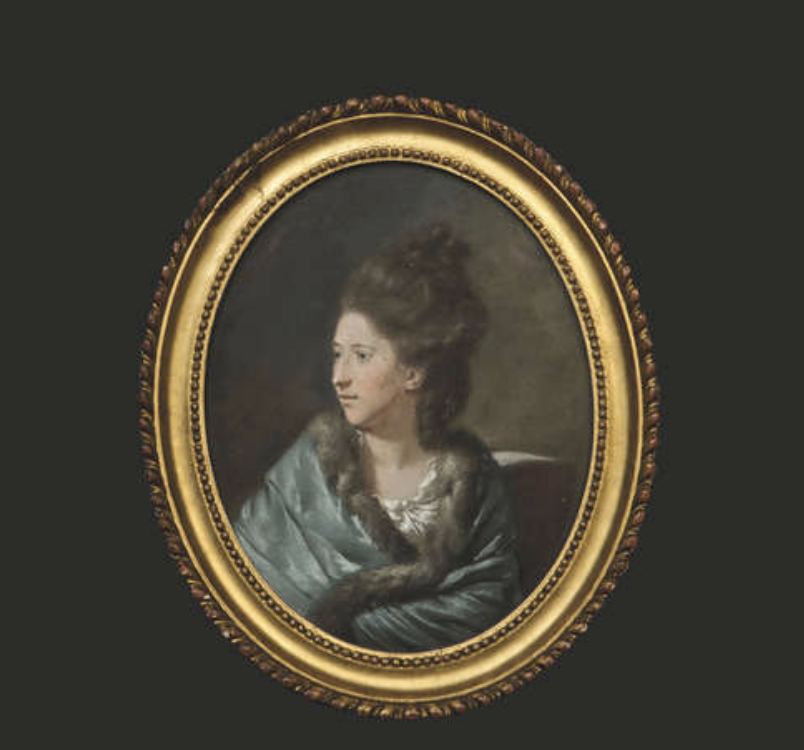
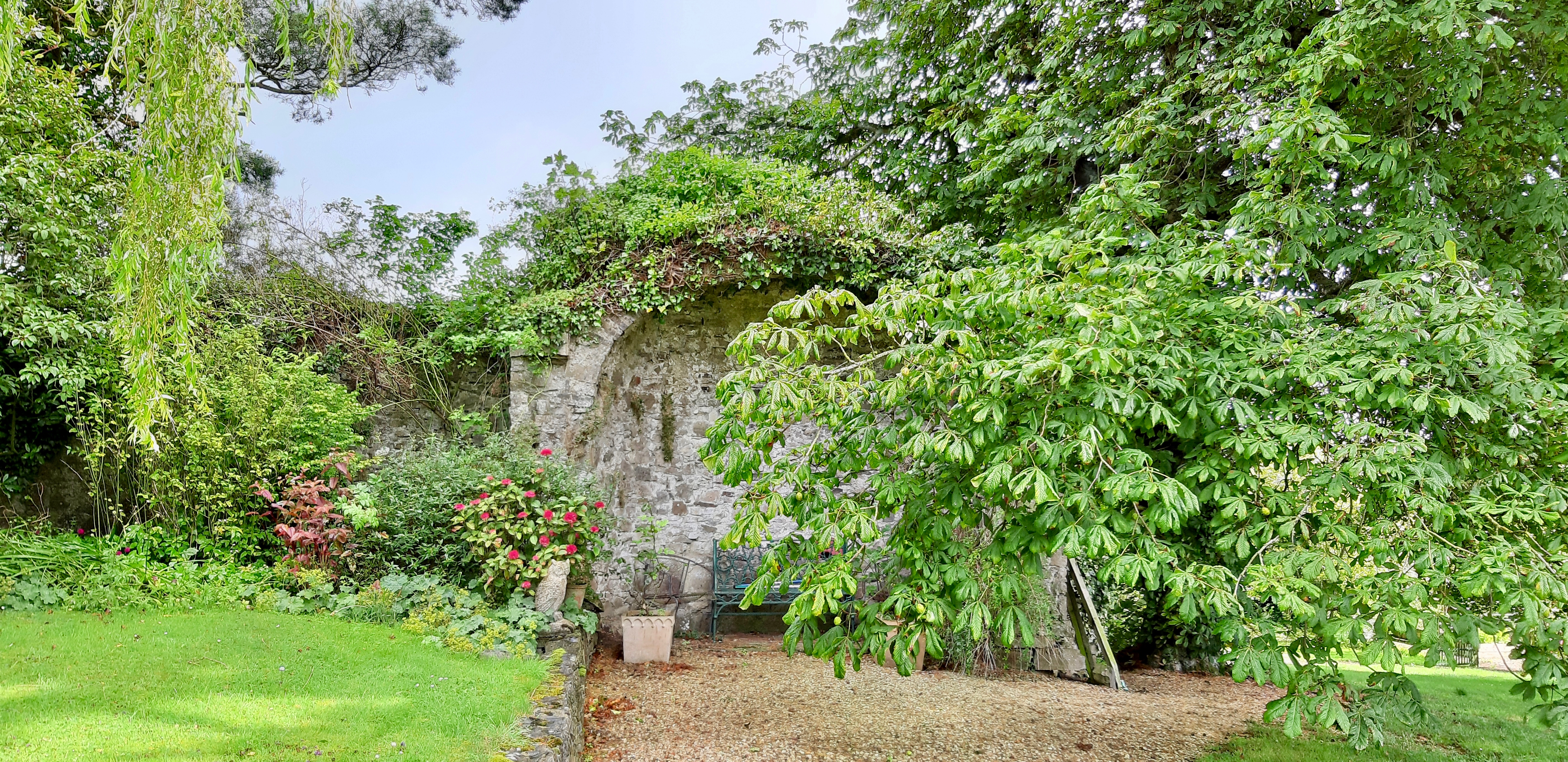
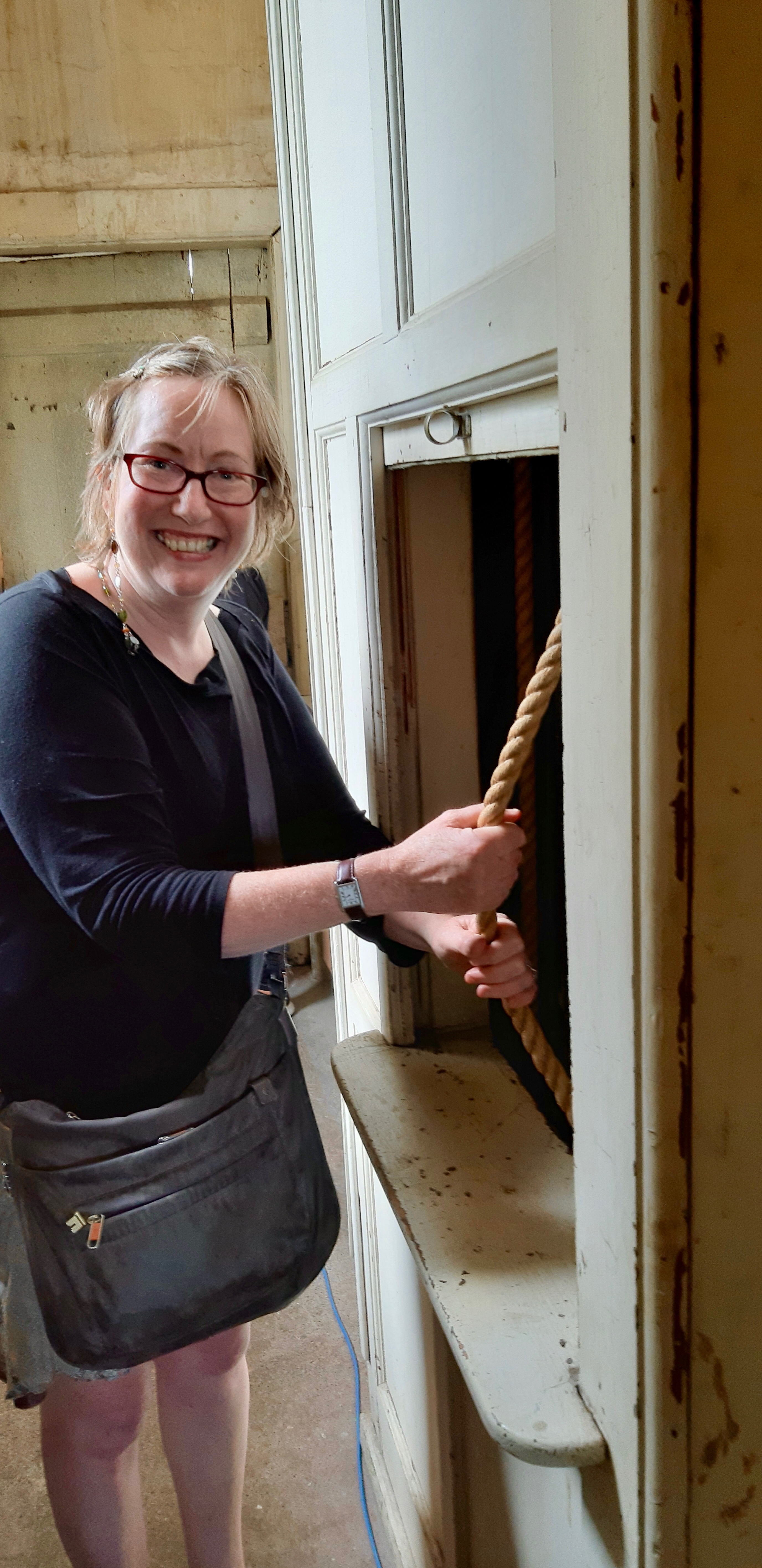

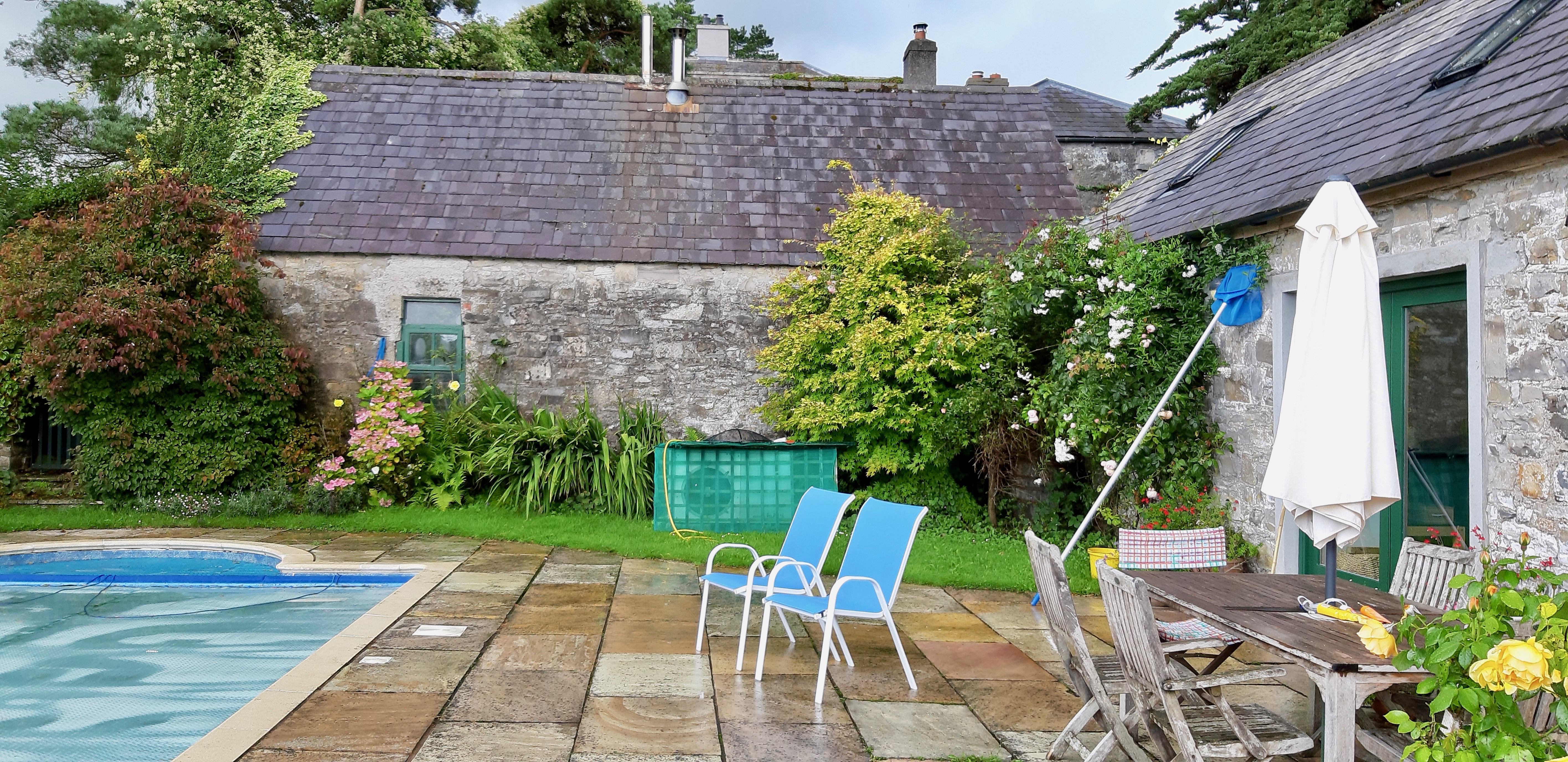
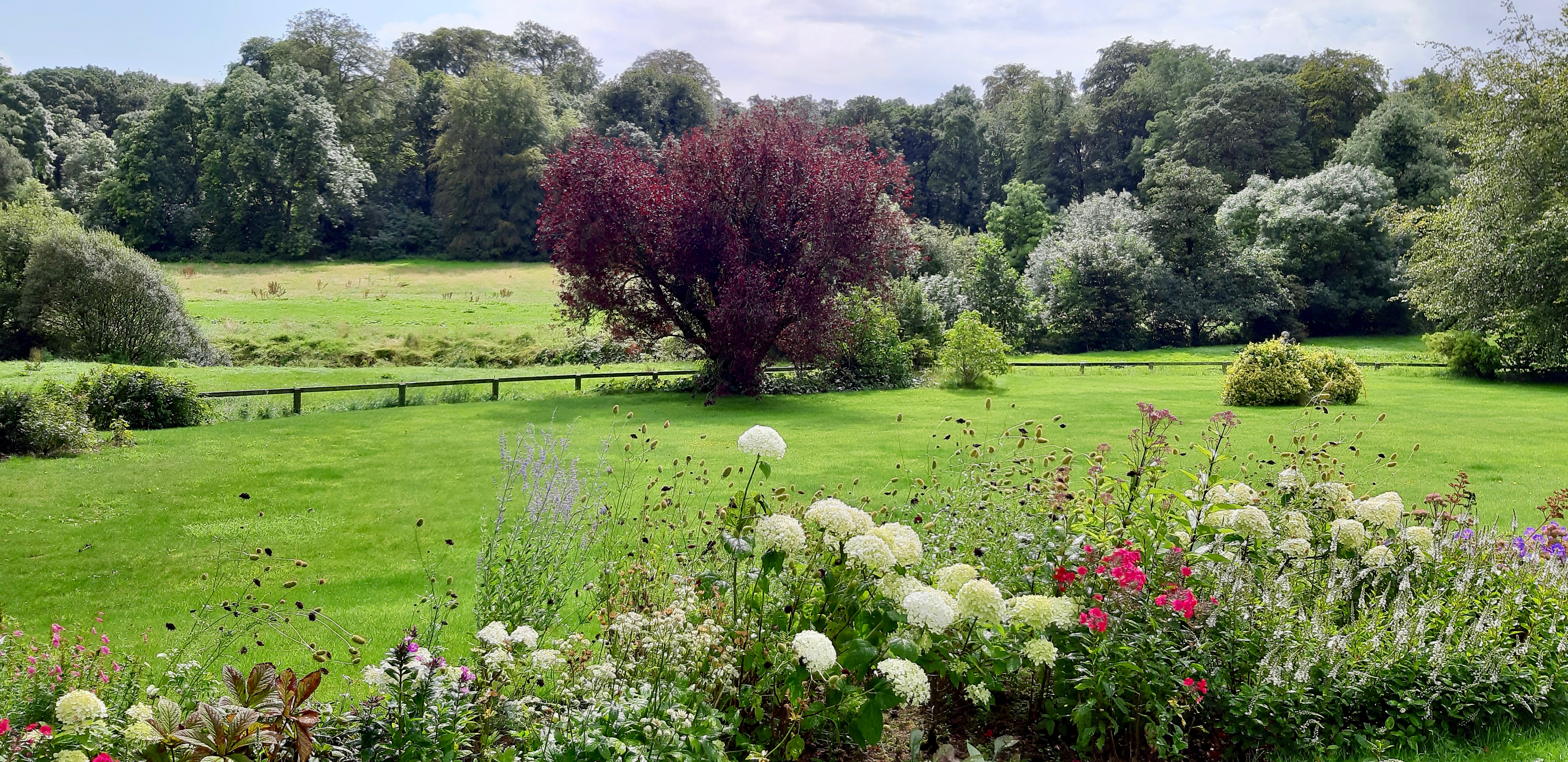

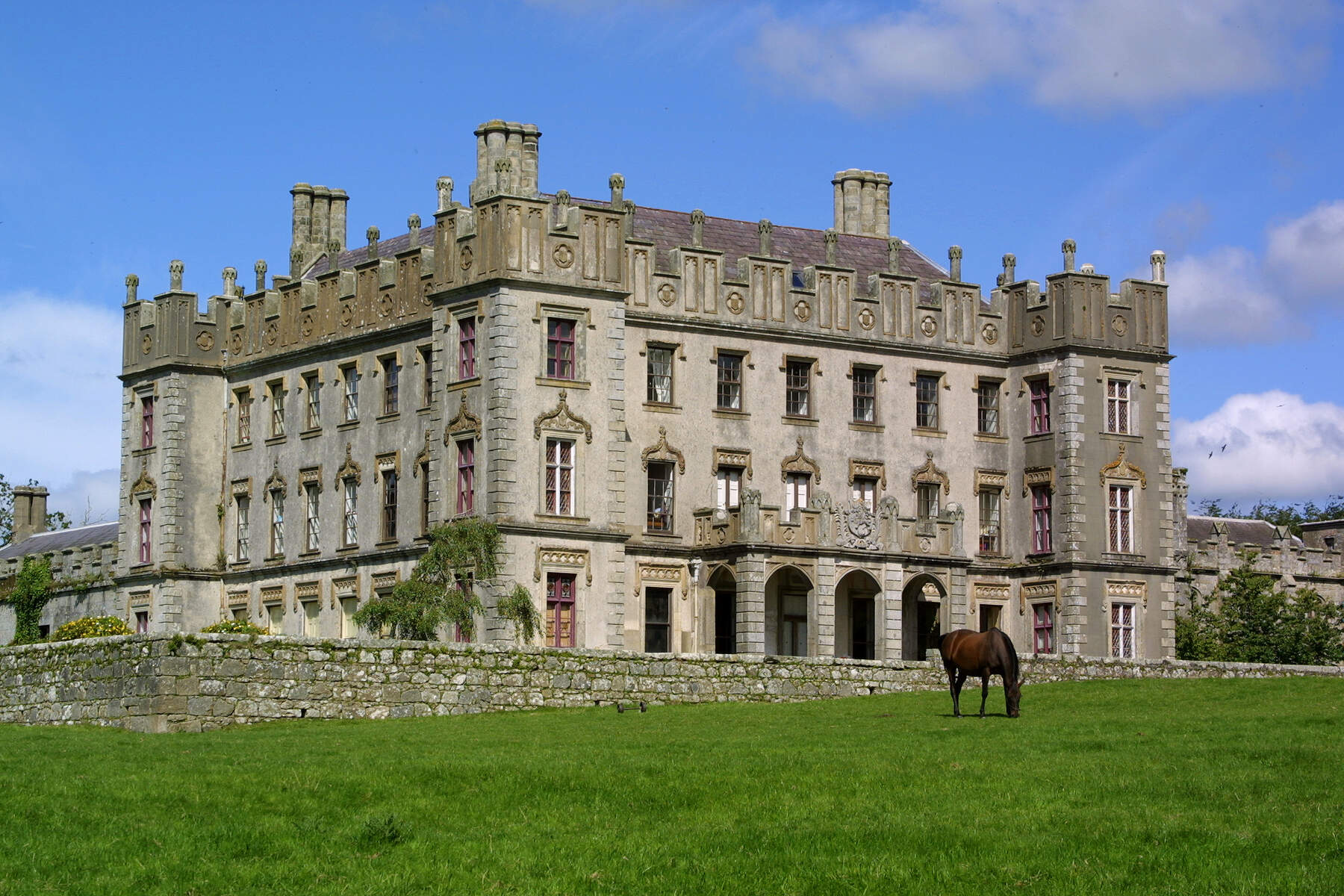


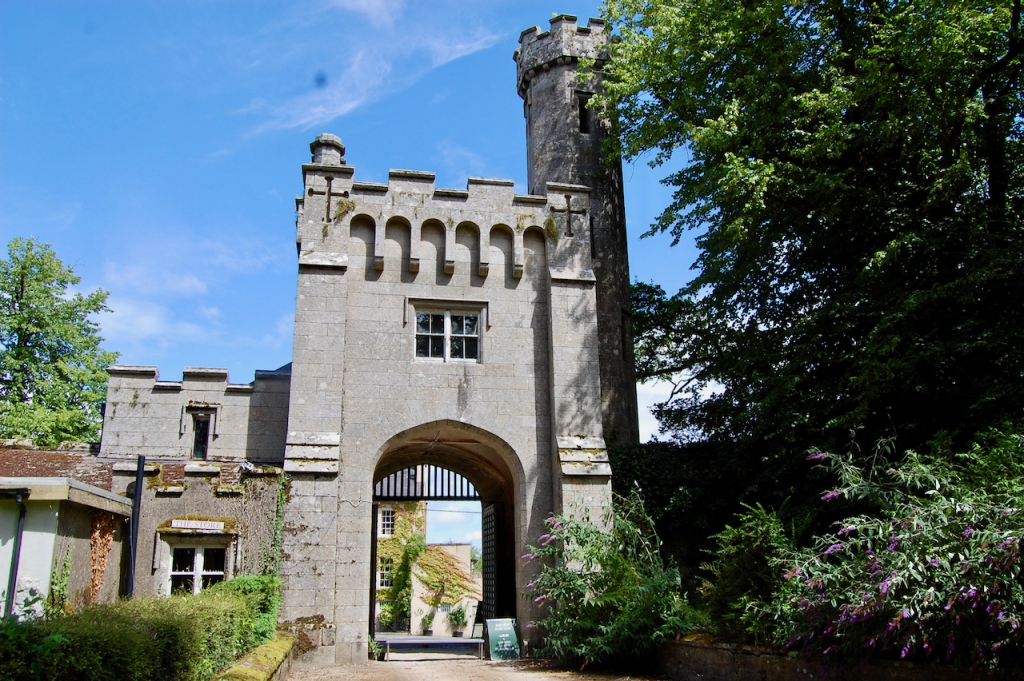

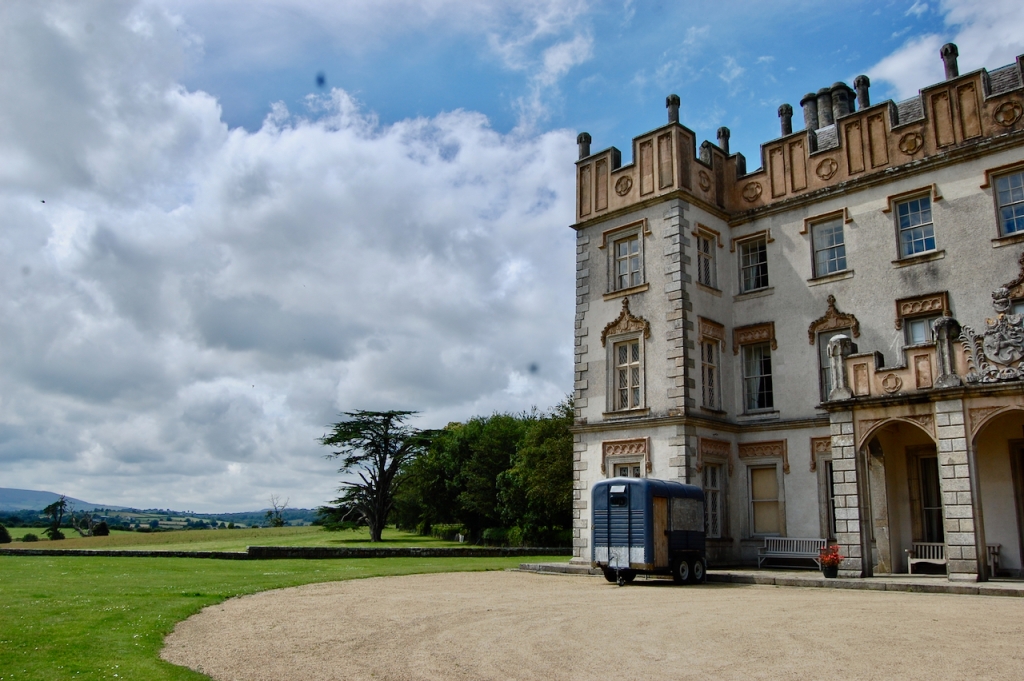
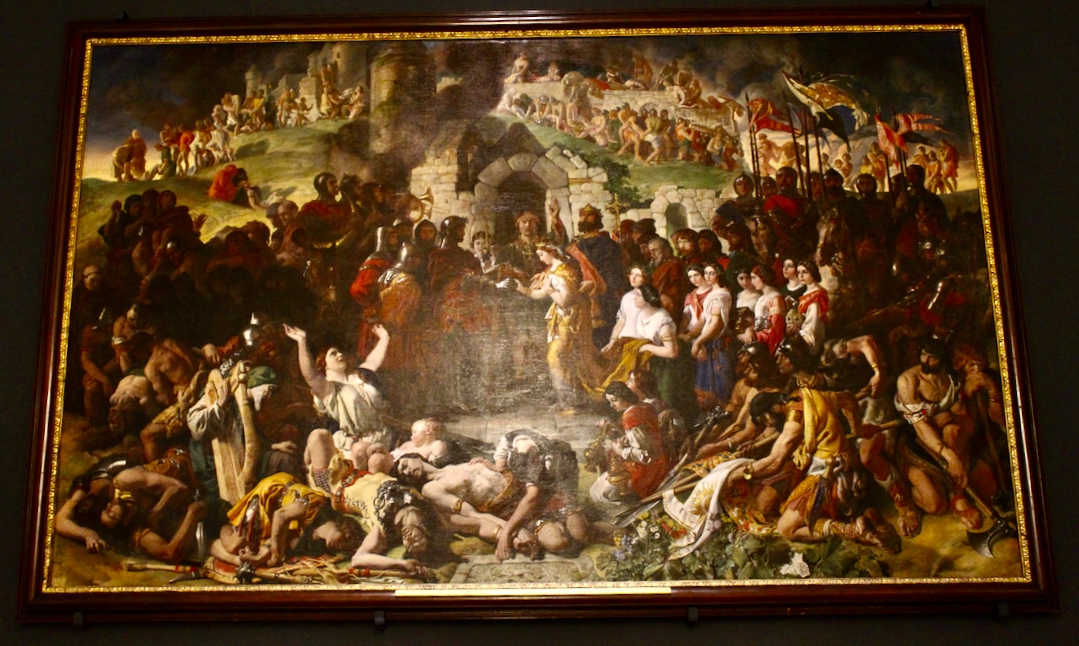
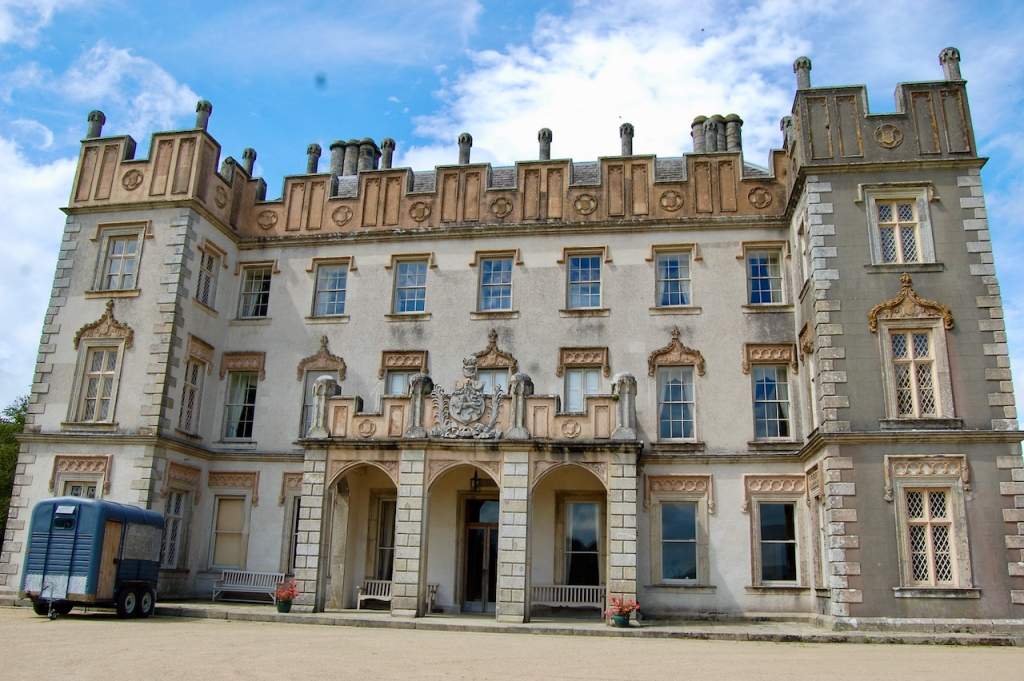

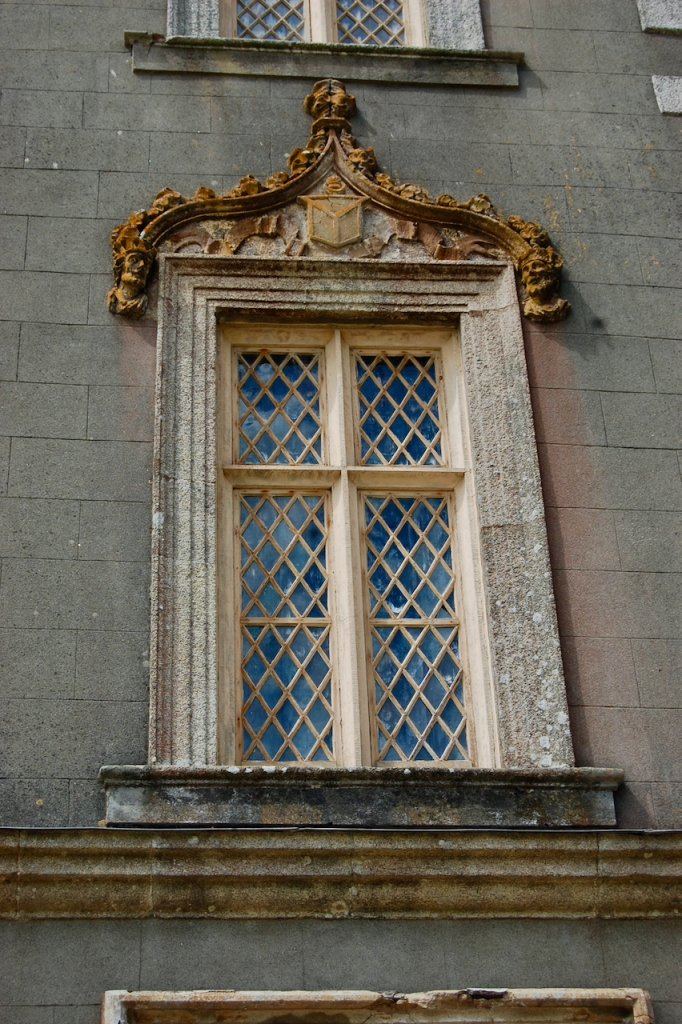
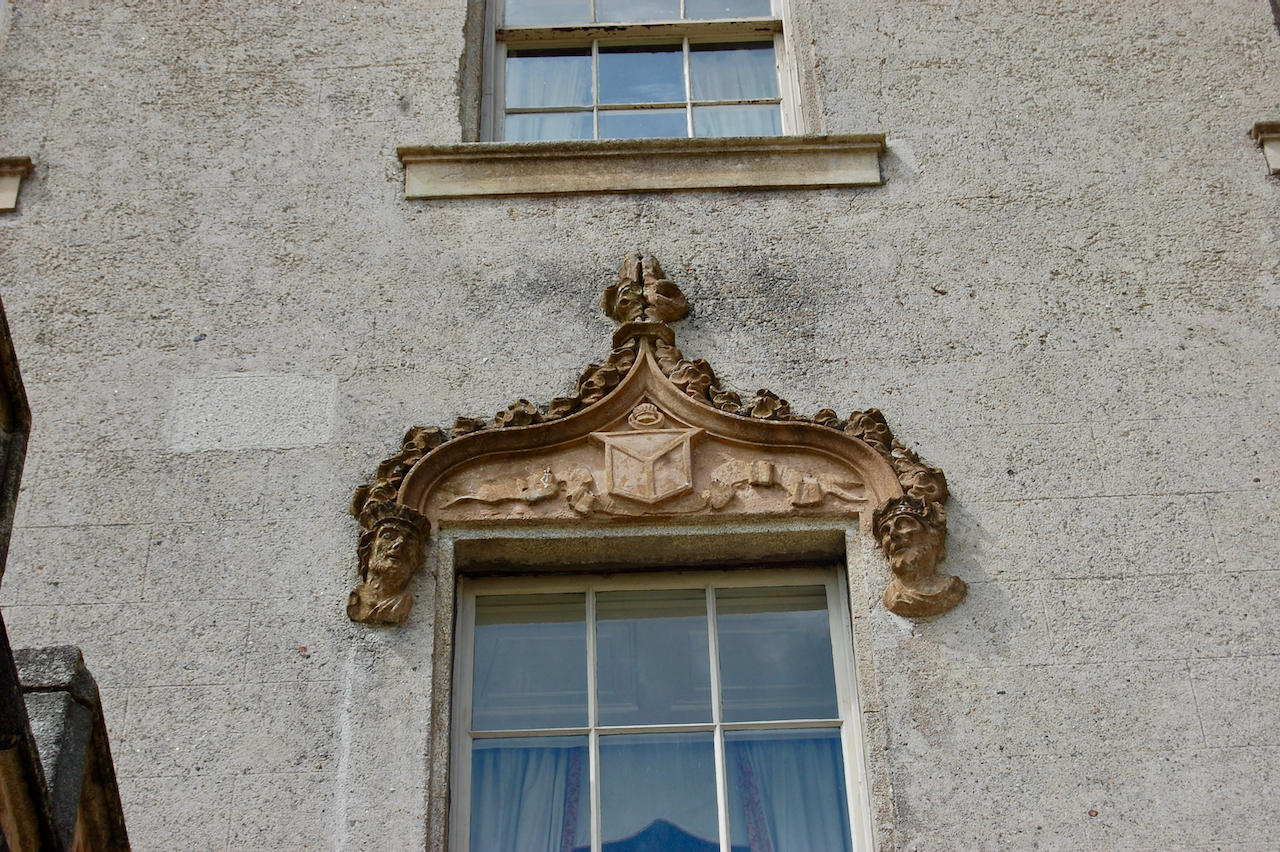
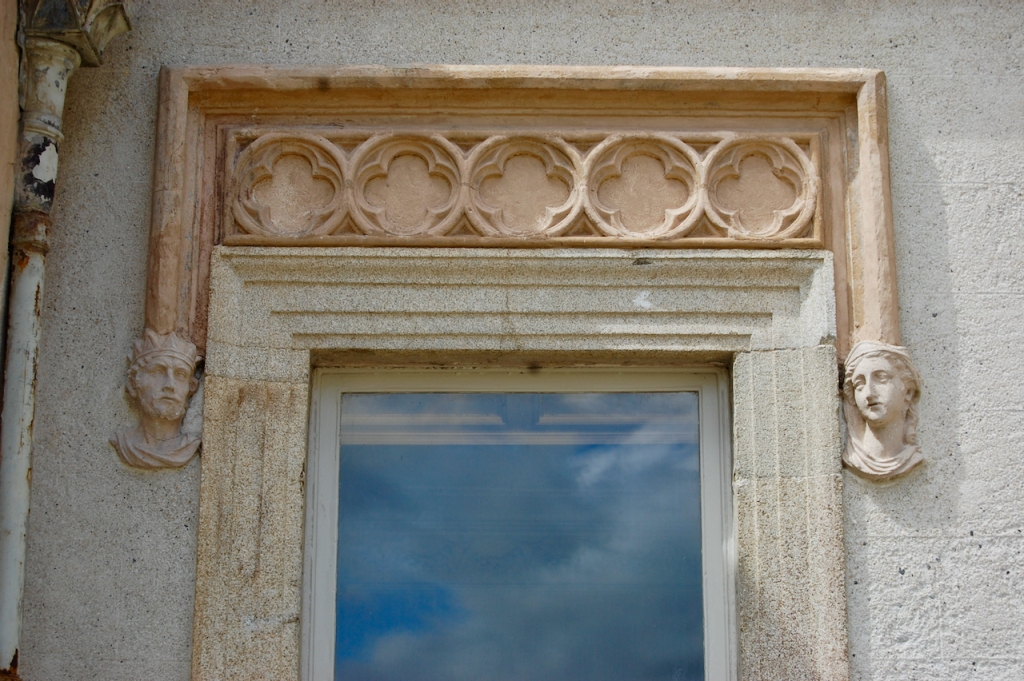
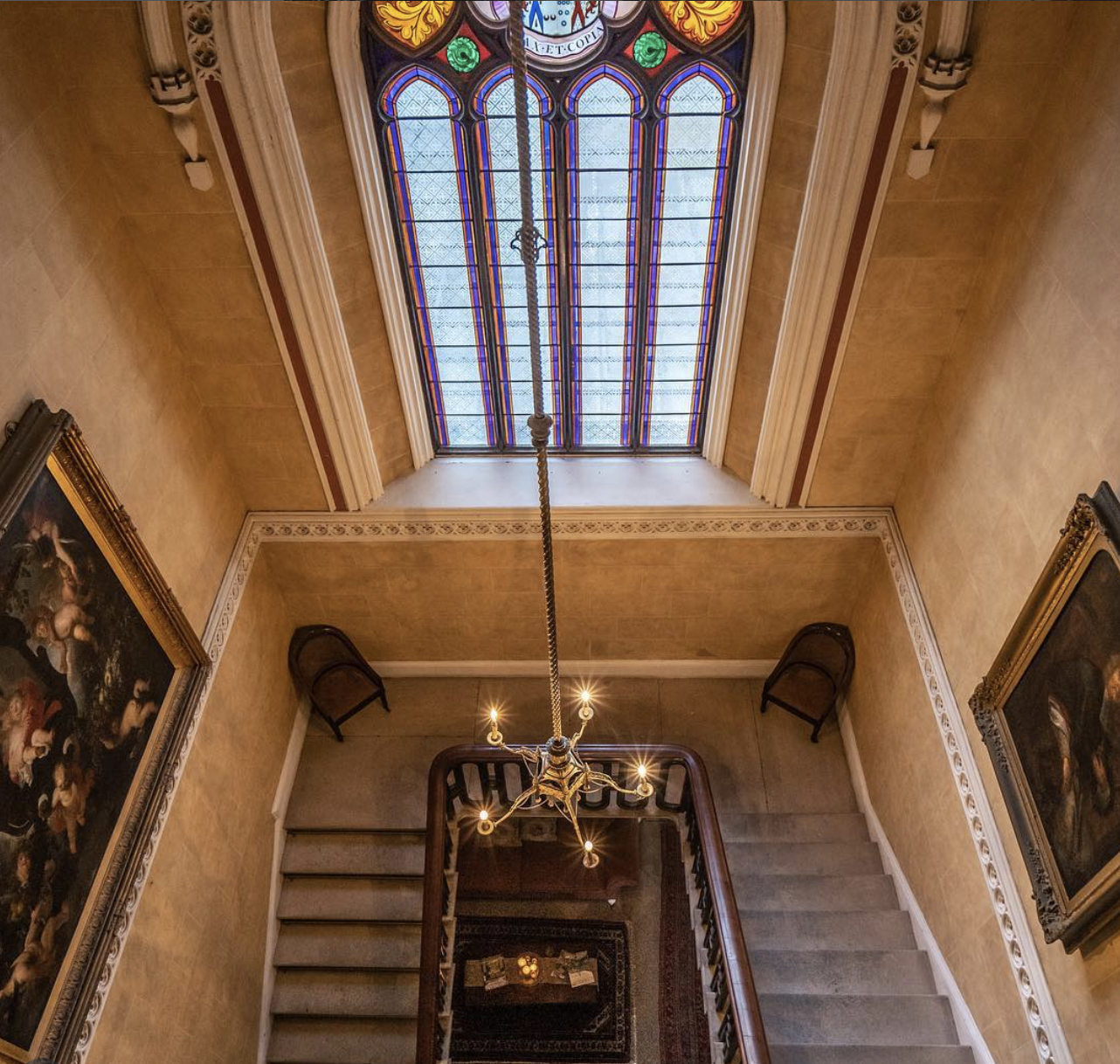
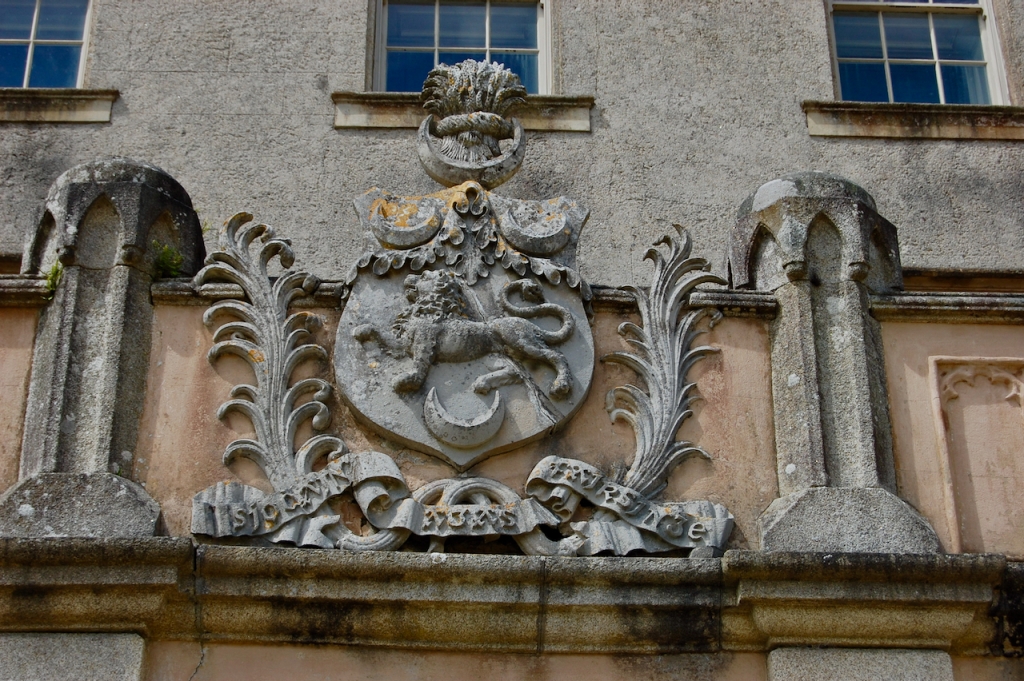
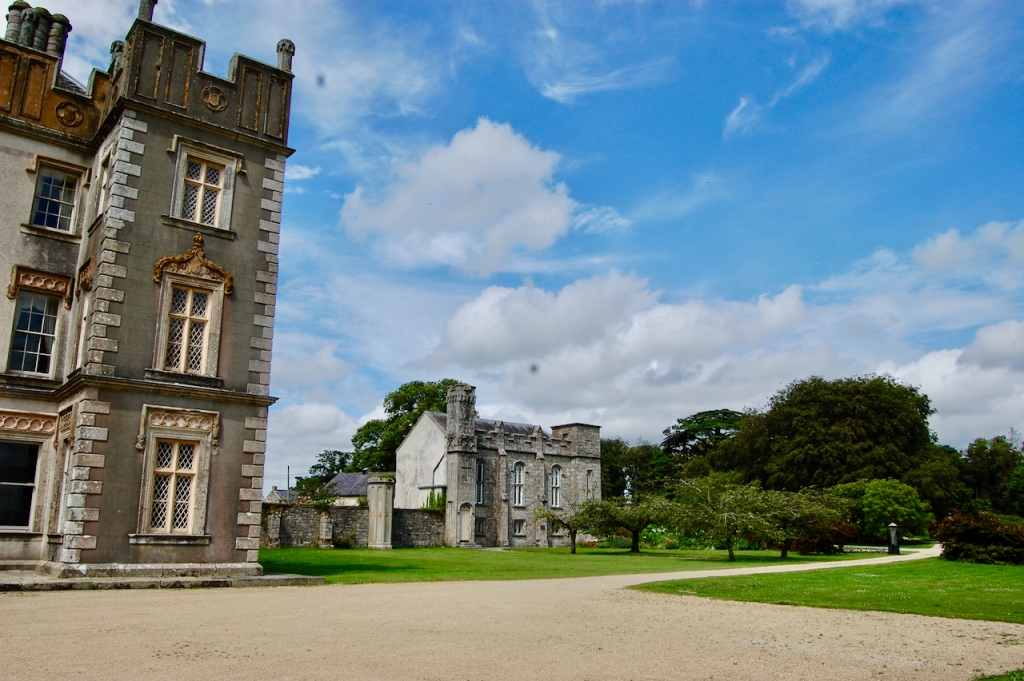
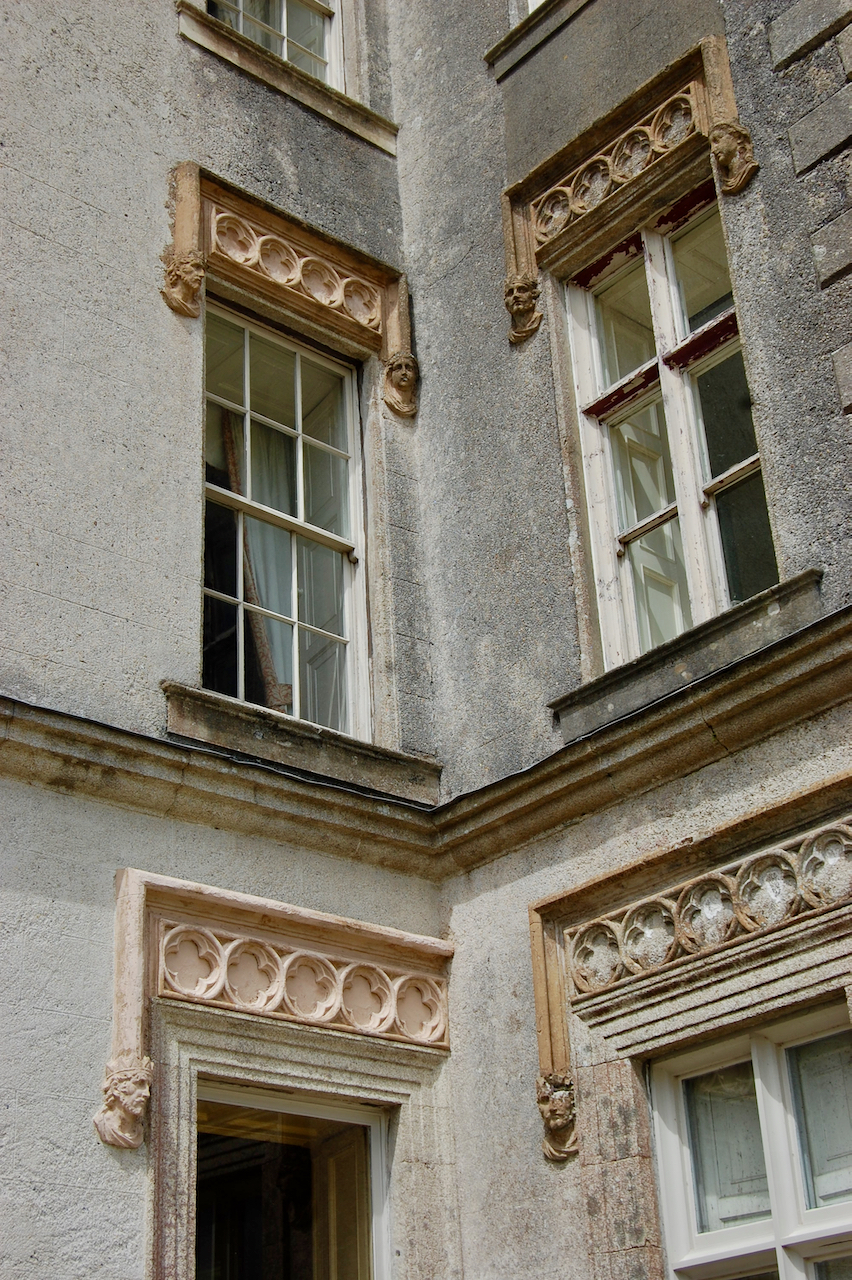

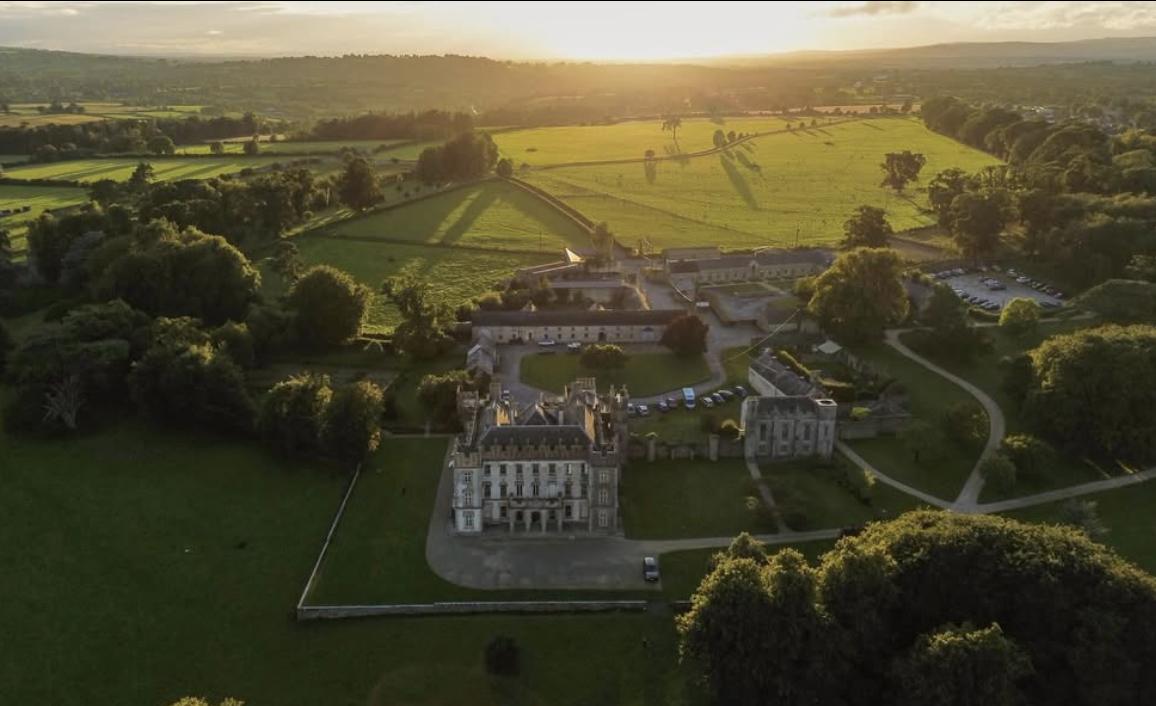
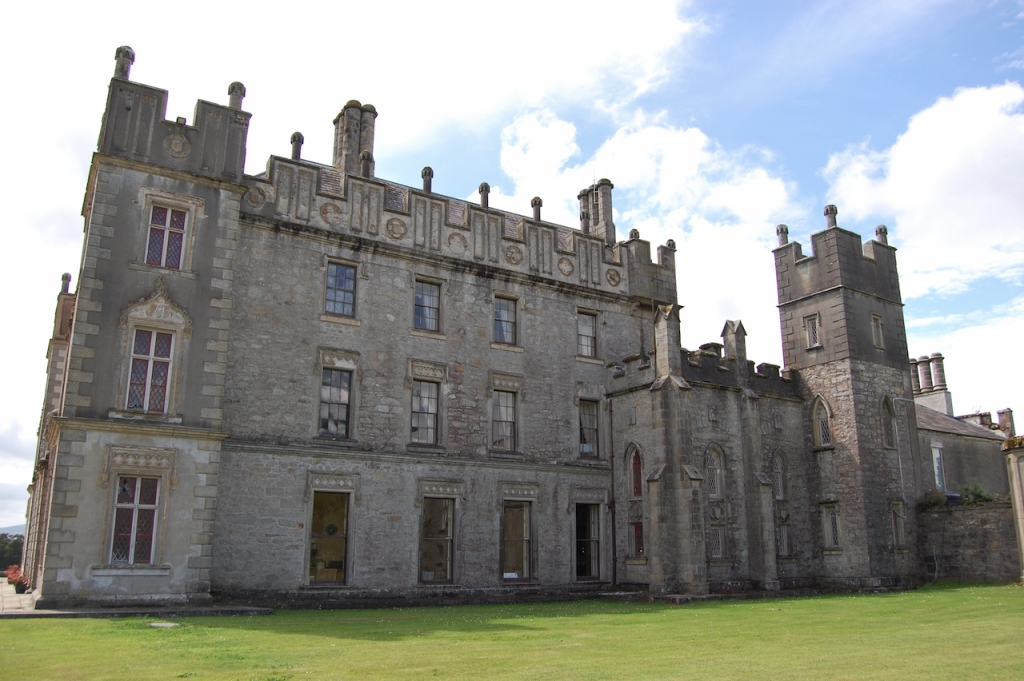
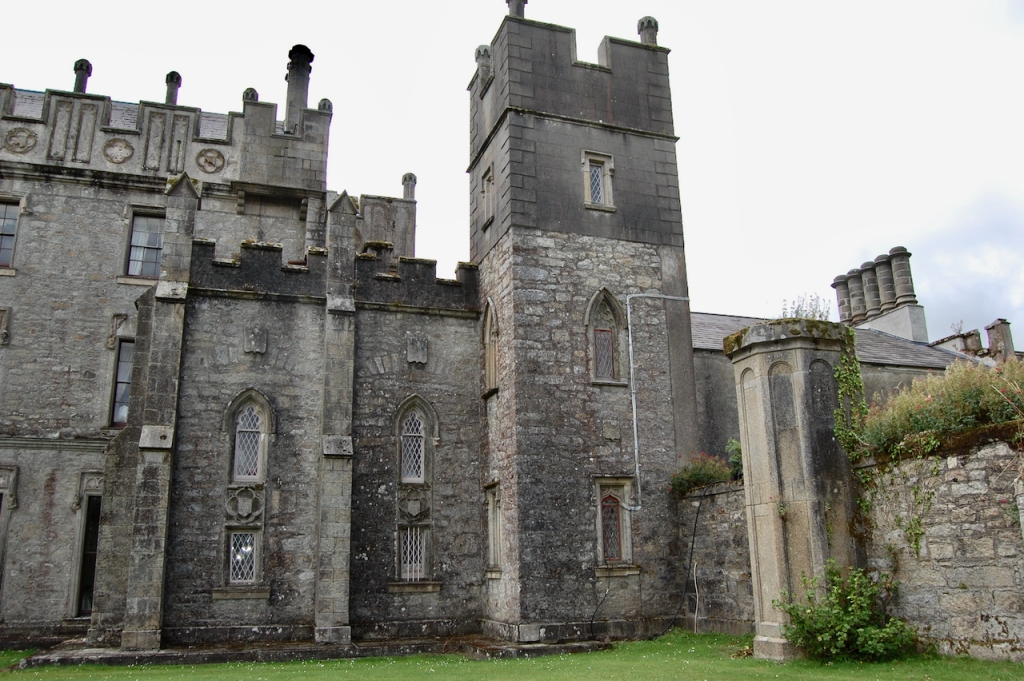
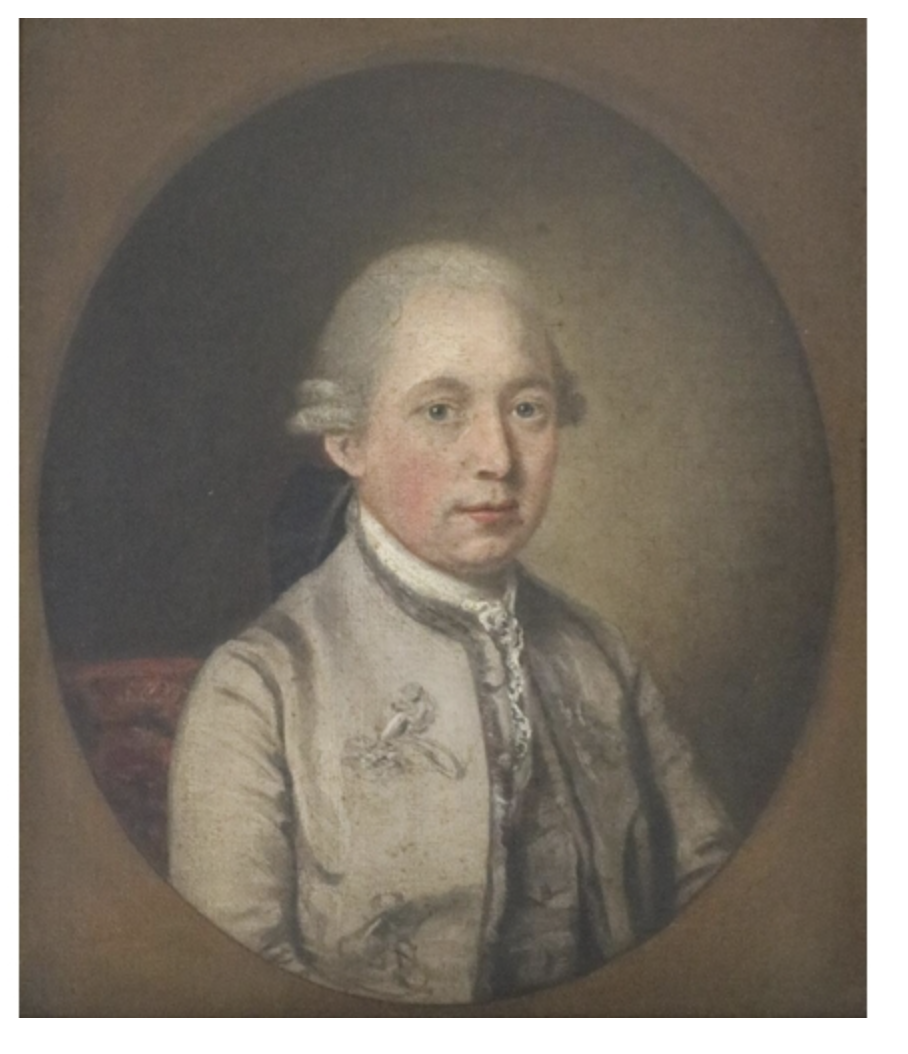
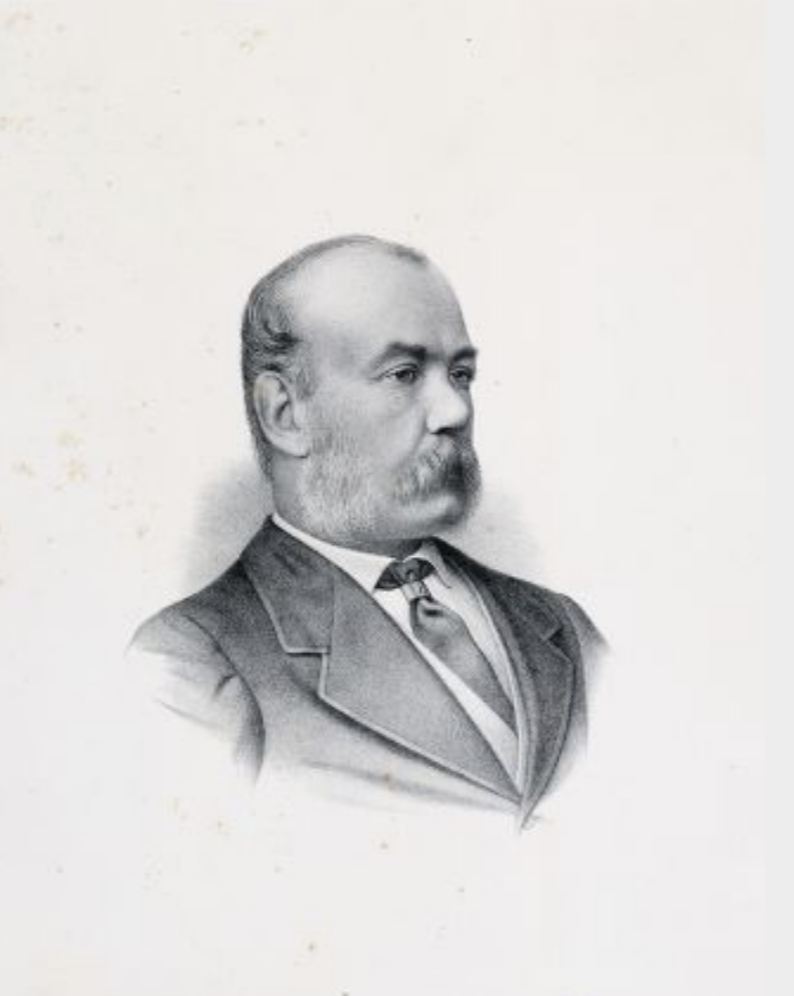
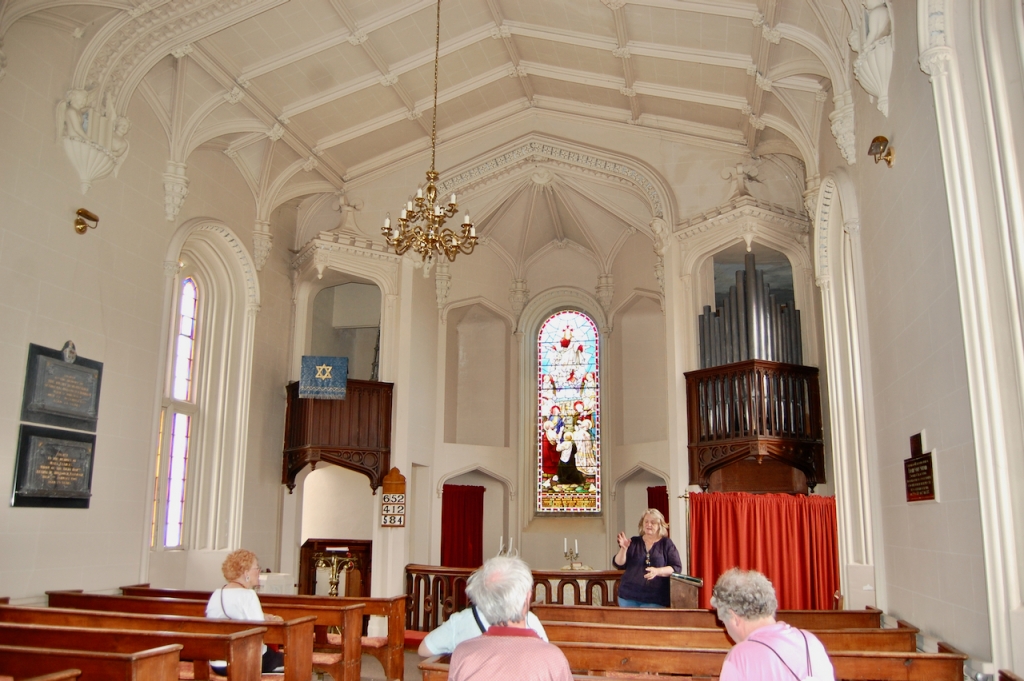


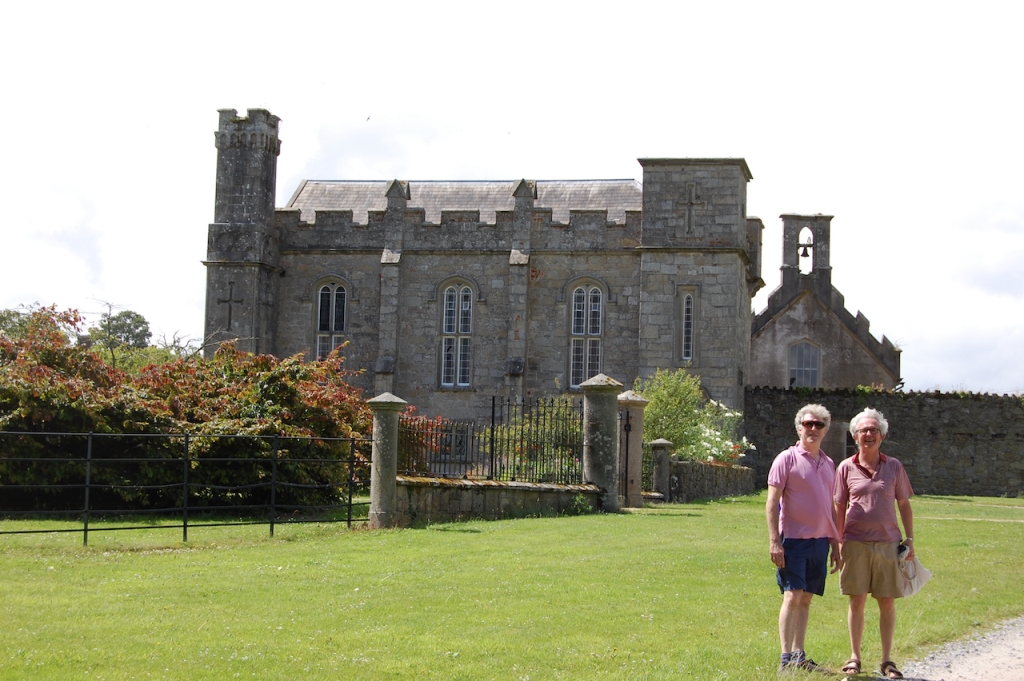

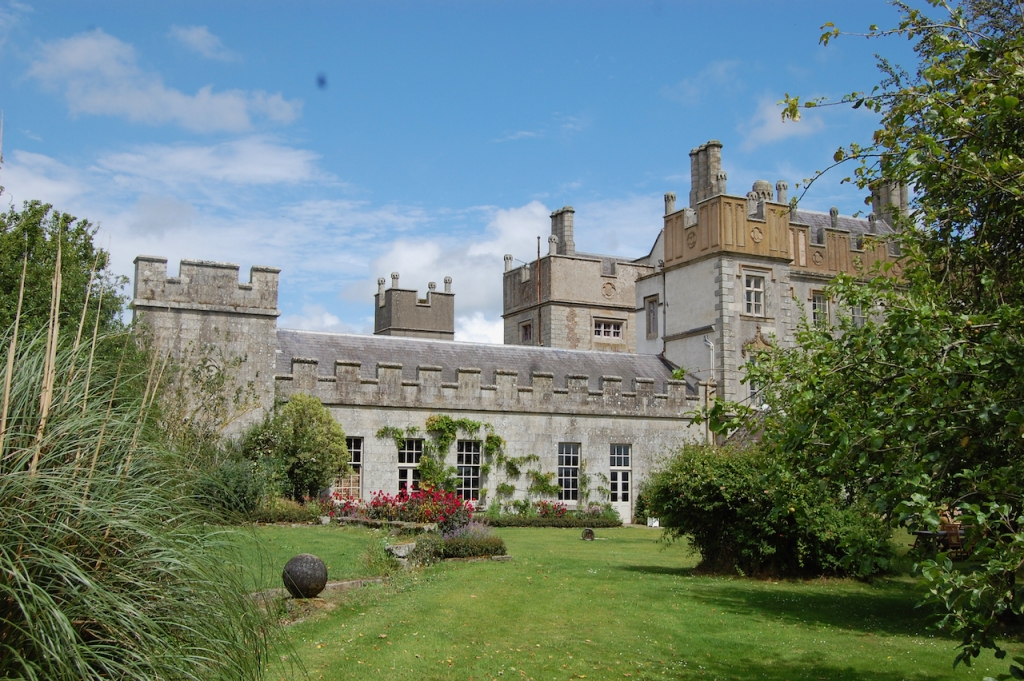
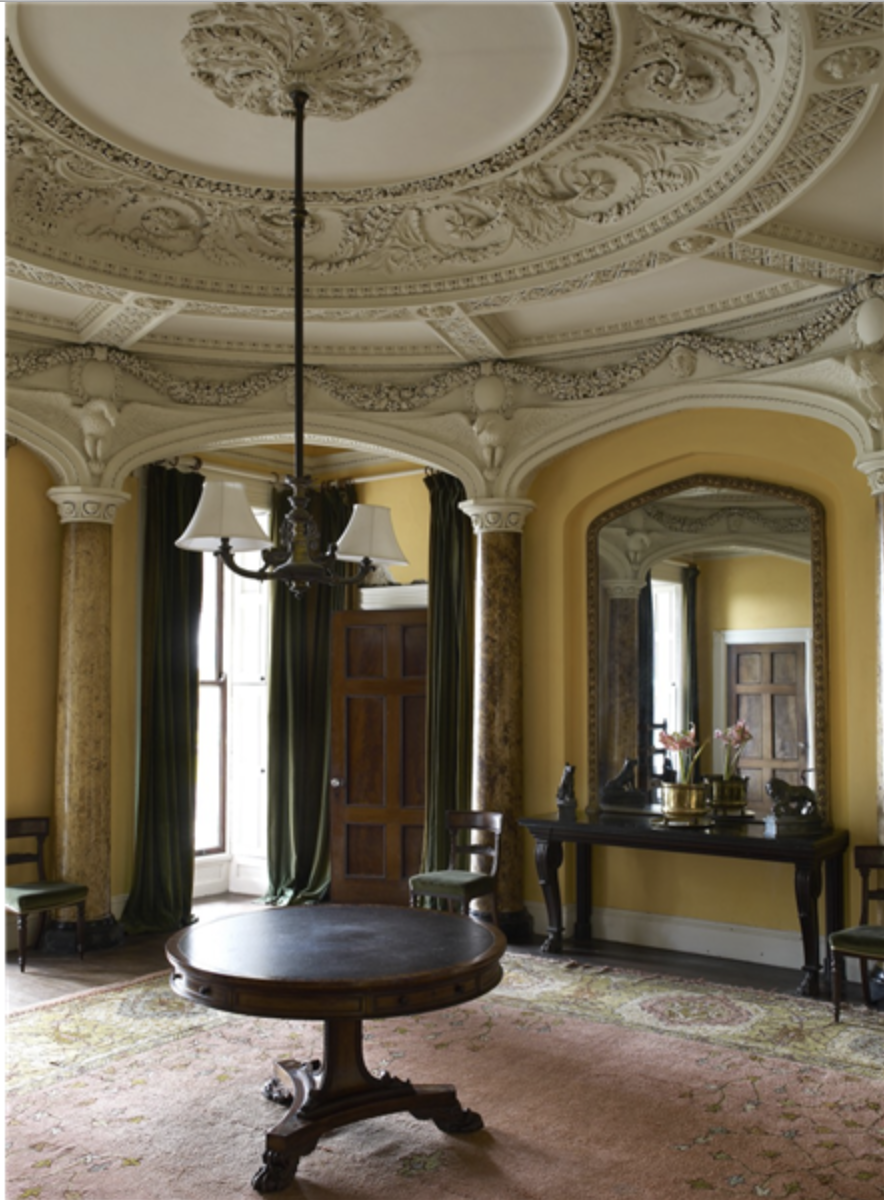
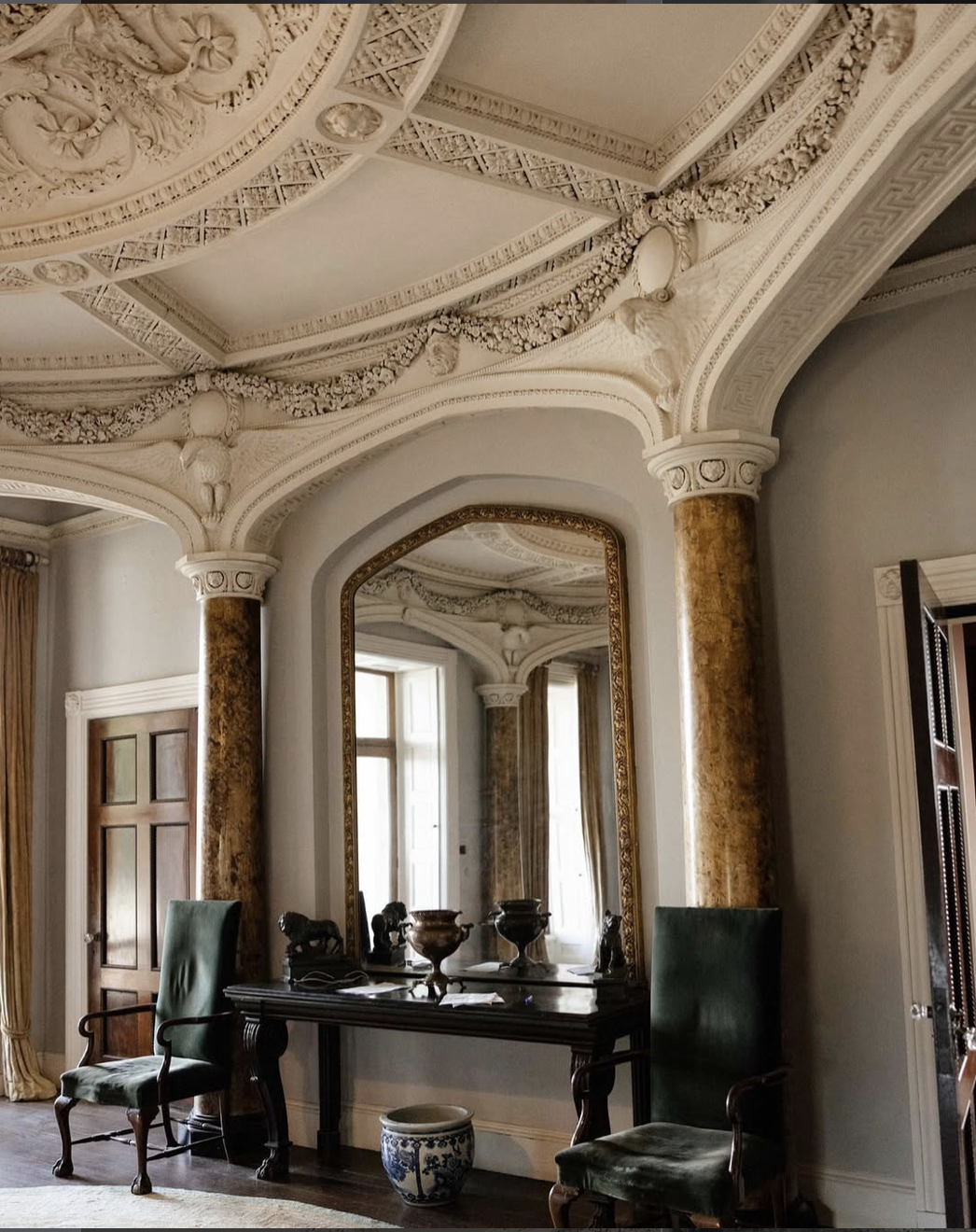
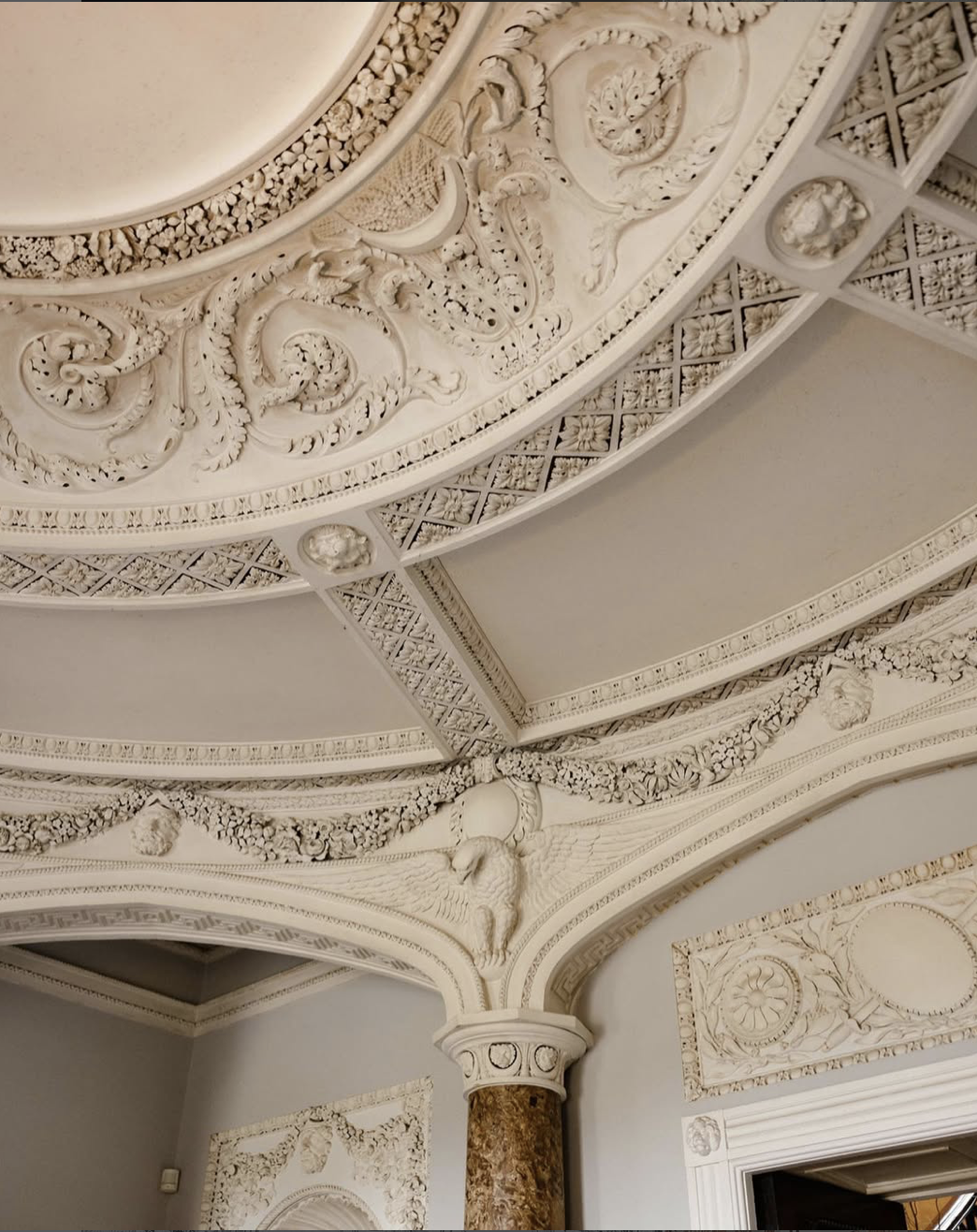
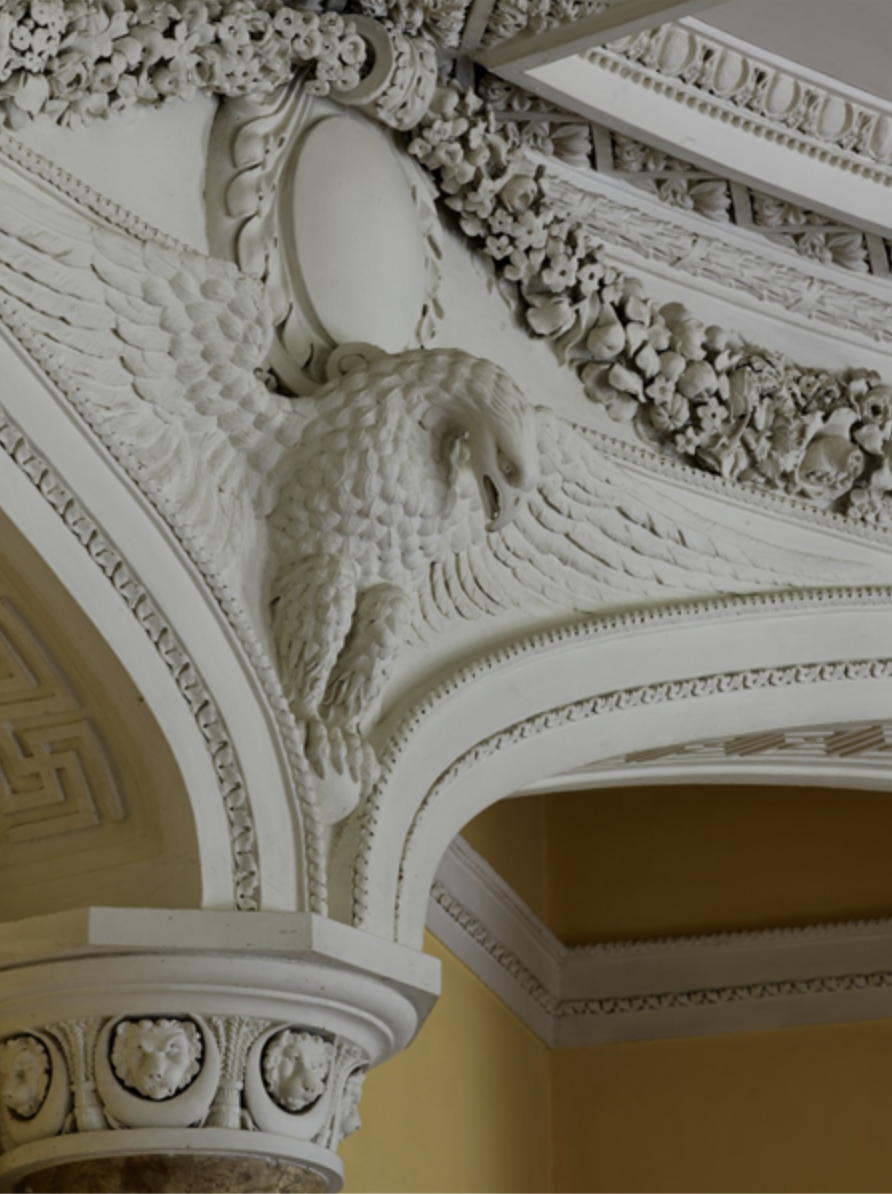
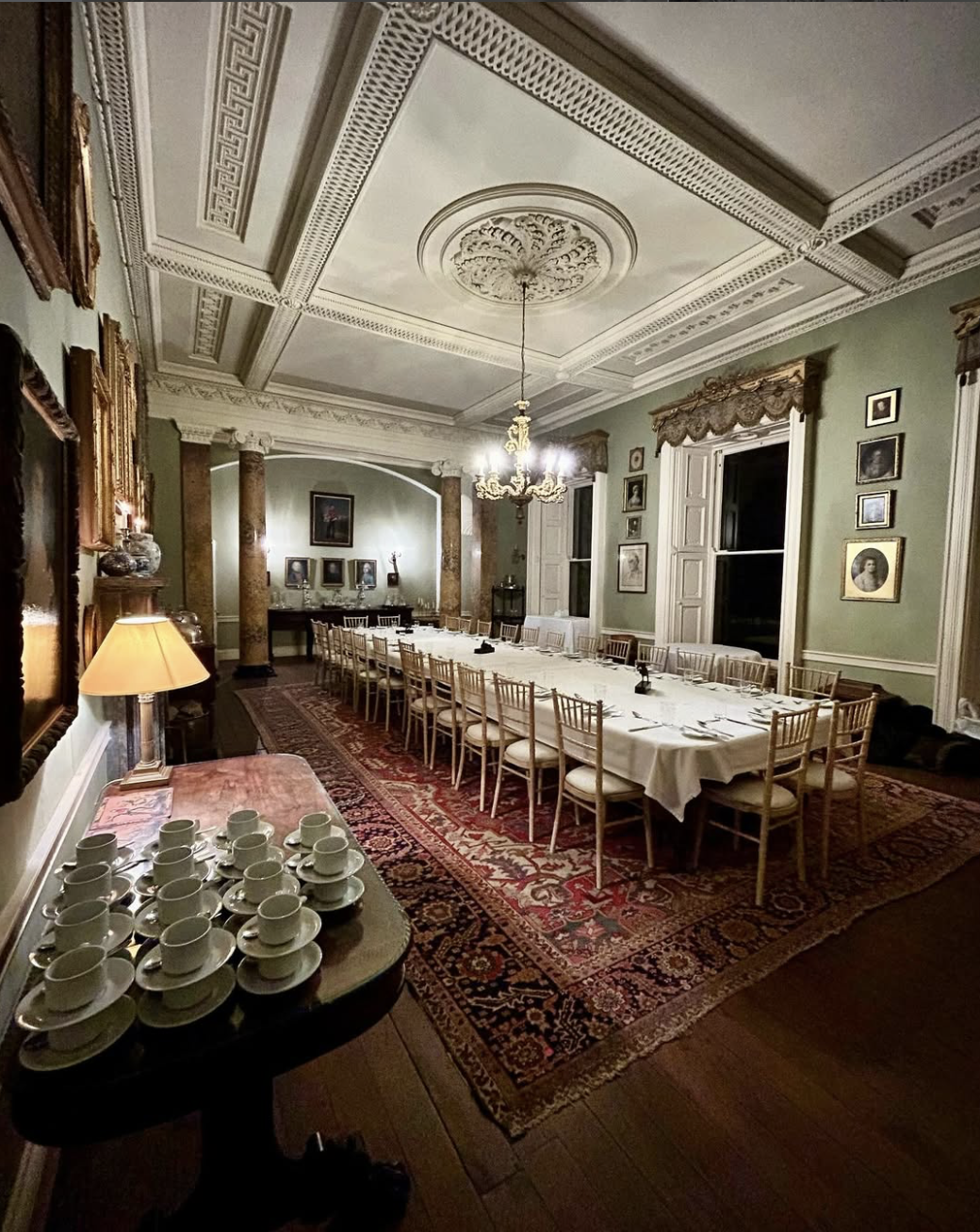

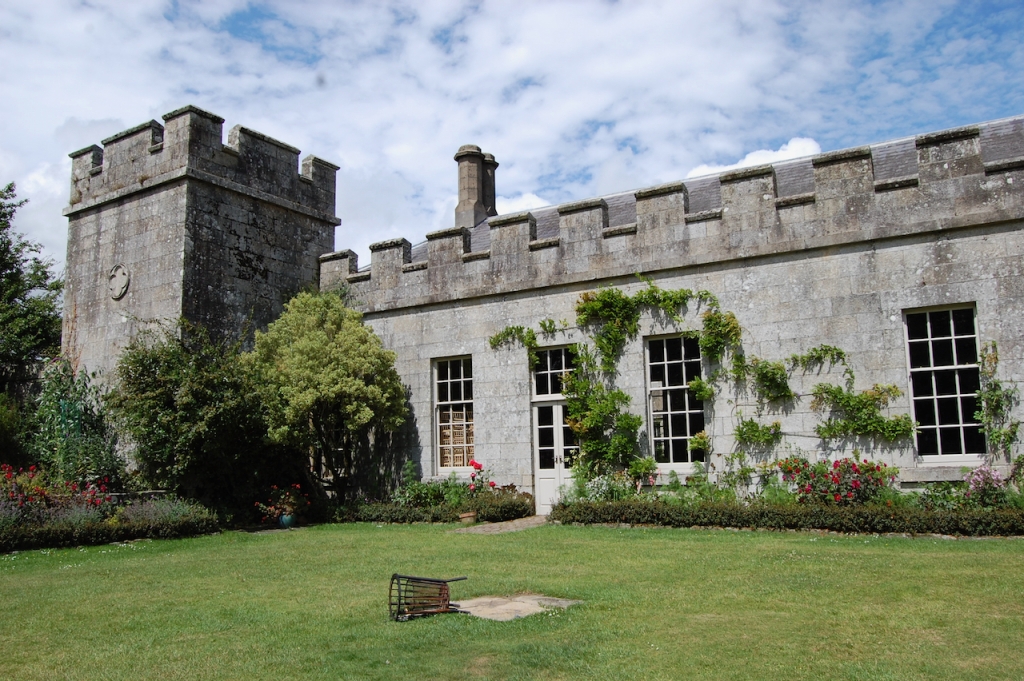
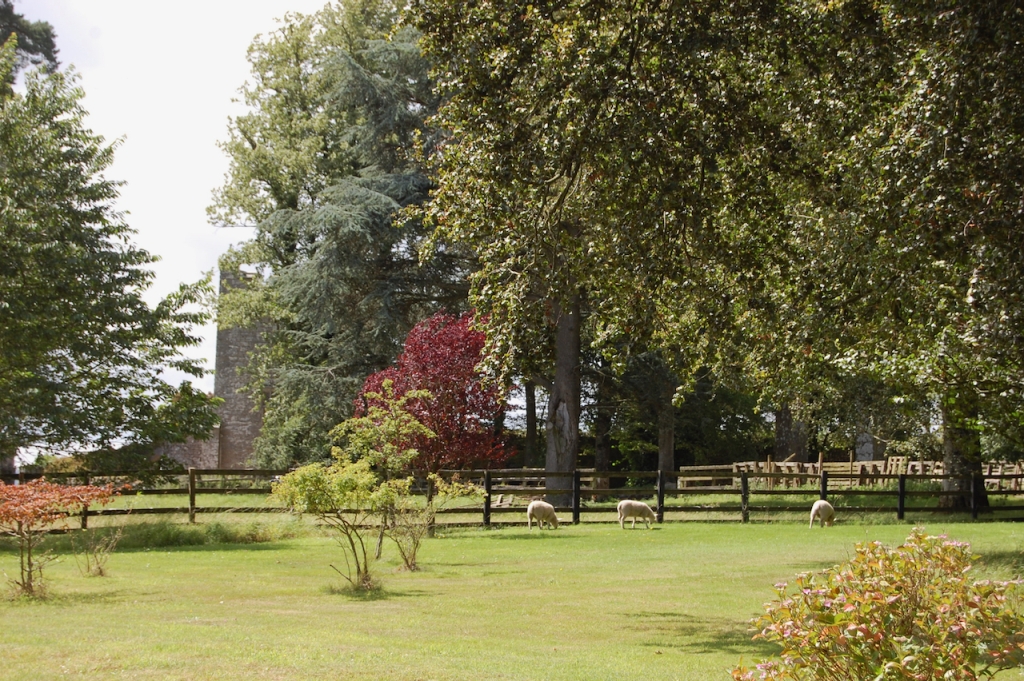

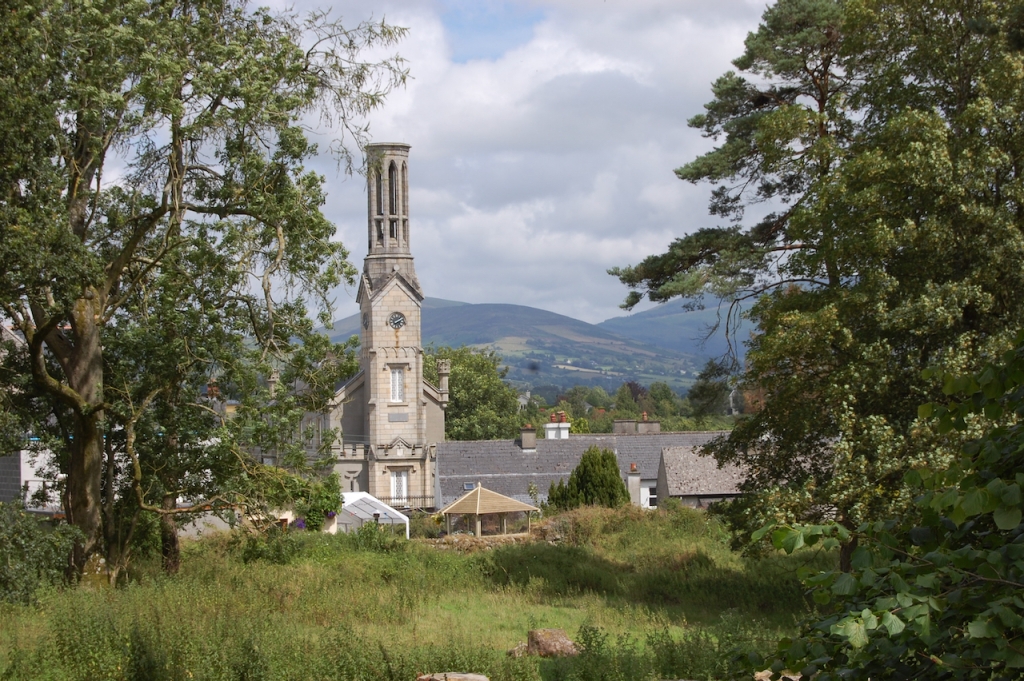
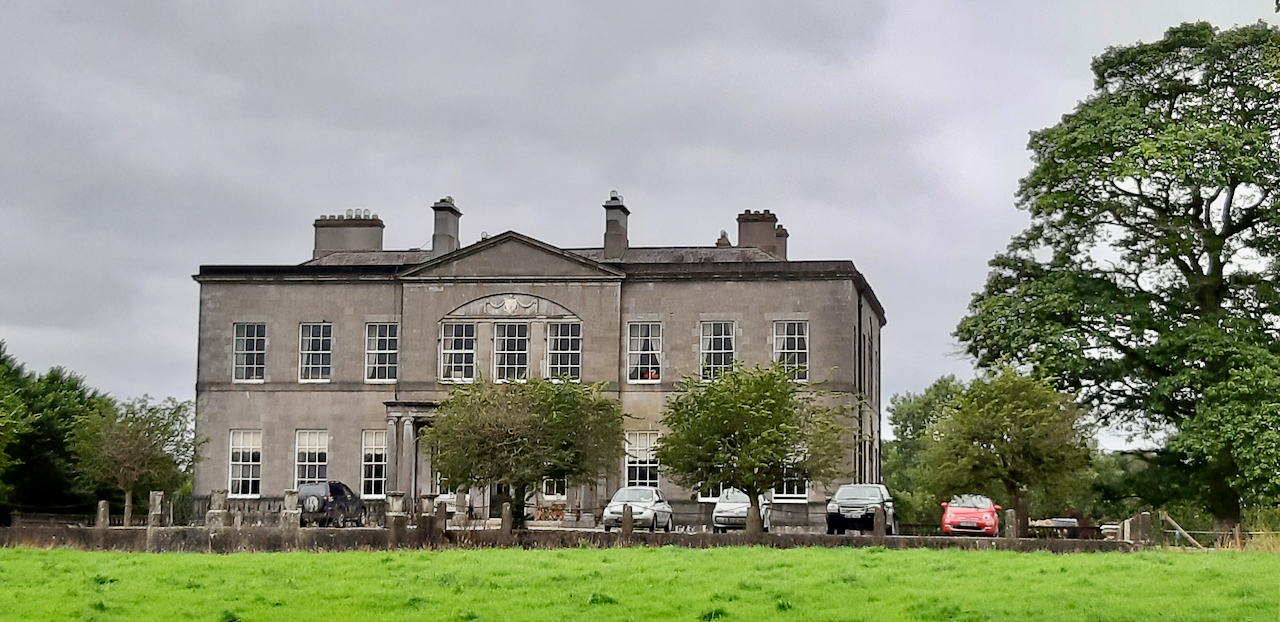
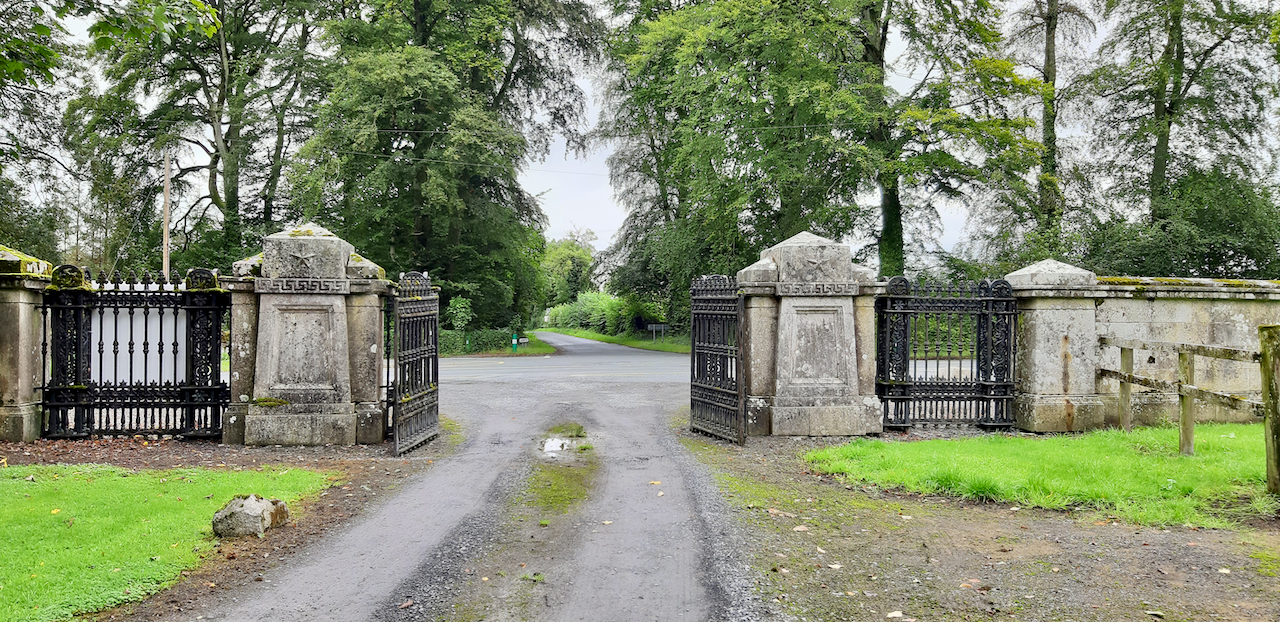
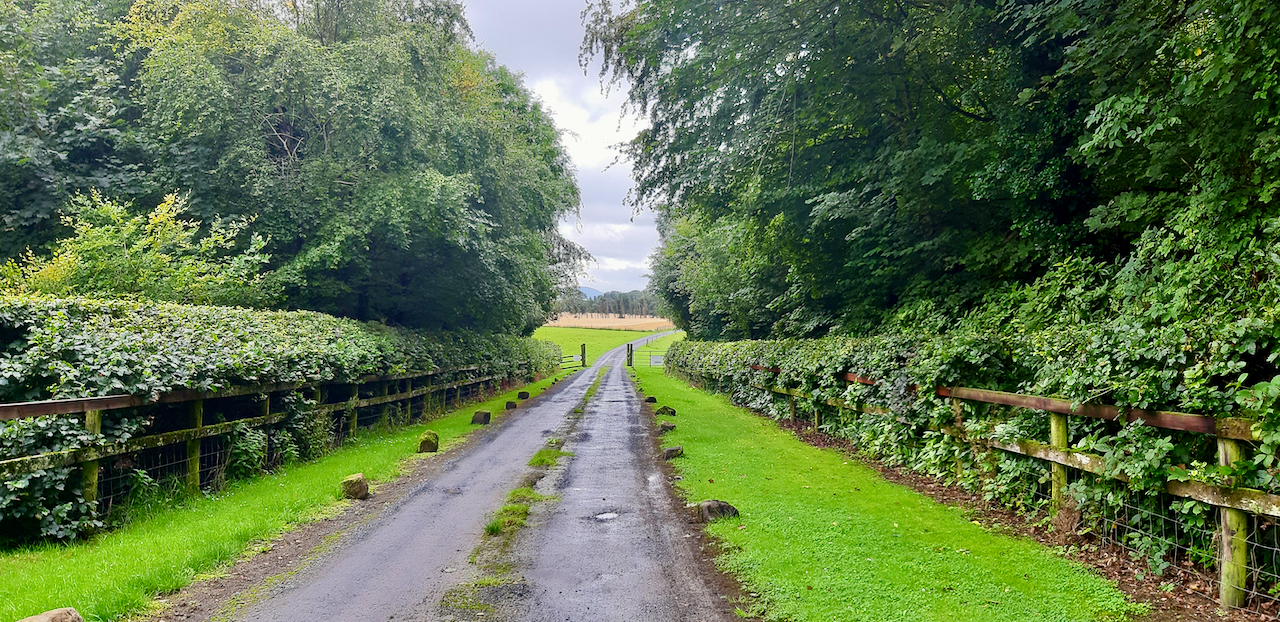
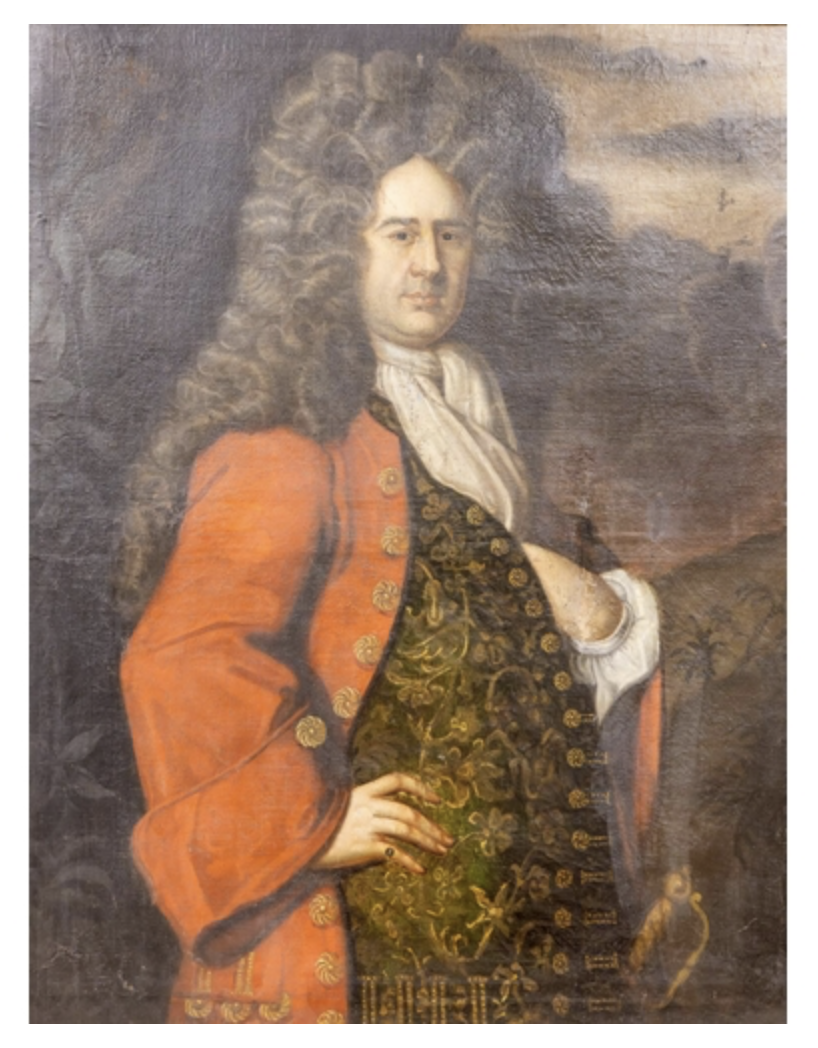

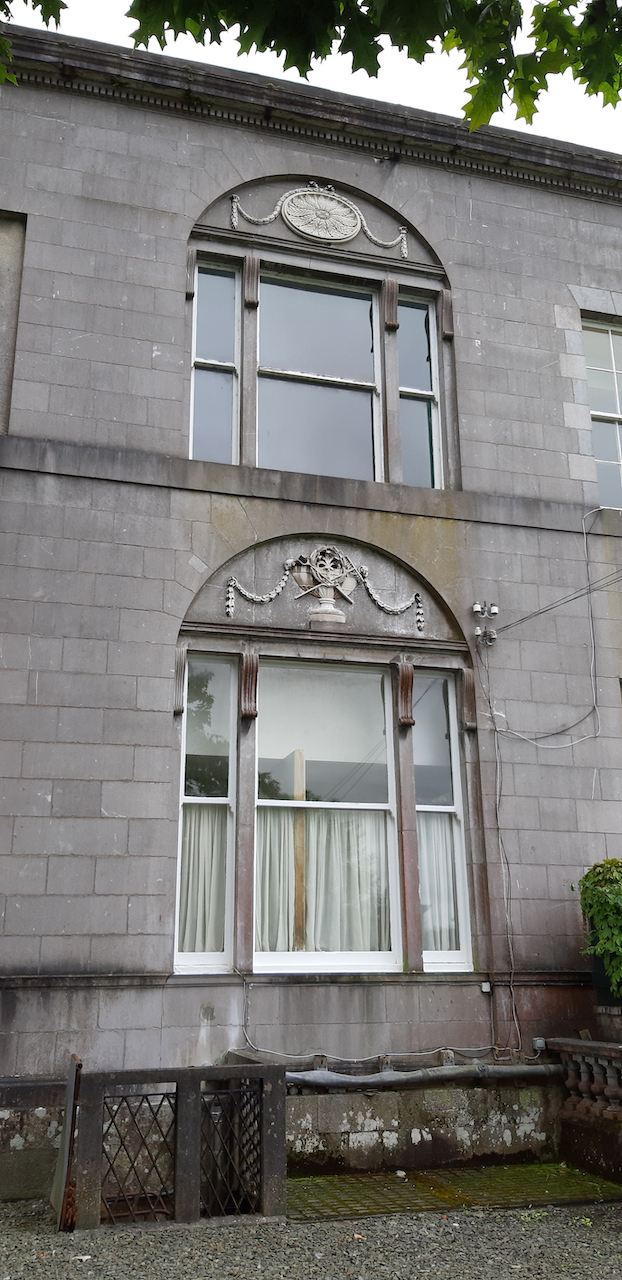
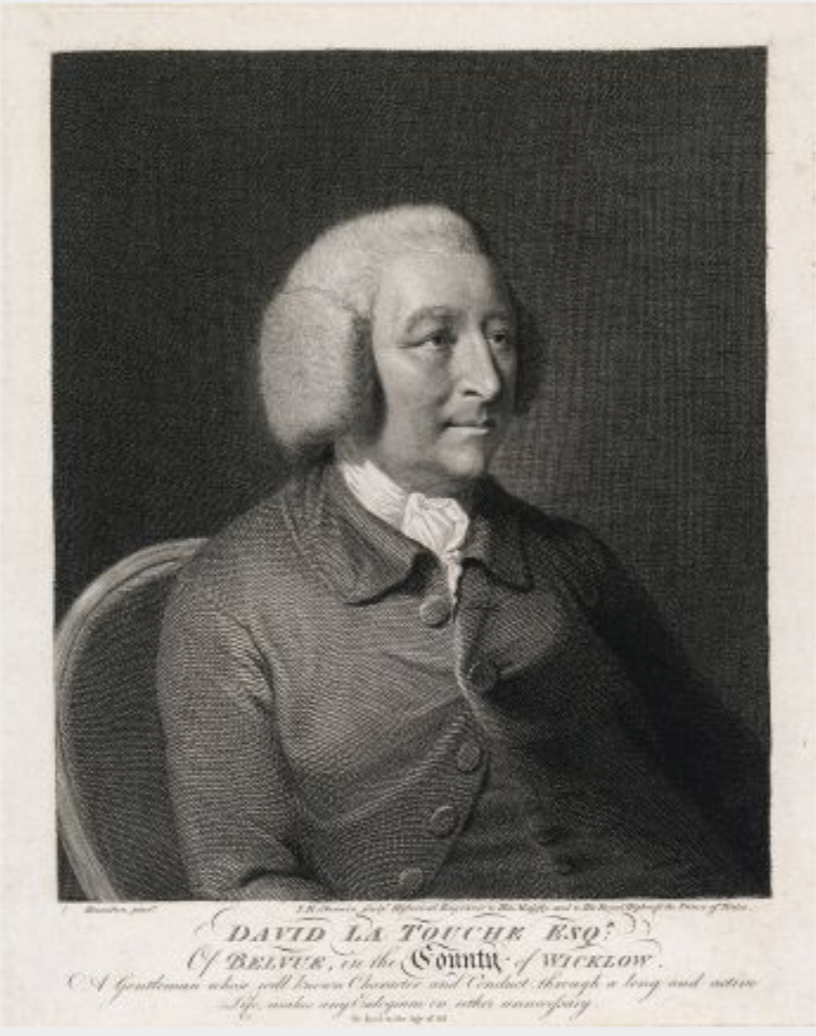
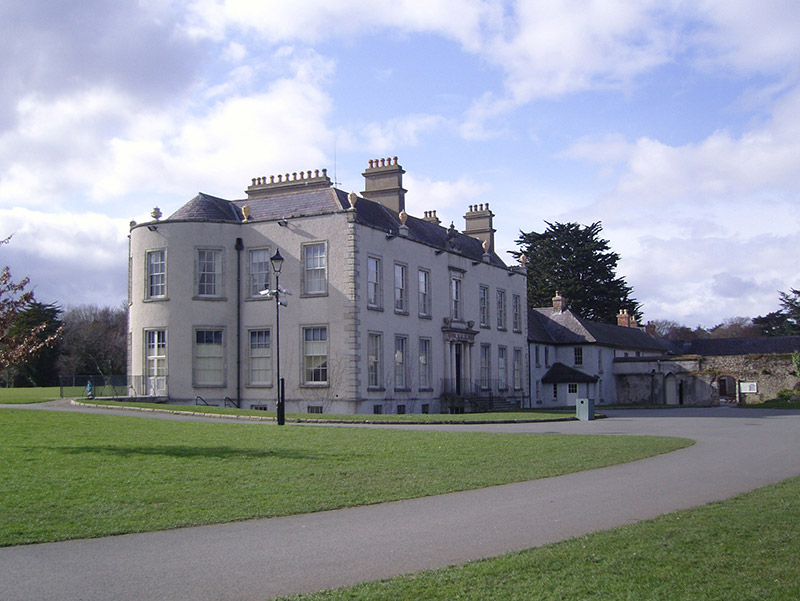
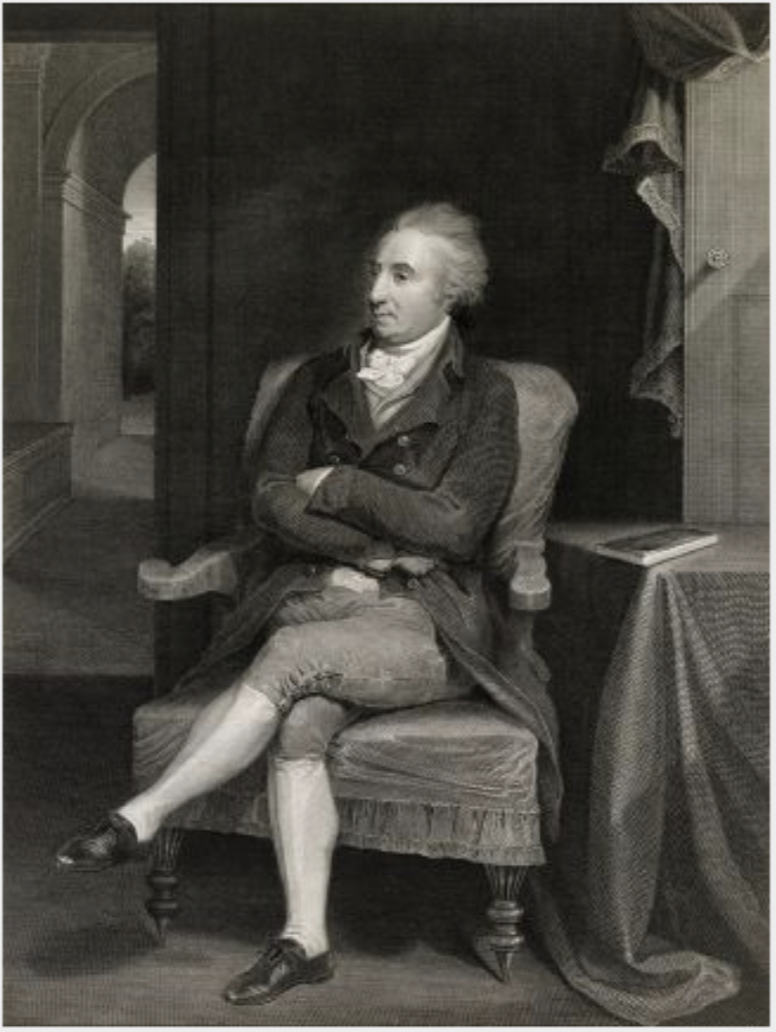
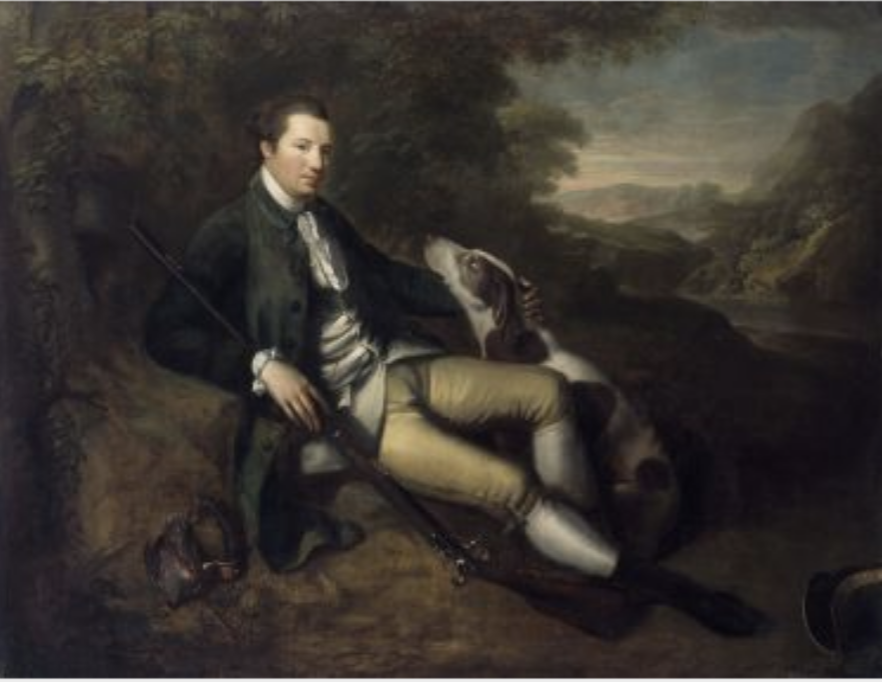
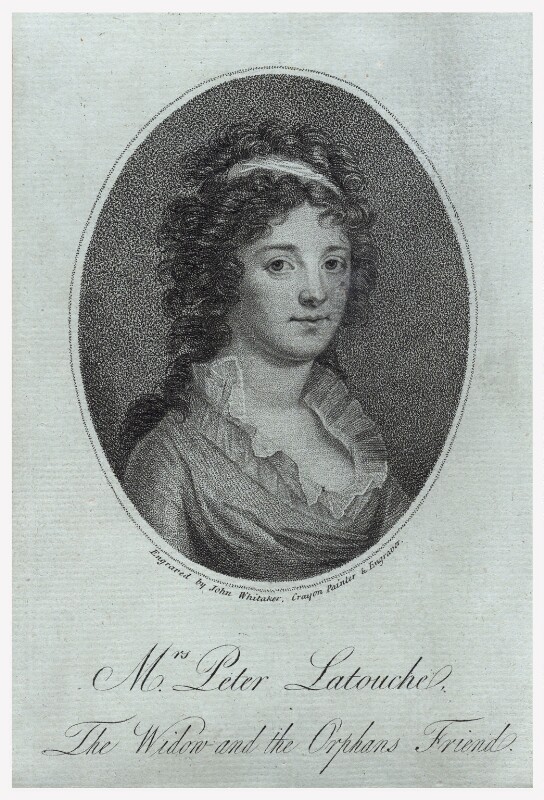
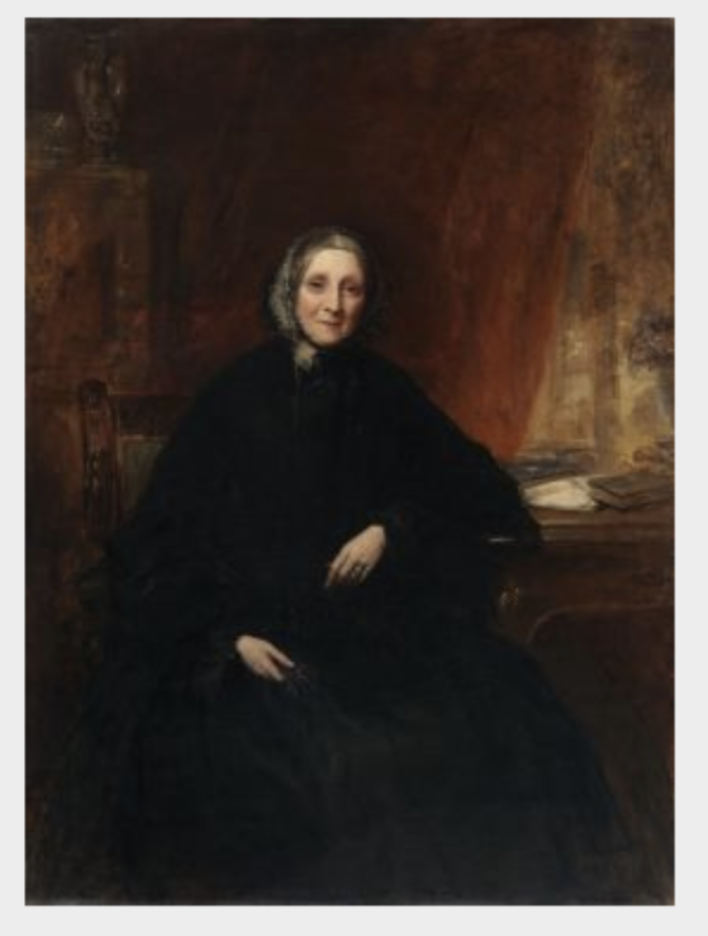

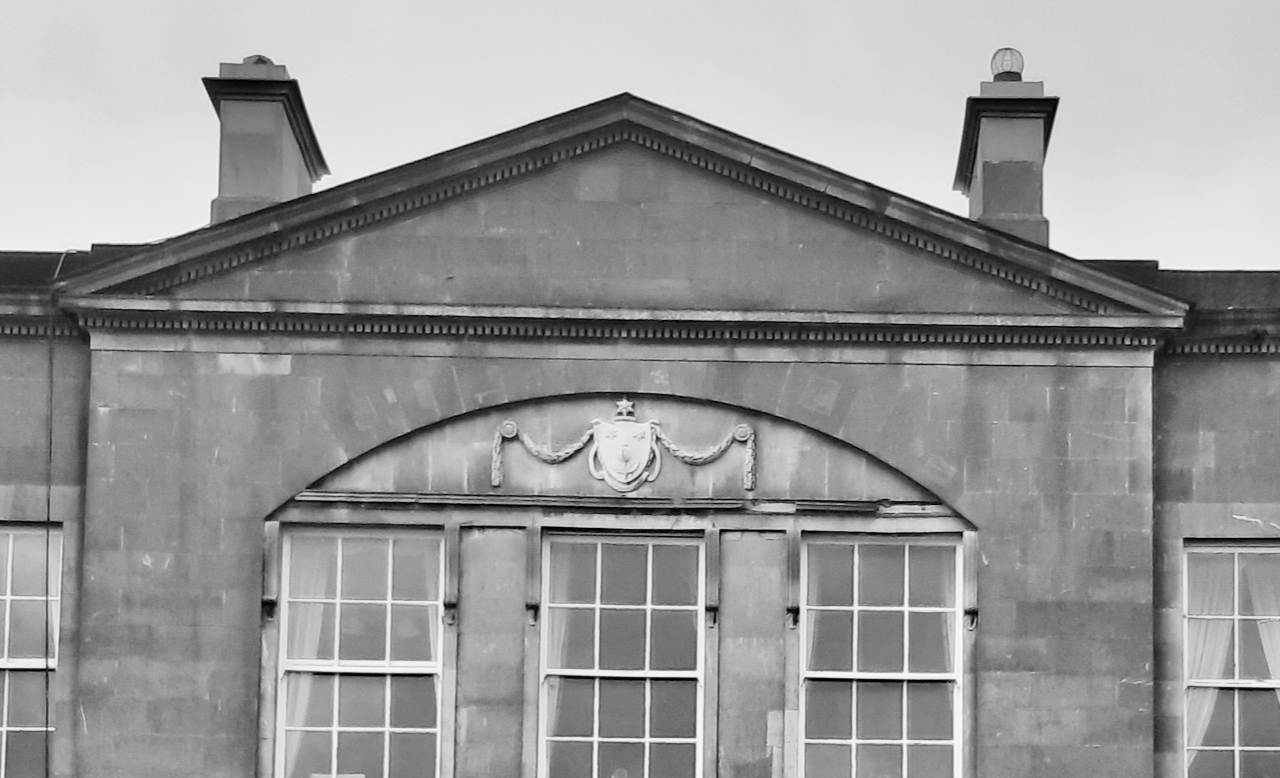
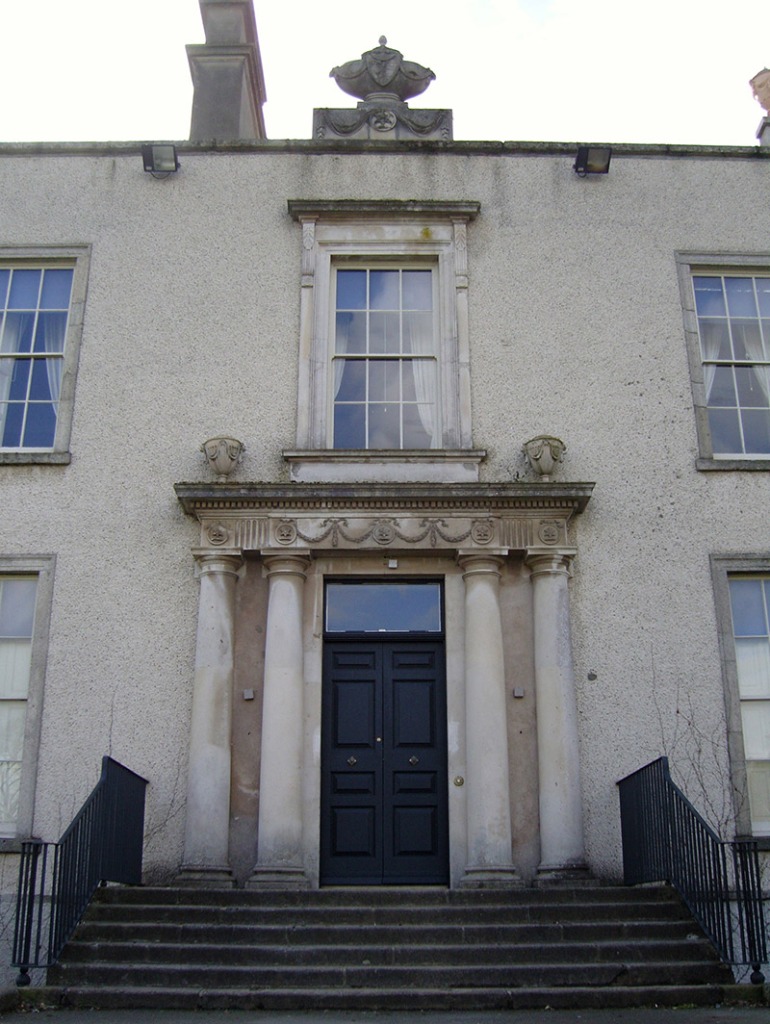

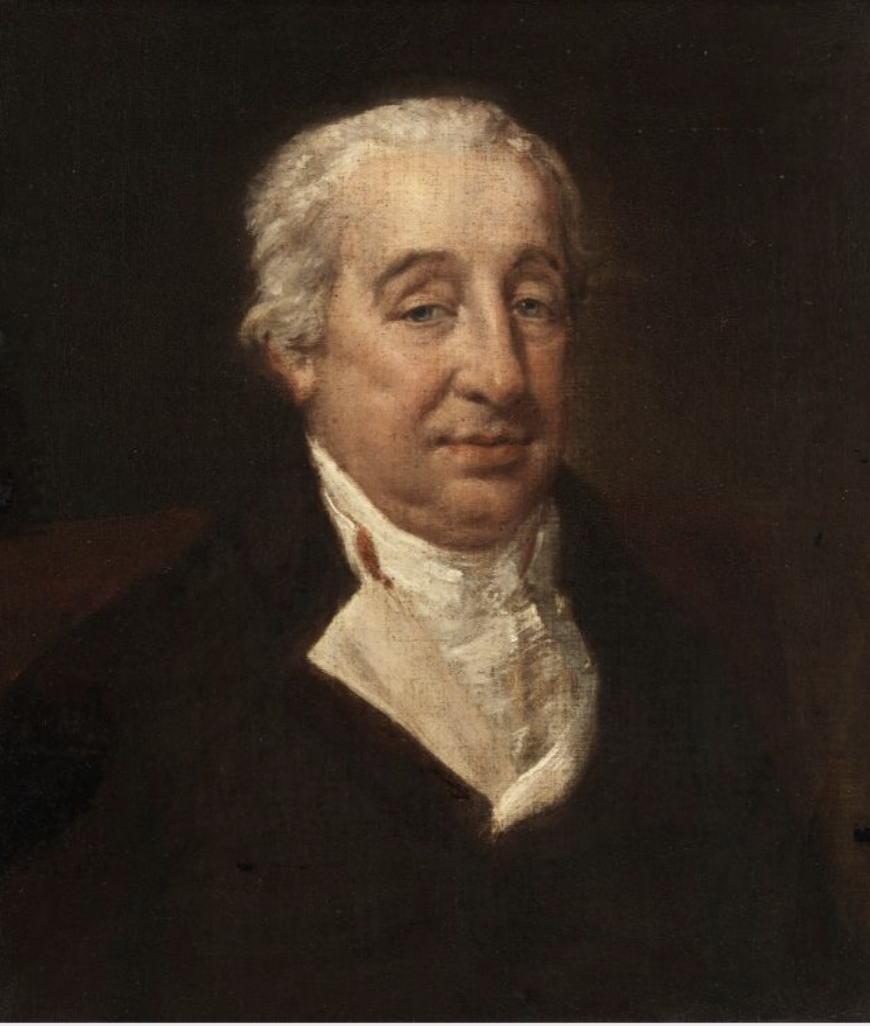
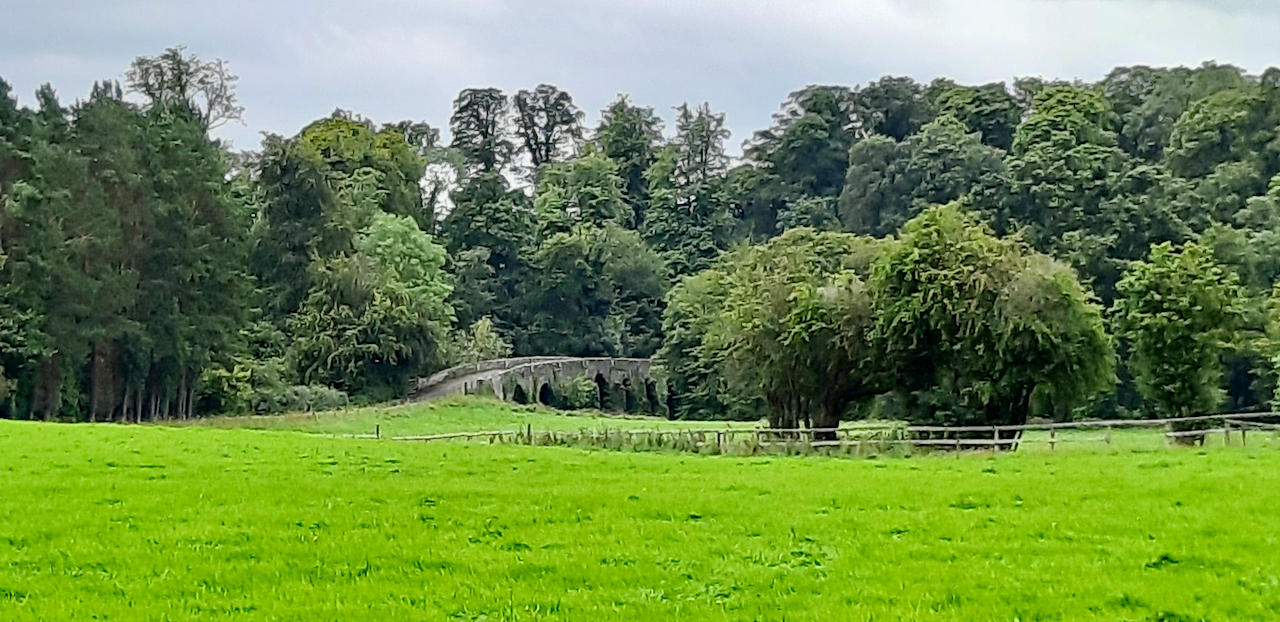
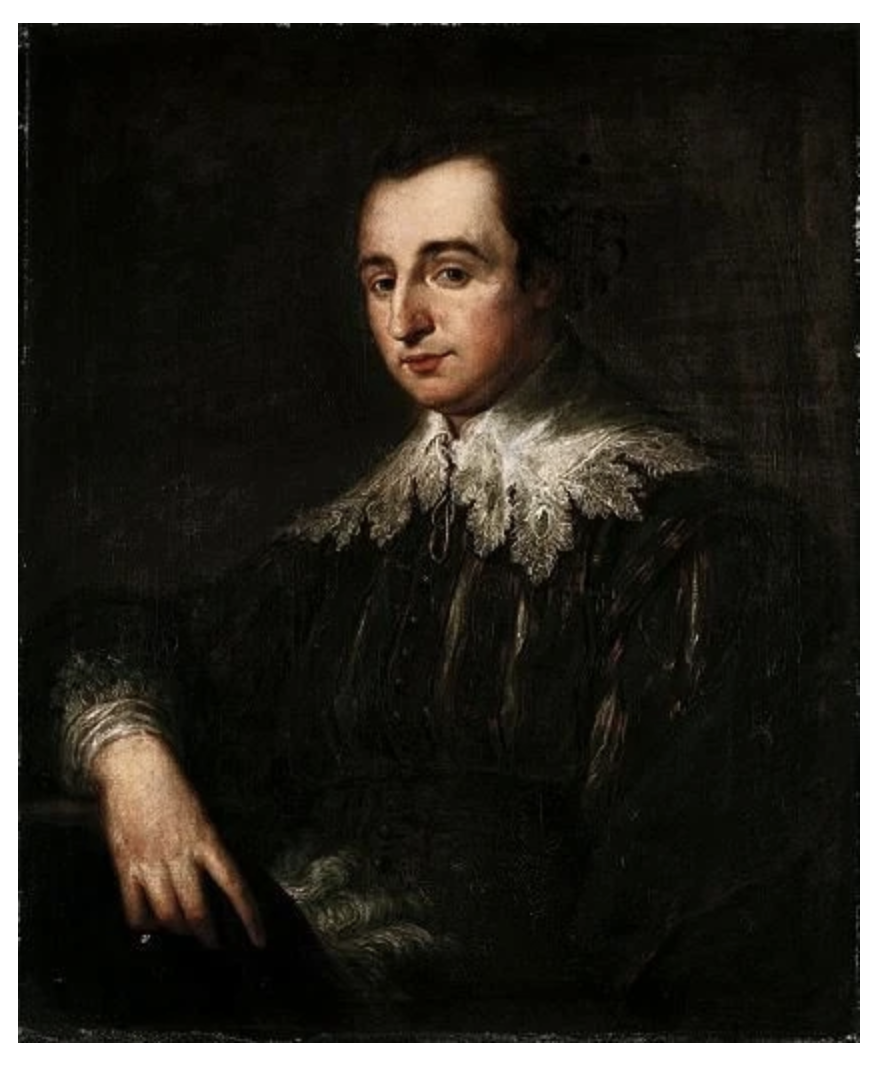
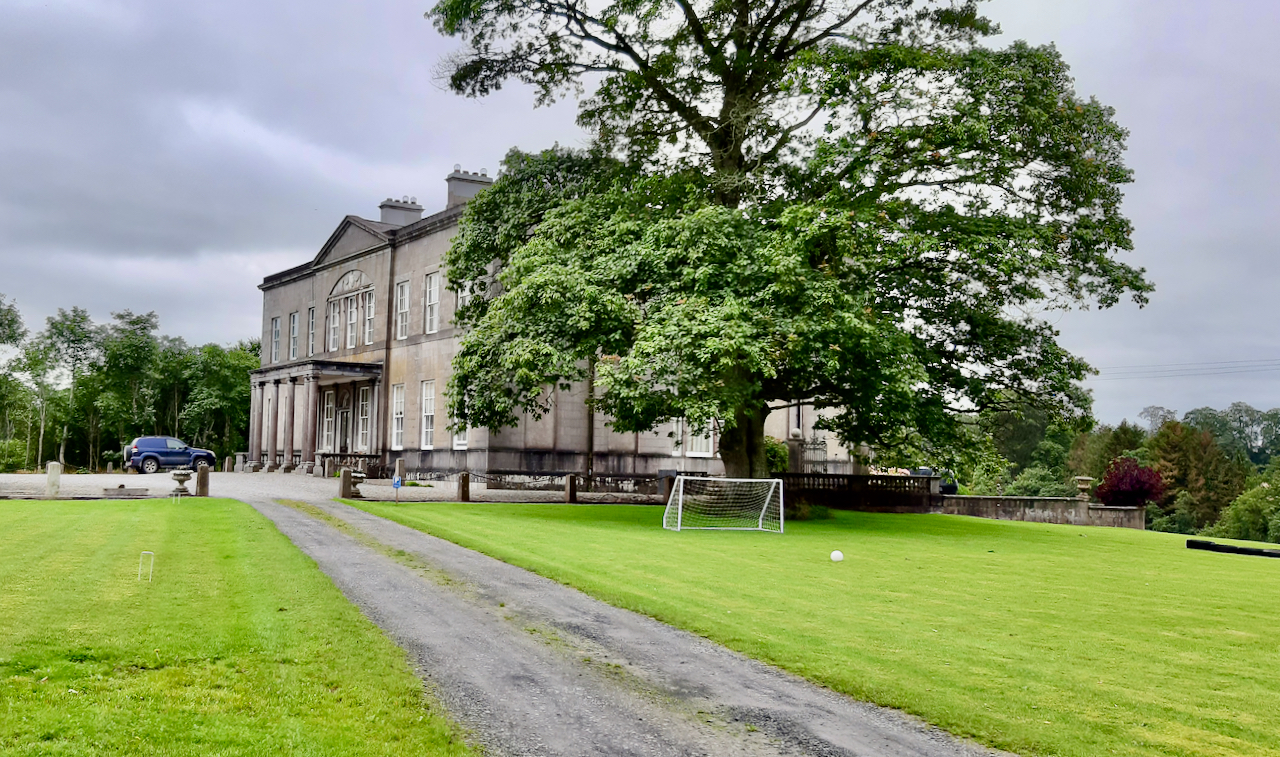
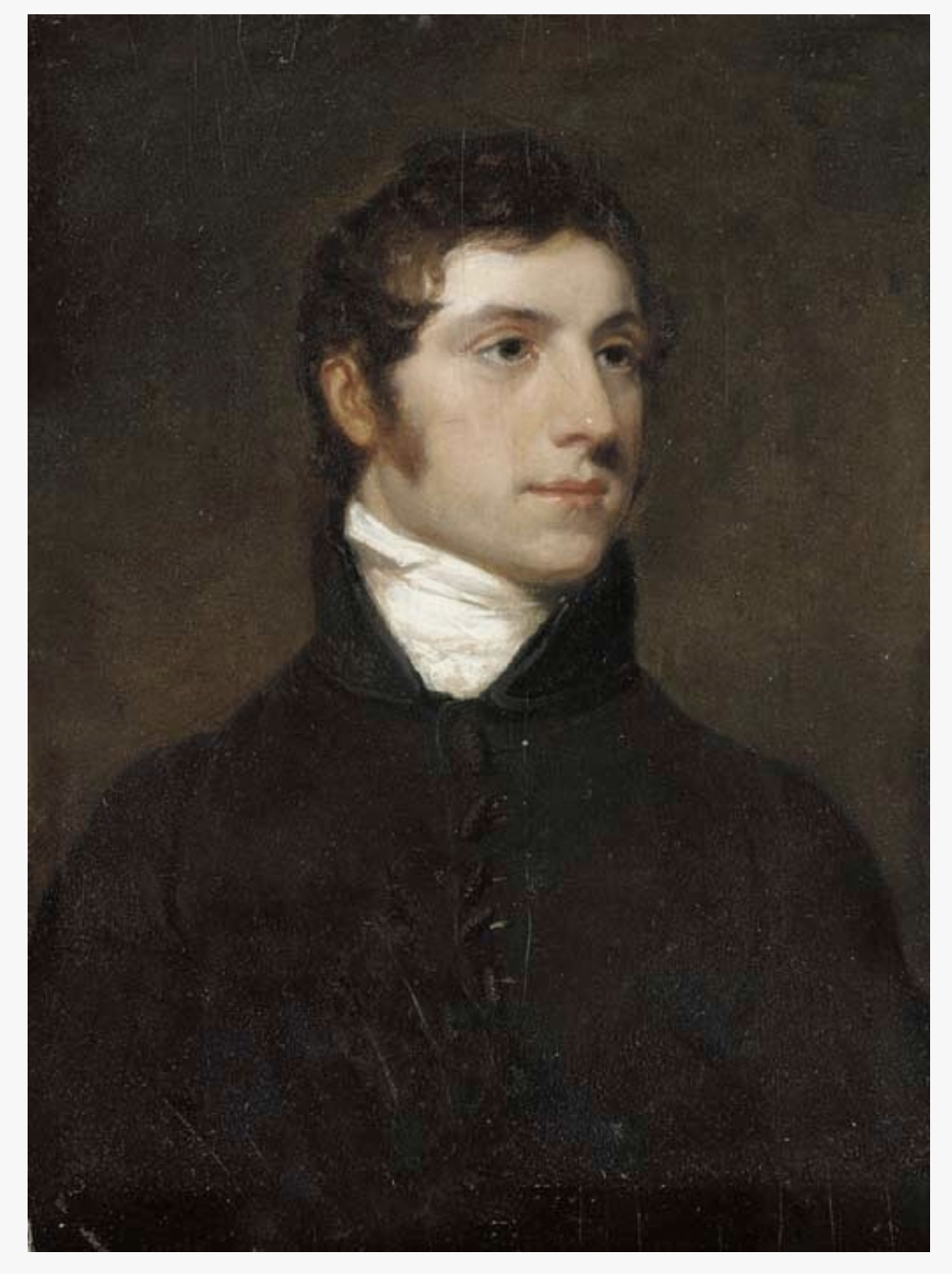
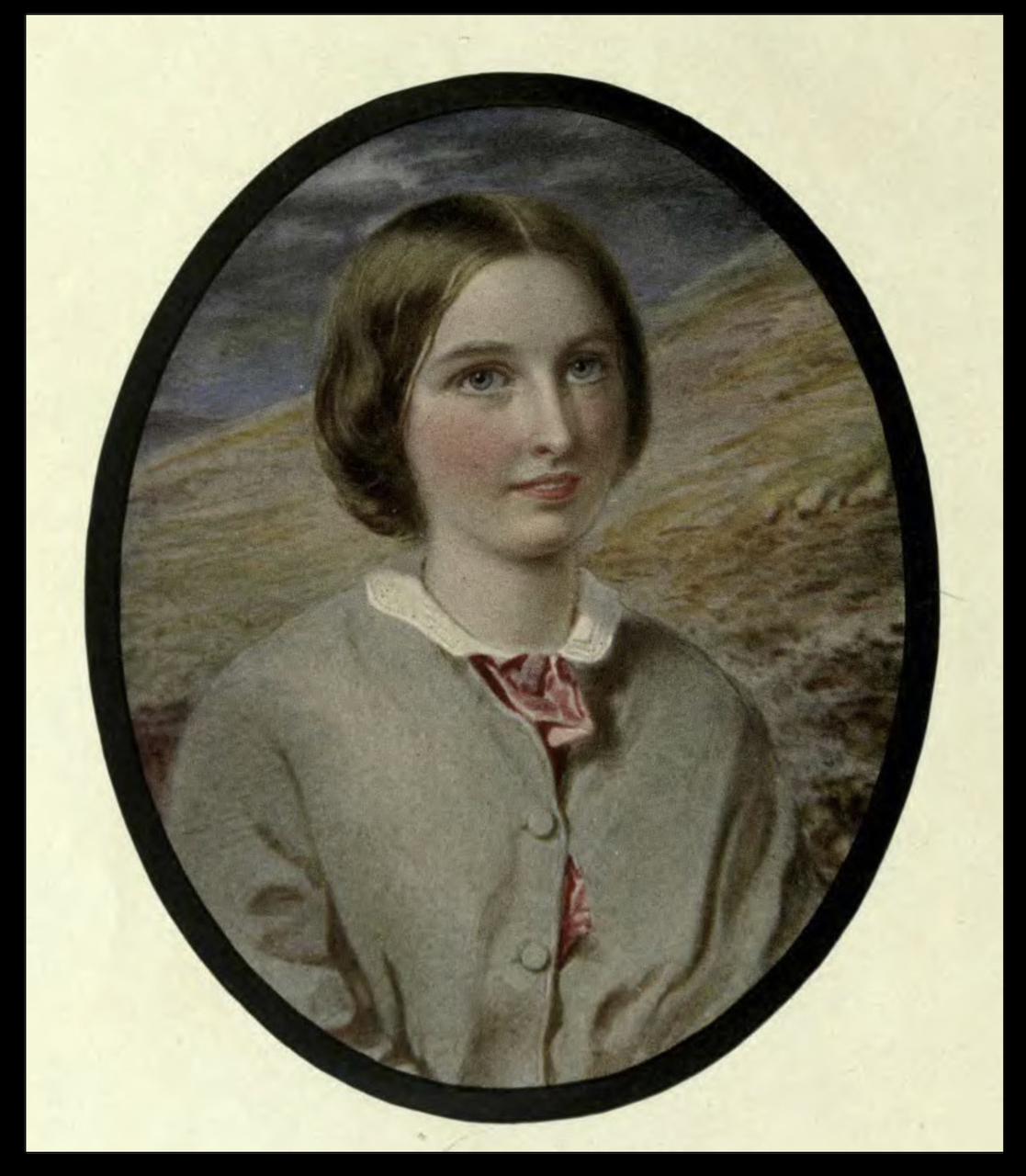
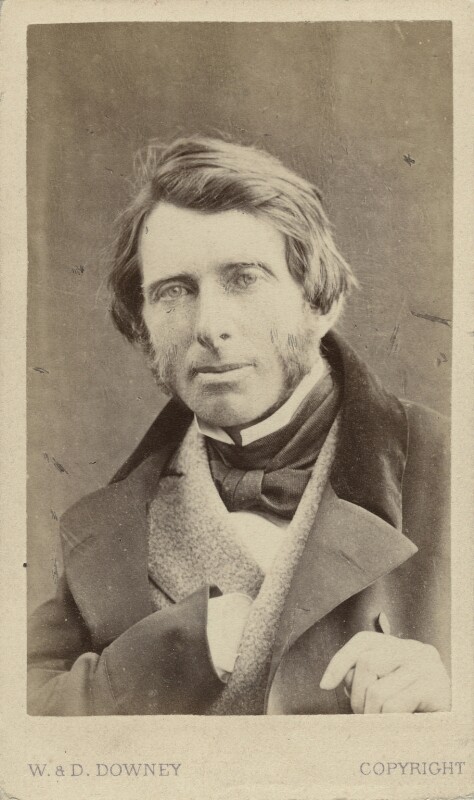
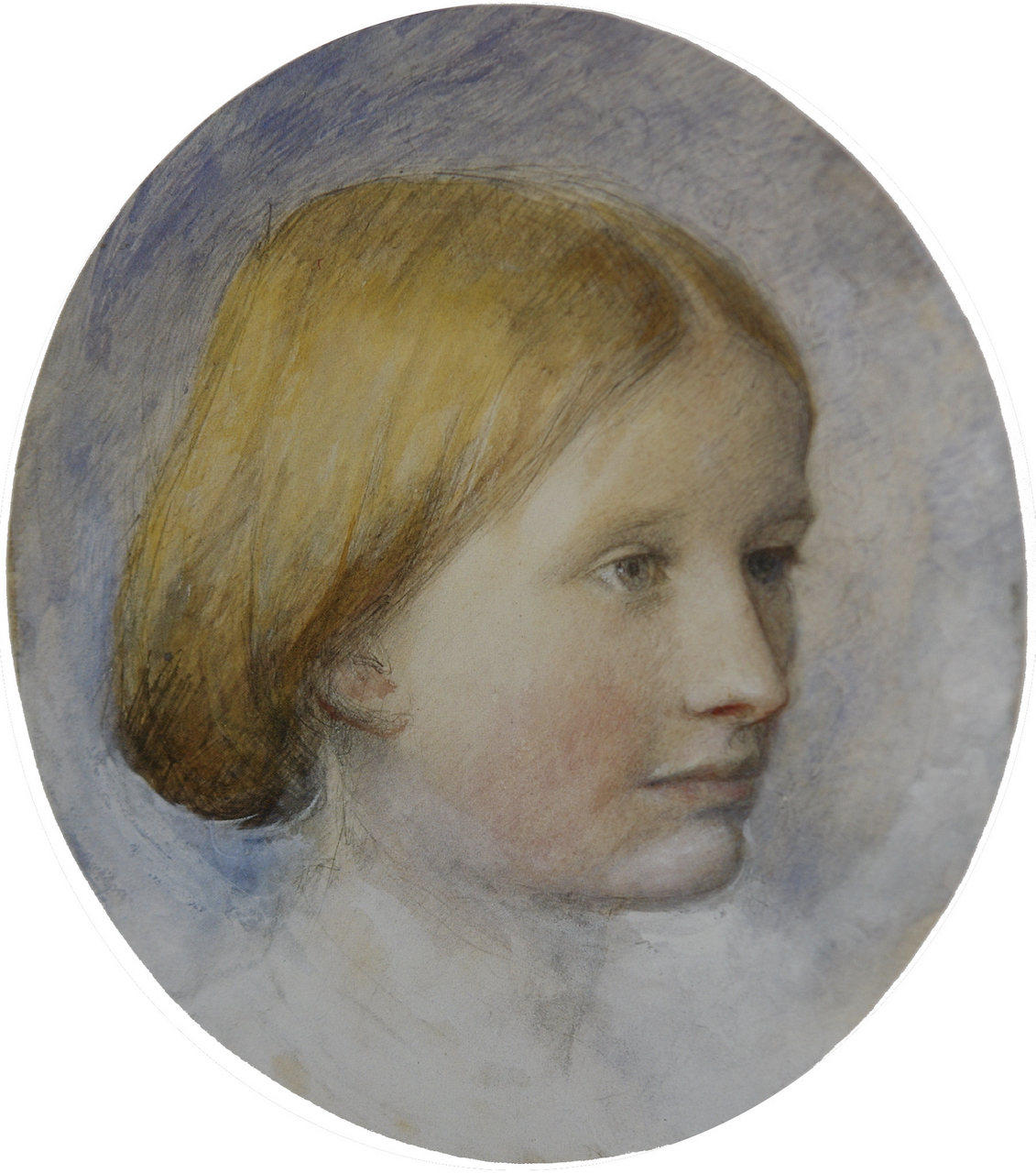


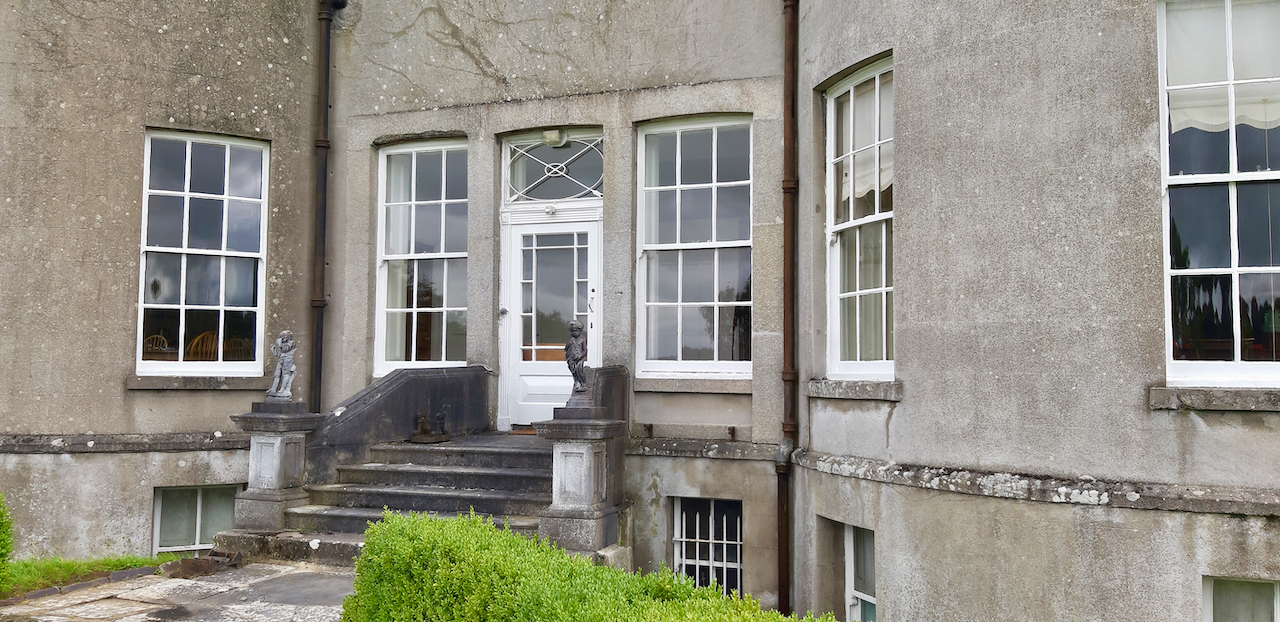
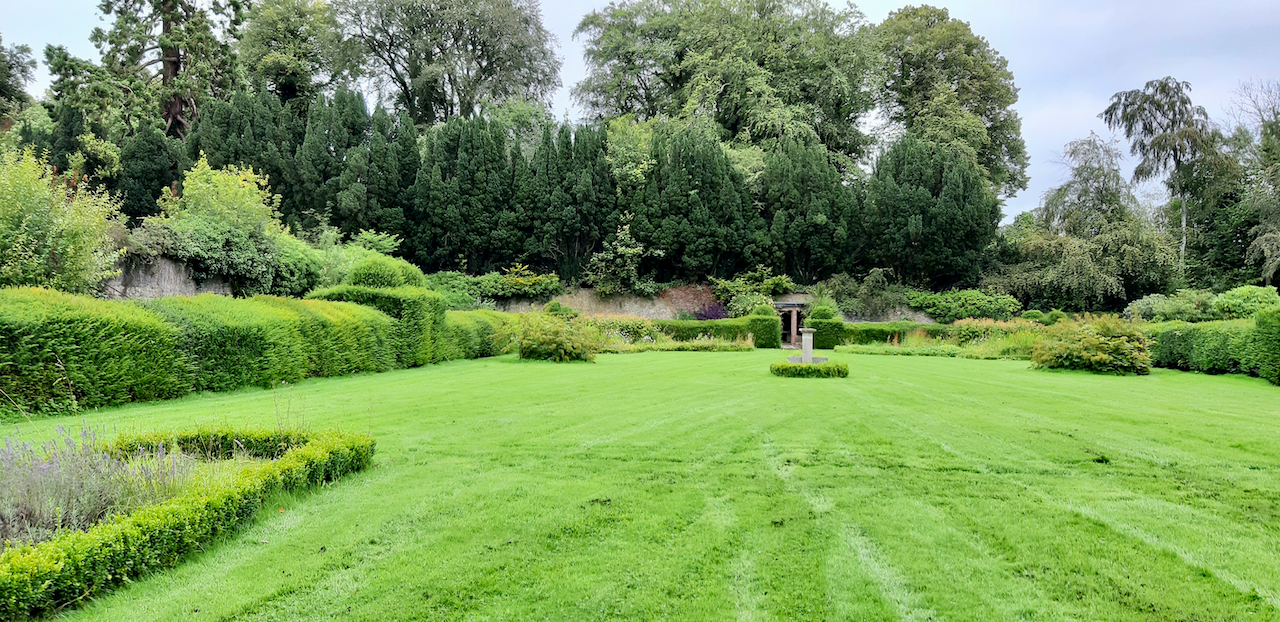

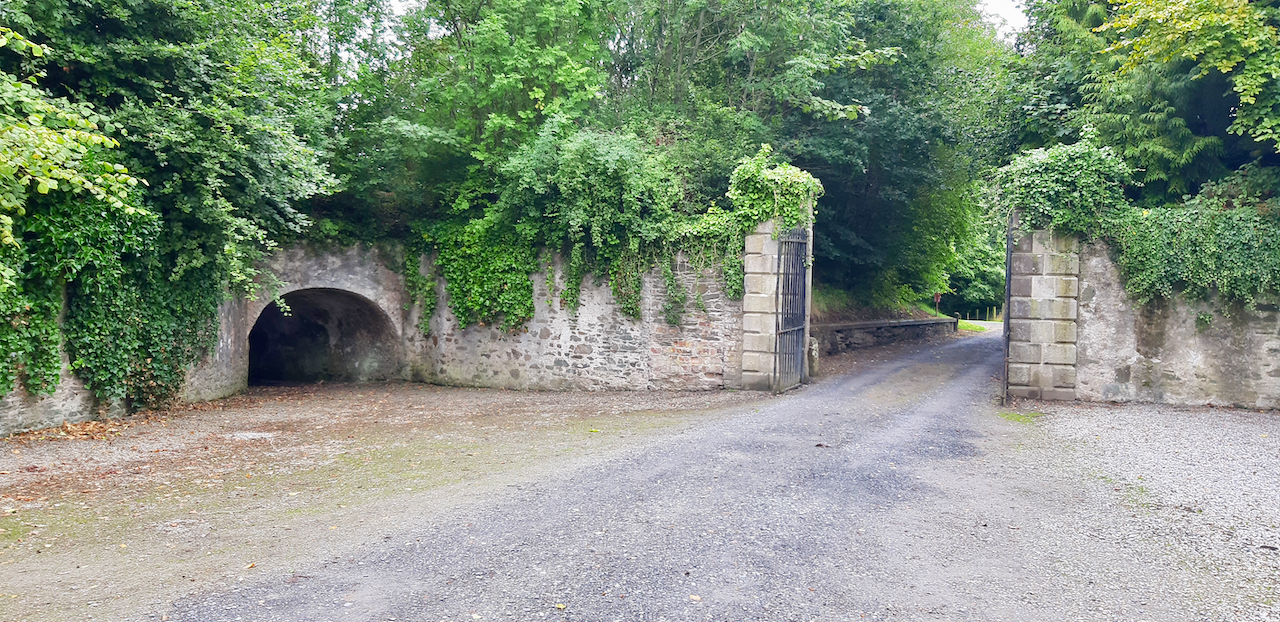
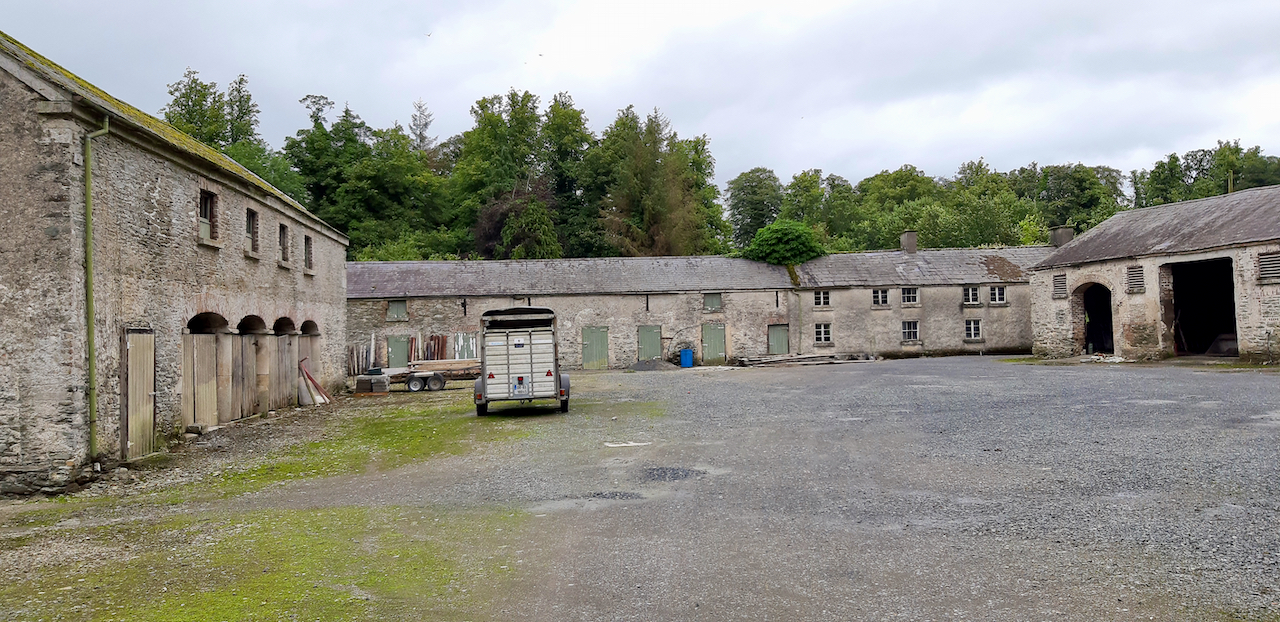
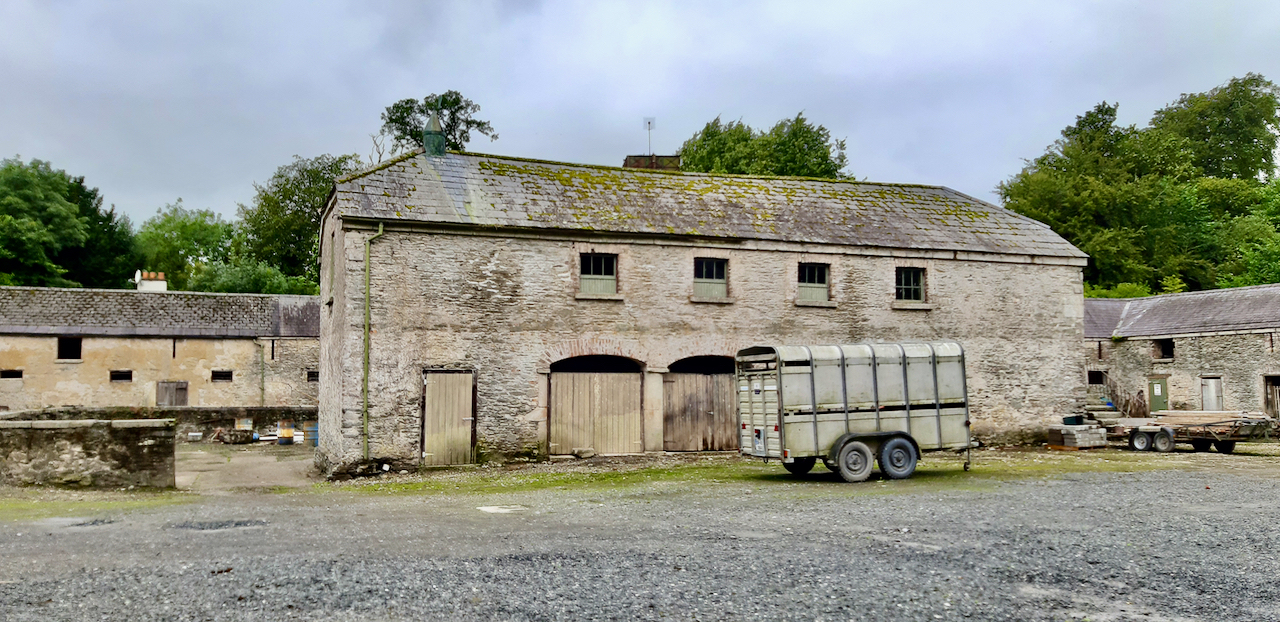
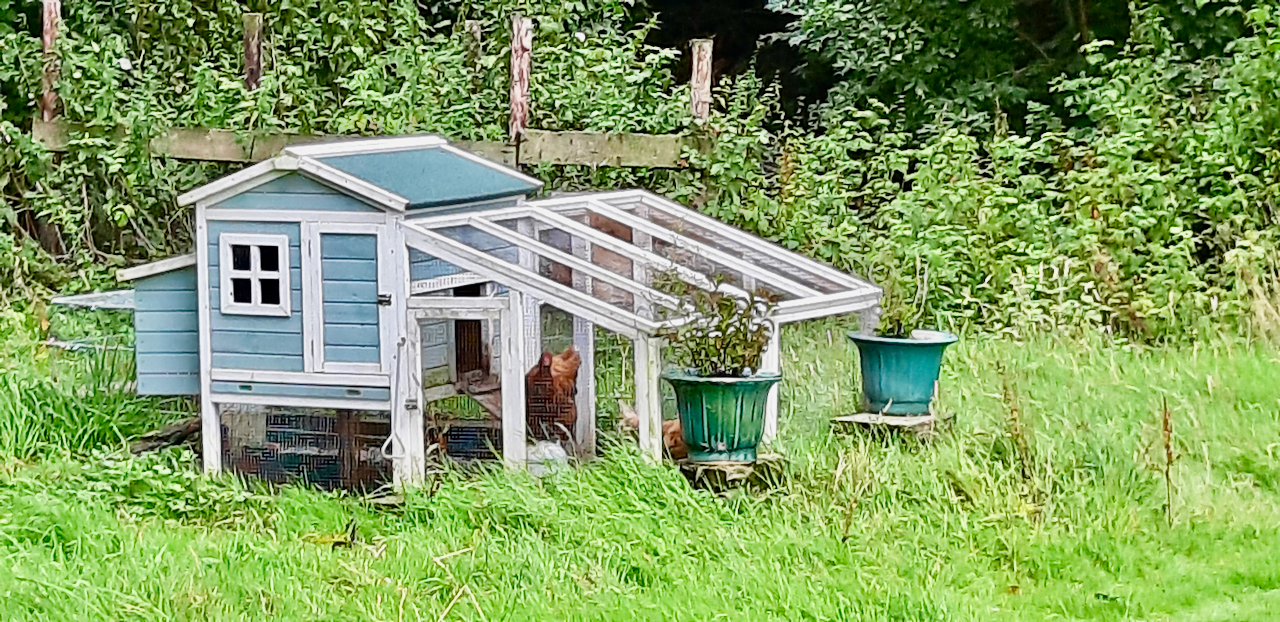
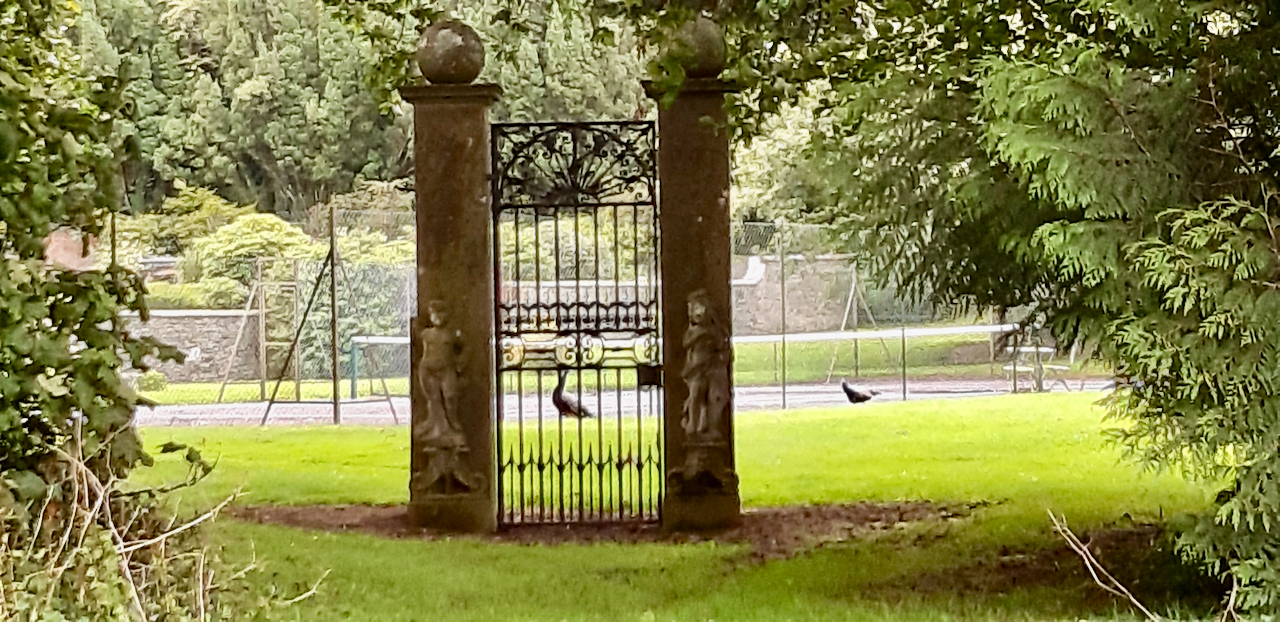
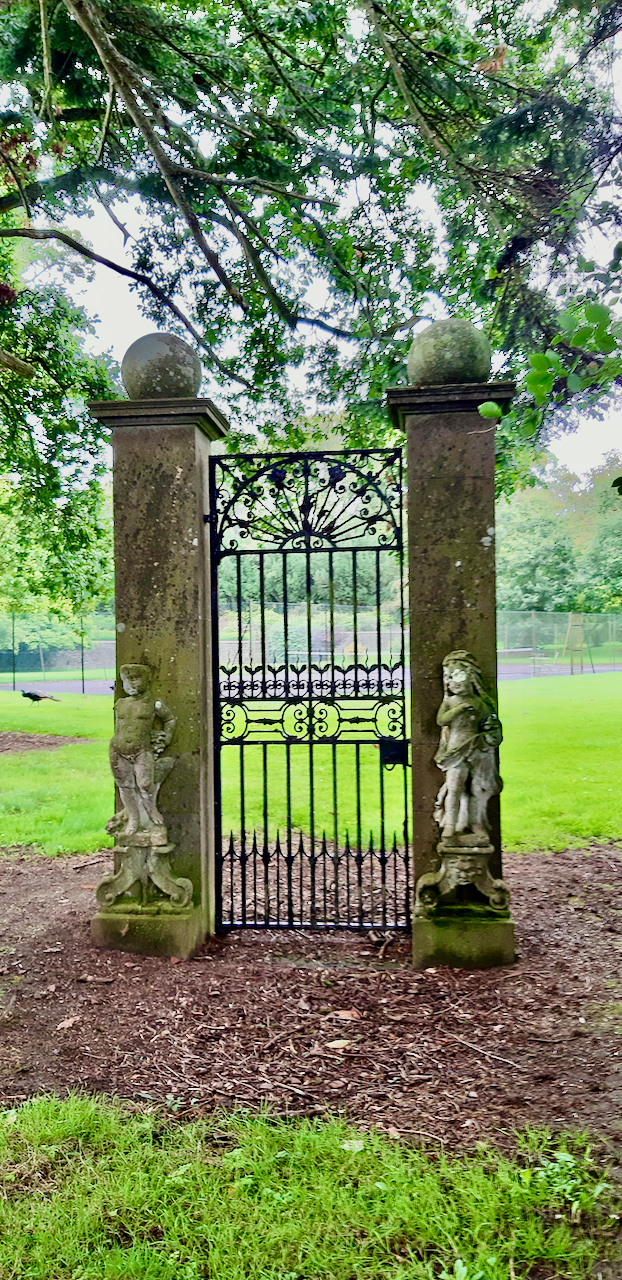
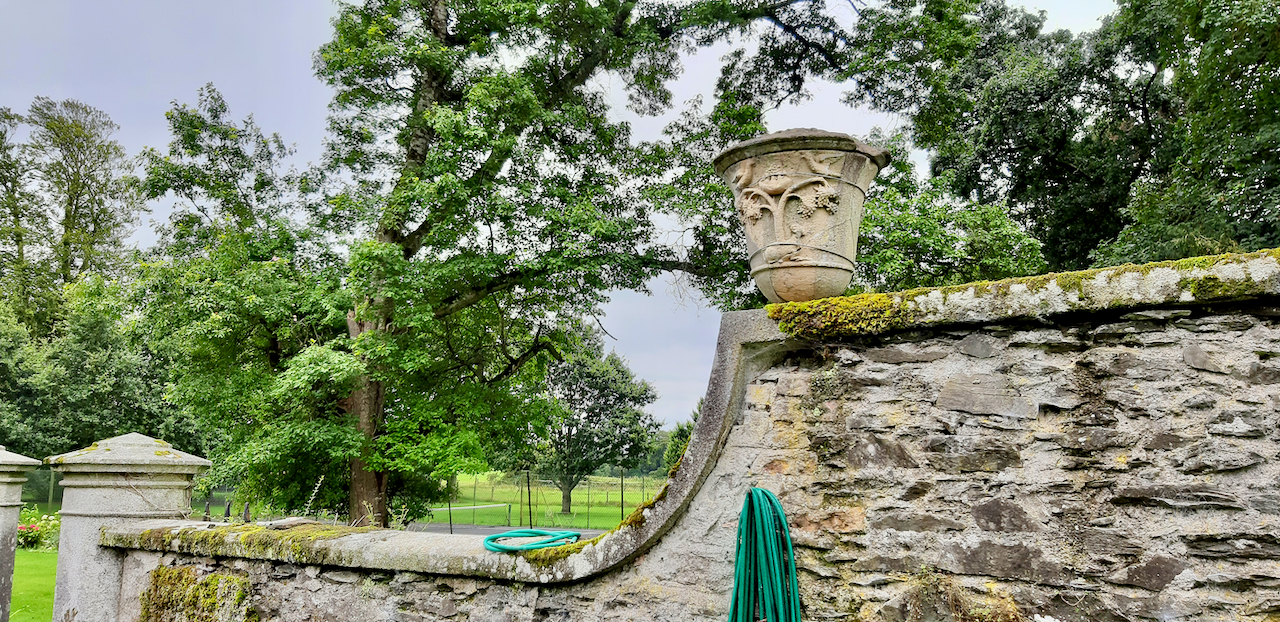
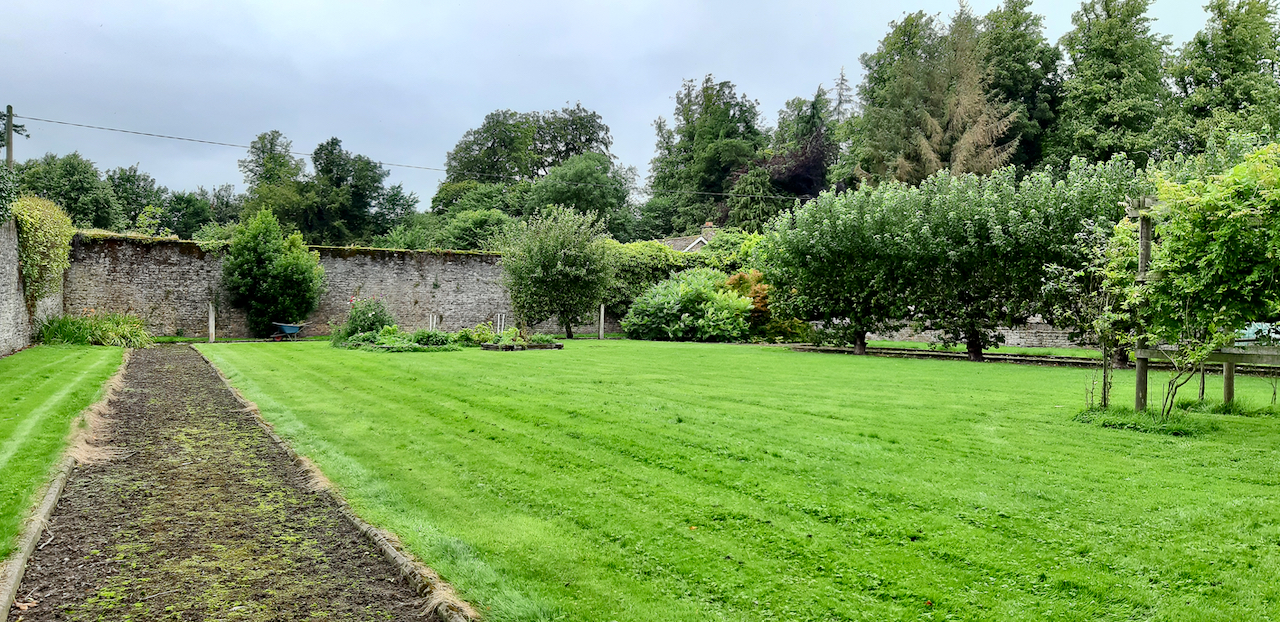
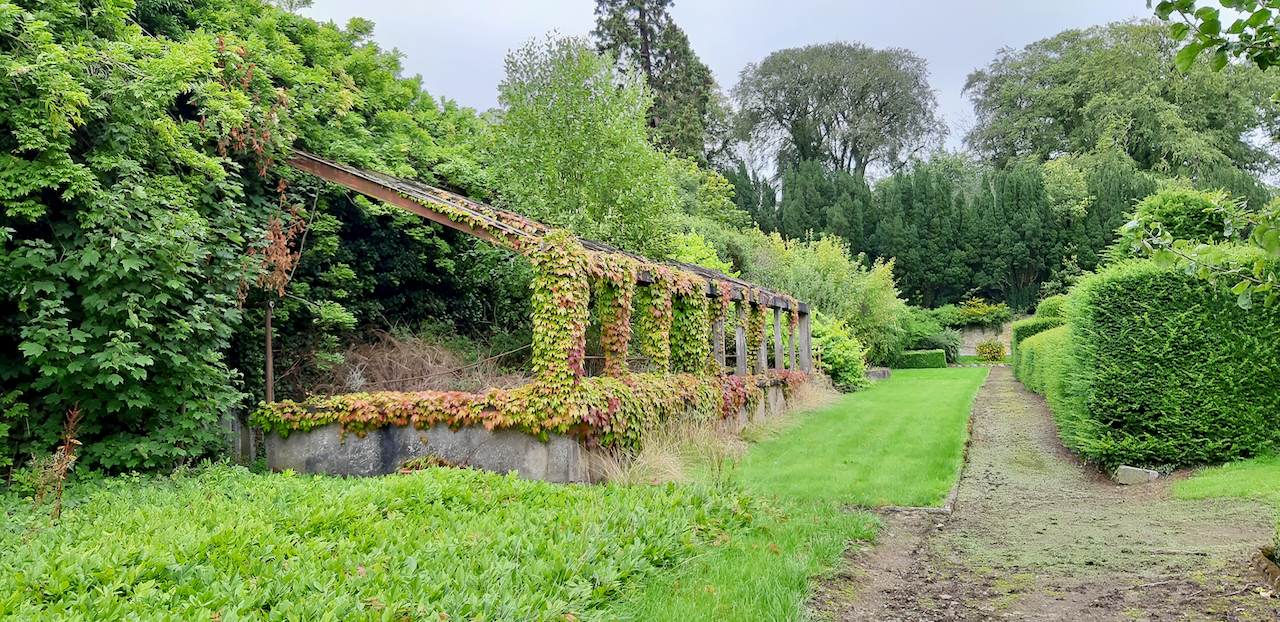
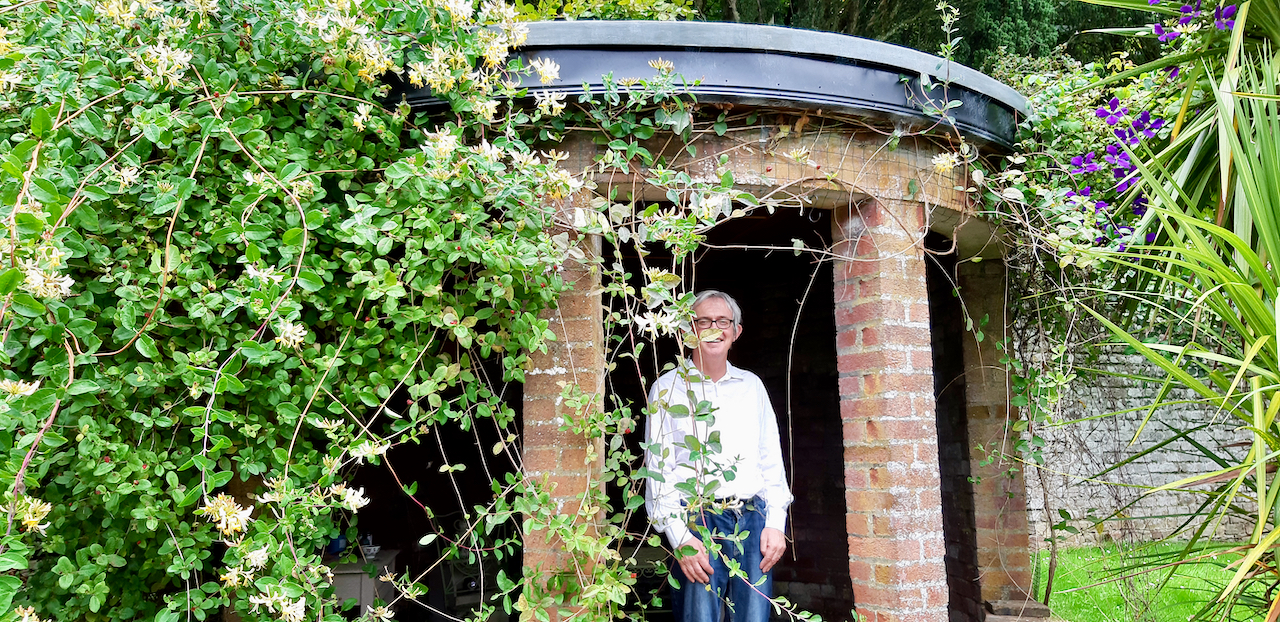
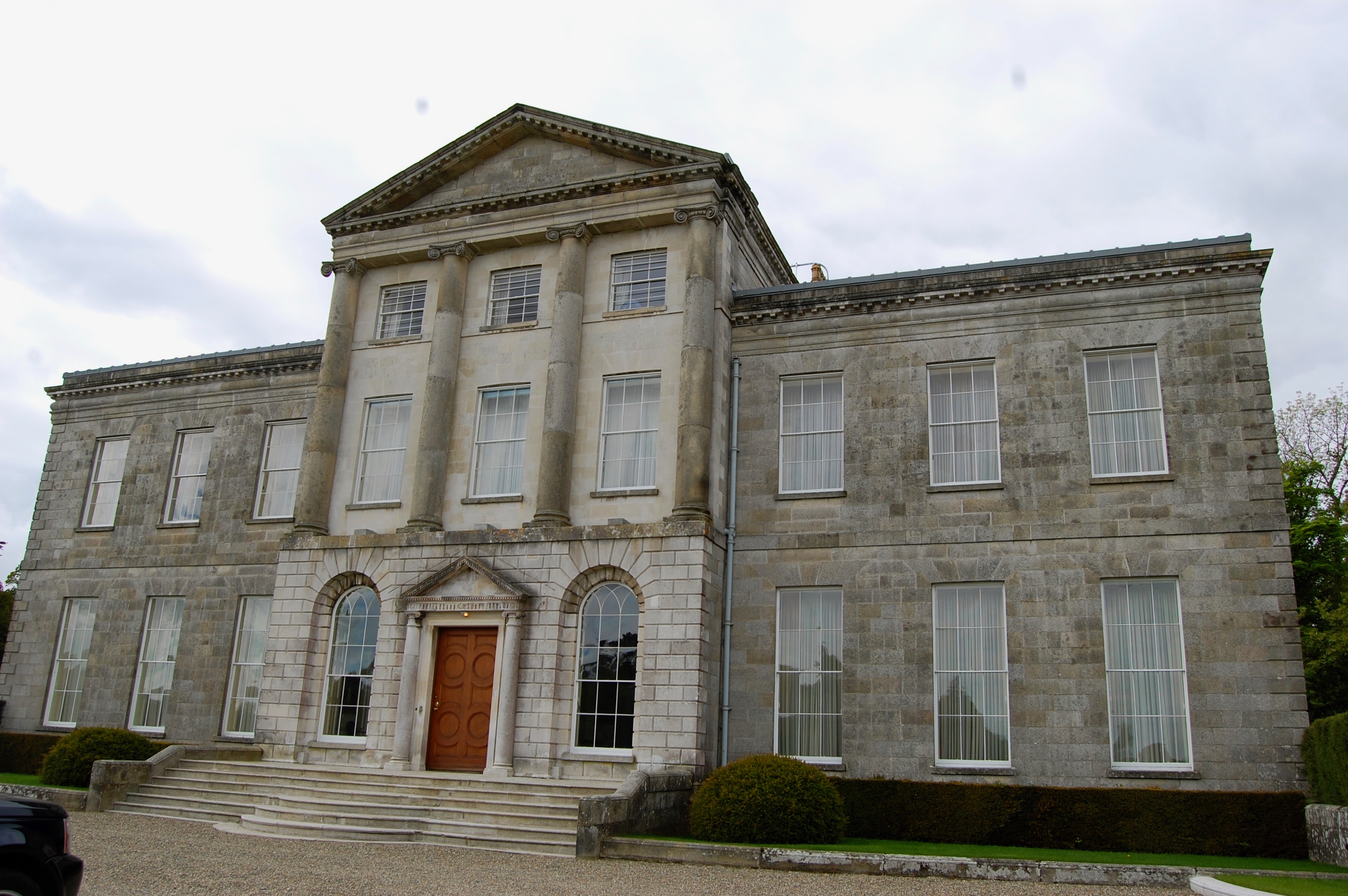
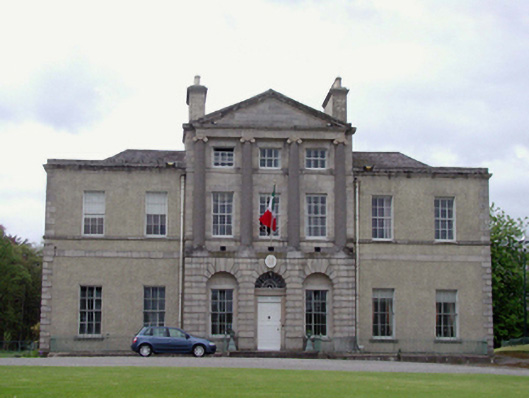
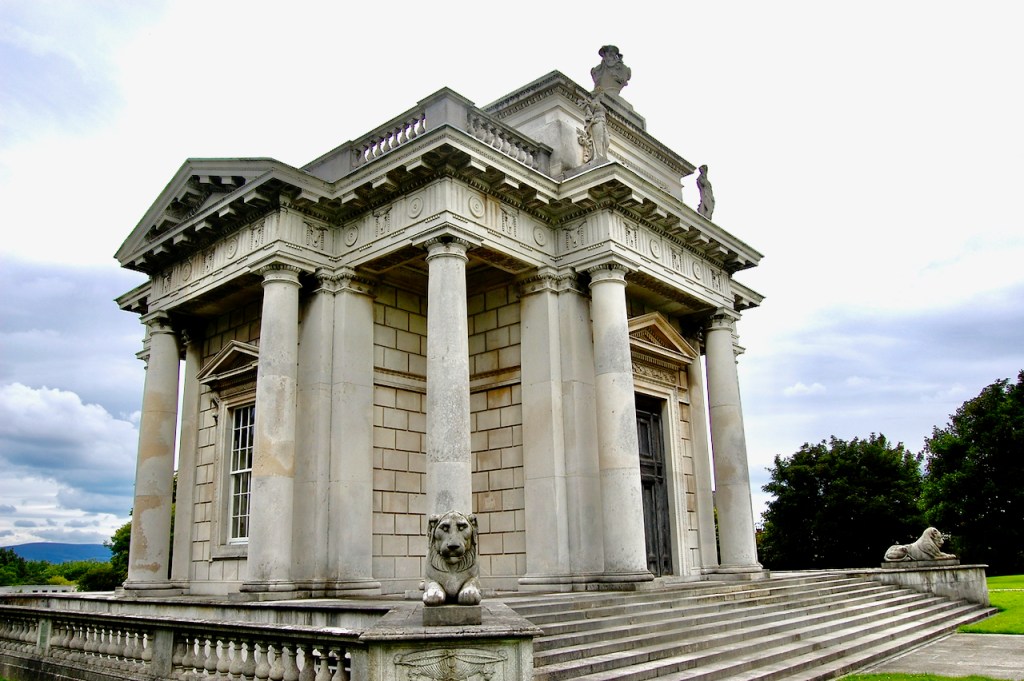
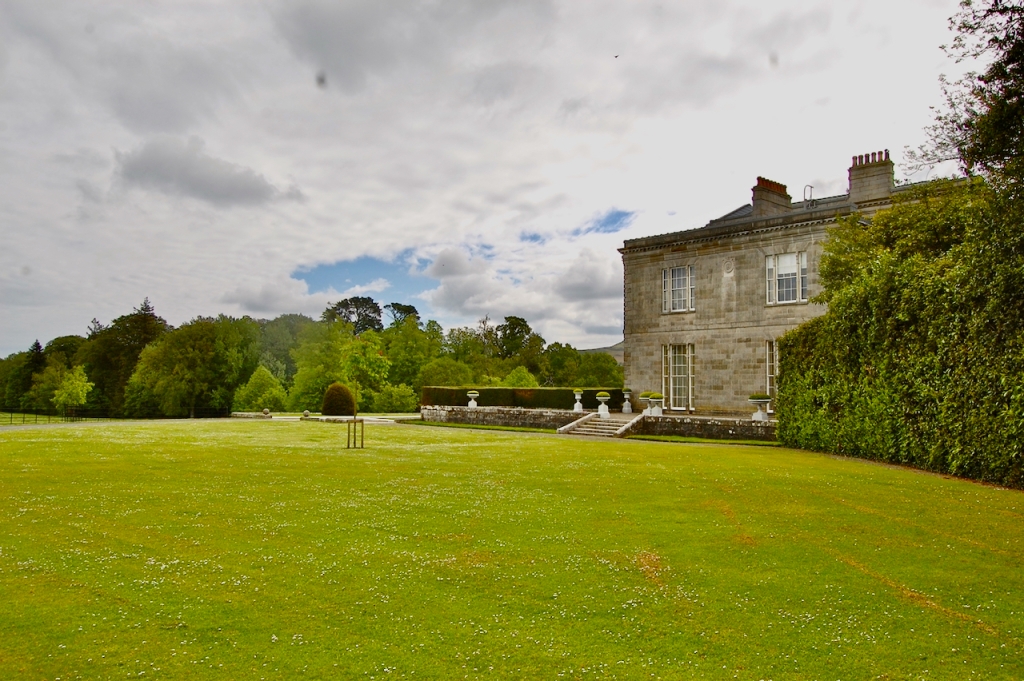


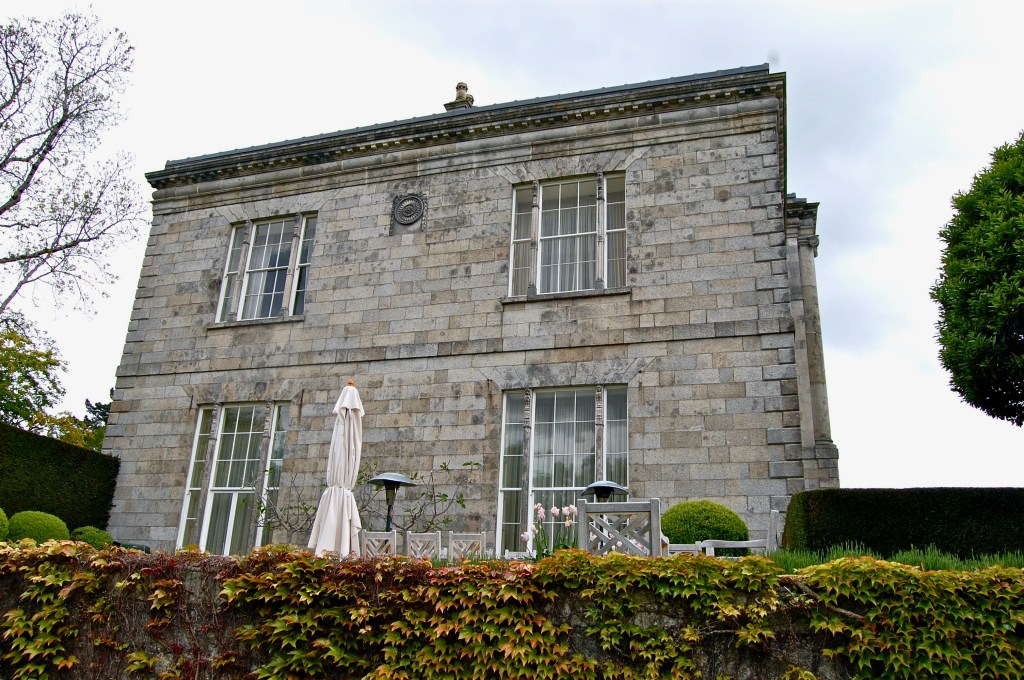
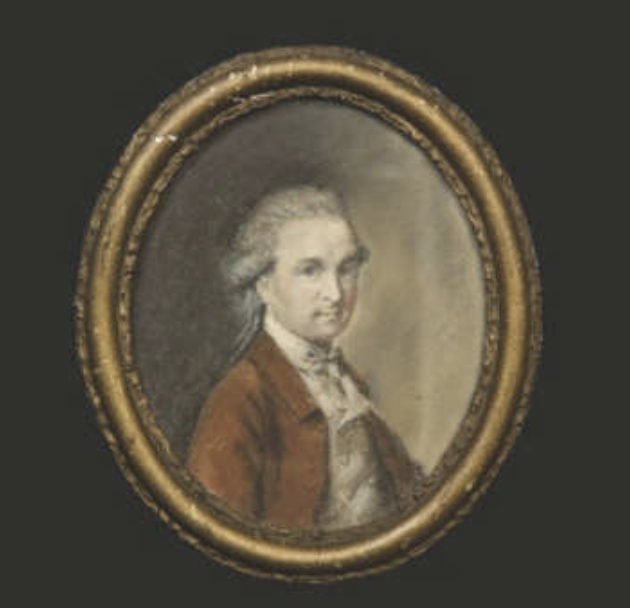
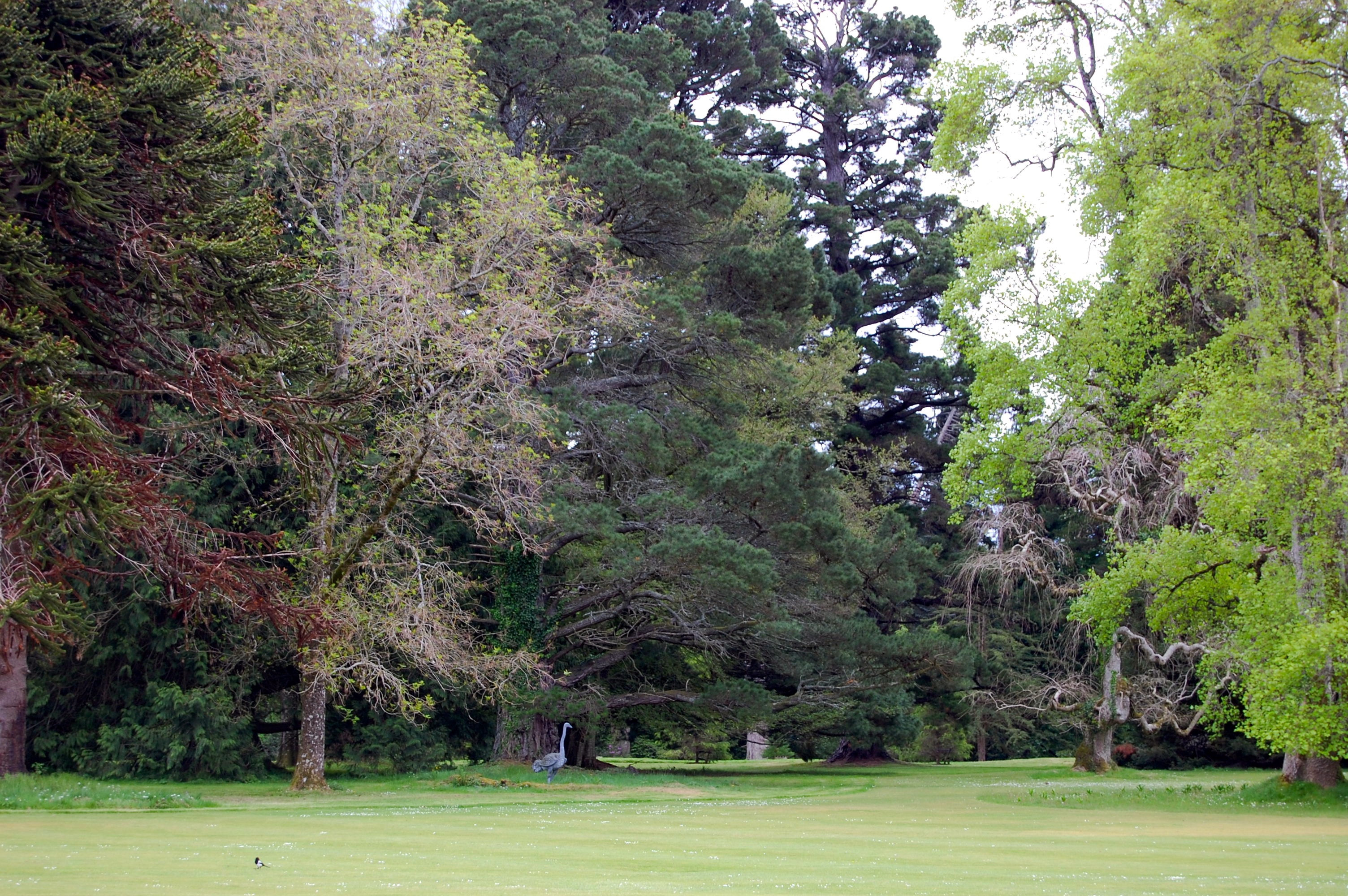
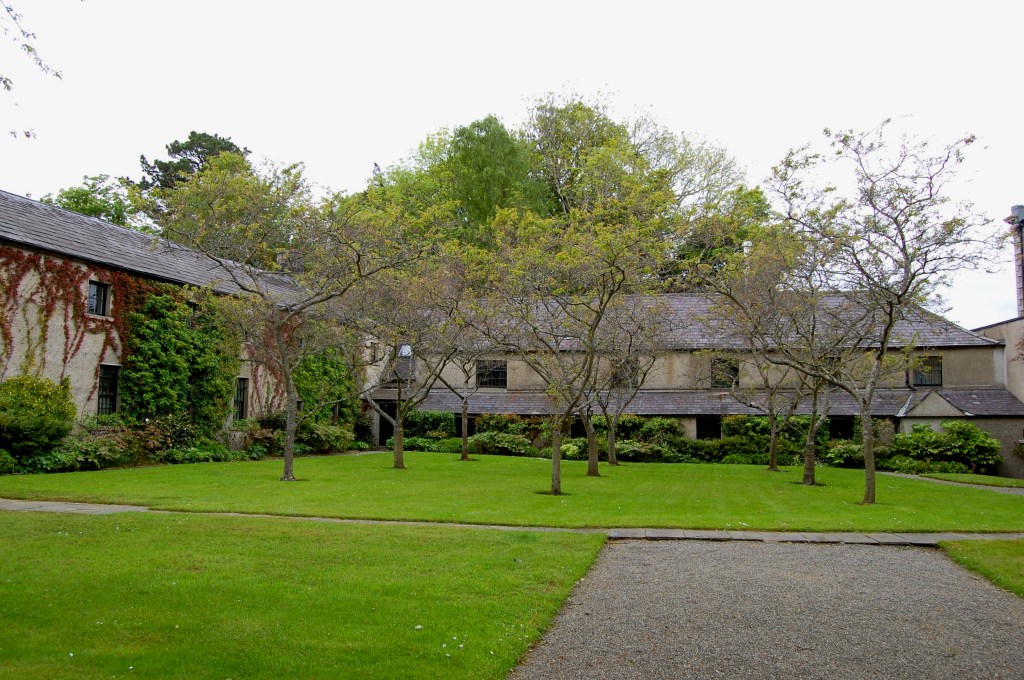
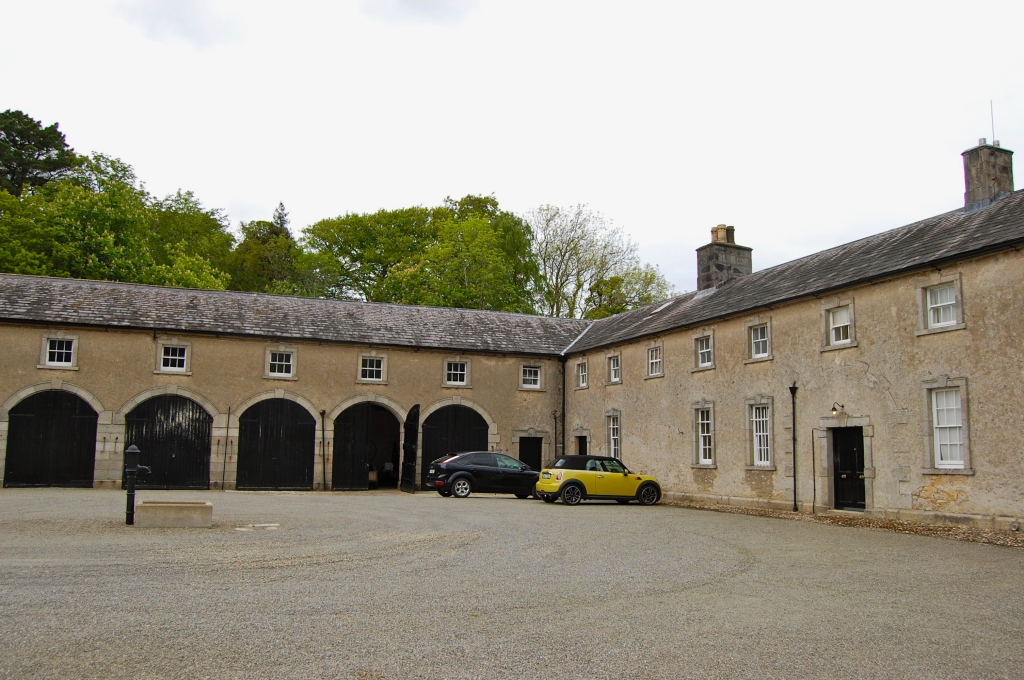
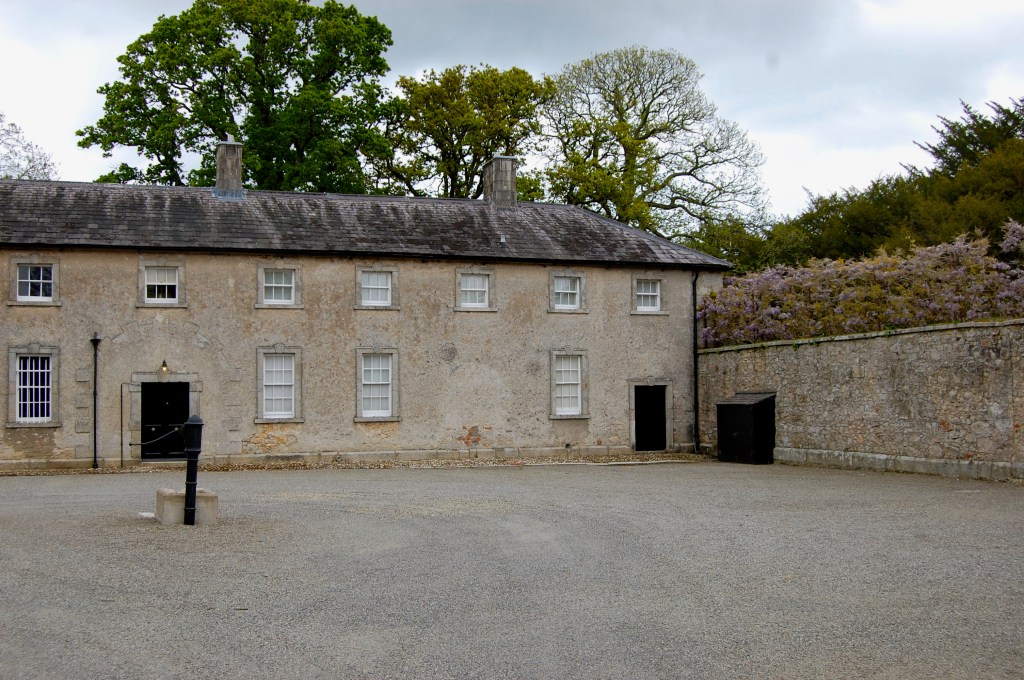

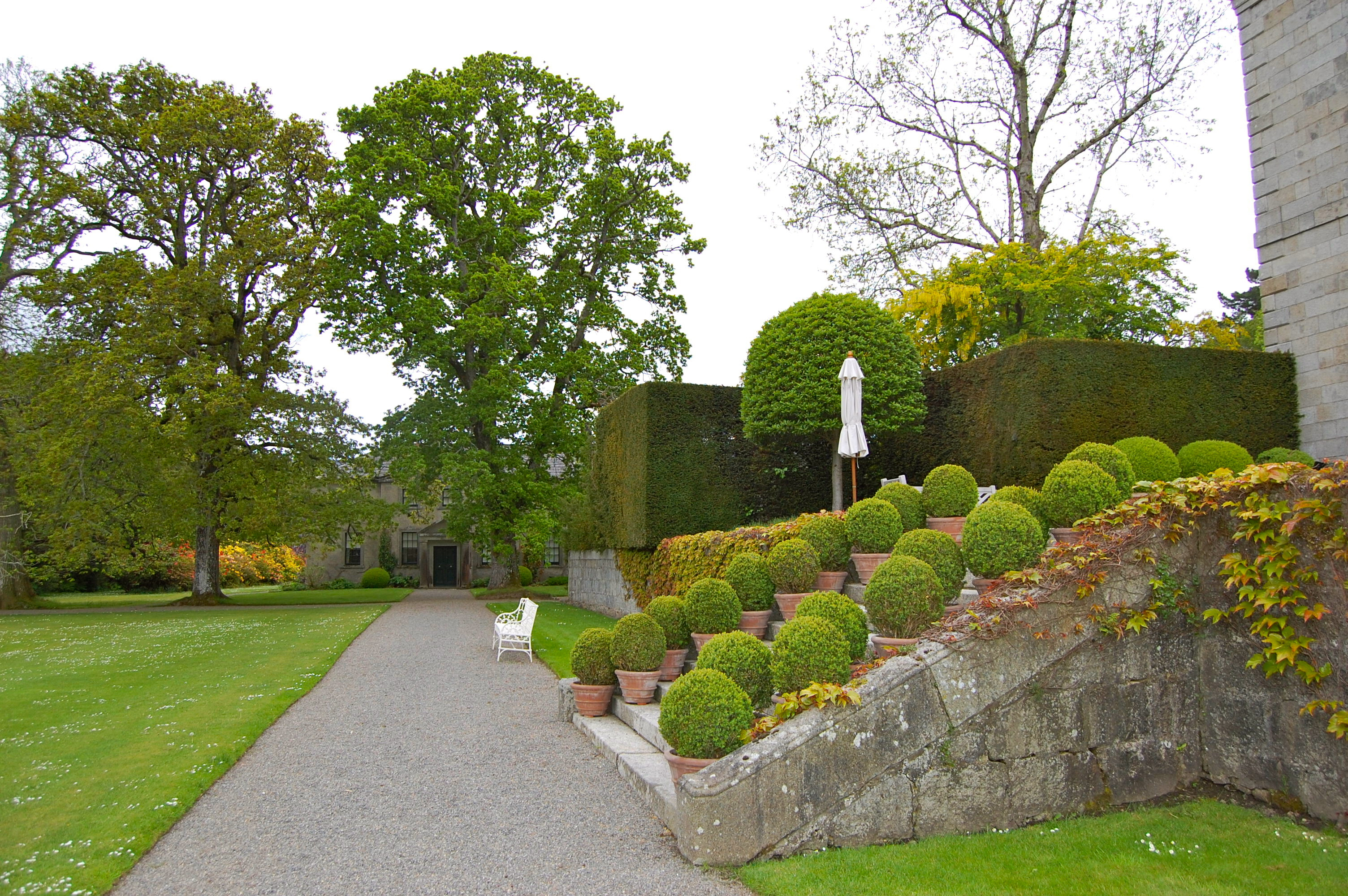

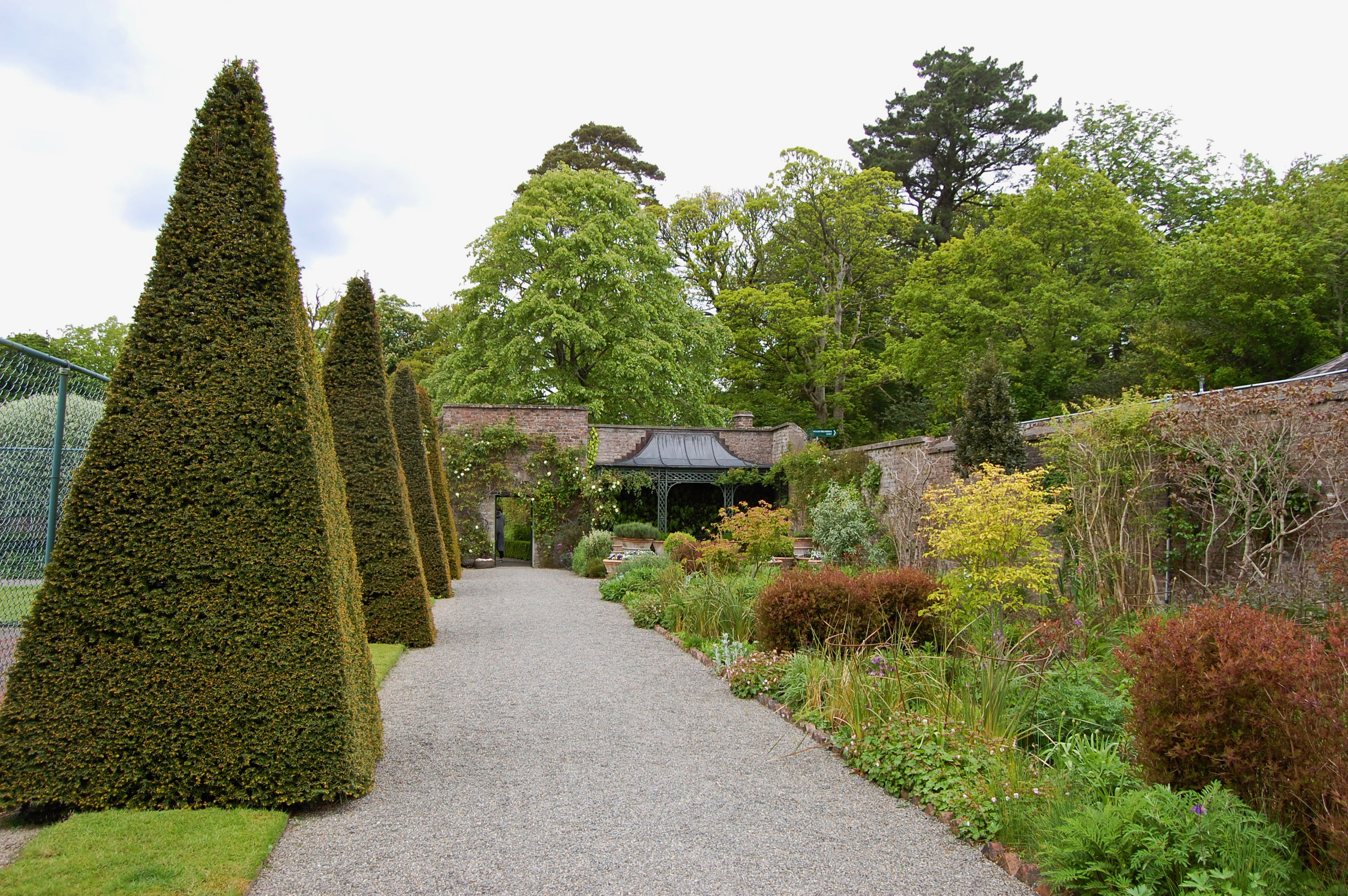
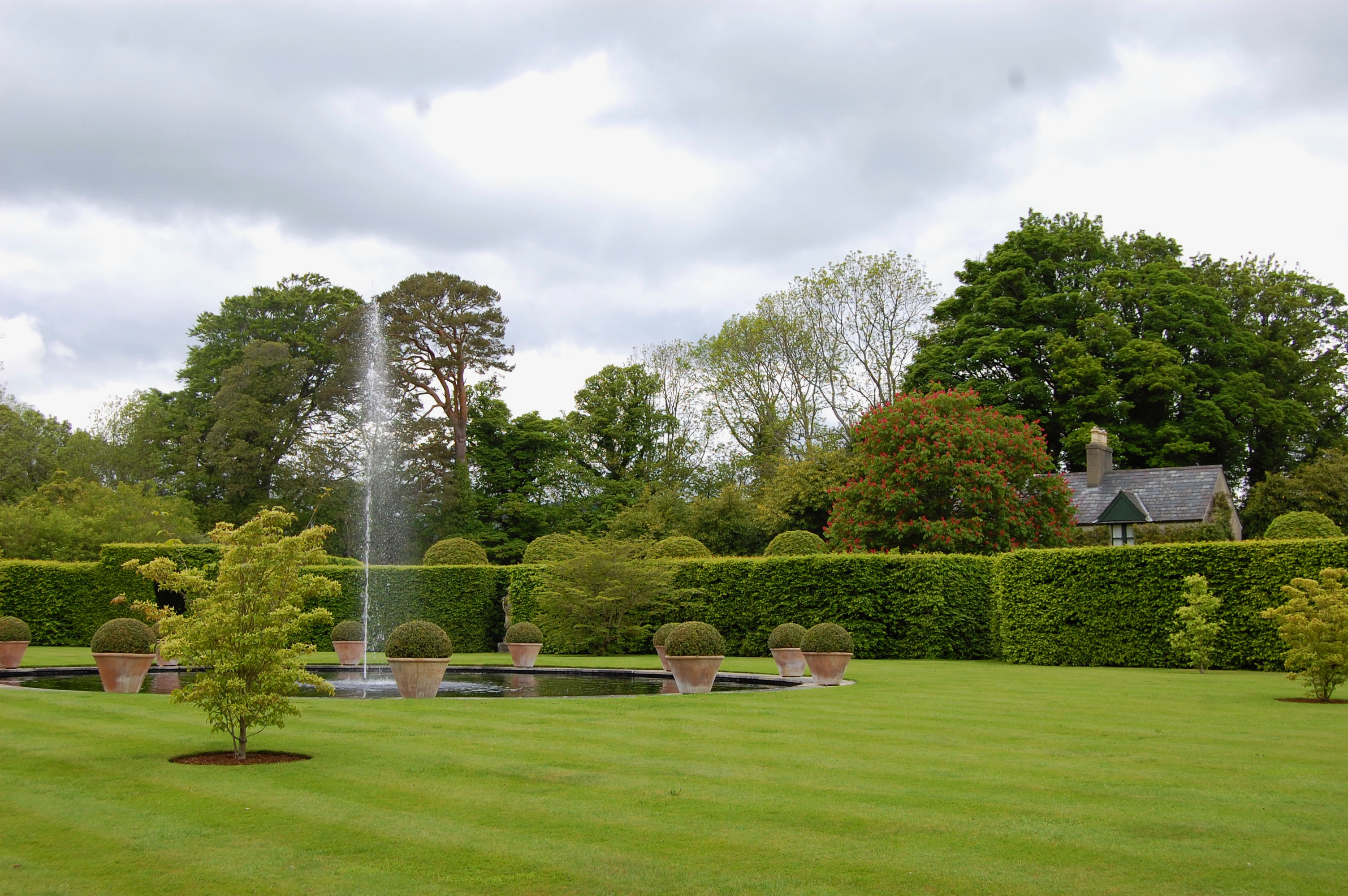
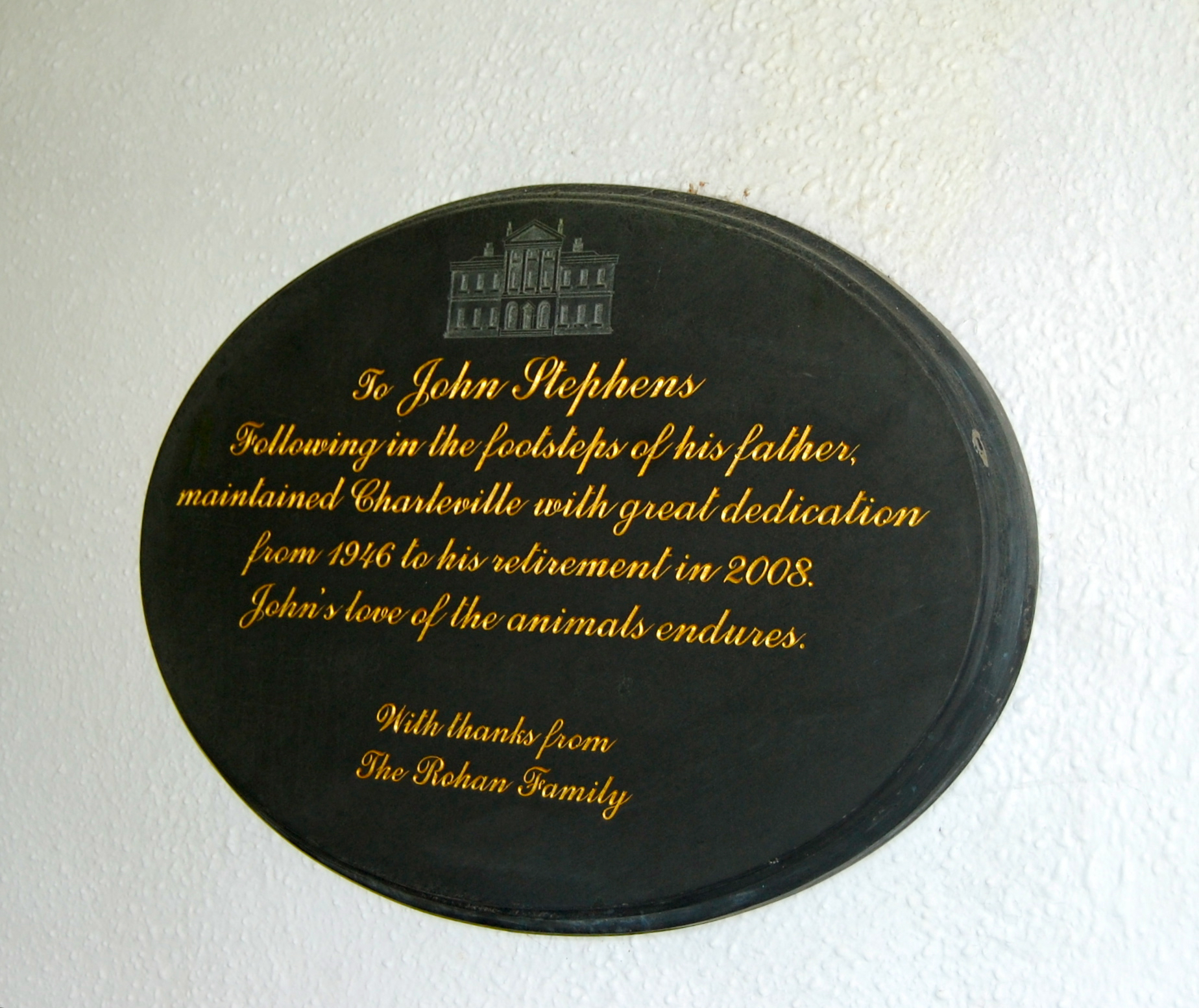
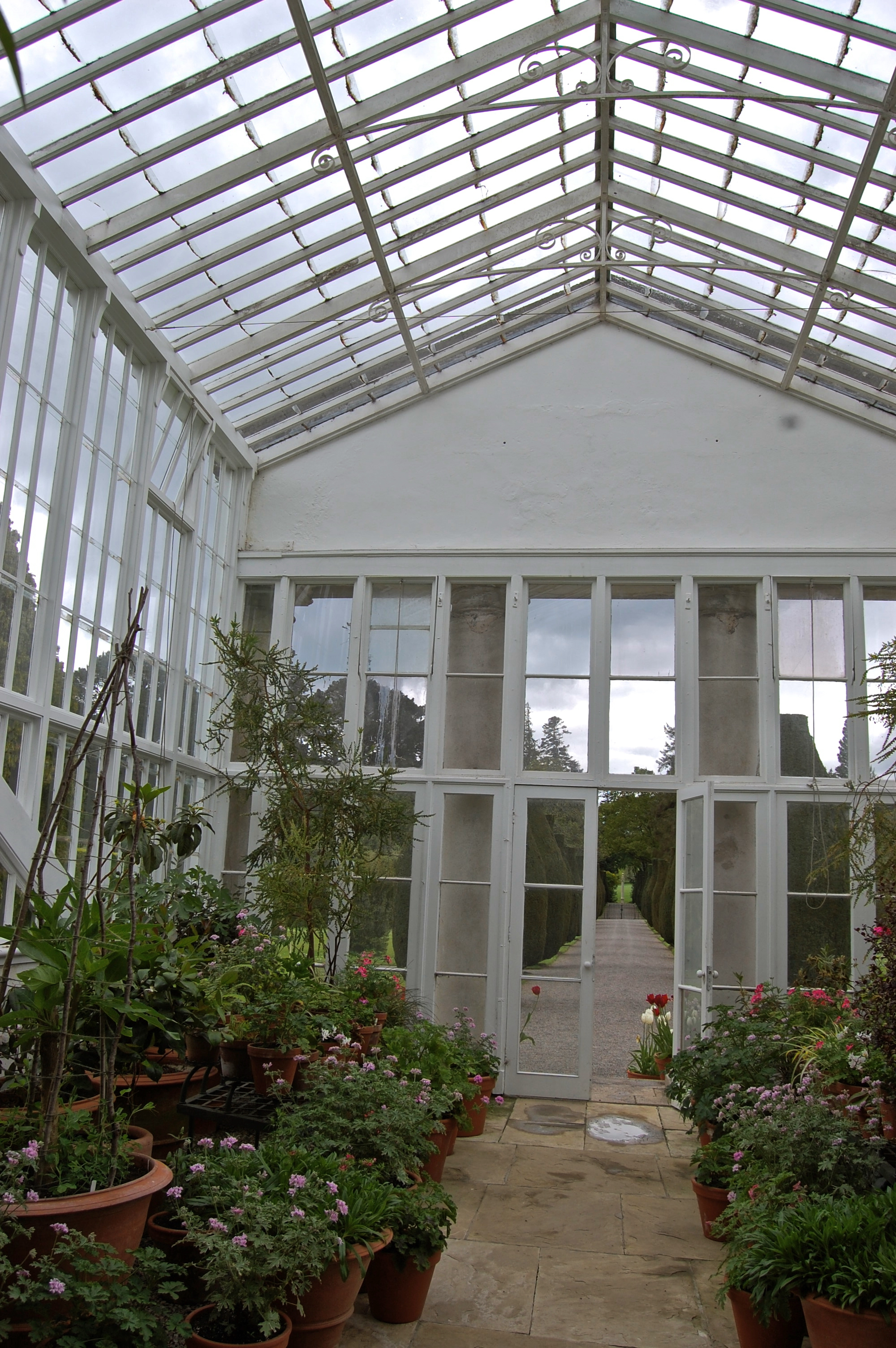
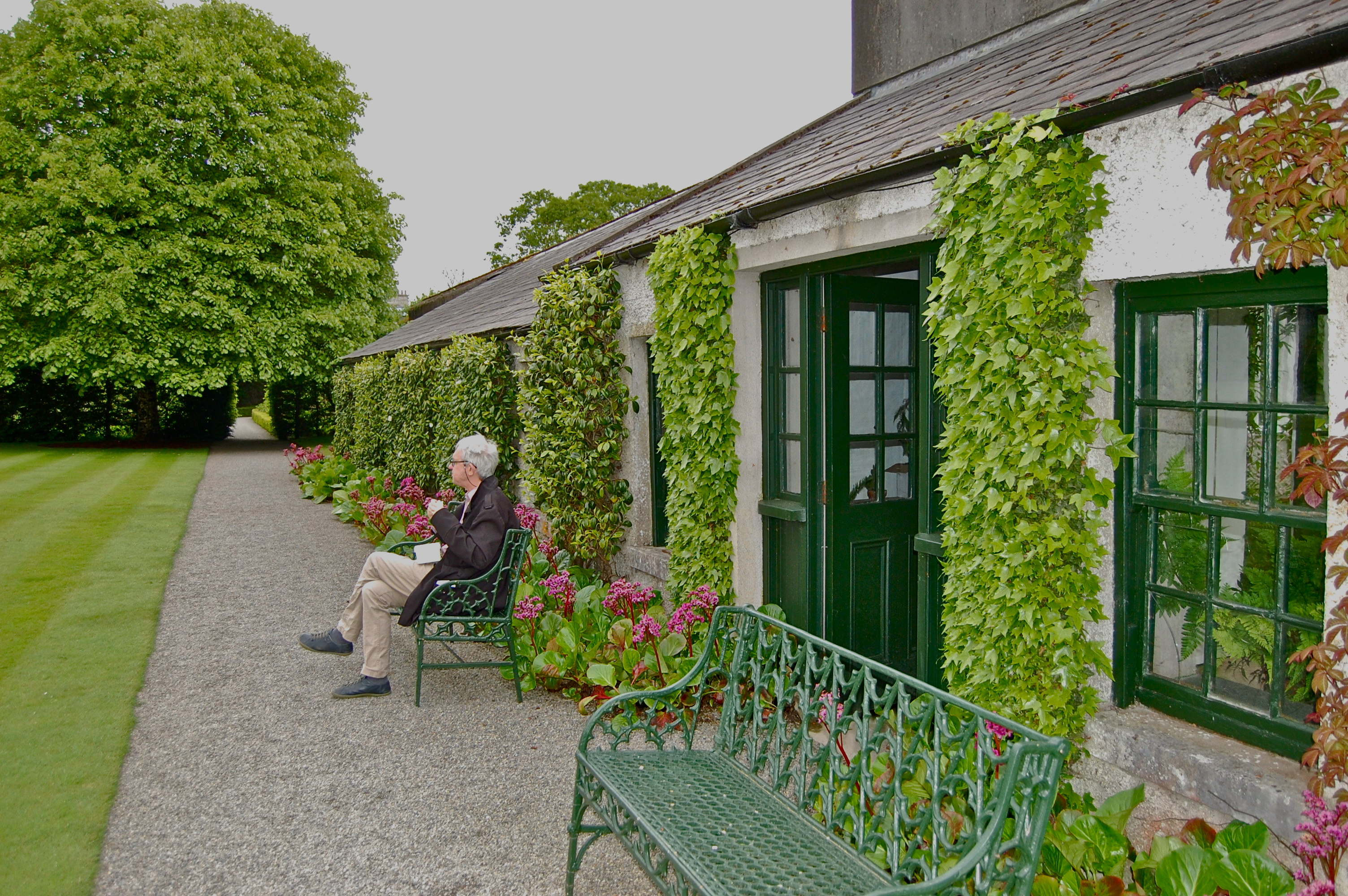

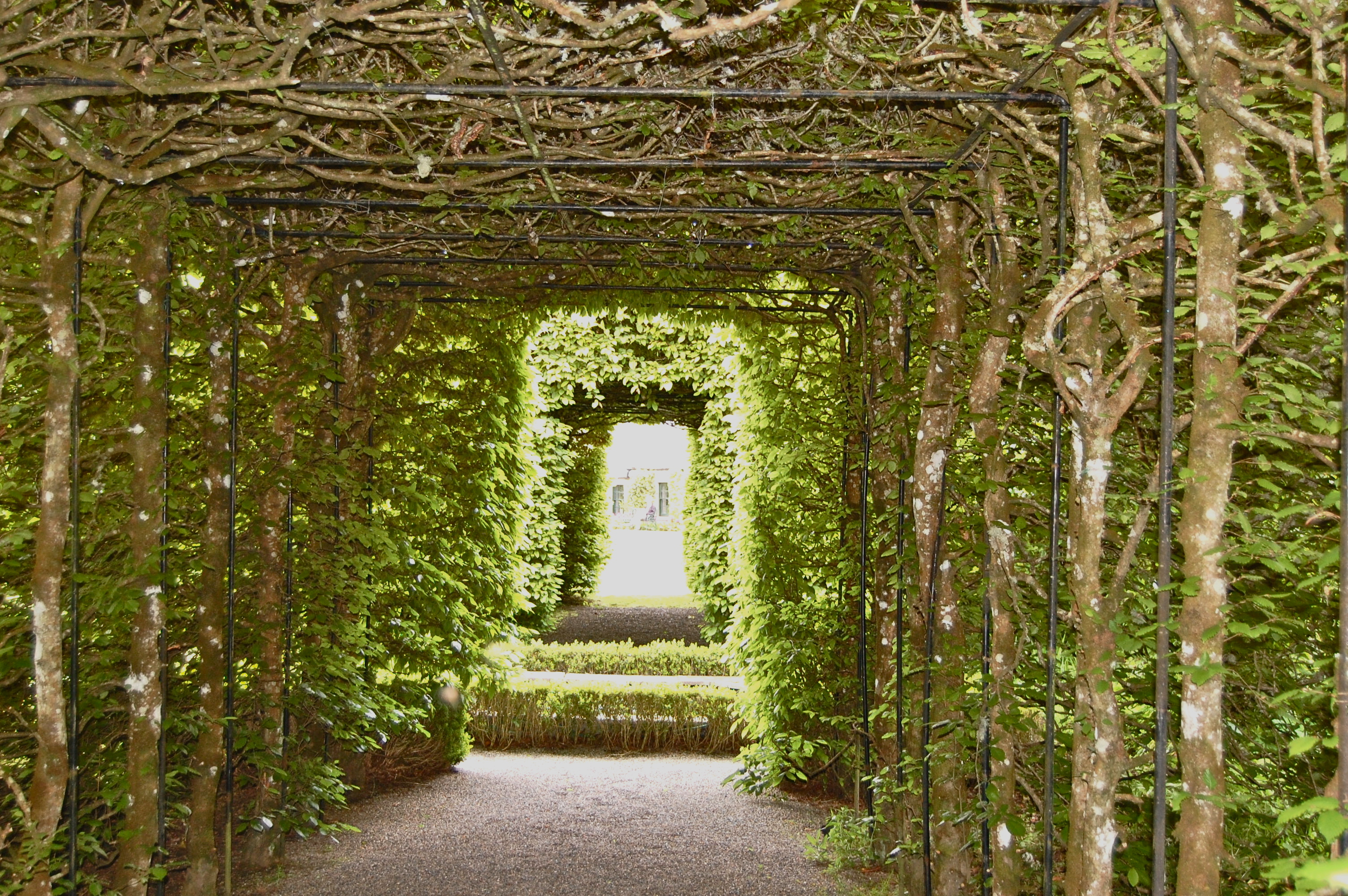
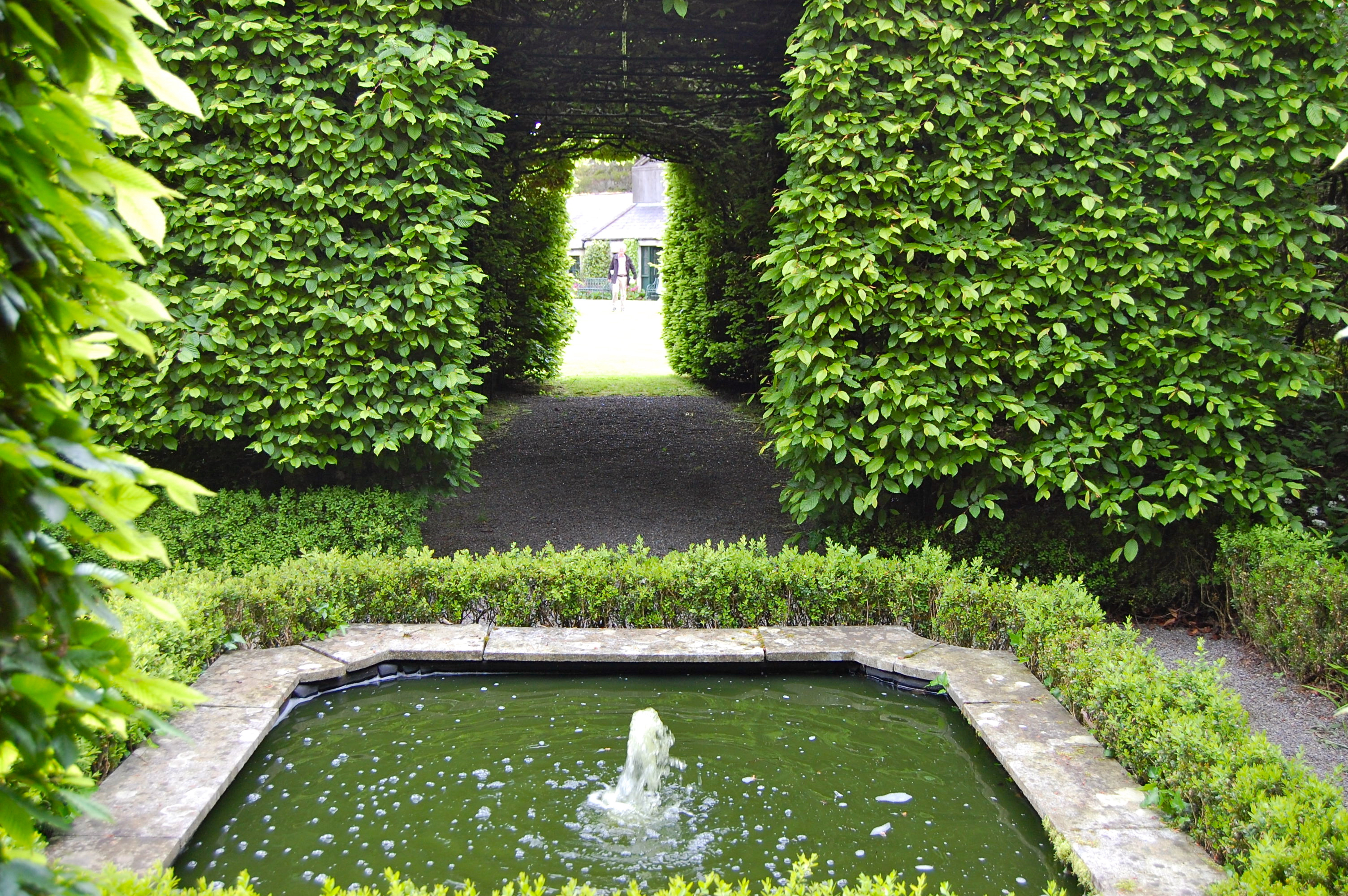

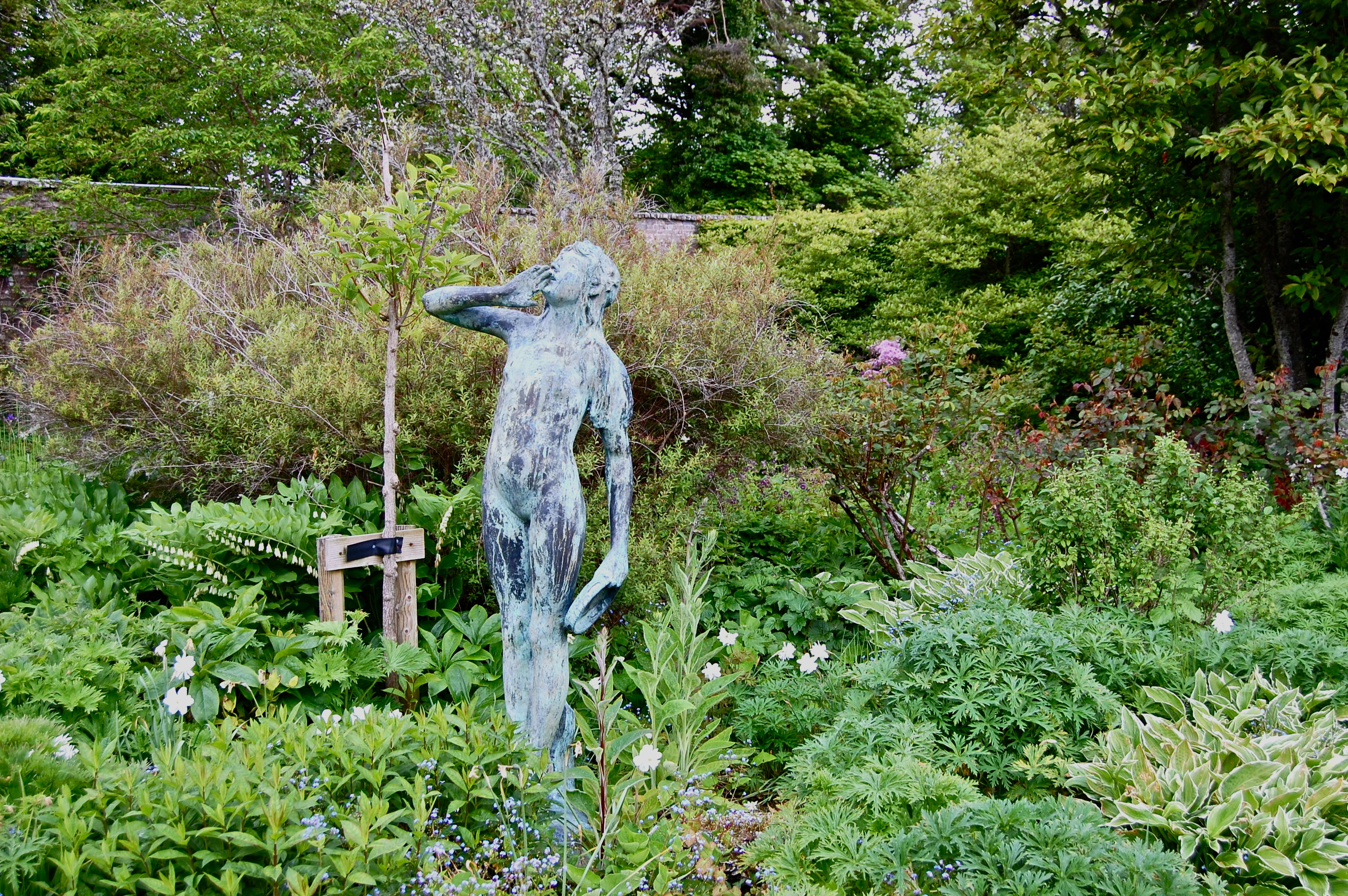
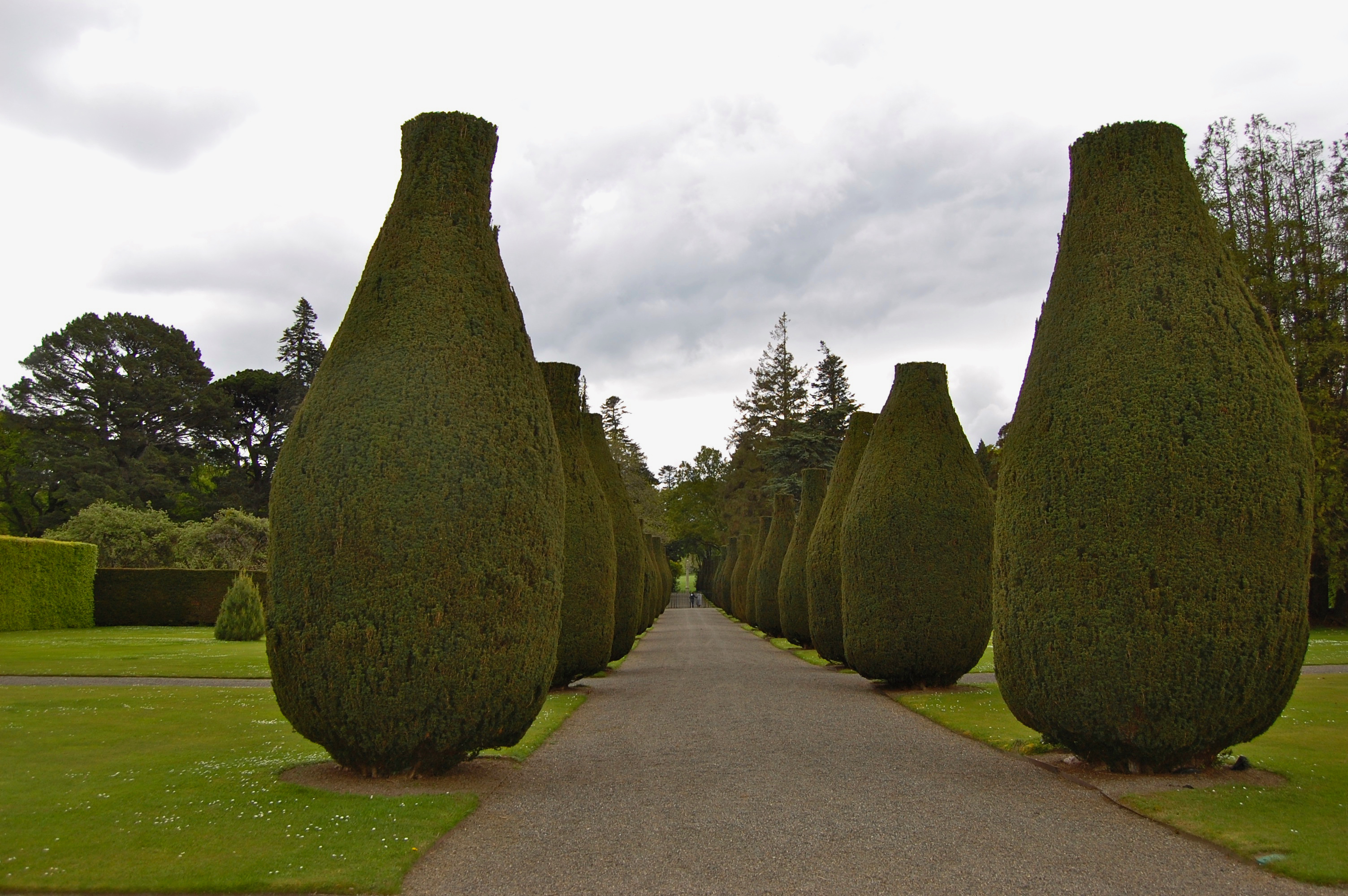
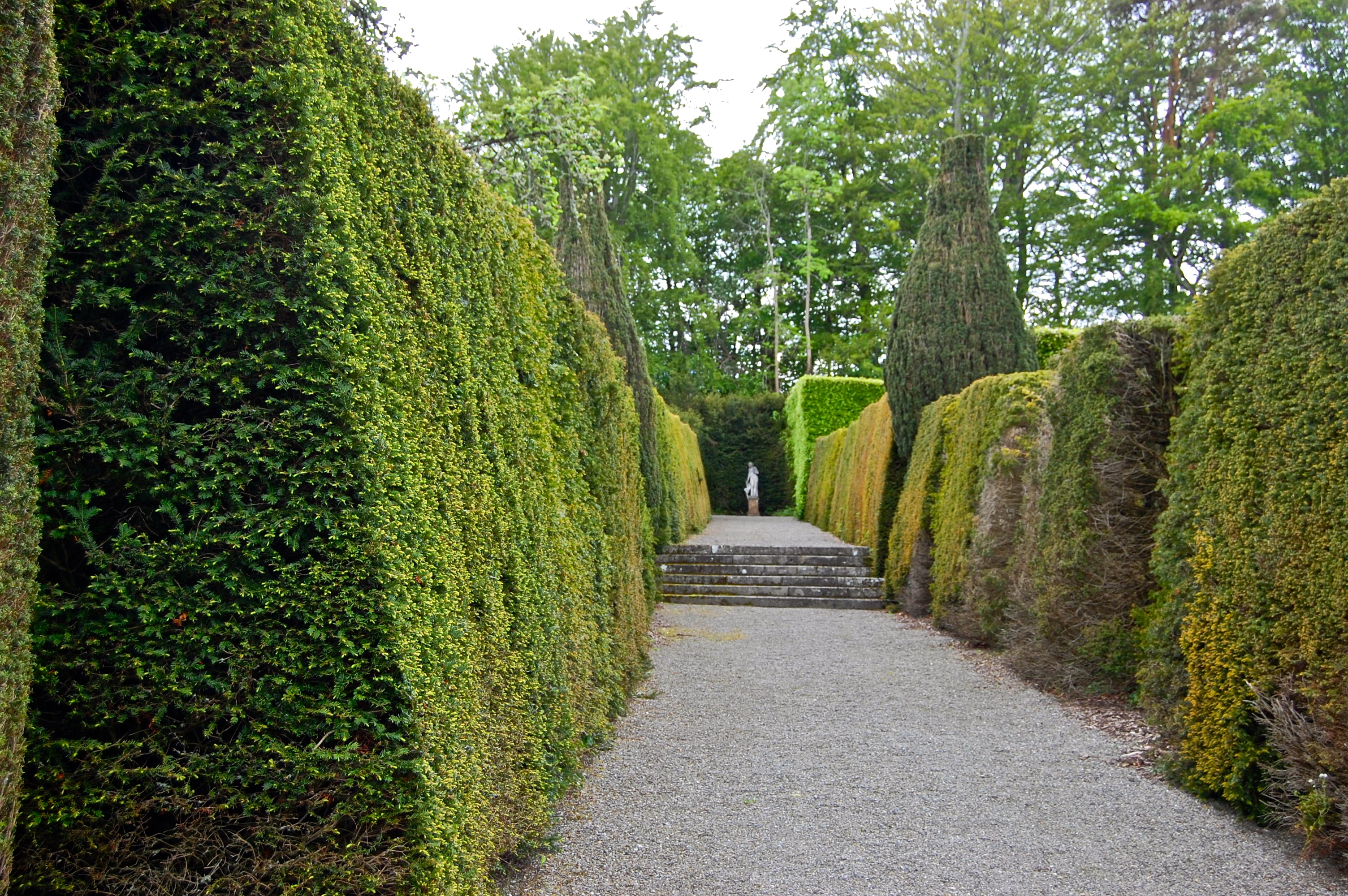
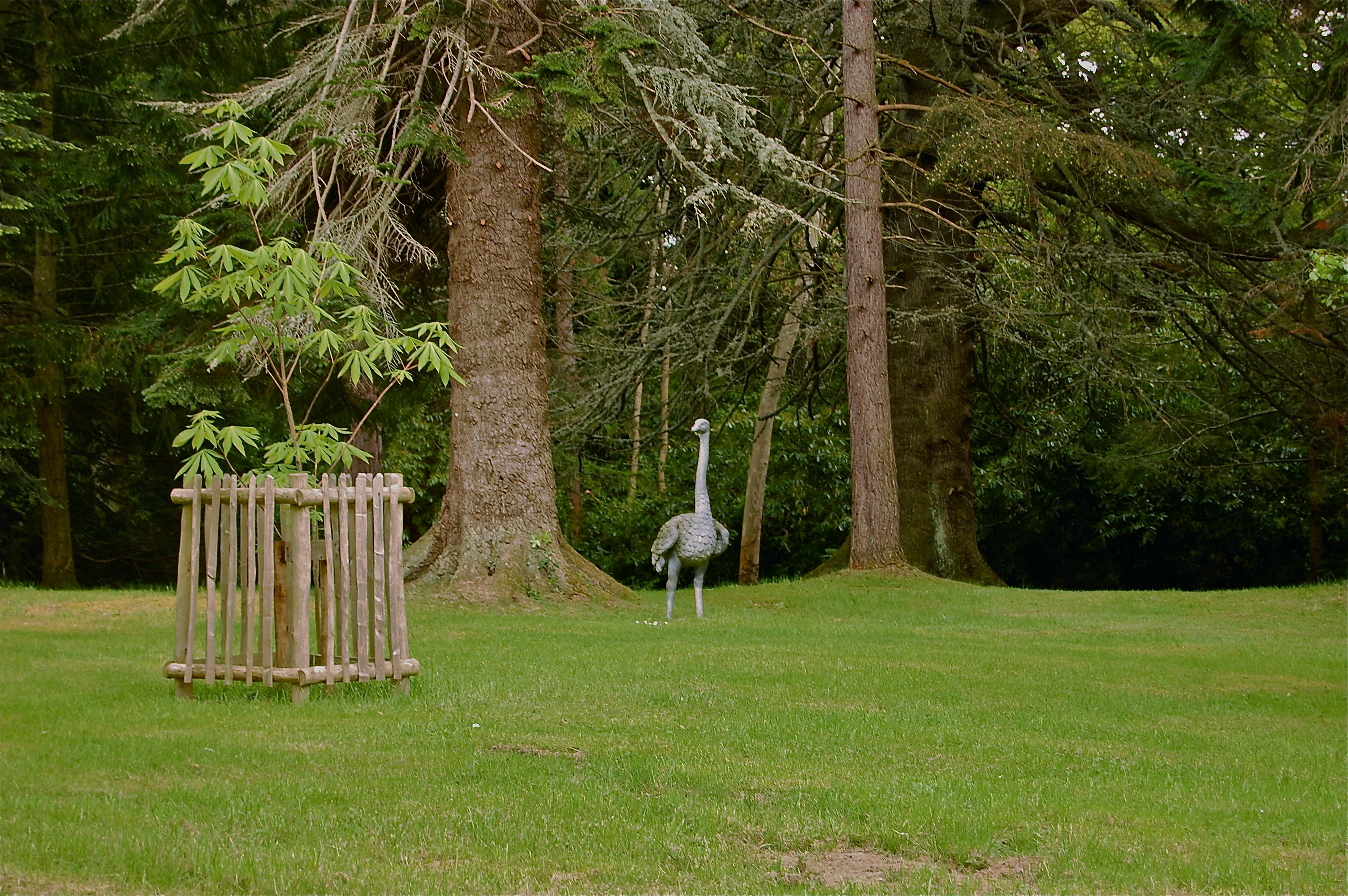

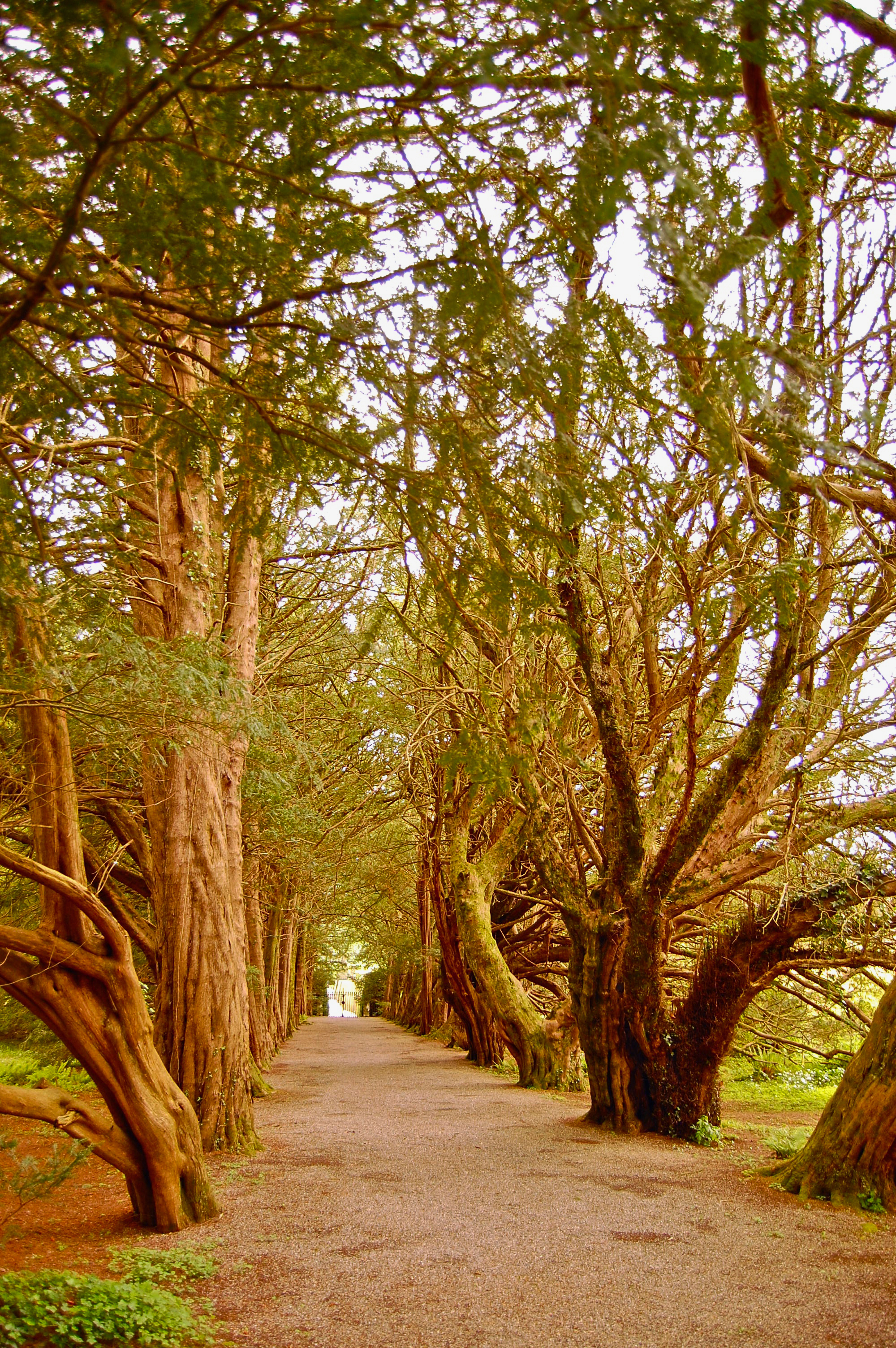
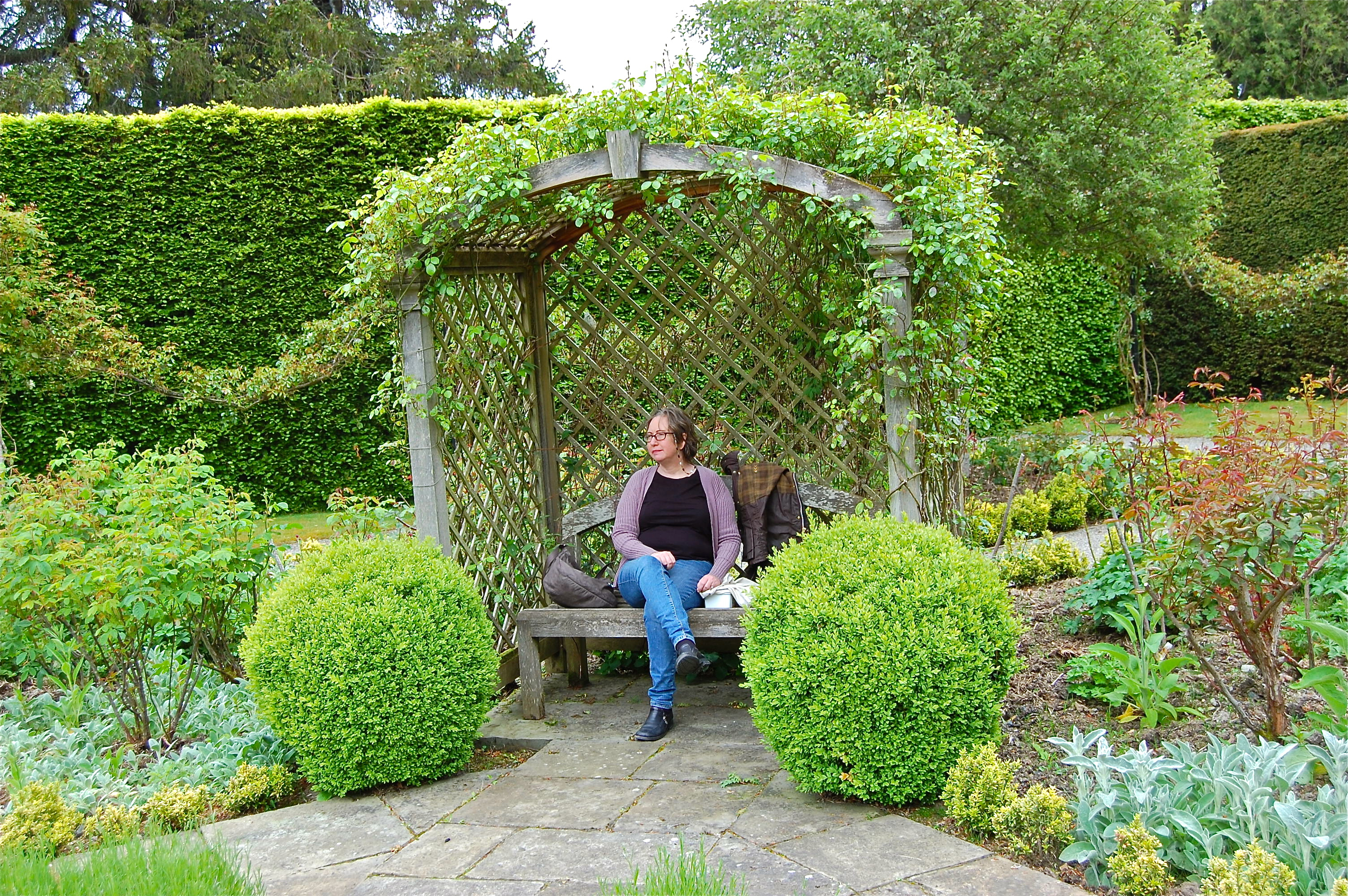

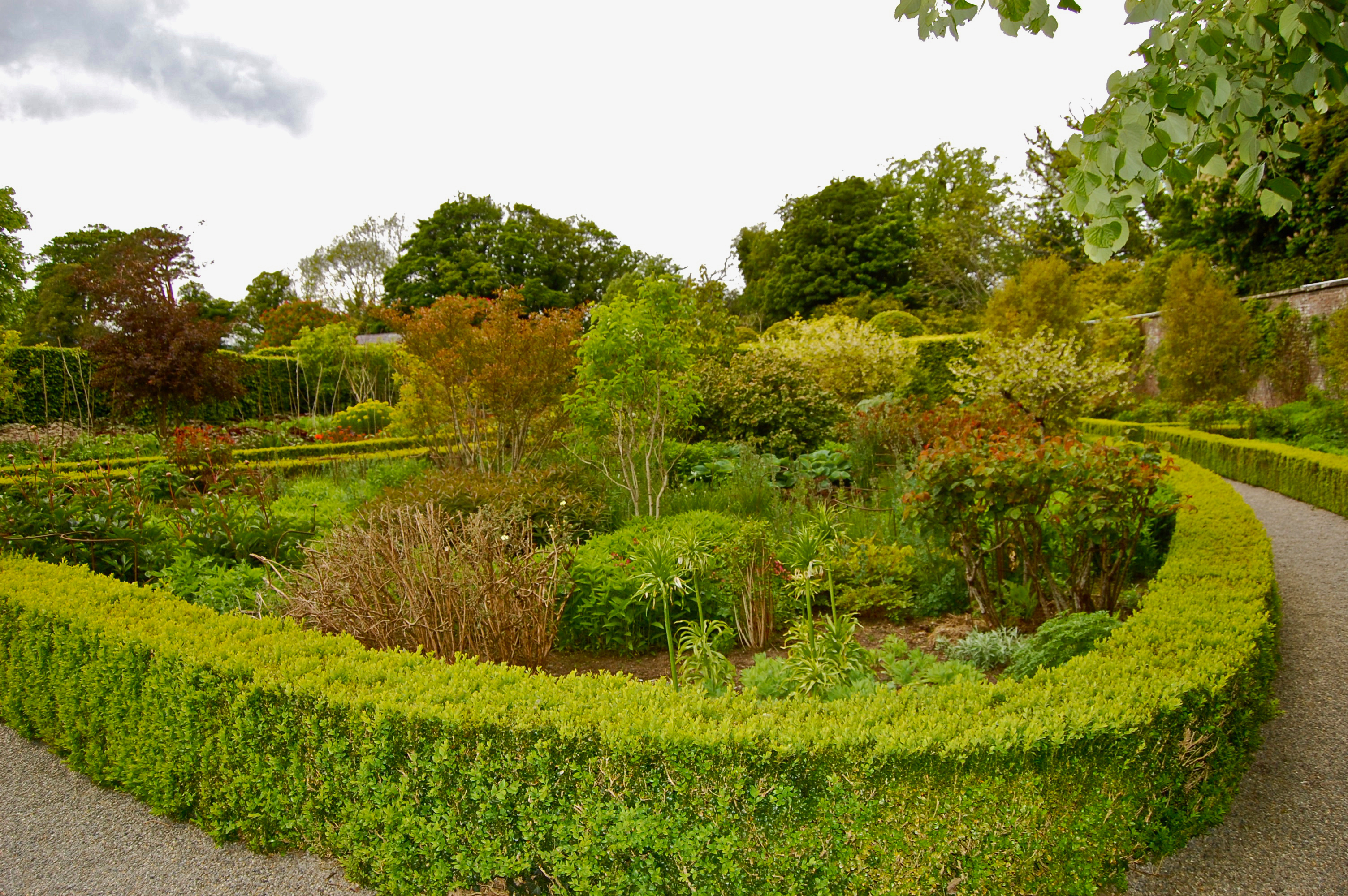
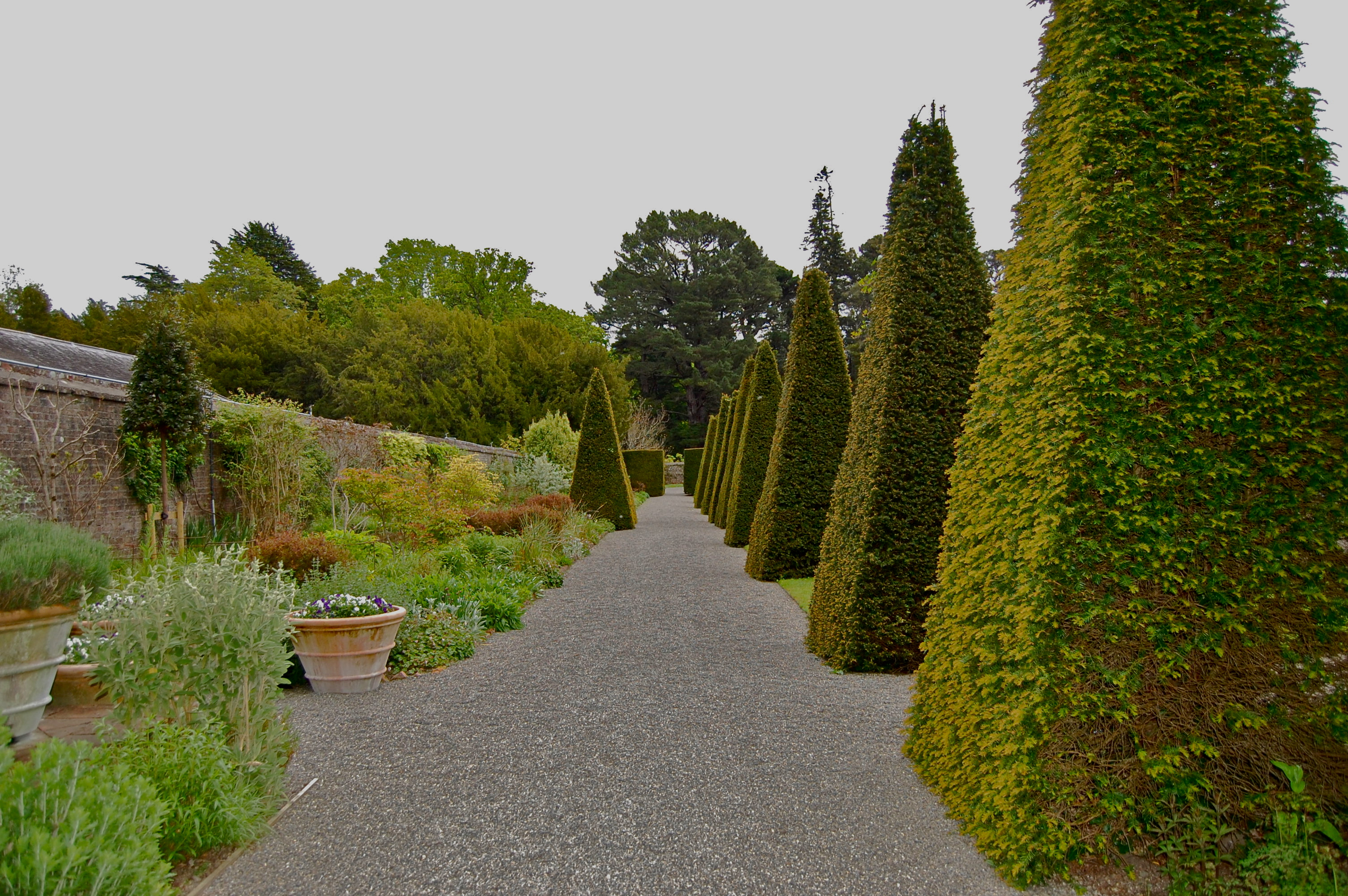
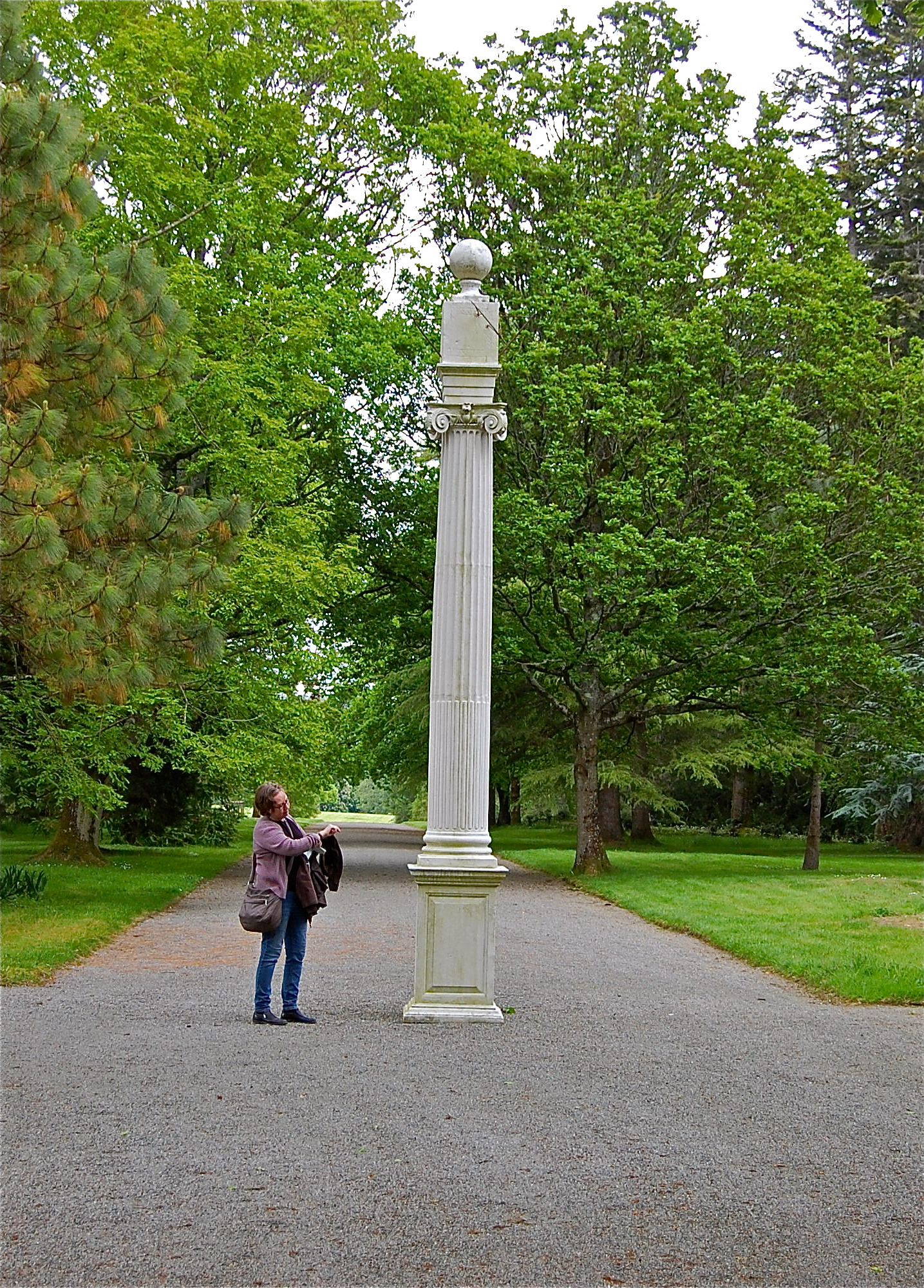
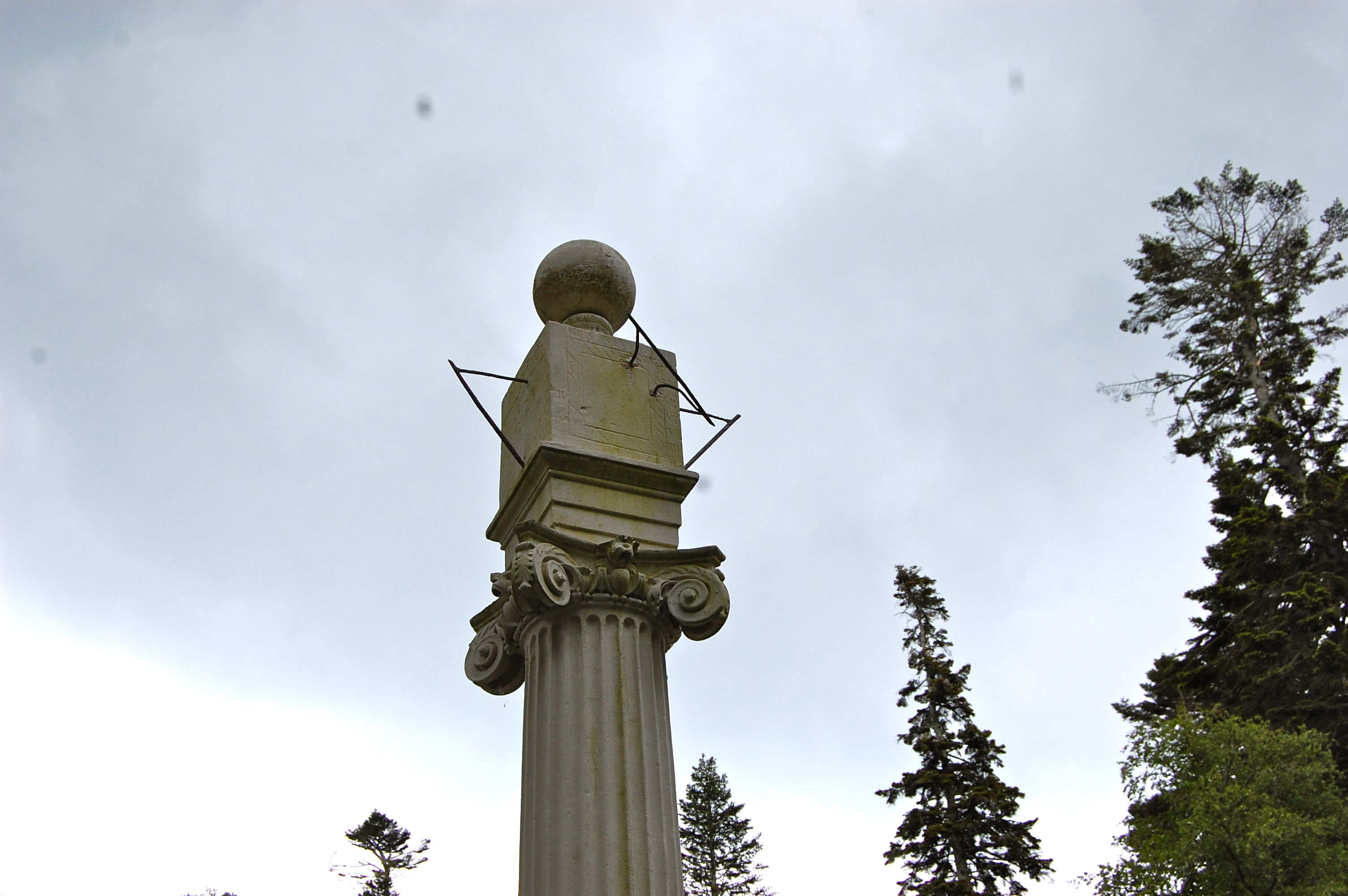
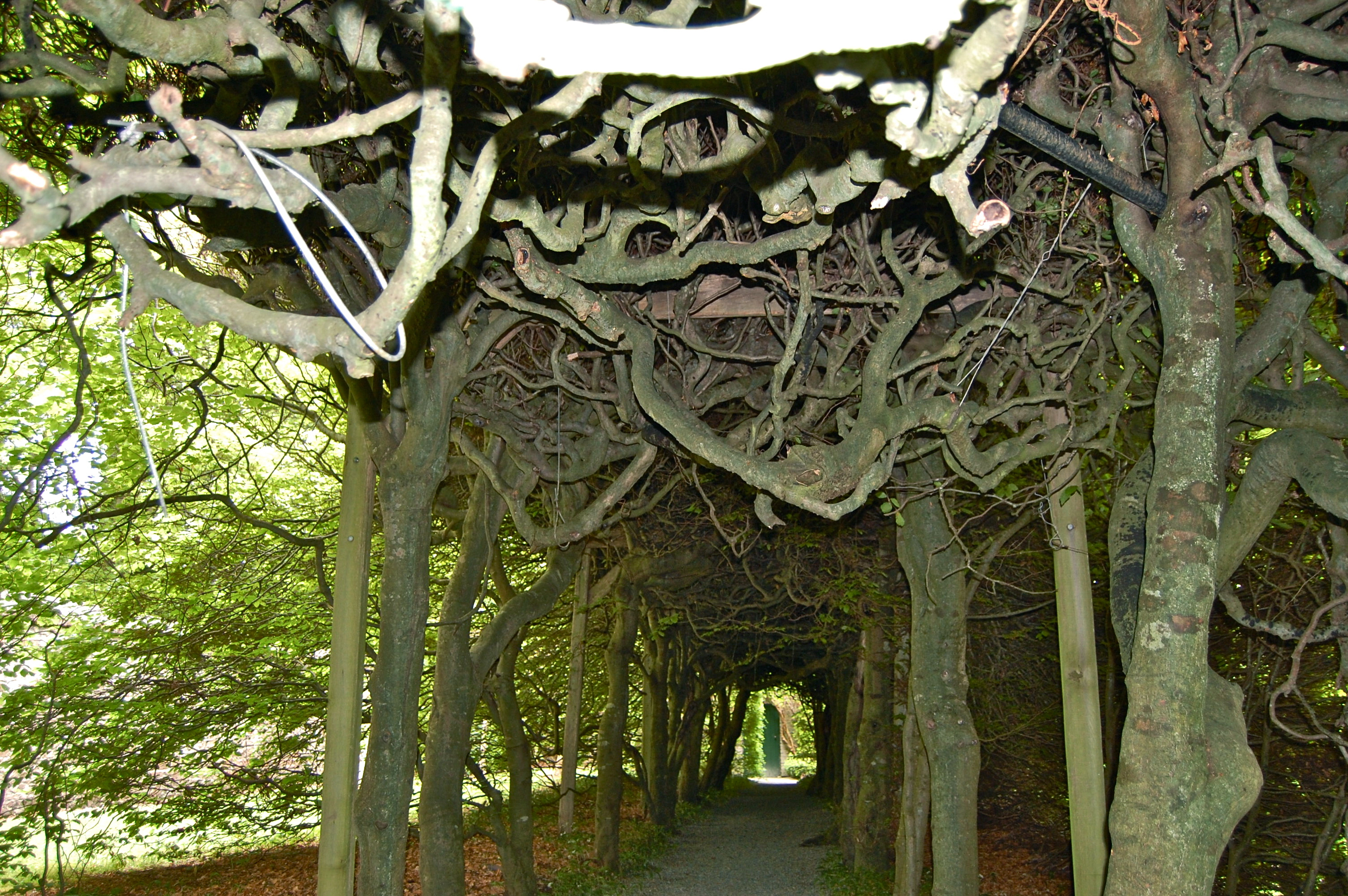

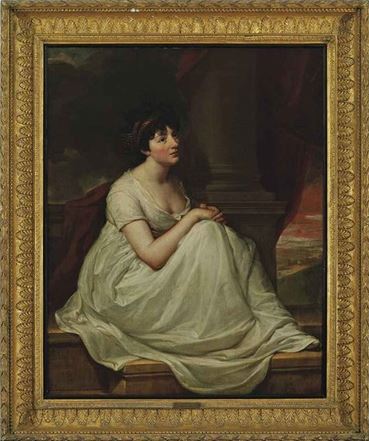
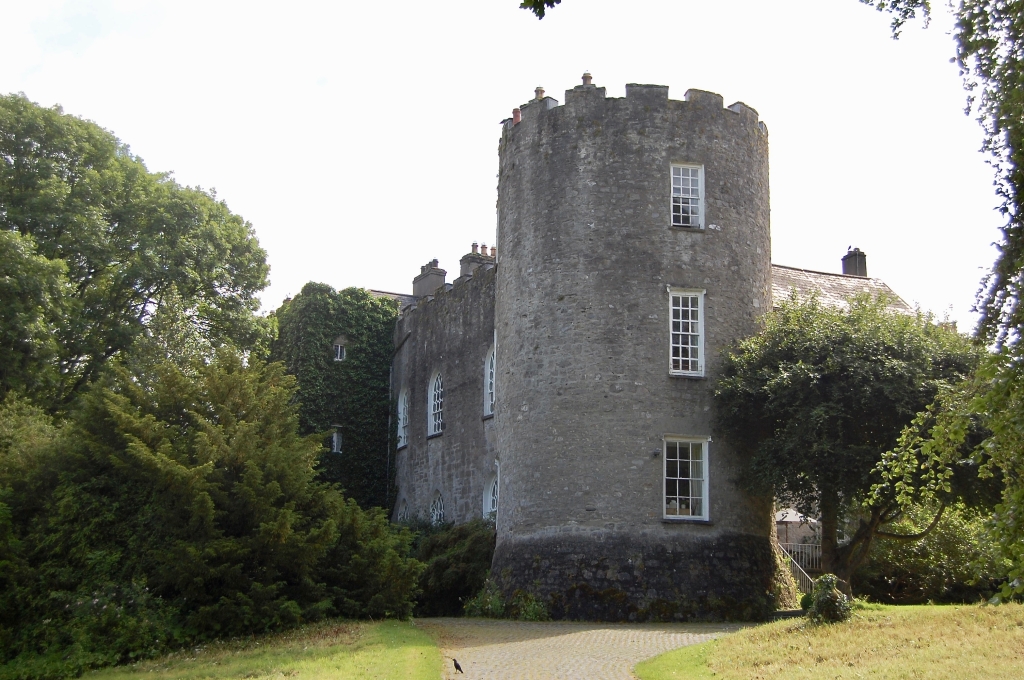
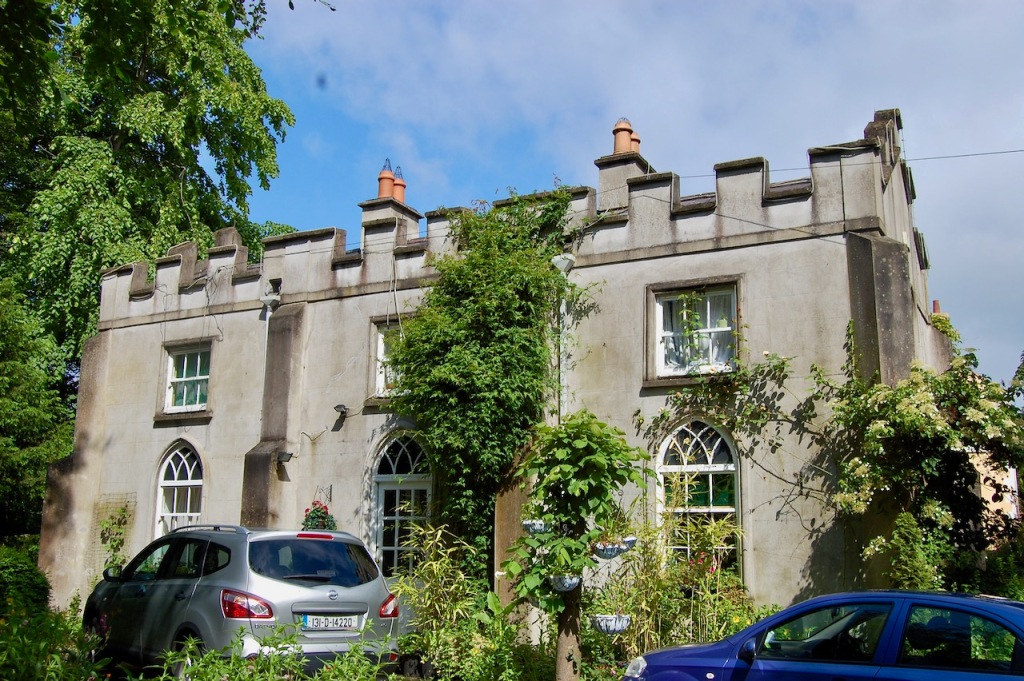

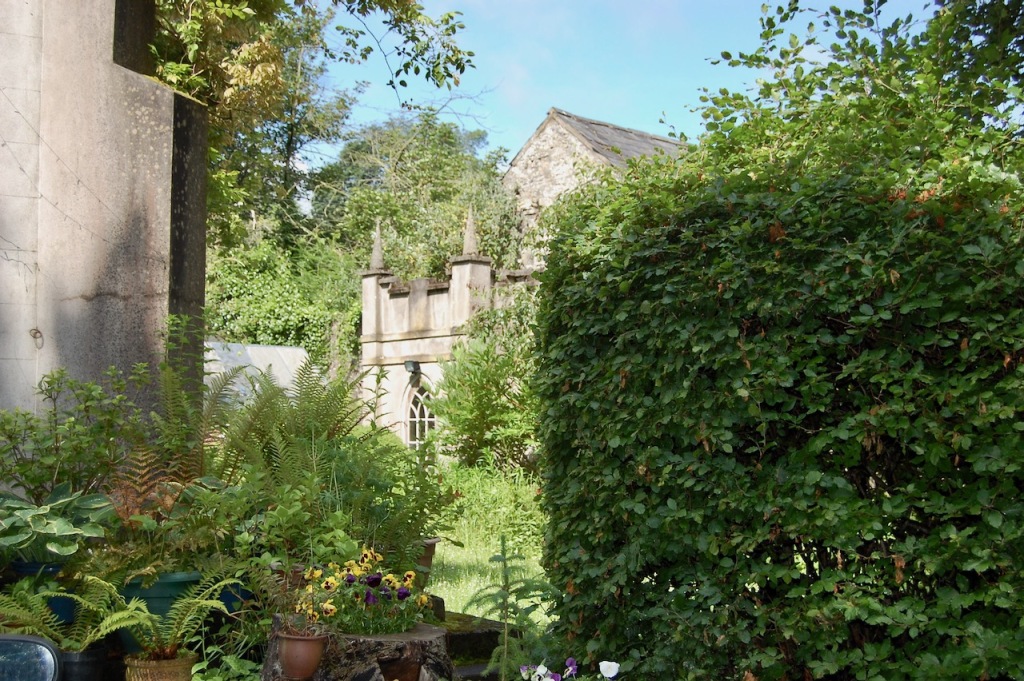

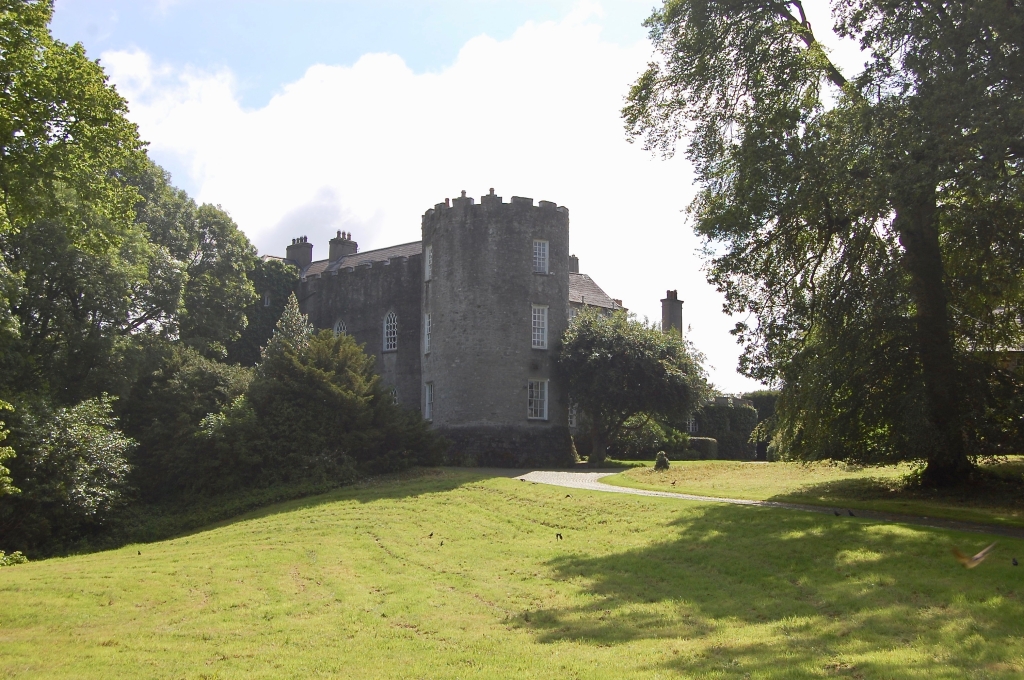
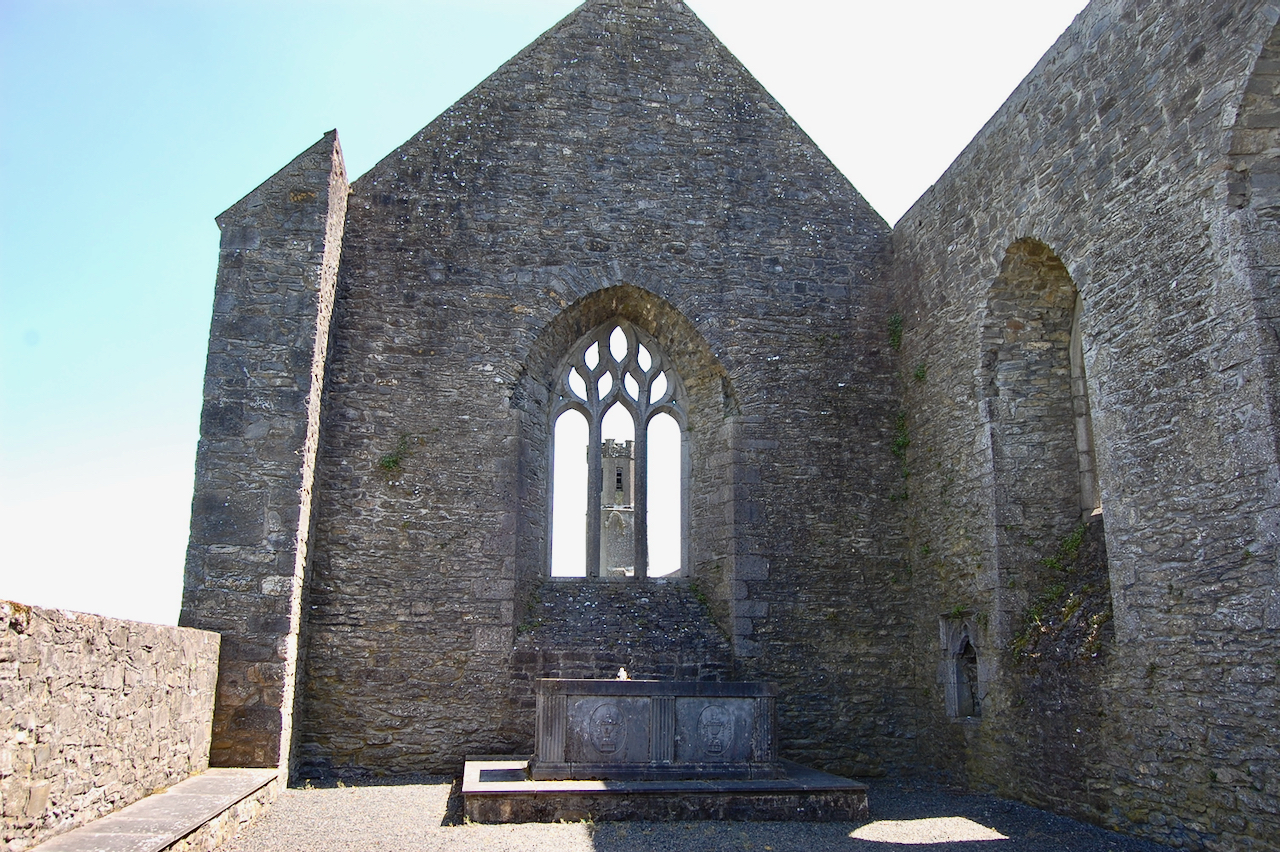
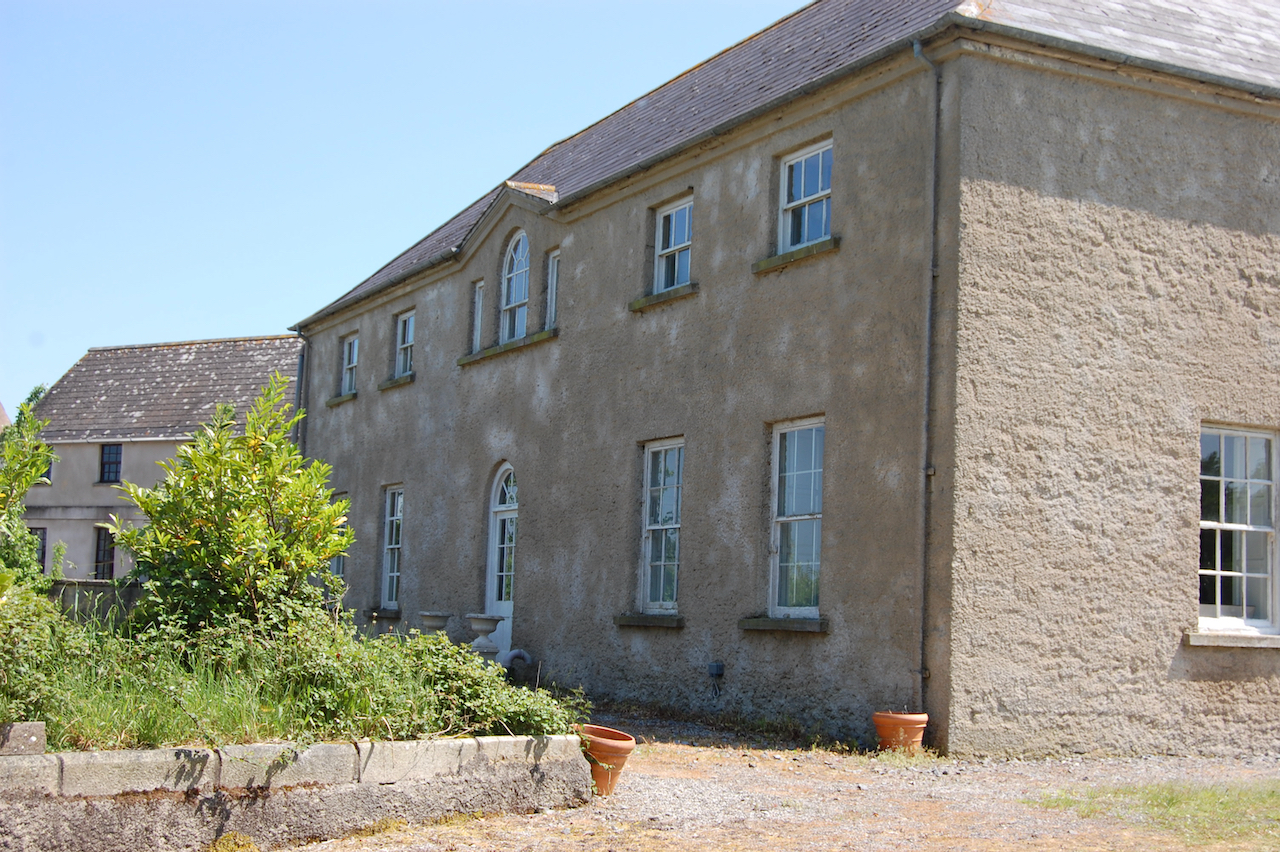

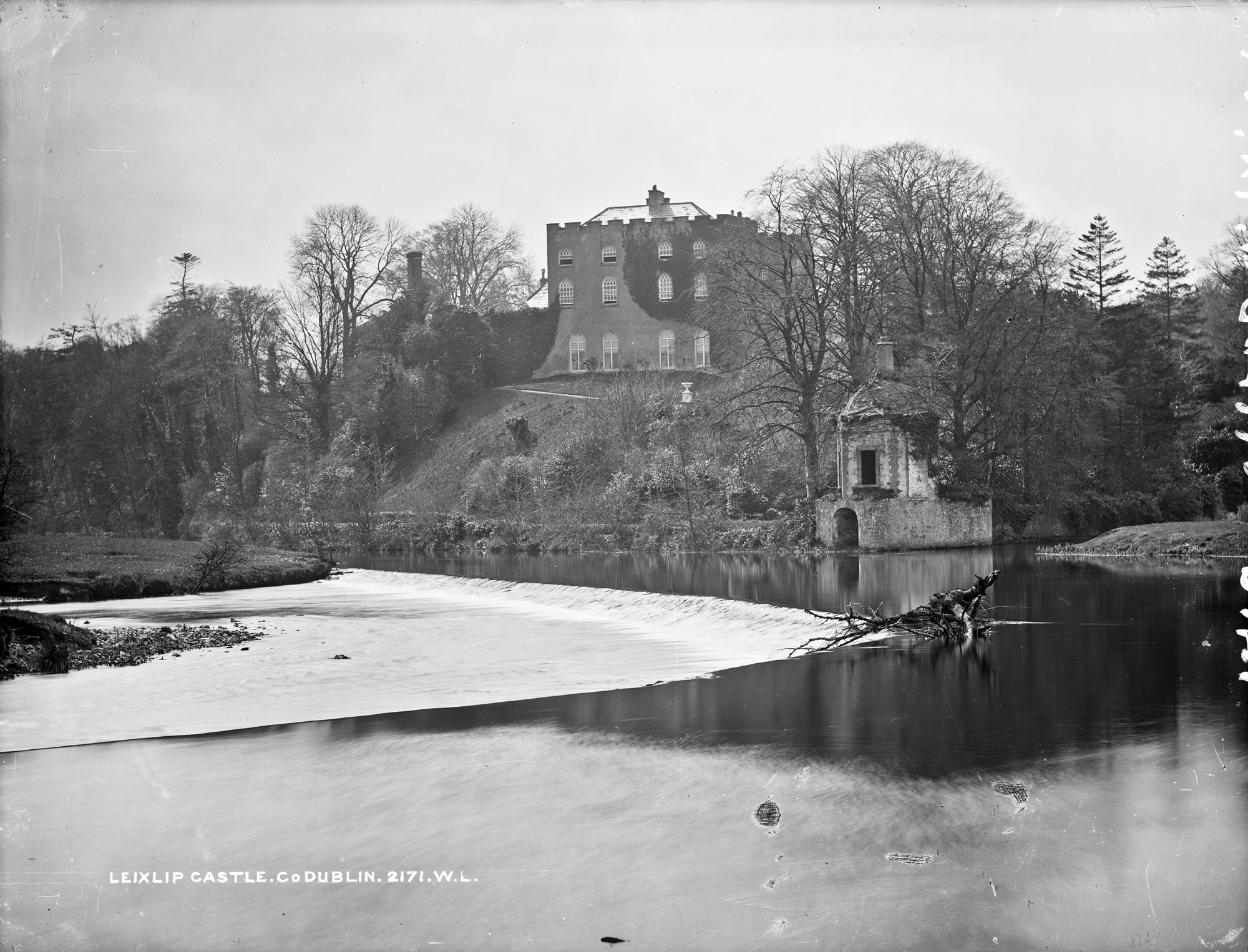
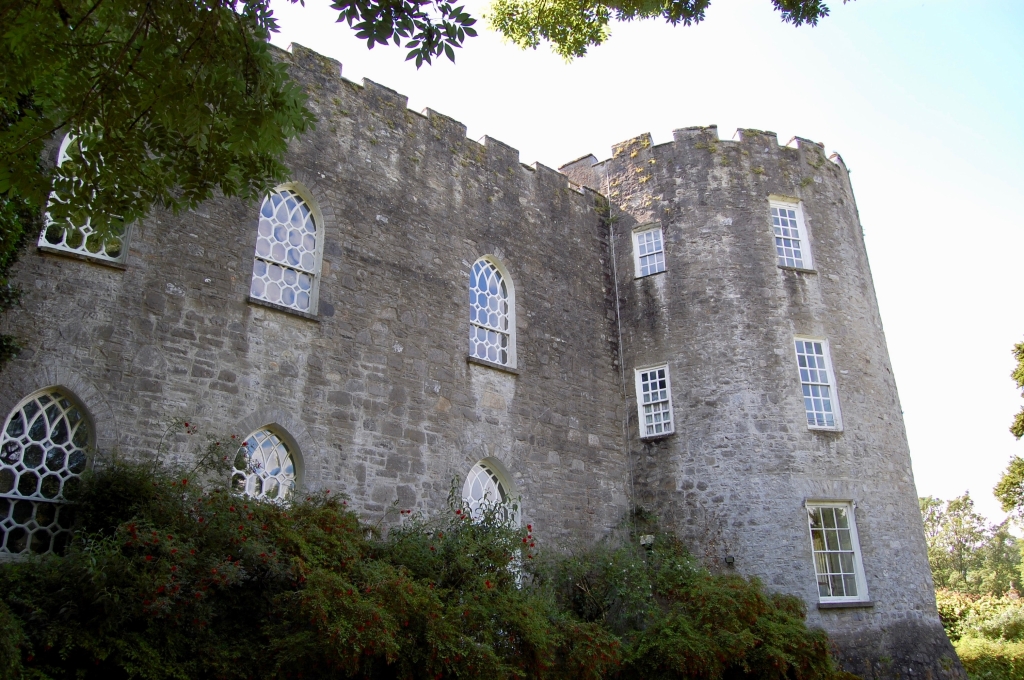
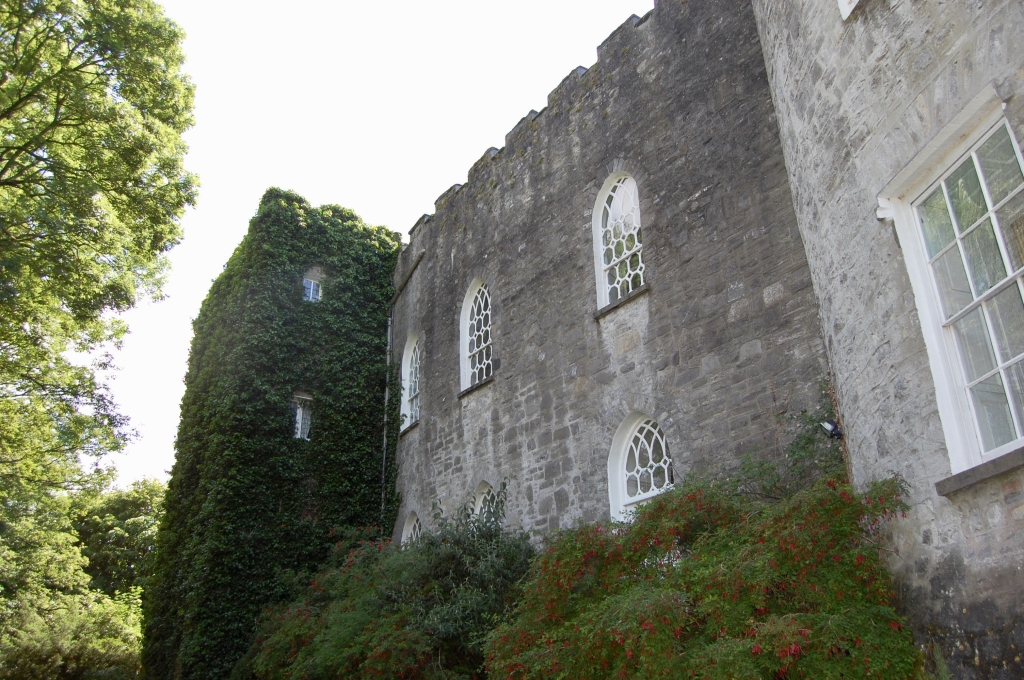


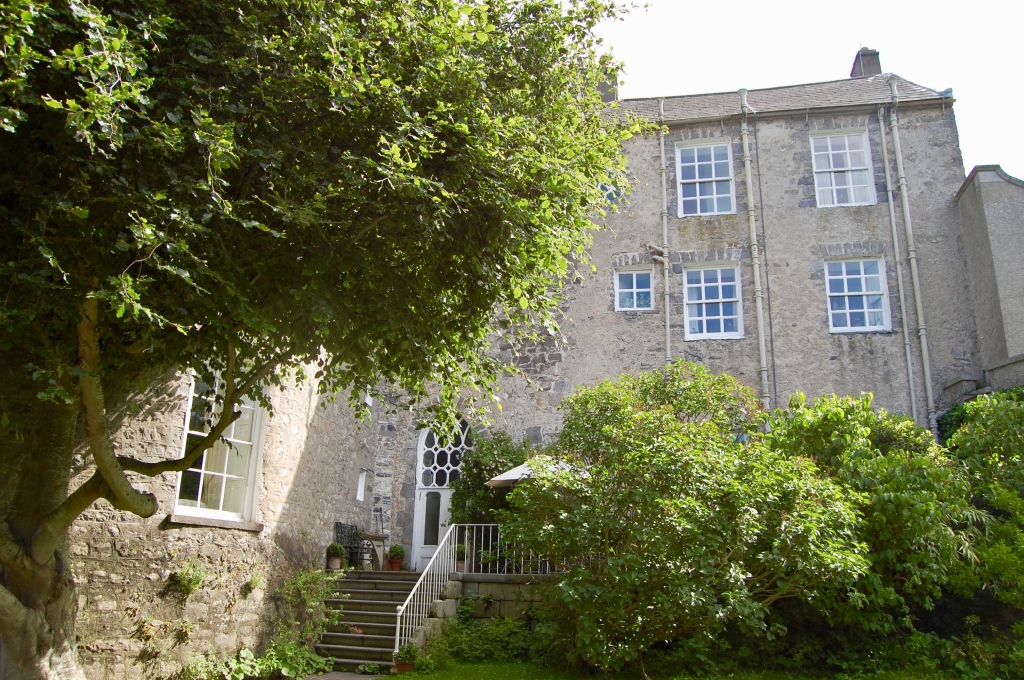
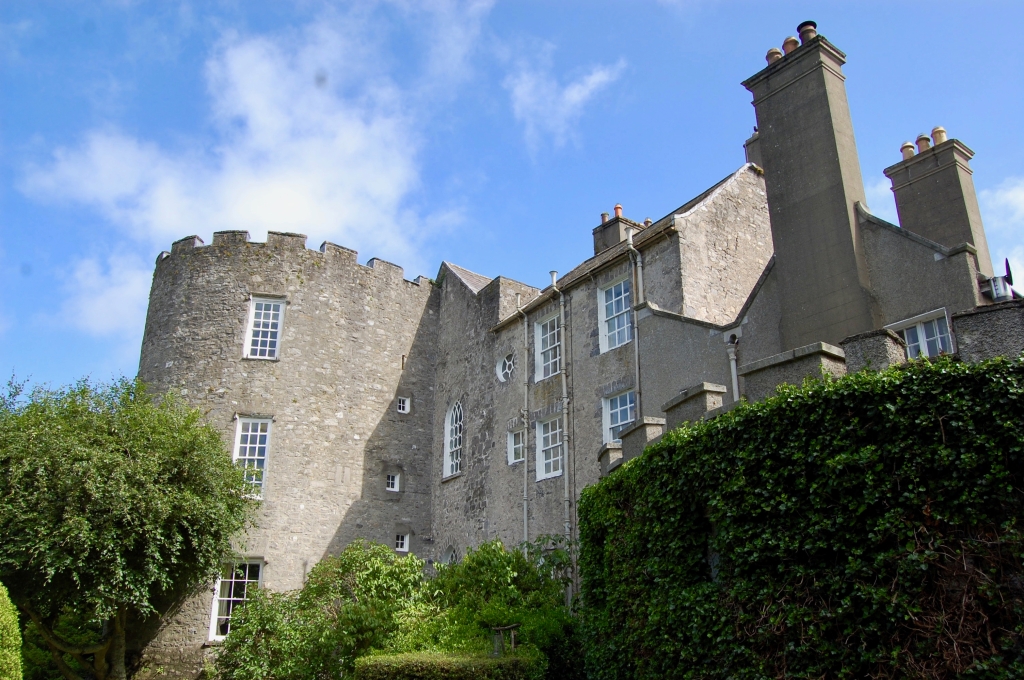

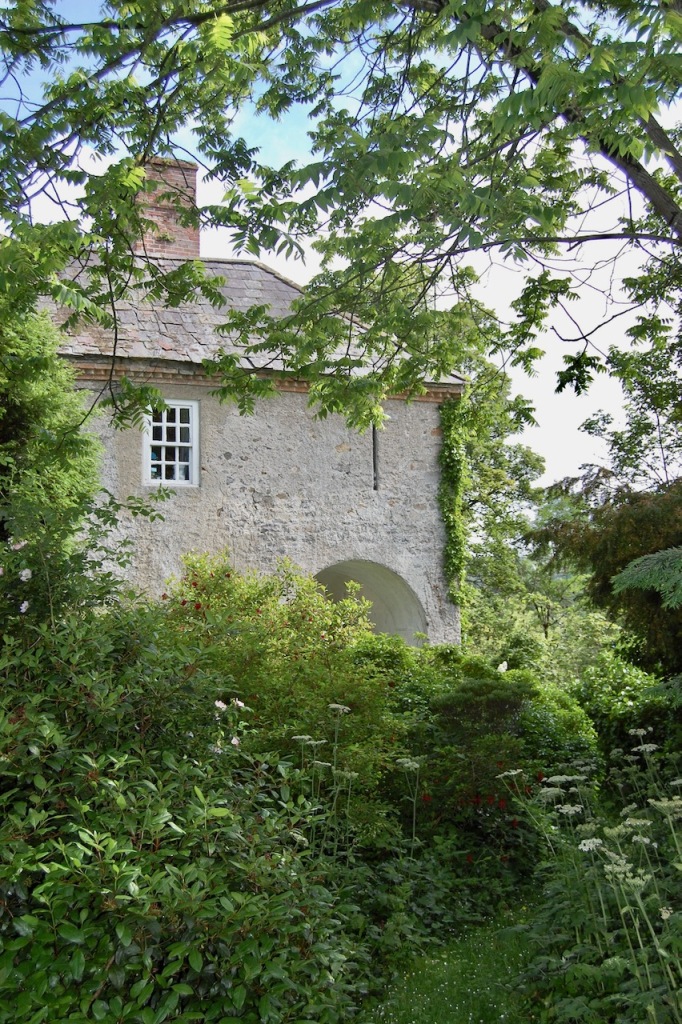
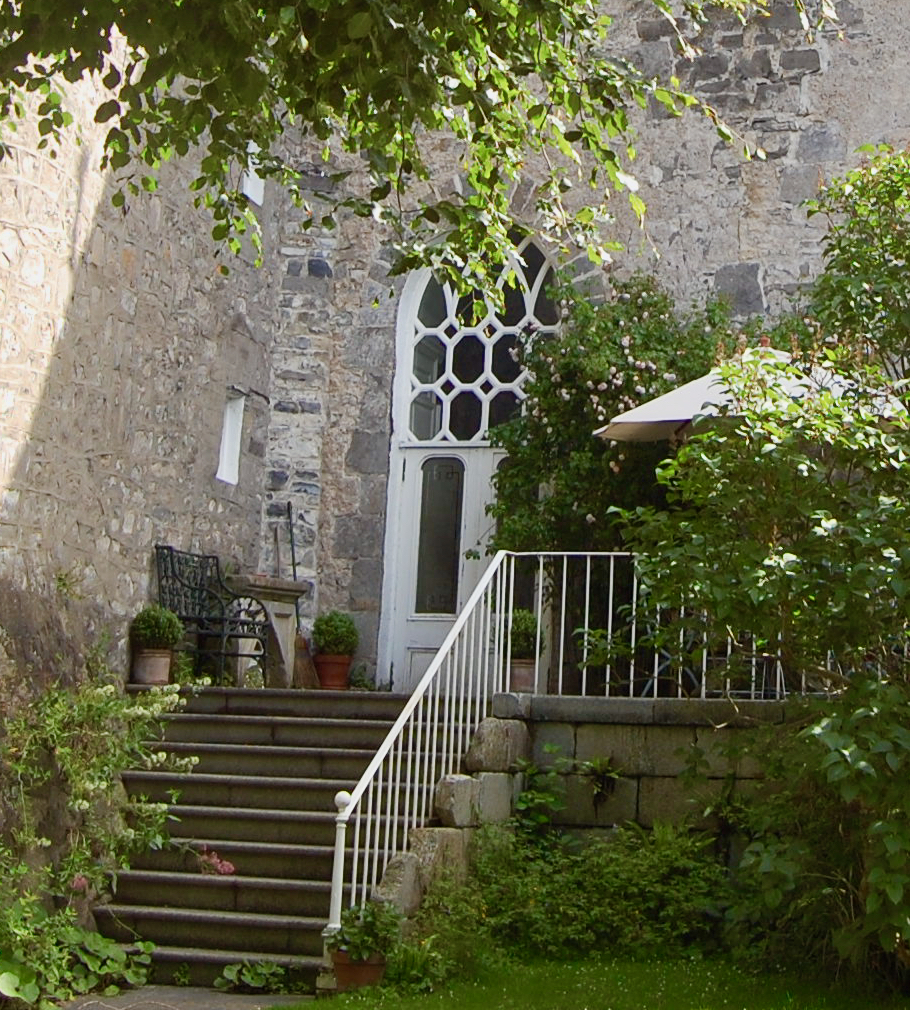
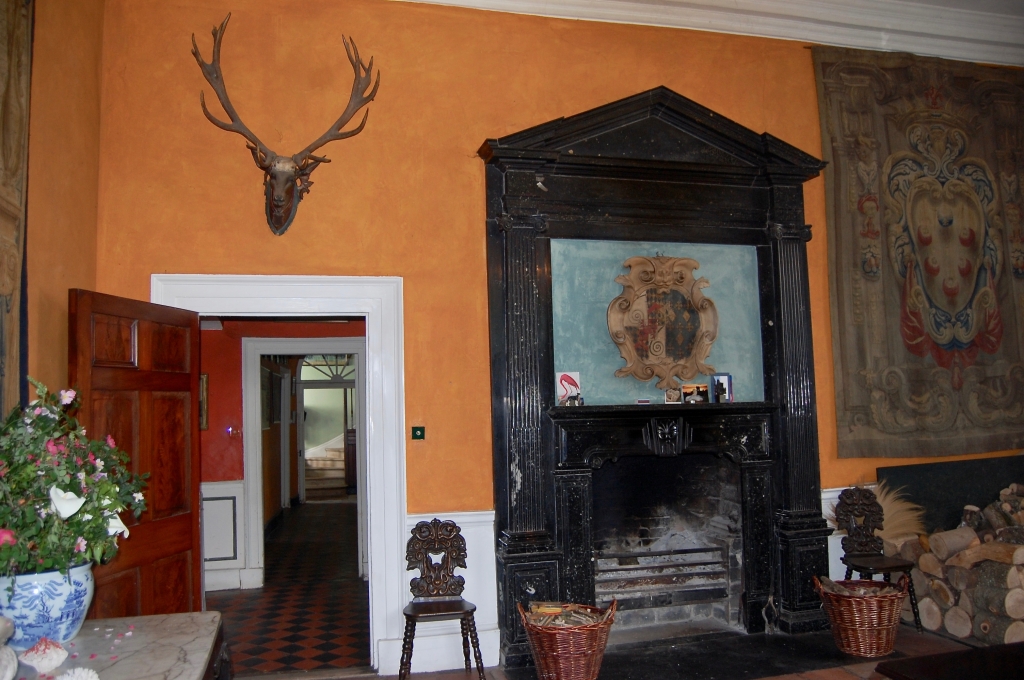
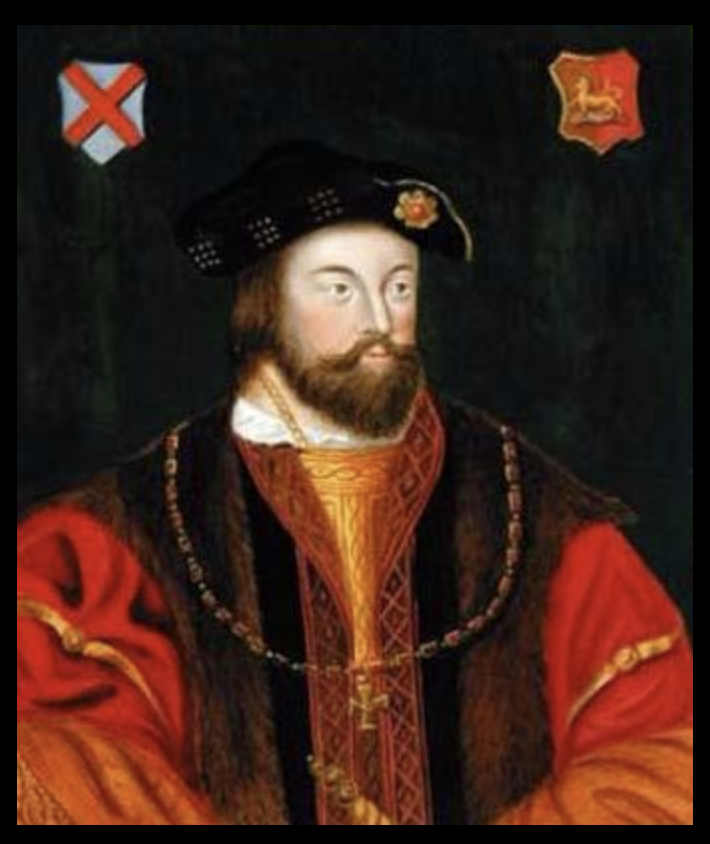
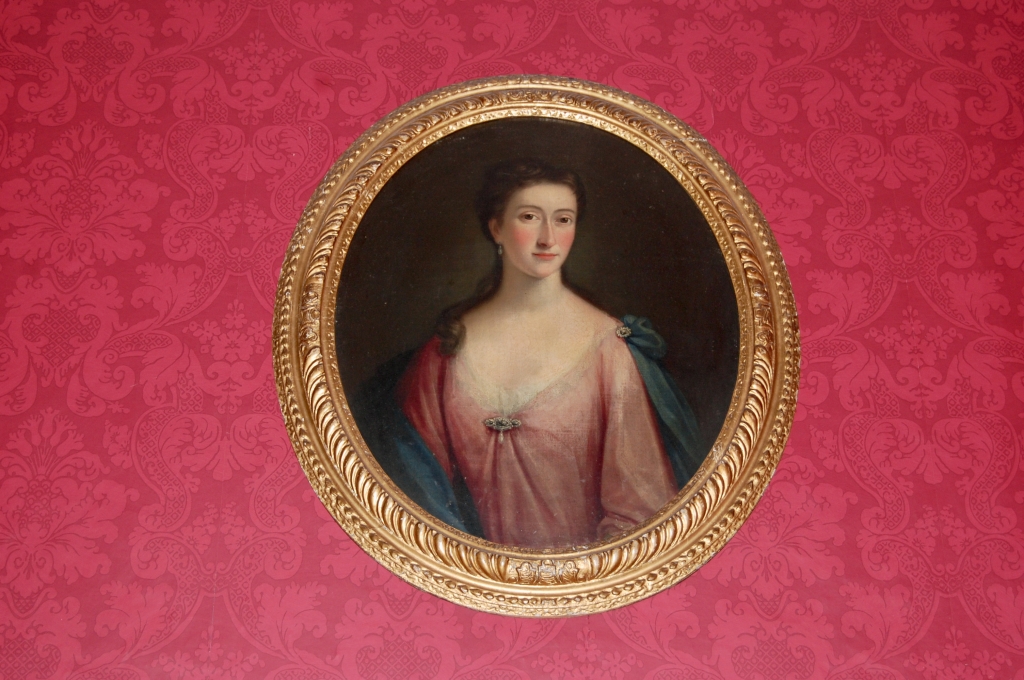
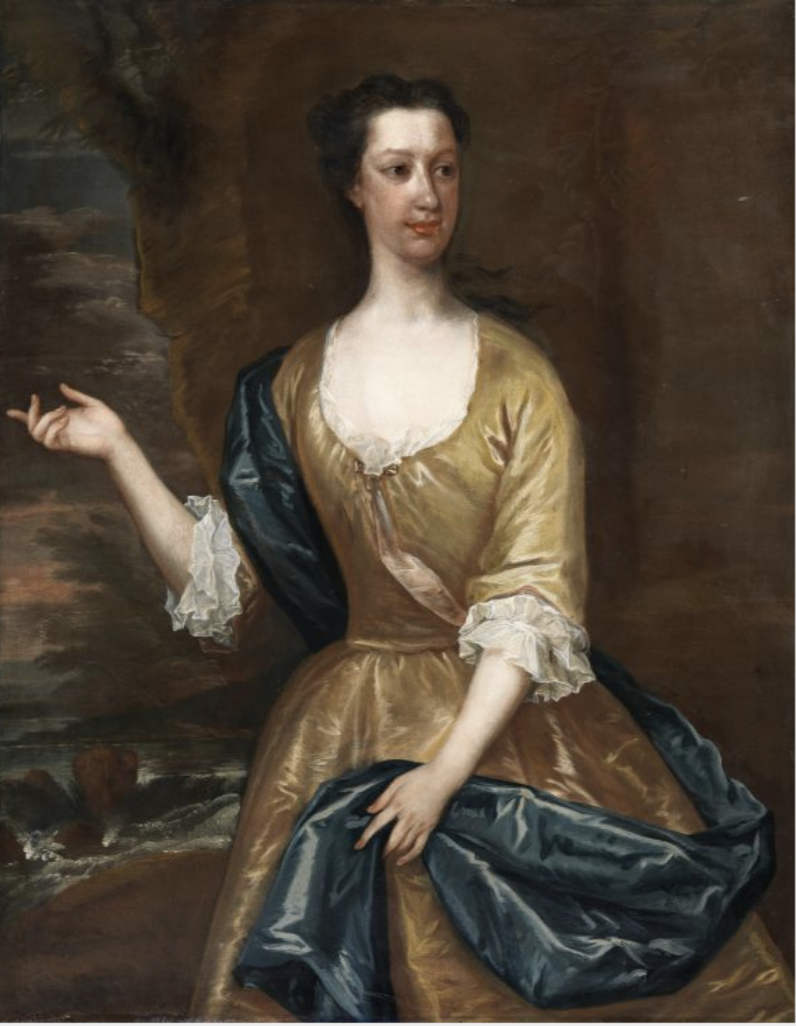


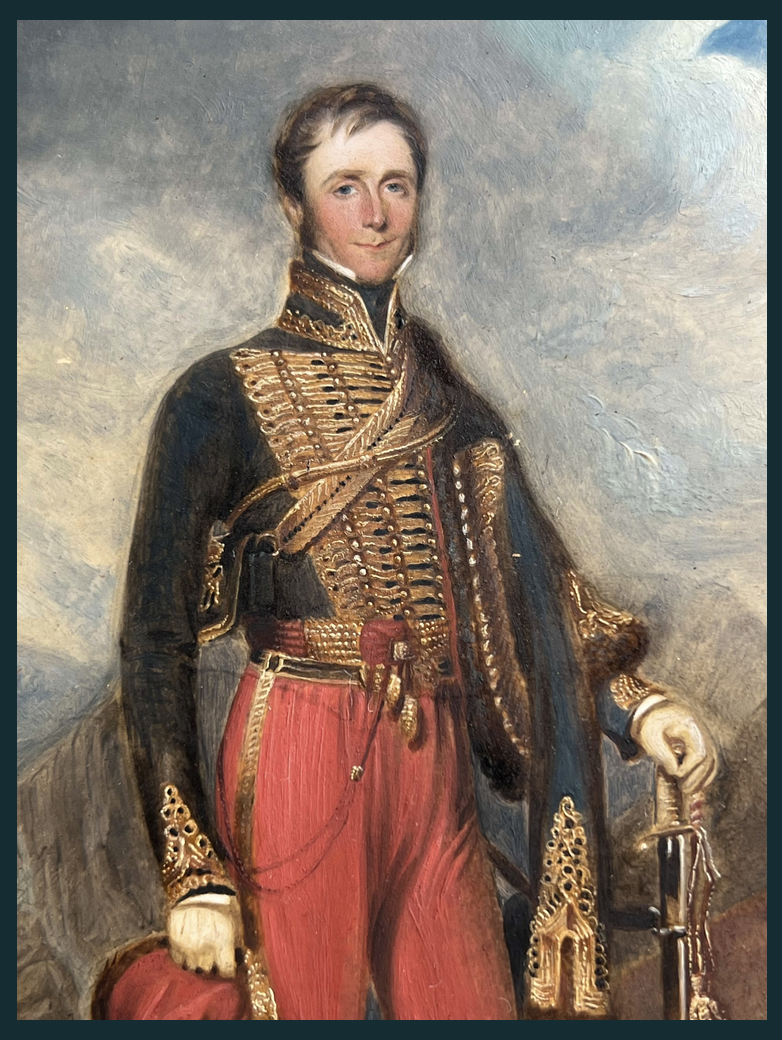
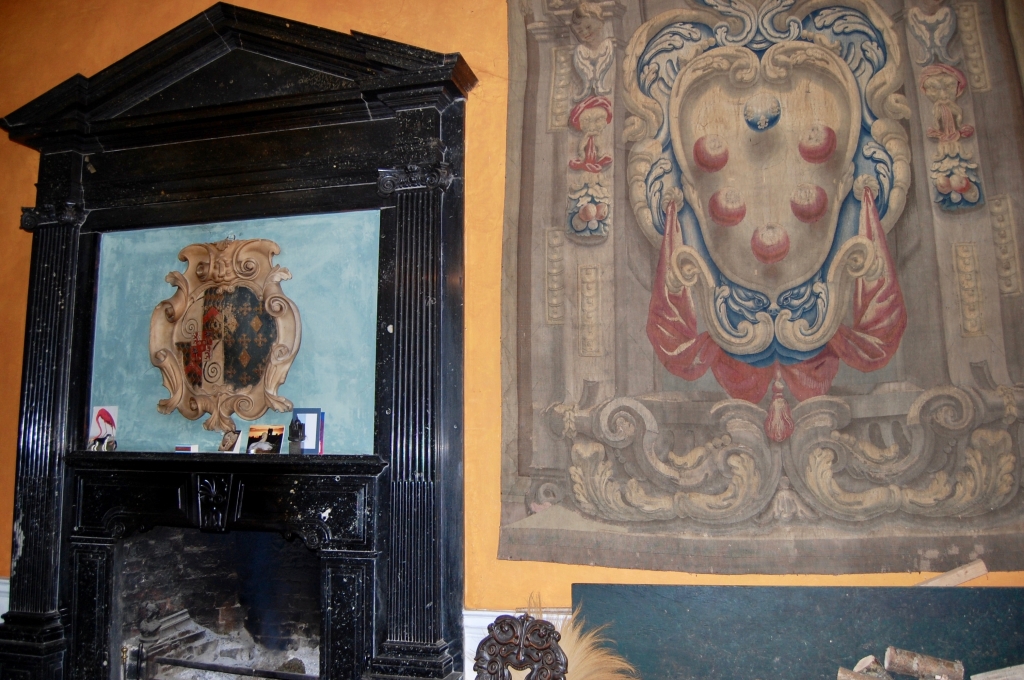

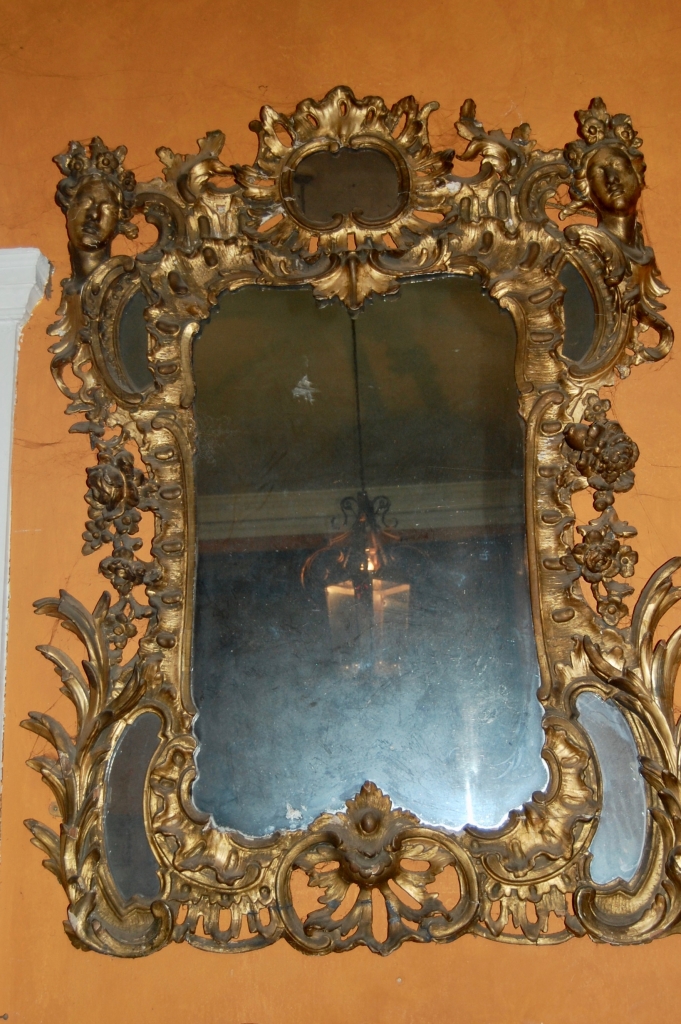
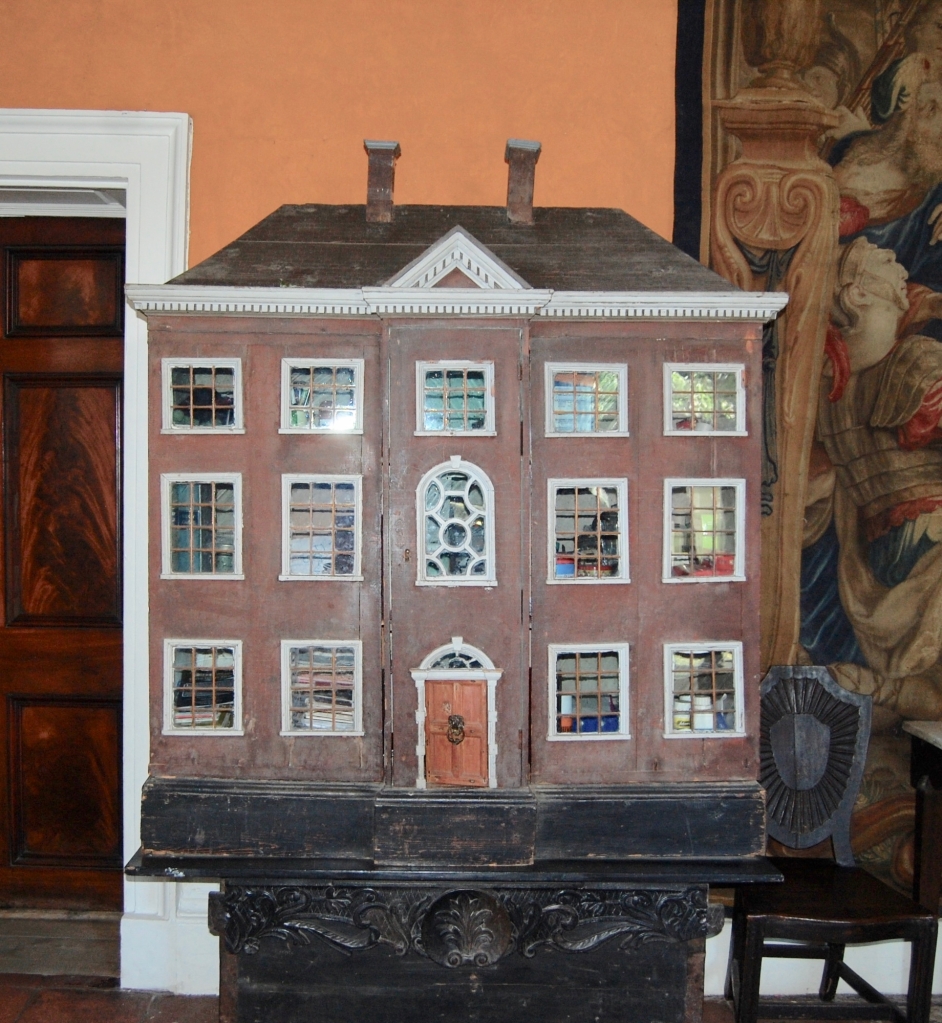

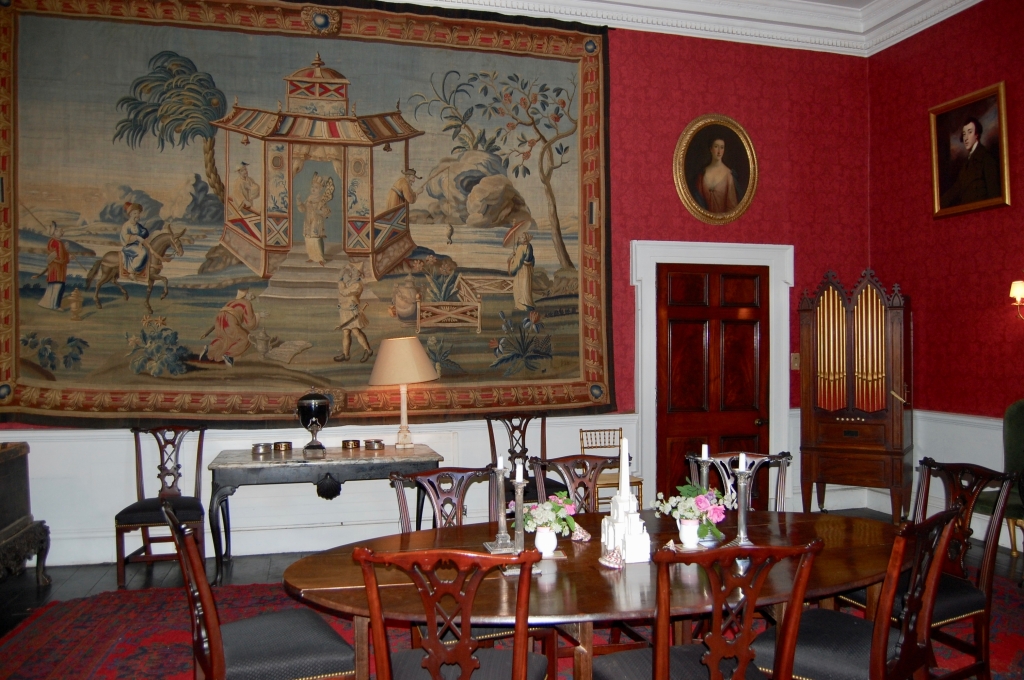
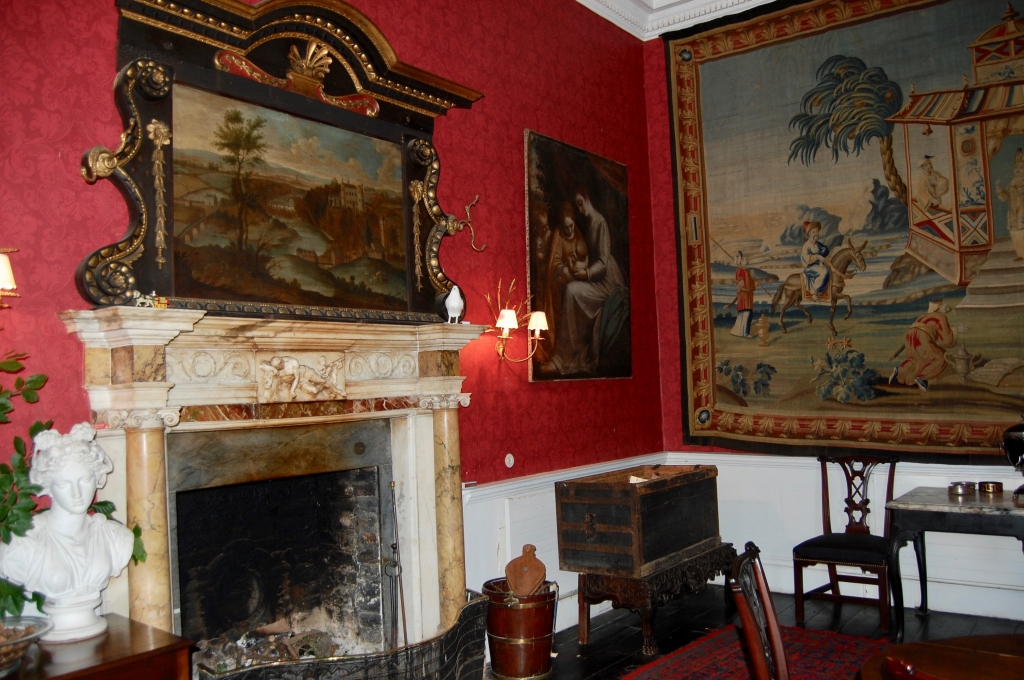


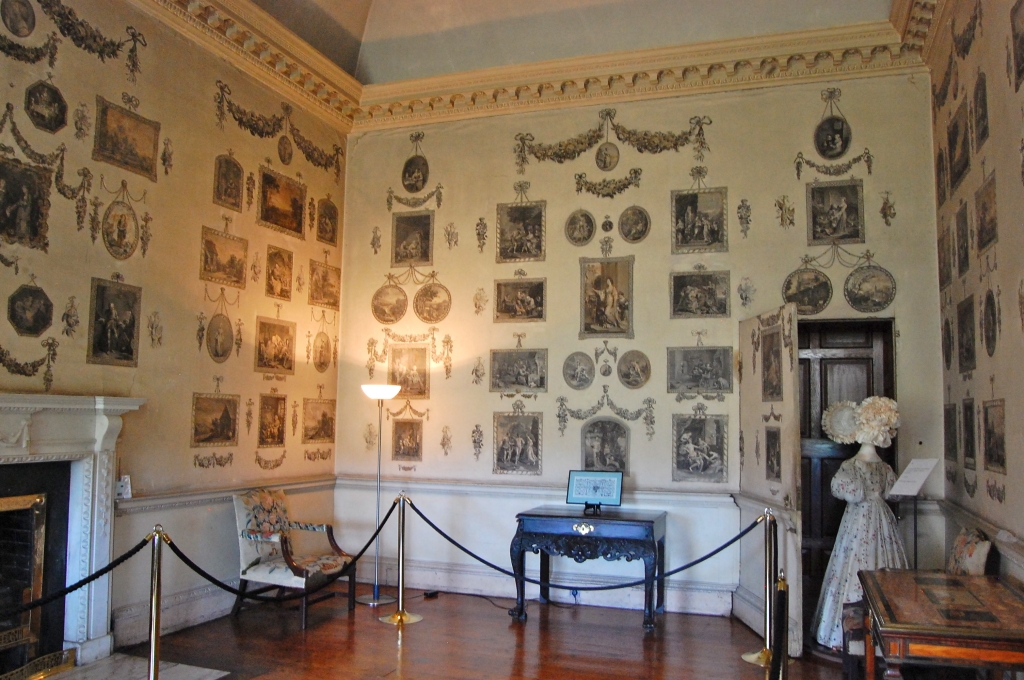
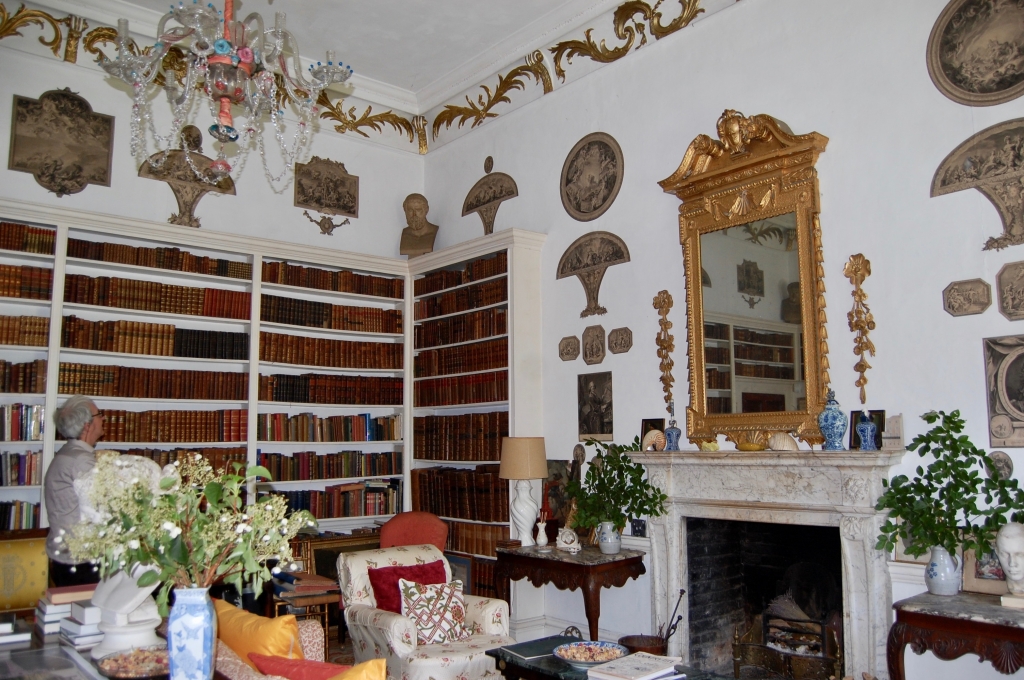
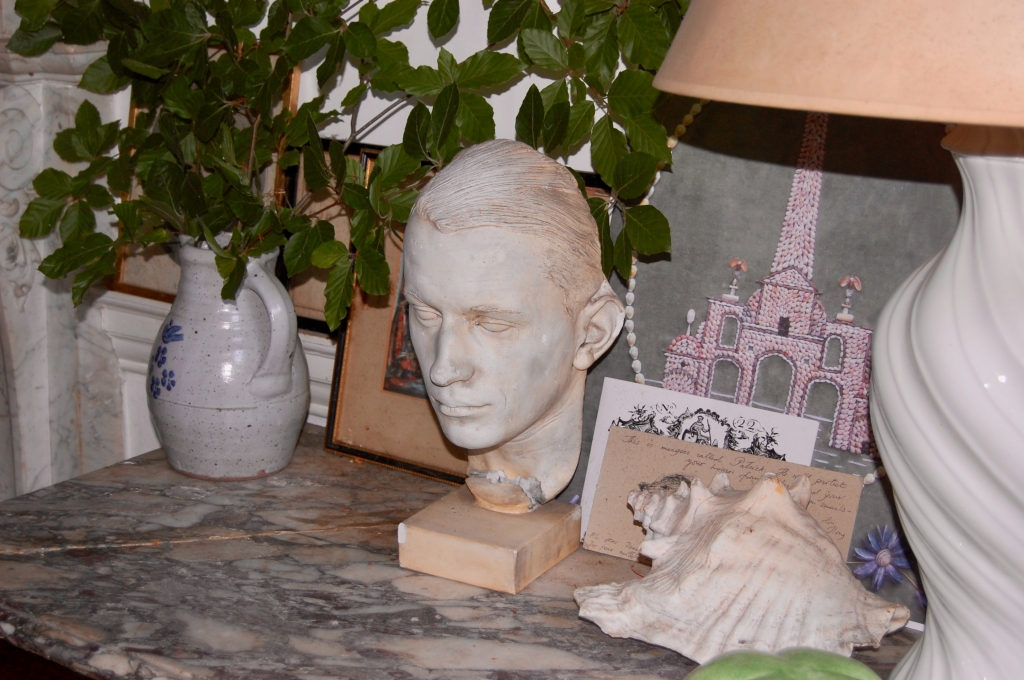


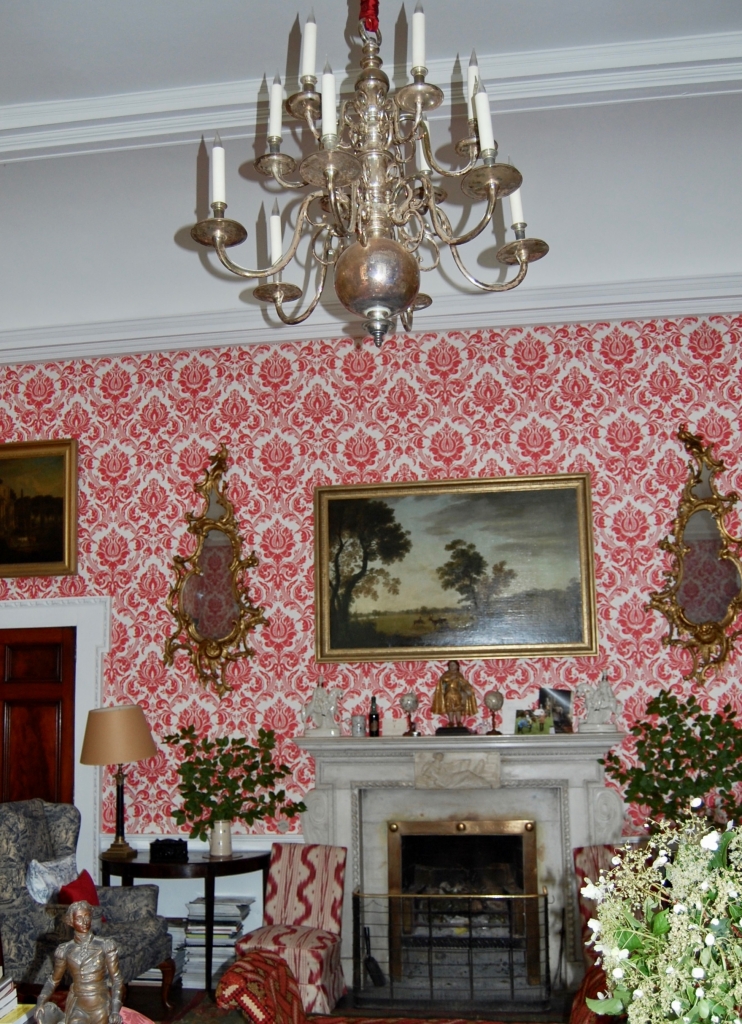
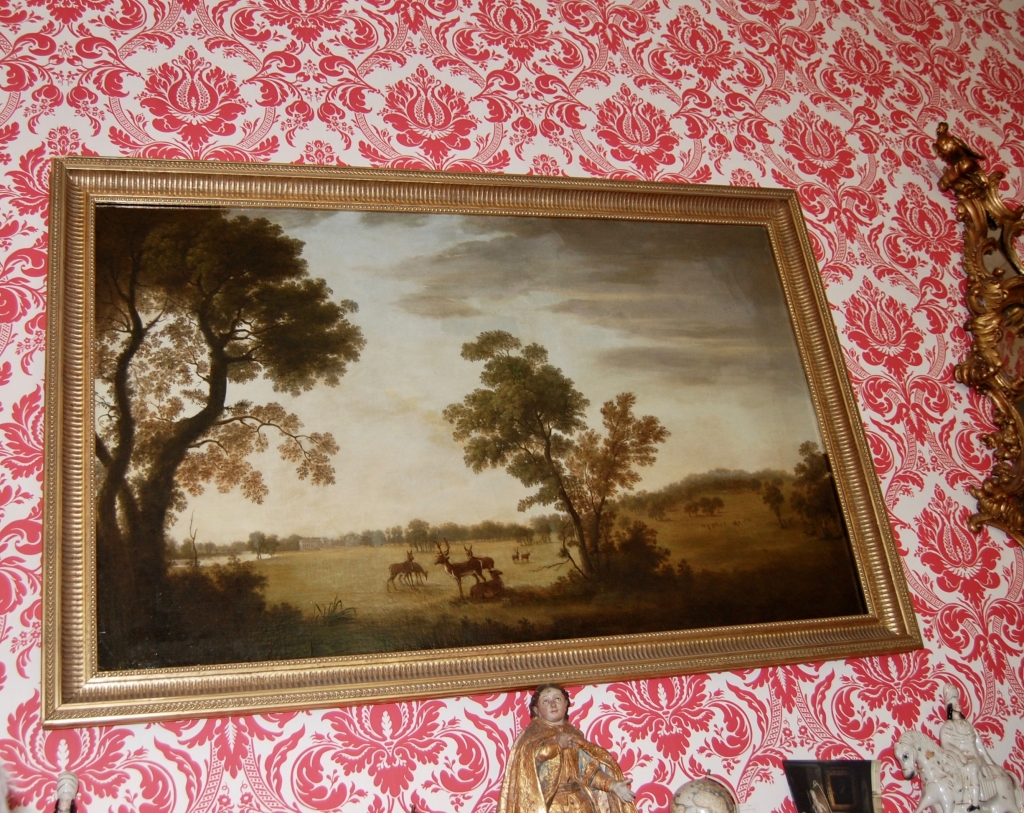
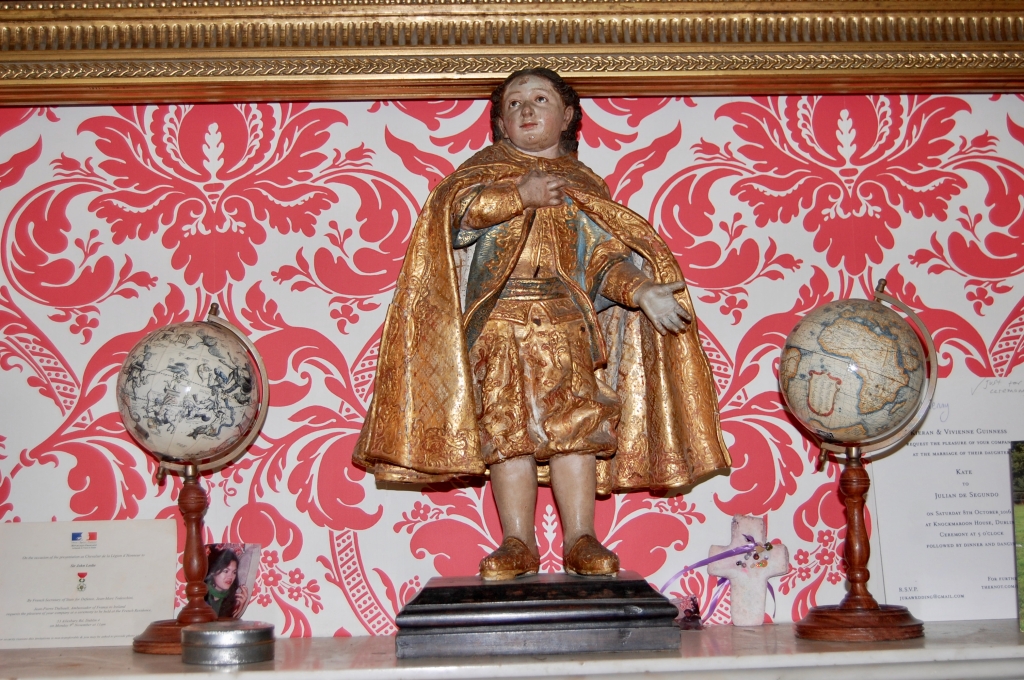

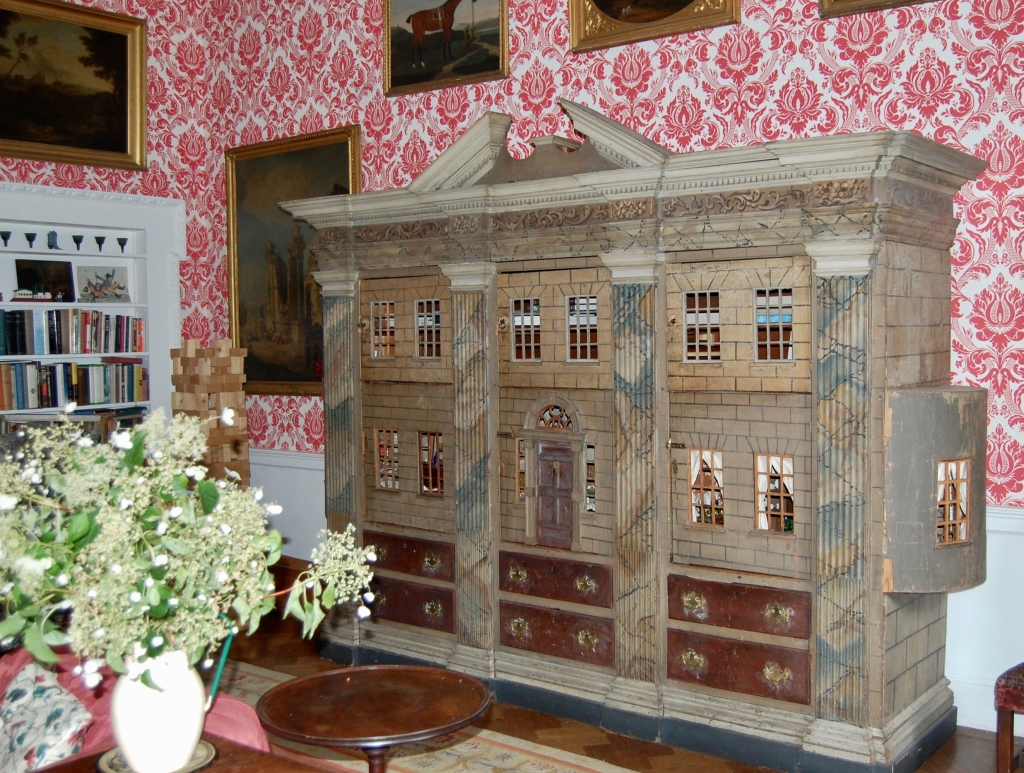

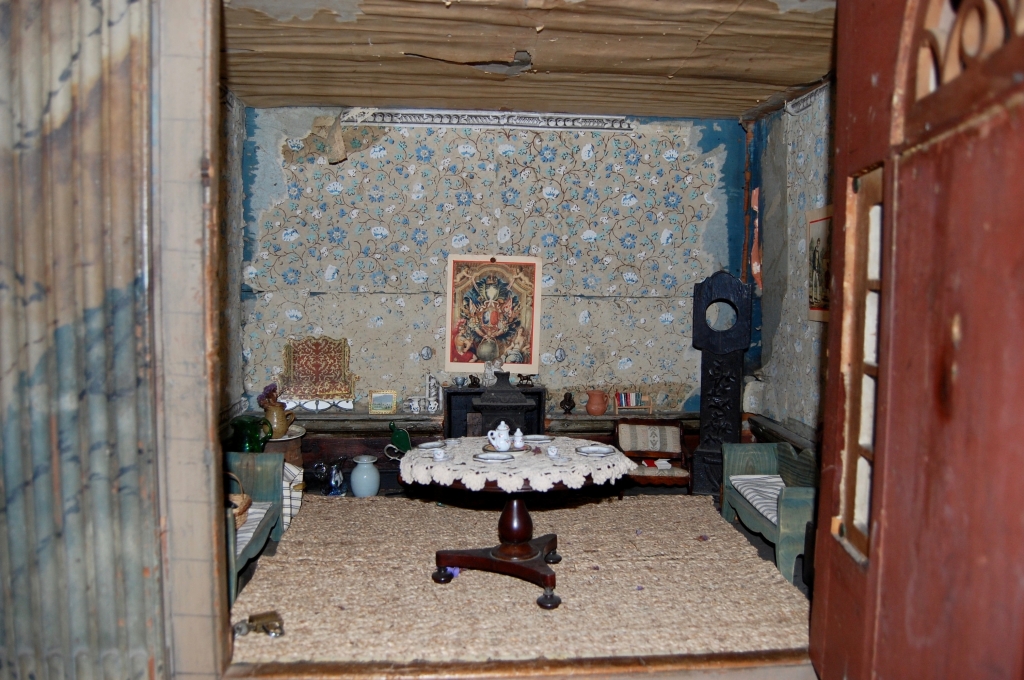

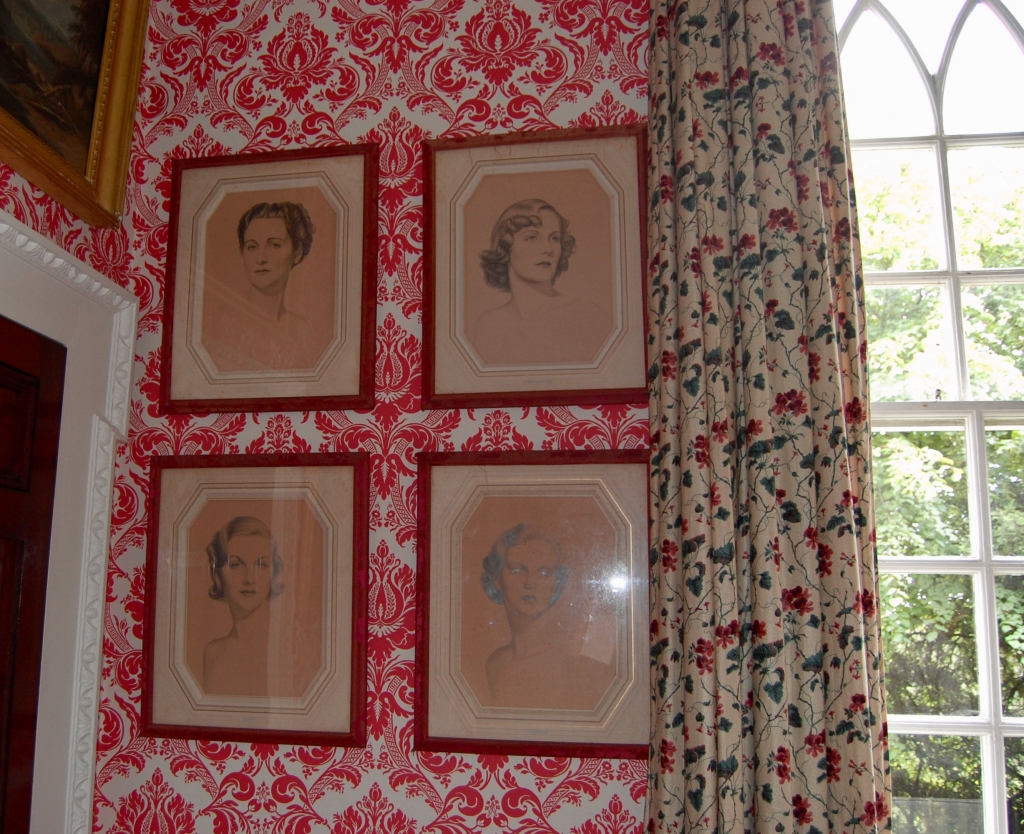
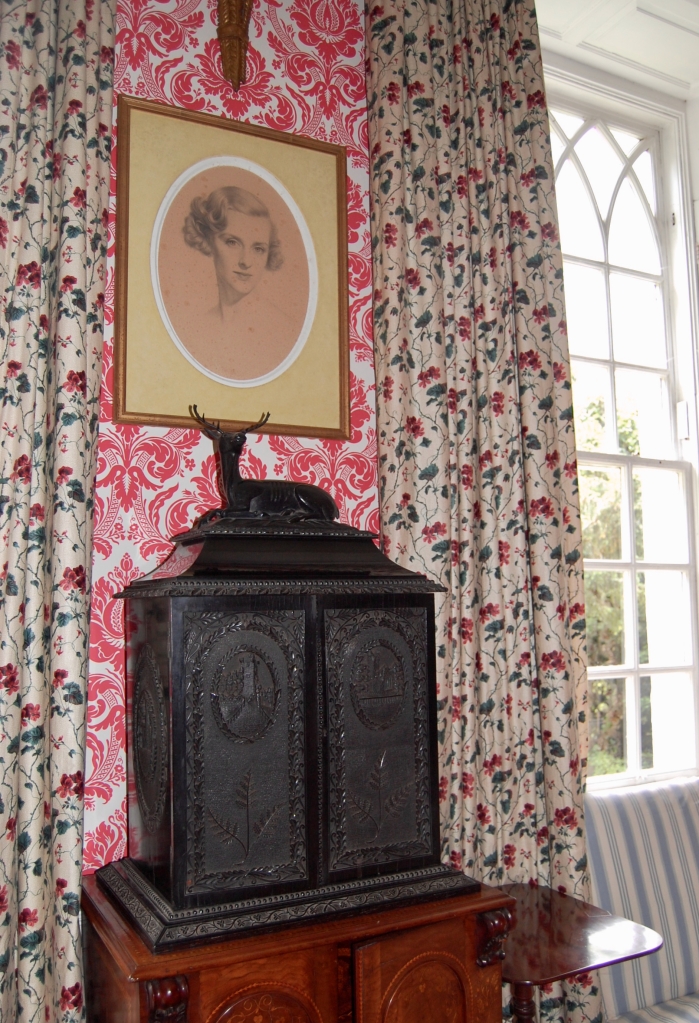
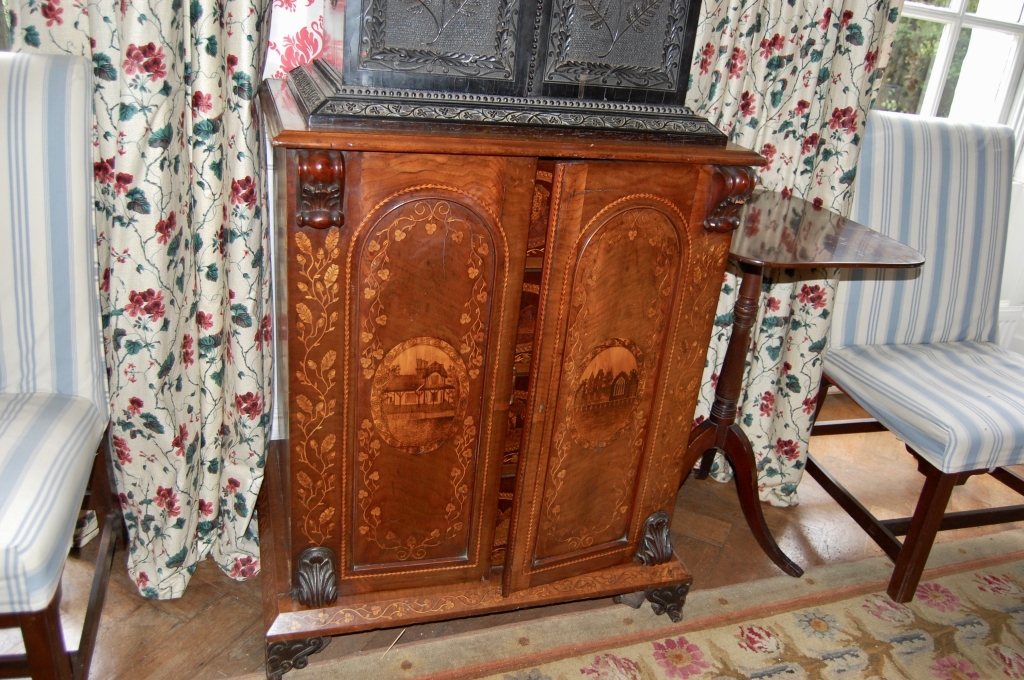
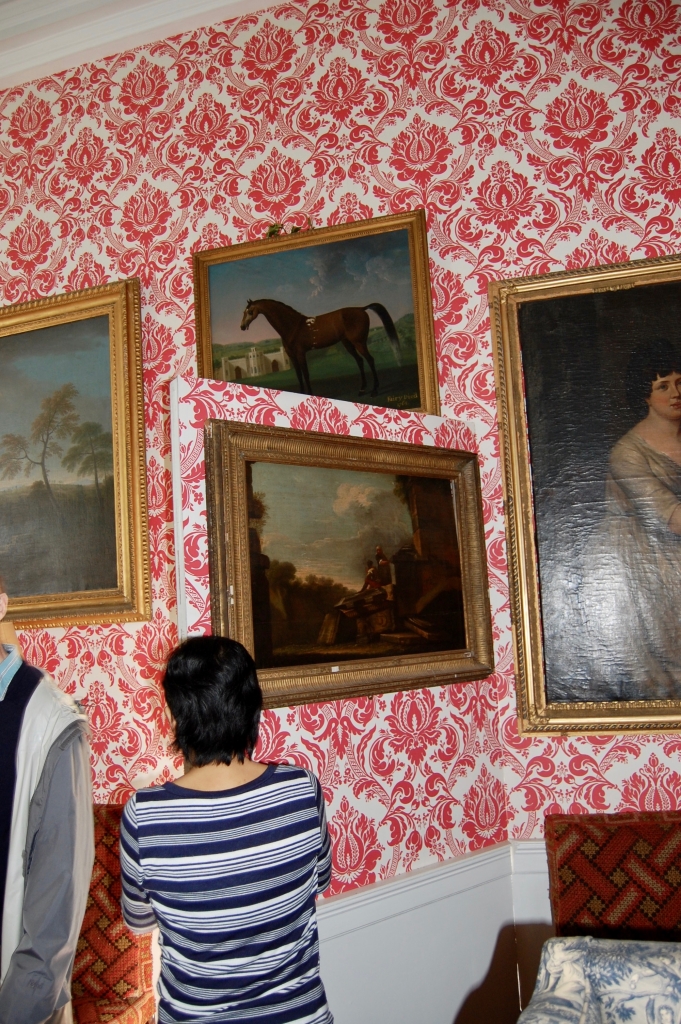

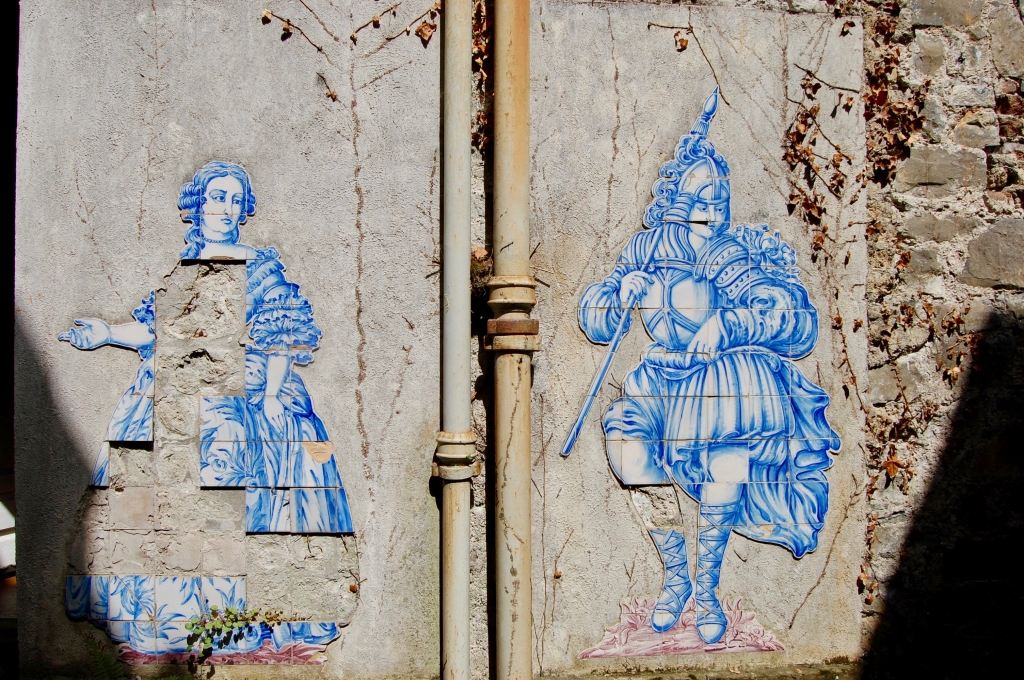

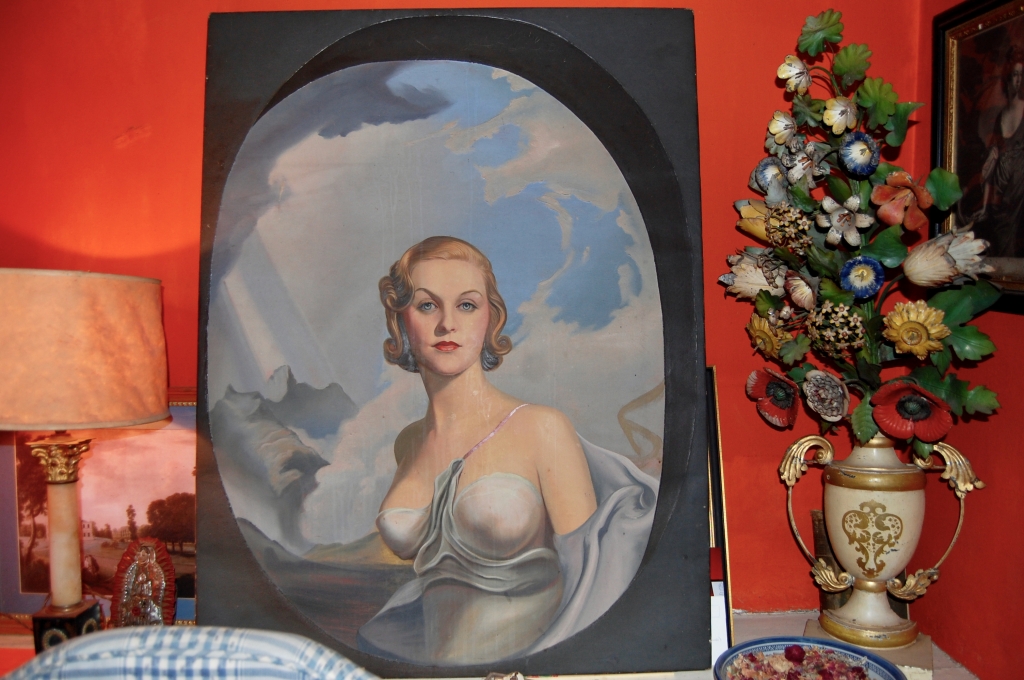

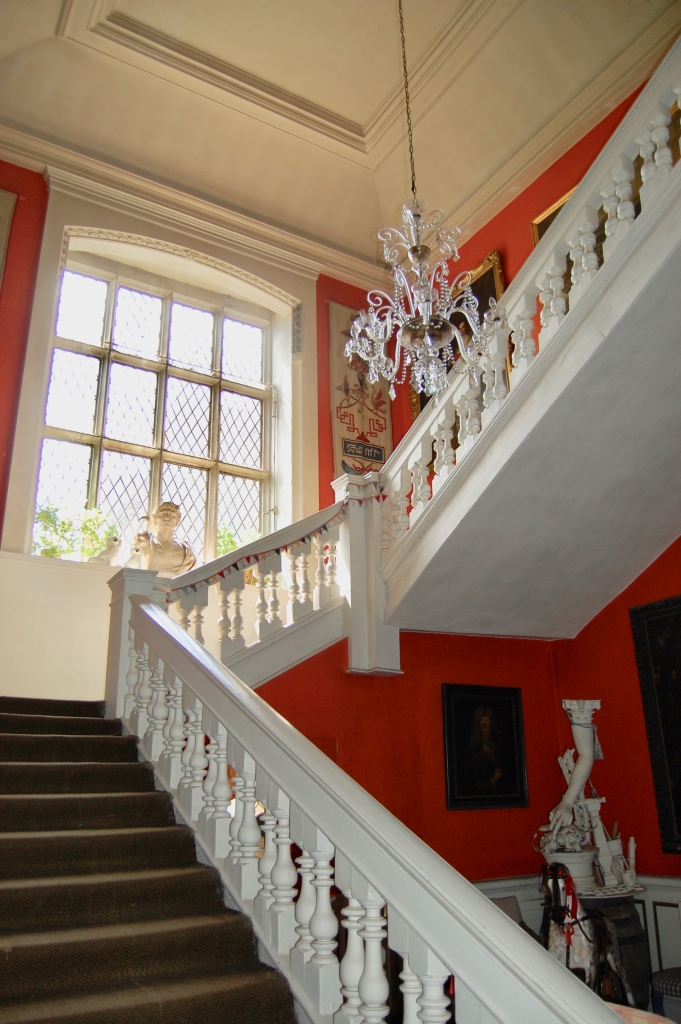


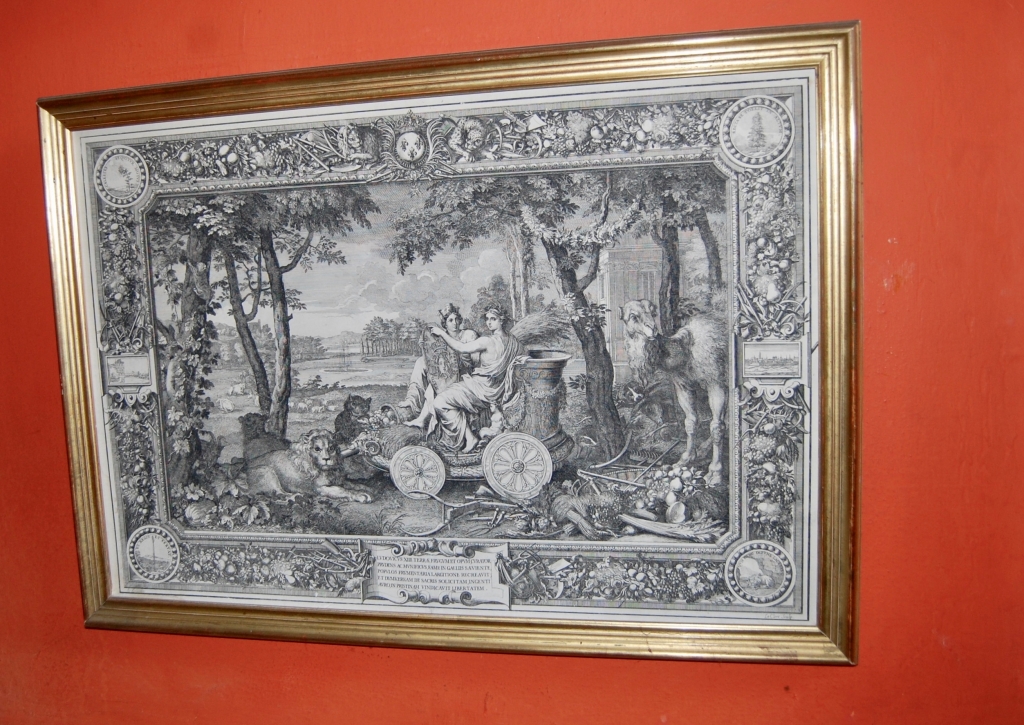
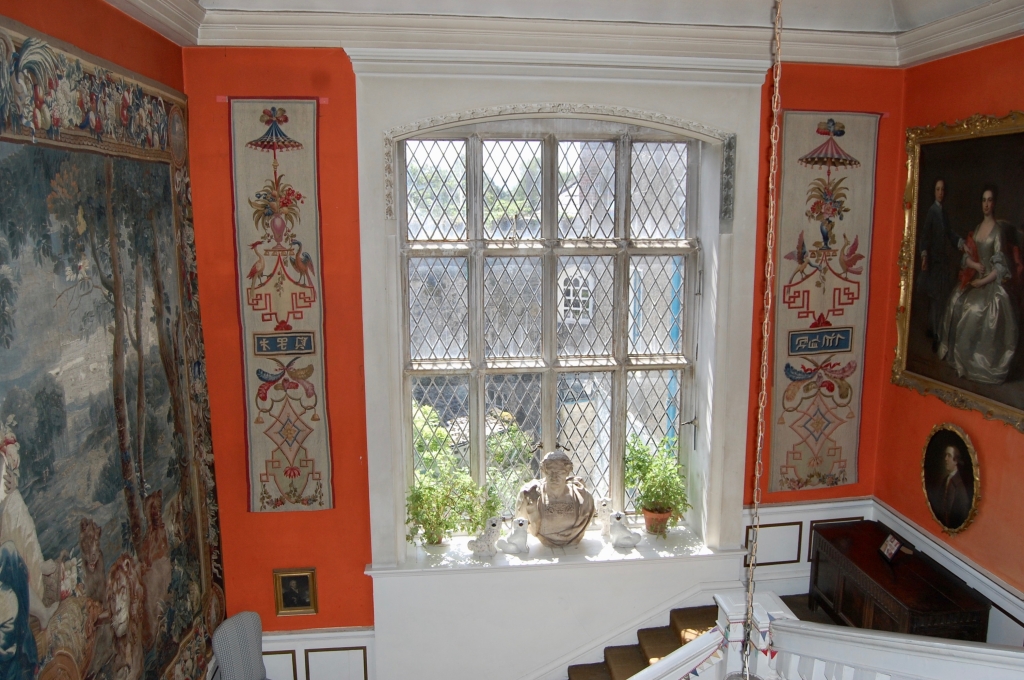
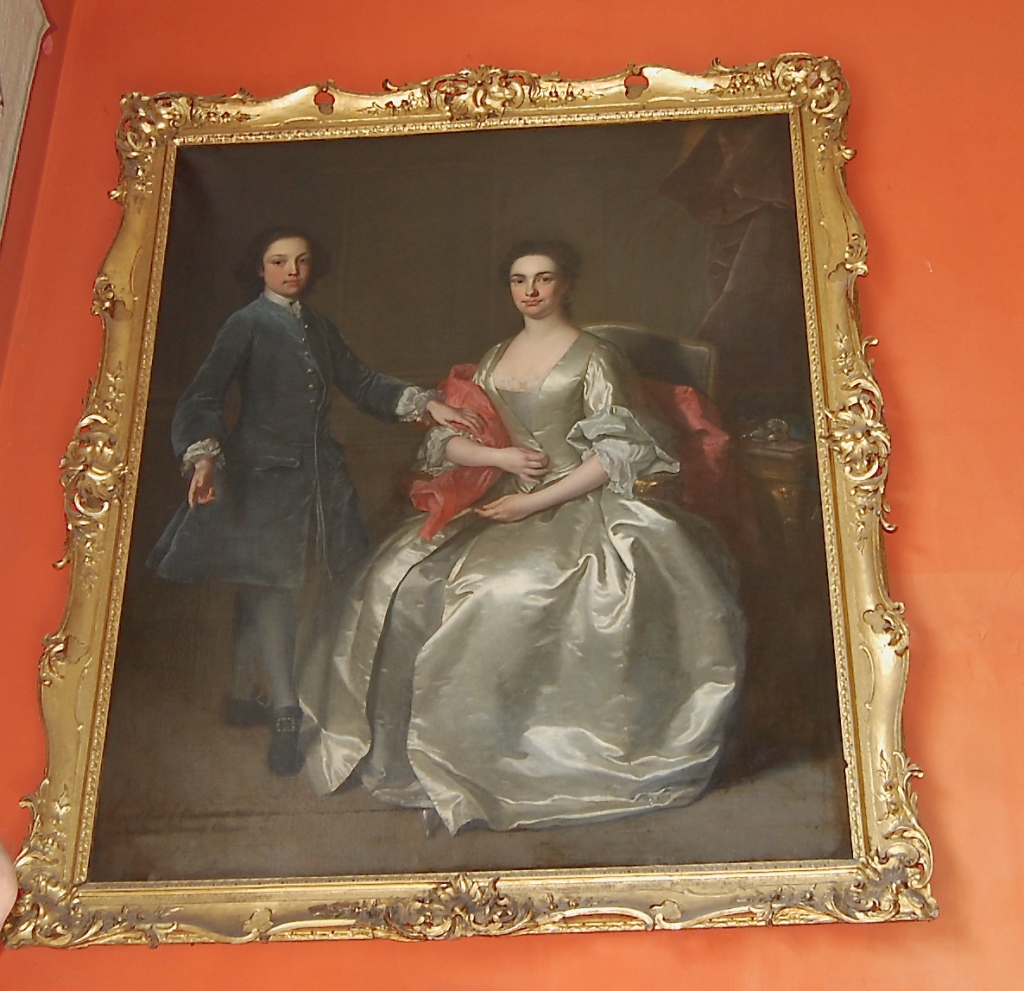

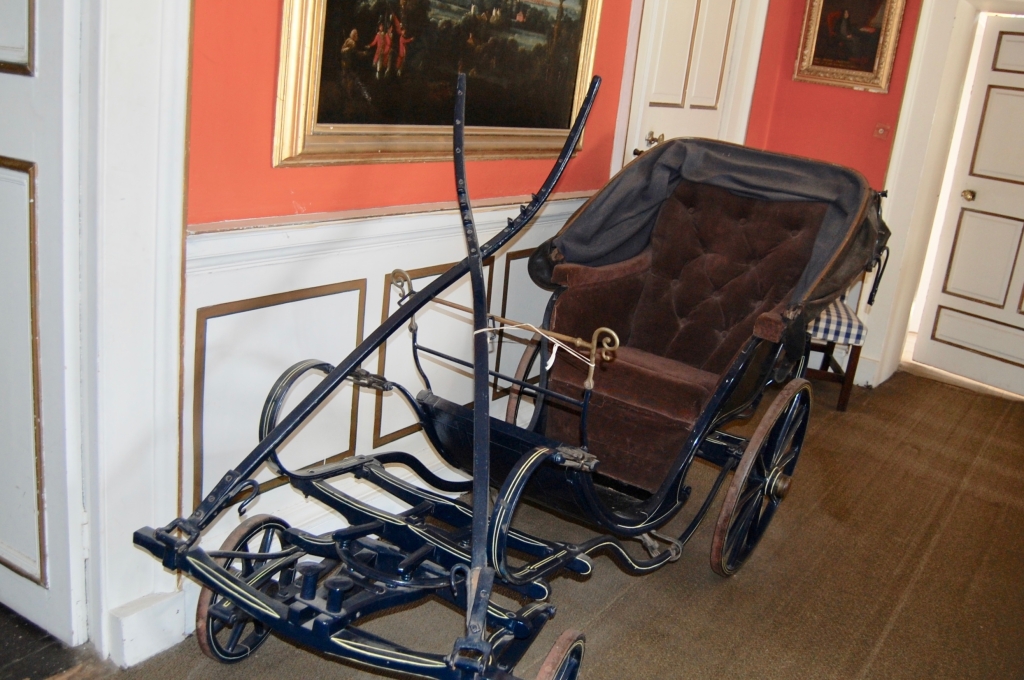
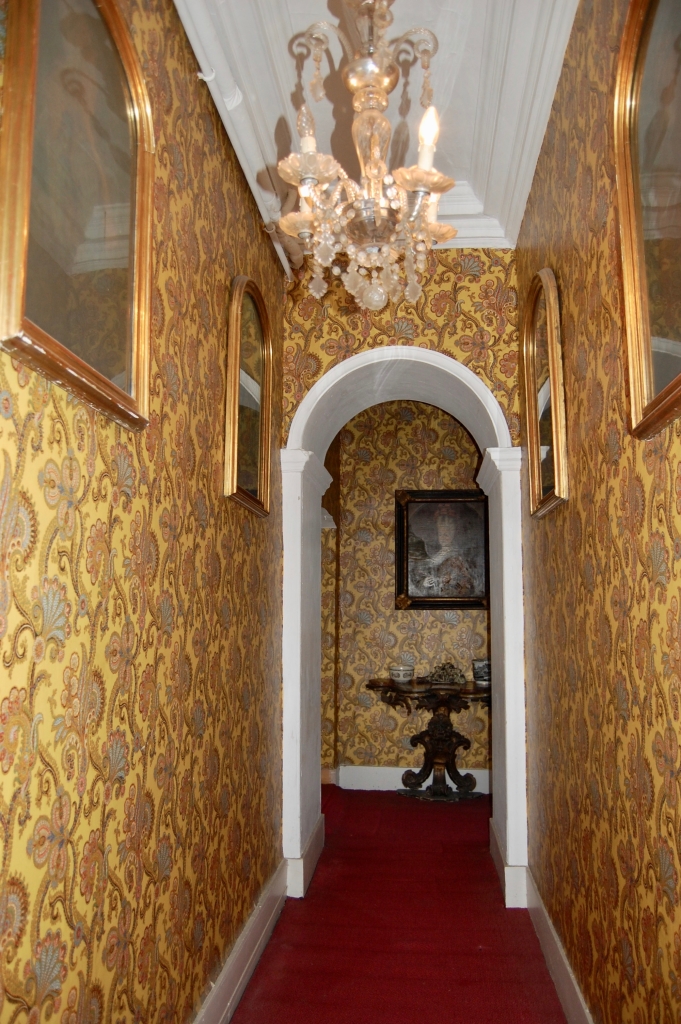
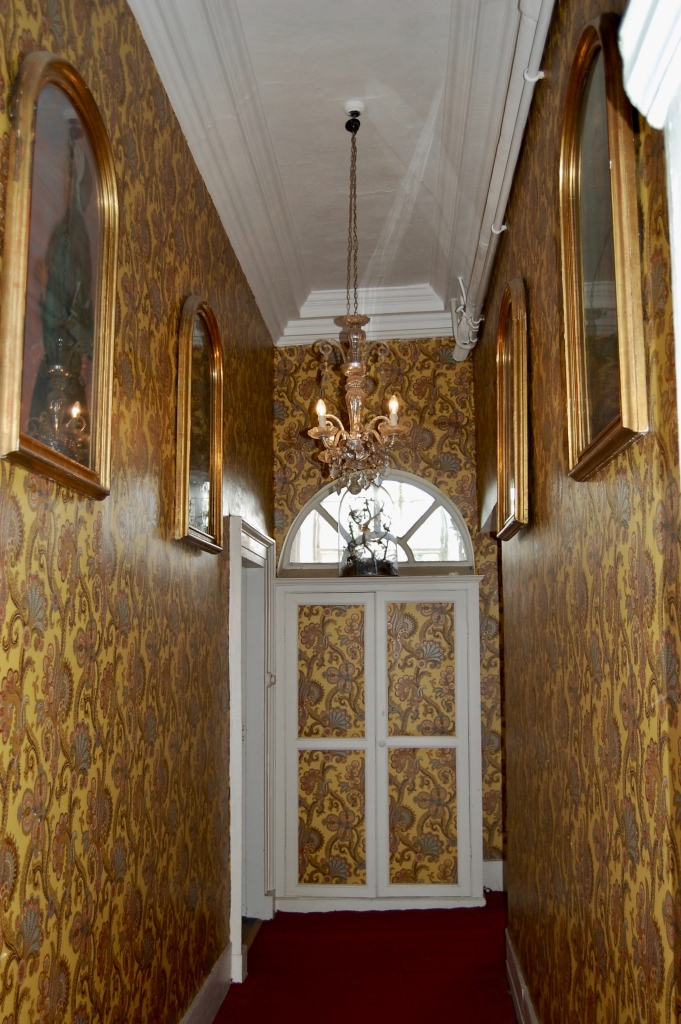
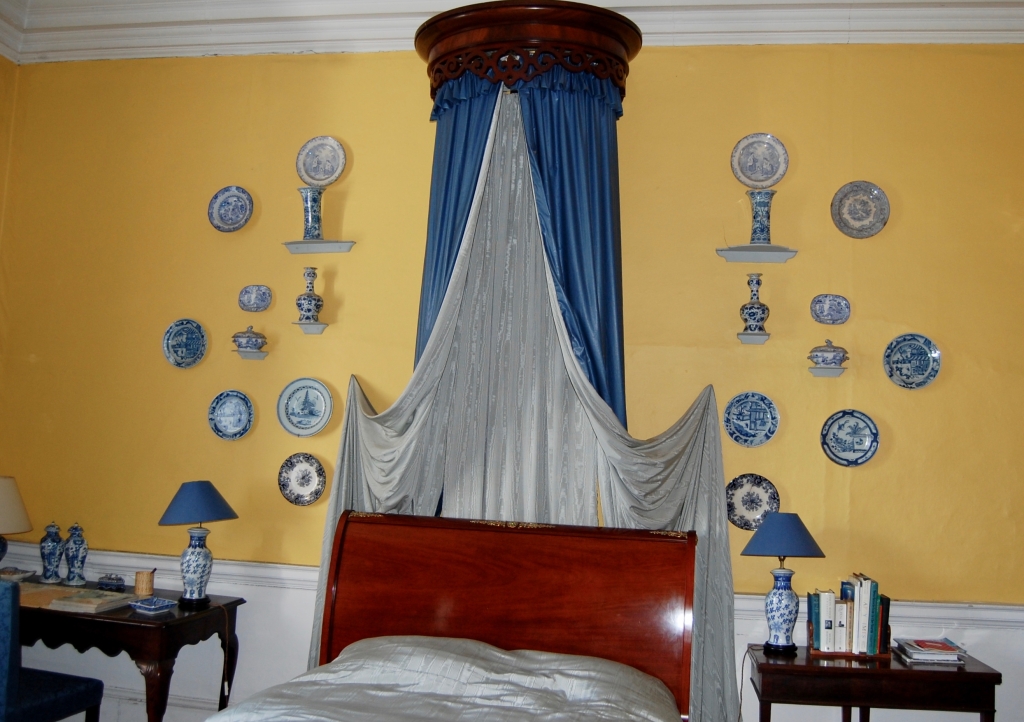

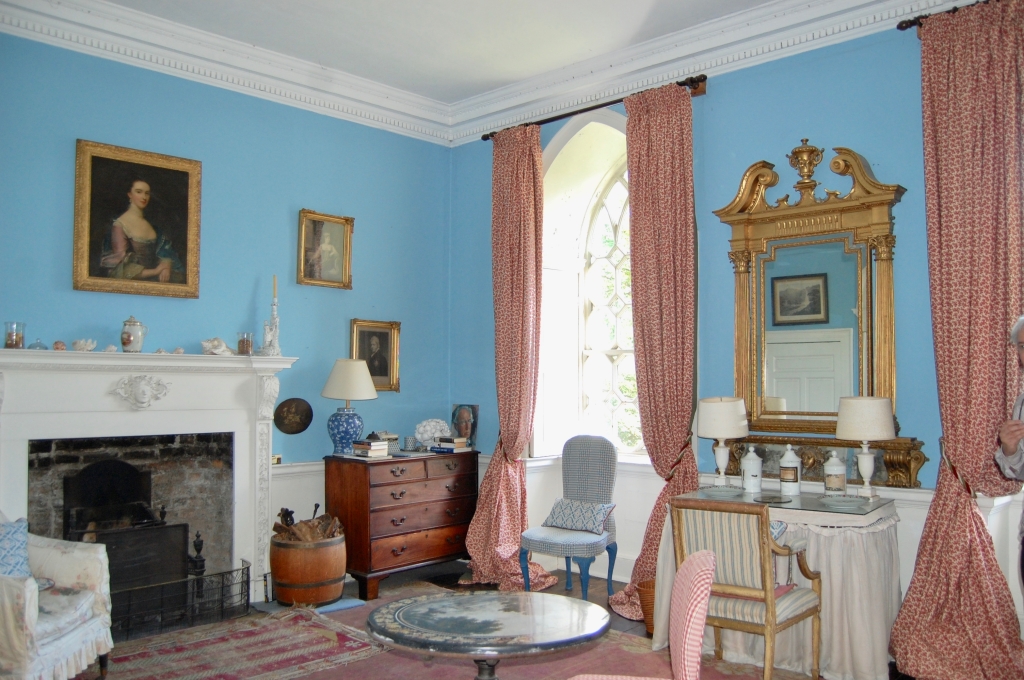
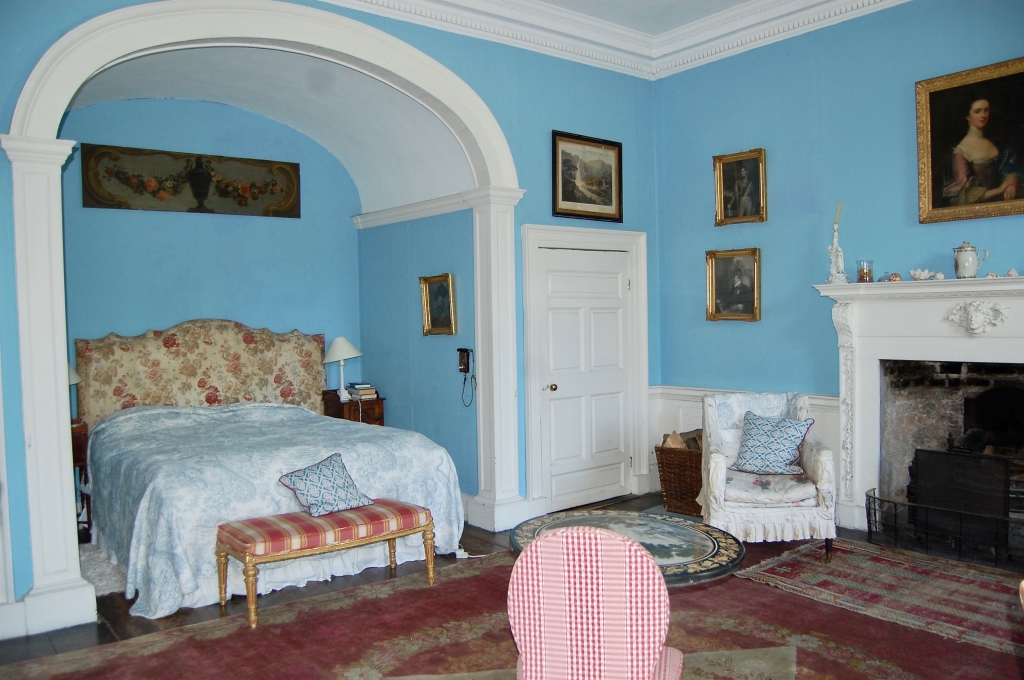
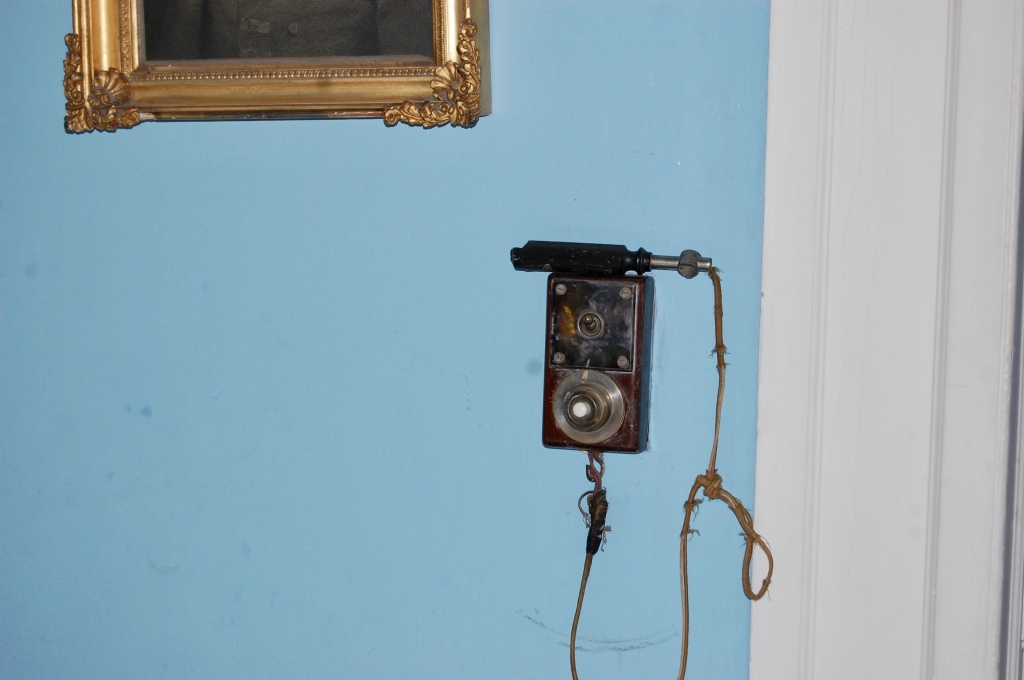
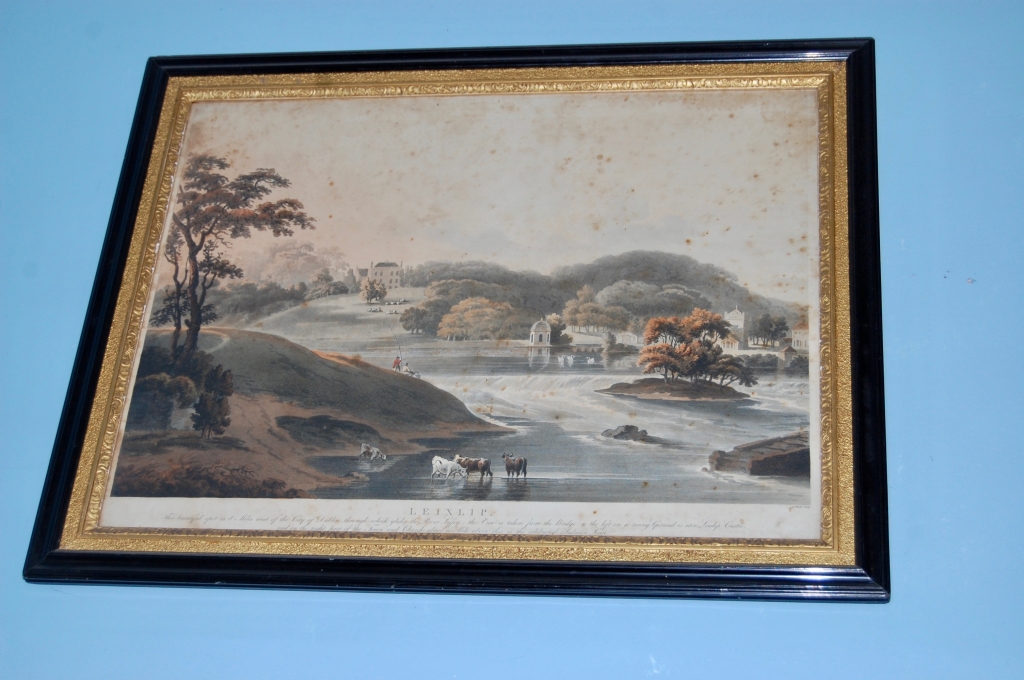

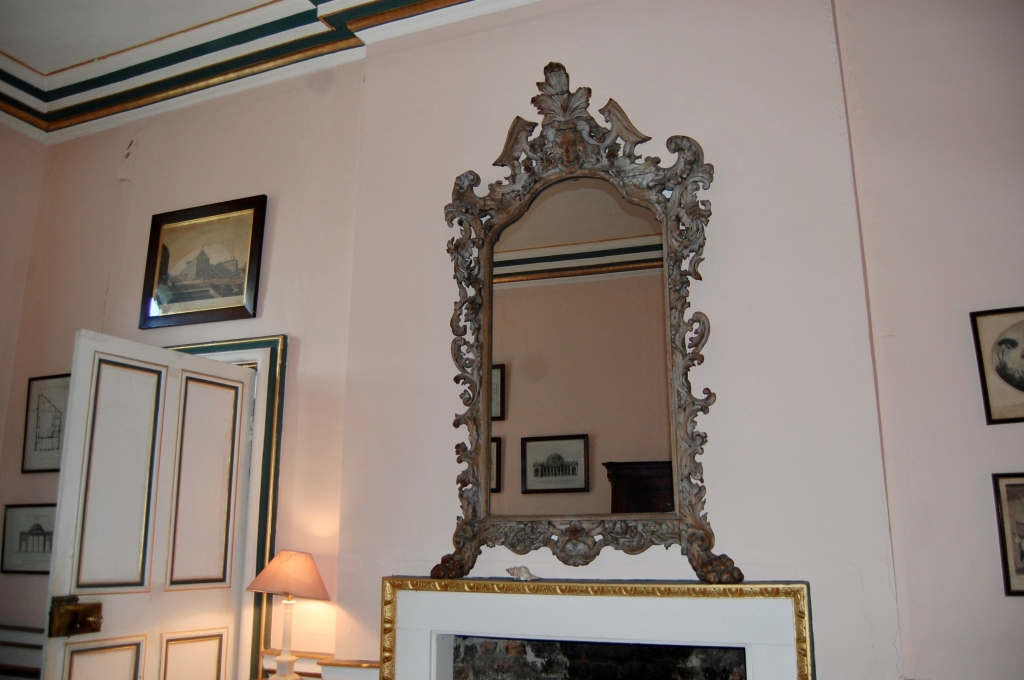


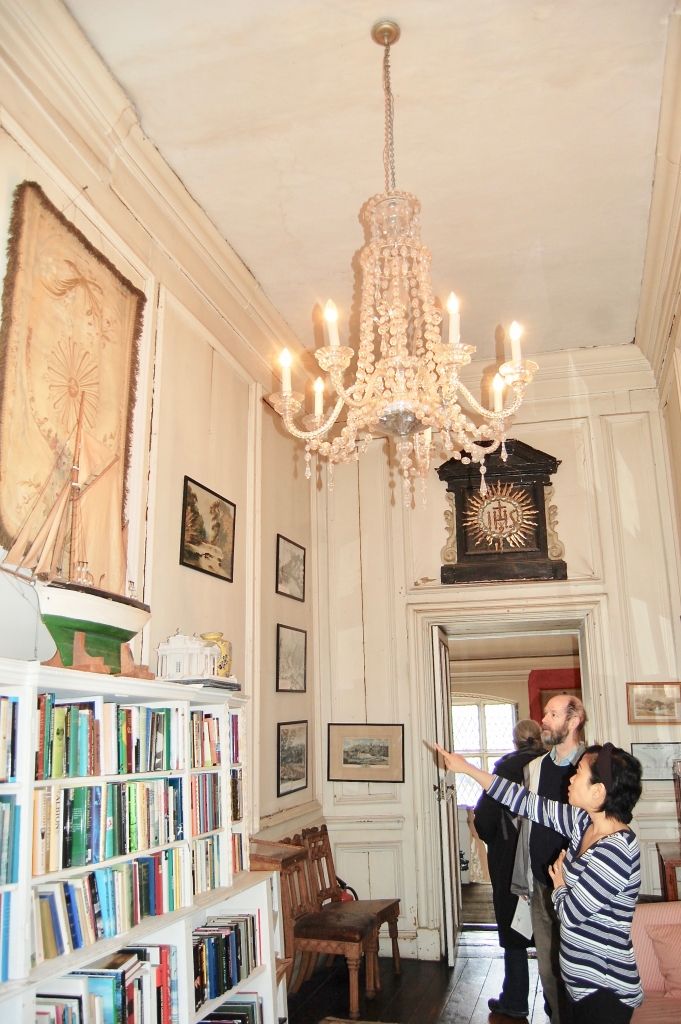
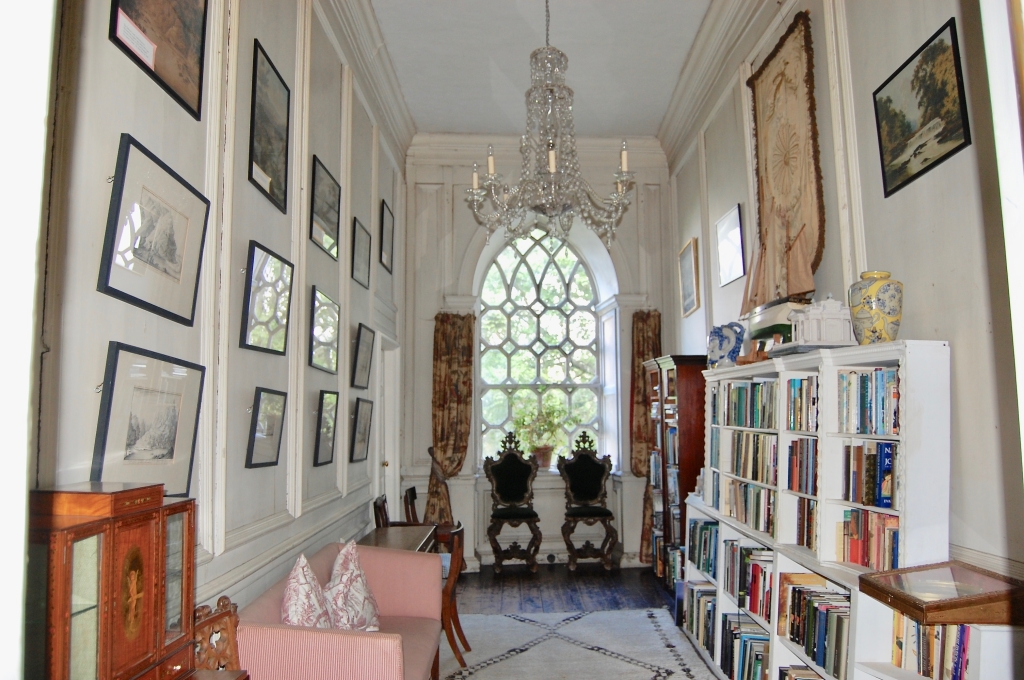


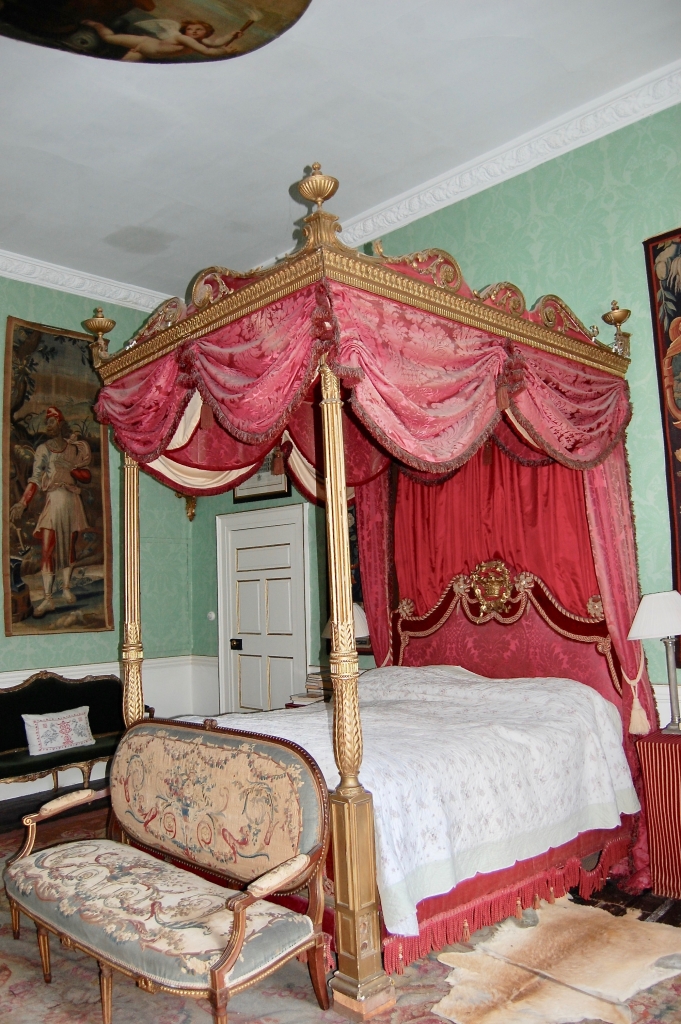
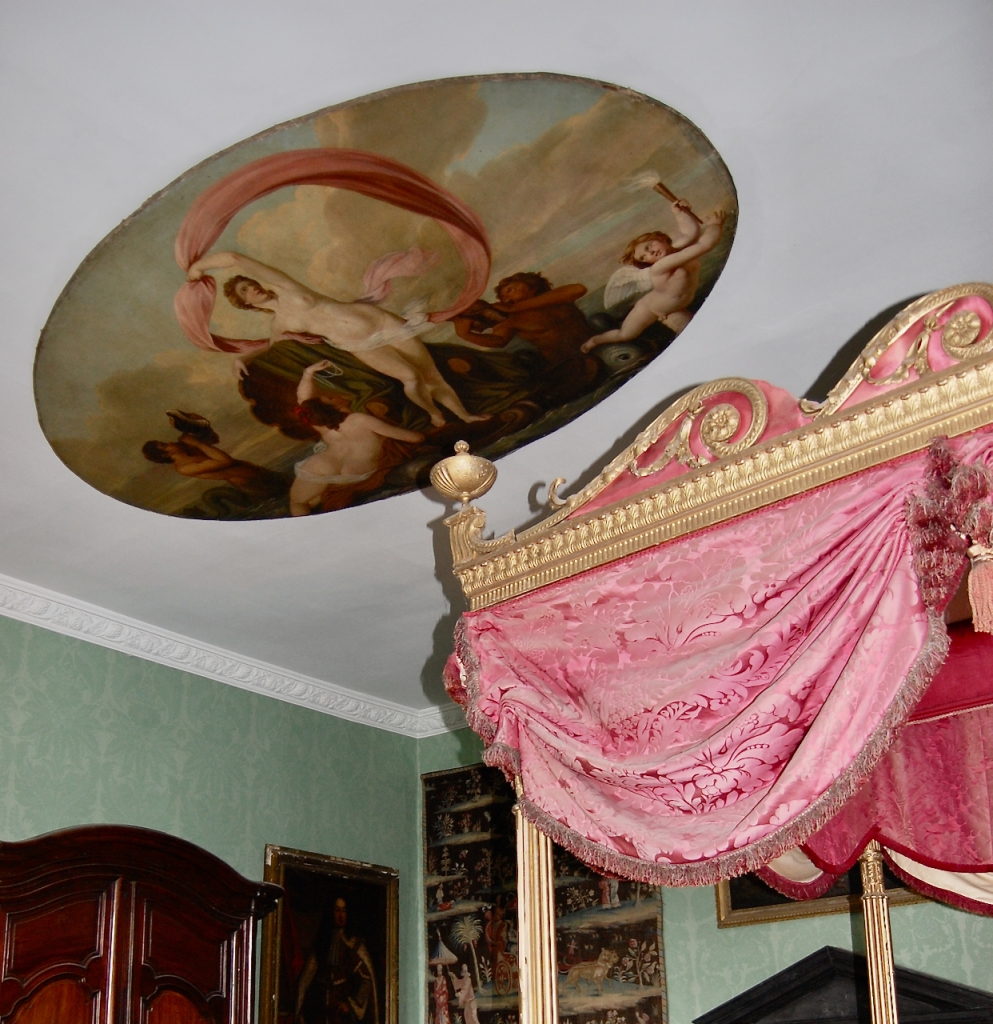
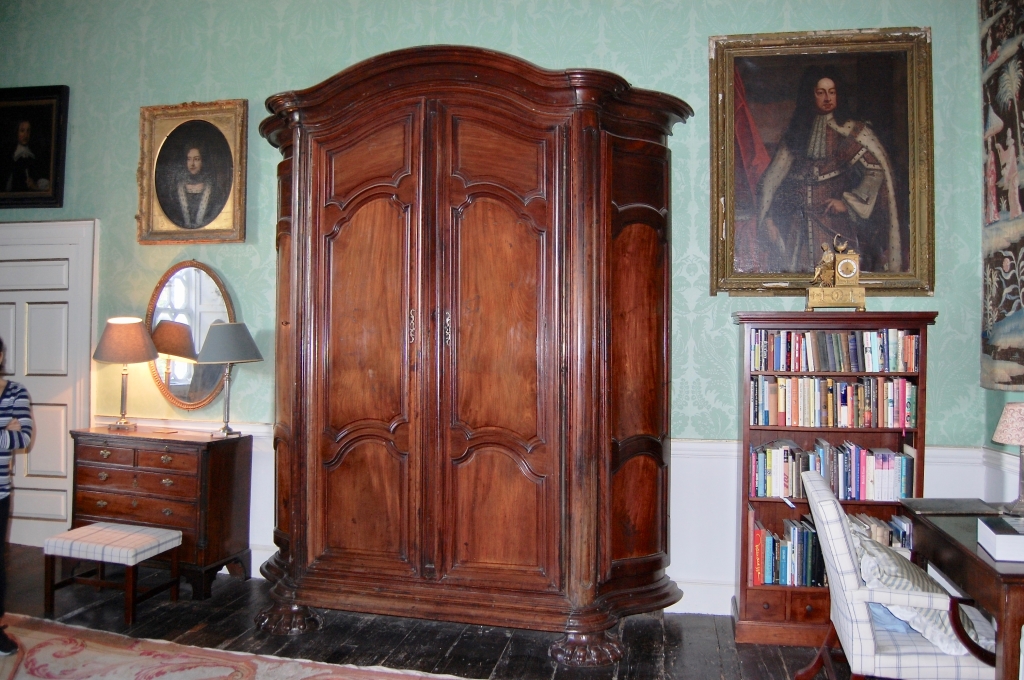

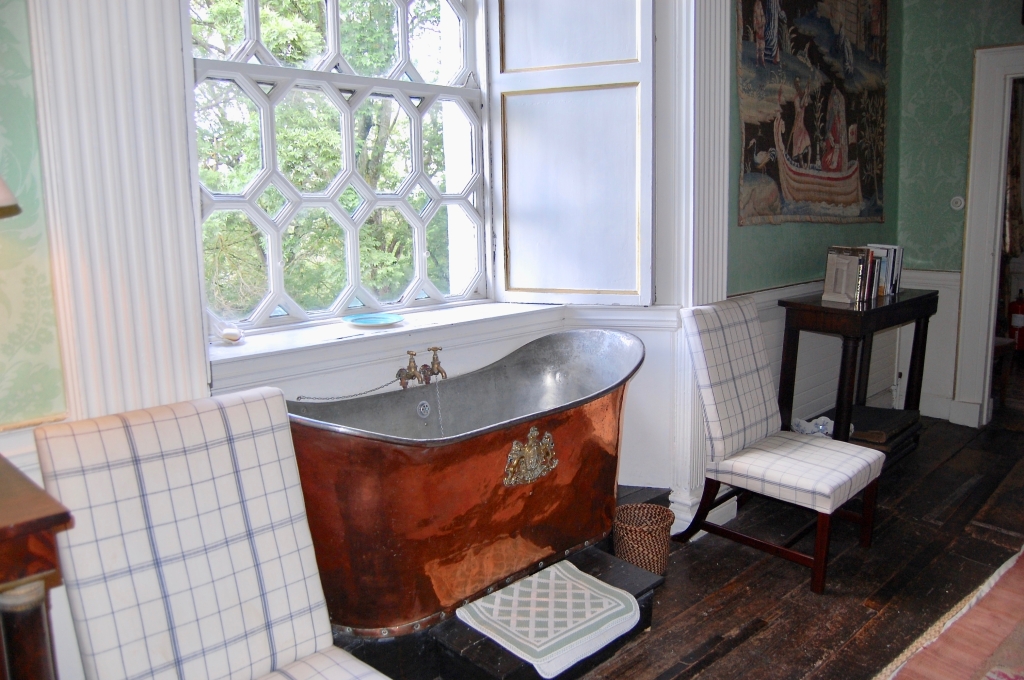

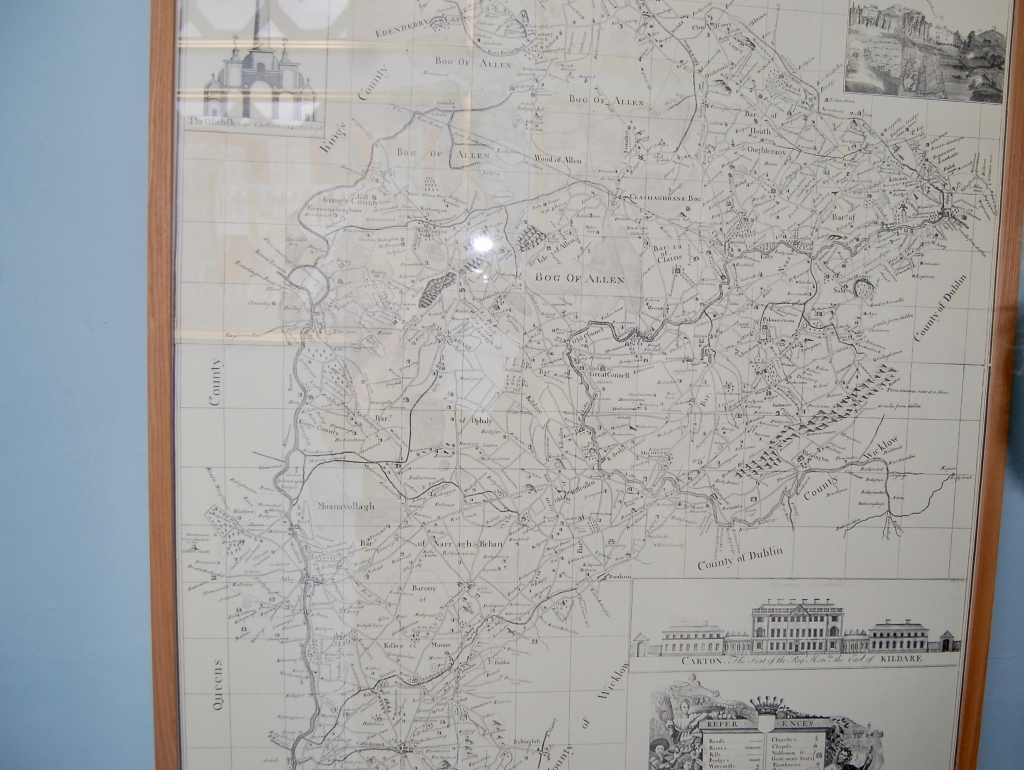

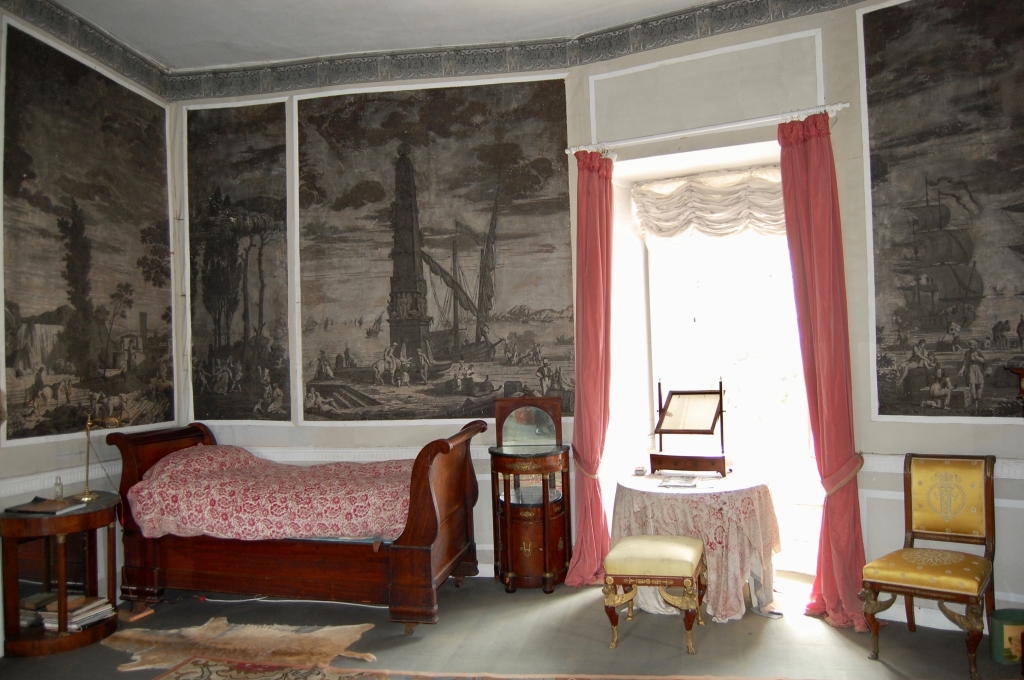


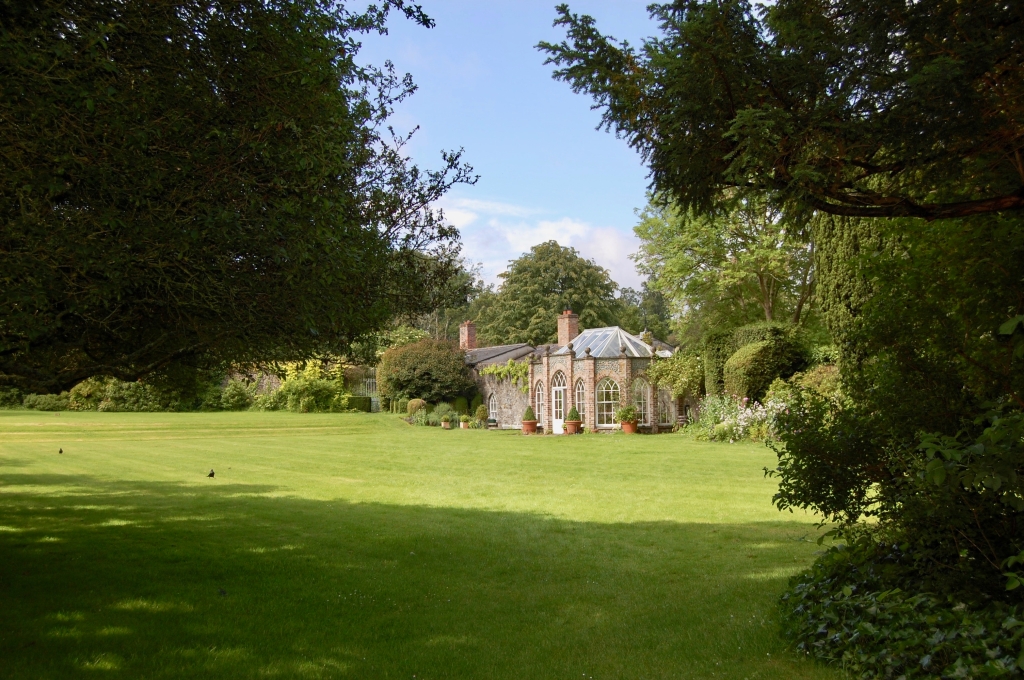
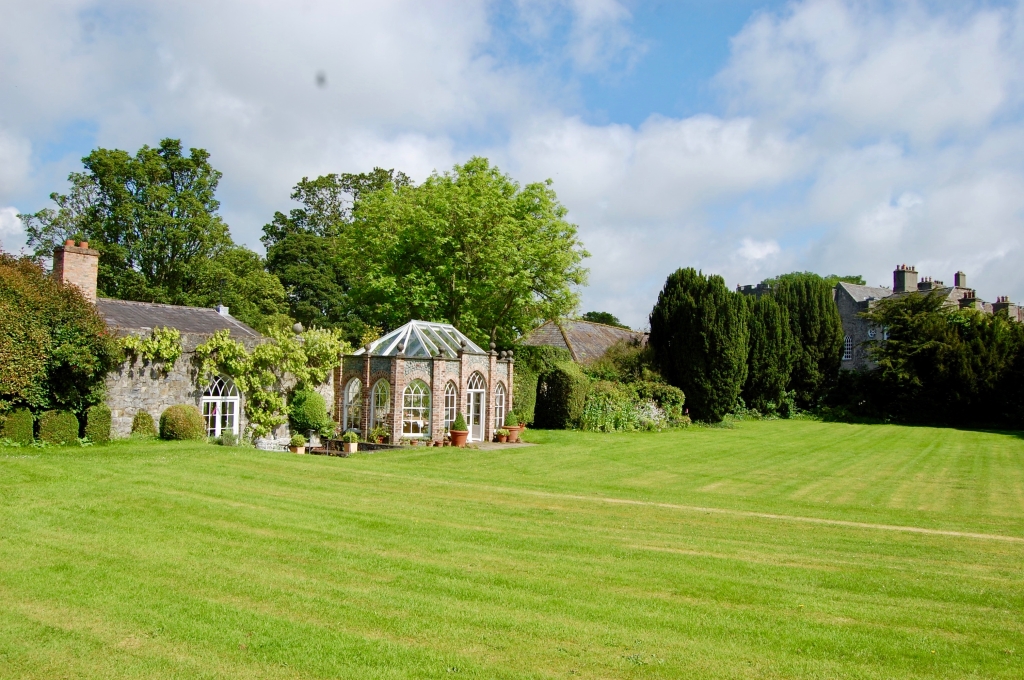
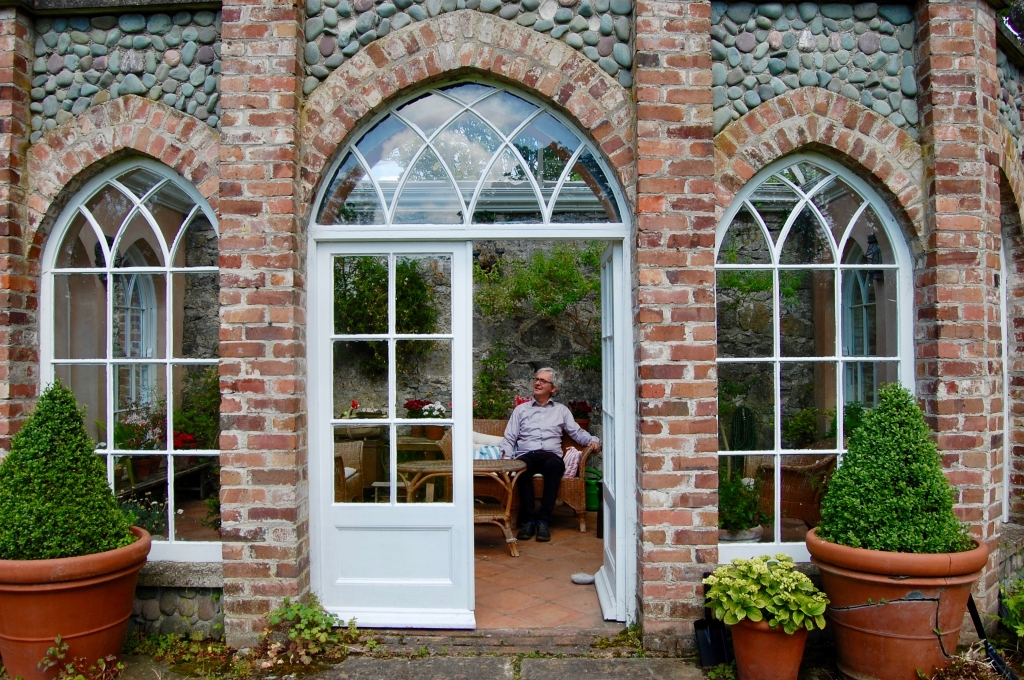
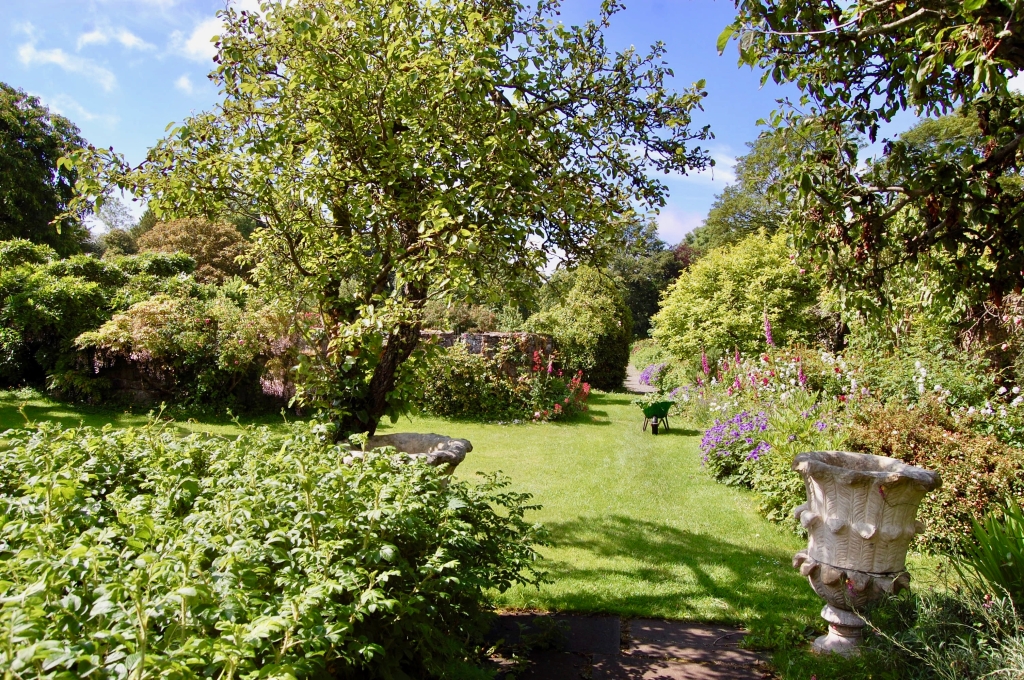
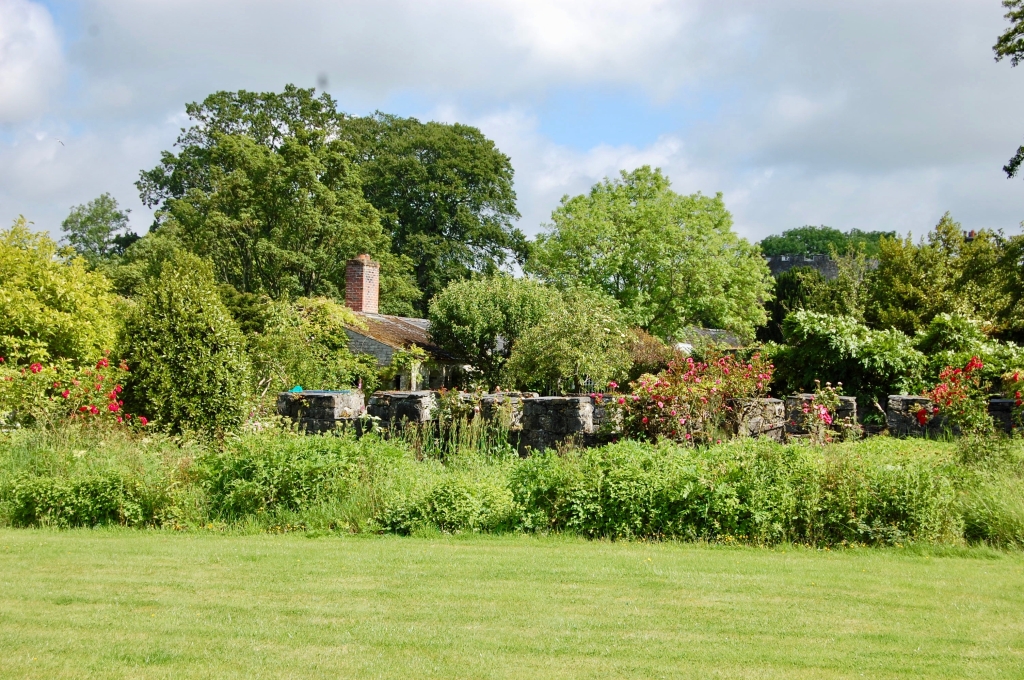

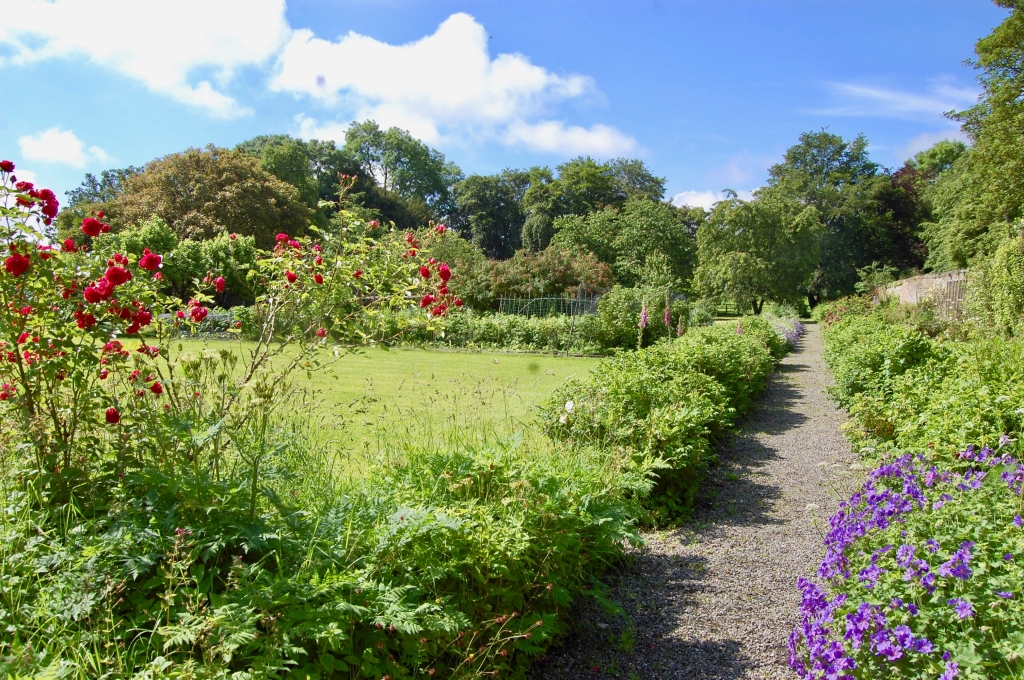
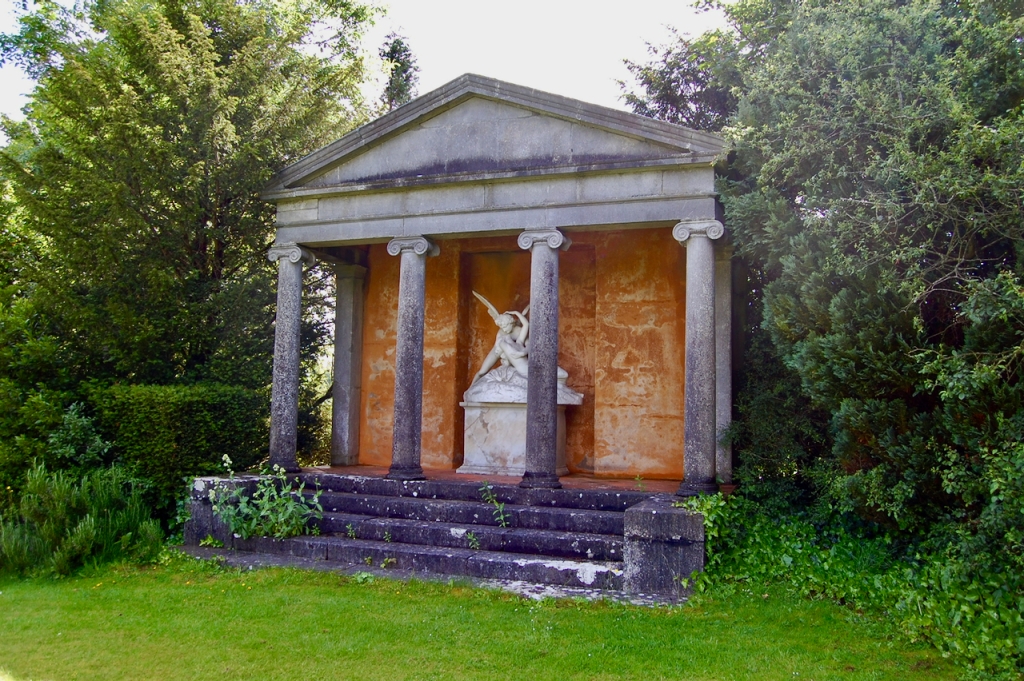
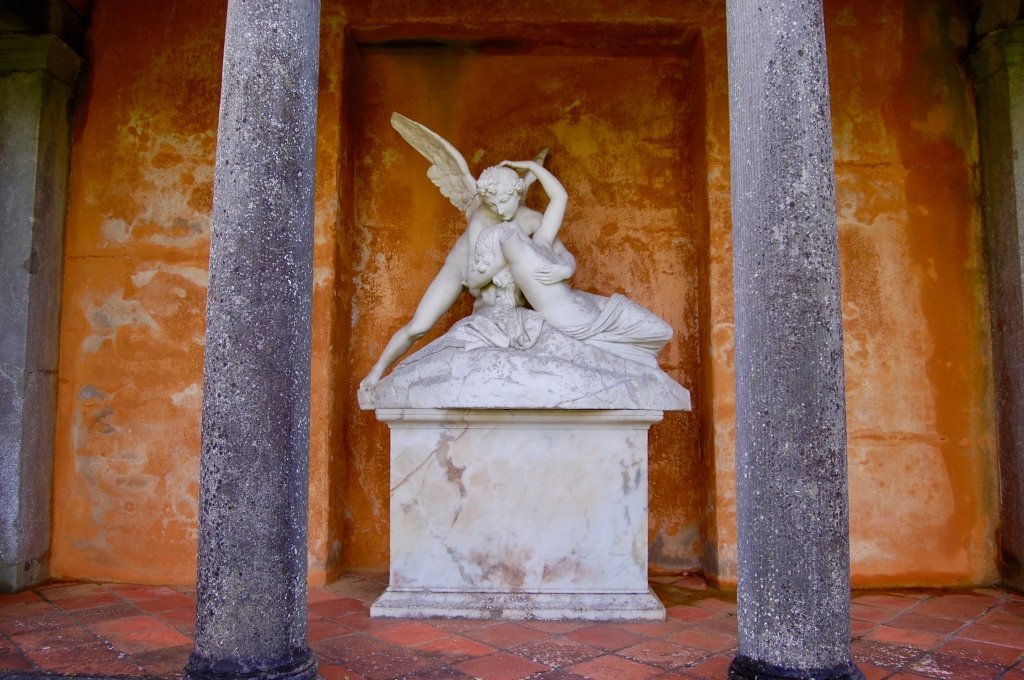
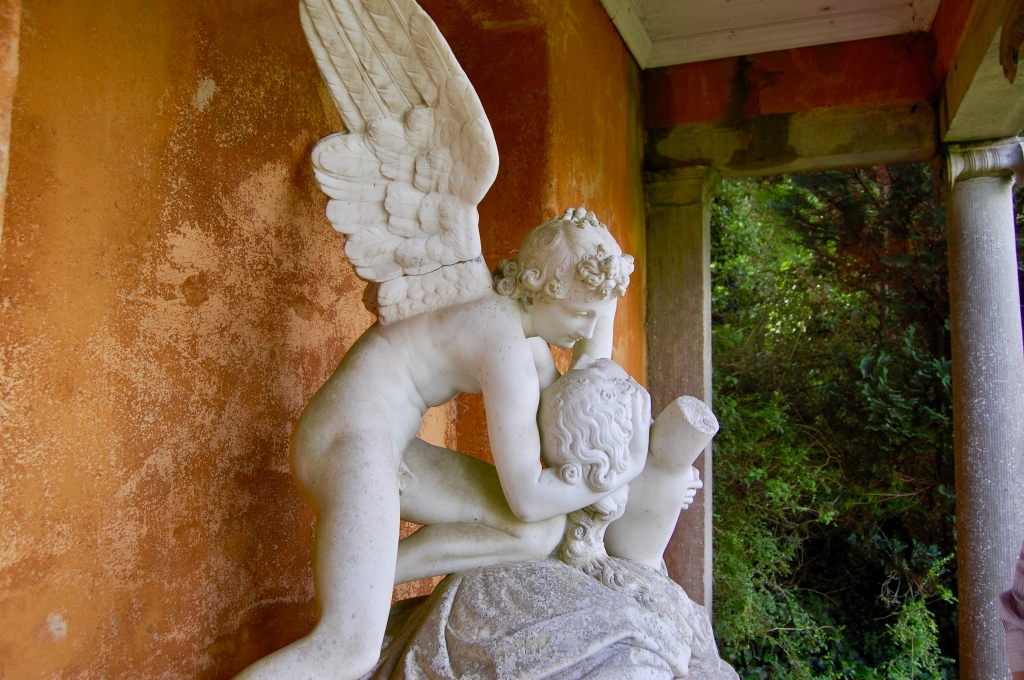
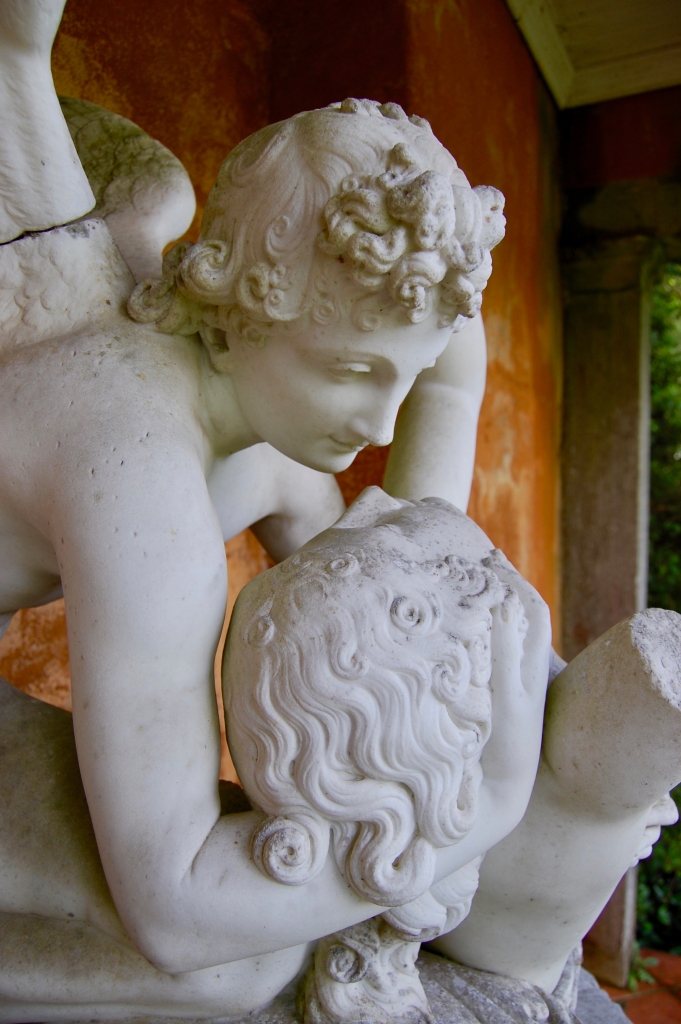

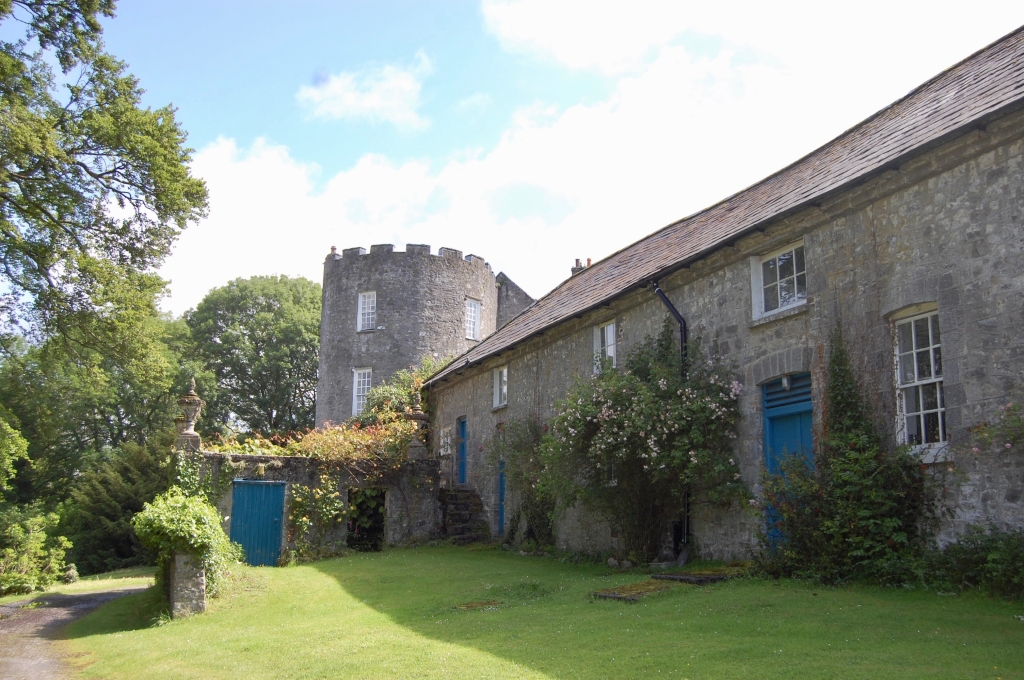

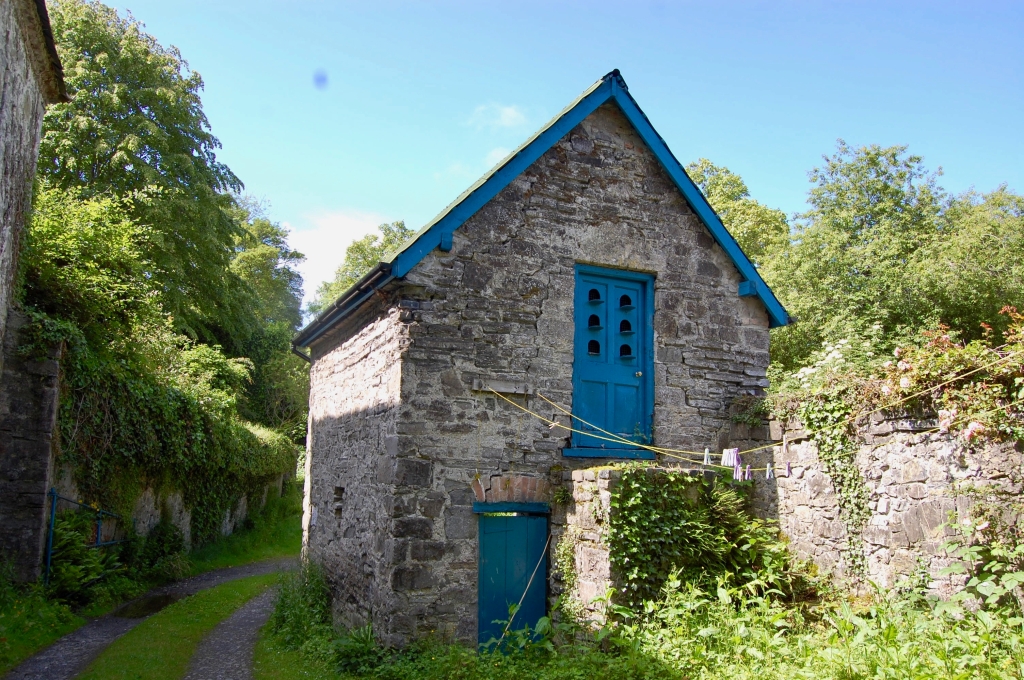
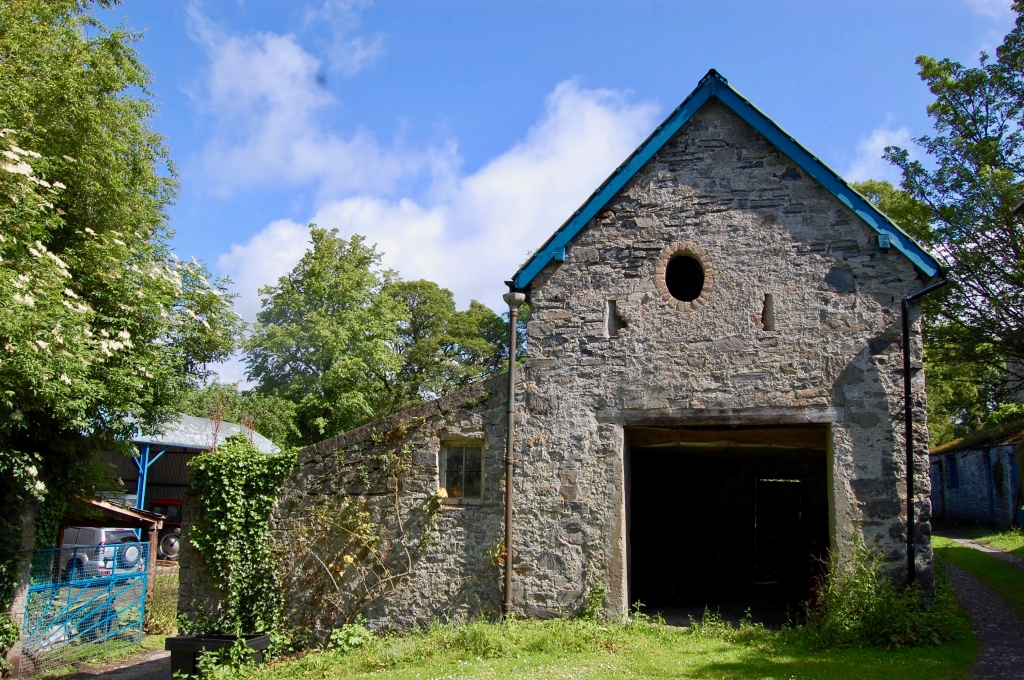

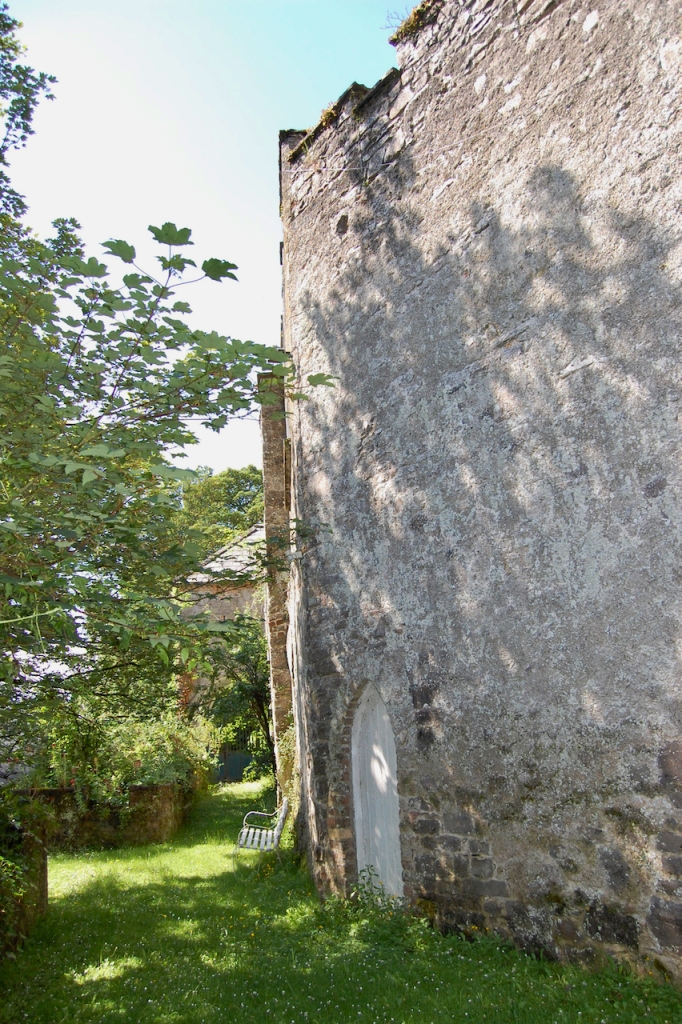


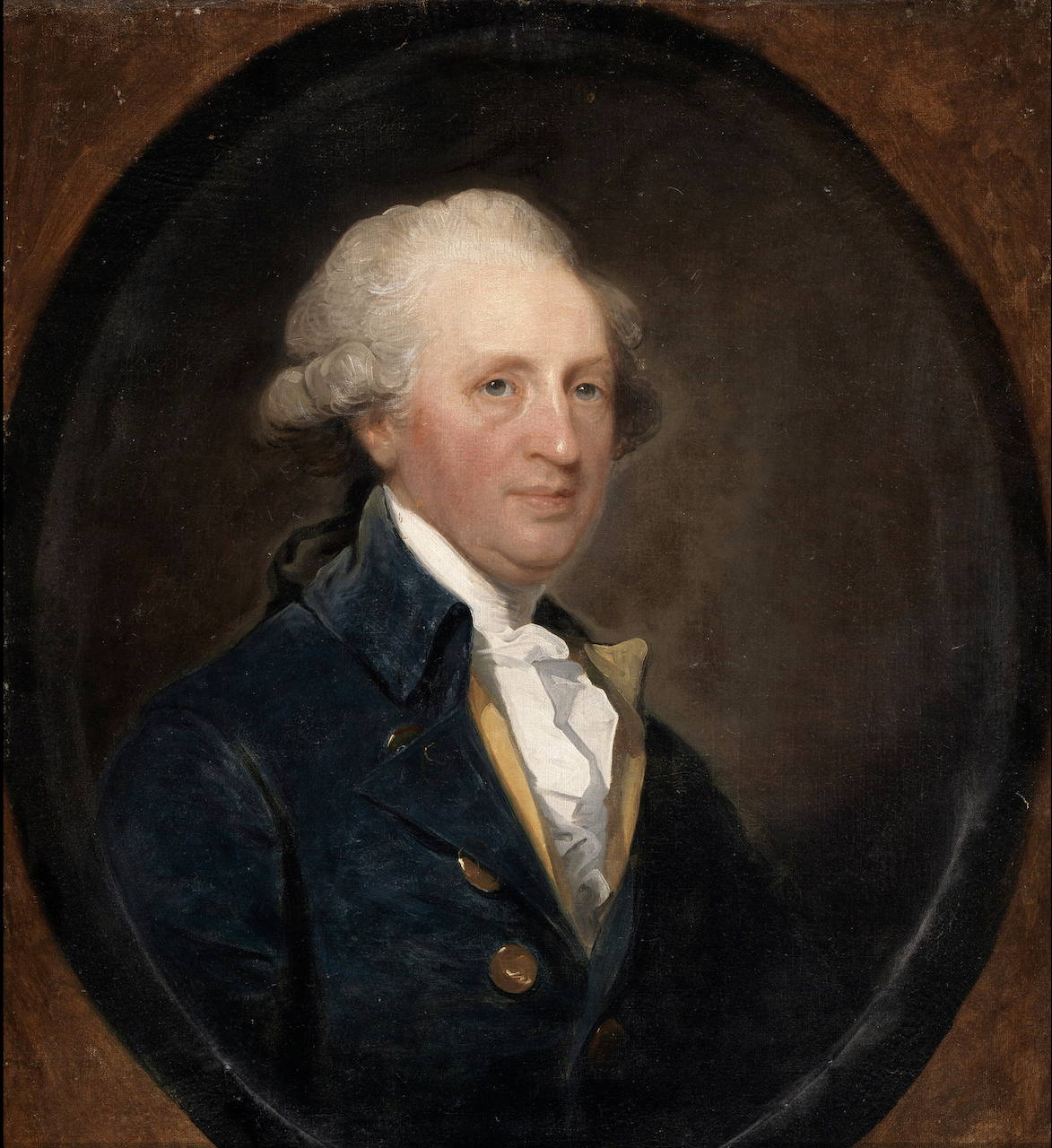
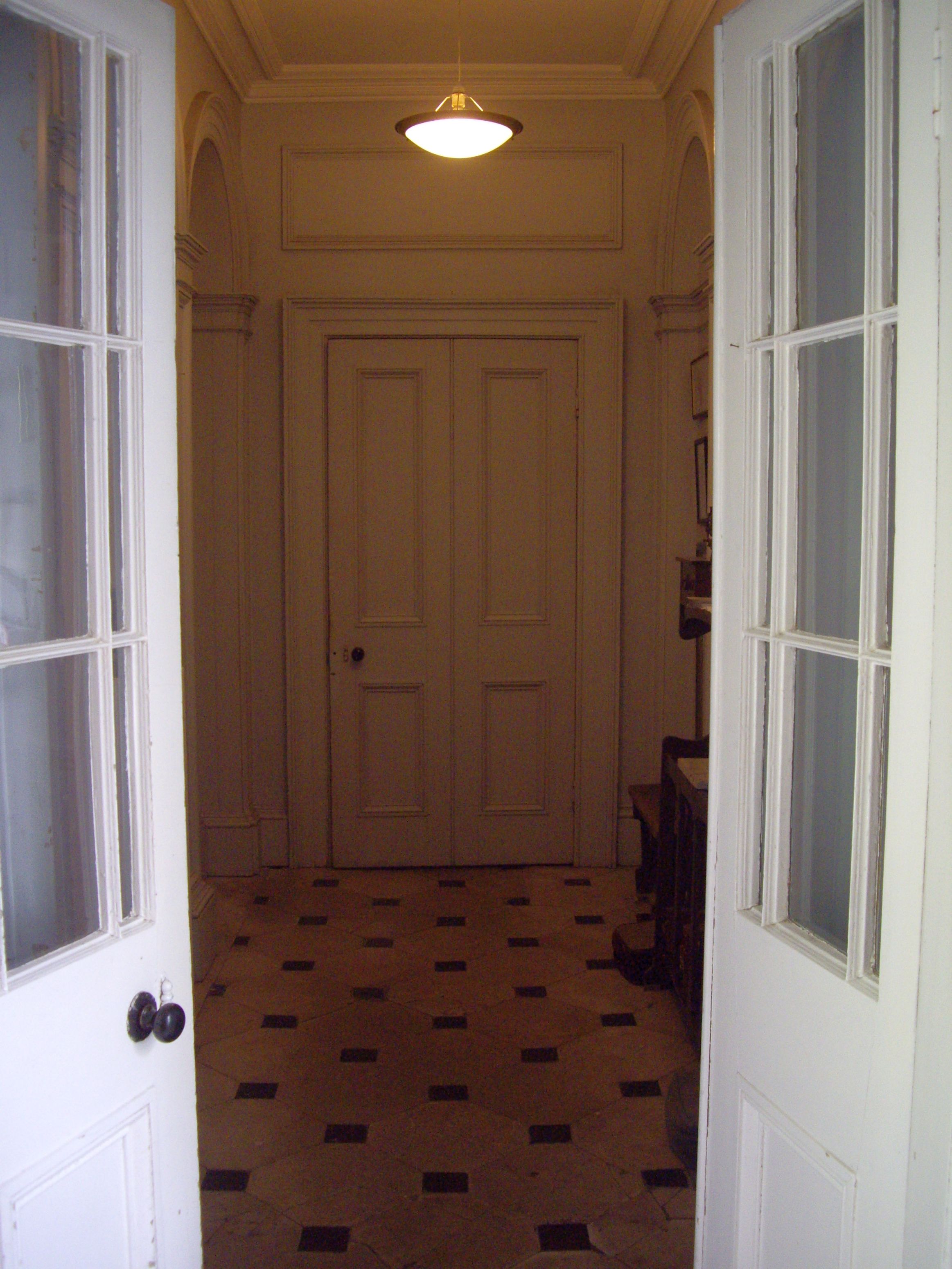

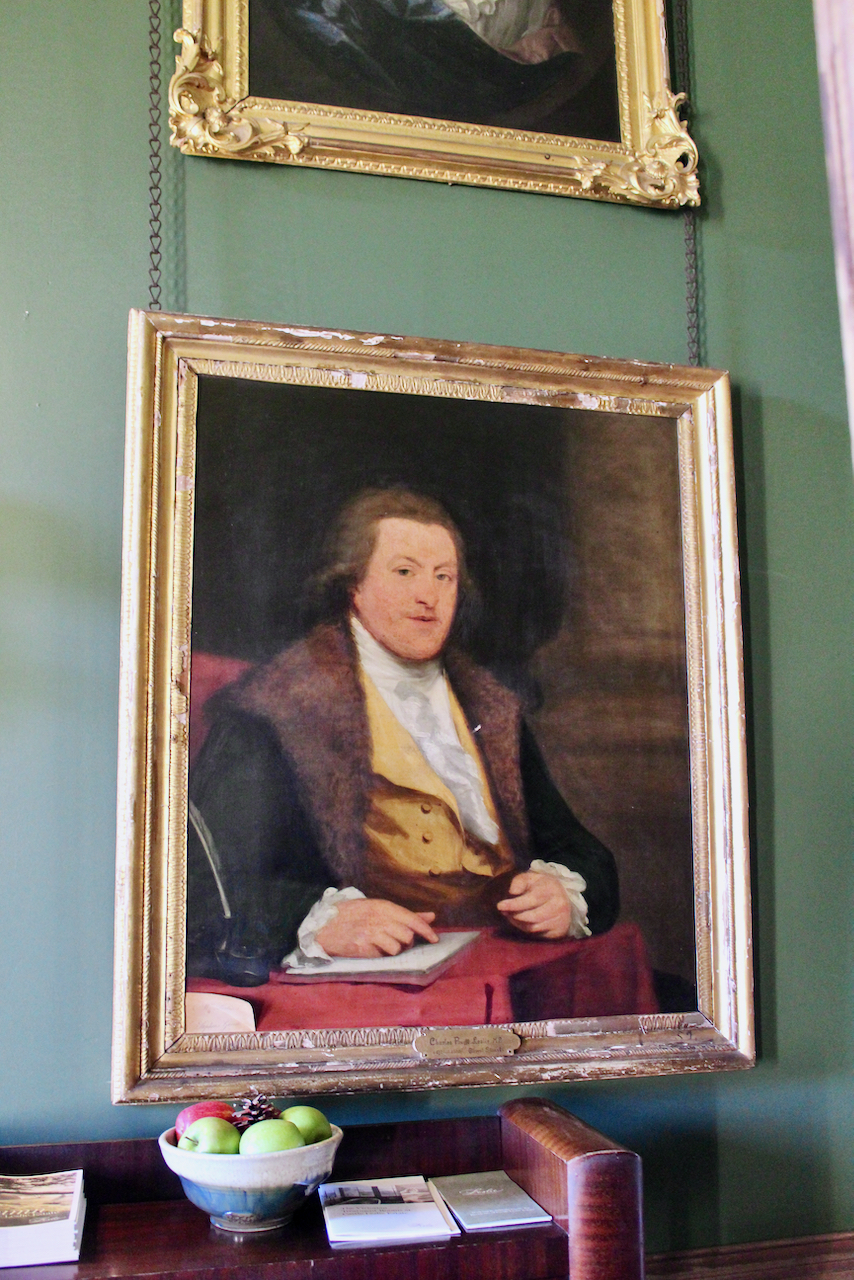


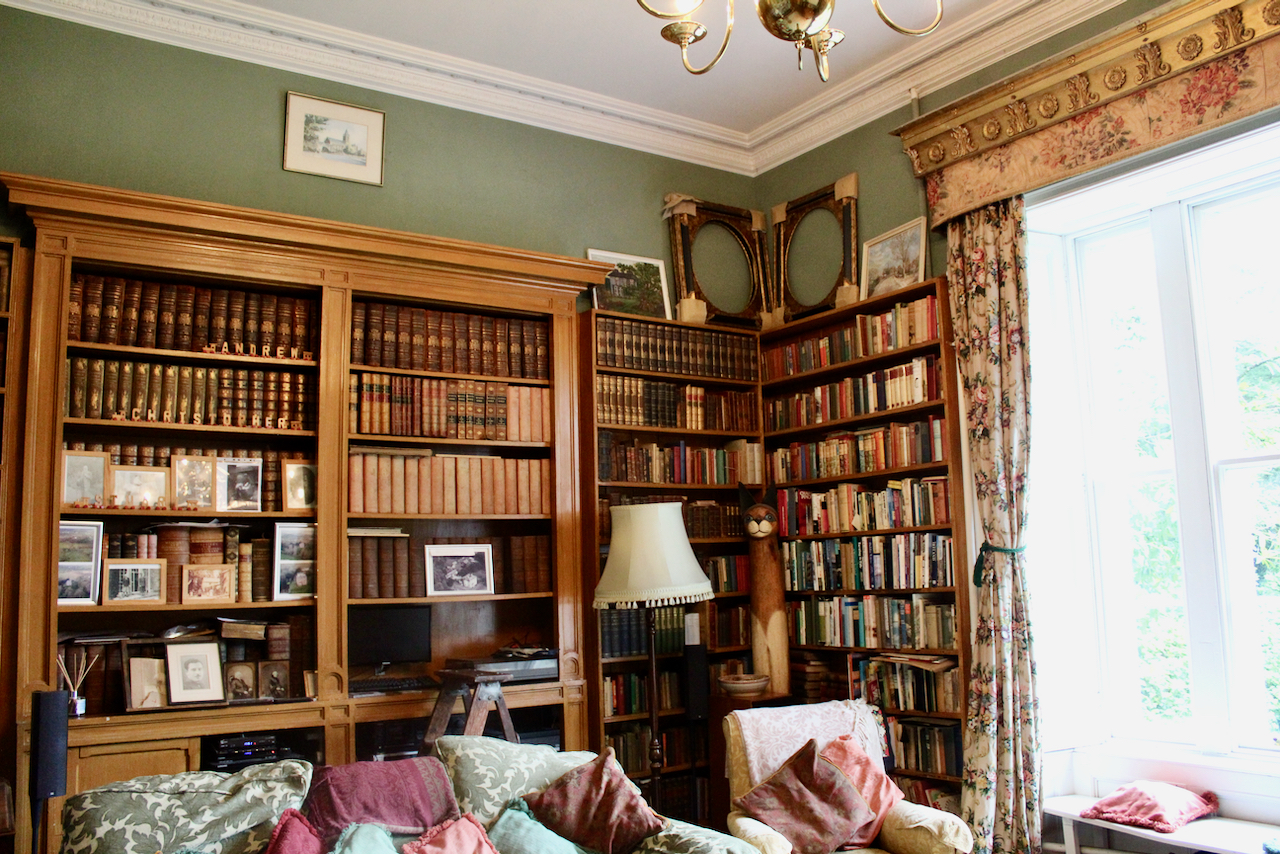
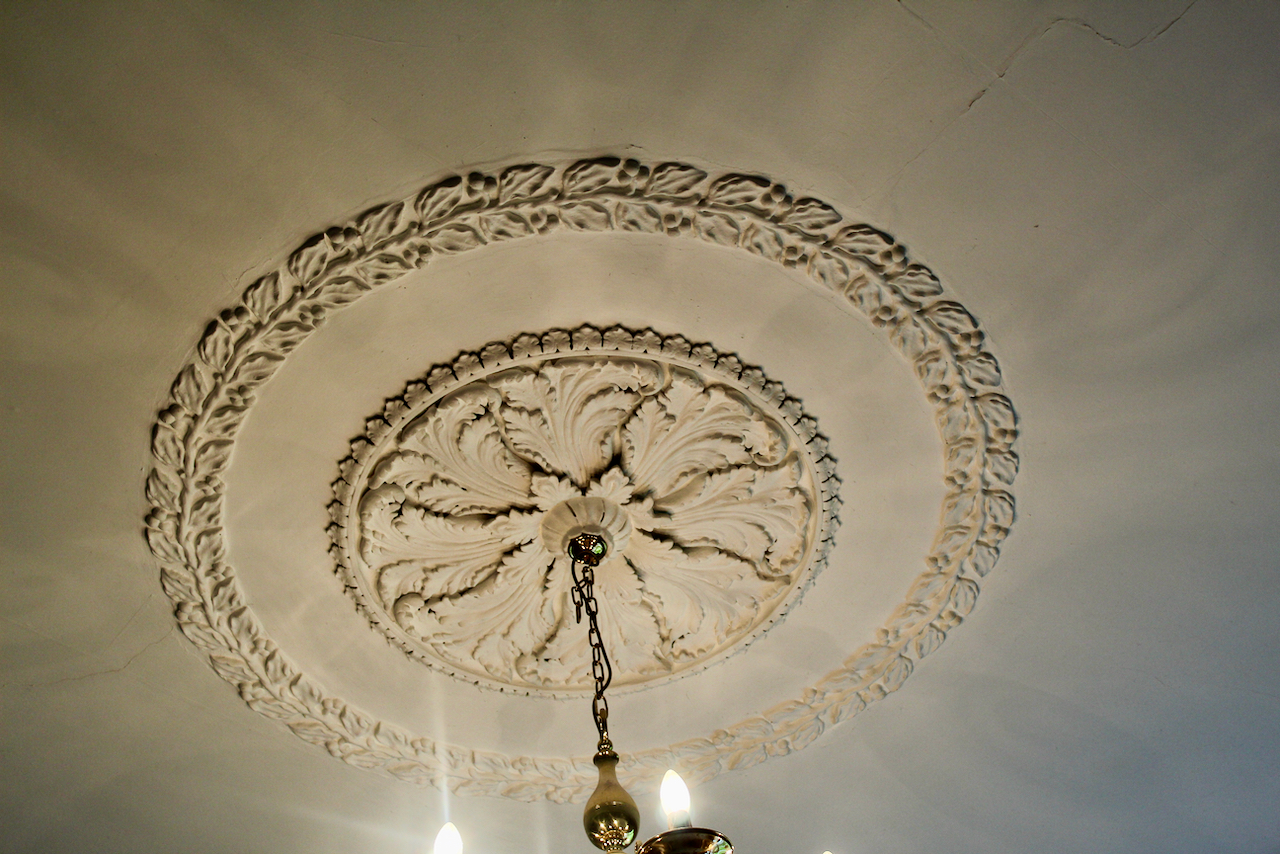

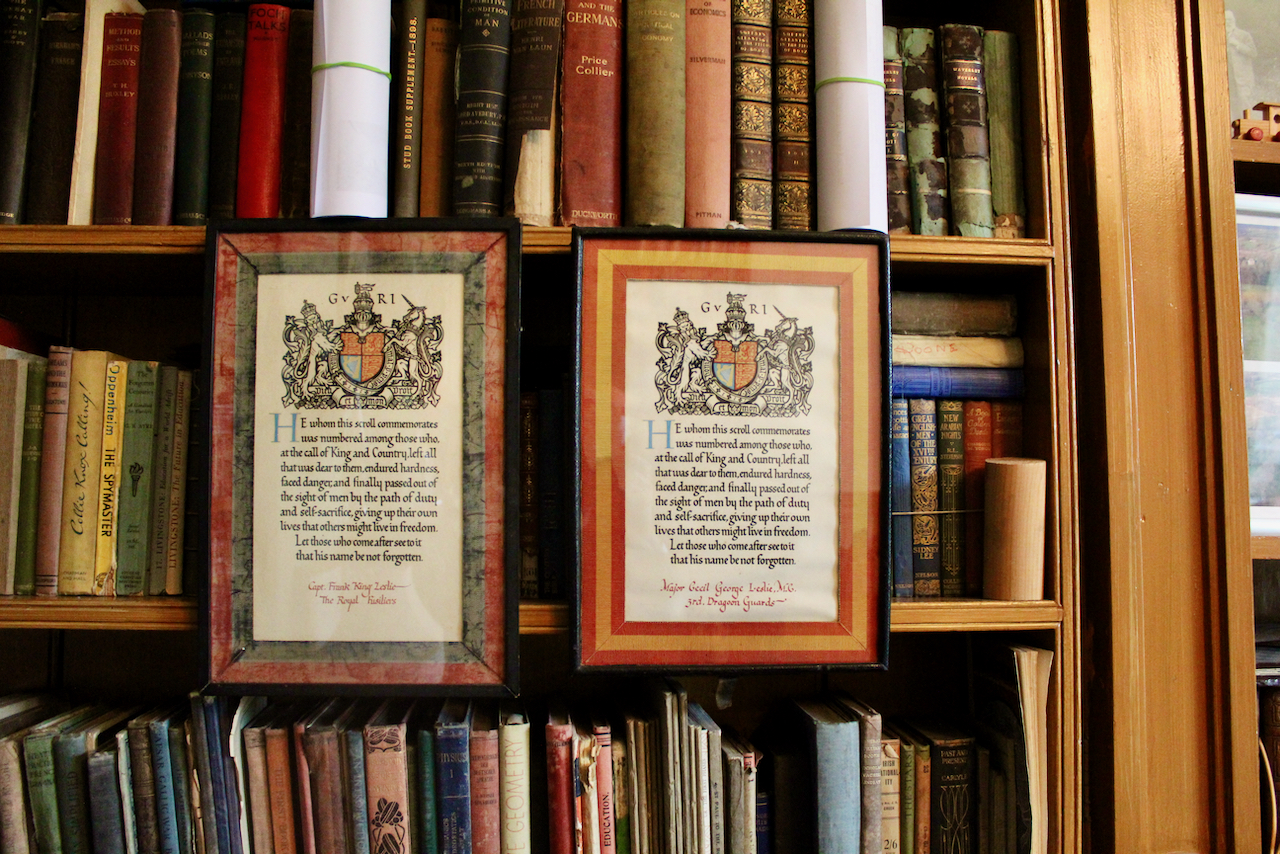
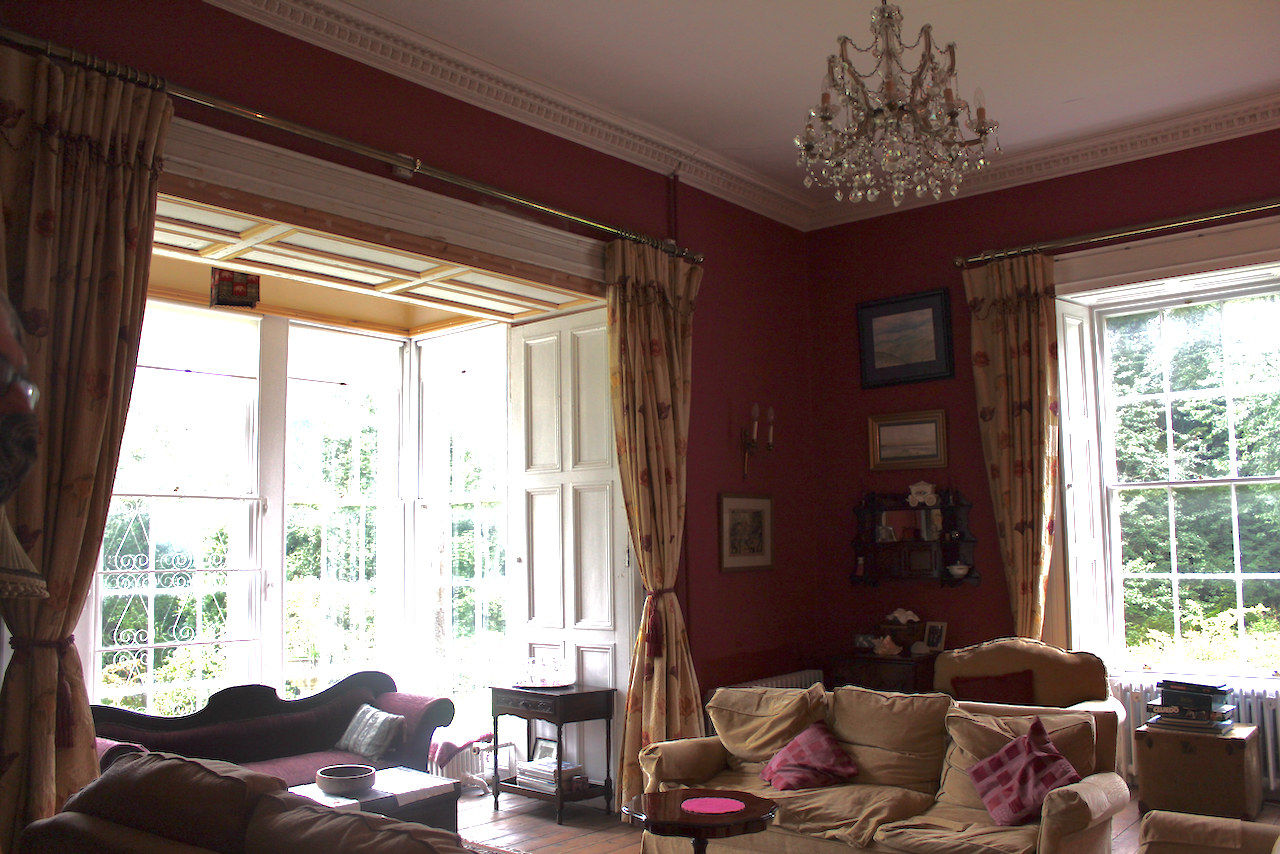


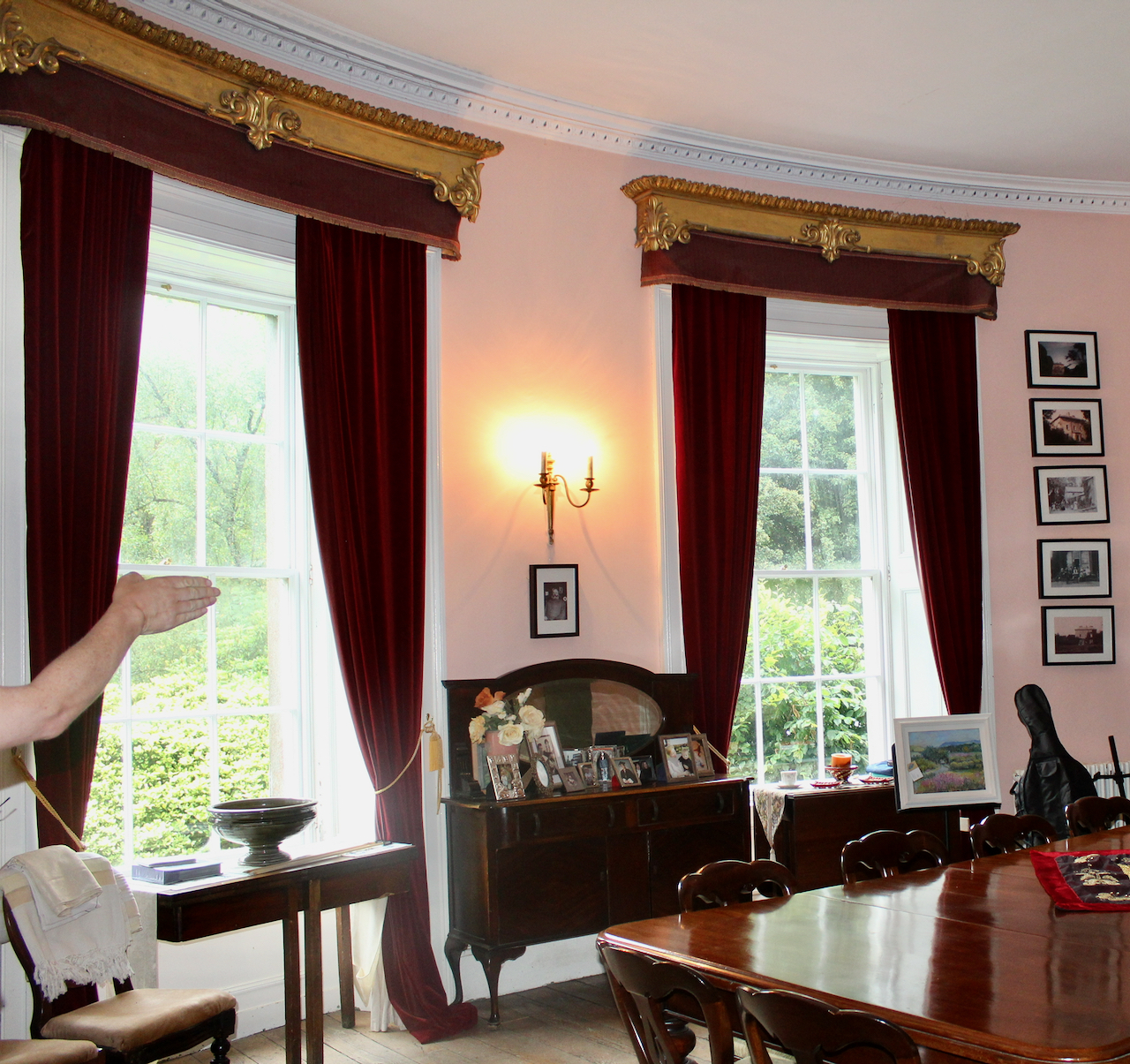
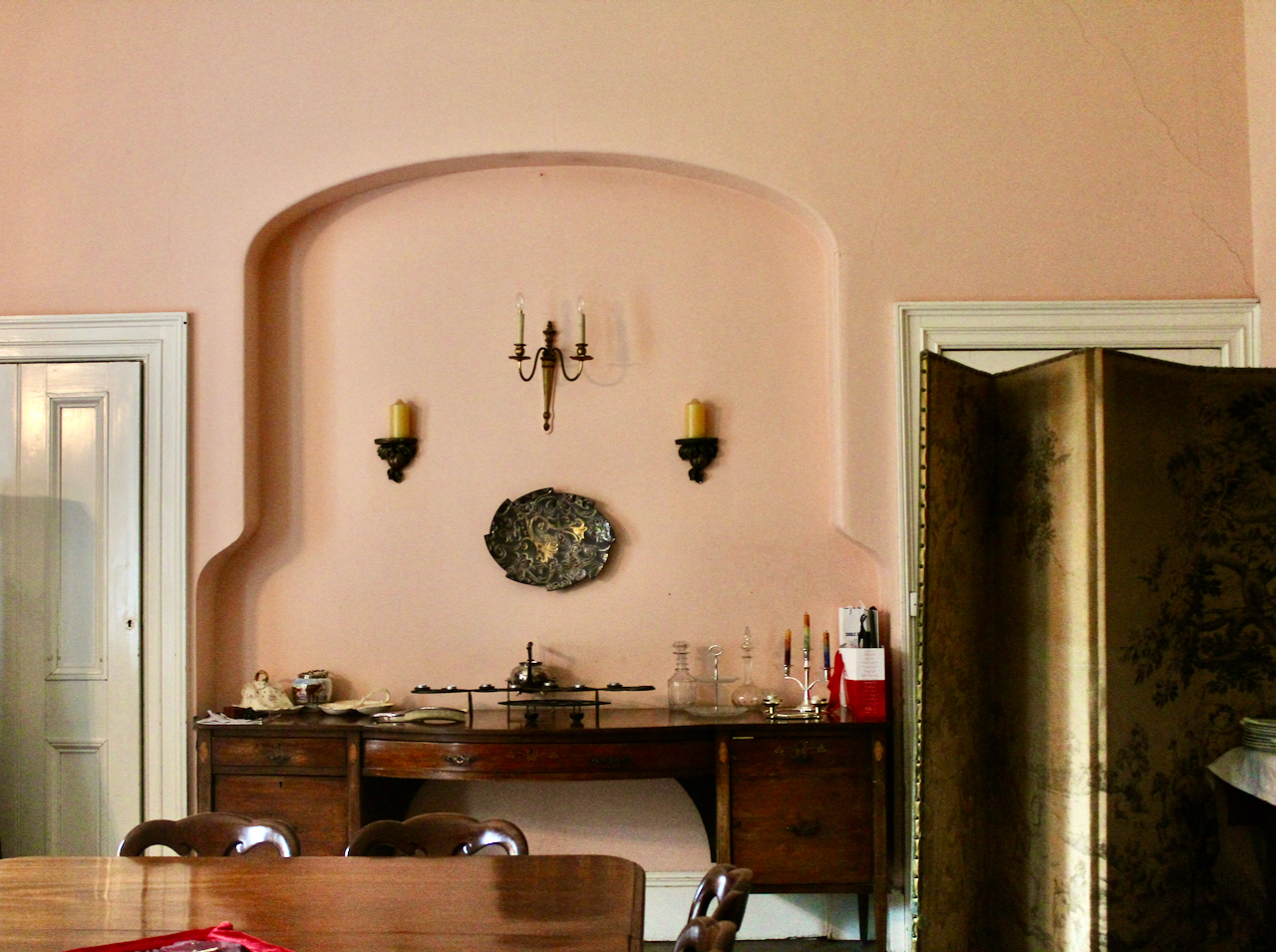
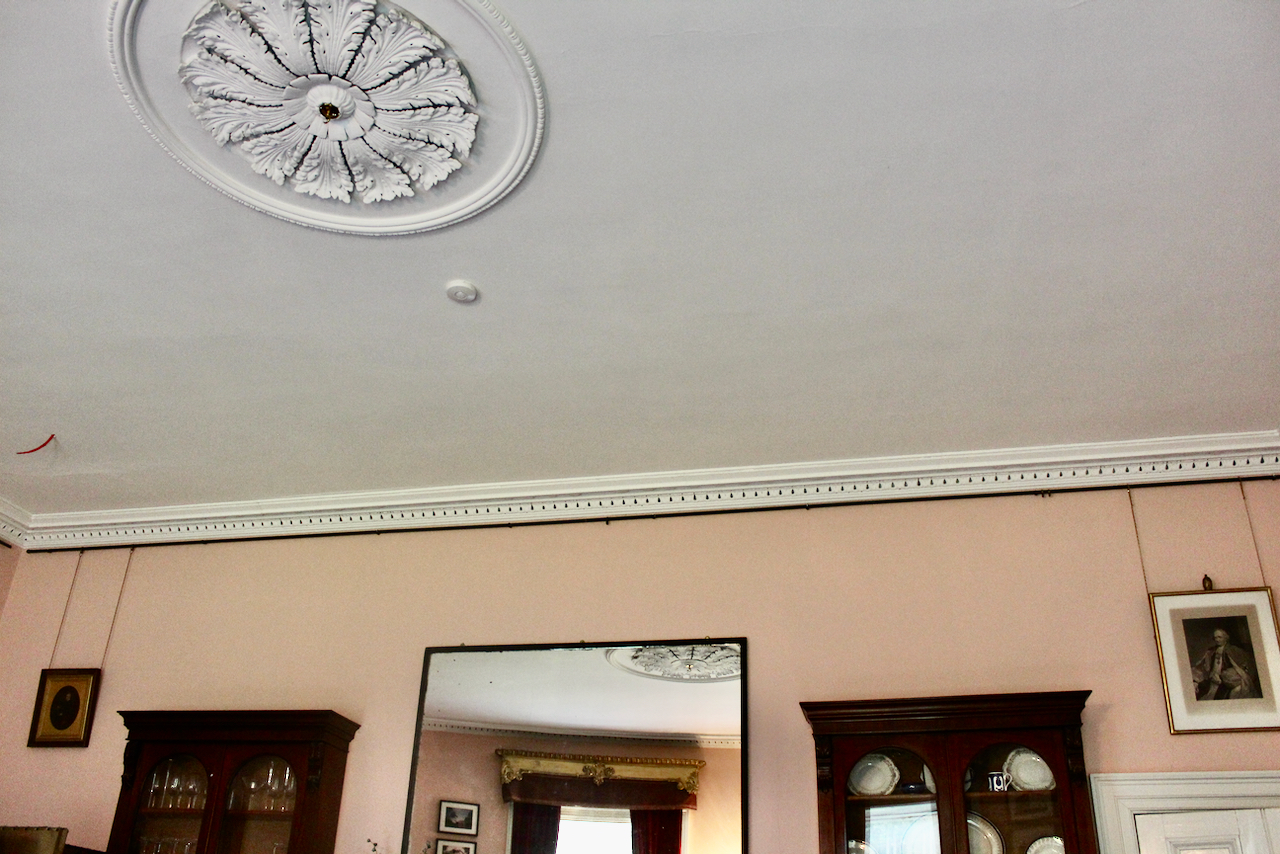

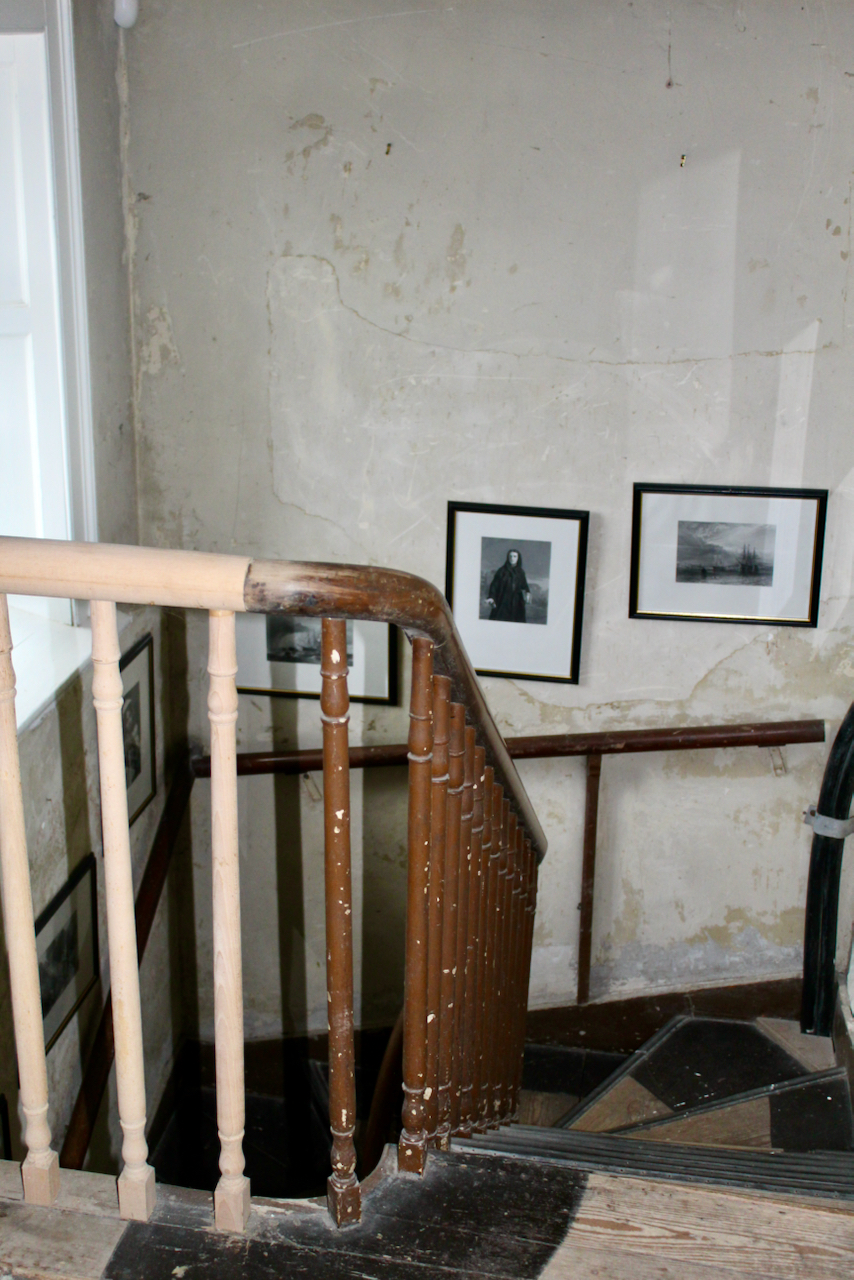

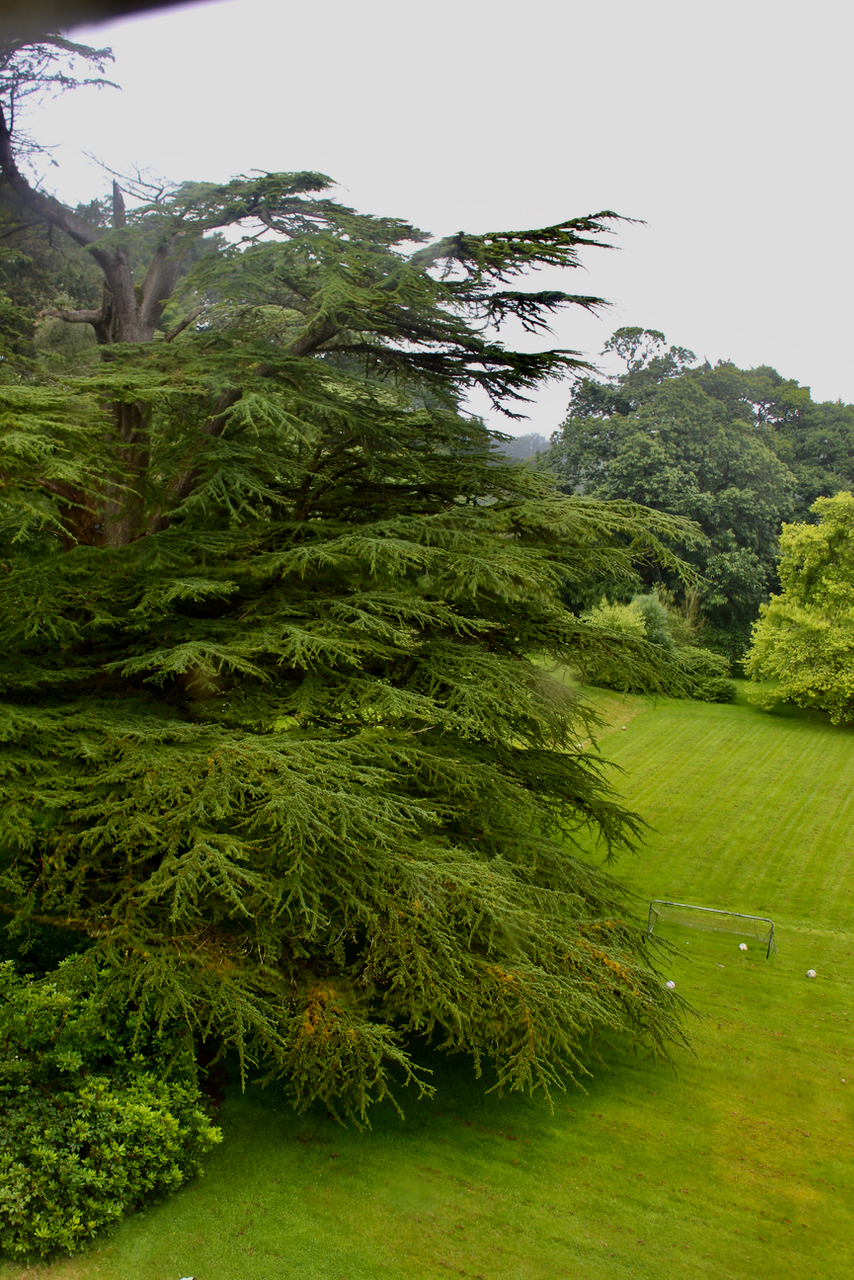

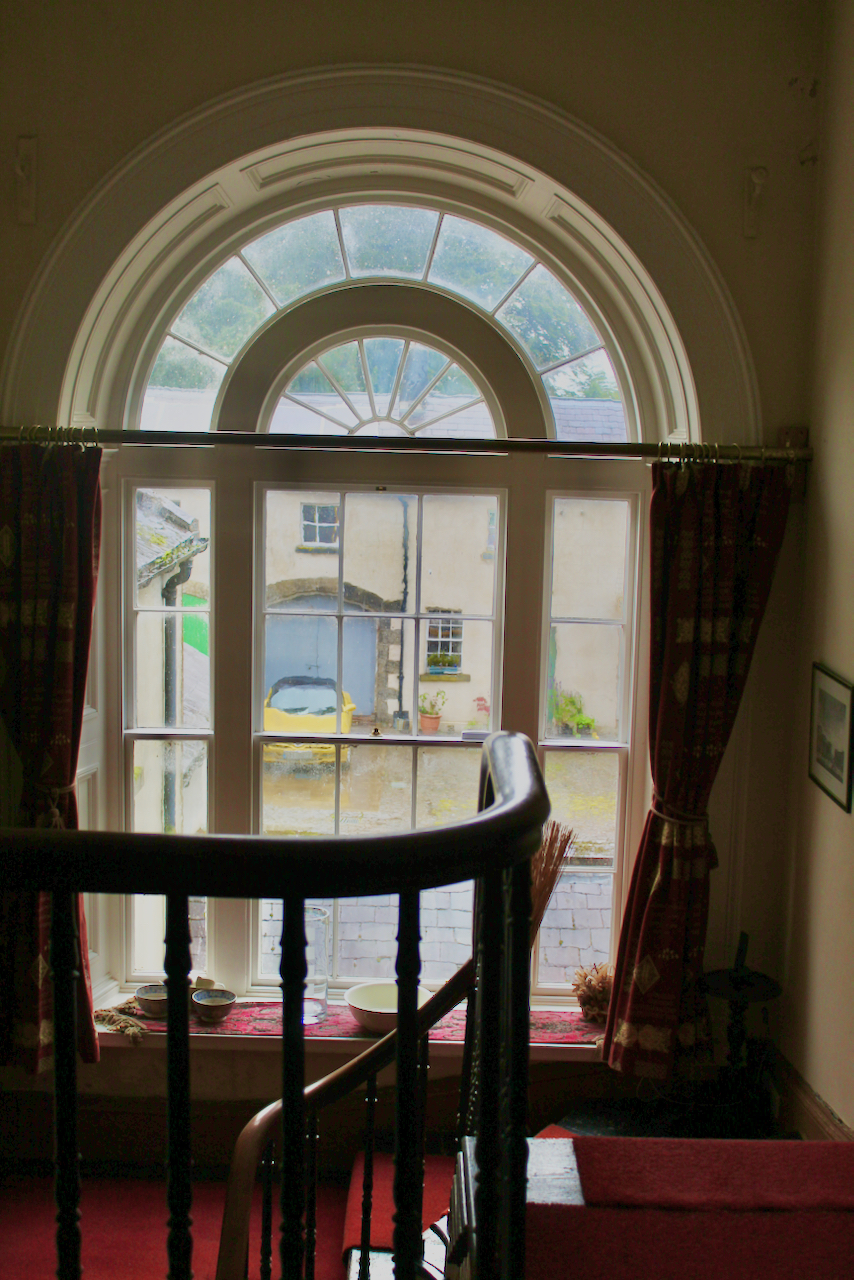
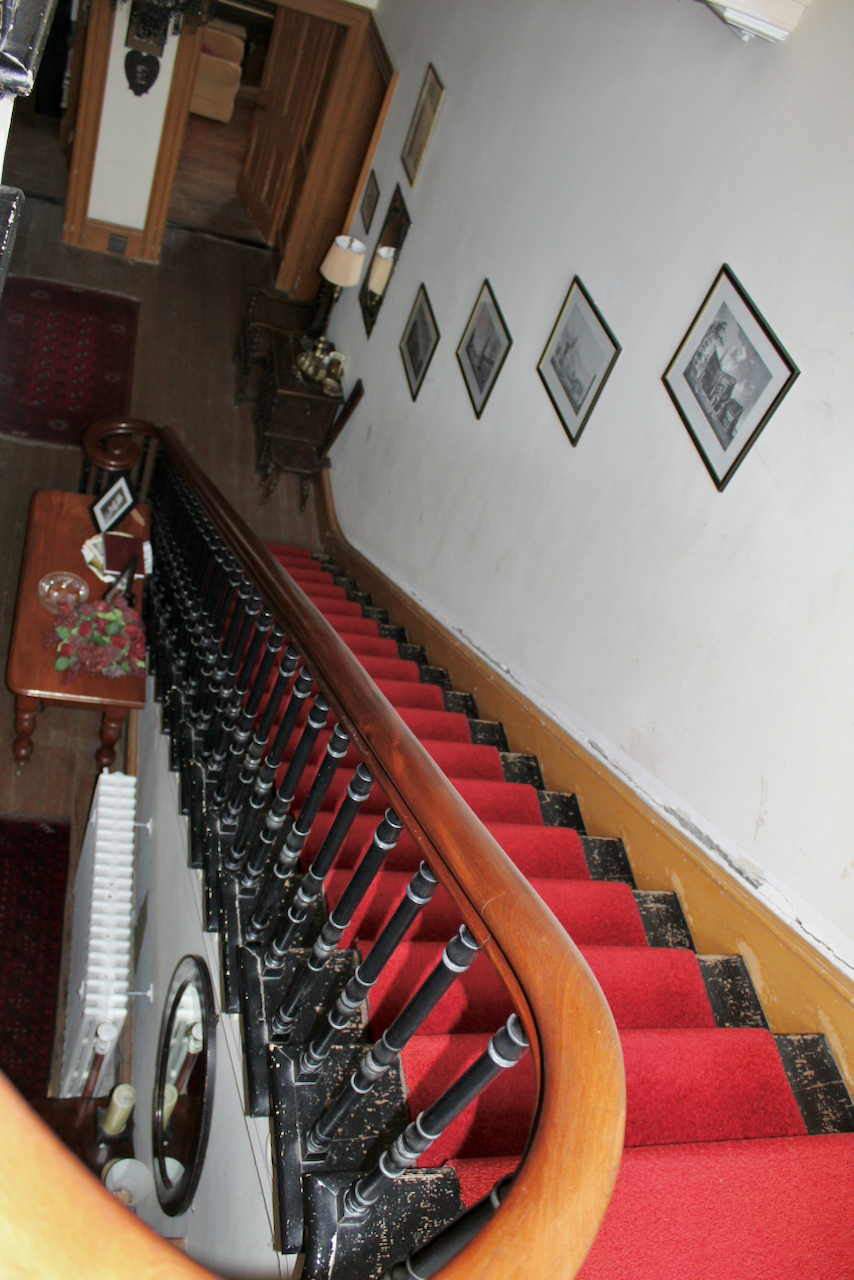

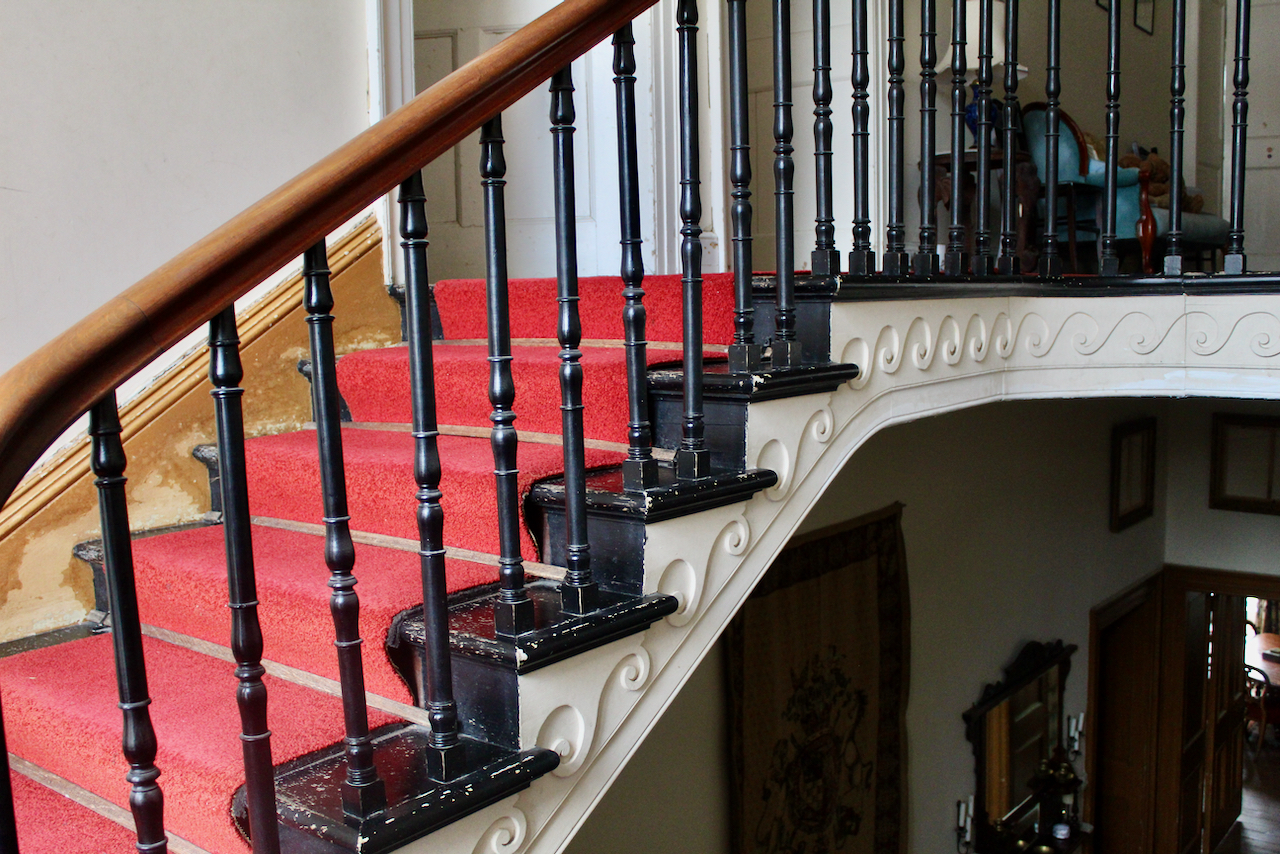

 Irish Historic Houses