Killruddery, Southern Cross Road, Bray, County Wicklow – section 482

www.killruddery.com

Open dates in 2026: Mar 29-31, Apr 1-12, 14-19, 21-26, 28-30, May 1-10, 12-17, 19-24, 26-31, June 1-7, 9-14, 16-21, 23-28, 30, July 1-5, 7-12, 14-19, 21-26, 28-31, Aug 1-2, 3-9, 11-23, 25-30, Sept 1-6, 8-13, 15-20, 22-27, 29-30, Oct 1-4, 6-11, 13-18, 20-31, Nov 1, Mar, Apr, Oct, Nov, 9.30- 5pm, May-Sept 9.30am-6pm

Fee: adult house and garden tour €17.50, garden €10.50, OAP/student house and garden tour €15, garden €9.50, child 4-12 years house and garden €4, concession- youth 12-18 years house and garden €15, garden €9.50

donation

Help me to pay the entrance fee to one of the houses on this website. This site is created purely out of love for the subject and I receive no payment so any donation is appreciated!

€15.00
2026 Diary of Irish Historic Houses (section 482 properties)

To purchase an A5 size 2026 Diary of Historic Houses (opening times and days are not listed so the calendar is for use for recording appointments and not as a reference for opening times) send your postal address to jennifer.baggot@gmail.com along with €20 via this payment button. The calendar of 84 pages includes space for writing your appointments as well as photographs of the historic houses. The price includes postage within Ireland. Postage to U.S. is a further €10 for the A5 size calendar, so I would appreciate a donation toward the postage – you can click on the donation link.

€20.00

We have been to this estate several times, but were lucky enough to have a tour of the house when we went with IDFAS, Irish Decorating and Fine Art Society in June 2015. This was before tours were regularly held for visitors, as they are now. I returned in May 2023 for a second tour. The house is still occupied by the family who built it, and three generations occupy it: the current Lord Meath, who is a forester by trade, and his son Anthony who runs the farm and income generating businesses such as the café, markets, and events.
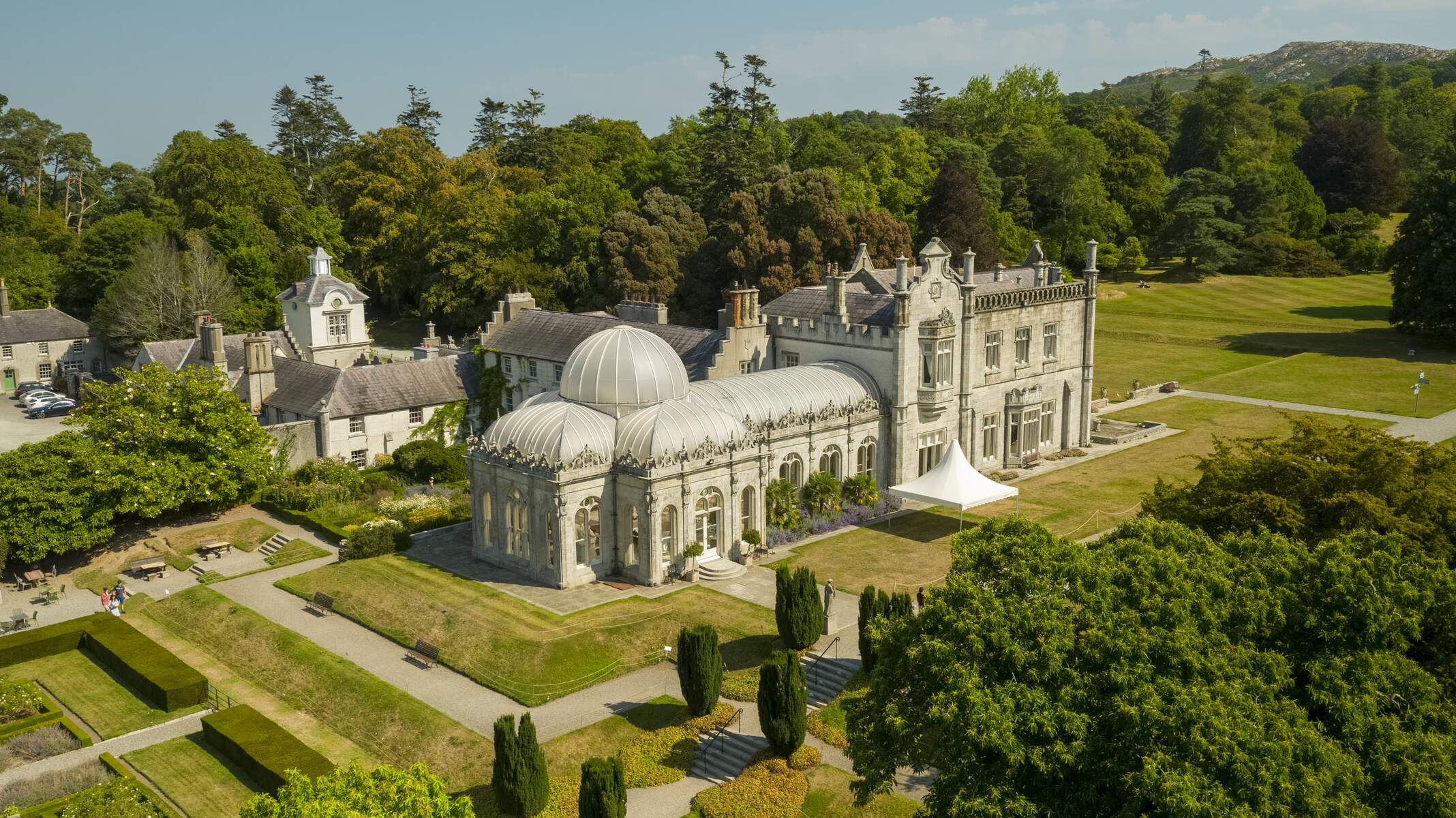
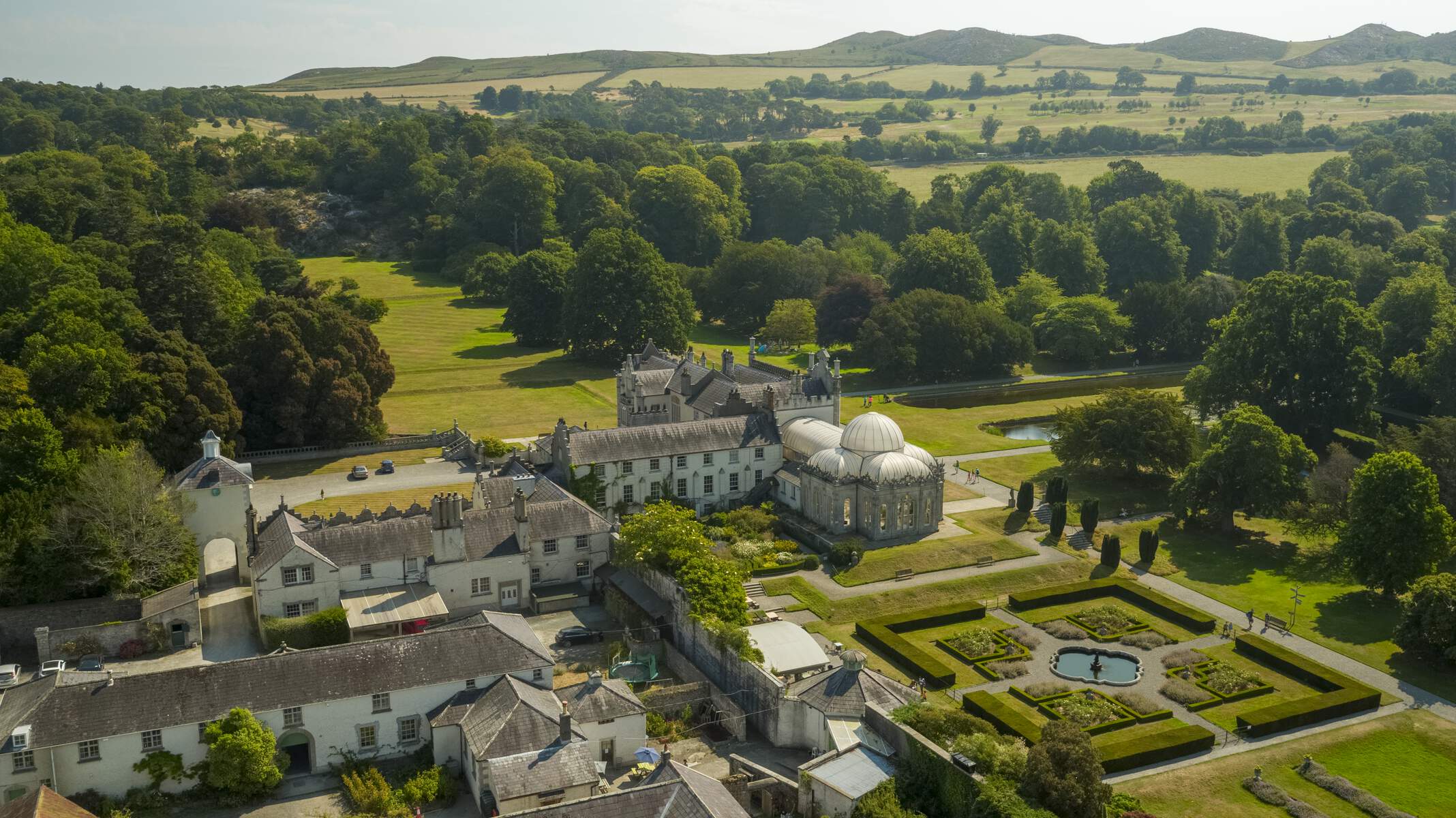
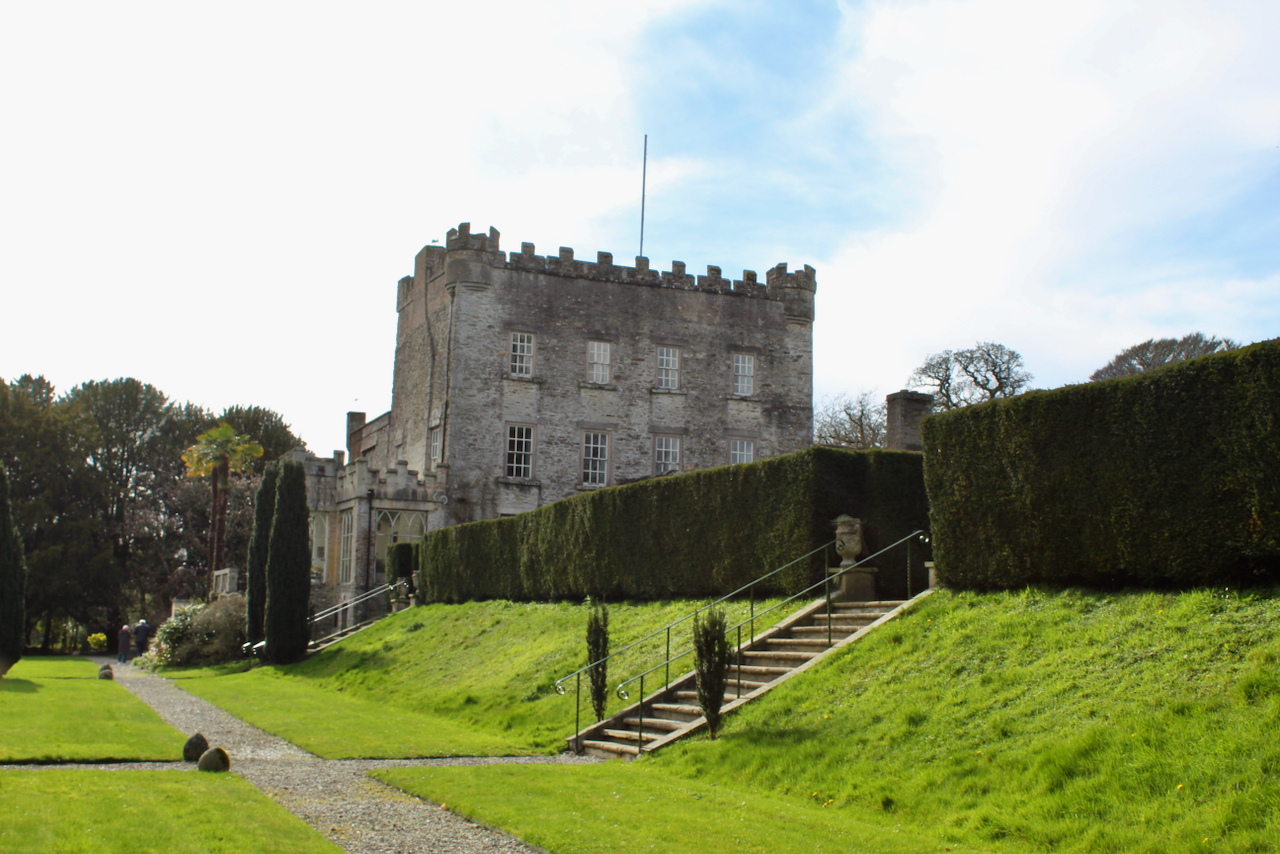
Killruddery House and Gardens, Bray, Co Wicklow, photograph by Sonder Visuals 2014 for Fáilte Ireland [1]
Killruddery House and Gardens, Bray, Co Wicklow, photograph by Sonder Visuals 2014 for Fáilte Ireland

The website describes Killruddery: “Killruddery is a living, working House, Gardens and Farm. It has been home to sixteen generations of the Brabazon family and over the centuries many other families have joined this special place as a home and in employment.”

“In 1534, Henry VIII sent Sir William Brabazon of Leicester to Ireland to serve as Vice-Treasurer. Later in 1539, Sir William secured ownership of the Abbey of St. Thomas, which stood between present day Thomas Street and the River Liffey in Dublin. Conflicting reports state that Killruddery was not granted to the Brabazon family until 1618 but it is surely of relevance that the monastic lands of St. Thomas’s included the lands of Kilrotheri (or Killruddery), being the Little Sugar Loaf, Bray Head and the valley running between them. “

Killruddery has a special place in my heart since we live in the Liberty of the Earl of Meath in Dublin, near the former location of the Abbey of St. Thomas. It is called a “liberty” as it lay outside the walls of the city of Dublin and had its own laws – initially, the laws were those of the abbeys and monasteries that owned the land. In 1538, King Henry VIII dissolved the monasteries, including the Abbey of St. Thomas in Dublin. At that time the abbey owned property also in Counties Meath, Louth, Wicklow and Kildare. The property was divided between William Brabazon and the Lord Deputy, Richard St. Leger. The property in County Wicklow, on which the monks had built a retreat, farm and burial ground, came with a small castle and its outbuildings. [2]

Sir William’s son Edward (d. 1625) was appointed Privy Counsellor of Ireland in 1584. He held the office of Member of Parliament for County Wicklow in 1585. In 1598 he purchased the estate of Nether Whitacre, Warwickshire, and he was High Sheriff of County Stafford from 1606 to 1607. This property was sold by the family in 1630. He was M.P. for Bangor between 1613 and 1615. He was created 1st Lord Brabazon, Baron of Ardee, County Louth in 1616.
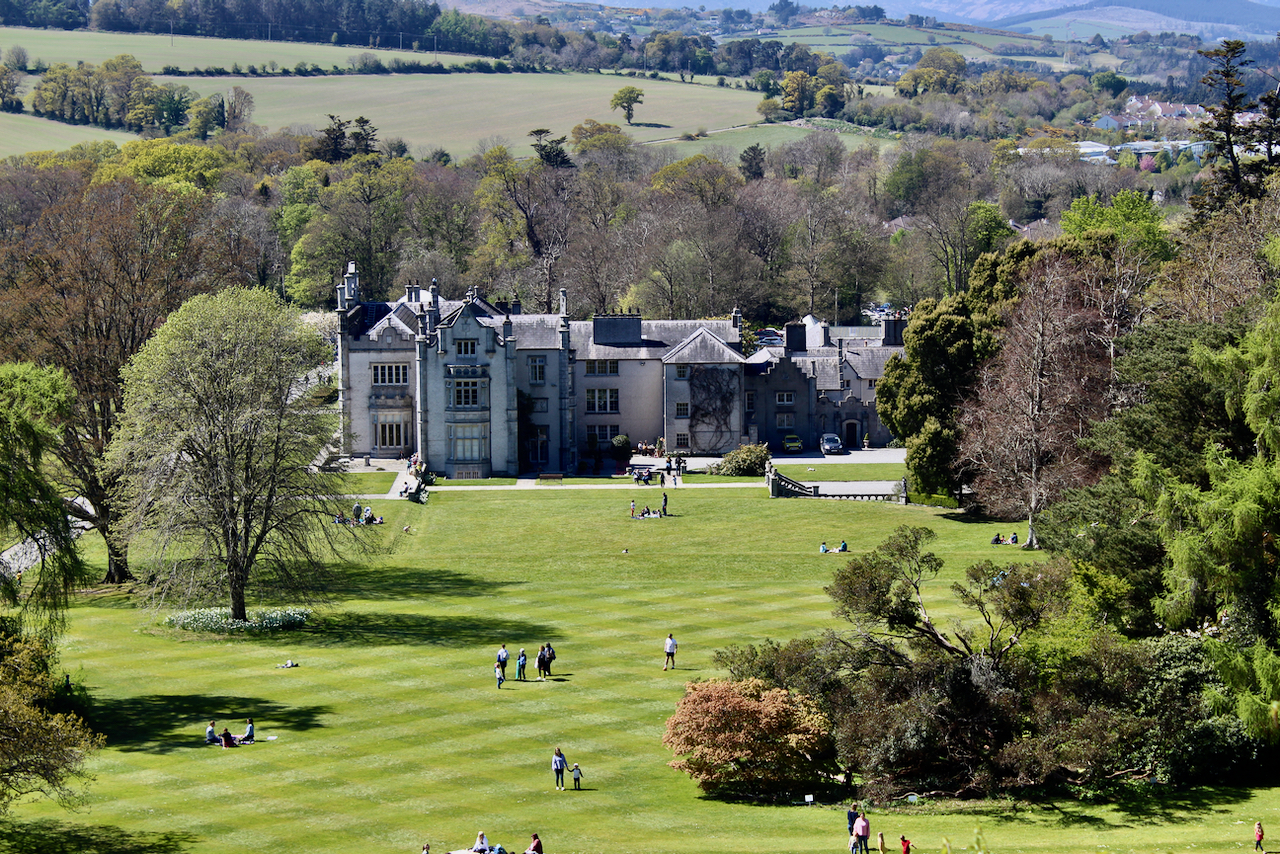
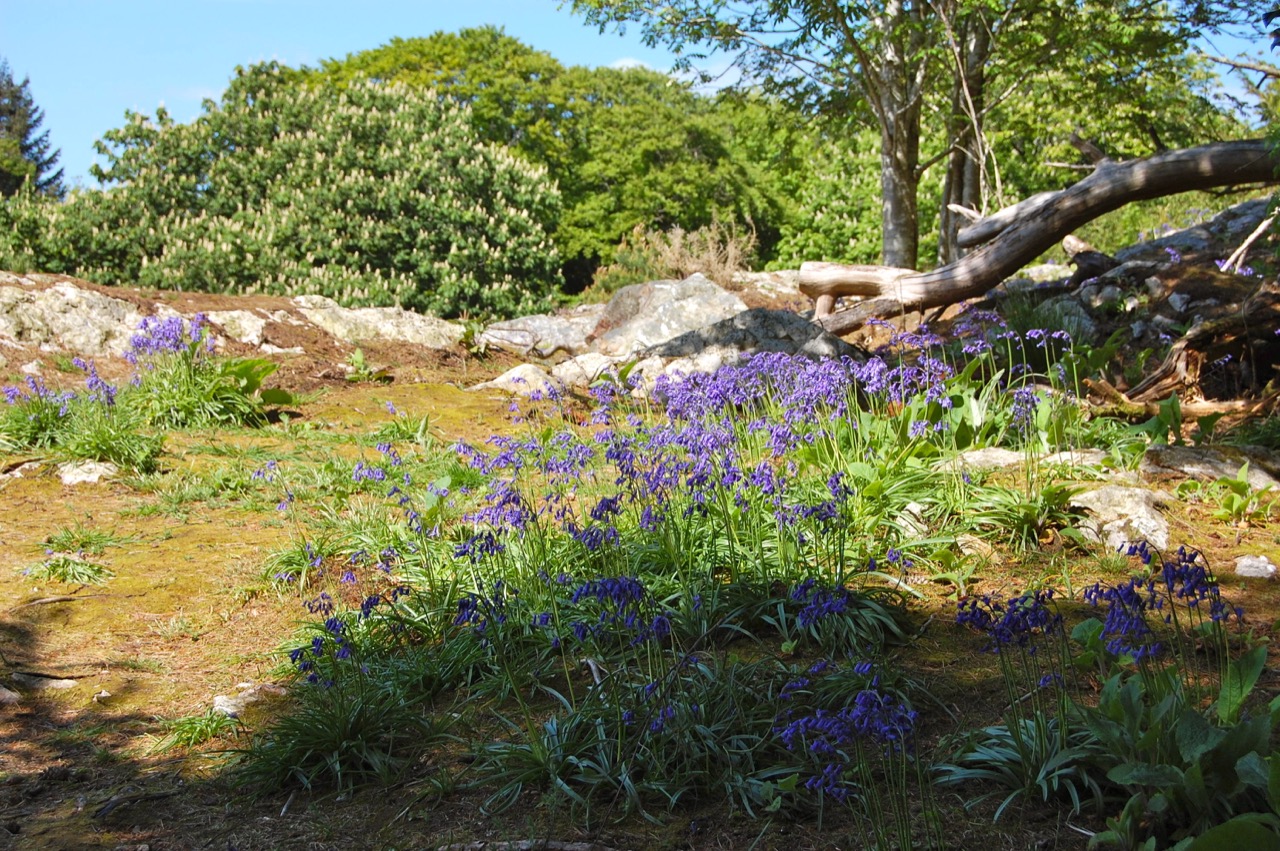
View of the house from the Rockery, April 2021. Photograph © Jennifer Winder-Baggot, www.irishhistorichouses.com
The view from the house toward the rockery. Photograph © Jennifer Winder-Baggot, www.irishhistorichouses.com
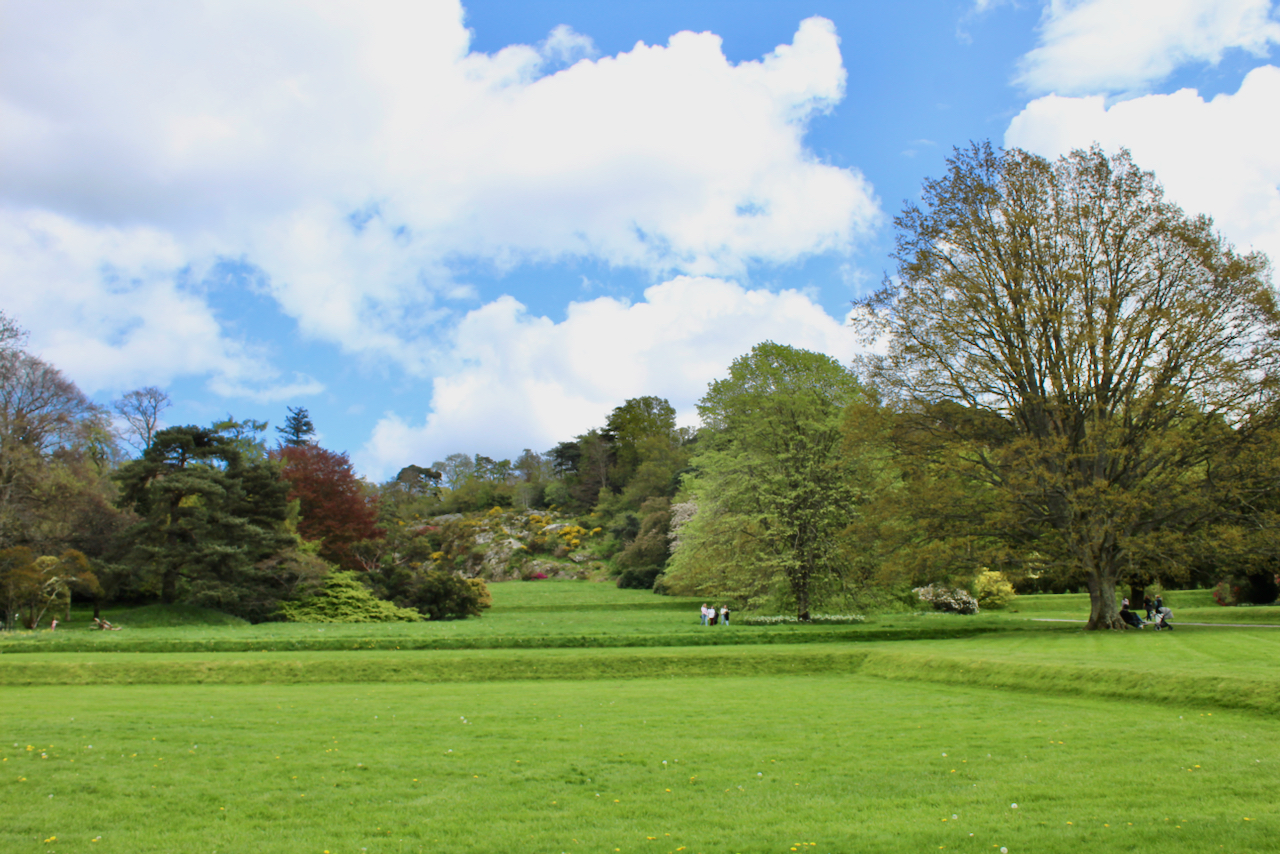
Killruddery rockery, May 2013. Photograph © Jennifer Winder-Baggot, www.irishhistorichouses.com

His children married very well. His daughter Susannah married Lucas Plunkett, 1st Earl of Fingall, 10th Baron of Killeen. Ursula married James Hamilton, 1st Viscount Claneboy of County Down, and Elizabeth married three times, having a daughter by the Bishop of Meath George Montgomery, who married Nicholas St. Lawrence, 10th Baron Howth. Edward’s son Anthony lived in Tallanstown, County Louth, and his son William (d. 1651) was forty-five years old when he succeeded as 2nd Baron of Ardee. He was created 1st Earl of Meath in 1627, with a special remainder to his brother Anthony. When he was made Earl of Meath, henceforth the Liberty of St Thomas and Donore was called the Earl of Meath Liberties.

The Earl was sent to the Tower of London in 1644, as he fought against Cromwell’s Parliamentary forces. [3] He was exchanged seven months later for another prisoner.

His house in County Wicklow was burned down by Cromwell’s troops. He died in 1651 and his son Edward (1609-1675) became the 2nd Earl of Meath.

The Killruddery website tells us that:

The 2nd Earl of Meath built a house at Killruddery to replace one burned six years earlier. An illustration from about 1680 shows a building of five bays facing east. In 1666, the 2nd Earl increased the estate with the addition of “the section of Great Bray between Main Street and the sea and between the river and Main Street.”

He held the office of Member of Parliament (M.P.) for Athlone from 1634 to 1635. He had married Mary Chambré in 1632. She was from Carnew Castle in County Wicklow. He fought in the English Civil War as a Royalist, like his father. He was rewarded by King Charles II when the throne was restored to the Stuart family, and was appointed Privy Counsellor in Ireland between 1660 and 1669.

He died in 1675 as a passenger on the HMV ‘Mary’ which was shipwrecked off Beaumaurice in Anglesey during a voyage to England. His son, Edward, was rescued from the wreck.

His son William succeeded as 4th Lord Brabazon, Baron of Ardee, Co. Louth during his father’s lifetime in 1665 when he was about thirty years old. In 1671 he killed a man in a duel but was pardoned. He succeeded as the 3rd Earl of Meath when his father died in 1675. He had two daughters: Elizabeth married Philips Coote of “Mount Coote” County Limerick, which is now Ash Hill, another section 482 property, where we stayed during Heritage week in 2022, see my entry. She married a second time to the son of the Earl of Lindsay of England.
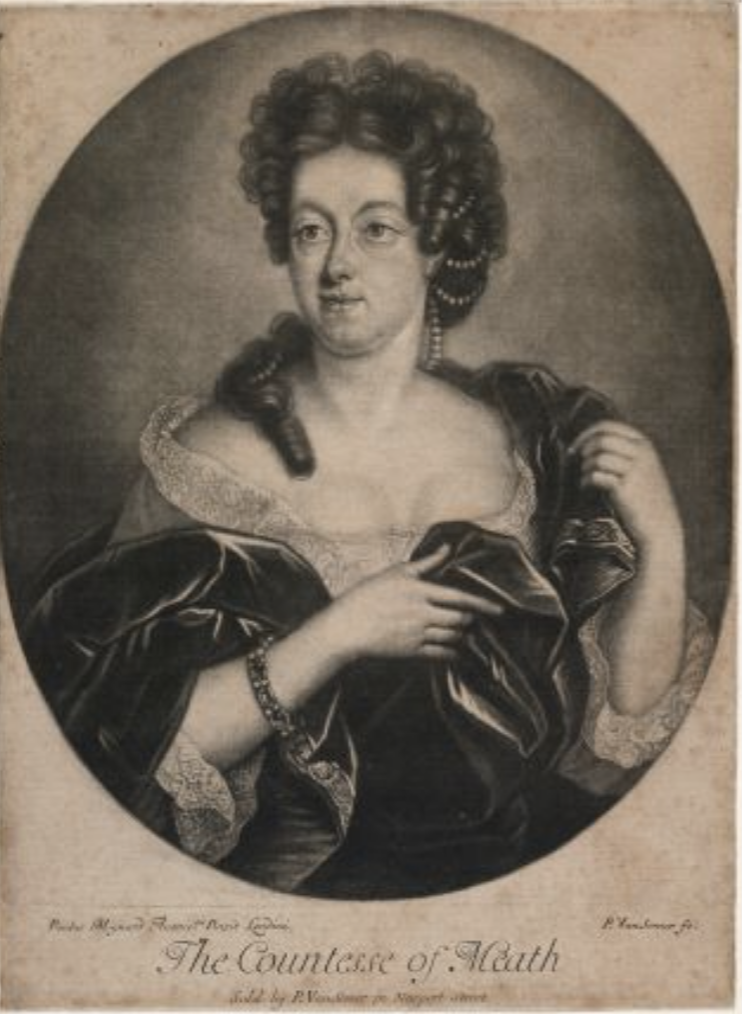
Elizabeth Brabazon née Lennard, Countess of Meath (1650-1701), Wife of the 3rd Earl of Meath, photograph courtesy of National Gallery of Ireland.

Since the 3rd Earl of Meath had no sons when he died in 1685, the title passed to his brother Edward. Edward (1635-1707) 4th Earl joined King William’s forces and commanded the garrison at Carrickfergus against James II. He fought in the Siege of Limerick and the Battle of the Boyne in 1690. He complained that that the “Glorious Revolution” had cost him £10,000 and, as a result, he sold a 35 year lease on the property at Killruddery to John Lovett, the uncle of Sir Edward Lovett Pearce. In 1702, the Earl took a house on the north side of St. Stephen’s Green in Dublin, where the family lived during the 18th century. [4] This house is now a school – before that, it was St. Vincent’s Hospital, set up by the nun Sister Aikenhead.

He married twice but had no children. He served as M.P. for County Wicklow in 1666 and Ranger of Phoenix Park in 1675. When he died, the title passed to another brother, Chambré.

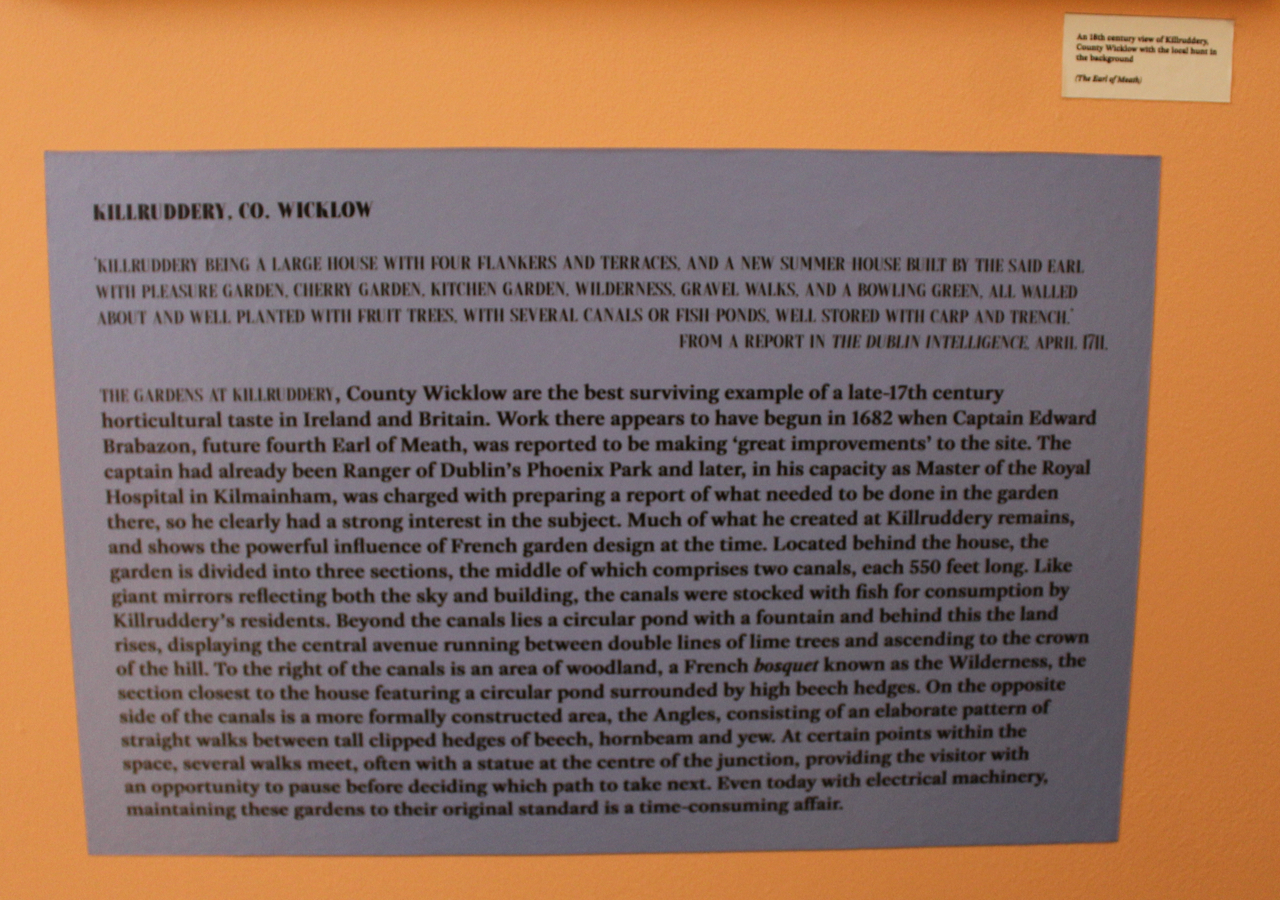
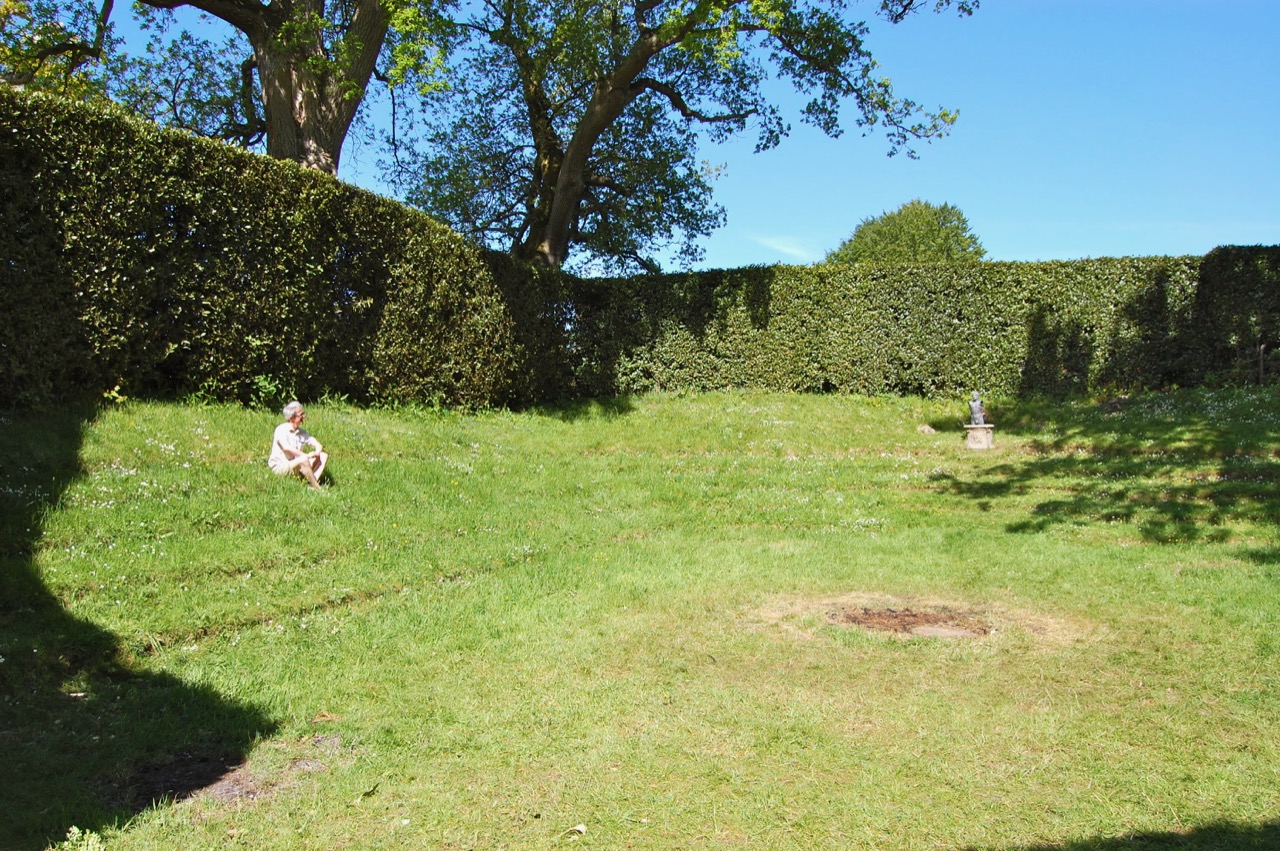
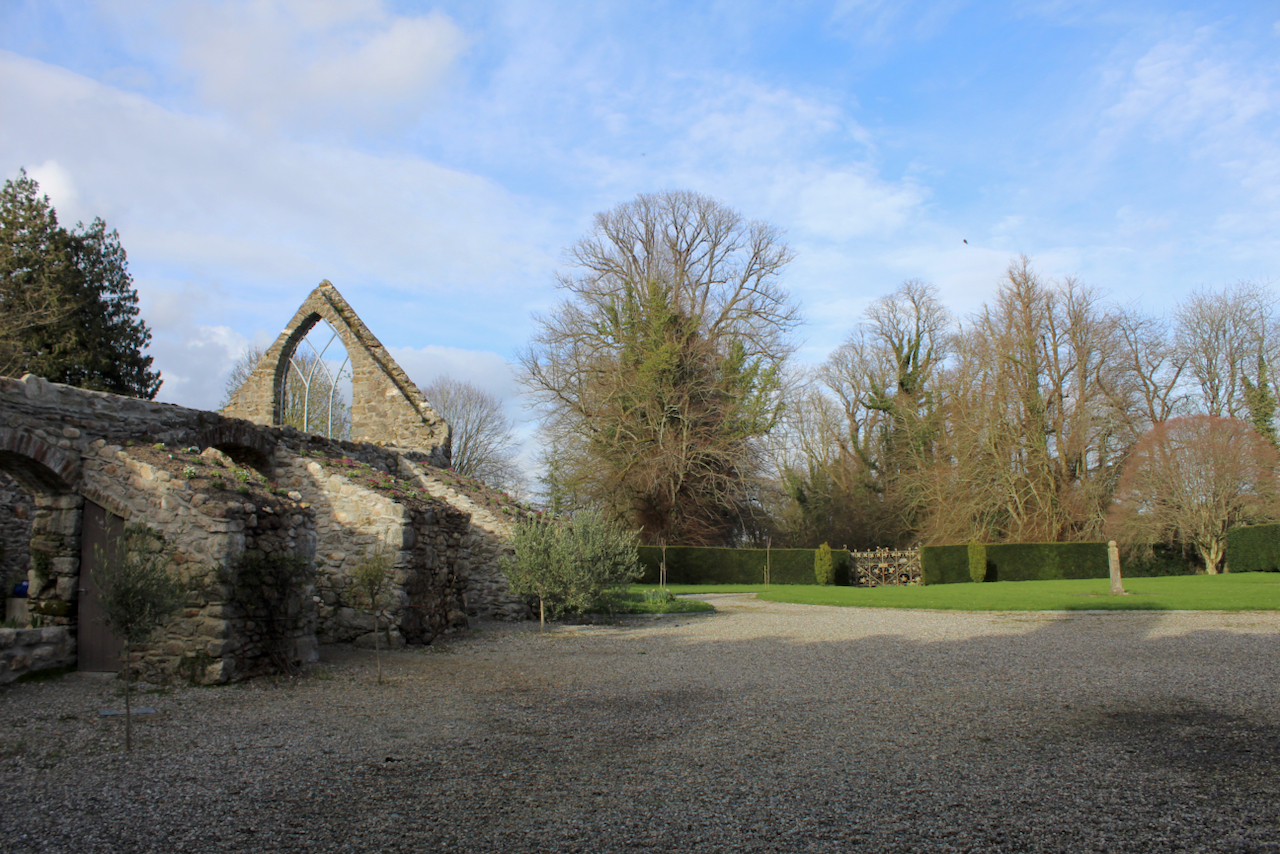
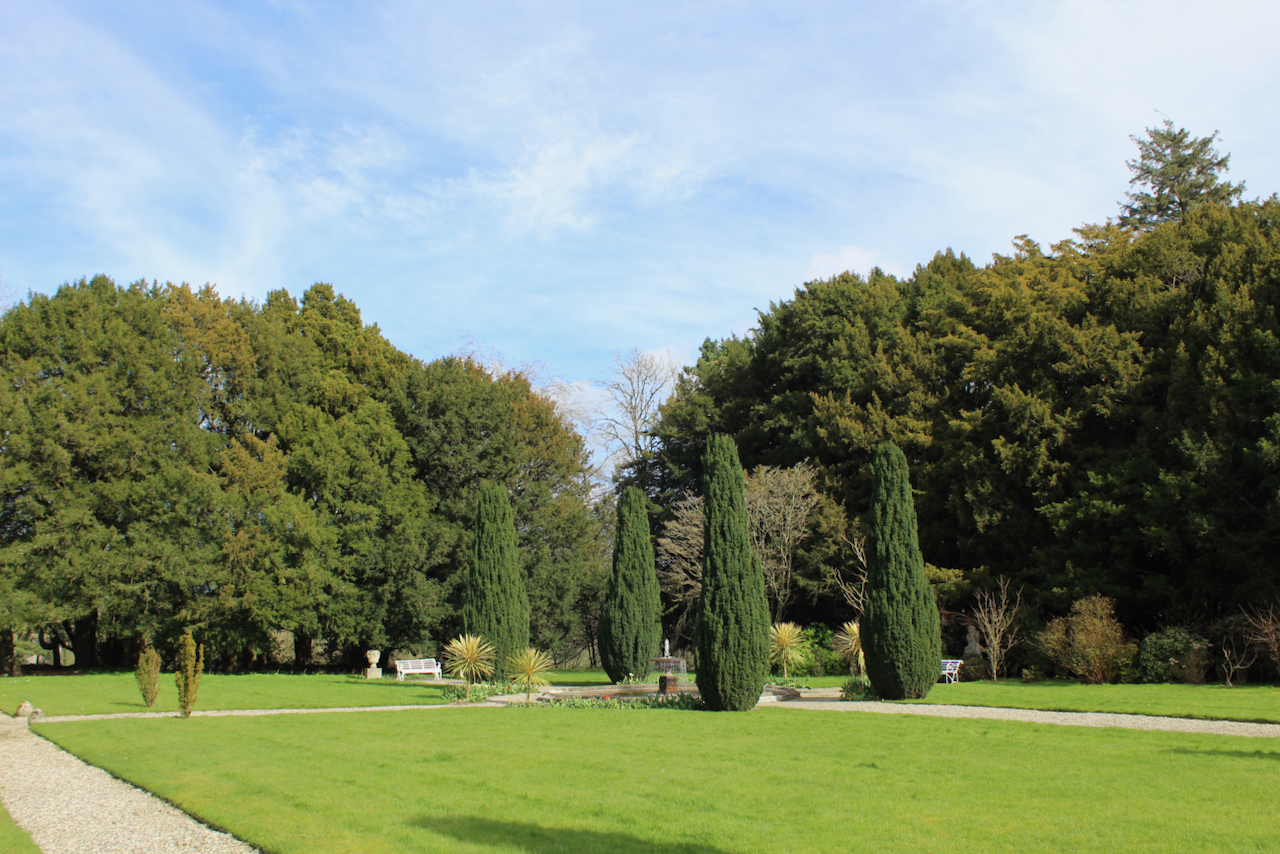
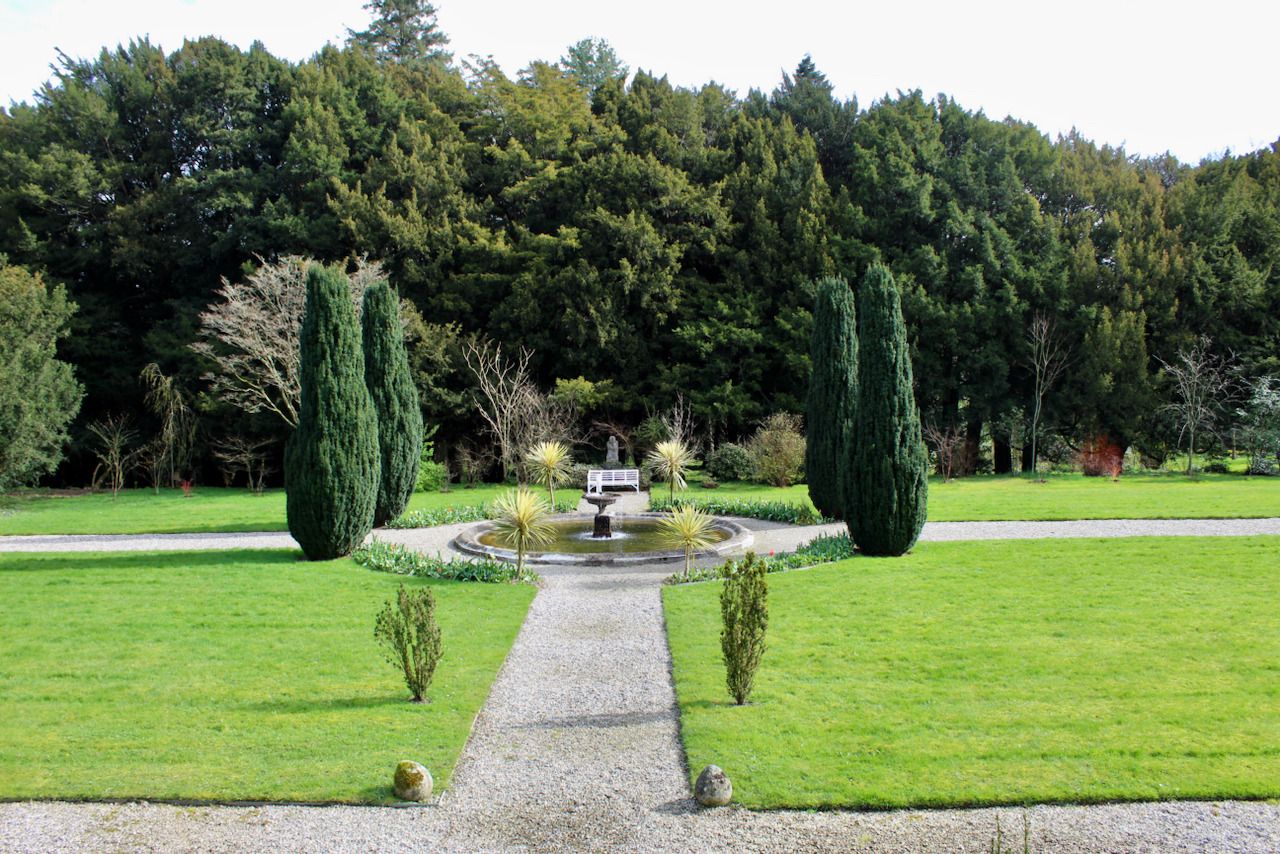
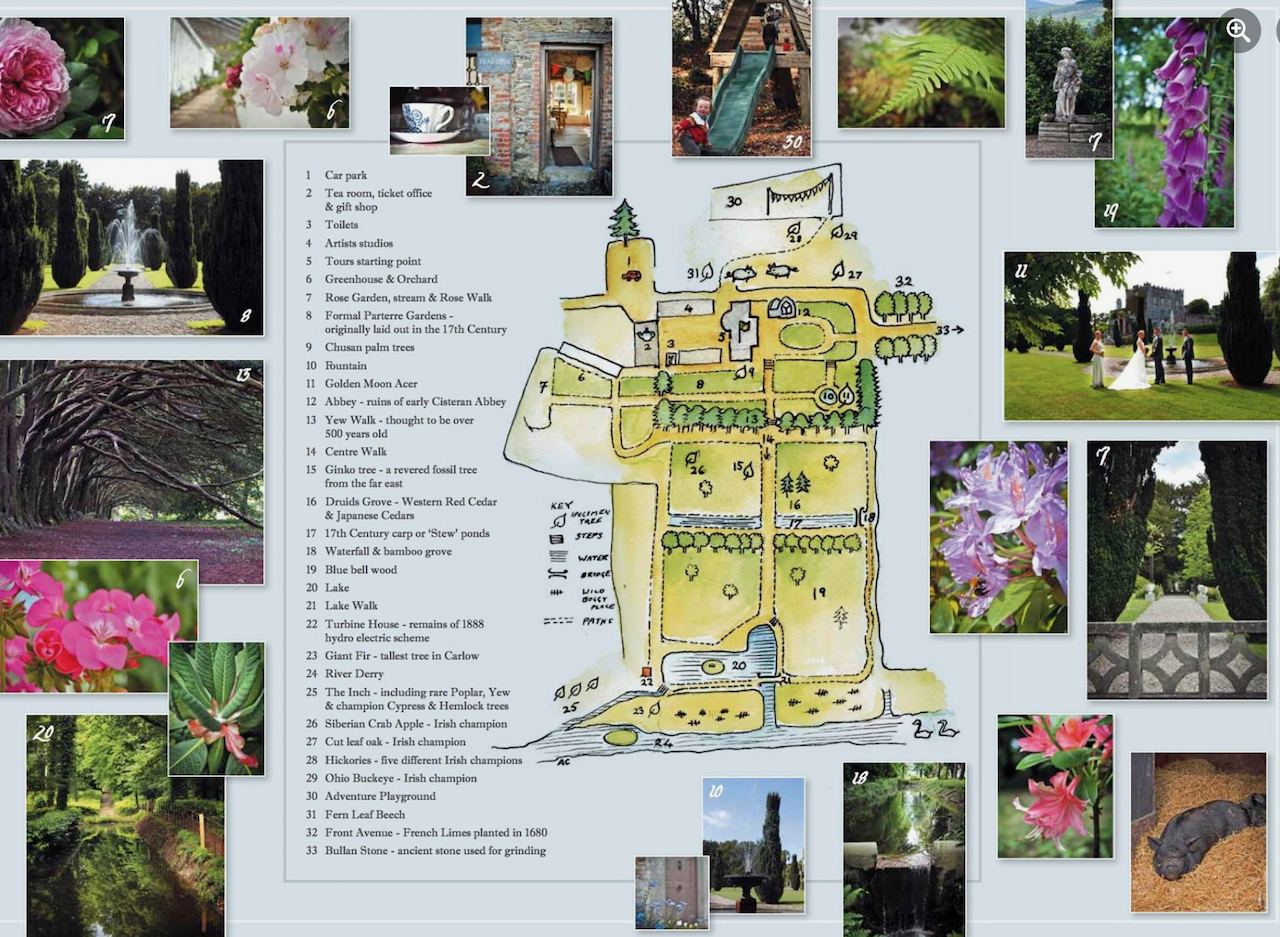
It was Edward 4th Earl of Meath who is responsible for the gardens at Killruddery. He built a modest house on the grounds as a summer house, and he lived in the house at St. Thomas’s Abbey in Dublin. The gardens are one of the few remaining 17th century gardens in Ireland or the U.K. The Killruddery website tells us that the gardens were used for the entertainment of a large number of guests and therefore the scale is comparable to that of a park. Edward employed Monsieur Bonet, a French Landscape architect, a pupil of Le Notre, in 1682. André Le Nôtre (12 March 1613 – 15 September 1700) was a French landscape architect and the principal gardener of King Louis XIV. Most notably he designed the park of the Palace of Versailles. Monsieur Bonet created the surviving French-Baroque gardens, comprising the Angles (a patte d’oie), the Long Ponds, the Sylvan Theatre, Lime Walks and the Beech Hedge Pond. He had already worked in Ireland for twelve years for Sir William Petty before he moved to Killruddery.

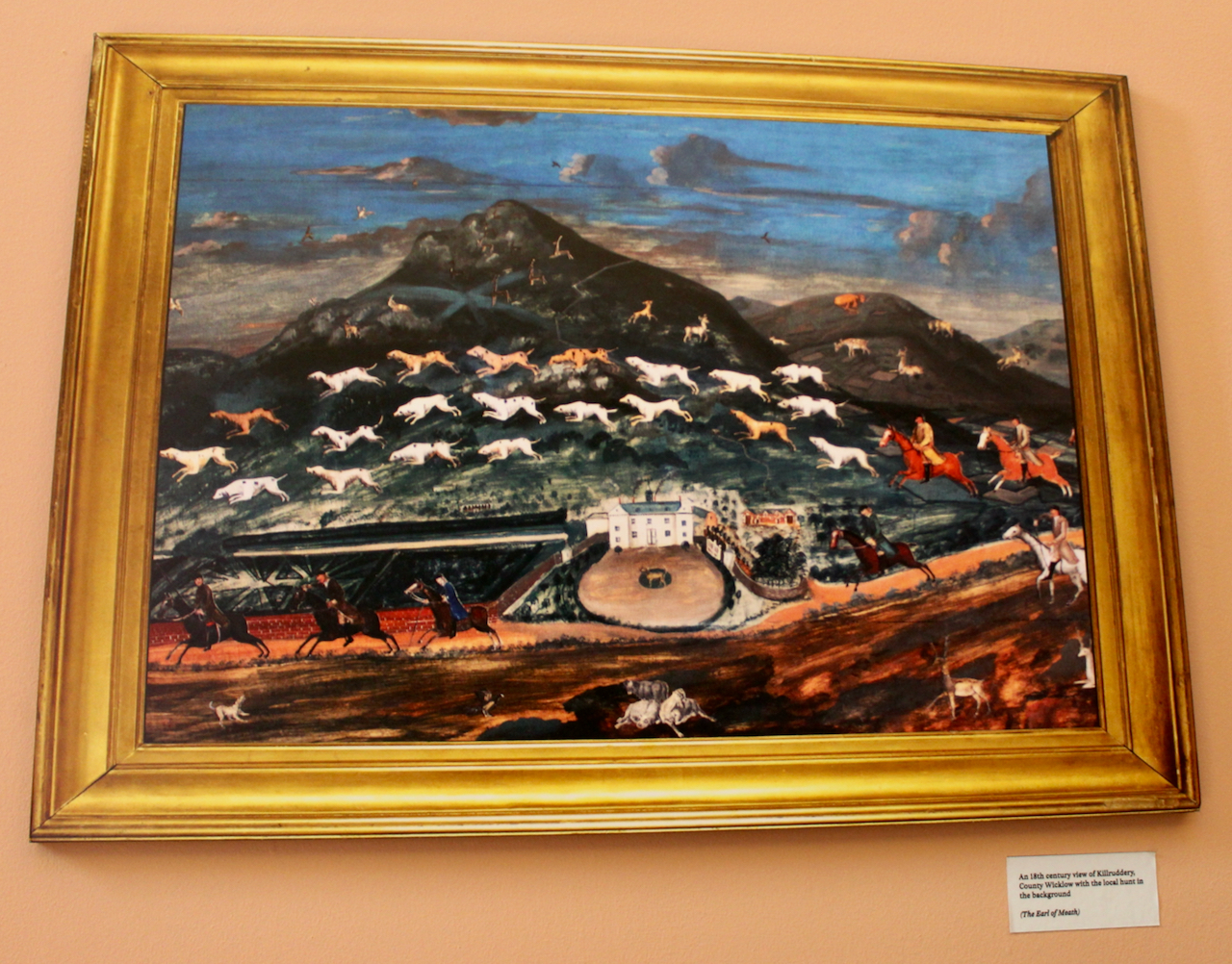
Kilruddery House, May 2013
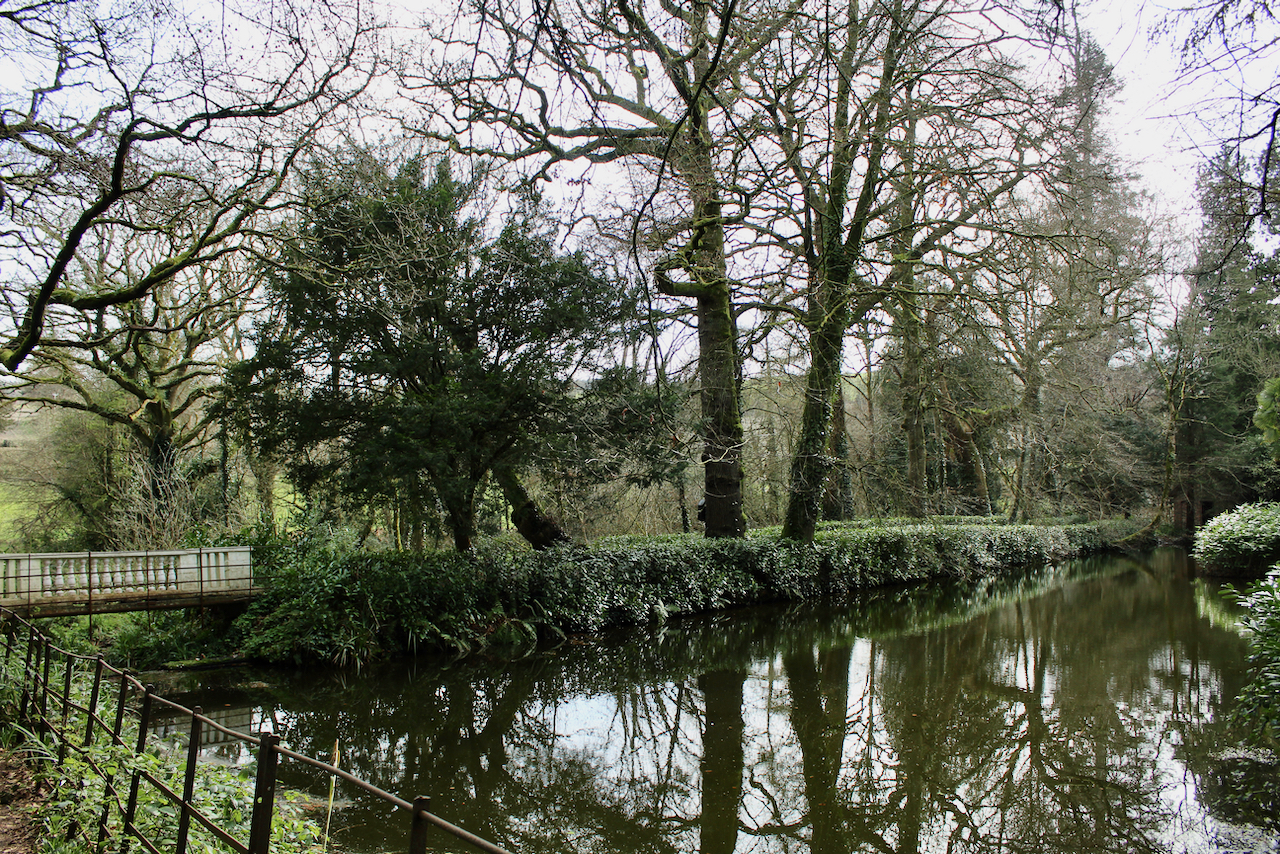
The Long Ponds, Killruddery. These would have been stocked with fish to provide food for the household. Photograph © Jennifer Winder-Baggot, www.irishhistorichouses.com
An 18th century view of Killruddery, photograph from “In Harmony with Nature” exhibition in the Irish Georgian Society, July 2022, curated by Robert O’Byrne. It shows the layout of the garden at Killruddery soon after it was created, which is still largely the structure of the garden as it is today. The canals and the formal bosquet lie to the left of the house. Beyond is Little Sugar Loaf mountain.
From “In Harmony with Nature” exhibition in the Irish Georgian Society, July 2022, curated by Robert O’Byrne.

In the gardens, The Angles are the middle section of the garden. They consist of a series of walks flanked by the hornbeam, lime or beech hedges which meet at two centre points. The design of the Angles, as seen from The Long Ponds are known as “patte d’oie” or goose feet.
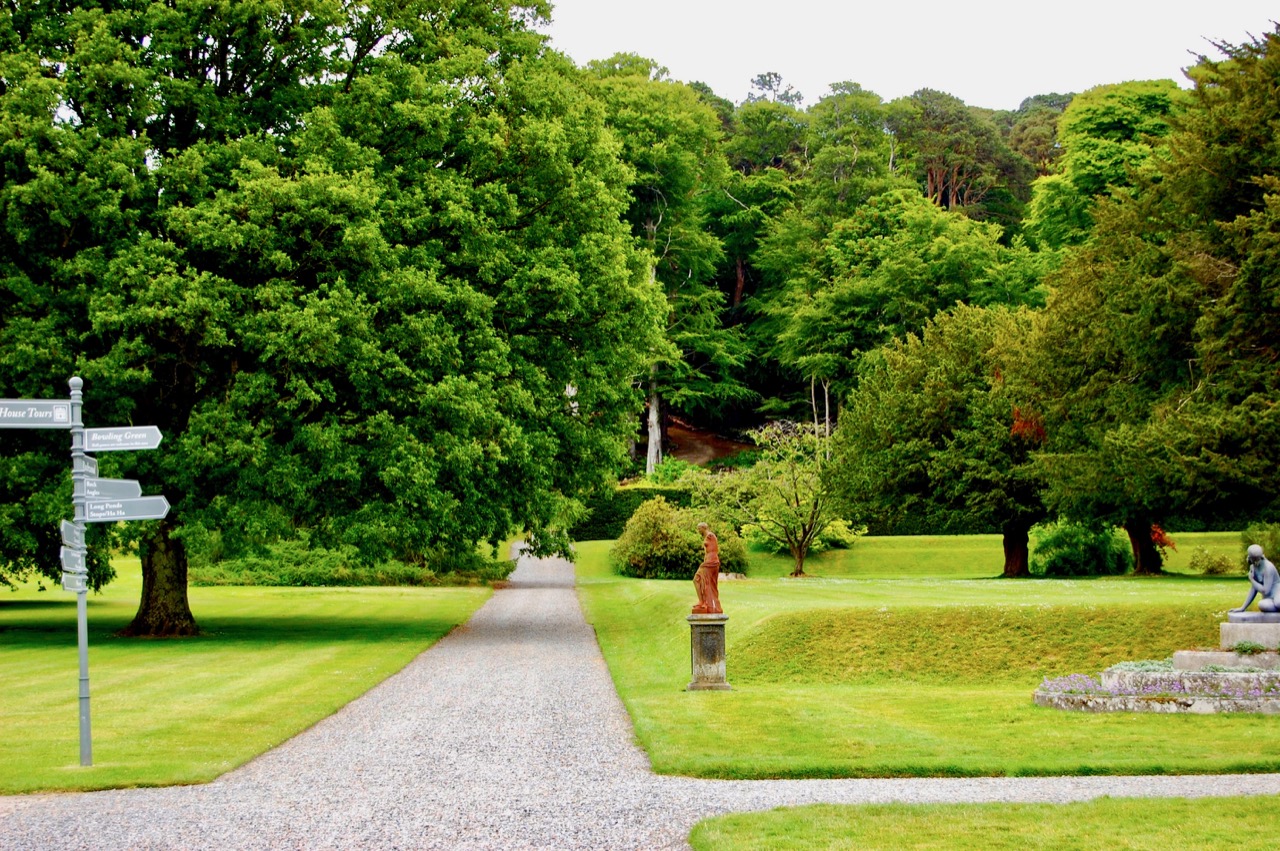
DSC_1092
A view of the Angles. Photograph © Jennifer Winder-Baggot, www.irishhistorichouses.com

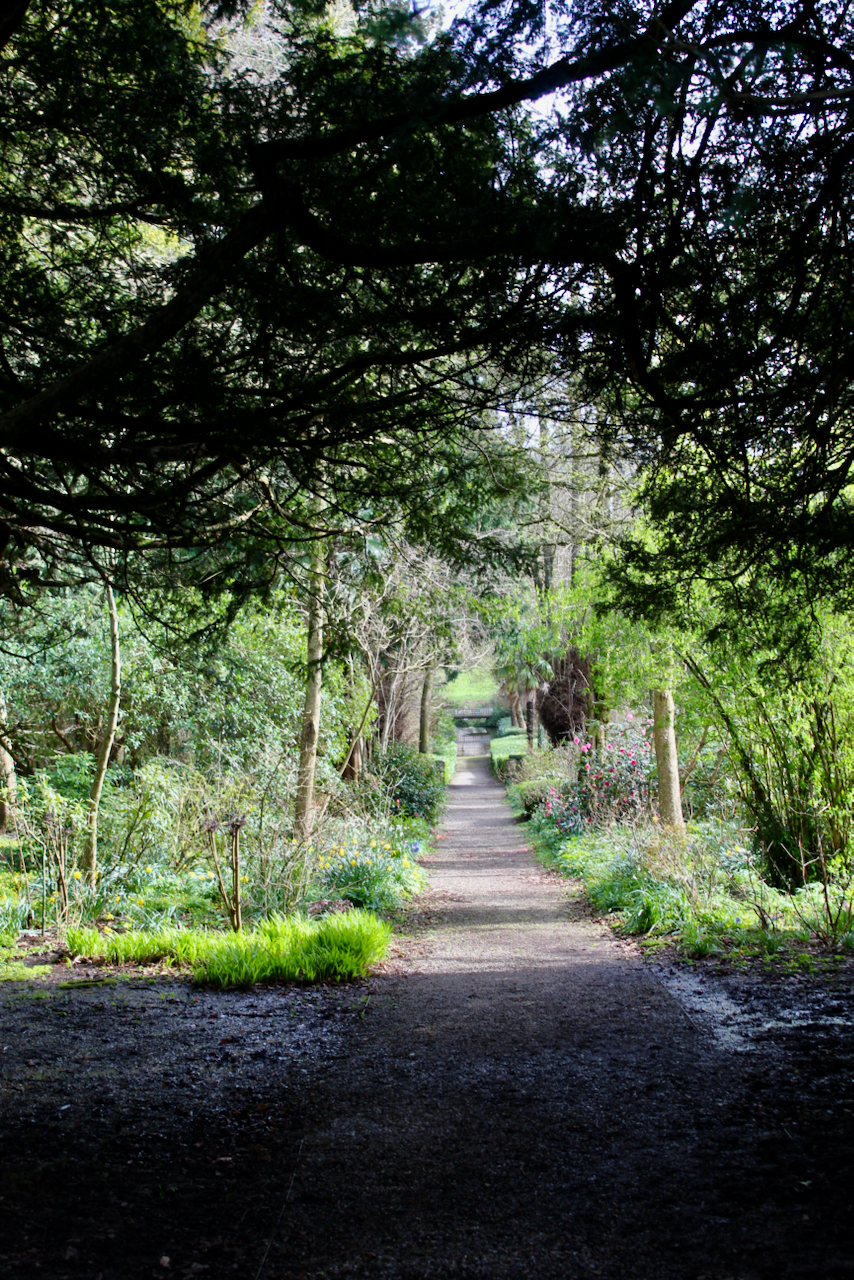
Beyond The Angles is an avenue of Ilex trees dating from the 17th century and steps leading to what was known as the bowling green.
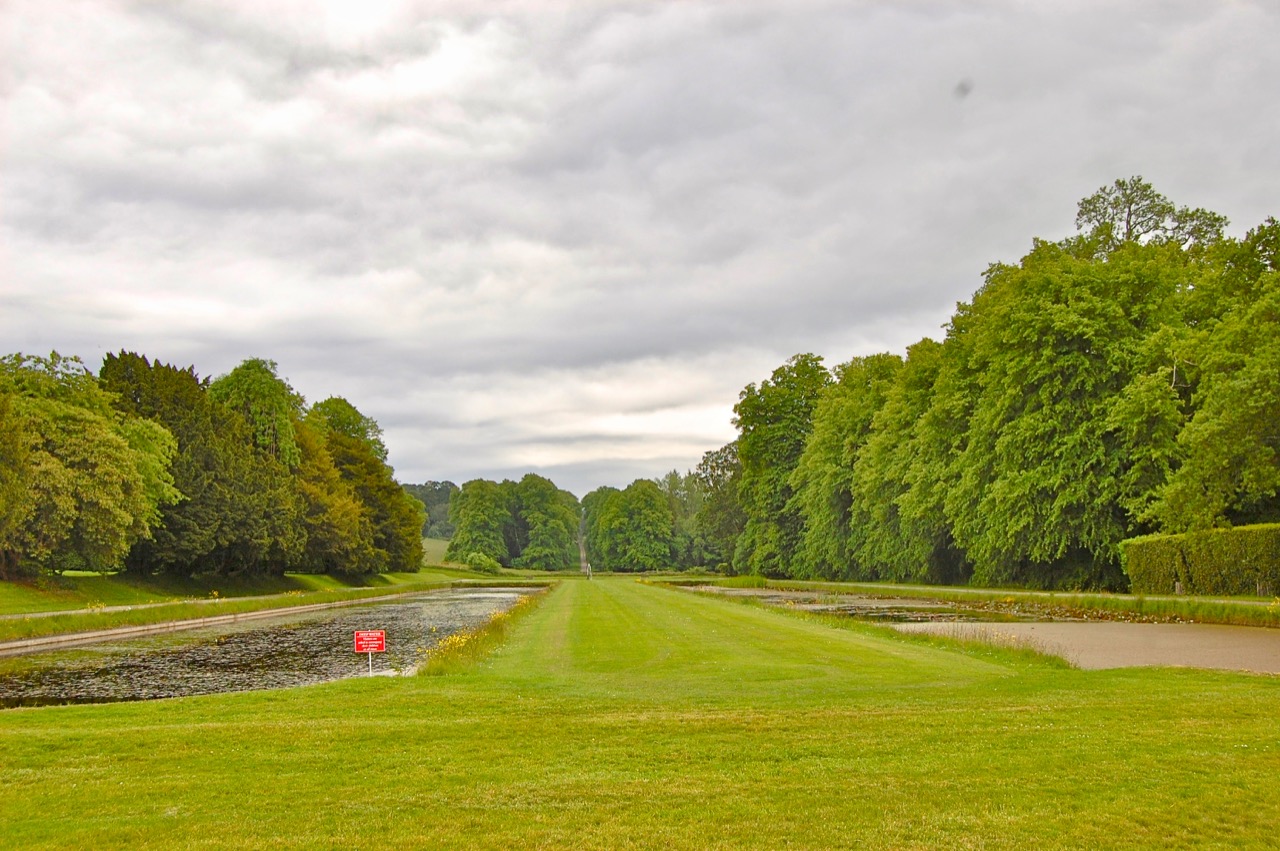
The Reflecting Ponds, Kilruddery House
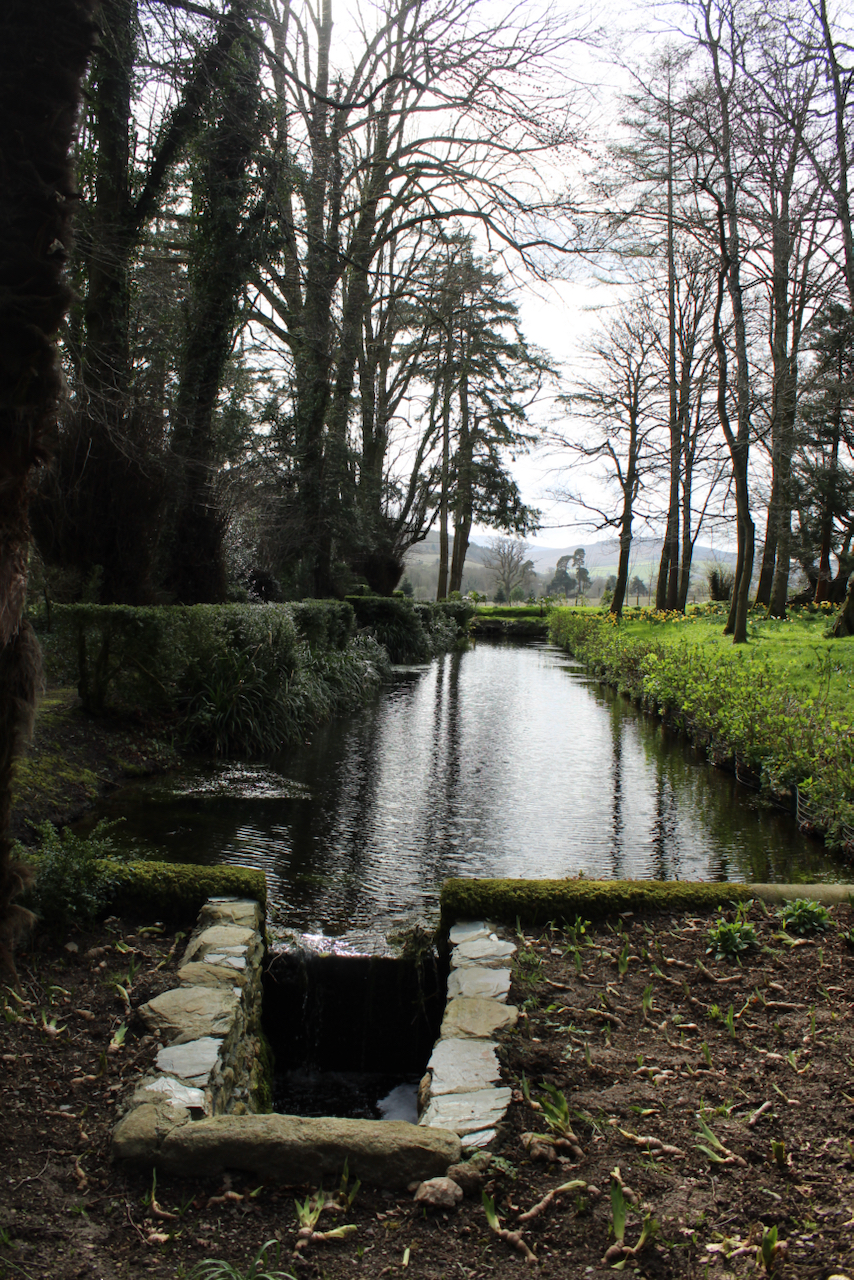
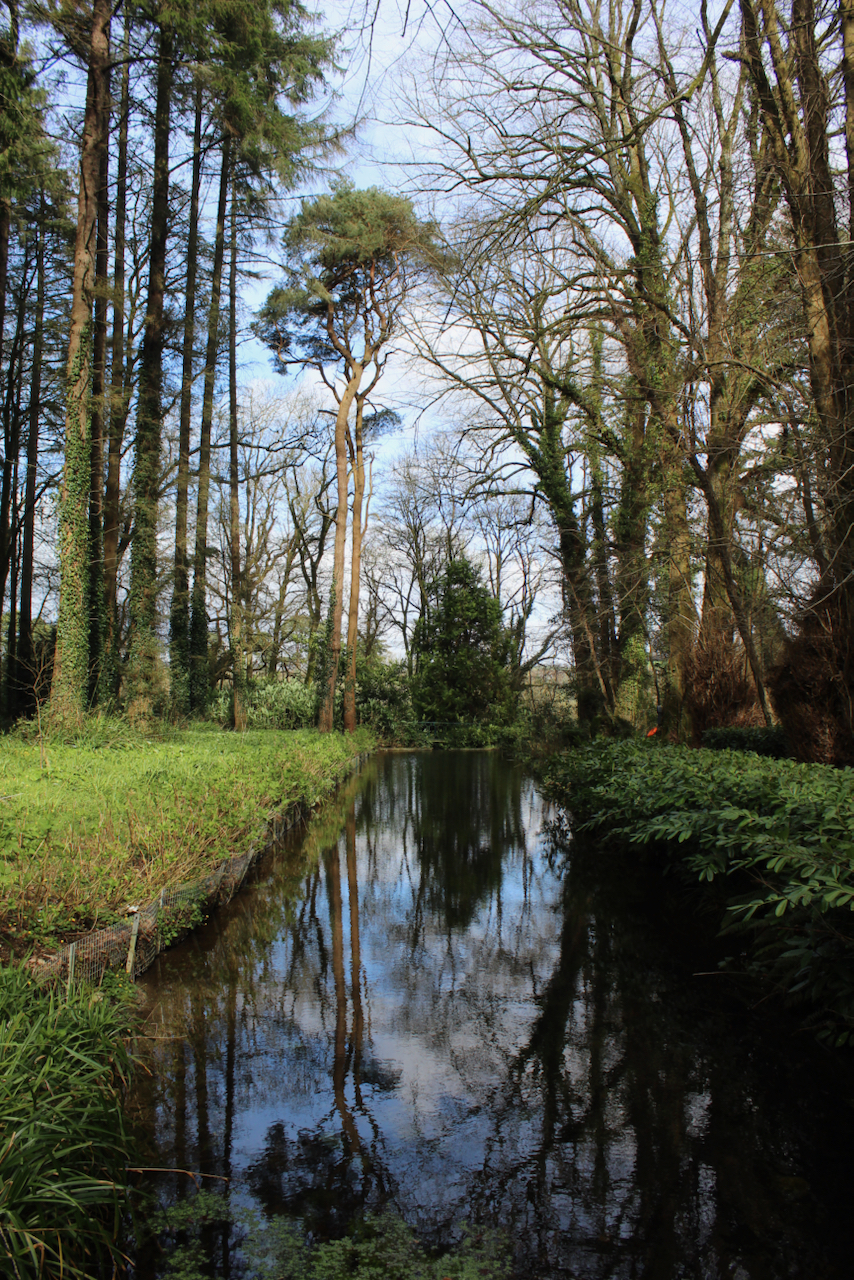
The Long Ponds, Killruddery. Photograph © Jennifer Winder-Baggot, www.irishhistorichouses.com

The Long Ponds are twin canals 187 metres long and known as ‘mirroirs d’eaux’ or reflecting ponds. They were stocked with carp and trench.

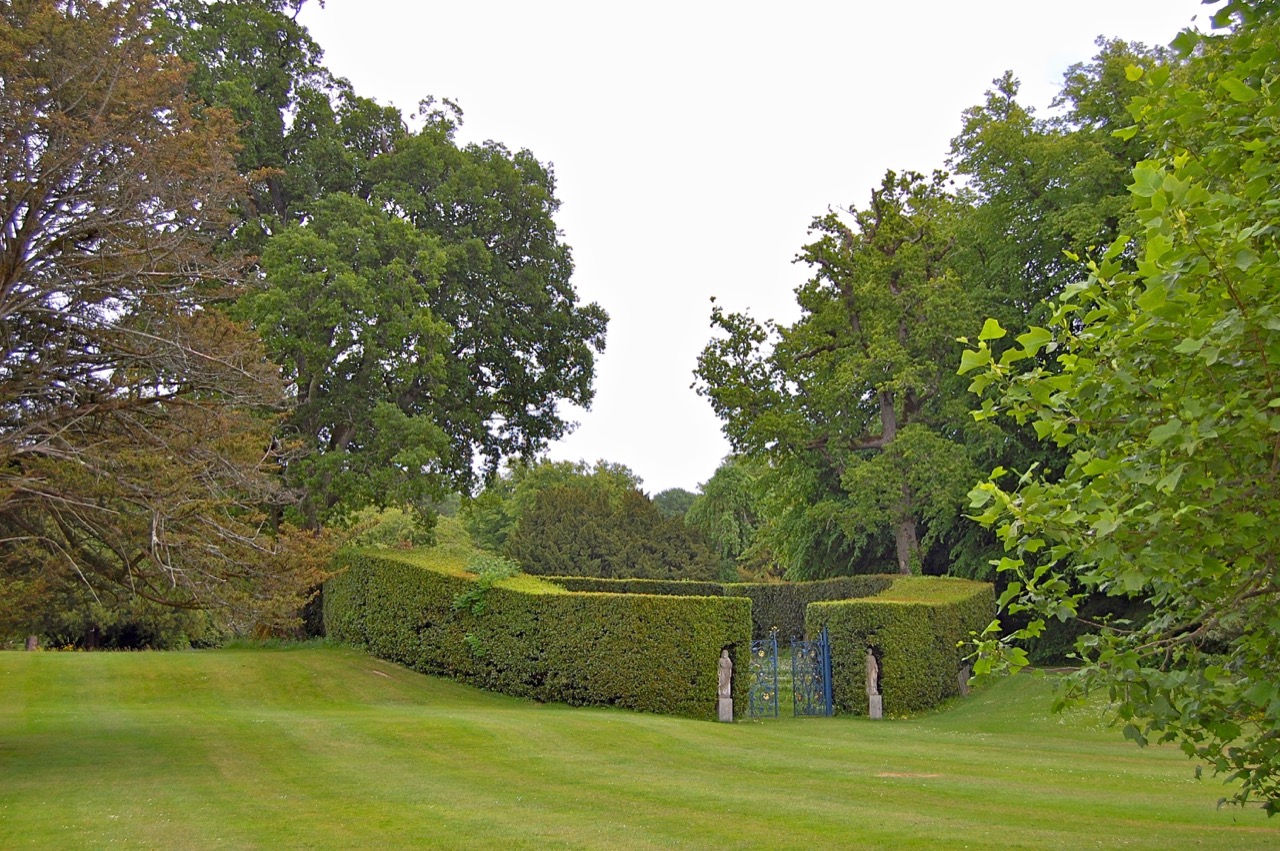
Kilruddery House, May 2013
Me and my Dad in 2013. Photograph © Jennifer Winder-Baggot, www.irishhistorichouses.com
The Sylvan Theatre, 2015, created by the 4th Earl of Meath, in around 1682. Photograph © Jennifer Winder-Baggot, www.irishhistorichouses.com
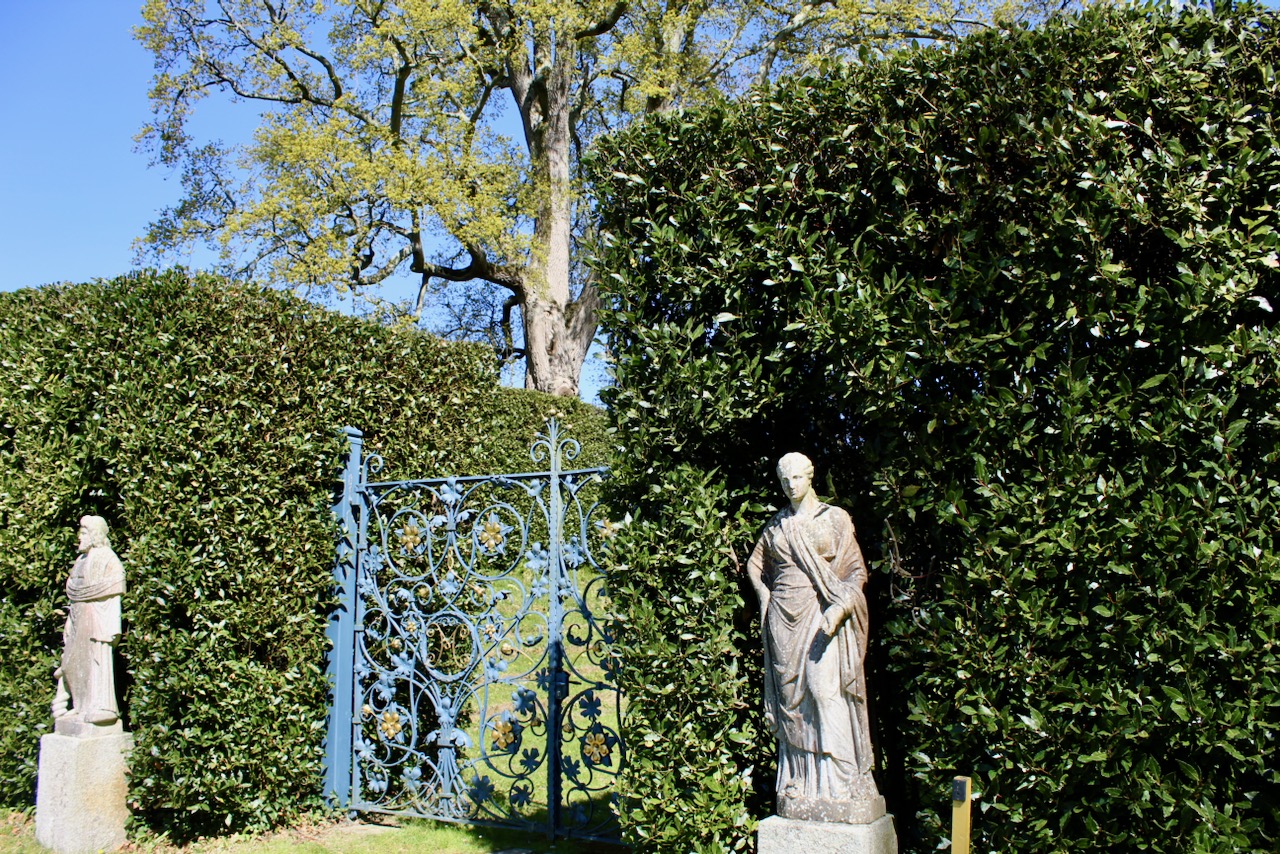
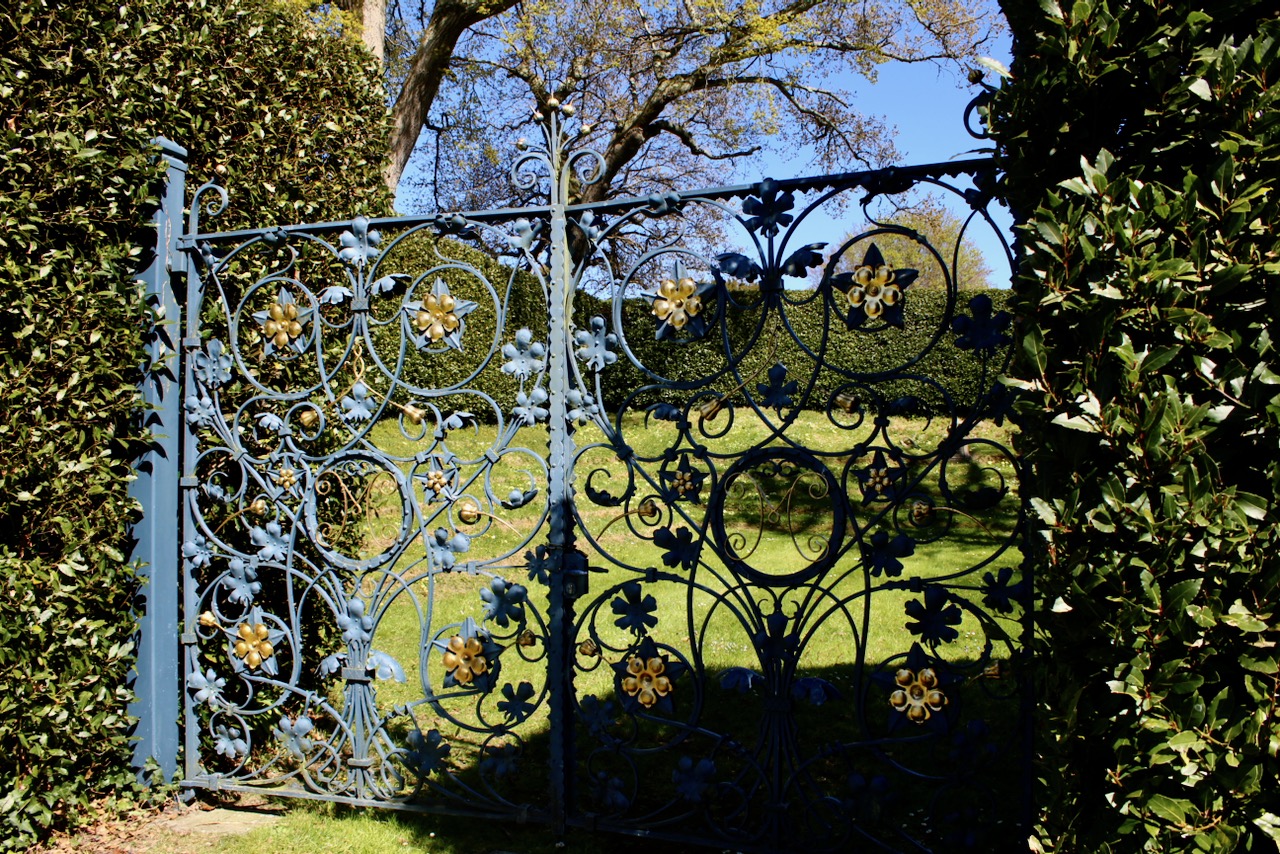
Gates of the Sylvan Theatre, with the Earl of Meath “M.” Photograph © Jennifer Winder-Baggot, www.irishhistorichouses.com
Gates leading to the Sylvan Theatre, April 2021. Photograph © Jennifer Winder-Baggot, www.irishhistorichouses.com
Killruddery Sylvan Theatre, May 2013. Photograph © Jennifer Winder-Baggot, www.irishhistorichouses.com
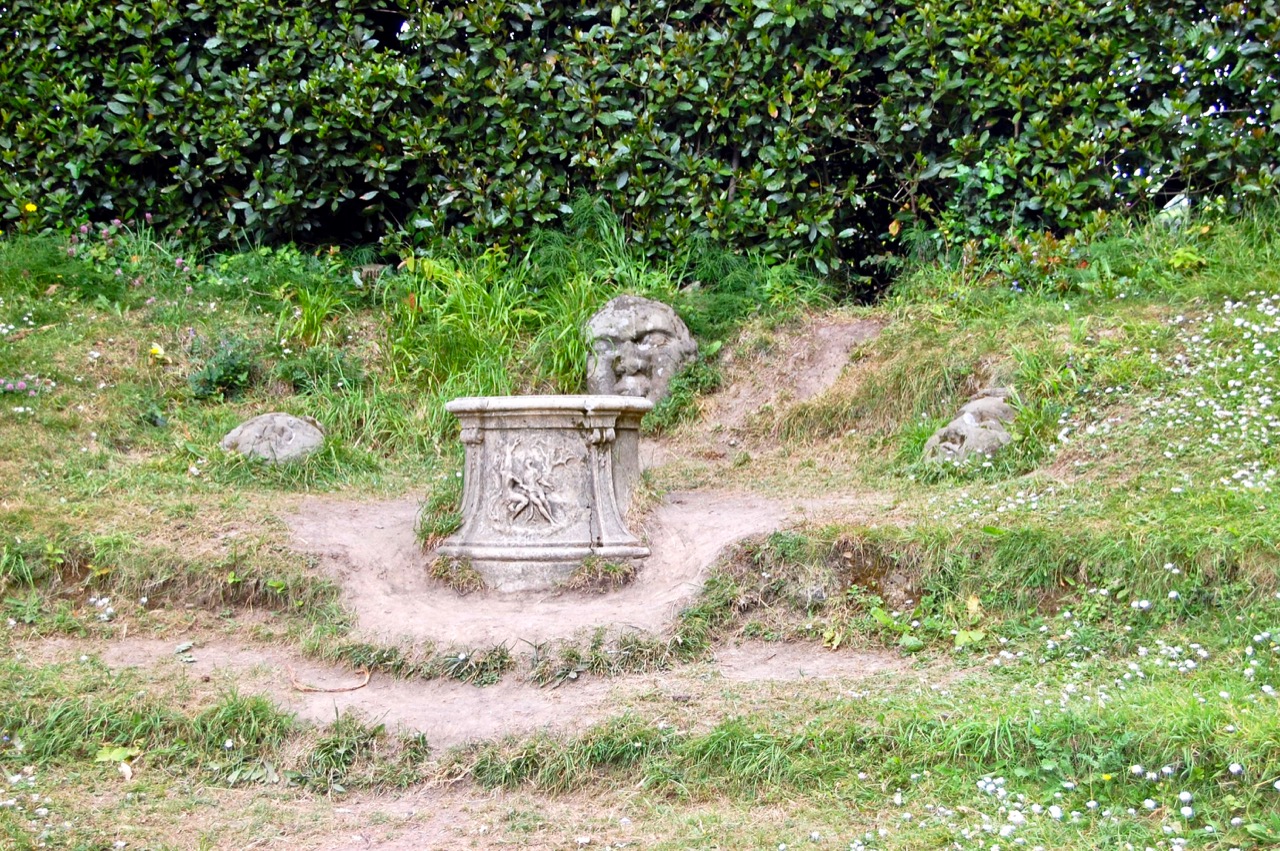
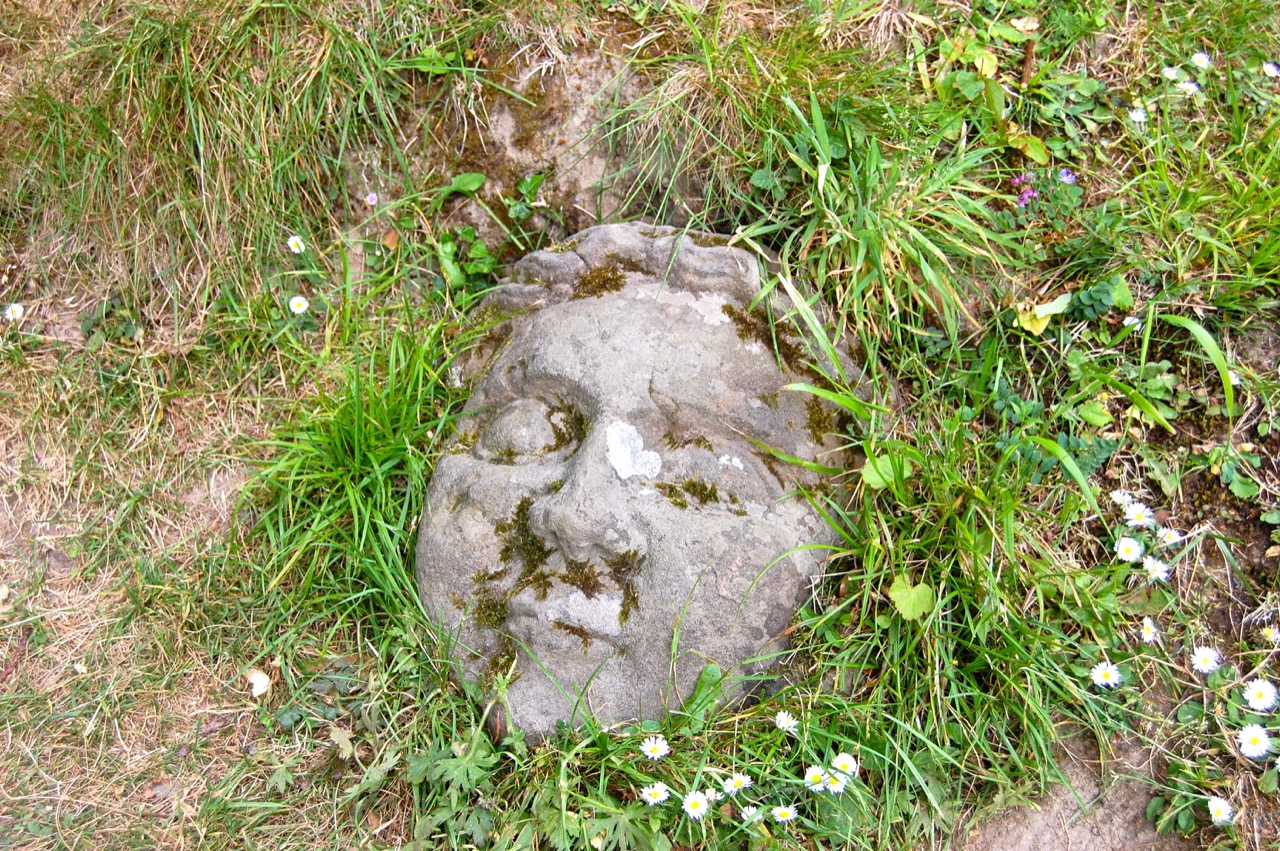
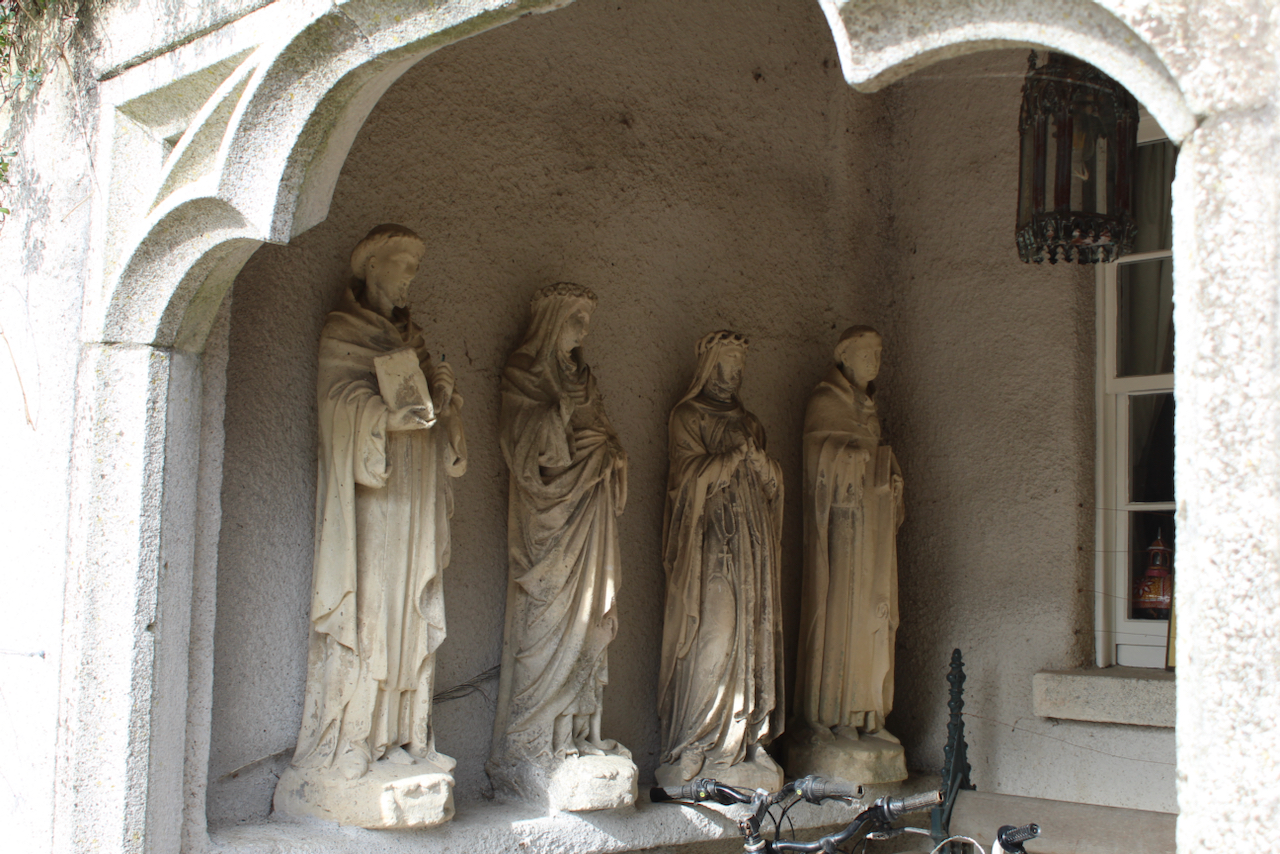
Sculpture that may have been found at Thomas’s Abbey in the Liberties, though I cannot confirm this, kept in amphitheatre in Killruddery House, County Wicklow. Photograph © Jennifer Winder-Baggot, www.irishhistorichouses.com
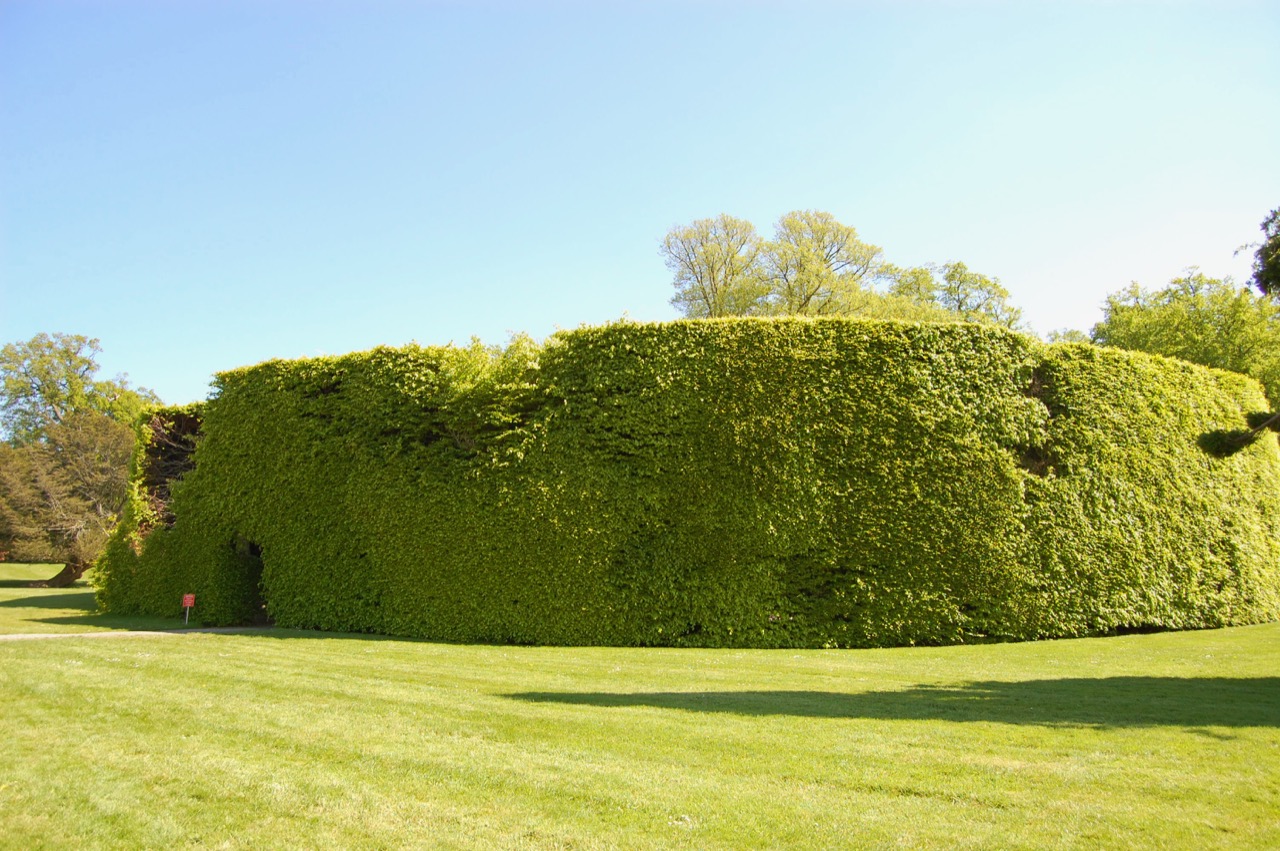
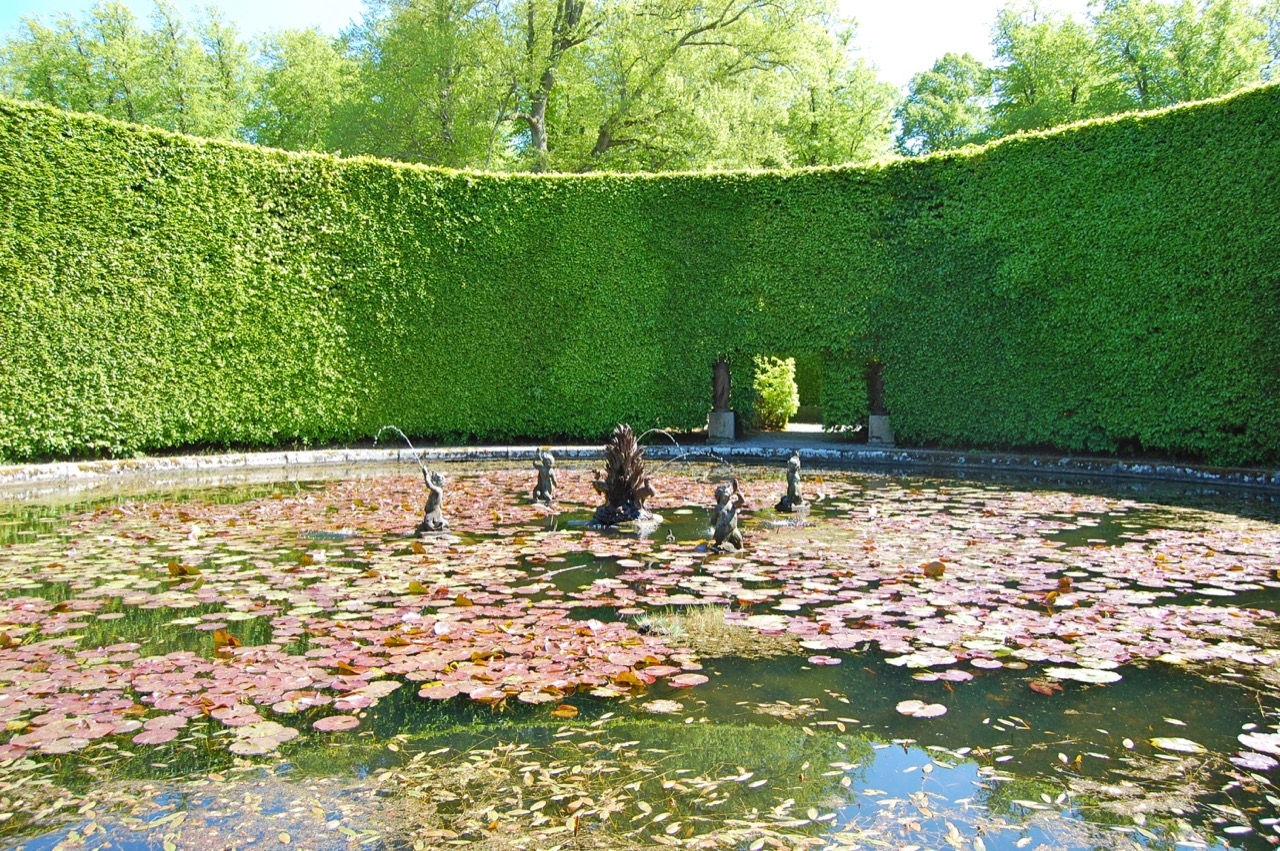
Killruddery House, May 2013, the Beech Hedge, that encircles the pond. Photograph © Jennifer Winder-Baggot, www.irishhistorichouses.com
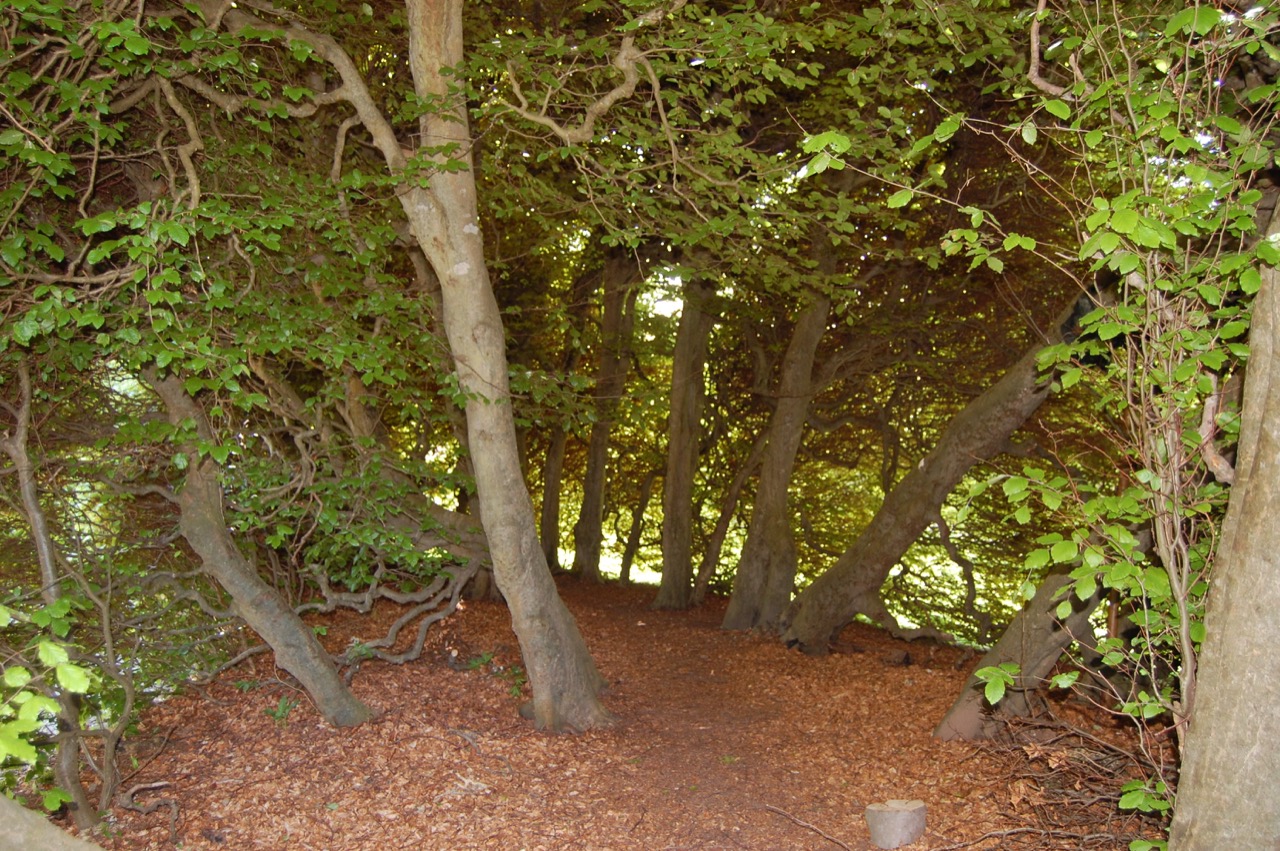
Killruddery House, May 2013, the middle of the beech hedge that encircles the pond. The hedge has grown so huge that you can walk inside the middle of the hedge! Photograph © Jennifer Winder-Baggot, www.irishhistorichouses.com
Killruddery House, May 2013, the pond inside the beech hedge. The circular granite edged pond is 20 metres in diameter and the four Victorian cast iron statues at the entrances depict the four seasons of the year. Photograph © Jennifer Winder-Baggot, www.irishhistorichouses.com
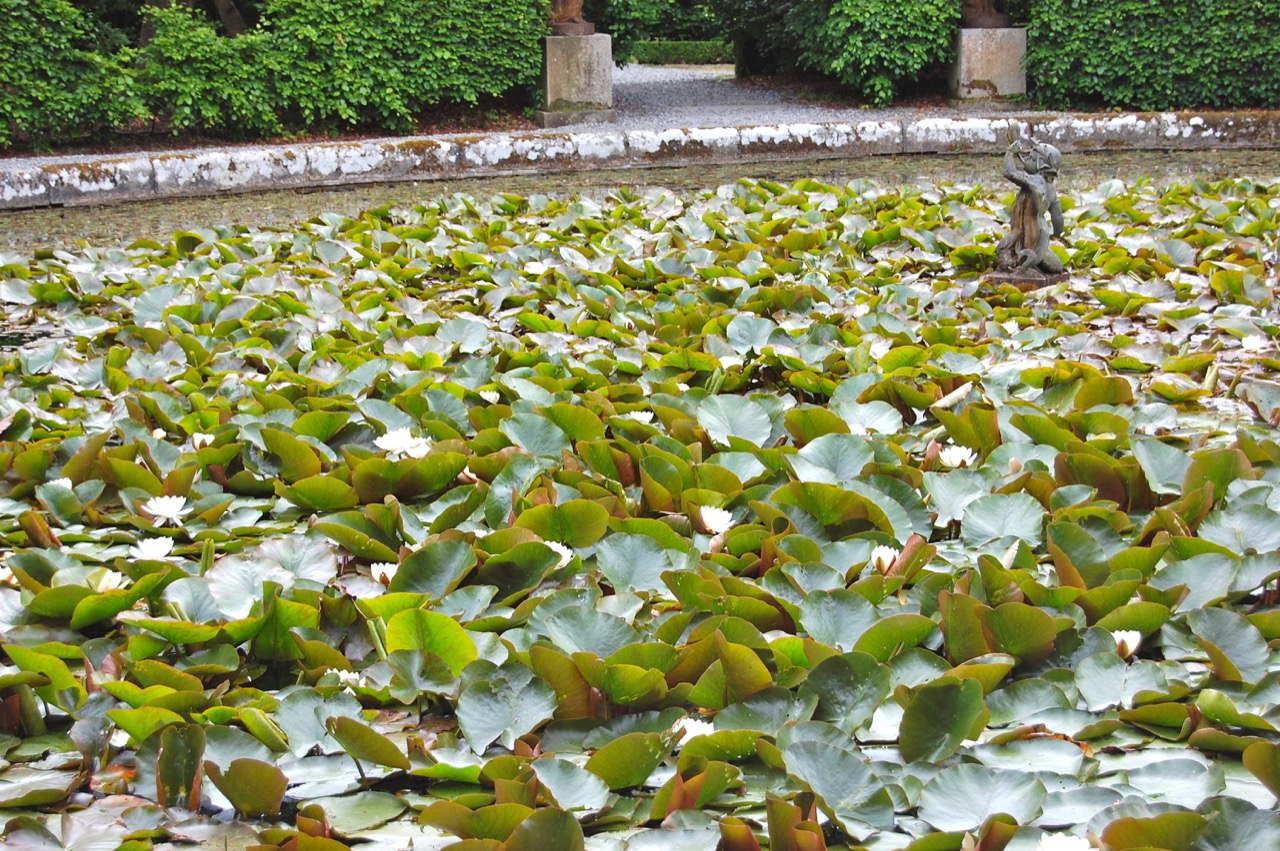
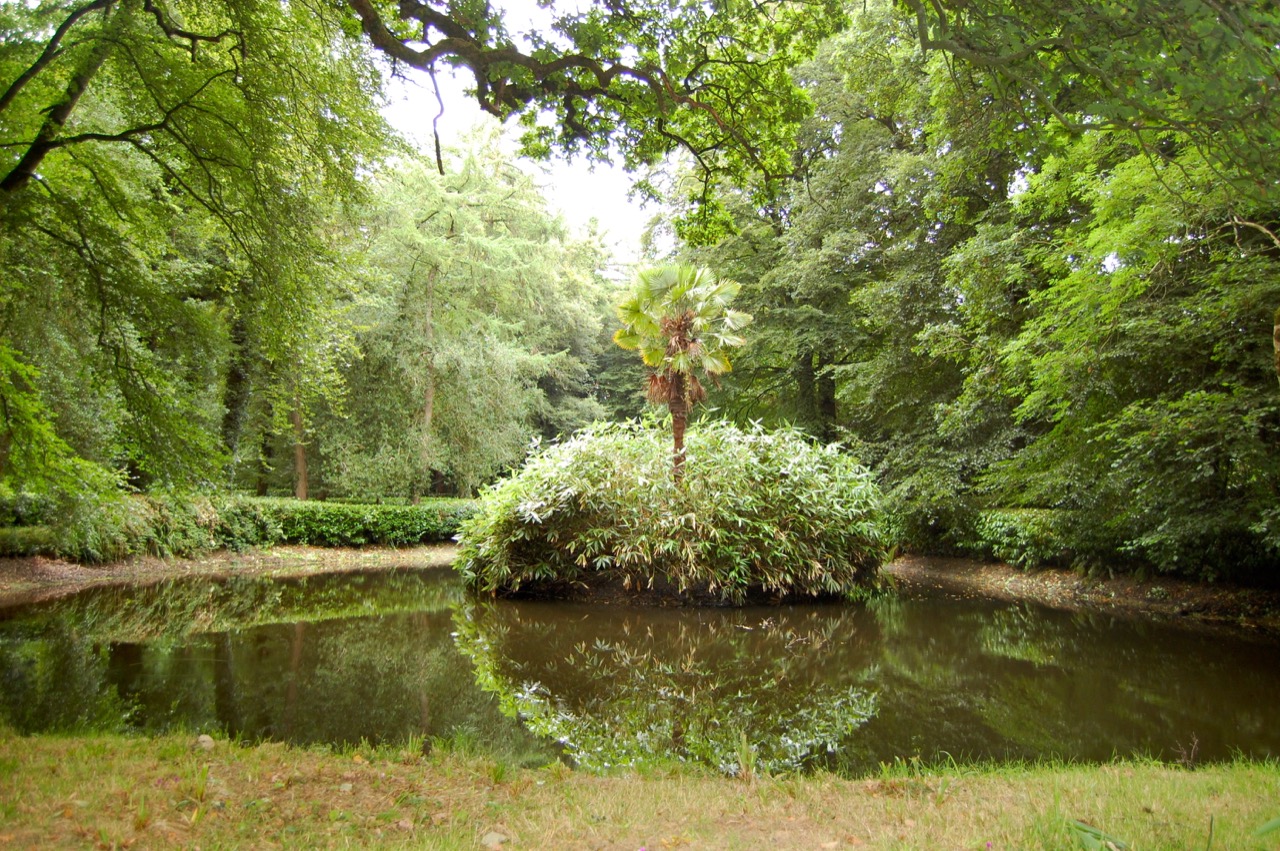
The Beech Hedge Pond June 2015, a profusion of water lillies. Photograph © Jennifer Winder-Baggot, www.irishhistorichouses.com

The 4th Earl married twice but had no children, and when he died title and lands passed to his brother Chambré (c. 1645-1715). The 5th Earl of Meath served as a Privy Councillor in Ireland in 1710. He developed the Pleasure Garden and the Cherry Garden. He married Juliana Chaworth, daughter of Patrick Chaworth, 3rd Viscount Chaworth of Armagh. Their son, whom they named Chaworth, succeeded as 6th Earl, and served as MP for County Dublin and Lord Lieutenant for County Wicklow and for County Dublin. The Killruddery website tells us that the 6th Earl was a patron of the Meath Hospital, which was founded by four surgeons to care for the sick and poor of ‘the Liberties’ in Dublin. It was the 6th Earl of Meath who developed the garden “wilderness.” He married twice but had no children and when he died in 1763 he was succeeded by his brother Edward (1691-1772) who became the 7th Earl of Meath.

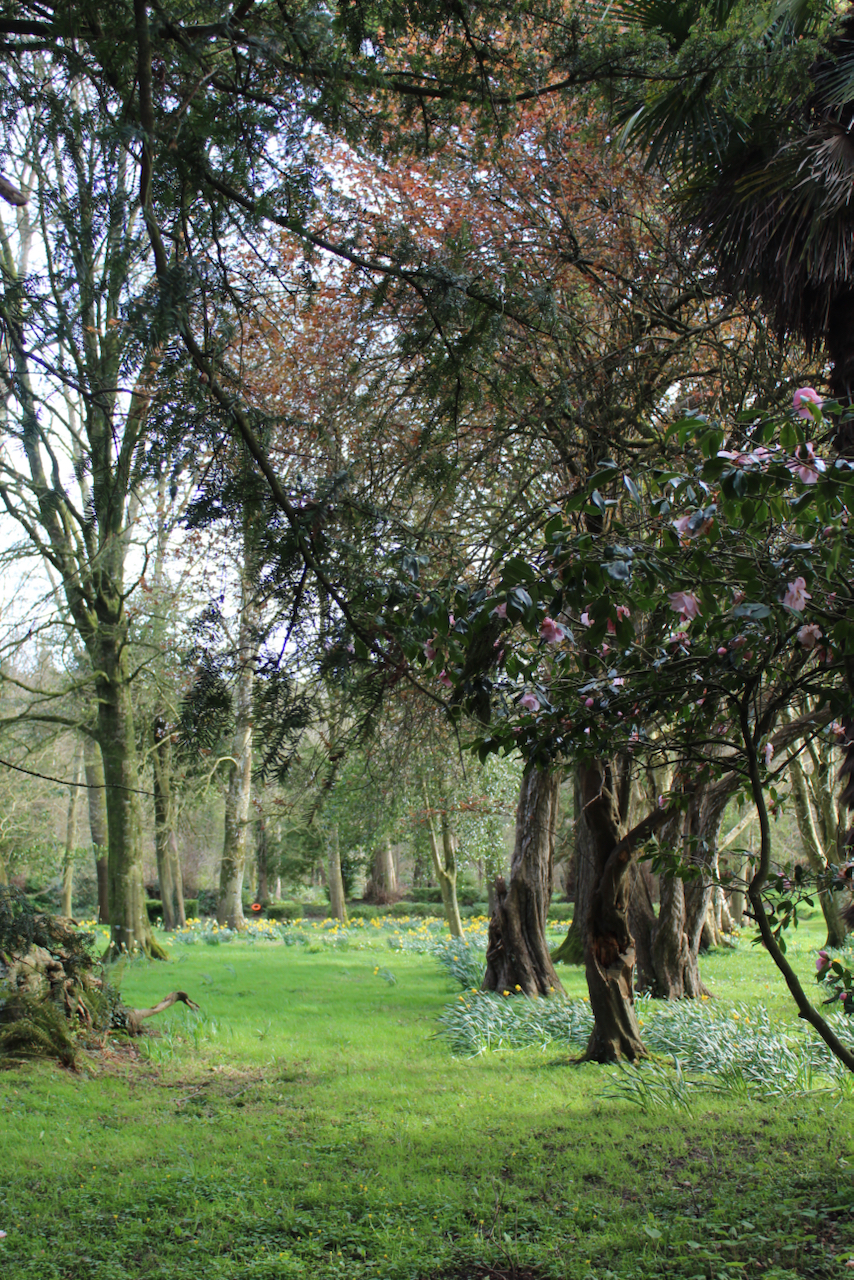
Opposite the Angles on the far side of the Long Ponds is a wooded area known as the Wilderness.
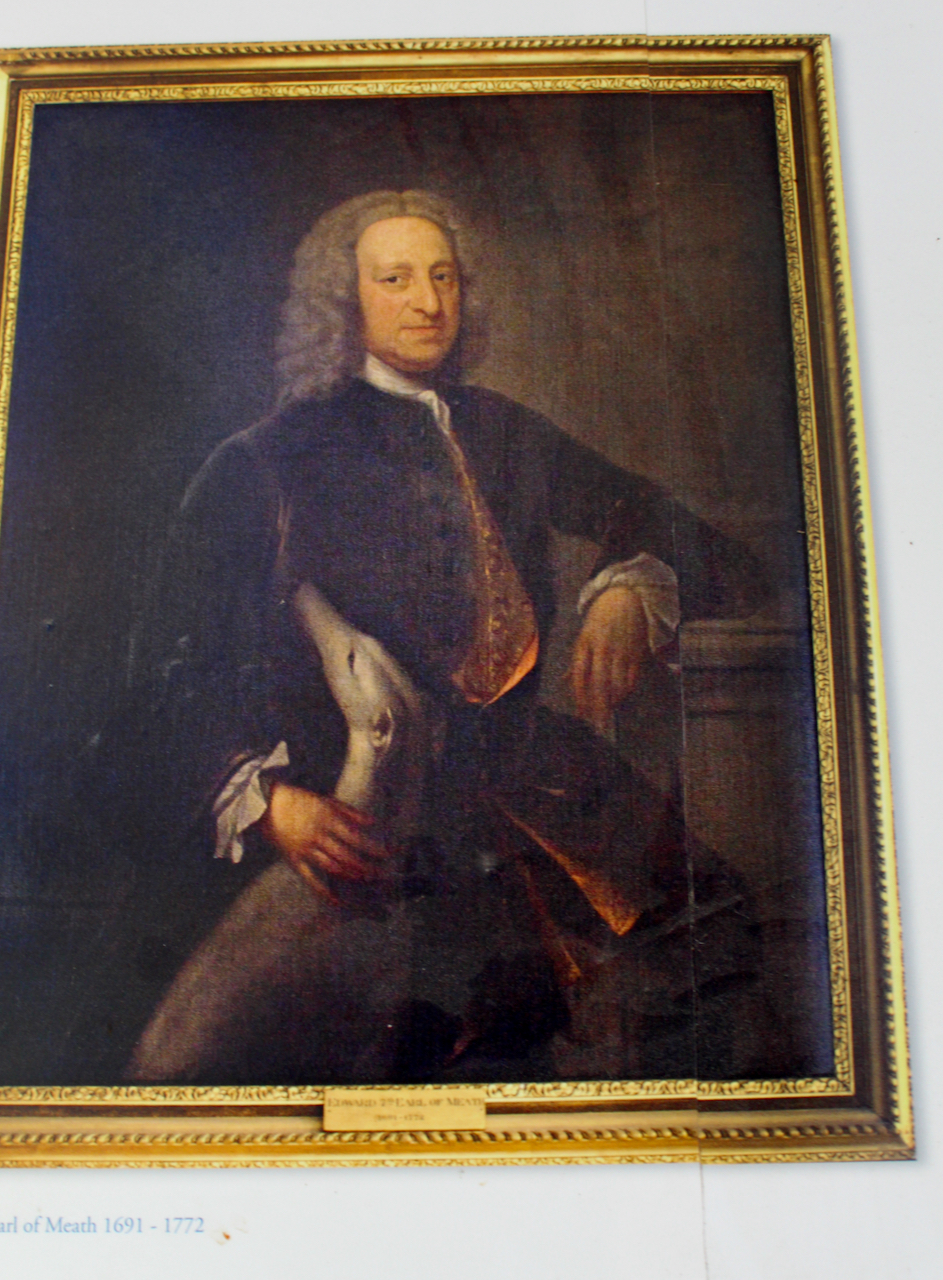
Edward Brabazon 7th Earl of Meath (1691-1772)

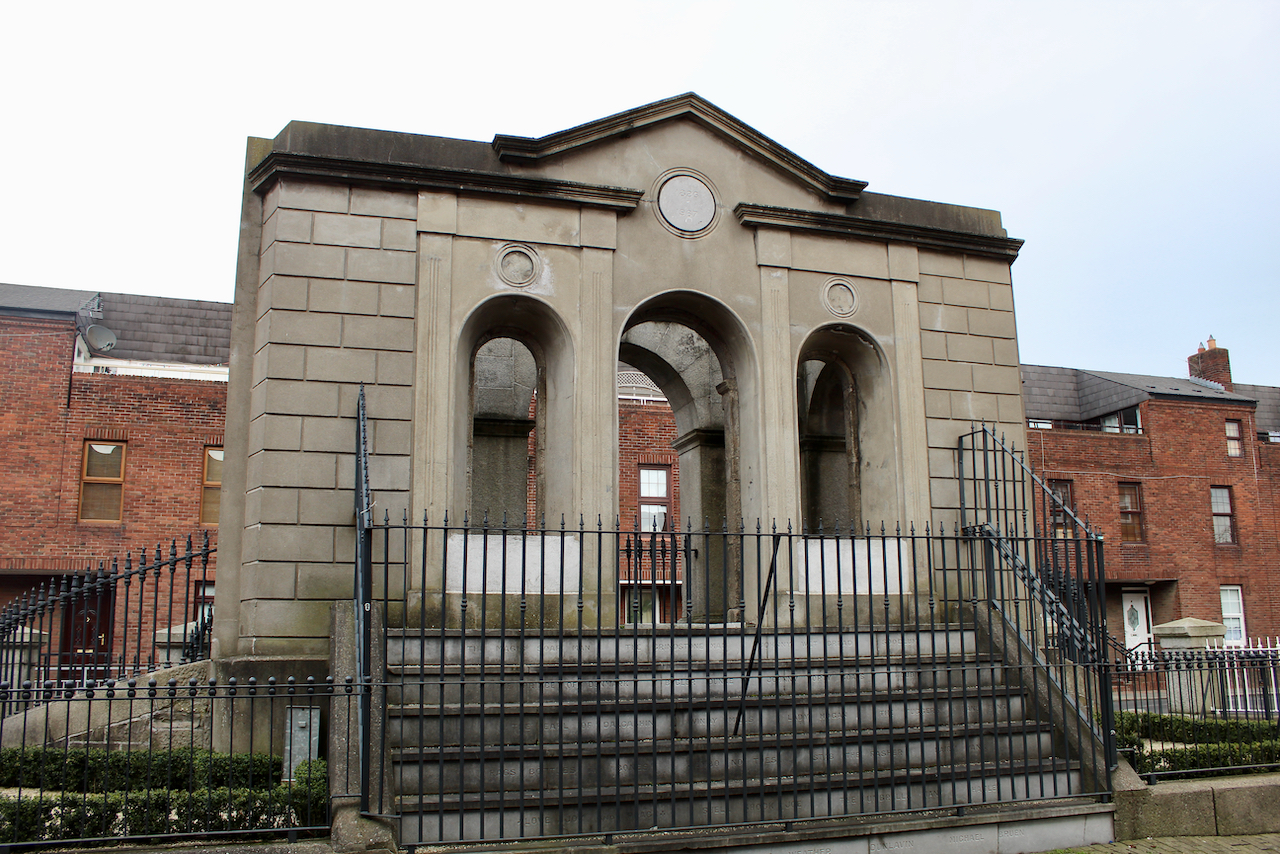
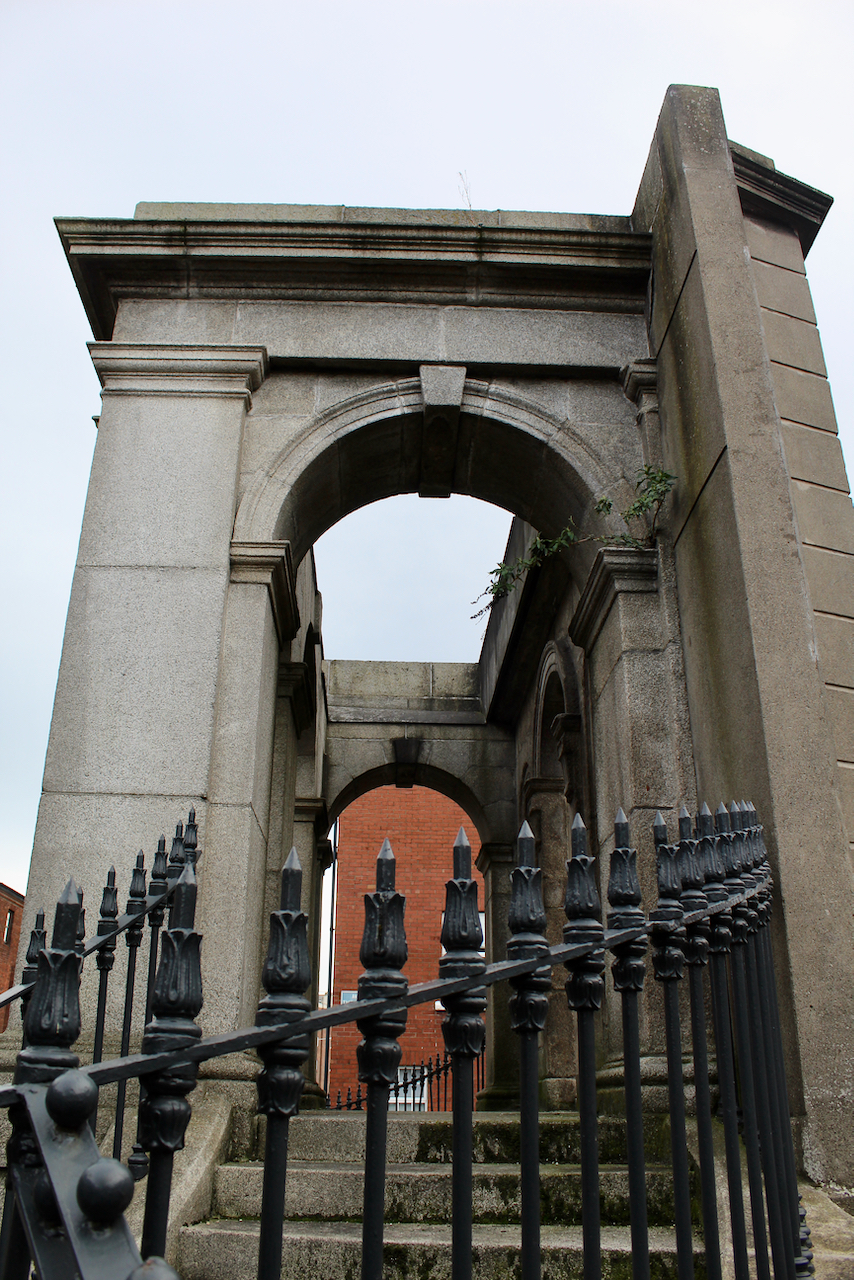
Edward the 7th Earl of Meath served as MP for County Dublin between 1715 and 1760. He too was a Patron for a hospital: originally called, “The Meath Hospital and County Dublin Infirmary,” it was renamed the Coombe Women’s Hospital in 1993. The story of the foundation of the Coombe is written on the remaining entrance portico to the hospital on the road called The Coombe in Dublin.
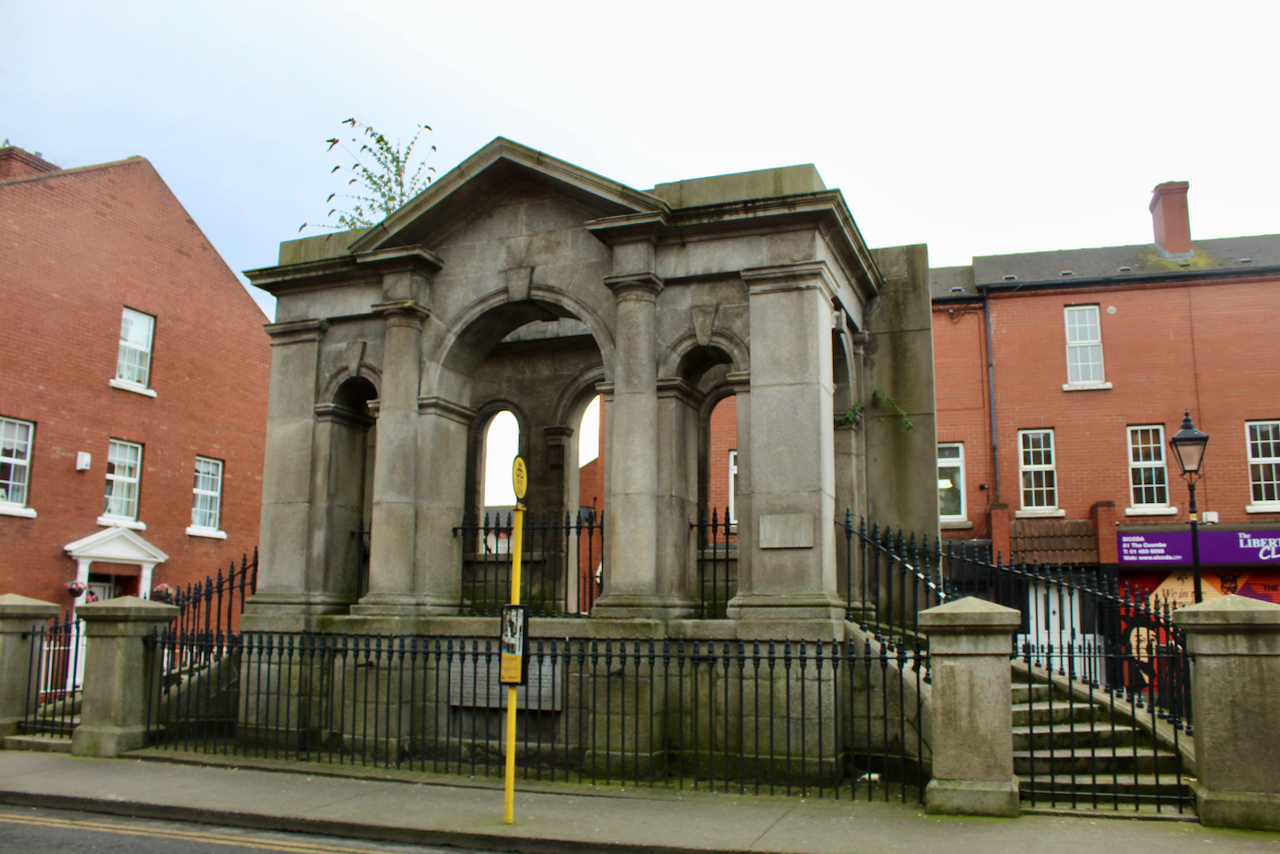
The original entrance to the Coombe hospital, in Dublin. Photograph © Jennifer Winder-Baggot, www.irishhistorichouses.com

The plaque tells us:

Towards the end of the year 1825 two women, whilst making a vain attempt to reach the Rotunda hospital [which was founded originally by Dr. Mosse, whose wife had died in childbirth], perished, together with their new born babies, in the snow. When this became known, a number of benevolent and well-disposed persons founded “The Coombe Lying-In Hospital” in the year 1826, for the relief of poor lying-in women. Leading this committee was a Mrs Margaret Boyle of Upper Baggot Street, Dublin. The portico surrounding this plaque formed the entrance until the year 1967 when the hospital moved to its new location in Dolphin’s Barn.

The original entrance to the Coombe hospital, in Dublin. Photograph © Jennifer Winder-Baggot, www.irishhistorichouses.com
Photograph © Jennifer Winder-Baggot, www.irishhistorichouses.com

He died in 1772 and was succeeded by his son Anthony as 8th Earl of Meath.

Anthony the 8th Earl served as MP for Wicklow from 1745-1760 and for Dublin in 1761-62. He married Grace Leigh from Rosegarland, County Wexford, in 1758.
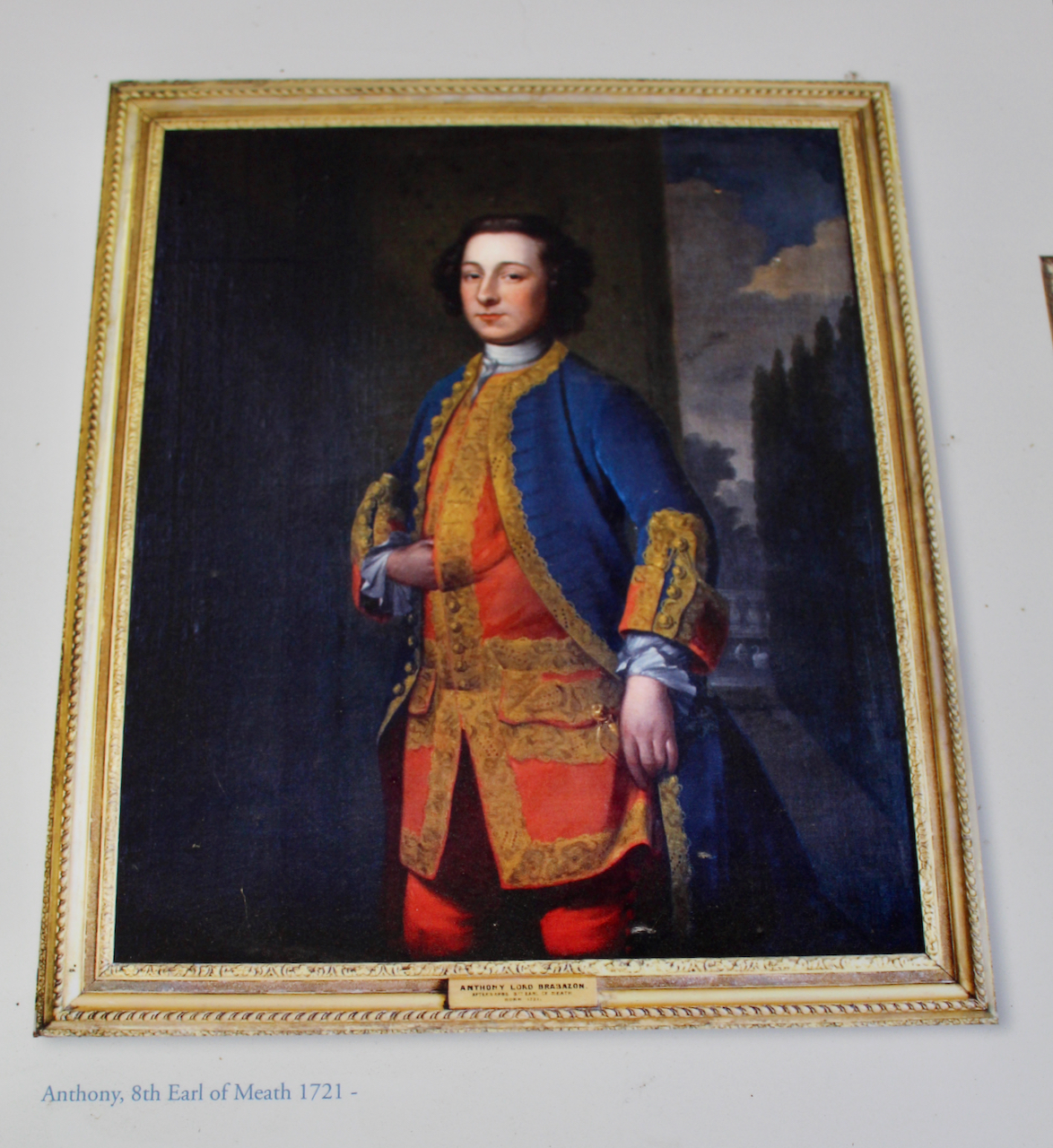
Anthony Brabazon 8th Earl of Meath b. 1721

William 9th Earl of Meath died in a fatal duel with Captain Robert Gore of the Mount Kennedy Corps in 1797. He also had served as MP for County Dublin. His brother. John Chambré (1772-1851) succeeded him as the 10th Earl. He held the office of Lord-Lieutenant of County Dublin between 1831 and 1851. He was raised to the Peerage of the UK in 1831 as 1st Baron Chaworth of Eaton Hall, Co. Hereford. He was appointed Privy Councillor of Ireland in 1833. He married Melosina Adelaide Meade, daughter of the 1st Earl of Clanwilliam, County Tipperary.
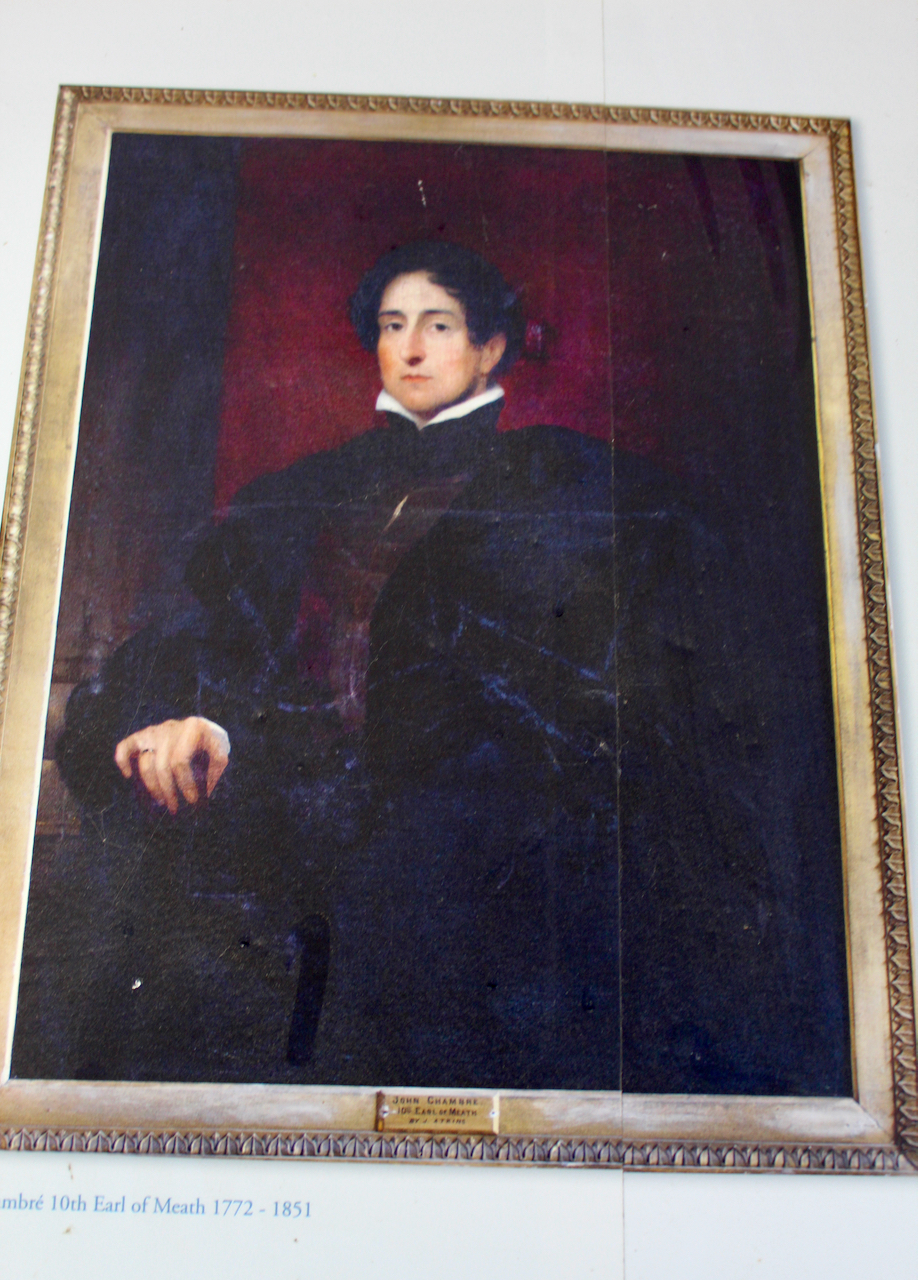
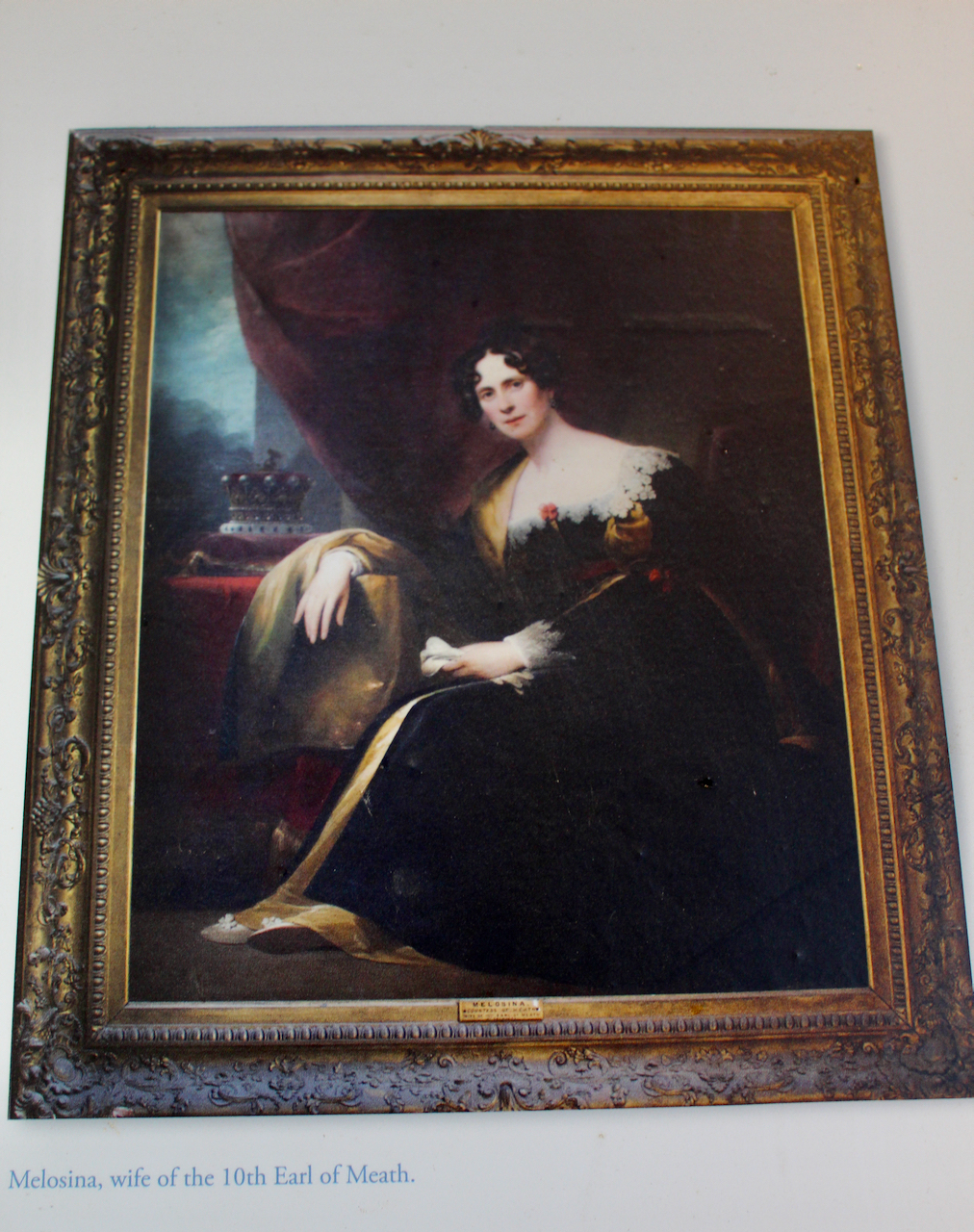
John Chambé Brabazon 10th Earl of Meath (1772-1851)
Melosina Adelaide Meade 1780-1866, wife of 10th Earl.

In 1816-17 the 10th Earl and his wife took the Grand Tour and in Italy ordered marbles and chimneypieces, mostly with the help of Gaspare Gabrielli, a painter who had worked in Ireland decorating the drawing room of Lyons, County Kildare. When they returned to Ireland, the 10th Earl of Meath hired Richard Morrison to redesign the house. Sadly, their eldest son, Jacques, died while on tour, of diphtheria, and is buried in Naples.

William Vitruvius Morrison and his father Richard were Irish architectsin the early 1800s. They also designed Baronscourt in County Tyrone, Ballyfin in County Laois and Fota in Cork. William also designed Clontarf Castle in Dublin, Hollybrooke House in Bray and Mount Stewart in County Down. Montgomery-Massingberd and Sykes write that building work went on for nine years around the resident Lord and Lady Meath, and they moved from one part of the house to another to accommodate the construction. 

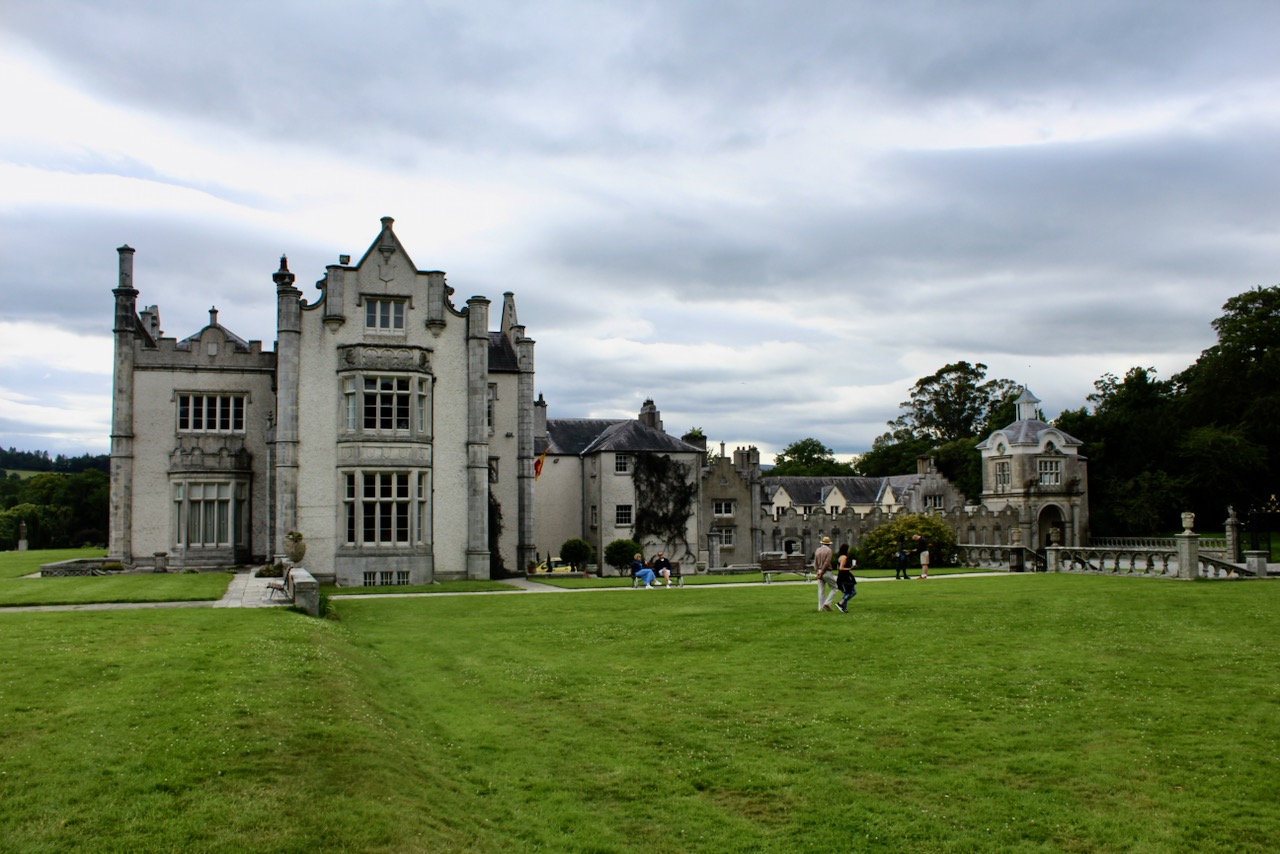
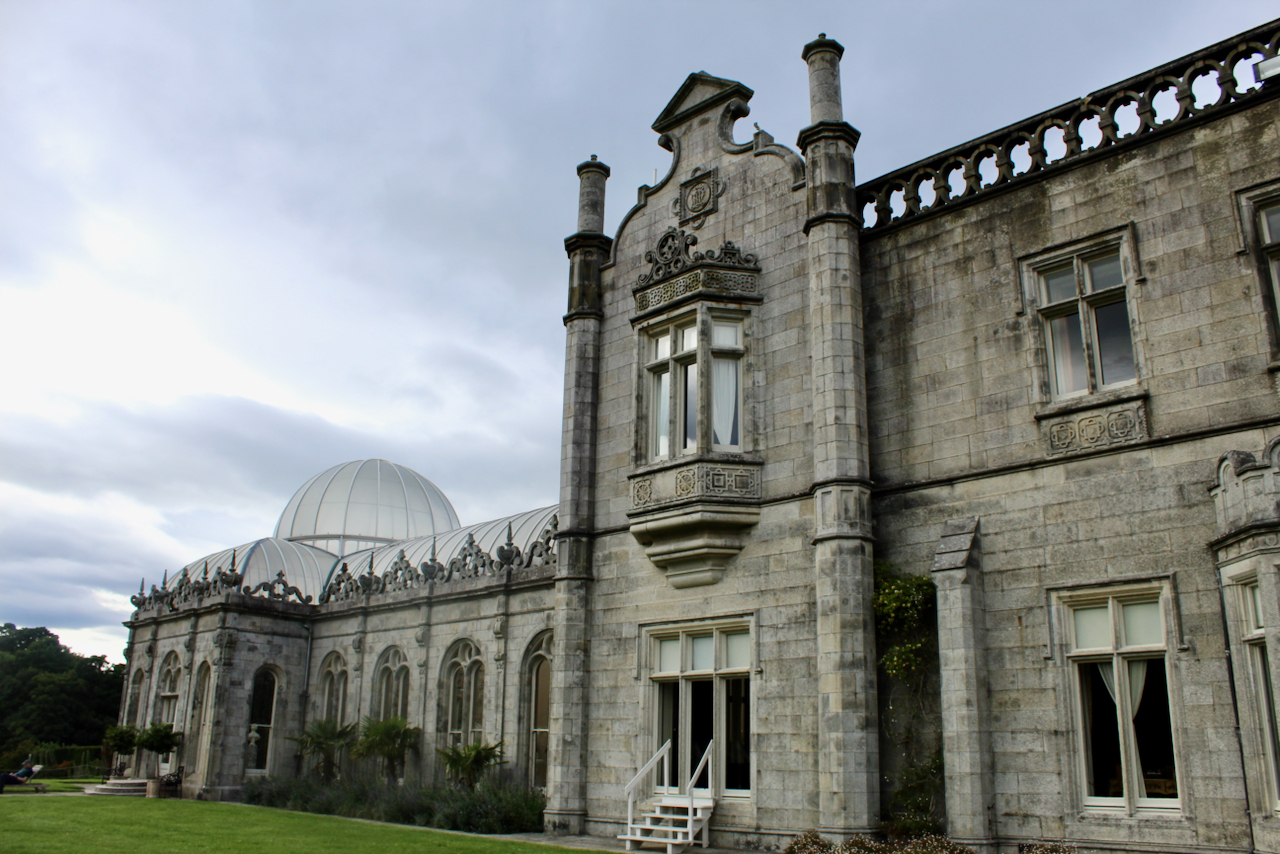
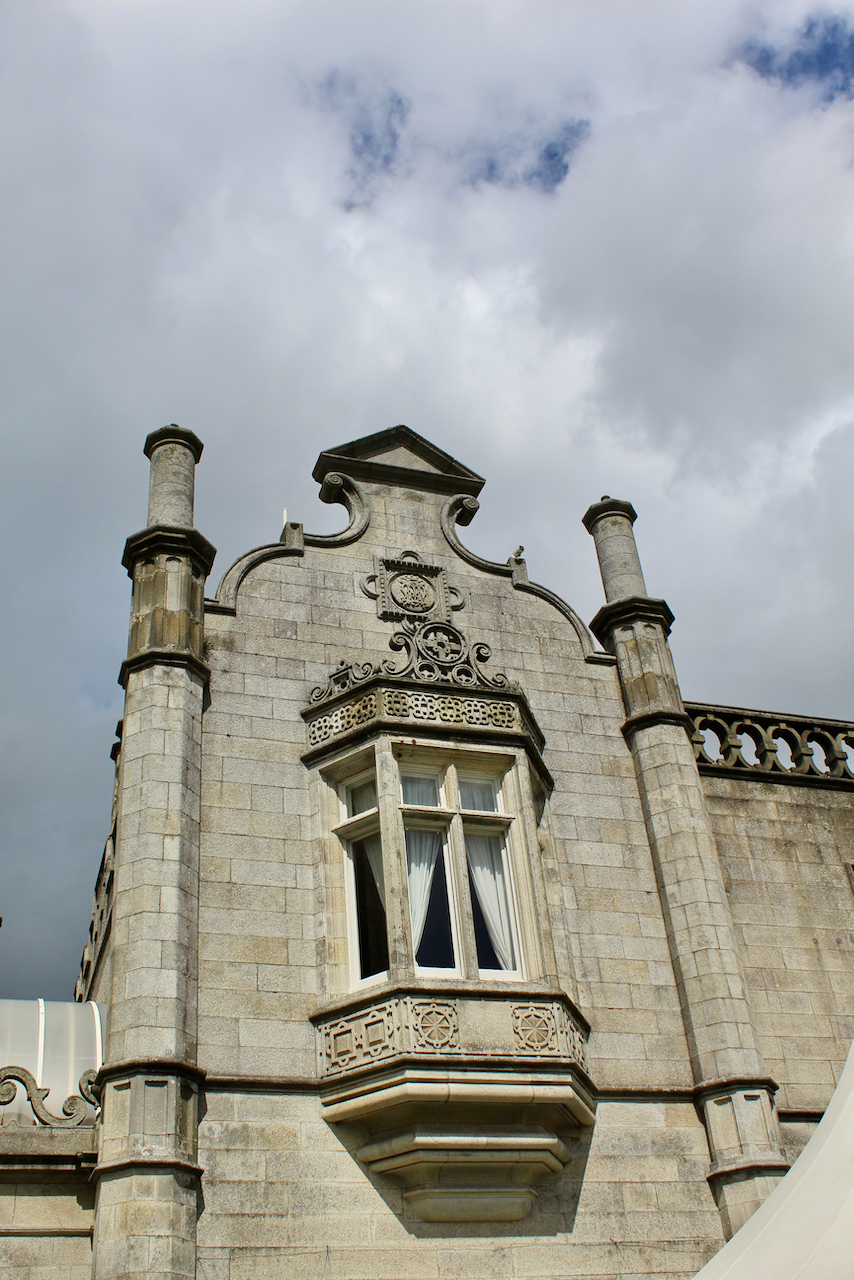
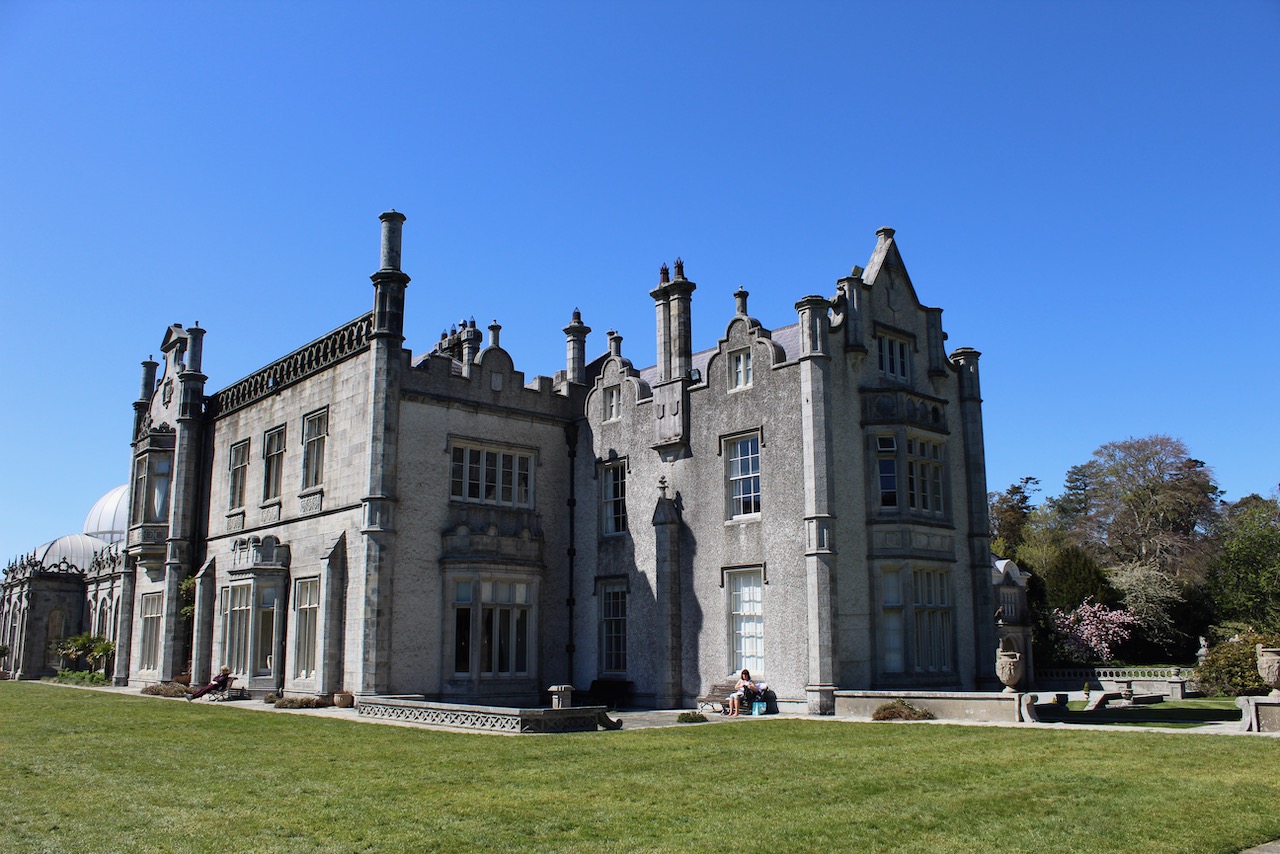
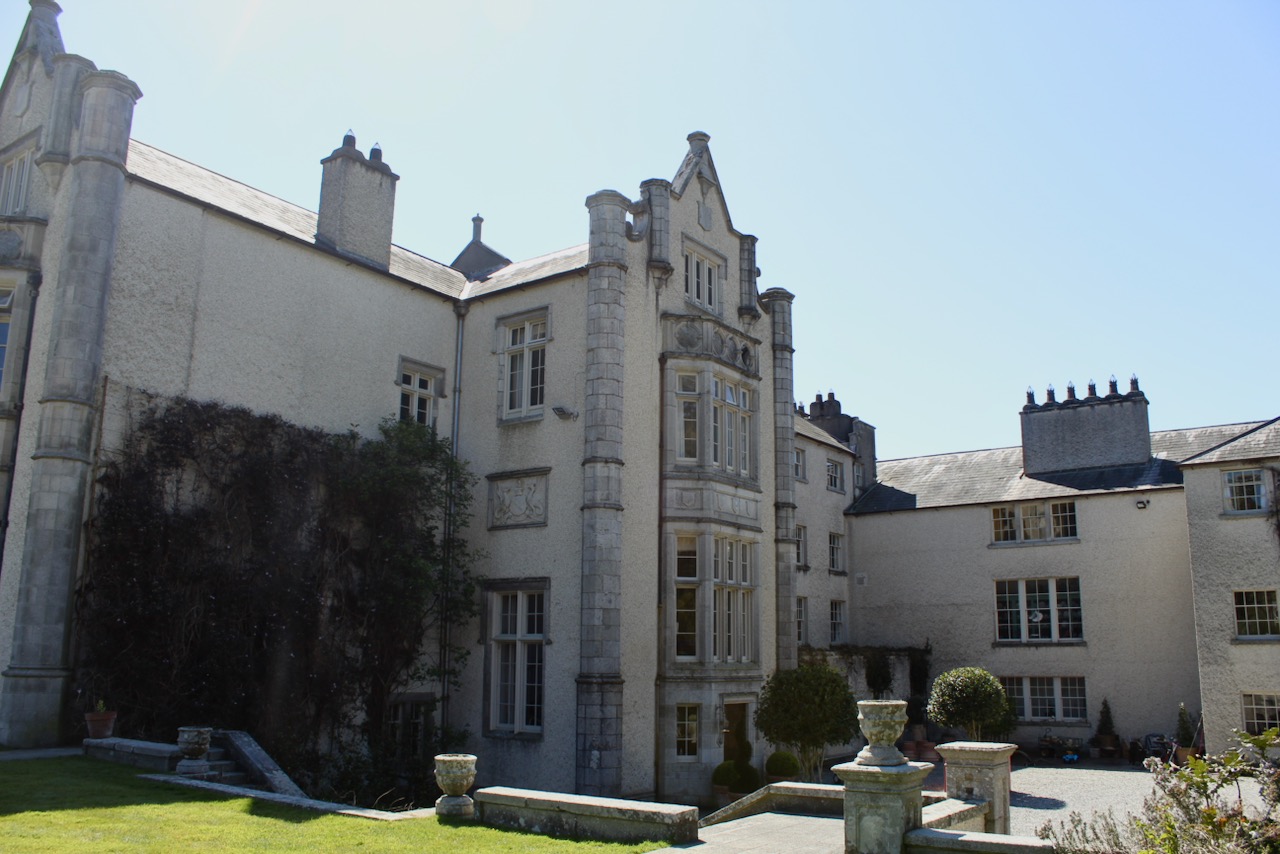
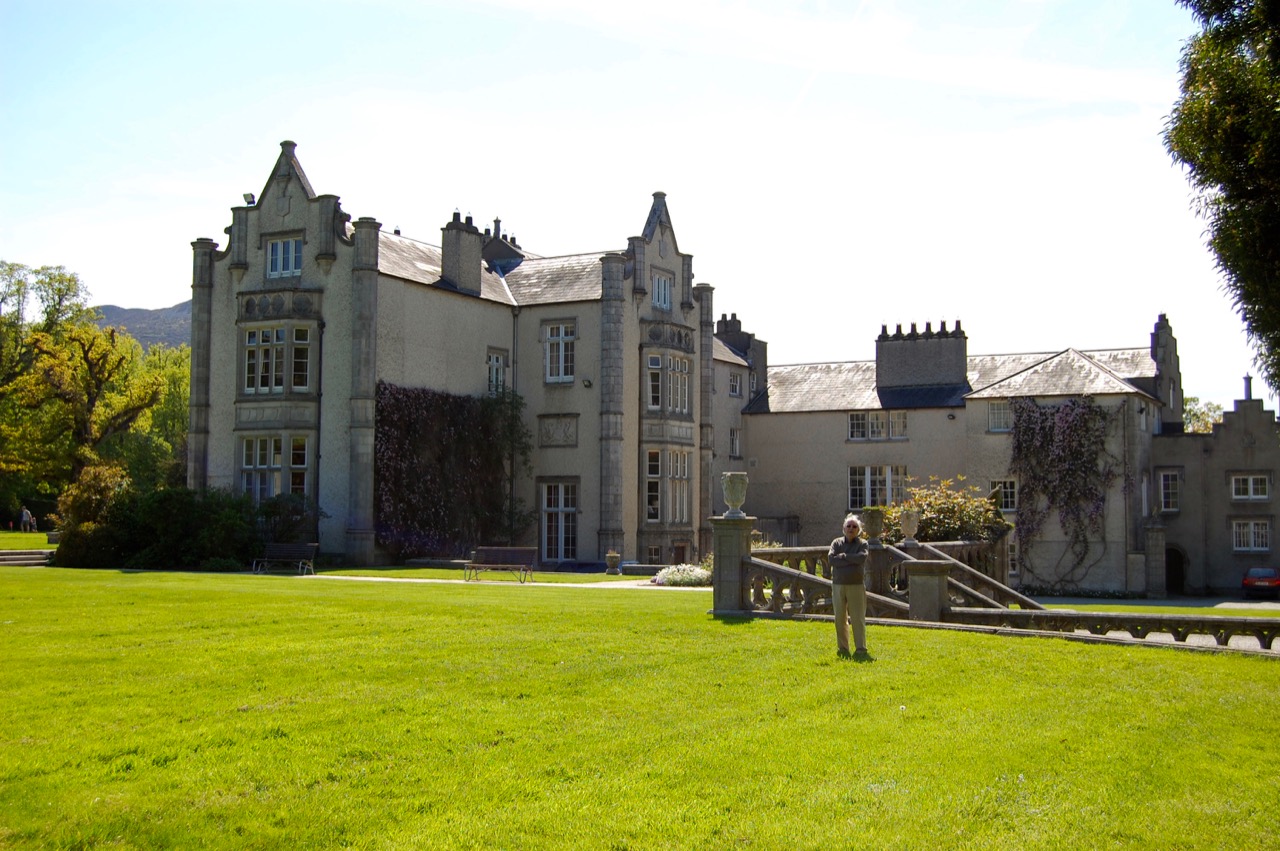
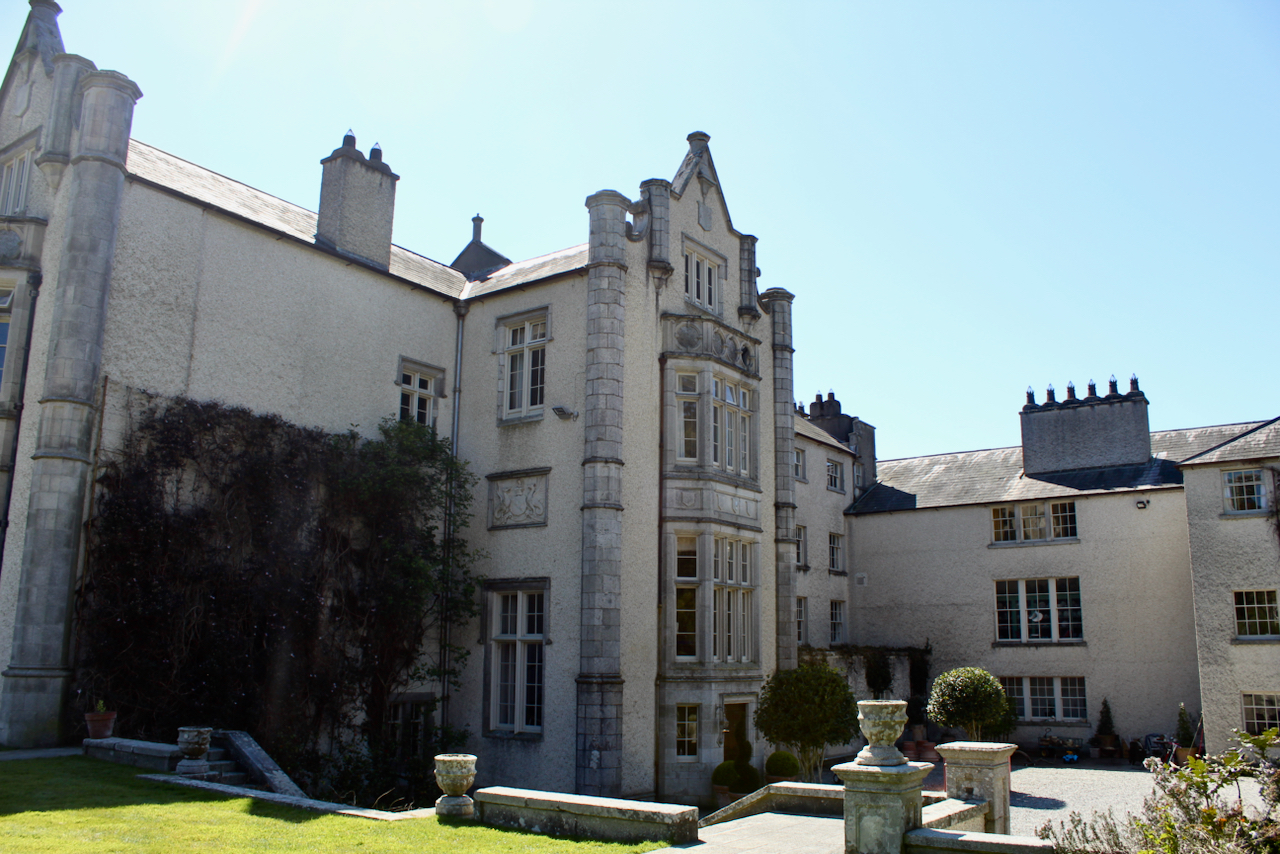
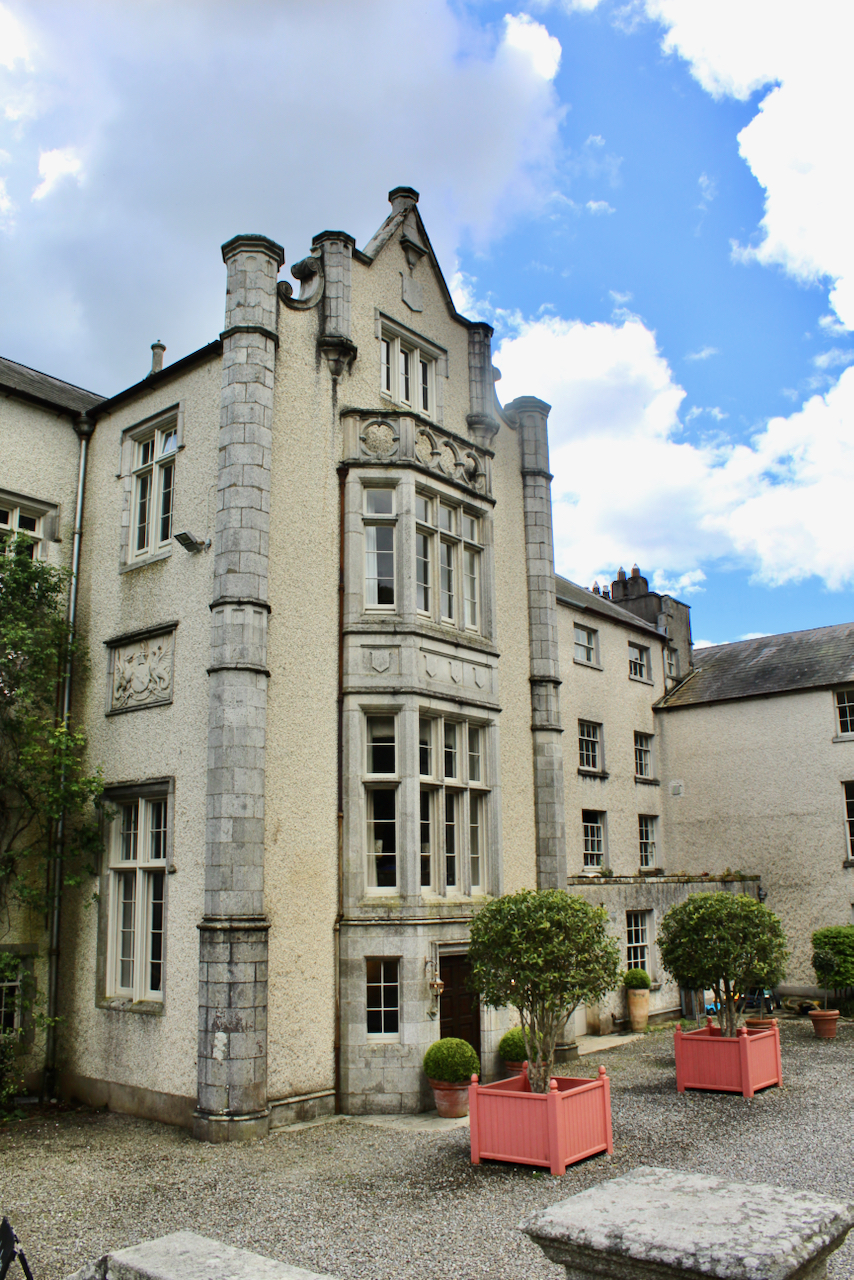
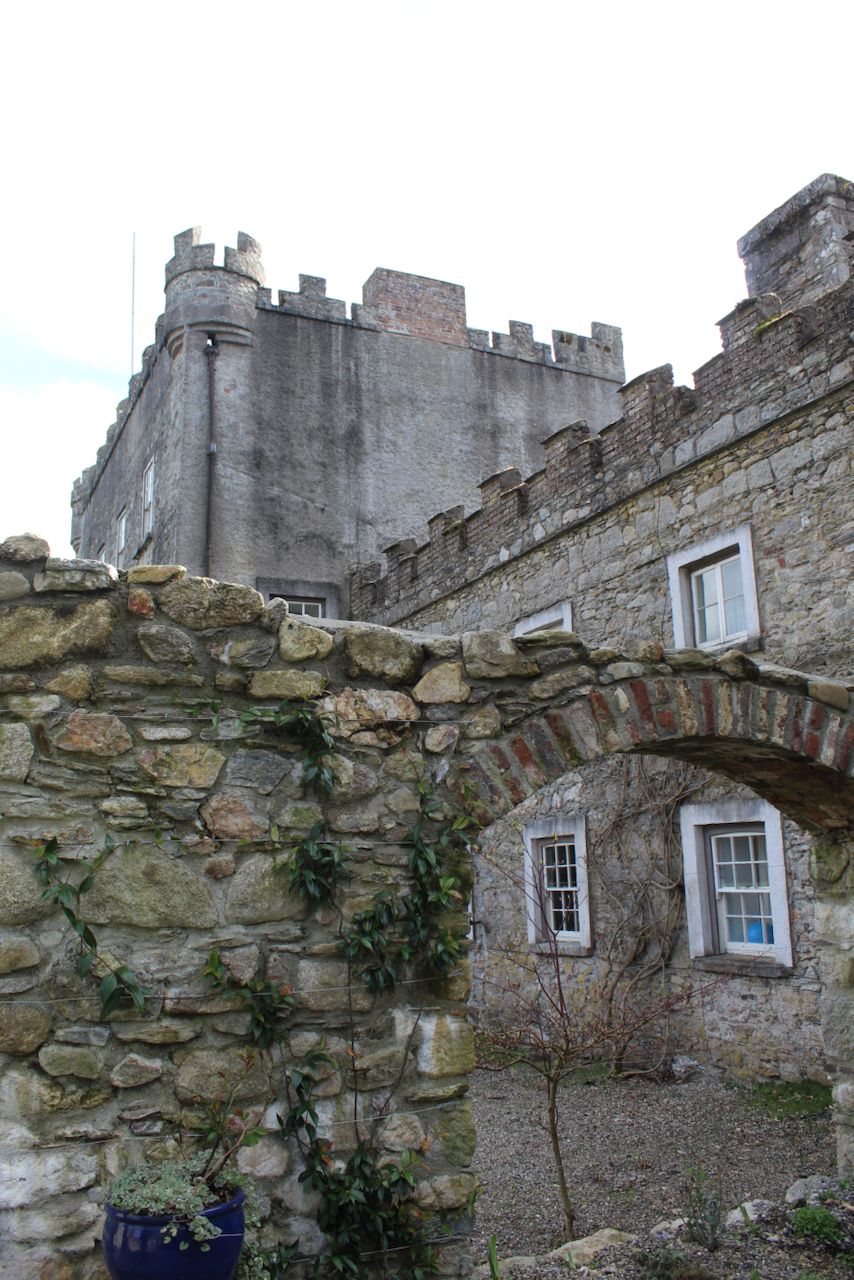
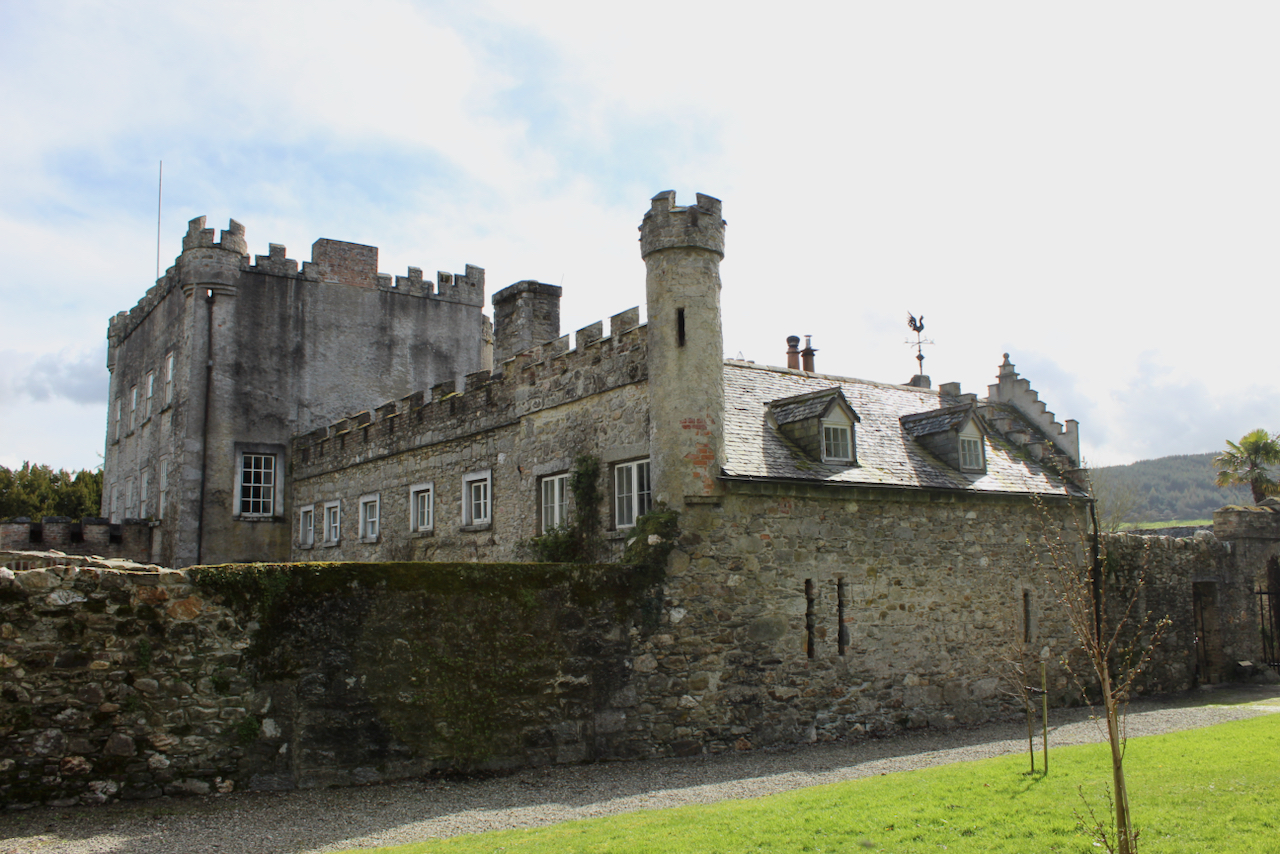
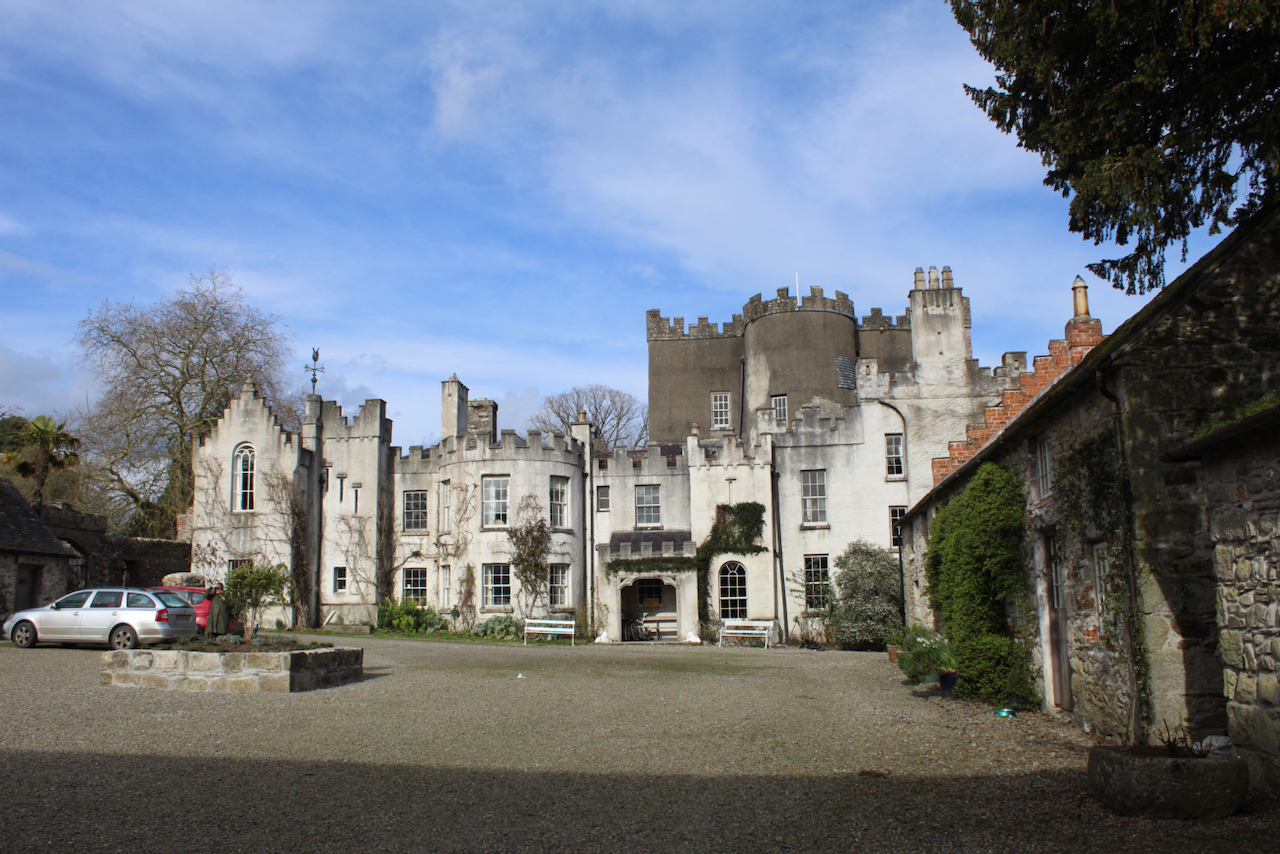
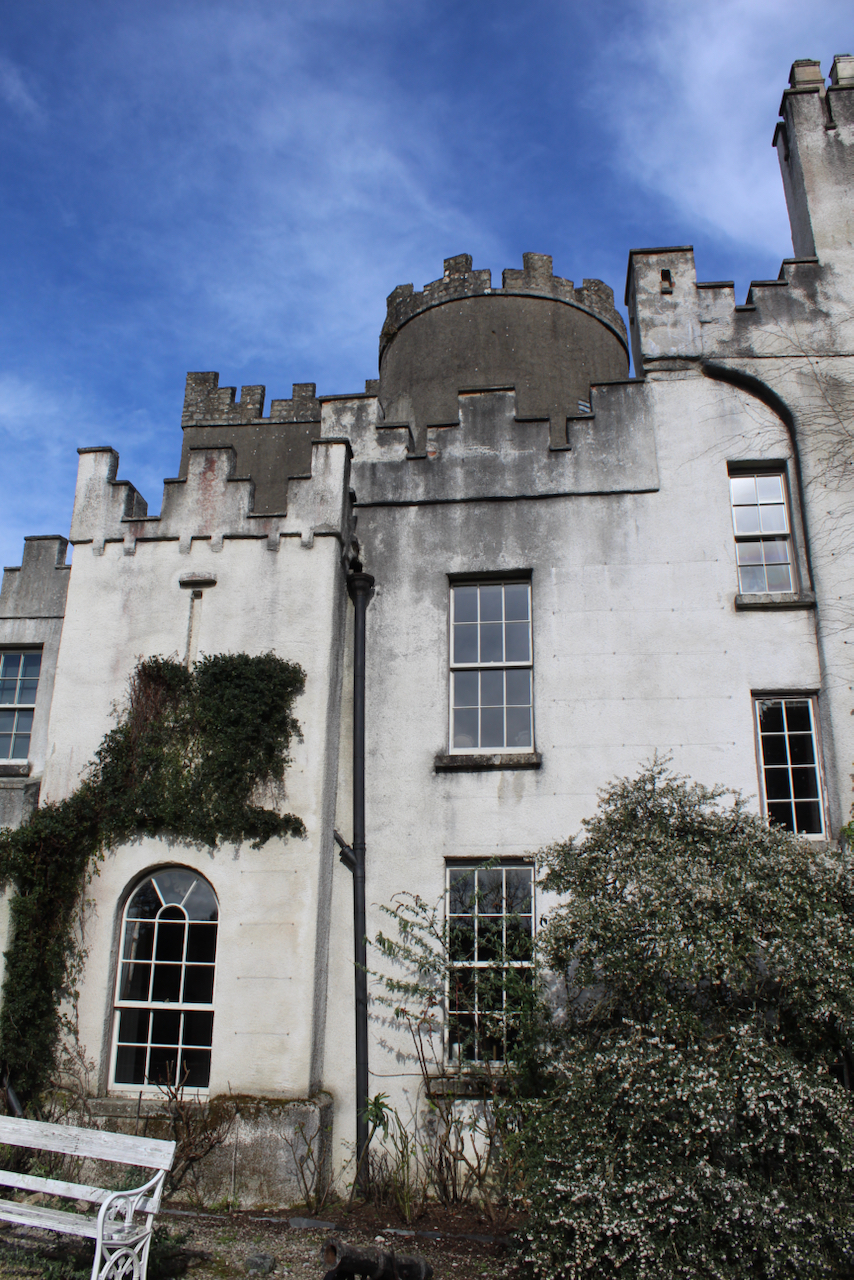
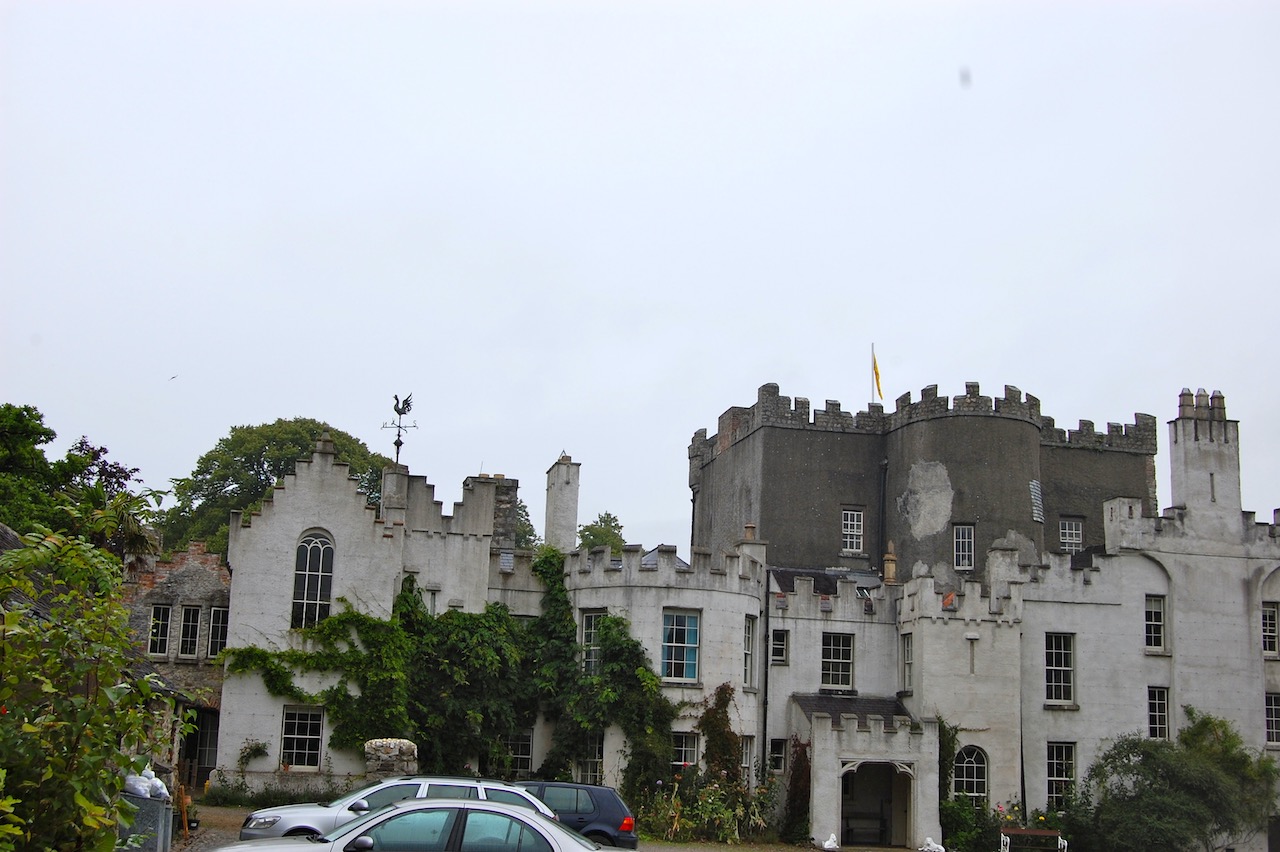
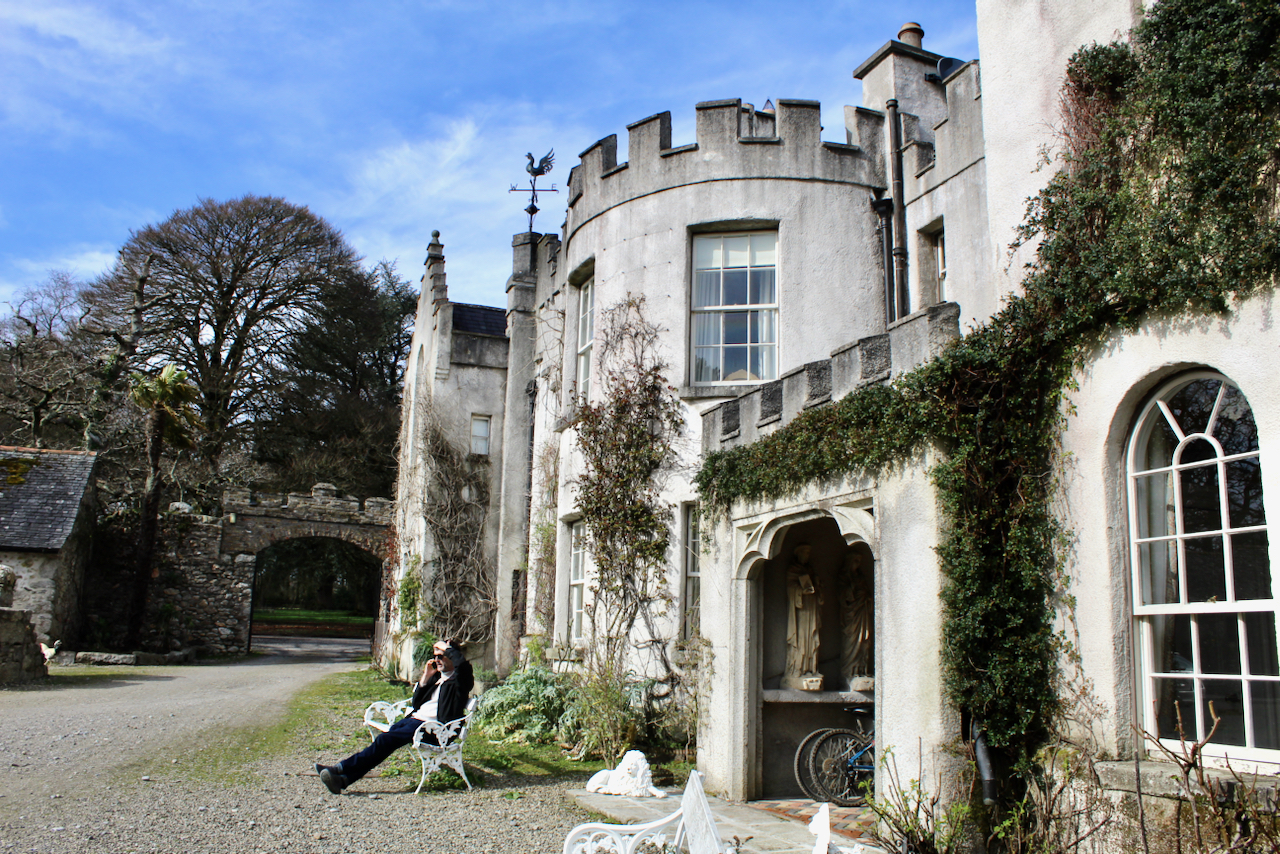
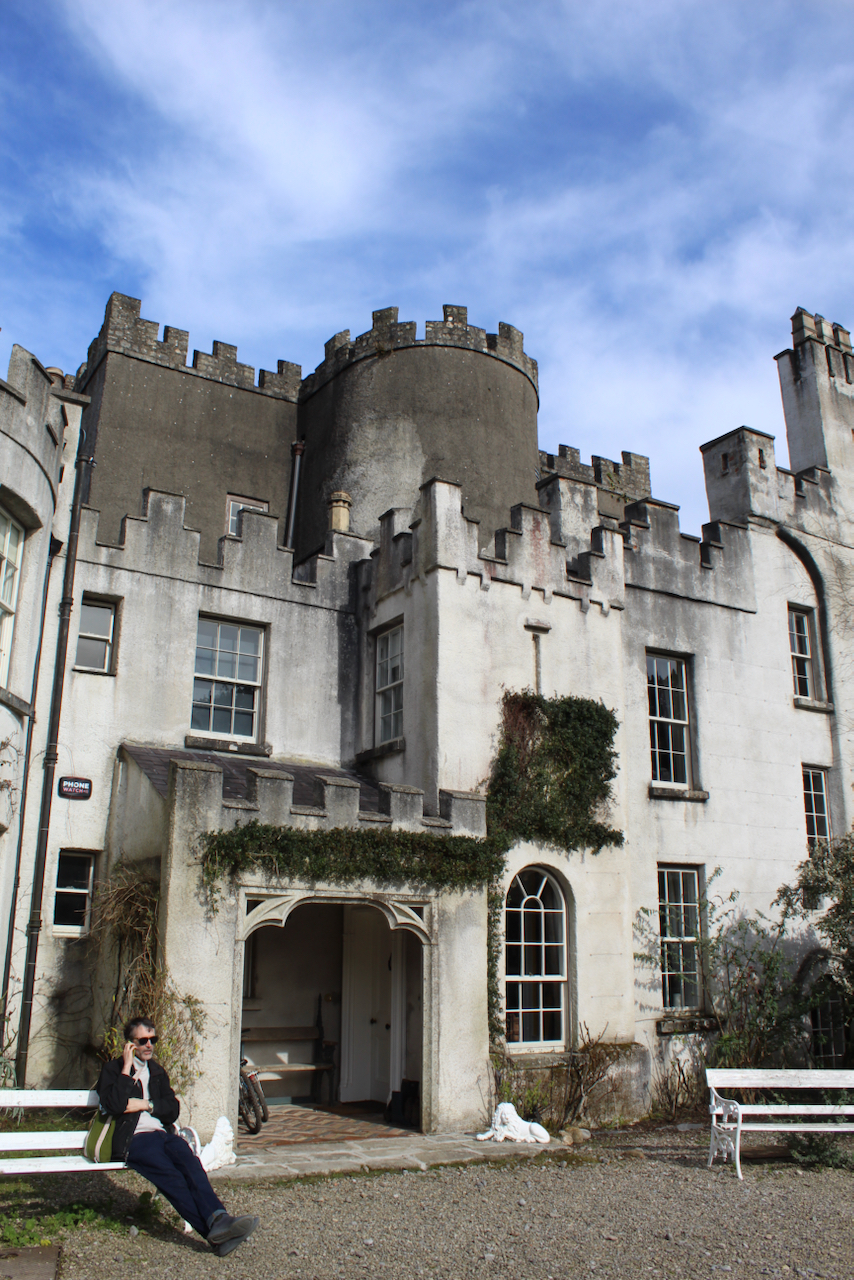
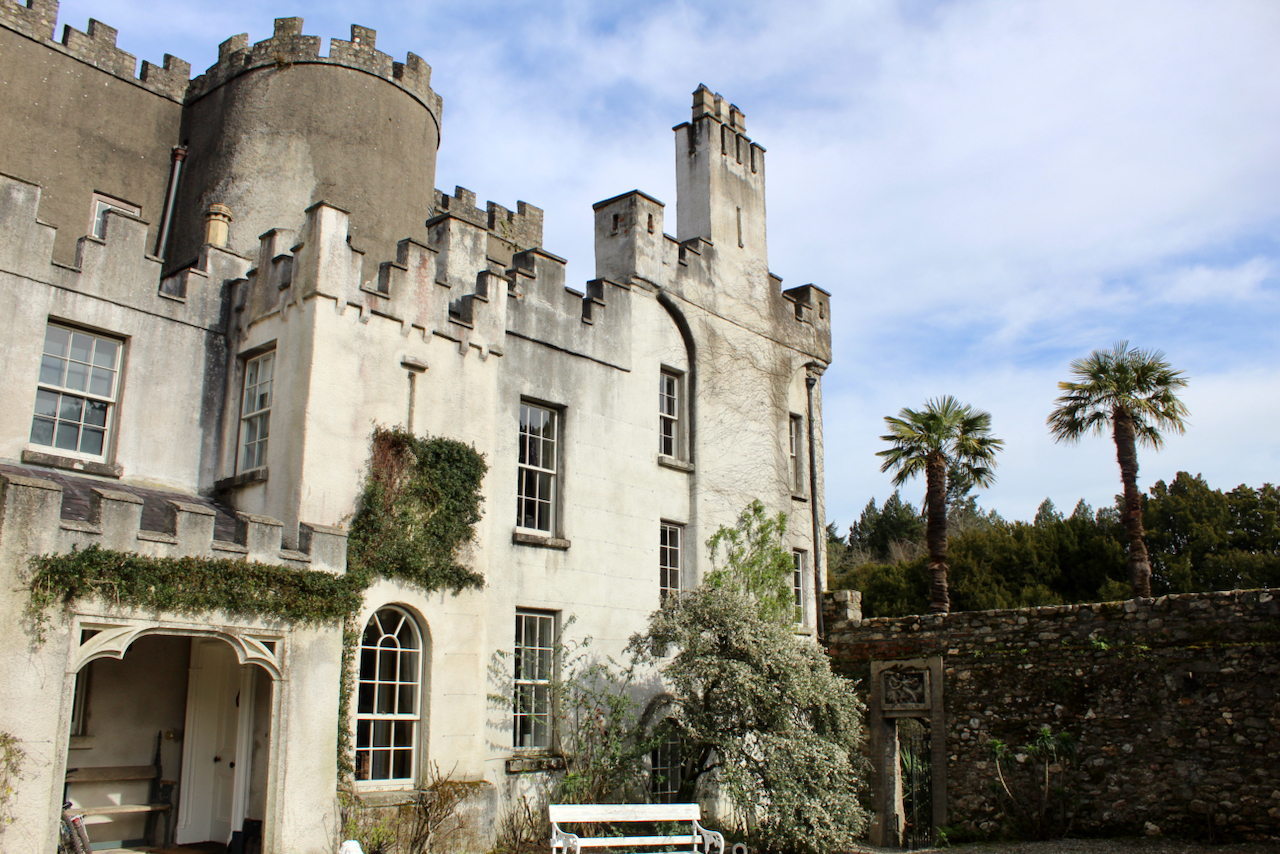
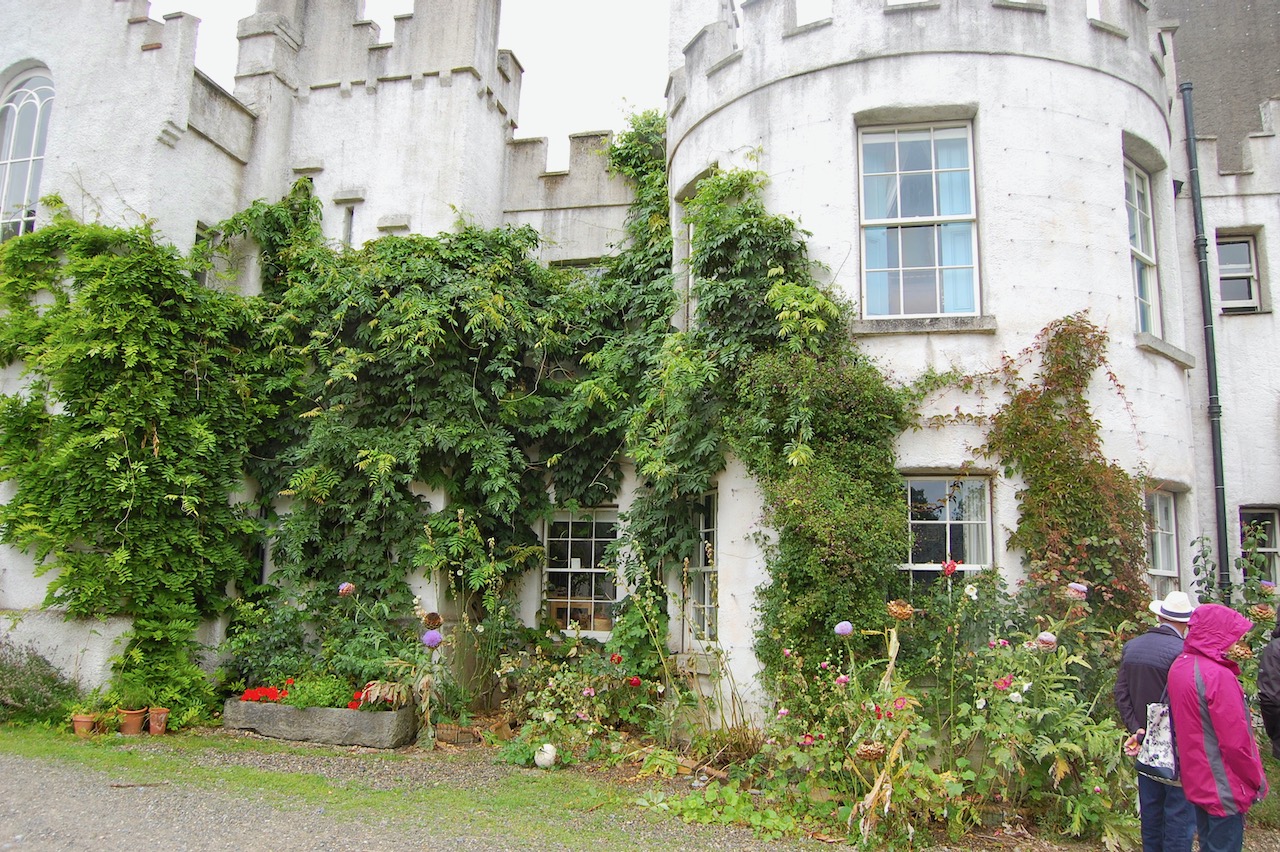
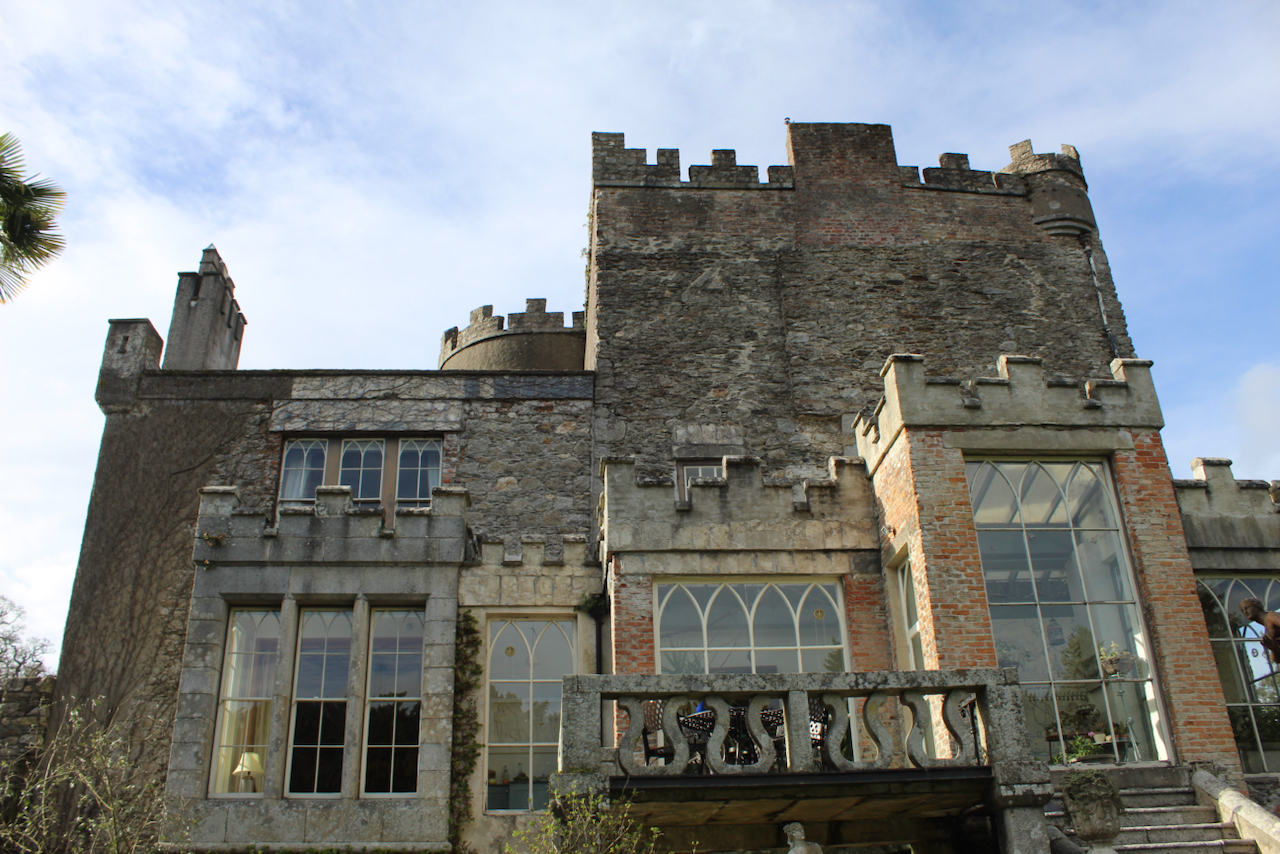
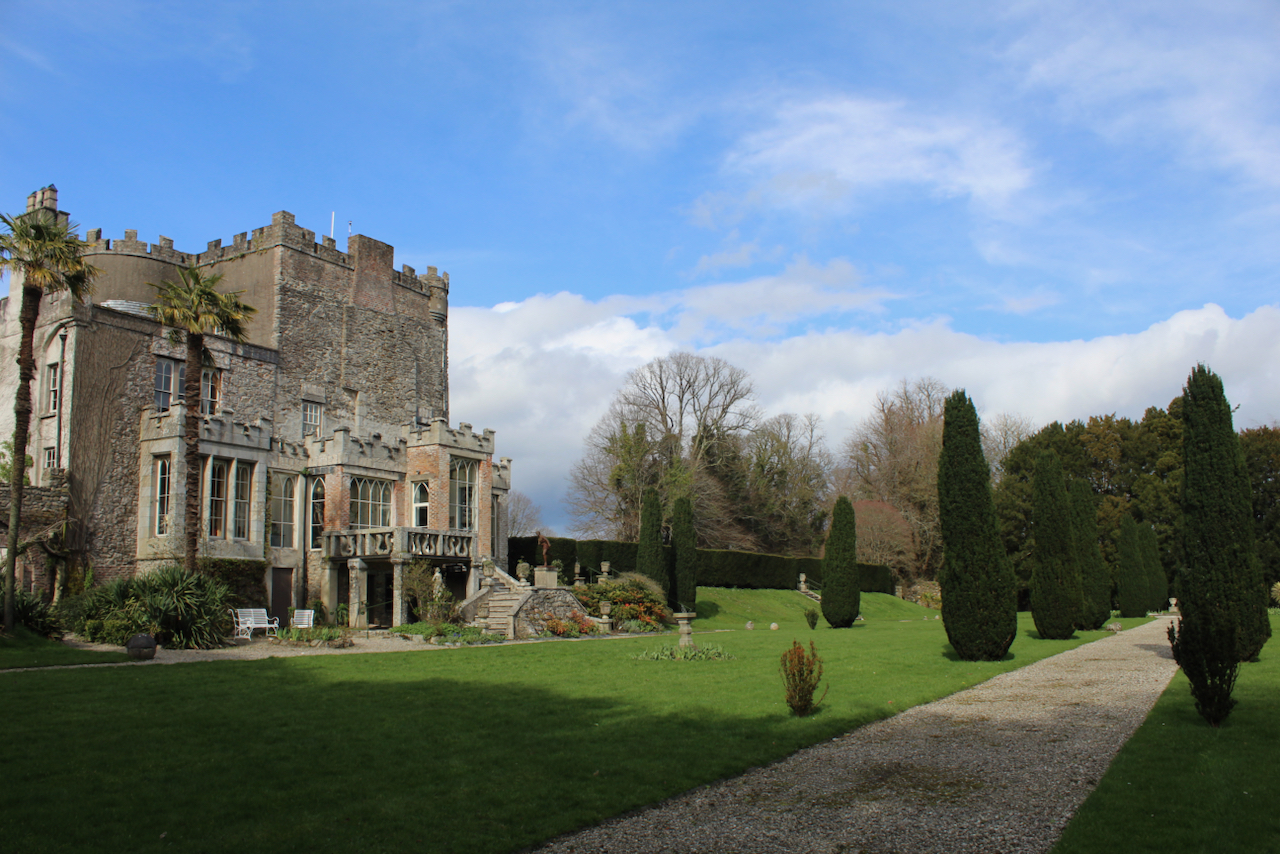
The Morrisons rebuilt the house in Neo-Tudor style. It has multiple gables, balustrades, pepper-pot chimneys and crenellations.
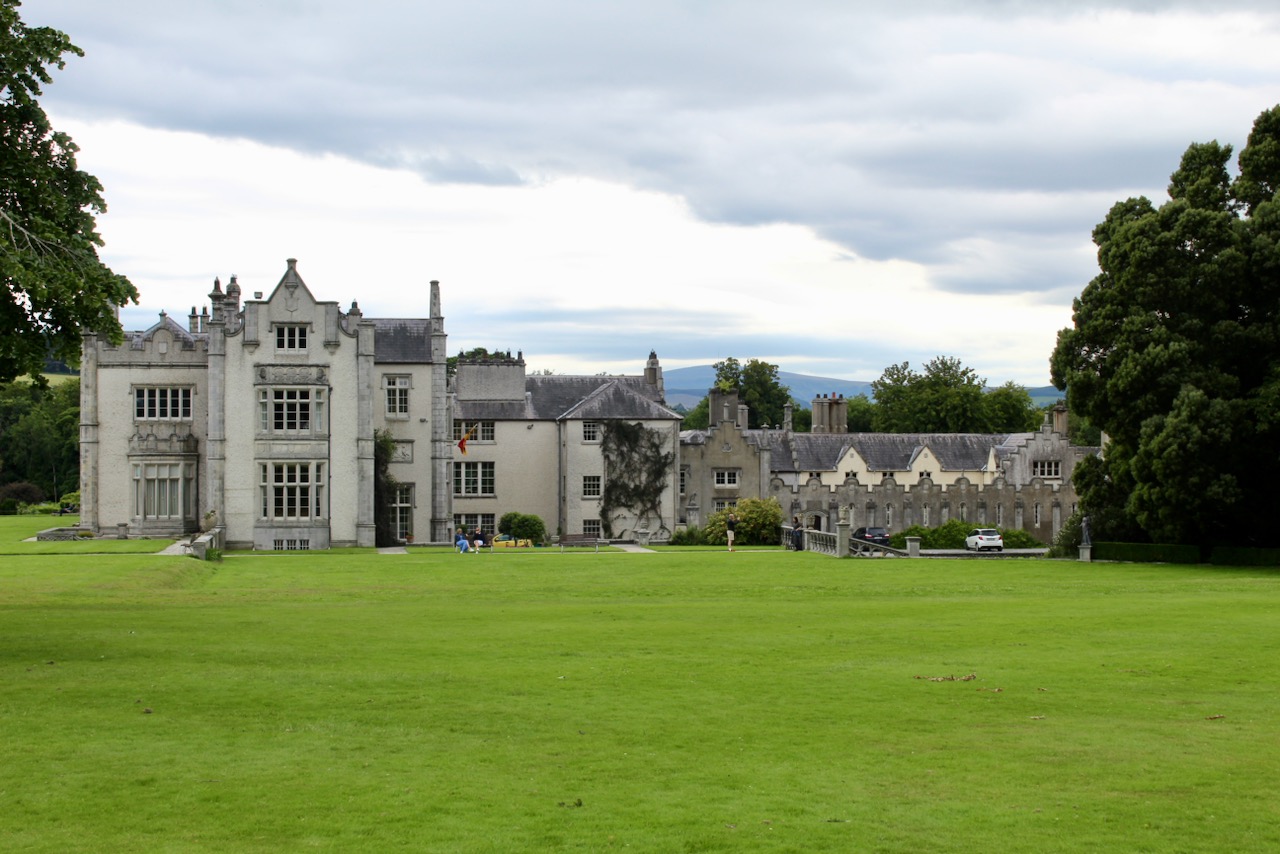
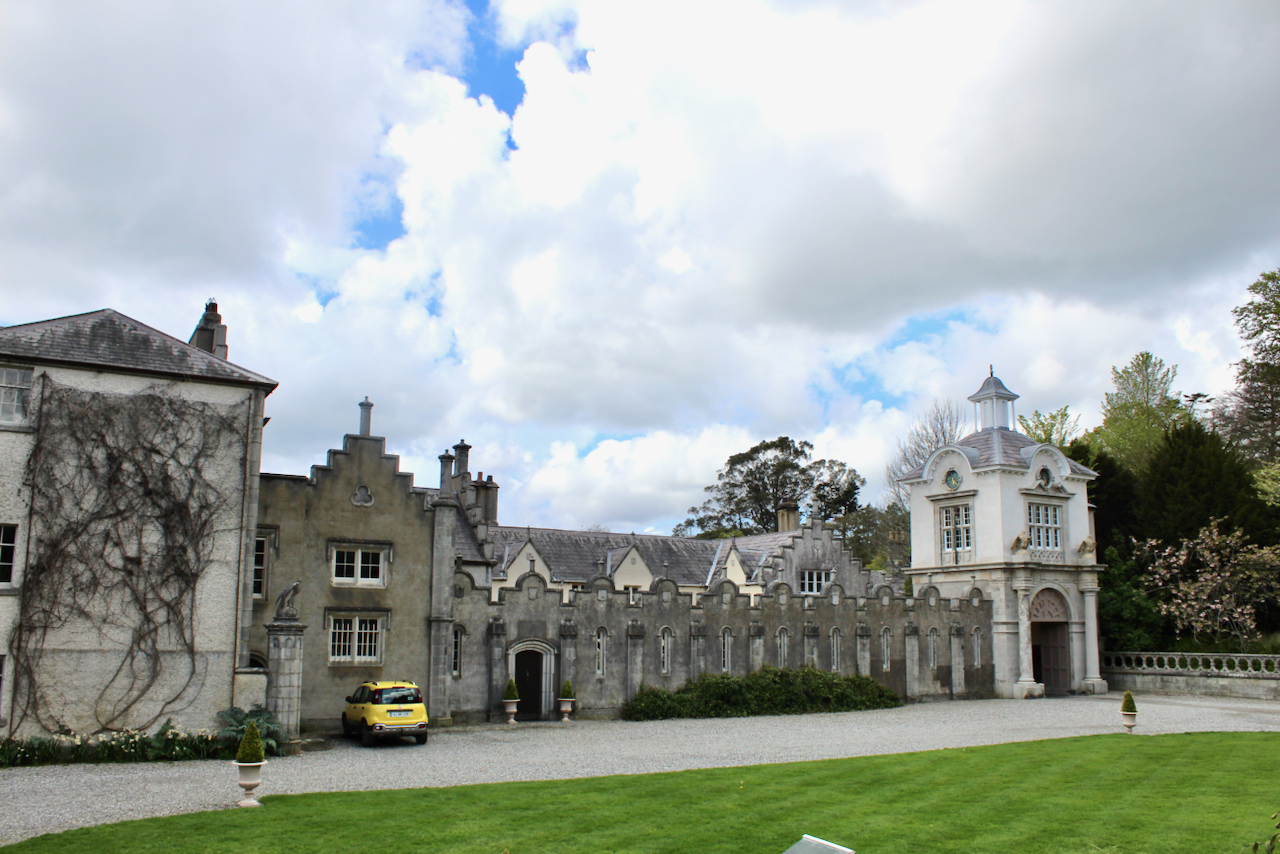
July 2020. Photograph © Jennifer Winder-Baggot, www.irishhistorichouses.com
The crenellated stretch to the right in the photograph used to house a covered walkway between the carriage house and the house. Photograph © Jennifer Winder-Baggot, www.irishhistorichouses.com
July 2020. Photograph © Jennifer Winder-Baggot, www.irishhistorichouses.com
One of the elaborate gables. Photograph © Jennifer Winder-Baggot, www.irishhistorichouses.com
Killruddery. Photograph © Jennifer Winder-Baggot, www.irishhistorichouses.com

The website tells us: “The 10th Earl carried out an extensive reconstruction of Killruddery House between 1820 and 1830. Architects Richard and William Vitruvius Morrison were instructed to build a Tudor Revival mansion, incorporating the original low-level 17th mansion. The new house took on the shape of an irregular quadrangle, enclosing a central courtyard. The interior still includes elaborate chimney-pieces by Giacinto Micali, crimson silk damask from Spitalfields, stained glass by John Milner, a domed ceiling by Henry Popje and the wonderful drawing room ceiling by Simon Gilligan who worked for Popje. Popje had received an apprenticeship in Stucco work from the Lafranchini brothers.” 

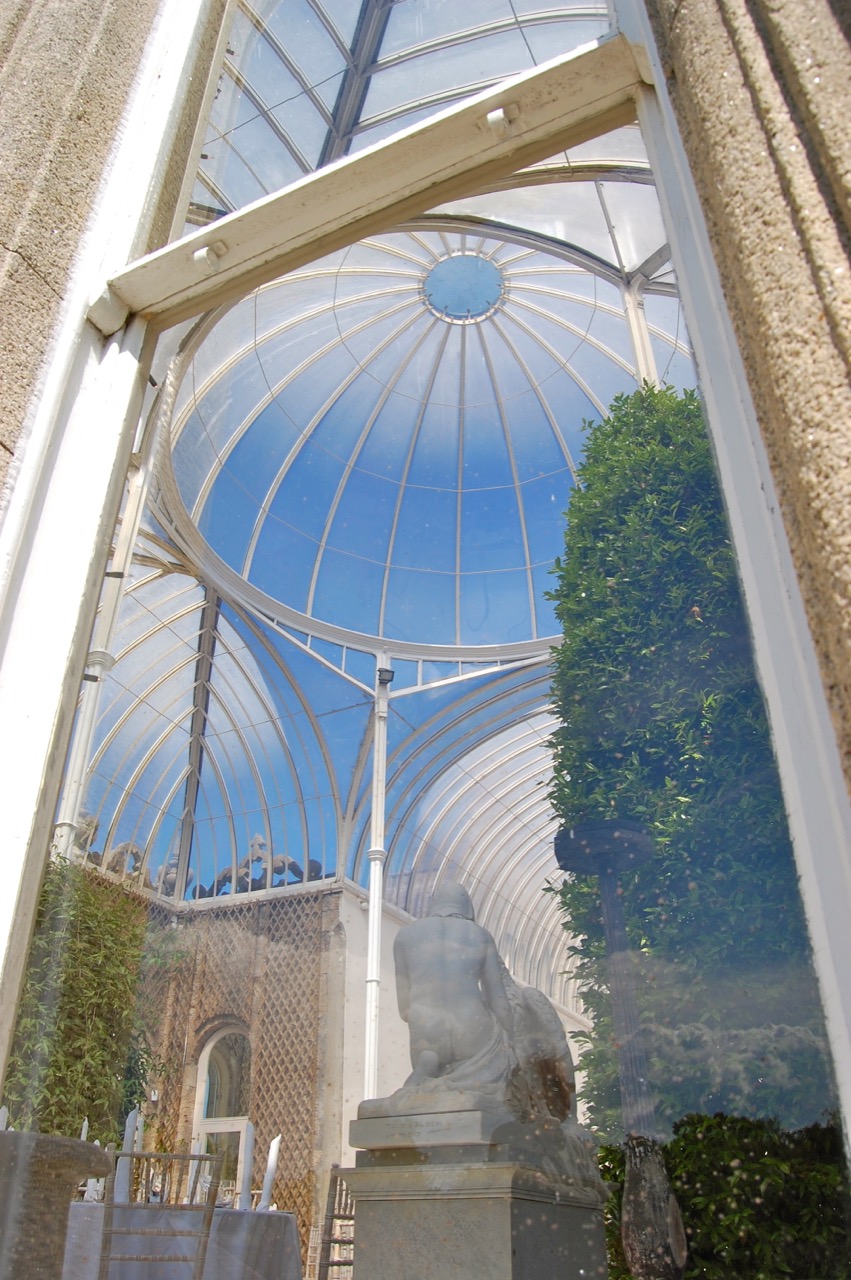
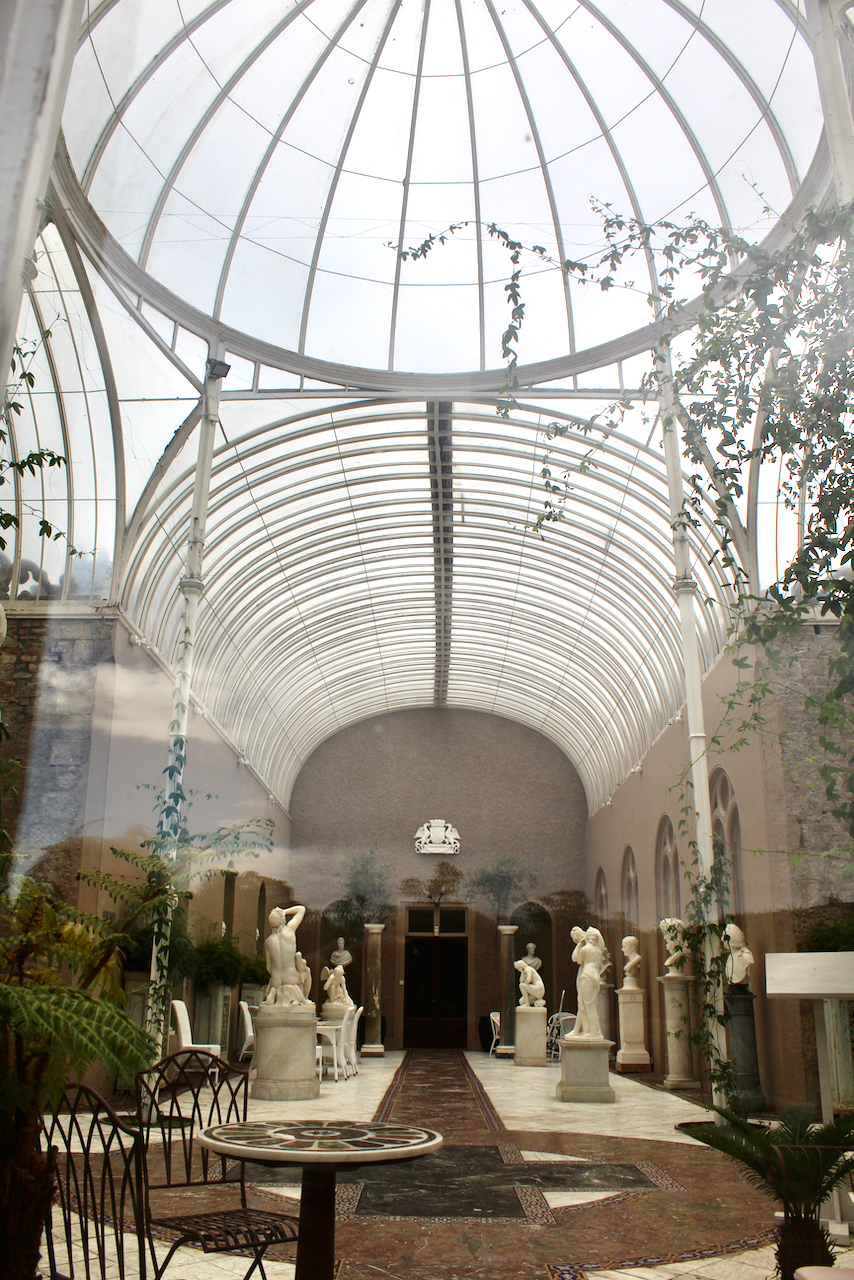
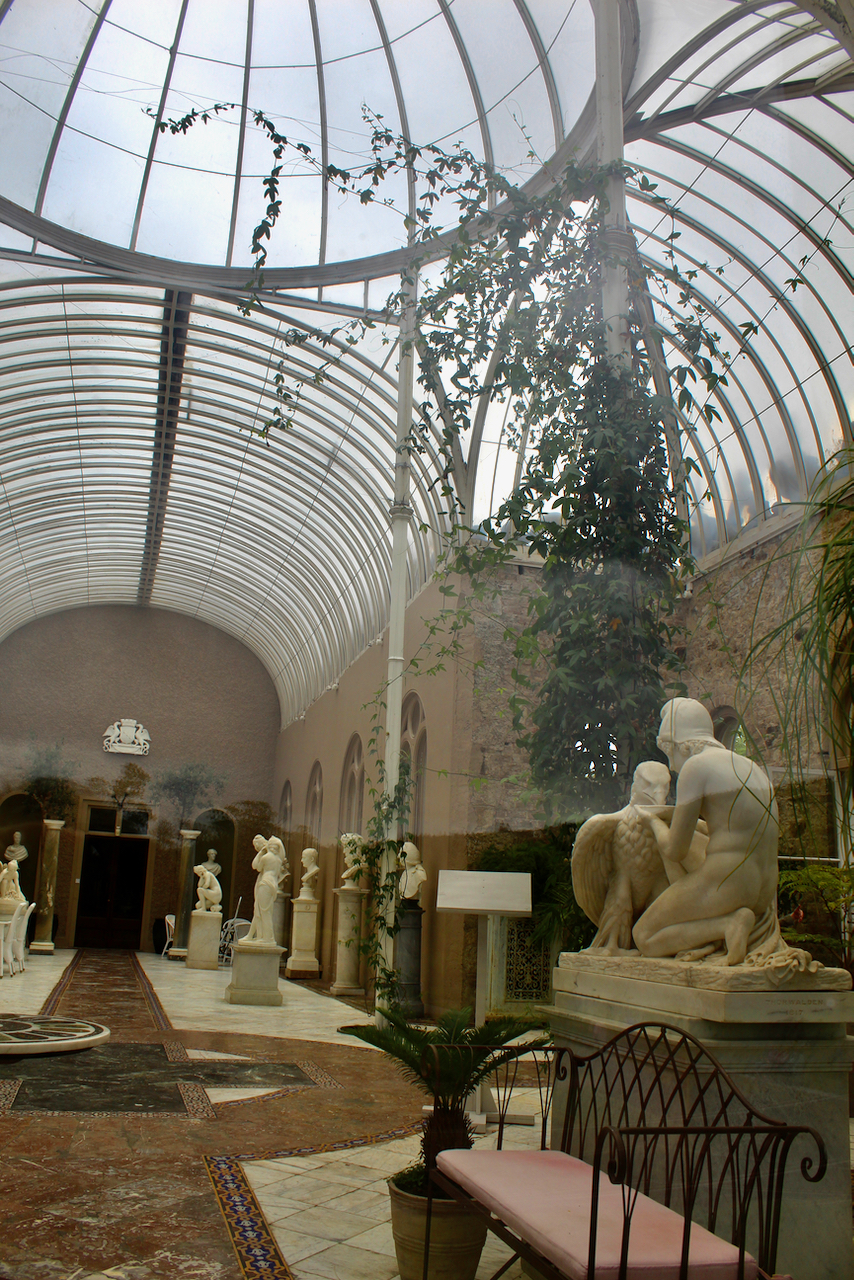
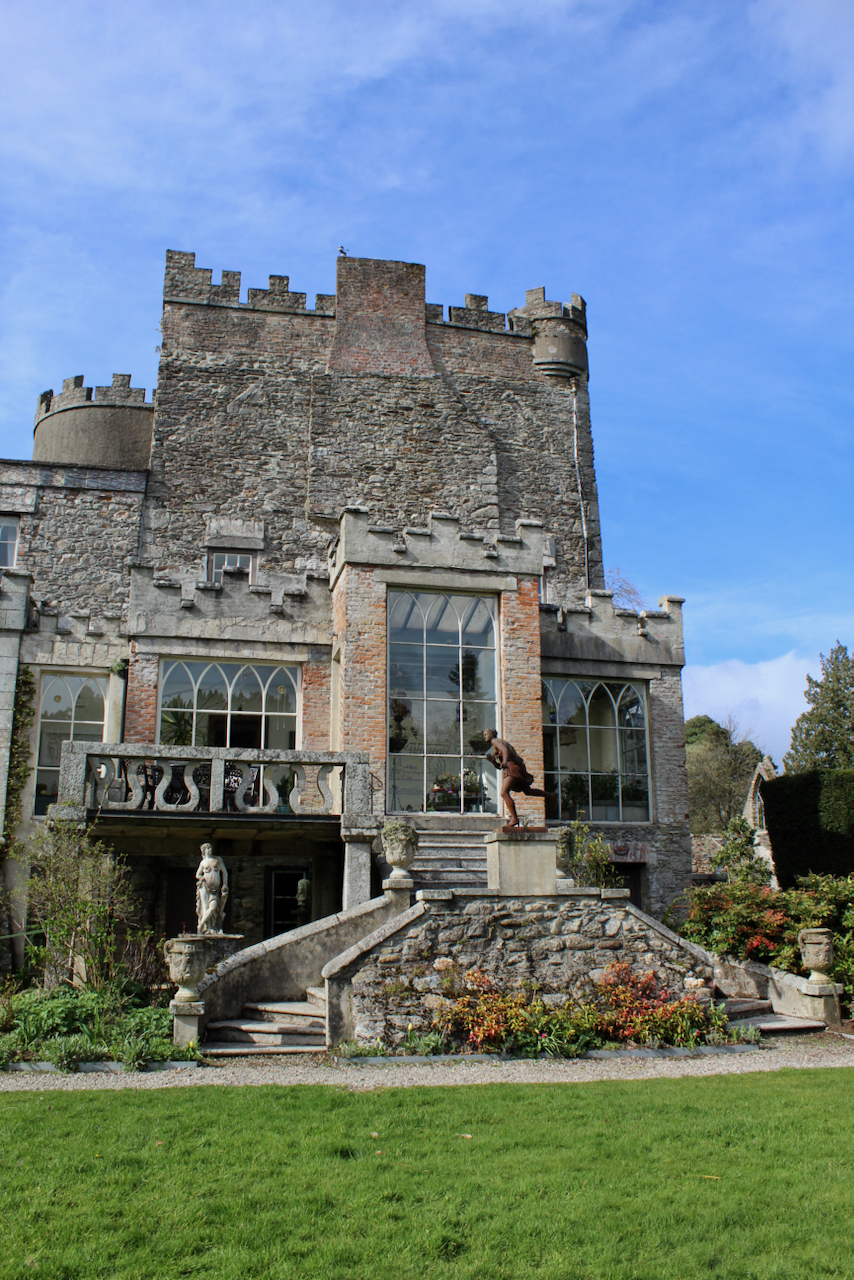
In 1852 the 10th Earl added the Conservatory, or Orangerie, to the design of William Burn. According to the website, the Orangerie was designed and built by William Burn after the fashion of the Crystal Palace in England. The design for the parapet is said to have been based on a tiara belonging to Lady Meath. The original glass dome was the work of Richard Turner who designed the curvilinear range at the National Botanic Gardens in Dublin and at Kew Gardens in London, and also the glass house conservatory which we saw in Rokeby Hall in Louth (another Section 482 property, see my entry). This glass dome has now been replaced as it became unsafe. The Orangery houses a collection of marble statues gathered in Italy in the 1830 – 1850 period by the 10th Earl of Meath. Classical sculptures include Ganymede giving water to Zeus disguised as an eagle; Cyparissus with his dying deer (it is because of Cyparissus who so famously mourned his deer that cypress trees are associated with graveyards); Cupid with Pysche and Venus. Other prominent busts include Homer,  Socrates, Napoleon, William Pitt and Wellington. The floor of the Orangerie is made of Italian, Carrera and Connemara marble, and has a Celtic Cross decoration inlay. Decorative iron grillwork around the edges of the floor let in warm steam for hothouse plants.

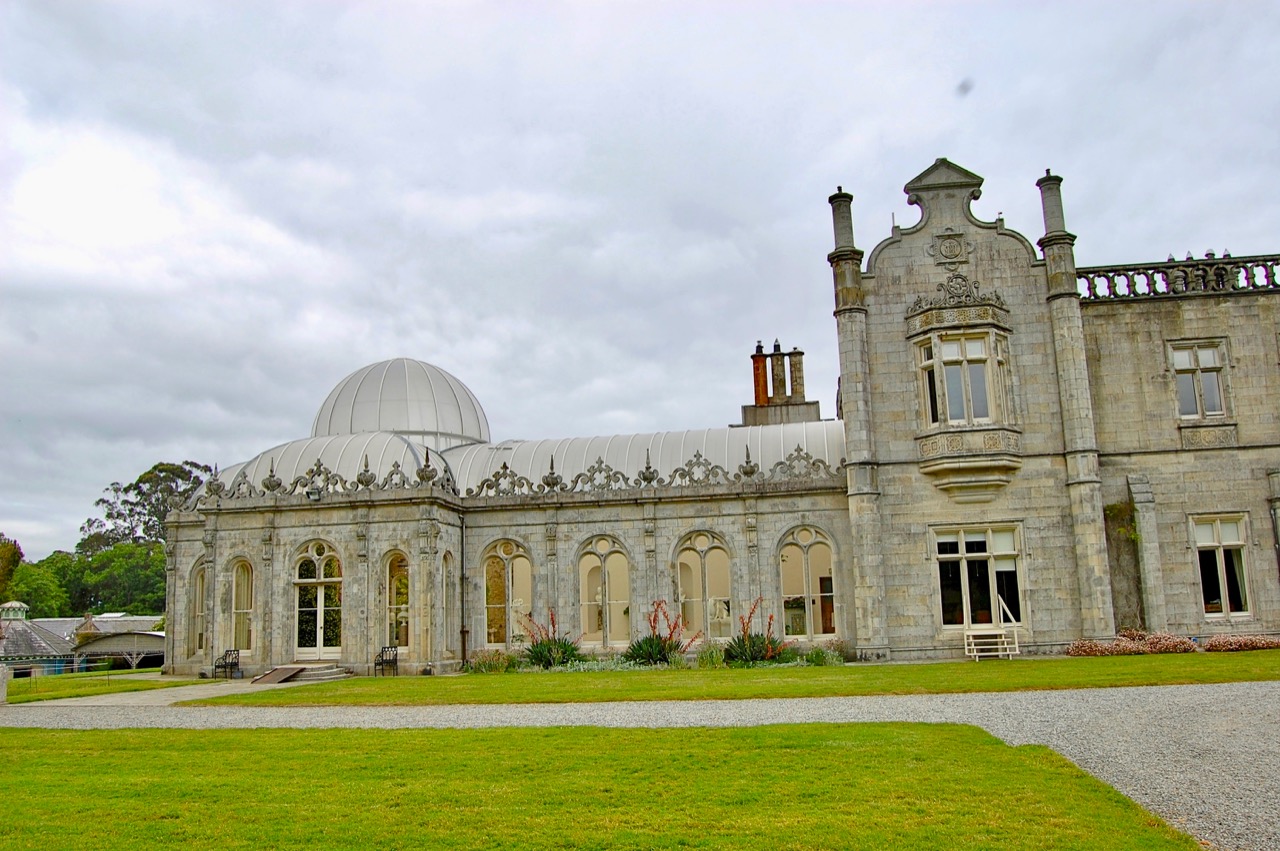
Kilruddery House, May 2013
Killruddery House, with its Orangerie. Photograph © Jennifer Winder-Baggot, www.irishhistorichouses.com
Kilruddery House. The Lady of the house sold a tiara to pay for the construction of the conservatory. She requested that the pattern of the tiara be built into the conservatory
The Orangerie, by William Burn, with its decoration based on Lady Meath’s tiara. Photograph © Jennifer Winder-Baggot, www.irishhistorichouses.com
Kilruddery House, May 2013
The Orangerie. Photograph © Jennifer Winder-Baggot, www.irishhistorichouses.com
Kilruddery House, May 2013
Killruddery. Photograph © Jennifer Winder-Baggot, www.irishhistorichouses.com
The floor of the Orangerie is made of Italian, Carrera and Connemara marble, and has a Celtic Cross decoration inlay. Photograph © Jennifer Winder-Baggot, www.irishhistorichouses.com
Killruddery. Photograph © Jennifer Winder-Baggot, www.irishhistorichouses.com

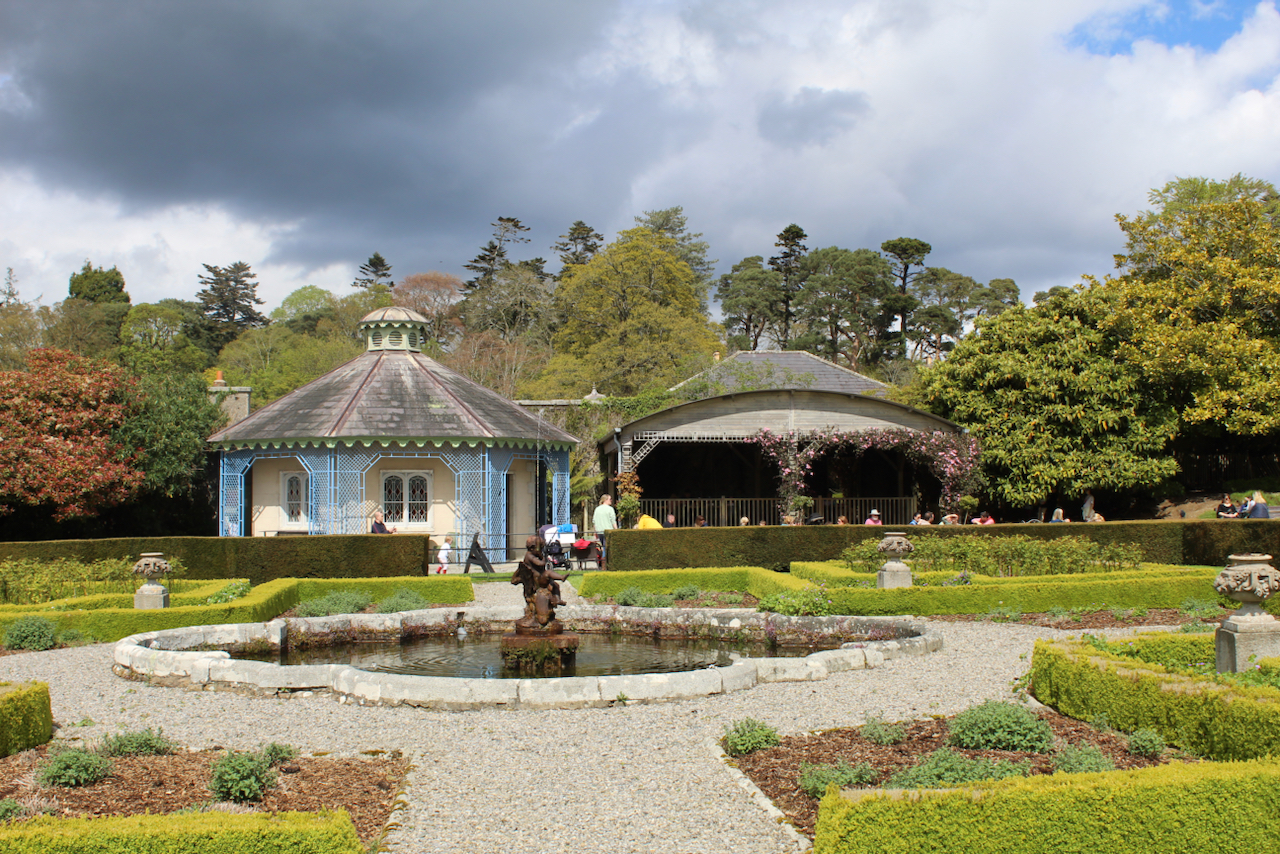
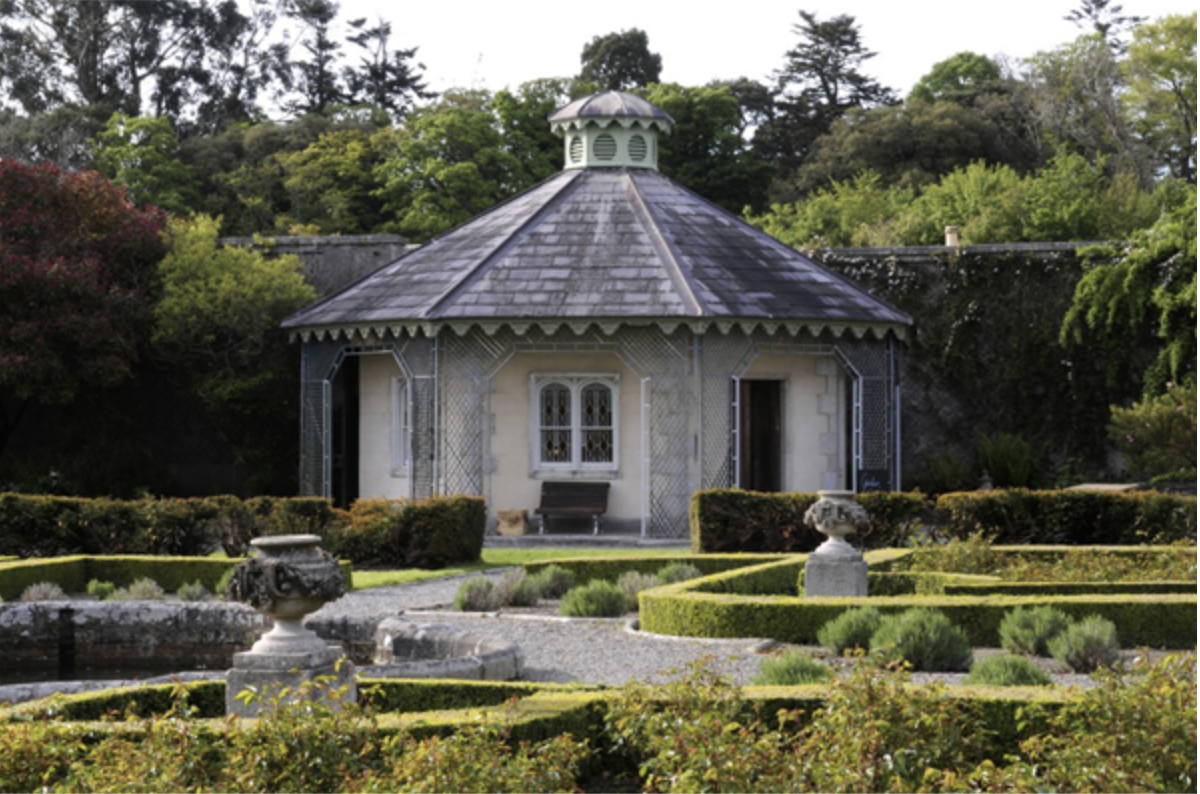
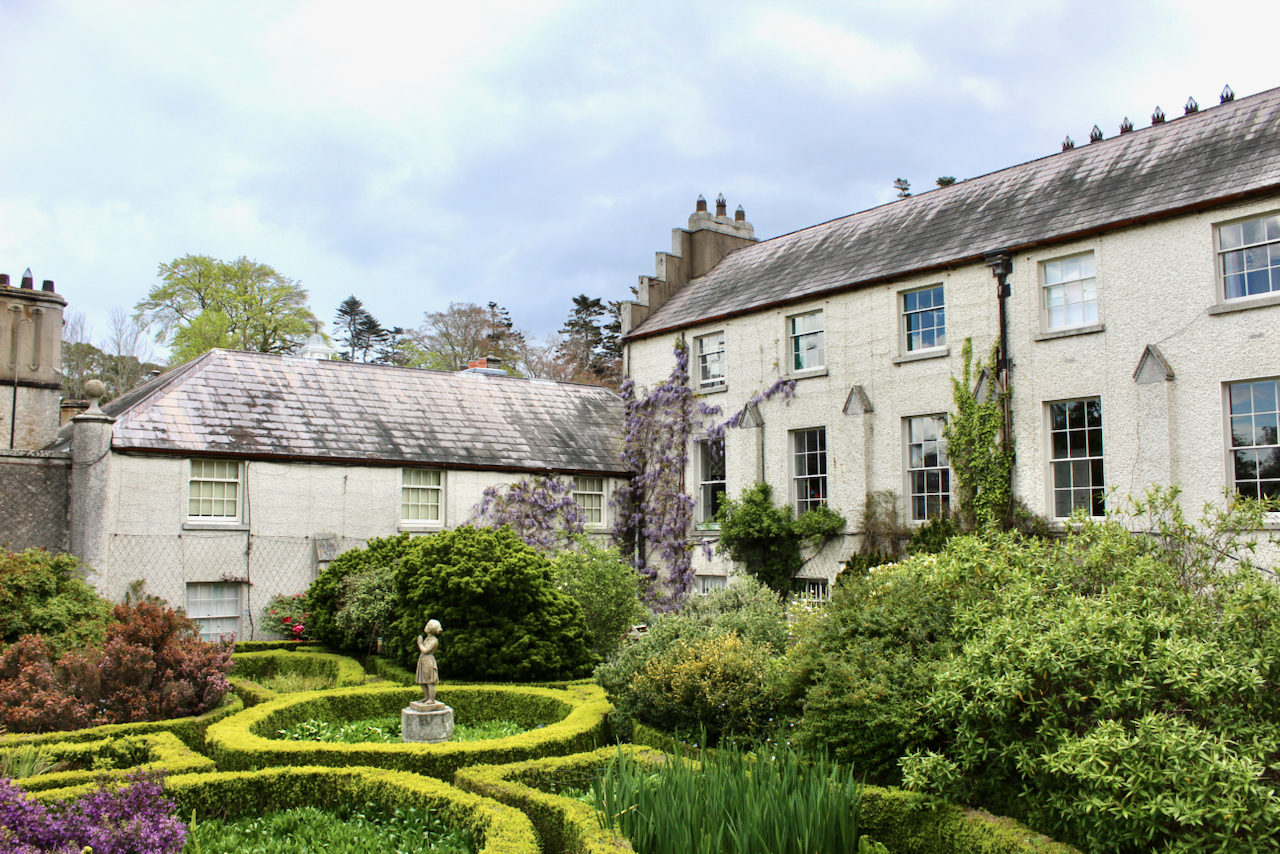
The 10th Earl hired Daniel Robertson to restore the gardens, and to create the parterre, in 1846. A neighbour, George Hodson, designed the ornamental dairy, in the fashionable picturesque style as popularised by Humphrey Repton. The dairy has marble for coolness and stained glass windows to protect from the hot sun.
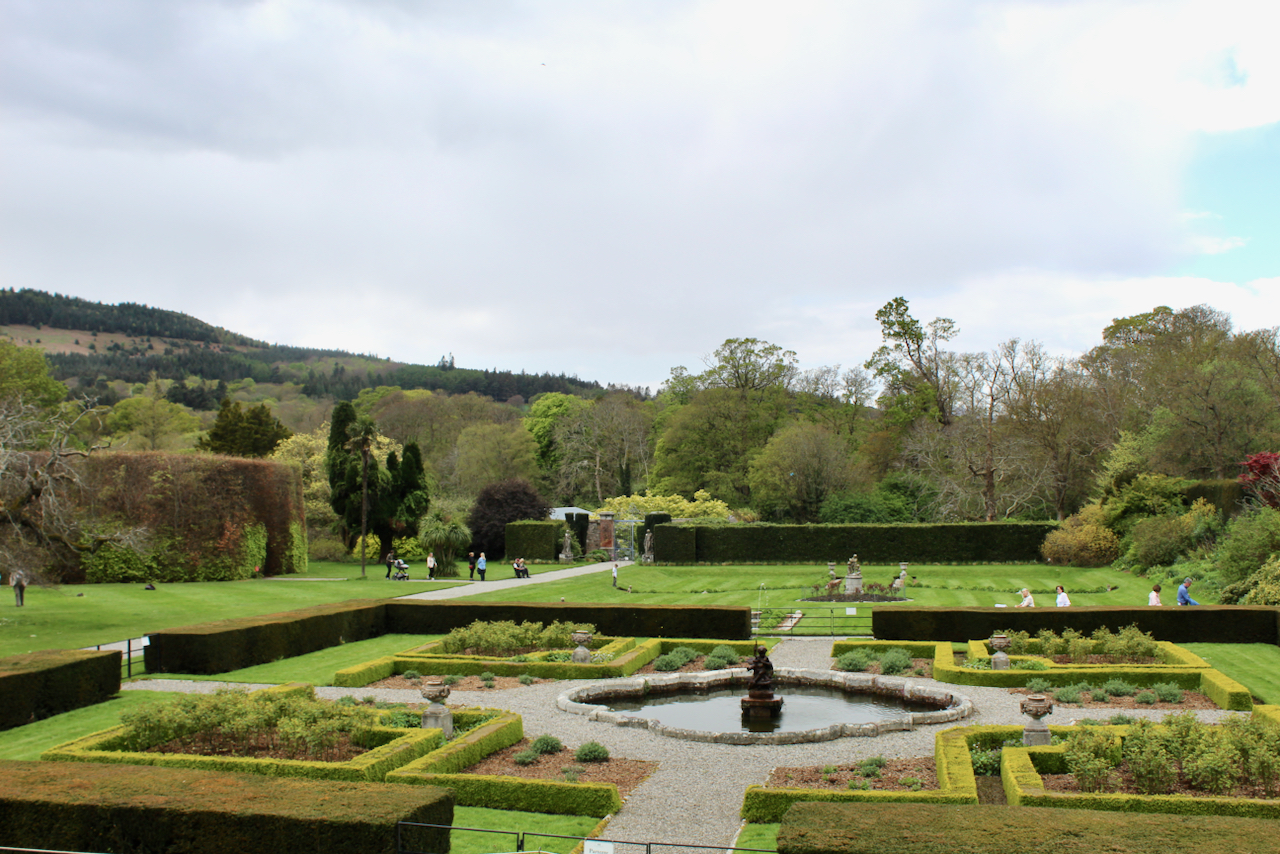
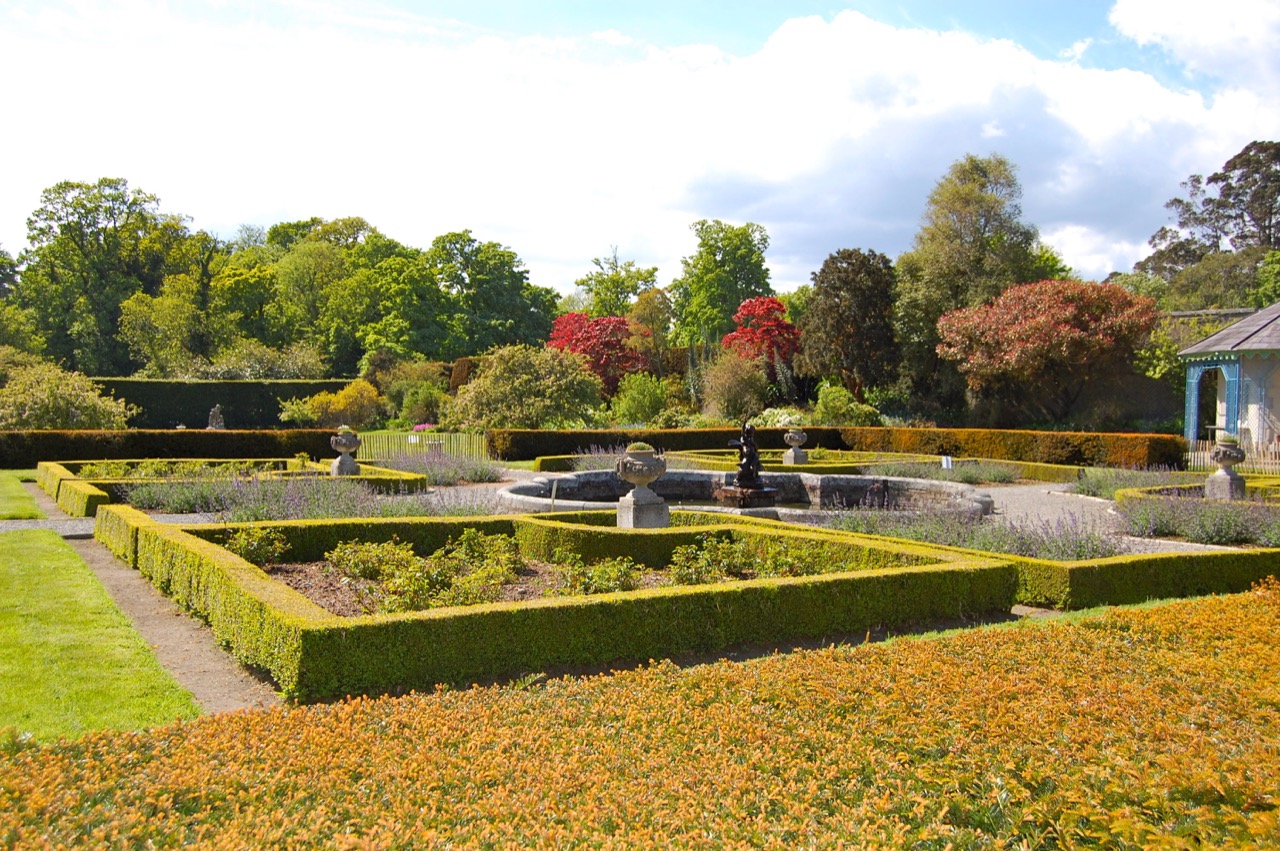
Formal Gardens, the lower parterre, May 2023. The 10th Earl hired Daniel Robertson to restore the gardens, and to create the parterre. Photograph © Jennifer Winder-Baggot, www.irishhistorichouses.com
Killruddery formal gardens, May 2013. Photograph © Jennifer Winder-Baggot, www.irishhistorichouses.com
The Ornamental Dairy, designed by George Hodson. Photograph © Jennifer Winder-Baggot, www.irishhistorichouses.com
Sir George Hodson’s dairy, seen across the upper end of the Victorian formal rose and lavender garden at Killruddery. Photograph by Val Corbett, for Country Life, 10/02/2010.

The 10th Earl’s son William (1803-1887) succeeded as 11th Earl in 1851. He married Harriot Brooke, daughter of 6th Baronet Brooke, of Norton Priory, Co. Chester, England. Her portrait, with two of her children, hangs in the Main Staircase Hall of Killruddery, next to a large portrait of her husband. The 11th Earl held the office of Aide-de-Camp to HM Queen Victoria, and he gained the rank of Honorary Colonel in the 5th Battalion, Royal Dublin Fusiliers.
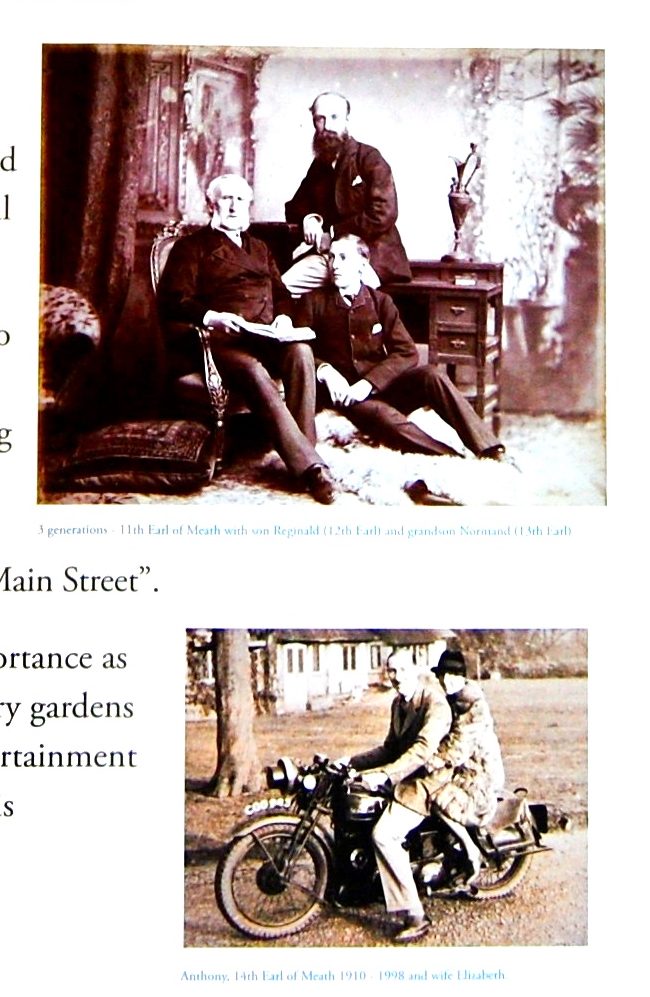
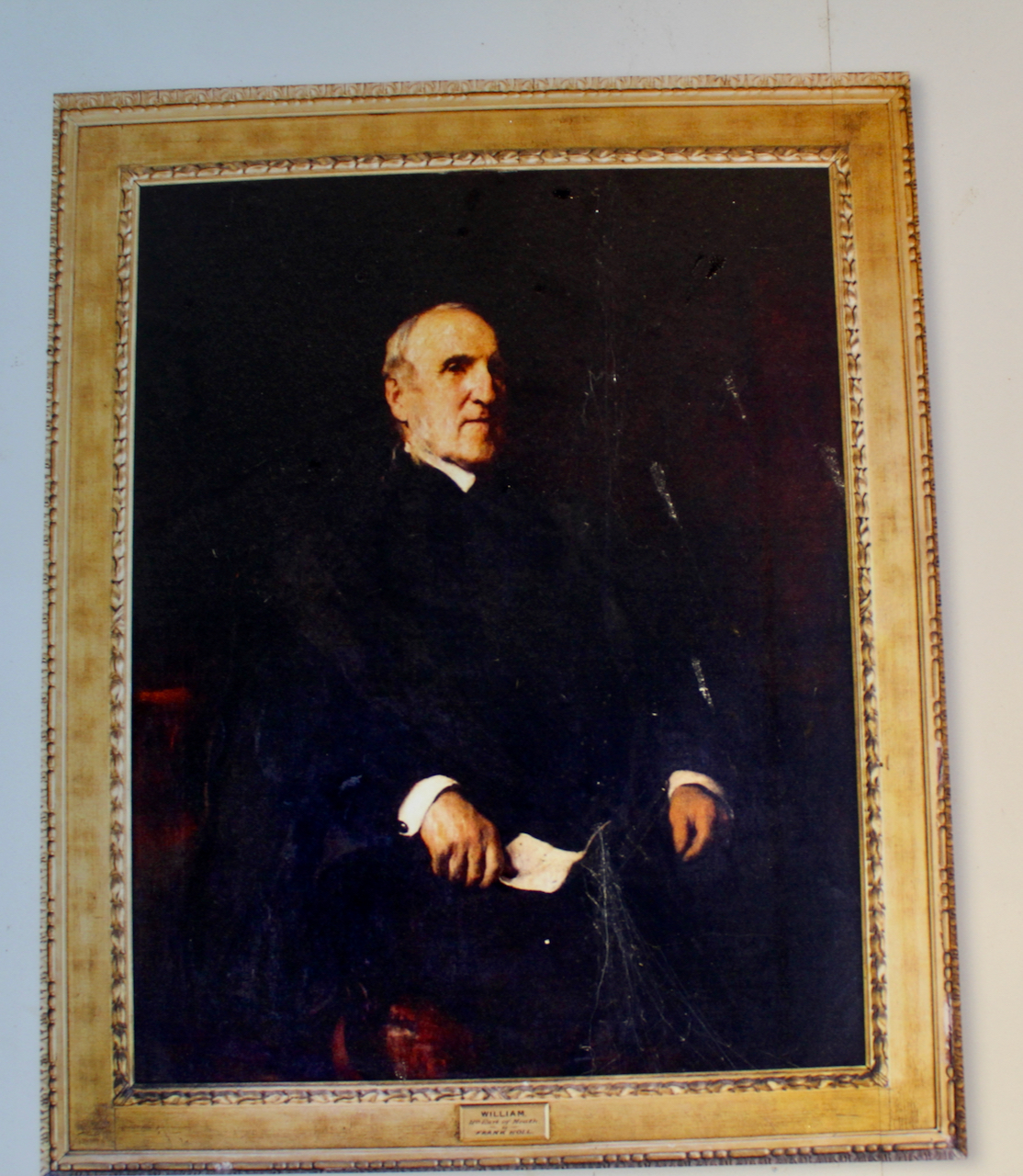
William, 11th Earl of Meath (1803-1887).

His son Reginald (1841-1929) became the 12th Earl of Meath. He served abroad in the British Foreign Office until he retired in 1877. The Dictionary of Irish Biography tells us that in addition to the Wicklow estate, which encompassed 14,717 acres in 1876, he owned 36 acres in the “dilapidated” Coombe district of Dublin city, as well as residences in London (83 Lancaster Gate), Surrey (Chaworth House, Ottershaw, Chertsey), and Co. Wicklow (The Coppice, Rathdrum). By 1921, however, Kilruddery’s expenses exceeded its owner’s entire Irish income and he was on the verge of bankruptcy. [5]

A committed unionist and leading member of the Irish Land Conference, Lord Meath sat in the house of lords as Baron Chaworth (UK). He was largely responsible for the construction in 1907 of the Boer War memorial arch in St Stephen’s Green. The Dictionary of Irish Biography tells us:

A staunch imperialist, Meath was chairman of the duty and discipline movement, which had more than 4,000 members in 1917. The objectives of the movement were to combat softness, slackness, indifference, and indiscipline in young people, and to give reasonable support to all legitimate authority. Meath’s encouragement of discipline and physical education meant that he was also a strong supporter of national service and Baden-Powell’s scout movement.Meath was the first president of the Dublin Philanthropic Reform Association, through which he initiated the police-aided clothing scheme to clothe the ‘ragged youth’ of Dublin, and was a founding member and honorary secretary of the Dublin Hospital Sunday movement, a hospital fund which raised about £200,000 between 1874 and 1922. He also founded the Hospital Saturday Fund in 1873 to help working people meet the real expenses of medical care.From 1898 he served as lieutenant for the county and city of Dublin, JP for the counties of Dublin and Wicklow, DL for the county of Wicklow, and honorary colonel of the 5th battalion, Royal Dublin Fusiliers.Meath wrote two volumes of reminiscences, Memories of the nineteenth century (1923) and Memories of the twentieth century (1924), as well as several works related to his social and philanthropic work. In 1868 he married Lady Mary Jane Maitland, with whom he had six children. More than half of his income was derived from his wife. He died in London after a week’s illness on 11 October 1929, and was succeeded as 13th earl by his eldest son, Reginald Le Normand Brabazon.

Due to his philanthropy, several streets in the Liberties in Dublin are named in of the 12th Earl: Reginald Street, Reginald Square and Brabazon Square. He set up a children’s playground in Pimlico, our guide told us, and it is thanks (or no thanks, in my case!) to him that physical education is now part of the school curriculum.

His wife Mary Jane Maitland was also a dedicated philanthropist, and she financed a number of initiatives including Dublin Artisans’ Dwellings. She also set up a trust for those who suffered epilepsy, because at that time, people who suffered epilepsy were often put into psychiatric asylums. This trust continues today, the Brabazon Trust.
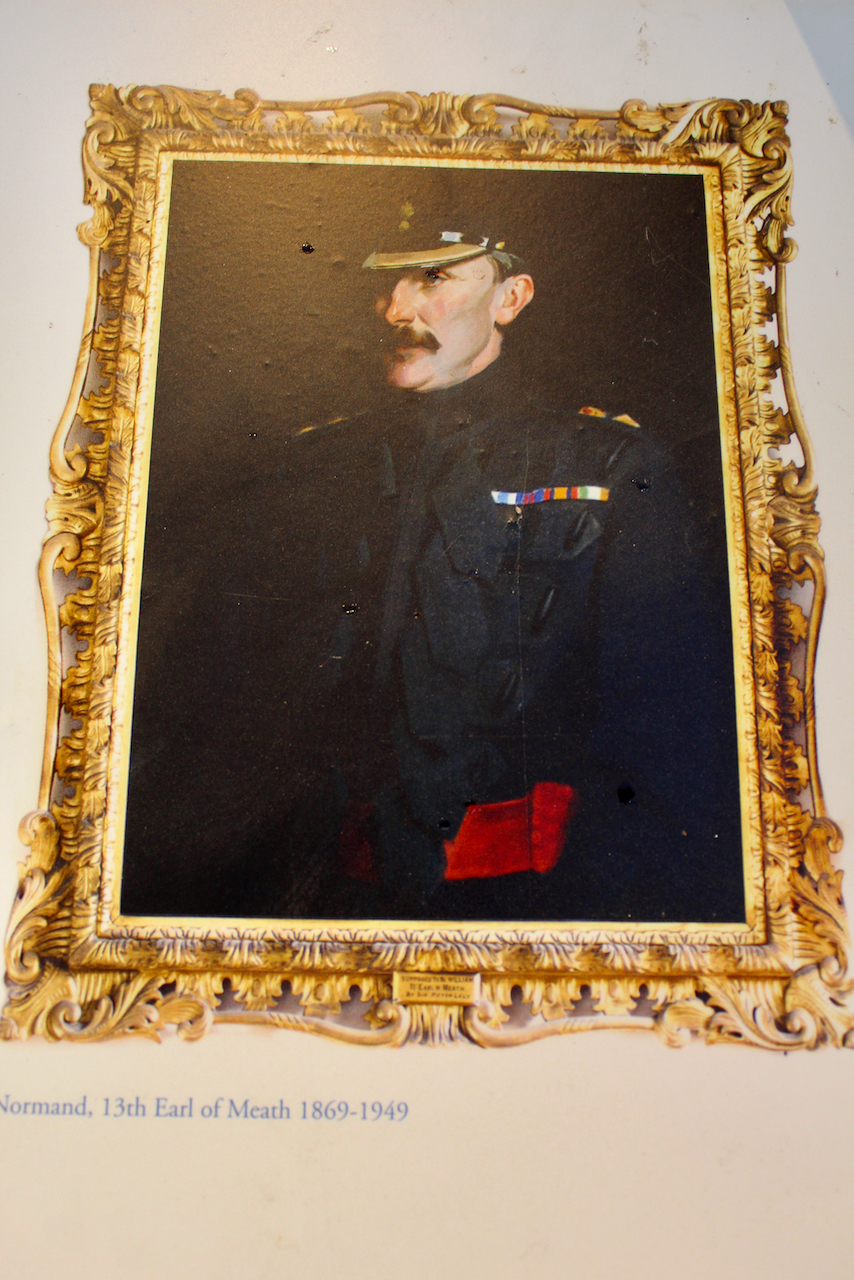
Normand Brabazon 13th Earl of Meath (1869-1949)

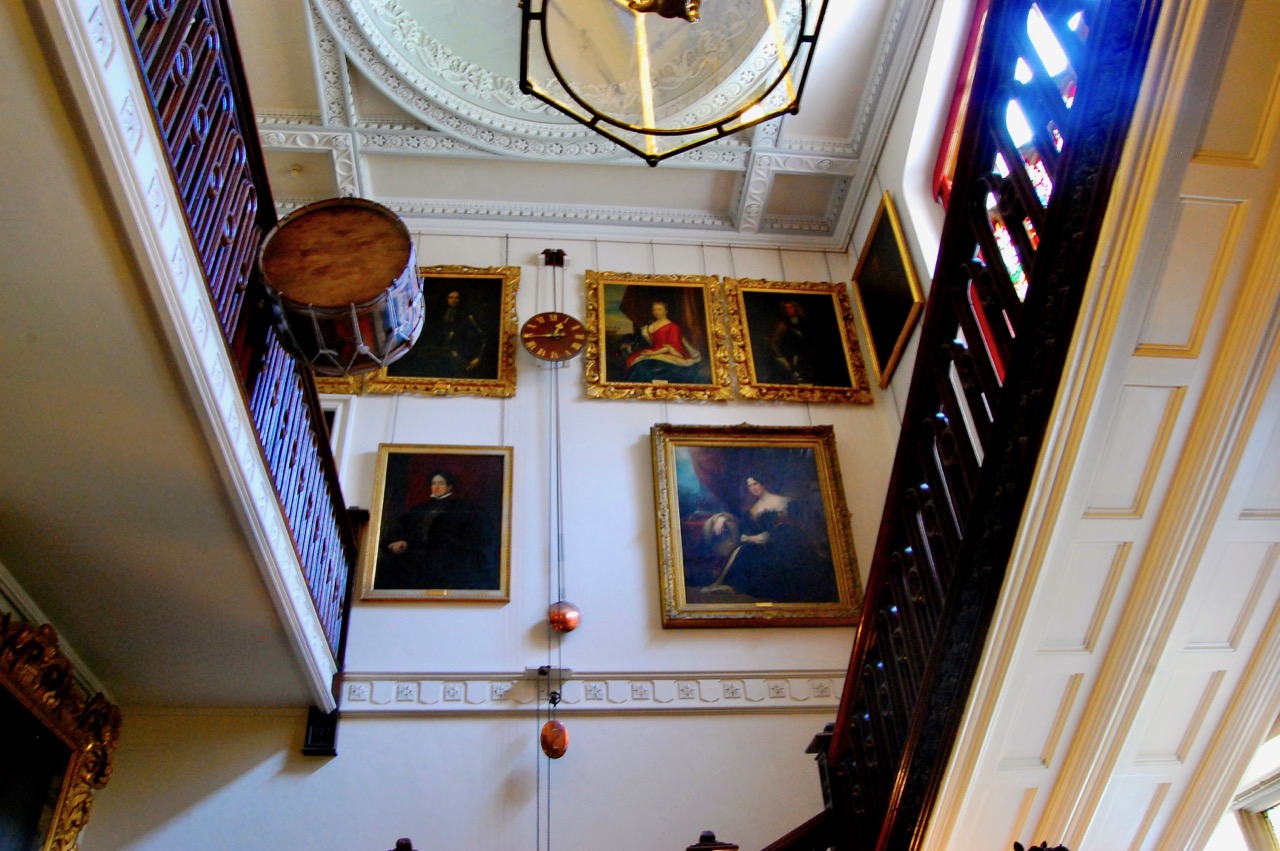
The 13th Earl fought in the Boer War and in World War I. He married Aileen May Wyndham-Quin of Adare Manor in County Limerick. He studied the art of clocks, and created the water-run clock in the clock tower, which was originally the carriage entrance, and the clock that hangs in the staircase hall, charmingly created from a copper bedwarming pan, a copper lid from a ktichen dish, and bicycle chains. The face of the clock is an old table.
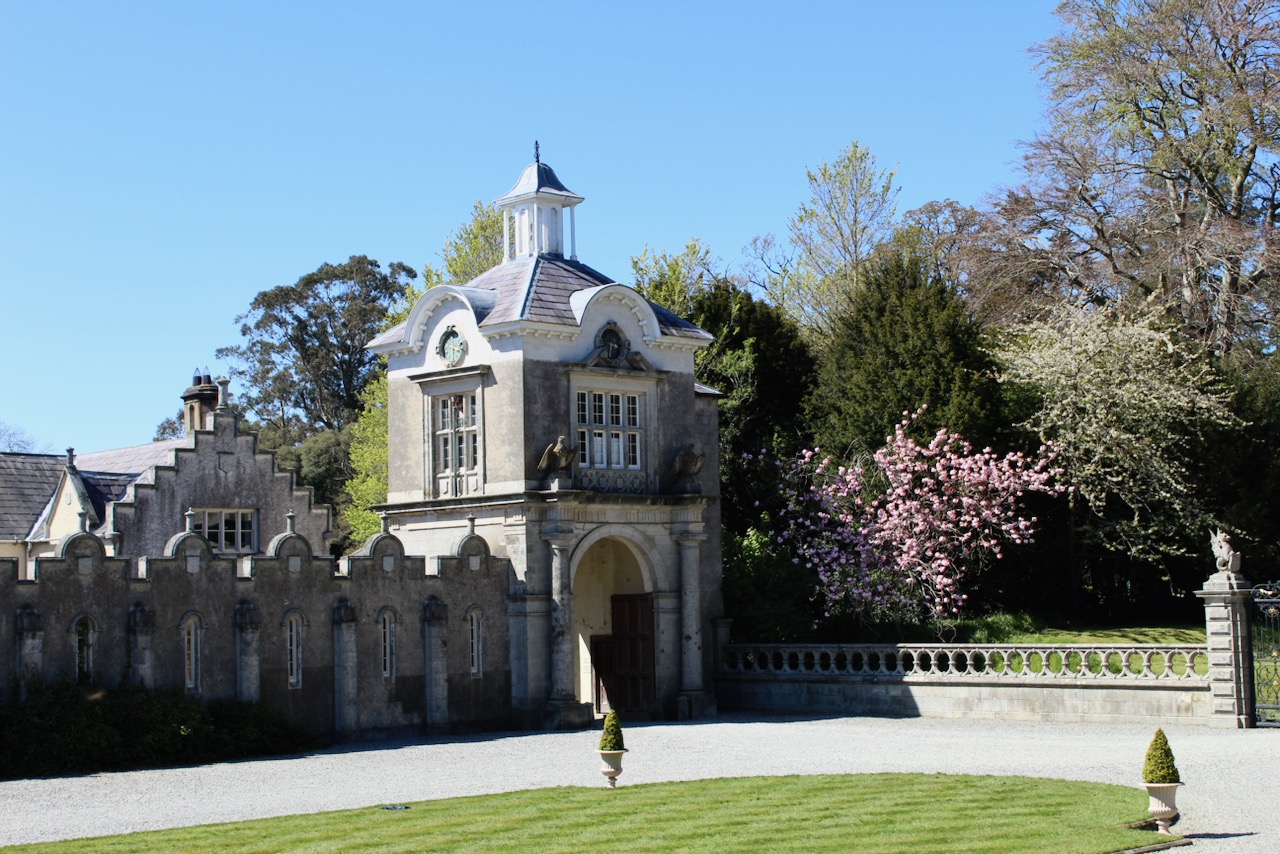
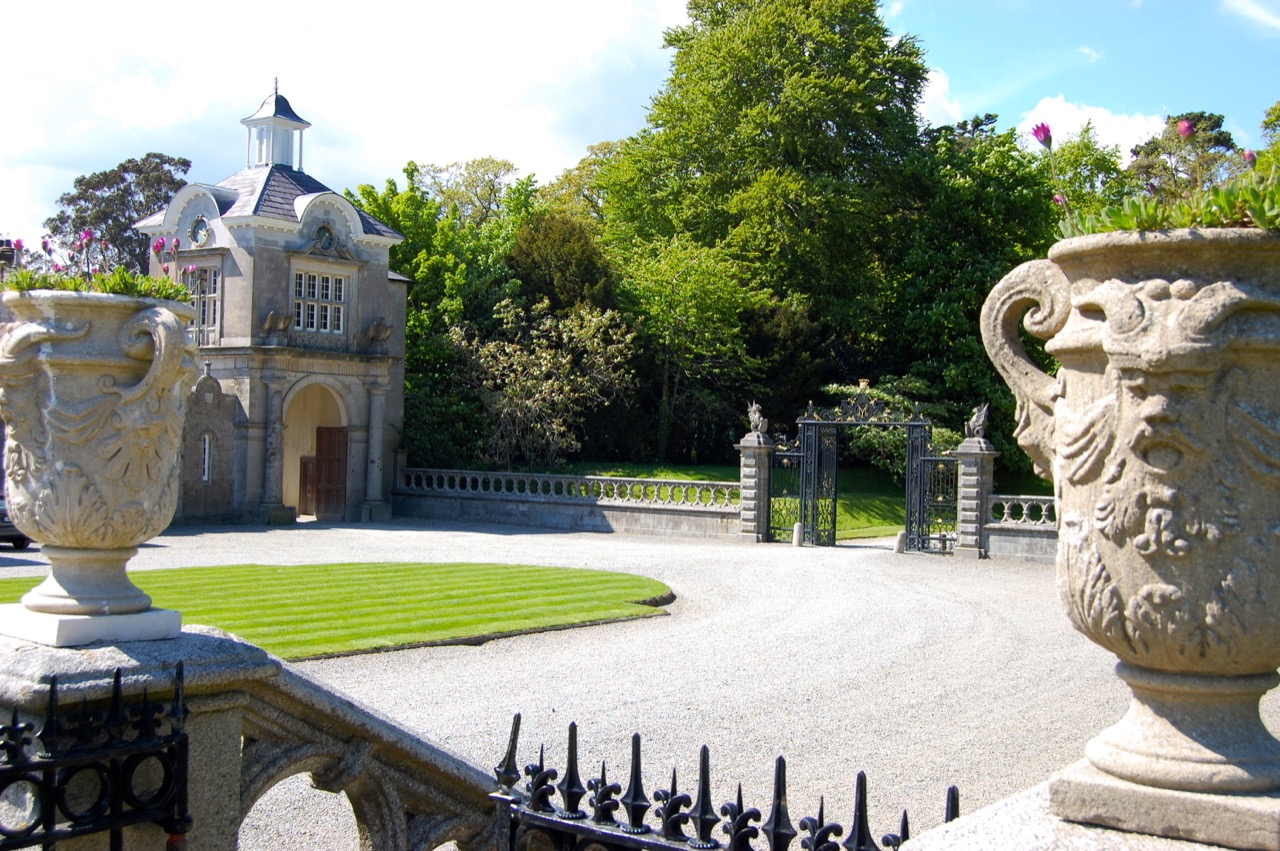
Forecourt with wrought-iron gates, flanked by gabled office range. The Clock Tower in the forecourt houses a water clock designed and constructed by Normand, 13th Earl of Meath. The pendulum is powered by a jet of water. Photograph © Jennifer Winder-Baggot, www.irishhistorichouses.com
The clock that hangs in the staircase hall, charmingly created from a copper bedwarming pan, a copper lid from a kitchen dish, and bicycle chains. The face of the clock is an old table. Photograph © Jennifer Winder-Baggot, www.irishhistorichouses.com

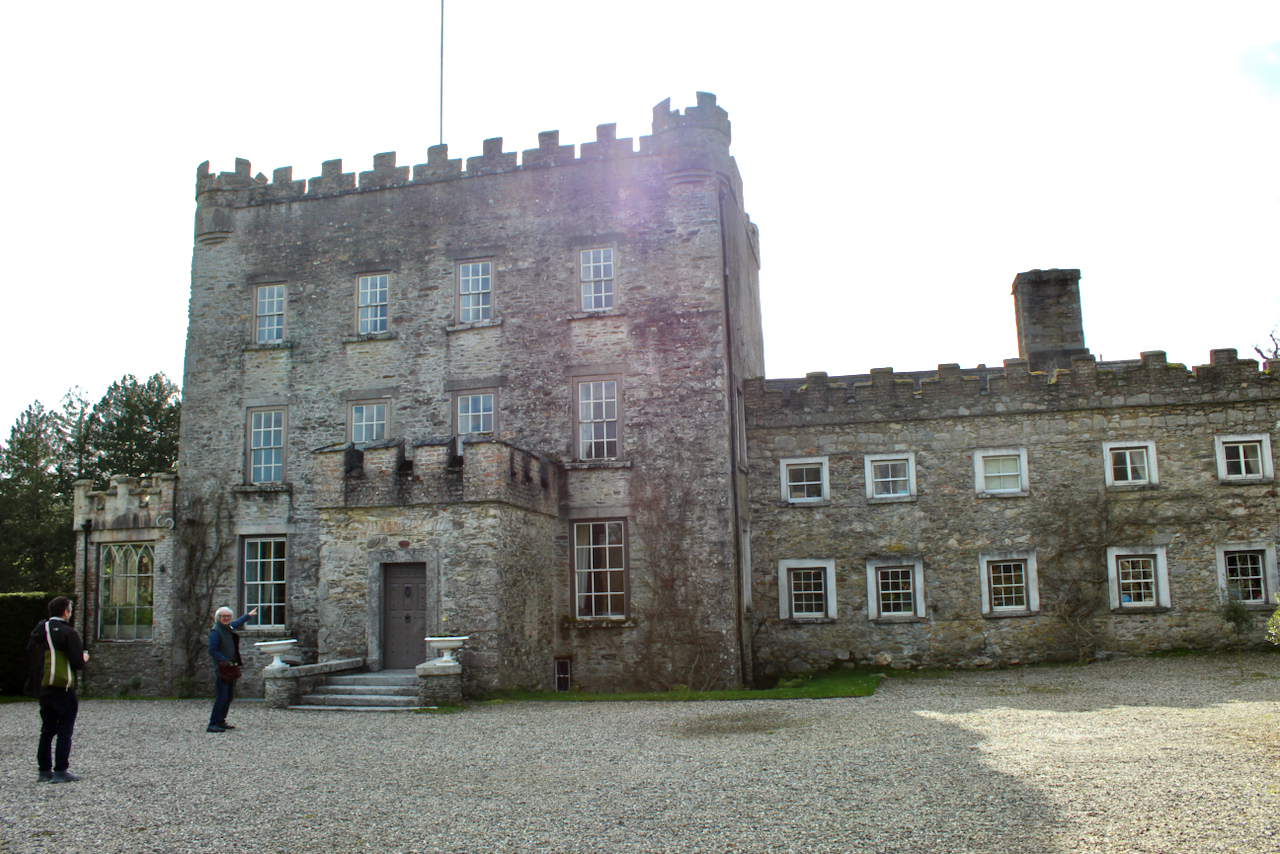
The 14th Earl of Meath, John Anthony Brabazon (b. 1941), joined the Grenadier Guards. It was in his time that the house was found to be full of dry rot, and he and his wife made the difficult decision to demolish part of the house, under the guidance of the architect Claude Phillimore. A third of the house was demolished and a new formal entrance was constructed. The same materials were used in the reconstruction – the material was numbered before demolition! Although in the 1950s the house was reduced in size, a great deal of Morrisons’ design remains.
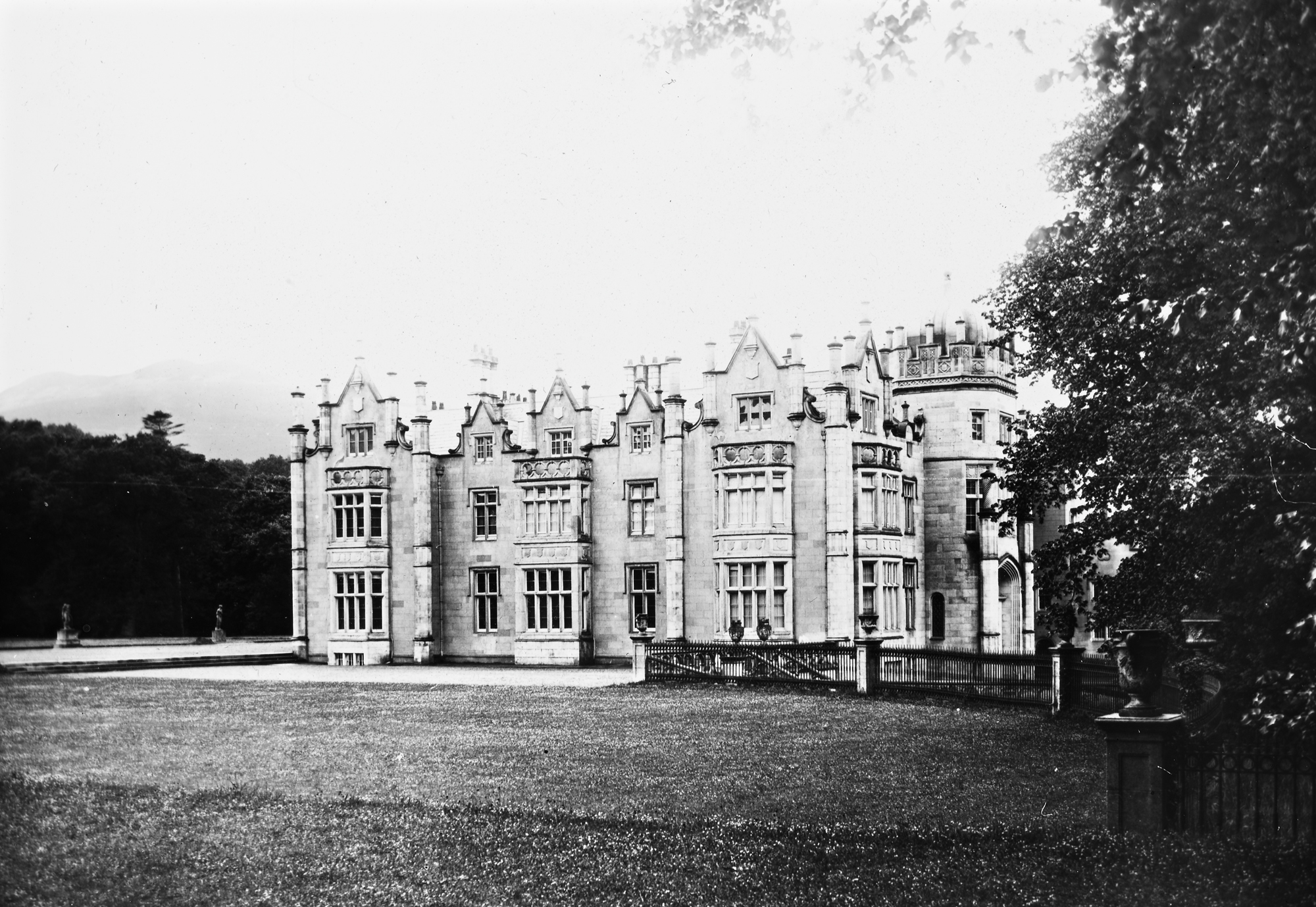
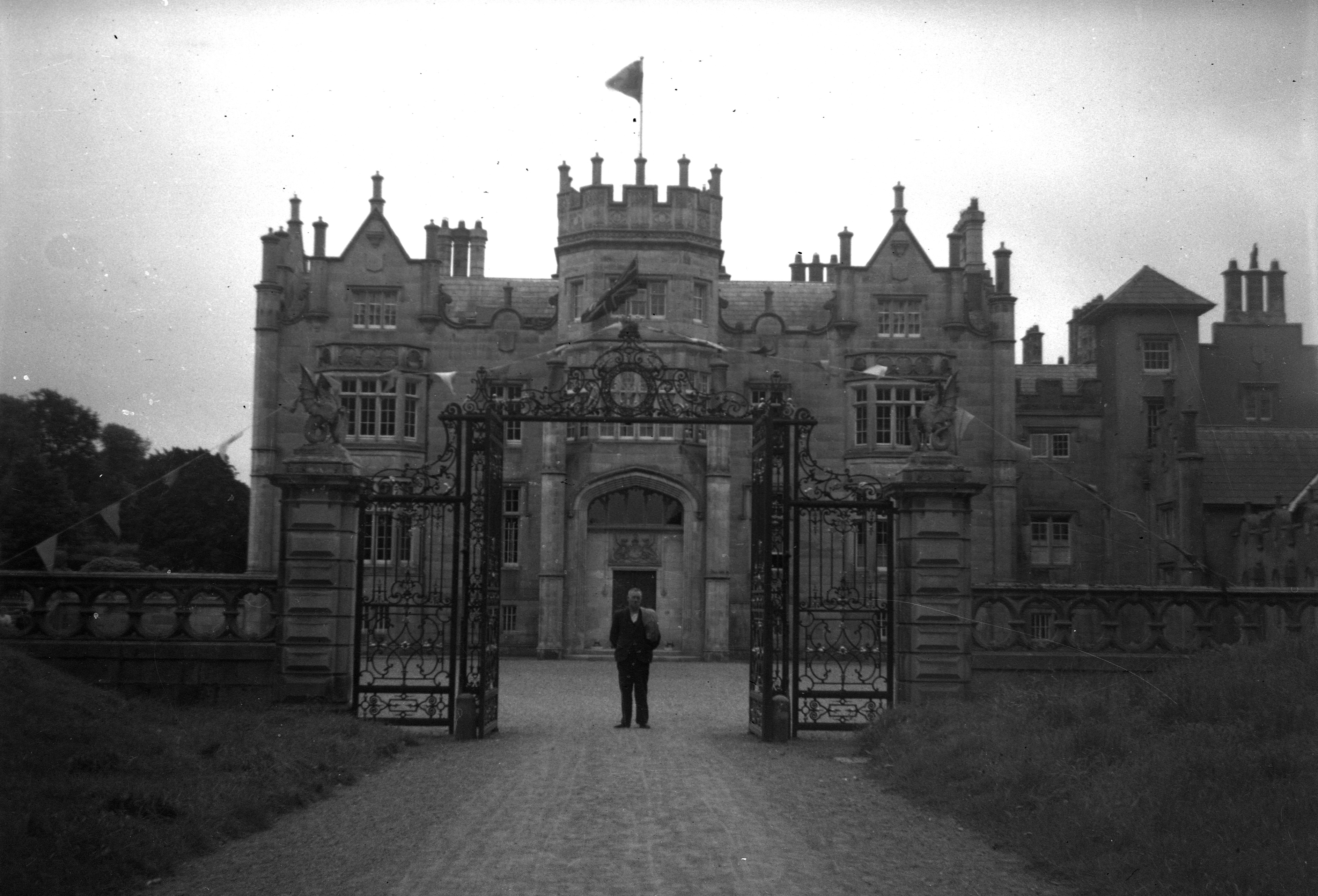
Killruddery, from c.1890-1910, National Library of Ireland, Mason Photographic Collection NLI Ref: M22/44/5.
Killruddery in 1946, before the front was demolished. Photograph courtesy of Dublin City Library Archives.
Kilruddery House, May 2013
Before demolition, the house stretched as far as the crenellated gable at the right hand side of this photograph. The north and east wings of the house were demolished. The guide told us it took three years to move all of the Wicklow granite that had been part of the house and lay as rubble. Photograph © Jennifer Winder-Baggot, www.irishhistorichouses.com
The front of the house, April 2021. Photograph © Jennifer Winder-Baggot, www.irishhistorichouses.com
The front in 2023, after the demolition of the old front. Photograph © Jennifer Winder-Baggot, www.irishhistorichouses.com

Mark Bence-Jones describes the house reduction in more detail: “…by demolishing the entrance front and all of the adjoining front except for one of the gabled projections. A new and simplified entrance was built on the same axis as its predecessor, but standing further back; the entrance being by way of a vestibule with a curving stone stair directly into the staircase hall, where one of the upper ramps of the staircase was replaced by a gallery providing communication between 1st floor rooms on either side. The library, in the surviving projection of the adjoining front, which has handsome C18 bookcases recessed in alcoves, was given a new ceiling of Caroline style plasterwork. The smaller drawing room became the dining room, the original dining room, along with the entrance hall and great hall, being among the rooms demolished.” [6]

Here is Mark Bence-Jones’s description of Killruddery:

p. 171. “The most successful Elizabethan-Revival mansion in Ireland, and also one of the earliest, having been started 1820; built for 10th Earlof Meath to the design of Sir Richard Morrison; incorporating a C17 house with plain C18 additions. Three principal fronts, with pointed and curvilinear gables, pinnacles and oriels. Symmetrical entrance front with central polygonal battlemented tower; forecourt with wrought-iron gates, flanked by gabled office range...”
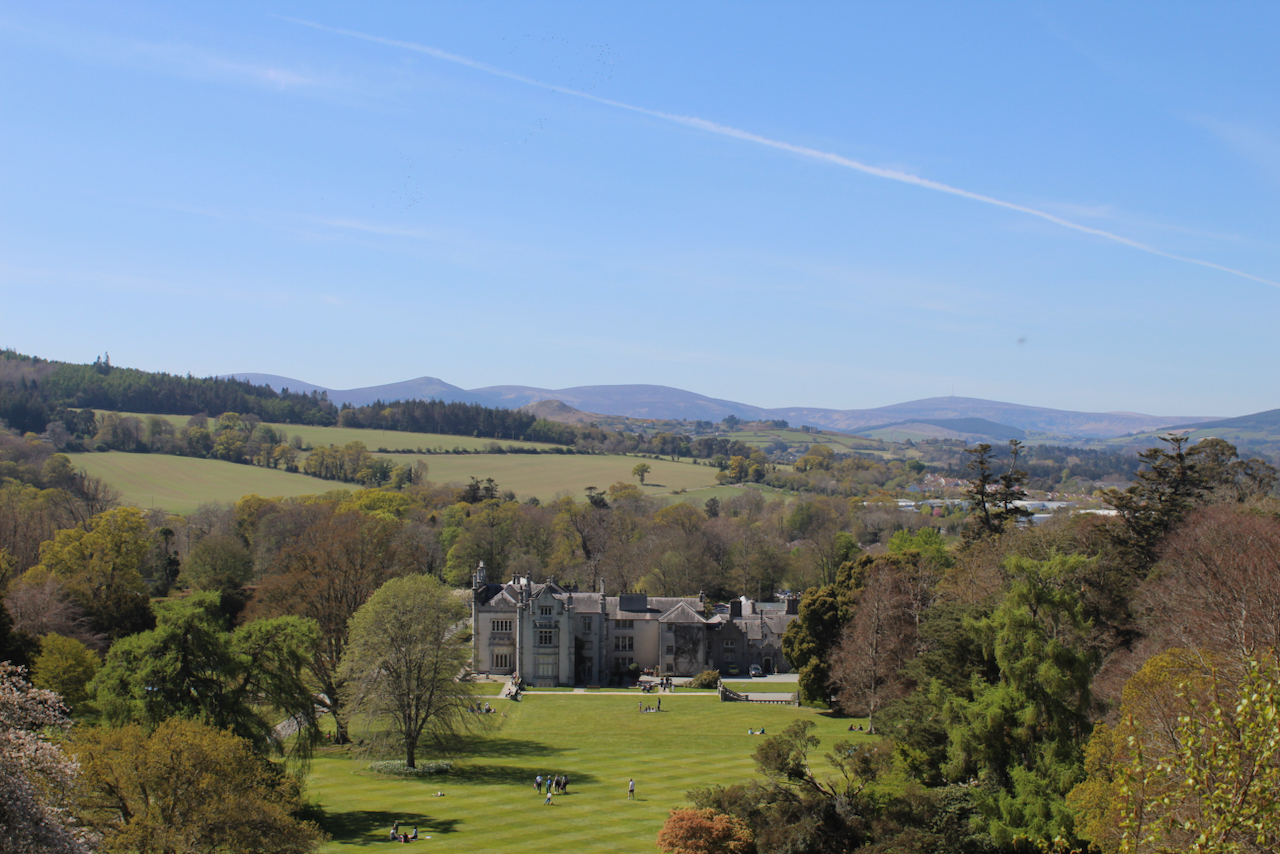
View of the house from the Rockery, April 2021. Photograph © Jennifer Winder-Baggot, www.irishhistorichouses.com
DSC_1073
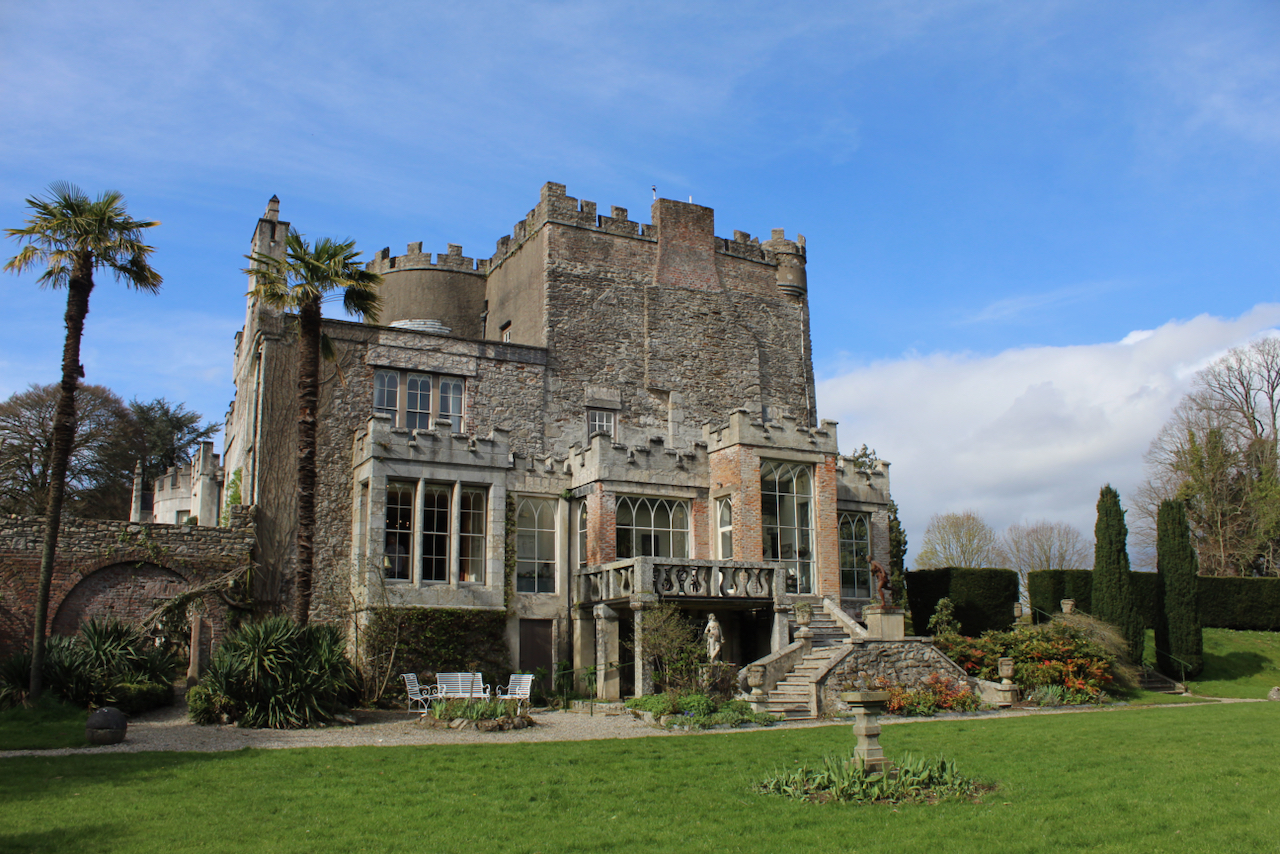
Killruddery. Irregular garden front, with at one end an impressive domed conservatory added 1852 to the design of William Burn, now containing a collection of sculpture and known as the Statue Gallery.” Photograph © Jennifer Winder-Baggot, www.irishhistorichouses.com

Next Bence-Jones discusses the interior: “Entrance hall with segmental-pointed plaster barrel-vaulted ceiling; straight flight of oak stairs up to level of principal rooms.

The Killruddery website tells us that inside the door on the right hand wall is the coat of arms of Sir Edward Brabazon, dated 1586. Above the door is the coat of arms of the 4th Earl of Meath. This has a five point tiara, which symbolises the status of an Earl, and shamrocks indicate that it is an Irish title. The motto is Vota Vita Mea, meaning “My Life is Service.” The stairs lead to a small domed lobby, which has niches for the china that one of the daughters of the house, Kathleen (1850-1930), who never married, collected, and a huge decorative Roman candle sconce and gilded Viennese ceiling lamp. From there, one enters the impressive staircase hall. Originall the china was held in a specially designed China Room, but this was one of the demolished rooms.

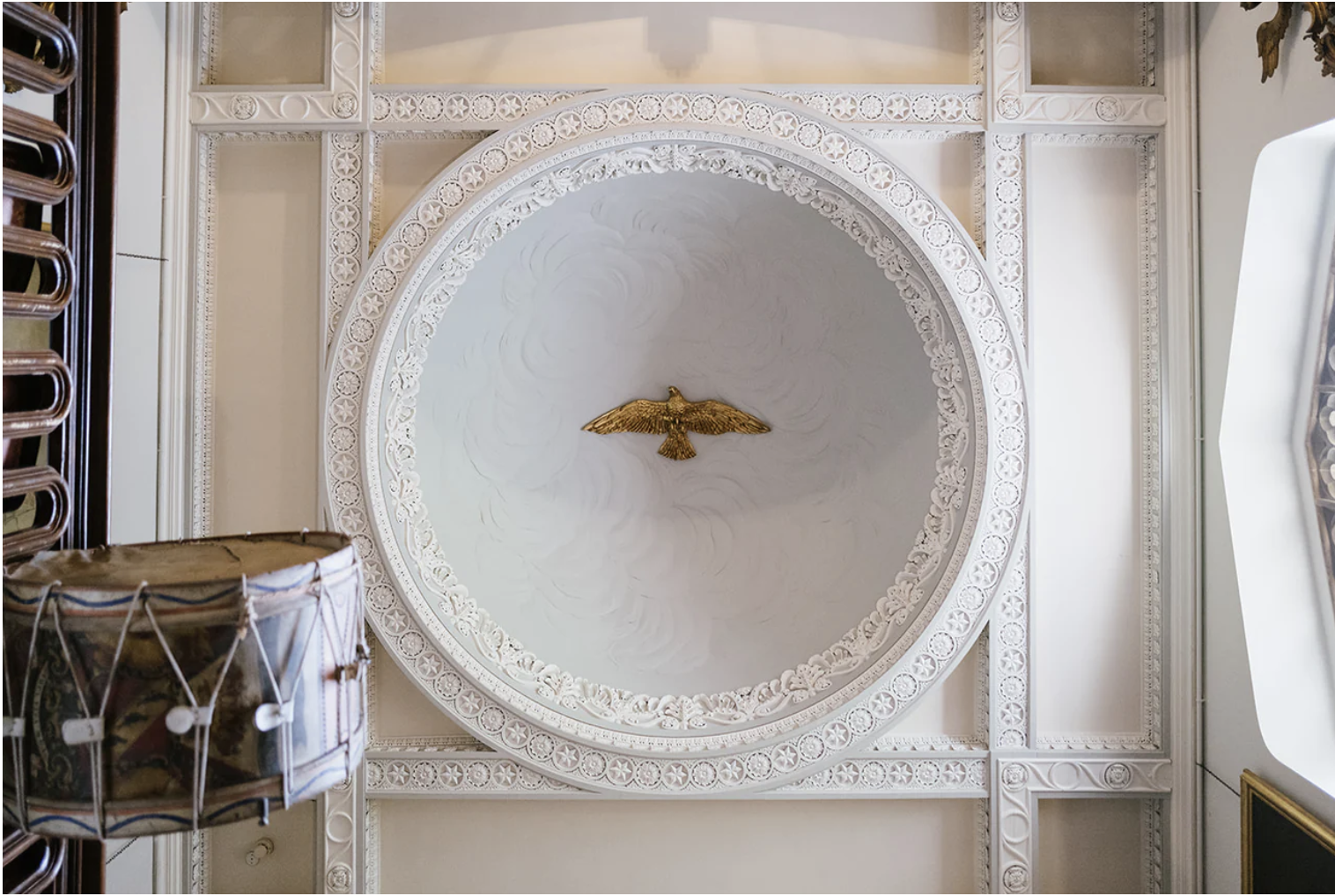
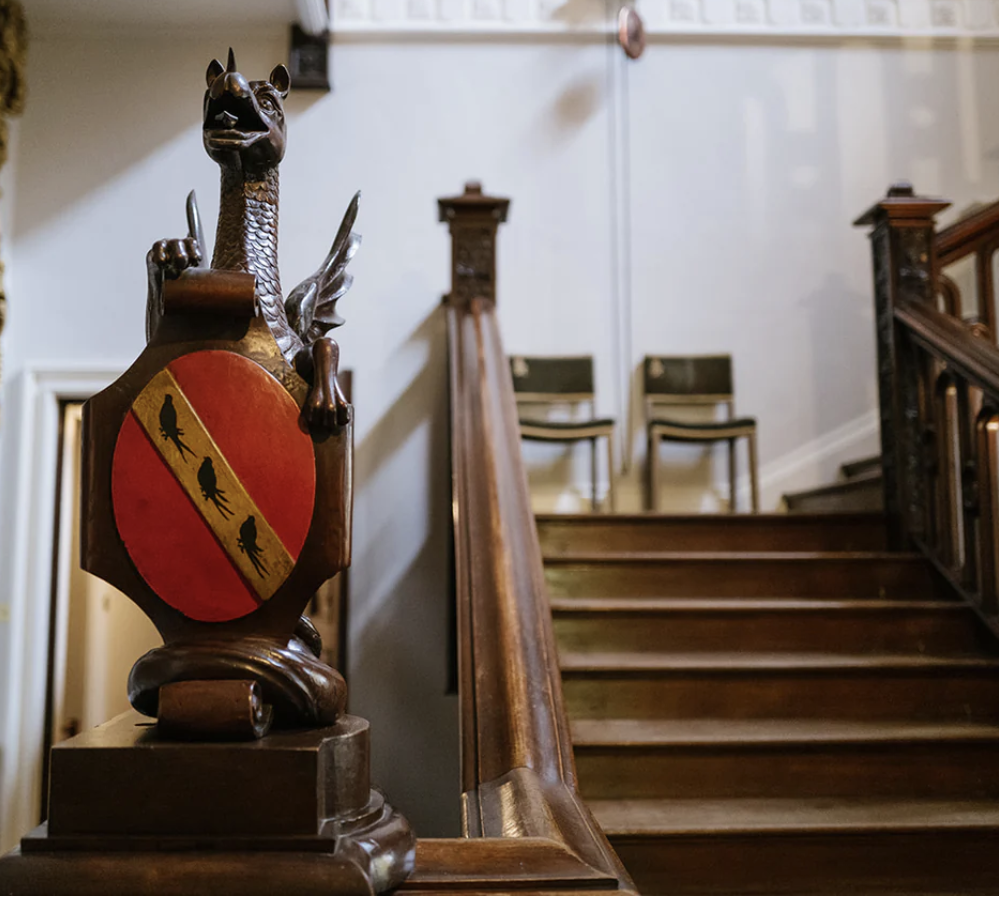
The domed ceiling over the stairs, hall and gallery was designed by Henry Popje, a Bray craftsman. Popje received an apprenticeship in Stucco work from the Lafranchini brothers. In the centre of the white dome is a golden hawk, symbol of the Brabazons. The Killruddery Wyverns stand at the end of the stairs, holding the original Brabazon shield. A wyvern is half serpent, half dragon, and in Heraldry it symbolises bravery and loyalty.
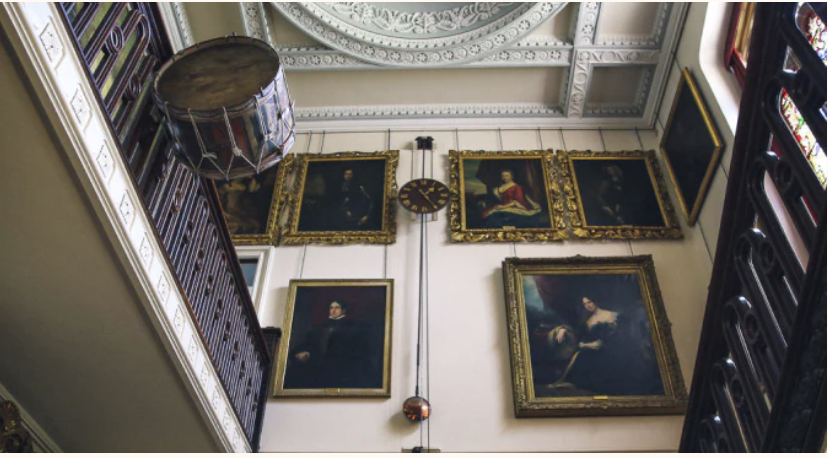
Photograph courtesy of Killruddery website. The Drum is a Grenadier Guard Drum.
The Killruddery Wyverns stand at the end of the stairs, holding the original Brabazon shield. Photograph courtesy of Killruddery website. The martlet birds on the shield are said to never rest, so they symbolise tireless service.
The domed ceiling over the stairs, hall and gallery was designed by Henry Popje, a Bray craftsman. In the centre of the white dome is a golden hawk, symbol of the Brabazons. Photograph courtesy of Killruddery website.

Mark Bence-Jones continues: “Great hall 40 feet high with arches opening into corridor in upper storey; ceiling of carved beams and braces carried on corbels decorated with the Meath falcon, the spaces between the beams being filled with ornate plasterwork. Staircase hall, lit by stained glass window, with massive bifurcating staircase of oak.”
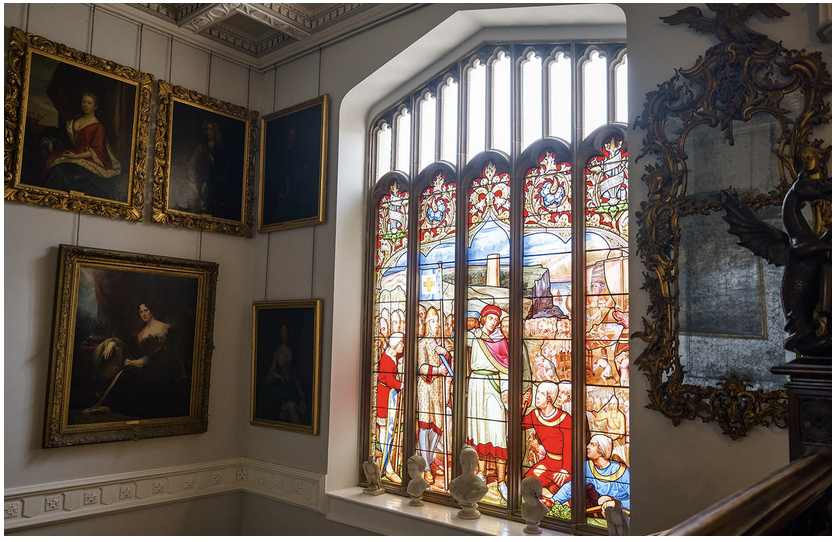
Photograph courtesy of Killruddery website. The window is a picture of the Battle of Hastings, 1066, and is by Henry Victor Milner, who also made the window in Yorkminster Cathedral.

The large stained glass window is by Henry Victor Milner and dates from 1853 and depicts William the Conquerer accepting surrender from the Saxons after his victory at Hastings in 1066. Jacques de Brabancon is on his right as standard-bearer. As a result of his loyalty, de Brabacon was given lands at Bletchley Castle and Leicestershire, our guide told us.

The staircase hall contains several portraits. One of Reginald, the 12th Earl of Meath, is a reproduction as the original is by William Orpen and hangs in the Portrait Gallery in London. In the portrait he wears his robes of the Order of St. Patrick, an order created by King George III, our guide told us.

Two enormous Himalayan bugles stand on either side of the hall door into the drawing room. These, our guide told us, are meant to sound like singing elephants. and the elephants are supposed to sing you into the air and into the womb.

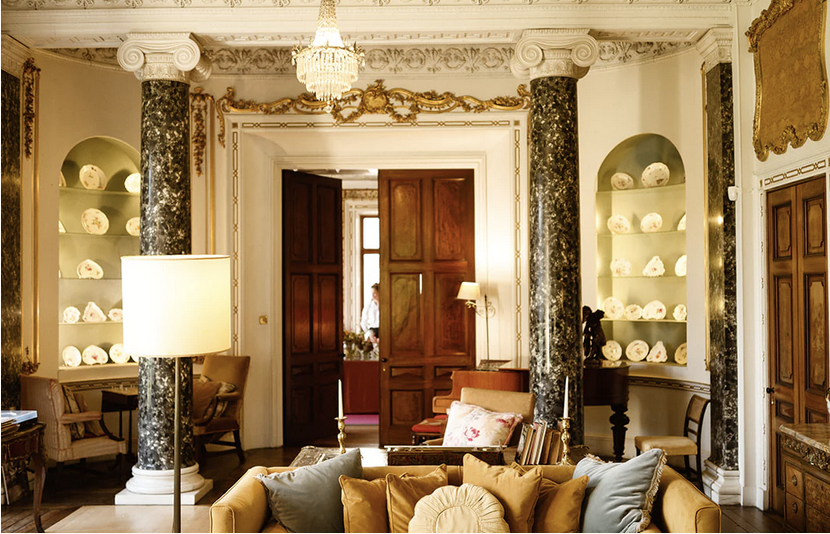
Mark Bence-Jones continues his description: ” Large and small dining rooms en suite,  forming enfilade with Statue Gallery; both drawing rooms having Classical decoration. Large drawing room with ceiling of elaborated coved and coffered plasterwork, grey scagliola Ionic columns and panels on walls framed by scalloped gilt mouldings. Small drawing room with shallow domed ceiling of more delicate plasterwork in a pattern of foliage, flowers and trophies; plaster draperies in lunettes.

Photograph courtesy of Killruddery website. Carved gilt cornices over the windows are by James Delvechio of Dublin, 1828, as are the carved marble topped pier tables.
Photograph courtesy of Killruddery website. The drawing room has ceiling stucco work by Henry Popje. The scagliola columns look like marble but are actually hollow.
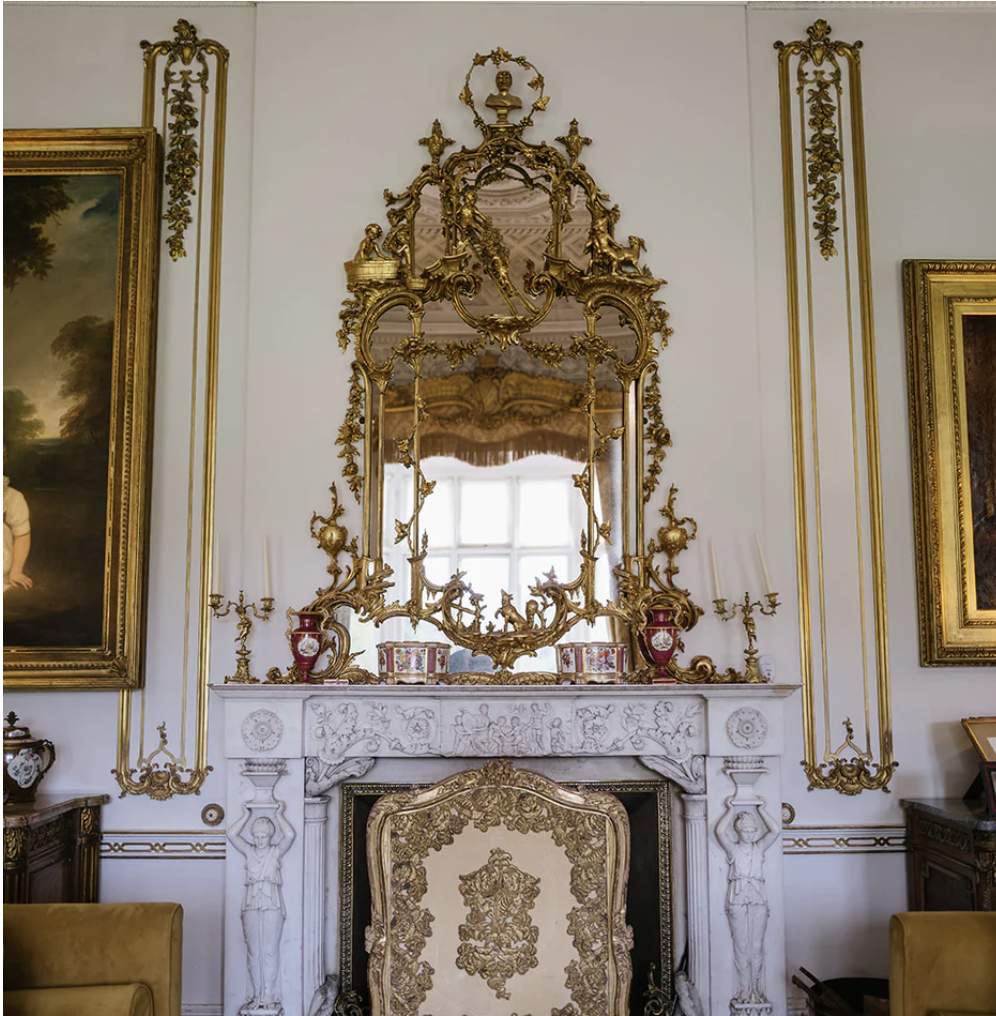
Photograph courtesy of Killruddery website. The drawing room features a marble chimneypiece bought from Italy by the 10th Earl of Meath following his Grand Tour in 1816-17. Decorations on the chimneypieces are reflected by the decoration on the stucco ceiling. There is also a fine gilt mirror over the fireplace that came from Dunraven Castle in Wales; the mirror came with the wife of the 13th Earl, a Wyndham-Quin and daughter of the 4th Earl of Dunraven.
Photograph courtesy of Killruddery website. The elaborate pelmets and the gilt pier tables in the room were made by James Del Vecchio in Dublin. They contain the shield with martlets, and the crown symbolising Earldom. The flooring is of Irish oak, and ebony.
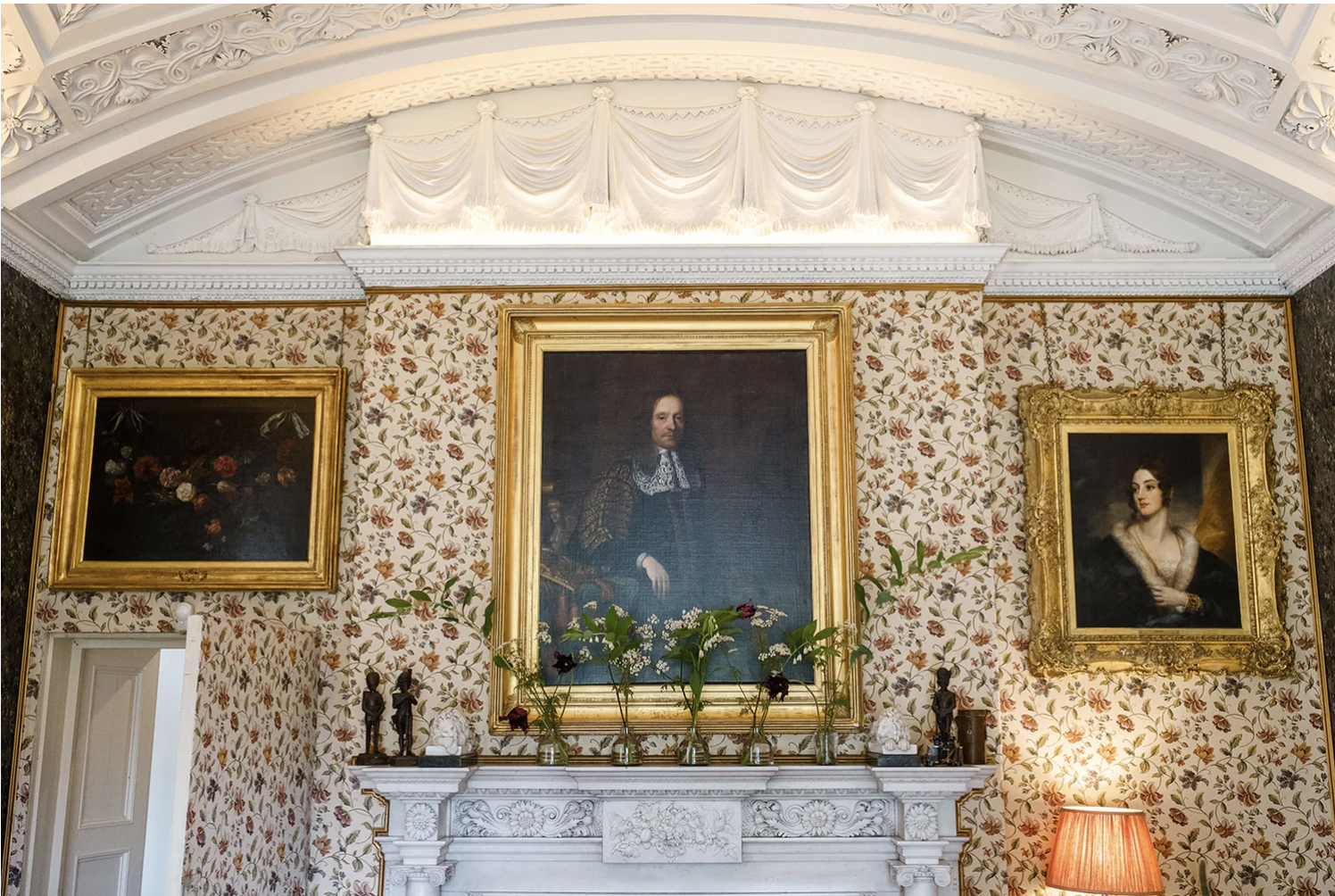
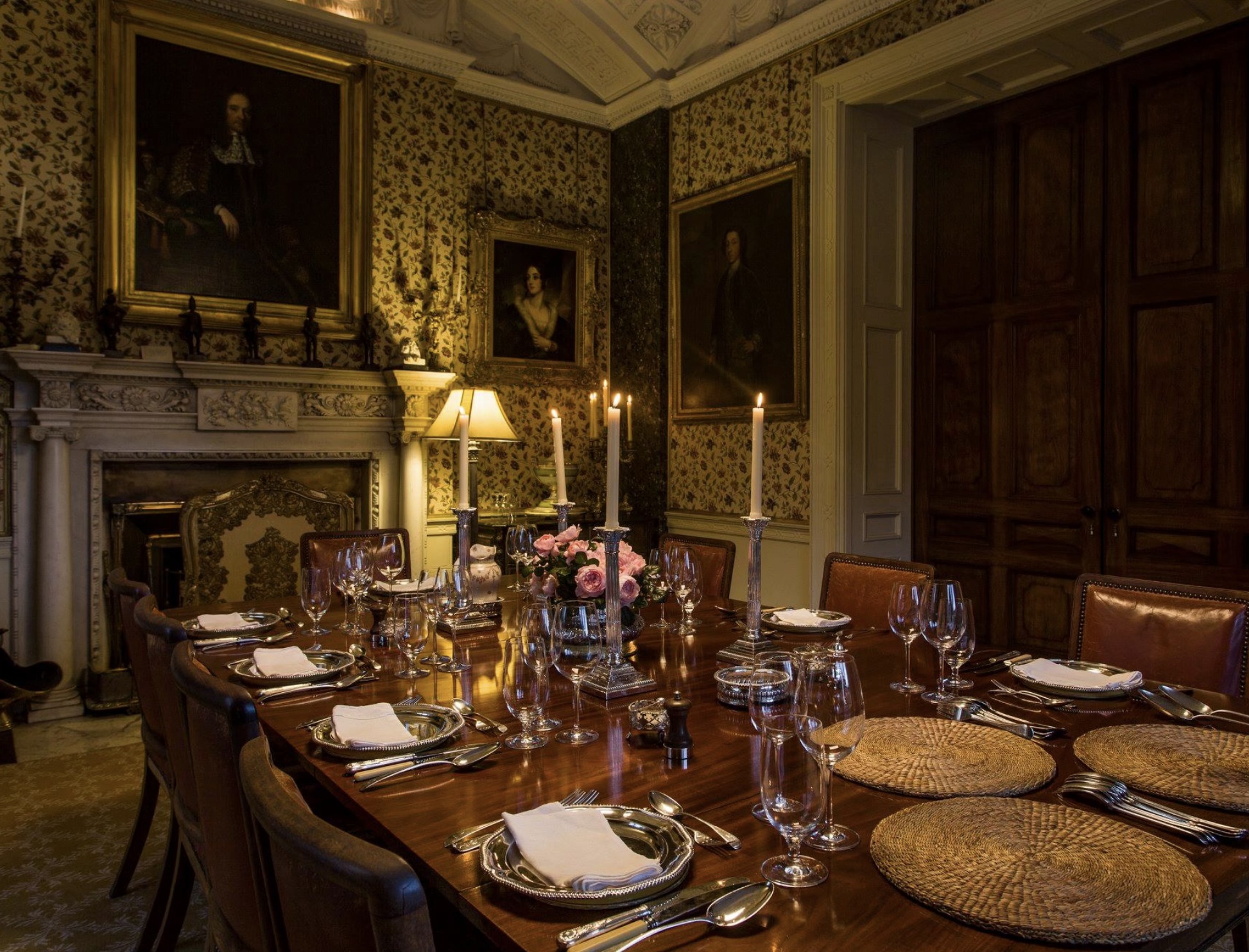
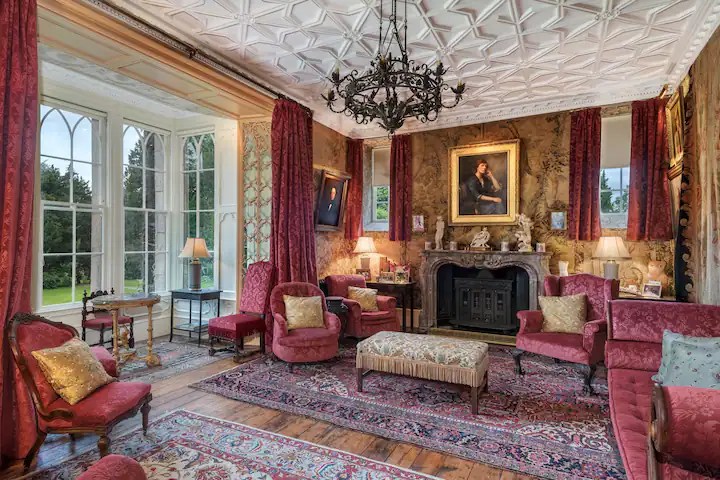
Photograph courtesy of Killruddery website. The dining room. Before the 1950 renovation, it was a drawing room. It has a vaulted stucco ceiling, and family portraits on the walls. The original of the silk wall hangings were made in the Liberties. It has since been replaced by a replica.
DSC_1071 (1)
The dining room ceiling, taken with permission during IDFAS trip in 2015. The ceiling, by Popje, includes musical instruments and theatre masks, as well as lovebirds, which indicates the original activities that occurred in the room. There are portraits of Harriet Brooke, wife of the 11th Earl, and her father Richard Brooke, and of sons of the 7th Earl, William and Anthony. Photograph © Jennifer Winder-Baggot, www.irishhistorichouses.com
Photograph courtesy of Killruddery website. The dining room.

The library is the oldest room in the house, the website tells us. It overlooks the long ponds, the “mirrors of the sky.” The room has a fireplace carved in the manner of Grinling Gibbon, with a hawk on top. A painting of the current Earl’s mother, Elizabeth, hangs by the fireplace. She was called the “DIY woman” as she was very practical. There are also portraits of King James II and Charles II. The room was fire damaged during the making of a film, and when it was repaired, the Chippendale bookshelves were recessed into the walls.
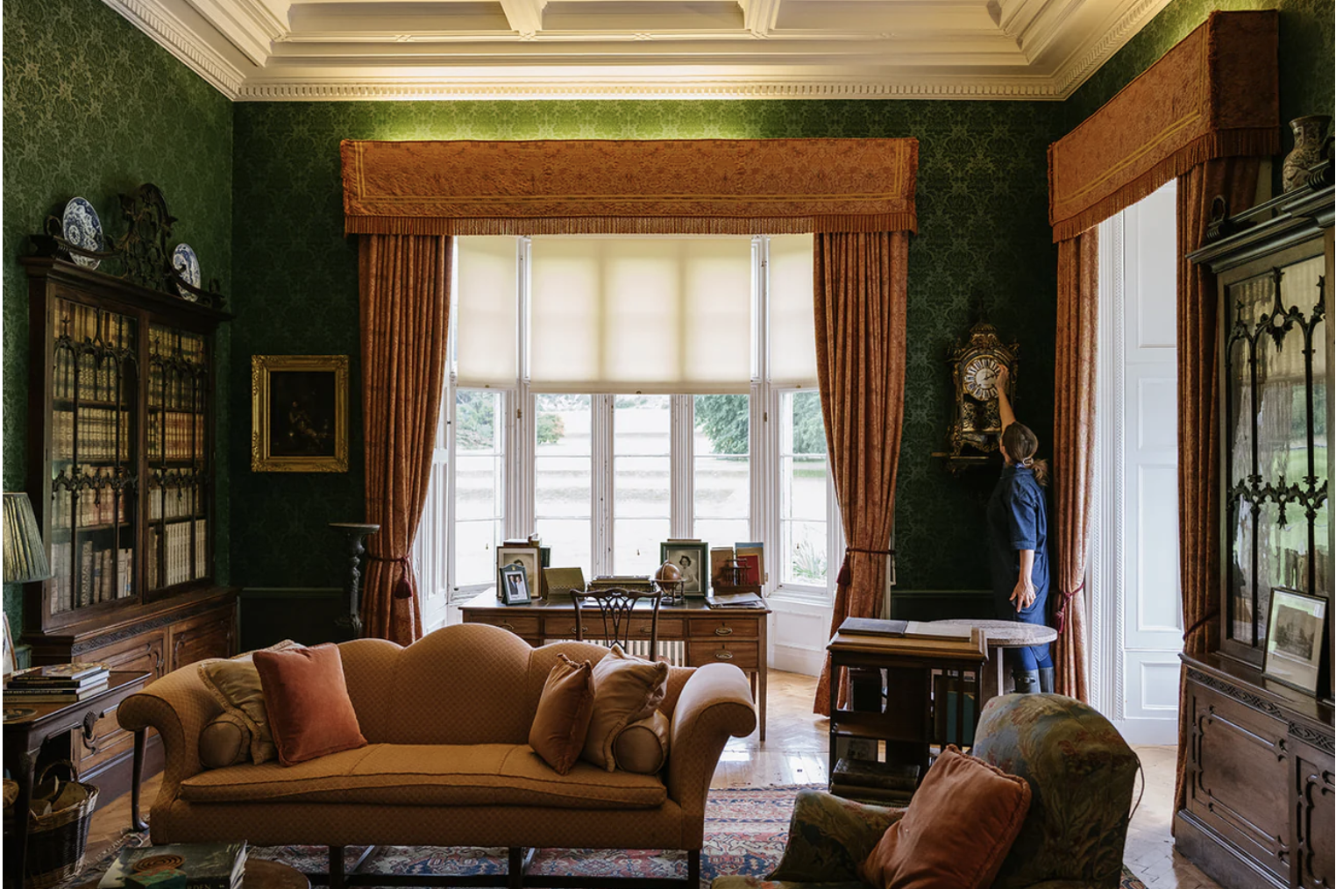
Photograph courtesy of Killruddery website. The library, in the surviving projection of the front has handsome C18 bookcases recessed in alcoves and in 1950s was given a new ceiling of Caroline [ie. in the style of the era of King Charles II] style plasterwork.

Bence-Jones describes the entrance gates as similar to those at Ballyfin, Co Laois and Fota, Co Cork.
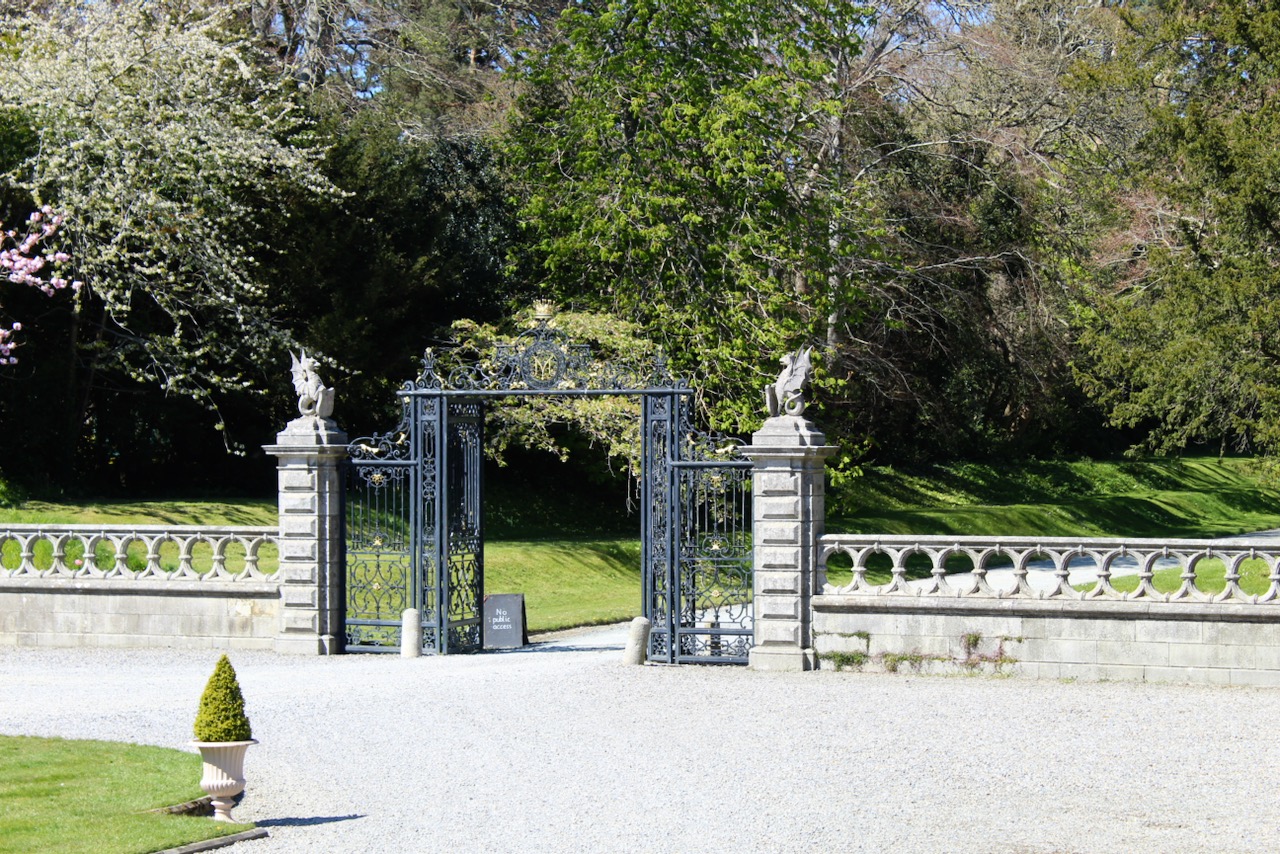
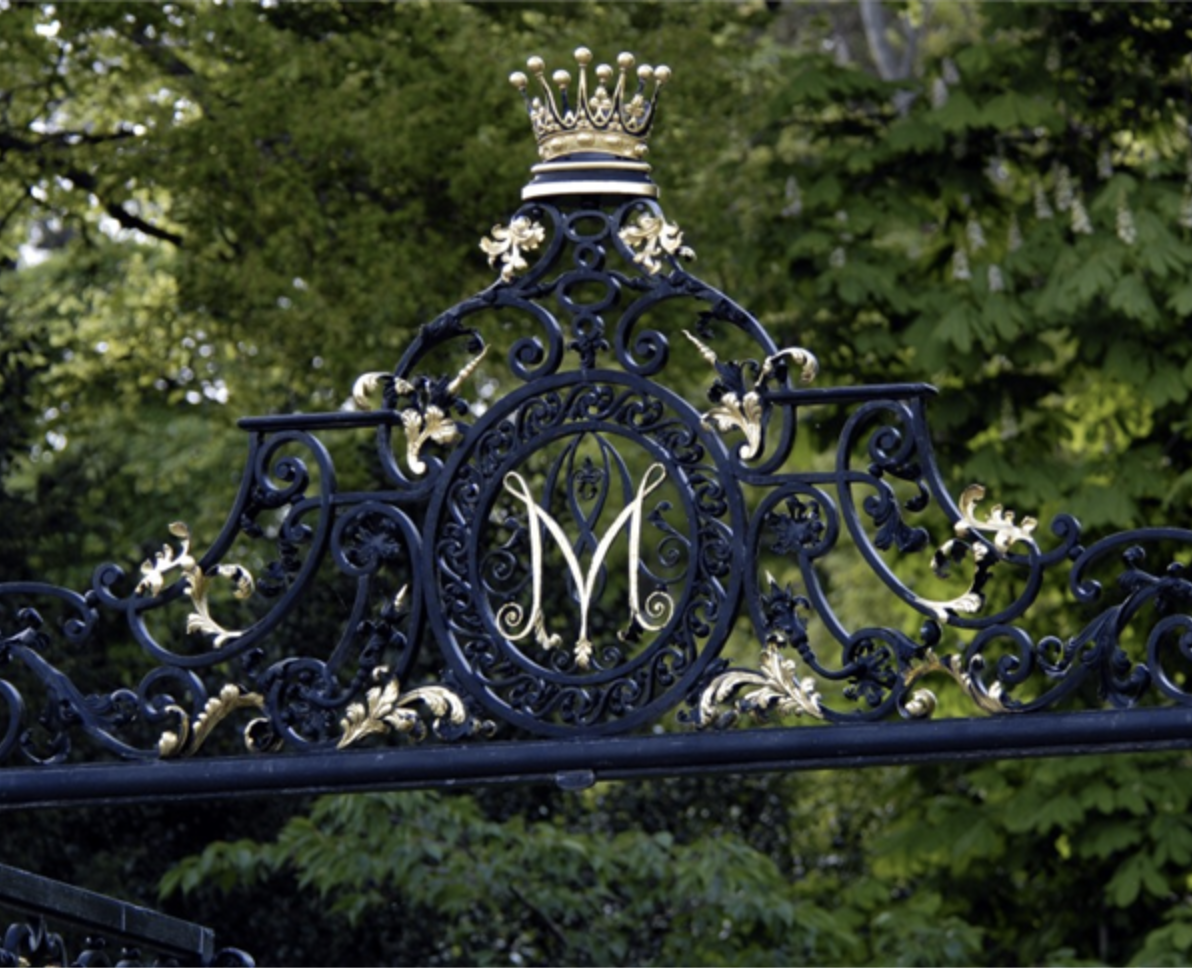
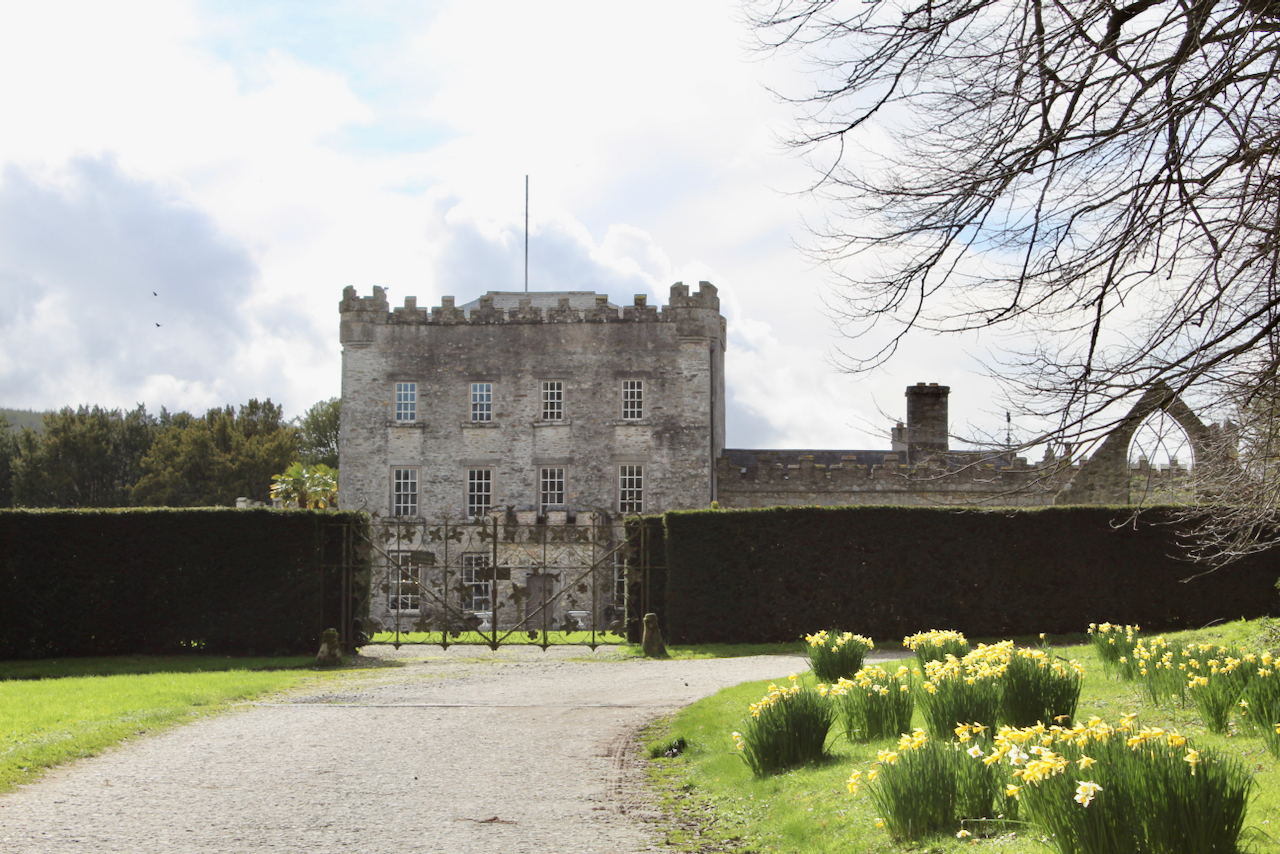
The forecourt at Killruddery. Photograph © Jennifer Winder-Baggot, www.irishhistorichouses.com
The gates that mark the final entrance to Killruddery. The “M” signifies the Earls of Meath. Photograph by Val Corbett, for Country Life, 10/02/2010.
Kilruddery House, May 2013
The clock tower. Photograph © Jennifer Winder-Baggot, www.irishhistorichouses.com
Kilruddery House, May 2013
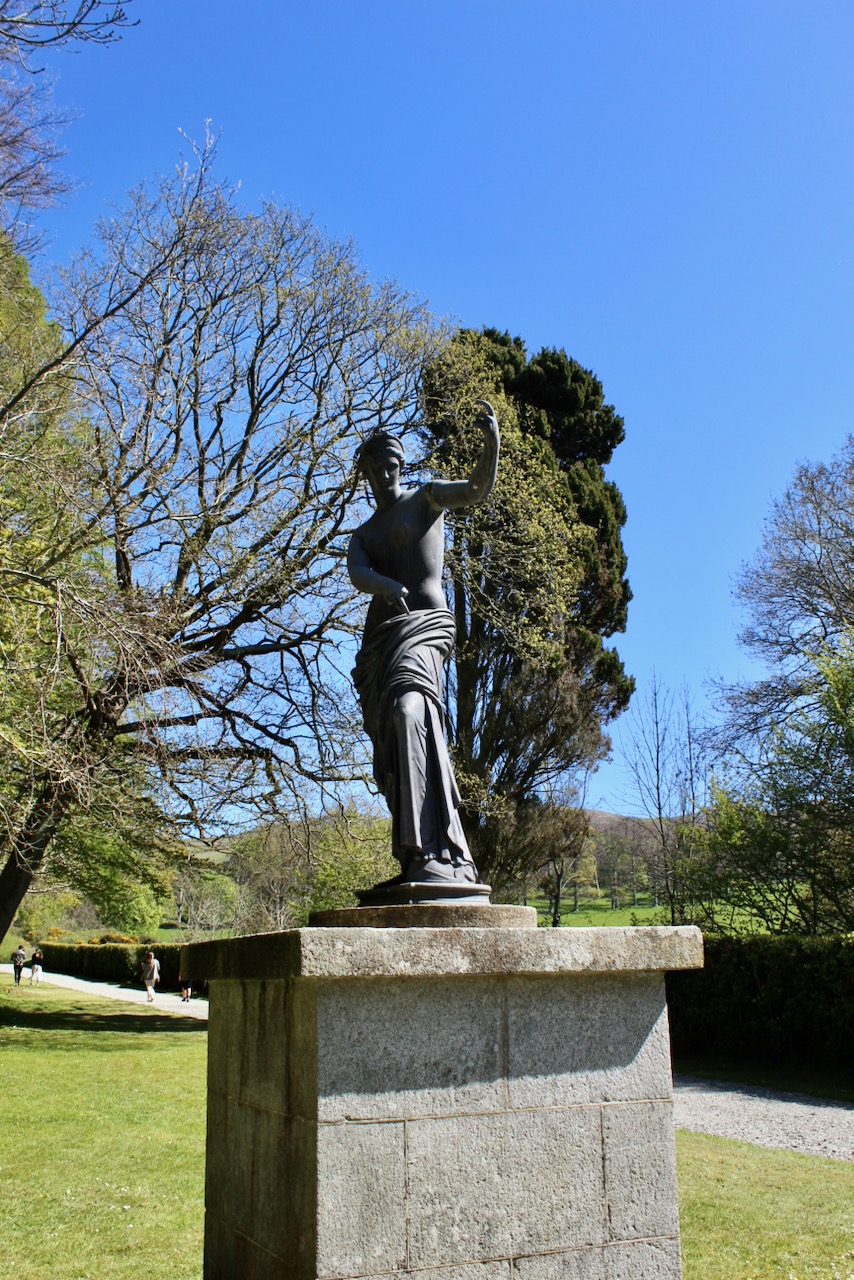
A statue of Venus. Photograph © Jennifer Winder-Baggot, www.irishhistorichouses.com
DSC_1091
Killruddery. Photograph © Jennifer Winder-Baggot, www.irishhistorichouses.com
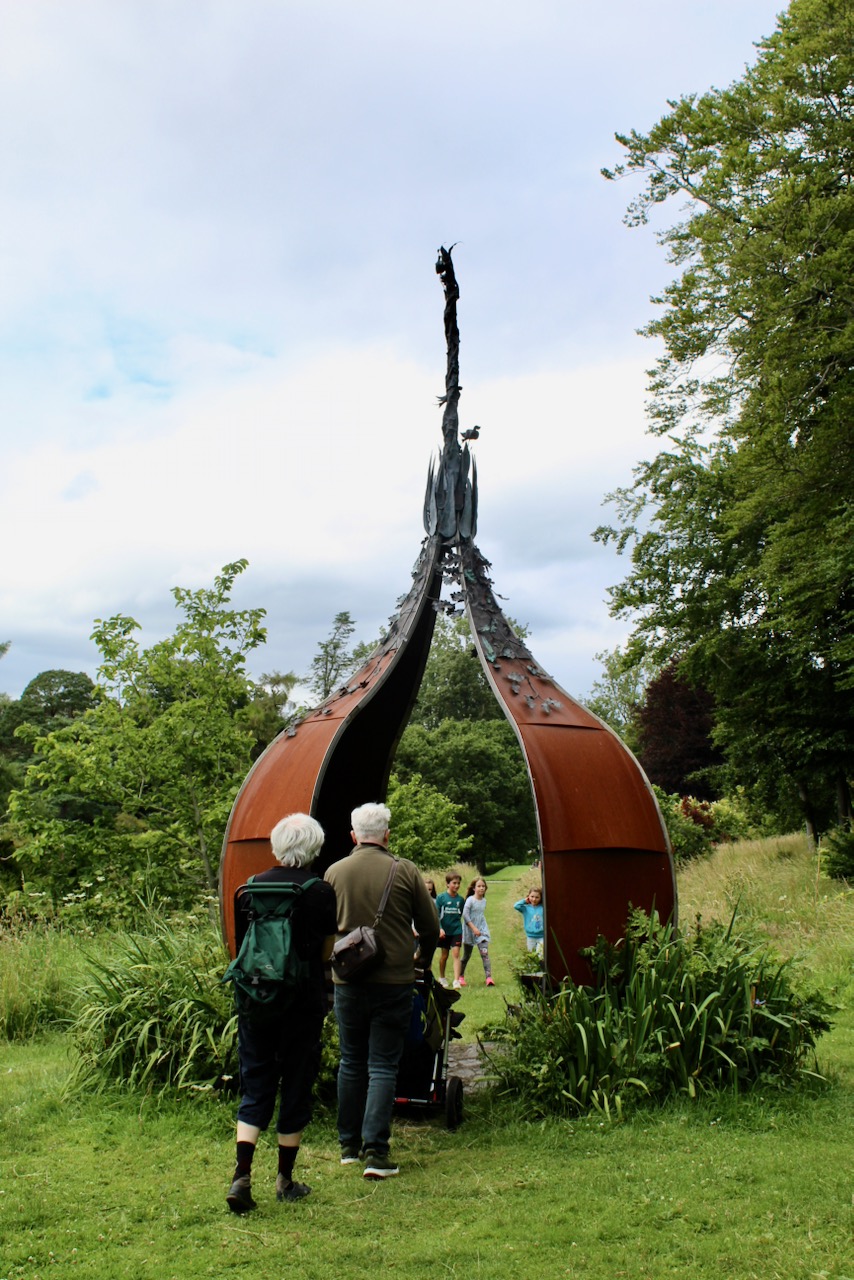
A pavilion in the garden at Killruddery, designed as a memorial to the late Lord Meath by the present Lord Meath’s niece, Naomi Jobson. It is made out of steel, lead and copper. Photograph © Jennifer Winder-Baggot, www.irishhistorichouses.com
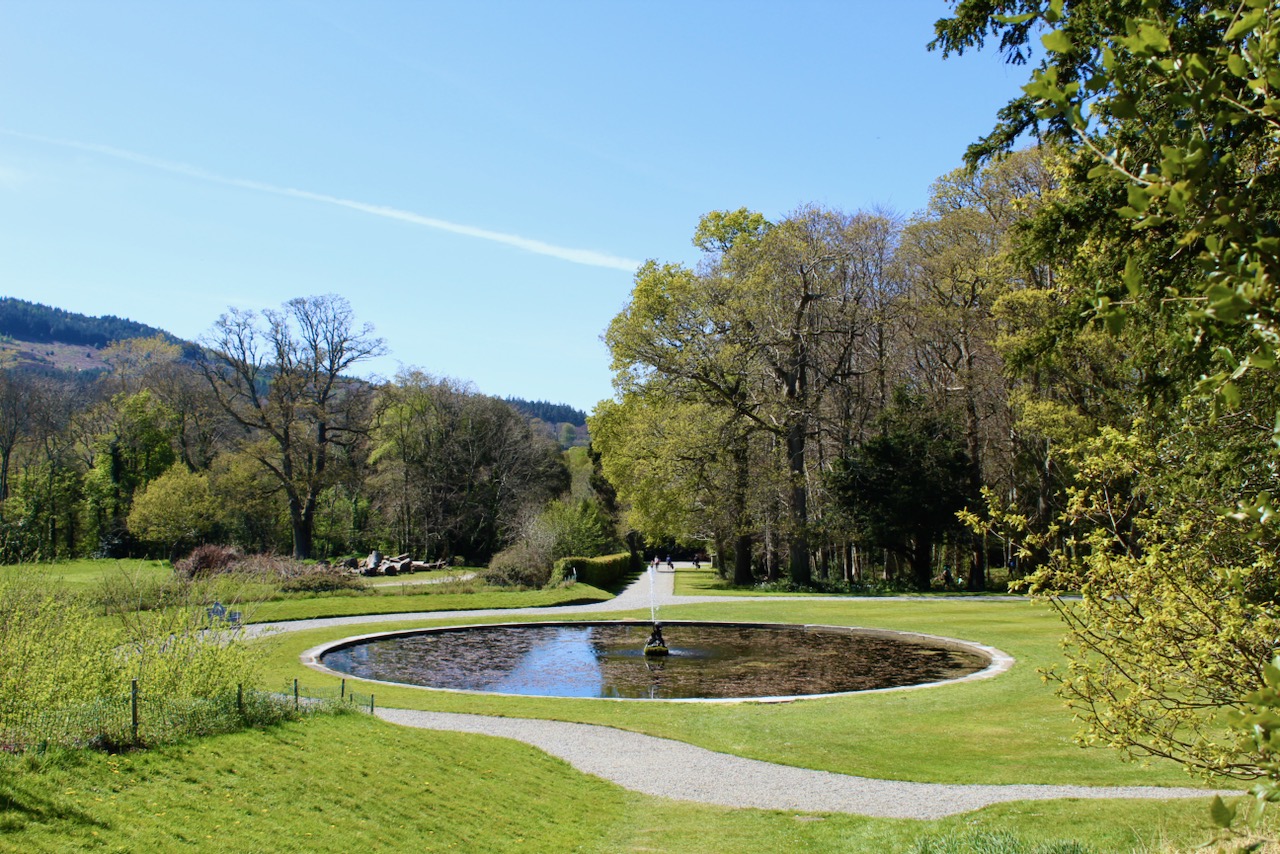
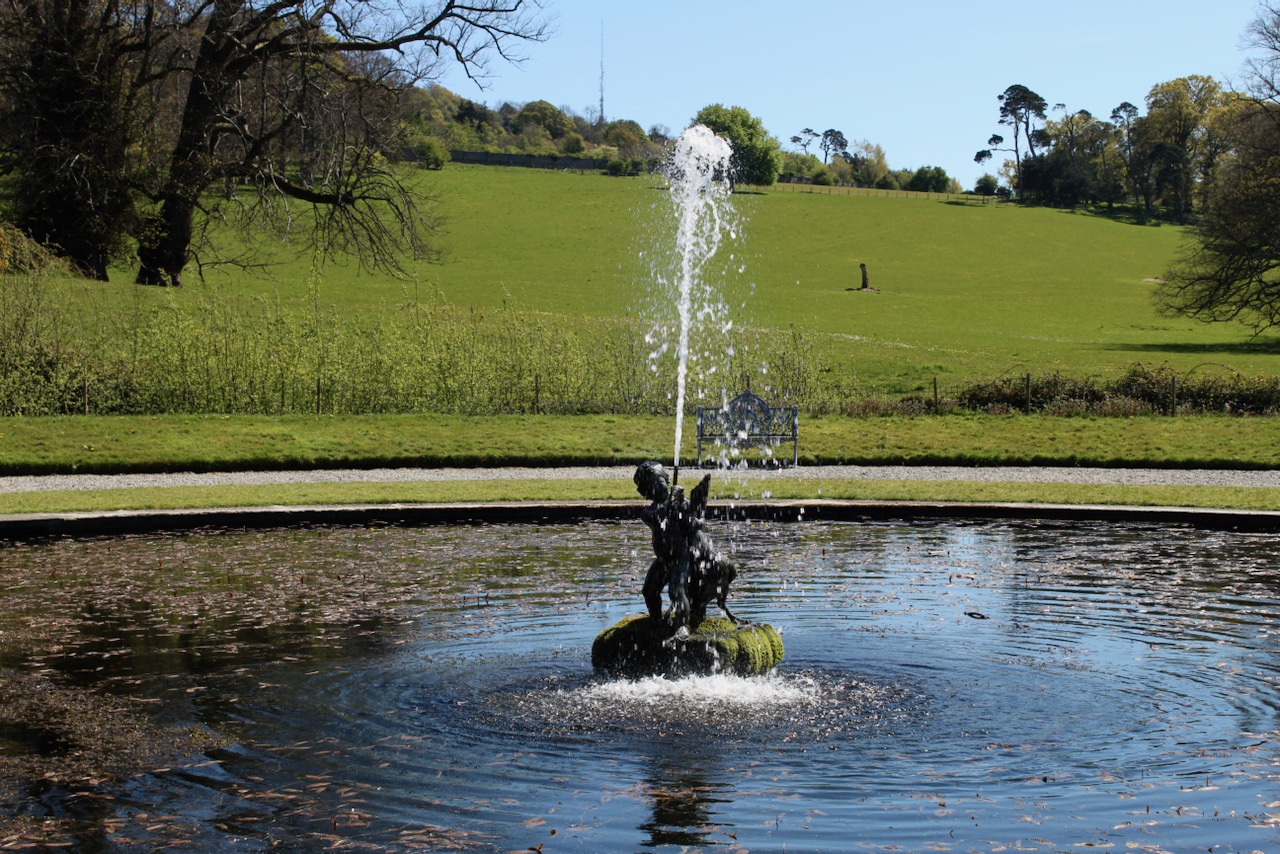
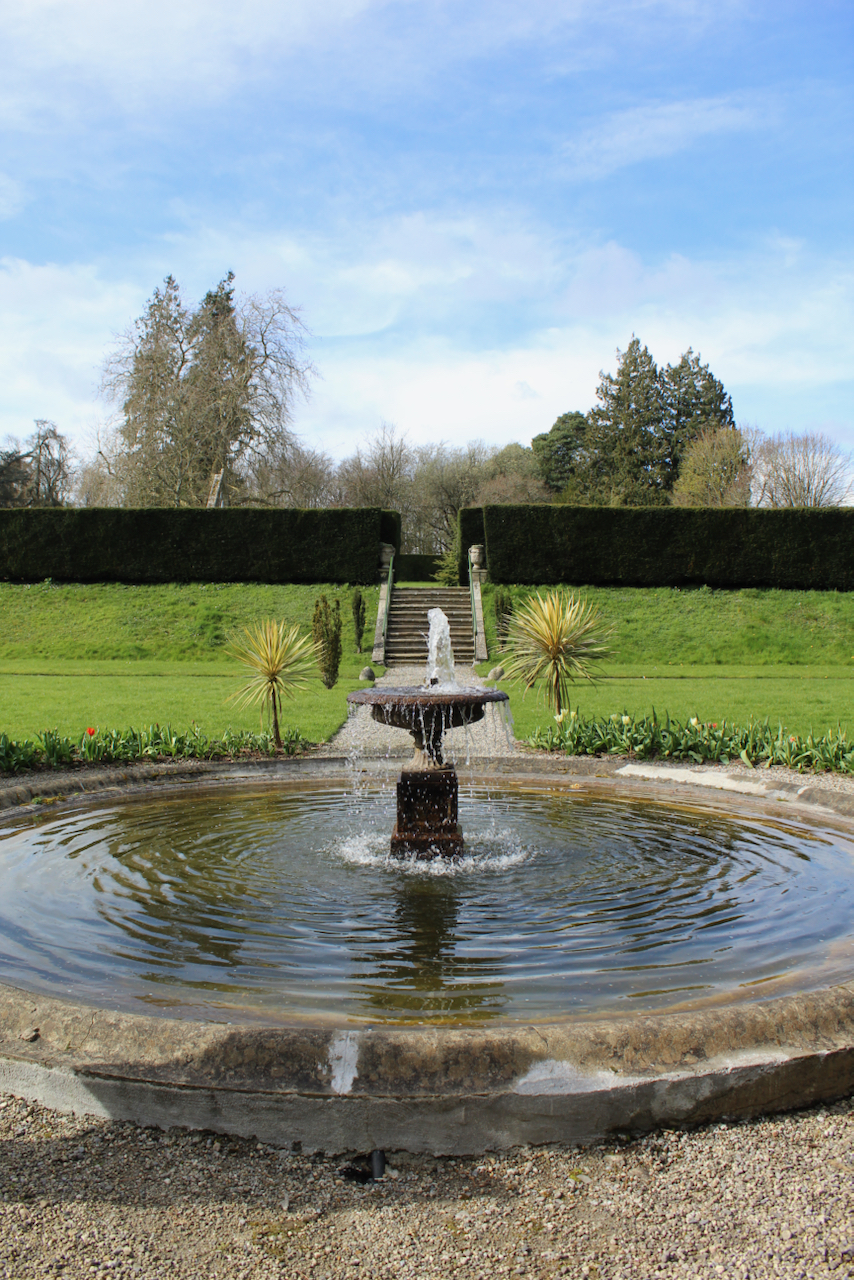
Formal fountain at the end of the Long Ponds, April 2021. Photograph © Jennifer Winder-Baggot, www.irishhistorichouses.com
Killruddery. Photograph © Jennifer Winder-Baggot, www.irishhistorichouses.com
Venus statue. Photograph © Jennifer Winder-Baggot, www.irishhistorichouses.com

Anthony, son of the 15th Earl of Meath, runs the 750 acre farm of Kilruddery.
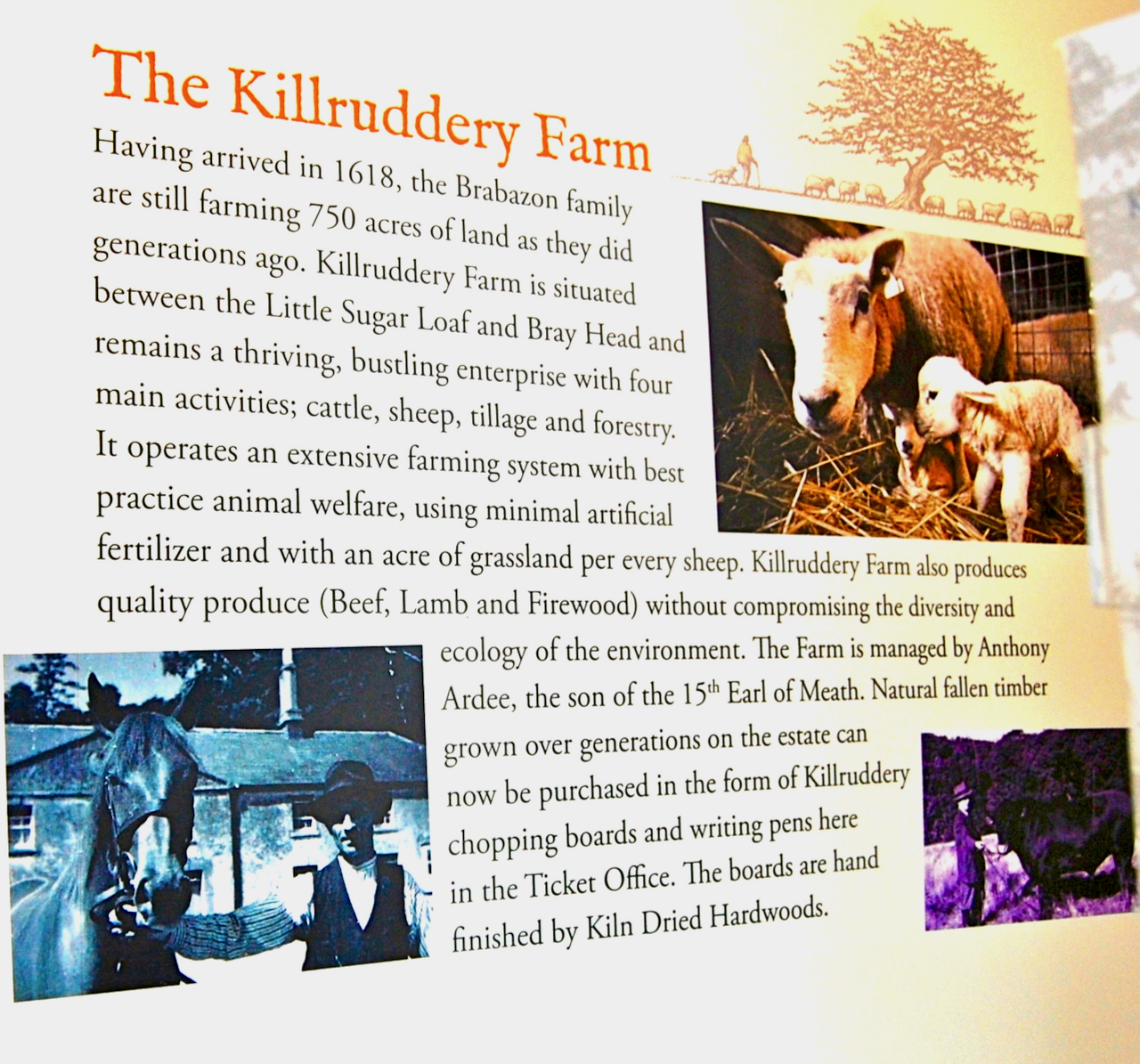
At Killruddery.
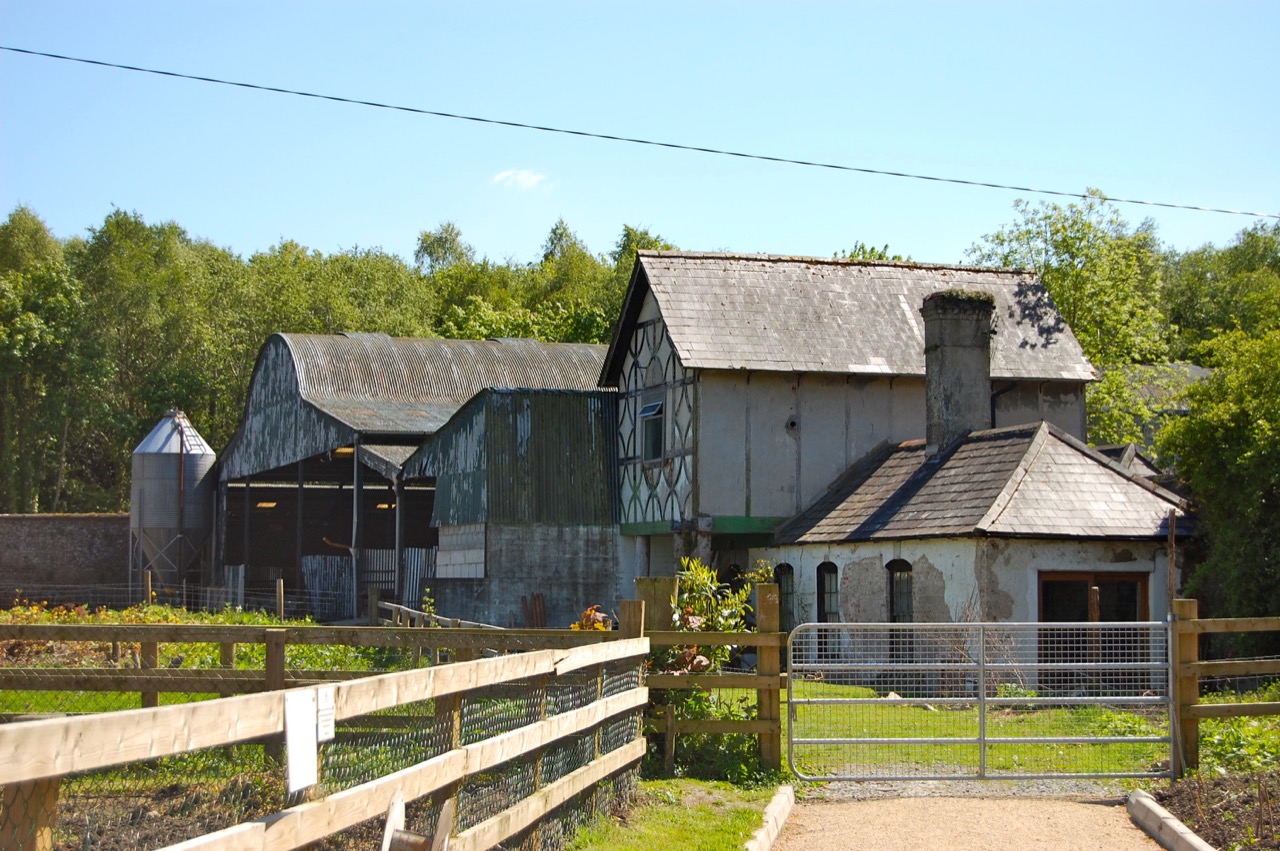
The farm at Killruddery. Photograph © Jennifer Winder-Baggot, www.irishhistorichouses.com
Kilruddery House, May 2013. Photograph © Jennifer Winder-Baggot, www.irishhistorichouses.com
Farm at Kilruddery House, May 2013. Photograph © Jennifer Winder-Baggot, www.irishhistorichouses.com

[1] https://www.irelandscontentpool.com/en

[2] p. 137, MacDonnell, Randal. The Lost Houses of Ireland. A chronicle of great houses and the families who lived in them. Weidenfeld and Nicolson. London, 2002 

[3] Great Houses of Ireland by Hugh Montgomery-Massingberd and Christopher Simon Sykes. Laurence King Publishing, 1999.

[4] MacDonnell, Randal. The Lost Houses of Ireland: A chronicle of great houses and the families who lived in them. Weidenfeld and Nicolson, 2002. 

[5] https://www.dib.ie/biography/brabazon-reginald-a0865

[6] Mark Bence-Jones. A Guide to Irish Country Houses (originally published as Burke’s Guide to Country Houses volume 1 Ireland by Burke’s Peerage Ltd. 1978); Revised edition 1988 Constable and Company Ltd, London.  

Text © Jennifer Winder-Baggot, www.irishhistorichouses.com

Slane Castle, County Meath C15 XP83 – section 482 tourist accommodation

www.slanecastle.ie

(Tourist Accommodation Facility)

Open in 2026: every day throughout Feb, May, June, Aug, Sept, Oct, Nov, Mar 1-11, Apr 10-30, July 1-12, 21-31, Dec 1-21

DSC_0503
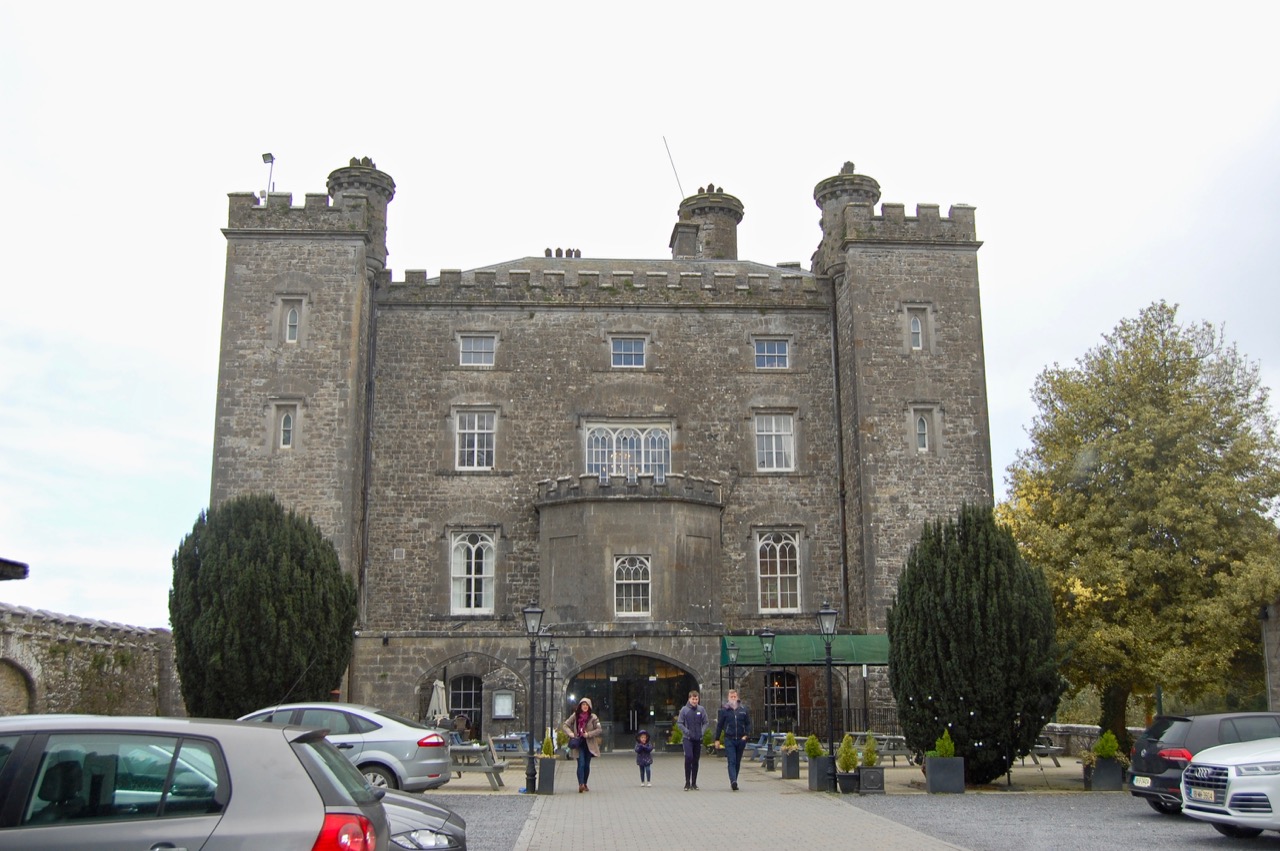
The view of Slane Castle from just inside the gate, driving in. Photograph © Jennifer Winder-Baggot, www.irishhistorichouses.com
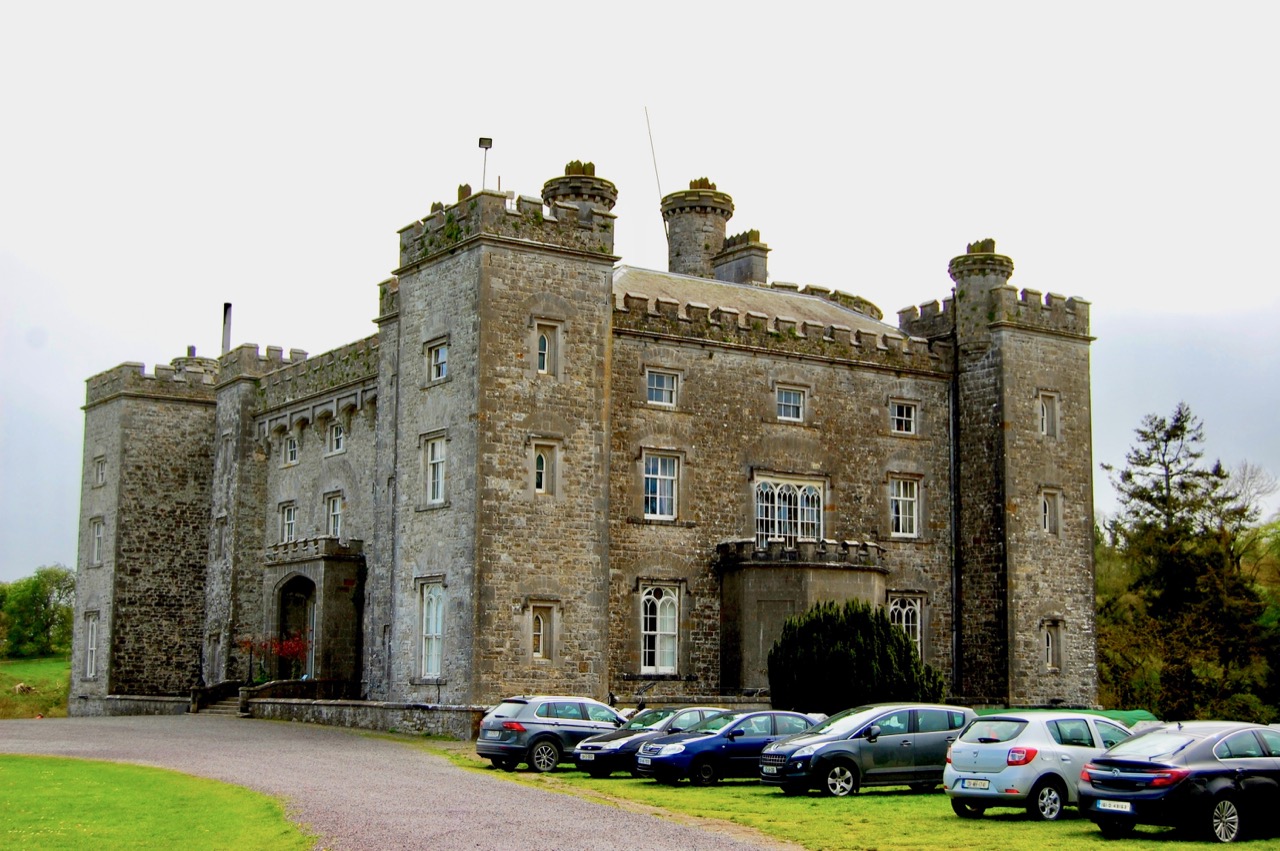
Today (Saturday 27th April 2019) my husband Stephen and I made our first official blog trip.  We started in the “ancient east,” going to Slane Castle in County Meath. The land around the Boyne River is beautiful, rolling and fertile. It took almost exactly one hour to drive from our home in Dublin, taking the M1 which I find easier than the M2 through the city’s north side, with which I’m less familiar. Our timing was perfect, we arrived at 2:10pm, in time for the 2:15 tour – there are tours every hour on the quarter hour. [1]

DSC_0504
Coming closer to Slane Castle. Photograph © Jennifer Winder-Baggot, www.irishhistorichouses.com
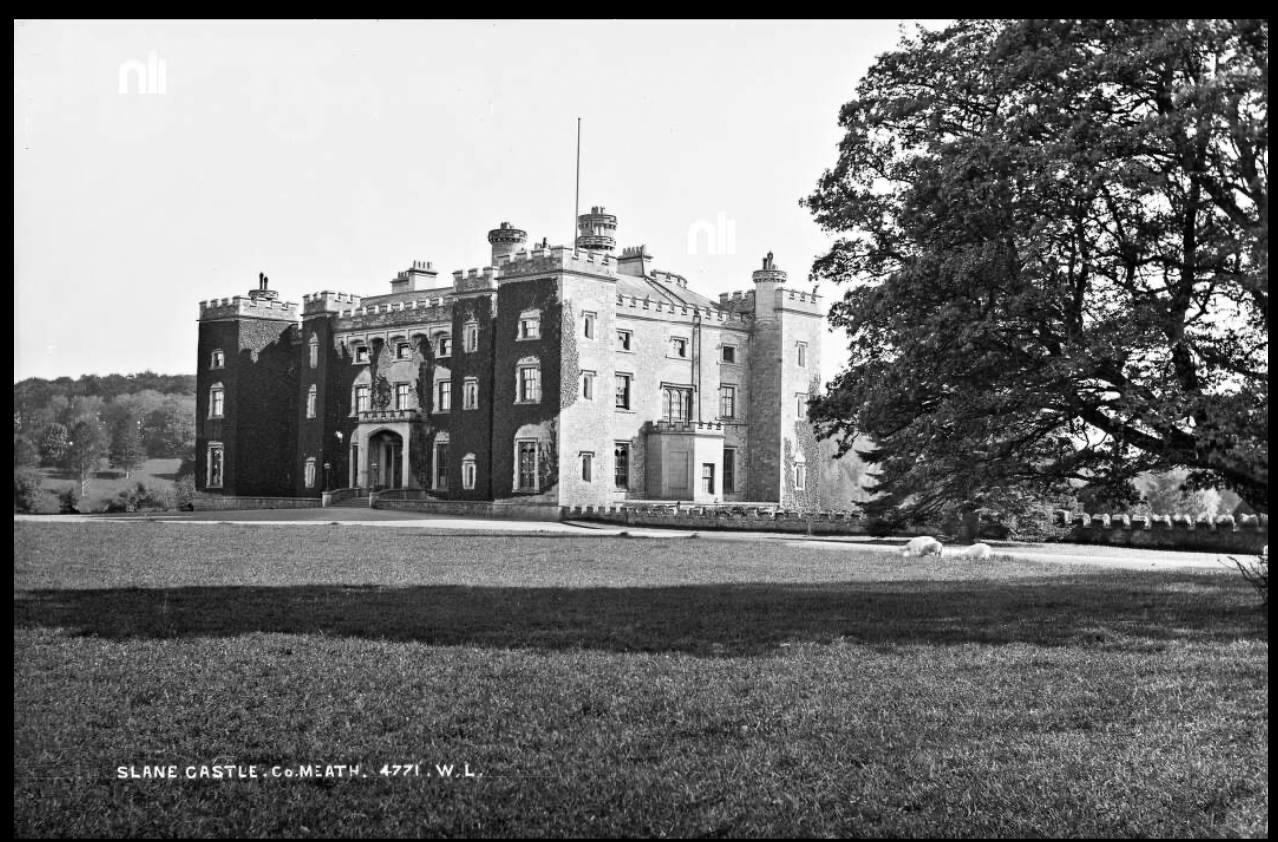
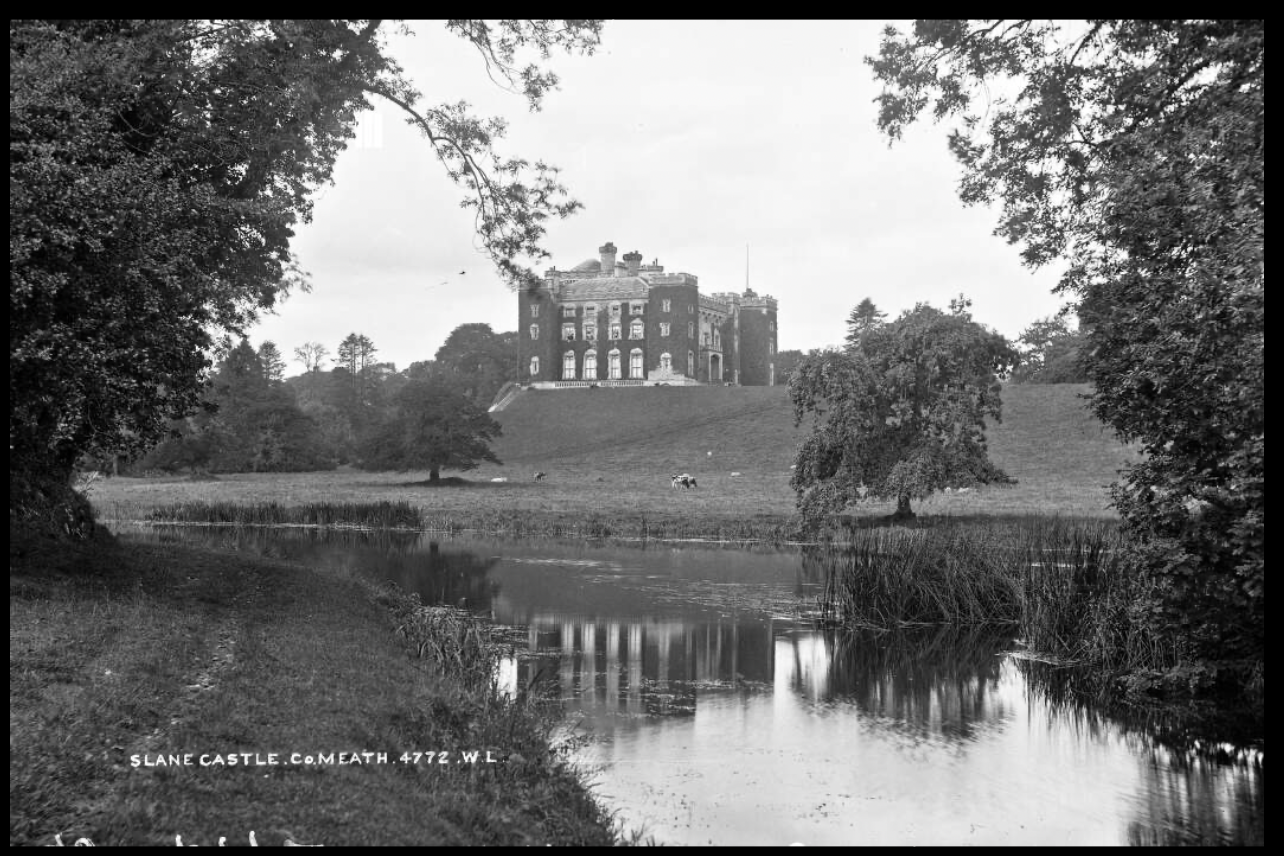
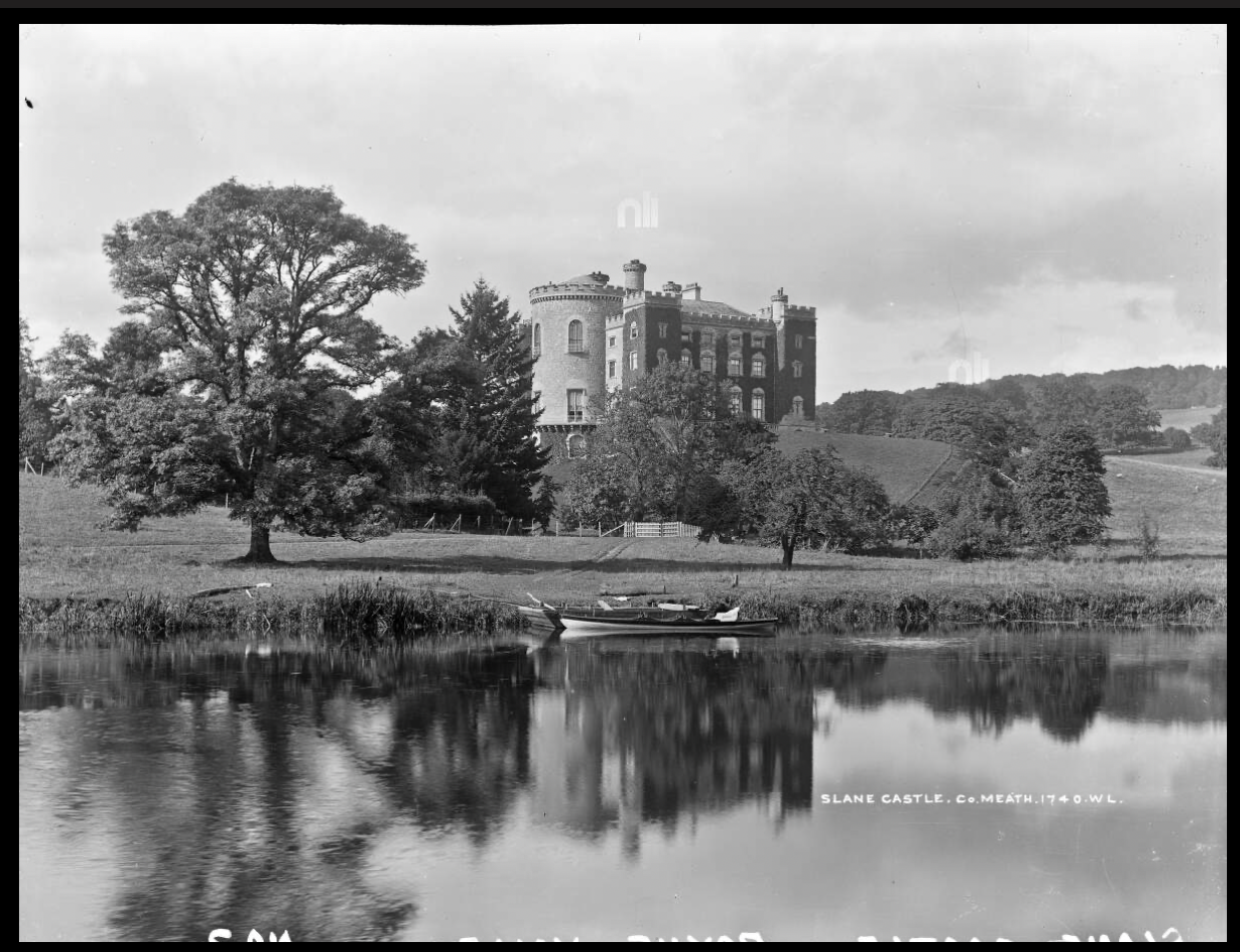
Slane Castle, County Meath, photograph by Robert French, (between ca. 1865-1914), Lawrence Photograph Collection, National Library of Ireland.

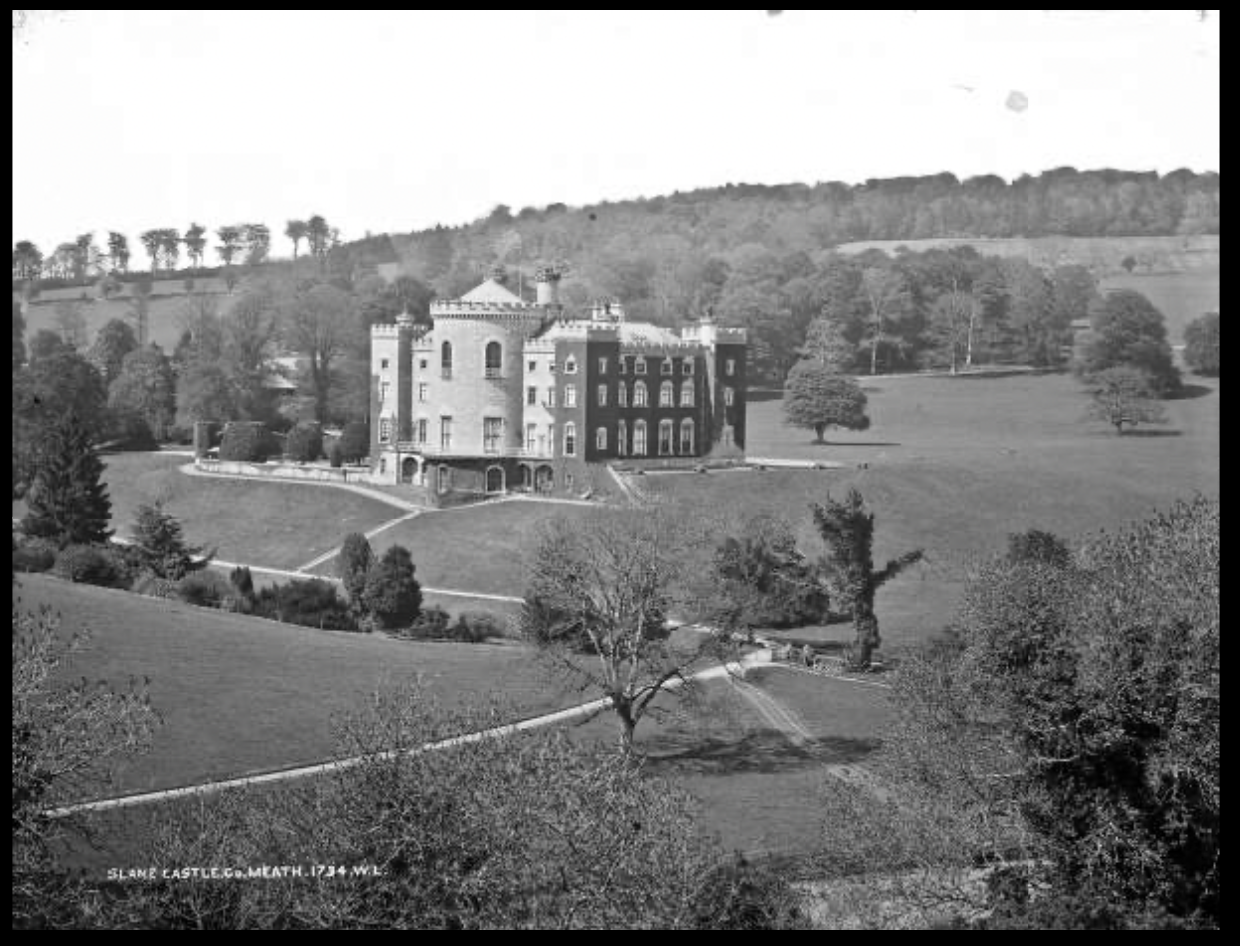
The castle is three storeys over basement, in the Gothic Revival style. There is a bow on the back side of the castle, facing the river, and the basement serves as the ground floor on this side due to the steep slope down to the River Boyne. The bow forms a round tower, but you cannot see it as you approach the castle as the river is behind.

Slane Castle, County Meath, photograph by Robert French, (between ca. 1865-1914), Lawrence Photograph Collection, National Library of Ireland.
DSC_0505
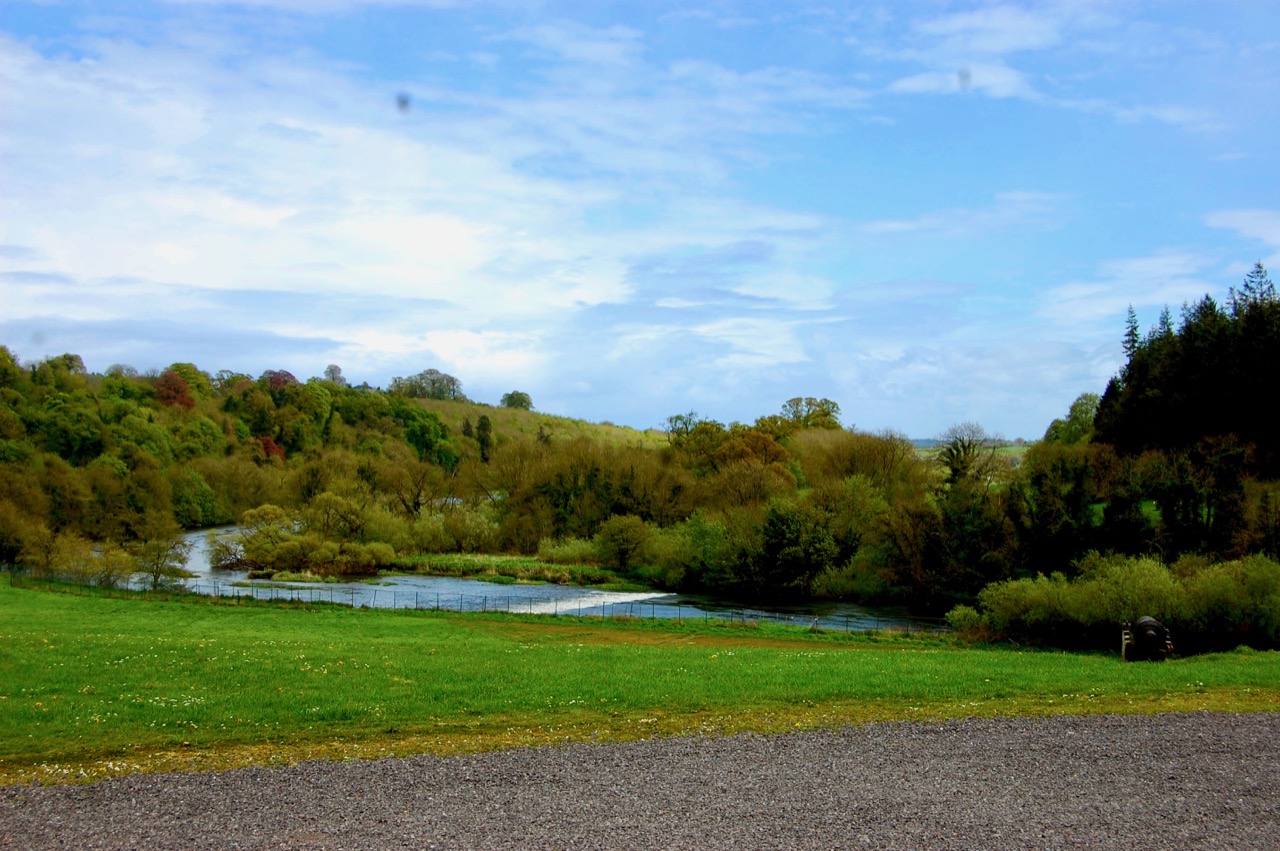
The view over the beautiful River Boyne. Photograph © Jennifer Winder-Baggot, www.irishhistorichouses.com
DSC_0507
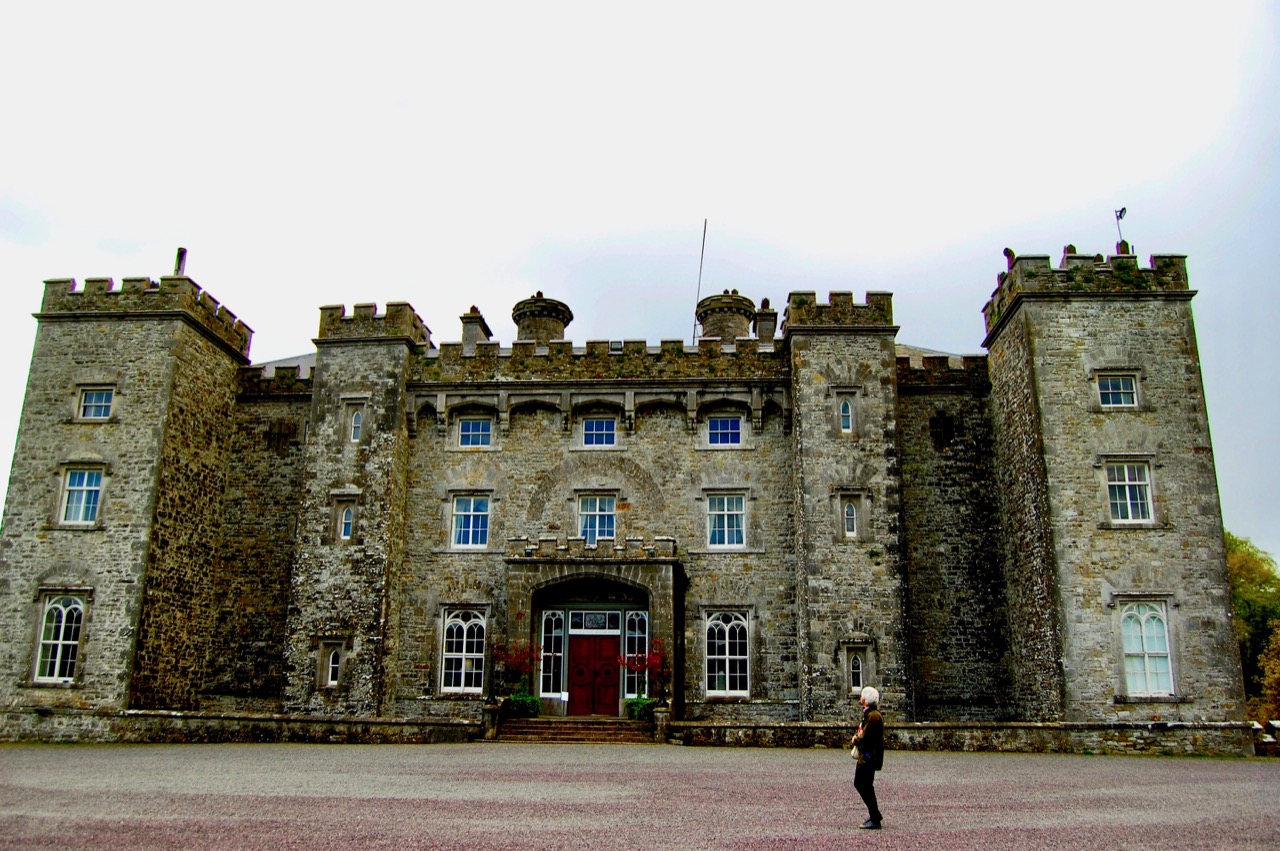
Stephen in front of the Castle. Photograph © Jennifer Winder-Baggot, www.irishhistorichouses.com
Our guide Matthew told us that the castle was reconstructed and enlarged by William Burton Conyngham (1733-1796). It was built on the foundations of a medieval castle of the Fleming family, replacing an earlier house.

William Burton Conyngham was a classicist and the front hall features Greek columns and key patterns on the walls and many marble Greek sculptures, including a sculpture of King George IV of England, donated by the king himself.

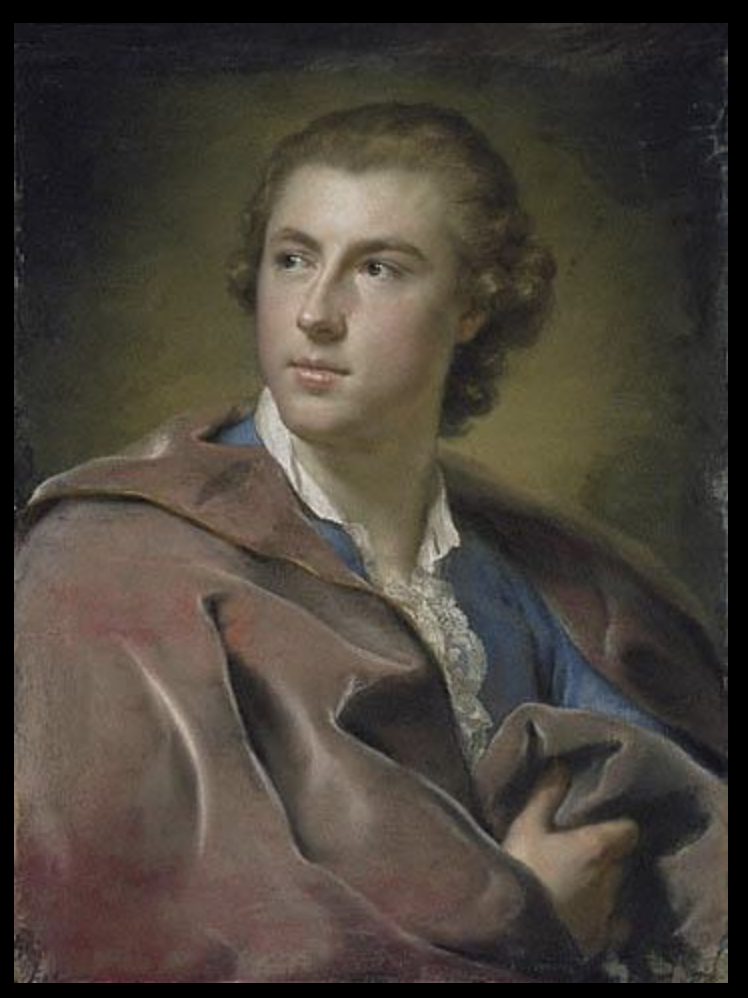
William Burton Conyngham (1733–1796) by Anton Raphael Mengs c. 1754-58, courtesy of wikipedia.

William Burton Conyngham argued with his architects, Matthew told us, so ended up having three architects for his castle: James Gandon, James Wyatt and Francis Johnston. According to Mark Bence-Jones in A Guide to Irish Country Houses, Francis Johnston completed the house for the the second Lord Conyngham’s son, nephew of William Burton Conyngham, Henry (1766-1832), who later became the 1st Marquess Conyngham.

Other architects were consulted at various times, including James Gandon, who most famously designed the Custom House and the Four Courts in Dublin, and Emo in County Laois. Francis Johnston designed the General Post Office in Dublin, and Townley Hall, County Louth. Another architect consulted was a favourite of King George IV, the English Thomas Hopper.

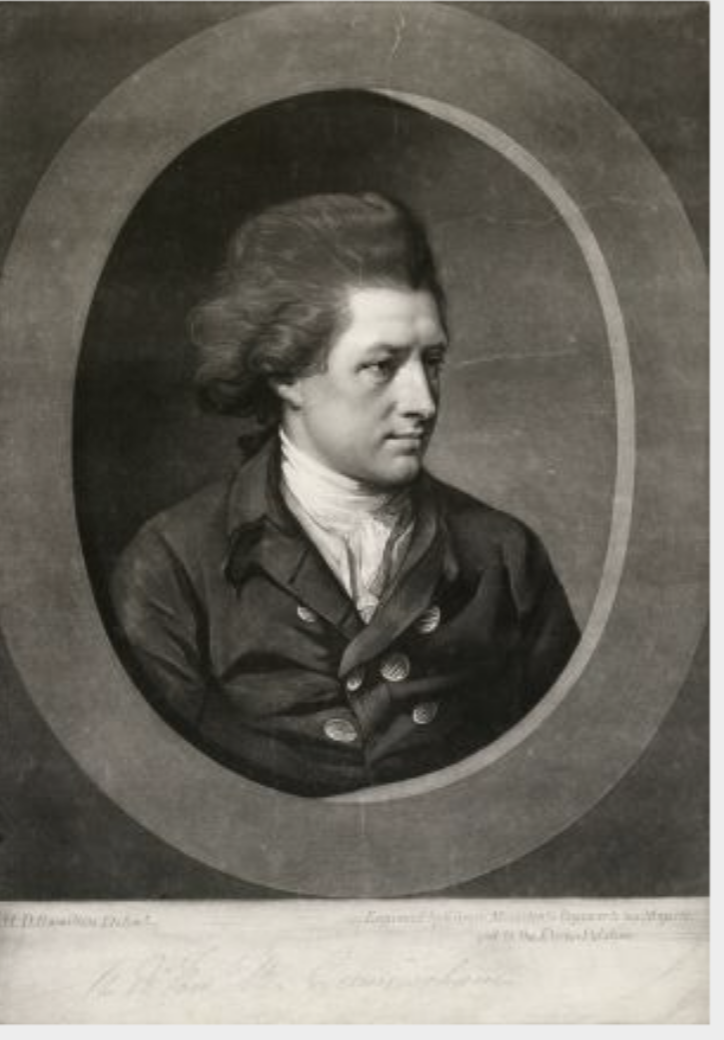
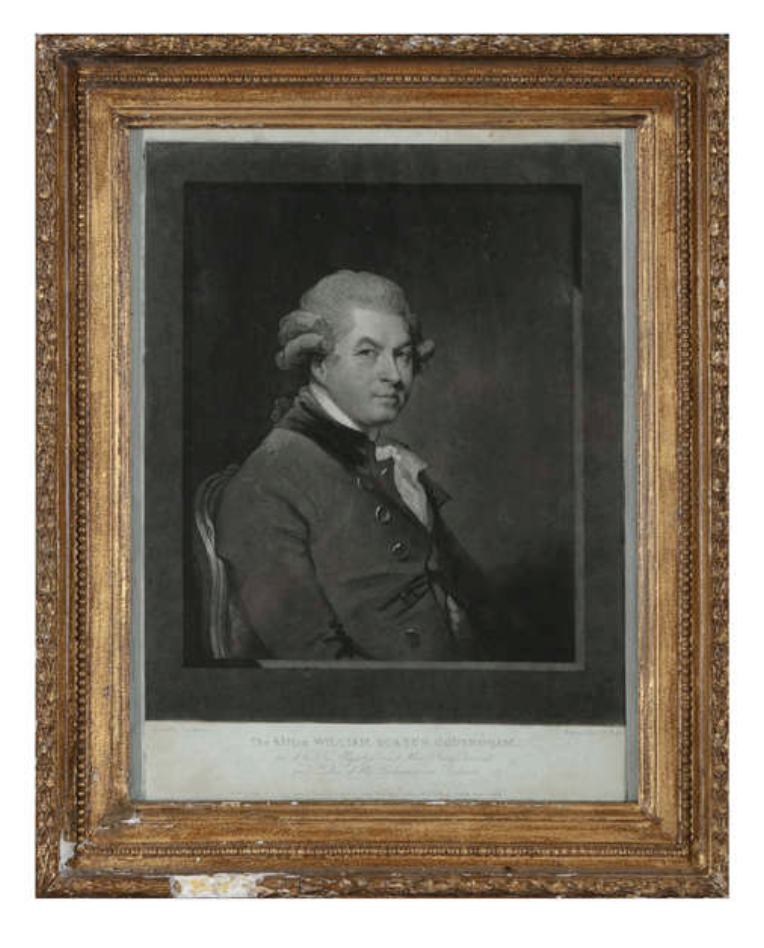
William Burton Conyngham, (1733-1796), Teller of the Irish Exchequer and Treasurer of the Royal Irish Academy Date 1780 Engraver Valentine Green, English, 1739 – 1813 After Hugh Douglas Hamilton, Irish, 1740-1808.

In 1785 the castle was remodelled to the design of James Wyatt (1746 – 1813). Wyatt also designed another house on the section 482 list this year, Curraghmore in County Waterford, and a house not on the list, unfortunately, as I would love to see inside, Abbeyleix House (incidentally, my father grew up in Abbeyleix and we used to enjoy the gardens which used to be open and which were reknowned for the bluebells. Also, coincidentally, according to wikipedia, Wyatt spent six years in Italy, 1762–68, in company with Richard Bagot of Staffordshire, who was Secretary to the Earl of Northampton’s embassy to the Venetian Republic. My family is rumoured to be descended from the Staffordshire Bagots, although I have not found the connection!).

The Conyngham family have owned the castle since 1703.

Slane Castle, County Meath, photograph by Robert French, (between ca. 1865-1914), Lawrence Photograph Collection, National Library of Ireland.

The Flemings of Slane

The Conynghams bought the land in Slane after it was confiscated from the Flemings. In 1175, Richard Le Fleming built a castle at the western end of Slane hill and, three generations later, Simon Fleming was created Baron of Slane. [4]

The Conynghams did not acquire Slane directly after it was confiscated from the Flemings – Terry Trench of the Slane History and Archaeology Society writes that the estate changed hands, at least on paper, seven times between 1641 and 1703. The estate was taken from the Flemings in 1641, when William Fleming, the 14th Baron Slane, joined the Catholic Irish forces in rebellion against the British. He remained loyal to the king, but objected to the laws that the British parliament passed to make the Irish parliament subservient to the British parliament. The estate was restored to William’s son Randall under the Act of Settlement and Distribution of Charles II’s reign, by decree dated 27th March 1663. [5] Many estates that had been confiscated by Cromwell’s parliament were restored when Charles II was restored to the throne in 1660.

The Flemings had their land confiscated again as Christopher, 17th Baron Slane (1669-1726), backed James II in his battles against William of Orange. He served in the Irish Parliament of King James II in 1689, and as colonel in James’s army in Ireland 1689-91, fighting in both the Battle of the Boyne and in Aughrim, where he was taken prisoner by William’s forces. Released, he emigrated and fought in the French and Portuguese armies, as did many of James II’s followers who were attainted and lost their estates, as they needed to be able to earn a living. He was later reconciled with Queen Anne of England (daughter of James II) and returned to Ireland, to live in Anticur, County Antrim. In 1703, Henry Conyngham purchased the estate of Slane.

The Conynghams of Slane

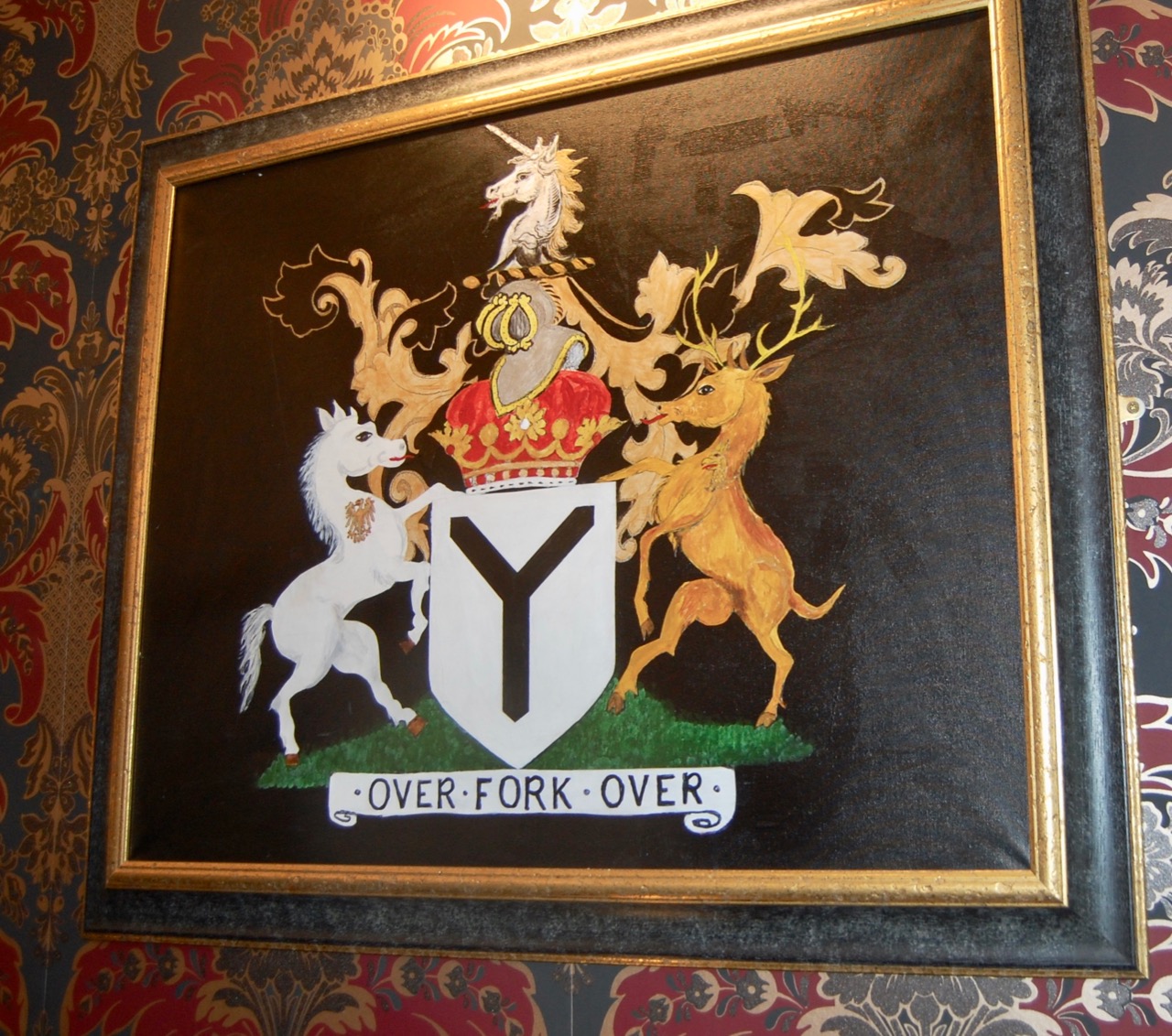
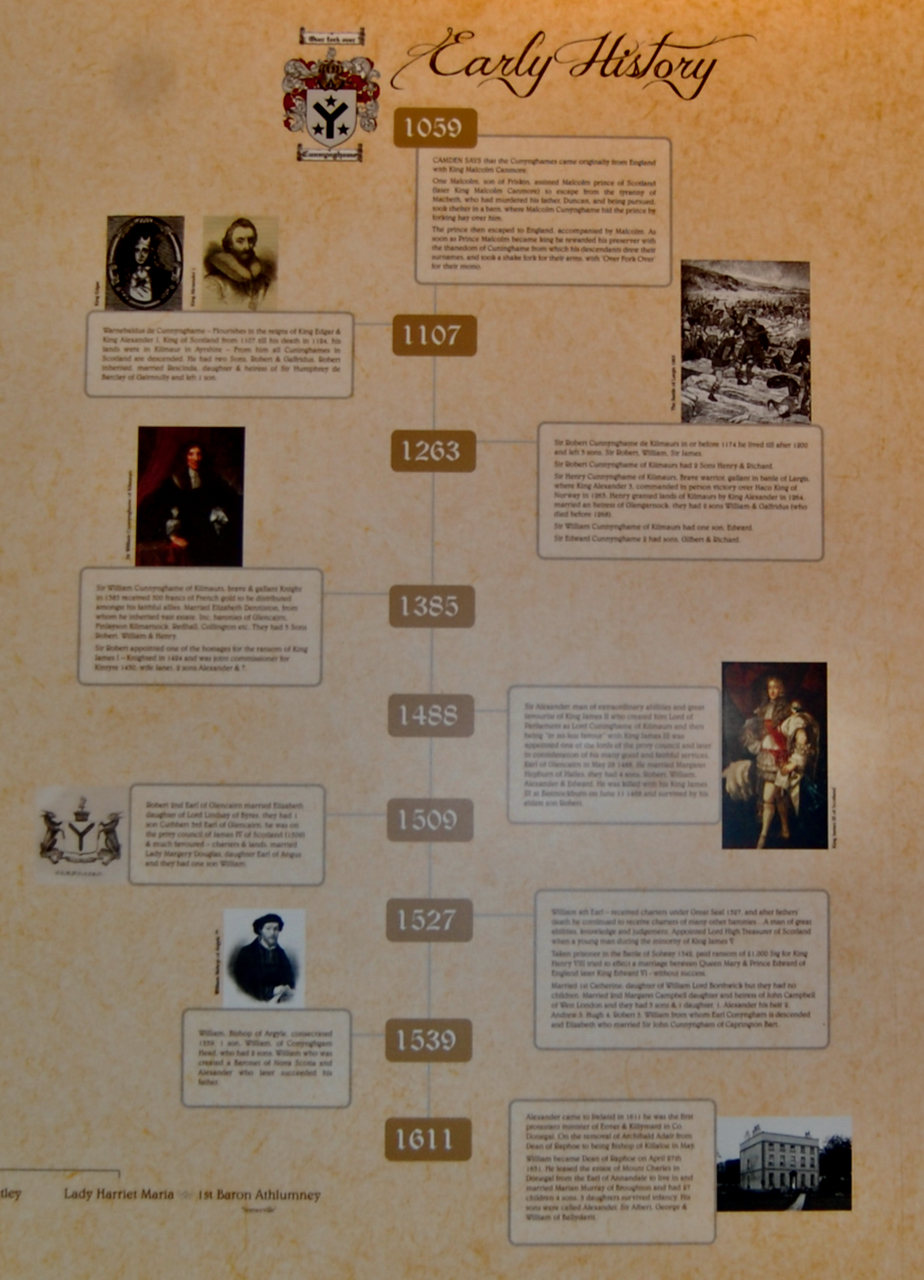
The Conyngham motto, Over Fork Over, recounts the way Duncan hid from Macbeth (familiar to us from Shakespeare). Matthew told us that Duncan hid in straw in a barn, having it forked over him. After that, he managed to defeat Macbeth and to become king. So the Conynghams are descendants of a Scottish king!

DSC_0512
The Conyngham coat of arms, with its motto, Over Fork Over. Photograph © Jennifer Winder-Baggot, www.irishhistorichouses.com
At Slane, April 2019.

Alexander Conyngham moved from Scotland to Ireland when he was appointed in 1611 to be the first Protestant minister to Enver and Killymardin the diocese of Raphoe, County Donegal. [3] He was appointed dean of Raphoe in 1631.

The Bishop’s Palace at Raphoe, now a ruin. Photograph © Jennifer Winder-Baggot, www.irishhistorichouses.com
He settled at Mount Charles, County Donegal, on an estate he leased from John Murray, earl of Annandale, the owner of ‘a vast estate’ in Scotland. Conyngham subsequently acquired the Mount Charles property through his marriage to the earl’s grand-neice, Marian, daughter of John Murray of Broughton, in Scotland (see [3]).

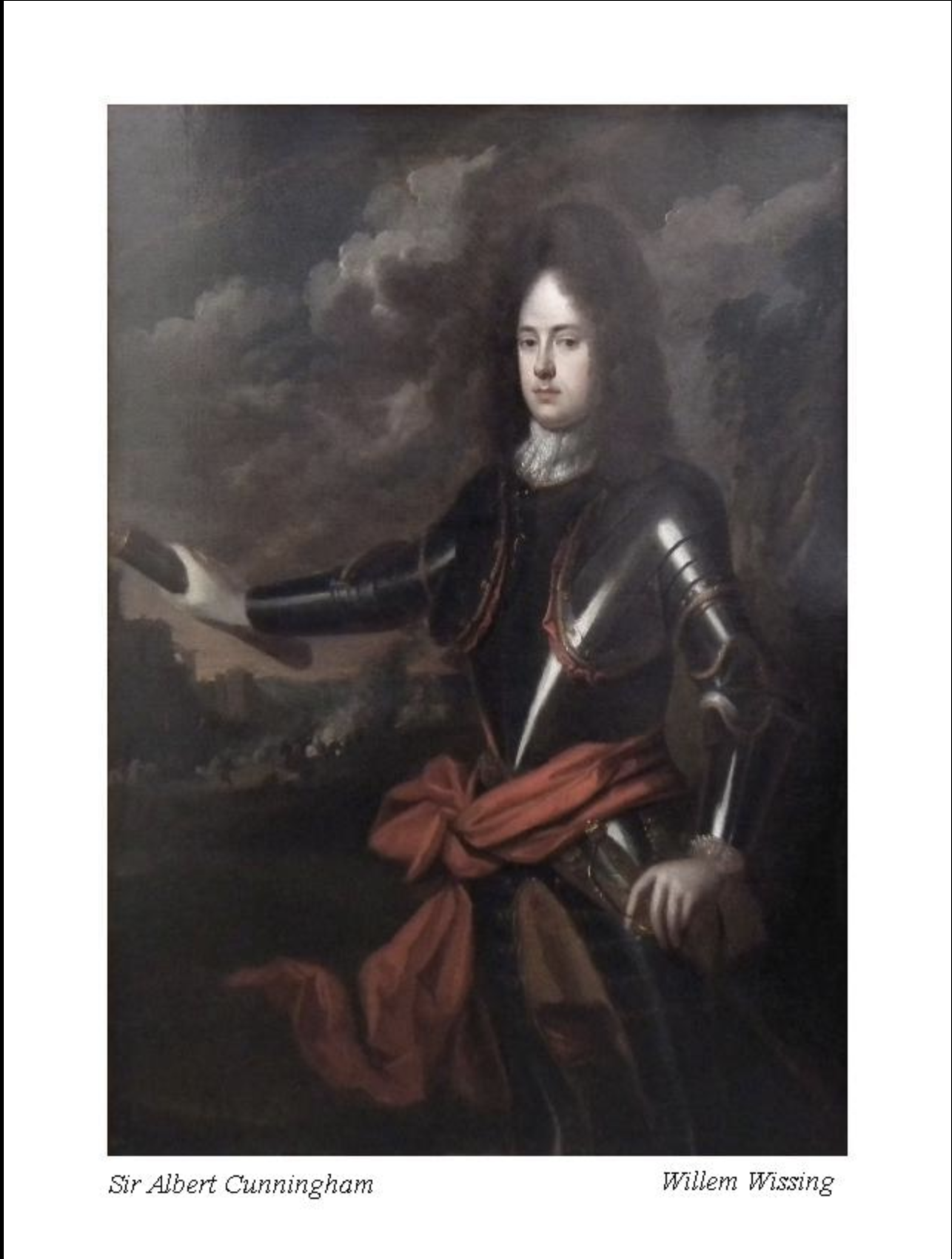
Alexander’s son Albert lived at Mountcharles. [2] Albert had fought with William III’s troops in the Battle of the Boyne, against Fleming and James II’s troops.

Albert Cunningham (d. 1691) first colonel of the 6th (Inniskilling) Dragoons, by Willem Wissing c. 1690, courtesy of British Cavalry Regiments website and wikipedia.

Albert married Mary, daughter of the Right Reverend Robert Leslie, Bishop of Raphoe – this Bishop is the ancestor of the Leslie family of Castle Leslie in County Monaghan, another property on the Section 482 list that I will be visiting. Albert was killed by Irish Royalist rebels, and succeeded by his only surviving son, Henry (1664-1705). 

Henry, a military man who also served as MP for County Donegal, purchased the land in Slane in 1703.

He built himself a residence, which he called Conyngham Hall, on the foundations of an older castle formerly belonging to the Flemings.

DSC_0511
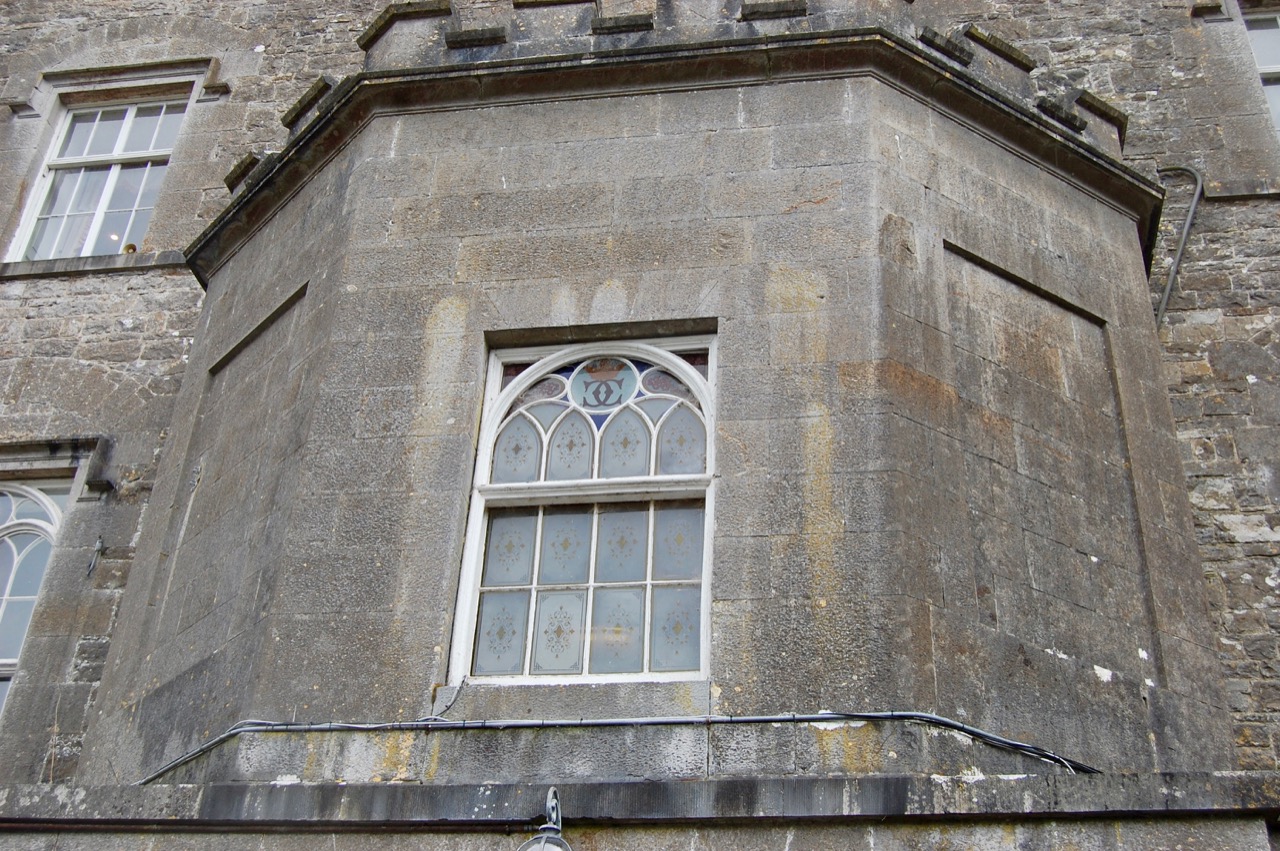
The intertwined “C” is the symbol of the Conyngham family. Photograph © Jennifer Winder-Baggot, www.irishhistorichouses.com
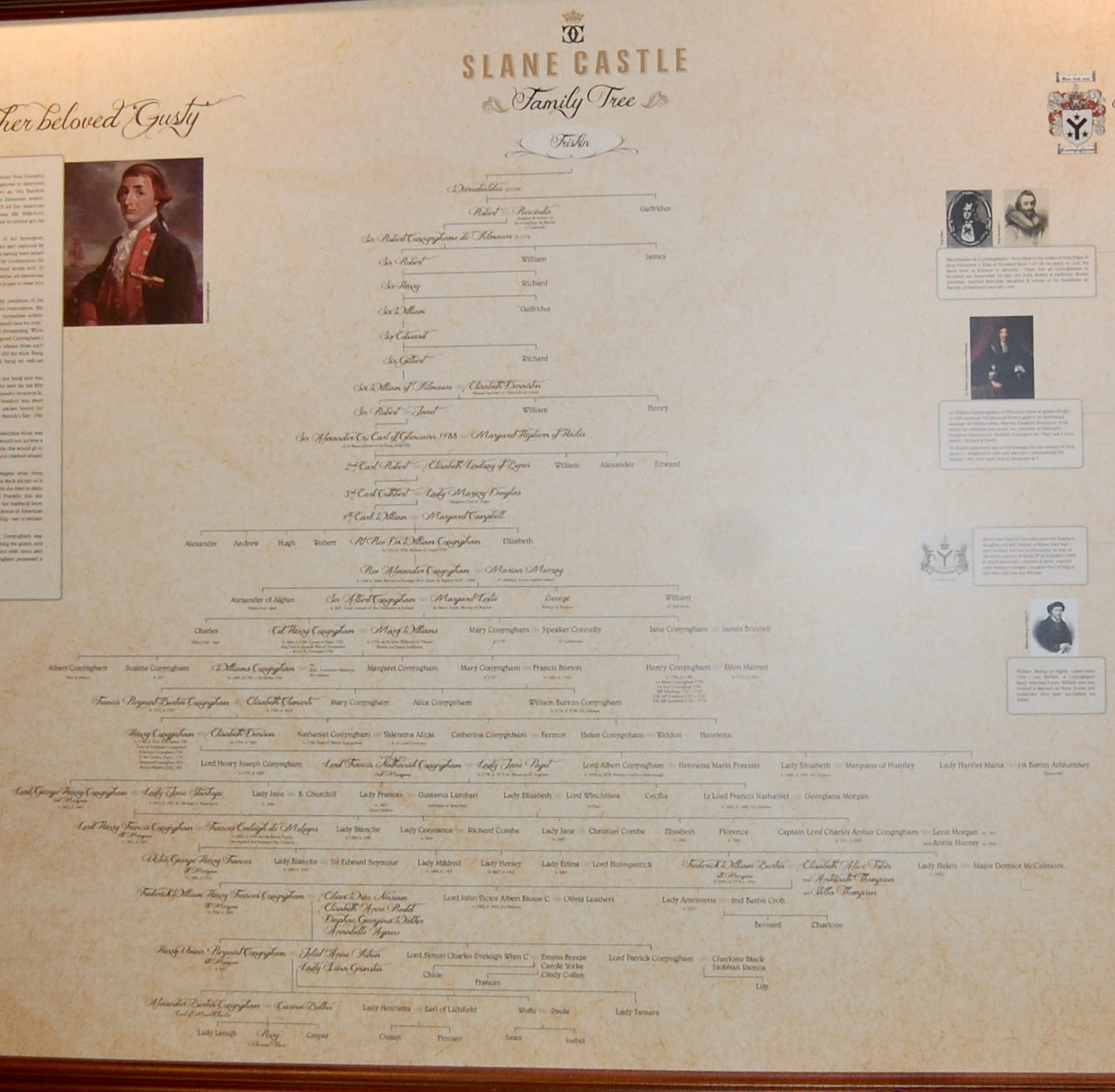
The Conyngham family tree, on the walls going to the public dining area.

Henry Conyngham (d. 1705) fought first in James II’s army, but then persuaded his regiment to transfer their loyalty to William III.

Henry’s son Henry (1705-1781) inherited the Slane estate. Henry became an Member of the Irish Parliament and was raised to the peerage in 1753 to the title of Baron Conyngham of Mount Charles, and later became Viscount and eventually, Earl. He died without a son so the Barony passed to his nephew, William Burton (his sister Mary had married Francis Burton).

William Burton (1733-1796) took the name of Conyngham upon inheriting the estate in 1781. It was he who rebuilt Slane Castle.

William Burton Conyngham, engraving After GILBERT STUART courtesy of Adams Country House Collections auction Oct 2023.

His brother Francis Pierpoint Burton also who then took the name of Conyngham in 1781 as he inherited the title to become 2nd Baron Conyngham of Mount Charles, Co. Donegal. He died six years later, in 1787. [see 3]. In 1750 he had married Elizabeth, the daughter of amateur architect Nathaniel Clements, whose work we will see later in other houses on the section 482 list of heritage properties. For himself, Nathaniel Clements built what is now the Áras an Uachtaráin, the residence of our President, Michael D. Higgins, in Phoenix Park in Dublin.  

The castle and estate passed to Francis 2nd Baron Conyngham’s son Henry (1766-1832). Henry succeeded as the 3rd Baron Conyngham of Mount Charles, Co. Donegal in 1787. He served as a politician and moved quickly up the ranks of the peerage and was Lord Steward of the Royal household between 1821-30. He married Elizabeth Denison in 1794.

Elizabeth née Denison, Marchioness Conyngham (1769-1861), wife of Henry 1st Marquess.

In 1821 King George IV visited Ireland, and he spent time in the Castle with his lover, Elizabeth, wife of Frances Pierpoint Burton Conyngham. “In return,” as our guide told us, the king made Conyngham a Marquess, although this isn’t quite true as he became Marquess in 1816. [6].

Elizabeth Conyngham (née Denison), Marchioness Conyngham (1769–1861) by George Chinnery, English, 1774-1852.
Elizabeth Conyngham née Denison, wife of Henry 1st Marquess by Thomas Lawrence 1821 courtesy of Calouste Gulbenkian Museum.
Maria Conyngham (died 1843), daughter of 1st Marquess of Slane by Sir Thomas Lawrence courtesy of Metropolitan museum.

One of the rooms of the castle, the Smoking Room, has two cartoons from the period mocking the King and his consort Elizabeth, drawing them as overweight. In one, she aids her son when he has to move from the Castle of Windsor where he was Royal Chamberlain. It was he who announced to Victoria that she was Queen, upon death of the previous monarch. He was let go from his position when he tried to move his lover into his rooms in Windsor. His mother came to fetch him, with several wheelbarrows, the story goes, and she took all the furniture from his rooms. Somehow she brought a grand piano back from Windsor to Slane Castle where it sat in a specially made arbor for music in the Smoking room, until it was destroyed by a fire in Slane Castle in the 1990’s. One of the Punch style cartoons is of Elizabeth with a wheelbarrow fetching her son from Windsor. I can’t quite remember the other – it had King George IV and herself in a carriage. The Irish were very annoyed that when he came to Ireland he spent his entire time at Slane Castle!

Cartoons at Slane Castle Tour, Slane, Co Meath, photograph by Nomos Productions, 2022, Courtesy Failte Ireland.
At Slane, April 2019. Photograph © Jennifer Winder-Baggot, www.irishhistorichouses.com
The Irish Aesthete writes of the visit:

Neither the king nor his inamorata were in the first flush of youth, and both were equally corpulent. These circumstances however did nothing to dampen their ardour. As was written of them at the time, ‘Tis pleasant at seasons to see how they sit/ First cracking their nuts, and then cracking their wit/ Then quaffing their claret – then mingling their lips/ Or tickling the fat about each other’s hips.’ And according to one contemporary observer, Lady Conyngham ‘lived exclusively with him during the whole time he was in Ireland at the Phoenix Park. When he went to Slane, she received him dressed out as for a drawing-room; he saluted her, and they then retired alone to her apartments.’” [7]

Our tour started with a video of Charles Conyngham, now known as Lord Mount Charles, telling of his childhood in the Castle, growing up in a very old-world upper class manner.  He did not join his parents at the dining table until he was twelve years old, dining until then in the Nursery. His nurse, Margaret Browne, came to the Castle at 16 years old, and he held her in such regard that he named his bar after her.

DSC_0516
The menu in Browne’s Bar, which gives an explanation of the name, telling of the housekeeper.

Lord Mount Charles described how he started out, when he had to take over the Castle, with a restaurant, which is now the Gandon Restaurant. To further fund the Castle maintenance, Lord Mount Charles started concerts at the venue, beginning with Thin Lizzy in 1981. To seal the deal, the next show was the Rolling Stones! With such august imprimateur, the Castle’s concerts became world-famous and featured many top performers including David Bowie, Bob Dylan, Neil Young and Queen.

DSC_0514
Lovely picture of Phil Lynnott of Thin Lizzy carrying a child at Slane.

Henry 1st Marquess Conyngham’s son, Francis Nathaniel Burton Conyngham (1797-1876) inherited the property and the title, to become 2nd Marquess Conyngham. His daughter Frances Caroline Maria married Gustavus William Lambart (1814-1886), who we will come across later as the owner of Beauparc in County Meath, another Section 482 property https://irishhistorichouses.com/2022/07/22/beauparc-house-beau-parc-navan-co-meath/ . The current owner of Slane inherited Beauparc from the Lambarts.

A son, George Henry (1825-1882) became 3rd Marquess Conyngham, and his son, Henry Francis the 4th Marquess. He married the daughter of the 4th Baron Mollens of Ventry, County Kerry. Their son the 5th Marquess died unmarried, so the title passed to his brother, Frederick William Burton, 6th Marquess. The current Marquess is the 8th, who is known as Lord Henry Mount Charles, but is officially 8th Marquess Conyngham since 2009.

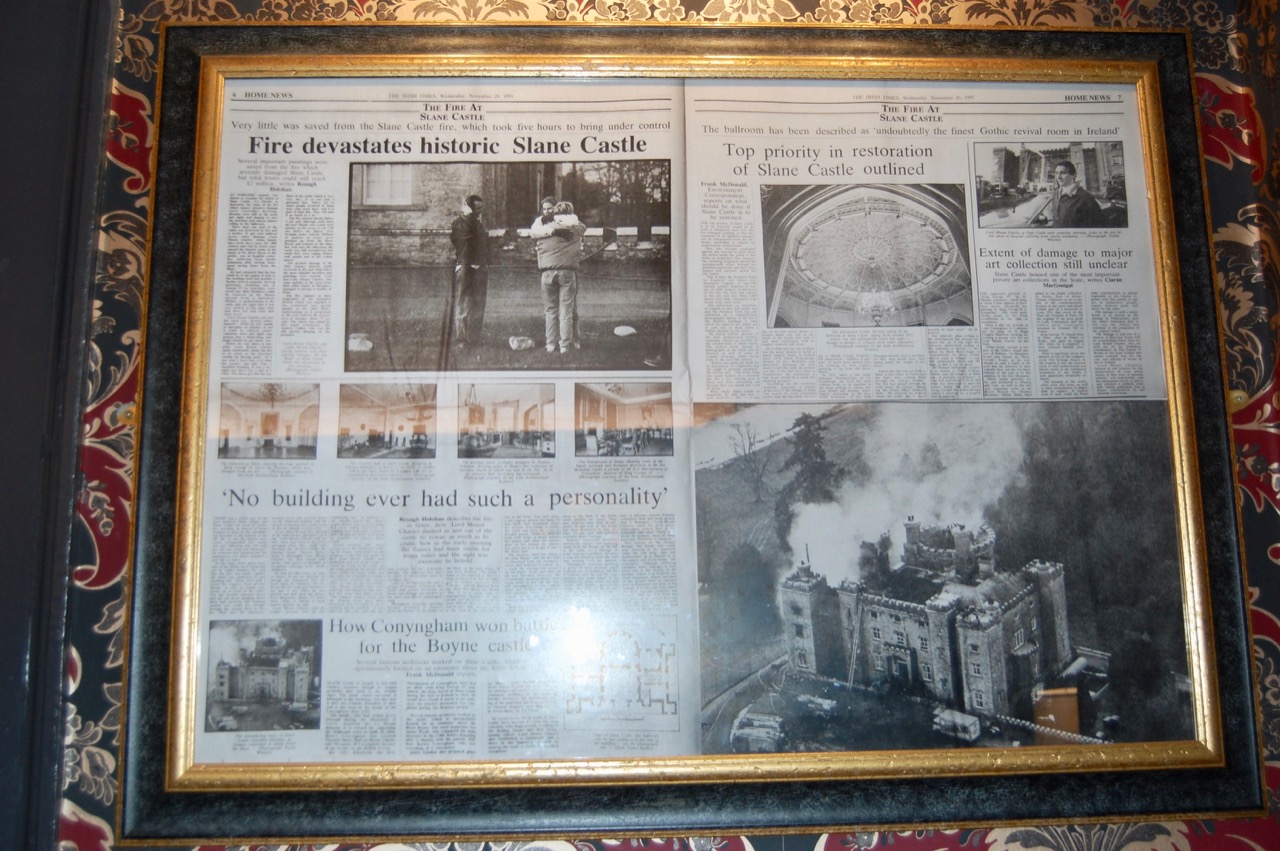
A disasterous fire in the castle in 1991 destroyed the roof and one third of the castle.

DSC_0525
Newspaper clippings about the fire, in the entry to pub and restaurant.
DSC_0524
At Slane, April 2019.

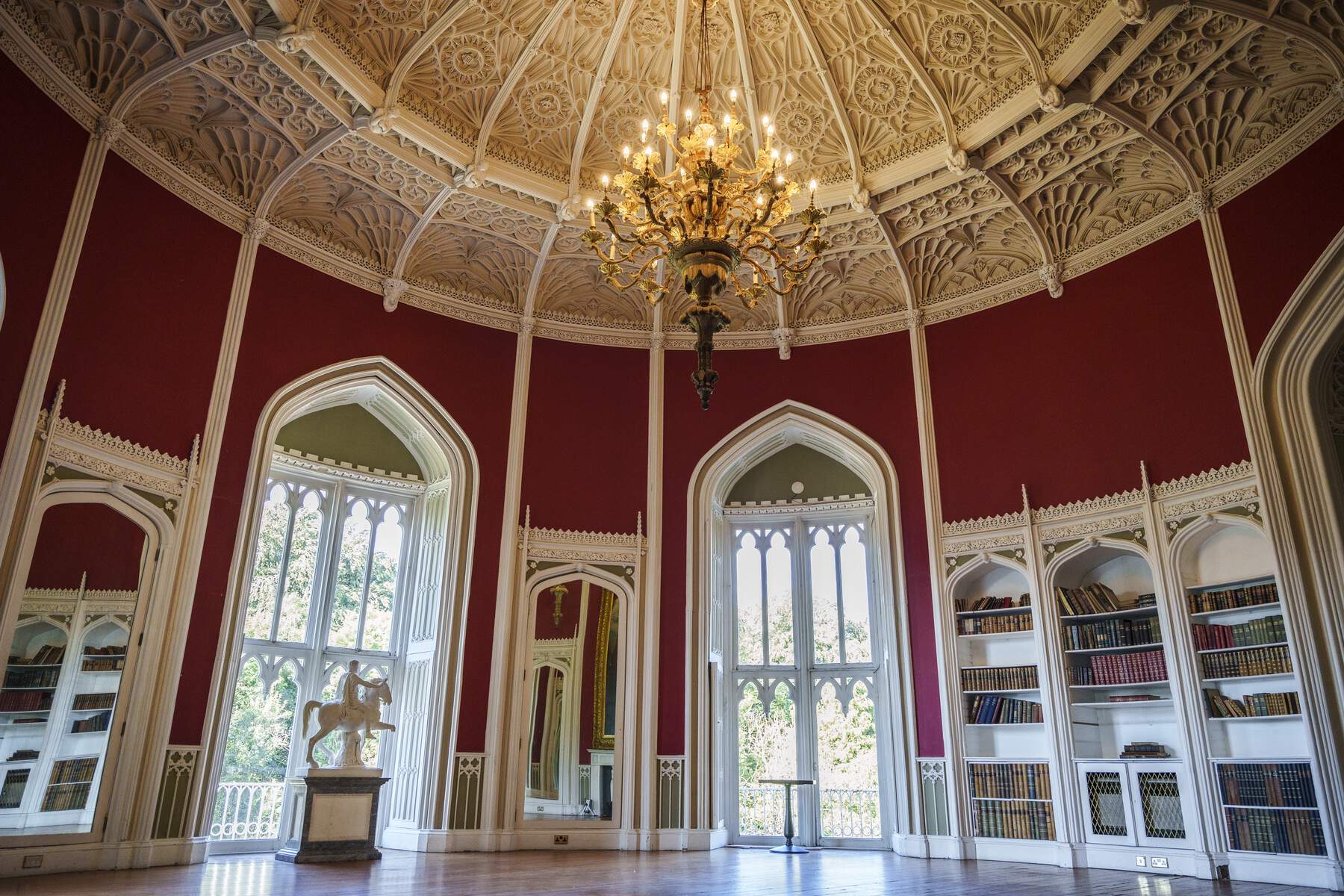
The magnificent library with its intricate ceiling and impressive wooden chandelier was saved by two firemen fighting the fire from within the room, battling for nine hours. The smoke was so thick that one couldn’t see the ceiling. I think they deserve a plaque in the room to recognise their effort! Meanwhile the family saved as many priceless historic paintings and antiques as they could, including a huge portrait of King George IV that is now hanging again in the library, by cutting it from its giant gilt frame then taking the frame apart into four pieces in order to get it out through the doors. Lord Mount Charles now suffers with his lungs, probably partially as a result of long exposure to the flames and smoke. It took ten years to reconstruct the castle, but it has been done excellently so traces of the fire barely remain.

Portrait of George IV which was saved from the fire, Slane Castle Tour, Slane, Co Meath, photograph by Nomos Productions, 2022, Courtesy Failte Ireland.

We weren’t allowed to take pictures inside, as usual with these properties. There is a picture of the ornate roof in the library on the wonderful blog of the Irish Aesthete [8].

Mark Bence-Jones describes the room in his 1988 book (published before the fire, but this room remained intact!), A Guide to Irish Country Houses:

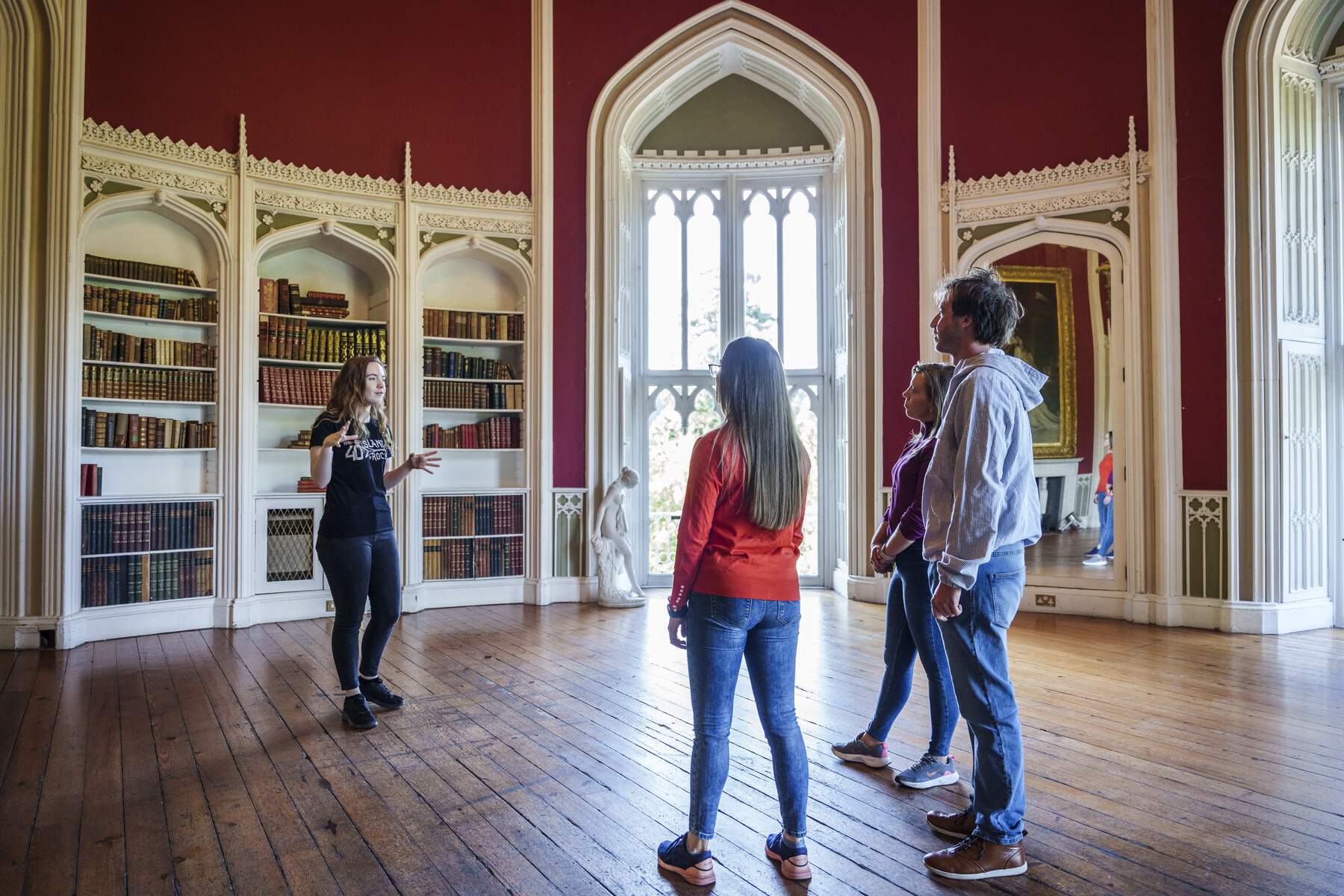
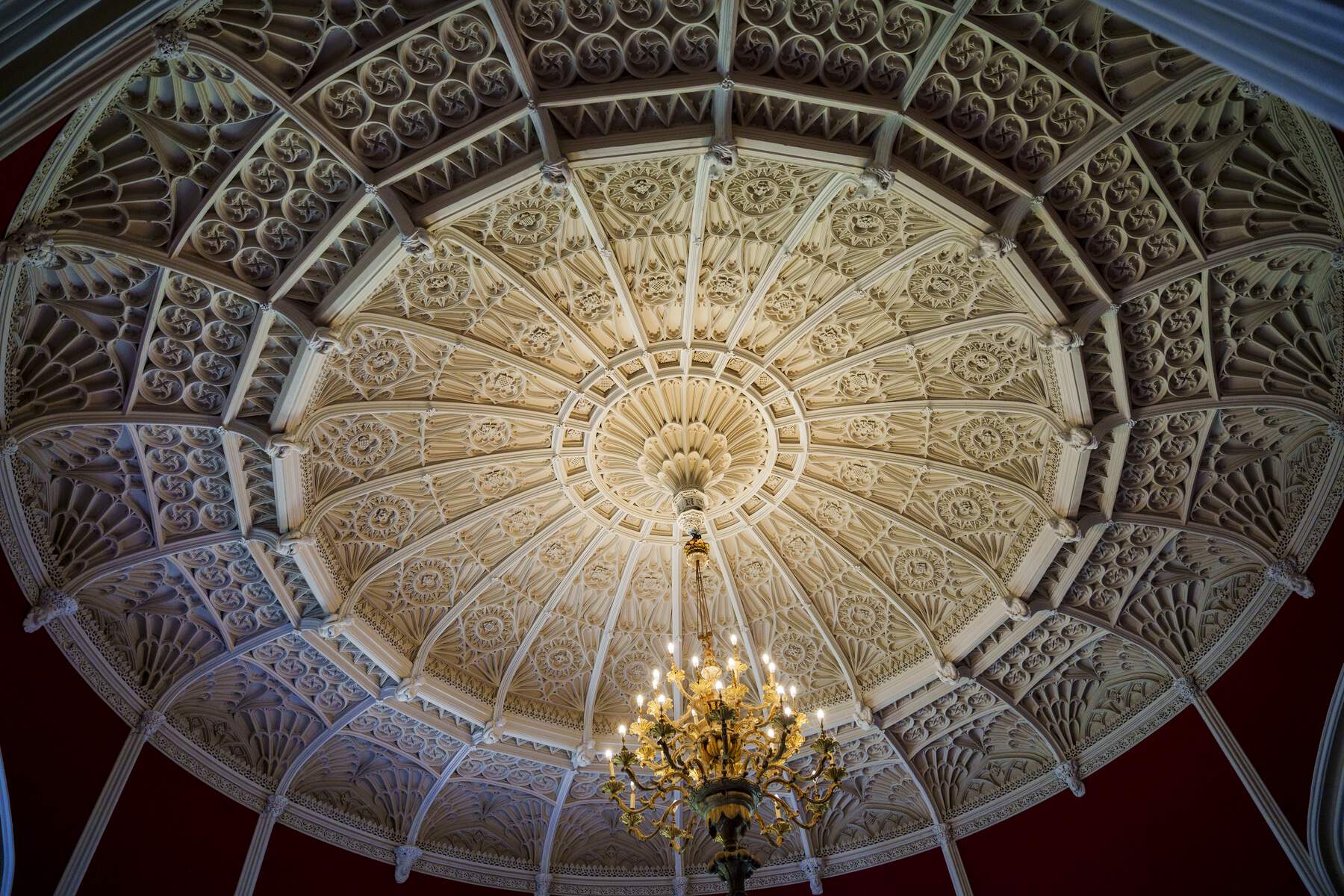
“…the great circular ballroom or library which rises through two storeys of the round tower and is undoubtedly the finest Gothic Revival room in Ireland; with a ceiling of Gothic plasterwork so delicate and elaborate that it looks like filigree. Yet this, too, is basically a Classical room; the Gothic ceiling is, in fact, a dome; the deep apses on either side of the fireplace are such as one finds in many of Wyatt’s Classical interiors, except that the arches leading into them are pointed; they are decorated with plasterwork that can be recognised as a very slightly Gothicized version of the familiar Adam and Wyatt fan pattern.

Slane Castle Tour, Slane, Co Meath, photograph by Nomos Productions, 2022, Courtesy Failte Ireland.
Slane Castle, Slane, Co Meath, photograph by Nomos Productions, 2022, Courtesy Failte Ireland

Of the tales on the tour, I especially enjoyed the story of the funeral of a soldier’s leg. Apparently it was quite the custom to have funerals for body parts – his leg had to be amputated on the field of battle and the soldier brought it back to be buried with a full-scale military funeral. It must have been to do with the fact that a person’s body is to be resurrected on the Last Day, so it’s good to know where all the parts are! Cremation used to be forbidden in the Catholic church, as somehow it would be too difficult for God to put the ashes back together – never mind a disintegrated body!

We had lunch in the bar after the tour.

DSC_0509
Outer entrance to the bar and Gandon Restaurant. Photograph © Jennifer Winder-Baggot, www.irishhistorichouses.com
DSC_0523
Entrance to the bar and Gandon Restaurant. Photograph © Jennifer Winder-Baggot, www.irishhistorichouses.com
DSC_0519
Browne’s Bar. Photograph © Jennifer Winder-Baggot, www.irishhistorichouses.com
DSC_0513
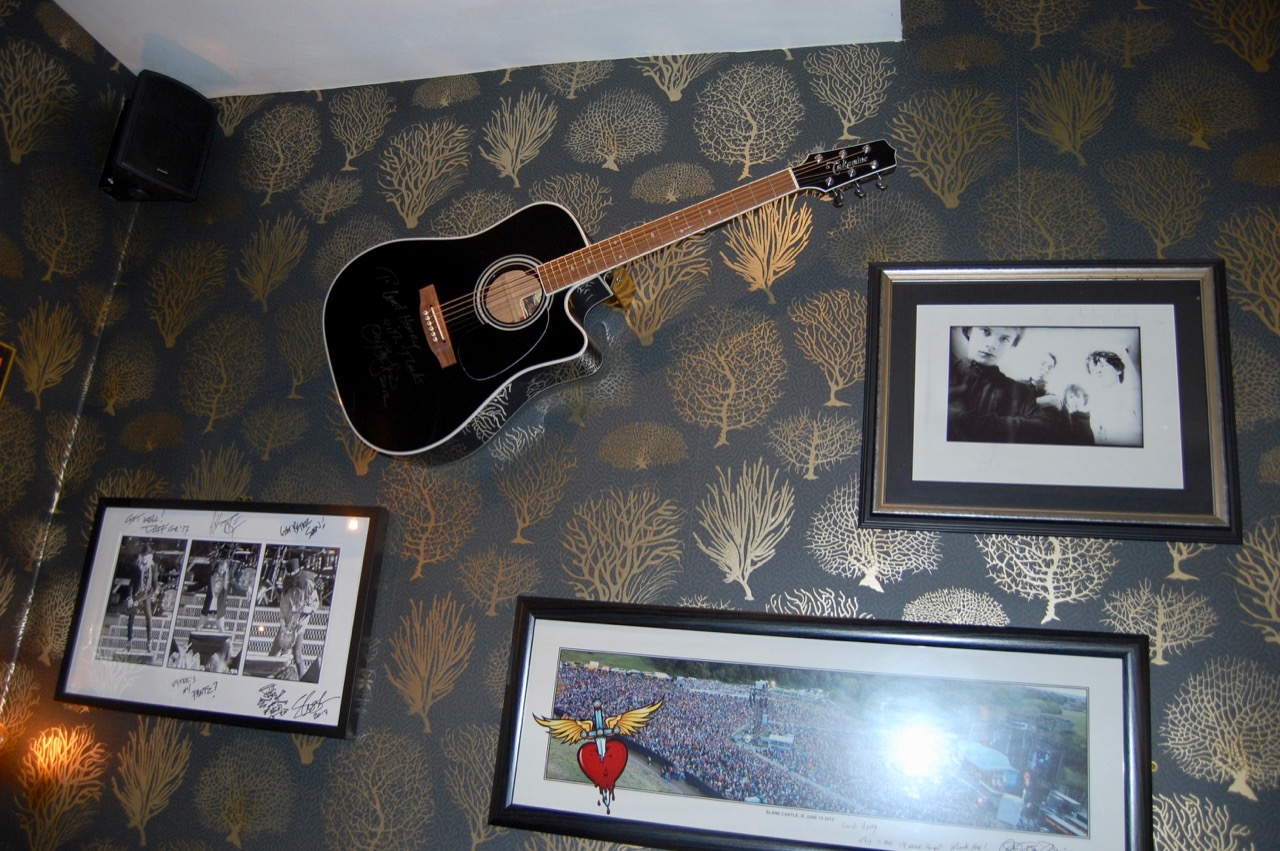
Album covers of musical performers at the Castle, in the bar: Van Morrison, Santana, Bruce Springstein, Neil Young, the Rolling Stones, Chris Rea, Bob Dylan, U2 and Bon Jovi.
DSC_0515
Memorabilia from music events: I think the guitar was signed by Phil Lynott (it was signed, anyway).
DSC_0517
Slane Castle.
DSC_0518
The music theme of Browne’s Bar is reflected in the gramophone horn lampshade. Photograph © Jennifer Winder-Baggot, www.irishhistorichouses.com
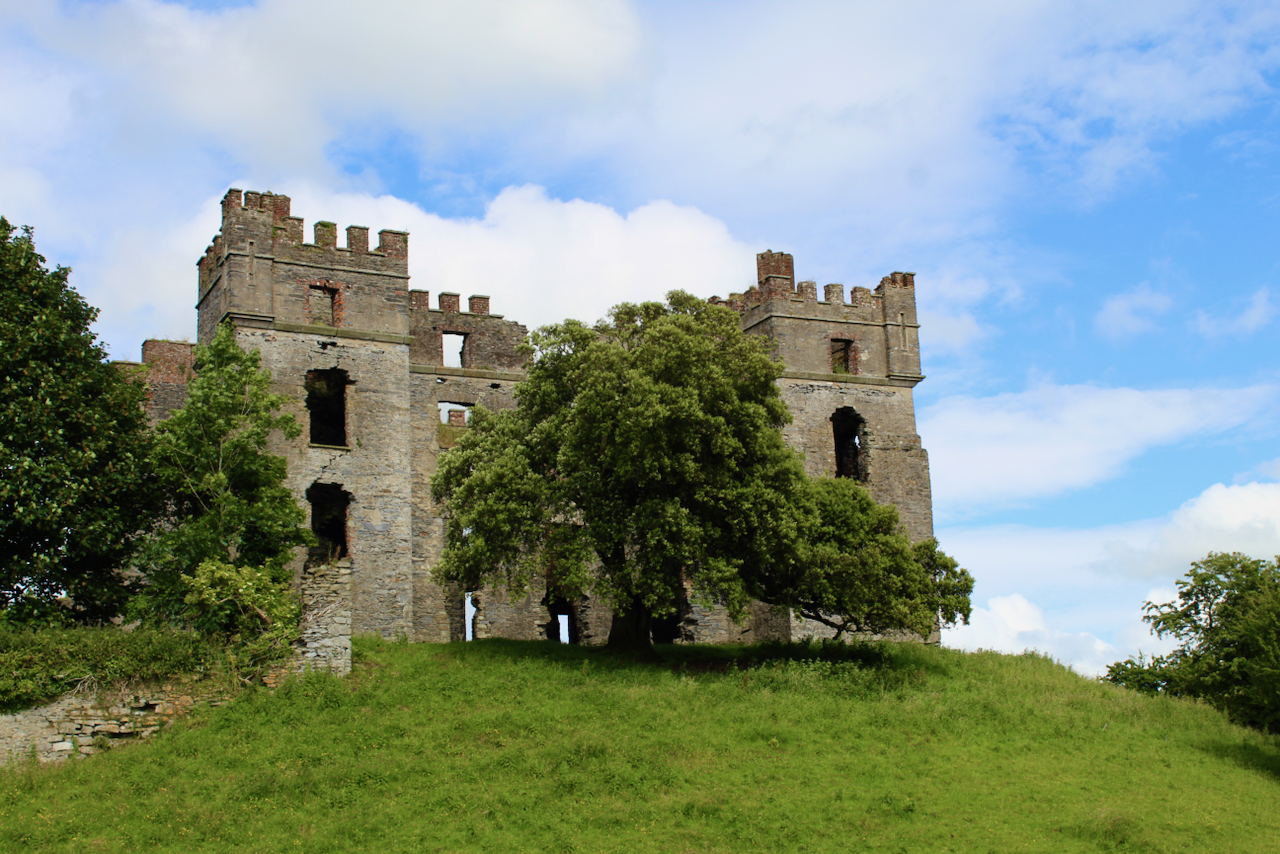
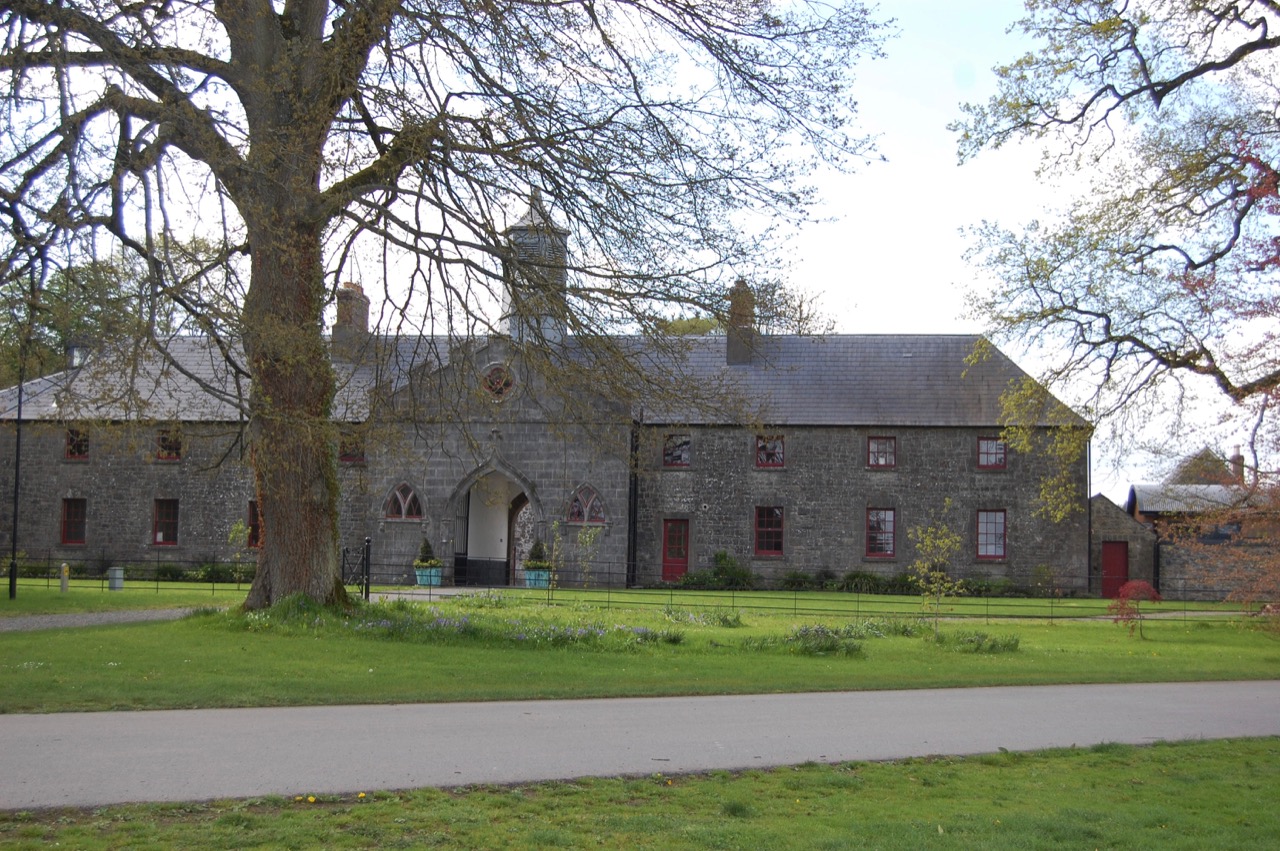
There is an adjoining distillery in what used to be the stables, and a tour of that can be purchased in combination if desired. Lord Charles’s mother bred horses before the stables were converted. The stables were designed by Capability Brown.

DSC_0543
The stables, designed by Capability Brown, now a whiskey distillery. Photograph © Jennifer Winder-Baggot, www.irishhistorichouses.com
According to the Irish Aesthete:

Henry Conyngham, grandson of General Henry Conyngham who purchased the property, around 1770 invited Capability Brown around 1770 to produce a design both for the landscaping of the parkland at Slane, and also for a new stable block. In the collection of the Irish Architectural Archive in Dublin a drawing survives of Brown’s proposal for the latter. It is not unlike the finished building, but more elaborate than what we see today.” [9]

DSC_0527
I noticed this on the wall on the lower level outside the Castle – I don’t know its origin or age. Photograph © Jennifer Winder-Baggot, www.irishhistorichouses.com
I found a blog by the Irish Aesthete on a portrait now in Slane, of Lady Elizabeth wife of the first Marqess’s daughter, Lady Maria Conyngham. Reportedly Lady Elizabeth looked very like her daughter – which one would not guess from the unflattering cartoons of her! [10]

Donation

Help me to fund my creation and update of this website. It is created purely out of love for the subject and I receive no payment so any donation is appreciated! For this entry I paid for petrol and entrance fee for myself and Stephen.

€15.00

[1] https://www.slanecastle.ie/tours/castle-tours/

[2] https://www.buildingsofireland.ie/buildings-search/building/40847025/the-hall-hall-demesne-mountcharles-co-donegal

[3] http://lordbelmontinnorthernireland.blogspot.com/2017/11/slane-castle.html

[4] https://www.culturenorthernireland.org/article/1323/the-flemings-barons-of-slane

[5] http://slanehistoryandarchaeologysociety.com/index.php/famous-people/13-the-flemings-and-the-conynghams

[6] https://en.wikipedia.org/wiki/Elizabeth_Conyngham,_Marchioness_Conyngham

“She probably became his [George IV’s] lover in 1819, when he was Prince Regent, but finally supplanted her predecessor, Isabella Seymour-Conway, Marchioness of Hertford, after he became king in 1820. He became besotted with her, constantly “kissing her hand with a look of most devoted submission.” While his wife Caroline of Brunswick was on trial in 1820 as part of efforts to divorce her, the king could not be seen with Lady Conyngham and was consequently “bored and lonely.” During his coronation, George was constantly seen “nodding and winking” at her.
“Lady Conyngham’s liaison with the king benefited her family. Her husband was raised to the rank of a marquess in the Peerage of the United Kingdom and sworn to the Privy Council, in the coronation honours of 1821. He was also given several other offices, including Lord Steward of the Household and the lieutenancy of Windsor Castle. Her second son was made Master of the Robes and First Groom of the Chamber.”

[7] https://theirishaesthete.com/2015/10/12/when-royalty-comes-to-call/

[8] https://theirishaesthete.com/2015/10/24/vaulting-ambition/

[9] https://theirishaesthete.com/2014/10/27/after-the-horses-have-bolted/

[10] https://theirishaesthete.com/2015/03/21/ireland-crossroads-of-art-and-design-vi/

Text © Jennifer Winder-Baggot, www.irishhistorichouses.com
Irish Historic Homes

Huntington Castle, County Carlow Y21 K237 – section 482

In the past, in August 2016, I visited Huntington Castle in Clonegal, County Carlow.
www.huntingtoncastle.com
Open dates in 2026, but check website as sometimes closed for special events:

Jan 31, Feb 1, 7-8, 14-15, 21-22, 28, Mar 1, 7-8, 14-15, 21-22, 28-31, Apr 1-6, 11-12, 18-19, 25-26, May 1-31, June 1-30, July 1-31, Aug 1-31, Sept 1-30, Oct 3-4, 10-11, 17-18, 24-31, Nov 1, 7-8, 14-15, 21-22, 28-29, Dec 5-6, 12-13, 19-20, 11am-5pm

Fee: house and garden, adult €13.95, garden only €6.95, OAP/student, house and garden €12.50, garden only €6, child, house and garden €6.50, garden €3.50, group and family discounts available

2026 Diary of Irish Historic Houses (section 482 properties)

To purchase an A5 size 2026 Diary of Historic Houses (opening times and days are not listed so the calendar is for use for recording appointments and not as a reference for opening times) send your postal address to jennifer.baggot@gmail.com along with €20 via this payment button. The calendar of 84 pages includes space for writing your appointments as well as photographs of the historic houses. The price includes postage within Ireland. Postage to U.S. is a further €10 for the A5 size calendar, so I would appreciate a donation toward the postage – you can click on the donation link.

€20.00

Donation

Help me to fund my creation and update of this website. It is created purely out of love for the subject and I receive no payment so any donation is appreciated!

€15.00

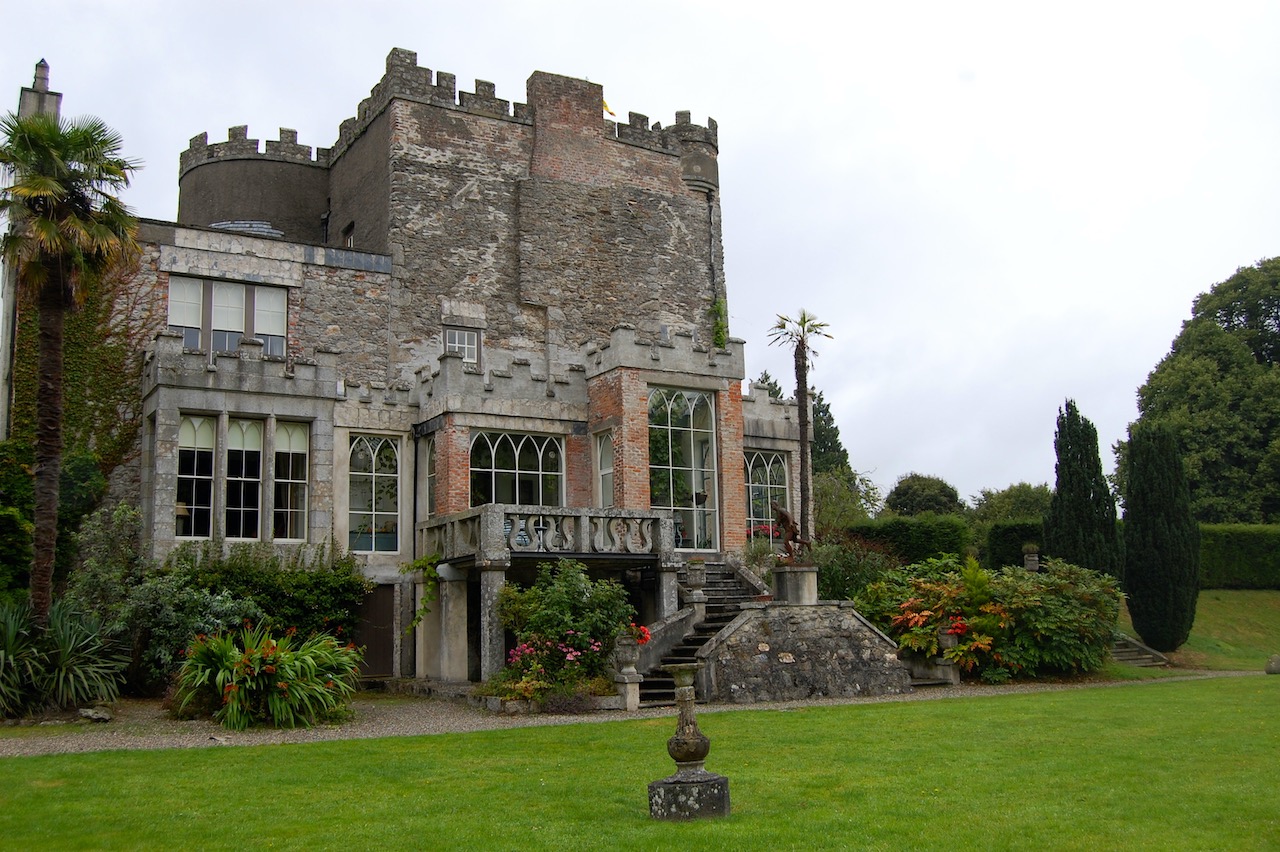
Huntington Castle, County Carlow, 2016. Photograph © Jennifer Winder-Baggot, www.irishhistorichouses.com
It’s magical! And note that you can stay at this castle – see their website! [1]

Huntington Castle stands in the valley of the River Derry, a tributary of the River Slaney, on the borders of Counties Carlow and Wexford, near the village of Clonegal. Built in 1625, it is the ancient seat of the Esmonde family, and is presently lived in by the Durdin-Robertsons. It passed into the Durdin family from the Esmonde family by marriage in the nineteenth century, so actually still belongs to the original family.

It was built as a garrison on the strategically important Dublin-Wexford route to protect a pass in the Blackstairs Mountains, on the site of a 14th century stronghold and abbey. It was also a coach stop on the Dublin travel route to Wexford. There was a brewery and a distillery in the area at the time. After fifty years, the soldiers moved out and the family began to convert it into a family home. [2]

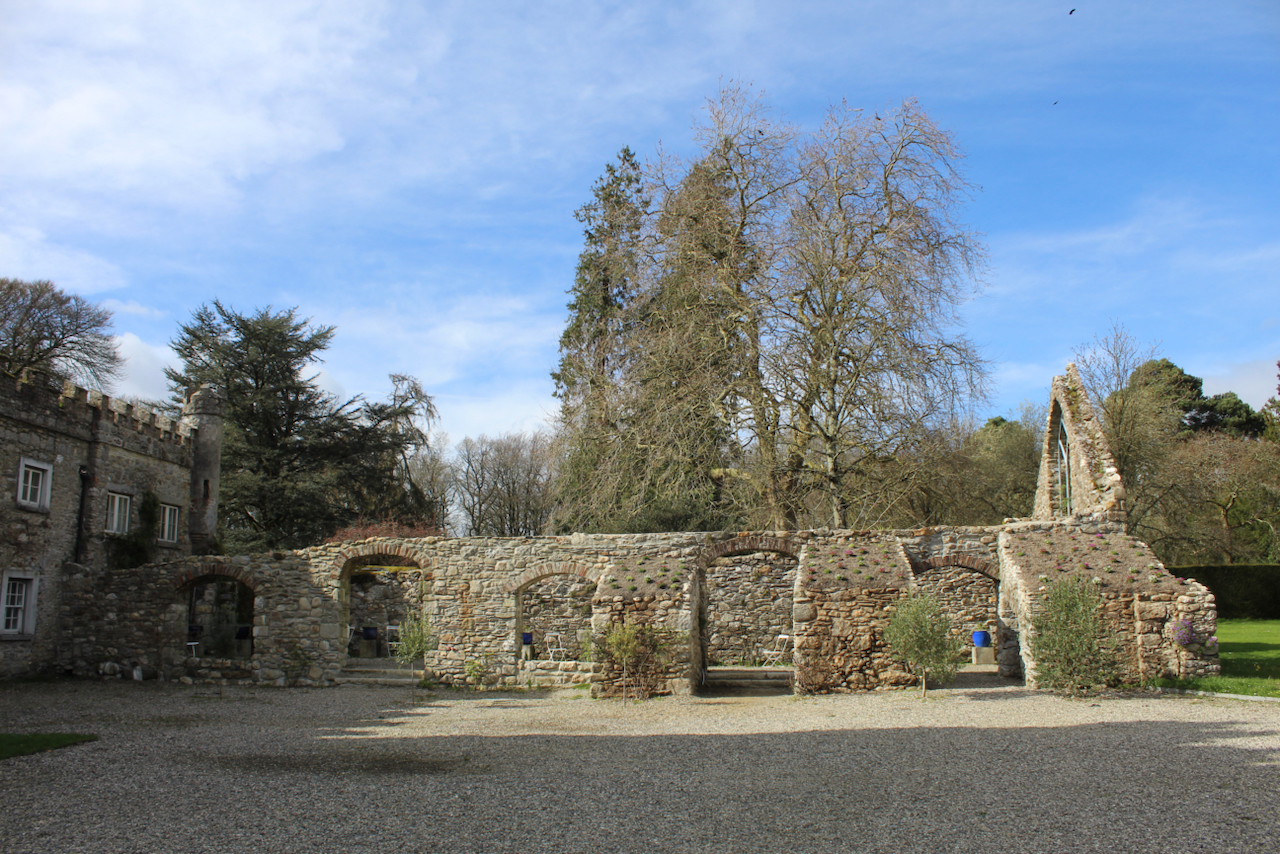
The fourteenth century abbey at Huntington Castle. Photograph © Jennifer Winder-Baggot, www.irishhistorichouses.com
The Abbey, 2023. Photograph © Jennifer Winder-Baggot, www.irishhistorichouses.com

A History of the house and its residents

The castle website tells us that the Esmondes (note that I have found the name spelled as both ‘Esmond’ and ‘Edmonde’) moved to Ireland in 1192 and were involved in building other castles such as Duncannon Fort in Wexford and Johnstown Castle in Wexford (see my entry https://irishhistorichouses.com/2023/09/30/a-heritage-trust-property-johnstown-castle-county-wexford/).

There is a chapter on the Esmonds of Ballynastragh in The Wexford Gentry by Art Kavanagh and Rory Murphy. They tell us that it is believed that Geoffrey de Estmont was one of the thirty knights who accompanied Robert FitzStephen to Ireland in 1169 when the latter led the advance force that landed at Bannow that year.

Sir Geoffrey built a motte and baily at Lymbrick in the Barony of Forth in Wexford, and his son Sir Maurice built a castle on the same site. After Maurice’s death in 1225 the castle was abandoned and his son John built a castle on a new site which was called Johnstown Castle. John died in 1261. [3]

After the Cromwellian Confiscations, since the Johnstown Esmondes were Catholic, their lands were granted to Colonel Overstreet, and later came into the possession of the Grogan family. The Ballynastragh/Lymbrick lands were also confiscated and the Ballytramont property was granted to the Duke of Ablemarle (General Monck). The Esmondes later regained Ballynastragh.

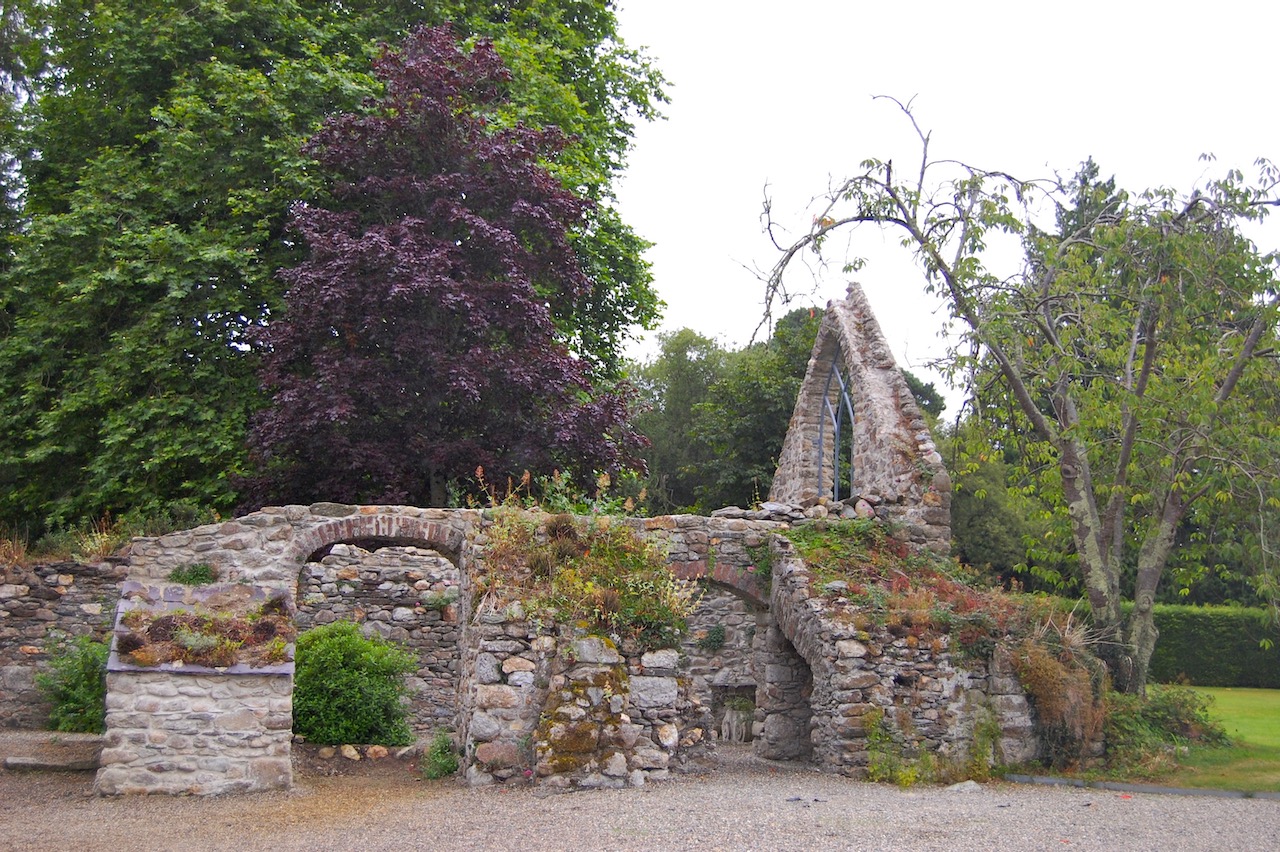
The 12-14th century abbey at Huntington Castle, 2016. Photograph © Jennifer Winder-Baggot, www.irishhistorichouses.com
Inside the Abbey, on our visit in 2023. Photograph © Jennifer Winder-Baggot, www.irishhistorichouses.com

A descendant, Laurence Esmonde (about 1570-1645) converted to Anglicanism and served in the armies of British Queen Elizabeth I and then James I.

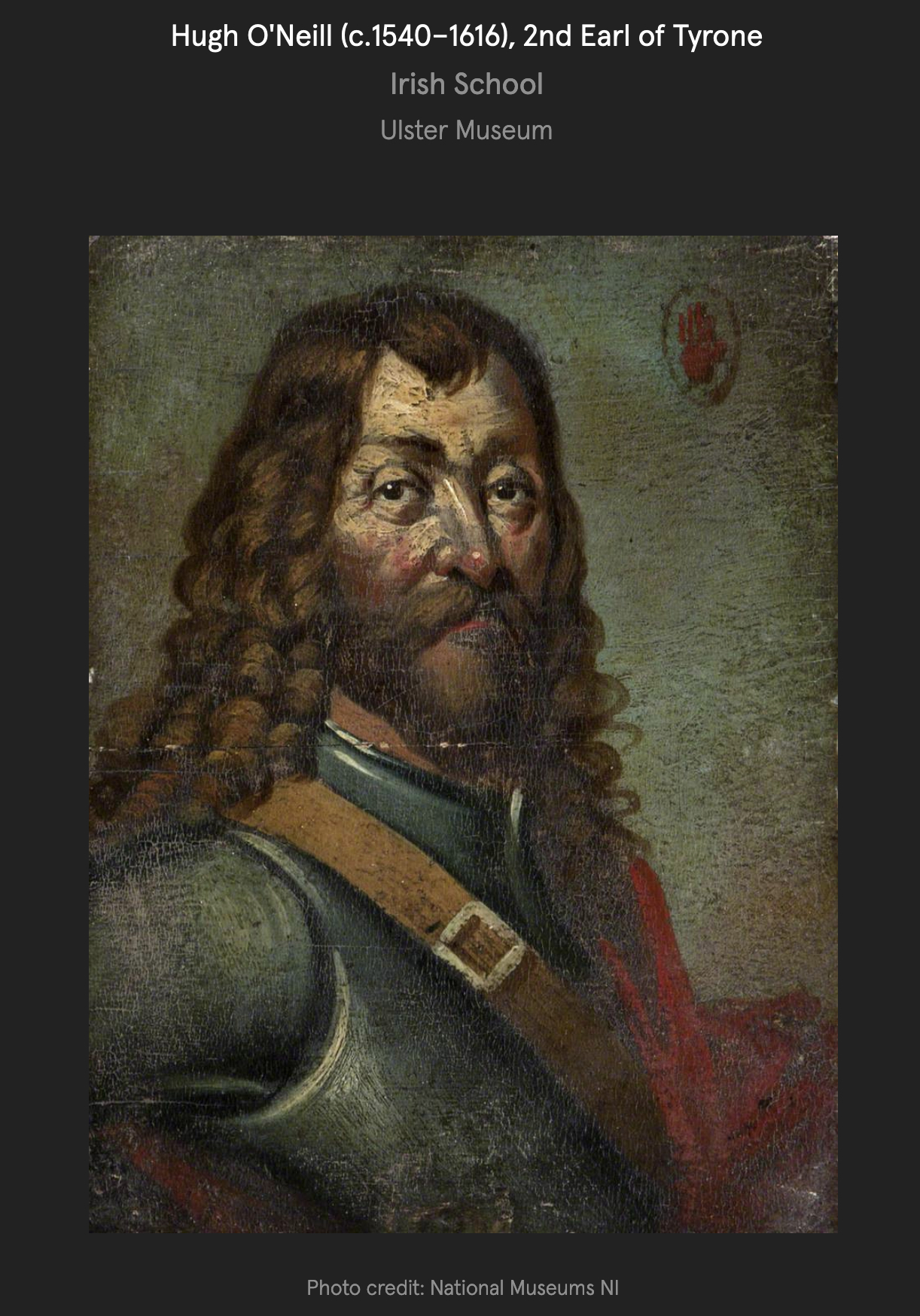
He fought in the Dutch Wars against Spain, and later, in 1599, he commanded 150 foot soldiers in the Nine Years War, the battle led by an Irish alliance led mainly by Hugh O’Neill 2nd Earl of Tyrone and Hugh Roe O’Donnell against the British rule in Ireland.

Hugh O’Neill (c. 1540-1616) 2nd Earl of Tyrone, courtesy of the Ulster Museum. He was one of the rebels in the Nine Years War, who fought against Laurence Esmonde (b. about 1570, d. 1645).

In 1602 Lawrence Esmonde built a castle and a church at Luimneach near the modern village of Killinerin and near Ballynastragh, which he named Lymbrick after the original Norman motte and bailey in the Barony of Forth. [see 3]

View of the castle from the Abbey, 2023. Photograph © Jennifer Winder-Baggot, www.irishhistorichouses.com
Abbey ruins at Huntington Castle. Photograph © Jennifer Winder-Baggot, www.irishhistorichouses.com

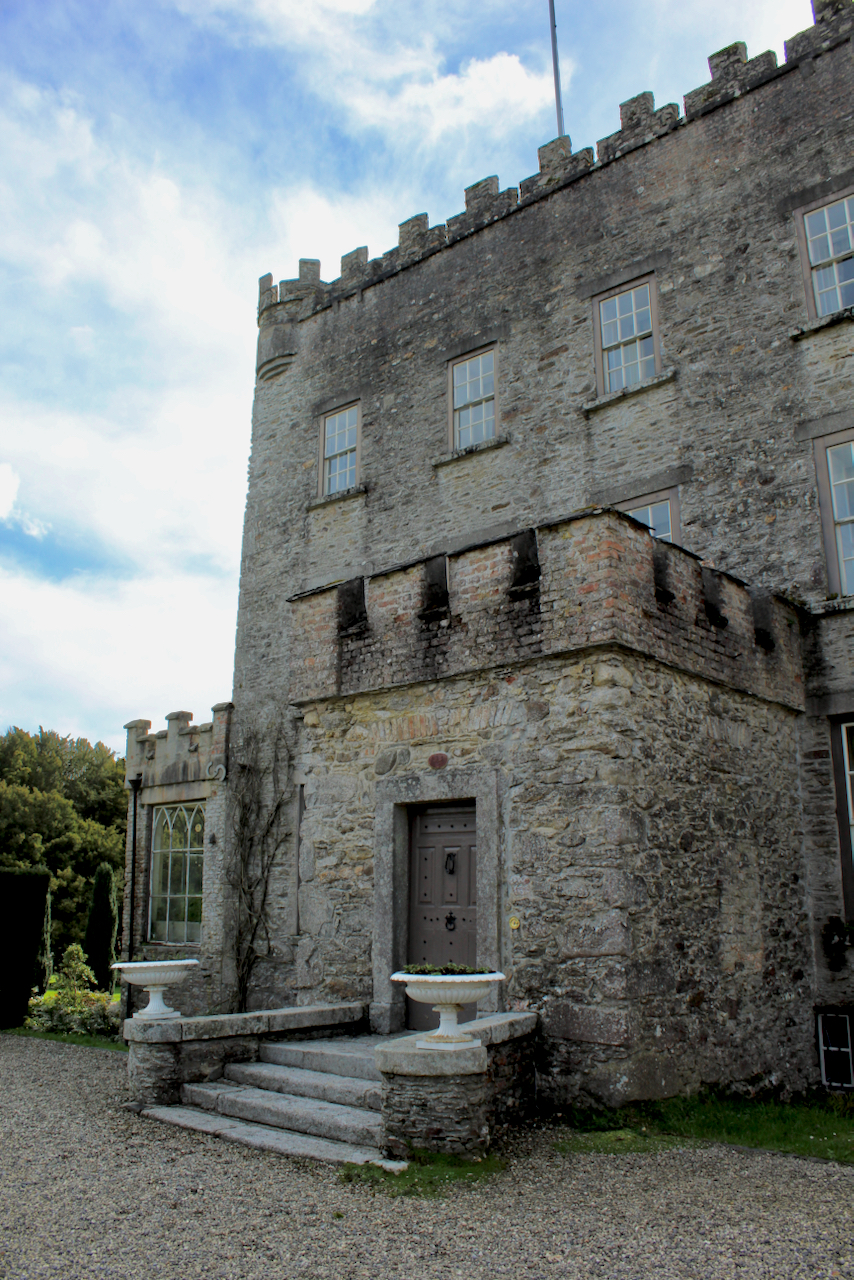
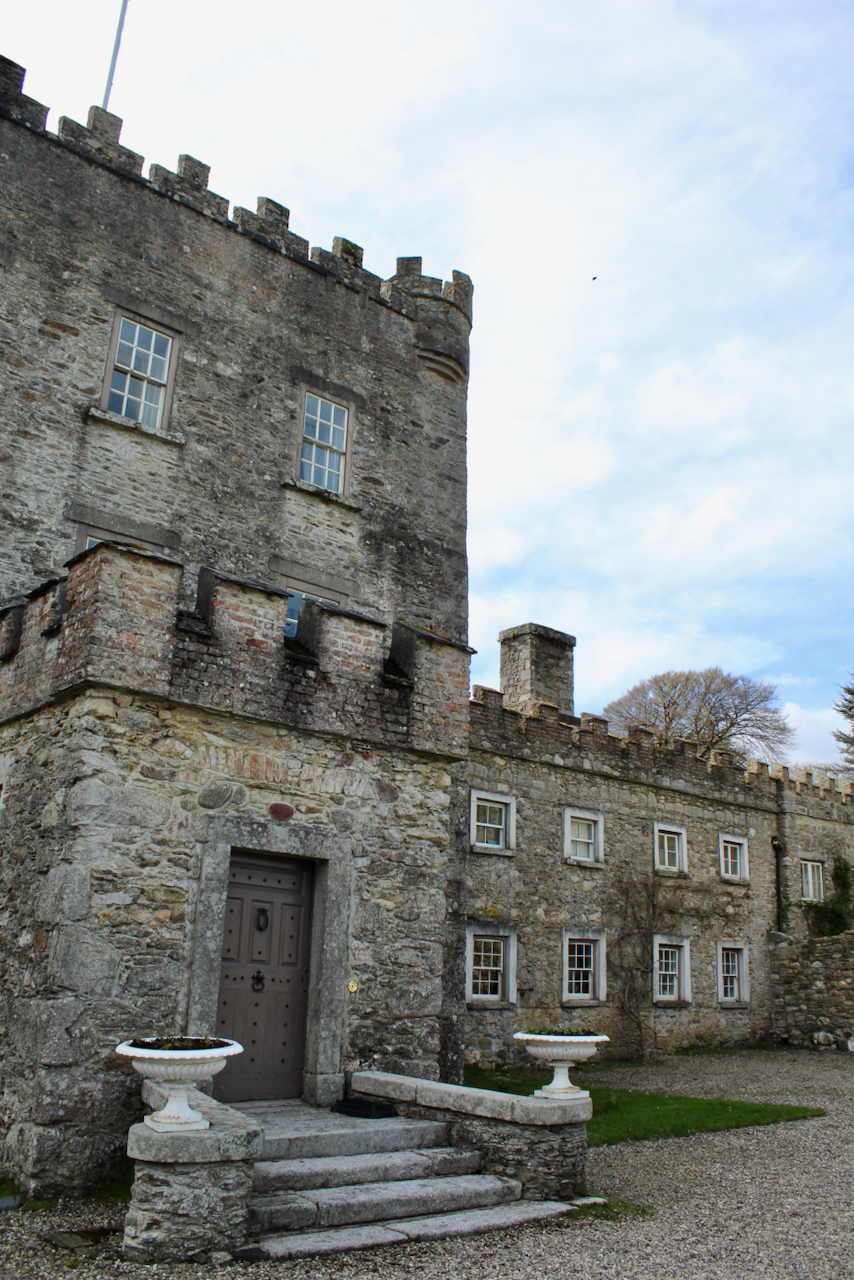
He governed the fort of Duncannon from 1606-1646. In reward for his services, he was raised to the peerage in 1622 as Baron of Lymbrick in County Wexford and it seems that a few years after receiving this honour he built the core of the present Huntington Castle on the site of an earlier military keep. He built a three-storey fortified tower house, which forms the front facing down the avenue, according to Mark Bence-Jones in A Guide to Irish Country Houses. [4]

1622 core of Huntington Castle. Photograph © Jennifer Winder-Baggot, www.irishhistorichouses.com
Huntington Castle, 2023. Photograph © Jennifer Winder-Baggot, www.irishhistorichouses.com
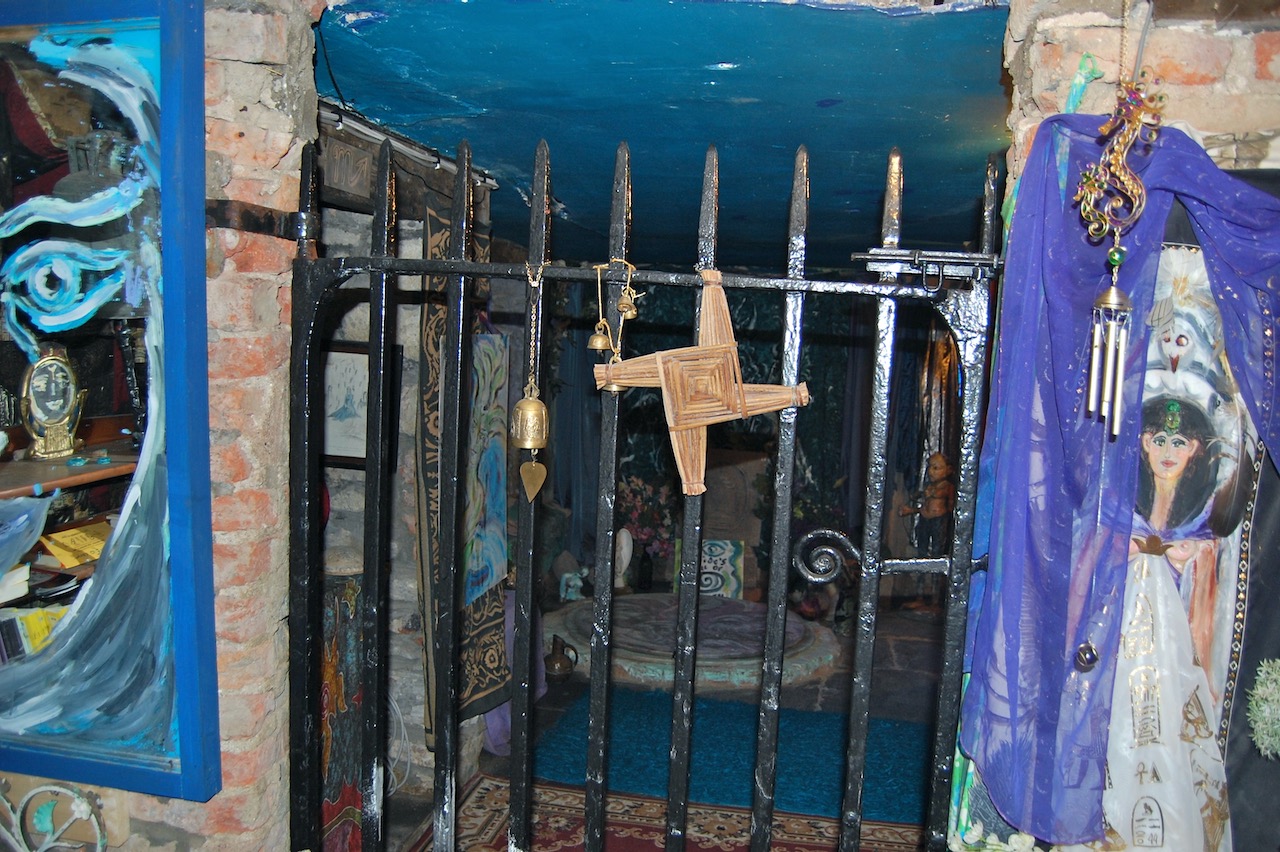
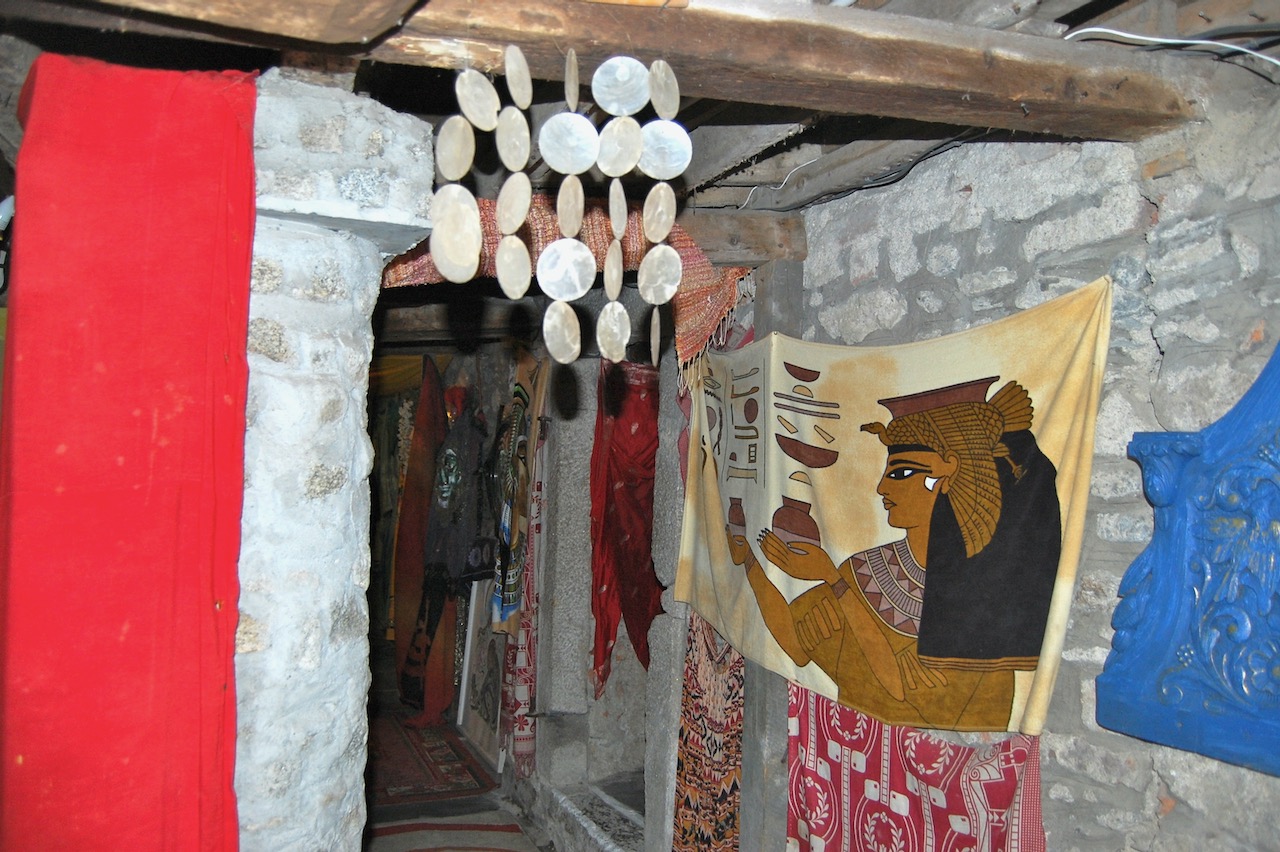
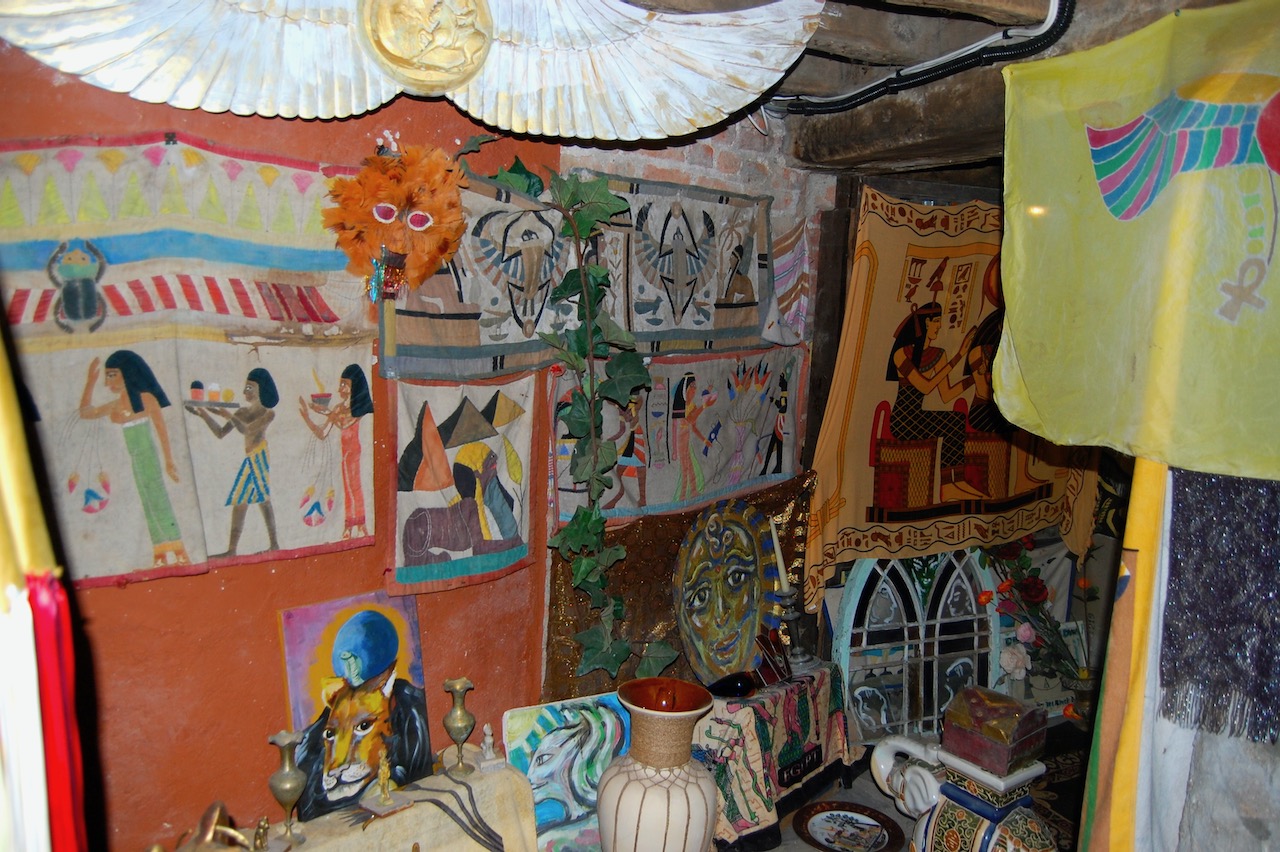
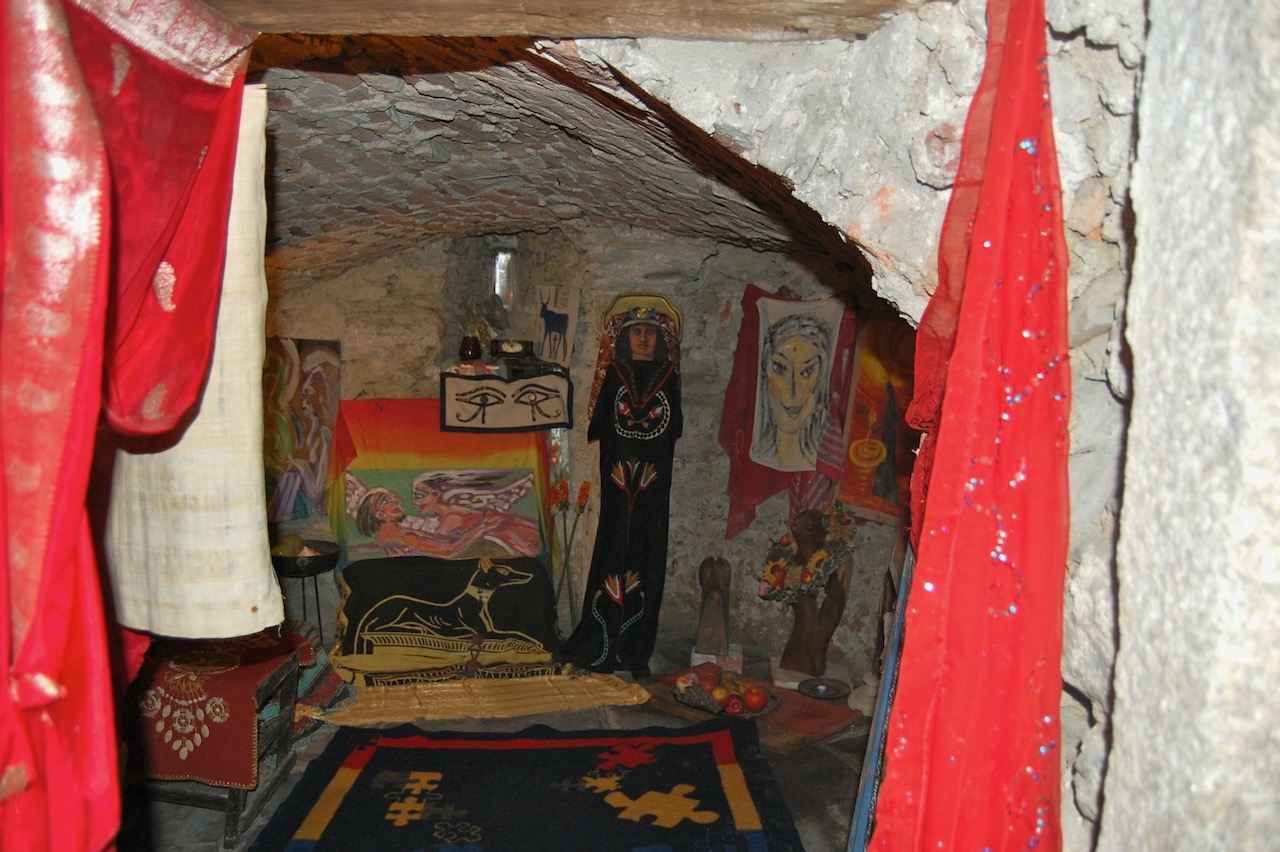
Note the Egyptian style decorative motif over the entrance door – it makes more sense once one discovers what is inside the basement of the castle. Photograph © Jennifer Winder-Baggot, www.irishhistorichouses.com

This original tower-house is made of rough-hewn granite. In her discussion of marriage in Making Ireland English, Jane Ohlmeyer writes that for the Irish, legitimacy of children didn’t determine inheritance, and so attitudes toward marriage, including cohabitation and desertion, were very different than in England. She writes that the first Baron Esmonde behaved in a way reminiscent of medieval Gaelic practices when he repudiated his first wife and remarried without a formal divorce. Laurence met Ailish, the sister of Morrough O’Flaherty (note that Turtle Bunbury tells us that she was a granddaughter of the pirate queen Grace O’Malley!) on one of his expeditions to Ulster, and married her. However, after the birth of their son, Thomas, she returned to her family, fearing that her son would be raised as a Protestant. [5]

Esmonde went on to marry Elizabeth Butler, a granddaughter of the ninth earl of Ormond (daughter of Walter Butler, and she was already twice widowed). He had no children by his second marriage and despite acknowledging Thomas to be his son, he did not admit that his first marriage was lawful and consequently had no official heir and his title Baron of Lymbrick became extinct after his death.

Baron Esmonde died after a siege of Duncannon fort by General Thomas Preston, 1st Viscount Tara, of the Confederates, who considered Esmonde a defender of the Parliamentarians (i.e. Oliver Cromwell’s men, the “roundheads”). Although his son did not inherit his title, he did inherit his property. [6]

After Lawrence’s death the Huntington estate and castle was occupied as a military station by Dudley Colclough from 1649-1674. [see 3]

Lawrence’s son Thomas Esmonde started his military career as an officer in the continental army of King Charles I. For his service at the siege of La Rochelle he was made a baronet of Ireland while his father still lived, and became 1st Baronet Esmonde of Ballynastragh, County Wexford, in 1629. He did not return to Ireland, however, until 1646 after his father’s death. He joined the rebels, the Confederate forces, who were fighting against the British forts which his father held. Taking after his mother, he was a resolute Catholic.

He married well, into other prominent Catholic families: first to a daughter of the Lord of Decies, Ellice Fitzgerald. She was the widow of another Catholic, Thomas Butler, 2nd Baron Caher, and with him had one daughter, Margaret, who had married Edmond Butler, 3rd/13th Baron Dunboyne a couple of years before her mother remarried in around 1629. Thomas and Ellice had two sons. Ellice died in 1644/45 and Thomas married secondly Joanne, a daughter of Walter Butler 11th Earl of Ormond. She too had been married before, to George Bagenal who built Dunleckney Manor in County Carlow. Her sons by Bagenal were also prominent Confederate Colonels. She was also the widow of Theobald Purcell of Loughmoe, County Tipperary. We came across the Purcells of Loughmoe on our visit to Ballysallagh in County Kilkenny (see my entry).

Thomas served as Member of Parliament for Enniscorthy, County Wexford from 1641 to 1642, during the reign of King James II.

His son Laurence succeeded as 2nd Baronet, and reoccupied Huntington Castle in 1682. [see 3]

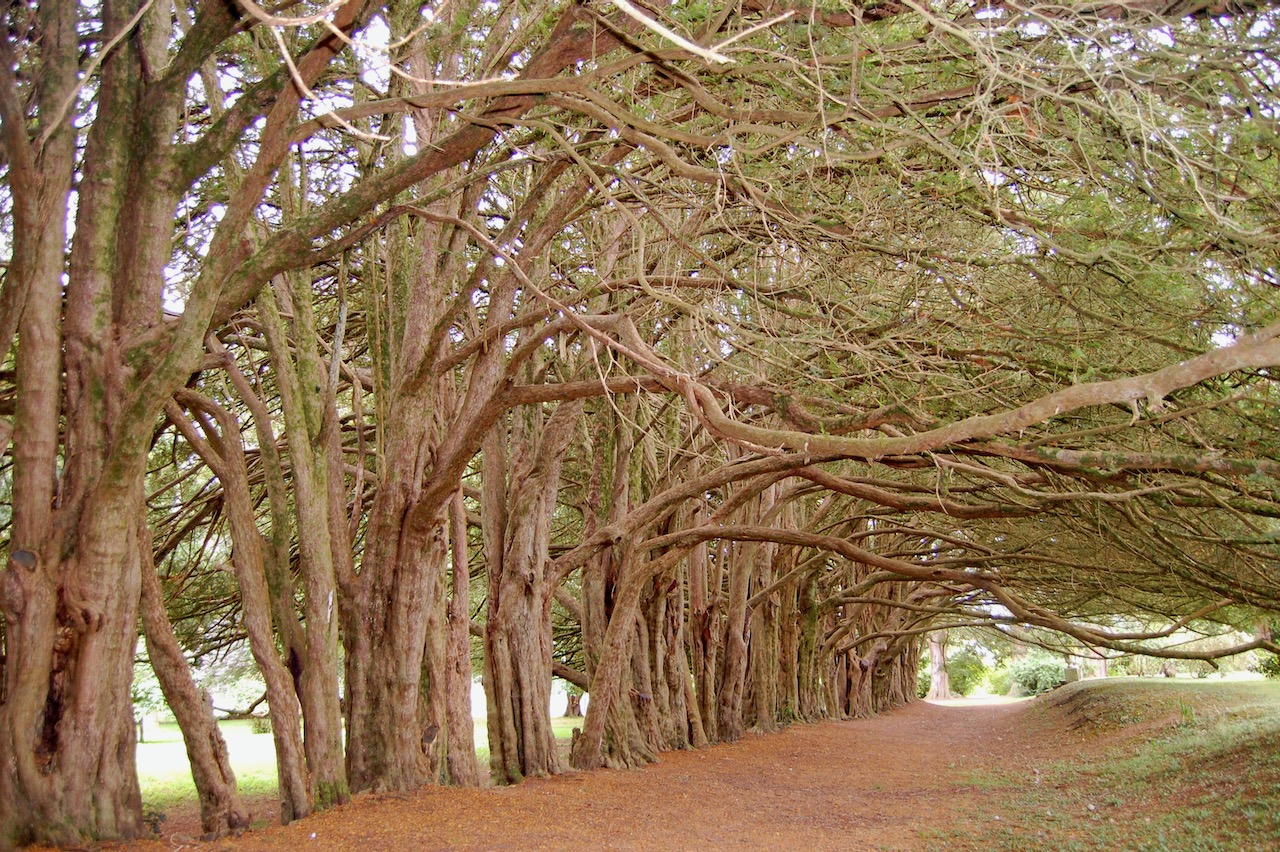
Laurence made additions to Huntington Castle around 1680, and named it “Huntington” after the Esmonde’s “ancestral pile” in Lincolnshire, England [7]. He is probably responsible for some of the formal garden planting. The Irish Aesthete Robert O’Byrne discusses this garden in another blog entry [8]. He tells us that the yew walk, which stretches 130 yards, dates from the time of the Franciscan friary in the Middle Ages!

Huntington Castle, photograph by Daniel O’Connor, 2021 for Tourism Ireland, Ireland’s Content Pool. [9]
Huntington Castle, 2023. Photograph © Jennifer Winder-Baggot, www.irishhistorichouses.com
The over 500 year old yew walk. Photograph © Jennifer Winder-Baggot, www.irishhistorichouses.com
The formal gardens, 2023. Photograph © Jennifer Winder-Baggot, www.irishhistorichouses.com
The grounds of Huntington Castle. Photograph © Jennifer Winder-Baggot, www.irishhistorichouses.com

Laurence 2nd Baronet married Lucia Butler, daughter of another Colonel who fought in the 1641 uprising, Richard Butler (d. 1701) of Garryricken. Their daughter Frances married Morgan Kavanagh, “The MacMorrough” of the powerful Irish Kavanagh family.

The 3rd Baronet, another Laurence, served for a while in the French army.

A wing was constructed by yet another Sir Laurence, 4th Baronet, in 1720. The castle, as you can see, is very higgeldy piggedly, reflecting the history of its additions. The 4th Baronet had no heir so his brother John became the 5th Baronet. He had a daughter, Helen, who married Richard Durdin of Shanagarry, County Cork. The went out to the United States and founded Huntington, Pennsylvania. He had no sons, and died before his brother, Walter, who became the 6th Baronet. Walter married Joan Butler, daughter of Theobald, 4th Baron Caher. Walter and Joan also had no sons, only daughters.

Huntington Castle. Photograph © Jennifer Winder-Baggot, www.irishhistorichouses.com
In The Wexford Gentry we are told that the widow of the 6th Baronet was left in “straitened circumstances” after her husband Walter died in 1767, and sold the estate of Huntington to Sir James Leslie (1704-1770), the Church of Ireland Bishop of Limerick, in 1751. He was from the Tarbert House branch of the Leslie family in County Kerry. Huntington remained in his family until 1825 when it was leased to Alexander Durdin (1821-1892) and later bought by his descendants. [see 3, p. 106].

The line of inheritance looks very convoluted. I have consulted Burke’s Peerage. John Durdin migrated from England to Cork in around 1639. His descendant Alexander Durdin, born in 1712, of Shanagarry, County Cork, married four times! His second wife, Mary Duncan of Kilmoon House, County Meath, died shortly after giving birth to her son Richard, born in 1747. Alexander then married Anne née Vaux, widow of the grandson of William Penn the founder of Pennsylvania. Finally, he married Barbara St. Leger, with whom he had seven more sons and several daughters.

It was Alexander’s son Richard who married Helen Esmonde, daughter of the 4th Baronet, according to Burke’s Peerage. Richard then married Frances Esmonde, daughter of the 7th Baronet.

The 6th Baronet had only daughter so the title went to a cousin. This cousin was a descendant of Thomas Esmonde 1st Baronet of Ballynastragh, Thomas’s son James. James had a son Laurence (1670-1760), and it was his son, James (1701-1767) who became the 7th Baronet of Ballynastragh. It was his daughter Frances who married Richard Durdin of Huntington Pennsylvania, who had been previously married to Helen Esmonde.

Despite his two marriages, Richard had no son. His brother William Leader Durdin (1778-1849) married Mary Anne Drury of Ballinderry, County Wicklow and it was their son Alexander (1821-1892) who either inherited Huntington, or at least, according to The Wexford Gentry, leased and later purchased Huntington, the home of his ancestors.

Alexander also had only daughters. In 1880, his daughter Helen married Herbert Robertson, Baron Strathloch (a Scots feudal barony) and MP for a London borough. She inherited Huntington Castle when her father died. Together they made a number of late Victorian additions at the rear of the castle while their professional architect son, Manning Durdin-Robertson, an early devotee of concrete, carried out yet further alterations in the 1920s. Manning also created W. B. Yeats’s grave, and social housing in Dublin.

Huntington Castle, Clonegal, County Carlow, the view when one enters the courtyard from the avenue. Photograph © Jennifer Winder-Baggot, www.irishhistorichouses.com

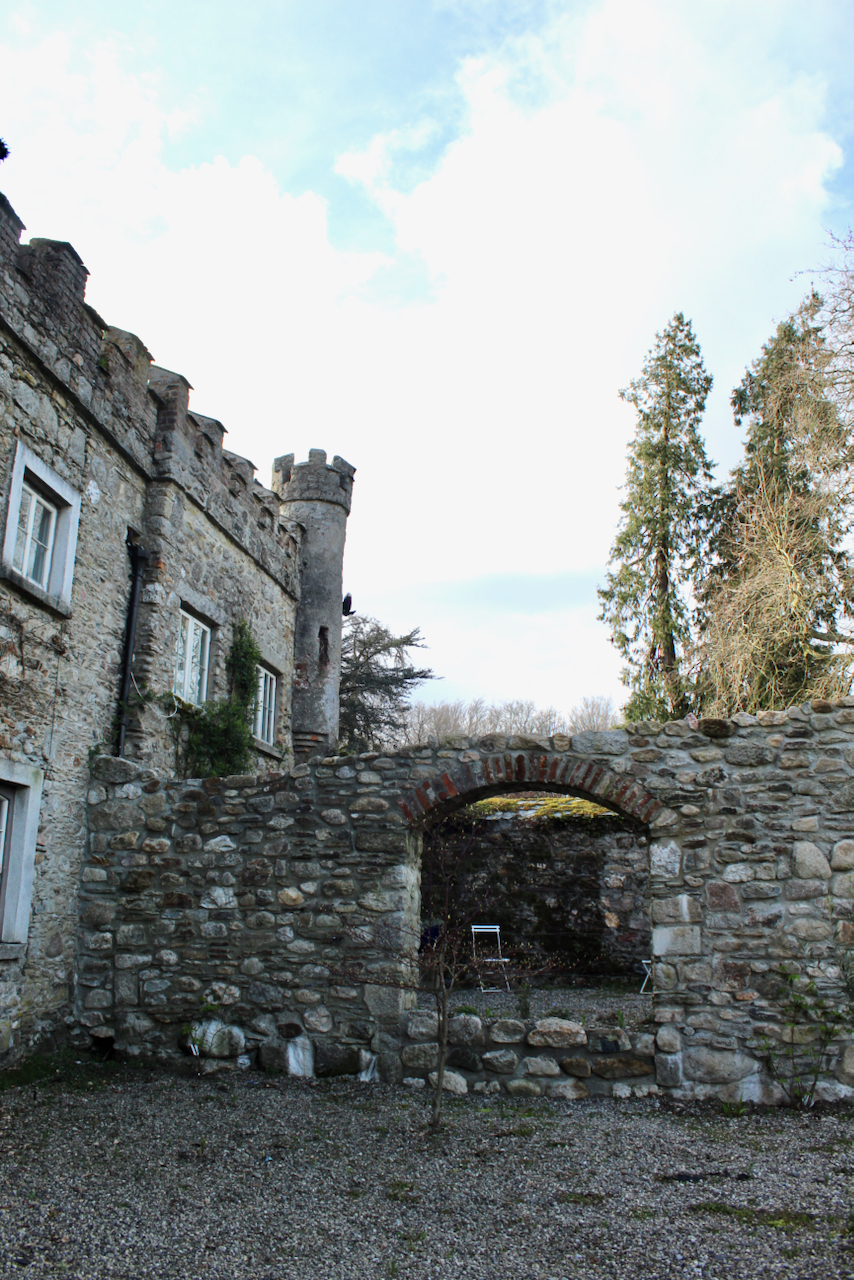
There is an irregular two storey range with castellated battlements and a curved bow and battlemented gable in front of the earlier building, which rises above them. The front battlemented range was added in the mid 1890s.

The older part of the castle includes a full height semicircular tower. Inside, when one enters through the portico facing onto the stable yard, one can see the outside of this full height semicircular tower, curving into the room to one’s right hand side, where there is even a little stone window set in the curved wall, and the round tower bulges into the stairway hall, clad with timber and covered in armour.

Huntington Castle, 2023, facing into stable yard. Photograph © Jennifer Winder-Baggot, www.irishhistorichouses.com
Detail of Huntington Castle, 2023. Photograph © Jennifer Winder-Baggot, www.irishhistorichouses.com
The stable yard, 2023. Photograph © Jennifer Winder-Baggot, www.irishhistorichouses.com
Huntington Castle, 2023. Photograph © Jennifer Winder-Baggot, www.irishhistorichouses.com

We entered the castle through a door in the battlemented porticon next to the double height bow facing onto the stableyard and courtyard. Inside the portico are statues which may have been from the Abbey – I forgot to ask our tour guide, as there was just so much to see and learn about.

Huntington Castle, 2023. Photograph © Jennifer Winder-Baggot, www.irishhistorichouses.com

We were not allowed to take photos inside, except for in the basement, but you can see some pictures on the official website [1] and also on the wonderful blog of the Irish Aesthete [10].

Gary waits for the tour, at the entrance. Photograph © Jennifer Winder-Baggot, www.irishhistorichouses.com
The entrance to the tour is through the door under the battlemented portico. Photograph © Jennifer Winder-Baggot, www.irishhistorichouses.com
Huntington Castle, 2023. Photograph © Jennifer Winder-Baggot, www.irishhistorichouses.com
Huntington Castle, 2016. Photograph © Jennifer Winder-Baggot, www.irishhistorichouses.com
Huntington Castle, 2023. Photograph © Jennifer Winder-Baggot, www.irishhistorichouses.com

There were wonderful old treasures in the house including armour chest protections in the hallway along the stairs, which was one of the first things to catch my attention as we entered. Our guide let us hold it – it was terribly heavy, and so a soldier must have been weighed down by his armour – wearing chain mail underneath his shielding armour. The chest protection piece we held was made of cast iron! She showed us the “proof mark” on the inside. Cast iron could shatter, our guide told us, so a piece of armour would be tested, leaving a little hole, which proved that it would not shatter when worn and hit by a projectile or sword. This piece dates all the way back to Oliver Cromwell’s time!

To the right when one enters is a room full of animal heads and weapons. There is a huge bison head from India and a black buck, and a sawfish from the Caribbean. A gharial crocodile hanging on the wall was killed by Nora Parsons at the age of seventeen in India! There is also the shell of an armadillo. The room also has a lovely wooden chimneypiece and there is another in the hallway, which has a Tudor style stucco ceiling. We went up a narrow stairway lined as Bence-Jones describes “with wainscot or half-timbered studding.”

Manning Durdin-Robertson married Nora Kathleen Parsons, from Birr Castle. She wrote The Crowned Harp. Memories of the Last Years of the Crown in Ireland, an important memorial of the last years of English rule in Ireland [11]. I ordered a copy of the book from my local library! It’s a lovely book and an enjoyable rather “chatty” read. She writes a bit about her heritage, which you can see in my entry on another section 482 castle, Birr Castle. She tells us about life at the time, which seems to have been very sociable! She writes a great description of social rank:

The hierarchy of Irish social order was not defined, it did not need to be, it was deeply implicit. In England the nobility were fewer and markedly more important than over here and they were seated in the mansions considered appropriate….
The top social rows were then too well-known and accepted to be written down but, because a new generation may be interested and amused, I will have a shot at defining an order so unreal and preposterous as to be like theatricals in fancy dress. Although breeding was essential it still had to be buttressed by money.

Row A: peers who were Lord or Deputy Lieutenants, High Sheriffs and Knights of St. Patrick. If married adequately their entrenchment was secure and their sons joined the Guards, the 10th Hussars or the R.N. [Royal Navy, I assume]
Row B: Other peers with smaller seats, ditto baronets, solvent country gentry and young sons of Row A, (sons Green Jackets, Highland regiments, certain cavalry, gunners and R.N.).
Row A used them for marrying their younger children.
Row C: Less solvent country gentry, who could only allow their sons about £100 a year. These joined the Irish Regiments which were cheap; or transferred to the Indian army. They were recognised and respected by A and B and belonged to the Kildare Street Club.
Row D: Loyal professional people, gentlemen professional farmers, trade, large retail or small wholesale, they could often afford more expensive Regiments than Row C managed. Such rarely cohabited with Rows A and B but formed useful cannon fodder at Protestant Bazaars and could, if they were really liked, achieve Kildare Street.

Absurd and irritating as it may seem today, this social hierarchy dominated our acceptances.

I had the benefit of always meeting a social cross section by playing a good deal of match tennis…. The top Rows rarely joined clubs and their play suffered….There were perhaps a dozen (also very loyal) Roman Catholic families who qualified for the first two Rows; many more, equally loyal but less distinguished, moved freely with the last two.

Amongst these “Row A” Roman Catholics were the Kenmares, living in a long gracious house at Killarney. Like Bantry House, in an equally lovely situation.…”

There are some notable structures inside the building, as Robert O’Byrne notes. “The drawing room has 18th century classical plaster panelled walls beneath a 19th century Perpendicular-Gothic ceiling. Some passages on the ground floor retain their original oak panelling, a number of bedrooms above being panelled in painted pine. The dining room has an immense granite chimneypiece bearing the date 1625, while those in other rooms are clearly from a century later.” [10]

The dining room, the original hall of the castle, is hung with Bedouin tents, brought back from Tunisia in the 1870s by Herbert Robertson, Helen Durdin’s husband. The large stone fireplace has the date stone 1625, and a stained glass window traces out the Esmonde and Durdin genealogy. We know that the room is very old by the thickness of the walls. The room has an Elizabethan ceiling, and portraits of family members hang on the walls. You can see a photograph of the room on the Castle Tours page of the website. There is a portrait of Barbara St. Leger, from Doneraile in Cork, who married Alexander Durdin (1712-1807), the one who also married the two Esmonde daughters. It is said that Barbara wore a set of keys at her waist, and that sometimes ghostly jingling can be heard in the castle.

Next to the dining room is a ladies drawing room with white panelled walls and a stucco ceiling with Gothic drop decoration and compartments. I think it was in this room the guide told us that the panelling is made of plaster, created to look like wood panelling. You can see some photographs of these rooms on the castle’s facebook page. The ceiling may seem low for an elegant room but we must remember that it originally housed a barracks! This room also is part of the original structure – the doorway into the next room shows how thick the wall is – about the length of two arms.

Another drawing room is hung with tapestry, which would have kept the residents a bit warmer in winter. There are beautiful stuccoed ceilings, which you can see on the website, and a deep bay window with Gothic arches in the bars of the window.

The Tapestry Room, Huntington Castle, photograph courtesy of Huntington Castle website. The portrait over the fireplace is, I believe, Helen Durdin who married Herbert Robertson. I think this room was added to the castle in 1760.

Huntington was one of the first country houses in Ireland to have electricity, and in order to satisfy local interest a light was kept burning on the front lawn so that the curious could come up and inspect it.

The turbine house is at the end of this row of trees. Photograph © Jennifer Winder-Baggot, www.irishhistorichouses.com

I loved the light and plant filled conservatory area, with a childish drawing on one wall. The glass ceiling is draped in grape vines. The picture is of the estate, drawn by the four children of the house in 1928, Olivia Durdin-Robertson and her brother Derry and sister Barbara, children of Manning and Nora. I loved the pictures of the children themselves swimming in the river, wearing little swimming hats! The picture even has the telephone wires in it. The conservatory area is part of an addition on the back of the castle, added around 1860.

Huntington Castle, photograph courtesy of Huntington Castle website, with the vine that was taken in 1860 from Hampton Court in London.
Huntington Castle, 2023. Photograph © Jennifer Winder-Baggot, www.irishhistorichouses.com

The conservatory is in the brick and battlemented addition to one side of the castle. From the formal gardens to the side of the castle a different vantage shows more of the castle and one can see the original tower house, and the additions.

1960s addition to the castle. Photograph © Jennifer Winder-Baggot, www.irishhistorichouses.com
The Conservatory. Photograph © Jennifer Winder-Baggot, www.irishhistorichouses.com
The formal garden was probably laid out by Laurence Esmonde, 2nd Baronet of Ballynastragh, County Wexford, from the 1680s. Photograph © Jennifer Winder-Baggot, www.irishhistorichouses.com
This shows the addition which houses the light filled conservatory. Photograph © Jennifer Winder-Baggot, www.irishhistorichouses.com
Huntington Castle, 2023. Photograph © Jennifer Winder-Baggot, www.irishhistorichouses.com

The conservatory contains a vine that is a cutting taken in the 1860s of a great vine in Hampton Court.

Percy the Peacock had a seat on the balcony off the conservatory. Photograph © Jennifer Winder-Baggot, www.irishhistorichouses.com
Huntington Castle, 2023. Photograph © Jennifer Winder-Baggot, www.irishhistorichouses.com
A door under the conservatory which leads into the basement has another Egyptian plaque over the door. Photograph © Jennifer Winder-Baggot, www.irishhistorichouses.com

We were allowed to take photos in the basement, which used to house dungeons, and now holds the “Temple of Isis.” It also contains a well, which was the reason the castle was situated on this spot.

In the 1970s two of the four children of Manning Durdin-Robertson, the writer and mystic Olivia Durdin-Robertson, who was a friend of W.B. Yeats and A.E. Moore, and her brother Laurence (nicknamed Derry), and his wife Bobby, converted the undercroft into a temple to the Egyptian Goddess Isis, founding a new religion. In 1976 the temple became the foundation centre for the Fellowship of Isis [11]. I love the notion of a religion that celebrates the earthy aspects of womanhood, and I purchased a copy of Olivia Durdin-Robertson’s book in the coffee shop. The religion takes symbols from Egyptian religion, as you can see in my photos of this marvellous space:

Entrance to the basement. Photograph © Jennifer Winder-Baggot, www.irishhistorichouses.com
Temple of Isis in Huntington Castle. This room houses the well. Photograph © Jennifer Winder-Baggot, www.irishhistorichouses.com
Temple of Isis in Huntington Castle. Photograph © Jennifer Winder-Baggot, www.irishhistorichouses.com
You can see the old vaulted brick ceilings of the basement. Photograph © Jennifer Winder-Baggot, www.irishhistorichouses.com
Temple of Isis in Huntington Castle. Photograph © Jennifer Winder-Baggot, www.irishhistorichouses.com
The basement still has its wooden beam ceilings. Photograph © Jennifer Winder-Baggot, www.irishhistorichouses.com
Huntington Castle, Temple of Isis. Photograph © Jennifer Winder-Baggot, www.irishhistorichouses.com

Turtle Bunbury has a video of the Fellowship of Isis on his website [12]! You can get a flavour of what their rituals were like initially. Perhaps they are similar today. The religion celebrates the Divine Feminine.

Huntington Castle, 2023. Photograph © Jennifer Winder-Baggot, www.irishhistorichouses.com

After a tour of the castle, we then went to the back garden, coming out from the basement by a door under the stone balcony. According to its website:

The Gardens were mainly laid out in the 1680s by the Esmondes. They feature impressive formal plantings and layouts including the Italian style ‘Parterre’ or formal gardens, as well the French lime Avenue (planted in 1680). The world famous yew walk is a significant feature which is thought to date to over 500 years old and should not be missed.

Later plantings resulted in Huntington gaining a number of Champion trees including more than ten National Champions. The gardens also feature early water features such as stew ponds and an ornamental lake as well as plenty to see in the greenhouse and lots of unusual and exotic plants and shrubs.“”Later plantings resulted in Huntington gaining a number of Champion trees including more than ten National Champions. The gardens also feature early water features such as stew ponds and an ornamental lake as well as plenty to see in the greenhouse and lots of unusual and exotic plants and shrubs.

Huntington Castle, 2023. Photograph © Jennifer Winder-Baggot, www.irishhistorichouses.com
Huntington Castle, 2023.
One exits the stable yard through a small gate in the wall, to the garden, and the orchard and greenhouses are to the right. Photograph © Jennifer Winder-Baggot, www.irishhistorichouses.com
The orchard. Photograph © Jennifer Winder-Baggot, www.irishhistorichouses.com
Even the auxiliary buildings have stepped gables. Photograph © Jennifer Winder-Baggot, www.irishhistorichouses.com
The greenhouses were built by Manning Durdin-Robertson and are made of concrete. Photograph © Jennifer Winder-Baggot, www.irishhistorichouses.com
Huntington Castle, 2023. Photograph © Jennifer Winder-Baggot, www.irishhistorichouses.com
The Rose Walk and stream. Photograph © Jennifer Winder-Baggot, www.irishhistorichouses.com
The Bluebell woods. Photograph © Jennifer Winder-Baggot, www.irishhistorichouses.com
Our 2023 visit, Stephen and Gary. Photograph © Jennifer Winder-Baggot, www.irishhistorichouses.com
Huntington Castle, 2023. Photograph © Jennifer Winder-Baggot, www.irishhistorichouses.com

The “stew ponds” would have held fish that could be caught for dinner.

The Stew Ponds, 2023. Photograph © Jennifer Winder-Baggot, www.irishhistorichouses.com
The lake, 2023. Photograph © Jennifer Winder-Baggot, www.irishhistorichouses.com
DSC_1369
The lake, in 2016. Photograph © Jennifer Winder-Baggot, www.irishhistorichouses.com
The wilderness near the River. Photograph © Jennifer Winder-Baggot, www.irishhistorichouses.com
The river Derry, at the end of the property, and an old mill building beyond. Photograph © Jennifer Winder-Baggot, www.irishhistorichouses.com

After the garden, we needed a rest in the Cafe.

The tearoom has some built-in pigeon boxes. Photograph © Jennifer Winder-Baggot, www.irishhistorichouses.com
One of the auxiliary buildings in the stable yard has been renovated into a “Granny flat.” Photograph © Jennifer Winder-Baggot, www.irishhistorichouses.com
The garden side of the granny flat. Photograph © Jennifer Winder-Baggot, www.irishhistorichouses.com
The wall must be very old, with this enormously thick supporting buttress. Photograph © Jennifer Winder-Baggot, www.irishhistorichouses.com
Back of the “granny flat.” Photograph © Jennifer Winder-Baggot, www.irishhistorichouses.com
I loved the arrangement of plates on the walls of the cafe! Photograph © Jennifer Winder-Baggot, www.irishhistorichouses.com

I was also thrilled by the hens who roamed the yard and even tried to enter the cafe:

There is space next to the cafe that can be rented out for events:

A few plants were for sale in the yard. A shop off the cafe sells local made craft, pottery, and books. The stables and farmyard buildings are kept in good condition and buzzed with with the business of upkeep of the house and gardens.

Ancilliary building in the stable yard. Photograph © Jennifer Winder-Baggot, www.irishhistorichouses.com
The stable yard has a very handy mounting block, to get on to your horse. Photograph © Jennifer Winder-Baggot, www.irishhistorichouses.com
Last time we visited, I was amused by the hens wandering around the yard. This time, we were accompanied in our coffee and delicious coffee cake by an inquisitive peacock, and there were some more retiring peahens. Photograph © Jennifer Winder-Baggot, www.irishhistorichouses.com
The inquisitive – and acquisitive! – peacock. Photograph © Jennifer Winder-Baggot, www.irishhistorichouses.com
I’ll never tire of admiring the vibrant “art nouveau” colours of the peacock. Photograph © Jennifer Winder-Baggot, www.irishhistorichouses.com
The stables house art studios, I believe. Photograph © Jennifer Winder-Baggot, www.irishhistorichouses.com
what is this tall flower? Photograph © Jennifer Winder-Baggot, www.irishhistorichouses.com

[1] https://www.huntingtoncastle.com/

[2] The website http://www.ihh.ie/index.cfm/houses/house/name/Huntington%20Castle says it was built on the site of a 14th century stronghold and abbey, whereas the Irish Aesthete says it was built on the site of a 13th century Franciscan monastery.

[3] Kavanagh, Art and Rory Murphy, The Wexford Gentry. Published by Irish Family Names, Bunclody, Co Wexford, Ireland, 1994. 

[4]  Bence-Jones, Mark. A Guide to Irish Country Houses (originally published as Burke’s Guide to Country Houses volume 1 Ireland by Burke’s Peerage Ltd. 1978); Revised edition 1988 Constable and Company Ltd, London.

[5] p. 171, Ohlmeyer, Jane. Making Ireland English. The Irish Aristocracy in the Seventeenth Century. Yale University Press, New Haven and London, 2012. See also pages 43, 273, 444 and 451.

[6] Dunlop, Robert. ‘Edmonde, Laurence.’ Oxford Dictionary of National Biography, online edition volume 18, accessed February 2020. https://en.wikisource.org/wiki/Esmonde,_Laurence_(DNB00)

[7] http://www.turtlebunbury.com/history/history_houses/hist_hse_huntington.html

[8] https://theirishaesthete.com/2016/11/14/light-and-shade/

[9] https://www.irelandscontentpool.com/en

[10] https://theirishaesthete.com/2017/01/23/huntington/

[11] Robertson, Nora. The Crowned Harp. Memories of the Last Years of the Crown in Ireland. published by Allen Figgis & Co. Ltd., Dublin, 1960.

[12] http://www.turtlebunbury.com/history/history_houses/hist_hse_huntington.html

http://www.fellowshipofisis.com/

Irish Historic Homes

Text © Jennifer Winder-Baggot, www.irishhistorichouses.com

Donation

Help me to fund my creation and update of this website. It is created purely out of love for the subject and I receive no payment so any donation is appreciated!

€15.00