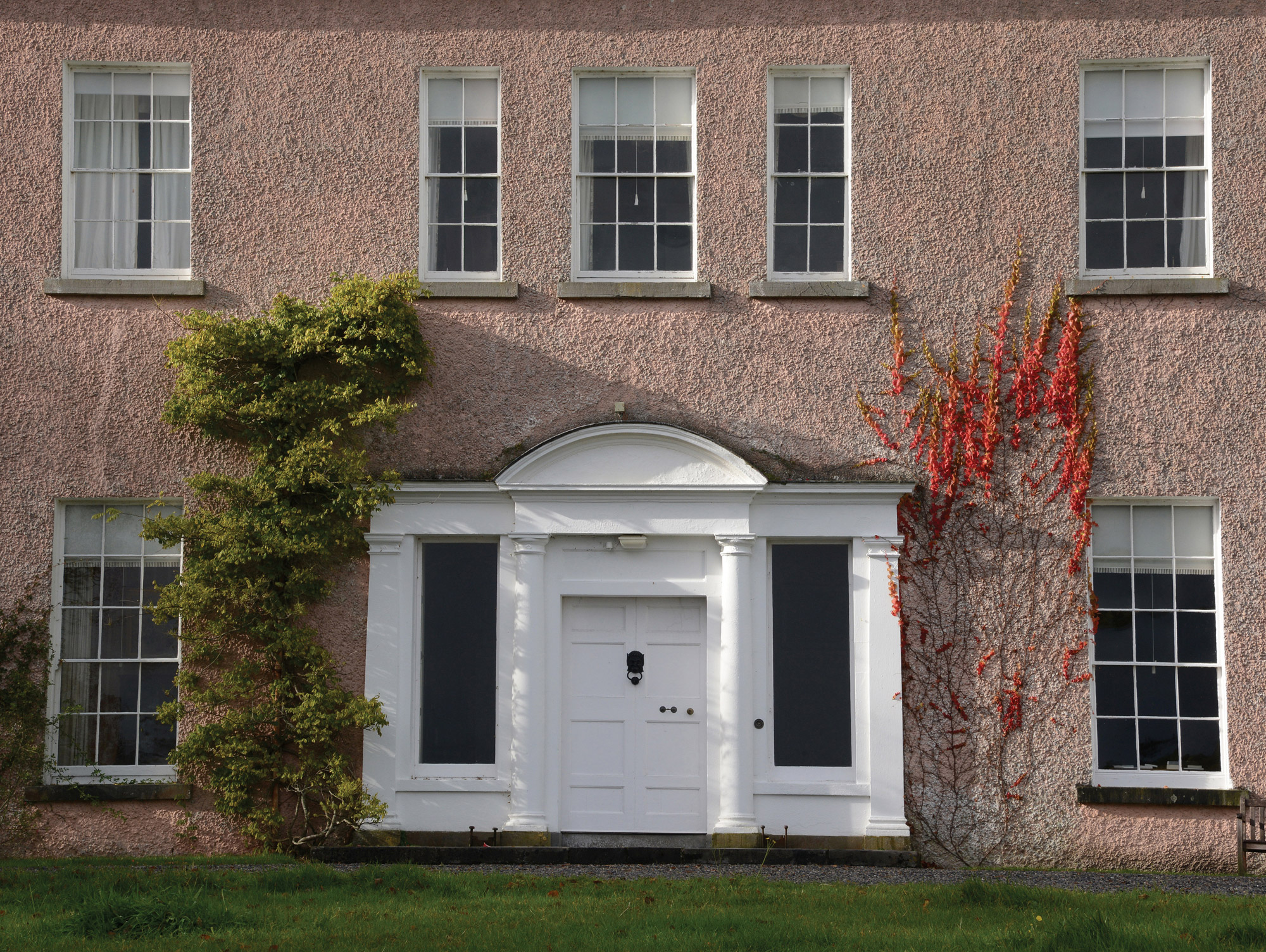
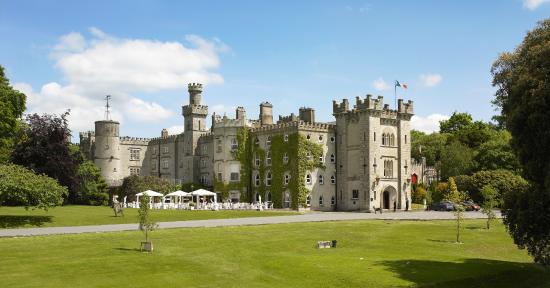
2.Lough Bawn House, Colllinstown, County Westmeath – B&B
3. Lough Bishop House, Collinstown, County Westmeath – B&B
4. Mornington House, County Westmeath – B&B
Whole House Rental/wedding venue, County Westmeath
1. Ballinlough Castle, County Westmeath – exclusive hire
2. Bishopstown House, Rosemount, County Westmeath – whole house rental (sleeps up to 18 people)
3. Middleton Park, Mullingar, County Westmeath – whole house rental and weddings
donation
Help me to pay the entrance fee to one of the houses on this website. This site is created purely out of love for the subject and I receive no payment so any donation is appreciated!
Cruising by Athlone Castle, Co Westmeath Courtesy Fennell Photography 2015, for Tourism Ireland, Ireland’s Content Pool.
The website tells us: “Trace the footprints of the generations who shaped this place. From early settlements and warring chieftains to foreign invaders and local heroes. This site on the River Shannon is the centre of Ireland’s Hidden Heartlands.
“Over the centuries it has been the nucleus of the Anglo-Norman settlement; a stronghold of the rival local families the Dillons and the O’Kelly’s; the seat of the Court of Claims; the residence of the President of Connaught and the Jacobite stronghold during the sieges of Athlone. After the Siege of Athlone it became incorporated into the new military barrack complex. It remained a stronghold of the garrison for almost three hundred years.
“In 1922 when the Free State troops took over the Barracks from their British counterparts, they proudly flew the tricolour from a temporary flagpole much to the delight of the majority of townspeople.
“In 1967 the Old Athlone Society established a museum in the castle with a range of exhibits relating to Athlone and its environs and also to folk-life in the district. Two years later when the military left the castle it was handed over to the Office of Public Works and the central keep became a National Monument.
“In 1991 to mark the Tercentenary of the Siege of Athlone the castle became the foremost visitor attraction in Athlone. Athlone Town Council (then Athlone UDC) made a major investment in the castle creating a multi-faceted Visitor Centre as it approached its 800th Anniversary in 2010. A total of €4.3million euro was invested in the new facility by Fáilte Ireland and Athlone Town Council and was officially opened by the then Minister of State for Tourism and Sport, Michael Ring T.D. on Tuesday 26th February 2012.“
Athlone Castle, County Westmeath, photograph by Robert French, Lawrence Photographic Collection, National Library of Ireland.Athlone Castle, Athlone, Co Westmeath_Courtesy Ros Kavanagh 2014,for Tourism Ireland, Ireland’s Content Pool.
“Athlone Castle Visitor Centre is now a modern, engaging, fun and unique family attraction which harnesses most significant architectural features, such as the keep, to act as a dramatic backdrop to its diverse and fascinating story.
“It houses eight individual exhibition spaces, each depicting a different aspect of life in Athlone, the Castle and the periods both before and after the famous Siege. Fun, hands-on interactives, touchable objects and educational narratives immerse visitors in the drama, tragedy and spectacle of Athlone’s diverse and fascinating story. 3D maps, audio-visual installations, illustrations and artefacts bring the stories and characters of Athlone to life and The Great Siege of Athlone is dramatically recreated in a 360-degree cinematic experience in the Keep of the castle.“
Athlone Castle, Athlone, Co Westmeath_Courtesy Ros Kavanagh 2014,for Tourism Ireland, Ireland’s Content Pool.
“As part of Westmeath County Council’s commemoration of Ireland’s world-renowned tenor, John Count McCormack, a new exhibition dedicated to the celebrated singer was opened at Athlone Castle in October 2014.“
Archiseek tells us about Athlone Castle: “Towards the end of the 12th century the Anglo-Normans constructed a motte-and-bailey fortification here. This was superceeded by a stone structure built in 1210, on the orders of King John of England. The Castle was built by John de Gray, Bishop of Norwich. The 12-sided donjon dates from this time. The rest of the castle was largely destroyed during the Siege of Athlone and subsequently rebuilt and enlarged upon. In the early 1800s, during the Napoleonic Wars, the castle was rebuilt as a fortification to protect the river crossing, taking the form we largely see today. The machicolations of the central keep are all nineteenth century. In the interior is an early nineteenth century two-storey barrack building. The modern ramp up to the castle has a line of pistol loops. The castle was taken over by the Irish Army in 1922 and continued as a military installation until it was transferred to the Office of Public Works in 1970.” [8]
Athlone Castle, Athlone, Co Westmeath_Courtesy Sonder Visuals 2021 for Tourism Ireland, Ireland’s Content Pool.
2. Belvedere House, Gardens and Park, County Westmeath
Mark Bence-Jones writes of Belvedere in his 1988 book:
p. 39. “(Rochfort, sub Belvedere, E/DEP Rochfort/LGI1912; Marlay/LGI1912; Howard-Bury, sub Suffolk and Berkshire, E/PB; and Bury/IFR) An exquisite villa of ca 1740 by Richard Castle, on the shores of Lough Ennell; built for Robert Rochfort, Lord Bellfield, afterwards 1st Earl of Belvedere, whose seat was at Gaulston, ca 5 miles away. Of two storeys over basement, with a long front and curved end bows – it may well be the earliest bow-ended house in Ireland – but little more than one room deep.”
Castle – April 30, May 1-2, 7-9, 14-16, 21-23, 28-30, June 4-6, 11-13, 18-20, 25-27, July 2-4, 9-11, 16-18, 23-25, 30-31, Aug 1, 13-23, 27-29, Sept 3-5, 10-12, 17-19, 11am-3pm
Garden – Mar 19-22, 26-29, Apr 2-6, 9-12, 16-19, 23-26, 30, May 1-4, 7-10, 14-17, 21-24, 28-31, June 1, 4-7, 1-14, 18-21, 25-28, July 2-5, 9-12, 16-19, 23-26, 30-31, Aug 1-3, 6-9, 13-23, 27-30, Sept 3-6, 10-13, 17-20, 24-27,9am-5pm
Fee: castle fee – adult €17, child entry allowed for over 8 years €9, garden fee – adult €9, child €4, family ticket (2 adults + 2 children) €24, adult season ticket €60, family season ticket €73.50, special needs visitor with support carer €4, child 5 years or under is free
“The family run Annebrook House Hotel Mullingar opened its doors February 2007. Originally an Old Georgian residence for the local county surgeon, Dr O’Connell, the historic Annebrook House Hotel was purchased by the Dunne family in 2005. With his experience in hospitality and construction Berty Dunne set about creating a hotel as unique as the man who owns it. The Annebrook’s central location, its diverse range of accommodation from 2 bedroomed family suites to executive doubles has made it a very popular location for those coming to experience all that the midlands has to offer.
“Situated in the heart of Mullingar overlooking 10 acres of parkland, the Award Winning 4 star Annebrook House Hotel presents a modern day styling coupled with 17th century heritage. As a family run hotel the Annebrook prides itself on quality and high standards of customer service, working as part of one team to ensure all guests of their best and personal attention at all times. Annebrook House Hotel is steeped in history and enjoys the enviable advantage of being one of the most centrally located hotels in Mullingar town. This unique venue mixes old world charm with modern comfort and has established itself as one of Westmeath’s top wedding venues and was recently voted Best Wedding Venue Ireland by Irish Wedding Diary Magazine. With accommodation ranging from executive hotel rooms, family suites, luxurious champagne suites and apartments, the Annebrook has much to offer those visiting Mullingar. Offering a range of dining options from Berty’s Bar to fine dining in the award winning Old House Restaurant. The four star Annebrook House Hotel offers an excellent service to both its corporate & leisure guests. The hotel is accessible by car just 50 mins from Dublin and is only 10 minutes from the local Train Station.“
2.Lough Bawn House, Colllinstown, Co Westmeath – B&B accommodation
“A classic Georgian house in a unique setting. Lough Bawn house sits high above Lough Bane with amazing sweeping views. Nestled in a 50 acre parkland at the end of a long drive, Lough Bawn House is a haven of peace and tranquillity.
“The house and estate has been in the same family since it was built in 1820 by George Battesby, the current occupier, Verity’s, Great Great Great Grandfather. The house is being lovingly restored by Verity, having returned from England to live in the family home. Verity ran her own catering and events company in Gloucestershire for over 20 years. Her passion for cooking & entertaining shines through. Guests enjoy an extensive and varied breakfast with much of the ingredients being grown or reared by Verity herself, and delicious dinners are on offer. Breakfast is eaten in the large newly restored dining room, with wonderful views over the lough and of the parading peacocks on the rolling lawns.“
Photograph courtesy of Lough Bawn House website.Photograph courtesy of Lough Bawn House website.
“Both of the large, en-suite rooms have fine views down the length of Lough Bane and over the wooded hills while the single room and the twin/double room have sweeping views of the surrounding parklands. Guests are warmly welcomed and encouraged to relax in the homely drawing room in front of a roaring fire or to explore one of the many local historical sites, gardens, walks or cultural entertainments on offer.
Several areas of the estate have been classified as Special Areas of Conservation (SAC‘s) due to the incredibly varied and rare flora. Wild flowers can be found in abundance and a charming fern walk has been the created amongst the woodland near the house.“
3. Lough Bishop House, Collinstown, County Westmeath– B&B
“Built in the early 19th Century, Lough Bishop is a charming Country House nestling peacefully into a south-facing slope overlooking Bishop’s Lough in County Westmeath, Ireland.
“Breathtaking scenery in an unspoilt and tranquil setting, amid the rolling farmlands and lakes of Westmeath make Lough Bishop an ideal refuge from the hustle and bustle of modern life. There are family dogs in the background and animals play a large part of life at Lough Bishop House.
“Lough Bishop House is a family run business offering Country House Bed & Breakfast accommodation in a wonderful location in the middle of a working organic farm. We even have a purpose built trailer towed behind the quad bike to give guests a tour of the farm and the opportunity to get up close to the animals.
“Following extensive renovation this attractive Georgian Country Farmhouse offers its guests luxurious bed and breakfast accommodations, peaceful surroundings and fine home cooked food much of which comes from our own farm, garden and orchard.“
4. Mornington House, County Westmeath – B&B accommodation
Mornington House, photograph courtesy of their website.
“Mornington House, a historic Irish Country Manor offering luxury country house accommodation located in the heart of the Co. Westmeath countryside, just 60 miles from Ireland’s capital city of Dublin. Tranquility and warm hospitality are the essence of Mornington, home to the O’Hara’s since 1858.
“Mornington House is hidden away in the midst of a charming and dramatic landscape with rolling hills, green pasture, forests with ancient, heavy timber and sparkling lakes, deep in an unexplored corner of County Westmeath. Nearby are ancient churches, castles and abbeys, and delightful small villages to explore, away from all hustle and bustle of 21st century life, yet just 60 miles from Dublin.
“There has been a house at Mornington since the early 17th century but this was considerably enlarged in 1896 by Warwick’s grandparents. It is now a gracious family home with a reputation for delicious breakfasts which are prepared in the fine tradition of the Irish Country House and really set you up for the day ahead.
“A special place to stay for a romantic or relaxing break Mornington House’s location in the centre of Ireland just an hour’s drive from Dublin and Dublin Airport makes it ideal for either a midweek or weekend country break. Guests can walk to the lake or wander round the grounds. Excellent golf, fishing, walking and riding can be arranged. The Hill of Uisneach, the Neolithic passage tombs at Loughcrew and Newgrange and the early Christian sites at Fore and Clonmacnoise are all within easy reach, as are the gardens at Belvedere, Tullynally and Loughcrew.“
The National Inventory tells us:
“A well-detailed middle-sized country house, on complex plan, which retains its early aspect, form and much of its important early fabric. The ascending breakfronts to the entrance front of this structure adds to the overall form and its architectural impact. The facade, incorporating extensive moulded detailing and a very fine doorcase, is both visually and architecturally impressive and displays a high level of workmanship. The present entrance front (east) is built to the front of an earlier house, the form of which suggests that it might be quite early, perhaps early eighteenth-century in date. The 1896 entrance front was built to designs by W.H. Byrne (1844-1917), a noted architect of his day, best remembered for his numerous church designs. Apparently, Mornington is one of only two domestic commissions that can be attributed to this noteworthy architect, adding extra significance to this structure. The building was completed by 1898 at a cost of £2,400. Mornington House was in the ownership of the Daly Family in the early eighteenth-century and has been in the ownership of the O’Hara Family since 1858. It forms the centrepiece of an interesting, multi-period, complex with the outbuildings, the walled gardens and the fine entrance gates to the south. It represents an important element to the architectural heritage of Westmeath and occupies attractive nature grounds to the east of Multyfarnham.” [9]
Whole House accommodation, County Westmeath:
1. Ballinlough Castle, County Westmeath – exclusive hire
Ballinlough Castle, County Westmeath, photograph courtesy of Ballinlough Castle’s website.
The website tells us Ballinlough Castle is available for exclusive hire of the castle and the grounds (minimum hire 3 nights) is available for private or corporate gatherings. Focussing on relaxed and traditional country house hospitality, assisted by a local staff.
Ballinlough Castle, County Westmeath, photograph courtesy of Ballinlough Castle’s website.“Refurbishment of Ballinlough Castle, Clonmellon,”c. 1940, G&T Crampton, held by Assoc. Prof. Joseph Brady, Digital content by Dr. Joseph Brady, published by UCD Library, University College Dublin.
The website tells us of its history:
“The Nugent family at Ballinlough were originally called O’Reilly, but assumed the surname of Nugent in 1812 to inherit a legacy. They are almost unique in being a Catholic Celtic-Irish family who still live in their family castle.
“The castle was built in the early seventeenth century and the O’Reilly coat of arms over the front door carries the date 1614 along with the O’Reilly motto Fortitudine et Prudentia.
“The newer wing overlooking the lake was added by Sir Hugh O’Reilly (1741-1821) in the late eighteenth century and is most likely the work of the amateur architect Thomas Wogan Browne, also responsible for work at Malahide Castle, the home of Sir Hugh O’Reilly’s sister Margaret.
“Sir Hugh was created a baronet on 1795 and changed the family name in 1812 in order to inherit from his maternal uncle, Governor Nugent of Tortola.
“As well as the construction of this wing, the first floor room above the front door was removed to create the two-storey hall that takes up the centre of the original house. The plasterwork here contains many clusters of fruit and flowers, all different. A new staircase was added, with a balcony akin to a minstrel’s gallery, and far grander than the original staircase that still remains to the side.
“Sir Hugh’s younger brothers James and Andrew entered Austrian military service, the latter becoming Governor-General of Vienna and Chamberlain to the Emperor. His portrait hangs in the castle’s dining-room.
“The family traces directly back to Felim O’Reilly who died in 1447. Felim’s son, John O’Reilly was driven from his home at Ross Castle near Lough Sheelin and settled in Kilskeer. His grandson Hugh married Elizabeth Plunket with whom he got the estate of Ballinlough, then believed to have been called Bally-Lough-Bomoyle. It was his great-grandson James who married Barbara Nugent and about whom an amusing anecdote is told in Duffy’s Hibernian Magazine of 1860:
During the operation of the penal laws in Ireland, when it was illegal for a Roman Catholic to possess a horse of greater value than five pounds, he was riding a spirited steed of great value but being met by a Protestant neighbour who was on foot, he was ordered by him to relinquish the steed for the sum of five pounds sterling. This he did without hesitation and the law favoured neighbour mounted his steed and rode off in haughty triumph. Shortly afterwards, however, James O’Reilly sued him for the value of the saddle and stirrups of which he was illegally deprived and recovered large damages.
“The investment in the castle by James’ son, Hugh was recorded in The Irish Tourist by Atkinson 1815, which contained the following account of a visit to Ballinlough:
The castle and demesne of Ballinlough had an appearance of antiquity highly gratifying to my feelings ….. I reined in my horse within a few perches of the grand gate of Ballinlough to take a view of the castle; it stands on a little eminence above a lake which beautifies the demesne; and not only the structure of the castle, but the appearance of the trees, and even the dusky colour of the gate and walls, as you enter, contribute to give the whole scenery an appearance of antiquity, while the prospect is calculated to infuse into the heart of the beholder, a mixed sentiment of veneration and delight.
Having visited the castle of Ballinlough, the interior of which appears a good deal modernised, Sir Hugh had the politeness to show me two or three of the principal apartments; these, together with the gallery on the hall, had as splendid an appearance as anything which I had, until that time, witnessed in private buildings. The rooms are furnished in a style- I cannot pretend to estimate the value, either of the furniture or ornamental works, but some idea thereof may be formed from the expenses of a fine marble chimney-piece purchased from Italy, and which, if any solid substance can in smoothness and transparency rival such work, it is this. I took the liberty of enquiring what might have been the expense of this article and Sir Hugh informed me only five hundred pounds sterling, a sum that would establish a country tradesman in business! The collection of paintings which this gentleman shewed me must have been purchased at an immense expense also- probably at a price that would set up two: what then must be the value of the entire furniture and ornamental works?
“Sir Hugh was succeeded in the baronetcy by his eldest son James, who was succeeded by his brother Sir John, who emulated his uncle in Austria in becoming Chamberlain to the Emperor. His eldest son Sir Hugh was killed at an early age so the title then passed to his second son Charles, a racehorse trainer in England. Sir Charles was an unsuccessful gambler which resulted in most of the Ballinlough lands, several thousand acres in Westmeath and Tipperary being sold, along with most of the castle’s contents.
“Sir Charles’ only son was killed in a horseracing fall in Belgium in 1903, before the birth of his own son, Hugh a few months later. Sir Hugh inherited the title on the death of his grandfather in 1927 and, having created a number of successful businesses in England, retuned to Ballinlough and restored the castle in the late 1930s. His son Sir John (1933- 2010) continue the restoration works and the castle is now in the hands of yet another generation of the only family to occupy it.”
featured in Great Irish Houses. Forewards by Desmond FitgGerald, Desmond Guinness. IMAGE Publications, 2008.
p. 49. “We took over the running and living of the property a few years ago, and structural renovation have been our focus up till now,” says Nick Nugent, the present owner. “It has been a huge challenge, as the entire Georgian wing was leaning out to the lake and we needed to underpin it.”
“Although few of the original pieces of furniture remain, many of the portraits were saved and they provide a unique pictorial history to illustrate the house’s colourful lineage. Over the dining room door hang portraits of Count Andrew, Chamberlain to the Emperor of Austria and Governor General of Vienna when Napolean attacked in 1809, and his great nephew, Sir John Nugent, Chamberlain to the Austrian Emperor. His son, Charles, who got himself into financial trouble through gambling, is also represented, as is an interesting non-famiyportrait of the Duke of Ormond accompanied, unusually for Ireland, by a black manservant.
“Today, Nick and Alice Nugent, who live in the castle with their children, have successfully secured the physical foundations at the lakeside of the house itself and begun the process of redecorating. They were assisted in the redecoration by Kate Earle of Todhunter Earle, a prestigious company with an impressive client list including Au Bar in New York, the Berkeley Hotel in London and Sissinghurst Castle in Kent.
“Their next task, in its own good time, will be to decorate the rest of the property. Much of the plasterwork had split over the years and the Nugents have repaired the cracks and set about rendering part of the exterior with several coats of lime mortar. In the basement, exposed pipes were found to contain asbestos, which needed treatment. “At that point our impending poverty was accelerated somewhat,” observes Nick Nugent wryly.
“The Georgian windows, said to be the tallest in Ireland, have all been removed and repaired under the careful eye of Kells Windows, and, where it survives, the Georgian glass has been retained. In time, they hope to render the rest of the façade and secure the foundations for future generations.
Like many Georgian castles, the building grew in stages.
p. 50 “The ground floor contains a larg drawing room and dining room with four first floor bedrooms approached by a vaulted corridor above.”
[about the Hall] “Initially a double storey room, it is thought Sir Hugh O’Reilly added a new wing towards the end of the 18th century, taking away the first floor in the hall and creating a fine galleried space with grand staircase. …The woodwork has taken on an unusual but entirely fitting stripped pine format, giving the appearance of faded grandeur. Mouldings are individualised with every three or four feet a new set revealed. Interestingly, there is no grand fireplace as is the case in most Irish entrance halls, but this absence may be due to re-modifications over the ages.
“To the right of the entrance hall is a morning room, which is now used as a smaller sitting room, which has an interesting set of oval portraits by Hugh Douglas Hamilton, relating to the O’Reilly and Nugent families. The design of the fireplace is replicated throughout the house and an original door connects to a back room.
“Moving to the left is the library or study, and family legend has it that Oliver Cromwell docked here for a night, keeping a cow in one archway and a horse in another. The drawing room, with Gothic pendant motifs and circular angles, is cetnred by a marvellous white chimneypiece, which is an exact copy of the chimneypiece in the dining room at Curraghmore. Roman females support either upright and the frieze is particularly well crafted.
“It was Nick Nugent’s grandfather, Sir Hugh Nugent, who brought in the majority of contents in this room and the neighbouring dining room where the severely damaged plasterwork has been repaired. In fact, the upturn in Ballinlough Castle’s fortunes began with Sir Hugh who returned to Ireland after a highly successful business career – he invented the tractor cab among other things – at a period when Irish country houses were being vacated. The house was semi-derelict and had been lived in for ten years by Owen Quinn, a family steward, who in the words of Sir John, “Lived in the house on his own with no heating, no water and rats everywhere.”
“Towards the end of the 1930s the house underwent thorough restoration, and much of the current interior decoration downstairs comes from that period, which was completed in 1939. [p. 55] The firm Cramptons, who were still building in Dublin at the time, worked on the restoration and carried out the re-wiring on the premises.
“In recent years, the magnificent gardens have been restored by Sir John and Lady Nugent, with help from the European Union and the Great Gardens of Ireland Programme. The walled garden, which is divided inot four walled sections, is home to a significant collection of shrubs, roses and climbers while the herbaceous borders are being remodeled. The grass tennis court, lily pond, rose garden, herb and soft fruit garden and orchard, all continue to thrive. From the walled gardens, a white door leads to the lakeside walks with the inviting water garden and its rustic summerhouse.
“Nick Nugent and his wife Alice are now committed to carrying on the mantle and their vision is to marry a subtle contemporary feel with country house living. The rooms on the upper floors reveal the new direction. There are twelve bedrooms, many of them with new en suite bathrooms. There are quirky touches, with some of the rooms having wallpapered ceilings, best defining their unorthodox physical shapes, and practical changes too, such as turning an old single four-poster bed into a double, which add to the pervading sense of comfort and cosiness.”
“Bishopstown House is a three-storey Georgian house built in the early 1800s by the Casey family. After he passed away, the original owner, Mr. J Casey left Bishopstown to his two daughters, who then sold the house to Mr Richard Cleary in 1895.
“Mr Richard Cleary, formally from the famed lakeside Cleaboy Stud near Mullingar, planned and erected Bishopstown House and Stud. In his younger days he rode horses at Kilbeggan, Ballinarobe, Claremorris and other Irish meetings with varying degrees of success, but as a trainer he knew no bounds. In his later years he devoted his time to breeding and training, and in time he became one of Ireland’s most famous trainers, breeding some excellent horses, including the winner of the 1916 Irish Grand National, Mr James Kiernan’s All Sorts!
“Other famous horses from the Bishopstown stud include Shaun Spada and Serent Murphy who both won the Aintree Grand National in England. Another horse called Dunadry won the Lancashire Steeple Chase. Other stallion winners include Sylvio III, Lustrea and Irish Battle who frequently had their names in the limelight throughout Irish and English racecourses.
“After being left fall into a dilapidated state, the stud farm and house was purchased by Paddy and Claire Dunning, the owners of the award-winning Grouse Lodge Recording Studios and Coolatore House and members of the Georgian society. It was restored to its former glory in 2009 and is now available for rent.“
2. Middleton Park, Mullingar, County Westmeath – wedding venue and accommodation
Photograph courtesy of Middleton Park House website.
Middleton Park House featured in The Great House Revival on RTE, with presenter (and architect) Hugh Wallace. The website tells us:
“Carolyn and Michael McDonnell, together with Carolyn’s brother Henry, joined together to purchase this expansive property in Castletown Geoghegan. Built during the famine, the property was last in use as a hotel but it had deteriorated at a surprisingly fast rate over its three unoccupied years.
“Designed by renowned architect George Papworth, featuring a Turner-designed conservatory, Middleton Park House stands at a palatial 35,000sq. ft. and is steeped in history. Its sheer scale makes it an ambitious restoration.
“The trio’s aim is to create a family home, first and foremost, which can host Henry’s children at the weekends and extended family all year-round. Due to its recent commercial use, the three will need to figure out how to change industrial-style aspects to make it a welcoming home that is economical to run.
“Henry will be putting his skills as a contractor and a qualified chippy to use, and Michael will be wearing his qualified engineer’s hat to figure out an effective heating system. Carolyn will be using her love of interiors to work out the aesthetic of the house, and how to furnish a property the size of 35 semi-detached houses in Dublin.“
Photograph courtesy of Middleton Park House website.
The trio have now made the house available for accommodation and as a wedding venue.
Photograph courtesy of Middleton Park House website.
The National Inventory tells us:
“A very fine and distinguished large-scale mid-nineteenth country house, which retains its early form, character and fabric This well-proportioned house is built in an Italianate style and is elevated by the fine ashlar limestone detailing, including a well-executed Greek Ionic porch/portico and a pronounced eaves cornice. This house was (re)built for George Augustus Boyd [1817-1887] in 1850 to designs by George Papworth (1781-1855) and replaced an earlier smaller-scale house on site, the property of a J. Middleton Berry, Esq., in 1837 (Lewis). The style of this house is quite old fashioned for its construction date and has the appearance of an early-nineteenth/late-Georgian country house. The form of this elegant house is very similar to Francis Johnston’s masterpiece Ballynagall (15401212), located to the north of Mullingar and now sadly in ruins. This house remained in the Boyd-Rochfort family until 1958 and was famously offered as a prize in a raffle in 1986 by its then owner, Barney Curly. This house forms the centerpiece of an important collection of related structures along with the elegant conservatory by Richard Turner (15318024), the service wing to the north (15318020), the stable block to the north (15318022) and the main gates (15318017) and the gate lodge (15318018) to the west. This building is an important element of the built heritage of Westmeath and adds historic and architectural incident to the landscape to the south of Castletown Geoghegan.” [10]
[3] Bence-Jones, Mark. A Guide to Irish Country Houses (originally published as Burke’s Guide to Country Houses volume 1 Ireland by Burke’s Peerage Ltd. 1978); Revised edition 1988 Constable and Company Ltd, London.
[4] p. 136. O’Reilly, Sean. Irish Houses and Gardens. From the Archives of Country Life. Aurum Press Ltd, London, 1998.
9. The Lower House Rooms, Donaghmore, Dungannon, Co. Tyrone, BT70 3EZ€
10. Spice Cottages, Dungannon, County Tyrone€€
donation
Help me to pay the entrance fee to one of the houses on this website. This site is created purely out of love for the subject and I receive no payment so any donation is appreciated!
€15.00
Fermanagh:
1. Castle Archdale Countryside Centre & War Museum – demolished in 1970 but the stables remain intact.
Mark Bence-Jones writes in his A Guide to Irish Country Houses (1988):
p. 61. (Archdale/IFR) “A noble house of 1773 on the shores of Lough Erne, built by Colonel Mervyn Archdall in 1773 to replace a “Plantation castle” originally built by John Archdale 1615.
“Three storeys over a basement; a six bay entrance front with a two bay breakfront centre; and a tripartite doorway with Ionic pilasters, entablature and pediment, the latter breaking forwards on two Ionic columns to form a porch, which appears to have been a subsequent alteration.
The side elevation was of three bays, the bottom storey having Venetian windows with Gothic astragals in its outer bays. The quoins were rusticated and bold; with a solid roof parapet. Derelict since 1959 and now ruinous.” [1]
Castle Archdale, County Fermanagh, from Discover Northern Ireland website.
Built in about 1618 by Sir James Balfour, a Scottish planter, the castle was in continuous occupation until the early 19th century. Open all year.
Timothy William Ferres tells us: “CASTLE BALFOUR formed the nucleus of the town [Lisnaskea]. It stands beside the parish church, in the graveyard. The Castle was built with local stone ca 1618 by Sir James Balfour. Sandstone was used for the quoins and dressings. The main block consists of a rectangular block, 78 feet by 24 feet, with a large wing projecting to the east and west, comprising two L-shaped units. The northern block has three storeys with attics. The kitchen is vaulted, with a fireplace and oven. Corbelled turrets and gun-slits are a feature.
“During the Irish Rebellion of 1641, Castle Balfour and the village were burnt but later reoccupied. In 1689, the Castle was again badly damaged by the Jacobite armies but was repaired after the Williamite victory at Limerick. About 1780, Castle Balfour was sold to the 1st Earl of Erne, and the Balfours subsequently left County Fermanagh.
“The last person to inhabit the Castle was James Haire (1737-1833), of Nutfield, who leased the Castle from Lord Erne. James Haire and his family ceased to occupy the castle after it was destroyed by an arson-based fire in 1803 (his mother, Phoebe, was killed in the rubble caused by the fire).
“Thereafter the Castle remained ruinous, until it was placed in state care by the 6th Earl of Erne in 1960.
“Major conservation work was carried out between 1966-68 and again during the late 1990s.” [2]
“Castle Coole is one of the greatest neo-classical country houses in Ireland. Home to the Earls of Belmore, it was commissioned and built to impress by the first Earl of Belmore by Amar Lowry Corry, 1st Earl Belmore (1740-1802) and furnished largely by Somerset Lowry Corry, 2nd Earl (1774-1841).”
The castle is still in private hands but the grounds are open to the public.
Mark Bence-Jones writes in his A Guide to Irish Country Houses (1988):
p. 95. “(Crichton, Erne, E/PB) A large castellated mansion combining Baronial and Tudor-Revival elements, by the side of one of the many inlets of Upper Lough Erne, built 1829 to the design of Edward Blore. The entrance front has a gabled projection with a corbelled oriel at each end, but they are not entirely similar; while the tall, battlemented entrance tower, which incorporates a porte-cochere, is not central but to one side, against the left hand gable. The adjoining garden front is symmetrical, dominated by a very tall central tower with slender octagonal turrets, inspired by various Tudor gatehouse towers in England, but without a doorway. On either side of it is a gable and oriel. In the park are the ruins of the earlier Crom Castle, a Plantation castle of 1611, destroyed by fire in 1764.”
Enniskillen Castle by Gardiner Mitchell 2015 for Tourism Ireland, Ireland’s Content Pool (see [3]).
The website tells us: “Enniskillen Castle, situated beside the River Erne in County Fermanagh, was built almost 600 years ago by Gaelic Maguires.
“Guarding one of the few passes into Ulster, it was strategically important throughout its history. In the 17th century it became an English garrison fort and later served as part of a military barracks. This historic site houses two museums, Fermanagh County Museum and The Inniskillings Museum.“
Mark Bence-Jones writes in his A Guide to Irish Country Houses (1988):
p. 121. (Cole, Enniskillen, E/PB) A large and impressive fortress at one side of the island in the River Erne on which the town of Enniskillen is built; with walls enclosing a ward of courtyard, an inner keep and a tall and frowning water gate with two conical-roofed bartizans. Until C18 the castle stood on a small island of its own, separated from the rest of the island by a ditch of water crossed by a draw-bridge. The castle was originally built C15 by the Maguires; it was granted 1607 to Captain William Cole, who rebuilt the keep as a house for himself, and renovated all the fortifications; the water gate probably dates from his time. The Coles continued to live on and off at the castle until 1739; afterwards, they established themselves permanently at Florence Court. The castle then became barracks, and the keep was rebuilt once again. The buildings remain in good repair.”
Enniskillen Castle by Chris Hill 2018 for Tourism Ireland, Ireland’s Content Pool (see [3]).
6. Florence Court, County Fermanagh
Florence Court, formerly the home of the Cole family, Earls of Enniskillen, is surrounded by a large area of parkland, garden and woodland, with beautiful views to Benaughlin and the Cuilcagh Mountains. photo Courtesy of Tourism Northern Ireland by Brian Morrison 2008 (see [3]).
1. Belle Isle Courtyard cottages and castle accommodation, Lisbellaw, Enniskillen, County Fermanagh Northern Ireland – (self-catering)
Nestling close to the water’s edge and set within a landscape of lakes and islands of gently rolling hills and fragrantwoods, Belle Isle Castle provides self-catering or fully catered accommodation. Situated at the heart of Belle Isle Estate and dating from the early 17th century the castle has been extensively yet sensitively refurbished, ensuring that a full range of modern facilities blends seamlessly with original period grandeur. Photo for Tourism Ireland, 2008. (see [3])
“Belle Isle provides an outstanding mix of natural beauty and authentic heritage on a private 400 acre estate designated a Special Area of Conservation with a range of accommodation options including castle rental, luxury cottages and self-catering apartments. Whether you are looking to host your wedding, enjoy a private event with friends and family or just have a relaxing weekend with your pets, we have something for everyone. Enjoy a Summer Getaway to the Belle Isle Estate with one of our great special offers.
“Belle Isle has a rich history dating back to before the 15th century as the place where the Annals of Ulster were written. Belle Isle Castle was built in the early 17th century as the home to many generations of nobles and has been hosting events since as early as 1760. In 1991, the castle was fully refurbished to open its doors to more visitors. Belle Isle Estate stretches over 470-acres across Lisbellaw, County Fermanagh, Northern Ireland. It is a private estate with access to its estate grounds and trails open solely its visitors. If you are looking for the ultimate experience in luxury, Belle Isle Estate is one of the best hotels Fermanagh can offer.“
Mark Bence-Jones writes in his A Guide to Irish Country Houses (1988):
p. 38. “(Gore, Bt/PB; Porter, sub Baird/IFR) A house beautifully situated on an island in Upper Lough Erne; the seat of a distinguished C18 soldier, Sir Ralph Gore, 6th Bt, 1st and last Earl of Ross and Viscount Bellisle, who was C-in-C in Ireland 1788. Bought early in C19 by Rev. J.G. Porter.“
Ralph Gore (1725–1802), 6th Bt, Later 1st Earl of Rosse, on His Bay Hunt, attriibuted to Thomas Spencer, courtesy of National Trust.
“The present house appears to incorporate a two storey C18 range with a three sided bow at one end, to which a range of 1820-30 was added at right angles, with a staircase hall, top-lit by an octangular lantern, in the re-entrant. The house was re-modelled post 1880 in the plain English Tudor manor house style made popular by Norman Shaw and his disciples; producing a gable entrance front with mullioned windows, a projecting porch and a tall, church-like battlemented tower at the corner of th 1820-30 range. The latter range, which is the garden front facing the lough, remains unaltered apart from having Victorian plate-glass windows; at one end is the end bow of C18 range, with Georgian astragals. Inside the house, arches were opened up between the staircase hall and the rooms at either end of it, to make a much larger hall; the staircase hall was also widened at the expense of the rooms in 1820-30 range, the old wall being replaced by a massive oak beam. An oak staircase with barleysugar balusters replaced the original stairs; the walls were panelled in oak, or decorated with half-timbering. The octangular ceiling lantern, however, was left undisturbed. The drawing room, in 1820-30 range, was redecorated, having been reduced in width, and given a chimneypiece of old oak carving, possibly of more than one period and nationality. The room extending into the bow of C18 range, which is now the drawing room, was given a stone Tudor fireplace; but it still keeps its original doors with shouldered C18 architraves. In 1907 the entrance front was prolonged by a wing in Tudor style containing a long and lofty gallery, with a timbered roof, an elaborate Tudor fireplace and overmantel and a minstrels’ gallery, the balustrade of which has slender turned uprights and would appear to be late C17 or early C18 woodwork brought from elsewhere. At this end of the entrance front stands a pedimented and gable-ended office wing which would appear to date from quite early C18. After the death of N.H.A. Porter 1973, Belle Isle was inherited by his niece, Miss Olivia Baird.”
Belle Isle Estate, photo by Brian Morrison 2008 for Tourism Ireland. (see [3])
2. Castle Irvine, County Fermanagh – courtyard accommodation
“Castle Irvine, also known as Necarne Castle, lies south of the town of Irvinestown, in County Fermanagh, in Northern Ireland.
“The core of Necarne Castle is a castle which was built in the 17th century by Gerard Lowther as part of the plantation of Ulster. In 1629, the lands were leased to Christopher Irvine and the Irvines remained there until 1922.
“In the 1830’s the castle and park were rebuild and a Victorian style wing was built against its south west facade amongst other things.
“In 1925, Captain Richard Outram Hermon, from Sussex, bought the castle. In 1927 an extensive restoration of the castle and its gardens was started while Captain Hermon and his new wife went off on a world cruise. The estate was turned into a haven for shooting parties and Lord Mountbatten and Prince Bernhard of the Netherlands were once guests at Necarne Castle.
“In 1941 Necarne Castle was requisitioned by the United States Navy. It originally had 200 beds but was soon enlarged to a 500 bed institution and released to the American Army. The castle, then the 28th Station Hospital, cared for recuperating American soldiers and RAF personnel. After the war the castle was never inhabited again and fell to ruin.
“Fermanagh District Council bought the Necarne Castle estate in 1981; and in 1988 The NI Department of Agriculture leased the estate on a 25-year basis from them. In the last decades the outbuildings of the castle have been used as a student facility for the Enniskillen Agricultural College as the Necarne Castle Equine College.
“Fermangh & Omagh District Council began the search for a new operator for the estate in 2014 following the Agricultural College relocating their Equine Courses to Enniskillen.
“Gardrum Holdings Ltd agreed a lease of the estate from 2020.
“The park around Necarne Castle can freely be visited during daytime. The ruin of the castle itself is boarded up, so its interior can not be visited.”
2. Colebrooke gate lodge,Colebrooke Park, County Fermanagh– accommodation
“Colebrooke Estate in Co. Fermanagh, N.Ireland offers guests a haven of peace and privacy with over 1000 acres to play in. The 5 star Whitehill Cottage and 5 star Woodcock Corner Cottage are sensitively restored original Estate workers cottages. Rossbeg Cottage is located in a stunning part of Co. Donegal, overlooking the Atlantic Ocean. We are proud of all the properties, which offer high standards of comfort, with all the modern conveniences you would expect to find in quality accommodation.“
Henry Brooke (1770-1834), 1st Bt.of Colebrooke, Co Fermanagh.Painting with inscription verso ‘Sir Henry Brooke Bart Son of Francis Brooke, Major of 18th. of Hannah, Sister of 1st Lord Dunally. He married Harriott Butler, granddaughter of Earl Lainsborough. He rebuilt the House of Colebrooke in 1822. Died at Colebrooke, 24th March 1834, aged 63 years.’ courtesy of Adam’s auction 10 Oct 2017.
3. West Wing, Crom Castle, County Fermanagh – accommodation
Crom Castle, County Fermanagh, photograph by Robert French, (between ca. 1865-1914), Lawrence Photograph Collection, National Library of Ireland.
“A converted farm building with a spacious living area and views of the Lough Erne.
“Erne View is the largest in a row of holiday cottages on the shores of Lough Erne. The cottage boasts stunning views, an open fire and a wet room on the ground floor.
“Enjoy a coffee whilst taking in the view over to the Island of Inishfendra before heading down to the nearby jetty for a stroll along the shoreline.
“Adventurers might want to take advantage of the Lough Erne Canoe Trail which offers guided trips and canoe hire. Further afield, the pretty town of Enniskillen, with its historic castle, is just 20 miles away.“
5. Florence Court, County Fermanagh – Butler’s Apartment accommodation
“Butler’s Apartment served as living quarters for the male servants at Florence Court, the 18th-century mansion next door to the holiday home. This atmospheric first floor apartment overlooks the laundry courtyard and adjoining woodland garden. Inside, you’ll find many historical quirks such as the period fireplaces, large sash windows and wooden floorboards.“
6. Manor House Hotel (formerly Killadeas Manor and before that, Rockfield), County Fermanagh
Mark Bence-Jones writes in his A Guide to Irish Country Houses (1988):
p. 168. “(Irvine/LGI1912) A two storey Victorian Italianate house, in a splendid position on the shores of Lough Erne. Entrance front with pediment and porch in the form of a three arched loggia, flanked by a square tower with glazed belvedere and urns on its parapet. Now a hotel.”
A younger son of the Irvines of Castle Irvine [now dilapidated but you can visit the grounds], John Irvine, acquired the estate in 1660. It was known as Rockfield. The website tells us it remained as Rockfield until it was rebuilt in 1860 by Colonel John Gerard Irvine (1823-1902), who brought workmen from Italy to do the interior decoration which exists to this day.
The name of Rockfield was changed to Killadeas Manor House by Major John Irvine who succeeded to Killadeas in 1835 and died in 1860. It was his son, Colonel John Gerard Irvine, who rebuilt Killadeas, incorporated some parts of the old house into the new mansion.
The website adds that in a directory of Fermanagh, published in 1879, the author states that Rockfield was built in 1710, and greatly altered and added to in 1868 by Colonel Irvine under the direction of that able and artistic architect, Mr Armstrong of Belleek. There are some obvious similarities between the architecture of the Belleek Pottery and The Manor House not least the unusual narrow, arched windows.
During the 1939-45 war it was requisitioned by the Government and was for a time used by the American Forces. The house itself was used as an Officers’ Mess and Headquarters for the Seaplane base of Killadeas. It was a plane from this base which sighted the ‘Bismarck’ and consequently resulted in the destruction of this mighty battleship. The Manor House remained in the Irvine family until 1957 when it was acquired for a Hotel.
Ashbrooke is the Dower House for the Colebrooke Estate it has been in the Brooke family for over 200 years. Formerly the home of Viscount and Viscountess Brookeborough the house has recently been fully restored and renovated to provide luxurious accommodation.
Mark Bence-Jones writes of Colebrook Park in his A Guide to Irish Country Houses (1988):
p. 89. “(Brooke, Brookeborough, V.PB) An austere Classical house of 1825 by William Farrell; built for Sir Henry Brooke [1770-1834], 1st Bt of 2nd creation. Two storey nine bay front, with a pedimented portico of four giant Ionic columns; three storey irregular side; eaved roof. Of cut-stone, with a sprinking of red sandstone ashlars which gives the elevation a pleasant reddish tinge. Large entrance hall; double staircase in back hall. Drawing room with original white and gold damask wallpaper. Sitting room with C19 arabesques. Large dining room, which Lord Craigavon, 1st Prime Minister of Northern Ireland, christened “Golgotha” on account of the numerous deer skulls covering the walls. The home of Sir Basil Brooke, 5th Bt and 1st Viscount Brookeborough, Prime Minister of Northern Ireland 1943-63; he and the late Lady Brookeborough made an attractive sunken garden at one end of the house. The house stood empty for some years after the death of 1st Viscount, 2nd Viscount living in Ashbrooke, a smaller house on the estate. But the present Lord and Lady Brookeborough have moved back into Colebrook.”
2. Belle Isle Courtyard cottages and castle accommodation, Lisbellaw, Enniskillen, County Fermanagh Northern Ireland – see above
3. Colebrook Park, County Fermanagh– group accommodation
“Colebrooke Park in County Fermanagh, Northern Ireland is first and foremost a family home, the seat of Viscount & Viscountess Brookeborough and one of region’s most important and historic stately homes. It is exclusive, discreet and offers a taste of a unique lifestyle which guests may experience whilst staying in an Irish Stately Home. Set in a lush 1,000 acre working estate, Colebrooke Park is only 90 minutes from Belfast, 40 minutes from the West Coast of Ireland and a short distance from the tranquility of beautiful Lough Erne.
“Lady Brookeborough has skilfully recreated the style and grandeur of the past with family portraits, original Victorian wallpaper, 18th Century porcelain and fine furniture used to decorate the grand rooms. Modern additions such as en-suite bathrooms, central heating, a Business Conference Unit and Day Spa makes Colebrooke a discerning choice of venue for business away days and conferences.
“Standing on the banks of the Colebrooke River, fishing, clay pigeon shooting, archery and other outdoor activities are available for guests’ enjoyment. For those who may wish to enjoy a less energetic stay there are long riverside and shrub garden walks and there are purpose built ‘hides’ for watching the abundant wildlife in this remarkable haven. These include deer, otters, mink, buzzards, kingfishers and many others.
“The combination of historic grandeur, modern business facilities, outdoor pursuits and the renowned hospitality of the Brooke family means Colebrooke Park is a truly unique location for special events.
“Colebrooke Park is a brilliant example of how comfortable an historic Irish Stately home can become in the 21st Century; the ultimate in luxury. Above all it is a place where guests can stay in complete privacy. The estate is ideal for weddings, house party breaks, family gatherings and as a corporate venue with a difference, all in the heart of Northern Ireland’s lush countryside.Having approached the house along the sweeping avenue, guests enter through the grand entrance beneath the portico into a large hall overlooked by the impressive main staircase.
“Then guests can make their way to the Library or the Drawing Room and relax in great comfort in magnificent surroundings. In addition to these large reception rooms, there is a large billiard room. The Dining Room seats up to 30 guests at one large table and more in other formats – making it particularly well suited for corporate entertaining, private dinner parties and weddings.
“Within the house, located towards the rear, is the fully equipped Conference Suite. Accommodating up to 70, the suite provides all necessary facilities for business users including overhead projector and screen.Colebrooke Park can accommodate up to 300 guests for receptions with a great deal of flexibility and with that all important personal touch that is so often missing in large hotels. There are 12 comfortable double bedrooms with private bathrooms, all of which have been individually and tastefully decorated by Lady Brookeborough.
“The landscaped gardens, parkland and ancient woodland with 3 miles of the Colebrooke river meandering through it, form this stunning 1000 acre estate which is a haven of tranquility. There is also a dry grassed lawn at the side of the house suitable for a large marquee, demonstrations and exhibits or as a pleasant area to congregate on sunny days.“
The website also tells us of the history, quoting an article in Country Life magazine:
“A sprawling barracks* of a country house, in the heart of terrorist-torn Northern Ireland, encumbered with death duties and overdraft, is an unenviable inheritance. Particularly when, abandoned to patching, the fabric has begun to rot; the extensive stables and outbuildings are in ruins; the Victorian wallpaper is peeling from the walls of rooms empty from a house sale seven years earlier. Income from the beautiful – but agriculturally poor – 1,100 acre estate cannot conceivably support the maintenance, let alone restoration, of the house. [* Someone else’s description – not ours!]This was the situation that confronted Lord Brookeborough and his wife in 1980. The Brookes are a fairly typical Anglo-Irish ‘plantation’ family. They arrived in the 1590’s and were granted a large portion of confiscated lands at Brookeborough as reward for services during the 1641 Rebellion (the name Colebrooke derives from the 17th century marriage of Maj Thomas Brooke to Catharine Cole). Thereafter they displayed a record of competent – often enlightened – land-holding, combined with remarkable honours for military and public service (the family includes both Field Marsh Viscount Alanbrooke and a Prime Minister of Northern Ireland).
“The present house was built in 1820 by Henry Brooke (1770 – 1834), created baronet (2nd creation) in 1822, as the culmination of some three decades of frugal living aimed at restoring the fortunes of the estate after the excesses of his uncle. In common with Irish building tradition, the new house, a severe neo-Classical block, subsumed an earlier building of unknown appearance. In his ‘Specification of works’ of 1820, William Farrell – a Dublin architect who practised mainly in Ulster – wrote ‘All the old house except the present Drawing Room and Dining Parlour (the present south range) to be taken down.’ In its place, Farrell attached two ranges of red sandstone (quarried at Alterbrock on the estate and by 1835 covered with Roman cement) containing a palatial entrance hall, stone staircase, reception rooms and bedrooms. This switched the main front from south to east, leaving an untidy arrangement of windows on the south-east corner where the new two-storey building met, under the same roof, the three storeys of what remained of the old. The only ornament to this austere addition was an ashlar cornice and a free-standing giant Greek-Ionic pedimented portico, on a base of two steps, in front of the central three bays. The cost was £10,381.
“Despite the sandstone in place of Portland stone, the shallow, eaved roof and lack of balustrade, the resemblance of the main front to neighbouring Castlecoole, Wyatt’s neo-Classical masterpiece is striking. This is no accident. A drawing in the Brookeborough papers held by the Public Record Office of Northern Ireland, reveals that Farrell discarded a more modest, and in many ways more appropriate design – the central three bays broken forward with an attached Ionic porch – for a direct quote of the Castlecoole portico. In a note to Henry Brooke of May 23, 1821, he approves an increase in the dimensions of the house, apparently with the sole purpose of eclipsing those of its illustrious neighbour, commenting that these changes would make the new ensemble ‘far superior to any in Castle Cool House’.
“Other notes reveal ideas of increasing grandeur through the summer. First, the dining parlour was extended from the original measurements; then in September, the rooms to the left of the hall were altered ‘by taking down the partition wall and the floor over it to form a Room for a library of 36ft by 18ft …’ (In earlier plans and elevations the library is a modest, two-bay room between the drawing room and the dining parlour in the north range; this now became a breakfast room – currently the billiard room.) In 1823 additional offices were also agreed.
“For the next 50 years, alterations and additions continued in a steady stream – the dower house, Ashbrooke (a plaque in the stableyard is dated 1830); lodges (a plan is dated 1833); a triumphal arch gate. These became most significant with the succession of Sir Victor (1843-91), 3rd Bt, in 1864. ‘Few houses in Britain showed more distinctly their owner’s proclivities,’ wrote Oscar Stephen in Sir Victor Brooke, Sportsman and Naturalist (1894). ‘From floor to ceiling, heads of every variety were to be seen; … bison, wild boar, moufflon, Neilgherry ibex, Pyrenean bouquetin … every known variety of red deer … markor, brahsing, ovis ammon, burrel … a grand series of roe’s heads … over the chimney piece in the hall the huge horns of an Irish elk and two enormous German red deer … two of the tigers he had killed in India … the famous black panther, and, most valued of all, the monster tusk of the great elephant, whose mighty bones … lay in mighty massiveness round the foot of the billiard table.’ It was a taste in interior decoration which prompted Lord Craigavon, first Prime Minister of Northern Ireland, to christen the dining room ‘Golgotha’.
“Given that he occupied Colebrooke permanently for only seven years – thereafter paying visits only in the summer and autumn, after the delicate health of his wife prompted a move to Pau in the south of France – Sir Victor’s legacy was considerable. He introduced sika deer into the park and built the splendid ‘Conservatory with the curved projection’, mentioned in an account of October 1864 from the celebrated William Turner of Dublin. Presumably it was Sir Victor, also, who commissioned the unexecuted colour-washed designs (signed C.W.W.), for panelling the library and dining room, which have Classical and hunting themes and the Classical stained-glass window over the stone stairs.
“By the 1876 return of Landowners in Ireland, the estate was almost 28,000 acres, the third largest in the county – only slightly smaller than Crom or Florence Court. However, there was a sharp change in fortunes when all but 1,300 acres were sold under the Ashbourne and subsequent Land Acts, leaving, as with so many Irish houses, a ‘demesne’ scarcely able to support a large country house. This development, combined with the agricultural depression of the 1880s which left most of the gentry even worse off than they had been in the years following the Famine, suggests that when the 4thBt, Sir Douglas Brooke, had the ‘house and demesne’ valued in 1893 (for £22.035 6s 3d) it was with a view to selling the whole property.
“By 1910 Sir Basil Brooke (1888 – 1973), 5th Bt, (Prime Minister of Northern Ireland 1943 – 63), who from childhood had nursed a powerful affection for the house – as a pupil at Winchester he wrote of it as ‘always tugging at my heart’ – was writing of his desire ‘to get it on its legs’. By the time of his return after the war, high taxation had eaten into the depleted income of the neglected property. Farm profits were low and the long-term trend of food prices was down. However, by reclamation and innovation over the decades the estate became a model of efficient farming. Changes to the house included repainting, removing the cement render, demolishing the conservatory and creating a sunken formal garden on the south front.
“In the early 1930’s a Minister of Agriculture official described the house as ‘comfortable but with many rooms unused’. By December 1939, Sir Basil’s letters reveal the felling of trees as ‘the only way to save Colebrooke’ and clear the overdraft. All might have been well, however, had some tax planning been made before Lord Brookeborough (as he was from 1952) died in 1973. As it was there was no alternative but to sell up, leaving the house in the condition in which the present Lord Brookeborough found it in 1980.
“The question was whether a house in such a state could ever again be made to support itself, let alone remain a home. The London-based architect Paul Hyett was called in to help arrange a feasibility study and devise ways of raising capital. For a time, conversion to a golf club looked the only possibility, although it was realised that the character of the house and its setting would be unlikely to survive such a change.
“Fortunately, by 1985 Lord Brookeborough’s business idea had begun to take off. The Colebrooke estate offers one of the best driven snipe-shooting anywhere, excellent stalking of sika, fallow and red deer over 10,000 acres and pheasant shooting and fishing, all of which had the potential to be developed along the one guiding principal; that all these activities must bring paying guests into the house. As the idea developed, hope returned, especially when the Northern Ireland Tourist Board agreed to provide up to 50% of the necessary capital.
“Problems, however, were not long in surfacing. Government grants, geared to the provision of commercial accommodation, tended to insist on features hardly compatible with the preservation of the fragile character of a historic house; from en suite facilities to numbers on bedroom doors. Planning permission for such a change of use also triggered an avalanche of fire provisions. Although at times the differences between the parties seemed irreconcilable a spirit of compromise won through. Bedrooms were permitted with designated rather than en suite bathrooms with the ample recompense to visitors today of splendid airy proportions and traditional full-length, cast-iron baths with ball plugs. Fire signs were accepted. Numbers on doors were not.
“Having addressed the major structural problems, and prepared four new bedrooms and bathrooms in the south wing, in addition to the principal bedrooms in the main front, Lord Brookeborough, guided by the conviction that just three ingredients are critical to happy apres-hunting: food, comfortable beds and never ending supplies of hot water, put this equation to work. For the rest, the main difficulty was refurbishing – on a shoestring – the vast, bare reception rooms. A friend who had bought one of the original gilt drawing room looking-glasses donated it. Marble busts of Sir Victor Brooke and his wife, by a local artist, Joseph Watkins, were retrieved from a Dublin antique shop.“
Monaghan:
1. Castle Leslie, Glaslough, Co. Monaghan(hotel)–
www.castleleslie.com Tourist Accommodation Facility – since it is listed under Revenue Section 482 as Tourist Accommodation Facility, it does not have to open to the public. It may have events during Heritage Week – see the hotel website.
2. Hilton Park House, Clones, Co. MonaghanH23 C582– section 482accommodation
www.hiltonpark.ie Tourist Accommodation Facility – April 1- Sept 30 2026
since it is listed under Revenue Section 482 as Tourist Accommodation Facility, it does not have to open to the public. However, check the website as it is open to visitors on some dates.
Hilton Park, Monaghan, photograph taken 2018 for Tourism Ireland. (see [3])
Blessingbourne, County Tyrone, photograph courtesy of Tourism Northern Ireland, 2019. (see [3])
The website tells us:
“Blessingbourne Estate came into the Montgomery family by marriage to the Armar family in the early 18th century. The builder of Blessingbourne was a man of taste; Hugh De Fellenberg known as “Colonel Eclipse”, Montgomery, grandfather of Captain Peter Montgomery.
“Blessingbourne originally belonged to the Armars. The Estate came to the Montgomerys in the eighteenth century when Elizabeth Armar married Hugh Montgomery [b. 1692], of Derrygonnelly Castle in Fermanagh.
“The first Montgomery to live at Blessingbourne was another Hugh. Hugh was born in 1779 and known for some reason as “Colonel Eclipse”. His portrait, which he gave to his old school, Eton, shows him to have been very handsome. However, he was unlucky in love.
“He vowed he would never marry and built himself a bachelor retreat at Blessingbourne, a romantic thatched cottage. He also built the charming little Gate Lodge (transformed to the present day 5 star Gate Lodge)
“But his bachelorhood ended after a few years, for he married a Spanish girl and had a son. His son’s godmother was Lady Byron, who remained a close friend and was greatly attached to his sister Mary, a key figure in the development of Blessingbourne.
“It descended in the family to Peter Montgomery, Vice-Lord Lieutenant of Tyrone, who died childless, after which it passed to a cousin. The property was ultimately the inheritance of Captain Robert Lowry, a direct descendant of Colonel Eclipse, and now belongs to Colleen and Nicholas Lowry.
“The Classic Tour encompasses everything well loved about the Estate. Current estate owners Nicholas and Colleen Lowry host all Tours personally. This tour includes a walk through the Victorian gardens, with their majestic setting overlooking the beautiful Lough Fadda. As well as, a private tour of main ground floor rooms of the impressive Manor House. The Manor House was built in 1871-74 and designed by Pepy’s Cockerall a close friend of William Morris. After that, enjoy a guided stroll around the extensive Coach , Carriage and Costume Collections from yesteryear.“
Mark Bence-Jones writes in his A Guide to Irish Country Houses (1988):
p. 44. “(Montgomery/IFR) There was originally no house at Blessingbourne, an estate which came to the Montgomerys through marriage early in C18; the family seat being Derrygonnelly Castle in County Fermanagh, which was burnt later in C18 and not rebuilt. The family lived for some years at Castle Hume, which they rented; then, at the beginning of C19, a romantic thatched cottage was built by the side of the lough at Blessingbourne by Hugh Montgomery (known as Colonel Eclipse) as a bachelor retreat for himself after he had been crossed in love. His bachelorhood ended in 1821, when he married a Spanish girl; but during the next 50 years the family lived mainly abroad, so that his cottage was all they needed for their occasional visits to County Tyrone. The present Victorian Elizabethan house was built by his grandson, Hugh de Fellenberg Montgomery, between 1870 and 1874, to the design of F. Pepys Cockerell. Pepys Cockerell, son of the better-known C.R. Cockerell, as an artist as much as an architect; his patron and his patron’s wife were also people of tate; so that Blessingbourne is an unusually attractive and successful example of it style and period. The grey stone elevations are not overloaded with ornament; such as there is had restraint: caps on the chimneys, small finials on the gables, curved and scrolled pediments over some of the mullioned windows. The interior of the house is comfortable, with great character. The hall has a staircase incorporated in a screen of tapering wooden piers. Through glazed arches one looks across an inner hall to the lough and mountains. The principal rooms have chimneypieces of carved sone in a Tudor design, flanked by niches for logs: some of them being decorated with William de Morgan tiles. The dining room still keeps its original William Morris wallpaper of blue and green grapes and foliage; while there is another original Morris paper in the library. The late owner, Capt P. S. Montgomery, former President of th Northern Ireland Arts Council, stylishly redecorated much of the interior, which houses his collection of modern Irish art. Blessingbourne has passed to his nephew, Captain R.H.Lowry.”
Hill of The O’Neill and Ranfurly House Arts Visitor Centre, Tyrone, by Brian Morrison 2014, for Tourism Northern Ireland (see [3]).
The website tells us:
“The O’Neills were perhaps the greatest of the Irish clans, whose origins date back as far as the 10th century and whose lineage includes two High Kings of Ireland.
“Hugh O’Neill became leader of the clan in 1595 and as such was known as The O’Neill. A charismatic, even romantic figure, he had a long, tempestuous and complicated relationship with the English Crown, a relationship largely of convenience – for both parties. It was characterised by double-crossing by each side, building and abandoning strategic alliances. And ultimately, by all-out war.
“In this story Hugh O’Neill, Earl of Tyrone and the last inaugurated chief of the O’Neills, plays the central role. Dungannon was at the eye of an international political storm from 1594 to 1603, during which time The O’Neill would lead mighty armies, would win and lose battles, and create problems for at least four monarchs.
“And the repercussions were serious. Some might say that the consequences are still being felt today. When Hugh O’Neill was ultimately outmanoeuvred, his defeat paved the way for two connected seismic events that would forever transform his kingdom.
“The O’Neill was a military genius who repeatedly got the better of the Crown’s generals in Ulster. However, after a bitter defeat at the Battle of Kinsale, he was driven to bid farewell to the Hill of the O’Neill and the lands he ruled over.
“O’Neill’s departure for Spain, with the Earl of Tyrconnell and 90 followers, became known as the Flight of the Earls. It was a pivotal event in Irish history, effectively marking the end of the Gaelic way of life.
“With The O’Neill and his followers effectively gone into exile, the way was clear for the organised colonisation of their lands by wealthy settlers, largely from Scotland and England under King James I. This was known as the Plantation, a plan conceived to subdue, control and ‘civilise’ the wayward Irish. Instrumental in managing the process and distributing the lands was the Lord Deputy of Ireland – Arthur Chichester, who had defeated Hugh O’Neill in the Nine Years War. (Chichester would go on to become a major figure in the founding of Belfast.)
“The Plantation is the point that marks the shift in Ulster from an ancient Gaelic tradition to a new Anglo-Scottish ethos. It is in effect, the beginning of another age in the history of Ireland, Ulster, Dungannon and, of course, of the Hill.“
Killymoon Castle, County Tyrone, photograph @ChristopherHeaney for Tourism Ireland 2022, Ireland’s Content Pool. (see [3])
The website tells us:
“Killymoon castle sits in picturesque surroundings overlooking the Ballinderry River on the outskirts of Cookstown just 50 miles from Belfast by car. The castle is a grade A listed building designed by the famous John Nash who also designed the Regent Street area of London and its most famous landmark Buckingham Palace. The castle was originally built in 1600 for James Stewart, six generations of the Stewarts lived in the castle until 1852. It was described in the Irish Penny Journal of 1841 ‘as one of the most aristocratic residences in the province of Ulster’.”
“The original castle, built in 1671 by James Stewart on the substantial demesne had been granted to him under the Plantation Settlement. Stewarts ancestors had come from Scotland during the plantation to settle in Cookstown, and in 1666 James bought the land lease for the castle site from Alan Cooke – the founder of Cookstown. The castle was destroyed by fire in 1801 and in 1802, Colonel William Stewart had a new, more imposing castle built, designed by John Nash, the famous London Architect.“
James Stewart (1741-1821) of Killymoon, County Tyrone, by Pompeo Batoni, Ulster Museum, National Museum of Northern Ireland.
“Killymoon was Nash’s first castle in Ireland, and reputedly cost £80,000 to build (about £7.4 million today). It was described in the Irish Penny Journal of 1841 as “one of the most aristocratic residences in the province of Ulster”, with state apartments consisting of “a breakfast-parlour, dining room, ante-room and drawing-room, all of which are of noble proportions and their woodwork of polished oak”.
“The Killymoon estate remained the property of the Stewart family for six generations; however, their extravagant lifestyle caused the Stewart family to fall on hard times, especially during the years of the Irish famine. The estate was sold in 1852 for £100,000. In 1857, the castle had again been sold to the Cooper family; and, in 1865, Colonel Bolton, an English gentleman, purchased the castle.
“A mere ten years later, Mervyn Stuart Thomas Moutray JP, became the owner of Killymoon Castle until 1916, when Gerald Macura bought the castle and town of Cookstown for almost £100,000. By 1918, Macura was also in financial difficulties and was compelled to sell off his assets. John Coulter bought the castle and grounds in 1922 and it remains the home of the Coulter family to this day.“
Killymoon Castle, County Tyrone, photograph @ChristopherHeaney for Tourism Ireland 2022, Ireland’s Content Pool. (see [3])
“Take a tour of Killymoon Castle and step back in time. Visit Lady Molesworth’s morning room, the oval dining room whose restrained plasterwork and marble fireplace show the dignity of their Georgian origin. Ascend the magnificent cantilever style staircase and admire the fragile plasterwork like sugar spires on an inverted wedding cake .
“Colonel Stewart was only 27 when this castle was built and it must have been a truly wonderful fairy tale to bring his beautiful bride to this romantic spot.
“Fortunes and families rise and fall and this fabulous fairy dwelling which cost £80.000 to build in 1807, was gambled in a game of poker and sold for an unbelieveable sum in the 1920’s
“Group tours can be arranged by clicking the button below and filling out a request form. Private tours also available.“
Killymoon Castle, County Tyrone, photograph @ChristopherHeaney for Tourism Ireland 2022, Ireland’s Content Pool. (see [3])
Mark Bence-Jones writes in his A Guide to Irish Country Houses (1988):
p. 173. “(Stewart/LGI1912; Moutray/LGI1912) One of John Nash’s earliest castles, built ca 1803 for William Stewart, MP, incorporating part of the previous house which was burnt ca 1800. A building with a romantic silhouette in a glorious position above the Ballinderry river with a backdrop of sweeping woods and parkland. The principal front dominated by an almost central battlemented and machicolated round tower and turret; at one end, an octagonal battlemented and machicolated tower; at the other, the profile of the square tower in the adjoining front, the base of which is arched to form a porte-cochere. The latter tower has slender octagonal corner turrets, with cupolas. Pointed windows grouped together under segmental hood-mouldings, which were regarded by Nash and his contemporaries as Saxon. Good interior planning with square, circular and octagonal rooms fitted together. Hall with double staircase, lit by Gothic lantern on plaster fan-vaulted ceiling. Drawing room with plain gilt plasterwork cornice of wreath and honeysuckle design. Library in form of Gothic chapel, with stained glass windows. Sold after William Stewart’s death 1850. Subsequently the seat of the Moutray family.”
Killymoon Castle, County Tyrone, photograph @ChristopherHeaney for Tourism Ireland 2022, Ireland’s Content Pool. (see [3])Killymoon Castle, County Tyrone, photograph @ChristopherHeaney for Tourism Ireland 2022, Ireland’s Content Pool. (see [3])Killymoon Castle, County Tyrone, photograph @ChristopherHeaney for Tourism Ireland 2022, Ireland’s Content Pool. (see [3])
The house is open from Easter to mid September on Saturdays and Sundays, and during July and August it is open Thursday to Sunday. Opening hours are from 12:00 – 17:00. 3 guided tours per day at 12:30, 14:00 and 15:30.
“Lissan House is an enchanting country residence set within a 260 acre demesne of ancient woodland and forestry.
“The estate was created in the 17th century and remained the home of the Staples family for nearly 400 years. Lissan came to prominence in 2003 when its popularity helped it reach the final of the BBC Restoration programme.
“Following extensive redevelopment, the house opened its doors in spring 2012 to reveal modern interactive exhibits and original family furnishings which take you on a unique journey through the history of the estate and the family characters that have shaped it. Children will be kept entertained in the house with the teddy bear treasure hunt. The demesne also features a challenging adventure playground for children, a wooded picnic area, walled garden.“
Lissan House and estate is now run and managed by a charitable board, who help secure the future of the property for the benefit of the community.
Robert Staples (1772-1832) 8th Baronet, courtesy of National Trust Springhill.
Mark Bence-Jones writes in his A Guide to Irish Country Houses (1988):
p. 188. “(Staples, Bt/PB) A plain three storey 9 bay Georgian house with later additions. At one end, a single-storey wing with a three-sided mullioned bow. At the other, a gable-ended office range. And in the middle of the entrance front, a single-storey protuberance of unusual depth, embodying a porch and a bow-fronted porte-cochere with windows. Some time post mid-C18, a garden was laid out here by the architect, Davis Duckart; with an “artificial sheet of water with cascades, and a picturesque bridge.”
Nestled in the heart of the estate’s historic courtyard the collection of 5 award-winning self-catering apartments are ideal for family breaks, romantic breaks and groups. Guests can enjoy a relaxing country estate experience.
Guests can choose from 1 bedroom or 2 bedroom self-catering accommodation, all of which are pet friendly. Experience a home from home environment with the apartment’s warm and inviting décor. All apartments feature open plan Living, Dining and Kitchen areas. On-site laundry facilities are available.
5. Cobblers Cottage Omagh, County Tyrone(sleeps 5)
The lovingly renovated Cobblers Cottage has a cosy living/kitchen/dining area, 2 spacious bedrooms (sleeps 5) & a bathroom.
Enjoy the simplicity of this recently renovated 200 year old traditional Irish cottage in peaceful surroundings of Tyrone at the foot of the Sperrin Mountains between Omagh and Cookstown, in the area of Creggan.
Stay with us in our Castle Lodge, located in the grounds of Killymoon Castle on the banks of the Ballinderry River, offers the most tranquil of breaks. Only a short distance from Cookstown town centre and a one hour drive to the north coast, Donegal or Belfast. With Killymoon golf club and the Ballinderry River on your doorstep what better way to relax.
9. The Lower House Rooms, Donaghmore, Dungannon, Co. Tyrone, BT70 3EZ – accommodation
Located in Donaghmore in the heart of Mid-Ulster, the conversion of The Lower House into 7 rooms of accomodation has been our pride and joy. Renovated with the finest fixtures, fittings and decoration, a stay at The Lower House rooms is an experience full of character and luxury.
10. Spice Cottages, Dungannon, County Tyrone – accommodation
4 Stunning self catering family cottages situated in the Dungannon countryside, Co. Tyrone, Northern Ireland
[1] Bence-Jones, Mark. A Guide to Irish Country Houses (originally published as Burke’s Guide to Country Houses volume 1 Ireland by Burke’s Peerage Ltd. 1978); Revised edition 1988 Constable and Company Ltd, London.
orange: “whole house rental” i.e. those properties that are only for large group accommodations or weddings, e.g. 10 or more people.
green: gardens to visit
grey: ruins
Today we start with places to see in Ulster. I am publishing this list first because in my researches, I have so often met with families and properties in Northern Ireland which I had not been including in my listings. I can’t wait to start exploring Northern Ireland as well as continuing my visits to Section 482 properties.
The province of Ulster contains counties Antrim, Armagh, Cavan, Derry, Donegal, Down, Fermanagh, Monaghan and Tyrone.
Antrim – listings, and see descriptions below:
1.Antrim Castle and Clotworthy House, County Antrim
2. Belfast Castle estate , County Antrim
3. Carrickfergus Castle, County Antrim
4. Dunluce Castle (ruin), County Antrim
5. Galgorm Castle, County Antrim – now part of a golf club.
6. Glenarm Castle, County Antrim – private, can book a tour
7. Lissanoure Castle, County Antrim – private, wedding venue
8. Malone House, Belfast, County Antrim – wedding and conference venue
9. Wilmont House (park only), Sir Thomas and Lady Dixon Rose Gardens.
Places to stay. Count Antrim:
1. Ballygally Castle, Larne, County Antrim – hotel
11. Londonderry Arms Hotel, Carnlough, County Antrim
12. Magherintemple Gate Lodge, Ballycastle, County Antrim– Irish Landmark accommodation
13. Merchant Hotel, Belfast
14. Old Bushmills Barn, 15 Priestlands Road, Antrim– accommodation
15. Portbradden Cottage, Bushmills, County Antrim– National Trust accommodation
16. Strand House, Ballymena, County Antrim – National Trust accommodation
17. Tullymurry House, Banbridge, County Antrim – whole house rental up to 8 guests
Weddings/whole house rental:
1. Kilmore House, County Antrim– holiday rental and weddings
2. Magheramorne, County Antrim– holiday rental
donation
Help me to pay the entrance fee to one of the houses on this website. This site is created purely out of love for the subject and I receive no payment so any donation is appreciated!
€15.00
1. Antrim Castle gardens and Clotworthy House, County Antrim – estate and gardens open to the public, the Castle was destroyed by fire. The stable block, built in the 1840s and now known as Clotworthy House, is used as an arts centre.
Antrim Castle, County Antrim courtesy of Discover Northern Ireland.
* Closed 1 January, 12 July, 25 & 26 December.
This website tells us:
“Antrim Castle Gardens are an absolute historical gem. You will find nothing like these 400 year old gardens anywhere else in Northern Ireland. A £6m restoration project, which received generous support from Heritage Lottery Fund, has now preserved this historic site for generations to come.
“Walk into the past as you stroll around this magnificent setting, visiting beautiful features such as the Large Parterre, Her Ladyship’s Pleasure Garden and Yew Tree Pond.
“Within the heart of the Gardens is a unique visitor experience, the refurbished Clotworthy House. Visit the Garden Heritage Exhibition where you can read about the history of the Gardens and the story of the Massereene family. It provides a fantastic opportunity to come and learn about garden history how the lives of the key family members intertwine with the development of Antrim town and the surrounding areas.
“The light filled Oriel Gallery plays host to a range of stunning exhibitions throughout the year.
“Be sure to visit and sample the many culinary delights in the Garden Coffee Shop with its delicious treat menu which has something to suit everyone. Your visit won’t be complete without a visit to the Visitor Shop where there is a unique range of goods with a distinct garden focus. With Christmas just around the corner, the shop offers some interesting and quaint gift ideas so why not drop in and pick something up for a friend, a loved one or even to spoil yourself.
“With a year round programme of events and activities including talks, walks, interactive workshops, performances and exhibitions, the Gardens are just waiting to be explored.“
Antrim Castle gardens, County Antrim courtesy of Discover Northern Ireland.
“Antrim Castle Gardens is a 17th century Anglo Dutch water garden, one of only three in the British Isles. In a beautiful riverside location close to Antrim town centre they are perfect for a stroll, a coffee or the opportunity to experience a variety of exhibitions, courses and classes.
“Developed around Antrim Castle, built by Sir Hugh Clotworthy and his son, Sir John Clotworthy, between 1610 and 1662, they are a complex living museum containing over four centuries of culture and heritage that tell the stories of the people who created, lived and worked here.“
John Clotworthy (d. 1665) 1st Viscount of Massereene, courtesy of Clotworthy House.Antrim Castle (between ca. 1865-1914), County Antrim, photograph by Robert French, Lawrence Photographic Collection, National Library of Ireland.
Mark Bence-Jones writes of Antrim Castle in his A Guide to Irish Country Houses
“(Skeffington, Massereene and Ferrard, V/PB) A castle by the side of the Sixmilewater, just above where it flows into Lough Neagh, built originally 1613 by the important English settler, Sir Hugh Clotworthy, and enlarged 1662 by his son, 1st Viscount Massereene [John Clotworthy (1614-1665)]. The castle was rebuilt 1813 as a solid three storey Georgian-Gothic castellated mansion, designed by John Bowden, of Dublin, faced in Roman cement of a pleasant orange colour; the original Carolean doorway of the castle, a tremendous affair of Ionic pilasters, heraldry, festoons and a head of Charles I, being re-erected as the central feature of the entrance front, below a battlemented pediment. Apart from this, and tower-like projections at the corners, with slender round angle turrets and shallow pyramidal roofs, the elevations were plain; the entrance front being of four bays between the projections, and the long adjoining front of 11 bays. Mullioned oriels and a tall octagonal turret of ashlar were added to the long front in 1887, when the castle was further enlarged. Remarkable C17 formal garden, unique in Ulster, its only surviving counterpart being at Killruddery, Co Wicklow. Long canal, bordered with tall hedges, and other canal at right angles to it, making a “T” shape; old trees, dark masses of yew and walls of rose-coloured brick. Mount, with spiral path, originally the motte of a Norman castle. Imposing Jacobean revival outbuildings of course rubble basalt with sandstone dressings; built ca. 1840. Entrance gateway to the demesne with octagonal turrets. Antrim Castle was burnt 1922.” [1]
Antrim Castle entrance (between ca. 1865-1914), County Antrim, photograph by Robert French, Lawrence Photographic Collection, National Library of Ireland.
The 1st Viscount Massereene married Margaret Jones, daughter of Roger Jones, 1st Viscount Ranelagh. Their daughter Margaret married and her husband gained the title through her, to become John Skeffington, 2nd Viscount Massereene. The 4th Viscount, whose first name was Clotworthy, which became a family name, married Lady Catherine Chichester, eldest daughter of Arthur, 4th Earl of Donegall. Their son Clotworthy became 1st Earl of Massereene.
The 4th Earl died in 1816, and the earldom expired; but the viscountcy of Massereene and barony of Loughneagh devolved upon his only daughter and sole heiress, Harriet Skeffington, 9th Viscountess of Massereene (1789-1843) [2]. She married, in 1810, Thomas Henry Foster, 2nd Viscount Ferrard. It was for Harriet and Thomas that the castle was rebuilt in 1813. Algernon William John Clotworthy Whyte-Melville Skeffington, 12th Viscount Massereene and Ferrard, DSO, was the last of the Skeffingtons to live at Antrim Castle. Lord and Lady Massereene and their family were hosting a grand ball in Antrim Castle when it was burnt by an IRA gang on the 28th October, 1922. Following the fire, Lord Massereene went to live in the nearby dower house, Skeffington Lodge (which subsequently became the Deer Park Hotel, but is no longer a hotel). Further losses of family treasures – this time by sale, not by fire – now followed.
After the Second World War, Skeffington Lodge was abandoned; the Antrim Castle stable block was converted for use as a family residence, and was re-named Clotworthy House. Clotworthy was acquired by Antrim Borough Council, and was converted for use as an Arts Centre in 1992.
Timothy William Ferrers tells us that a fine stone bridge, the Deer Park Bridge, spans the river at a shallow point and formed a link between the demesne and the rest of the estate. He continues:
“The Anglo-Norman motte adjacent to the house was made into a garden feature, with a yew-lined spiral walk leading to the top, from which views of the grounds, the town of Antrim and the river could (and can still) be enjoyed.
“The castle and the motte were enclosed within a bawn and protected by artillery bastions, which were utilized for gardens from the 18th century.
“The formal canals, linked by a small cascade and lined with clipped lime and hornbeam hedges, are the main attraction. The main gate lodge from the town, the Barbican Gate, was possibly built in 1818 to the designs of John Bowden and has been separated from the site by the intrusion of the road. An underpass now connects the lodge entrance to the grounds.” (see [2])
Also Featured in Irish Country Houses, Portraits and Painters. David Hicks. The Collins Press, Cork, 2014.
“Belfast Castle estate is situated on the lower slopes of Cave Hill Country Park in north Belfast. It contains both parkland and mature mixed woodland and offers superb views of the city from a variety of vantage points. The estate is home to many different species of wildlife, including long-eared owls, sparrowhawks and Belfast’s rarest plant, the town hall clock.
“More information about the estate is available from Cave Hill Visitor Centre, located in Belfast Castle. You can call the centre directly on 028 9077 6925. Park features include Cave Hill Adventurous Playground, Cave Hill Visitor Centre, landscaped gardens, a Millennium herb garden, ecotrails and orienteering routes. We also offer refreshments (in Belfast Castle), scenic views, full car parking facilities and a wide variety of wildlife.“
Belfast Castle ca. 1900-1939, Eason photographic collection National Library of Ireland, flickr constant commons.Belfast Castle and Gardens, photograph by Aidan Monaghan 2015 for Tourism Ireland [3]
Mark Bence-Jones writes in his A Guide to Irish Country Houses:
“(Chichester, Donegall, M/PB; Ashley-Cooper, Shaftsbury, E/PB) The original Belfast Castle was a tall, square semi-fortified house with many gables, built at the beginning of C17 by the Lord Deputy Sir Arthur Chichester, uncle of the 1st Earl of Donegall. It stood surrounded by formal gardens and orchards going down to a branch of the River Lagan, and was the seat of the Donegalls until 1708 when it was destroyed by a fire “caused through the carelessness of a female servant,” three of six daughters of 3rd Earl perishing in the blaze. The castle was not rebuilt and the ruin was subsequently demolished; its site and that of its gardens is now occupied by Castle Place and the adjoining streets, in what is now the centre of the city. For much of C18, the Donegalls lived in England; later, they lived at Ormeau, just outside Belfast to the south-east. 3rd Marquess of Donegall [George Hamilton Chichester (1797-1883)] found Ormeau inconvenient; and so, towards the end of 1860s, he and his son-in-law and daughter, afterwards 8th Earl and Countess of Shaftesbury, built a large Scottish-Baronial castle at the opposite side of the city, in a fine position on the lower slopes of Cave Hill, overlooking the Lough; it was named Belfast Castle, after Sir Arthur Chichester’s vanished house. The architects of the new Belfast Castle were Sir Charles Lanyon and William Henry Lynn; stylistically, it would seem to be very much Lynn’s work; but it may also perhaps have been influenced by a design by William Burn, having a plan almost exactly similar to those of several of Burns’s Scottish-Baronial castles. Tall square tower, of six storeys, in the manner of Balmoral. Projecting pillared porch in “Jacobethan” style, with strapwork on columns. On the garden front, a fantastic snaking Elizabethan staircase of stone leading down to the terrace from the piano nobile was added 1894. Entrance hall in base of tower; larger hall opening at one end into staircase well with massive oak stair; arcaded first floor gallery. Now well maintained by the City of Belfast as a setting for functions.” [4]
Arthur Chichester (1739-1799) 1st Marquess of Donegall by Thomas Gainsborough, courtesy of Ulster Museum.
The Castle passed from the 3rd Marquess of Donegall to his daughter Harriet Chichester and her husband Anthony Ashley-Cooper (1831-1886), who became the 8th Earl of Shaftsbury. Their son the 9th Earl of Shaftsbury served as Lord Mayor in 1907 and Chancellor of Queen’s University the following year. The family presented the castle and estate to the City of Belfast in 1934.
Charles Lanyon (1813-1889) courtesy of Queen’s University Belfast.
Timothy William Ferres tells us that from the end of the 2nd World War until the 1970s the castle became a popular venue for wedding receptions, dances and afternoon teas. In 1978, Belfast City Council instituted a major refurbishment programme that was to continue over a period of ten years at a cost of over two million pounds.
Harriet Anne née Butler (1799-1860) Countess of Belfast, wife of George Hamilton Chichester 3rd Marquess of Donegal and daughter of Richard Butler, 1st Earl of Glengall.
The architect this time was the Hewitt and Haslam Partnership. The building was officially re-opened to the public on 11 November 1988. [see 2]
Carrickfergus Castle, County Antrim, 2014 photography by Arthur Ward for Tourism Ireland, Ireland’s Content Pool. [3]
The website tells us
“Carrickfergus Castle is a Norman castle in Northern Ireland, situated in the town of Carrickfergus in County Antrim, on the northern shore of Belfast Lough.
“Besieged in turn by the Scots, Irish, English and French, the castle played an important military role until 1928 and remains one of the best preserved medieval structures in Ireland.
“For more than 800 years, Carrickfergus Castle has been an imposing monument on the Northern Ireland landscape whether approached by land, sea or air. The castle now houses historical displays as well as cannons from the 17th to the 19th centuries.
“A visit will give you the opportunity to see how the Great Hall at the top of the Great Tower has been transformed by the new roof which has greatly improved the visitor’s experience.“
Carrickfergus Castle, County Antrim, 2014 photography by Arthur Ward for Tourism Ireland, Ireland’s Content Pool. [3]
The Department for Communities website has more information about Carrickfergus Castle. It tells us:
“Begun by John de Courcy soon after his 1177 invasion of Ulster. Besieged in turn by the Scots, Irish, English and French, the castle played an important military role until 1928 and remains one of the best preserved medieval structures in Ireland.
“Its long history includes sieges by King John in 1210 and Edward Bruce in 1315, its capture by Schomberg for William III in 1689, and capture by the French under Thurot in 1760. The castle was used by the army until 1928, and in the 1939 to 1945 war it housed air-raid shelters.“
John de Courcy (1177-1204) came to Ireland in the time of King Henry II, and Henry gave him land in Ulster. De Courcy fought the inhabitants of Downpatrick for his land and set up a castle there for himself. King Henry II was so pleased with him he created him Earl of Ulster and Lord of Connacht and in 1185 appointed him Lord Lieutenant of Ireland. [see Patrick Weston Joyce, The Wonders of Ireland, 1911, on https://www.libraryireland.com/Wonders/Sir-John-De-Courcy-1.php ]
Carrickfergus Castle, County Antrim, photograph by Robert French, (between ca. 1865-1914), Lawrence Photograph Collection, National Library of Ireland.
Dunluce Castle by Matthew Woodhouse 2015 for Tourism Ireland [see 3]
The website tells us:
“With evidence of settlement from the first millennium, the present castle ruins date mainly from the 16th and 17th centuries. It was inhabited by both the feuding MacQuillan and MacDonnell clans. Historical and archaeological exhibits are on display for public viewing.
Opening Hours: Please check before visiting as public access may be restricted.“
The website tells us: “Galgorm Castle is an historic estate dating back to Jacobean times but has evolved into one of Northern Ireland’s most vibrant destinations with diverse business, golf and recreational activities housed there. The focal point is the 17th century Jacobean castle dating back to 1607, which has been restored and along with the immaculate walled gardens is part of the Ivory Pavilion wedding and events company. The castle is also a historical reminder of the important role the Galgorm Estate played as part of Northern Ireland’s history. Away from the championship golf course there is plenty of opportunity to try the game for the first time at the Fun Golf Area with a six-hole short course and Himalayas Putting Green. The Galgorm Fairy Trail is another family option which runs out of Arthur’s Cottage at the Fun Golf Area.And if looking for great food and drink, a meal at the Castle Kitchen + Bar at the Galgorm Castle clubhouse is a must. Members and non-members are welcome.”
“Visitors can enjoy enchanted walks through the Walled Garden and Castle Trail, indulge in an amazing lunch in the Tea Room, purchase some local produce or official merchandise, or browse through a wide range of ladies & gents fashions and accessories and a selection of beautiful gifts, souvenirs and crafts in the Byre Shop and Shambles Workshop – with many ranges exclusive to Glenarm Castle.“
“Glenarm Castle is the ancestral home of the McDonnell family, Earls of Antrim. The castle is first and foremost the private family home of Viscount and Viscountess Dunluce and their family but they are delighted to welcome visitors to Glenarm Castle for guided tours on selected dates throughout the year.
“Delve deep into the history of Glenarm Castle brought to life by the family butler and house staff within the walls of the drawing room, the dining room, the ‘Blue Room’ and the Castle’s striking hall.
“Finish the day with the glorious sight of the historic Walled Garden, which dates back to the 17th century.“
Dates are limited and booking in advance is required.
The castle was built around 1603 by Randal MacDonnell [1610-1682], afterwards 1st Earl of Antrim, as a hunting lodge or secondary residence to Dunluce Castle, and became the principal seat of the family after Dunluce Castle was abandoned. The mansion house was rebuilt ca. 1750 as a 3-storey double gable-ended block, joined by curving colonnades to two storey pavilions with high roofs and cupolas. This would have been during the life of the 5th Earl of Antrim, Alexander MacDonnell (1713-1775).
George MacCartney, 1st and last Earl Macartney, lived at Lissanoure Castle, and is an ancestor of my husband, Stephen! His mother was a Winder.
George Macartney of Lissanoure.
The website tells us: “Lissanoure Castle is an award-winning venue situated on a privately owned estate. The beautiful natural landscape provides the perfect backdrop for those all important photos and memories that last a lifetime. The 18th century Coach House and the Castle Barn have been converted into spectacular venues, with a fully licensed bar.“
“Lissanoure Castle is on an island site in the heart of a privately owned estate of Peter and Emily Mackie. It was the original seat of Lord Macartney, the first British Ambassador to China.” Earl Macartney brought his cousin (1st cousin, once removed) Edward Winder with him to China, and Edward kept a diary, which is in the National Library of Ireland’s manuscript room.
Edward Winder (1775-1829) who went with his cousin George Macartney to Chinaand wrote diaries on the trip, which are in the National Library of Ireland.
The website for Lissanoure tells us: “There has been a settlement at Lissanoure since Celtic times because of its naturally defensive position. In the middle of the lake there is a crannóg (an artificial island normally dating from the Iron Age and used for defence).
“The earliest record of a castle situated at Lissanoure dates from 1300. There is some confusion about who built it, some records naming Sir Philip Savage and other records showing Richard Óg de Burgh, second Earl of Ulster (also known as The Red Earl).
“The estate passed to the O’Hara family of Crebilly in the early part of the fourteenth century. There are maps dated 1610 and published by John Speede, showing the castle (called Castle Balan) sited on the north shore of the lake.
“The estate was sold in 1733 to George Macartney, a member of the Irish Parliament, for over fifty-four years.
“It passed in due course to his only grandson, George (born 1737) later Envoy Extraordinary to Catherine the Great, Chief Secretary for Ireland, President of Fort St. George, Madras, Ambassador to China, Govenor of the Cape of Good Hope, Earl in the Irish Peerage and Baron in the British Peerage.
“The estate remained with the Macartney family until the beginning of the last century when it was acquired by the Mackie family.
“Today, it is still a traditional family estate with farming and forestry and it is owned and managed by Peter and Emily Mackie. They have continued the restoration work, started by his parents, of the castle and the gardens.“
Earl Macartney did not have children. The website tells us that The Lissanoure and Dervock estates were left to Macartney’s wife who had a life-interest. The heir was his sister’s daughter, Elizabeth Belaguier, who married the Rev. Dr Travers Hume, a Church of Ireland clergyman. However she never inherited the estates as she died before the Countess of Macartney, so Elizabeth’s eldest son, George Hume, inherited the Lissanoure and Dervock estates, with one of the conditions being that he assumed the surname Macartney.
George Hume Macartney had expressed dissatisfaction with the existing castle as it was often in need of repair, for it suffered from damp, and the family had to move out for periods. He decided to rebuild much of it whilst, at the same time rebuilding an “elegant cottage in the later English style” near the edge of the lake. He changed the Gothic mansion to a Georgian styled mansion extending the living quarters for the house into where the stables and coach houses were in the court yard. He then built on a semi-circular yard of grand dimensions for the stables and coach houses with an impressive Tudor revival archway and clock tower entrance.
Mark Bence-Jones writes in his A Guide to Irish Country Houses (1988):
“Following Lord Macartney’s death in 1806, Lissanoure was inherited by his great-nephew, George Hume, who assumed the surname of Macartney; and who began rebuilding the house from 1829 onwards, pulling down the old castle, which stood at one corner of it; putting up a Tudor archway leading into the courtyard, surmounted by an octagonal battlemented belfry and spire, very much in the manner of William Vitruvius Morrison.
“Not until 1847 did he tackle the front of the house, having in the meantime built himself ”an elegant cottage in the later English style, richly embellished” by the side of the lake. In that same year, after the front wall has been taken down, with a view to rebuilding it, there was an explosion which killed Mrs Macartney and presumably also damaged the structure of the house; for all work on it ceased and it was allowed to fall into ruin. The “elegant cottage” continued to serve as the family residence and it was later rebuilt in a more rustic style, with dormer gables and elaborate bargeboards; and an office wing a the back almost twice as large as the house itself.” [6]
The website tells us that George Hume Macartney died and the Lissanoure and Dervock estates were inherited in 1869 by his eldest son, George Travers Macartney, a former Captain in the 15th King’s Hussars. “He was well regarded by all his tenants and workers, so it came as a tremendous shock when he died of a sudden heart attack on the 29th August 1874 attack aged 44 leaving a wife and four small children. The people of Dervock erected a fountain to him beside the bridge in the centre of the village in his memory and many tributes were paid to him.
“Carthanach George Macartney, aged 5 years, inherited the estates. He was officially landlord of Lissanoure and Dervock for a total of 62 years, a record among Irish gentry.
His mother and cousins took charge in the early years but when Carthanach came to power he proved himself kind and generous.
“He saw the break-up of the estate under the Land Acts,which started in 1881, under which his tenantry eventually became owner-occupiers and he was left only with the lands immediately around his home, which he farmed. In 1936 his son George Travers Lucy Macartney aged 40 years became his successor... In 1943 The Mackie family of James Mackie & Sons of Belfast, once the world’s largest producers of textile machinery and major contributors to the war effort with the production of Bofors gun shells and the fuselage for Stirling bombers, buy the estate from the Macartney family.”
8. Malone House, Belfast, County Antrim– wedding and conference venue
“Malone House, located in Barnett Demesne in south Belfast, is an late Georgian mansion which dates from the 1820s.
T”oday, it is a popular venue for conferences, functions and weddings and is licensed to hold marriage and civil partnership ceremonies, subject to the availability of a Registrar.“
It offers a wide range of facilities, including: • Function rooms • Conference rooms • Malone Room for coffee, lunches and afternoon teas • Higgin Gallery
Malone House 2014, unknown photographer for Tourism Ireland [see 3]
The website tells us:
“Located on the site of a 17th century fort, Malone House was built in the 1820s for William Wallace Legge, a rich Belfast merchant who had inherited the surrounding land. A keen landscaper, he designed and planted most of the estate’s grounds, which remain relatively unchanged today.
“When Legge died, ownership of Malone House passed to the Harberton family, who lived on the premises from 1868 to 1920. The building’s last owner was William Barnett, who presented Malone House to the city of Belfast in 1946.
“Following its presentation to the city, Malone House was leased to the National Trust in the early 1970s. After it was nearly destroyed by a fire in 1976, the building was repaired by the council and reopened in June 1983.
“Since then, it has become a major venue for weddings, conferences, social functions and other events, while the surrounding grounds are popular with walkers and cyclists.”
9. Wilmont House (park only), Sir Thomas and Lady Dixon Rose Gardens.
Wilmont House, Sir Thomas and Lady Dixon Park, 2015, by Brian Morrison for Tourism Ireland, see [3]
“The beautiful Sir Thomas and Lady Dixon Park comprises rolling meadows, woodland, riverside fields and formal gardens. The City of Belfast International Rose Garden has made the park world famous, and contains over 20,000 blooms in the summer, divided into trial and display beds, an historical section, and a heritage garden that displays the best of the roses from local breeders. Each season thousands of visitors enjoy the rose gardens and associated events during Rose Week.
“Sir Thomas and Lady Dixon Park also contains International Camellia Trials, a walled garden, a Japanese-style garden with water features for quiet contemplation, a very popular childrens’ playground, an orienteering course and many walks.”
Anna Stewart (née Garner), of Lisburn Co. Down, Second Wife of William Stewart of Wilmont, by Nathaniel Hone, courtesy of Shepphards auctions.
Mark Bence-Jones describes Wilmont House: p. 285. “(Reade/LGI1958) A plain two storey Victorian house, built 1859. Three bay front, with balustraded porch; lower wing, ending with wing as high as main block. Adjoining front with central curved bown and one bay on either side. Camber-headed windows in upper storey of main block. Eaved roof on bracket cornice.”
Timothy William Ferres tells us:
“The original house, which stood on the site of the present-day barbecue area, dated back to 1740 and was replaced by the present red-bricked house in 1859.
“This house was designed by Thomas Jackson (1807-90), one of Belfast`s most notable Victorian architects.
“Sir Thomas and Lady Dixon purchased Wilmont demesne in 1919.
“Sir Thomas died at Harrowgate in 1950. Lady Dixon, who was appointed DBE after the 1st World War in recognition of her service to HM Forces, died in 1964. A year before her death, in 1963, Wilmont demesne was officially handed over to Belfast Corporation. The house, according to her wishes, was shortly afterwards opened as a home for the elderly; while the grounds, at her behest, were opened to the public.
“The present park, named after its benefactors, consists of 134 acres and has been the venue for the City of Belfast International Rose Trials since 1964.” (see [2])
Places to stay. Count Antrim:
1. Ballygally Castle, Larne, County Antrim – hotel
Ballygally Castle, County Antrim, photograph by Brian Morrison 2017 for Tourism Ireland [see 3]Inside the hotel was a photograph of how the castle looked before the hotel addition.
The website tells us:
“Ballygally Castle, affectionately dubbed “the jewel in the Hastings Crown”, was purchased by the Hastings Hotels Group in 1966 and over the years various extensions and renovations have transformed it to the charming hotel it is today. It received official four star status from the Northern Ireland Tourist Board in 2007 and in 2014 the hotel underwent a further major refurbishment and extension project, with the addition of ten new Coastal Deluxe bedrooms, a new larger Reception area and the stunning new Kintyre Ballroom. All developments at the Castle have been very carefully undertaken so as not to distract from the history of the original building, as the hotel’s distinctive character comes from the fact that it dates back to 1625. The Ballygally Castle is unique in that it is the only 17th Century building in Northern Ireland still being used as a residence today!“
“Built in 1625 by James Shaw and his wife Isabella Brisbane. Shaw, a native of Greenock, Scotland, came to Ireland in 1606 to seek his fortune. In 1613, he received a sub-grant of land from the Earl of Antrim. It was on this land that the castle was built. [James Shaw, a Scot, built the castle in Scottish style with a steep roof, high walls, corner turrets and dormer windows. Its walls are five feet thick and studded with ‘loopholes’, narrow vertical slits through which muskets could be fired.]
“The castle came under attack during the 1641 rising, when the Gaelic Irish rose against the English and Scots settlers. Although a nearby Irish garrison controlled the countryside around and tried to force their way in, the inhabitants held out.
“They did not all survive. John Jamieson sent his two sons and daughter out to fetch corn. One son was hung by rebels and his daughter taken prisoner.“
“In 1680 the castle was actually captured by the ‘Tories’ of Londonderry – dispossessed Irish chieftains who had lost everything following the 1641 rising. However, with a bounty on their heads, they did not stay long and soon returned to the then plentiful woods.“
“The original castle served as a place of refuge for the Protestants during the Civil Wars. During that time, it was handed down from fathers to sons and in 1799 it was passed to William Shaw, the last squire of Ballygally. In the early 1800s the Shaw family lost their wealth and the estate was sold to the Agnew family for £15,400.
“For several years it was used as a coastguard station, before the Reverend Classon Porter and his family took residence. It was then taken over by the Moore family. They then sold it to textile millionaire Mr. Cyril Lord in the early 1950s, who refurbished it as a hotel.
“After centuries of private ownership, Ballygally Castle was turned into the elegant Candlelight Inn in the 1950s by ‘Carpet King’ Cyril Lord, who became famous from the TV ads for his carpet company. Its candelabra brand was designed around distinctive light fittings, some of which can still be seen in the 1625 Room.
“Sir Billy Hastings bought Ballygally Castle in 1966. Beautifully refurbished, the hotel has preserved the castle’s unique character and many of its features.“
I was happy to see that the tower house still has its winding staircase and there are rooms which one cay stay in. We climbed the stairs to the top to a room left for visitors to view decorated as it may have looked in the past.
Mark Bence-Jones writes in his A Guide to Irish Country Houses (1988):
p. 22. “A unique example of a C17 Plantation Castle surviving intact, inhabited and unchanged, except from the insertion of sash windows. Built 1625 by James Shaw. With its high roof, its two pepperpot bartizans, and its two curvilinear dormer-gables, which do not quite match, it looks for all the world like a little C16 or early C17 tower-house in Scotland. In 1814, the residence of Rev. Thomas Alexander. Now an hotel.”
Mark Bence-Jones writes in A Guide to Irish Country Houses (1988):
p. 24. “(Traill/IFR) A C18 house originally belonging to Archibald Stewart of Ballintoy; bought by the Traill family 1789, two storey over basement; three bay front. The front was subsequently given Wyatt windows; battlemented segmental flanking walls with niches were built 1815; and a wing was added, also in early C19. At some other date, the Tuscan doorcase was moved from the centre to the front to the righ-hand bay, thereby spoiling the symmetry. Plasterwork in hall which may be contemporary with the original building of the house; plasterwork festoons, flowers and foliage elsewhere, probably later.”
See also the blog of Timothy William Ferres. [see 2]
Drum Gate Lodge, Ballylough House, Bushmills, County Antrim photograph courtesy of Landmark Trust.
The blog of Timothy William Ferres tells us that there are two gate lodges to Ballylough House: the unusual circular West Lodge of ca 1800, now known as The Drum; and the East Lodge of ca 1840, which is still occupied and has its own charming cottage garden. The West Lodge, now known as The Drum, was built at the end of a long avenue of beech trees at the western edge of the Ballylough Estate in 1800 by Archdeacon Traill, two years after he bought the estate. [see 2]
Bedroom of Drum Gate Lodge, Ballylough House, Bushmills, County Antrim photograph courtesy of Landmark Trust.
“Blackhead Lightkeepers’ Houses are ideally situated on the North Shore of Belfast Lough. This is one of three houses on the Lightkeepers’ station at Blackhead. The panoramic views from this property are stunning and fill visitors with pure delight and admiration.
“The House is a proud example of Ireland’s rich maritime heritage. If you are lucky enough to stay during a storm you will have an opportunity to experience the elements at their wildest. The House oozes character and charm and makes for an ideal location for a really special break.“
Blackhead Lightkeepers’ House 1, County Antrim, photograph courtesy of Landmark Trust.Blackhead Lightkeepers’ House 1, County Antrim, photograph courtesy of Landmark Trust.Blackhead Lightkeepers’ House 1, County Antrim, photograph courtesy of Landmark Trust.Blackhead Lightkeepers’ House 1, County Antrim, photograph courtesy of Landmark Trust.Blackhead Lightkeepers’ House 1, County Antrim, photograph courtesy of Landmark Trust.Blackhead Lightkeepers’ House 1, County Antrim, photograph courtesy of Landmark Trust.Blackhead Lightkeepers’ House 1, County Antrim, photograph courtesy of Landmark Trust.Blackhead Lightkeepers’ House, County Antrim, photograph courtesy of Landmark Trust.
5. Culloden Estate and Spa, Bangor Road, Holywood, Belfast, BT18 0EX– hotel
Culloden Estate and Spa, courtesy of Hastings Hotels, 2017, Ireland’s Content Pool (see [3]).
The website tells us Colloden was originally built as an official palace for the Bishops of Down. The Culloden Estate and Spa stands in twelve acres of secluded gardens and woodland.
Culloden estate dining courtesy of website.Culloden estate dining courtesy of website.
“Located at the heart of County Antrim, our location is easily accessed from anywhere in Northern Ireland, and further afield with Belfast International Airport only a short 10-minute drive away.
“If the walls within our iconic venue could speak, they will tell many stories of times gone by, dating back to the 1600’s when it housed the High Kings of Ireland, to its days as a Paper Mill and a Linen Mill before it took form as a hotel.
“It’s time for you to experience the history that flows through this iconic venue, rich with traditional features still on show, complimented now by its modern and contemporary décor.“
Dunadry hotel County Antrim courtesy of website.
7. Barbican, Glenarm Castle, County Antrim – Irish Landmark accommodation
Timothy William Ferres tells us: “The Barbican gate lodge is built into the estate wall at the end of an old stone bridge spanning the river Glenarm. It was commissioned in 1823 by Edmund Phelps, the second husband of Anne Catherine, Countess of Antrim suo jure, who inherited the estate when her father, the 6th Earl, died without male issue.
“The architect William Vitruvius Morrison built it using local, coursed, rubble basalt and red ashlar sandstone dressings. This gate lodge has a narrow turret staircase which leads onto a roof terrace overlooking the surrounding countryside.” [see 2]
Barbican Gatelodge, Co. Antrim photograph courtesy of Landmark Trust.
8. Kiln Wing, Old Corn Mill, Bushmills, County Antrim – Irish Landmark accommodation
The Kiln Wing, Co. Antrim, photograph courtesy of Landmark Trust.
“The Kiln Wing is a wonderfully restored 19th Century corn mill, full of character and charm and located right in the town of Bushmills.
“It has great views of the River Bush and is a stone’s throw from wonderful attractions like the Giants Causeway, Toor Head and Dunseverick Castle. Best of all, you get the chance to sleep with your head over a flowing river, allowing it to take your stress with it as it rushes out to sea.“
The Kiln Wing, Co. Antrim, photograph courtesy of Landmark Trust.The Kiln Wing, Co. Antrim, photograph courtesy of Landmark Trust.Dunluce Castle, Co. Antrim, photograph courtesy of Landmark Trust.
House Tour with a guided Nature walk. Fly Fishing course also available. Accomodation and Clamping also on site. Larchfield Estate walk, Lisburn, @ChristopherHeaney Courtesy of Tourism Northern Ireland 2022
The website tells us that Larchfield extends to 600 acres and includes peaceful forest and woodland alongside picturesque river banks. Steeped in history, Larchfield’s heritage dates back to the 1600’s with many remarkable ups and downs throughout its 350-year history.
“Larchfield’s story starts back in 1660 when the land (at that time, about 1500 acres) was bought from the O’Neills. It wasn’t until 1750 that the original part of the current house was built on the site of an old farm house. It was built by the Mussendens, who were merchants bankers in Belfast. We have an interesting connection with Mussenden Temple in County Londonderry which was built by the Earl Bishop (a cousin) in memory of Mrs. Mussenden from Larchfield who died at the age of 22, sadly before Mussenden Temple was finished.
“In 1845, the house was redesigned by Charles Lanyon, one of Belfast’s most prominent and influential architects of the Victoria Era and famous for designing Queens University and the Custom House in Belfast among many others. We know that Lanyon changed the front of the house to face south, with new driveways.
“Then in 1868/9, William Mussenden sold the house to Ogilvie B Graham, 1st of a family of hereditary directors of the York Street Flax Spinning Company. The valuation of the house was about £100 at the time and as well as adding an extra storey to the main house, Graham added the gate lodge.
“In 1873 the Victorian wing of the house was added, followed by the Fish Pond Lake in 1896. Our Fish Pond Lake, accessed exclusively by only the bride and groom when we host a wedding, is referenced both in maps from 1896 and also in Gerard Brennan’s book, A Life of One’s Own. In this book he also refers to Larchfield as the pink house. Gerard Brennan was the grandson of the Ogilvie Grahams.
“Moving to more recent times, in 1968, Mr. Leslie Mackie, father of current owner Gavin Mackie, bought the estate at auction from Col Ogilvy Graham (approx. 300 acres). Some of the best parkland trees had to be bought back from a timber merchant as they had been sold prior to auction!
“The current owners (Gavin and Sarah Mackie) were married themselves at Larchfield in 2007, and moved back to take on the estate from Gavin’s parents. The estate was opened up for weddings and events around this time and in 2010, as part of its renovation, the Stables was re-built and re-roofed for hire for ceremonies and smaller functions downstairs.
“In 2012, Rose Cottage was the first of the onsite accommodation to be restored, leading to the development of accommodation for up to 37 guests. Late 2019 saw the completion of the redevelopment of an 1800s railway style building facing the Larchfield Estate cottages. Harkening back to its history as a piggery, The Old Piggery was officially launched in 2020 as a new offering for experiences, dining, special celebrations and corporate retreats. This project was kindly supported by the Rural Development Programme.“
“The Londonderry Arms Hotel is a historic hotel situated in the picturesque Glens of Antrim in the small coastal village of Carnlough on the award winning Antrim Coast Road which forms a core part of the Causeway Coastal Route.
“Built in 1847 and once owned by Sir Winston Churchill, the hotel has been in the O’Neill family ownership for more than 70 years.
“The Londonderry Arms Hotel is a haven for local friends and guests and visitors from afar. Featuring in several films and books, it has a sense of old world charm which appeals to all.“
It was built in 1848 by Frances Anne Vane Tempest, Lady Londonderry, who had married Charles William Stewart 3rd Marquess of Londonderry. She had it built as a coaching house for visitors travelling to her house Garron Tower (now St. Killian’s College). The fine Georgian architecture has been retained and the hotel has been in the ownership of the O’Neill family for over 76 years. It is a warm welcoming place and filled with nostalgia for all the events and families and visitors it has hosted throughout the years.
Frances Anne’s daughter, also named Frances Anne (1822-1899) married John Winston Spencer Churchill, 7th Duke of Marlborough. They had a son, Randolph Henry Spencer-Churchill (1849-1895), who married Jenny Jerome from the United States. Her sister Leonie married John Leslie, 2nd Baronet, of Castle Leslie in County Monaghan. Winston Churchill was Jenny’s son.
12. Magherintemple Gate Lodge, Ballycastle, County Antrim– Irish Landmark accommodation
Magherintemple Lodge, Co. Antrim photograph courtesy of Landmark Trust.
Mark Bence-Jones writes in his A Guide to Irish Country Houses:
“(Casement/IFR) A house of ca. 1875, in Scottish baronial style. The seat of the Casement family, of which Sir Roger Casement was a cadet.” [7]
Timothy William Ferres adds that an earlier quite modest house called Churchfield was described in 1835 as being a plain two storey dwelling, the property of the Casement family from 1790.
It was considerably enlarged in 1874-75 for John Casement, adding an austere Scottish-baronial block in Ballyvoy stone with gate lodge in matching style.
Magherintemple Lodge, Co. Antrim photograph courtesy of Landmark Trust.Magherintemple Lodge, Co. Antrim photograph courtesy of Landmark Trust.
The Merchant Hotel – Front Entrance, Courtesy of Merchant Hotel, Belfast 2017, Ireland’s Content Pool (see [3]).Ulster Bank, now the Merchant Hotel, Belfast, NLI Lawrence Photographic Collection photo by Robert French.
The website tells us:
“The Merchant Hotel has long been admired for its distinctive architectural style, both in its former life as the headquarters of the Ulster Bank and now, in its current incarnation as a five-star luxury hotel.
“This formidable sandstone structure was purpose built as the headquarters of the Ulster Bank. The site was originally acquired in 1836. However, the decision to build was not taken until 1857. Bank Directors Robert Grimshaw and James Heron visited Glasgow and Edinburgh to glean as much information as possible on the best banking buildings. It was their wish that the building should appear elegant, substantial and prosperous.
“The location was deemed suitable as it was in the heart of Belfast’s mercantile and commercial centre. In fact, Waring Street derives its name from a successful local merchant William Waring.
“For the creation of the Ulster Bank headquarters, the directors felt the work should be undertaken by an innovative architect. Over sixty proposals were submitted to the bank’s committee and £100 was offered for the best design. In the end the design of a talented Glaswegian by the name of James Hamilton was selected. The building work was undertaken by Messer’s D and J Fulton, while the spectacularly ornate plasterwork in the main banking hall was carried out by Belfast man George Crowe.
“The exterior of the building is Italianate in style. Sculptures depicting Commerce, Justice and Britannia, look down benignly from the apex of the magnificent façade. Under the grand central dome of the main banking hall (now The Great Room Restaurant), fruit and foliage designs surround the walls in a magnificent frieze. Four Corinthian columns frame the room and feature plump putti (cherub-like figures) depicting science, painting, scripture and music.
“Generosity of proportions and an ornate but not ostentatious style throughout the building has ensured that it is one of the most renowned and best loved buildings in Belfast. When the designs were first shown at the 1858 London Architectural Exhibition, the literary magazine Athenaeum described them as “very commendable, earnest, massive, rich and suitable”. Writing more than a century later, founding member of the Ulster Architectural Heritage Society C.E.B. Brett said the building offered “every inducement to linger and ponder on wealth and its advantages”.
“The Ulster Bank headquarters were transformed into the five-star Merchant Hotel in 2006. The original Grade A listed building was then greatly enhanced in the summer of 2010 by the addition of a £16.5 million extension featuring a wealth of new facilities for guests.
“Thanks to local historian Raymond O’Regan for some of the historical information referenced in this section.“
Merchant Hotel, 2014, photograph by James Fennell, for Tourism Northern Ireland, Ireland’s Content Pool (see [3])Inside the Merchant Hotel, 2014, photograph by James Fennell, for Tourism Northern Ireland, Ireland’s Content Pool (see [3])Inside the Merchant Hotel, photograph by James Fennell, 2014, for Tourism Northern Ireland, Ireland’s Content Pool (see [3])Inside the Merchant Hotel, photograph by James Fennell, 2014, for Tourism Northern Ireland, Ireland’s Content Pool (see [3])
14. Old Bushmills Barn, 15 Priestlands Road, Antrim– accommodation
The history of the barn fascinates everyone. Tradition and innovation melts into these stunning grounds. Bushmills is a town with a rich history boasting the oldest distillery in the world, originating in 1608.
1700’s
Bushmills grows and The Old Rectory & its Barns are built.
The 1821 listing’s text changed to: In 1821 for a cost of £1200 (£960,000 in today’s money) the still existing church, Dunluce Parish was built. Four years later in 1825 the Rectory and the Barns were extended, a big step in the history of Bushmills, serving as a home to the church’s ministers for the next 150 years.
1821
In 1821 for a cost of £1200 (£960,000 in today’s money) the still existing church, Dunluce Parish was built. Four years later in 1825 the Rectory and the Barns was erected, starting its journey in the history of Bushmills, serving as a home to the church’s ministers for the next 150 years.
The Reverent James Morewood was the first occupant.
During these periods of ownership, the Barns are used for servants quarters and stables for horses.
1960
In 1960 flooding happened and the house and barns were abandoned and a new modern house was built for the minister at that time and future ministers to come.
1990
Young business owners Robert Mckeag and Louise Mckeag purchase the house from the church and the original restoration of this Georgian Manor begins.
1993
The original restoration of the now Old Rectory is completed. With the Barns now having a tin roof.
2018
The Old Rectory hosts the VIP guests and commentators of the American news channel NBC news for the 148th British Open, Royal Portrush.
2019
After studying International Hospitality and Tourism Management and working at The Gleneagles Hotel, Robert and Louise’s son Jasper dreams up the perfect accommodation for exploring the booming tourism spot – The North Coast of Northern Ireland.”
15. Portbradden Cottage, Bushmills, County Antrim – National Trust accommodation
“Step through the bold red stable door of this cottage to discover the quirky internal layout. Take in the sea views from the bedroom or head outside to feel the sand between your toes on the wide sandy beach. Families, history enthusiasts and walkers will love the secluded location.
“Sitting in the heart of the Antrim coast and Glens Area of Outstanding Natural Beauty, you may recognise the dramatic landscape surrounding the cottage from the Game of Thrones series. Inside, the layout downstairs is definitely unusual, but you’ll find a living room with woodburner, separate dining room, bathroom and hallway (not necessarily in that order, but that’s part of the fun). Upstairs there’s three bedrooms; a double, a twin and a single. Make the most of sunny seaside days and nights in the enclosed grassy gardens front and back, where the picnic table provides a great spot for an al-fresco family meal.
“With its secluded setting just north of the village of Cushendun, Strand House is ideal for escaping the hustle and bustle of everyday life. The village (which is now cared for by the National Trust) was built in the Cornish style in 1912 by Baron Cushendun in attempt to please his Cornish-born wife. The sheltered bay is also where you’ll find amenities like the pub, tearoom and shops. Or stay closer to home and relax on the beautiful sandy beach that curves right past the cottage. If you’re a nature lover, there are red squirrels to seek out in the forest at nearby Glenmona House.“
17. Tullymurry House, Banbridge, County Antrim – whole house rental for up to 8 guests, Irish Landmark accommodation
The website tells us: “This fabulous period home is a historic Irish country farm house. Set on wonderful gardens including an orchard, Tullymurry House is an ideal base for golf, fishing, hiking, walking, beach, and other outdoor pursuits.“
Tullymurray House, County Antrim, photograph courtesy of Landmark Trust.
Weddings/whole house rental:
1. Kilmore House, County Antrim– holiday rental and weddings
Kilmore Country House County Antrim courtesy of website.
Timothy William Ferres tells us:
“KILMORE HOUSE, Glenariff, County Antrim, comprises a large two-and-a-half-storey Edwardian block with earlier Georgian wings to its southern elevation.The house was constructed in stages, and parts of the building may date from as early as the 18th century. The current façade of the house, however, was built in 1907-8.
“The first recorded occupant of the site was Coll McDonnell, a gentleman who leased 10 acres of land in Kilmore from his kinsman, Lord Antrim, and established a dwelling there in 1706. The site passed to Coll’s son Alexander in 1742; and then to his grandson, John, in 1803 before being occupied by his great-grandson Randal in 1815.
“The McDonnells initially resided in an early-Georgian house which had been constructed in the townland ca 1706.
“The two-storey, four-bay farmhouse (at the south side of the two-and-a-half-storey Edwardian block) had been constructed by 1832.
“A thatched building (which predated the rest of the farmhouse) was presumably the McDonnell family’s previous dwelling on the site, however it cannot be confirmed with certainty whether any trace of this structure survives at the site.
“The farmhouse at Kilmore was originally known as Ballinlig.
“By the mid-19th century Ballinlig had passed to Randal McDonnell’s eldest son Alexander; following whose decease, in 1862, Ballinlig was occupied by his younger brother, Colonel John McDonnell, who remained at the site until his own death in 1905.
“McDonnell’s residence became known as “Kilmore House” by at least the turn of the 20th century. Following the death of Colonel McDonnell in 1905, Kilmore House passed to his nephew, Captain William Alexander Silvertop.
“The Silvertop family extended the house in 1907-8. The Edwardian extension was designed by Nicholas Fitzsimmons (1869-c1940), a Belfast-based architect who entered into partnership with Robert Graeme Watt and Frederick Tulloch in 1909. Fitzsimons’s original plans show that the extension consisted of the two-and-a-half-storey Edwardian block to the north side of the Georgian farmhouse.
“The plans of Kilmore House record that the interior floor-plan of the original farmhouse was altered to incorporate the kitchen, dining-room, a study and private chapel; whilst the new block consisted of a drawing-room and billiards-room (at ground floor), bedrooms and bathrooms (at first floor) and servants quarters (in the attic storey).
“Captain Silvertop served in France during the 1st World War, but following his death, in 1917, the house was sold and passed out of the McDonnell family. Kilmore House had lain vacant from 1910 until 1919, when it was purchased by Joseph Maguire, a senator in the Northern Ireland Parliament at Stormont.
“The De La Salle Order purchased Kilmore in 1958, when it was occupied by the Most Rev Dr D Mageean, RC Bishop of Down and Connor (1882-1962).The Bishop resided at Kilmore House until ca 1960, when the building was converted into a holiday home for visitors to the North Coast, administered by the Trustees of Kilmore Holiday House.“
Kilmore Country House County Antrim courtesy of website.
“Kilmore House was listed in 1980 and is now a country house hotel. Today the house is set in thirteen acres. It has fourteen bedrooms. A stained-glass window at the landing still has the McDonnell and Silvertop armorial bearings.” (see [2])
Kilmore Country House County Antrim courtesy of website.
2. Magheramorne, County Antrim– holiday rental and weddings
“The stunning Magheramorne Estate, conveniently located just 23 miles from Belfast, is one of the most exclusive venues available for private hire in Northern Ireland. From weddings, family parties, corporate meetings and events to occasion meals, this coastal estate offers a variety of unique indoor and outdoor spaces to fulfil your dreams.
“Built as a grand family home around 1880, the house has recently enjoyed sympathetic and elegant restoration in keeping with its Grade B1 listed status.
“The Allen family have made significant investments to ensure the house meets modern expectations while carefully retaining the welcoming warmth of genuine domestic comfort.
“Designed circa 1878 by Samuel P Close, it was built by James Henry for Sir James Hogg [1823-1890; On 8 February 1877 his name was legally changed to James MacNaghten McGarel-Hogg by Royal Licence] to mark his rise to the peerage of Baron Magheramorne in 1880. It replaced Ballylig House, an earlier and more modest residence originally constructed in 1817.
“Magheramorne House was then occupied by the Baron’s family until 1904 when Colonel James McCalmont took up residence.
“The estate changed hands again in 1932 as Major Harold Robinson, (of Robinson and Cleaver’s department store fame), transformed the house and grounds.
“He further extended and developed the impressive gardens by planting many of the 150 different species of woodland trees present at the estate to this day.
“These grounds are today maintained in their impressively manicured state by a skilled full-time gardener.
“Magheramorne House’s architectural and historical significance is reflected in its Grade B1 listed status. While the accommodation has been modernised since its original construction, many notable period features, both internally and externally, have been retained.
“The magnificent gardens extend over 40 acres and are a particular feature of the estate.
“They include formal landscaped gardens and an exceptional array of specimen trees that impressively enhance the naturalistic planting.
“Also tucked away in the private estate are two dramatic glens, a waterfall, ornamental walks, streams, ponds, feature bridges and a wide array of flora, fauna and indigenous wildlife to discover.
“A new chapter in the history of Magheramorne Estate was opened in 2020 following its purchase by the Allen family who are very well respected in the food and hospitality sector.
“They are currently investing all their time and energy into giving Magheramorne Estate a whole new lease of life with a sympathetic restoration and innovative plans for staging future events.“
[1] p. 6. Bence-Jones, Mark. A Guide to Irish Country Houses (originally published as Burke’s Guide to Country Houses volume 1 Ireland by Burke’s Peerage Ltd. 1978); Revised edition 1988 Constable and Company Ltd, London.
[4] p. 36, Bence-Jones, Mark. A Guide to Irish Country Houses (originally published as Burke’s Guide to Country Houses volume 1 Ireland by Burke’s Peerage Ltd. 1978); Revised edition 1988, Constable and Company Ltd, London.
[5] p. 116. Bence-Jones, Mark. A Guide to Irish Country Houses (originally published as Burke’s Guide to Country Houses volume 1 Ireland by Burke’s Peerage Ltd. 1978); Revised edition 1988 Constable and Company Ltd, London.
[6] p. 188, Bence-Jones, Mark. A Guide to Irish Country Houses (originally published as Burke’s Guide to Country Houses volume 1 Ireland by Burke’s Peerage Ltd. 1978); Revised edition 1988 Constable and Company Ltd, London.
[7] p. 198. Bence-Jones, Mark. A Guide to Irish Country Houses (originally published as Burke’s Guide to Country Houses volume 1 Ireland by Burke’s Peerage Ltd. 1978); Revised edition 1988 Constable and Company Ltd, London.
I am compiling a list of Historic Houses open for visits.
I am working on fuller descriptions with photographs of places that may not be Section 482 but may be open to the public on specific dates, and will be publishing these soon, probably by Province, as I did for the Office of Public Works properties.
Some big houses are now hotels or b&bs, and may be possible to visit, so I am including them on this list [in red]. This list is neither exhaustive nor necessarily accurate – check listing in advance to see if they are still open to the public.
Here is the Summary List – I hope it will be useful for you for trips around the country, including Northern Ireland which is a treasure trove! Let me know if you have any other recommendations!
I am listing the Section 482 properties in purple to distinguish them from other places to visit. On the map, what I call “whole house accommodation,” by which I mean for 10 or more guests, such as wedding venues, are marked in orange.
For places to stay, I have made a rough estimate of prices at time of publication:
€ = up to approximately €150 per night for two people sharing;
€€ – up to approx €250 per night for two;
€€€ – over €250 per night for two.
Antrim:
1. Antrim Castle and Clotworthy House, County Antrim – estate and gardens open to the public, the Castle was destroyed by fire. The stable block, built in the 1840s and now known as Clotworthy House, is used as an arts centre.
The website tells us Colloden was originally built as an official palace for the Bishops of Down. The Culloden Estate and Spa stands in twelve acres of secluded gardens and woodland.
“A 19th century coach house adjacent to Ballyhannon Fortress Castle. Take a step back in time, and enjoy the unique experience of this historic landmark, at our bed and breakfast. We are at the end of a private drive, so no one will be “passing by” to interfere with your peace and tranquility.”
“Rising bluntly out of the craggy landscape, Ballyportry is the finest example in Ireland of a complete medieval Gaelic Tower House. Built in the 15th century it has been beautifully restored with careful attention being paid to retaining all its original features and style, yet with the comforts of the 21st century.”
4. Dromoland Castle, Newmarket-on-Fergus, Co. Clare – hotel €€€
2. Ashton Grove, Ballingohig, Knockraha, Co. Cork – section 482
contact: Gerald McGreal Tel: 087-2400831 Open: Feb 10-13, 19-27, Mar 10- 13, May 5-8, 19-22, 26-29, June 9-12, 23-26, July 21-24, Aug 13-21, 25-28, Sept 1-4, 22-25, 8am-12 noon
Fee: adult €6, OAP/student/child €3
3. Ballymaloe House, Cloyne, County Cork
4. Ballynatray, Youghal, County Cork (also Waterford) – section 482
contact: Julie Shelswell-White Tel: 027-50047 www.bantryhouse.com Open: Apr 1-Oct 31, 10am-5pm Fee: adult €14, OAP/student €11.50, child €5, groups over 8-20, €8 and groups of 21 or more €9
Bantry House, County Cork, photograph by George Karbus, 2016 for Tourism Ireland, Ireland’s Content Pool. (see [1])
contact: Charles Colthurst Tel: 021-4385252 www.blarneycastle.ie Open: all year except Christmas Eve & Christmas Day, Jan-Feb, Nov-Dec, 9am-4pm, Mar-Oct, 9am-5pm
Fee: adult €18, OAP/student €15, child €10, family and season passes
contact: Charles Colthurst Tel 021-4385252 www.blarneycastle.ie Open: June 1-Aug 31, Mon-Sat, National Heritage Week, Aug 13-21, 10am-2pm Fee: adult €10, OAP/student €7, concession joint with castle
contact: Denis Mawe Tel: 021-4778156 www.garrettstownhouse.com Open: May 15-Sept 5, 12 noon-5pm Fee: adult €8, OAP/student/child €5, groups of 10+ adults €5 per person
22. Ilnacullin, Garanish Island, County Cork – OPW
Estate Cottage 1 – The Coach House – up to 7 people – Self Catering – from €1,200 A 3 bedroom/4 bathroom separate 1,200 square foot home with a private outdoor dining terrace. This building has been renovated from the original coach house for the main manor house – and perfect for up to 7 people.
Estate Cottage 2 – The Stone Cottage – up to 10 people – Self Catering – from €2,200 A stand-alone 1,800 square foot home with 4 bedrooms/4.5 bathrooms with its own private garden. This building was the original gardener’s cottage for the main manor house – now fully renovated that will sleep up to 10 people comfortably.
Manor House (Partial) – up to 20 people – Self Catering – from €8,800 You will enjoy private use of Two Wings of the Manor House including 8 ensuite bedrooms and a range of living rooms, dining rooms, country style kitchen and outdoor dining options (can be catered or staffed by request).
Manor House (Whole) – from 28 to 36 people – Full Catered & Staffed Only – on request There are 14 Bedrooms in the Manor House that can accommodate up to 36 adults + 3 children sharing and a whole range of living and entertainment spaces. Due to the numbers, this is only available on a fully catered and staffed basis.
Whole Estate – from 44 to 54 people – Fully Catered & Staffed Only – on request The entire Estate consisting of the Manor House, Stone Cottage and Coach House for your private and exclusive use. A total of 22 ensuite bedrooms which is fully staffed and catered. This can cater for up to 54 adults + 4 children sharing.
3. Ballinterry House, Rathcormac, Co Cork – accommodation
The website tells us: “Ballymacmoy is the estate of origin of the wild geese family, the Hennessy’s of Cognac and is still owned and inhabited by their descendants. 40 kilometres from Cork International Airport, Ballymacmoy is a 23 acre estate located at the edge of the little village of Killavullen (200 inhabitants). It is made up of grasslands and wooded areas with 3.5 miles of exclusive fishing rights along the Blackwater river, it includes a 1 acre walled garden and a unique prehistoric private cave reserved for guests.”
a. the Coach House: The two storey Coach House takes centre stage in the stable yard and has been transformed into a beautiful, luxurious 4 bedroom self catering property. Downstairs there is a very relaxing style open plan kitchen & dining area with comfortable couches which allow for great conversations even while you prepare a bite of lunch or dinner.
b. the Garden Flat is located in the stable yard and is suitable for those looking for a self-catering holiday. There are two double bedrooms on the ground floor which would ideally suit two couples or if the need arises one of the bedrooms can be changed to be a twin room.
c. The Garden House is a quaint little cottage that sits at the bottom of the walled garden next to the beautiful Ballynatray House. Set across two floors the Garden House boasts a beautiful double room complete with comfortable armchairs either side of the open fire that fills the complete upstairs area. This is an ideal adult only location where romantic notions are never very far away.
d. Renovated & situated in the stable yard the Groom’s Flat is an ideal self catering option for two people.
8. Ballyvolane, Castlelyons, Co Cork – Hidden Ireland accommodation €€€
Once one of a number of bothies stretching along this quiet country lane, Killee Cottage and its neighbour are now the only two thatched cottages remaining.
Careysville House sits on an escarpment overlooking the fishery, with stunning views of the Blackwater valley. Guests can look out of their bedroom window and see one of the most stunning stretches of salmon fishing in Ireland, not to mention watch the salmon jumping in the pools below. It was built in 1812 in the Georgian style, on the site of the old ruined Ballymacpatrick Castle.
8. Drishane House whole house rental and holiday cottages – see above
This beautiful holiday house and cottage are set on stunning Lough Ine sometimes spelt Lough Hyne – which is well known as one of the most romantic spots in West Cork.
14. Rincolisky Castle, Whitehall, co Cork – renovated, whole house. €€€ for 2, € for 5.
Built around 1619 by Sir Baptist Jones, Bellaghy Bawn is a fortified house and bawn (the defensive wall surrounding an Irish tower house). What exists today is a mix of various building styles from different periods with the main house lived in until 1987.
Springhill has a beguiling spirit that captures the heart of every visitor. Described as ‘one of the prettiest houses in Ulster’, its welcoming charm reveals a family home with portraits, furniture and decorative arts that bring to life the many generations of Lenox-Conynghams who lived here from 1680. The old laundry houses one of Springhill’s most popular attractions, the Costume Collection with some exceptionally fine 18th to 20th century pieces.
Dating back to 1830, this sympathetically restored Georgian property offers a tranquil rural setting midway between Portstewart and Portrush. Whilst retaining many of the original features and charm, the open plan extension has been adapted to suit modern living. The accommodation comprises three main reception areas, a Magnificent Family Kitchen /Living and Dining area, a cosy and tastefully decorated Snug with open fire, access to south facing Orangery and large secluded cottage gardens. Upstairs are four well proportioned bedrooms sleeping up to eight guests and a spacious first floor balcony with sea views. Minimum 3 night stay.
Postal address Woodbrook, Bray, Co. Wicklow contact: Alfred Cochrane Tel: 087-2447006 www.corkelodge.com Open: June 21-Sept 8, Tue-Sat, National Heritage Week Aug 13-21, 9am-1pm Fee: €8
Believe it or not, I did my Leaving Certificate examinations in this building!! I was extremely lucky and I loved it and the great atmosphere helped me to get the points/grades I wanted!
contact: Paul Harvey Tel: Paul 086-3694379 www.fahanmura.ie Open: May 5-15, June 13-19, July 4-12, Aug 13-25, Sept 10-24, Oct 10-14, 9am-1pm Fee: adult €5, student €2, OAP/child free
39. 81 North King Street, Smithfield, Dublin 7 – section 482
contact: James Kelly Tel: 086-8597275 Open: Apr 1-30, June 1-30, July 1-30, National Heritage Week 13-21 Aug, closed Sundays except Aug 14 & 21, Mon-Fri, 9am-4.30, Sat, 12.30pm-4.30pm
Fee: Free
40. The Odeon(formerly the Old Harcourt Street Railway Station), 57 Harcourt Street, Dublin 2 – section 482
contact: Mary Lacey Tel: 01-6727690 www.odeon.ie Open: March-December, 12 noon to midnight Fee: Free
41. The Old Glebe, Upper Main Street, Newcastle, Co. Dublin – section 482
See my write-up:
https://irishhistorichouses.com/2019/12/31/the-old-glebe-newcastle-lyons-county-dublin/ contact: Hugh F. Kerins, Martin Connelly Tel: Frank 087-2588356, and Martin 087-6686996 Open: May 3-31, June 1-30, Mon-Sat, Aug 13-22, 10am-2pm, 4 tours daily during National Heritage Week, 10am, 11am, 12 noon, 1pm, tour approx. 45 minutes Fee: adult €5, student €3, child/OAP free, no charge during National Heritage Week
42. Powerscourt Townhouse Centre, 59 South William Street, Dublin 2 – section 482
contact: Selina Guinness Tel: 01-4957483 www.selinaguinness.com Open: Jan 6-10, 14, 17, 21, 24, 28, Feb 4, 7, 11, 14, 28, Mar 7, 11, 14, 25, 28, May 3-6, 10-13, 17-22, 24-29, June 8-11, 13, 17-19, 21-23, Aug 13-21, Jan, May, June, 10am-2pm, Feb, Mar, 2.30pm-6.30pm, National Heritage Week, 2pm-6pm Fee: adult/OAP €8 student/child free, Members of An Taisce and The Irish Georgian Society €6
“The Cottage has a great history and has stood here for over 200 years looking down over the City boundaries, Dublin Bay and beyond.
This unique Irish Cottage has been tastefully restored to the highest modern standards so as to provide four star comforts within its two foot thick walls. The Cottage is a great place from which to explore.“
15. Tibradden Farm Cottages, Rathfarmham, Dublin 16 € for 4-8
Waterloo House is situated in Ballsbridge Dublin 4, just off the bustling Baggot Street and only a few minutes walk from St. Stephen’s Green, Grafton Street and many of Dublin’s key places of interest.
14. The Grammer School, College Road, Galway – section 482
contact: Terry Fahy www.yeatscollege.ie Tel: 091-533500 Open: May 7-8, 14-15, 21-22, 28-29, June 11-12, July 1-31, Aug 1-21, 9am-5pm Fee: adult/OAP/student €5, child under 12 free
contact: Michael Mullen Tel: 087-2470900 www.aranislands.ie Open: June-Sept, 9am-5pm. Fee: adult €2.50, child €1.50, family €5, group rates depending on numbers
19. Thoor Ballylee, County Galway
20.Woodville House Dovecote & Walls of Walled Garden – section 482, garden only Craughwell, Co. Galway
Margarita and Michael Donoghue Tel: 087-9069191 www.woodvillewalledgarden.com Open: Jan 28-31, Feb 4-7, 11-14, 18-21, 25-28, June 1-30, Aug 13-22, 12 noon-4pm Fee: adult €10, OAP €8, student, €6, child €3 must be accompanied by adult, family €20-2 adults and 2 children
John Daly Tel: 087-1325665 https://www.derreengarden.com/ Open: all year, 10am-6pm Fee: adult/OAP/student €8, child €3, family ticket (2 adults and all children and 2 maps) €20
contact: Patricia Orr Tel: 086-2552661 Open: May 1-18, Aug 1-22, Dec 1-20, 9.30am-1.30pm Fee: adult €5, student/child/OAP €3, (Irish Georgian Society members free)
6. Griesemount House, Ballitore, Co Kildare – section 482
contact: Katharine Bulbulia Tel: 087-2414556 www.griesemounthouse.ie Open: April 4-8, 25-29, May 3-17, June 7-10, 13-26, July 4-8, 11-15, Aug 13-21, 10am-2pm
8. Kildrought House, Celbridge Village, Co. Kildare – section 482
contact: June Stuart Tel: 01-6271206, 087-6168651 Open: Jan 15-31, Feb 1-3, May 16-31, June 1-3, Aug 11-31, 10am-2pm Fee: adult €6, OAP/student/child €3, child under 5 years free, school groups €2 per head
9. Larch Hill, Kilcock, Co. Kildare – section 482
contact: Michael De Las Casas Tel: 087-2213038 www.larchill.ie Open: May 1-20, 23-31, June 1-10, 14-17, 21-24, 28-30, Aug 13-21, 27-28, 10am- 2pm Fee: adult/OAP/student €8, child €4, concession for groups
2. Griesemount House, County Kildare, whole house rentals – see above
Kilkenny:
1. Aylwardstown, Glenmore, Co Kilkenny – section 482
contact: Nicholas & Mary Kelly Tel: 051-880464, 087-2567866 Open: Aug 1-31, Sept 1-30, 9am-5pm Fee: adult €5, OAP €3, child/student free
2. Ballysallagh House, Johnswell, Co Kilkenny – section 482
contact: Geralyn & Kieran White Tel: 087-2906621, 086-2322105 Open: Feb 1-20, May 1-31, Aug 13-21, 9am-1pm Fee: adult €7.50, OAP/student €5, child free, groups by arrangement
3. Creamery House, Castlecomer, Co Kilkenny – 482
contact: John Comerford Tel: 056-4400080 www.creameryhouse.com Open: May 14-Sept 30, Friday, Saturday, and Sundays, National Heritage Week, Aug 13-21, 12 noon-5pm
Fee: adult/OAP/student €5, child under 18 free
4. Kilfane Glen & Waterfall Garden, Thomastown, County Kilkenny – 482 – garden only
contact: Thomas Cosby Tel: 086-8519272 www.stradballyhall.ie Open: May 1-31, June 1-9, Aug 13-21, Oct 1-14, 9am-1pm Fee: adult €10, OAP/student €5, child free
contact: Kate Hayes and Colm McCarthy Tel: 087-6487556 Open: Jan 4-7, 10-14, 17-21, 24-28, 31, Aug 13-22, Sept 1-30, Mon-Fri, 5.30pm- 9.30pm, Sat-Sun, 8am-12 noon
Discover this boutique gem, a secret tucked away in the heart of Ireland. This magnificent 17th century manor is complemented by its incredible countryside surroundings, and by the four acres of meticulously-maintained garden that surround it. Within the manor you’ll find a place of character, with open fires, beautiful furniture, fresh flowers and Irish literature. The manor retains its stately, historic charm, and blends it with thoughtful renovation that incorporates modern comfort.
1. Belleek Castle and Ballina House, originally Belleek Castle, Ballina, Mayo – hotel and gives tours
2. Brookhill House, Brookhill, Claremorris, Co. Mayo – section 482
contact: Patricia and John Noone Tel: 094-9371348, 087-3690499, 086-2459832 Open: Jan 13-20, Apr 13-20, May 18-24, June 8-14, July 13-19, Aug 1-25, 2pm-6pm Fee: adult €6, OAP/child/student €3, National Heritage Week free
3. Enniscoe House & Gardens, Castlehill, Ballina, Co. Mayo – section 482
4. Old Coastguard Station, Rosmoney, Westport, Co. Mayo – section 482
contact: James Cahill Tel: 094-9025500 www.jamescahill.com/coastguardstation.html Open: July 1-Sept 9 closed Sundays, National Heritage Week Aug 13-21, 11am-4pm Fee: €1
5. Owenmore, Garranard, Ballina, Co. Mayo – section 482
contact: Randall Plunkett Tel: 046-9025169 www.dunsany.com Open: June 24-30, July 1-31, Aug 1-22, 10am-2pm Fee: adult €25, OAP/student/12-18 years €15, child under 12 years free, National Heritage Week €10, under 12 years free
contact: Charles Hamilton Tel: 086-3722701 www.hamwood.ie Open: Apr 1-Sept 25, Fri-Sun, National Heritage Week, Aug 13-21, 10am-7pm Fee: adult €10, child under 12 free
8. Kilgar Gardens, Kilgar house, Gallow, Kilcock, Co Meath W23E7FKwww.kilgargardens.com
https://irishhistorichouses.com/2019/07/19/slane-castle-county-meath/ contact: Jemma Smith Tel: 041-9884477 www.slanecastle.ie Open: Jan 16, 23, 30, Feb 6, 13, 20, 27, Mar 5-6, 12-13, 19-20, 26-27, April 2-3, 9- 10, 16-18, 23-24, 30, May 1-2, 6-8, 13-15, 20-23, June 3, 6, 10, 17, 24, July 1, 7-8, 14-15, 22, 28, 31, Aug 1, 4-5, 11-21, 25-26, 28, Sept 4,18, 25, Jan- Apr, and June 10am-4pm, May, Fri-Sat, 10am-4pm, Sunday, 12 noon 4pm, July, Thurs-Sat, 10am- 4pm, Sunday, 12 noon-4pm, Aug, Mon-Sat, 10am-4pm, Sunday, 12 noon-4pm, Sept, Sunday, 12 noon-4pm
Fee: adult €14, OAP/student €12.50, child €7.50, concession family ticket (2 adults and 2 children €39, additional adults €1, additional children €6
14. St. Mary’s Abbey, High Street, Trim, Co. Meath – section 482
contact: Peter Higgins Tel: 087-2057176 Open: Jan 24-28, 31, Feb 1-4, 28, Mar 1-4, 7-11, May 7-22, June 27-30, July 1, 4-8, Aug 13-22, Sept 27-30, 2pm-6pm
Fee: adult €5, OAP/student/child €2
15. The Former Parochial House, Slane, Co. Meath – section 482
contact: Alan Haugh Tel: 087-2566998 www.parochialhouseslane.ie Open: May 1-Sept 30, Mon-Sat, National Heritage Week, Aug 13-21, 9am-1pm Fee: adult 5, child/OAP/student €3
“Our 18th century riverside cottage has been converted into an elegant one bedroom hideaway for a couple.Set in blissful surroundings of gardens and fields at the entrance to a small Georgian house, the cottage is surrounded by ancient oak trees, beech and roses. It offers peace and tranquillity just one hour from Dublin.
A feature of the cottage is the comfy light filled sitting room with high ceiling,windows on three sides, an open fire, bundles of books and original art. The Trimblestown river, once famous for its excellent trout, runs along the bottom of its secret rose garden. Garden and nature lovers might enjoy wandering through our extensive and richly planted gardens where many unusual shrubs and trees are thriving and where cyclamen and snowdrops are massed under trees.The Girley Loop Bog walk is just a mile down the road.
The bedroom is luxurious and the kitchen and bathroom are well appointed. There is excellent electric heating throughout.“
2. Hilton Park House, Clones, Co. Monaghan – section 482
contact: Fred Madden Tel 047-56007 www.hiltonpark.ie (Tourist Accommodation Facility) Open: April- Sept House and garden tours available for groups Jan 31, Feb 1-4, 7-11, 28, Mar 1-4, 7-11, May 3-6, 8-20, June 2, 13-17, 20-24, National Heritage Week, Aug 13-21, Sept 11, 18, 25, weekdays, 9am-1pm, Sunday, 1pm-5pm Fee: adult €10, OAP/student €8, child €5
3. Mullan Village and Mill, Mullan, Emyvale, Co. Monaghan – section 482
contact: Michael Treanor Tel: 047-81135 www.mullanvillage.com Open: Aug 1-31, Sept 1-30, 2pm-6.30pm Fee: €6
contact: Kevin Finnerty Tel: 087-2587537 www.castlecootehouse.com Open: July1-31, Aug 1-31 Garden-guided tours, 2pm-6pm Home of the Percy French Festival, www.percyfrench.ie
contact: Elizabeth O’Callaghan Tel: 086-8185334 Open: April 5-28, May 3-31, Tues & Thurs, June 2-30, Tue, Thurs, Sat & Sun, Aug 13-21, Sept 1-29, Oct 4-27, Tues & Thurs, 9am-1pm
contact: Sarah Baker Tel: 085-2503344 www.cloughjordanhouse.com Open: May 2-31, June 1-30, Sept 5-30 Mon- Sat, National Heritage Week Aug 13-21, 9.30am-1.30pm
Open: May 11-31, June 1-2, 9-30, Aug 13-22, Oct 3-7, 10am-2pm Fee: adult €8, OAP/student €6, child free under 5 years, adult supervision essential, group rates available
“Birdhill House & Gardens offers the ultimate mix of homeliness and grandeur. The perfect place to reflect and re-energize. Enjoy the welcoming warmth of this mid 1700’s Georgian country house. Nestled in the Suir valley with panoramic views of Knockmealdown and Comeragh mountains.
Explore the tranquil and breathtaking beauty of the gardens. Take the time to relax on one of the many terraces. Sip a glass of wine or dine al fresco around the fire pit. If you feel like a little exercise you might stroll along the river bank, be tempted to take out the rowing boat/kayak. Or maybe enjoy an energetic game of tennis. On a chilly day sit by a roaring fire in the drawing room or gather friends and family around the kitchen table to play games. Hide away in the library for a quiet read surrounded by relaxed elegance. Retire to the delightfully decorated bedrooms and snuggle down for sweet dreams, but be warned: the morning chorus here at Birdhill House & Gardens is quite spectacular. Oh! And watch out for Millie and her daughter Hettie, the sweetest of dogs.
Birdhill House and Gardens offers guests luxury accommodation with the option to add breakfast and dinner if you wish.
The west wing of the house also can be exclusively rented where guests can enjoy the freedom of self-catering and is an ideal house for family breaks. Contact the house directly to check availability for the exclusive rental of Birdhill House & Gardens.”
“Cahir House Hotel is a Historical Town House and the leading hotel in Cahir, County Tipperary. This former manor house offers luxury hotel accommodation in Cahir and is the ideal base for your hotel break in the South East of Ireland.“
This was the home of Richard Butler (1775-1819), 10th Baron Cahir and 1st Earl of Glengall and his wife, Emilia Jefferyes of Blarney Castle, when they moved from Cahir Castle. It was they who built the Swiss Cottage.
5. Cashel Palace Hotel, Cashel, County Tipperary €€€
“Crocanoir is a home away from home tucked away down a leafy boreen. This beautifully restored house offers a truly relaxing holiday where hospitality and a traditional Irish experience is offered in abundance. It enjoys stunning views of Slievenamon mountain and there are lovely countryside walks only a stroll from the doorstep. Guests are welcome to wander the woodland paths and leave the world behind. The Old House has oodles of character and is ideal for large families or groups of friends.“
7. Dundrum House, County Tipperary – hoteland self-catering cottages €€
4. Cappagh House (Old and New), Cappagh, Dungarvan, Co Waterford – section 482
contact: Charles and Claire Chavasse Tel: 087-8290860, 086-8387420 http://www.cappaghhouse.ie Open: April, June, & August, Wednesday & Thursday, May & September Wednesday Thursday & Saturday, National Heritage Week, August 13-21, Oct 1, 9.30am-1.30pm Fee: adult/OAP/student/€5, child under 12 free
“The Earl of Cork built Richmond House in 1704. Refurbished and restored each of the 9 bedrooms feature period furniture and warm, spacious comfort. All rooms are ensuite and feature views of the extensive grounds and complimentary Wi-Fi Internet access is available throughout the house. An award winning 18th century Georgian country house, Richmond House is situated in stunning mature parkland surrounded by magnificent mountains and rivers.
Richmond House facilities include a fully licensed restaurant with local and French cuisine. French is also spoken at Richmond House. Each bedroom offers central heating, direct dial telephone, television, trouser press, complimentary Wi-Fi Internet access, tea-and coffee-making facilities and a Richmond House breakfast.”
“A classic Georgian house in a unique setting. Lough Bawn house sits high above Lough Bane with amazing sweeping views. Nestled in a 50 acre parkland at the end of a long drive, Lough Bawn House is a haven of peace and tranquillity.“
3. Mornington House, County Westmeath – accommodation
“Mornington House, a historic Irish Country Manor offering luxury country house accommodation located in the heart of the Co. Westmeath countryside, just 60 miles from Ireland’s capital city of Dublin. Tranquility and warm hospitality are the essence of Mornington, home to the O’Hara’s since 1858.“
Whole House Rental/Wedding Venue County Westmeath:
“Kilmokea is a former Georgian rectory, in a quiet, rural location where the Three Sister Rivers, the Suir, Nore and Barrow, meet before flowing out into Waterford Harbour. It’s rightly renowned for its seven acres of award-winning gardens, with a wide range of unusual sub-tropical plants and wonderful organic vegetables. Nearby is beautiful Hook Peninsula, with excellent coastal walks and magnificent Blue Flag beaches, or you can stay at home and relax in our private indoor pool or with a soothing aromatherapy treatment.
Kilmokea in County Wexford, was originally a simple late Georgian Church of Ireland rectory built in 1794 and bought by Colonel and Mrs. David Price, who planned and planted a seven acre garden between 1950 and the mid 1980s with determination and taste. The mild, frost-free climate allowed them to plant a wide range of unusual plants from all around the world, including a number of sub-tropical species. These all flourished at Kilmokea and the garden became justly famous.“
The Festina Lente non-profit Walled Victorian Gardens are one of the largest working Victorian Walled Garden in Ireland and contains many beautiful features and stunning fauna and flora.
The Ornamental Formal Garden, Pool Garden & Kitchen Garden have been restored all within the original Victorian walls from 1780’s.
9. Greenan More, Rathdrum, Co Wicklow – section 482
contact: Paul Arnold Tel: 087-2563200 www.greenanmore.ie Open: May 1-31, June 1-12, Aug 12-31, Sept 1-18, Wed- Sun, National Heritage Week Aug 13-21, 10am-3pm
contact: Anthony Ardee Tel: 01-2863405 www.killruddery.com Open: Apr 1-Oct 31, Tue-Suns and Bank Holidays. National Heritage Week 13-21, 9am-6pm, Fee: adult €8.50, garden and house tour €15.50, OAP/student €7.50, garden and house tour €13, garden and house tour €13, child €3, 4-16 years, garden and house tour €5.50
14. Knockanree Garden, Avoca, Co Wicklow – section 482, garden only
contact: Peter Campion and Valerie O’Connor Tel: 085-8782455 www.knockanreegardens.com Open: May 20-21, 23-28, 30-31, June 1-4, 6-11, 13-18, 20-25, 27-30, July 1-3, Aug 13-21, Oct 1, 3-8, 10-14, 9.30am-1.30pm Fee: adult €3, OAP/student €2
Wicklow Head Lighthouse has safeguarded the scenic Wicklow coastline since 1781. It is a peace seeker’s haven with inspiring and refreshing views of the Irish Sea. The landscape and scenery surrounding the lighthouse provide a perfect backdrop for a unique and memorable break.
We treated ourselves to a stay in Wilton Castle in November in 2021. Having been gutted in a fire in 1923, it stood as a dramatic ruin until the Windsors purchased and began to refurbish it into luxurious accommodation. The current restoration was completed in 2014. So far just half of it has been rebuilt, the rest has been stabilised but remains empty and without a roof. The work which has been done by the Windsors is incredible – it seems to have been rebuilt to a very high standard. I’m not sure if they intend to continue to rebuild the rest of the castle.
Wilton Castle was designed for Harry Alcock (1792-1840) by Daniel Robertson (d. 1849) in 1836-38, subsuming parts of an earlier castle and house.
The area was previously known as Clogh na Kayer (The Castle of the Sheep). Herbert Hore writes in History of the Town and County of Wexford that an ancient Castle of Cloghnakayer was built in the fourteenth century. The De Dene family owned the land until 1354, when an only daughter married Philip Furlong whose descendant, Sir Fulke Furlong, knight, of Horetown, built a castle around 1410.
The land then passed to the Butlers of Mountgarret. Edward Butler, Baron of Kayer (eldest son of Pierce, second son of Richard 1st Viscount Mountgarret) rebuilt and restored the ancient Castle, and added a mansion house to it in 1599. [1]
Edward Butler’s son, Pierce, inherited. Pierce Butler was a Catholic and a supporter of the monarchy and his land was confiscated by the Cromwellian parliament in 1655 and granted to a Cromwellian soldier, Captain Robert Thornhill. Captain Robert’s son sold the estate in 1695 to William Alcock (d. 1705) of Downpatrick, County Down. [2]
Miss Jane Alcock (1674-1764), daughter of William Alcock (d. 1705) of Wilton Castle in County Wexford, she married Pat Lattin (1668-1732), she died aged 90, courtesy Fonsie Mealy July 2018.
Herbert Hore tells us that William Alcock rebuilt the castle, and called it Wilton. It was this castle that was subsumed in Daniel Robertson’s design for Harry Alcock. Herbert Hore writes that “the late Colonel Alcock [Harry, (1821-93)] told me that some of the walls of the ancient Castle of the Butlers are incorporated in the present building.”
Robert O’Byrne writes: “William Alcock built a new residence for himself on the site of an old castle, and this was occupied by his descendants for several generations. A handsome classical doorcase of granite with segmental pediment above fluted pilasters survives on the façade of the former steward’s house at Wilton to indicate the appearance of the original Alcock house, dismissed by Martin Doyle in his 1868 book on the county as being ‘in the dull style of William and Mary.’ ” [3]
A daughter of William and his wife Jane nee Bamber of Bamber Hall of Lancaster, England, married Patrick Lattin and was the mother of the famous Jack Lattin of Morristown Lattin, County Kildare, who danced himself to death!
The estate passed to William Alcock’s son, another William Alcock (1681-1739), then to his son, Col. William Alcock (d. 1779) (Colonel in the Waterford Militia). He married Mary Loftus of Loftus Hall, County Wexford, daughter of Nicholas Loftus, 1st Viscount Loftus of Ely and his wife Anne Ponsonby, daughter of William Ponsonby, 1st Viscount Duncannon.
Loftus Hall, the home of Mary Loftus, wife of William Alcock (d. 1779). Photograph from the National Inventory of Architectural Heritage.
Wilton then passed to his son, Henry Alcock (d. 1811). Henry Alcock married Elizabeth Katherine Ussher, daughter of Beverly Ussher of Kilmeadon, County Waterford, who was a long term MP for County Waterford. Henry Alcock also served as an MP for Waterford. Elizabeth Katherine’s sister Mary also married an MP, John Congreve of Mount Congreve in Waterford (which has beautiful gardens open to the public, although temporarily closed – I wonder if the house is to be opened also?).
The estate then passed to his son, William Congreve Alcock (1771-1812). William competed in the general election of 1807 against John Colclough of Tintern Abbey (son of Vesey Colclough, MP for County Wexford). Unfortunately they decided to settle a dispute by a duel, and William shot and killed John. John had been engaged to a sister of William’s. William was tried for murder but acquitted. He never got over the incident however and it affected his mental health and he died five years later. [4] Thus Wilton Castle passed to his brother, Harry Alcock (1792-1840).
In 1818 Harry Alcock married Margaret Elinor Savage, daughter of James Savage of Kilgibbon, County Wexford (this house is now a ruin). He then engaged Daniel Robertson in 1837 to renovate Wilton House, which became Wilton Castle. The newer house was built in front of the older Wilton House.
The details of Daniel Robertson’s training are not known. He struggled with bankruptcy for a large part of his life and moved from working in Oxford in England to Ireland, at the urging of his father-in-law. The Dictionary of Irish Architects tells us:
“From the early 1830s he did no further work in Britain but received a series of commissions in Ireland, mainly for country house work in the south eastern counties. Most of these houses or additions were in the Tudor style, which, he asserted in a letter to a client, Henry Faulkner, of Castletown, Co. Carlow, was ‘still so new and so little understood in Ireland’. For some of them he used Martin Day as his executant architect. In spite of his success in attracting commissions, when he was working at Powerscourt in the early 1840s he was, in the words of Lord Powerscourt, ‘always in debt and…used to hide in the domes of the roof of the house’ to escape the Sheriff’s officers who pursued him. By then he was crippled with gout and in an advanced state of alcoholism; at Powerscourt he ‘used to be wheeled out on the terrace in a wheelbarrow with a bottle of sherry, and as long as that lasted he was able to design and direct the workmen, but when the sherry was finished he collapsed and was incapable of working till the drunken fit had evaporated.’ In at least two instances – at Powerscourt and at Lisnavagh – he lived on the premises while work was in progress, and it seems that from the 1830s until the year of his death his wife and family never settled for any time in Ireland… Robertson was overseeing the completion of Lisnavagh, Co. Carlow, where he had been living intermittently since the start of building in 1846, when he fell seriously ill in the spring of 1849” and died in September of that year. [5]
Ballydarton House, County Carlow, also designed by Daniel Robertson, in 1830.Photograph from the National Inventory of Architectural Heritage.Dunleckney Manor, County Carlow, by Daniel Robertson, 1835.Photograph from the National Inventory of Architectural Heritage.
Daniel Robertson also designed the nearby Johnstown Castle in County Wexford. We visited Johnstown Castle also but unfortunately it was closed the only day we were in Wexford, as they were taking down Hallowe’en decorations from a special event! Such a pity we weren’t able to see the inside of the castle yet, but we shall certainly visit again.
Johnstown Castle is described in the National Inventory of Architectural Heritage: “the construction in a blue-green rubble stone offset by glimmering Mount Leinster granite dressings not only demonstrating good quality workmanship, but also producing a sober two-tone palette.” [6] Wilton Castle also has Mount Leinster granite dressings. It was covered however in white lime plaster – which has been reinstated on the renovated part of the castle.
Harry’s daughter Henrietta married William Russell Farmar who also had a house built by Daniel Robertson: Bloomfield in County Wexford.
Bloomfield, a country house erected for William Russell Farmar JP (1802-71) to a design by Daniel Robertson. Photograph from National Inventory of Architectural Heritage.
Another daughter, Sarah, married Thomas John Fetherston, 5th Baronet, of Ardagh, County Longford (the house is now in use as training college, St. Brigid’s Training College, by the Sisters of Mercy).
Harry’s son, another Harry Alcock (1821-93), inherited Wilton Castle and the estate. He served as High Sheriff of Wexford in 1846 and was Lt-Col. of the Wexford Militia. He continued the building work, which finished in 1844, adding the large square four storey tower with its elaborate balconies. He also improved the surrounding estate. He increased the plantation of trees and implemented a programme of road construction, fence building and draining of land which was carried out as Famine relief work. [8]
Wilton Castle, when designed by Daniel Robertson, consisted of a three-storey main block and two-storey wing, all dominated by a tall square tower at one end and a tall polygonal tower and turret at the other, and it is heavily machicolated and battlemented. It is the two storey wing which has been renovated for accommodation.
Harry Alcock died unmarried in 1893 and the estate (some 7,000 acres in the 1870s) passed to his nephew, Philip Clayton Alcock (1861-1949), son of Harry’s brother Philip Savage Alcock (1828-86) of Park House on the Wilton estate and his wife Katherine Annette Browne-Clayton of Carrickbyrne Lodge in County Wexford. Philip Clayton Alcock was a Captain in the Gloucestershire Regiment, and in 1900 High Sheriff of Wexford, but by 1922 he felt it was too dangerous to remain at Wilton and moved to England. In 1923 his fears about his Irish property were justified when Wilton Castle was burned by arsonists. [9]
A contemporary account in the Irish Times, 7 March 1923 tells us about the burning: “Wilton Castle, the residence of Captain P.C. Alcock, about three miles from Enniscorthy, was burned by armed men on Monday night. Nothing remains of the beautiful building but smoke-begrimed, roofless walls, broken windows, and a heap of smouldering debris. The Castle was occupied by a caretaker – Mr. James Stynes – the owner, with his wife and family, having gone to England about a year ago. Shortly after 9 o’clock on Monday night the caretaker was at the Steward’s residence…when he was approached by armed men, who demanded the keys to the Castle. When he asked why they wanted the keys, one of the armed men said: “We have come to burn the place. We are sorry”. The raiders told the caretaker that he could remove his personal belongings from the part of the Castle that he occupied, but they would not allow him to remove the furniture. Fearing that the Castle might be burned, however, Captain Alcock had removed the most valuable portion of his furniture some weeks ago, but a good many rooms were left furnished. When the caretaker had removed his property he was ordered back to the Steward’s house. Soon the noise of breaking glass was heard. It appears that the armed men broke all the windows on the ground floor, and having sprinkled the floors with petrol, set them alight. They did not hurry over their work of destruction, and they did not leave the Castle until near 12 o’clock, when the building was enveloped in flames. About thirty men took part in the raid. After the raiders left, the caretaker and Steward, with what help they could procure, tried to extinguish the flames, but their effort was hopeless”. [10]
In the three storey section of the castle, there is a beautiful carved doorcase, and an oriel window over it with delicate stone tracery and crenellations on top of the windowframe. Mark Bence-Jones defines an oriel window as “a large projecting window in Gothic, Tudor, Gothic-Revival and Tudor-Revival architecture; sometimes rising through two or more storeys, sometimes in an upper storey only and carried on corbelling.” [12] There is a similar oriel window at Johnstown Castle, which is only one storey high.
I was most excited to discover that we could explore the ruined part of the castle as it has been stabilised securely. It was wonderful to explore the detail.
We kept discovering more. Pictures from the front of the castle do not do it justice. The land drops down behind the castle to the River Boro, to reveal beautiful pastoral views from the back windows of the castle.
One can walk down to the river and more of the detail of the castle is revealed from behind. We found a warren of tunnels to one side on a level below the castle.
The tunnels provided quick access for servants to different parts of the castle, stable yard and grounds. There were cellars for wine and storage areas for food. Cast iron grilles let natural light and air into the tunnels. [13]
After the fire, the Alcocks were unable to rebuild as the house had not been insured. The lands were redistributed by the Irish Lands Commission, and the castle and land was purchased by local farmer, Sean Windsor.
When we arrived we were welcomed and brought inside the renovated section of the castle. It opens into a nicely tiled hallway.
The accommodation consists of four suites, one of which has a large entertaining space. Two suites are upstairs and two downstairs, with the large one being downstairs. Our accommodation was upstairs.
Our accommodation was a suite, with sitting room, fully stocked kitchen, bathroom with walk-in shower, and bedroom. The sitting room and bedroom have beautiful wallpaper.
Our host showed us the larger suite downstairs that has room for a party. The double doors in the room open up to the view of the river below, onto a fine sweep of steps.
The accommodation is more pricey than we can usually afford but for a romantic getaway it is hard to beat! It’s very quiet. There seemed to be one other suite occupied when we were there, but we never saw or heard the inhabitants. The Windsors live in a house next door. We chose to have breakfast provided, which was brought to us on a tray in the morning. We used the kitchen facilities one evening to make our dinner, and the next night, ordered a delivery from nearby Enniscorthy, which was delivered to the castle!
donation
Help me to pay the entrance fee to one of the houses on this website. This site is created purely out of love for the subject and I receive no payment so any donation is appreciated!
[4] For more on this, see the chapter in The Wexford Gentry by Art Kavanagh and Rory Murphy. Published by Irish Family Names, Bunclody, Co Wexford, Ireland, 1994.
[12] Bence-Jones, Mark. A Guide to Irish Country Houses (originally published as Burke’s Guide to Country Houses volume 1 Ireland by Burke’s Peerage Ltd. 1978); Revised edition 1988, Constable and Company Ltd, London.
[13] p. 130, Hicks, David. Irish Country Houses: A Chronicle of Change. The Collins Press, Cork, 2012.
Here are more photographs from our visit to Johnstown Castle, also designed by Daniel Robertson.
While we stayed in Annaghmore [1] during Heritage Week in August 2021 with Durcan O’Hara and his wife Nicola, we first visited Durcan’s cousin in nearby Newpark [2], then another cousin, Simon O’Hara, at Coopershill.
The O’Haras were a Gaelic family who managed to keep their position of importance through changes in sovereignty, from the invasion of the Normans through the Tudor and Stuart monarchy, the Cromwellian Parliament and the overthrow of King James II. The O’Haras of Coopershill and Annaghmore are of descendants of the “O’Hara Boy” family – the other O’Hara family of Sligo is the O’Hara Reogh family.
An ancestor, Tadgh O’Hara, encouraged his sons, Tadgh and Kean, to convert to Protestantism in order to be better able to hold on to their land. On Tadgh’s death in 1616 his sons, still minors, became Wards of Court. The eldest son, Tadgh, was raised by Sir Charles Coote (1581-1642), 1st Baronet Coote of Castle Cuffe, Queen’s County, who was Provost Marshal of Connaught and had much land in the area. Edward Cooper of Markree, another property which we visited, was a cornet in Sir Charles Coote’s dragoons. Tadgh died in 1634 and his property passed to his brother Kean. Some of the O’Hara relatives were implicated in the Rebellion of 1641 but Kean, as an Irish Protestant, was able to hold on to his property [3]. Coopershill belonged to the Cooper family but passed by marriage to the O’Hara family, as we will see below.
According to the Historic Houses of Ireland website, Arthur Cooper (born around 1716) and his wife Sarah (born Carleton, from Enniskillen, County Fermanagh) lived in a sixteenth century fortified house on the River Unsin (or Unshin), near the village of Riverstown. This house still exists as a ruin on the property of Coopershill, and we passed it as we approached the main house.
The pre-1700s house is attached to a farm building which was built in about 1830, according to the National Inventory of Architectural Heritage. The ruin is evocative and may have been retained in order to embody the picturesque notion of nostalgic antiquity. The newer house was positioned to been seen from a bridge, in a deliberately created picturesque view. The grounds were landscaped with plantings of trees and a deerpark, which remains today.
Legend has it that in the early 1750s, Arthur and Sarah Cooper engaged an architect and placed two buckets of gold sovereigns on the ground, instructing him to build a suitable house on a hill in the middle of their County Sligo estate, Cooper’s Hill. [5] The architect’s plans overshot the budget and the sovereigns ran out even before the walls were built! Arthur Cooper was forced to sell some of his land to continue building, and the house was completed around twenty years after it was started, in 1774. The completion date is noted on the keystone over the front door.
The stone, a high quality local ashlar, took eight years to quarry. [6] One would assume that the Coopers of Markree Castle and the Coopers of Coopershill are related, but Durcan told us that he has not found the connection.
The house has been attributed by Desmond FitzGerald, the Knight of Glin, to Francis Bindon, who also designed Woodstock in County Kilkenny (1740), which we visited later in the week. [7] Bindon also painted portraits, including those of Jonathan Swift and Charles Cobbe, Archbishop of Dublin. FitzGerald writes:
“Perhaps Bindon’s very last mansion is Coopershill, County Sligo, although like most of these houses, no documentary evidence exists for it. Tower-like and stark, of similar proportions to Raford [County Galway], it is made up of two equivalent fronts composed with a central rusticated Venetian window and door, and a third floor three-light window. The fenestration is reminiscent of [Richard] Castle’s demolished Smyth mansion in Kildare Place, Dublin. Coopershill is sited particularly well and stands high above a river reminding one of the feudal strength of the 17th century towerhouse. As at Raford, the roof is overlapping and 19th century.” [8]
The front has two bays on either side of the Gibbsian doorcase (a Gibbsian doorcase usually has “blocking” where rectangular blocks stick out at intervals). A “Gibbsian surround” is an eighteenth century treatment of a door or window, seen particularly in the work of James Gibbs (1682-1754); it usually has columns or pilasters with an architrave, that is, a lintel resting on columns, and voussoirs (wedge shaped elements, usually stones, forming an arch), a keystone (wedge shaped stone at the top of an arch) and pediment (a formalized gable derived from that of a temple). [9] Above the doorcase of Coopershill is a rusticated Venetian window (which Bence-Jones describes as “a window with three openings, that in the centre being round-headed and wider than those on either side; a very familiar feature of Palladian architecture”), and a three-light window on the centre of the top storey. All of the other windows in the front have rusticated surrounds (that is, a particular treatment of joints or faces of masonry to give an effect of strength).
There is a hardwood door with fifteen raised-and-fielded panels, an interlaced fanlight, and sandstone steps with dressed limestone parapet walls bridging the basement area. [10]
To reach the house we drove across a lovely bridge, pictured above, which was built at the same time as the house, in 1771. The foundation stones kept sinking into the mud and eventually sheepskin was laid on the ground, which stopped the stones sinking. This same technique is being used nowadays in the bog to create paths for walking. One’s first view of the house is attained when crossing the bridge.
Simon welcomed us, the seventh generation of the family to live here. Arthur and Sarah Cooper’s son, Arthur Brooke Cooper (1775-1854) (“Brooke” was Sarah’s mother’s maiden name), inherited Coopershill and married Jane Frances O’Hara, the daughter of Charles Edward O’Hara (1746-1822) from nearby Annaghmore.
Their eldest son, also named Arthur Brooke Cooper, predeceased his father in 1845, so their second son, Charles William (1817-1898), inherited Coopershill on the death of his father in 1854. He also inherited Annaghmore on the death in 1860 of Jane Frances’s brother, Charles King O’Hara (1784-1860), on condition that Charles William take the name “O’Hara.”
Fortunately Charles William Cooper O’Hara married well by marrying Anne Charlotte Streatfeild, daughter of Richard Shuttleworth Streatfeild of the Rocks, Uckfield, Sussex. They moved to Annaghmore and Charles William’s sisters, Margaret Sarah and Mary Jane Caroline Cooper, remained living in Coopershill.
Stephen and I were excited to learn that an ancestor of Simon’s and Durcan’s who had lived at Annaghmore (albeit an earlier house), Charles O’Hara (c.1705-1776), was not only a friend of Edmund Burke, politician, writer and philosopher who wrote Reflections on the Revolution in France and A Philosophical Enquiry into the Origin of Our Ideas of the Sublime and Beautiful, but also of Stephen’s ancestor George Macartney (1737-1806).
Charles William and Anne Charlotte’s eldest son, Charles Kean O’Hara (1860-1947) inherited Annaghmore, and the second son, Arthur Cooper O’Hara (1862-1934), inherited Coopershill.
Charles Kean O’Hara of Annaghmore also did not marry and had no children, so when he died in 1947, Annaghmore passed to his nephew, Donal, eldest son of his brother, Frederick William O’Hara (1875-1949).
Charles Kean O’Hara had many brothers and sisters. His sister Charlotte Jane O’Hara married Alexander Perceval of Temple House, County Sligo, another section 482 property which unfortunately we did not visit on this trip to Sligo. Charles Kean’s brother Richard Edward had meanwhile purchased Newpark, another section 482 property which we visited. Another brother, Alexander, moved to the United States. Although his brother Frederick was not the next eldest, his son inherited Annaghmore because his older brother, Richard Edward, only had a daughter. As we were told when we visited Newpark, if Richard Edward’s daughter had been a son instead, that child would have inherited Annaghmore!
Arthur Cooper O’Hara (1862-1934) also did not have any children, so Coopershill passed to his nephew, Francis Cooper O’Hara (1906-1982), second son of his brother Frederick. Francis had married an English woman, Joan Bridgeman, during his career of tea planting in India. After his father’s death in 1947, Frank and Joan moved to Coopershill to start a new life in agriculture.
The front hall has decorative plasterwork and carved door surrounds, with two doorcases on either side and one leading to the stair hall, with niches on either side. There is a nice contrast in the yellow of the walls, darker in the niches and plasterwork for emphasis. The hall features a large portrait of Thomas Wentworth, 1st Earl of Strafford (1593-1641). From 1632 to 1640 he was Lord Deputy of Ireland. He was a loyal supporter of King Charles I and was condemned to death by the Parliament and like Charles I himself, executed. He is not to be confused with the later Thomas Wentworth, 1st Earl of Strafford of a later creation (1672-1739) whose daughter Anne married William James Conolly, father of Thomas Conolly of Castletown, County Kildare.
After Frank and Joan’s family of six children had grown up, they began to take paying guests into their home. The website tells us some families came year after year for the childrens’ riding as the stables had several ponies. Frank died in 1982, and Joan continued for another four years on her own, joining a growing group of owners of large manor houses from all over Ireland who could only keep their houses in shape with the aid of income generated by taking paying guests.
Frank and Joan’s son Brian Cooper O’Hara and his wife Lindy took over the Country House Hotel in early 1987, and continued until their retirement in 2007. They now live in a new stone house beside the stables and their son Simon lives in Coopershill continues the business.
The Historic Houses of Ireland entry about Coopershill points out that the service staircase is of stone but the principal staircase is constructed from timber in a reversal of the usual fashion. There is good decorative plasterwork of the 1770s in the reception rooms and especially over the main staircase.
The staircase hall has another niche, and portraits of William and Mary hang either side of the door. It’s unusual to have the Royalist Wentworth as well as William and Mary – Stephen says the family are keeping in with both sides! (normally a monarchist supporter of Charles I would be a supporter of King James II, who was overthrown by William). In fact the O’Hara ancestor, Kean O’Hara, was careful to keep in with both the Jacobites and the Williamites.
Upstairs are the bedrooms, available for accommodation. All are en suite and several have canopied beds. You can see photographs of all of the bedrooms on the website.
After our tour upstairs, Simon took us down to the basement. Here he showed us some wonderful leather ammunition pouches that must be very old as they bear the initials of Arthur Brooke Cooper.
He also showed us the laundry, which still contains an beautiful old washing unit as well as the new ones. There is also a working, certified abbatoir, for processing the deer in the deer park for venison, which can be purchased (along with Coopershill honey, from their own bees).
Help me to pay the entrance fee to one of the houses on this website. This site is created purely out of love for the subject and I receive no payment so any donation is appreciated!
[6] Mark Bence-Jones. A Guide to Irish Country Houses (originally published as Burke’s Guide to Country Houses volume 1 Ireland by Burke’s Peerage Ltd. 1978); Revised edition 1988, Constable and Company Ltd, London.
[7] FitzGerald, Desmond, “Francis Bindon (c. 1690-1765) His Life and Works,” Quarterly Bulletin of the Irish Georgian Society April-Sept 1967.
Open dates in 2026: Jan 12-16, 26-30, Feb 9-13, 23-27, May 1-2, 5-9, 11-15, 17, 25-29, June 2-7, 15-21, Aug 15-23 9.30am-1.30pm
Fee: adult €7, OAP/student €5, child free
donation
Help me to pay the entrance fee to one of the houses on this website. This site is created purely out of love for the subject and I receive no payment so any donation is appreciated!
We visited Newpark House during Heritage Week, when we went on holidays to Sligo. We were delighted to discover that the owner, Christopher, is a cousin of Durcan O’Hara, with whom we were staying at Annaghmore in nearby Collooney.
Burke’s A Genealogical and Heraldic History of the Landed Gentry of Ireland tells us that Newpark was built for Robert King Duke (1770-1836), Justice of the Peace and Deputy Governor of Sligo, but the Historic Houses of Ireland website points out that he was only a boy of ten in 1780 when the house was built, so it was probably built for his father Robert (1732-1792). The Duke family descends from John Duke, who came to Sligo at the time of Oliver Cromwell and was granted land in Sligo in 1662. One can still see traces of their presence in the decorative plasterwork in the house. [1]
In 1910, the In 1910, the Duke family left Newpark, and it was purchased by Richard O’Hara, a younger son from nearby Annaghmore and Coopershill.
The house may have been designed by John Roberts of Waterford, who also may have designed Enniscoe in County Mayo, another house we visited during Heritage Week [2].
The house has a main rectangular block of three bays and two storeys, with a basement and dormer attic, built in 1780. The house was extended in the 1870s and lost some of its original features, but the original staircase remains.
A two-bay two-storey over basement wing was added around 1920.
The house is lime rendered with a tripartite entrance: a round-headed door-case flanked by narrow rectangular sidelights. There is another door in the front in the newer section of the house.
The Historic Houses of Ireland website tells us that architect and writer Jeremy Williams observed of Newtown: “What strikes one is the harmony of the whole ensemble. Entrance gates and lodge, lime avenue, house, carriage-house, farm yard and partly walled demesne are all proportionate to each other and reveal the unpretentious lifestyle of a typical west of Ireland squireen, a rare survival today.”
The gate lodge is available for hired accommodation. [3]
Robert Duke (1732-1792) of Newtown married Lucinda Parke, daughter of William Parke of Dunally, County Sligo. The Parkes of Dunally were a branch of the Parkes who owned Parkes Castle in County Leitrim, which we also visited during Heritage Week.
Robert King Duke (1770-1836) also married a Parke from Dunally, Anne. Newpark passed down through the family and it must have been his great-grandson, Roger Philip Duke (1874-1944), who sold Newpark.
Richard Edward O’Hara (1863-1948) who purchased Newpark in 1913 was the son of Charles William Cooper (1817-1898) of Coopershill, who took the name O’Hara when he inherited Annaghmore from his uncle, Charles King O’Hara (1784-1860) (the “King” may have been from Charles King O’Hara’s mother’s mother, whose maiden name was King). Charles William Cooper O’Hara married Anne Charlotte Streatfield, a wealthy heiress, and they lived in Annaghmore. They had many children, one of whom, Richard Edward O’Hara (1863-1948), purchased Newpark. He moved to Queensland, Australia, where he farmed, and married Ethel Fisken in 1911. They returned to live in Ireland and he purchased Newpark.
They had a daughter, Sheela, who married Finlay Kitchin, grandfather of the current owner, Christopher. Christopher’s parents moved out of Newpark only a few years ago to a house built on the property, yielding the house to their son and his wife, Dorothy-Ellen. Our week took a serendipitous turn when we learned that Dorothy-Ellen is the daughter of Mary White of The Old Rectory, Killedmond in Carlow, where we were going to be staying later that week! [5]
Dorothy and Christopher had arranged for a special event for Heritage Week, so Stephen and I purchased tickets for this: a nature talk and walk by Michael Bell of Naturelearn [6]. Christopher told us that the house would be open to visitors during the event.
Christopher greeted us and was kind enough to take time from his busy preparations for the Heritage Week event to give us a tour of the house. He pointed out that the geometrical plan is most unusual, and reminded the architectural historian Maurice Craig of a swastika, with four principal rooms of unequal size arranged around a small central hall. Another Section 482 property, Oakfield Park in County Donegal, also has this arrangement.
Above the fireplace the frieze of plasterwork has a shield with the arms of the Duke family, a chevron between three terns. The frieze also features the crest of the Dukes, a sword plunged in a plume of nine ostrich feathers. Robert O’Byrne points out that there is a cornet with plumes rising from it, and that this may represent the coat of arms of Lucinda Parke, wife of Robert Duke. [7]
Dorothy and Christopher have converted their barns into a beautiful event space which they call the Juniper Barn. [8] They run it according to eco-conscious principals very like those of Dorothy-Ellen’s mother, a former Green party TD. We headed over to the barns to attend the nature talk.
Help me to pay the entrance fee to one of the houses on this website. This site is created purely out of love for the subject and I receive no payment so any donation is appreciated!
We visited Enniscoe House in August, during Heritage Week. I was delighted that the owner, Susan Kellett, had heard of and likes my website! She gave us a lovely tour of her home, which she also runs as an upmarket guest house. One can stay in the beautiful bedrooms in the house where breakfast is provided and dinner is also an option, or in self-catering accommodation in converted stables.
Enniscoe house is a two storey house with a five bay entrance front, with a central window in the upper storey above the pedimented tripartite doorway. The doorway has Doric columns and pilasters, and sidelights. The side elevation has five bays. [1]
Susan’s father inherited the property from his cousin, Mervyn Pratt (1873-1950). Mervyn’s grandfather, another Mervyn Pratt (1807-1890) married Madeline Eglantine Jackson, heiress, from Enniscoe. We came across Mervyn Pratt before, when we visited Cabra Castle. [2]
Mervyn and Madeline Eglantine’s daughter Louisa Catherine Hannah Pratt, the sister of Joseph, the second Mervyn’s father, married Thomas Rothwell from Rockfield, County Meath (which is currently for sale for €1.75 million [3]), and Susan’s father was their descendant. [4]
An informative booklet about Enniscoe which Susan gave me tells us that in ancient times, there was a castle at “Inniscoe,” one of the chief residences of the Kings of Hy-Fiachrach (who claimed descent from Fiachrae, brother of Niall of the Nine Hostages). The booklet tells us that traces of early earthworks can still be found. “Innis Cua” means the island of the hound. The O’Dowda, a Hy-Fiachrach family, ruled in the area and were famous for their greyhounds, which probably led to the Anglicised name Enniscoe. From the time of the Normans coming to Ireland, the land was fought over by the Bourkes, Barretts, Lynotts and Cusacks, and eventually owned by the Bourkes. At one stage Theobald Bourke, “Tibbot ne Long” (Theobald of the Ships), 1st Viscount of Mayo (1567-1629) owned the land around Enniscoe.
The information booklet tells us that the Patent Rolls of James I state that Enniscoe was possessed by the sons of John McOliverus Bourke in 1603 (this Patent Roll sounds like a great source of information! Copies are available in the National Library, and the information is gathered from 1603-1619). In the Strafford Inquisition of 1625, which gathered information about the landowners of County Mayo for Thomas Wentworth, the Earl of Strafford (who had plans for a Plantation), Richard Roe Bourke was recorded as having one third of the castle, town and lands of Enniscoe, and Thomas Roe Bourke had the other two thirds.
By 1641, the Bourkes no longer lived at Enniscoe. Susan’s booklet tells us that a Roger William Palmer owned the lands at one point – perhaps related to Roger Palmer, 1st Earl of Castlemaine (1634-1705), who was married to Barbara Villiers, who later became a favourite of King Charles II.
In the 1660s, a soldier in Cromwell’s army, Francis Jackson, was granted the lands at Enniscoe. This was confirmed by Charles II in 1669. He settled down to live in Ireland and to farm the land.
In the mid-eighteenth century George Jackson (1717-1789), great grandson of Francis, built a large farmhouse, using stones of the old castle of “Inniscoe” and oak trees recovered from nearby bogland. This house was a tall single gabled building of five bays, and it has been incorporated into the current house – Susan pointed out to us where the newer house joins to the old. George married Jane Cuffe, daughter of James Cuffe of Ballinrobe, County Mayo, and sister of James, the 1st and last Baron Tyrawley of County Mayo [of the second creation – the first creation of Baron Tyrawley was for Charles O’Hara in 1706].
George Jackson’s son, George “Two” (as he is called by the family) (1761-1805), became a Member of Parliament for County Mayo in the Irish House of Commons, with the aid of Baron Tyrawley.
George Two expanded the house into what it is today. The old house was three storey but the new front was two storey. He built on two large reception rooms and a grand staircase. The architect Jeremy Williams attributes the design of the enlargement of the house to John Roberts (1712-1796) of Waterford, who also designed Christ Church Cathedral in Waterford, and may have built Moore Hall in County Mayo. [5] The stucco work in the Stairway Hall is similar to some in Deel Castle done in the 1790s, which is situated across the lake from Enniscoe, for James Cuffe, Baron Tyrawley.
James Cuffe bought the life interest of Deel Castle, which had also originally been a Bourke castle, from his uncle (the brother of his mother, Elizabeth Gore) Arthur Gore, 1st Earl of Arran. James Cuffe built a new house a short distance from the castle. Deel Castle reverted to the Earls of Arran after James Cuffe’s death, but is now a ruin, and the house was burnt in 1921 and not rebuilt. David Hicks has written about Deel Castle and the neighbouring house, Castle Gore, on his website. [6]
The large entrance hall of Enniscoe has a frieze of foliage, and Adamesque decoration in the centre of the ceiling.
The portrait in the Front Hall of the man in wonderful frilled pantaloons is an ancestor, Sir Audley Mervyn (about 1603-1675), Speaker in the Irish House of Commons. His parents Henry Mervyn and Christian Touchet purchased lands in County County Tyrone from Mervyn Touchet, the 2nd Earl of Castlehaven, which Audley Mervyn (who was named after the Touchet estate in Staffordshire, Audley) inherited. [7] The heads of Indian deer were shot by the brothers Audley and Mervyn Pratt while fighting with the British army in the early 1900s. The carved hall chairs picture the Bourke family crest of a chained cat; Susan’s mother was a Bourke from Heathfield House, Ballycastle, County Mayo. [8] The pike was caught in Lough Conn in 1896 and weighs 37 lbs!
The front hall leads into the staircase hall, which is built on the exterior wall of the old house. The staircase hall has a frieze of urns and foliage and a glazed dome surrounded by foliage and oval medallions of classical figures.
One can see the division between older original house and the newer part clearly. Behind the staircase hall is a lobby with a delicate interior fanlight opening onto the staircase of the earlier house.
The Rising of 1798, which had been inspired by the French Revolution, came to Enniscoe, in the form of French soldiers under General Jean Joseph Amable Humbert, who landed at Killala in County Mayo on August 23, 1798. George Jackson was a Colonel in the North Mayo Militia and so would have opposed the 1798 Rebellion and the incoming French troops – although he was stationed further south as militia regiments were never stationed in their own county. The French soldiers stopped at the house at Enniscoe and Susan told us that the troops drank his wine, later declaring that it was “the only good wine in Ireland”! The scaffolding from the enlargement of the house was still lying in front of the house when the troops arrived and they used it for firewood for their campfire. George’s regiment were summoned back from the south, and Colonel Jackson was made Military Governor of the Crossmolina area. He was responsible for killing or imprisoning many of the defeated rebels in the surrounding countryside, and it is said that he lined the road from Crossmolina to Gortnor Abbey with severed heads on pikes. General Humbert and his troops were defeated by the British Army in the Battle of Ballinamuck. [9]
One result of the 1798 Rebellion was that the Irish Parliament was abolished by the Act of Union in 1800, which was supported by George Jackson. George was promoted to Colonel of the Carabineers, a dragoon in the British Army, and the position was inherited by his son, William.
William married Jane Louise Blair, daughter of Colonel William Blair of Scotland, and moved to England, and died young. He died in 1822 and his wife predeceased him in 1817 so their only daughter, Madeline Eglantine Jackson, was left an orphan at the age of six. She was raised by her aunt at Stephenstown in County Louth. Her mother’s sister was Catherine Eglantine Blair, who married Matthew Fortescue, whose father had built Stephenstown. They arranged a good marriage for Madeline when she turned 18, to a cousin of the family, Mervyn Pratt of Cabra Castle. They married in 1834.
Madeline and Mervyn settled in Enniscoe and Mervyn had the estate surveyed in order to set to work on an enormous scheme of draining land and building roads. The booklet Susan gave me tells us that during the famine, the Pratts did their best for those in the area and they gained a reputation for good management and fairness.
Madeline and Mervyn had five children. Their only son Joseph joined the army and served in India, and when he came home, took over the running of Enniscoe. He married his cousin Ina Hamilton of Cornacassa, County Monaghan (this house has been partly demolished. It was built around 1800 for Dacre Hamilton). [10]
Joseph Pratt was one of the first landlords to start selling his land to his tenants under the Wyndham Land Acts of 1903. Joseph and Ina did much to improve their estate, farming and creating the garden within the old walled garden. The Heritage Centre gives us an idea of what life on the farm was like for both the home owners and the many people employed on the estate.
Joseph’s elder son Mervyn was injured in the wars and the younger Audley was killed in the First World War. The Heritage Centre located in the walled garden at Enniscoe displays a hippo skull which Audley brought home from Africa when he fought in the Boer War (1899-1902).
Major Mervyn lived all his life in Enniscoe, and was particularly interested in gardening and fishing. His rock garden and greenhouses were well-known. He never married, and left Enniscoe to his cousin Jack Nicholson, Susan’s father (Jack was a great-grandson of Madeline Jackson). Mervyn did not spend much time in Cabra Castle in County Cavan which he also inherited, and he left it to another cousin, Mervyn Sheppard.
Jack Nicholson married Patita Bourke, daughter of Captain Bertrim Bourke of Heathfield, County Mayo. In his blog, David Hicks tells us that Heathfield was purchased by the Land Commission and the family were allocated a farm at Beauparc, County Meath. He adds that former President of Ireland Mary Robinson was from the Bourke family of Heathfield.
Jack was a Professor of Veterinary Medicine, so I felt a bond with Susan, as my father, Desmond Baggot, was also a Professor of Veterinary Medicine! Jack was head of the Veterinary College of Ireland, so perhaps their paths crossed as my father was studying there at the time of my birth, before we moved to the United States where my father did his PhD in Ohio State University. Jack died in 1972 and Enniscoe house and lands passed to his children. In 1984 Susan Kellett took over the property from her brother.
The house is full of Patita’s creative and sometimes cheeky paintings.
The dining room was originally the library. The side nook was created by Susan’s parents. It has a simple early nineteenth century cornice of reeding and acanthus leaves.
Next we went up to the bedrooms. Susan’s son DJ and his wife Colette help to run the guest house. The main bedrooms open off the oval top-lit landing. They are classically proportioned large rooms with canopy or four poster beds, all with en suite bathrooms.
After our wonderful tour, we headed over to the walled garden and the North Mayo Heritage Centre, which also provides a genealogy service. [11] It is a member of the Irish Family History Foundation, which provides a country wide service through the website RootsIreland. North Mayo Heritage Centre covers the northern half of County Mayo, and the Centre in Ballinrobe covers the southern half.
The walled garden was restored in 1996-9 under the Great Gardens of Ireland Restoration Programme. The head gardener at Enniscoe from 1872 to 1912 was William Gray, who moved to Enniscoe from St. Anne’s in Clontarf, where he had worked on Benjamin Lee Guinness’s estate. Much of the present ornamental garden is much as it was in William’s day.
[8] p. 151. Great Irish Houses. Forward by Desmond FitzGerald and Desmond Guinness. IMAGE Publications, 2008.
[9] Guy Beiner’s book entitled Remembering the Year of the French (University of Wisconsin Press, 2007) discusses folk history and how this French incursion and the 1798 Rebellion in Mayo is remembered.
Help me to pay the entrance fee to one of the houses on this website. This site is created purely out of love for the subject and I receive no payment so any donation is appreciated!
During Heritage Week in 2021, Stephen and I went to County Sligo. This was a Section 482 property but Markree Castle is no longer on the Revenue Section 482 list. We stayed in wonderful B&B accommodation in a historic house, Annaghmore, near Collooney, owned by the O’Haras, who have owned the estate in County Sligo for centuries.
We learned that the O’Haras and the Coopers, who own Coopershill, another section 482 property which we visited during Heritage Week, are related, and Coopers also owned Markree Castle until very recently. In 1989, Charles Cooper, having worked in the hotel business all his life, came back to Markree to renovate the castle and run it as a hotel. In 2015, the Corscadden family purchased the castle and undertook further renovations. This is the same Corscadden family who own Cabra Castle in County Cavan, who so generously upgraded Stephen and me to the honeymoon suite when we stayed! The Corscaddens also own Ballyseede Castle hotel in Tralee, County Kerry (also section 482) and Bellingham Castle in County Louth, which is available as a venue for weddings and events, with accommodation. Unfortunately Markree Castle is too expensive for us to stay in, except perhaps as a very luxurious treat, but I contacted the hotel and we made a date for my visit. When we arrived, however, we were told that they were in the middle of an event and we were asked to return in an hour or two. We took the time to explore the outside, although we were unable to access the gardens, which seem to be only accessible through the castle.
We wandered across the Unsin River to the stable complex, which has also been renovated for rental accommodation. We learned later that this accommodation is not part of Markree Castle hotel. In Mark Bence-Jones’s entry in his A Guide to Irish Country Houses (published in 1988), he writes in the supplement that Edward Cooper and his wife moved into a new Georgian style house in the yard. The stables are now called Markree Homefarm Apartments and are available for rental accommodation. [2]
The castle replaced an earlier residence, which the Landed Estates website of National University of Ireland Galway tells us was called Mercury. [3] The first Cooper to own the property was Edward Cooper (died 1676), an officer in Lord Collooney Richard Coote’s regiment in Oliver Cromwell’s army. He was given the land at Markree, previously owned by the McDonaghs, as payment for his soldiering. He married the widow of an O’Brien killed by Cromwell’s army. She was called Mary “Rua” (Red Mary), and she probably married Cooper in order to protect her sons from the Cromwellians. According to the history board outside the castle, Red Mary and Edward Cooper lived first in Luimneach Castle (Luimneach is the Irish for Limerick), which one of her sons inherited, while the other inherited Markree. In his online blog, Patrick Comerford identifies Mary Rua’s husband as Conor O’Brien, and writes that it was Dromoland Castle that Mary Rua’s son inherited. [4] In the family tree on the information boards, Edward Cooper also married Margaret Mahon, from County Roscommon. This accords with The Peerage website, but according to that website, Arthur, Edward’s son who inherited Markree, was Margaret Mahon’s son and not the son of Red Mary. According to The Peerage, Edward’s son Richard lived in Knocklong, County Limerick. [5]
During the Williamite wars at the end of the 17th century, Markree Castle was occupied by the army of James II. The Coopers returned after William III’s victory at the Battle of the Boyne in 1690.
The Coopers intermarried with other prominent local families, including the Cootes, Wynnes and Synges, and by the 1720s, Joshua Cooper (1694-1757) was one of the largest landowners in Co Sligo, with over 40,000 acres.
Arthur Cooper, who inherited Markree from his father Edward who fought in Cromwell’s army, had a daughter named Anne who married John Perceval (1700-1743) of Temple House in County Sligo, another Section 482 property, which unfortunately we did not get to visit this year. I hope to be able to visit next year! In 1881 Alexander Perceval of Temple House married Charlotte Jane O’Hara of Annaghmore, so the owners of our accommodation are cousins of the owners of Temple House. Furthermore, we visited two other Section 482 properties in Sligo during Heritage Week: Coopershill and Newpark, both of which are also owned by cousins of the O’Haras of Annaghmore!
An information board outside the hotel gives a history of Markree Castle.According to this family tree on the information board outside Markree Castle, Edward Cooper married Maire Rua O’Brien and also Margaret Mahon.Markree Castle hotel, 2021.Máire Rua O’Brien née McMahon (1615/1616 – 1686) daughter of Turlough Roe McMahon Baronet, wearing Felemish bobbin lace with O’Brien coat of arms.She married first Colonel Neylan, then in 1639, Colonel Conor O’Brien of Lemeneagh, ancestor of Barons Inchiquin, but he was slain in battle in 1651. The Markree Castle information board says she married Edward Cooper then, but Irish Portraits 1660-1860 by Anne Crookshank and the Knight of Glin, published by the Paul Mellon Foundation for British Art 1969, say she then married, to keep the family property, Captain John Cooper of Ireton’s army, whom she is said to have murdered! It’s a rare example of a portrait almost certainly painted in Ireland in the first half of the seventeenth century – see Irish Portraits 1660-1860 by Anne Crookshank and the Knight of Glin, published by the Paul Mellon Foundation for British Art 1969.
It was Arthur’s great-great-grandson Joshua Edward Cooper (about 1759-1837) who built the castle in 1802 around an earlier structure. Arthur’s son Joshua (1694-1757) married Mary Bingham from Newbrook, County Mayo. His son, another Joshua (1730-1800), was MP for County Sligo and opposed the Act of Union, which abolished the Irish Parliament, so that Ireland was run by the Parliament in London. He married Alicia Synge, daughter and heiress of Edward Synge, Bishop of Elphin, and she brought him a large fortune. [6]
His son Joshua Edward Cooper (about 1759-1837) was also MP for County Sligo in the Irish House of Commons, and after the Act of Union he sat in the House of Commons in London until 1806. According to the Dictionary of Irish Biography, he replaced Catholic leaseholders with Protestants to acquire more voting power, which caused considerable resentment and which may have been the reason that his house was sacked in 1798 during the Rebellion. This may be why he commissioned Francis Johnston to enlarge Markree in 1802, to make it into a castle – it may have needed repair. We came across the work of Francis Johnston (1760-1829) when we visited Rokeby in County Louth. Johnston had been a pupil of the architect Thomas Cooley. At the time when he was commissioned by Joshua Edward Cooper, Johnston had been working on Townley Hall in County Louth, which I was lucky enough to visit recently during the annual Adams auction viewing that is held in the house. It has an amazing staircase and domed rotunda.
Johnston also Gothicized Tullynally Castle in County Westmeath, 1801-1806, and enlarged Killeen Castle in County Meath 1802-1813. He also designed Ballynegall House (1808-1816) in County Westmeath, sadly now just a ruin, and Ballycurry House, County Wicklow (1807), along with many ecclesiastical and civic buildings, including the General Post Office on O’Connell Street in Dublin, in 1814.
The castle is a stone twelve-bay, three-storey over raised basement mansion which contains parts of earlier houses. [7] The bays are easier to count at the back (i.e. the garden front) of the castle. According to Mark Bence-Jones, the original seventeenth century house was rebuilt in the eighteenth century as a three storey block, with a five bay front and a three bay breakfront, and a garden front of one bay on either side of a curved bow. The castle was enlarged in 1802 to a design by Francis Johnston, and then in 1866 enlarged again, to a design by James Maitland Wardrop of Edinburgh. I found it impossible to work out what part of the castle was built when, so I defer to Mark Bence-Jones:
In 1802, Joshua Cooper commissioned Francis Johnston toenlarge this house and transform it into a castle of the early, symmetrical kind. Johnston extended the front of the house to more than twice its original length to form a new garden front with a central curved and Irish battlemented tower; the end bay of the original front and the corresponding bay at the end of Johnston’s addition being raised to give the impression of square corner-towers. The entrance was in the adjoining front, where Johnston added a porch; the garden front, with its bow, was not altered as far as its plan went; but an office wing was built at one side of it, joined to it by a canted link. In 1866, the castle was further enlarged and remodelled by Lt-Col. E.H. Cooper, MP, to the design of Wardrop, of Edinburgh. The garden front bow was replaced by a massive battlemented and machiocolated square tower, increasing the side of the dining room; a new entrance was made at this side of the castle, under a porte-cochere at the end of a 2 storey wing with Gothic windows which was built jutting out from this front. Johnston’s porch was replaced by a 2 storey battlemented oriel, and mullioned windows to match were put in on this and the new entrance front. A Gothic chapel was built where Johnston’s office wing had been. [8]
One enters through the arched doorway in the battlemented vaulted stone portico. The doorway leads to a straight flight of stone stairs leading up to the main floor, under an impressive vaulted ceiling.
Joshua Edward Cooper (1761-1837) became unwell and his brother Edward Synge Cooper (1762-1830) took over the running of the estate in Sligo and became MP for County Sligo in 1806. Joshua Edward Cooper and his wife Elizabeth Lindsay, daughter of Robert Lindsay, MP, from County Tyrone, had no children, so Edward Synge Cooper’s son, Edward Joshua Cooper (1798-1863), inherited Markree when Joshua Edward Cooper died in 1837. As well as serving in the House of Commons in the UK, Edward Joshua Cooper was an astronomer, who created Markree Observatory. He was influenced by childhood visits to the Armagh Observatory.
Remnant of the Observatory at Markree. Photograph from the National Inventory of Architectural Heritage.
Edward Joshua Cooper (1798-1863) had no son, only daughters, so his nephew Edward Henry Cooper (1827-1902), son of his brother Richard Wordsworth Cooper (1801-1850), inherited Markree. When he inherited, he then put his stamp on the castle by having it further enlarged (the Wardrop enlargement).
Edward Henry Cooper (1827-1902) was an Irish officer in the British Army, and a Conservative politician in the House of Commons in the UK. He was defeated in the 1868 election by the Liberal candidate Denis Maurice O’Conor from Clonalis in County Roscommon (another section 482 property still owned by its original family). When he died, Markree was inherited by his grandson Bryan Ricco Cooper (1884-1930), who was born in Simla in India. He was an MP for South Country Dublin (1910) at Westminster, and was involved in the Gallipoli landings during World War I. During the Irish Civil War in the 1920s, Markree Castle was occupied briefly by the Irish Free State army. Bryan Ricco Cooper was elected to Dail Eireann after Independence. He sold much of the estate’s land but continued to live at Markree.
The Castle stood empty and derelict for several years after World War II, and featured on the front cover of The Vanishing Country Houses of Ireland in 1988, illustrating the decay of many great houses at the time. Charles Philip Cooper, a grandson of Bryan Ricco, who had worked in the hotel industry, converted Markree into a hotel in 1989.
The reception hall is surrounded by a carved wooden gallery and contains a Victorian double staircase of oak, lit by a heraldic stained glass window illustrating the family tree with portraits of ancestors and monarchs.
The large drawing room in Johnston’s round-faced tower in the middle of the garden front, and the ante-room adjoining it, which are now the dining room, were redecorated between 1837 and 1863 by Edward Joshua Cooper, MP, in an ornate Louis Quatorze style, with much gilding and “well-fed” putti in high relief supporting cartouches and trailing swags of flowers and fruits.
Unfortunately nobody could explain the fabric of the building and its stages of renovation and enlargement and the manager was unable to identify the portraits on the walls. However, we asked to see inside a bedroom, and were taken down to the basement to see the honeymoon suite. The basement is the oldest part of the castle.
[8] p. 201. Mark Bence-Jones. A Guide to Irish Country Houses. Originally published as Burke’s Guide to Country Houses volume 1 Ireland by Burke’s Peerage Ltd. 1978; Revised edition 1988 Constable and Company Ltd, London.
www.cabracastle.com Open in 2026: all year, except Dec 24, 25, 26, 11am-4pm Fee: Free to visit
donation
Help me to pay the entrance fee to one of the houses on this website. This site is created purely out of love for the subject and I receive no payment so any donation is appreciated!
Stephen and I visited Cabra Castle in December 2020. I contacted the owner, Howard Corscadden, in advance, to request a tour of the castle. The Corscadden family own several beautiful Irish properties which provide unique castle accommodation. As well as Cabra Castle, they own Markree Castle in County Sligo and Ballyseede Castle in County Kerry, both of which are on the Section 482 list, as well as Bellingham Castle in County Louth. They are all hotels except the latter which is available as a four star venue for weddings and events, with accommodation. Howard’s parents and grandparents were also in the hotel business in Ireland, as are his siblings – Ballyseede is run by his sister Marnie, Castle Bellingham by his brother Patrick and Markree Castle by his sister Patricia. Howard worked in the Waldorf hotel in Switzerland and in Dromoland Castle in Ireland before purchasing Cabra Castle in 1991. [1] It had been converted to a hotel in 1964 by the local Brennan family. In 1986 it was sold to become a private house once more, but with a change in fortune the family sold to Howard Corscadden.
Cabra Castle, December 2020.
The early history of the castle is the history of two land-owning families, the Fosters and the Pratts. The building now known as Cabra Castle was originally known as Cormy Castle. At that time, an adjacent property was called “Cabra.” Cormy Castle was named after the townland of Cormy.
In 1795 the land, which contained an old round tower castle called Cormy Castle, belonged to John Thomas Foster (1747-1796), who had been MP for Dunleer, County Louth, and for Ennis, County Clare. The main building of Cormy Castle was in ruins, destroyed during the Cromwellian War, but its adjacent courtyard remained in good repair.
The Foster family owned large amounts of land in County Louth and their family seat was in Dunleer. The family produced many members of the Irish Parliament. John Thomas’s grandfather John Foster (1665-1747) had been MP for Dunleer. His father, Reverend Thomas Foster (1709-1784) was Rector at Dunleer. His uncle Anthony Foster (1705-1778) had also been MP for Dunleer and for County Louth, and was Chief Baron of the Exchequer, and lived at Collon, County Louth. [2] Anthony’s son John Foster (1740-1828) was Speaker of the Irish House of Commons, created 1st Baron Oriel of Ferrard, and also owned property which is now part of University College Dublin and the adjacent road Foster Avenue is named after him.
John Foster, 1st Baron Oriel, by Francesco Bartolozzi, after Unknown artist, stipple engraving, late 18th century. Photograph from National Portrait Gallery, London.
Turtle Bunbury tells us that John Thomas Foster’s father Reverend Thomas, the rector of Dunleer, acquired land in County Louth in the 1750s and 1760. He then acquired the 700 acre manor of Killany, County Louth, from 1763 on a series of long leases from the Provost and Fellows of Trinity College Dublin. He purchased Stonehouse, Dunleer, around 1787. [3]
Stone House, County Louth, built around 1760 and purchased by Reverend Thomas Foster in around 1787. Photograph from National Archive of Architectural Heritage.
In 1776 John Thomas Foster married Elizabeth Christina Hervey, daughter of the 4th Earl of Bristol. After the marriage they lived with her father in Suffolk. They had two sons: Frederick Thomas (1777-1853) and Augustus John (1780-1848). [4]
The marriage of John Thomas and Elizabeth Christina was not a success, and they separated after five years. Foster took the sons, and she did not see them for fourteen years. [5]
In 1783 John Thomas Foster inherited a property named Rosy Park in Louth from his uncle, John William Foster. In 1820 it was renamed Glyde Park by his son, Augustus. [6] It is unfortunately now a ruin.
The ruin of Glyde Court, County Louth, built around 1780. Photograph from National Inventory of Architectural Heritage.
John Thomas died in 1796, when his sons were still minors. They moved back to England to live with their mother, who by this time was living with William Cavendish, the 5th Duke of Devonshire, along with his wife, Georgiana, and had born him two children. A film starring Keira Knightly, “The Duchess,” is based on their story. [7] She married him in 1809 when his wife died.
Meanwhile, a cousin of John Thomas Foster, Henry Foster (c. 1747-1838), was appointed Trustee and Executor of the property of Cormy. He lived at Cormy Castle while acting as Trustee for his wards. According to Turtle Bunbury, he was a magistrate for Meath, Cavan and Louth. There is a record in the National Library of Ireland of a Grant of Arms to Henry Foster of Cormy Castle from March 13th 1806, when he was about to be created a baronet, but “the creation did not eventuate” (i.e. he was not made baronet). The National Library also has a map of the demesne of Cormy Castle from 1810, named as the seat of Henry Foster. In 1808 he began to rebuild and enlarge the castle. However, he exhausted the personal estate of his wards in doing so, and incurred debts, and the castle and land had to be sold. In about 1813 his wards sold the estate to Colonel Joseph Pratt, who lived on the adjacent property. [8]
John Thomas Foster’s son Frederick Thomas Foster may have remained in England, as he served as MP for Bury St. Edwards between 1812 and 1818. His brother Augustus John Foster became a politician and diplomat. Between roughly 1802 and 1804 he was Secretary to the British Legion in Naples. He held the office of Envoy Extraordinary and Minister Plenipotentiary to the U.S.A. in 1812. He wrote about his American experiences in Notes on the United States of America.
From 1814-1824 he held the office of Minister Plenipotentiary to Denmark. He was created 1st Baronet Foster of Glyde Court in 1831, and was appointed Privy Counsellor. His final posting was to Turin, in the Kingdom of Sardinia.
Colonel Joseph Pratt, who owned the adjacent Cabra estate, continued the enlargement of Cormy Castle, and the work was completed in 1837. In 1820 he renamed it Cabra Castle. [9]
Before we examine the development of Cabra Castle, let’s look at the history of the property of Cabra across the road from the current Cabra Castle.
According to the Cabra Castle website, this area belonged to the O’Reilly family. In 1607 Gerald Fleming, who had been granted territory by King James I, built a castle on the property. He lost his lands, however, when he supported James II against William III, and Colonel Thomas Cooch (1632-1699) acquired the property. [10]
Colonel Thomas Cooch married Elizabeth Mervyn, (sister of Audley Mervyn, Speaker of the Irish House of Commons), and they had an only daughter and heiress, Elizabeth.
Elizabeth’s first husband (Nathaniel Pole, who lived in County Meath) died in 1685, before they had any children, and Elizabeth then married Joseph Pratt, who lived not far off at Garadice, Co. Meath, a property which his father received for his support of Oliver Cromwell. [11] This marriage (which was also Joseph Pratt’s second) took place in 1686 and a son, Mervyn Pratt, was born in 1687. Joseph Pratt held the office of High Sheriff of County Meath in 1698. He and Elizabeth had several other children.
Colonel Thomas Cooch left his Cabra property to his grandson Mervyn.
Mervyn Pratt was only 12 years old when his grandfather died. He graduated from Trinity College, Dublin and married Elizabeth Coote, daughter of Sir Thomas Coote, Judge, of Bellamont, Coote Hill, County Cavan. Mervyn and Elizabeth lived at Cabra near the Wishing Well. He followed in his father’s footsteps and held the office of High Sheriff, but of County Cavan rather than Meath. He was also an MP for County Cavan.
The Fleming castle was modernised by Mervyn Pratt. The new villa may have been designed by Edward Lovett Pearce, who was a cousin of Elizabeth Coote. The Irish Aesthete quotes a visitor to Mervyn Pratt in Cabra:
“On August 25th 1732, the future Mrs Delany (then the merrily widowed Mrs Pendarves) embarked on a journey from Navan, County Meath to Cootehill, County Cavan. She wrote in her journal, ‘travelled through bad roads and a dull, uninhabited country, till we came to Cabaragh, Mr Prat’s house, an old castle modernized, and made very pretty: the master of it is a virtuoso, and discovers whim in all his improvements. The house stands on the side of a high hill; has some tall old trees about it; the gardens are small but neat; there are two little terrace walks, and down in a hollow is a little commodious lodge where Mr Prat lived whilst his house was repairing. But the thing that most pleased me, was a rivulet that tumbles down from rocks in a little glen, full of shrub-wood and trees; here a fine spring joins the river, of the sweetest water in the world.’” [12]
Cabra Castle by Robert French, Lawrence Photograph Collection NLI flickr constant commons.
Mervyn and Elizabeth Pratt had three daughters and one son. Their son Joseph joined the clergy. Reverend Joseph married Elizabeth Chetwood and had five children.
Of the five children of Reverend Joseph Pratt, a daughter Anne married her neighbour Henry Foster the trustee for Cormy Castle. [13] A son, James Butler Pratt, married a sibling of Henry Foster, Margaret. Another son entered the clergy, Reverend Joseph Pratt (1738-1831).
This second Reverend Joseph Pratt married Sarah Morres, daughter of the 1st Viscount Mountmorres, of Castle Morres, County Kilkenny (which has been demolished). Their son, Colonel Joseph Pratt (1775-1863), purchased Cormy Castle from Henry Foster. Their other son, Hervey Randall Saville Pratt inherited the property of Castle Morres through his mother.
The house at Cabra was destroyed by fire in the 1950s, and is now part of Dun na Ri Forest Park, a lovely place to explore, owned by Coillte. After Joseph Pratt moved to Cormy Castle and created a new seat for his family, his former property became known as Old Cabra. [14]
Now let us travel back across the road to the former Cormy Castle, now Cabra Castle. Cabra Castle is a mixture of Norman and Gothic styles.
The entrance is in a Norman-style “donjon” or square tower house, with corner turret. The door is in a deeply recessed pointed arch.
The building has two, three and four story sections over a basement. The building, including outbuildings, is castellated, and has several round and square towers.
A recent creation to one side of the tower is “Mitzi’s garden,” a formal garden with fountain, tribute to the mother of the current generation of Corscaddens, who is nicknamed Mitzi. This area used to be used for parking.
The oldest part of the castle can be pinpointed in the aerial view. According to the National Inventory of Architectural Heritage the “earlier house of c.1750 [is] embedded within northern section of south-east side concealed behind extension of c.1990, junction marked by square-plan rendered turret corresponding to north-west side in simplified form.” This square plan turret actually contains our bathroom!
Beyond Mitzi’s Garden a path leads to the car park and further self-catering accommodation, beyond the tennis court. A branch of this path and driveway curves around to the courtyard at the back of the castle. One can also enter this courtyard through the castle. The courtyard originally contained the stables, but these have been converted into more hotel accommodation. There are about sixty rooms in the courtyard.
“Colonel Joseph Pratt had married Jamima, daughter of Sir James Tynte [of Tynte Park, County Wicklow – the beautiful house that stands there today wasn’t built until around 1820; Jamima married in 1806], and had ten children. The eldest – Mervyn, born in 1807 – married Madeline Jackson, only daughter and heiress of Colonel Jackson of Enniscoe, Co. Mayo. They inherited this property when Colonel Pratt died.
“He succeeded his father, Col. Joseph Pratt, as owner of Cabra in 1863, but from this time onwards, the interests of the Pratt Family were divided between Cabra in Co. Cavan and Enniscoe in Co. Mayo. Mervyn Pratt died in 1890 and was succeeded on his death by his eldest son – Major Mervyn Pratt, in 1927.”
Enniscoe, by the way, is another Section 482 property which I look forward to visiting, which also provides accommodation. The house was completed in 1798. [15]
Mervyn Pratt (1807-1890) who married into Enniscoe had several brothers. Joseph Pratt took the name of Tynte in 1836 from his mother and lived in Tynte Park. Mervyn held the offices of High Sheriff of County Cavan in 1841 and High Sheriff of County Mayo in 1843. He was also Justice of the Peace for County Cavan and High Sheriff for County Meath in 1875. His son Joseph Pratt (1843-1929) inherited Enniscoe and Cabra Castle, and then Joseph’s son Mervyn (1873-1950) lived at Enniscoe and left Cabra Castle unoccupied. He served in the military, and was a Justice of the Peace, and never married. He bequeathed Cabra to his nearest male relative, Mervyn Sheppard (1905-1994), a Malayan Civil Servant. [16] According to the Cabra Castle website, death duties and taxes, rates, the cost of repairs, and farm losses, meant he could not afford to live there, and he had to sell it. It was sold in 1964 to the Brennans and turned into a 22 bedroom hotel.
The manager of the hotel, Johnny, took us on a tour. While we waited for him we sat by an open fire in a small sitting room off the reception hall.
Beyond the reception area is the staircase hall with a bifurcating staircase with metalwork balustrade ascending to the first floor. Two statues very similar to the ones that were recently removed from outside the Shelbourne Hotel in Dublin while the owners determined whether they represented slave girls or not (they do not) adorn the staircase. [17]
The ceiling has matching gilt decoration. Next to this room, facing the staircase, is the dining area – a suite of several rooms. The arches between the rooms reflect the entrance arch to the castle and the arched windows.
The manager then took us through to the most recent piece de resistance, the Ballroom. It has been sensitively built and decorated to reflect the style of the older parts of the castle, and I loved the ceiling, which is quite amazing and looks like heavy medieval carved wood but is actually manufactured using a modern technique. In the hallway leading to the ballroom, our guide pointed out that the original round stone tower of the castle has been incorporated.
In Josephine’s kitchen, guests can help themselves to tea and coffee. A painting of Cormy Bridge, near where Old Cabra was located, is by Josephine herself!
Cabra Castle, December 2020.
Our guide told us that Howard Corscadden likes to pick up antiques to add to the décor. I love these additions, making me feel like I was a visitor in the days of the Pratts when the castle must have boasted its full glory. After our tour, I explored the nooks and crannies, enjoying the irregularity of the stairways and corridors.
Our guide showed us to one of his favourite bedrooms, which has a ceiling recently adorned with plasterwork. He particularly loves the use of the round tower, renovated into a gorgeous bathroom.
There is another Bridal Suite, inside the castle. I have saved the best until last, because this was our room! It used to be three bedrooms, a hallway and an office, all now incorporated into a luxurious suite. It has a canopied four poster bed, a comfortable seating area with fireplace, and a beautiful clawfoot bath.
The bathroom has a door to a large private patio, with stunning views over Mitzi’s Garden and the landscape beyond. And best of all, we had our own private outdoor jacuzzi!
There are self-catering cottages where one can also stay. It is a beautiful part of the country. Before heading home, we availed of the opportunity to visit the impressive remnants nearby of Castle Saunderson.
It is interesting to note that his neighbour, Dr. Benjamin Pratt, son of Joseph Pratt and Elizabeth Cooch, was a Provost of Trinity College Dublin in 1710.
[14]Mark Bence-Jones. A Guide to Irish Country Houses. Originally published as Burke’s Guide to Country Houses volume 1 Ireland by Burke’s Peerage Ltd. 1978; Revised edition 1988 Constable and Company Ltd, London.
[16] Imagine inheriting a castle from a distant relative! Mervyn Pratt died in 1950 and his siblings had predeceased him and had no children. Louisa Catherine Hannah Pratt was his aunt. It was through her line that Mervyn Sheppard inherited.
Louisa Pratt was the sister of Joseph Pratt (1843-1929), who lived at Enniscoe, the father of Mervyn Pratt. Louisa Pratt married Thomas Rothwell. Thomas Rothwell served in County Meath militia, and was High Sheriff of County Meath in 1867, and also served as Justice of the Peace for County Meath. He lived at Rockfield, County Meath.
Louisa and Thomas had four daughters. Louisa Frances Rothwell must have been the oldest of the daughters, as it was through her son that Mervyn Sheppard inherited. Mervyn Sheppard was the son of Canon James William ffrank Sheppard and Louisa Frances Rothwell. Mervyn probably grew up in England where father was rector. He had a twin, Frank Baden ffrank Sheppard, who served in the military, and a younger brother.
[17] An Irish Times article by Ronan McGreevy from Thursday Sept 24th 2020 explains the origin of the Shelbourne hotel statues. They were designed and sculpted by Mathurin Moreau (1822-1912) and were cast in a foundry in Paris. The statues represent Egyptian and Nubian women.
I receive no funding nor aid to create and maintain this website, it is a labour of love. I travel all over Ireland to visit Section 482 properties and sometimes this entails an overnight stay. A donation would help to fund my accommodation.

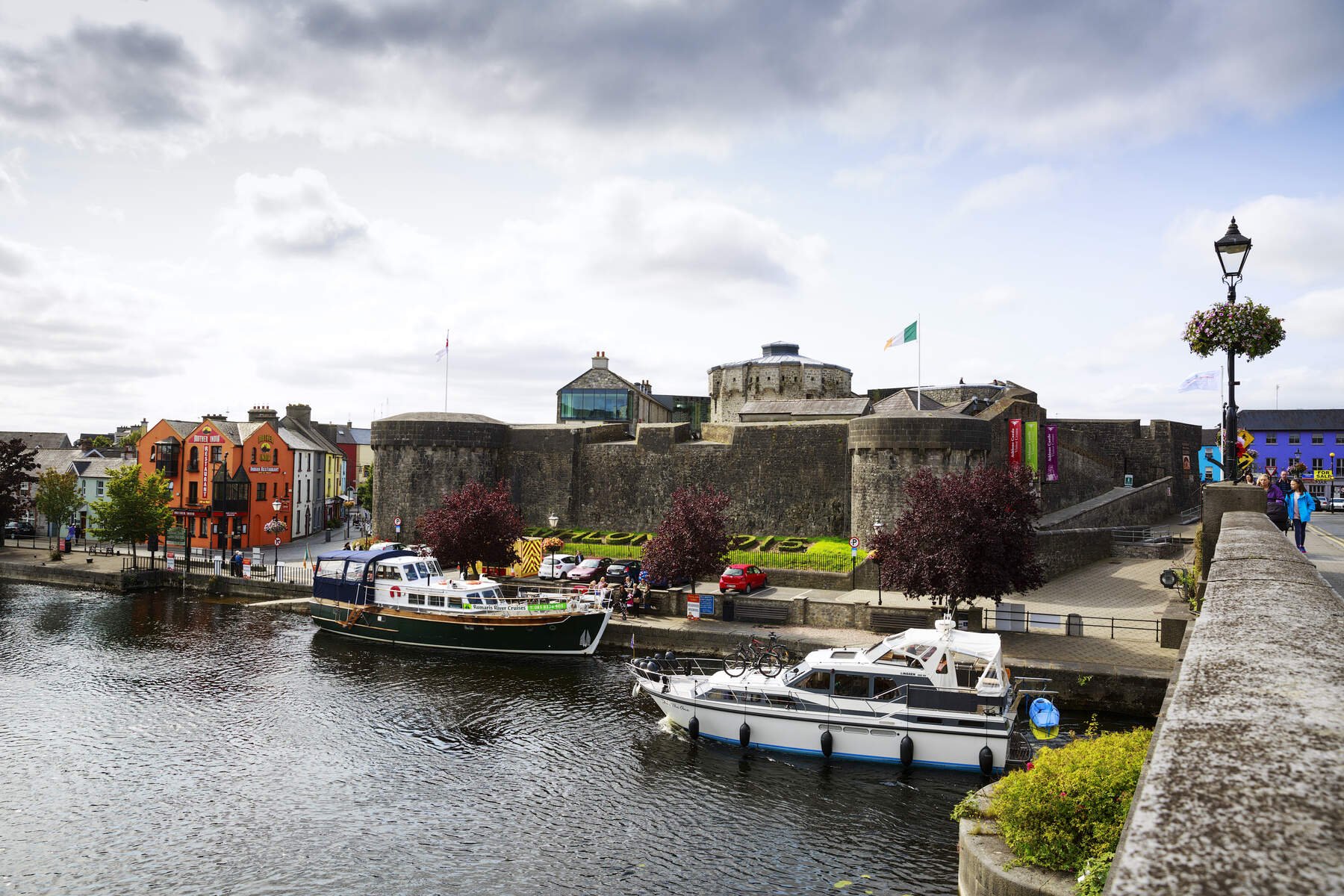
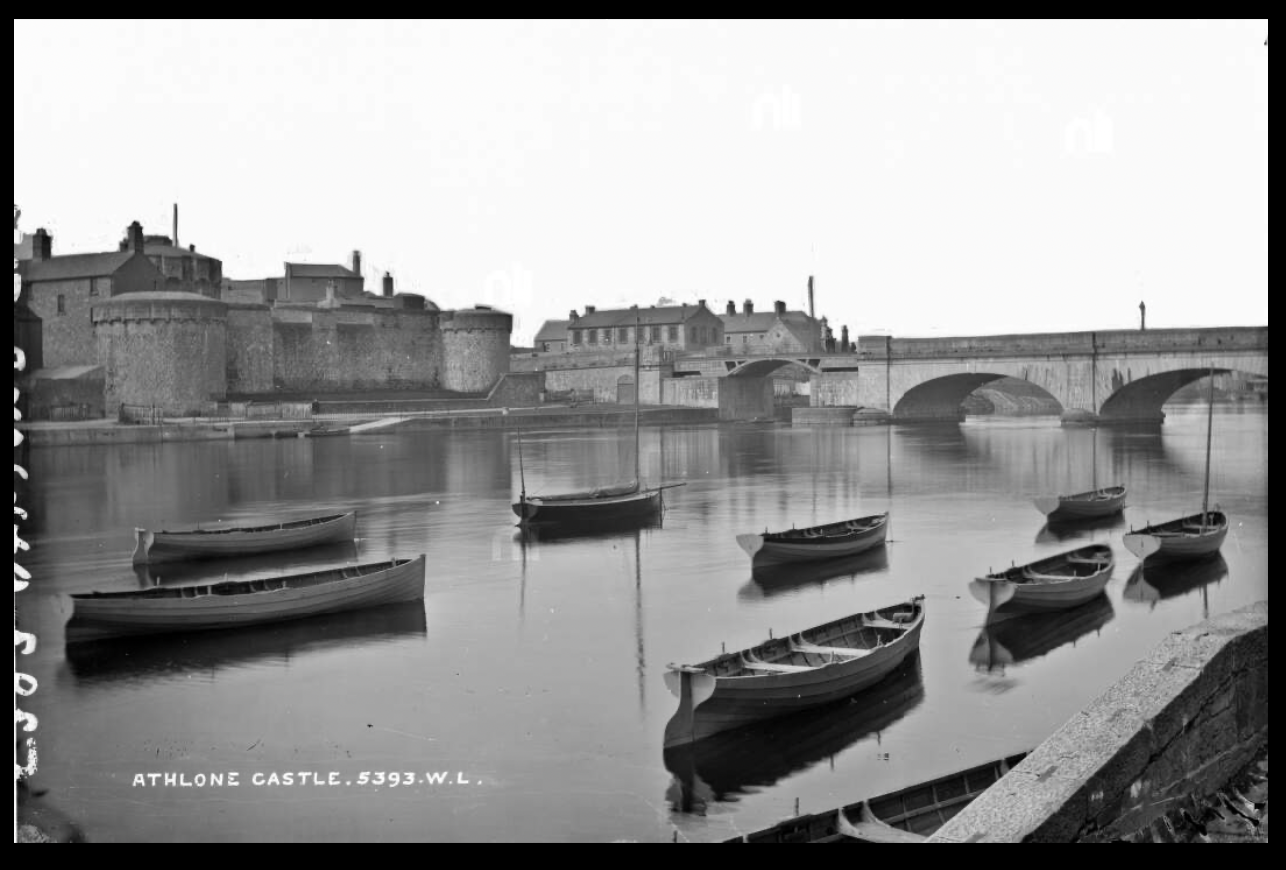

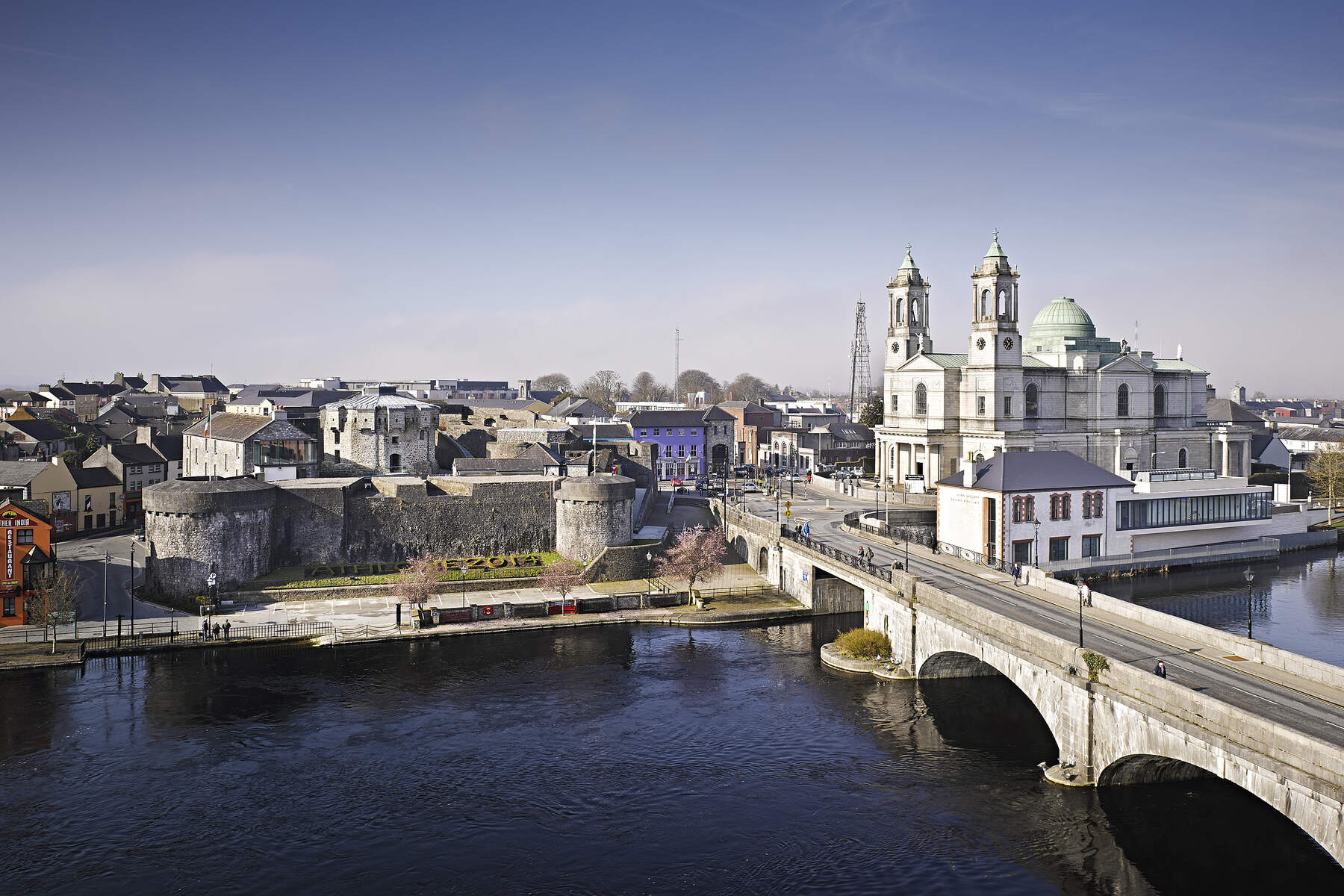
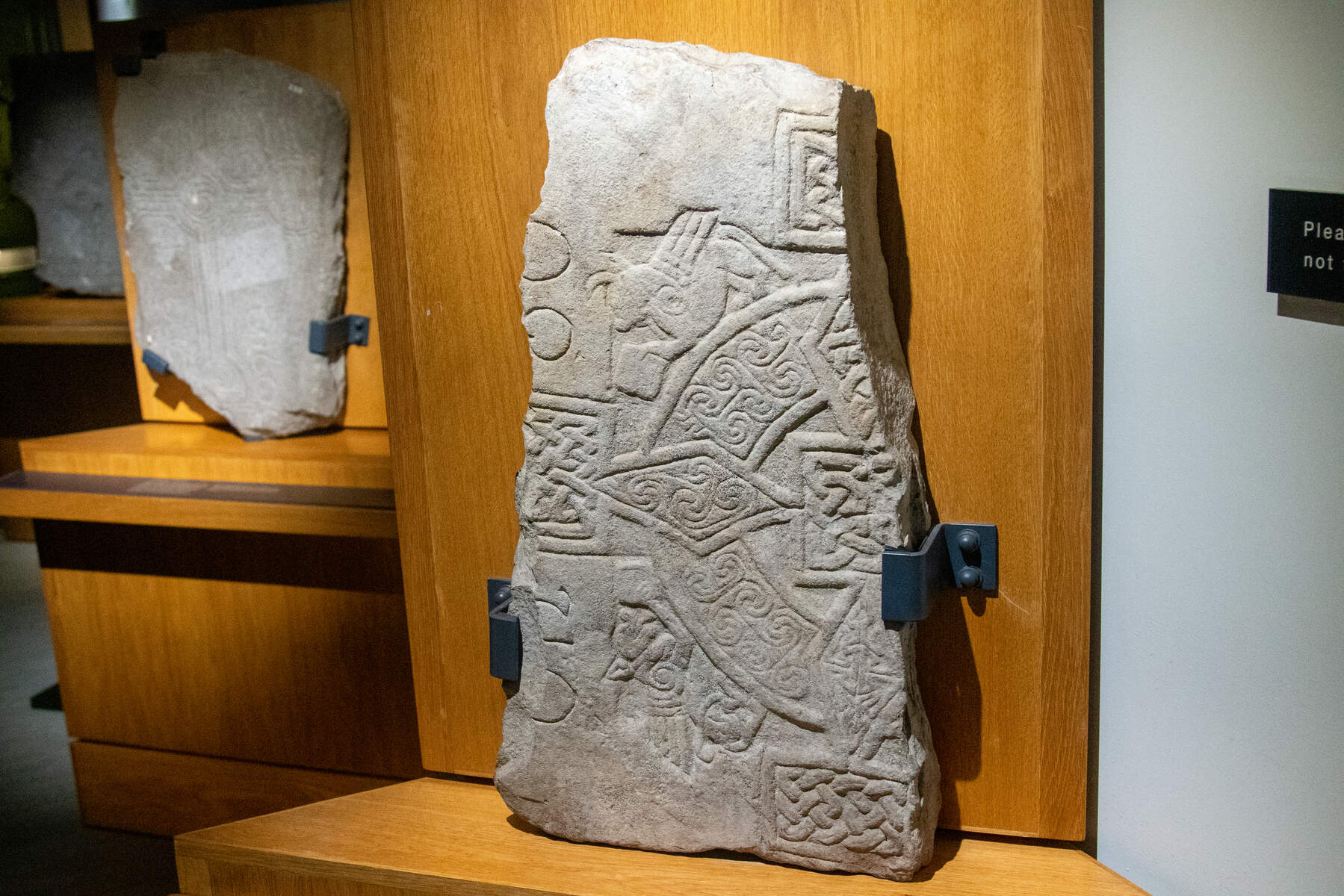
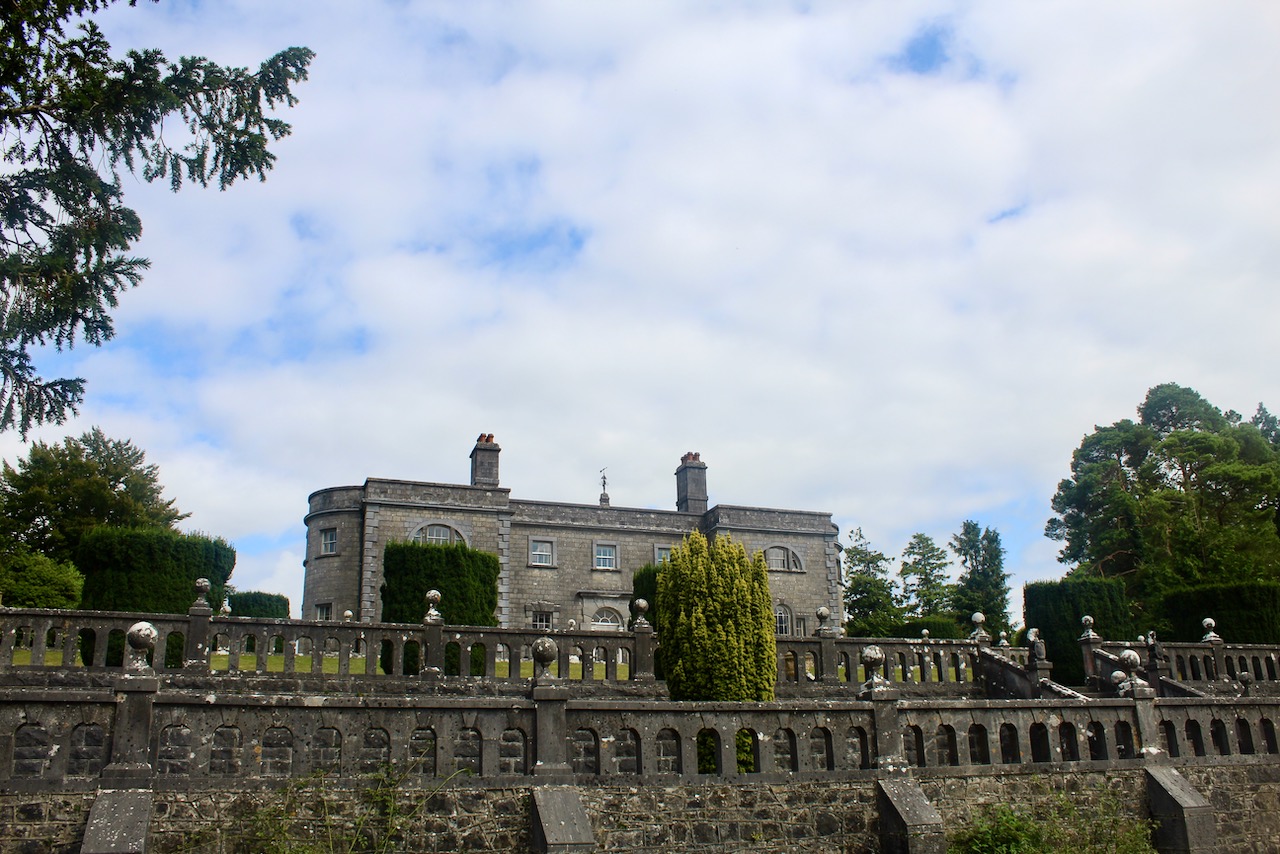
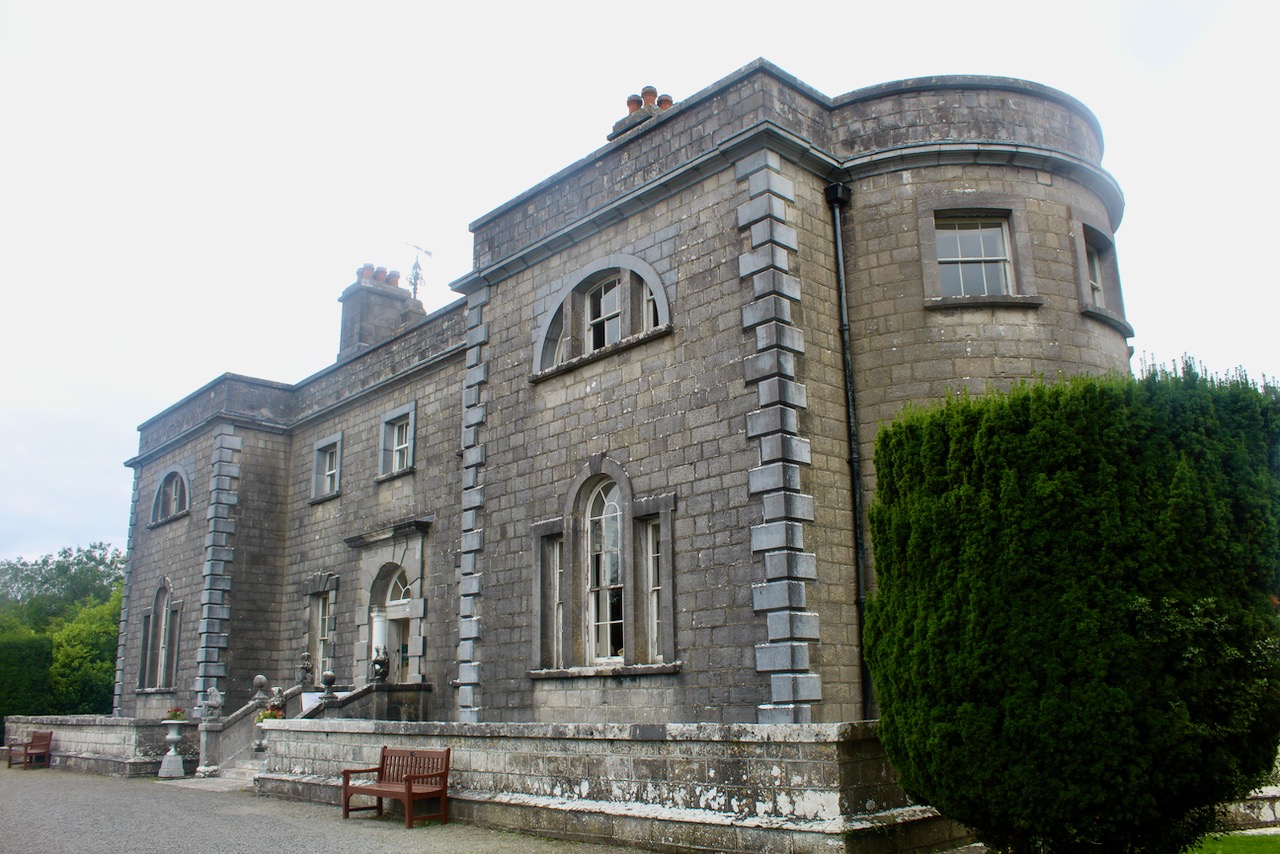

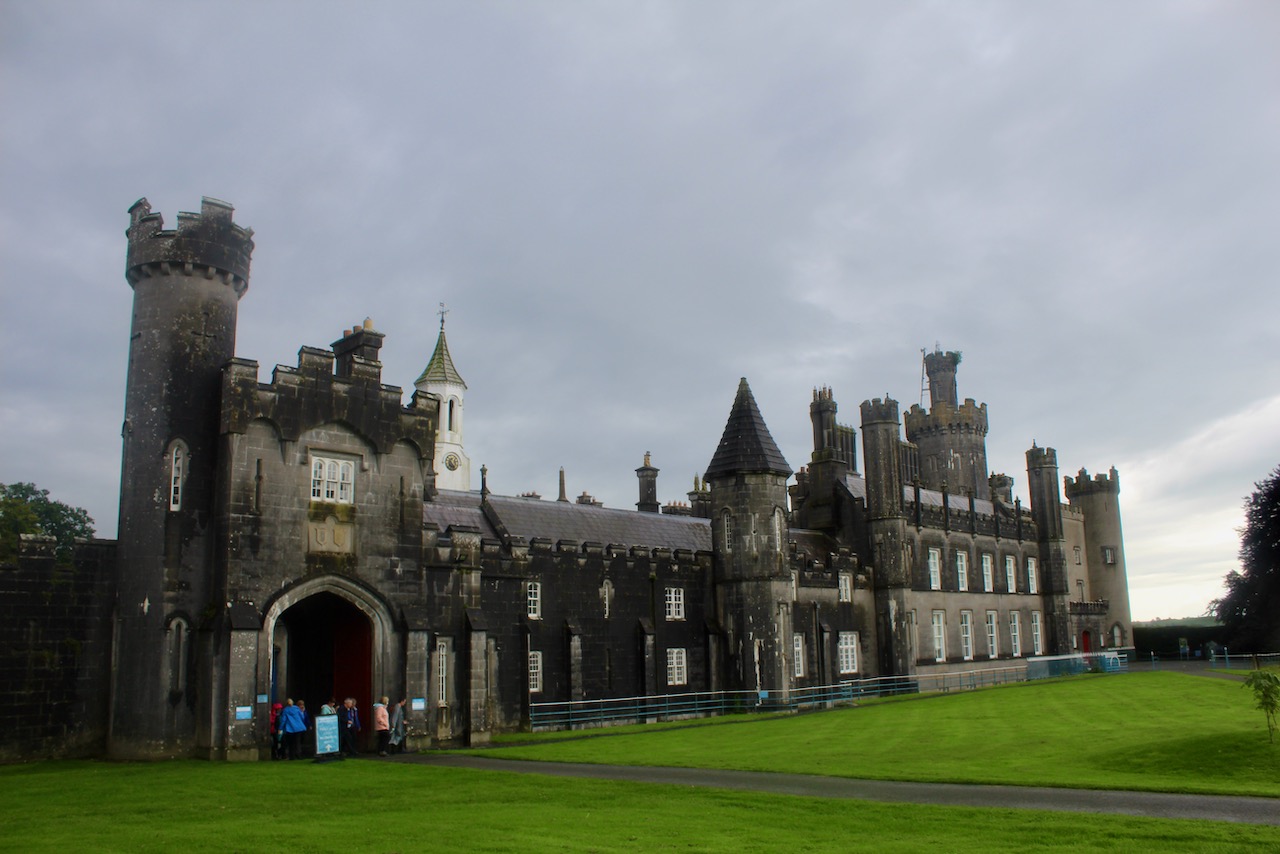

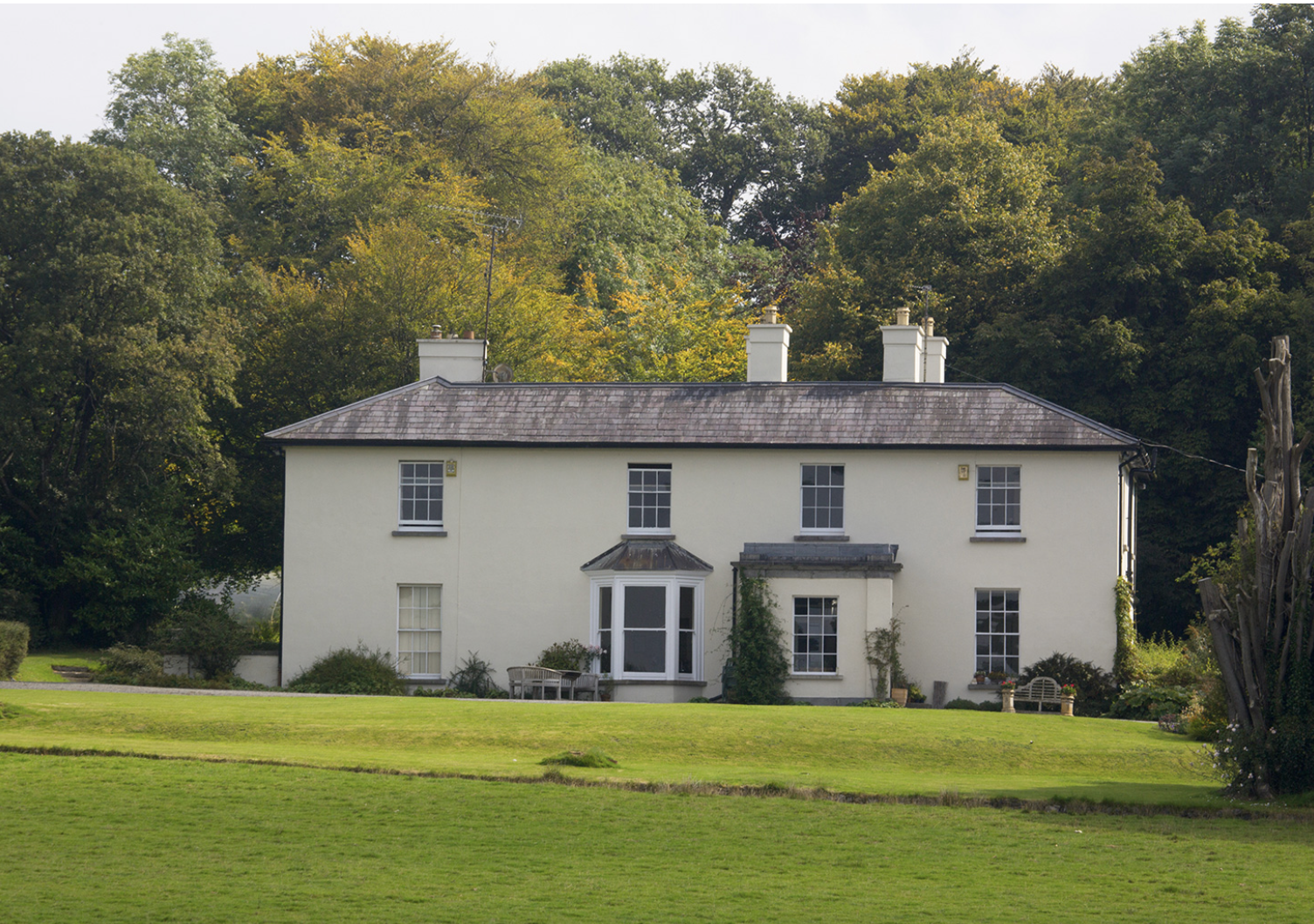
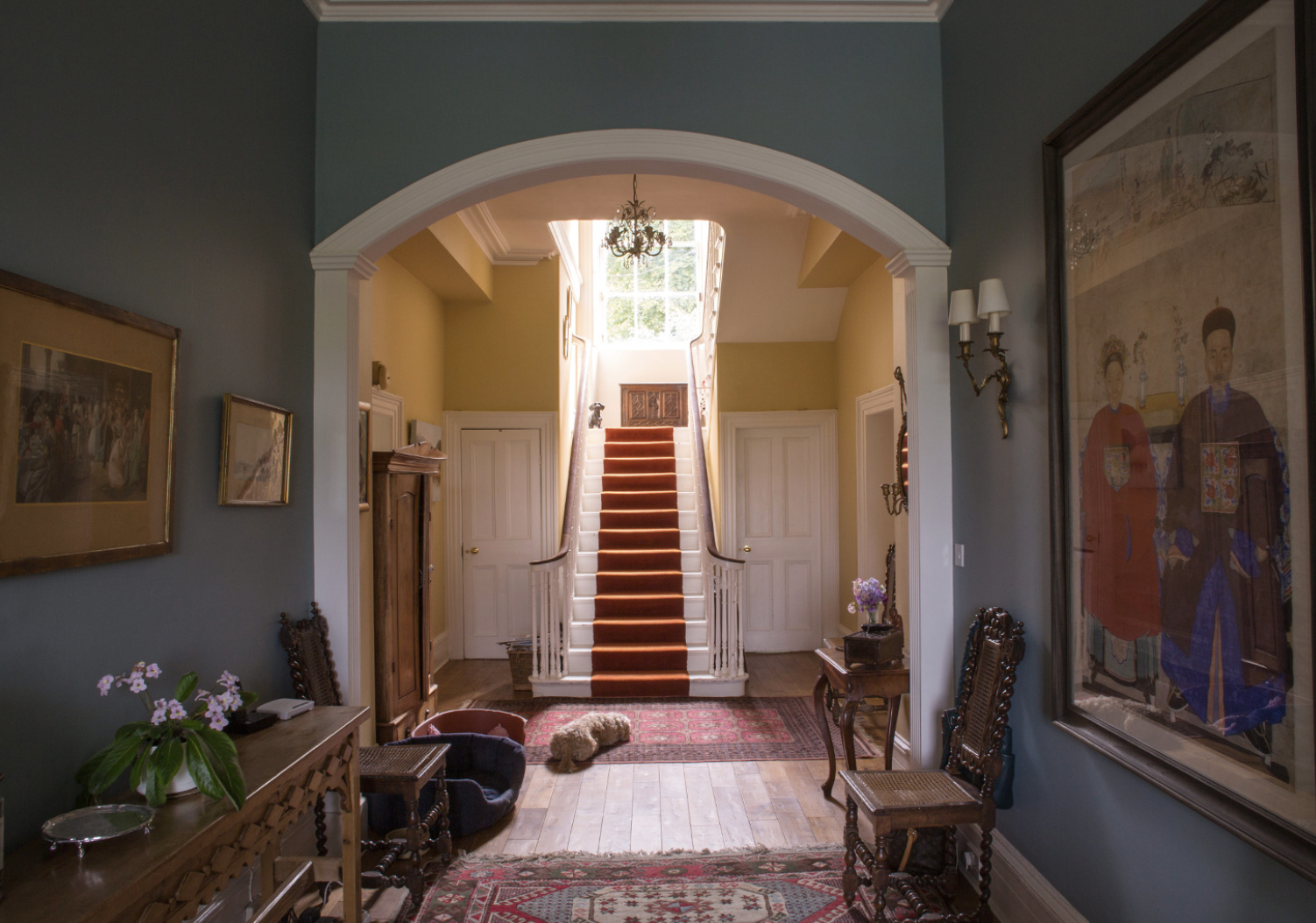

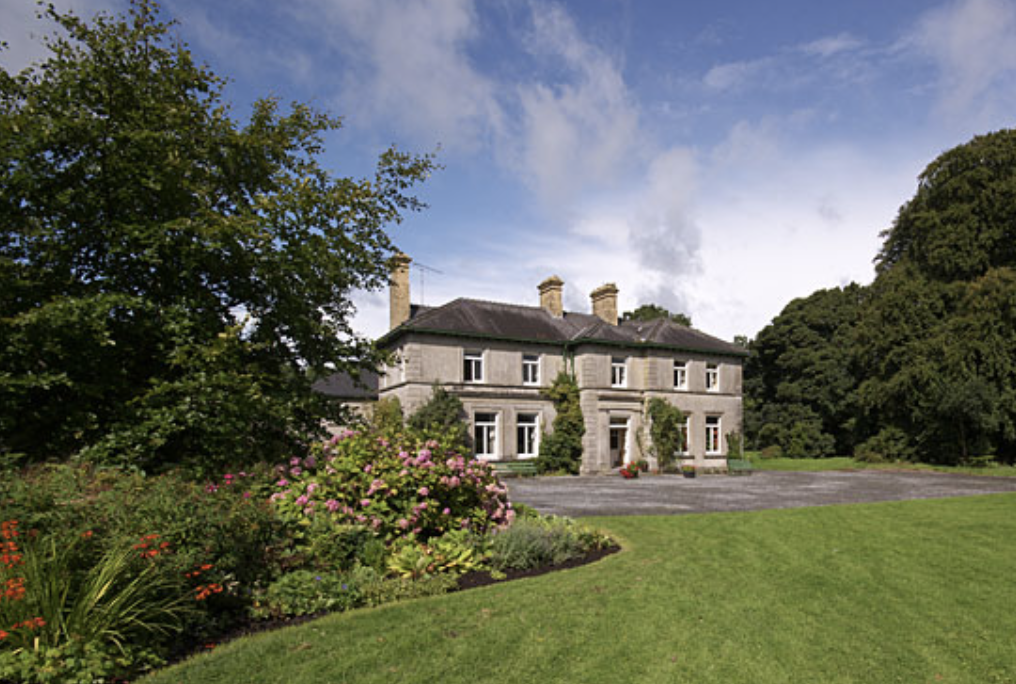
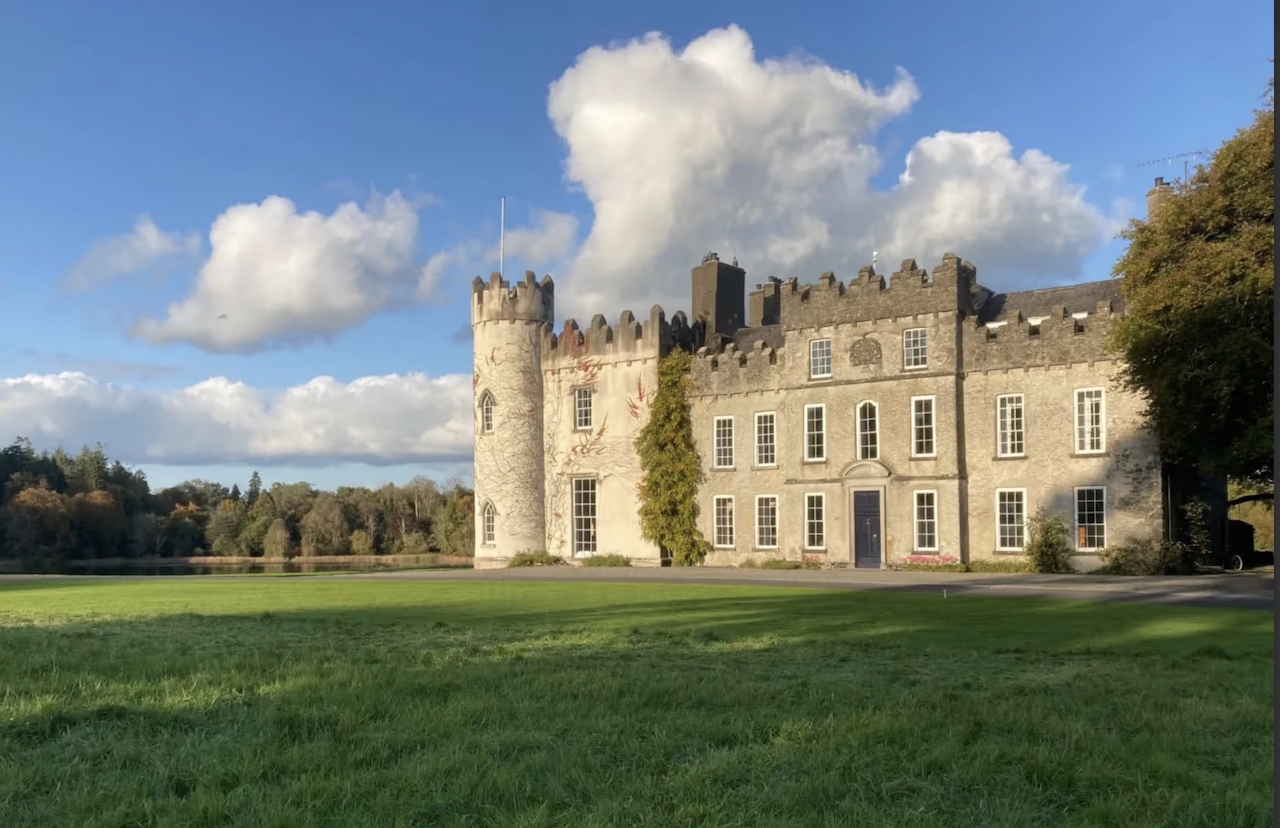
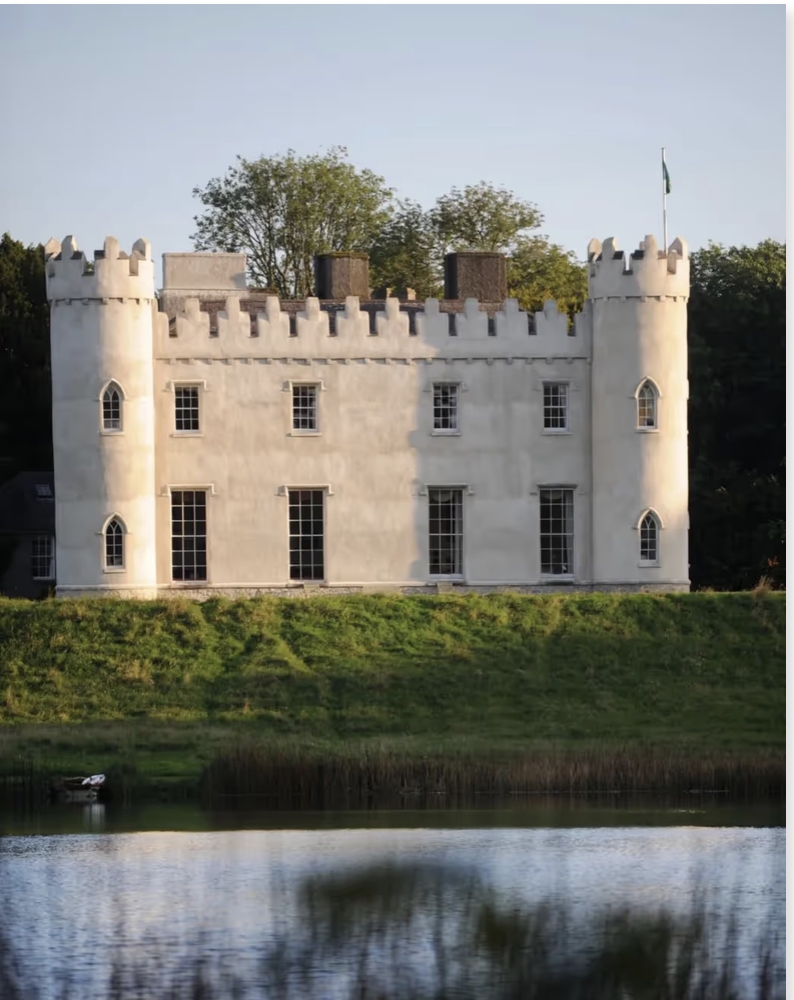
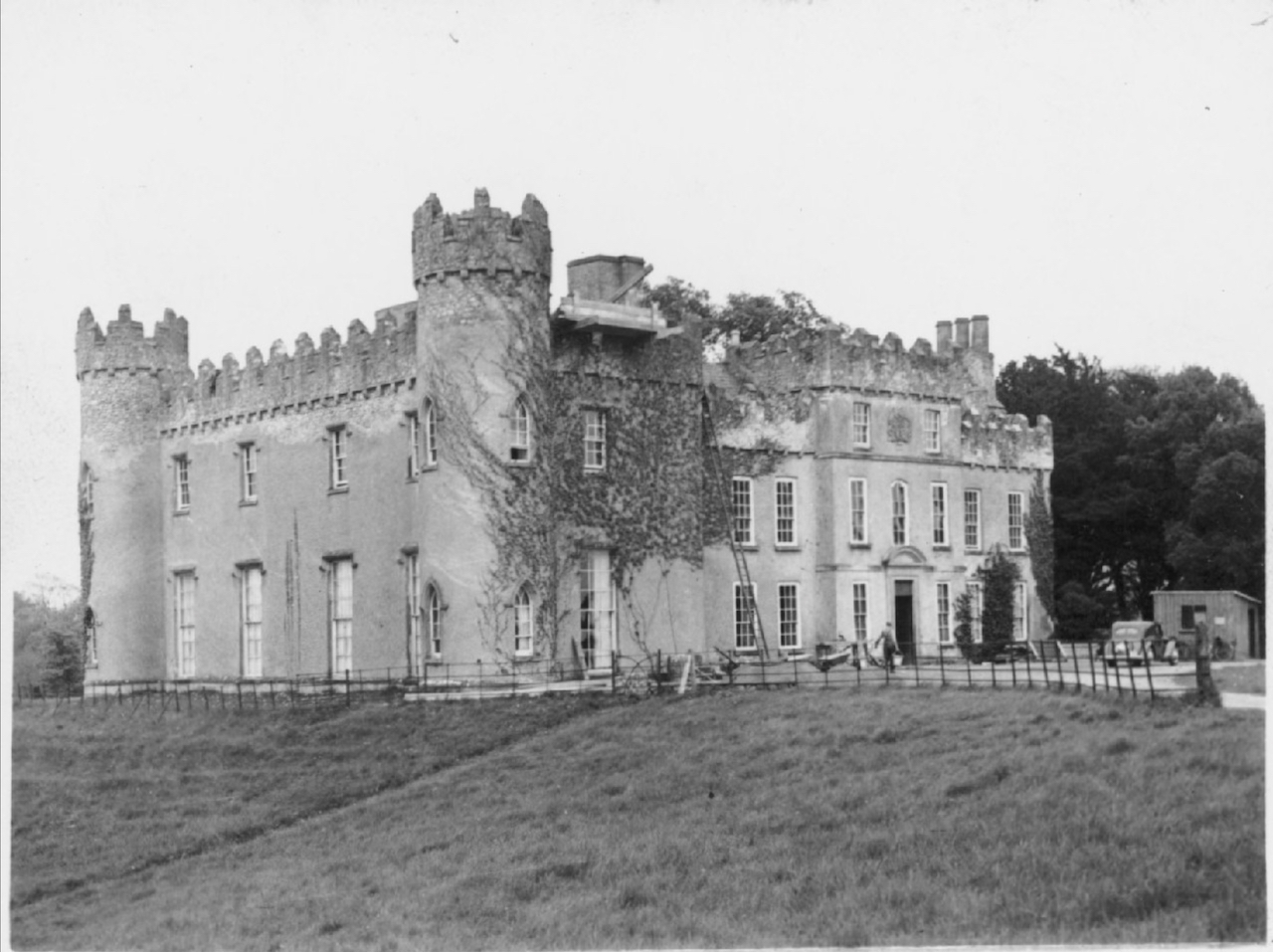
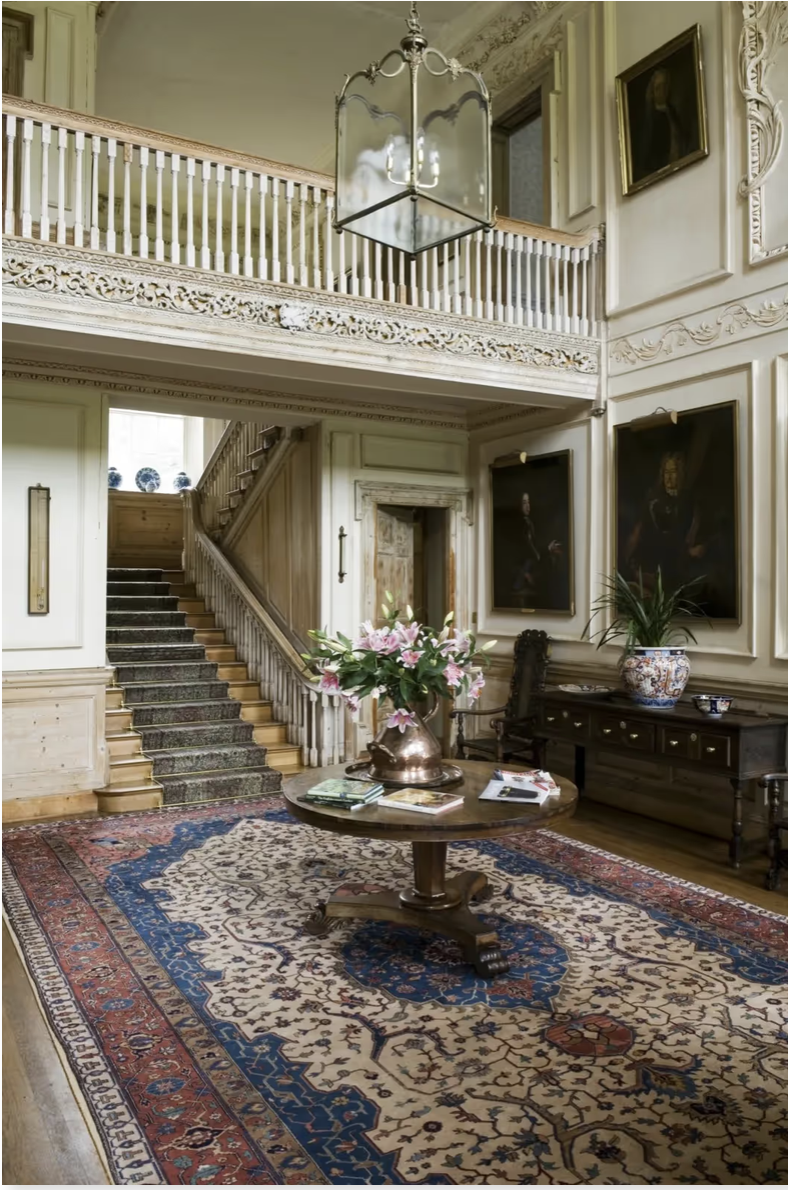
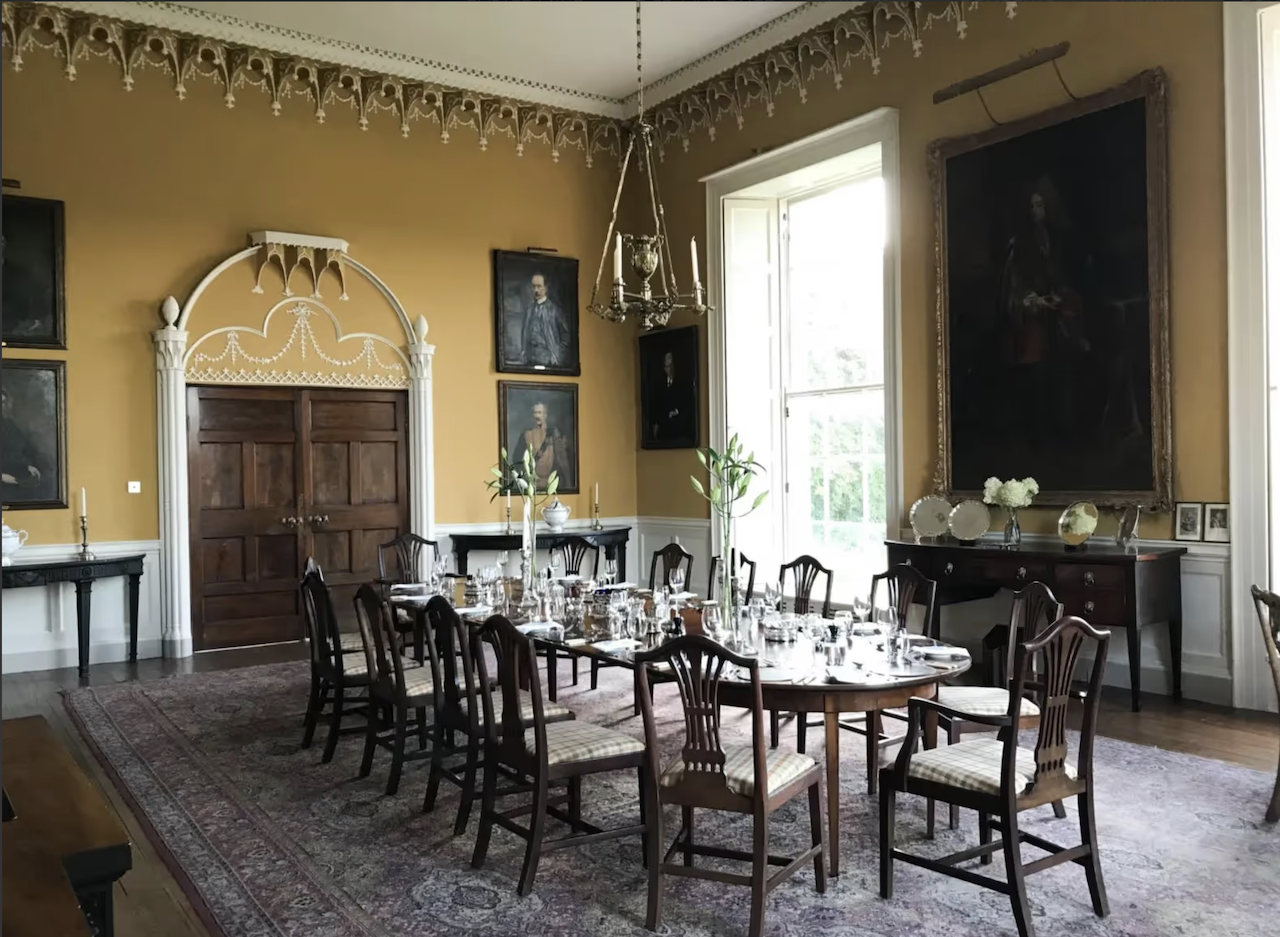
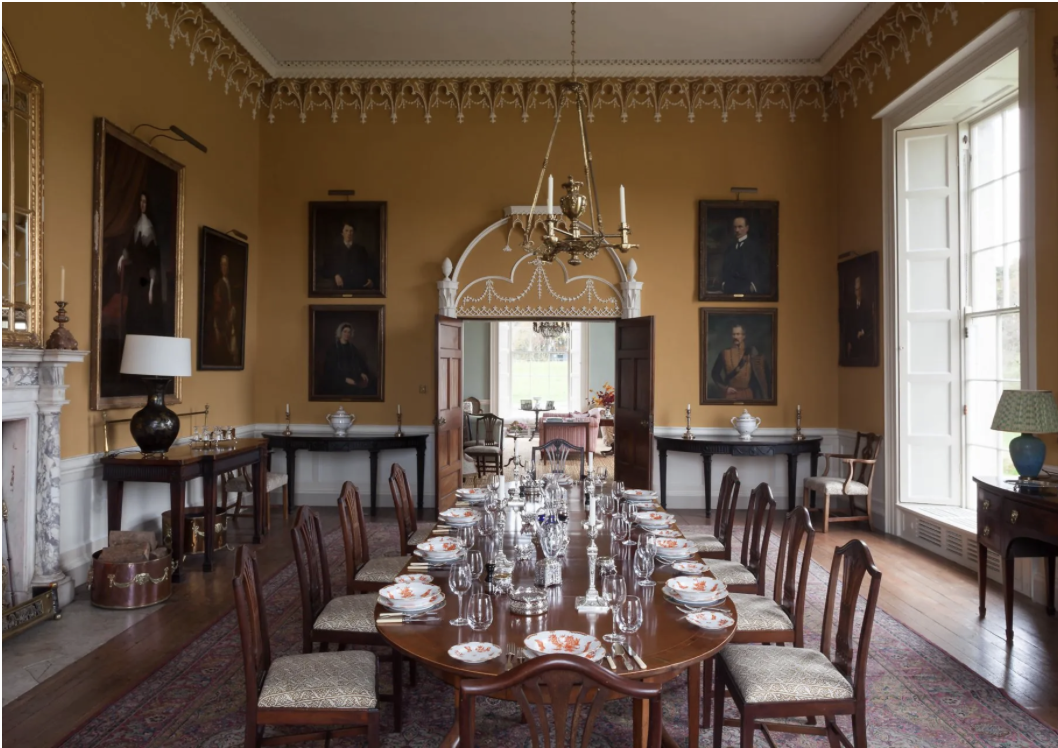
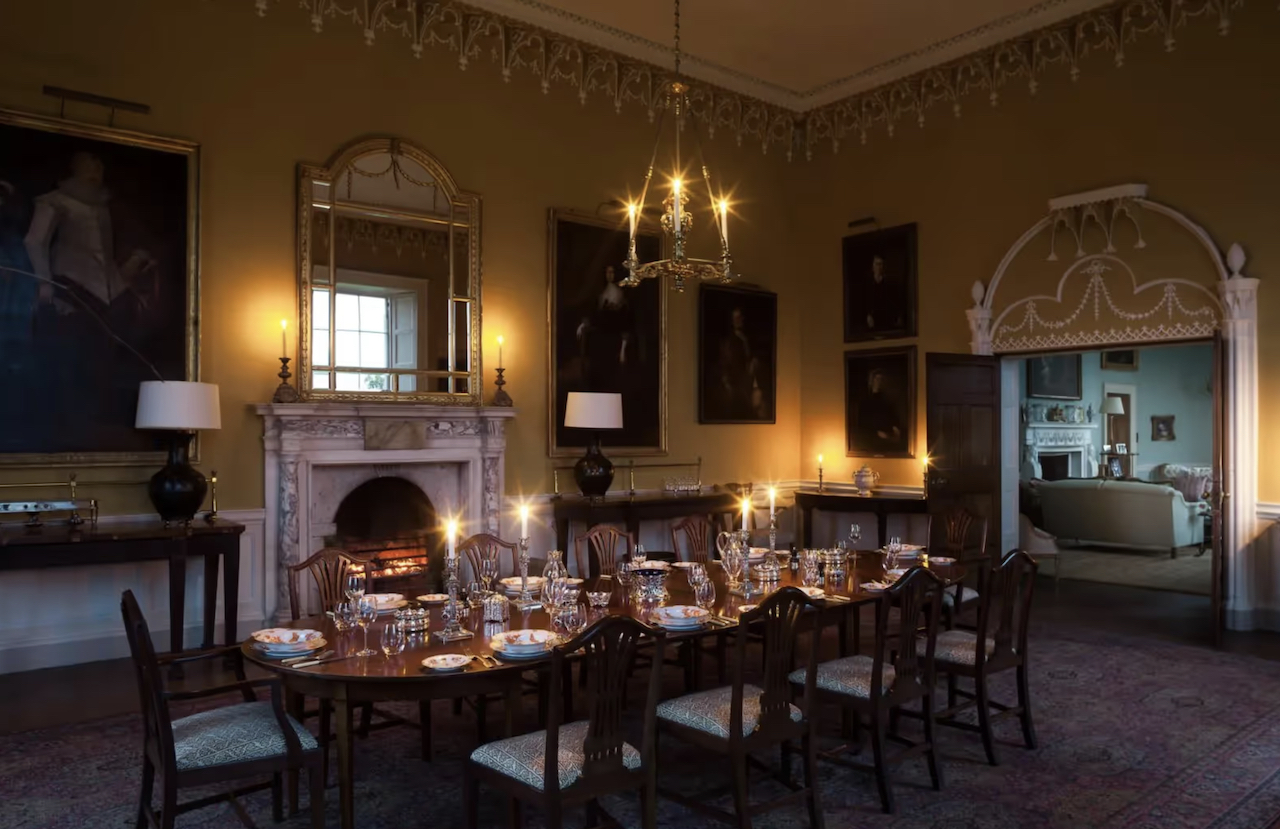
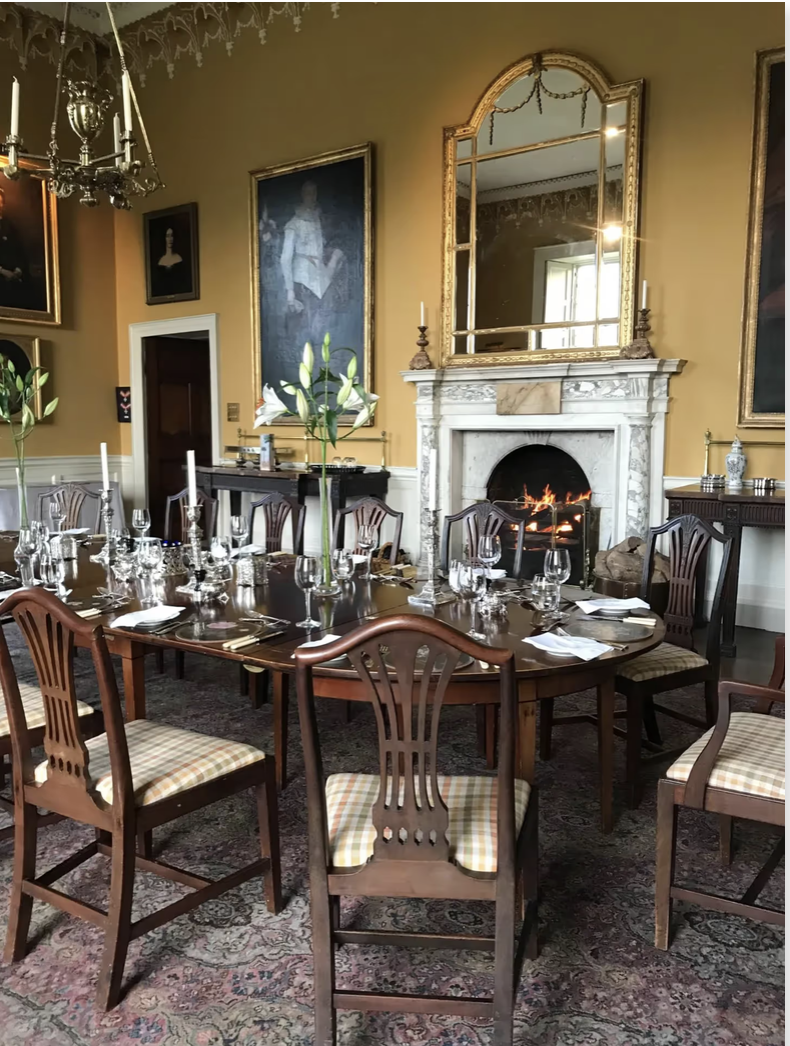
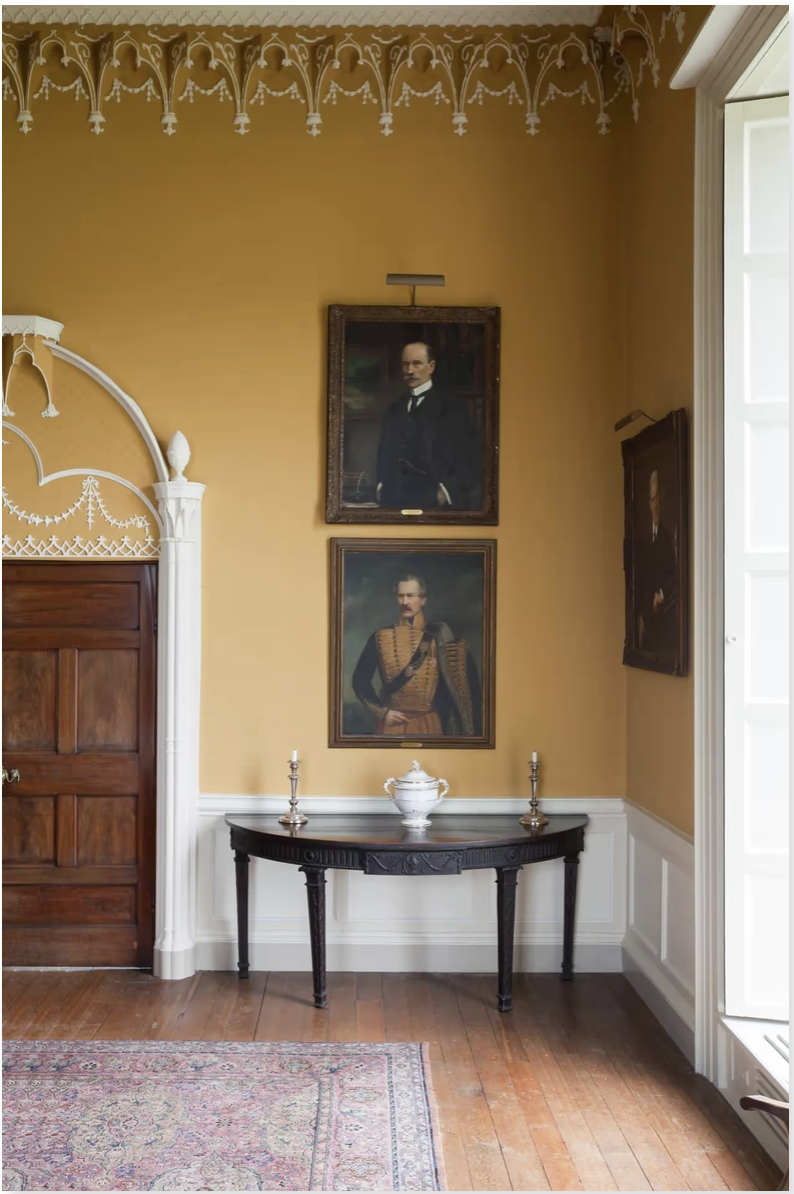
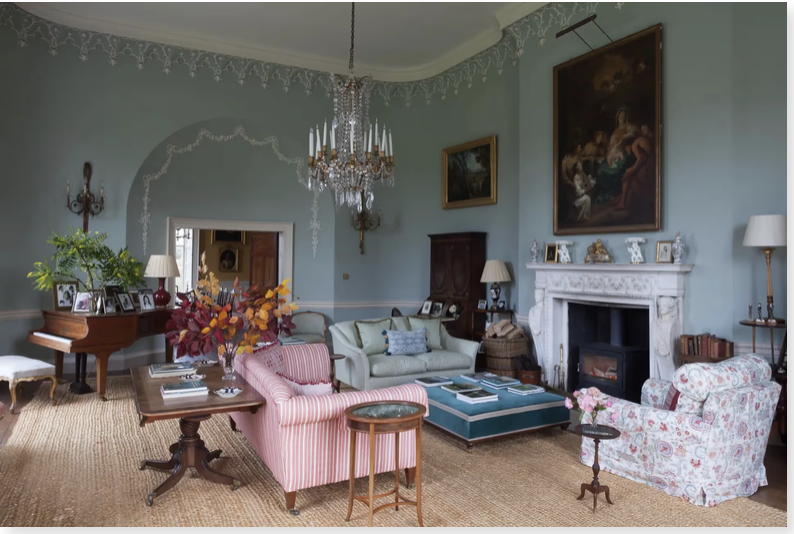
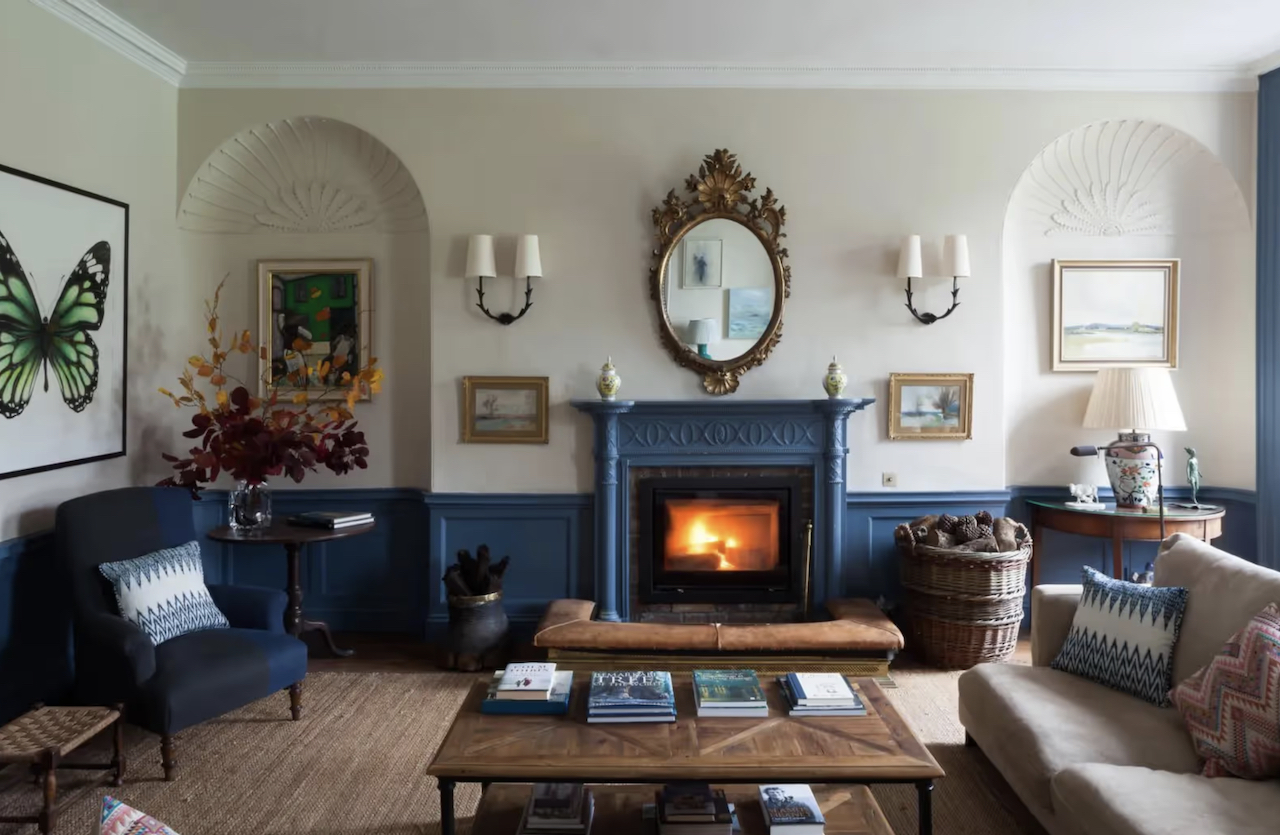
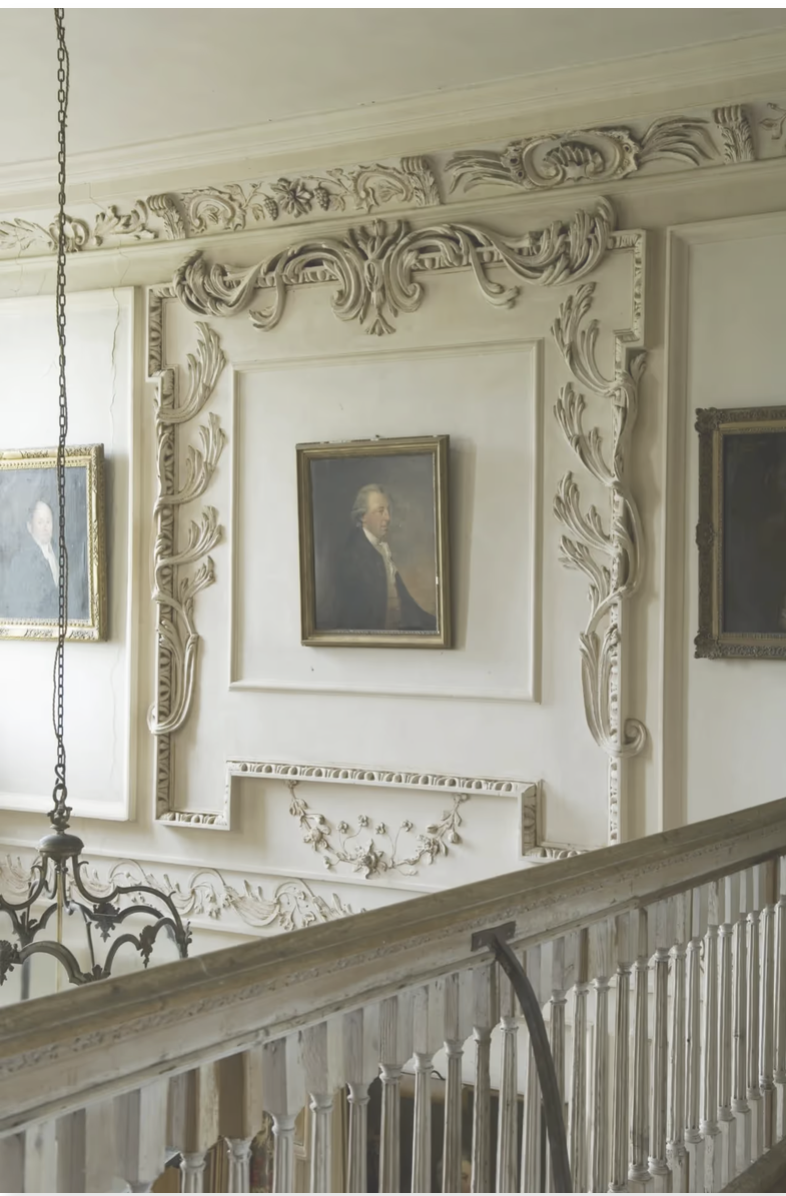
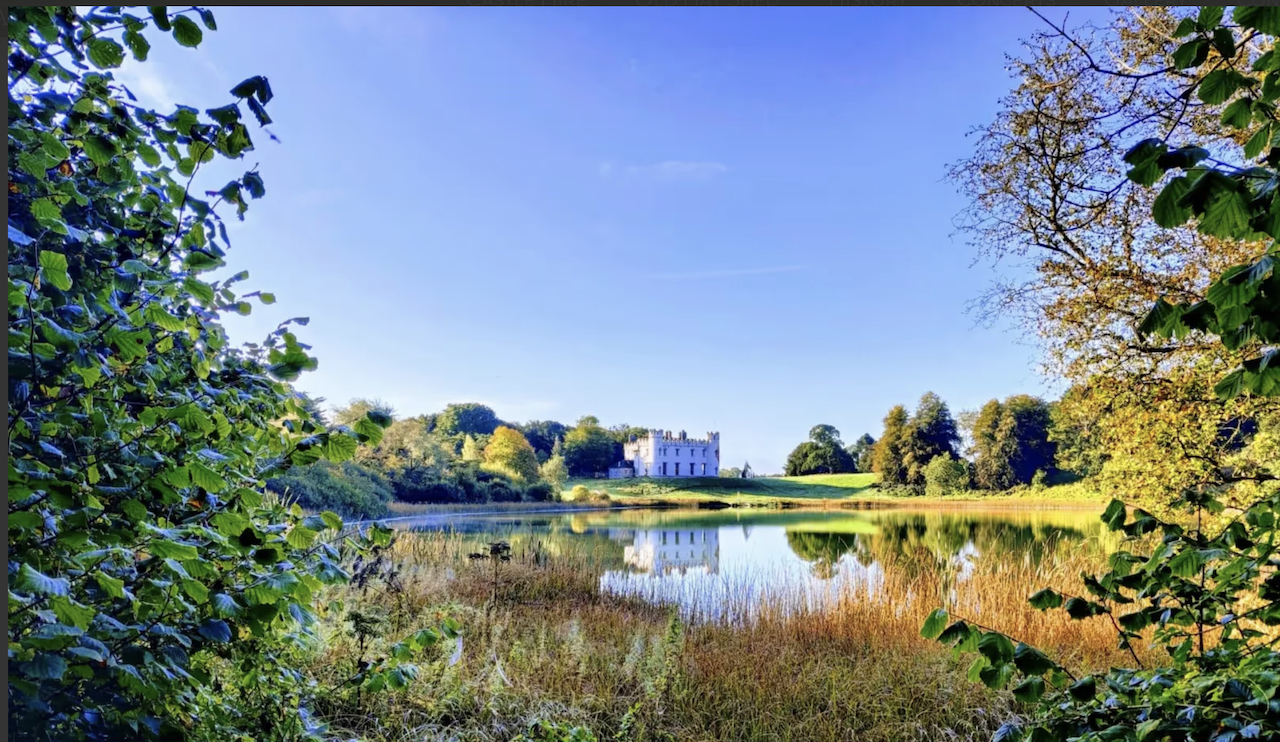


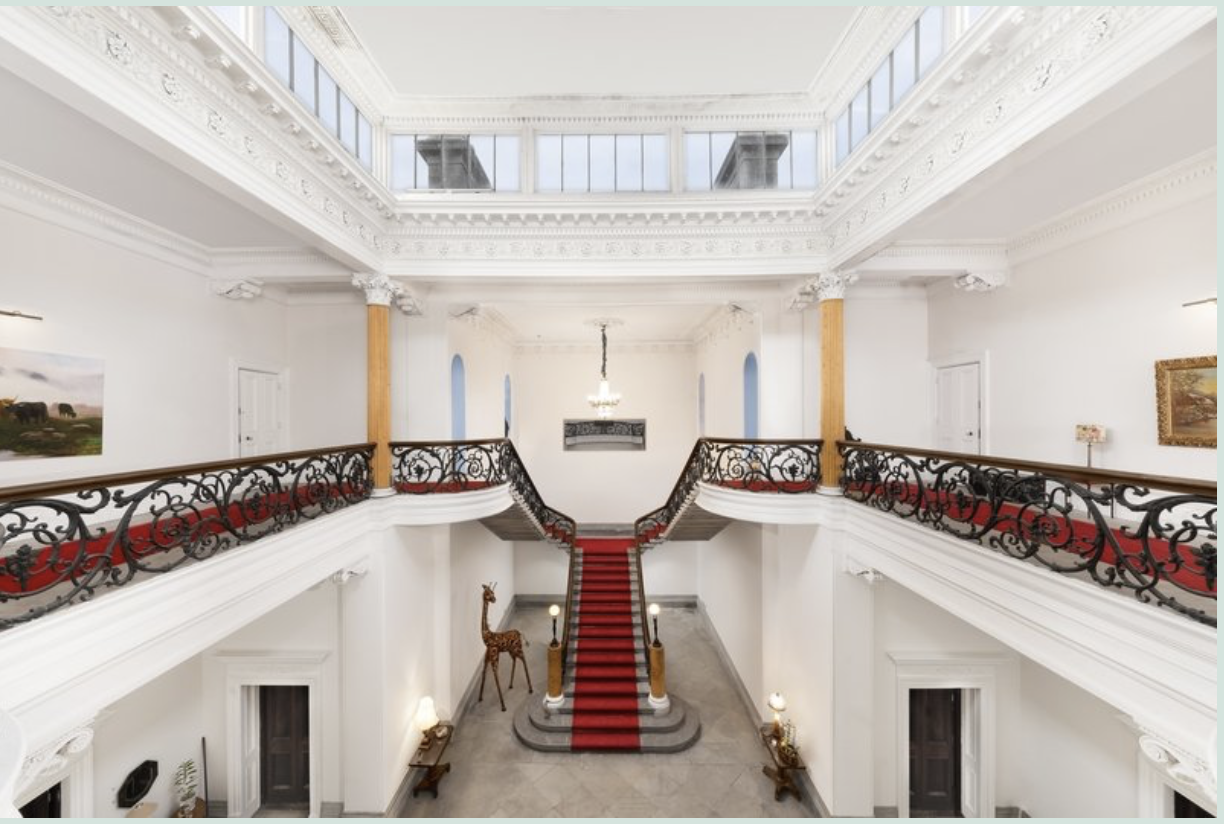


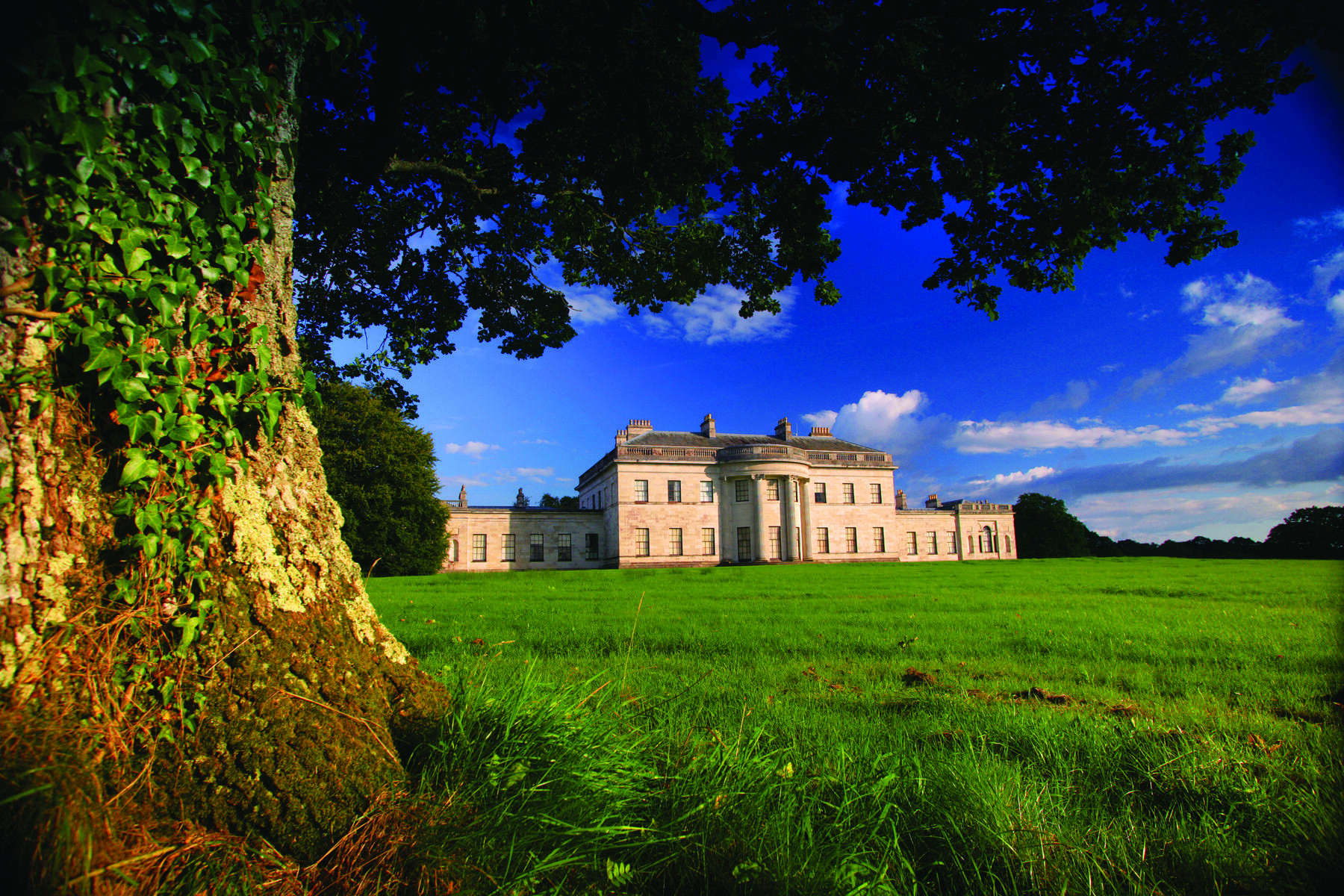

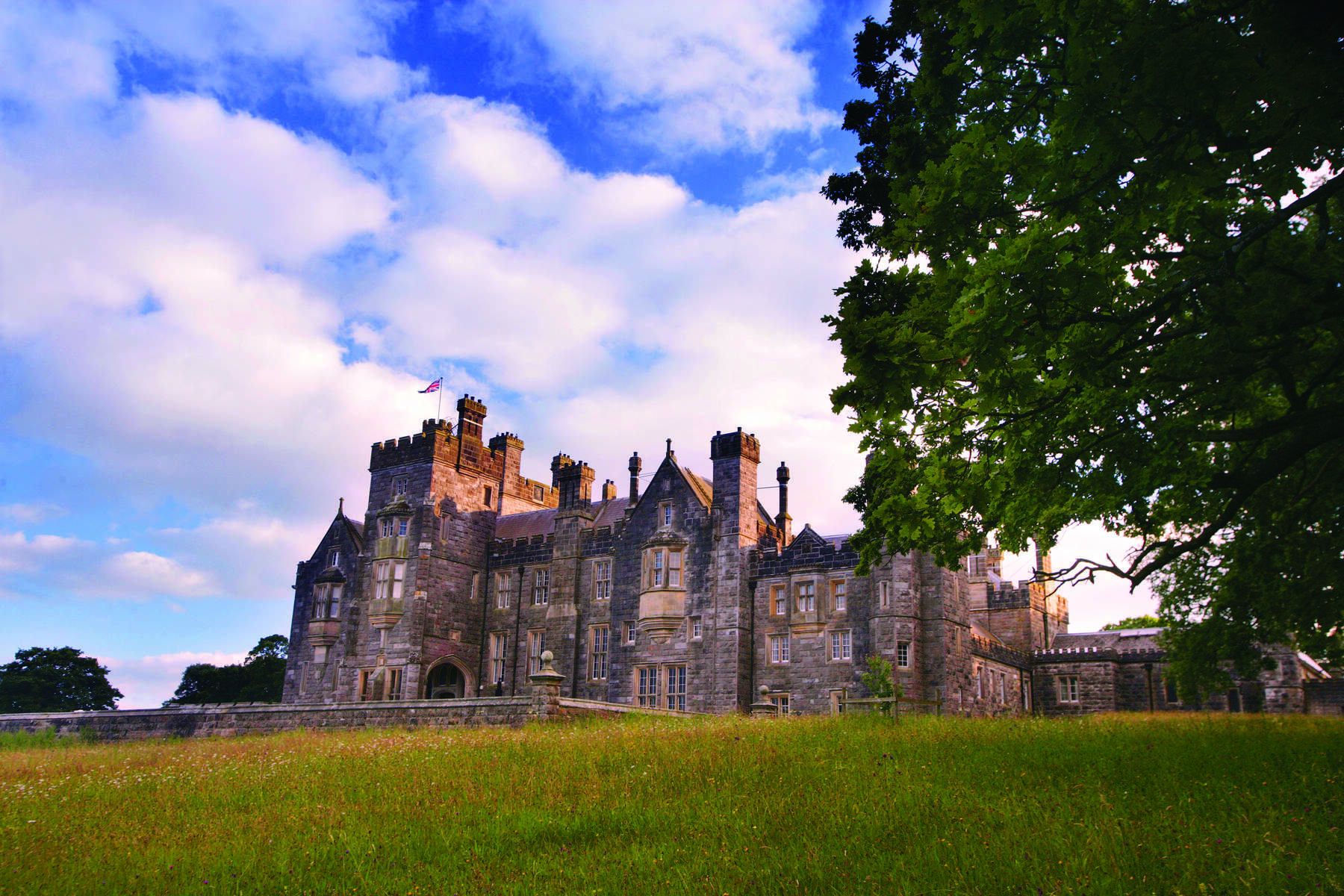
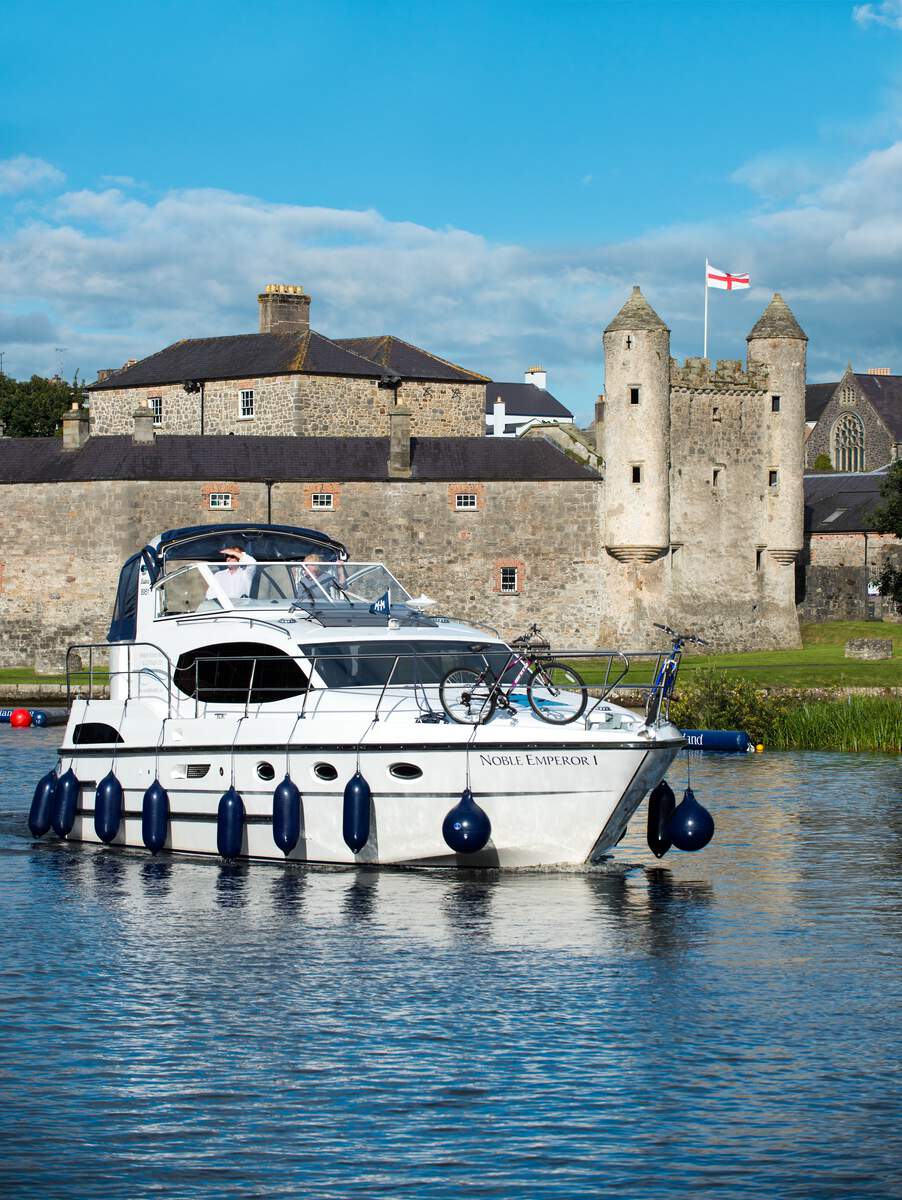


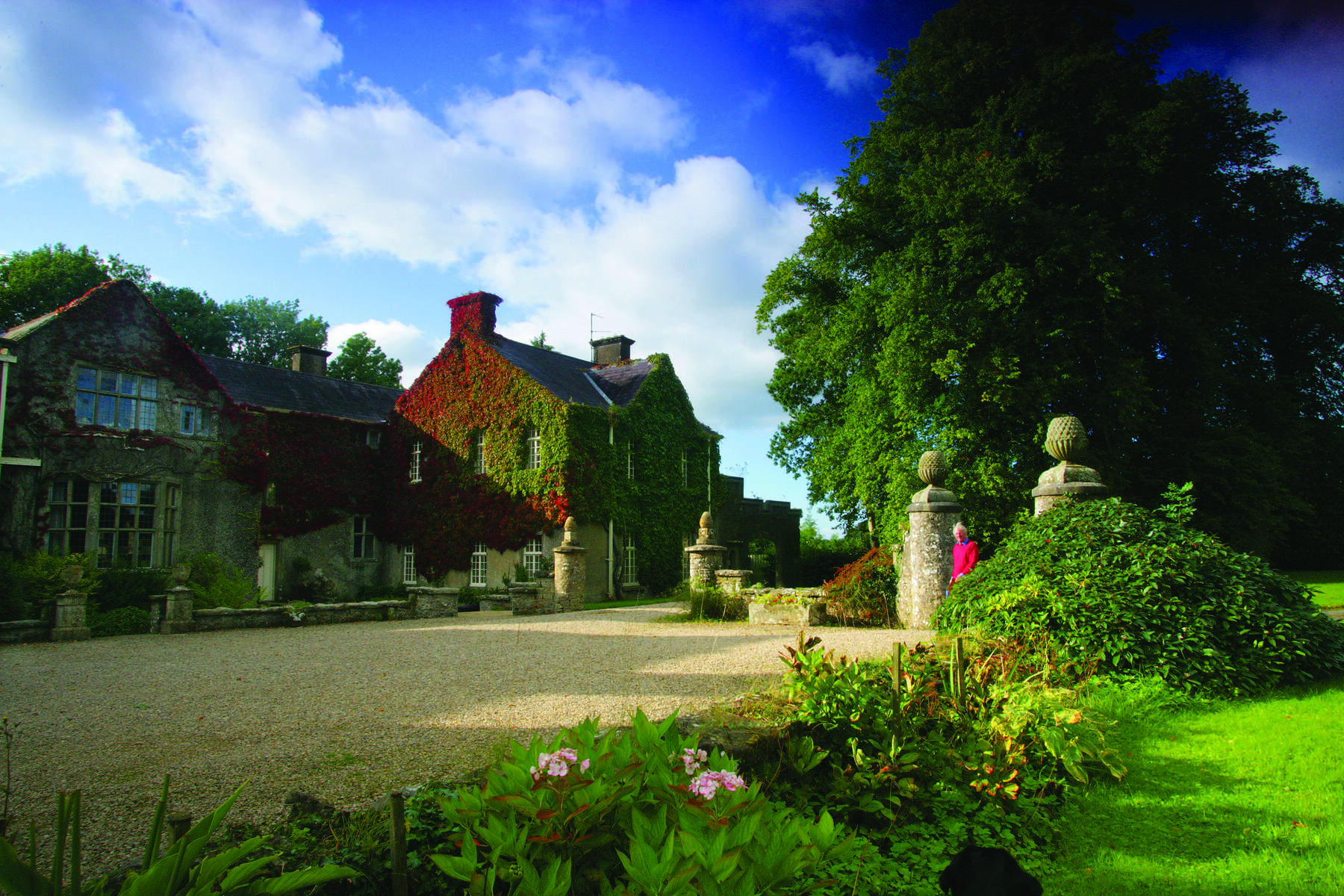
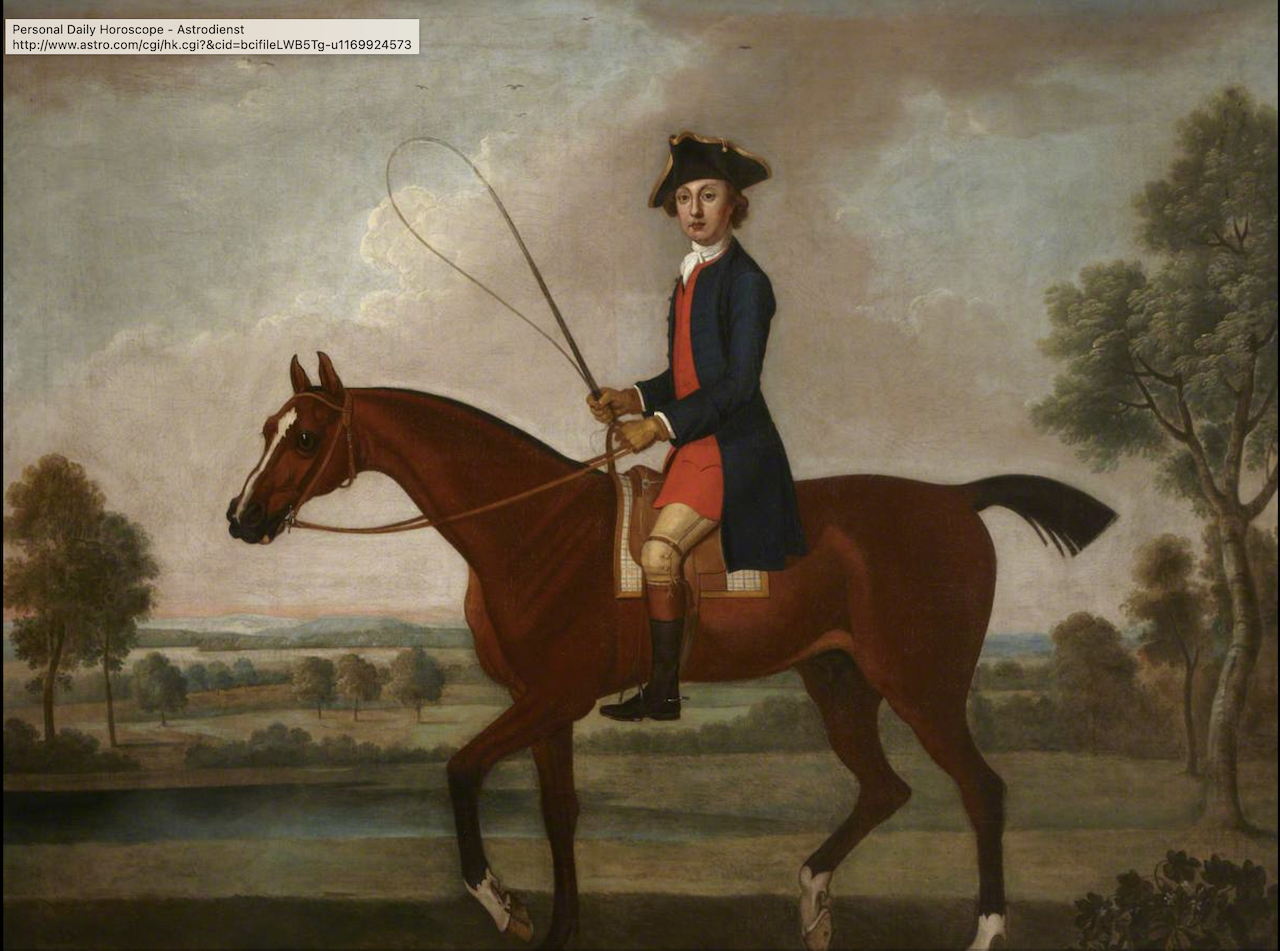
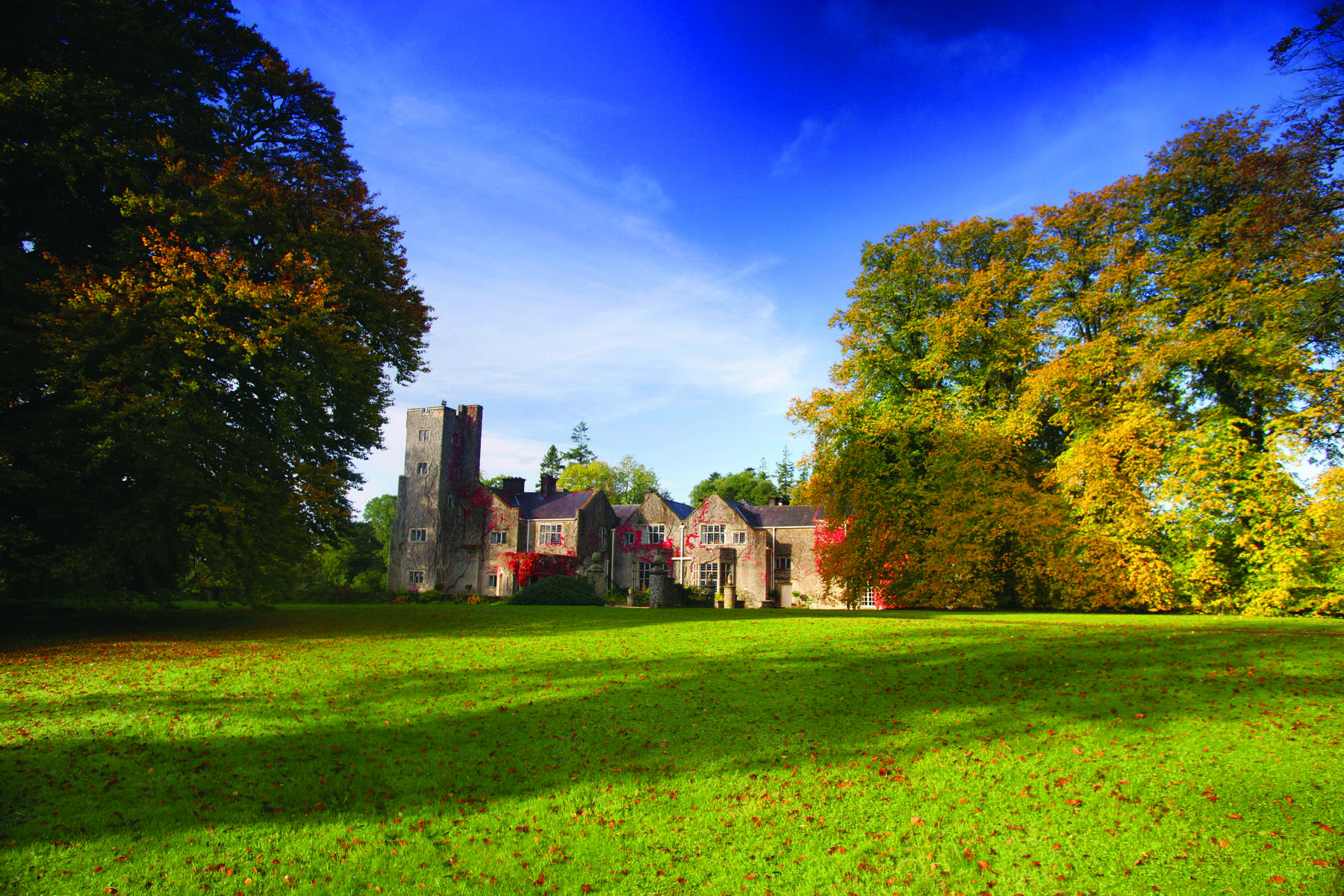
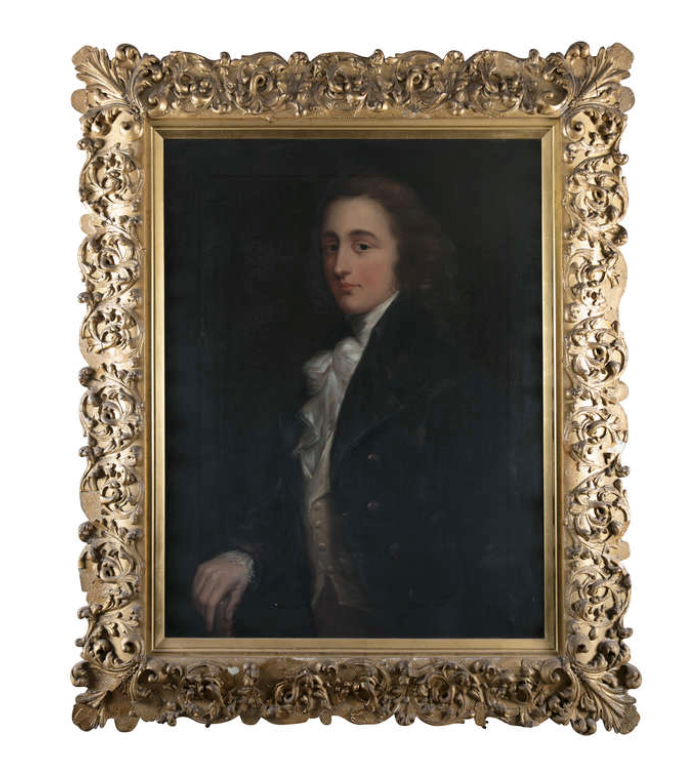

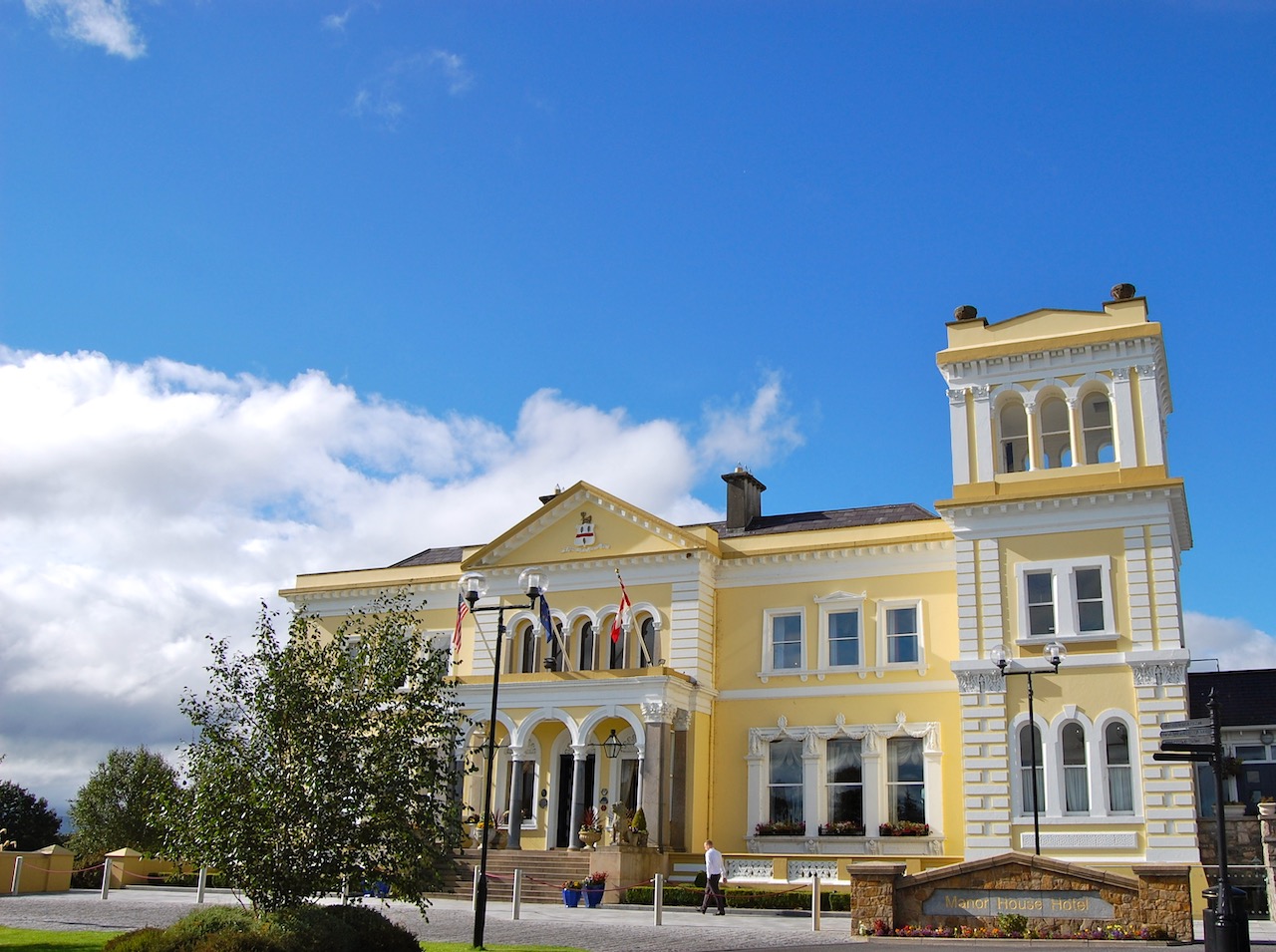

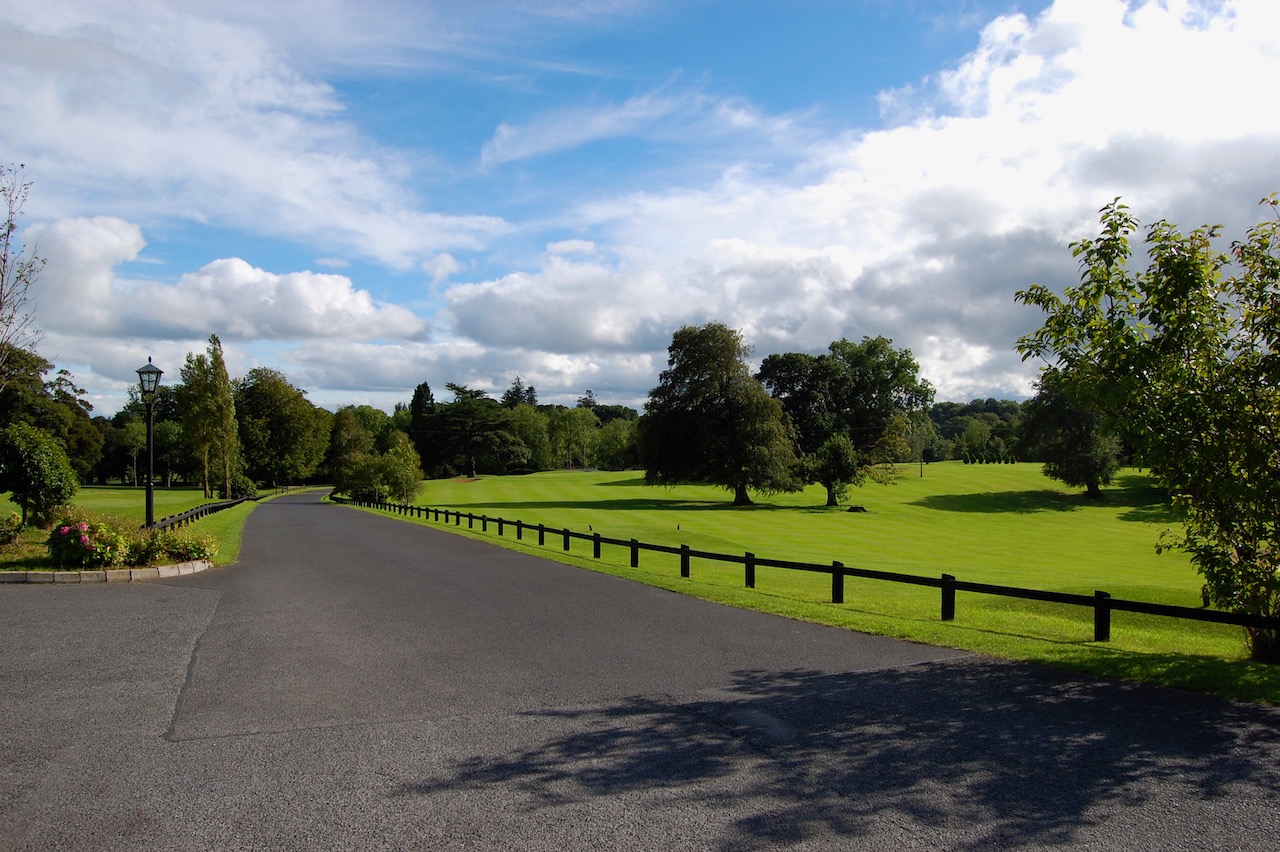
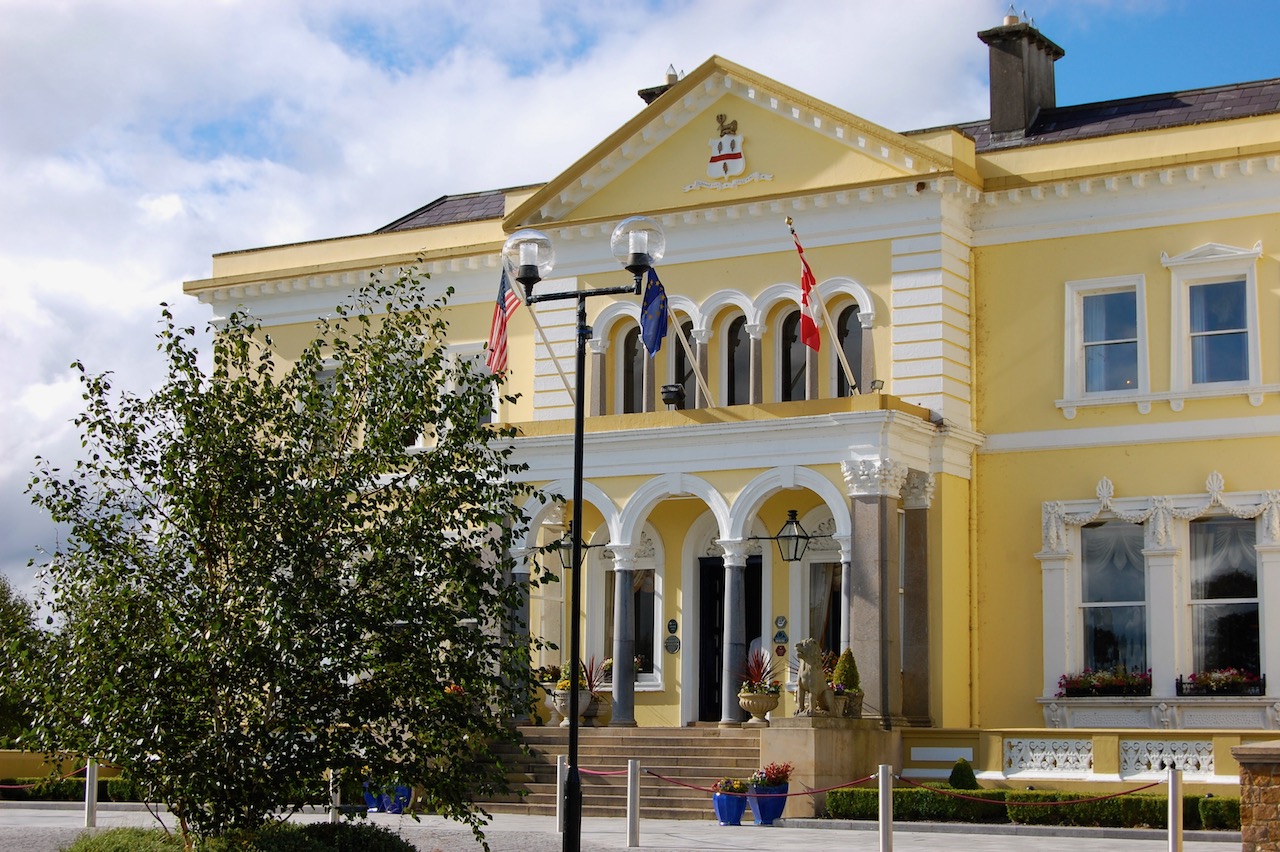


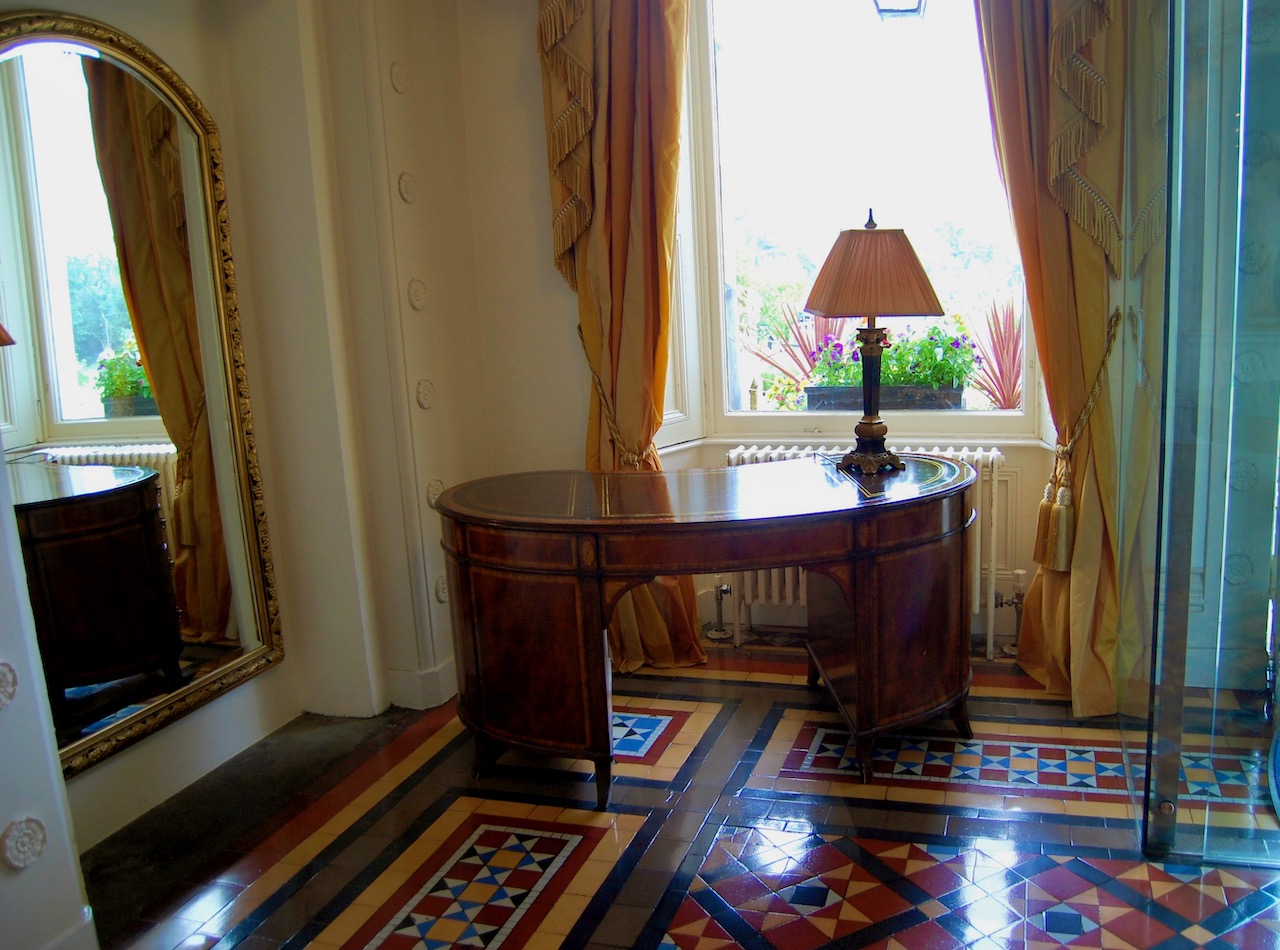
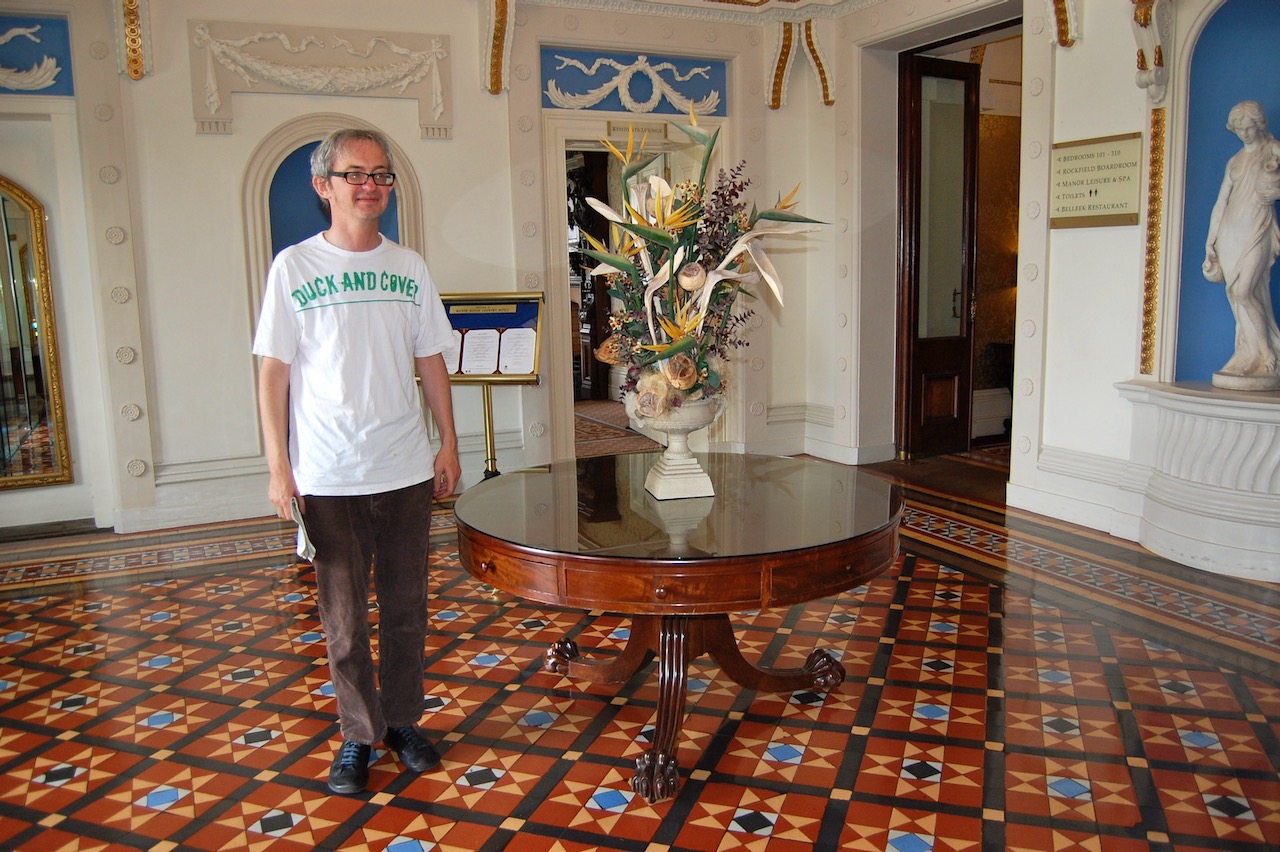
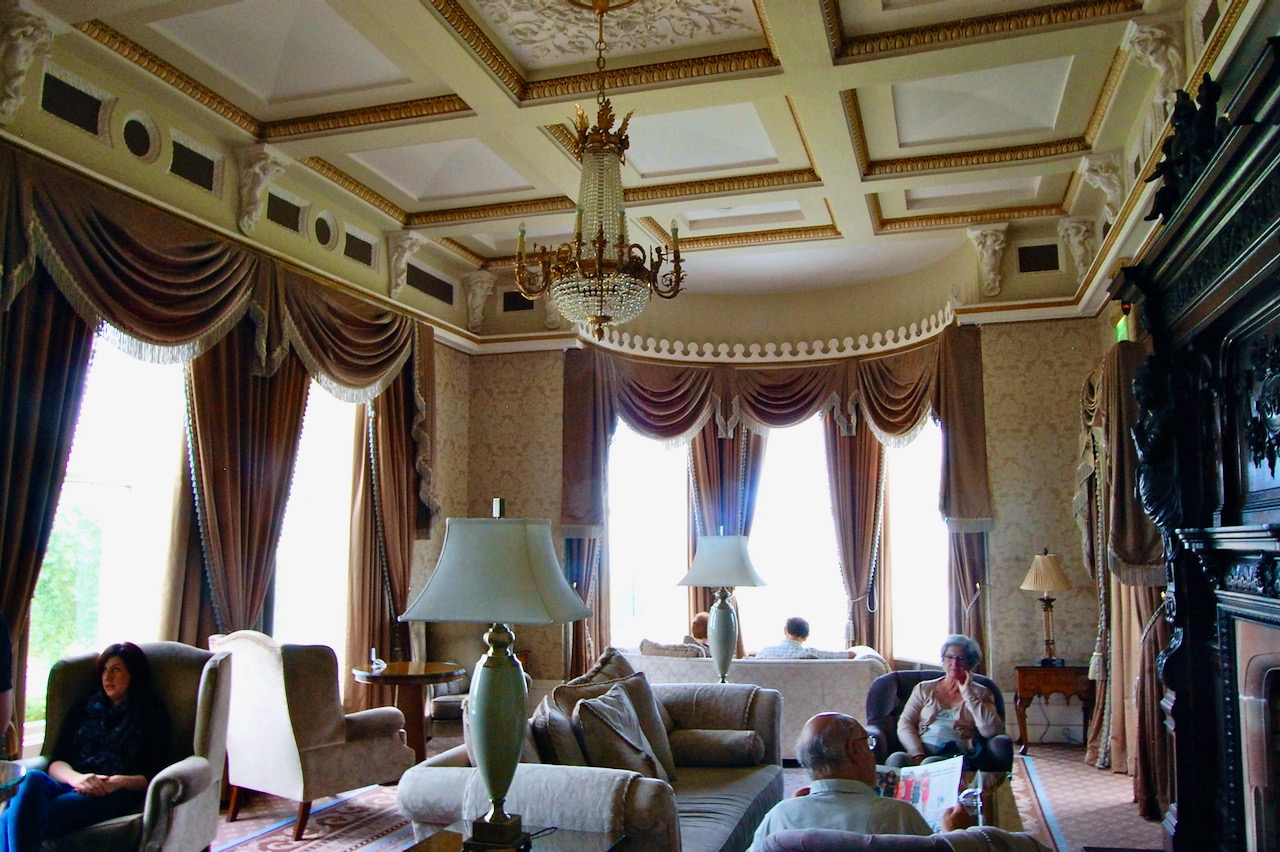
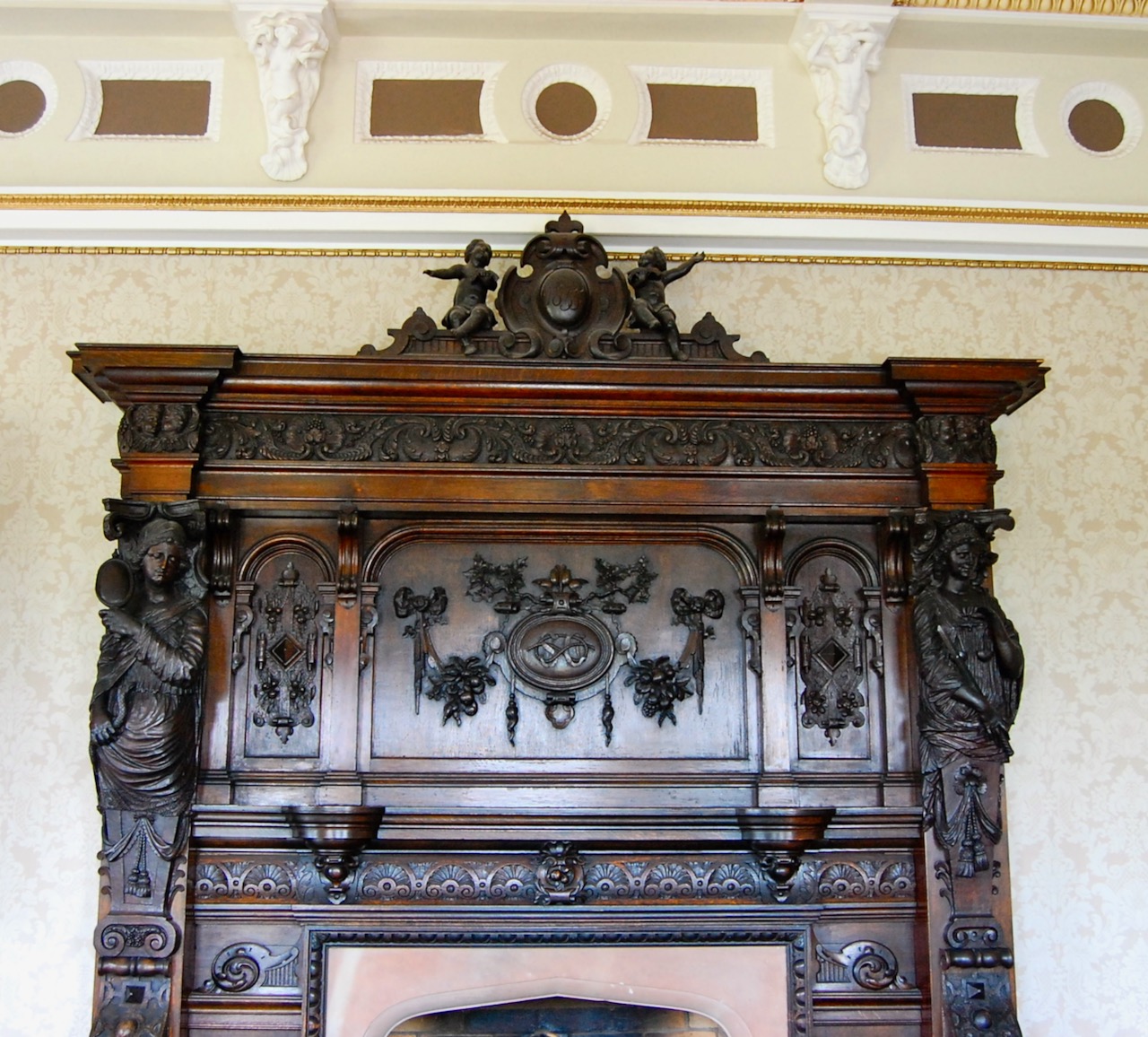



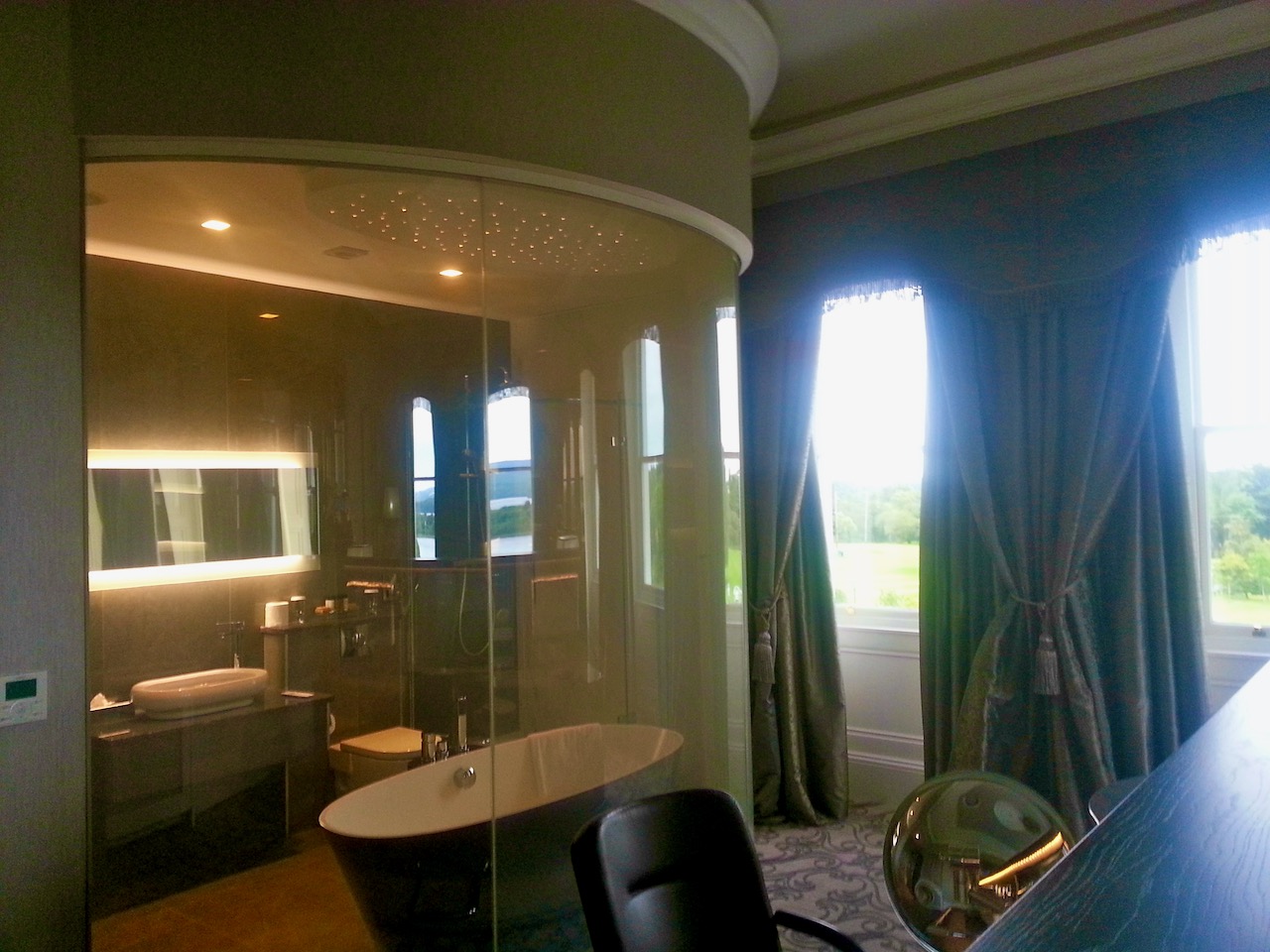


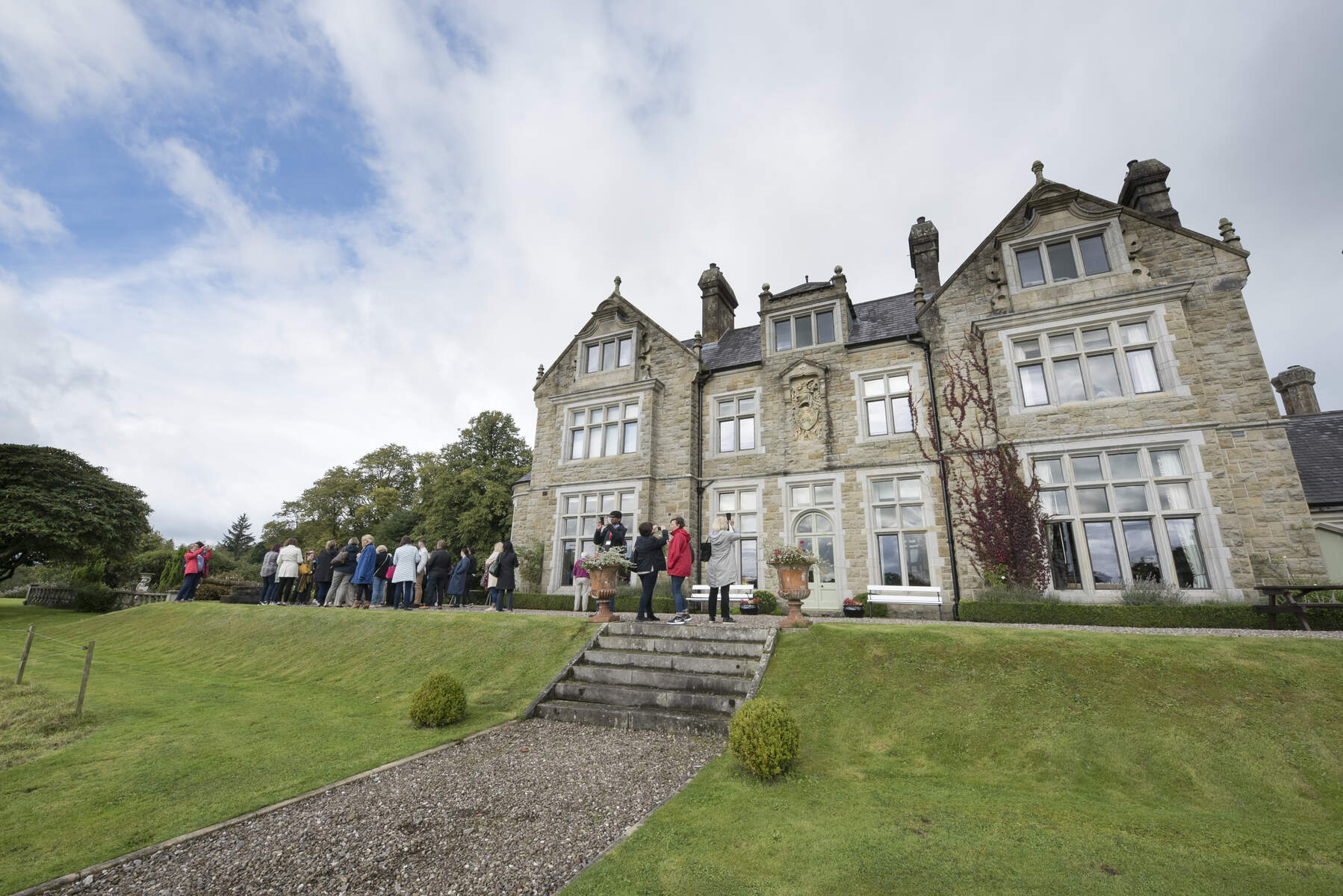

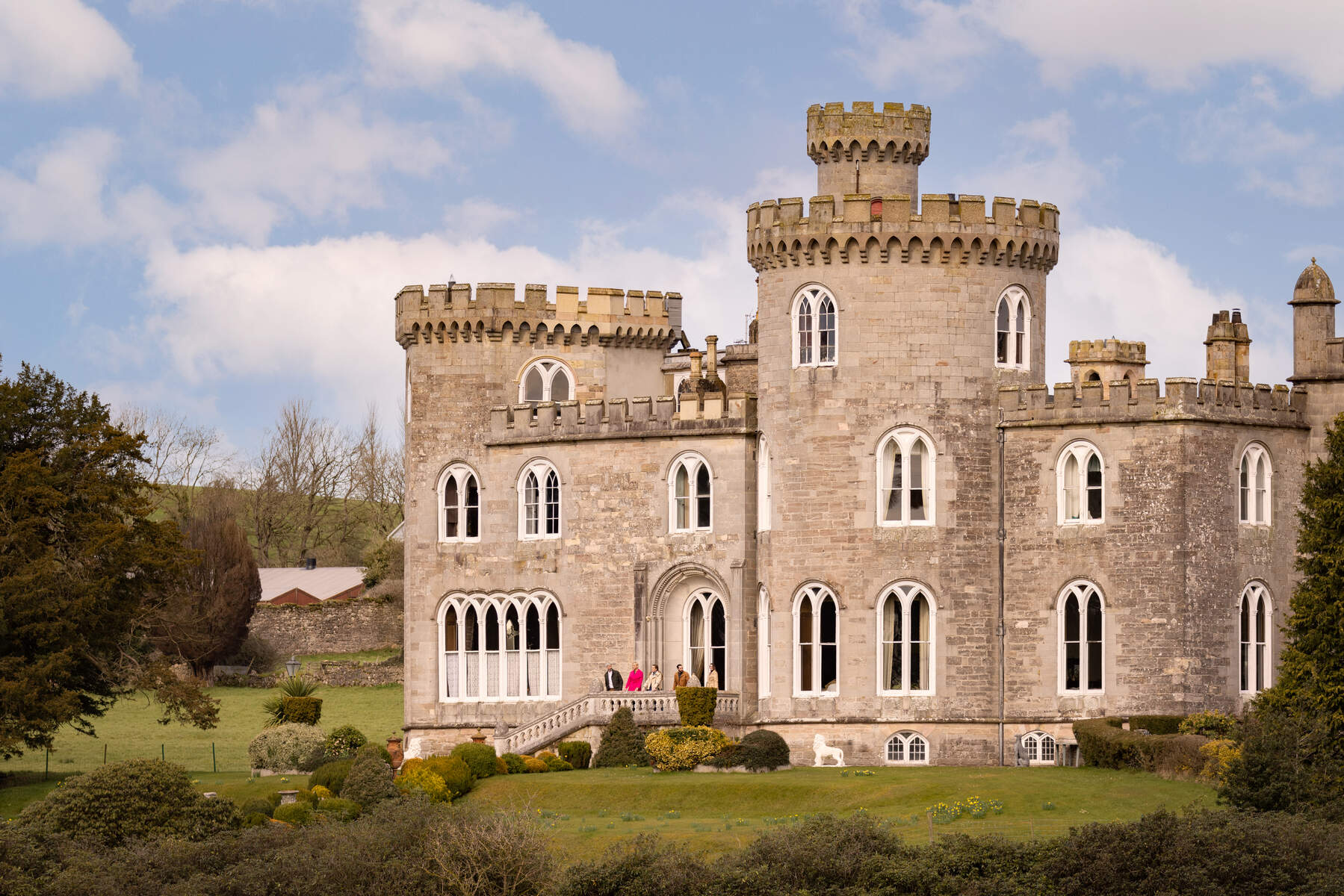
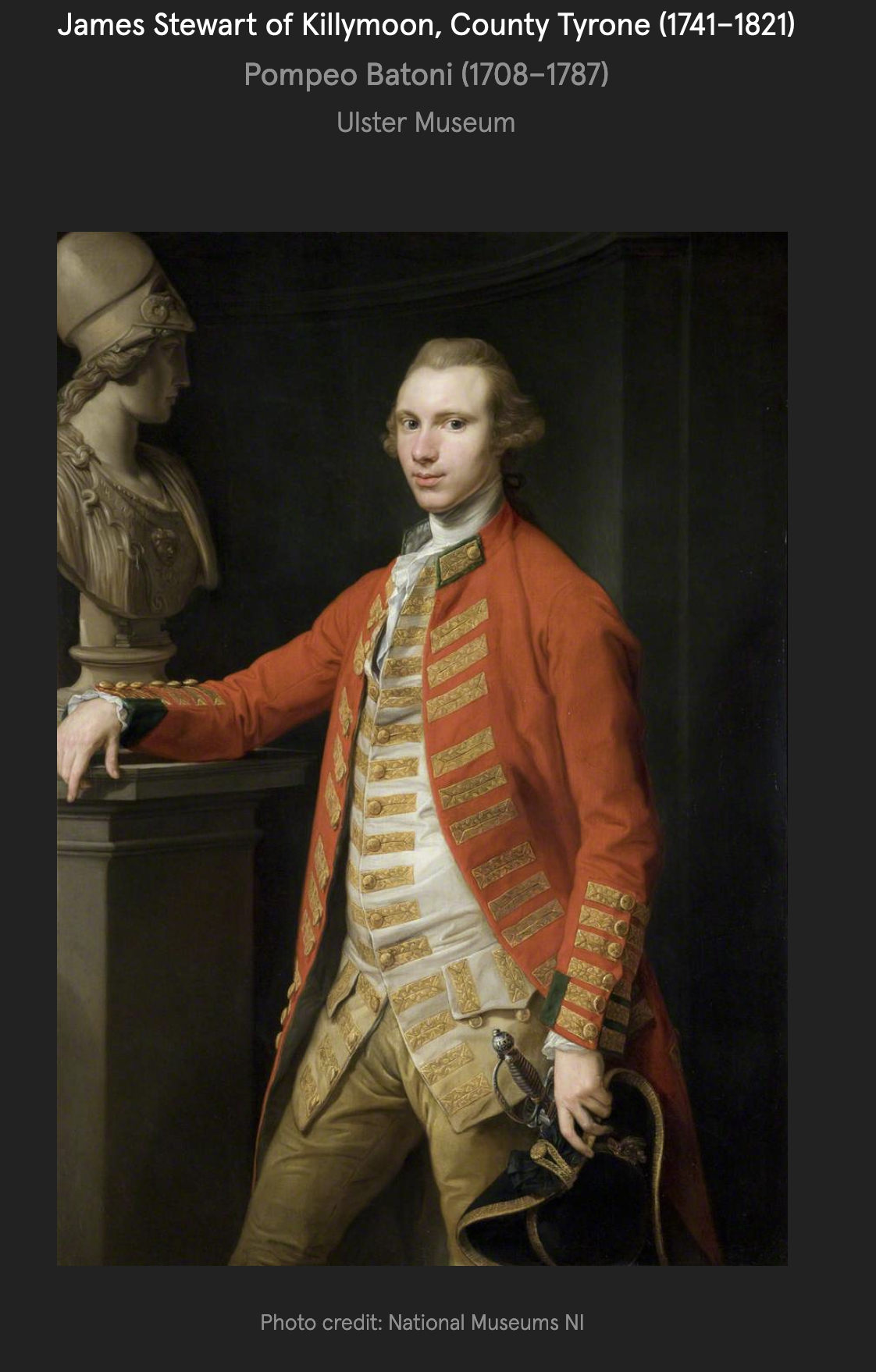

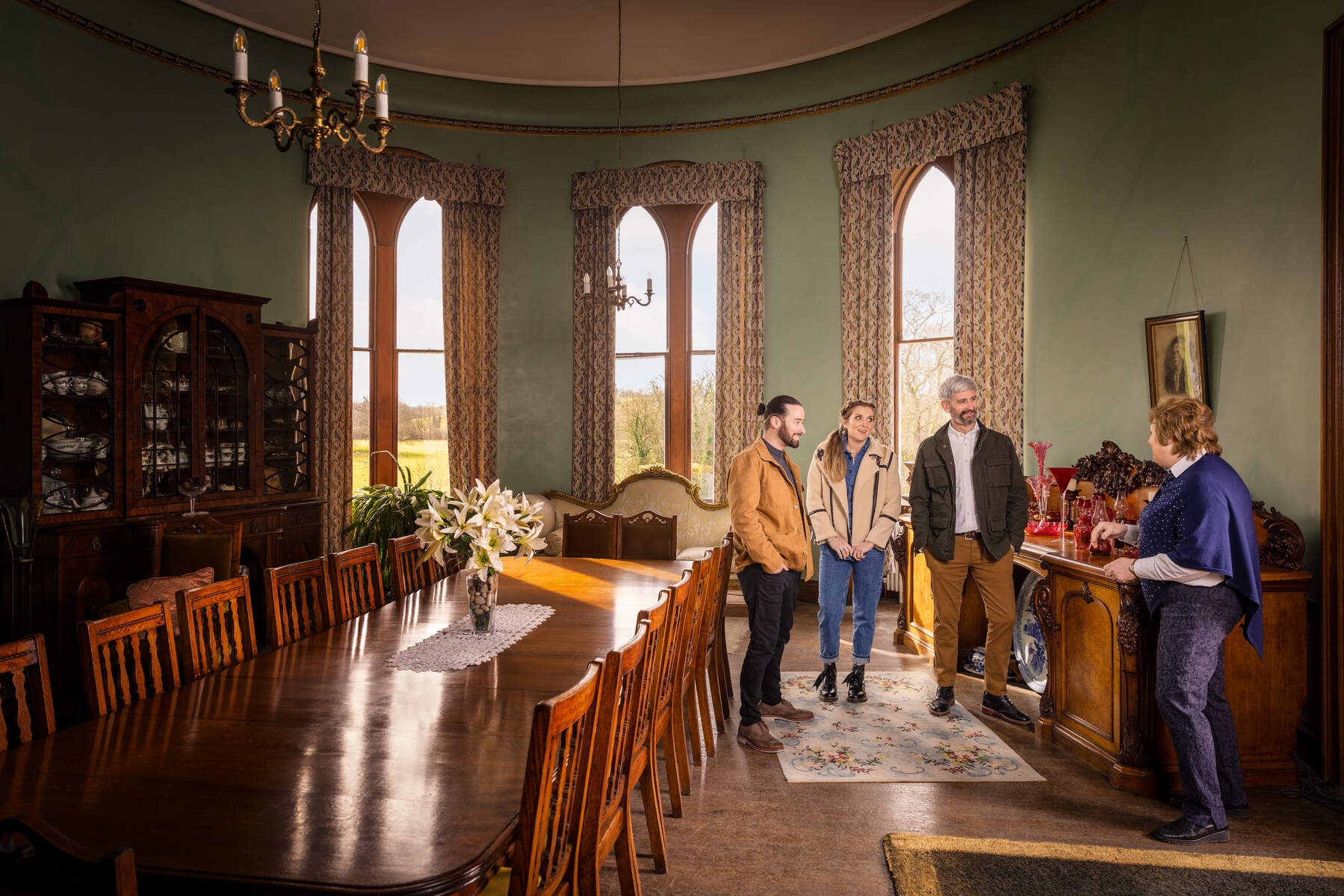

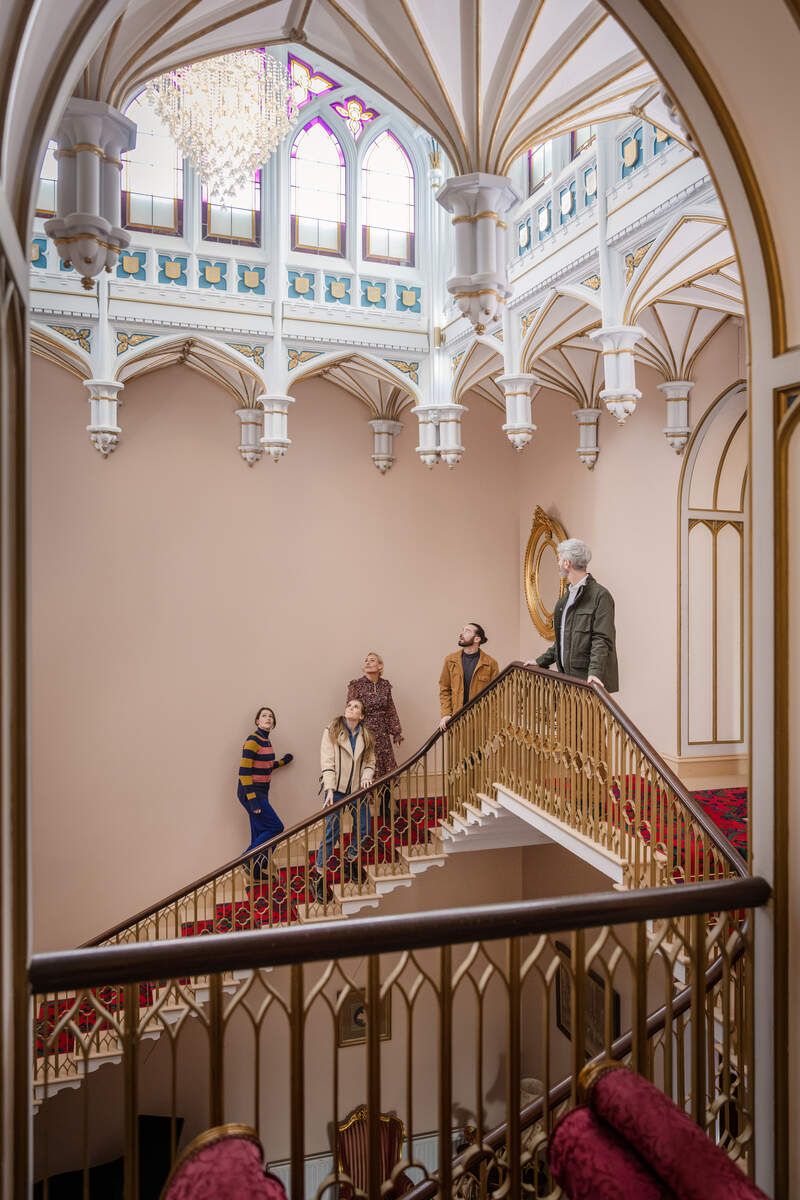


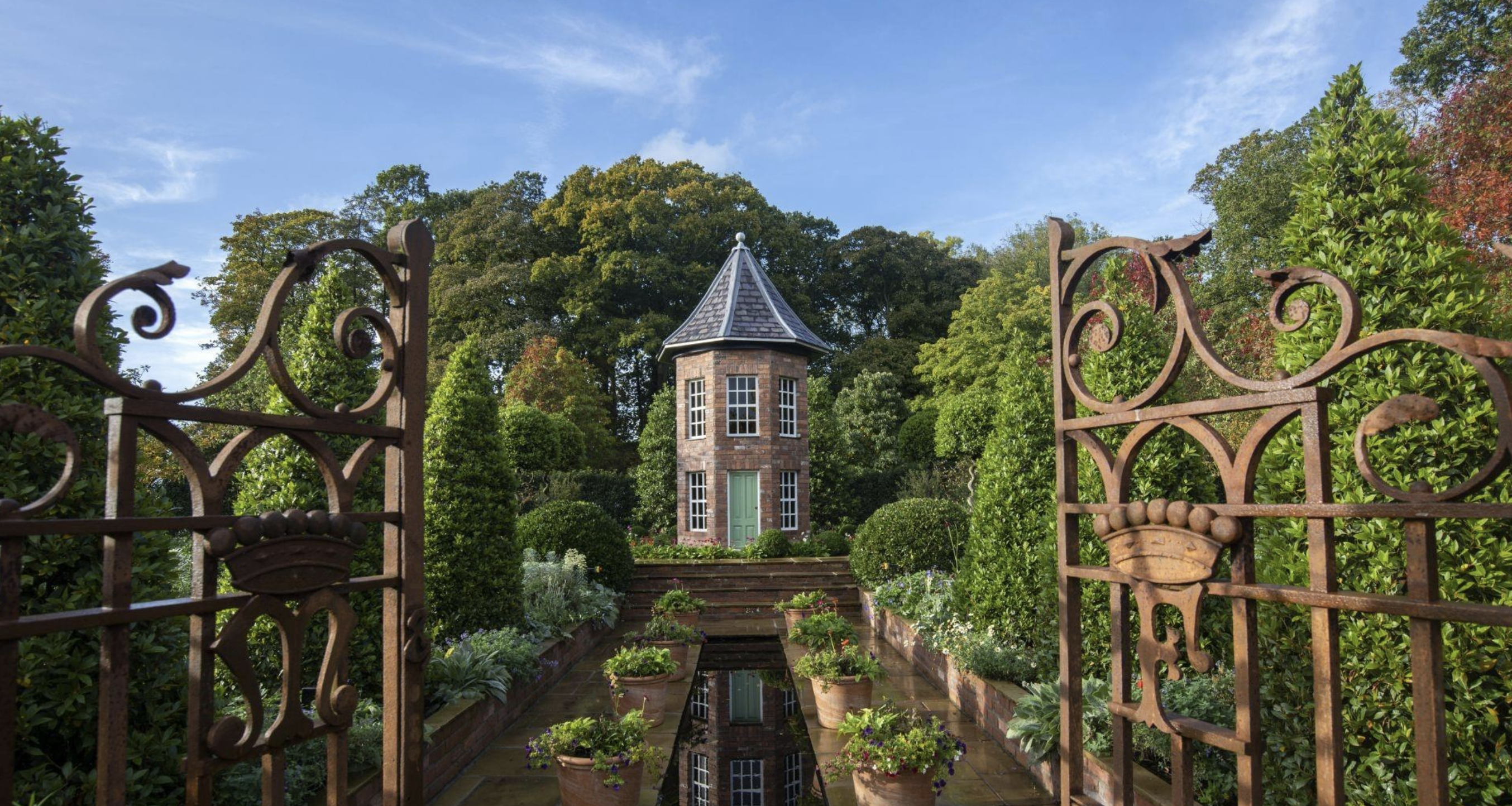
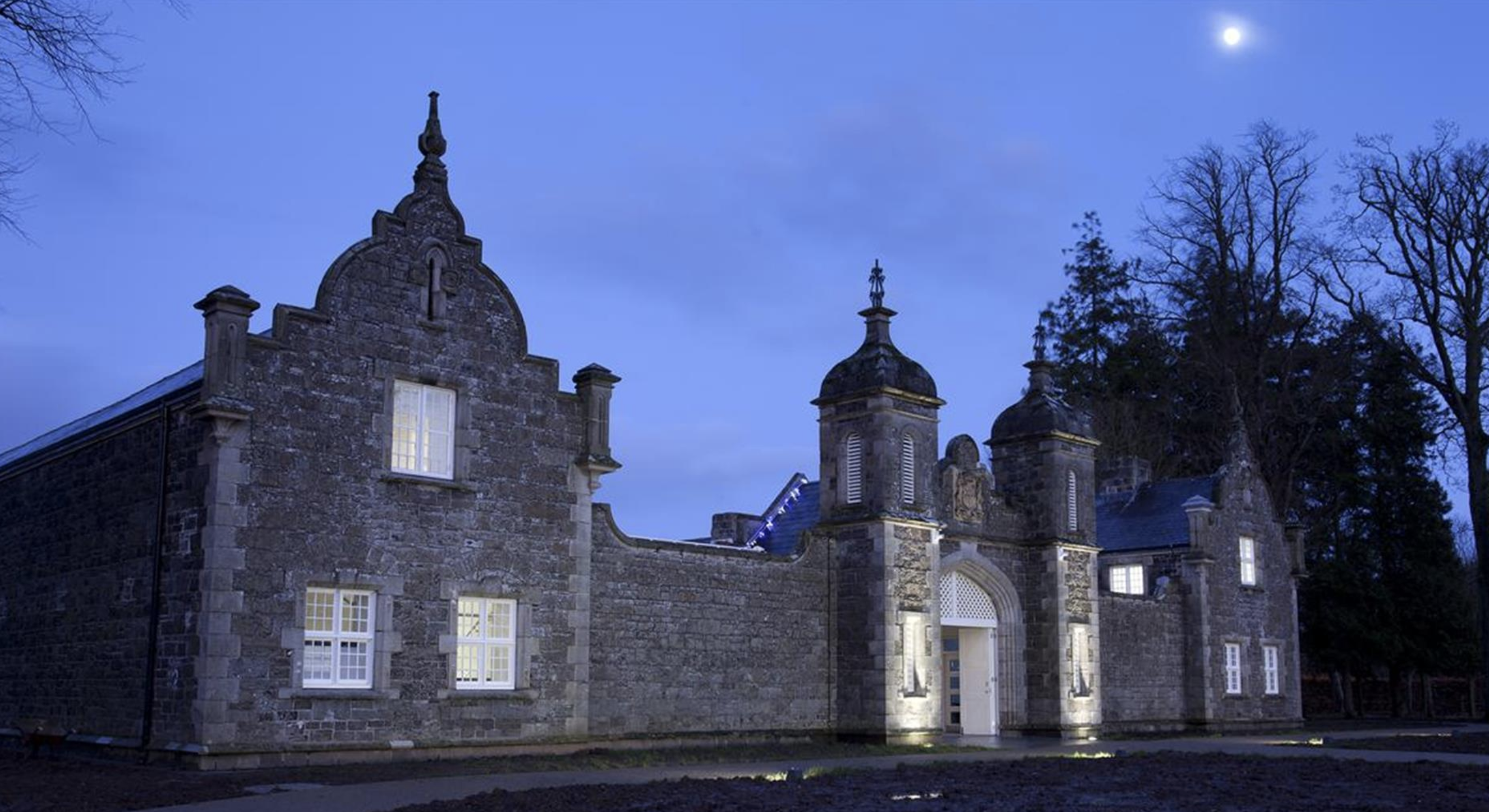
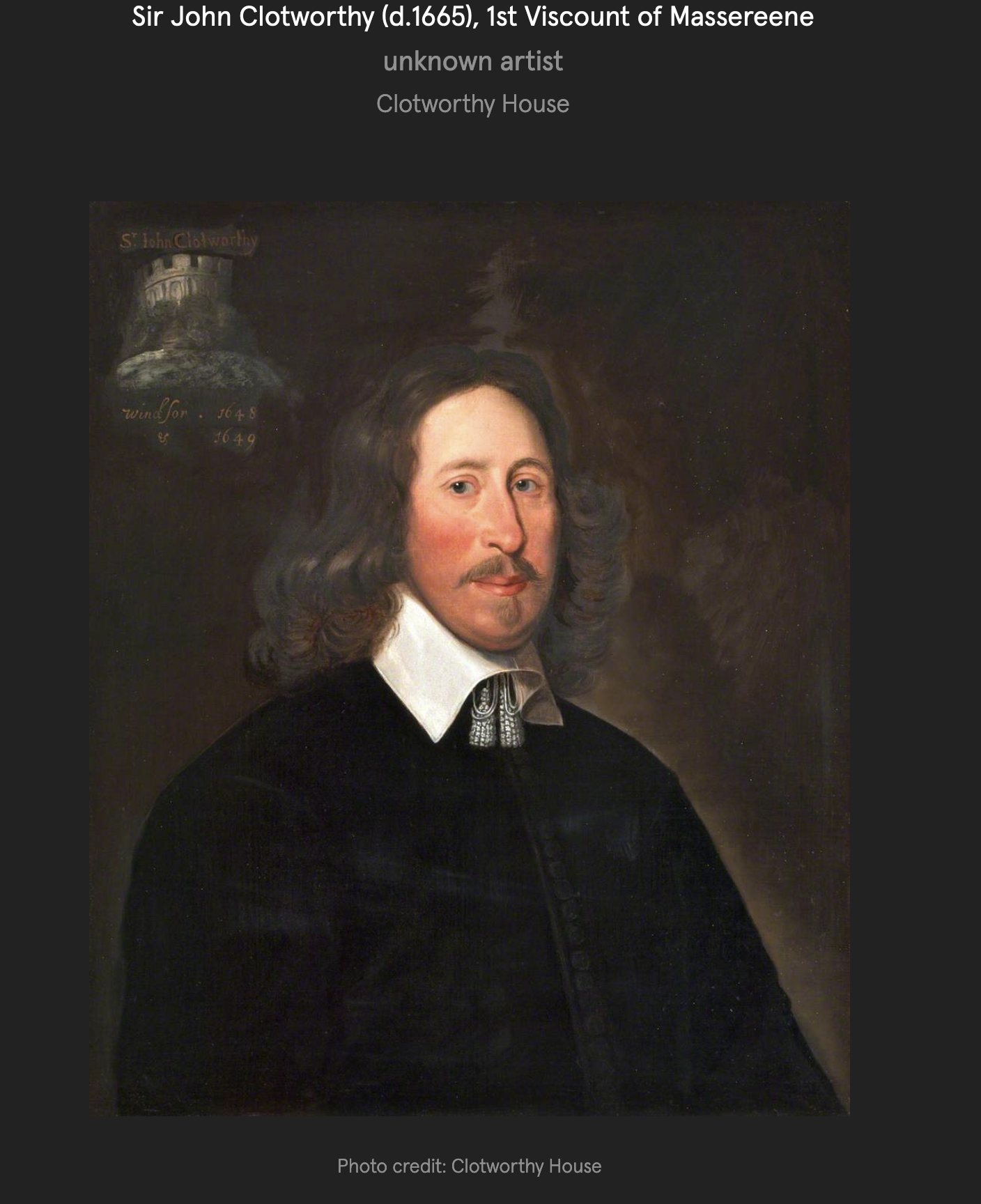
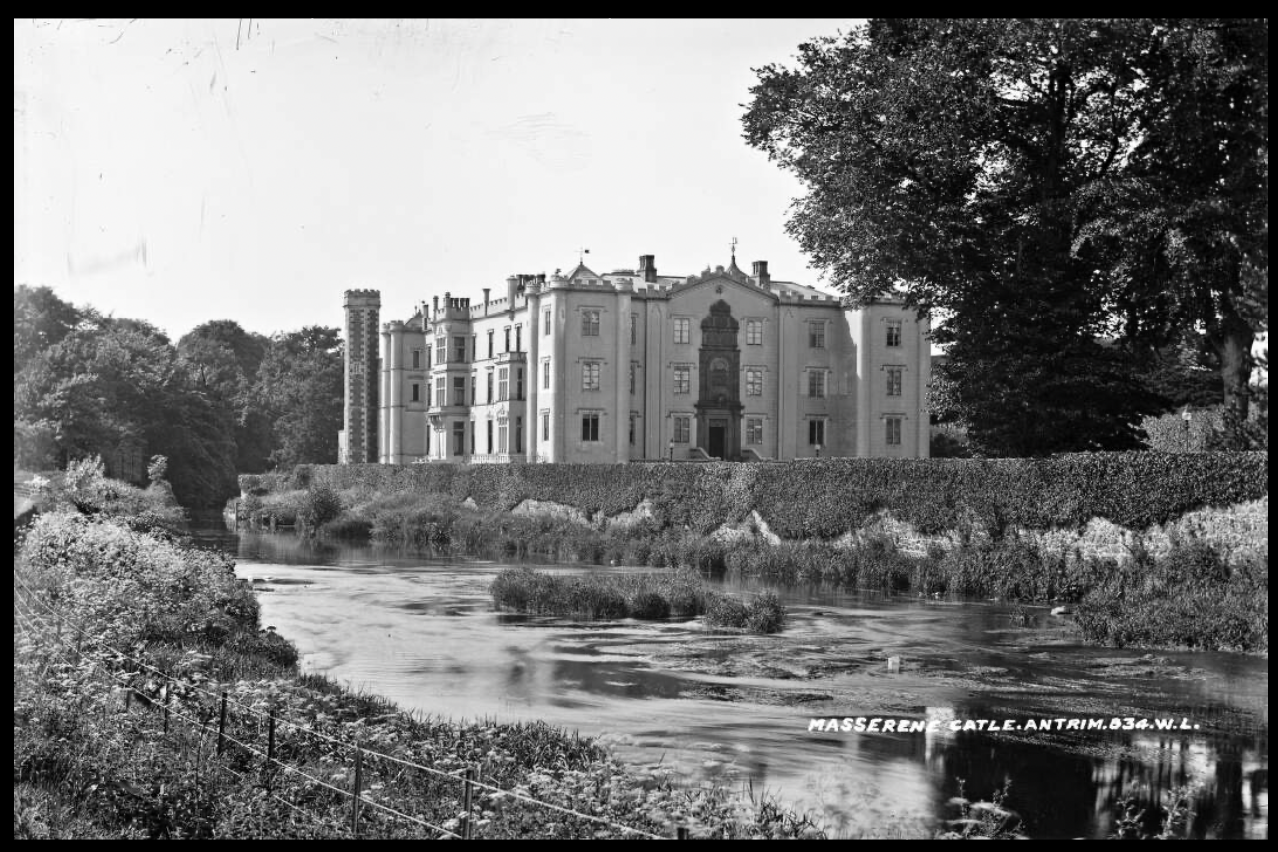
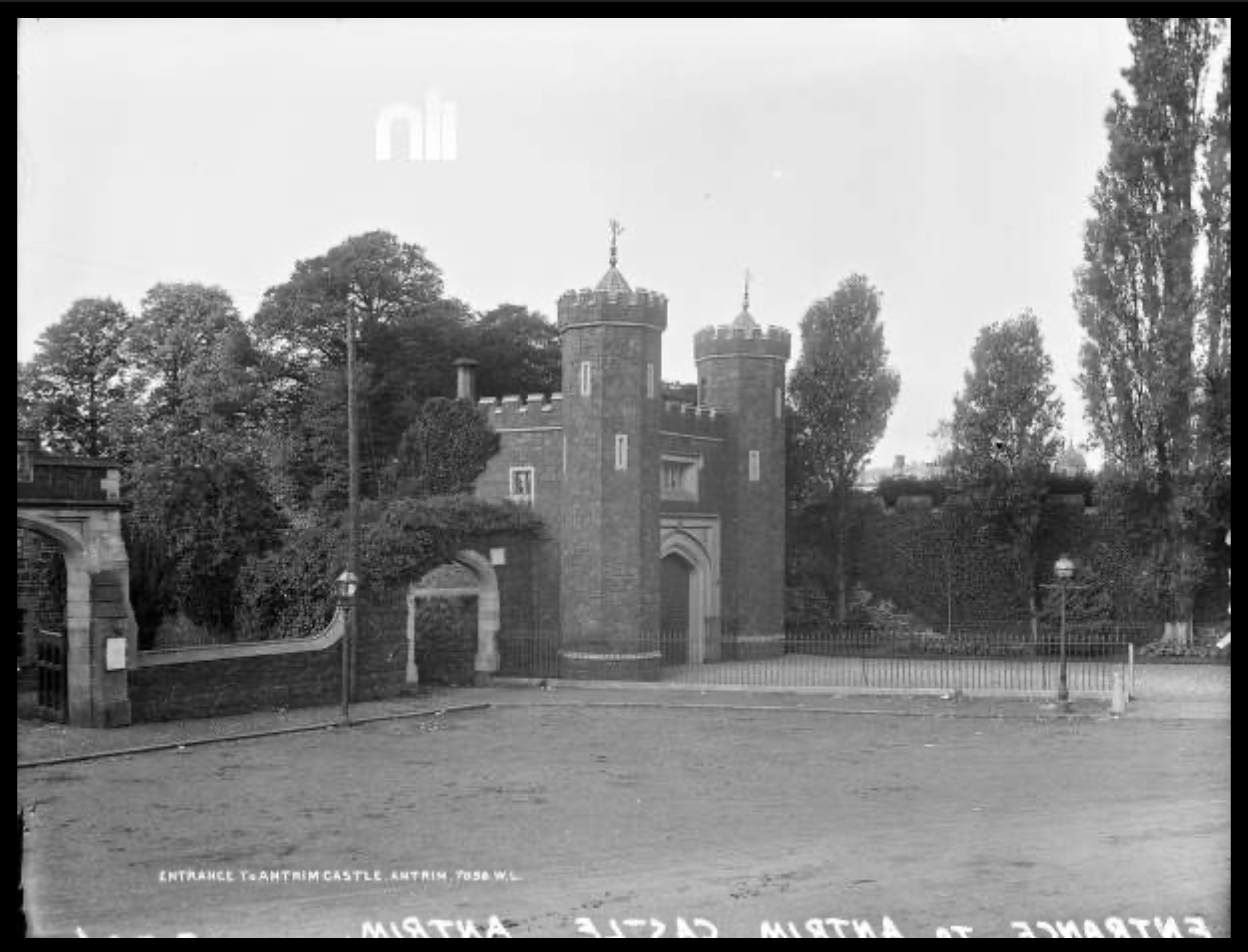
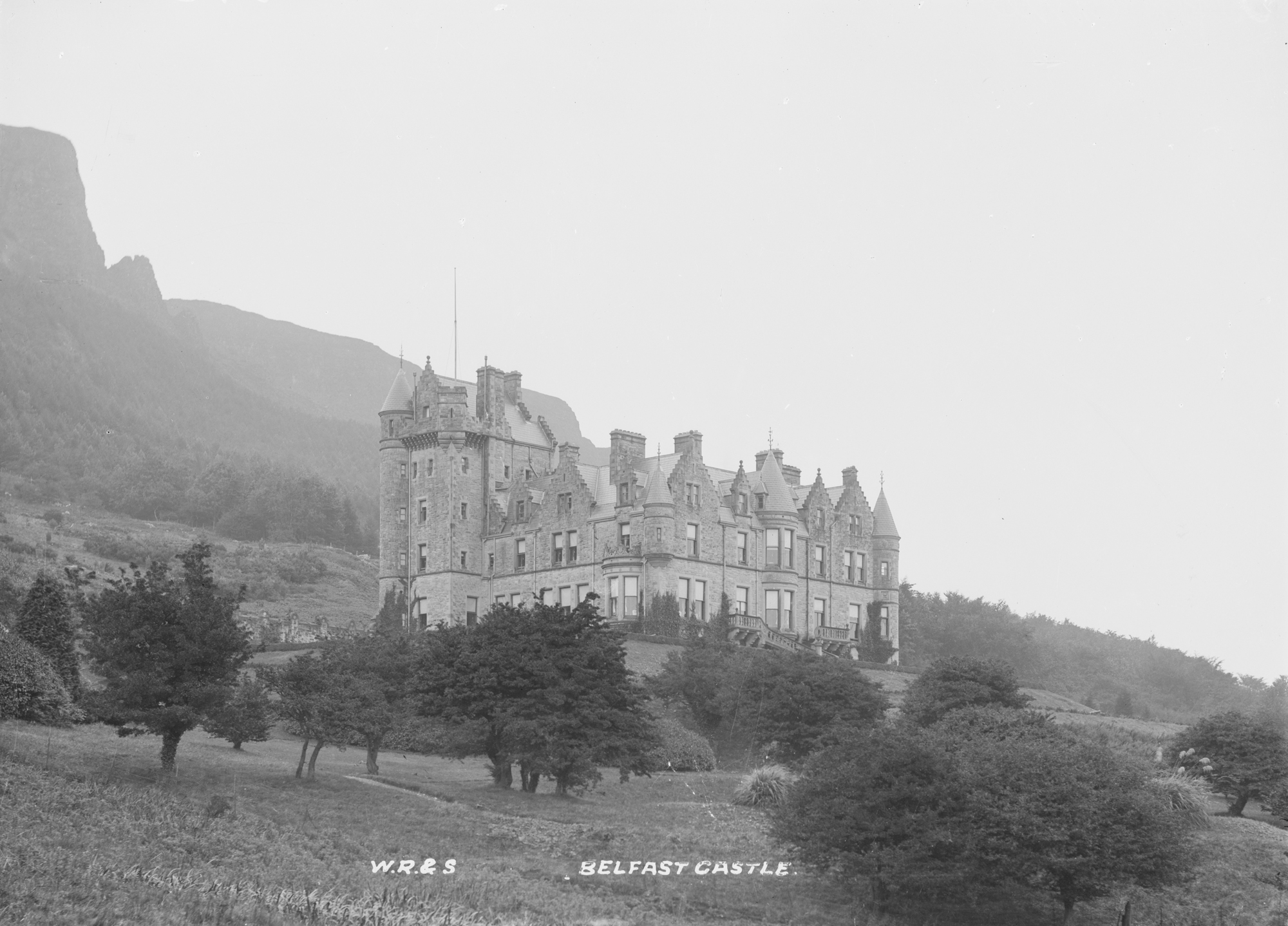

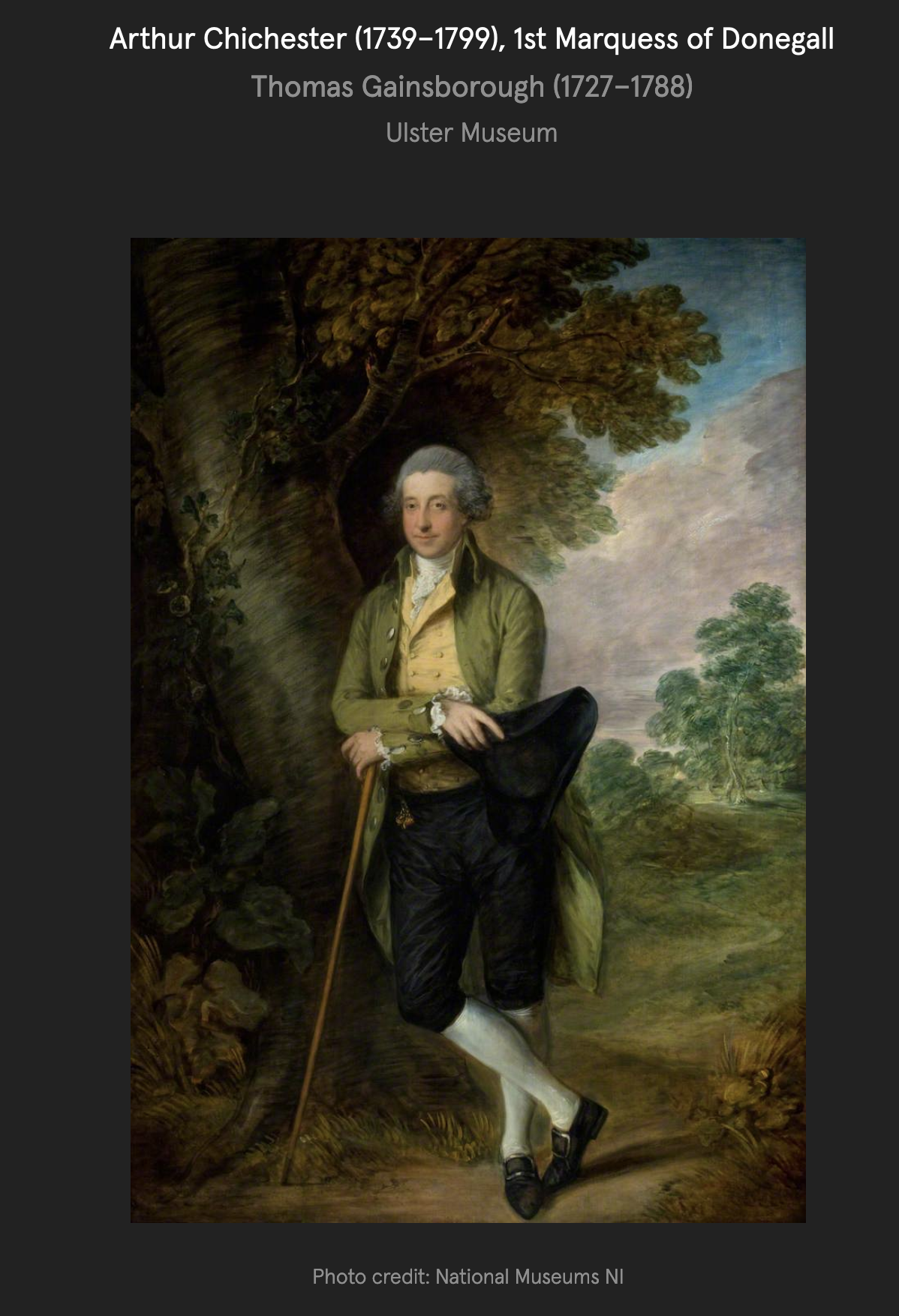
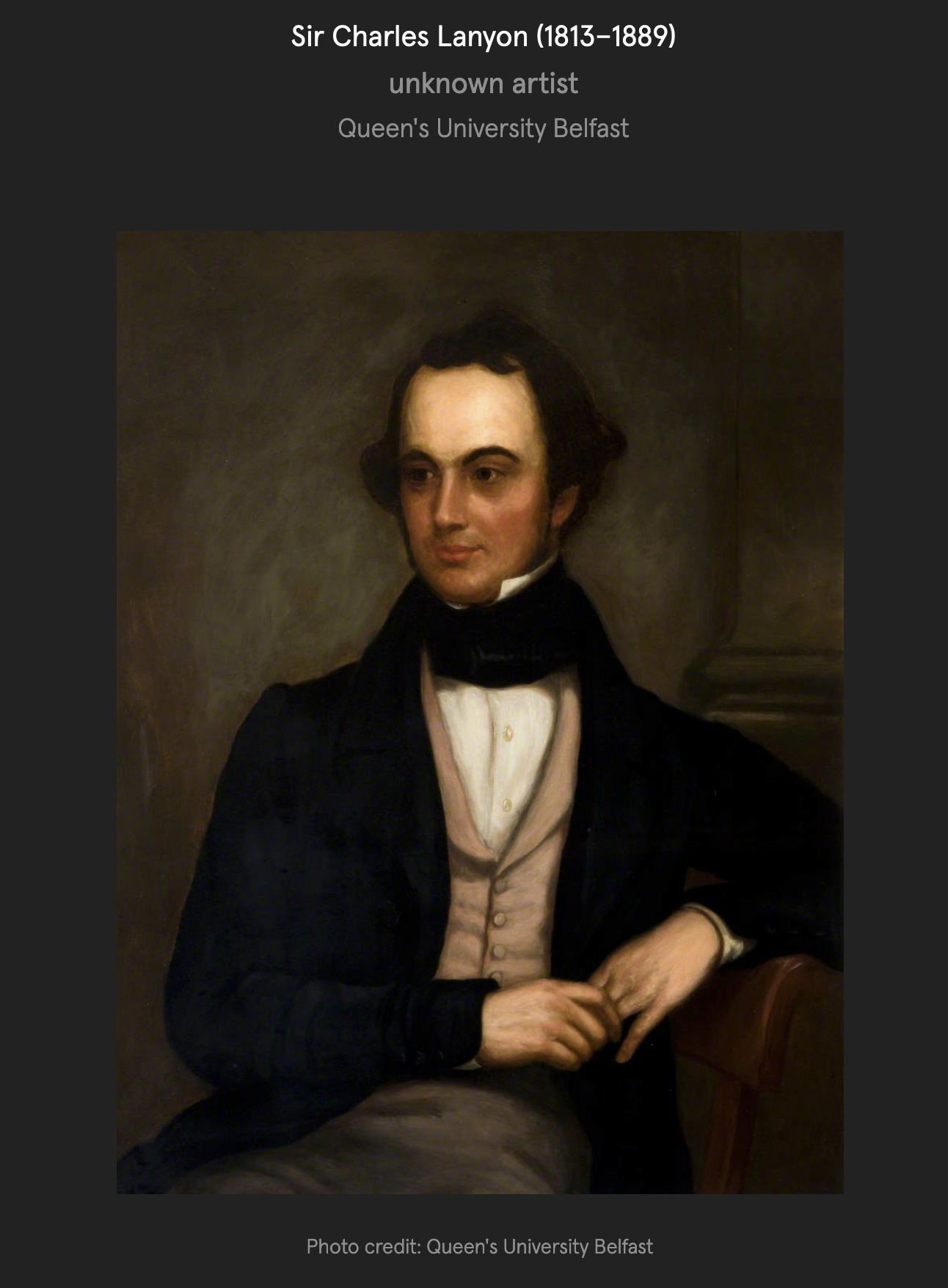
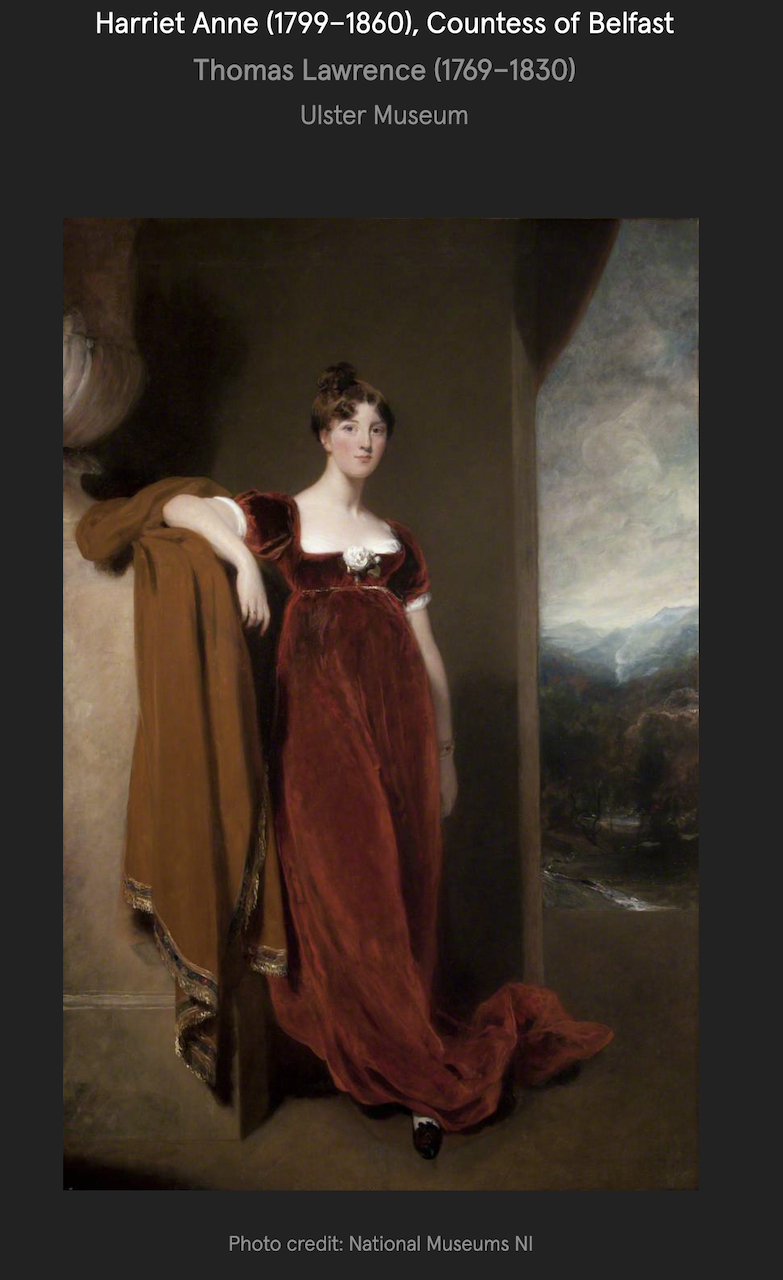
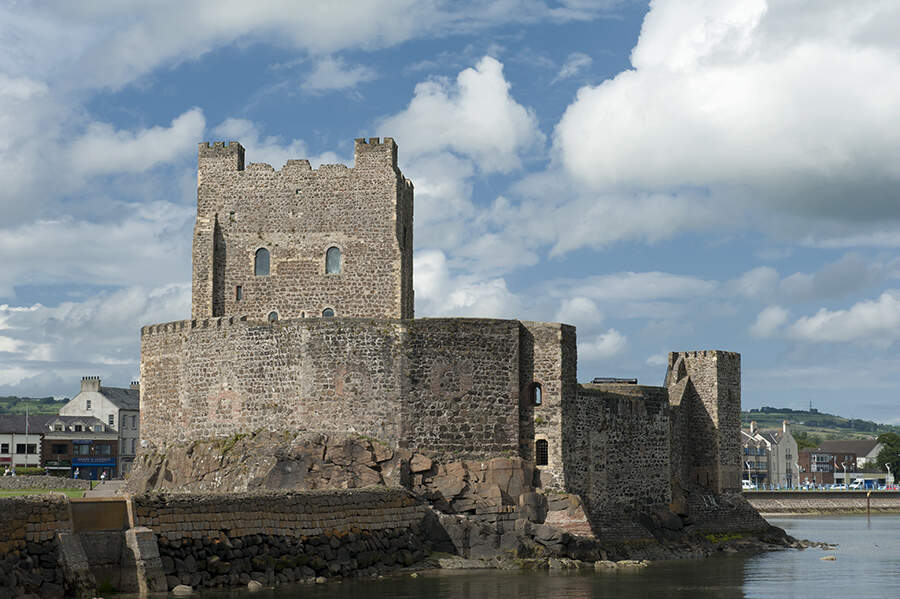

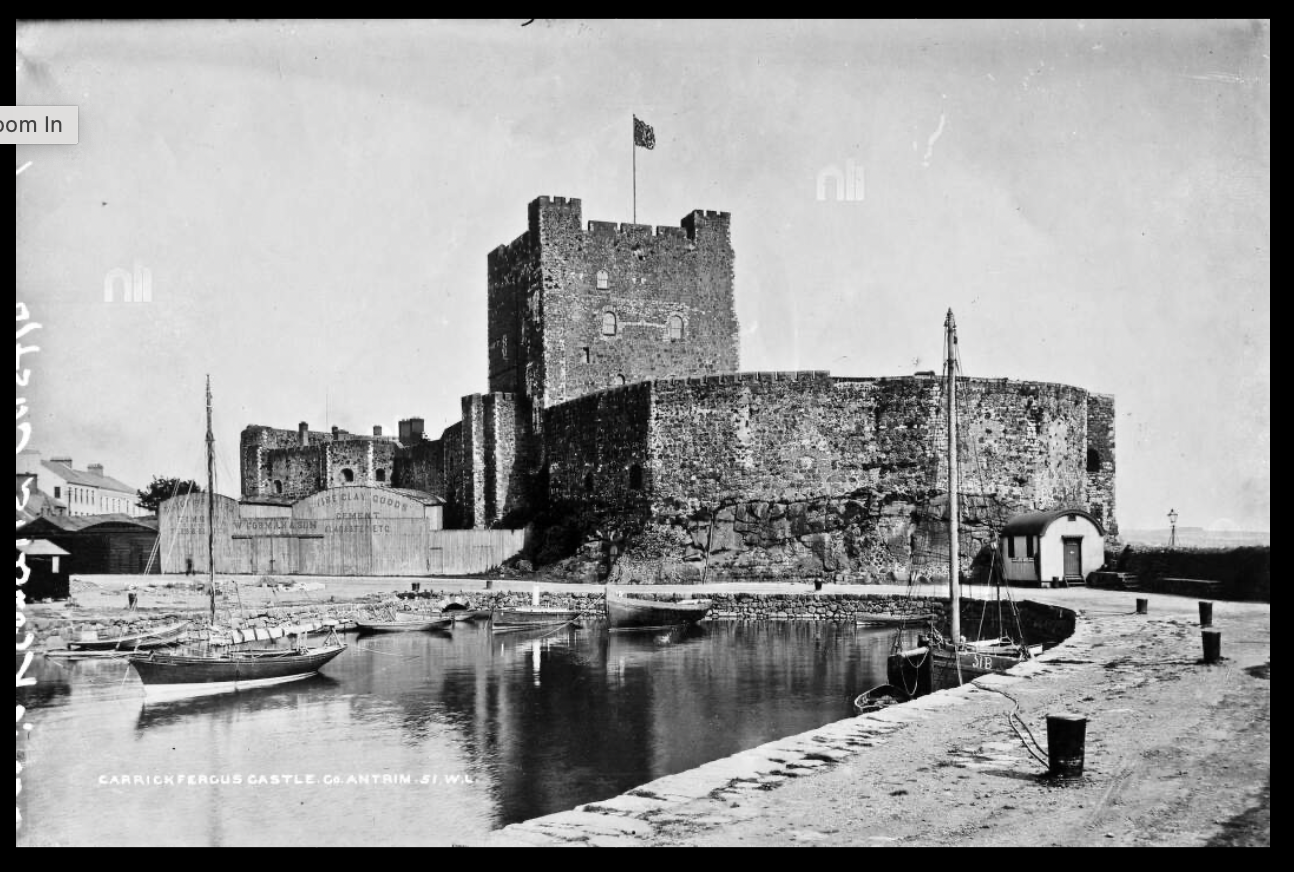
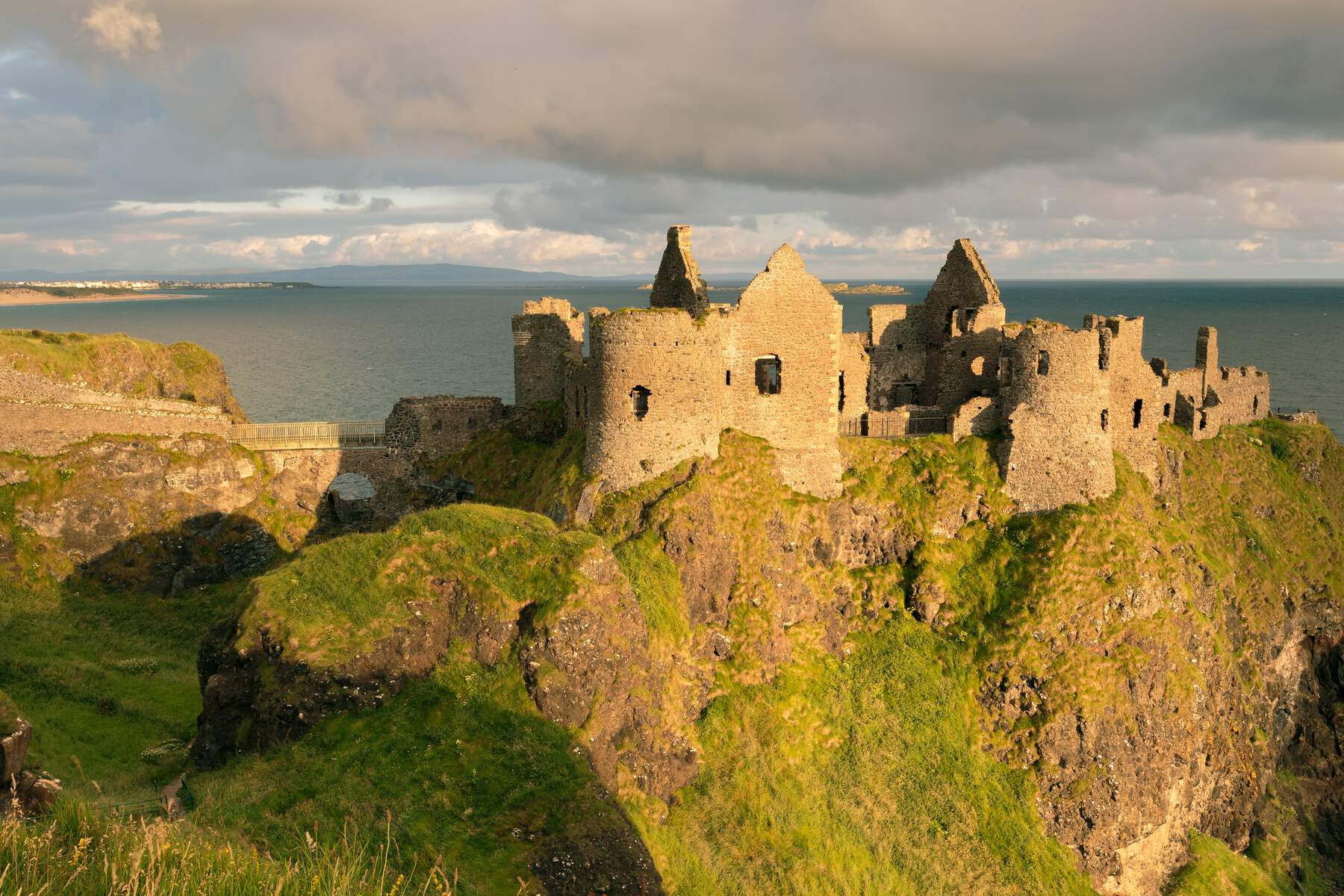
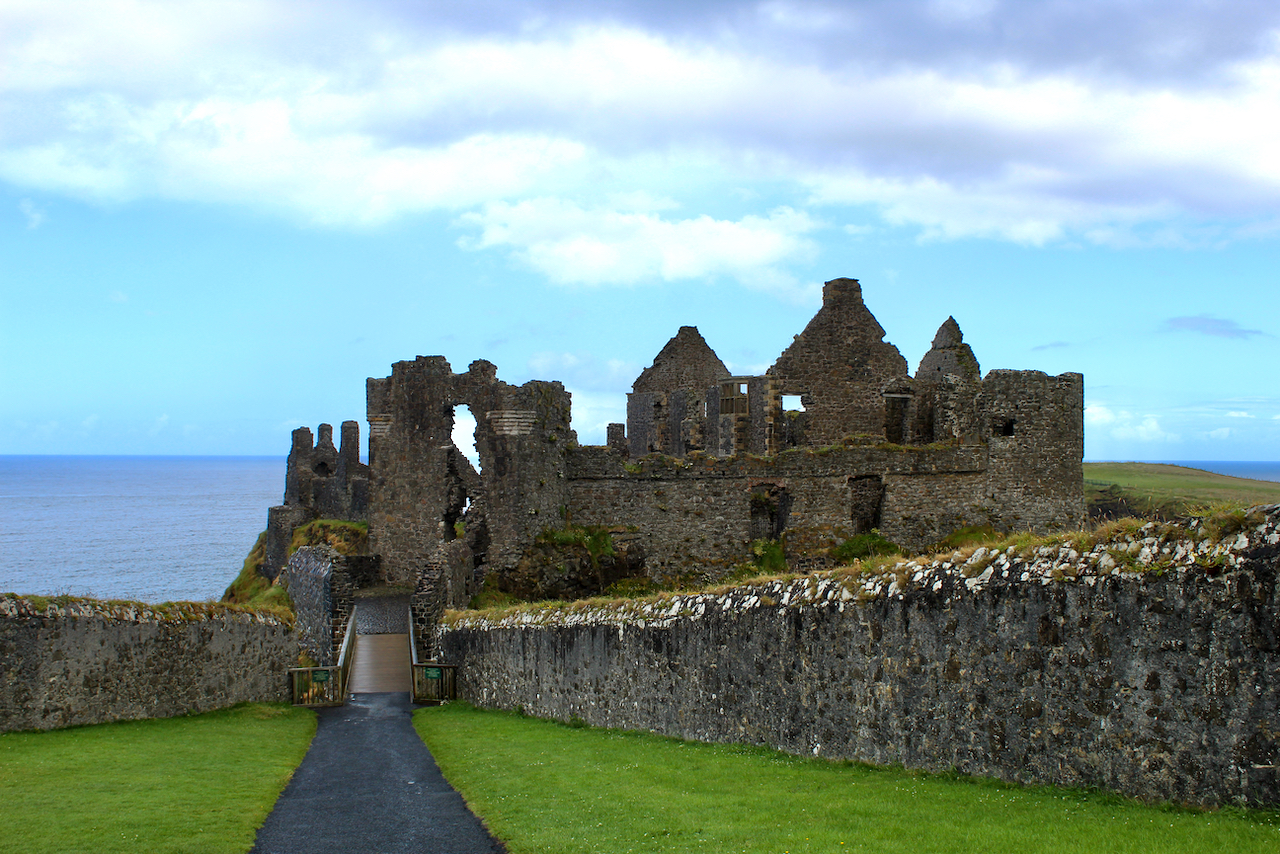
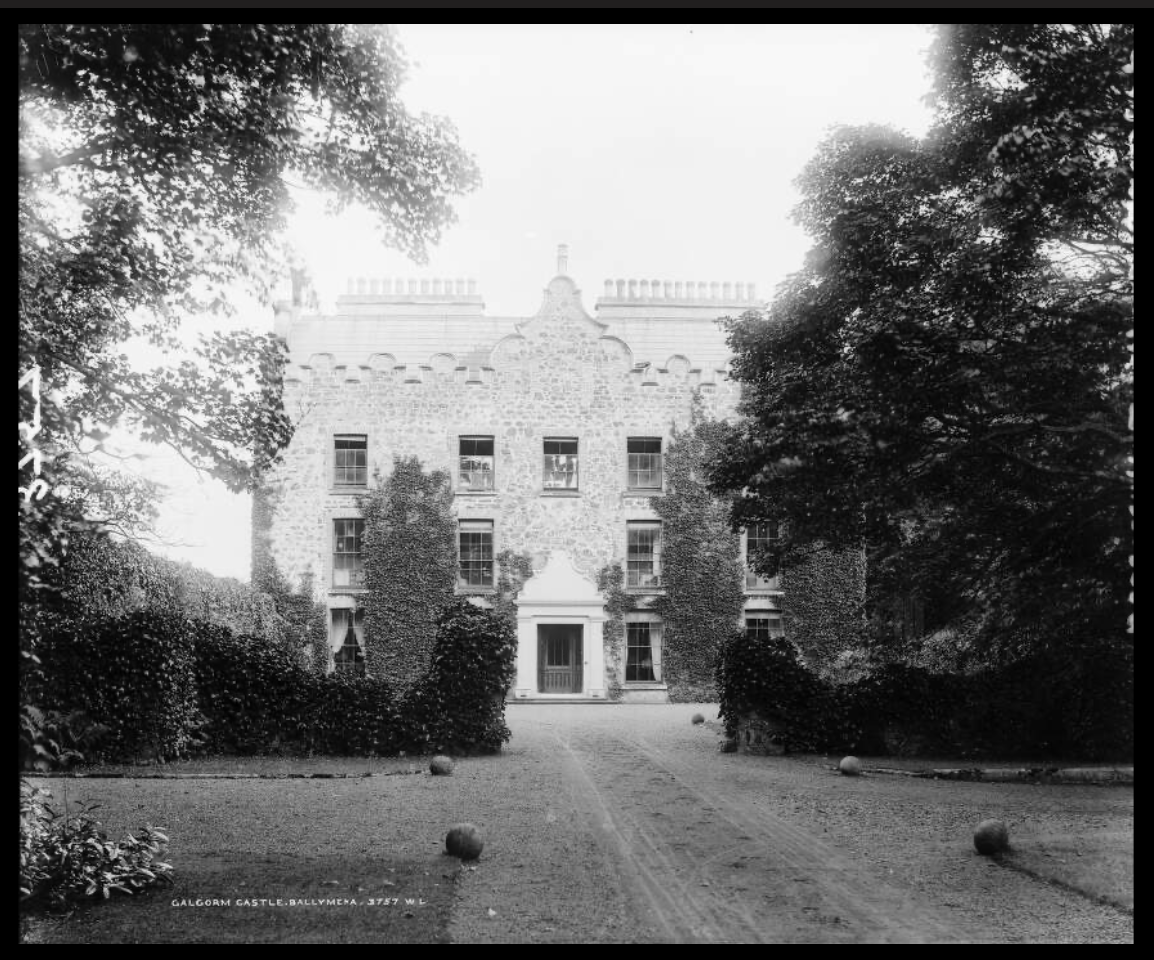
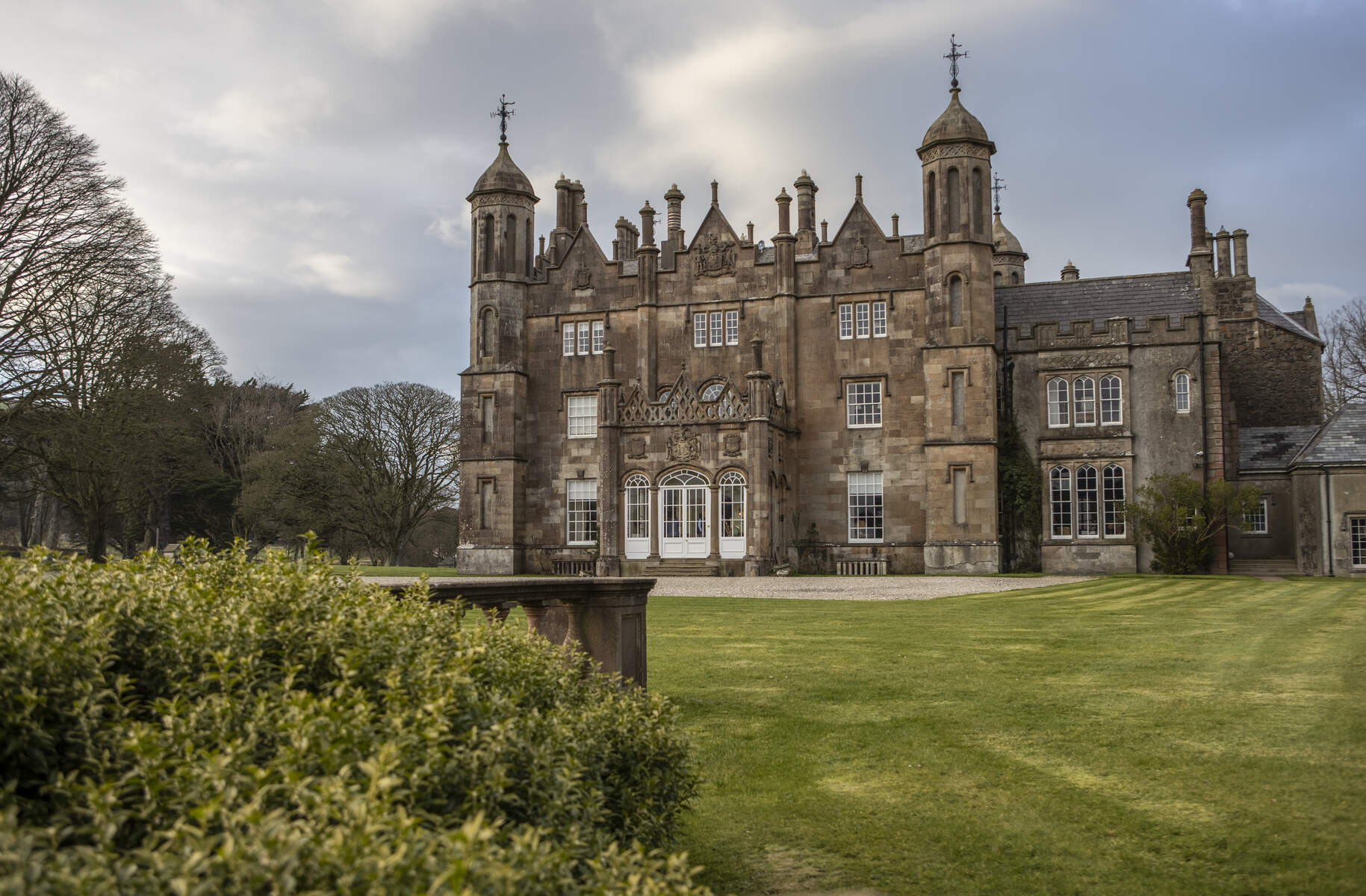


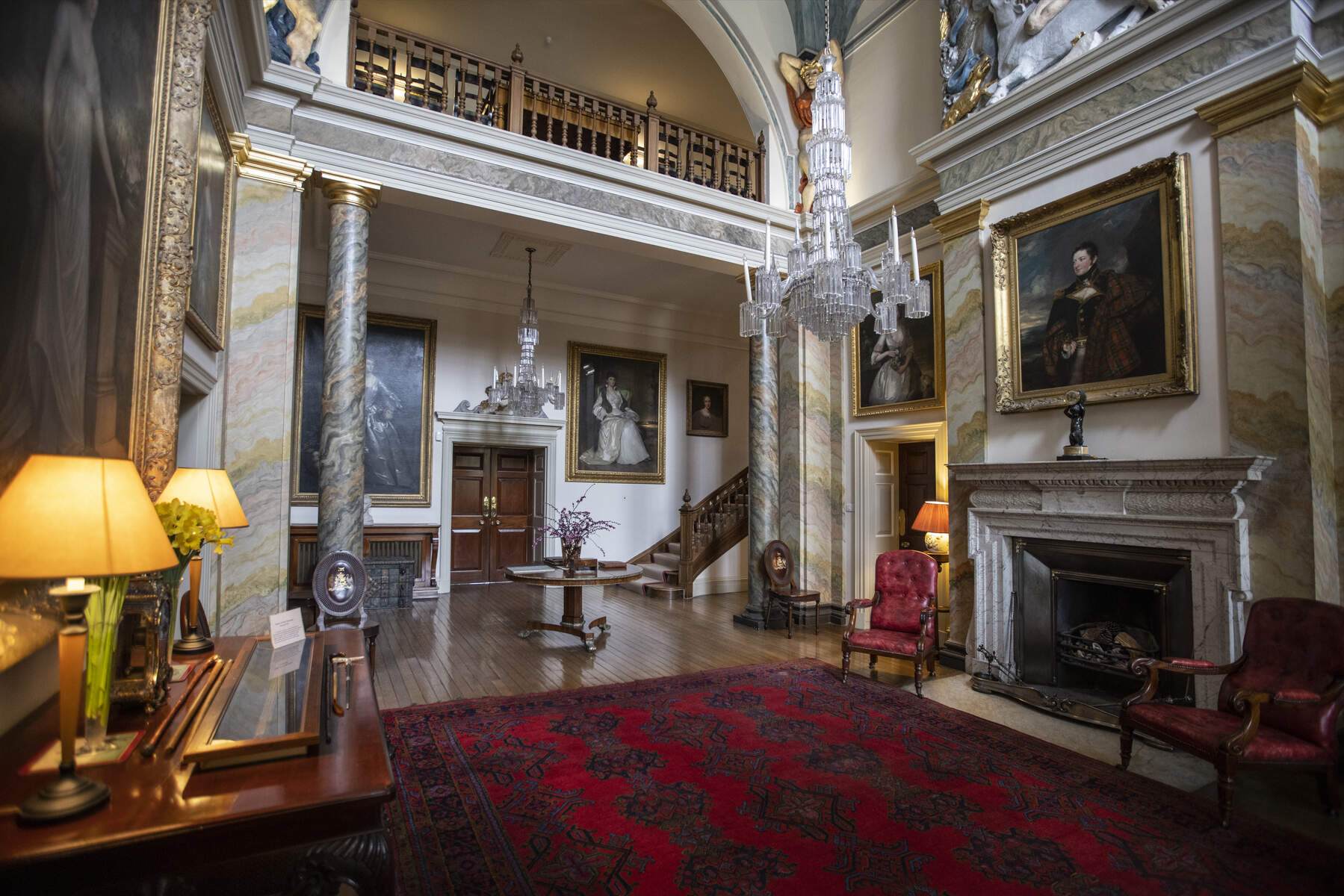
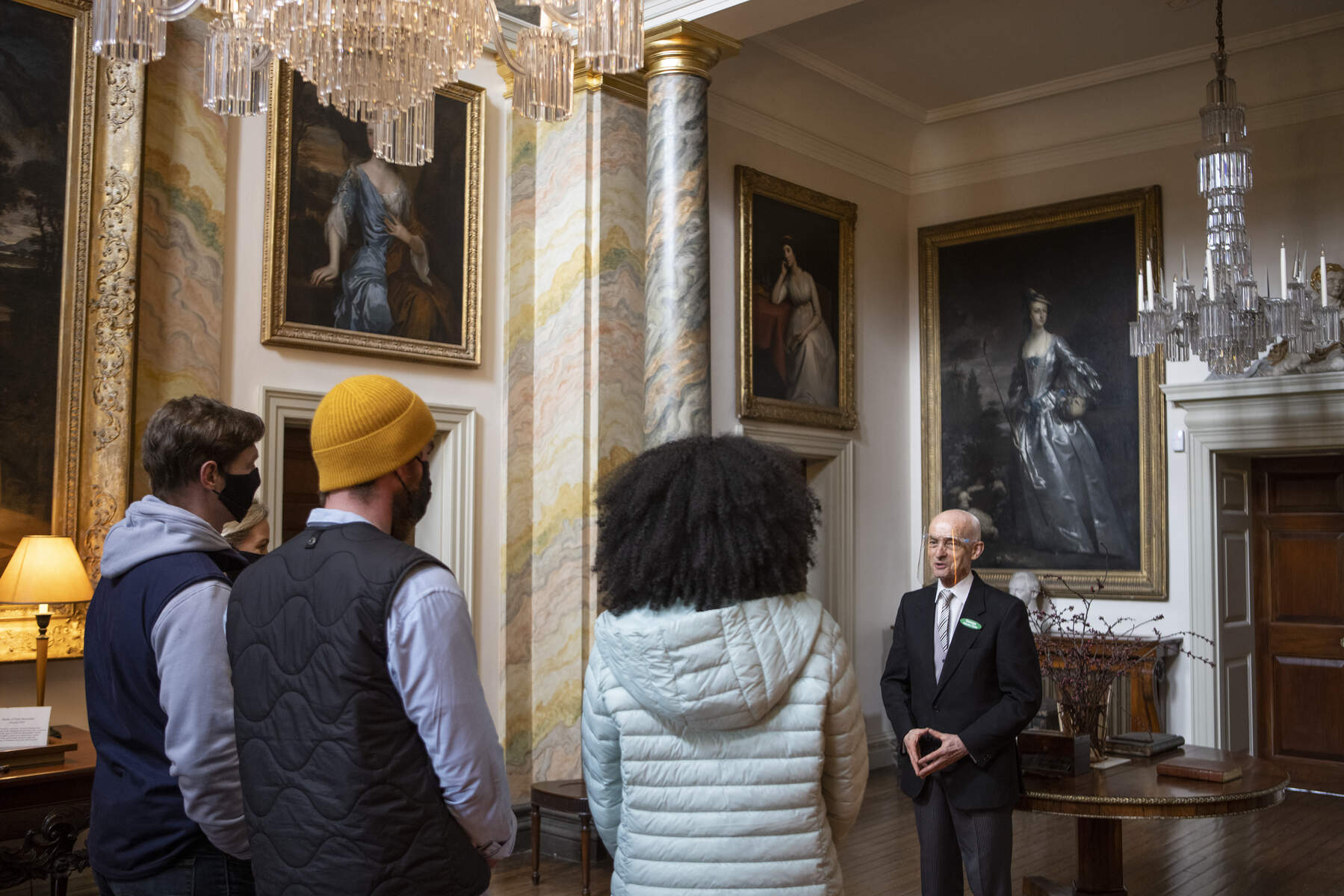

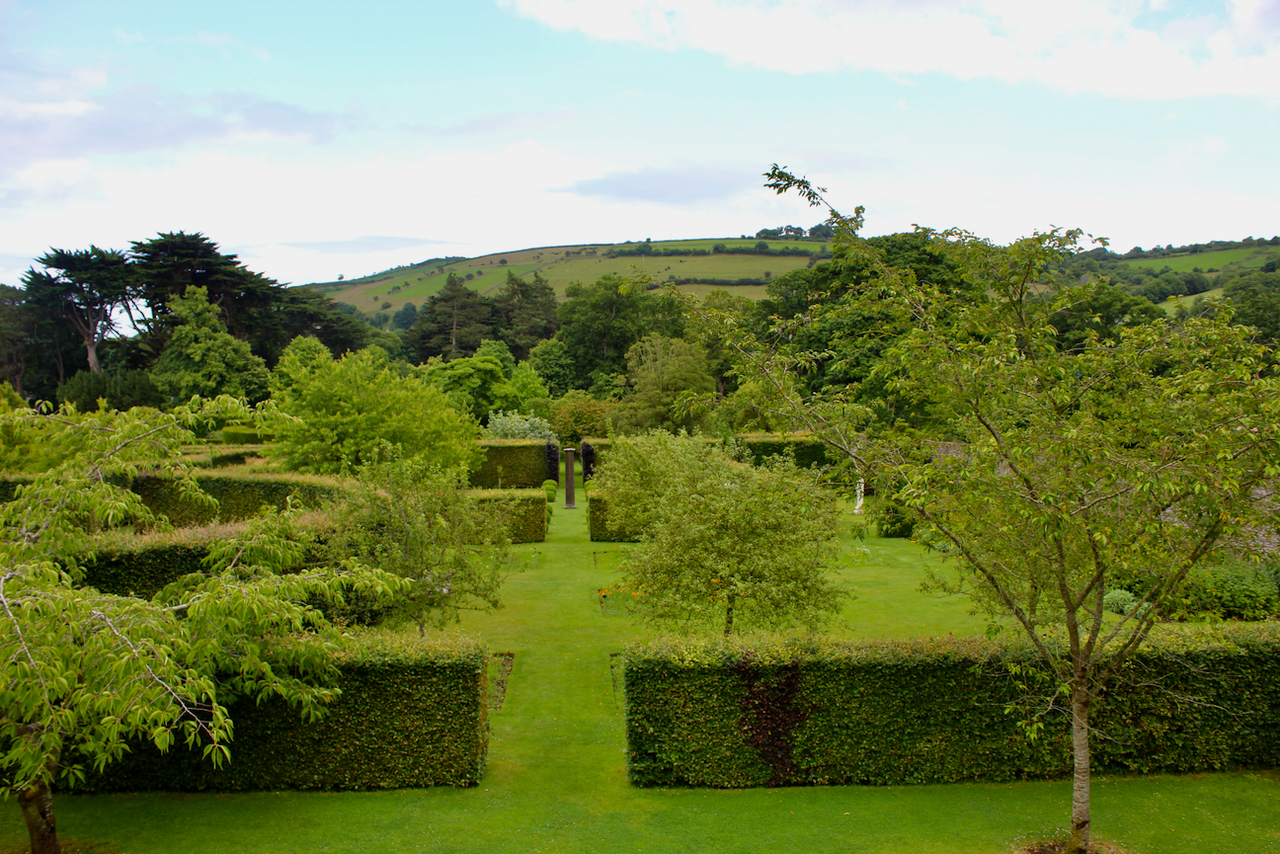
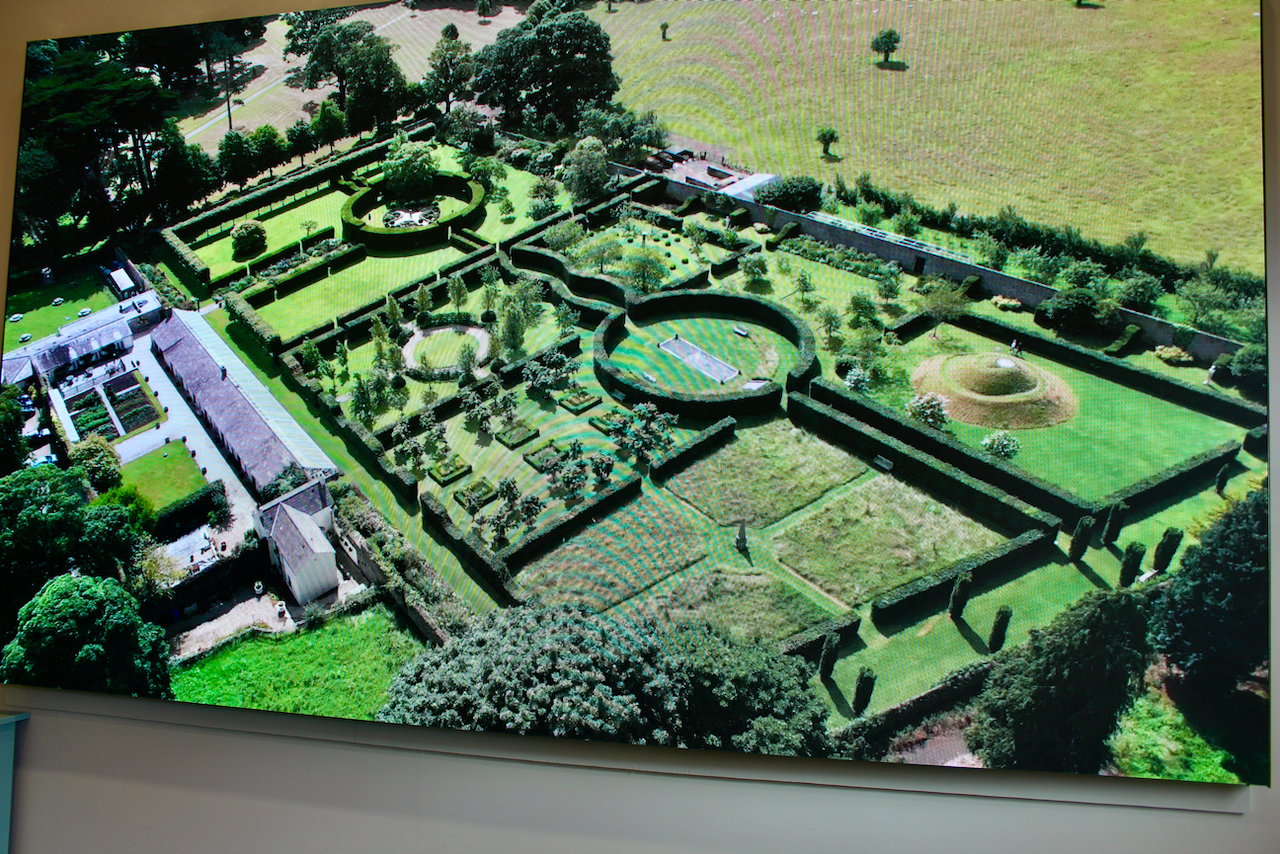
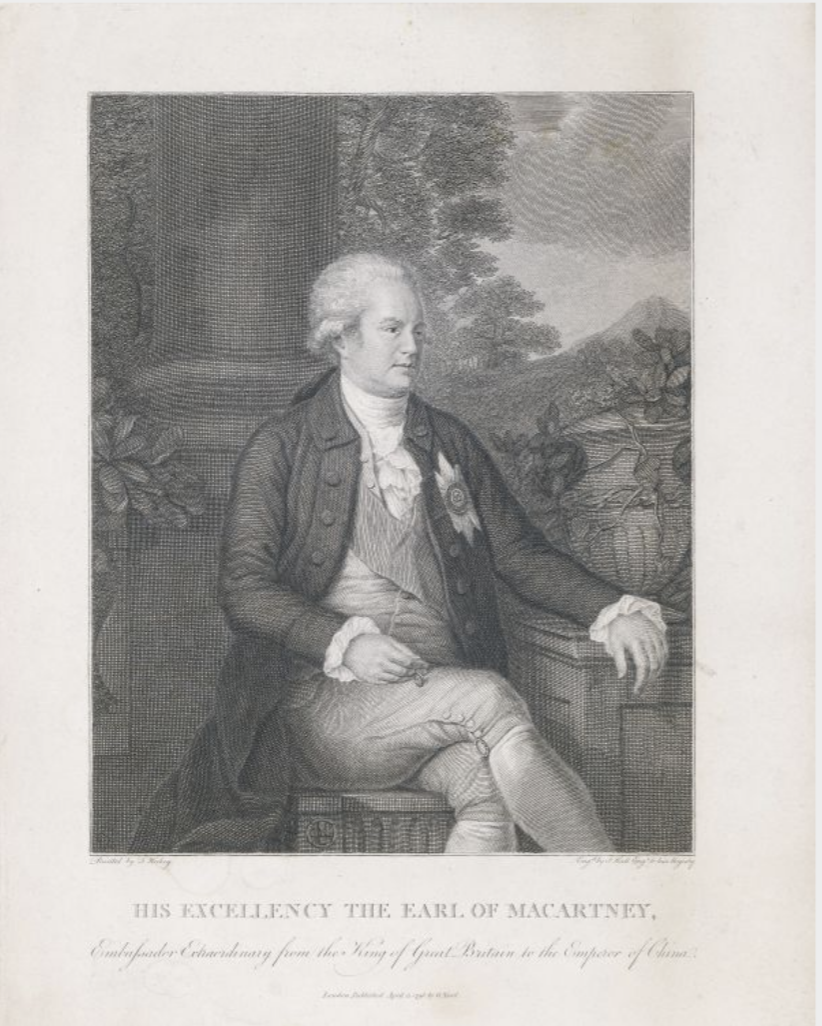

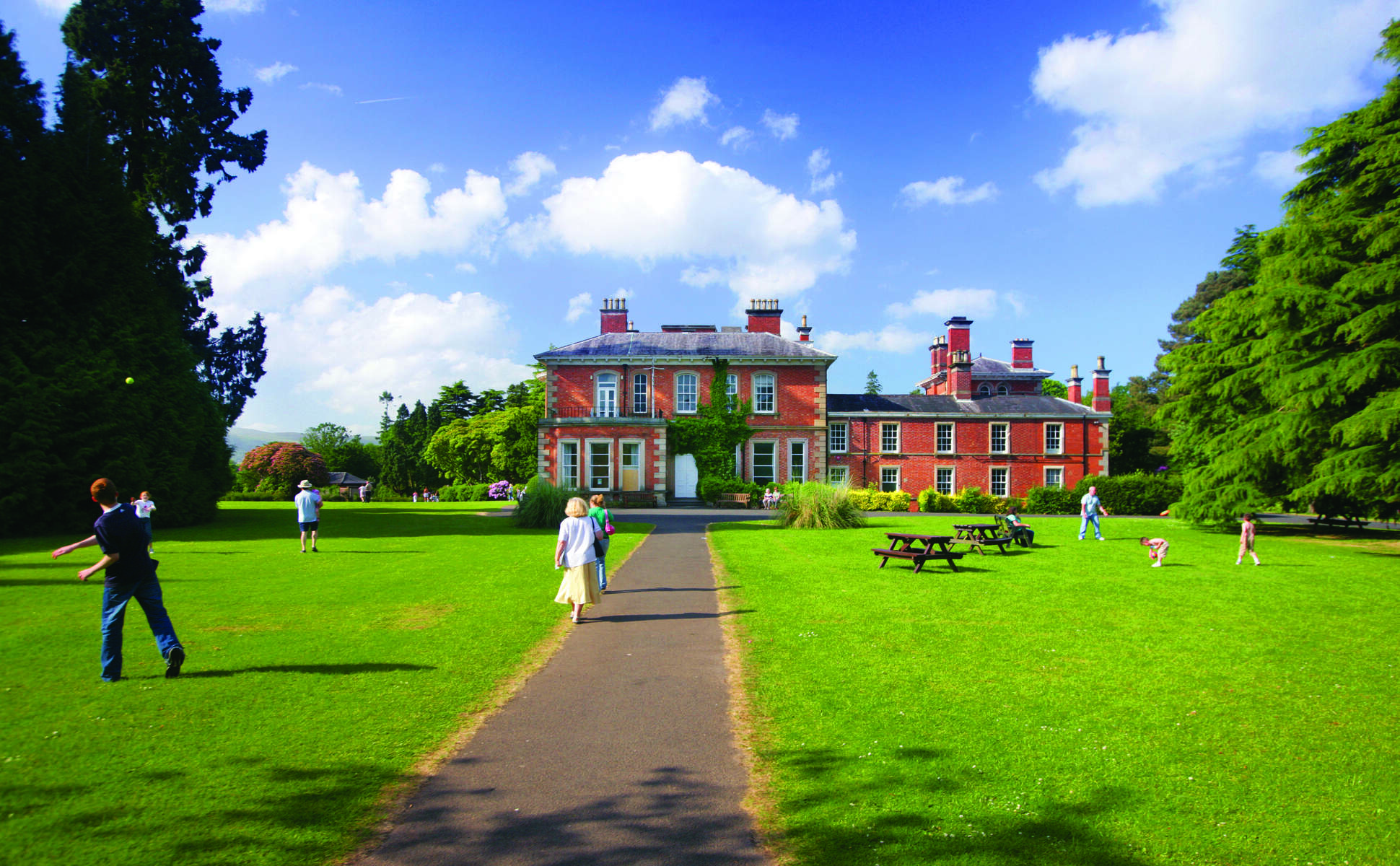
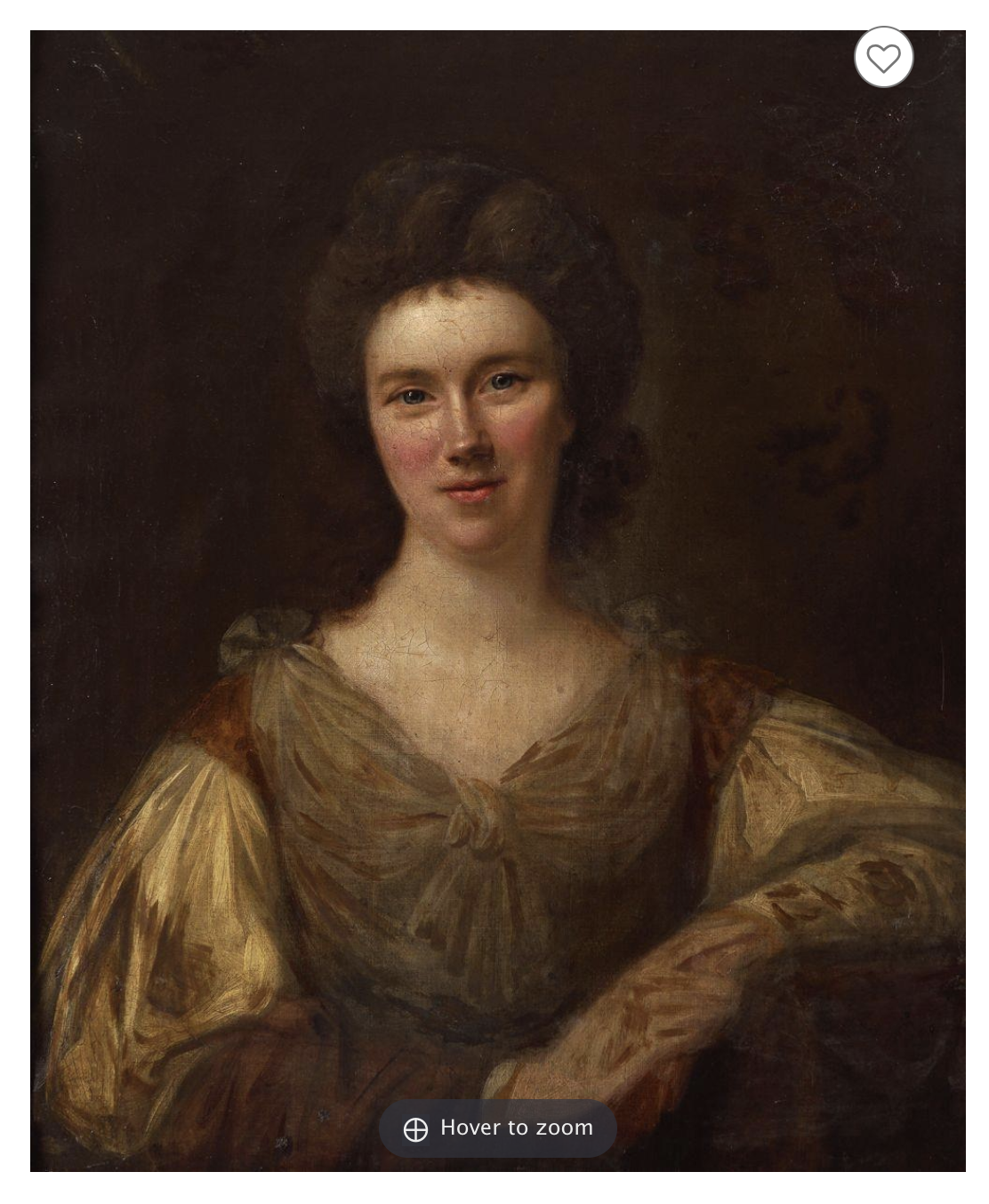
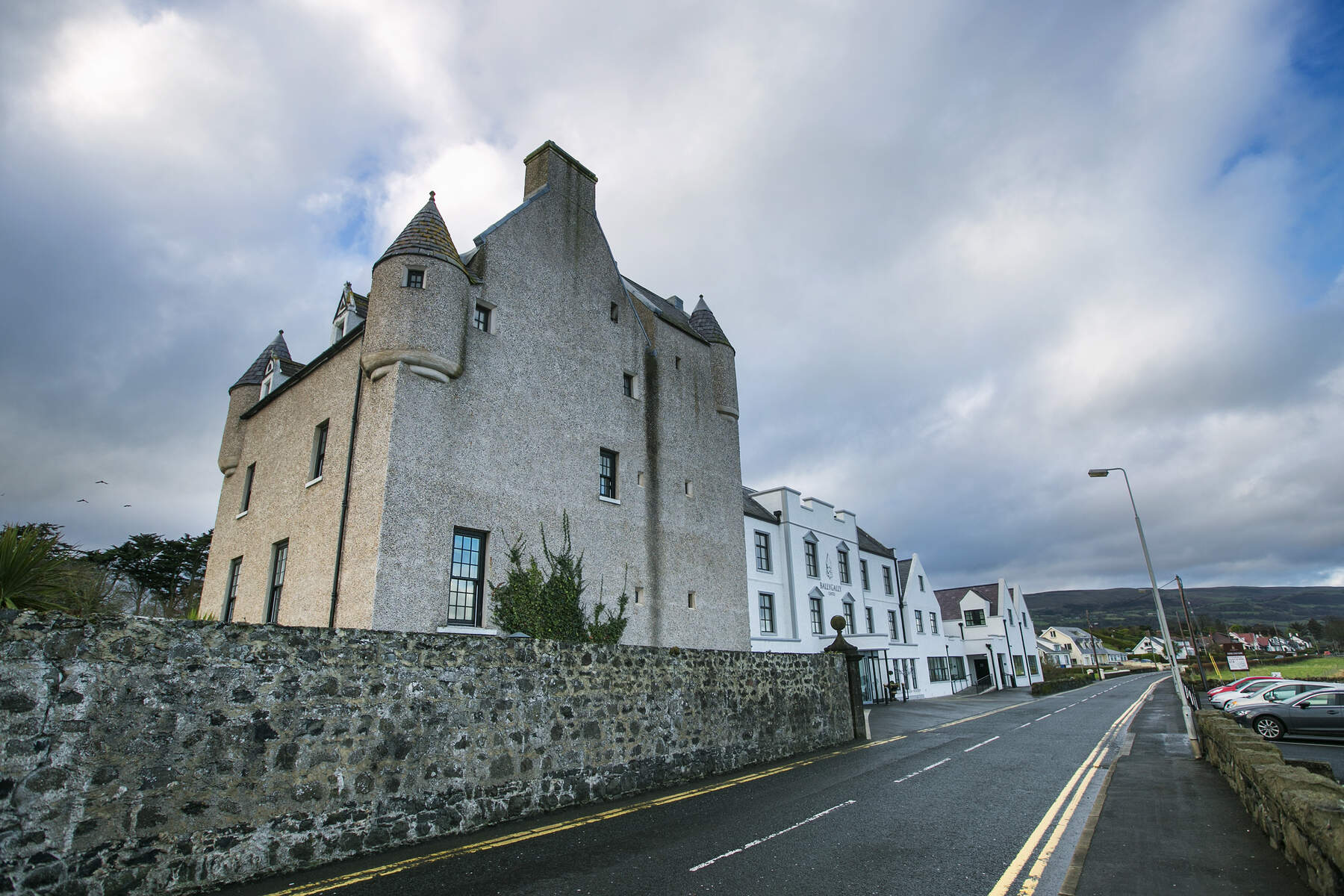
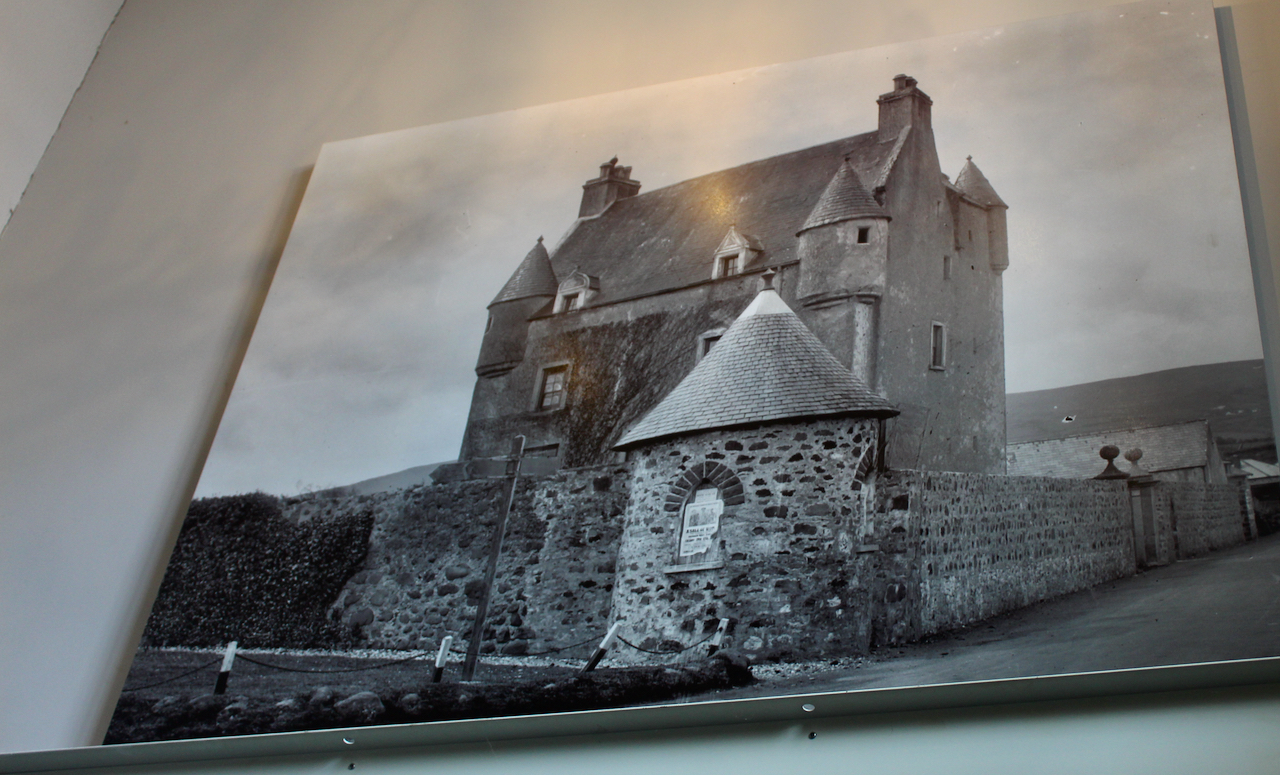

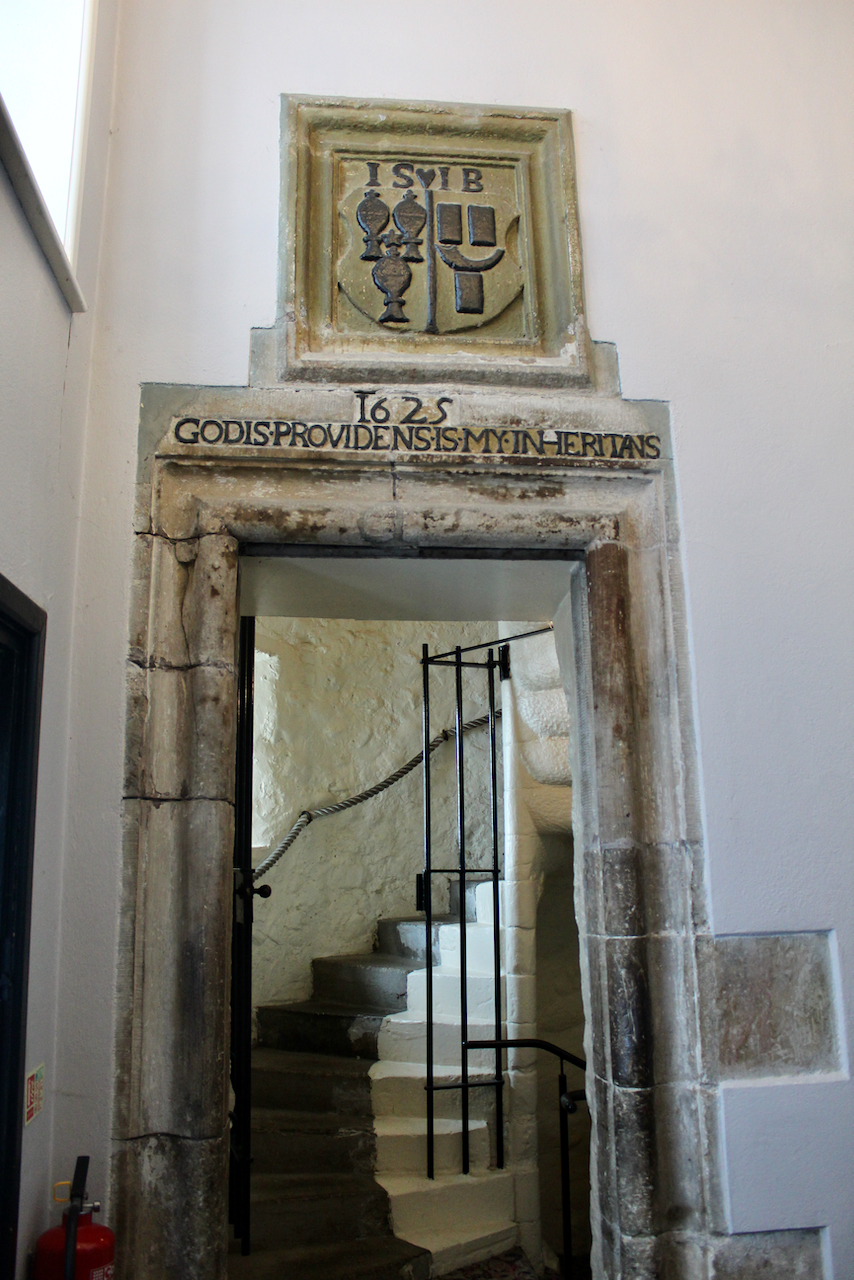
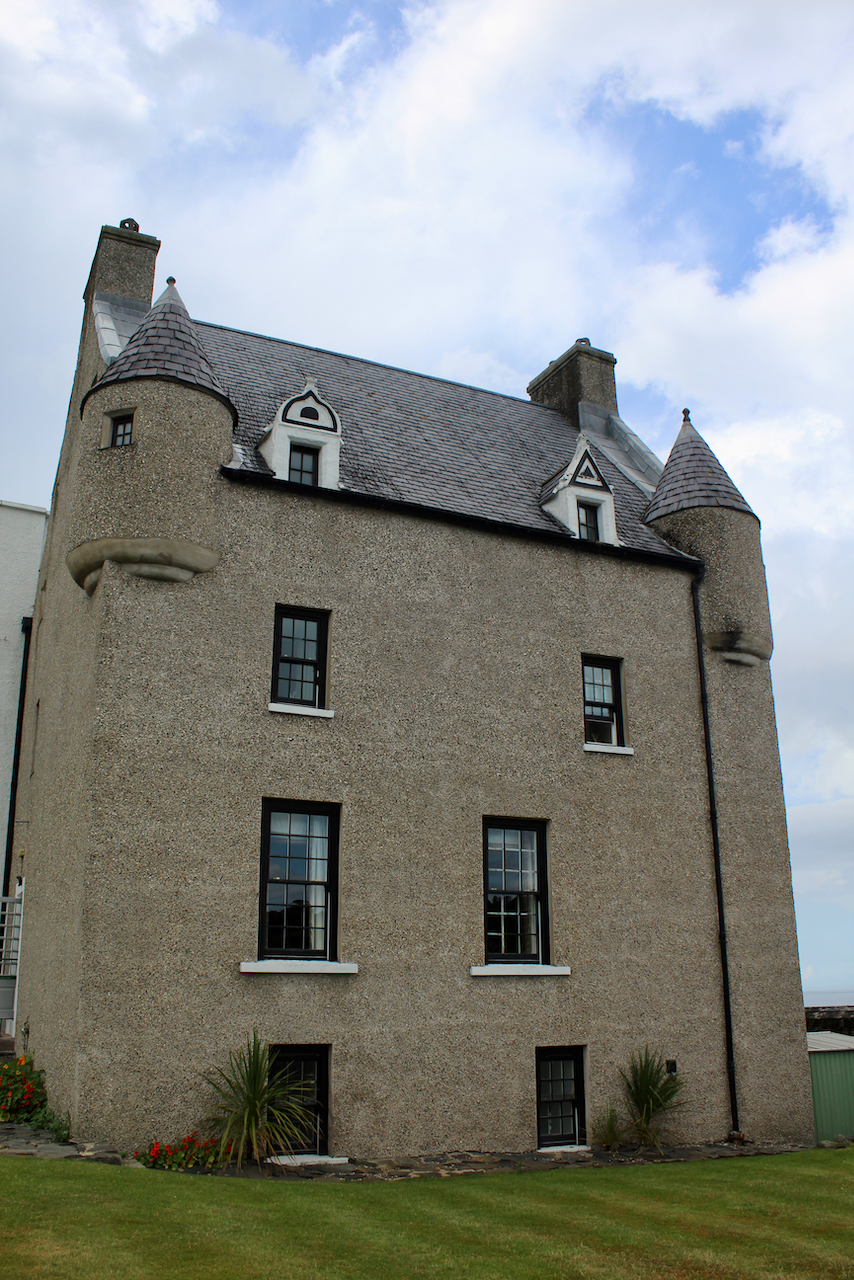


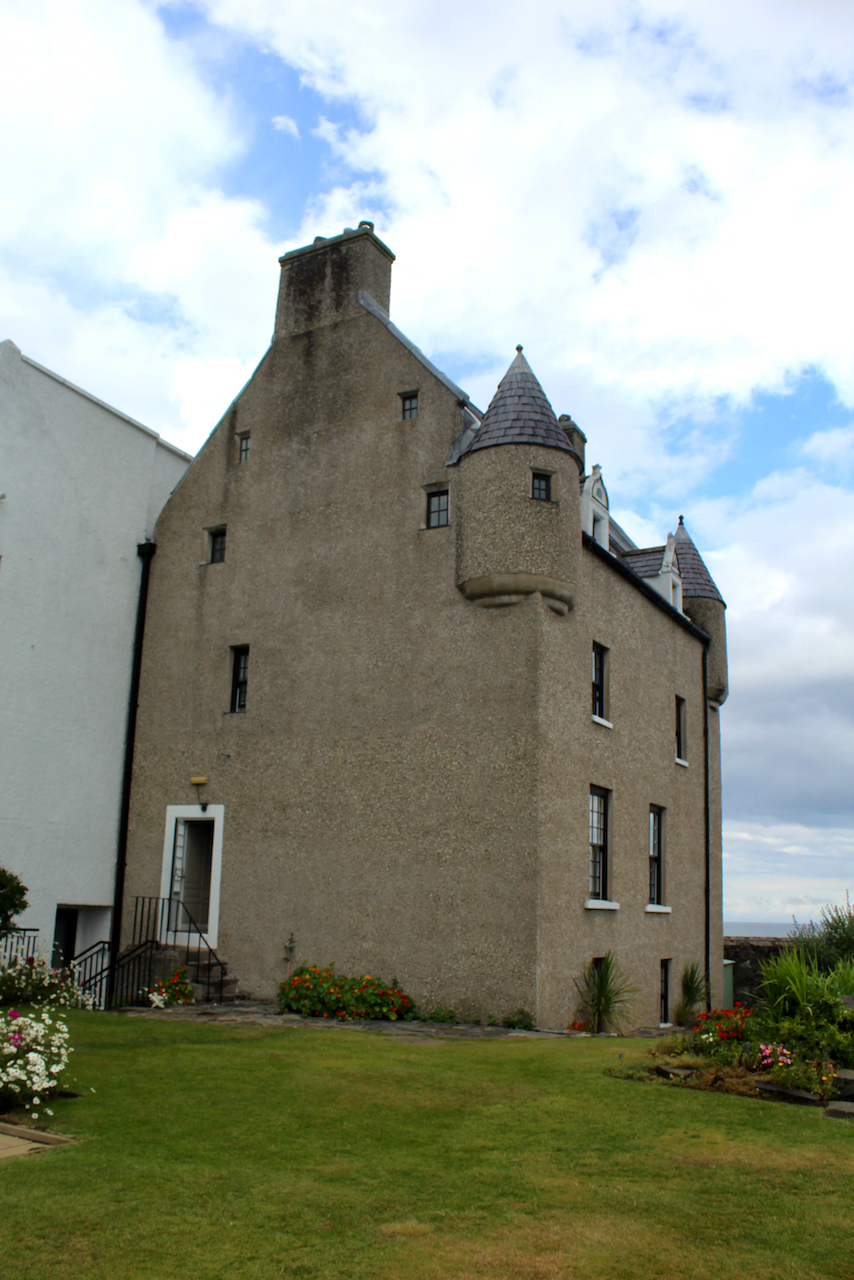

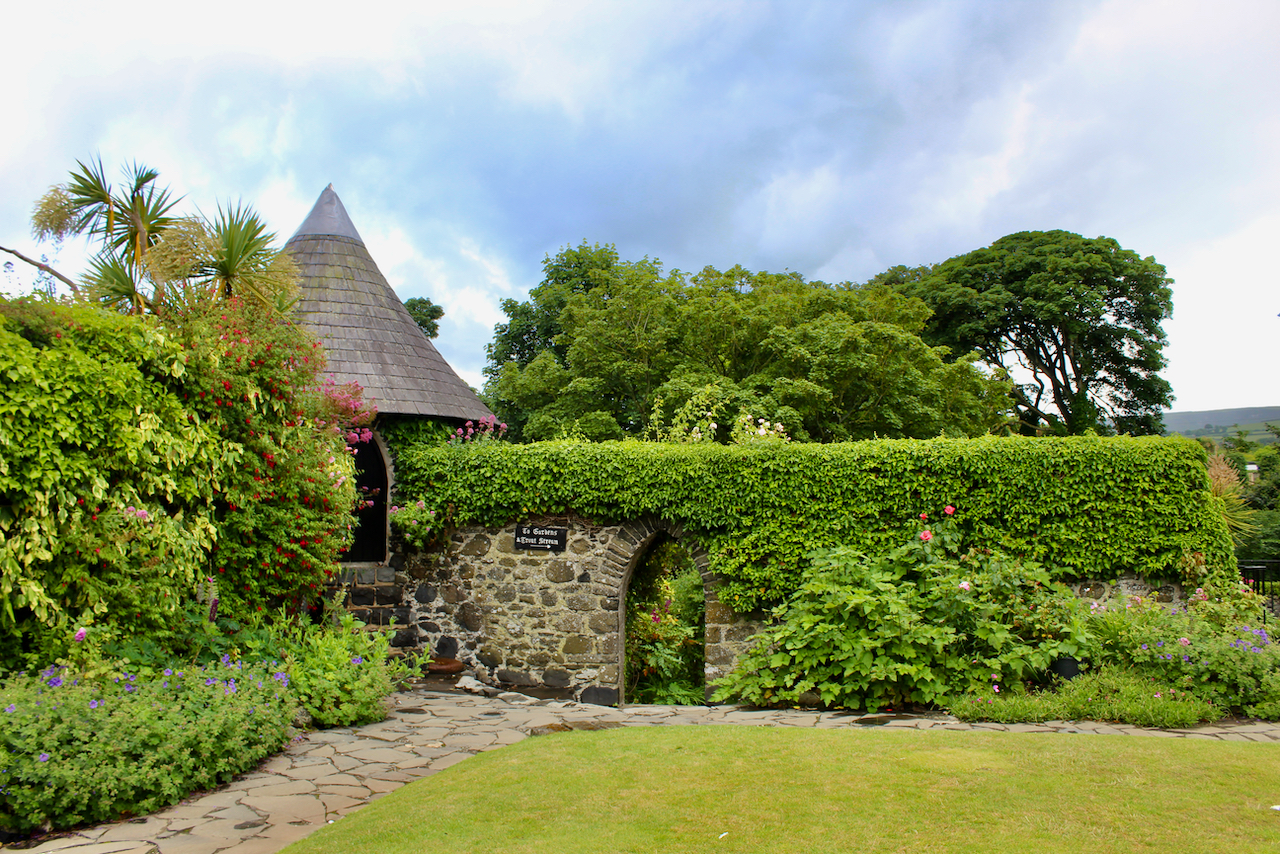
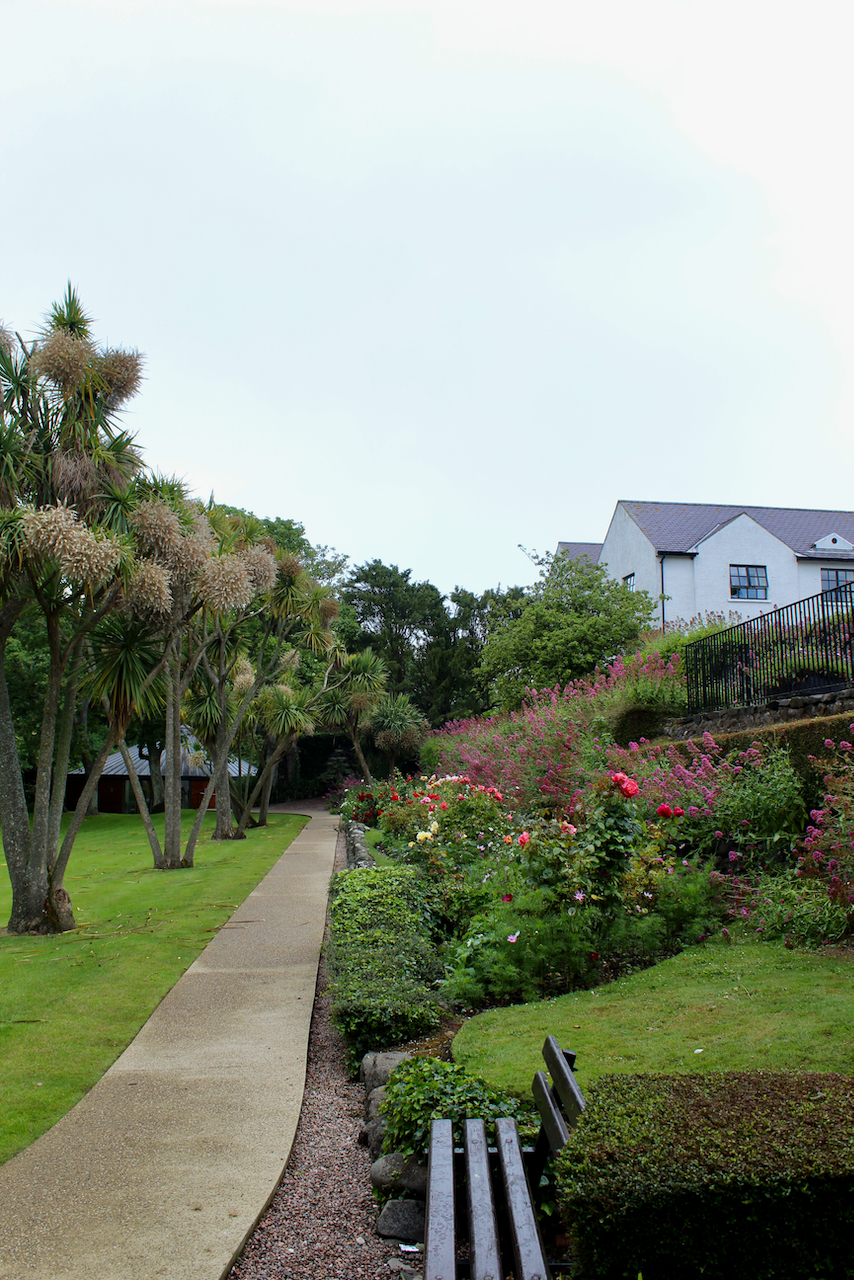


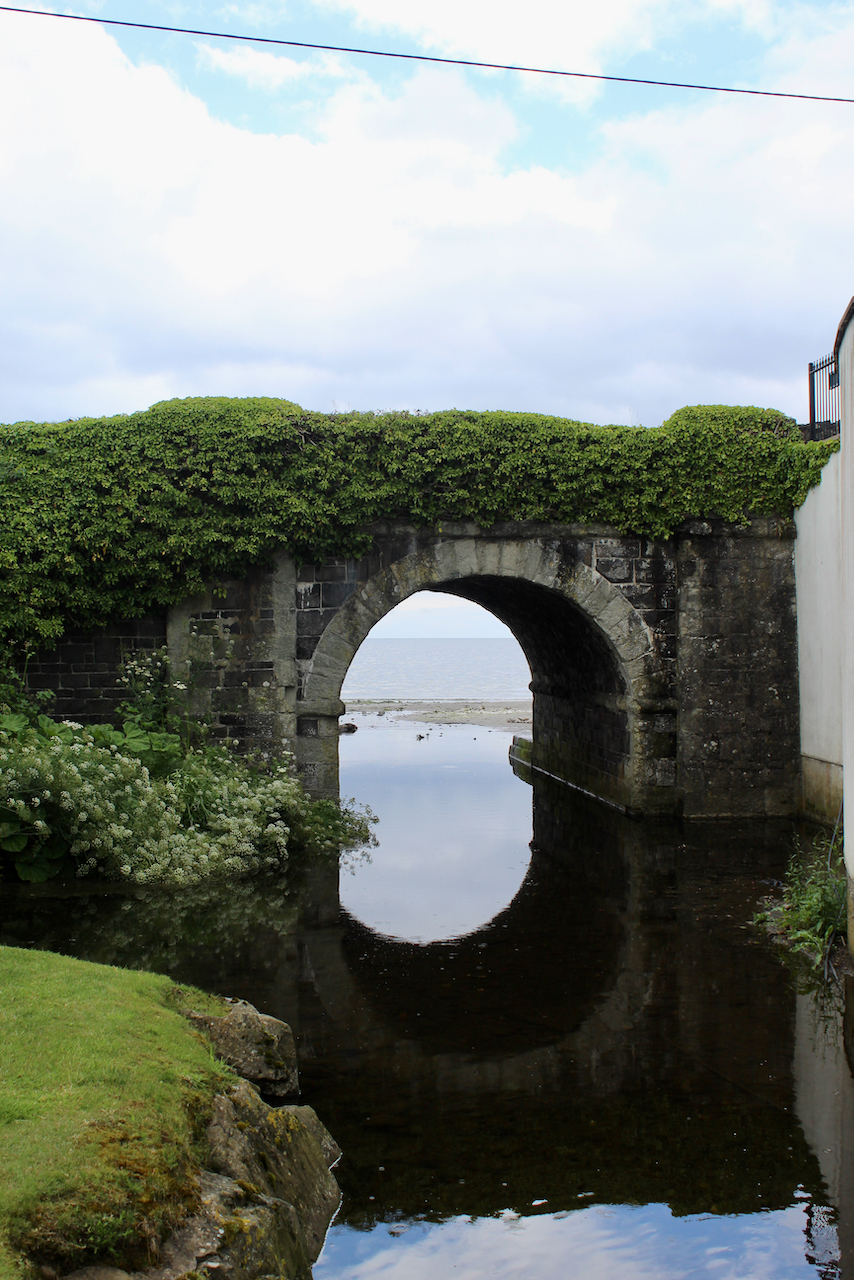
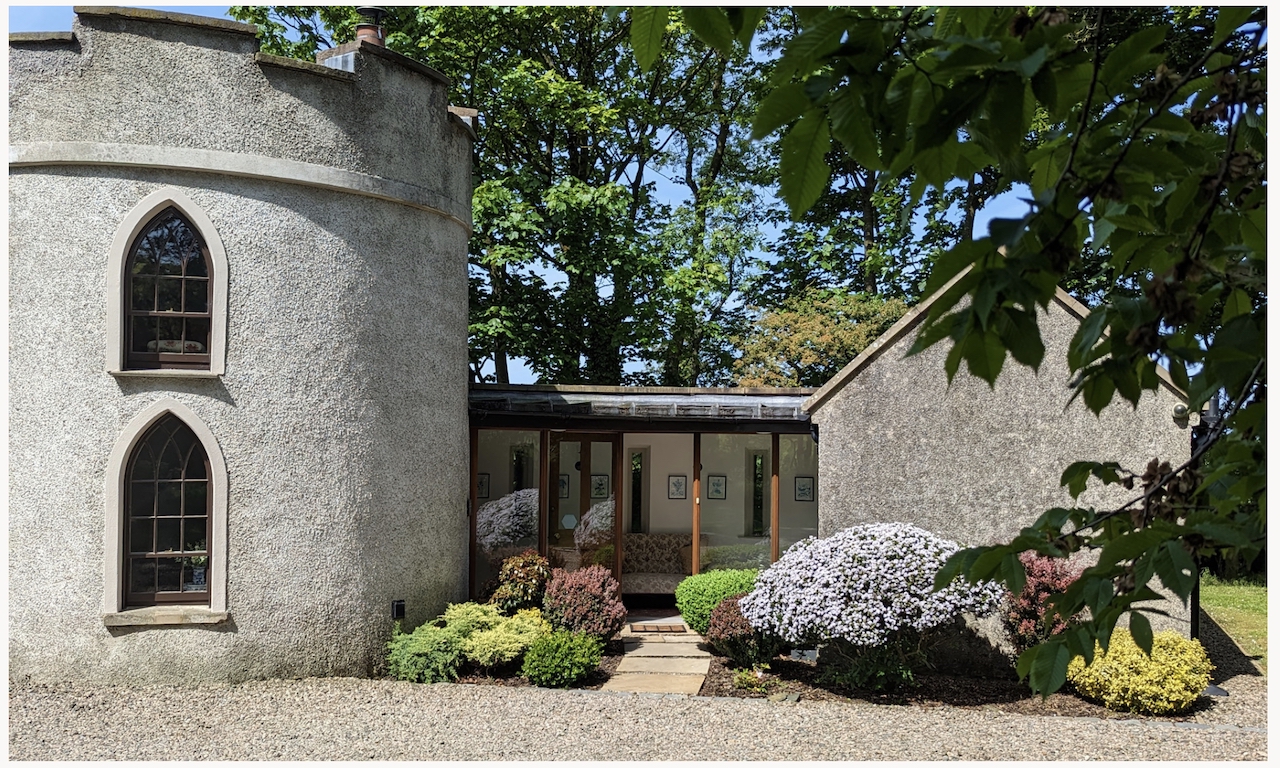
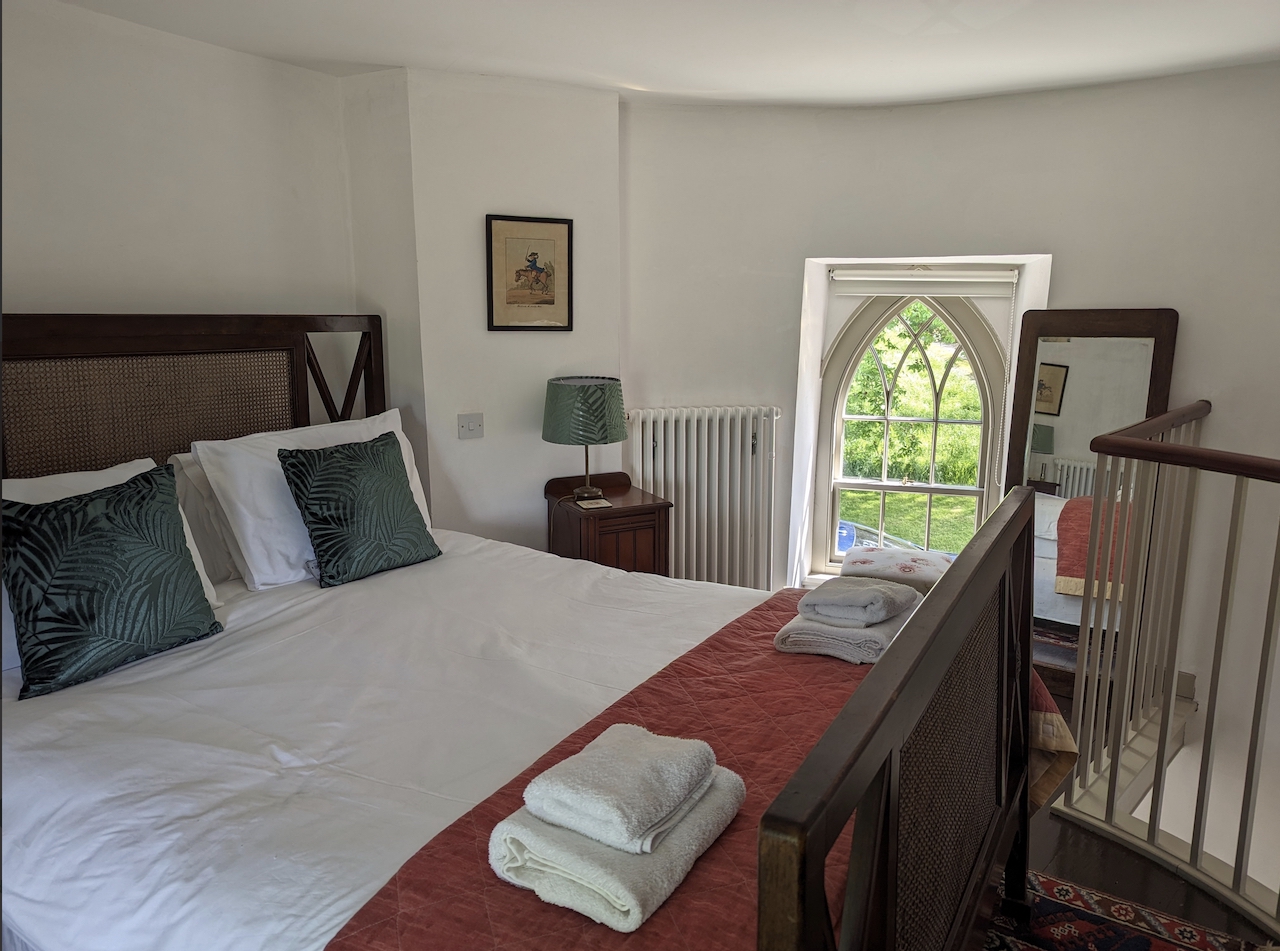
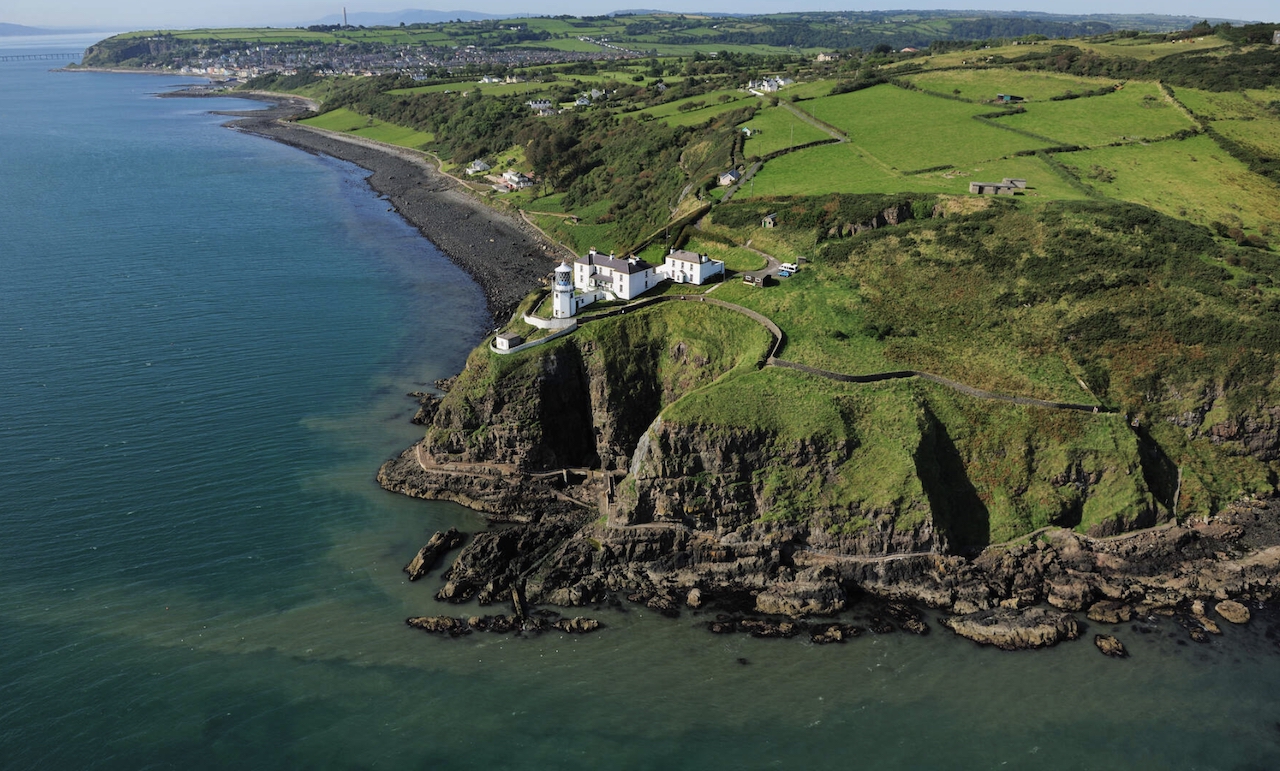
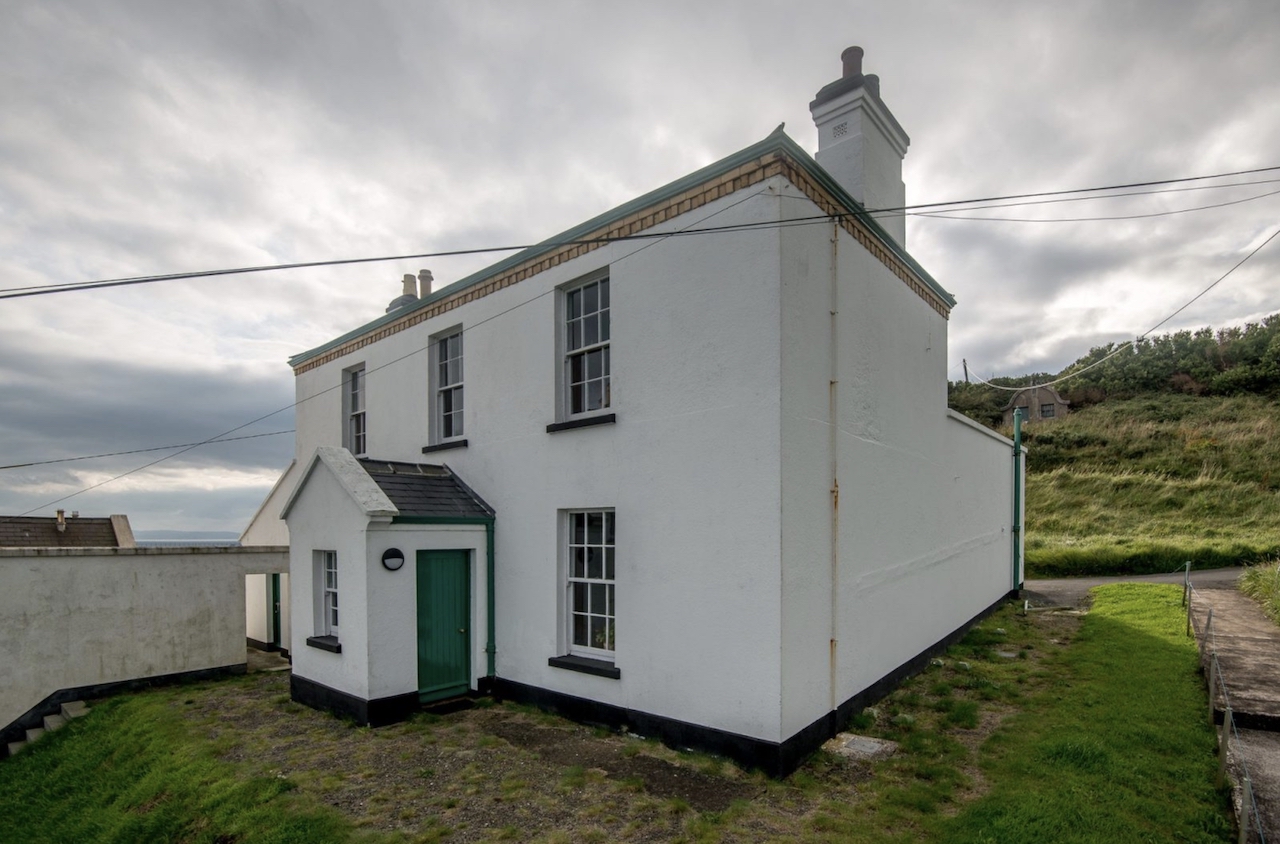
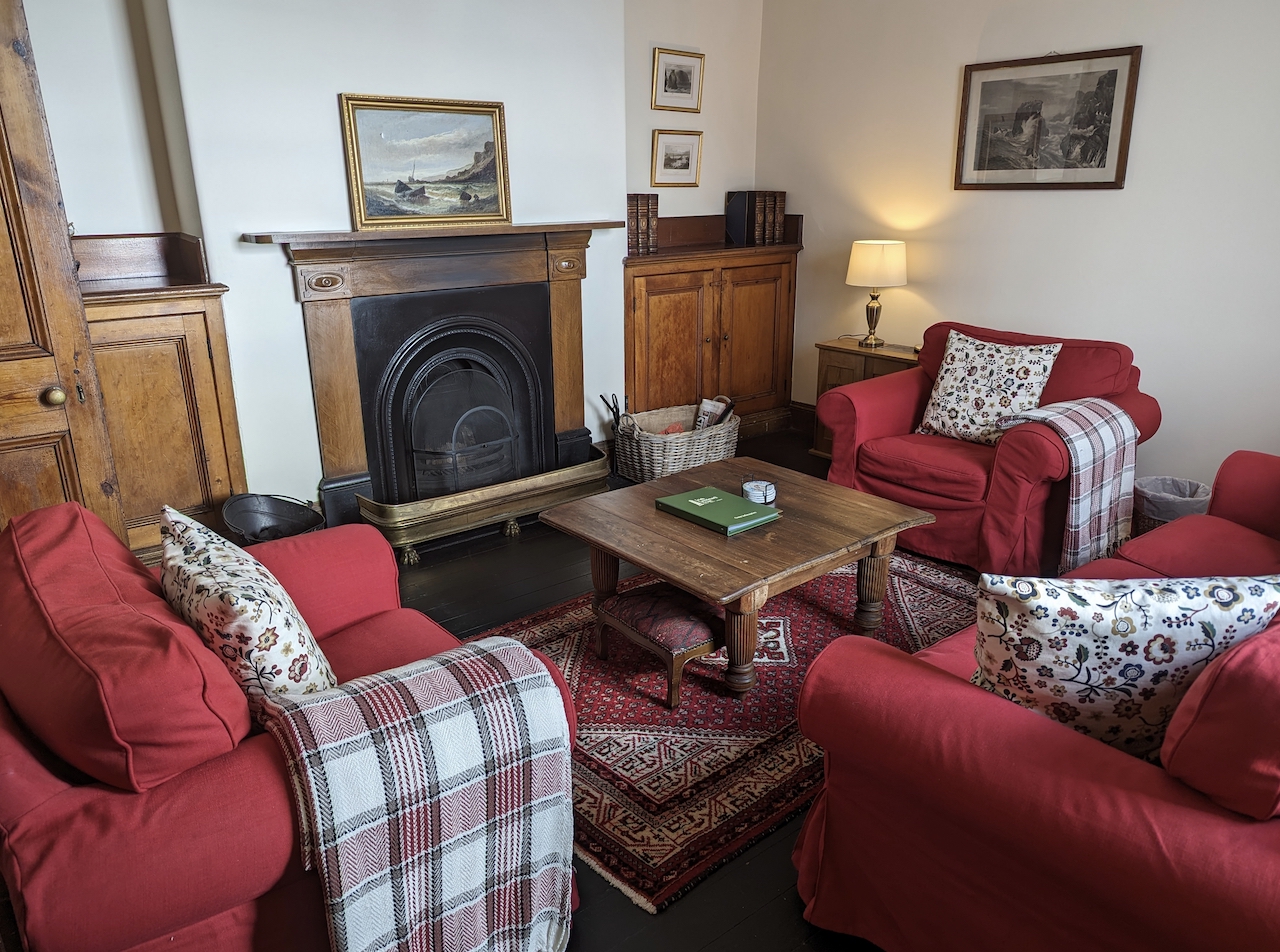
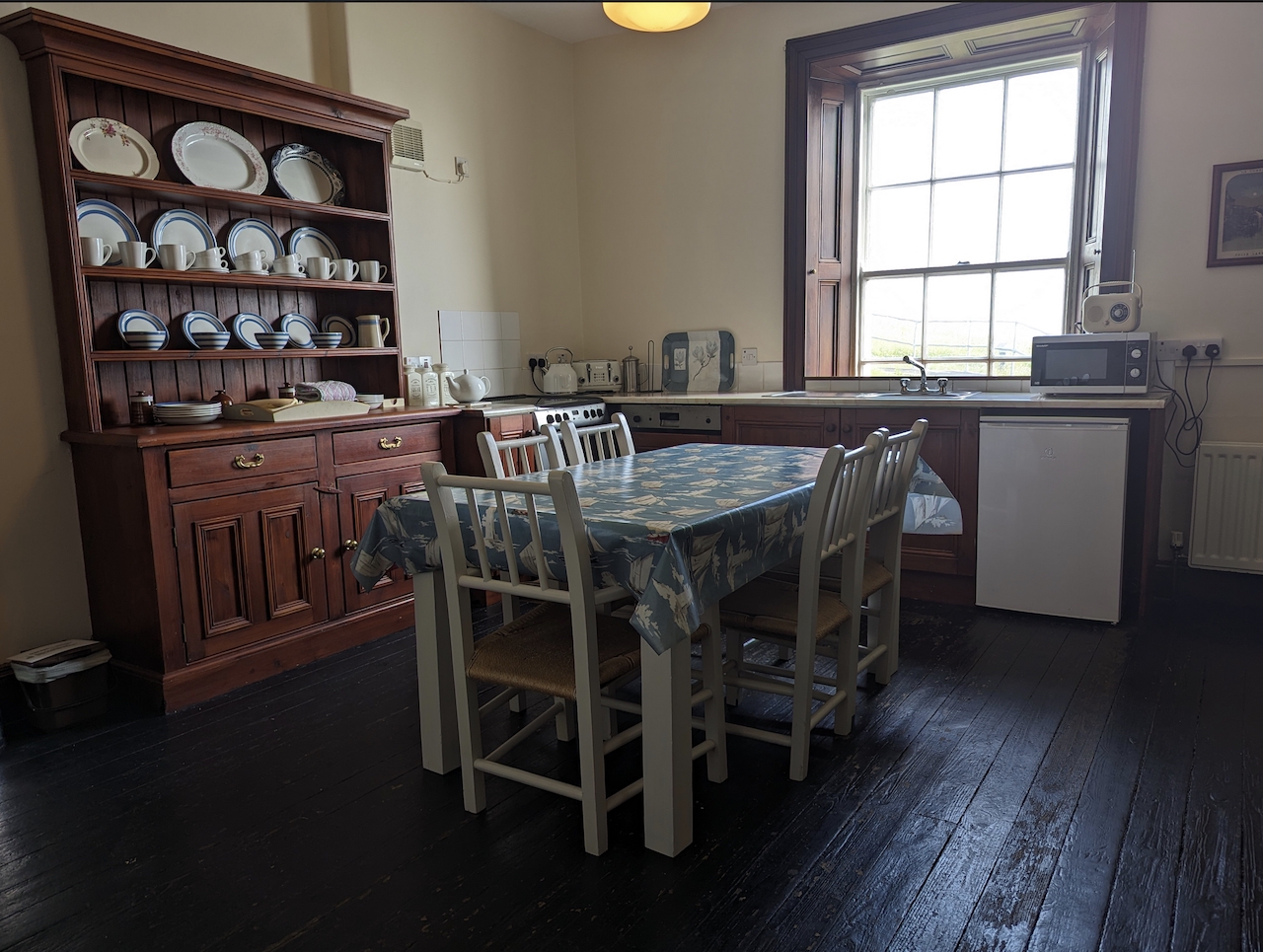
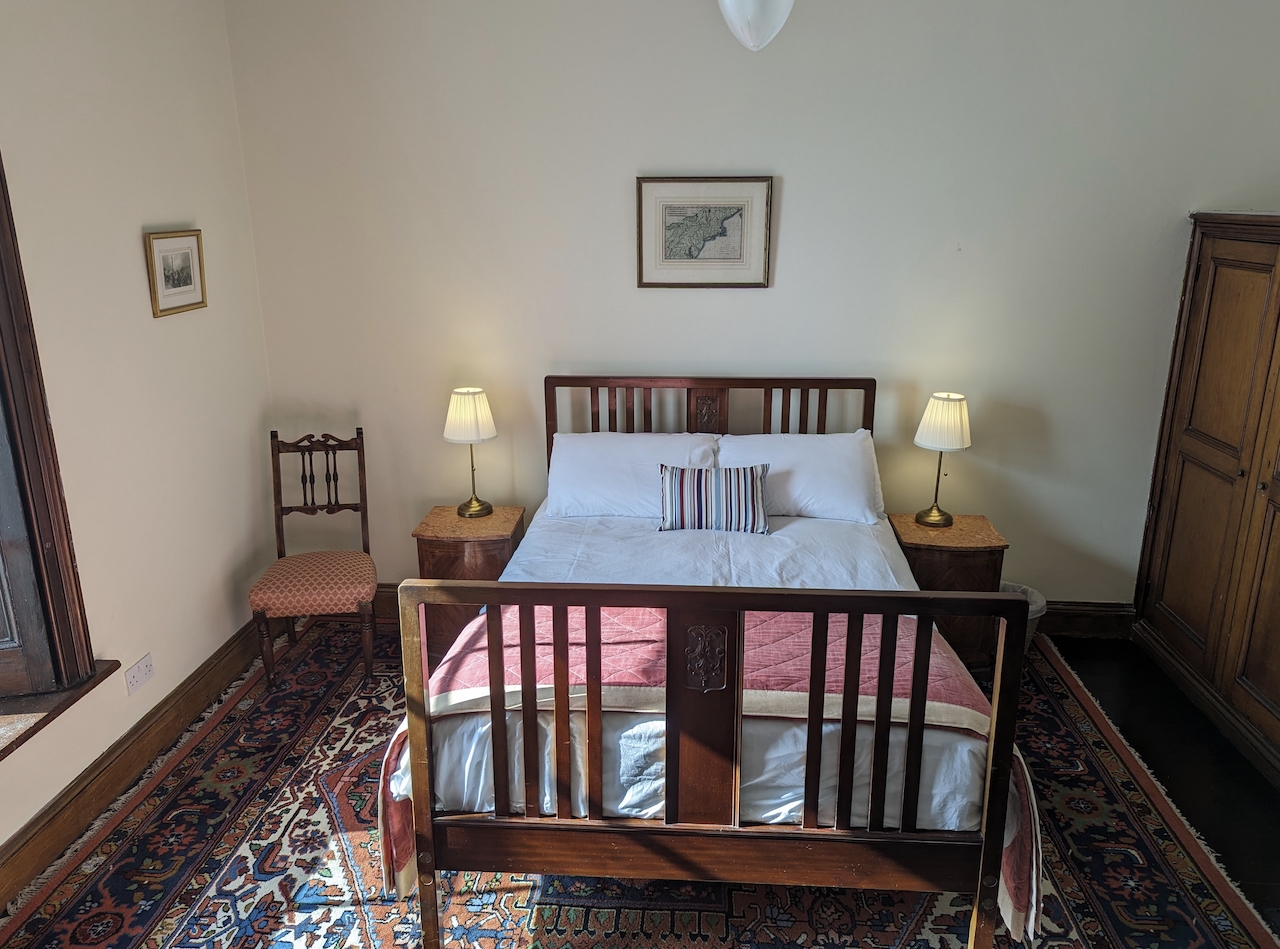
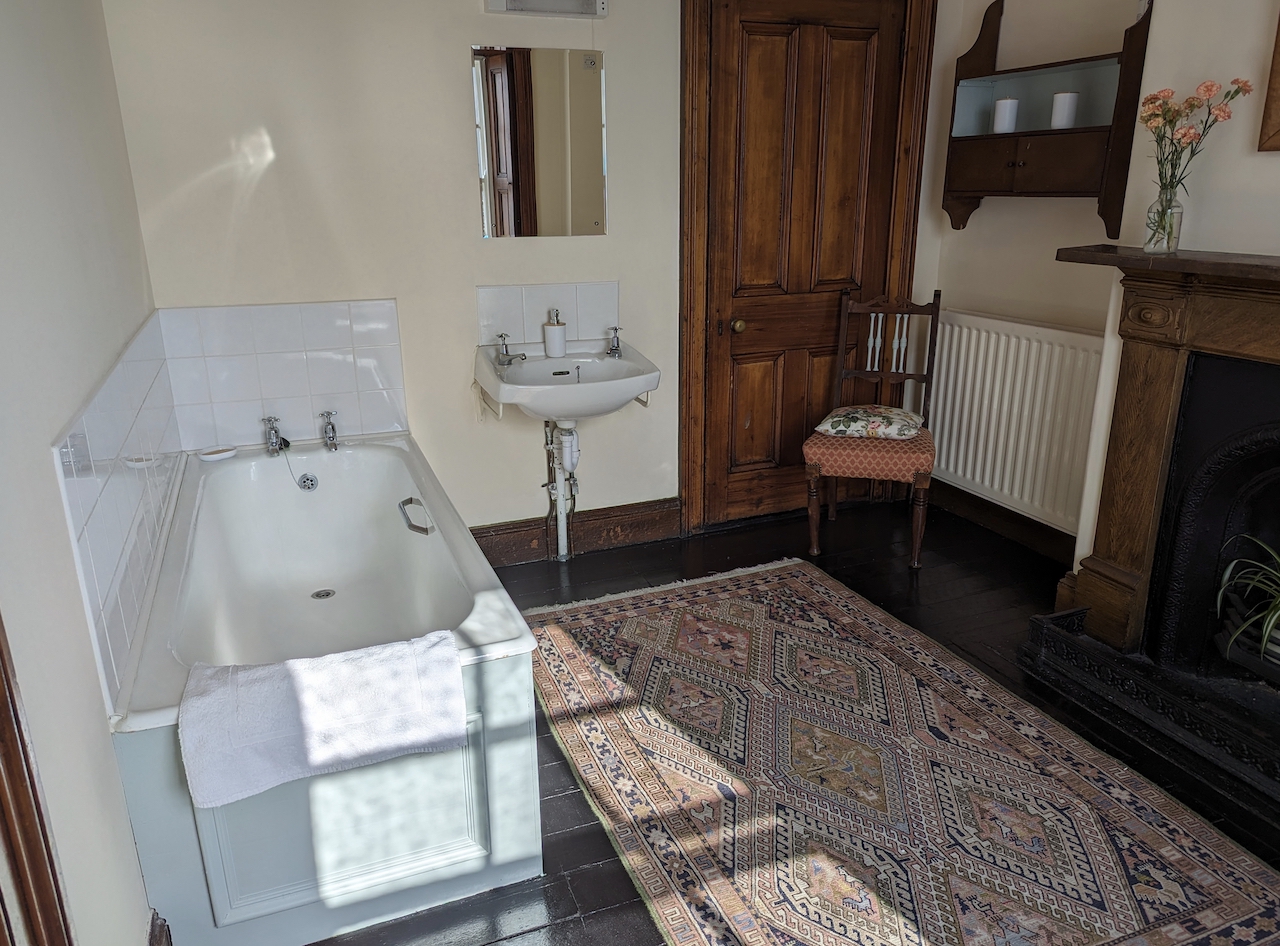
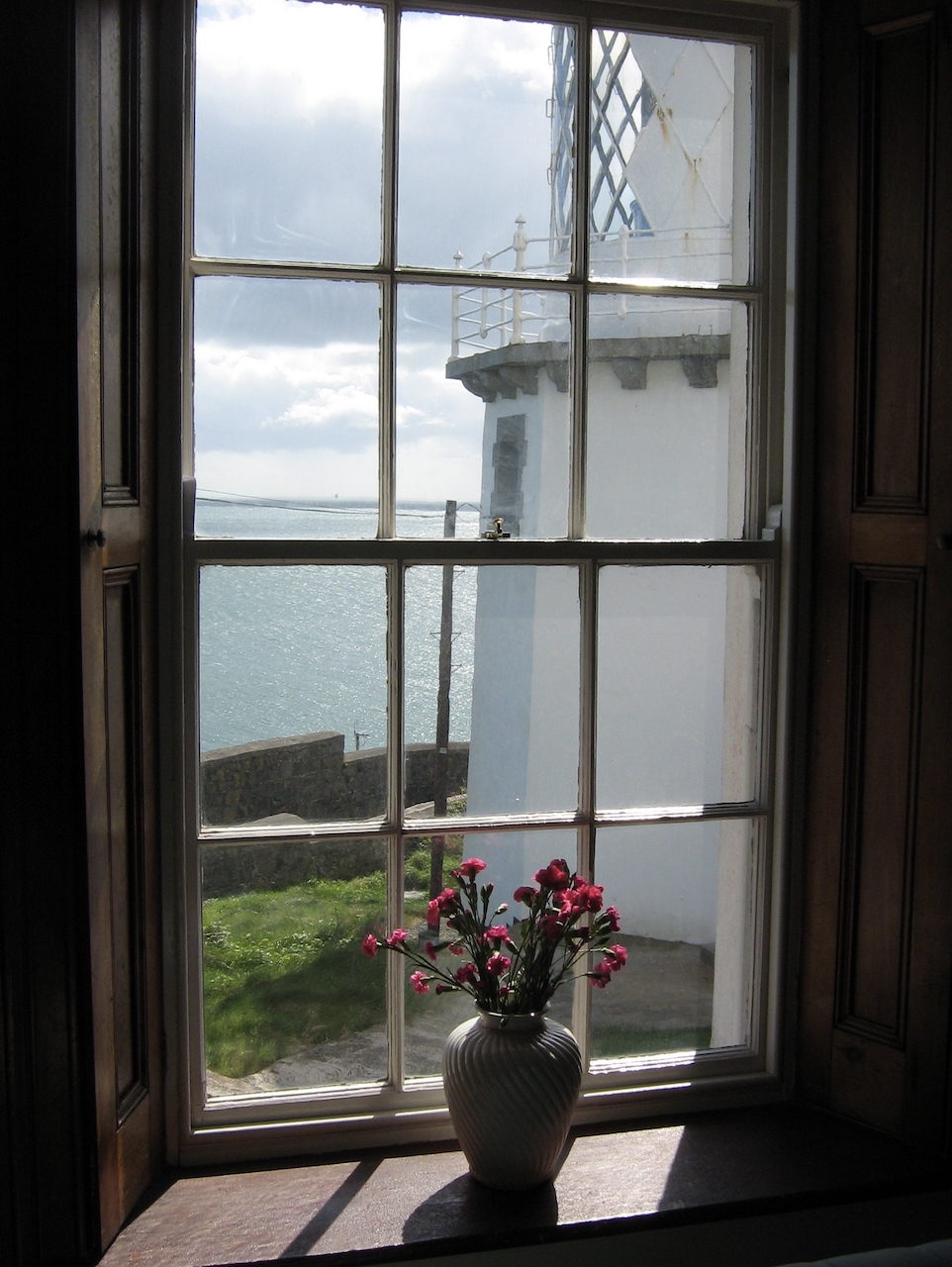
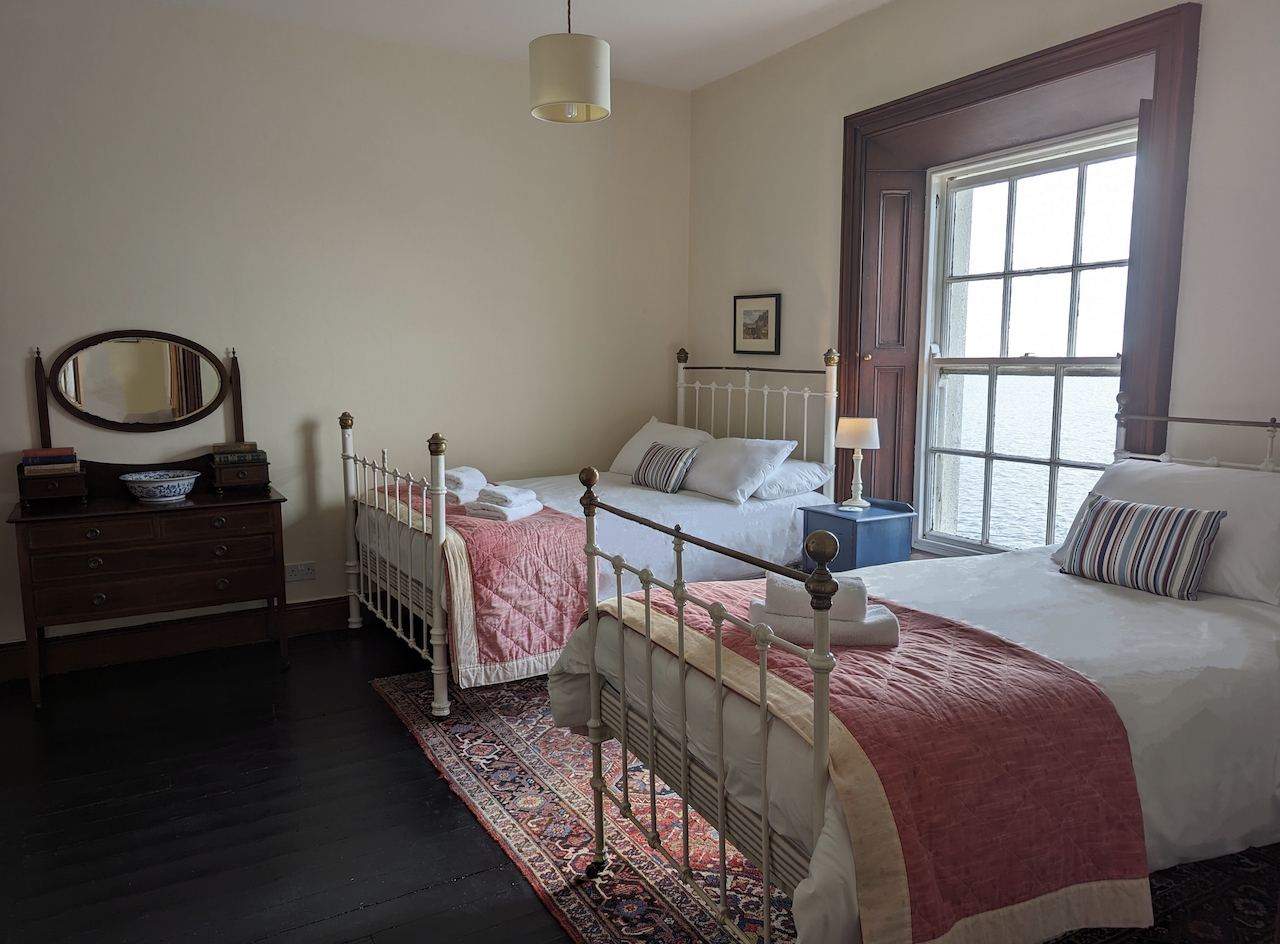
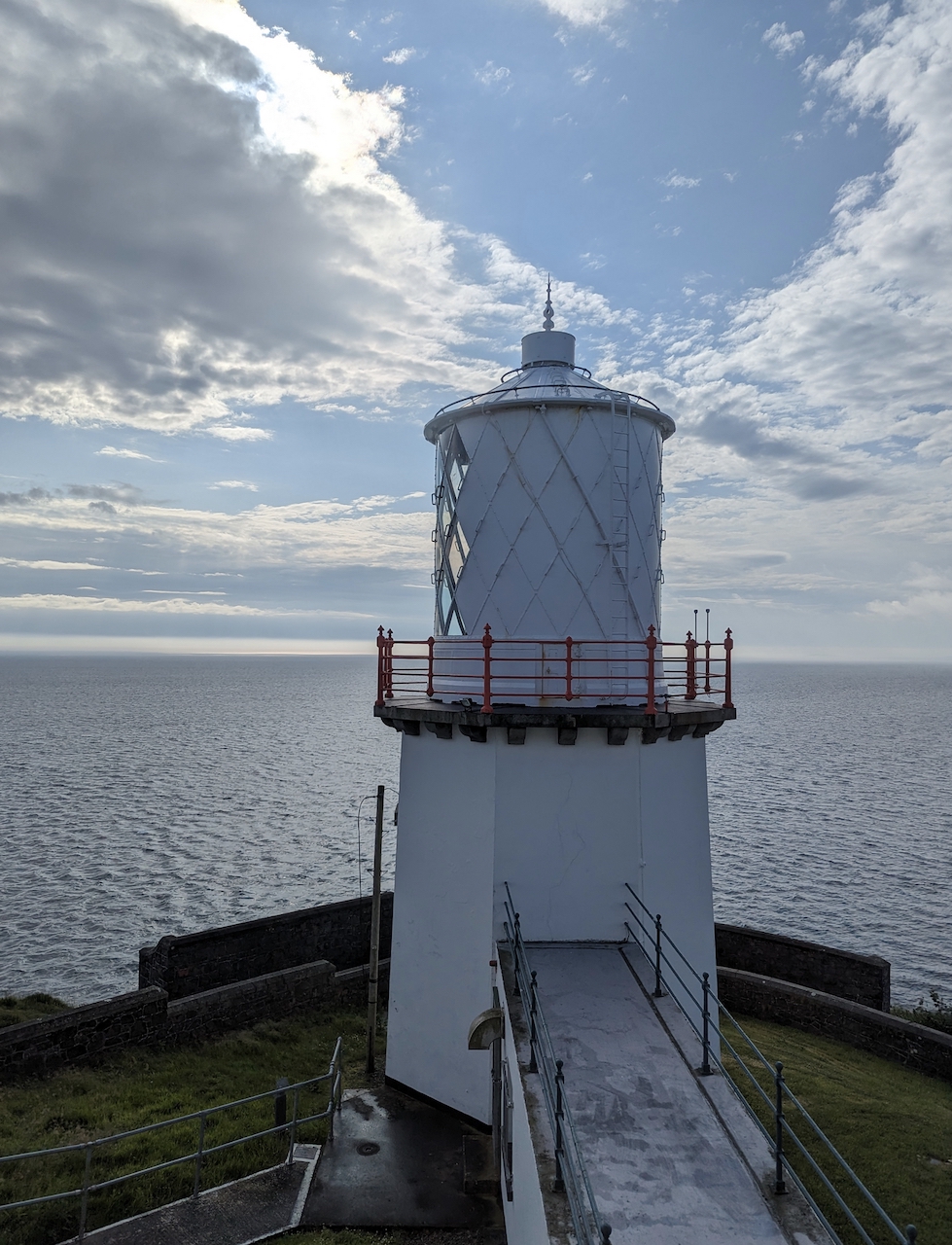
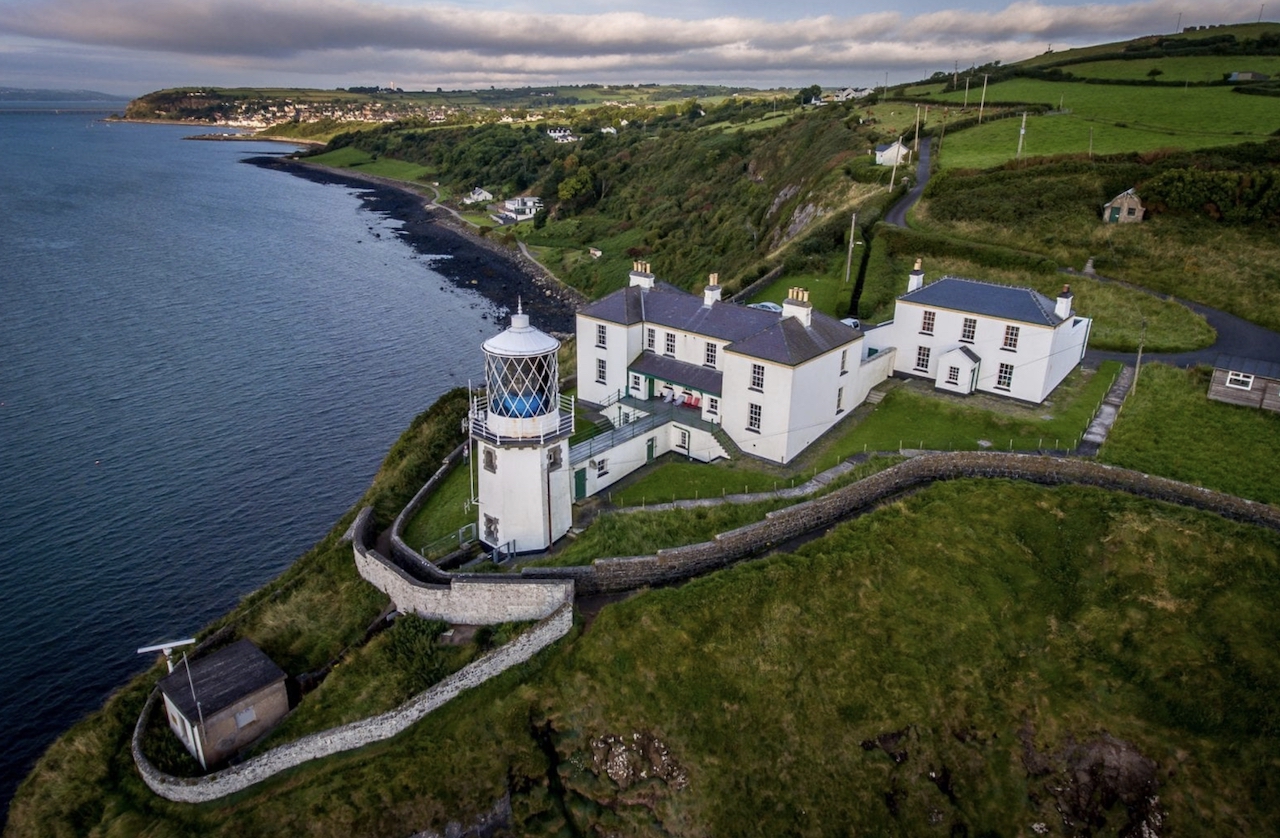
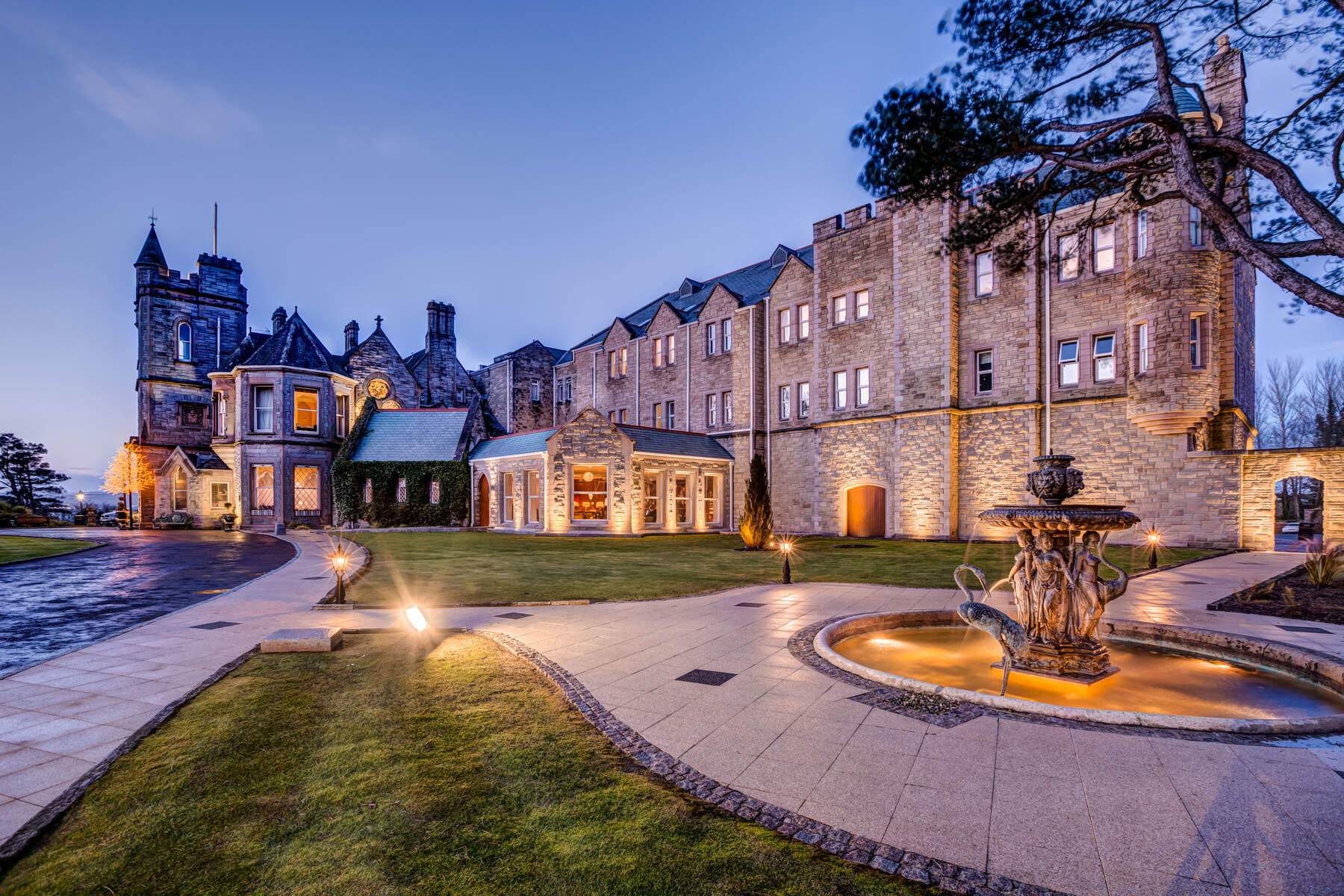
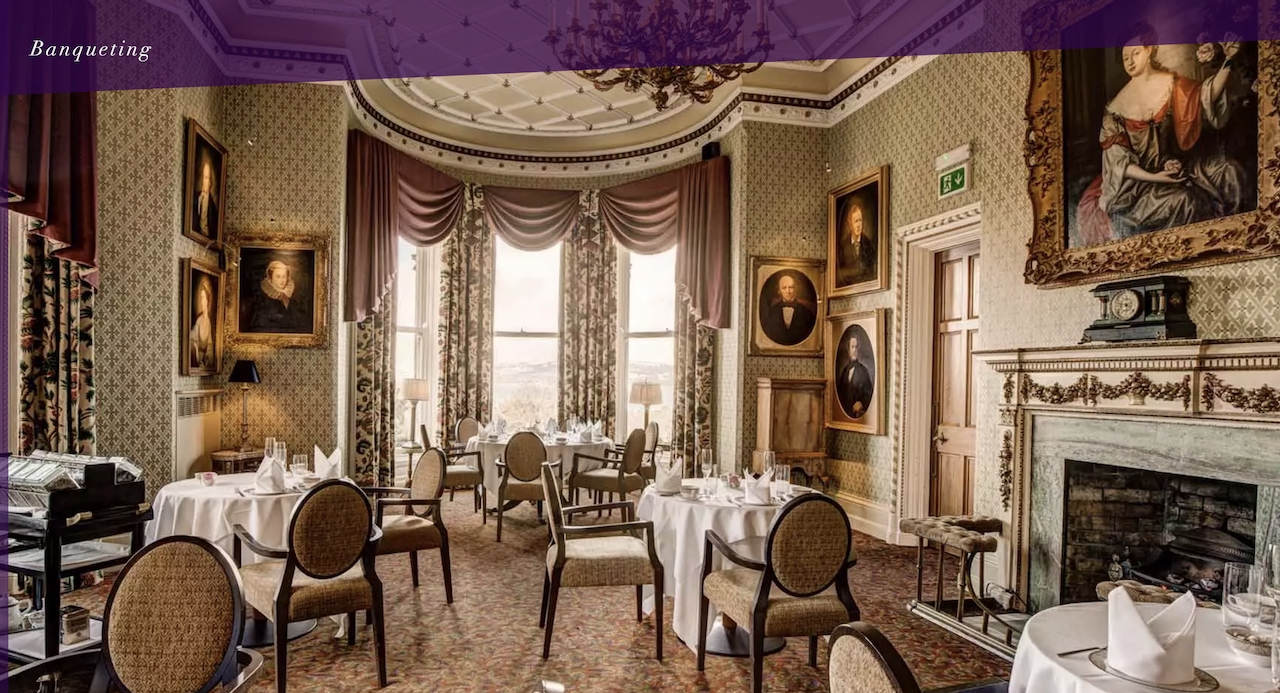
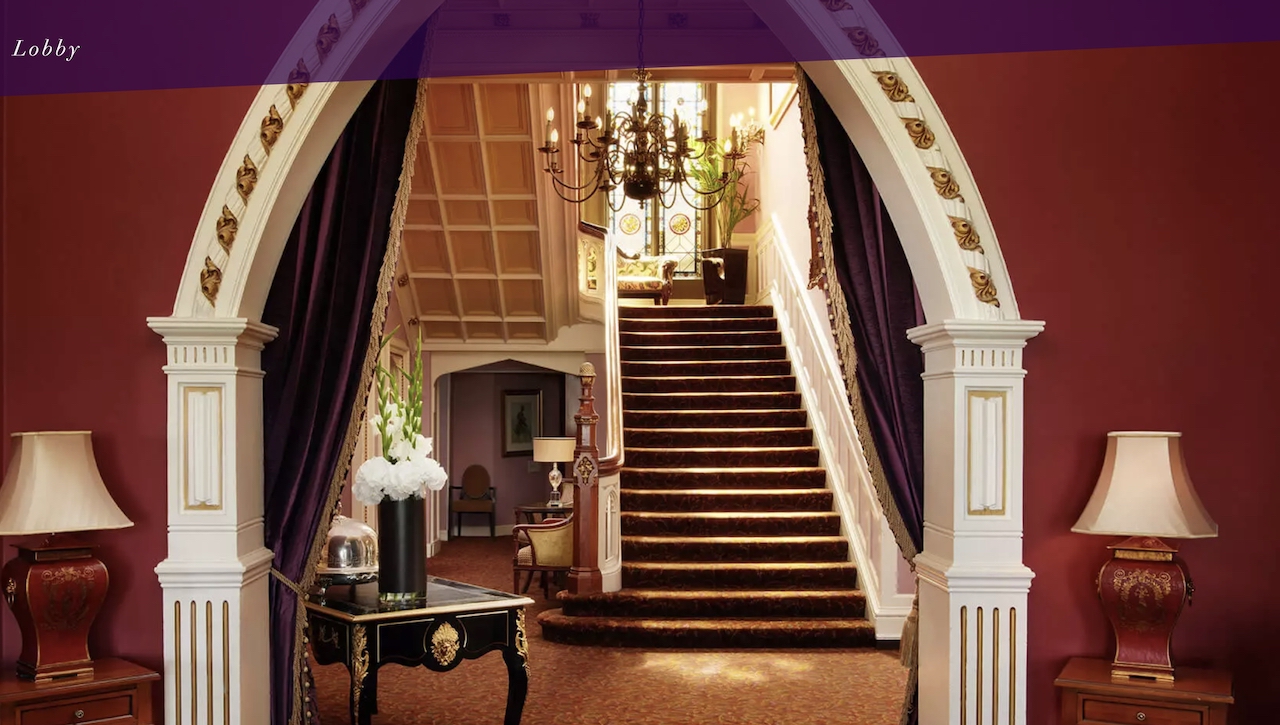
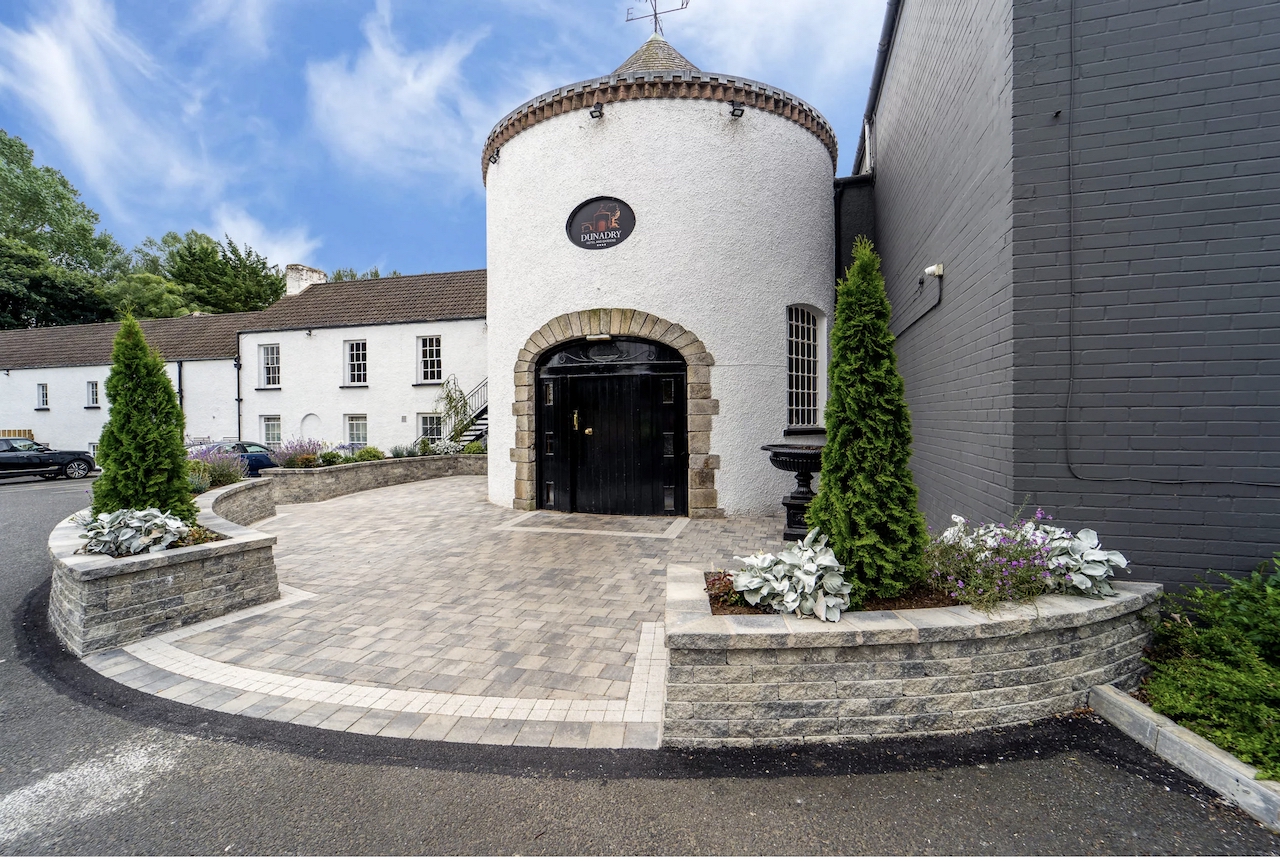
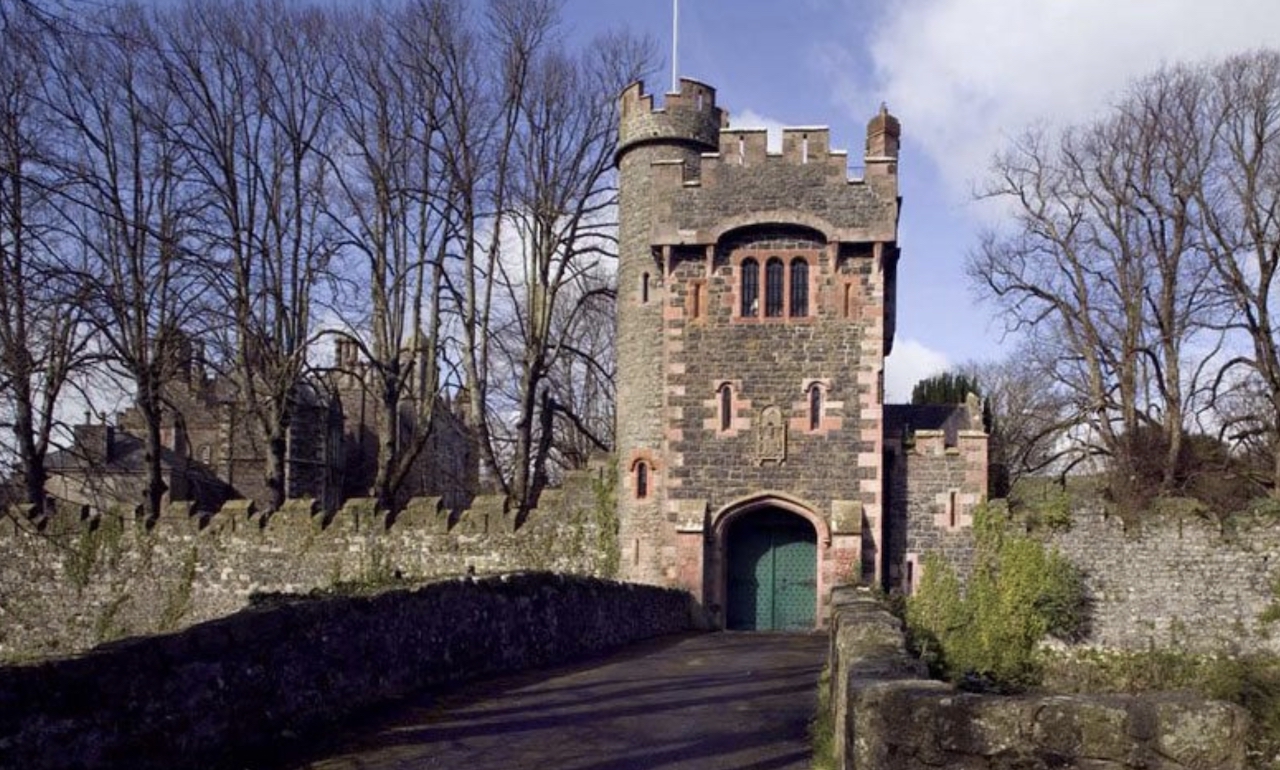
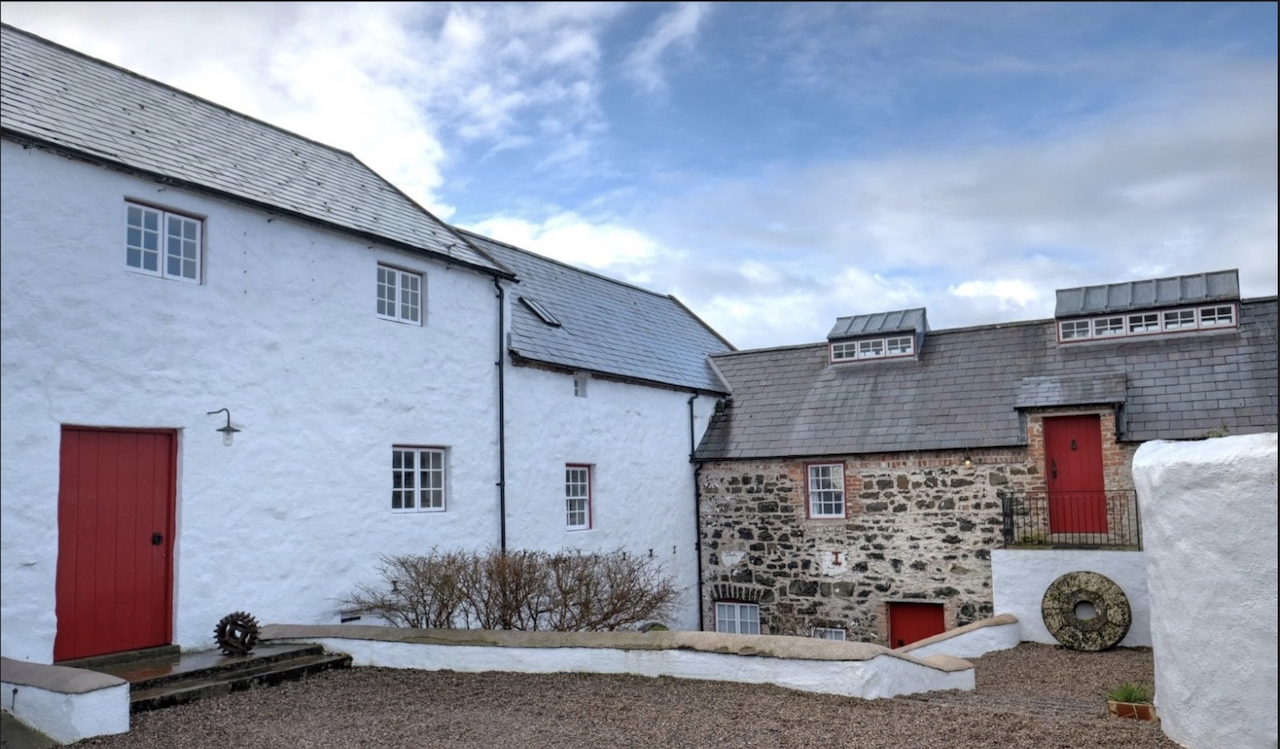
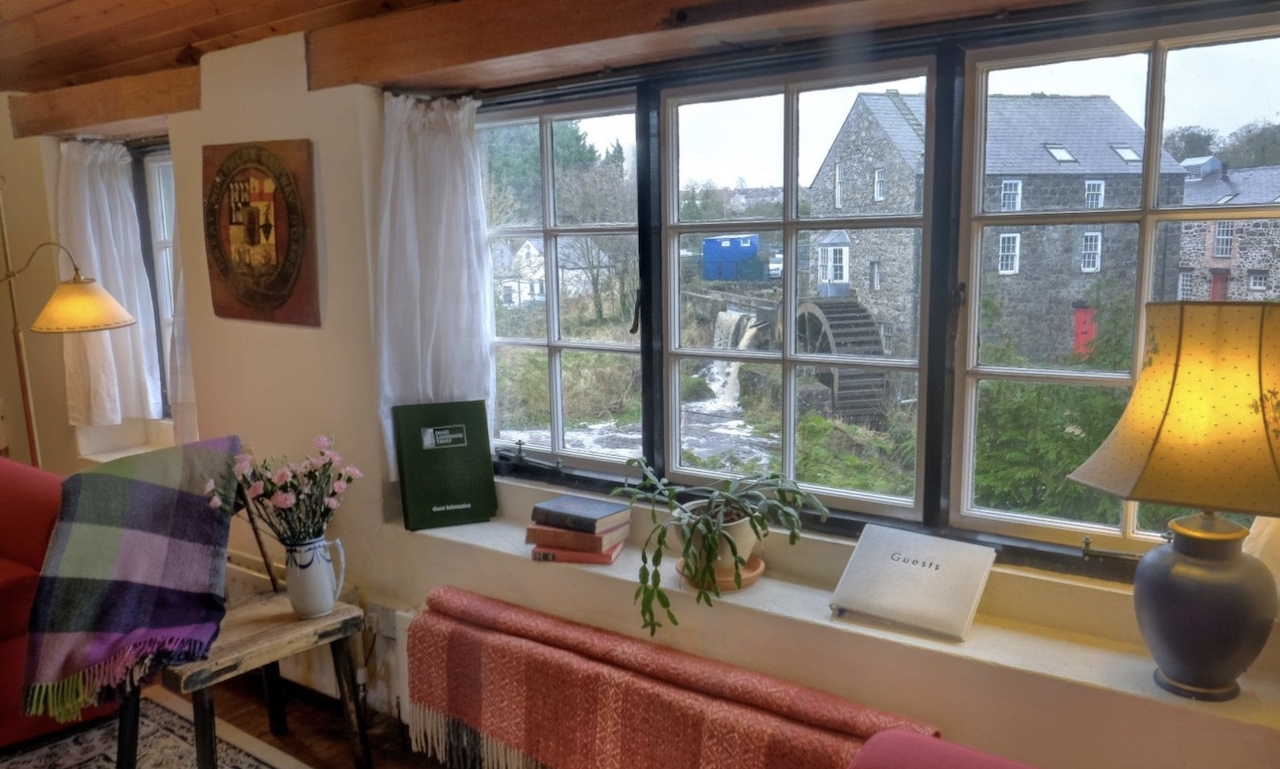
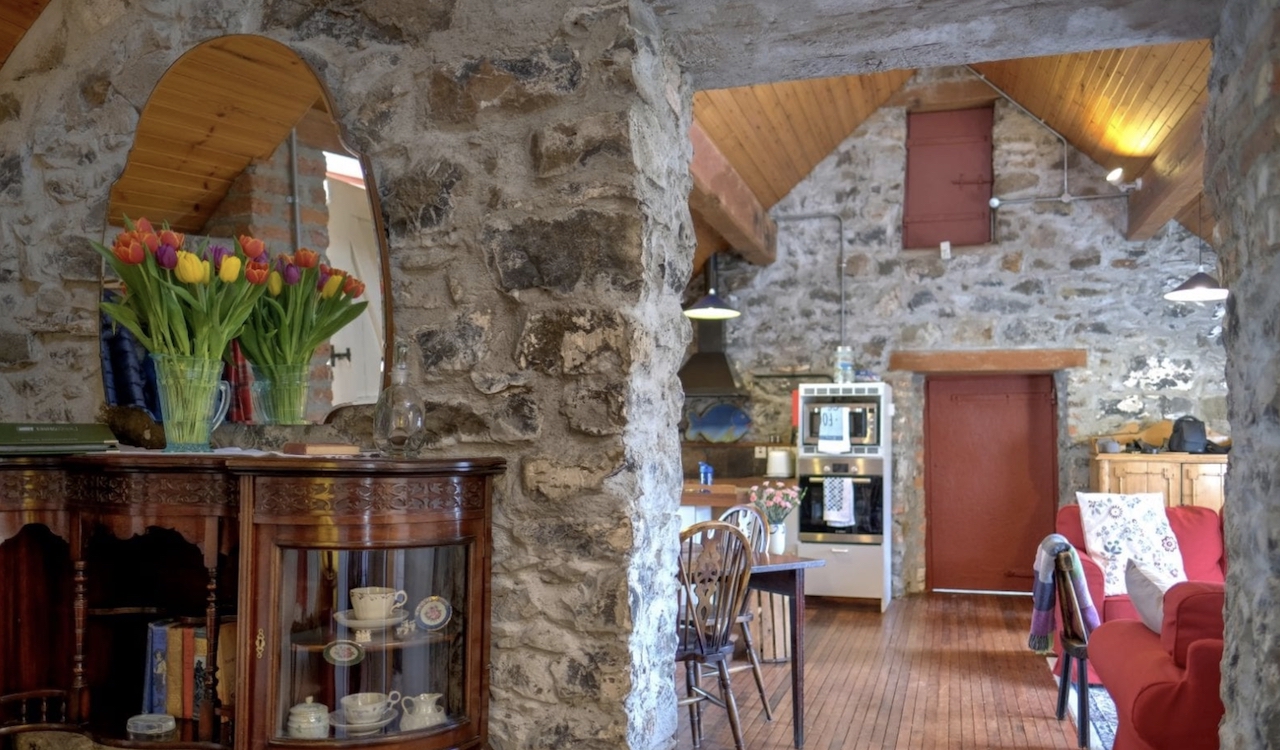
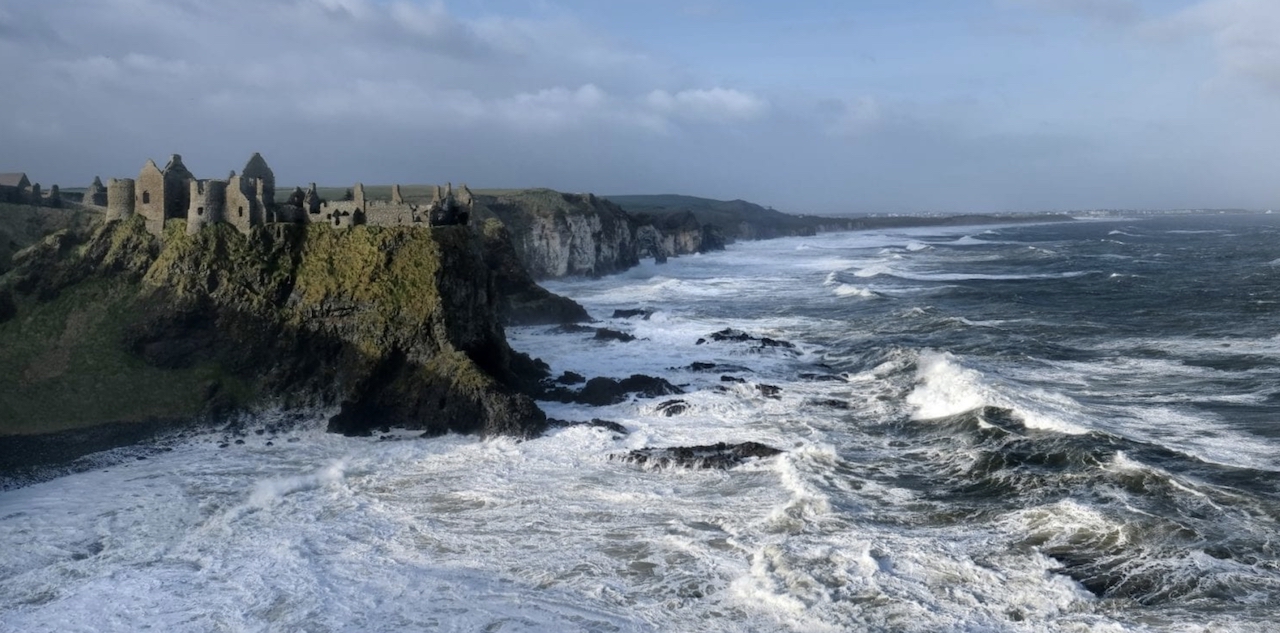

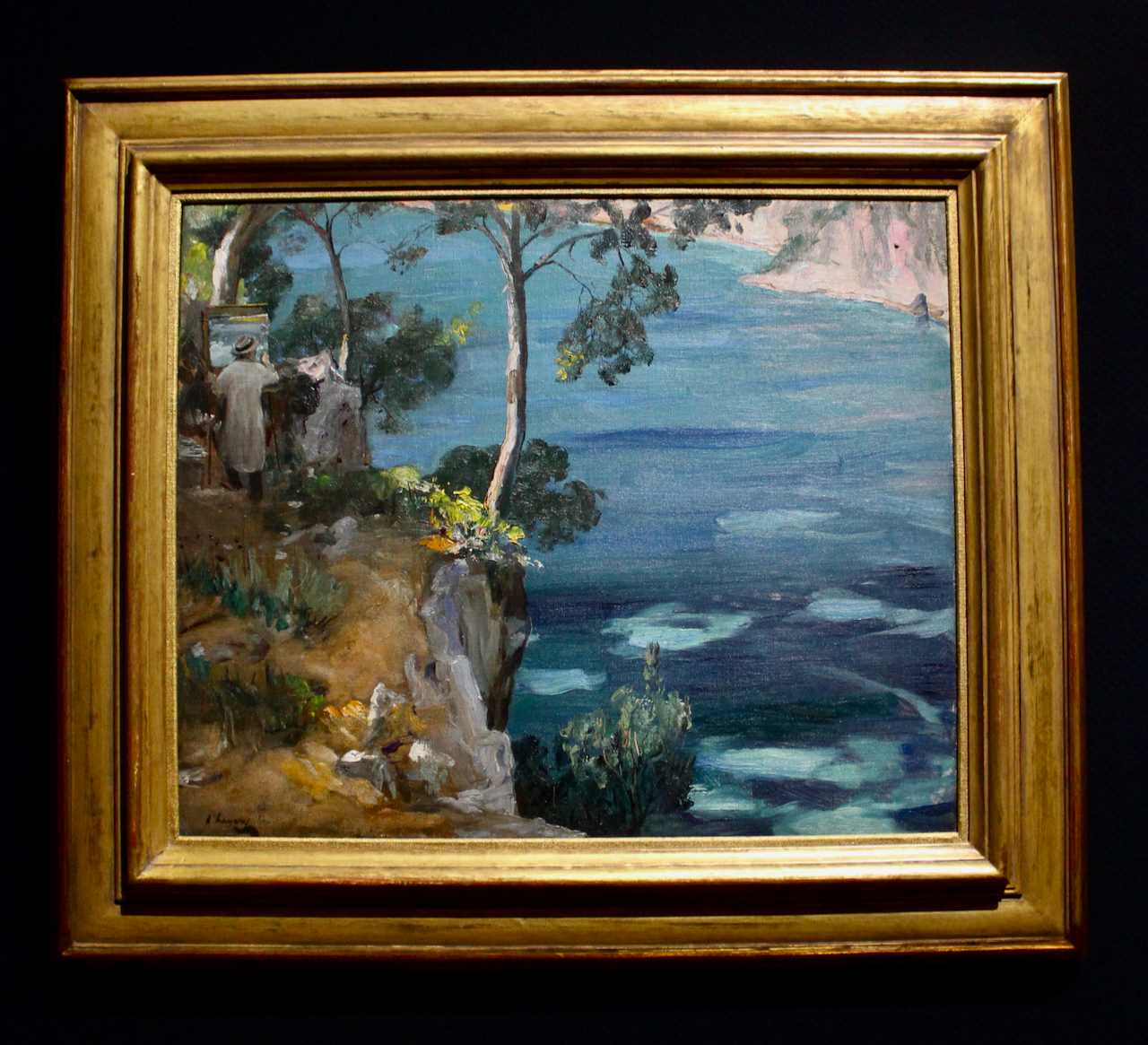
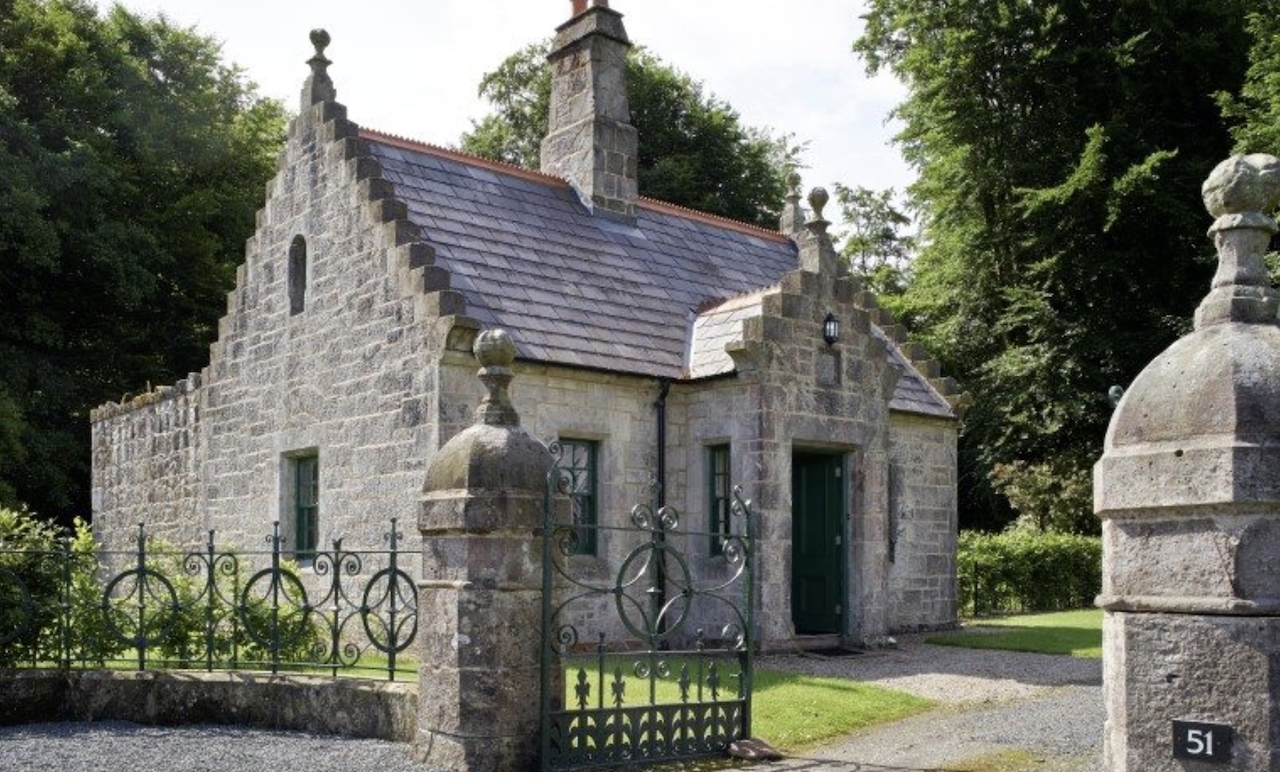
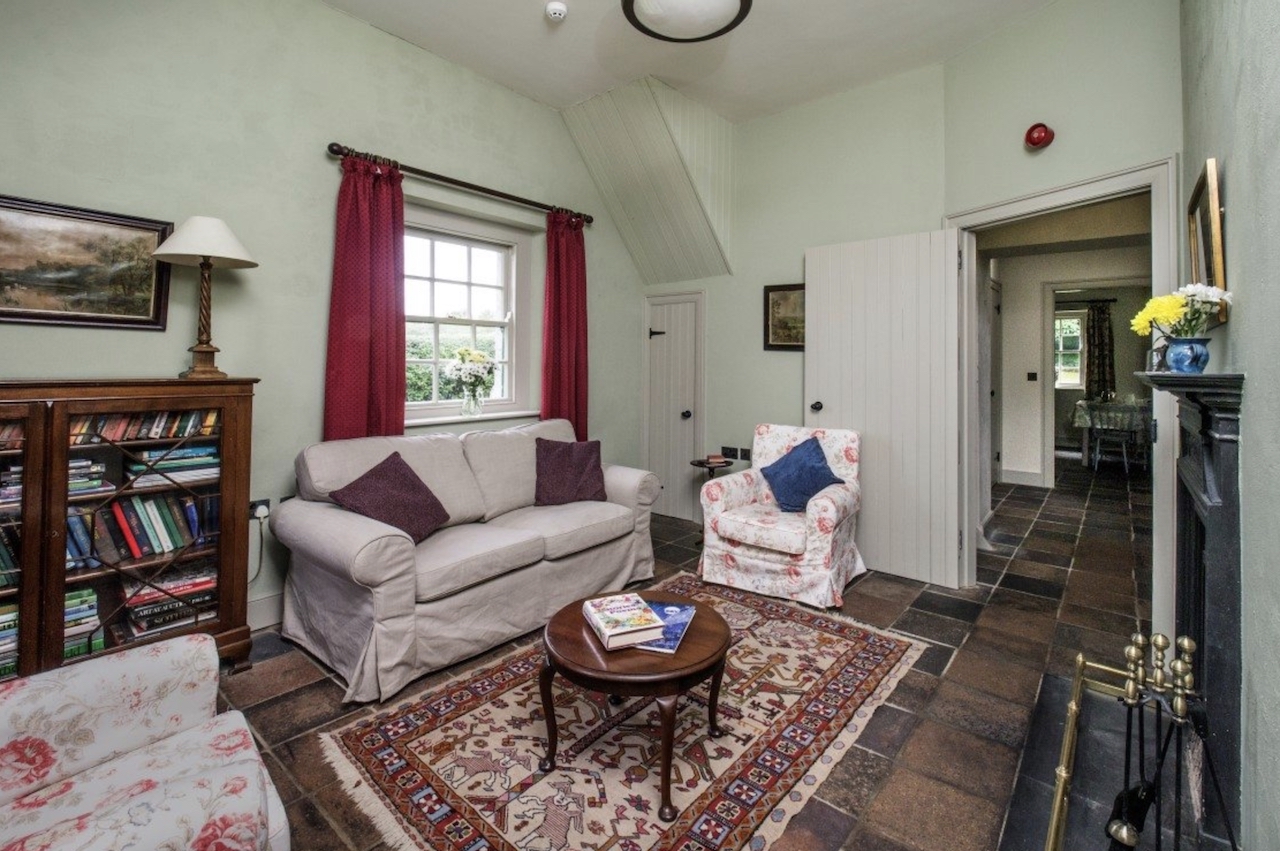
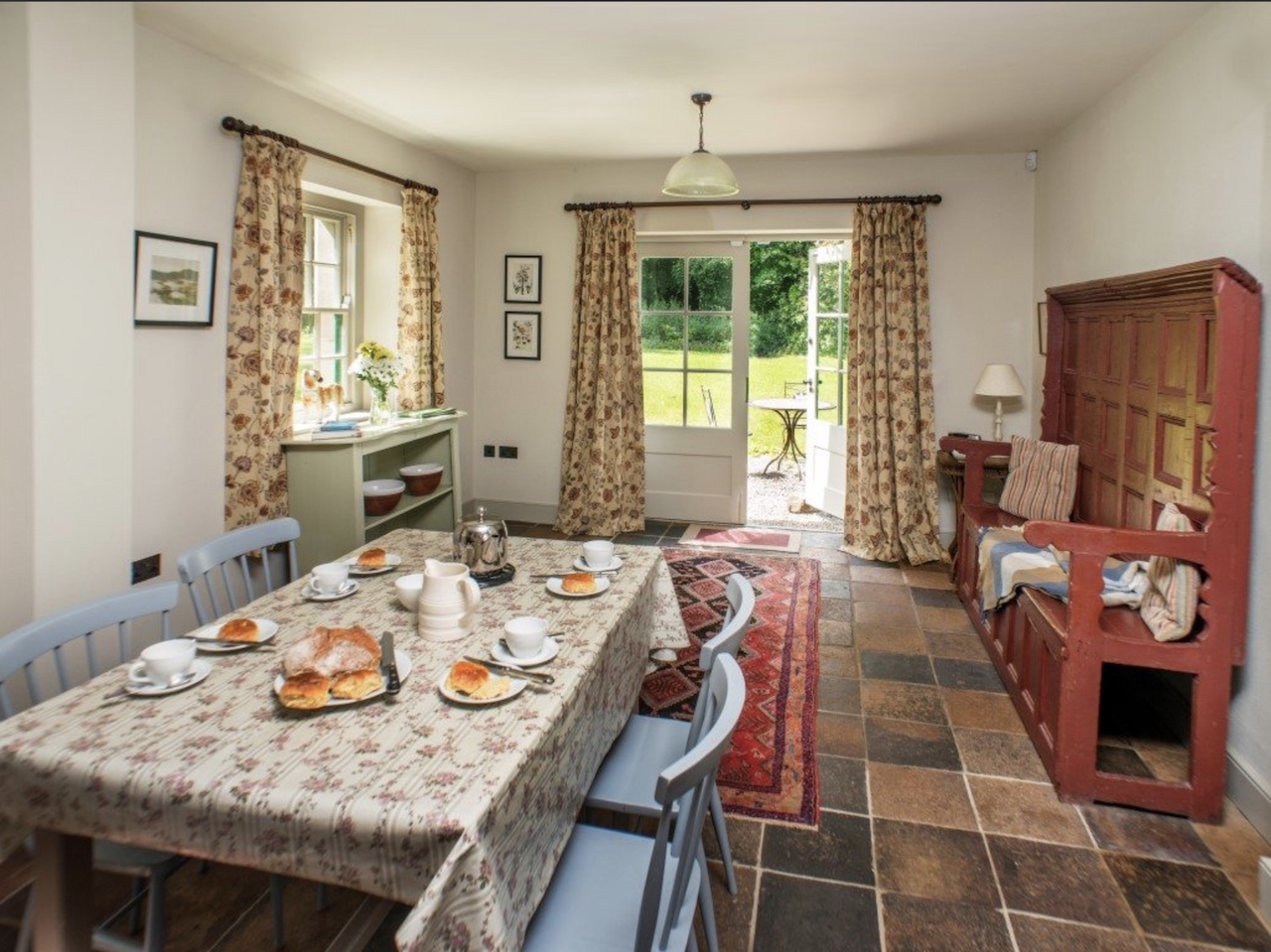
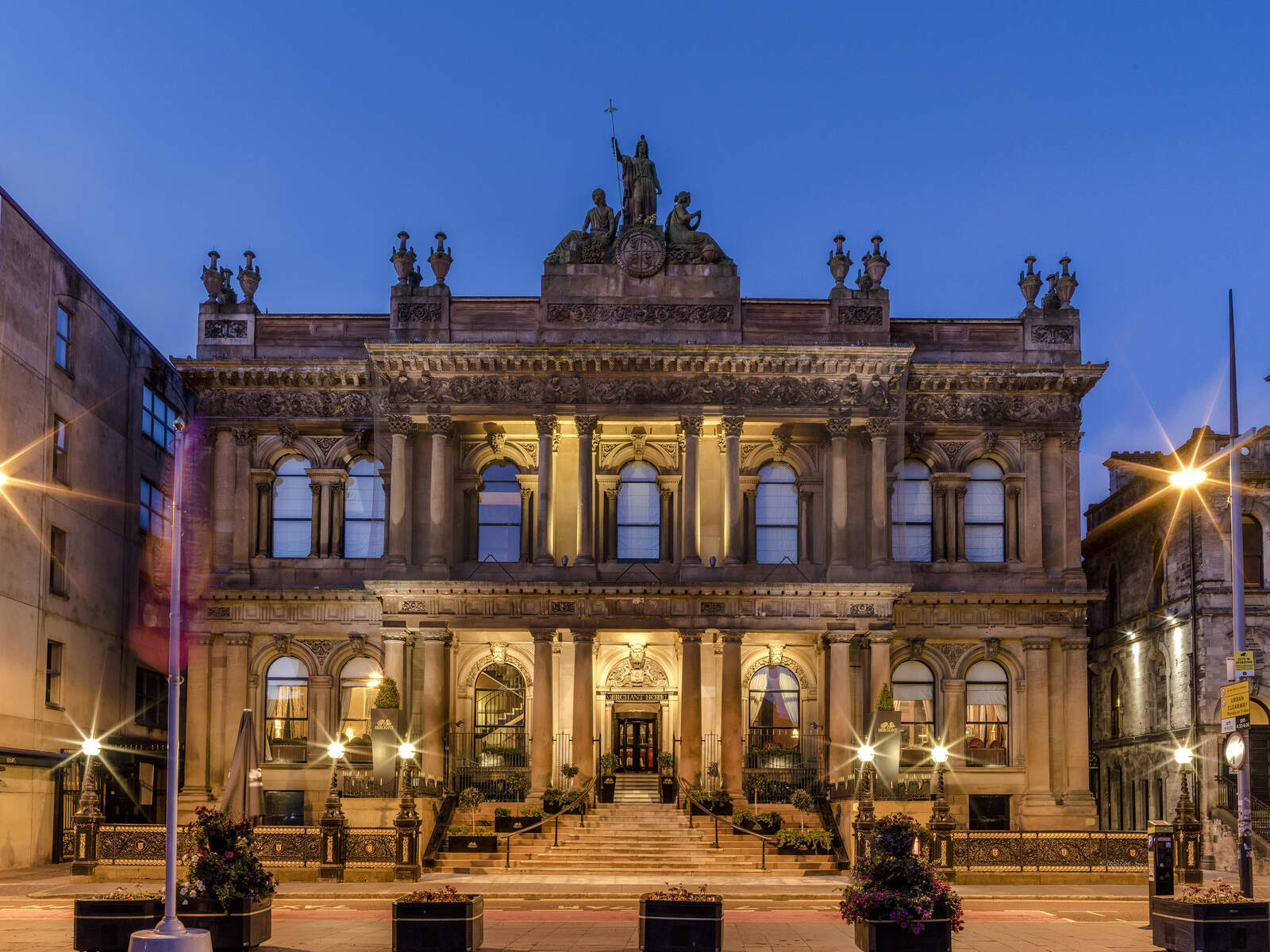


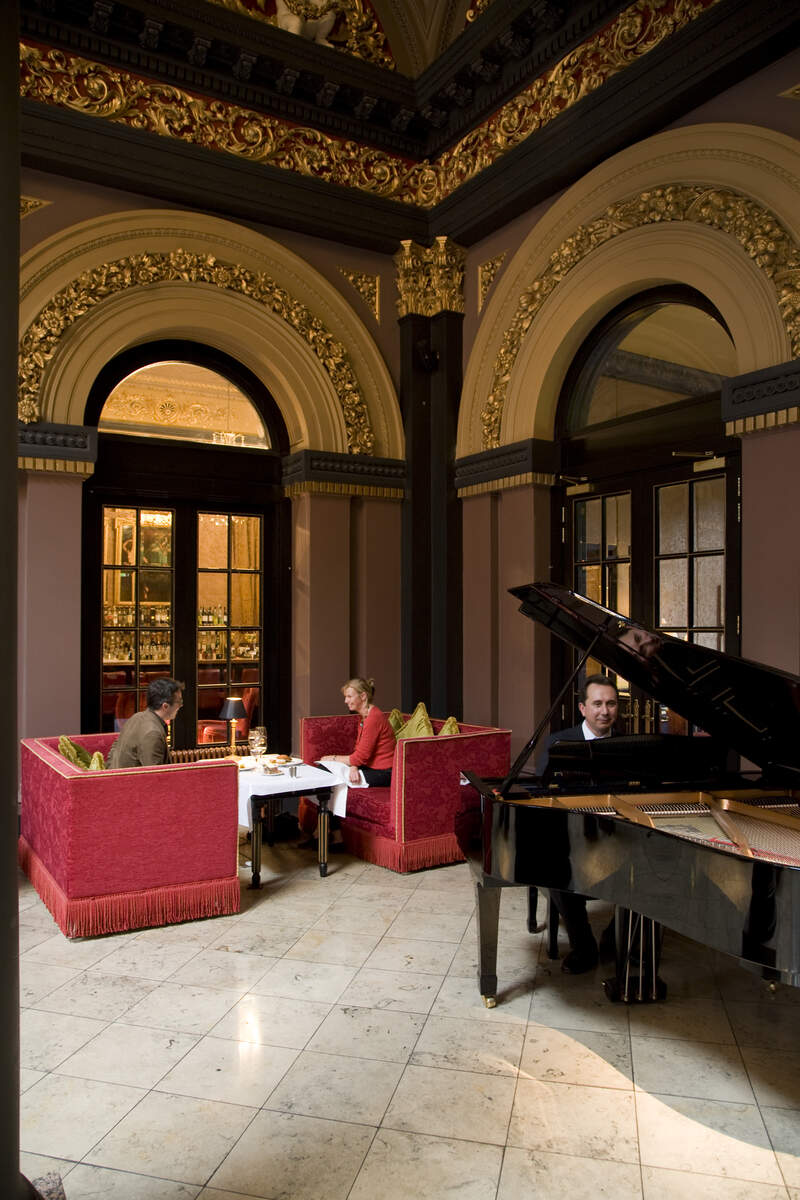


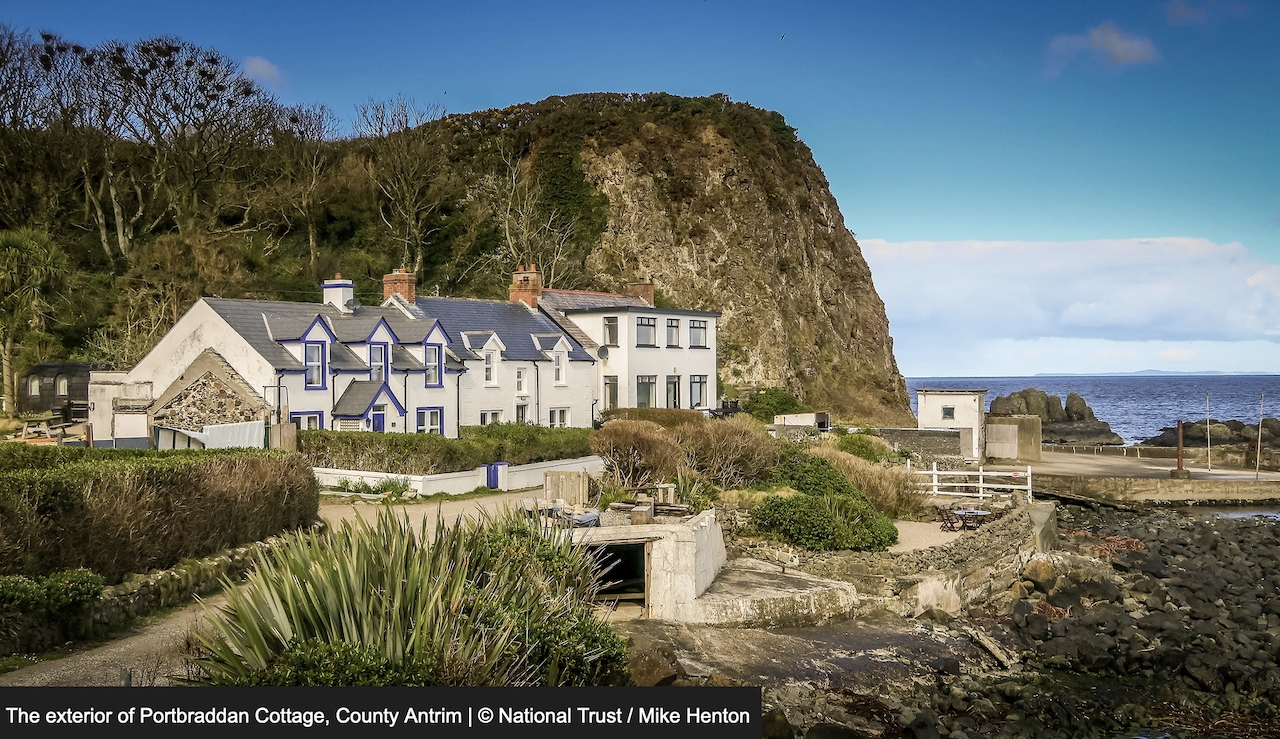
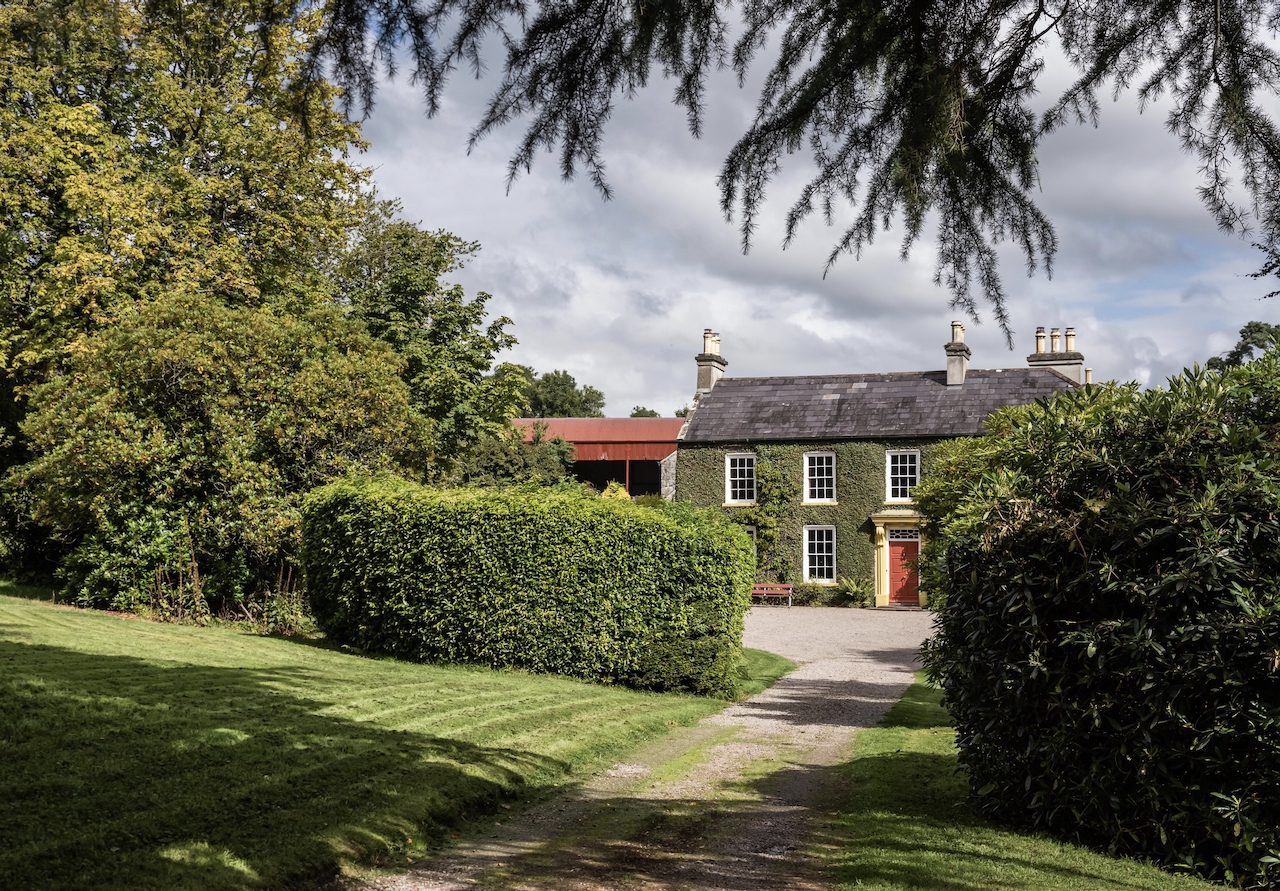
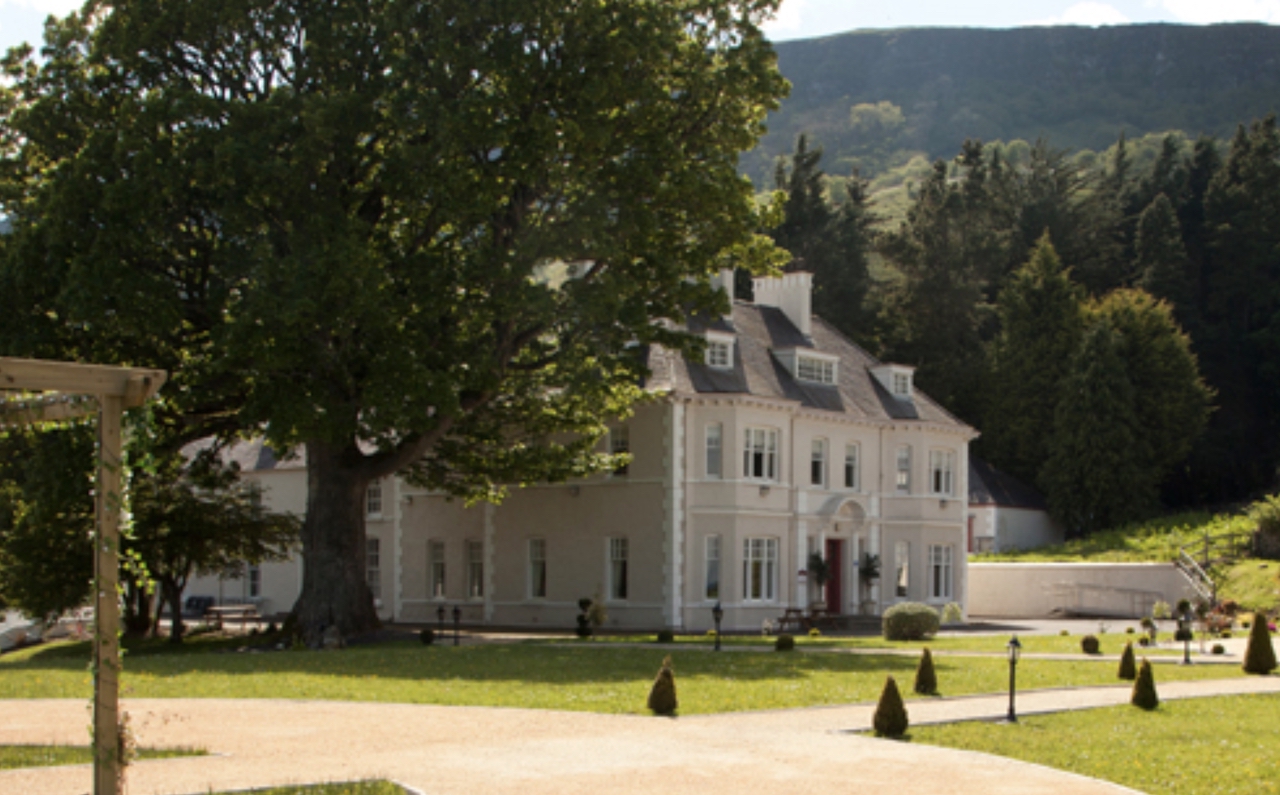
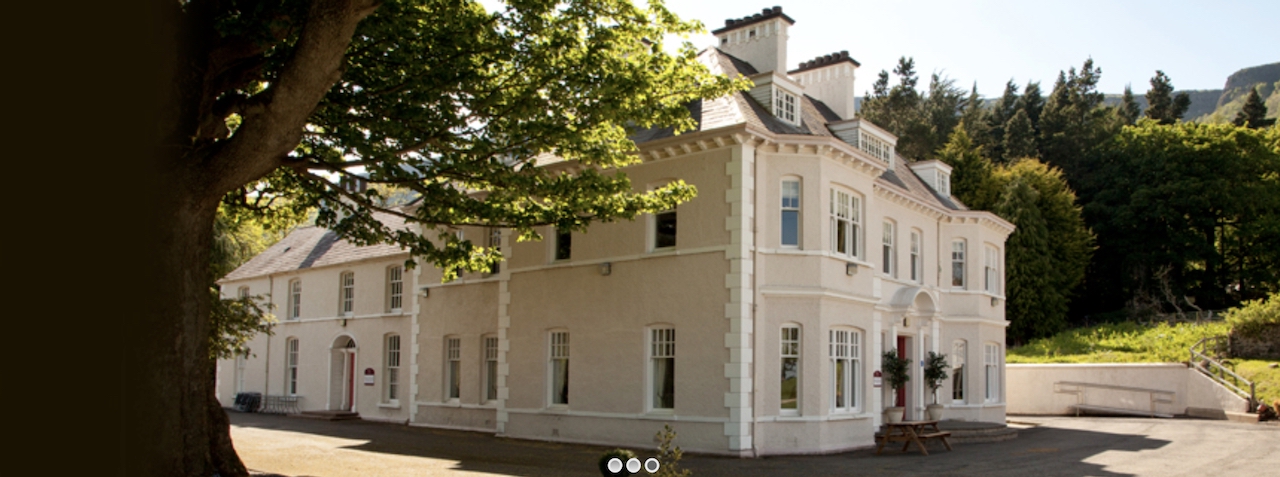
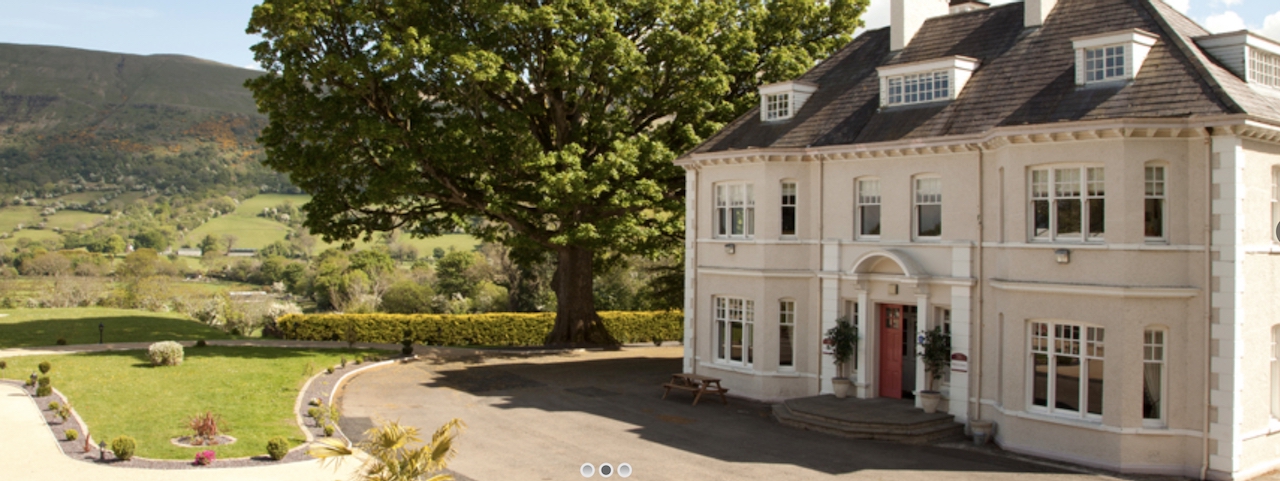

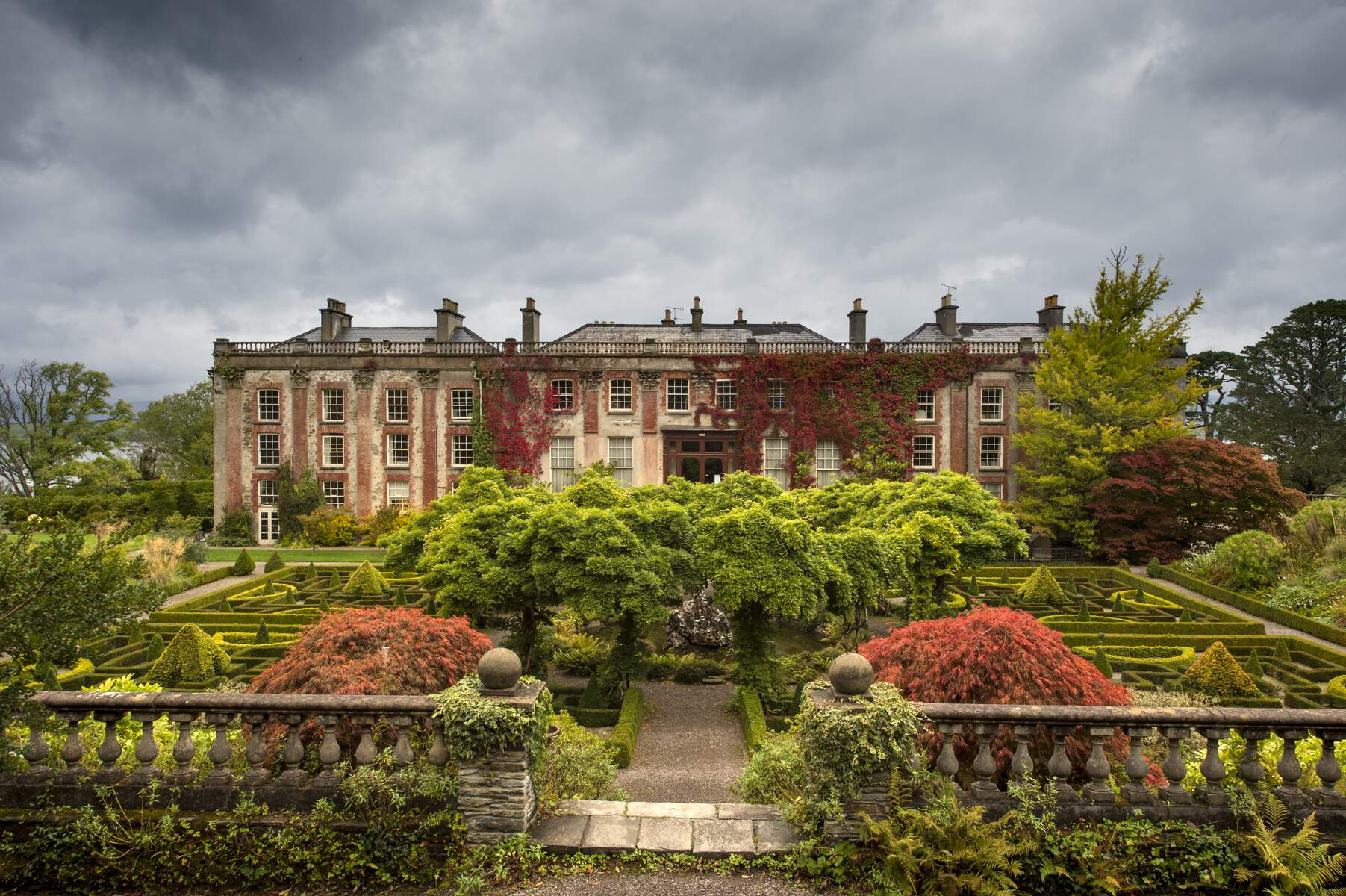


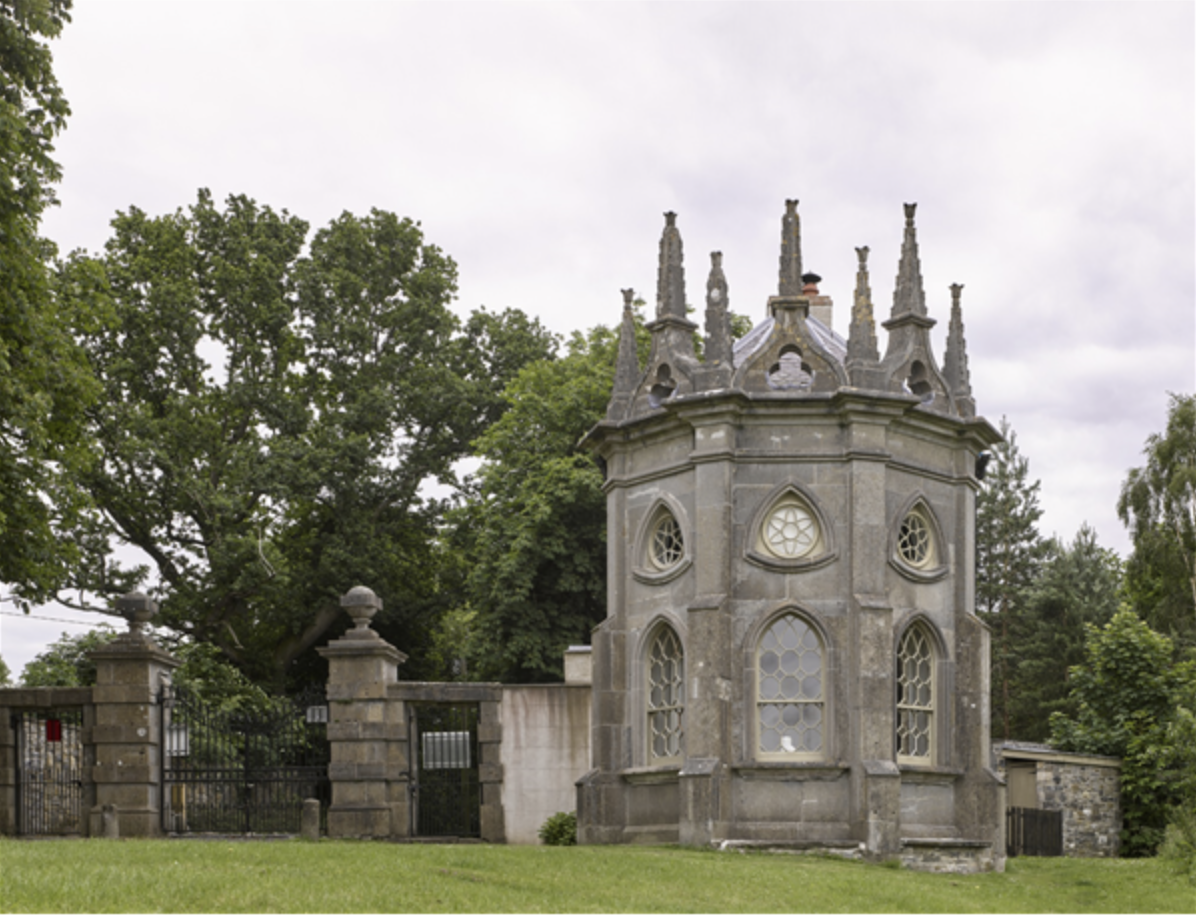
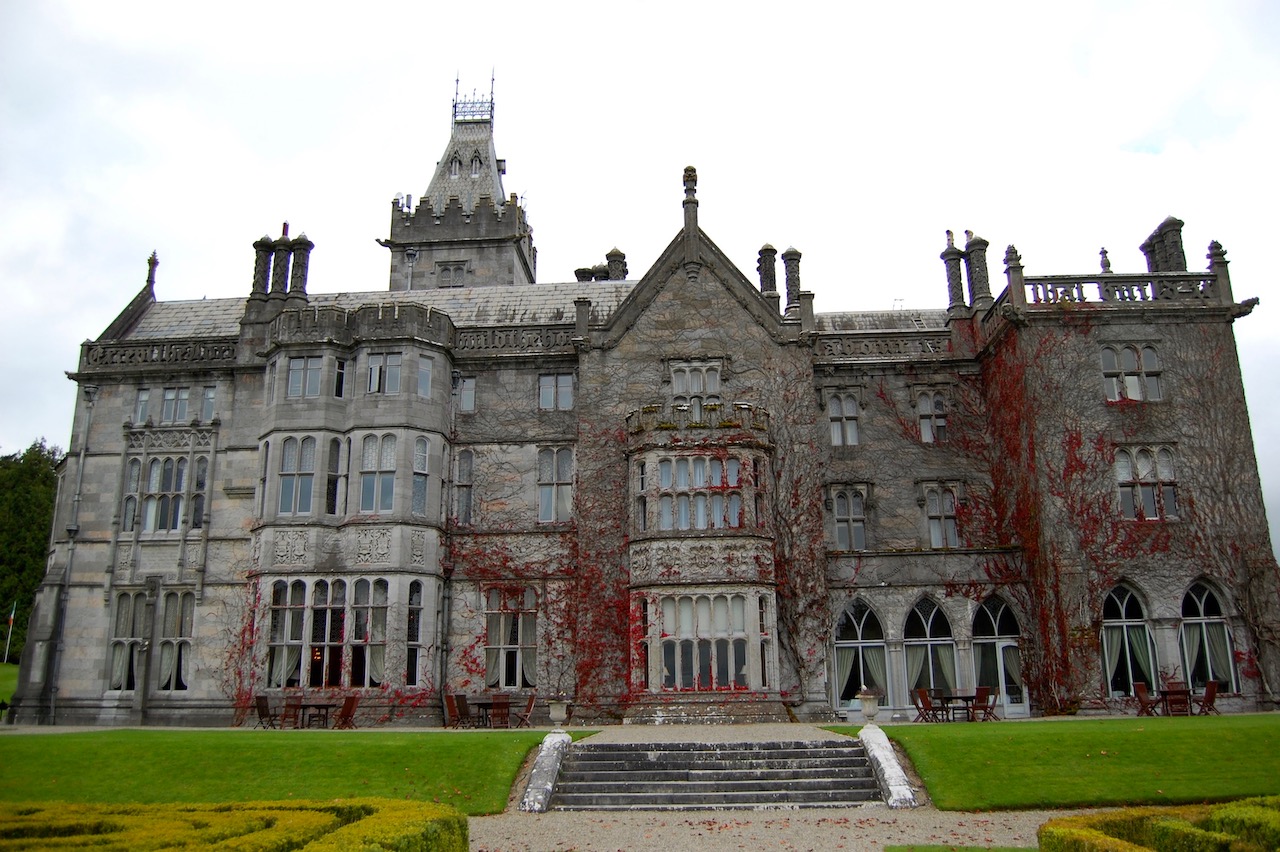
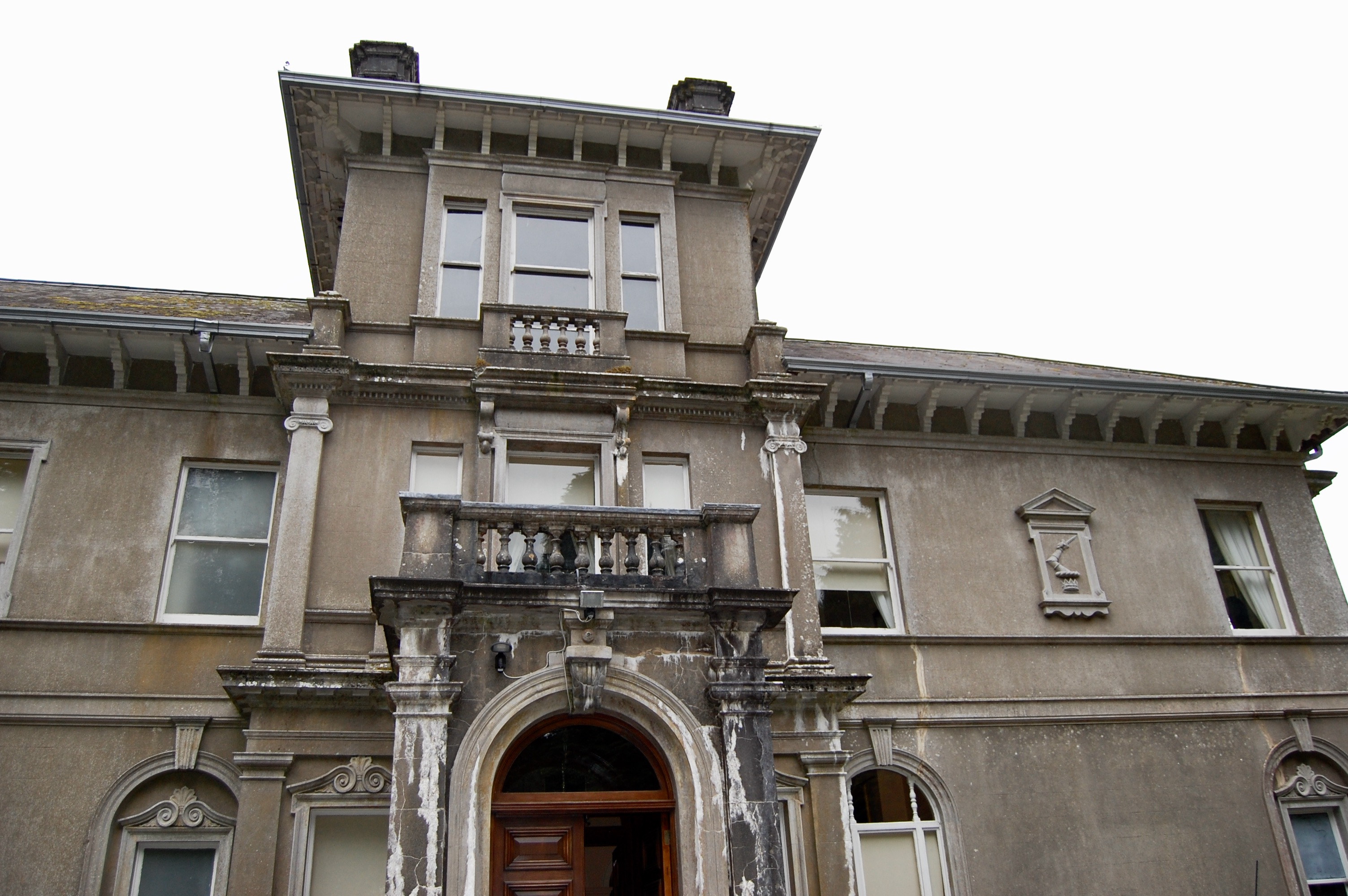
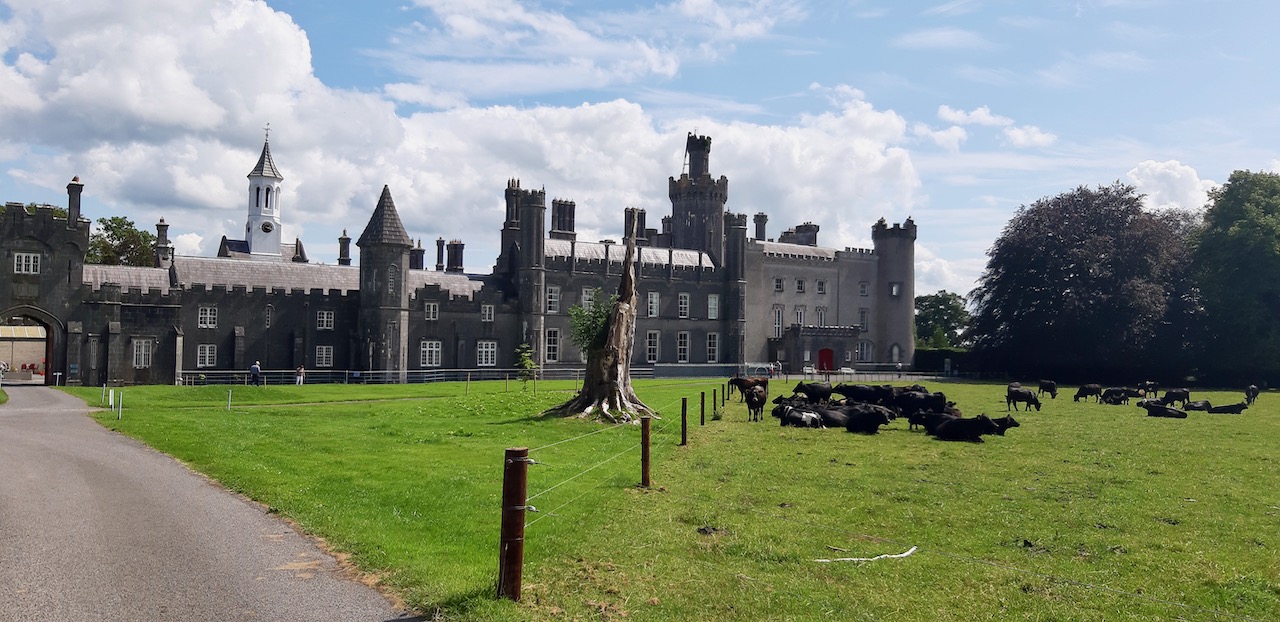

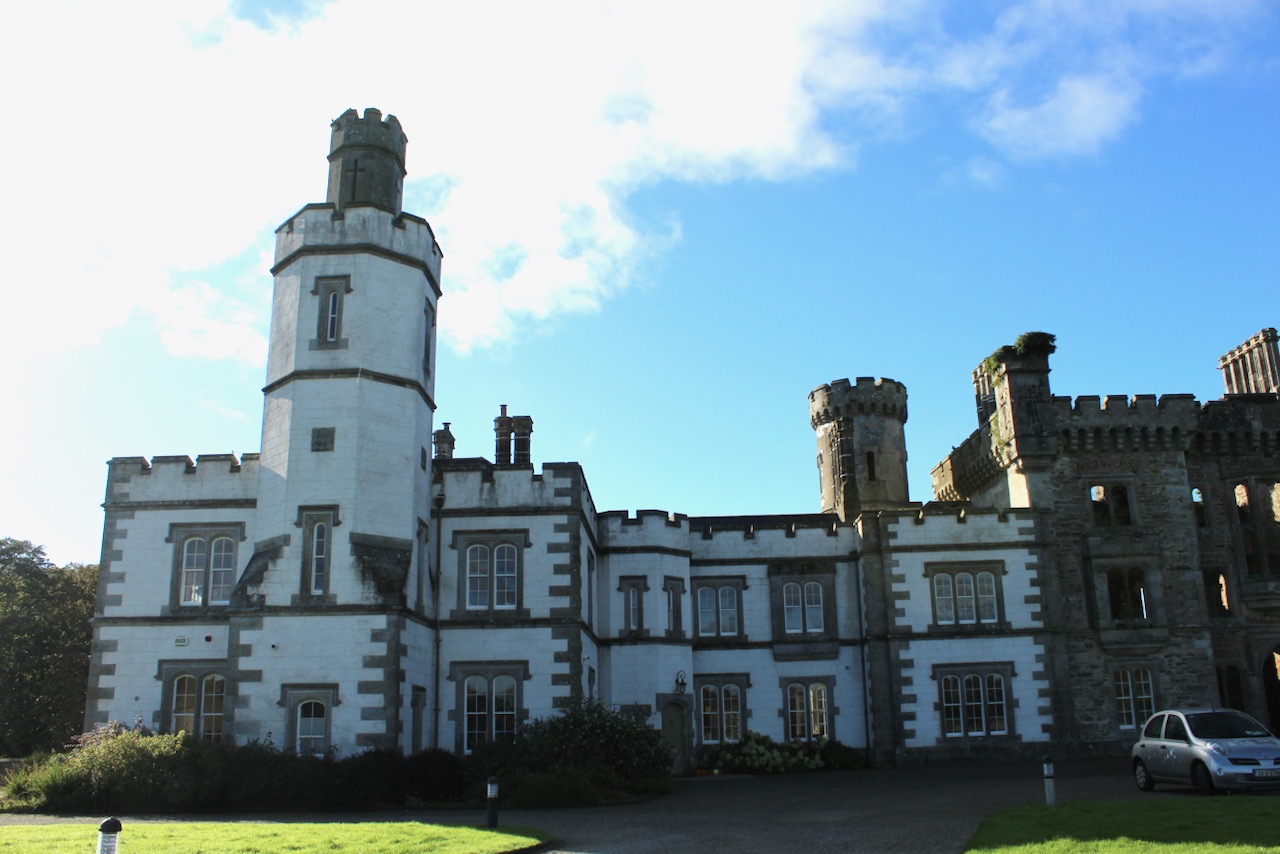
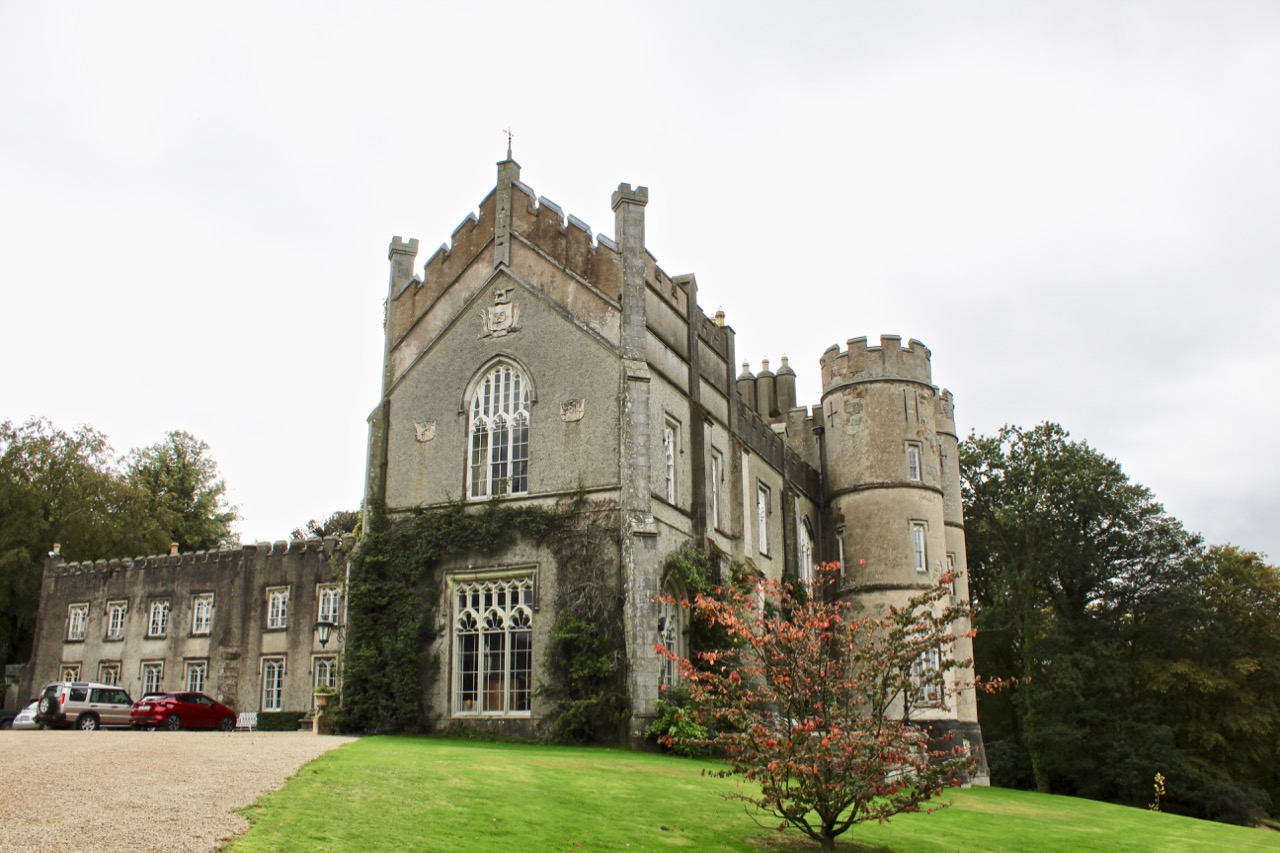
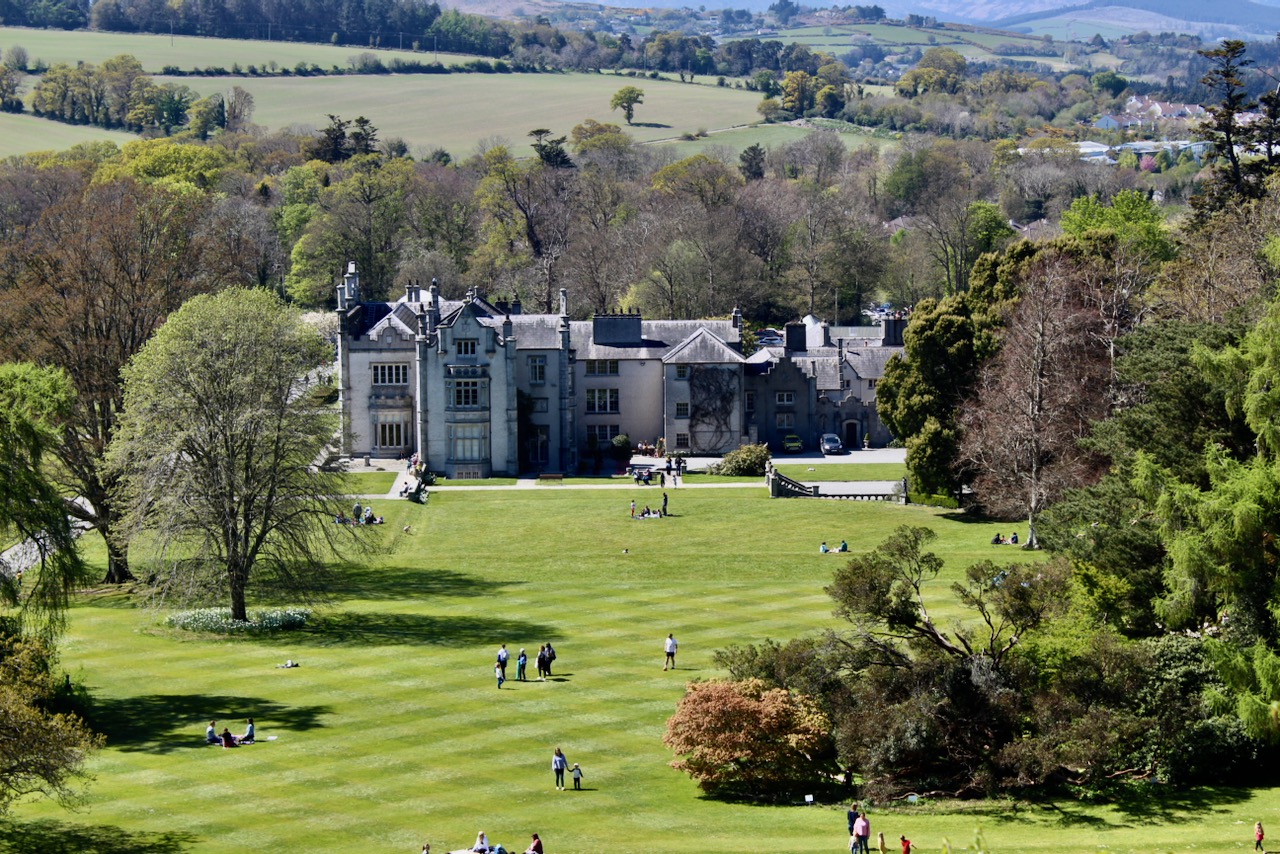
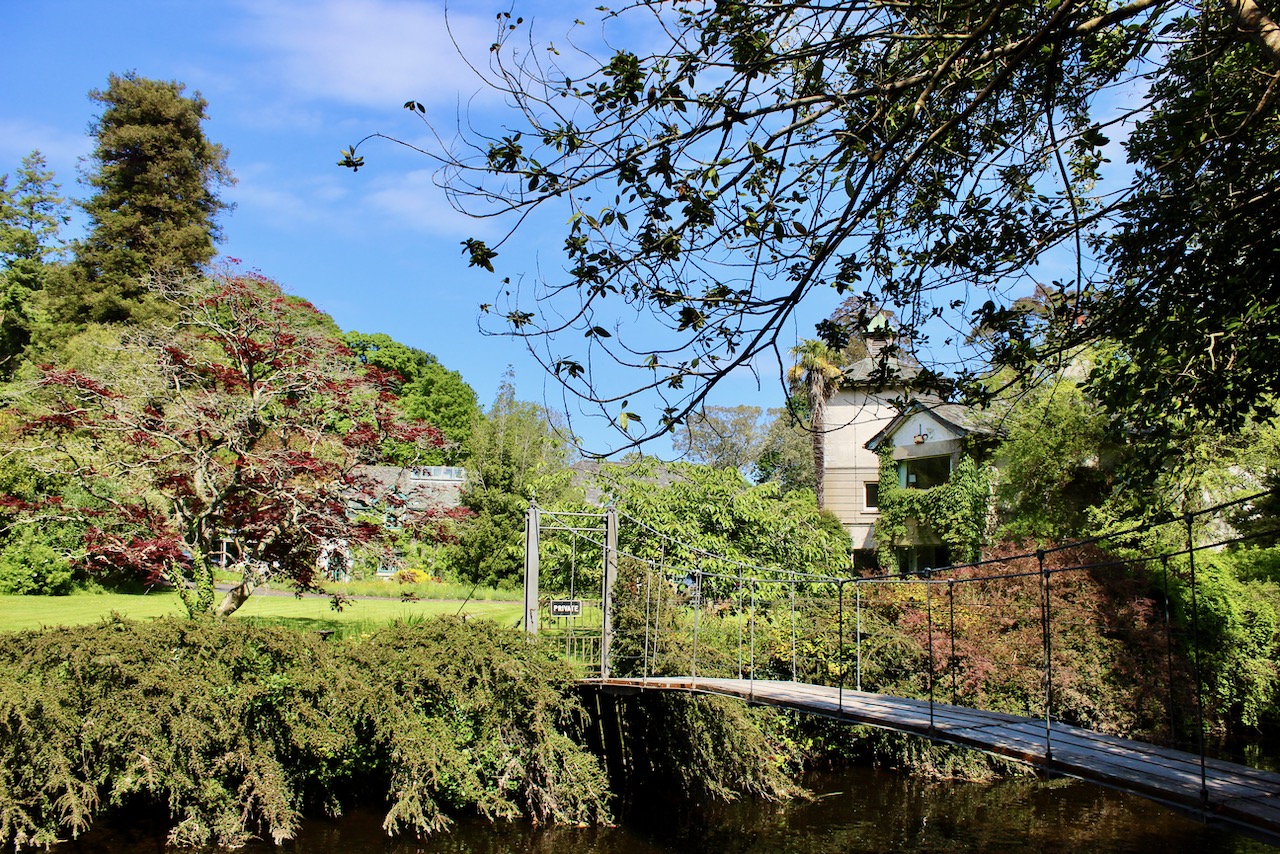
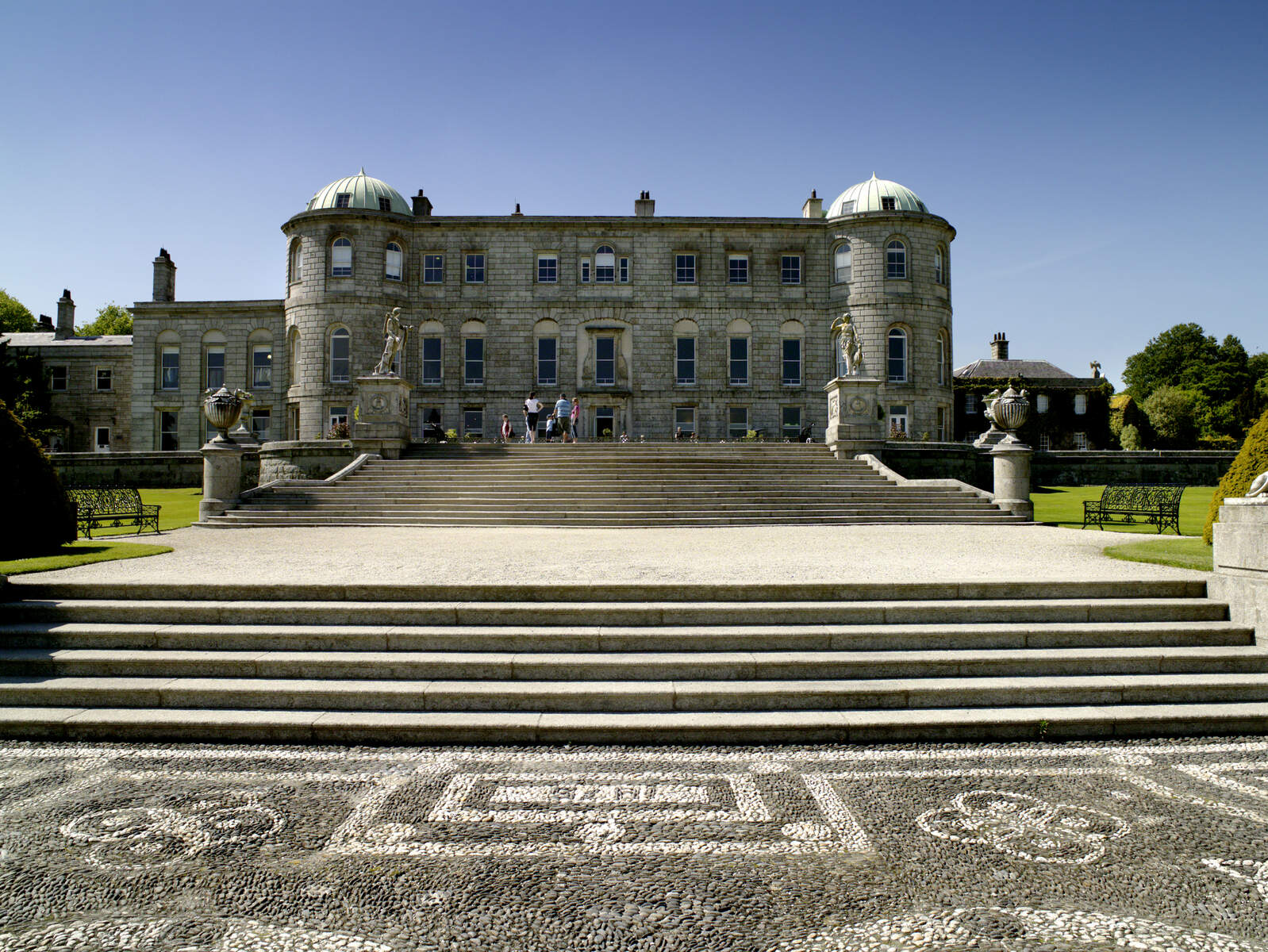
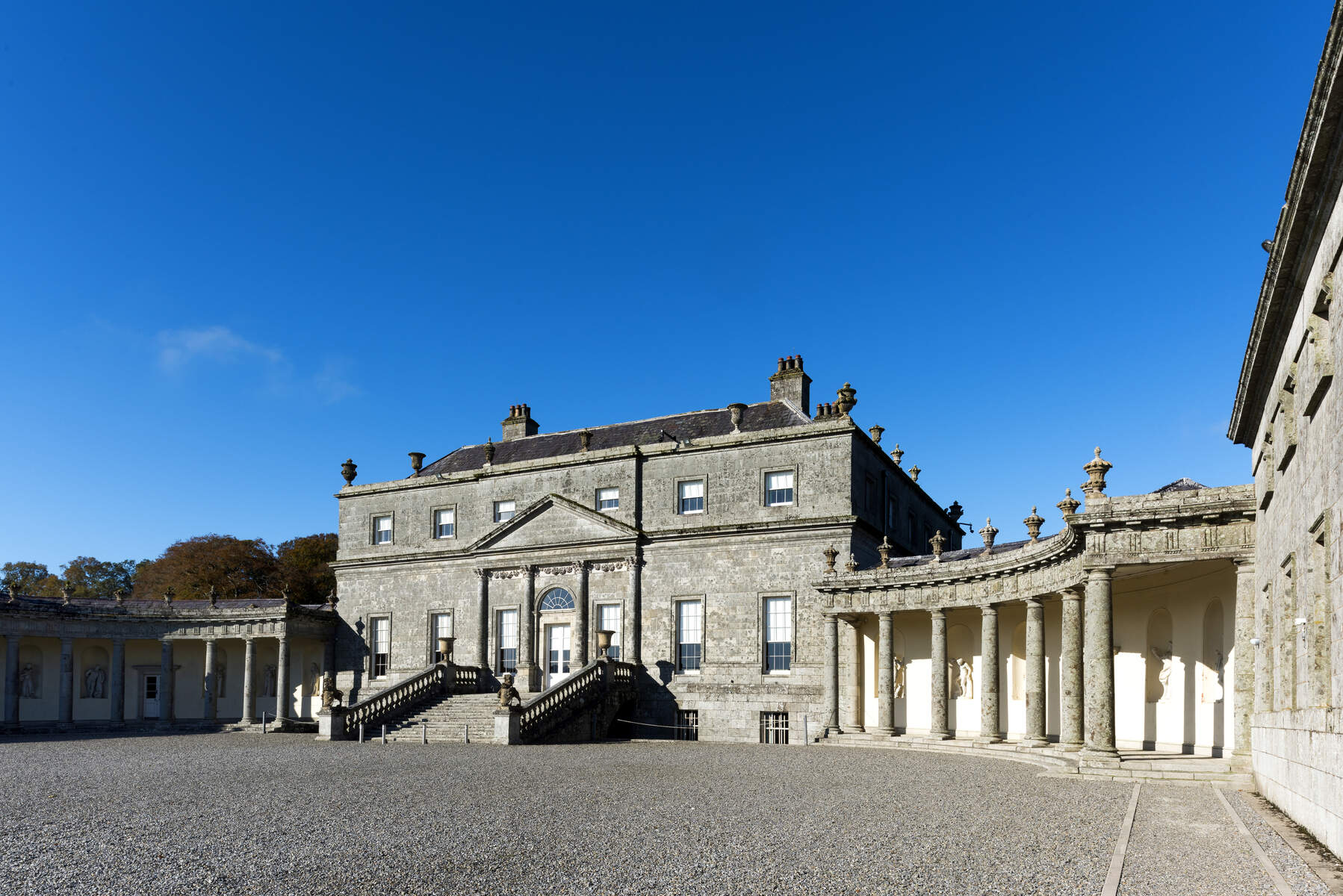


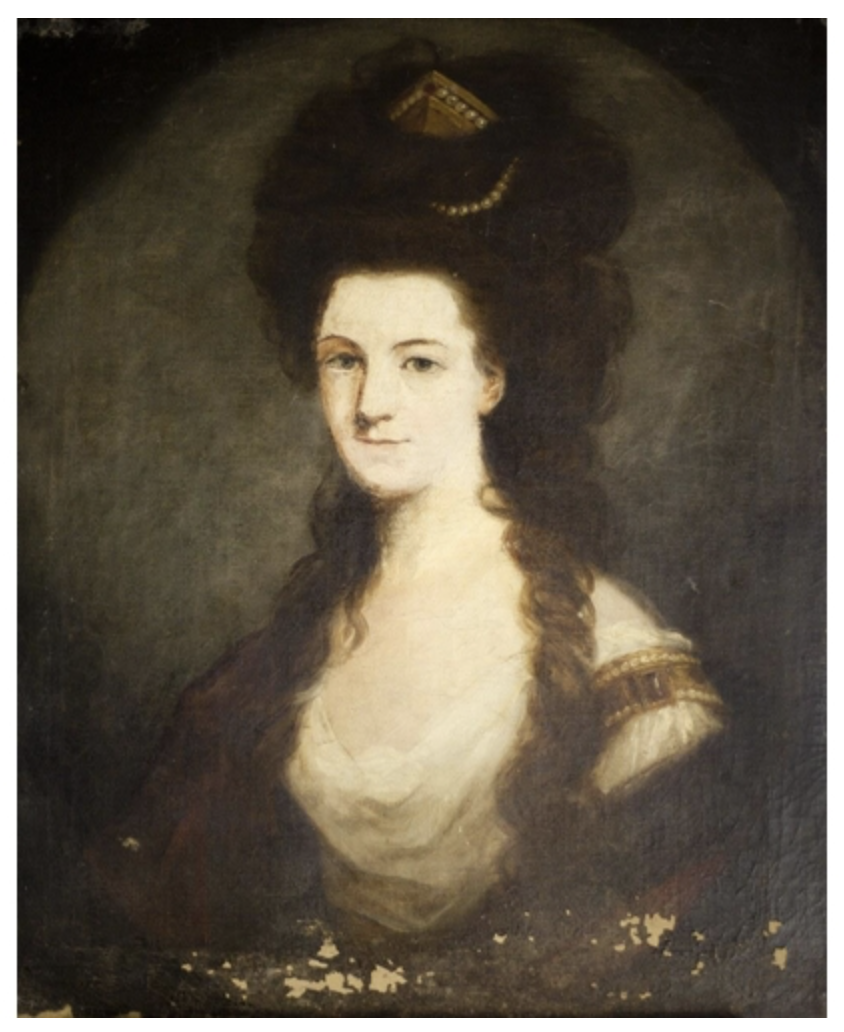
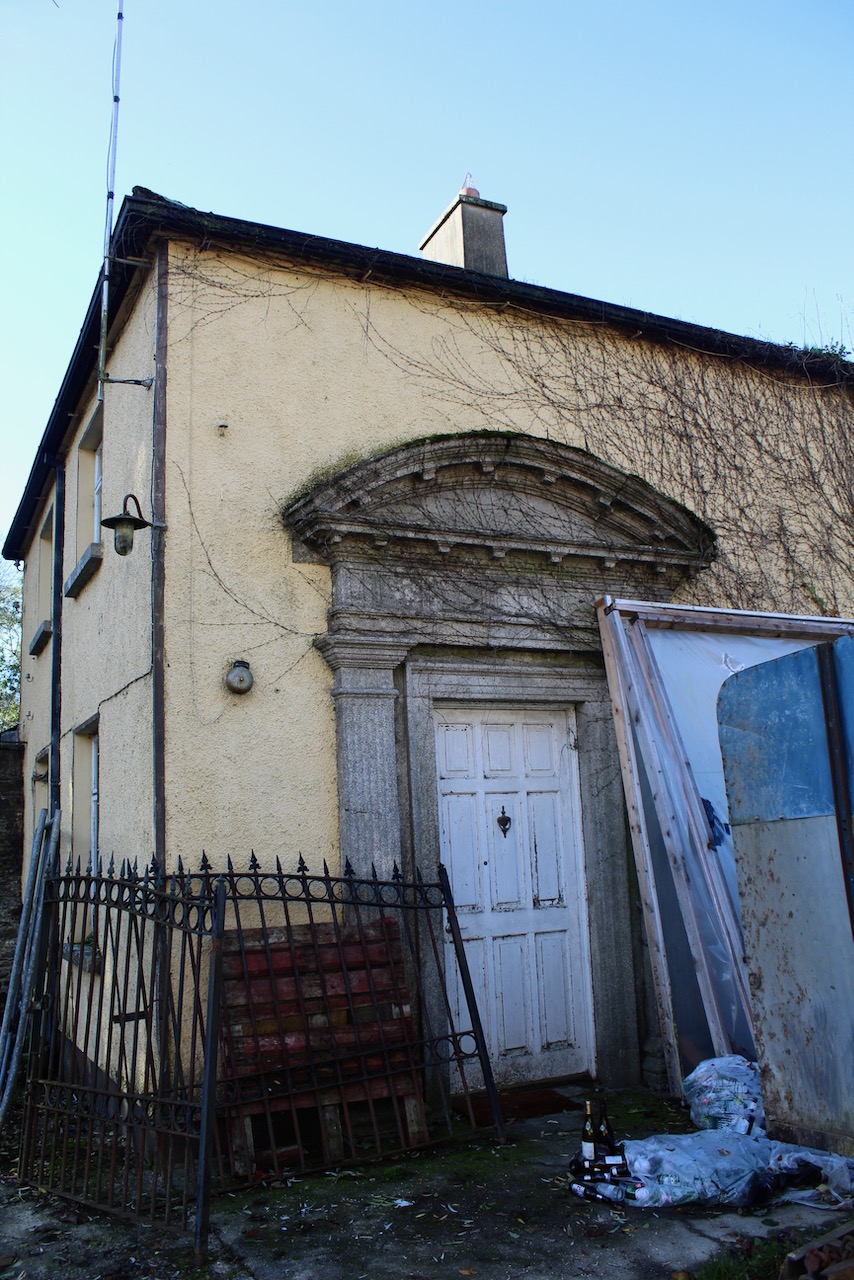

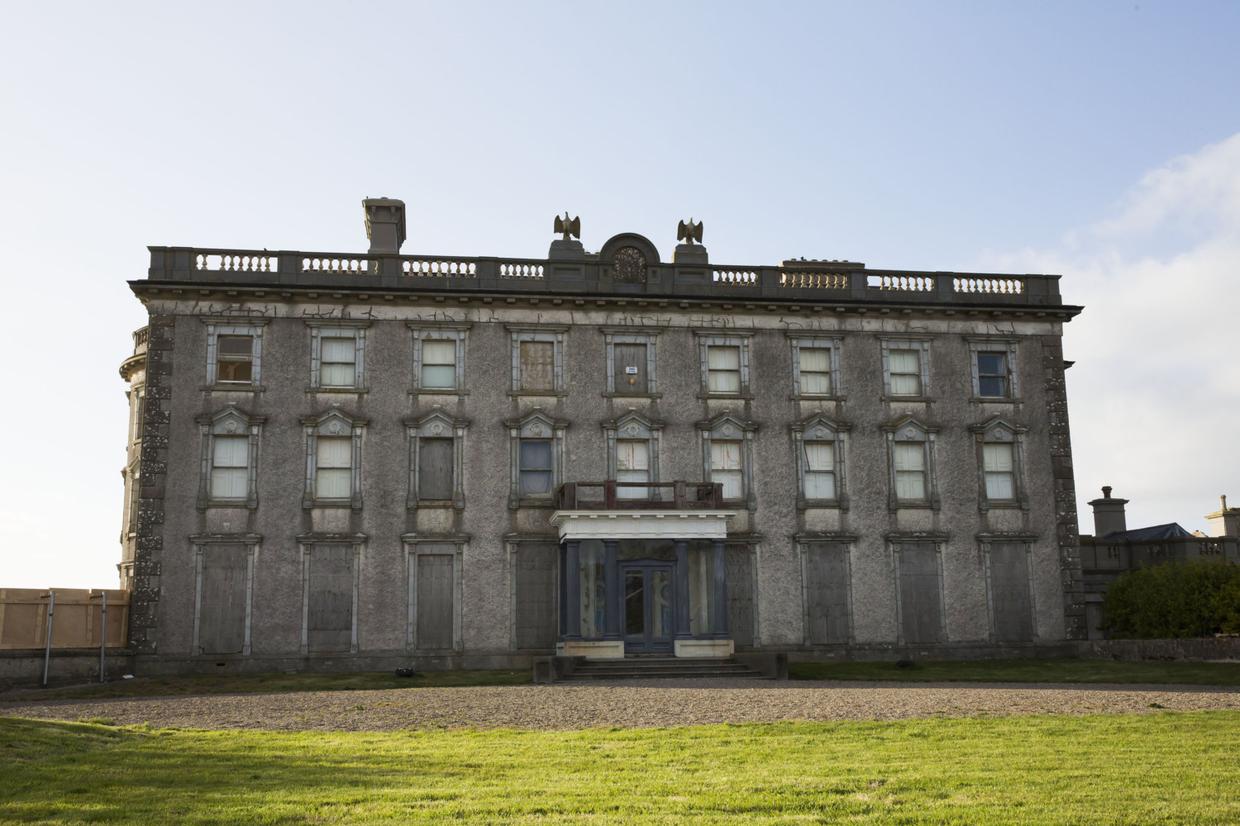


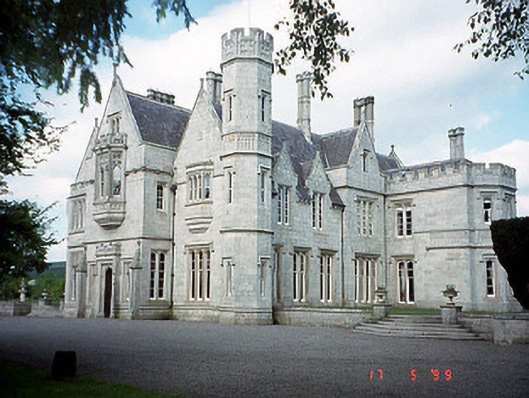


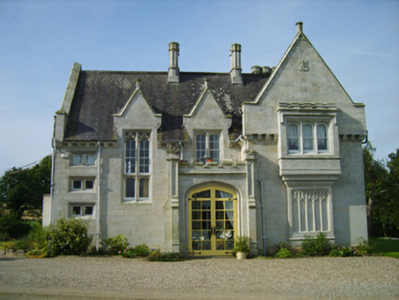

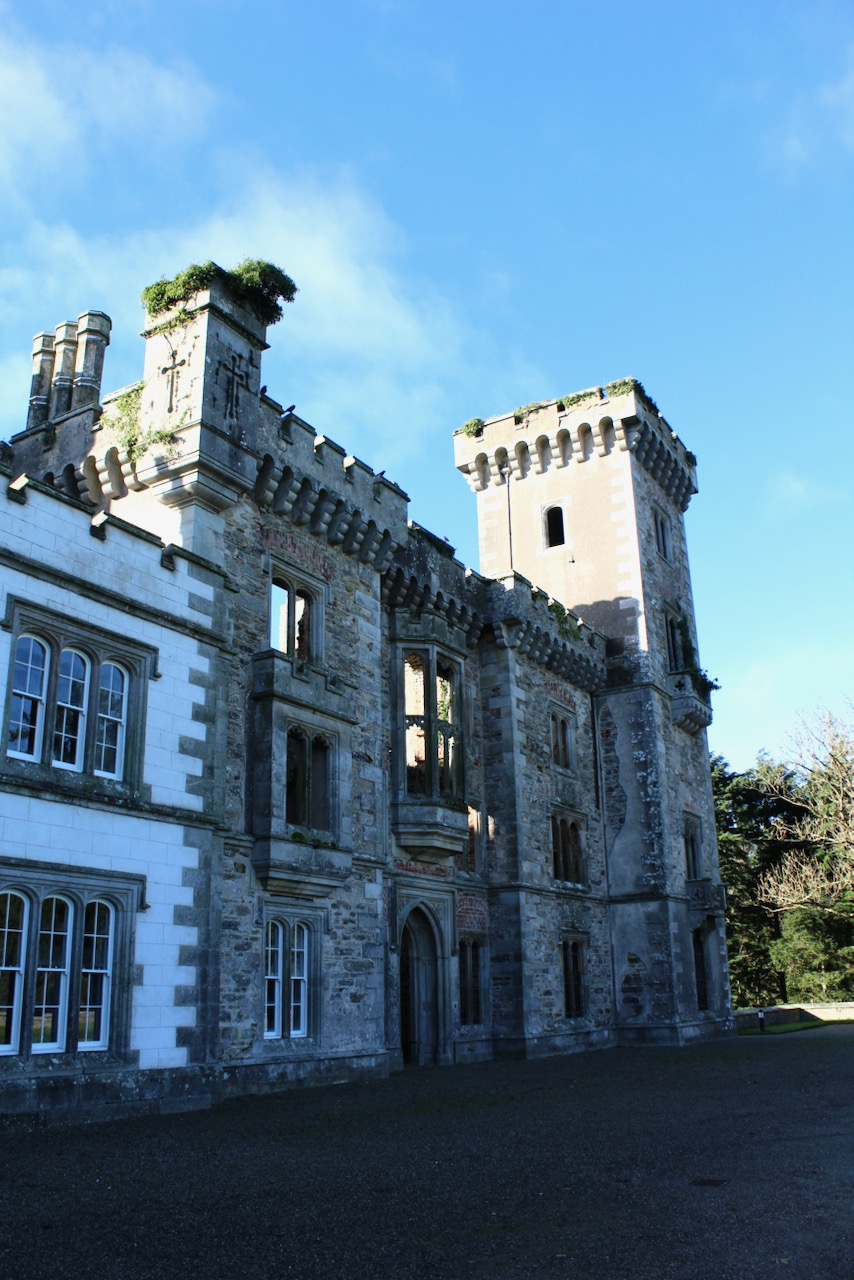
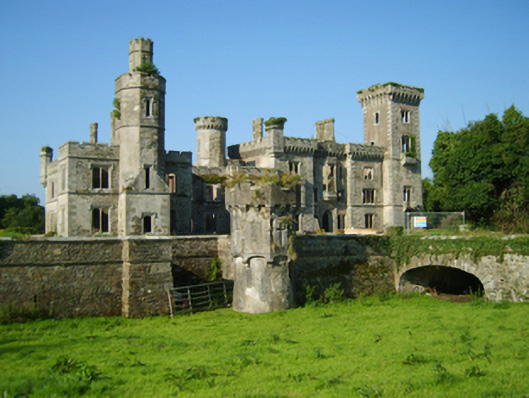


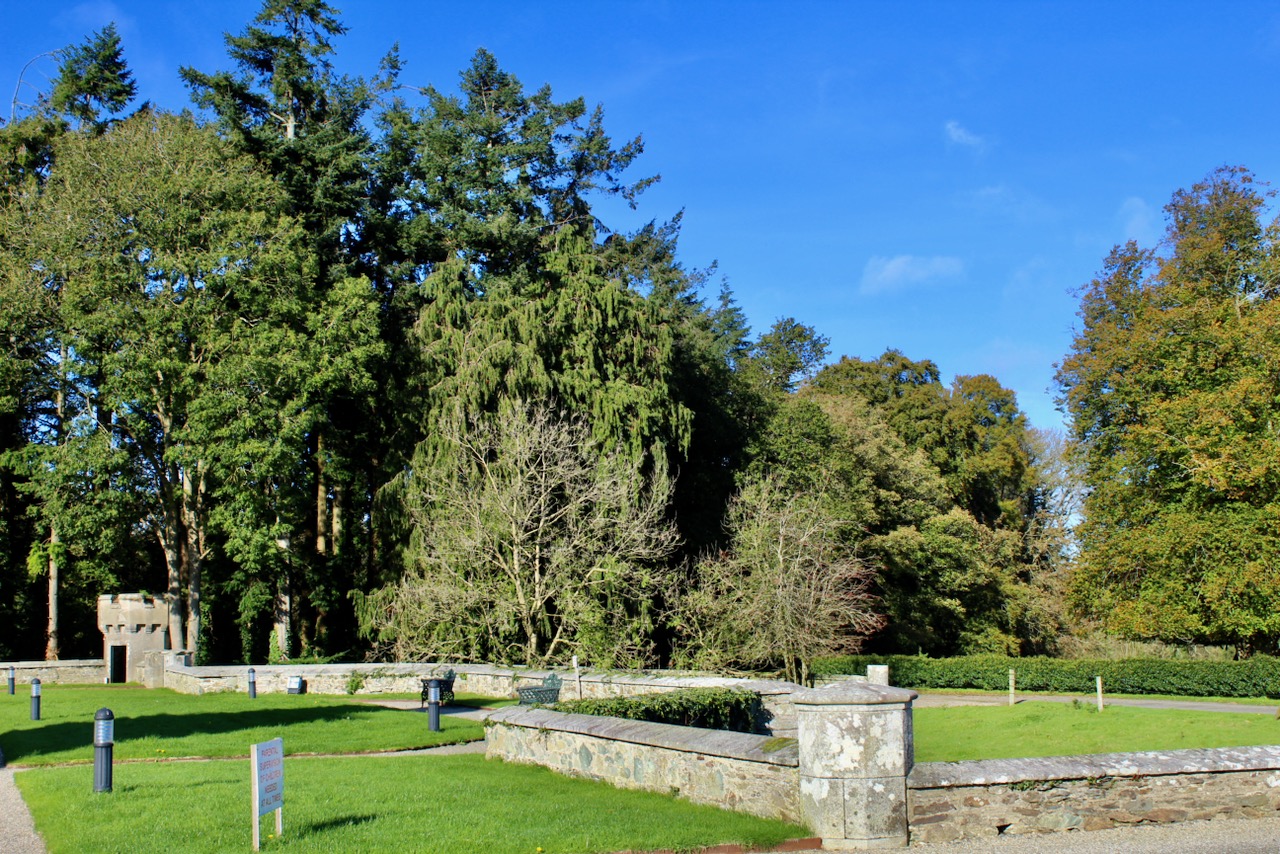


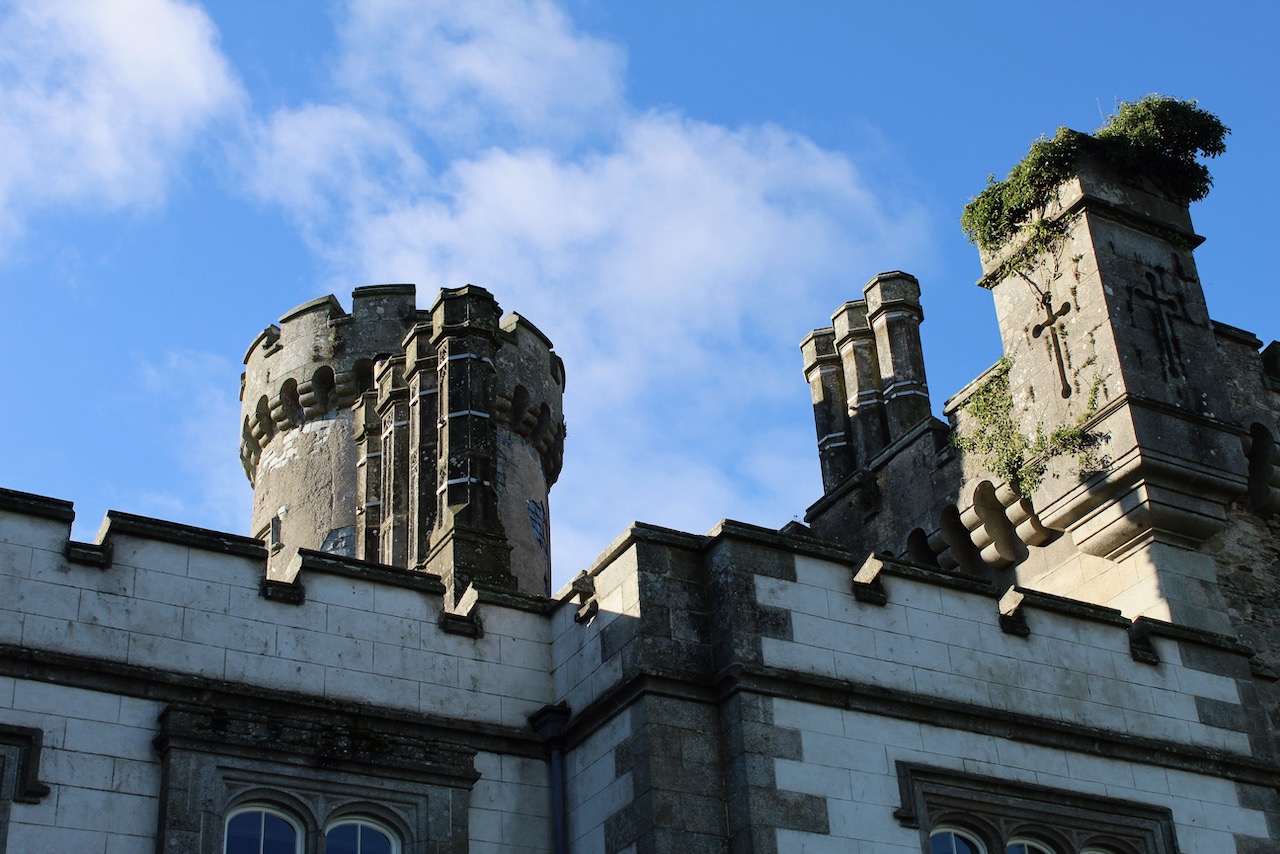
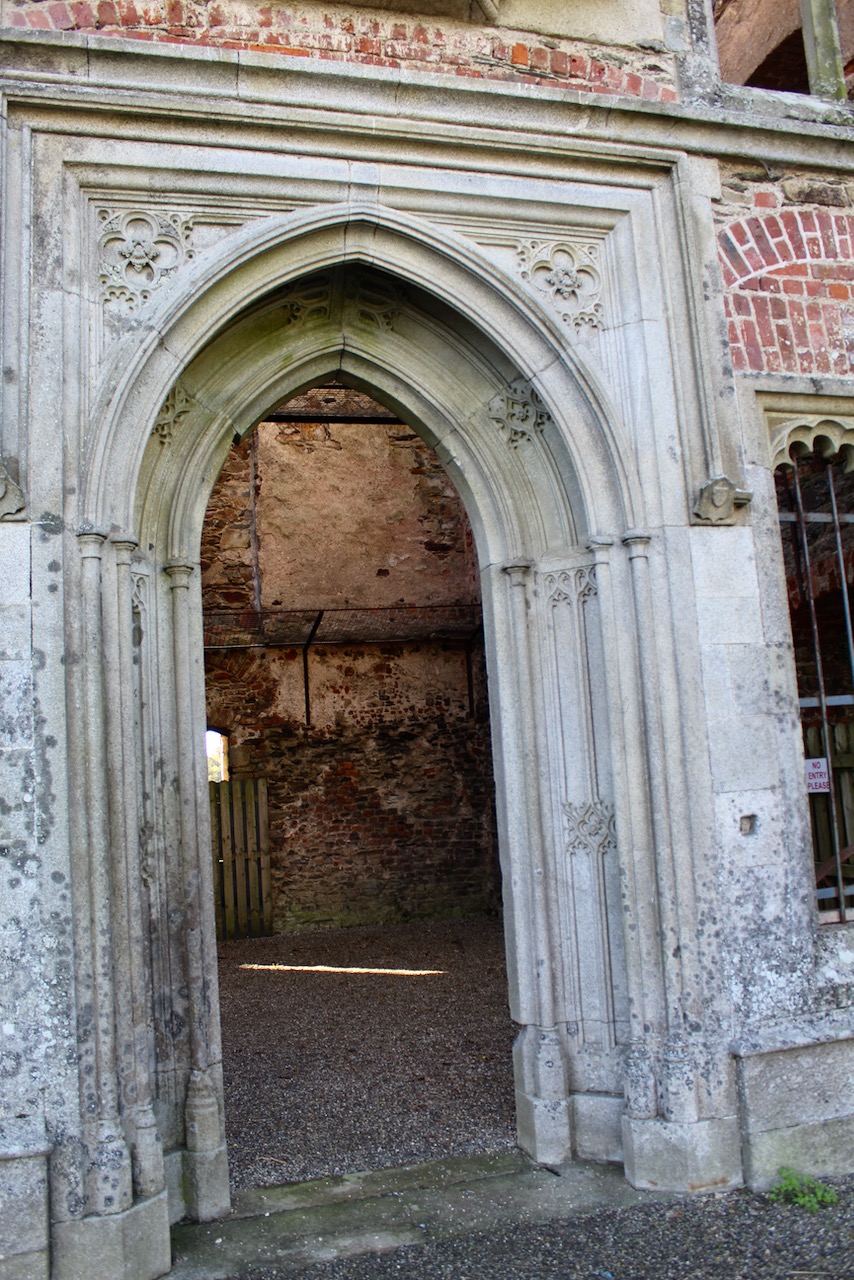


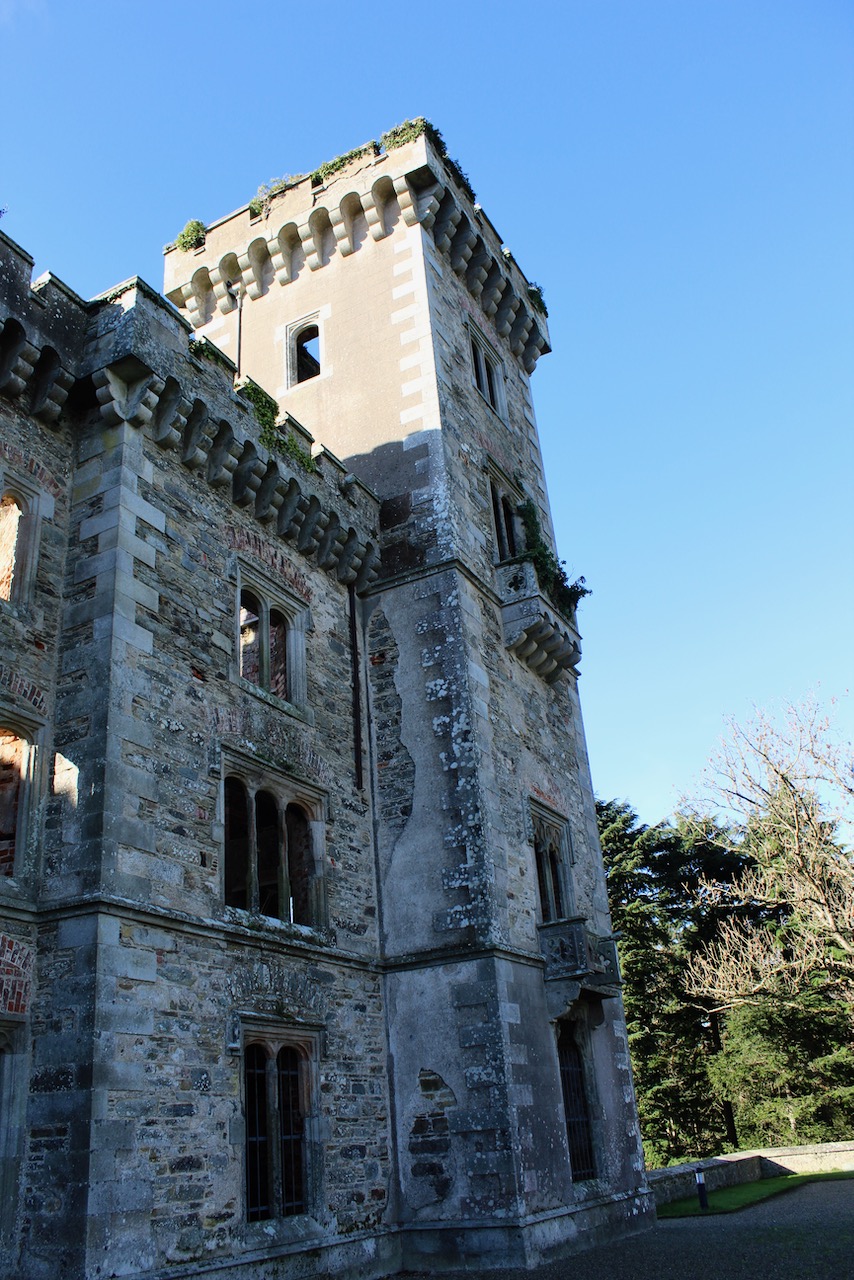


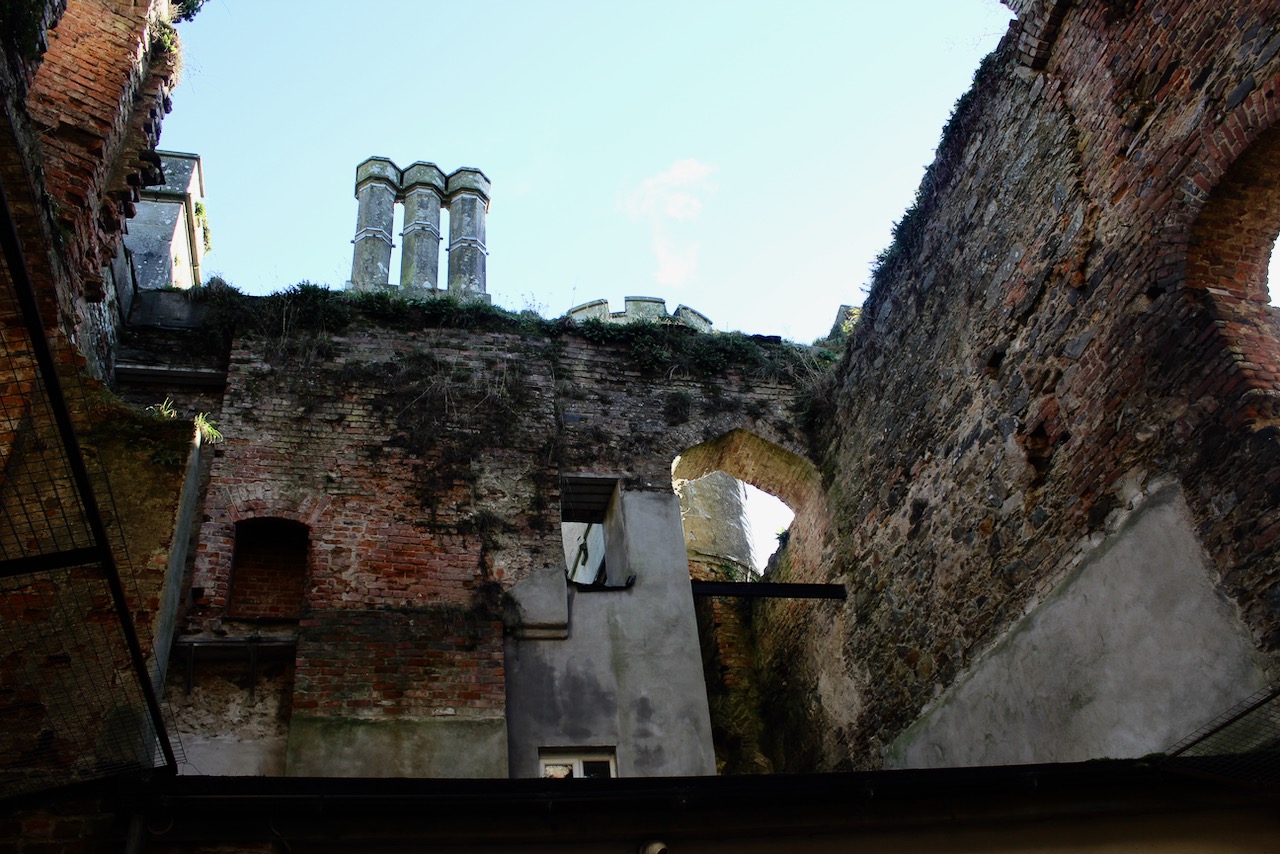


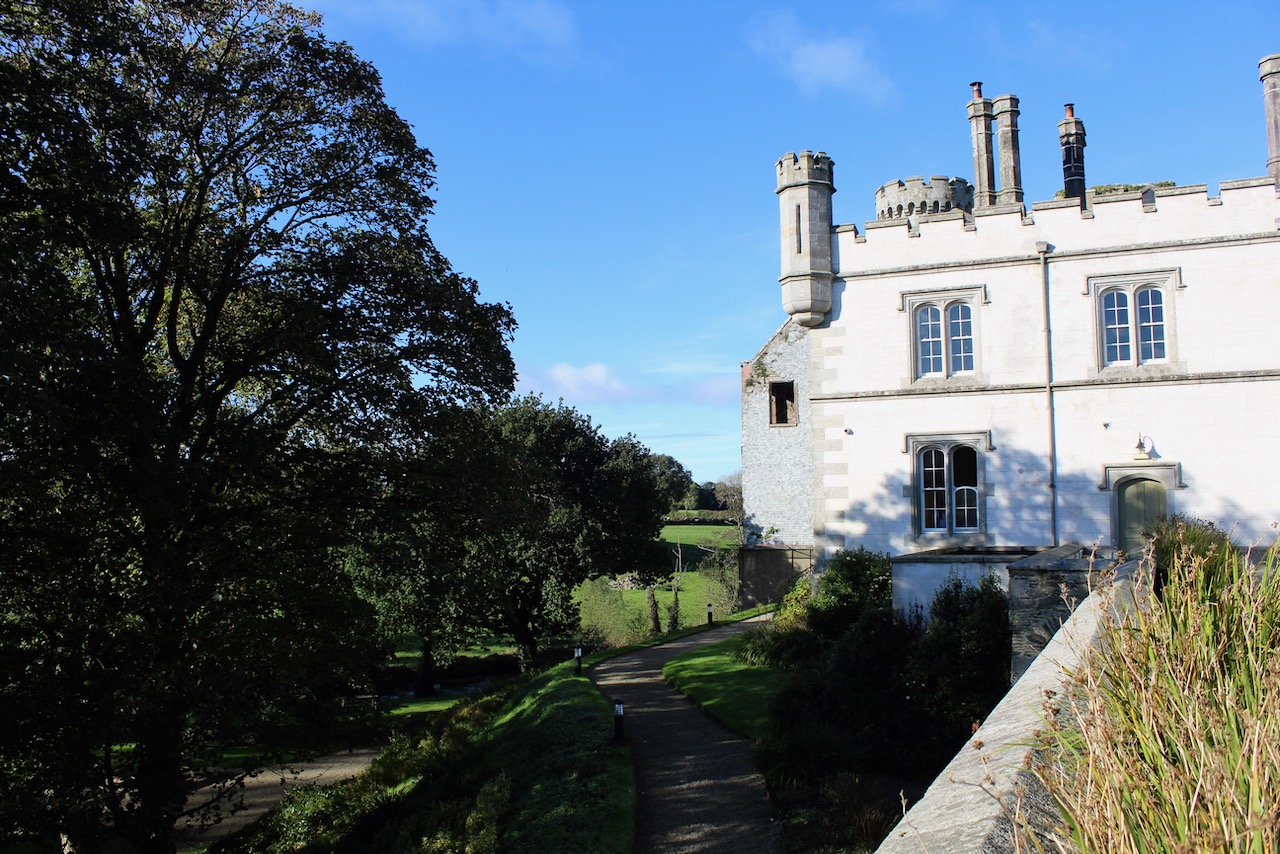



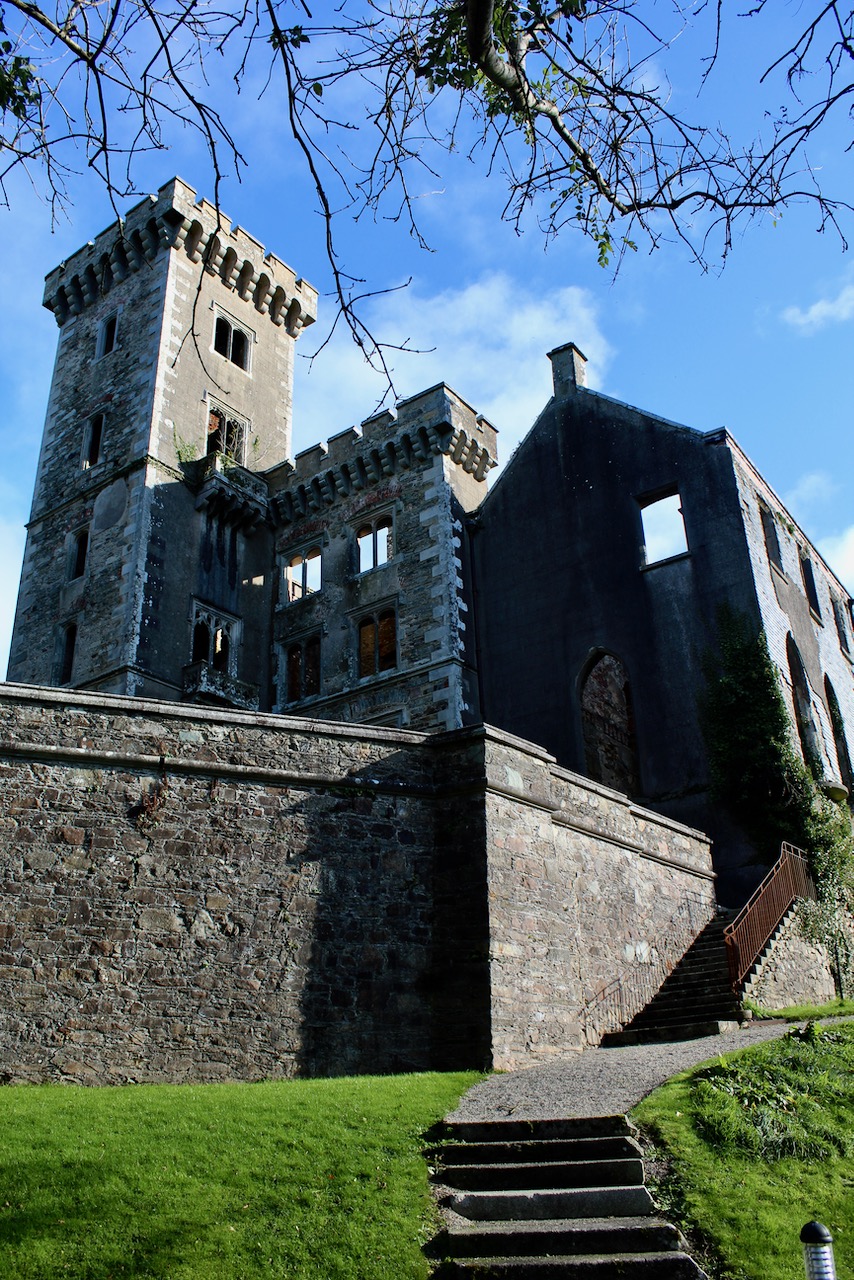

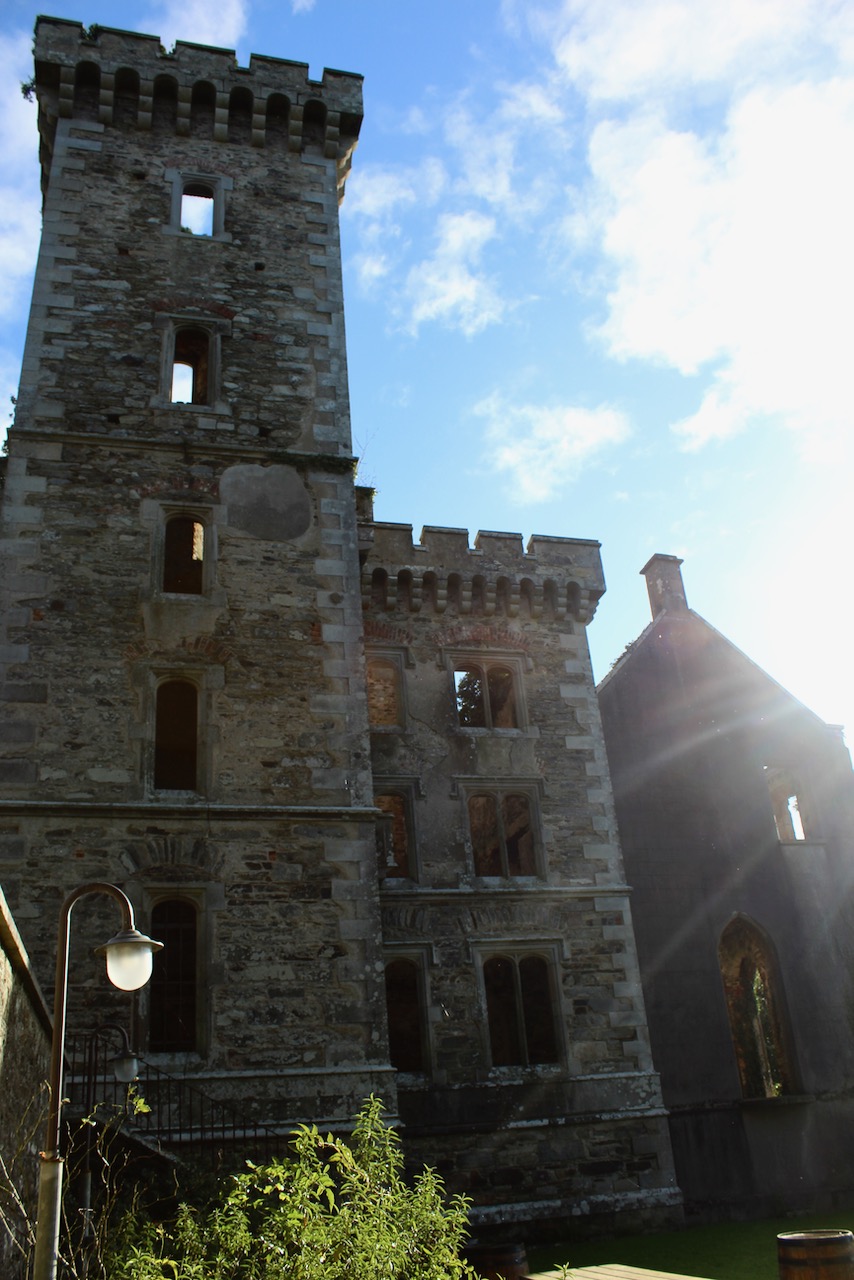
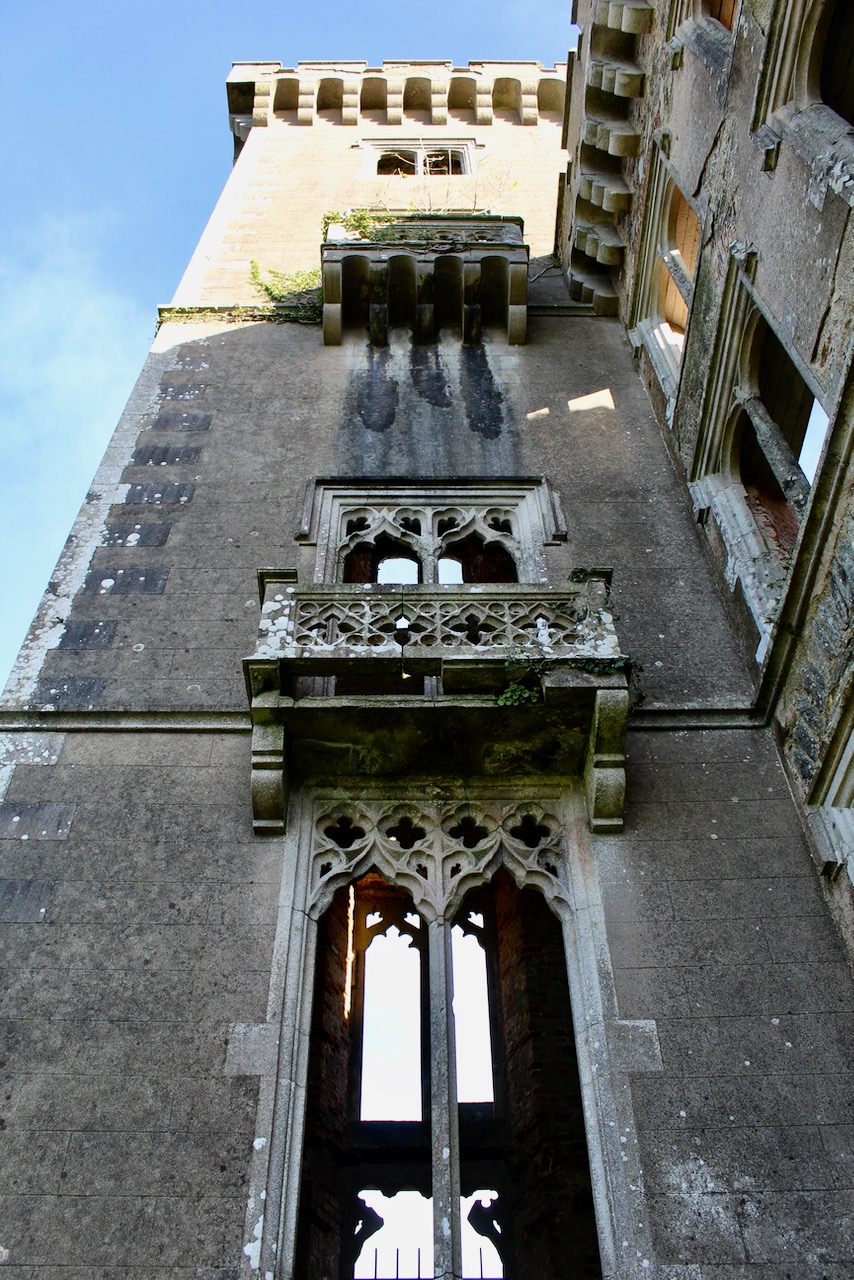


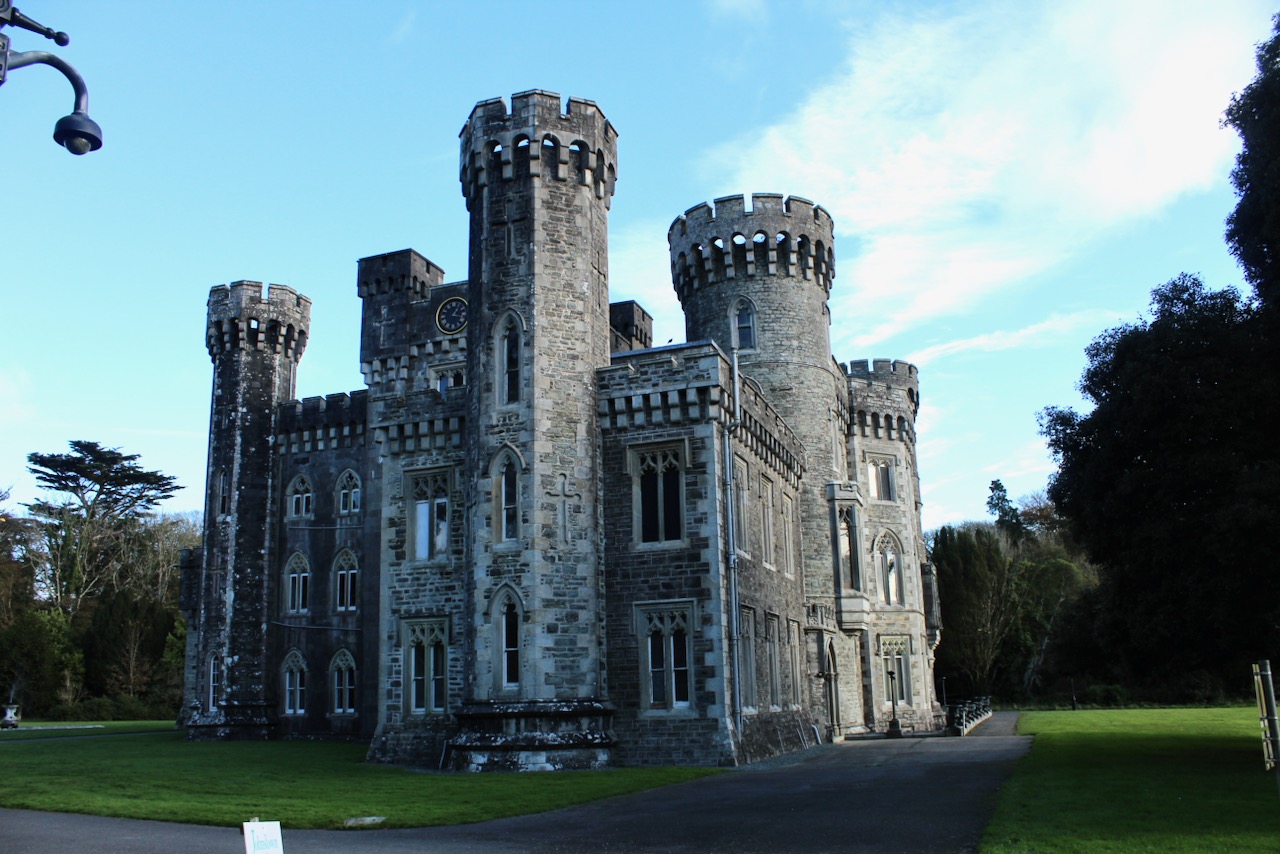
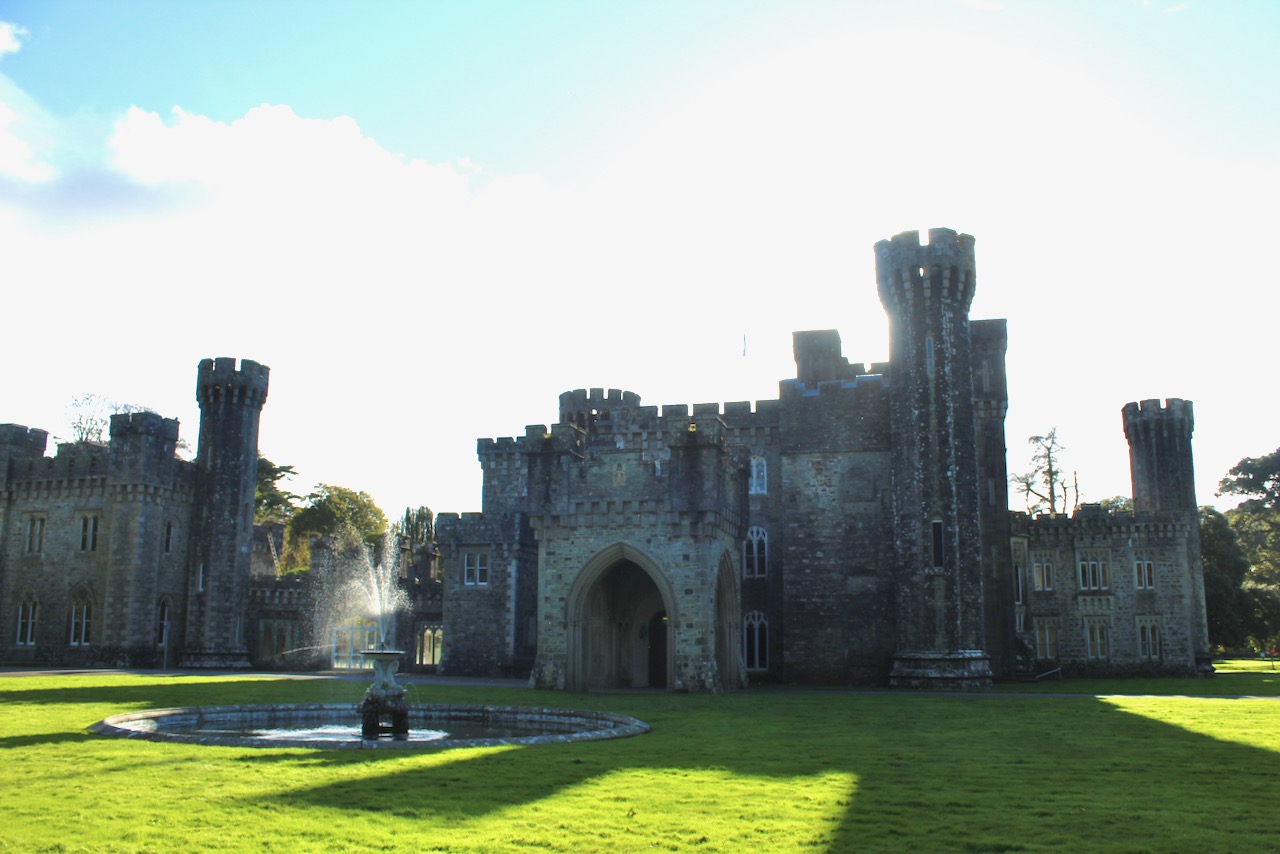
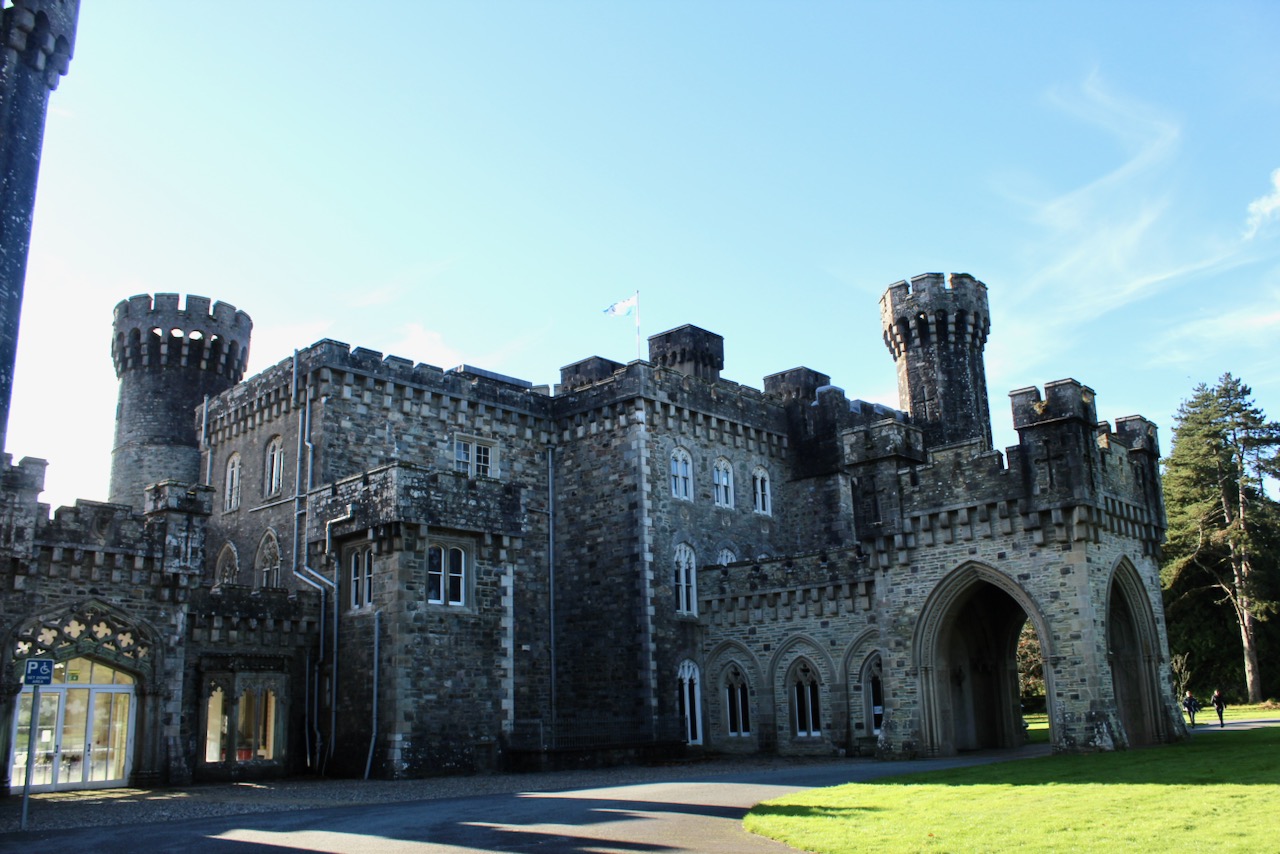

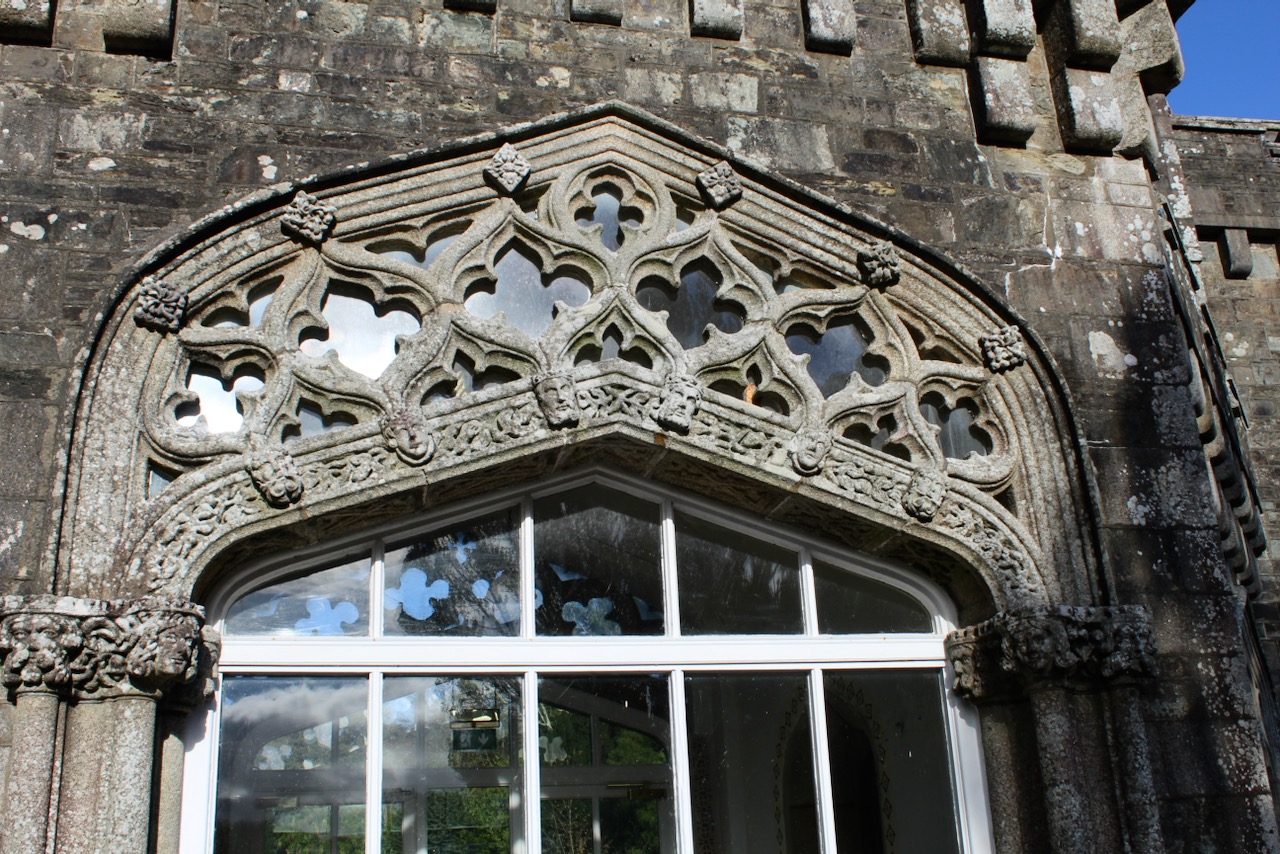


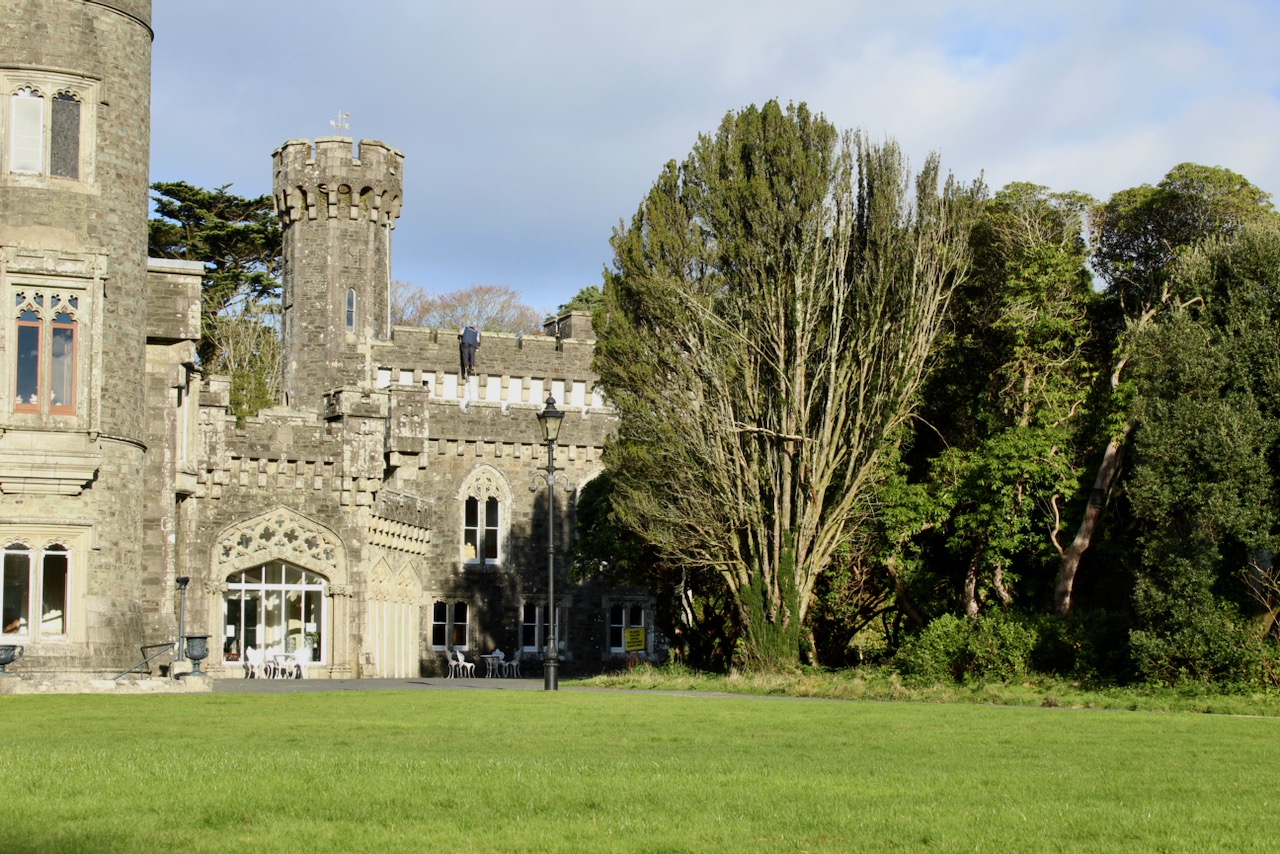
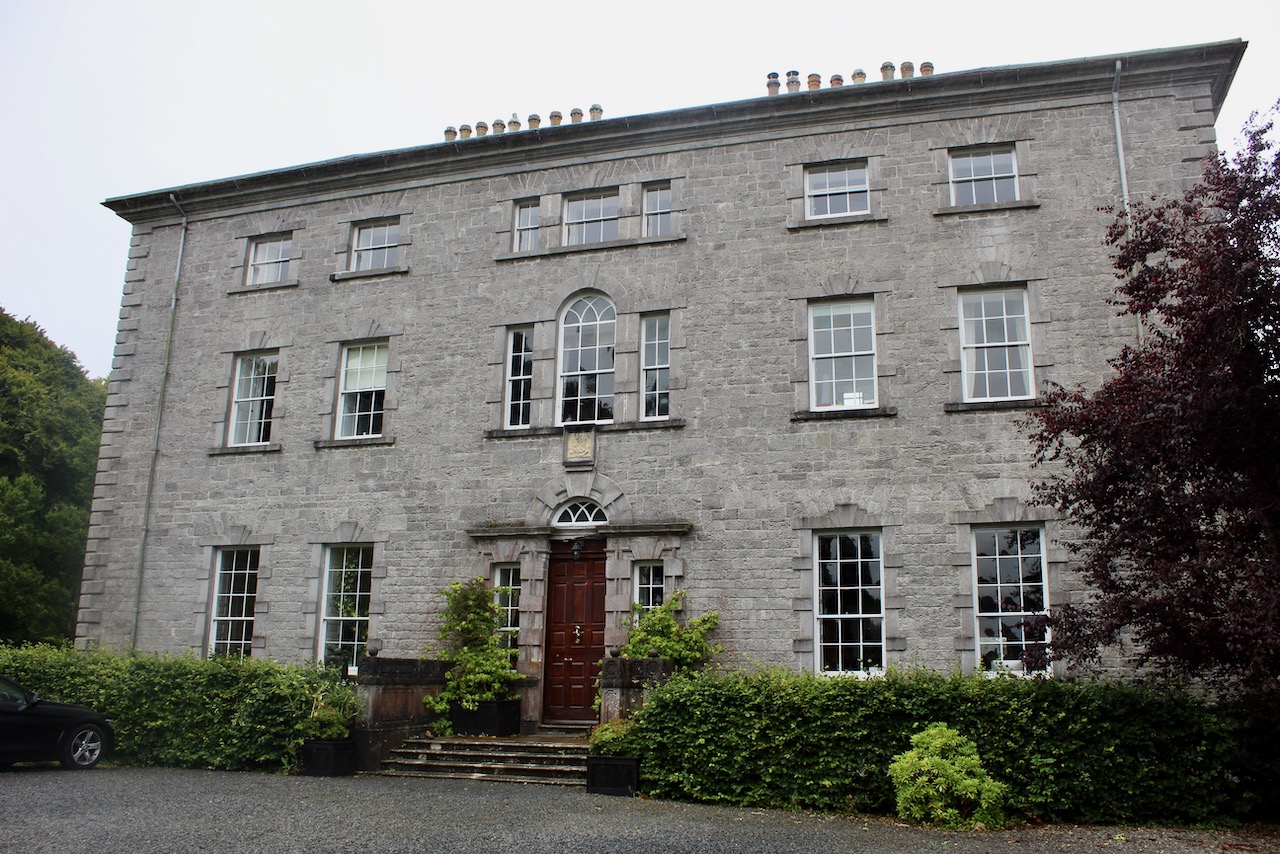
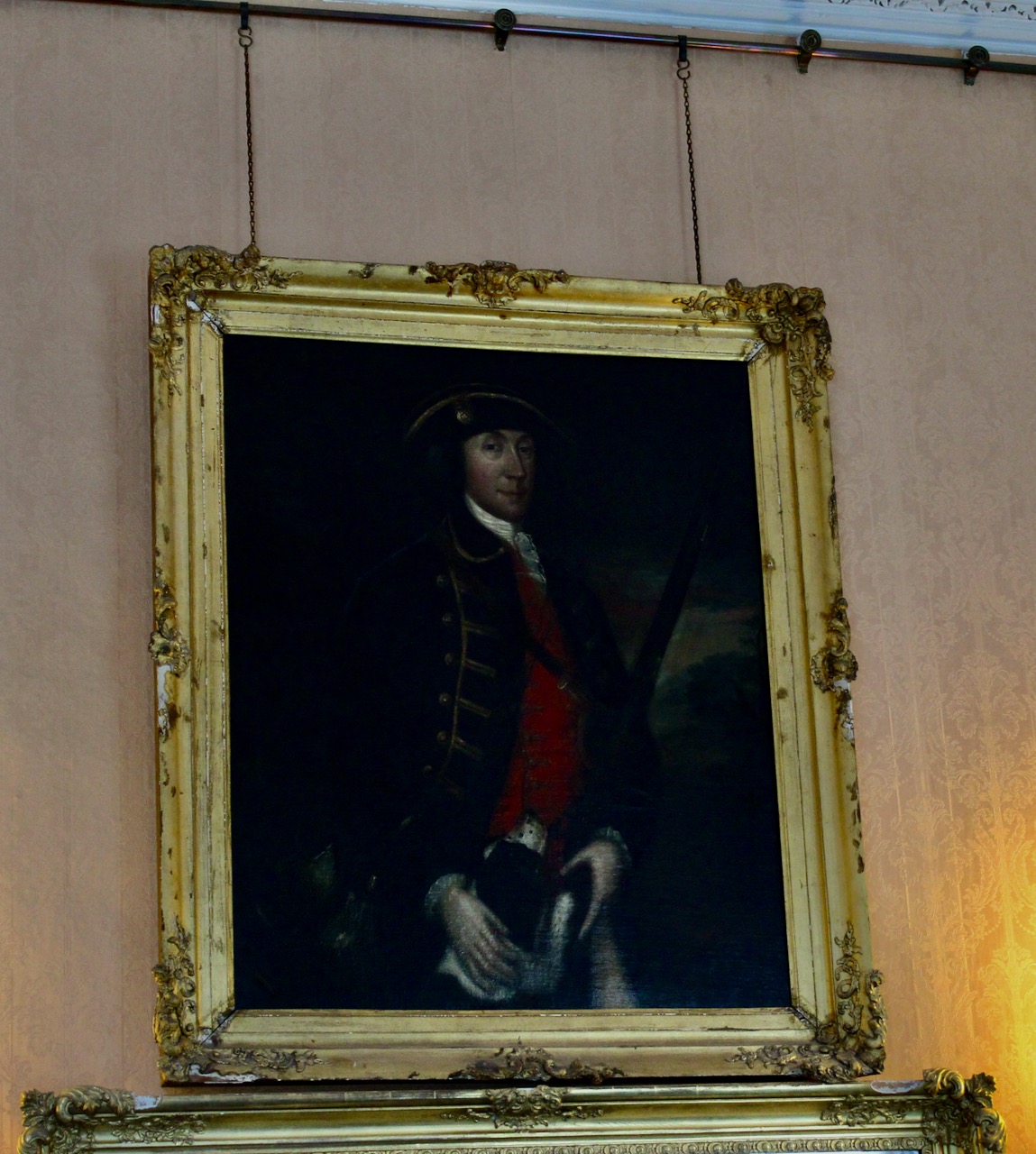
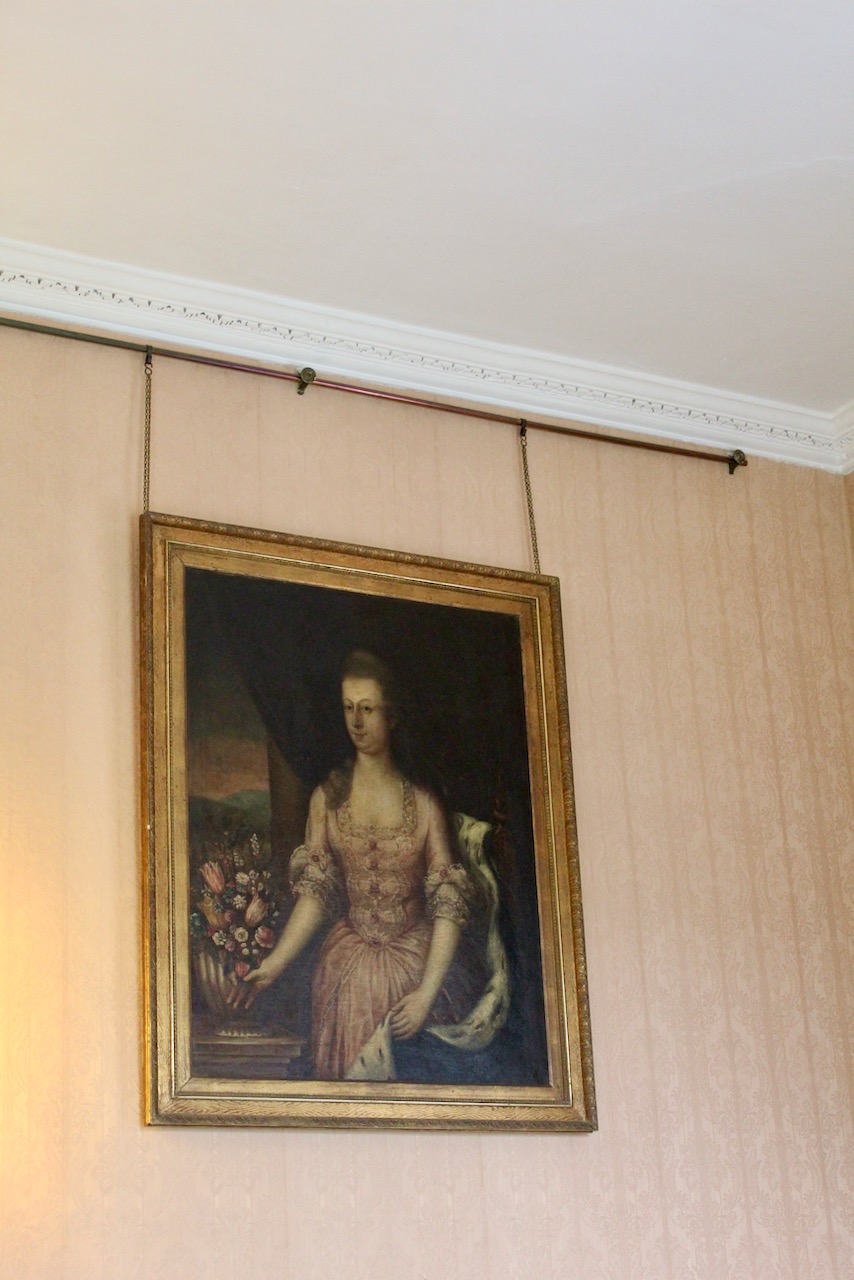


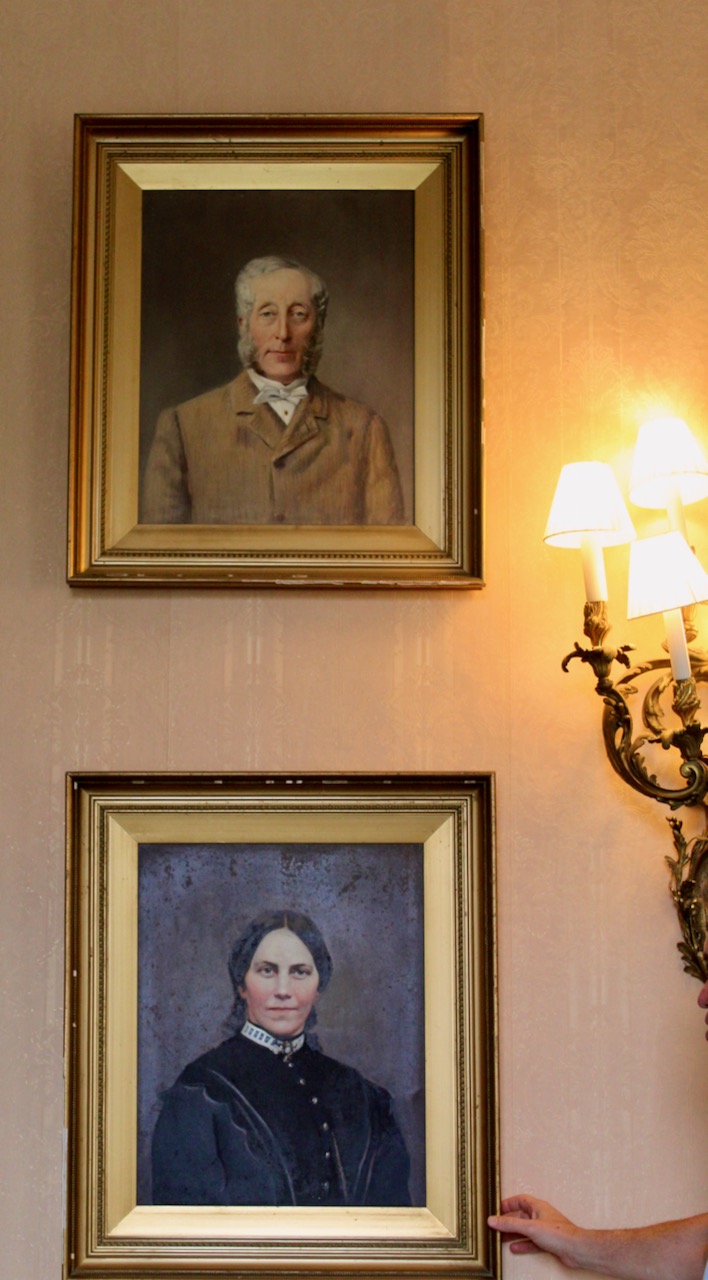




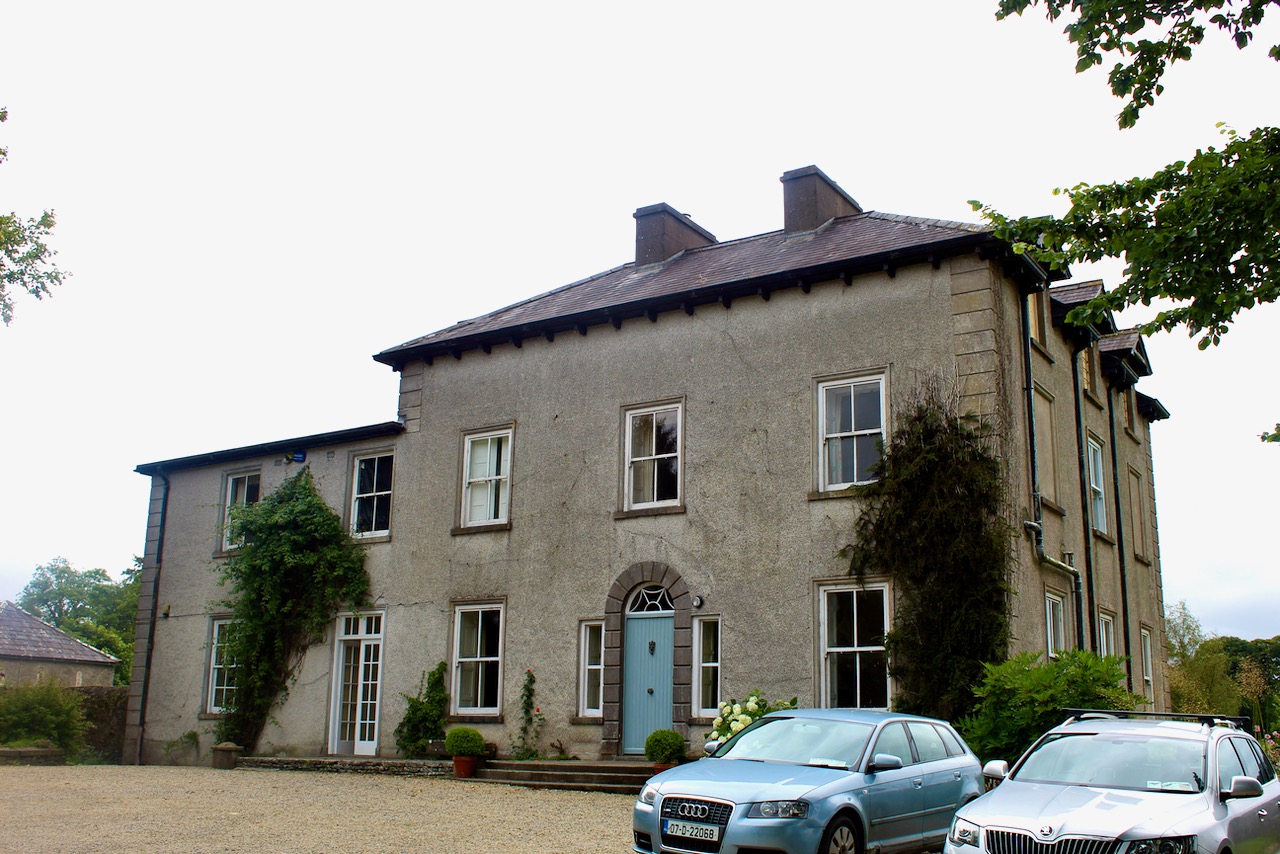
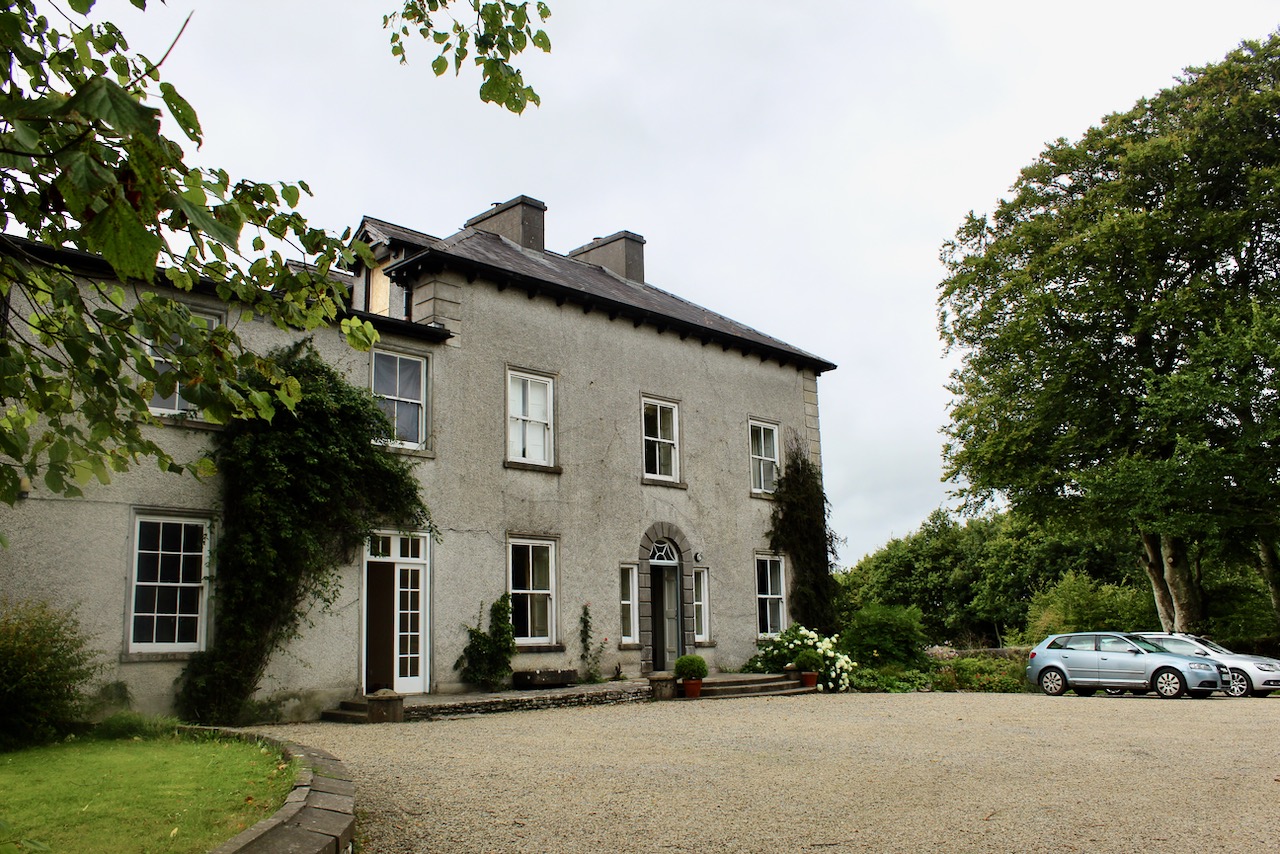
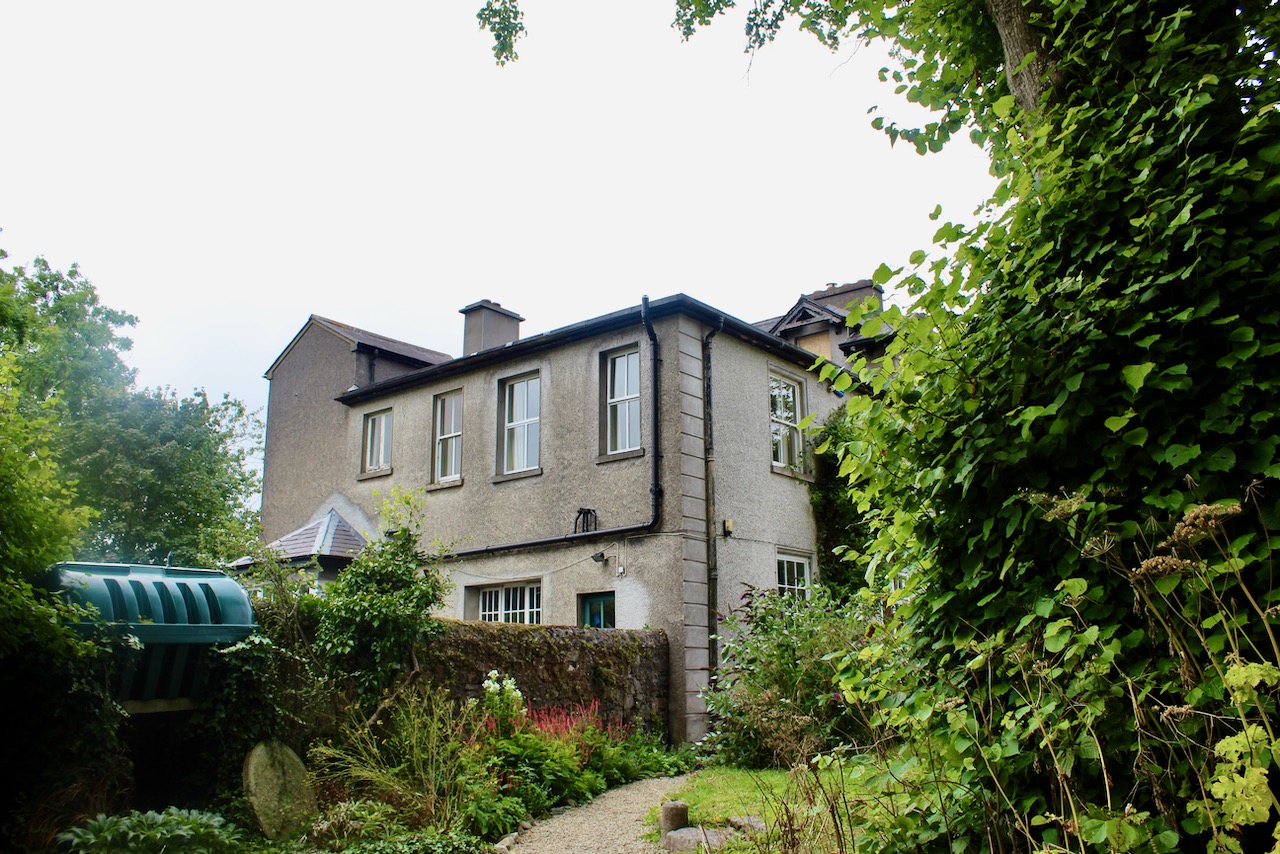
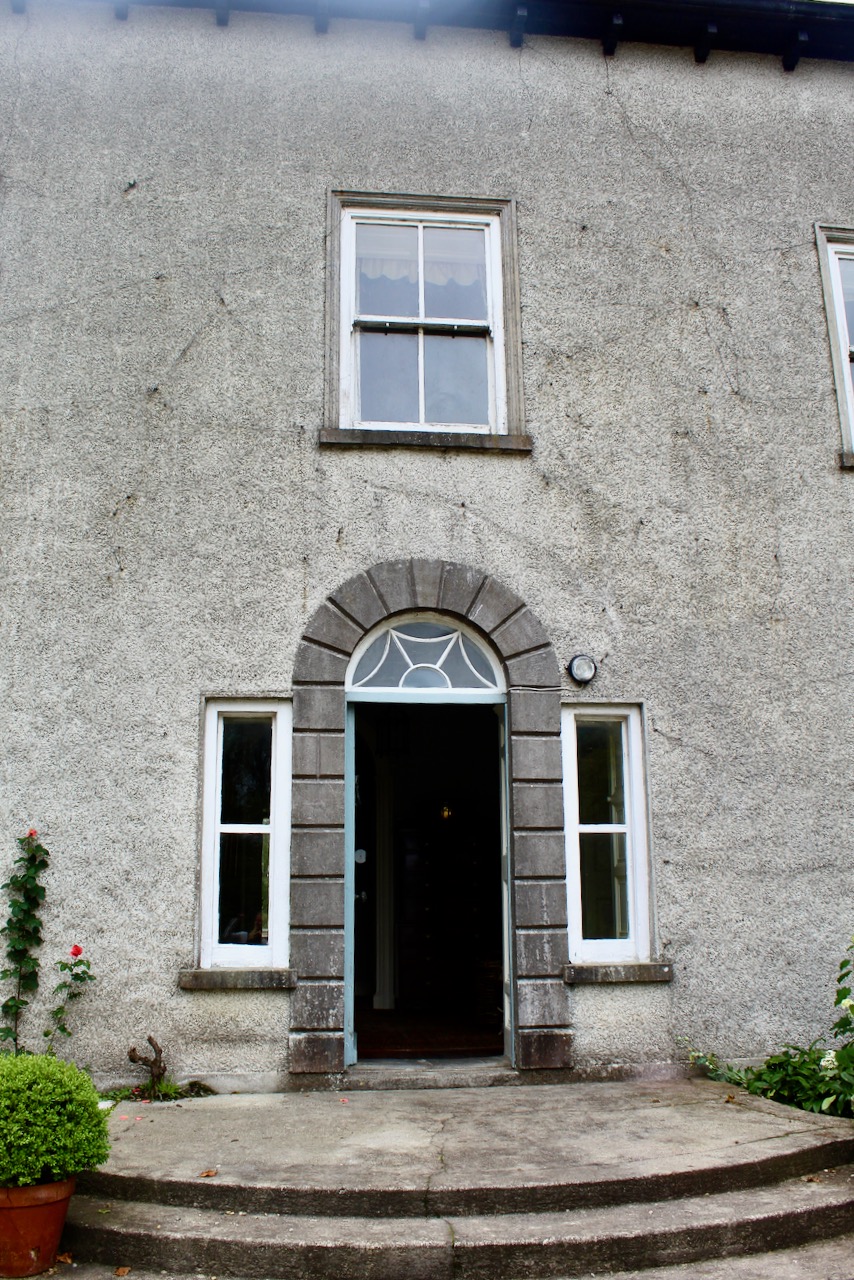
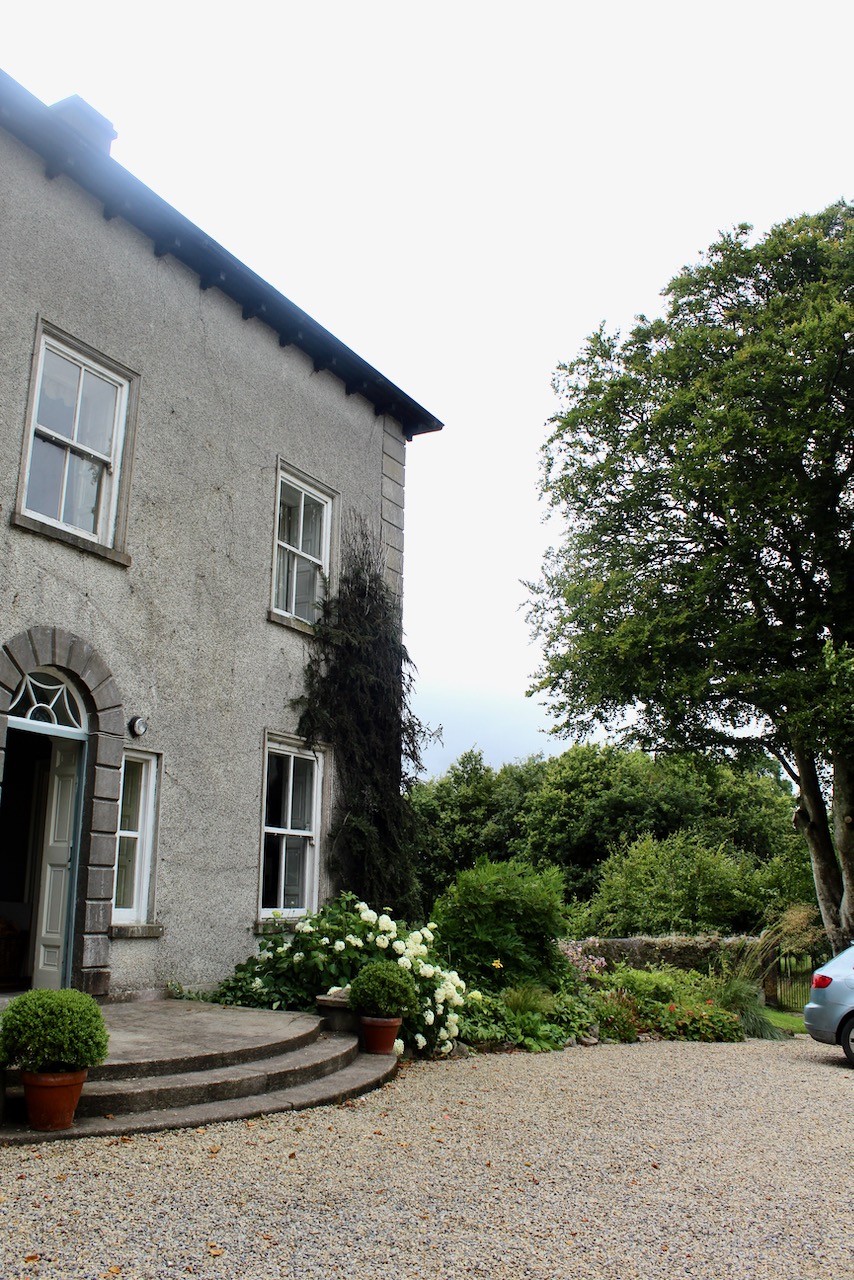
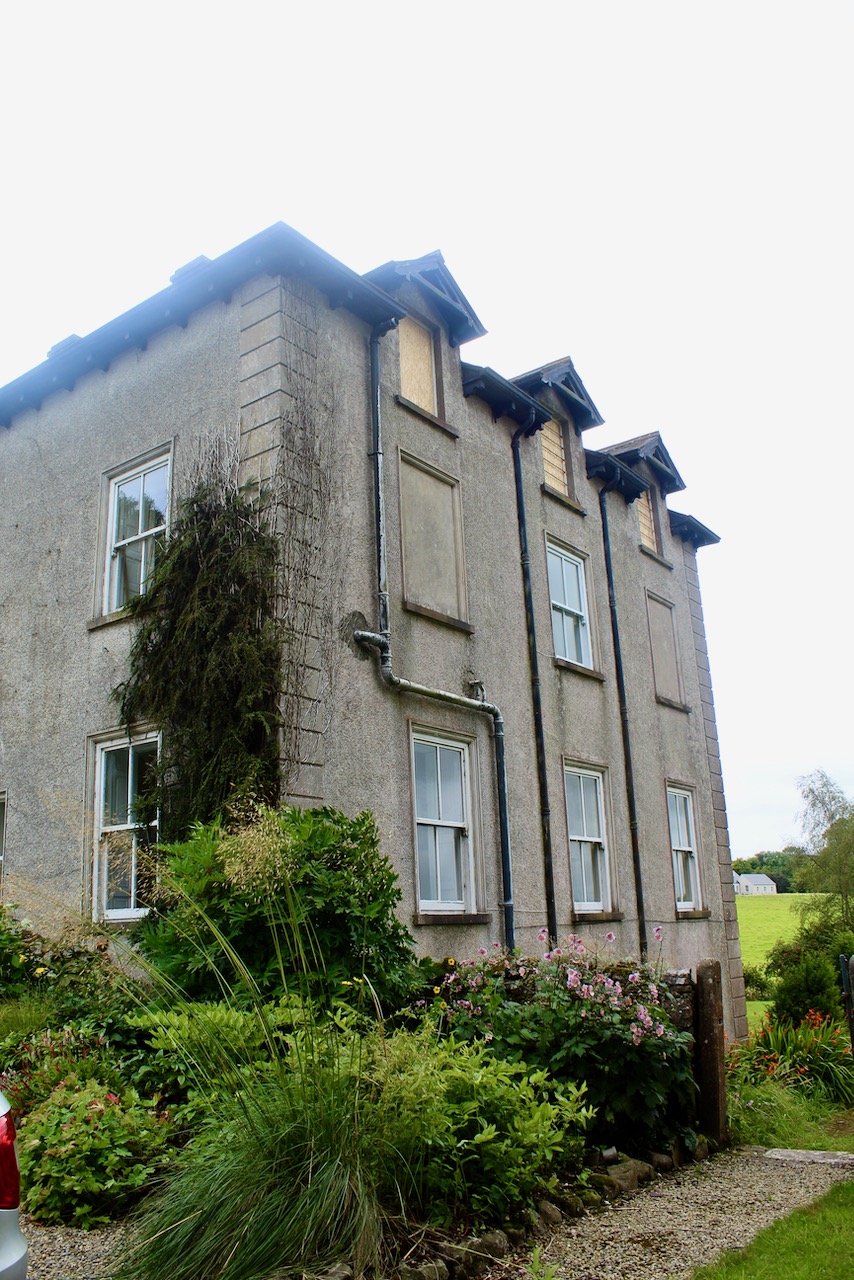
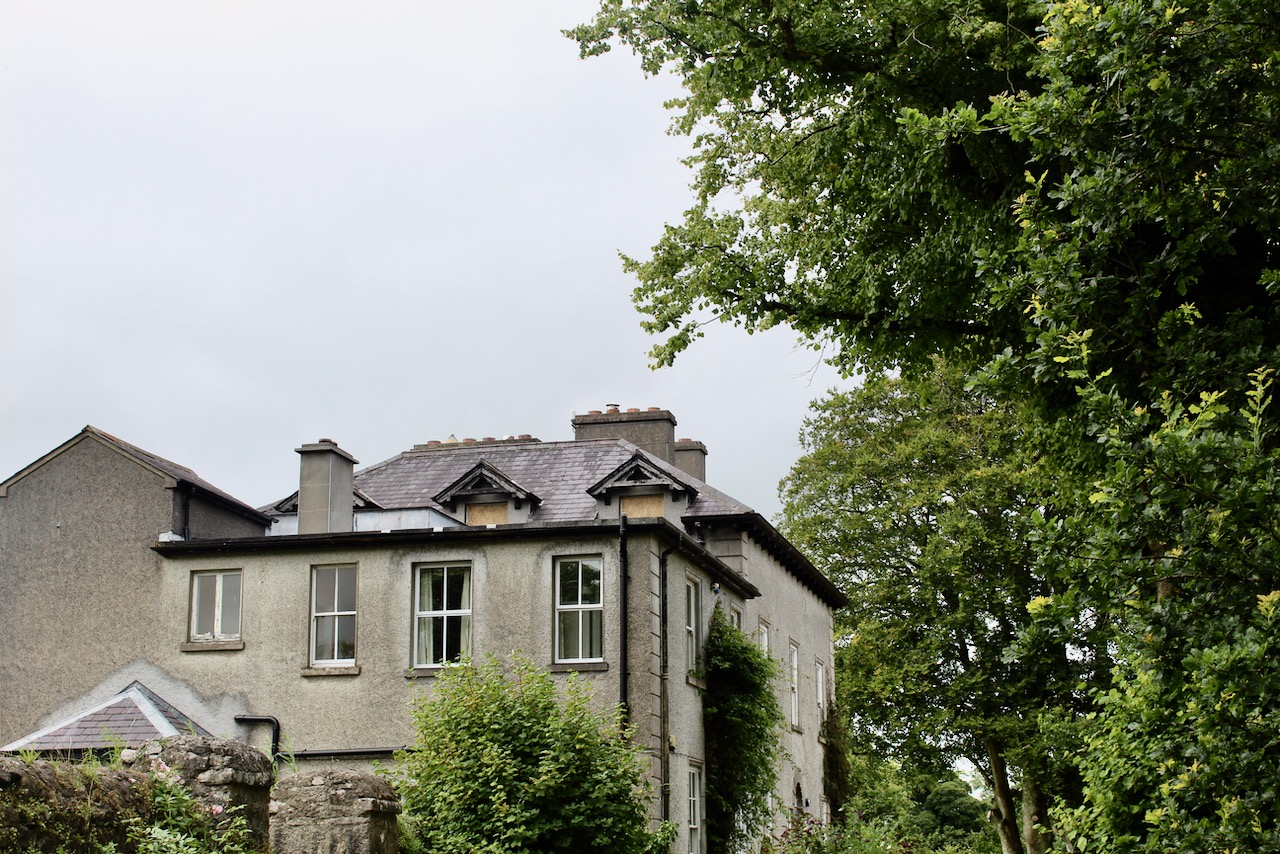
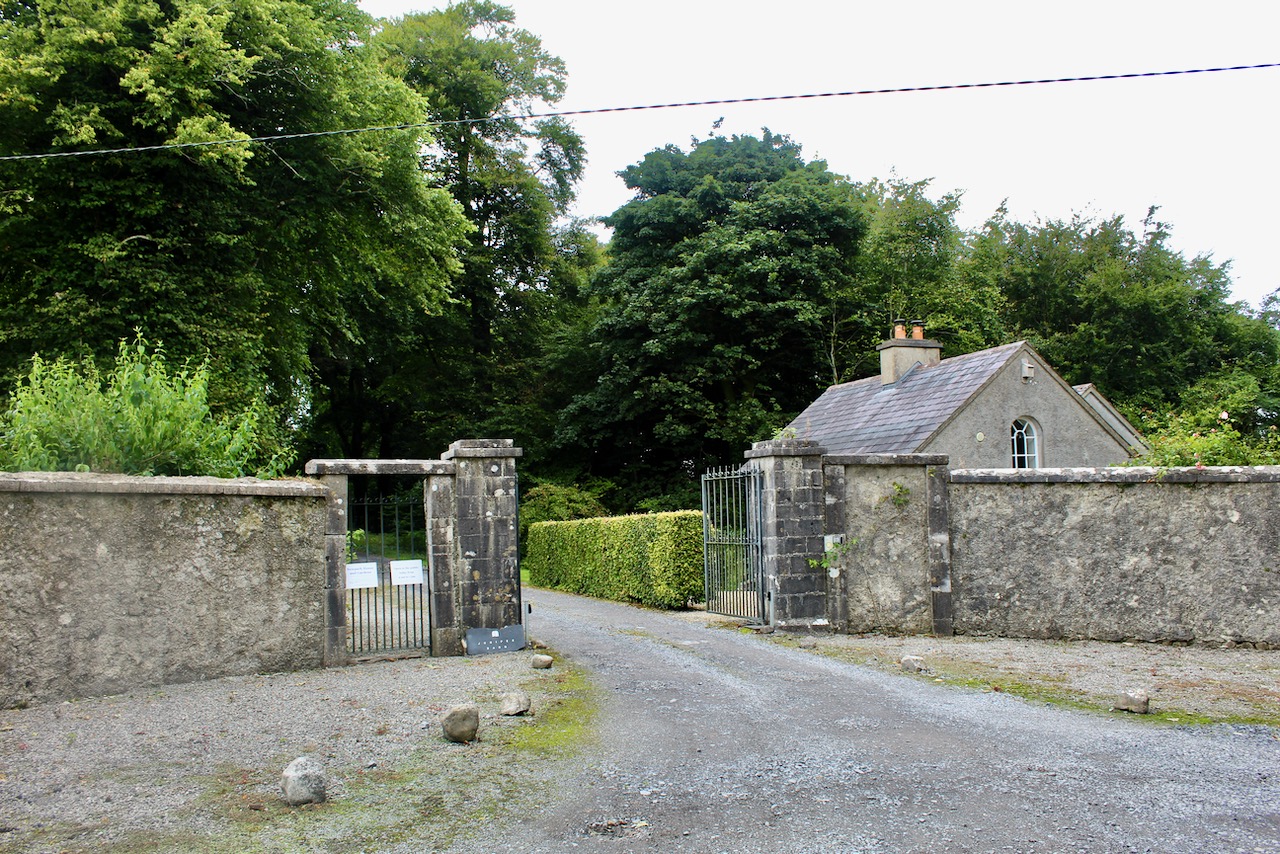
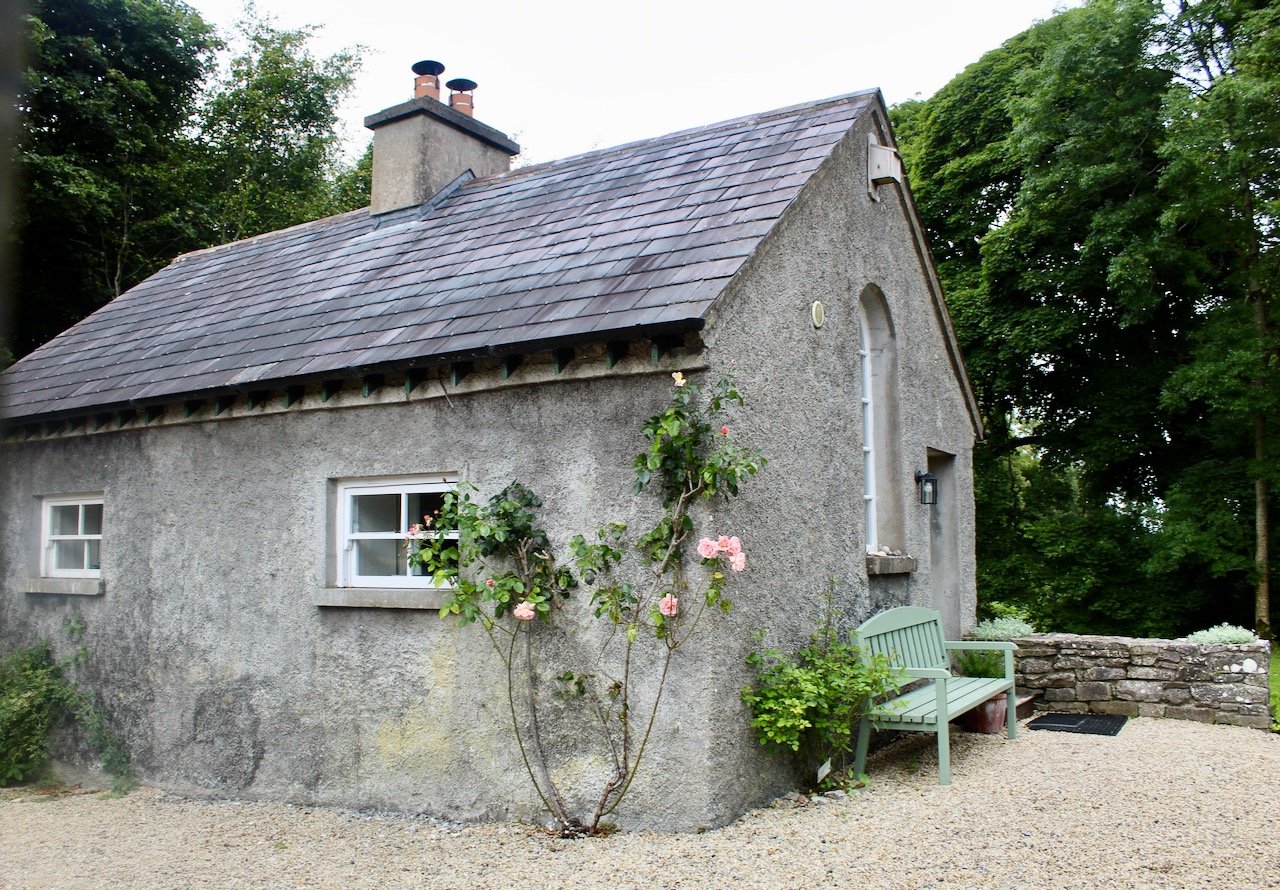
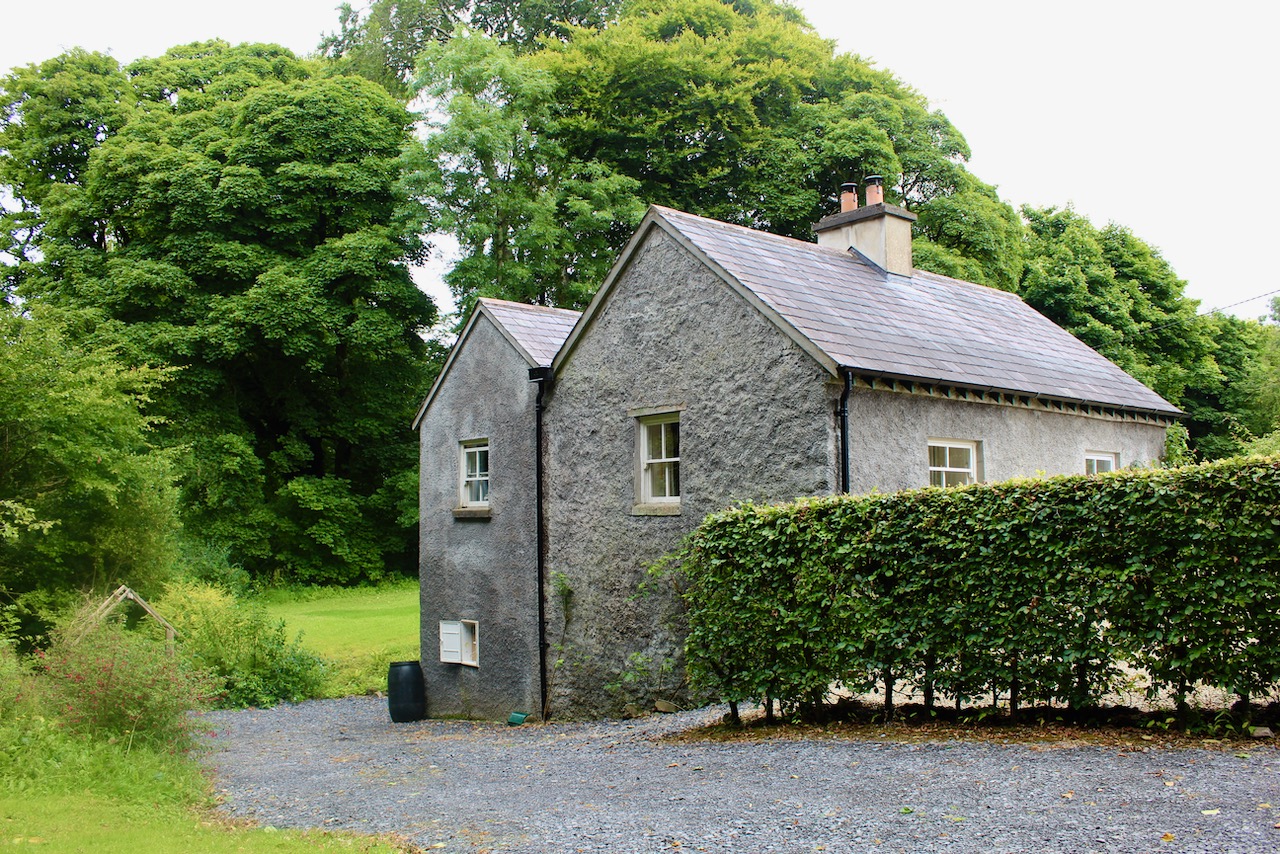
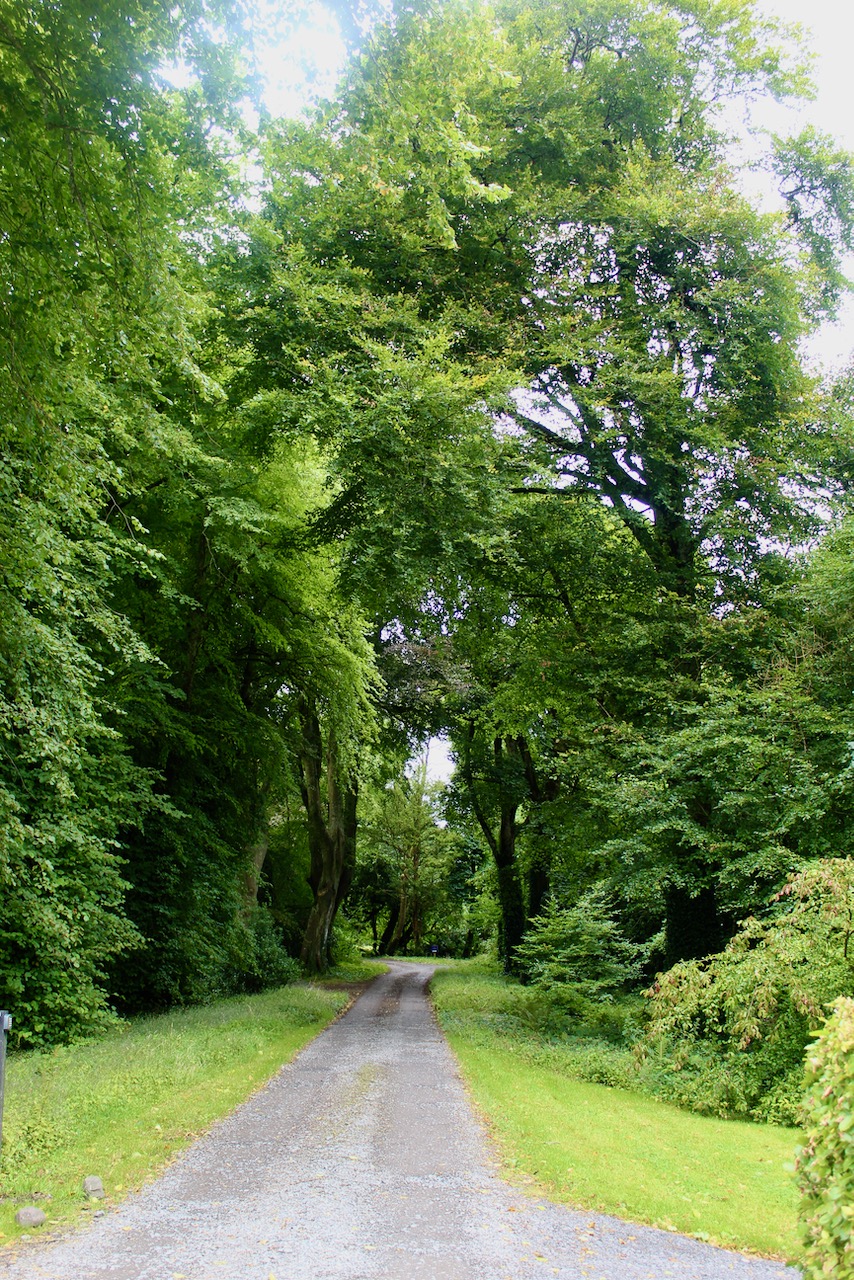
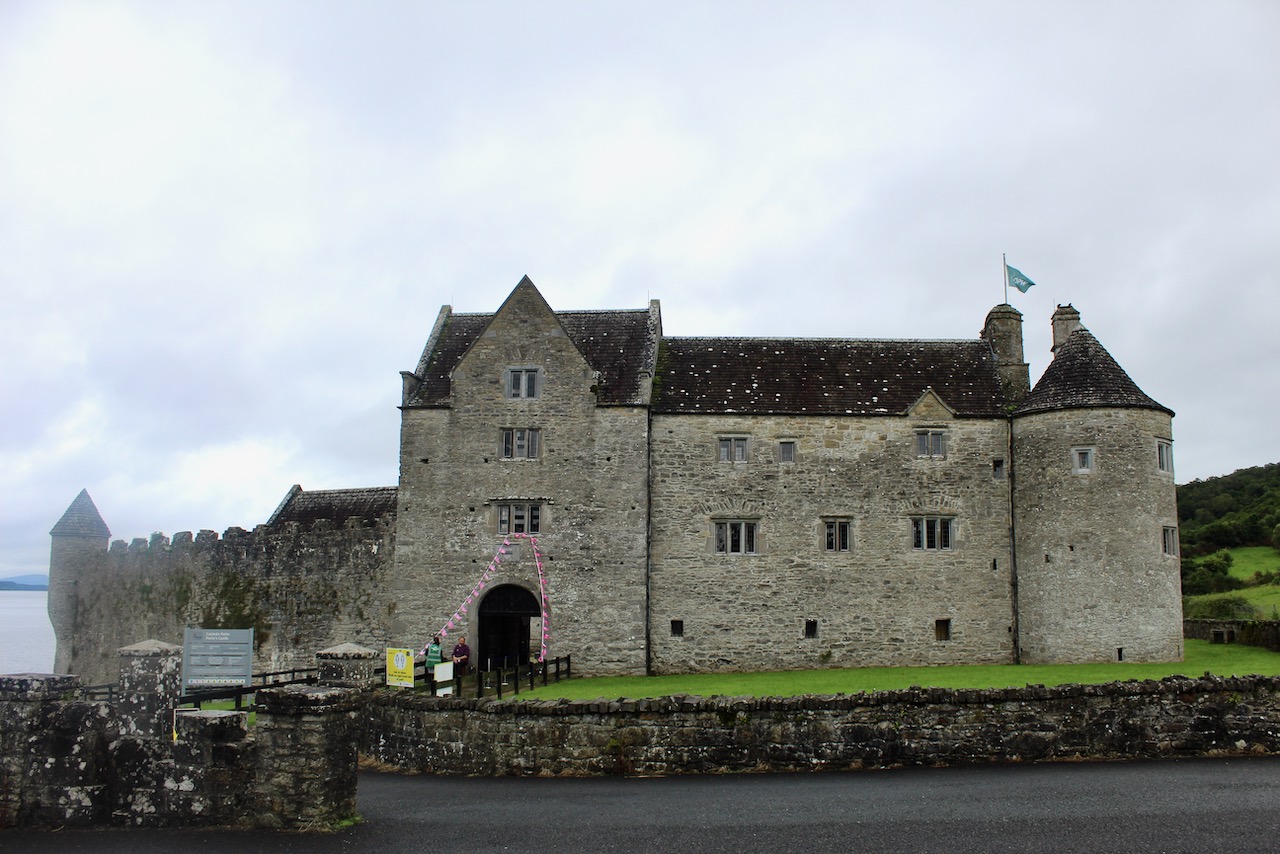
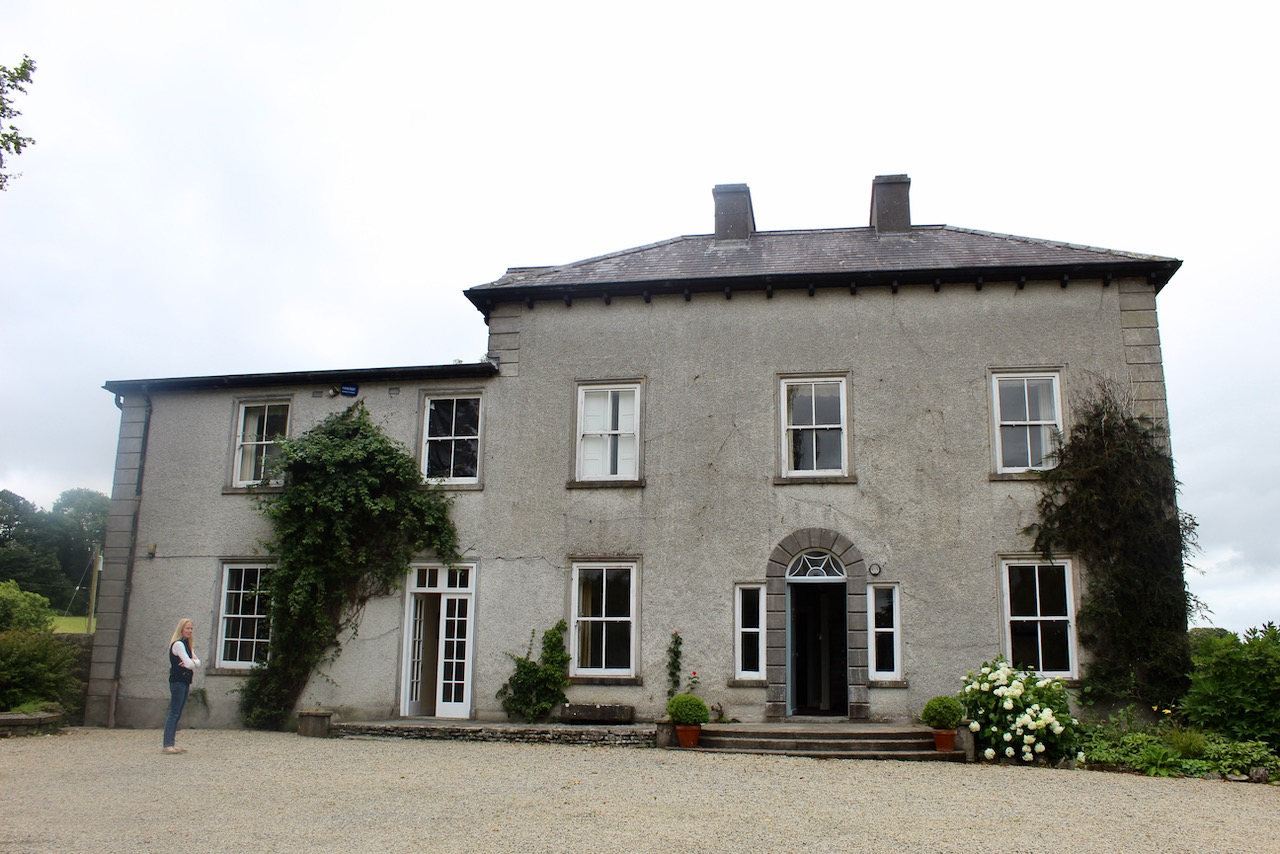
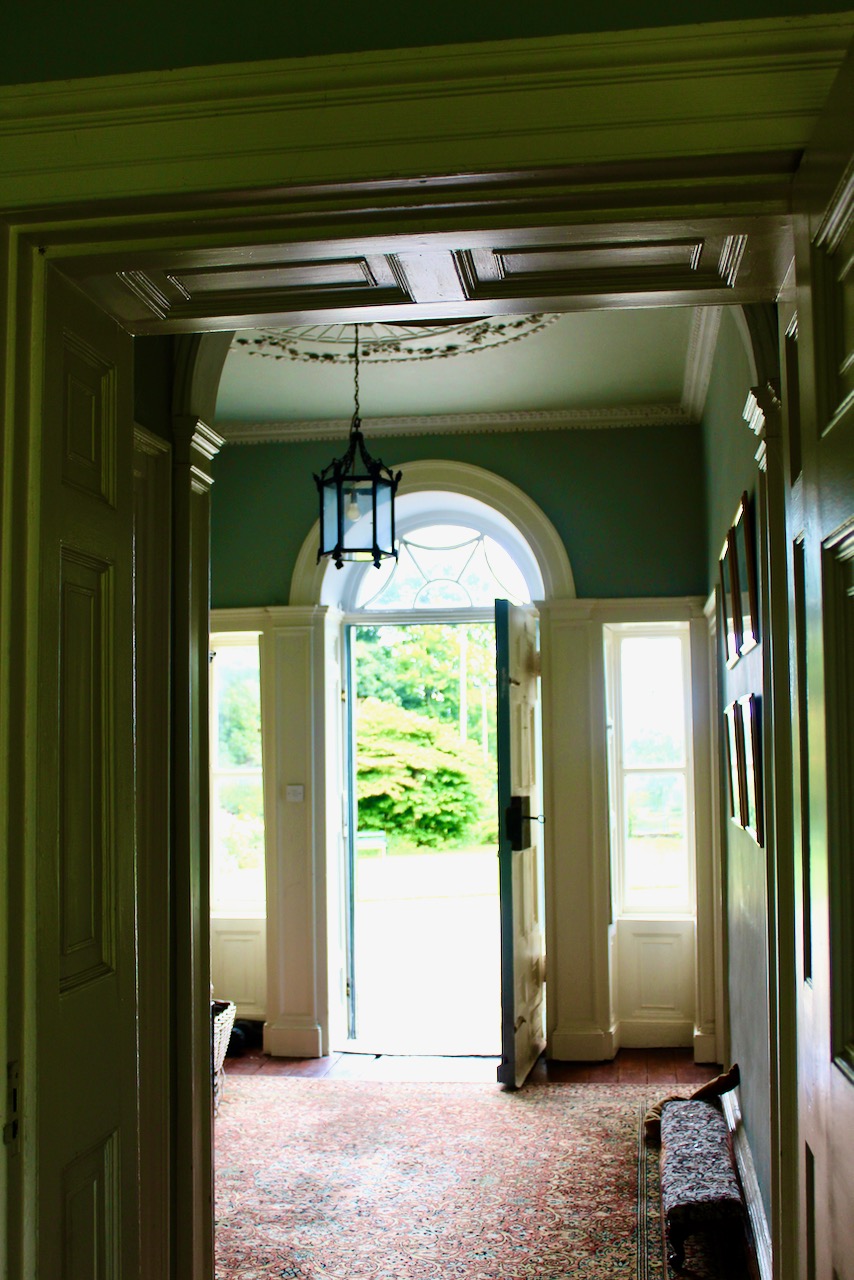
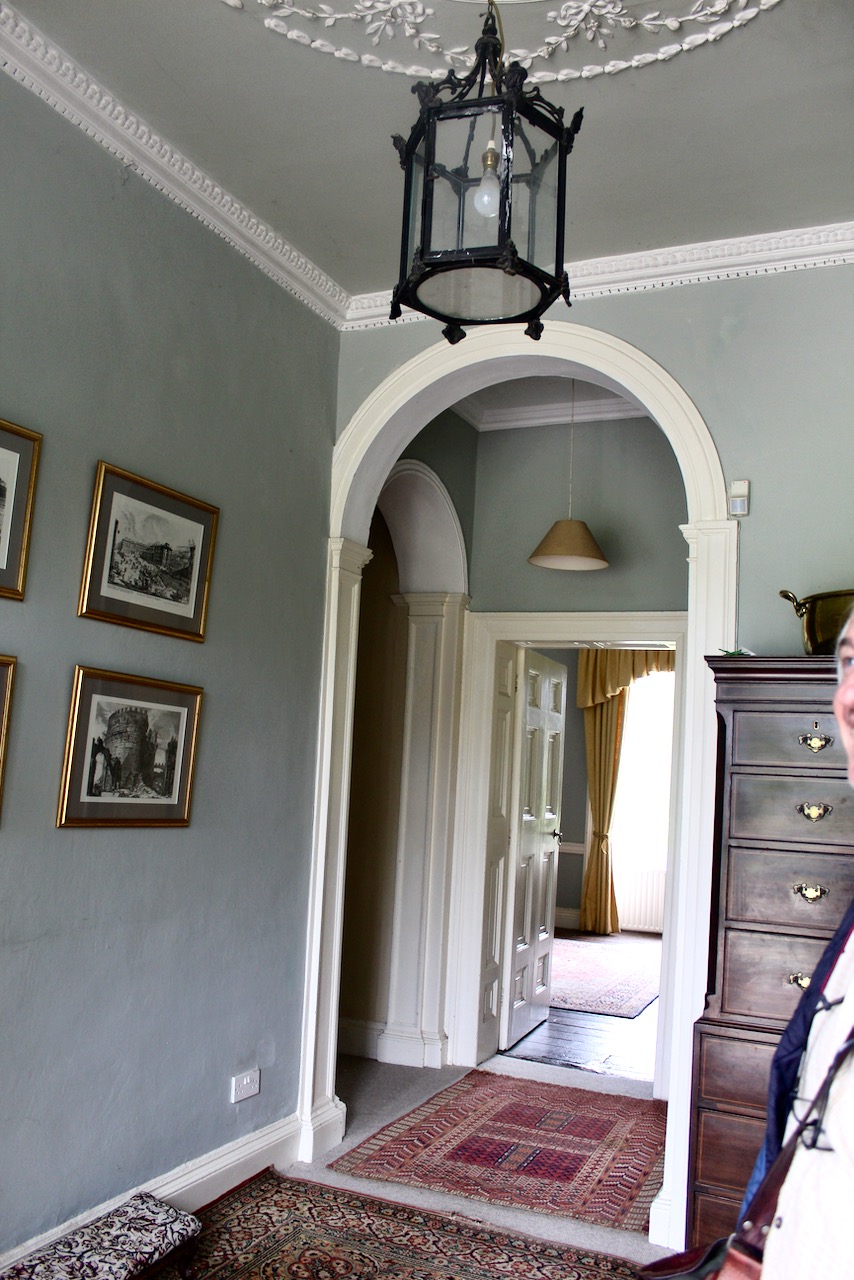
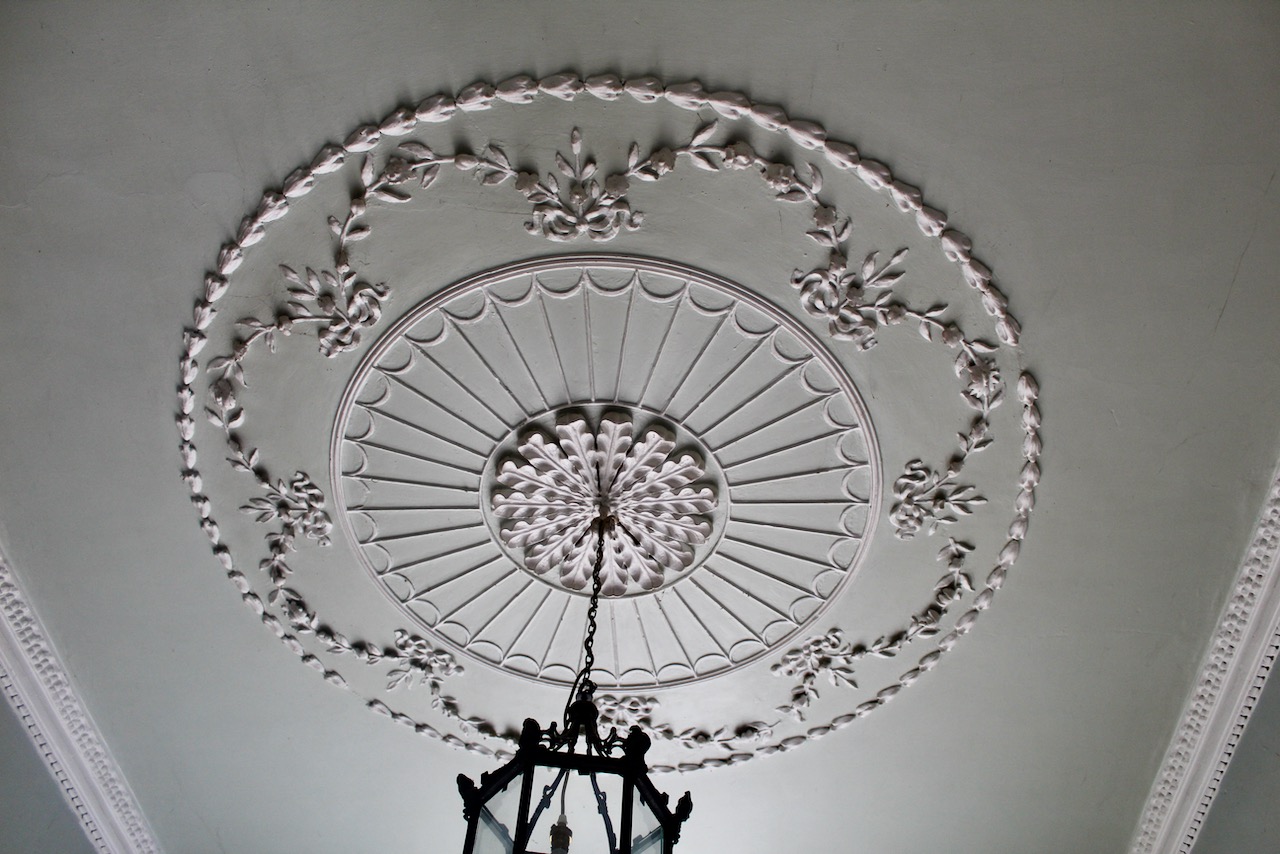
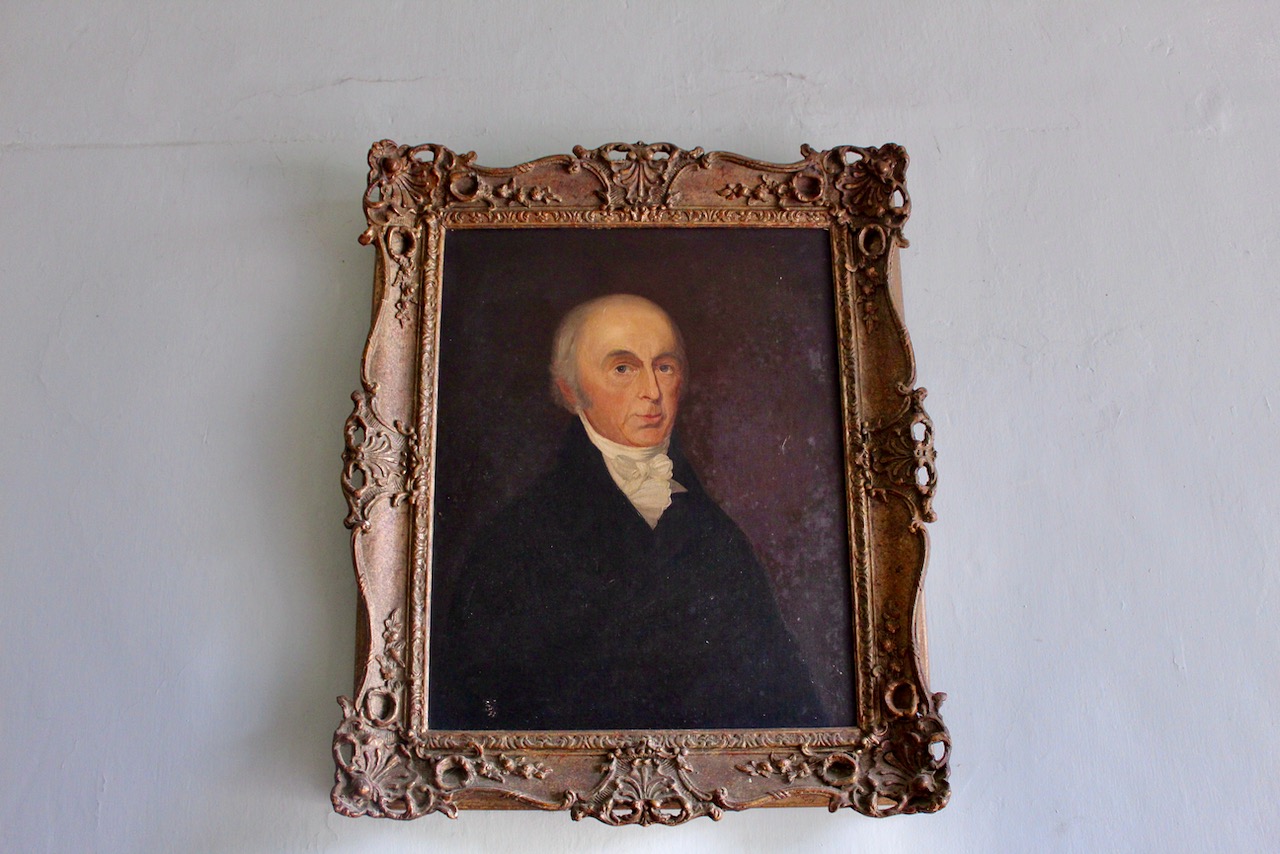
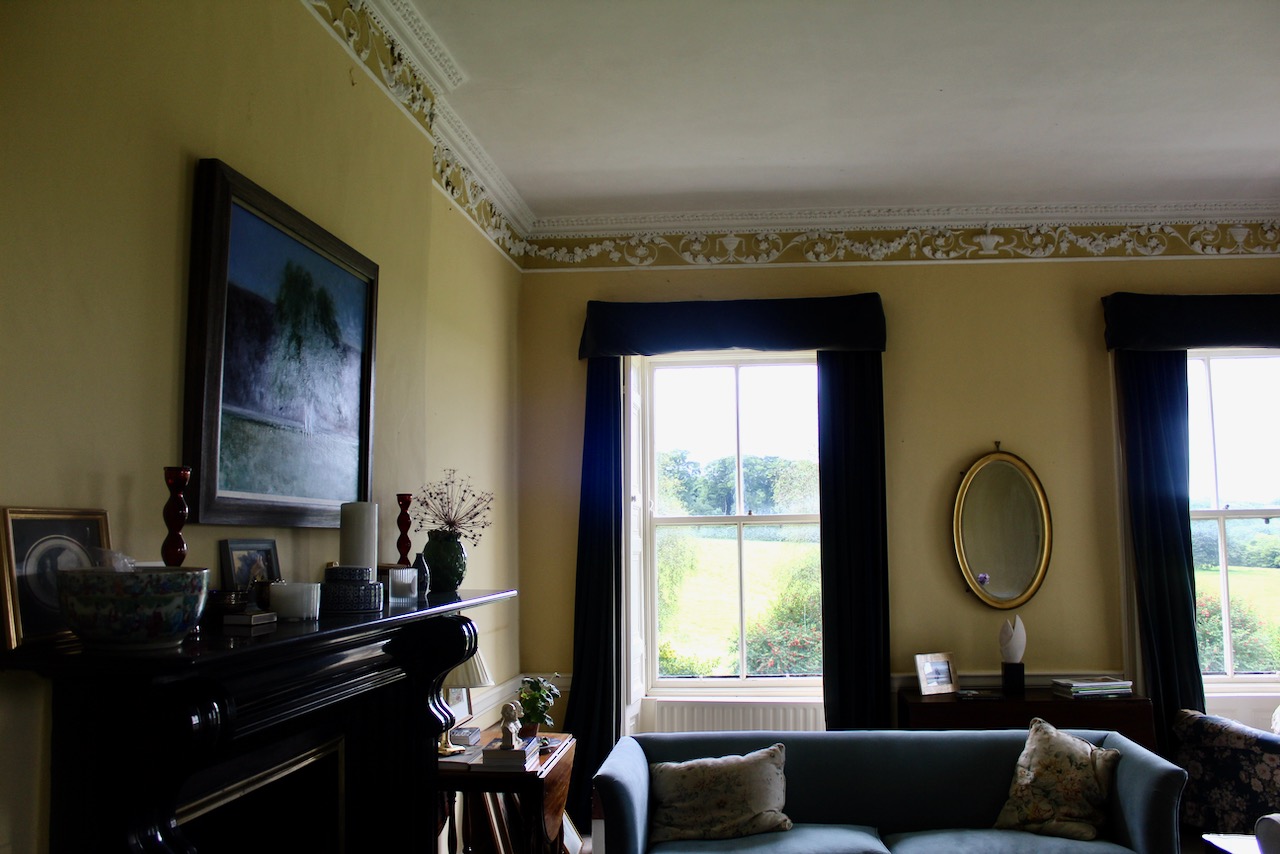
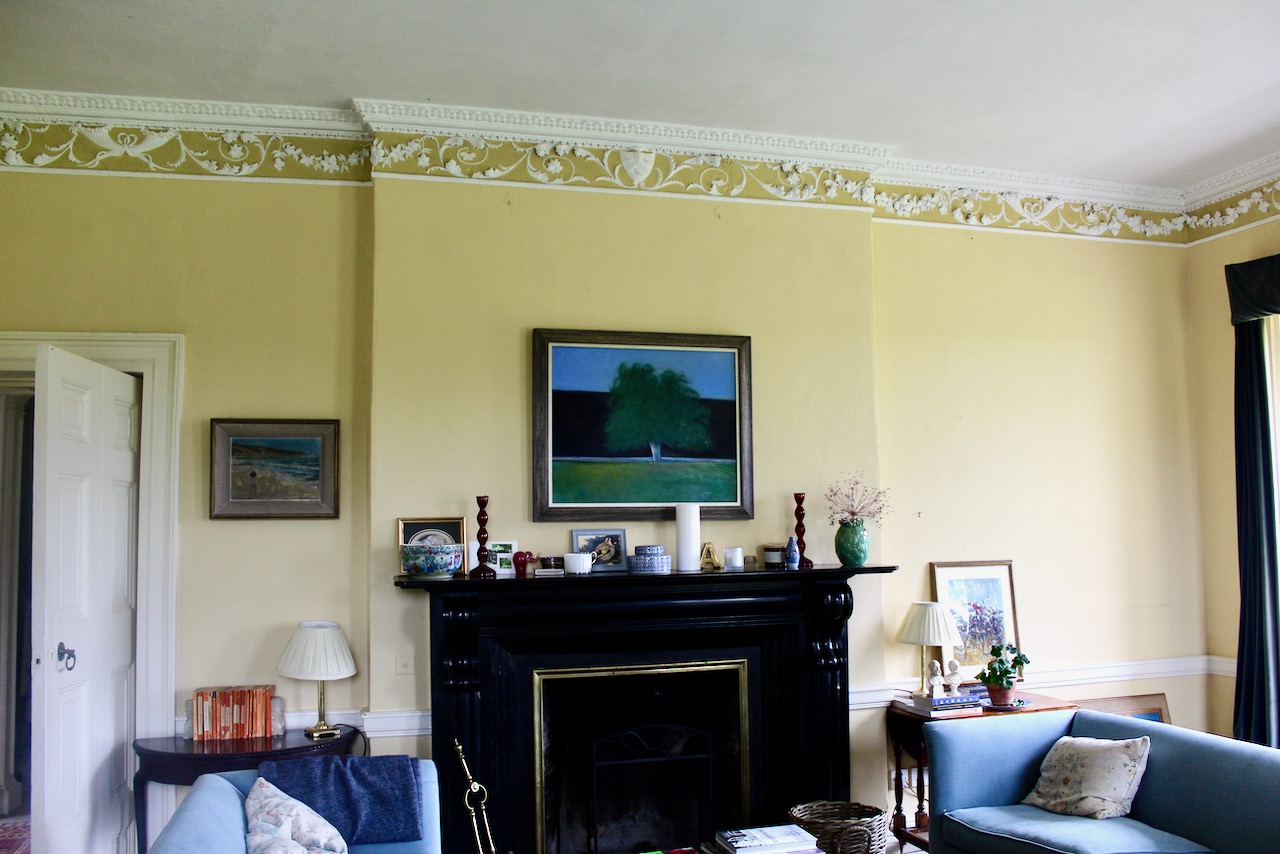
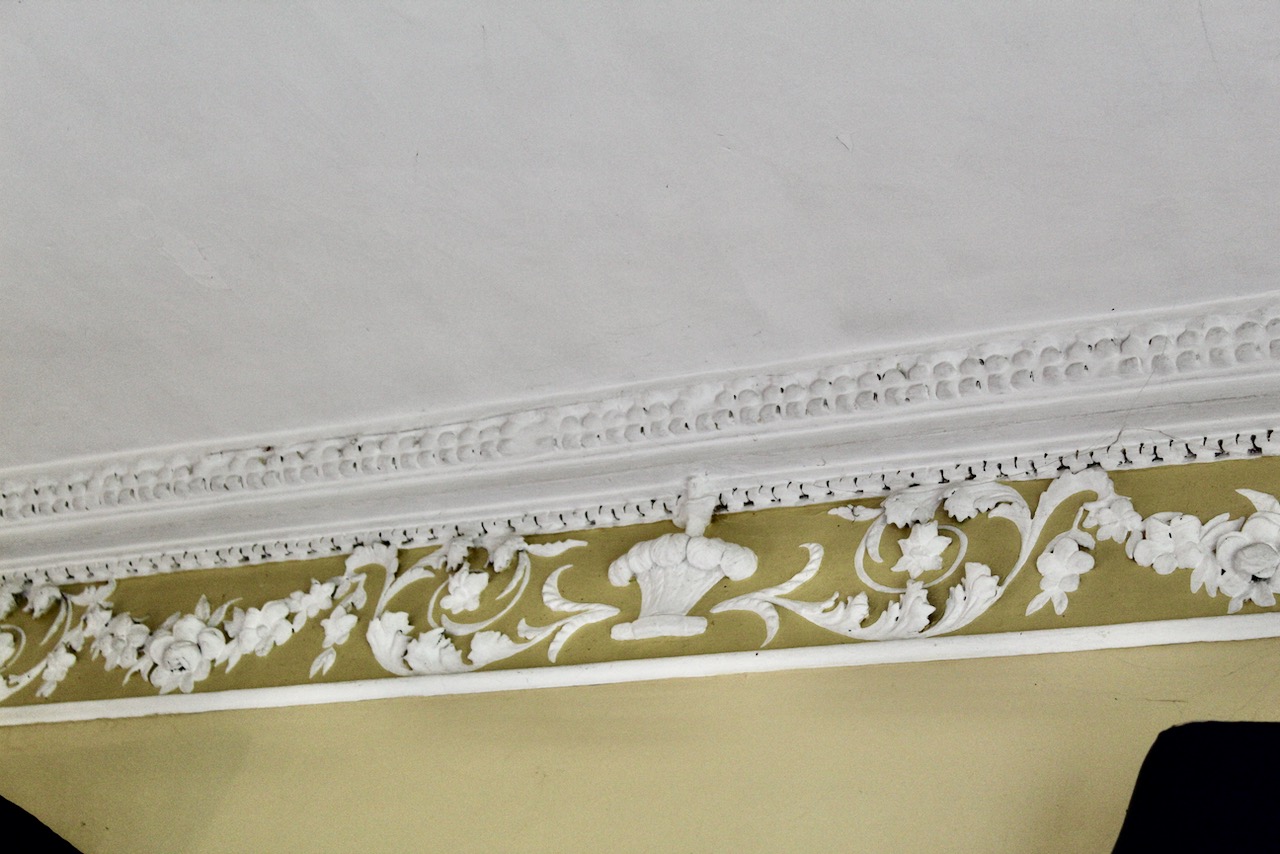
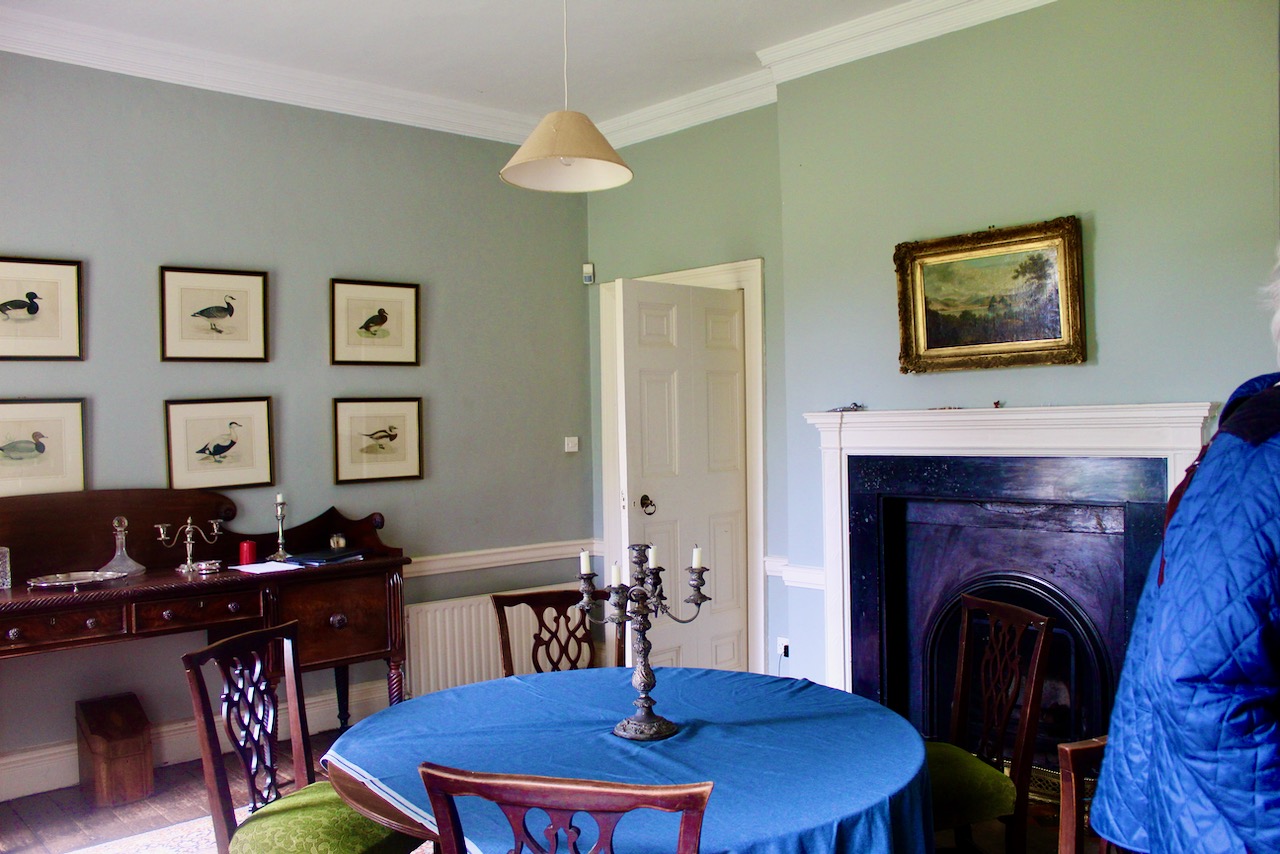
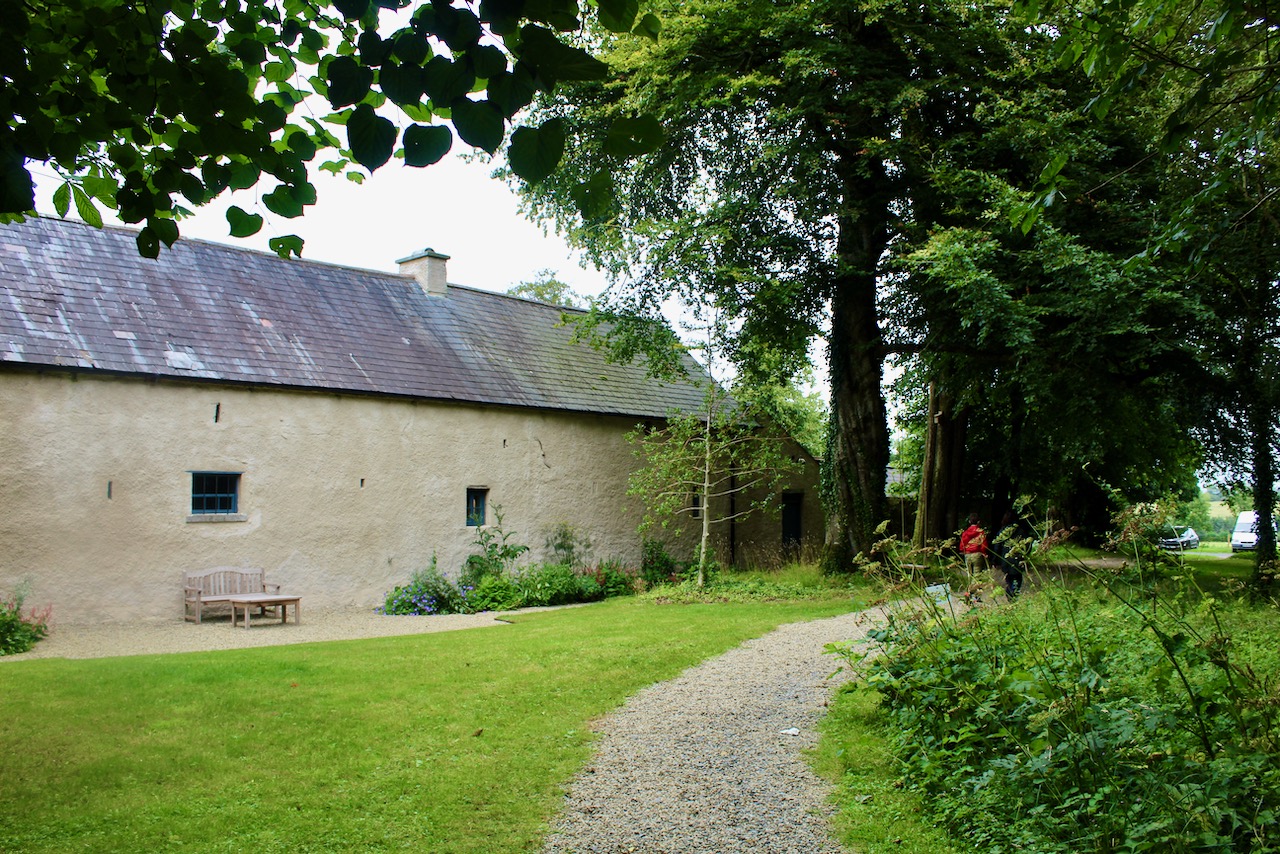
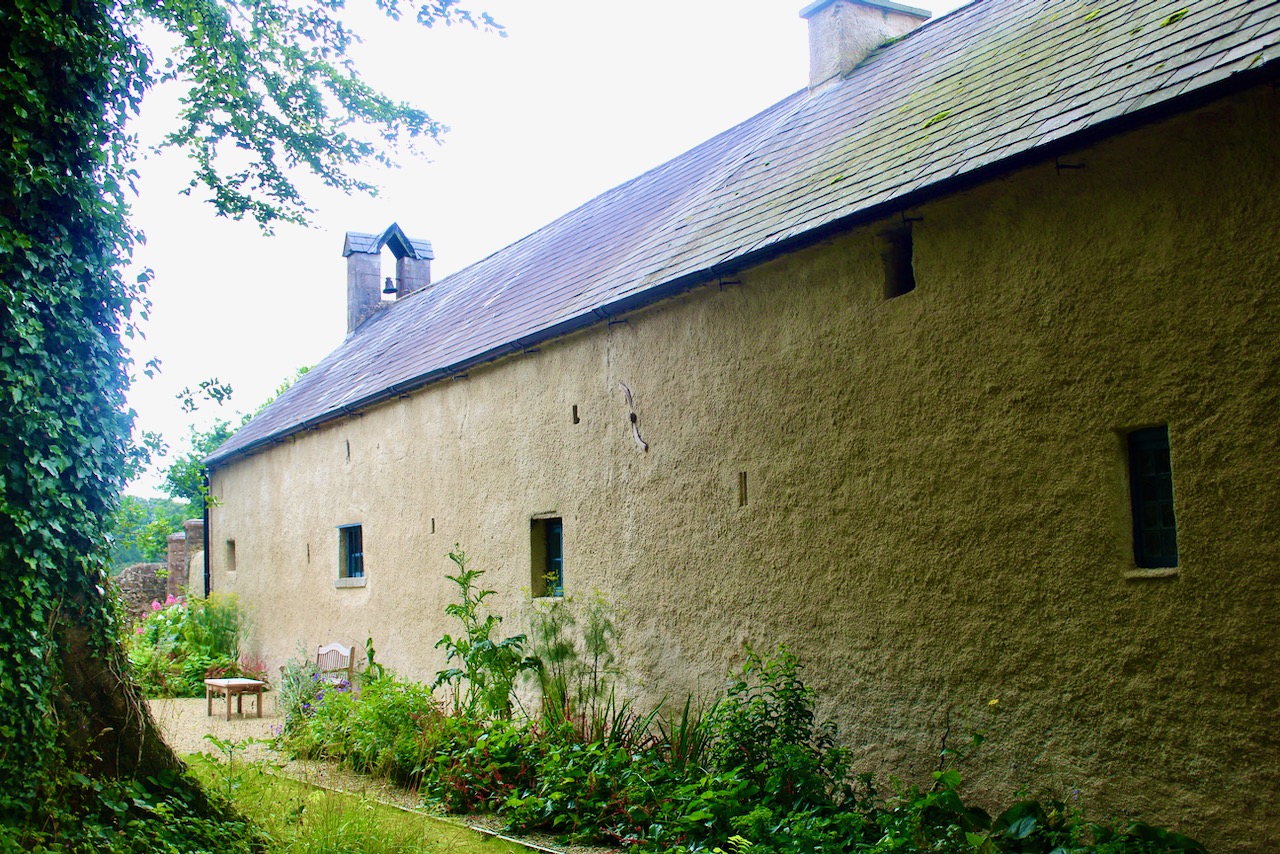
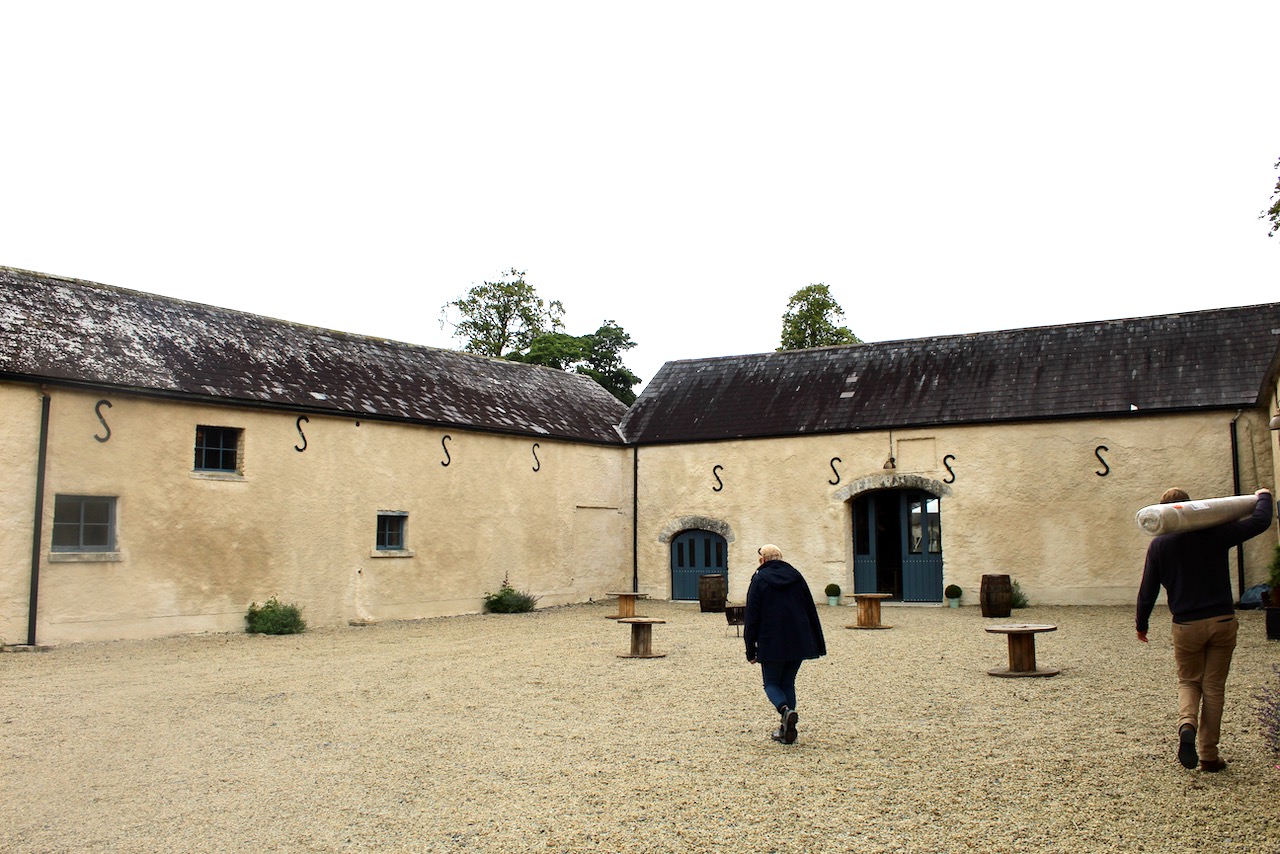
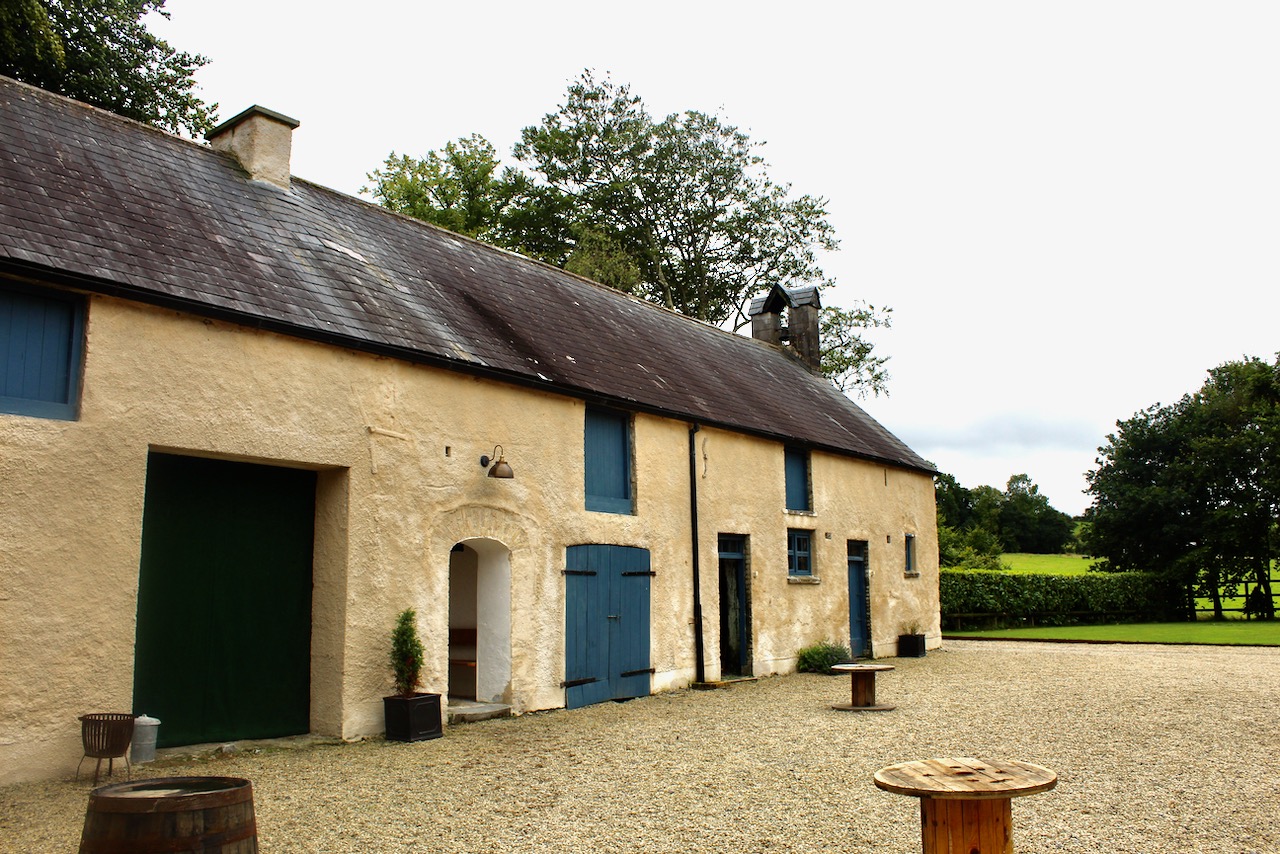

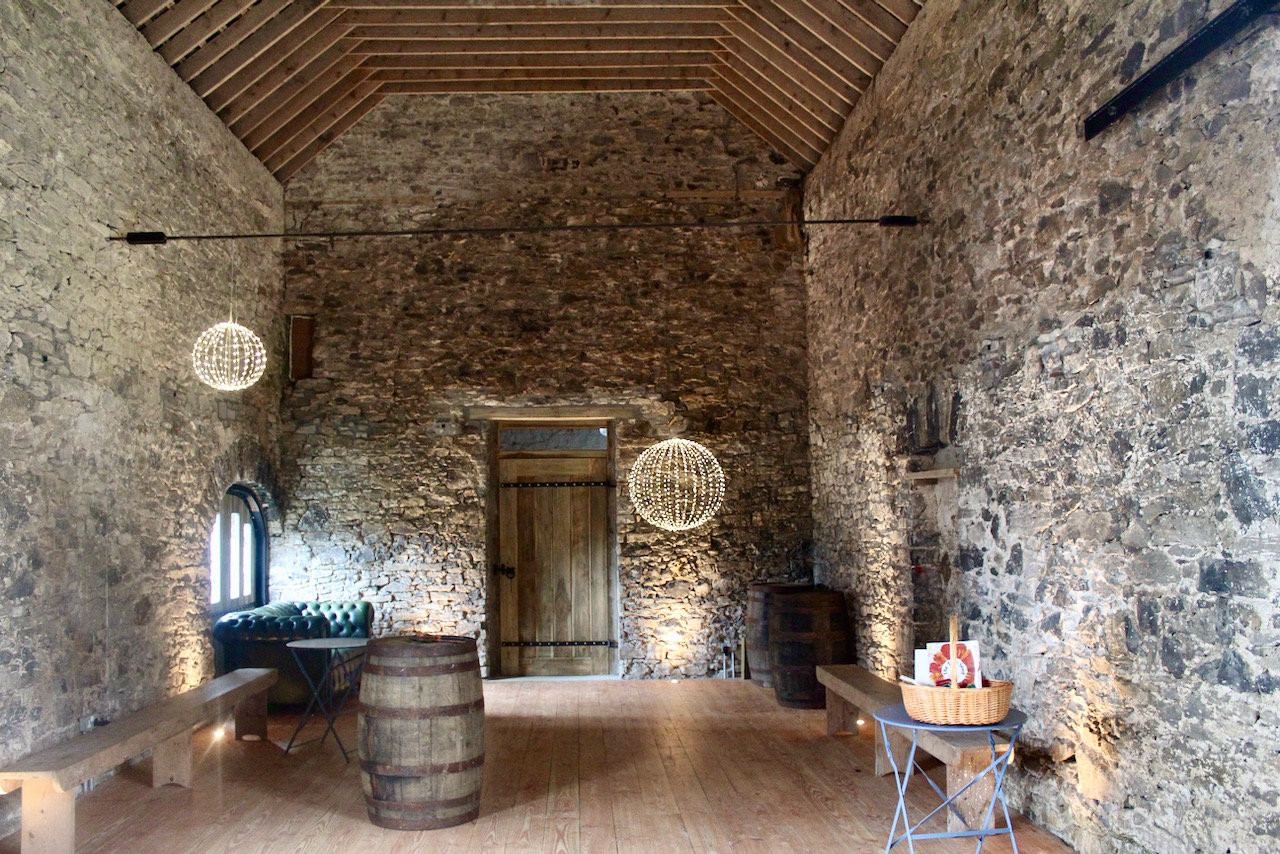
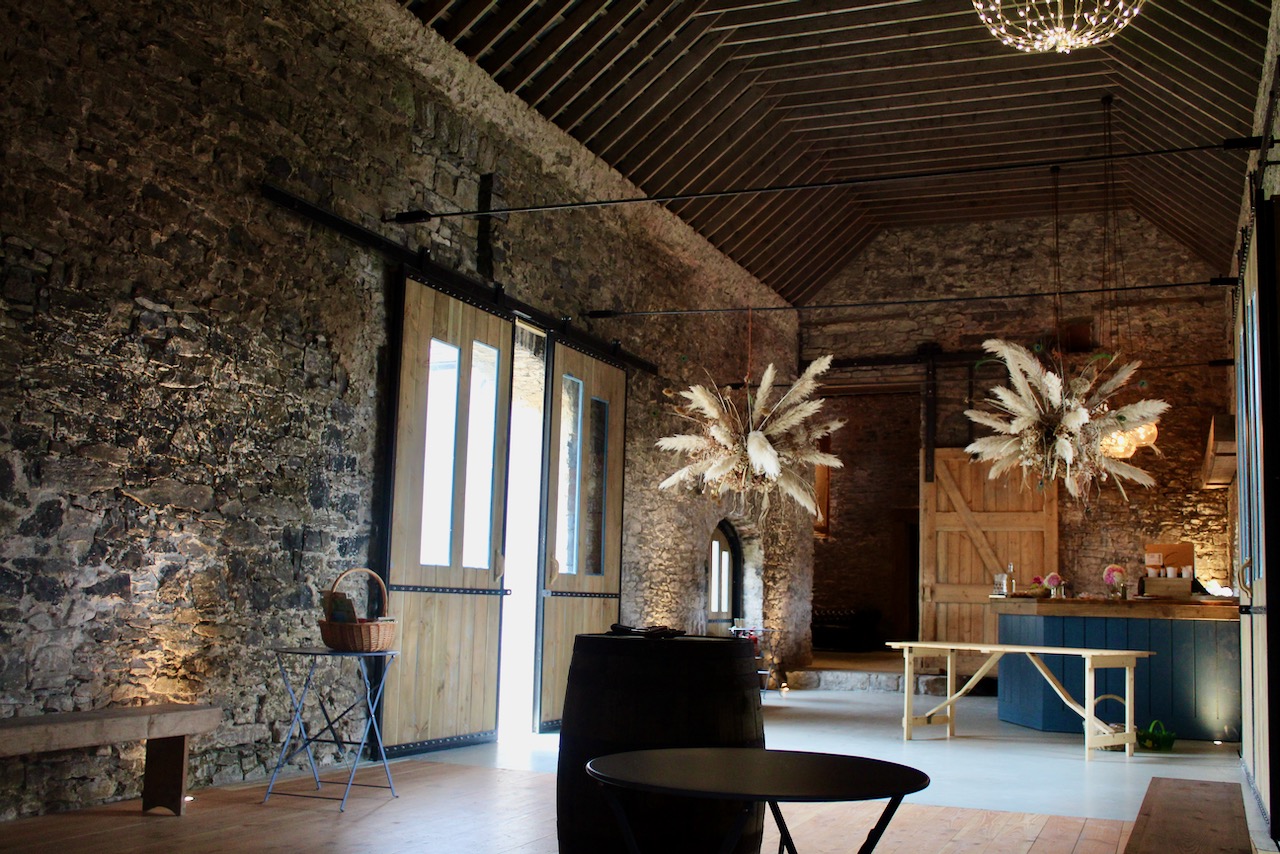
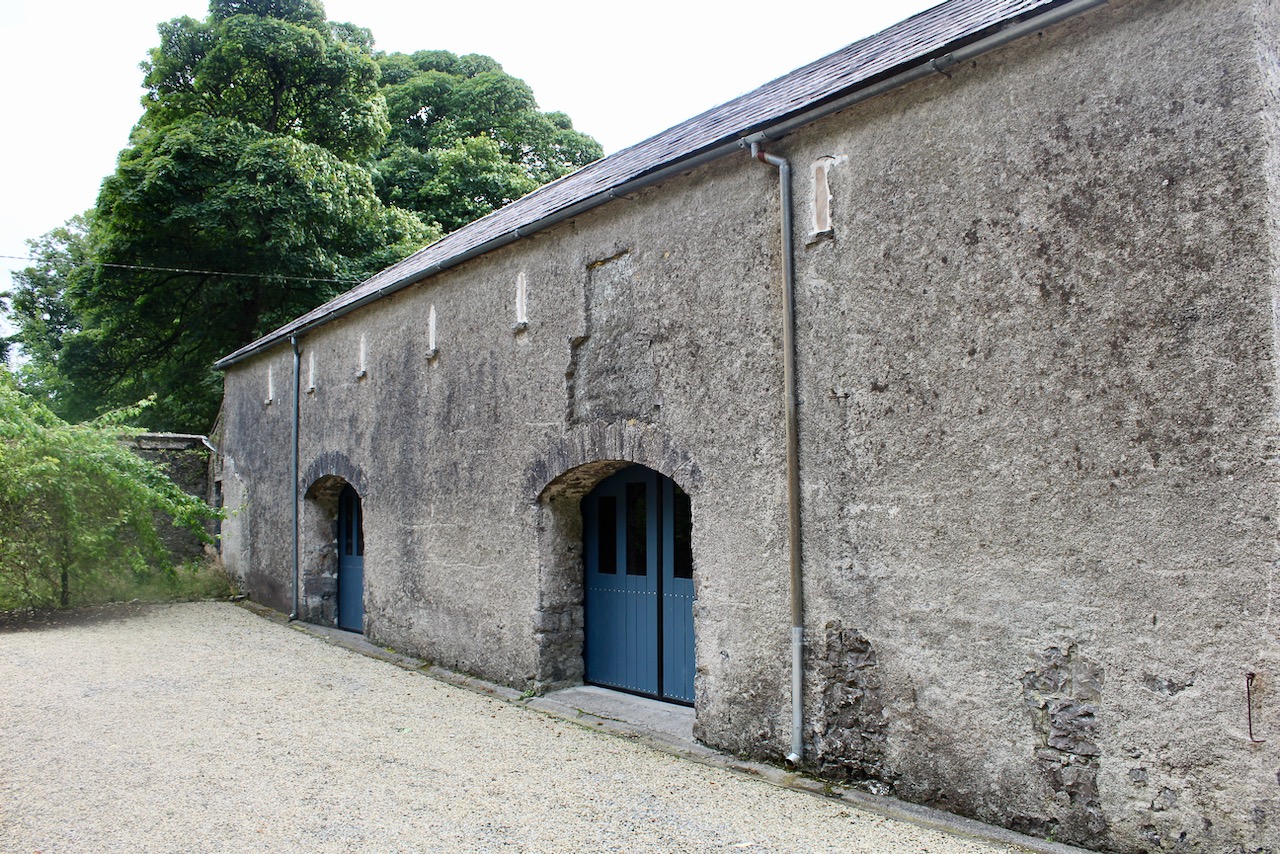
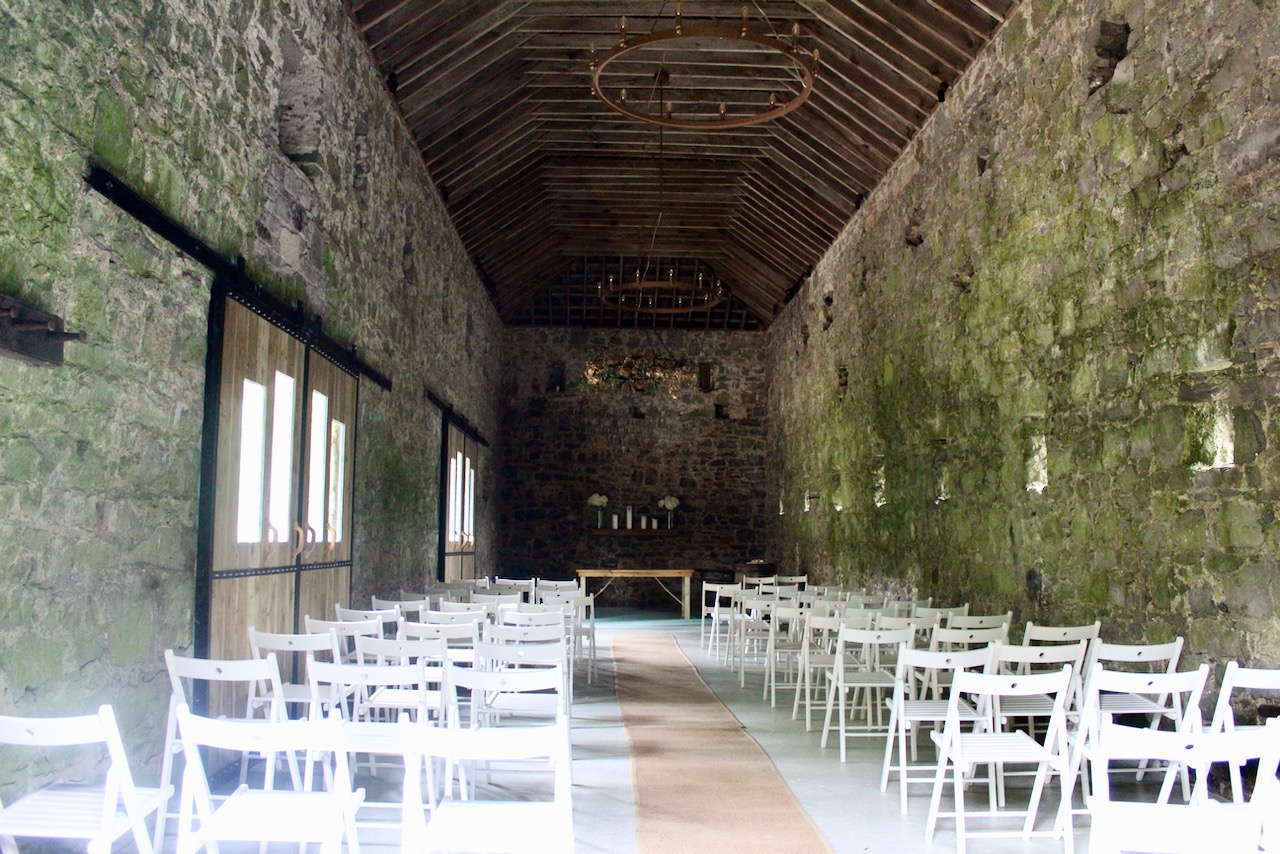
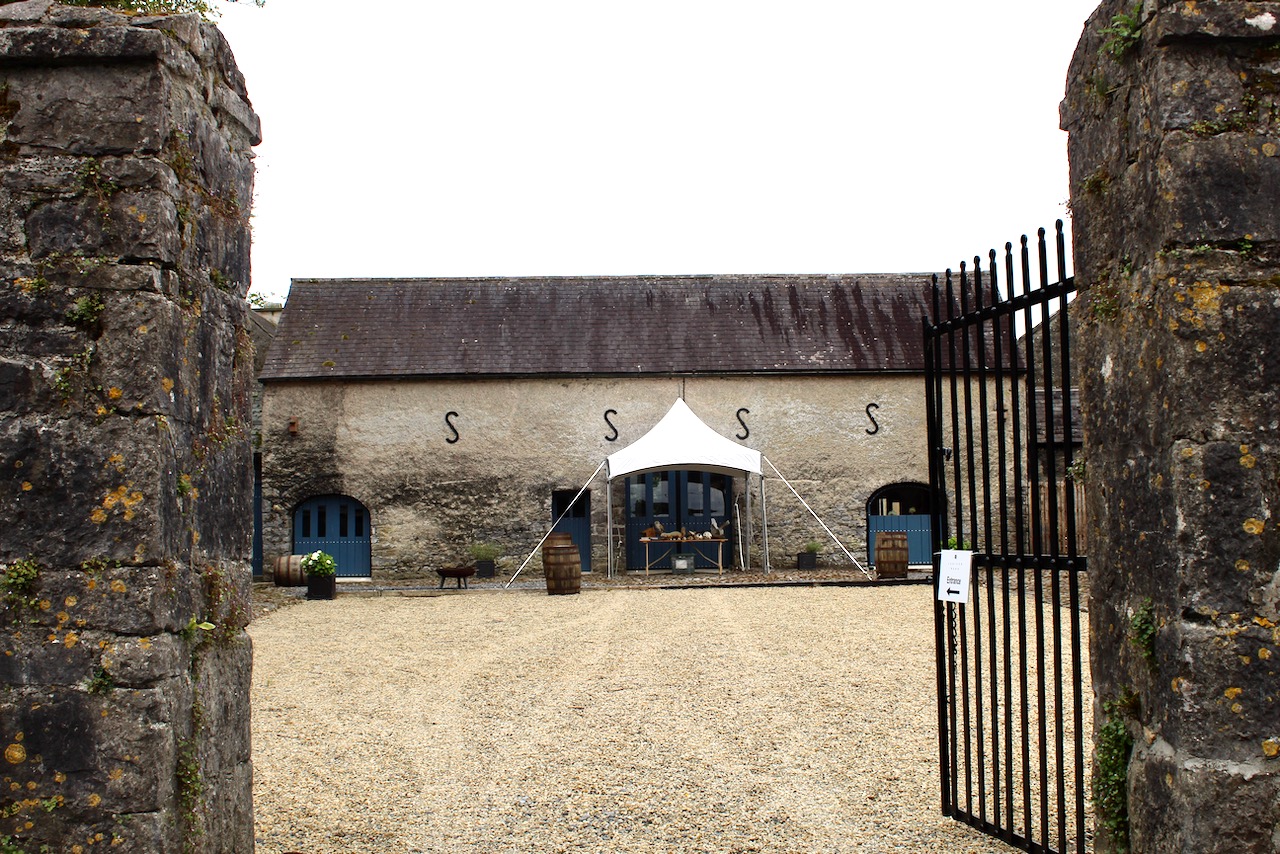
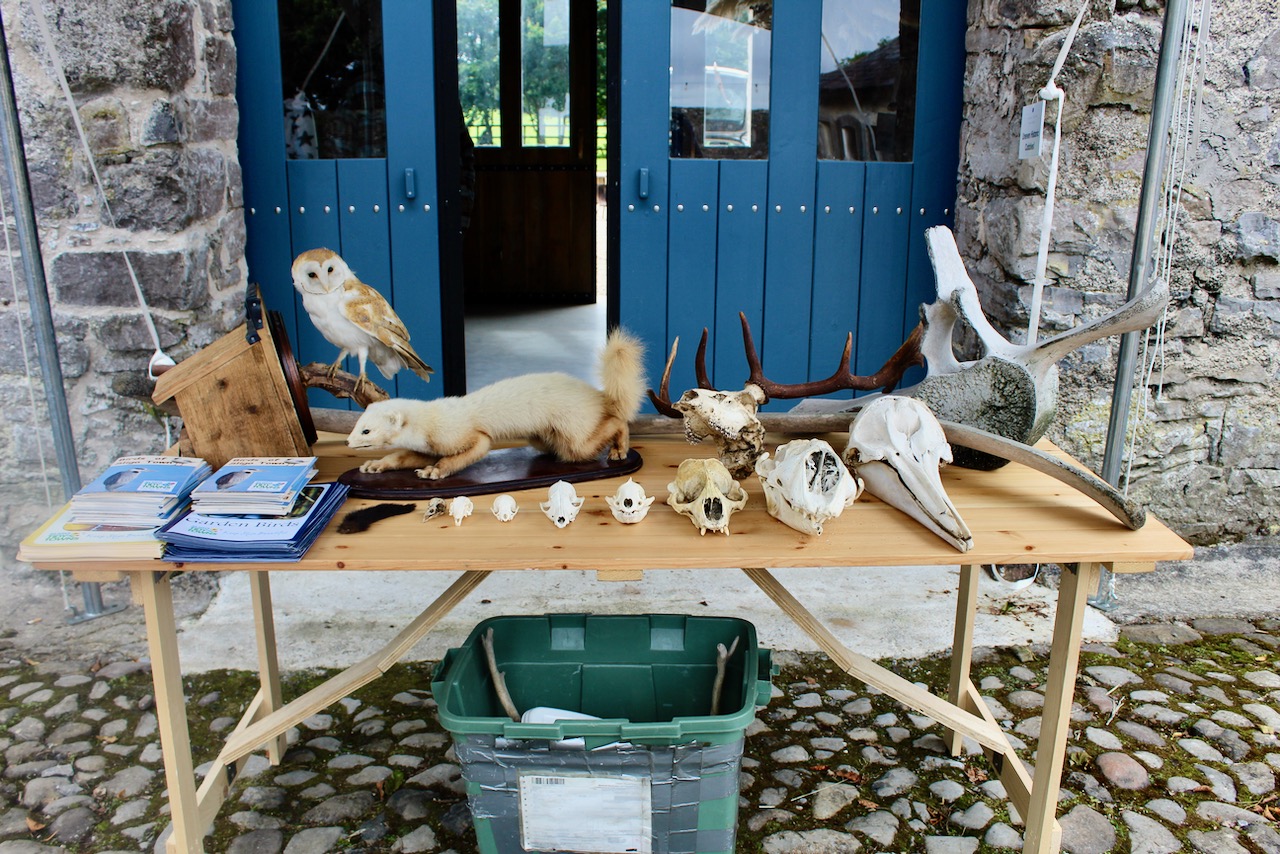
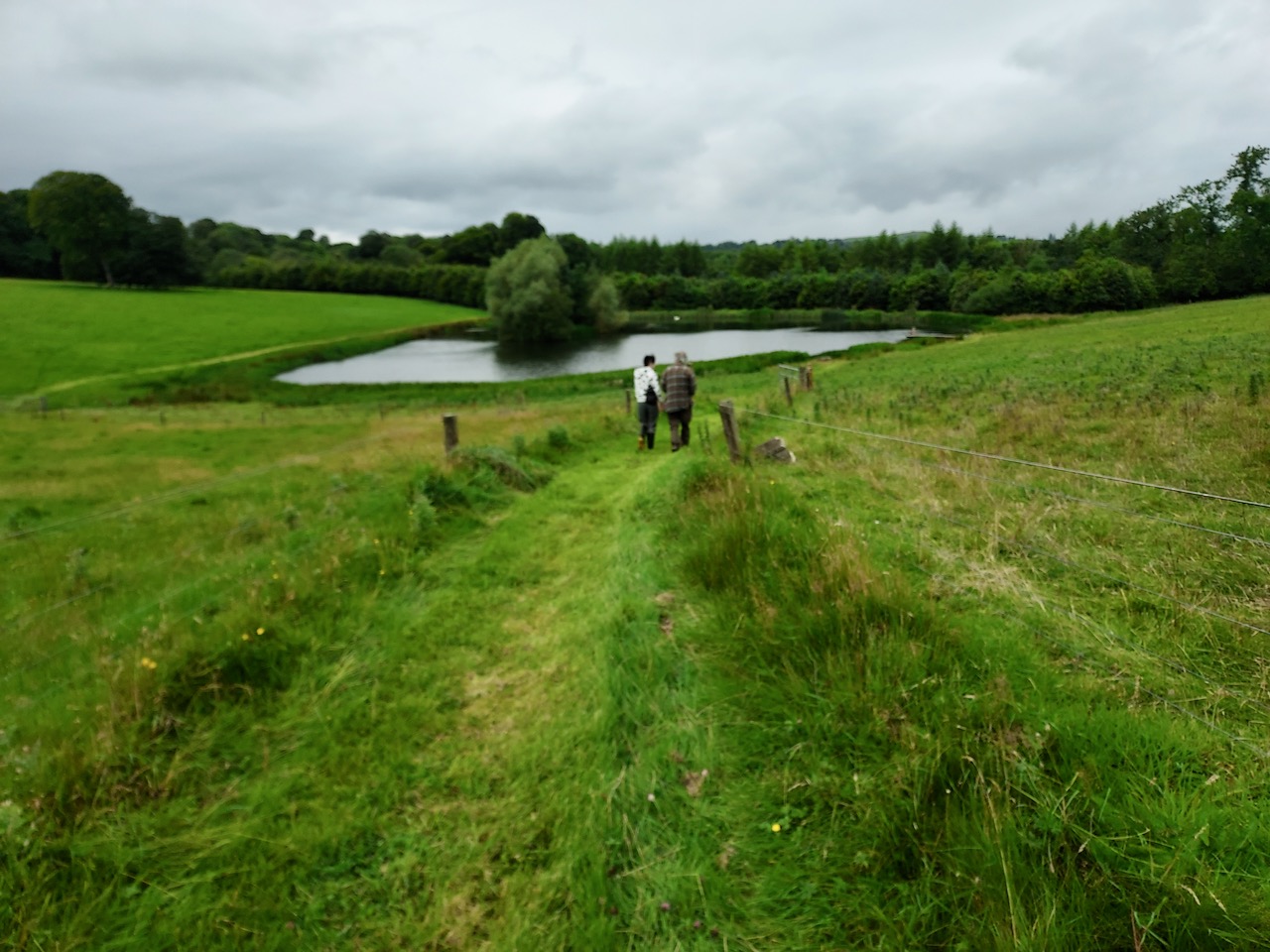
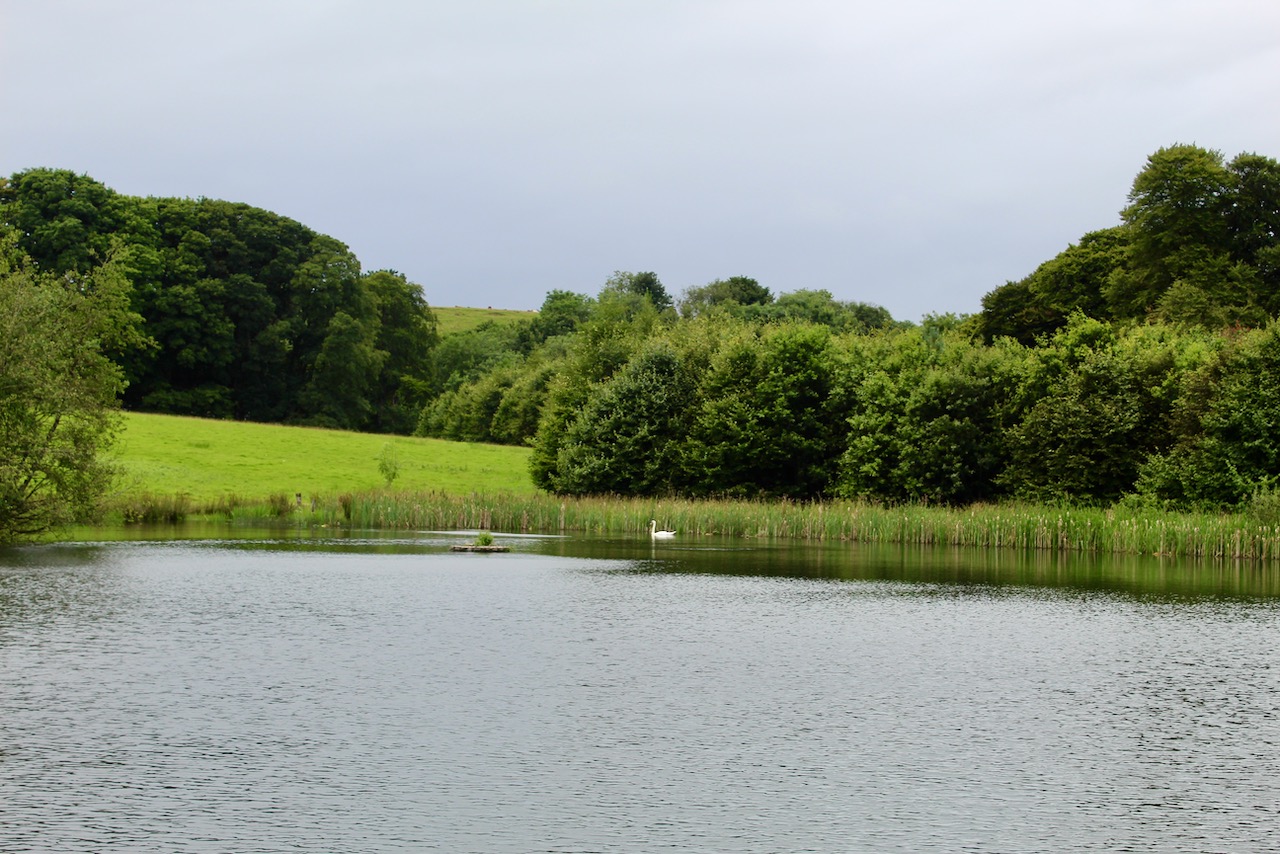
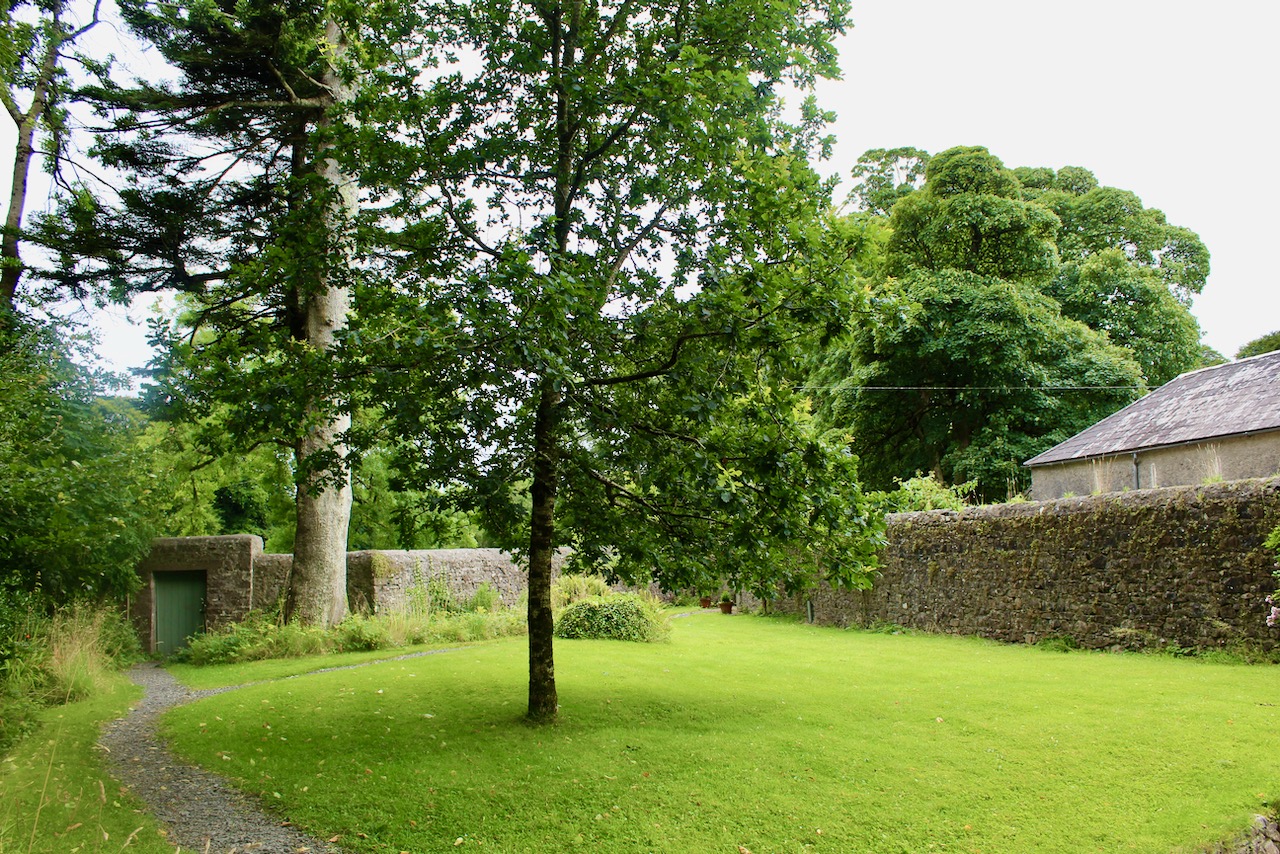
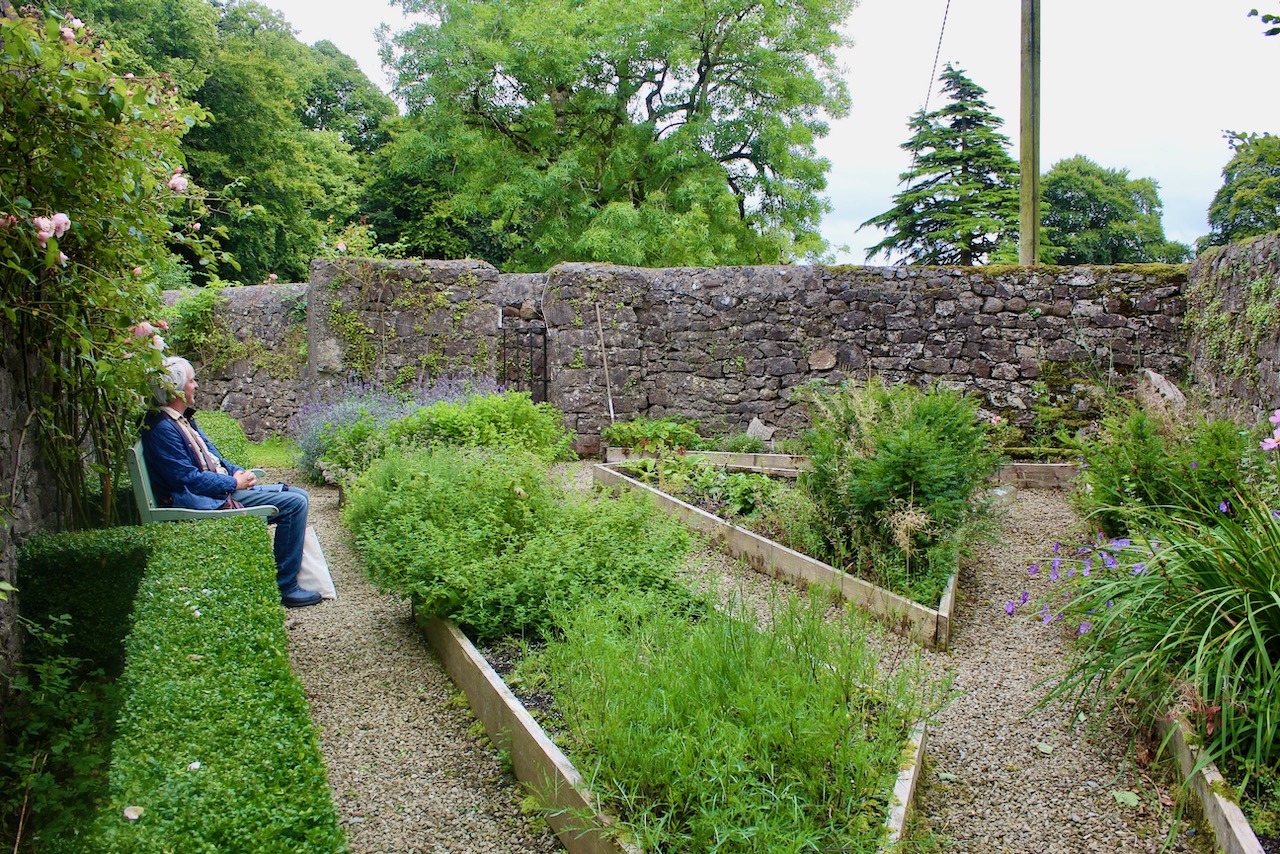
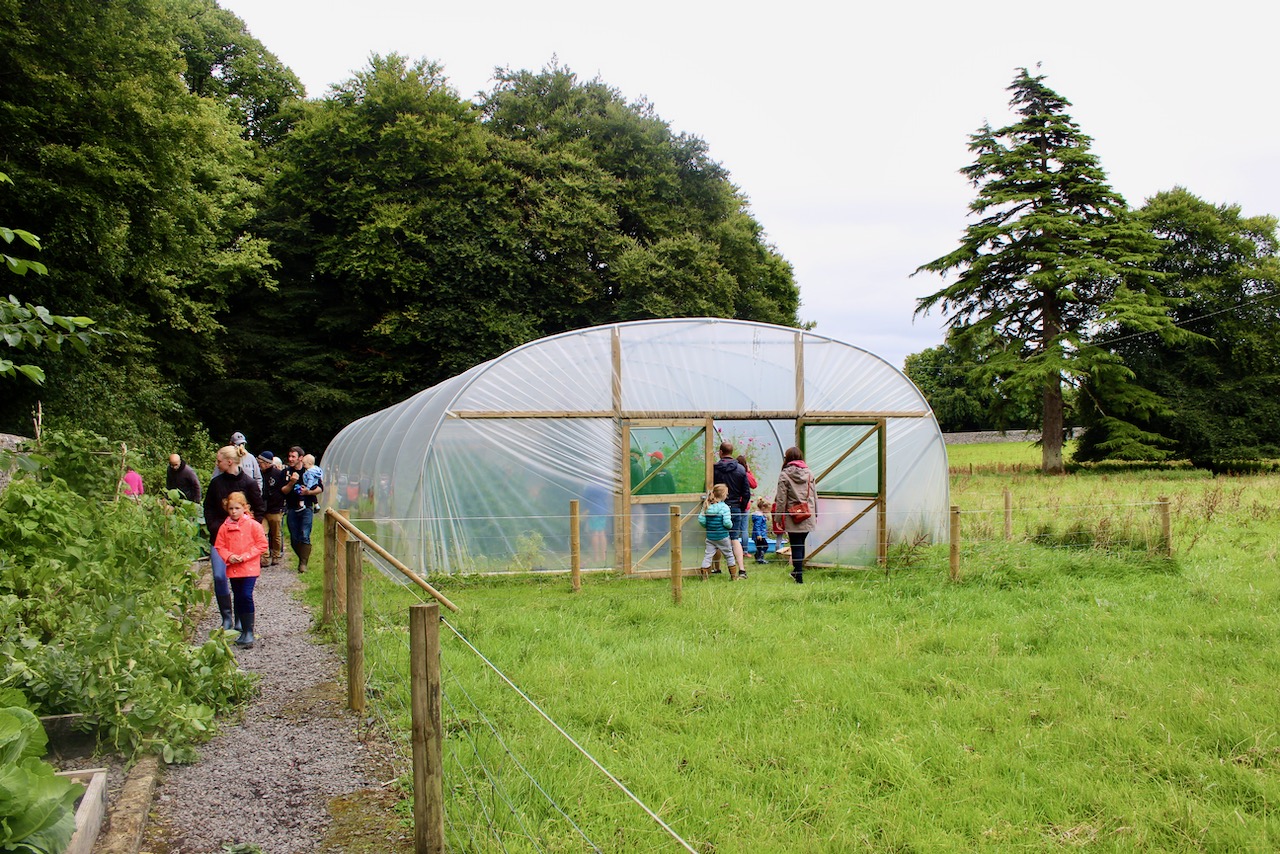
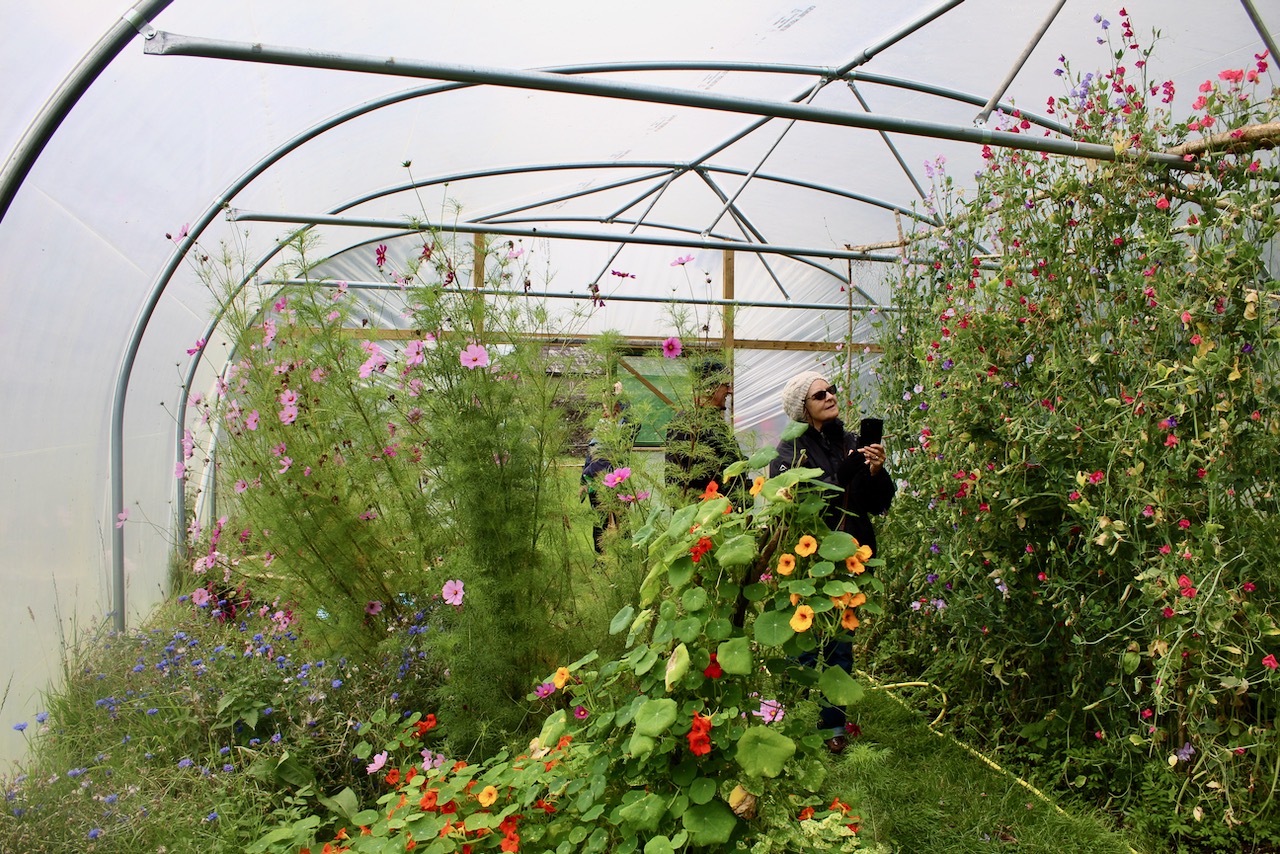


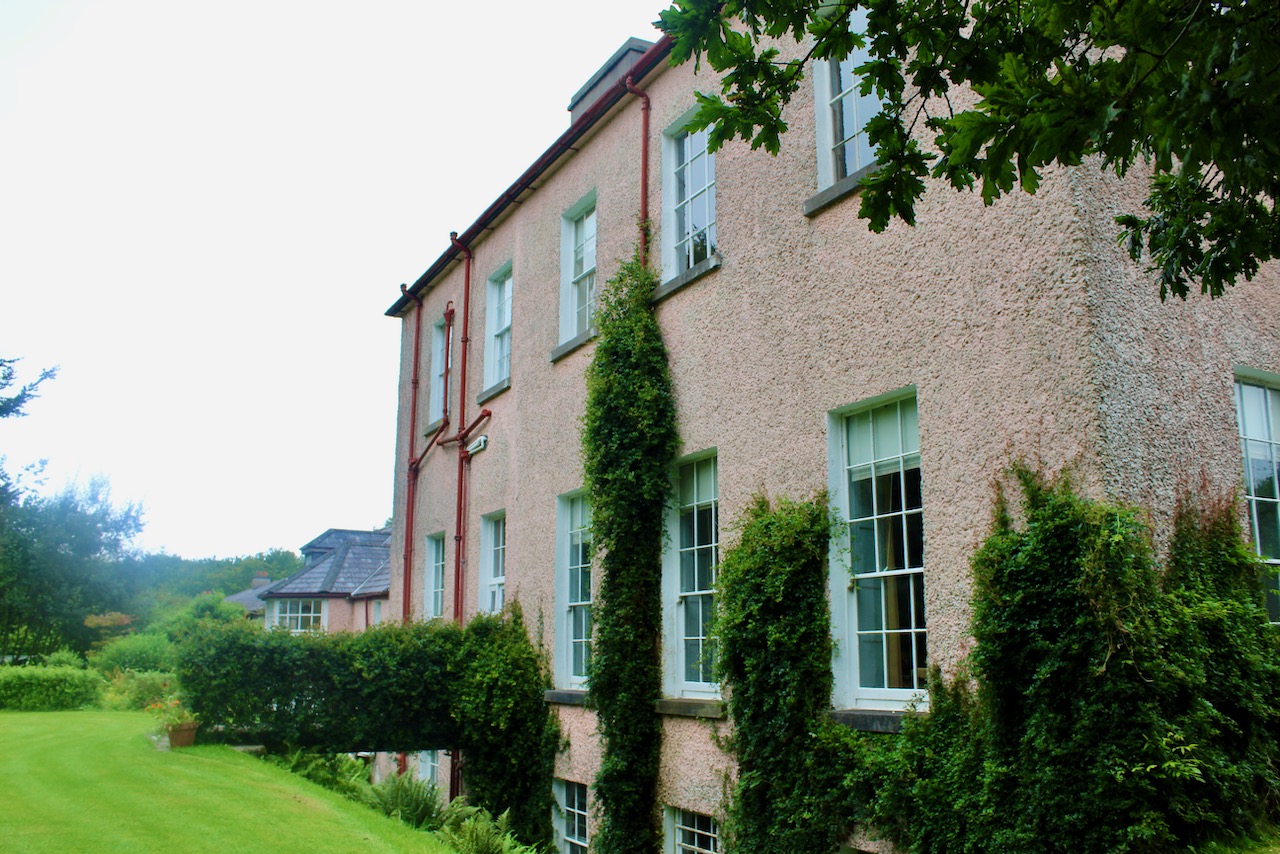
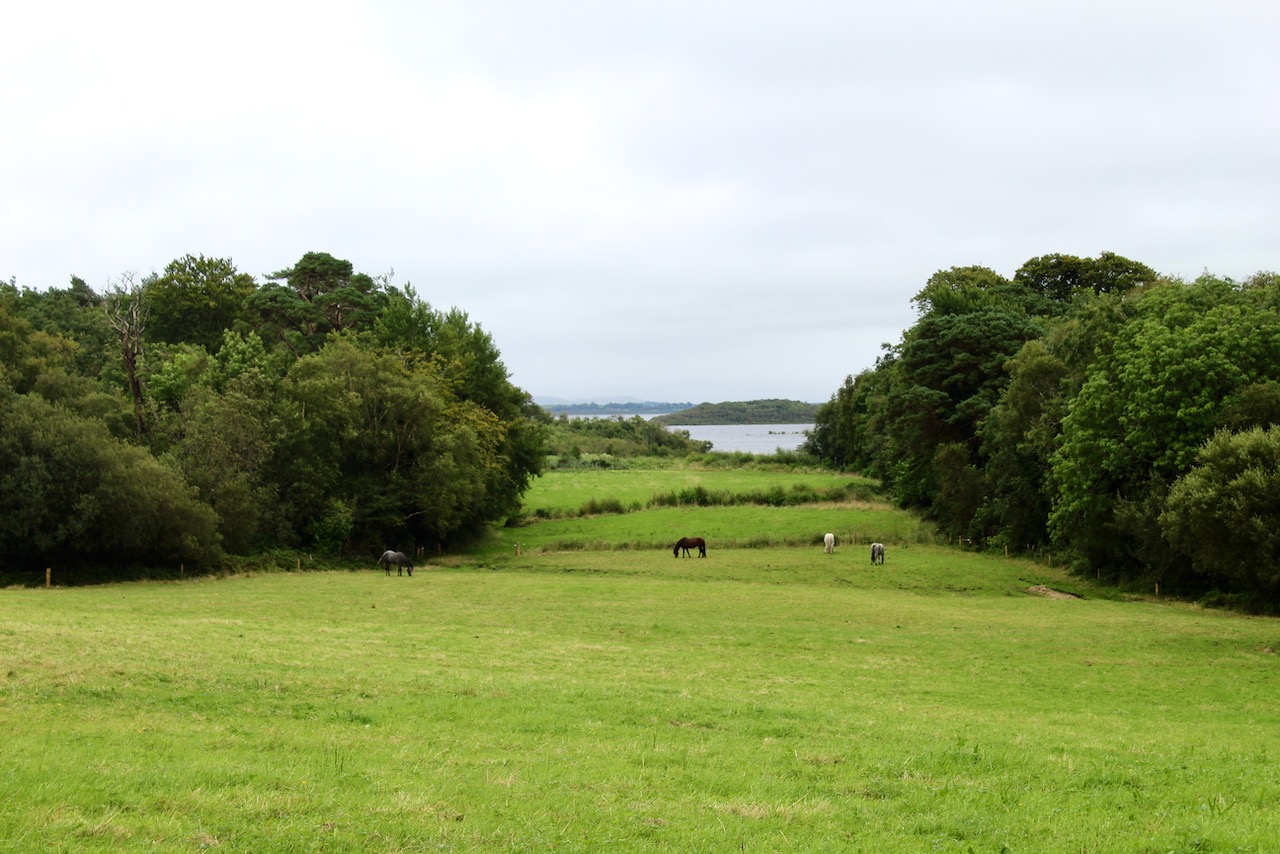

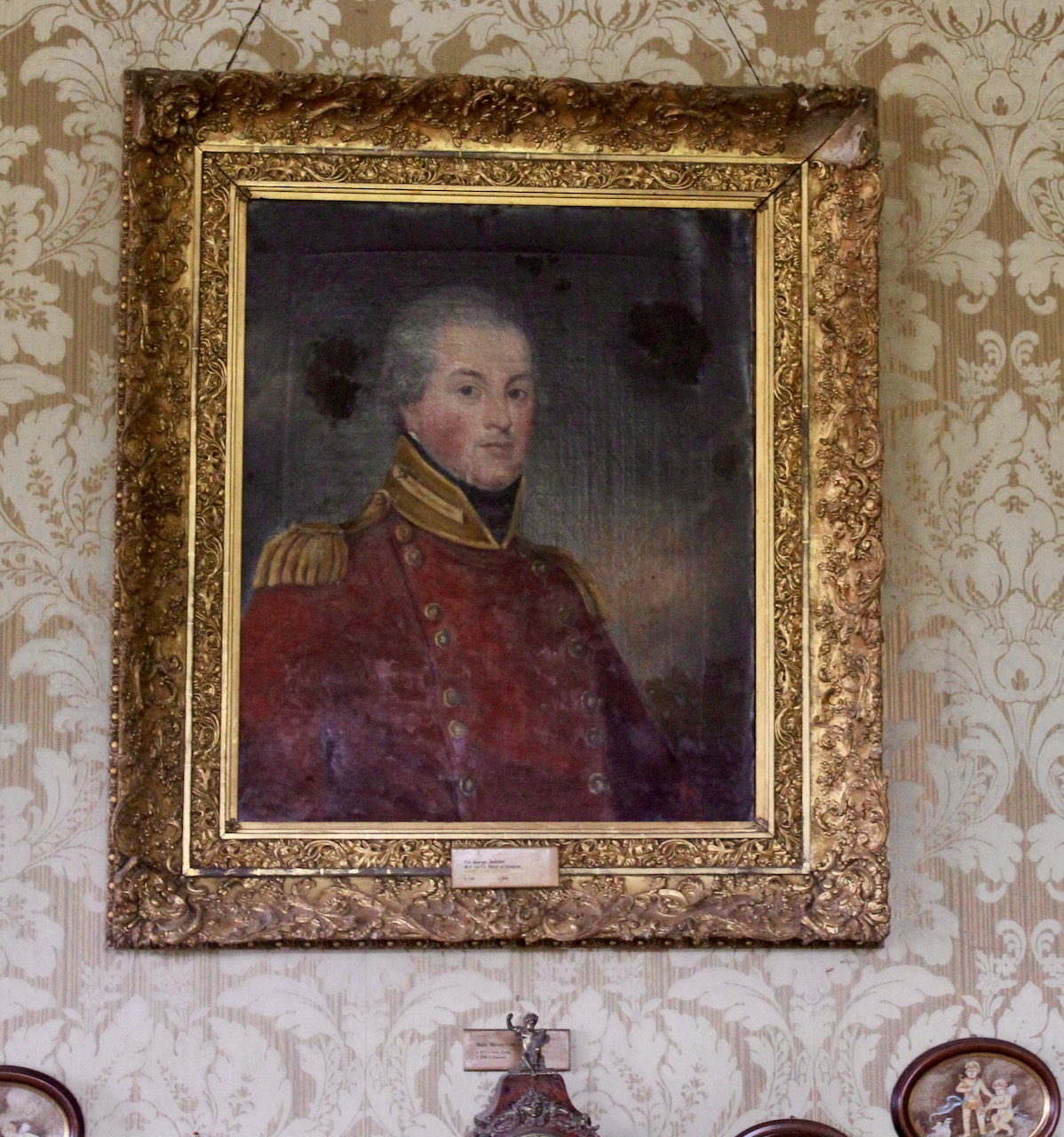
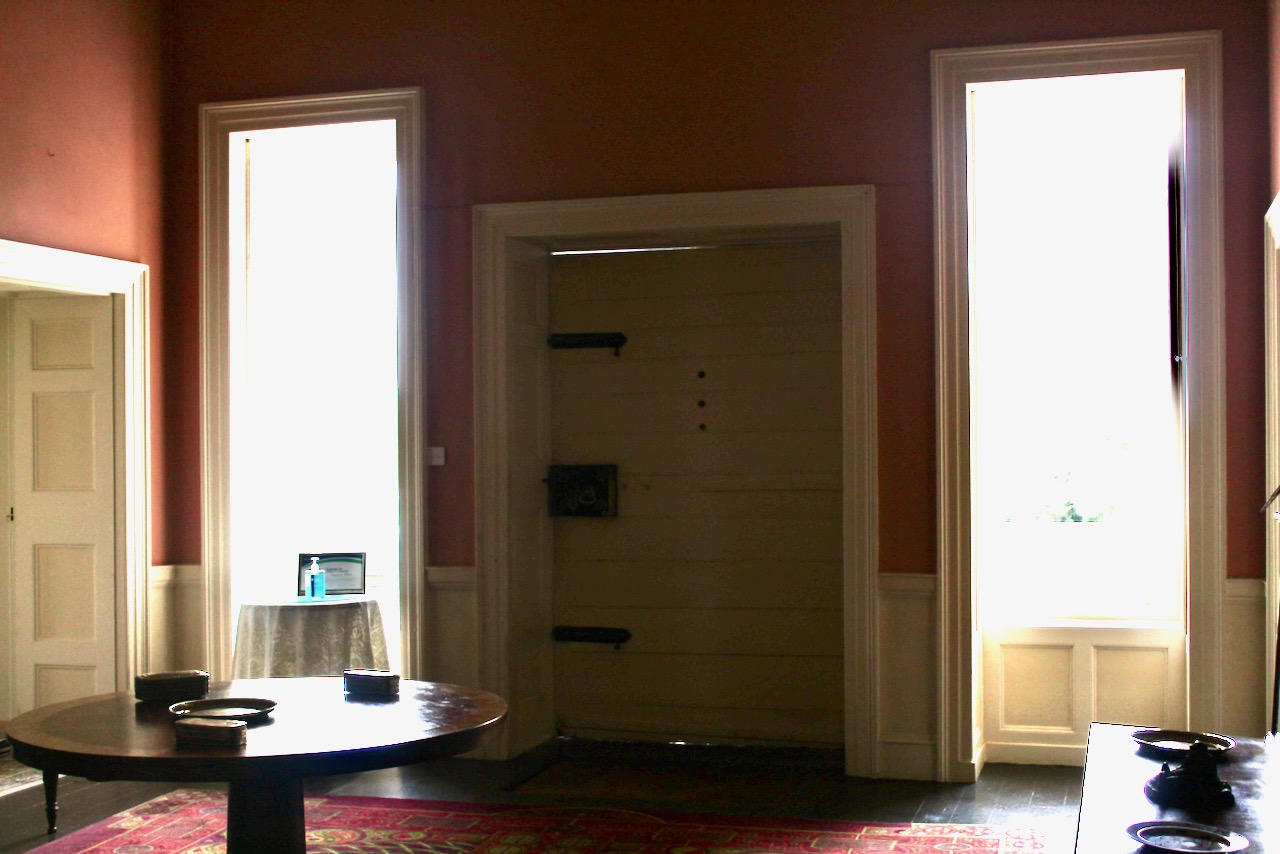

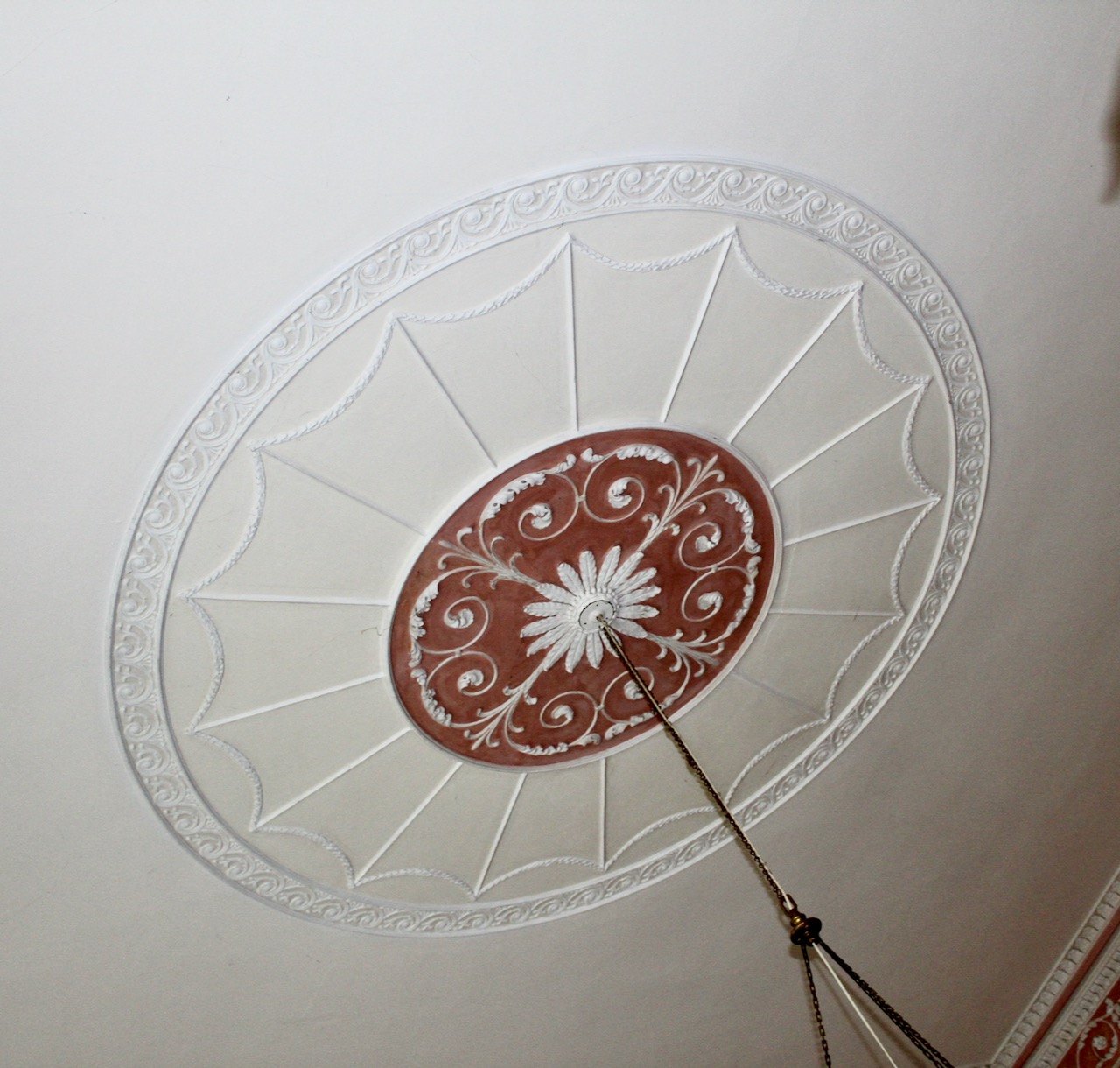
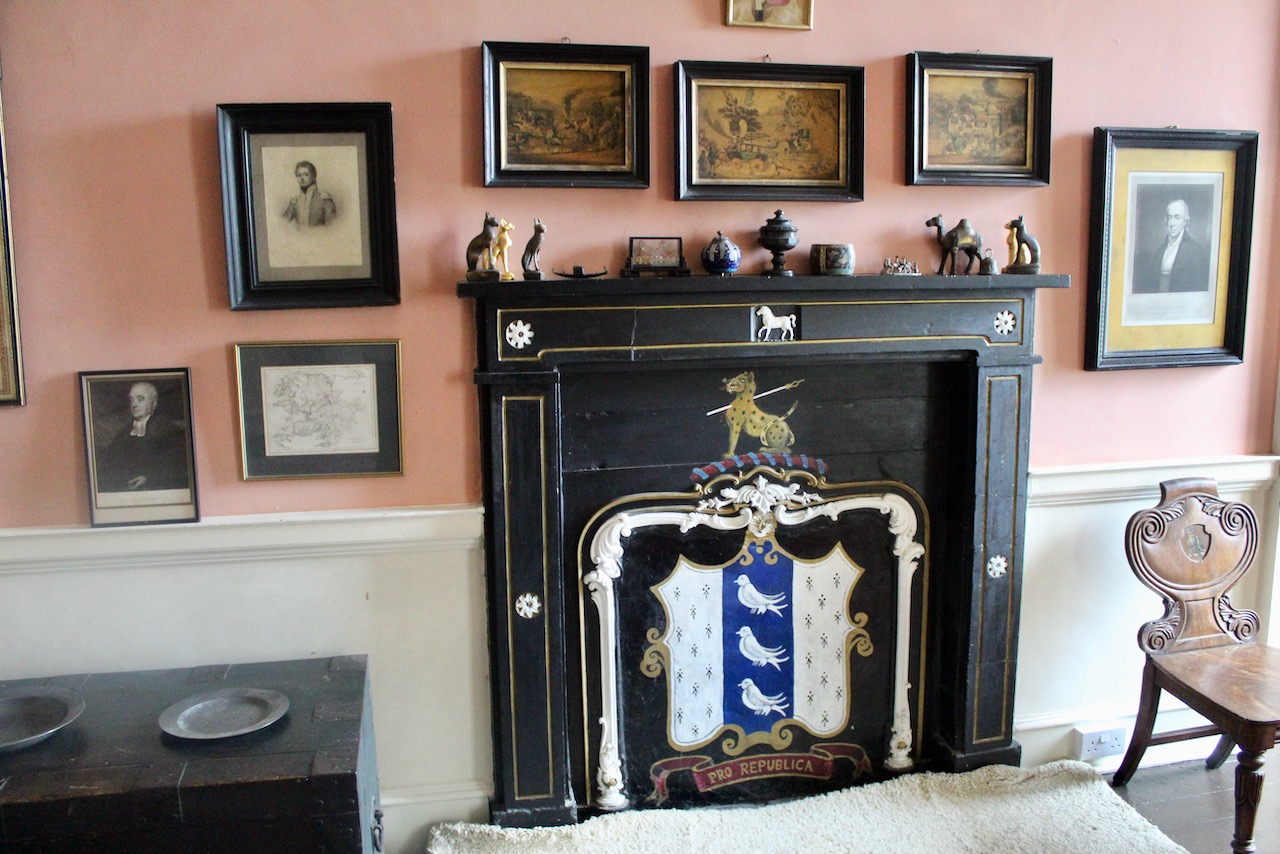
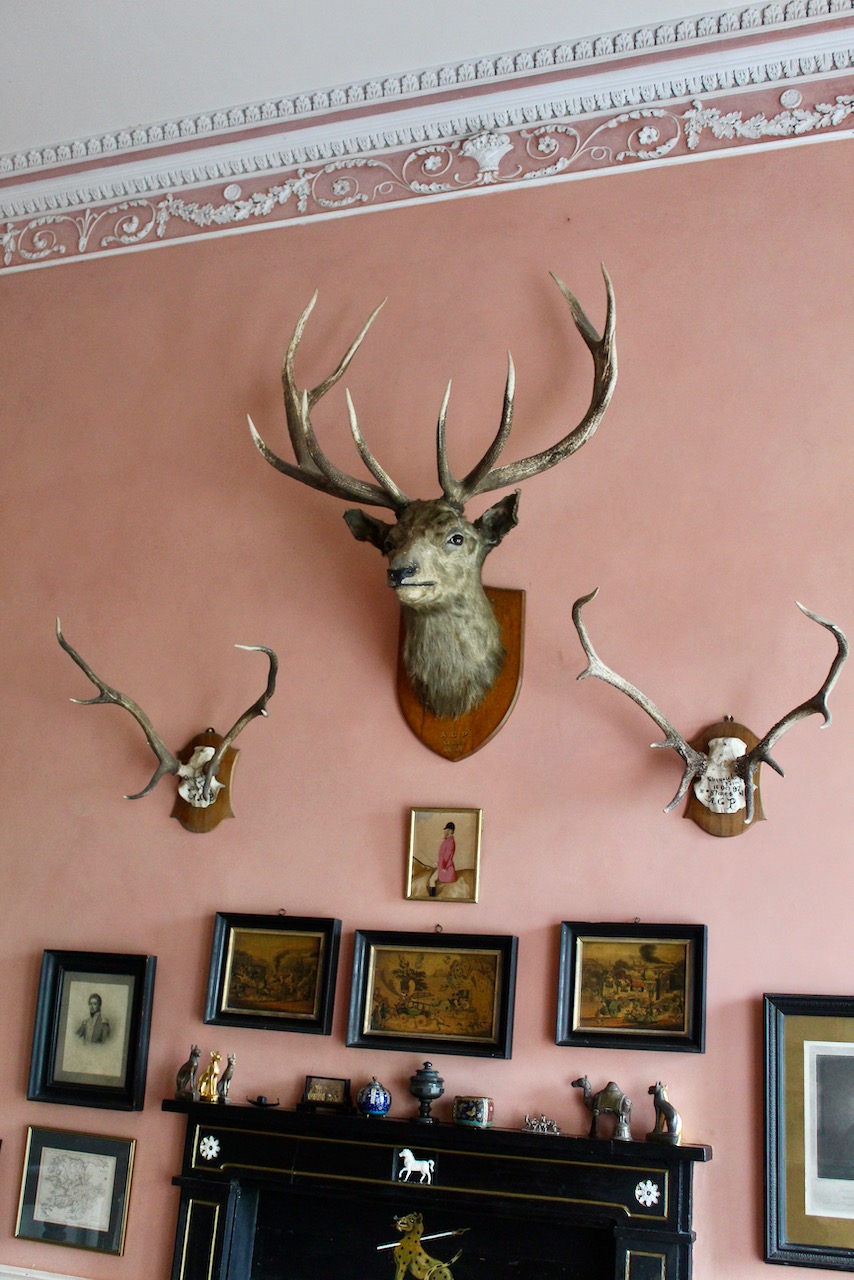
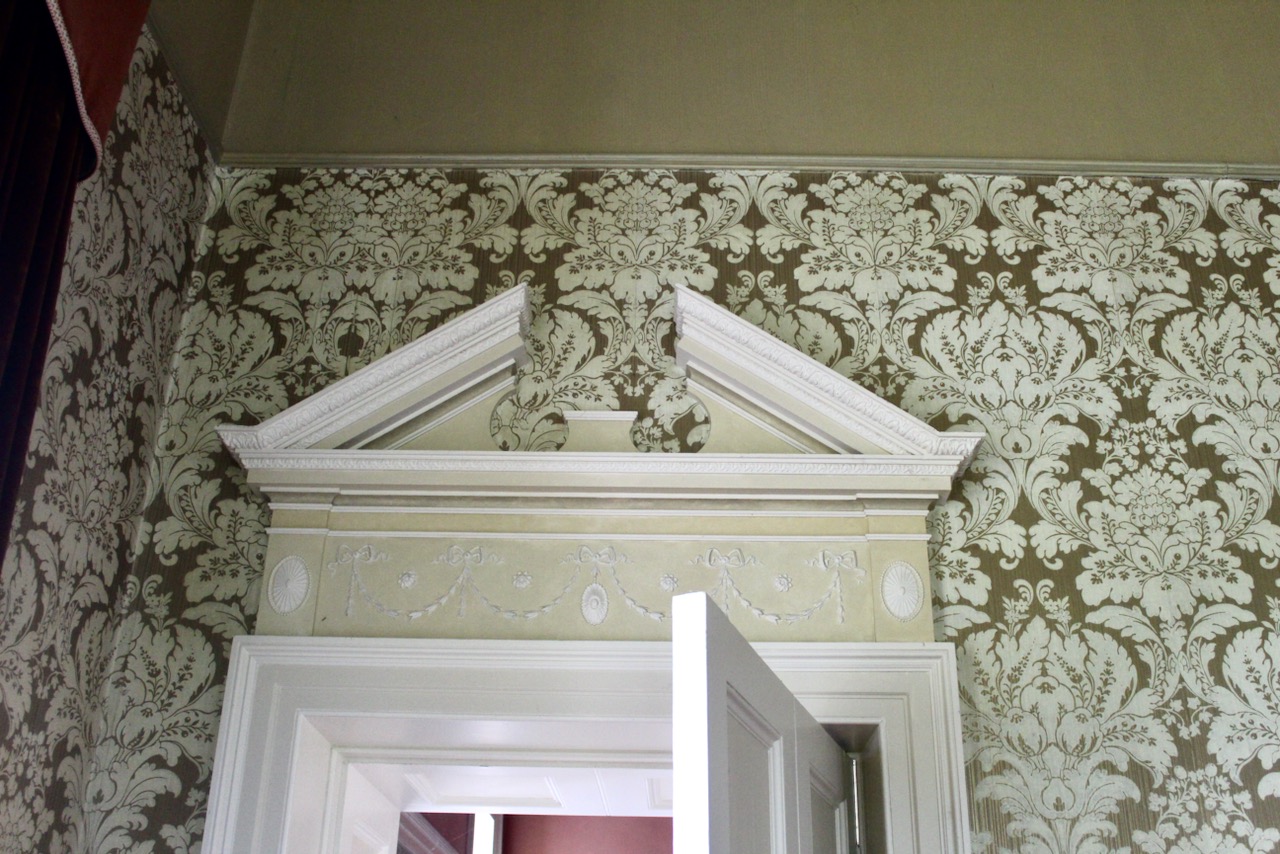
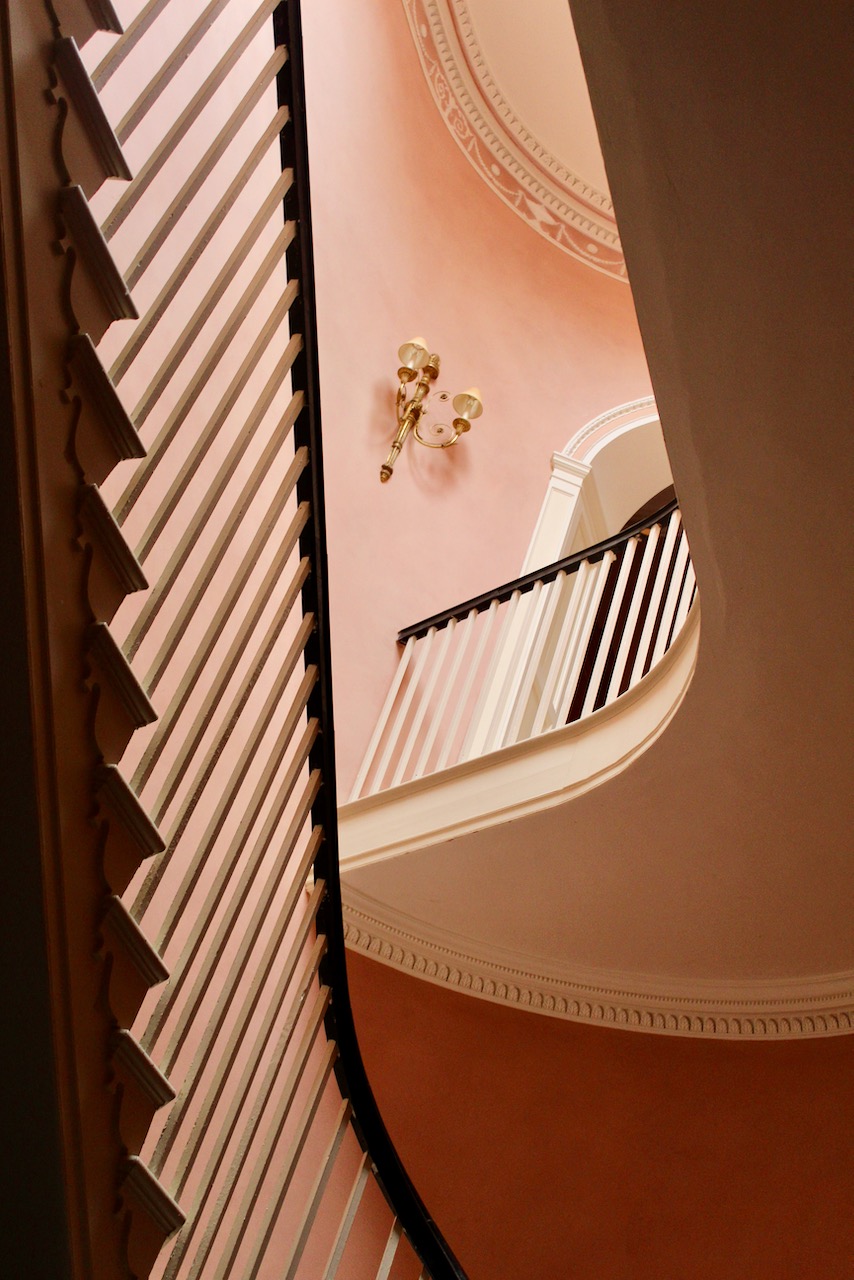
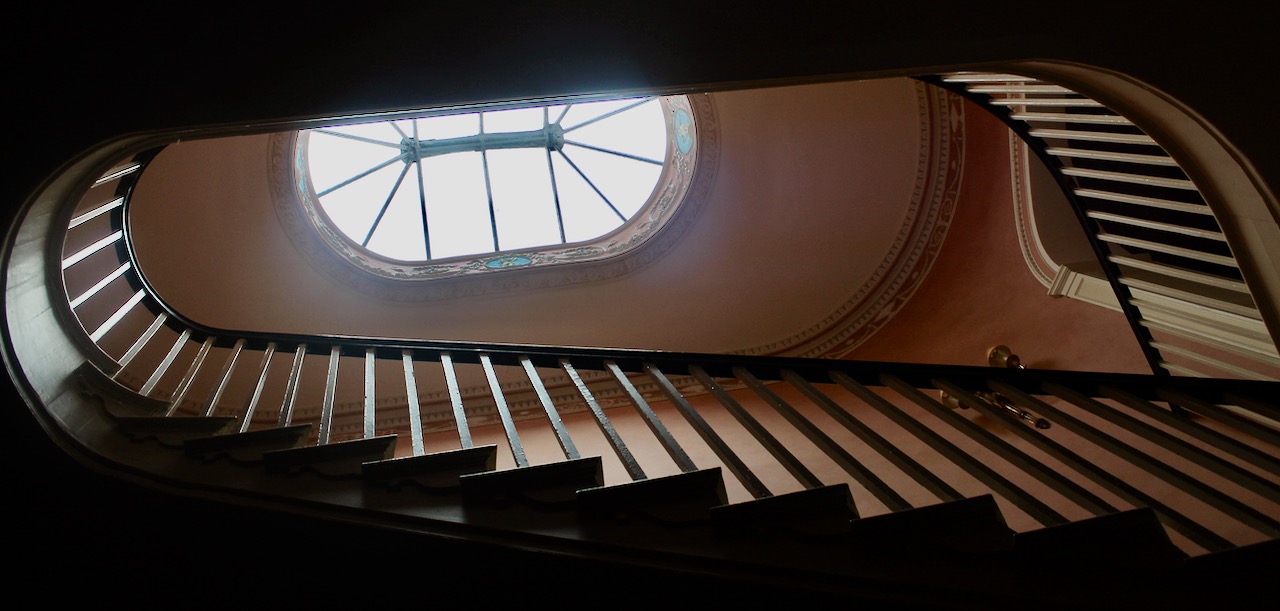
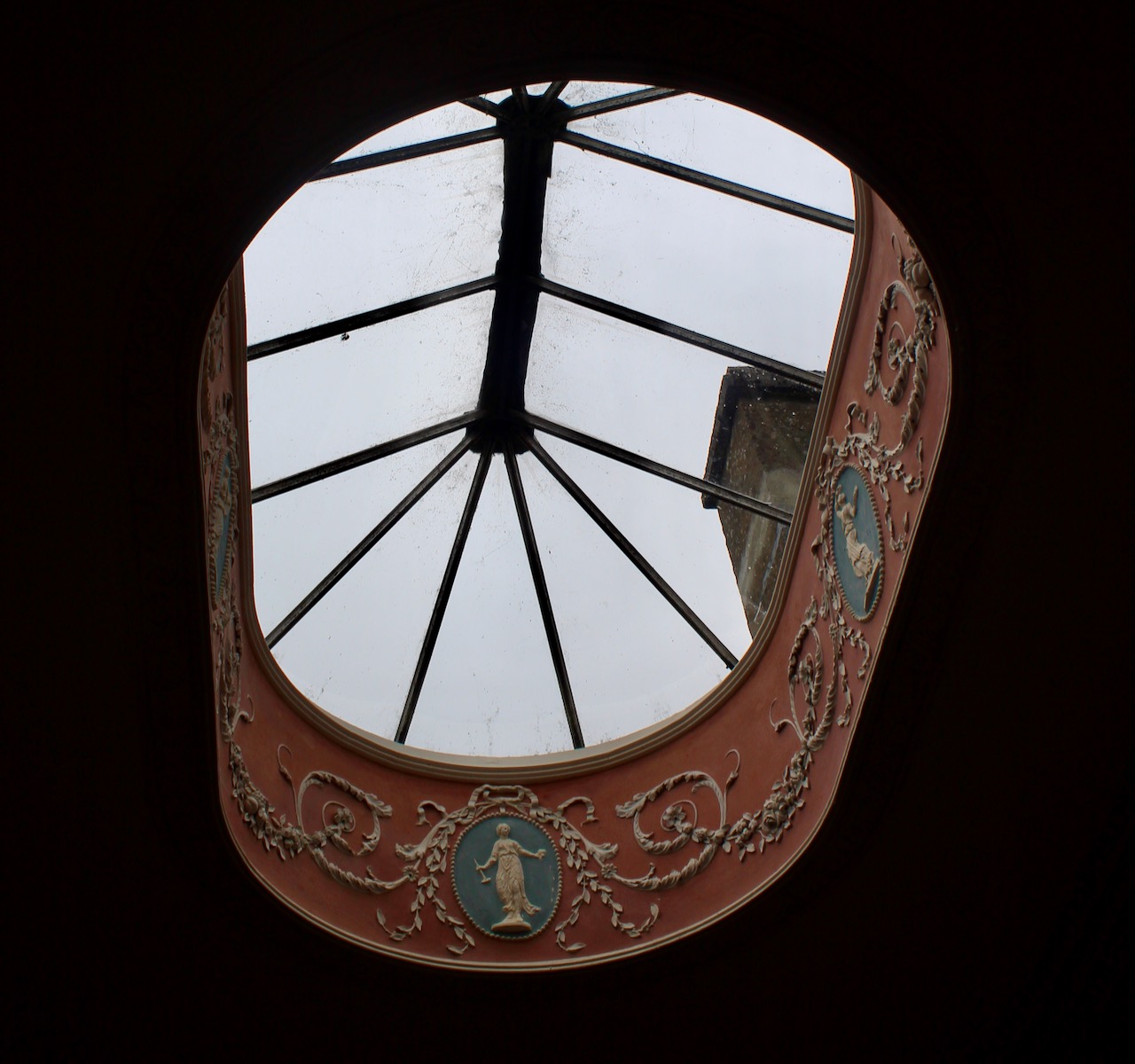
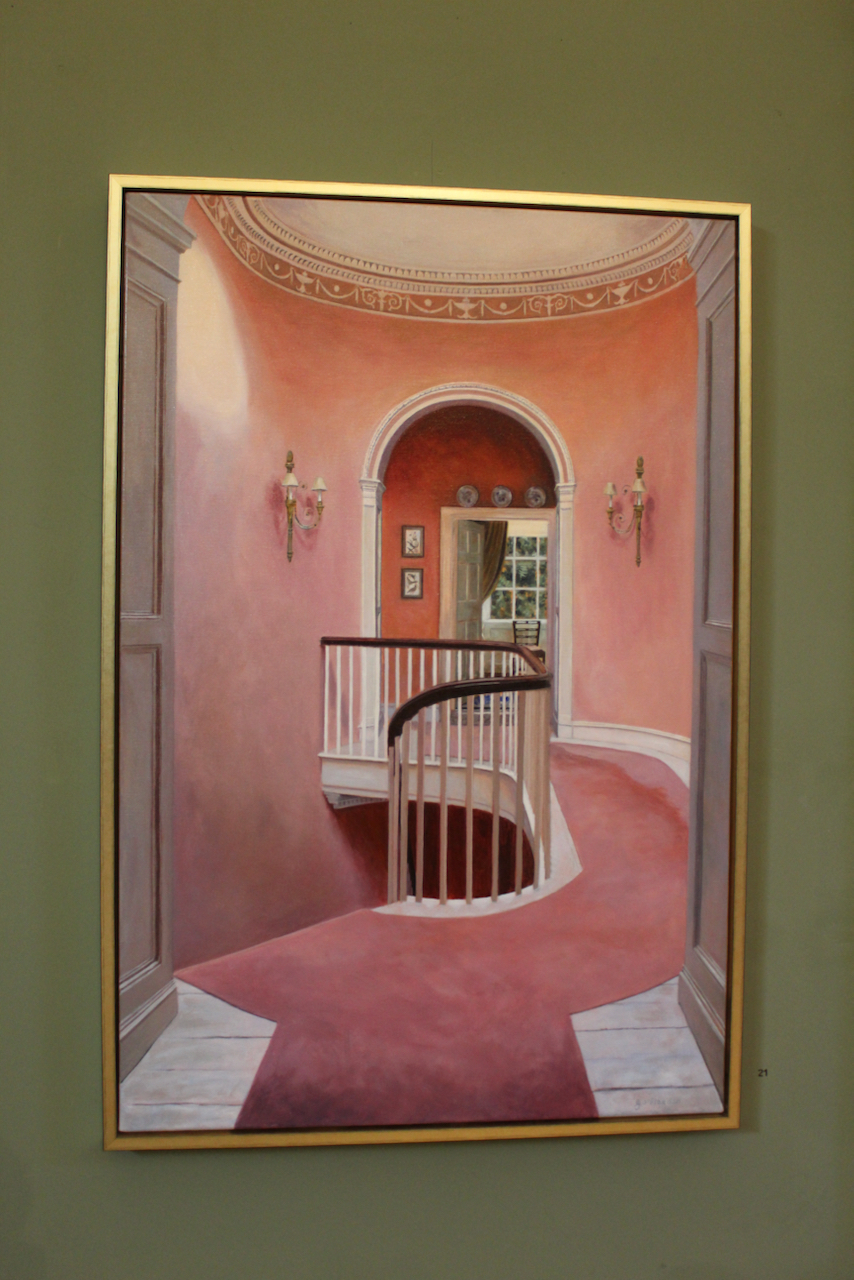
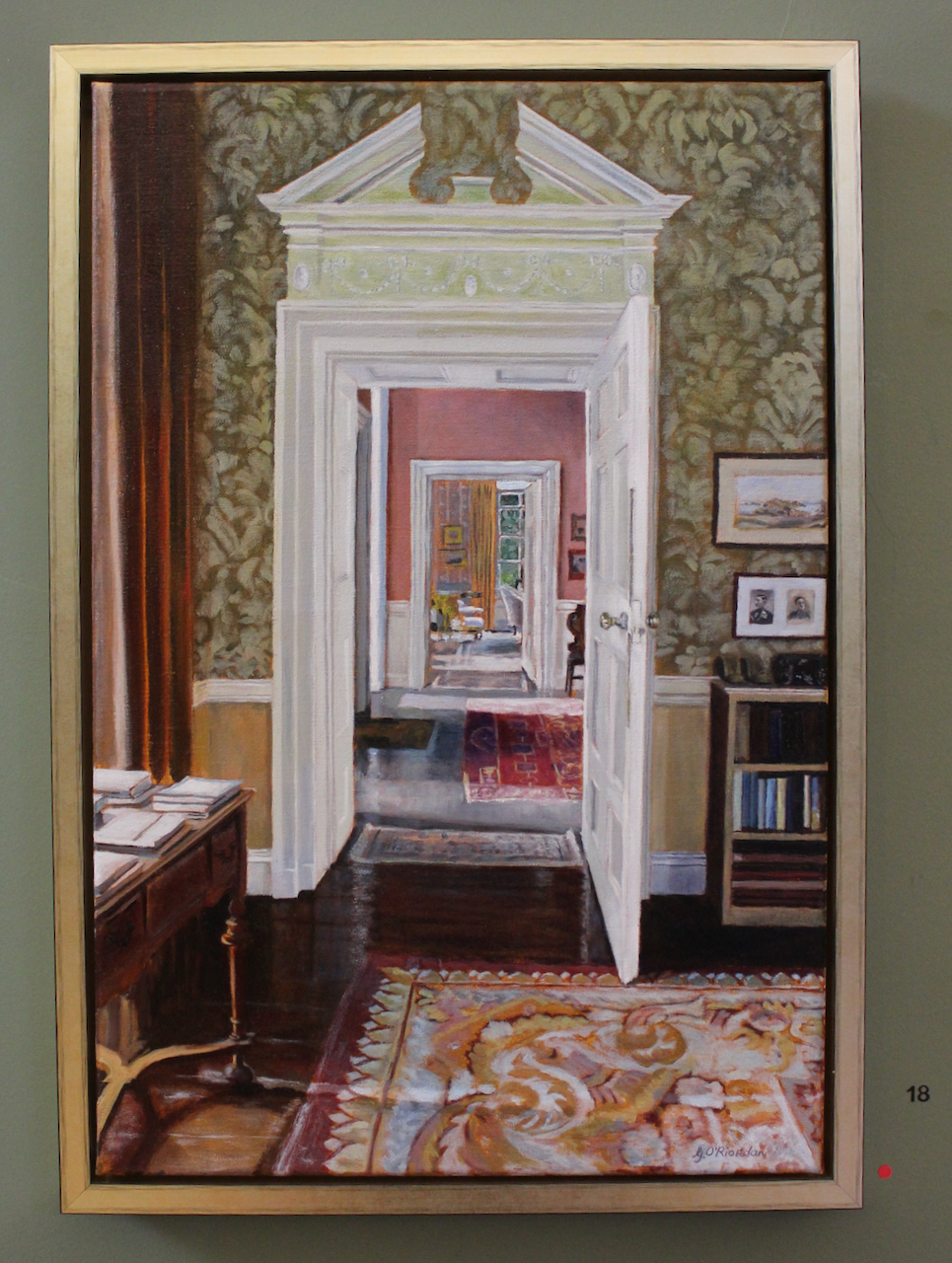
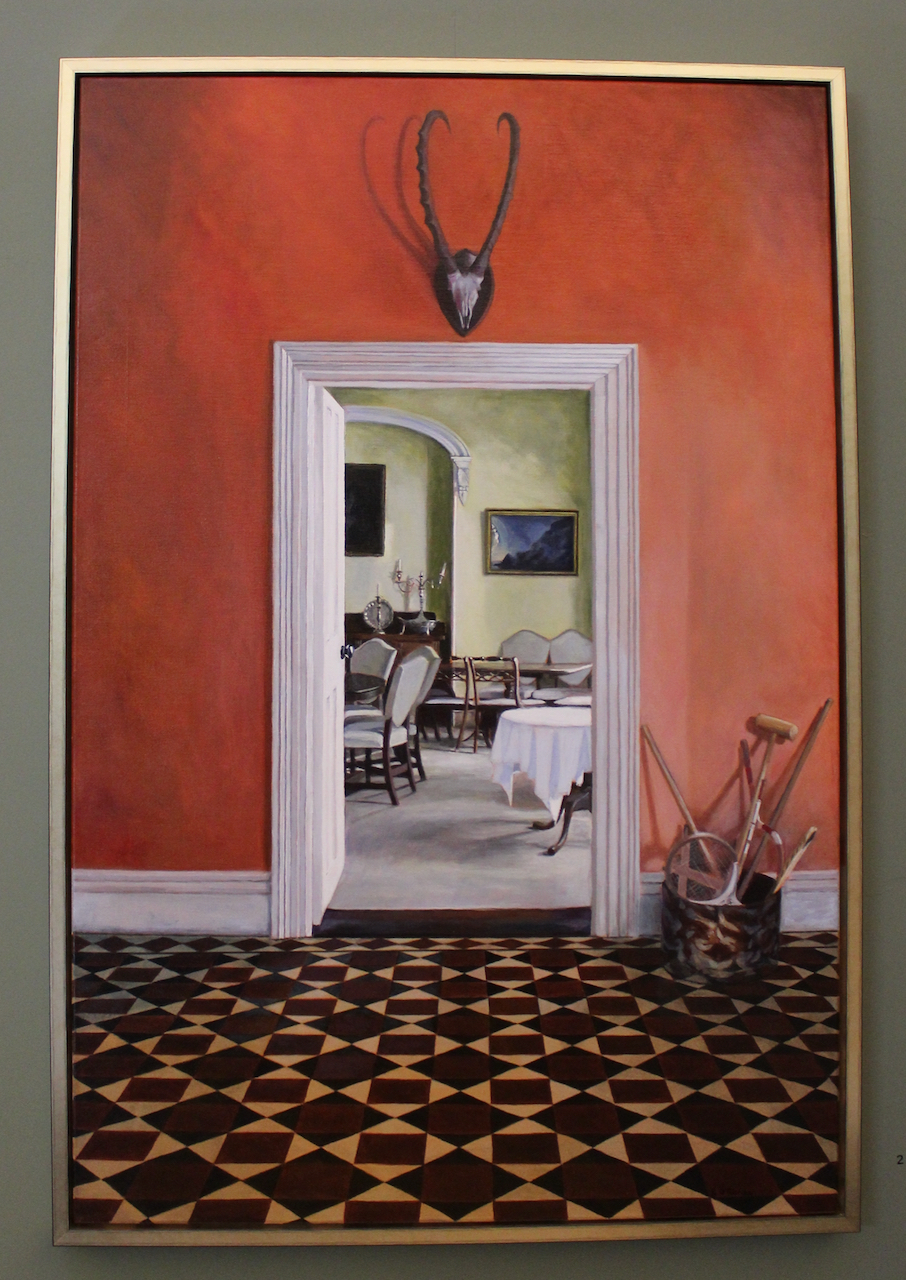

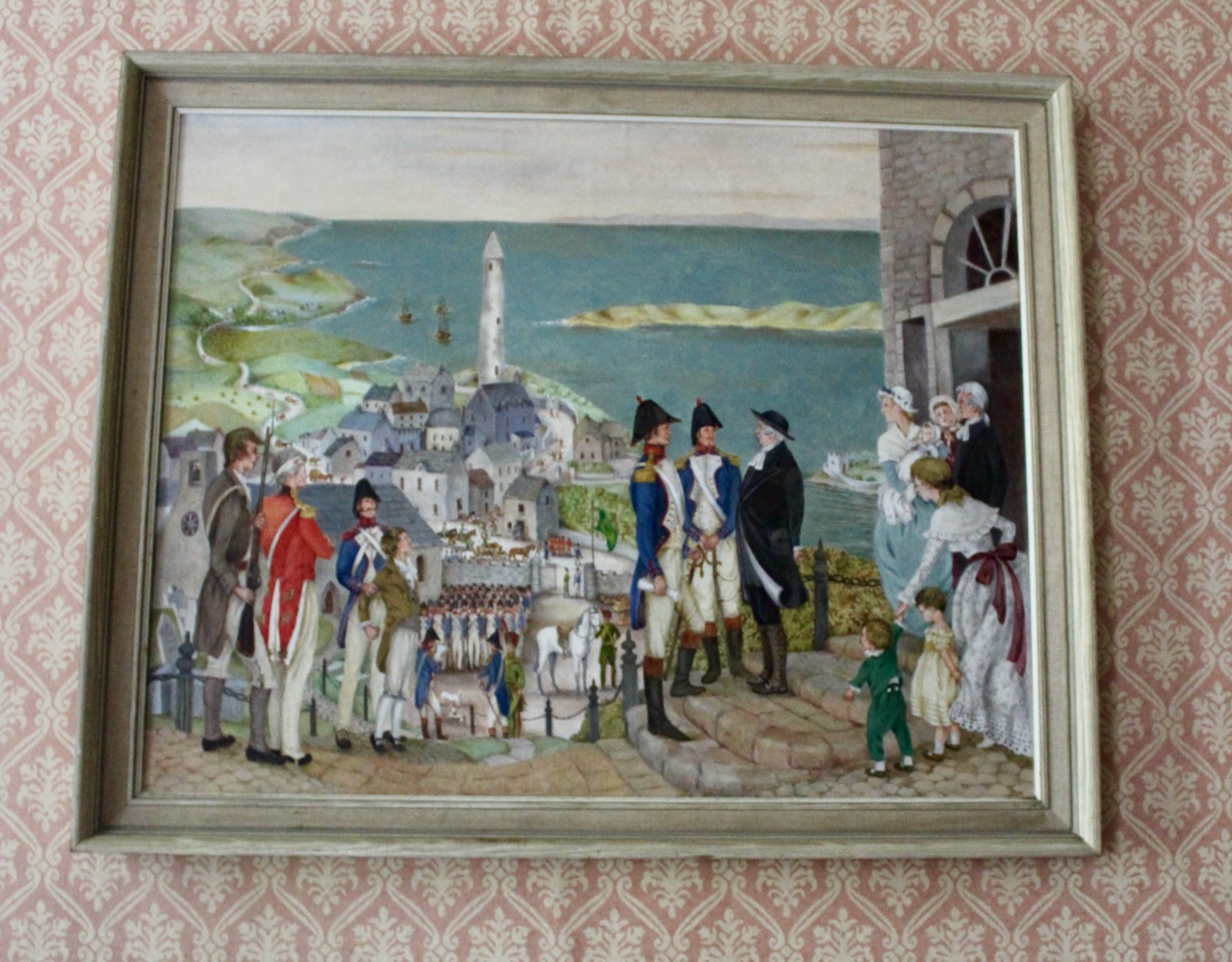

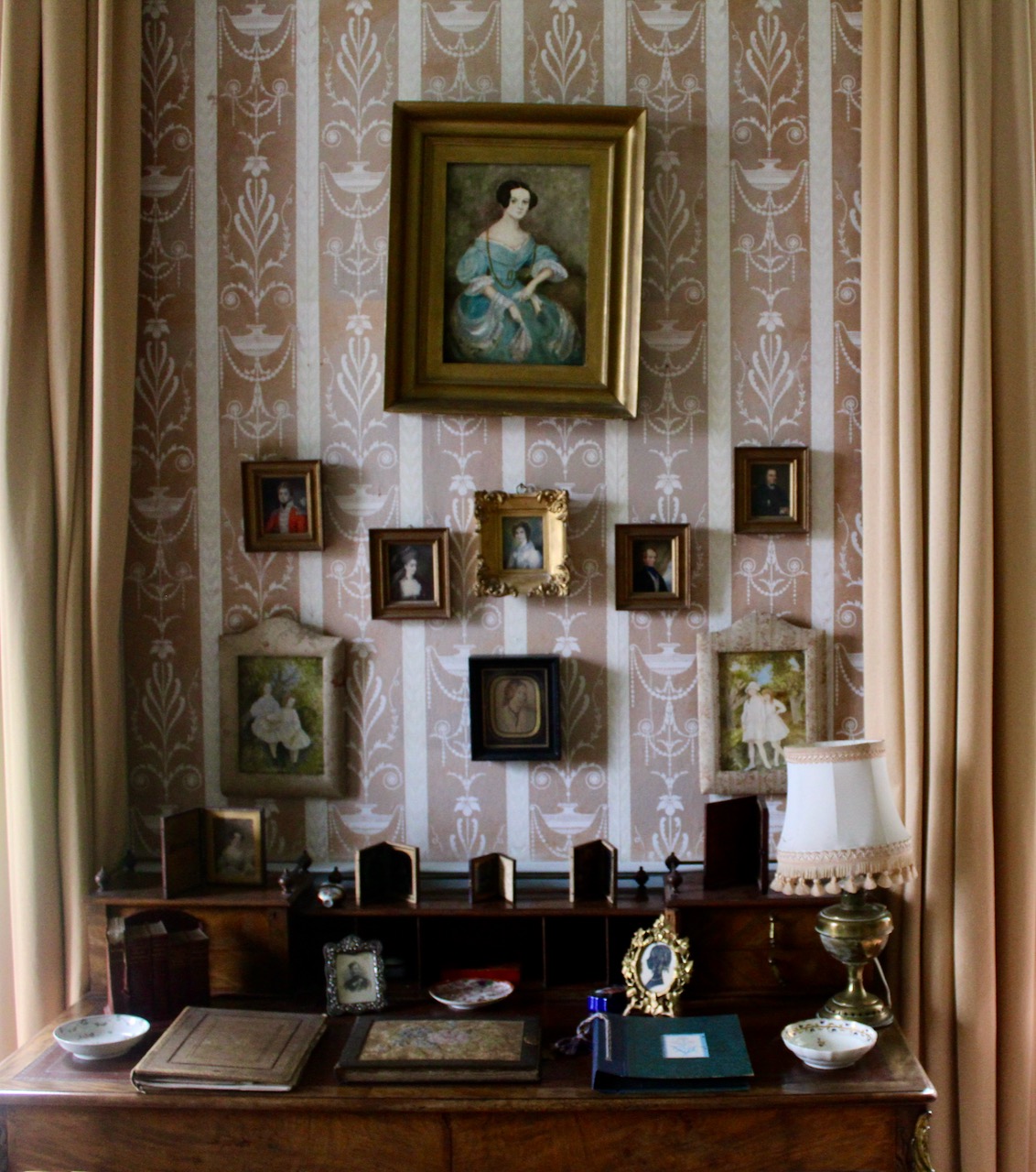
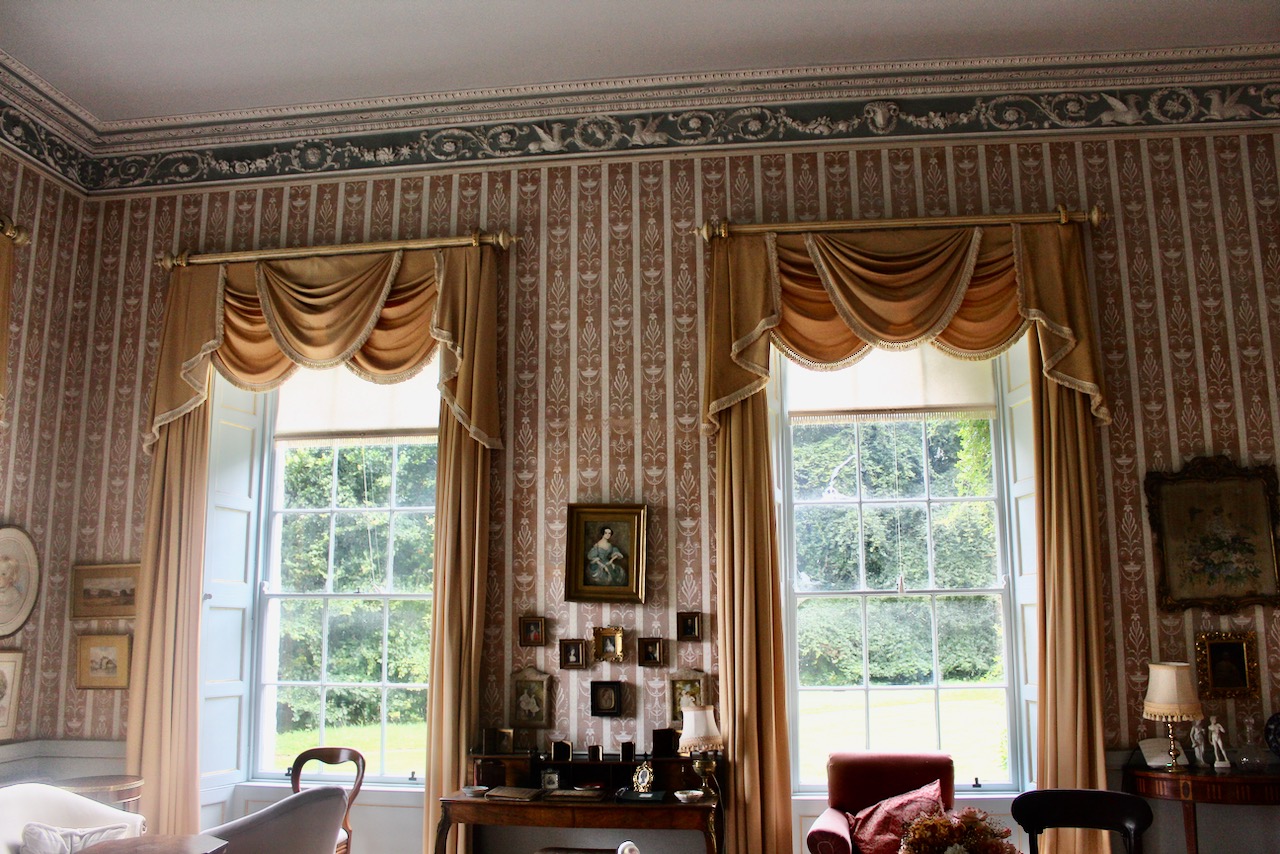
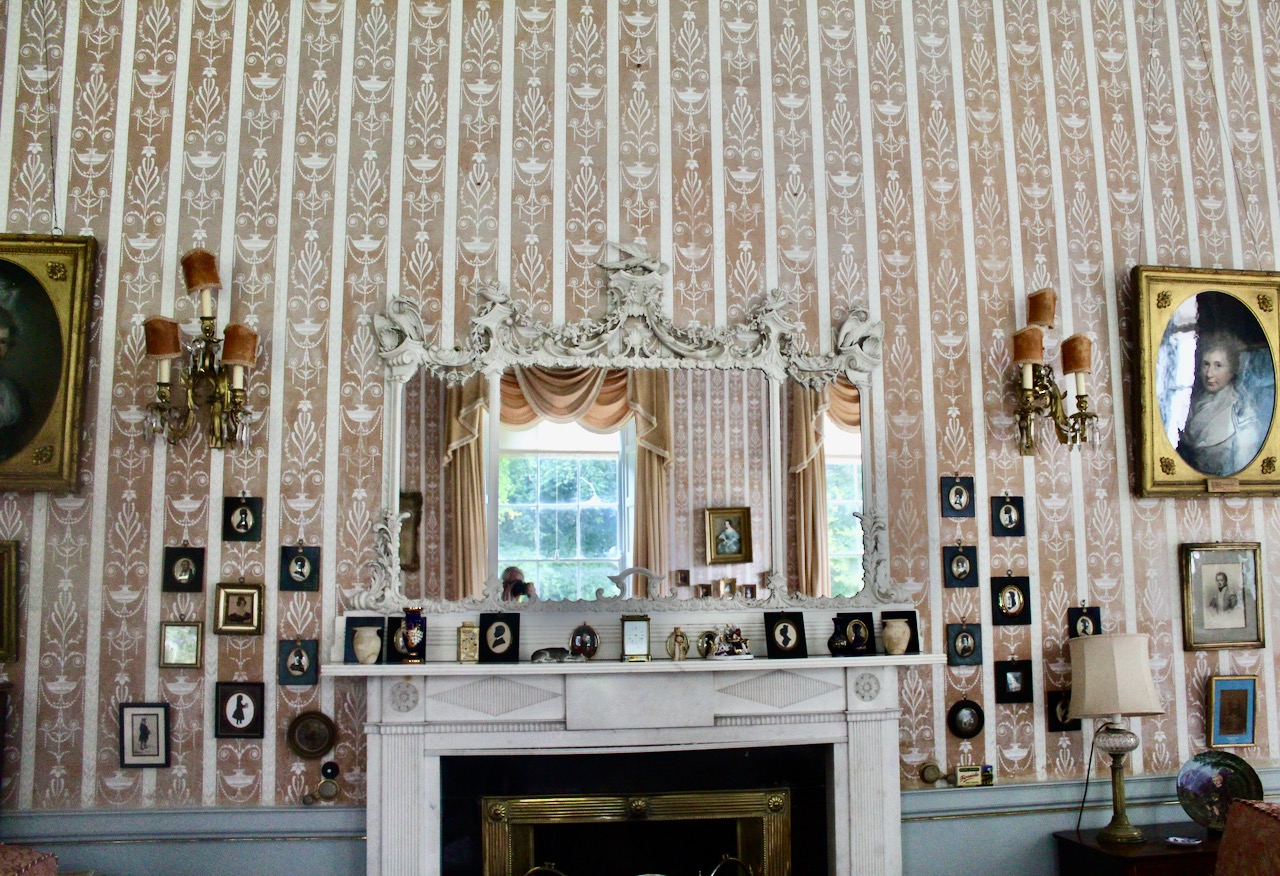
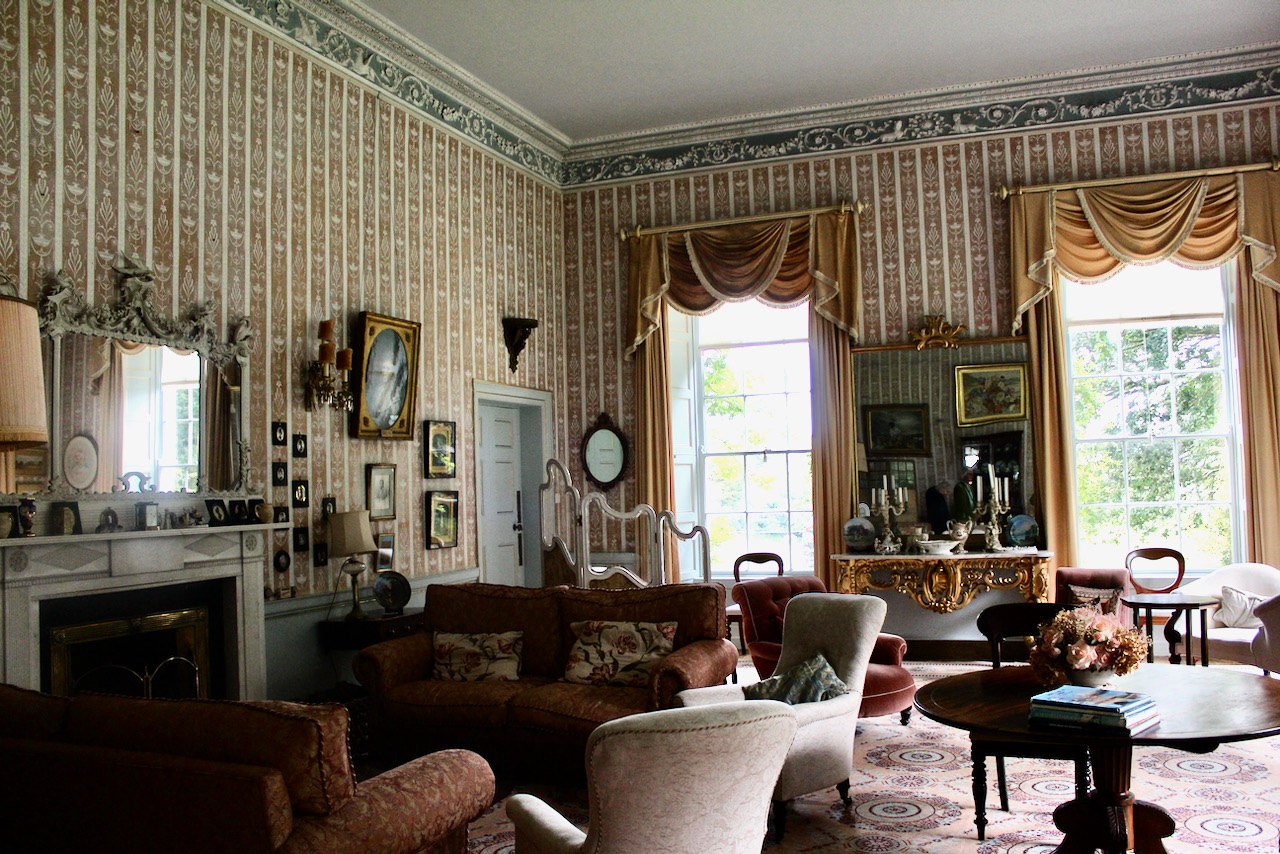
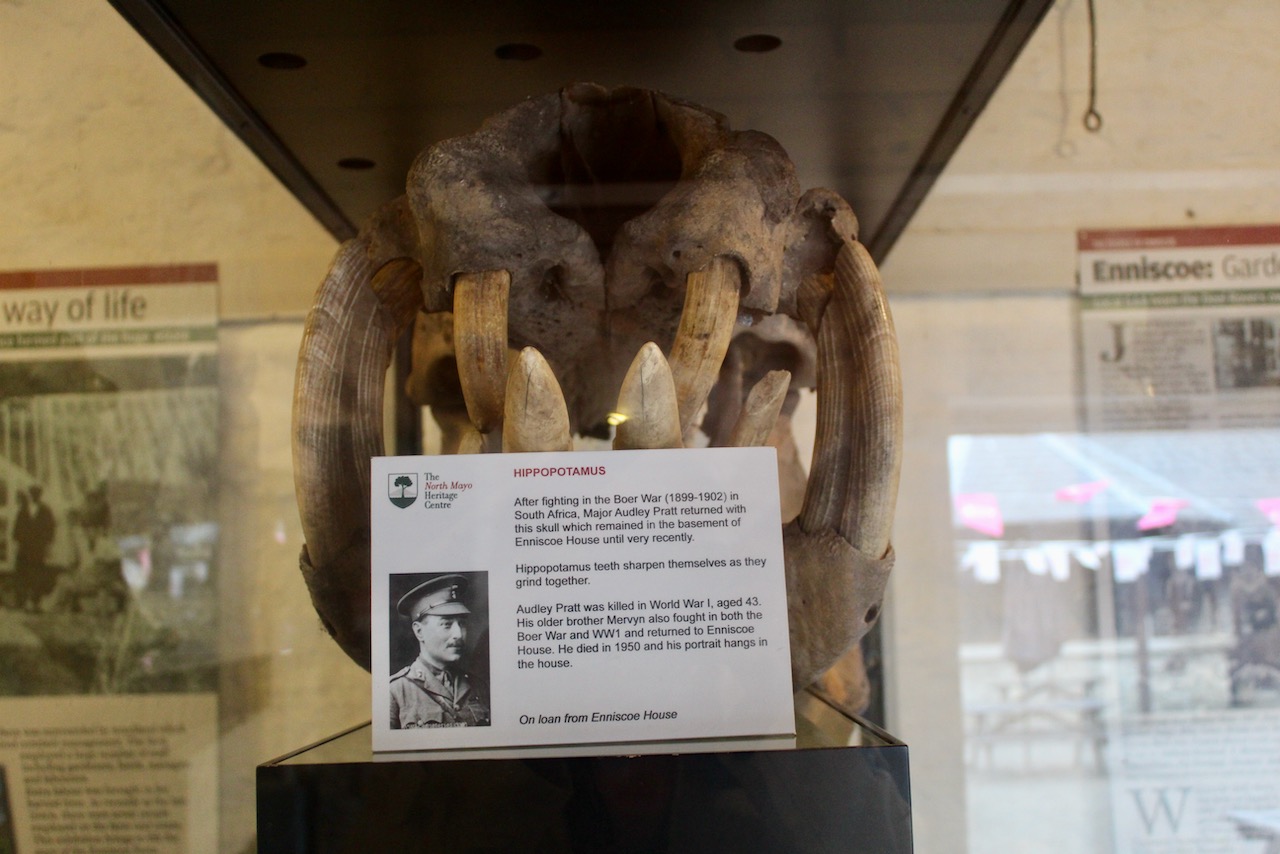

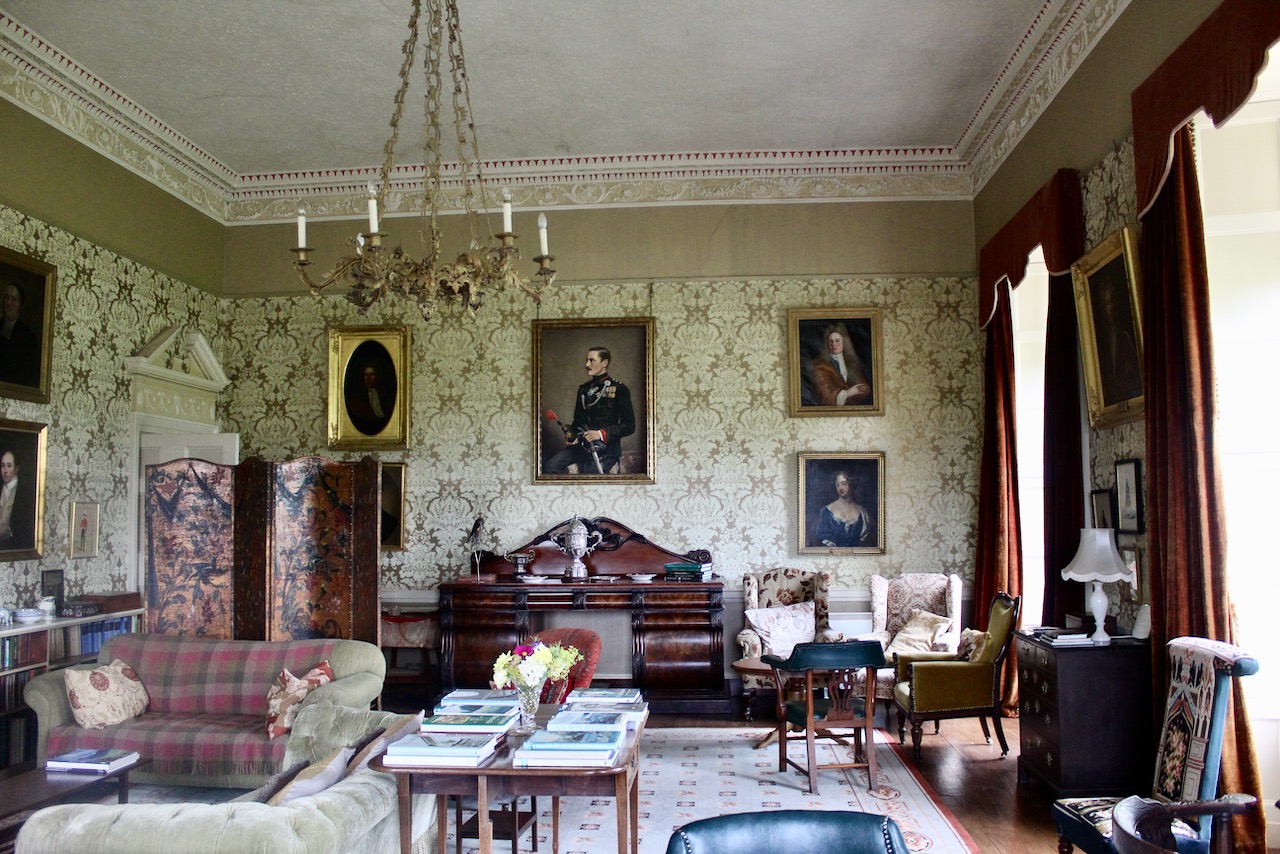


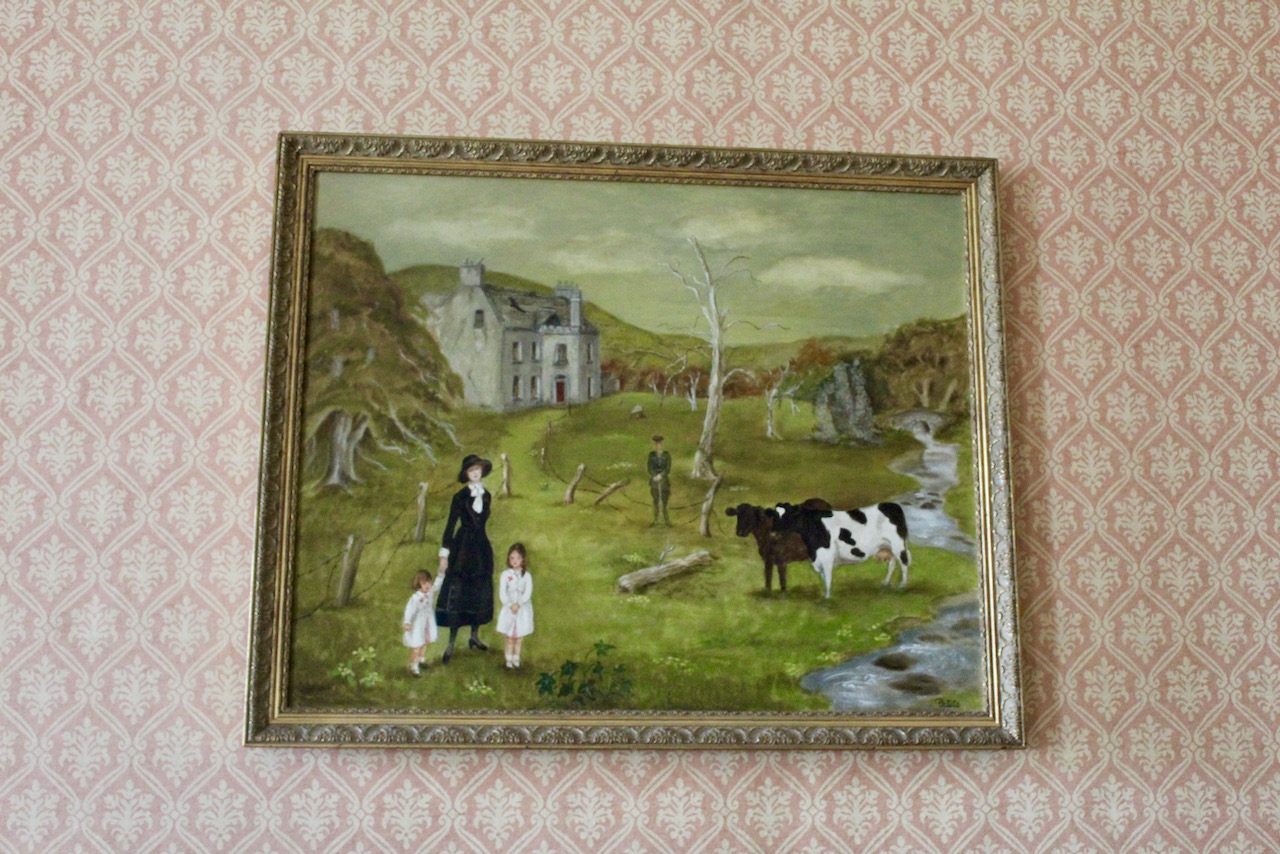

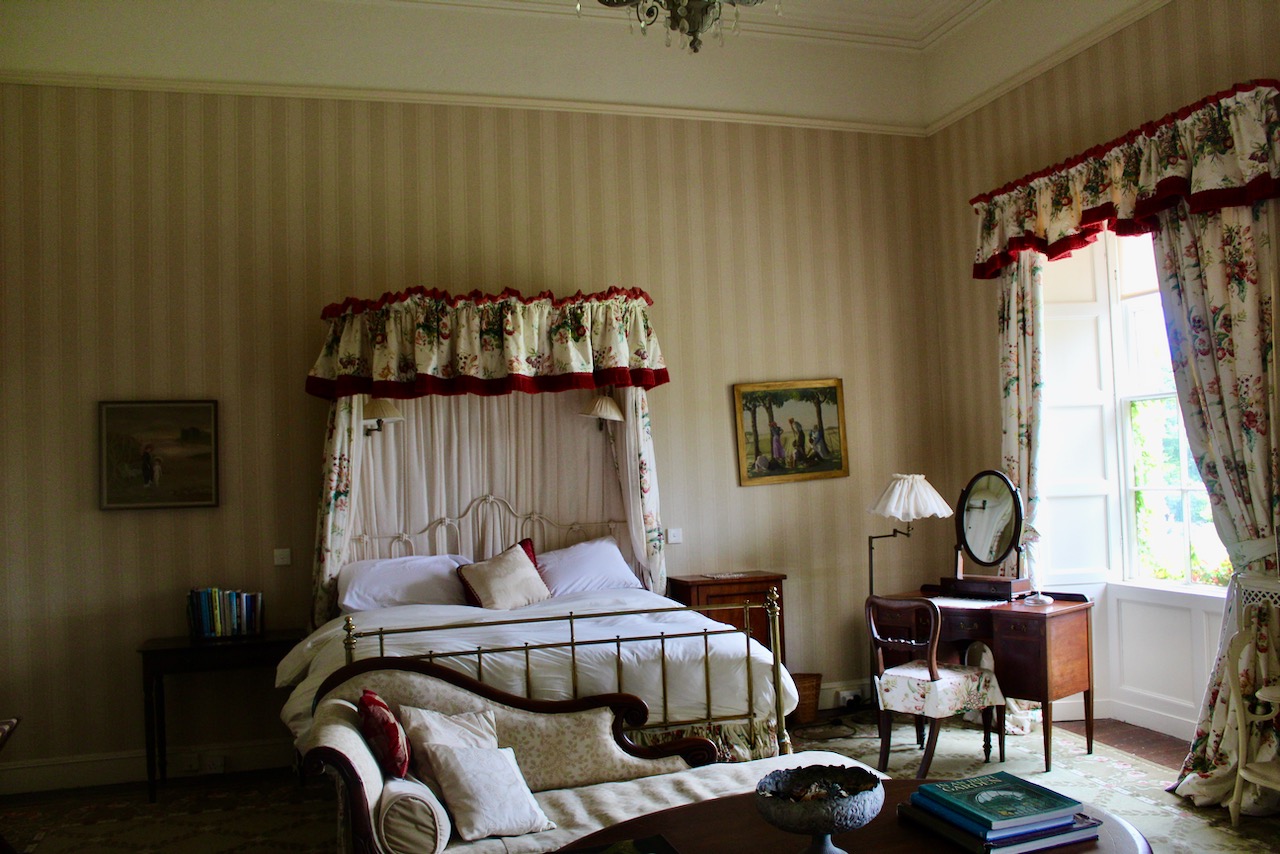
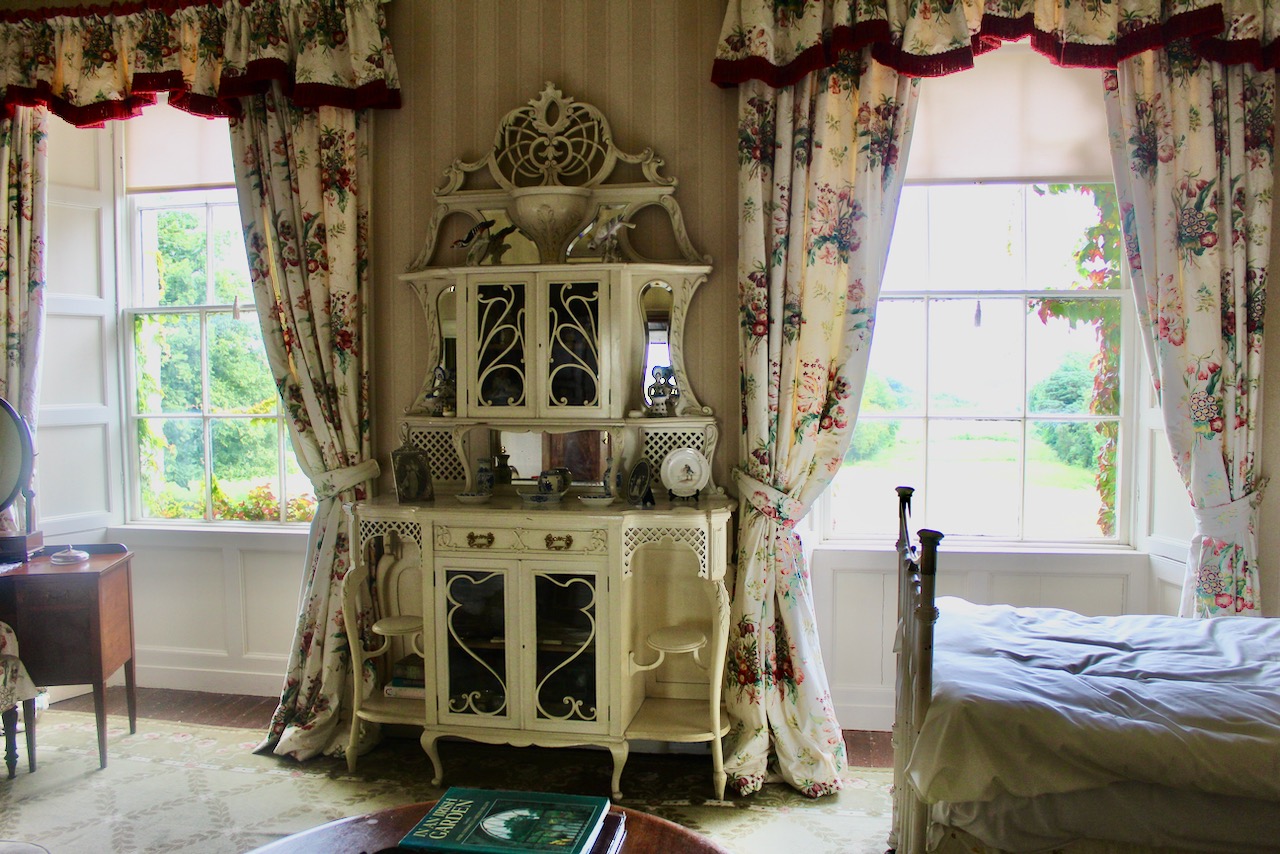
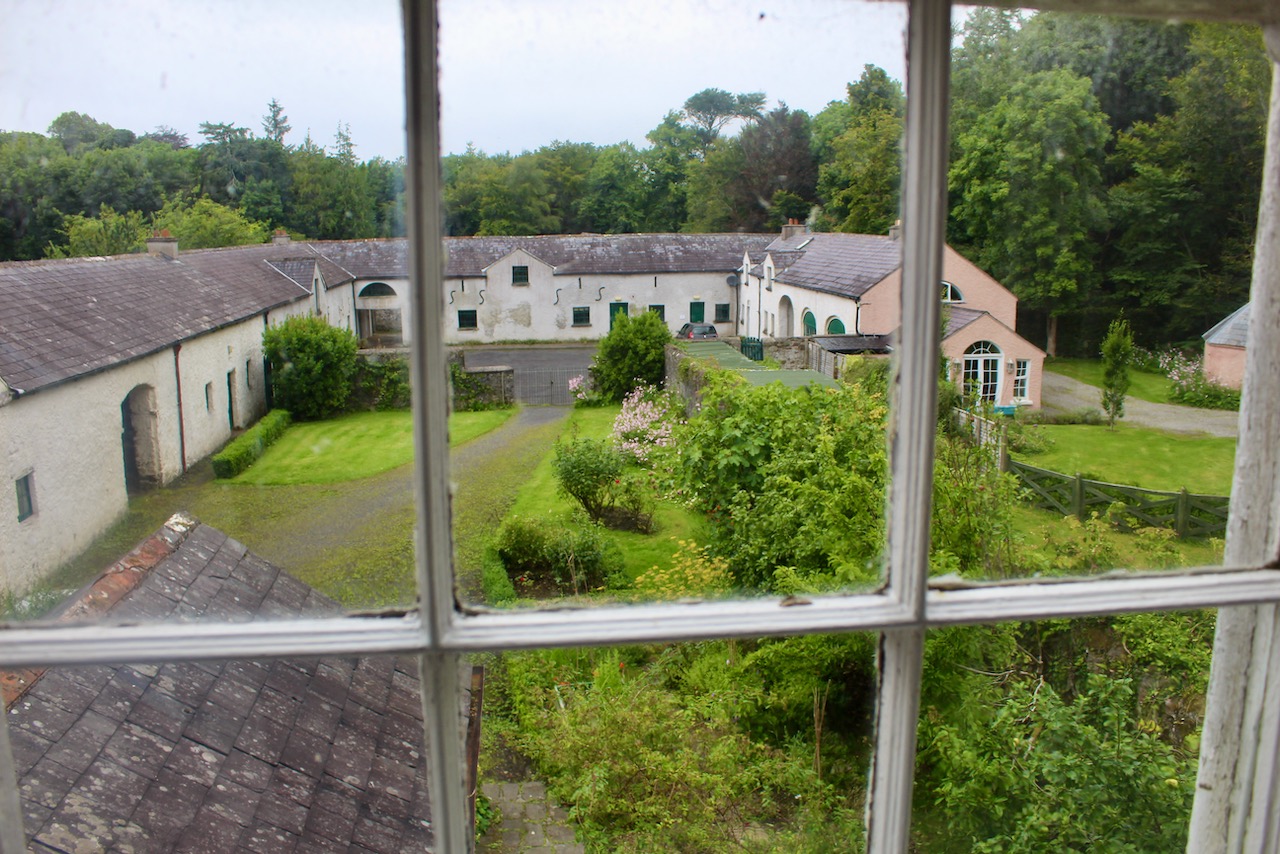


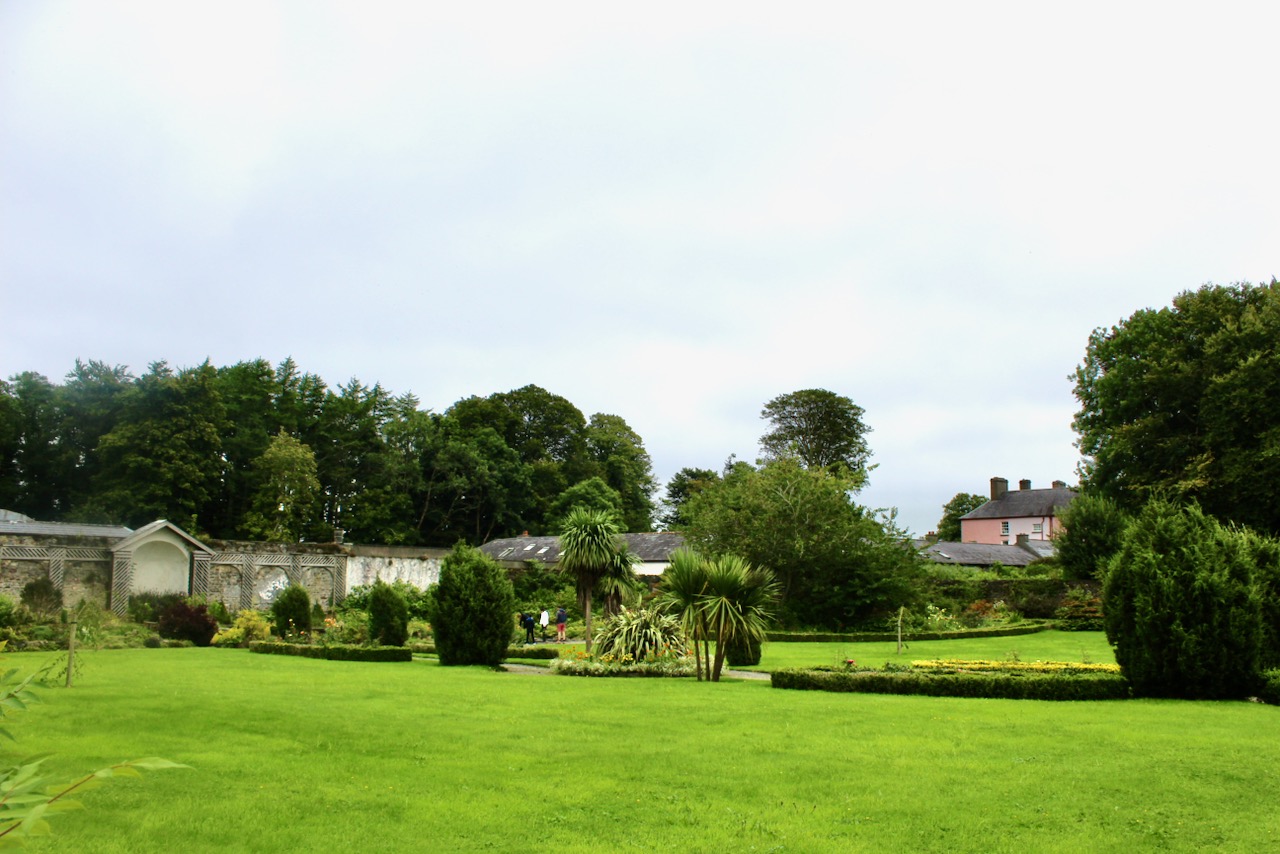
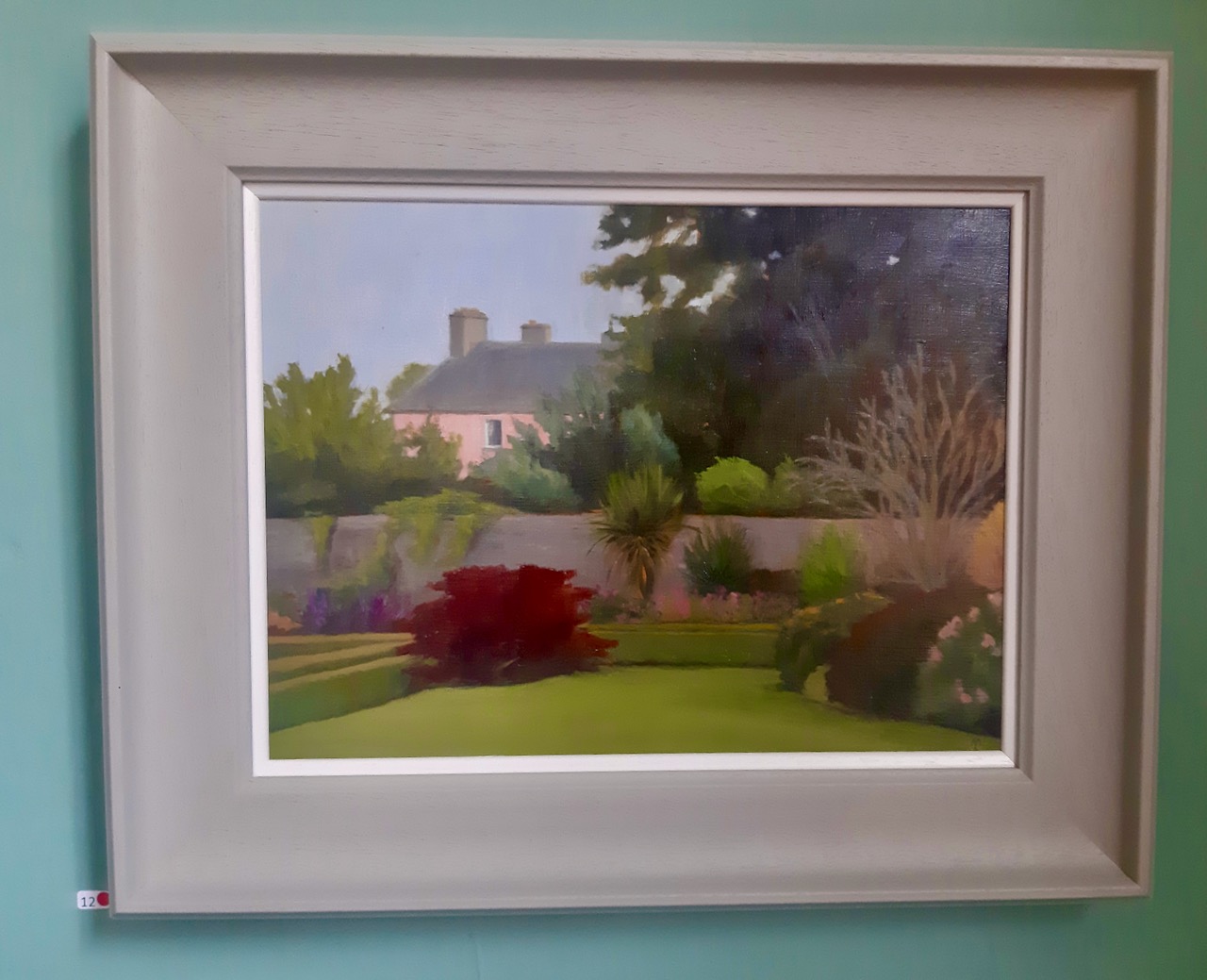
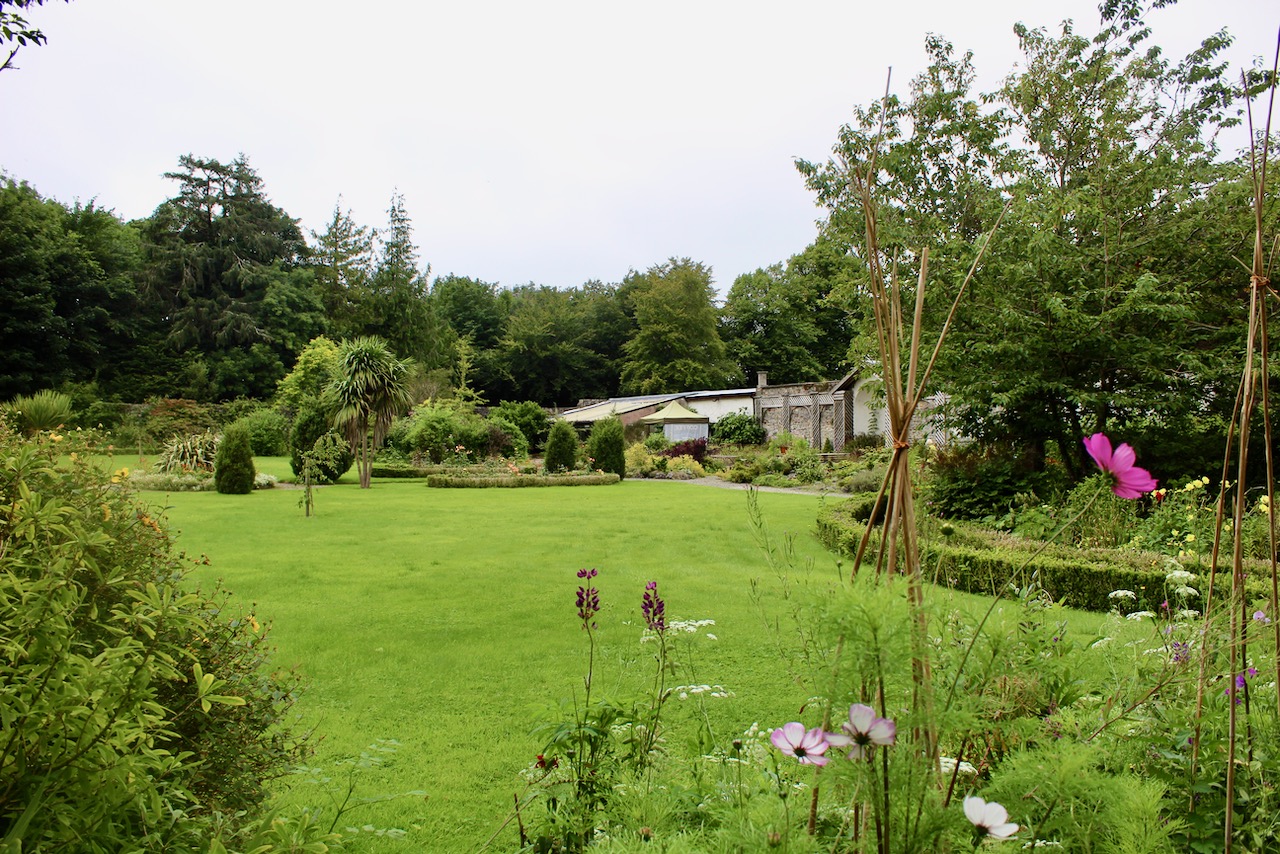
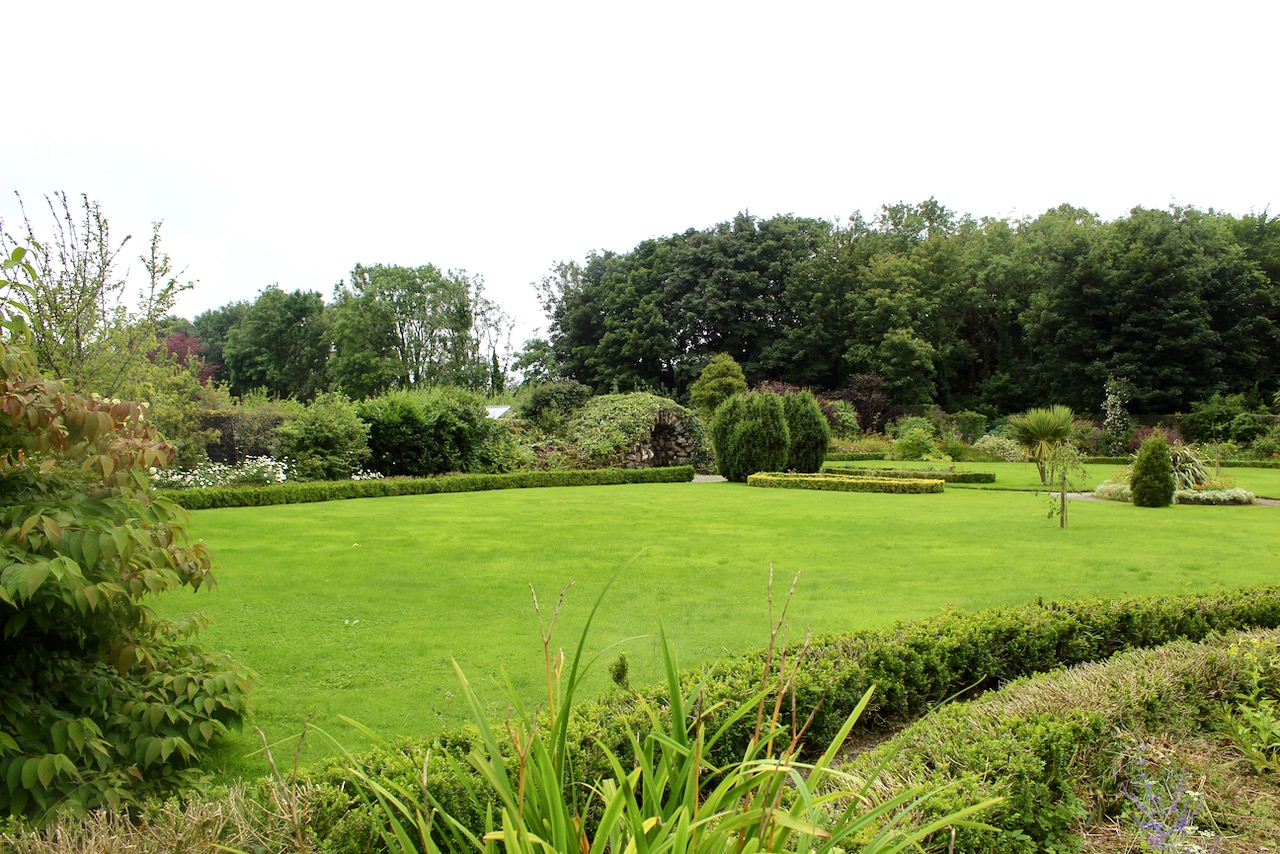
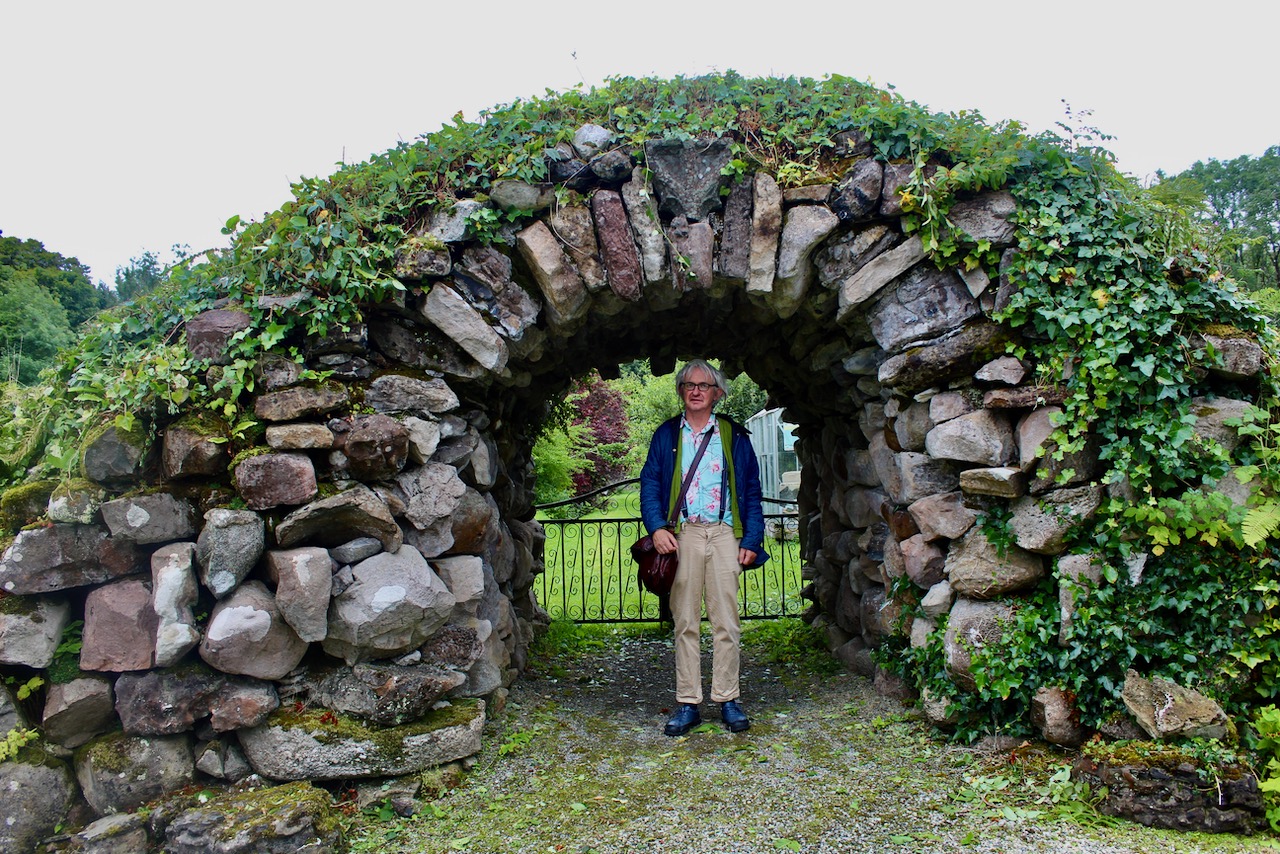
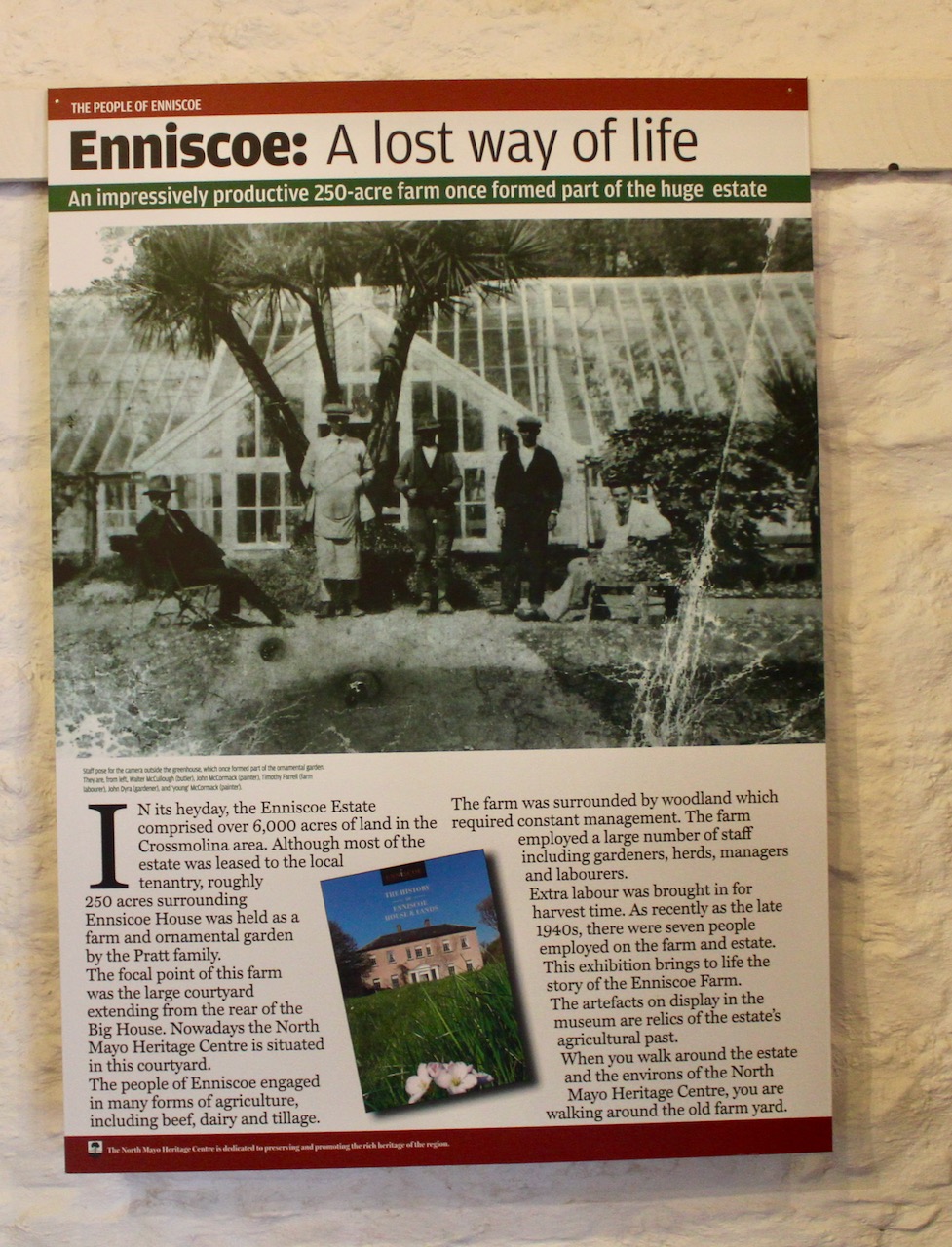
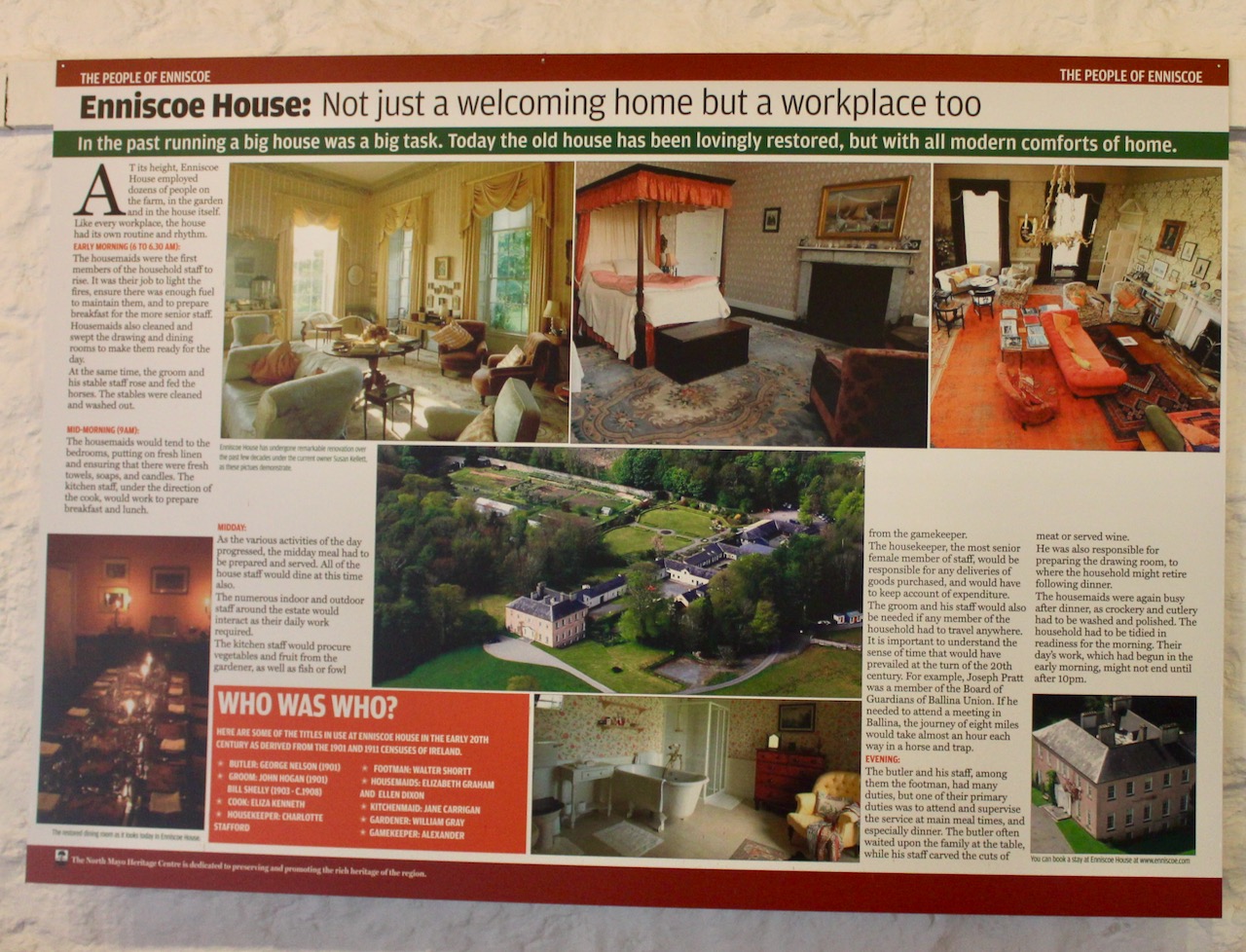
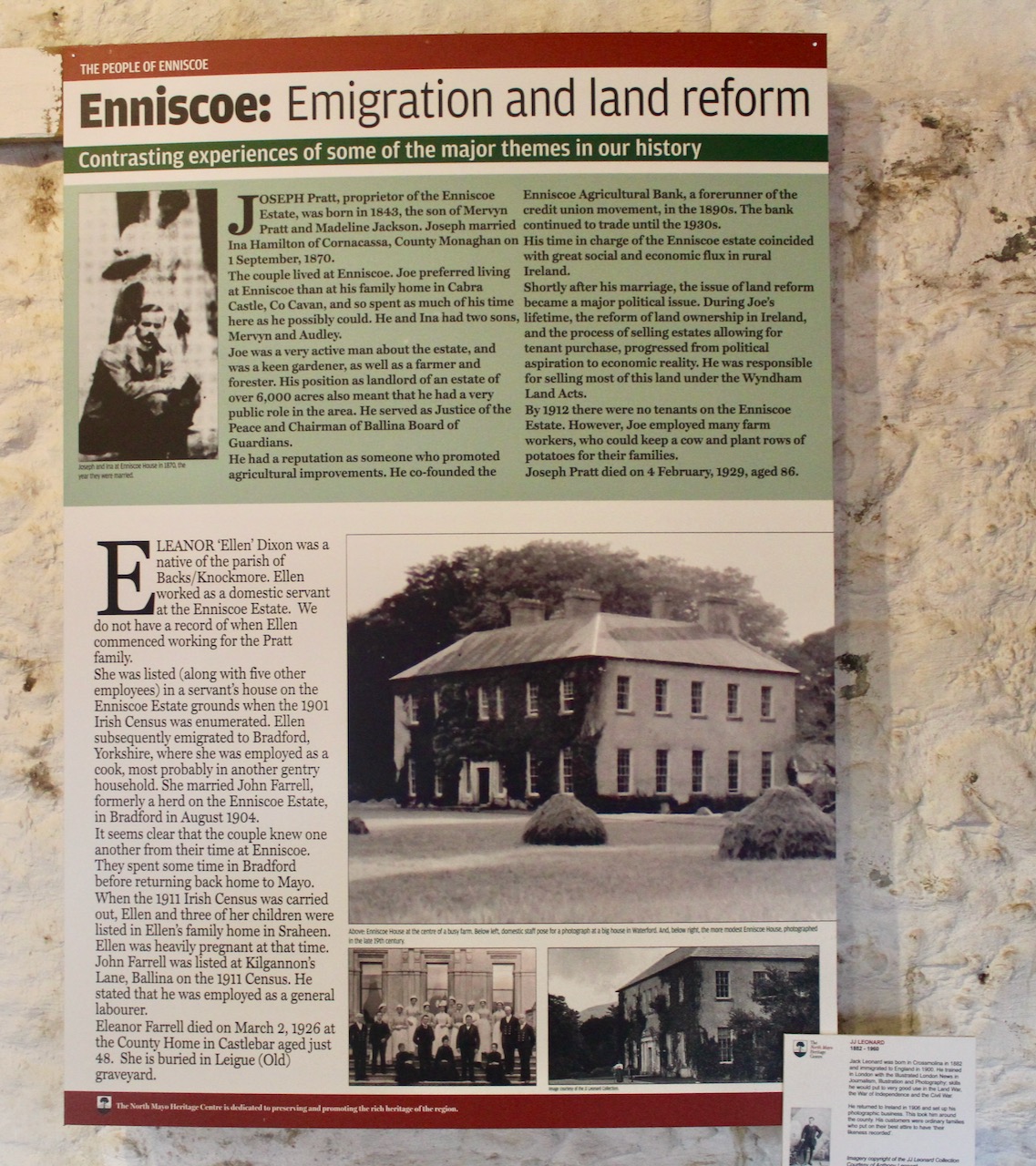


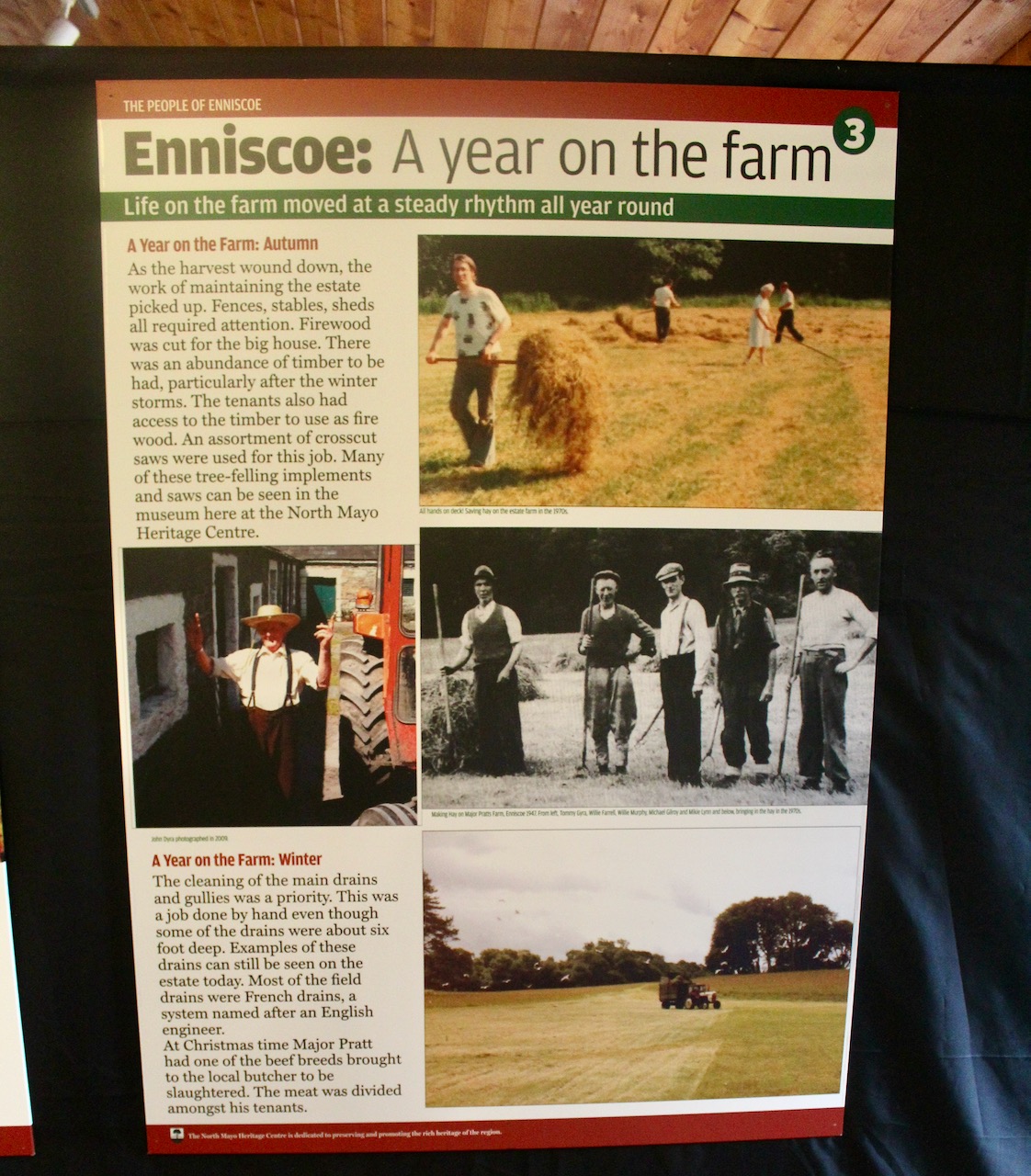
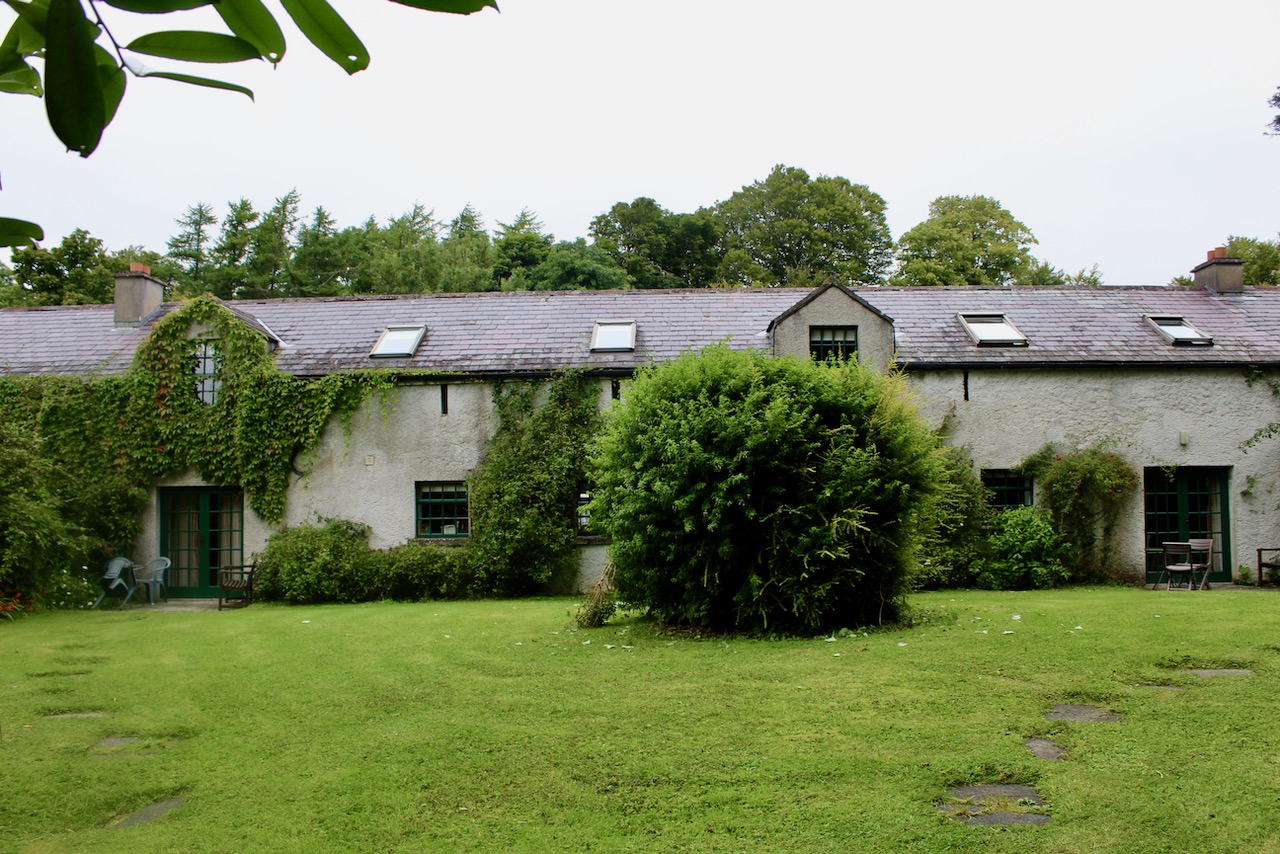


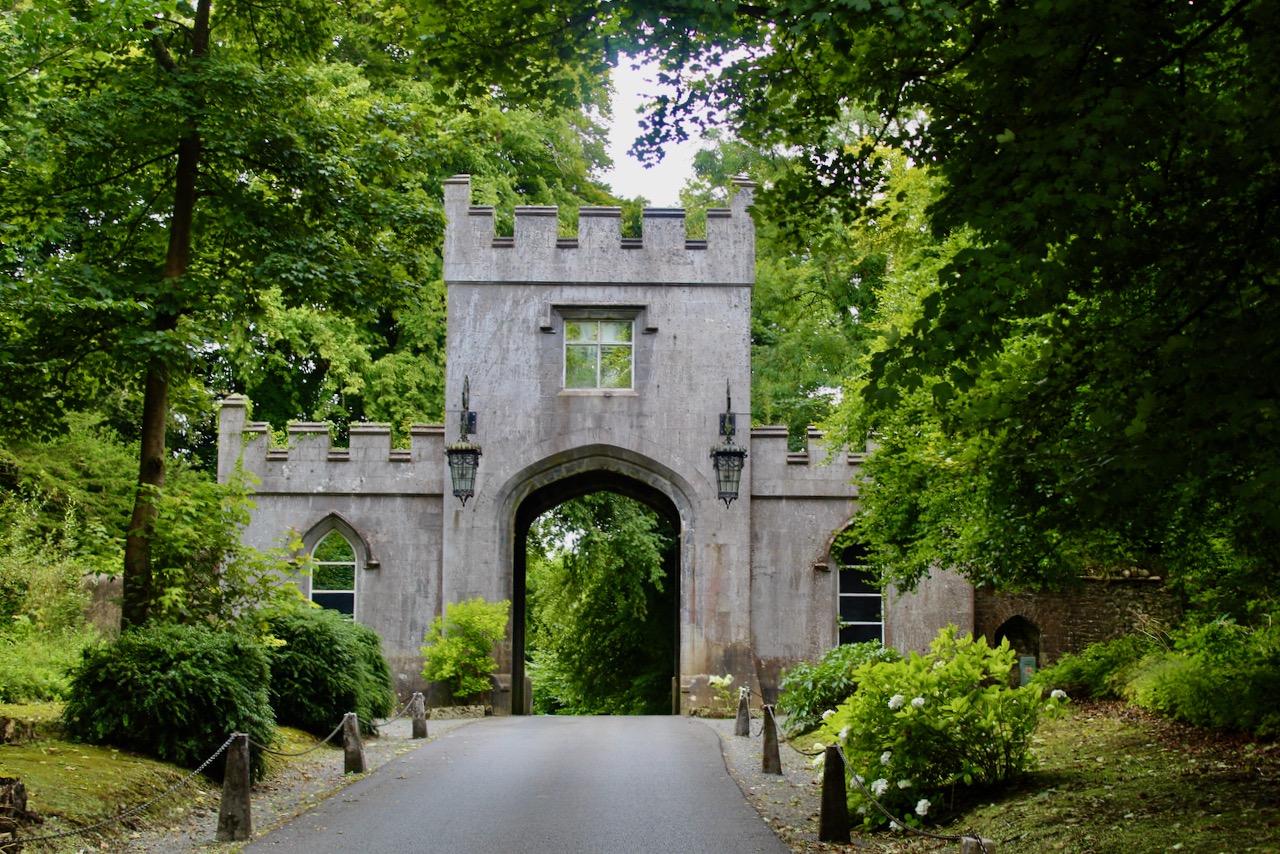


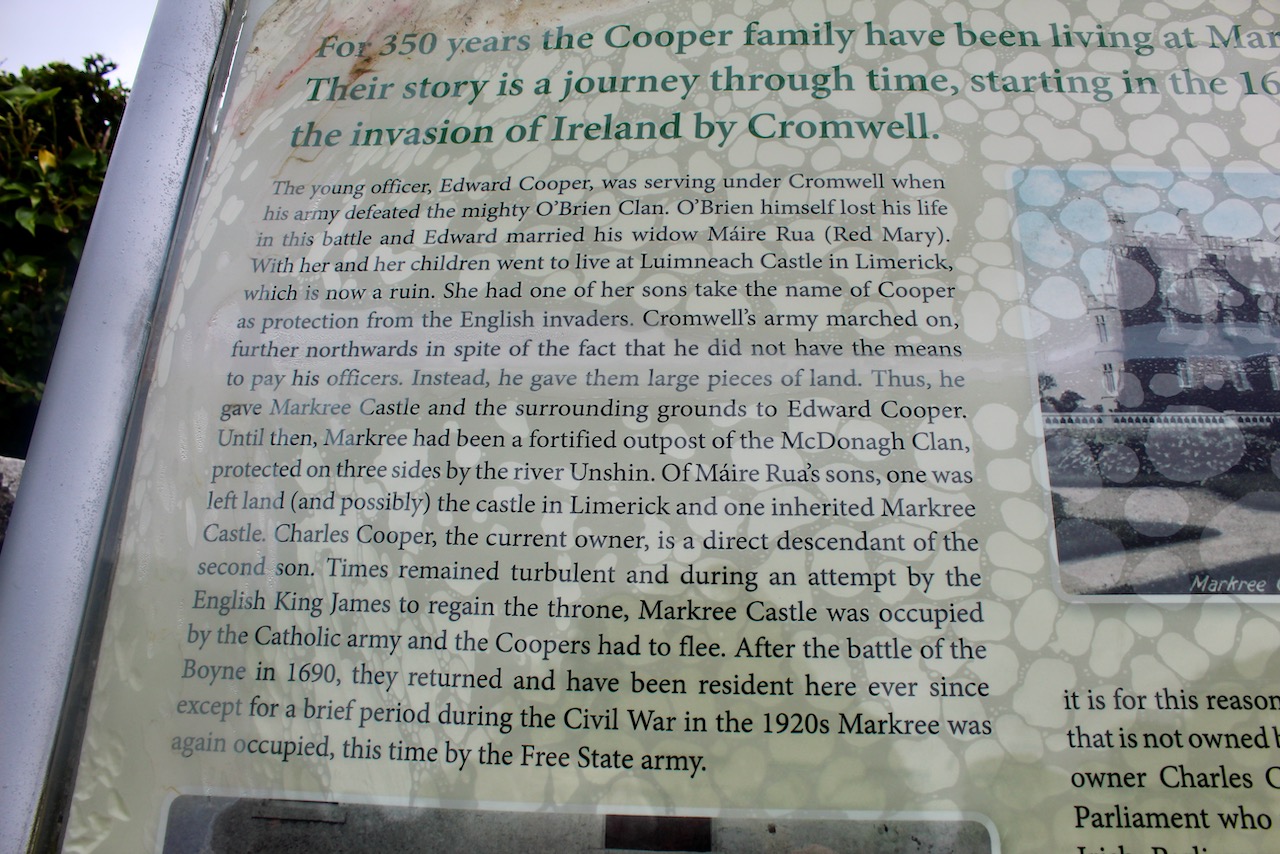
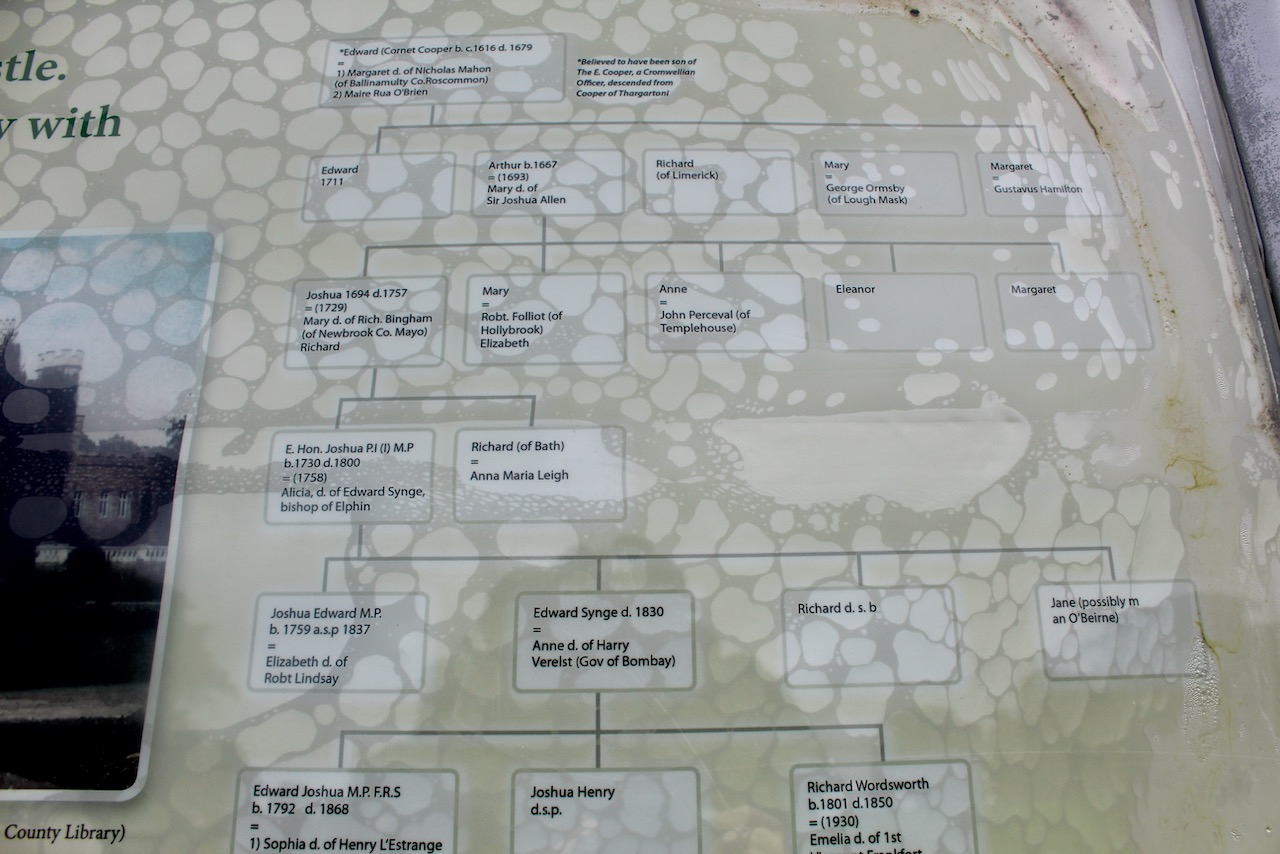
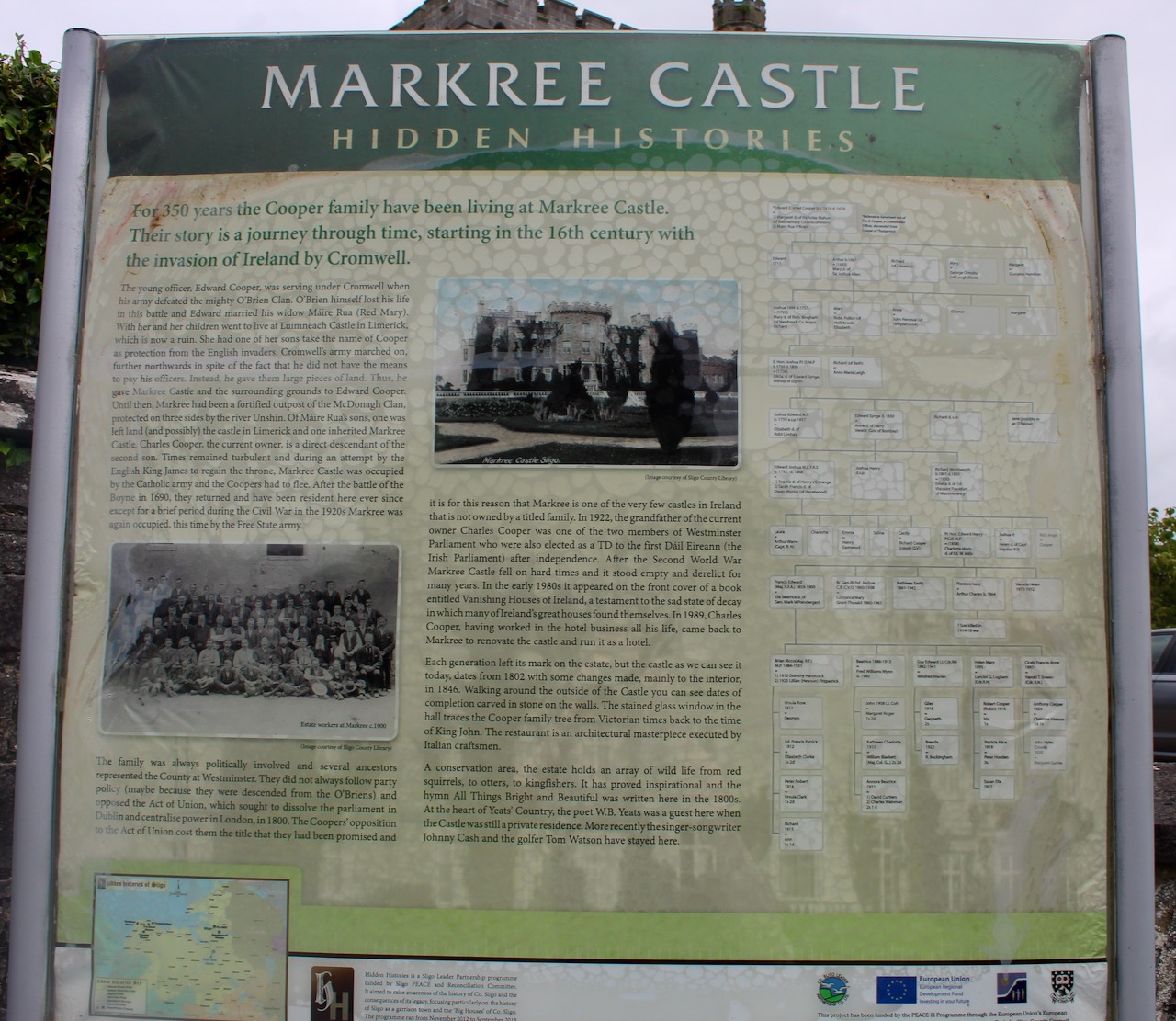
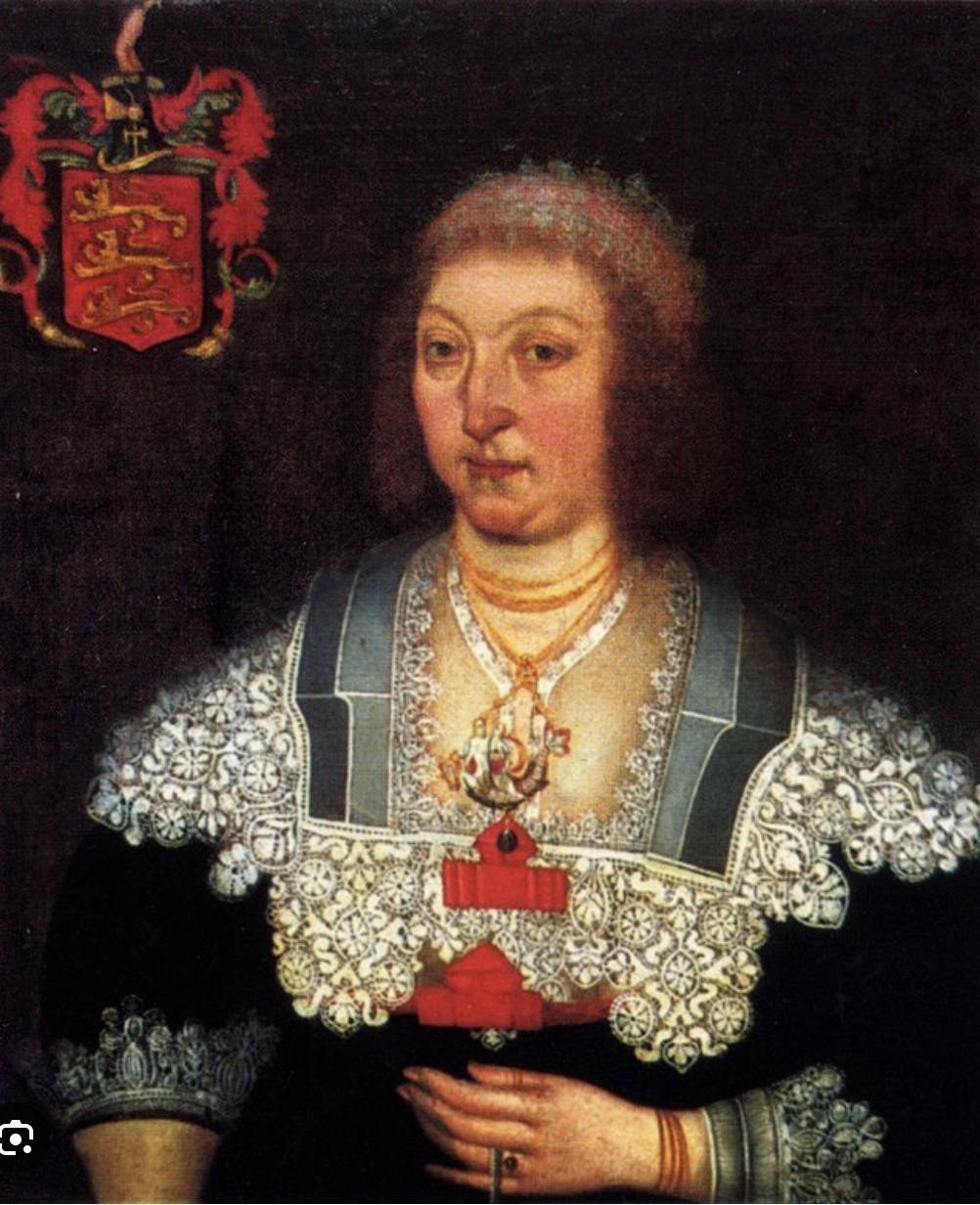
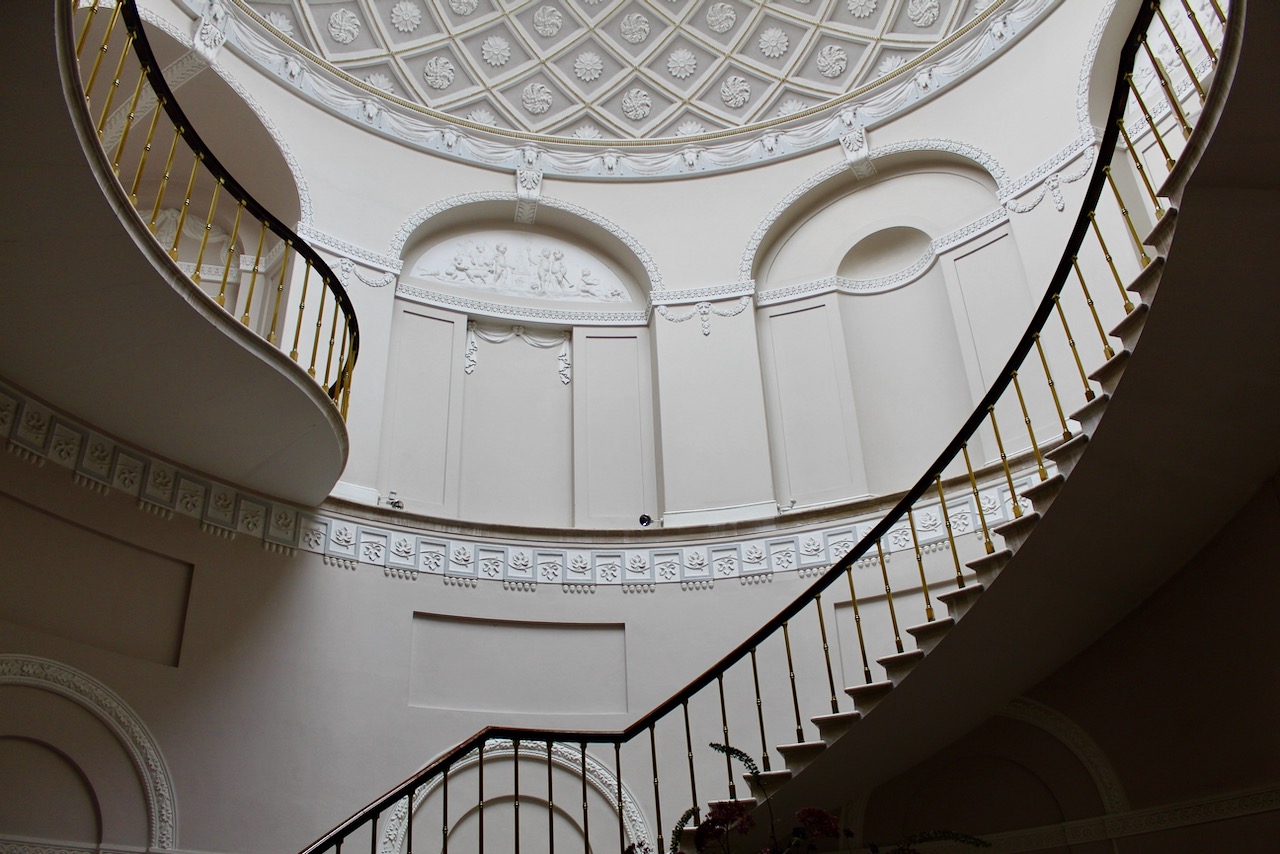
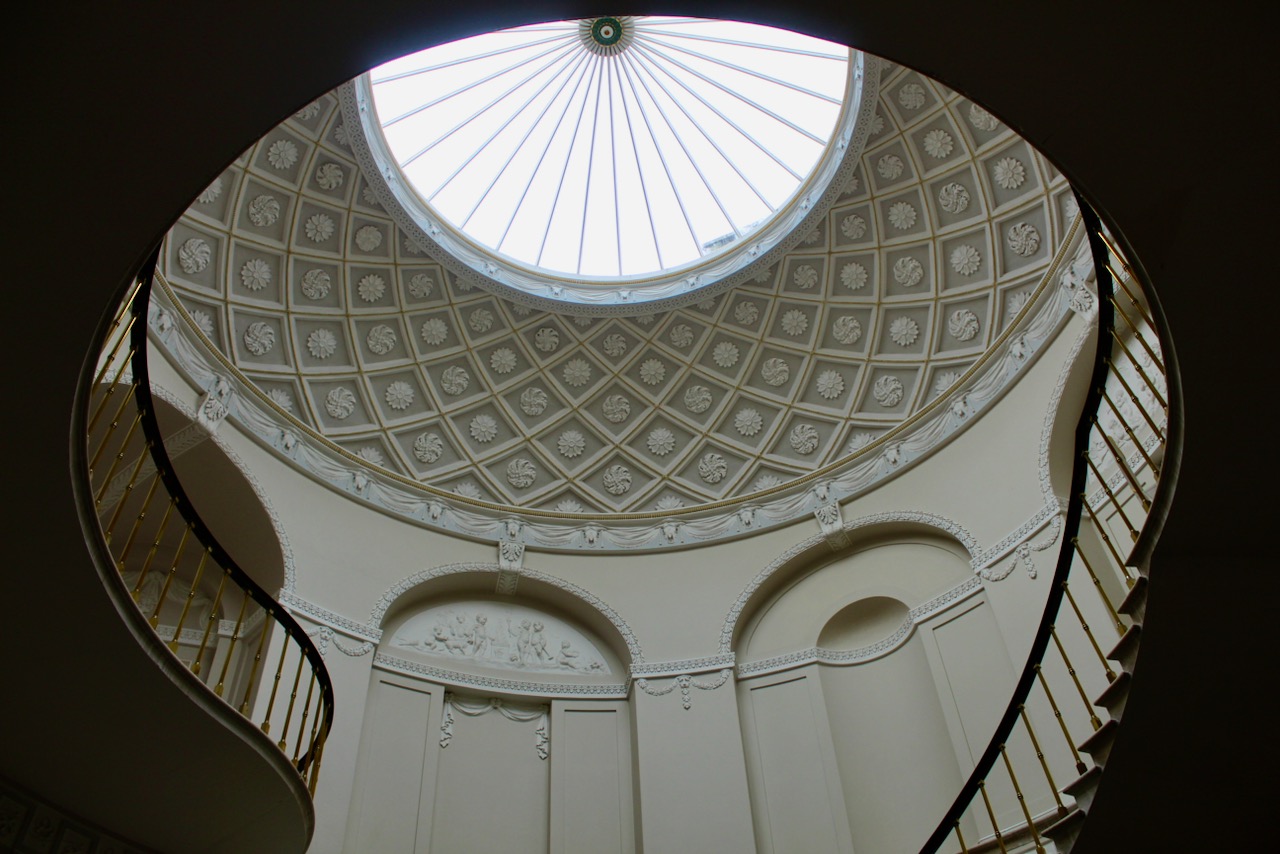

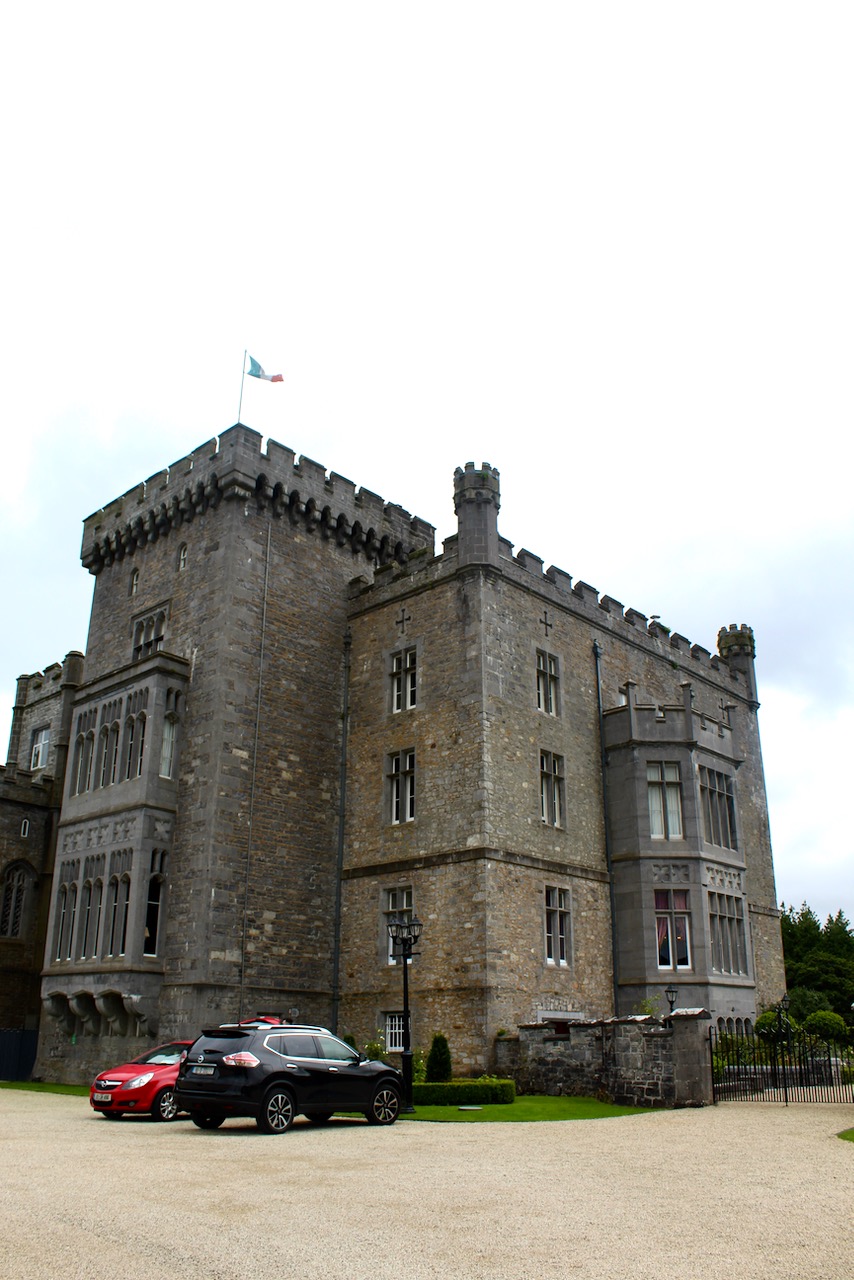
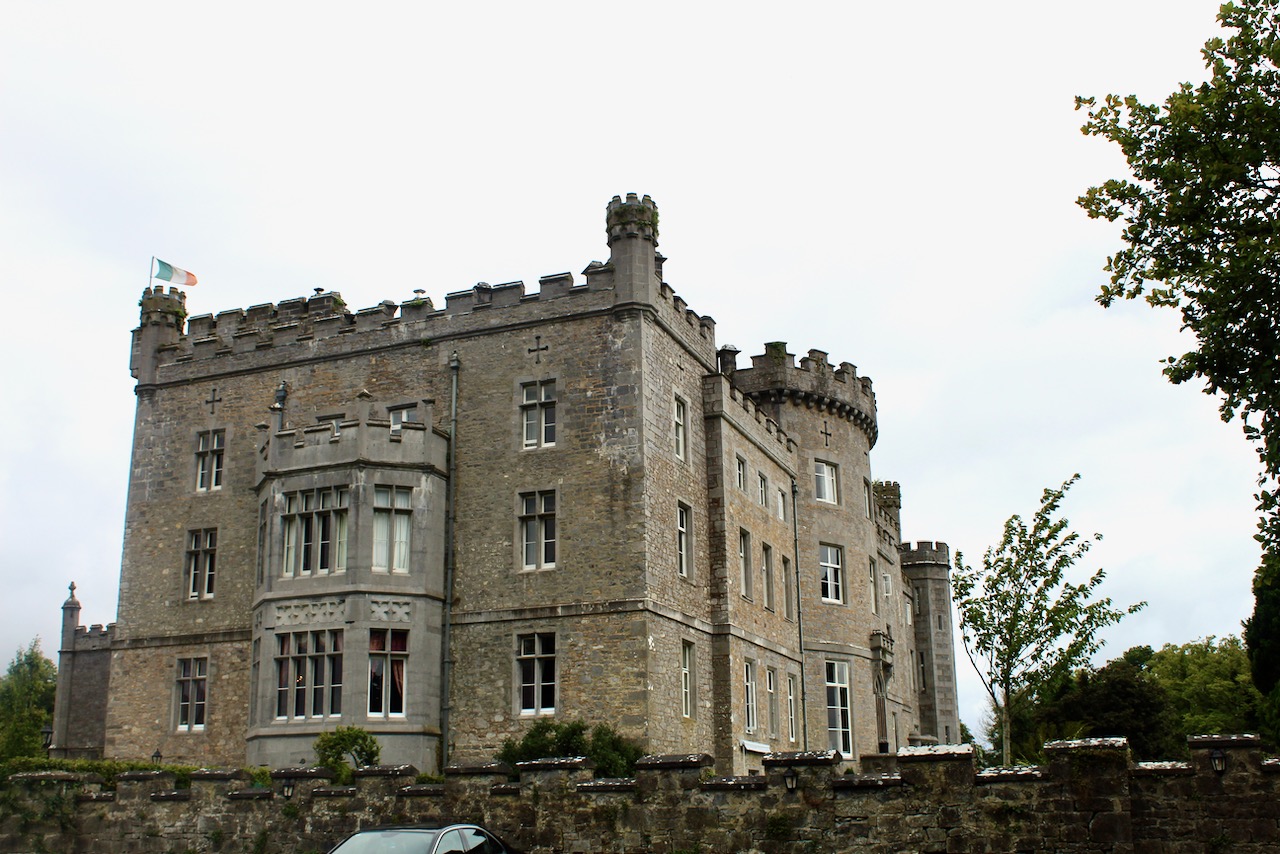

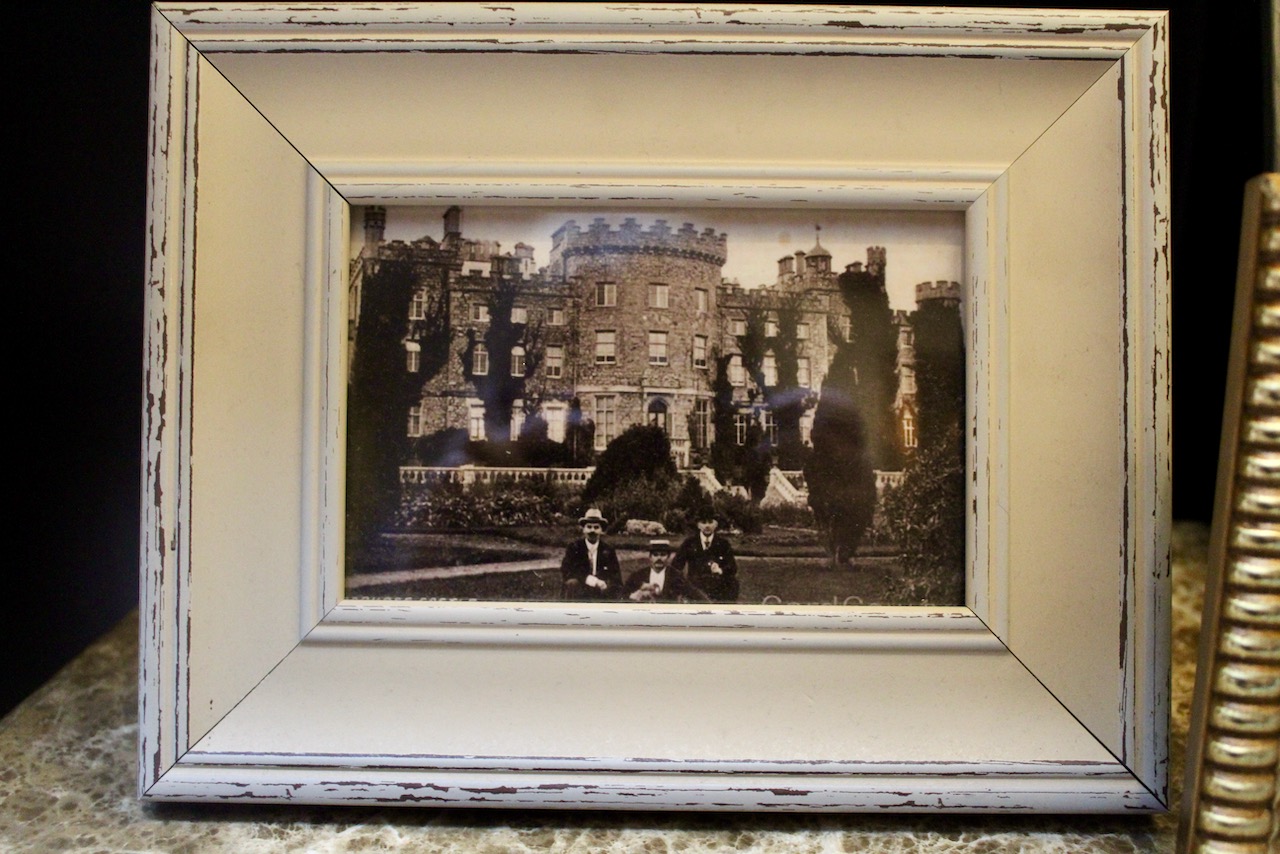
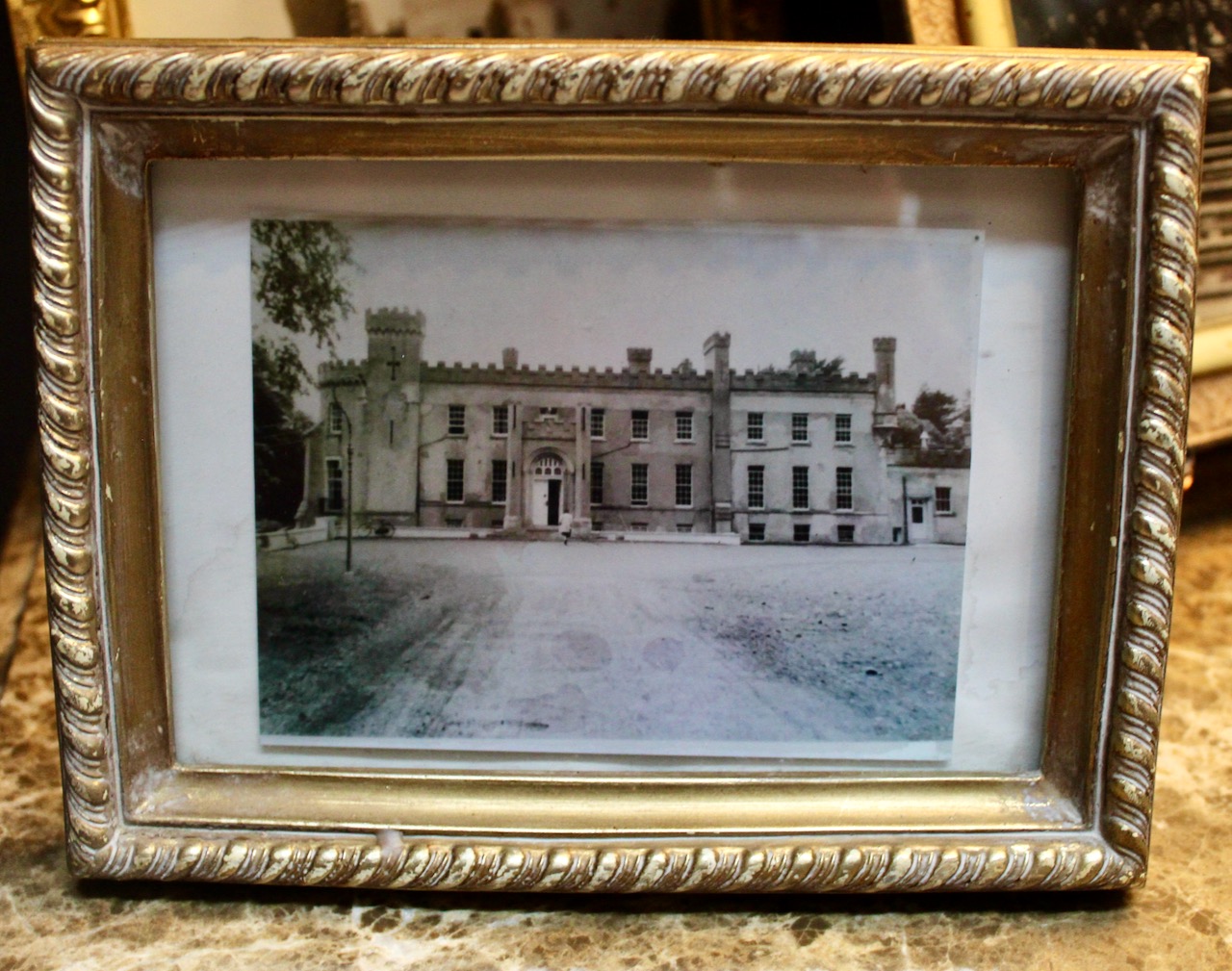
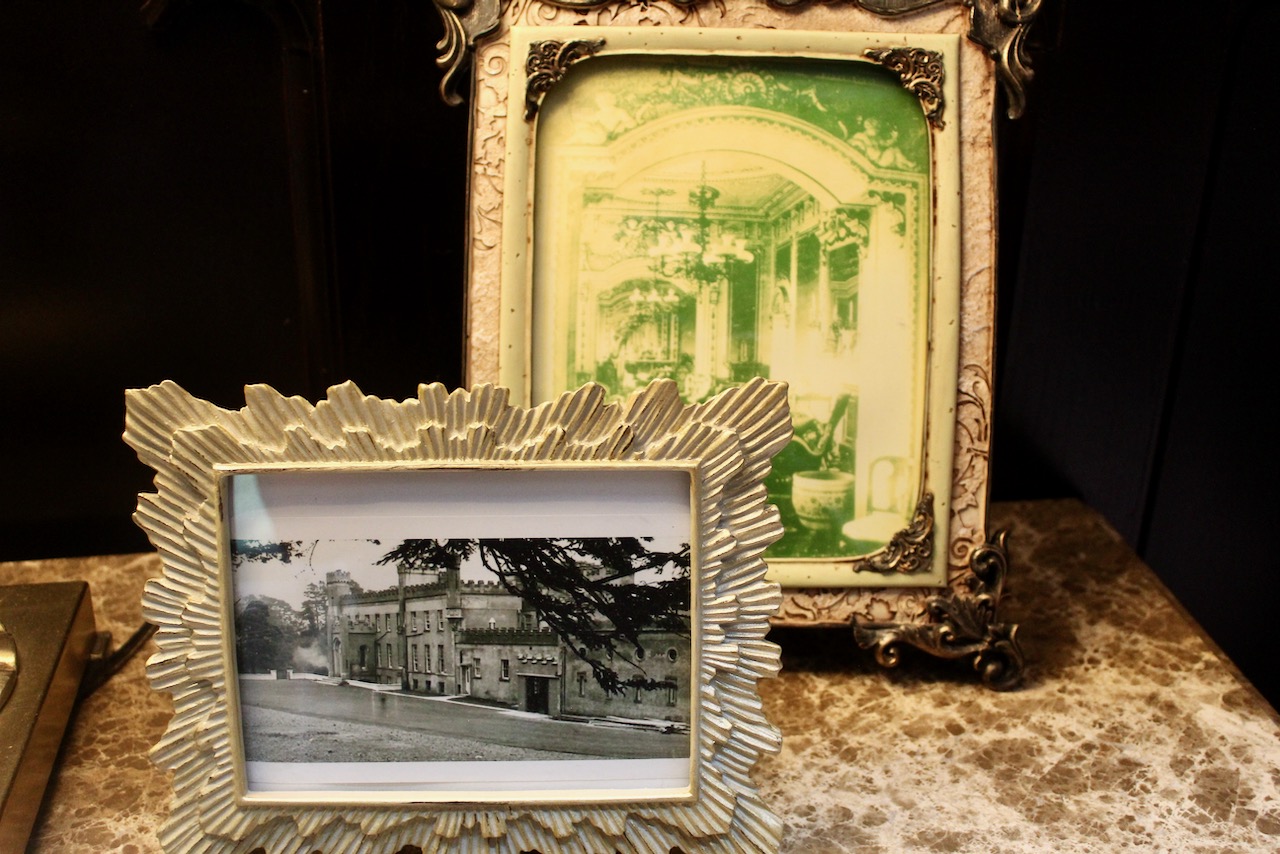
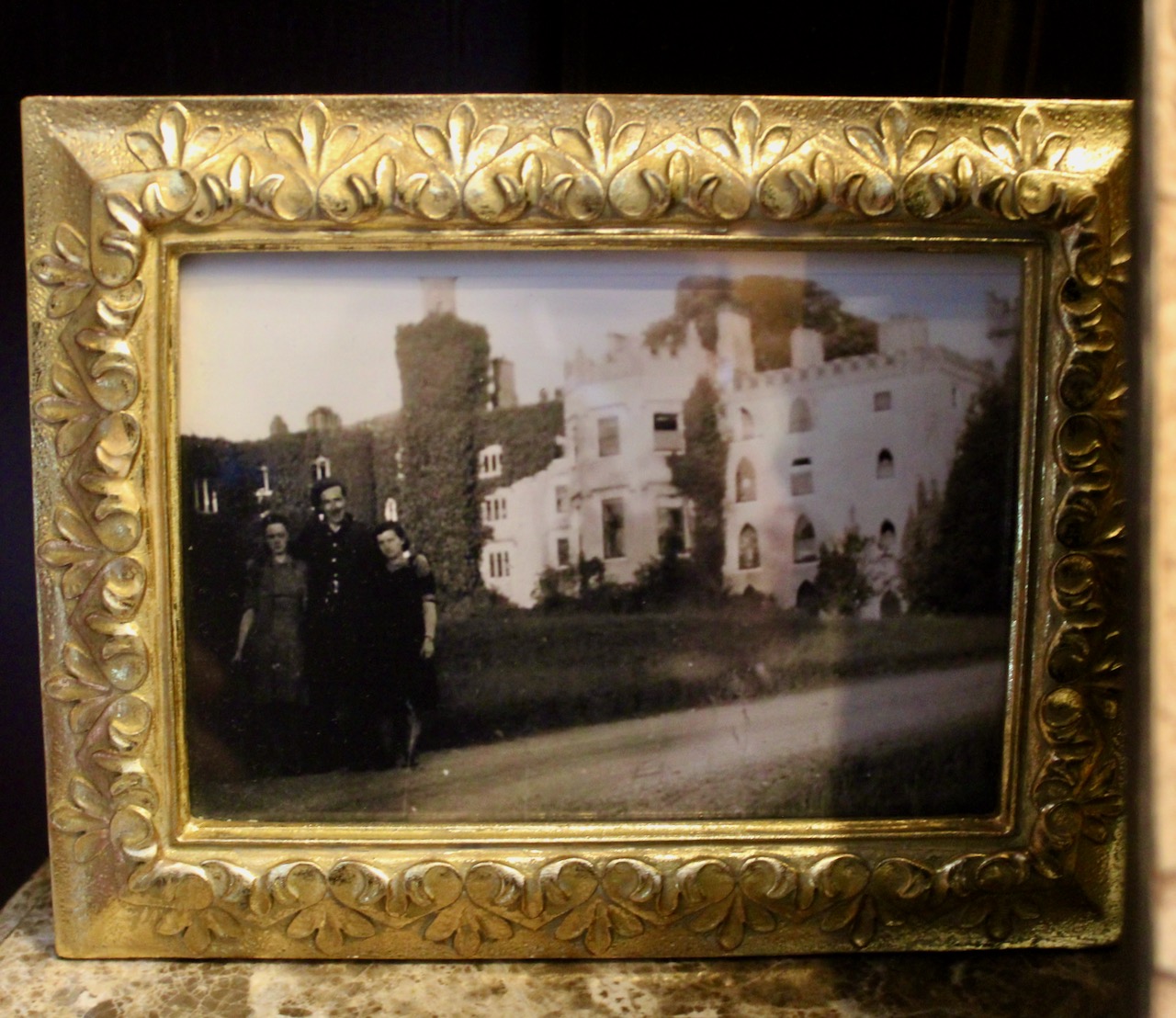
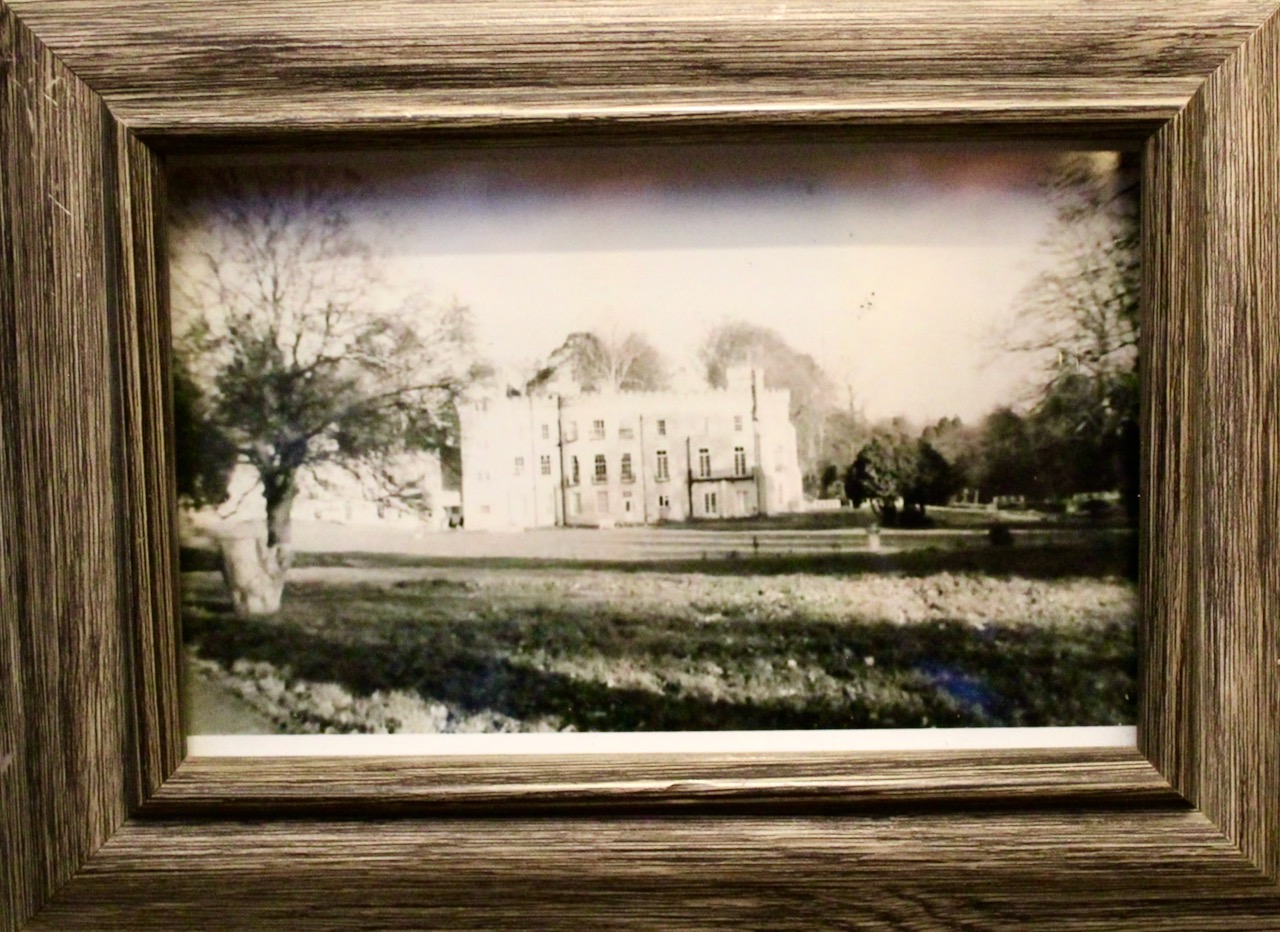
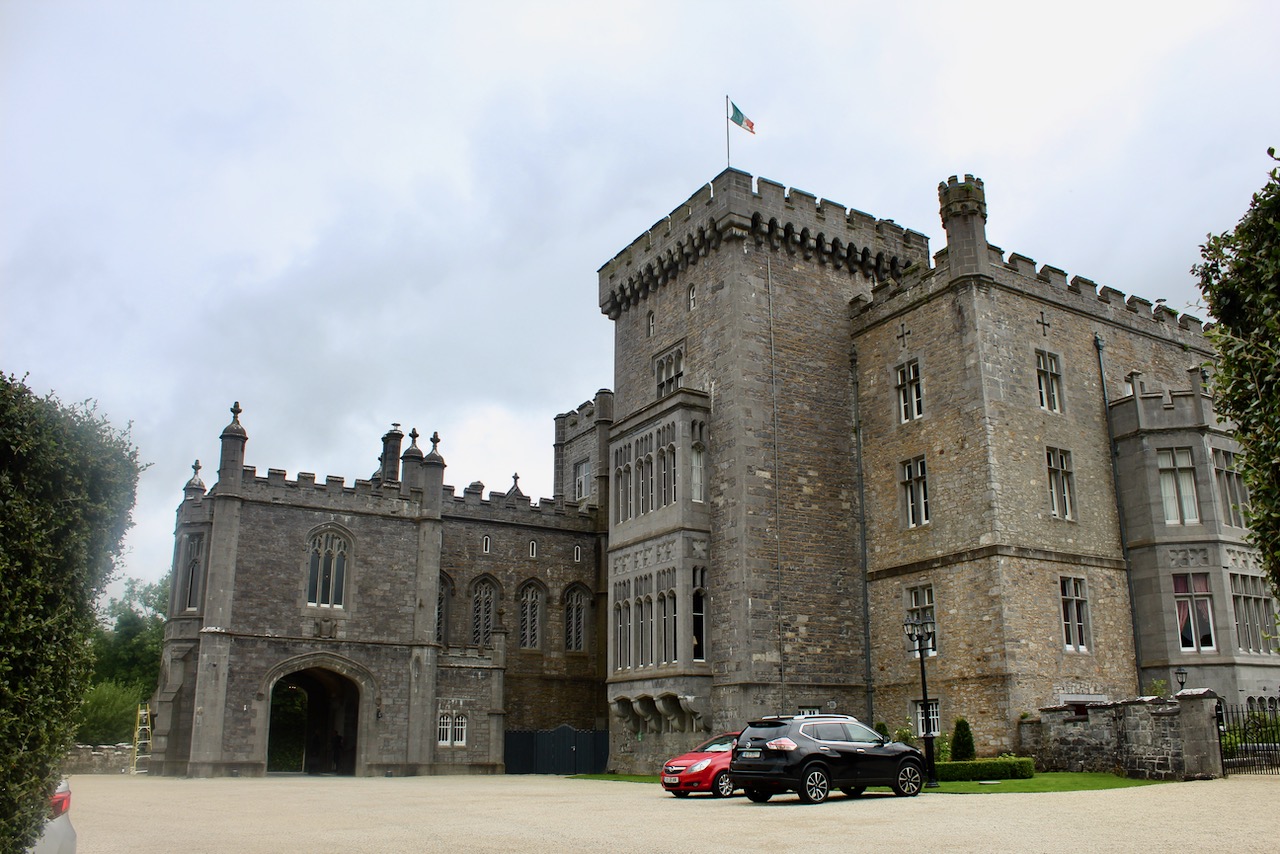
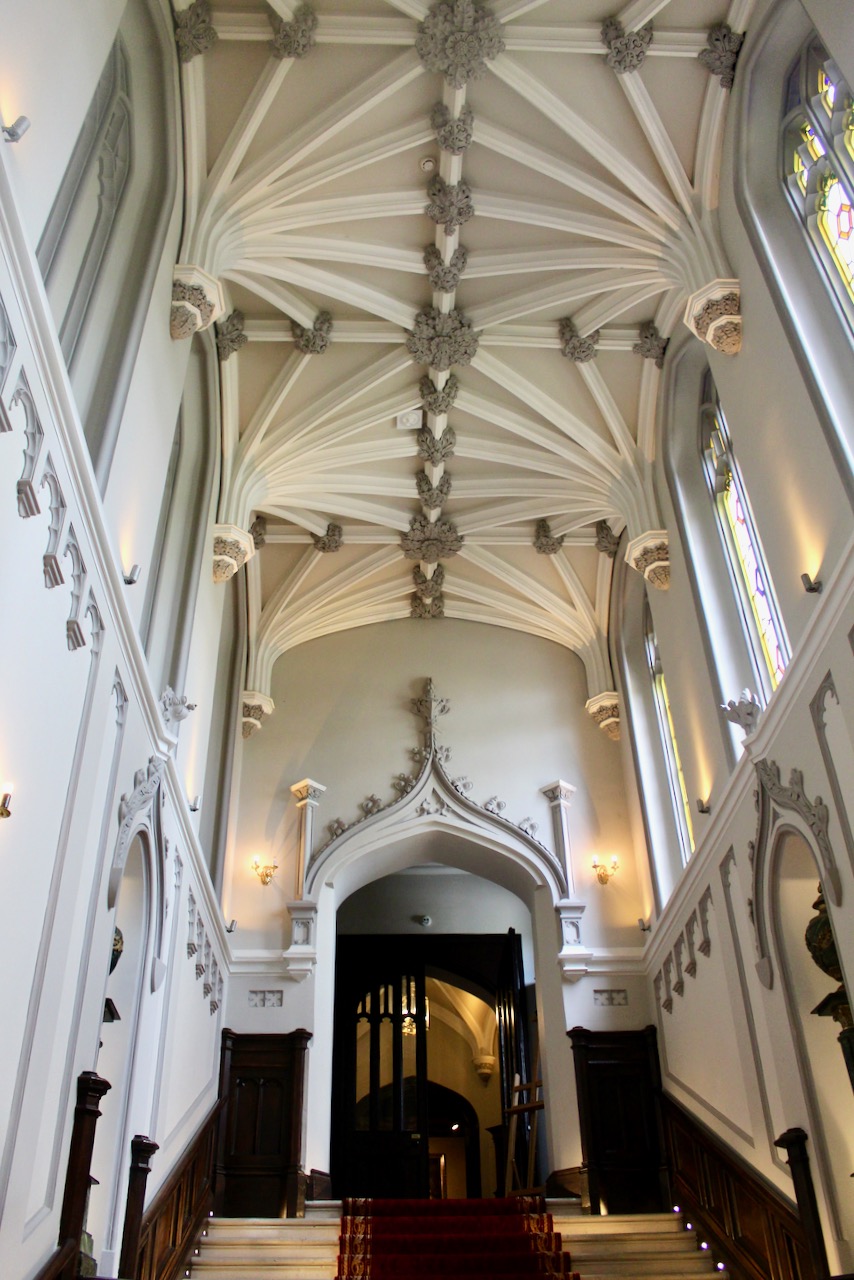
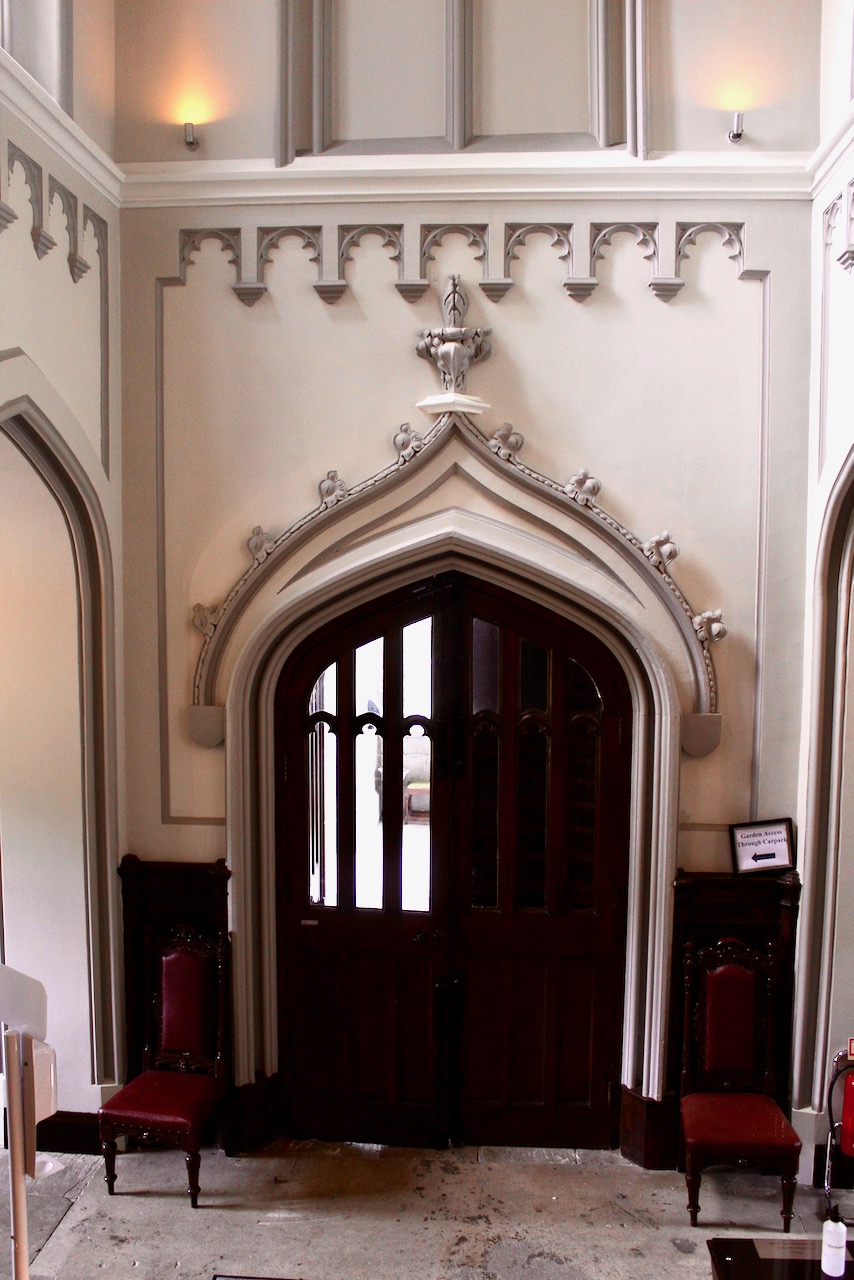
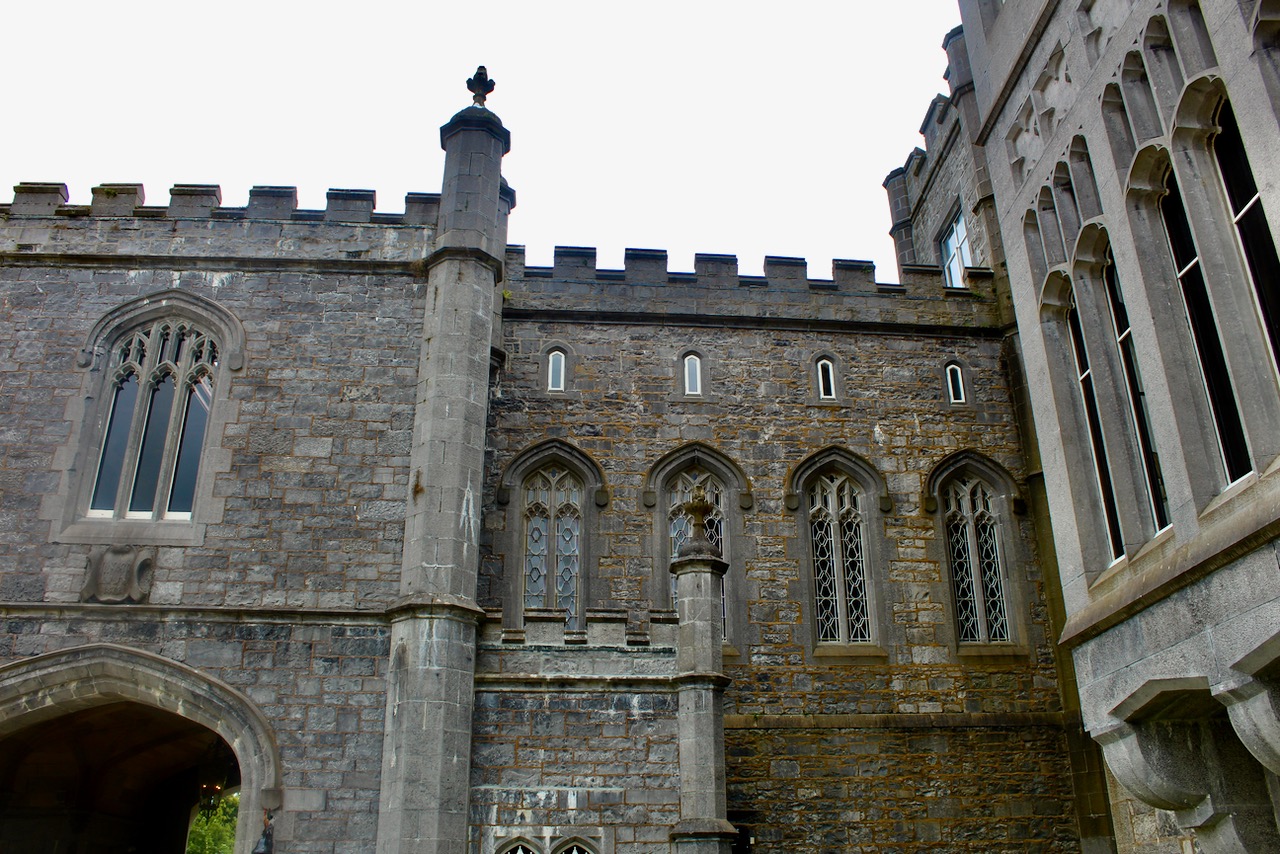
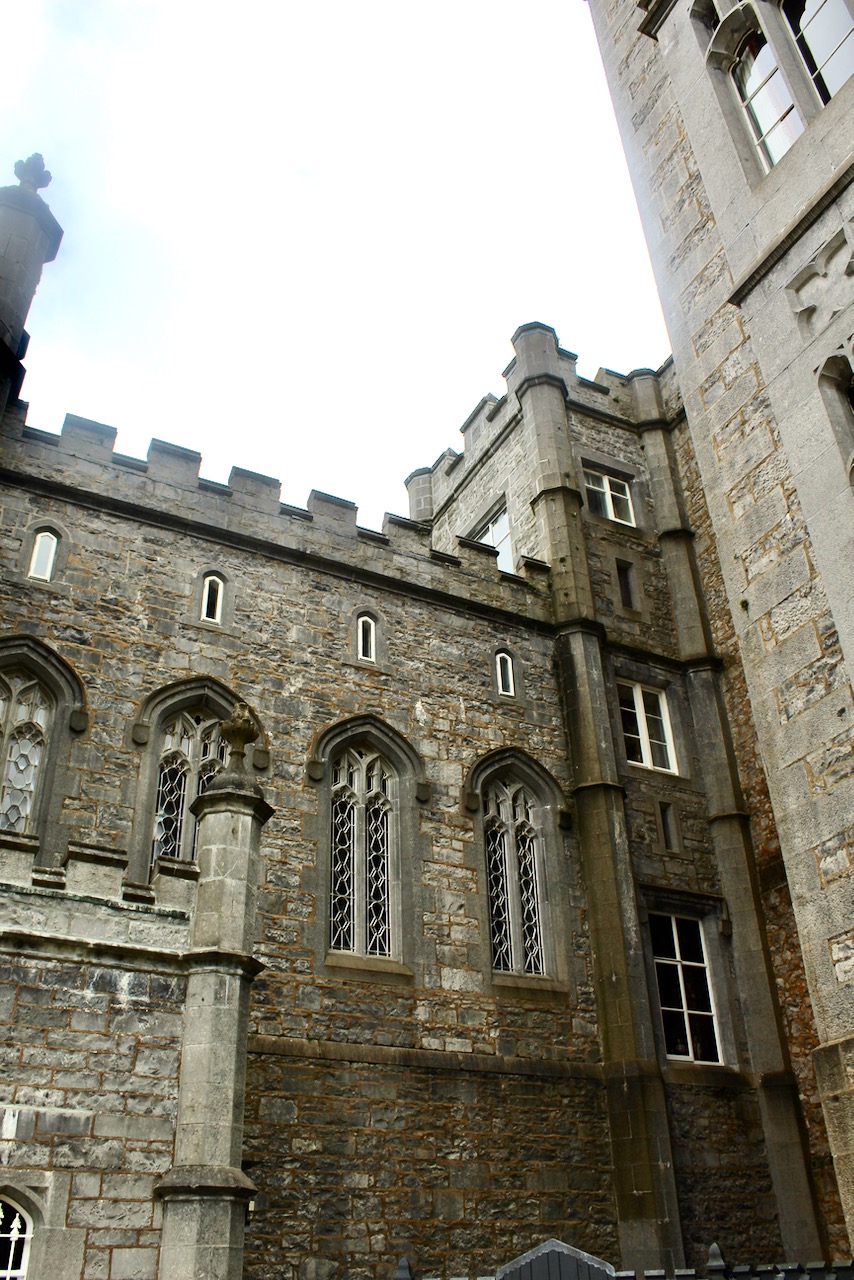
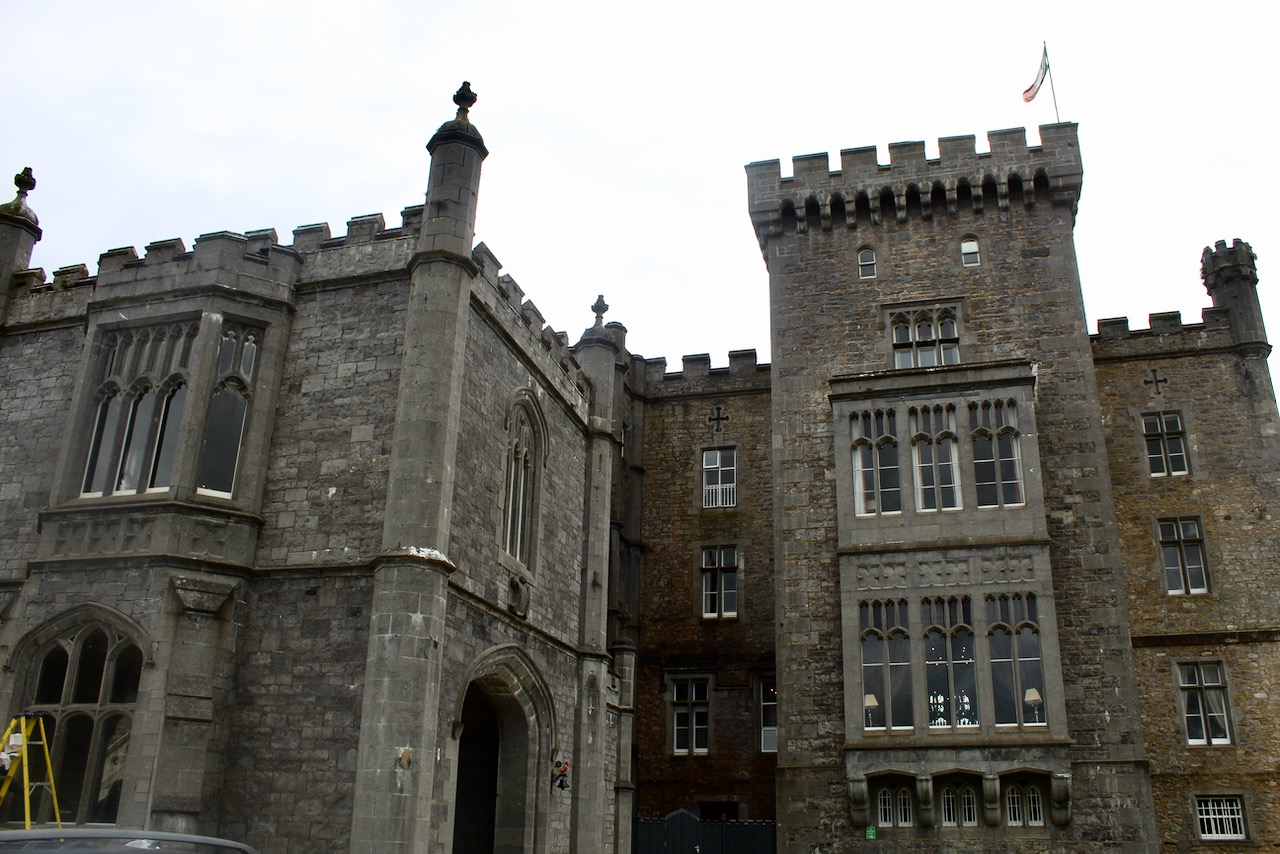
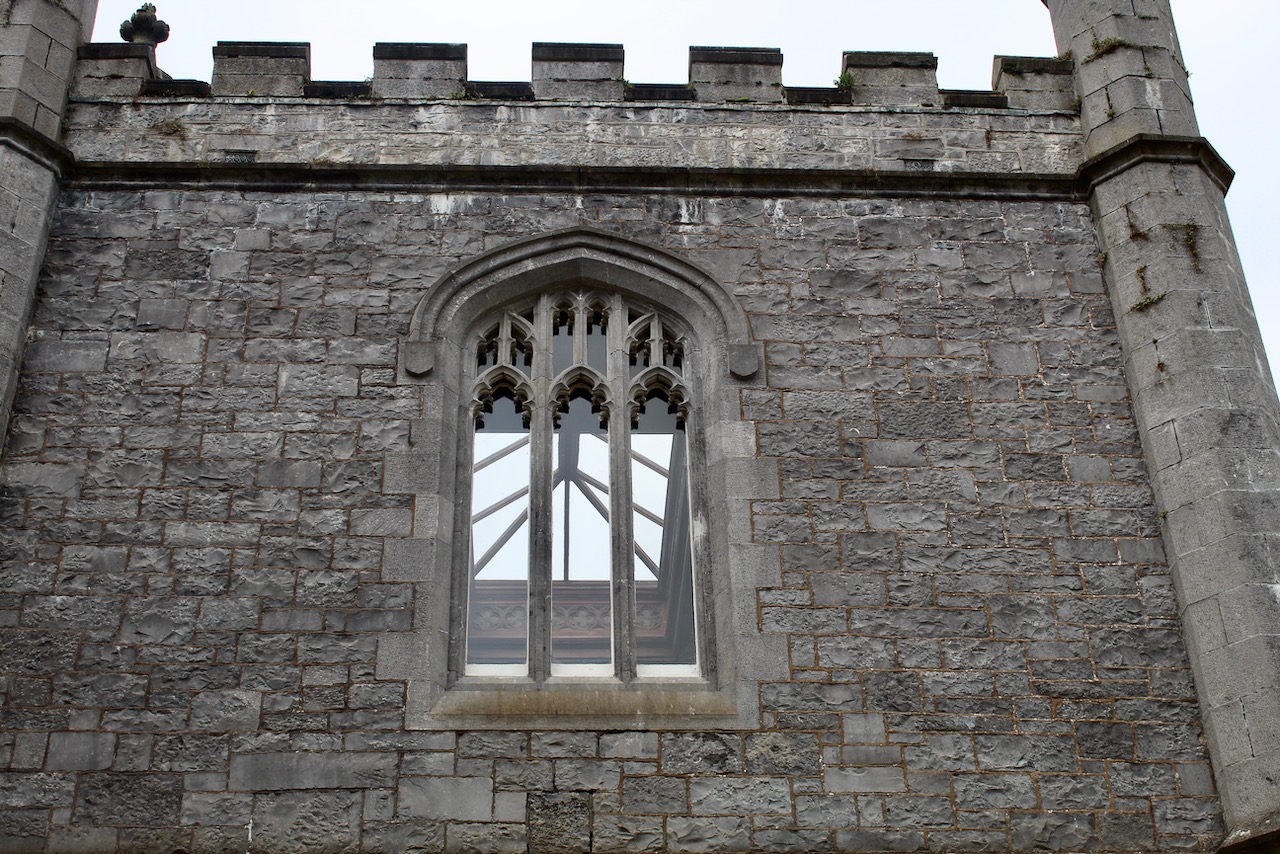

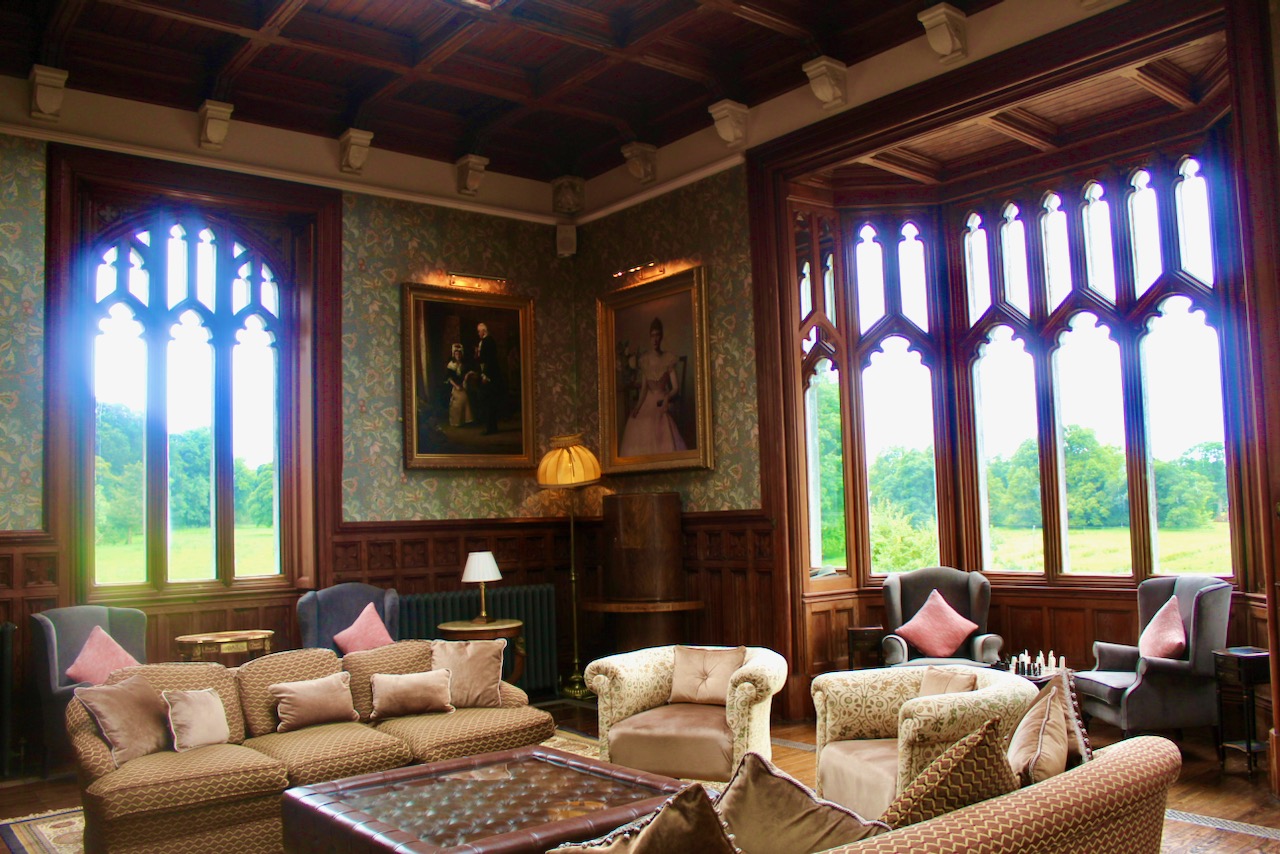
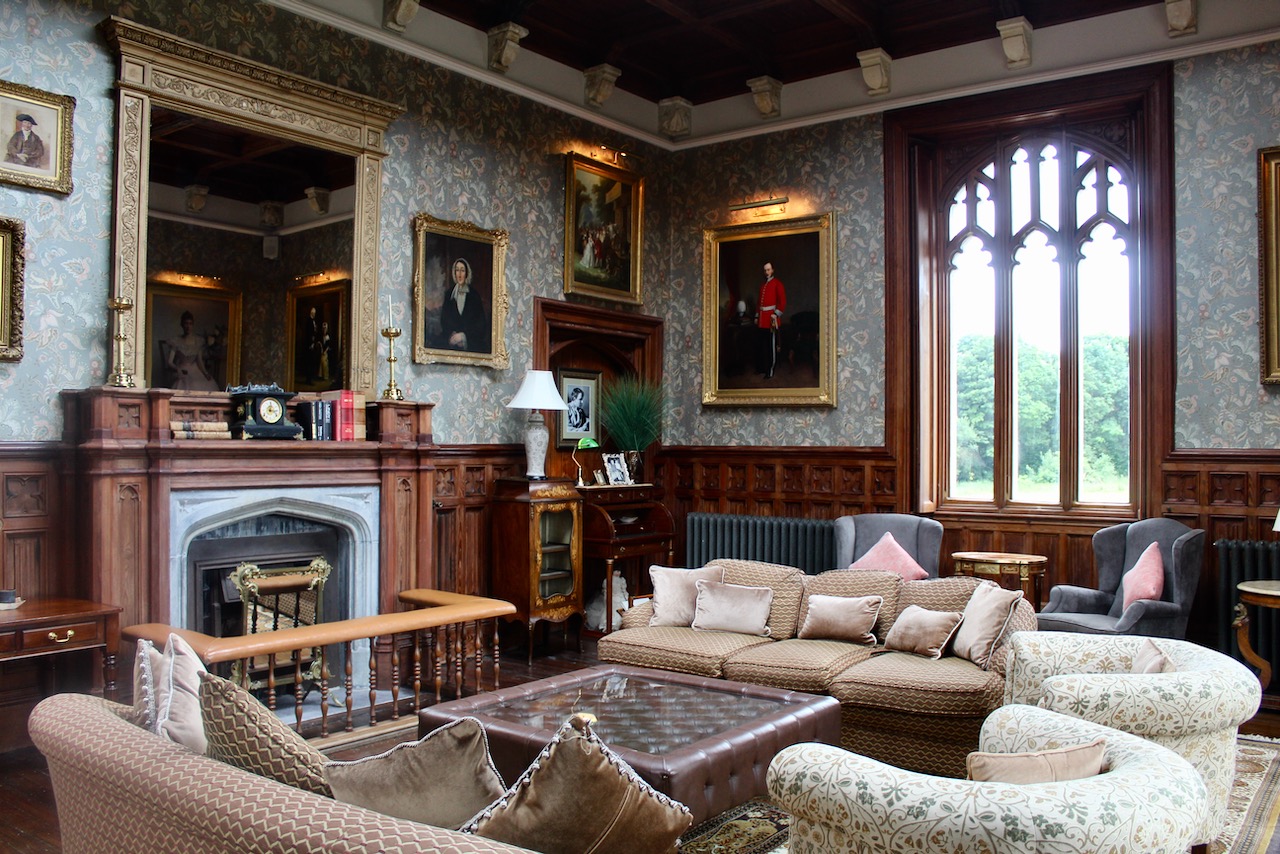


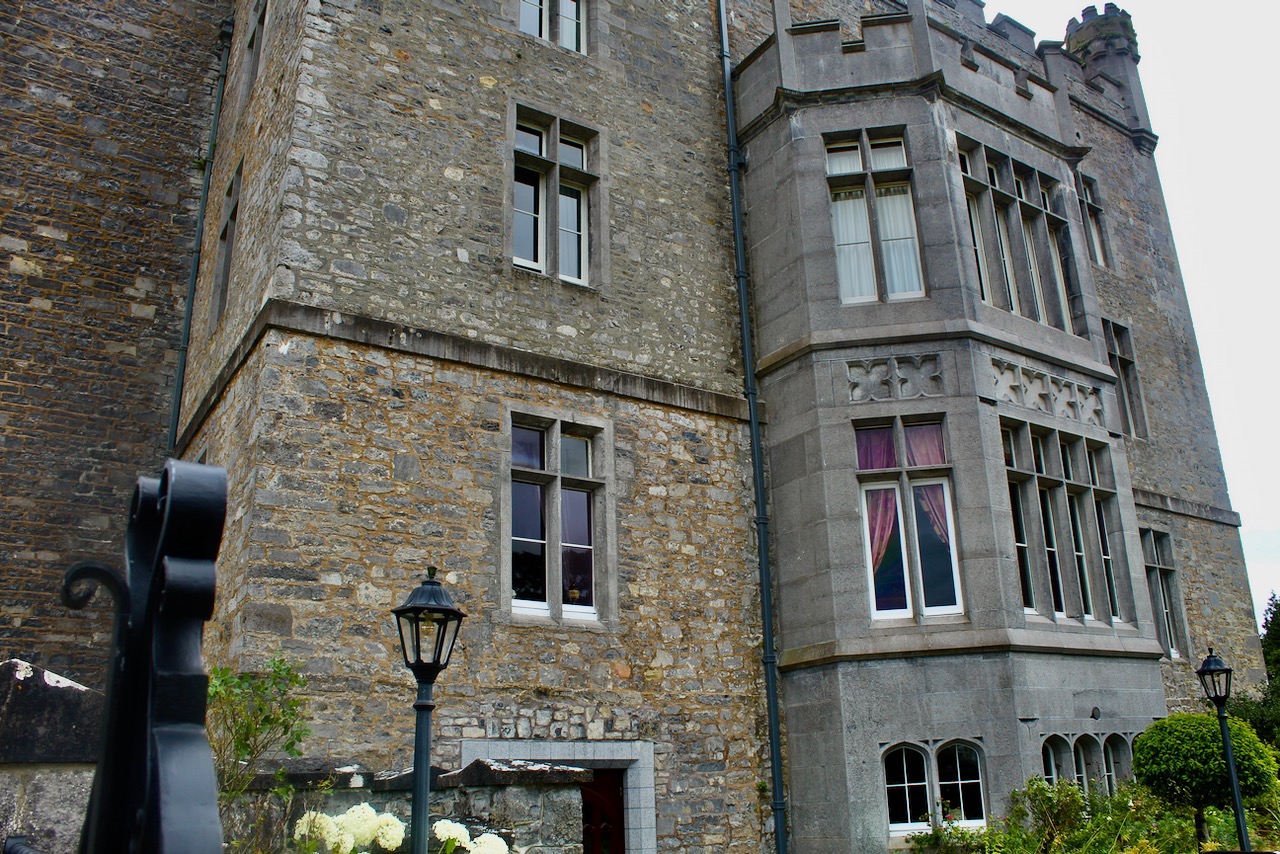
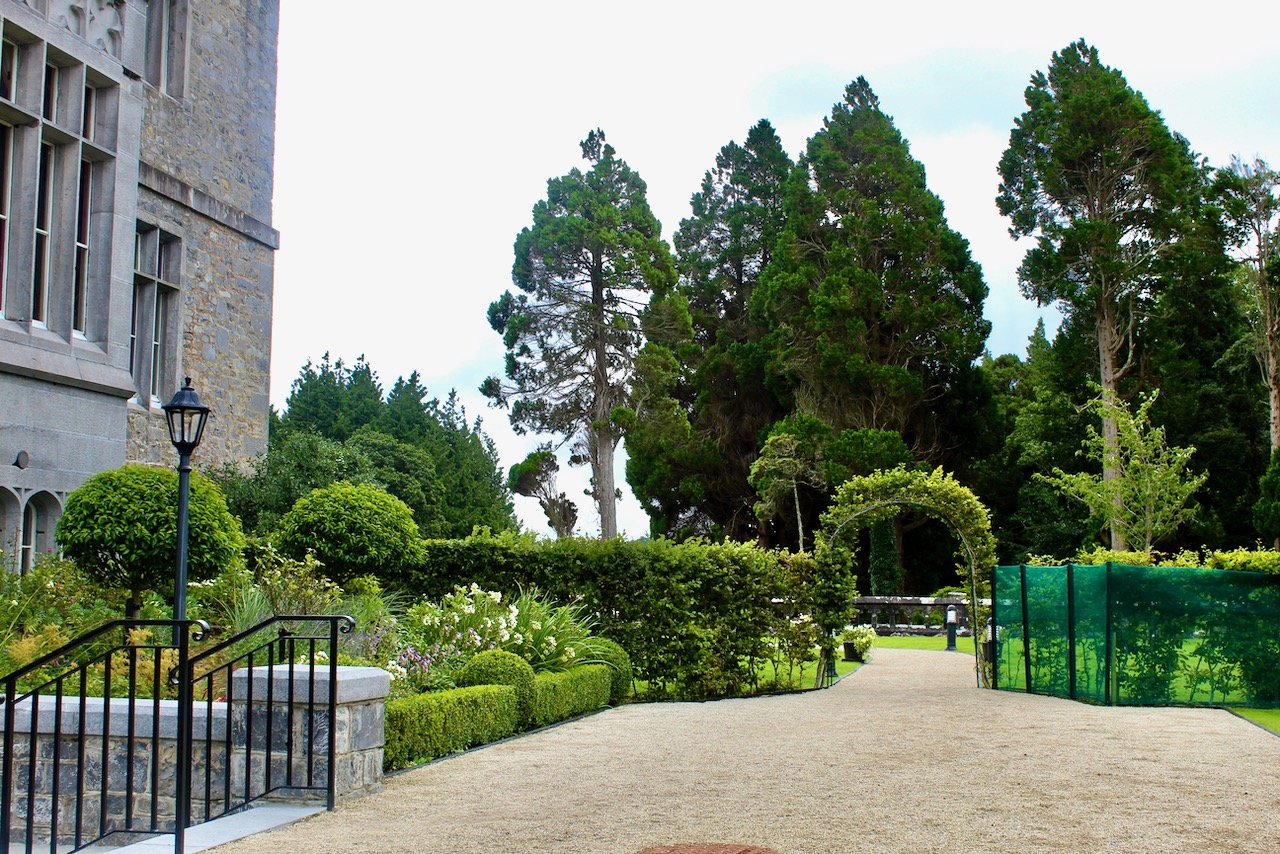
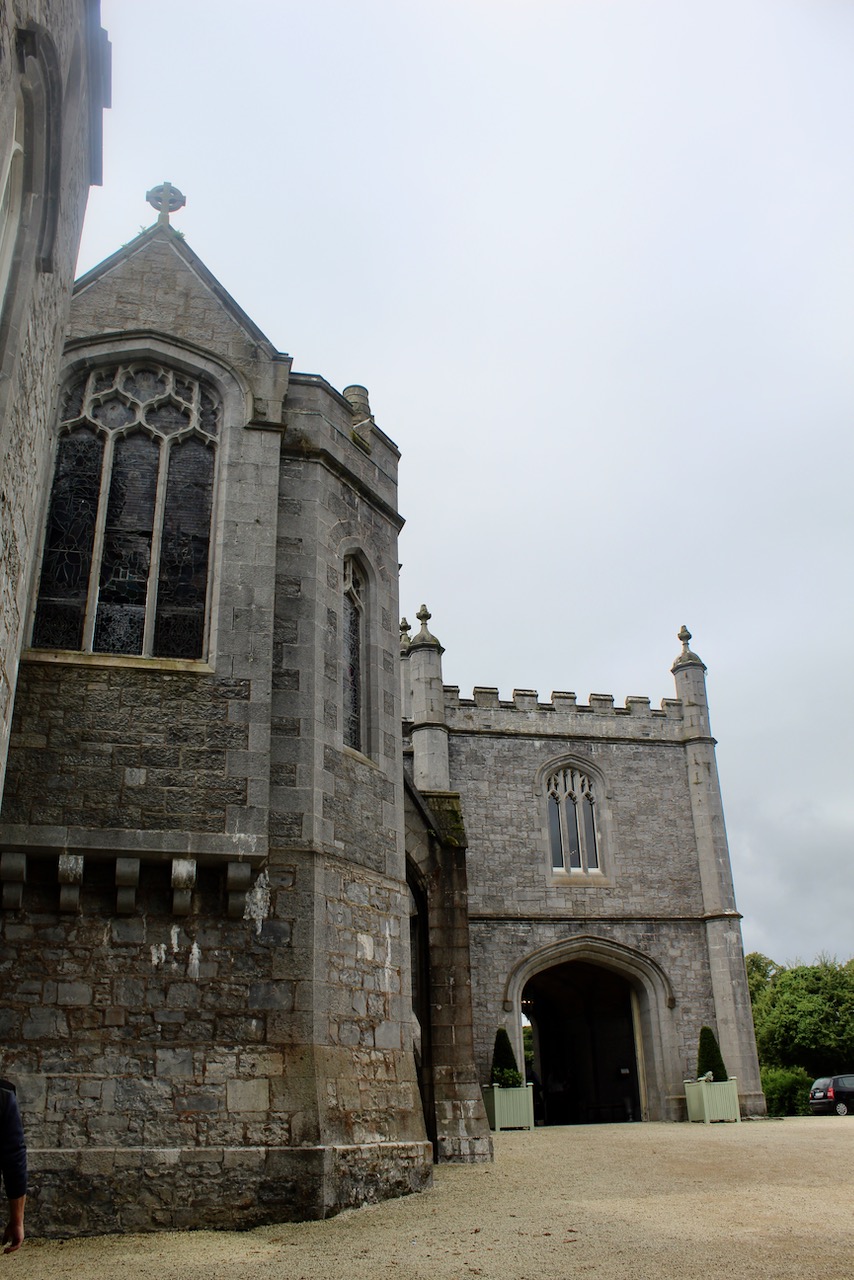
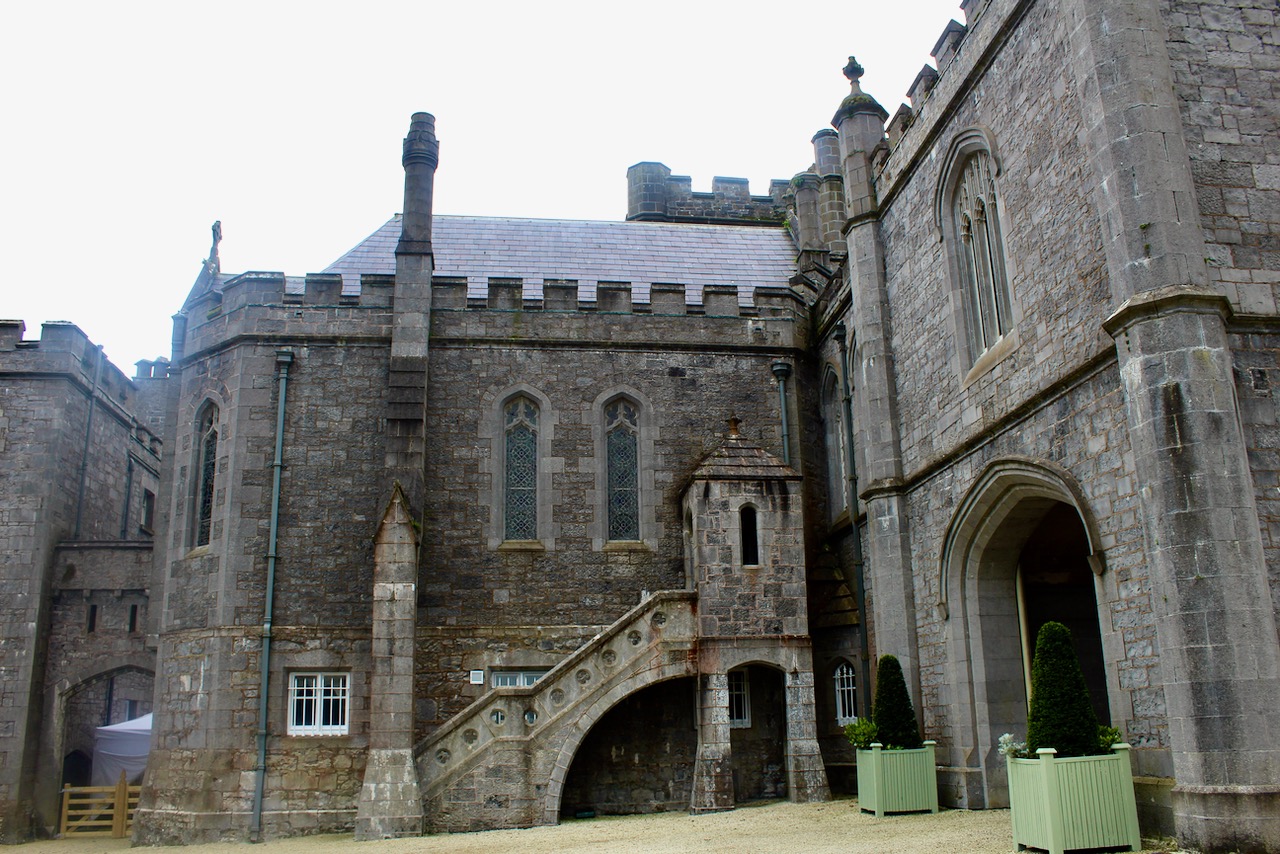
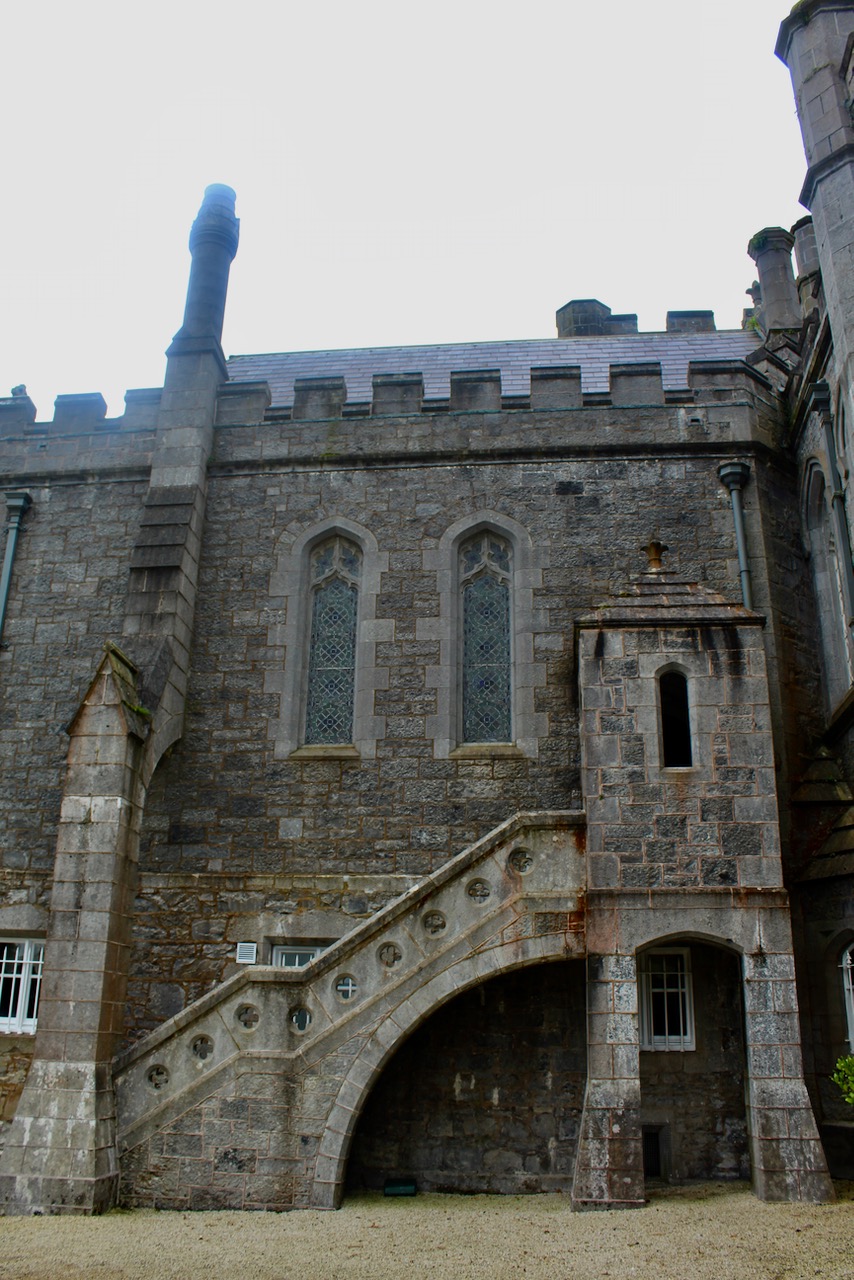


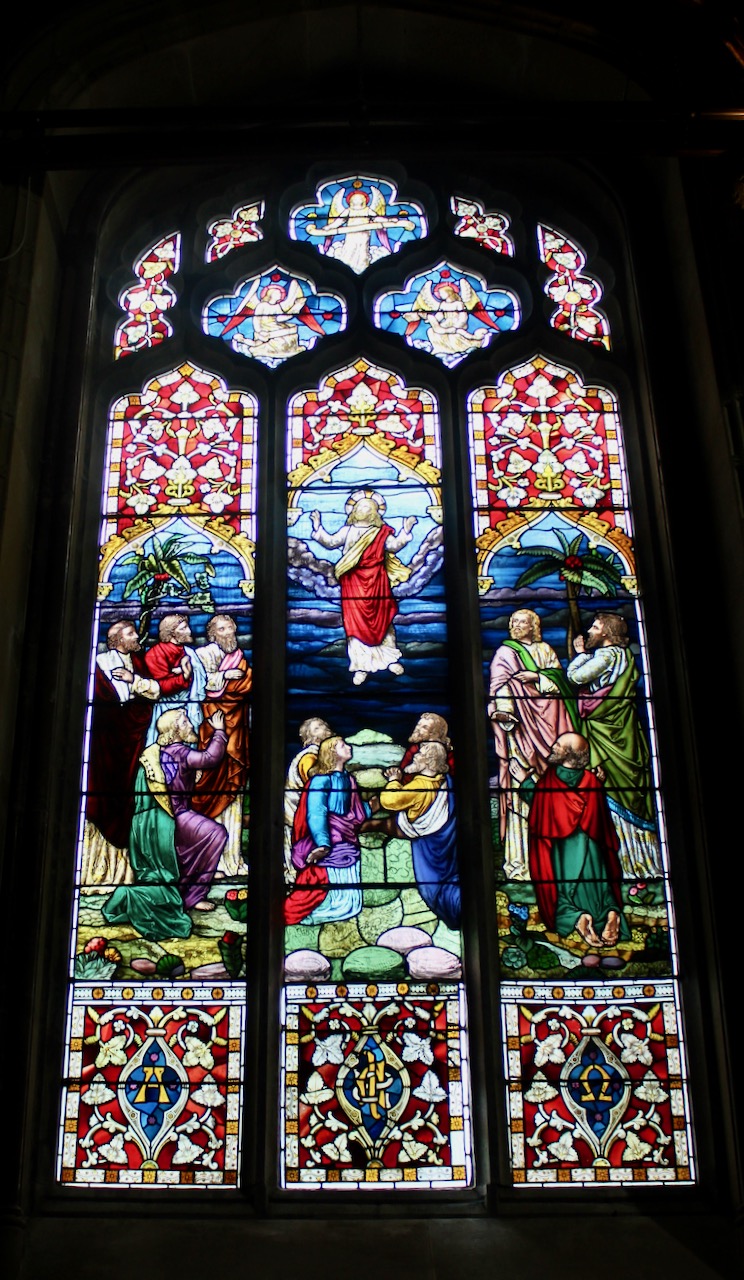
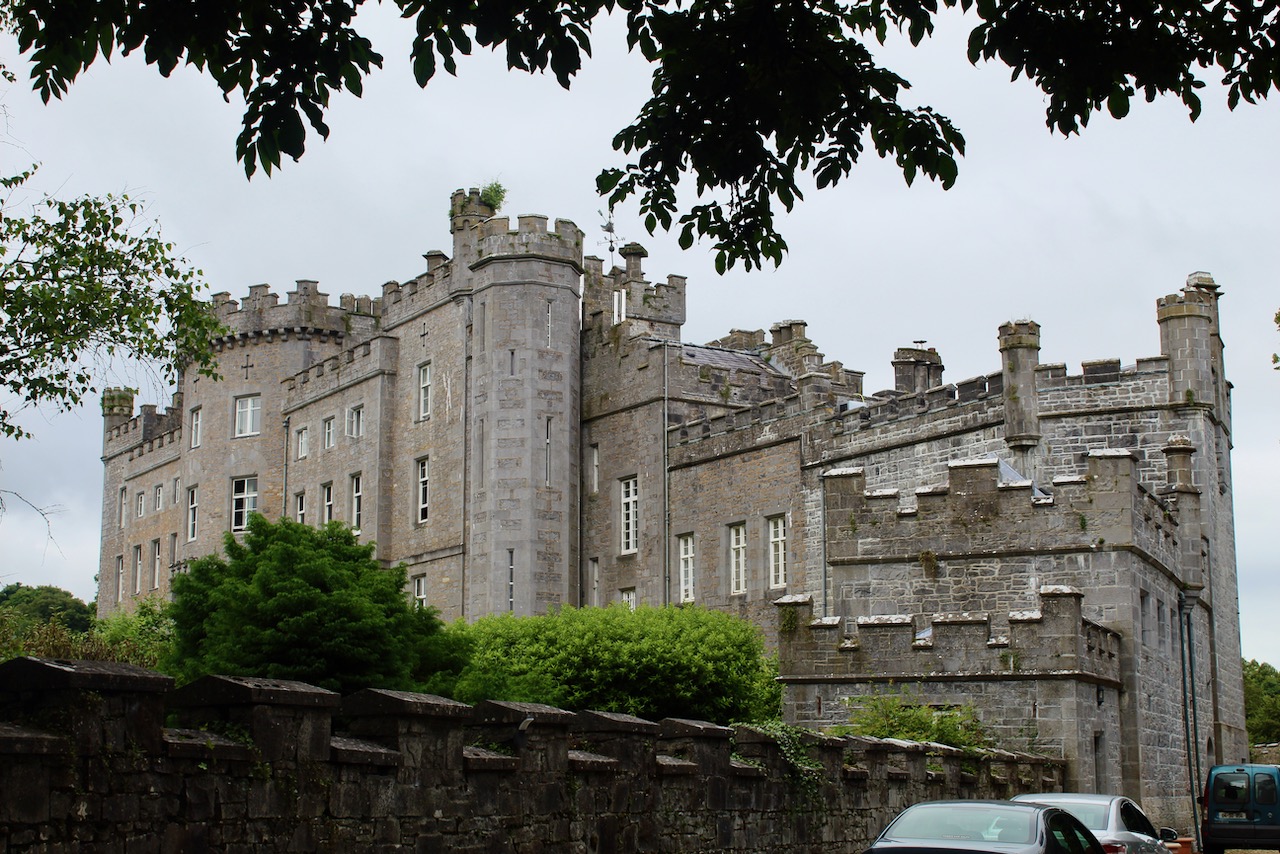
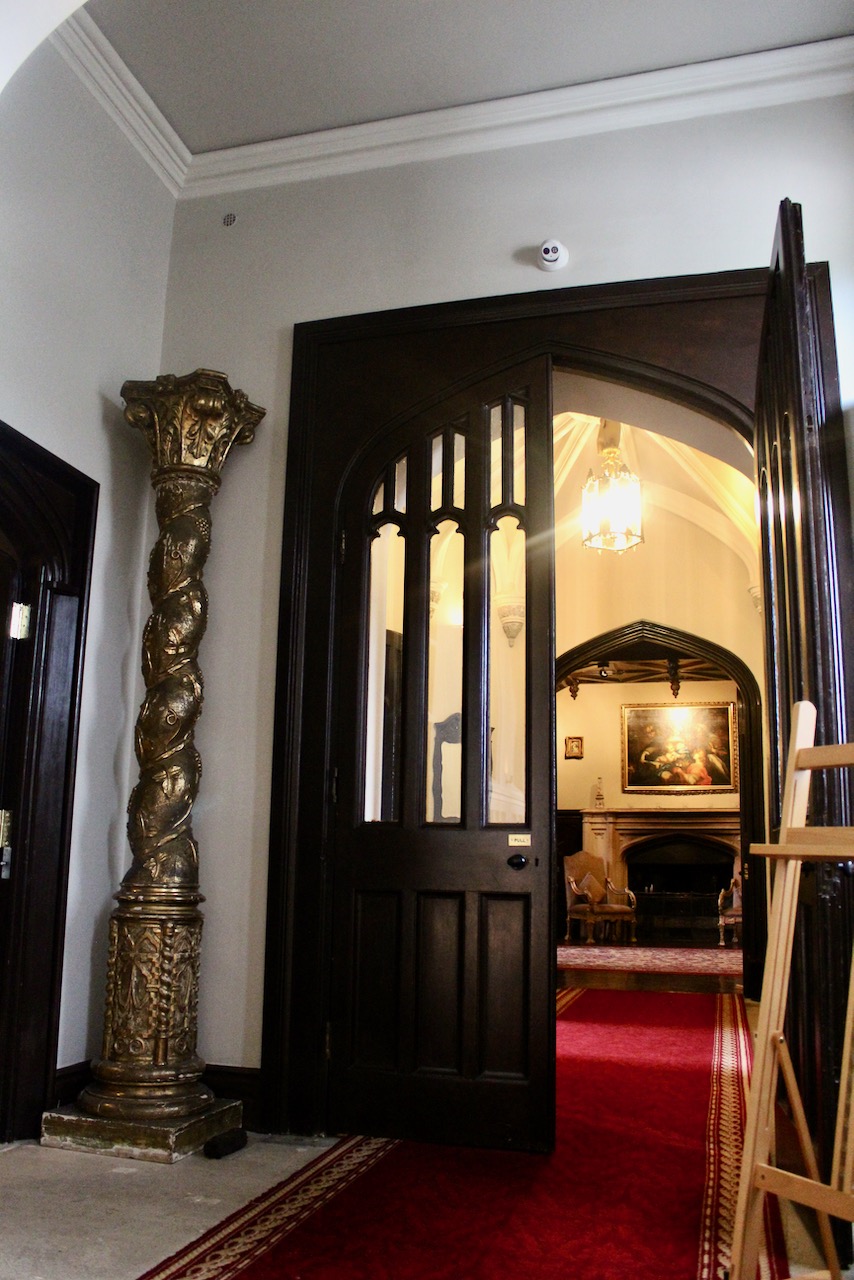
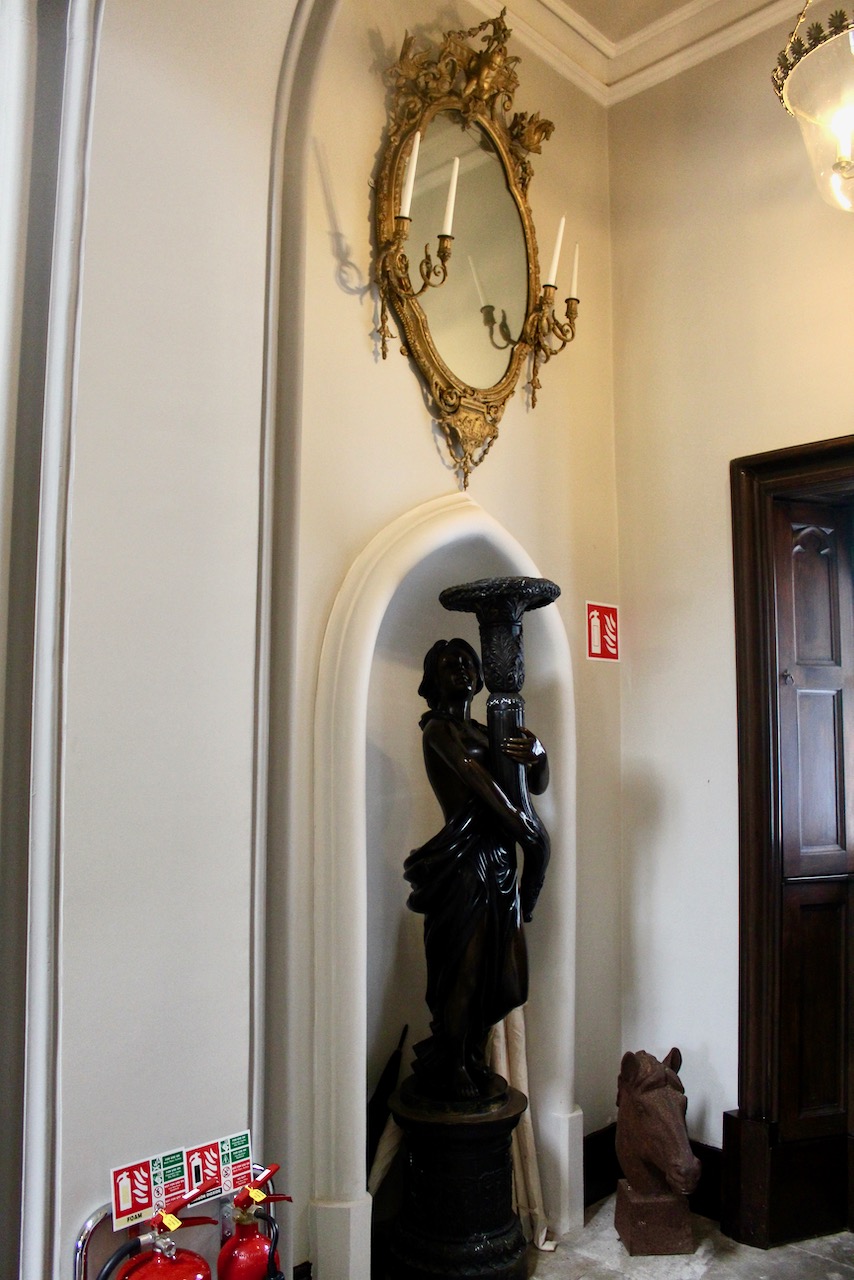

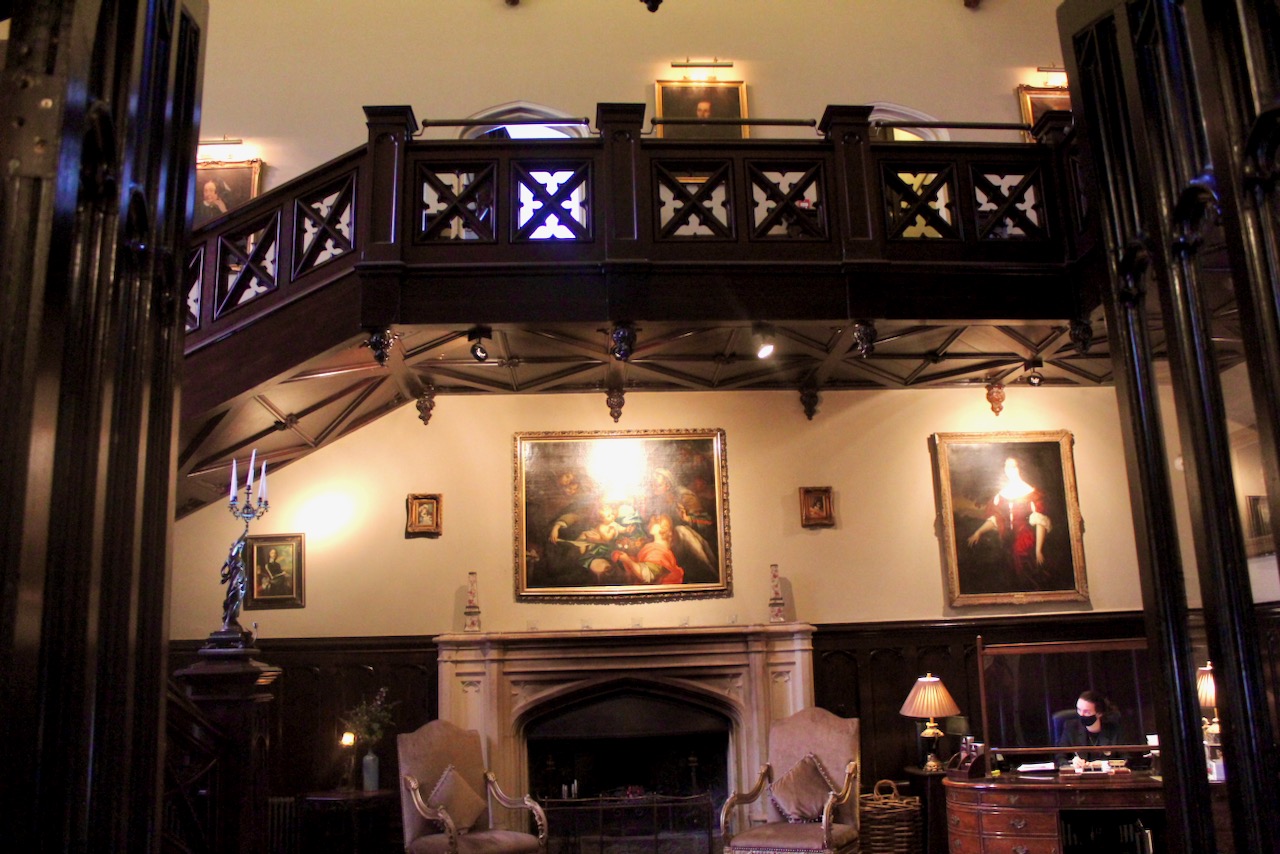
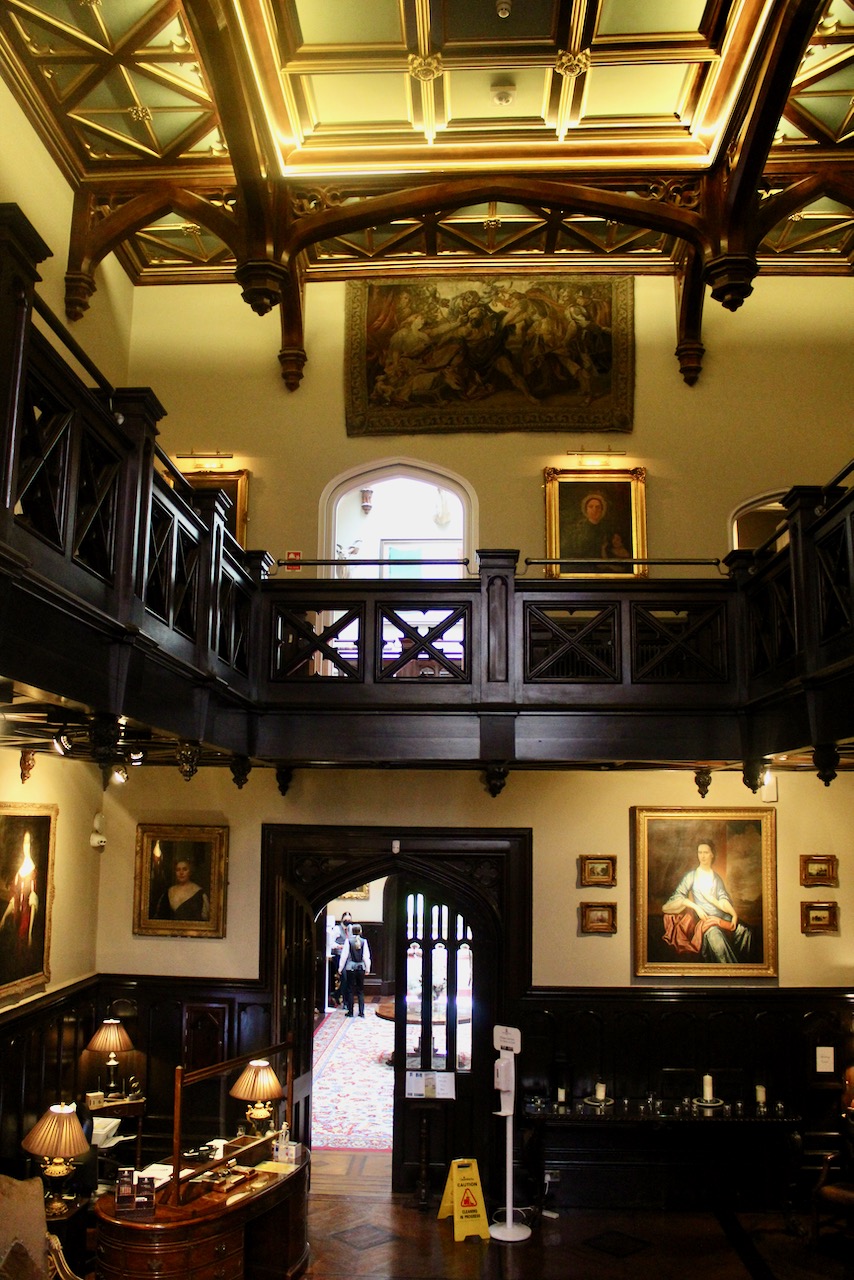

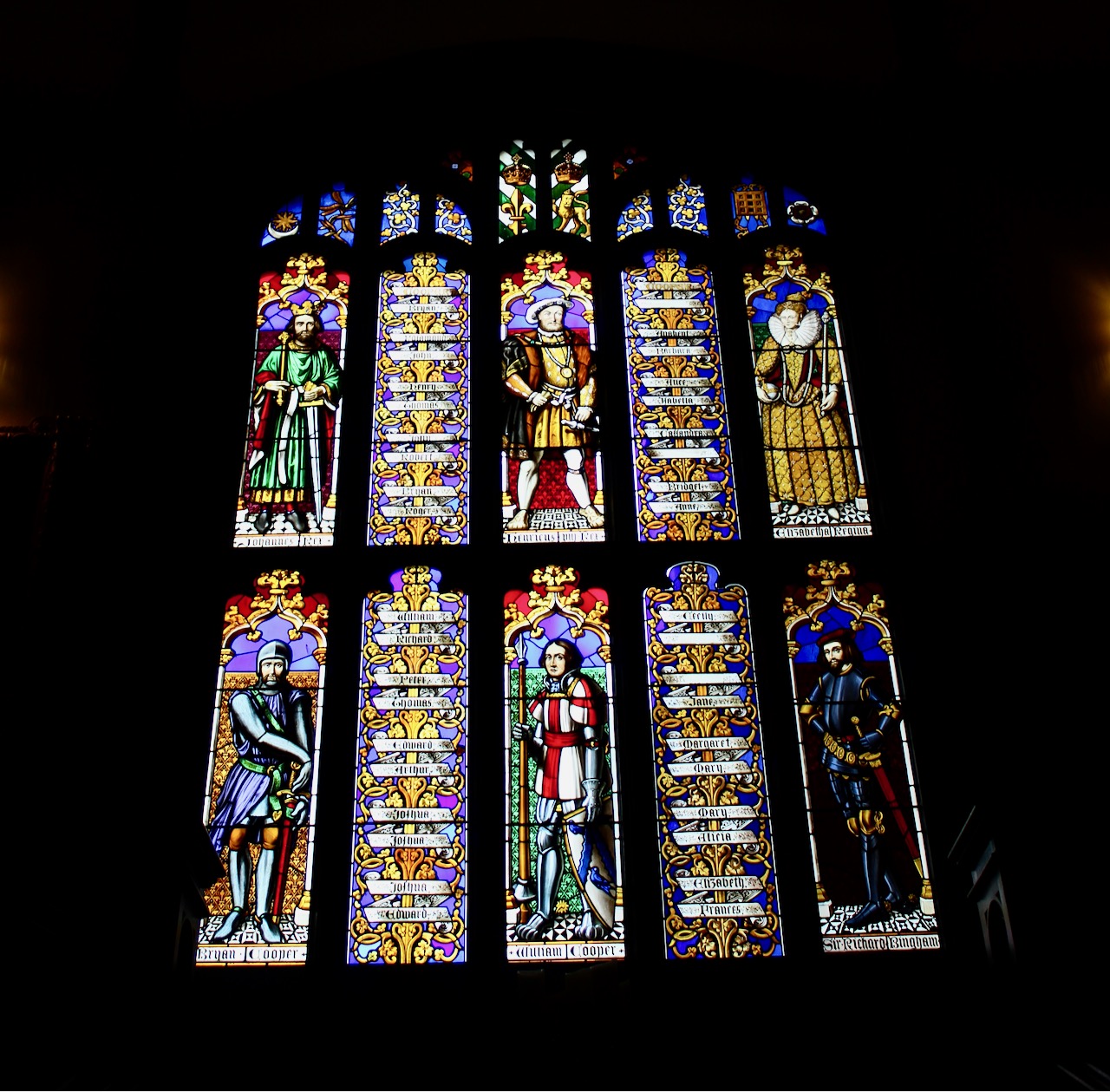

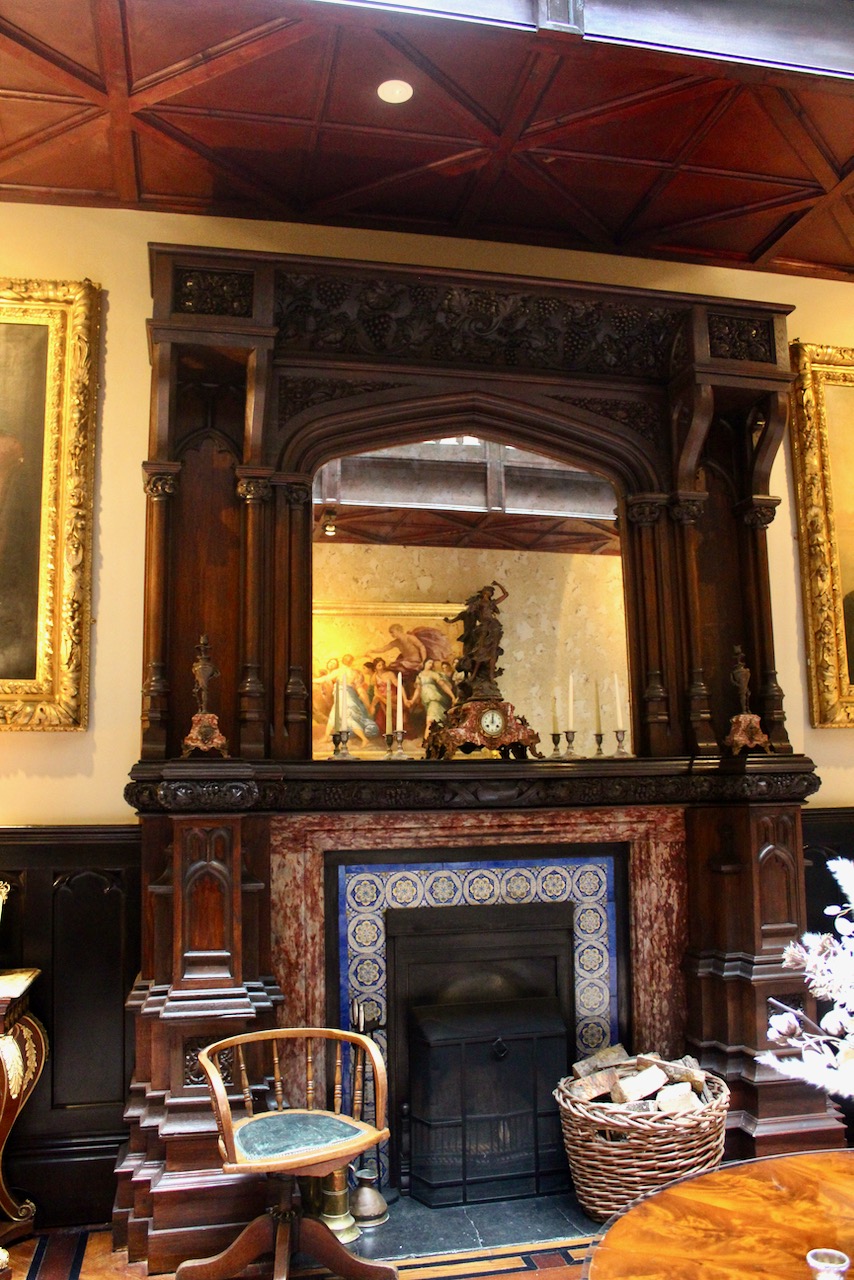


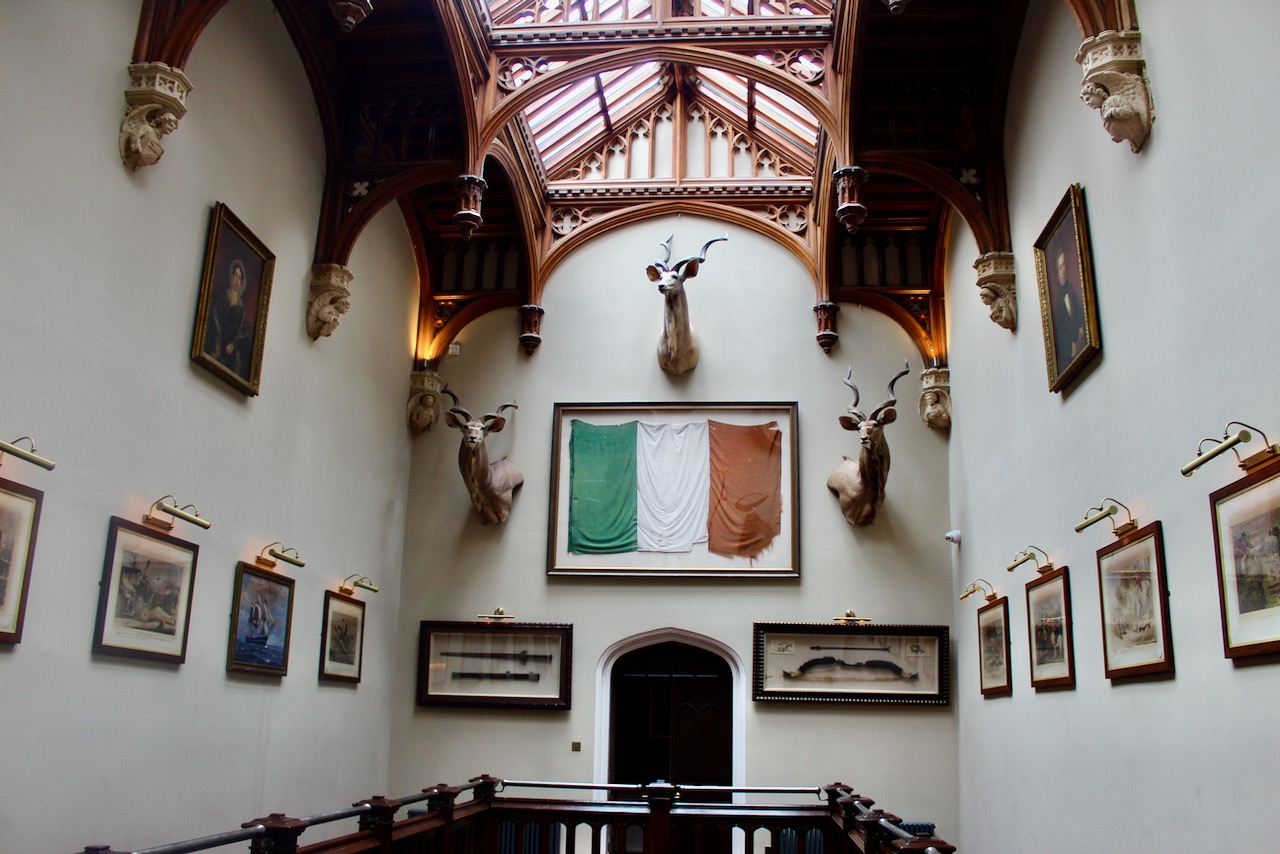
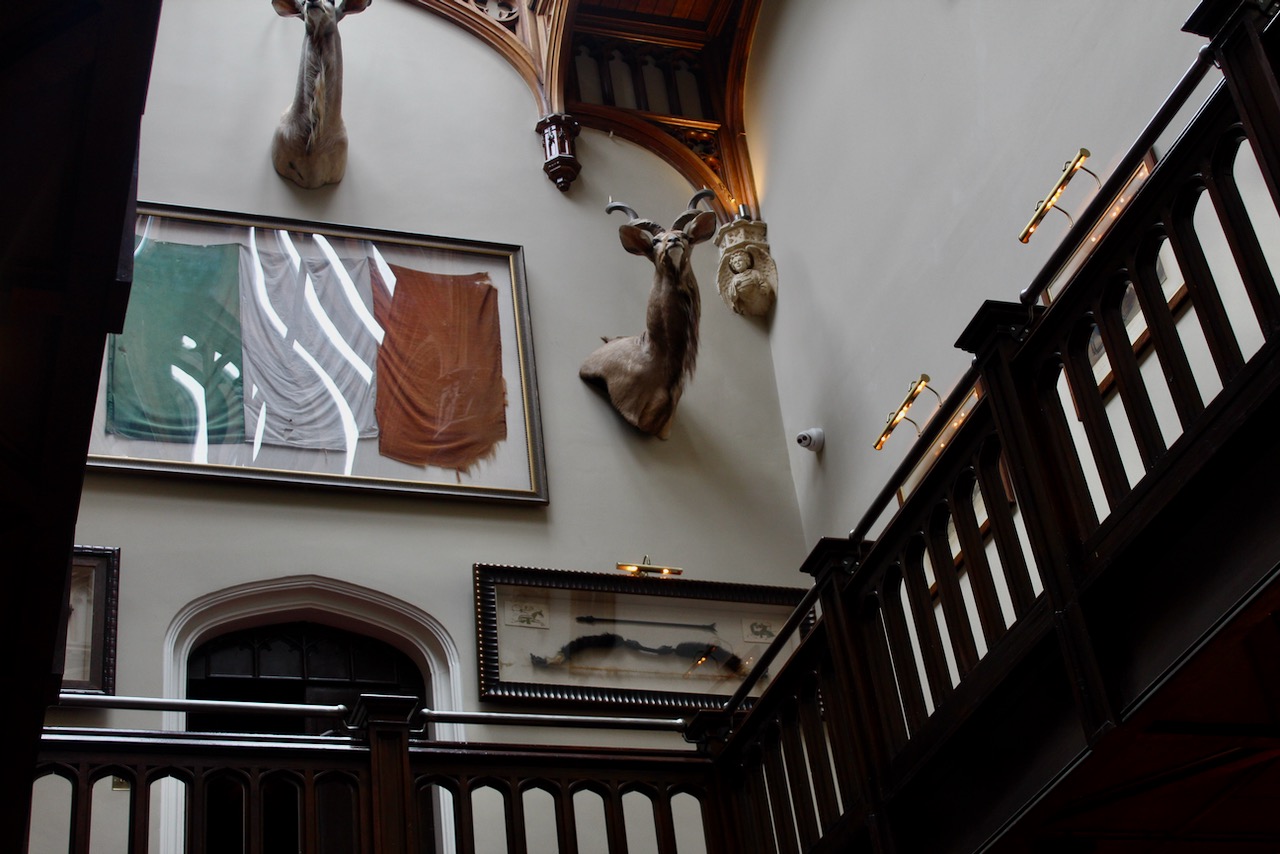
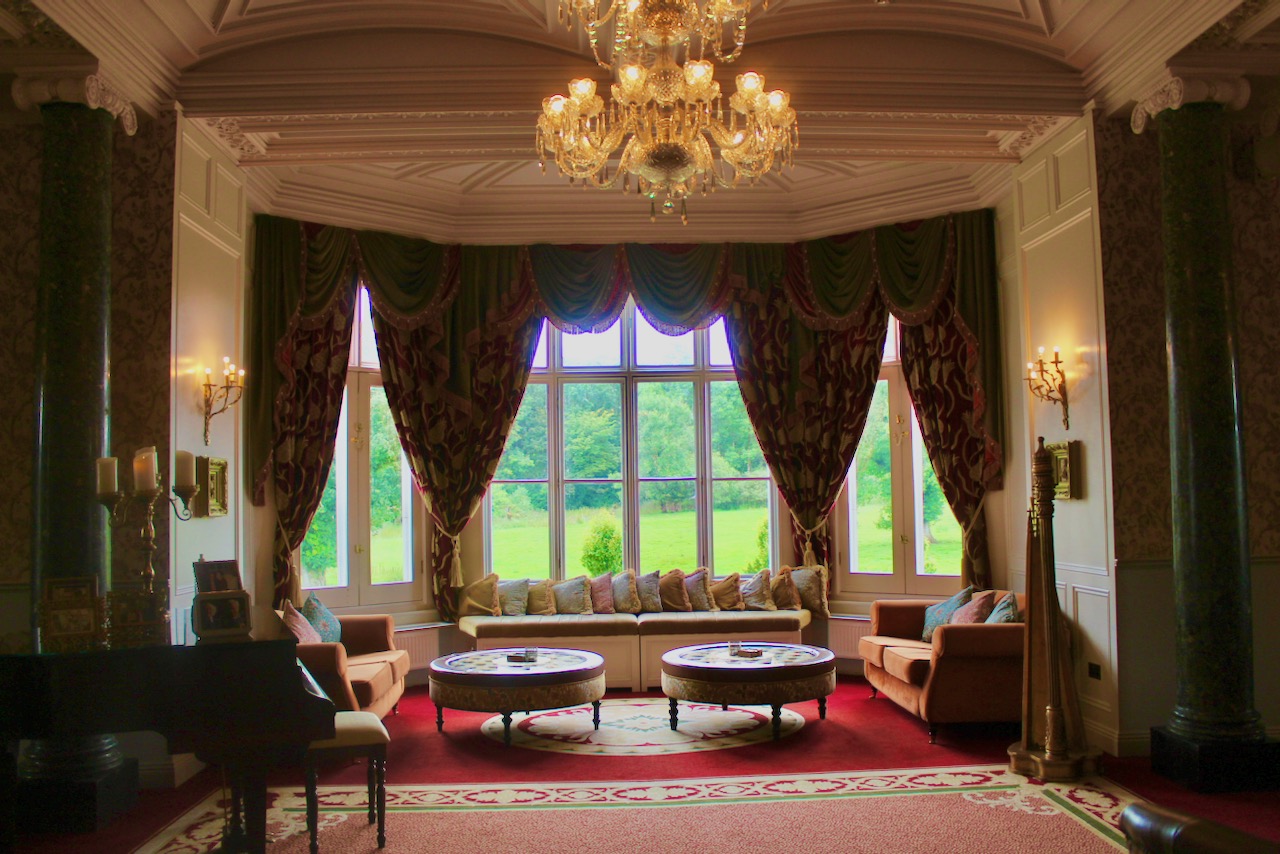
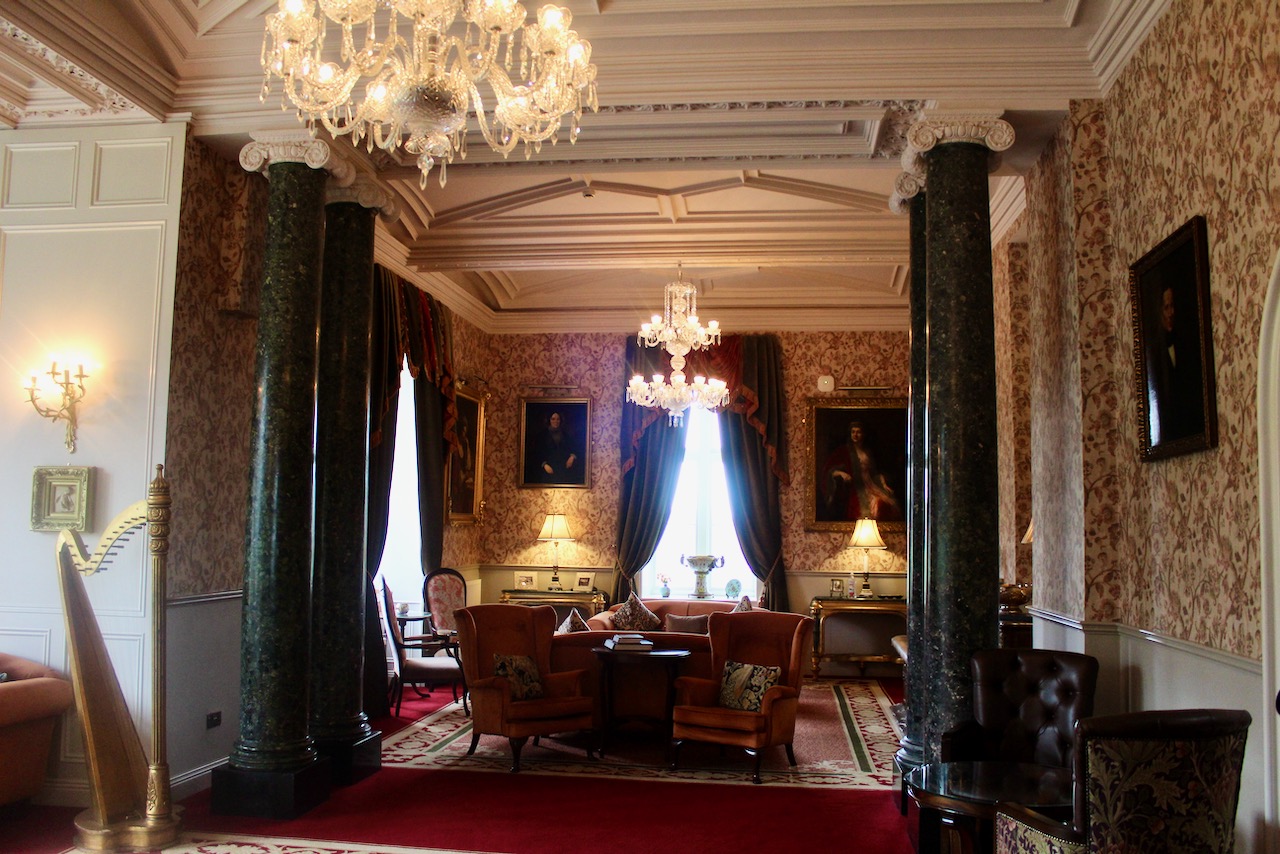
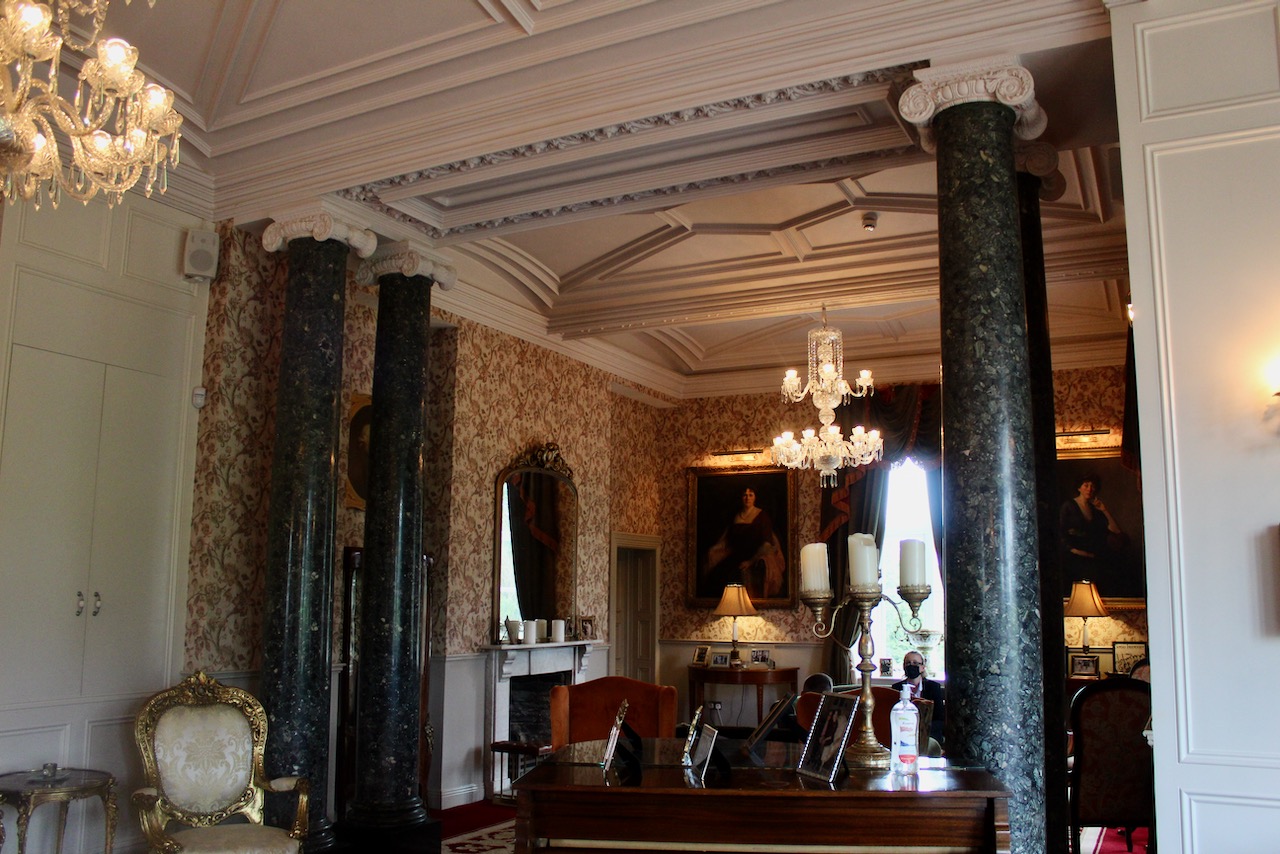
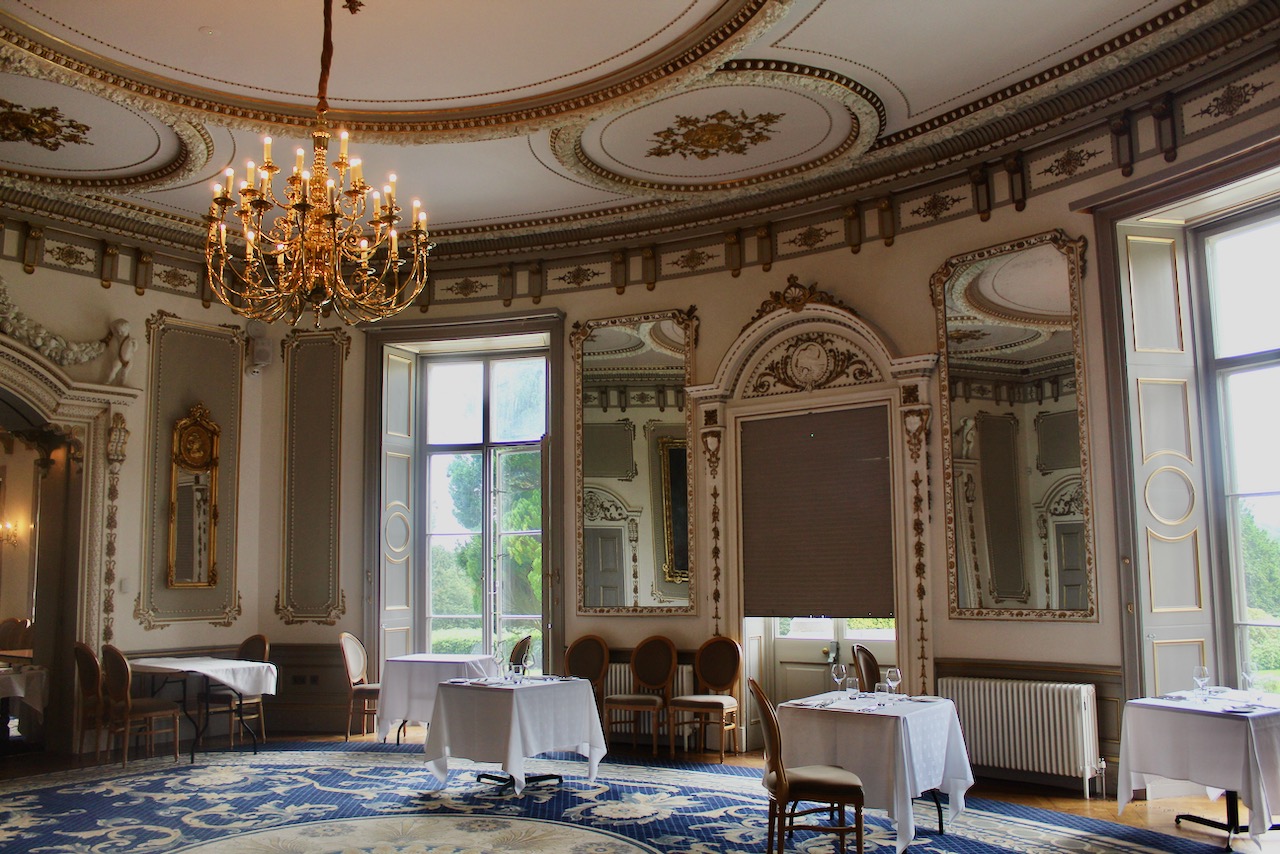
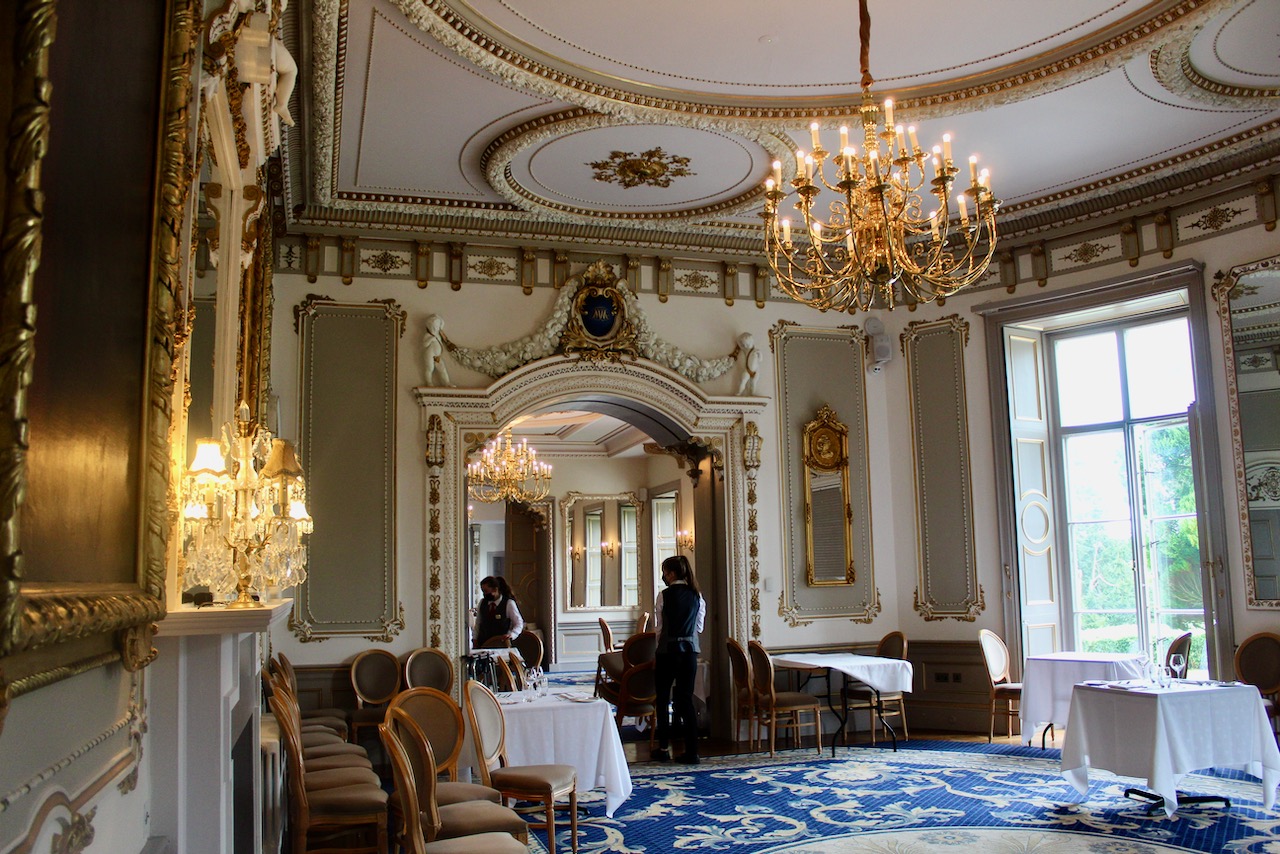
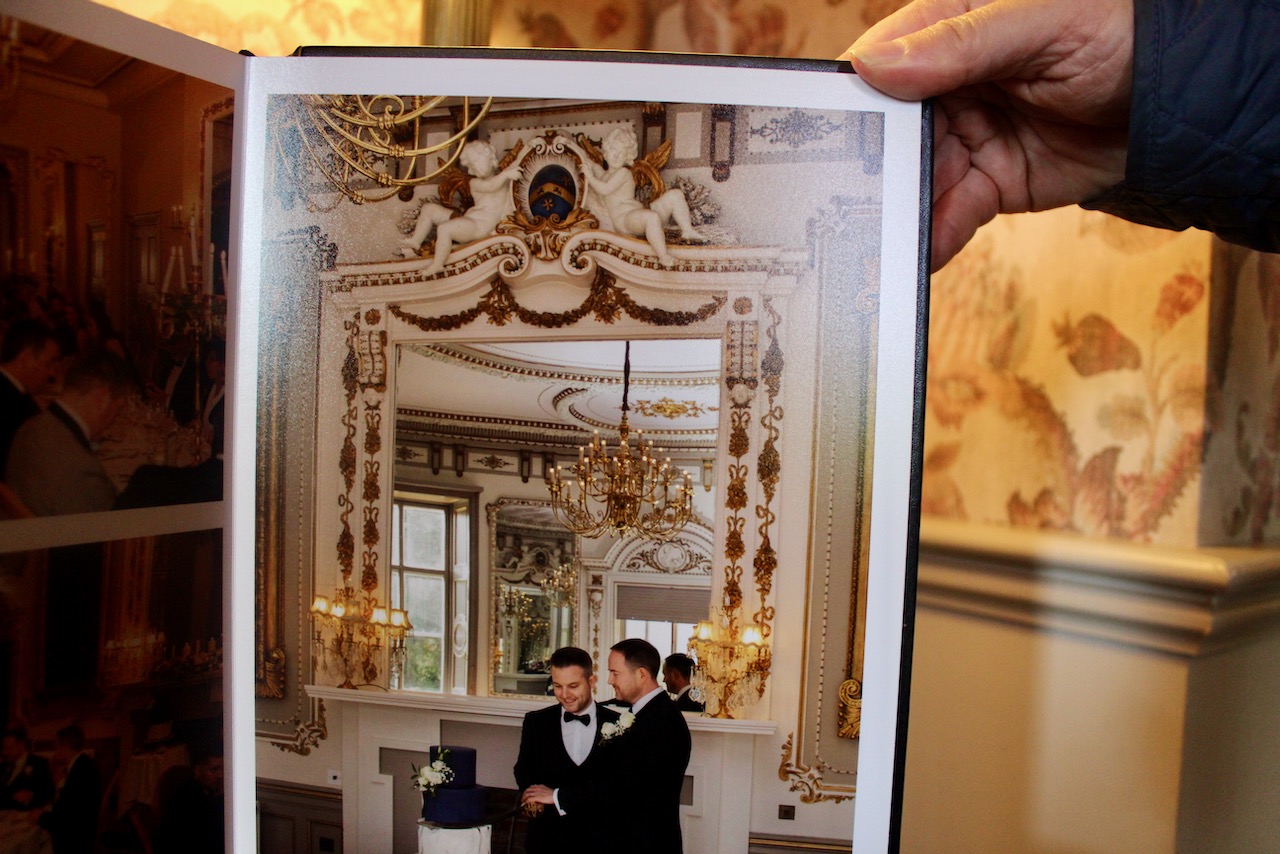


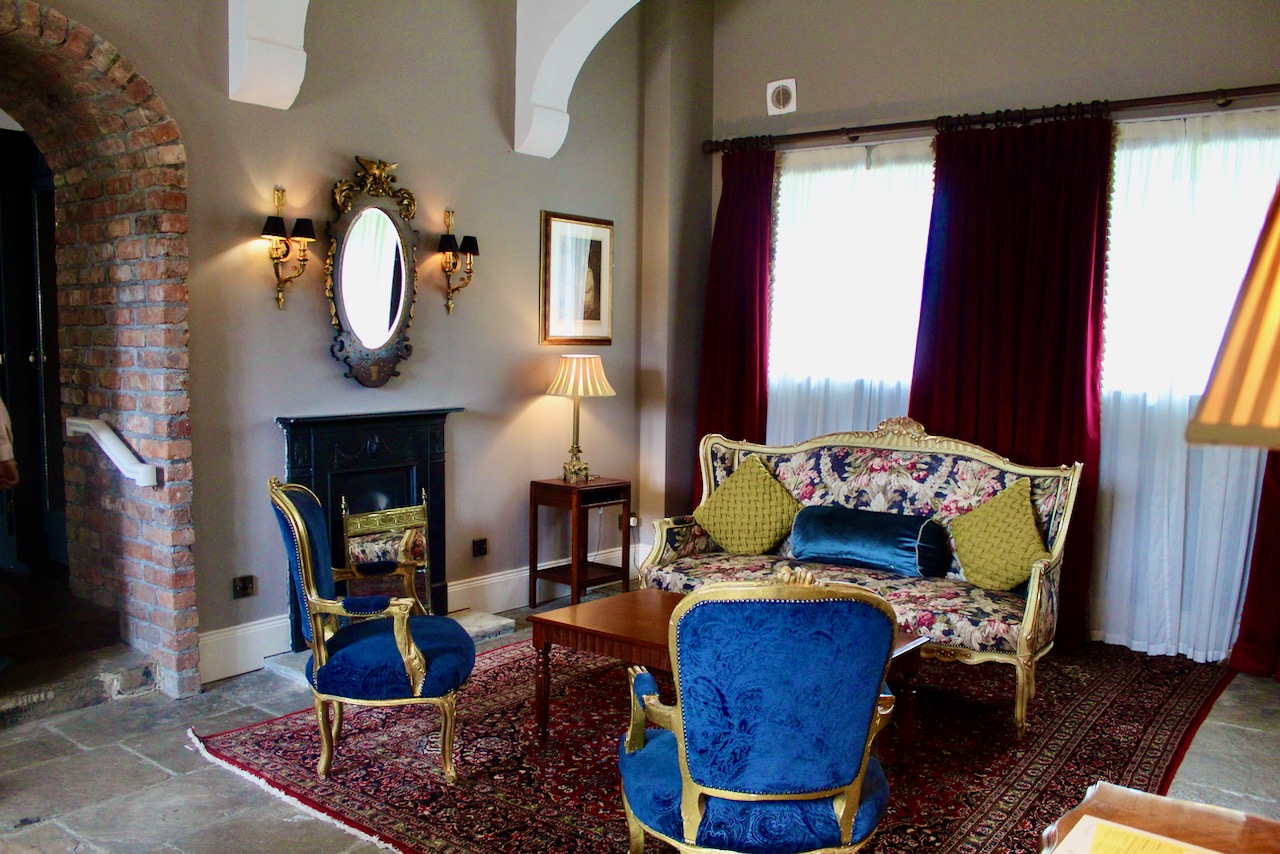

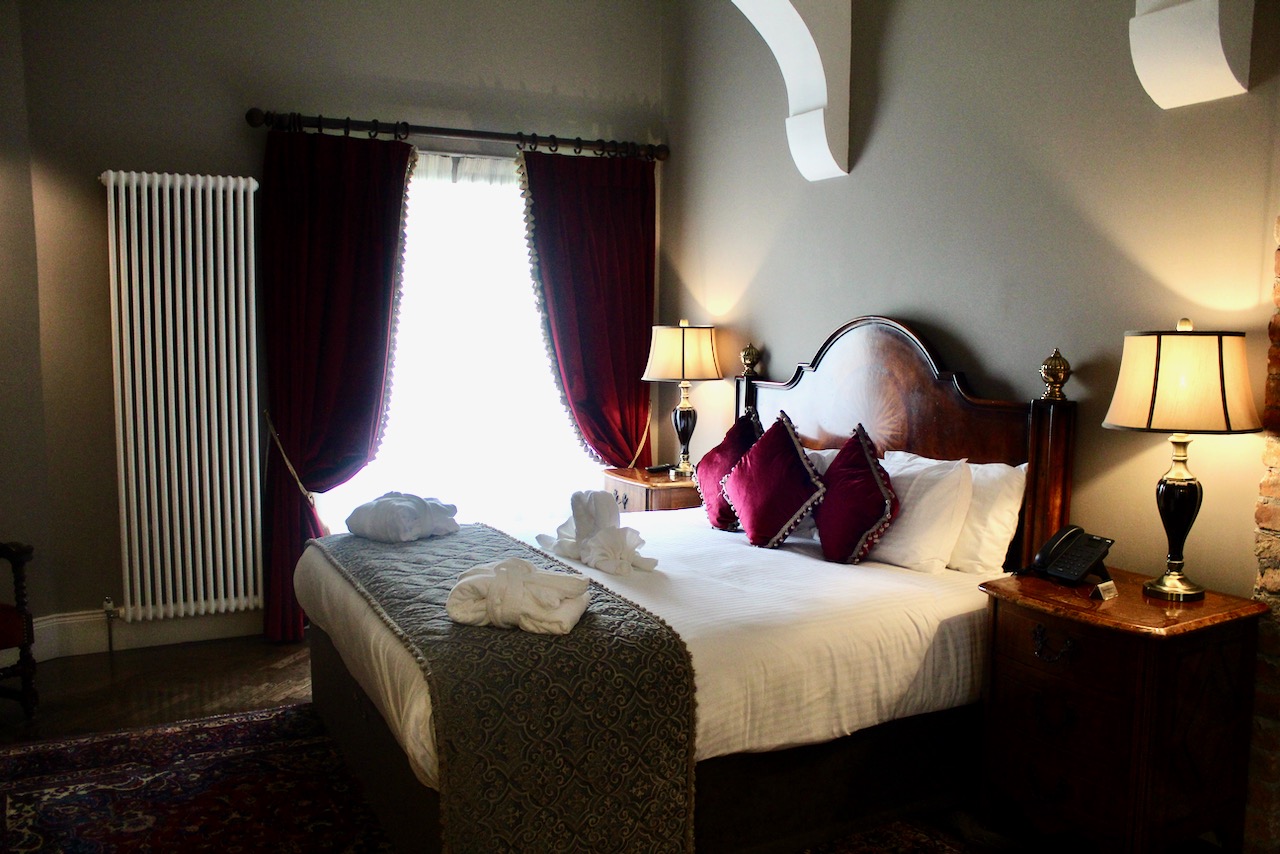
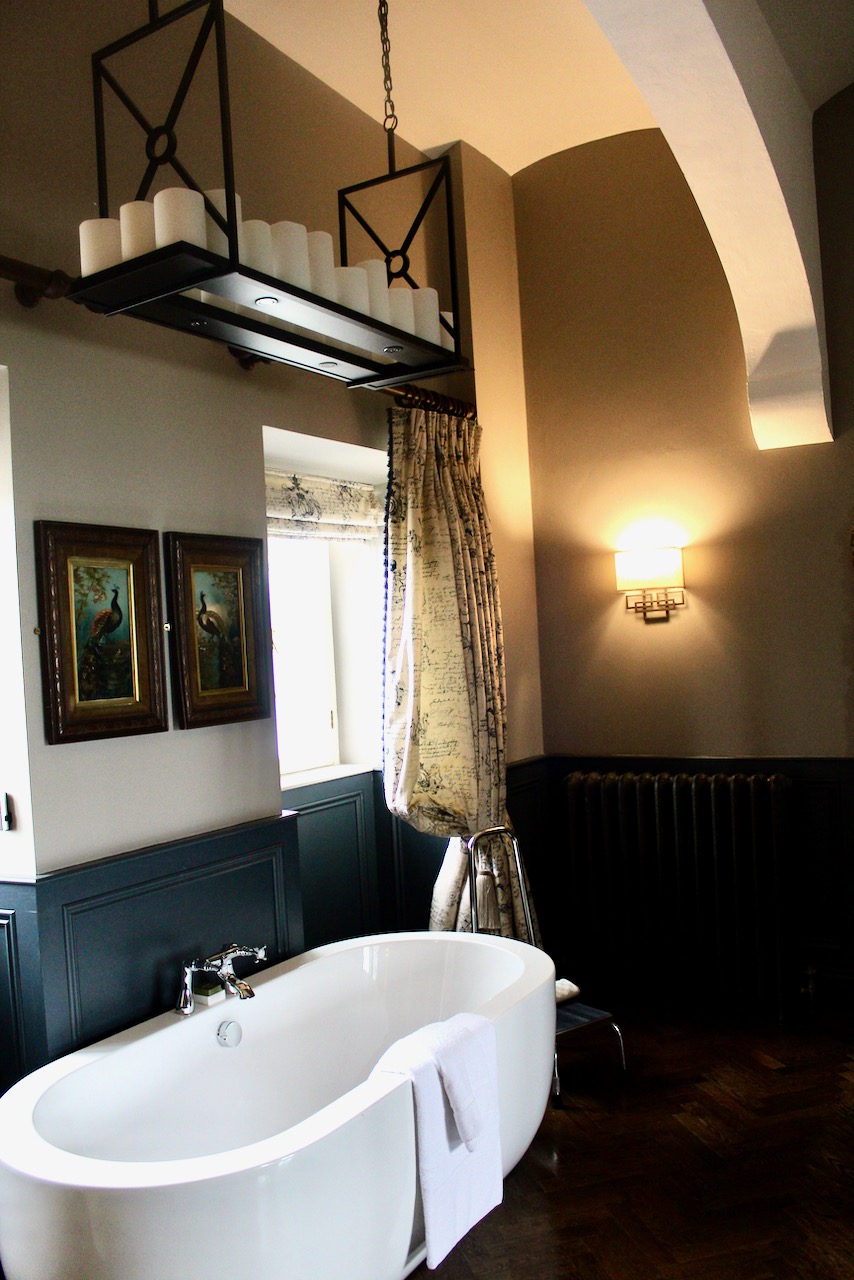


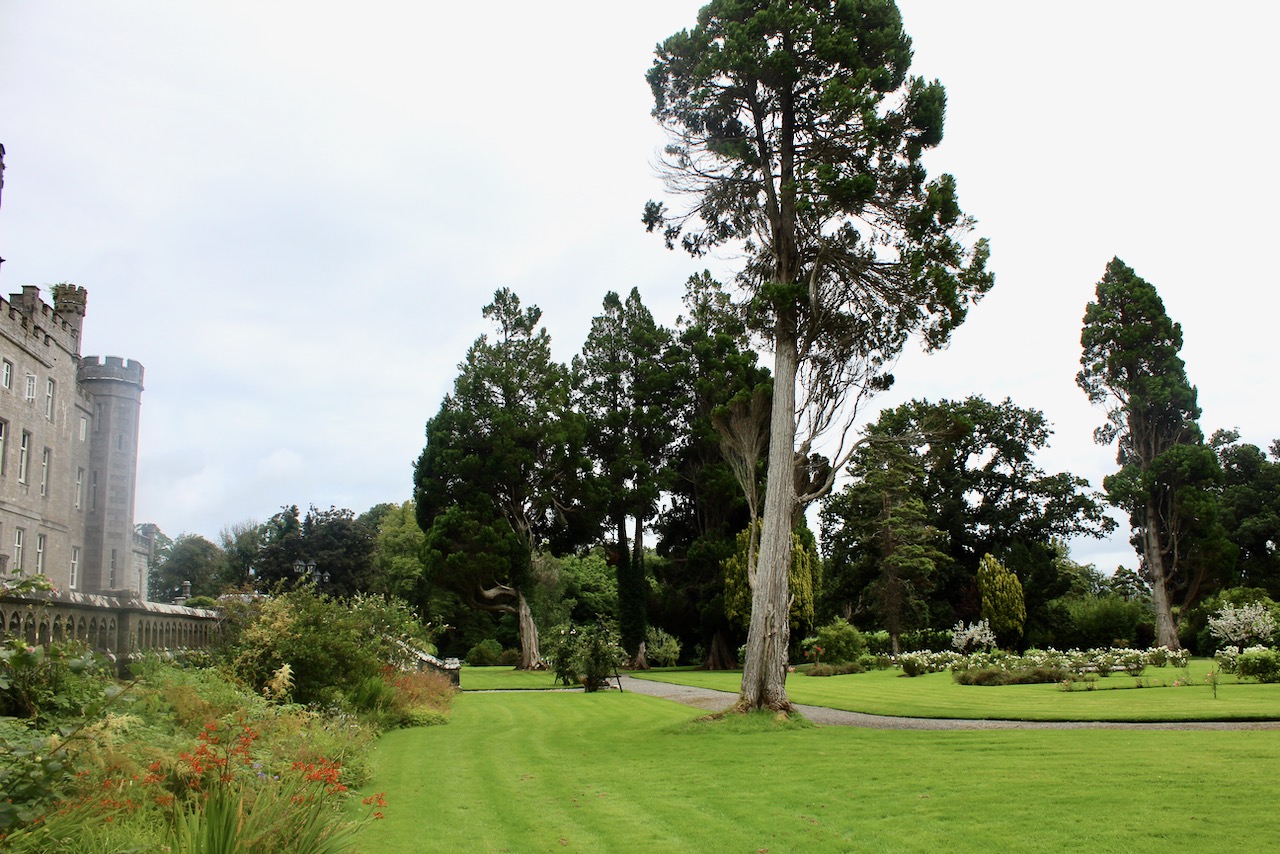
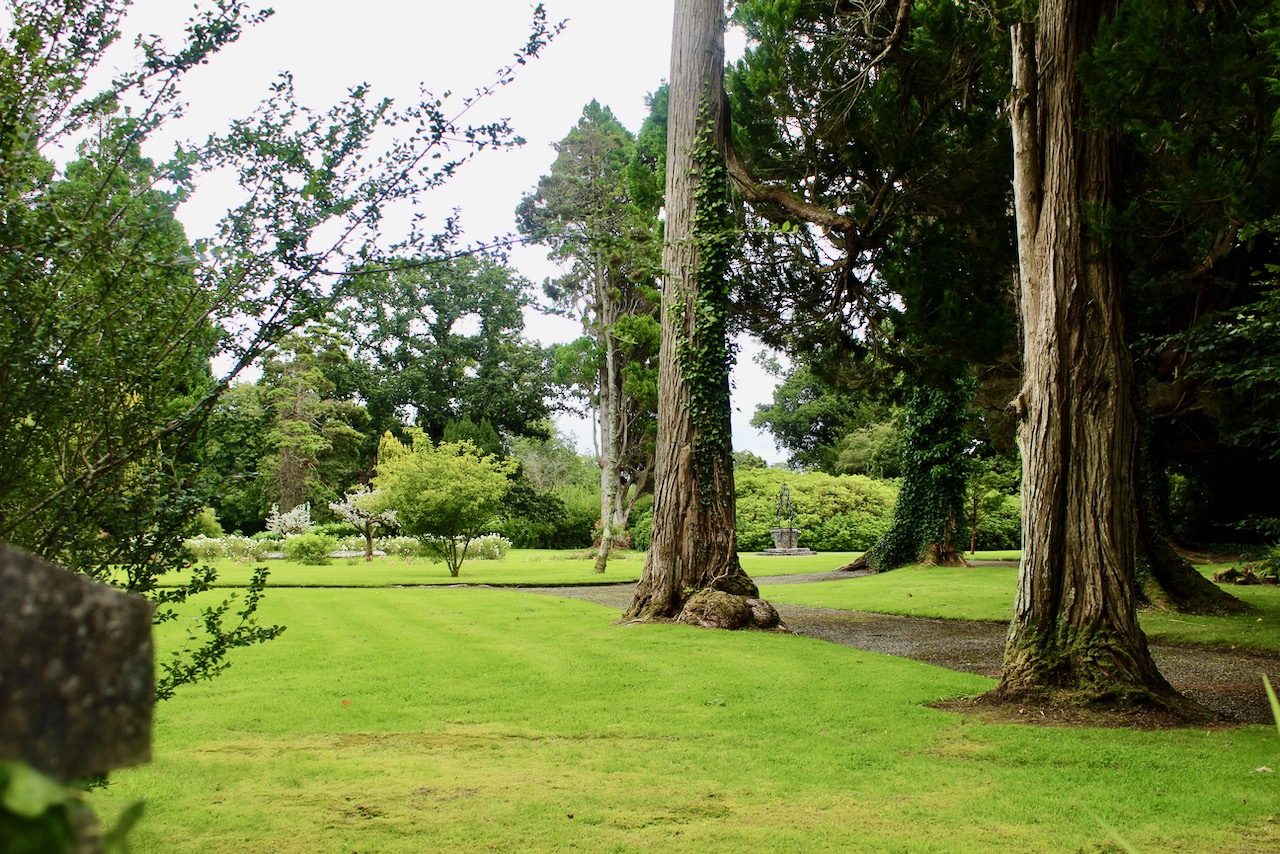
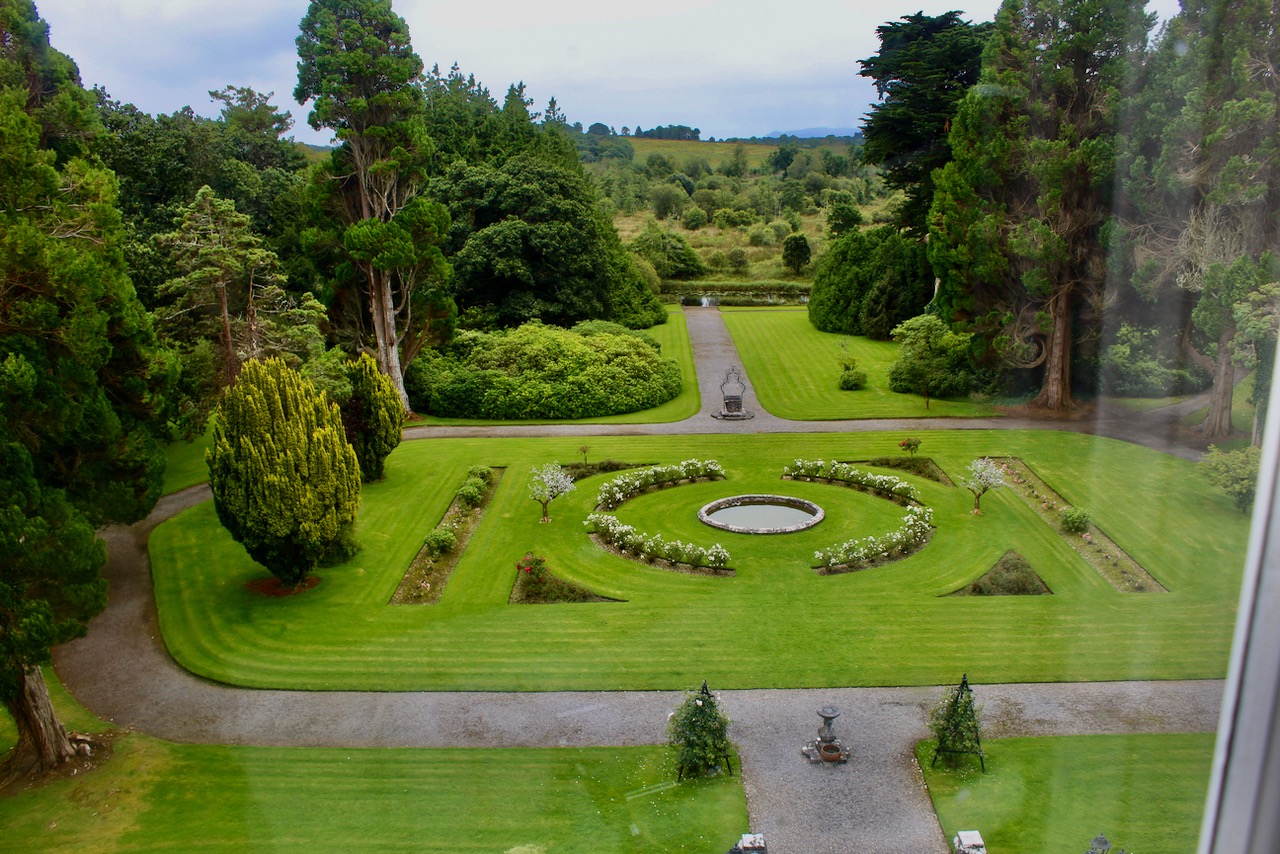
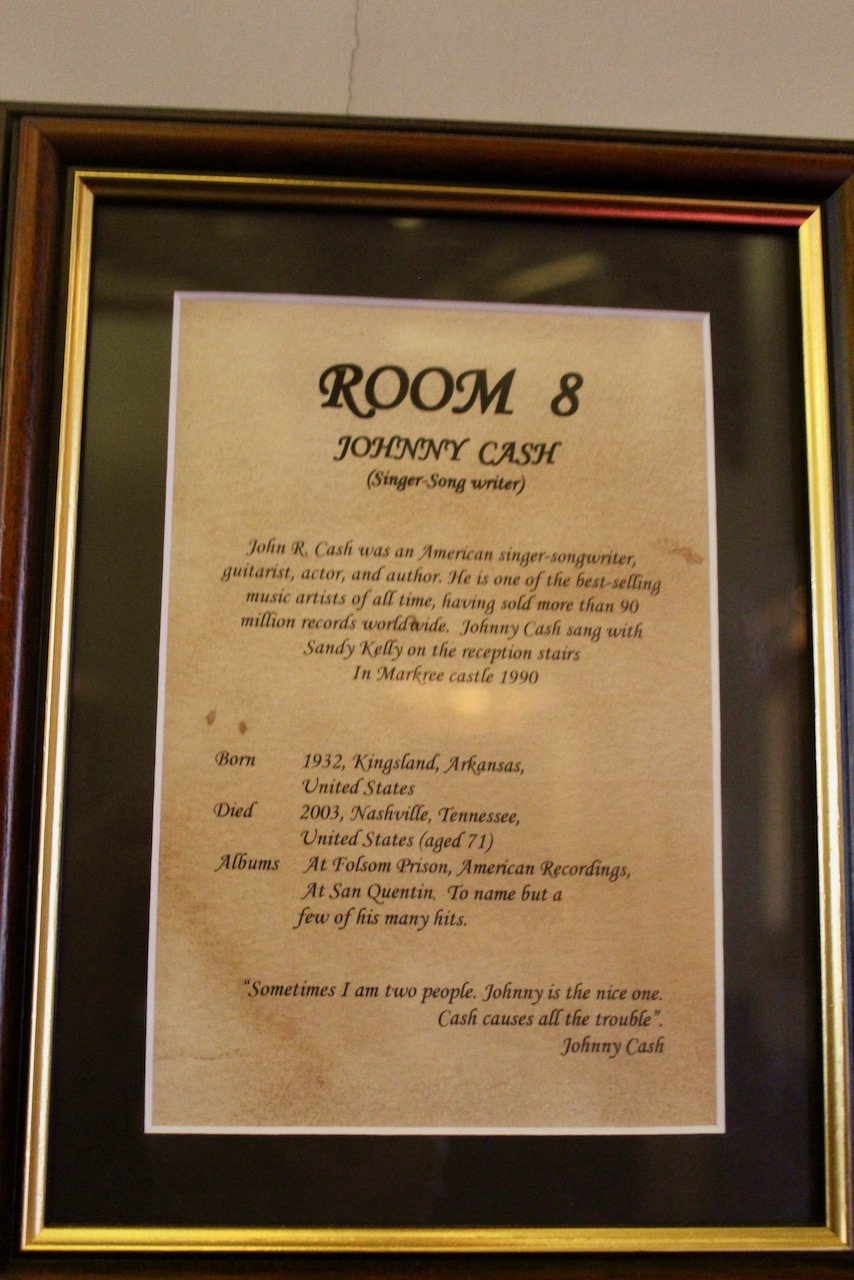
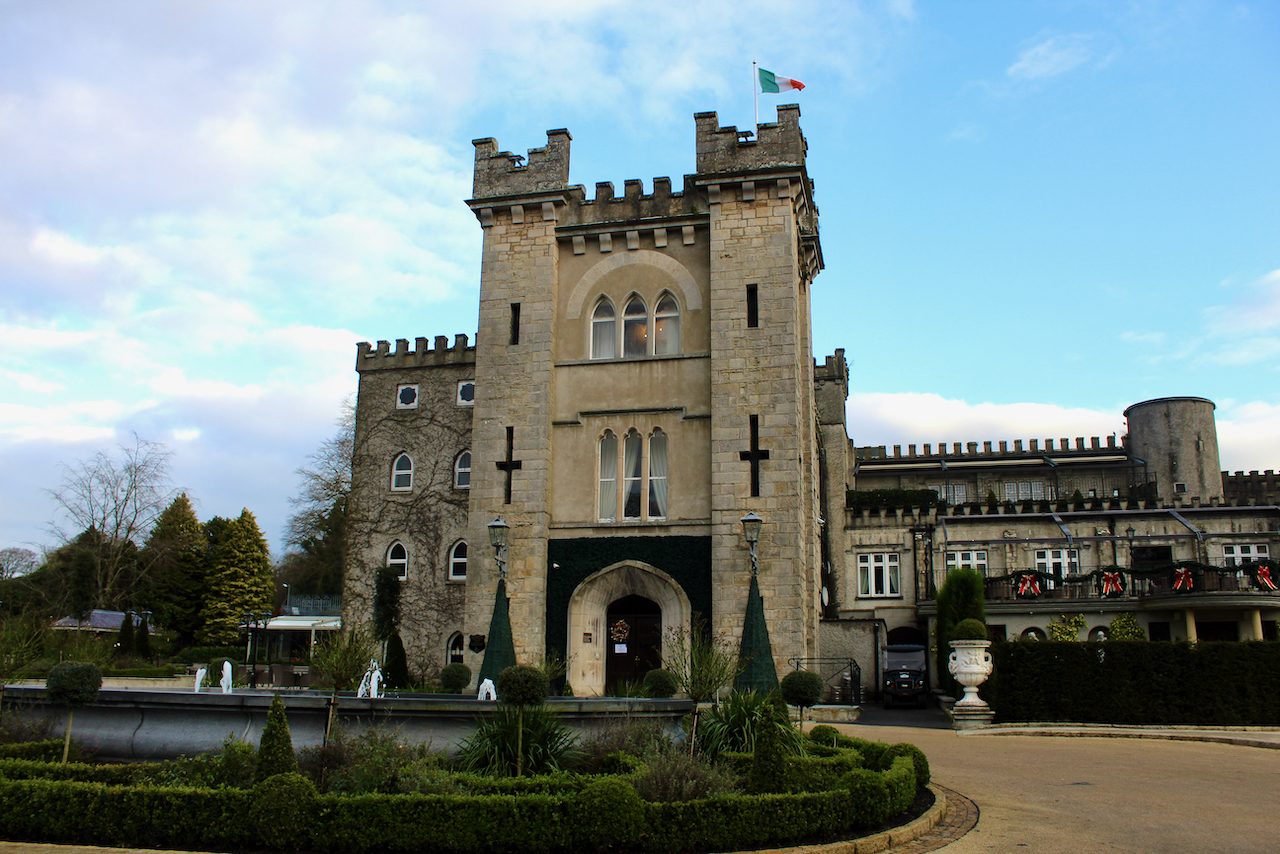
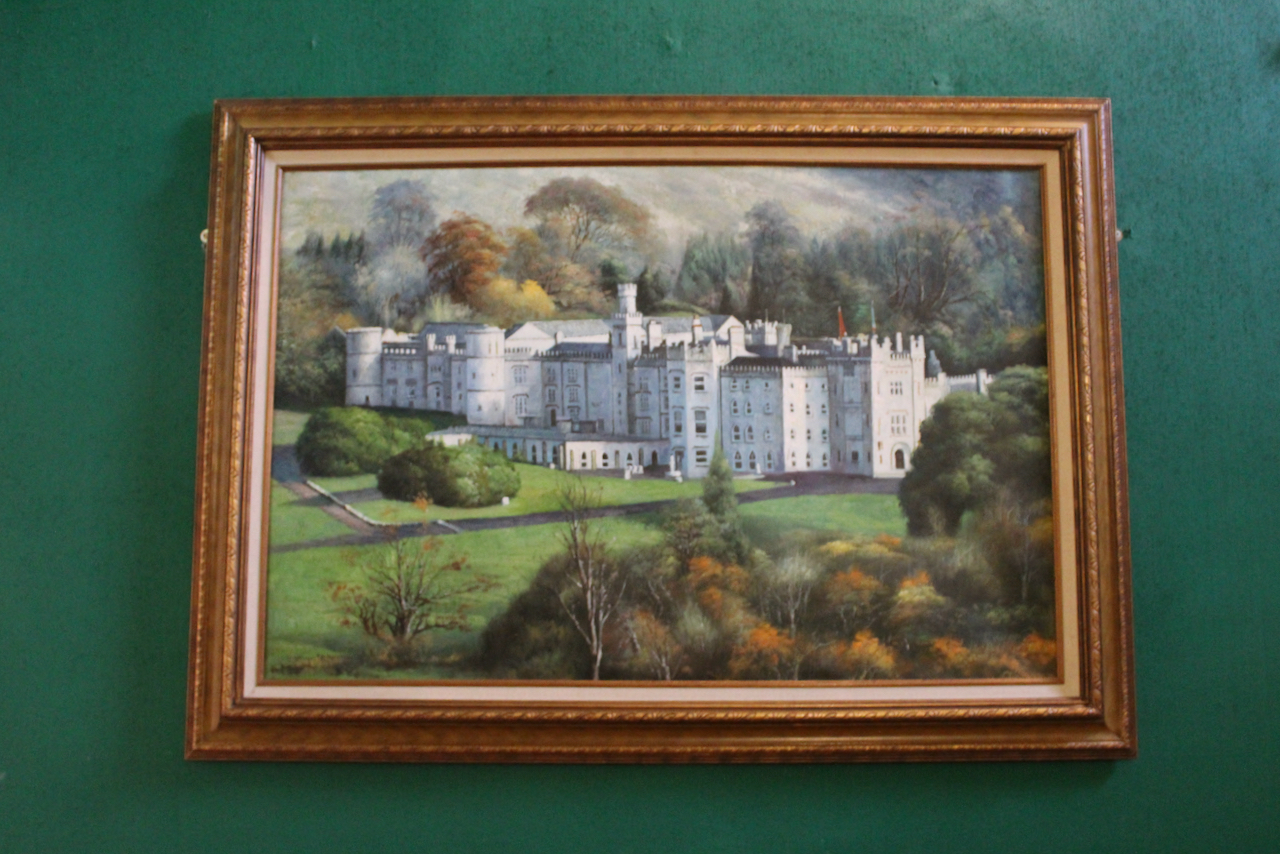
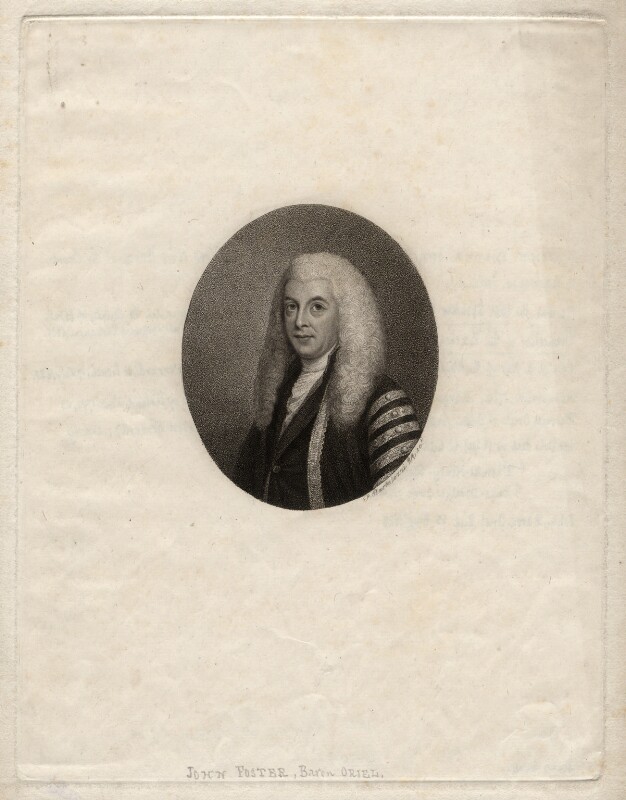
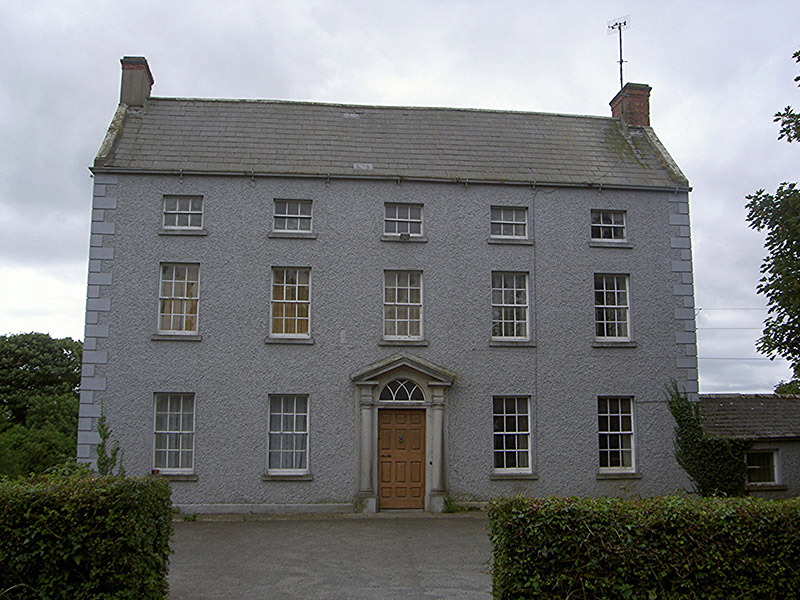
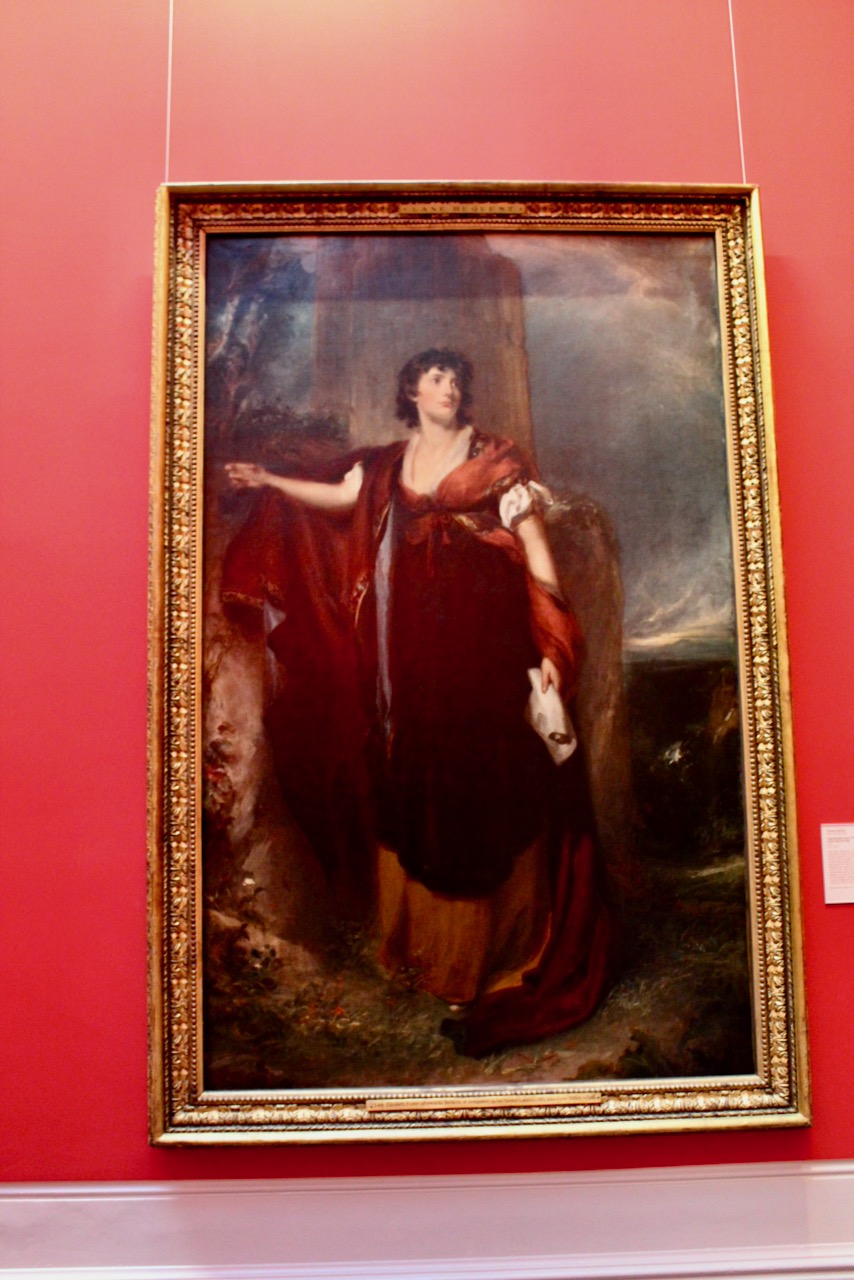
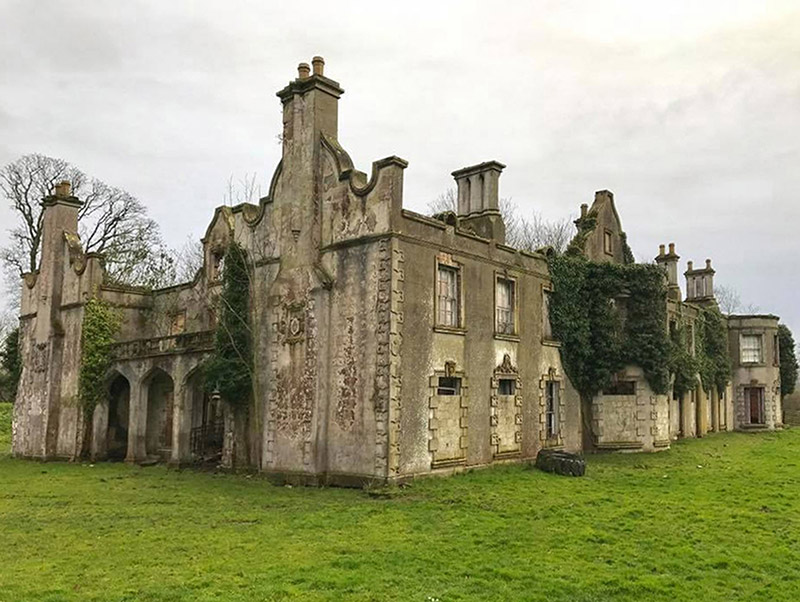
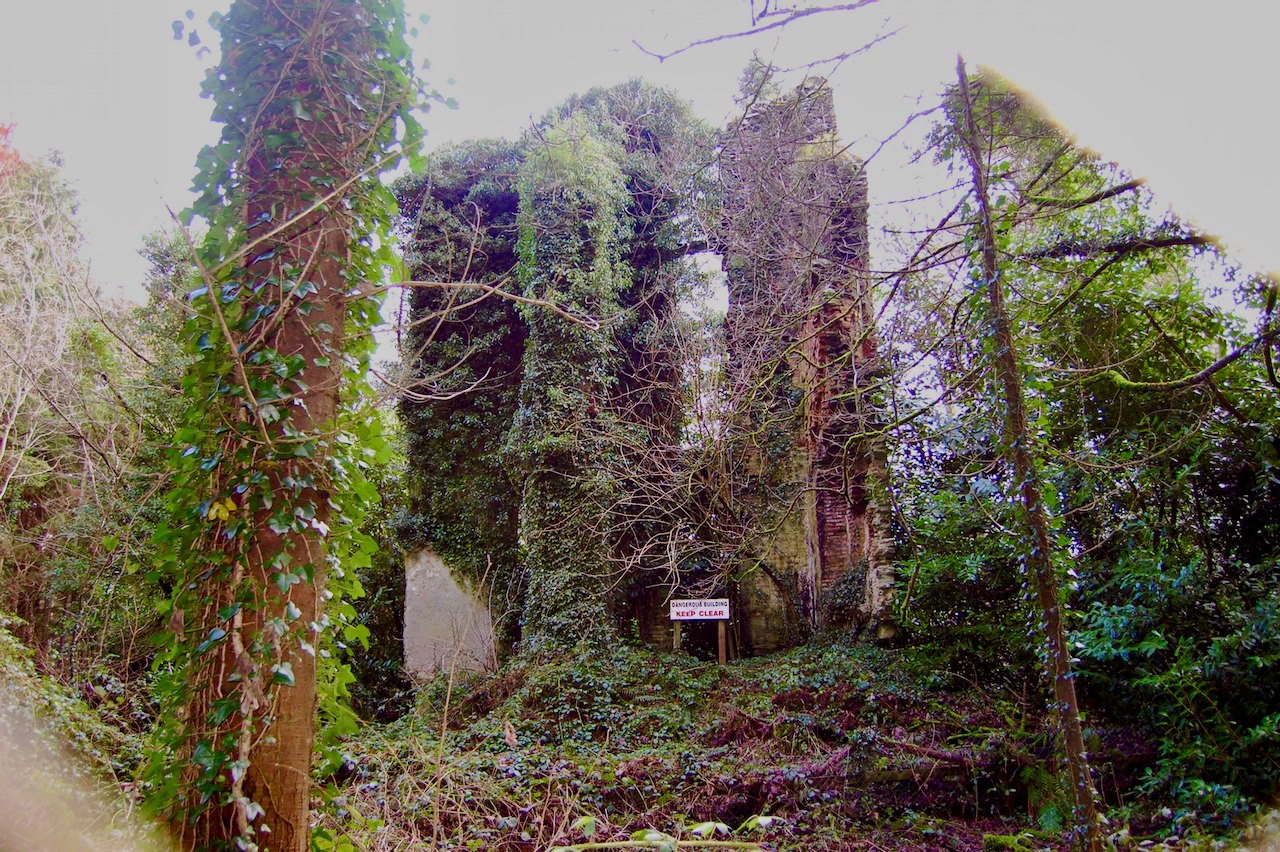
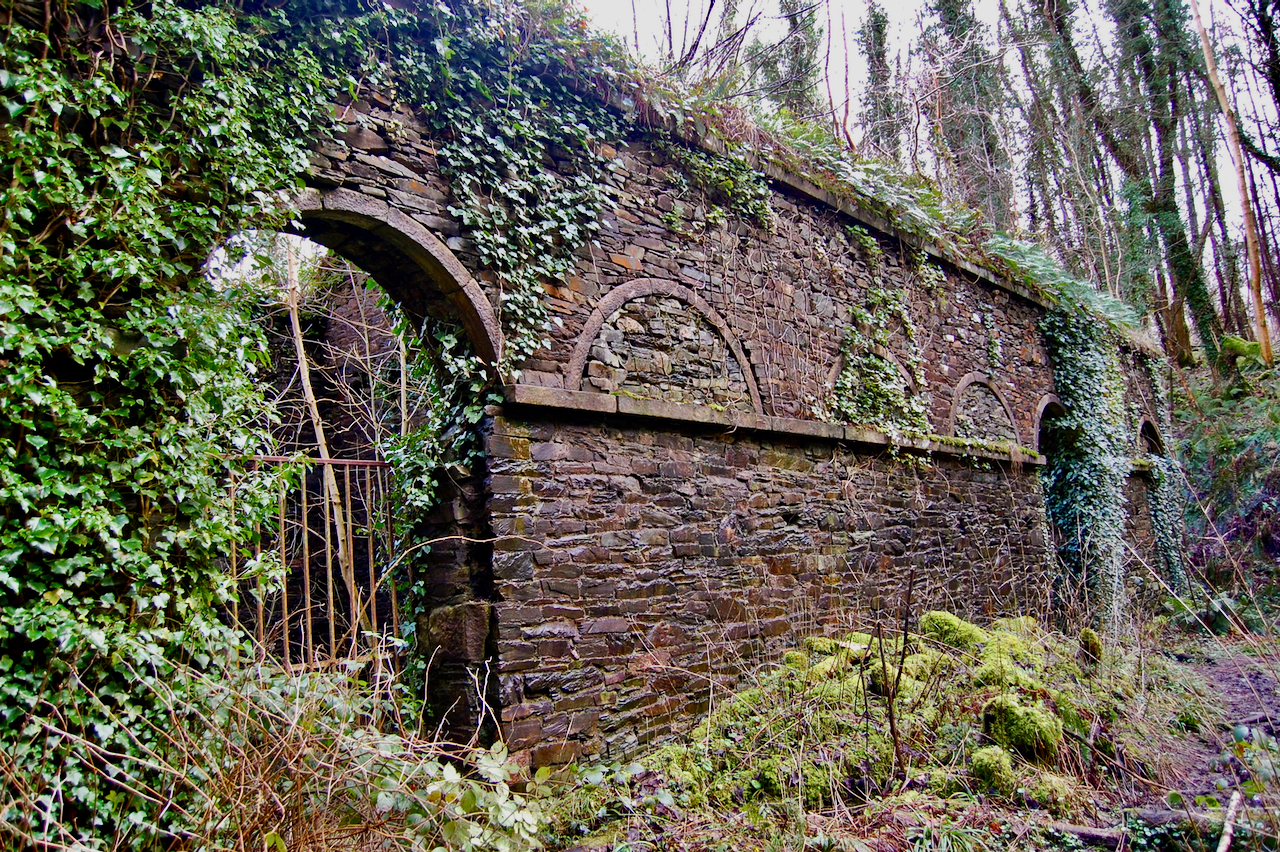
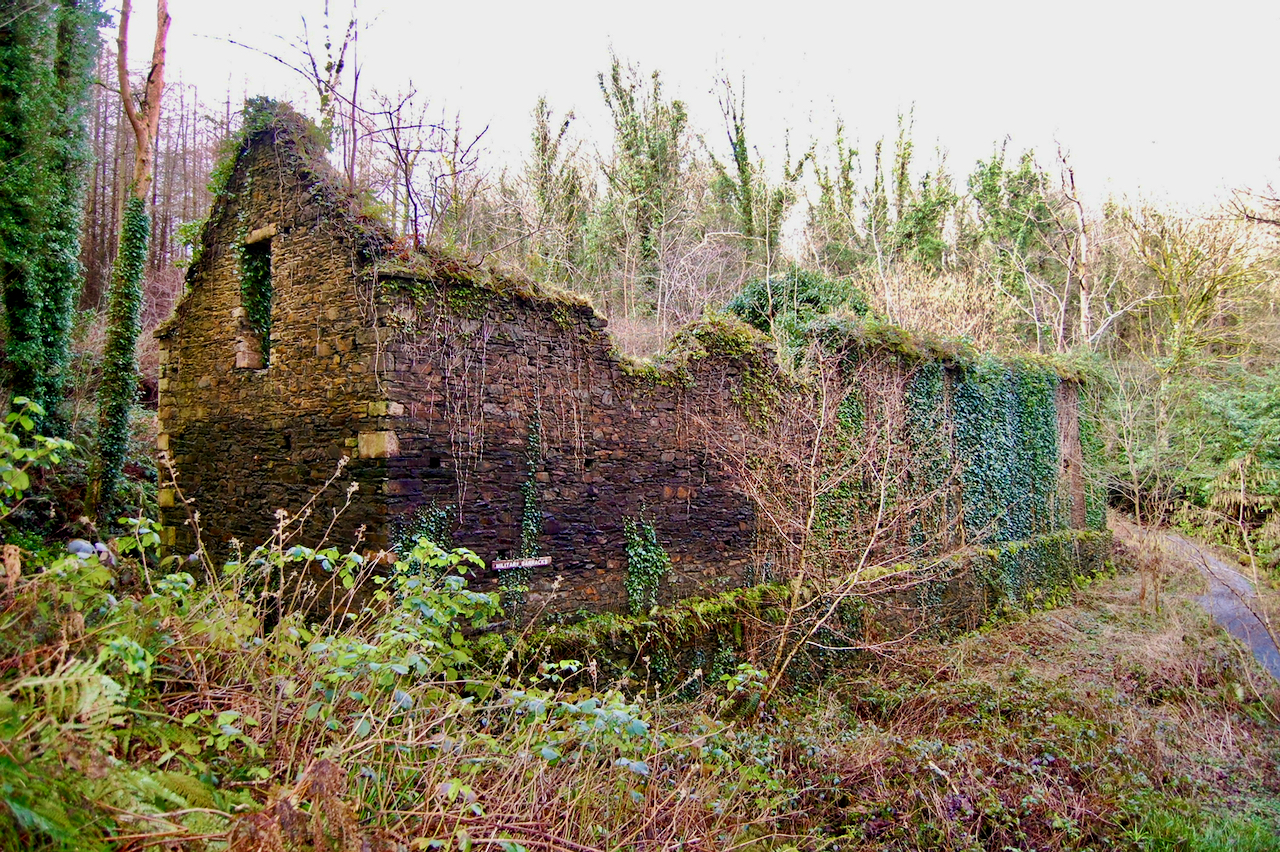
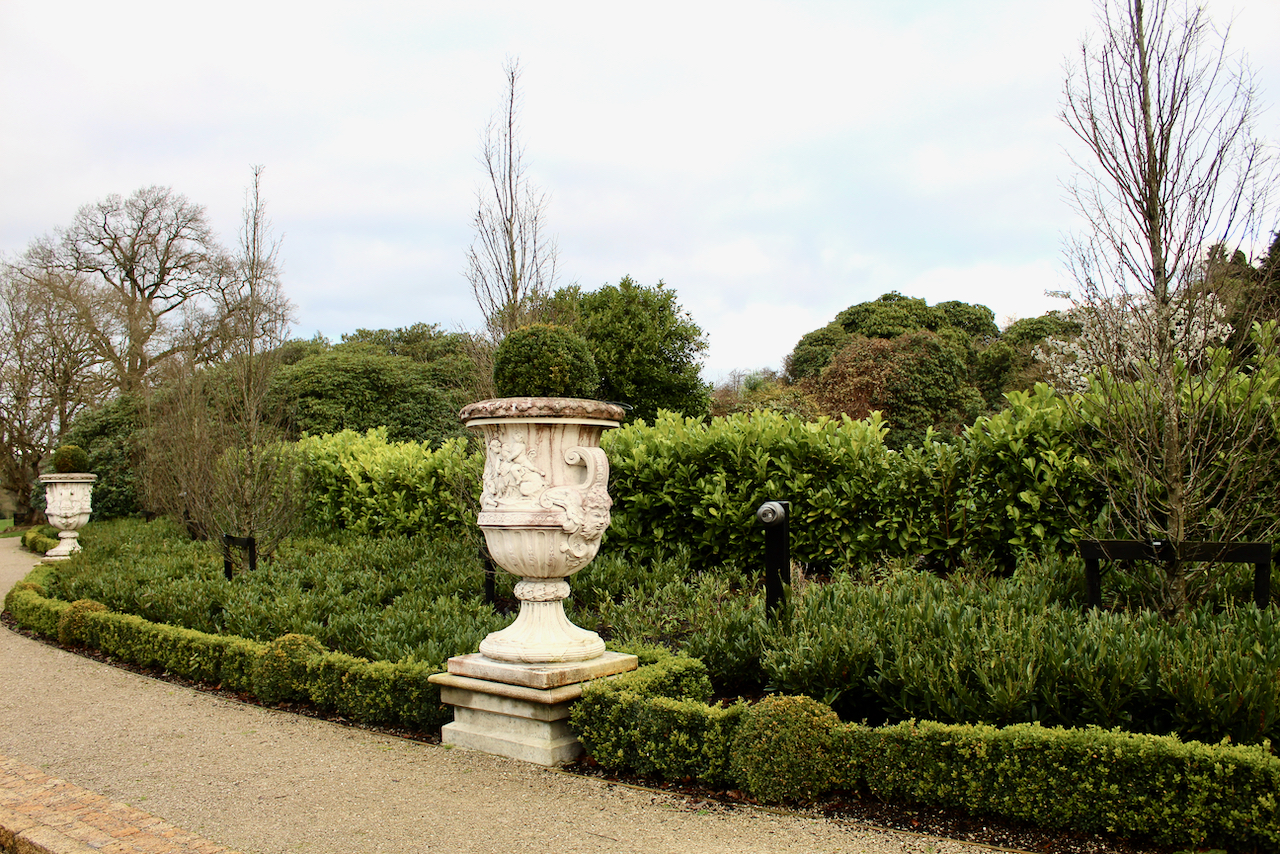
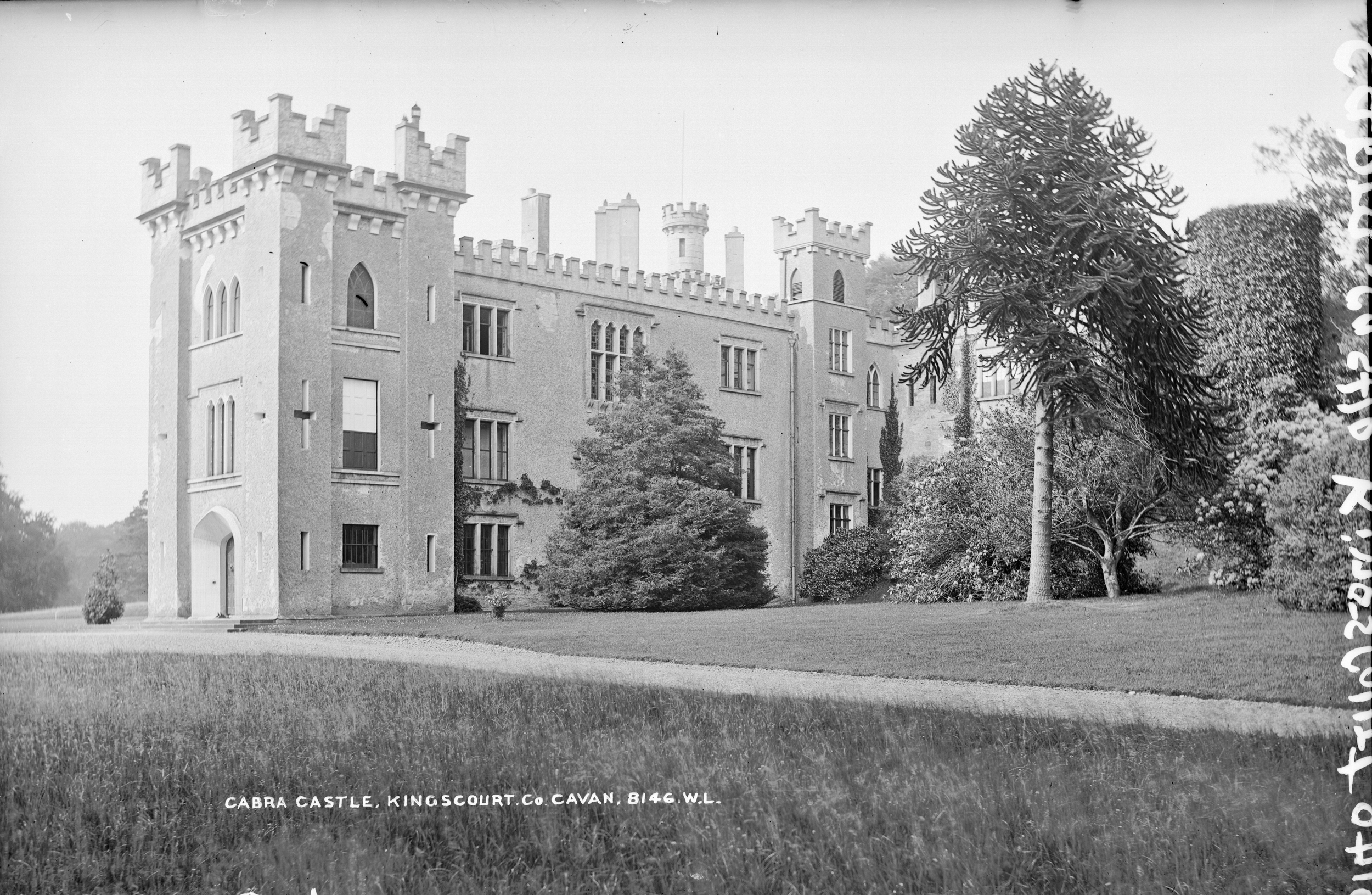


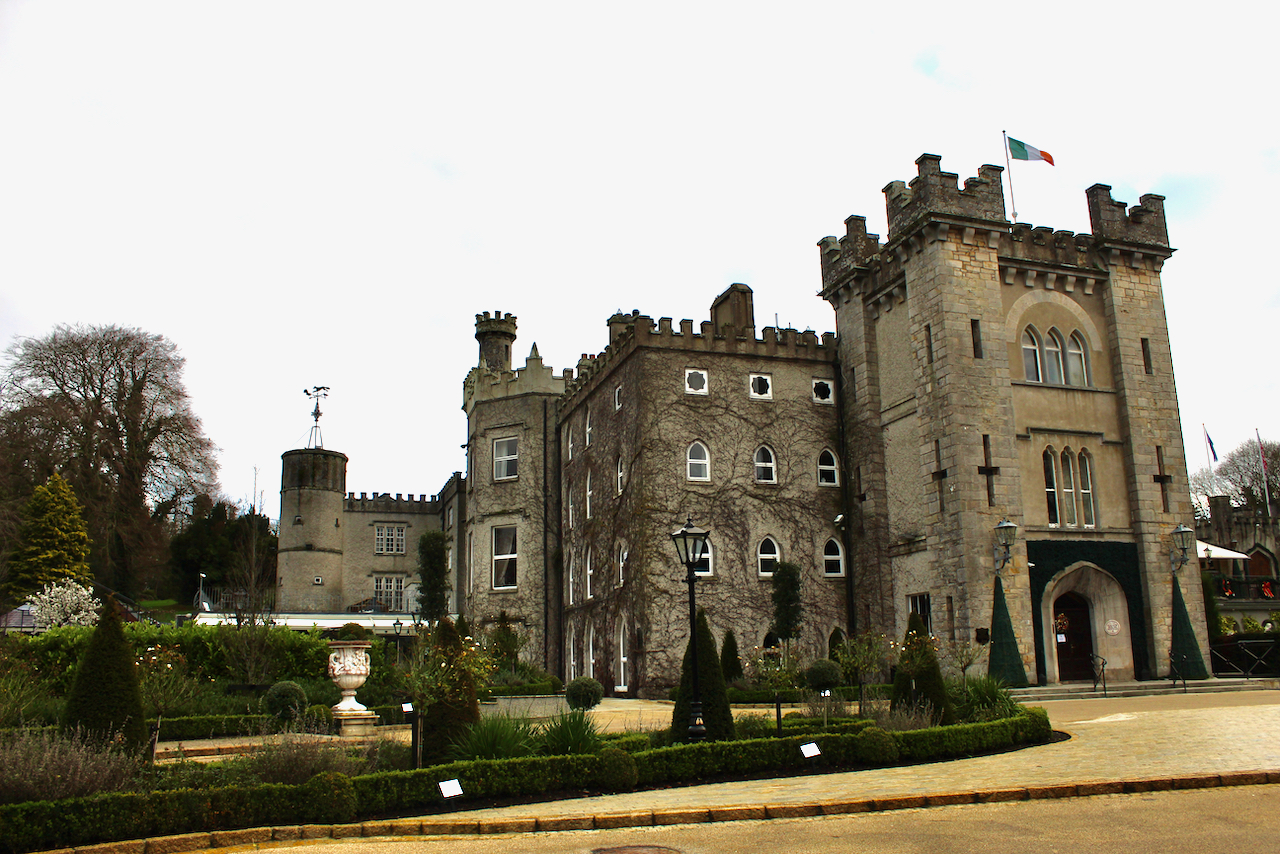
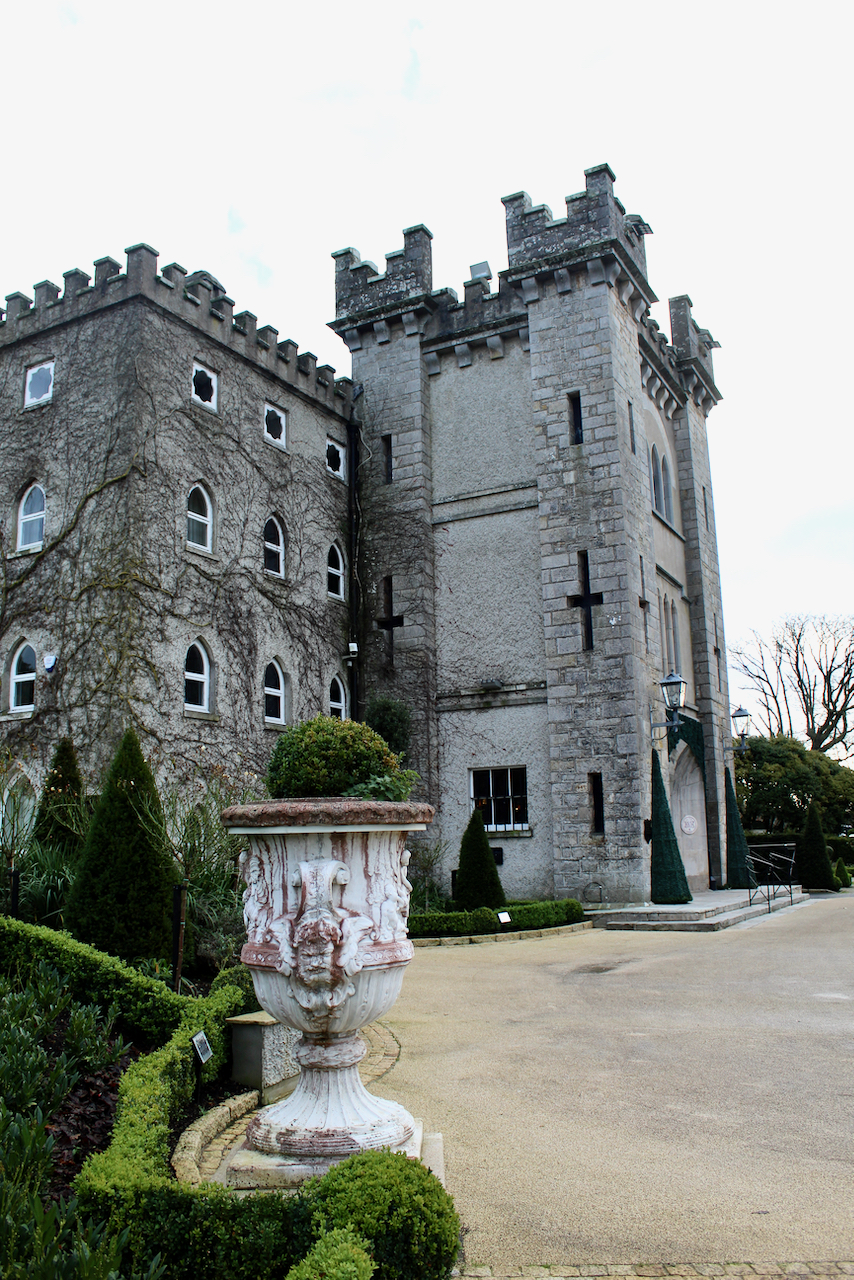
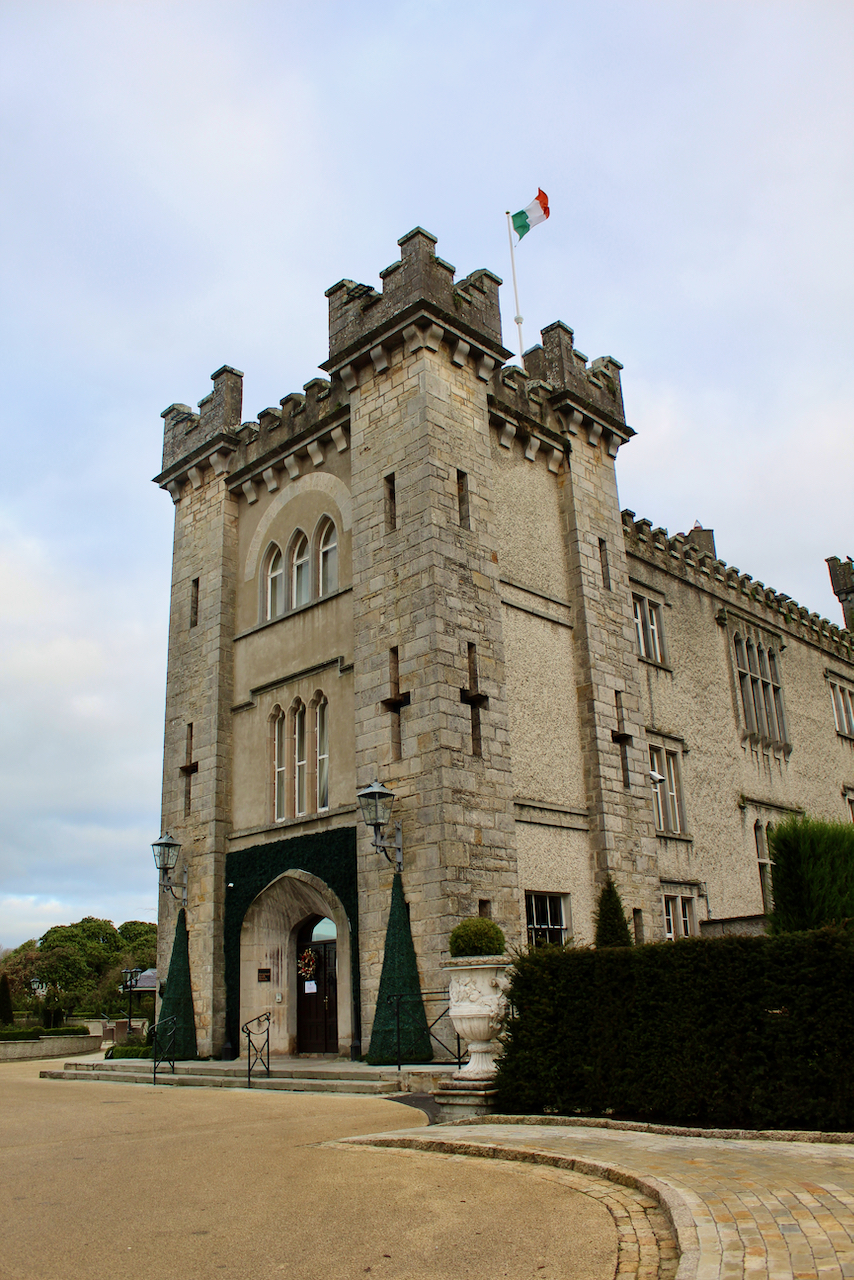
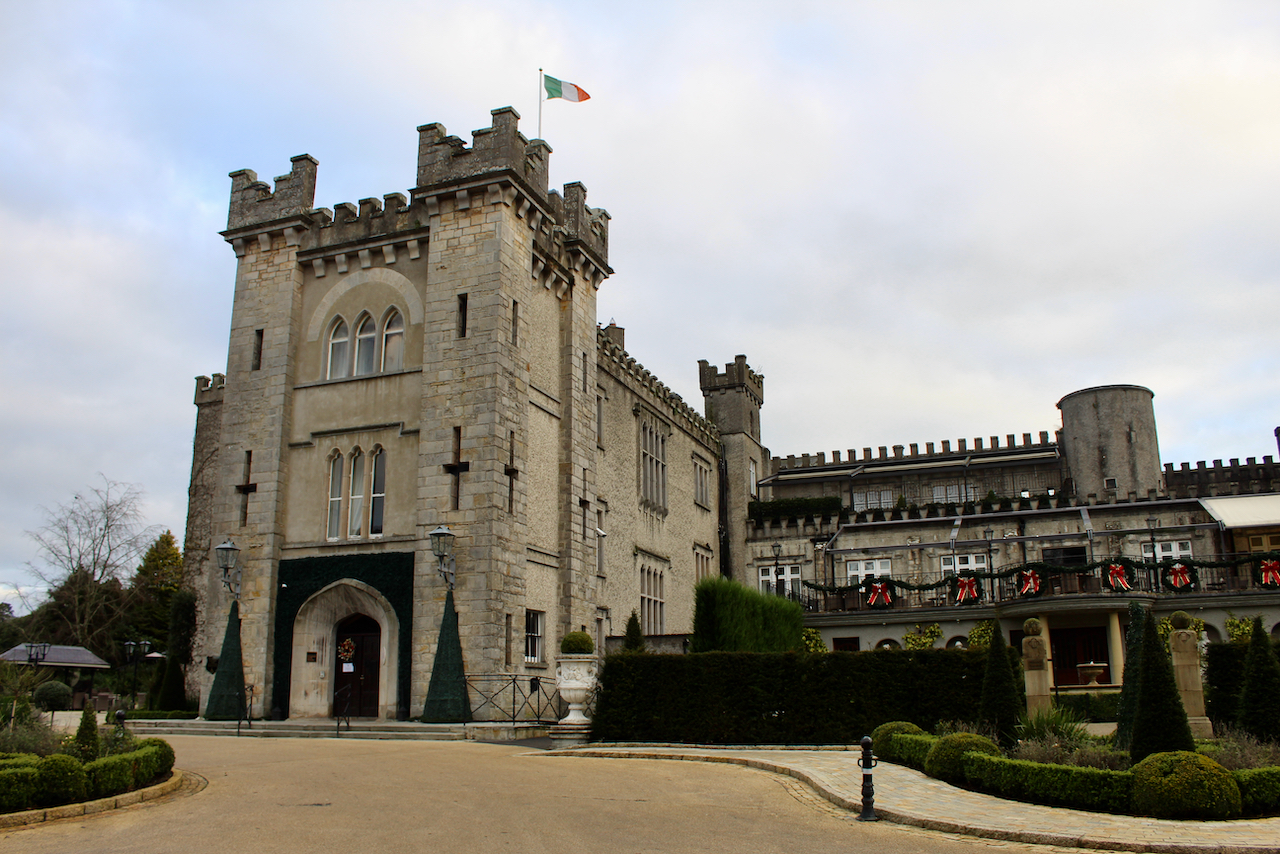

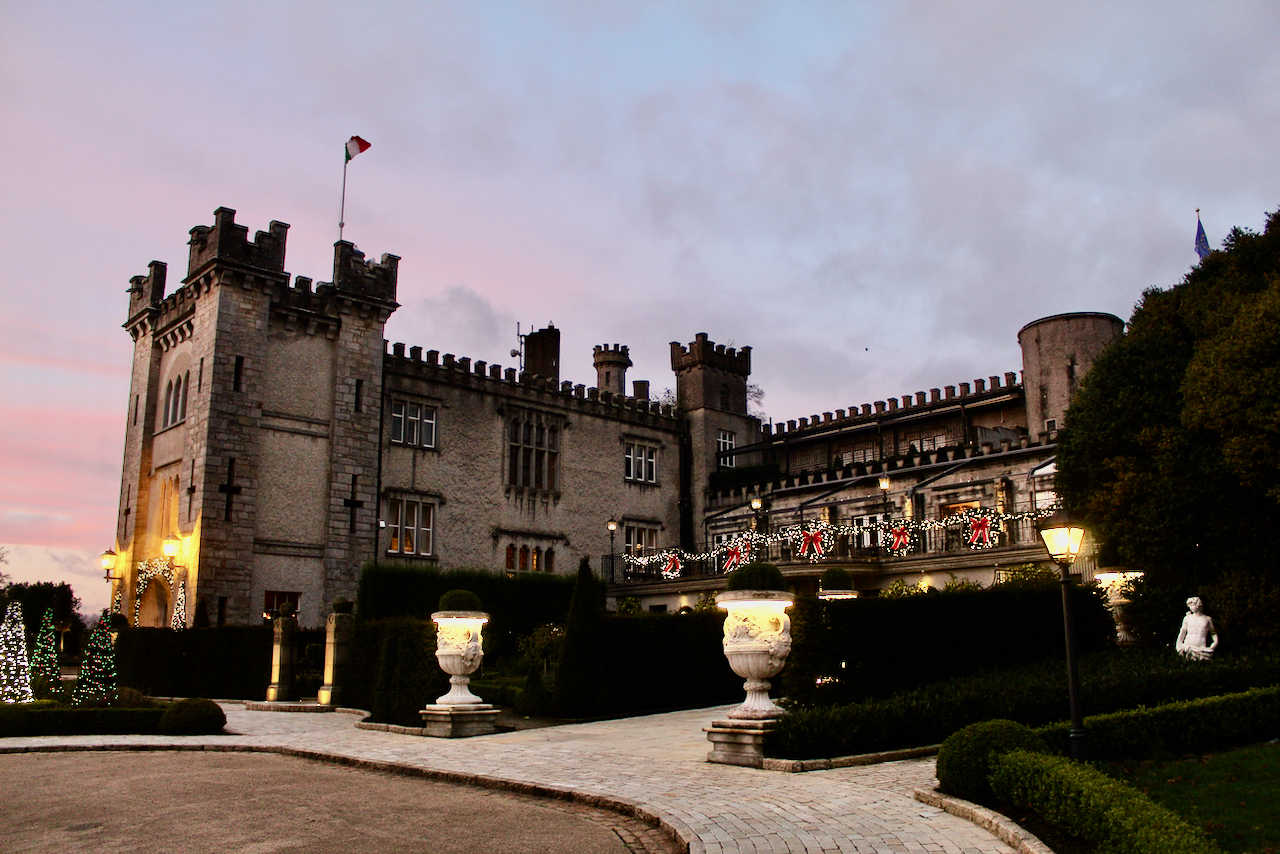
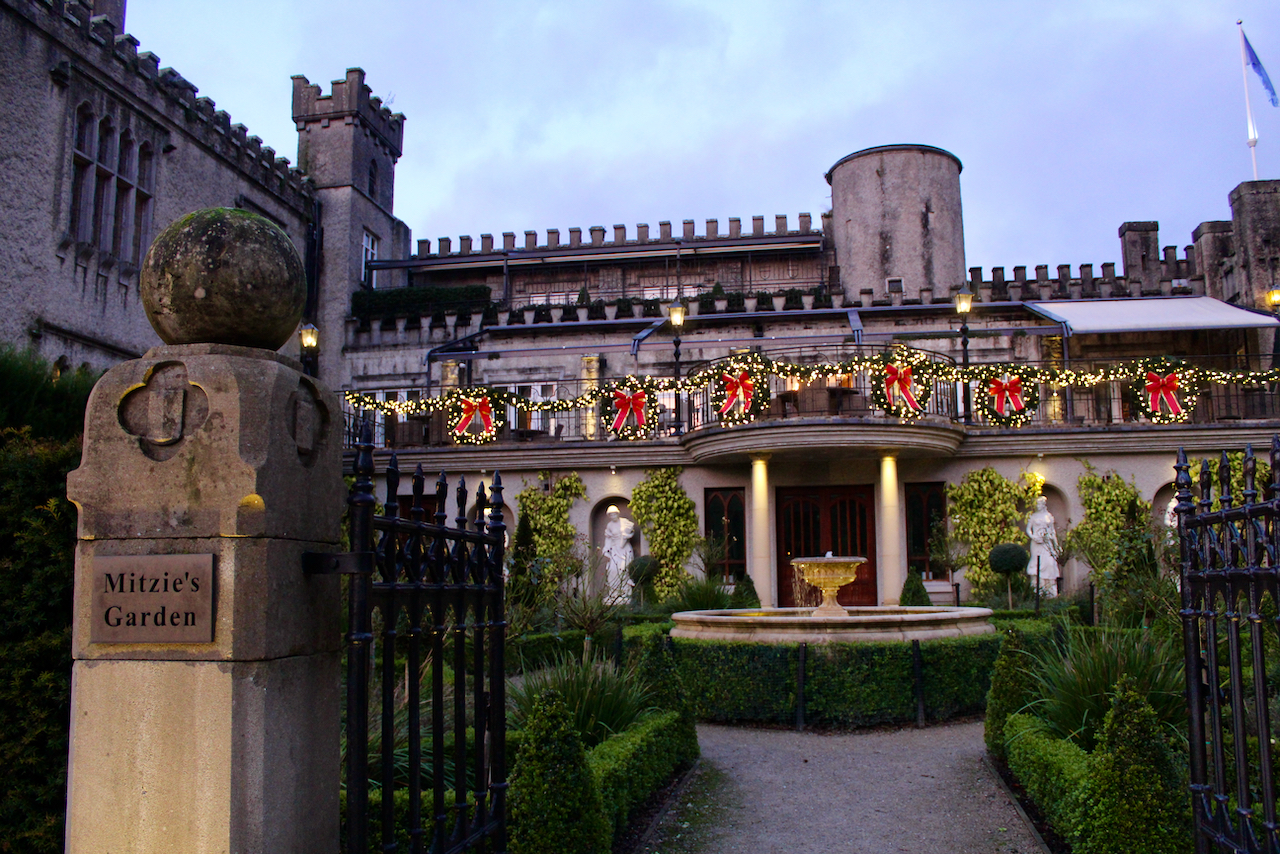

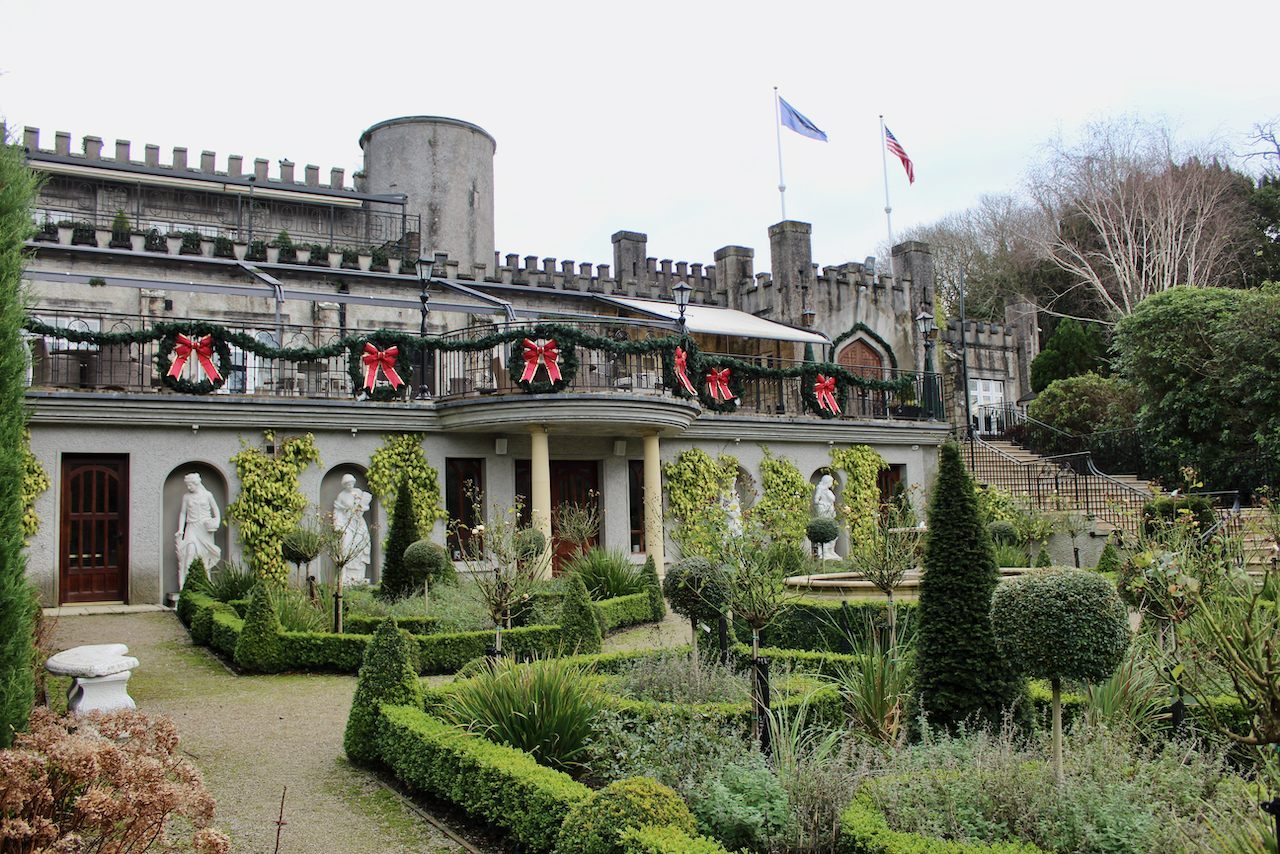


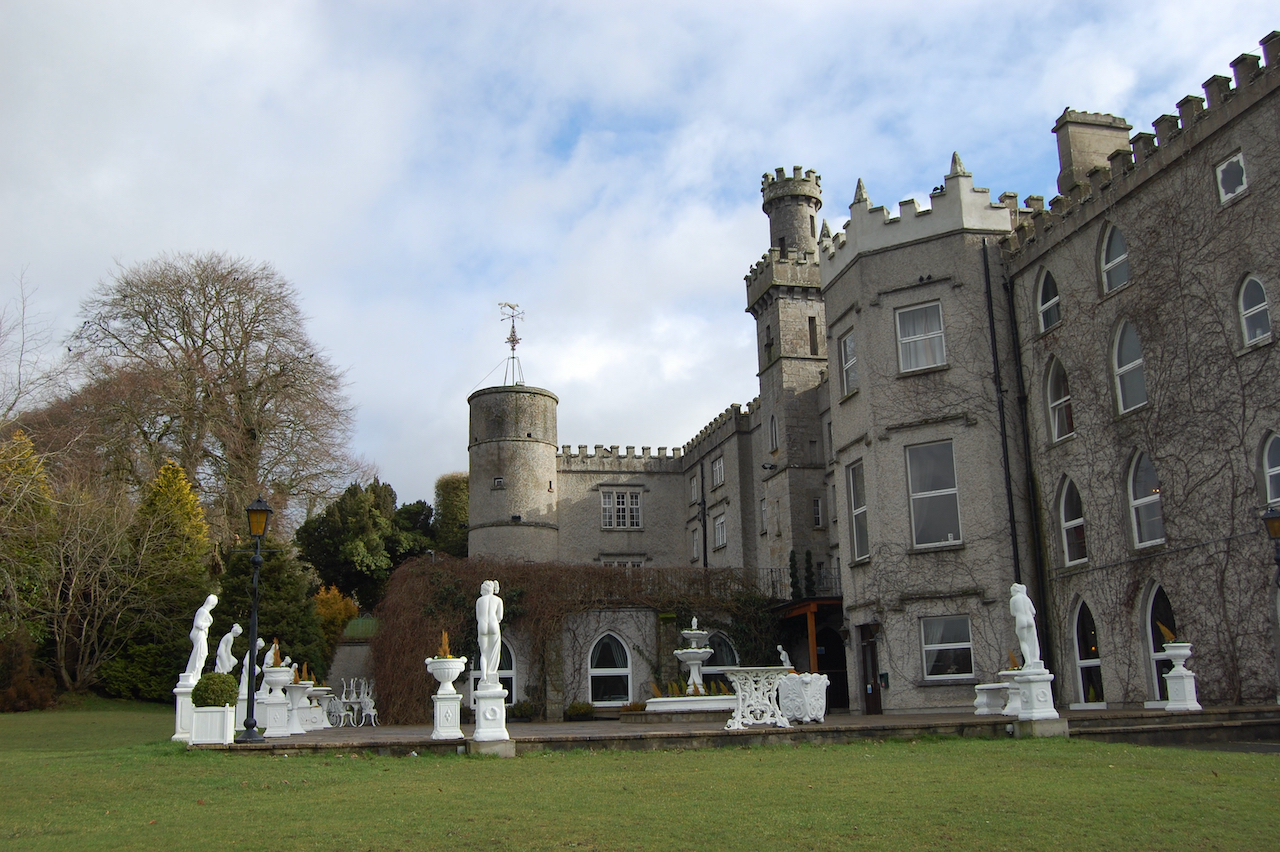
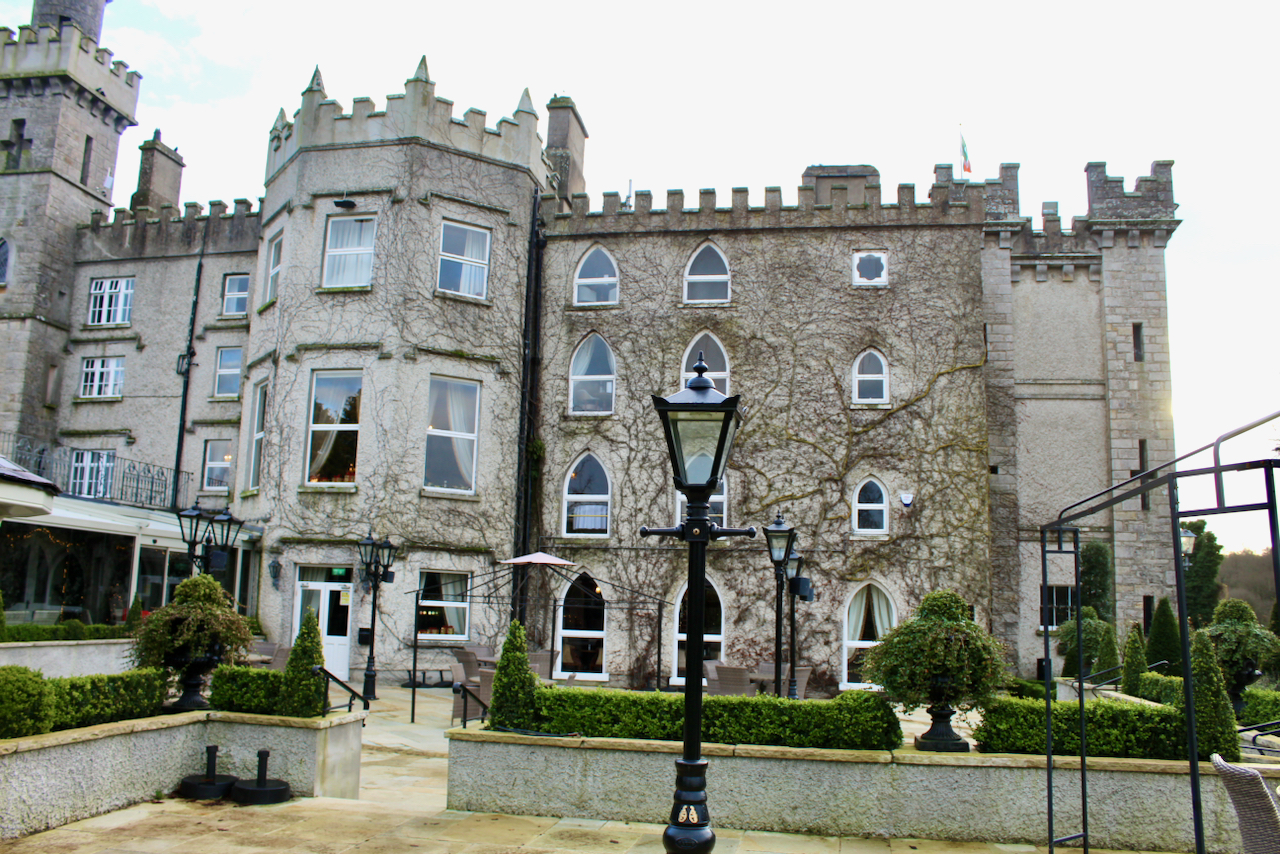
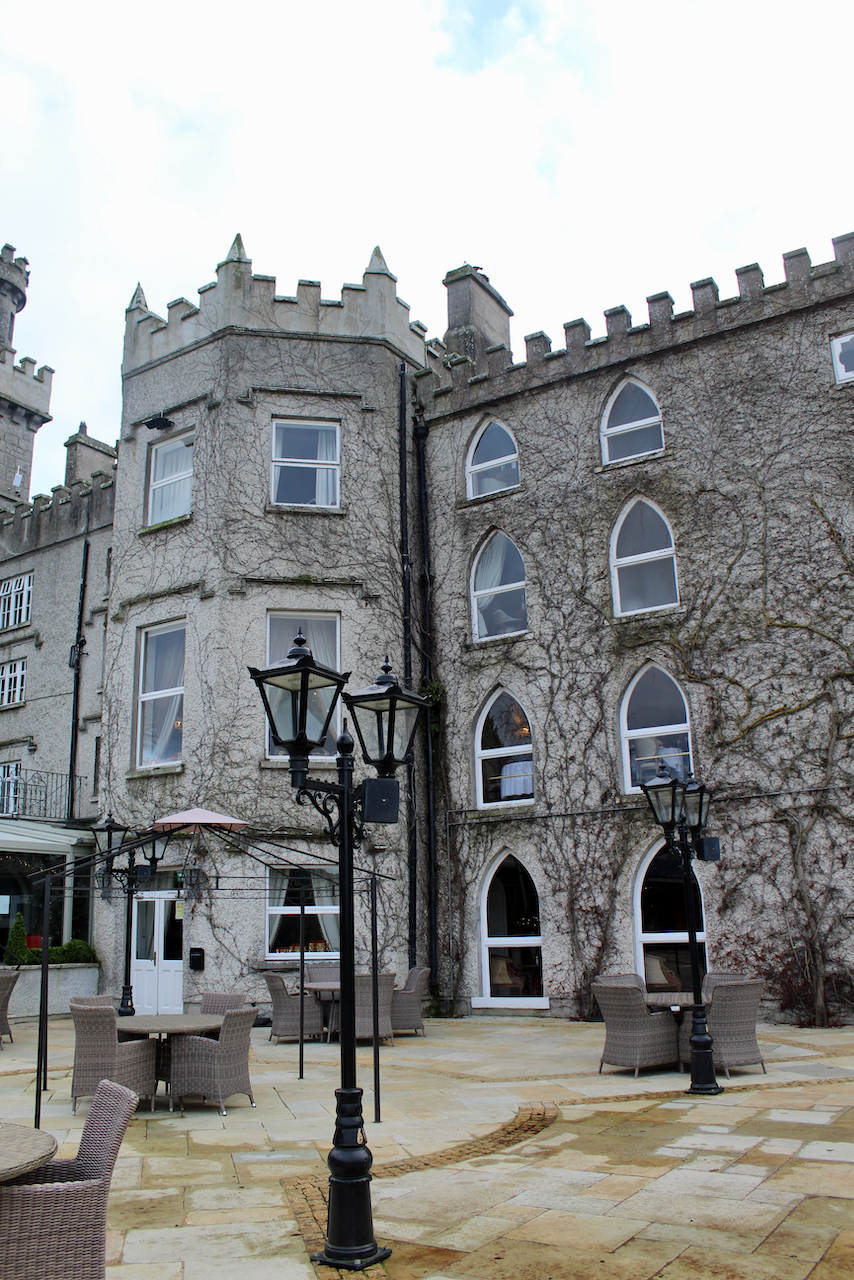
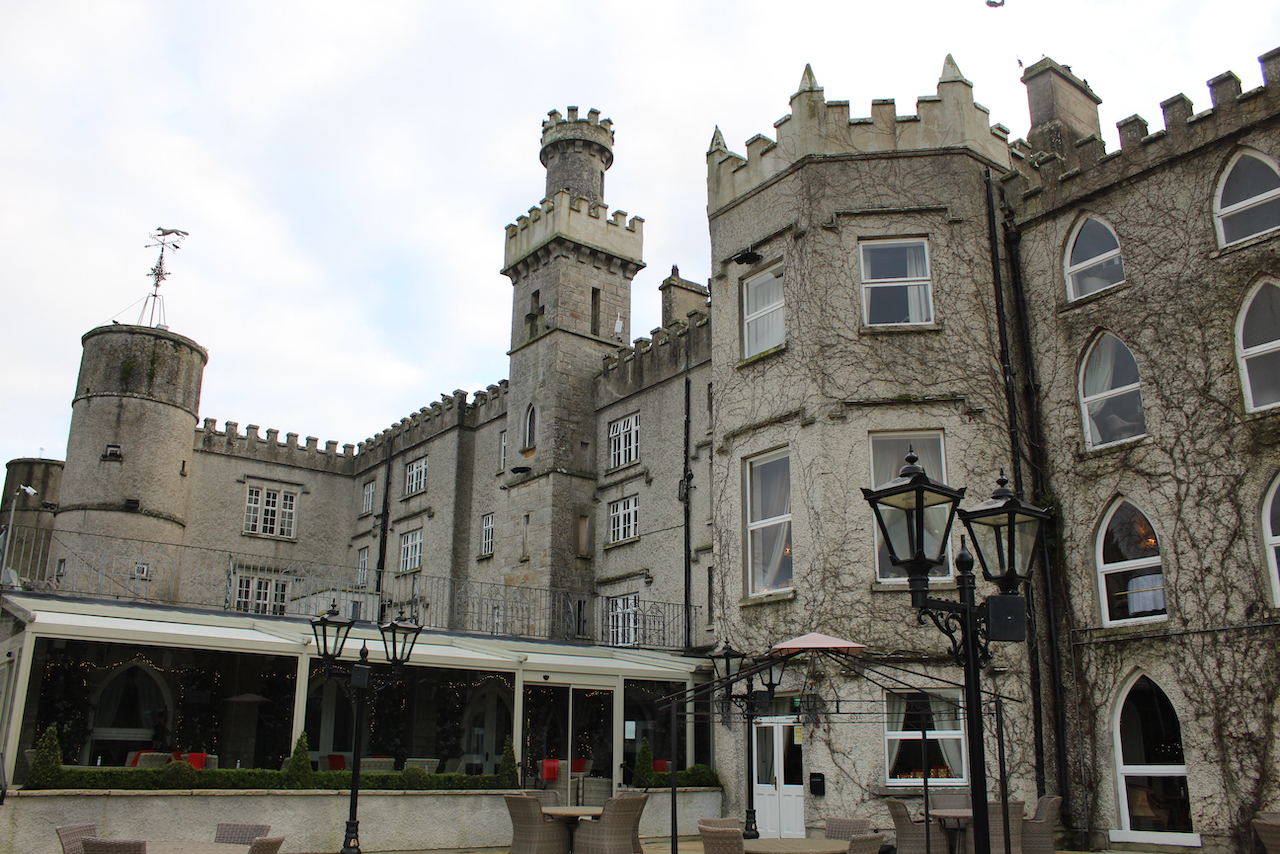

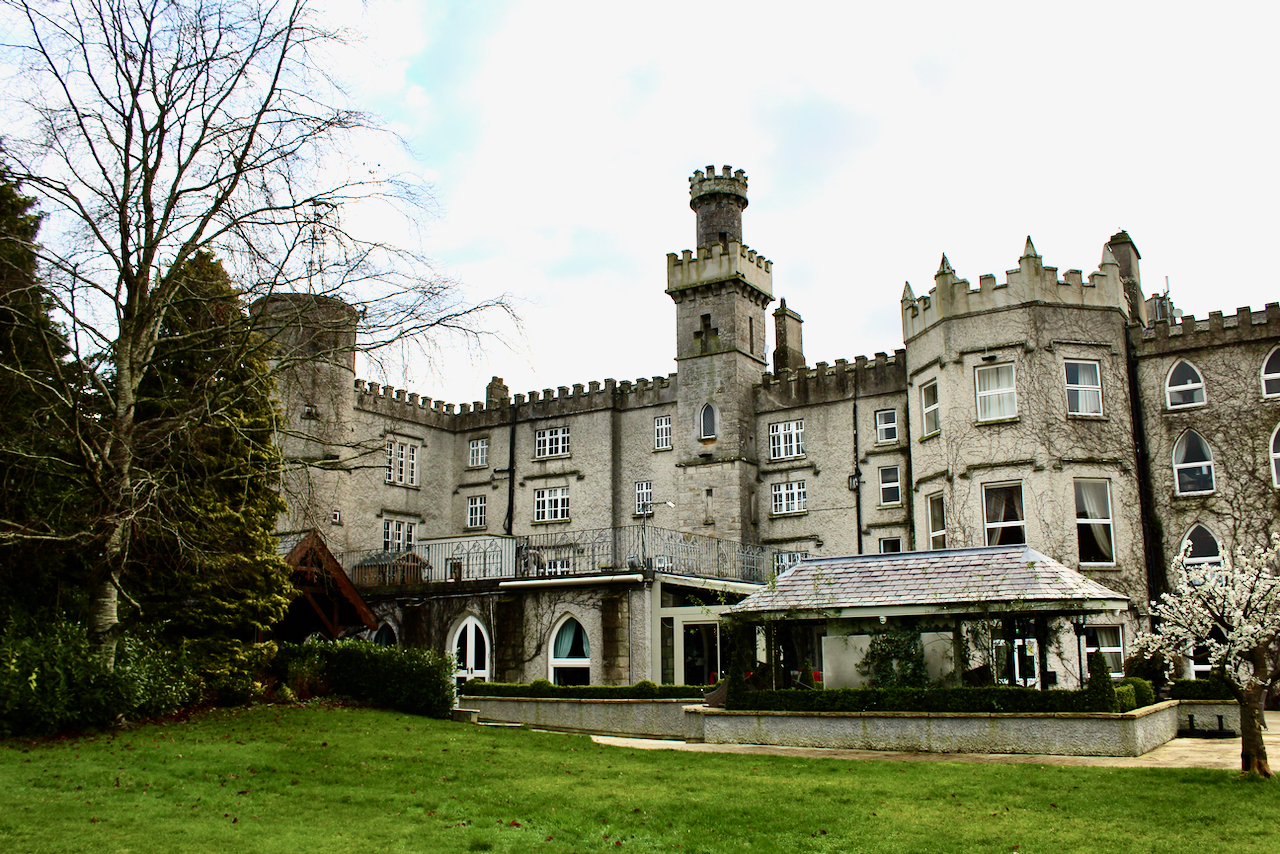
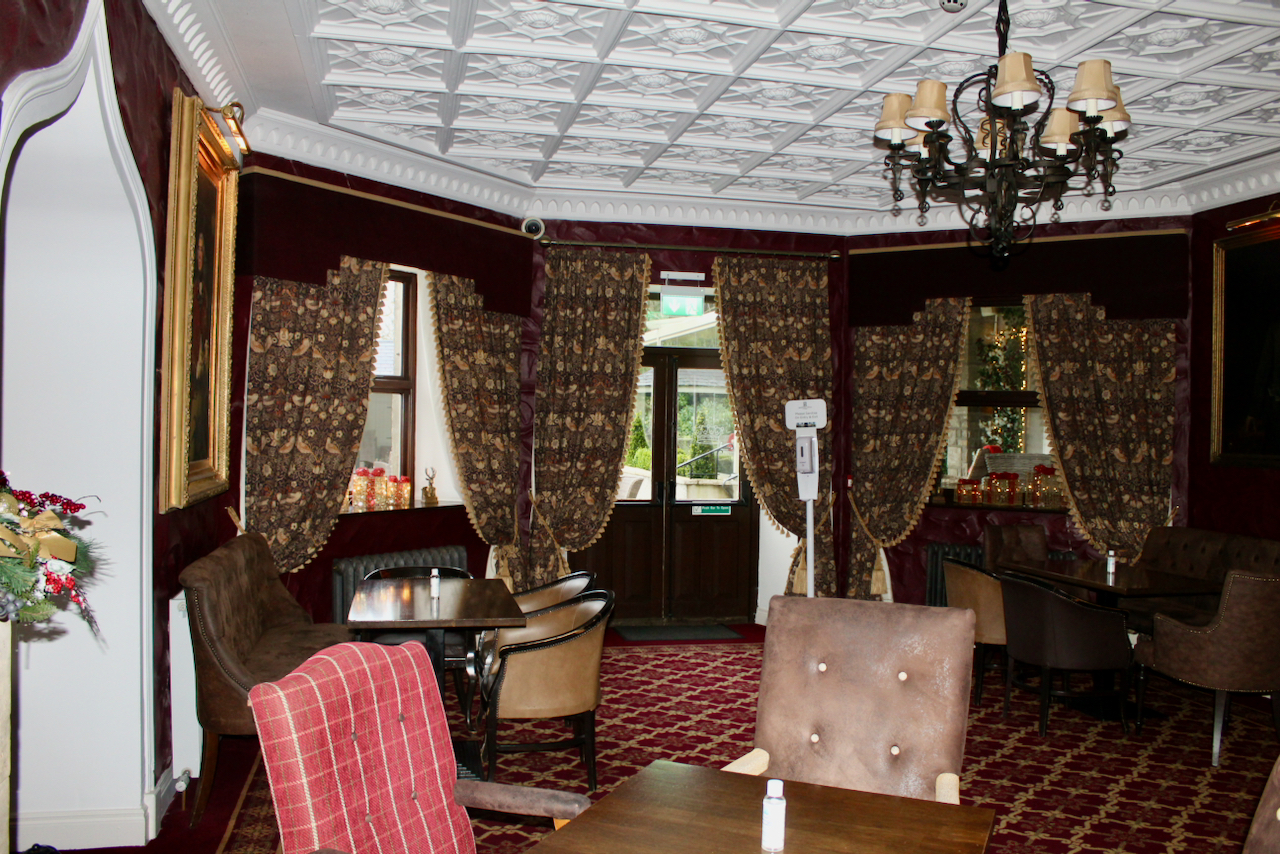
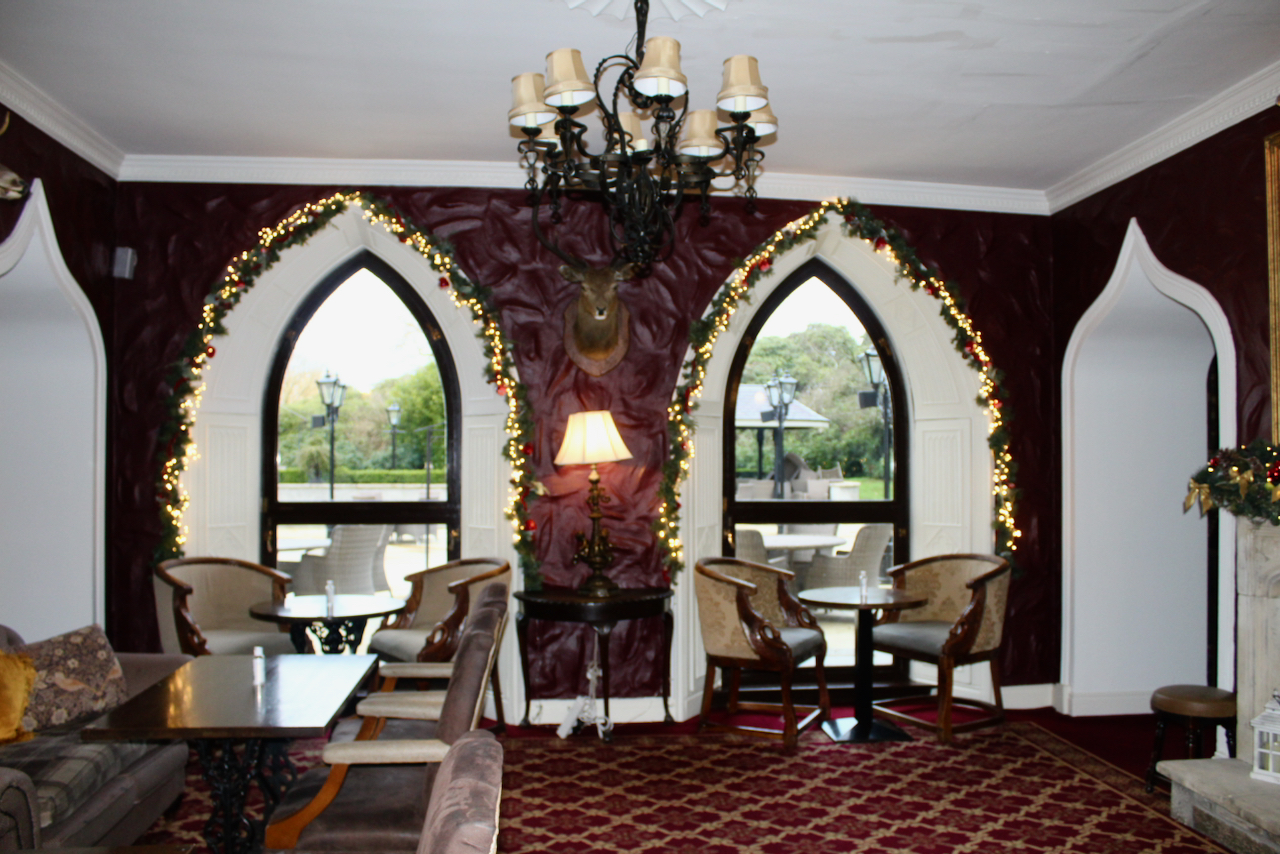
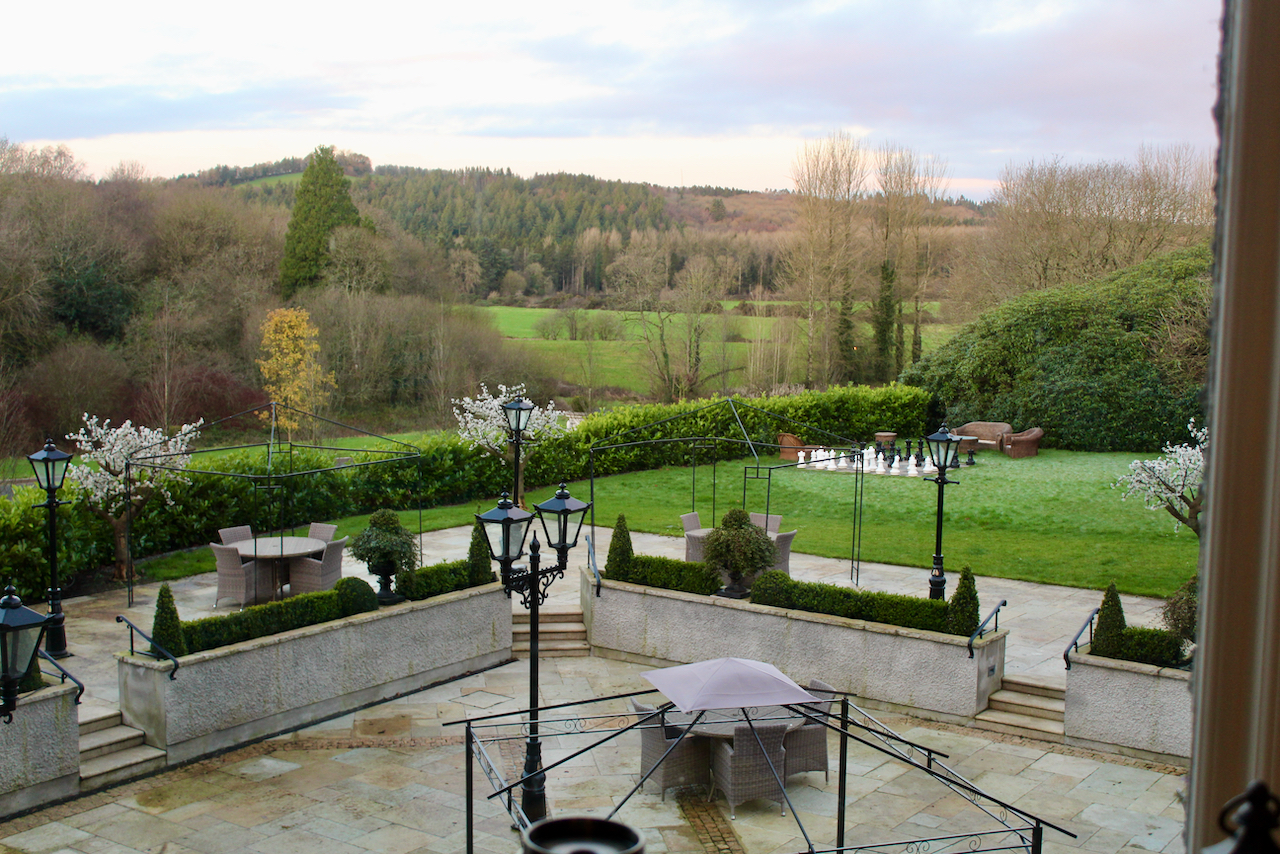
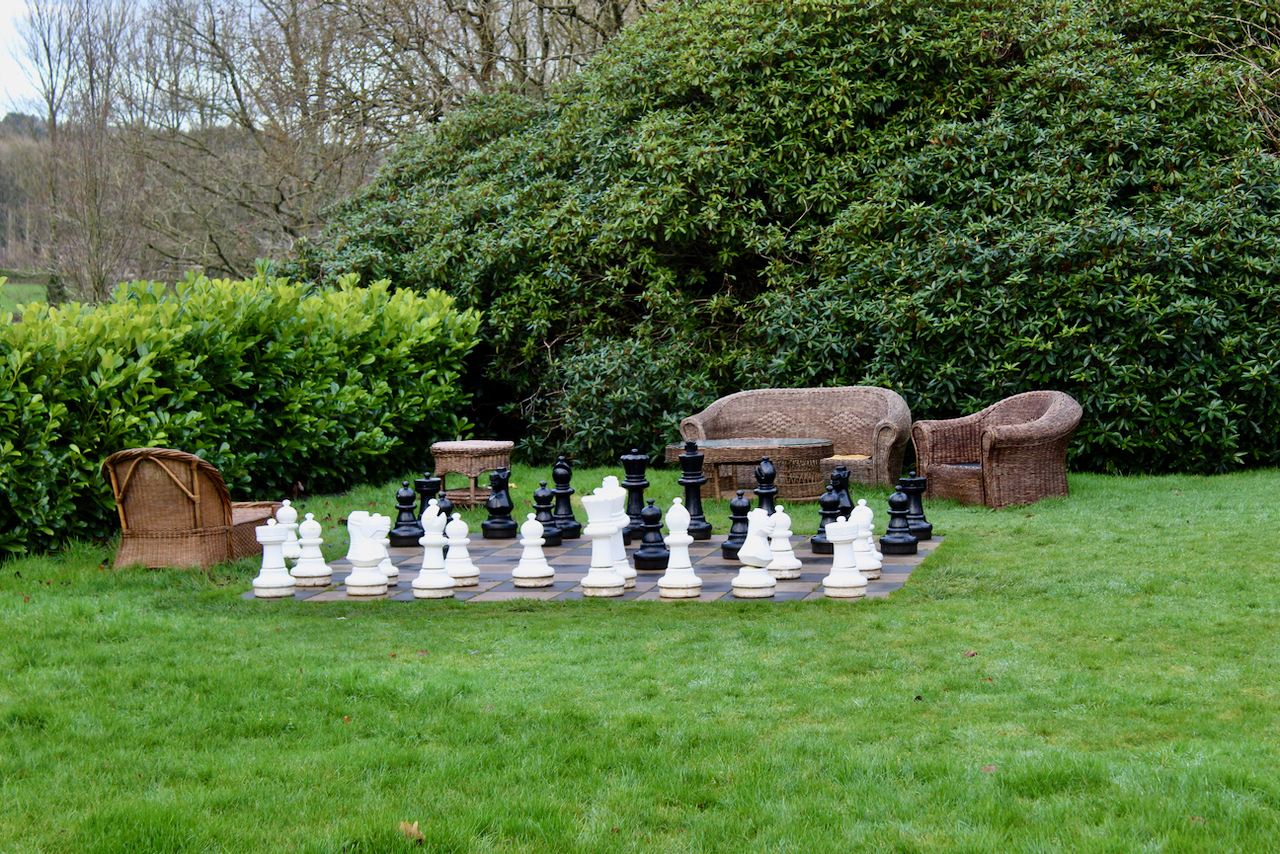
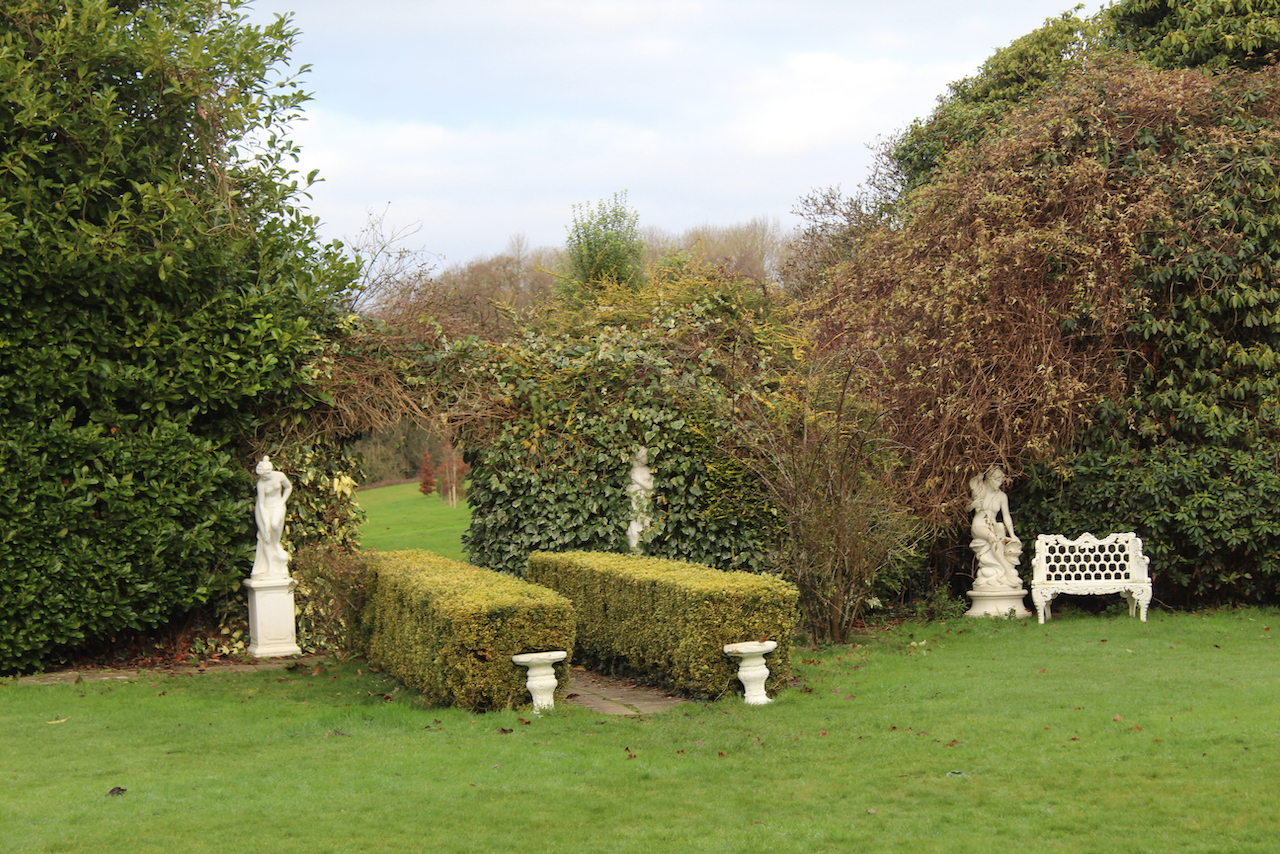


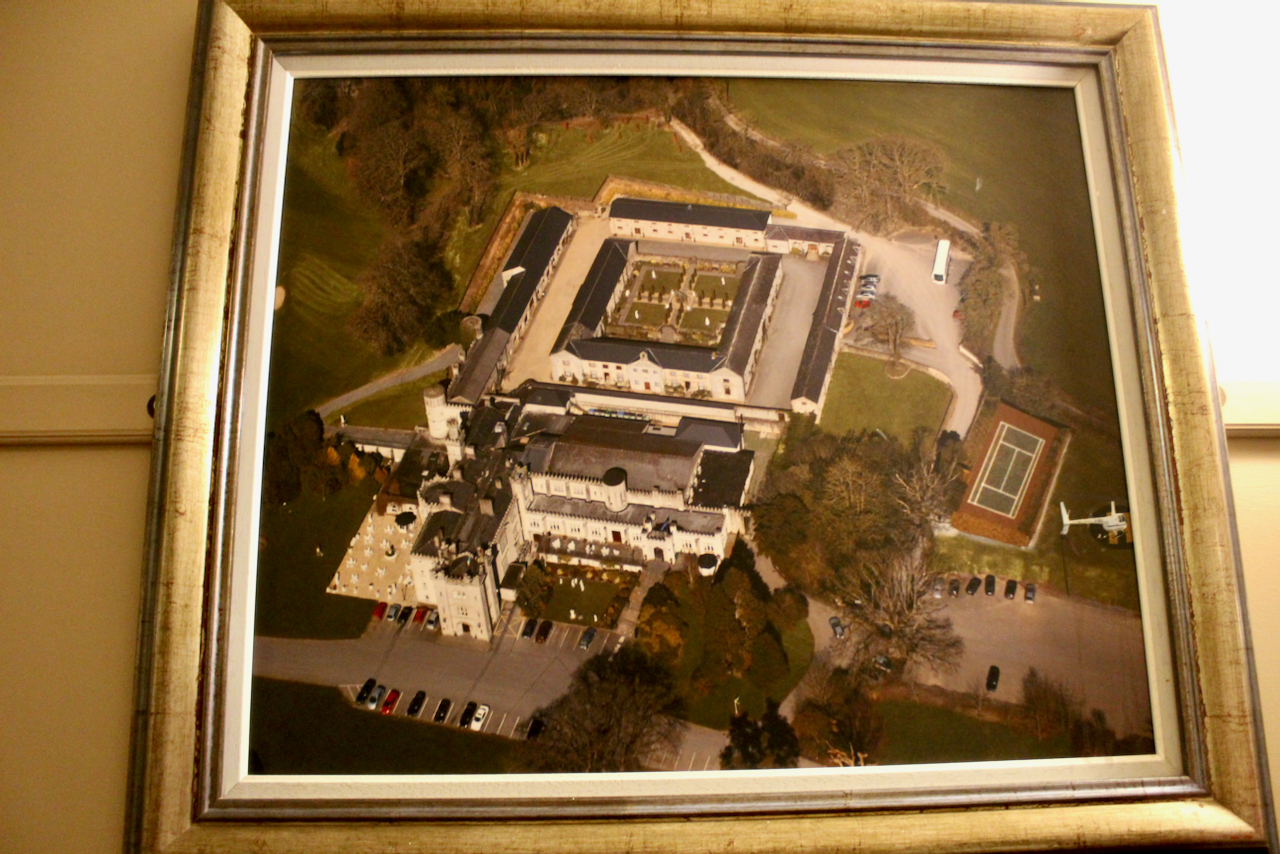


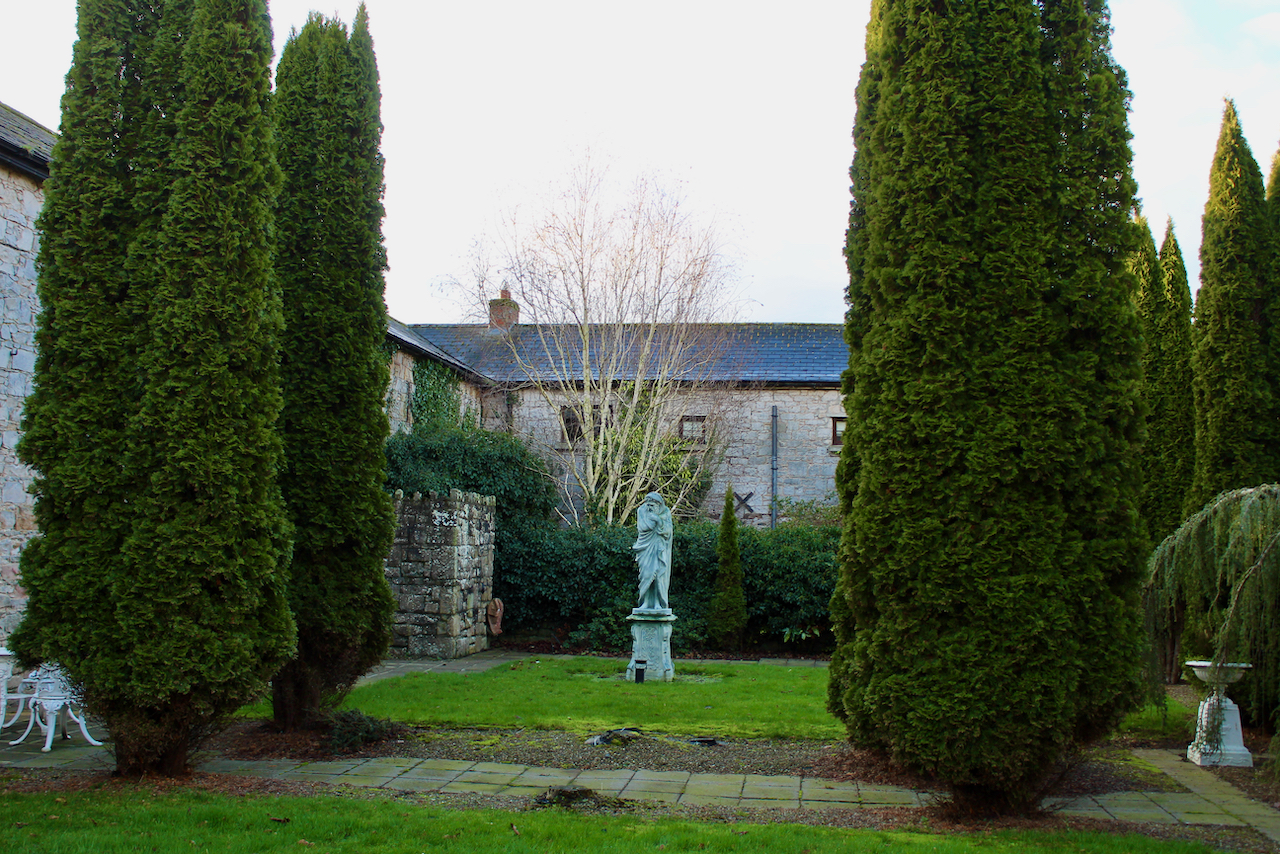
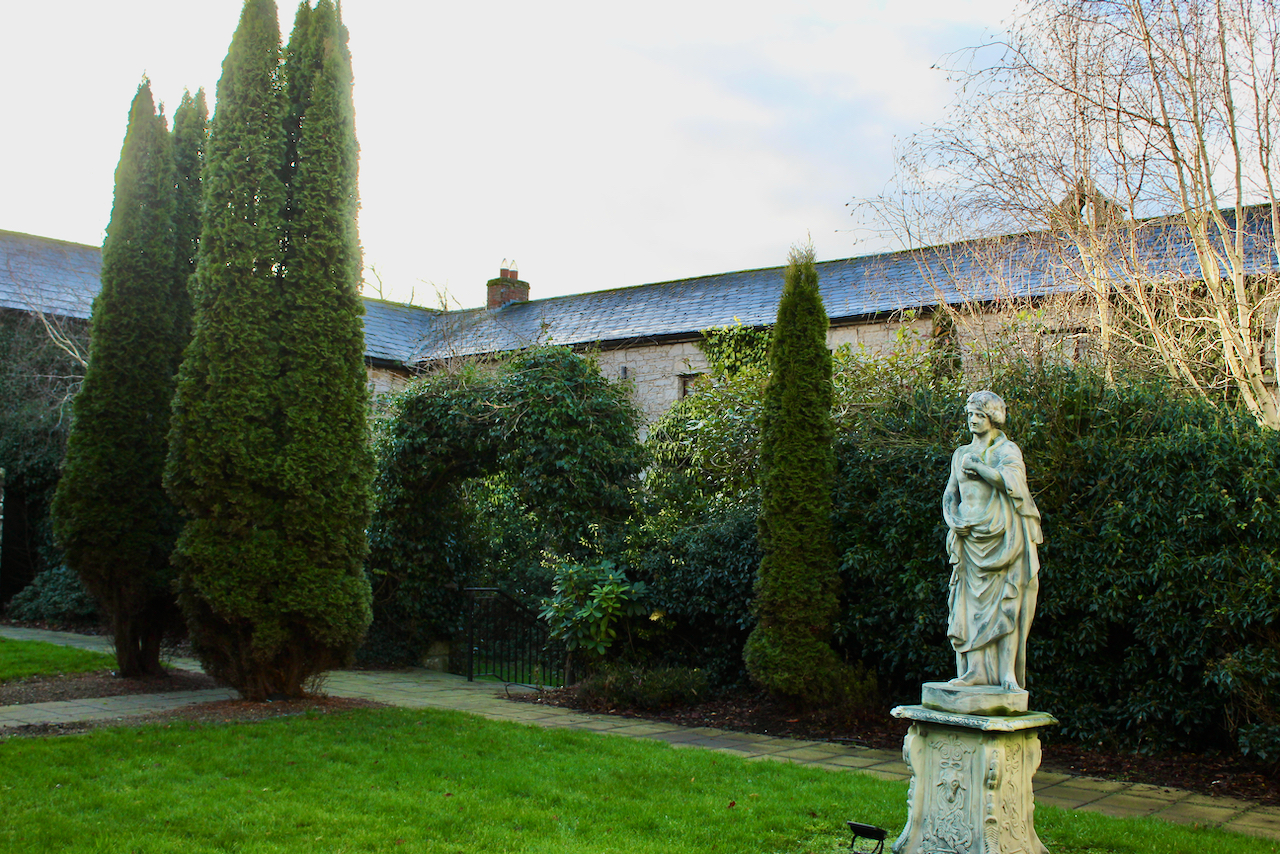
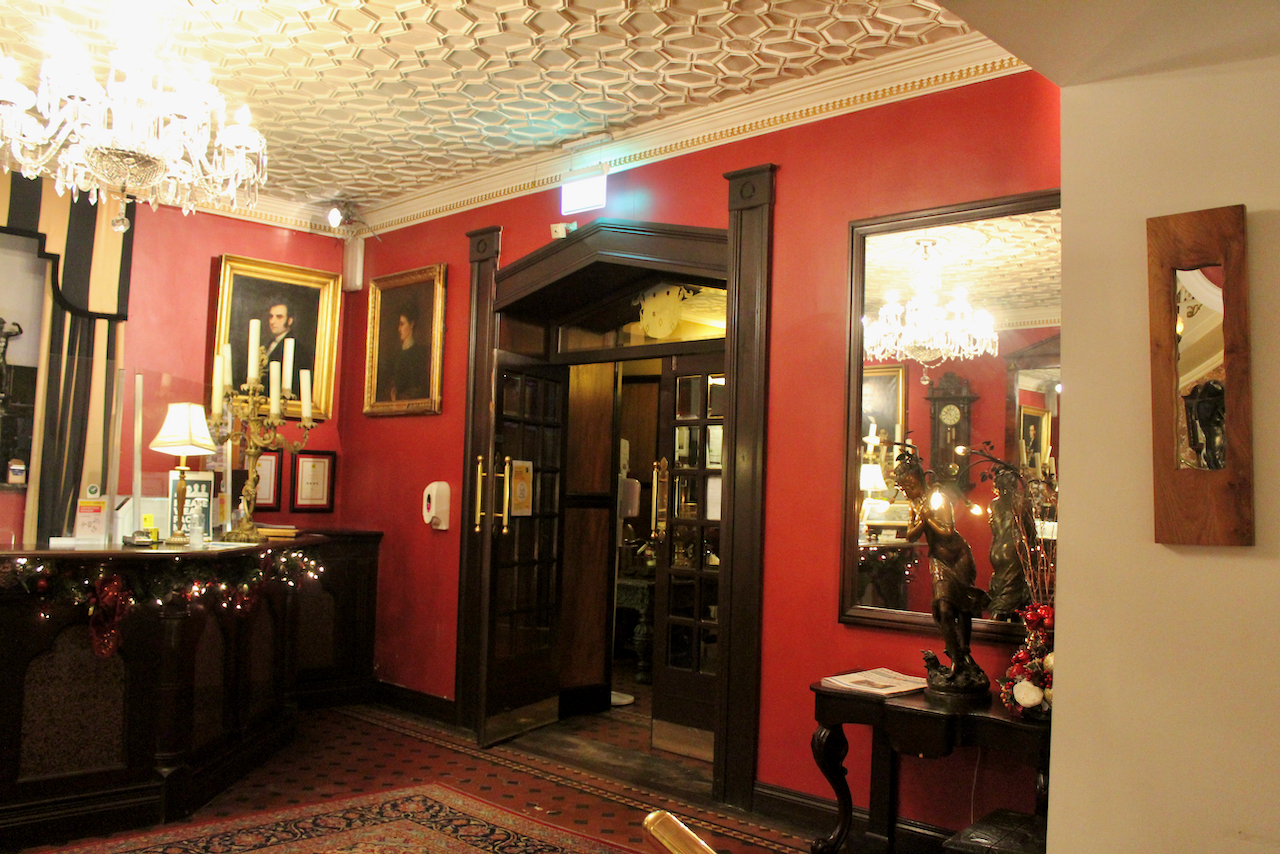
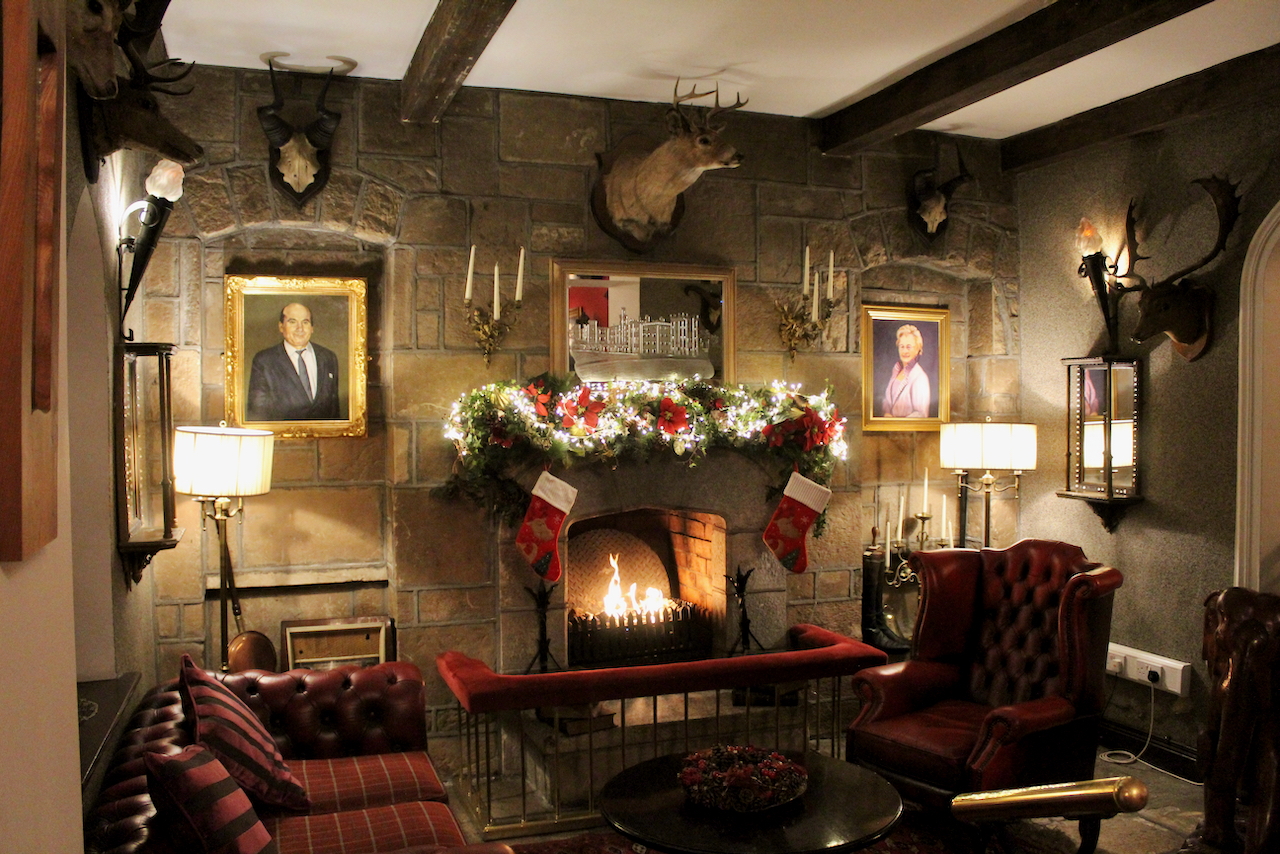
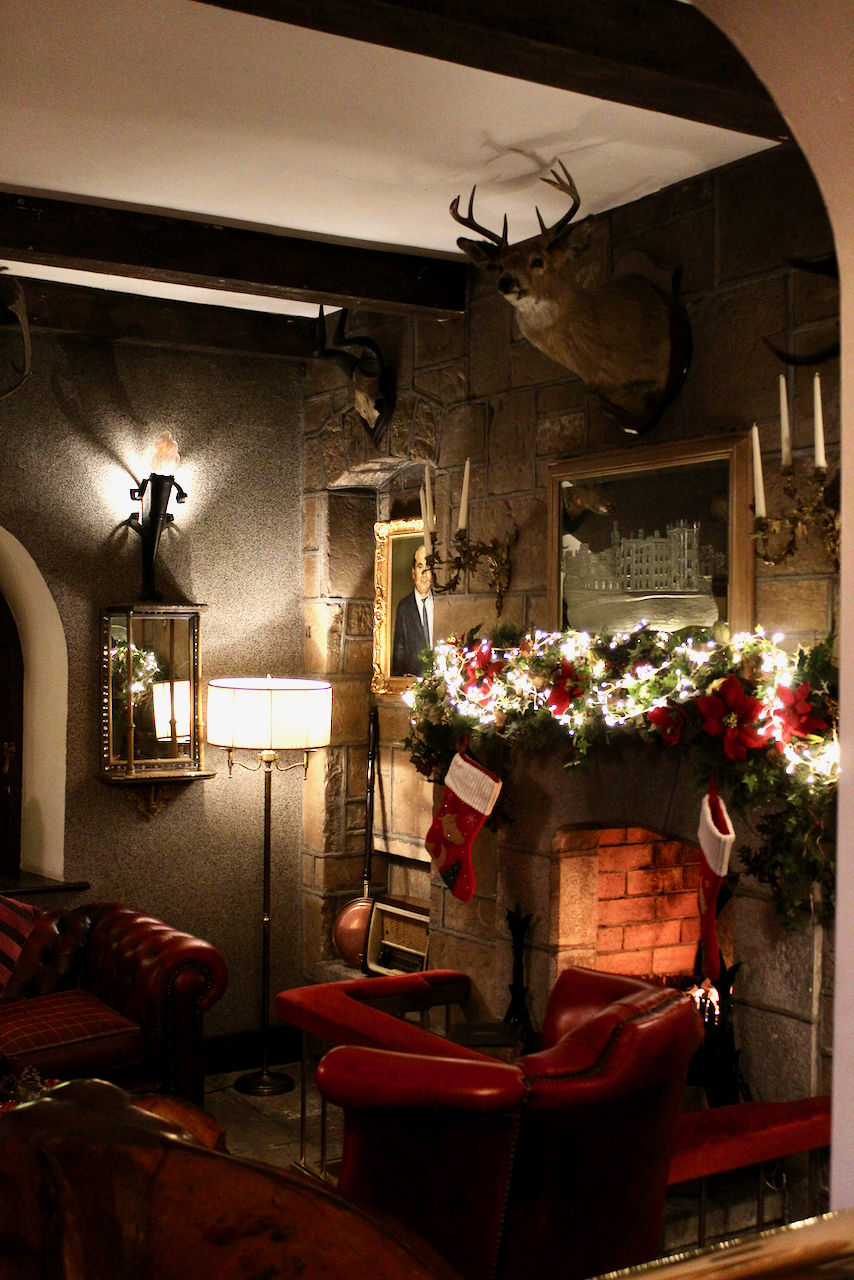
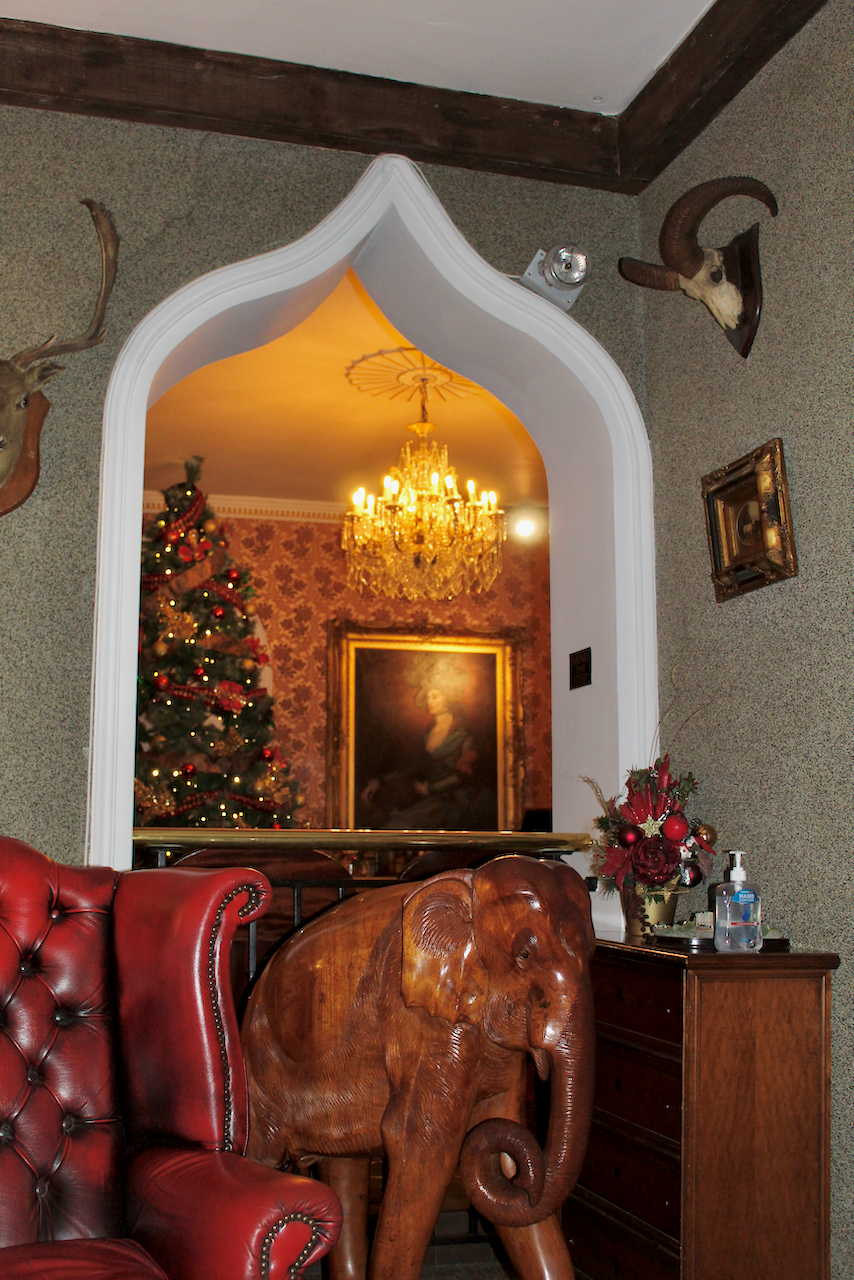

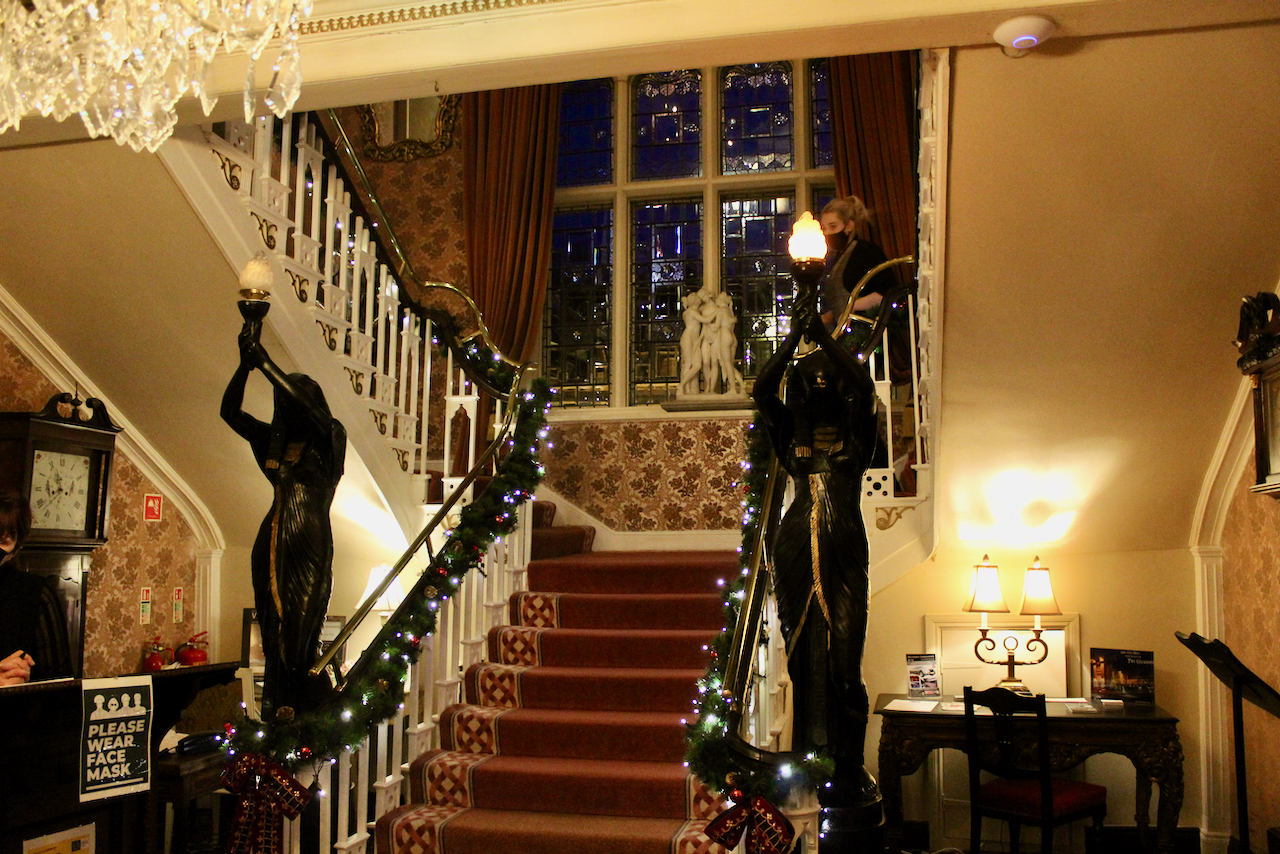
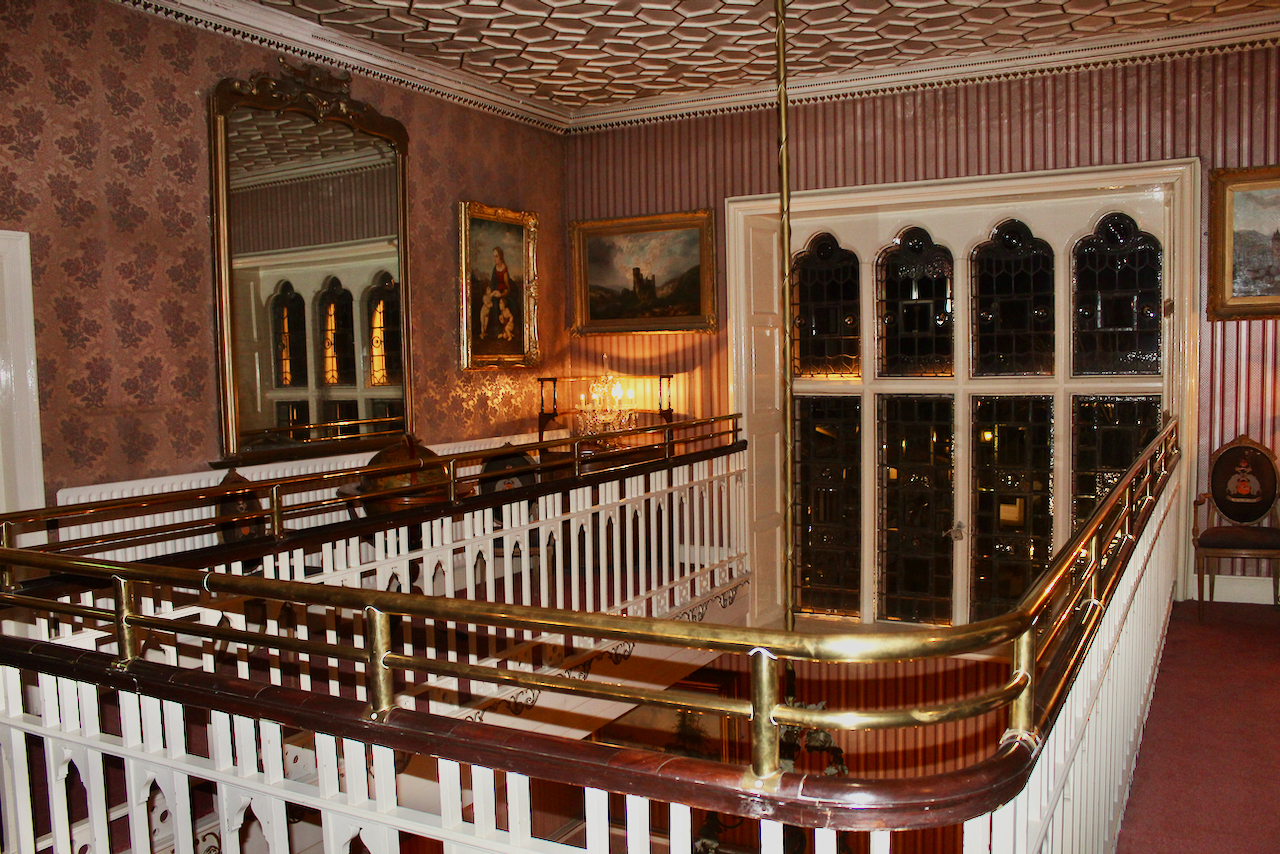

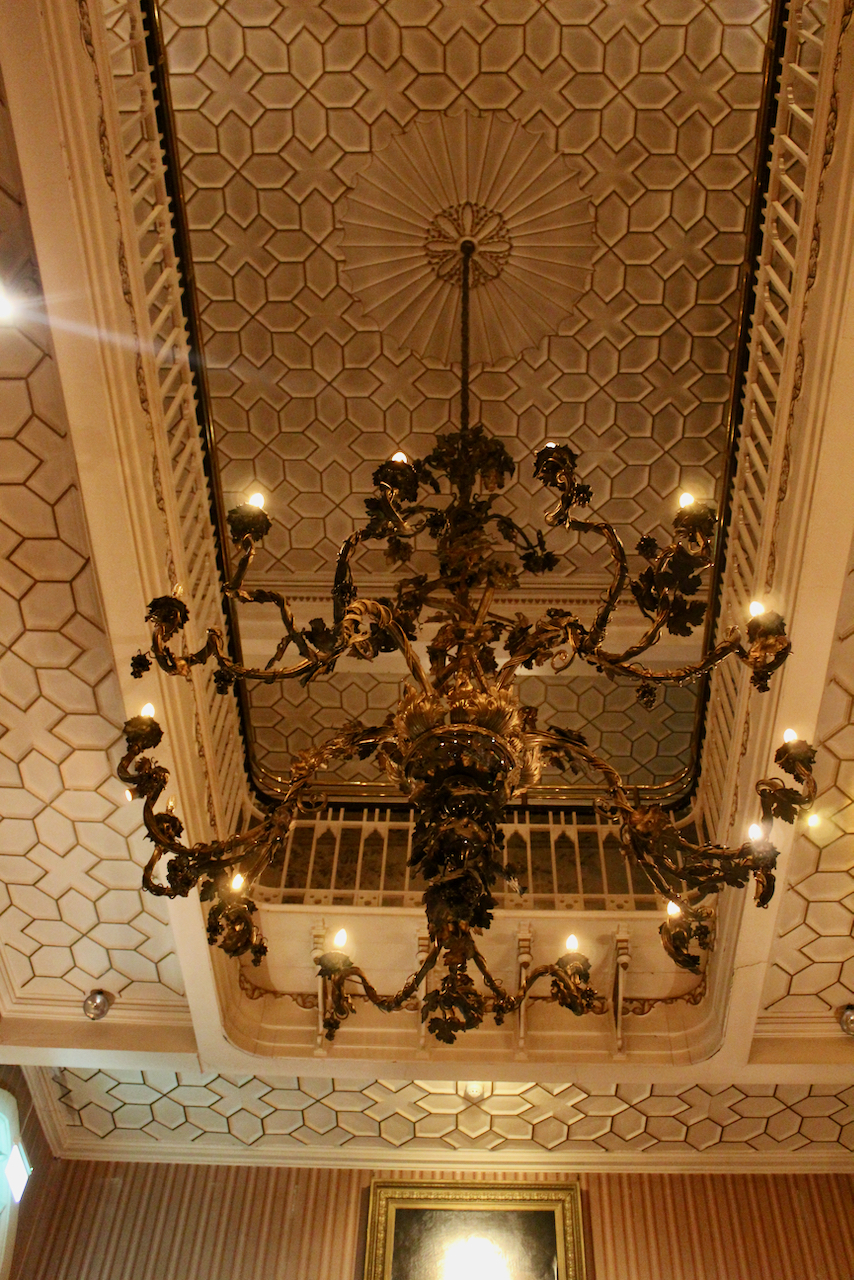

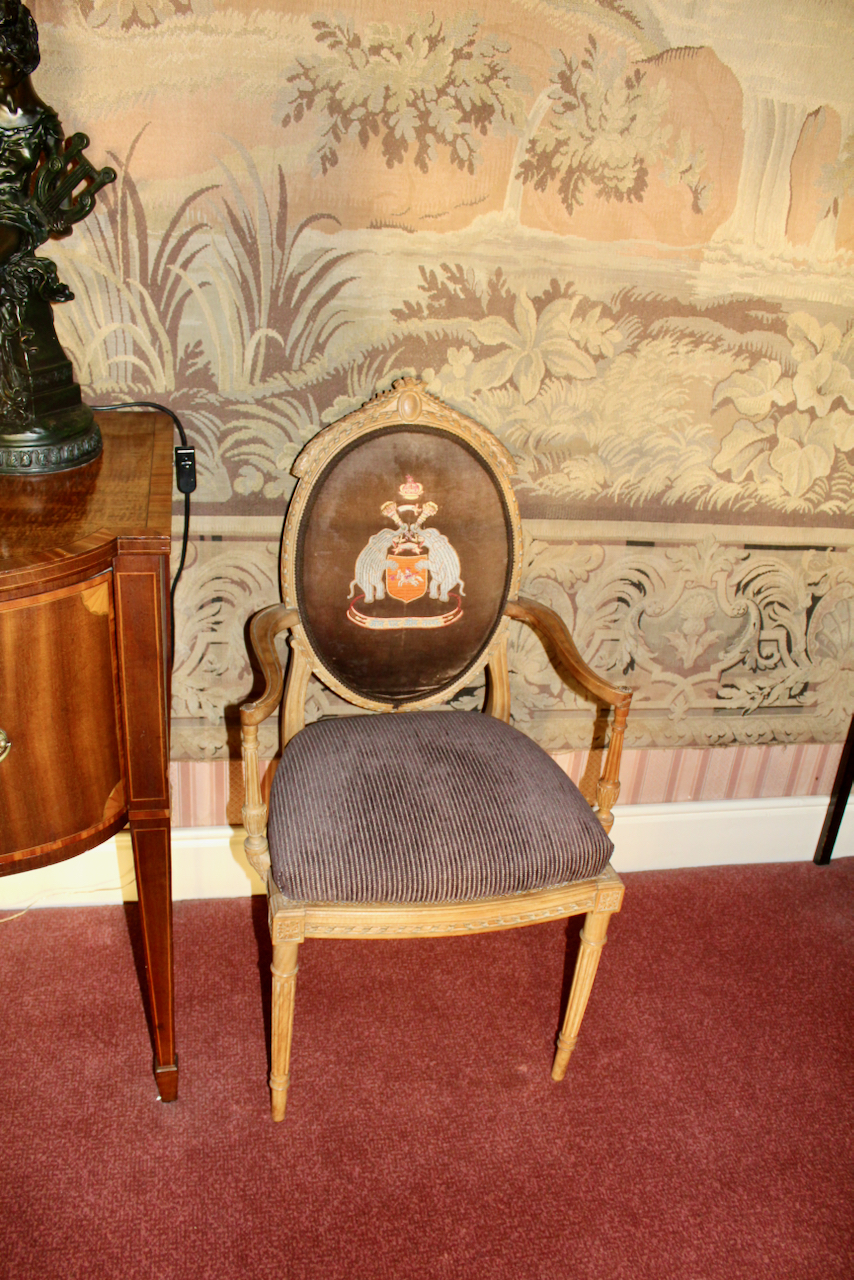


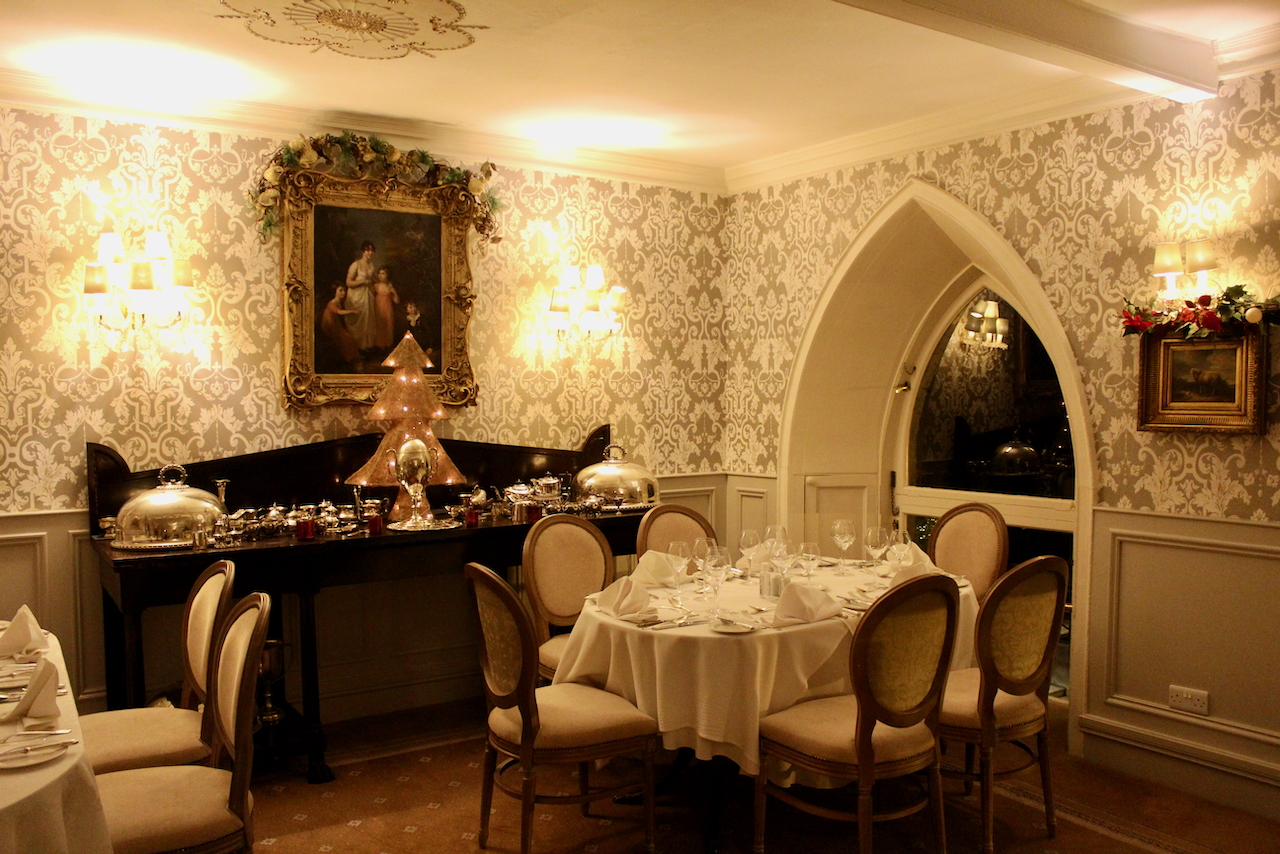
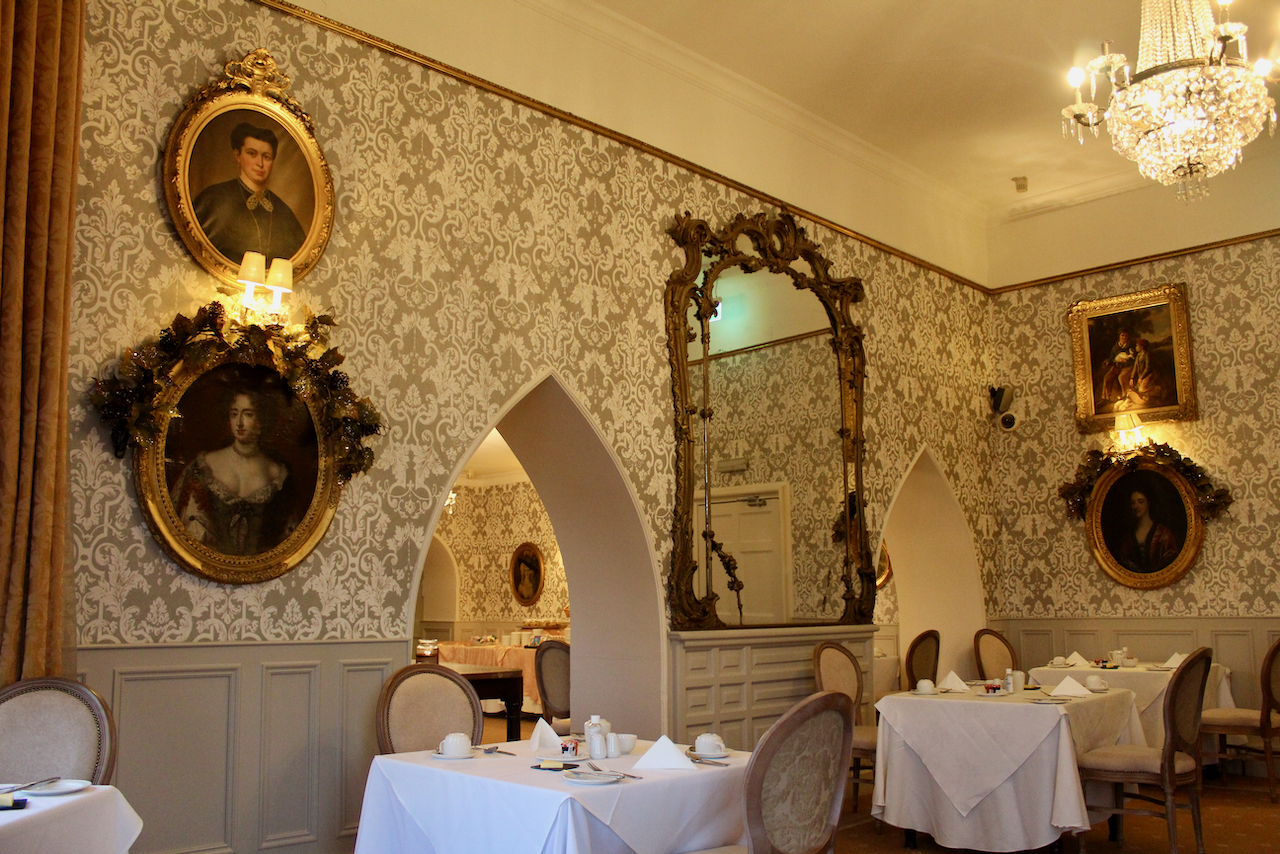
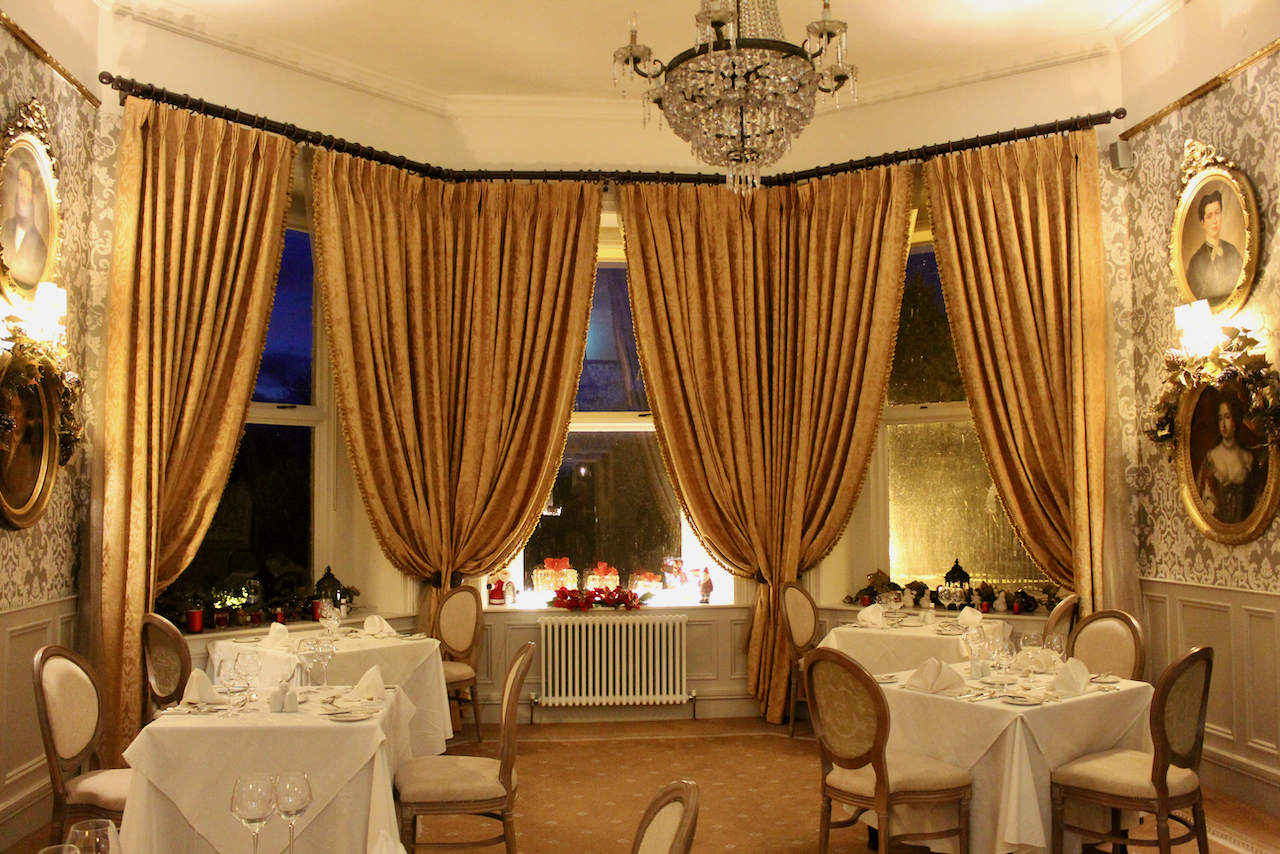


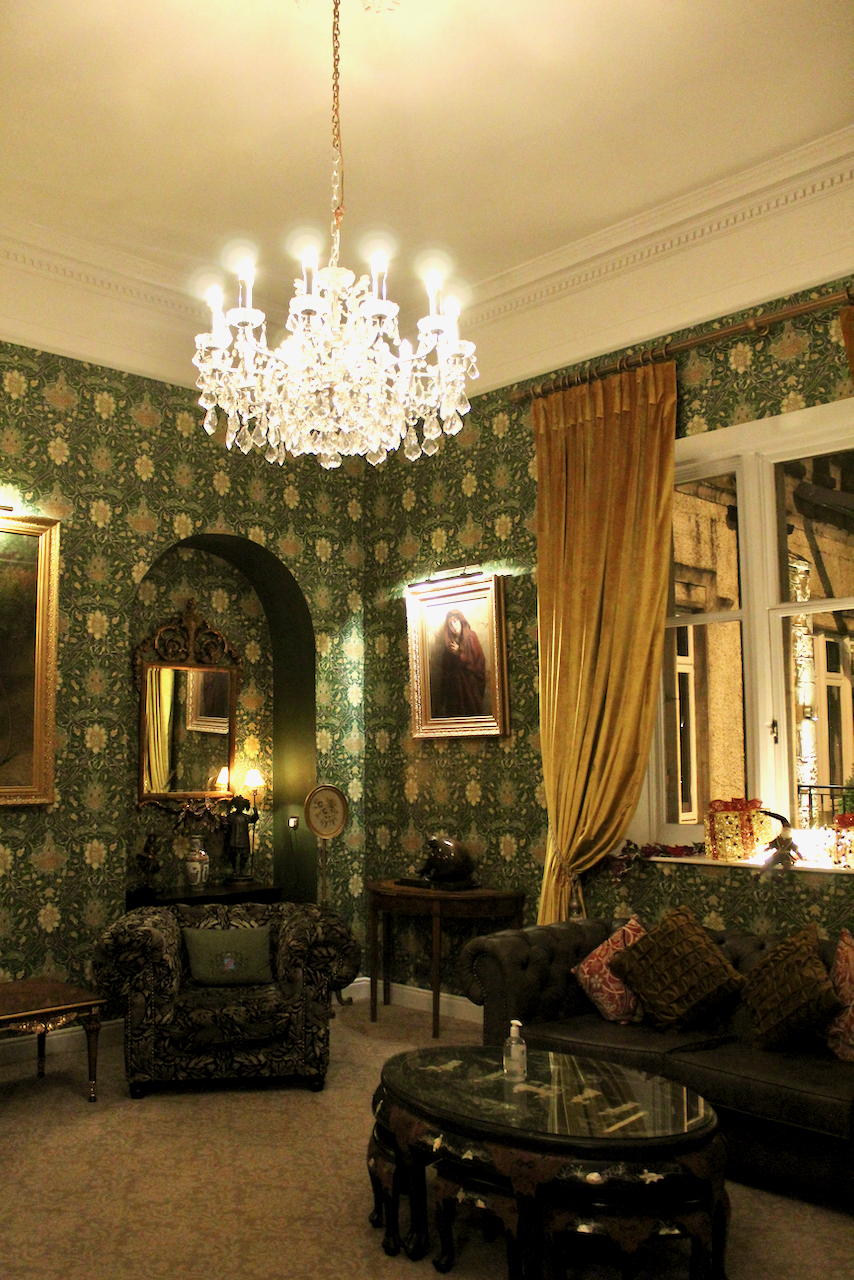
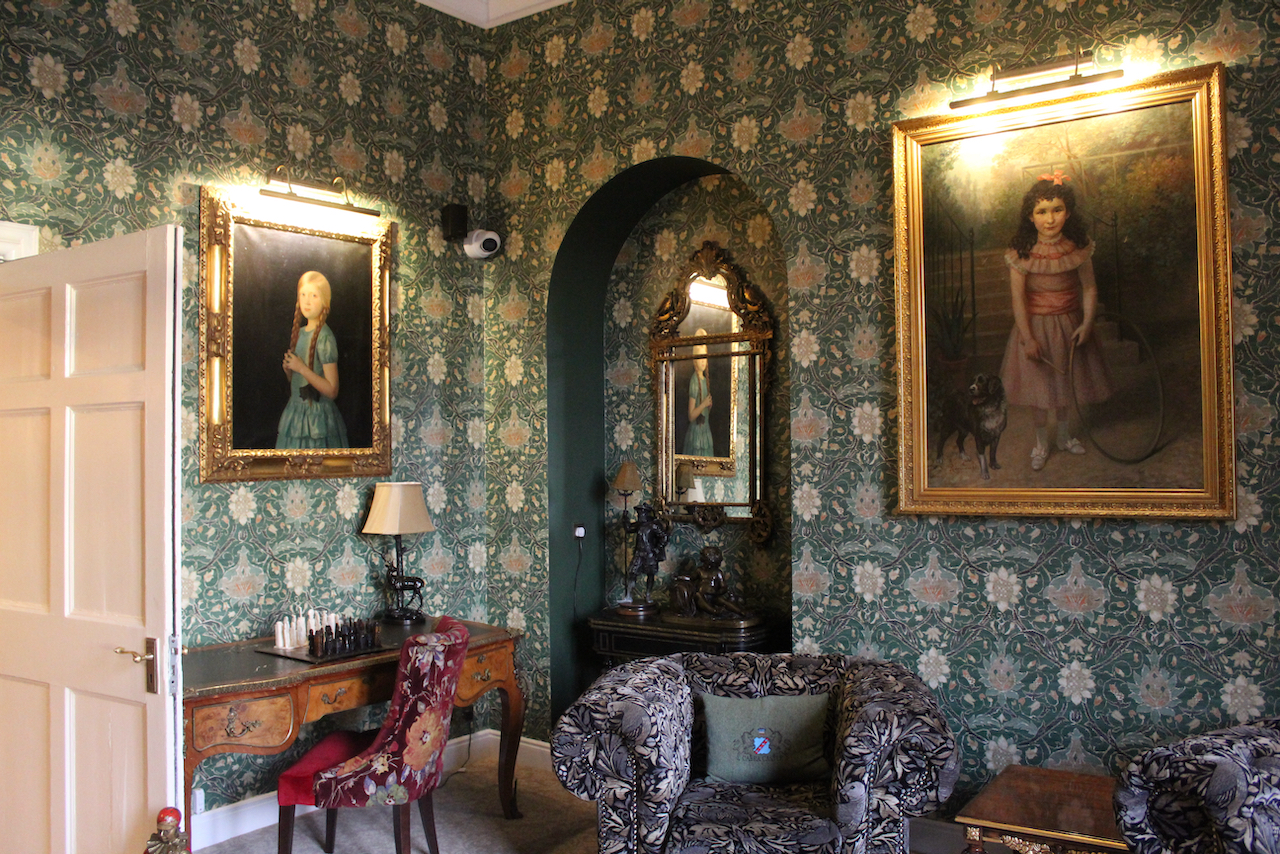


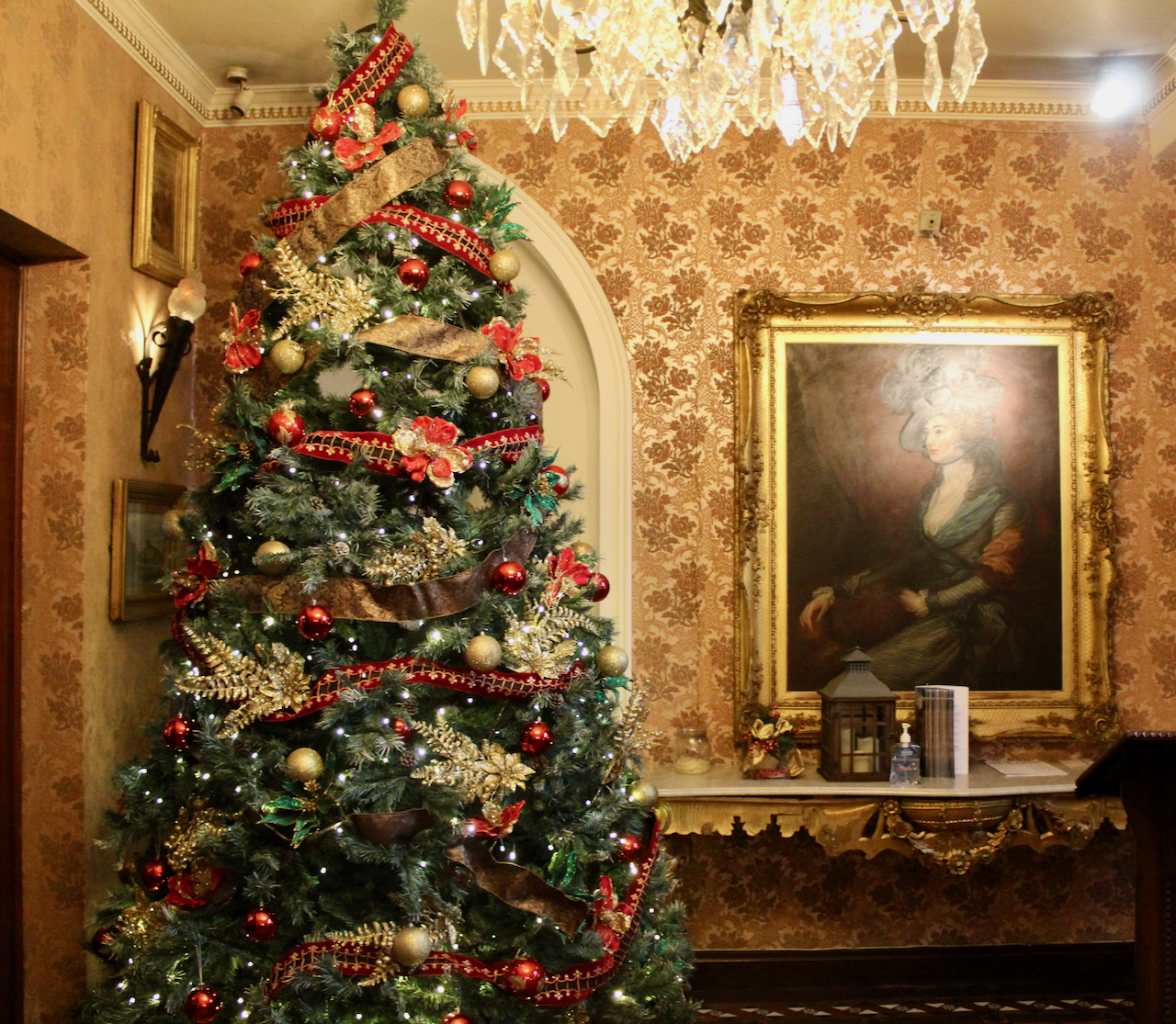
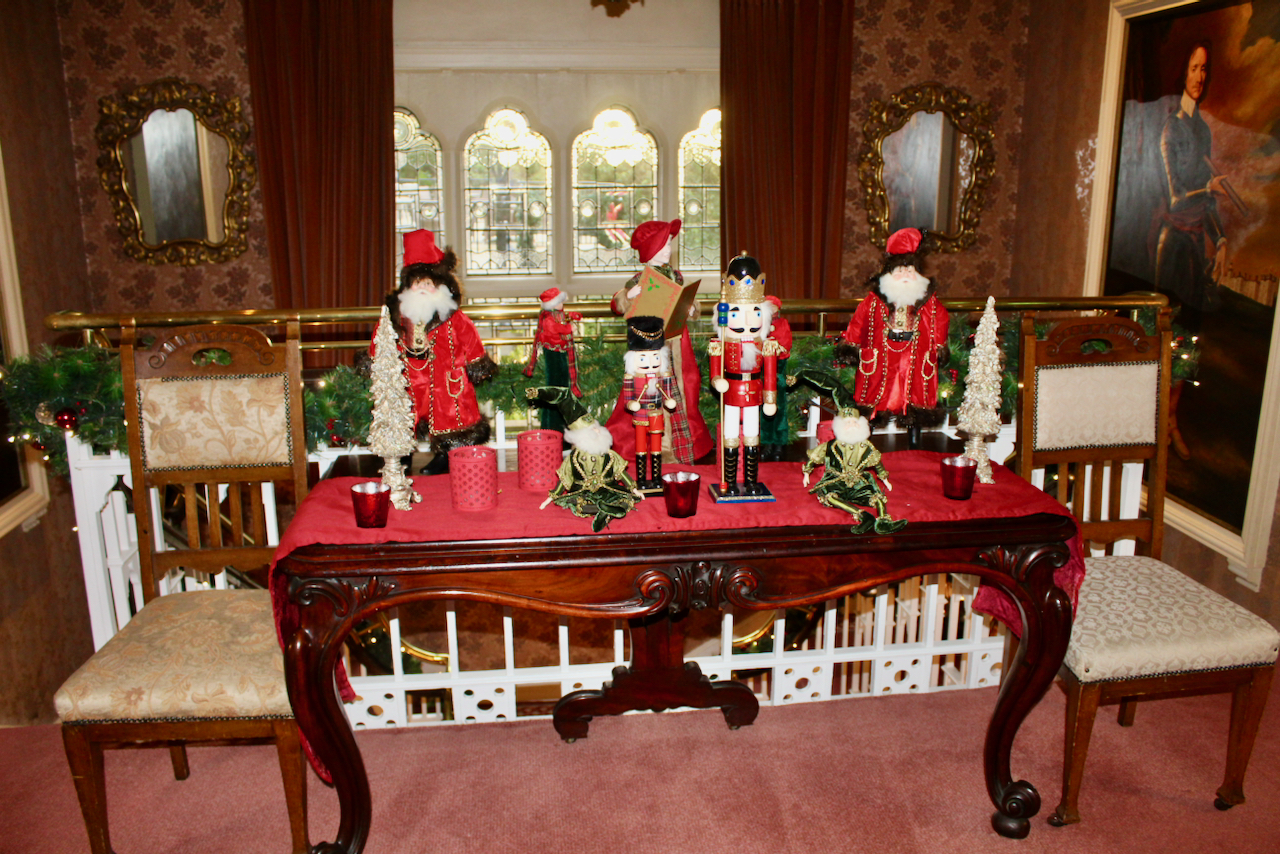
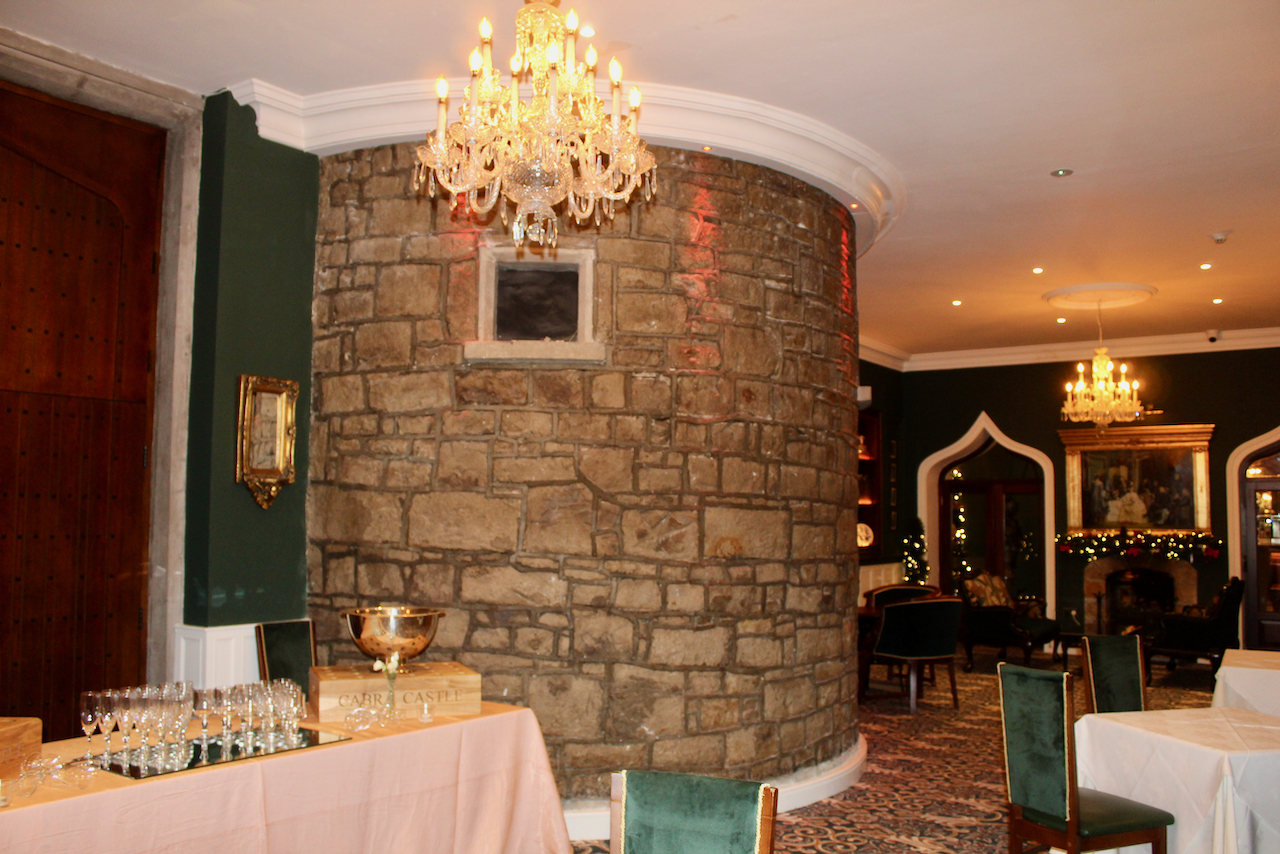
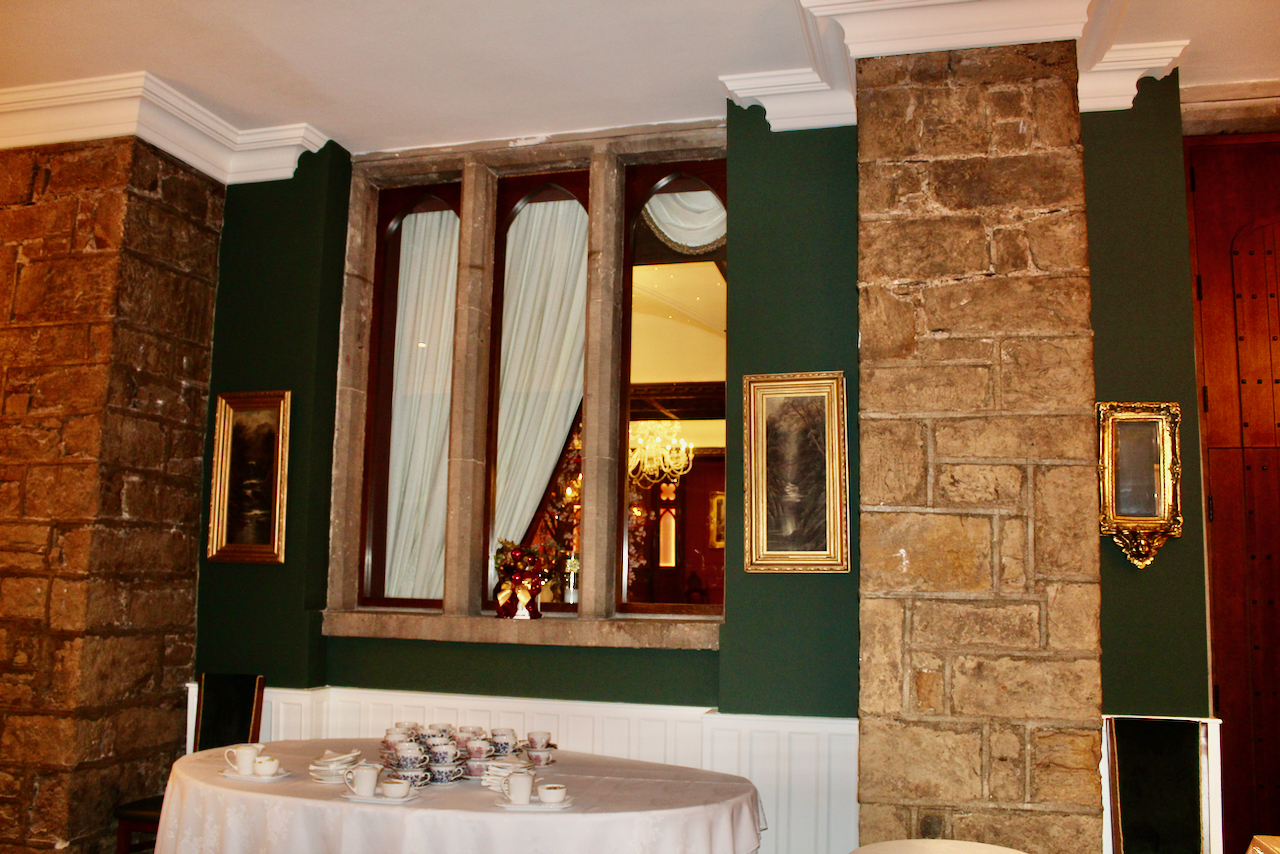



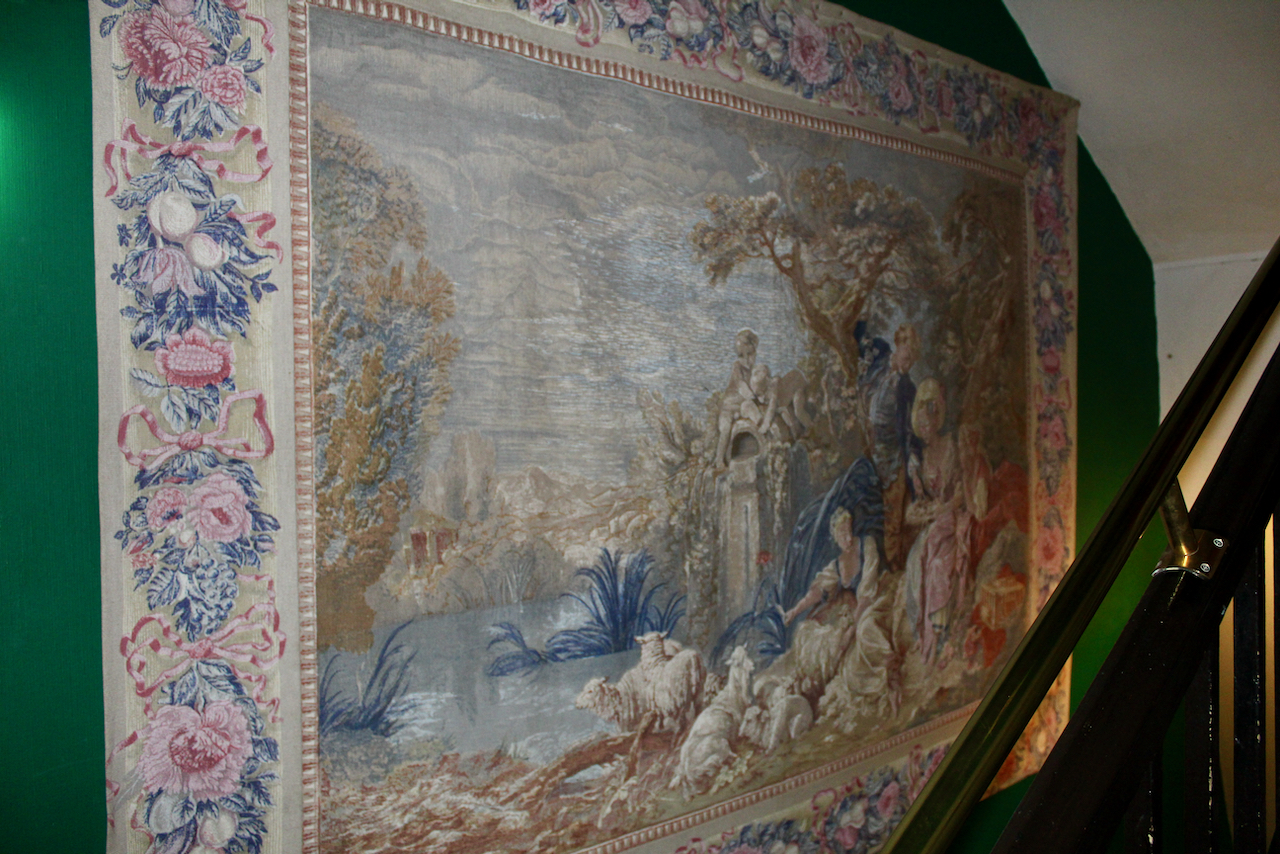

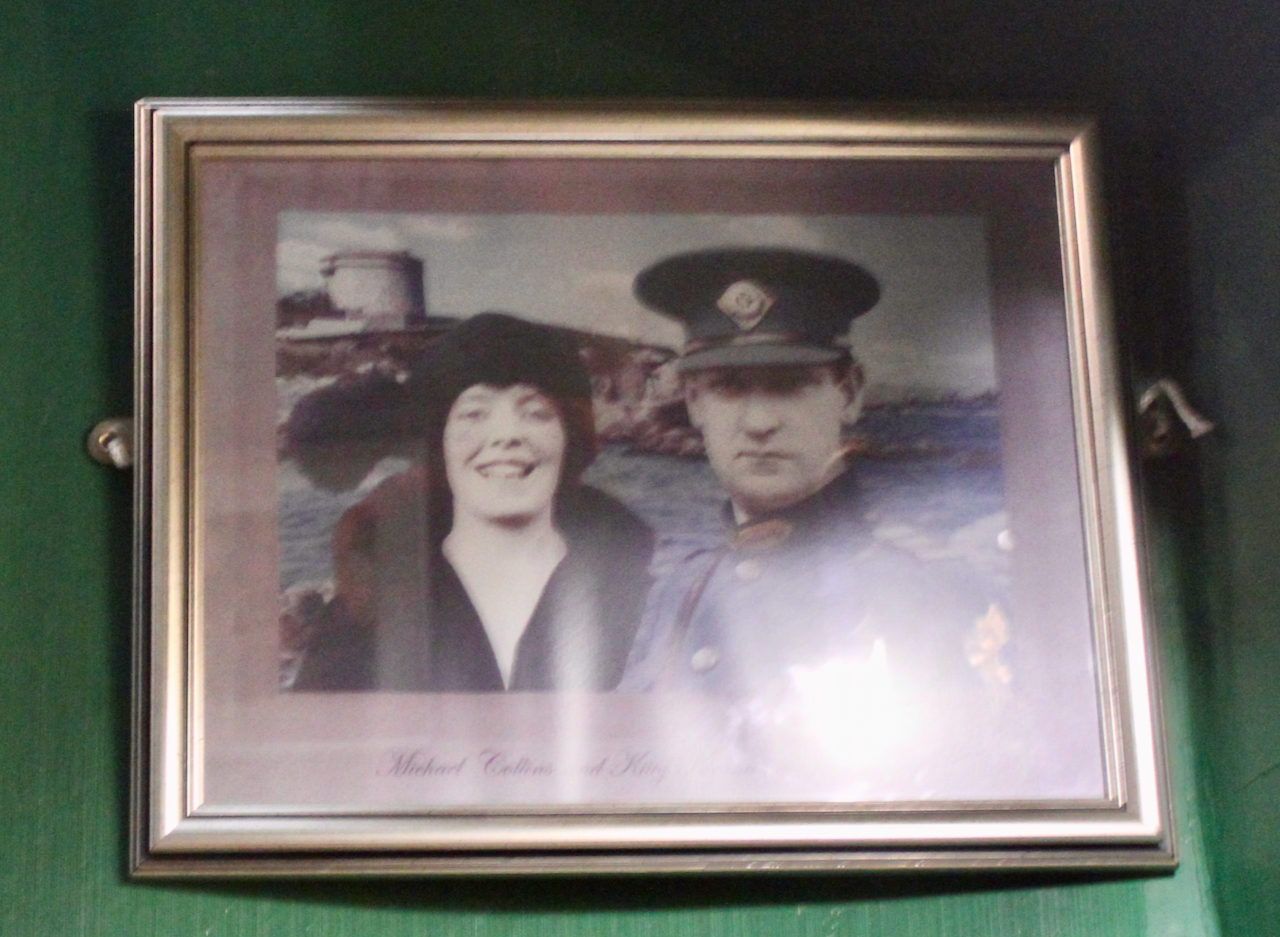

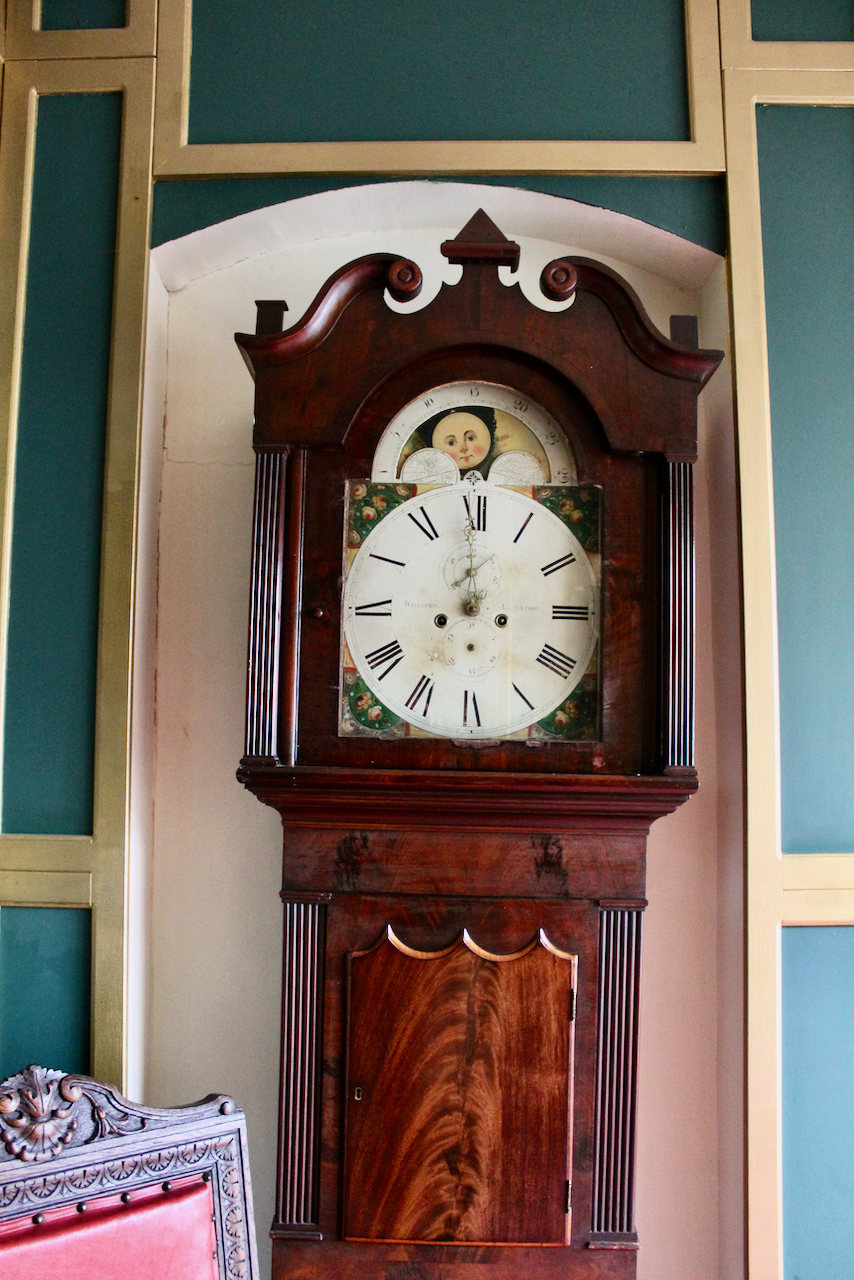

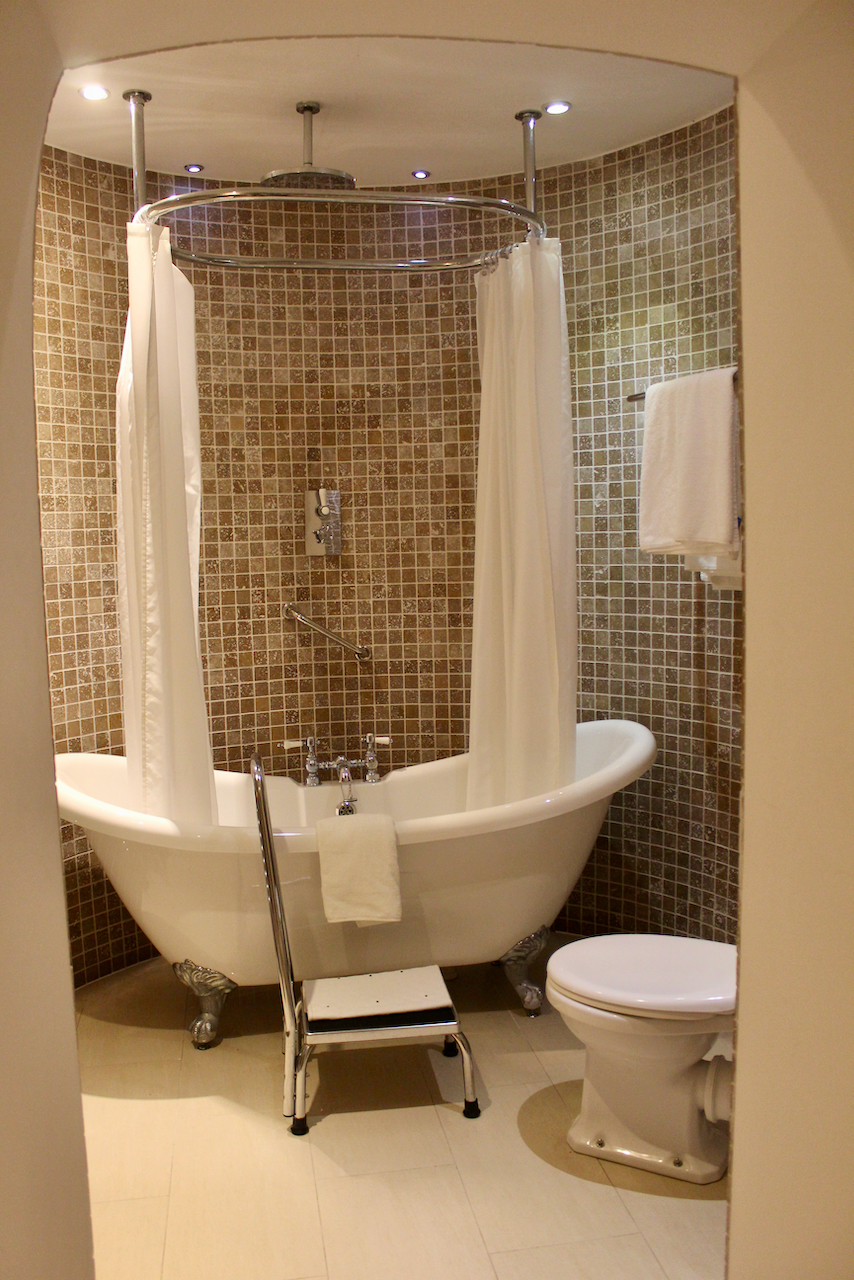
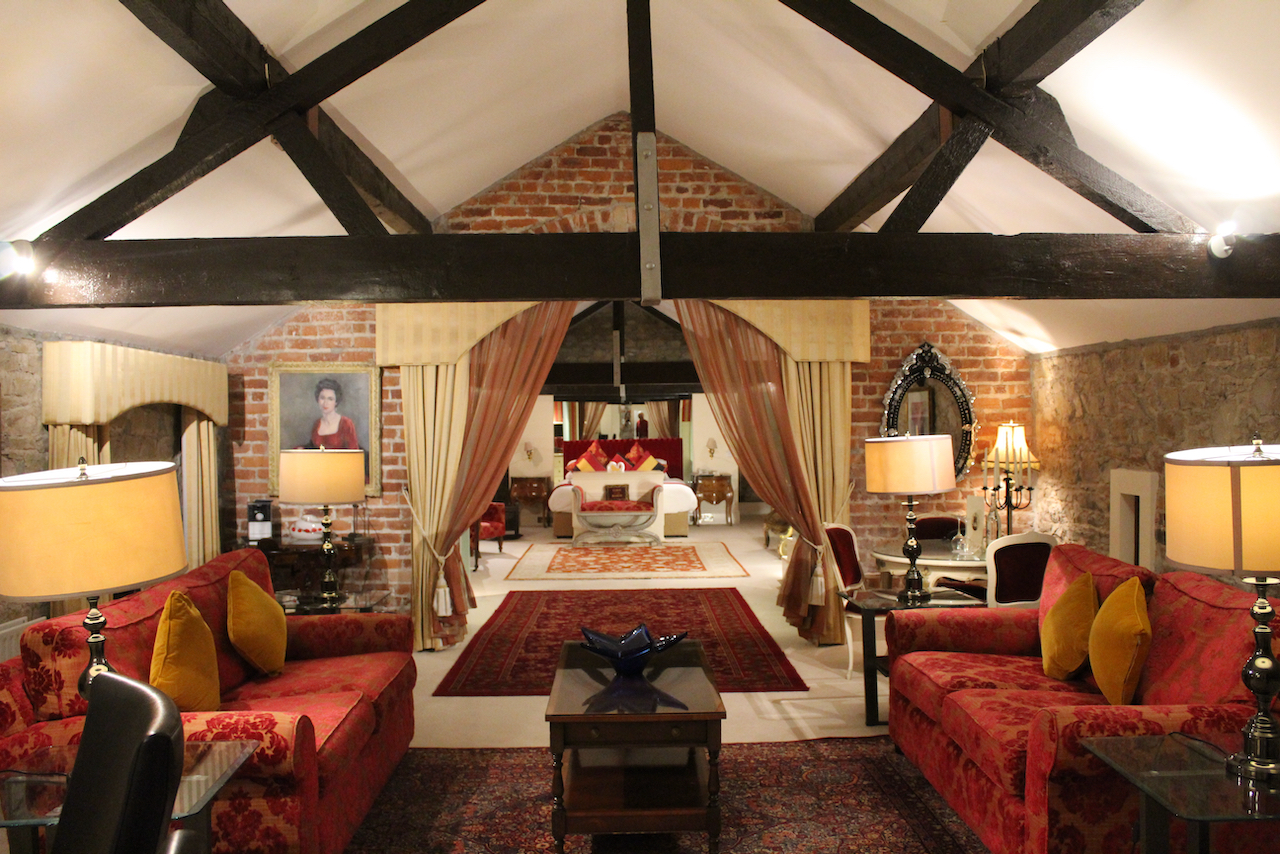
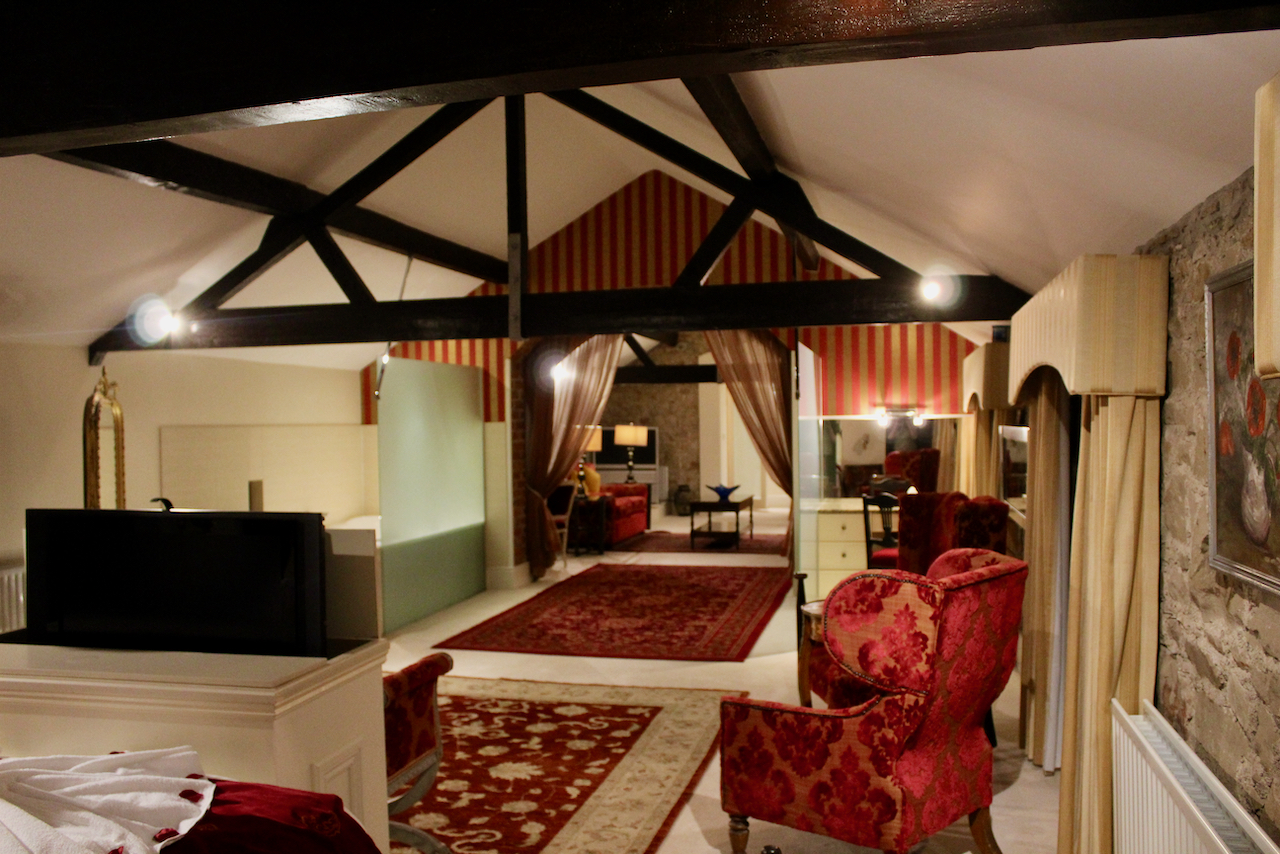

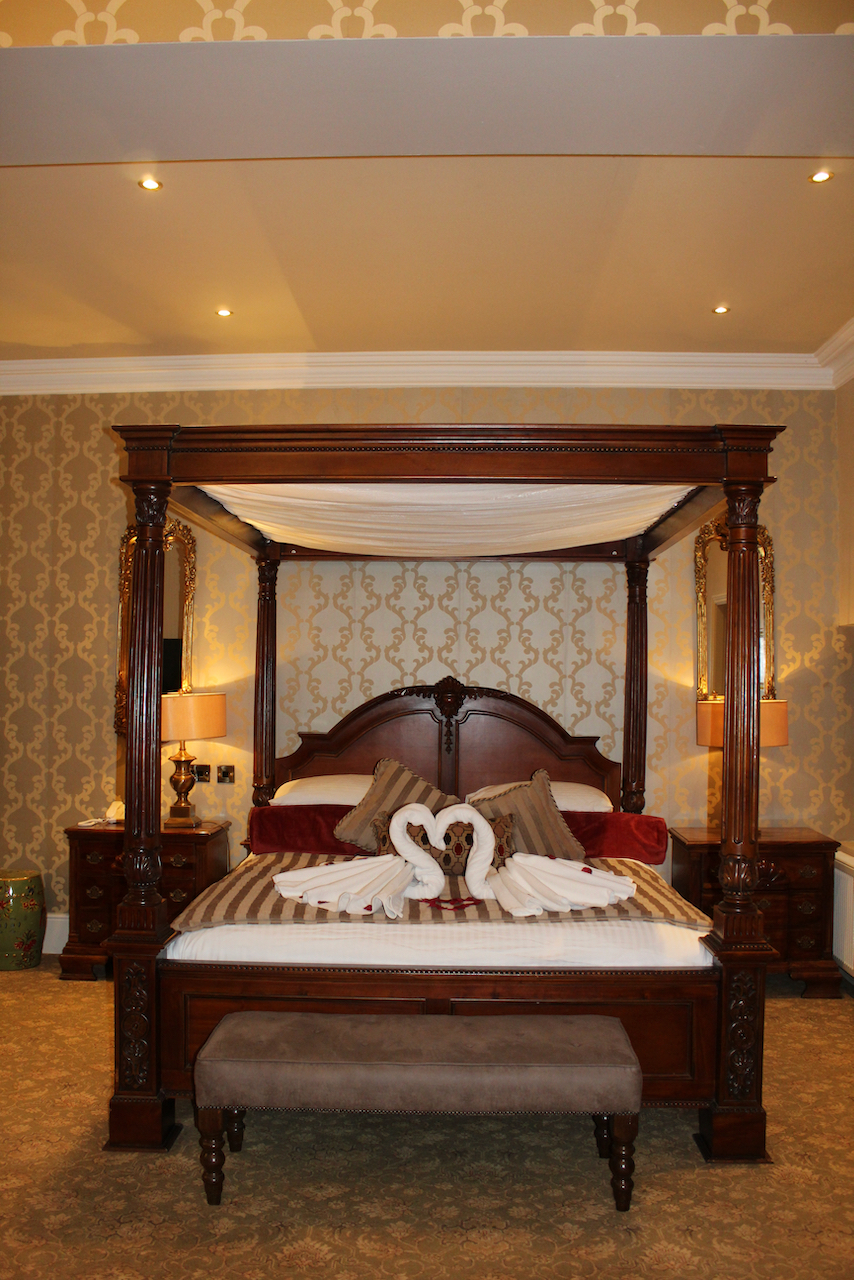

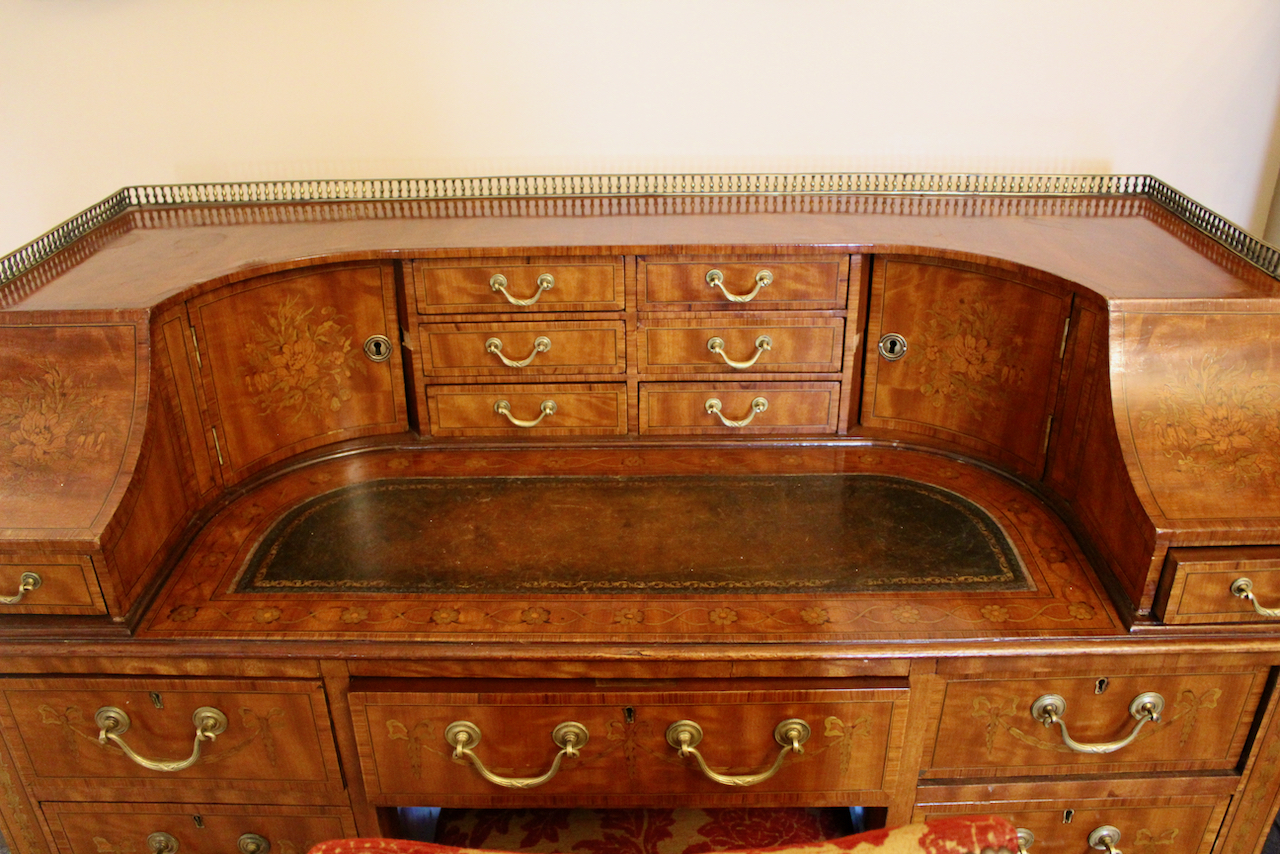

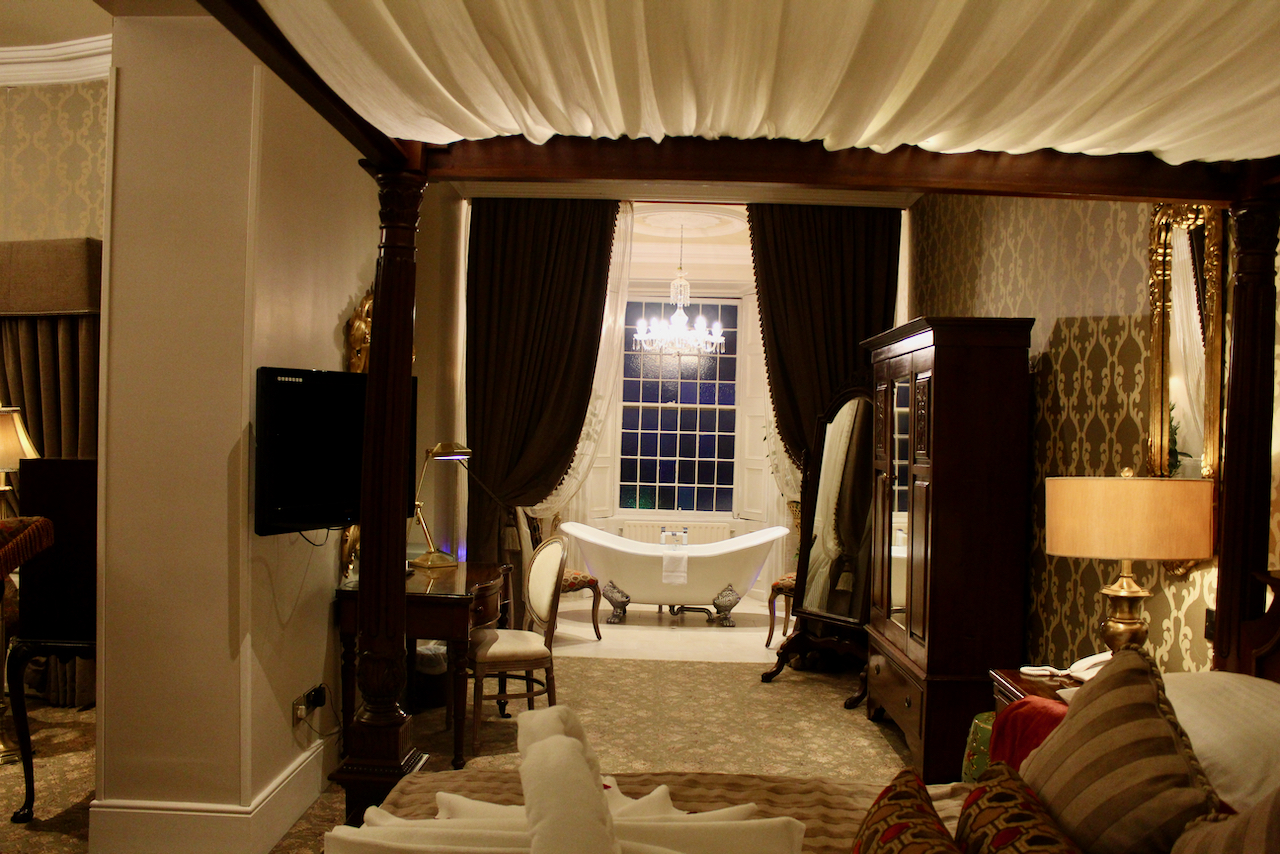
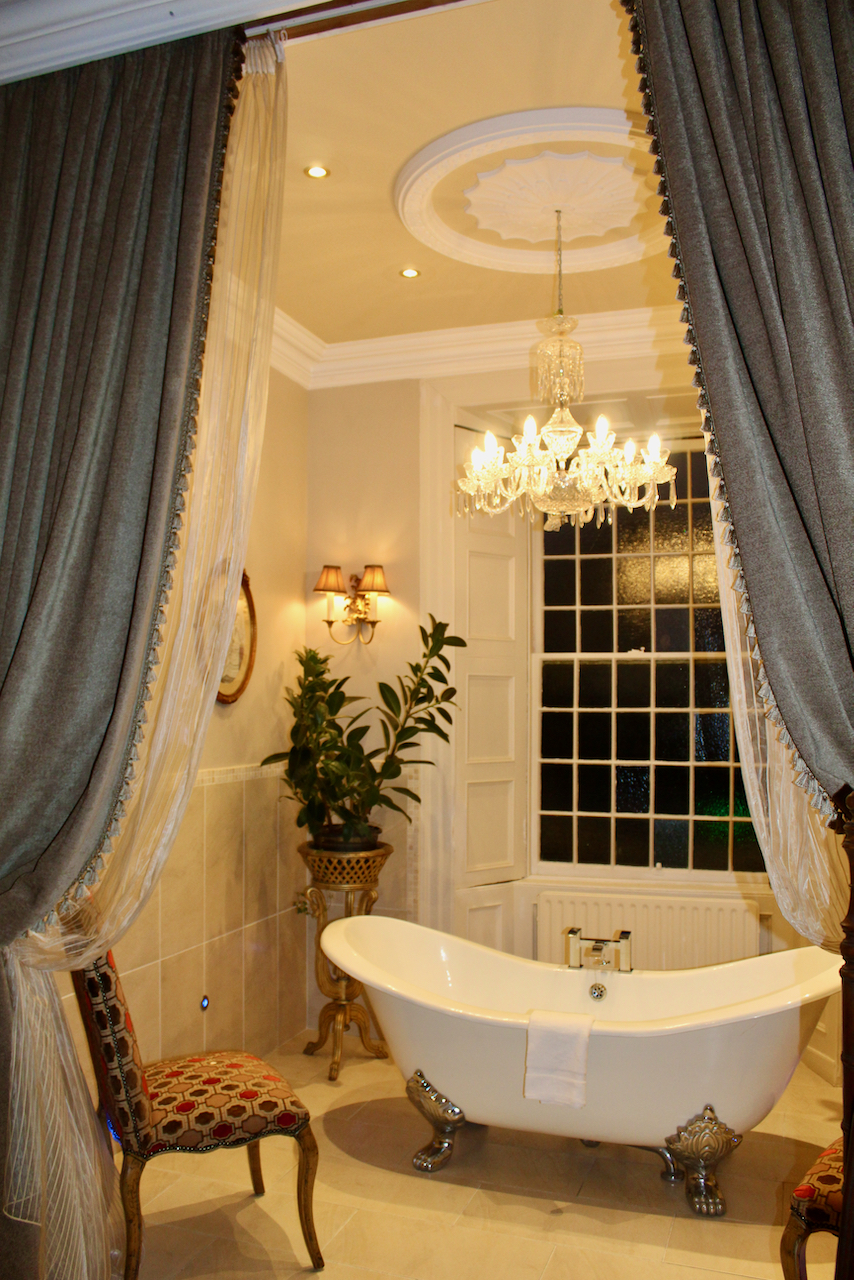
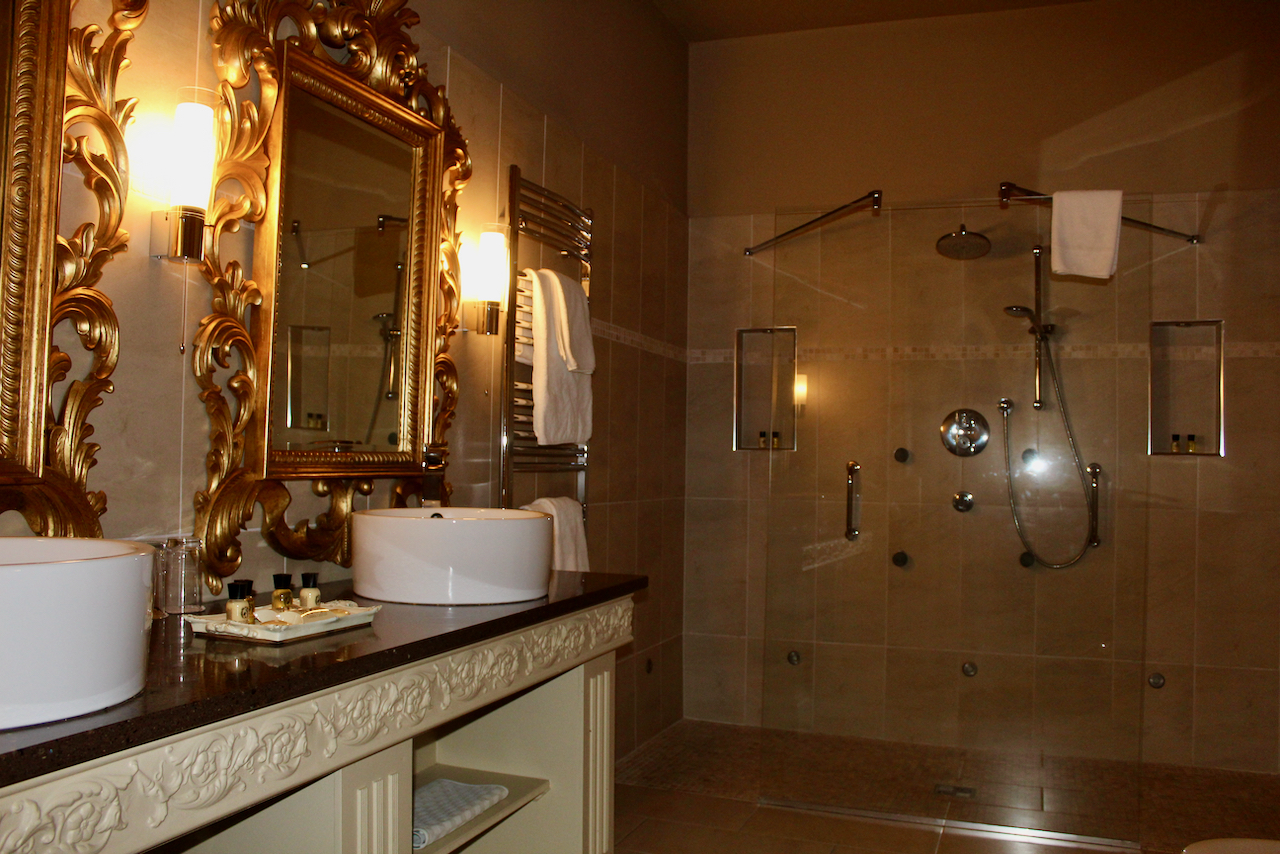
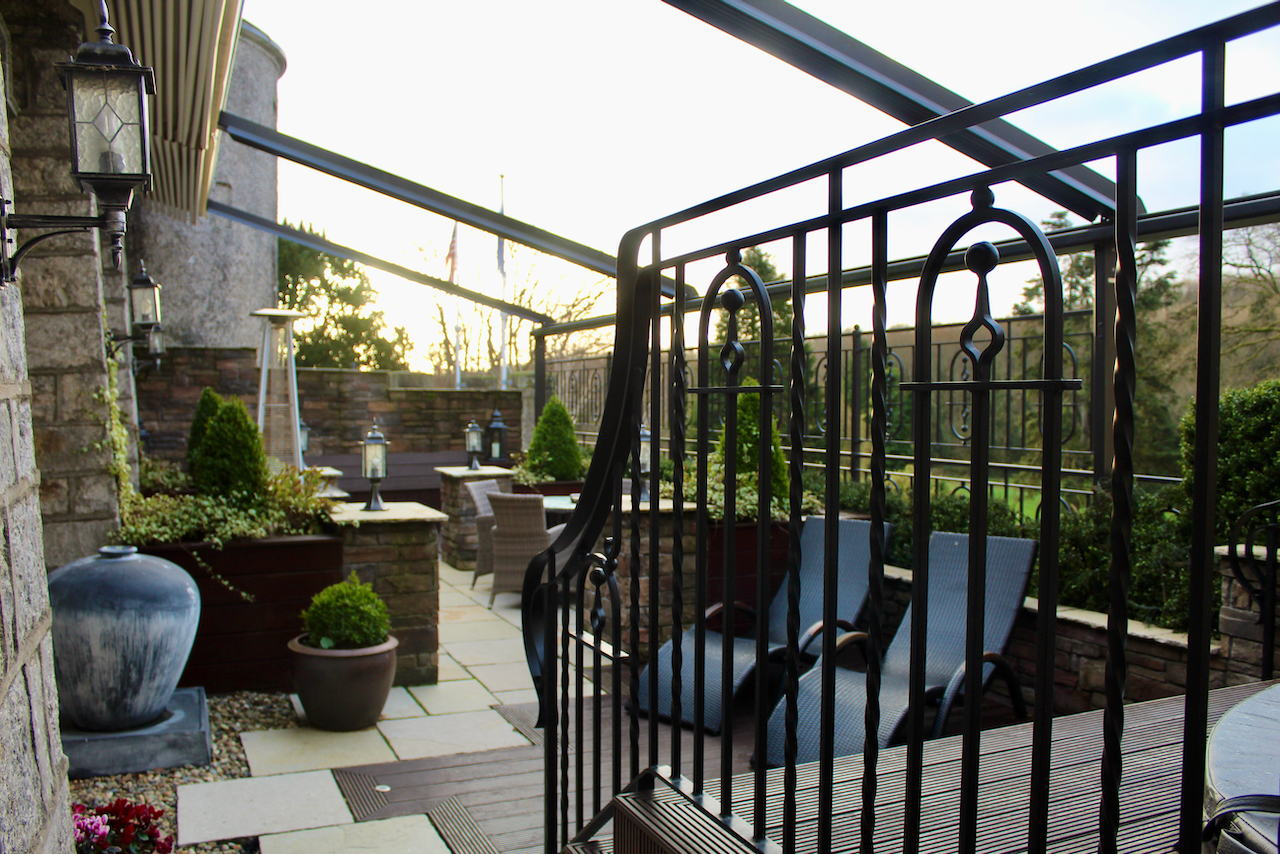
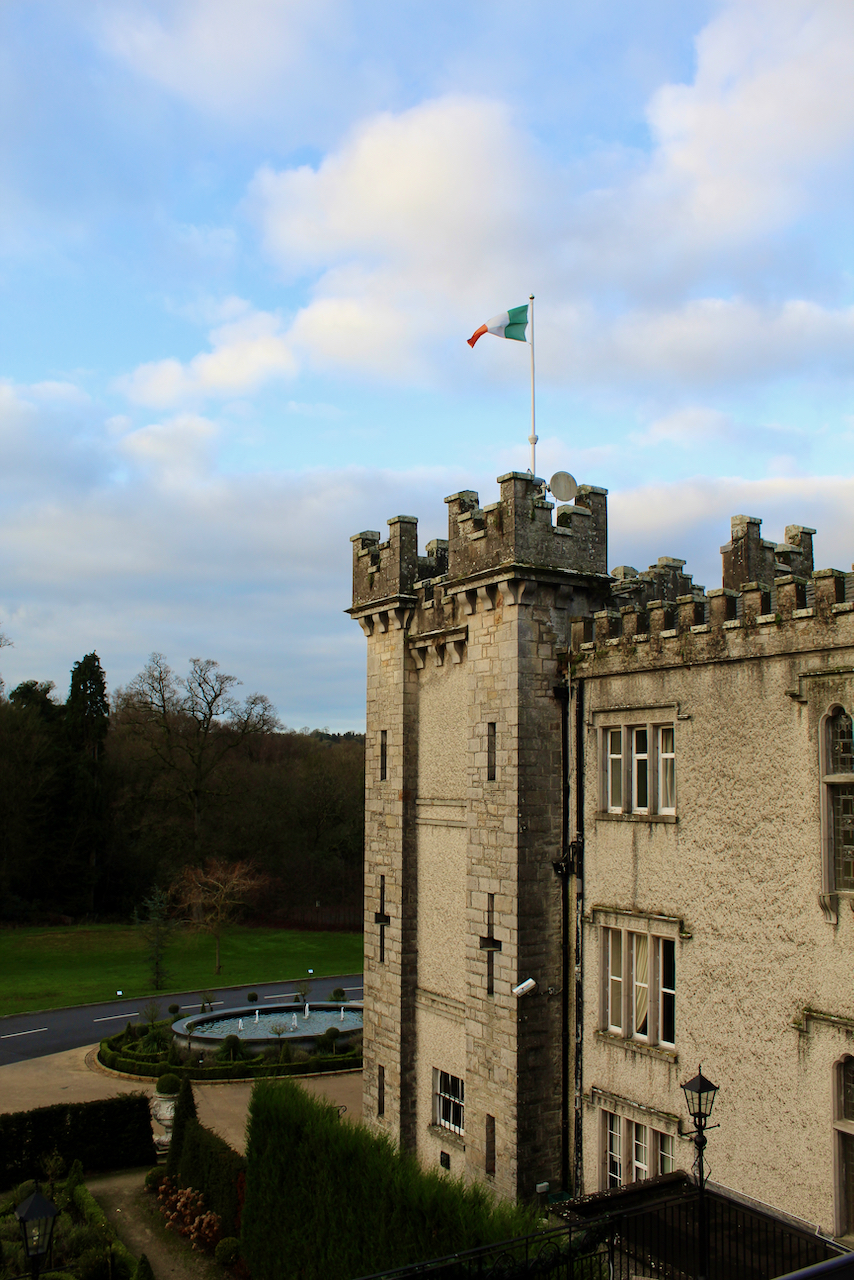
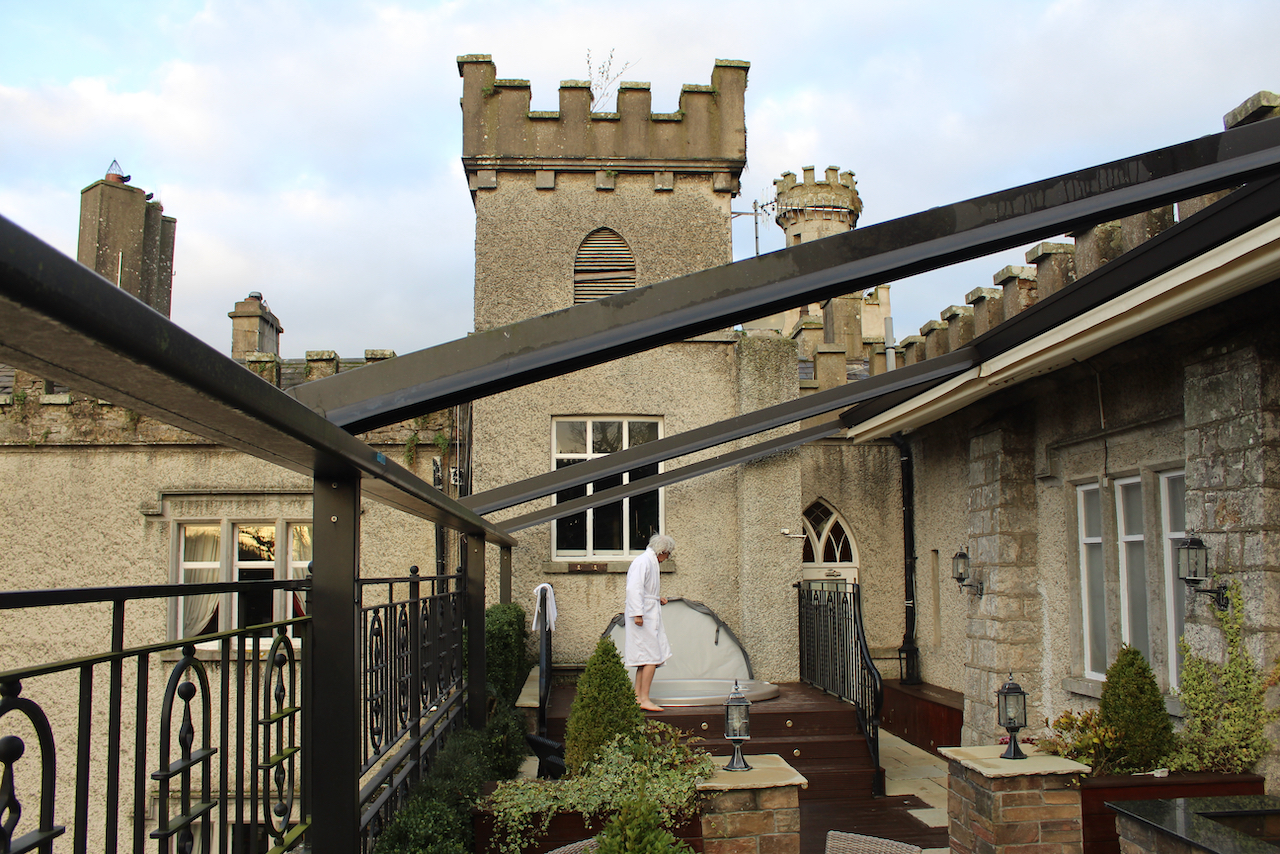
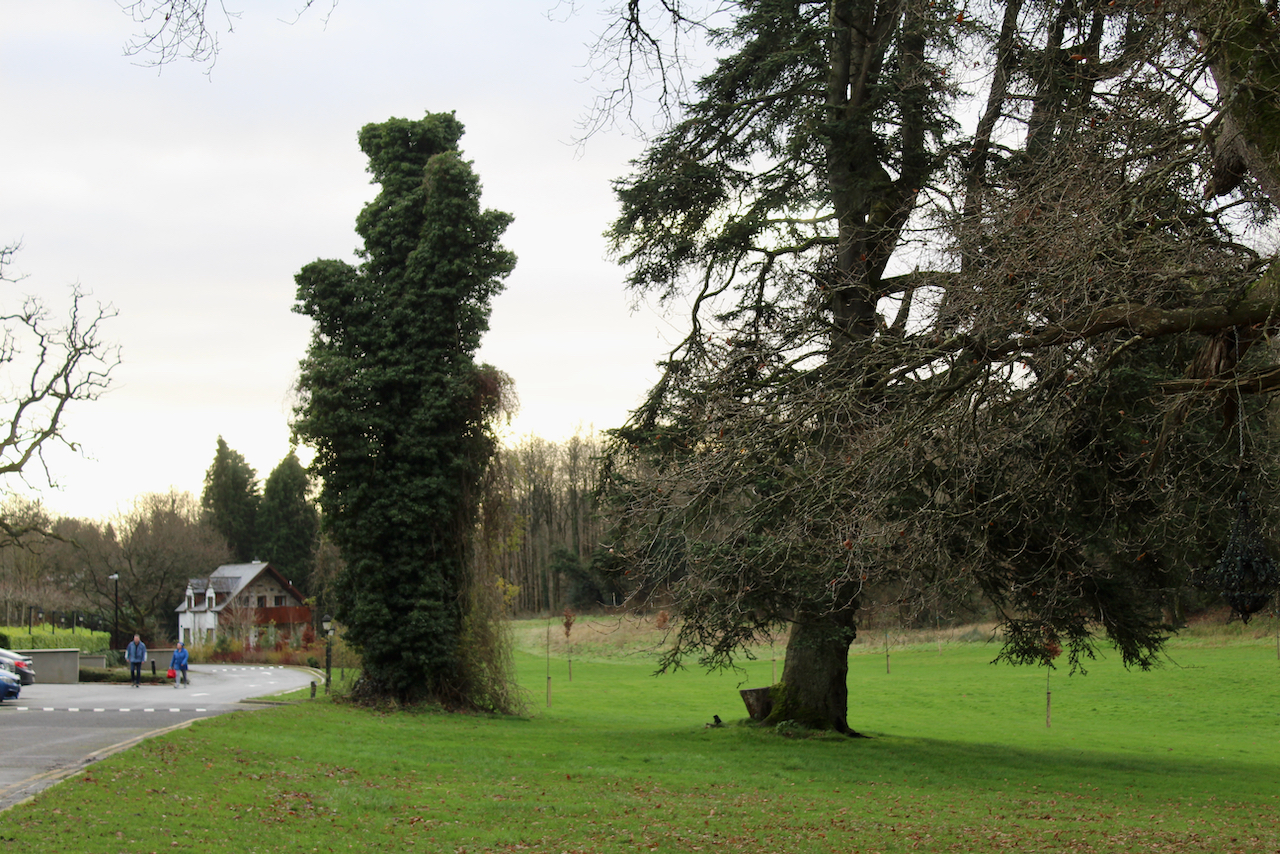
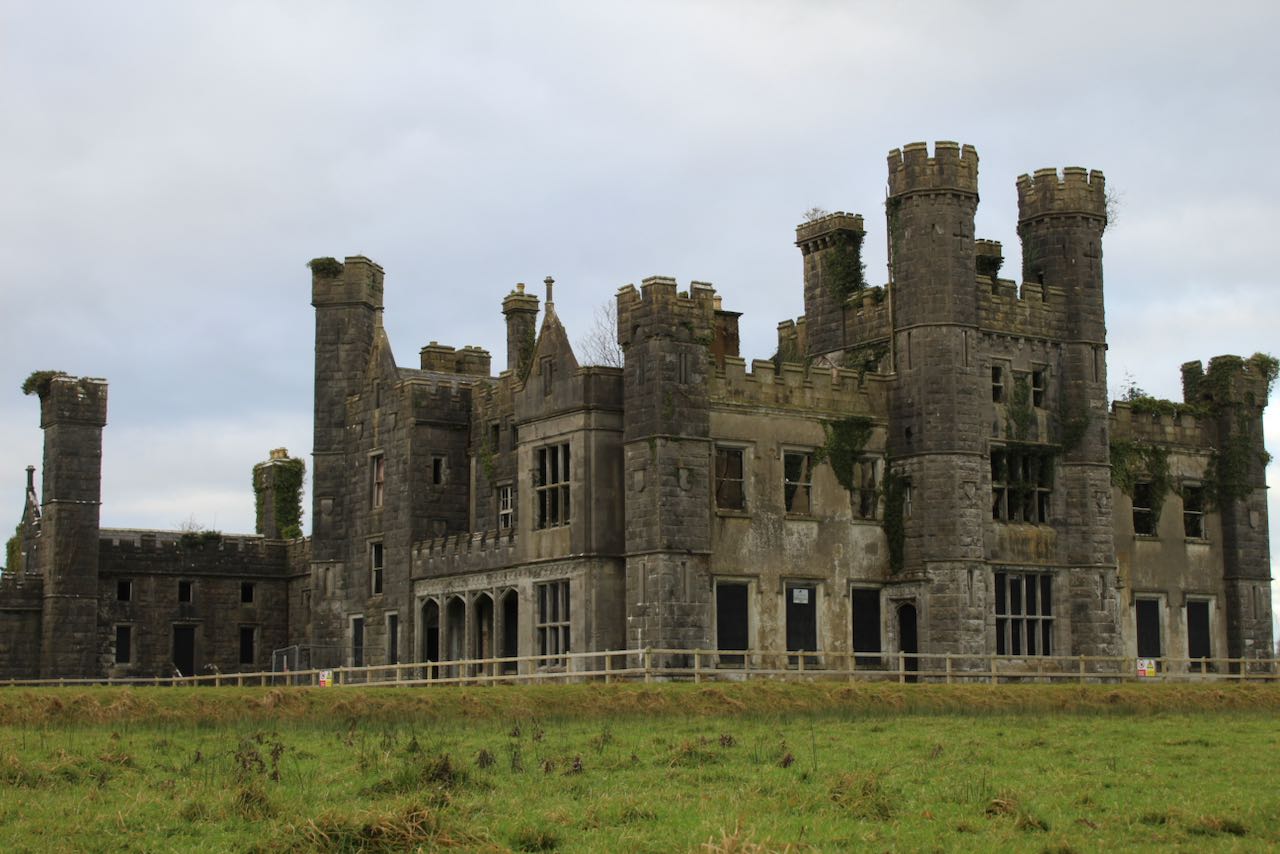
 Irish Historic Houses