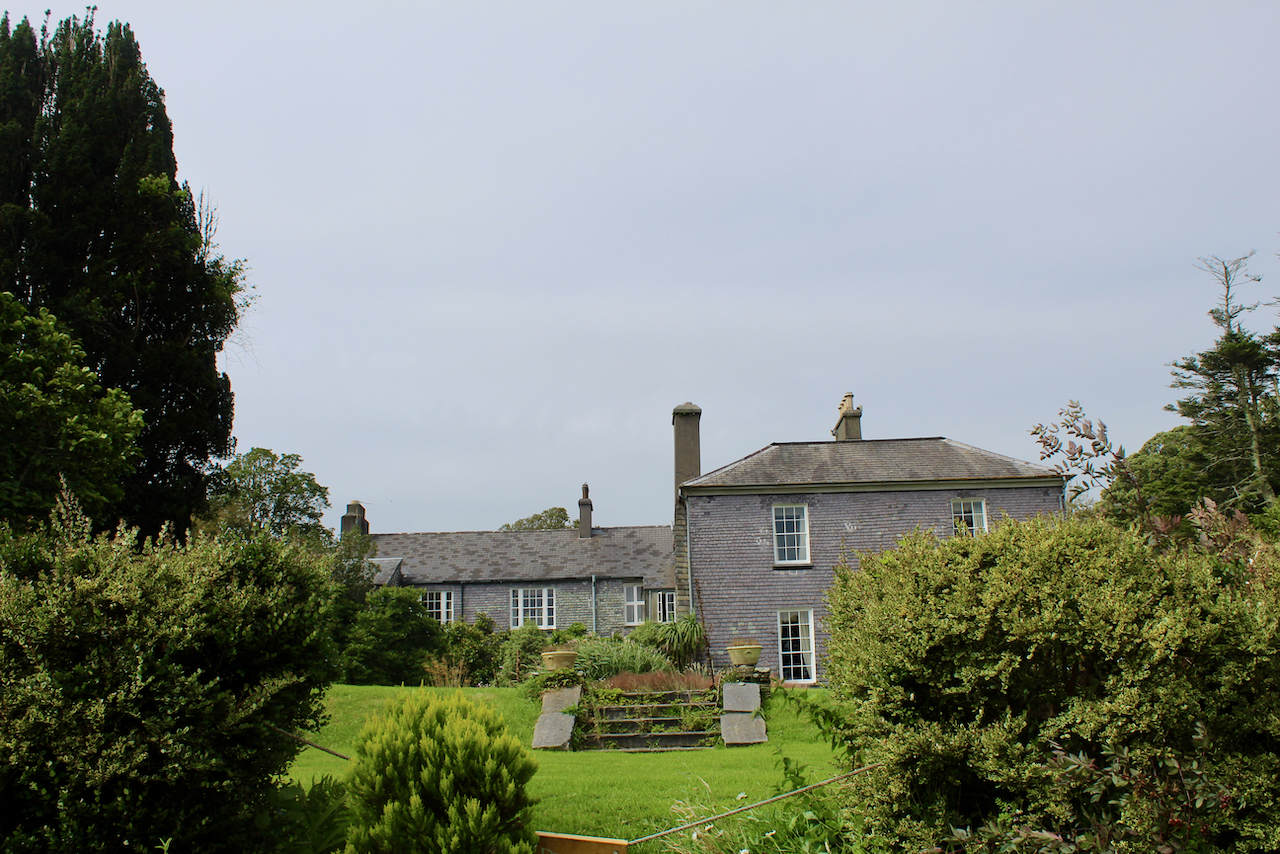
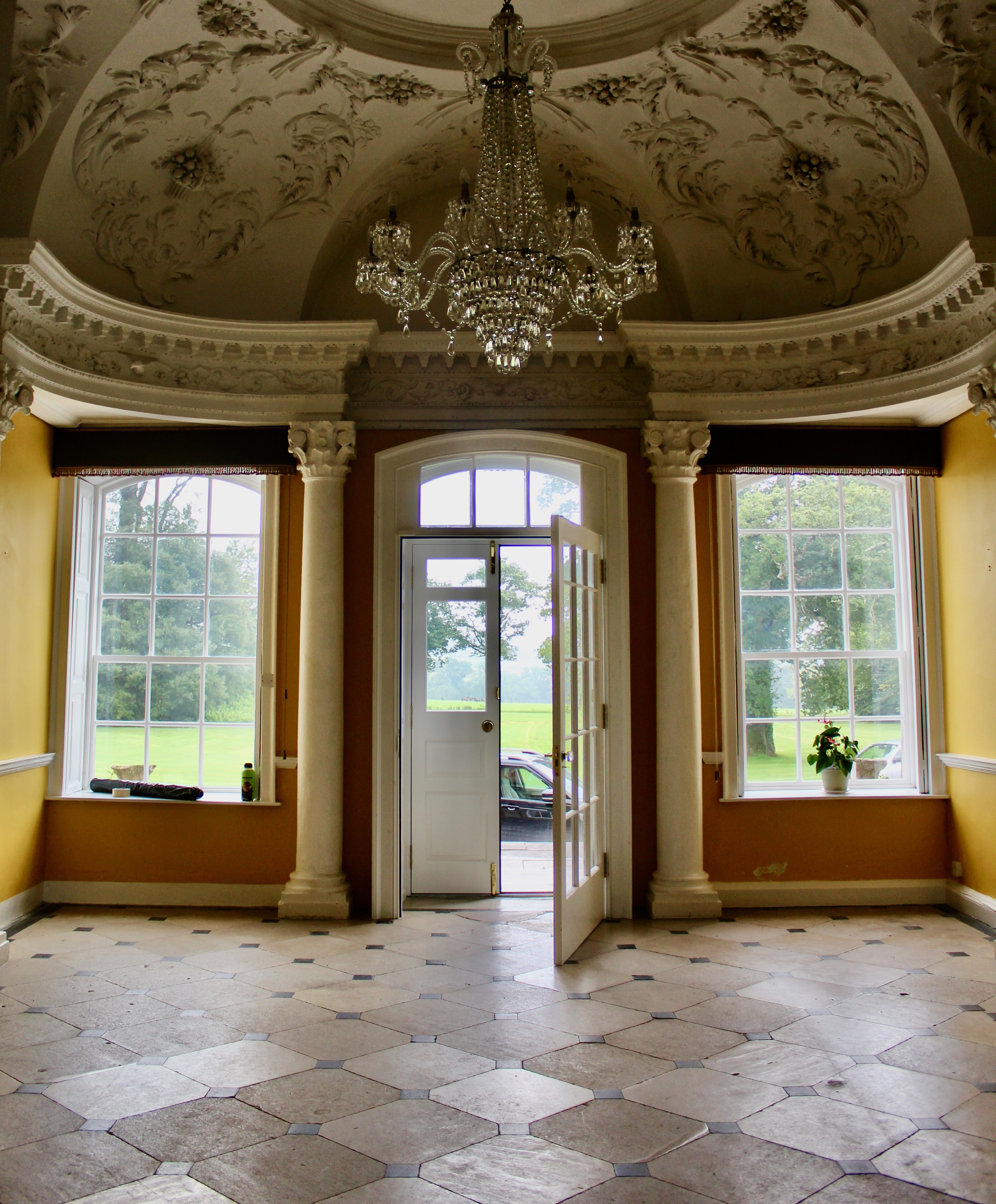
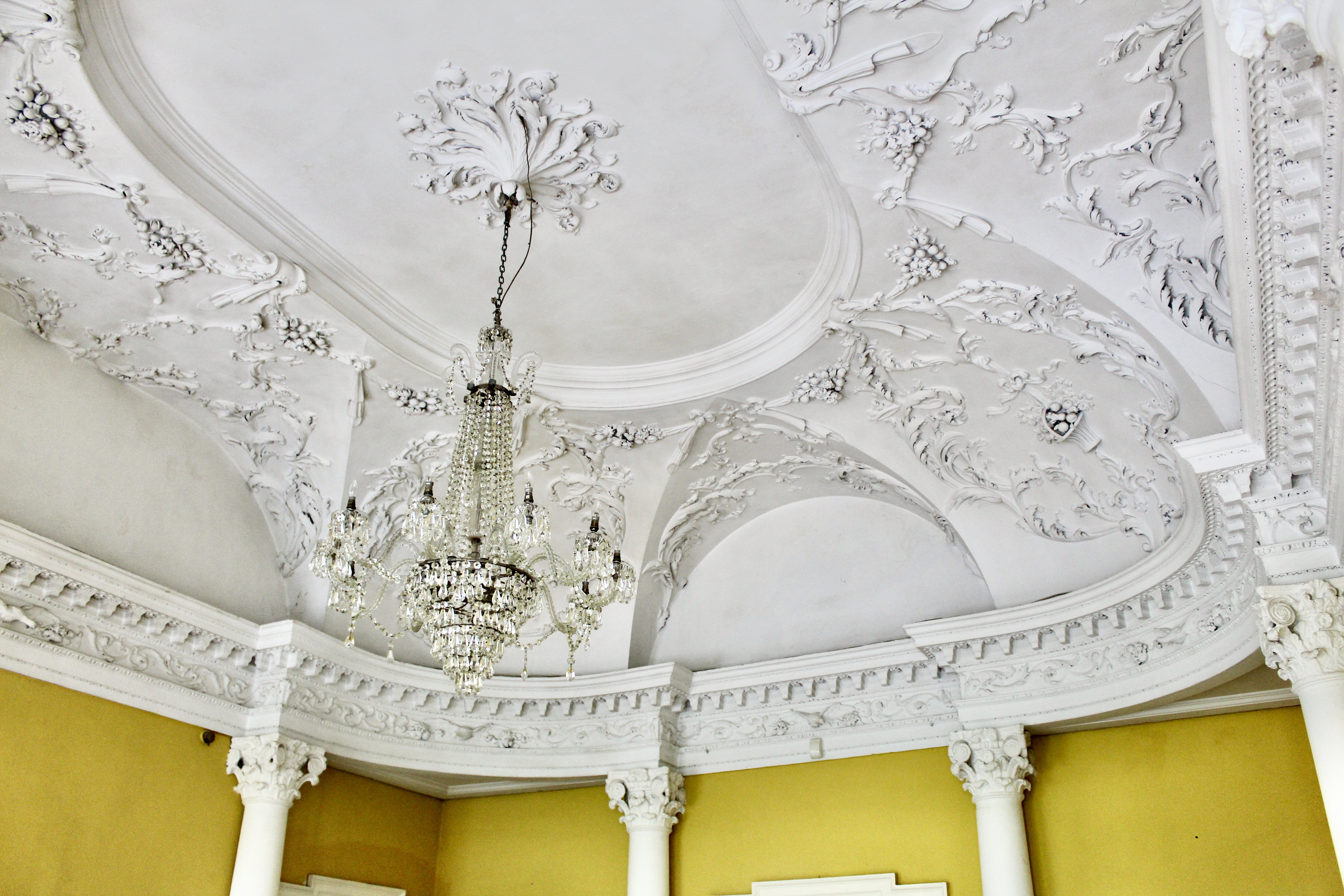
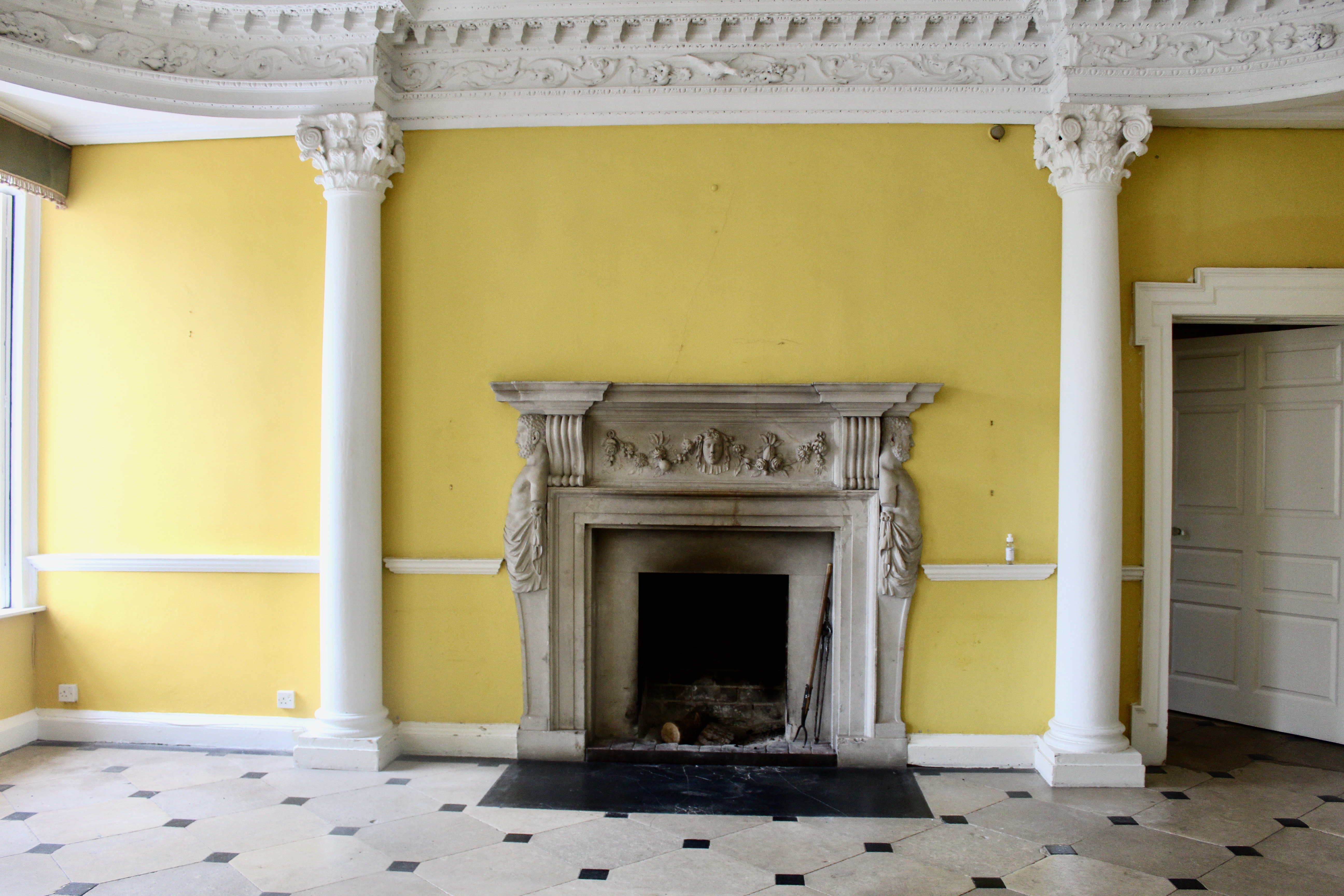
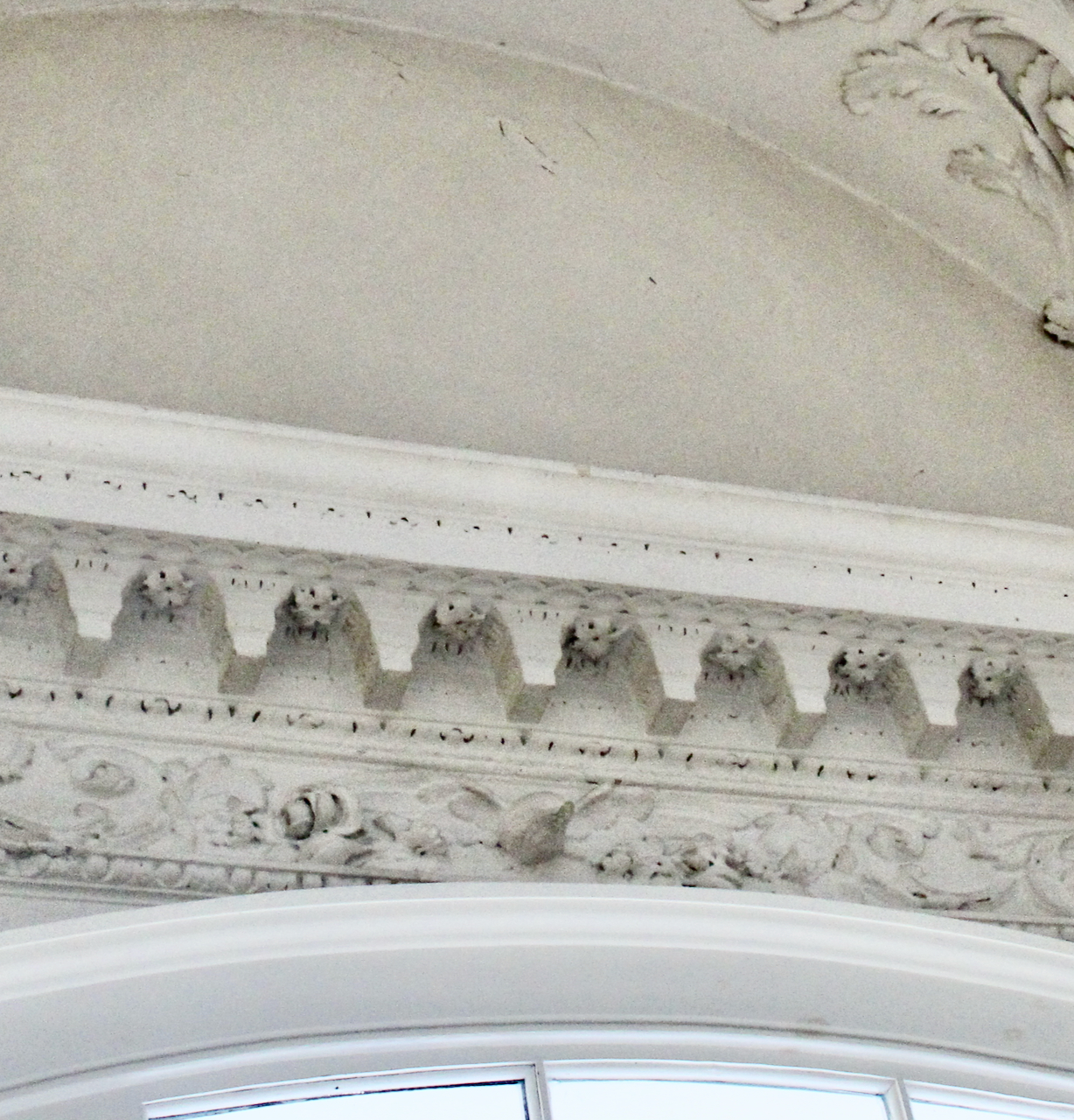
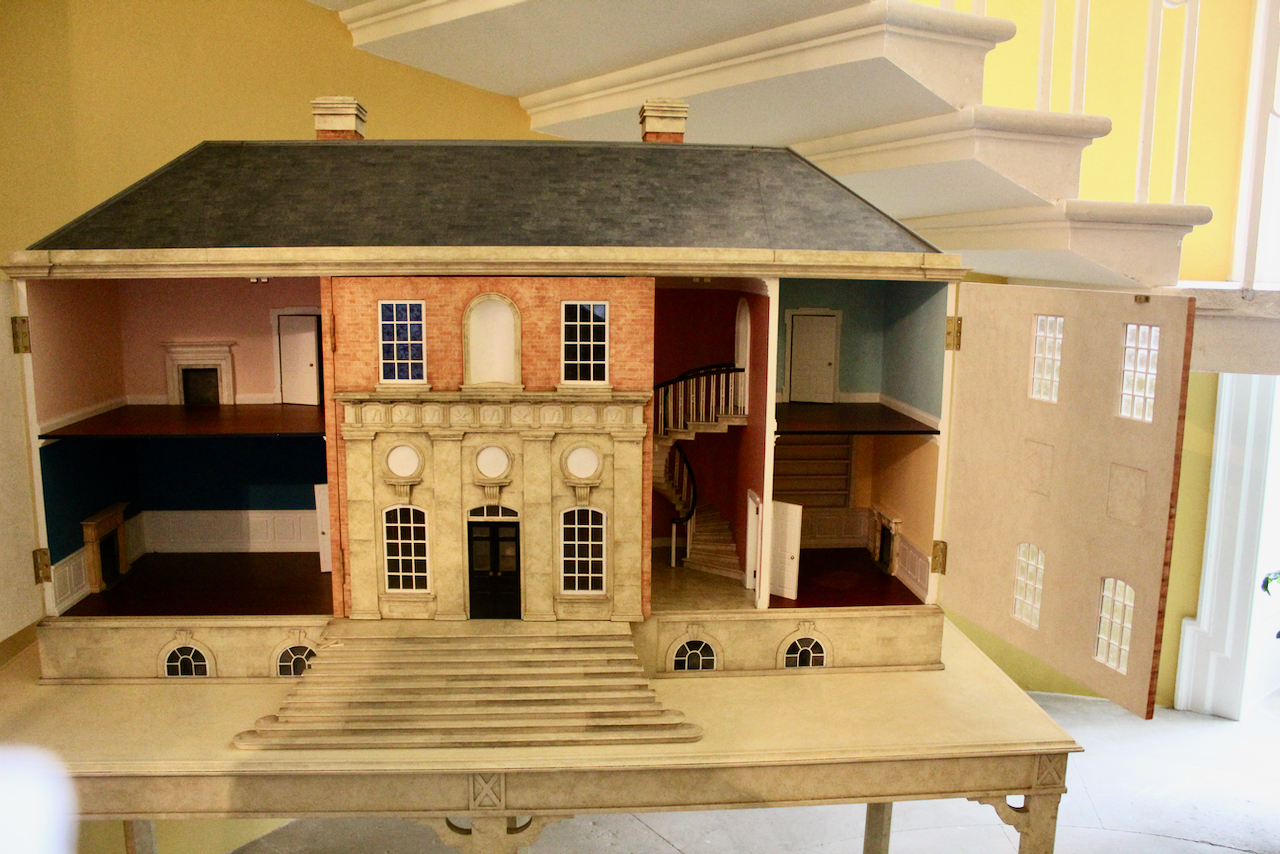
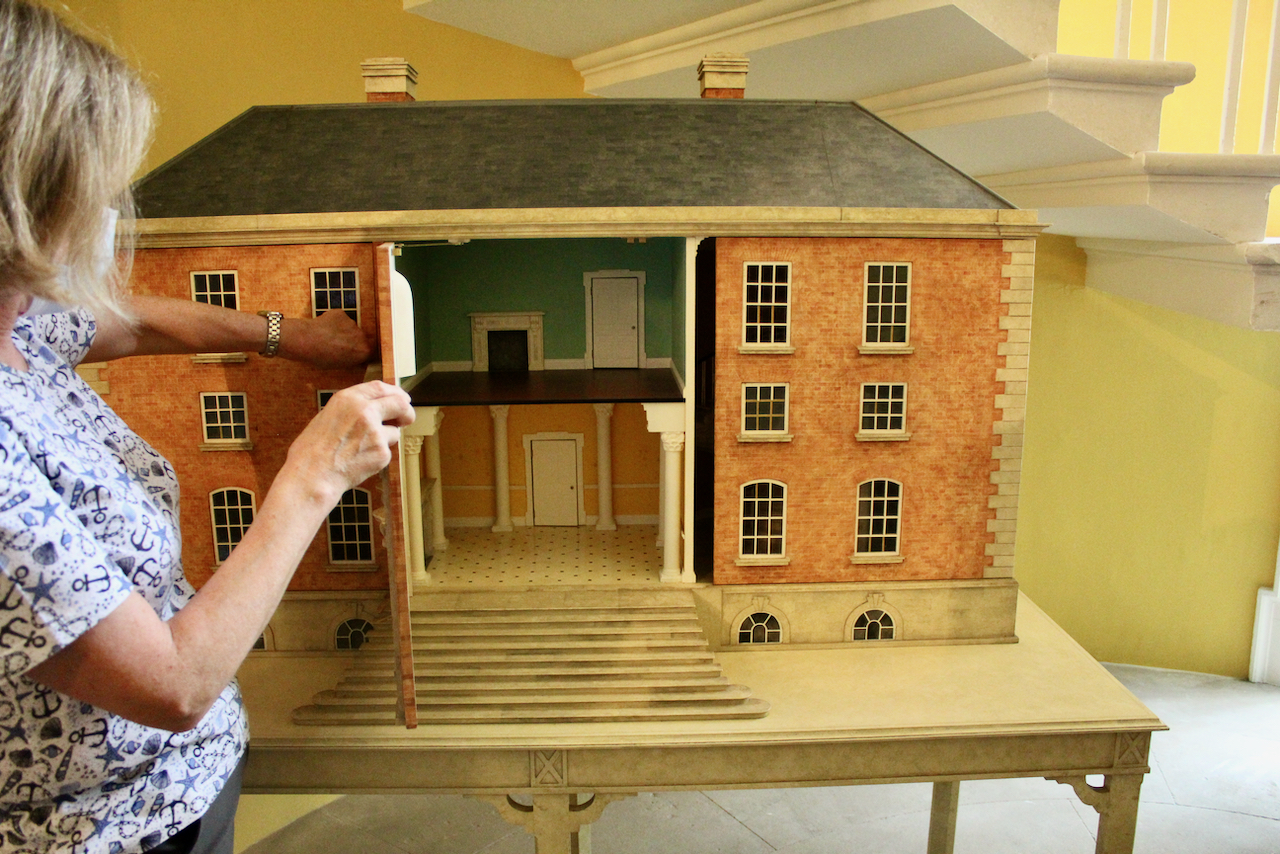
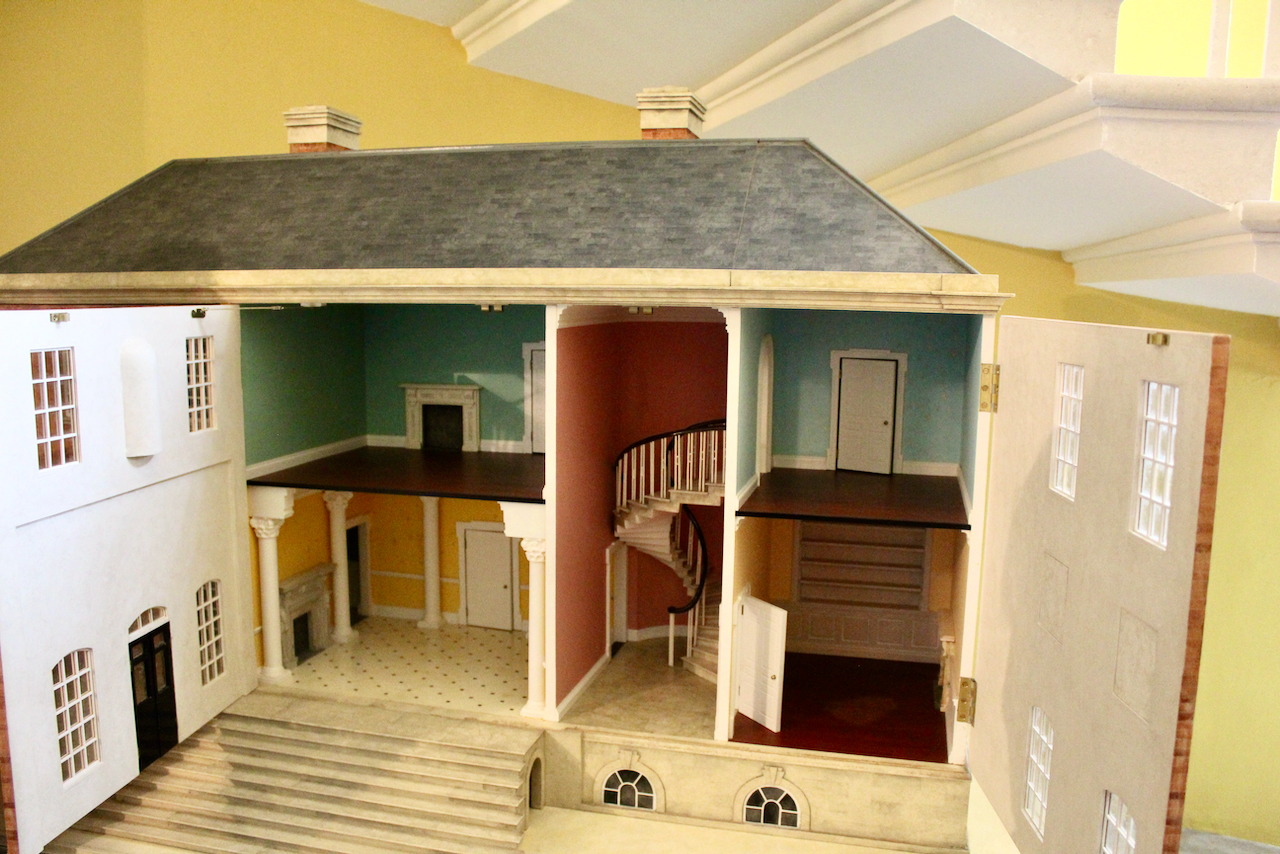
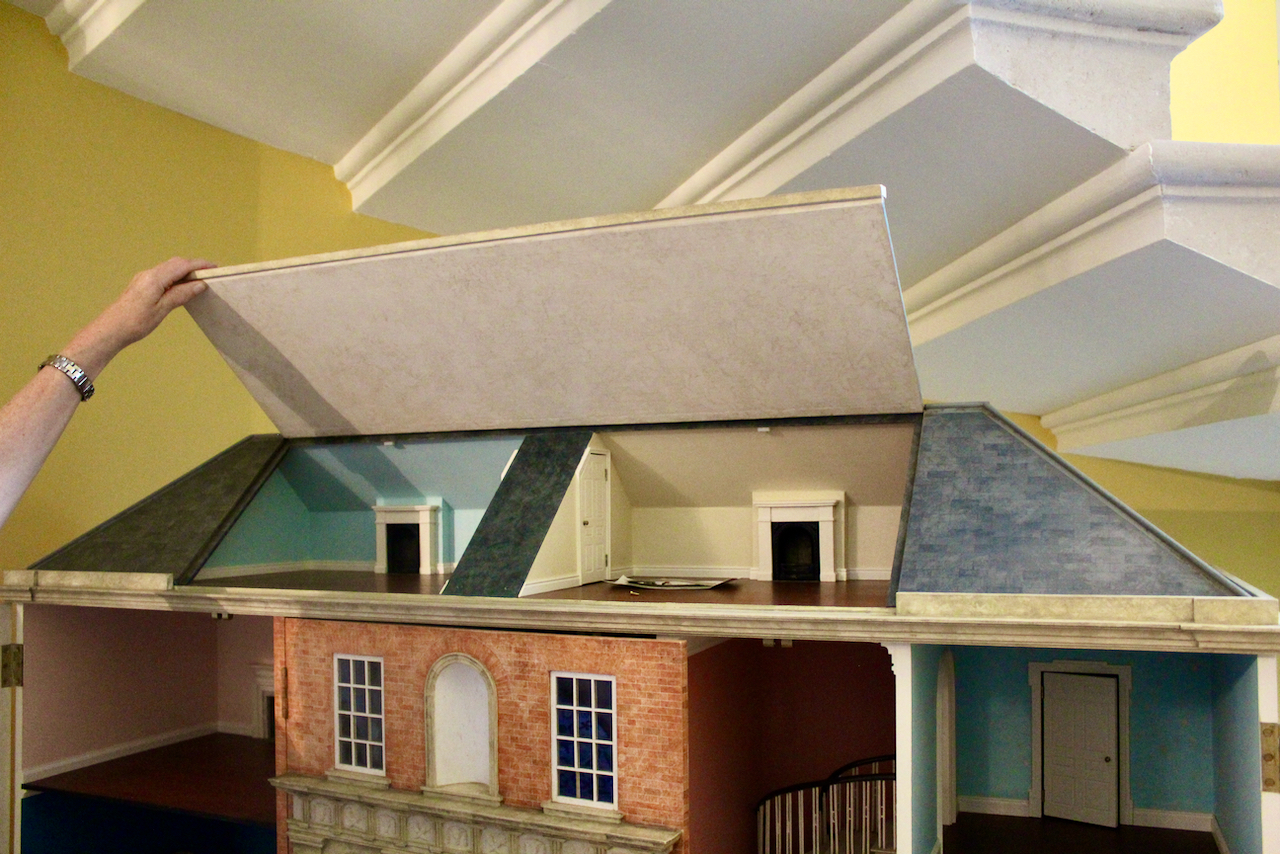
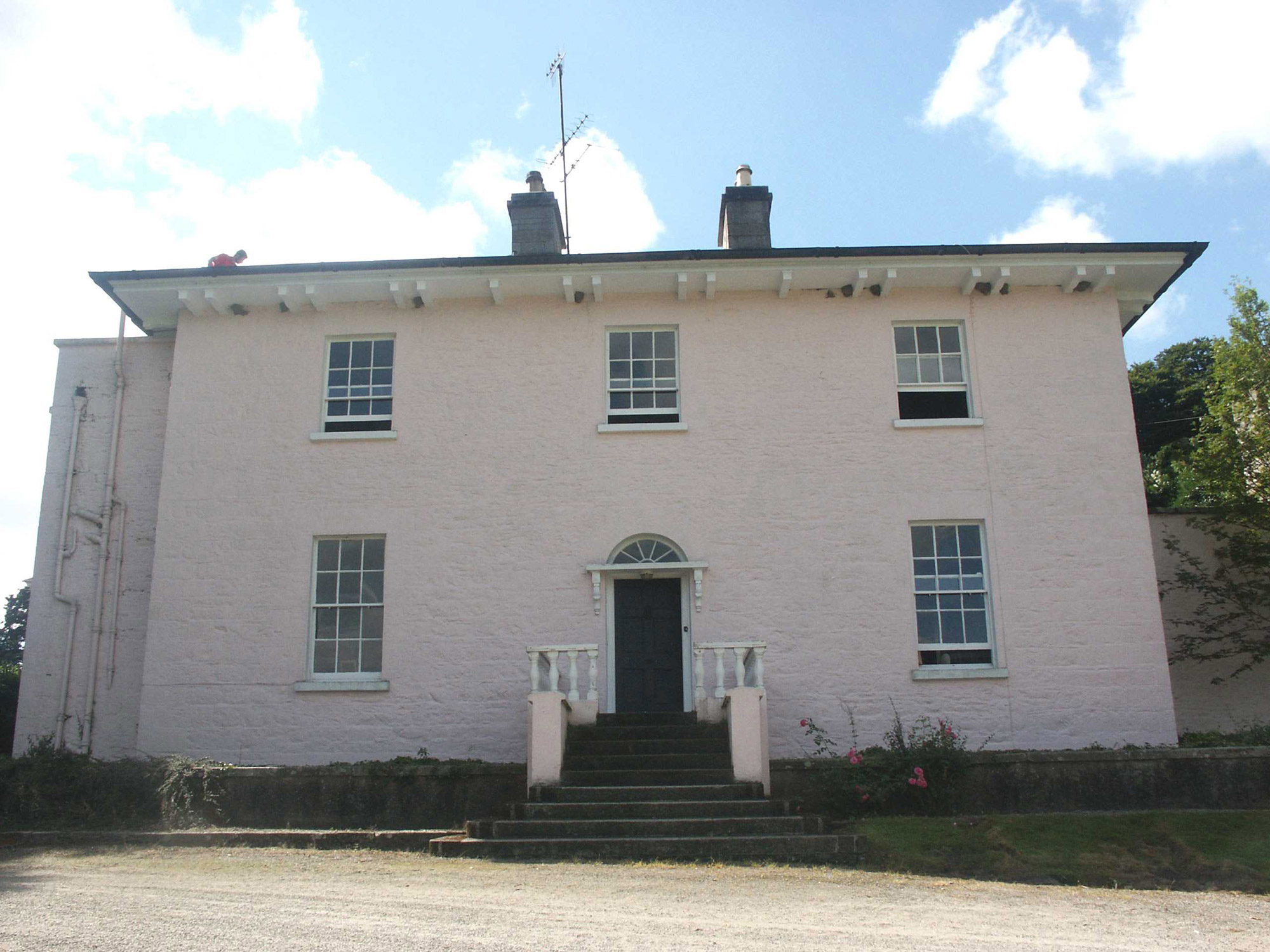
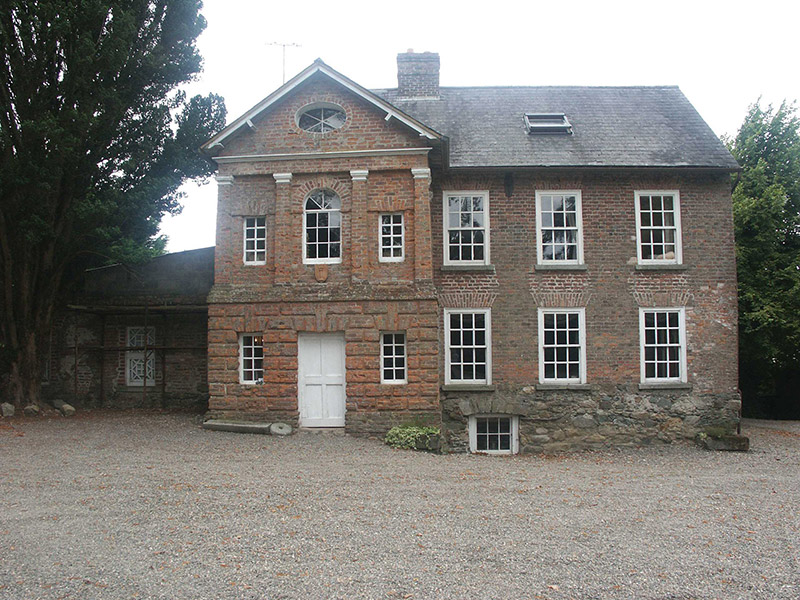
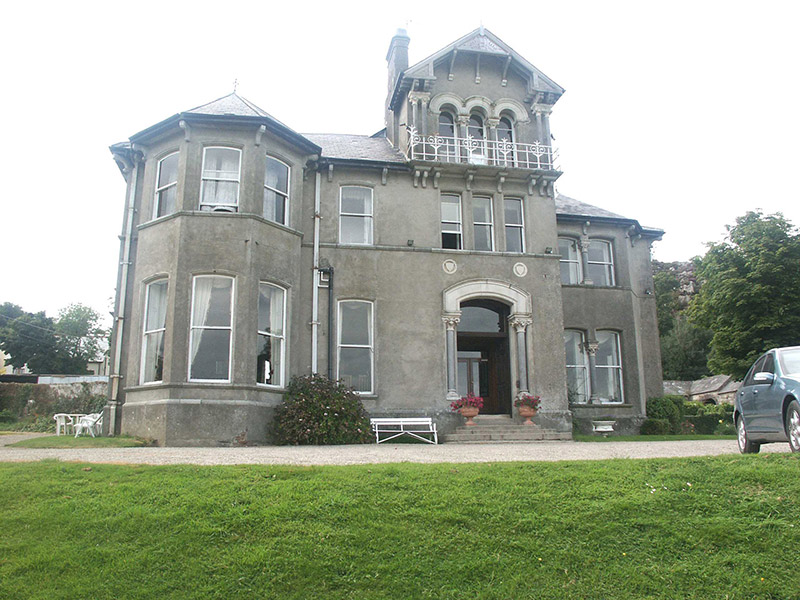
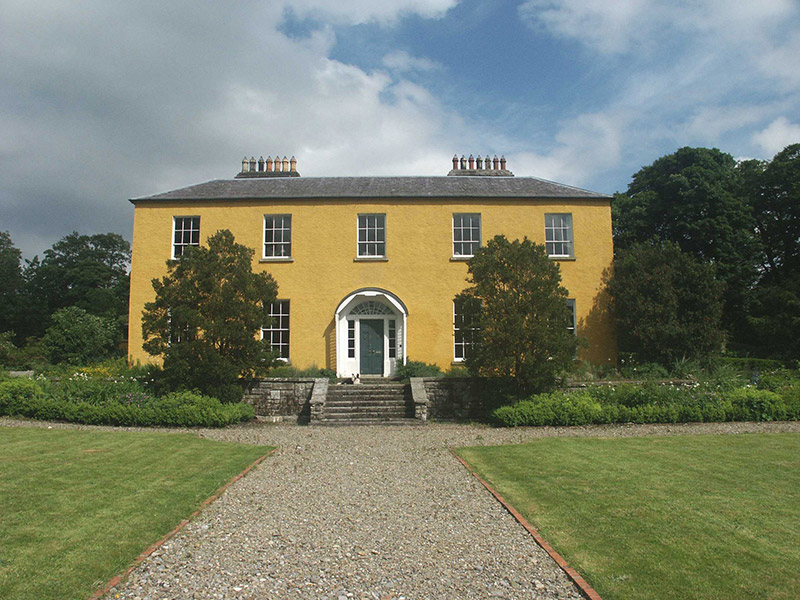
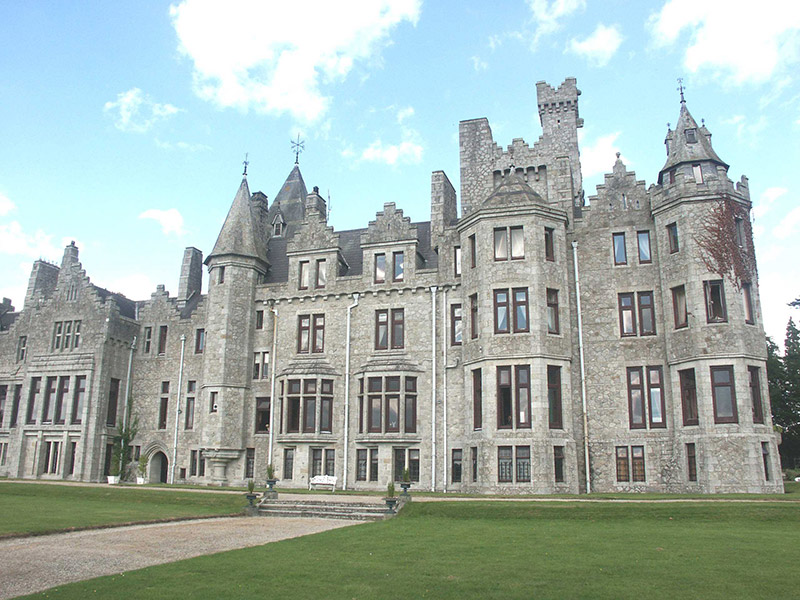
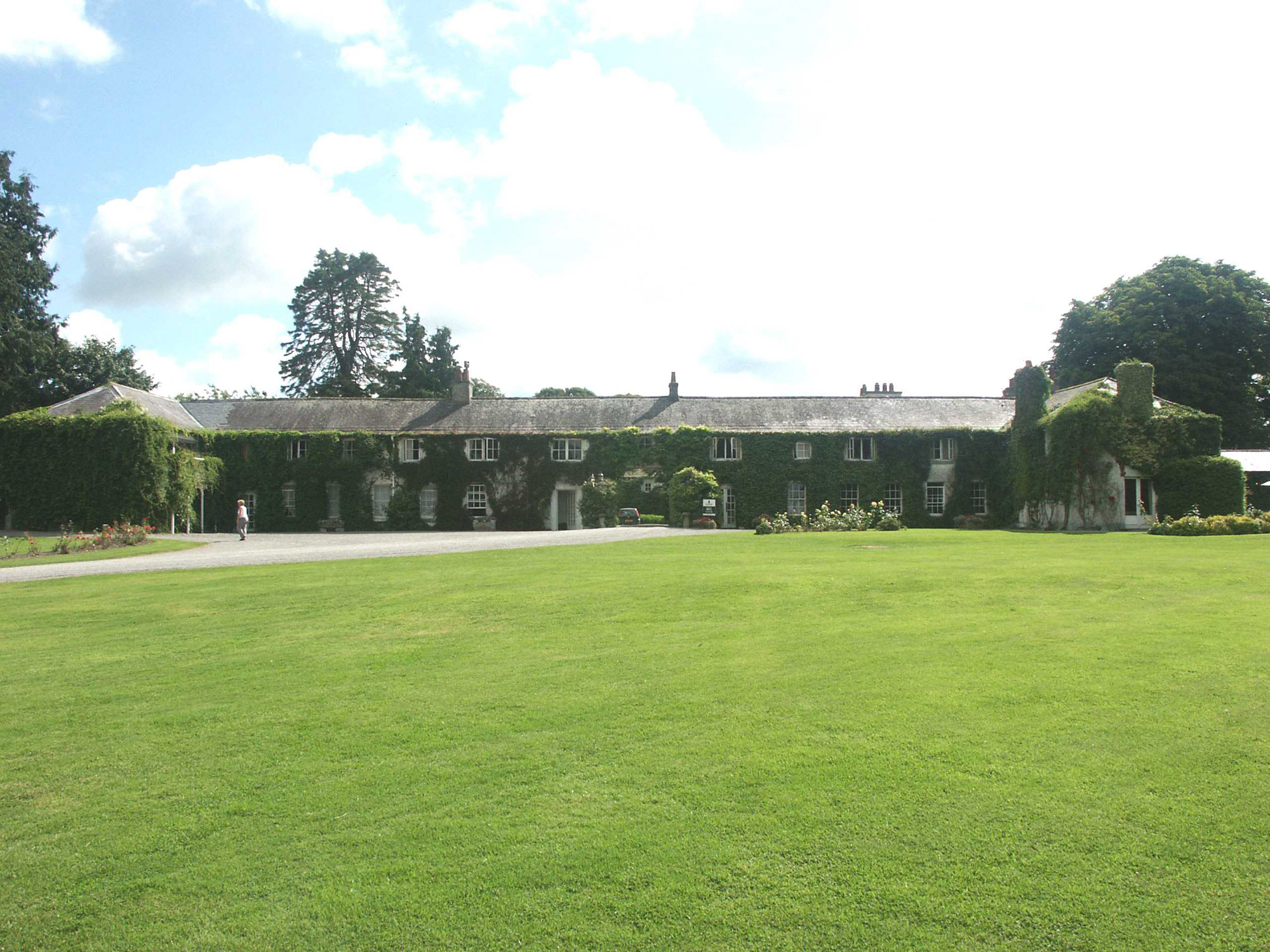
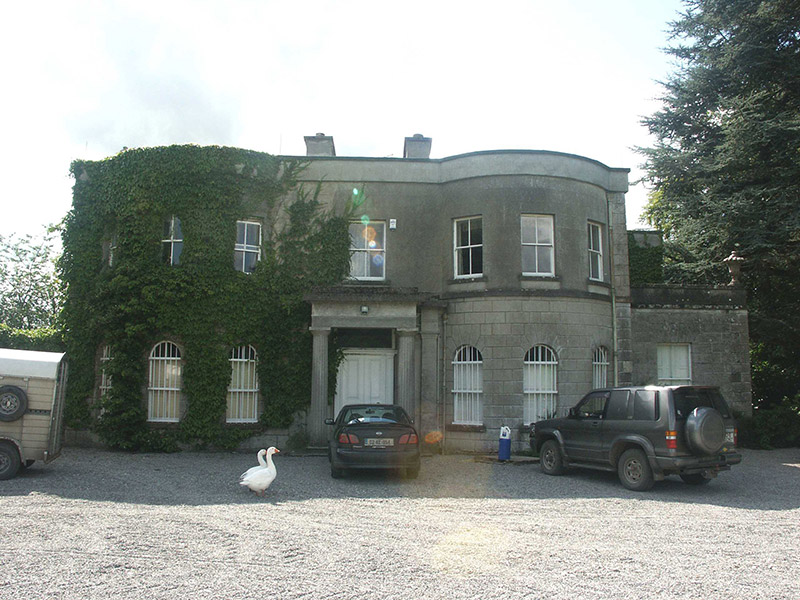
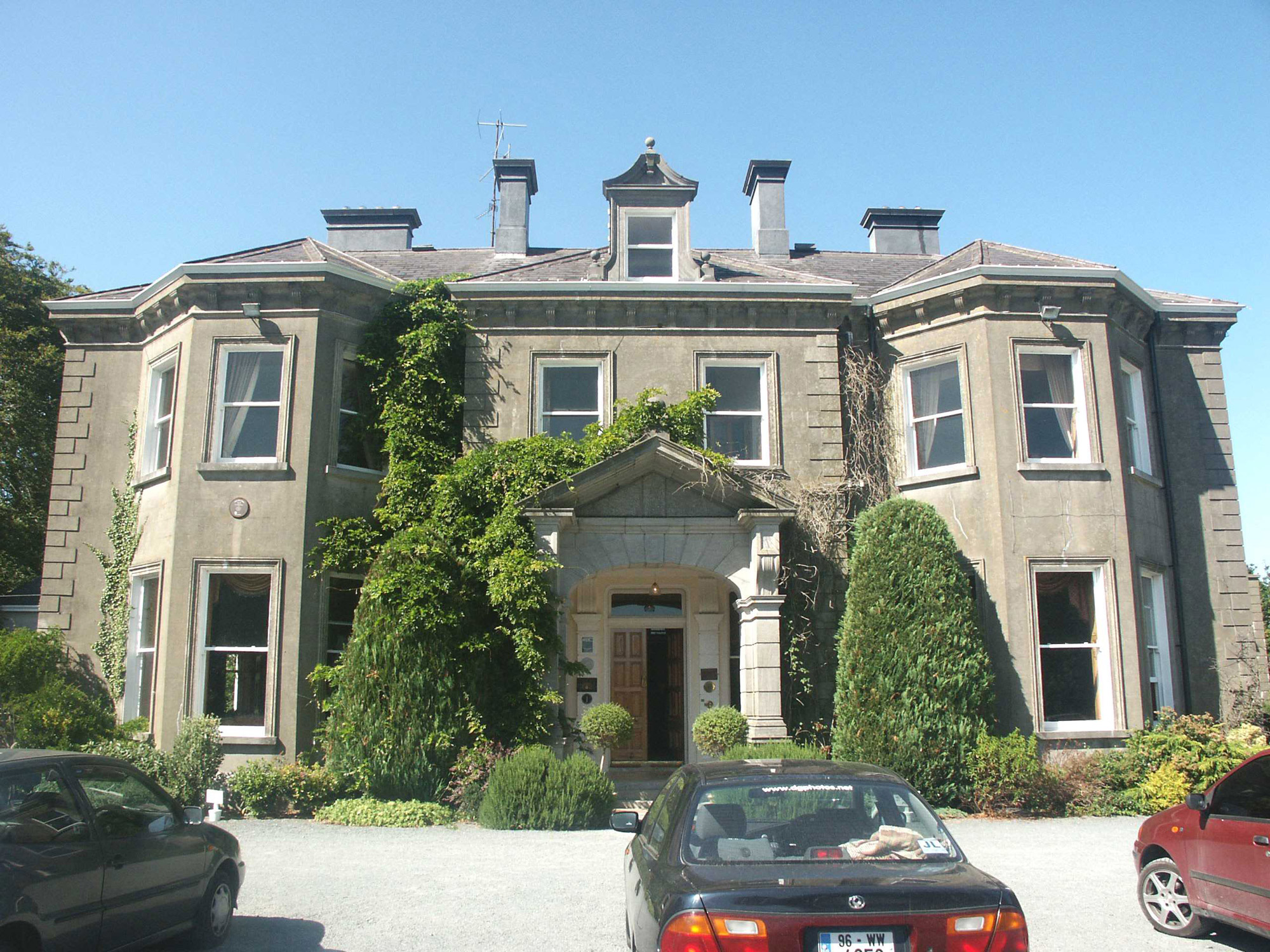
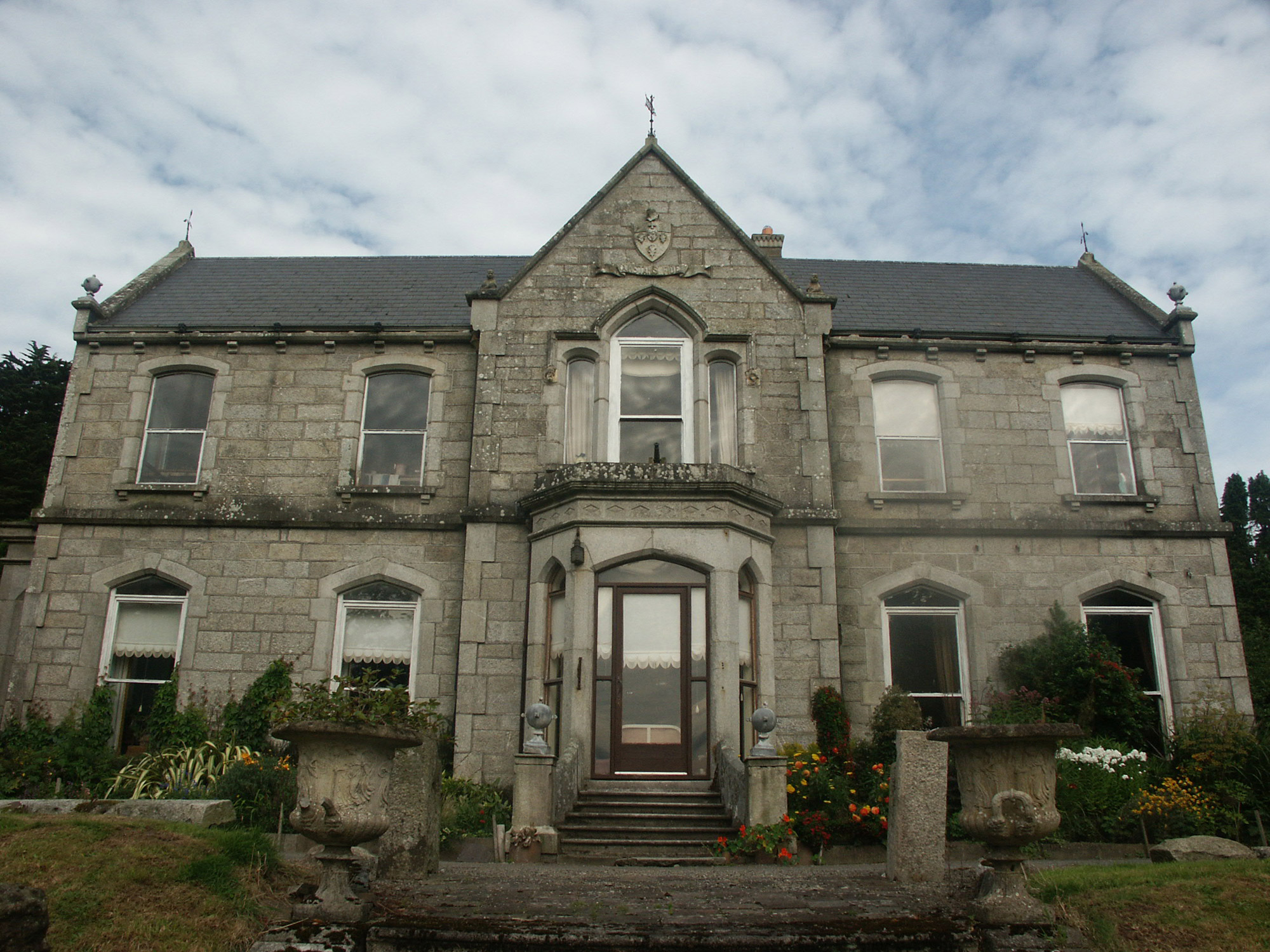
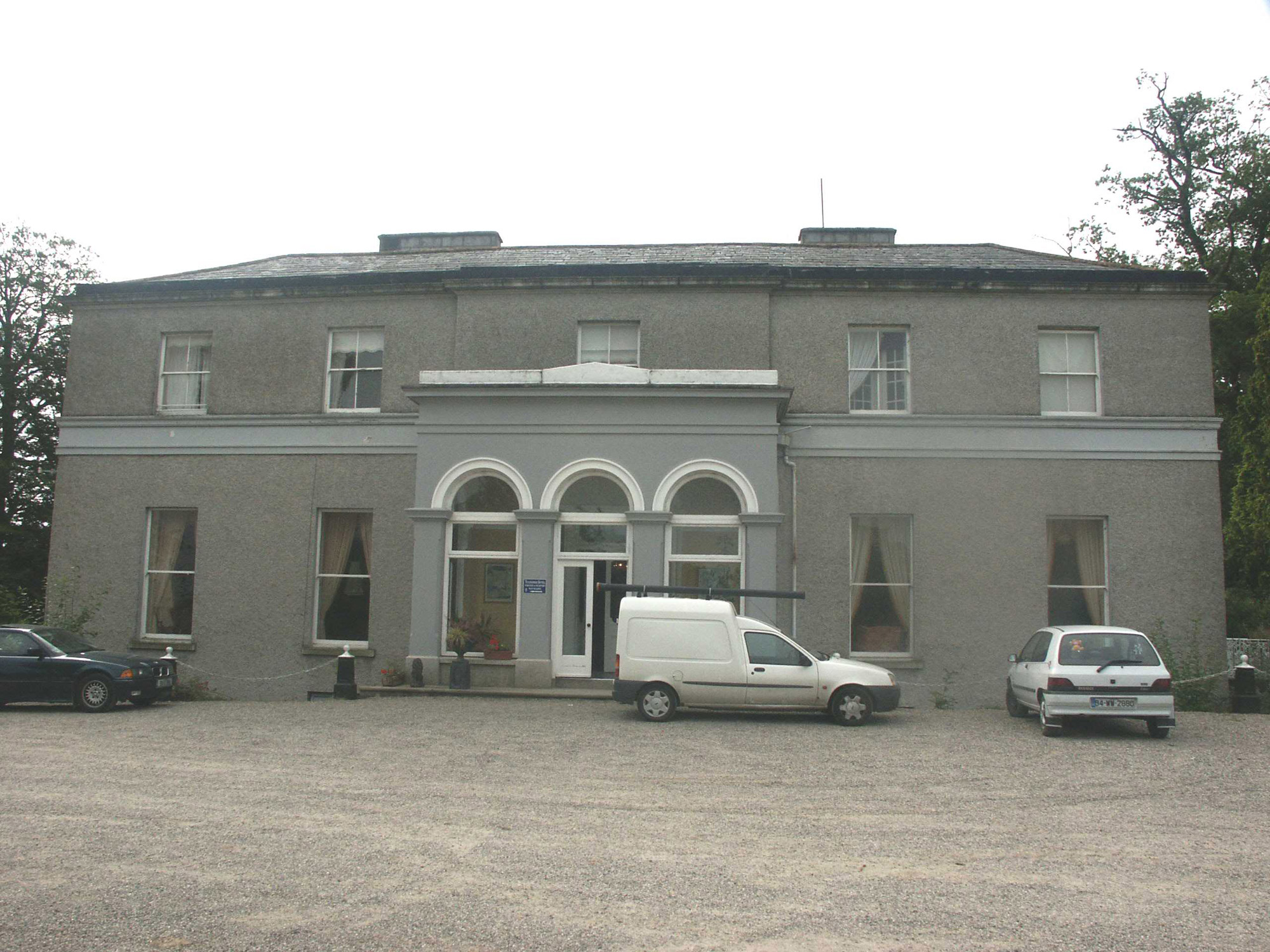
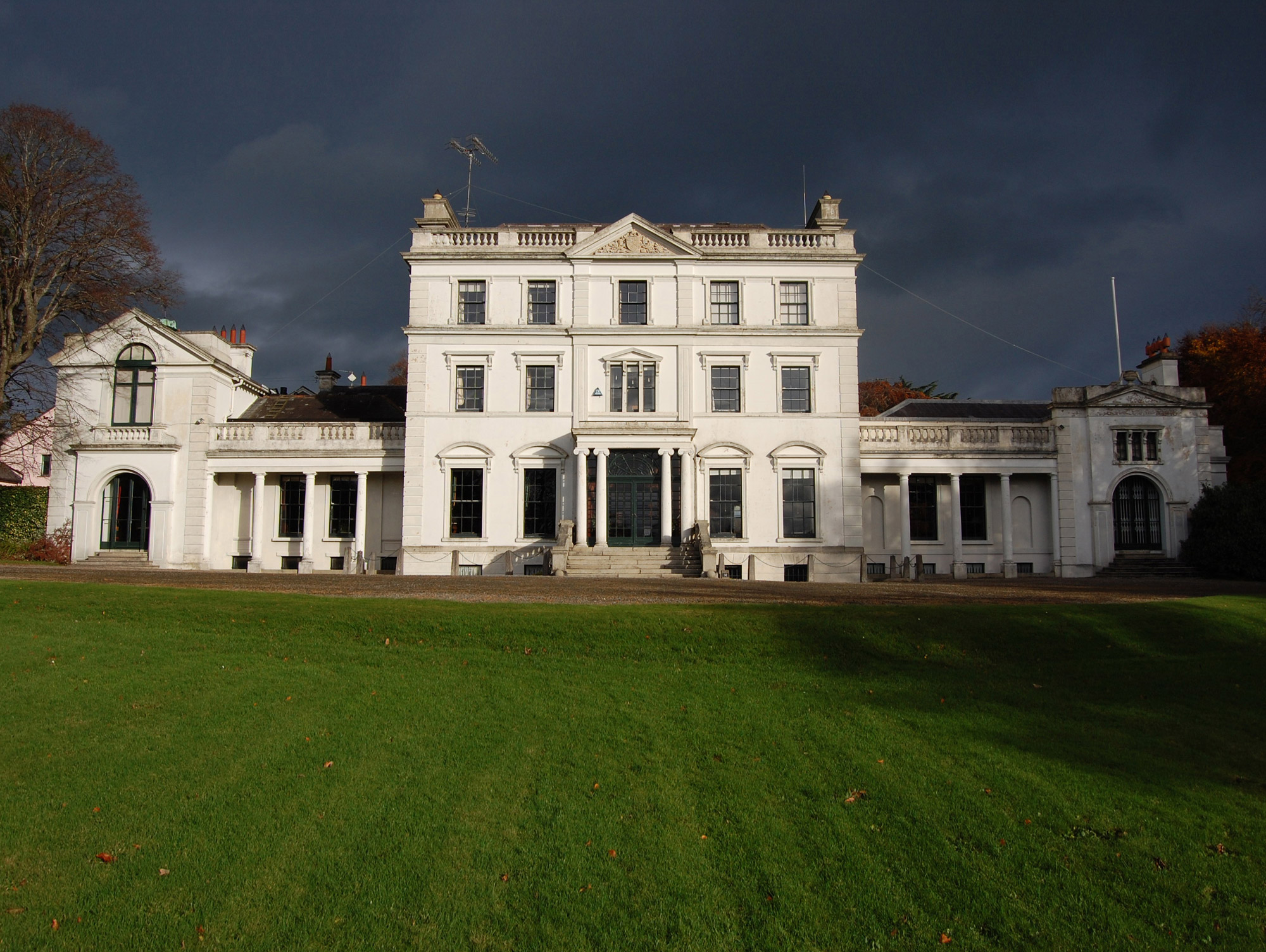
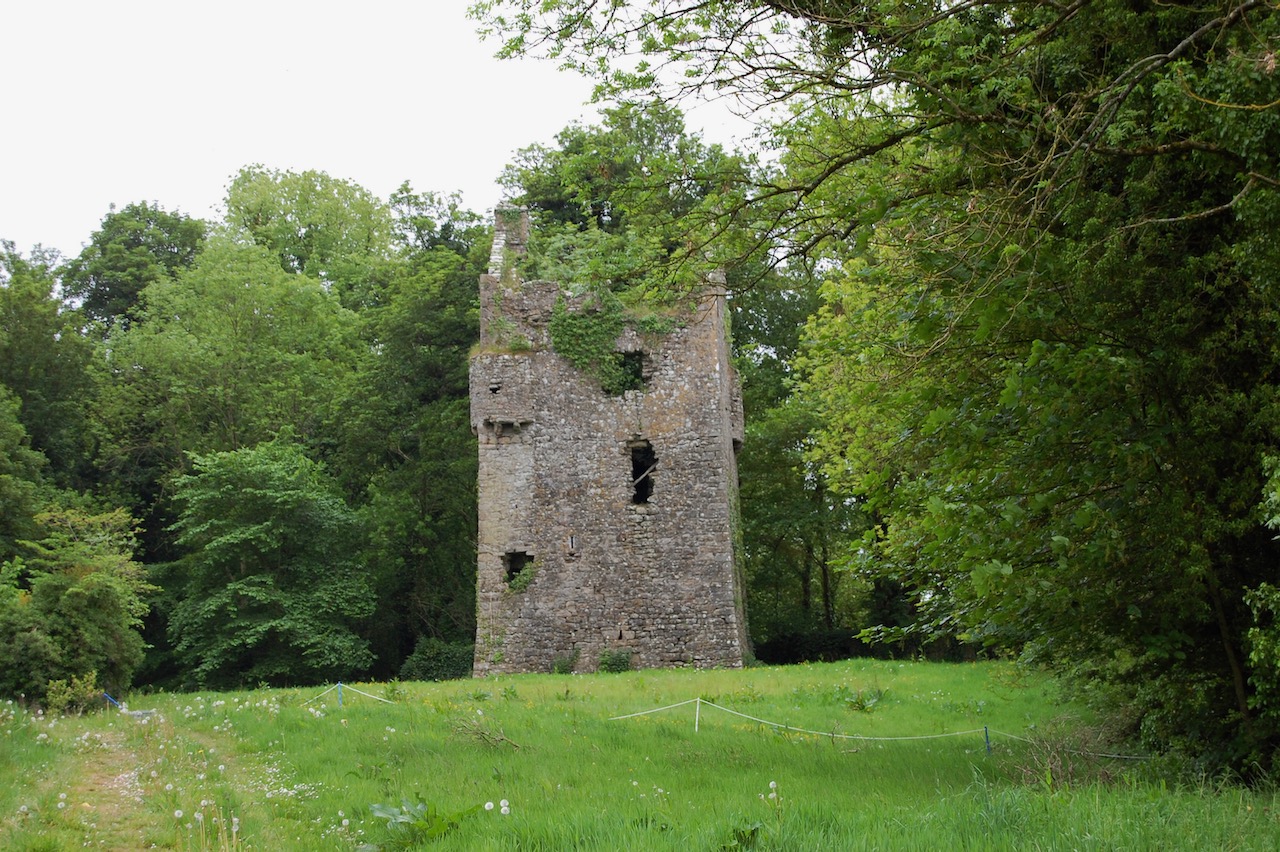
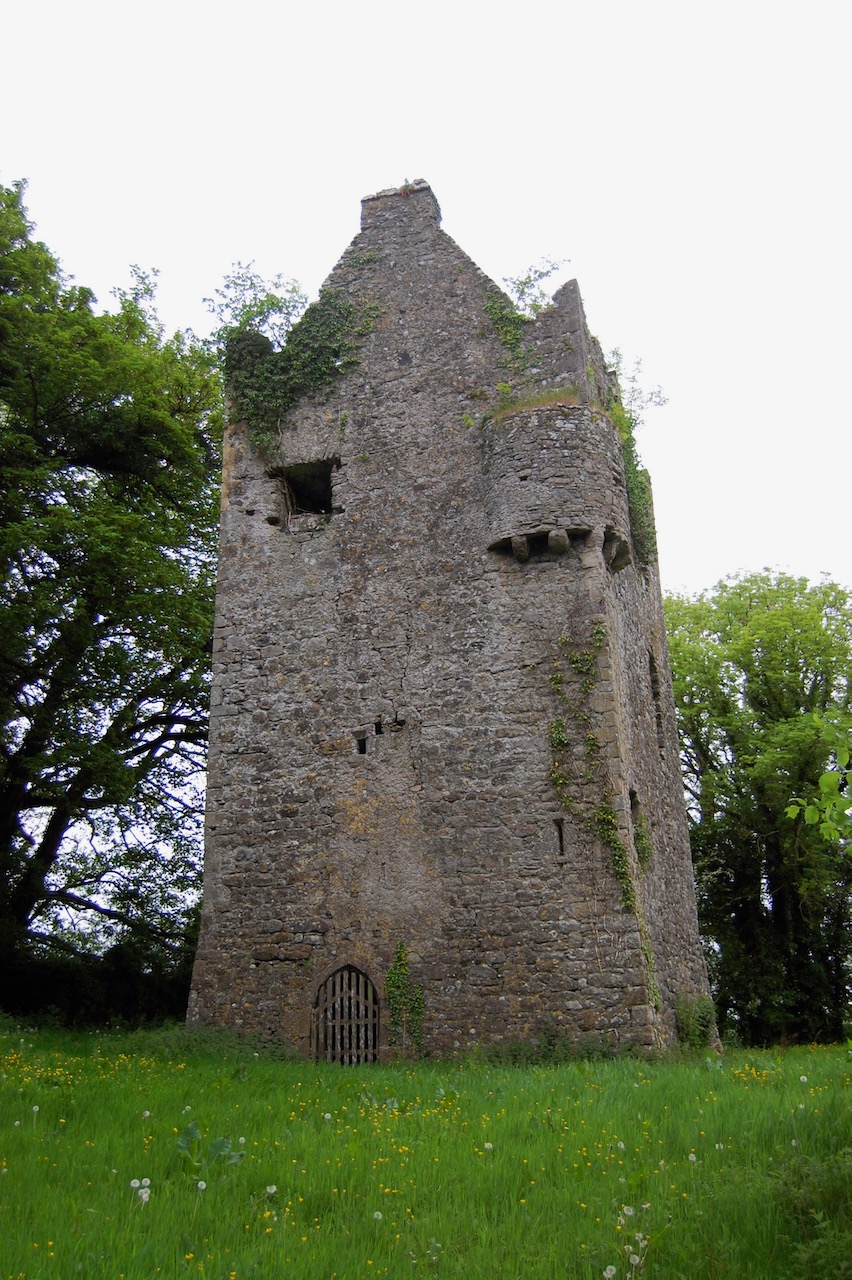
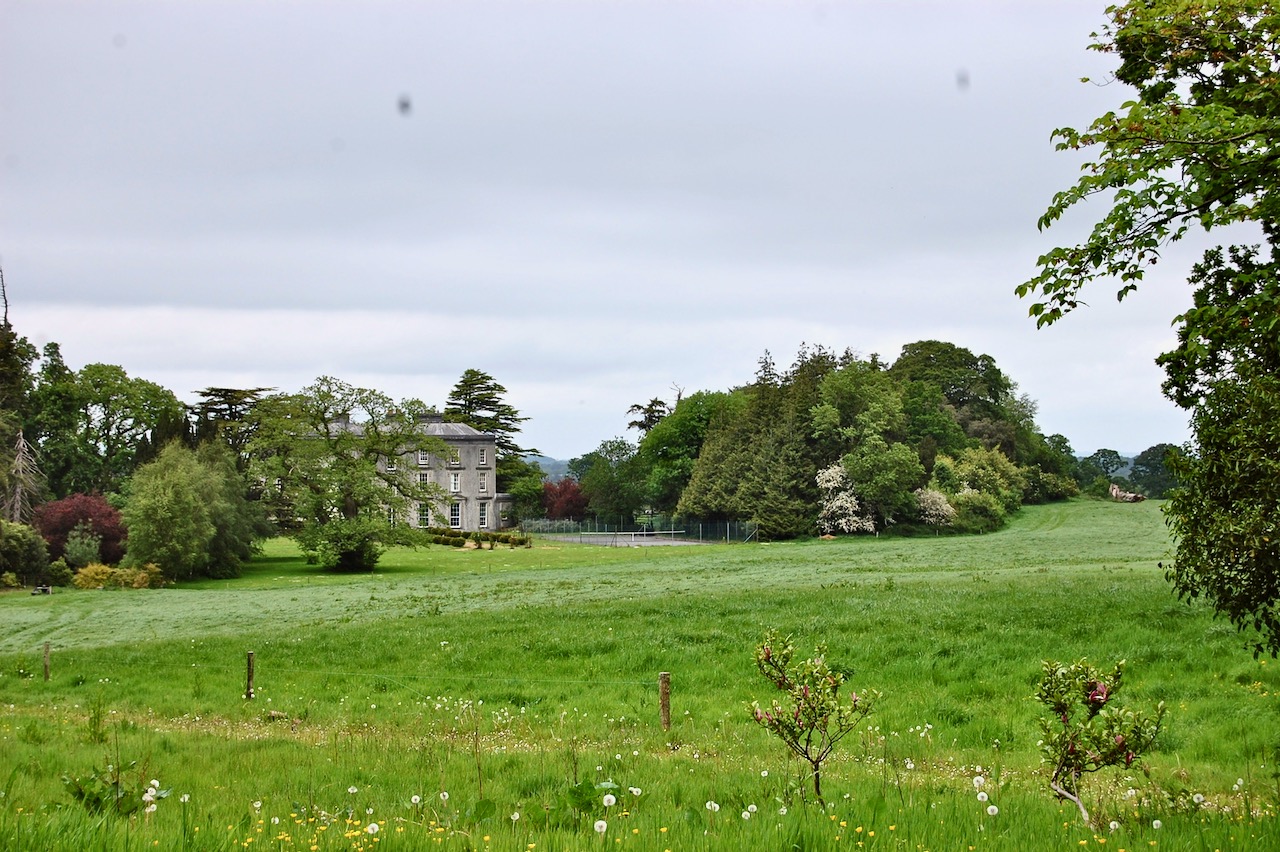
Drishane House, Castletownshend, Co. Cork – section 482

www.drishane.com

Open dates in 2026: May 1-31, Aug 15-23, Oct 3-22, 11am-3pm

Fee: adult €12, OAP €10, student/child €8, child under 6 years free

e: info@drishane.com

2026 Diary of Irish Historic Houses (section 482 properties)

To purchase an A5 size 2026 Diary of Historic Houses (opening times and days are not listed so the calendar is for use for recording appointments and not as a reference for opening times) send your postal address to jennifer.baggot@gmail.com along with €20 via this payment button. The calendar of 84 pages includes space for writing your appointments as well as photographs of the historic houses. The price includes postage within Ireland. Postage to U.S. is a further €10 for the A5 size calendar, so I would appreciate a donation toward the postage – you can click on the donation link.

€20.00

donation

Help me to pay the entrance fee to one of the houses on this website. This site is created purely out of love for the subject and I receive no payment so any donation is appreciated!

€15.00
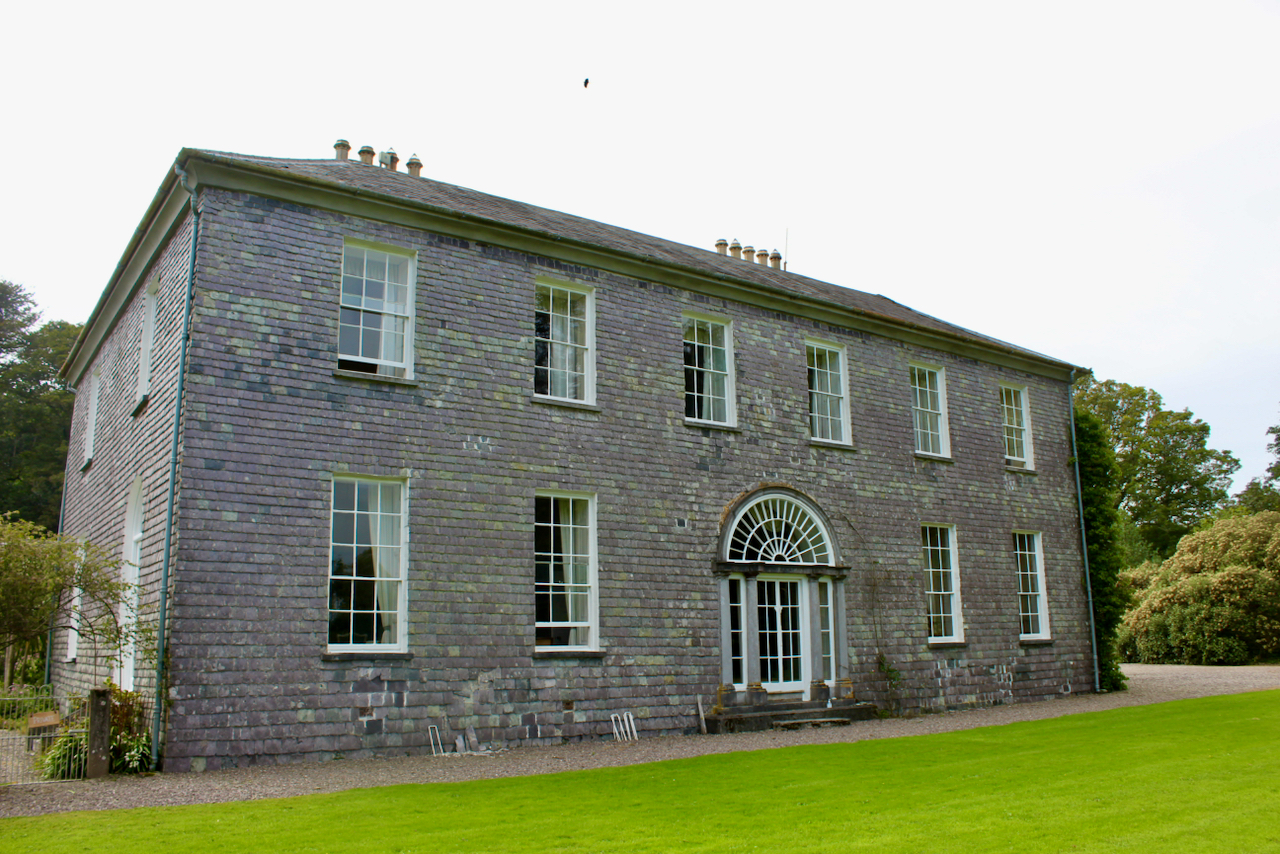
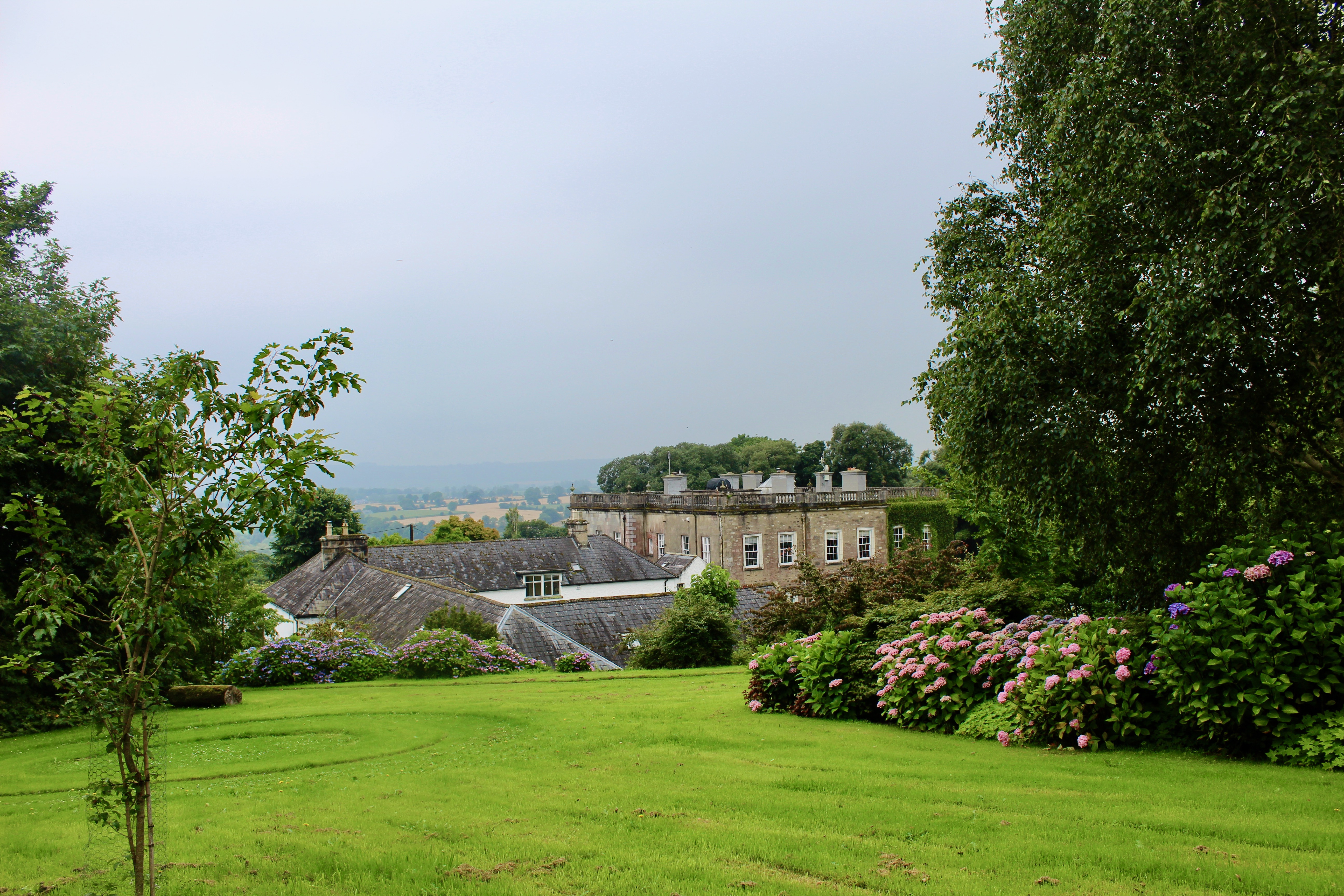
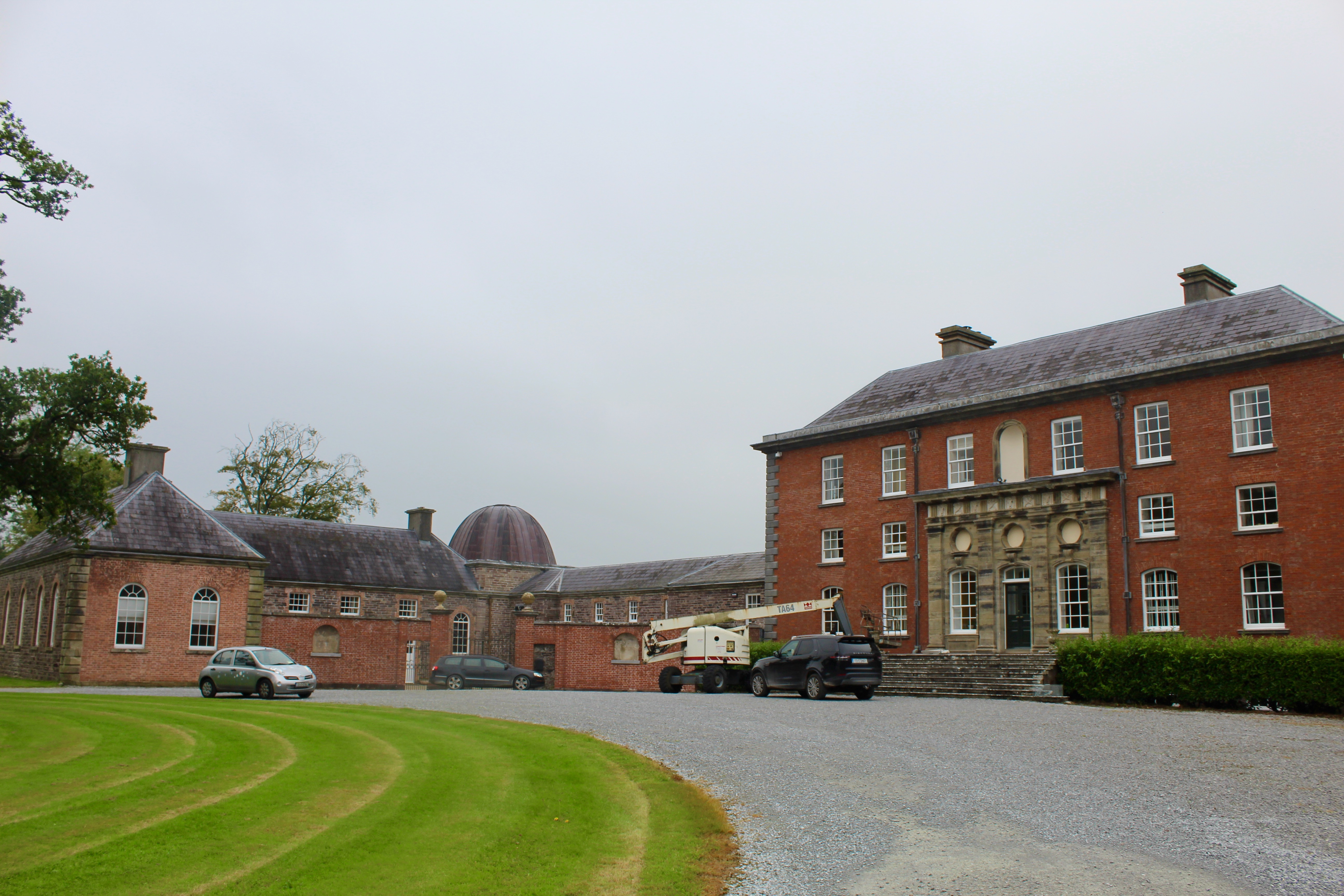
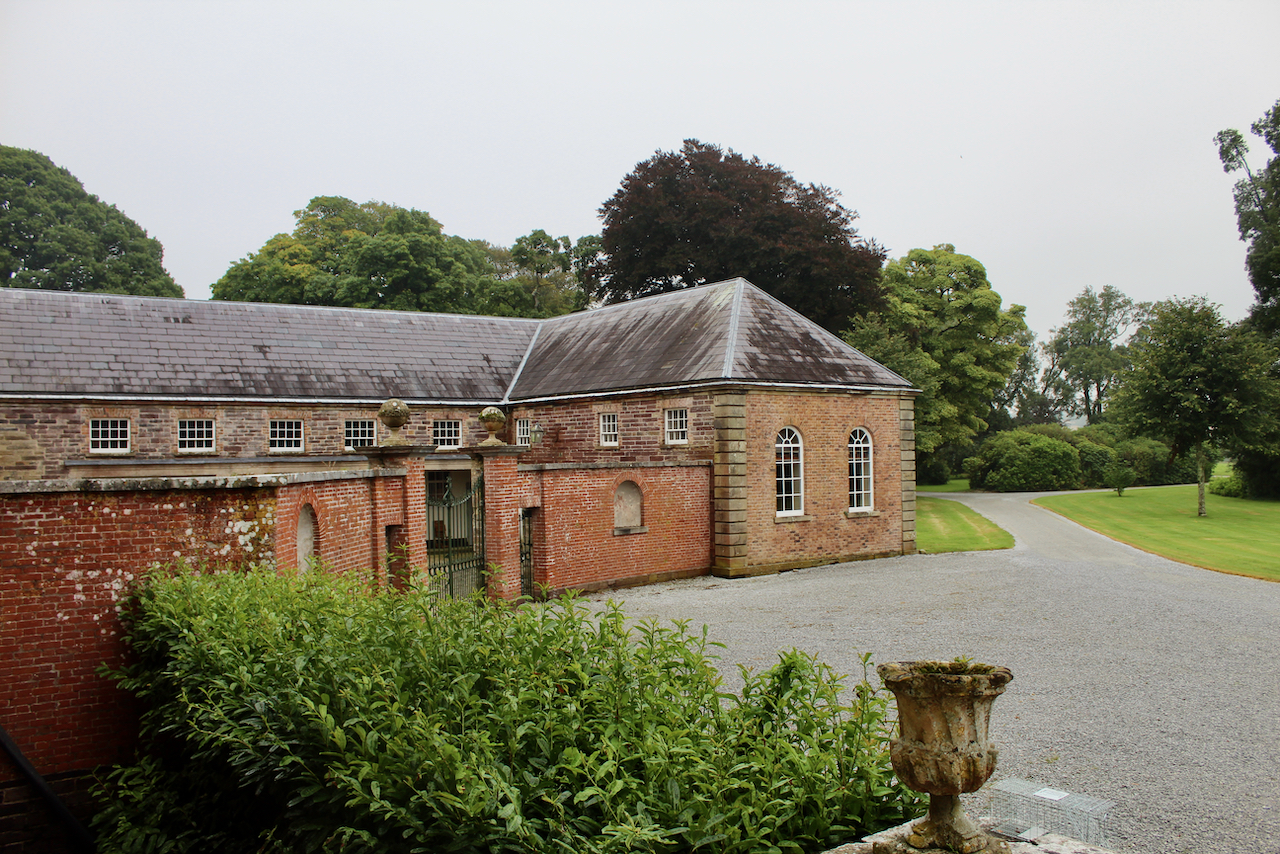
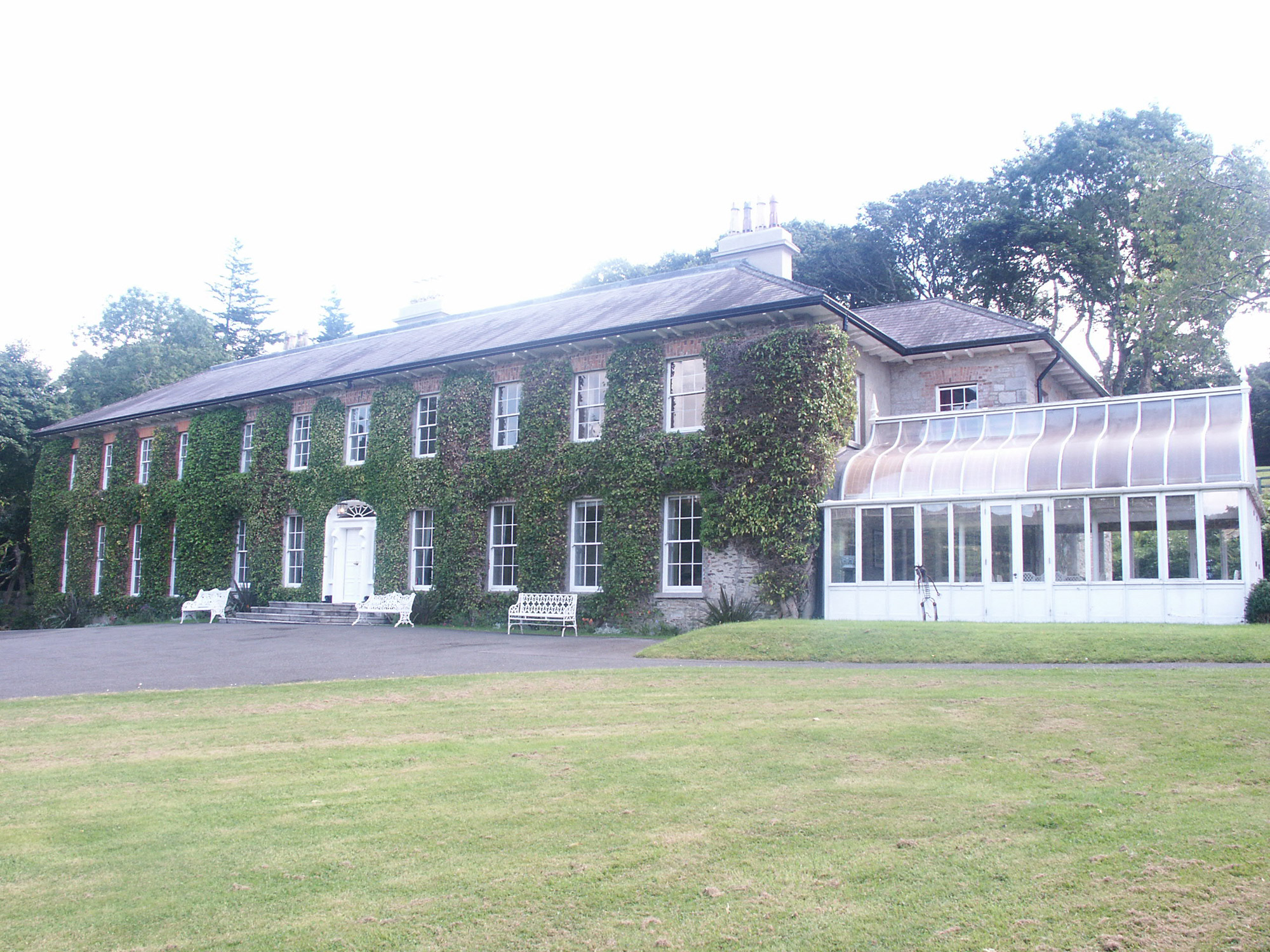
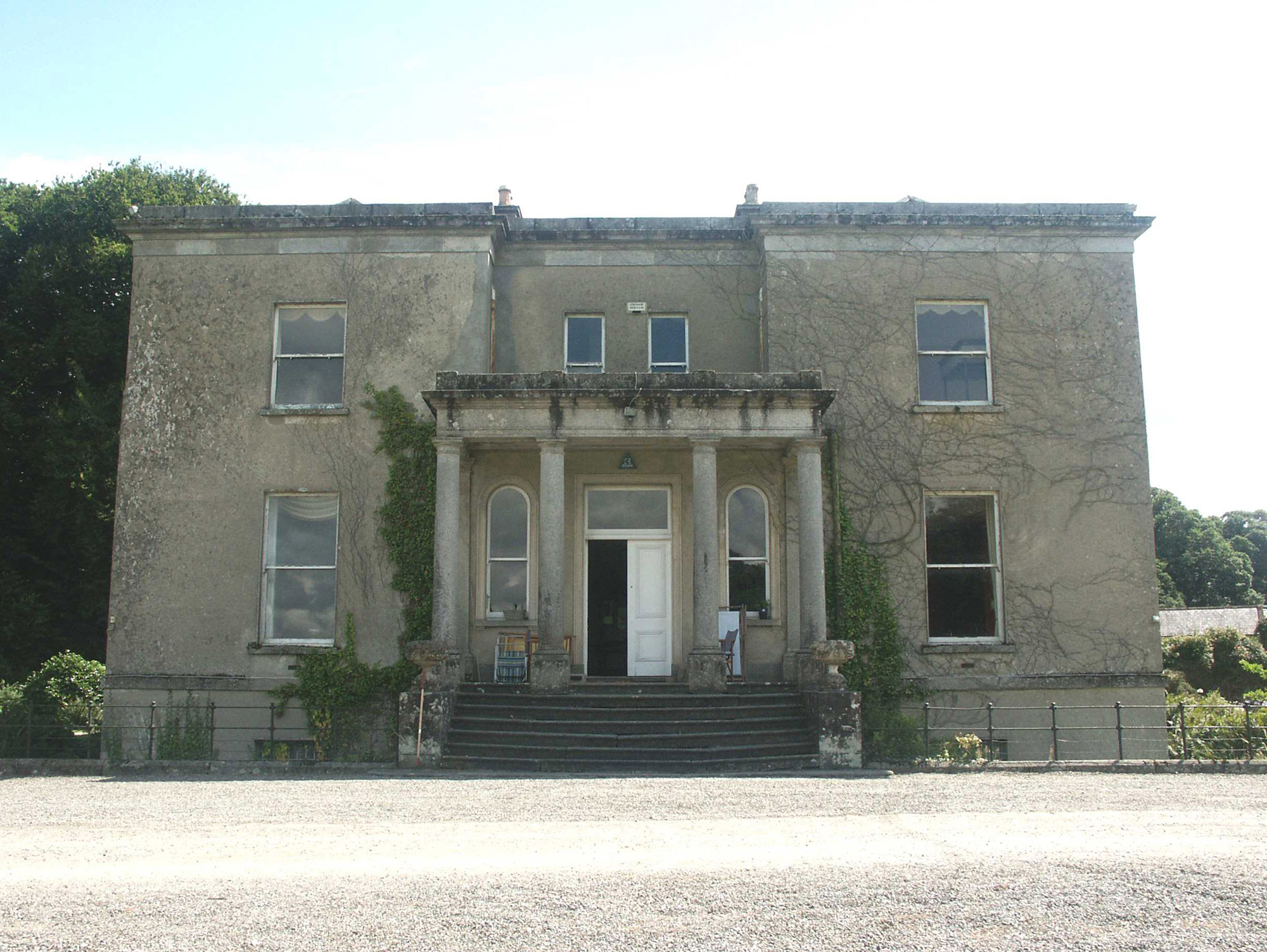
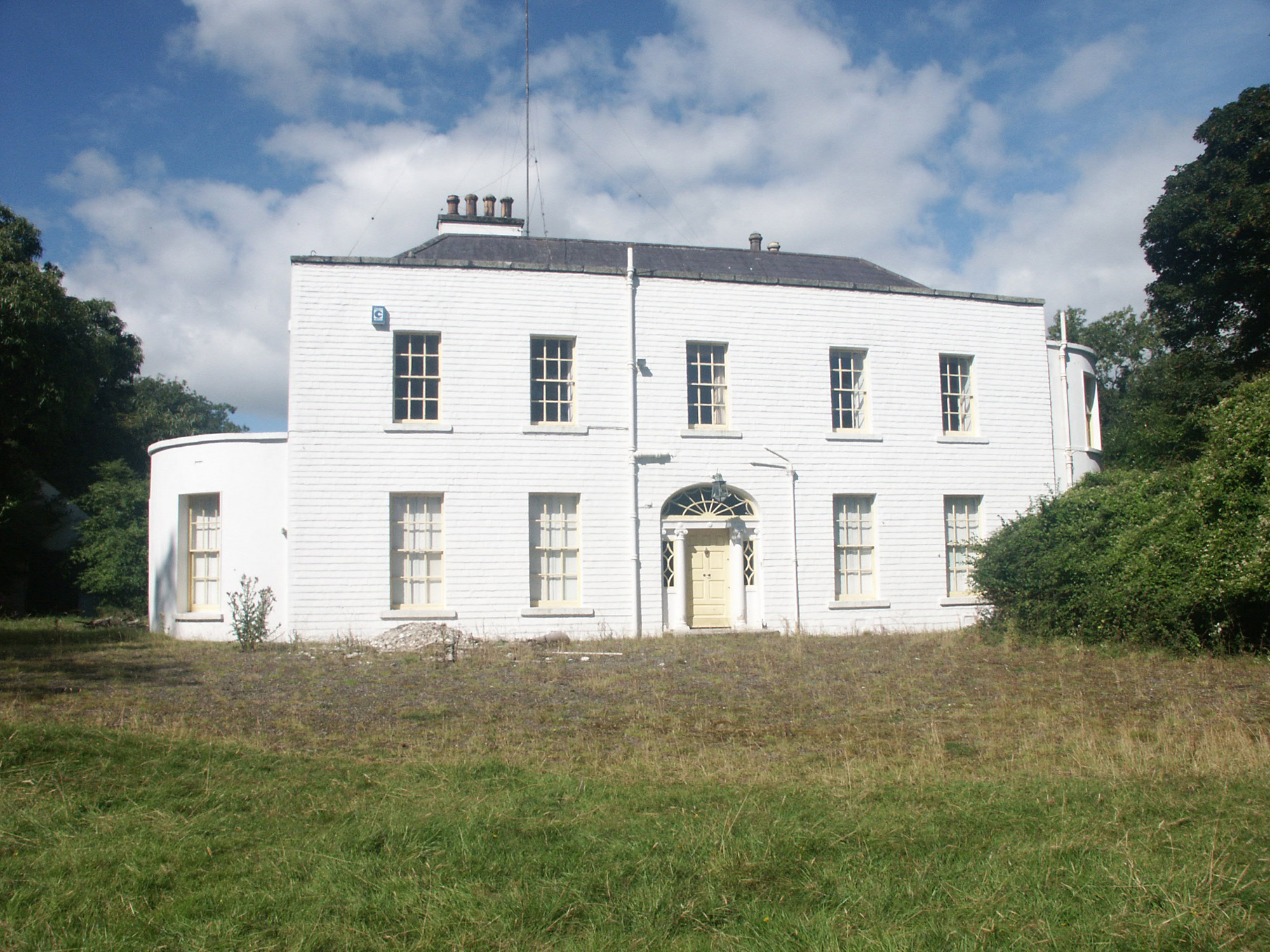
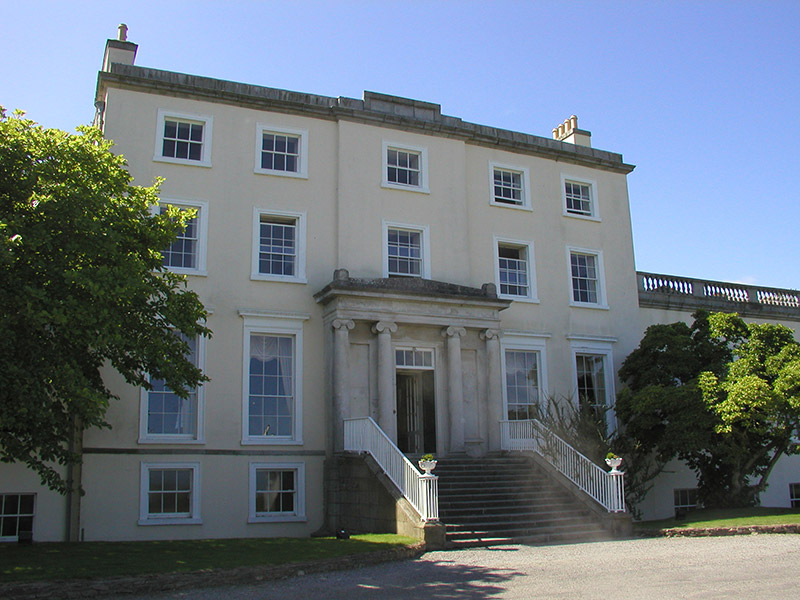
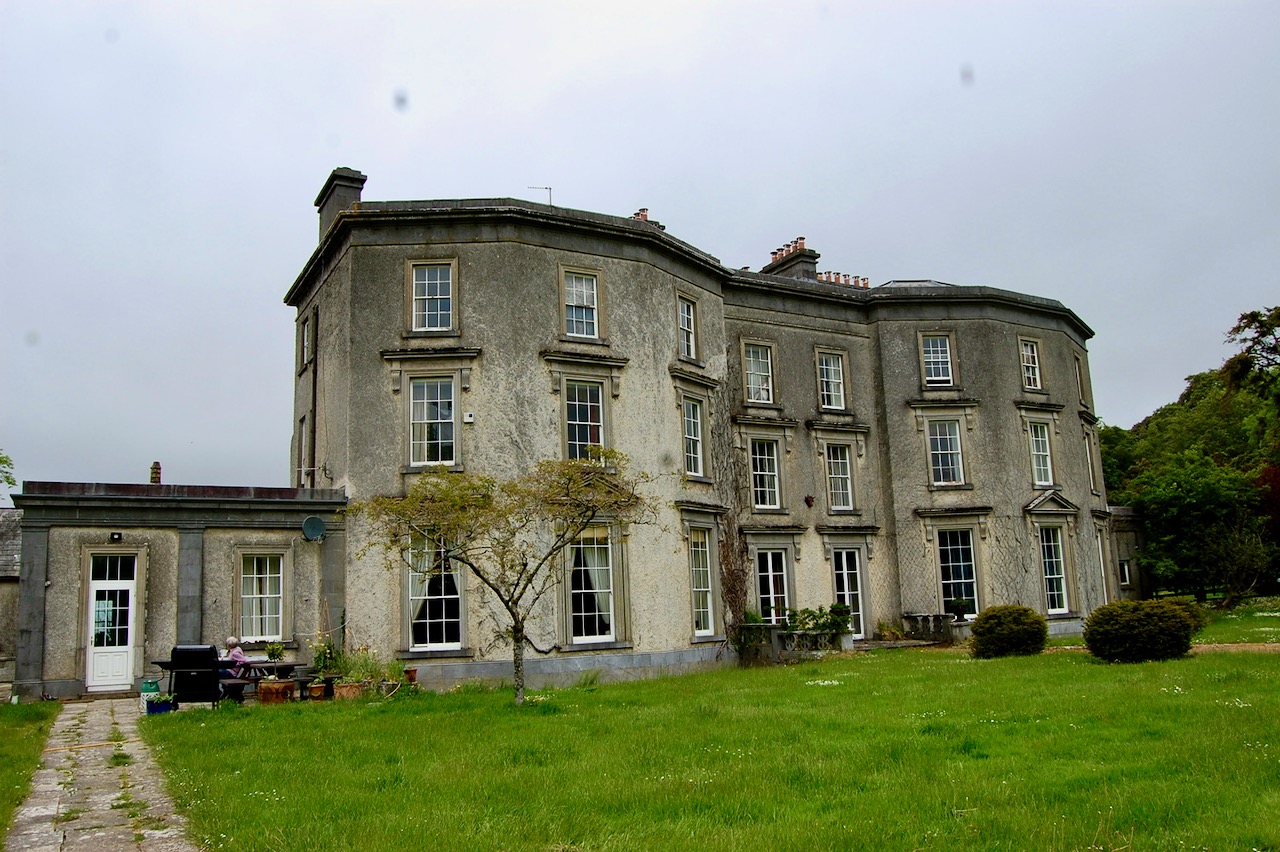
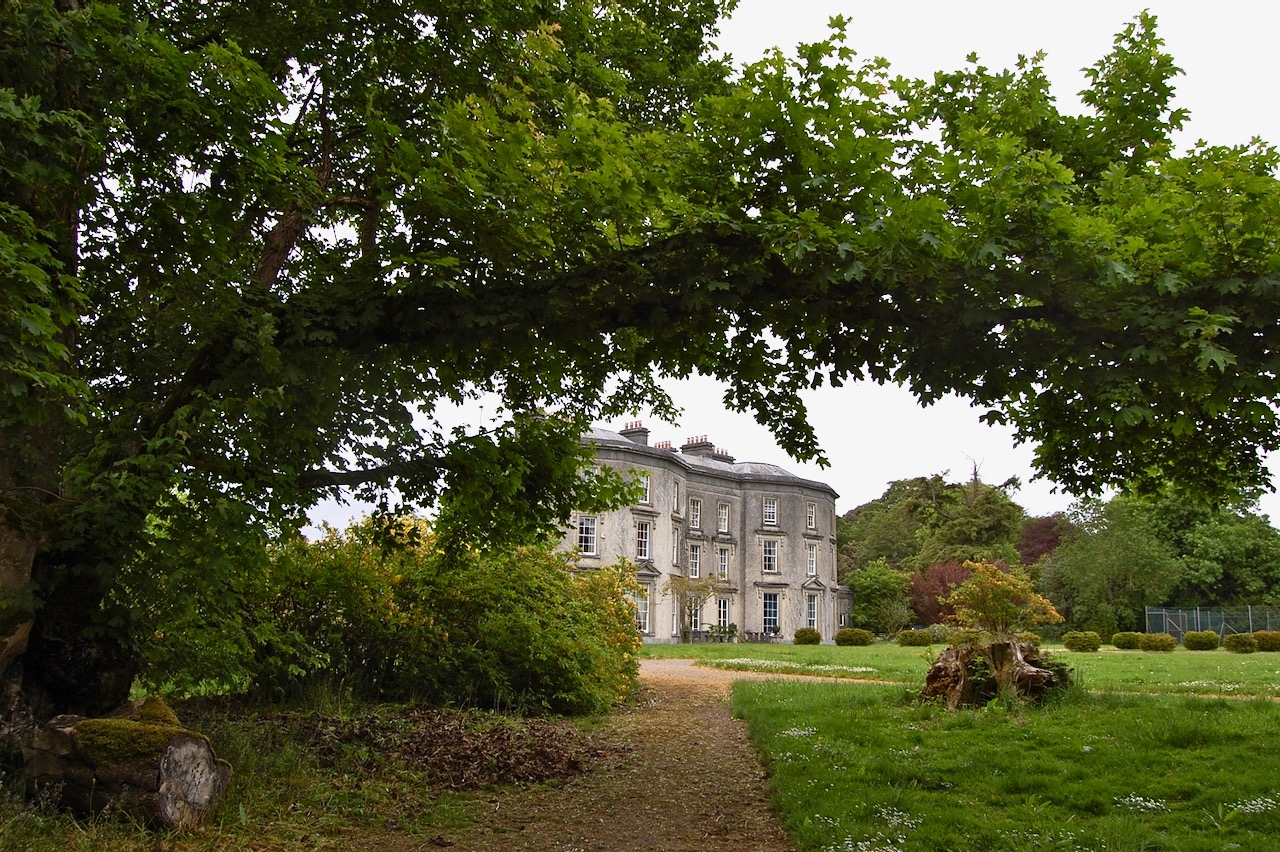
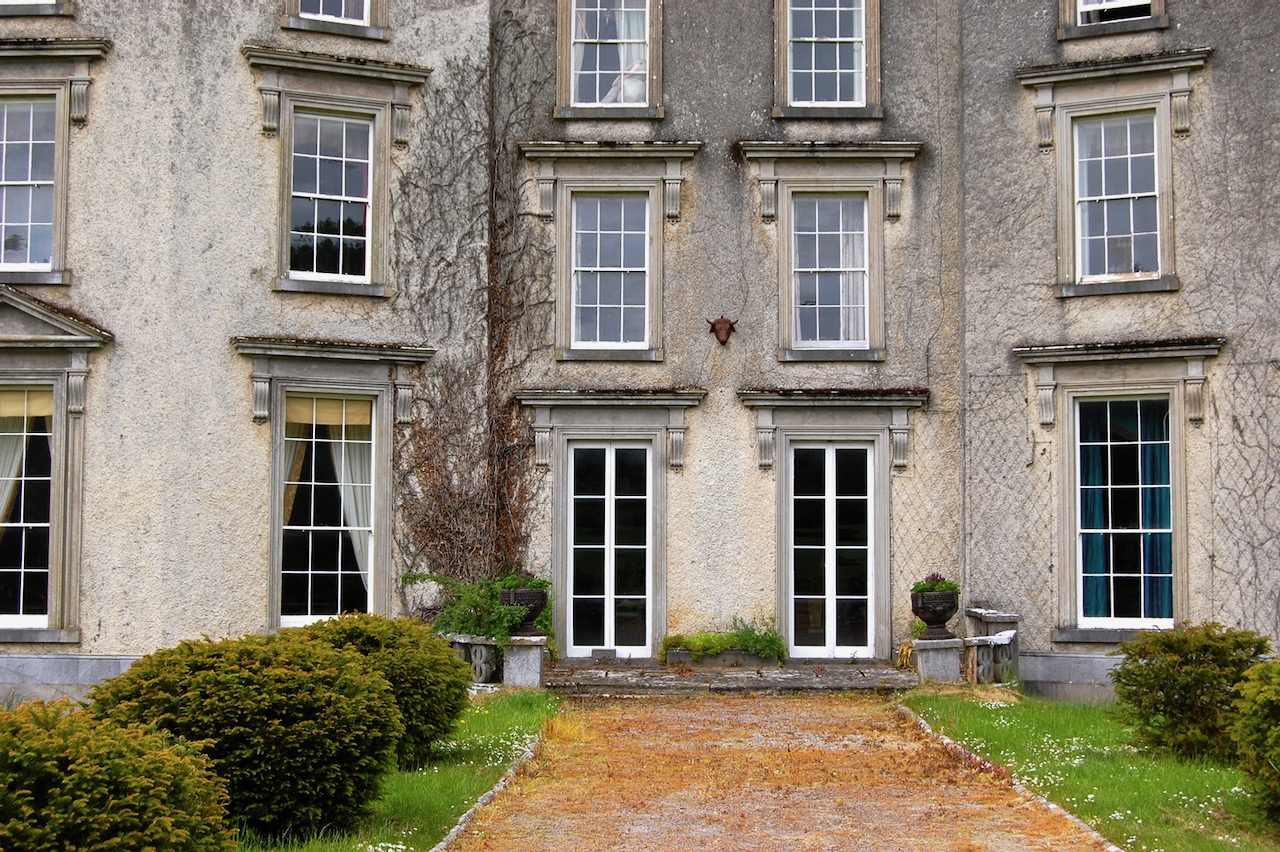
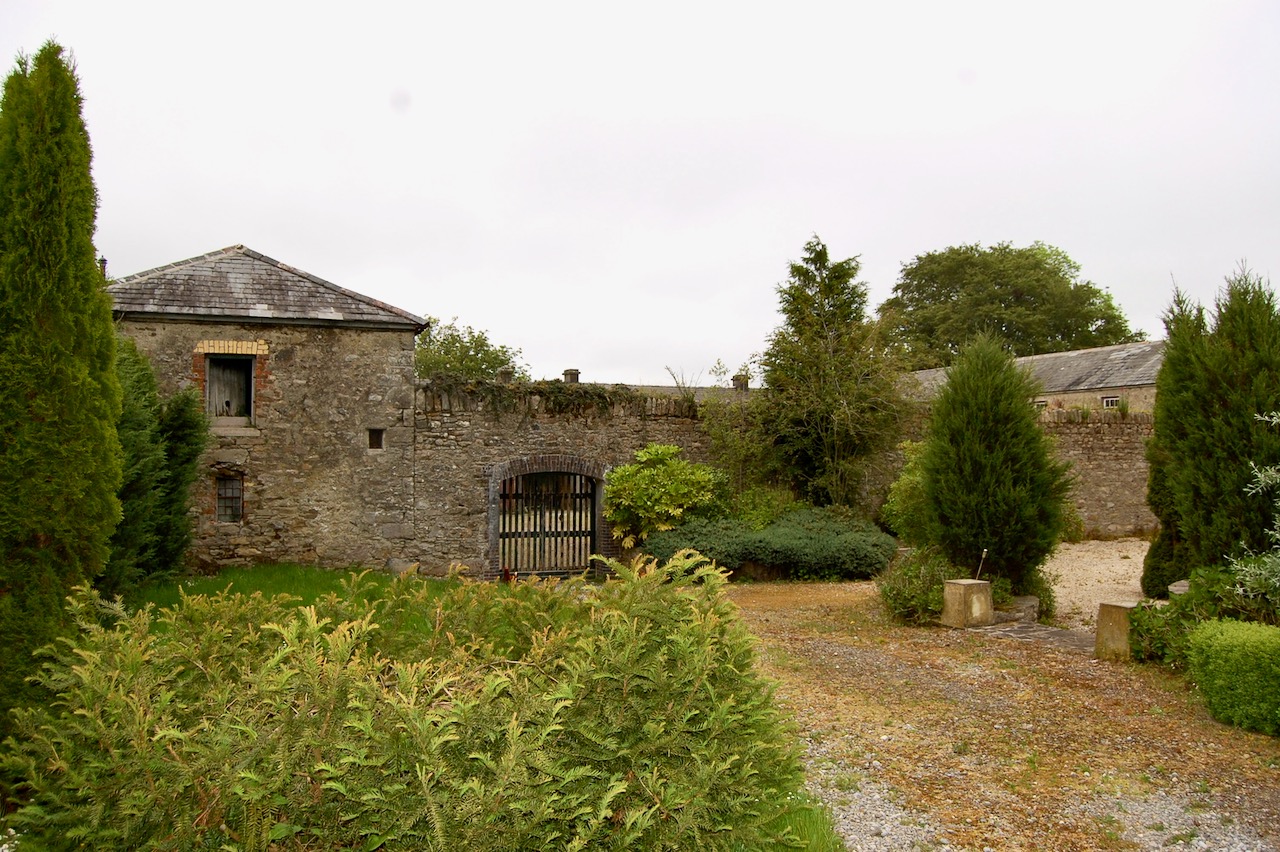
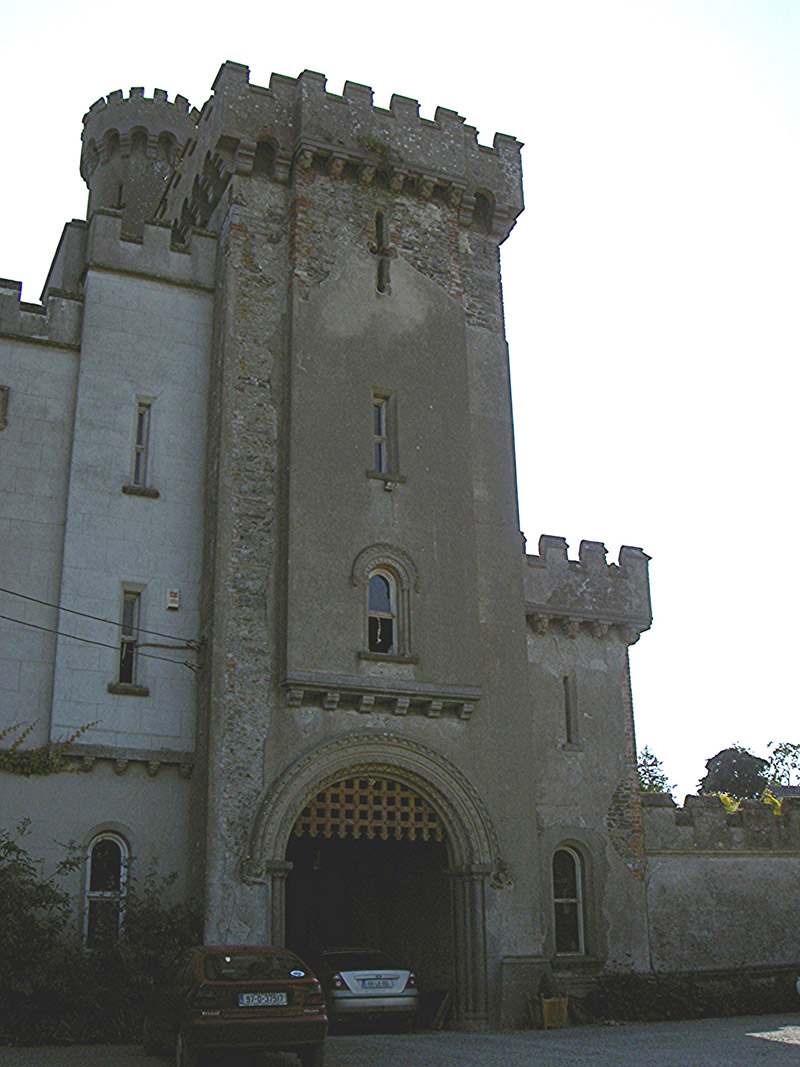
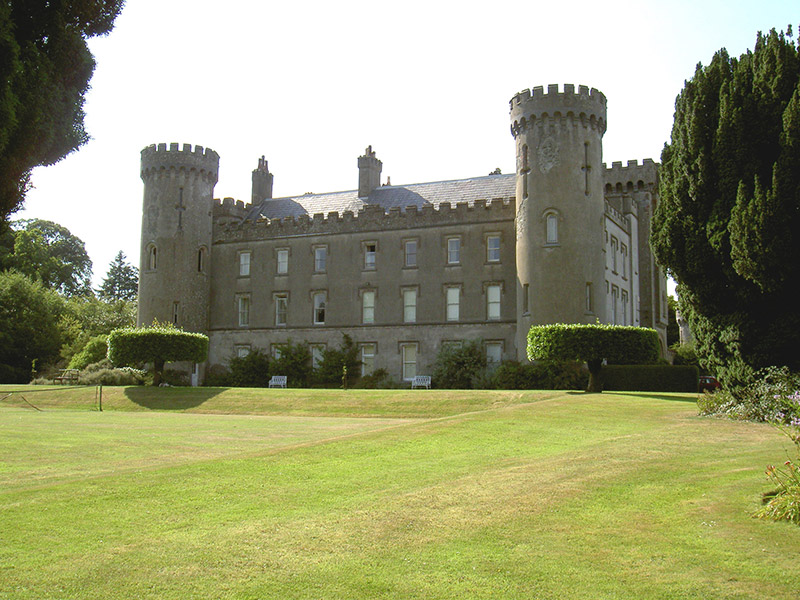
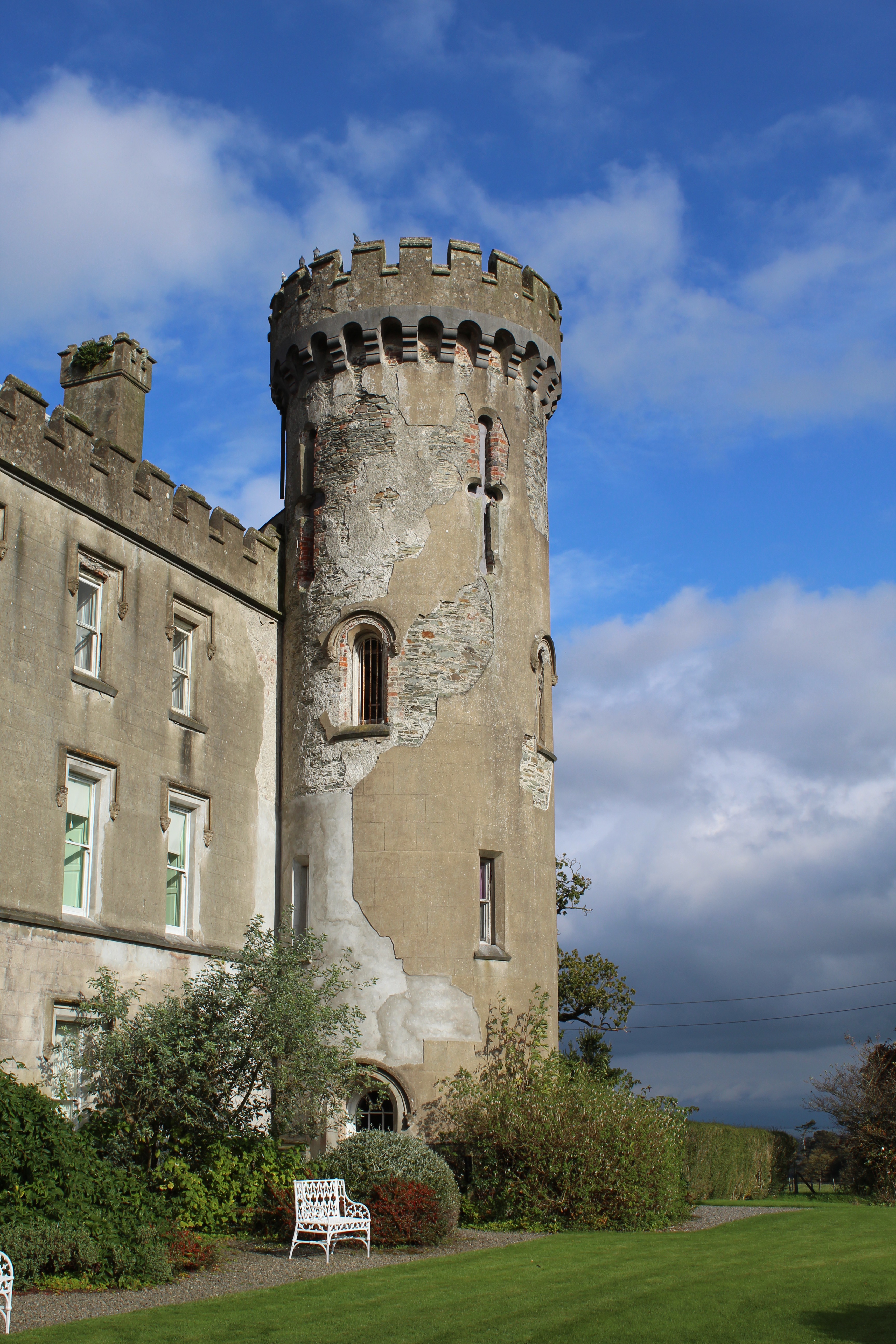
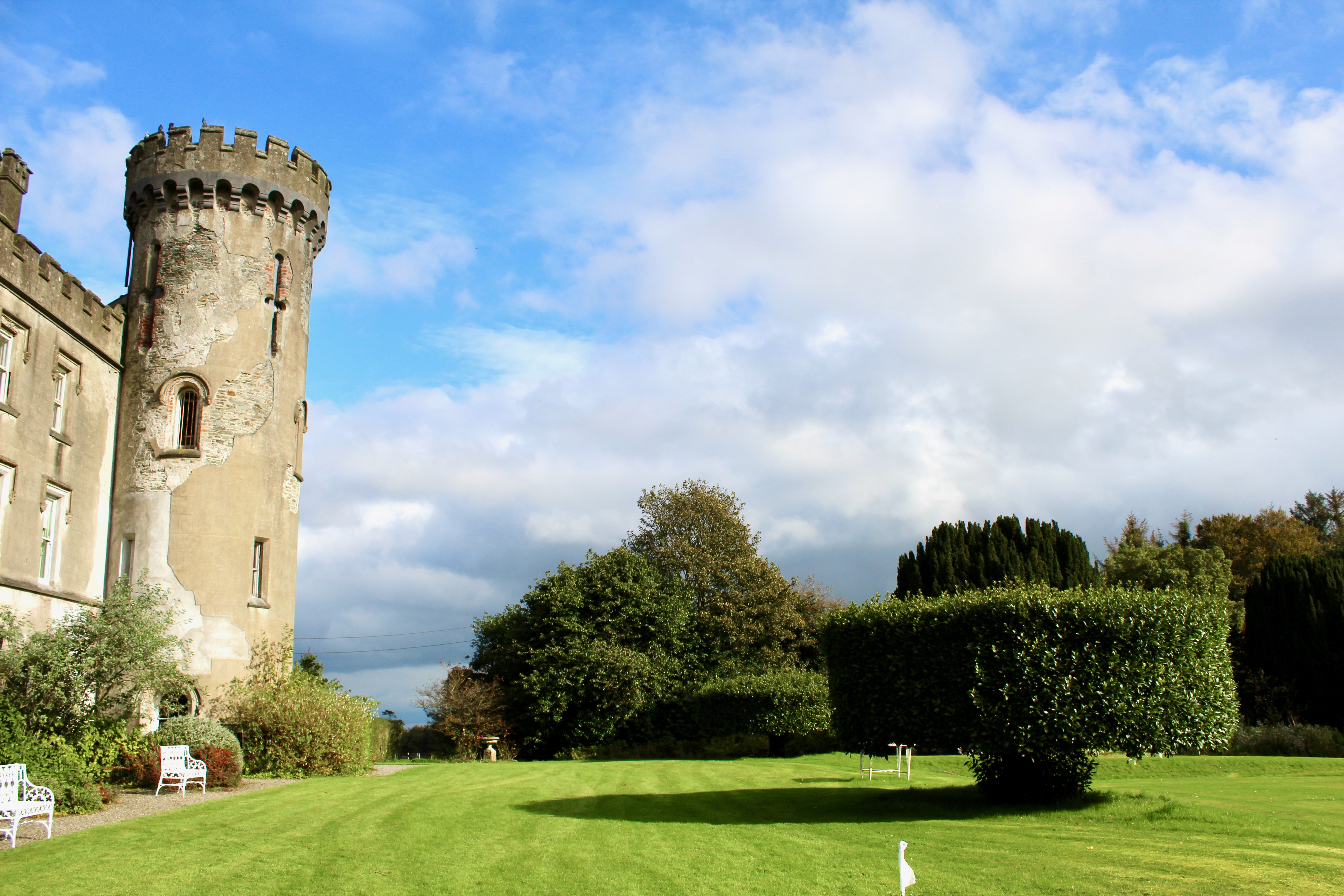
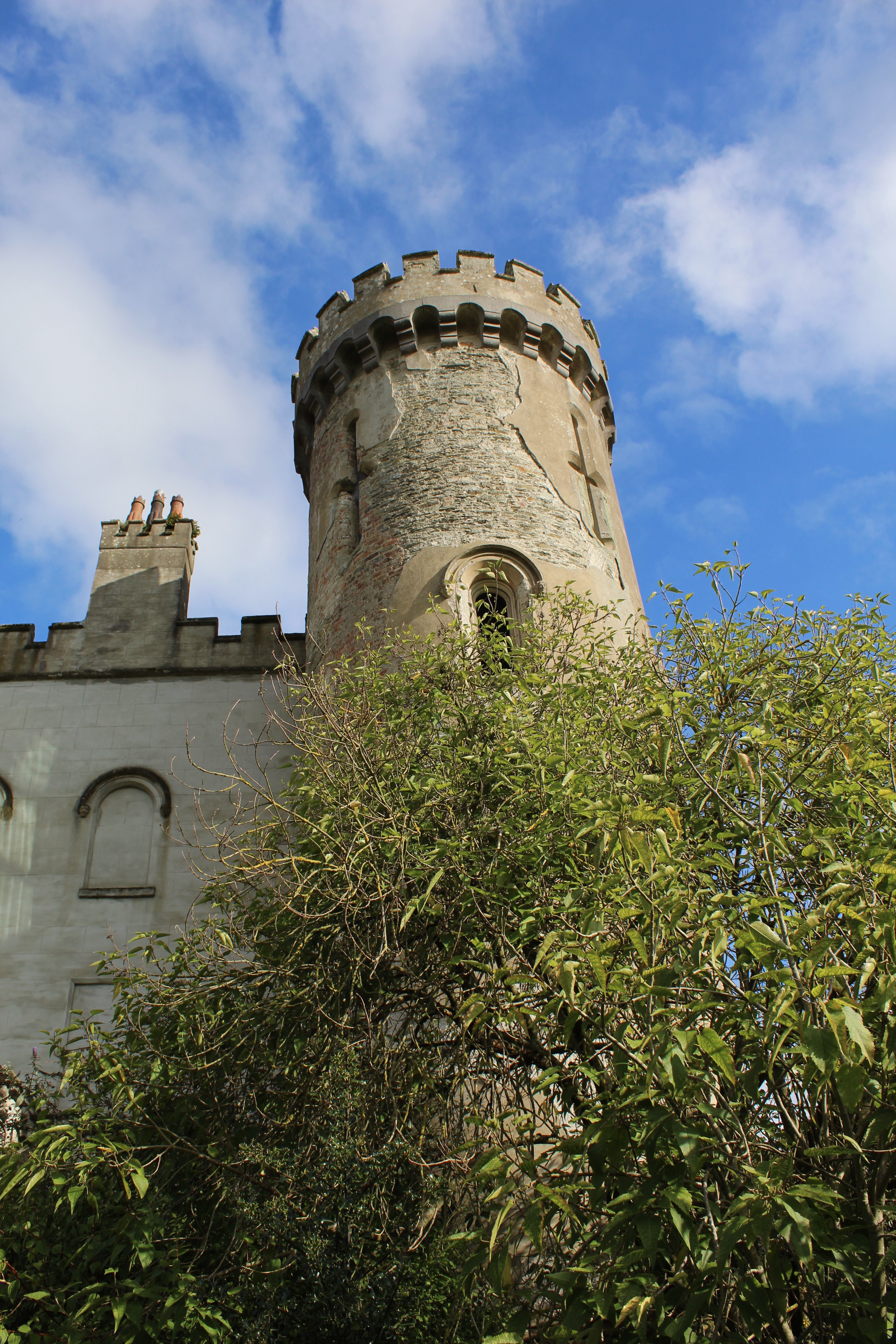
Drishane House, August 2020. Photograph © Jennifer Winder-Baggot, www.irishhistorichouses.com

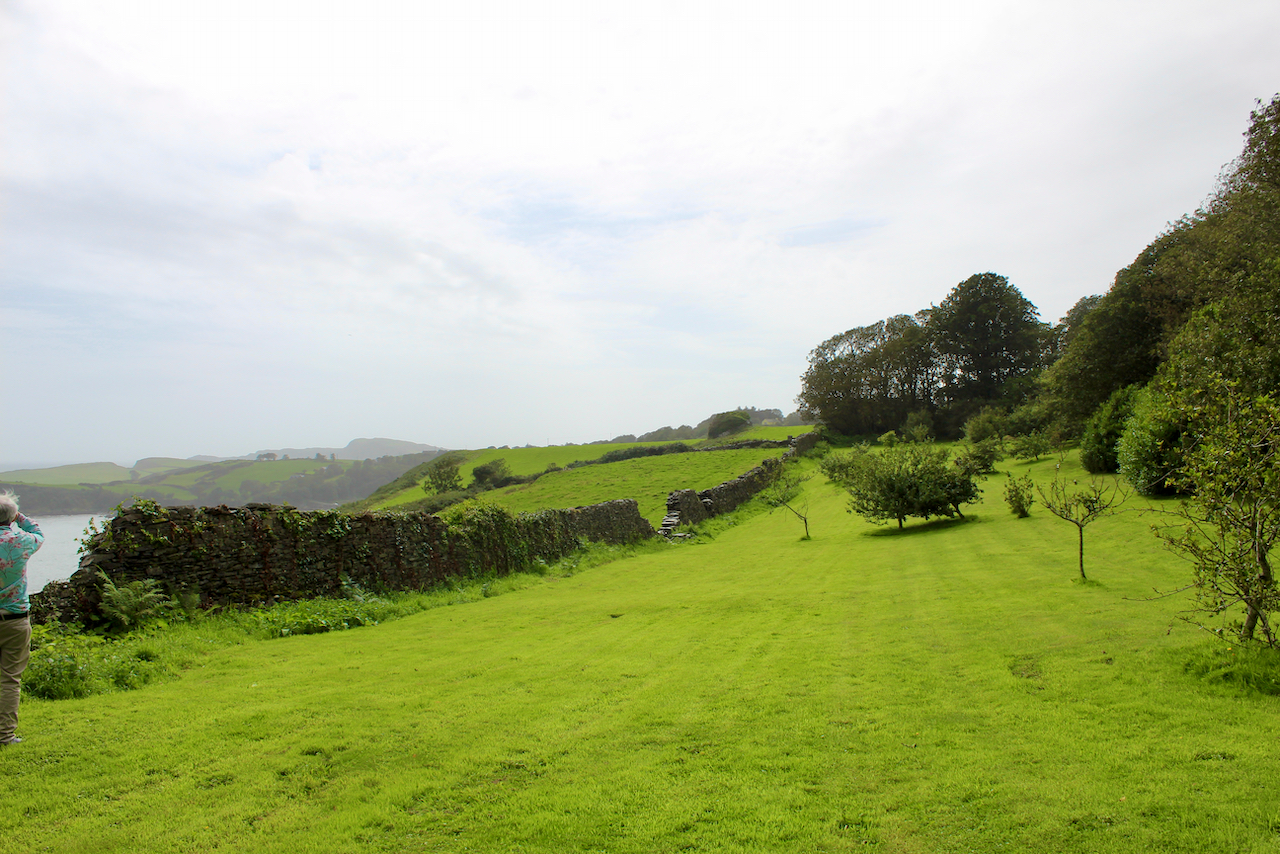
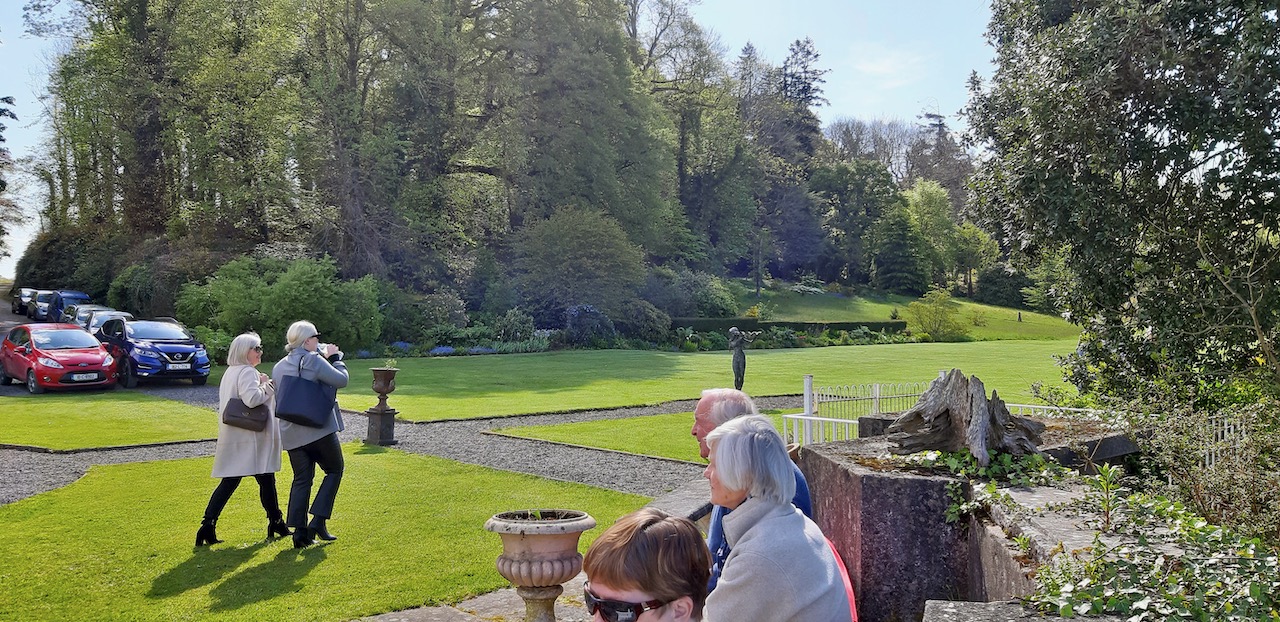
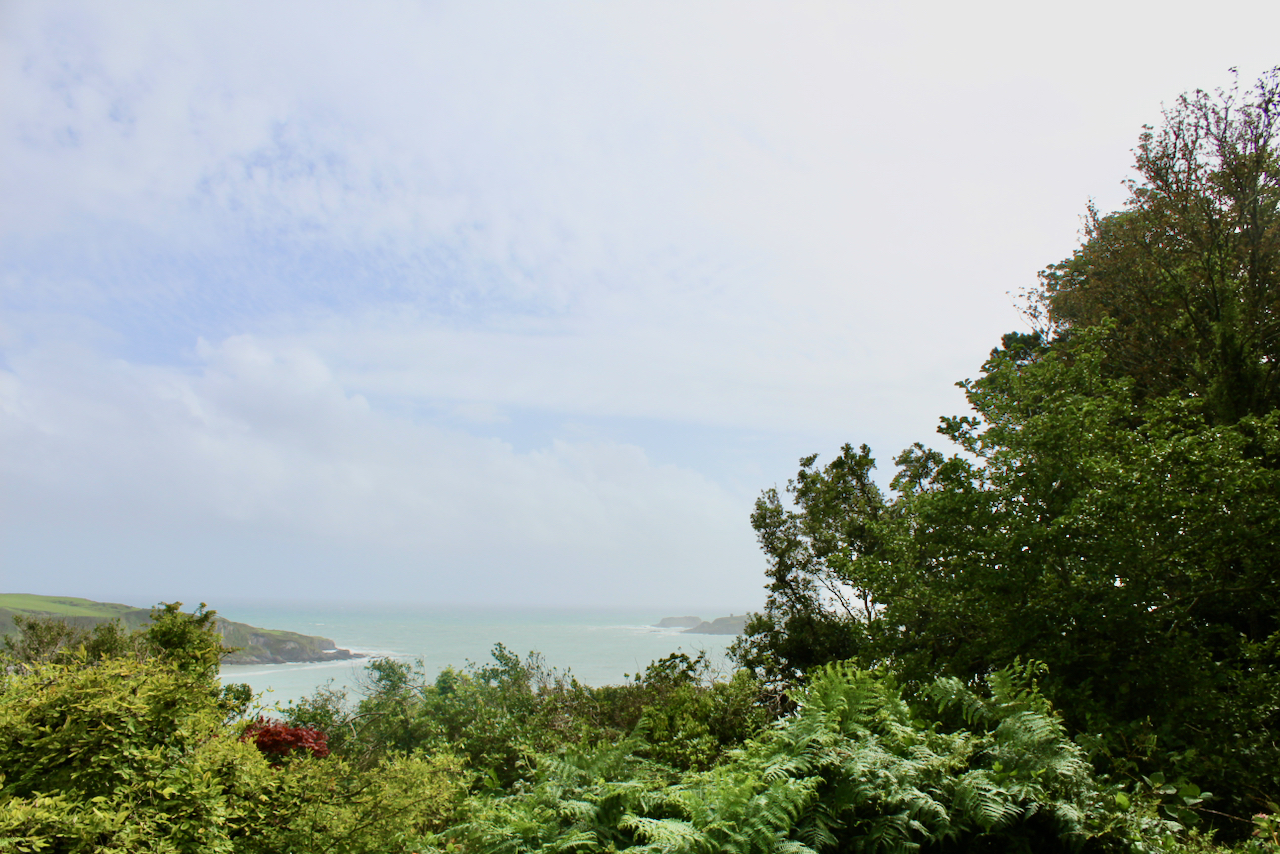
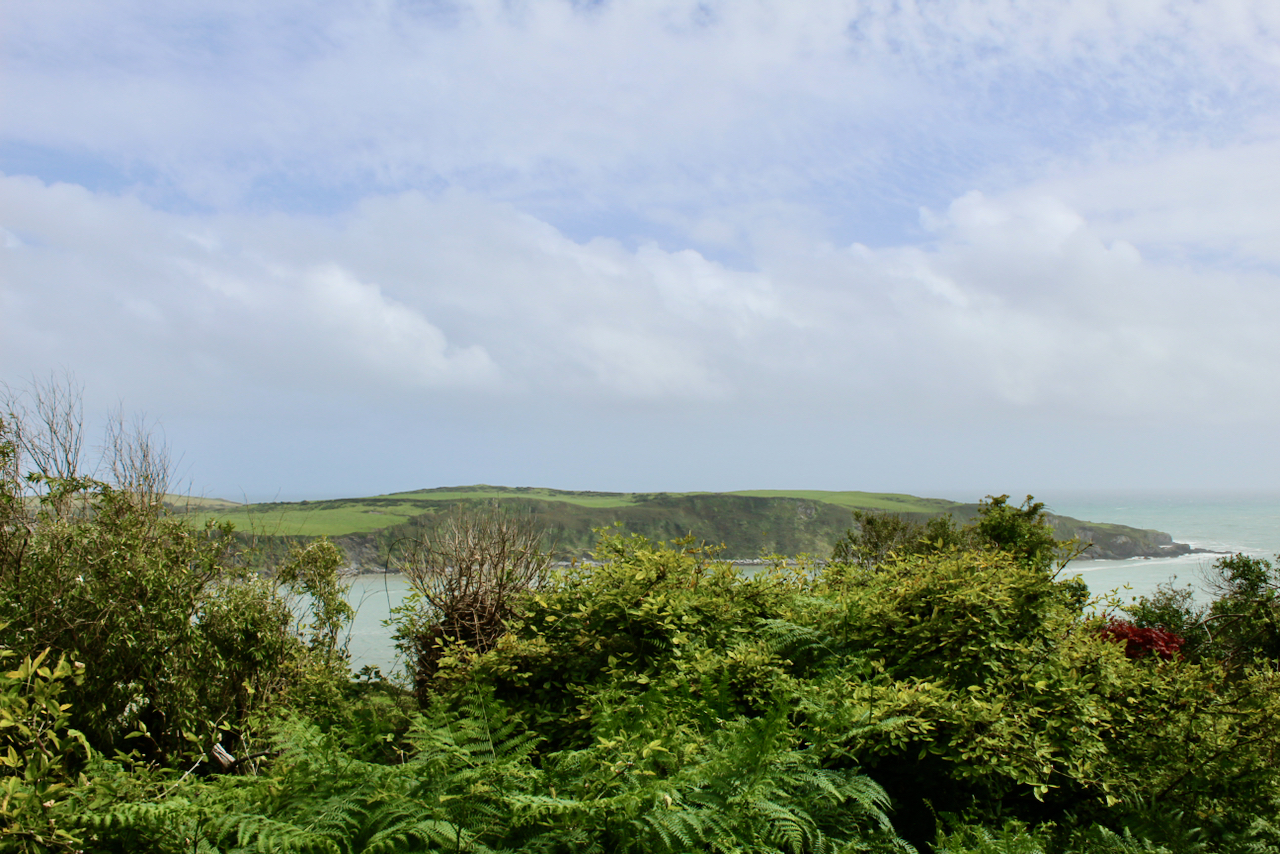
Edith Somerville, of Somerville and Ross Some Experiences of an Irish RM fame (which has been made into a television series), said “If I am ever allowed to return to earth it will be to Drishane that I shall come,” and I can see why. The estate is situated with a magnificent view over the Atlantic ocean.
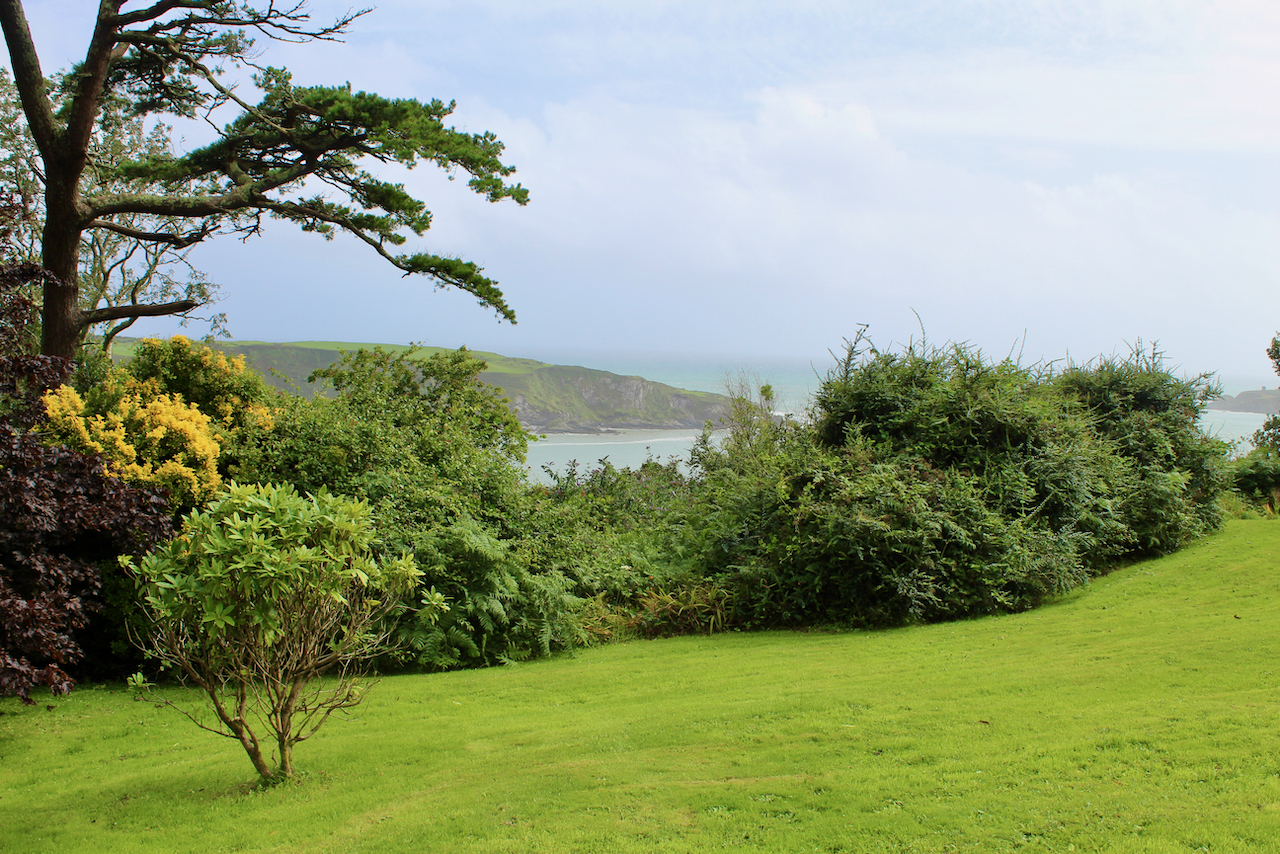
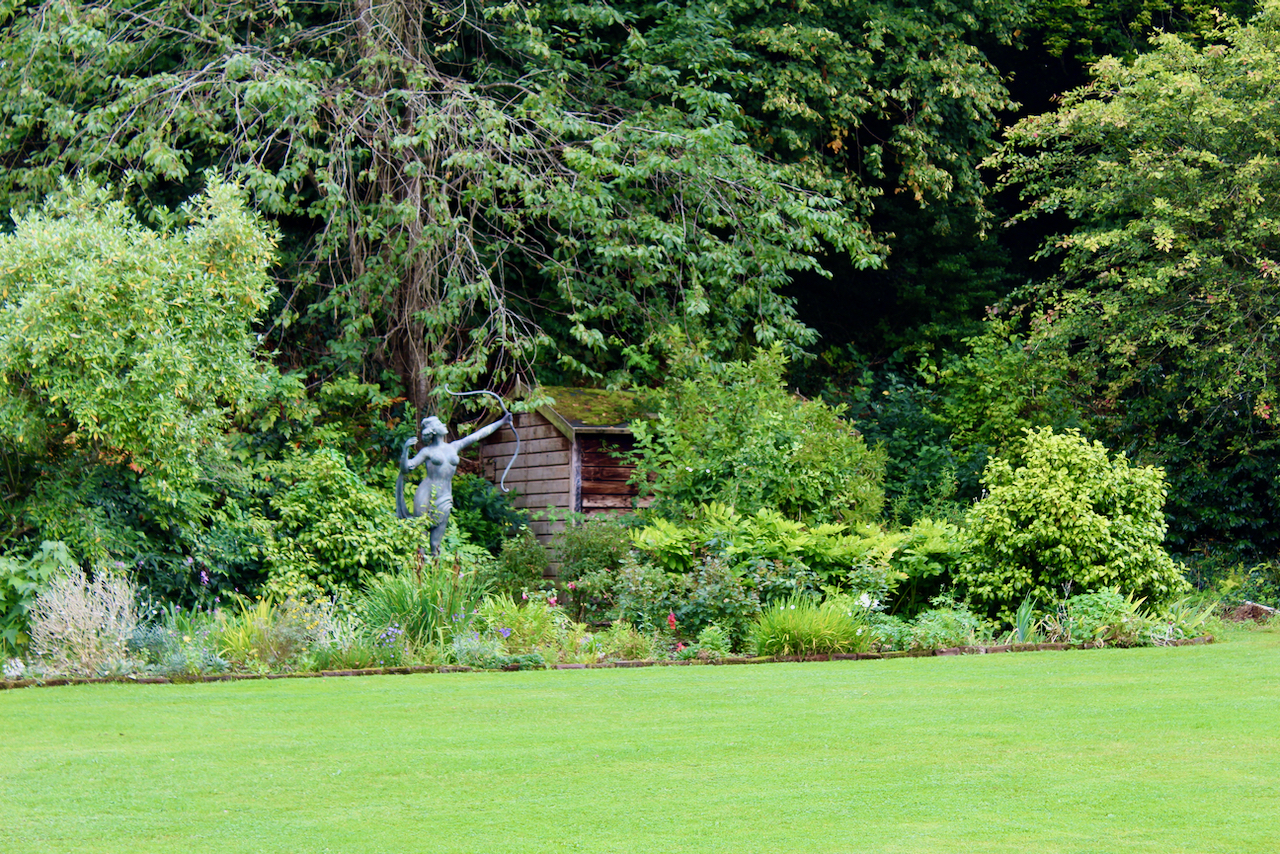
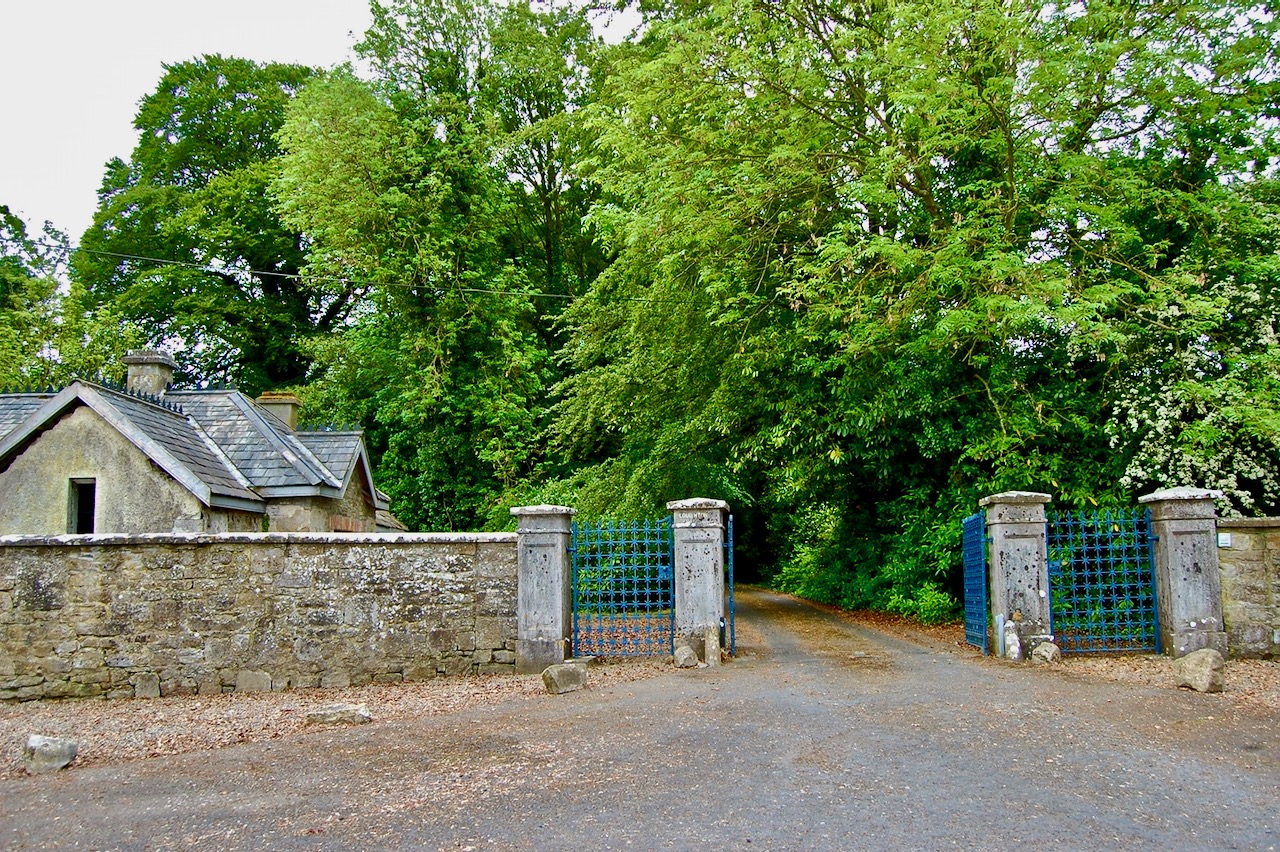
At Drishane House. Photograph © Jennifer Winder-Baggot, www.irishhistorichouses.com

Edith’s ancestor Reverend William Somerville fled persecution in Scotland in the 1690s and moved to Ireland. [1] He was an Episcopalian Minister who feared for his life following the disestablishment of the Church of Scotland in 1690. The Drishane House website tells us that Reverend William rowed his family twenty miles across rough water to Ulster, where they found refuge with family connections. 

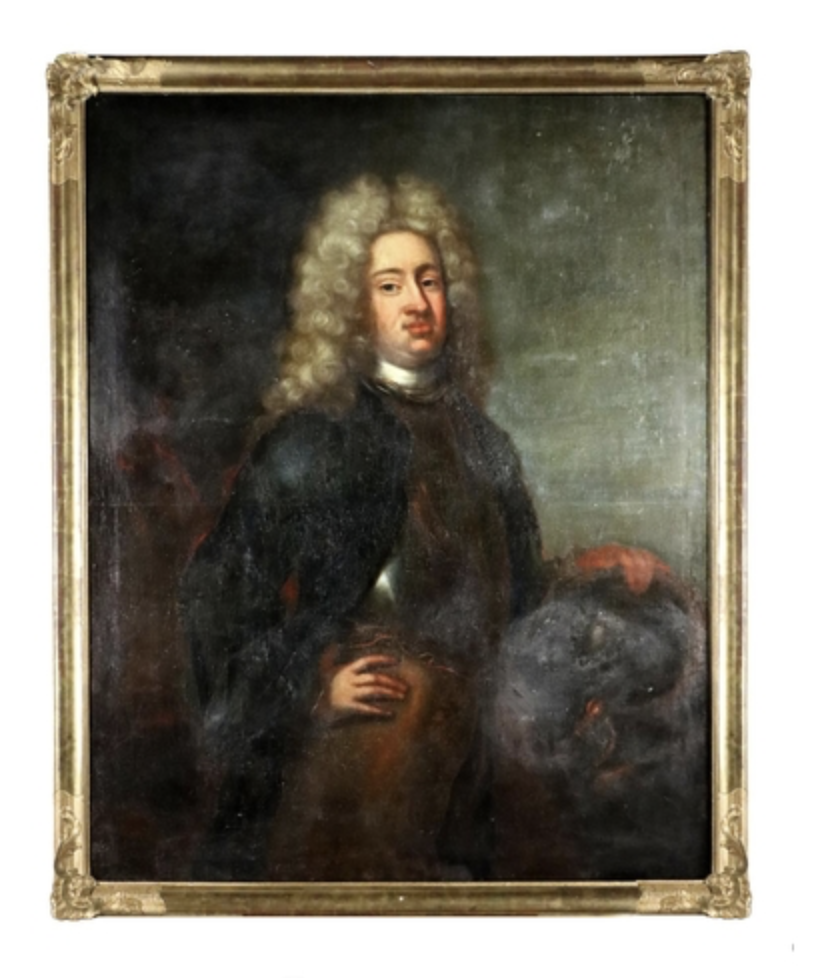
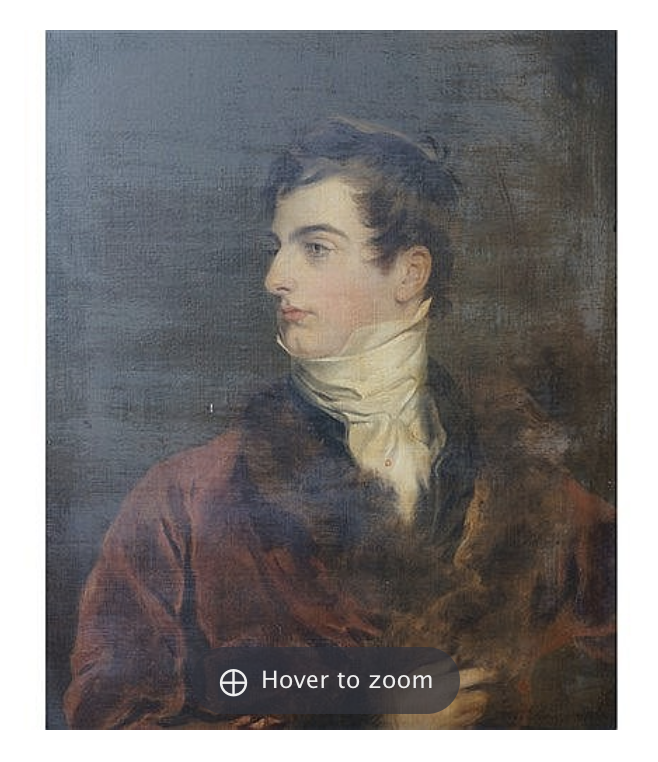
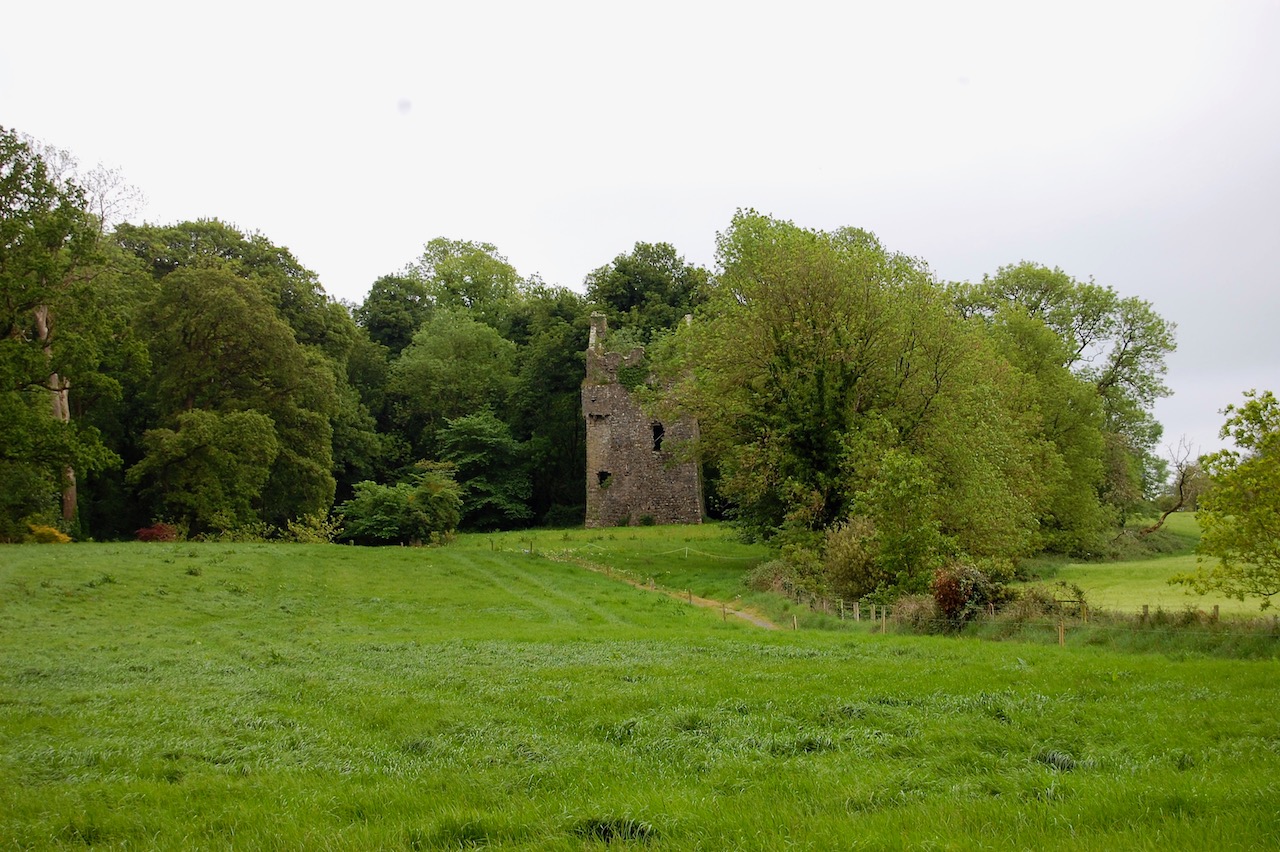
The Reverend’s younger son, Thomas, attended Trinity College Dublin and was ordained in the Church of Ireland. He married Anne Neville, of Furnace, County Kildare, a prosperous and well-connected family. Thomas obtained the position of Rector of Castlehaven and the family moved to Cork. He set up house in the old O’Driscoll castle next to the church at Castlehaven Strand. Both are now ruins. His portrait, his stick and his 1685 edition of Bedel’s Irish Bible remain in the possession of his descendants.
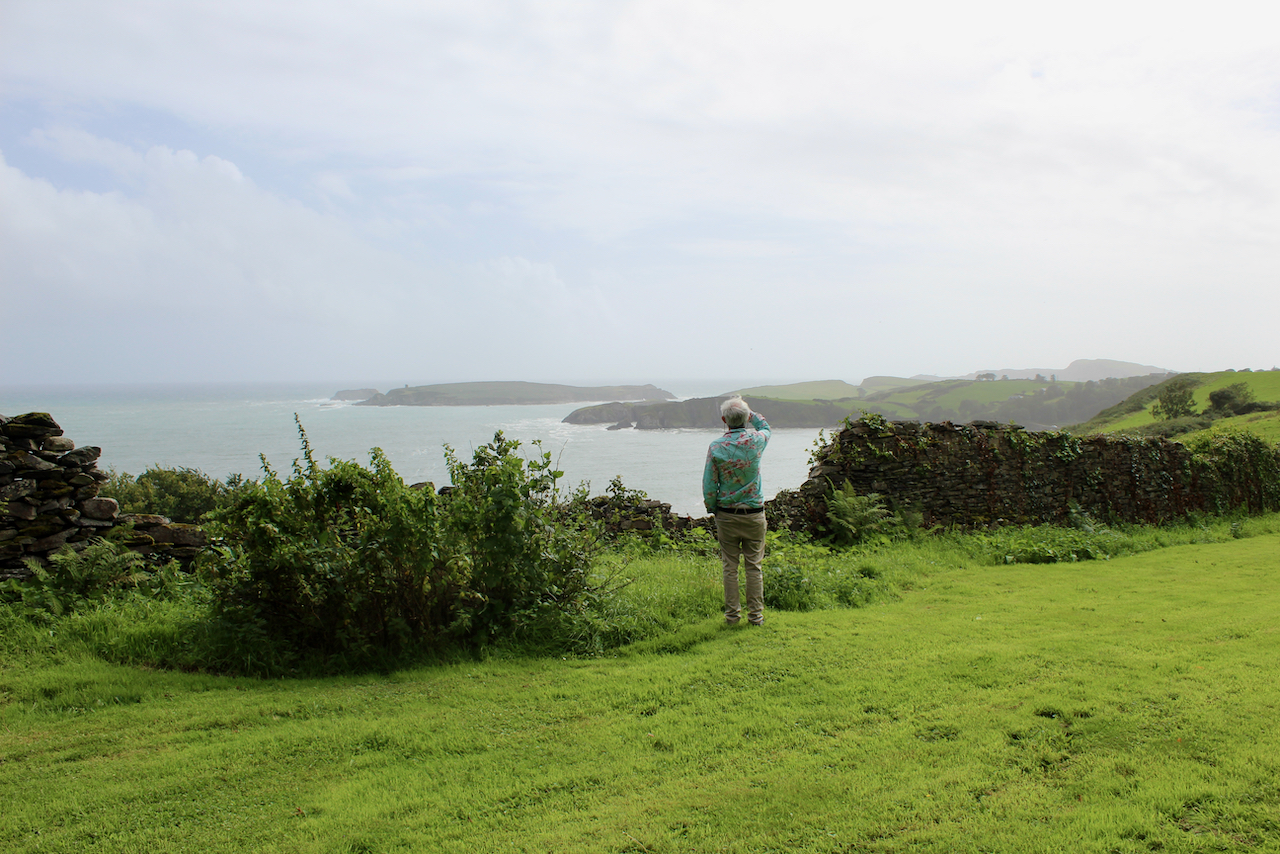
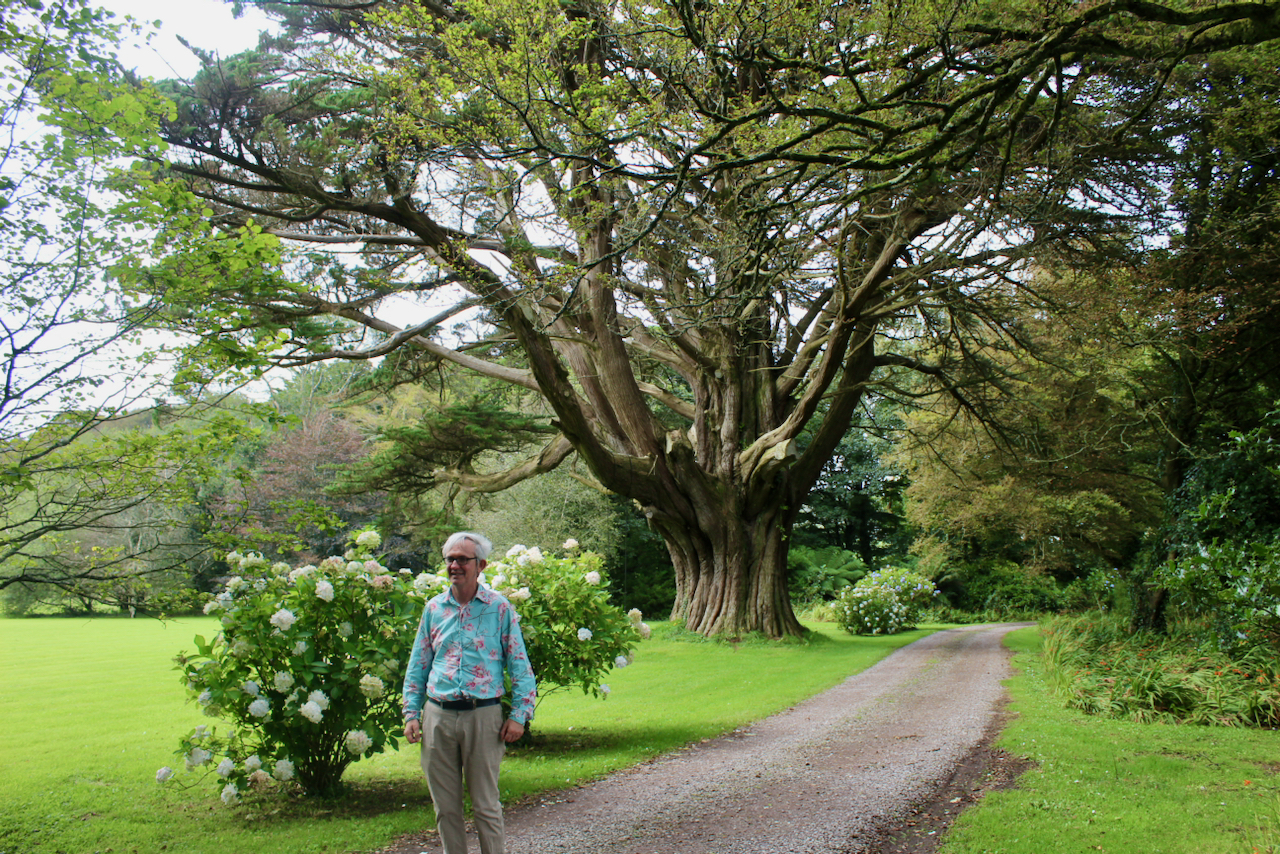
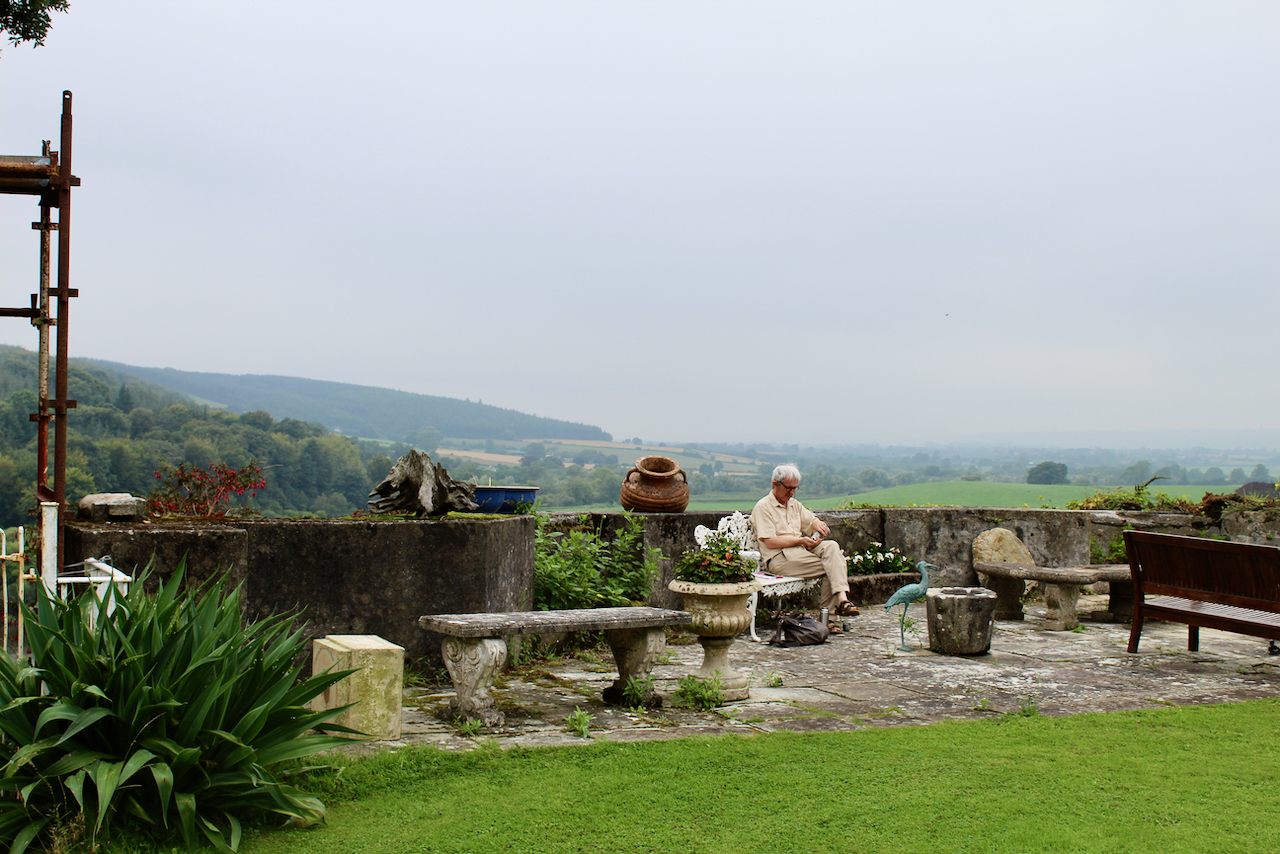
Stephen overlooking Castletown Bay from Drishane. Photograph © Jennifer Winder-Baggot, www.irishhistorichouses.com

Three of Reverend Thomas’s sons moved to America and prospered. The eldest son hoped to follow in his father’s footsteps as a clergyman but lost an eye in university, so instead became a successful shipping merchant. He’d send butter and salted provisions to the West Indies and bring back rum, sugar and timber. [2] He built his house at Drishane, on the edge of the village of Castletownshend, where he had a view of his ships in Castlehaven Bay. Among items he imported from the West Indies was the mahogany which was used to make the doors of the reception rooms in Drishane.

He married Mary Townsend, daughter of Captain Philip Townsend who lived in Derry, County Cork, great-granddaughter of Richard Townsend who was an officer in Cromwell’s army and who built the castle at nearby Castletownshend (it was only in 1860 that the family changed the spelling of their name from Townsend to Townshend [3]).
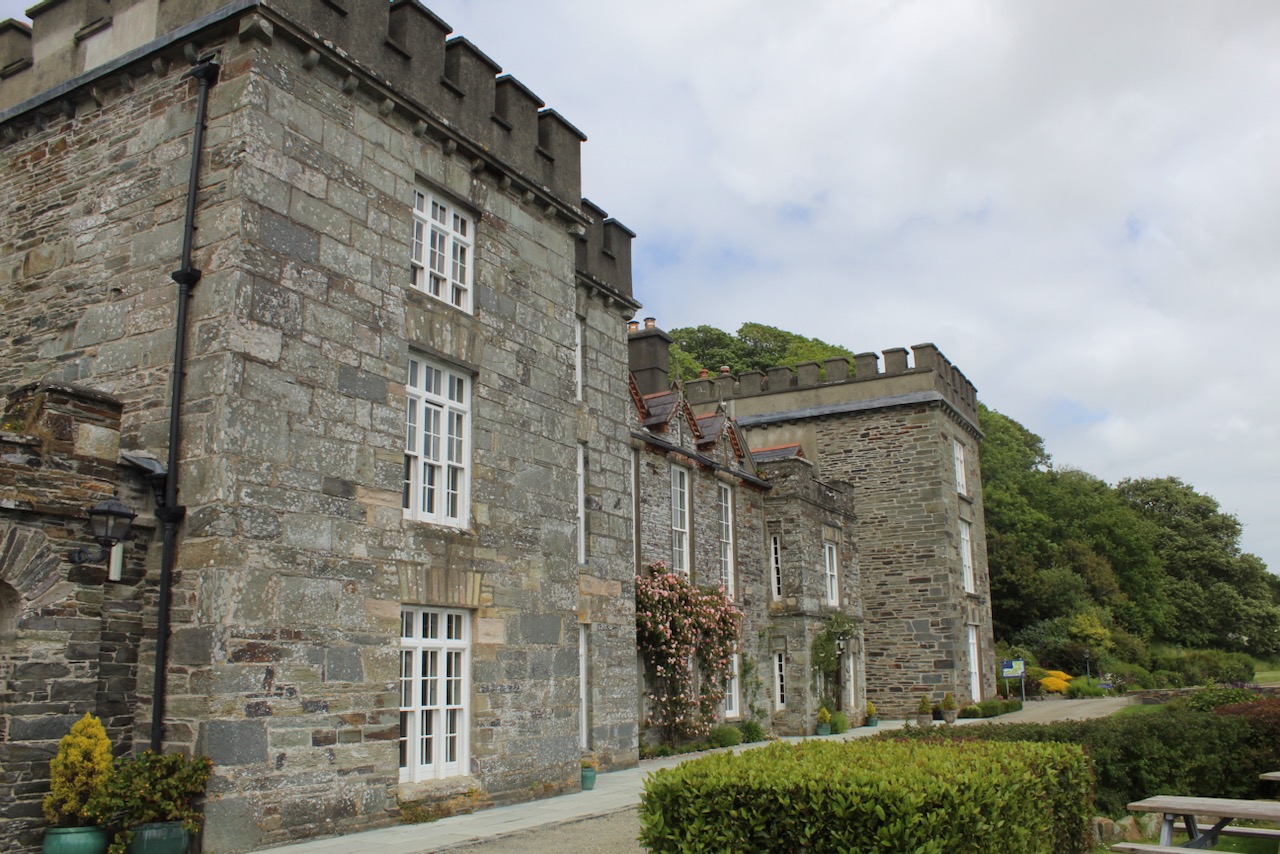
Castletownshend, County Cork. Photograph © Jennifer Winder-Baggot, www.irishhistorichouses.com

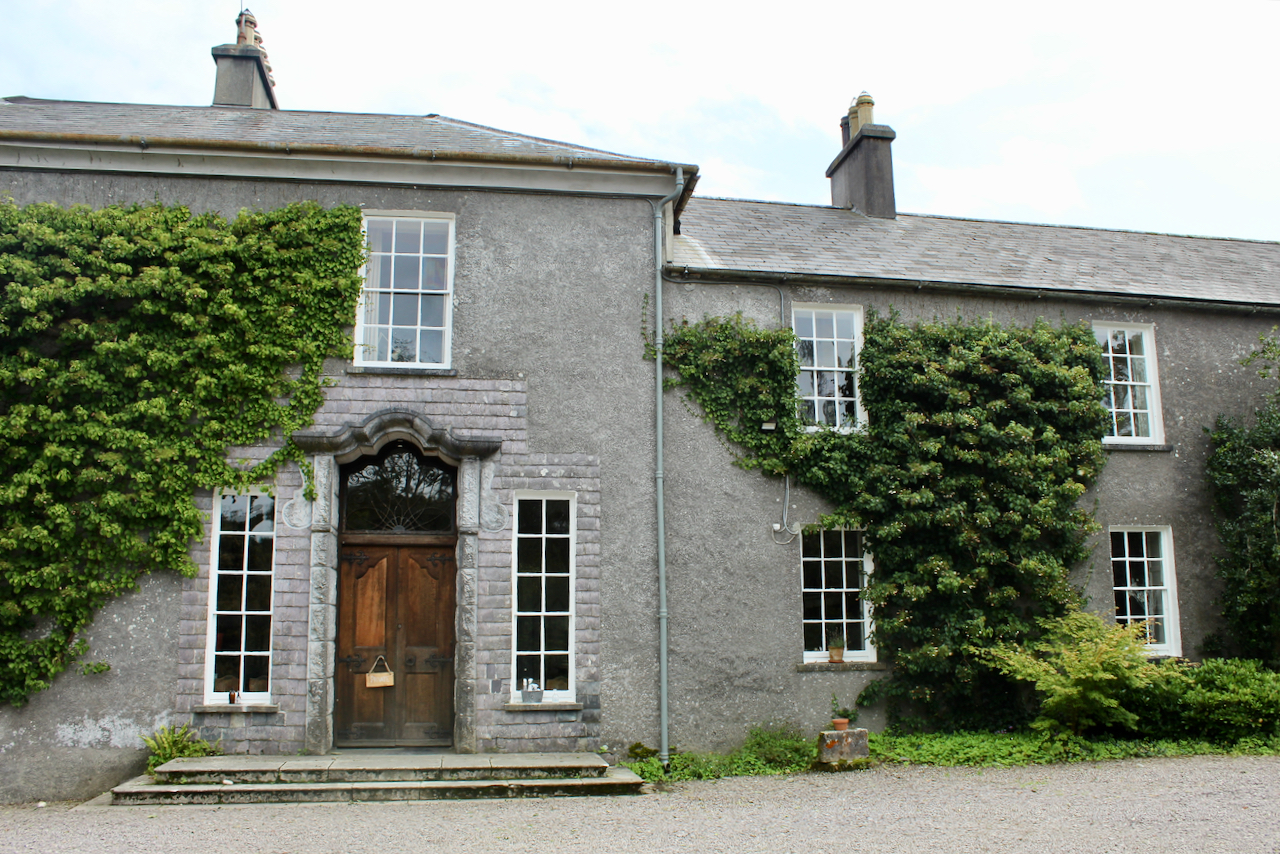
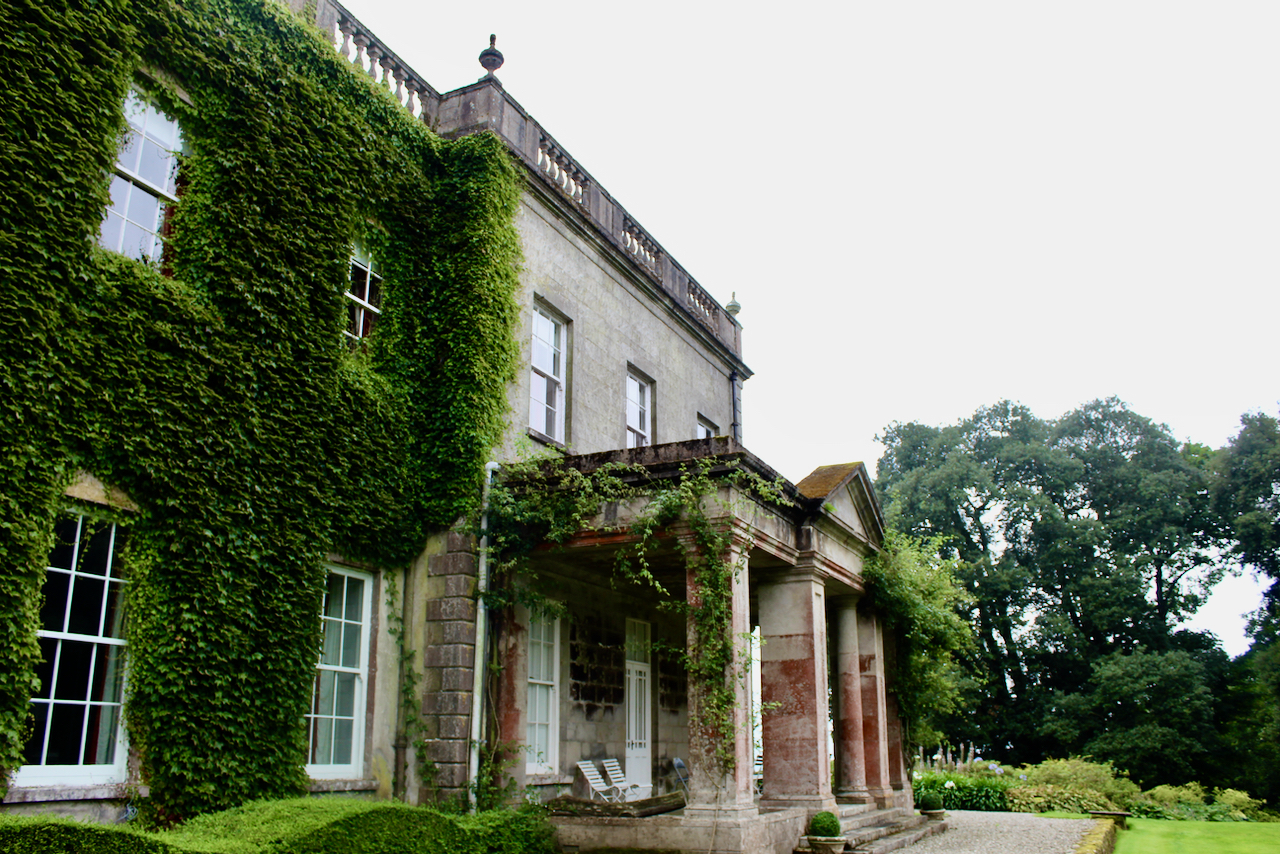
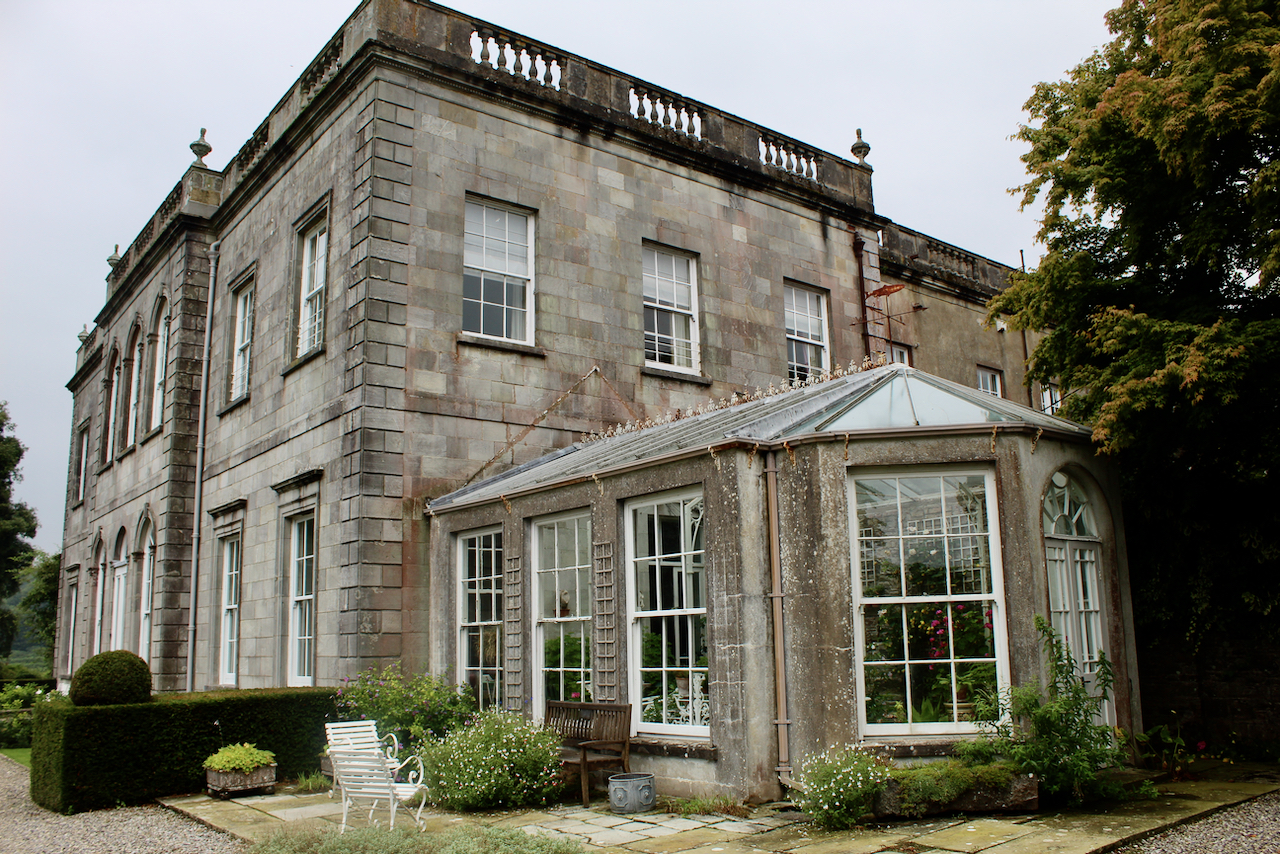
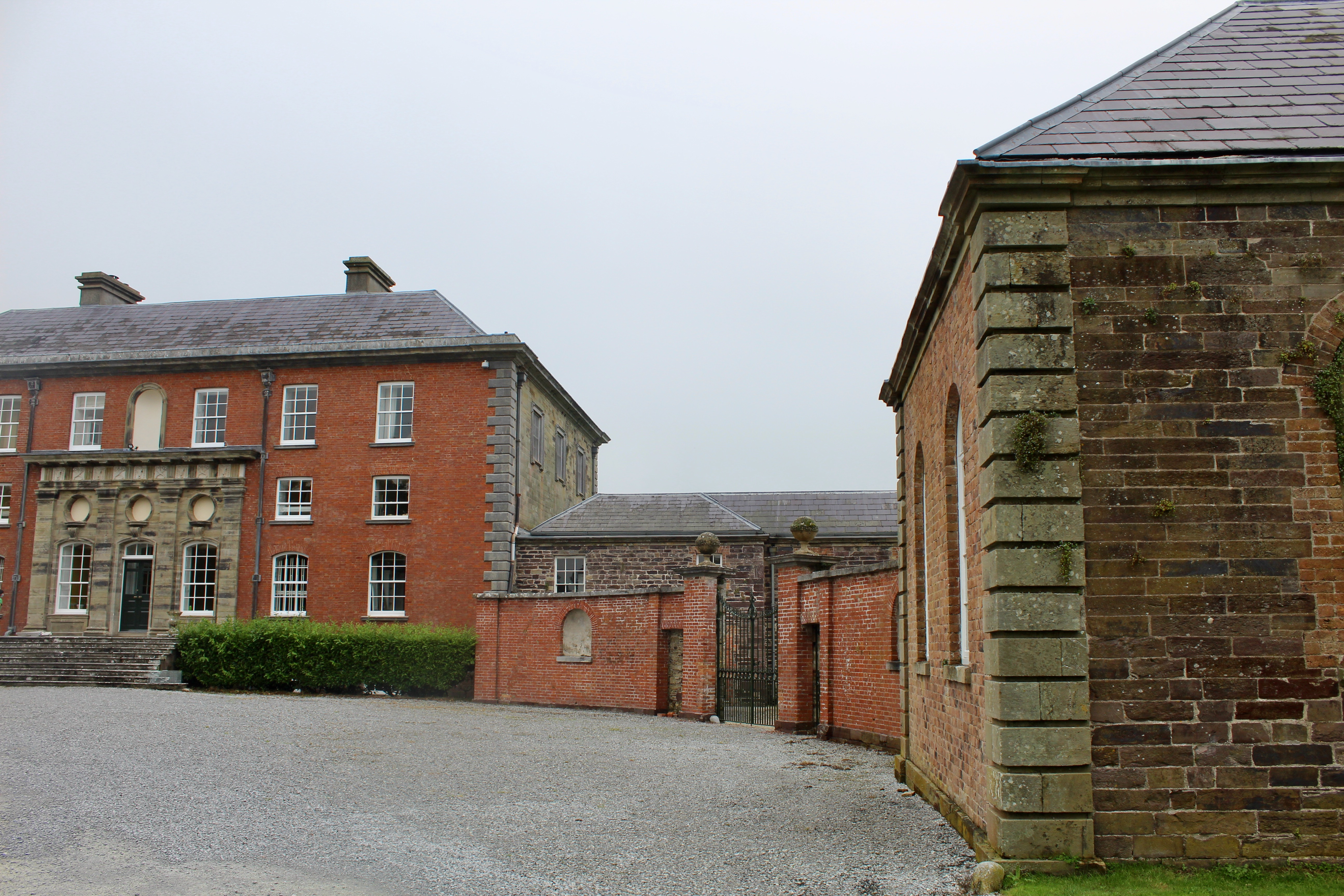
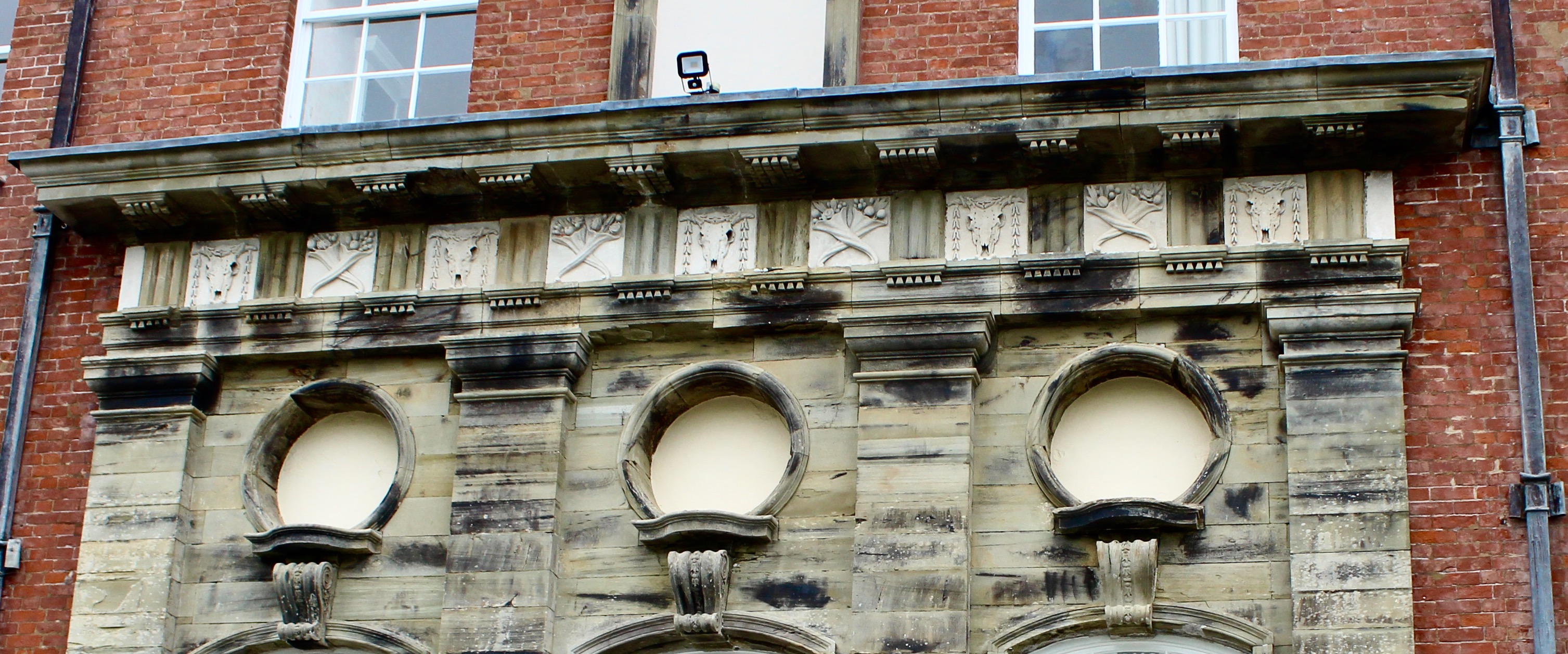
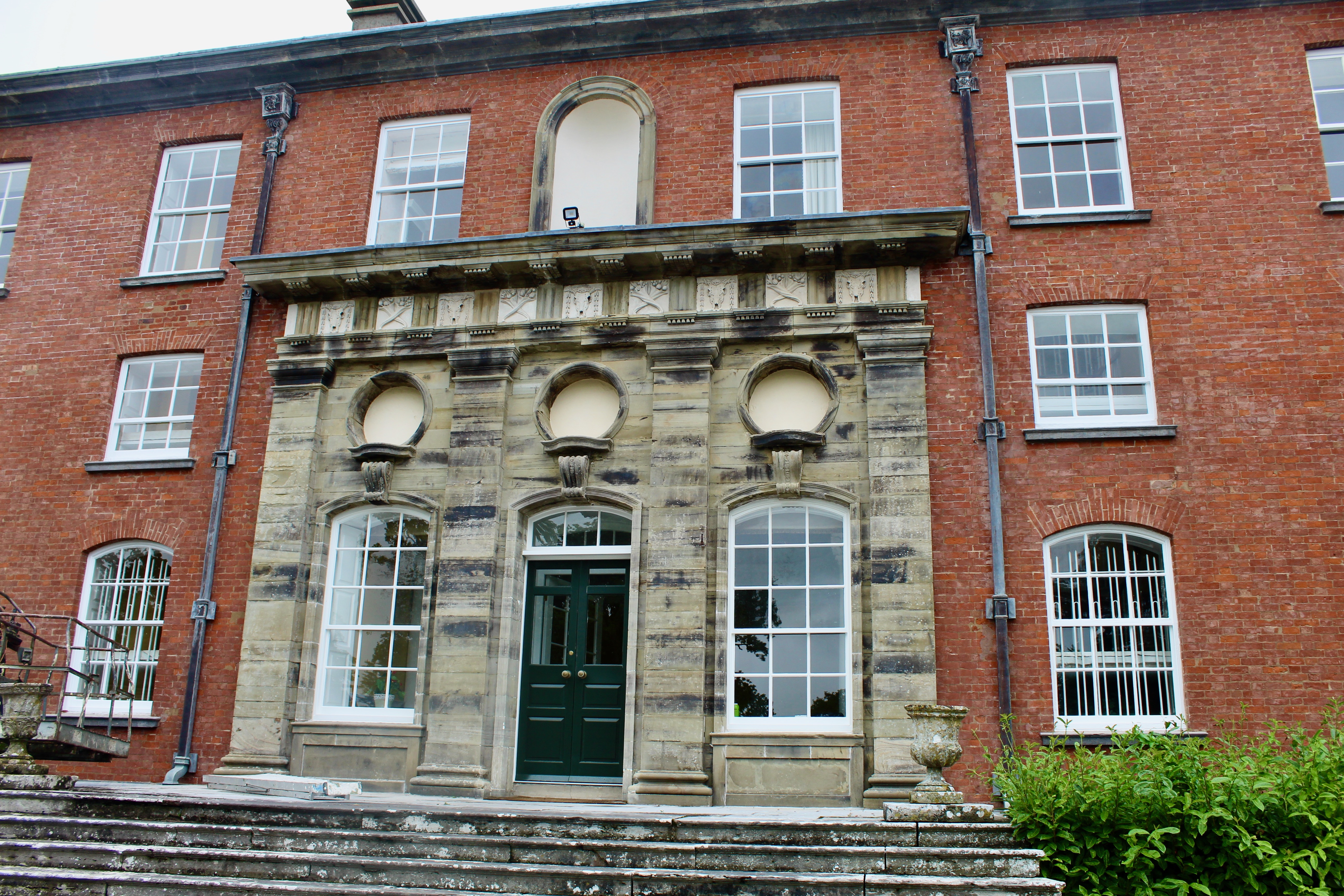
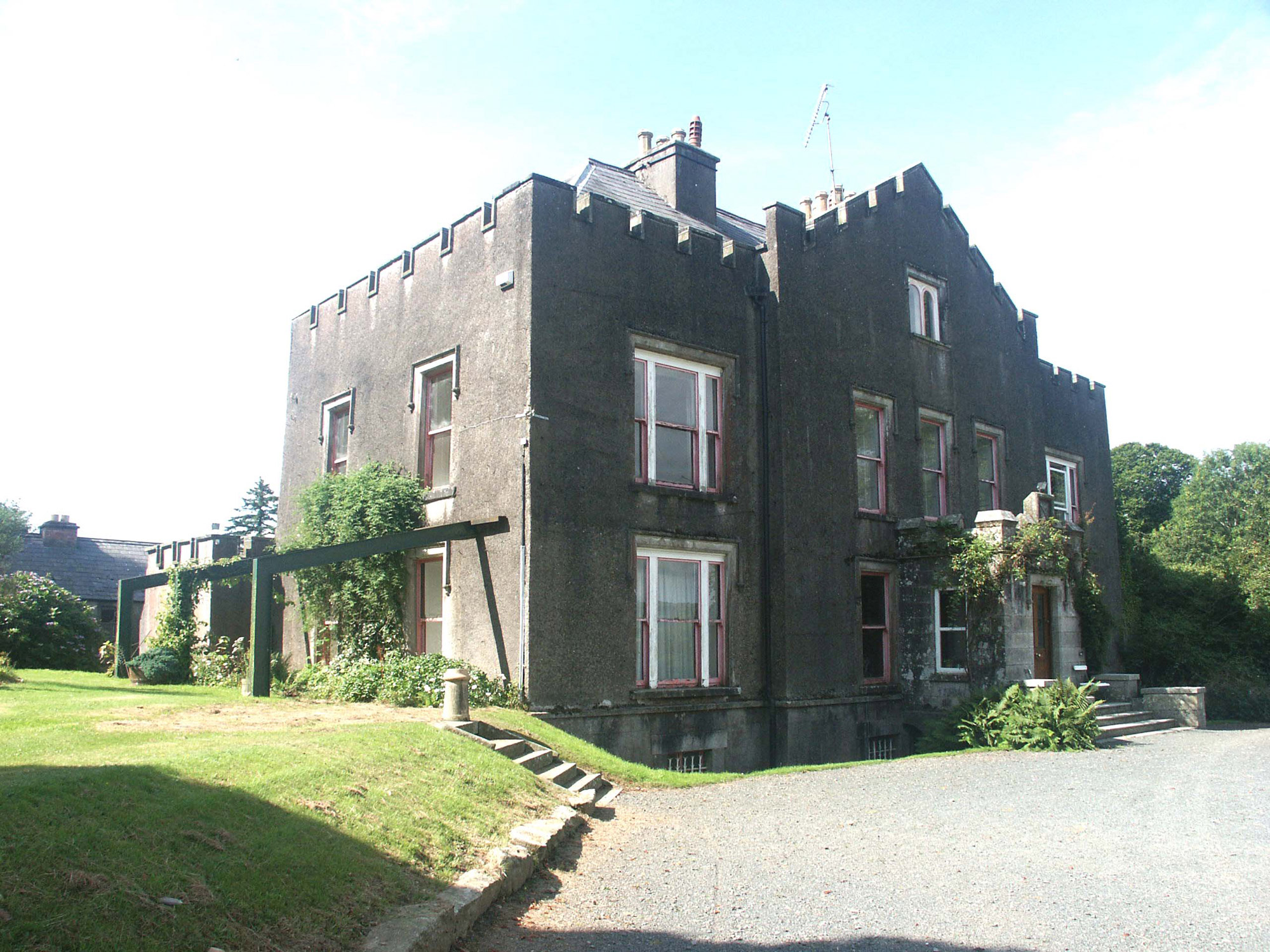
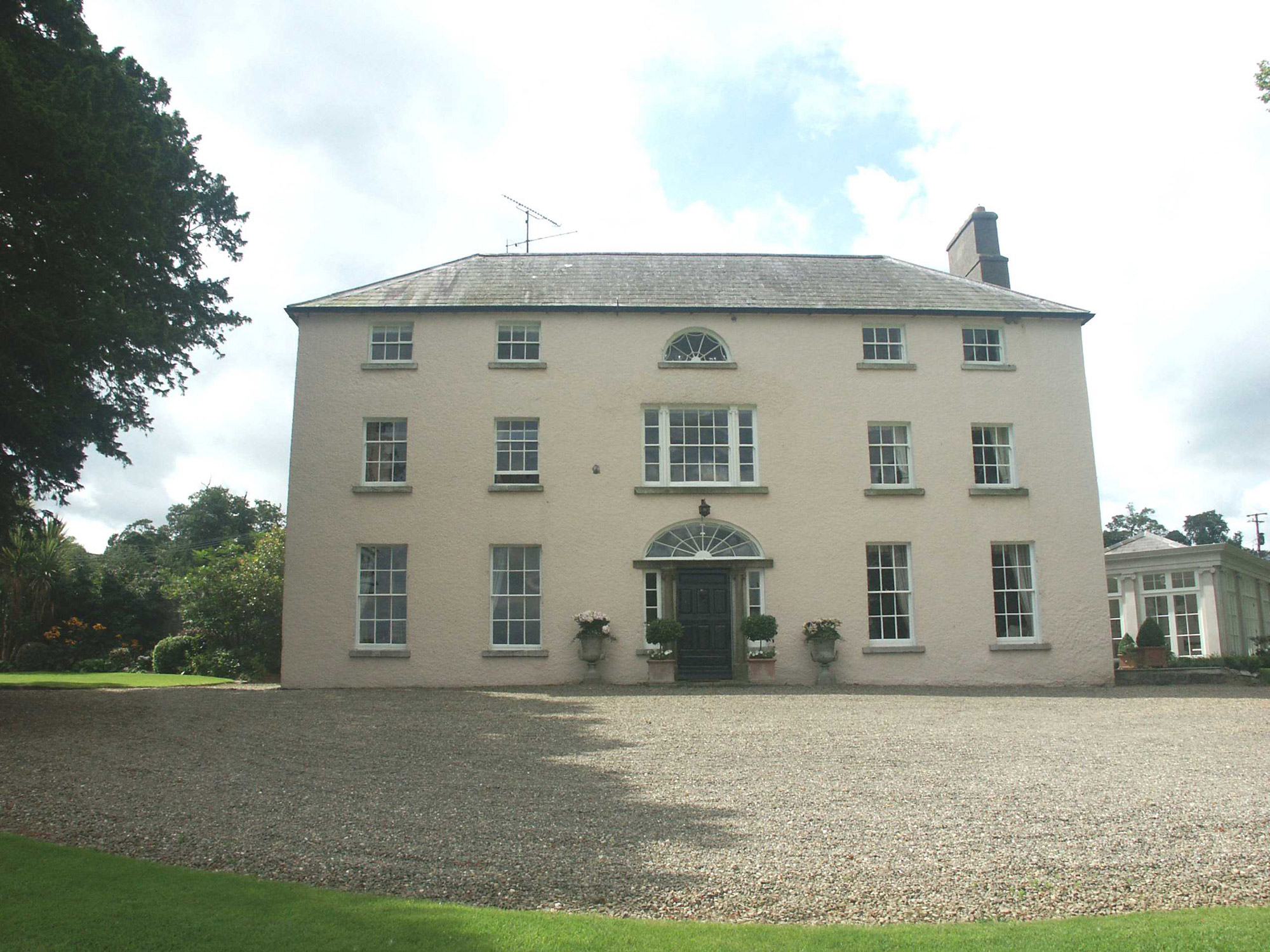
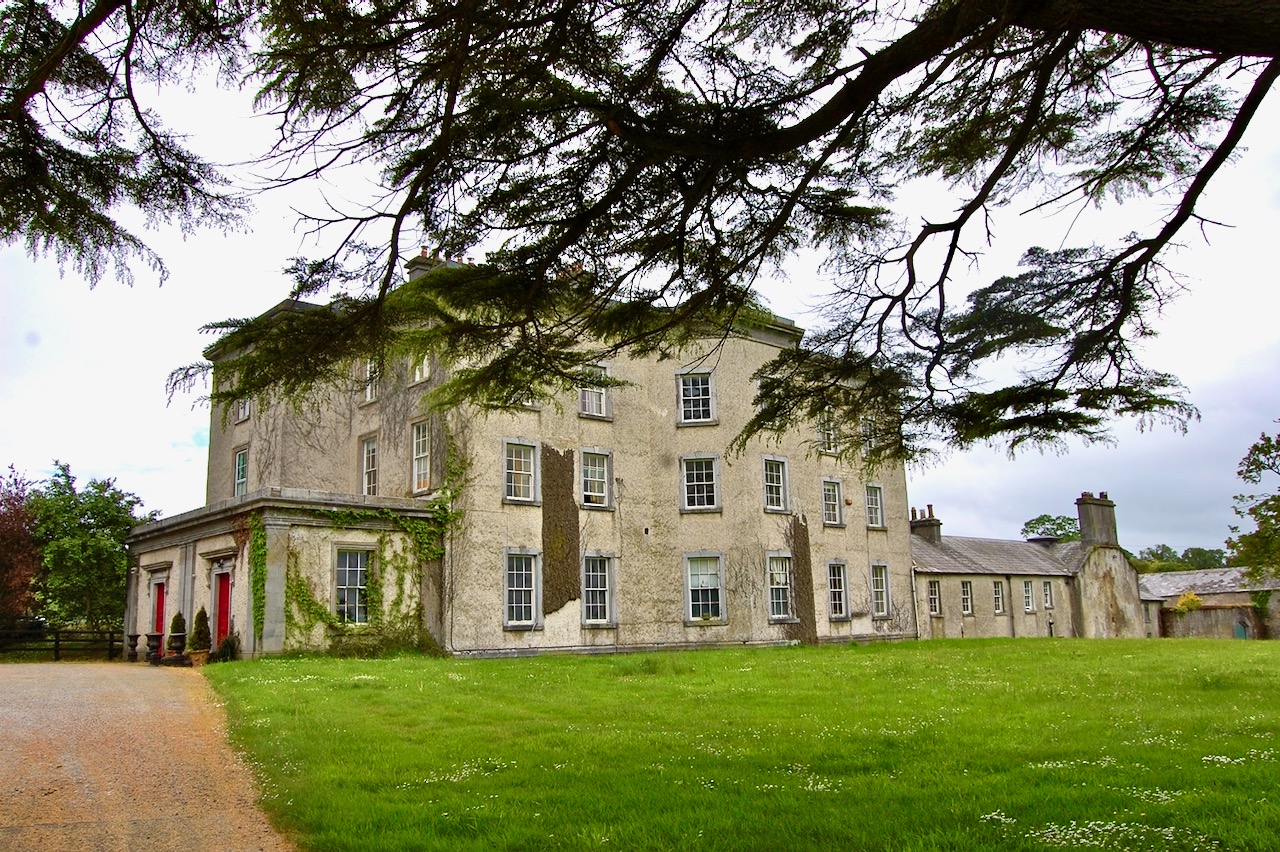
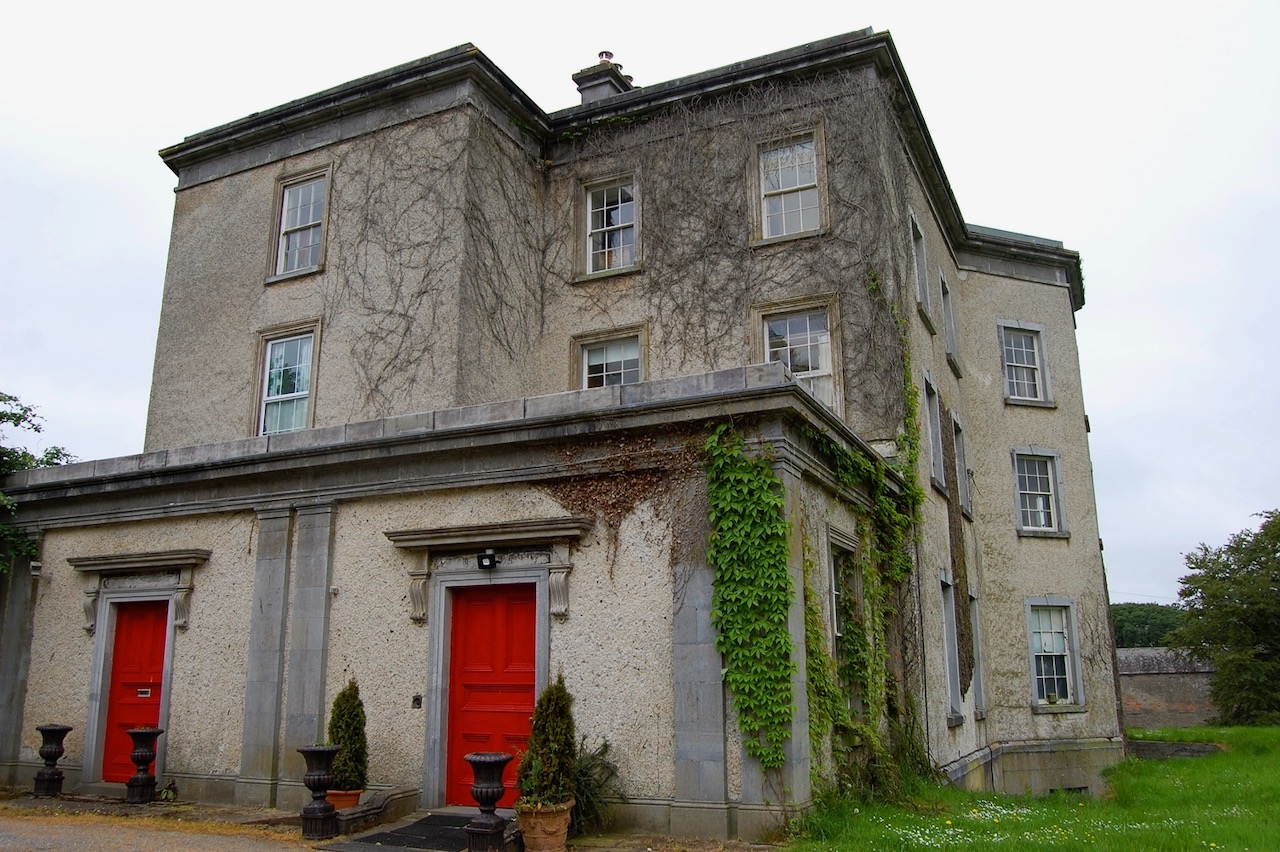
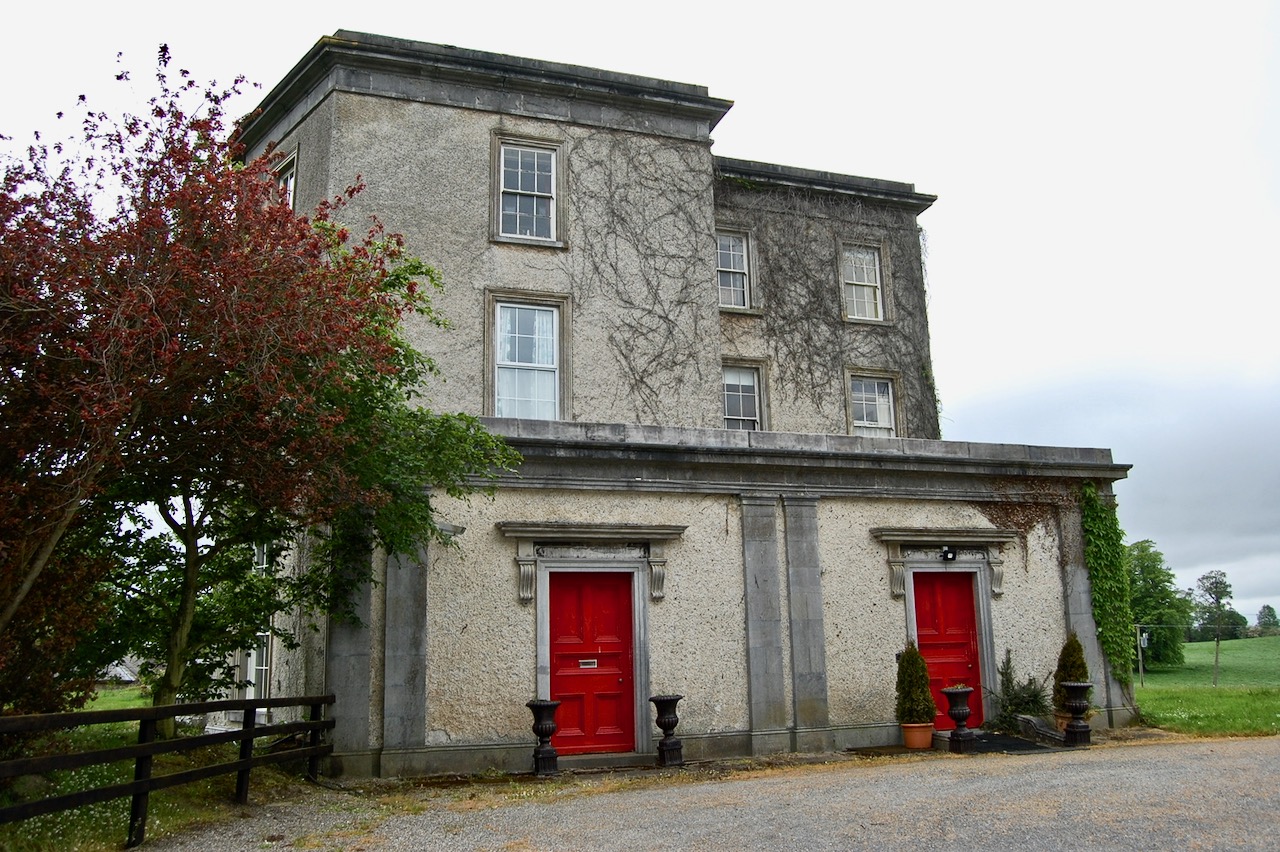
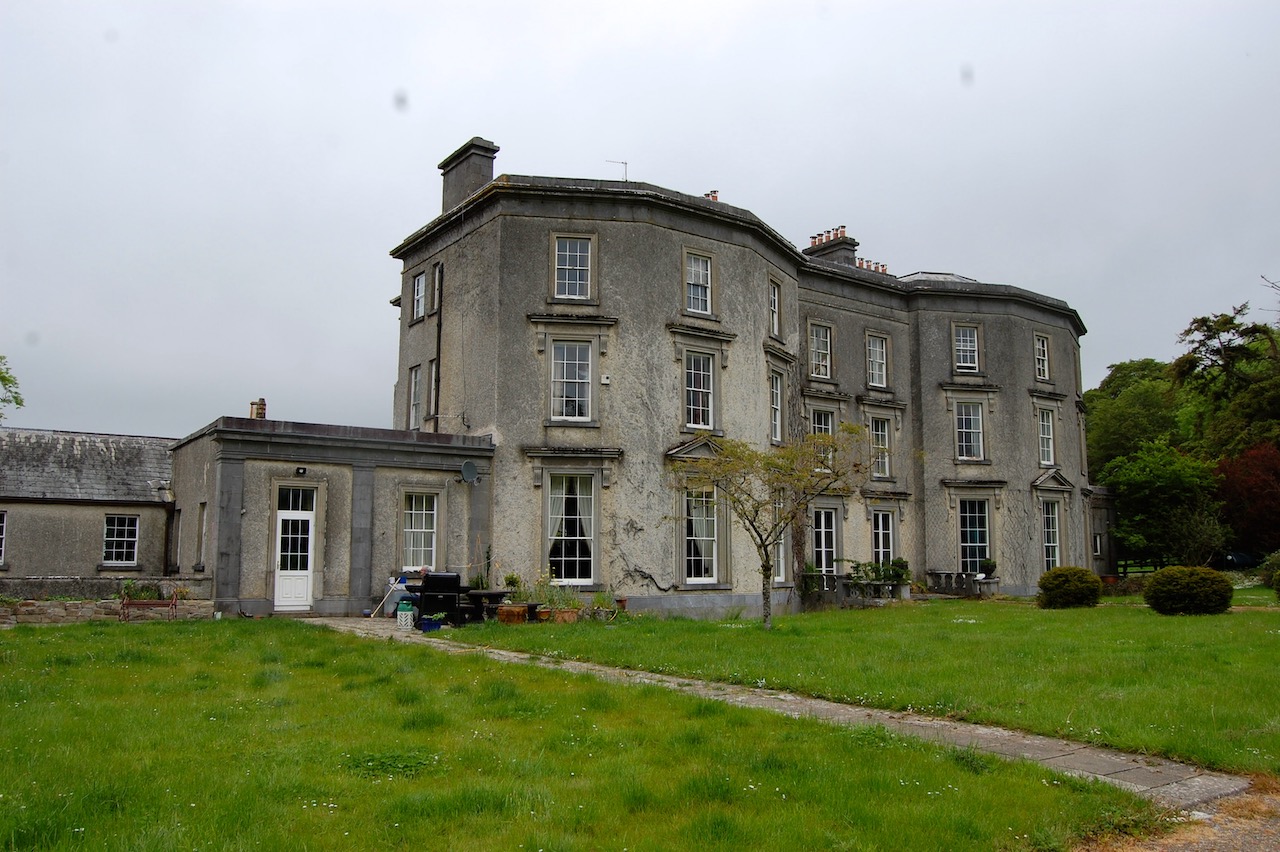
Drishane house is two storeys, six bays across, with a fanlighted doorway. This tripartite limestone doorcase, with Tuscan demi-columns, now serves as a garden entrance doorway. The newer entrance doorway, built in 1820, is on the more sheltered two bay end of the house, which is prolonged by a lower two storey wing.  The house is covered with purple Benduff weather-slating.
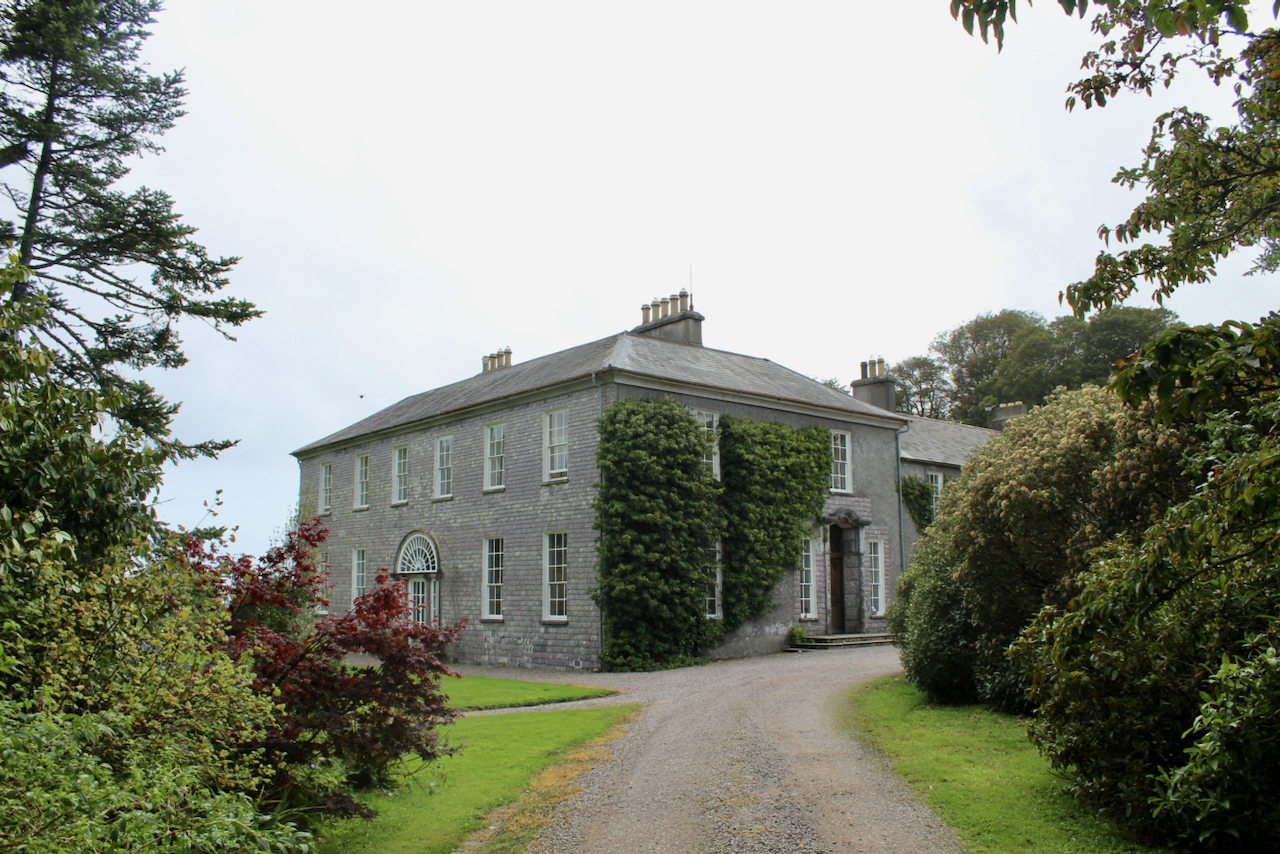
Drishane House. Photograph © Jennifer Winder-Baggot, www.irishhistorichouses.com
Drishane House, County Cork. Photograph © Jennifer Winder-Baggot, www.irishhistorichouses.com
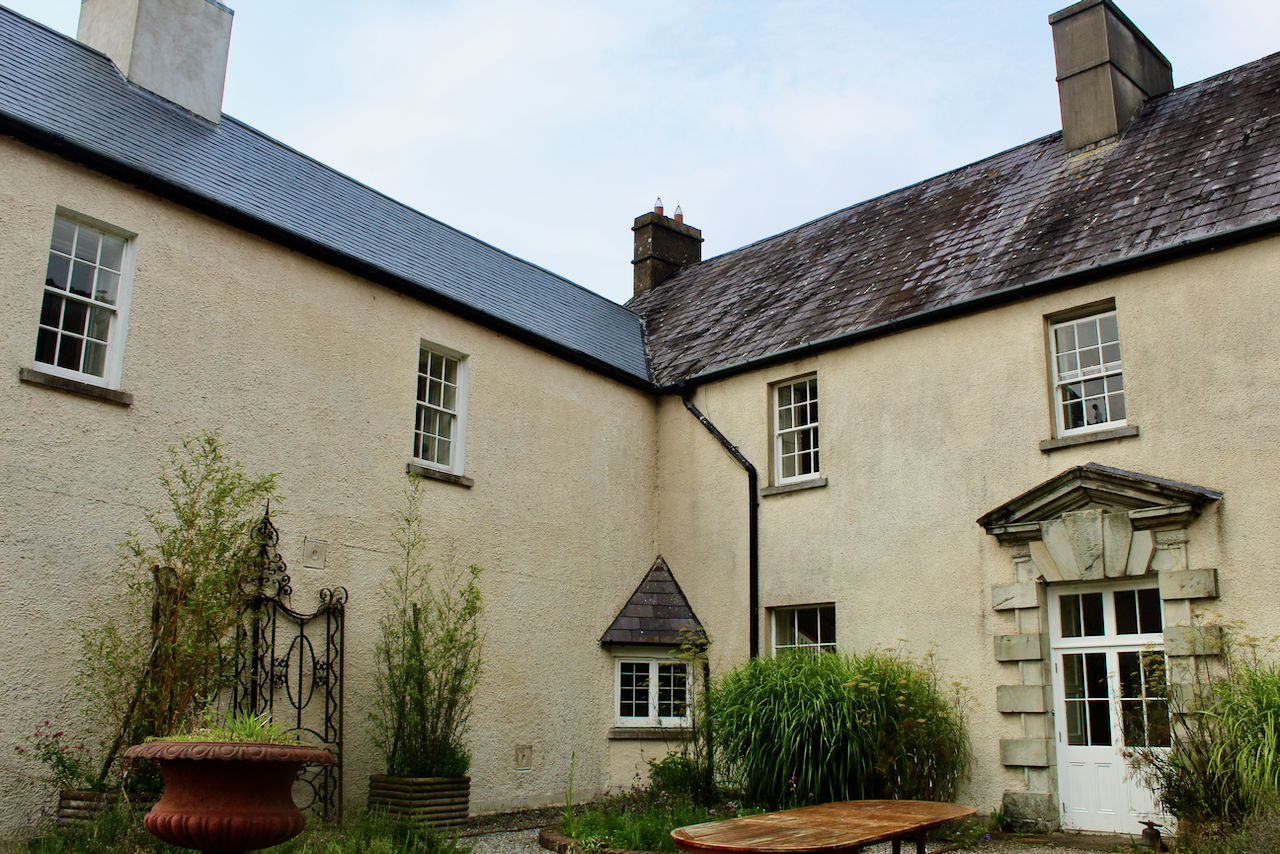
The newer entrance door, with the lower two storey wing. Frank Keohane describes this new entryway: an unusual rock-faced limestone doorcase with a scrolled pediment of vaguely Chinese appearance.” [5] Photograph © Jennifer Winder-Baggot, www.irishhistorichouses.com

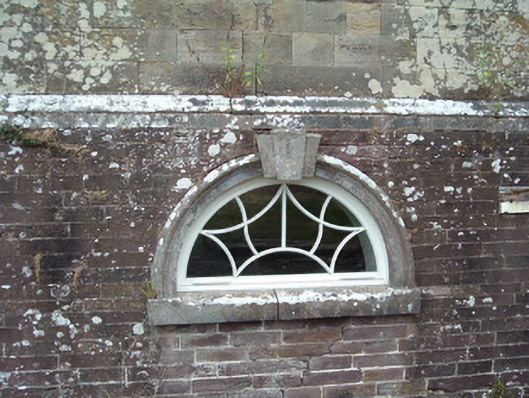
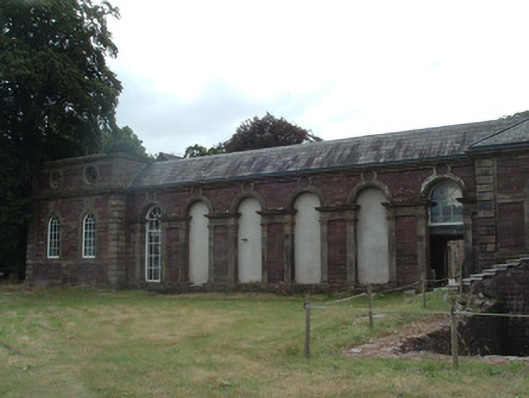
Stephen and I visited the house during Heritage Week in 2020. The current owner, another Thomas Somerville, welcomed us, and introduced us to his two sons, who gave us the tour of the house and the museum in the outbuilding which used to be Edith Somerville’s painting and writing studio. As there was already someone on a house tour, we visited the museum first.
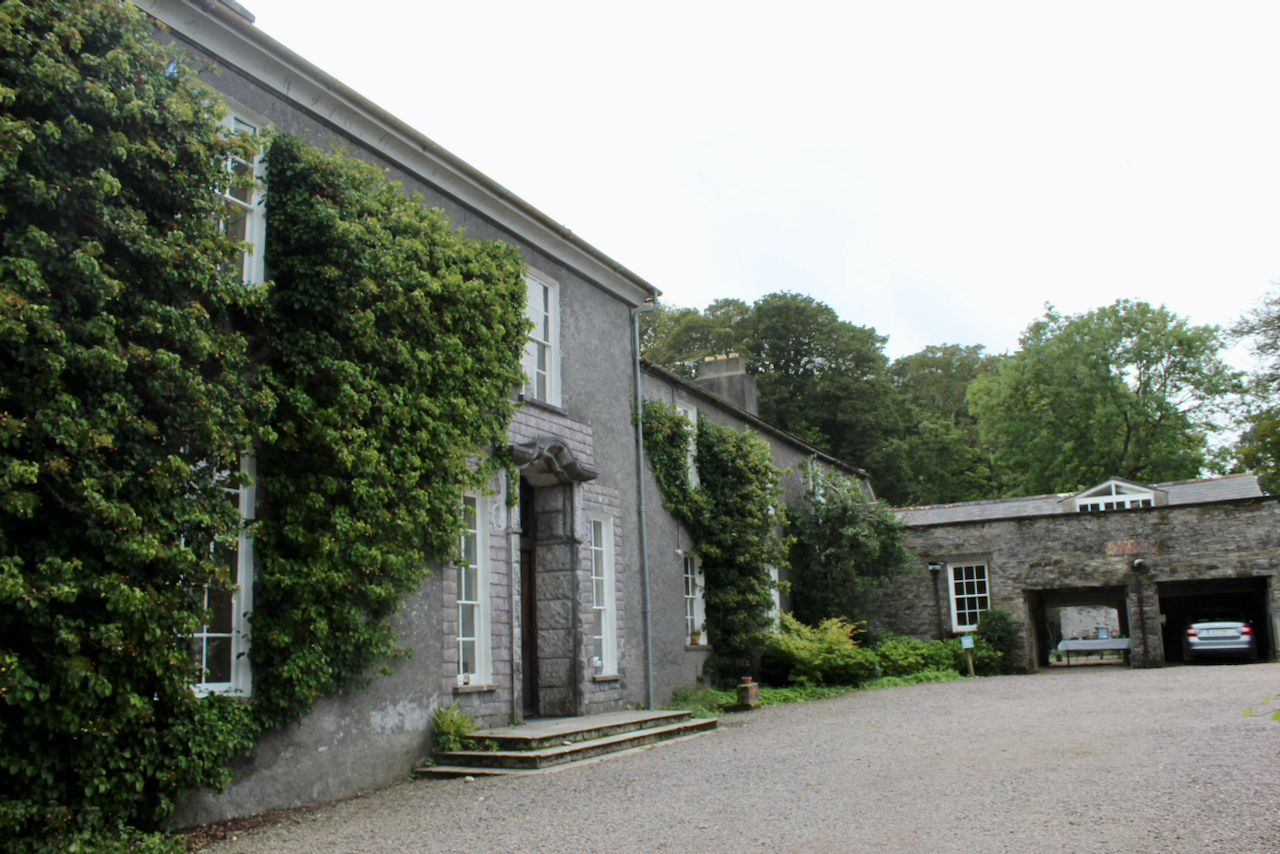
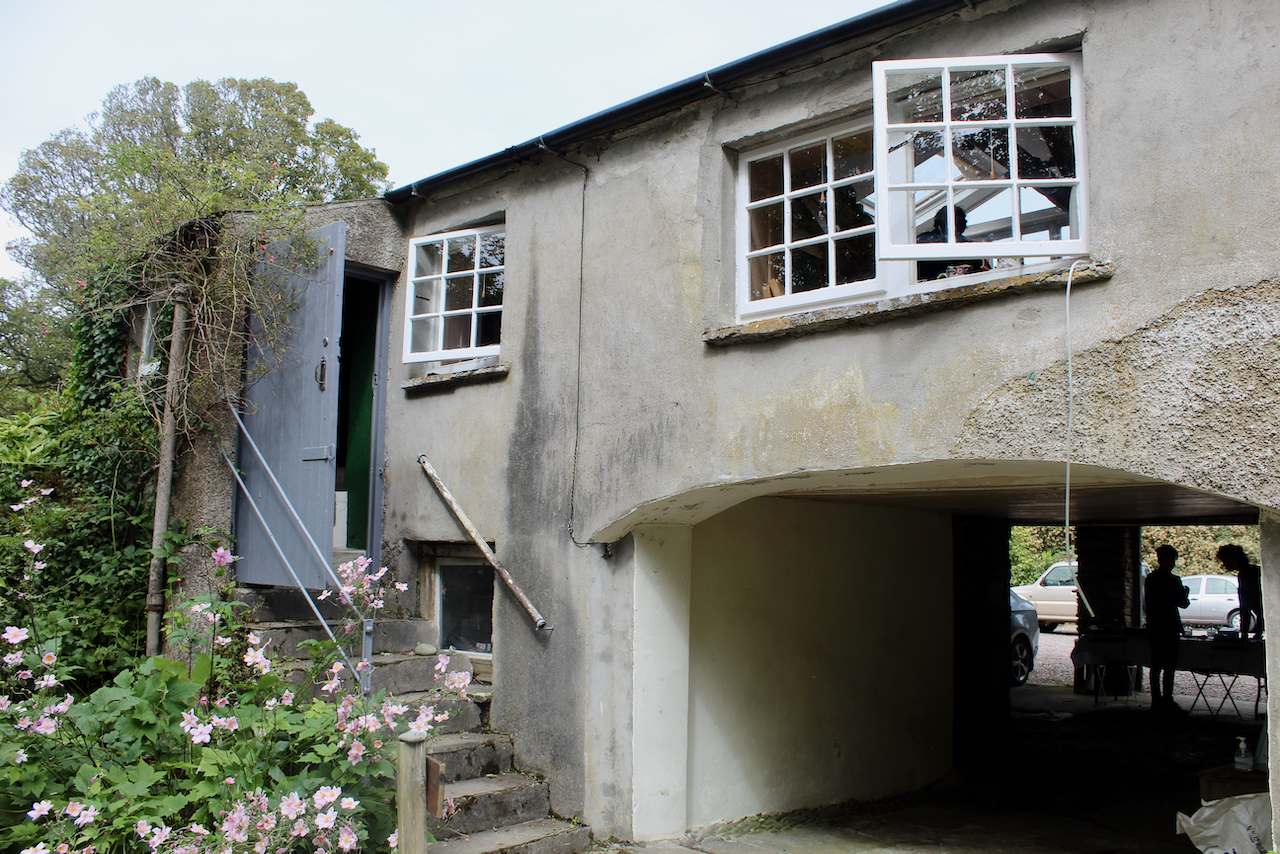
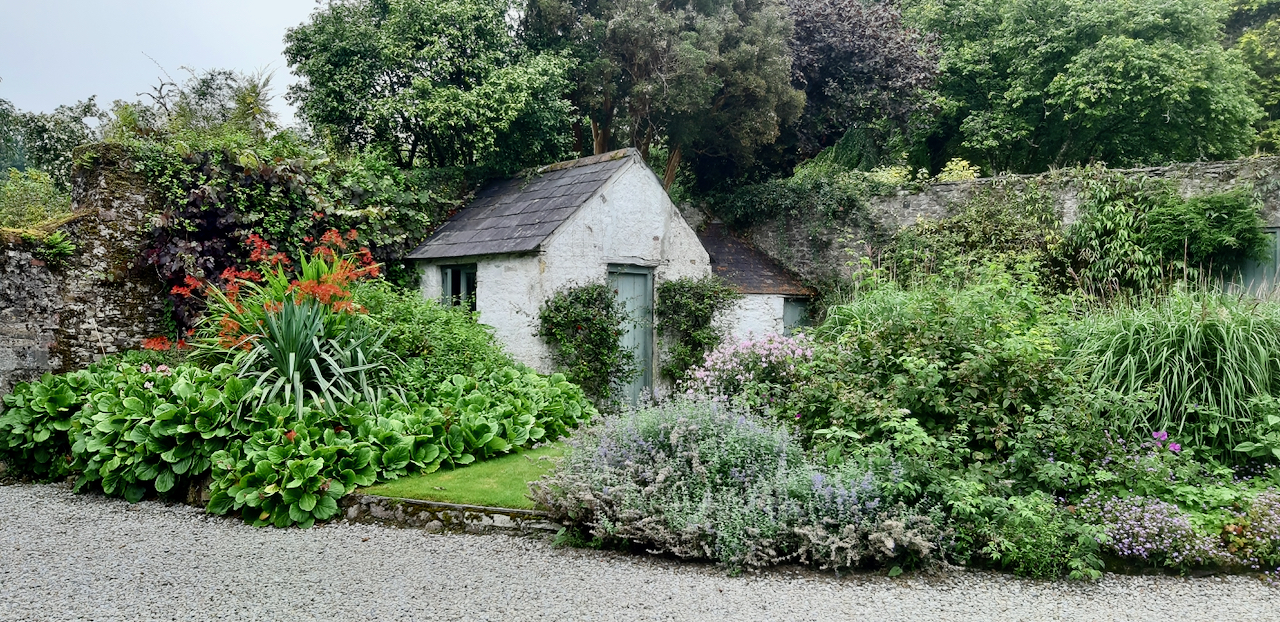
At Drishane House. Photograph © Jennifer Winder-Baggot, www.irishhistorichouses.com
The grey door leads into the studio. Unfortunately we were not allowed to take photographs inside, but that is all the more reason for you to visit! Inside the door is a sign identifying the room as the studio, painted by Edith. Photograph © Jennifer Winder-Baggot, www.irishhistorichouses.com

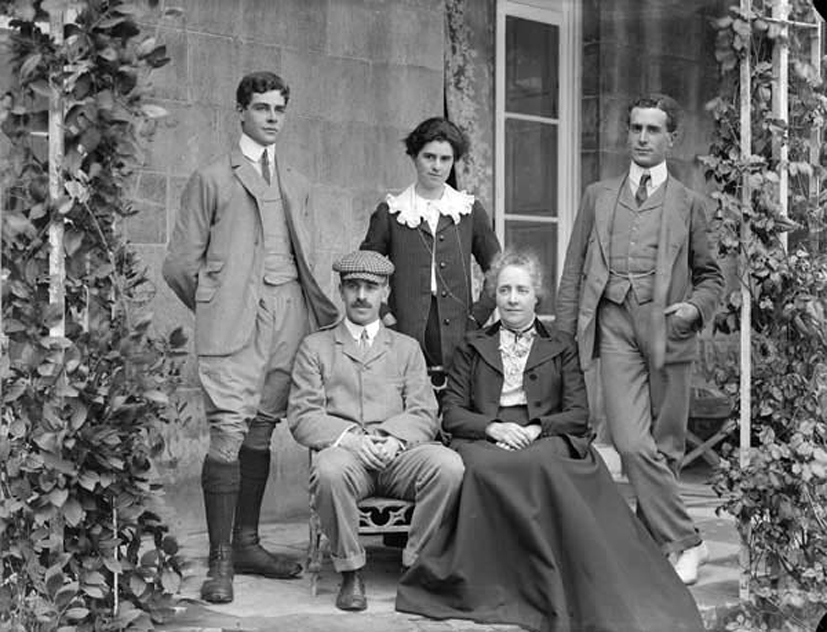
Edith Oenone Somerville (1858-1949) was given her unusual middle name because she was born in Corfu where her father was serving in the British military. She met her cousin Violet Martin (1862-1915) when they were both in their twenties, when Violet paid a visit to Drishane. They were both great-granddaughters of Lord Chief Justice Charles Kendal Bushe. Edith painted a portrait of Violet in 1886 during this visit, and the painting is now in the National Portrait Gallery in London. She painted the portrait in her studio, which at the time was inside the house – it was only later that she moved to the outbuilding. The chair in the painting is still in the studio. Violet’s first holiday at Drishane was a long one, as it was only after a month that Edith began her portrait. Violet brought the portrait with her back to Dublin when she left Drishane ten months later.

Violet’s family lived in County Galway in a three storey house called Ross House (now called Ross Castle). She was the youngest of eleven daughters. Her family had fallen into debt in the time of the Great Famine, due to the help they had given their tenants, and when her father died when she was just ten years old, her brother inherited the house and decided to let it out.
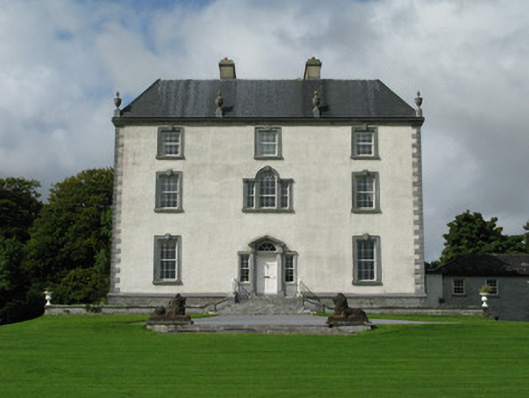
Ross House, or Castle, photograph care of National Inventory of Architectural Heritage.
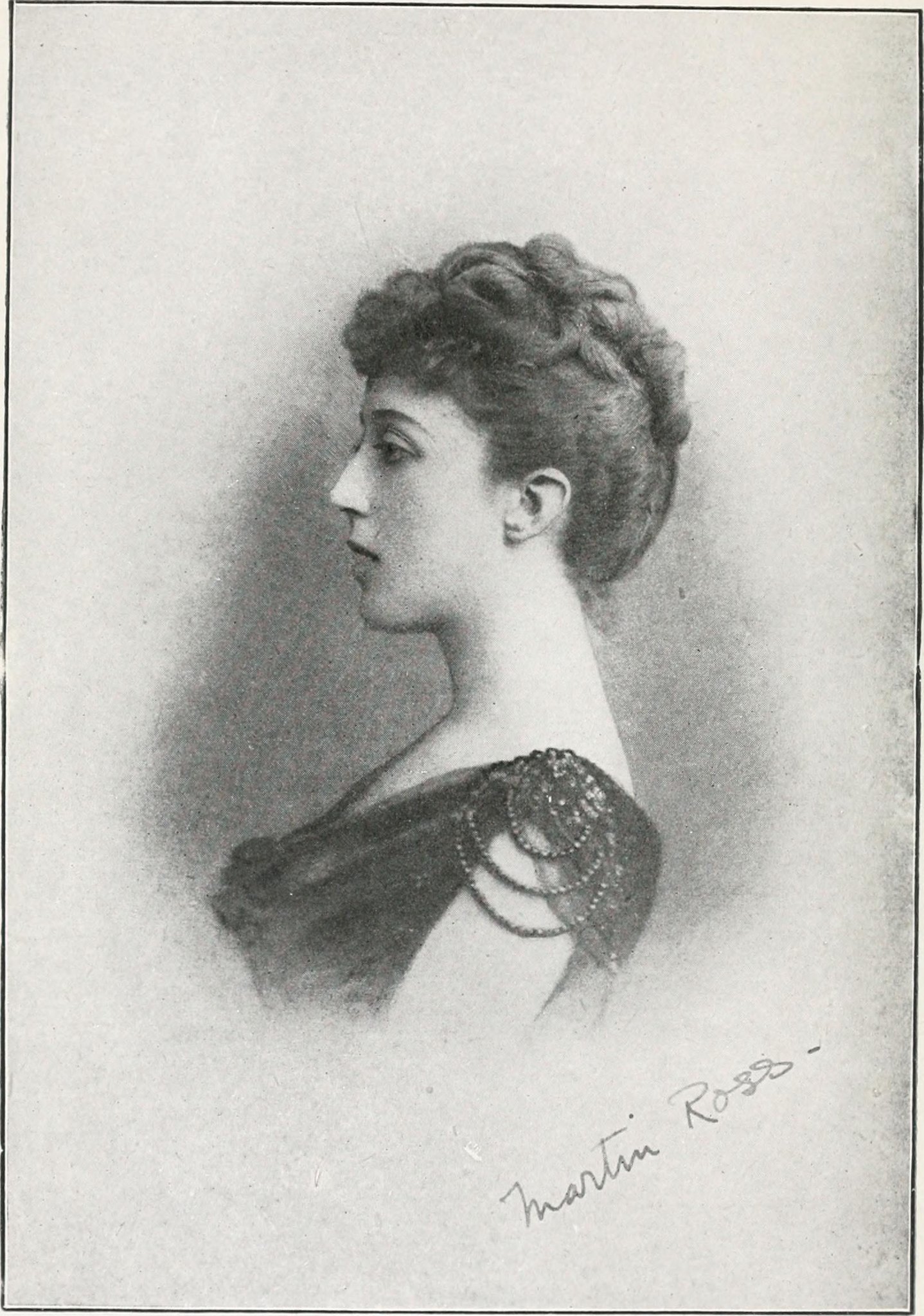
Photograph from Internet Archive Book Images. From the book Irish Memories by Edith Somerville, 1919. Publisher: New York, Longmans, Green & Co. It is interesting that the picture is signed a “Martin Ross,” rather than “Violet Martin.” A small silver case given as a gift to Edith from Violet is engraved “To Edith, Love Martin.”

She moved with her mother to Dublin and was educated at Alexandra College, where Edith also studied but as she was four years older than Violet, where they never met. Violet would have felt like a poor relation when she visited her cousins in Cork, but she was warmed by the generous welcome. Edith was surrounded by cousins: the Townshends and the Coghills lived nearby, and at first the quiet Violet must have been overwhelmed with the sociability of the house.

Violet had begun writing when she was in school and hoped to make a living by journalism. Edith studied art in London, Dusseldorf and Paris, and sold some paintings and drawings in order to finance her own art training and hoped to make a living in graphic art. When they first collaborated, Violet wrote the text which Edith illustrated, but soon they were writing the novels together. They did not want to publish under their own names, so chose “Somerville and Ross,” Violet taking the name of her home.
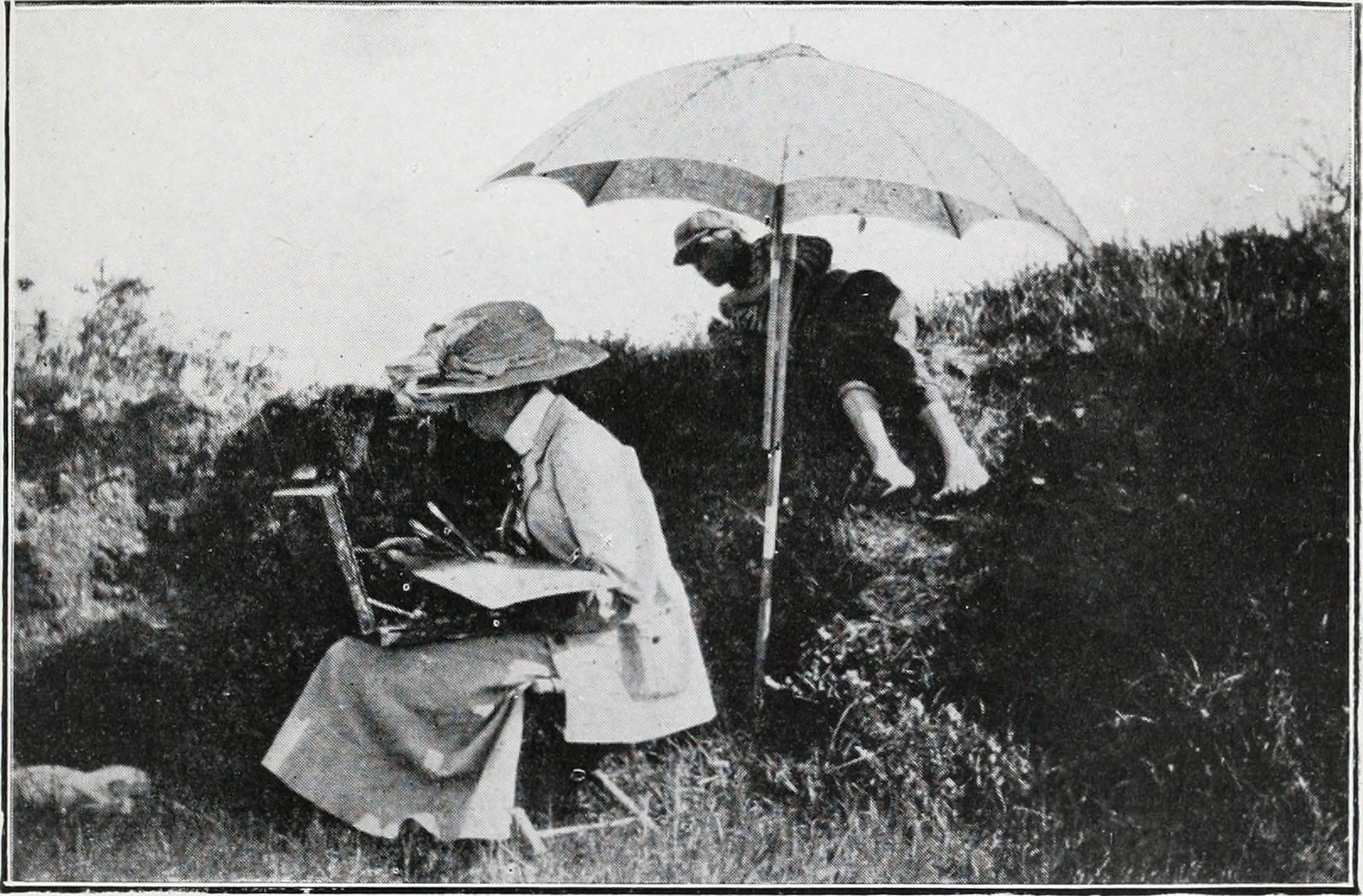
Image from page 164 of Irish Memories by Edith Somerville – I assume this is a photograph of Edith herself. Photograph care of Internet Archive Book Images.

Violet, a sister and her mother moved back to Ross House in 1888, and Violet set about trying to restore the house and gardens to their former glory. At the end of 1888, Violet and Edith received news that their first book, An Irish Cousin, was to be published. At first they had to correct proofs separately, until Edith visited Violet at Ross House. It is believed by the current owners of Ross Castle that the ladies worked on the book under the Venetian window on the first-floor landing, which now has a table and chair set up with some of their books. One can stay in the house: either whole house rental, or self-catering in cottages which are converted stables, carriage house and servants’ quarters. Drishane House is also available for whole house rental and also has holiday cottages). [6]
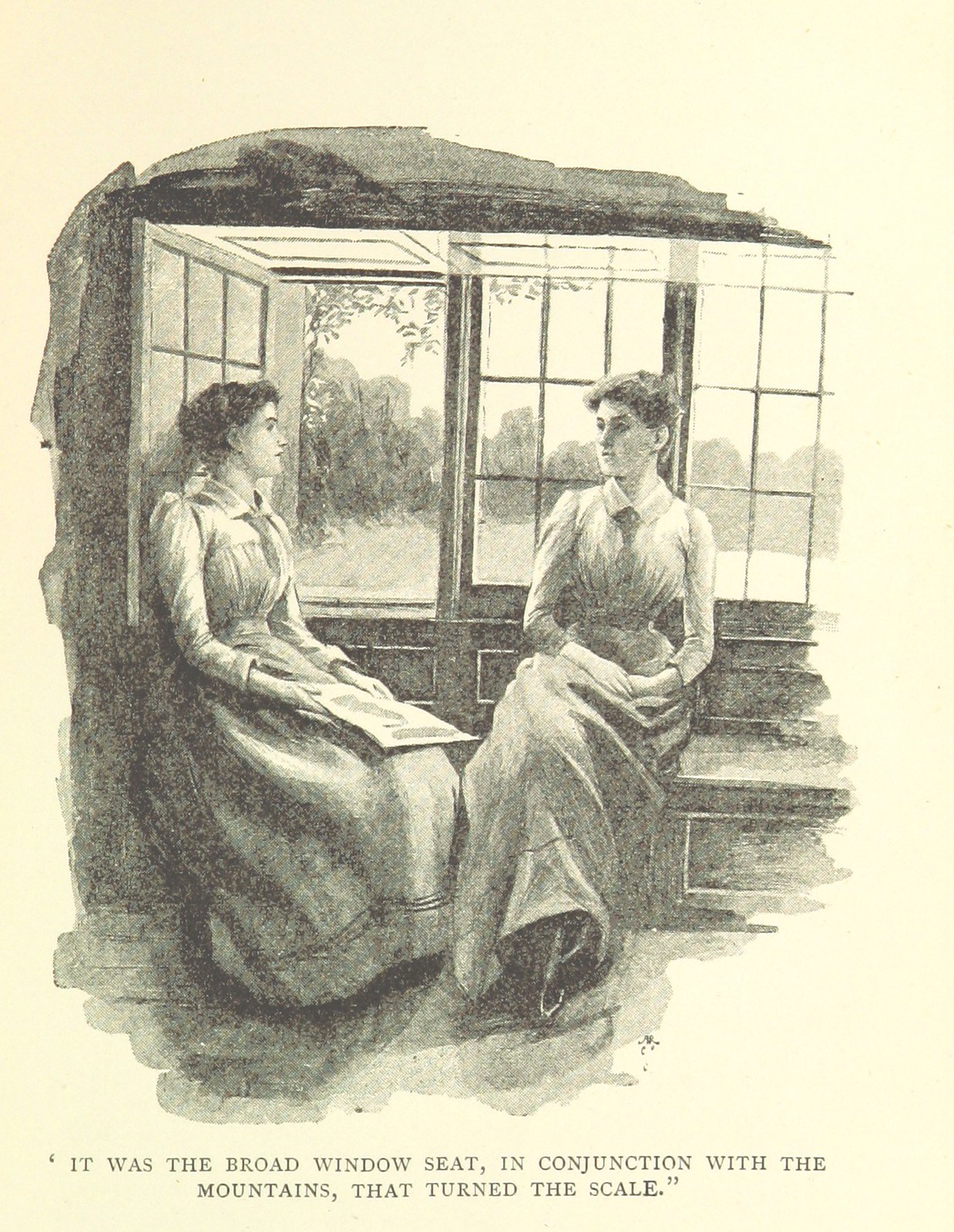
I imagine that Edith Somerville, when she illustrated their book, Through Connemara in a Governess Cart (published 1893), had herself and her cousin in mind when she drew this picture. Photograph care of the British Library.

The Museum contains copies of some of Edith’s paintings, as well as letters, drawings and photographs relating to her life. I was excited to see correspondence and music by the composer Ethel Smyth, who was a good friend of Edith and also of Virginia Woolf. Like Ethel and Virginia, Edith was also a feminist. Edith wrote: “It will be acknowledged that sport, Lawn Tennis, Bicycling, and Hunting played quite as large a part as education in the emancipation that has culminated in the Representation of the People Bill. The playing fields of Eton did not as surely win Waterloo as the hunting-fields and tennis grounds of the kingdom won the vote for women.” [quoted in the introduction by Gifford Lewis, 1999, of Somerville and Ross’s The Real Charlotte]. Edith was an enthusiast for hunting and became Master of her local hunt. She also became President of the Munster Women’s Franchise League. [7]

After Violet died, Edith wrote a further fourteen books, all published under their joint names. Edith felt that Violet continued to help to write the books after her death. Edith took to a sort of “automatic writing” to include Violet’s input. Examples of this are in the museum. Edith claimed that stormy weather made it more difficult for her to tune into Violet’s messages. [8]

There was another museum in Drishane before Edith’s studio, a collection of Indian items which Edith and her brother Jack called “Aunt Fanny’s Museum.” There is also another item which I forgot to ask about when visiting. Mark Bence-Jones tells the story of its origins:

Drishane’s most famous possession, the Fairy Shoe, was sent away to the bank for safe keeping and bad luck followed, it was wisely decided to bring the Shoe back and it has remained in the house ever since. The Shoe, which came to the Somervilles from the Coghills, was picked up on an Irish mountain early in the nineteenth century; it is exactly like the shoes worn by adults at that time and shows signs of wear, but it is only about two inches long. [9]
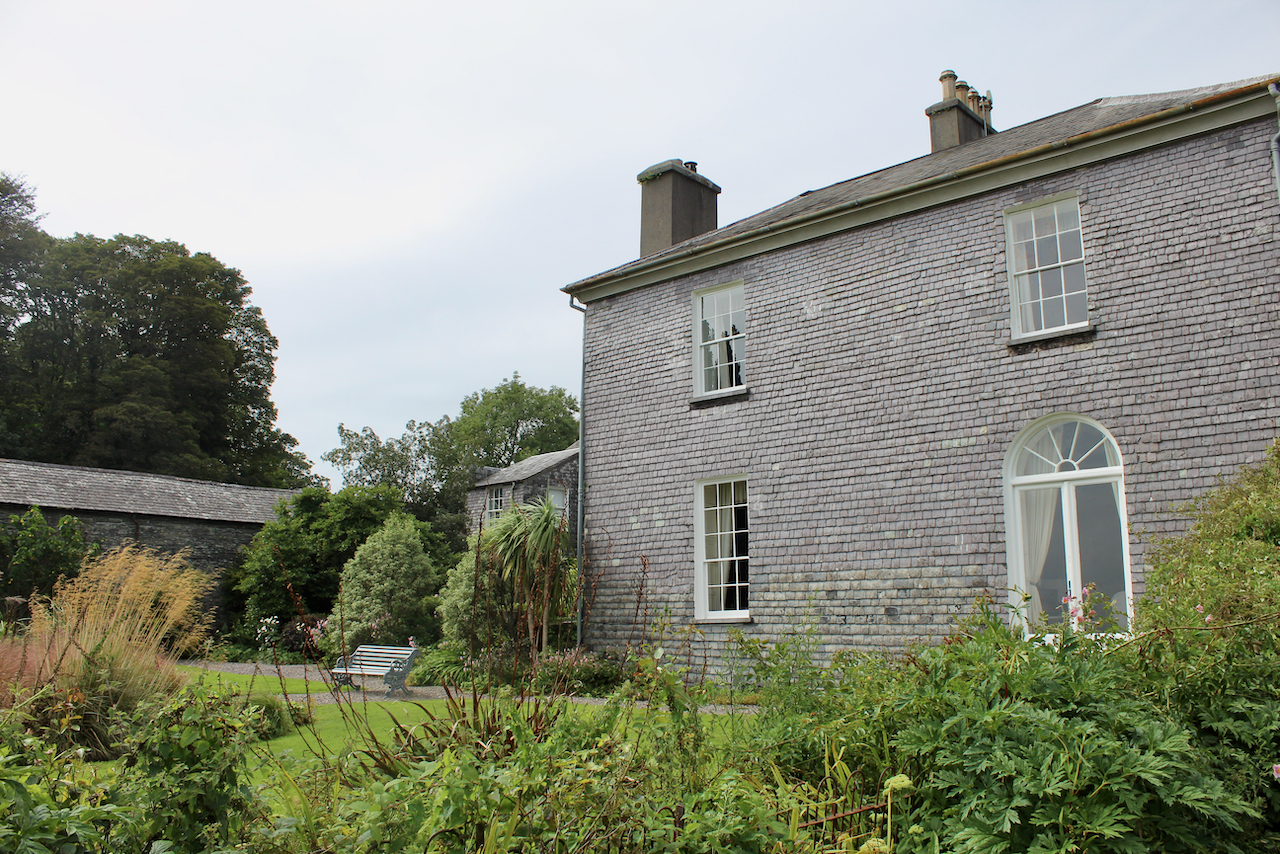
Edith had the French doors installed in 1901. Photograph © Jennifer Winder-Baggot, www.irishhistorichouses.com

Thomas the merchant’s son, also named Thomas (born about 1765), inherited Drishane from his father. Unfortunately he “was foolish enough to back a bill,” according to Mark Bence-Jones in Life in an Irish Country House, meaning he must have acted as guarantor for someone who was not able to pay their debt, and subsequently when Thomas died in 1811, the bailiffs came and stripped the house of its contents. [10] Thomas’s wife, Elizabeth Henrietta Becher Townsend, was in bed giving birth to their tenth child. According to the story, the children brought everything they could carry to their mother’s bedroom to hide it, as there was a law forbidding  bailiffs from entering the room of the lady of the house.

When we entered the house with young Hal, Tom Somerville’s son who was giving us the tour, he pointed out that there is no chandelier in the dining room, as it was taken by the bailiff, way back in 1811!

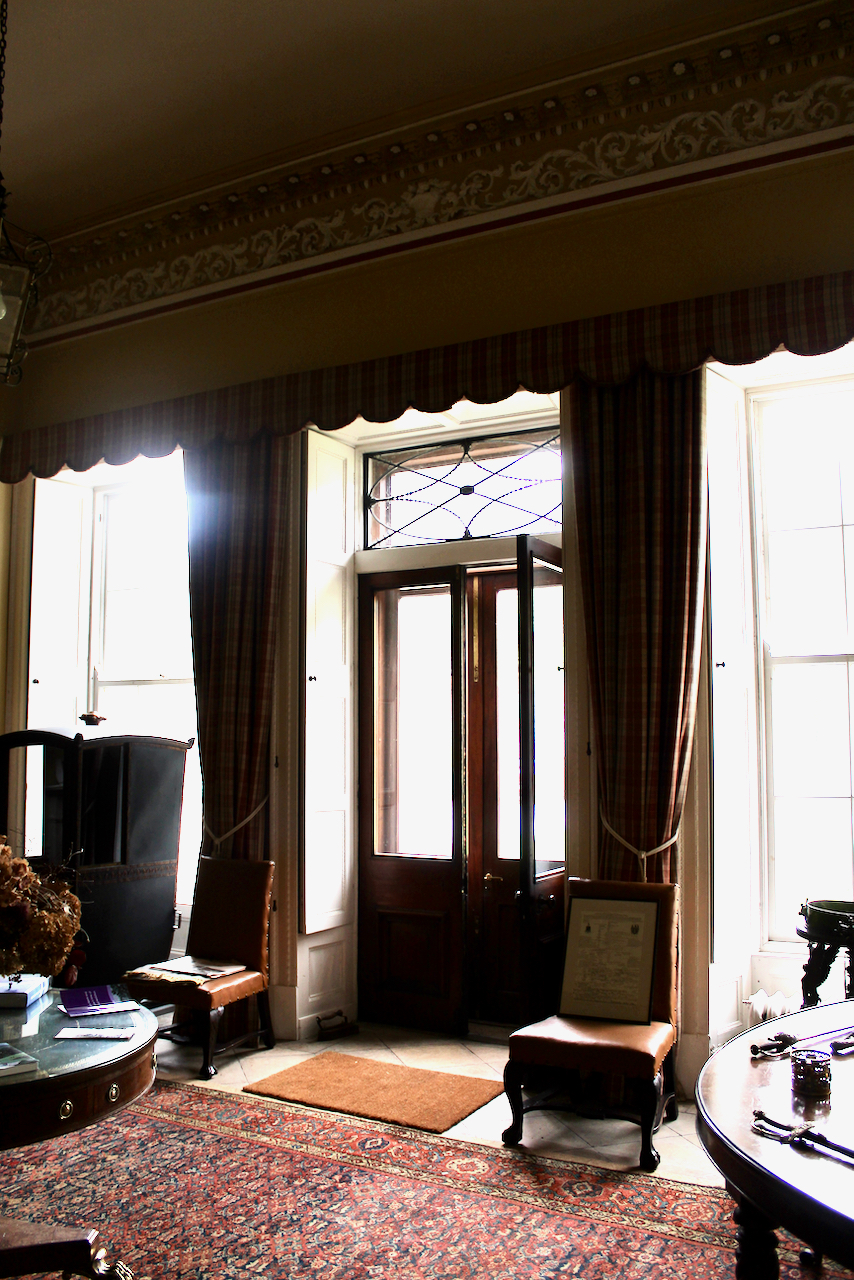
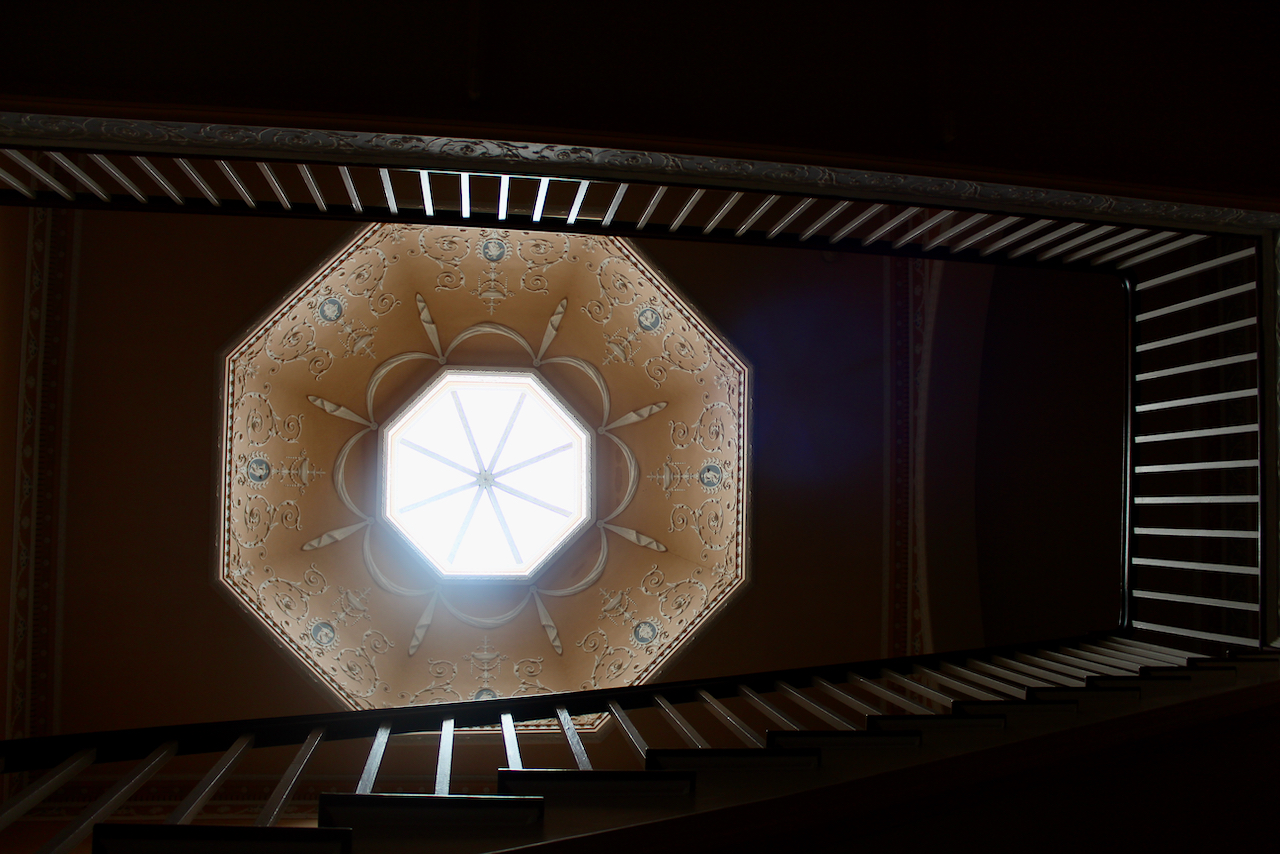
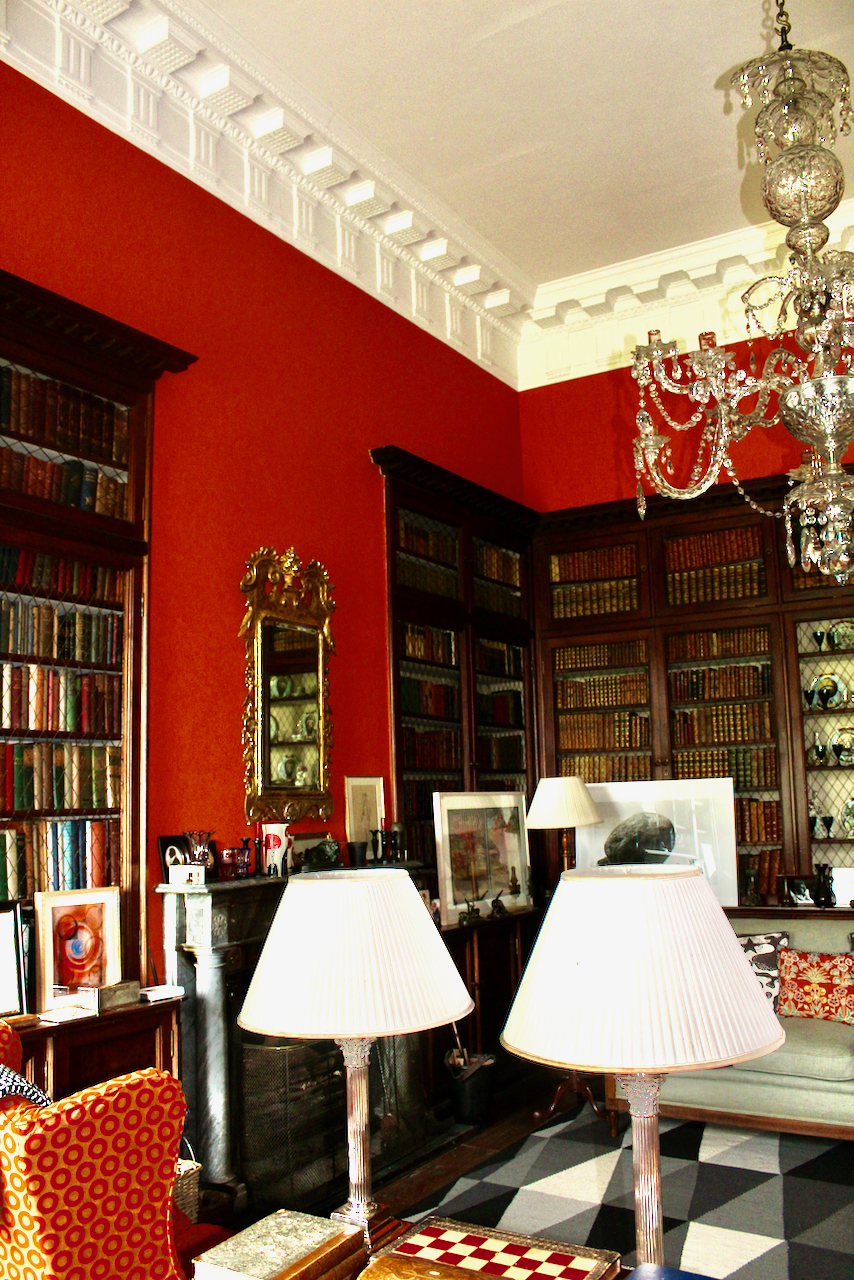
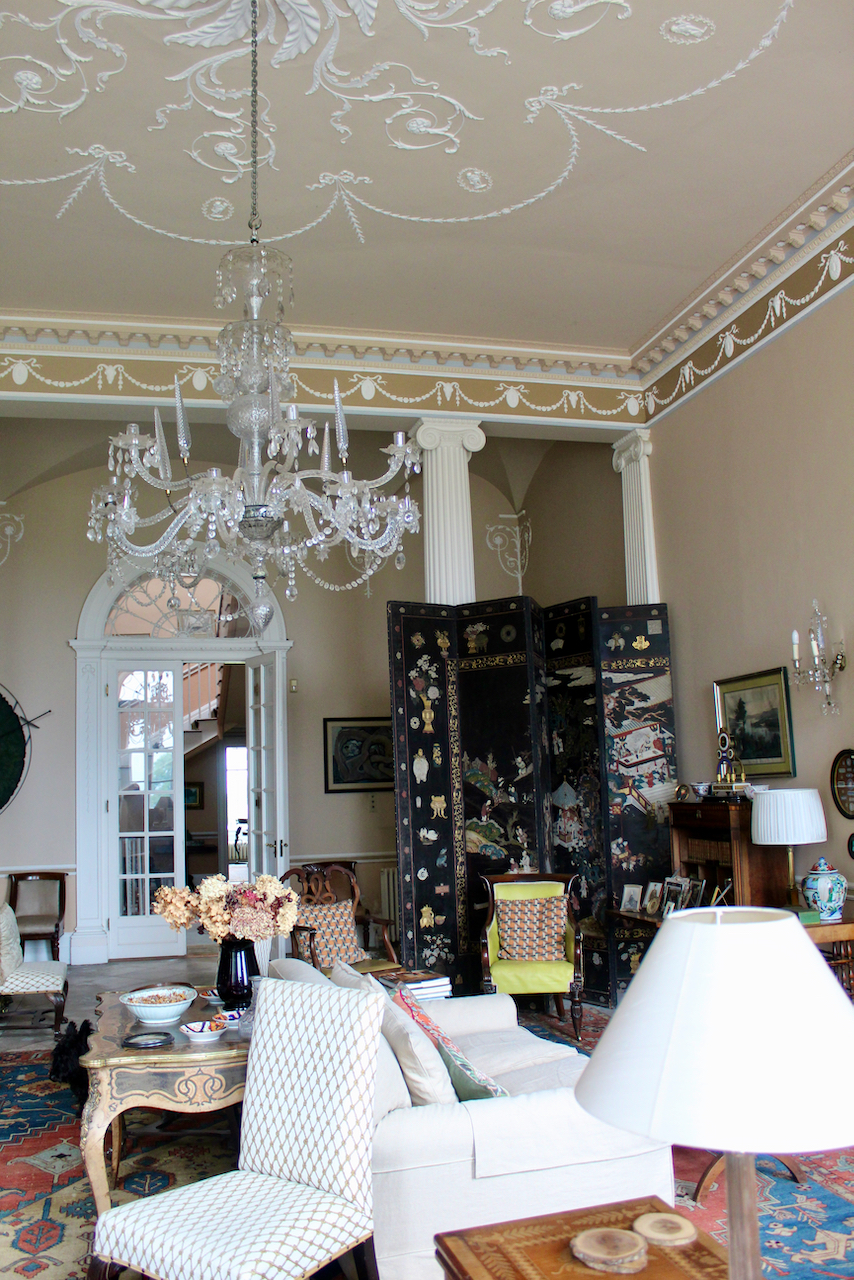
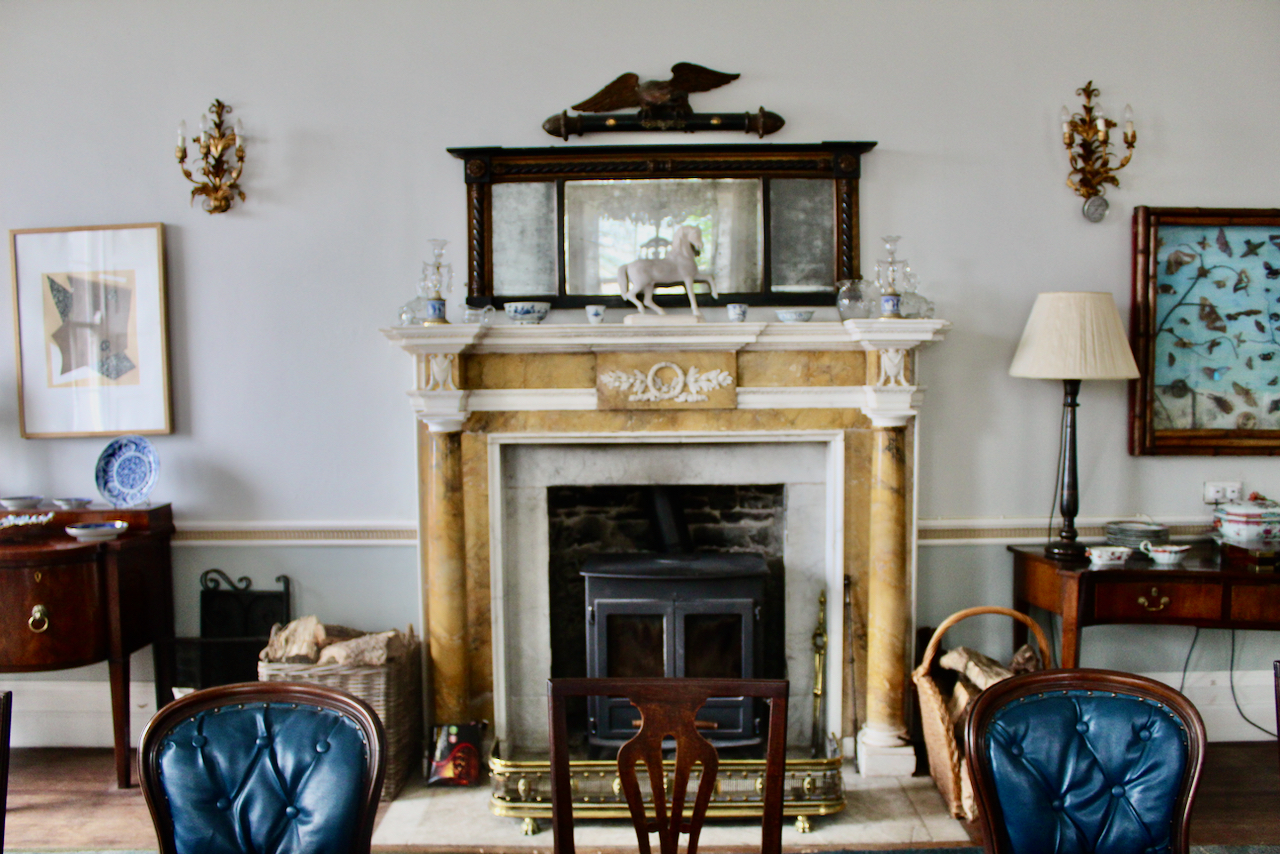
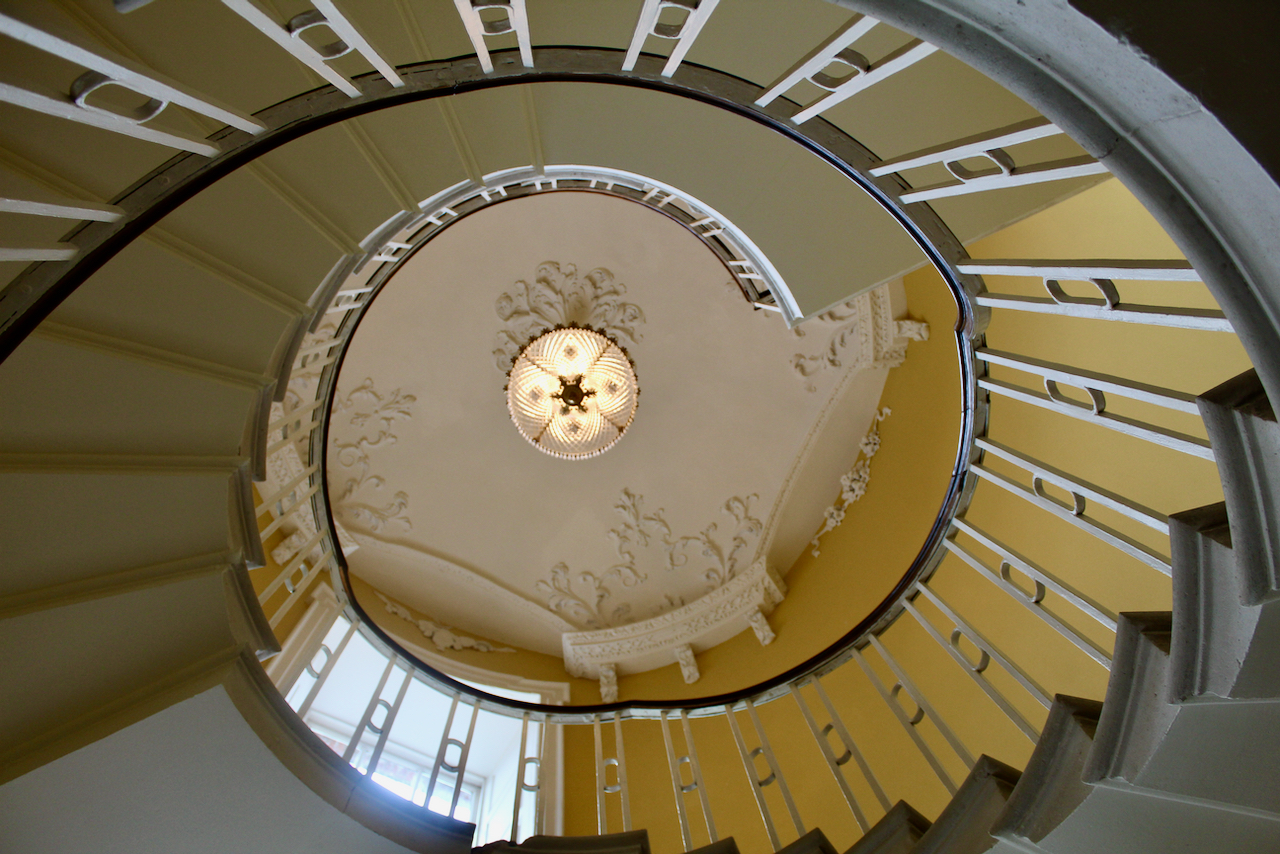
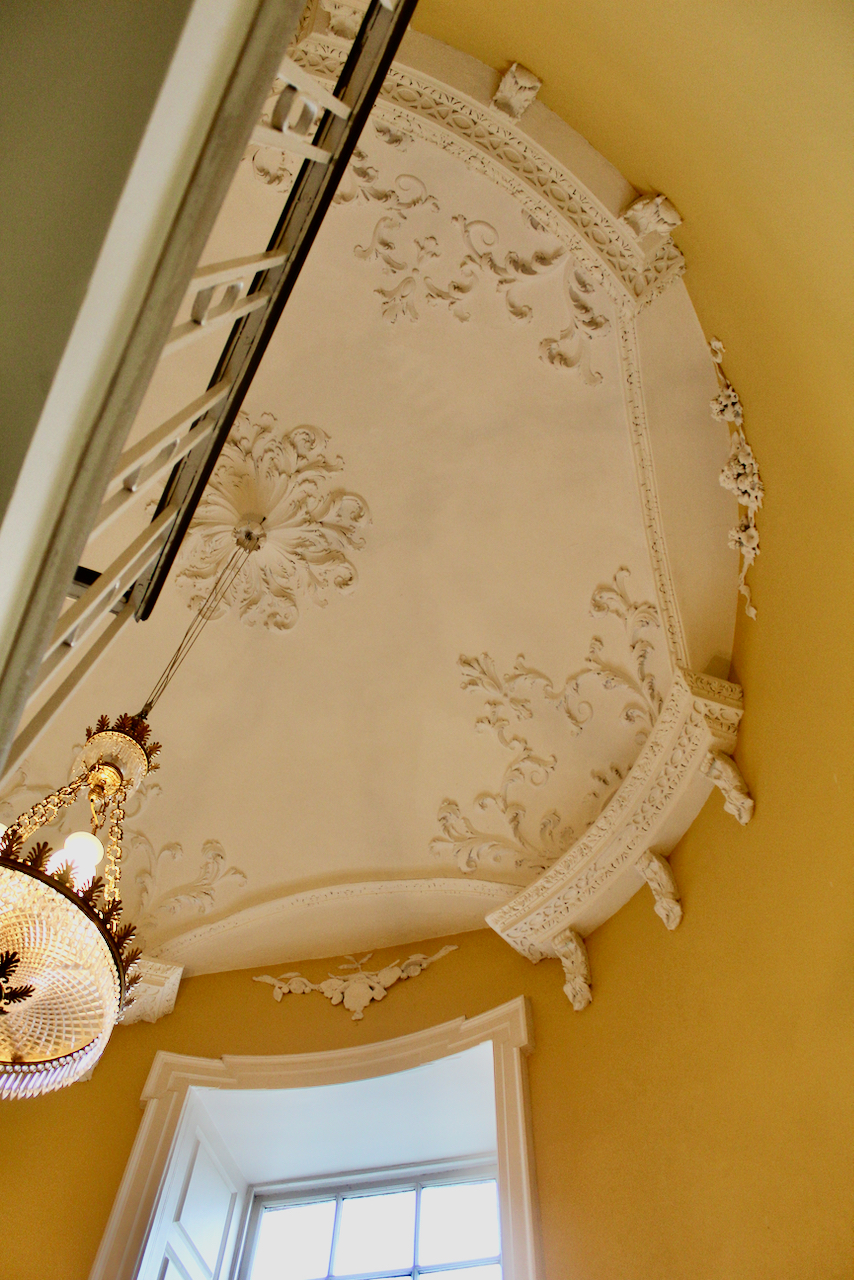
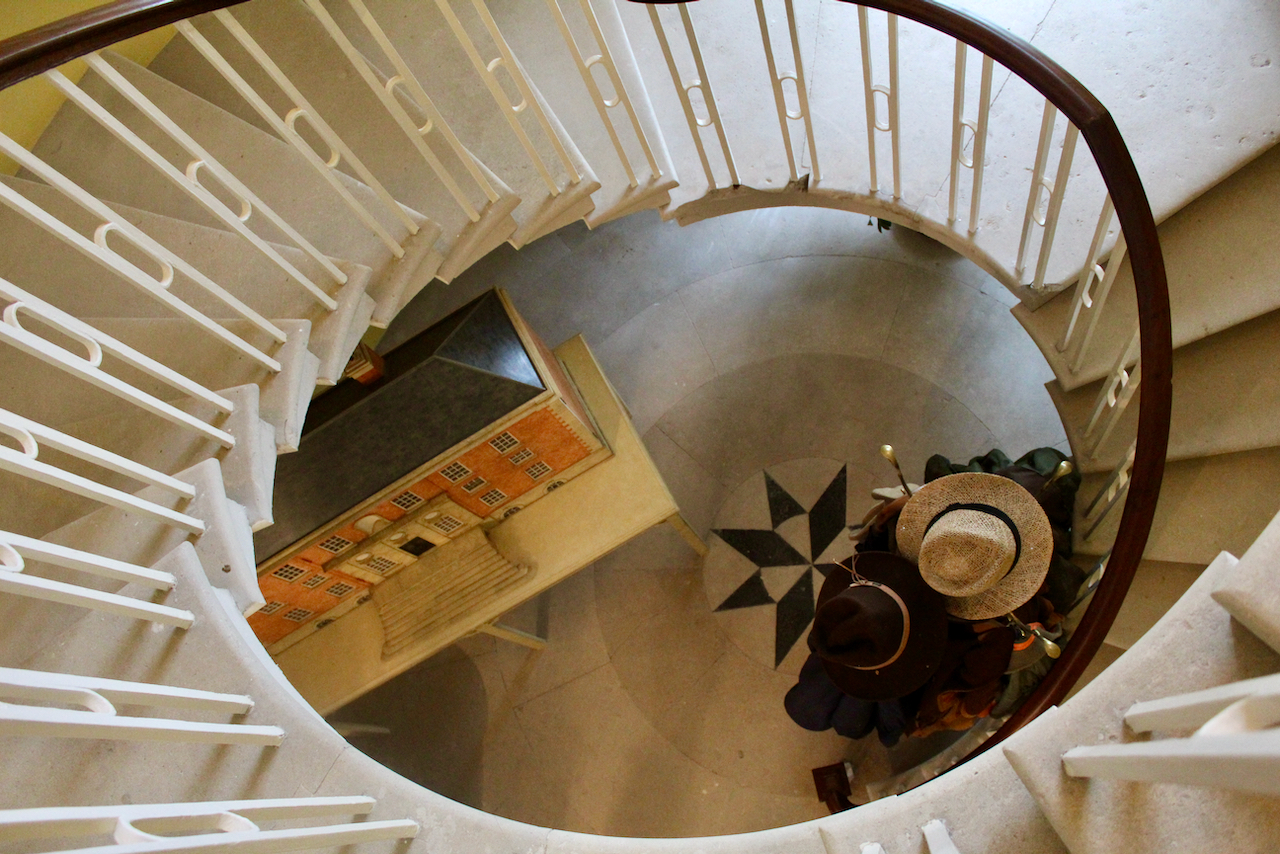
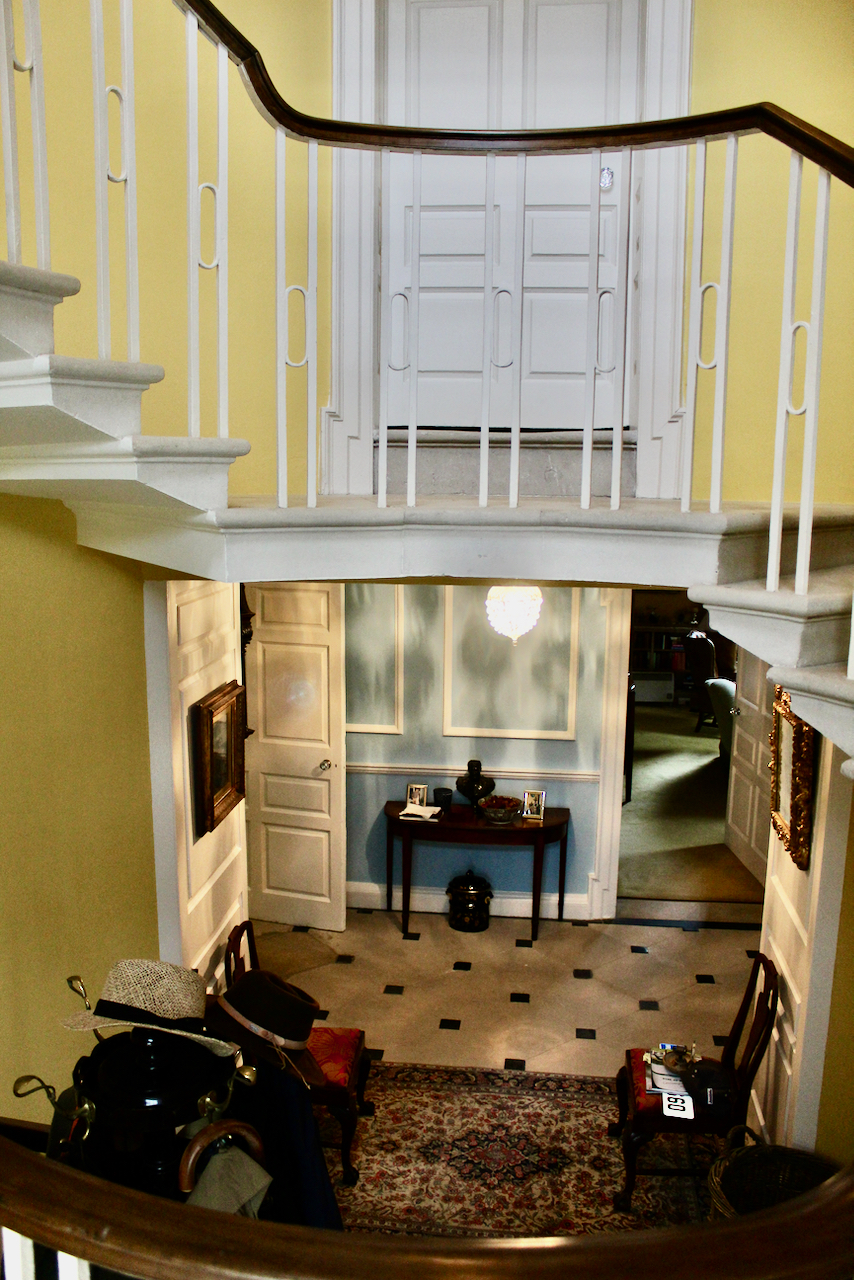
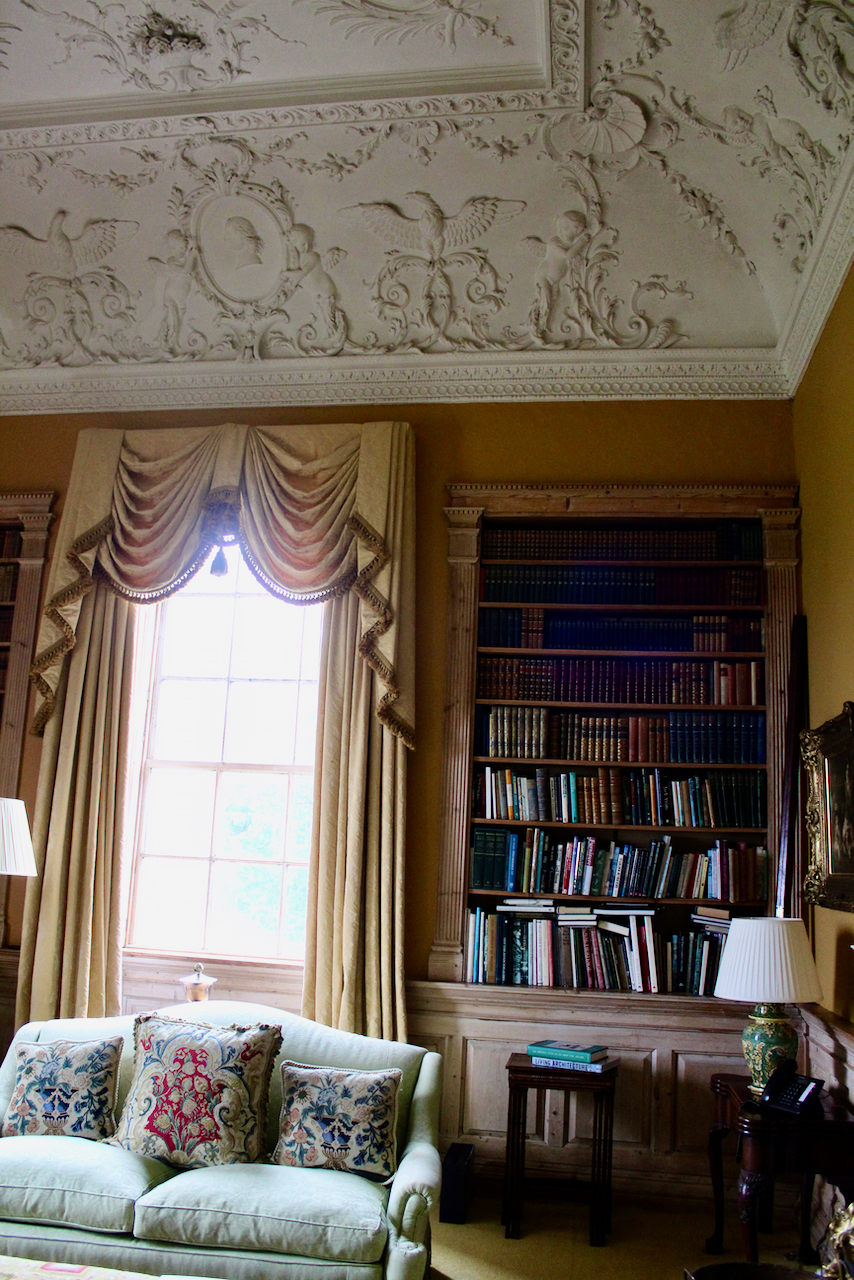
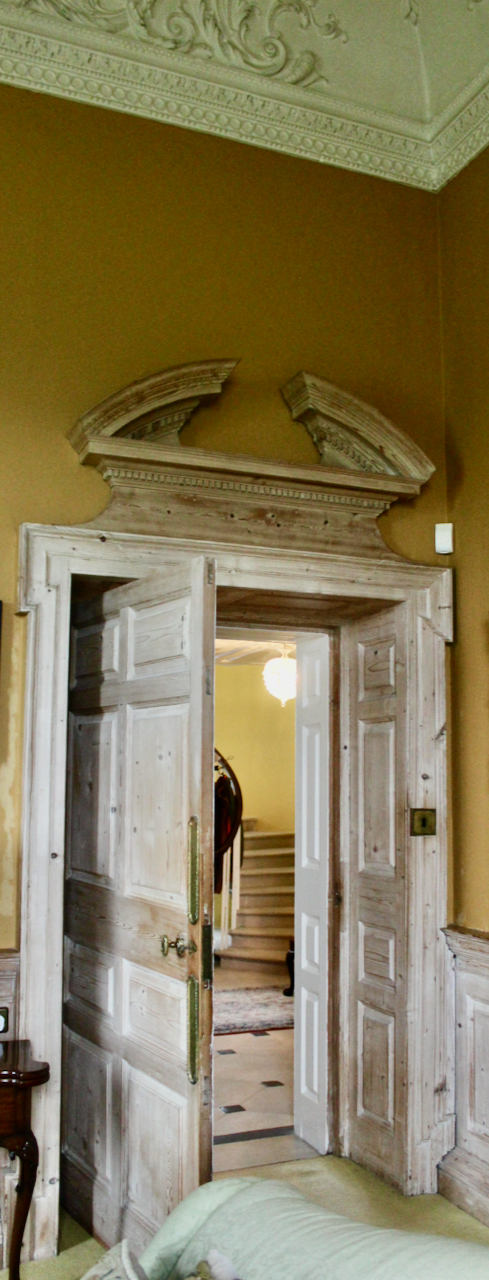
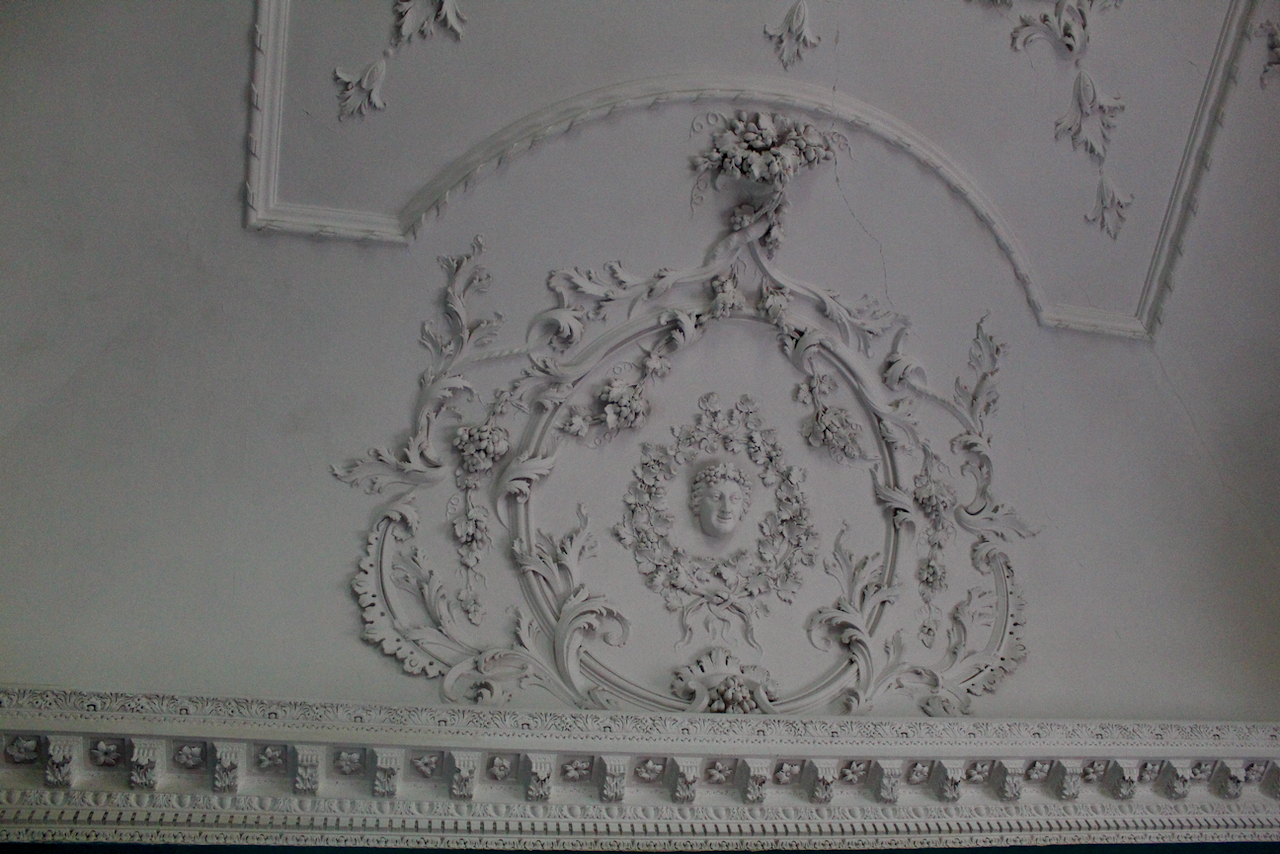
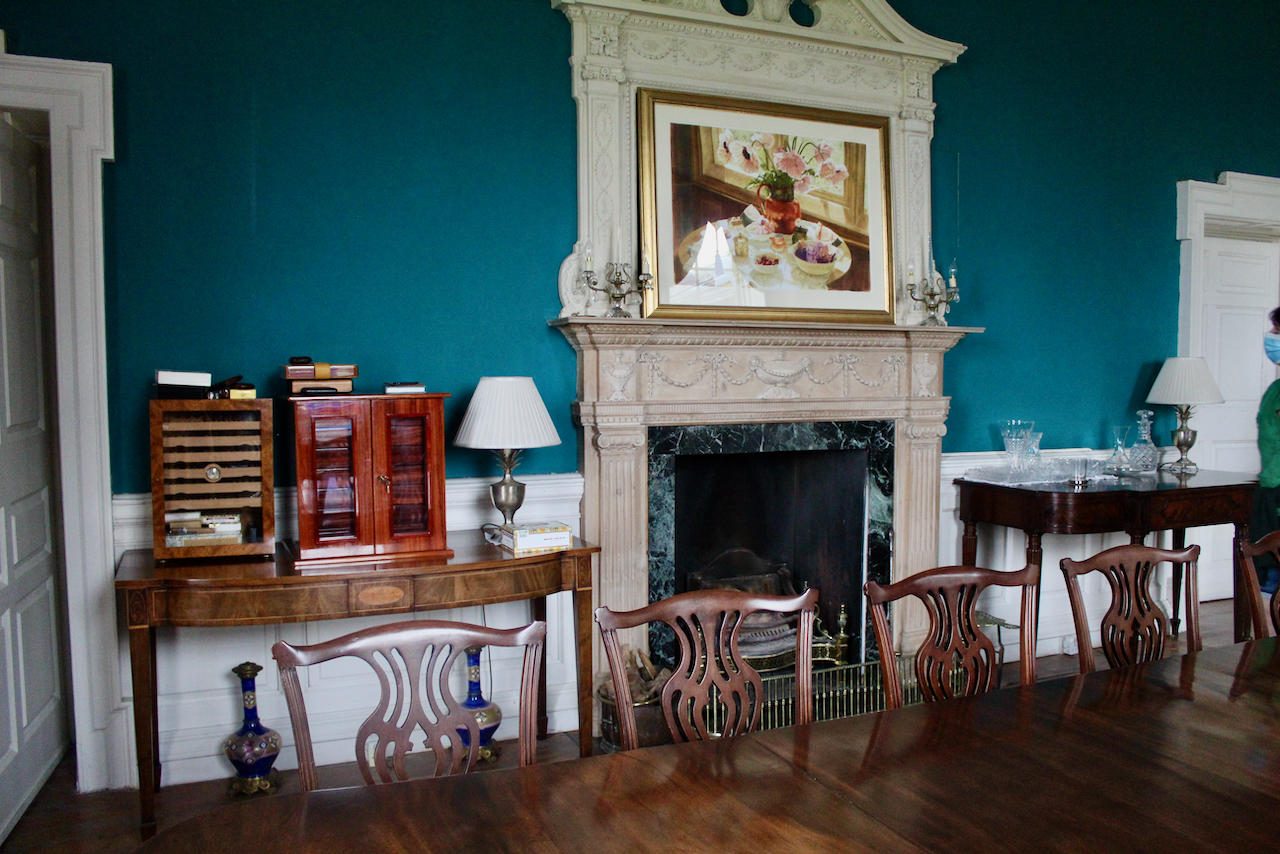
We entered through the garden door with the fanlight directly into what is now the library but was originally the entrance hall. It interlinks the staircase hall with its grand sweeping staircase and lovely striped wallpaper, dining room and drawing room. In the dining room we saw a portrait of Edith’s brother Cameron (1860-1942), along with other portraits. Hal also pointed out to us where Edith had scratched her initials into the glass of the dining room, “EOES.” Swags above the tall curtained windows date to the 1820s.
At Drishane House. Photograph © Jennifer Winder-Baggot, www.irishhistorichouses.com

David Hicks tells us more about Drishane from Edith’s time in his book Irish Country Houses, Portraits and Painters:

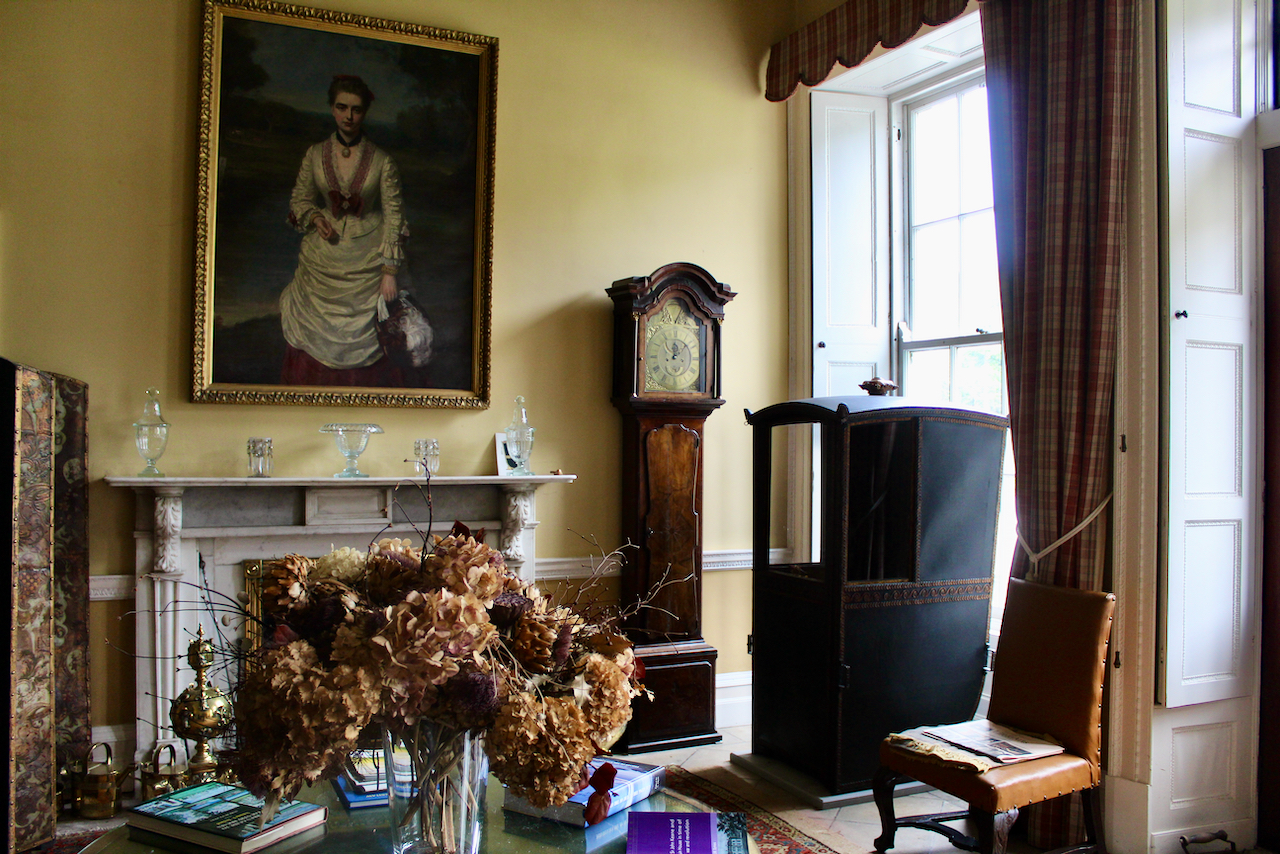
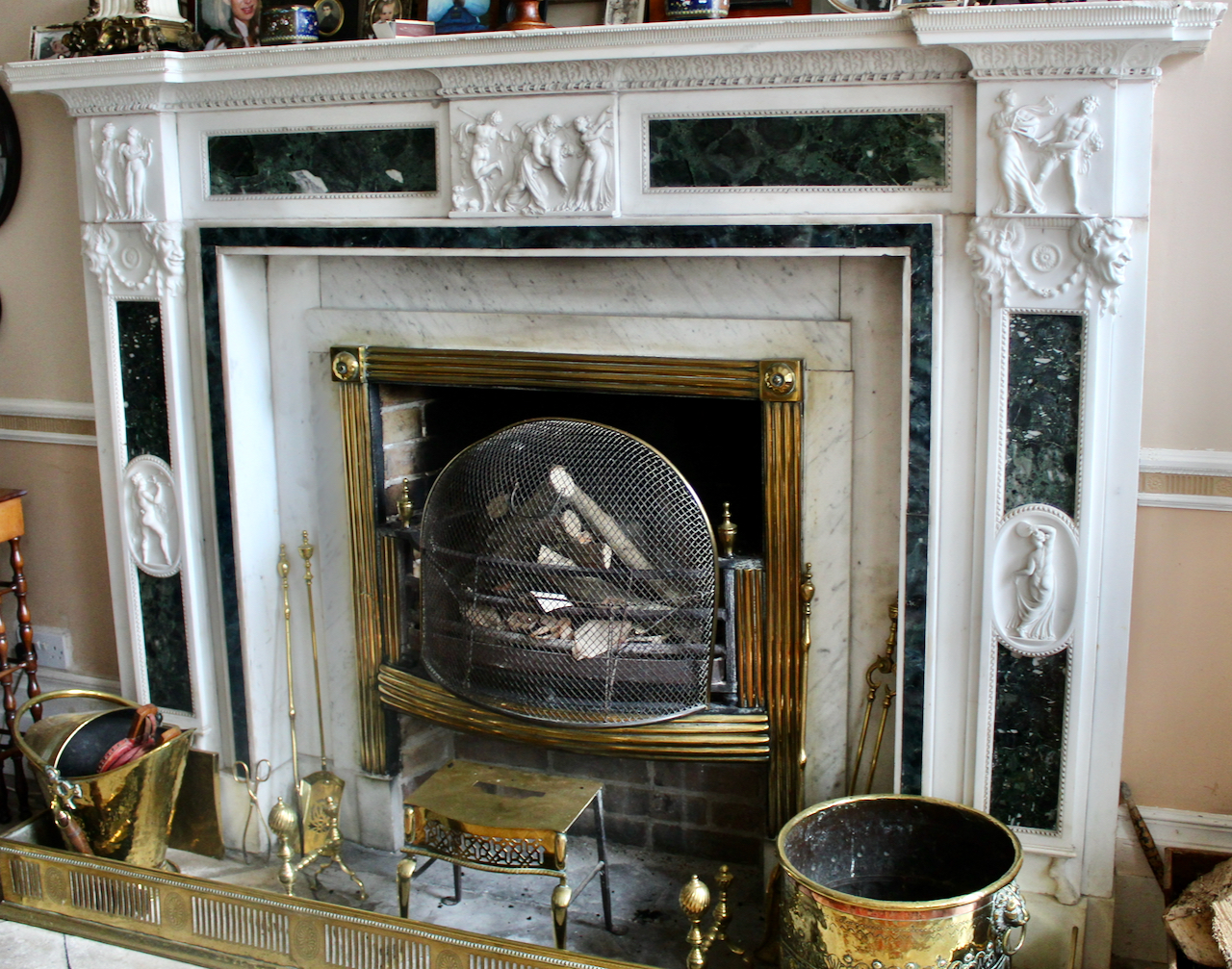
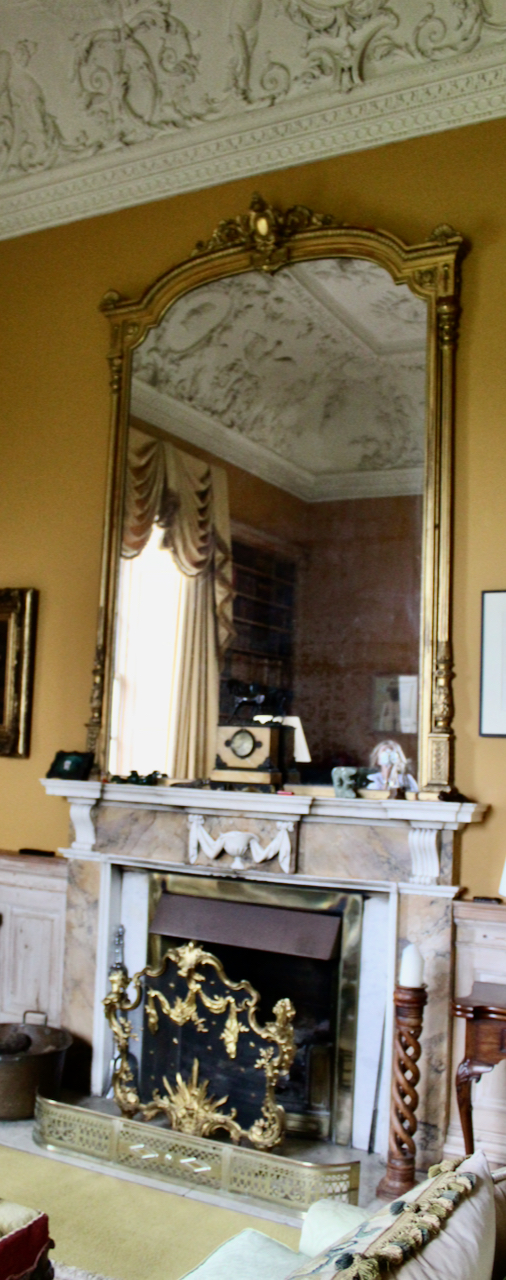
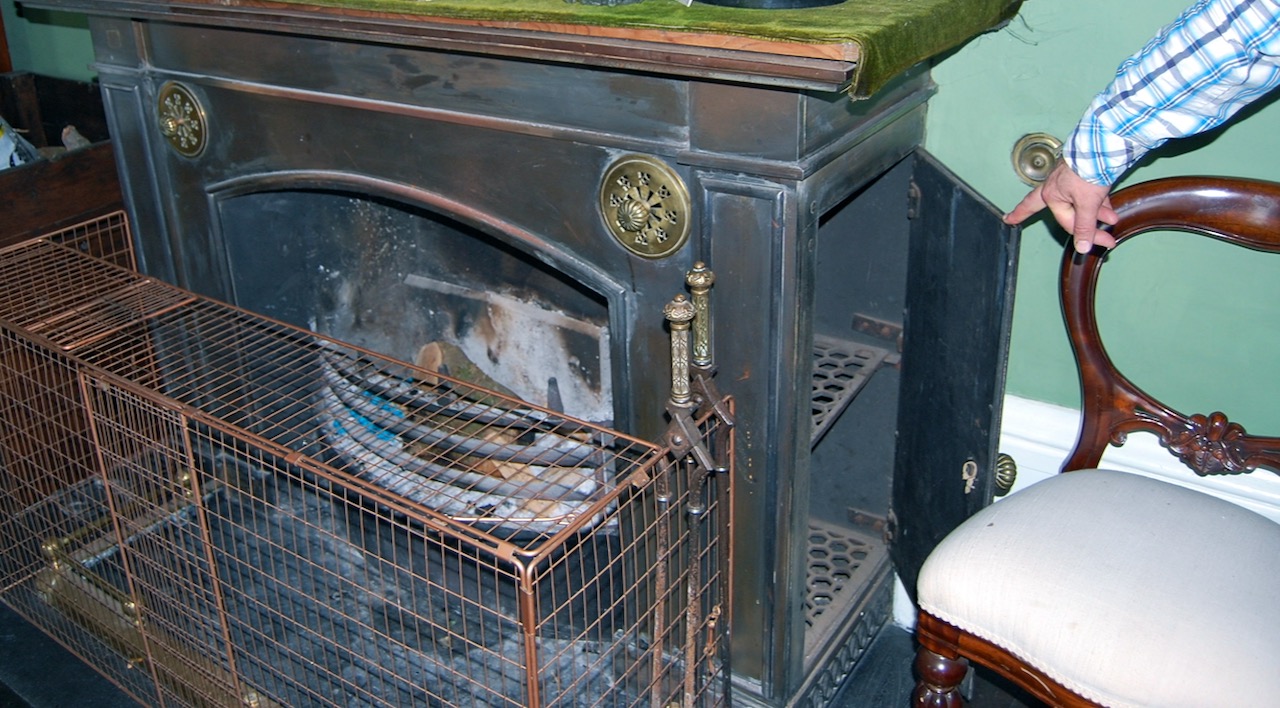
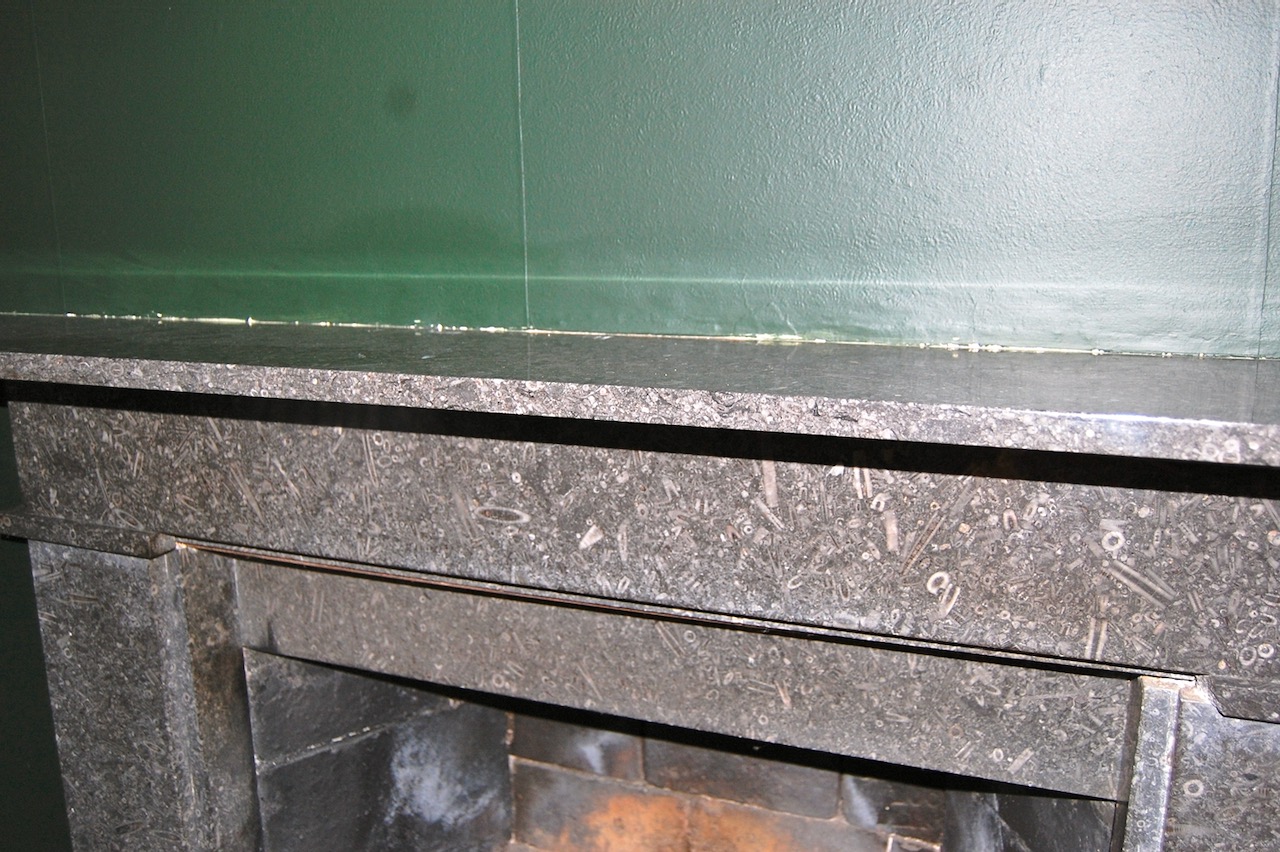
Drishane in the 19th century could not be described as homely: it was said to be cold, damp and infested with rats, which is in total contrast to the condition of the house today. When poison was put down to fend off unwanted visitors, they usually died under the floorboards. The resulting decomposition meant sometimes the drawing room could not be used for an extended period, such as in 1878, due to the smell. The drawing room also contained a large white marble fireplace that was brought from Italy by Edith’s great-grandfather. However, over the years it became the final resting place for a number of rodents and was christened the “Mouse-oleum.” This fireplace often had to be taken out for the dead mice to be removed and it became damaged. Edith’s brother Cameron was stationed in China from 1885 to 1889 and when he returned to Drishane he brought back a black marble fireplace complete with carved dragons and Chinese symbols, together with the Somerville crest and motto. This exotic-looking fireplace was installed in the drawing room to replace its damaged predecessor. [11]

Having read Hicks’s description I was excited to see the Chinese fireplace. It is indeed very unusual. 

The oldest of the children who had hidden things in their mother’s bedroom was another Thomas (1798-1882). Mark Bence-Jones tells a lovely story about him. He was very in love with his wife, Harriet Townsend, who was a cousin who had lived up the road in Castle Townshend. [12] Bence-Jones writes:

after her death [he] would sit up for hours by his bedroom fire thinking of Harriet and grieving for her and looking for consolation in his Bible by the light of a candle in her own special candlestick. He would burn two candles every night which Mrs Kerr, the housekeeper, would leave out for him. Then he started to complain, night after night, that he could not find the second candle. Mrs Kerr told his granddaughter Edith what she believed had happened. “My dear child, the candle was there! For I always put it on the table myself! It was Herself that took it, the way your Grandpapa should go to his bed and not be sitting there all night, breaking his heart.” [13]

This Thomas inherited Drishane and died in 1882, when the estate passed to his son, another Thomas. This Thomas (1824-1898) married Adelaide Eliza Coghill, and was the father of Edith, along with six other children who survived to adulthood.
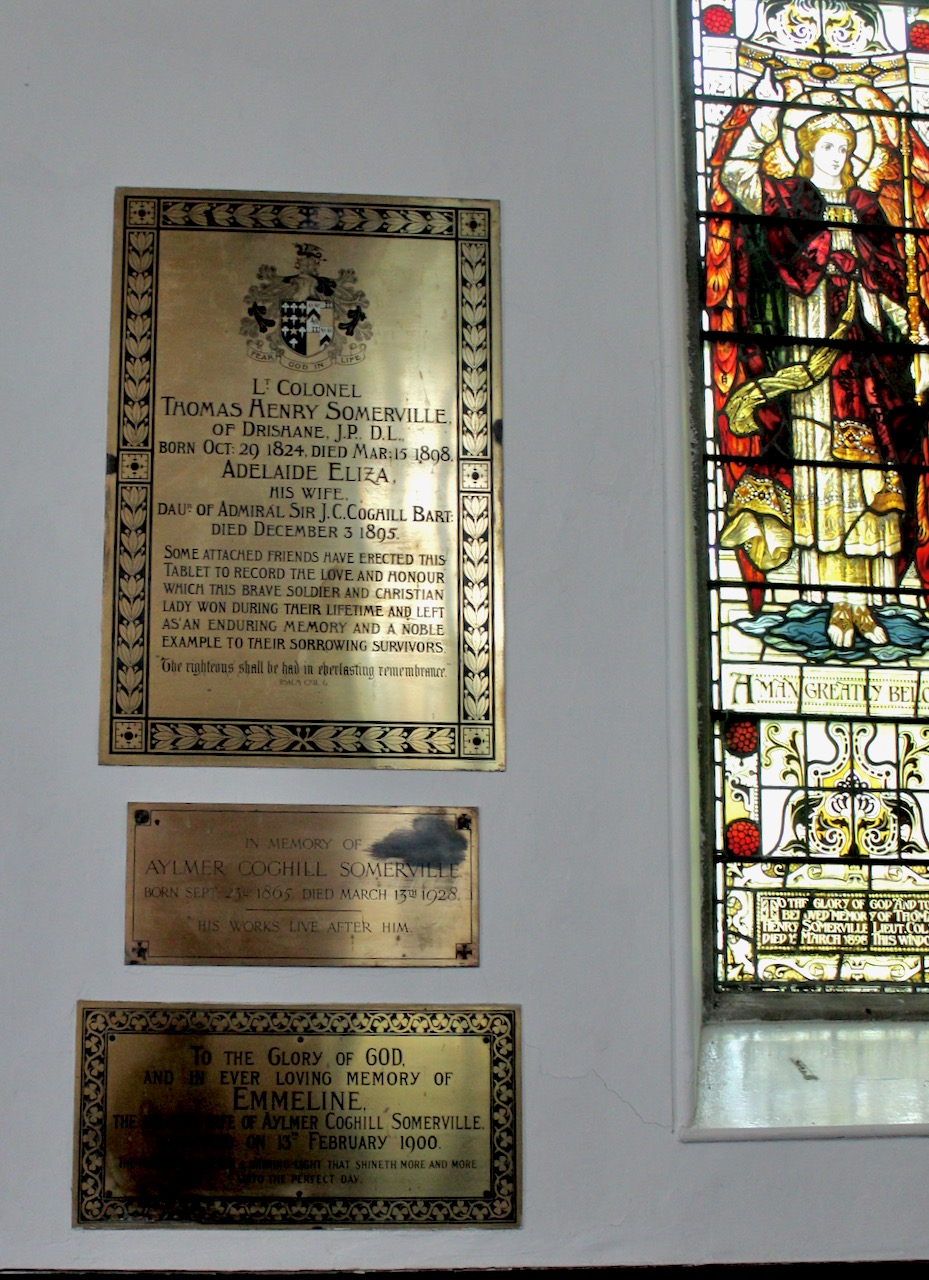
Memorial in St. Barrahane’s Church, Castletownshend, to Lt. Colonel Thomas Henry Somerville (1824-1898), who married Adelaide Eliza Coghill. Below that plaque is a memorial to his son Aylmer Coghill Somerville and Aylmer’s second wife, Emmeline Sophia Sykes. Photograph © Jennifer Winder-Baggot, www.irishhistorichouses.com
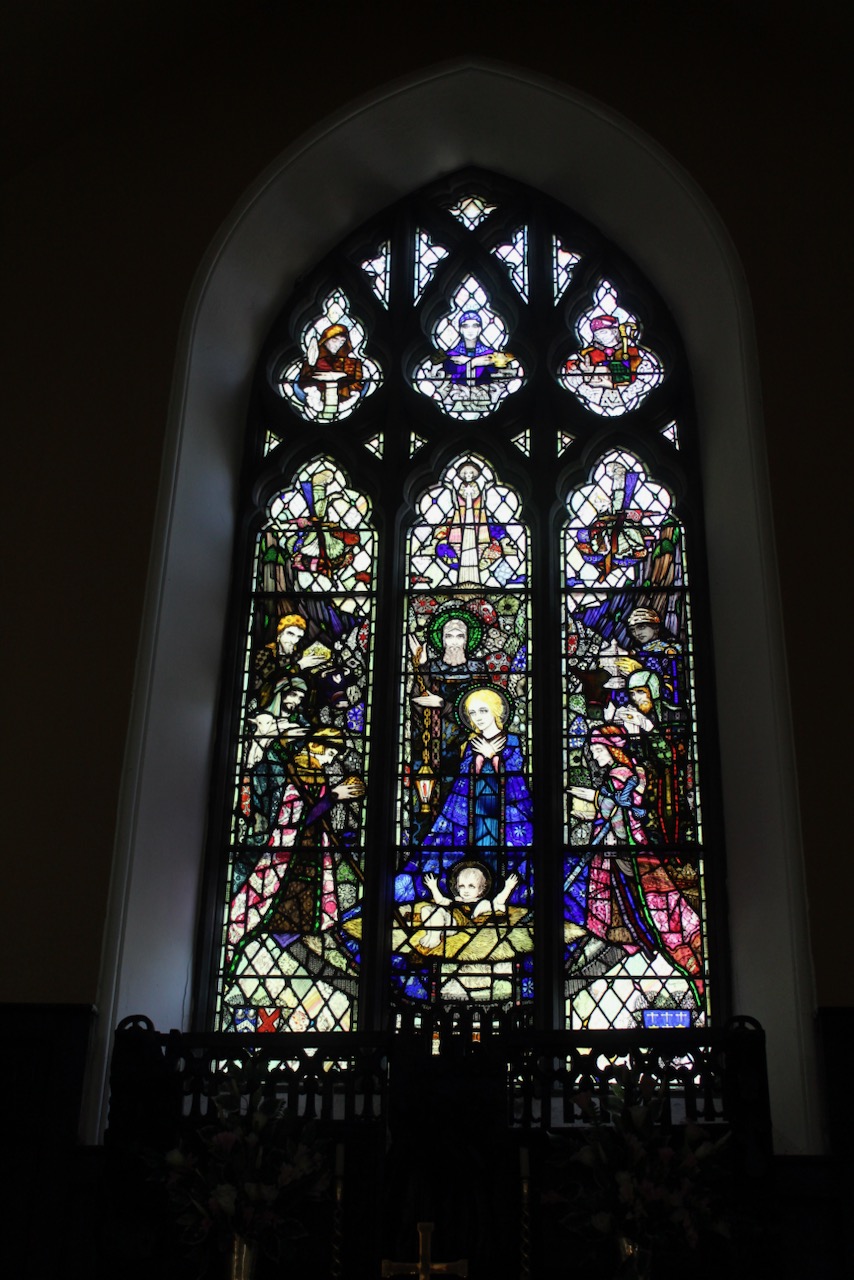
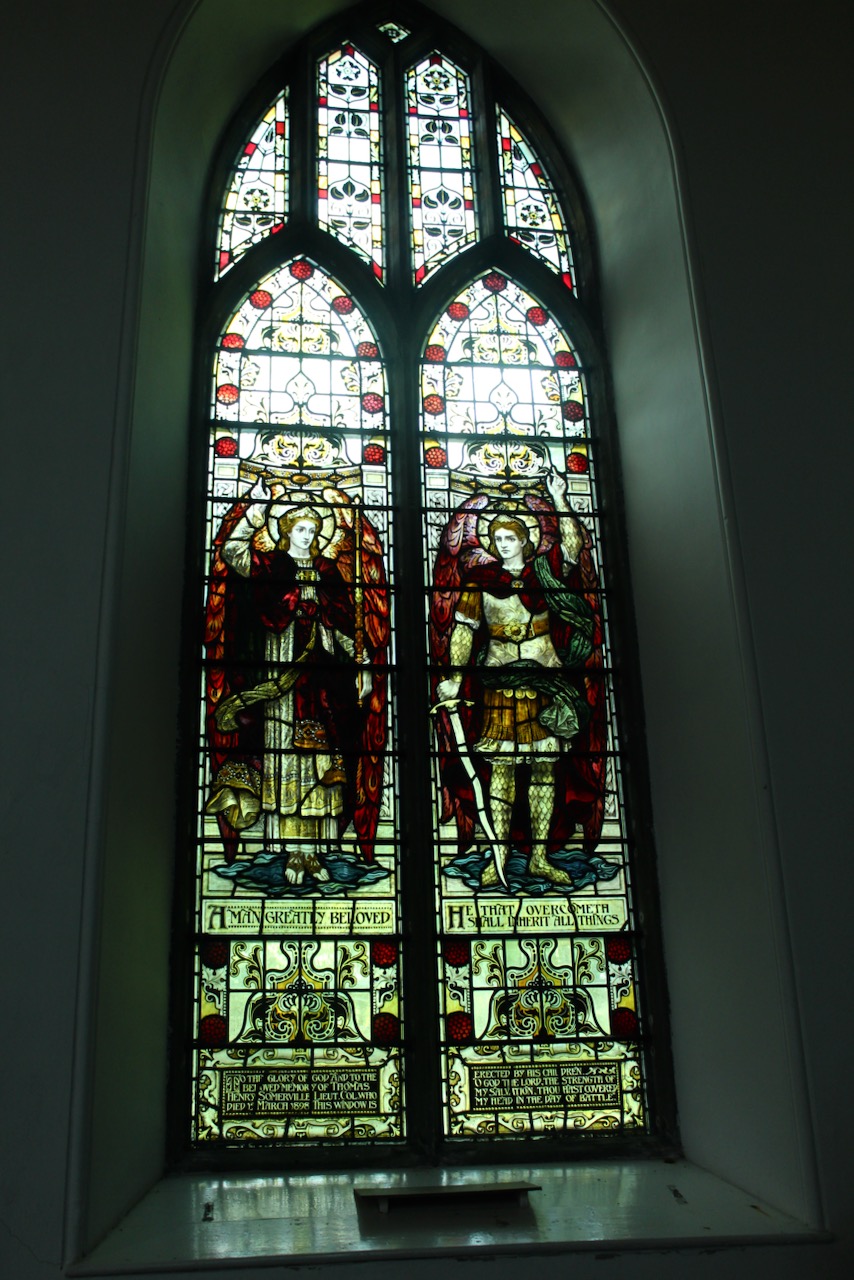
Window in St. Barrahane’s Church dedicated to Lt. Colonel Thomas Henry Somerville (1824-1898), by Harry Clarke. Photograph © Jennifer Winder-Baggot, www.irishhistorichouses.com
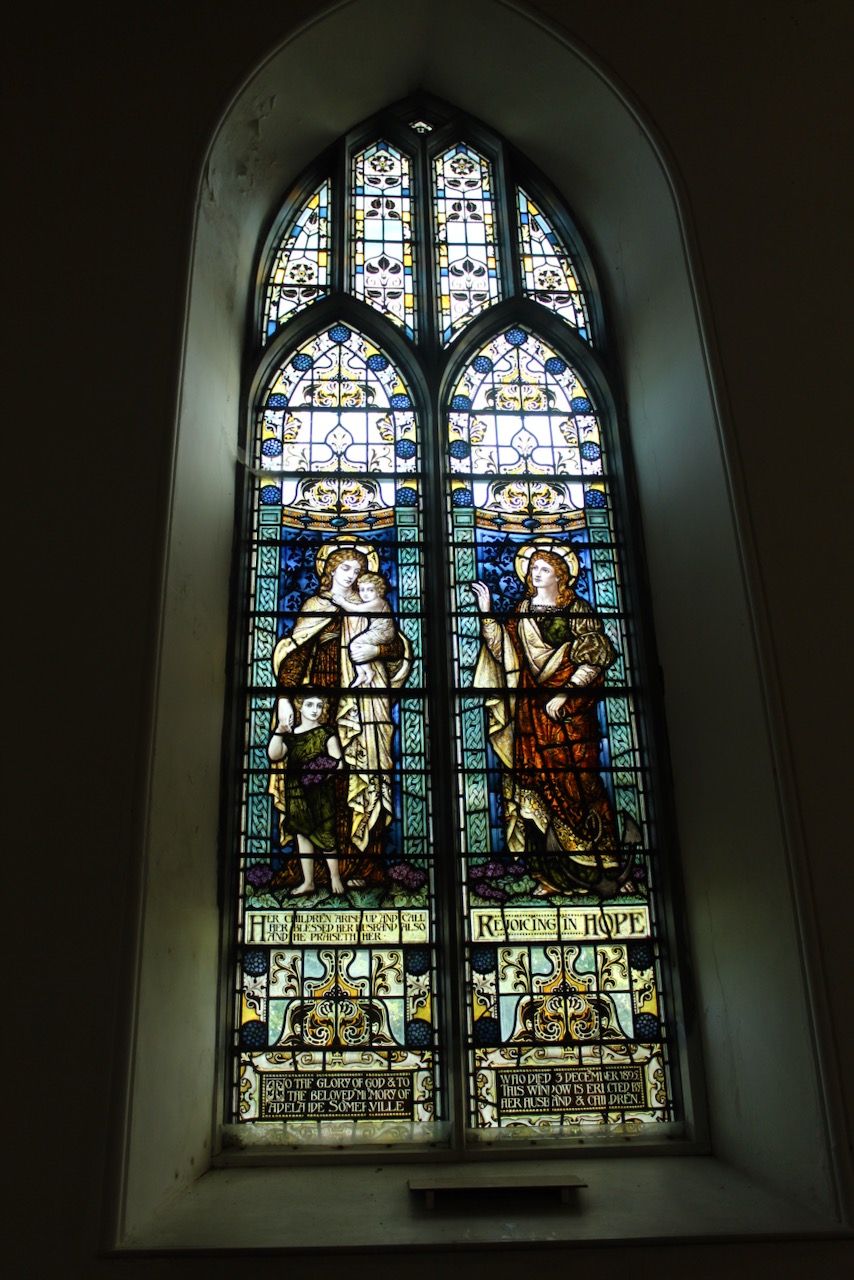
Window in St. Barrahane’s Church dedicated to the wife of Lt. Colonel Thomas Henry Somerville (1824-1898), Adelaide Eliza Coghill, by Harry Clarke. Photograph © Jennifer Winder-Baggot, www.irishhistorichouses.com
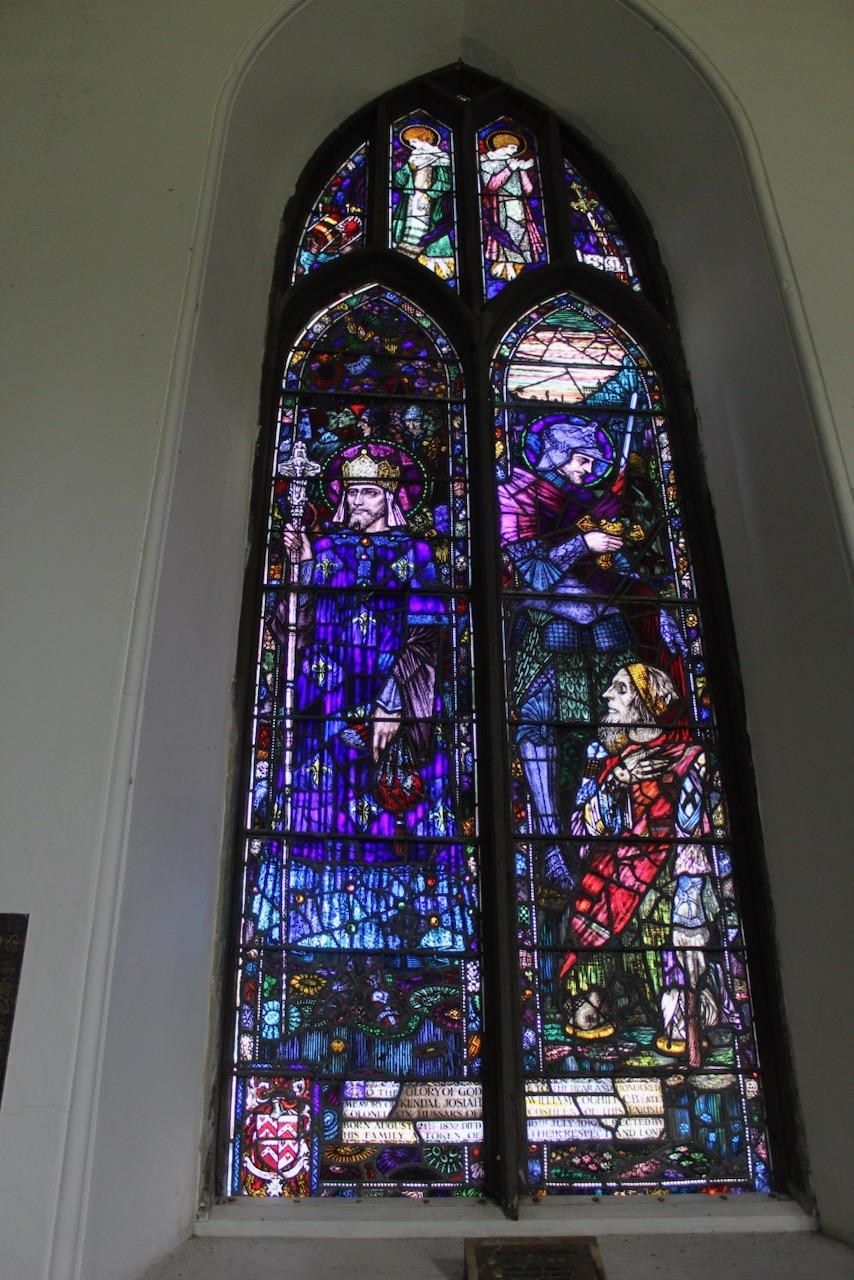
This Harry Clarke window in St. Barrahane’s Church of Ireland depicts French Saints Louis (who was Louis IX, King of Spain) and Martin and was commissioned in memory of Colonel Kendall Josiah Coghill in 1921. He was a brother of Adelaide Eliza Coghill. Photograph © Jennifer Winder-Baggot, www.irishhistorichouses.com
Another Harry Clarke window in St. Barrahane’s Church of Ireland in Castletownshend. Photograph © Jennifer Winder-Baggot, www.irishhistorichouses.com

Mark Bence-Jones tells us another good story, this one taken from Somerville and Ross’s book Wheel Tracks, which was published in London in 1923:

Tom Somerville [Edith’s father] was a magistrate and when the police brought cases to be summarily dealt with by him, he would swear the deponents on the Bradshaw’s Railway Guide as though it were a bible, partly through laziness [it lay on a nearby table] and partly from ‘a certain impishness of character and a love of playing on ignorance.’ [14]
Drishane House, August 2020. Photograph © Jennifer Winder-Baggot, www.irishhistorichouses.com

Edith had suitors, but her mother sent them packing. In any case, Edith seems to have cherished her freedom, taking full advantage of her time to paint, hunt, travel and socialise. When her mother died, she took over the management of the household for her father. When her father died, her brother Cameron inherited the estate, but he, like his brothers, served in the military, and he was mostly stationed abroad, so Edith continued to run the household. 

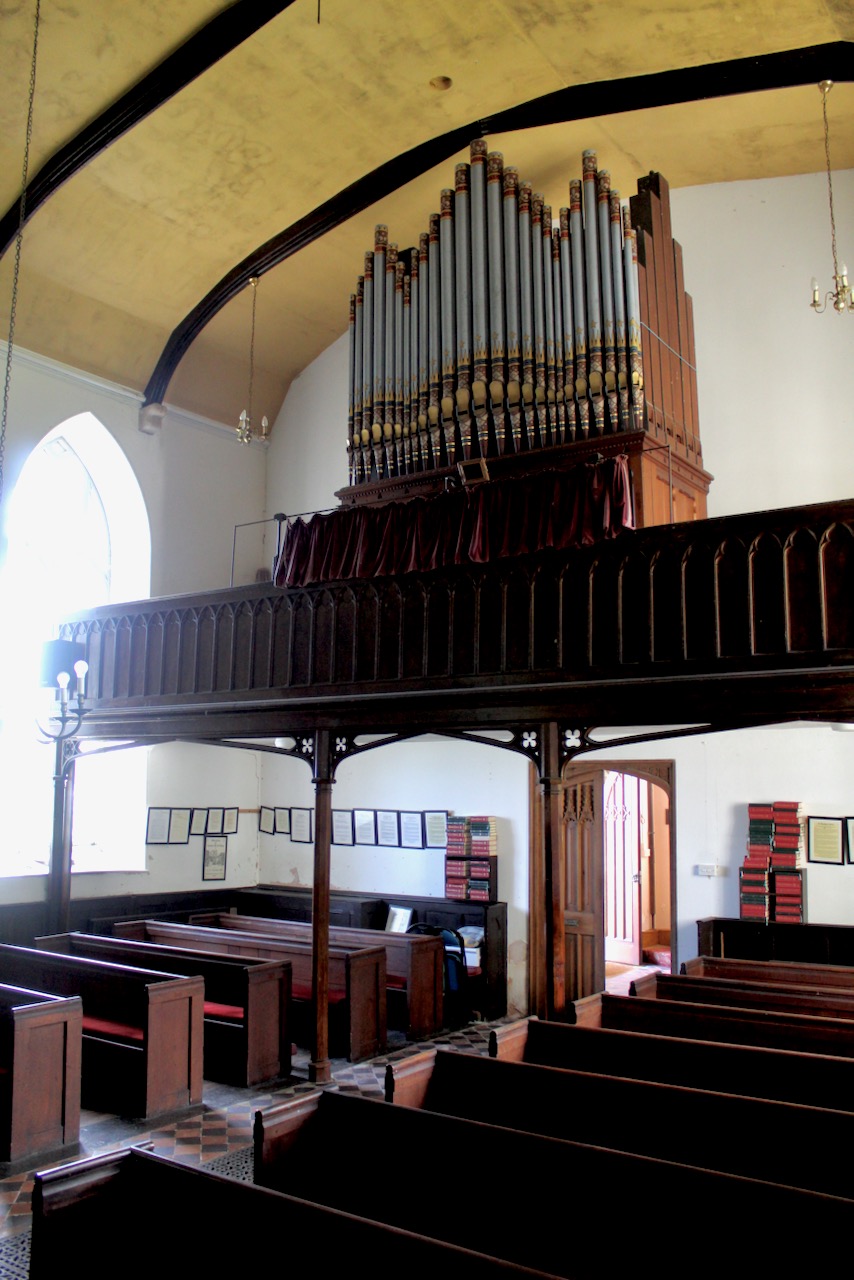
Another brother, Aylmer, and his wife, lived with Edith for a time, and helped to manage the farm which was part of the estate, and her only sister Hildegarde married their cousin Egerton Coghill, 5th Baronet Coghill, and settled nearby at Glen Barrahane house in Castletownshend [this no longer exists]. Egerton was also an artist and when he died Edith and Hildegarde commissioned Harry Clarke to create a stained glass window in their local Church of Ireland, St. Barrahane’s. The window depicts St. Luke, the Patron Saint of Painters. To the left of St. Luke’s shoulder is a depiction of St. Cecelia playing the organ, which is a tribute to Edith, as she played the organ in the church for seventy years. [15]

Among her many cousins was Charlotte Townsend, the wife of George Bernard Shaw, which visited Drishane.

Violet moved to Drishane to live with Edith permanently in 1906. In the 1901 and 1911 censuses Edith signed herself as Head of Household, and in 1911 listed her occupation as “artist, author and dairy farmer” and Violet as “author.” 
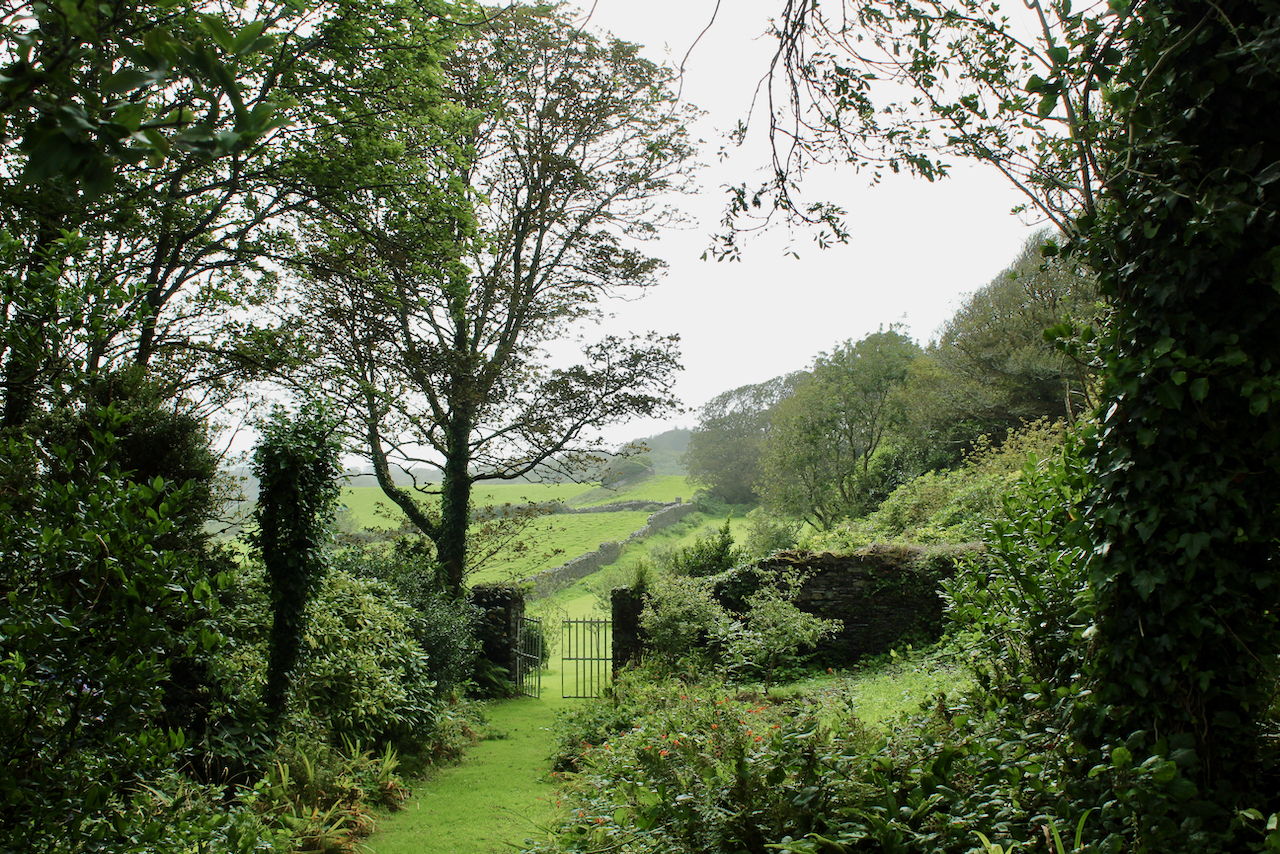
At Drishane House. Photograph © Jennifer Winder-Baggot, www.irishhistorichouses.com
Drishane House, August 2020. Photograph © Jennifer Winder-Baggot, www.irishhistorichouses.com

Edith struggled to have enough money for the upkeep of the house. She and Violet hoped to earn money from their publications but they sold the work before they became bestsellers. Desmond’s wife describes the shabbiness of the house, and yet traditions were upheld and up until the second world war, everyone “dressed for dinner.” [16] In the summer Edith would locate to a smaller house in the town and let out Drishane to earn some extra money.

Edith’s brother Boyle lived in a house nearby, called Point House. Boyle had been an admiral in the Navy, and if someone was interested in joining the Navy, they’d go to speak to Boyle. Unfortunately, the IRA saw this as recruitment for the British Army. Tom Somerville who now lives in Drishane tells the story in Jane O’Hea O’Keeffe’s book:

Below the village at Point House, overlooking the water, lived my great-great-uncle Boyle Somerville. He was a retired admiral, and local boys who were interested in joining the Royal Navy used to go to him to ask for a chit to say he knew them and that they were fit persons to join the navy. If that was what they wanted to do, he cheerfully signed the chit for them. This was interpreted by the IRA as recruiting, so on the night of 24 March 1936 they came to the front door of Point House. The admiral picked up the oil lamp from the table and went to answer their knock. They enquired, through the glass porch, if he was Mr Somerville. He answered, “I am Admiral Somerville,” whereupon they shot him through the glass, and killed him.” 

Tom continues: “of all the Somervilles, Boyle was the most nationalist. He took a great interest in the Irish language and had always been very pro-Home Rule. He made a study of all the local archaeological sites and is written up by Jack Roberts in his book Exploring West Cork. He was a remarkable man and perhaps the most talented and interesting of all the Somervilles of that generation, besides his sister Edith.” [17] 
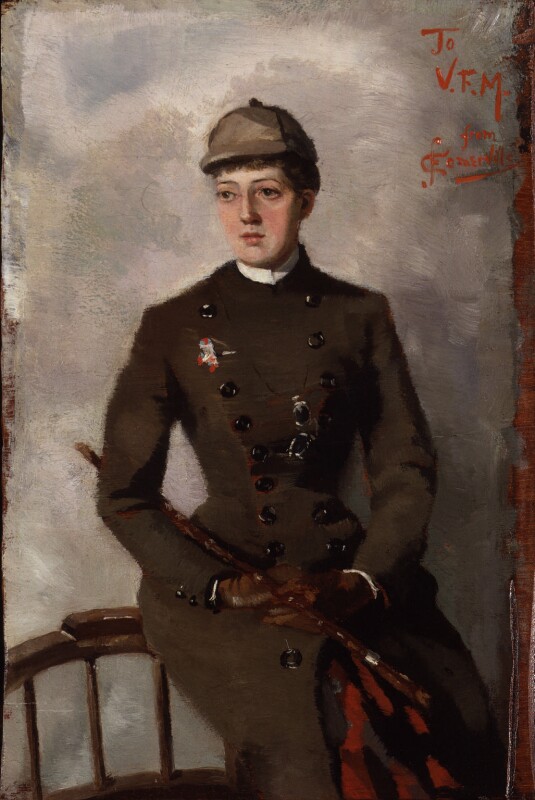
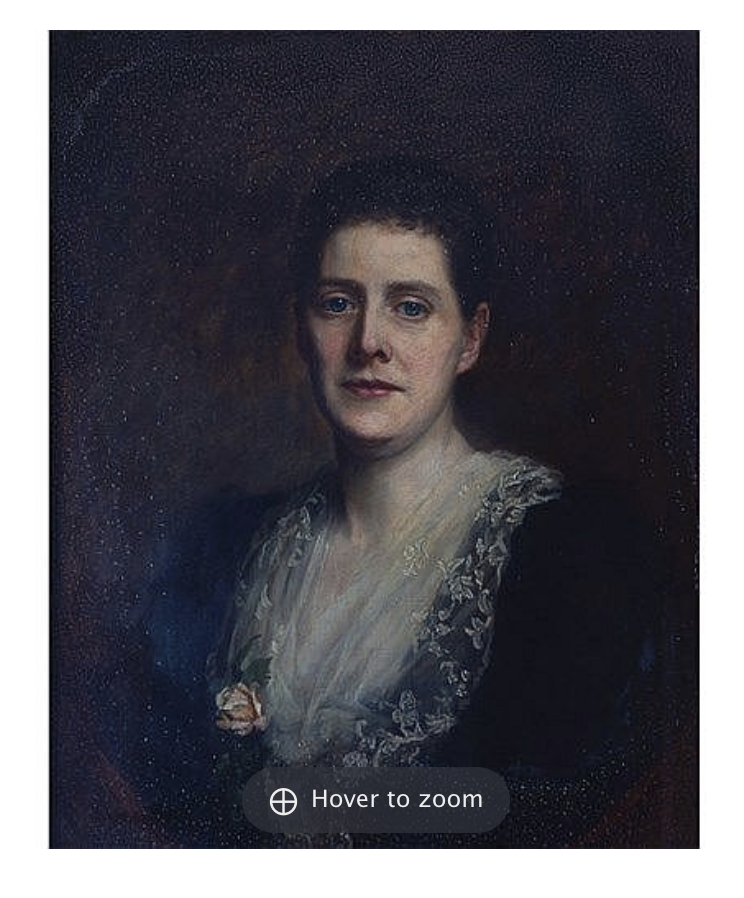
Violet Florence Martin (1862-1915) by Edith Anna Oenone Somerville, oil on panel, 1886, courtesy of National Portrait Gallery London ref. 4655.

Cameron never married and when he died in 1942 the property passed to his nephew Desmond, the son of his brother Aylmer who had predeceased him. Desmond also served in the British Army.

Desmond and his wife Moira Burke Roche invited Edith to remain at Drishane. A memoir by Moira [Moira Somerville’s Edith OE Somerville. An Intimate Recollection. Typescript in Edith Oenone Somerville Archive] describes her first visit to Drishane, as Desmond’s fiancée, and her memory of Edith: “presiding over the tea things in the hall, her little dogs on her lap, the light of the oil lamp on her thistledown hair, her china-blue eyes, so like a child’s, fixed on my face. From that moment I loved her.” [18]

Violet had died just two years before this visit, in 1915. She and Edith had gone on a holiday to Kerry. David Hicks describes Violet’s last days:

Violet began to feel unwell and when her condition worsened she was transferred to the Glen Vera Hospital in Cork. Each day Edith sat by her bedside and wrote to her brother, Cameron. In one letter she wrote, “No one but she and I know what we were to each other.” She sketched her friend as she lay in her hospital bed for the final time before Violet died in Dec 1915. Edith wrote only one sentence in her diary that day: “Only goodnight, Beloved, not farewell.” [19]

Edith lived in the house until she was finally unable to climb the stairs. She then moved to a small house nearby in the town, Tally-Ho, to live with her sister. She died three years later, in 1949.
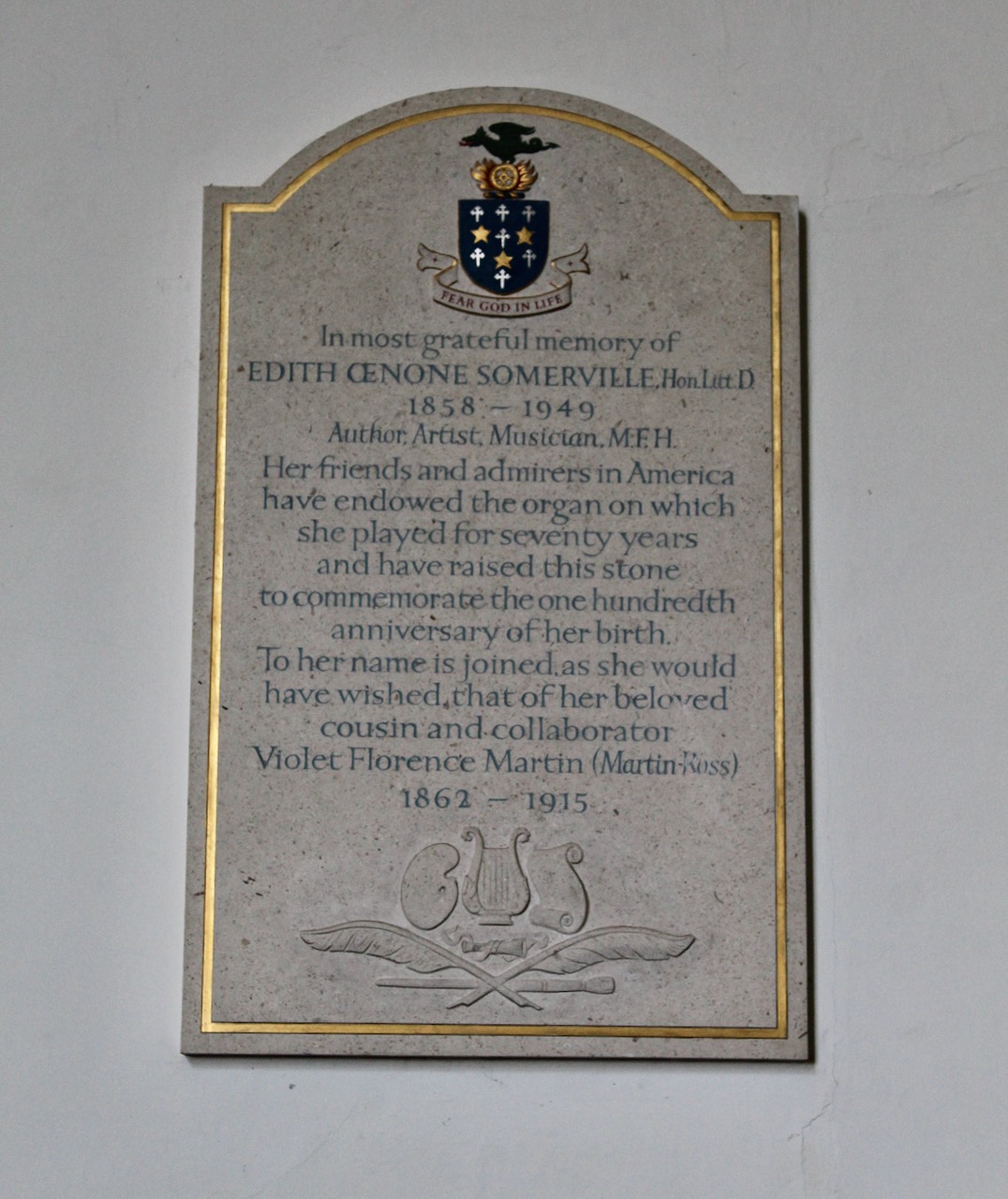
Plaque in St. Barrahane’s Church, Castletownshend. Photograph © Jennifer Winder-Baggot, www.irishhistorichouses.com
The organ on which Edith Somerville played for seventy years, in St. Barrahane’s Church, Castletownshend. Photograph © Jennifer Winder-Baggot, www.irishhistorichouses.com

When Desmond died in 1976, Drishane passed to his son Christopher (Dan) Somerville. In Jane O’Hea O’Keeffe’s book, Dan explains how he obtained the display cases for the museum:

We managed to get display cases which had become obsolete from the Bodleian Library in Oxford. We bought a trailer in England and loaded the cases on and brought them to Drishane. They are lovely cases, late Victorian or Edwardian. We couldn’t get them in the front door when we arrived, so we had to remove a window to install them. [20]

It is Dan’s son Thomas, and his wife and two sons, who now live in Drishane and who welcomed our visit. The house retains many of the original features and contents and paintings that date from Edith’s time. It also contains memorabilia from overseas and military engagements.

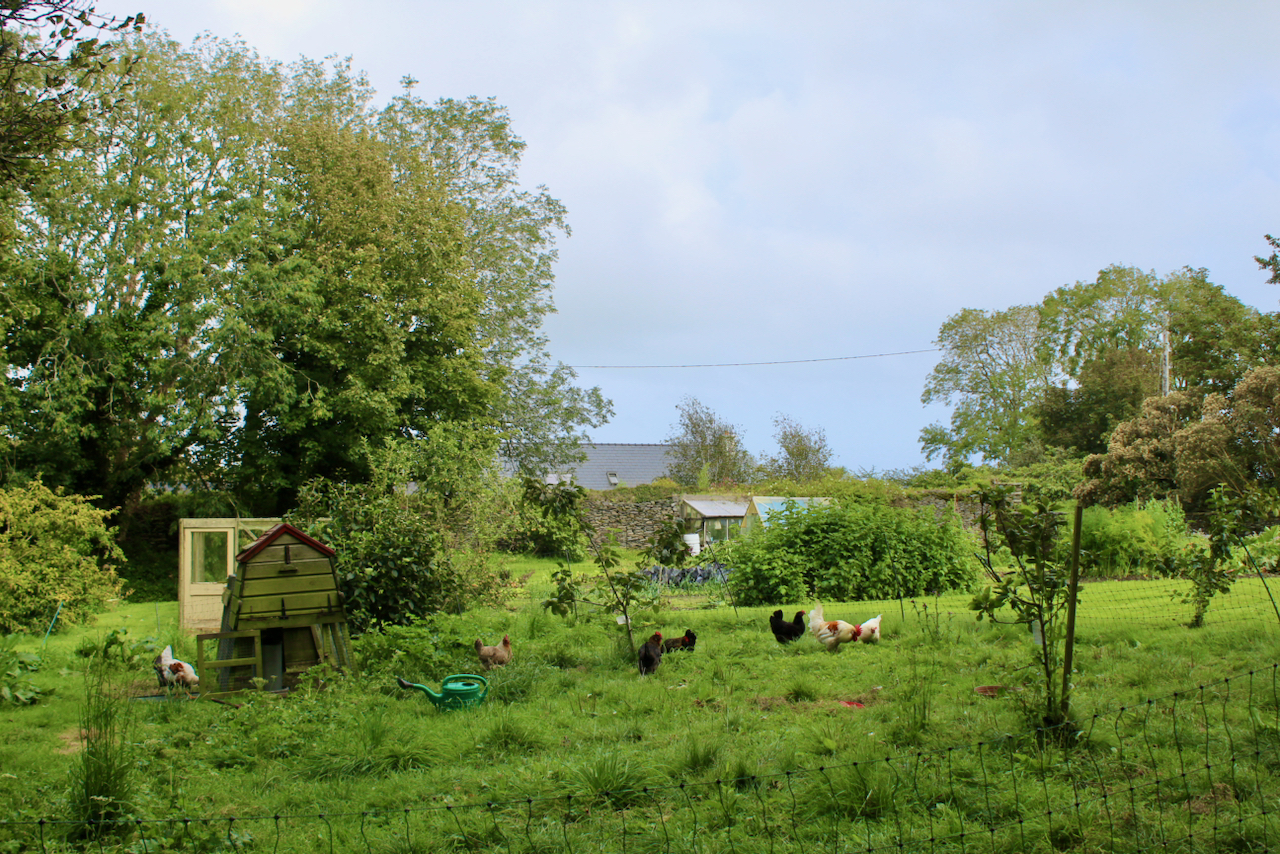
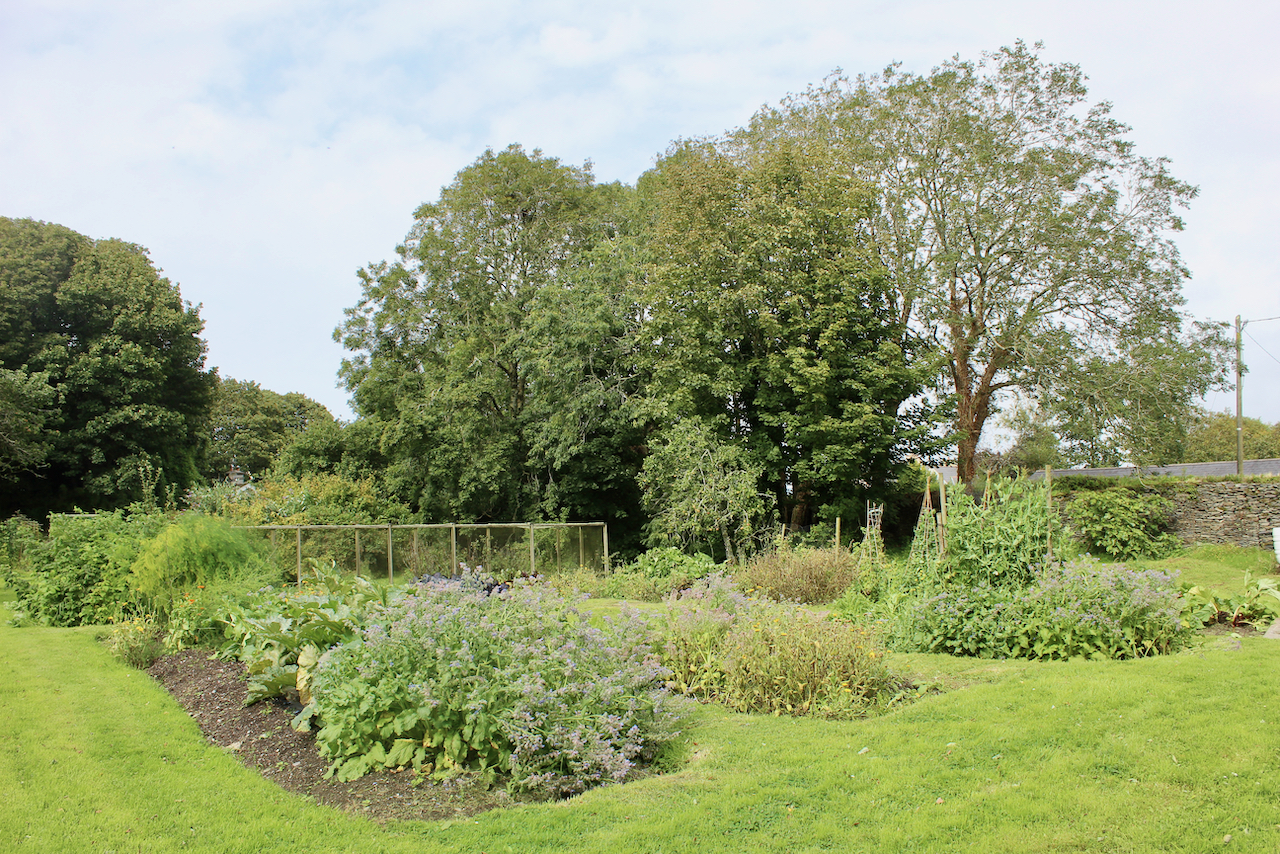
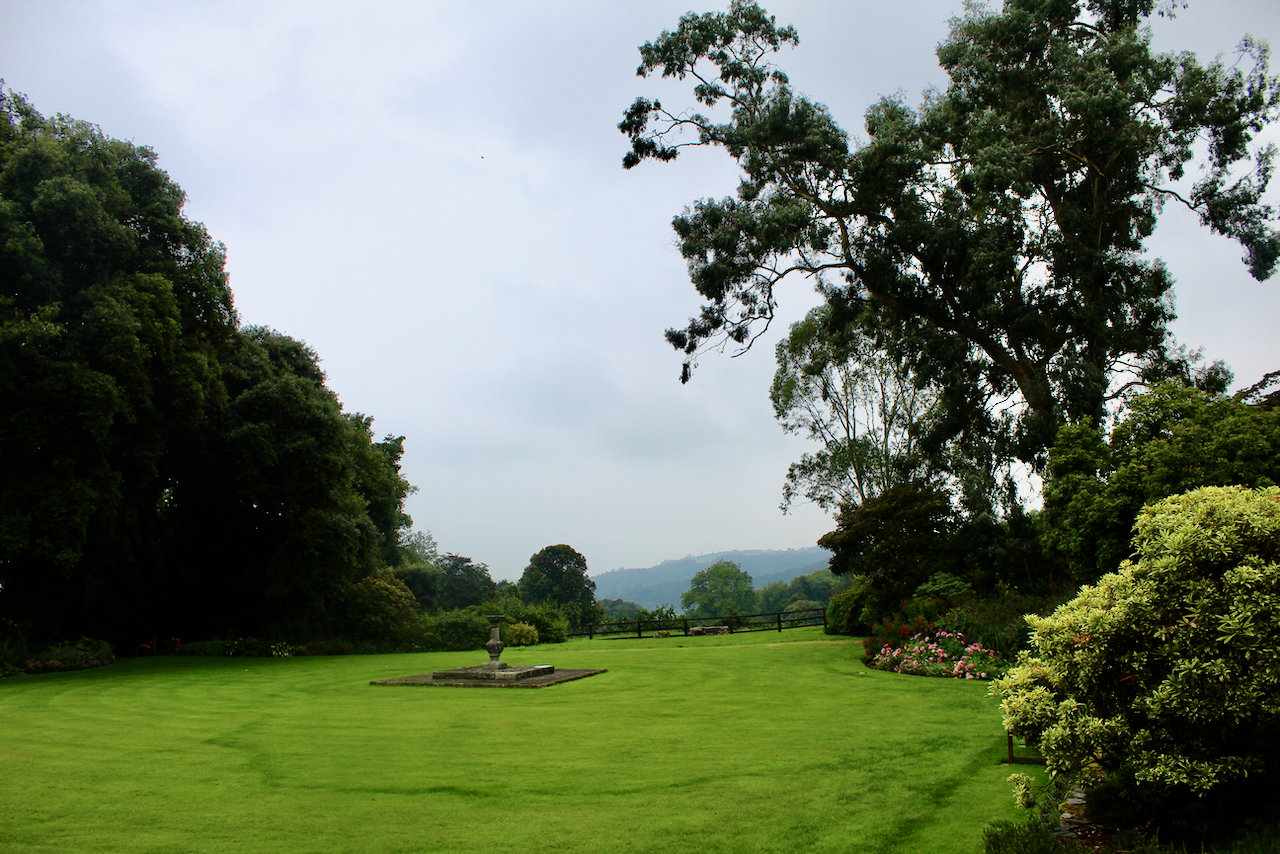
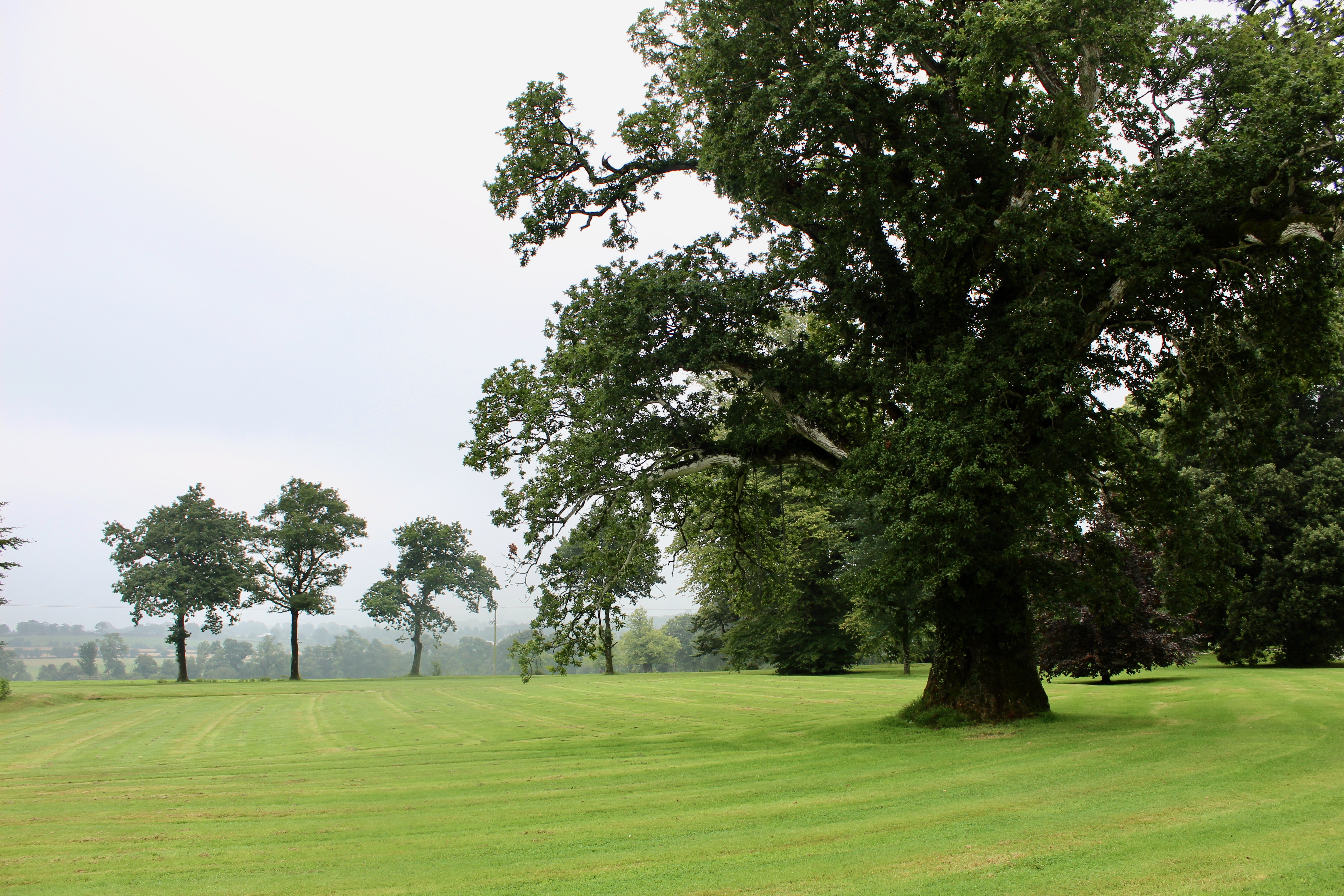
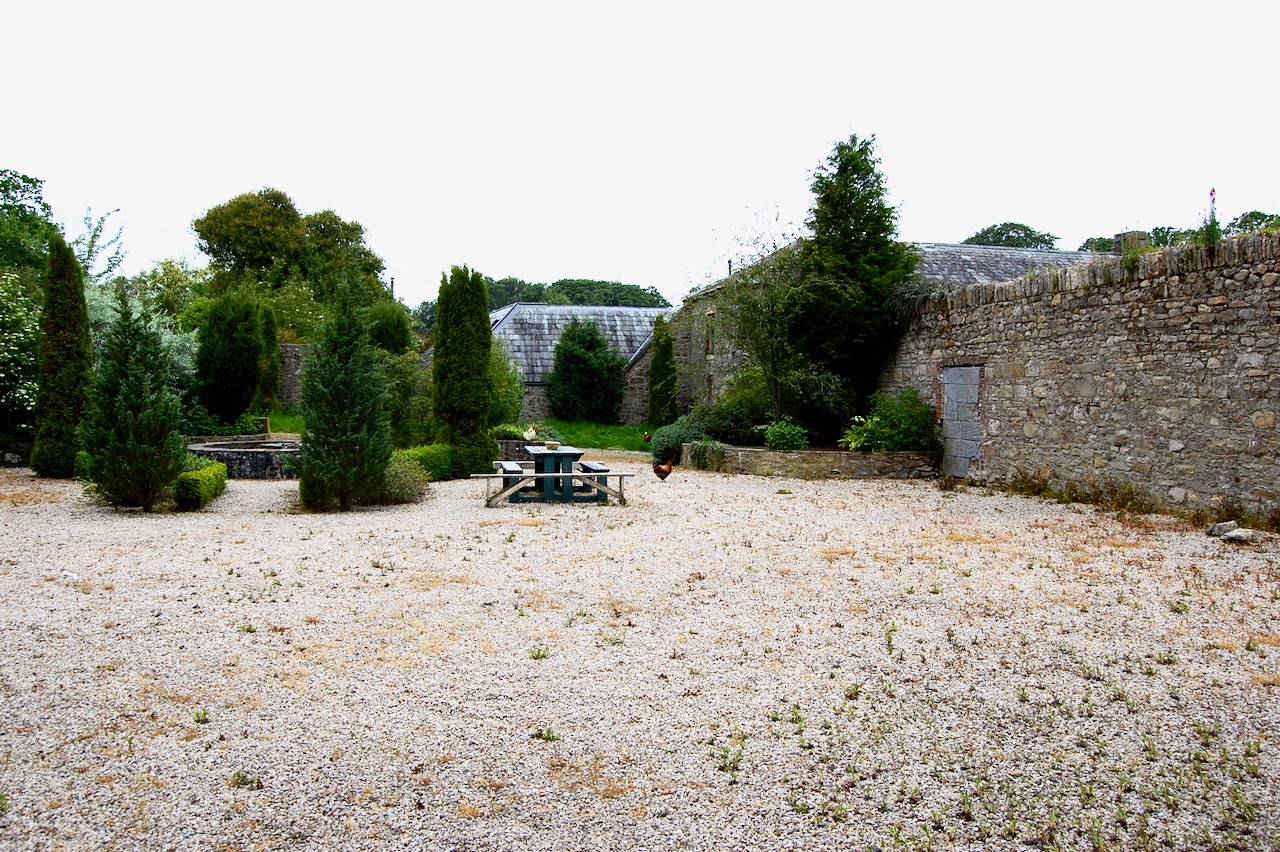
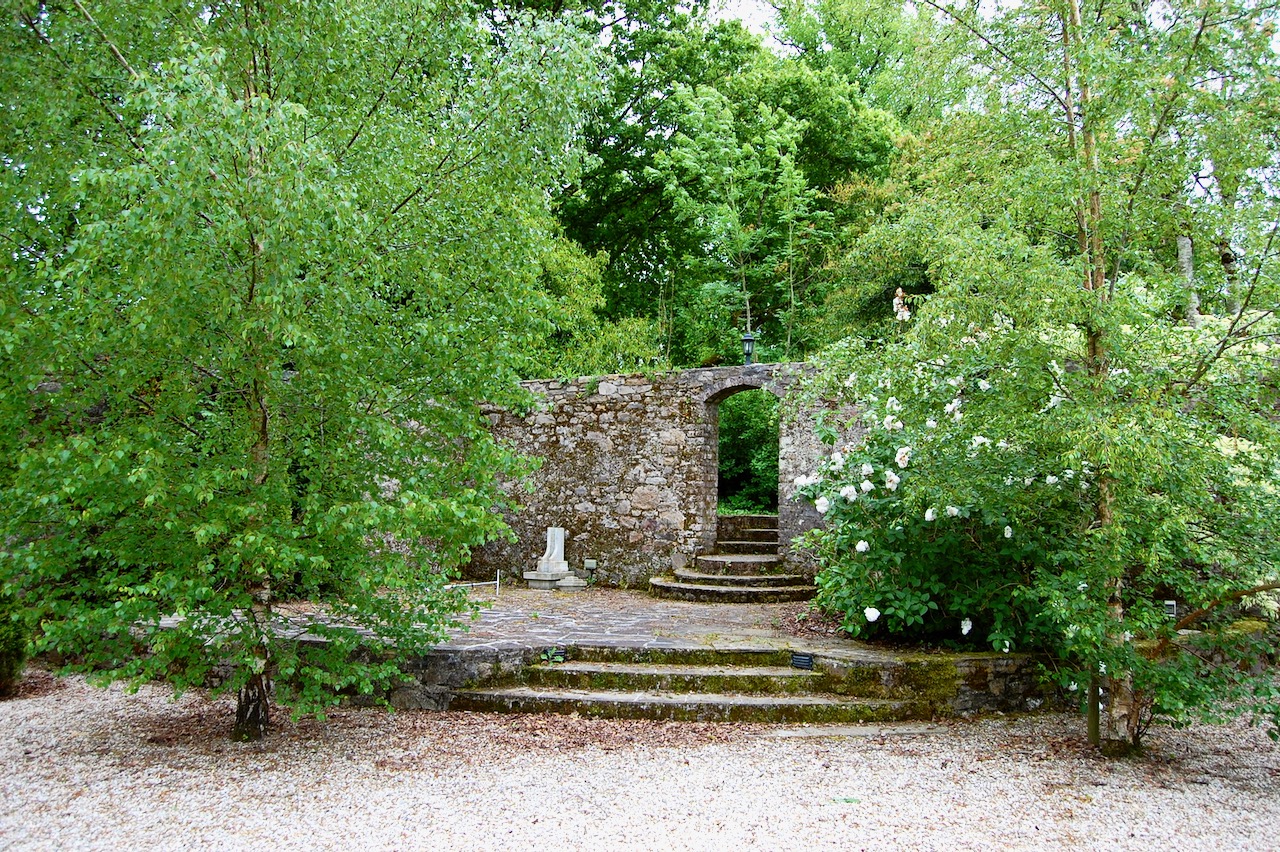
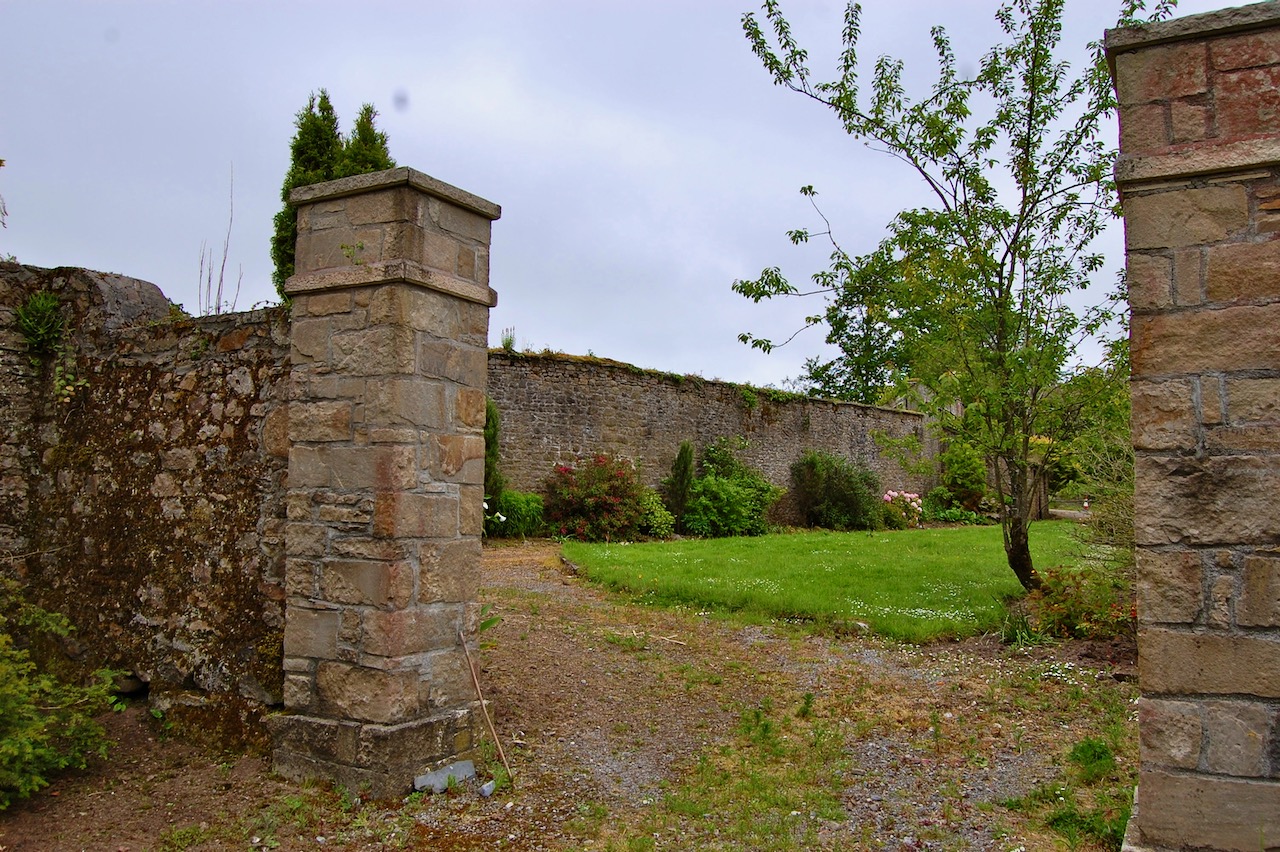
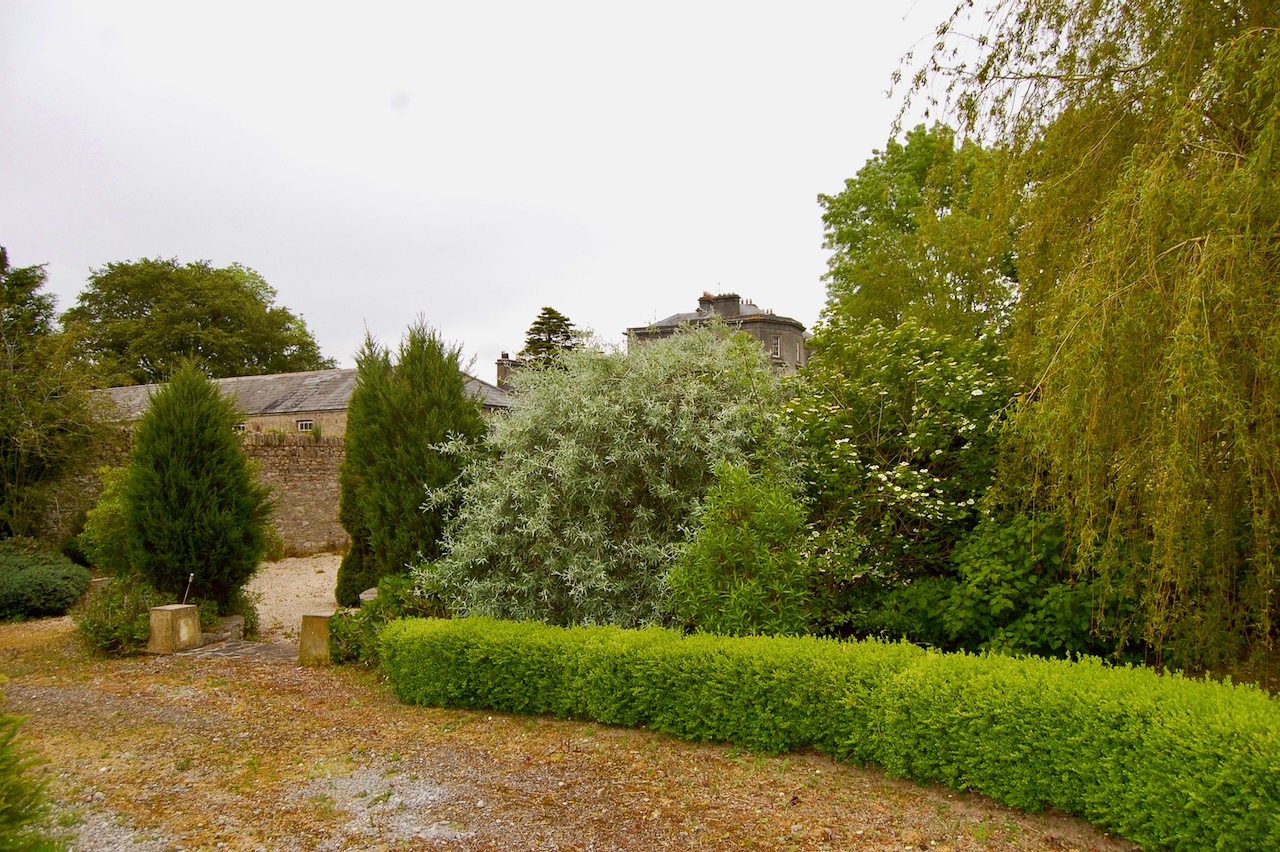
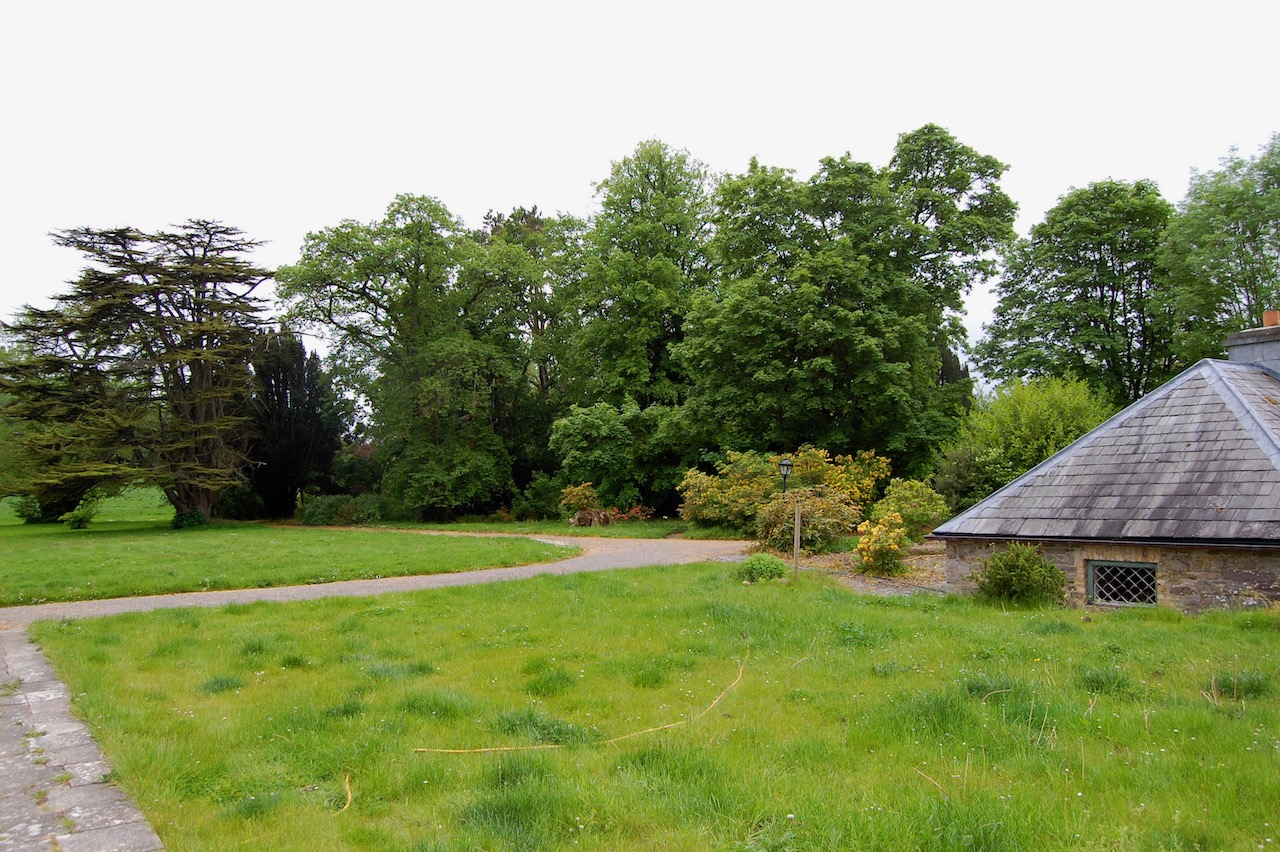
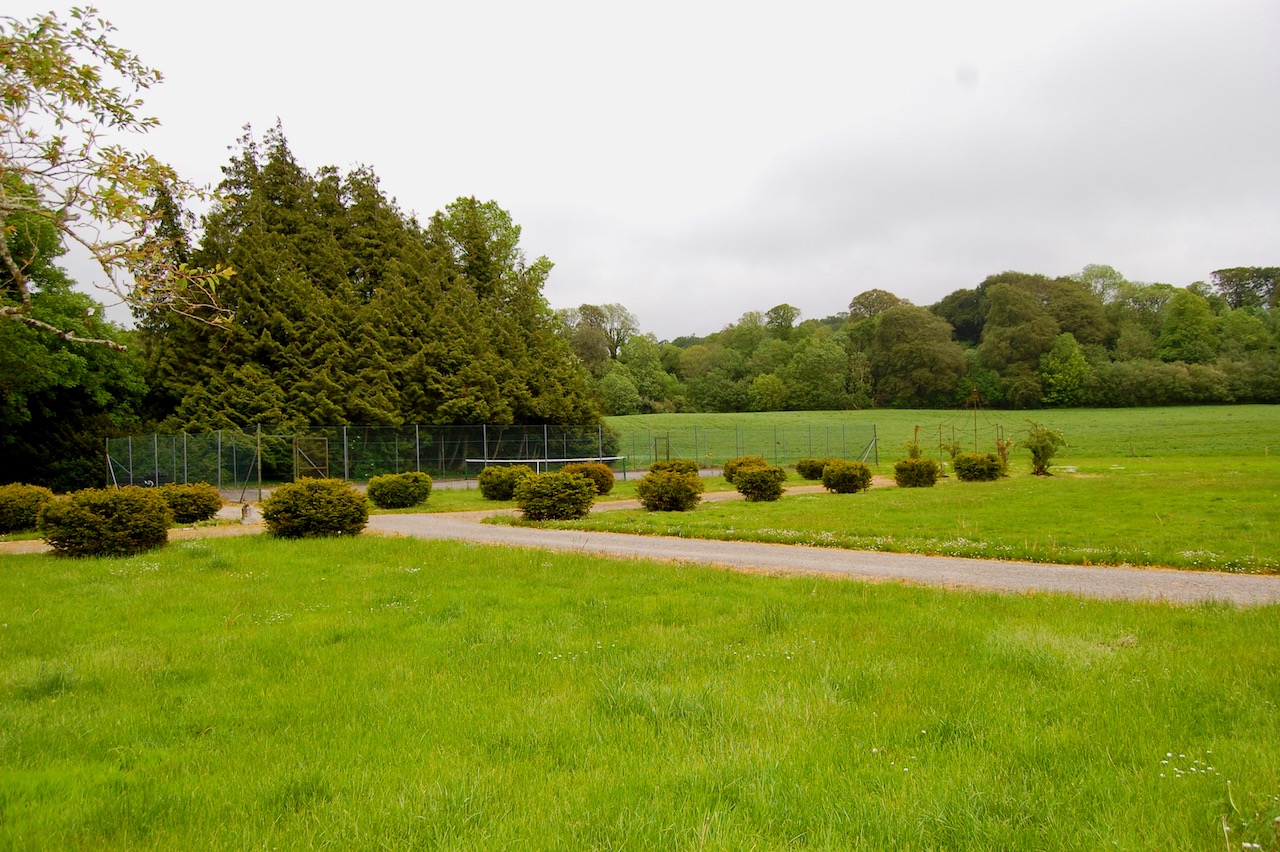
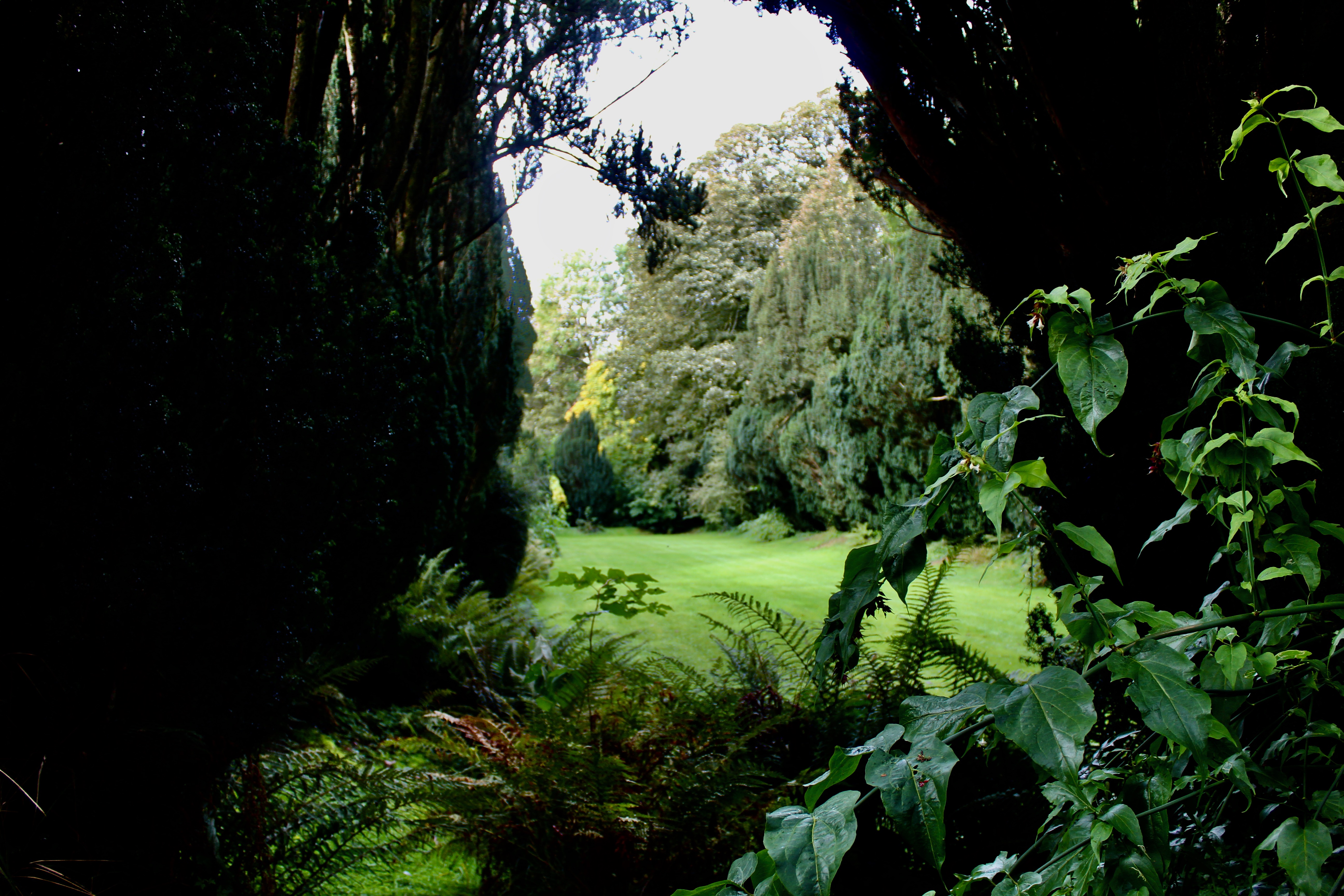
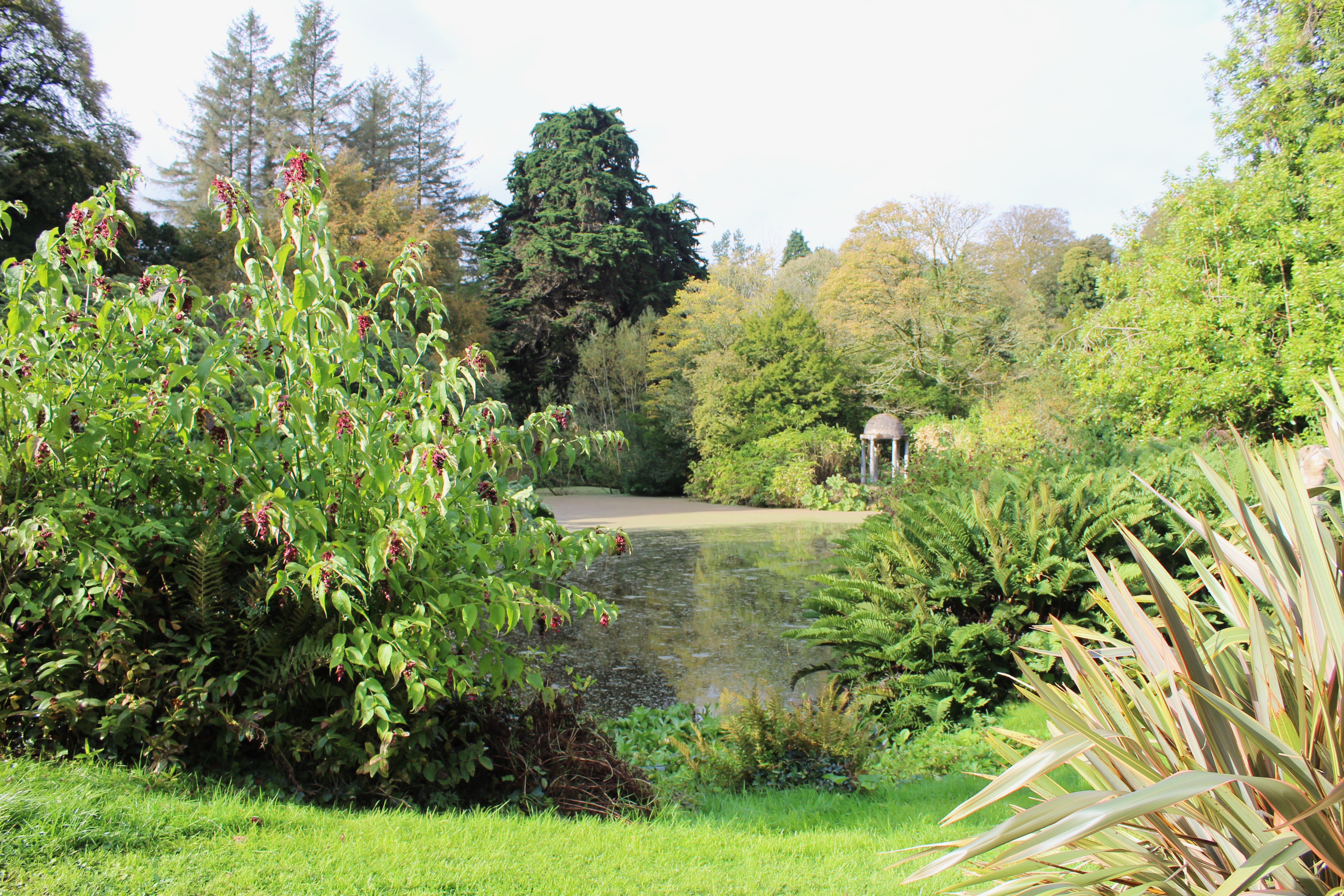
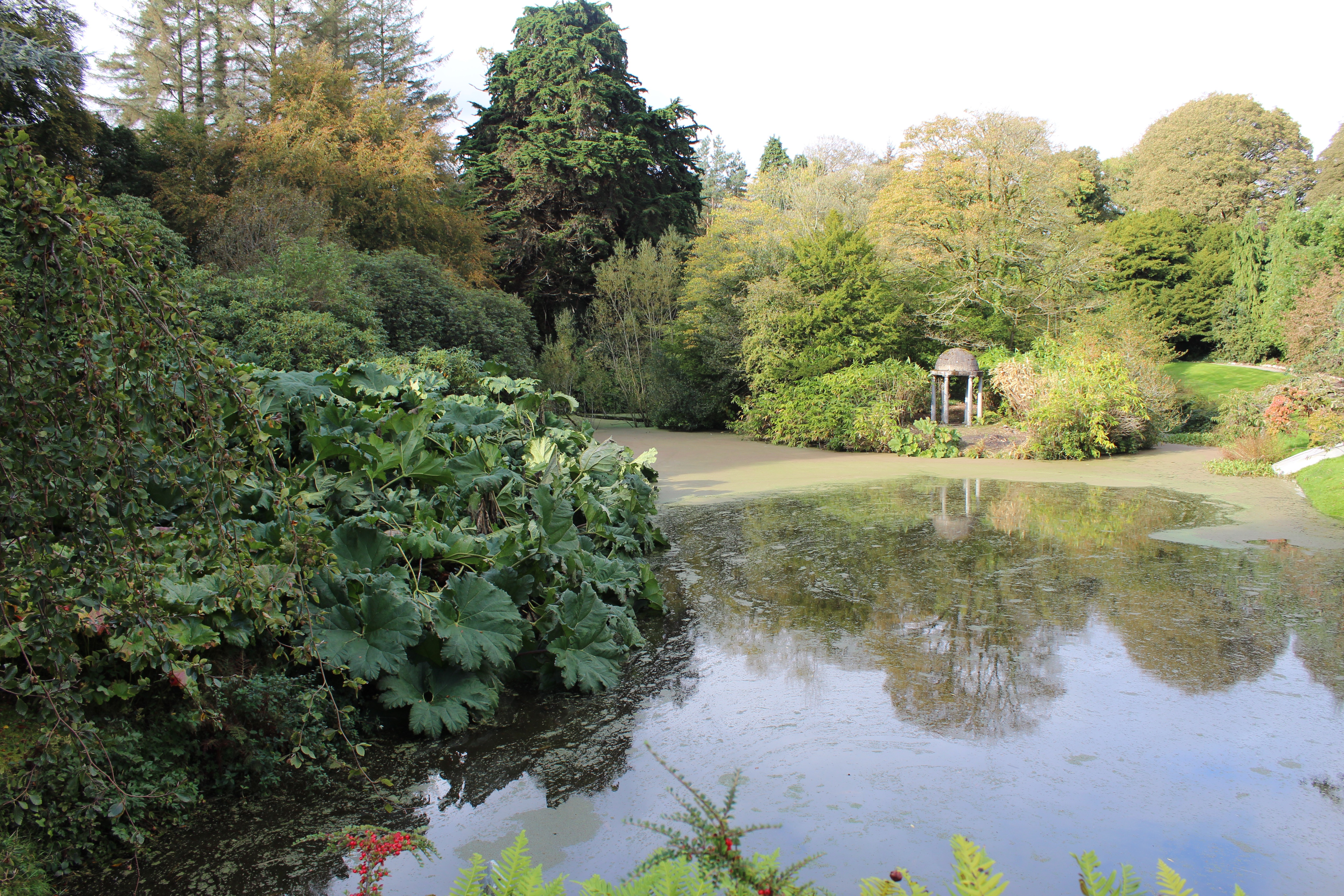
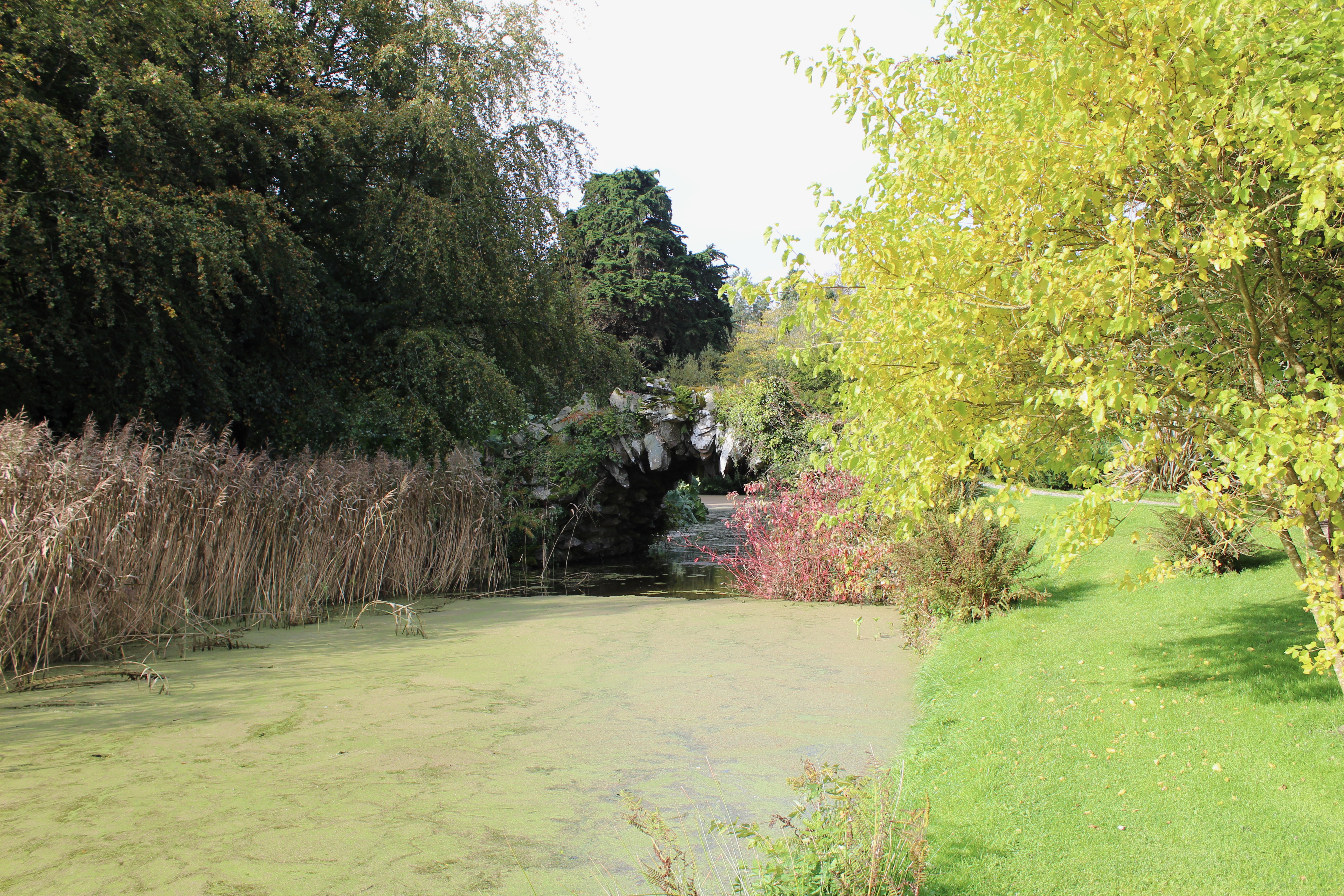
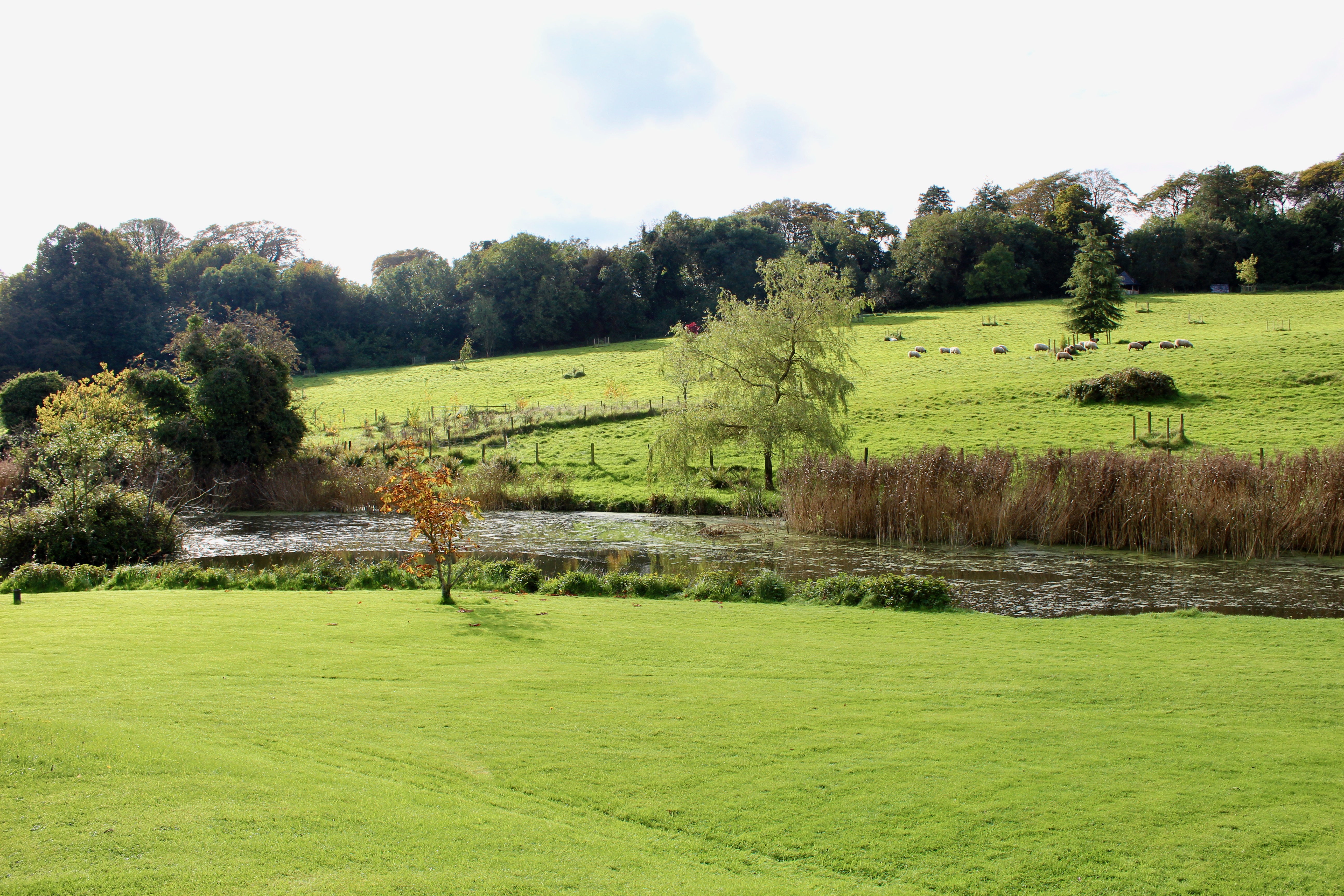
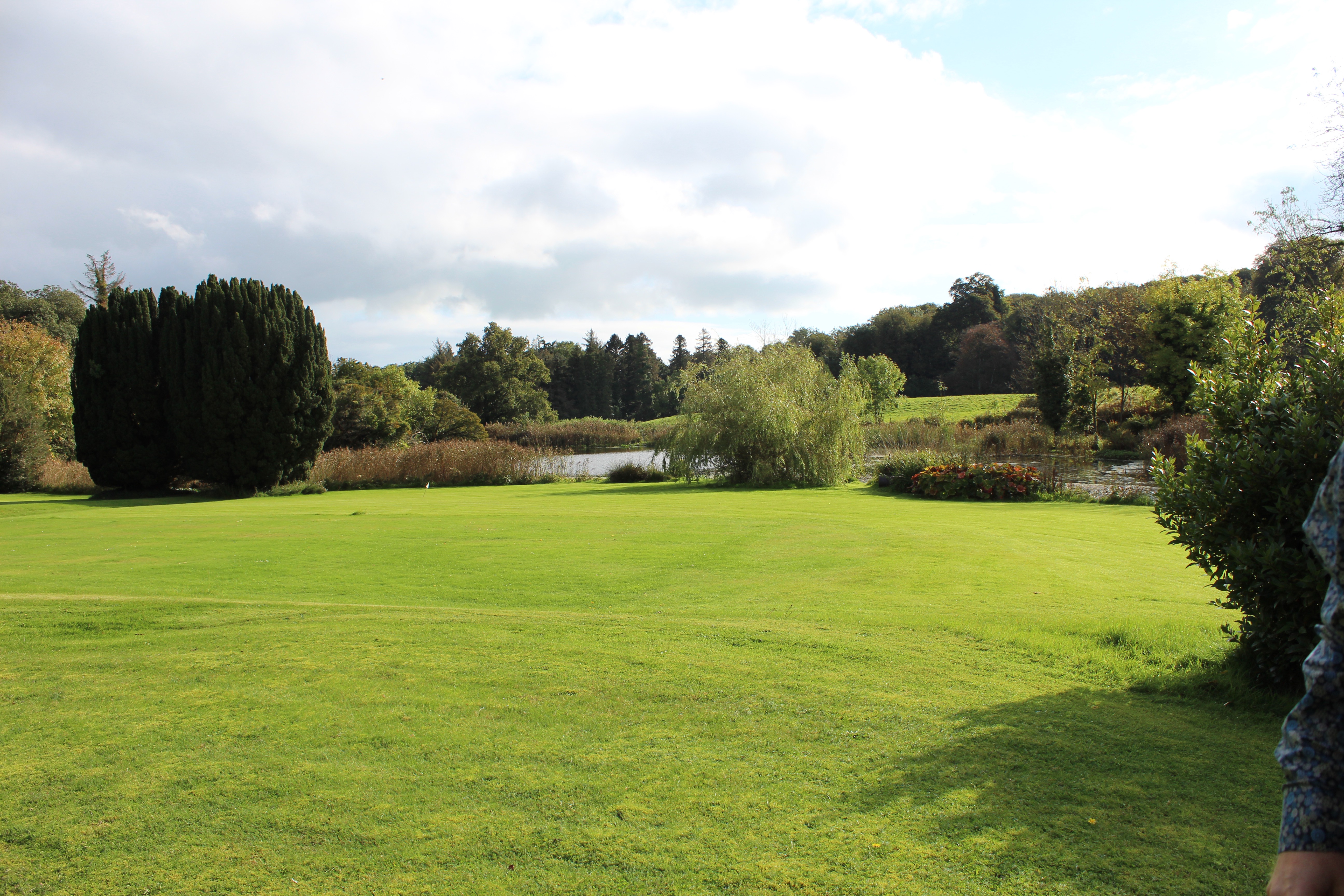
The house is set in eighteen acres of gardens and woodland. 
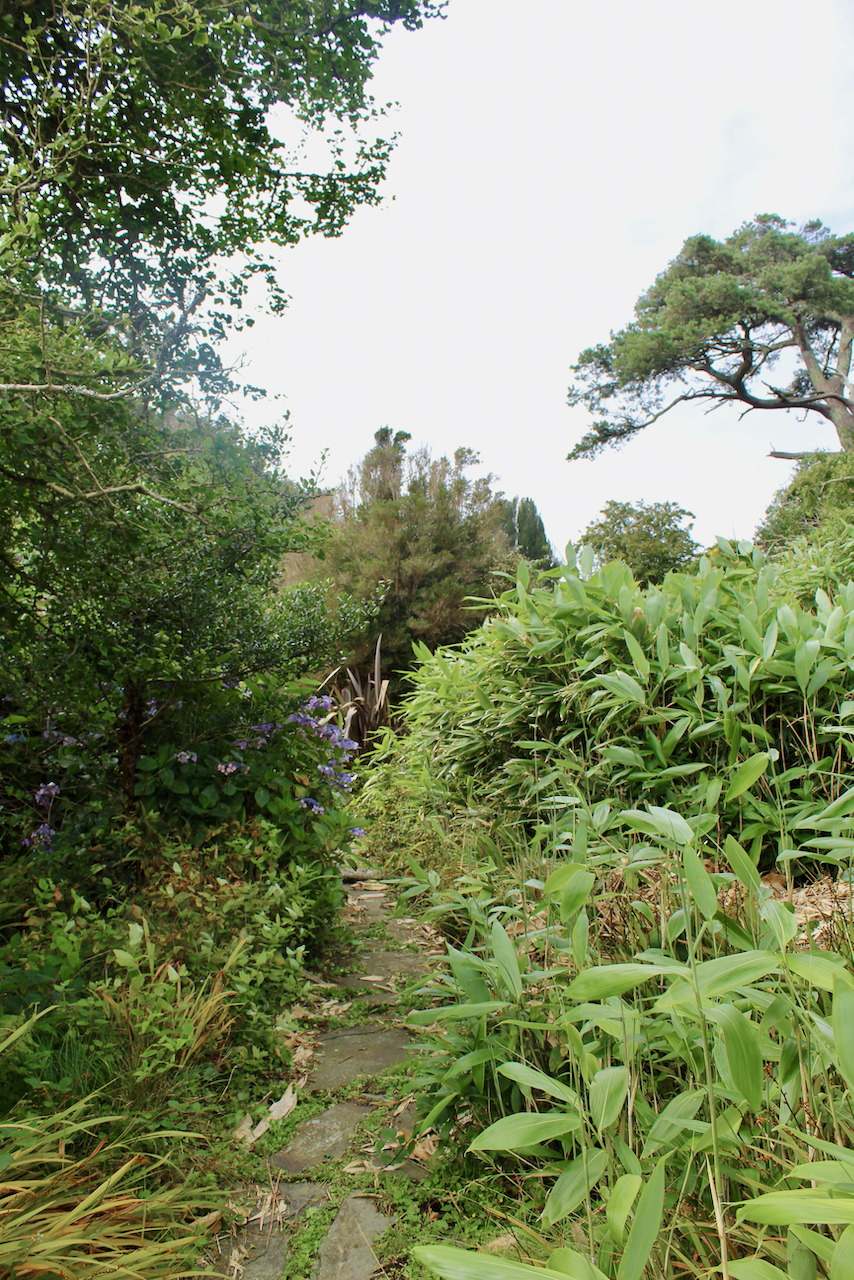
At Drishane House. Photograph © Jennifer Winder-Baggot, www.irishhistorichouses.com
At Drishane House.
At Drishane House. Photograph © Jennifer Winder-Baggot, www.irishhistorichouses.com
At Drishane House, August 2020. Photograph © Jennifer Winder-Baggot, www.irishhistorichouses.com

[1] p. 105. O’Hea O’Keeffe, Jane. Voices from the Great Houses: Cork and Kerry. Mercier Press, Cork, 2013.

[2] p. 121. Hicks, David. Irish Country Houses, Portraits and Painters. The Collins Press, Cork, 2014.

[3] p. 84, O’Hea O’Keeffe.

[4] https://www.buildingsofireland.ie/buildings-search/building/20836017/castle-townsend-castletownsend-castletownshend-co-cork

[5] Keohane, Frank. The Buildings of Ireland: Cork, City and County. Yale University Press, New Haven and London, 2020.

[6] https://www.rosscastle.com and www.drishane.com

[7] p. 105. Bence-Jones, Mark. Life in an Irish Country House. Constable, London. 1996. 

[8] from Moira Somerville’s Edith OE Somerville. An Intimate Recollection. Typescript in Edith Oenone Somerville Archive, referred to by Mark Bence-Jones, Life in an Irish Country House. Constable, London. 1996.

[9] p. 107. Bence-Jones, Mark. Life in an Irish Country House. Constable, London. 1996. 

[10] p. 100. Bence-Jones, Mark. Life in an Irish Country House. Constable, London. 1996. 

[11] p. 122-3, Hicks, David. Irish Country Houses, Portraits and Painters. The Collins Press, Cork, 2014.

[12] Yes indeed, another Somerville-Townshend marriage. The genealogy goes as follows:

Rev William Somerville (1641-1694) m. Agnes Agnew 

Drishane passed to his son, Rev Thomas Somerville (1689-1752), who married Anne Neville 

Drishane passed to their son Thomas Somerville (1725-1793), who married Mary Townsend, daughter of Philip Townsend and Elizabeth Hungerford; grand-daughter of Commander Bryan Townsend (1648-1726). 

Drishane passed to their son, Thomas Townsend Somerville (1725-1811). He married Elizabeth Henrietta Becher Townsend (1776-1832), daughter of John Townsend (1737-1810) [granddaughter of  Richard Townsend and Elizabeth Becher, great-granddaughter of Commander Bryan Townsend (1648-1726)] and Mary Morris.

Drishane passed to the son, Col Thomas Somerville (1798-1882). He married Henrietta Augusta Townshend, daughter of Richard Boyle Townsend (1756-1826), who is great-grandson of Commander Bryan Towsend (1648-1726). 

[ie. Richard Boyle Townsend (1756-1826) is son of Richard Townsend (1725-1783) and Elizabeth Fitzgerald, who is son of Richard Townsend (1684-1742) and Elizabeth Becher, who is son of Commander Bryan Townsend (1648-1726).] 

Drishane passed to son Lieut Col. Thomas Somerville (1824-1898), who married Adelaide Eliza Coghill. 

Drishane passed to their son, (Thomas) Cameron Somerville, the brother of Edith. He died, and Drishane passed via his younger brother Captain Aylmer Coghill Somerville to his son Desmond Somerville. 

[13] p. 100-01. Bence-Jones, Mark. Life in an Irish Country House. Constable, London. 1996.

[14] p. 102. Bence-Jones, Mark. Life in an Irish Country House. Constable, London. 1996. Stephen and I are fans of Michael Portillo’s travel shows, where he takes trains and follows his Bradshaw’s guide, so I like this detail!

[15] https://roaringwaterjournal.com/tag/church-of-st-barrahane/

[16] p. 108. Bence-Jones, Mark. Life in an Irish Country House. Constable, London. 1996. 

[17] p. 113. O’Hea O’Keeffe.

https://www.buildingsofireland.ie/buildings-search/building/20848098/point-house-point-road-crosshaven-crosshaven-co-cork

[18] p. 106. Bence-Jones, Mark. Life in an Irish Country House. Constable, London. 1996.

[19] p. 130. Hicks, David. Irish Country Houses, Portraits and Painters. The Collins Press, Cork, 2014.

[20] p. 109. O’Hea O’Keeffe.

Text © Jennifer Winder-Baggot, www.irishhistorichouses.com

Covid times, and planning ahead

Ideally I would like to continue publishing a blog entry every week but I am still catching up on places I have visited, writing and researching and seeking approval from home-owners, and am unable to keep up the pace!

Doneraile Court, County Cork. Photograph © Jennifer Winder-Baggot, www.irishhistorichouses.com
Deer in the park at Doneraile. Photograph © Jennifer Winder-Baggot, www.irishhistorichouses.com

We visited some big houses that are not on the Section 482 revenue list when we were in County Cork last year during Heritage Week, including Doneraile Court and Fota, both open to the public and well worth a visit. [1] If I run out of places to write about on the section 482 list, I will write about them! But I still have to write about our visit to Cabra Castle, County Cavan, before Christmas last year! [2] We had a wonderful treat of being upgraded to a bedroom suite in the Castle, the Bridal Suite, no less, with our own rooftop jacuzzi.

Photograph © Jennifer Winder-Baggot, www.irishhistorichouses.com
The Bridal Suite at Cabra Castle, County Cavan. Photograph © Jennifer Winder-Baggot, www.irishhistorichouses.com
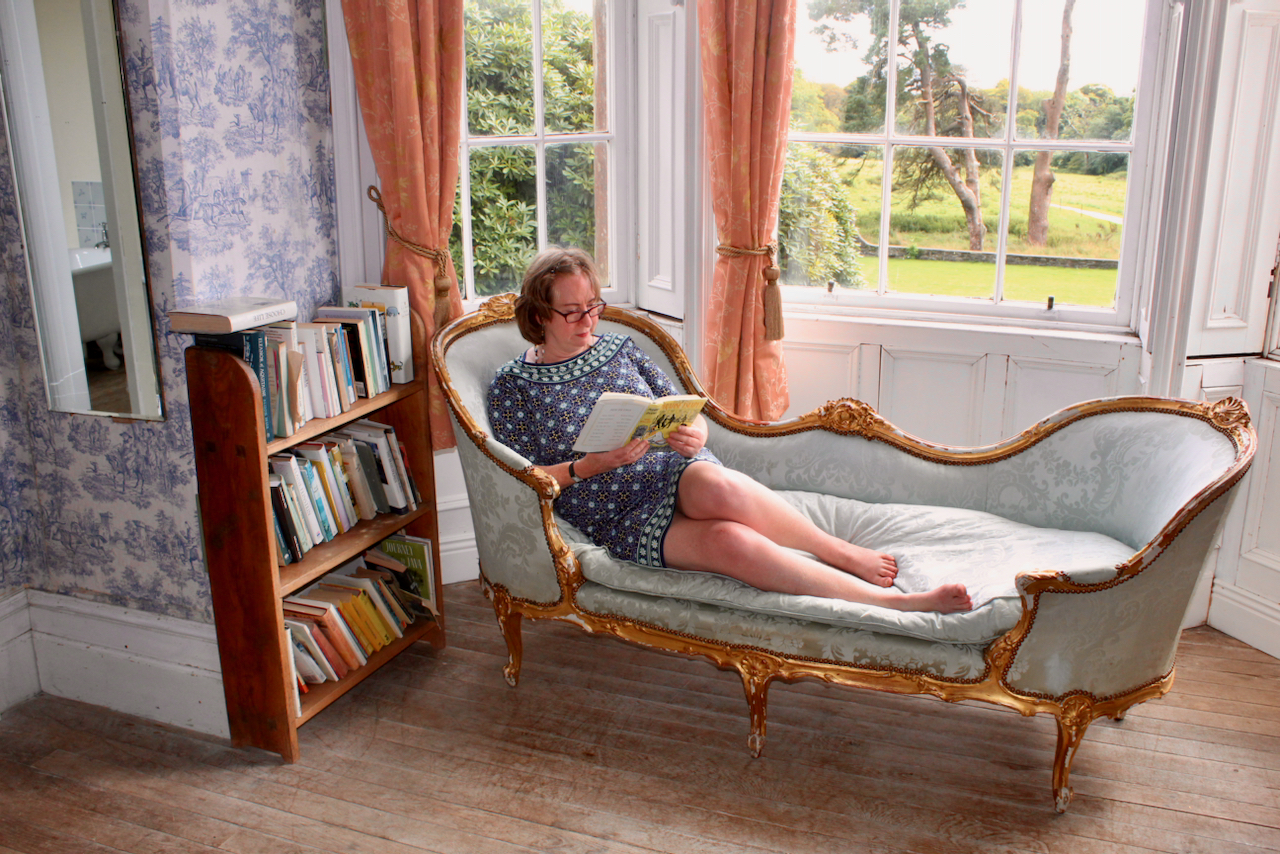
The 2021 Revenue list of 482 Properties has not yet been published, and I am not sure when we will be able to visit places again, due to Covid transmissibility. I have already mapped out a year’s worth of visits, all around Ireland, and have even booked to stay in some exciting looking houses, but I don’t know what is going to be open – I have been planning around the 2020 list, assuming opening dates, once places do open, will be similar to last year.

In the meantime I can look at photographs and dream, and work on my own home (I painted the bedroom sage green) and garden (my potatoes are chitting) and research upcoming visits. I’m currently reading Turtle Bunbury’s book about the landowning families in County Kildare, and Mark Bence-Jones’s Life in an Irish Country House, and Somerville and Ross’s The Real Charlotte.

We were privileged to be able to stay in Mark Bence-Jones’s house last year for a wonderful week. [3]

Photograph © Jennifer Winder-Baggot, www.irishhistorichouses.com
Glenville Park, the home of the late Mark Bence-Jones, County Cork. Photograph © Jennifer Winder-Baggot, www.irishhistorichouses.com

I will be writing soon about more big houses and in the meantime, I hope you are able to stay safe and healthy and happy in these Covid times.

Fota House, County Cork. Photograph © Jennifer Winder-Baggot, www.irishhistorichouses.com

[1] http://doneraileestate.ie

https://fotahouse.com

[2] https://www.cabracastle.com

[3] http://www.glenvillepark.com

Moyglare House, County Meath W23 RT91 – section 482

www.moyglaremanor.ie

Open dates in 2026: Feb 2-6, 9-13, 16-20, 23, 27, June 1-30, July 1, Aug 15-23, 9am-1pm

Fee: adult/OAP €12, child/student €6

donation

Help me to pay the entrance fee to one of the houses on this website. This site is created purely out of love for the subject and I receive no payment so any donation is appreciated!

€15.00

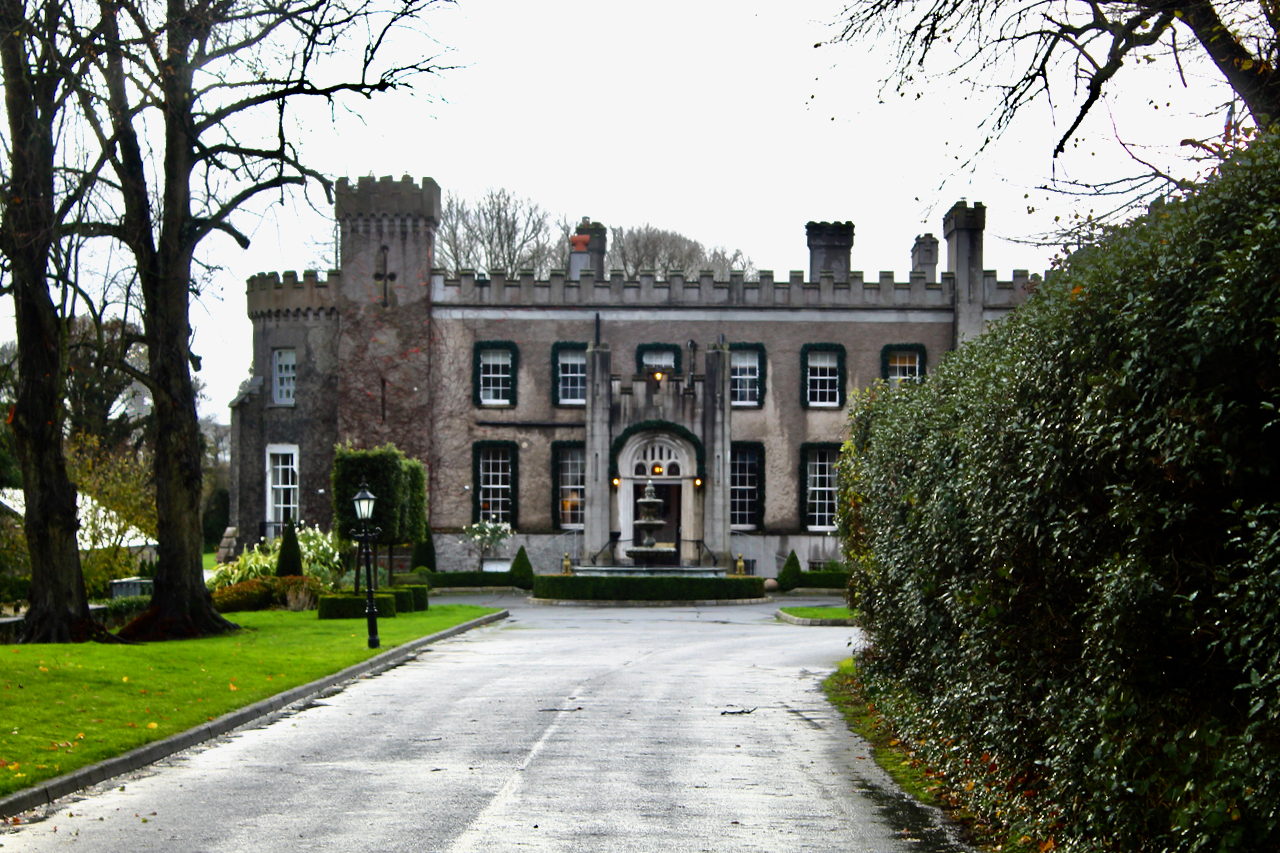
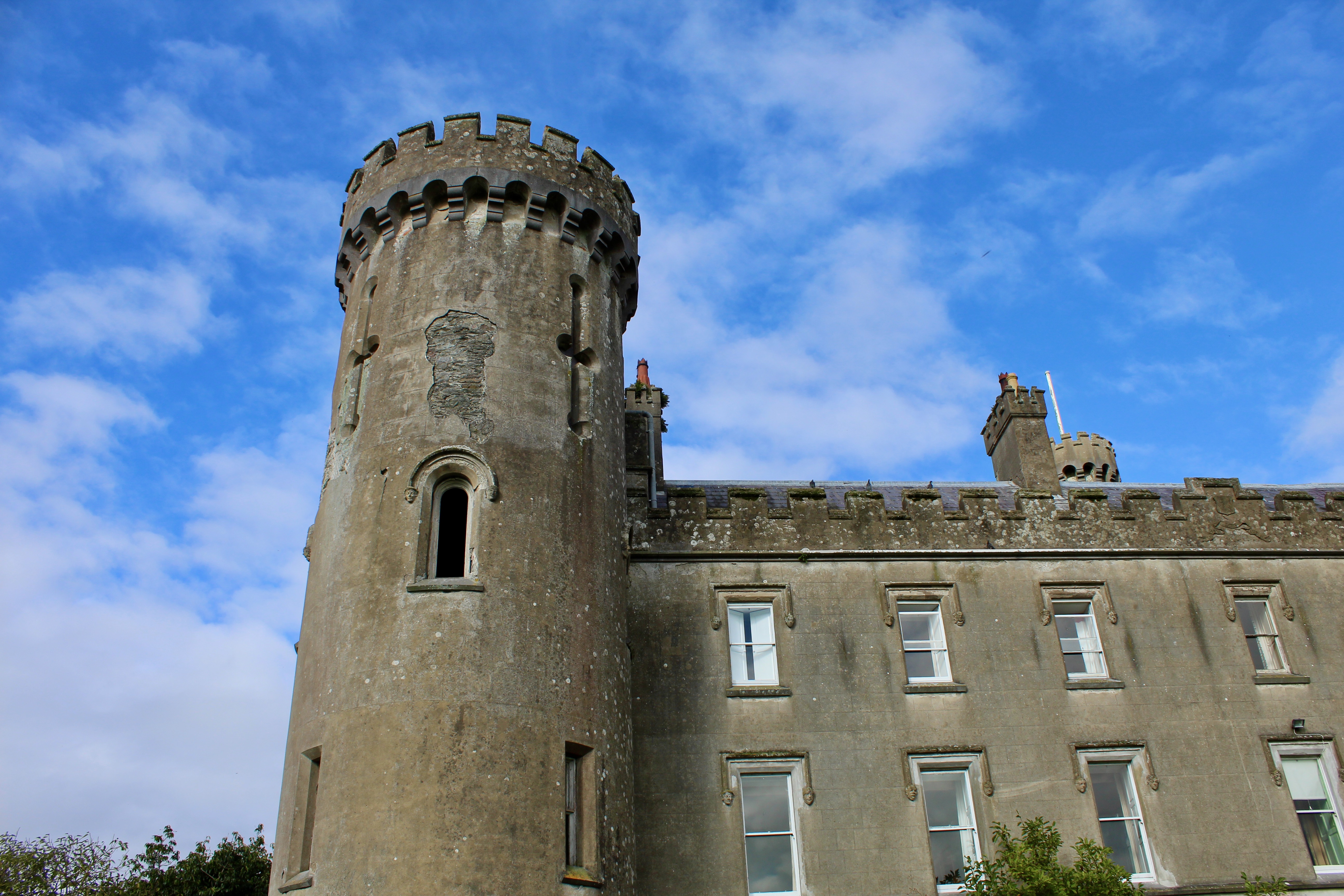
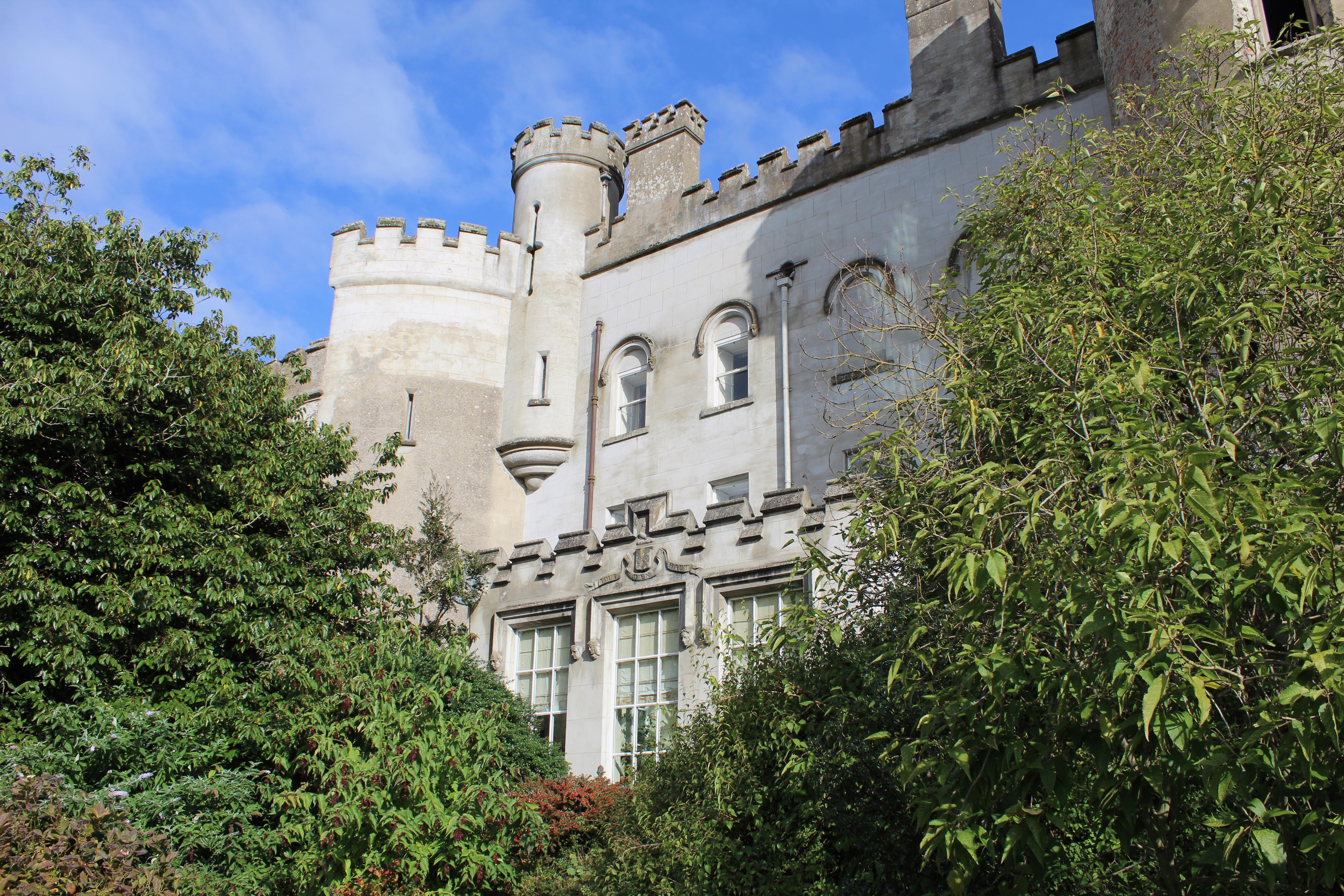
Moyglare House. Photograph © Jennifer Winder-Baggot, www.irishhistorichouses.com
Moyglare House is listed as being in County Meath under section 482 but the postal address is County Kildare – it lies on the border, just outside the town of Maynooth. The house has a long avenue approach, between trees and fields.

Having been a hotel called Moyglare Manor in the 1970s-90s which boasted high profile guests such as Hilary Clinton and Robert Redford, the house is once again a home, restored by Dr. Angela Alexander, the foremost academic on Dublin cabinet makers from the Irish Regency period, and her husband Malcolm. [1] The construction of the house may have begun as early as the 1750s but was not completed until twenty years or so later.

It is three storeys over a basement and two rooms deep. The entrance front has five bays, with two flanking curtain walls, and the garden front has six bays. It has wings which were added at a later date. The front central three bays form a bow rising the full height of the house. The one-story balustraded portico containing the front door was added in 1990. The doorcase has Ionic columns, which Christine Casey and Alastair Rowan tell us in their book on North Leinster, are “taken exactly from William Pain’s Builder’s Companion (first published in 1758).” [2] The original doorcase with its fanlight, mirrored in the outer doorcase, is inside the portico. The finishing of the new door and windows matches the original limestone doorframe and protects it from the elements. There is a window on either side of the front door in the porch. 

The sloped roof is partly concealed by the parapet. The corners have raised limestone quoins. When it was converted into a hotel it was enlarged on the west side.

Construction began sometime after 1737 when the land was acquired by John Arabin (1703-1757), son of a French Huguenot who fled France when his land was seized after King Louis XIV revoked the Edict of Nantes in 1685. [3] The Edict of Nantes, of 1598, signed by King Henry IV of France, granted rights to the French Protestants to practise their religion without persecution from the state. When revoked by the Edict of Fontainebleau, Louis XIV’s dragoons destroyed Protestant schools and churches and the Huguenots were forced to convert or flee. John’s father, Bartelemy, or Bartholomew, joined the army of William III and fought in Ireland in the Battle of the Boyne in 1690, as did another Huguenot, Jean Trapaud, whose property in France was also seized. Bartholomew and Jean both settled in Ireland, and Bartholomew was closely connected to the Huguenot community in Portarlington. He died in 1713. [4]

The area in Dublin where I live was also a Huguenot area. In Dublin they brought their skills in weaving and cloth-making, which brought prosperity and recognition to the Liberties of Dublin. They brought their business acumen also. 

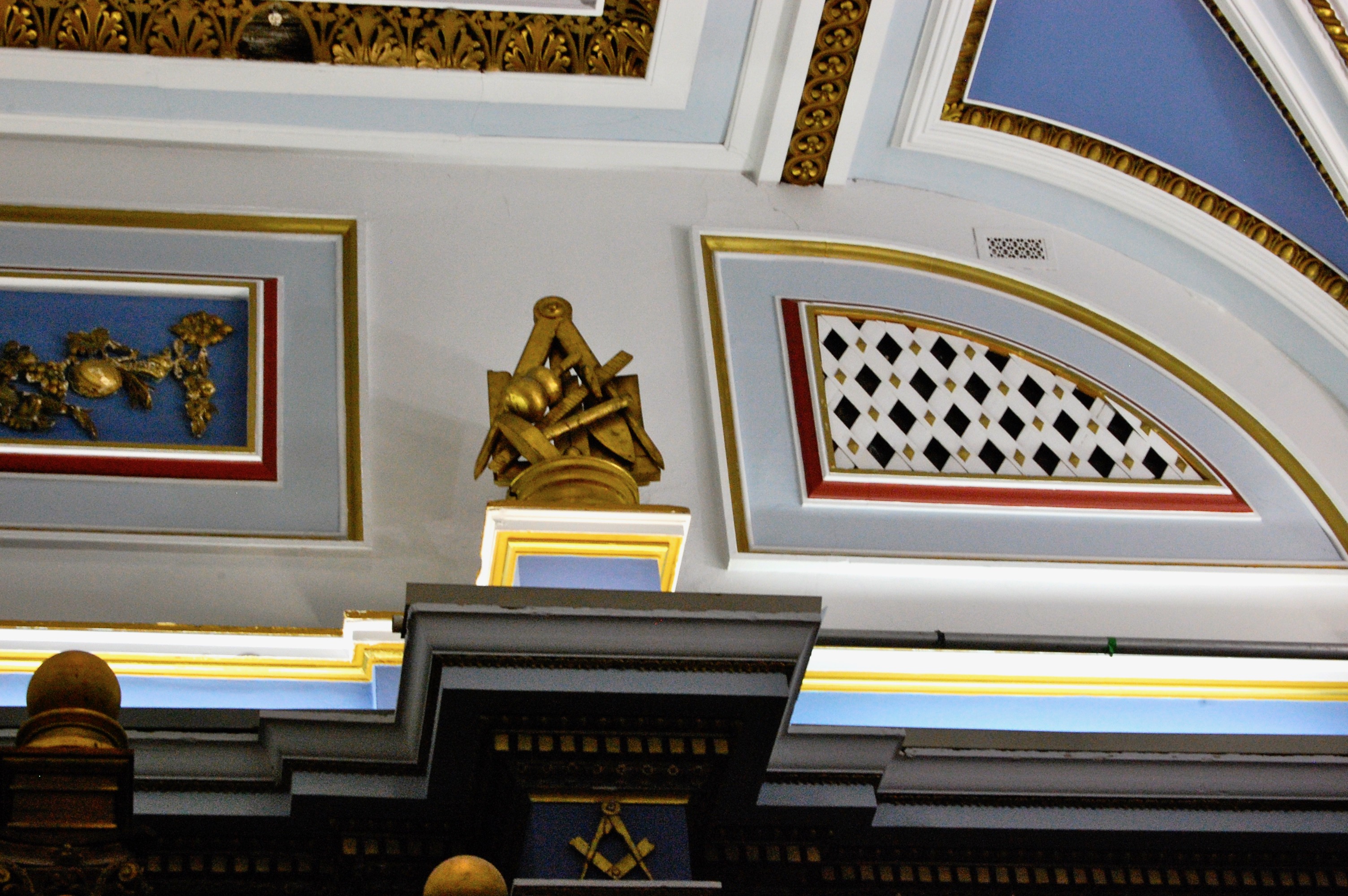
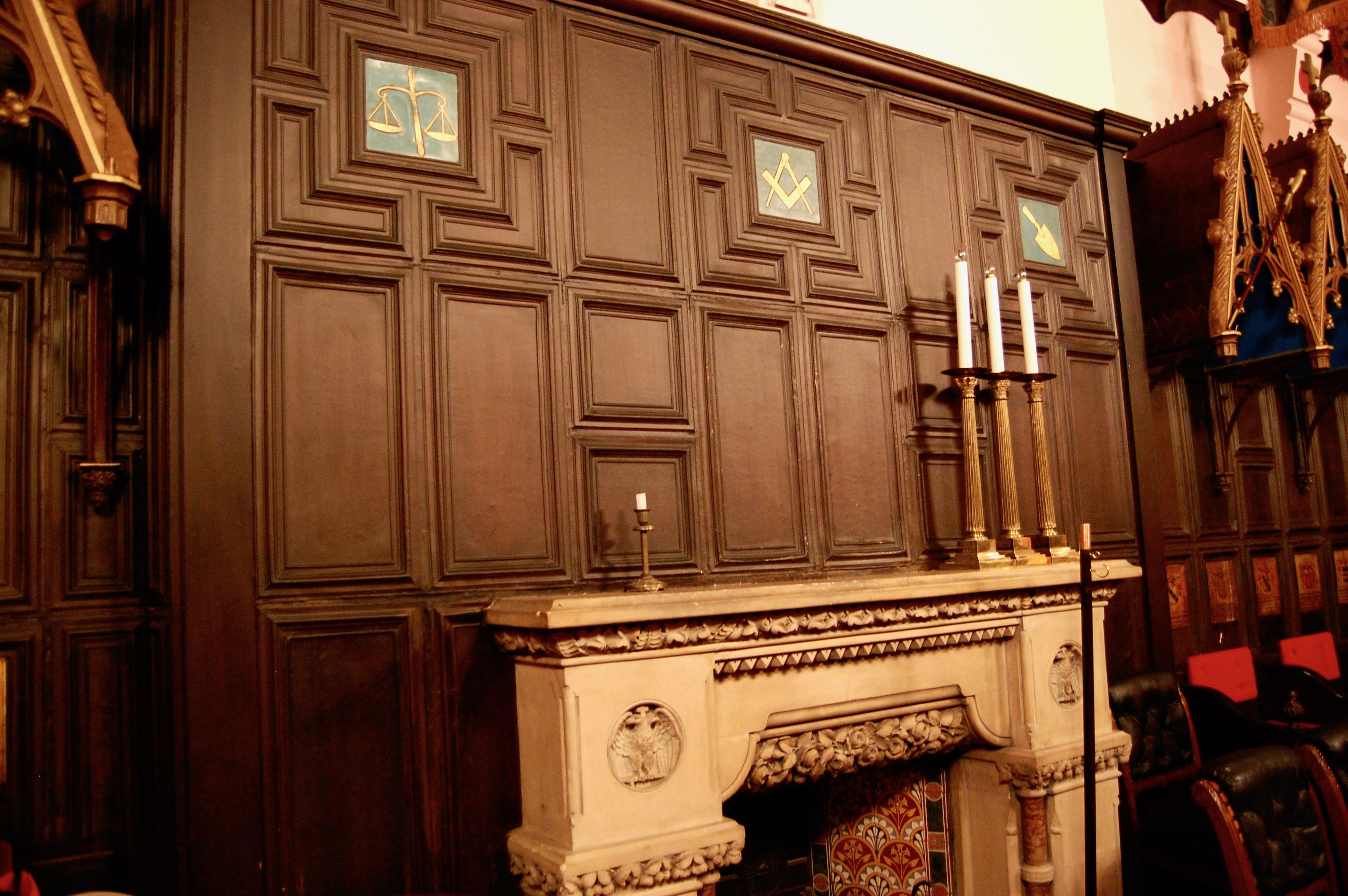
Bartholomew’s son John Arabin also served in the military. He married Jeanne Marie Bertin, also of French background: her father was a wealthy merchant from Aquitaine who settled in County Meath. John was made Captain-Lieutenant of the 1st Carabiniers in Ireland in 1733, and became a Freemason, serving as Treasurer. Soon after becoming Treasurer of the Irish Grand Lodge he purchased land at Moyglare. 

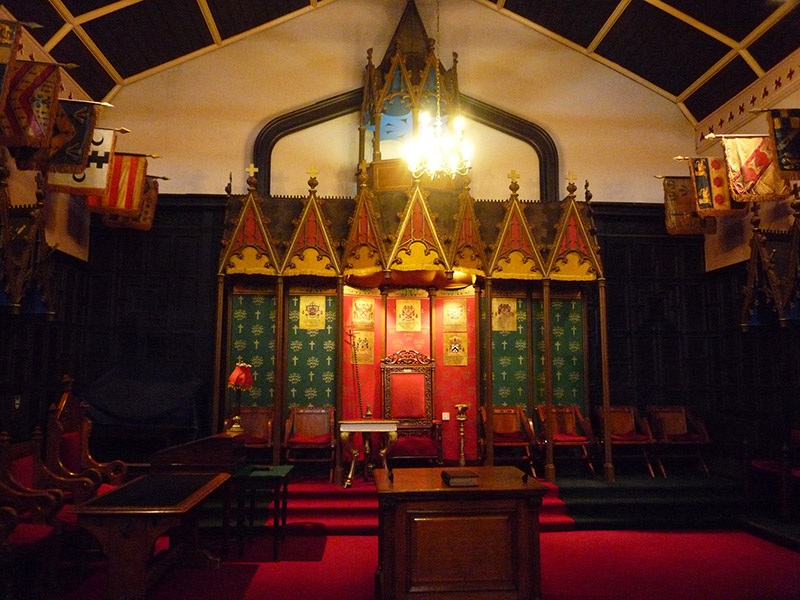
A room inside the Freemasons Hall on Molesworth Street in Dublin. This wasn’t built until 1866 but perhaps John Arabin sat in halls like this one. Photograph from the National Inventory of Architectural Heritage. One can visit the Freemason Hall usually on Culture Night in Dublin. Photograph © Jennifer Winder-Baggot, www.irishhistorichouses.com
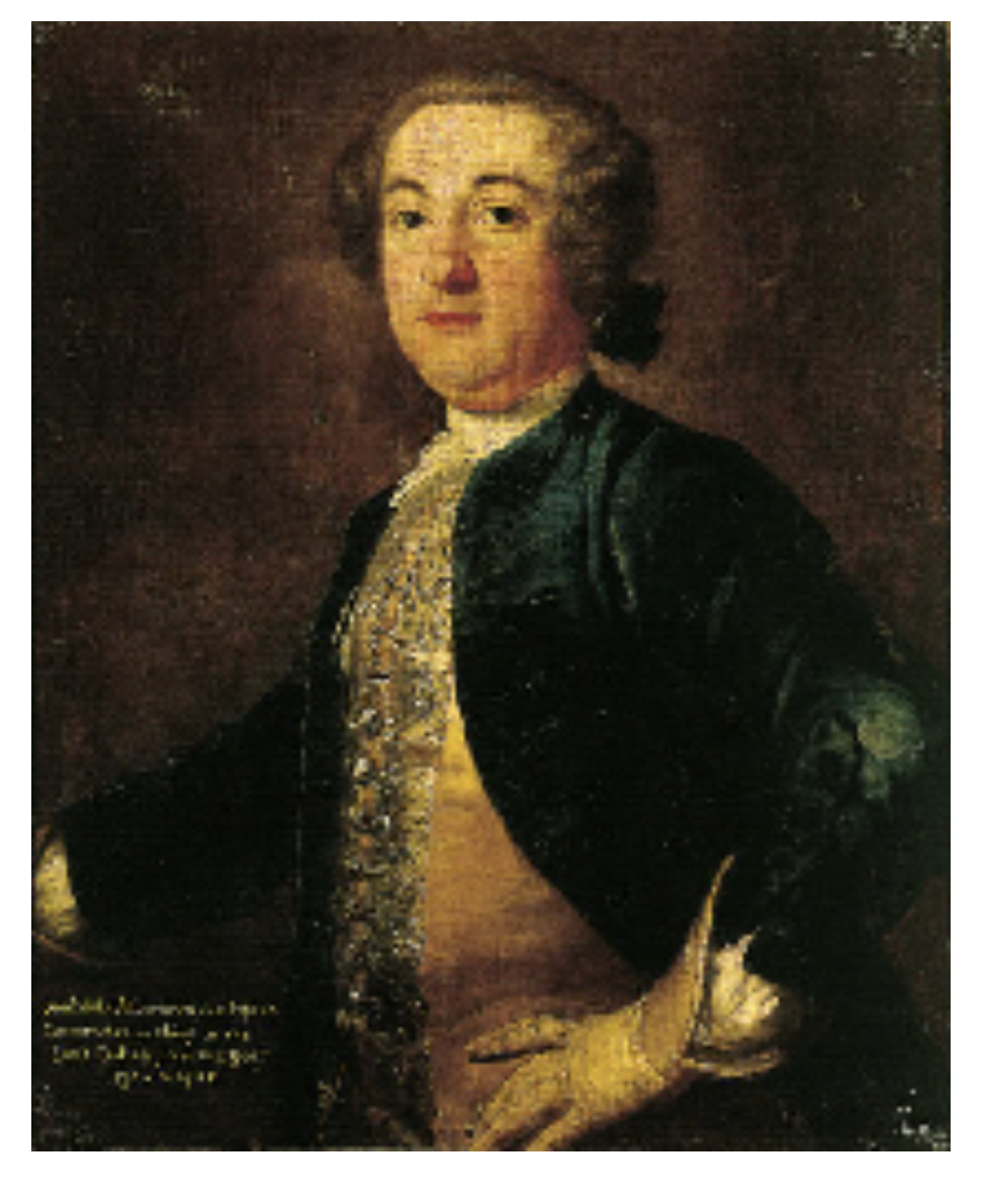
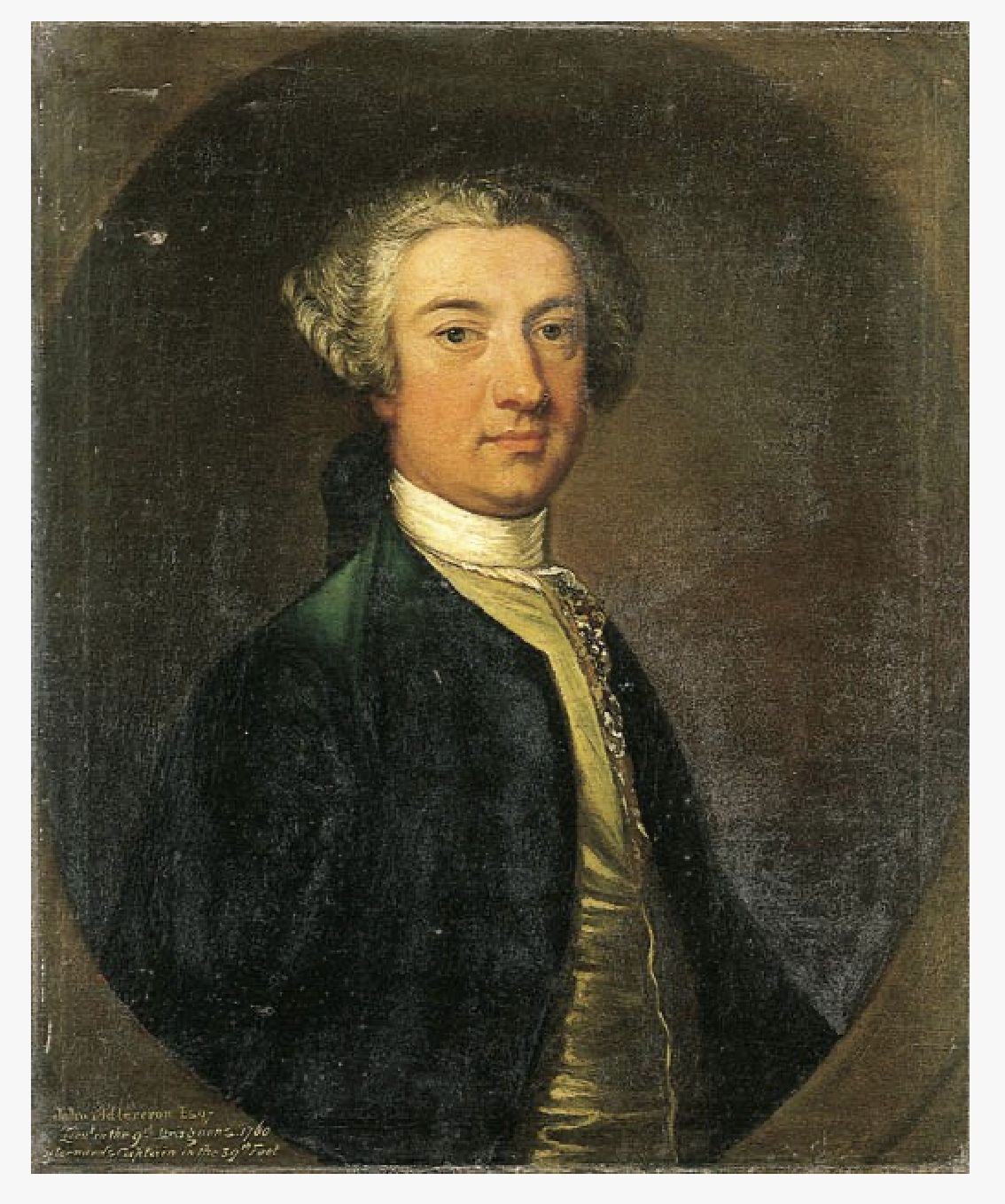
John’s sister Elizabeth married a cousin, John Adlercron Trapaud (c. 1691-1766), son of Jean Trapaud. John Adlercron purchased some of the Moyglare land from John Arabin in 1737. [5]

John Adlercron by James Latham.
General John Adlercron (Trapaud) (d. 1766) courtesy of Armagh County Museum.
‘John Adlercron Esq., Lieut in the 9th Dragoons. 1760 afterwards Captain in the 39th foot’ by circle of Joseph Highmore, courtesy Christies.

In 1745 John Arabin was appointed Lieutenant-Colonel of the 8th Dragoons. They were deployed to Scotland as part of the response to the Jacobite rising in 1745 when James II’s grandson tried to regain the British throne.

The Historic Houses of Ireland website tells us that:

“The colonel also had a successful army career with the 8th Dragoons. He took part in the capture of Carlisle and the relief of Blair Castle during the Jacobite rebellion, and subsequently commanded his regiment in Gibraltar, after England declared war on France in 1756. He died there the following year when his fellow officers erected a monument in the King’s Chapel.” [see 3]

The King’s Chapel is in Gibraltar.

Colonel Arabin’s son John (1727-1757) followed him into the army. He died before his father, so it was the Colonel’s grandson Henry (1752-1841) who was Colonel Arabin’s heir.

Both the Arabins and the Adlercron Trapauds owned land at Moyglare. 

Turtle Bunbury writes that “Henry [Arabin (1752-1841)] was living at Moyglare, the Adlercron home, at the time of his marriage.” [my italics] In 1781 he married Anne Faviere Grant, who was from a Scottish based Huguenot family, but was brought up in Dublin.

In 1756 Colonel John Arabin’s daughter Elizabeth, Henry’s aunt, married Lt-Col Daniel Chenevix (1731-1776), of the family who owned the Corkagh Gunpowder Mills near Clondalkin in Dublin. The Chenevix family was also of French Huguenot extraction, and Daniel’s grandfather Colonel Philip Chenevix also fought in the Battle of the Boyne on William III’s side. Colonel Philip Chenevix married the French Susannah Grueber whose brother Nicholas Grueber (also the son of a French Huguenot) constructed the Corkagh Gunpowder Mills in 1719.

Henry Arabin became a lawyer, studying in Trinity College Dublin and Lincoln’s Inn. However, instead of pursuing law, he assumed responsibility for the running of the Corkagh Gunpower Mills. Turtle Bunbury writes that after their marriage in 1781, Henry and Ann Arabin moved to Corkagh, taking over management of the business which had passed through the Huguenot families by marriage. Unfortunately the house at Corkagh no longer exists. We can see how the Huguenots who escaped France to Protestant Holland or England served in the military under William III of Holland, fought in the Battle of the Boyne and then settled in Ireland, and established business and intermarried. In Ireland we tend to regard the fighting between William III and James II at the Battle of the Boyne as a battle over who would sit on the throne in England. For William III, however, it was part of a larger struggle for the domination of Europe and of Holland’s wars against France. The Corkagh Mills supplied gunpowder to the military in which the Huguenot Arabins, Trapauds and Chenevixes had fought. By joining the Dutch army fighting against the Catholic French, the Huguenots supported Holland’s William III in his ousting of James II of Britain, who was supported by Louis XIV and the French. Continuing in the military, John Arabin fought to prevent James II’s grandson “Bonnie Prince Charlie” from taking the British throne. By this time, 1745, George I (son of the British King James I’s granddaughter Sophie) had already reigned as monarch of Britain and died, and his son George II was on the throne.

I learned about the Corkagh Gunpower Mills first when Stephen and I went on a walk with the “Friends of the Camac” last year – we were eager to see more of the Camac River as we are familiar with the part of it which runs through Inchicore and Kilmainham. The River Camac provided the energy for the mills. We learned about the accidental gunpowder explosion which occurred in 1733, which would have been before Henry Arabin’s time. There was another explosion in Arabin’s time, in 1787. [6]

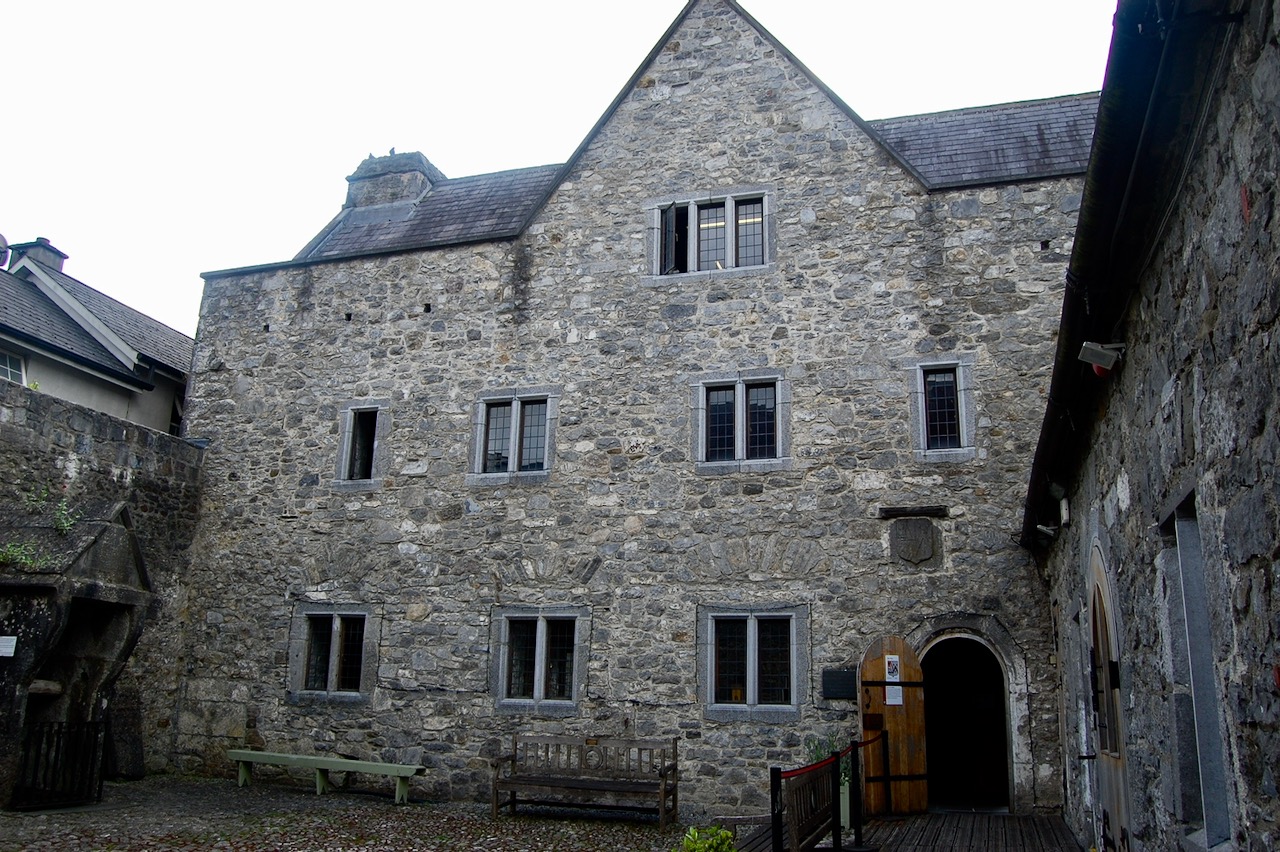
In the meantime, the Adlercron family lived at Moyglare. The Landed Families website tells us that John Adlercron Trapaud and Elizabeth Arabin’s son John (b. 1782) added Ladaveze to his surname after inheriting property in Europe, and dropped the name ‘Trapaud.’ This John Ladaveze Adlercron (1738-1782) married and had a son, John Ladaveze Adlercron (1782-1852). This son married Dorothea Rothe, daughter of Abraham George Rothe of Kilkenny. They had a son George Rothe Ladaveze Adlercron (1834-1884), who was born at Moyglare. [7] The Rothe House in the city of Kilkenny is well worth a visit, a house built from 1594-1610, open to the public as a museum. It is unique and there is nothing like it open to the public in Dublin.

Rothe House, Kilkenny. Photograph © Jennifer Winder-Baggot, www.irishhistorichouses.com

John Ladaveze Adlercron and his wife Dorothea travelled extensively. Dorothea kept diaries about their travels, and was interested in art and architecture. They lived in Moyglare and also had a house in Fitzwilliam Square in Dublin. [8]

Moyglare House was sold around 1840. [9] It passed through a few owners before Colonel William Tuthill bought it in the 1850s. [see 3]

According to the Landed Estates Database:

The Tuthills of Moyglare, county Kildare, descend from the Reverend Christopher Devonsher Tuthill [1781-1846], fourth son of John Tuthill of Kilmore, county Limerick. Captain William Tuthill [1815-1885] of Moyglare owned 286 acres in county Limerick in the 1870s and a further 821 acres in the same county in association with William Bredin.” [10]

Several generations of Tuthills seem to have lived at Moyglare. William Tuthill married Alicia Gabbett, daughter of John FitzGerald Gabbett of Strand House, County Limerick. They had a son, John Fitzgerald Tuthill (1856-1932), who continued to live at Moyglare, as did his son, William Fitzgerald Tuthill (d. 1880).

By the 1960s, Dr. and Mrs. William George Fegan lived in the house. Dr. Fegan, known as George, was a surgeon, academic and art collector. When he sold Moyglare in the 1970s it was separated from the bulk of the estate, which now houses Moyglare Stud. 

The west wing was added and it became a boutique country house hotel. The hotel closed in 2009 and the house stood empty for several years before the Alexanders purchased it. It was full of dry rot, and the beautiful original staircase had to be rescued by insertion of a steel beam.

Angela is an expert in antiques and Malcolm in paintings, and they have an obvious passion for their project. Before they purchased the house they had already collected some paintings, furniture and even a chimneypiece that fit perfectly.

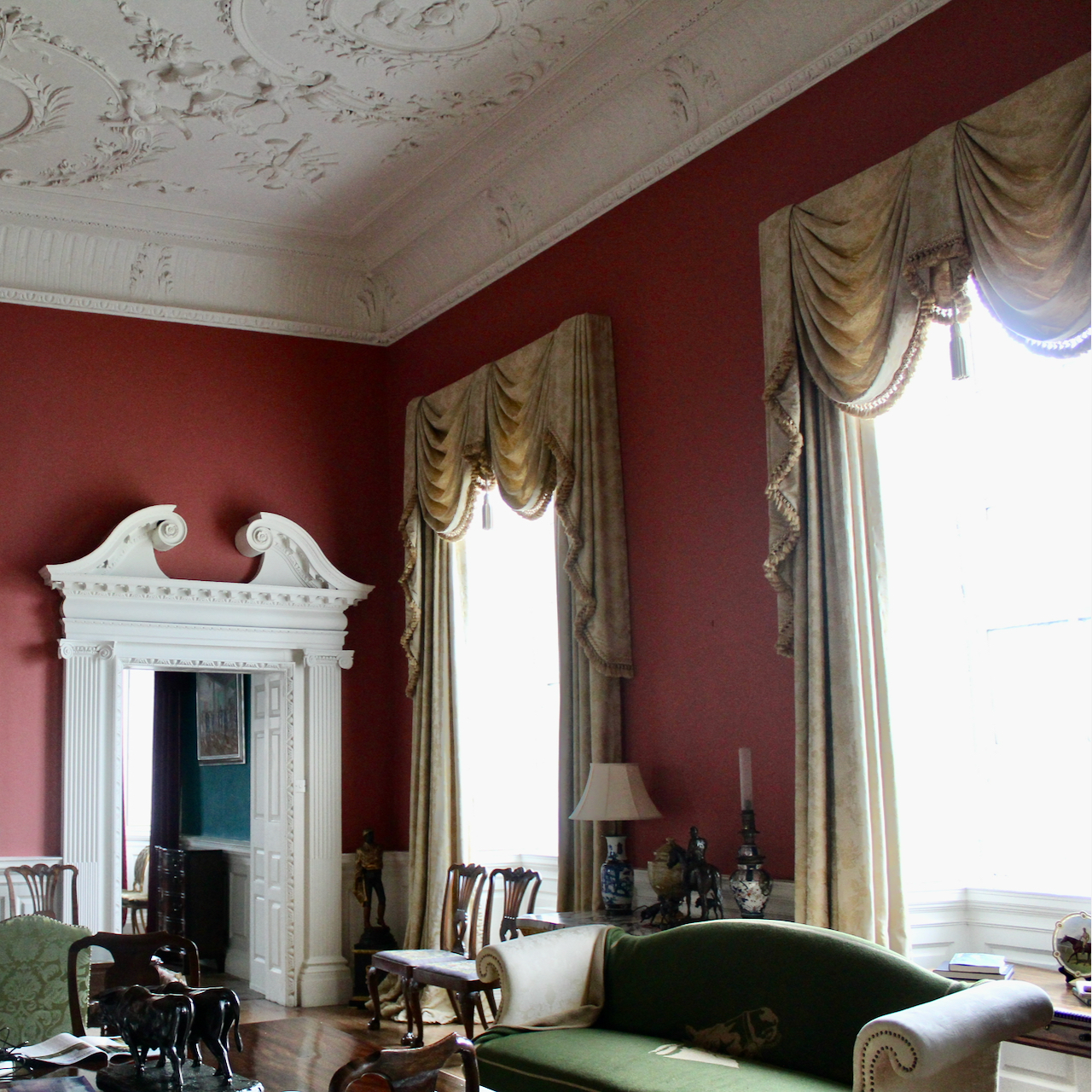
The front hall is high ceilinged and corniced, with a fine plaster frieze with a combination of musical instruments and military trophies, which reflect the military background of its originators. There is a decorative niche between two doors. [10] Leading off the hall are the library, dining room and drawing room, all tastefully and sensitively renovated and furnished. You can see more photographs on the facebook page for the house, which charts the progress of work in the house and garden.

The Alexanders have renovated the west annex and outbuildings for further B&B accommodation.

We had a great chat about an unusually shaped picture of the Great Exhibition in London, and the Alexanders also have pictures from the Great Exhibitions in Ireland. Angela gave us recommendations for an upholsterer, and she brought us into the private part of their house, the kitchen, which we loved – it’s in the newer part of the house which was built on when it was a hotel. The good taste continues into their private area with more fascinating collectable pieces, including a door I admired with lovely stained glass panels. Chatting with them, we participated in their excitement about the house, a work in progress. I envy them – I would love to have such a project! Visiting and staying in such houses is the next best thing!

[1] Yvonne Hogan, Irish Independent, June 11, 2009. 

[2] p. 408. Casey, Christine and Alistair Rowan. The Buildings of Ireland: North Leinster. Penguin Books, London, 1993.

[3] https://www.ihh.ie/index.cfm/houses/house/name/Moyglare%20House

[4] Bunbury, Turtle. ‘CORKAGH – The Life & Times of a South Dublin Demesne 1650-1960’ by Turtle Bunbury, published by South Dublin County Council in May 2018.

[5] Ibid.

[6] https://localstudies.wordpress.com/2013/09/25/the-1787-explosion-at-corkagh-gunpowder-mills/

[7] https://landedfamilies.blogspot.com/search/label/Meath?updated-max=2016-01-29T17:52:00Z&max-results=20&start=3&by-date=false

The Peerage website claims that George Rothe Ladaveze Adlercron was born in 1834 at Moyglare. www.thepeerage.com

[8] Byrne, Angela. The European Travels of Dorothea Ladeveze Adlercron (nee Rothe) c. 1827-54. Old Kilkenny Review: Journal of Kilkenny Archaeological Society, vol. 65, 2013. 

[9] According to the Historic Houses of Ireland website, Henry’s son, another Henry Arabin, sold Moyglare in 1842. 

Turtle Bunbury writes that it was Henry’s youngest son, John Ladaveze Arabin, who consented to the sale of the estate in 1839, and sold it to his cousin, Henry Morgan Tuite. [Elizabeth Arabin who married Daniel Chenevix had a daughter, Sarah Chenevix, who married Hugh Tuite].

The Landed Families website claims that it was John Ladaveze Adlercron (1872-1947) who sold Moyglare. This places the sale quite a bit later than Bunbury’s date. According to Angela Byrne (see [7]) the Adlercrons were referred to as “of Moyglare” until the 1880s. This discrepancy can be explained by the fact that there were two houses at Moyglare.

[10] http://landedestates.nuigalway.ie:8080/LandedEstates/jsp/estate-show.jsp%3Fid=3552

[11] You can see a photograph of the front hall on the Irish Aesthete’s blog, https://theirishaesthete.com/2016/09/17/restoration-drama-2/

Text © Jennifer Winder-Baggot, www.irishhistorichouses.com
Dromana House, Cappoquin, Co. Waterford – section 482

www.dromanahouse.com

Open dates in 2026: June 1-30, Aug 15-31, Sept 1-19, Mon-Sun, 2pm-6pm

Fee: adult/OAP/student, house €14, garden €7, both €20, child under 12 years free, R.H.S.I members 50% reduction

donation

Help me to pay the entrance fee to one of the houses on this website. This site is created purely out of love for the subject and I receive no payment so any donation is appreciated!

€15.00

Dromana House, May 2019. Photograph © Jennifer Winder-Baggot, www.irishhistorichouses.com
On Sunday 5th May 2019, Stephen and I attended a day of talks in Dromana House on “Pursuit of the Heiress.” This is an apt topic for Dromana since the property passed down to the current generation via an heiress, Katherine FitzGerald (1660-1725). In fact, you could say that even in this generation the property was passed down through an heiress, or through the female line, as Barbara Grubb is the daughter of James Villiers-Stuart, descendent of the FitzGeralds of the Decies who originally built the house. “The Decies” is the county of Waterford west of the River Mahon.

We didn’t have a tour of the house on the day of the conference, so we returned during Heritage Week in 2020.

Parts of the house date back to the 1400s, and fortifications on the grounds date back even further. Its situation perched above the Blackwater River gives it stunning views.

The view of the Blackwater River from Dromana. During lunch at the 2019 conference we sat in the sun and chatted, and watched the Blackwater River recede. Later in the afternoon, it filled the banks again. Photograph © Jennifer Winder-Baggot, www.irishhistorichouses.com
Dromana House, May 2019. Photograph © Jennifer Winder-Baggot, www.irishhistorichouses.com
The house was once larger and grander than what we see today. Unfortunately, part of the house was demolished in the 1960s as upkeep and rates were too expensive (it shares the fate of Lisnavagh in County Carlow and Killruddery in County Wicklow). It retains part of the older elements, however, and remains a relatively large, comfortable home. The garden is impressive and the sun brought out its beauty – we were lucky with the weather.

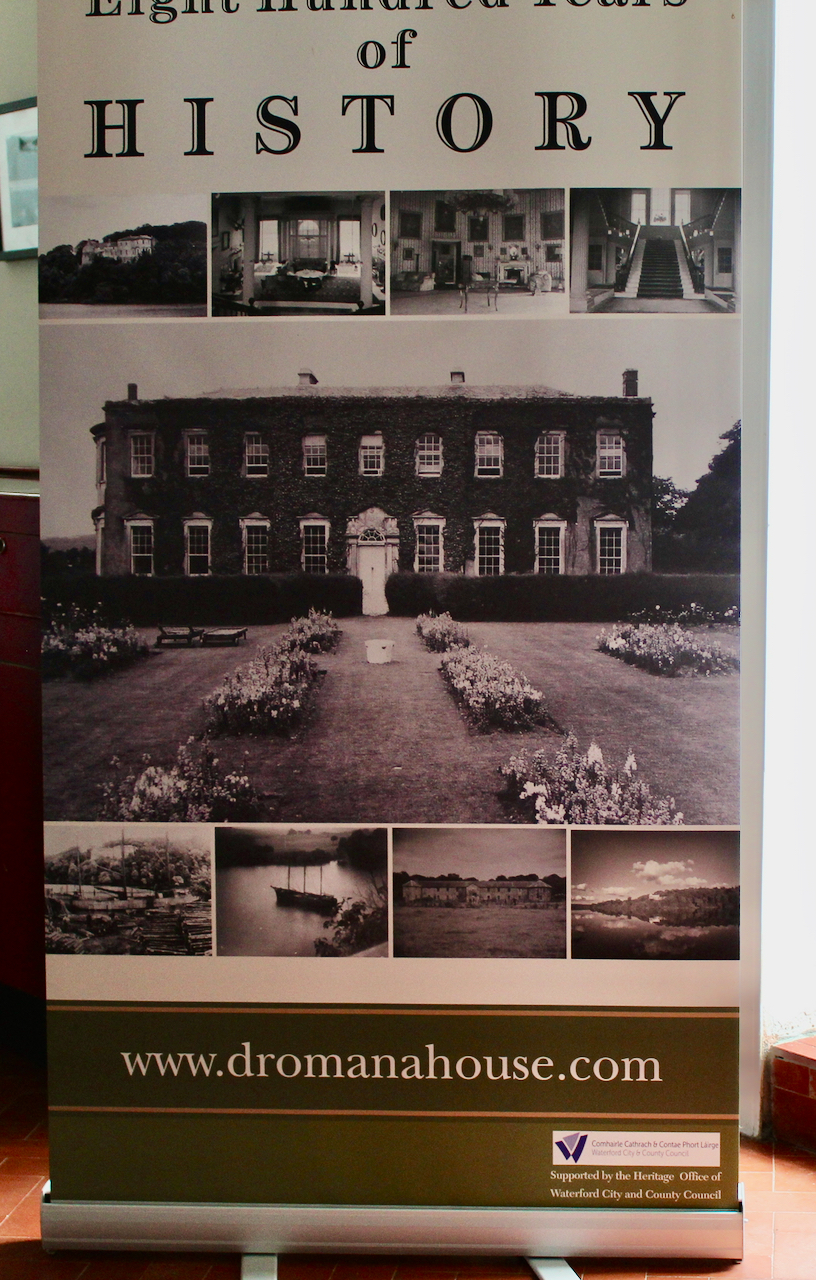
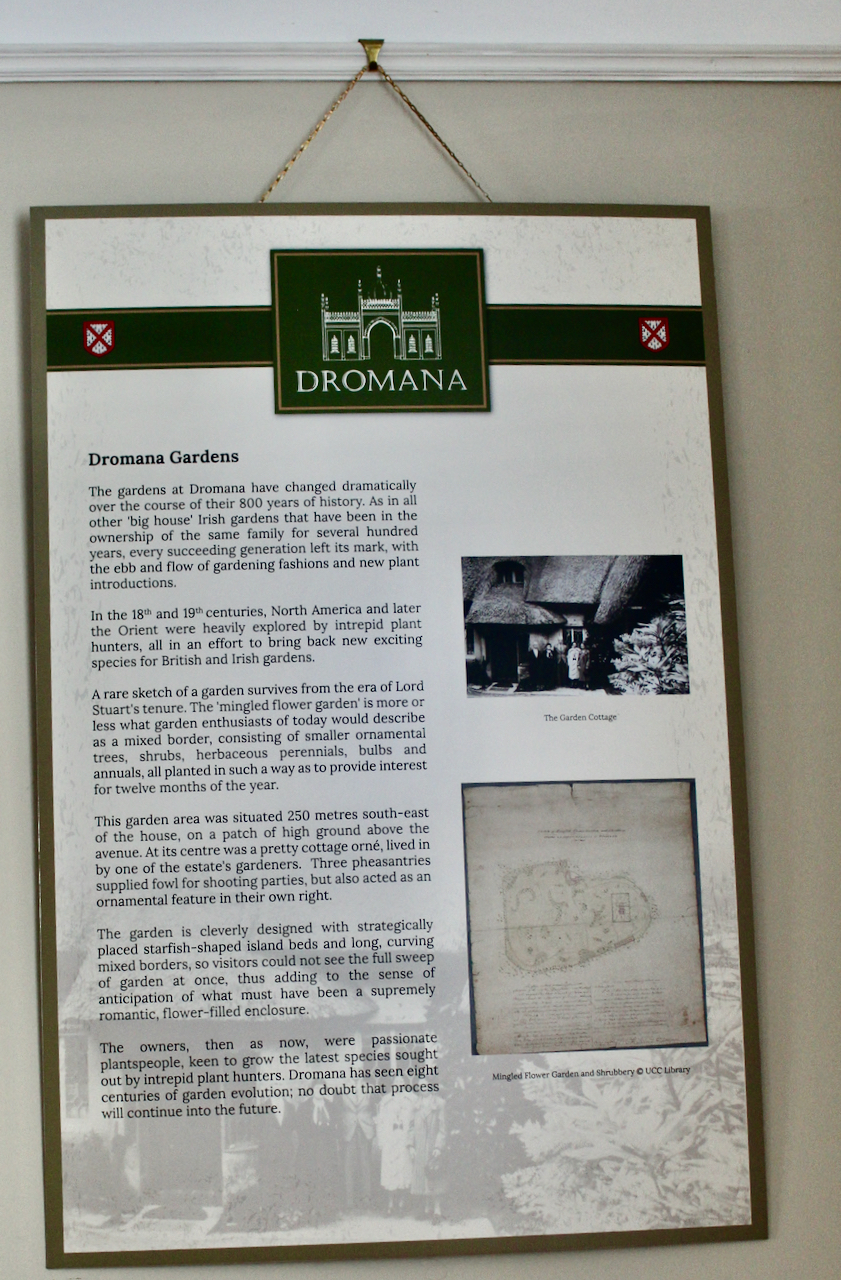
This poster board prepared for the 800th anniversary of Dromana shows a photograph of the house as it was before the demolition of a large part of it.

The lectures in 2019 took place in what used to be the old kitchen. On my way in, I admired the cloakroom hallway with its old floor tiles, long mirror and row of hooks for hats and coats. I learned the following year that this mirror used to be in the Ballroom, which has been demolished. The mirror now lies on its side but originally stood vertically, so the room would have been an impressive height.

Dromana House, May 2019. Photograph © Jennifer Winder-Baggot, www.irishhistorichouses.com
History of Dromana and the Fitzgeralds

First, a little background about the house. From the website:

Dromana House is a true gem, perched on a rocky outcrop overlooking the strikingly beautiful, unspoilt river Blackwater. It is surrounded by a 600 acre privately owned estate with numerous woodland and garden walks. Several interesting historic follies are also to be seen throughout the grounds including an ancient outer fortification, boathouse and slipway down to the river. This period property has been lovingly maintained by its owners whose family have lived on this location since 1200, the present owner being the 26th generation.” [1]

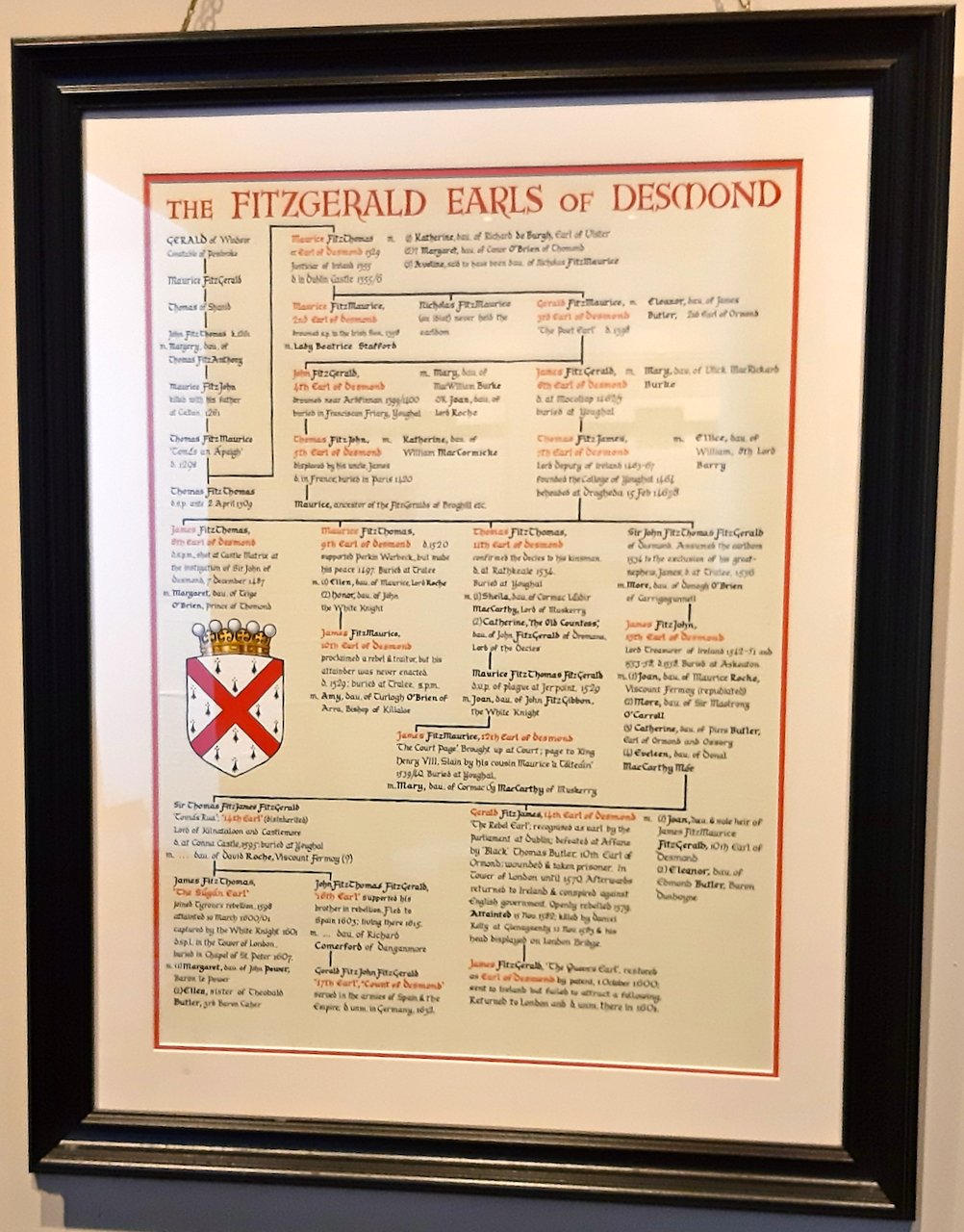
From the 13thcentury onwards the property was the seat of the FitzGeralds, Lords of the Decies, a junior branch of the Earls of Desmond. Information boards in the old kitchen, created with the help of University College Cork, describe the history of the estate. In 1215 King John of England granted a charter to the Norman knight Thomas fitz Anthony, giving him custody of the present-day counties of Waterford and Cork. Through the marriage of his daughter the estates came into the possession of the FitzGeralds – the first instance of the property passing through the female line. The earliest fortifications of Dromana date from this period.

The title of Lord the Decies split from the Earl of Desmond title when James FitzGerald the 6th Earl of Desmond (who died in 1462) granted the land of the Decies to his younger son Sir Gerald Mor FitzGerald, whose descendants have lived in Dromana ever since. The tower-house which forms the core of today’s Dromana was built at this time.

Dromana. Photograph © Jennifer Winder-Baggot, www.irishhistorichouses.com
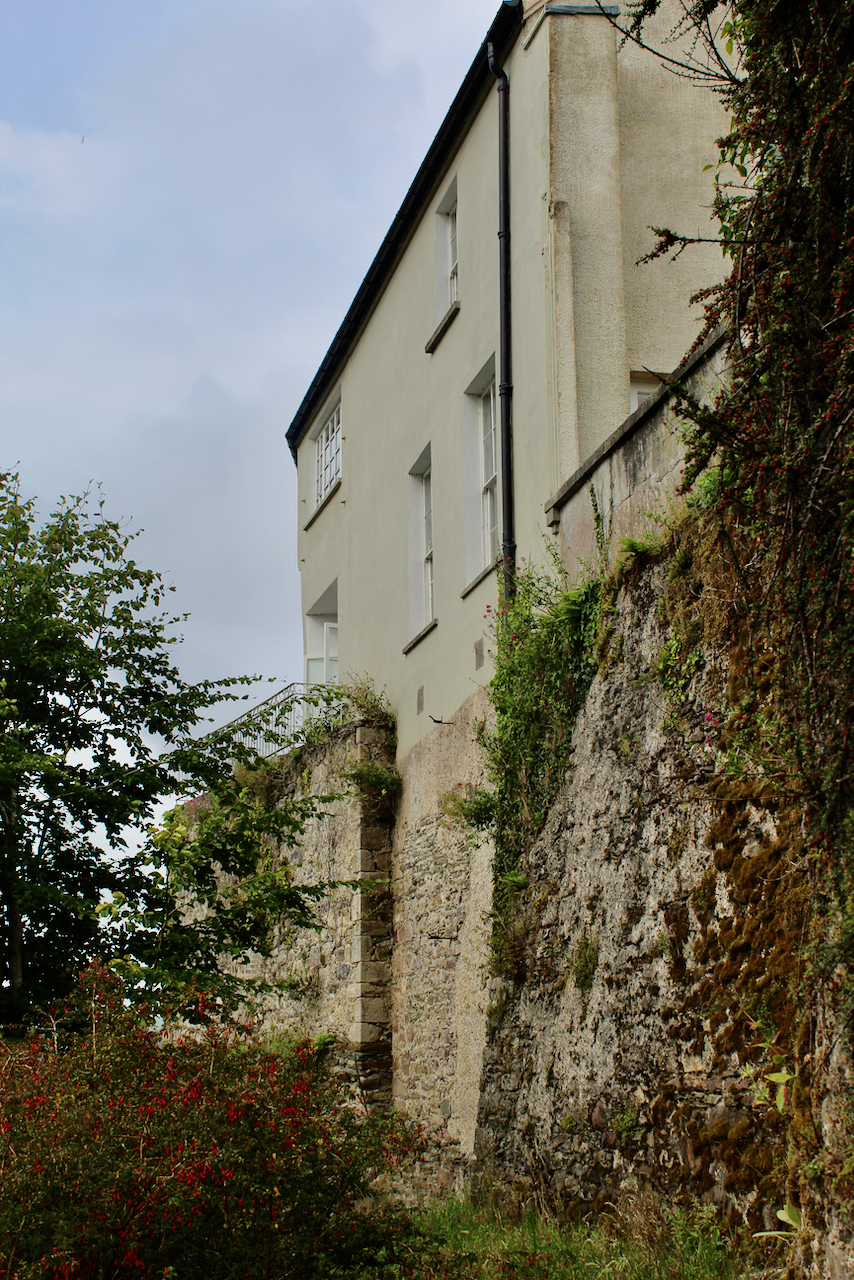
Dromana House, May 2019. Photograph © Jennifer Winder-Baggot, www.irishhistorichouses.com

One can see the oldest part of the house from a balcony which overlooks the river, or from the gardens below.

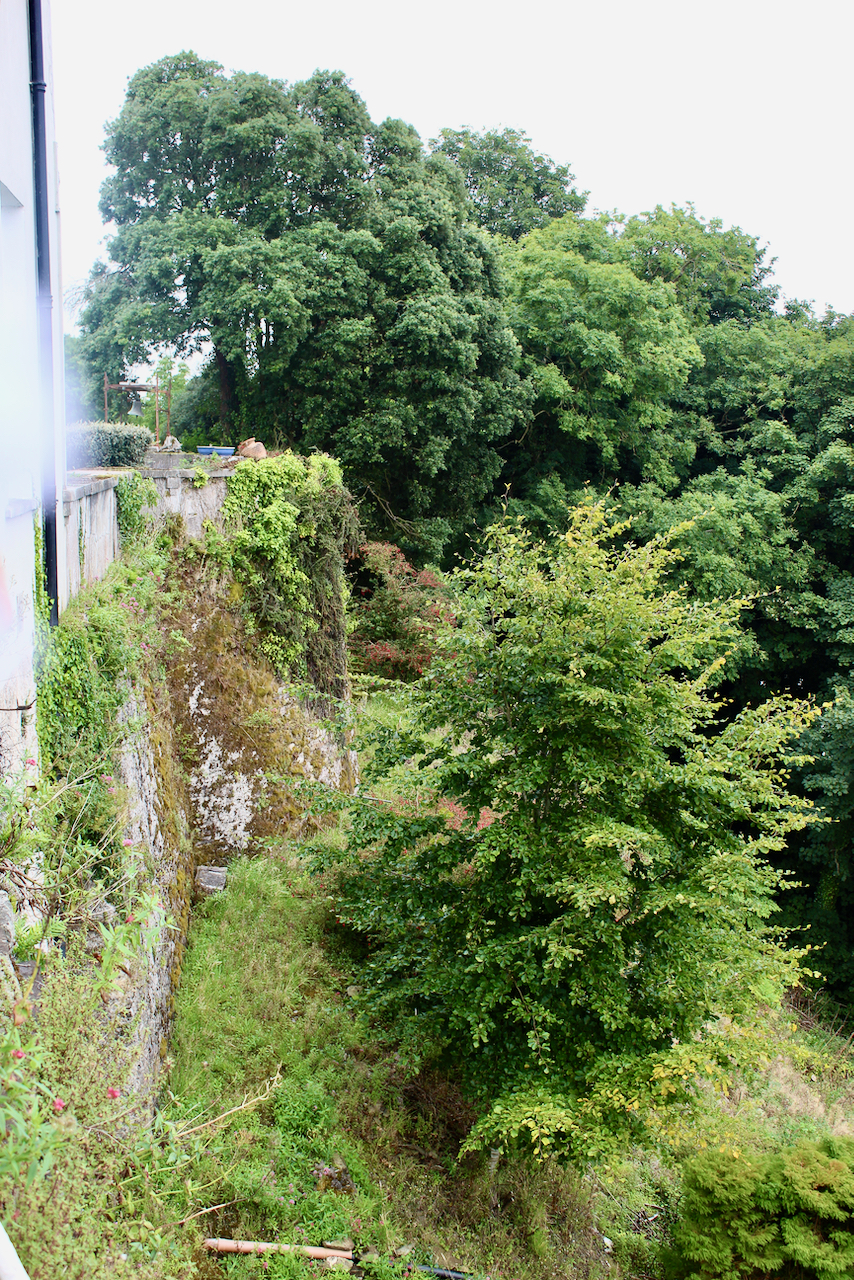
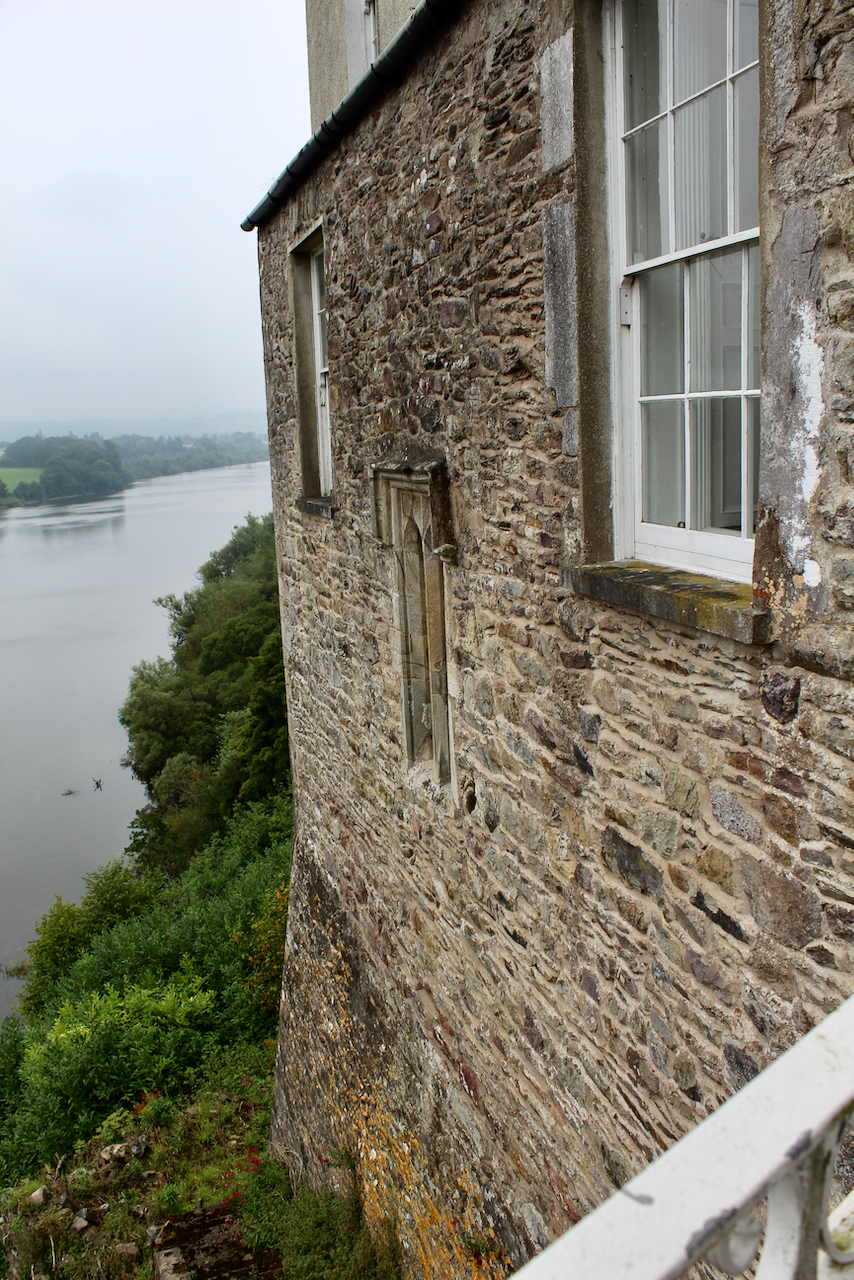
We wandered up an overgrown path in the garden looking for the “lost garden” and found ourselves on the steep slopes by mistake – but fortuitously, from here we could see the oldest parts of the house – see below also, which is a continuation of the wall in the photograph above. See also the balcony, above; below are two photographs taken from the balcony. Photograph © Jennifer Winder-Baggot, www.irishhistorichouses.com
View from the slopes below, looking up toward the balcony. Photograph © Jennifer Winder-Baggot, www.irishhistorichouses.com
View looking down toward the slopes, from the balcony – you can see the bow in the wall. There was originally a floor above this, also bowed. Photograph © Jennifer Winder-Baggot, www.irishhistorichouses.com
The view from the balcony looking the other direction. You can see an extremely old Gothic style window with hood moulding. The tower house structure part of the house was built in the time of Gerald Mor FitzGerald around 1462. Photograph © Jennifer Winder-Baggot, www.irishhistorichouses.com

The Earls of Desmond asserted their claim to the Decies until the Battle of Affane in 1565, in which the Earl of Desmond’s army [that of the 14th Earl of Desmond, I think] was overthrown. In January 1569 Queen Elizabeth granted Sir Maurice FitzGerald of Decies (great-grandson of Gerald Mor FitzGerald) letters patent creating him Baron of Dromana and Viscount Decies. His titles became extinct, however, when he died three years later without a male heir.

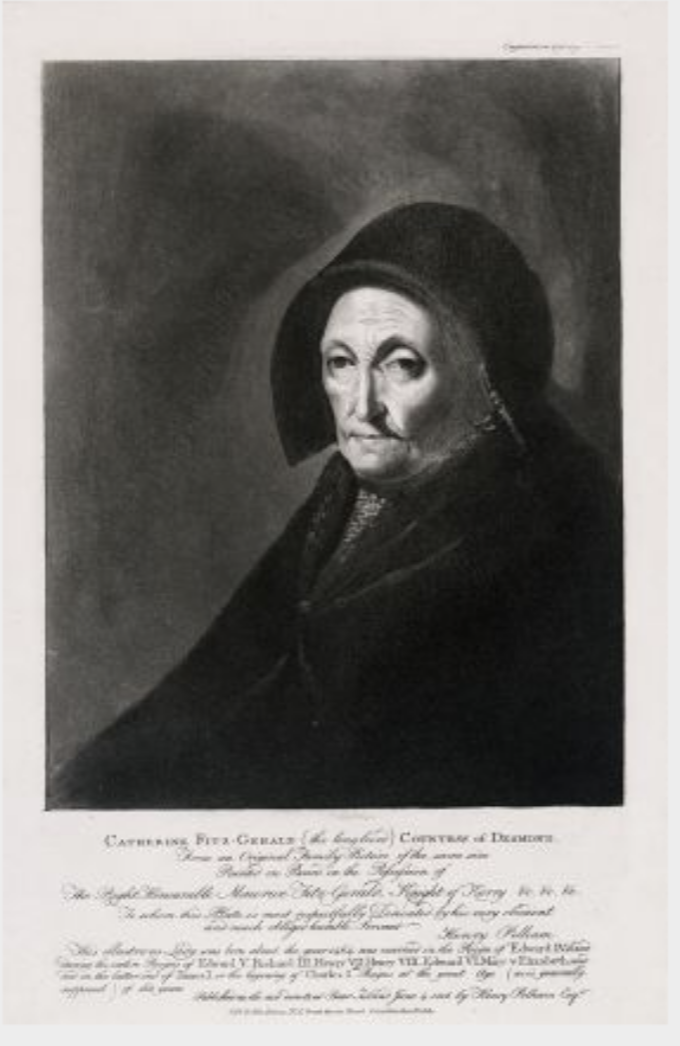
Katherine Fitzgerald of the Decies, granddaughter of Gerald Mor FitzGerald, married her cousin Thomas, who in 1529 became the 11th Earl of Desmond (the information panel below says he was the 12th Earl but I think he was the 11th). He died in 1534 but she survived him for 70 years, dying in 1604 at the age of 140 years. She lived as a widow, as the Countess of Desmond, in Inchiquin Castle in East Cork. She died supposedly from falling out of a cherry tree, having allegedly worn out three natural sets of teeth. The current owners have planted a cherry tree in her honour. They have a bookcase supposedly made from the cherry tree from which she fell!

I found this information about Katherine FitzGerald in St. Mary’s Collegiate Church in Youghal, County Cork! Photograph © Jennifer Winder-Baggot, www.irishhistorichouses.com
Thought to be a Portrait of Catherine, Countess of Desmond (née Fitzgerald), (c.1510-1604), 2nd wife of 12th Earl, photograph courtesy of National Gallery of Ireland. However, in Irish Portraits 1660-1860 by Anne Crookshank and the Knight of Glin, we are told that most of the portraits of the “Old” Countess of Desmond are copied from a painting of Rembrandt’s mother!

The website states:

“The castle of Dromana was attacked and damaged in the wars of the 1640s and 50s, though its base can still be identified from the river, and indeed is still inhabited. In about 1700, instead of rebuilding the castle, two new ranges were built at right angles to one another along the courtyard walls. Both were simple gable-ended two storey structures, possibly just intended for occasional occupation, their only decoration being a robust, pedimented block-and-start door case in the manner of James Gibbs.” This door was moved when part of the house was demolished and is still the front door.

The “robust, pedimented block-and-start door case in the manner of James Gibbs” was moved and is still the front door. Photograph © Jennifer Winder-Baggot, www.irishhistorichouses.com
Julian Walton, one of the speakers at the “Pursuit of the Heiress” conference in 2019, has gained access to the archives at Curraghmore and is eliciting many interesting facts and details. This was great preparation for our visit to Curraghmore House the next day! [2] He told us of the heiress Katherine FitzGerald.

Stephen in the garden in 2020. Photograph © Jennifer Winder-Baggot, www.irishhistorichouses.com

Descendants of the Fitzgeralds in Dromana

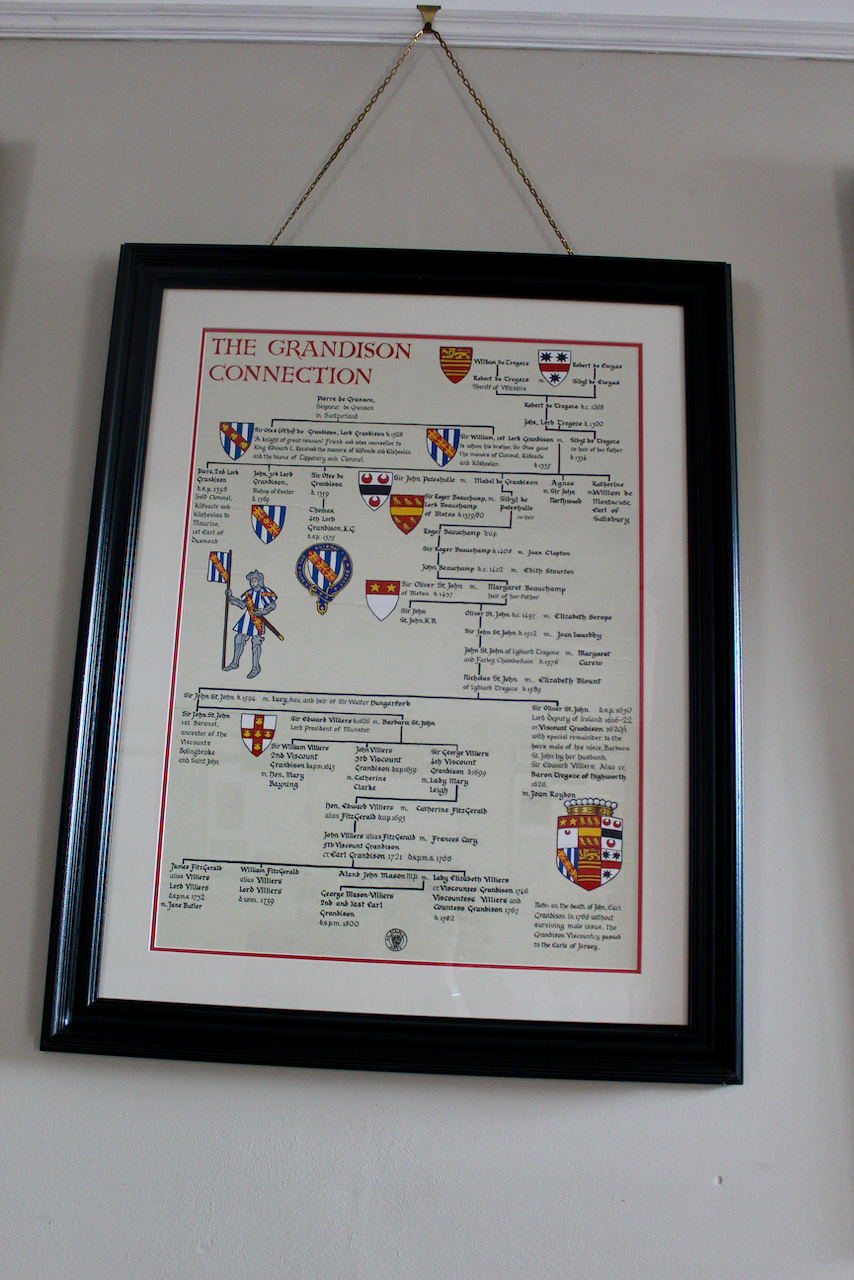
In 1673 the young heiress of Dromana, another Katherine Fitzgerald, was married against her will by her guardian Richard Le Poer, the 6th Baron of Curraghmore, to his son John. She was the only child of Sir John FitzGerald, Lord of Dromana and Decies and heir to Dromana. Her mother was Katherine Le Poer, daughter of John Le Poer 5th Baron of Curraghmore. Her mother’s brother, the 6th Baron of Curraghmore, wanted to unite the Curraghmore and Dromana estates. Both parties were underage – she was 12 and John Le Poer was only eight! Three years later Katherine escaped and married a cavalry officer named Edward Villiers (son of 4th Viscount Grandison). The courts upheld her second marriage and her first husband had to return her estate of Dromana and renounce the title of Viscount Decies. Her second husband’s father was a cousin to Barbara Villiers, mistress to King Charles II, and Barbara intervened on behalf of her cousin. When her second husband’s father, the 4th Viscount Grandison died in 1700, she was granted, in lieu of her now deceased husband, the title of Viscountess Grandison. She lived in Dromana until her death in 1725. 

Dromana House, May 2019. Photograph © Jennifer Winder-Baggot, www.irishhistorichouses.com
History of the Development of the House, and the Villiers-Stuarts

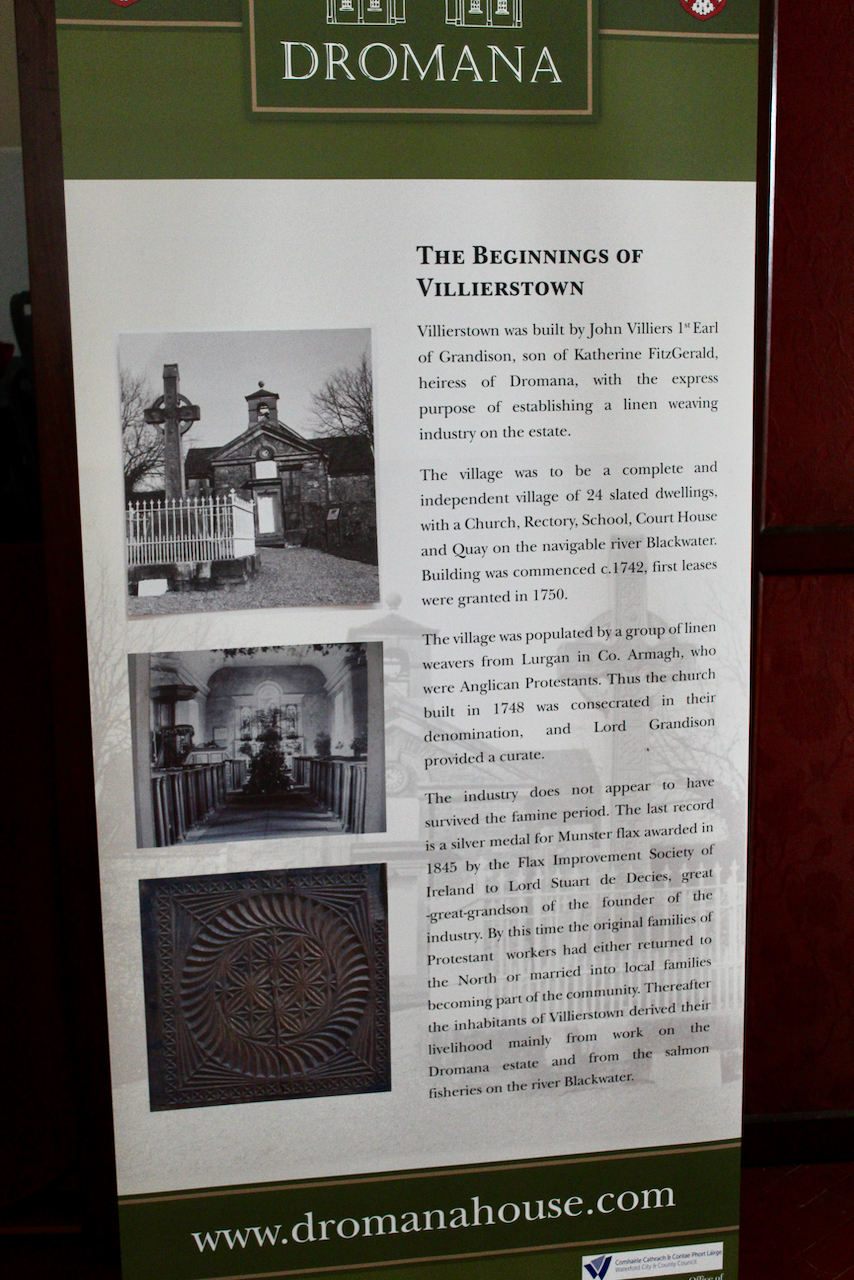
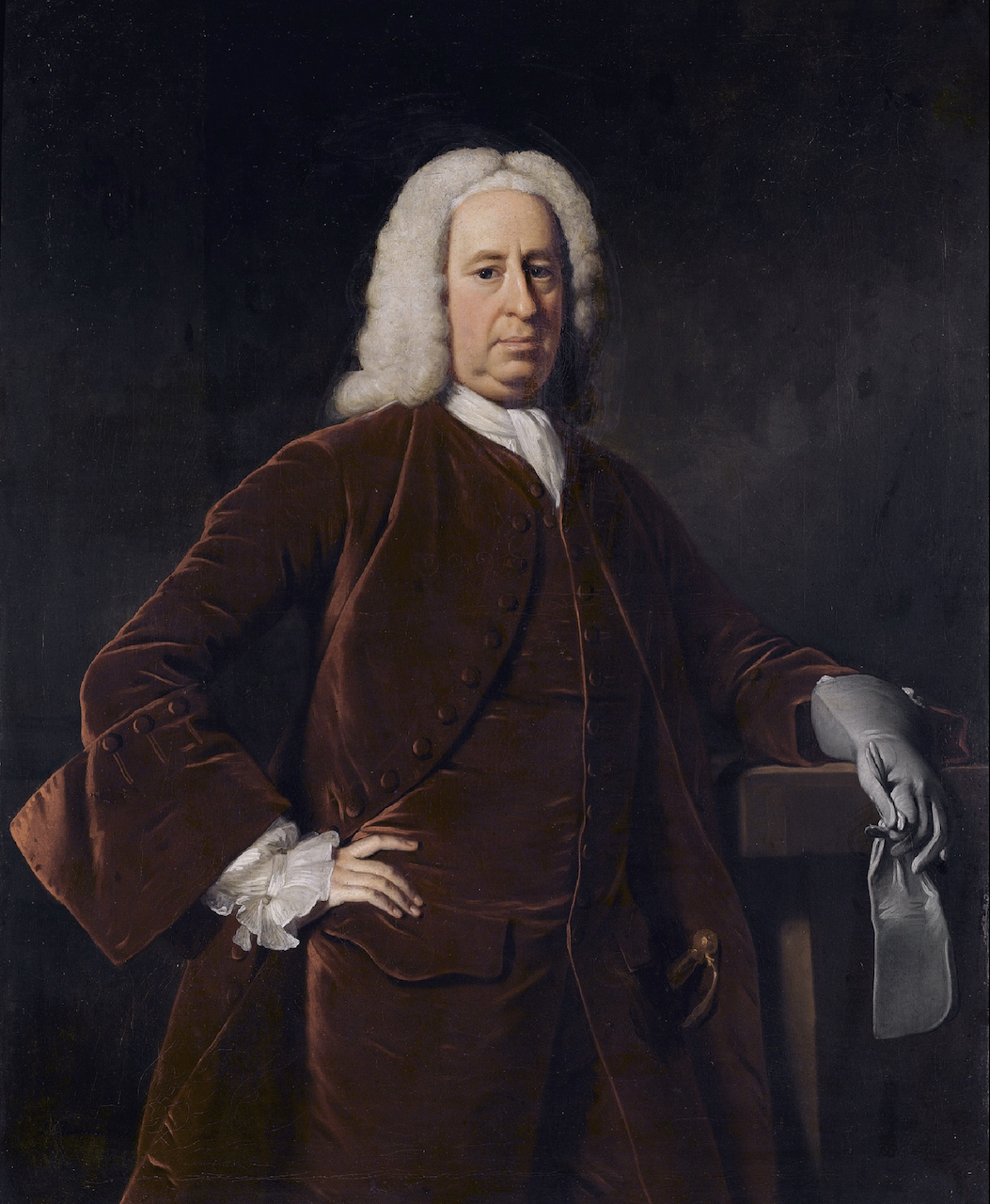
The son of Edward Villiers and Katherine Fitzgerald, John Villiers, c.1684 – 1766, became the 5th Viscount Grandison, and later, the 1st Earl Grandison. He repaired the house in the 1730s after it was partly destroyed in the political turmoil of the 1600s. Our guide, Barbara, told us that he was an enterprising landlord: in the 1740s he brought weaving from Lurgan, County Armagh, to start the linen industry in the area, and he built the village of Villierstown for the workers. He also planted 52,000 trees.

Dromana House, May 2019.
John Villiers (c.1684 – 1766) 1st Earl Grandison by Alan Ramsay.

The 1st Earl of Grandison’s sons predeceased him so the estate passed to his daughter, Elizabeth. She married Alan John Mason, an MP for County Waterford and a merchant, and on her father’s death she was created 1st Countess Grandison and and 1st Viscountess Villiers. [3] Their son became the 2nd Earl of Grandison and added the surname Villiers to become George Mason-Villiers. In 1780, he added a larger new house in front of the old one, adding an impressive staircase and ballroom. Of his building work, Mark Bence-Jones describes the back of the new block forming a third side of a courtyard with two older ranges, and a low office range forming the fourth side. The Gibbsian doorway was hidden from sight in the courtyard. [4]

A panel about the architectural evolution of Dromana states: “The second Earl Grandison, George Mason-Villiers, added on a larger new house, commencing in about 1780, directly in front of the longer 1700s range. The principal façade was of two storey and nine bays, quite plain, with a parapet and a rather curious segmental-headed armorial doorcase. The river façade contained a shallow double-height bow and was actually an extension of the smaller 1700s range. Together these three buildings faithfully followed the line of the original bawn or courtyard. There was a spacious hall with a grand staircase, and a large circular ballroom.”

In this old picture you can see the house with the bows.

George Mason-Villiers too had only a daughter as an heir: Gertrude Amelia Mason-Villiers (1778-1809). In 1800, she married Lord Henry Stuart (1777-1809), third son of the 1st Marquess of Bute, of the Isle of Bute in Scotland. Henry Stuart’s grandmother was the famous writer Lady Mary Wortley-Montagu, who wrote about her experiences of travelling in Ottoman Istanbul.

Lady Mary Wortley Montagu (1718-1794), Wife of 3rd Earl of Bute, print after Christian Friedrich Zincke, 1830s, courtesy of National Portrait Gallery of London, NPG D34619.

Gertrude and Henry were succeeded in 1809 by their son, Henry, when he was just six years old. Henry added “Villiers” to his name in 1822, becoming Villiers-Stuart. The architect Martin Day was hired first in 1822 by trustees of Lady Gertrude – Henry didn’t come of age until 1824. Martin Day came from a family of architects in County Wexford. He designed several Church of Ireland churches for the Board of First Fruits and the Irish Ecclesiastical Commissioners between 1822-1849. In the 1820s, Day worked on the interiors of Dromana. He assisted Daniel Robertson at Johnstown Castle (now open to the public) and Castleboro House in County Wexford in the 1840s, and around the same time did more work for Henry Villiers-Stuart, adding parapets, pediments and mouldings to the windows, and an elaborate surround to the entrance doorway which incorporated the family arms. [5] He also fitted out a suite of very grand reception rooms and a massive imperial staircase.

Henry served as MP for Waterford 1826-1830 and for Banbury, Oxfordshire, England in 1830-1. He also served as Colonel in the Waterford Militia. He was admitted to the Irish Privy Council in 1837, and was created, in 1839, Baron Stuart de Decies, a title that recalled his long family connection with the region. Henry Villiers-Stuart was Lord-Lieutenant of County Waterford, 1831-74.

The Dromana website tells us that Henry Villiers-Stuart was “a Protestant aristocrat and large landowner with radical views. As a young man he defeated the Waterford establishment in the famous 1826 election to give Daniel O’Connell and the Catholic Emancipation movement their first Member of Parliament.” Daniel O’Connell signed documents in Dromana House, and the Catholic Emancipation Act of 1829 was drawn up at Dromana.

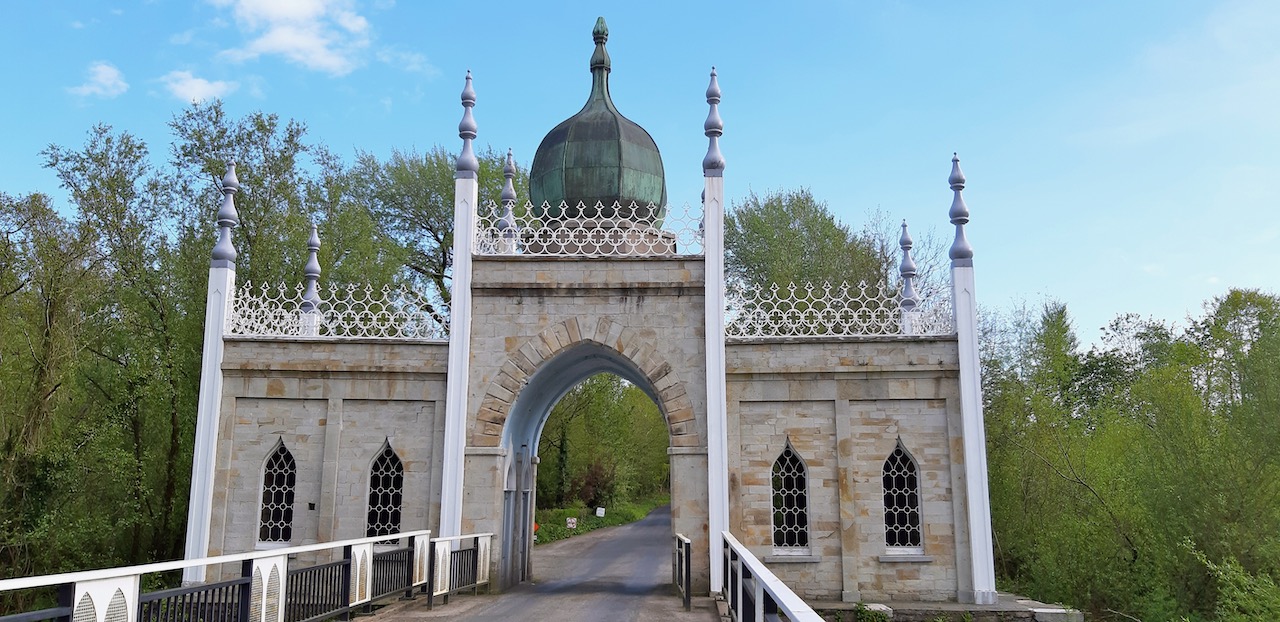
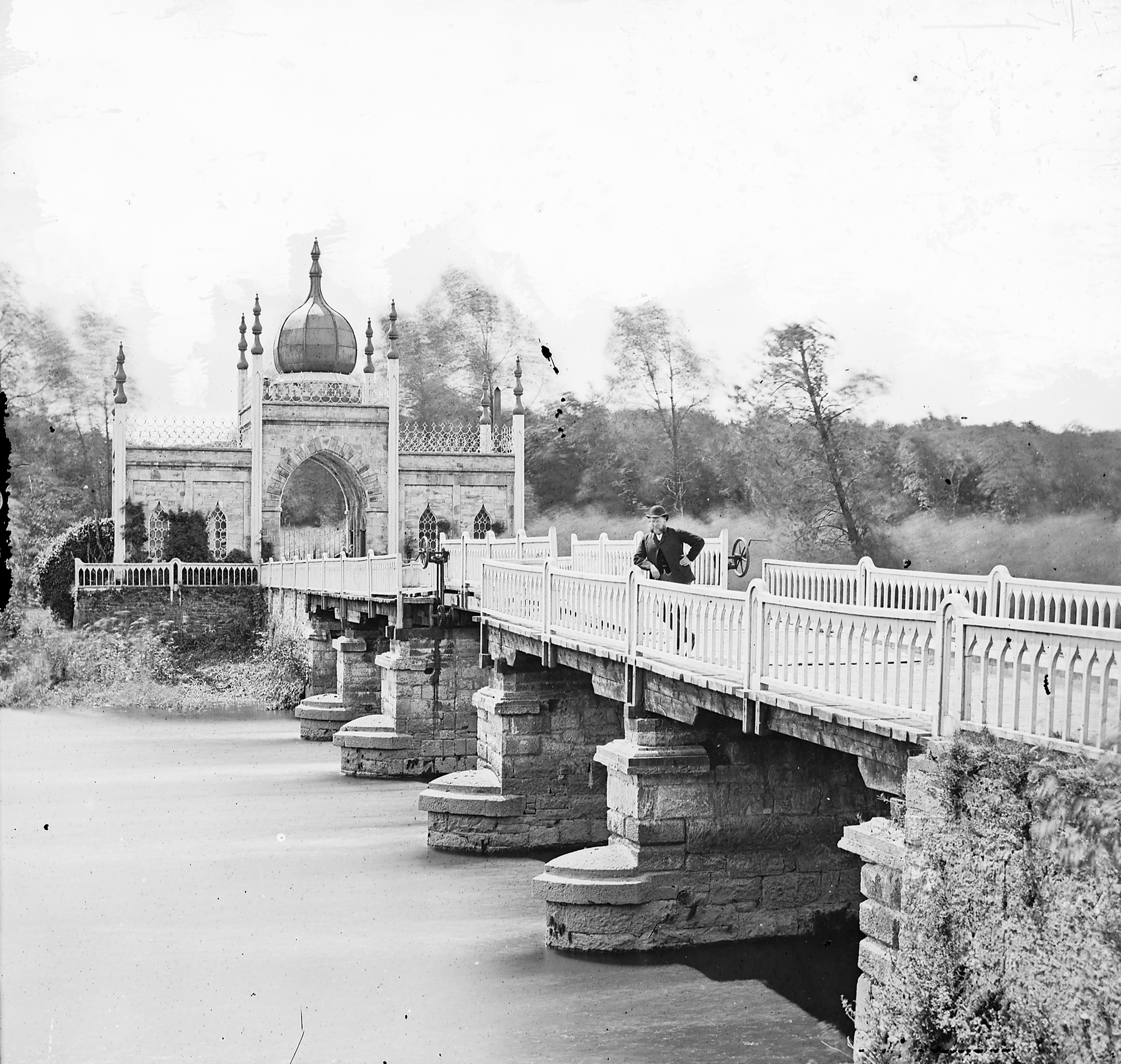
In 1826 Henry Villiers-Stuart married Theresia Pauline Ott. When they returned from their honeymoon, the tenants of Villierstown constructed an elaborate papier-mache archway gate for them to drive through. Martin Day may have had a hand in the original gateway, and later drew up plans to create a more permanent structure, which Stephen and I visited later in the day.

The Hindu-Gothic Bridge, over the River Finisk. Photograph © Jennifer Winder-Baggot, www.irishhistorichouses.com
Dromana Hindu gothic gate ca. 1870 photographers Frederick Holland Mares, James Simonton stereo pairs photographic collection nli, flickr constant commons.

The Bridge is now on a public road. One used to need a ticket to enter through the gate. When King Edward VII arrived at the gate in a pony and trap, on his way to Lismore, he had no pass, so was turned away! The Gate was restored by the Irish Georgian Society in the 1960s and again by the local city council in 1990. [6] The “bishop” like structures either side of the top of the central part have been replaced by fibreglass “bishops,” as the original copper ones are too heavy, and one of the originals now sits in the garden of Dromana.

Pauline Ott had been married before, and her husband was thought to have died in the army. However, he later reappeared. Her marriage to Henry Villiers-Stuart was thus rendered invalid, and her children illegitimate. She and Henry had a son, Henry Windsor Villiers-Stuart and a daughter Pauline. Pauline married into the Wheeler-Cuffe family of Lyrath, County Kilkenny (now a hotel). Their son was unable to inherit the title of Baron Stuart of the Decies and the peerage expired with his father’s death in 1874. [7]

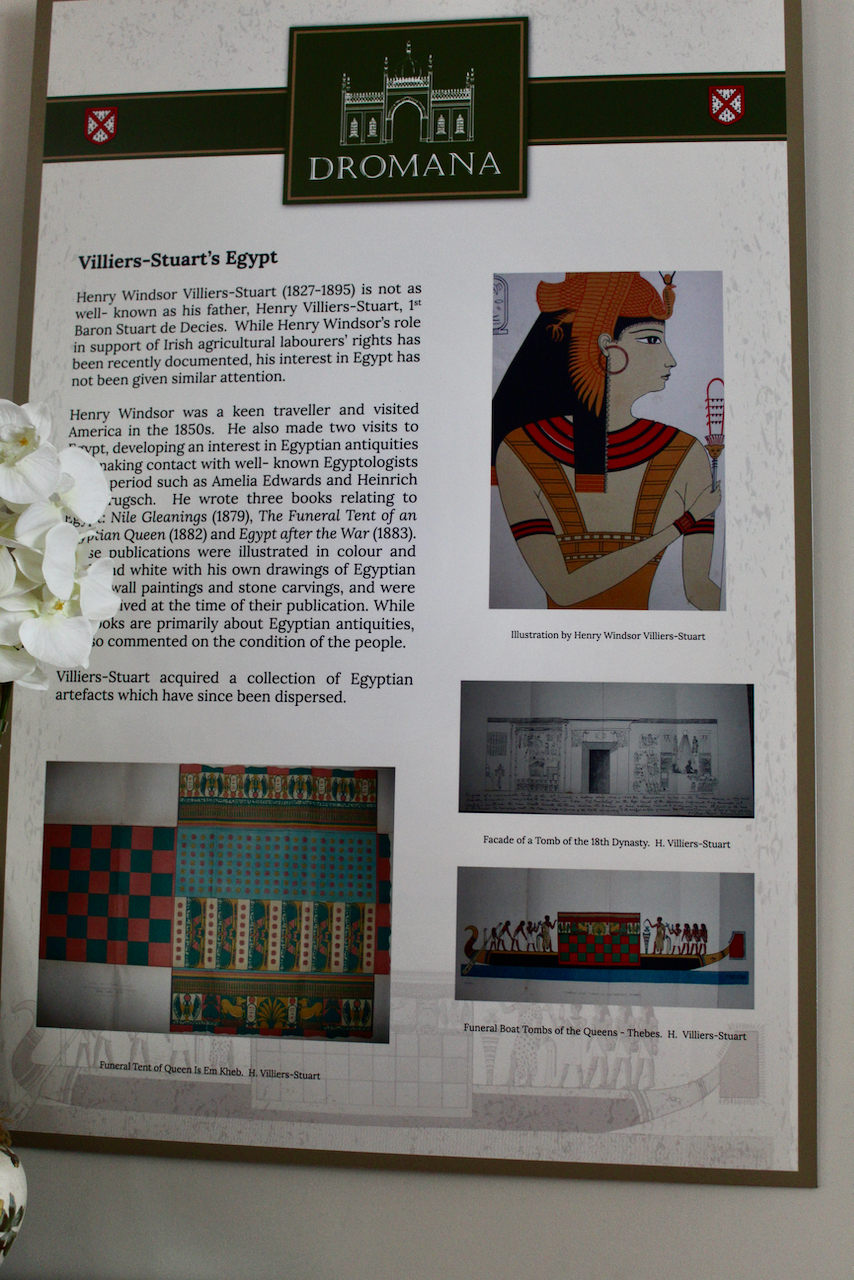
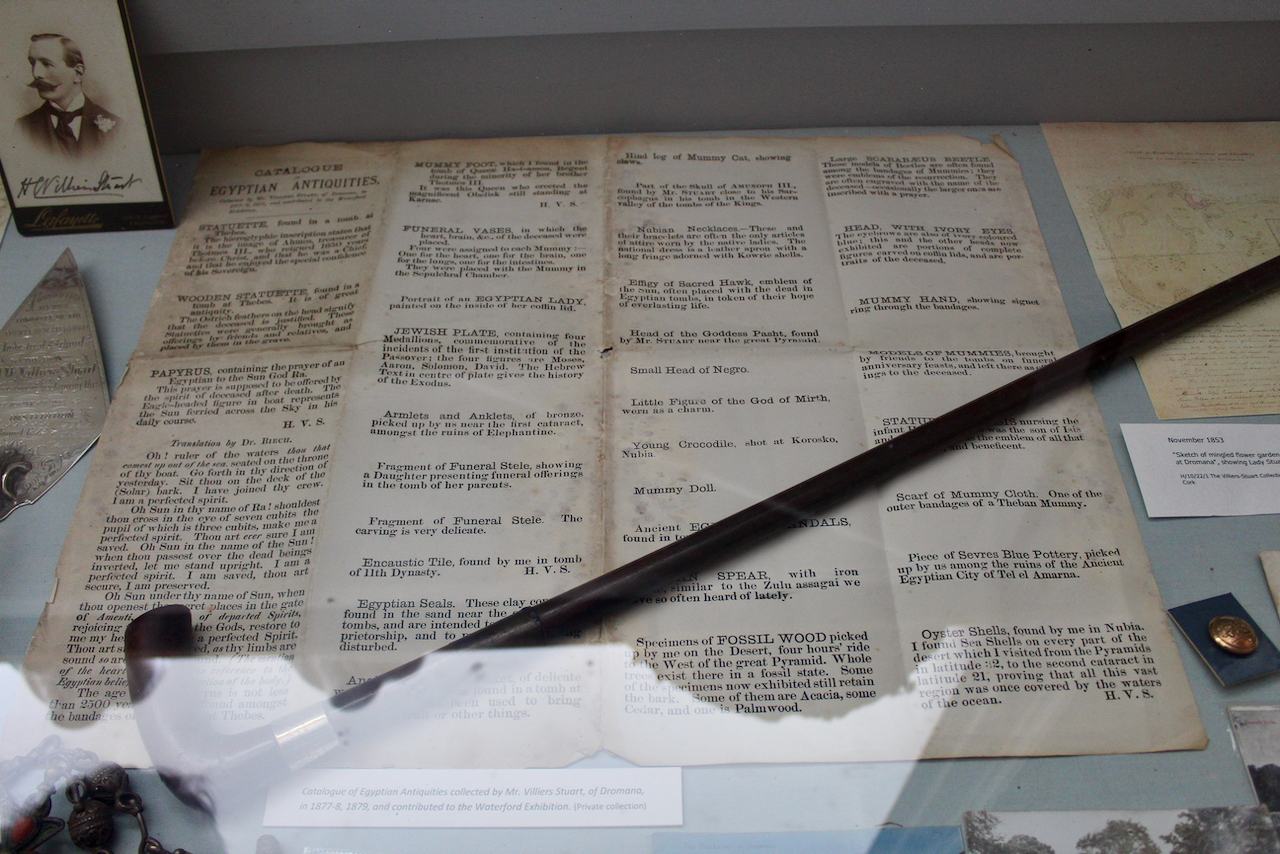
Despite becoming illegitimate, the son, Henry Windsor Villiers-Stuart (1827-1895) [the name Windsor came from his father’s maternal family], did very well for himself. He served first in the Austrian then the British Army, then went to university. He was ordained in the Church of England but later resigned Holy Orders in order to pursue a political career. He became MP for County Waterford from 1873-85, Vice Lord-Lieutenant of County Waterford, 1871-73, and High Sheriff of County Waterford in 1889. In 1865 he married Mary, second daughter of the Venerable Ambrose Power, Archdeacon of Lismore. He travelled extensively and wrote books, studied hieroglyphics, and did pioneering work in Egypt. He brought many artefacts back from Egypt, which have since been dispersed.

Henry Windsor Villiers-Stuart (1827 – 1895) travelled extensively and wrote books, studied hieroglyphics, and did pioneering work in Egypt. He was a British soldier, clergyman, politician, Egyptologist, and author.
In the old kitchen, which houses the information boards, there was a museum case of fascinating artefacts, many from Egypt from Henry Windsor Villiers-Stuart’s travels.

His eldest son, Henry Charles Windsor Villiers-Stuart (1867-1908), who served as High Sheriff of County Waterford, 1898, espoused, in 1895, Grace Frances, only daughter of John Adam Richard Newman of Dromore, County Cork. Their heir, Ion Henry Fitzgerald Villiers-Stuart (1900-48), wedded, in 1928, Elspeth Richardson, and was succeeded by his only son, James Henry Villiers-Stuart (b. 1928), of Dromana, who married, in 1952, Emily Constance Lanfear and had two daughters, Caroline and Barbara, one of whom was our tour guide and who now lives in the house. [8]

The website states that: “by the 1960s Dromana had become something of a white elephant. The estate was sold and subdivided, and the house bought by a cousin, Fitzgerald Villiers-Stuart [a grandson of Henry Windsor Villiers-Stuart], who demolished the 1780s block in 1966 and reduced it to more manageable proportions.”

“James Villiers-Stuart was able to repurchase the house in 1995 he and his wife Emily moved into Dromana and began restoring the house and garden. Now a widow, Emily still lives there, along with her daughter and family.”

Back to the Conference

Barbara, heir to the house, and her husband Nicholas, attended the “Pursuit of the Heiress” conference. Nicholas gave us an impromptu lecture of sorts about how forces merged to make the upkeep of the big houses in Ireland almost impossible, with the high rates charged by the government, and the decline of salmon fishing, etc. 

We had more lectures after lunch. First up was “The Abduction of Mary Pike,” by Dr. Kieran Groeger, which interested Stephen as she too was a Quaker. [9] The last lecture was by Dr Dagmar Ó Riain-Raedel, on her research on Irish exiles to the Austrian army. [10] This was fascinating. I have much to study, to learn the history of the Habsburg empire.

Afterwards we had tea on the lawn, then Nicholas gave us an almost running tour of the garden – we had to be quick to keep up with him as he bound ahead describing the plants. The website states that “the steeply sloping riverbanks are covered with oak woods and the important mid-eighteenth century garden layout, with its follies, the Rock House and the Bastion, is currently being restored.” There are over thirty acres of garden and woodland, including looped walks.

Dromana House, May 2019.

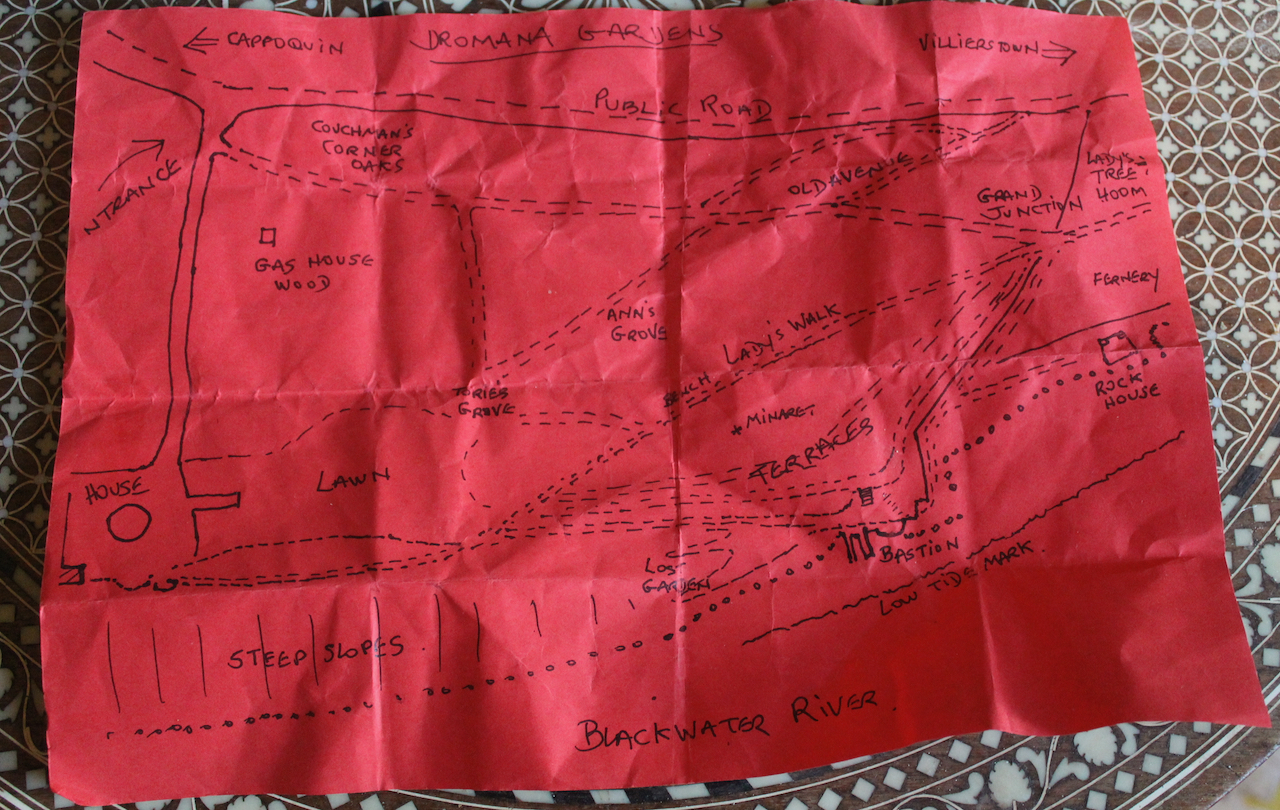
When we visited in 2020, we had more time to explore the garden. We were given a map when we arrived. The current owners are enthusiastic gardeners and do nearly all the work themselves.

Dromana.
From the Conference in 2019, a view of the gardens. Photograph © Jennifer Winder-Baggot, www.irishhistorichouses.com
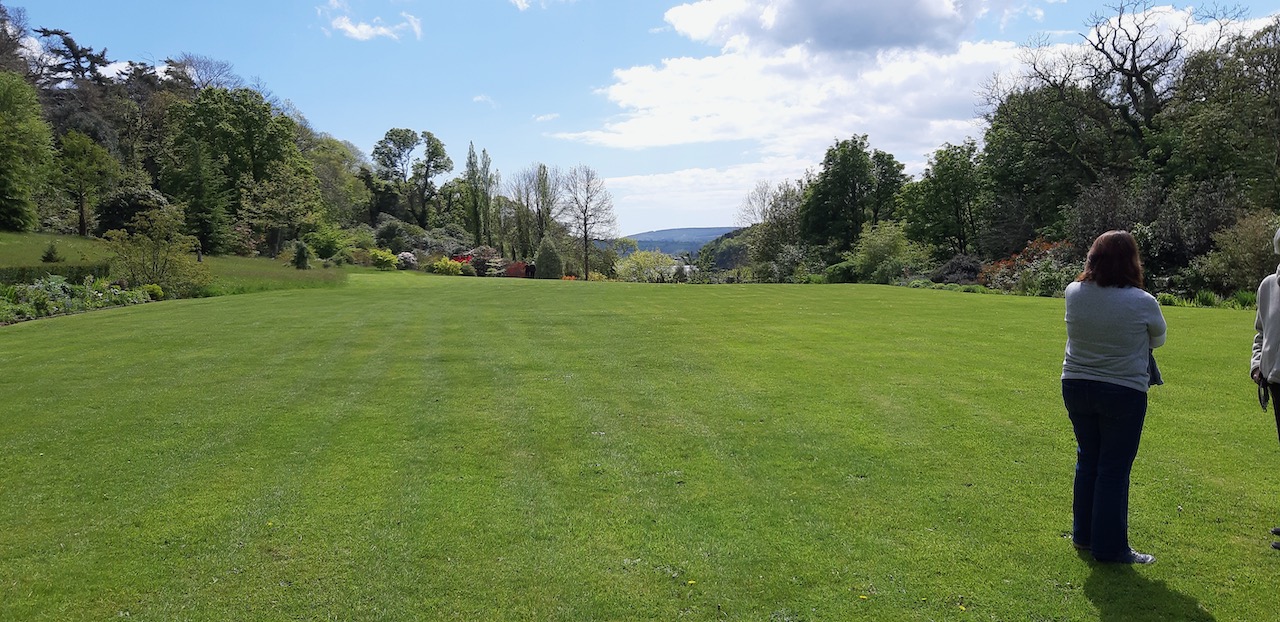
The sweep of lawn in front of the house. Photograph © Jennifer Winder-Baggot, www.irishhistorichouses.com
Dromana. Photograph © Jennifer Winder-Baggot, www.irishhistorichouses.com
Looking toward the gas house wood. Photograph © Jennifer Winder-Baggot, www.irishhistorichouses.com

We headed down to see the Bastion and Rock House.

Dromana. Photograph © Jennifer Winder-Baggot, www.irishhistorichouses.com
Inside the Bastion. Photograph © Jennifer Winder-Baggot, www.irishhistorichouses.com
The Bastion. Photograph © Jennifer Winder-Baggot, www.irishhistorichouses.com
Dromana. Photograph © Jennifer Winder-Baggot, www.irishhistorichouses.com
I had Stephen stand by the wall of the Bastion to show how tall it is! Photograph © Jennifer Winder-Baggot, www.irishhistorichouses.com

Next we went to see the Rock House, further along the path.

Dromana. Photograph © Jennifer Winder-Baggot, www.irishhistorichouses.com
The Bastion, Dromana. Photograph © Jennifer Winder-Baggot, www.irishhistorichouses.com

It has graffiti that is 150 years old!

Dromana. Photograph © Jennifer Winder-Baggot, www.irishhistorichouses.com
Dromana House, May 2019. Photograph © Jennifer Winder-Baggot, www.irishhistorichouses.com

In 2015 there were celebrations of the 800th anniversary of the house [11].

You can see photographs taken inside the house on the Dromana website, where you can also see self-catering accommodation that is available.

[1] www.dromanahouse.com

[2] https://dromanahouse.com/2019/03/20/the-drawbacks-and-dangers-of-heiress-hunting/

[3] http://lordbelmontinnorthernireland.blogspot.com/search/label/County%20Waterford%20Landowners

[4] p. 108. Bence-Jones, Mark. A Guide to Irish Country Houses. (originally published as Burke’s Guide to Country Houses volume 1 Ireland by Burke’s Peerage Ltd. 1978); Revised edition 1988, Constable and Company Ltd, London.

[5] https://www.dia.ie/architects/view/1424/DAY-MARTIN#tab_biography

[6] https://theirishaesthete.com/2014/09/27/bridging-cultures/

[7] See Robert O’Byrne’s recent blog entry: There is a memorial in front of the church (constructed by Lord Grandison in 1748): a High Cross erected by Henry Villiers-Stuart in memory of his parents, Henry, Baron Stuart de Decies and his Austrian-born wife Pauline. To the immediate west is a second monument, this one a public fountain in rock-faced limestone ashlar; it was erected in 1910 by the younger Henry’s children in memory of their mother Mary who had died three years earlier. https://theirishaesthete.com/2022/08/20/20689/ Robert O’Byrne tells us that the village of Villierstown, County Waterford was established in the 1740s by John Villiers, first Earl Grandison who wished to have a settlement for weavers and other personnel working in the linen industry he was then establishing in the area.

[8] http://lordbelmontinnorthernireland.blogspot.com/search/label/County%20Waterford%20Landowners

[9] https://dromanahouse.com/2019/03/20/the-abduction-of-mary-pike-and-that-fateful-night-in-vernon-mount-cork/

[10] https://dromanahouse.com/2019/03/20/the-irish-wild-geese-in-search-of-fortune-in-the-habsburg-empire/

[11] https://theirishaesthete.com/2015/07/01/an-octocentenary/

Text © Jennifer Winder-Baggot, www.irishhistorichouses.com
Cappoquin House & Gardens, Cappoquin, Co. Waterford P51 D324 – section 482

www.cappoquinhouseandgardens.com

Open dates in 2026: June 1-27, Aug 15-31, Sept 1-19, 9am-1pm

Fee: adult house €14, house and garden €20, garden only €7

donation

Help me to pay the entrance fee to one of the houses on this website. This site is created purely out of love for the subject and I receive no payment so any donation is appreciated!

€15.00

The front of Cappoquin House, which was originally the back. Photograph © Jennifer Winder-Baggot, www.irishhistorichouses.com

We visited Cappoquin House during Heritage Week in 2020. Cappoquin House was built in 1779 for Sir John Keane (1757-1829), and is still owned by the Keane family. The original house, sometimes known as “Belmont,” the name of the townland, was built on a site of an Elizabethan house built by the Munster planter, Sir Christopher Hatton. [1] It is most often attributed to a local architect, John Roberts (1712-96). [2] John Roberts was also architect of Moore Hall in County Mayo (1792 – now a ruin) and Tyrone House in County Galway (1779 – also a ruin).

From the National Inventory of Architectural Heritage, Moore Hall, County Mayo.
From the National Inventory of Architectural Heritage, Tyrone House, County Galway.

Glascott Symes points out in his book Sir John Keane and Cappoquin House in time of war and revolution that it is not known who the original architect was, and it may have been Davis Ducart, who also built Kilshannig. [3]

The house was burnt and destroyed in 1923, because a descendent, John Keane (1873-1956), accepted a nomination to the Senate of the new government of Ireland. Ireland gained its independence from Britain by signing a Treaty, in which independence was given to Ireland at the expense of the six counties of Northern Ireland, which remained a part of Britain. Disagreement about the Treaty and the loss of the six counties led to the Irish Civil War. During this war, Senators’ houses were targeted by anti-Treaty forces since Senators served in the new (“pro-Treaty”) government; thirty-seven houses of Senators were burnt.

Fortunately the Keanes received compensation and engaged Richard Francis Caulfield Orpen (1863-1938) of South Frederick Street, Dublin [4], brother of painter William Orpen, to rebuild. Any material possible to salvage from the fire was used, and the fine interiors were recreated. [5] It was at this time that the former back of the house became the front, overlooking a courtyard which is entered through an archway. 

The archway to the courtyard. The lawn was laid by Sir Charles’s parents. Photograph © Jennifer Winder-Baggot, www.irishhistorichouses.com
View of the arched entry to the courtyard from the garden. Photograph © Jennifer Winder-Baggot, www.irishhistorichouses.com

The square house has six bays across with a two-bay two-storey breakfront, and the door is in a frontispiece with columns.

Cappoquin House, August 2020. Photograph © Jennifer Winder-Baggot, www.irishhistorichouses.com

The house has a balustraded parapet topped with urns. The garden front, which was originally the front of the house, faces toward the Blackwater River, and has a central breakfront of three bays with round-headed windows and door. The door has cut-limestone surround with flush panelled pilasters and a fanlight. The round-headed flanking windows have fluted keystones and six-over-six timber sashed windows with fanlights.

Garden front of the house. Photograph © Jennifer Winder-Baggot, www.irishhistorichouses.com
View from the gardens, beyond the courtyard. Photograph © Jennifer Winder-Baggot, www.irishhistorichouses.com
West side of the house. Photograph © Jennifer Winder-Baggot, www.irishhistorichouses.com
Cappoquin House, August 2020. Photograph © Jennifer Winder-Baggot, www.irishhistorichouses.com

The porch on one side of the house was built in 1913 by Page L. Dickinson for John Keane, and remains the same after the fire. [6] The work done by Dickinson inside the house in 1913, including decorative plasterwork, was destroyed.

Side of the house with porch from 1913 by Page Dickinson. Photograph © Jennifer Winder-Baggot, www.irishhistorichouses.com
Cappoquin House. Photograph © Jennifer Winder-Baggot, www.irishhistorichouses.com
View from the west portico. Photograph © Jennifer Winder-Baggot, www.irishhistorichouses.com

On the east side of the house is a Conservatory.

Cappoquin House. Photograph © Jennifer Winder-Baggot, www.irishhistorichouses.com
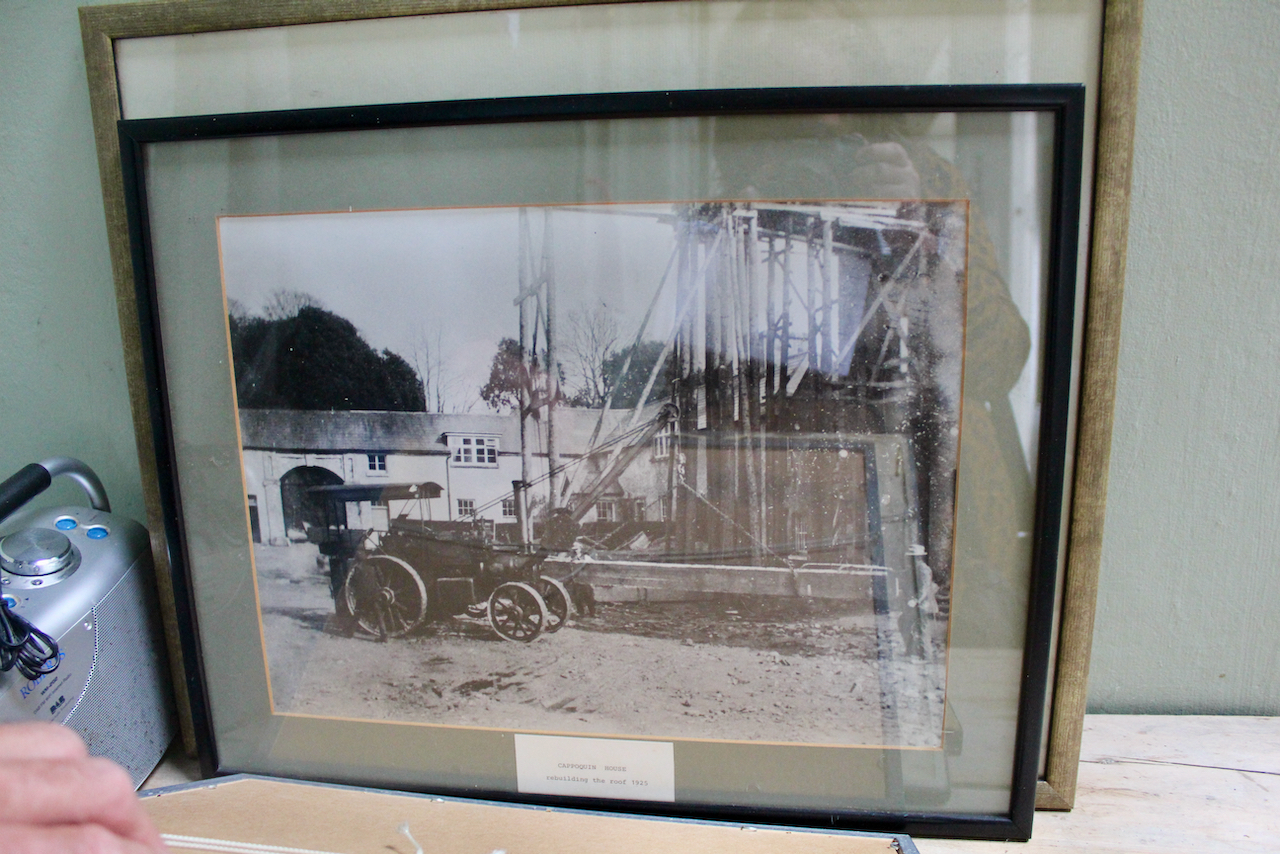
Cappoquin House after the fire, 1922.
Rebuilding the roof, 1922. The motor vehicle puts the dates into perspective!

When Sir John had the house rebuilt after the fire, he asked Page Dickinson again to be his architect but by this time Dickinson had moved to England, so Keane engaged Dickinson’s former partner, Richard Caulfield Orpen.

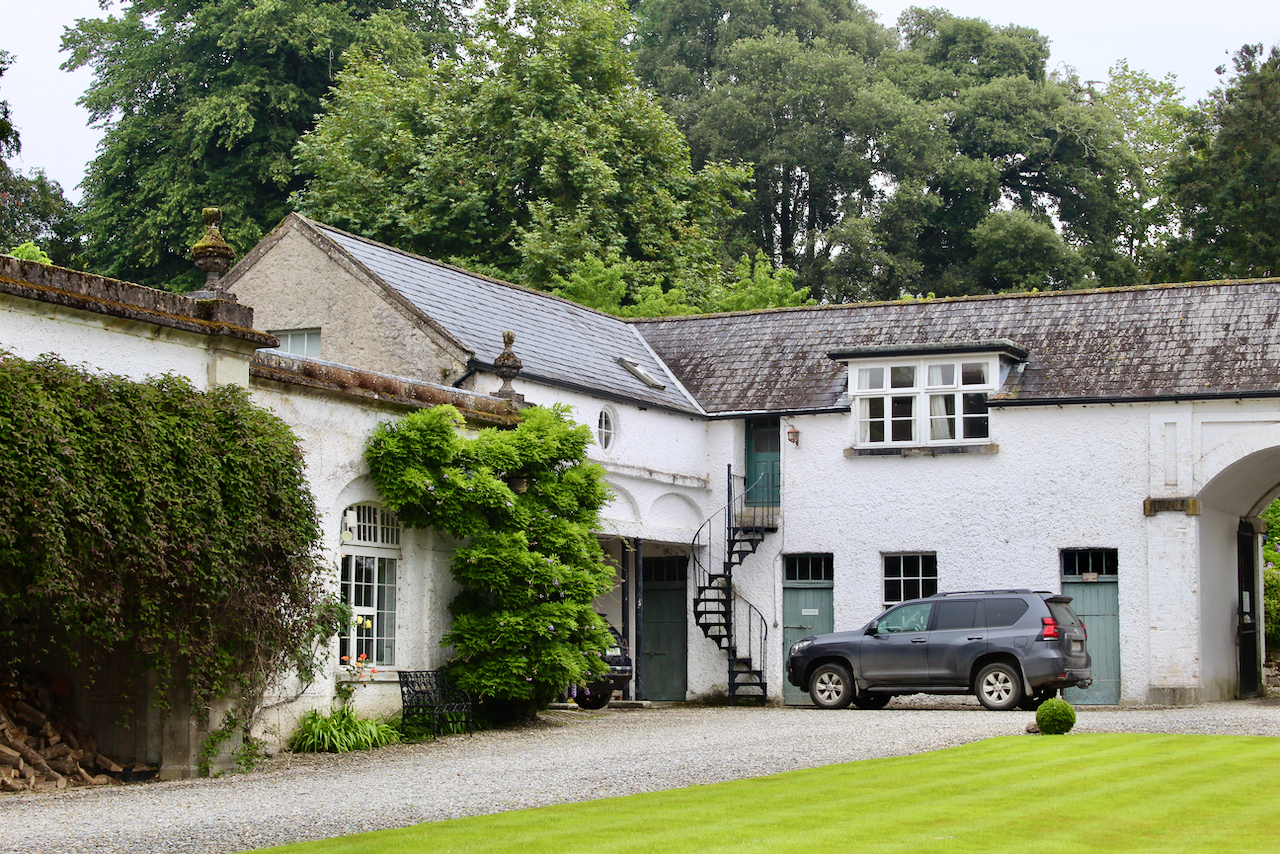
The white buildings around the courtyard were not destroyed in the fire and pre-date the rebuilt house. Some probably date from Hatton’s time.

Cappoquin House. Photograph © Jennifer Winder-Baggot, www.irishhistorichouses.com
Cappoquin House, August 2020. Photograph © Jennifer Winder-Baggot, www.irishhistorichouses.com

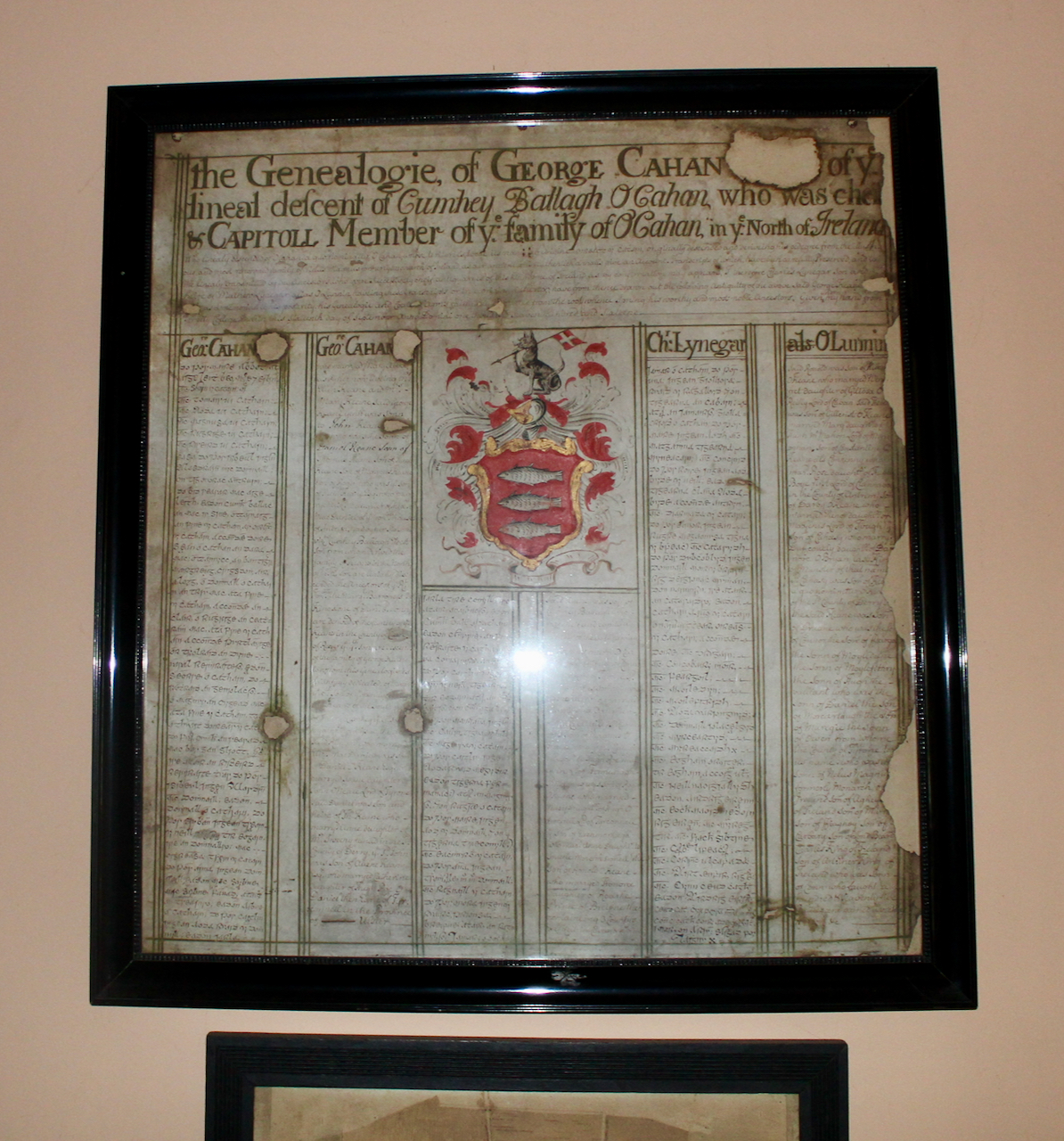
The Keanes are an old Irish family, originally named O’Cahan. The Ulster family lost their lands due to the Ulster Plantation in 1610. In 1690, following the victory of William III at the Battle of the Boyne, George O’Cahan and converted to Protestantism and anglicized his name to Keane. He practiced as a lawyer. [7] In 1738 his son, John, acquired land in the area of Cappoquin in three 999 years leases from Richard Boyle, the 4th Earl of Cork. The leases included an old Fitzgerald castle. It was this John’s grandson, also named John Keane (1757-1829), who bought out the lease and built Cappoquin House. [8]

Cappoquin House, August 2020. Photograph © Jennifer Winder-Baggot, www.irishhistorichouses.com

John became MP for Bangor in the Irish parliament from 1791 to 1801 and for Youghal in the British parliament from 1801 to 1818. He was created a baronet, denominated of Belmont and Cappoquin, County Waterford, in 1801 after the Act of Union. The current owner is the 7th Baronet.

John the 1st Baronet’s oldest son, Richard, became the 2nd Baronet (1780-1855). John’s second son, John, served in the British army, and received the title of 1st Baron Keane of Ghuznee in Afghanistan and Cappoquin, Co. Waterford, in 1839. The current owner is a descendant of the elder son, Richard the 2nd Baronet, who also served in the military. He was Lieutenant Colonel of the Waterford Militia. 

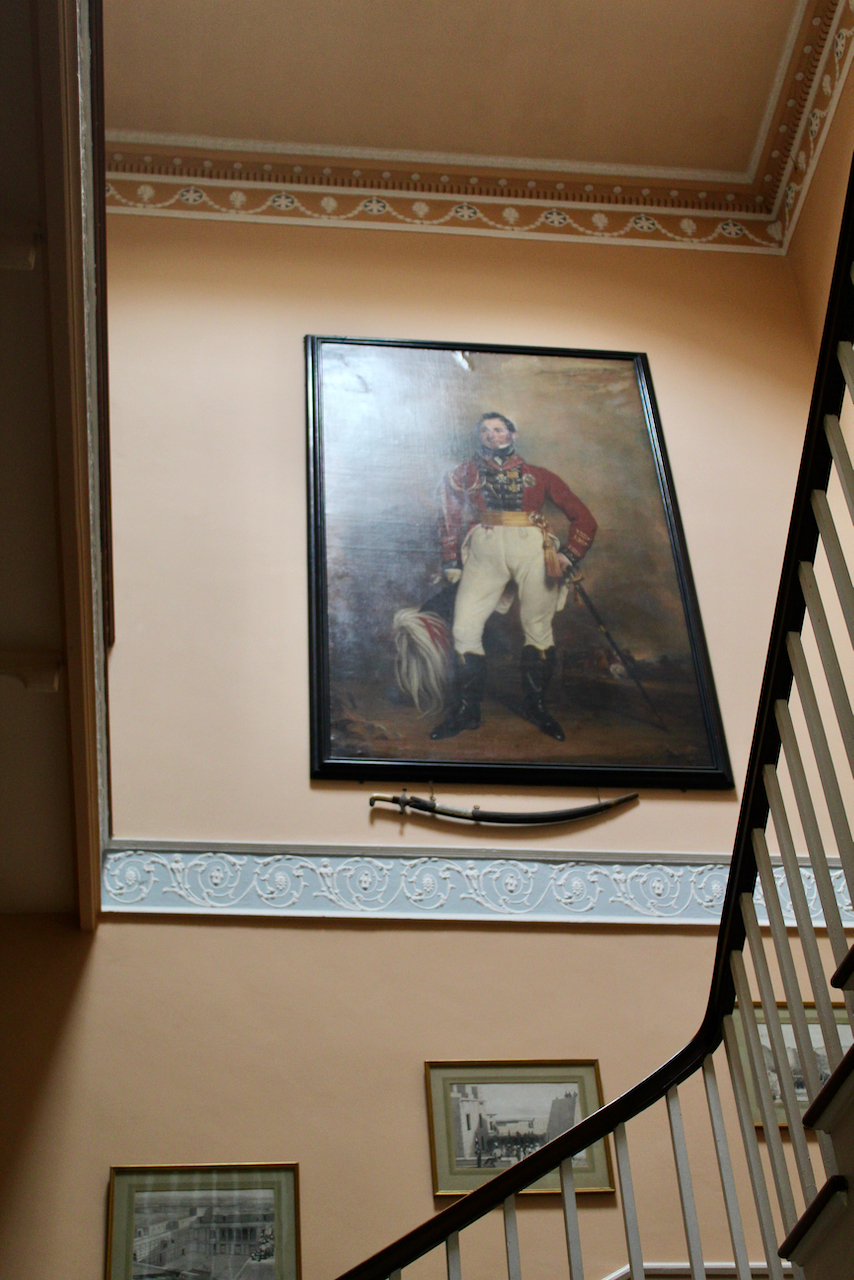
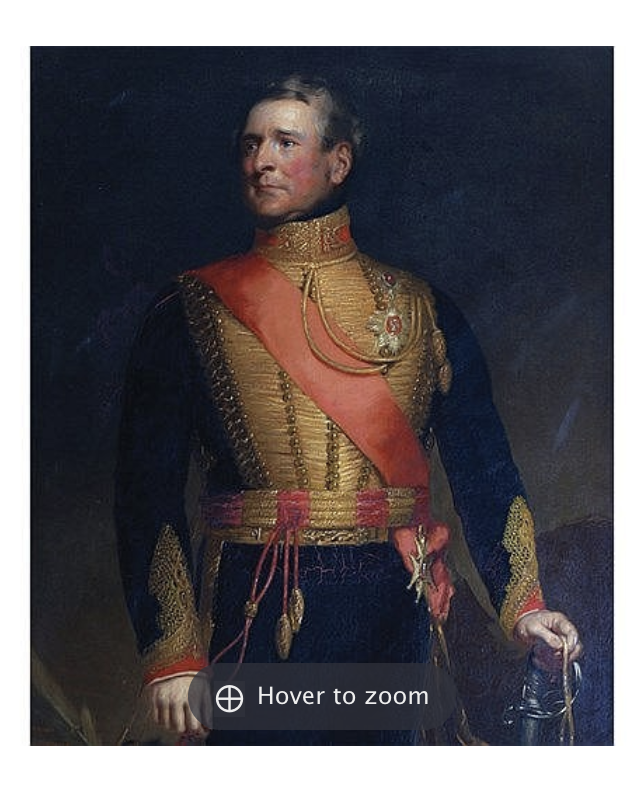
General John, 1st Baron Keane of Ghuznee in Afghanistan and Cappoquin, Co. Waterford, by Martin Arthur Shea. This is the ancestor who was in Afghanistan – he can be identified by his medals and sword. Photograph © Jennifer Winder-Baggot, www.irishhistorichouses.com

After his first wife died, Sarah Keily, daughter of Richard Keily of Springmount, County Waterford and Sarah Ussher of Cappagh House, another section 482 property in County Waterford, John Keane the 1st Baronet remarried, this time to Dorothy née Scott, widow of Philip Champion de Crespigny who was MP for Aldborough in Suffolk, England.

Dorothy Scott (1765-1837) second wife of John Keane, 1st Baronet, by George Romney courtesy of Philadelphia Museum of Art.

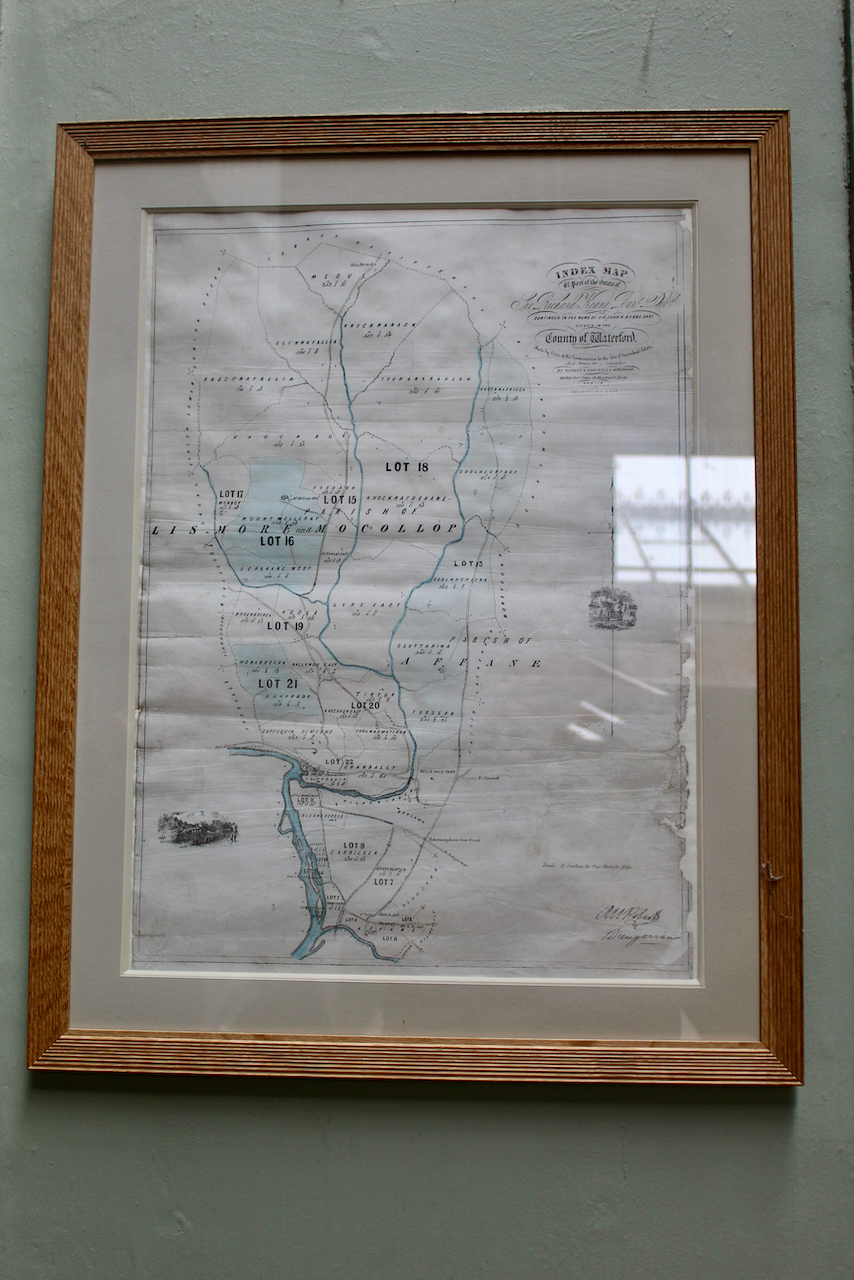
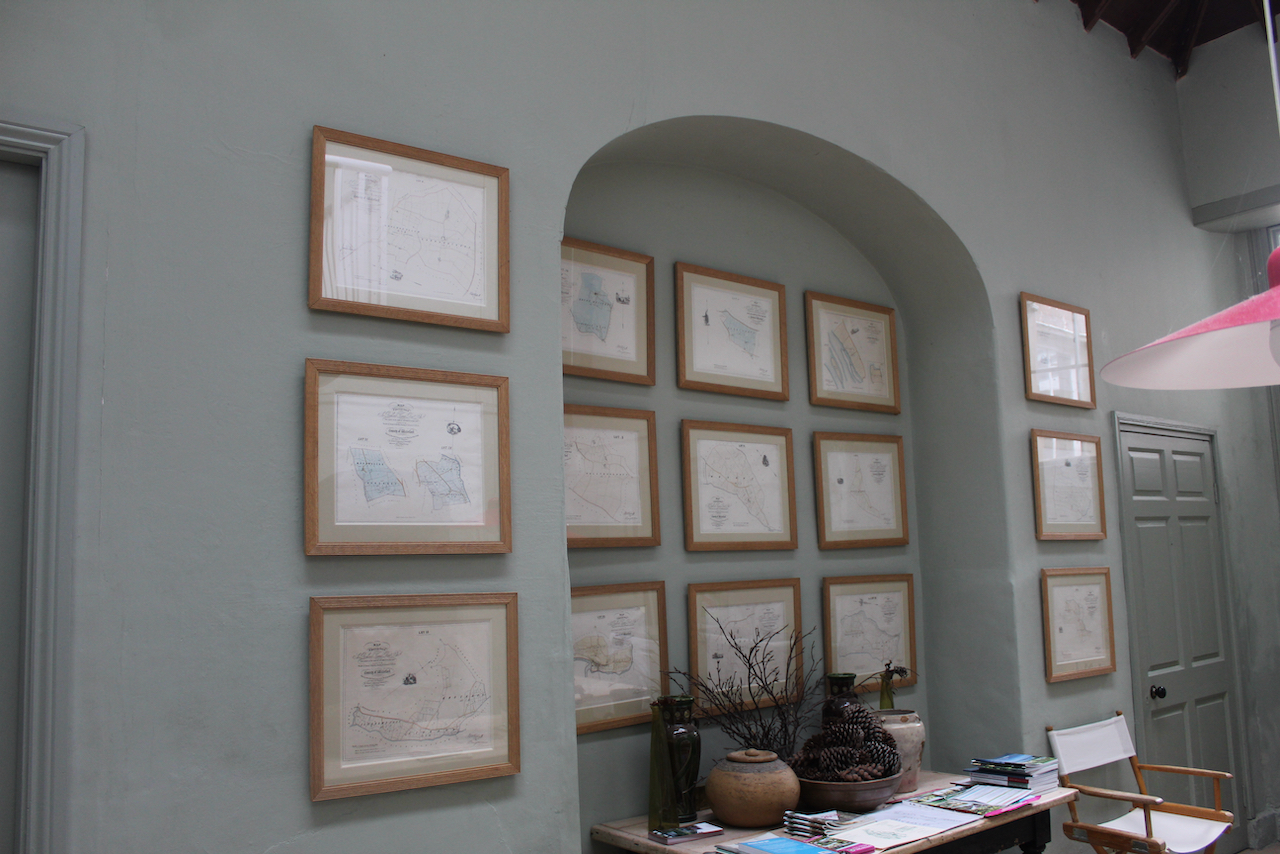
In 1855 the Keane estate was offered for sale in the Encumbered Estates Court, as the estate was insolvent after tenants could not pay their rents during the Famine. It seems however that the 3rd Baronet, John Henry Keane (1816-1881), managed to clear the debt and reclaim the estate.

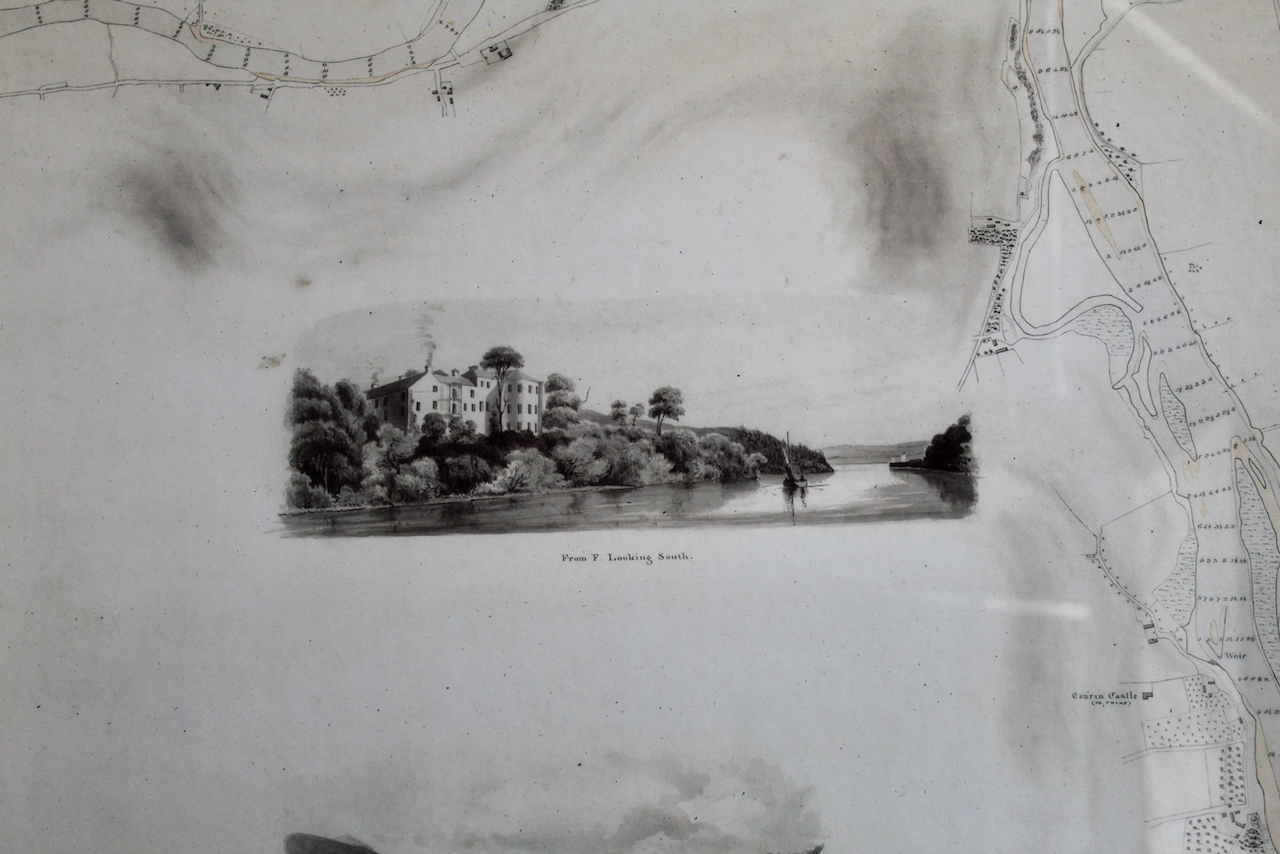
Sir Charles showed us maps of the property, as drawn up under the Encumbered Estates Act.

Cappoquin House.
Cappoquin House, August 2020. Photograph © Jennifer Winder-Baggot, www.irishhistorichouses.com

The 4th Baronet, Richard Henry Keane (1845-1892), served as High Sheriff of County Waterford and Deputy Lieutenant of County Waterford. He married Adelaide Sidney Vance, whose father John was a Conservative MP for the city of Dublin, and they had several children.

John Keane (1873-1956) the 5th Baronet also served in the British Army, and fought in the Boer War between 1899-1902. He was Private Secretary to the Governor of Ceylon between 1902 and 1905. In 1904 he was admitted to the Middle Temple to become a Barrister, but he never practiced as a Barrister. Following in his father’s footsteps he too held the office of High Sheriff of County Waterford. He followed politics closely and supported Home Rule for Ireland. He was a kind, thoughtful man and housed refugees during the wars. He fought in World War One, becoming a Lieutenant Colonel. It was this John who became a Senator.

In the cap is John Keane 5th Baronet, with his wife, daughter and his 2nd and 3rd sons George, right and Frederick, left, 3 September 1902 courtesy of National Library of Ireland.

The 5th Baronet married Eleanor Lucy Hicks-Beach, daughter of the 1st Earl of Saint Aldwyn, Gloucester, England.

Keane joined Horace Plunkett in the co-operative movement in Ireland, which promoted the organisation of farmers and producers to obtain self-reliance. The idea was that they would process their own products for the market, thus cutting out the middle man. The founders of the co-operative movement embraced new technologies for processing, such as the steam-powered cream separator. Unfortunately this led to a clash with farm labourers who unionised to prevent reduction in their wages when prices fell. Keane refused to negotiate with the Union. Rancour grew between landowners and labourers, which may have encouraged the later burning of Keane’s house. The idealism of the co-operative movement, with the goal of “better farming, better business, better living,” was easier said than done.

Horace Plunkett by photographer Bassano Ltd, 1923, courtesy of National Portrait Gallery of London, reference NPGx12783.

Keane kept diaries, which have been studied by Glascott J.R.M. Symes for an MA thesis in Maynooth University’s Historic House Studies. Symes outlines the details about the disagreements. [9] Horace Plunkett, one of the founders of the Irish Agricultural  Organisation Society, also became a Senator in Ireland’s first government and his house in South Dublin, Kilteragh, was also destroyed during the Civil War that followed the founding of the state.

Keane knew that his house may become a target and he sent his wife and children to live in London, and packed up principal contents of the house. Seventy six houses were destroyed in the War of Independence in what was to become the Republic of Ireland, but almost two hundred in the Civil War. [10] Unfortunately the library and some of the art collection at Cappoquin were destroyed. [11] 

We entered the house through a door in the older former servants’ area in order to see the maps. We then passed into the main house, with its impressive entrance hall, with stone floor and frieze of plasterwork.

Cappoquin House. Photograph © Jennifer Winder-Baggot, www.irishhistorichouses.com
Cappoquin House, August 2020. Photograph © Jennifer Winder-Baggot, www.irishhistorichouses.com

Beyond this room is the stair hall, with a top-lit cantilevered staircase and beautiful coffered dome. The timber banister terminates in a volute.

Cappoquin House. Photograph © Jennifer Winder-Baggot, www.irishhistorichouses.com
Cappoquin House, August 2020. Photograph © Jennifer Winder-Baggot, www.irishhistorichouses.com

From the stair hall we entered the library, which has a dentilled cornice and built-in bookcases and is painted a deep red colour. The most intricate works in rebuilding the interior of the house were the library bookcases and the staircase, which are a tribute to the skills of carpenter James Hackett and Edward Brady, a mason from Cappoquin. [see Symes].

Cappoquin House, August 2020. Photograph © Jennifer Winder-Baggot, www.irishhistorichouses.com

Beyond the stair hall is the central drawing room, which was formerly the entrance hall. It has an Ionic columnar screen, and a decorative plasterwork cornice – a frieze of ox skulls and swags.

Cappoquin House. Photograph © Jennifer Winder-Baggot, www.irishhistorichouses.com
Cappoquin House, August 2020. Photograph © Jennifer Winder-Baggot, www.irishhistorichouses.com

The ceiling plasterwork and columns in the drawing room are by G. Jackson and Sons (established 1780) of London, who also made the decoration in the stair hall. Sir Charles explained to us that it would have been made not freehand but from a mould.

Cappoquin House, August 2020. Photograph © Jennifer Winder-Baggot, www.irishhistorichouses.com

The chimneypiece is similar to one in 52 St. Stephen’s Green, the home of the Office of Public Works. One can tell it is old, Sir Charles told us, by running one’s hand over the top – it is not smooth, as it would be if it were machine-made. According to Symes, three original marble mantelpieces survive from before the fire, and the one in the drawing room was brought from a Dublin house of Adelaide Sidney Vance’s family, probably 18 Rutland Square (now Parnell Square), in the late nineteenth century. The Vance chimneypiece is of Carrara marble with green marble insets and carved panels of the highest quality. Christine Casey has identified the designs as derived from the Borghese vase, a vase now in the Louvre museum, which was sculpted in Athens in the 1st century BC. [12]

The chimneypieces in the dining room and former drawing room are of carved statuary marble with columns and are inset with Brocatello marble (a fine-grained yellow marble) from Siena. [13] The dining room has another splendid ceiling. The chimmeypiece in the dining room has a central panel of a wreath and oak leaves with urns above the columns. 

Cappoquin House. Photograph © Jennifer Winder-Baggot, www.irishhistorichouses.com
The Brocatello marble fireplace in the Dining Room. Photograph © Jennifer Winder-Baggot, www.irishhistorichouses.com

We then went out to the conservatory. 

Cappoquin House. Photograph © Jennifer Winder-Baggot, www.irishhistorichouses.com
Cappoquin House, August 2020. Photograph © Jennifer Winder-Baggot, www.irishhistorichouses.com

After our house tour, we had the gardens to explore. The gardens are open to the public on certain days of the year [14]. They were laid out in the middle of the nineteenth century but there are vestiges of earlier periods in walls, gateways and streams. Sir Charles’s mother expanded the gardens and brought her expertise to the planting.

To the west of the house is an orchard of pears and Bramley apples. 

Cappoquin House. Photograph © Jennifer Winder-Baggot, www.irishhistorichouses.com
The Eucalyptus coccifera. Photograph © Jennifer Winder-Baggot, www.irishhistorichouses.com

One wends one’s way up the hill across picturesque lawns, the Upper Pleasure Gardens. The paths take one past weeping ash and beeches, a Montezuma pine and rhododendrons.

Cappoquin House. Photograph © Jennifer Winder-Baggot, www.irishhistorichouses.com
Cappoquin House, August 2020. Photograph © Jennifer Winder-Baggot, www.irishhistorichouses.com

Our energy was flagging by the end of our walk around the gardens so unfortunately I have no pictures of the sunken garden, which is on the south side of the house, overlooking the view towards Dromana House.

Cappoquin House. Photograph © Jennifer Winder-Baggot, www.irishhistorichouses.com
Cappoquin House, August 2020. Photograph © Jennifer Winder-Baggot, www.irishhistorichouses.com

I noticed that you can stay in a cottage in the courtyard! https://www.airbnb.ie/rooms/16332970?adults=2&children=0&infants=0&pets=0&wishlist_item_id=11002218087407&check_in=2023-05-23&check_out=2023-05-24&source_impression_id=p3_1681134404_prgB5ShntjT0gCzp

[1] p. 7. Symes, Glascott J.R.M. Sir John Keane and Cappoquin House in time of war and revolution. Four Courts Press, Dublin, 2016.

[2] https://www.buildingsofireland.ie/buildings-search/building/22810098/cappoquin-house-cappoquin-demesne-cappoquin-co-waterford

[3] p. 42, Symes.

[4] Irish Builder 5th March 1927, 162, https://www.buildingsofireland.ie/buildings-search/building/22810098/cappoquin-house-cappoquin-demesne-cappoquin-co-waterford

[5] p. 56. Mark Bence-Jones. A Guide to Irish Country Houses (originally published as Burke’s Guide to Country Houses volume 1 Ireland by Burke’s Peerage Ltd. 1978). Revised edition 1988, Constable and Company Ltd, London.

[6] https://theirishaesthete.com/2014/07/16/exactly-as-intended/

[7] http://lordbelmontinnorthernireland.blogspot.com/search/label/County%20Waterford%20Landowners

[8] https://theirishaesthete.com/2013/03/04/risen-from-the-ashes/

[9] p. 31-35. Symes.

[10] p. 39. Symes.

[11] http://landedestates.nuigalway.ie/LandedEstates/jsp/property-list.jsp?letter=C

[12] p. 46. Symes.

[13] p. 45. Symes.

[14] https://www.cappoquinhouseandgardens.com/

Text © Jennifer Winder-Baggot, www.irishhistorichouses.com
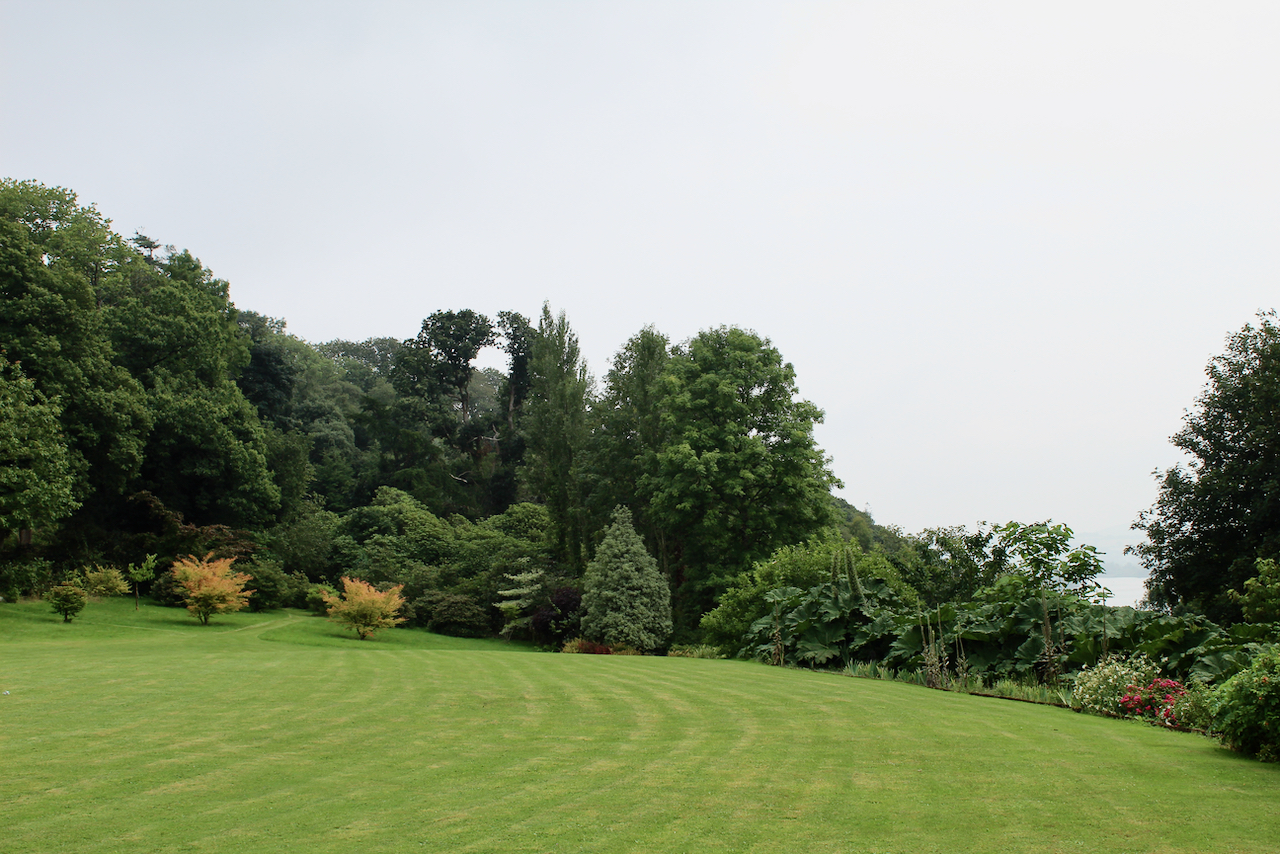
Kilshannig House, Rathcormac, County Cork P61 AW77 – section 482

Open dates in 2026: March 18-19, 21, 24, 26-27, April2, 4-7, 9, 11-12,15, 21, 23, 25, May 12, 14, 16-17, 19, 21, 23-26, 28, 30, June 2, 4, 6-9, 11, 13, 16, 25, 27-29, July 2, 4-7, 14, 16, 18-20, 28, 30, Aug 1- 4, 6, 8, 11, 13, 15-25, Sept 18, 20, 22-25, 27, 29, 8.30am-3pm,

Fee: adult €14, OAP €12, student €10, child €8

Stephen and I visited Kilshannig House in Rathcormac, County Cork, in August 2020, during Heritage Week. Kilshannig is most notable for its wonderful stucco work.

Kilshannig, August 2020. Photograph © Jennifer Winder-Baggot, www.irishhistorichouses.com

I rang Mr. Merry in advance, and he was away but told me his housekeeper could show us around. Stephen and I were spending a few days on holidays with our friends Denise and Ivan, and Denise decided to join us to come to see the house. I was excited to show someone what it is like to visit the section 482 houses. In most cases, like this day visiting Kilshannig, we are going to see someone’s private home. It is not like visiting a place normally open to the public, like Fota House or Doneraile Court, two houses which Stephen and I also visited while in Cork, which are now owned and run by Irish Heritage Trust and the OPW (Office of Public Works) respectively. [1] I always feel that I am an inconvenience, requesting a visit someone’s home. I must remind myself that it is visitors like me and you who ensure that the section 482 revenue scheme continues. I envy owners of these beautiful homes, but maintaining a Big House is almost a career choice. In fact owners often express their belief that they are the caretaker of a small part of Ireland’s built heritage. In this case, Mr. Merry runs an equine stud, and it is the success of that which enables him to maintain the upkeep of his home. He has also converted an extension into self-catering accommodation [2].

The house, as you can see from the photograph of the entire sweep, is Palladian [3]. It was built in 1765-66 for Abraham Devonsher, an MP and a Cork banker. The date 1766 is written on a “hopper” and probably commemorates the completion of the house.

Cast-iron rainwater goods having ornate hoppers, dated 1766, with gambolling lion and winged cherub head, square-profile down pipe and moulded joints.” [see 9] Photograph © Jennifer Winder-Baggot, www.irishhistorichouses.com

It was designed by Davis Ducart [or Duckart], whose Irish career began in the 1760s and continued until his death in about 1785. The Dictionary of Irish Architects tells us:

According to William Brownlow, writing to the Earl of Abercorn in 1768, he ‘dropped into this Kingdom from the clouds, no one knows how, or what brought him to it.’ [4]

The Irish Historic Houses website tells us that Ducart worked as a canal and mining engineer as well as an architect. With engineering skill, he was committed to good design and craftsmanship. The Dictionary of Irish Architects tells us of criticism of his work, however:

An attack on him in the Freeman’s Journal for 3-4 February 1773 states that he had given up architecture by this time: ‘Our French architect … never could bring any thing to perfection he put his hands to; he made some of his first (and, alas! his last) experiments as an architect, at the cost of the public and many private gentlemen, in the country and city of Cork, the latter of which bears a large monument of his insipid, uncooth taste in the art of designing; he was actually ignorant of the common rules and proportions of architecture; eternally committing mistakes and blunders, and confounding and contradicting his own directions, until he himself saw the folly of such proceedings, and (not without certain admonitions) quitted the profession he had no sort of claim to.’

I do not know enough about architecture to contradict the writer in the Freeman’s Journal but the Irish Historic Houses website claims: “Ducart was arguably the most accomplished architect working in Ireland between the death of Richard Cassels and arrival of James Gandon.” [5] In an article in Country Life, Judith Hill suggests that criticism was motivated by professional jealousy of a foreigner. [6]

Other works associated with Ducart are the Mayoralty or Mansion House, Cork (1765-1773); Lota Lodge in County Cork (1765); Castletown Cox in County Kilkenny (1767); Brockley House, Laois (1768); Custom House of Limerick (1769) which now houses the Hunt Museum; Castlehyde House, County Cork; Drishane Castle, County Cork (which is also a section 482 property, not to be confused with Drishane House – about which I will be writing shortly). [see 4]

The cherrypicker out front mars the photograph, but Anne the housekeeper explained that work was being done in the house. The front door is approached by a flight of limestone steps. Photograph © Jennifer Winder-Baggot, www.irishhistorichouses.com
Castletown Cox, County Kilkenny, also by Ducart, photograph courtesy of Knight Frank estate agents.

The house consists of a central block of two storeys over basement (with a mezzanine level), with wings either side that are described by Mark Bence-Jones as “L” shaped but to me they look U shaped, almost like a pair of crab claws. [7] Curved walls close in either wing into courtyards. Frank Keohane describes it in The Buildings of Ireland: Cork, City and County:

At Kilshannig, Ducart developed his own interpretation of the ubiquitous Irish Palladian country-house plan, which he also used with modification at Castletown Cox, Co Kilkenny, and The Island, Co Cork (demolished). Eschewing the Pearse-Castle tradition, Duckart’s central block is flanked by inward turned L-shaped (rather than rectangular) wings which project forward to form a cour d’honneur. Curved screen walls connect the inward-facing ends of the wings back to the house and enclose kitchen and stable courts. The principal North front, looking across the park to Devonsher’s parliamentary borough of Rathcormac, comprises a neat central corps de logis flanked by six-bay blind arcades, representing the back ranges of the courts, which terminate in domed pavilions. The plan has been likened to that of Vanbrugh’s Castle Howard, Yorkshire.” [8]

Photograph © Jennifer Winder-Baggot, www.irishhistorichouses.com

The view from the front, overlooking Rathcormac. Photograph © Jennifer Winder-Baggot, www.irishhistorichouses.com
Photograph © Jennifer Winder-Baggot, www.irishhistorichouses.com
Kilshannig, 2020. Photograph © Jennifer Winder-Baggot, www.irishhistorichouses.com
Kilshannig, August 2020. Photograph © Jennifer Winder-Baggot, www.irishhistorichouses.com

Keohane suggests that Davis Ducart was probably assisted by Thomas Roberts of Waterford. The front of the house is of red brick with limestone quoins, and the centre block is seven bays across with a single-storey three bay Doric frontispiece which the National Inventory of Architectural Heritage tells us is of cut sandstone. [9] The frontispiece has Doric style pilasters, and the door and window openings have fluted scroll keystones with plinths that look like they should hold something, in circular niches. The pilasters support an entablature which the National Inventory describes: “with alternating bucrania and fruit and flowers metopes and triglyphs.” The metopes are the squares with the pictures of “bucrania” (cow or ox skulls, commonly used in Classical architecture, they represent ancient Greek and Roman ceremonies of sacrifice) and fruit and flowers, and the triglyphs are the three little pillars between each square picture (wikipedia describes: “In classical architecture, a metope (μετόπη) is a rectangular architectural element that fills the space between two triglyphs in a Doric frieze, which is a decorative band of alternating triglyphs and metopes above the architrave of a building of the Doric order.“) [10]

Kilshannig, August 2020. Photograph © Jennifer Winder-Baggot, www.irishhistorichouses.com

Above this stone frontispiece is an empty niche which Bence-Jones tells us contained, in a photograph taken in approximately 1940, a statue or relief of a warrior or god.

Kilshannig, August 2020. Photograph © Jennifer Winder-Baggot, www.irishhistorichouses.com

There is a mezzanine level, which is unusual in such a house, and we can see that the windows at this level are squeezed between ground and first floor levels. The Irish Historic Houses website tells us that the house has four formal fronts. Unfortunately we did not walk around the house so I did not photograph the other fronts. The basement windows are semicircular, which is apparently characteristic for Ducart.

Photograph from the National Inventory of Architectural Heritage [9].
The basement windows, “charmingly glazed with cobweb-like astragals,” as Casey and Rowan describe them. Photograph from National Inventory of Architectural Heritage.

The wings have five arched windows each and Keohane tells us that the wings are actually low two-storey buildings. The copper domes and timber cupolas have been reinstated by the present owners.

Kilshannig, August 2020. Photograph © Jennifer Winder-Baggot, www.irishhistorichouses.com

On the back facade the arcades have plain Tuscan pilasters supporting a deep entablature with small blind roundels above each arch.

Photograph from National Inventory of Architectural Heritage – you can see that this was taken before the domes were reinstated.
Kilshannig, 2020. Photograph © Jennifer Winder-Baggot, www.irishhistorichouses.com
Kilshannig, August 2020. Photograph © Jennifer Winder-Baggot, www.irishhistorichouses.com

Anne the housekeeper welcomed us and brought us into the impressive Baroque hall.

Front Hall. Excuse the dirty floor, from ongoing repair work. Photograph © Jennifer Winder-Baggot, www.irishhistorichouses.com

Keohane writes that the plasterwork in Kilshannig is by two different people with distinctive styles. He writes: “The accomplished decoration to the Saloon and Library ceilings is the work of the Swiss-Italian Filippo Lafranchini, here combining emphatic late Baroque modelling with the refinement of small-scale ornament of a Rococo character. The remaining decoration, which is vigorously naturalistic and in places ungainly, is by an unknown, and presumably Irish, hand.” For more on the Lafranchini brothers, see the Irish Aesthete’s entry about them. [11]

The stuccadore of the wonderful Rococo plasterwork in the hall is therefore unknown. Our guide, Anne, pointed out that the birds, that reminded me of birds at Colganstown by Robert West of Dublin, stick out too far and that the heads have a tendency to be knocked off. The ceiling is deeply coved, and features acanthus leaves, flower and fruit-filled baskets and garlands with draped ribbons.

Kilshannig, August 2020. Photograph © Jennifer Winder-Baggot, www.irishhistorichouses.com

The floor of the front hall is of Portland stone with black insets. The walls have Corinthian columns and the corners of the ceiling decoration are curved.

Photograph © Jennifer Winder-Baggot, www.irishhistorichouses.com

Kilshannig, August 2020. Photograph © Jennifer Winder-Baggot, www.irishhistorichouses.com

The hall has a beautiful Portland stone fireplace with a mask flanked by garlands, and two male Grecian bearded Herms (“a tapering pedestal supporting a bust, or merging into a sculpted figure, used ornamentally, particularly at the sides of chimneypieces. Roughly similar to a term.’) [3]. Herm refers to Hermes, the Greek god.

Kilshannig, 2020. Photograph © Jennifer Winder-Baggot, www.irishhistorichouses.com
Here we see one of the birds who has had its head broken off. Photograph © Jennifer Winder-Baggot, www.irishhistorichouses.com

The entrance hall leads to a three bay saloon, with dining room on one side and library on the other. To one side of the front hall is a corridor leading to the wonderfully curving staircase. The stone floor and stuccowork continue into the corridor, which has panelled walls.

Kilshannig, 2020. Photograph © Jennifer Winder-Baggot, www.irishhistorichouses.com
Kilshannig, August 2020. Photograph © Jennifer Winder-Baggot, www.irishhistorichouses.com

The circular cantilevered Portland stone staircase rises two full rotations to the first floor. The domed ceiling has more stuccowork. There’s also a lovely circular pattern with geometrical black and grey shapes on the floor below the stairs.

Kilshannig, 2020. Photograph © Jennifer Winder-Baggot, www.irishhistorichouses.com
You can see the mezzanine level in this photograph, and the Portland stone cantilevered stairs. Photograph © Jennifer Winder-Baggot, www.irishhistorichouses.com

The doll house is an architectural model of Kilshannig! It even has electricity! It was made for the young girl of the house, Sophie.

Kilshannig dollhouse, 2020. Photograph © Jennifer Winder-Baggot, www.irishhistorichouses.com

Amusingly, the Kilshannig doll house is more advanced than the actual house, as the attic has been converted! The actual attic of Kilshanning House has not been converted. As the owner charmingly told me: “The two [bedrooms] in the dolls’ house are poetic license to give the owner of the dolls’ house the opportunity to decorate and fit it out bedrooms.”

Kilshannig dollhouse, 2020. Photograph © Jennifer Winder-Baggot, www.irishhistorichouses.com
Denise, duly masked for Covid, in the hallway at the bottom of the staircase. Photograph © Jennifer Winder-Baggot, www.irishhistorichouses.com

We entered the library first. The current owner’s father, Commander Merry, and his wife, bought the house. With his DIY skills, the Commander installed the library shelves, acquired from a Big House built in the same period as Kilshannig. The room has another spectacular ceiling, which is deeply coved. The centre features a rondel with Diana and Apollo, and the corners have oval plaques depicting the Seasons. The cove features female portrait busts, eagles, standing putti and garlands. Christine Casey has noted the likeness of the cove to that formerly in the Gallery at Northumberland House in London, which was decorated by Pietro N. Lafranchini, perhaps in collaboration with his brother Filippo.

Kilshannig, 2020. Photograph © Jennifer Winder-Baggot, www.irishhistorichouses.com
The rondel in the centre of the library ceiling featuring Diana and Apollo. Photograph © Jennifer Winder-Baggot, www.irishhistorichouses.com
Kilshannig, 2020. Photograph © Jennifer Winder-Baggot, www.irishhistorichouses.com
The female heads in rondels in the library are believed to portray members of the Devonsher family [10]. Photograph © Jennifer Winder-Baggot, www.irishhistorichouses.com

The doors have been stripped back to their original timber.

Kilshannig, 2020. Photograph © Jennifer Winder-Baggot, www.irishhistorichouses.com

The next room is the Saloon, or Salon. It has a particularly splendid ceiling, also by Filippo Lafranchini, “combining emphatic late Baroque modelling with the refinement of small-scale ornament of a Rococo character” (Keohane):

“Joseph McDonnell has established that the figurative work is derived from an engraving of 1717 of a now lost ceiling painting by Antoine Coypel, the Assembly of the Gods, at the Palais-Royale in Paris. The centre depicts Bacchus and Araidne, with Pan and a sleeping Silenus, reclining on almost imperceptible clouds. The lavishly intricate border consists of six cartouches framing plaques depicting the Four Elements – Water (a dolphin), Air (an eagle), Earth (a lion), and Fire (a Phoenix) as well as Justice and Liberty. These are linked by a sinuous frame populated by charming putti with dangling legs. The corners feature trophies dedicated to Architecture, Painting, Music and Sculpture.” [12]

Photograph © Jennifer Winder-Baggot, www.irishhistorichouses.com
“The centre depicts Bacchus and Araidne, with Pan and a sleeping Silenus, reclining on almost imperceptible clouds.” Photograph © Jennifer Winder-Baggot, www.irishhistorichouses.com
Justice, blindfolded. The Art of painting is represented in the right corner. Other corners represent architecture, music and sculpture. Photograph © Jennifer Winder-Baggot, www.irishhistorichouses.com
Here we see architecture represented in the corner trophy. Photograph © Jennifer Winder-Baggot, www.irishhistorichouses.com
The lion on in the left rondel, symbolising Earth, and the eagle on the right, symbolising Air. The other of the four Elements are represented, by a dolphin for Water and a Phoenix for Fire. I love the way the legs and feet of the putti and especially Ariadne stick out from the ceiling. Photograph © Jennifer Winder-Baggot, www.irishhistorichouses.com
Photograph © Jennifer Winder-Baggot, www.irishhistorichouses.com

The final room we were shown was the dining room. Keohane writes that the stuccowork is by a different hand than the Lafranchini brothers. “The deep cove has four large oval cartouches of naturalistic foliage with masks depicting Bacchus, Ceres, Flora and Diana, the last framed by trophies of the chase and a rather insipid fox.” [13]

Kilshannig, 2020. Photograph © Jennifer Winder-Baggot, www.irishhistorichouses.com
I believe the figure at the bottom, next to the rather sadly draped hanging game, is the “insipid” fox. Photograph © Jennifer Winder-Baggot, www.irishhistorichouses.com
Kilshannig, 2020. Photograph © Jennifer Winder-Baggot, www.irishhistorichouses.com
The head of Bacchus, encircled by grapes. Photograph © Jennifer Winder-Baggot, www.irishhistorichouses.com
Kilshannig, 2020. Photograph © Jennifer Winder-Baggot, www.irishhistorichouses.com
Kilshannig dollhouse, 2020. Photograph © Jennifer Winder-Baggot, www.irishhistorichouses.com

It was in the dining room under Bacchus that we stopped to consider how odd it was that a Quaker, as Abraham Devonsher was, had such an elaborate ceilings created in his home. Indeed, he was expelled from the Quaker community before he had the house built, in 1756, for “conformity to the world.” This was because he entered politics that year and became an MP for Rathcormac. [14] My husband Stephen, a Quaker, tells me that in order to serve as an MP, Devonsher would have had to swear an oath, and Quakers do not believe in swearing oaths – they believe that their word suffices (George Fox said: “My yea is my yea and my nay is my nay.”).

The borough was very small – in 1783 it had only seven electors. Devonsher won his seat by appealing directly to the electors, unseating the Barrys who had traditionally held the seat. He entertained grandly in order to woo the electors. He also served as High Sheriff for County Cork in 1762.

The Devonsher family had settled in Cork as merchants in the mid seventeenth century. [15] Abraham’s father Thomas married Sarah Webber in 1662. It was his father Jonas who acquired the land at Kilshannig. A portrait offered for sale in May 2025 by Fonsie Mealy auctioneers could portray Jonas or Thomas, and the seller speculates that it could be by Garret Morphey, as the painting bears many of the attributes of a work by Garret Morphey, an artist who had close connections with Ireland. Many of Morphey’s portraits were of members of families such as the Plunketts, Nettervilles, Talbots, Nugents and O’Neills, and he often depicted men wearing armour, as in his portrait of Sir Edward Villiers at Dromana House in Co. Waterford. 

Possibly of a member of the Devonsher family of Kilshannig, attributed to Garret Morphey, provenance Kilshannig House, courtesy Fonsie Mealey Summer art sale 2025. The auctin house writes that “Judging by the style of thepainting and the costume, this portrait can be dated to around 1700.”

The article in Country Life tells us that toward the end of his life the sociable Abraham Devonsher “lives a recluse life with a Harlot.” He led a rather rakish life, apparently, and he died childless in 1783 – or at least left no legitimate heirs – and left the estate to a grand-nephew, John Newenham, of Maryborough, County Cork (now a hotel) who then assumed the name Devonsher.

John had a son, John (1763-1801), who inherited the house and passed it to his son, Abraham Newenham Devonsher. He ran into financial difficulties, and at some date before 1837, sold the estate to Edward Roche (1771-1855). [16]

Edward Roche used it as a winter residence, and lived the rest of the year in his other estate, Trabolgan (since demolished), as did his son, Edmond Burke Roche, who was raised to the peerage as 1st Baron Fermoy in 1856. He was also an MP and served as Lord Lieutenant for County Cork 1856-1874.

According to the Landed estates database, at the time of the Griffith Valuation, James Kelly occupied Kilshanning. The Griffith valuation was carried out between 1848 and 1864 to determine liability to pay the Poor rate (for the support of the poor and destitute within each Poor Law Union). The 1st Baron Fermoy’s sister, Frances Maria, married James Michael Kelly, another MP (for Limerick), of Cahircon, County Clare, and James Kelly was their son. According to the Landed Estates Database, in 1943 the Irish Tourist Association Survey mentioned that it was the home of the McVeigh family. Mark Bence-Jones adds that other owners were the Myles family, and Mr and Mrs Paul Rose. The property had a succession of owners until it was purchased in 1960 by Commander Douglas Merry and his wife.

When they purchased it, the cupolas had disappeared and one wing was ruinous and the rest in poor condition. Commander Merry set about restoring the house. His son Hugo has continued the work, partly with help from the Irish Georgian Society [17]. This work included repairing a sagging saloon ceiling, and restoring the pavilions and cupolas, recladding them in copper. The entire main house, arcades and both courtyards have been completely restored and re-roofed. One wing is used for self-catering and events, and the other contains stables. There are fourteen bedrooms in the wing, and six in the main house, Anne told us.

We did not explore the outside, and did not get to see inside the pavilions or wings. That will have to wait for another visit!

donation

Help me to pay the entrance fee to one of the houses on this website. This site is created purely out of love for the subject and I receive no payment so any donation is appreciated!

€15.00

[1] https://fotahouse.com/

http://doneraileestate.ie/

[2] http://thecourtyardkilshannig.com/

[3] Palladian architecture is a style derived from the designs of the Venetian architect Andrea Palladio (1508-1580). Palladio’s work was strongly based on the symmetry, perspective, and values of the formal classical temple architecture of the ancient Greeks and Romans. https://irishhistorichouses.com/2020/04/18/architectural-definitions/

[4] https://www.dia.ie/architects/view/1660#tab_biography

[5] https://www.ihh.ie/index.cfm/houses/house/name/Kilshannig

[6] Hill, Judith. “Pot-Walloping Palladianism.” Country Life, June 15, 2016.

[7] Bence-Jones, Mark. A Guide to Irish Country Houses. (originally published as Burke’s Guide to Country Houses volume 1 Ireland by Burke’s Peerage Ltd. 1978); Revised edition 1988 Constable and Company Ltd, London.

[8] p. 465. Keohane, Frank. The Buildings of Ireland: Cork, City and County. Yale University Press, New Haven and London, 2020.

[9] https://www.buildingsofireland.ie/buildings-search/building/20904408/kilshannig-house-kilshannig-upper-co-cork

[10] https://irishhistorichouses.com/2020/04/18/architectural-definitions/

[11] https://theirishaesthete.com/2015/05/18/exuberance/

[12] p. 466. Keohane, Frank. The Buildings of Ireland: Cork, City and County. Yale University Press, New Haven and London, 2020.

[13] Ibid.

[14] http://lordbelmontinnorthernireland.blogspot.com/search/label/County%20Cork%20Landowners?updated-max=2018-07-21T07:33:00%2B01:00&max-results=20&start=8&by-date=false

[15] Keohane writes that Abraham Devonsher’s parents are Thomas Devonsher and Sarah Webber. The website The Peerage says his mother was Sarah Morris. https://www.thepeerage.com/p30600.htm#i305998

See also the article in Country Life from June 15 2016, by Judith Hill, that is linked to the Kilshannig courtyard website. Hill says Abraham Devonsher’s father was named Jonas, and that his family began to acquire the land at Kilshannig from the 1670s.

Keohane says that John Newenham was Abraham’s nephew, the Peerage website has John as the great nephew: Abraham’s brother Jonas had a daughter Sarah who married Richard Newenham, and it was their son, John Newenham, who inherited Kilshannig.

The home of the Newenhams, Maryborough, is now a hotel:

https://www.maryborough.com/index.html

[16] http://landedestates.nuigalway.ie/LandedEstates/jsp/estate-show.jsp?id=2764

[17] https://www.igs.ie/conservation/project/kilshannig

Text © Jennifer Winder-Baggot, www.irishhistorichouses.com
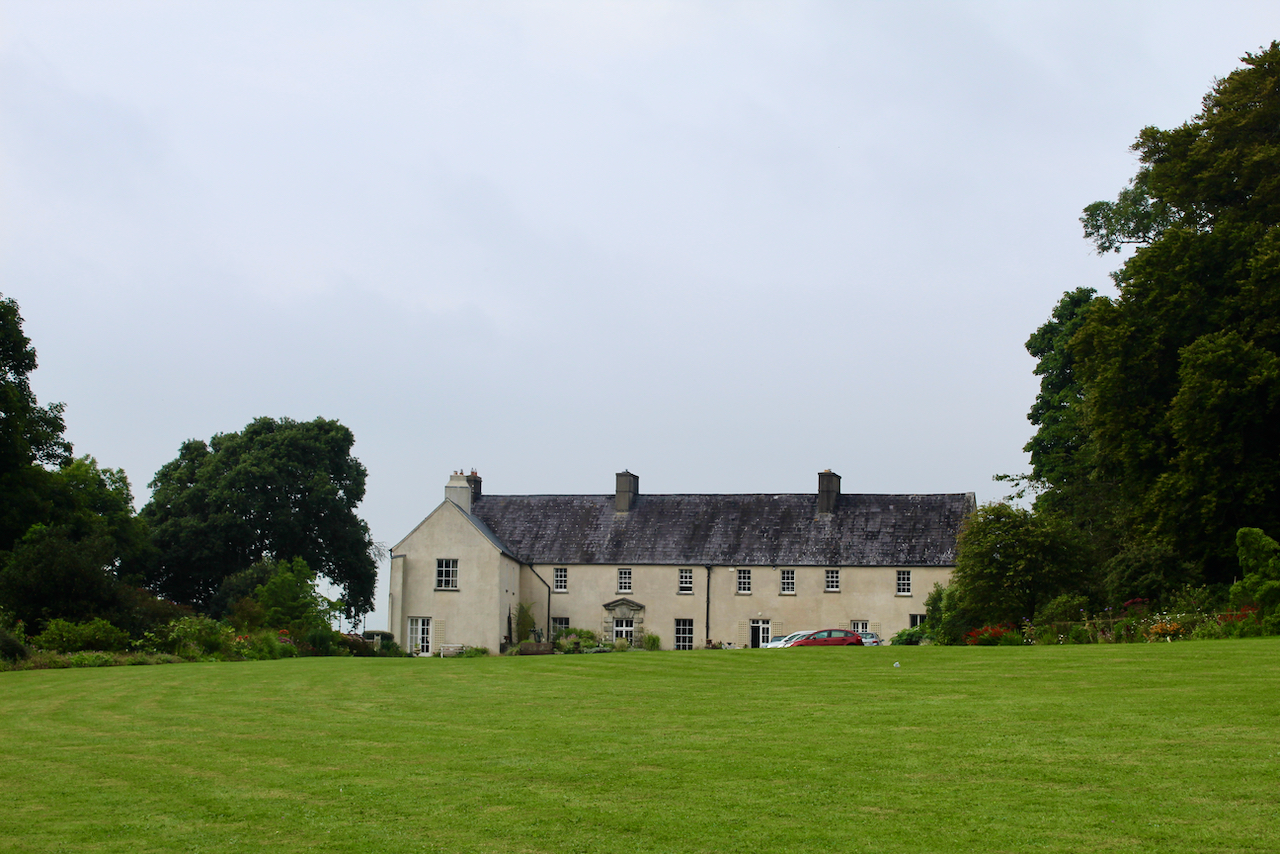

a holiday treat

I haven’t written a blog entry this week, but have booked a little holiday for myself and Stephen next year, for a stay in a section 482 property. Wilton Castle, Enniscorthy, County Wexford.

https://wiltoncastleireland.com

It looks a real treat! Most of it seems to be a ruin – here is a picture from the National Inventory.

photograph from National Inventory of Architectural Heritage, https://www.buildingsofireland.ie/buildings-search/building/15702561/wilton-castle-originally-wilton-house-wilton-co-wexford

Historic houses in County Wicklow listed in the National Inventory of Architectural Heritage

I would like to share with you some examples of the houses in Wicklow listed in the National Inventory of Architectural Heritage (photographs are all taken from the National Inventory):

i. Avondale, open to the public. Built in 1779, designs may have been by James Wyatt. It was the home of Charles Stewart Parnell, the Nationalist leader in Ireland.

ii. Avonmore

Avonmore House, built around 1830.

iii. Ballyarthur

Ballyarthur, built in 1680.

iv. Ballycurry

Ballycurry House, built in 1807 to designs by Francis Johnston.

v. Ballykeane

Ballykeane, built around 1780.

vi. Ballymoney

Ballymoney, built around 1800.

vii. Ballynure House

Ballynure House, built around 1800.

viii. Baltiboys

Baltiboys, built around 1840.

ix. Carnew Castle

Carnew Castle, built in the late sixteenth century, re-roofed and remodernised ca. 1817 by 4th Earl Fitzwilliam whose Irish seat, Coolattin, is nearby.

x. Castle Kevin

Castle Kevin, built in 1813.

xi. Clonmannon House (Old)

Clonmannon House (Old), built around 1700.

xii. Cronroe, now Bel Air Hotel

https://www.belairhotelequestrian.com/hotel/

Cronroe, now Bel Air Hotel, built in 1890.

xiii. Donard House

Donard House, built in 1813-14 to the designs of William Vierpyl.

xiv. Fortgranite

Fortgranite, built around 1730.

xv. Glanmore Castle

Glanmore Castle, built around 1804, to designs by Francis Johnston.

xvi. Glenart Castle, was a hotel, now private again, built around 1820.

xvii. Grangecon Parks

Grangecon Parks, built around 1820.

xviii. Hollybrook House

Hollybrook House, built in 1835 incorporating an earlier house, to designs by William Vitruvius Morrison.

xix. Humewood Castle

Humewood Castle, built 1867-70 to designs by William White.

xx. Mount John

Mount John, built around 1800.

xxi. Rathsallagh, now a hotel

https://www.rathsallagh.com/

Rathsallagh, built as stables around 1750, converted to a house in 1798.

xxii. Rosanna House

Rosanna House, built around 1720.

xxiii. Roundwood

Roundwood, built around 1800, remodelled later in the nineteenth century.

xxiv. Slaney Park House

Slaney Park House, built around 1810, reduced by one storey after a fire in 1946.

xxv. Tinakilly House, now a small hotel

Tinakilly House (now a hotel), built around 1876 to designs by James Franklin Fuller.

xxvi. Tinode House (you can visit June Blake’s garden www.juneblake.ie )

Tinode, built in 1864 to designs by W.F. Caldbeck, partly demolished in a fire in 1922 and restored in 1973.

xxvii. Tulfarris – now a hotel https://www.tulfarrishotel.com/

Tulfarris – now a hotel, built in 1760, porch from around 1860.

xxviii. Woodbrook, now a golf course

Woodbrook, now a golf course, built around 1840.

xxix. Woodstock House, now Druid’s Glen Golf Course and hotel

Druid’s Glen hotel, formerly called Woodstock, built around 1770.

Loughton House, Moneygall, County Offaly E53 WK16 – section 482

www.loughtonhouse.com

Open dates in 2026: May 1–31, June 1- 30, Aug 1–23, 11am-3pm

Fee: adult €5, OAP €4, child/student free, family €10

donation

Help me to pay the entrance fee to one of the houses on this website. This site is created purely out of love for the subject and I receive no payment so any donation is appreciated!

€15.00

Loughton, May 2019. Photograph © Jennifer Winder-Baggot, www.irishhistorichouses.com

We drove up a long tree-lined avenue to Loughton House. Stephen rang from the car on our way and spoke to Michael Lyons, who was out chopping wood, so told us that Andrew would be at the house to meet us.

This would have been the front of the house in 1777, as it has the bow in the centre. This is the side which we saw first as we drove up, the North facing side. Photograph © Jennifer Winder-Baggot, www.irishhistorichouses.com

Loughton House was built on the site of a previous house, in 1777. When we arrived, we wondered why there were two front doors. I think Andrew Vance, who greeted us, explained, but we were so busy introducing ourselves and immediately got along so well, that I forget what he told me about the two doors. That’s a question for next time!

Single storey addition with crisp limestone pilasters, and pediments on console brackets over the doors. Photograph © Jennifer Winder-Baggot, www.irishhistorichouses.com

According to the website, alterations were made to the house in 1835 by James and George Pain. I don’t know who the architect of the 1777 house is, but originally the house faced north, with a shallow full-height half hexagon bow in the centre.

I would consider this to be the back of the house since we went out of the door in the single-storey addition, above, after our tour, to see the garden, but is officially the front, the South facing side. The windows have pediments with console brackets on the ground and first floors. The three storeys are over a concealed basement. Photograph © Jennifer Winder-Baggot, www.irishhistorichouses.com

Mark Bence-Jones describes the house in his A Guide to Irish Country Houses:

“Of elegant and restrained late-Georgian character, the main front consisting of two wide and shallow three sided bows of three bays each, with a two bay centre between them. Single storey wing of two bays, adorned with pilasters. Pediments and entablatures on console brackets over ground floor and first floor windows. Parapeted roof. Very handsome Georgian stables.” [1]

The 1777 house was built for Major Thomas Pepper. Thomas, born around 1735, of Ballygarth, Julianstown, Co Meath, son of Lambert Pepper and Jane Otway, was Major in the 14th Light Dragoons. The Peppers acquired Ballygarth Castle (now a ruin) and lands in County Meath after the Restoration of Charles II to the British throne in 1660, for their loyalty to the Stuart monarchy. [2] Thomas Pepper married Mary Ryder, daughter of John Ryder, the Archbishop of Tuam, County Roscommon. The 14th Light Dragoons was originally called James Dormer’s Dragoons, and were raised in the south of England in 1715 in response to the Jacobite Rebellion. They were sent to Ireland in 1717. In 1747 they were renamed the 14th Regiment of Dragoons, and became the Light Dragoons in 1776 [3]. Loughton House passed to their son Thomas Ryder Pepper (1760-1828), who in 1792 married Anne Bloomfield, daughter of John Benjamin Bloomfield and Charlotte Anne Waller, of Newport, County Tipperary. The Bloomfield family had originally settled at Eyrecourt, County Galway.

Thomas Ryder Pepper (1760-1828) with The Old Castle, Loughton in the background from Loughton house auction, 2016, Shepphards.

When Thomas Ryder Pepper died, the house passed to his brother-in-law, Benjamin Bloomfield, 1st Baron Bloomfield (1815) of Oakhampton and Redwood (1768-1846). Redwood House in County Tipperary no longer exists. Oakhampton, also in Tipperary, still stands. He was Lieutenant General in the British Army and fought the rebels in 1798 at Vinegar Hill, County Wexford. He rose in the ranks to become Keeper of the Privy Purse for King George IV. This was a particularly difficult job – we came across King George IV before at several houses listed in the Revenue Section 482 Property list. The king enjoyed a romance with Elizabeth Conyngham of Slane Castle, and relished the good life: food, drink and beauty in the form not only of women but in architecture, with the help of John Nash. He was therefore rather a Big Spender. Naturally, therefore, he came to resent Benjamin Bloomfield and his efforts to tighten the purse strings.

Benjamin Bloomfield (1768-1846) 1st Baron Bloomfield as Keeper of His Majestys Privy Purse at the Coronation of George IV, by Henry Meyer, after Philip Francis Stephanoff 1826, NPG D31893.
Benjamin Bloomfield (1768-1846) 1st Baron Bloomfield, by John Lilley, from Loughton house auction catalogue, 2016, Shepphards
Benjamin Bloomfield (1768-1846) 1st Baron Bloomfield, Irish school, 19th c, from Loughton house sale, 2016, Shepphards.
Portrait of Lady Bloomfield, from Loughton house sale, 2016, Shepphards

We have already seen that several houses underwent alterations in expectation of a visit from King George IV in 1821. In Charleville, County Wicklow, a new floor was installed at great expense. Here in Loughton, a bedroom was done up for the King. Unfortunately, the King never made it to Loughton.

It was later that Bloomfield hired James and George Richard Pain to renovate Loughton House, in 1835.

Loughton, May 2019. Photograph © Jennifer Winder-Baggot, www.irishhistorichouses.com

James and George were sons of James Pain, an English builder and surveyor. Their Grandfather William Pain was the author of a series of builder’s pattern books, so they had architecture in the blood. According to the Dictionary of Irish Architects, James and his younger brother George Richard were both pupils of John Nash, one of the foremost British architects of his day responsible for the design of many important areas of London including Marble Arch, Regent Street and Buckingham Palace. He was architect to the prolific lover of architecture the Prince Regent, later King George IV. When Nash designed Lough Cutra Castle in County Galway for Charles Vereker in 1811, he recommended that the two brothers should be placed in charge of the work, so it was at this time that they came to Ireland. Lough Cutra is an amazing looking castle privately owned which is available for self-catering rental. [4] James Pain settled in Limerick and George in Cork, but they worked together on a large number of buildings – churches (both Catholic and Protestant), country houses, court houses, gaols and bridges – almost all of them in the south and west of Ireland. [5] In 1823 James Pain was appointed architect to the Board of First Fruits for Munster, responsible for all the churches and glebe houses in the province.

The Pains Gothicized and castellated Dromoland Castle in County Clare at some time from 1819-1838, now a luxury hotel. [6] They took their Gothicizing skills then to Mitchelstown Castle in 1823-25, but that is now a ruin. In 1825 they also worked on Convamore (Ballyhooly) Castle but that too is now a ruin. They also probably worked on Quinville in County Clare and also Curragh Chase in County Limerick (now derelict after a fire in 1941), Blackrock Castle in County Cork (now a science centre, museum and observatory which you can visit [7]), they did some work for Adare Manor in County Limerick (also now a luxury hotel), Clarina Park in Limerick (also, unfortunately, demolished, but you can get a taste of what it must have been like from its gate lodge), Fort William in County Waterford, probably they designed the Gothicization and castellation of Ash Hill Towers in County Limerick (also a section 482 property!), alterations and castellation of Knoppogue Castle, County Clare (you can also visit and stay, or attend a medieval style banquet), Aughrane Castle mansion in County Galway (demolished – Bagots used to own it, I don’t know if we are related!), a castellated tower on Glenwilliam Castle, County Limerick and more.

The Pain brothers reoriented Loughton House to face south, and the main doorcase was put to the east end, the Loughton House website tells us. In his Buildings of Ireland: Central Leinster. Counties of Kildare, Laois and Offaly, Andrew Tierney tells us that this oblique approach of typical of James Pain. [8]

Loughton, County Offaly. Photograph © Jennifer Winder-Baggot, www.irishhistorichouses.com
Loughton, May 2019. Photograph © Jennifer Winder-Baggot, www.irishhistorichouses.com

The National Inventory of Architectural Heritage claims that Loughton House is probably the Pain’s finest Classical work [9]. The exterior is relatively plain, with limestone window dressings with keystones. The north facing side is the original house, whereas the south facing side, of eight bays instead of the seven in the north side, is by the Pain brothers. The windows on this side have moulded cement detailing: architrave, cornice and consoles, and pediments. We saw more of the Pains’ work inside, in the Drawing and Dining Rooms which date from their renovation, and the wonderful curved stone cantilevered staircase.

The current owners, who acquired the house in 2016, are both medical doctors, as was the previous owner, Dr. James Reilly, who was also a former Minister for Health in the Irish government. When we visited, the house exuded a comfortable quirky chic, with marble busts on pillars in the front hall and a touch of whimsy, with a stag’s head draped in a fur at the bottom of the sweeping cantilevered staircase. 

The Loughton House website tells us:

“The house has very fine detailing – traces of the late eighteenth-century decoration can be seen in the house as well as early nineteenth-century changes in internal layout.

“The ground floor is laid out with bright and generously proportioned formal reception rooms with magnificent decorative cornicing and ceilings, ornate plaster work and large original period fireplaces. The original wood floors remain throughout and the grand sash bay windows permit torrents of light into the house. Most notable are the wood-carved shutters and door panels in the original Billiard room.” [10]

Loughton passed to Bloomfield’s son, John Arthur Douglas Bloomfield (1802-1879). He succeeded as 2nd Baron Bloomfield on his father’s death. He was a diplomat and travelled widely, was envoy to St. Petersburg and Ambassador to Austria. He was appointed Privy Counsellor on 17 December 1860. He was created 1st Baron Bloomfield of Ciamhaltha, Co. Tipperary on 7 August 1871. In 1834 his father had a hunting lodge built, Ciamhaltha House, County Tipperary, so the new title referred to this house [11]. He and his wife Georgiana Liddell had no son and the titles ended with his death. Georgina served as a Maid of Honour to Queen Victoria between 1841-45. Upon Georgiana’s marriage to Baron Bloomfield in 1845, when Georgiana left her position in the house of the Queen, Victoria gave her a cutting from a vine, which still grows at Loughton House today. Georgiana wrote the book Reminiscences of Court and Diplomatic Life, published 1883. It sounds fascinating!

John Arthur Douglas Bloomfield (1802-1879) 2nd Baron Bloomfield, wearing a burgundy red jacket and fur collar, Painting After Sir Thomas Lawrence, from Loughton house auction catalogue, 2016, Shepphards
Georgiana Bloomfield née Liddell, Lady Bloomfield from Loughton house auction catalogue, 2016, Shepphards.

The house passed to the Baron’s sister, Georgiana, and her husband, Henry Trench, of Cangort Park, County Offaly (still standing, privately owned). The Landed Estates website tells us that in the 1870s, Henry Trench owned 4,707 acres in county Tipperary, 2,113 acres in county Offaly, 1,926 acres in county Limerick, 1,581 acres in county Galway, 704 acres in county Clare and 432 acres in county Roscommon. [12]

Frederick Trench (1755-1840) 1st Baron Ashtown from Loughton sale Sept 2016 by Shepphards. He was an uncle of Henry Trench who married Georgiana Bloomfield.
A portrait of Blanche Trench (1852-1937), from Loughton house sale, 2016, Shepphards. She was a daughter of Henry Trench and Georgiana née Bloomfield.

When James Reilly sold Loughton House, he unfortunately sold its contents, including an archive of family papers. Michael Parsons of The Irish Times wrote of the auction:

Lot 2066, The Loughton Papers circa 1749-1960 – an archive of documents including correspondence, diaries, journals, sketch books and recipe books created by the various families who had lived at Loughton House – sold for €12,000 (above the estimate of €5,000-€8,000).

Sheppard’s said the buyer was Galway businessman Pat McDonagh, founder and managing director of the Supermac’s fast-food chain and owner of the Barack Obama Plaza – a services area on the M8 motorway just outside the village of Moneygall built following the visit of the US president.”

Fortunately, the article continues to reassure the readers that the documents will be properly preserved and accessible:

“In a statement issued via the auction house, Mr McDonagh described the archive “part of a tapestry of history” and that his “first priority” was its “preservation for historians, the community and the country”.

“The statement said: “Mr McDonagh commended Offaly County Council for their interest in working with Supermac’s for the preservation of the papers” which will be digitised, and that “historians owe a debt of gratitude to the owners of Loughton House, Dr James Reilly and his wife Dorothy”.

“Mr McDonagh “confirmed also that the visitor centre at the Barack Obama Plaza will host a Loughton House section, where extracts from the archive will be displayed on a rolling basis.” He said the plaza would work to ensure that the heritage of the house was not lost to the community, adding that he would encourage local and expert input to ensuring that the archive would be educational, appropriate and accessible.” [13]

A portrait of Dora Agnes Caroline Trench (1858-1899) née Turnor, wife of Benjamin Bloomfield Trench, from Loughton house sale, 2016, Shepphards.
A portrait of Mr Trench, dated 1920, from Loughton house sale, 2016, Shepphards.

The wood carved panels shutters and door panels in the billiards room, now a dining room, were decorated by one of the Trenches, Dora. The form of decoration, with details rendered by a hot poker, is exquisitely done. The portrait of the artist, Dora, hangs next to the doors. Dora was Henry Trench’s son Benjamin Bloomfield Trench’s wife, Dora Agnes Caroline Turnor. Dora Trench died in 1899, after a brief illness. Benjamin and Dora had two daughters, Sheelagh Georgiana Bertha and Theodora Caroline. [14]

Loughton, May 2019. Photograph © Jennifer Winder-Baggot, www.irishhistorichouses.com

Dora illustrated the doors with crests and intricate patterns, and all of the doors from the room are decorated, along with the shutters. I was delighted when Stephen asked if I could take a photograph of the door – I didn’t like to ask, knowing that most section 482 houses forbid indoor photography. Andrew’s assent typified his warm welcome. You can see photographs of the room, called Dora’s Room, on the Loughton website, along with photographs of the other reception rooms, the Library, Dining and Drawing Rooms. “Dora’s Room” contains a long table and chairs, and an intricately carved fireplace.

The fireplace in Dora’s Room can be seen on the Loughton website. It is, Andrew Tierney tells us in his Buildings of Ireland: Central Leinster, it is Tudor Revival, of 1862. The male caryatid figure on the right is the original, Andrew thinks, whereas the figure on the left is a copy. It’s strange how such fireplaces are carved in wood and manage to survive the fire they contain. Andrew said it throws out great heat. It has a second flue behind, from which the fire can draw its oxygen, rather than drawing from the warmed air inside the room.

The Loughton website tells us that the Trenches remained in residence until 1973 when the property was passed to the Atkinson family.

Major Anthony Guy Atkinson (b. 1909) inherited Loughton in 1970 from his cousins Thora and Sheelah Trench (Dora’s daughters). Henry Trench, Georgina Bloomfield’s husband, had a sister, Anne Margaret Trench. She married Guy Caddell Atkinson. They inherited Cangort Park in County Tipperary and Major Anthony Guy Atkinson was a descendant of Anne Margaret Trench. [15] He made Loughton over to his son, Guy Nevill Atkinson (b. 1950), who sold it in 2001.

From Dora’s Room we came upon the hallway with the sweeping floating stone cantilever staircase. This was originally the entrance hall, before James Pain added the staircase and moved the entrance to the east end.

Andrew drew our attention to an old tall clock with barometer. It was from Lissadell House, and, appropriately, was made by a man named Yates – not the poet Yeats who frequented the house, note the different spelling, but in a nice touch, the picture hanging beside it was of the poet. Incidentally, one of the Trench family, a sister of Benjamin Bloomfield Trench who inherited Loughton, Louisa Charlotte, married Colonel James Gore-Booth, of the Lissadell family. The owners have taken their time to populate the house appropriately, with respect for its history and a dash of humour.

I was most enamoured with the next room, the library, with its floor to ceiling built in bookshelves. It retains original wallpaper, worn but still in situ.

“This is where we sit in the evenings, with a glass of wine,” Andrew told us. I could just see myself there too, in the well-worn couches, facing the fireplace. You can also see this room on the website, with its comfy leather armchairs. The Equine pictures are appropriate as Andrew is Master of the local Hunt!

In the Drawing Room, a formal room with sofas, carpets and lovely salmon pink walls, gorgeous cabinets, piano and ornate gilt overmantel mirror, Andrew pointed out another treasure: the fire insurance plaque from a building. The various insurance companies had their own firetrucks and teams, and they only put out fires of the buildings insured by them. Unfortunate neighbours burned down. I was excited to see the plaque as I had seen one on the Patriot Inn in Kilmainham, one of the few remaining, and learned about them in a lecture in Warrenmount in Dublin.

Loughton, May 2019.

We then entered the second dining room (if we consider Dora’s Room, the former Billiards room, to be a dining room also, as it is currently furnished), a larger room than the first. This dining room also has a clever fireplace, this one of steel, with secret cabinets at the sides to keep the plates and dishes hot. It also had vents, and further vents built into the walls of the room, to control temperature and air flow.

Loughton, May 2019. Photograph © Jennifer Winder-Baggot, www.irishhistorichouses.com

A painting above the door is by Sarah, Lady Langham, an artist, who has also applied her creative skills to the house, and who manages the day-to-day operation of the house. She has made curtains and even the wallpaper of The King’s Bedroom. On our way to the back staircase we ran into Sarah herself, as I was photographing the chain that was used to pull the coal to the upper floors.

Loughton, May 2019. Photograph © Jennifer Winder-Baggot, www.irishhistorichouses.com

The final rooms we viewed are Sarah’s piece de resistance, “the King’s Suite,” which comprises two rooms – the room where George IV was meant to sleep, and a room next to it also furnished with a bed, which might have been his dressing room or a parlour.

Loughton, May 2019. Photograph © Jennifer Winder-Baggot, www.irishhistorichouses.com

Sarah created the wallpaper. It features a crest of a unicorn and a lion around the top – and a stag that is pictured in the recurring motifs below. She also made the magnificant curtains and pelmet.

The fireplace is interesting. It is made of limestone, which contains fossils of tubular sea creatures:

Loughton, May 2019. Photograph © Jennifer Winder-Baggot, www.irishhistorichouses.com

This, along with other rooms, is available for guest accommodation.

There is a stable complex to one side of the house. Andrew brought us out to show us the function room, which was originally a coal shed. It’s huge, and would be wonderful for parties, and is available for hire. The garden outside it, which would also be available for the functions, is romantic and beautiful, with a pond and stone walls.

Loughton, County Offaly. Photograph © Jennifer Winder-Baggot, www.irishhistorichouses.com
Loughton, May 2019. Photograph © Jennifer Winder-Baggot, www.irishhistorichouses.com

Then we sat at a table outside and Andrew brought us coffees – such a lovely touch!

Loughton, County Offaly. Photograph © Jennifer Winder-Baggot, www.irishhistorichouses.com
Loughton, May 2019. Photograph © Jennifer Winder-Baggot, www.irishhistorichouses.com

Michael joined us briefly and shared with us a photograph he had found in the national archives in England, of a group gathered at what is now the back of the house.

Andrew then urged us to wander in the gardens. We walked over to what looks like a Norman keep. It is Ballinlough Castle (not to be confused with Ballinlough Castle of County Westmeath), which dates back to the early seventeeth century, and belonged to the O’Carroll family. I climbed nearly all the way to the top (at my own peril!)!

Loughton, County Offaly. Photograph © Jennifer Winder-Baggot, www.irishhistorichouses.com
Loughton, May 2019. Photograph © Jennifer Winder-Baggot, www.irishhistorichouses.com

We then found our way to the walled garden. Michael told us he hopes to restore the glasshouse.

Loughton, County Offaly. Photograph © Jennifer Winder-Baggot, www.irishhistorichouses.com
Loughton, May 2019. Photograph © Jennifer Winder-Baggot, www.irishhistorichouses.com

I’d love such a large growing space, with space for fruit trees and sheltering walls. I have had my own allotment for seven years!

Loughton, County Offaly. Photograph © Jennifer Winder-Baggot, www.irishhistorichouses.com
The vine, above, which was taken from a cutting from a vine belonging to Queen Victoria and given to her lady-in-waiting, Georgiana Liddell, when she married Baron Bloomfield. Photograph © Jennifer Winder-Baggot, www.irishhistorichouses.com
Loughton, May 2019. Photograph © Jennifer Winder-Baggot, www.irishhistorichouses.com

I’d love to stay in the cottage, which is also available to rent.

Loughton, County Offaly. Photograph © Jennifer Winder-Baggot, www.irishhistorichouses.com
Loughton, May 2019. Photograph © Jennifer Winder-Baggot, www.irishhistorichouses.com

[1] Mark Bence-Jones. A Guide to Irish Country Houses. (originally published as Burke’s Guide to Country Houses volume 1 Ireland by Burke’s Peerage Ltd. 1978); Revised edition 1988 Constable and Company Ltd, London.

[2] http://www.patrickcomerford.com/search/label/castles?updated-max=2017-03-10T11:30:00Z&max-results=20&start=79&by-date=false

[3] https://en.wikipedia.org/wiki/14th_King%27s_Hussars

[4] http://www.loughcutra.com/

[5] https://www.dia.ie/architects/view/2640/PAIN-JAMES

[6] https://www.dromoland.ie/

[7] https://www.bco.ie

[8] p. 472. Tierney, Andrew. Buildings of Ireland: Central Leinster. The Counties of Kildare, Laois and Offaly. Yale University Press, New Haven and London, 2019.

[9] https://www.buildingsofireland.ie/buildings-search/building/14946003/laughton-house-ballinlough-cl-by-cullenwaine-ed-moneygall-co-offaly

[10] https://loughtonhouse.com/

[11] https://www.buildingsofireland.ie/buildings-search/building/22403202/ciamaltha-house-garraunbeg-tipperary-north

[12] http://landedestates.nuigalway.ie/LandedEstates/jsp/estate-show.jsp?id=2352

Redwood was inherited by Henry Trench’s son William Thomas Trench (1843-1911).

[13] https://www.irishtimes.com/life-and-style/homes-and-property/fine-art-antiques/owner-of-supermac-s-buys-loughton-house-archive-1.2818308

[14] http://www.thepeerage.com

[15] https://landedfamilies.blogspot.com/search/label/Ireland?updated-max=2017-02-19T16:18:00Z&max-results=20&start=23&by-date=false Atkinson of Cangort and Ashley Park

Text © Jennifer Winder-Baggot, www.irishhistorichouses.com

Barmeath Castle, Dunleer, Drogheda, County Louth A92 P973 – section 482

Open dates in 2026: May 1-31, June 1-10, Aug 15-23, Oct 1-20, 9am-1pm

Fee: house, adult/OAP/student €5, garden, adult/OAP/student €5, child free

donation

Help me to pay the entrance fee to one of the houses on this website. This site is created purely out of love for the subject and I receive no payment so any donation is appreciated!

€15.00

Information panel about Barmeath from the Battle of the Boyne museum.

I was excited to see Barmeath Castle as it looks so impressive in photographs. We headed out on another Saturday morning – I contacted Bryan Bellew in advance and he was welcoming. We were lucky to have another beautifully sunny day in October.

We drove up the long driveway.

Barmeath Castle, courtesy of Historic Houses of Ireland website.
Photograph taken from National Inventory of Architectural Heritage [1] I myself didn’t manage to take a photograph of the entire building.

The Bellew family have lived in the area since the 12th century, according to Timothy William Ferres. [2] The Bellews were an Anglo-Norman family who came to Ireland with King Henry II. The Castle was built in the 15th century by previous owners, the Moores, as a tower house. The Moores were later Earls of Drogheda, and owned Mellifont Abbey after the Dissolution of the Monasteries, which became the Moore family home until 1725. [3] Edward Moore (c.1530–1602), ancestor of the Earl of Drogheda, served in the English garrison at Berwick on the Scottish border during the 1550s before going to Ireland c.1561, probably having been encouraged to do so by his kinsman Henry Sidney, who had held senior appointments in Ireland in the late 1550s.

We were greeted outside the castle by Lord and Lady Bellew – the present owner is the 8th Lord Bellew of Barmeath. I didn’t get to take a photograph of the house from the front as we immediately introduced ourselves and Lord Bellew told us the story of the acquisition of the land by his ancestor, John Bellew.

Photograph taken from National Inventory of Architectural Heritage [1]. Square tower which was added in 1839, with its Romanesque arch and portcullis.

The name “Barmeath” comes from the Irish language, said to derive from the Gaelic Bearna Mheabh or Maeve’s Pass. Reputedly Queen Maeve established a camp at Barmeath before her legendary cattle raid, which culminated in the capture the Brown Bull of Cooley, as recounted in the famous epic poem, The Tain.

The Historic Houses of Ireland website tells us:

Barmeath Castle stands proudly on the sheltered slopes of a wooded hillside in County Louth, looking out over the park to the mountains of the Cooley Peninsula and a wide panorama of the Irish sea. The Bellew family was banished to Connacht by Cromwell but acquired the Barmeath estate in settlement of an unpaid bill.” [4]

Photograph taken from National Inventory of Architectural Heritage [1]

John Bellew fought against Cromwell and lost his estate in Lisryan, County Longford, and was banished to Connaught.

Theobald Taaffe (d. 1677) 1st Earl of Carlingford, County Louth, also lost lands due to his opposition to Cromwell and the Parliamentarians and loyalty to King Charles I. The Taaffes had also lived in Ireland since the twelfth or thirteenth century, and owned large tracts of land in Louth and Sligo. Theobald Taaffe, who was already 2nd Viscount, was advanced in 1662 to be 1st Earl of Carlingford. He engaged John Bellew as his lawyer to represent him at the Court of Claims after the Restoration of King Charles II (1660).

Theobald Taaffe’s mother was Anne Dillon, daughter of Theobald Dillon 1st Viscount of Costello-Gallin, County Mayo. John Bellew, while banished to Connaught, married a daughter of Robert Dillon of Clonbrock, County Galway. The Clonbrock Dillons were related to the Viscounts Dillon, so perhaps it was this relationship which led Lord Carlingford to engage John Bellew as his lawyer.

Bellew won the case and as payment, he was given 2000 of the 10,000 acres which Lord Carlingford won in his case, recovered from Cromwellian soldiers and “adventurers” who had taken advantage of land transfers at the time of the upheaval of Civil War. Lord Carlingford may have taken up residence in Smarmore Castle in County Louth, which was occupied by generations of Taaffes until the mid 1980s and is now a private clinic. A more ancient building which would have been occupied by the Taaffe family is Taaffe’s Castle in the town of Carlingford.

Barmeath, October 2019. © Jennifer Winder-Baggot, www.irishhistorichouses.com
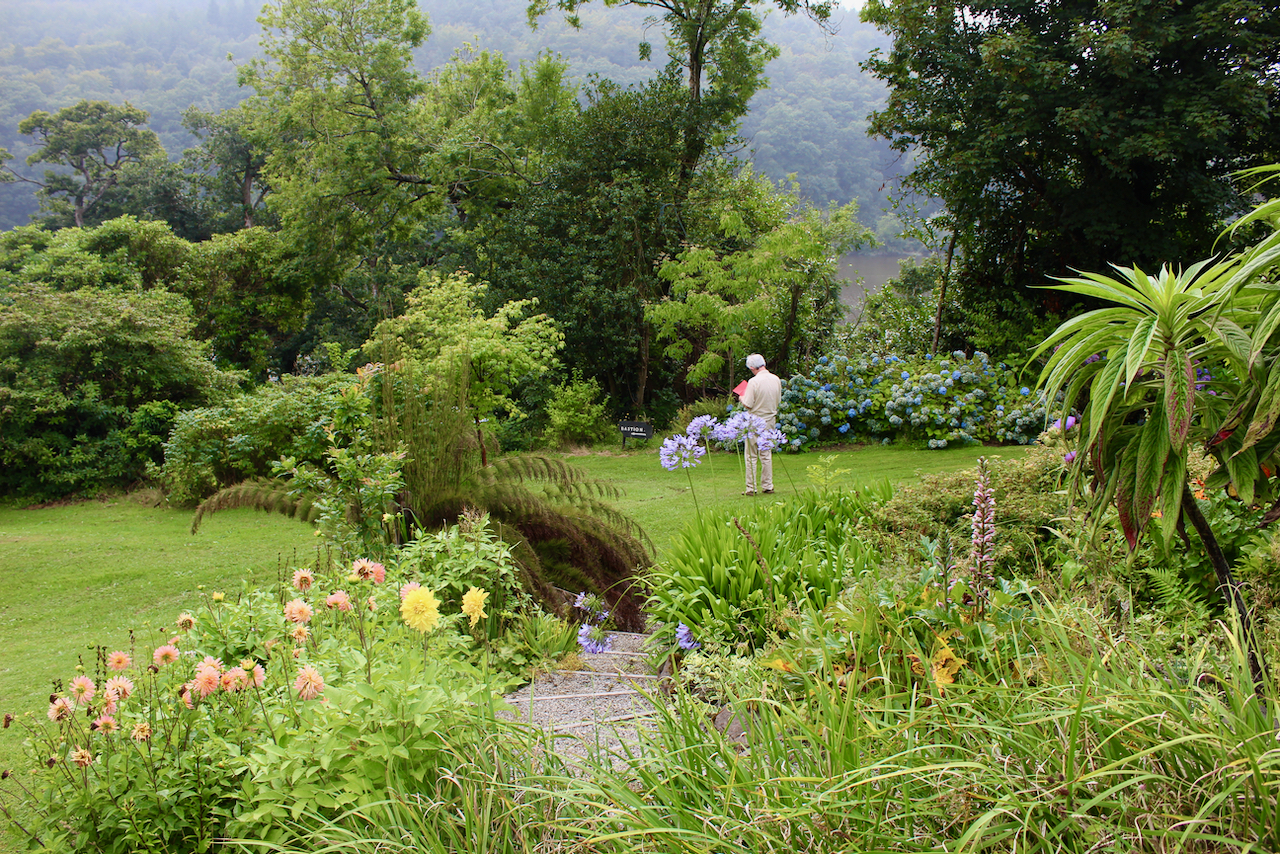
John Bellew served as MP for County Louth.

The Baronetcy of Barmeath was created in 1688 for Patrick Bellew (d. 1715/16), the lawyer John’s son, for his loyalty to James II. [see 2] John Bellew’s daughter Mary married Gerald Aylmer 2nd Baronet of Balrath, County Meath. His son Christopher gave rise to the Bellews of Mount Bellew in County Galway and established the market town, Mount Bellew.

Patrick, who was High Sheriff of County Louth in 1687, married Elizabeth Barnewall, daughter of Richard, 2nd Baronet Barnewall of Crickstown, County Meath (a little bit of a ruin survives of this castle). His son John (c. 1660-1734) inherited Barmeath and the title, 2nd Baronet of Barmeath.

A three storey seven bay house. Two round corner turrets were added on the former entrance front, which is now the garden-facing side. © Jennifer Winder-Baggot, www.irishhistorichouses.com
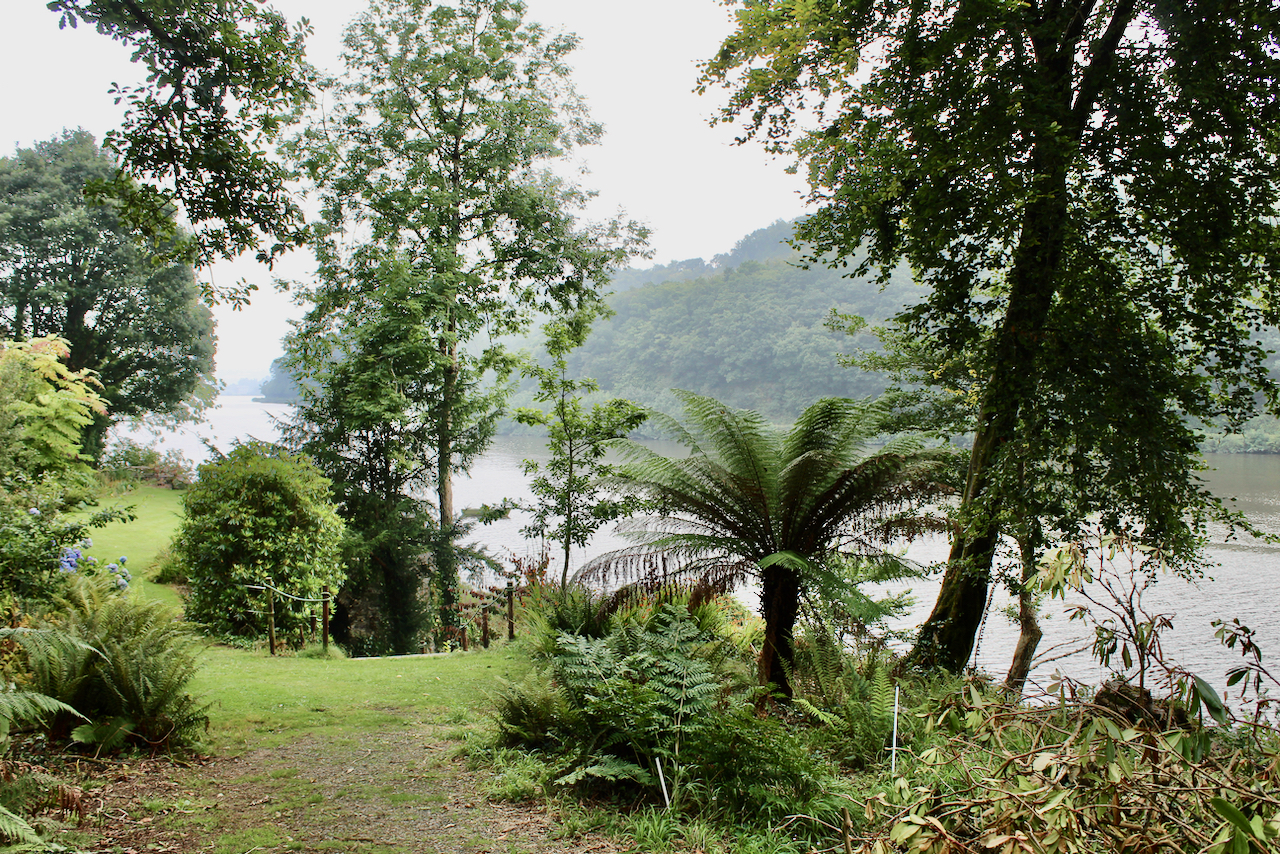
The castle we see today was built onto the 15th century tower house, in 1770, for Patrick Bellew (c. 1735-1795) 5th Baronet, and enlarged and castellated in 1839 by Sir Patrick Bellew (1798-1866), 7th Bt, afterwards 1st Baron Bellew.

John Bellew 1st Baron (d. 1691) by Garrett Morphy, courtesy of http://www.galleryofthemasters.com . He commanded a regiment of infantry in Ireland and was a Roman Catholic peer who sat in James II’s Parliament of 1689. He died of wounds received in the Battle of Aughrim.

Casey and Rowan speculate: “An explanation for the quality of the interiors at Barmeath may lie in the remarkable propensity which Bellews displayed for marrying heiresses in the eighteenth century. In 1688 Patrick Bellew of Barmeath was created a Baronet of Ireland. His son Sir John Bellew, the second Baronet, married an heiress; so did the third Baronet, Sir Edward, who died in 1741.”

The 2nd Baronet married first, in 1685, Mary, daughter of Edward Taylor, who was eventually heiress of her brother, Nicholas Taylor. He married secondly, Elizabeth, daughter of Edward Curling, storekeeper of Londonderry during the siege of that city.

Edward the 3rd Baronet married Eleanor, eldest daughter and co-heir of Michael Moore of Drogheda.

Patrick Bellew (c. 1735-1795) 5th Baronet inherited Barmeath and also owned considerable land in County Galway, which he sold in August 1786 to his Galway Bellew cousins, with whom he maintained close contact. He married Mary, daughter and co-heiress of Matthew Hore, of Shandon, County Waterford.

Henry Grattan Bellew, 3rd Baronet of Mount Bellew in County Galway, b.1860, married Sophia Forbes, daughter of the Earl of Granard, by Dermod O’Brien, courtesy of Adam’s auction 10 Oct 2017

The Bellews are historically a prominantly Catholic family. Patrick Bellew the 5th Baronet was active in promoting the cause of Catholics in Ireland. The Dictionary of Irish Biography tells us:

Politically assertive, Sir Patrick was active in catholic politics from the early 1760s, reassuring the government of catholic loyalty and petitioning for catholics to be allowed enter the army in 1762. As the gentry began to supplant the Dublin middle classes in the Catholic Committee in the 1770s, he increasingly became involved in its affairs and was appointed to its select committee in 1778. In 1778 he contributed and raised funds for catholic agitation and spent much of the year in England lobbying for repeal of the penal laws; his efforts were rewarded with the passing of the 1778 relief act.” [5]

Bence-Jones writes in his Life in an Irish Country House that it was Patrick Bellew, the 5th Baronet, who remodelled the house and had the decorative library ceiling made. [6]

The rococo interior details pre-date the exterior Gothicization of Barmeath Castle. The egg-and-dart mouldings around the first floor doors, Corinthian columns and staircase all seem to date, according to Casey and Rowan, to approximately 1750, which would have been the time of the 4th and 5th Baronets; John the 4th Baronet (1728-50) died of smallpox, unmarried, and the title devolved upon his brother, Patrick (c. 1735-95), 5th Baronet. The library might be from a little later. Casey and Rowan describe it:

The finest room, the library, set on the NE side of the house above the entrance lobby, is possibly a little later. Lined on its N and S walls with tall mahogany break-front bookcases, each framed by Ionic pilasters and surmounted by a broken pediment, it offers a remarkable example of Irish rococo taste. The fretwork borders and angular lattice carving of the bookcases are oriental in inspiration and must reflect the mid-C18 taste for chinoiserie, made popular by pattern books such as Thomas Chippendale’s Gentleman and Cabinet Maker’s Director (1754). The ceiling has a deep plasterwork cove filled with interlaced garland ropes, a free acanthus border, oval motifs and shells set diagonally in the corners. Free scrolls, flowers and birds occupy the flat area with, in the centre, a rather artless arrangement of Masonic symbols, including three set-squares, three pairs of dividers, clouds and the eye of God.” [7]

An example of Masonic symbols from the wonderful Freemasons Hall interior in Molesworth Street in Dublin, open during Open House Dublin each year. © Jennifer Winder-Baggot, www.irishhistorichouses.com
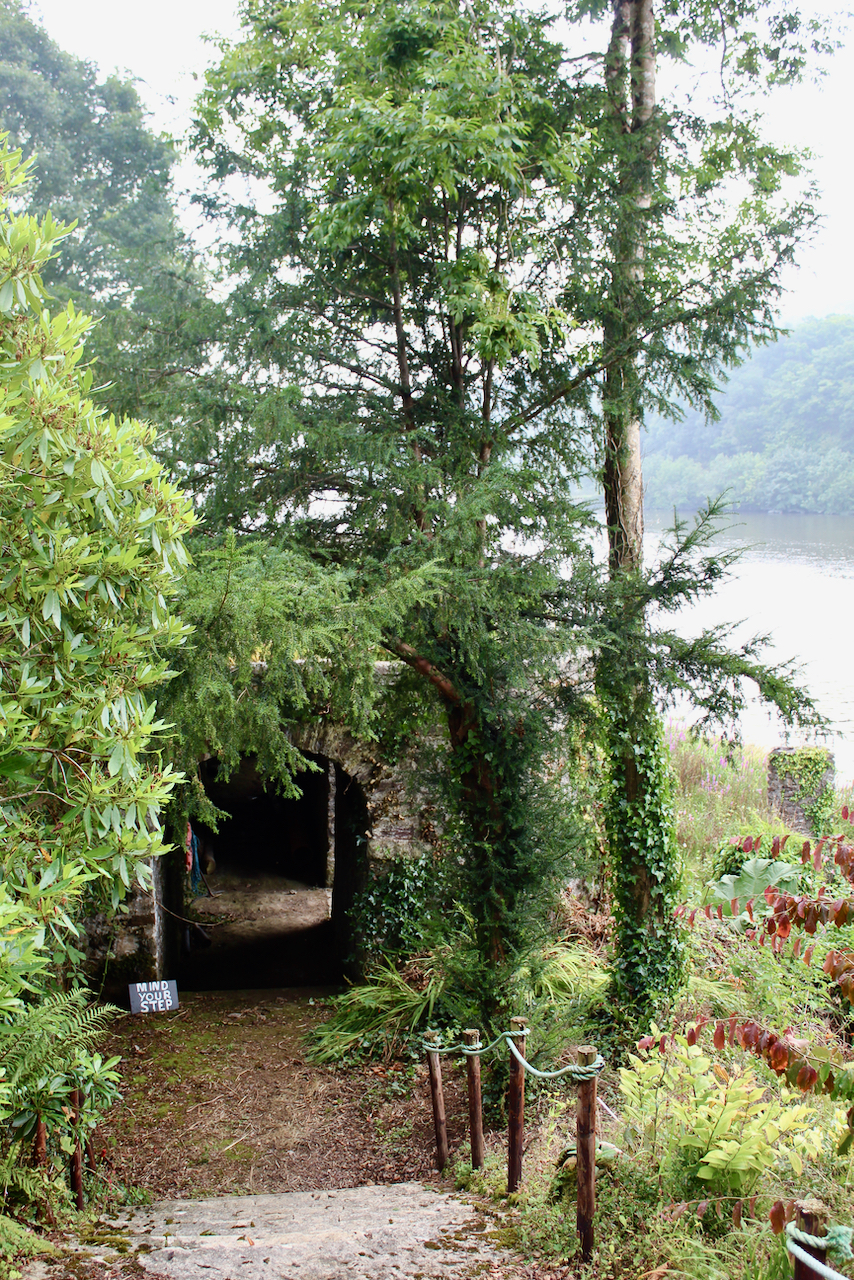
Freemasons Hall interior in Molesworth Street in Dublin, Open House Dublin 2010. © Jennifer Winder-Baggot, www.irishhistorichouses.com
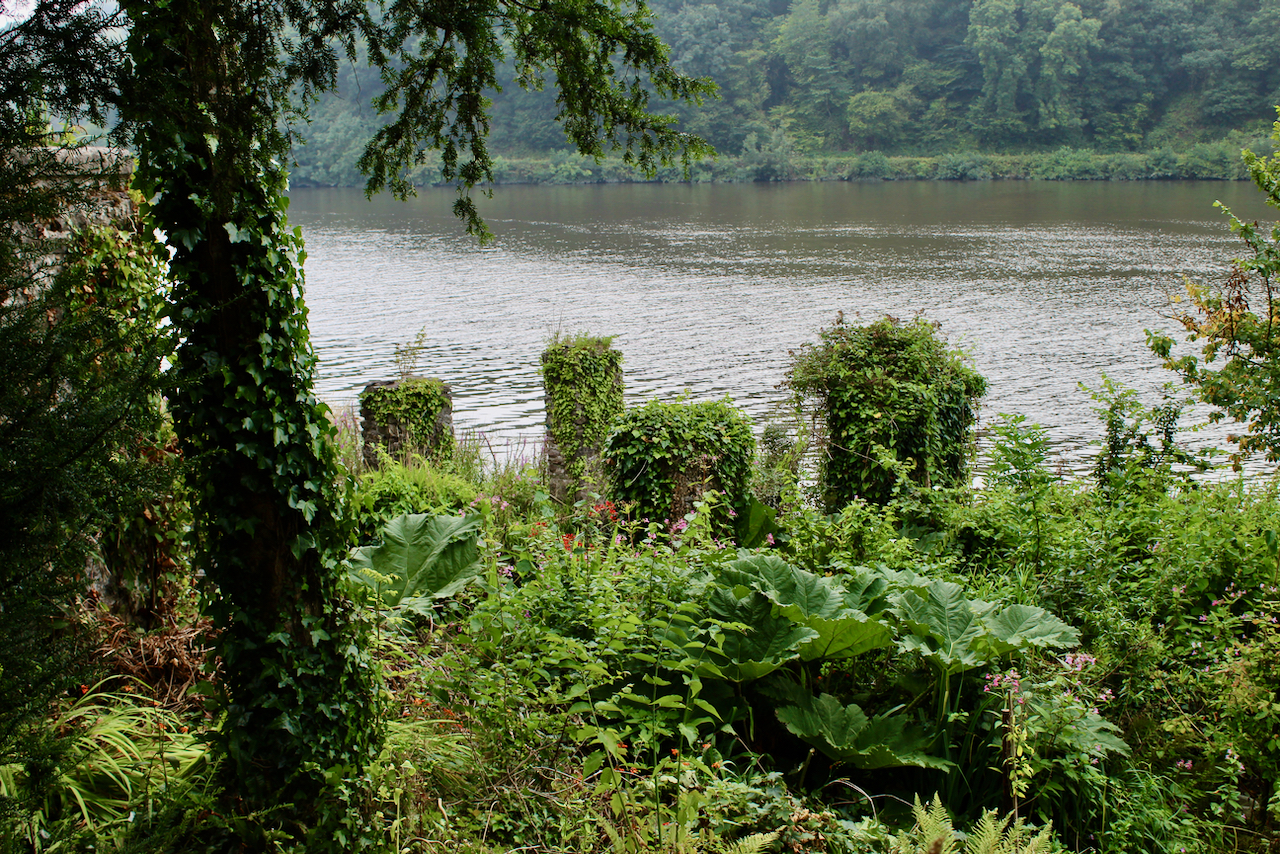
The Dictionary of Irish Biography continues: “Sir Patrick was succeeded by his eldest son, Sir Edward Bellew (1758?–1827), 6th baronet. Active in the Catholic Committee from the 1780s, Sir Edward was named as a trustee of Maynooth College at its foundation in 1795. He continued to work for emancipation after the union and was one of the delegates who presented the Irish catholic petition to parliament in 1805. Representative of the aristocratic tendency on the Catholic Board, he disapproved of the populist style of agitation of Daniel O’Connell, and in December 1816 he seceded from the board in protest at O’Connell’s uncompromising opposition to a government veto on episcopal appointments.” [see 5]

The 6th Baronet continued the fortuitous tradition of marrying an heiress as he married, in 1786, Mary Anne, daughter and sole heir of Richard Strange, of Rockwell Castle, County Kilkenny. Casey and Rowan write that due to this marriage, “it was no doubt his accumulated wealth and that of his bride…which enabled his son, Patrick, the first Lord Bellew, to recast the house in its elaborate castle style.

The title Baron Bellew of Barmeath was created in 1848 for Patrick Bellew, previously 7th Baronet, who represented Louth in the House of Commons as a Whig, and also served as High Sheriff and Lord Lieutenant of County Louth. He was Commissioner of National Education in Ireland between 1839 and 1866. He married Anna Fermina de Mendoza, daughter of Admiral Don José Maria de Mendoza y Rios of Spain.

It was probably his elevation from Baronet to Baron which encouraged Patrick Bellew “to turn his sensible mid-Georgian home into a Norman pile of straggling plan and flamboyant silhoutte,” as Christine Casey or Allistair Rowan write in The Buildings of Ireland: North Leinster (1993).

Part of a genuine tower house is still part of the castle, detectable by the unusual thickness of the window openings at the northeastern corner of the building. [see 7] Before the 1839 enlargement, it was a plain rectangular block, two rooms deep and three storeys high, with seven windows across the front, and a central main door.

Mark Bence-Jones suggests in his A Guide to Irish Country Houses that the design for the enlargement may have been by John Benjamin Keane. [8] Lord Bellew recalled Mr. Bence-Jones’s visit to the house! However, Casey and Rowan write that the Hertfordshire engineer Thomas Smith (1798-1875), who had also worked in Dundalk, designed of the Neo-Norman castle.

Smith also worked on Castle Bellingham in County Louth (another magnificent castle which is available for weddings, see my entry under “Places to visit and stay in County Louth https://irishhistorichouses.com/2022/10/28/places-to-visit-and-stay-in-county-louth-leinster/) [9], and Braganstown House in County Louth (privately owned).

Castle Bellingham, County Louth, 20th November 2022. © Jennifer Winder-Baggot, www.irishhistorichouses.com
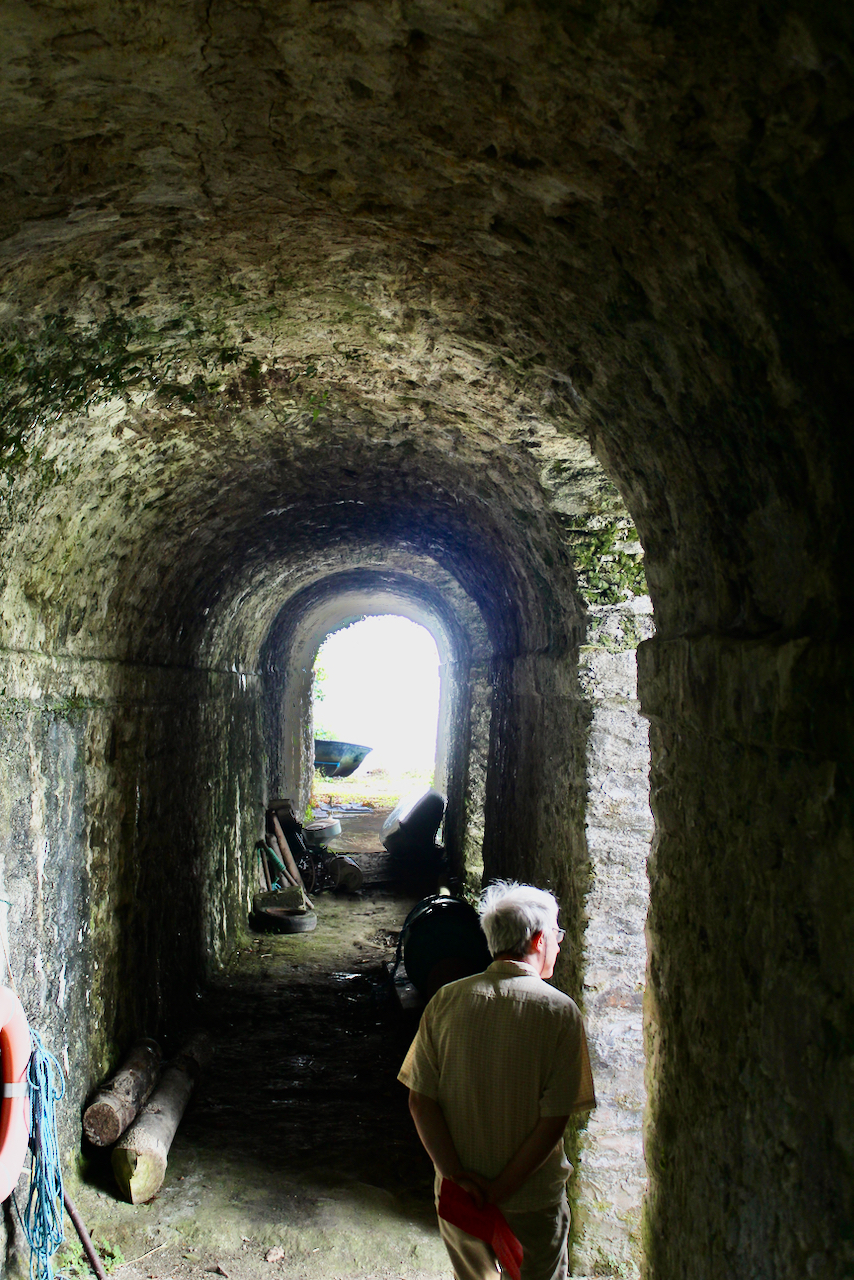
Casey and Rowan tell us that Smith replaced the eaves cornice of the house with battlements and added round towers at each end of the original front of the house.

Barmeath Castle, a round corner tower and the battlements that replaced the eaves cornice. © Jennifer Winder-Baggot, www.irishhistorichouses.com
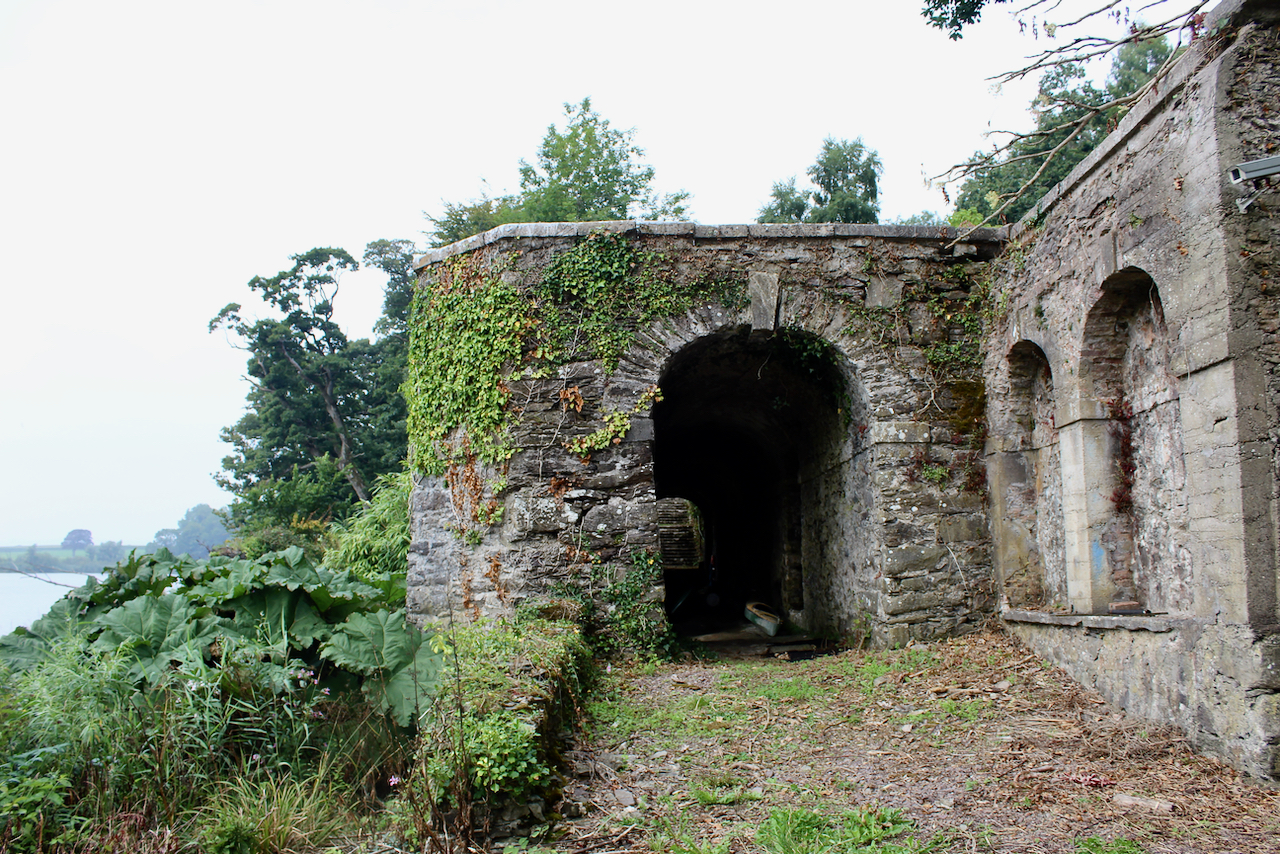
The round towers rise a storey higher than the rest of the house and have arrow loops and slit windows.

A long two-storey turreted wing was added, with bartizans, diagonal buttresses, a central projecting section and tall mullioned lights.

Barmeath, October 2019. © Jennifer Winder-Baggot, www.irishhistorichouses.com
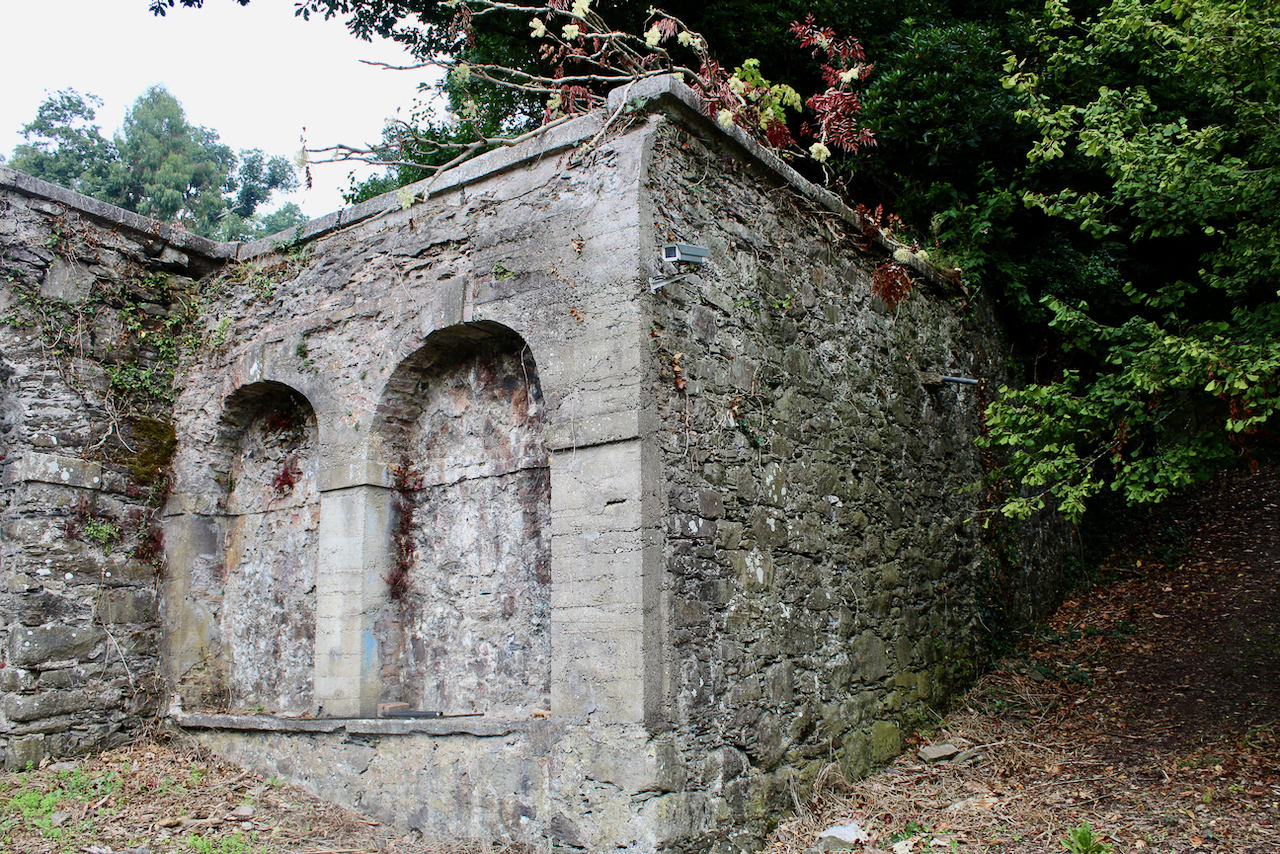
Casey and Rowan continue their description:

On the north, Smith provided a Norman gateway to the yard, with a pair of dumpy machicolated towers, and he also added, to the northwest corner of the house itself, a new entrance tower, rectangular in plan, with a circular stair turret, which gives an asymmetrical accent to the entire composition.” [see 7]

Photograph taken from National Inventory of Architectural Heritage [1] “On the north, Smith provided a Norman gateway to the yard, with a pair of dumpy machicolated towers.”

At this time, Bence-Jones tells us, the castle kept its Georgian sash-windows, though some of them lost their astragals later in the nineteenth century. The entire building was cased in cement, lined to look like blocks of stone, and hoodmouldings were added above the windows.

Barmeath Castle. The hood mouldings have faces, similar to those at Borris House in County Carlow. © Jennifer Winder-Baggot, www.irishhistorichouses.com
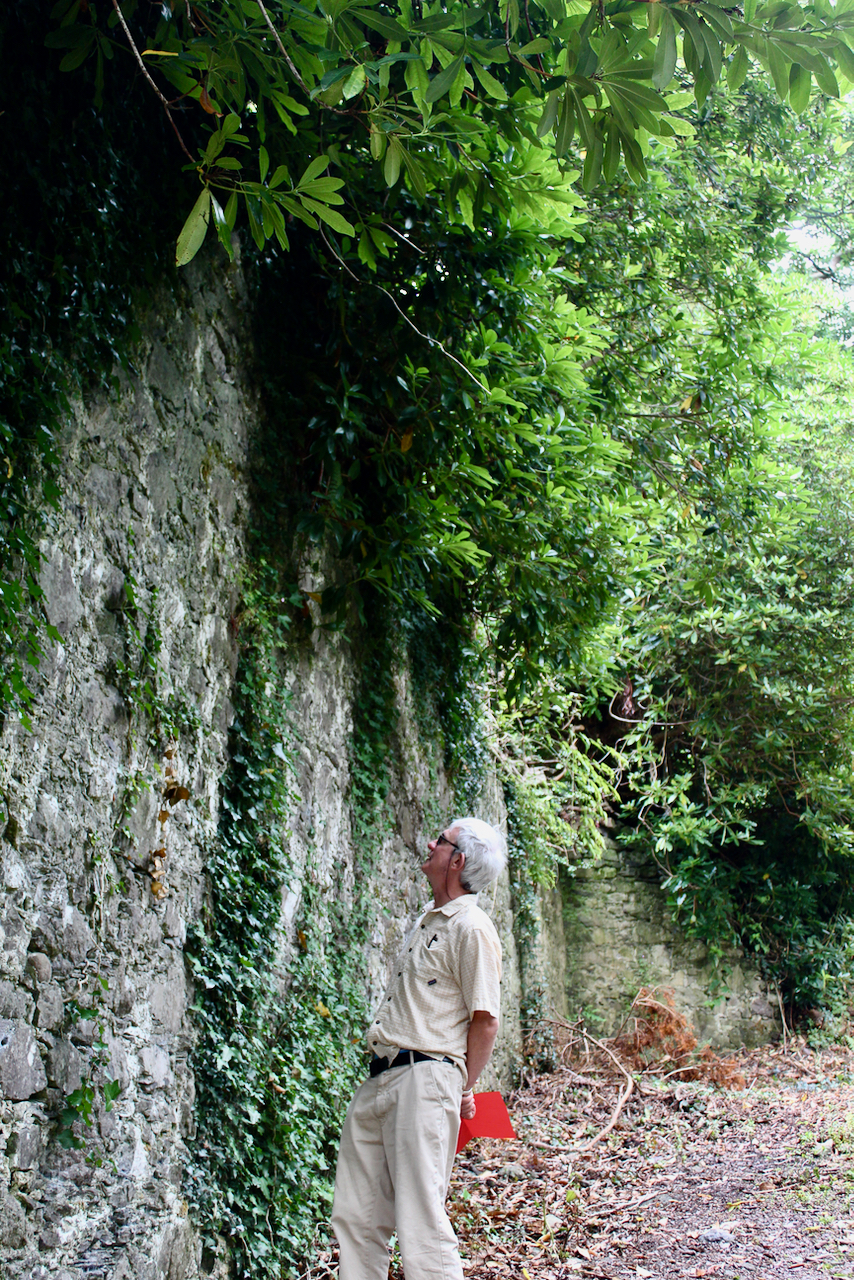
Detail of faces on the hood moulding at Barmeath. © Jennifer Winder-Baggot, www.irishhistorichouses.com
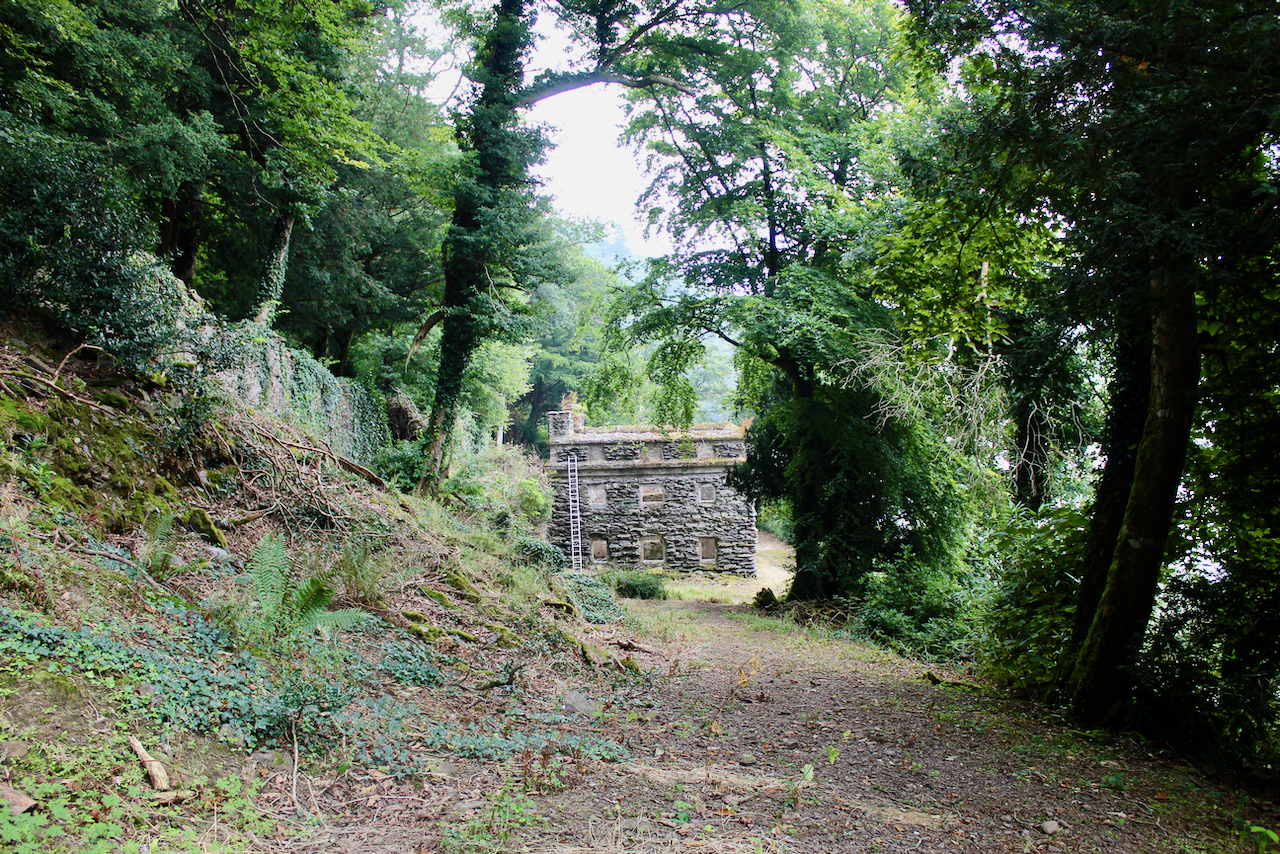
The property passed to the 1st Baron’s son, Edward Joseph Bellew (1830-1895), who became 2nd Baron Bellew of Barmeath.

Edward Joseph Bellew (1830-1895) 2nd Baron Bellew by unknown photographer 1860s courtesy of National Portrait Gallery NPG Ax196758.

The Bellews brought us inside, and Lady Bellew had us sign the visitors’ book. I told them I am writing a blog, and mentioned that we visited Rokeby Hall and met Jean Young, who had told us that she is reading the archives of Barmeath. Lord Bellew proceeded with the tour.

Casey and Rowan describe the interior:

A neo-medieval lobby off the porte cochére, with a heavy flat lierne vault and central octagonal boss, is the only part of the house which attempts to sustain the style of the exterior. The rest of Barmeath is finished in a fine taste, mostly with mid-eighteenth century rococo classical details or, on the drawing room floor, in light Tudor manner. The core of the house is the hall and staircase which occupy the centre of the main range and are linked by an arcaded screen. The room is square in plan, lit by an Ionic Palladian window with a boldly scaled modillion cornice.

Barmeath, October 2019. The topiary is unique. © Jennifer Winder-Baggot, www.irishhistorichouses.com

On the staircase, we chatted about history and enjoyed swapping stories. Lord Bellew pointed out the unusually large spiral end of the mahogany staircase handrail, perpendicular to the floor – it must be at least half a metre in diameter. The joinery of the staircase is eighteenth century, with Corinthian balusters.

Mark Bence-Jones describes it:

Staircase of magnificent C18 joinery, with Corinthian balusters and a handrail curling in a generous spiral at the foot of the stairs, opening with arches into the original entrance hall; pedimented doorcases on 1st floor landing, one of them with a scroll pediment and engaged Corinthian columns.”

Casey and Rowan tell us that the long first-floor drawing room and a second sitting room at the south end of the front were redesigned by Smith. They tell us “they have pretty diaper reeded ceilings of a neo-Elizabethan pattern, with irregular octagonal centres.” Bence-Jones continues his description:

Long upstairs drawing room with Gothic fretted ceiling. Very handsome C18 library, also on 1st floor; bookcases with Ionic pilasters, broken pediments and curved astragals; ceiling of rococo plasterwork incorporating Masonic emblems. The member of the family who made this room used it for Lodge meetings. When Catholics were no longer allowed to be Freemasons, [in accordance with a Papal dictat, in 1738], he told his former brethren that they could continue holding their meetings here during his lifetime, though he himself would henceforth be unable to attend them.”

When in the library, I told Lord Bellew that I’d read about his generous ancestor who continued to allow the Freemasons to meet in his home despite his leaving the organisation. Lord Bellew pointed out the desk where Jean works when she visits the archives. What a wonderful room in which to spend one’s days!

The round corner tower of Barmeath Castle. © Jennifer Winder-Baggot, www.irishhistorichouses.com
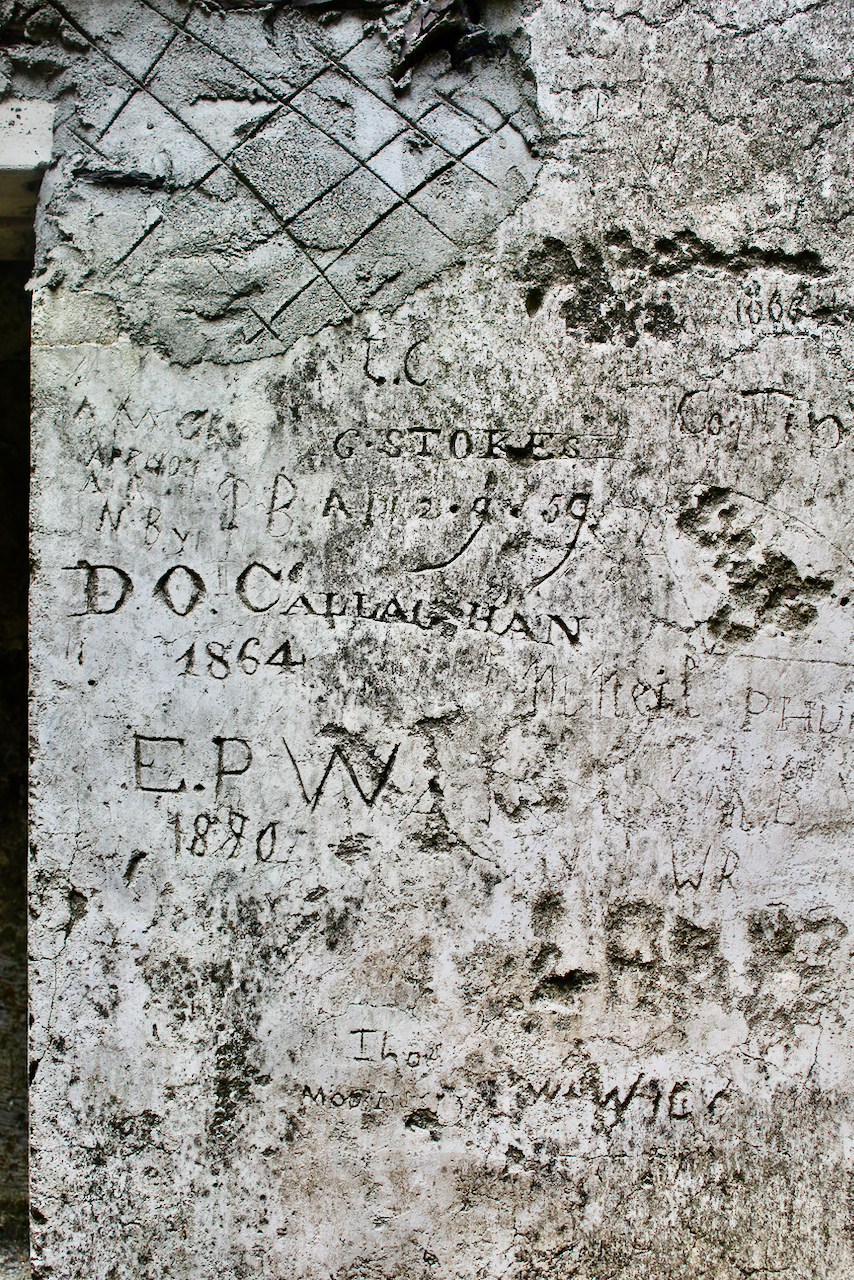
Next we headed outside, and Lord Bellew took us on a tour of the garden. Barmeath Castle is set on 300 acres of parkland with 10 acres of gardens, including a lake with island. There’s a walled garden and an archery ground. The main design of the garden is by Thomas Wright who came to Ireland in 1745. The Boyne Valley Garden Trail website tells us that the gardens were abandoned between 1920 and 1938, but were brought back to life by Jeanie Bellew, the present incumbent’s grandmother. These improvements continue with Rosemary and Bryan Bellew. [10]

A view of the Archery Grounds at Barmeath. © Jennifer Winder-Baggot, www.irishhistorichouses.com

I found a short video of Lord Bellew discussing the castle on youtube, and he tells how his son made the “temple” on the island, in return for the gift of a car! The temple is very romantic in the distance, and extremely well-made, looking truly ancient.

Barmeath, October 2019. © Jennifer Winder-Baggot, www.irishhistorichouses.com
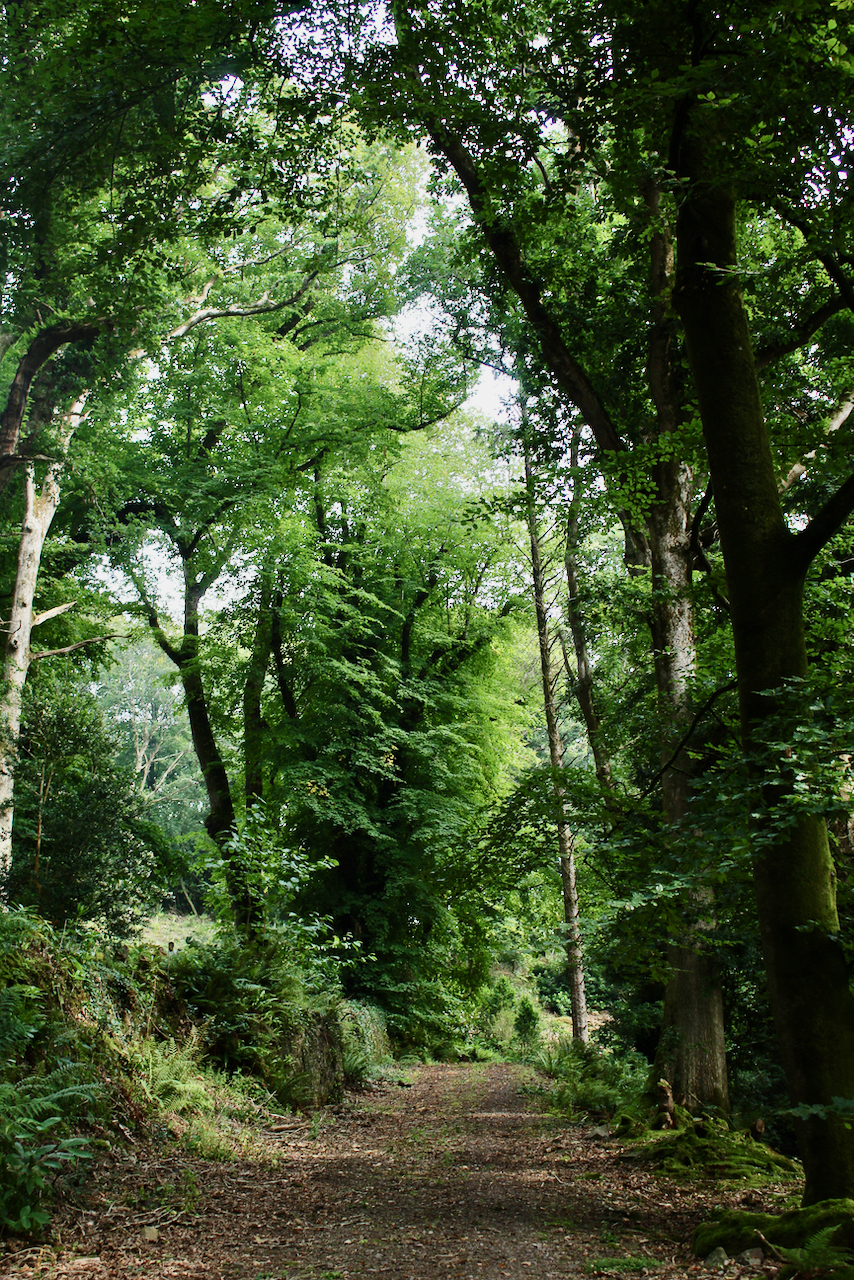
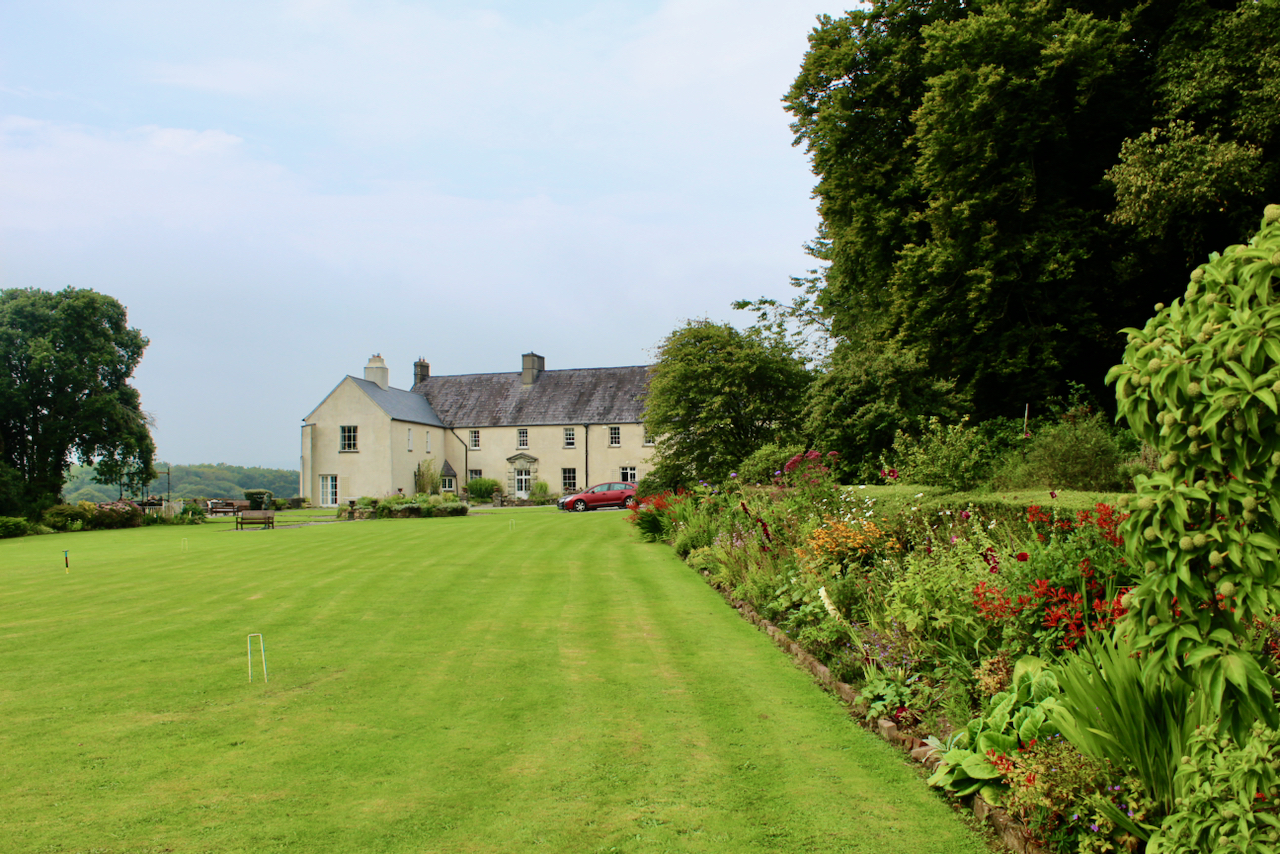
The Irish Historic Houses website tells us about the gardens:

The lake and pleasure grounds were designed by the garden designer and polymath, Thomas Wright of Durham (1711-1785), who visited Ireland in 1746 at the invitation of Lord Limerick and designed a series of garden buildings on his estate at Tollymore in County Down. Wright explored ‘the wee county’ extensively and his book “Louthiana”, which describes and illustrates many of its archaeological sites, is among the earliest surveys of its type. His preoccupation with Masonic ‘craft’ indicates that Wright is likely to have been a Freemason, which probably helped to cement his friendship with the Bellew of the day [this would have been John the 4th Baronet]. He may well have influenced the design for the Barmeath library and indeed the mid-eighteenth century house.

Wright’s highly original layout, which is contemporary with the house, is remarkably complete and important, and deserves to be more widely known. It includes a small lake, an archery ground, a maze, a hermitage, a shell house and a rustic bridge, while the four-acre walled garden has recently been restored.” [11]

We walked along the lake to the specially created bridge by Thomas Wright. We walked over it, and I marvelled at how it stands still so solid, after two hundred and fifty years!

Barmeath, October 2019. © Jennifer Winder-Baggot, www.irishhistorichouses.com
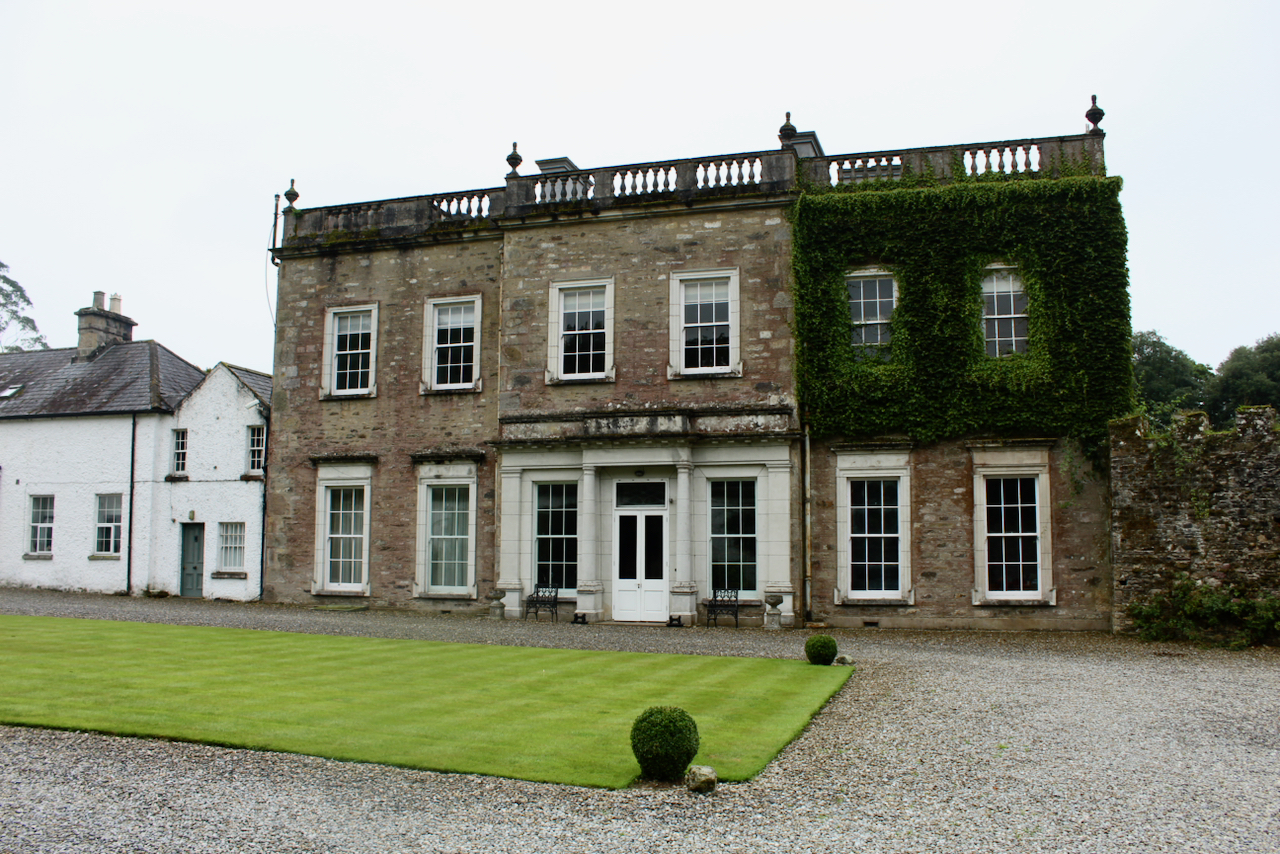
Thomas Wright also designed the perhaps more famous “Jealous Wall” and other follies at Belvedere, County Westmeath. He may have designed them especially for Robert Rochfort, Lord Belvedere, or else Lord Belvedere used Wright’s Six Original Designs of Grottos (1758) for his follies. The Jealous Wall was purportedly built to shield Rochfort’s view of his brother George’s house, Rochfort House (later called Tudenham Park).

The “Jealous Wall” at Belvedere, County Westmeath. © Jennifer Winder-Baggot, www.irishhistorichouses.com

The lake was created to look like a river, and indeed it would have fooled me!

Barmeath, October 2019. © Jennifer Winder-Baggot, www.irishhistorichouses.com
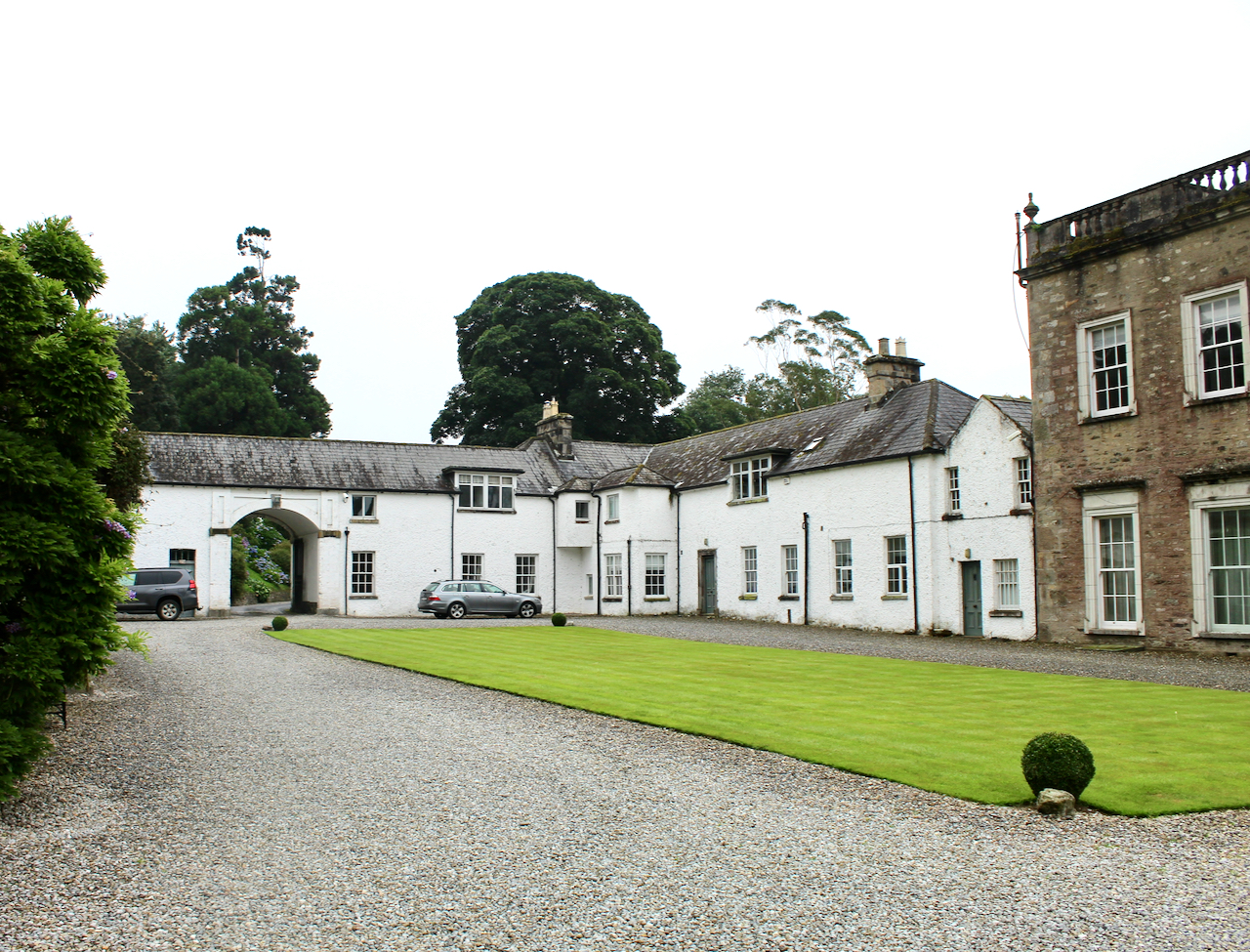
The romantic gardens at Barmeath Castle. © Jennifer Winder-Baggot, www.irishhistorichouses.com

The current owners have been working to restore the four acre walled garden. Lord Bellew and I discussed gardening as he showed us around.

The walled garden at Barmeath, October 2019. © Jennifer Winder-Baggot, www.irishhistorichouses.com
The garden hut in the walled garden of Barmeath Castle, painting by Leslie Fennell, from the exhibition of paintings of walled gardens that took place in the Irish Georgian Society in September 2021.

A cottage in the garden contains beautiful painted walls:

The painted walls of the garden building. © Jennifer Winder-Baggot, www.irishhistorichouses.com

The walls depict scenes of Venice.

The walled garden at Barmeath, October 2019. © Jennifer Winder-Baggot, www.irishhistorichouses.com
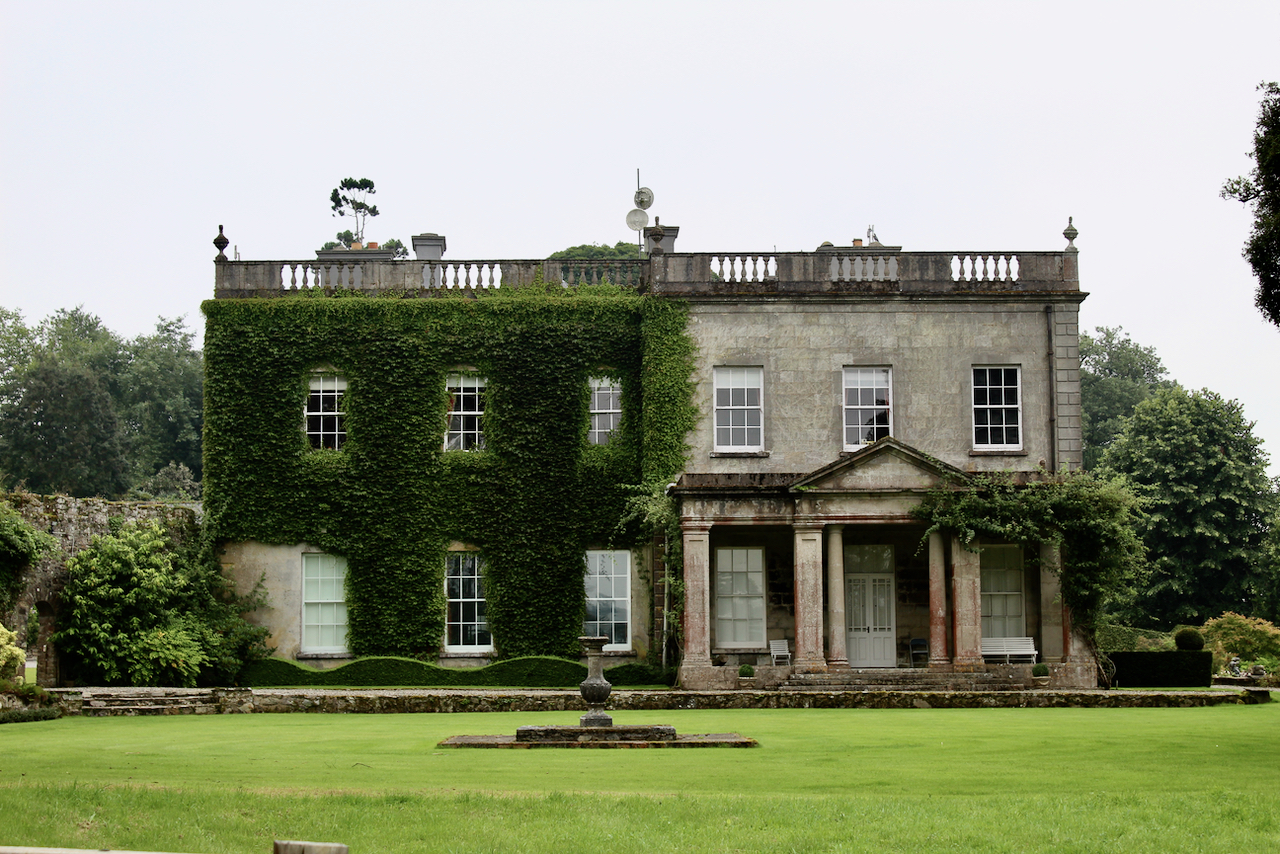
The gardens are open to the public as part of the Boyne Valley Gardeners Trail. [12] More visitors were scheduled to arrive so Lord Bellew saw us to our car and we headed off.

Later, on a visit to the Battle of the Boyne museum, we saw the Bellew regalia pictured on a soldier.

[1] https://www.buildingsofireland.ie/buildings-search/building/13901817/barmeath-castle-barmeath-co-louth

[2] http://lordbelmontinnorthernireland.blogspot.com/search/label/County%20Louth%20Landowners

[3] http://www.turtlebunbury.com/history/history_family/hist_family_mooredrogheda.html

[4] http://www.ihh.ie/index.cfm/houses/house/name/Barmeath%20Castle

[5] https://www.dib.ie/biography/bellew-sir-patrick-a0561

[6] p. 38. Bence-Jones, Mark. Life in an Irish Country House. Constable and Company Ltd, London, 1996.

[7] p. 152-154. Casey, Christine and Alistair Rowan. The Buildings of Ireland: North Leinster. Penguin Books, London, 1993.

[8] Mark Bence-Jones. A Guide to Irish Country Houses.(originally published as Burke’s Guide to Country Houses volume 1 Ireland by Burke’s Peerage Ltd. 1978); Revised edition 1988 Constable and Company Ltd, London.

[9] https://www.bellinghamcastle.ie

[10] https://boynevalleygardentrail.com/portfolio/barmeath-castle-dunleer-co-louth/

[11] https://www.ihh.ie/index.cfm/houses/house/name/Barmeath%20Castle

[12] https://www.garden.ie/gardenstosee/barmeath-castle/

© Jennifer Winder-Baggot, www.irishhistorichouses.com