In 1840 Samuel Bewley and his son Charles began to import tea directly from China. Charles’s brother Joshua established the China Tea Company, the precursor to Bewleys. Fiona Murdoch tells us that Joshua Bewley started off with a premises consisting of three houses on Sycamore Street in Dublin, just off Dame Street beside the Olympia Theatre. He dealt mostly in tea and sugar and a small amount of coffee. He also sold vases and ornaments. [1]
The Georges Street café, which is no longer a Bewleys café, opened in 1894. Joshua changed supplier for his coffee and had to purchase in larger quantities. Worried he would not sell it all, he started to hold coffee-making demonstrations at the back of the shop, hoping people would purchase the coffee on their way out. His wife Bertha made rolls and scones which Joshua carried on his bicycle into town to serve with the coffee.
In 1896, he opened another café at 10 Westmoreland Street. Joshua’s son Ernest joined the business. In 1916 he bought 12 Westmoreland Street.
The Grafton Street branch opened in 1927 in what were originally two Georgian townhouses.
The higgeldy piggeldy rooms upstairs remind us that it was a private residence. One of the rooms upstairs now houses a lunchtime theatre, which opened in 1999. They have lately introduced a new Soirée performance, which takes place on the second Thursday of each run at 7pm.
The buildings on Grafton Street previously housed Whyte’s Academy, a school attended by Arthur Wellesley, Duke of Wellington, and Robert Emmet.
The Buildings of Ireland publication on Dublin South City tells us: “Rebuilt in 1926 to designs by Miller and Symes, the playful mosaics framing the ground and mezzanine floors are indebted to the Egyptian style then in vogue following the discovery of Tutankhamun’s tomb. The interior, originally modelled on the grand cafés of Europe and Oriental tearooms, was restructured in 1995 but retains a suite of six stained glass windows designed (1927) by the celebrated Harry Clarke (1889-1931). Four windows lighting the back wall of the tearoom are particularly fine and represent the four orders of architecture.” [2]
The 1995 renovation was designed by Paul Brazil.
Image by James Fennell, 2014, Tourism Ireland, from Ireland’s Content Pool.Bewleys, courtesy Bewleys stock photographs, flickr, 2009.
The four orders of architecture represented are the Doric, Corinthian, Ionic and Composite.
Ernest Bewley’s three sons Victor, Alfred and Joe took over: Victor ran the business, Alfred cooked and Joe ran Knocksedan farm with its prize-winning Jersey cows. Ernest imported the first Jersey cows to Ireland. I remember looking forward to the jersey cow milk when we’d visit when I was young. I used to think the waitresses’ smart black and white uniform the height of glamour.
My great-aunt Harriet, famed for her severity, who used to say one should always leave the table hungry, would buy the famed cherry buns in the vestibule, which was a shop, and bring them inside to eat, as they were cheaper in the shop than in the café!
In the 1980s and 90s Dubliners loved the coffee with hot milk that Bewleys served, a precursor to today’s flat white. A group of friends met weekly for a conversation group downstairs in the Grafton Street branch. It was a rare venue open in the evening that was not a pub. One evening we were locked in when the staff didn’t notice we were still deep in discussion!
The Westmoreland Street venue was my haunt in the late 1990s, where I loved the animal skin themed snug downstairs and where we could chat philosophy for hours.
Bewleys Westmoreland Street courtesy Liam Blake, Real Ireland [3]
Recently Paddy Bewley died, the last of the family directly involved with the running of the cafe and coffee business of Bewleys. Paddy was responsible for starting the coffee supplying end of the Bewley business.
Paddy, like those in his family before him, was a Quaker, and he lived by their ethos. Mungo Bewley left Cumberland for Ireland in 1700 and settled in Edenderry, County Offaly. Ireland offered religious tolerance under the Toleration Act. Many Quakers entered trade rather than professions because the former did not require an oath, and Quakers did not believe in taking oaths, believing that their word was enough.
Victor Bewley writes in his memoir that Maud Gonne frequented Bewleys. He adds:
“Bewley’s was obviously a place conducive to writers because there was a lot of life milling around, so to speak. Mary Lavin was donkey’s years coming in and I believe she wrote some of her early stories in the cafés. Maeve Binchy became a regular customer when she worked on The Irish Times.” [4]
In 1986 Patrick Campbell acquired the company of Bewleys, forming the Campbell Bewley Group, and Paddy Bewley continued to work for the company.
In 1996, Paddy Bewley signed up the company to purchase Fair Trade coffee only, guaranteeing that producers of coffee and their communities would be paid a good price for their beans, irrespective of market fluctuations. In 2008 the company’s roasteries and headquarters in Dublin became 100% carbon neutral. (notes from Paddy Bewley’s obituary in the Irish Times, Saturday January 8th 2022).
There has been much discussion lately about the beautiful Harry Clarke windows in the Grafton Street Bewleys – are they part of the building, or removeable art? I believe they are not actually the windows but can be removed. It is being discussed because it’s not clear who owns them.
The Bewleys business branched into hotels. Stephen and I held our wedding reception in the Bewleys hotel in Ballsbridge, a former school run by the Freemasons. The hotels too have been sold on to another business.
Royal Hospital Kilmainham, Military Road, Dublin 8.
Since the 2025 Revenue Section 482 list has not yet been published, today’s entry is about the Royal Hospital Kilmainham: not a Historic House, but of relevance since designed by several important architects: William Robinson, Thomas Burgh and Francis Johnson.
The most decorative rooms have been closed to the public for years for renovation, but I am writing now as I had an opportunity to enter the magnificently baroque chapel in order to see a film. Excuse the poor quality of my photographs in the chapel – I didn’t want to disturb the other film viewers.
“Since 2018, The North Range has been closed due to remedial works and essential upgrades, including fire safety improvements, mechanical and electrical system replacements, and the meticulous restoration of the Baroque Chapel ceiling, historic timber panelling, and stained glass. This extensive project, operated by the Office of Public Works (OPW), was completed in July 2024, and it was announced the reopening after 6.5 years. We are more than proud to share the news that we are preparing to host events in The North Range.“
Aww, events? But what about access to the wonderful dining room with its portraits? We shall have to see if it is open…
“Kilmainham” is named after St. Maighneann who established a church and monastery in the area around AD 606. In 1174 the Knights Hospitaller, a Catholic order that focussed on aiding the sick and the poor, founded a Priory in Kilmainham, with the aid of Richard de Clare, 2nd Earl of Pembroke, better known as Strongbow. The Priory was destroyed in 1530s with the dissolution of the monasteries by King Henry VIII.
With this history, it seemed appropriate to locate the Royal Hospital here when Arthur Forbes, later Earl of Granard, proposed the idea of building an institution to accommodate veteran soldiers, similar to Les Invalides in Paris. The building was founded by King Charles II in 1679 to accommodate 300 soldiers and construction was overseen by the King’s representative in Ireland, known as the viceroy or Lord Lieutenant, James Butler 1st Duke of Ormond. He was Lord Lieutenant of Ireland from 1661-1669 then again 1677-1684.
Over the next 247 years, thousands of army pensioners lived out their final days within its walls.
The information board from the Royal Hospital tells us that it was hoped that care for injured and elderly soldiers would promote recruitment. After the Civil War between Cromwellian Parliamentarians and Royalists, Charles II was naturally concerned to have a strong military force.
The building was designed by the Chief Engineer and Surveyor General for Fortifications, Buildings, Works, Mines and Plantations for Ireland, William Robinson (1645-1712).
The information board tells us: “Born in England, Robinson went on to hold a great number of public positions. When he resigned as Surveyor General in 1700 due to ill health, he was knighted and given the position of Deputy Receiver-General at the Privy Council of Ireland. However, he was implicated in a financial scandal and following a period of imprisonment at Dublin Castle, he fled to England. He died in 1712 and is buried in Westminster Abbey.”
He must have been forgiven if buried in the Abbey! The notice board also tells us that he personally acquired the portion of the original site near Islandbridge, and built himself a house with a view of the Royal Hospital, but it no longer stands.
Royal Hospital Kilmainham, 15th October 2023.Royal Hospital Kilmainham, 15th October 2023.
The next Surveyor General, Thomas Burgh (1670-1730), added more to the building. In 1704 he added the tower and steeple over the north range, and designed the infirmary.
In the fourth wing, not generally open to the public, is the splendid Robinson’s Chapel with a baroque plaster ceiling, carved oak and beautiful stained glass window, and the Geat Hall. You can see an online tour at https://my.matterport.com/show/?m=ce2pG4J1huc&mls=1
The chapel is dedicated to the memory of King Charles I and its ceiling is beautifully Baroque, a profusion of cherubs’ heads, geometrical shapes, borders, garlands and flowers. Amazingly, the ceiling is a papier-maché replica of the original. The original was too heavy, and the replica was installed in 1901. The artist of the original is unknown. The room is panelled in Baltic pine with ornate oak carving and Corinthian pilasters.
The oak carving of the altar is by Huguenot refugee from Paris, James Tabary. The carvings above the south, east and west Hospital entrances, which are made of wood but painted to look like stone, may also be by Tabary.
The stained glass in the Chapel’s large east window mostly dates to the 19th century, although some of it is said to come from the medieval Priory of St. John the Hospitaller.
In 1849 young Queen Victoria visited the hospital and bestowed a gift of stained glass which shows the coats of arms of the various Masters of the Hospital, which was made c. 1852 in London by Irish artist Michael O’Connor.
The Great Hall contains portraits that have hung here since 1713, and splendidly carved trophies over the doors remind me of those at Beaulieu in County Louth. The portaits include Queen Anne, Queen Mary, William III, Narcissus Marsh, Charles II, James 1st Duke of Ormond and the Richard Butler Earl of Arran and Earl of Ossory (sons of the Duke of Ormond), amongst others. A library which belonged to the original hospital is also cared by the OPW. The northern wing also contains the Master’s Lodgings, made for the Master of the Royal Hospital.
Royal Hospital Kilmainham, 15th October 2023.The Great Hall, Royal Hospital Kilmainham, photograph taken 1987, from Dublin City Library and Archives. [see 2]Royal Hospital Kilmainham dining hall by Robert French, Lawrence Photographic Collection NLI, flickr constant commons.Royal Hospital Kilmainham, 15th October 2023.Royal Hospital Kilmainham, 15th October 2023.Richard Butler (1639-1686) 1st Earl of Arran, son of the Duke of Ormonde, Royal Hospital Kilmainham, 15th October 2023.Thomas Butler (1634-1680) 6th Earl of Ossory, studio of Sir Peter Lely, circa 1678, courtesy of National Portrait Gallery NPG 371. Second son of the Duke and Duchess of Ormond and father of 2nd Duke of Ormonde.
In 1805, Francis Johnston carried out restoration work, and in the 1820s remodelled the Master’s Quarters in the northwest corner. He also designed the Adjutant General’s office and the Richmond Tower which stands at the west entrance to the hospital grounds.
The garden, known as the Master’s Garden, has been restored to its formal glory under the suprvision of architect Elizabeth Morgan. In 1693 Chambré Brabazon 5th Earl of Meath was Master of the Hospital and a Minute of the Royal Hospital Committee notes that he was asked to prepare an account for an estimate of works necessary to put some order on the garden. The work was not carried out at the time.
The Garden house is included in a painting by Joseph Tudor in 1750. It was probably designed as a small dining pavilion or banqueting house, with a high coved ceiling on the first floor, and it is attributed to Edward Lovett Pearce circa 1734.
The house was extended in the late 19th century into ahouse for the head gardener.
Happy New Year! My best wishes for the year ahead. I hope it will bring many exciting house visits.
2026 Diary of Irish Historic Houses (section 482 properties)
To purchase an A5 size 2026 Diary of Historic Houses (opening times and days are not listed so the calendar is for use for recording appointments and not as a reference for opening times) send your postal address to jennifer.baggot@gmail.com along with €20 via this payment button. The calendar of 84 pages includes space for writing your appointments as well as photographs of the historic houses. The price includes postage within Ireland. Postage to U.S. is a further €10 for the A5 size calendar, so I would appreciate a donation toward the postage – you can click on the donation link.
€20.00
donation
Help me to pay the entrance fee to one of the houses on this website. This site is created purely out of love for the subject and I receive no payment so any donation is appreciated!
€15.00
A tour of Lambay Castle is expensive so I don’t think Stephen and I will be going any time soon, so I thought I would publish an entry about it today.
Lambay Island, photograph courtesy ofwww.visitdublin.comPortrane and Lambay Island, County Dublin 1844 after John Edward Jones.
The island is owned and protected today by the Revelstoke Trust and daily management lies in the hands of Alex Baring, 7th Baron Revelstoke, and his family.
The castle on Lambay Island is privately owned but can be rented for accommodation, and there is other accommodation on the island. One can also visit the island on a day trip but the castle is not open to visitors unless booked in advance on the website.
Open for accommodation: April 1- September 30 2026
The website tells us that it the largest island off the east coast of Ireland and the largest privately owned island in North-West Europe. The island is home to seals and puffins, with deer and wallabies that were originally imported. Nesting birds include Fulmars, Guillemots, Herring Gulls, Kittiwakes, Manx Shearwaters and Puffins, while Greylag Geese are common winter visitors.
The island’s farm produces organic meat from sheep, deer and wallabies. Energy on the island is provided by a wind turbine and solar panels, and water is from a natural spring.
The island has an ancient history. The website tells us:
“Its early history is obscure but, like many other small islands, it attracted saints, hermits and pirates. It is thought to be one of the first few places where Viking raiders landed and proofs of its prehistoric history and early modern settlement were found around the harbour which date from the 1st century AD. Excavations also revealed Iron-Age graves dating back to circa 500 BC.”
St. Columba may have established a monastery on the island as early as the sixth century.
In 1181 the island was granted by Prince John (later king) to the Archbishops of Dublin, who received rents and tithes from the island.
To prevent piracy or invasion of the mainland, a license was granted to build a fort in the early 1500s. The structure built may may have formed the core of the castle still surviving when Cecil Baring later purchased the land. John Challoner (d. 1581), who was the first Secretary of State for Ireland, appointed by Queen Elizabeth I in 1560, agreed to build a village, castle and harbour on the island. The website tells us that he set up mines for copper and silver on the island, though it is not clear how successful this was, and bred falcons.
The island passed by marriage to the Ussher family in 1611. James Ussher (1581-1656) is the cleric famous for calculating that the earth was created around 6 pm on 22 October 4004 BC.
James Ussher (1580-1656) Archbishop of Armagh aged 74 by Peter Lely, courtesy of National Trust Hatchlands.
Sean O’Reilly tells us in his Irish Houses and Gardens. From the Archives of Country Life (published by Aurum Press Ltd, London, 1998) that:
“Weaver’s first article on an Irish house already showed clearly his concern for disposing of unauthenticated traditions. Among those he corrected was the presumption, promulgated in Samuel Lewis’s Topographical Dictionary of 1837, that the island was granted by Queen Elizabeth to Archbishop James Ussher, a figure famous for dating the creation of the world to 4004 BC on the basis of a chronology of the Old Testament. Weaver pointed out that the island was in fact held by Ussher’s cousin, William. Despite many vicissitudes, Lambay Island remained in possession of the Usshers from 1551 to 1804, from which time no significant work was done on the castle until the arrival of Baring.” [1]
The website tells us that the island was used as a Prisoner of War camp for over 1,000 Irish soldiers during the Williamite war after the Battle of Aughrim.
In 1805 the island was inherited by William Wolseley and in 1814 it was acquired by the family of Richard Wogan Talbot, 2nd Baron Talbot of Malahide. They built a school and a Catholic chapel on the island. The chapel was later renovated by Lutyens to resemble a Doric temple and the school no longer exists.
James Considine sold Portrane House and purchased Lambay in 1888. Count Considine set about developing the island as a hunting estate and was the first man to introduce deer onto the island.
In 1904, Cecil Baring, later the 3rd Baron Revelstoke, and his wife Maude Lorillard bought the island. Baring was a classical scholar and naturalist as well as former director of his family’s New York office of Barings Bank. The website tells us:
”In early 1904, with Maude heavily pregnant, Cecil went to investigate Lambay; he found a small line of cottages occupied by coastguards, a chapel, a walled garden, a dilapidated old fort and a magnificent wealth of wildlife. It was an intoxicating mixture.
”The first task facing the Barings was the repair of the castle and they refitted a heavy lugger, the Shamrock, to carry the necessary materials to the island. The Shamrock (version 3.0) is still in use today as Lambay’s main cargo boat and is used to transport the sheep and cattle as well as bulkier materials and equipment for the off-grid energy system.“
Baring hired Edward Lutyens to renovate the property. The website tells us:
”Lutyens was utterly delighted by Lambay and the couple, and the visit sparked a warm friendship between the three of them that would last throughout their lives. Lutyens extended the Castle masterfully and by 1910 it was a beautiful refuge for Cecil and Maude, surrounded by an impressive circular wall, which Lutyens nicknamed “The Ramparts Against Uncharity“.
p. 30. “By the time of Lutyen’s arrival much original fabric had deteriorated, and he was required to rebuild in part, though he retained triumphantly the ancient mood. A new service range was necessary, discreetly located off a corner of the castle and set into the ground so as not to dominate the main castle. Lutyens also ensured the prominence of the medieval fabric by deciding not to repeat the leitmotif of the original – the stepped gables – in the new work. Instead he used steep sweeping tiled roofs broken by dormers, gables and stacks.” [1]
Lambay Castle,photograph courtesy ofwww.lambayisland.ieFrom “In Harmony with Nature, The Irish Country House Garden 1600-1900” in the Irish Georgian Society, July 2022, curated by Robert O’Byrne. Lambay Castle, Lambay Island. Photograph from Country Life published 4th May 1912.
The Historic Houses of Ireland website describes the residence:
“Today the three-bay centre of the north-west front, which faces a bastion gateway in the Rampart Wall, is flanked by two full-height projecting bays, each with crow-stepped gables and tall chimneys. Lutyens attached a wing to provide guest accommodation at the northeastern corner and regarded the “link between the two buildings as one of his most brilliant architectural coups” since the castle, which appears single storied on this front, continues to dominate the two-storey wing. The castle and the farm buildings, and the walls of the much enlarged gardens were built in grey-green Lambay stone, with grey pantile roofs, and form a sequence of courts, walled gardens and enclosed yards that give the impression of a small hamlet nestling for protection beneath the castle walls.” [2]
The castle and west forecourt of Lambay Castle, Lambay Island. Photograph from Country Life published 4th May 1912.Lambay Castle: ground and first floor plans, as altered by Lutyens, 1908-11, courtesy https://landedfamilies.blogspot.com
Sean O’Reilly describes Lutyen’s work in more detail:
“Lutyens did need to provide suitable facilities within the surviving ruins of the castle, the most basic of these being a staircase. Curiously, the original castle fabric did not possess internal access to the upper floor, so Lutyens inserted his in the space between the bastions at the rear of the building. He linked these two with a sequence of three cross windows broken by the arched doorway leading to the staircase. The new arrangement is a typically imaginative piece of intervention by Lutyens, as it performs a number of functions with appropriate efficiency. It gives access not only to the bedrooms on the upper floor, but also to the raised ground at the rear of the castle, and it connects to the underground service passage to the kitchen wing.
“Reception rooms also needed to be provided inside the ruins, and again it was to Lutyens’s credit that he succeeded in creating an imaginative variety of shapes and spaces without intruding on the individuality of the building. Perhaps most surprising is the provision of two entrance halls, one in each of the corner bastions of the entrance front, and each with its own door. The sitting room, reached only after passing through the central dining room and staircase hall behind, is in the corner adjoining the service wing.
“Due to the need for the reconstruction of this corner Lutyens was more free to open out the architecture, without actually intruding on surviving original fabric. Here he introduced a pointed stone arch linking the section of the room in the original bastion with that part set between the bastions. Lutyens topped this range with a hipped roof – an informal nod to the detailing of the service wing – and square battlements – a more formal bow to the stepping in the original gables, seen across the view of the north court.” [1]
The Historic Houses of Ireland website tells us that the castle is “constructed with small doors and small casements so that the inhabitants seem, on rough days, to be sheltering like monks.” [see 2]
The interior has vaulted ceilings, stone fireplaces and a curved stone staircase, while much of the furniture chosen by Lutyens is still arranged just as he intended.
Spiral arches,Lambay Castle,photograph courtesy ofwww.lambayisland.ieAt the head of the stone stair at Lambay Castle. Photograph from Country Life published 4th May 1912. The staircase landing at Lambay Castle.Photograph from Country Life published 4th May 1912. The eastern half of the sitting room at Lambay Castle. Photograph from Country Life published 4th May 1912. The kitchen in the guest accommodation in the castle,Lambay Castle,photograph courtesy ofwww.lambayisland.ieThe guest accommodation in the castle,Lambay Castle,photograph courtesy ofwww.lambayisland.ie
Lutyens also adapted and enlarged a number of other early structures and integrated them into an ingenious coordinated layout for the whole island, combining the farm, gardens and plantations as a single composition, in collaboration with the horticulturalist and garden designer Gertrude Jekyll.
Mark Bence-Jones describes the wall that surrounds the castle and gardens: this wall serves the practical purpose of a wind-break, enabling trees and plants to grow inside it which would not grow outside. [3] He also describes the approach to the castle:
“Lutyens also designed the approach from the harbour, with curved step-like terraces reminiscent of the now-vanished Ripetta in Rome; characteristically, having ascended these Baroque steps, one has to cross an open field to come to the curtain wall, the entrance gaeway not being at first visible; so that there is a wonderful sense of expectancy. Close the the harbour is the White House, a largely single-storey horseshoe-shaped house with high roofs and white harled walls, which Lutyens designed 1930s for Lord Revelstoke’s daughter, Hon Mrs (Arthur) Pollen. On a hill is an old Catholic chapel, with a portico of tapering stone columns and a barrel vaulted ceiling.” [see 3]
The walled kitchen garden pierces the Rampart Wall to the South and there is the mausoleum of the Revelstokes, designed by Lutyens in 1930, on the opposite side of the enclosure. The website tells us:
”Cecil and Maude had 12 blissful years together with their little family on Lambay but alas, in 1922, a still young Maude died of cancer, leaving Cecil with two daughters, Daphne and Calypso, and their little son Rupert. Her body was brought back from London to the island for burial. Lutyens, who was then busy with war memorials and the government buildings of New Delhi, designed a large monument for her grave, set in against the rampart walls and facing towards the Castle. The mausoleum is today one of the most pleasant and peaceful spots on the island. Prefacing Cecil’s epitaph, a beautiful poem about his wife, is the word ‘Quiet’, both an imperative to the reader and a description of the monument’s setting.“
Lutyens also designed the White House overlooking the harbour on the western shores of the island, as a holiday home for the couple’s two daughters and their families. This is now available as visitor accommodation.
The website tells us that Cecil convened a congress to examine the flora and fauna of the island, the findings of which were published in The Irish Naturalist (1907).
“He also tried to introduce new species, including mouflon sheep, chamois goats, kinkajous and rheas. Today, there is a large population of wallabies on Lambay, but these were brought here in the 1980s by Cecil’s son Rupert Revelstoke, who had enjoyed having two pet wallabies in the 1950s.“
[3] Bence-Jones, Mark. A Guide to Irish Country Houses (originally published as Burke’s Guide to Country Houses volume 1 Ireland by Burke’s Peerage Ltd. 1978); Revised edition 1988 Constable and Company Ltd, London.
If you are a regular reader of this blog, you will know that along with visiting Section 482 properties and other “big houses” and castles that are open to the public, I am compiling a virtual Portrait Gallery of Ireland. I watch out online for portraits of Irish people who may become the subject of my website entries. Recently browsing portraits which were for auction with Christies Irish Auction in 2005, I came across a portrait of George Grierson of Rathfarnham House.
George Grierson, of Rathfarnham House, Co. Dublin by Gilbert Stuart (1755-1825) courtesy Christies 2005.
I was not familiar with Rathfarnham House so I looked it up online and found that it is an impressive former residence built in 1725, and later became part of Loreto Abbey. It was built for William Palliser (1695-1768), son of William Palliser (1646–1727) who was Church of Ireland Archbishop of Cashel. [1]
This ties in neatly with another portrait I came across, of William King (1650-1729) Archbishop of Dublin.
Dr. William King, Archbishop of Dublin Attributed to Ralph Holland (early 18th Century) courtesy Christies Irish Sale.
I had a previous photograph of a portrait of Archbishop William King from a visit to Trinity exam hall for a Trinity Book Sale.
I have an interest in Archbishop William King as he vouched for a Mark Baggot (d. 1718, buried in St. Audoen’s, Dublin) when Mark was losing his residence in Mount Arran, County Carlow. I don’t know if I am a descendant of Mark Baggot but I hope I am, as he is fascinating. Mark was one of the first members of the Dublin Philosophical Society. [2] I have gathered much information about Mark, but in short, when Mark, as a Catholic, was set to lose Mount Arran, he sought intercession from his friend William King. King vouched for Mark Baggot’s character. [3] The letters are in Trinity College Dublin. Mark and William King shared an interest in mathematics. Two of Mark Baggot’s books somehow made their way into Marsh’s Library – I have yet to see these books as when I requested them, they were being re-bound. I discovered today that William King’s library was bought by Archbishop Theophilus Bolton (d. 1744) and is held today in the University of Limerick in the Bolton Library. Mark was also a member of St. Anne’s Guild in Dublin, which was based in St. Audoen’s church.
“Loreto Abbey has as its core, Rathfarnham House, a mansion built in 1725 by William Palliser who expended considerable resources on its interior with polished mahogany and, in one room, embossed leather wallpaper. On his death in 1768 without children of his own, his cousin Reverend John Palliser inherited it. When he died in 1795, George Grierson, the King’s Printer purchased the house, from which he later moved to Woodtown House. The Most Reverend Dr Murray purchased it in 1821, after it lay vacant for some years, for the Loreto Order, then just founded. The first Superior of the Order, the Reverend Mother Francis Mary Teresa Ball made additions to the house, including supposedly an extra storey on to the house. A church was added in 1840, the novitiate in 1863, St Joseph’s wing in 1869 comprising concert hall and refectory, St Anthony’s wing St. Anthony’s wing in 1896, St Francis Xavier’s wing in 1903 and Liseux in 1932. Mother Theresa of Calcutta entered religion in Loreto Abbey in 1928. At its height it houses some 200 pupils. It cease to take boarders in 1996 and the building closed in 1999. A building company Riversmith Ltd acquired a site to the rear where it constructed apartments. The Loreto Order is now headquartered in Beaufort House, part of the Loreto High School.” Text by Kieran Swords.
[2] Hoppen, K. Theodore, “The Dublin Philosophical Society and the New Learning in Ireland” Irish Historical Studies, Vol. 14, No. 54 (Sep., 1964), pp. 99-118 (20 pages). The Society was founded in 1683. The article tells us that the Dublin College of Physicians secured a royal charter in 1667. The Royal Society of London was founded in 1660, and George Tollett, a Dublin mathematics teacher, Narcissus Marsh, who was Bishop of Ferns and Leighlin at the time, and Allen Mullen, a Dublin physician, were in correspondence with it. In 1682 William Molyneux undertook to write a Natural History of Ireland, and in working, he met several other Irishmen interested in geography. He then set out to form the Dublin Society. He acquired the aid of Dr St George Ashe, then Rev Dr Huntington who was then provost of Trinity College. Within four months it had a membership of 14, and acquired permanent residence on Crow’s Nest off Dame Street in Dublin, where they established a laboratory, museum and herb garden. Other members were John Baynard, Archdeacon of Connor, Samuel Foley, a fellow of Trinity and later bishop, a physician John Willoughby who had studied in Padua, and Mark Baggot, Catholic. By 1685 a further 20 members had joined, including William King. William Petty became President and Edward Smyth, Treasurer.
Narcissus Marsh, Provost of Trinity ca. 1690, then Archbishop of Dublin.William Petty (1623-1687) by Isaac Fuller circa 1651, National Portrait Gallery in London NPG 2924.
Between 1687 and 1693 the weekly meetings were suspended due to political turmoil in Ireland. During the Williamite revolution many members fled to England. Dudley Loftus was temporarily a member but left as he didn’t like its progressive nature. The revival lasted only 18 months, but it was then revived again in 1707 by William Molyneux’s son Samuel. At this time members included Peter Browne the Provost of Trinity College Dublin, Samuel Dopping, and Thomas Burgh, the architect of Trinity College library, and philosopher George Berkeley. The Society ceased to meet in 1709.
Other members are listed in a Memoir, including: William Lord Viscount Mountjoy; John Worth, Dean of St. Patrick’s; Robert Redding, Bt; Cyril Wyche, Knight; Richard Bulkely, Knt. and Bt; Patrick Dun MD; Henry Fenerly; J. Finglass; Daniel Houlaghan; John Keogh; George Patterson, Surgeon; John Maden MD (his descendant Samuel Madden set up the Royal Dublin Society in 1731); Richard Acton; John Bulkeley; Paul Chamberlain; Robert Clements; Francis Cuff; Christopher Dominick; William Palliser later Archbishop of Cashel; Edward Smith, Professor of Mathematics and later Archbishop of Down and Connor; John Stanley; Jacobus Silvius; Jacobus Walkington; Paul Ricaut.
Subjects studied were Mathematics and Physics; Polite Literature; History and Antiquities; Medical Science including Anatomy, Zoology, Physiology, Chemistry.
[3] Mark Baggot, a major landowner in County Carlow, was the son of John Baggot who had forfeited as a Jacobite. Mark became friendly wiht George Tollet, later a powerful official in London, who was close to Archbishop King. See J.G. Simms, “Dublin in 1685” IHS xiv, 1965, p. 222-3. Baggot was also friendly with King due to their common interest in mathematics. When Baggot’s claim for restoration for his estate was before the trustees, Mark asked King to intercede on his behalf (see Baggot to King, 30 Jan 1701, TCD Lyons Collection MSS 1995-2008/754). King wrote to one of the trustees, Sir Henry Sheres, on Baggot’s behalf, citing Baggot’s links with Tollet who was a friend of Sheres. Baggot’s claim was allowed. The Chancellor of the Exchequer, Philip Savage, was acting as Counsel on Mark’s behalf. This was in spite of the fact that Mark’s estate had been granted to the Savages and later to the Wolseleys, and the fact that local Protestants had petitioned Ormond strongly to use his influence against Baggot’s restoration (see petition dated 16 April 1701, NLI Ormond MSS, MS 2457, f. 75). The petition accuses Baggot of “insufferable pride, rigour and insolence towards the Protestants here.”
See the website for opening times. It is also available for hire, and we attended a party there in 2015!
We visited again in 2023, with a tour given by Peter Pearson for the Irish Georgian Society. Peter Pearson was instrumental in saving the Castle from destruction. In 1985 he “swung across the moat on a rope” to see the state of the building, which had been unoccupied since the 1960. Many individuals and organisations were involved in the early stages of restoration, including An Taisce, FAS, CYTP, and the Drimnagh and Crumlin community. Over 23 craftspeople worked on the restoration, supervising 15 apprentices, and 73 trainees in specialised skills such as stonework, brickwork, carving and carpentry.
The website tells us: “Nestled in the heart of South Dublin, Drimnagh Castle stands as a meticulously restored Norman Castle, boasting the distinction of being the sole remaining moated castle in Ireland. Once the esteemed seat of the de Bernival family, who were granted lands in Drimnagh and Terenure by King John in 1215, the castle now serves primarily as a cherished heritage site.” King John granted the land to Hugh alias Ulfran de Barneville.
“Guided tours offer visitors the opportunity to explore the castle and its enchanting gardens. Moreover, the castle is available for hire, making it an ideal venue for presentations, School projects, product launches, photo shoots and even as a captivating film location!“
The website describes the Castle: “Its rectangular shape enclosing the castle, its gardens and courtyard, created a safe haven for people and animals in times of war and disturbance. The moat is fed by a small stream, called the Bluebell. The present bridge, by which you enter the castle, was erected in 1780 and replaced a drawbridge structure.“
I took notes the day Peter Pearson gave the tour but I don’t have them to hand so will have to add more information to this entry later!
The website continues: “Above the entrance of the tower, as the visitor comes through the large gateway is a ‘murder hole’. Rocks, stones, boiling water or limestone were poured down upon the head of any enemy attempting to break in. The main castle to the right of the tower was built in the 15th century, and the tower was built in the late 16th. The porch and stairways were built in the 19th century and the other buildings are 20th century.“
The walls of the castle are built of local grey limestone known as calp and the stone was probably drawn from one of the many nearby quarries. The walls are about 3-4 feet thick.
The website tells us “The tower was built in the late 16th or early 17th century. The tower is approximately 57 feet high and commands a great view of the surrounding countryside. Most of the castles at Ballymount, Terenure and Rathfarnham could have been seen from the top of the battlements.“
The website tells us: “In 1215 the lands of Drymenagh and Tyrenure were granted to a Norman knight, Hugo de Bernivale, who arrived with Strongbow. These lands were given to him in return for his family’s help in the Crusades and the invasion of Ireland. De Bernivale selected a site beside the “Crooked Glen” , the original Cruimghlinn, that gives its name to the townland of Crumlin, and there he built his castle. This “Crooked Glen” is better known today as Landsdowne Valley, through which the river Camac makes its way to the sea. The lands around Drimnagh at this time were rising and falling hills and vast forests stretching to the Dublin mountains. All through the 13th, 14th and 15th centuries the area around the castle was sparsely populated and a document shows that only around 11 people lived in the area during the 18th century.“
In The Landed Gentry and Aristocracy Meath, volume 1, by Art Kavanagh, published in 2005 by Irish Family Names, Dublin 4, he tells us that as a result of the foray into Ireland by the Bernevals in 1215 with Prince John, they were granted lands in Dublin in the Drimnagh, Kimmage, Ballyfermot and Terenure areas, where they settled until Cromwellian times.
The website tells of: The early years of the Barnewalls at Drimnagh Castle
“The Barnewall’s (anglicised from De Berneval) were not just owners of land in Drimnagh, but owned land and fortified castles all over Ireland, such as Crickstown and Trimblestown. They were involved in many events in Irish history and held positions in Irish Parliament and in military campaigns against the Irish. The Barnewall family crest has powerful warrior symbols and a Latin inscription, “I would rather die than dishonour my name”. You can see a reproduction of this crest over the fireplace in the Great Hall in the now restored castle.”
An information board in the castle tells us that in 1435 Luke Barnewall became trustee of the lands in Drimnagh Castle, including three houses, two mills and a dovecote.
An information board in the castle tells us that a medieval castle was a stronghold built to dominate and govern an area. The castle was served by its farm and surrounding woodland. Drimnagh was once extensively wooded. There were also mills located near Drimnagh Castle, as early as 1331.
The website tells us that: “[The Drimnagh Barnewall line] terminated in an heiress, Elizabeth, daughter of Marcus Barneval of Drumenagh, who married James Barnewall of Bremore, and sold the property, 1st February 1607, to Sir Adam Loftus, Kt. of Rathfarnham.“
This must be Adam Loftus (1568-1643) 1st Viscount of Ely. He held the office of Archdeacon of Glendalough, co. Wicklow between 1594 and 1643. and was appointed Knight in 1604. He was appointed Privy Counsellor (P.C.) [Ireland] in 1608, and held the office of Member of Parliament (M.P.) for King’s County between 1613 and 1615. He held the office of Lord Chancellor [Ireland] between 1619 and 1638. He was created 1st Viscount Loftus of Ely, King’s Co. [Ireland] on 10 May 1622.
In Cromwell’s time Drimnagh and its lands were granted to Lieutenant Colonel Philip Ferneley, a relation of Adam Loftus, who lived in the castle until his death in 1677. Some time in he 17th century the defensive nature of the castle was changed and it became a more comfortable residence with large mullioned windows to let in more light. A massive fireplace in the great hall was created around that time also.
In 1727 Walter Bagenal of Dunleckney, County Carlow, who had married Eleanor Barnewall, daughter of James of Bremore, County Meath, sold the castle to the John Fitzmaurice Petty, 1st Earl of Shelburne, later generations of Petty and Petty-Fitzmaurice were the Marquesses of Lansdowne. This family leased the castle to various farmers throughout the 19th century.
The website tells us: “The undercroft was built as a storage room for food; it also doubled up as a refuge if the castle was attacked. The fireplace and bread and smoking oven are recreations of the kitchen that was here in the 19th century. The narrow stairs leading up to the next floor are unique in that they turn to the left, unlike most Norman castles which turn to the right.“
The restoration work started in June 1986 and over 200 workers were involved in the repair work, including stonemasons, woodcarvers, metal workers, plasterers, tilers and artists. The restoration of the the roof was inspired by Dunshoughly Castle in Fingal, and was built using Roscommon Oak which is renowned for its great durability and strength. The roof was constructed in the courtyard and was then raised onto the castle at a cost of 50,000 Punts (Irish £). The floor of the great hall was re-tiled with tiles taken from St. Andrews Church in Suffolk Street in Dublin. Some of the contemporary handmade tiles are replicas of medieval flooring, many decorated with Barnewall emblems.
Information board in the castle.
The website tells us: “The great hall was originally an all-purpose living room/sleeping quarters in the 13th century. During the day tables and benches were placed in the centre of the floor for dining. At night straw or reed matting was laid on the floor and the occupants of the castle slept on this covering.“
The website tells us more about the history of the castle: “Drimnagh has seen its fair share of raids and attacks by the O’Toole Clans through the years and there is record of two of the Barnewalls of Drimnagh being killed in a skirmish near Crumlin. There are many undocumented raids and battles. In the 19th century, after these tumultuous times Drimnagh saw the arrival of industries like the paper mill at Landsdowne valley and other enterprises. Small Inns and lodges were built to house travellers on their way to Tallaght or further afield. Some of these are still in business today, such as the Red Cow and The Halfway House. Buildings of note in the area around the early 19th century were the Drimnagh Lodge, The Halfway House, Drimnagh Castle.
“After the 19th century we see more and more expansion out towards the Drimnagh area, but it was in the 20th century were we see housing estates and industrial estates springing up around Drimnagh. For more modern historical info please visit the Drimnagh Residents Associations excellent page on its history.“
The website tells us of more recent inhabitants, the Hatch family:
“In the early 20th century, the castle and its surrounding lands found a new custodian in Joseph Hatch (born 1851), a prominent dairy man from 6 Lower Leeson Street. Serving as a dedicated member of Dublin City Council for Fitzwilliam Ward from 1895 to 1907, Joseph Hatch acquired the castle in the early 1900s to provide ample grazing land for his cattle.
“Passionate about preserving the heritage, Joseph Hatch undertook the restoration of the castle, transforming it into a charming summer retreat for his family. The castle also served as the picturesque venue for significant family milestones, including the celebration of Joseph and his wife Mary Connell’s silver wedding anniversary and the marriage of their eldest daughter, Mary, in 1910.“
Sign board from Drimnagh Castle.
“Following Joseph Hatch’s passing in April 1918, the castle became the legacy of his eldest son, Joseph Aloysius, affectionately known as Louis. Alongside his brother Hugh, Louis managed the family dairy farm and the accompanying dairy shop on Lower Leeson Street. Despite never marrying, Louis dedicated himself to the estate until his death in December 1951. Hugh, who married at the age of 60 in 1944, passed away in 1950.“
“The Hatch family continued to occupy Drimnagh Castle until the mid-1950s. Subsequently, Louis Hatch bequeathed the estate to Dr.P. Dunne, the Bishop of Nara. Dr Dunne, in turn, sold the castle (allegedly for a nominal sum) to the Christian Brothers. This transaction paved the way for the construction of the school that now proudly stands adjacent to the castle.“
An information board.
The restoration work was completed in 1991 and was opened to the public by the then President of Ireland Mary Robinson. Since then the castle has hosted banquets, weddings, book launches and many more events. The castle is now maintained by a small group of dedicated people who keep the castle looking great for future generations to come.
The castle’s gardens have been developed, with a Parterre:
The website tells us: “A parterre is a formal garden construction on a level surface consisting of planting beds, edged in stone or tightly clipped hedging, and gravel paths arranged to form a pleasing, usually symmetrical pattern. It is not necessary for a parterre to have any flowers at all. French parterres originated in 15th-century Gardens of the French Renaissance. The castle parterre is a simple symmetrical design of four squares, divided into four triangular herb beds. The centre point of the squares feature a clipped yew tree while the centre point of each herb bed features a shaped laurel bay tree.
”One of the most important household duties of a medieval lady was the provisioning and harvesting of herbs and medicinal plants and roots. Plants cultivated in the summer months had to be harvested and stored for the winter. Although grain and vegetables were grown in the castle or village fields, the lady of the house had a direct role in the growth and harvest of household herbs.
”Herbs and plants grown in manor and castle gardens basically fell into one of three categories: culinary, medicinal, or household use. Some herbs fell into multiple categories and some were grown for ornamental use.” The website tells of some of these plants.
The gardens also have an alley of hornbeams:
“The common English “hornbeam tree” derives its name from the hardness of the wood, and was often used for carving boards, tool handles, shoe lasts, coach wheels, and for other uses where a very tough, hard wood is required. The plant beds either side of the trees, feature snowdrops, bluebells, tulips, daffodils, some ferns and hellebores.
”Hornbeam leaves are popular for their use in external compresses to stop bleeding. Their haemostatic properties also help in the quick healing of wounds, cuts, bruises, burns and other minor injuries. A yellow dye is obtained from the bark.“
After our tour inside, Peter brought us outside to show us more of the gardens surrounding the castle, and to have a look at the outer walls of the castle and the moat.
14 Henrietta Street is a social history museum of Dublin life, from one building’s Georgian beginnings to its tenement times. We connect the history of urban life over 300 years to the stories of the people who called this place home. The website tells us:
“Henrietta Street is the most intact collection of early to mid-18th century houses in Ireland. Work began on the street in the 1720s when houses were built as homes for Dublin’s most wealthy families. By 1911 over 850 people lived on the street, over 100 of those in one house, here at 14 Henrietta Street.“
“Numbers 13-15 Henrietta Street were built in the late 1740s by Luke Gardiner. Number 14’s first occupant was The Right Honorable Richard, Lord Viscount Molesworth [1670-1758, 3rd Viscount Molesworth of Swords] and his second wife Mary Jenney Usher, who gave birth to their two daughters in the house. Subsequent residents over the late 18th century include The Right Honorable John Bowes, Lord Chancellor of Ireland, Sir Lucius O’Brien, John Hotham Bishop of Clogher, and Charles 12th Viscount Dillon [1745-1814].}
Richard Molesworth (1680-1758) 3rd Viscount Molesworth of Swords, 14 Henrietta Street’s first occupant.Mary Jenny Ussher (1682-1763), who married Richard Molesworth 3rd Viscount of Swords, Dublin.
The street was named after the wife of the Lord Lieutenant of Ireland at the time, Henrietta Crofts.
Henrietta Crofts, Duchess of Bolton (1682-1730) daughter of James Crofts (Scott), 1st and last Duke of Monmouth, illegitimate son of King Charles II. She married Charles Paulet, 2nd Duke of Bolton.Lucius O’Brien (1731-1795) 3rd Baronet, courtesy of Harnet – The Other Clare Vol. 9 page 14,15.Ann French wife of Sir Lucius O’Brien, 3rd Baronet courtesy Unknown author – These My Friends and Forebears: The O’Briens of Dromoland
The website continues: “Number 14, like many of the houses on Henrietta Street, follows a room layout that separated its public, private and domestic functions. The house is built over five floors, with a railed-in basement, brick-vaulted cellars under the street to the front, a garden and mews to the rear, and there was originally a coach house and stable yard beyond.“
“In the main house, the principal rooms in use were located on the ground and first floors. On these floors, a sequence of three interconnecting rooms are arranged around the grand two-storey entrance hall with its cascading staircase. On the ground floor were the family rooms which consisted of a street parlour to the front, a back eating parlour, a dressing room or bed chamber for the Lord of the house, and a closet.“
“On the first floor level, the piano nobile (or noble floor), were the formal public reception rooms. A drawing room to the front is where the Lord or Lady would host visitors, along with the dining room to the back. The dressing room or bed chamber for the lady of the house, and a closet were also on this floor. Family bedrooms were located on the floor above the piano nobile, and the servants quarters were located in the attic. A second back stairs would have provided access to all floor levels for family and servants alike.“
“These grand rooms began as social spaces to display the material wealth, status and taste of its inhabitants. Dublin’s Georgian elites developed a taste for expensive decoration, fine fabrics, and furniture made from exotic materials, such as ‘walnuttree’ and mahogany.“
“After the Acts of Union were passed in Great Britain and Ireland in 1801, all power shifted to London and most politically and socially significant residents were drawn from Georgian Dublin to Regency London. Dublin and Ireland entered a period of economic decline, exacerbated by the return of soldiers and sailors at the end of the Napoleonic Wars.“
“This marked a turning point for the street – professionals moved in, and Henrietta Street was occupied by lawyers. Between 1800 and 1850 14 Henrietta Street was occupied by Peter Warren, solicitor, and John Moore, Proctor of the Prerogative Court.
“In the 19th century the rooms of the house took on a different more utilitarian tone. Fine decoration and furniture gave way to desks, quills and paperwork with the activities of commissioners, barristers, lawyers, and clerks who moved into the house.
“Family life returned to the street in the early 1860s when the Dublin Militia occupied the house until 1876, when Dublin became a Garrison town, with their barracks at Linenhall.“
“From 1850-1860 the house was the headquarters of the newly established Encumbered Estates’ Court which allowed the State to acquire and sell on insolvent estates after the Great Famine.“
“Dublin’s population swelled by about 36,000 in the years after the Great Famine, and taking advantage of the rising demand for cheap housing for the poor, landlords and their agents began to carve their Georgian townhouses into multiple dwellings for the city’s new residents.“
“In 1876 Thomas Vance purchased Number 14 and installed 19 tenement flats of one, three and four rooms. Described in an Irish Times advert from 1877:
‘To be let to respectable families in a large house, Northside, recently papered, painted and filled up with every modern sanitary improvement, gas and wc on landings, Vartry Water, drying yard and a range with oven for each tenant; a large coachhouse, or workshop with apartments, to be let at the rere. Apply to the caretaker, 14 Henrietta St.’
“In Dublin, a tenement is typically an 18th or 19th century townhouse adapted, often crudely, to house multiple families. Tenement houses existed throughout the north inner city of Dublin; on the southside around the Liberties, and near the south docklands.“In Dublin, a tenement is typically an 18th or 19th century townhouse adapted, often crudely, to house multiple families. Tenement houses existed throughout the north inner city of Dublin; on the southside around the Liberties, and near the south docklands.“
“Houses such as 14 Henrietta Street underwent significant change in use – from having been a single-family house with specific areas for masters, mistresses, servants, and children, they were now filled with families – often one family to a room – the room itself divided up into two or three smaller rooms – a kitchen, a living room, and a bedroom. Entire families crammed into small living spaces and shared an outside tap and lavatory with dozens of others in the same building.“
“By 1911 number 14 was filled with 100 people while over 850 lived on the street. The census showed that it was a hive of industry – there were milliners, a dressmaker (tailoress!), French polishers, and bookbinders living and possibly working in the house.“
“With the establishment of the new state, improvements to housing conditions in Dublin became a priority. In 1931 Dublin Corporation appointed its first city architect Herbert Simms to improve the standard of housing in the city. Simms and his team created new communities outside the city centre, amidst greenery and fresh air, this was the dawn of the suburbs. The development of these new communities signalled the end of tenement life in Dublin.“
“The last tenement residents of number 14 left in the late 1970s by which time the building was virtually abandoned by its owners after the basement and third floor (attic) had already become uninhabitable. During this period of neglect the processes of decay accelerated, leading to the rotting of structural timbers, loss of decorative plasterwork, and vandalism, leaving the house close to imminent collapse.
Dublin City Council began a process to acquire the house in 2000, and as a result of the Henrietta Street Conservation Plan and embarked on a 10-year long journey to purchase, rescue, stabilise and conserve the house, preserving it for generations to come.
In September 2018 14 Henrietta Street opened to the public.“
I am a fan of Mary Wollestonecraft, and am delighted with the connection to the house next to this address, 15 Henrietta Street, which was owned by the King family.
“In 1786, on the far side of the wall in number 15, Mary Wollstonecraft was governess to Lord and Lady Kingsborough’s children. As tutor to Margaret King she instilled a wish for equal rights and republican ideals in her charge. She had an aspiration to be treated equally in a society where she was expected to fend for herself as most ladies of the ascendancy had to when suitors were not to be had or dowries were scarce. Governesses to wealthy families held a precarious middle ground between servant and family friend. In 1792 she would publish an important feminist treatise, A Vindication of the Rights of Women.”
Jeremiah Barrett (d.1770) A conversation portrait of the Children, William, Elizabeth and Margaret King, of James King (1693-1761) 4th (and last) Baron Kingston of Mitchelstown with a pet doe and dog courtesy of Adam’s 6 Oct 2009. The surviving daughter Margaret, daughter of Elizabeth Meade (Clanwilliam), inherited the vast Mitchellstown Estate of the White Knights. She married Richard Fitzgerald (d. 1776) of Mount Offaly, and their only daughter Caroline married, as arranged, Robert King the 2nd Earl of Kingston thus uniting the two branches of the King family. Life at Mitchellstown was recorded by two famous employees of the Kings, Arthur Young the agriculturalist and Mary Wollstonecruft who probably sketched out the basis of Vindication of the Rights of Women whilst governess to the King children. In 1799 Lord Kingston shot dead Colonel Fitzgerald, his wife’s illegitimate half-brother in the hotel in Mitchellstown for abducting his 17 year old daughter Mary Elizabeth. Margaret, having married Stephen Moore, the 2nd Earl of Mount Cashell, left him to befriend Shelley in Italy and is The Lady in ‘The Sensitive Plant’. Provenance: Rockingham House.
“Wollstonecraft gives us a look at a Dublin where women were expected to abide by what she regarded as oppressive social rules: “Dublin has not the advantages which result from residing in London; everyone’s conduct is canvassed, and the least deviation from a ridiculous rule of propriety… would endanger their precarious existence”.”
See also the wonderfully informative book, The Best Address in Town: Henrietta Street, Dublin and its First Residents 1720-80 by Melanie Hayes, published by Four Courts Press, Dublin 8, 2020.
Dublin castle, photograph taken 1951, from Dublin City Library archives. [1] This is the Bedford Hall and the design has been attributed to Arthur Jones Nevill (d. 1771), who was Surveyor General at the time. He also designed the entrance front of the Battleaxe Hall building with its colonnade of Doric columns. The Bedford Hall was completed by his successor Thomas Eyre (d. 1772). [2]Dublin Castle, 2020.Dublin Castle information board.
General Enquiries: 01 645 8813, dublincastle@opw.ie
From the website:
“Just a short walk from Trinity College, on the way to Christchurch, Dublin Castle is well situated for visiting on foot. The history of this city-centre site stretches back to the Viking Age and the castle itself was built in the thirteenth century.
“The building served as a military fortress, a prison, a treasury and courts of law. For 700 years, from 1204 until independence, it was the seat of English (and then British) rule in Ireland.
“Rebuilt as the castle we now know in the seventeenth, eighteenth, nineteenth and twentieth centuries, Dublin Castle is now a government complex and an arena of state ceremony.
“The state apartments, undercroft, chapel royal, heritage centre and restaurant are now open to visitors.“
Dublin castle by Robert French Lawrence Photographic Collection National Library of Ireland, flickr constant commons.Dublin Castle, 2020.
What is called “Dublin Castle” is a jumble of buildings from different periods and of different styles. The castle was founded in 1204 by order of King John who wanted a fortress constructed for the administration of the city. By the beginning of the seventeenth century, the castle contained law courts, meeting of Parliament, the residence of the Viceroy and a council chamber, as well as a chapel.
The oldest parts remaining are the medieval Record Tower from the thirteenth century and the tenth century stone bank visible in the Castle’s underground excavation.
The first Lord Deputy (also called Lord Lieutenant or Viceroy) to make his residence here was Sir Henry Sidney (1529-1586) in 1565. He was brought up at the Royal Court as a companion to Prince Edward, afterwards King Edward VI. He served under both Queen Mary and Queen Elizabeth I. He spent much of his time in Ireland expanding English administration over Ireland, which had reduced before his time to the Pale and a few outlying areas.
Sir Henry Sidney (1529-1586), Lord Deputy of Ireland After Arnold van Brounkhorst, Dutch, fl.1565-1583. Photograph courtesy of National Gallery of Ireland.James Malton, English, 1761-1803 The Upper Yard, Dublin Castle, photograph courtesy of National Gallery of Ireland.Dublin Castle.Dublin Castle.Frances Jennings, Vicereine of Ireland 1687-89, Duchess of Tyrconnell. She and her husband would have been Vicereine and Viceroy while the new State Apartments by William Robinson were constructed. Resting her hand on a spaniel, a symbol of loyalty. She was committed to James II, which prompted her to establish a Catholic convent beside Dublin Castle and in 1689, to lead a procession that culminated in the seizure of Christ Church cathedral from Protestant hands.She was married to Richard Talbot, 1st Duke of Tyrconnell (1630-1691). She was previously married to George Hamilton, Comte d’Hamilton.The statue of Justice by John Van Nost (1721).Dublin Castle, September 2021. The statue of Justice by John Van Nost (1721).On the other gate is the figure of Fortitude.Fortitude by John Van Nost, photograph by Jeremy Hylton.Dublin Castle.
In 1684 a fire in the Viceregal quarters destroyed part of the building. The Viceroy at the time would have been James Butler, 1st Duke of Ormond. He moved temporarily to the new building of the Royal Hospital Kilmainham. New designs by the Surveyor General Sir William Robinson were constructed by October 1688, who also designed the Royal Hospital Kilmainham. He designed the State Apartments, originally to be living accommodation for the Lord Lieutenant (later known as the Viceroy), the representative for the British monarch in Ireland. [3] Balls and other events were held for fashionable society in the Castle. The State Apartments are now used for State occasions such as the Inauguration of the President. The Castle was formally handed over to General Michael Collins on 16th January 1922, and the Centenary of this event was commemorated in January 2022.
James Butler 1st Duke of Ormond, Viceroy from 1643, on and off until he died in 1688.Dublin Castle Upper Yard, 2022.Dublin Castle Upper Yard, 2022.Dublin Castle Upper Yard, 2022, exit to the Lower Yard.Dublin Castle Lower Yard, 2020.
The State Apartments consist of a series of ornate decorated rooms, stretching along the first floor of the southern range of the upper yard.
The Battleaxe Staircase, Dublin Castle, September 2021.This staircase dates from 1749 and is the gateway to the State Apartments.The Viceroy’s Guards were called the Battleaxe Guards.Photograph of the “Battleaxe staircase” taken in 1984, photograph from Dublin City Library archives. [see 3]Photograph of the “Battleaxe staircase” taken in 1984, photograph from Dublin City Library archives. [see 3]NLI Ref.: L_ROY_06809, National Library of Ireland, flickr constant commons.Dublin Castle.
Located around the castle within the castle grounds are the Coach House Gallery, Garda Museum, the Revenue Museum, the Hibernia Conference Centre and the Chester Beatty Museum and Dubh Linn Gardens, which are located on the original “dubh linn” or black pool of Dublin.
Dublin Castle, 2020.Dublin Castle, 2020.Dublin Castle July 2011.Bermingham Tower of Dublin Castle, 2020.This tower was destroyed by a gunpowder explosion in 1775 and demolished, leaving only its lowest stage and battery base. The tower was rebuilt in 1777 in a loose interpretation of the medieval which we now term Georgian Gothic or “Gothick.” [4]Dublin Castle, 2020, the base of the Records, or Wardrobe, Tower.
The Bedford Tower was constructed around 1750 along with its flanking gateways to the city. The clock tower is named after the 4th Duke of Bedford John Russell who was Lord Lieutenant at the time.
The Chapel Royal, renamed the Church of the Most Holy Trinity in 1943, was designed by Francis Johnston in 1807. It is built on the site of an earlier church which was built around 1700. The exterior is decorated with over 100 carved stone heads by Edward Smyth, who did the river heads on Dublin’s Custom House, and by his son John. They are carved in Tullamore limestone, and represent a variety of kings, queens, archbishops and ‘grotesques’. A carving of Queen Elizabeth I is on the north façade and Saint Peter and Jonathan Swift above the main entrance. The interior of the chapel has plasterwork by George Stapleton and wood carving by Richard Stewart. What looks like carved stone is actually limestone ashlar facing on a structure of timber, covered in painted plaster. Plasterwork fan vaulting, inspired by Henry VII’s chapel at Westminster Abbey, is by George Stapleton (1777-1841) while a host of modelled plasterwork heads are by the Smyths, likely the work of John (the younger) after the death of his father in 1812. [9] The Arms of all the Viceroys from 1172-1922 are on display.
Chapel Royaland the Record Tower, Dublin Castle, March 2020.Dublin Castle, 2020.The Wardrobe tower was renovated at the same time as the Chapel Royal, in 1807, with the addition of a storey, topped with battlements.Chapel Royal, Dublin Castle, 2020.Chapel Royal,Dublin Castle, 2020.Two of the 103 heads carved by Edward and John Smyth. These two are Brian Boru and St. Patrick.
Returning to the State Apartments in the Upper Courtyard, The State Corridor on the first floor of the State Apartments is by Edward Lovett Pearce in 1758.
The Viceroy at the time of Francis Johnston’s work on the chapel would have been Charles Lennox, 4th Duke of Richmond.
The State Corridor, Dublin Castle, September 2021. It was designed in 1758 and provided access to a series of public reception rooms on the left and the Viceregal’s quarters on the right. At the far end it led to the Privy Council Chamber.State apartments Dublin Castle, photograph taken 1985, from Dublin City Library archives. [see 3]The ceiling of the Apollo Room.Apollo, god of the sun and music, identified by a sunburst and a lyre. Emerging from the clouds are some of the signs of the zodiac, including Sagittarius, Scorpio and Libra.The ceiling was taken in eleven pieces from a nearby townhouse, Tracton House,St Stephen’s Green, which was demolished in 1910. [10]In the corners of the Apollo room are “trophies” i.e. collections of objects and instruments that symbolise life’s pursuits. Pictures here is Music. The other corners are The Arts, Hunting and some that can either be identified as Love or War.
The Drawing room was largely destroyed in a fire in 1941, and was reconstructed in 1968 in 18th century style. It is heavily mirrored with five large Waterford crystal chandeliers.
The State Drawing Room, designed in 1838, with its five Waterford crystal chandeliers, installed in the 1960s.
The Throne Room, originally known as Battleaxe Hall, has a throne created for the visit of King George IV in 1821. The walls are decorated with roundels painted by Gaetano Gandolfi, depicting Jupiter, Juno, Mars and Venus. The Throne Room was created by George Nugent-Temple-Grenville, 1st Marquess of Buckingham, the viceroy of the day.
The Throne Room, originally known as Battleaxe Hall. The walls are decorated with roundels painted by Gaetano Gandolfi depicting Jupiter, Juno, Mars and Venus.The chandelier was created in 1788. (see [6])Dublin Castle.On the canopy is a lion representing England and a unicorn representing Scotland, each gripping the harp, to symbolise British control of Ireland. These date from 1788 when the Throne Room was created by Lord George Nugent-Temple-Grenville, 1st Marquess Buckingham (1753-1813), the viceroy of the day.The Throne Room, originally known as Battleaxe Hall. The walls are decorated with roundels painted by Gaetano Gandolfi depicting Jupiter, Juno, Mars and Venus.
Next to the Throne Room is the Portrait Gallery, where formal banquets took place at the time of the Viceroys.
There are many other important rooms, including the Wedgwood Room, an oval room decorated in Wedgwood Blue with details in white, which was used as a Billiards Room in the 19th century. It dates from 1777.
Dublin Castle.The Wedgwood Room.Wedgwood Room, Dublin Castle, photograph taken 1985, from Dublin City Library archives. [see 3]
Beyond the Wedgwood Room is the Gothic Room, and then St. Patrick’s Hall. It has two galleries, one at each end, initially intended as one for musicians and one for spectators. There are hanging banners of the arms of the members of the Order of St Patrick, the Irish version of the Knight of the Garter: they first met here in 1783. The room is in a gold and white colour scheme with Corinthian columns. The painted ceiling, commissioned and paid for by the viceroy George Nugent-Temple-Grenville, 1st Marquess of Buckingham in 1788, is by Vincenzo Valdre (c. 1742-1814), an Italian who was brought to Ireland by his patron the Marquess of Buckingham. In the central panel, George III is between Hibernia and Brittania, with Liberty and Justice. Other panels depict St. Patrick, and Henry II receiving the surrender of Irish chieftains.
The hall was built originally as a ballroom in the 1740s but was damaged by an explosion in 1764, remodelled in 1769, and redecorated in the 1780s in honour of the Order of St Patrick.
1985, photograph from Dublin City Library and Archives. (see [5])St. Patrick’s Hall, Dublin Castle.St. Patrick’s Hall, Dublin Castle.Dublin castle, photograph taken 1960, from Dublin City Library archives. [see 3]St. Patrick’s Hall, Dublin Castle.Henrietta Crofts, Duchess of Bolton (1682-1730) as shepherdess, by James Maubert. Henrietta Street was named in her honour. Vicereine 1717-1720. She was the daughter of James Crofts (Scott), 1st and last Duke of Monmouth, illegitimate son of King Charles II. She married Charles Paulet, 2nd Duke of Bolton.Dublin Castle, September 2021.Dublin Castle state apartments, photograph taken 1985, from Dublin City Library archives. [see 3]next to Dublin Castle, 2020.Entrance toDublin Castle, March 2020.Entrance to Dublin Castle, March 2020.Entrance toDublin Castle, March 2020.
The following is a list of the Lord Lieutenants of Ireland (courtesy of wikipedia):
Richard de Clare, 2nd Earl of Pembroke (Strongbow): 1173–1176
William FitzAldelm: 1176–1177
Hugh de Lacy, Lord of Meath: 1177–1181
John fitz Richard, Baron of Halton, Constable of Chester and Richard Peche, Bishop of Lichfield, jointly: 1181
Hugh de Lacy, Lord of Meath and Hubert Walter, Bishop of Salisbury, jointly: (1181–1184)
Philip de Worcester: 1184–1185
John de Courcy: 1185–1192
William le Petit & Walter de Lacy: 1192–1194
Walter de Lacy & John de Courcy: 1194–1195
Hamo de Valognes: 1195–1198
Meiler Fitzhenry: 1198–1208
John de Gray, Bishop of Norwich: 1208–1213
William le Petit 1211: (during John’s absence)
Henry de Loundres, Archbishop of Dublin: 1213–1215
Geoffrey de Marisco: 1215–1221
Under the House of Plantagenet
Henry de Loundres, Archbishop of Dublin: 1221–1224
William Marshal: 1224–1226
Geoffrey de Marisco: 1226–1228
Richard Mor de Burgh: 1228–1232
Hubert de Burgh, 1st Earl of Kent 1232 (held the office formally, but never came to Ireland)[3]
Maurice FitzGerald, 2nd Lord of Offaly: 1232–1245
Sir John Fitz Geoffrey: 1246–1256
Sir Richard de la Rochelle 1256
Alan de la Zouche: 1256–1258
Stephen Longespée: 1258–1260
William Dean: 1260–1261
Sir Richard de la Rochelle: 1261–1266
David de Barry 1266–1268
Robert d’Ufford 1268–1270
James de Audley: 1270–1272
Maurice Fitzmaurice Fitzgerald: 1272–1273
Geoffrey de Geneville: 1273–1276
Sir Robert D’Ufford: 1276–1281
Stephen de Fulbourn, Archbishop of Tuam: 1281–1288
John de Sandford, Archbishop of Dublin: 1288–1290
Sir Guillaume de Vesci: 1290–1294
Sir Walter de la Haye: 1294
William fitz Roger, prior of Kilmainham 1294
Guillaume D’Ardingselles: 1294–1295
Thomas Fitzmaurice Fitzgerald: 1295
Sir John Wogan: 1295–1308
Edmund Butler 1304–1305 (while Wogan was in Scotland)
Piers Gaveston: 1308–1309
Sir John Wogan: 1309–1312
Edmund Butler, Earl of Carrick: 1312–1314
Theobald de Verdun, 2nd Baron Verdun: 1314–1315
Edmund Butler, Earl of Carrick: 1315–1318
Roger Mortimer, 1st Earl of March: 1317–1318
William FitzJohn, Archbishop of Cashel: 1318
Alexander de Bicknor, Archbishop of Dublin: 1318–19
Roger Mortimer, 1st Earl of March 1319–1320
Thomas FitzGerald, 2nd Earl of Kildare: 1320–1321
Sir Ralph de Gorges: 1321 (appointment ineffective)
John de Bermingham, 1st Earl of Louth: 1321–1324
John D’Arcy: 1324–1327
Thomas FitzGerald, 2nd Earl of Kildare: 1327–1328
Roger Utlagh: 1328–1329
John D’Arcy: 1329–1331
William Donn de Burgh, 3rd Earl of Ulster: 1331–1331
Anthony de Lucy: 1331–1332
John D’Arcy: 1332–1338 (Lords Deputy: Sir Thomas de Burgh: 1333–1337 and Sir John Charlton: 1337–1338)
Thomas Charleton, Bishop of Hereford: 1338–1340
Roger Utlagh: 1340
Sir John d’Arcy: 1340–1344 (Lord Deputy: Sir John Morice (or Moriz))
Sir Raoul d’Ufford: 1344–1346 (died in office in April 1346)
Roger Darcy 1346
Sir John Moriz, or Morice: 1346–1346
Sir Walter de Bermingham: 1346–1347
John L’Archers, Prior of Kilmainham: 1347–1348
Sir Walter de Bermingham: 1348–1349
John, Lord Carew: 1349
Sir Thomas de Rokeby: 1349–1355
Maurice FitzGerald, 4th Earl of Kildare: 1355–1355
Maurice FitzGerald, 1st Earl of Desmond: 1355–1356
Maurice FitzGerald, 4th Earl of Kildare: 1356
Sir Thomas de Rokeby: 1356–1357
John de Boulton: 1357
Maurice FitzGerald, 4th Earl of Kildare: 1357
Almaric de St. Amaud, Lord Gormanston: 1357–1359
James Butler, 2nd Earl of Ormond: 1359–1360
Maurice FitzGerald, 4th Earl of Kildare: 1361
Lionel of Antwerp, 5th Earl of Ulster (later Duke of Clarence): 1361–1364
James Butler, 2nd Earl of Ormond: 1364–1365
Lionel of Antwerp, Duke of Clarence: 1365–1366
Thomas de la Dale: 1366–1367
Gerald FitzGerald, 3rd Earl of Desmond: 1367–1369, a.k.a. Gearóid Iarla
Sir William de Windsor: 1369–1376
James Butler, 2nd Earl of Ormond: 1376–1378
Alexander de Balscot and John de Bromwich: 1378–1380
Edmund Mortimer, 3rd Earl of March: 1380–1381
Roger Mortimer, 4th Earl of March: 1382 (first term, aged 11, Lord Deputy: Sir Thomas Mortimer)
Sir Philip Courtenay: 1385–1386
Robert de Vere, Duke of Ireland: 1386
Alexander de Balscot, Bishop of Meath: 1387–1389
Sir John Stanley, K.G., King of Mann: 1389–1391 (first term)
James Butler, 3rd Earl of Ormond: 1391
Thomas of Woodstock, Duke of Gloucester: 1392–1395
Roger Mortimer, 4th Earl of March: 1395–1398 (second term)
Thomas Holland, Duke of Surrey: 1399
Under the Houses of York and Lancaster
Sir John Stanley: 1399–1402 (second term)
Thomas of Lancaster, 1st Duke of Clarence: 1402–1405 (aged 13)
James Butler, 3rd Earl of Ormond: 1405
Gerald FitzGerald, 5th Earl of Kildare: 1405–1408
Thomas of Lancaster, 1st Duke of Clarence: 1408–1413
Sir John Stanley: 1413–1414 (third term)
Thomas Cranley, Archbishop of Dublin: 1414
John Talbot, 1st Earl of Shrewsbury: 1414–1421 (first term)
James Butler, 4th Earl of Ormond: 1419–1421 (first term)
Edmund Mortimer, 5th Earl of March: 1423–1425
John Talbot, 1st Earl of Shrewsbury: 1425 (second term)
James Butler, 4th Earl of Ormond: 1425–1427
Sir John Grey: 1427–1428
John Sutton, later 1st Lord Dudley: 1428–1429
Sir Thomas le Strange: 1429–1431
Thomas Stanley, 1st Baron Stanley: 1431–1436
Lionel de Welles, 6th Baron Welles: 1438–1446
John Talbot, 1st Earl of Shrewsbury: 1446 (third term)
Richard of York, 3rd Duke of York: 1447–1460 (Lord Deputy: Thomas FitzGerald, 7th Earl of Kildare)
George Plantagenet, Duke of Clarence: 1462–1478 (Lords Deputy: Thomas FitzGerald, 7th Earl of Desmond/Thomas FitzGerald, 7th Earl of Kildare)
John de la Pole, 2nd Duke of Suffolk: 1478
Richard of Shrewsbury, Duke of York: 1478–1483 (aged 5. Lord Deputy:Gerald FitzGerald, 8th Earl of Kildare)
Edward of Middleham: 1483–1484 (aged 11. Lord Deputy:Gerald FitzGerald, 8th Earl of Kildare)
John de la Pole, Earl of Lincoln: 1484–1485
Under the House of Tudor
Jasper Tudor, 1st Duke of Bedford| 1485–1494 (Lord Deputy:Gerald FitzGerald, 8th Earl of Kildare)
Henry, Duke of York: 1494–?1519 (Aged 4. Lords Deputy: Sir Edward Poynings/Gerald FitzGerald, 8th Earl of Kildare/Gerald FitzGerald, 9th Earl of Kildare)
Gerald Fitzgerald (1487-1534) 9th Earl of Kildare, courtesy of Bodleian Libraries, University of Oxford.
Thomas Howard, 2nd Duke of Norfolk: 1519–1523 (Lord Deputy:Thomas Howard, Earl of Surrey)
Lords Deputy
Under the House of Tudor
The Earl of Ossory: 1523–1524
Gerald FitzGerald, 9th Earl of Kildare: 1524–1529
The Duke of Richmond and Somerset: 22 June 1529 (aged 10)
Sir William Skeffington: 1529–1532
Gerald FitzGerald, 9th Earl of Kildare: 1532–1534
Sir William Skeffington: 30 July 1534
Leonard Grey, 1st Viscount Grane: 23 February 1536 – 1540 (executed, 1540)
Lords Justices: 1 April 1540
Sir Anthony St Leger: 7 July 1540 (first term)
Sir Edward Bellingham: 22 April 1548
Lords Justices: 27 December 1549
Sir Anthony St Leger: 4 August 1550 (second term)
Sir James Croft: 29 April 1551
Lords Justices: 6 December 1552
Sir Anthony St Leger: 1 September 1553 – 1556 (third term)
Viscount FitzWalter: 27 April 1556
Lords Justices: 12 December 1558
The Earl of Sussex (Lord Deputy): 3 July 1559
The Earl of Sussex (Lord Lieutenant): 6 May 1560
Sir Henry Sidney: 13 October 1565
Lord Justice: 1 April 1571
Sir William FitzWilliam: 11 December 1571
Sir Henry Sidney: 5 August 1575
Lord Justice: 27 April 1578
The Lord Grey de Wilton: 15 July 1580
Lords Justices: 14 July 1582
Sir John Perrot: 7 January 1584
Sir John Perrot 1527-1592, said to be a son of King Henry VIII, soldier and Lord Deputy of Ireland, date 1776, engraver Valentine Green, English 1739-1813 copyist George Powle.
Sir William FitzWilliam: 17 February 1588
Sir William Russell: 16 May 1594
The Lord Burgh: 5 March 1597
Lords Justices: 29 October 1597
Robert Devereux, 2nd Earl of Essex. 12 March 1599
Robert Devereux, 2nd Earl of Essex.
Lords Justices: 24 September 1599
The Lord Mountjoy (Lord Deputy): 21 January 1600
Under the House of Stuart
The Lord Mountjoy (Lord Lieutenant): 25 April 1603
Arthur Chichester (1563-1625) Baron Chichester Of Belfast: 15 October 1604
Arthur Chichester (1563-1625) Baron Chichester Of Belfast (c) Belfast Harbour Commissioners; Supplied by The Public Catalogue Foundation.
Sir Oliver St John: 2 July 1616
Henry Cary, 1st Viscount Falkland: 18 September 1622
Lords Justices: 8 August 1629
The Viscount Wentworth later The Earl of Strafford: 3 July 1633 (executed May 1641)
The Earl of Leicester (Lord Lieutenant): 14 June 1641
The Marquess of Ormonde: 13 November 1643 (appointed by the king)
Viscount Lisle: 9 April 1646 (appointed by parliament, commission expired 15 April 1647)
The Marquess of Ormonde: 30 September 1648 (appointed by the King)
During the Interregnum
Oliver Cromwell (Lord Lieutenant): 22 June 1649
Henry Ireton (Lord Deputy): 2 July 1650 (d. 20 November 1651)
Charles Fleetwood (Lord Deputy): 9 July 1652
Henry Cromwell (Lord Deputy): 17 November 1657
Henry Cromwell (Lord Lieutenant): 6 October 1658, resigned 15 June 1659
Edmund Ludlow (Commander-in-Chief): 4 July 1659
Under the House of Stuart
The Duke of Albemarle: June 1660
The Duke of Ormonde: 21 February 1662
James Butler (1611–1688), 1st Duke of Ormonde, in Garter Robes, Peter Lely (1618-1680) (style of), 1171123 National Trust.
Thomas Butler (1634-1680) 6th Earl of Ossory (Lord Deputy): 7 February 1668
Thomas Butler (1634-1680) 6th Earl of Ossory, studio of Sir Peter Lely, circa 1678, courtesy of National Portrait Gallery NPG 371. Second son of the Duke and Duchess of Ormond and father of 2nd Duke of Ormonde.
The Lord Robartes: 3 May 1669
The Lord Berkeley of Stratton: 4 February 1670
The Earl of Essex: 21 May 1672
The Duke of Ormonde: 24 May 1677
The Earl of Arran: 13 April 1682
Richard Butler (1639-1686) 1st Earl of Arran, son of the Duke of Ormonde, Royal Hospital Kilmainham, 15th October 2023.
The Duke of Ormonde: 19 August 1684
Lords Justices: 24 February 1685
Henry Hyde (1638-1709 (?)) 2nd Earl of Clarendon: 1 October 1685
Henry Hyde (1638-1709 (?)) 2nd Earl of Clarendon, as Lord Privy Seal and Lord Lieutenant of Ireland, Irish school courtesy of National Trust Castle Ward.
Richard Talbot (1630-1691), Duke of Tyrconnell (Lord Deputy): 8 January 1687
Richard Talbot (1630-1691), Duke of Tyrconnell, courtesy of National Gallery of Ireland.
King James II himself in Ireland: 12 March 1689 – 4 July 1690
King William III himself in Ireland: 14 June 1690
Lords Justices: 5 September 1690
The Viscount Sydney: 18 March 1692
Lords Justices: 13 June 1693
Algernon Capell 1670-1710 2nd Earl of Essex (Lord Deputy): 9 May 1695
Algernon Capell 1670-1710 2nd Earl of Essex.
Lords Justices: 16 May 1696
The Earl of Rochester: 28 December 1700
The Duke of Ormonde: 19 February 1703
The Earl of Pembroke: 30 April 1707
The Earl of Wharton: 4 December 1708
The Duke of Ormonde: 26 October 1710
The Duke of Shrewsbury: 22 September 1713
Under the House of Hannover
The Earl of Sunderland: 21 September 1714
Lords Justices: 6 September 1715
The Viscount Townshend: 13 February 1717
The Duke of Bolton: 27 April 1717
The Duke of Grafton: 18 June 1720
The Lord Carteret: 6 May 1724
The Duke of Dorset: 23 June 1730
The Duke of Devonshire: 9 April 1737
The Earl of Chesterfield: 8 January 1745
The Earl of Harrington: 15 November 1746
The Duke of Dorset: 15 December 1750
William Cavendish (1720-1764) 4th Duke of Devonshire: 2 April 1755
William Cavendish (1720-1764) 4th Duke of Devonshire, who brought Lismore Castle, County Waterford, into the Cavendish family by his marriage. Painting by Thomas Hudson.
The Duke of Bedford: 3 January 1757
The Earl of Halifax: 3 April 1761
The Earl of Northumberland: 27 April 1763
The Viscount Weymouth: 5 June 1765
The Earl of Hertford: 7 August 1765
The Earl of Bristol: 16 October 1766 (did not assume office)
The Viscount Townshend: 19 August 1767
The Earl Harcourt: 29 October 1772
The Earl of Buckinghamshire: 7 December 1776
The Earl of Carlisle: 29 November 1780
The Duke of Portland: 8 April 1782
The Earl Temple: 15 August 1782
The Earl of Northington: 3 May 1783
The Duke of Rutland: 12 February 1784
The Marquess of Buckingham: 27 October 1787
The Earl of Westmorland: 24 October 1789
The Earl FitzWilliam: 13 December 1794
The Earl Camden: 13 March 1795
The Marquess Cornwallis: 14 June 1798
United Kingdom of Great Britain and Ireland
Under the House of Hannover
Henry Paget, 1st Marquess of Anglesey (1768-1854), Viceroy in 1828 and 1830.
The Earl of Hardwicke: 27 April 1801
The Earl of Powis: 21 November 1805 (did not serve)
The Duke of Bedford: 12 March 1806
Charles Lennox, 4th Duke of Richmond: 11 April 1807
Charles Lennox (1764-1819) 4th Duke of Richmond, engraver Henry Hoppner Meyer, after painter John Jackson, courtesy of National Gallery of Ireland.Charlotte Lennox nee Gordon (1768-1842), Duchess of Richmond, Vicereine 1807-1813, wife of Charles Lennox, 4th Duke of Richmond.
The Viscount Whitworth: 23 June 1813
The Earl Talbot: 3 October 1817
The Marquess Wellesley: 8 December 1821
Henry Paget, 1st Marquess of Anglesey (1768-1854): 27 February 1828
The Duke of Northumberland: 22 January 1829
Henry Paget, 1st Marquess of Anglesey (1768-1854): 4 December 1830
Richard Colley Wellesley (1760-1842), 2nd Earl of Mornington and 1st Marquess Wellesley: 12 September 1833
Richard Colley Wellesley (1760-1842), 2nd Earl of Mornington and 1st Marquess Wellesley by John Philip Davis courtesy of National Portrait Gallery in London NPG 846.
The Earl of Haddington: 1 January 1835
The Earl of Mulgrave: 29 April 1835
Viscount Ebrington: 13 March 1839
The Earl de Grey: 11 September 1841
The Lord Heytesbury: 17 July 1844
John William Brabazon Ponsonby (1781-1847) 4th Earl of Bessborough, County Kilkenny: 8 July 1846
The Viceroys wear a star-shaped badge that contains rubies, emeralds and Brazilian diamonds. These crown jewels were stolen from Dublin Castle in 1907.Pictured here, John William Brabazon Ponsonby (1781-1847) 4th Earl of Bessborough, County Kilkenny, Viceroy in 1846.
The Earl of Clarendon: 22 May 1847
The Earl of Eglinton: 1 March 1852
The Earl of St Germans: 5 January 1853
The Earl of Carlisle: 7 March 1855
The Earl of Eglinton: 8 March 1858
The Earl of Carlisle: 24 June 1859
The Lord Wodehouse: 1 November 1864
The Marquess of Abercorn: 13 July 1866
The Earl Spencer: 18 December 1868
James Hamilton (1811-1885) 1st Duke of Abercorn: 2 March 1874
James Hamilton (1811-1885) 1st Duke of Abercorn, Landowner and politician; Lord Lieutenant of Ireland, possibly by John Watkins 1860s courtesy of National Portrait Gallery NPG Ax21858.
The Duke of Marlborough: 11 December 1876
The Earl Cowper: 4 May 1880
The Earl Spencer: 4 May 1882
The Earl of Carnarvon: 27 June 1885
The Earl of Aberdeen: 8 February 1886
Charles Vane-Tempest-Stewart (1852-1915), 6th Marquess of Londonderry: 3 August 1886
Some of the Viceroys also wear the chain of office.The panelling in the room is from 1747 and is the oldest surviving interior finish in the State Apartments.Pictured here, Charles Vane-Tempest-Stewart (1852-1915), 6th Marquess of Londonderry, Viceroy from 1886-1889.
The Earl of Zetland: 30 July 1889
The Lord Houghton: 18 August 1892
The Earl Cadogan: 29 June 1895
Under the House of Saxe-Coburg and Gotha (later Windsor)
[2] p. 8, Marnham, Niamh. An Introduction to the Architectural Heritage of Dublin South City. Published by the Department of Culture, Heritage and the Gaeltacht, 2017.
[4] p. 6, Marnham, Niamh. An Introduction to the Architectural Heritage of Dublin South City. Published by the Department of Culture, Heritage and the Gaeltacht, 2017.
[10] p. 9, Marnham, Niamh. An Introduction to the Architectural Heritage of Dublin South City. Published by the Department of Culture, Heritage and the Gaeltacht, 2017.
Malahide Castle by Brian Morrison, 2015, for Tourism Ireland [1]
The castle is described in the National Inventory of Architectural Heritage as a five bay three storey over basement medieval mansion from 1450, renovated and extended around 1650, and again partly rebuilt and extended in 1770 with single-bay three-storey Georgian Gothic style circular towers added at each end of the front elevation. It was further extensively renovated in 1990. It is open to the public.
In 1185, Richard Talbot, who had accompanied King Henry II of England to Ireland in 1174, was granted the land and harbour of Malahide. [2] Talbots remained living at the site of Malahide Castle for the next nearly 800 years, from 1185 until 1976, with the exception of a few years during Oliver Cromwell’s time as Lord Protectorate.
I visited again recently so though I have published about the castle before, I am adding to it today. Unfortunately I seem to have lost the first two pages of the notes I took, so apologies to our very informative tour guide!
“The original stronghold built on the lands was a wooden fortress but this was eventually superseded by a stone structure on the site of the current Malahide Castle. Over the centuries, rooms and fortifications were added, modified and strengthened until the castle took on its current form.” [3]
The first stone castle was probably built around the end of the fifteenth century. It was a simple rectangular building of two storeys. The ground floor contained the kitchen and servants quarters and the first floor the family quarters and a great hall.
Mark Bence-Jones describes it in his Guide to Irish Country Houses:
p. 198. “(Talbot de Malahide, b/PB) The most distinguished of all Irish castles, probably in continuous occupation by the same family for longer than any other house in Ireland. It also contains the only surviving medieval great hall in Ireland to keep its original form and remain in domestic use – at any case, until recently.” [4]
Another castle that has been in nearly continuous occupation by the same family since the time of the Norman invasion and of King Henry II of England is Dunsany in County Meath – which was also occupied by a Cromwellian during the time of the Protectorate. Dunsany is a Revenue Section 482 property and it can be visited on certain dates during the year, and it is still occupied by the Plunkett family. (I haven’t published an entry about it as the family asked me not to.) Another, whose entry I will be adding to soon after my Heritage Week visit, is Howth Castle in Dublin, built by the St. Lawrence’s, or an earlier version of it, after the Battle of Clontarf in 1014, and which was only sold by the family a few years ago.
The Dunsany Plunkett and the Talbot families intermarried. Matilda Plunket (d. 1482), daughter of Christopher Plunket of both Dunsany and Killeen, sister of Christopher Plunket 1st Baron of Dunsany (d. 1467), married Richard Talbot of Malahide (b. 1418).
Matilda Plunket’s first husband, Walter Hussey, Baron of Galtrim, was killed in a battle on their wedding day! The couple were married on Whit Monday 1429, but within a few hours the bridegroom was murdered in a skirmish at Balbriggan, County Dublin. In the Meath History Hub, Noel French tells us that Lord Galtrim supposely wanders through Malahide Castle at night pointing to the spear wound in his side and uttering dreadful groans. It is said he haunts the Castle to show his resentment towards his young bride, who married his rival immediately after he had given up his life in defence of her honour and happiness.
Matilda married Richard Talbot in 1430. When Richard died she married a third time, to John Cornwallis, who held the office of Chief Baron of the Exchequer of Ireland. She moved back to Malahide Castle when widowed, running the household and overseeing major extensions to the castle. The Archiseek website tells us thatthe castle was notably enlarged in the reign of Edward IV (28 April 1442 – 9 April 1483). Matilda is buried in the old abbey next to Malahide Castle.
Richard and Matilda’s son Thomas Talbot (d. 1487) held an office created for him by King Edward IV in 1475, called Hereditary Lord High Admiral of Malahide and the Adjacent Seas. With this title he was awarded dues from customs, which would have been lucrative.
The Gothic windows over the entrance door are the windows of the oldest remaining part of the castle, the Oak Room. The windows themselves were only added in the 1820s, when the Oak Room was enlarged to the south by Colonel Richard Wogan Talbot, 2nd Baron, when he added on the Entrance Porch and the two small squared towers. Originally, there was no entrance on the south side, but a shell-lined grotto.
The Oak Room would have been the main room in the early stone castle.
The Oak Room, Malahide Castle 1976, Dublin City Library and Archives. [5]
The oak room is lined with oak panelling, elaborately carved. The carvings would have originally been part of older furniture. The panelling would have made the room warmer than having bare stone walls or limewash. The panels were painted white to make the room brighter as the windows would have been small to keep out the cold and to protect against invaders.
The Talbot crest features a lion and a dog, symbolising strength and loyalty. In the entrance courtyard to the castle, Talbot dogs sit on the pillars.
John Talbot (c. 1384-1453), 1st Earl of Shrewsbury, Detail of illuminated miniature from the Talbot Shrewsbury. He is in a habit as a knight of the Garter. Behind him a Talbot hound, his heraldic badge. presenting the book to Margaret of Anjou, Queen of England, 1445. His robe displays several encircled Garters. See Poems and Romances (Shrewsbury book), illuminated by the MASTER OF JOHN TALBOT – http://www.bl.uk/catalogues/illuminatedmanuscripts/ILLUMIN.ASP?Size=mid&IllID=47542
The website of the Malahide Historical Society tells us that in 1641 John Talbot (d. 1671) succeeded his father Richard to the lordship of the Talbot estates in Malahide, Garristown and Castlering (Co. Louth).
During the uprising of 1641, Talbot tried to remain neutral, although as Catholics, many of his relatives rebelled. The Malahide Heritage website tells us:
“The Duke of Ormonde, on behalf of the Lords Chief Justices, garrisoned Malahide Castle but desisted from laying waste the farmland and village. The 500 acres about the castle were very productive and Talbot was supplying the garrison and Dublin with grain and vegetables at a time when the authorities were concerned with a very severe food shortage. Nevertheless, John was indicted for treason in February 1642, outlawed and his estates at Malahide, Garristown and Castlering declared forfeited. However, he managed to rent back his own castle and estate for a further decade.“
James Butler, 1st Duke of Ormond, who was also a supporter of the Stuart monarchy, in a portrait in Malahide Castle.
In 1653 Myles Corbett, Commissioner of Affairs in for Oliver Cromwell in Ireland, fleeing from an outbreak of plague in Dublin, ousted the family and obtained a seven-year lease on the castle.
When Charles II was restored to the throne, Myles Corbett was executed for his role in signing the death warrant of King Charles I.
The castle was restored to the Talbots after Corbet’s death.
John Talbot married Catherine Plunkett, daughter of Lucas 1st Earl of Fingall, of Killeen Castle, and Susannah Brabazon daughter of Edward Brabazon, 1st Lord Brabazon and Baron of Ardee (the Brabazons still live in Killruddery in County Wicklow).
According to tradition, Mark Bence-Jones tells us, the carving of the Coronation of the Virgin above the fireplace of the Oak Room miraculously disappeared when the castle was occupied Myles Corbett and reappeared when the Talbots returned after the Restoration. This would have been a Catholic tale, as Protestants do not believe in the virgin birth and would not venerate Mary the mother of Jesus in the way that Catholics do. The carving is seventeenth century Flemish.
Behind the carved panels on the wall to the right hand side of the fireplace is a door that acted as an escape route for Catholic priests when Catholic mass was held in this room.
When he returned to Ireland after Corbet left Malahide, Talbot acted as agent for Irish Catholics attempting to recover confiscated estates. He regained title to Malahide but he lost the customs of the port of Malahide, all his land in Castlering and most of the Garristown land, amounting to 2,716 acres in all or two-thirds of what he inherited in 1640.
The other ancient room in the castle is the Great Hall, which dates to 1475. The room has carved wooden corbel heads of King Edward IV (28 April 1442 – 9 April 1483), which are original. Here, Talbots would have presided over a medieval court, a place of banquets, feasting and music, with its minstrals gallery. The minstrels would have been kept away from the family for health reasons, as they might have carried disease and infection.
The Great Hall has an important collection of Jacobite portraits. Jacobites were supporters of King James II, as opposed to William of Orange. The portraits belonged to the Talbots and were acquired by the National Gallery and are now on loan to the castle.
You can see the carved heads of King Edward IV (1442 – 1483) in this photograph of Malahide Castle 1976, Dublin City Library and Archives.Richard Talbot (1630-1690) Duke of Tyrconnell sits to the left of the chimneypiece. (see [5])The Great Hall, a photograph that is displayed in the entrance hall of the castle.
Richard Wogan Talbot (1766-1849) 2nd Baron Talbot extensively remodelled the Great Hall in 1825 in a neo-gothic revival style. Also, as you can see in my photographs, the ceiling has more wooden beams than in the 1976 photographs: the room was conserved in 2022 to honour its history.
Work on the Great Hall was carried out under the direction of conservation architects Blackwood Associates Architects. Over €500,000 was invested by Fingal County Council. Work was done to the external fabric of the building, including upgrading the roof and rainwater goods. Internally, the rafters of the great hall were restored as well as the minstrels’ gallery.
Conservation of the 19th century windows and fireplaces also took place. Studying the photographs, the windows appear to have been moved from the right hand side when facing the minstrals gallery, to the left hand wall! In fact a room seems to have disappeared from the Dublin City Library and Archives 1976 photograph above.
I was greatly interested in the portraits and would love to return to learn more about them and their sitters.
I have not yet identified the man who currently takes pride of place over the chimneypiece between the two windows.
I haven’t identified this man in his fine suit of armour and frilly lace collar and cuffs, who currently sits over the chimneypiece between the windows. I’d love help with identifications!He is rather like Thomas Butler, Earl of Ossory, Eldest son of James, Duke of Ormond.Thomas Butler, 6th Earl of Ossory, (1634-1680), Eldest son of James, Duke of Ormond, in armour standing near his charge, attributed to Van Dyck, courtesy of Adam’s auction 11 Oct 2016. Provenance: Formerly in the collection of the Earl of Fitzwilliam, 1948. Thomas Butler (1634-1680) 6th Earl of Ossory, studio of Sir Peter Lely, circa 1678, courtesy of National Portrait Gallery NPG 371. Second son of the Duke and Duchess of Ormond and father of 2nd Duke of Ormonde. Malahide Castle 1976, Dublin City Library and Archives. (see [5])
An exerpt from J. Stirling Coyne and N.P. Willis’s The Scenery and Antiquities of Ireland, 1841, describes the portrait collection at Malahide Castle, writing that there were portraits of Charles I and his wife by Van Dyke and of James II and his queen by Peter Lely.
John Talbot (d. 1671) and Catherine Plunkett’s son Richard (1638-1703) married Frances Talbot (d. 1718) daughter of Robert Talbot (d. 1670) 2nd Baronet Talbot, of Carton, Co. Kildare. Frances’s father played a leading role in the Catholic Confederacy of the 1640s.
Richard Talbot of Malahide (1638-1703), Attributed to Peter Lely, Dutch, 1618-1680. Photograph courtesy of National Gallery of Ireland.Frances Talbot (c.1670-1718) by Garret Morphy courtesy National Gallery of Ireland NGI 4150. She was the daughter of Robert Talbot, 2nd Baronet of Carton, County Kildare, and wife of Richard Talbot (1638-1703) of Malahide.Malahide Castle 1976, Dublin City Library and Archives. (see [5]). Portrait of Frances Talbot (c.1670-1718) by Garret Morphy.
The Talbot family played a leading role at the Battle of the Boyne in 1690: it is said 14 members of the Talbot family had breakfast together in the great hall on the morning of the battle, but only one of the 14 cousins returned to Malahide when the battle was over. They fought on the side of James II.
Displayed in the castle, this family tree includes the Talbots of Carton.
Richard’s wife Frances was a niece of Richard Talbot, 1st Duke of Tyrconnell (1630-1691). The Duke of Tyrconnell was a close companion of James, Duke of York, who later became King James II. The Dictionary of Irish Biography tell us:
“At the battle of the Boyne on 1 July the greater part of the Jacobite army was diverted upstream as a result of a Williamite ruse, leaving Tyrconnell in command of 8,000 men at Oldbridge, where the battle was fought and lost, despite fierce resistance, especially from Tyrconnell’s cavalry. Immediately after the battle both Lauzun and Tyrconnell advised James to leave for France.“
Richard Talbot (1630-1691), Duke of Tyrconnell, courtesy of National Gallery of Ireland.Richard Talbot (1630-1690) Duke of Tyrconnell.
Richard Talbot (1630-1691), Duke of Tyrconnell’s portrait takes centre stage on the back wall of the Great Hall.
Centre, Richard Talbot, Earl of Tyrconnell. Portrait by Francois de Troy, court painter for King James II in his exile.Above him in the centre is John Talbot 1st Earl of Shrewsbury c. 1670.In the top right corner is Catherine Nugent (d.1756) by James Latham c. 1725.Richard, 5th Viscount Molyneux of Maryborough (1679-1738) and Mary, 5th Viscountess Molyneux (1680-1766) by Garret Morphy, c. 1705, above Morris Hayes (2025).
I’m not sure what role Richard of Malahide played in battles in Ireland, but he was Auditor-General of Ireland in 1688, when the Duke of Tyrconnell was Lord Deputy of Ireland.
Richard of Malahide and his sons survived the change in monarchy and although the Earl of Tyrconnell and his brother, Frances Talbot’s father the 2nd Baronet of Carton, were attainted, Richard managed to keep his estate of Malahide.
The library wing dates to the seventeenth century and is hung with eighteenth century leather wall hangings.
Malahide Castle 1976, Dublin City Library and Archives. (see [5])The library, Malahide Castle, Dublin, photograph byPocket Squares . The wallpaper is of calfskin with gold and silver leaf and is three hundred years old. The room was used as a dining room in the 1970s by the Talbots.
Richard’s son John (1668-1739) married Frances Wogan, daughter of Colonel Nicholas Wogan of Rathcoffey, County Kildare. The Wogans had also been a Jacobite family.
The family continued to intermarry with prominent Irish Catholic families: John and Frances née Wogan’s son Richard (d. 1788) married Margaret O’Reilly, daughter of James O’Reilly of Ballinlough Castle and of Barbara Nugent, another Catholic family. Archiseek tells us that the family remained Roman Catholic until 1774. At this time Richard officially converted to Protestantism, but our tour guide pondered rhetorically “but did he really?” His wife Margaret did not convert.
Richard raised a company of military volunteers. The Malahide heritage site tells us:
“Early in November 1779, the anniversary of the birth of William III and of his landing in England, one hundred and fifty of Captain Talbot’s men joined up with other north side Volunteers and all nine hundred marched through the city to College Green led by the Duke of Leinster. There, in company with south side Volunteers, they called for Free Trade between Ireland and England, firing off their muskets and discharging small cannon. The scene was recorded by the English painter Francis Wheatley in his well known canvas. Talbot’s Volunteers later formed the nucleus of an officially recognised regiment of Fencibles, renamed the 106th Regiment of Foot with Richard as their colonel. They proved unruly and mutinous and were disbanded in 1783 but not before they had cost Talbot a great deal of expense.“
Painting by Francis Wheatley depicting the Dublin Volunteers on College Green, 1779.
A fire in the castle in 1760 destroyed a great hall that dated from the early 16th or 17th century. The room had been divided into four smaller rooms by hanging tapestries from the ceiling to form walls. Richard and Margaret had a new Georgian Gothic wing built, which added two slender round towers. Part of the castle was reconfigured with the new wing, to create two magnificent drawing rooms with rococo plasterwork which may be by or is certainly in the style of Robert West.
The Castle from the Pleasure Garden, photograph by George Munday, 2014, Tourism Ireland. The towers were added in 1765.(see [1])Malahide Castle, engraving of picture by Francis Wheatley, photograph courtesy of National Gallery of Ireland.
Mark Bence-Jones suggest that the work at Malahide Castle was probably done by amateur architect Thomas Wogan Browne, who may also have carried out work for Hugh O’Reilly (1741-1821) of Ballinlough Castle in County Westmeath, Margaret’s brother.
Ballinlough Castle, County Westmeath, photograph courtesy of Ballinlough Castle’s website.
Thomas Wogan Browne (d. 1812) of Castle Brown in County Kildare, which is now the home of the school Clongowes Woods College, was a cousin of Richard. Richard Talbot’s mother was Frances Wogan, daughter of Nicholas Wogan of Castle Browne and his wife Rose O’Neill, and her sister Catherine married Michael Browne, and was the mother of Thomas Wogan Browne. [6]
Clongowes Wood College, County Kildare, home of amateur architect Thomas Wogan Browne who may have designed the new wing at Malahide Castle.Rose O’Neill, later Mrs Nicholas Wogan, by Garret Morphy c. 1695. She was Richard Talbot’s grandmother. Thomas Wogan Browne the amateur architect was her nephew. Portrait courtesy of National Gallery of Ireland NGI 4149.
The Dictionary of Irish Biograph tells us that, like Richard Talbot, Wogan Browne was brought up a Catholic but at about the time of his marriage conformed to the Protestant church (October 1785), which enabled him to play a part in local life and politics closed to him as a Catholic.
The pair of “Malahide Orange” painted drawing rooms which contain rococo plasterwork in the manner of Robert West and the Dublin school also have decorative doorcases and marble fireplaces and are now filled with portraits and paintings.
West, Robert (d. 1790), stuccodore and Dublin property developer, was probably born in Dublin c. 1720-1730. The Dictionary of Irish Biography tells us that he was established in his trade by c.1750. His brother John was also a plasterer and builder. The Dictionary of Irish Biography entry states:
“West is often confused with Robert West (d. 1770), artist and draughtsman, who lived in Dublin at the same time and was a teacher of applied arts such as stucco design as well as life drawing. Though there is no evidence that the two men were blood relatives, they would almost certainly have known of each other’s work. Continental prints, showing ceiling designs by artists such as Bérain, Pineau, and Boucher, were commonly circulated among craftsmen and students in Dublin during the 1750s and 60s. Robert West the artist may have provided inspiration for some of the motifs (such as birds, swags, and musical instruments) used by West the stuccodore. The design and fixing of plasterwork was a complex collaborative venture involving many hands, and it is rarely possible to attribute plasterwork designs to a single artist. It is known that Robert worked alongside his brother John West and he would have required a team of assistants.“
“Robert was a property developer as well as a stuccodore, which provided a ready-made market for his team of plaster workers. In 1757 he leased two adjacent plots on what is now Lower Dominick St. The surviving plaster work in number 20, which is attributed to West and his circle, is among the most daring rococo plasterwork to be found anywhere in Ireland. Menacing birds perch on pedestals, and naturalistic busts of girls, sea-pieces, and bowls of flowers are sculpted with great sensitivity. West is associated with the plasterwork in about ten town houses in Dublin such as 4 and 5 Rutland (latterly Parnell) Square and 86 St Stephen’s Green. All of these interiors date from c.1756 to 1765. West is not connected to any plasterwork between 1765 and his death in 1790.“
Robert West plasterwork in 20 Lower Dominic Street, photograph courtesy of Dublin City Library Archive.Dominick Street Lower, No. 20 ceiling of stairhall, Robert West’s house 1758.
“The West circle of stuccodores was instrumental in encouraging imaginative rococo plasterwork in Ireland during the 1750s and 1760s. West was a magpie in terms of style and deployed elements of the chinoiserie (winged dragons and ho-ho birds) alongside the more conventional swirling acanthus leaves commonly found on contemporary continental prints. Indeed, this eclectic mix can be seen in many Dublin town houses and in country houses as far afield as Florence Court, Co. Fermanagh.“
Mark Bence-Jones continues: “The doorway between the two rooms has on one side a doorcase with a broken pediment on Ionic columns. The walls of the two drawing rooms are painted a subtle shade of orange, which makes a perfect background to the pictures in their gilt frames.
“Opening off each of the two drawing rooms is a charming little turret room. A third round tower was subsequently added at the corner of the hall range, balancing one of C18 towers at the opposite side of the entrance front; and in early C19, an addition was built in the centre of this front, with two wide mullioned windows windows above an entrance door; forming an extension to the Oak Room and providing an entrance hall below it.”
Malahide Castle drawing room 1976, Dublin City Library and Archives. (see [5])Malahide Castle 1980, Dublin City Library and Archives. (see [5])Malahide Castle 1976, Dublin City Library and Archives. (see [5])Malahide Castle 1976, Dublin City Library and Archives. (see [5])Malahide Castle 1984, Dublin City Library and Archives. (see [5])
The Malahide history website tells us that to generate employment for his tenants, beginning in 1782 Richard Talbot built a five-storey cotton mill, generating energy from a large water wheel. He wanted to construct a canal from Malahide into county Meath, from which he could obtain a toll, and obtained parliamentary approval, but died just as work commenced in 1788, so it wasn’t built. [6]
Richard’s widow Margaret was created Baroness Talbot in 1931 at the age of 86. This could be due to her husband’s work, and also her family connections. She was related by marriage to the influential George Temple Grenville, later to become the Marquess of Buckingham, who was twice Lord Lieutenant of Ireland. He married Mary Nugent, daughter of Robert Craggs-Nugent (né Nugent), 1st Earl Nugent. His patronage would be of considerable benefit to Margaret and her offspring. Due to this creation, her sons then became Barons.
Her son Richard Wogan Talbot (1766-1849) became 2nd Baron Talbot of Malahide in 1834 when his mother died. He held the office of Member of Parliament (Whig) for County Dublin between 1807 and 1830. The Malahide Heritage Site tells us that he carried out extensive repairs and improvements to Malahide Castle and let it for the summer of 1825 to the Lord Lieutenant, the Marquesss of Wellesley (the Duke of Wellington’s eldest brother Richard).
Colonel Richard Wogan Talbot, 2nd Baron Talbot of Malahide (c.1766-1849) Date 1840, by Giovanni Battista Canevari, Italian, 1789-1876. Photograph courtesy of National Gallery of Ireland.
When there was a dire shortage of coinage in 1803, Richard Wogan Talbot set up a bank in Malahide with authority to issue small denomination notes. He became an early director of the Provincial Bank of Ireland which many years later amalgamated with the Munster & Leinster Bank and the Royal Bank of Ireland to form the now existing Allied Irish Bank.
Richard Wogan Talbot was elected to Westminster in 1806 and continued there until he retired in 1830. He was a supporter of Catholic Emancipation.
He was created Baron Furnival of Malahide in 1839 in the Peerage of the United Kingdom. He married firstly Catherine Malpas (d. c.1800) of Chapelizod and Rochestown, Co. Dublin, by whom he had two children. In 1806 he married Margaret Sayers, daughter of Andrew Sayers of Drogheda. He lived beyond his limited means throughout most of his life and was supported by his mother, Margaret. [7]
His son predeceased him, so the baronetcy passed to his brother, James Talbot (1767-1850).
Here is the portrait of Colonel Richard Wogan Talbot, 2nd Baron Talbot of Malahide (c.1766-1849) in situ, below Frances Talbot (c.1670-1718) by Garret Morphy.
The Dictionary of Irish Biography has an extensive entry for James Talbot (1767-1850) 3rd Baron of Malahide, who was a diplomat and spy! From 1796 until he retired in 1803 he engaged in highly sensitive and covert activities mainly in France and Switzerland. In 1804 he married Anne Sarah Rodbard of Somerset with whom he had seven sons and five daughters. The family lived in France and Italy for about thirteen years before returning to his wife’s family home in Somerset. On the death of his brother Richard in October 1849 he became 3rd Baron Talbot. However, he was too infirm to travel to Malahide and he died in December 1850, aged 83. [see 7]
The Baronetcy then passed to his son James Talbot (1805-1883) 4th Baron of Malahide. He was an antiquarian and archaeologist.
James Talbot, 4th Baron Talbot de Malahide (1805-1883) by John Collier courtesy National Gallery of Ireland NGI 4654.
The Malahide History Site describes the 4th Baron’s achievements:
“In 1838 he set off with his aunt Eliza from Ballinclea House in Killiney on an extended tour of Europe and the near east. They spent over two years abroad during which he conducted much research while in Egypt and developed a keen interest in Roman antiquities. He succeeded his father as fourth Baron Talbot of Malahide in 1850 having already been in residence in Malahide and in 1856 he was created a peer of the United Kingdom as Baron Talbot de Malahide, in the County of Dublin. This gave him a seat in the House of Lords where he contributed regularly and from 1863 to 1866 he served as a Lord-in-Waiting (government whip) in the Liberal administrations of Lord Palmerston and Lord Russell. He was also a magistrate for Co. Dublin. James Talbot was also a noted amateur archaeologist and an active member of the Royal Archaeological Institute, serving as president for 30 years. Moreover, he was a Fellow of the Royal Society and of the Society of Antiquaries of London and served as president of the Royal Irish Academy. He was president also of the Geological and Zoological Societies of Ireland and vice-president of the Royal Dublin Society where he was a regular exhibitor of cattle at its shows. In that society’s autumn show he won a prize for seventeen varieties of farm produce from Lambay. He was instrumental in the revival of the Fingal Farming Society. Lord Talbot of Malahide married a well-to-do Scottish heiress, Maria Margaretta, daughter of Patrick Murray, of Simprim, Forfarshire, in 1842 but was left a widower in August, 1873. She was the last to be buried in the crypt in Malahide Abbey under the altar tomb associated with Maud Plunkett. He had a family of seven children. He died in Madeira in April 1883, aged 77, and was succeeded in his titles and estates by his eldest son.“
Maria Margaretta Murray, Lady Talbot, married to James 4th Baron Talbot of Malahide, by Thomas Lawrence.
The Malahide History Site tells us that a gas-making plant was purchased from Messrs Edmundson of Capel Street in Dublin in 1856 and erected on The Green in the village. Apart from providing street lighting, the gas appears to have been piped to the castle thus making it one of the earlier houses to have gas lighting installed.
James’s son Richard Wogan Talbot (1846-1921) was next in line as 5th Baron. He also sounds like a fascinating character. He joined an exploration party making researches into the interior of Africa, and later published an account of his adventures. He found the estate in poor condition when he inherited, so he saved all that he could to put the castle and estate in order. [see 7]
Richard married Emily Harriette Boswell, and after his death their son James Boswell Talbot became the 6th Baron. Emily Harriette was the granddaughter of James Boswell the biographer of Samuel Johnson, author of the Dictionary of the English Language in 1775. When Emily died in 1898, Richard Talbot inherited the Boswell estate in Auchinleck, Scotland. This included an ebony cabinet full of the writer’s papers! In 1986 the remains of the buildings at Auchinleck were turned over to the Scottish Historic Buildings Trust by James Boswell, a descendant of the 18th-century Boswells. Now restored, Auchinleck House is used for holiday lets through the Landmark Trust, and is occasionally open to the public.
Richard the 5th Baron and his son spent much time travelling and the castle was left empty for long periods. He married for a second time in 1901 and he and his wife returned to live in Malahide. Several of his wife Isabelle’s paintings hang in the castle. She filled the house with children from her first marriage to John Gurney of Ham House and Sprowston Hall in England. She became head of the Dublin branch of the Red Cross during World War I and was awarded an O.B.E. in 1920.
James Boswell Talbot the 6th Baron’s main interests were horse racing, Irish wolfhounds and fishing. He married at aged 50 Joyce Gunning Kerr, the eighteen year old daughter of an actor and London theatre manager. He fished at Mountshannon where he and his wife maintained a lodge and boat. Having inherited about 3,000 acres he had, by 1946, sold all but the 300 acres around the castle. He was of a retiring disposition but popular locally. His new wife assumed much of the day-to-day management of the castle. Lady Joyce took a keen interest in the Boswell Papers and was closely involved in their sale but not before she attempted to censor some of Boswell’s more explicit descriptions of his sexual encounters. They had no children so when he died in 1948 the title went to a grandson of the 4th Baron, Milo, who became 7th Baron, and who inherited Malahide Castle and estate.
James Boswell Talbot (1874-1948) 6th Baron Talbot and his wife.
Milo would not have grown up expecting the title, as his father had an elder brother who predeceased him by just one year, but this brother did not have children.
Colonel The Hon. Milo George Milo Talbot (1854-1931) by William Carter. He was the father of Milo the 7th Baron.
Milo the 7th Baron was a diplomat in Laos when he inherited Malahide Castle and was later Ambassador to Laos. He never married. He returned to live in the castle and died in 1973.
Milo Talbot, one of the last owners of Malahide, at Queen Elizabeth II’s coronationin 1952.
He is yet another fascinating character and is described on the Malahide Historical Society website:
“Much of Milo’s career during the 1940s and early 50s is shrouded in mystery and rumour. At Cambridge, Guy Burgess had been his history tutor and Anthony Blount had also tutored him. Kim Philby and Donald Maclean were also at Cambridge around this time. Milo is thought to have worked in the Secret Service for some years during World War II and to have encountered some of these men in the Foreign Office and in diplomatic postings abroad especially at Ankara in Turkey. In the course of Milo’s time at the Foreign Office during the Cold War Burgess and Maclean defected to the Russians after Philby alerted them to the fact that they were under suspicion. Milo retired in 1956 aged 45. Philby subsequently defected to be followed by Blount who was exposed as a double agent and who had been a regular guest of Milo at Malahide Castle. When Milo died suddenly in Greece when apparently in good health rumours and innuendos again circulated. No post mortem was carried out. Milo’s sister Rose burned his papers immediately on his death and many of the Foreign Office papers relating to him have disappeared.” [see 7]
When Milo the 7th Baron died the barony expired, and Malahide Castle and demesne was inherited by his sister Rose. Two years later, in 1975, she sold the castle to the Irish state, partly due to inheritance taxes. She moved to family property in Tasmania.
[4] Mark Bence-Jones A Guide to Irish Country Houses (originally published as Burke’s Guide to Country Houses volume 1 Ireland by Burke’s Peerage Ltd. 1978); Revised edition 1988 Constable and Company Ltd, London.
Newbridge House is a Georgian Villa built to the design of James Gibbs in 1737 for Charles Cobbe (1686-1765), Archbishop of Dublin. For many years, it was attributed to Richard Castle, but in 2000 a plan for Newbridge was discovered which suggests it was the work of James Gibbs, an English architect. [1] As Alec Cobbe and Terry Friedman highlight in their 2005 study, James Gibbs in Ireland: His villa for Charles Cobbe Archbishop of Dublin: “Newbridge, in its simplicity and beautiful proportions, stands as a handsome achievement of Palladian restraint, one of the very few of Gibbs’ country houses to survive largely unaltered.”
In Great Irish Houses, with forewards by Desmond FitzGerald and Desmond Guinness, we are told:
“The Cobbe family association with Newbridge stretches back to the late mid 18C when Charles Cobbe was named Archbishop of Dublin, a prestigious and lucrative title with a salary of up to £10,000 per annum. The Archbishop immediately began to think of living quarters in line with his station and turned to Newbridge where a medium-sized Stuart house already existed. In engaging Gibbs for the rebuilt, Cobbe and Friedman note the Archbishop took “a step distinctly independent of what was happening on the architectural scene in Dublin.” A grand architectural design for Newbridge was abandoned when the Archbishop failed to secure the See of Armagh and Gibbs set about rescaling the design to one more closely resembling the property that stands today.” [1]
Charles Cobbe advanced rapidly through the ecclesiastical ranks; he was appointed Dean of Ardagh in 1718, Bishop of Killala in 1720, Bishop of Dromore in 1727, Bishop of Kildare in 1732, and finally Archbishop of Dublin in 1746. He married Dorothea, daughter of the Richard Levinge 1st Baronet, Speaker of the House of Commons, and Chief Justice of Common Pleas in Ireland, of Knockdrin Castle, County Westmeath. She was the widow of John Rawdon 3rd Baronet, of Moira House, County Down.
Mark Bence-Jones describes Newbridge House in his A Guide to Irish Country Houses (1988):
“Of two storeys over high basement, ashlar faced entrance of six bays, with a pedimented tripartite doorcase. Broad flight of stairs with ironwork railings up to hall door; shouldered window architraves; solid roof parapet with urns and eagles at corners.“
The website for Newbridge House tells us: “In 1985 the family gave the house and sold the demesne to Dublin County Council (now Fingal County Council) entering into an agreement under which the historic family-owned pictures, furniture and documents, are kept in situ while the Cobbe family remains in residence. As a result of this agreement, the interiors of Newbridge House are remarkably complete and amongst the best preserved in Ireland.“
Dublin county Council began an extensive programme of restoration, renovation and reconstruction when it took over ownership of the house. The house was opened to the public in 1986 along with 360 acres of landscape which had been developed in the style of the English landscape movement, probably to the designs of Charles Frizell from Wexford [2]. Additions include the cobbled courtyard designed by Robert Mack and built about 1790. This too has been extensively restored and now houses a museum on late 18th century rural life.
Hugh Montgomery-Massingberd and Christopher Simon Sykes describe the acquisition of Newbridge House in their Great Houses of Ireland: “the enterprising pair of Michael Lynch, of Dublin County Council’s Parks Dept, and Matt McNulty, of Bord Failte (the Irish Tourist Board), who had already rescued the historic Malahide Castle nearby to be a tourist attraction, stepped in with an ingenious solution [in 1985]. The Cobbes could continue to reside in the house in return for leaving most of the contents – the original Irish furniture, pictures and works of art on display – in situ on loan.” [3]
In 1749 three years after Charles Cobbe was made Archbishop of Dublin, he hired his friend, architect George Semple, to add the 100 foot spire to St Patrick’s Cathedral in Dublin. Before this, Jonathan Swift, a former Dean of St. Patrick’s had objected to a steeple.
The website tells us about the history of the Cobbe family:
“In 1717, Charles Cobbe (1686-1765) came to Ireland as private secretary and chaplain to his kinsman Charles Paulet, 2nd Duke of Bolton and Lord Lieutenant of Ireland. He was appointed Bishop of Killala in 1720 and his career progressed with successive bishoprics until he was enthroned as Archbishop of Dublin in 1743.
“Cobbe began purchasing lands on the Donabate peninsula in 1736, and commissioned the celebrated architect James Gibbs in 1744 to design a plan for the rebuilding of Newbridge House, where a house had stood previously. Work began in 1747 and Newbridge is Gibbs’s only executed work in Ireland.
“The Archbishop gave the near-finished building to his only surviving son, Thomas (1733-1814) in 1755, on the latter’s marriage to Lady Elizabeth (Betty) Beresford, youngest daughter of the 1st Earl of Tyrone [of Curraghmore, County Waterford]. By extending the house, decorating it with ornamental stucco, collecting pictures, porcelain and commissioning furniture from Irish cabinetmakers, Thomas and Lady Betty left a significant mark on Newbridge which is still evident today.”
The entrance hall, which is one of the three halls, has a grand a pedimented chimneypiece flanked by doors that have shouldered architraves. The coat of arms of the Cobbe family features two swans with the legend Moriens Cano (dying, I sing), along with the Archbishop’s coat of arms. The plaster cornice features an oak leaf and ribbon frieze, and the chair rails and skirting all have the mark of Gibbs as seen in other houses of the period. The flooring is of Portland stone and Welsh slate. Throughout the house, the plasterwork is attributed to the Dublin stuccodore Richard Williams, who is documented as receiving payments at Newbridge during the early 1760s. [4]
Off the entrance hall is a study, where locals remember doing business across the large desk in the centre of the room, selling hay or buying cattle. Family portraits hang on the walls and there is a writing desk that was used by a daughter of the house, Frances Power Cobbe, the great social campaigner. Her two autobiographies provide a telling insight into the 19th century operation of the house. [see 4]
To the right, facing south, is the dining room, which features a black Kilkenny marble broken-pedimented chimneypiece. It is likely that this followed a Gibbs design, as drawings for similar pieces exist for the drawing room, library and saloon at Kelmarsh Hall, Gibbs’ Palladian-style mansion in Northampton [see 1]. Both the walls and ceiling are decorated with ornate stuccowork, with the Greek key motif of the panel frets replicated in the side tables made for the room. A hand-operated dumb-waiter sits in one corner. The room has a portrait of the Duke of Bolton as Knight of the Garter and a portrait of the Archbishop. [see 4, p. 243]
Hugh Montgomery-Massingberd and Christopher Simon Sykes tell us that this room was last decorated several years ago when Alec Cobbe had curtains and wallpaper made. In one corner stands an unusual piece of furniture that may have been an oyster table. The estuary at Malahide was well known for oysters up until the mid 19th century and this table allows diners to deposit shells through a narrow channel.
Thomas Cobbe and his wife Elizabeth née Beresford had a son, Charles (1756-1798). He married Anne Power Trench of Garbally, County Galway in 1778 but also ran up considerable debts. As a result, his father Thomas had to sell some estates in Louth and their large townhouse in Palace Row. Charles served as MP for Swords in the Irish Parliament, and predeceased his father.
The website tells us that in 1810, Thomas gifted Newbridge to his eldest grandson, Charles Cobbe (1781-1857), who, as well as raising his own five children here, provided a centre of home life for the numerous children of his brothers.
Montgomery-Massingberd and Sykes tell us that two interesting portraits hang in the library: Charles Cobbe and Fanny Kemble. Charles, great grandson of the Archbishop, went to India with his brother to join the Duke of Wellington’s forces. When he moved back, his grandparents Tommy and Lady Betty Cobbe had gone to live in Bath and the house had been closed up. Following marriage to Frances Conway he began restoring Newbridge to its former glory from 1810 onwards. Much of the furnishings date from this golden period in the house’s history. The actress Fanny Kemble was a friend of Fanny Cobbe and a frequent visitor to the house. [5]
One room is dedicated as a “cabinet of curiosities.” Desmond Guinness and Desmond FitzGerald tell us in their entry about Newbridge House in Great Irish Houses that the collection may have started life as a shell collection in the 1790s by Elizabeth Beresford (1736-1860) who married the archbishop’s son Colonel Thomas Cobbe. She came from Curraghmore in County Waterford (see my entry on Curraghmore) and would have been familiar with her mother’s Shell Cottage. Much of what we see in the collection today comes from the Indian subcontinent, including a Taj Mahal in alabaster, ostrich eggs, corals, statues of house gods, a snake charmer’s box and tusks with carving noting the abolition of slavery [see 5]. The oriental theme is even carried through to the elephant design curtains. The panels on the wall are reproduction of the originals.
Mark Bence-Jones continues: “Soon after the Archbishop’s death, 1765, his son, Col Thomas Cobbe, MP, who had a fashionable wife, a sister of 1st Marquess of Waterford, added a wing at the back of the house containing a very large drawing room, with a ceiling of rococo plasterwork by Robert West [we now know it is actually by a pupil of Robert West, Richard Williams], who also decorated the family pew in the Protestant church at Donabate. This great room, which is now hung with a scarlet wallpaper, is entered by way of a corridor and though a monumental doorway with a pediment and fluted engaged Corinthian column.”
The grand drawing room is entered via a sculpture gallery.
The Corinthian door, which was executed between 1763 and 1764, is a marvellous entrance to the room. Montgomery-Massingberd and Sykes tell us it was George Semple who oversaw the new building work. [see 3]. They write:
“Above all, Thomas, who followed his maternal grandfather, Speaker Sir Richard Levinge, 1st Baronet, into the Irish House of Commons, and Lady Betty, a celebrated hostess, were determined to make Newbridge a fashionable place for entertaining. They promptly extended the house by adding the Red Drawing Room, a highly impressive chamber, 45 feet long, entered through a monumental doorway with a pediment and fluted engaged Corinthian columns. The glorious ceiling of rococo plasterwork, and also the one which enlivened the Archbishop’s Dining Room, is by the Dublin stuccodore Richard Williams, a pupil of Robert West of Florence Court fame.“
The ornate ceiling in this room includes baskets of flowers and exotic bird dragons. An article in the 2017 Irish Georgian Society Review tells us that Williams worked so much in the house that he married the children’s nurse!
The room was last redecorated in 1828, when the wallpaper, curtains and the unusual curtain rails were commissioned. The Dublin upholsterers Mack, Williams and Gibton supplied the carpet and curtains. The fireplace is Italian.
Archbishop Charles Cobbe and his son Thomas were assisted in the purchase of art by Matthew Pilkington, husband of the writer Letitia Pilkington, a friend of Jonathan Swift.
Hugh Montgomery-Massingberd and Christopher Simon Sykes tell us:
“Besides serving as Thomas and Lady Betty’s salon, the Red Drawing Room was also in effect a picture gallery to show off the magnificent collection of Old Master paintings which they formed with the expert advice of the local clergyman the Reverend Matthew Pilkington. For as well as being Vicar of Donabate (where the Cobbe family piew was also decorated by ‘Williams the Stoccoer,’ as he is described in the Newbridge accounts), Pilkington was, by a happy chance, the author of The Gentleman’s and Connoisseur’s Dictionary of Painters (1770), the first such work of reference to be published in English.” [see 2, p. 130]
Robert O’Byrne tells us more about the Reverend Matthew Pilkington:
“In 1725 he married the well-connected Laetitia van Lewen, as diminutive – but also as witty – as her husband, and the couple became friends with the likes of Jonathan Swift and Patrick Delany. Through the former Pilkington secured the position of Chaplain to the London Mayor of London and so moved to the other side of the Irish Sea. However in London he antagonized potential supporters and was imprisoned two years later. On returning to Dublin, he then became estranged from his wife and the couple was eventually and scandalously divorced in 1737: just over a decade later Laetitia Pilkington published her entertaining memoirs, from which her former husband emerges in a poor light. Ultimately he recovered his social position thanks to the patronage of Charles Cobbe, Archbishop of Dublin who offered Pilkington the living of Donabate and Portraine next to Cobbe’s newly completed seat at Newbridge.” [6]
Mrs Letitia Pilkington (née Van Lewen), (1712-1750), Adventuress and Author Date: c.1760 Engraver: Richard Purcell, Irish, c.1736-c.1766 After Nathaniel Hone the Elder, Irish, 1718-1784.
The website tells us of Charles Cobbe (1781-1857) and his family. Cobbe was concerned with the welfare and the living conditions of his tenants, and in the 1830s he sold two of the best pictures of this room to raze the ‘wretched mud cabins’ of his tenants and replace them with proper cottages.
Charles’s daughter, Frances Power Cobbe, would become a noted philanthropist, feminist and writer, and advocated university education for women. She was the author of a number of books and essays, including The Intuitive Theory of Morals (1855), On the Pursuits of Women (1863), Cities of the Past (1864), Criminals, Idiots, Women and Minors (1869), Darwinism in Morals (1871) and Scientific Spirit of the Age (1888). She was the partner of Mary Lloyd, the sculptor, whom she met in Rome. In letters and published writing, Cobbe referred to Lloyd alternately as “husband,” “wife,” and “dear friend.”
Frances Power Cobbe By https://wellcomecollection.org Image from frontispiece of autobiography “Life of Life of Frances Power Cobbe, by Herself, Volume 1.” Bentley, London, 1894.
Charles occupied Newbridge for 47 years and on his death it passed to his son, also named Charles (1811-1886). The house passed from Charles (1811-1886) to his brother Thomas’s son, Leuric Charles Cobbe (1859-97), and then to his son, Thomas Maberley Cobbe (1884-1914). The website continues:
“…Thomas Maberley Cobbe married Eleanor Colville Frankland, the elegant daughter of an Anglo-American heiress and descendant of one of the Founding Fathers of the United States, John Jay. The couple, setting up at Newbridge at the beginning of the 20th century, entertained guests, raised their family and managed the estate for the trustees. In 1933, Newbridge was inherited by their son Tommy, who was born and lived there his whole life. When he died in 1984 it passed to his two nephews and his niece who had grown up in the house.“
The nephews and niece were children of Tommy’s brother Francis (1913-1949): Hugh, Alec and Mary – their mother was also a Cobbe (descended from the fourth son of Charles Cobbe and Anne Power Trench).
The house tour includes the basement and servants’ quarters.
Hugh Montgomery-Massingberd and Christopher Simon Sykes write:
p. 131. “Nostalgically stocked kitchens, laundries and outbuildings help present a rounded picture of life in an Irish country house. The coaches on display in the stables include a splendid State Coach built in 1790 (about the same time as the square cobbled courtyard was laid out) for ‘Black Jack’ FitzGibbon, Lord Chancellor of Ireland.“
They tell us that ‘Black Jack’ was notorious for his remark that he would ‘tame the Irish like cats.’ Hardly surprisingly, they add, that his coffin had dead cats thrown at it.
Open dates in 2026: Jan 10-12, 19-20, May 1-3, June 24-30, July 19-26, Aug 15-23, Sept 1-13, Nov 4-8, Dec 1-10, 10am-2pm
Fee: adult €12, student/OAP/groups €8
donation
Help me to pay the entrance fee to one of the houses on this website. This site is created purely out of love for the subject and I receive no payment so any donation is appreciated!
€15.00
Clonskeagh Castle, photograph courtesy of Sherry Fitzgerald and myhome.ie
We visited Clonskeagh Castle in December 2023. The name Clonskeagh comes from the Irish “Cluain Sceach” – the meadow of the white thorns. The house was built around 1789 as a country residence (he also had a house in the city) for Henry Jackson (d. 1817), who owned an iron foundry.
The house was built on an elevated site, and originally faced a toward the Dodder River. It was more compact than the “castle” as we see it today as it did not have the porch or the two towers that now stand at the present front of the house. The front door is less impressive than one would expect but this is because it was not the original front. The portico was added around 1886 when the house was inherited by Robert Wade Thompson.
The house was purchased by the parents of the current owner in 1992. The house had been converted into flats and the Armstrongs converted it back into use as a family home. They carried out much work on the building, with the benefit of research and guidance of architectural historian, Professor Alistair Rowan. The website tells us:
“The recent works [in 2019] have included restoration of the major portions of the parapet roof in accordance with best conservation practice; withdrawal of earth from the curtailage of the building, which had been piled up over at least a century giving rise to dampness in the walls; and restoration of rooms in what had been the servants’ quarters to create a small apartment.
“These works have been executed by Rory McArdle, heritage contractor, under the supervision of award-winning architect Marc Kilkenny, with frequent reference to the conservation experts at Dun Laoghaire-Rathdown County Council. Fionan de Barra, architect, also provided valuable consultation at the early stages of the project.“
Clonskeagh Castle, photograph courtesy of Sherry Fitzgerald and myhome.ie
In an article in the Irish Times published on October 6th 2022 written by Elizabeth Birdthistle, Marc Kilkenny said: “Working with my father-in-law at Clonskeagh Castle was an immense privilege. This house was like a member of the family and I felt honoured to be entrusted with the works… We reopened the original 18th century entrance to create a new sitting room which reintroduced south light into the entrance hall. We replaced the main roof and rerouted rainwater and transformed part of the basement into a light and spacious apartment with associated garden and steps up to a new terrace by the main kitchen. All works were carried out to the highest conservation standards.” [1]
Clonskeagh Castle, photograph courtesy of Sherry Fitzgerald and myhome.ieClonskeagh Castle, photograph courtesy of Sherry Fitzgerald and myhome.ie
The house contains a beautiful curving staircase with iron balusters, and a spacious upstairs lobby with arches and large sash casement windows letting in the light.
The original owner of the house, Henry Jackson, was the fourth son of Hugh Jackson (1710?–77) of Creeve, Co. Monaghan, and his wife Eleanor (née Gault), who belonged to a family engaged in the linen trade. [2] Hugh Jackson introduced the linen trade to Ballybay, Co. Monaghan, and generally improved the town.
Henry Jackson started in business as an ironmonger in 1766. The Dictionary of Irish Biography tells us that he is listed in the Dublin Directory from 1768 as an ironmonger in Pill Lane, and from 1787 as an iron founder or iron and brass founder in Old Church Street. In 1798 he also had mills for rolling and slitting iron on the quays and for grinding corn in Phoenix Street (both also steam powered) and iron mills at Clonskeagh.
Henry Jackson joined the United Irishmen. He was influenced by the writings of Thomas Paine, the author of The Rights of Man, and Jackson named the house “Fort Paine.” The Society of United Irishmen was formed at a gathering in a Belfast tavern in October 1791. They were influenced by the ideals of the French Revolution, and they wanted to secure “an equal representation of all the people” in a national government. The founders were mostly Presbyterian but they vowed to make common cause with Irish Catholics. Presbyterians as well as Catholics had suffered under the Penal Laws in Ireland, as Presbyterians were “dissenters” from the established Protestant religion. Most of the original United Irishmen were members of the Irish Volunteers, which were local militias set up to keep order and safety when British soldiers were withdrawn from Ireland to fight in the American Revolutionary War (or as those in America call it, the War of Independence).
In Dublin on 4 November 1779, the Volunteers took advantage of the annual commemoration of King William III’s birthday, marching to his statue in College Green and demonstrating for the cause of free trade between Ireland and Great Britain. Previously, under the Navigation Acts, Irish goods had been subject to tariffs upon entering Britain, whereas British goods could pass freely into Ireland.
Painting by Francis Wheatley depicting the Dublin Volunteers on College Green, 1779.
Theobald Wolfe Tone was one of the founders of the United Irishmen. Thomas Russell had invited Tone, as the author of An Argument on behalf of the Catholics of Ireland, to the Belfast gathering in October 1791. By 1798, Tone instigated Rebellion for independence and the formation of a republic in Ireland, and he sought the help of the French. Although Protestant, Tone was secretary to Dublin’s Catholic Committee, a group which had been formed to seek repeal of the Penal Laws. The Catholic Committee was formed in 1757 by Charles O’Conor of Belanagare in County Sligo (see my entry about Clonalis).
Theobald Wolfe Tone, courtesy of National Gallery of Ireland.
In 1786 Henry Jackson, who was from a Presbyterian family, joined his son-in-law Oliver Bond, along with James Napper Tandy and Archibald Hamilton Rowan, to form a Dublin battalion of the Volunteers. He was also a member of the Dublin Society of United Irishmen. He sat on several of its committees, acting as its secretary and later as its treasurer, and was present at what proved to be the final meeting of the society when it was raided by the police (23 May 1794).
James Napper Tandy (1740-1803), United Irishman, by unknown artist, presented to National Gallery of Ireland by Mr. Parker 1872, object number NGI 429.
Henry Jackson of Clonskeagh Castle used his foundry to make pikes for the 1798 Rebellion. The website tells us:
“Jackson was involved in preparations for the 1798 Rebellion, and his foundries were engaged to manufacture pikes for combat, and also iron balls of the correct bore to fit French cannons, in anticipation of an expected invasion. His son-in-law Oliver Bond was also heavily implicated in these plans.
“In the event, Jackson was arrested before the ill-fated Rebellion, and imprisoned in England. After some time he was released on condition that he went into exile in America. He died in the city of Baltimore, Maryland in 1817.“
Frank told us that the lyrics of the song “By the Rising of the Moon” may refer to the foundry in Clonskeagh. The lyrics of the song include:
“At the rising of the moon, at the rising of the moon For the pikes must be together at the rising of the moon And come tell me Sean O’Farrell, where the gathering is to be At the old spot by the river quite well known to you and me.“
Clonskeagh Castle, photograph courtesy of Sherry Fitzgerald and myhome.ie
There are tunnels under the house which were perhaps used by Jackson to store his pikes and cannonballs.
The Clonskeagh Castle website continues: “In 1811 the Castle was purchased by George Thompson, a landed proprietor, who had a post in the Irish Treasury, and it remained in the ownership of that family until the early twentieth century. It is interesting to note that whereas Henry Jackson was fired by the objective of Irish independence, the last Thompson family member to occupy the house was vehemently insistent on the preservation of the Union.“
Thompson made alterations to the house and made what was formerly the back of the house into the front. The Armstrongs note that the hallway was thus left quite dark, and they did renovation work to allow light to penetrate from the south.
Notes from a report written by Alastair Rowan, with drawings of the original Henry Jackson house, and the George Thompson additions. Clonskeagh Castle, photograph courtesy of Sherry Fitzgerald and myhome.ie. We can see that the hall is now made bright by opening up the space to the outside.Clonskeagh Castle, photograph courtesy of Sherry Fitzgerald and myhome.ie
The house passed from George Thompson (1769-1860) to his son Thomas Higinbotham Thompson, to his son Robert Wade Thompson (1845-1919). [3] Robert Wade Thompson was a barrister, who married Edith Isabella Jameson, daughter of Reverend William Jameson (1811-1886) and Elizabeth Guinness (1813-1897). Reverend William Jameson was son of John Jameson of Jameson’s Whiskey Company. Elizabeth was the daughter of Arthur Hart Guinness (1768-1855) who was the son of Arthur Guinness (1725-1803), founder of Guinness Brewery.
The house then passed to Robert Wade Thompson’s son Thomas William Thompson in 1919.
The website tells us: “During the War of Independence (1919-1921) the Castle was occupied by the British military, and was used for some time to incarcerate Irish Republicans.“
The castle was purchased in 1934 by G&T Crampton, a property development company who later developed the redbrick houses that now stand on the nearby Whitethorn, Whitebeam and Maple Roads.
Frank showed us a couple of books about the area. The house was for sale when we visited. The new owners will be very lucky to own piece of Irish history.

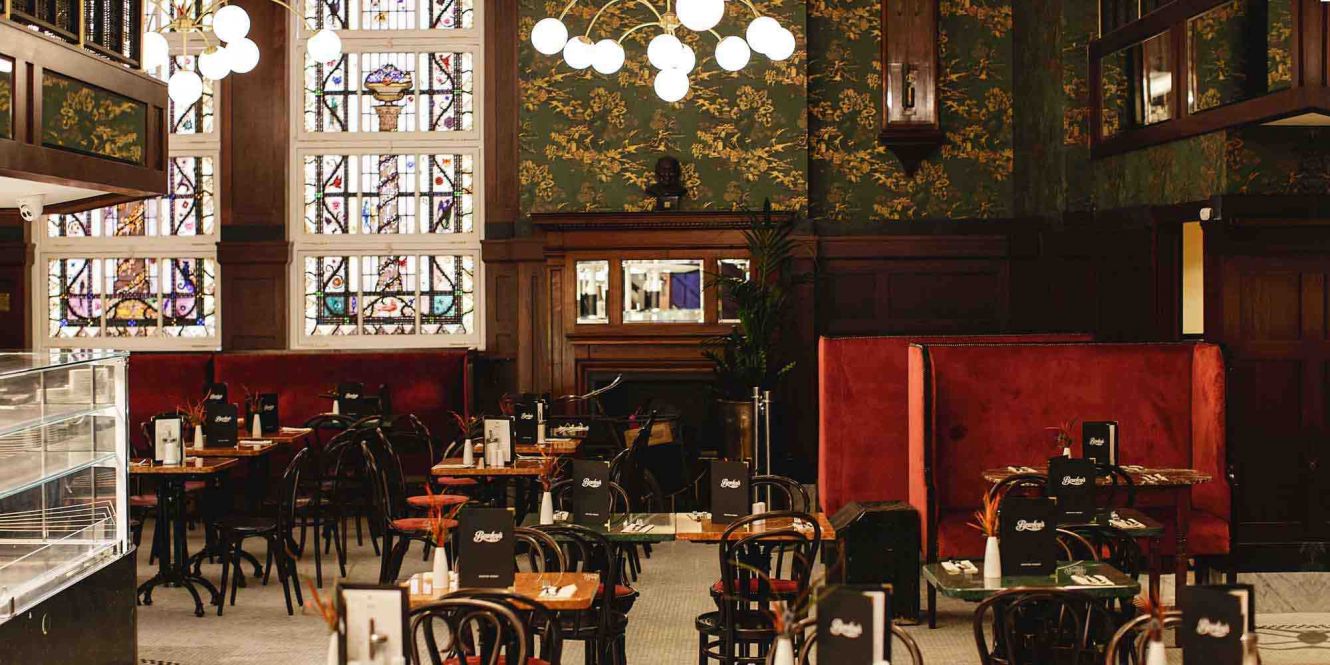


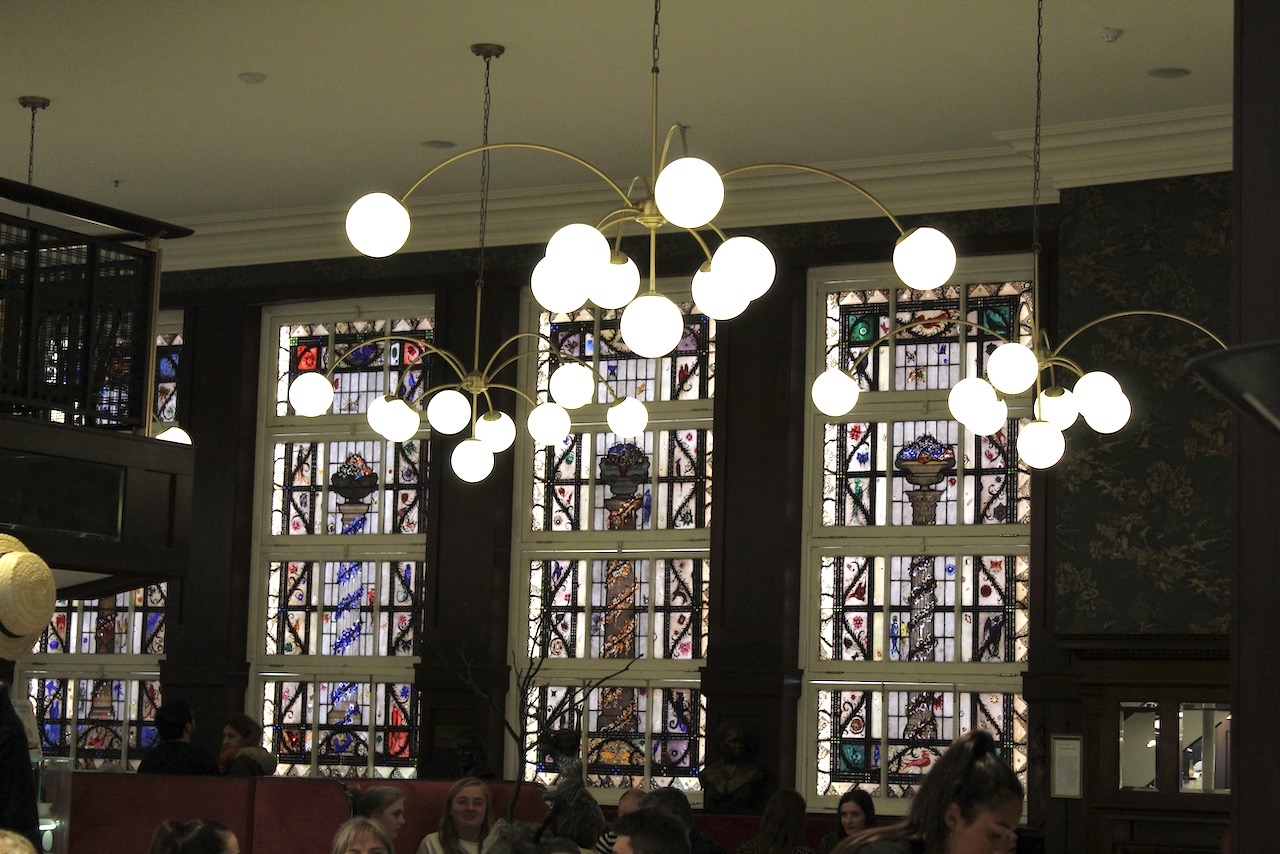


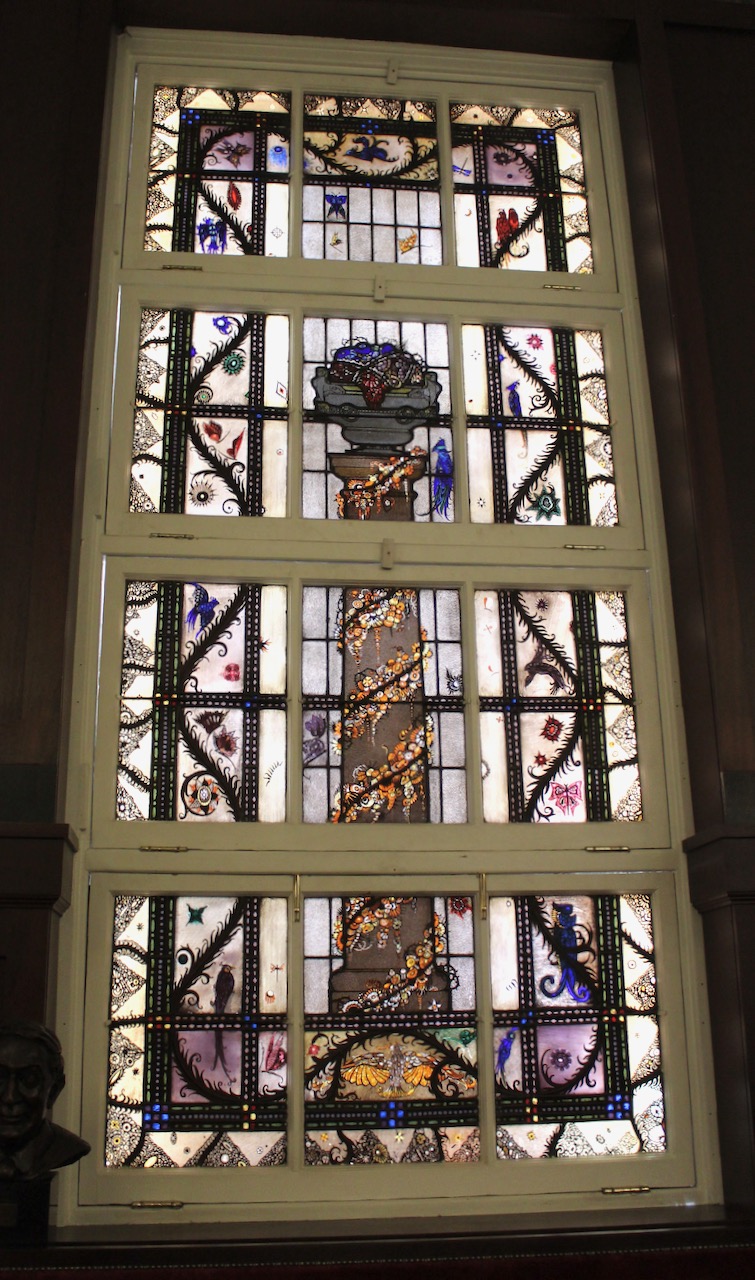
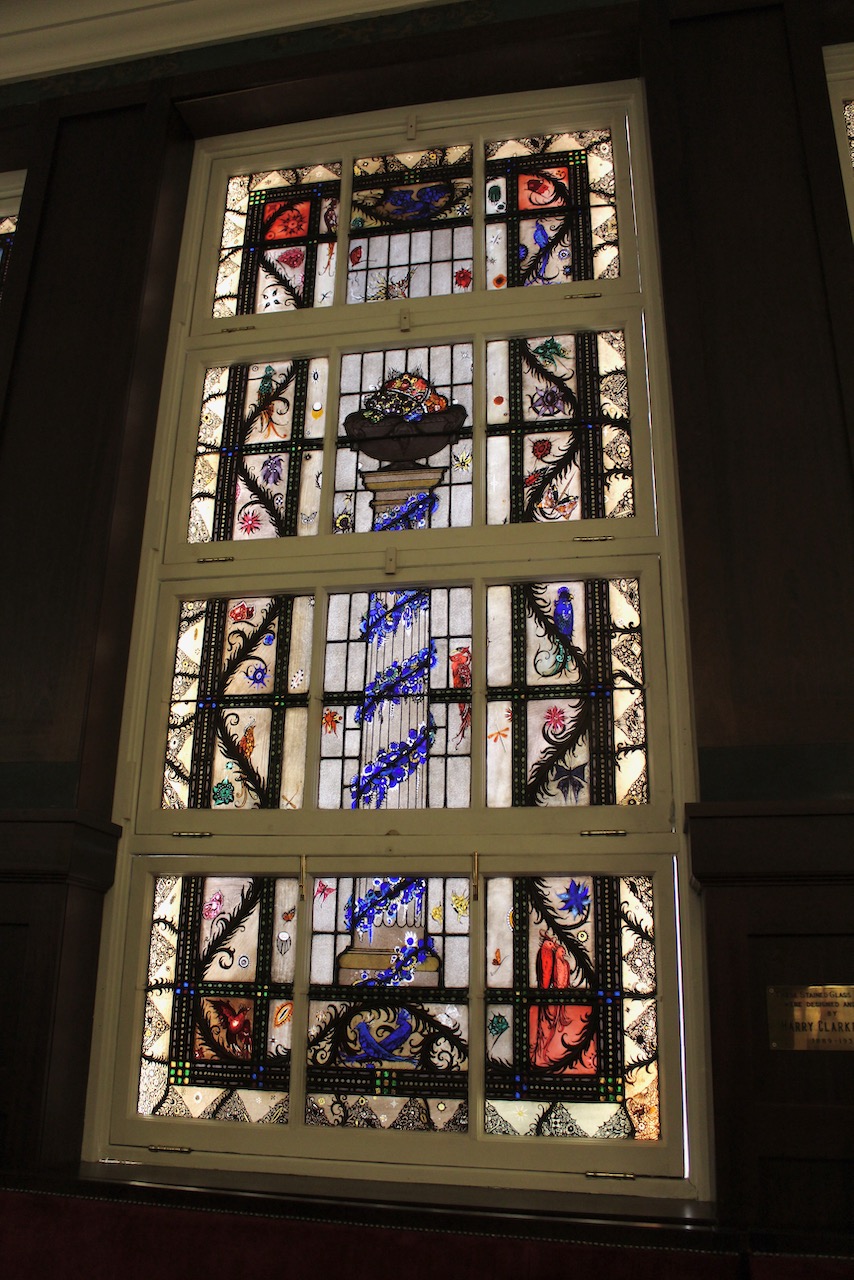


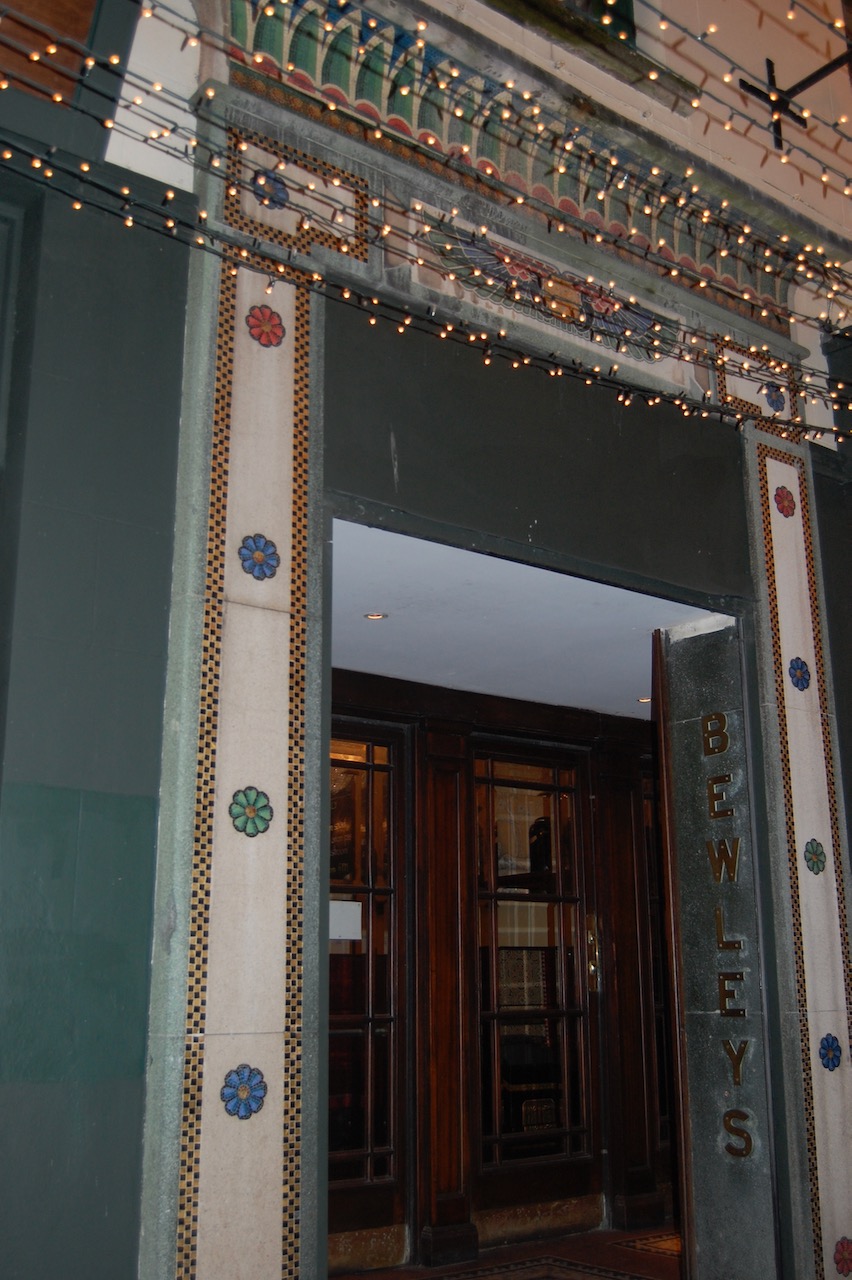


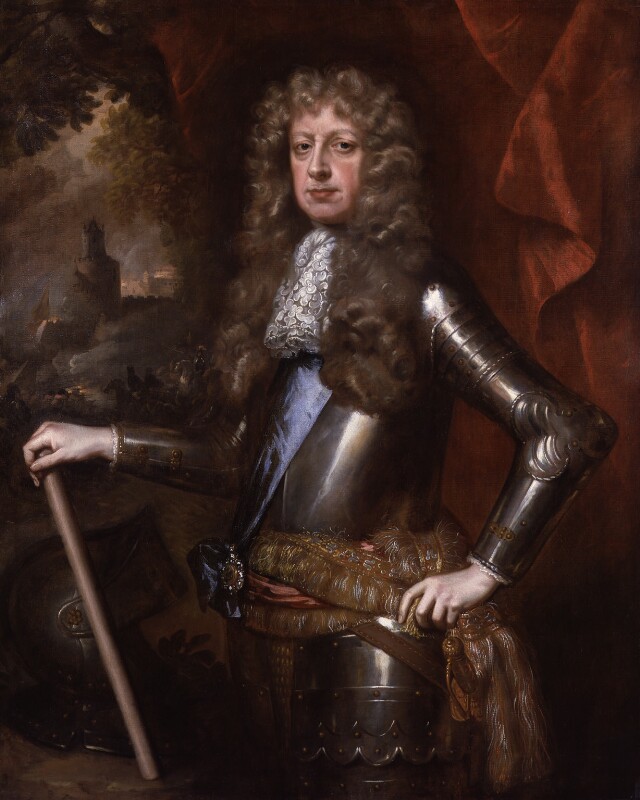


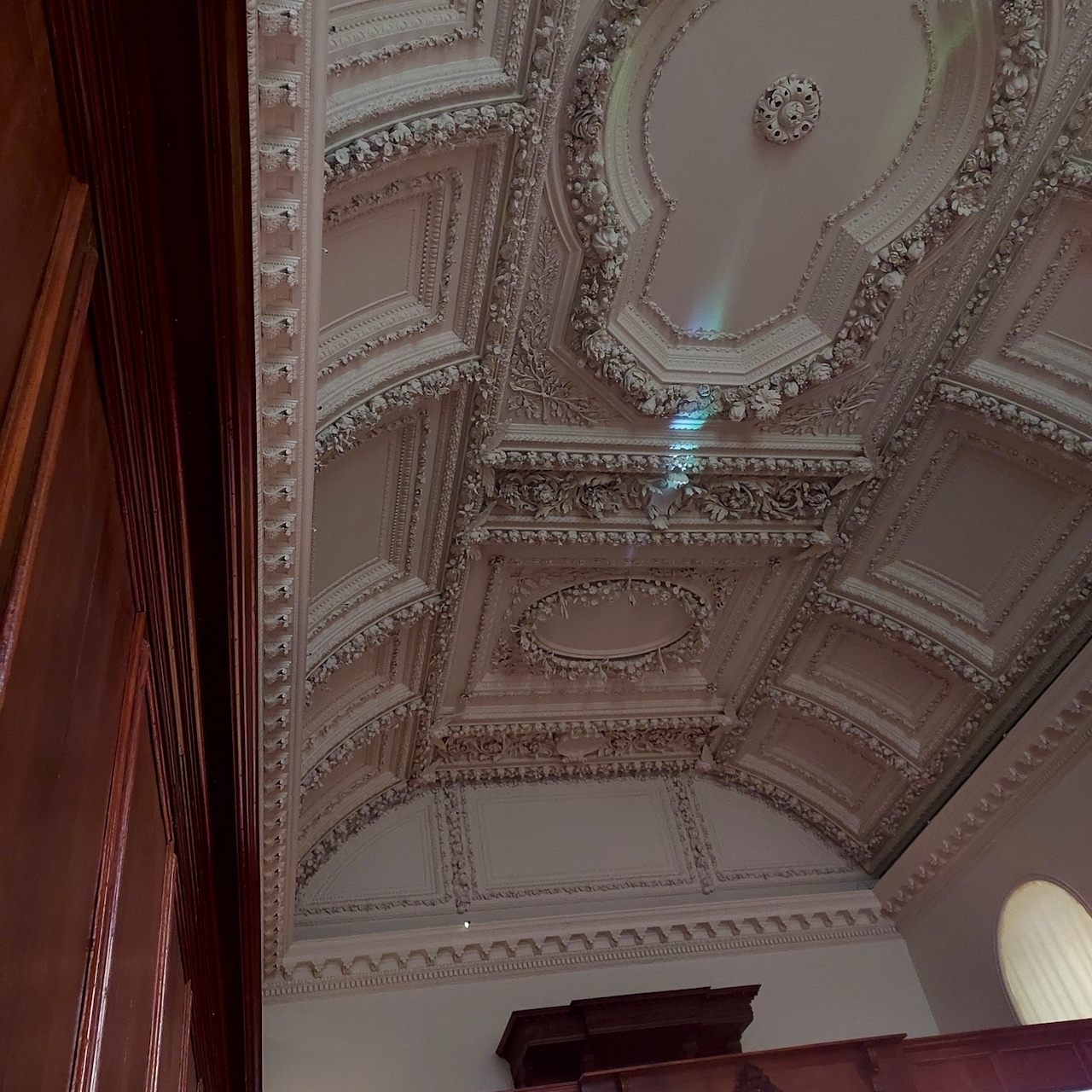


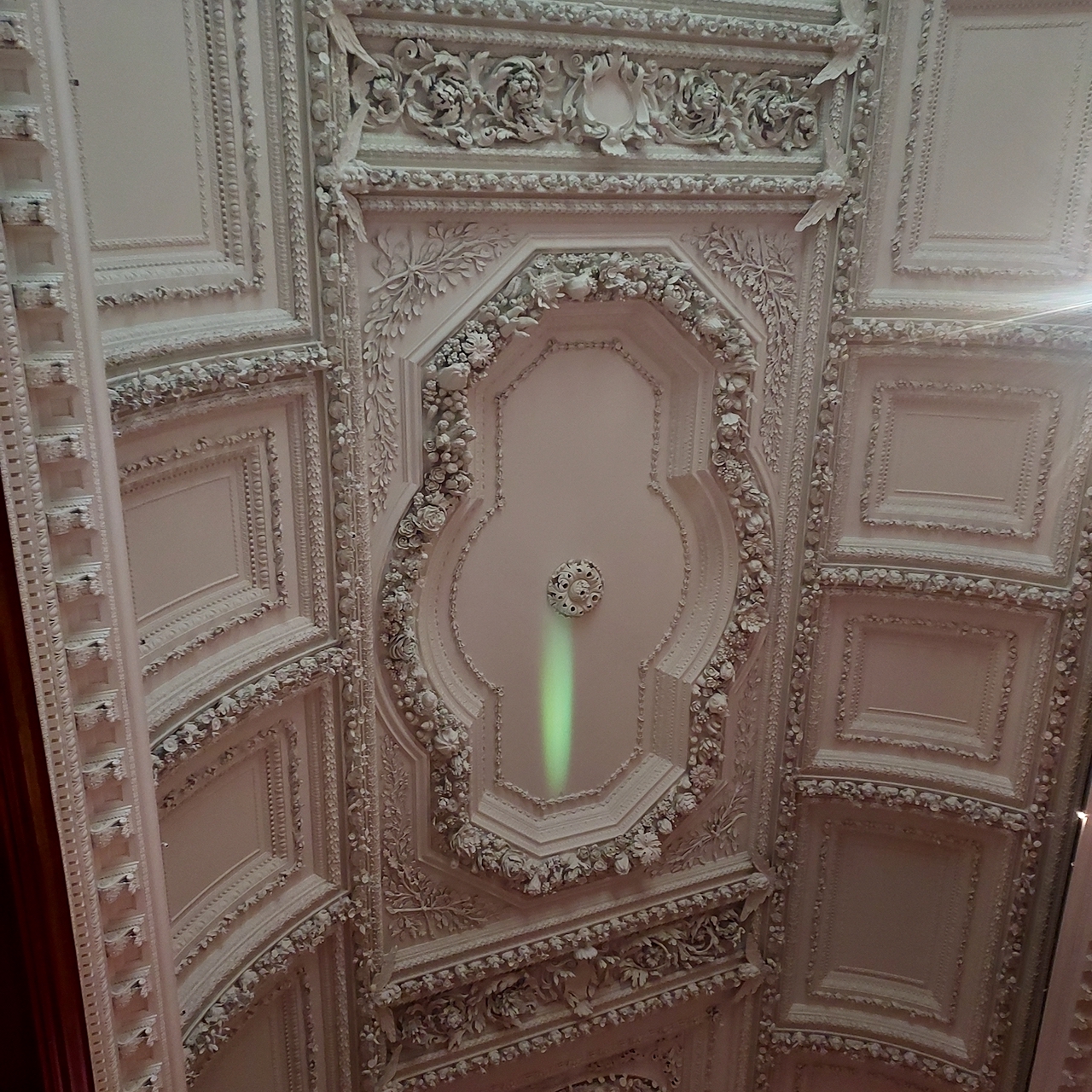
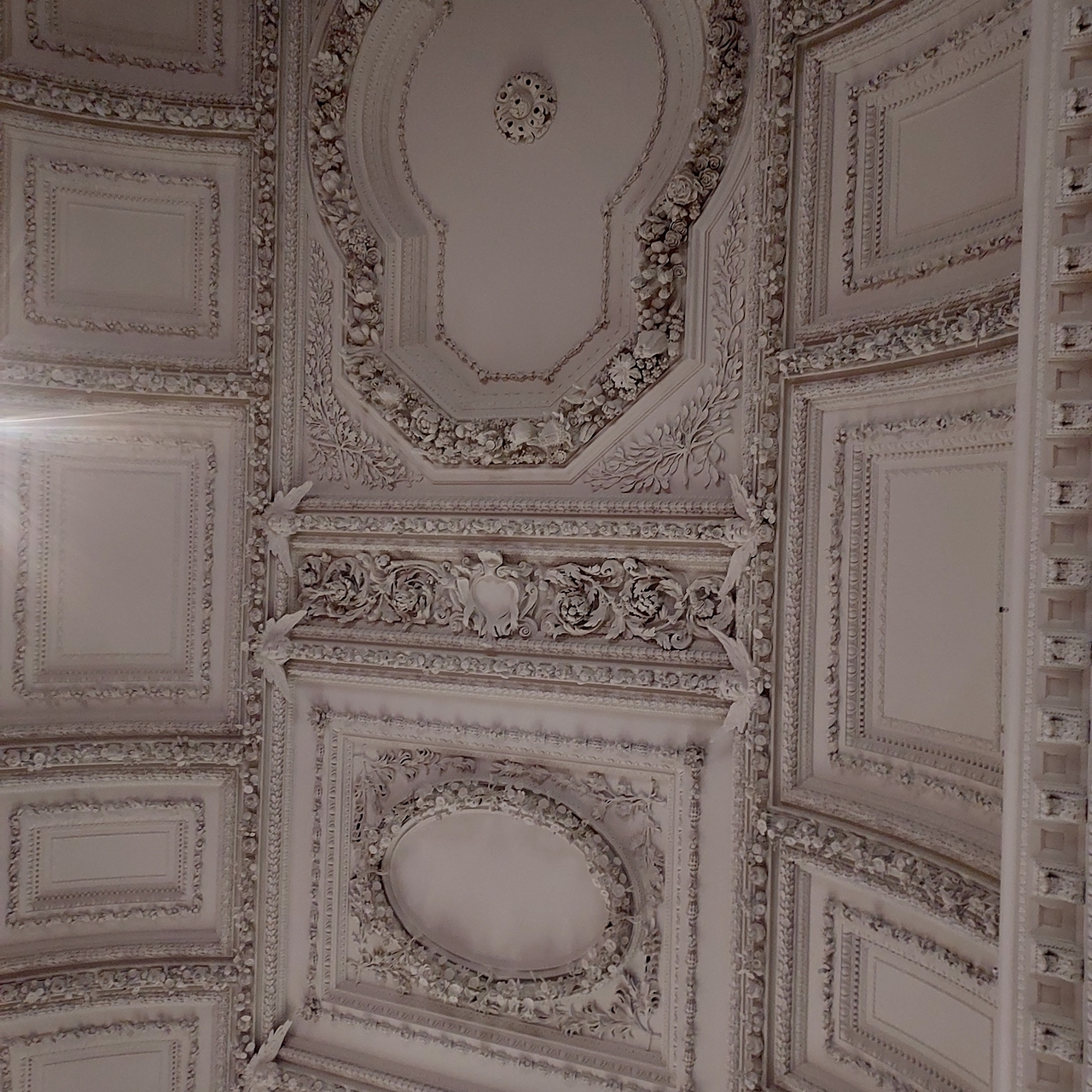

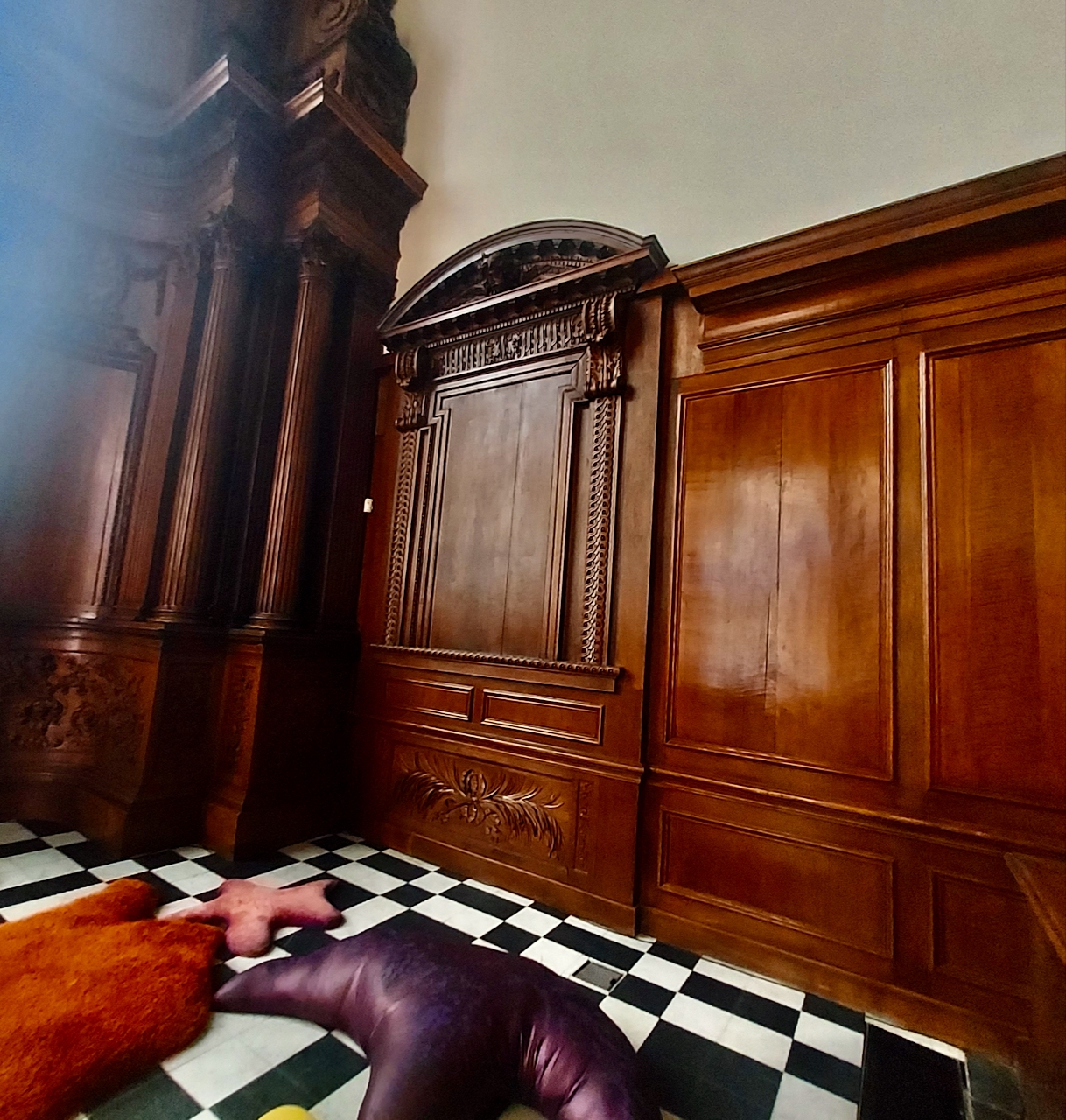

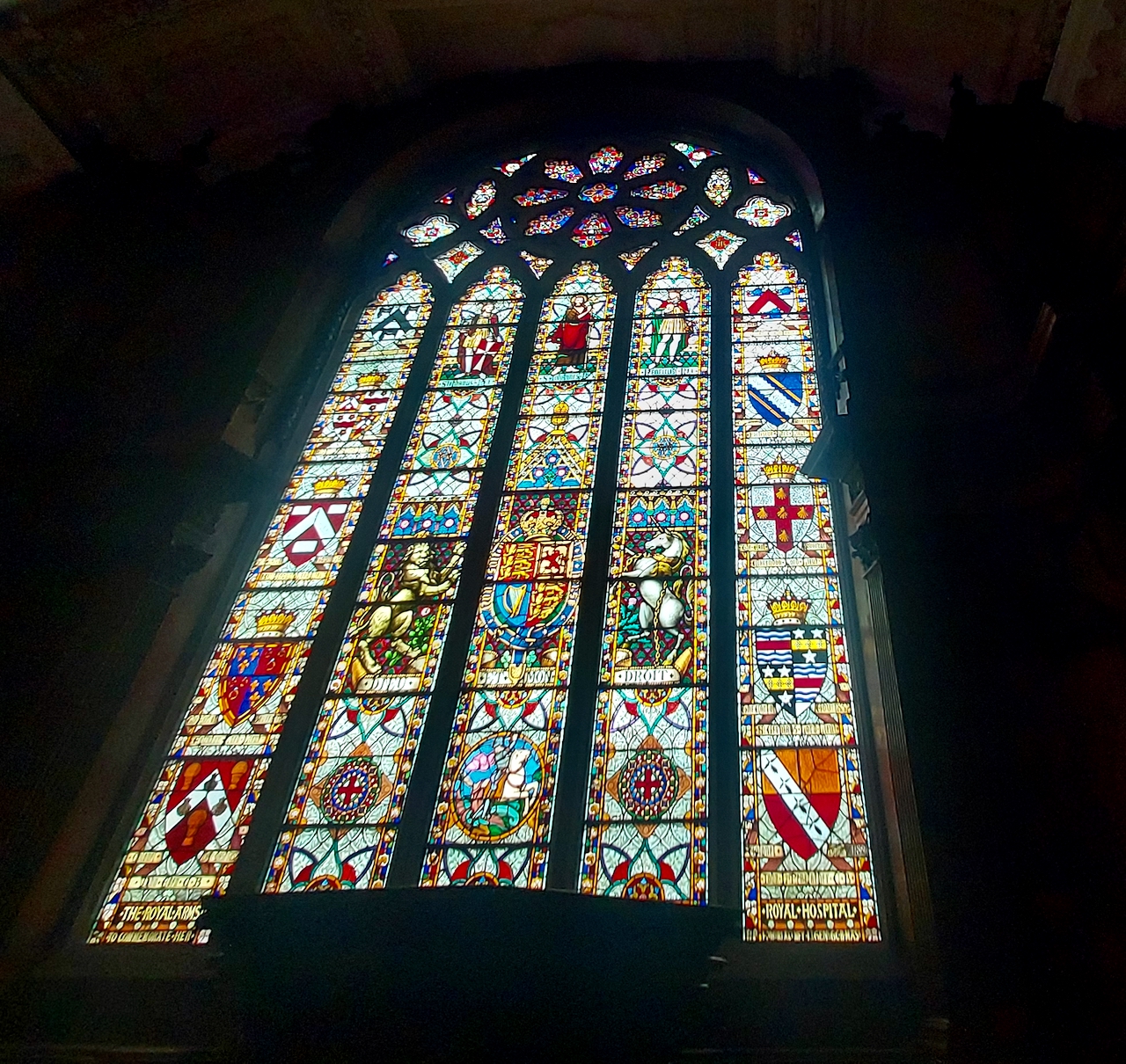
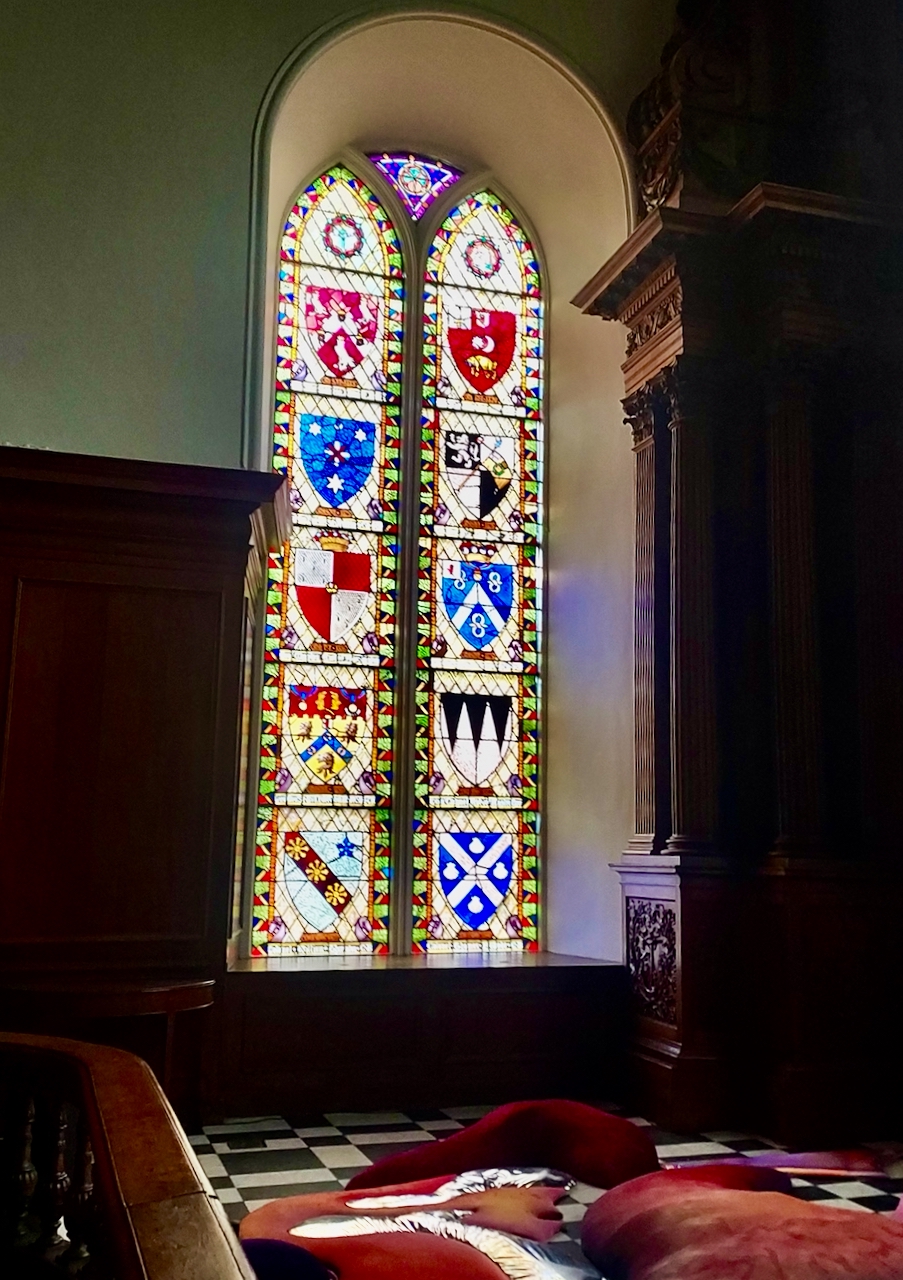
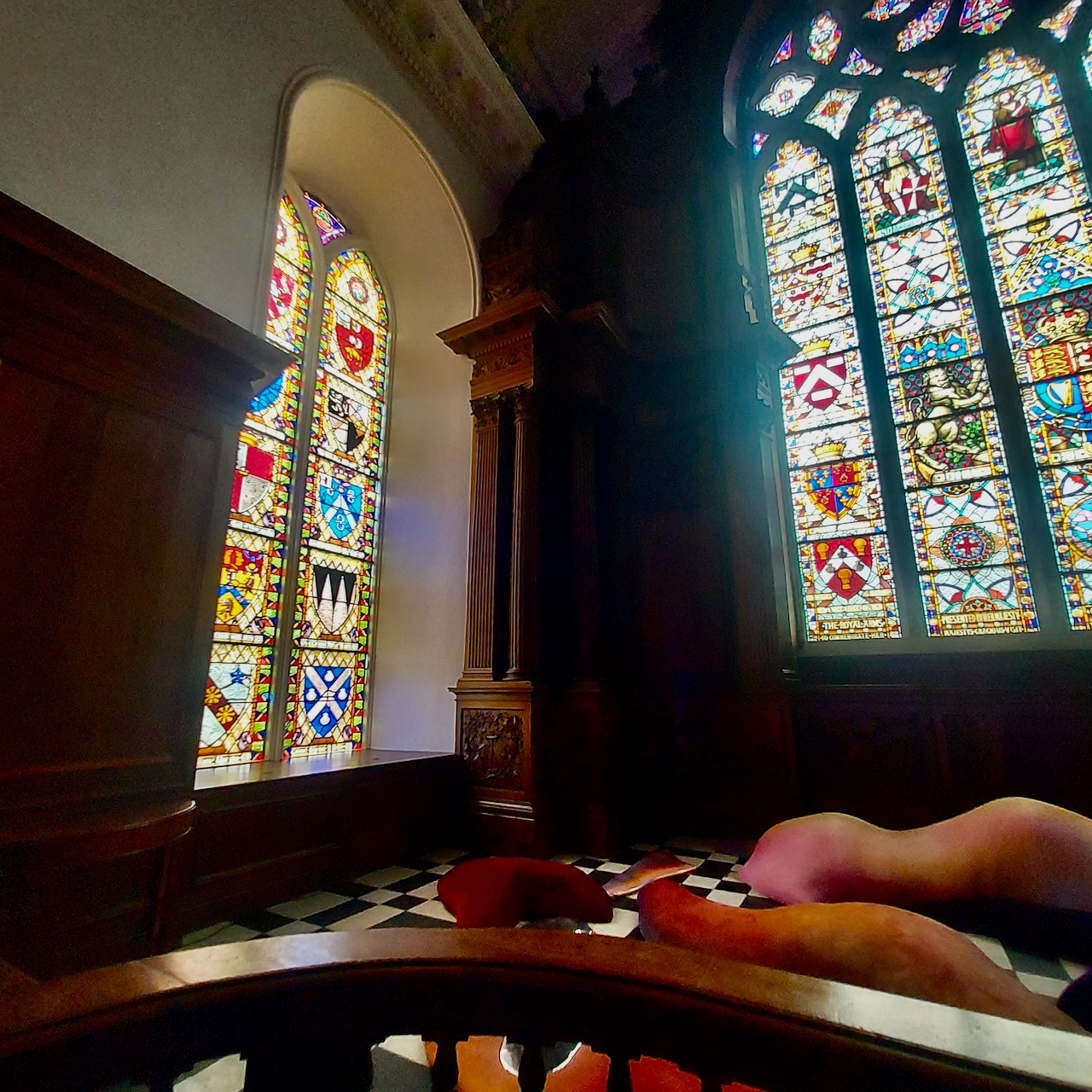


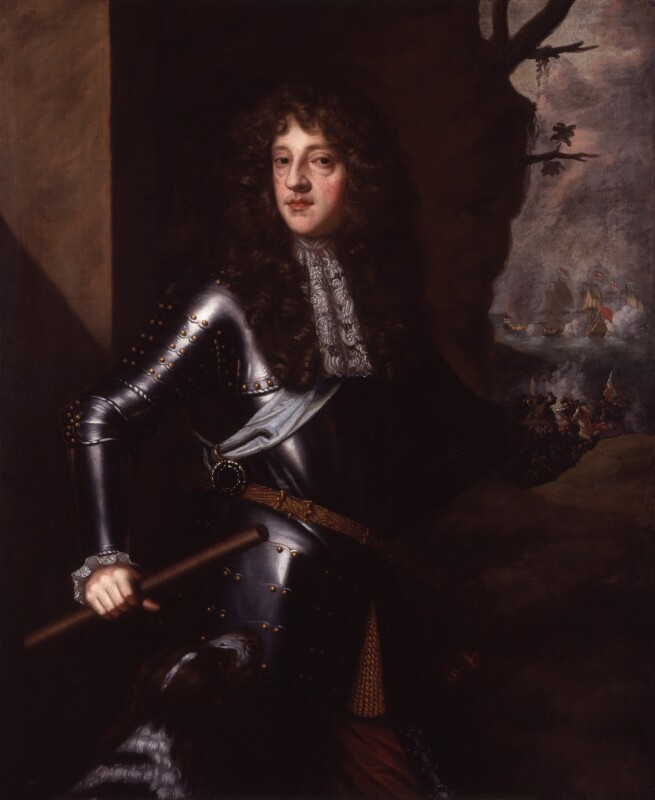


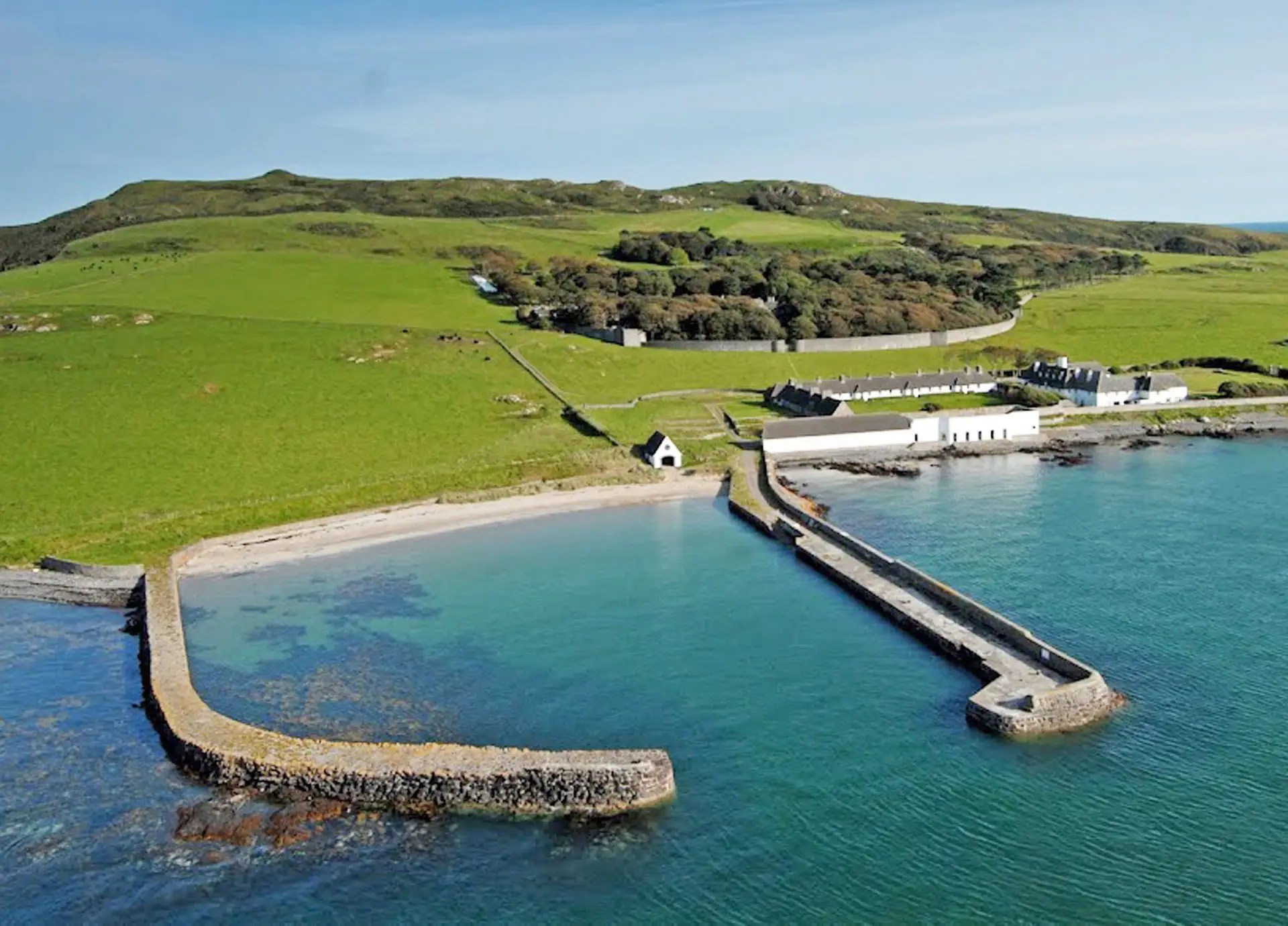
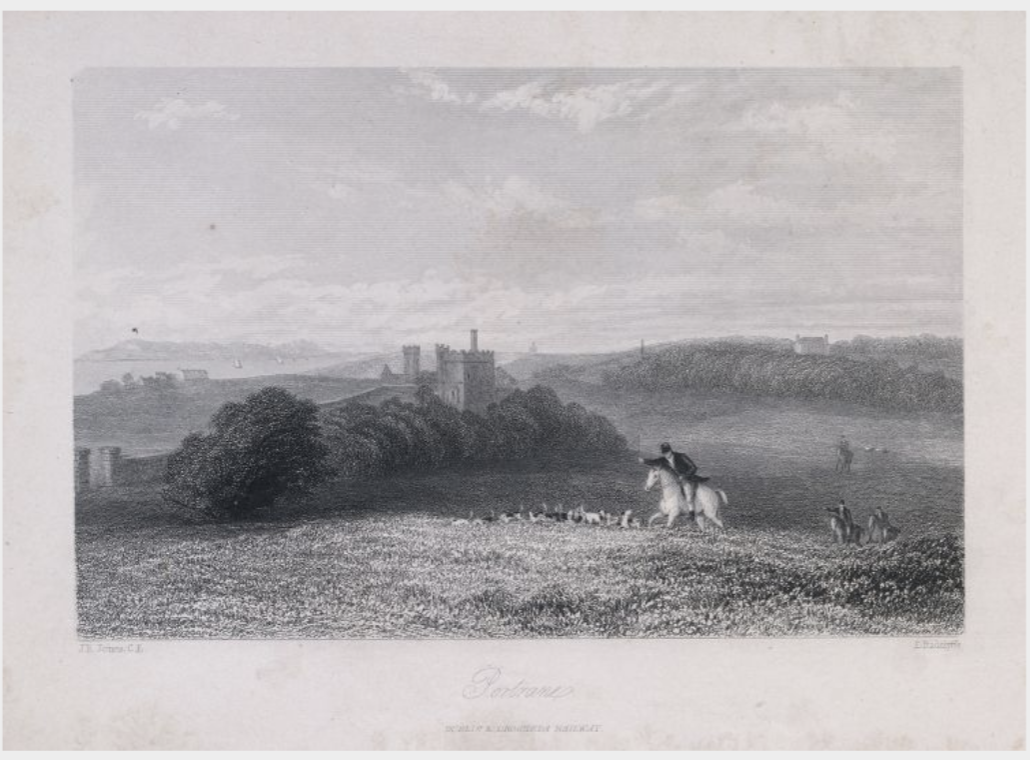
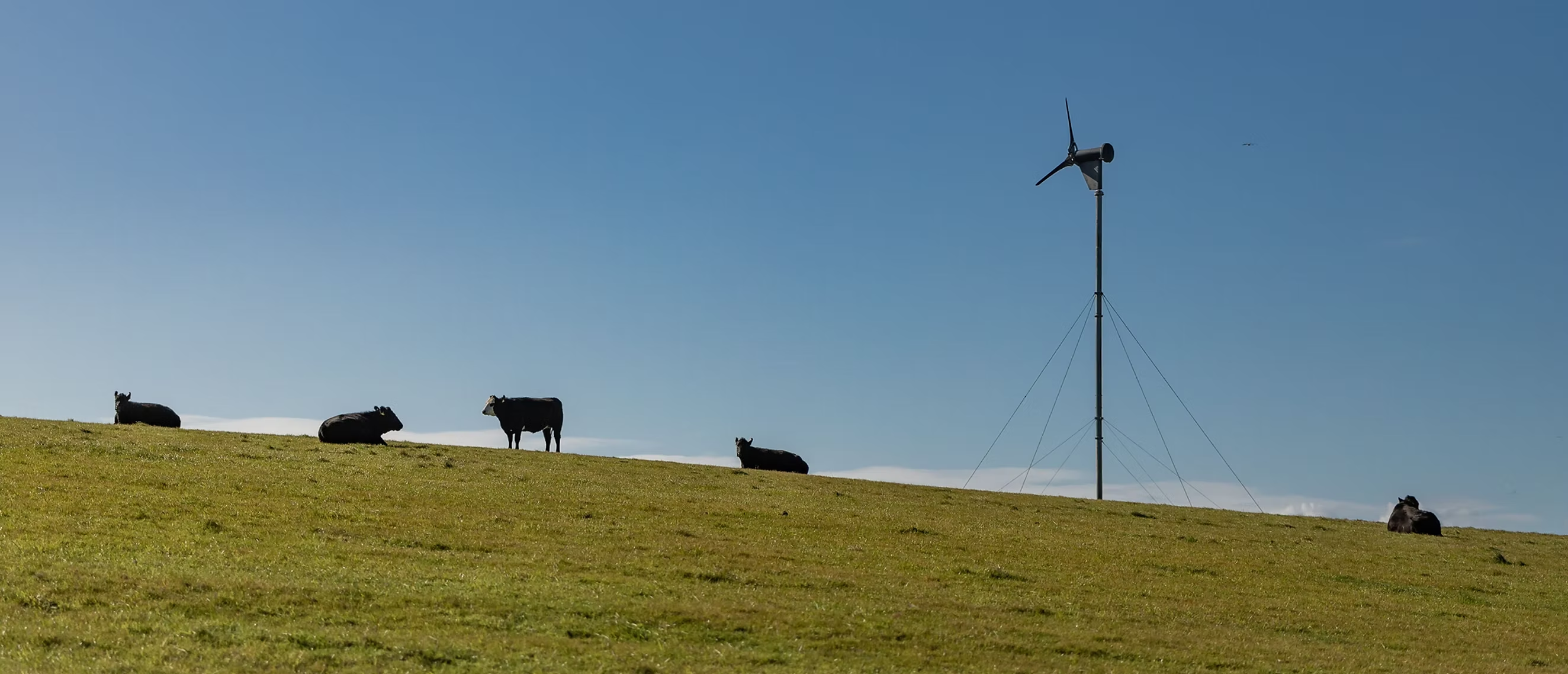

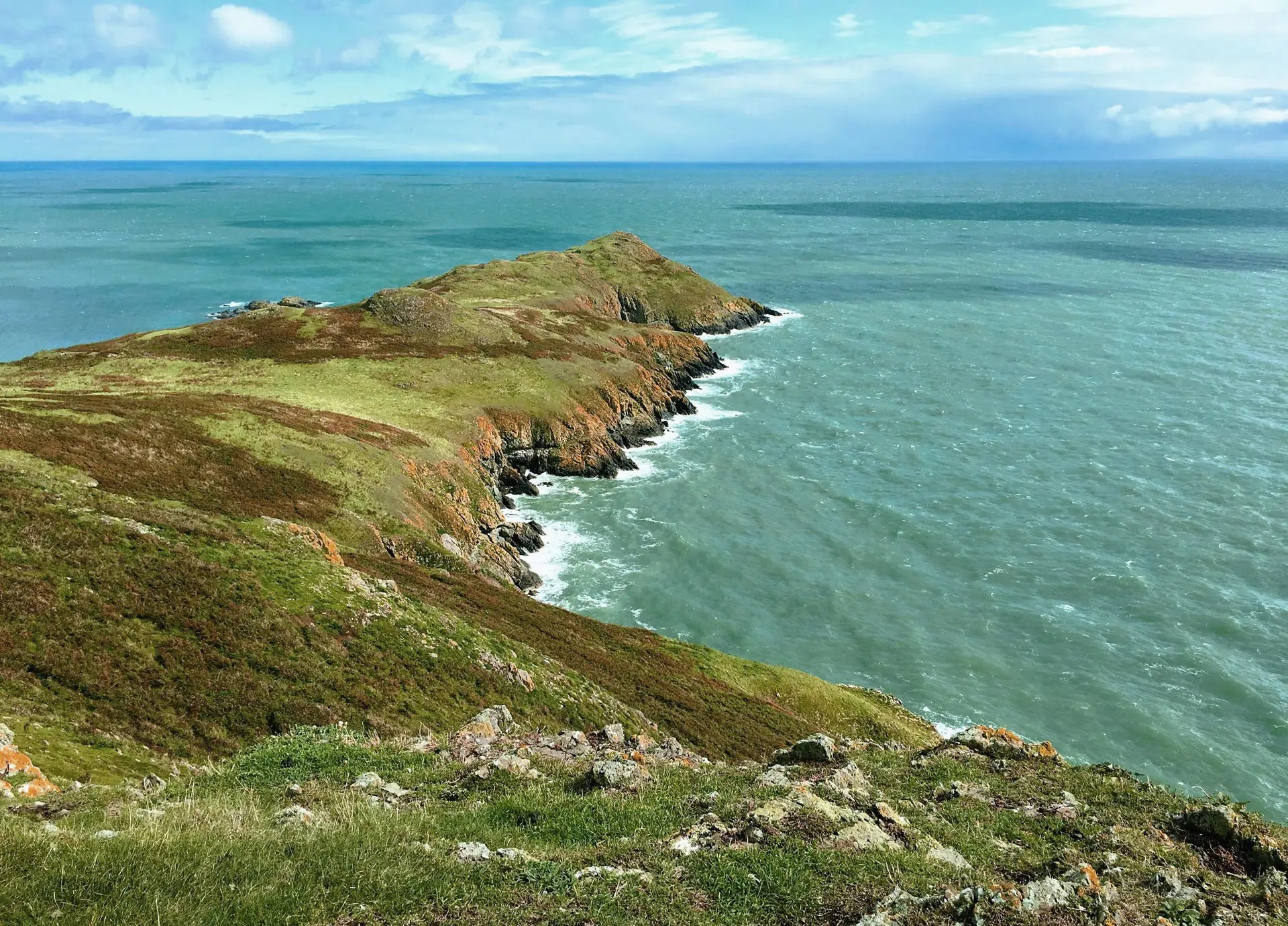
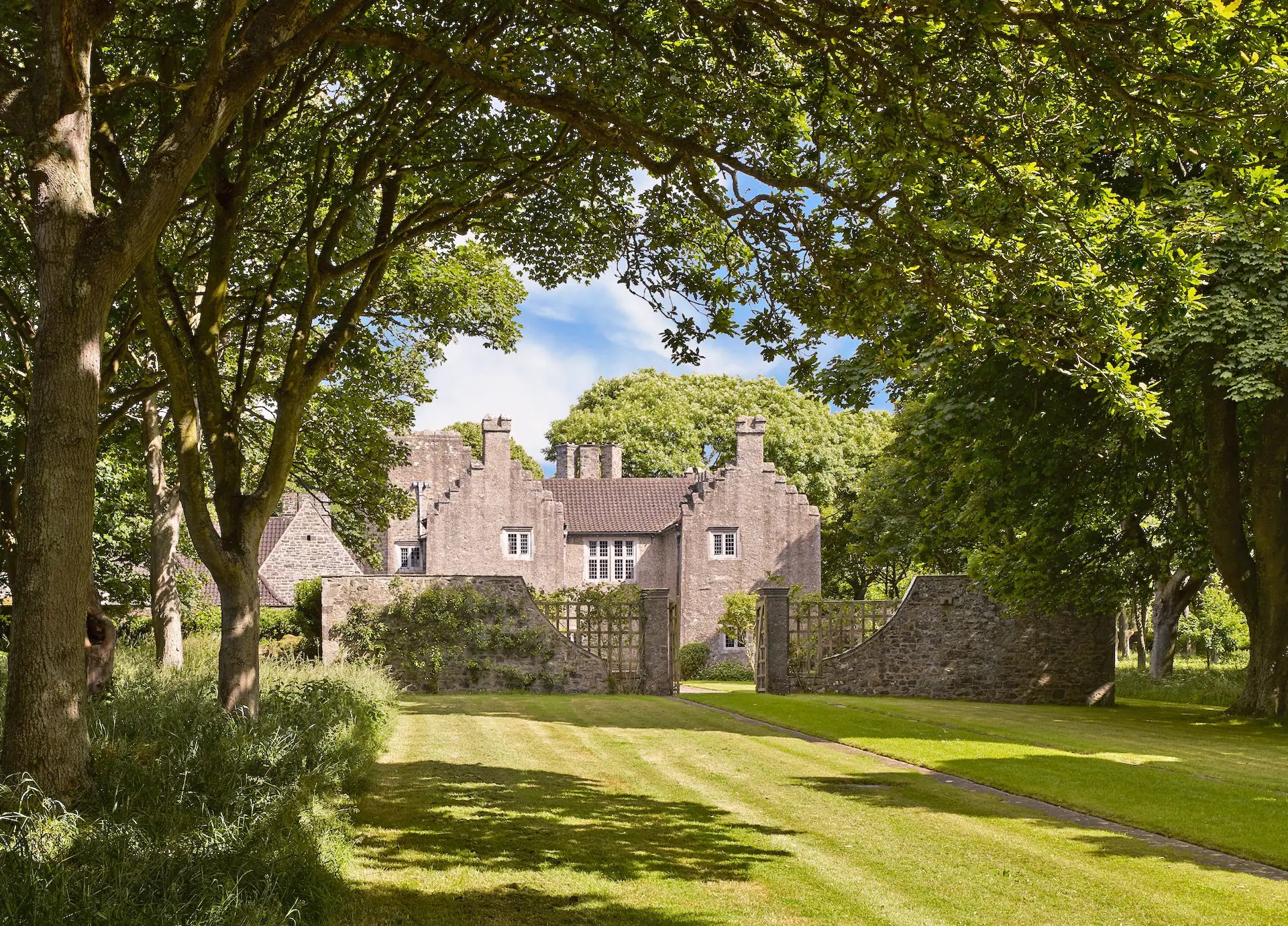
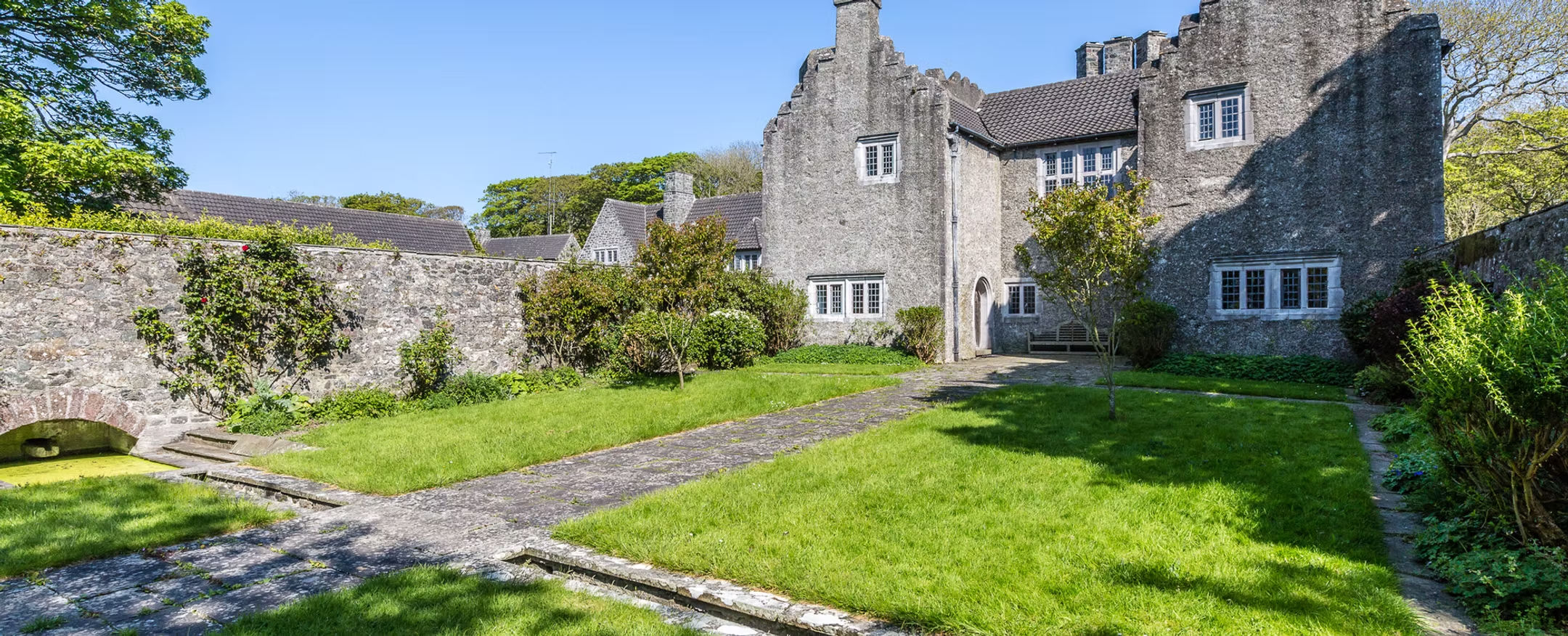
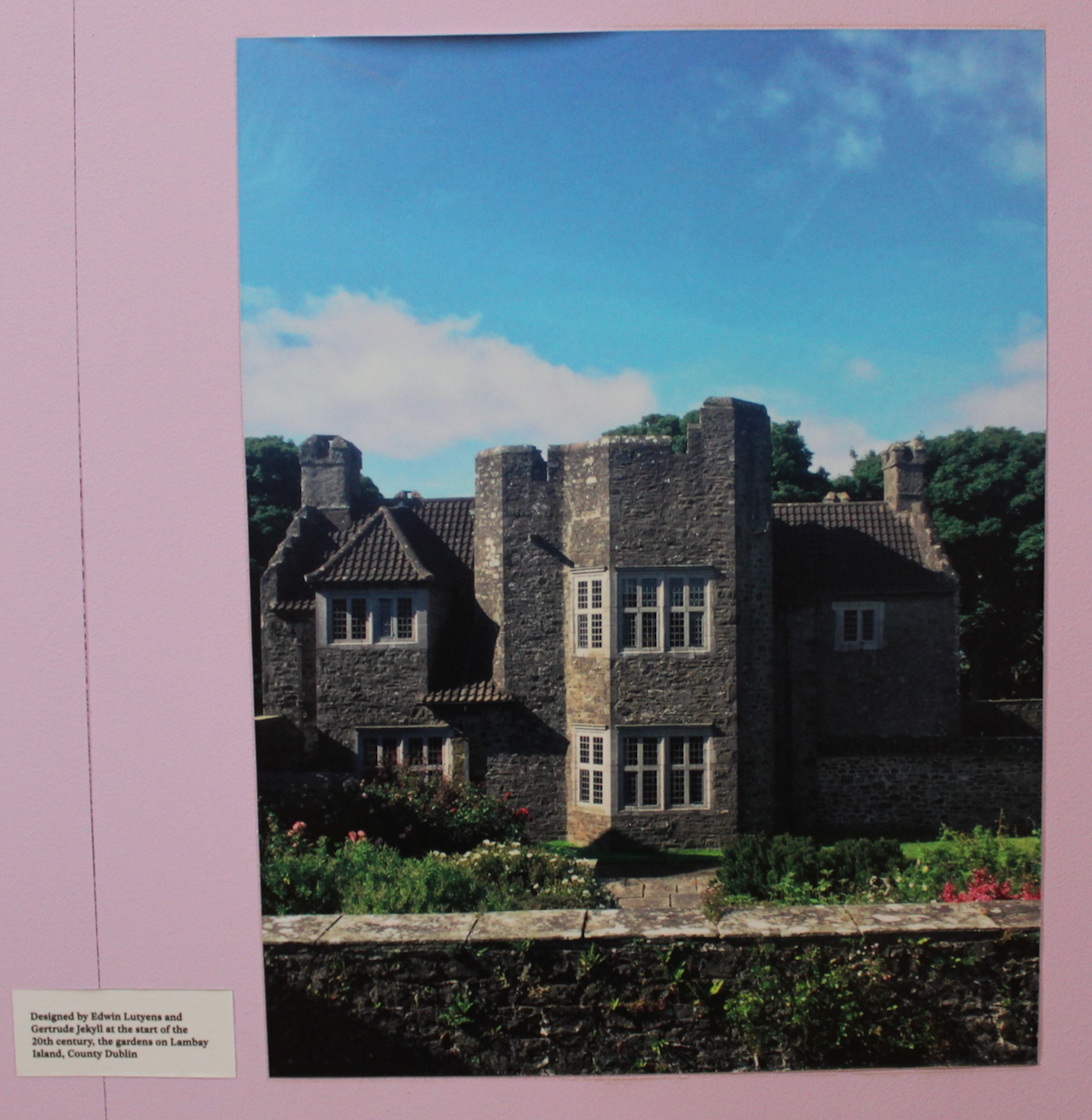
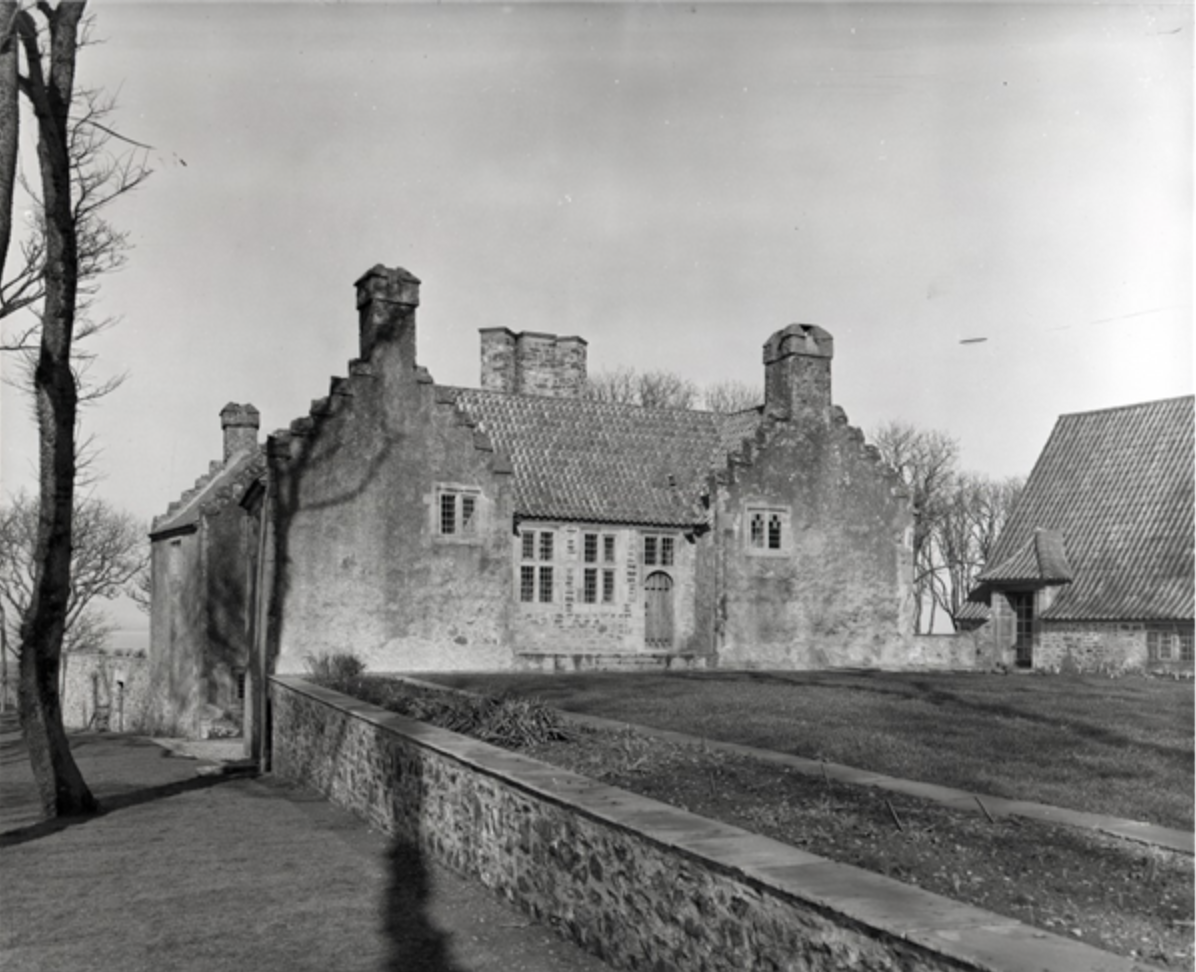
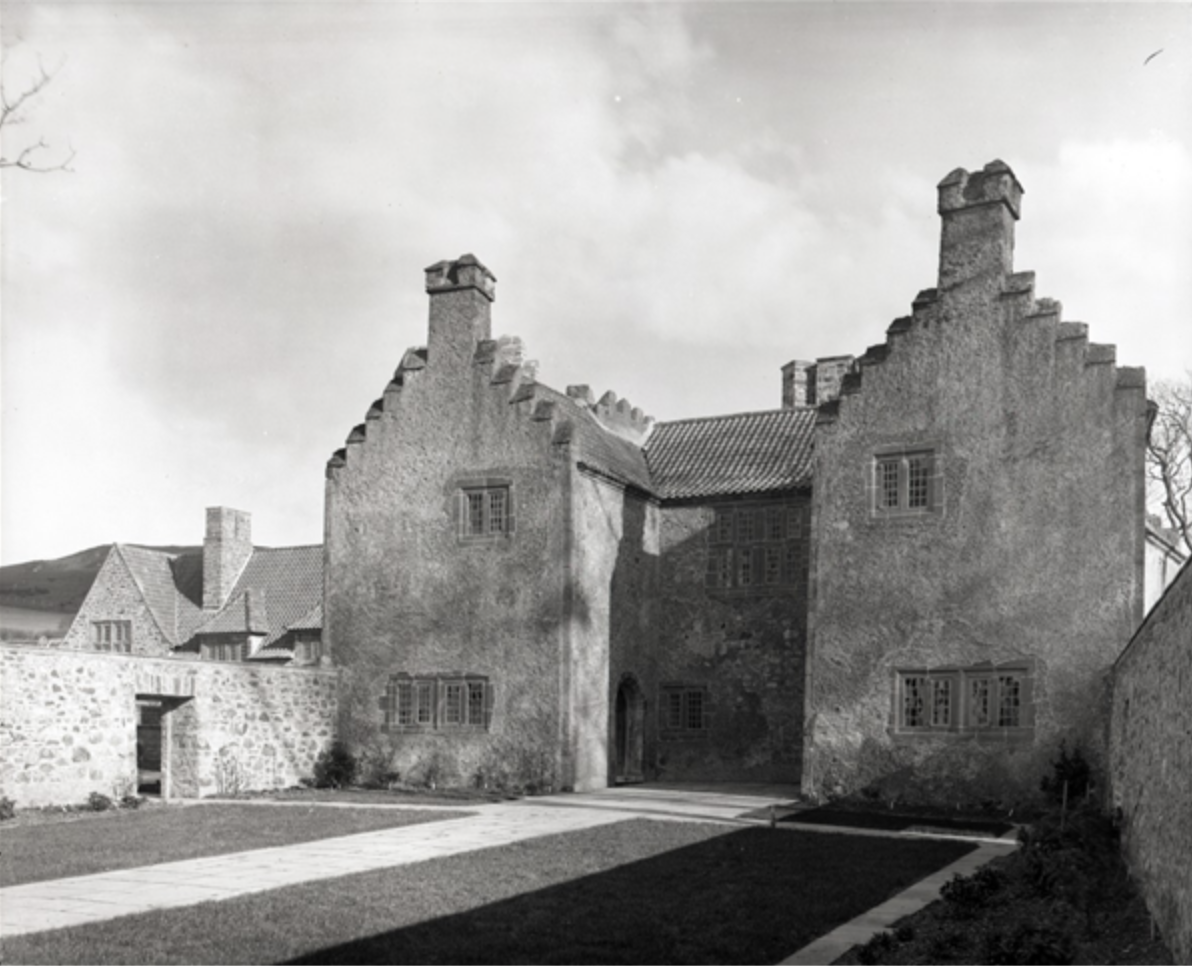
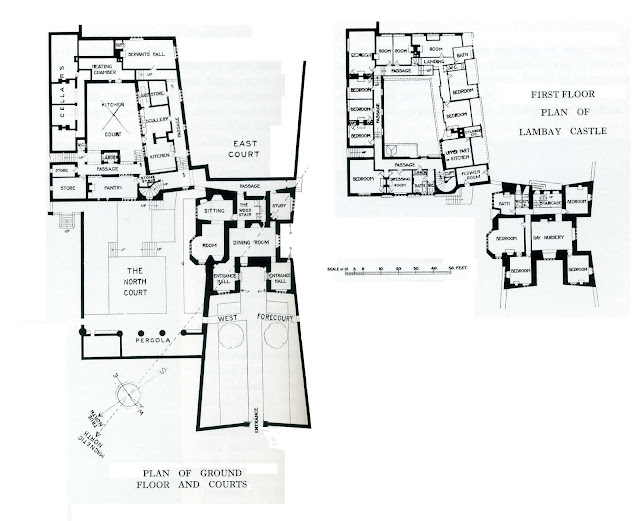
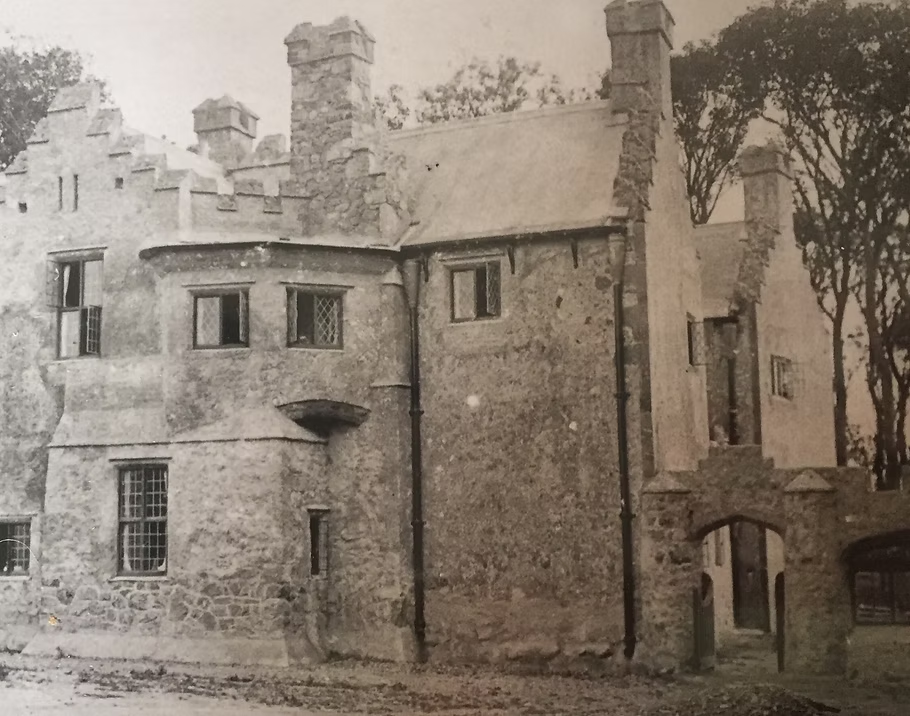
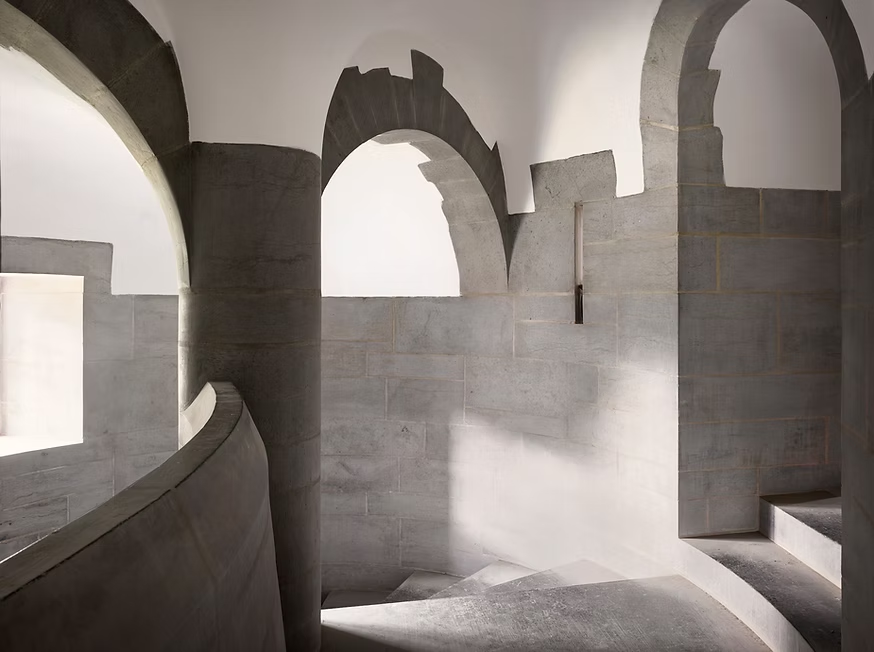
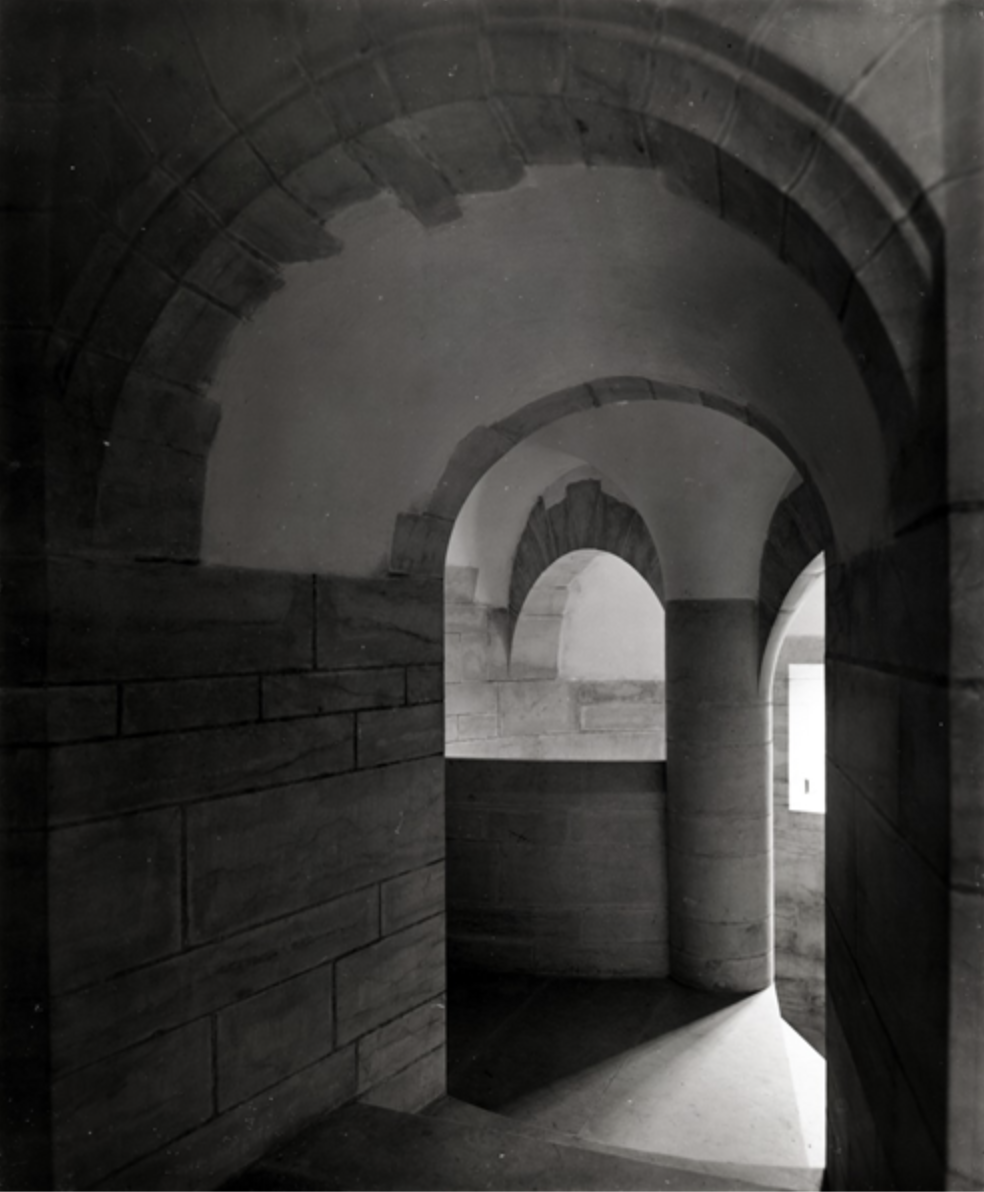
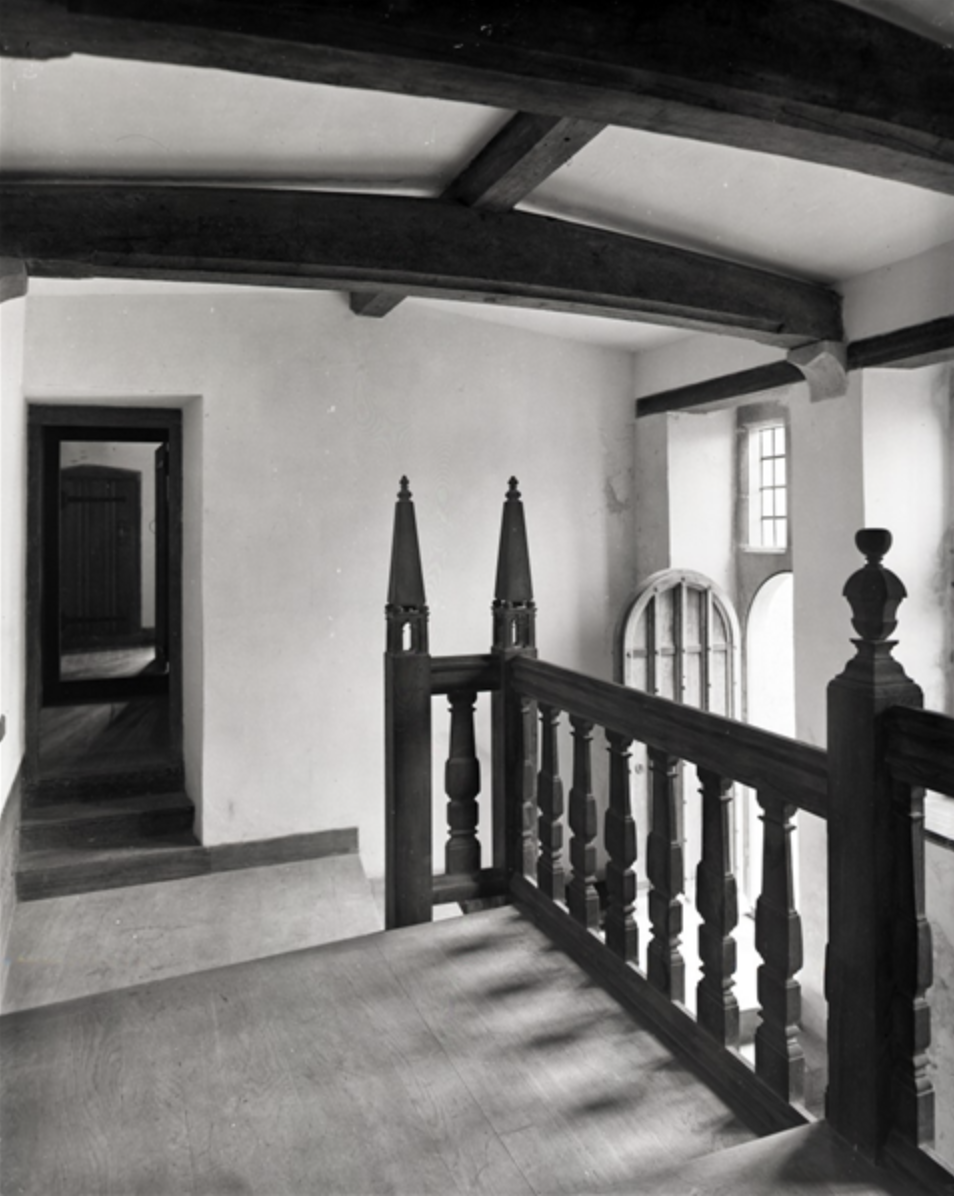
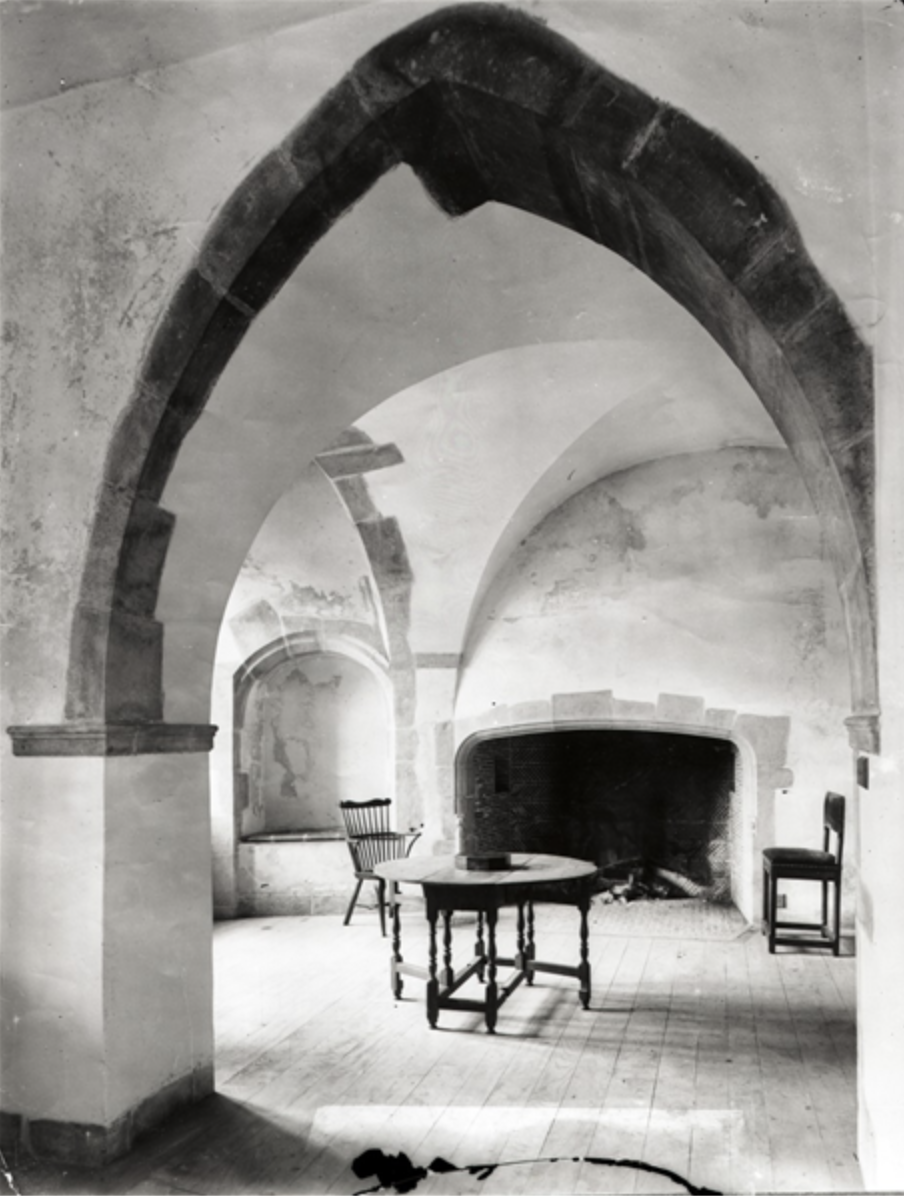
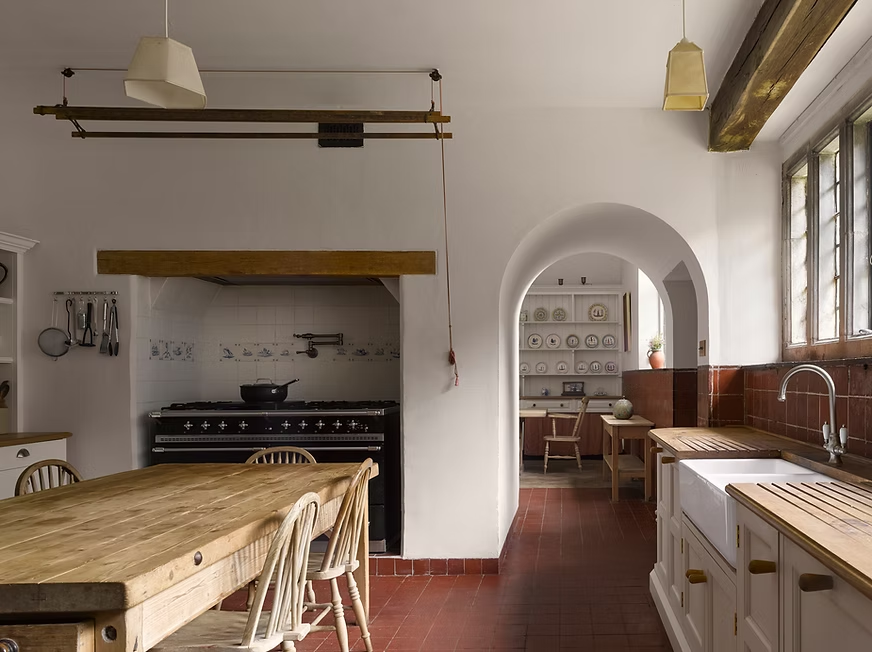
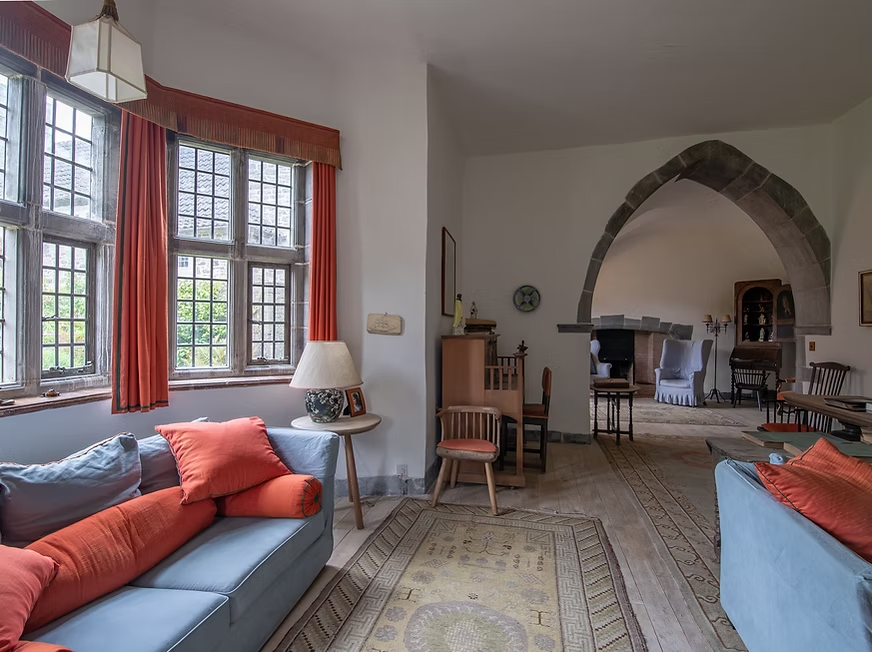
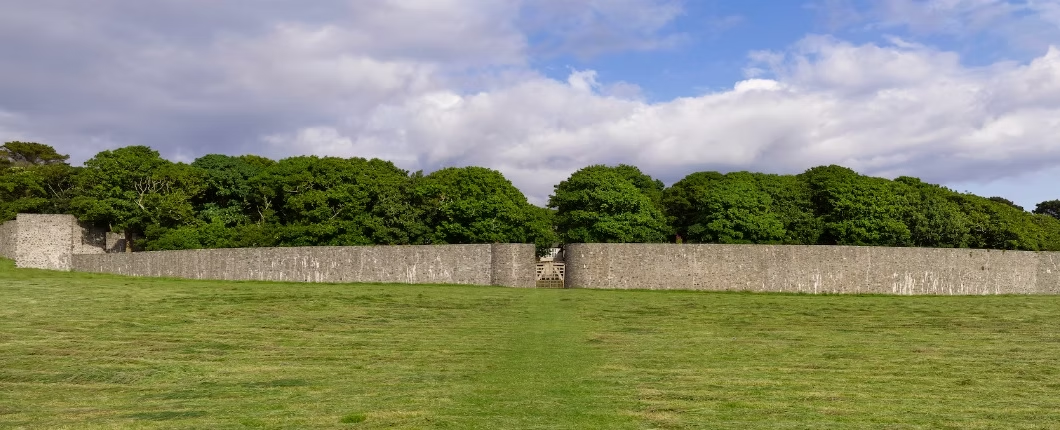
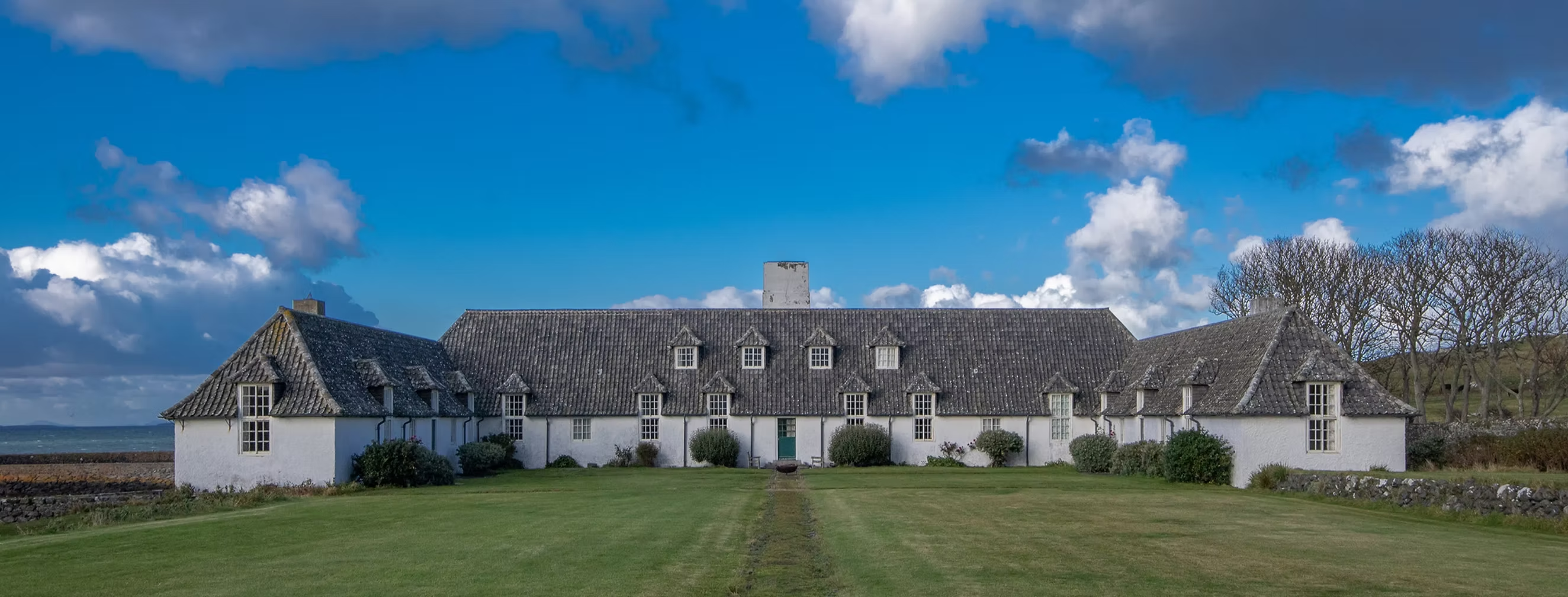
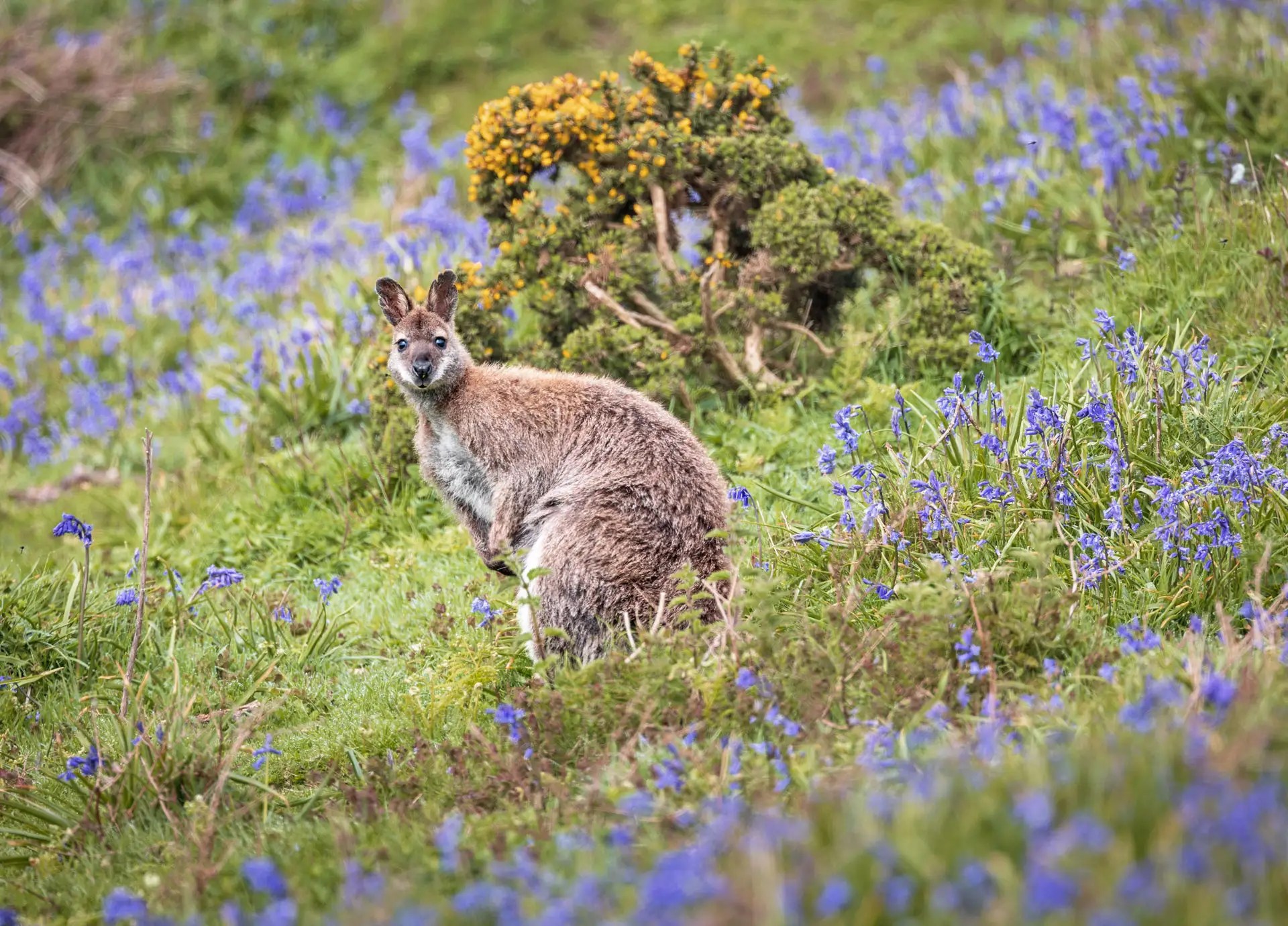
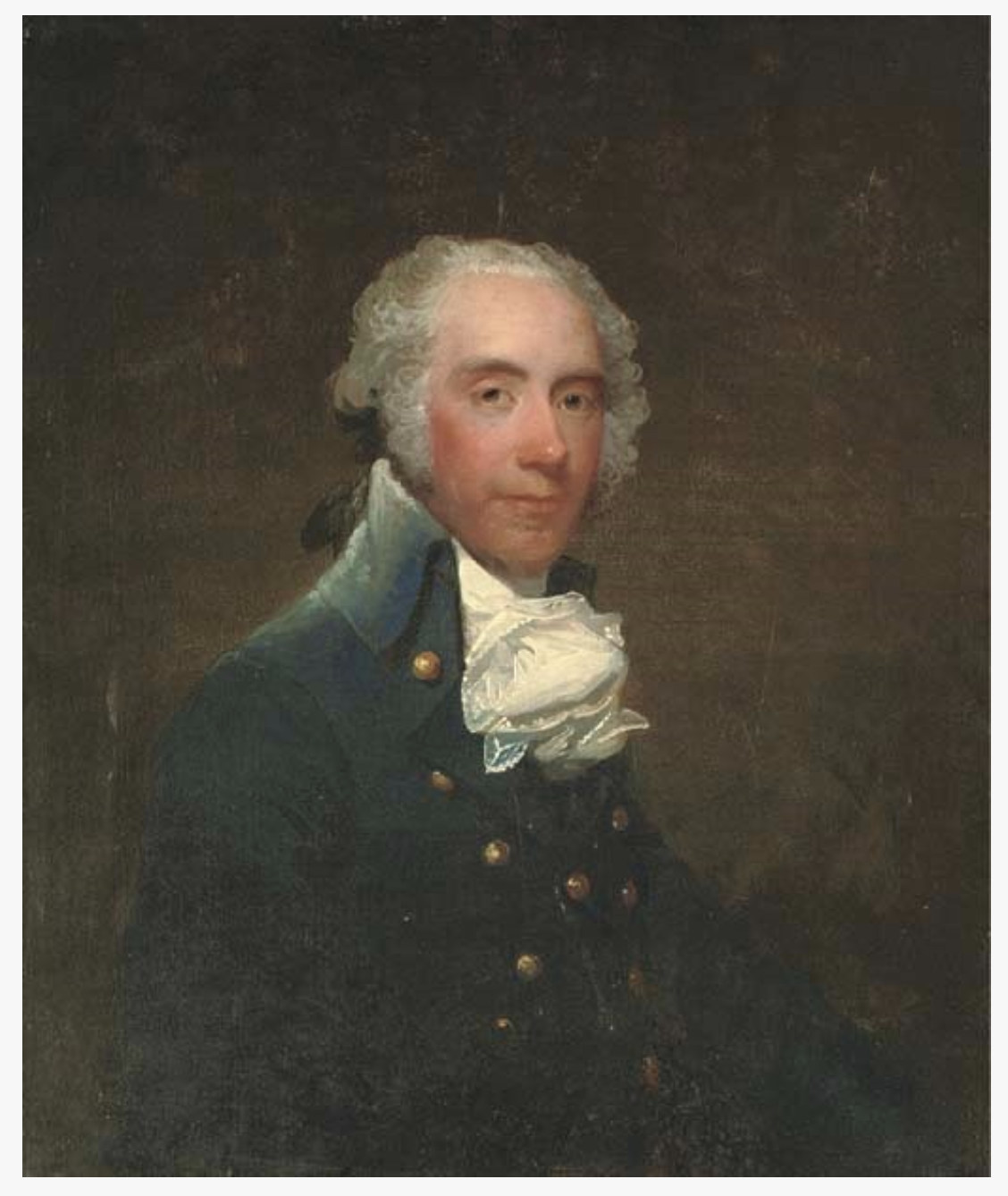
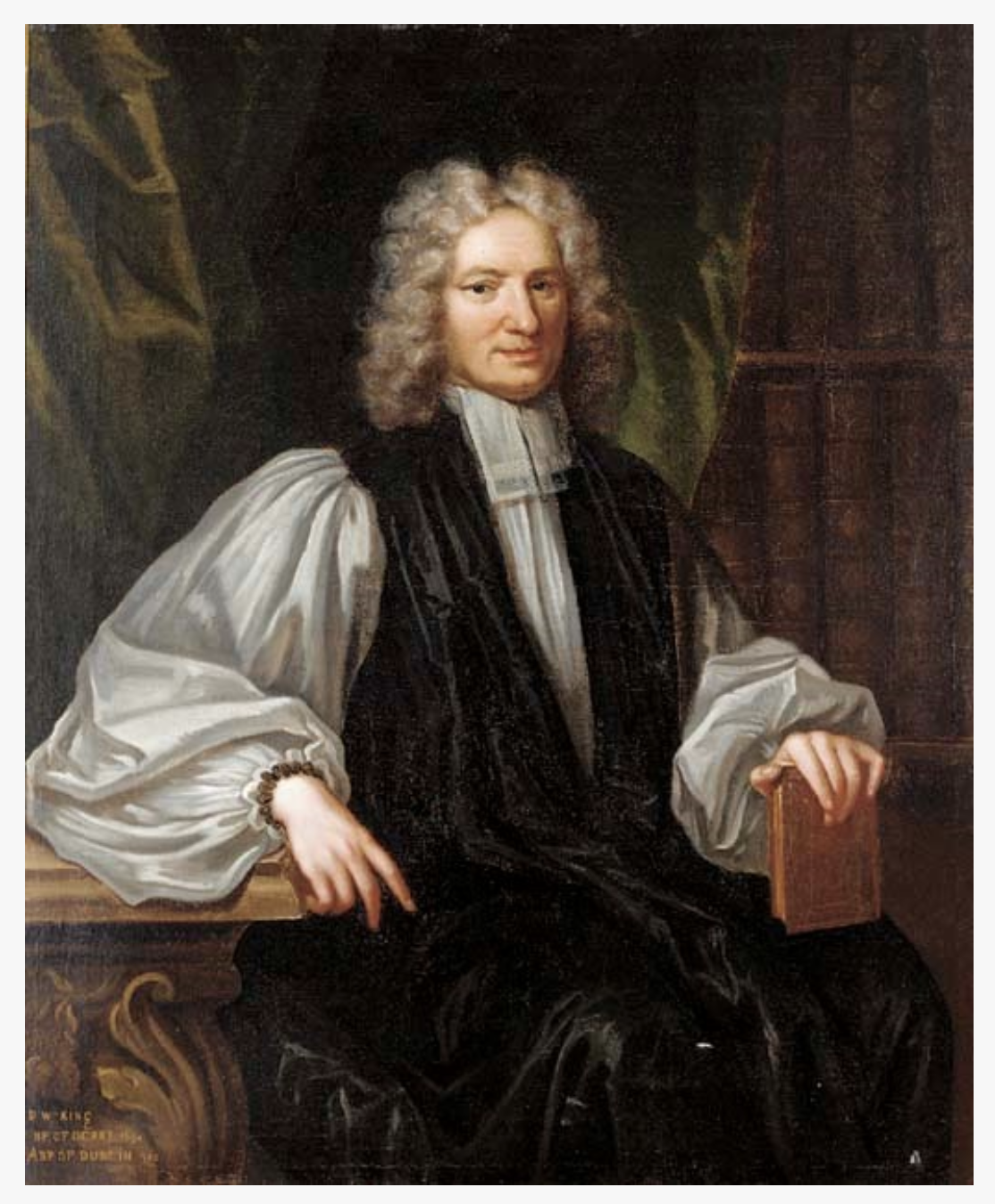
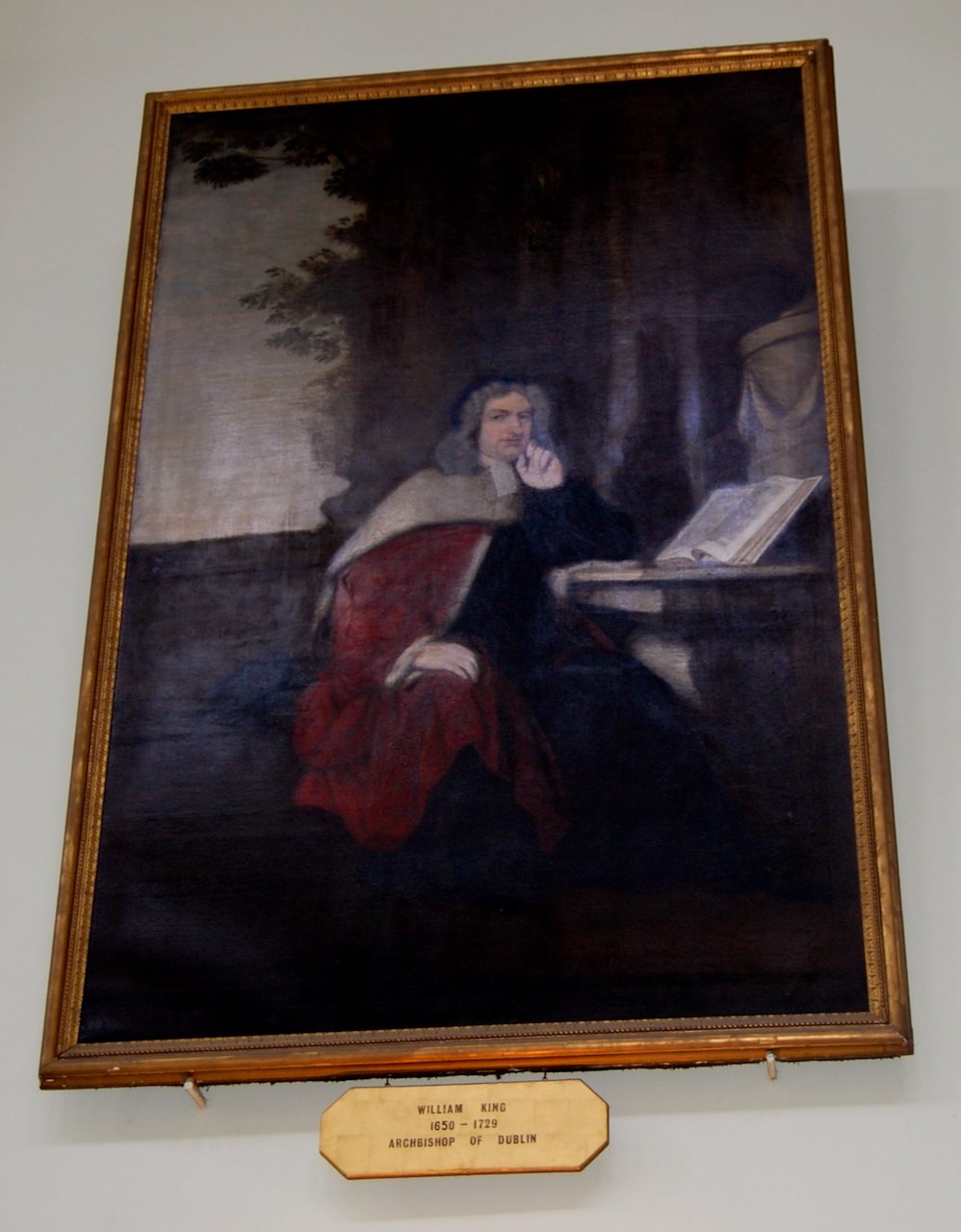


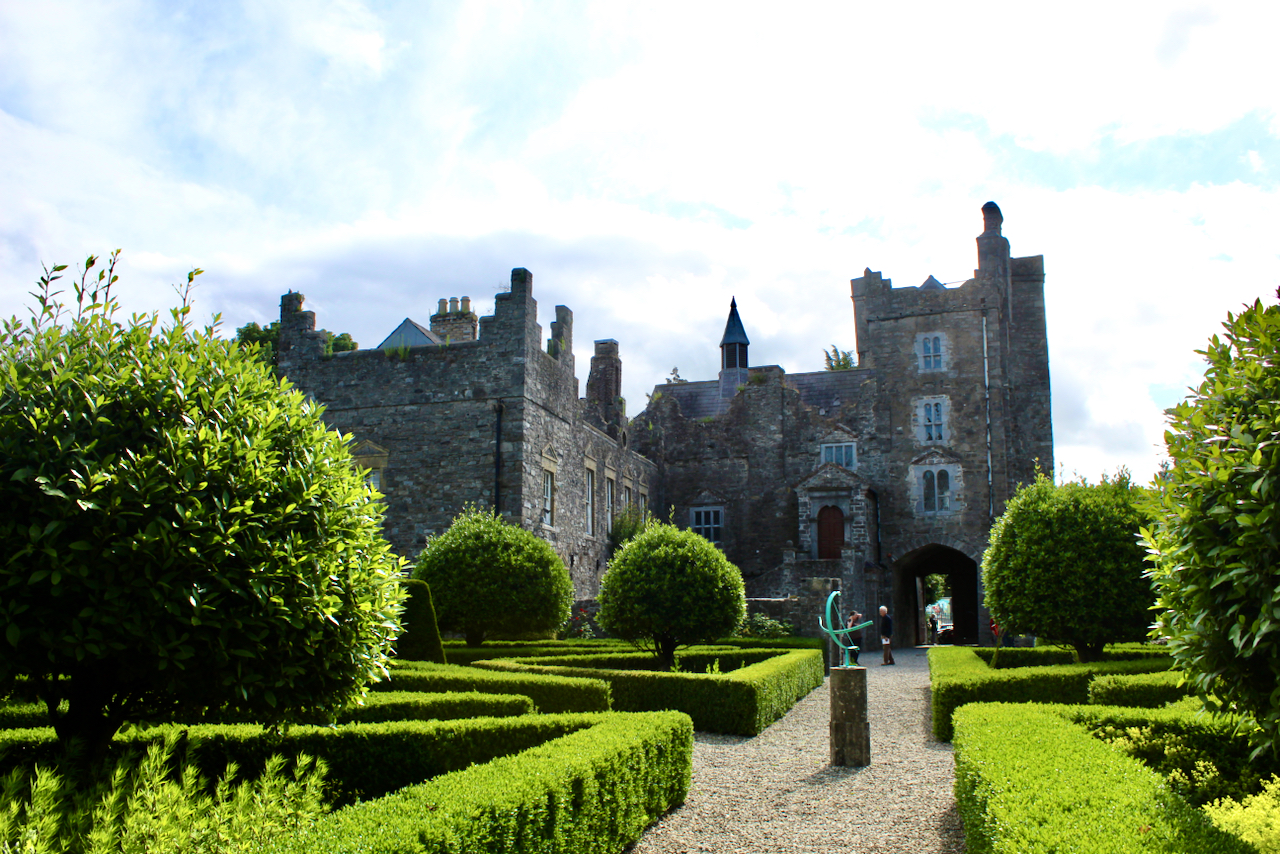
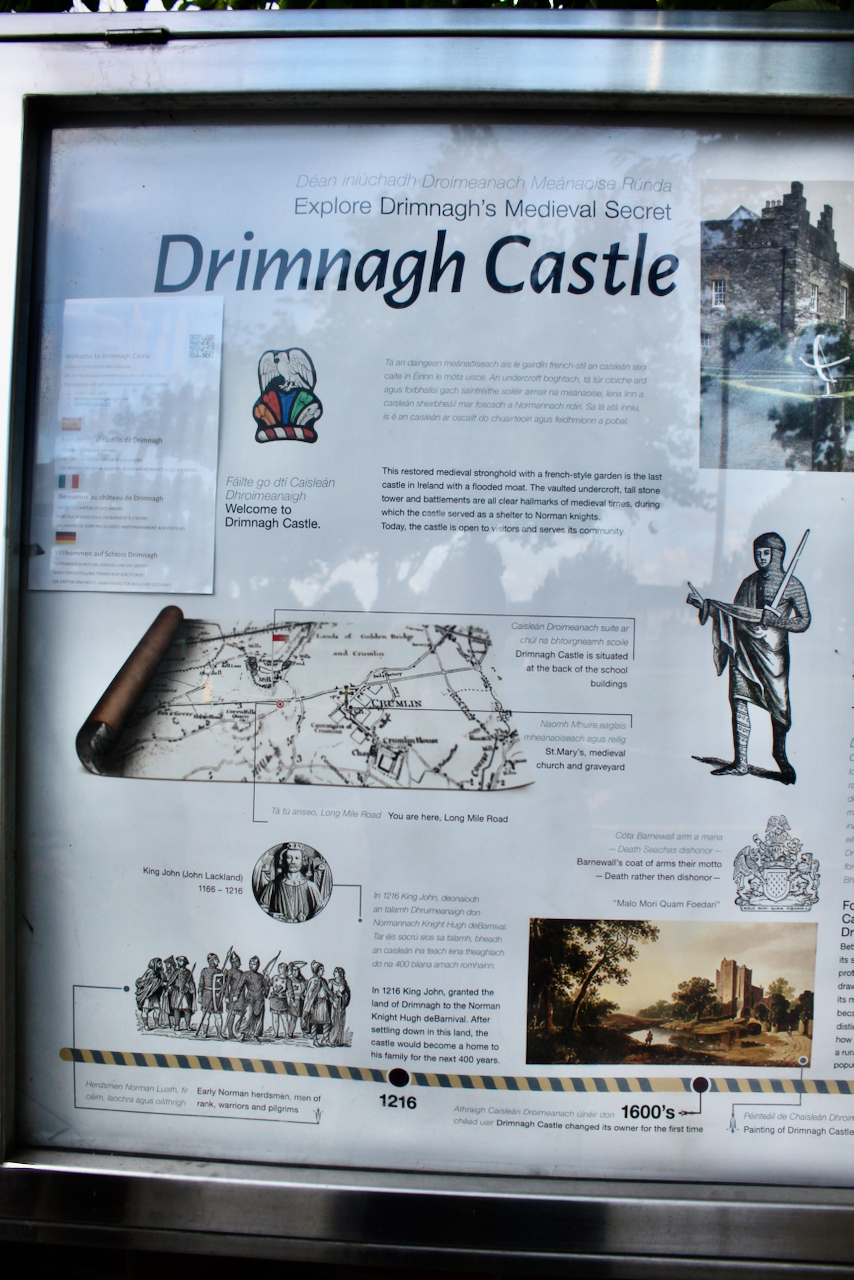
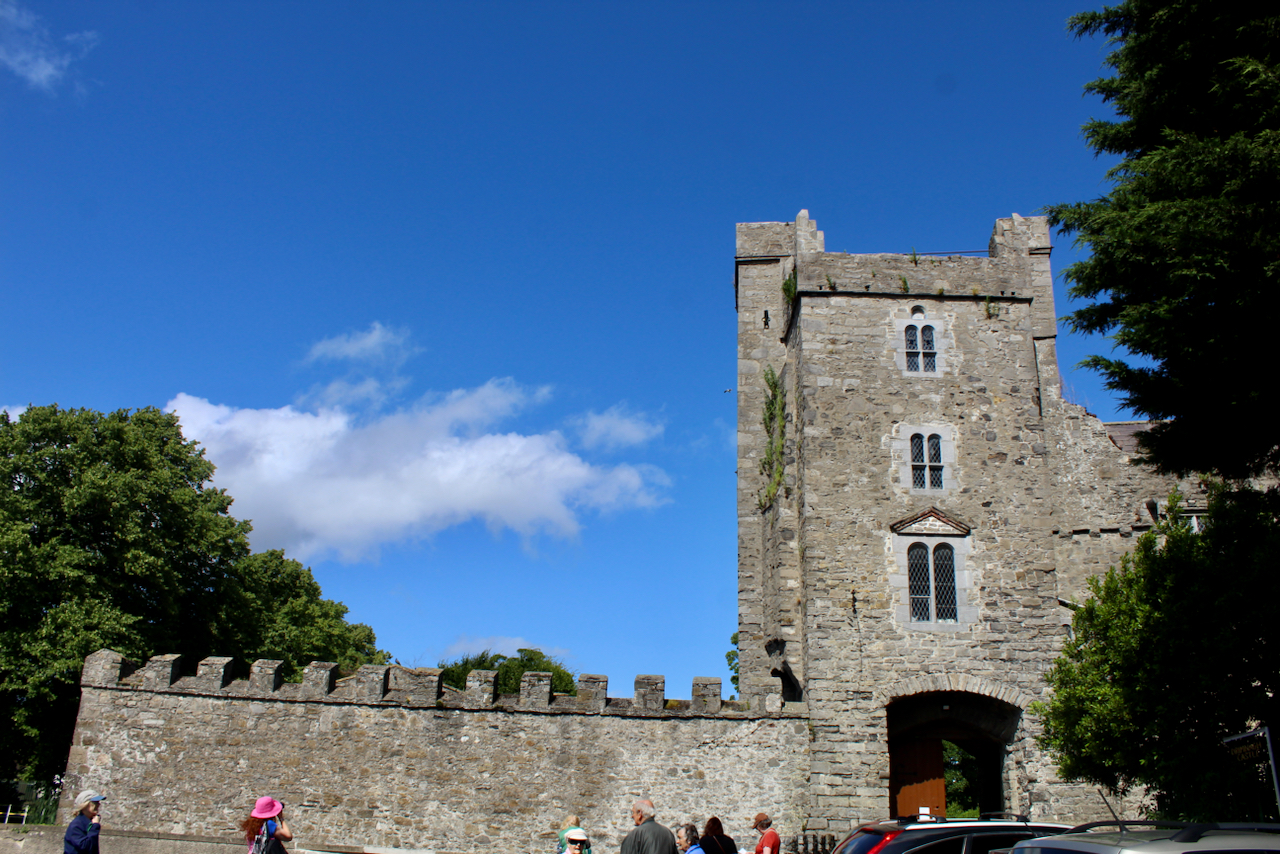
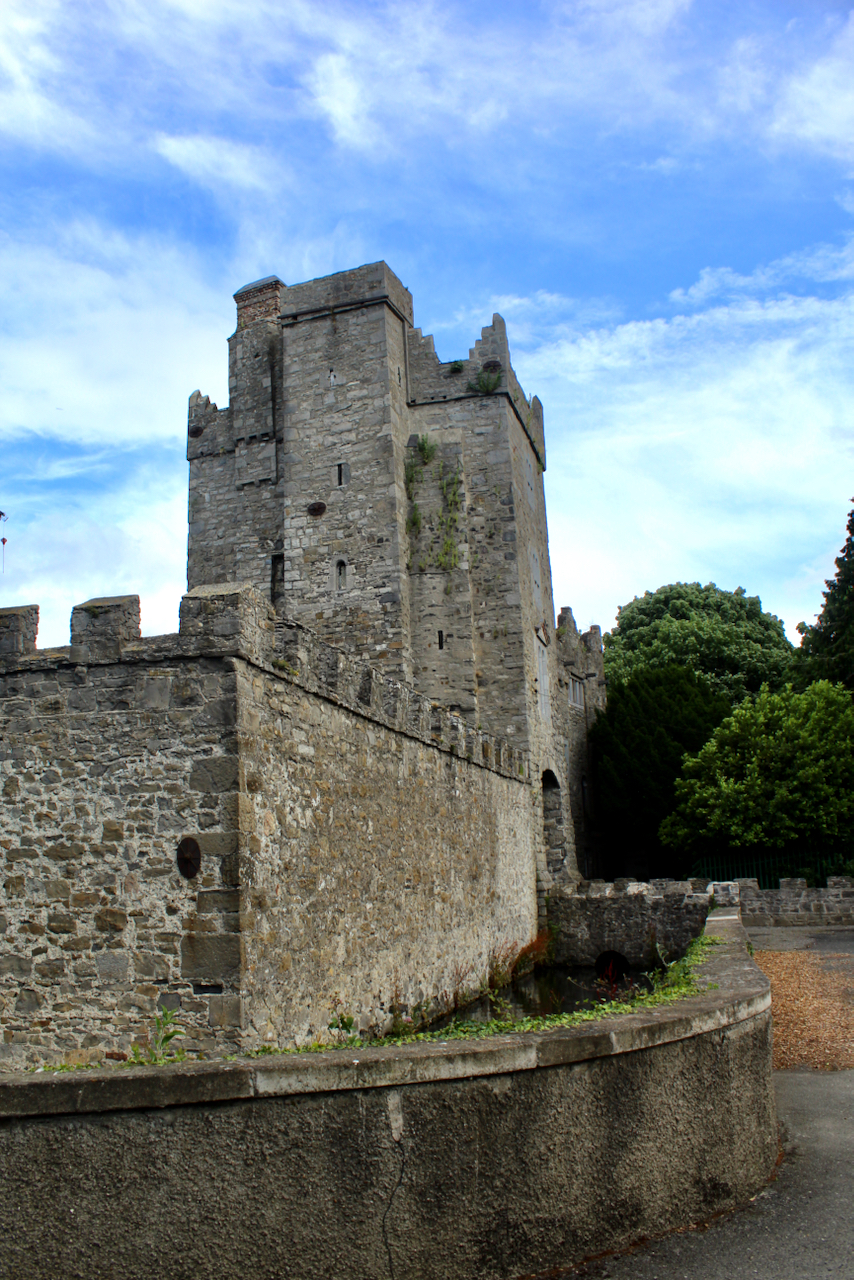
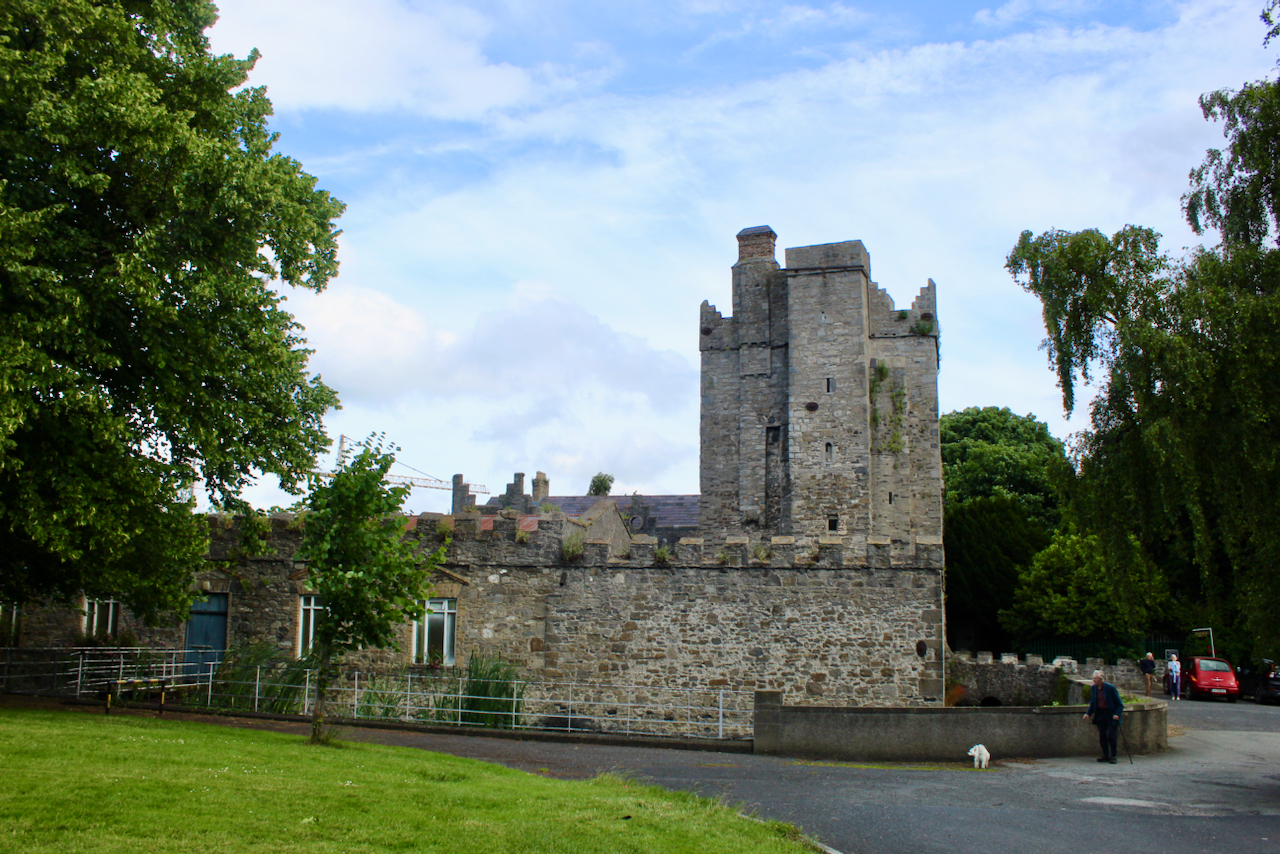
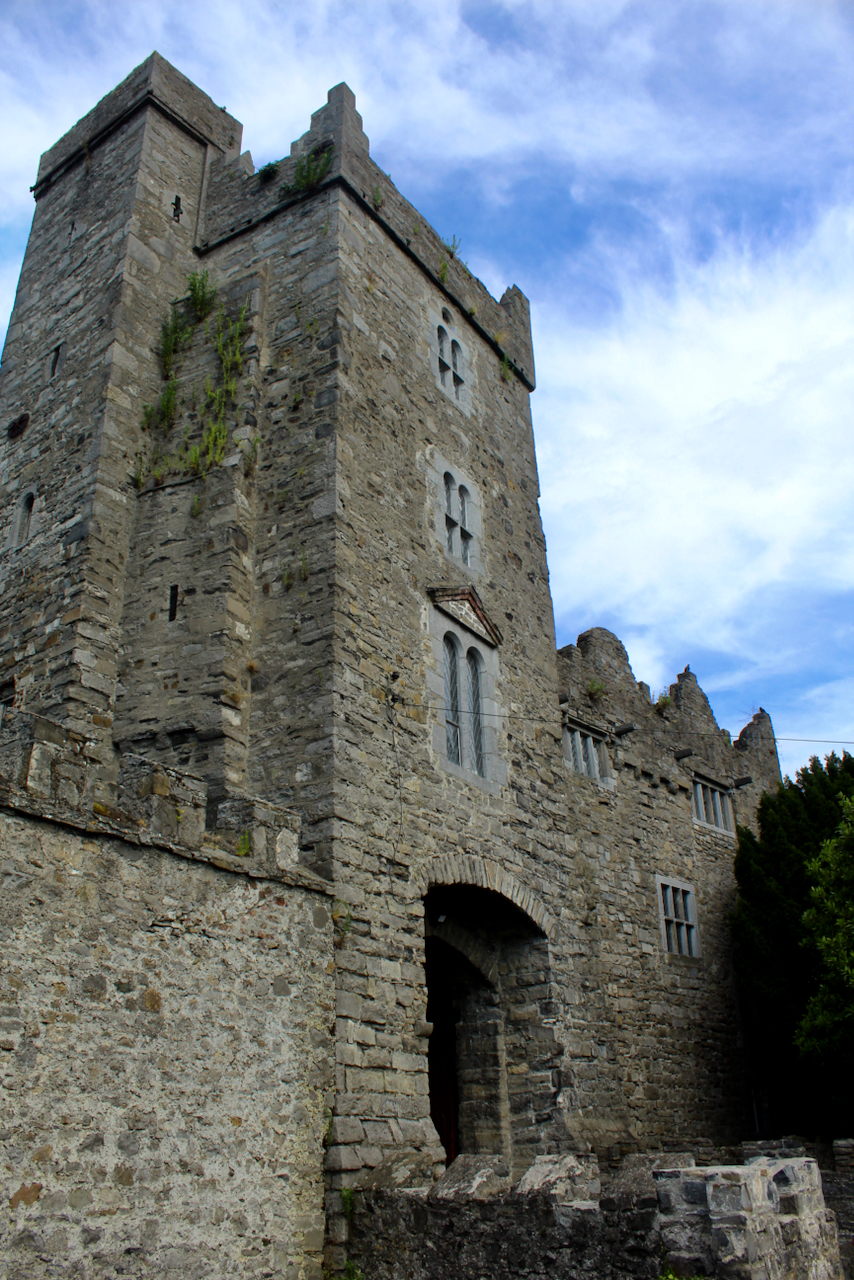
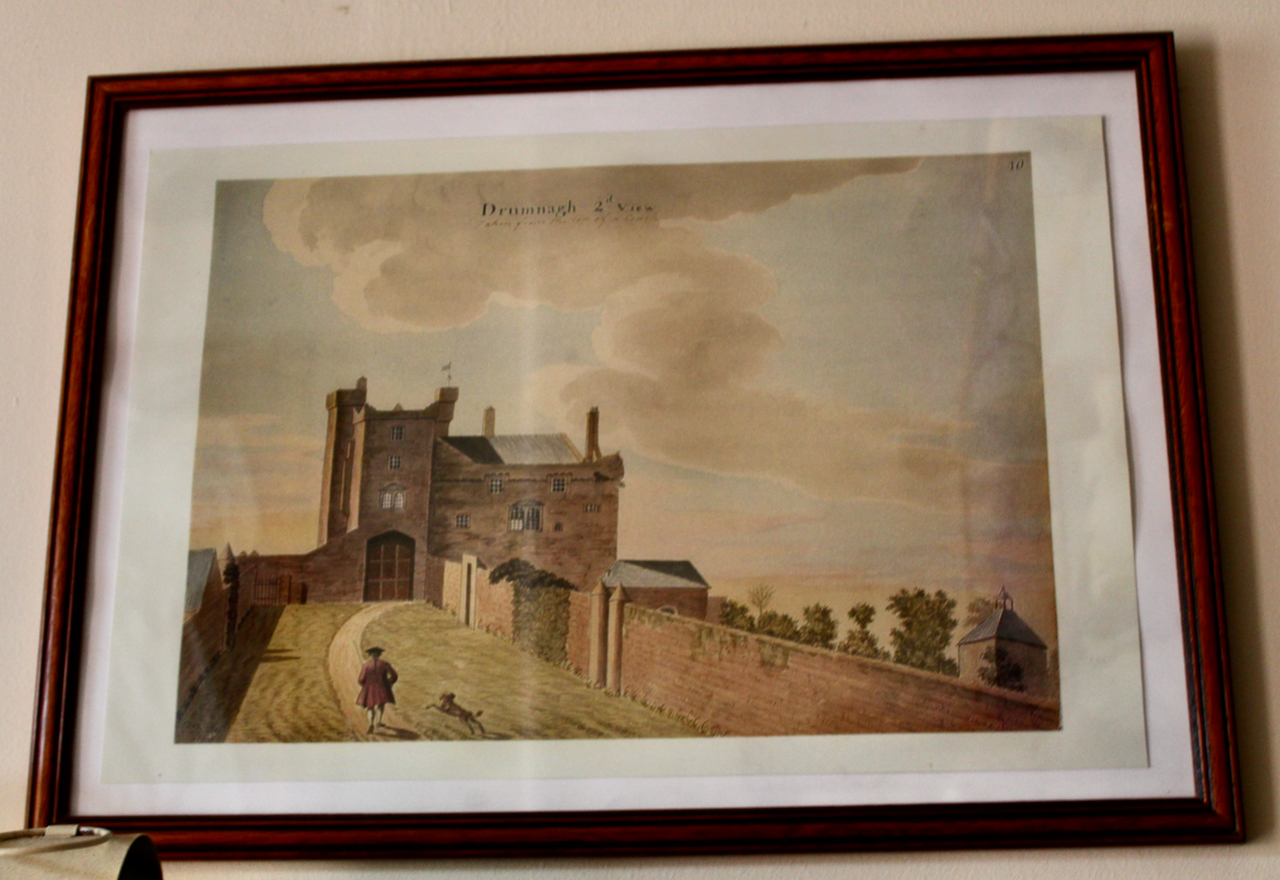
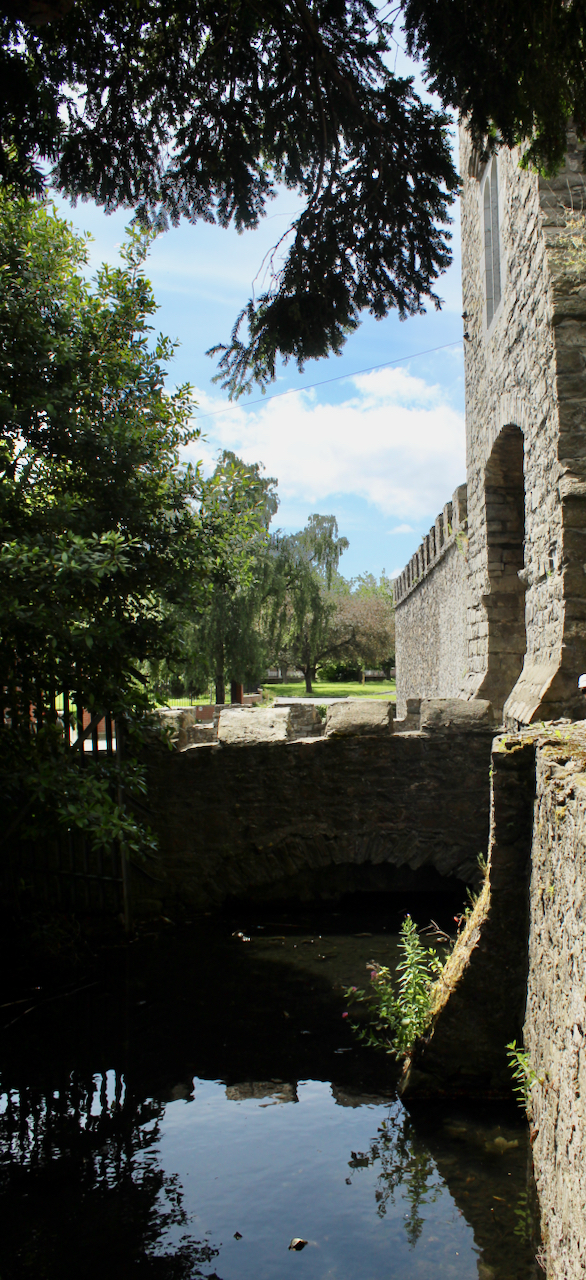
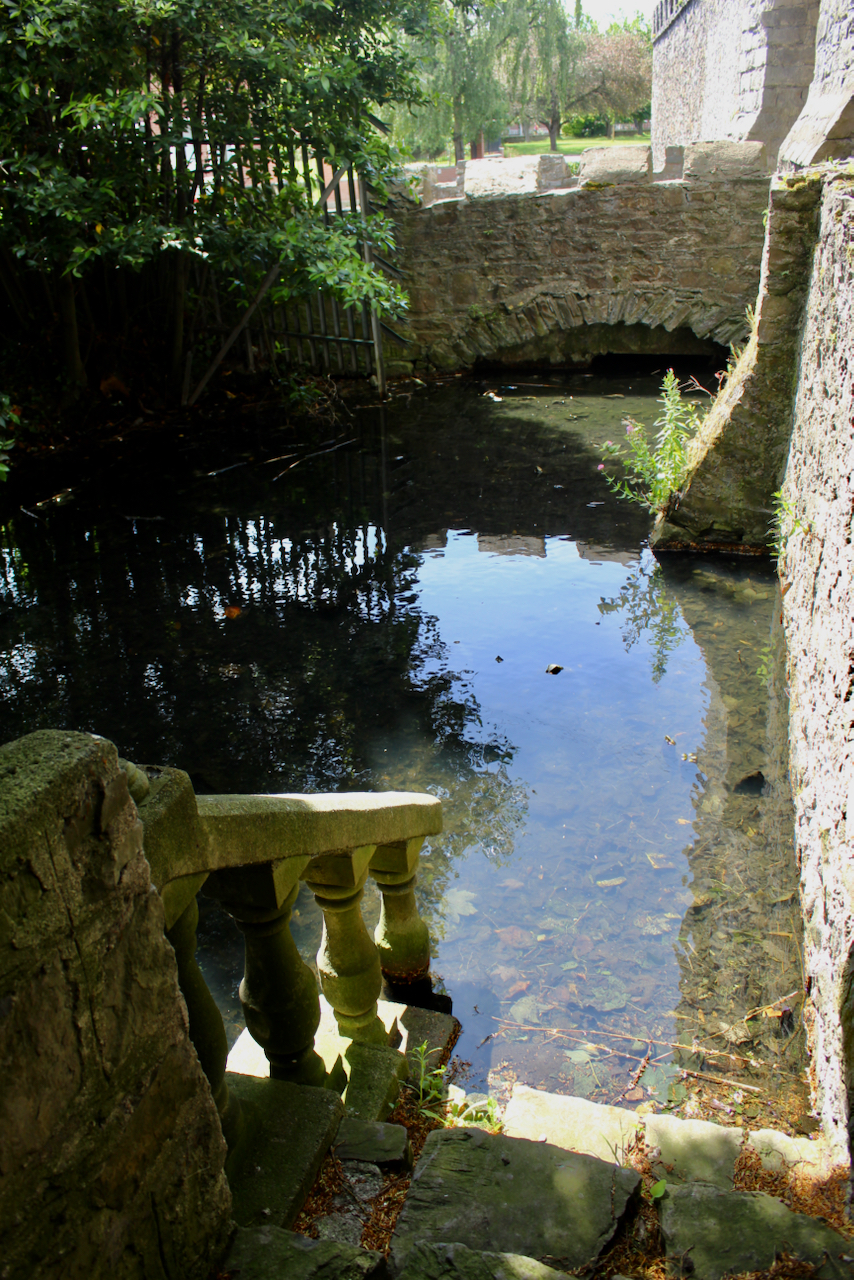
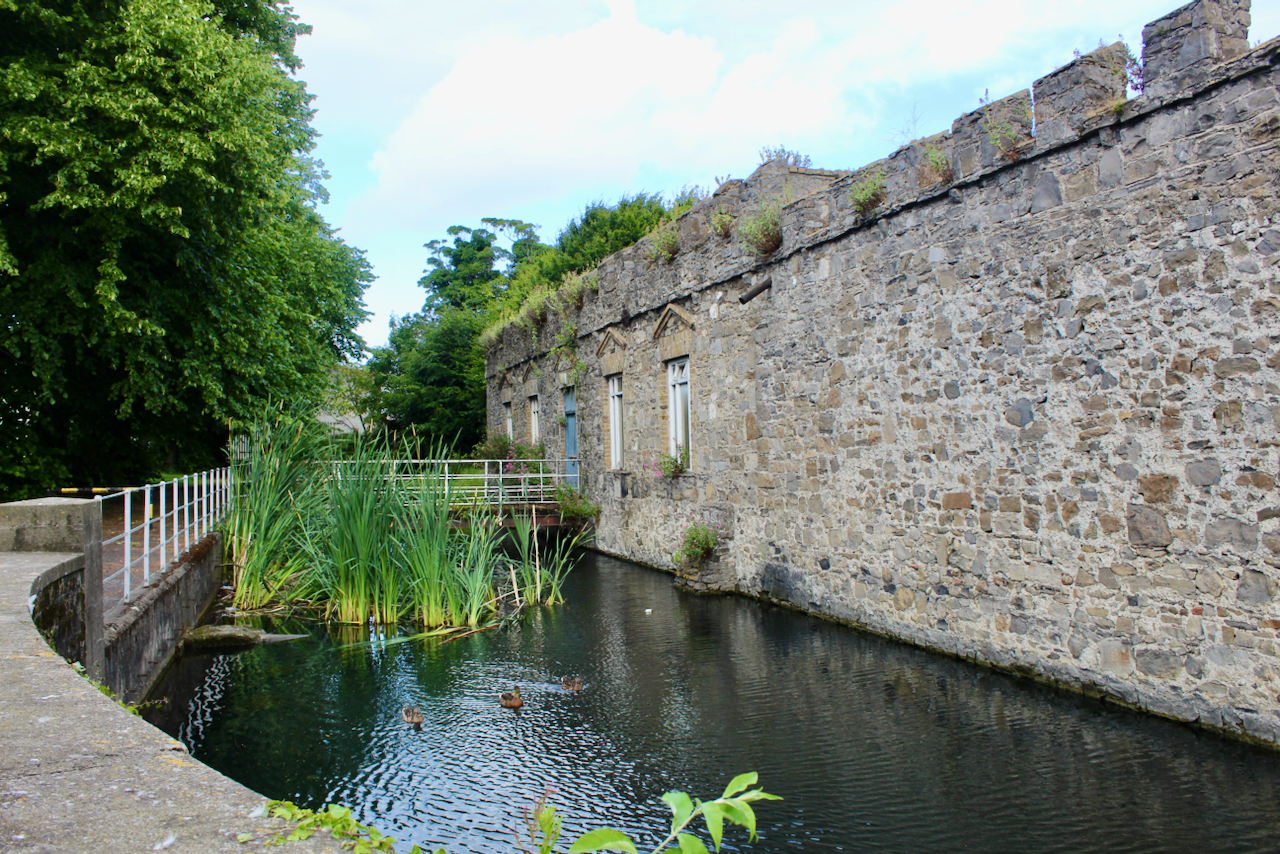
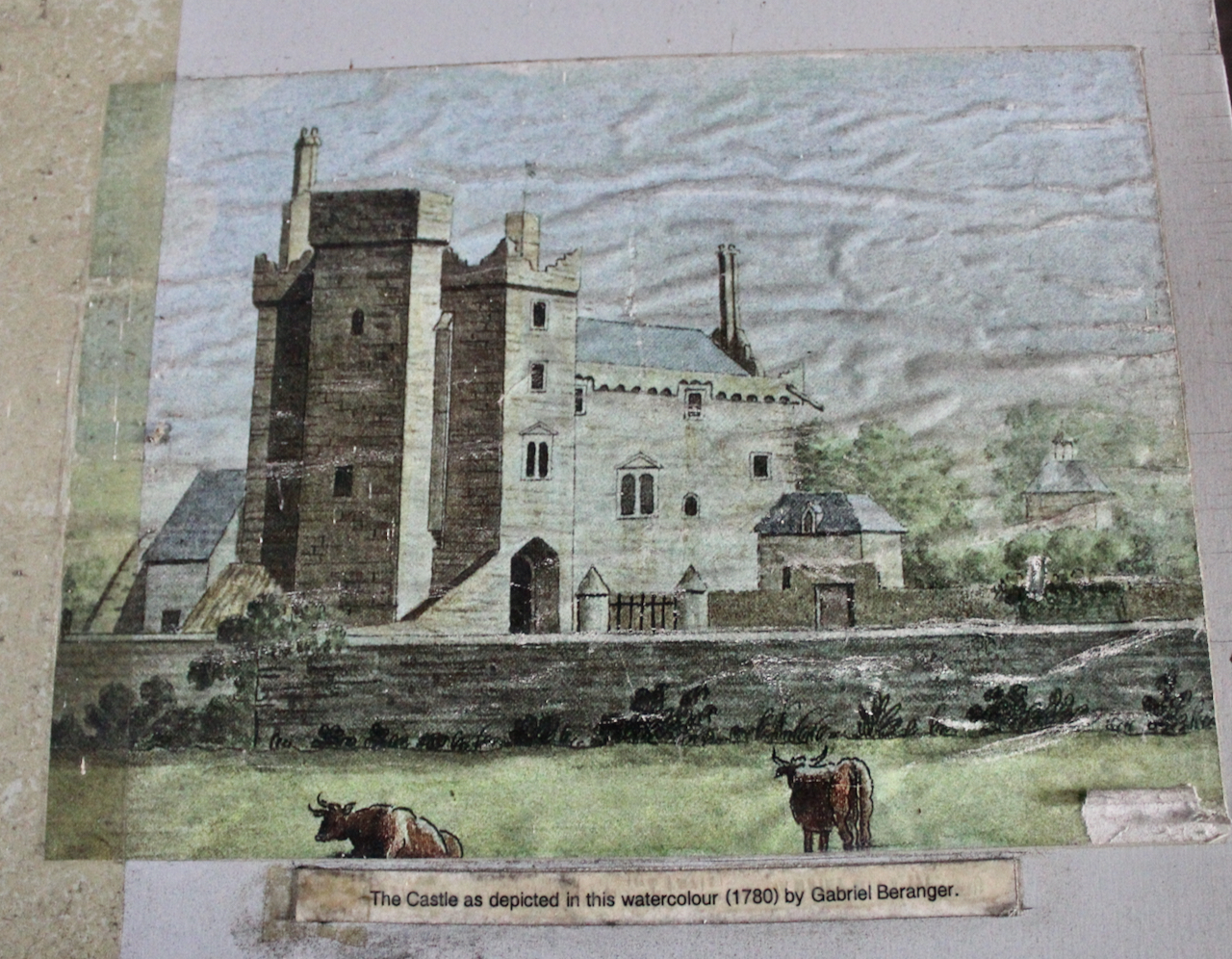
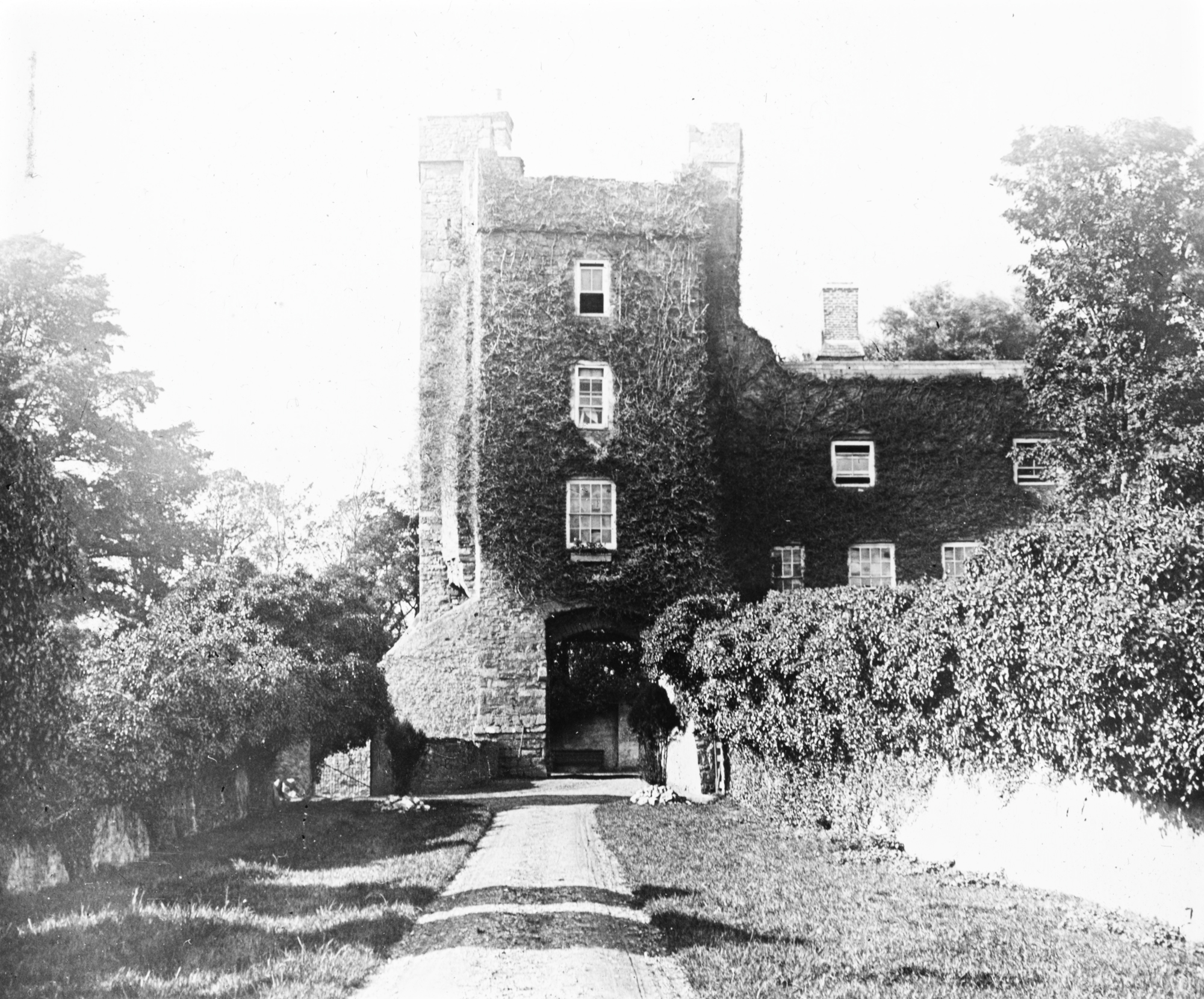
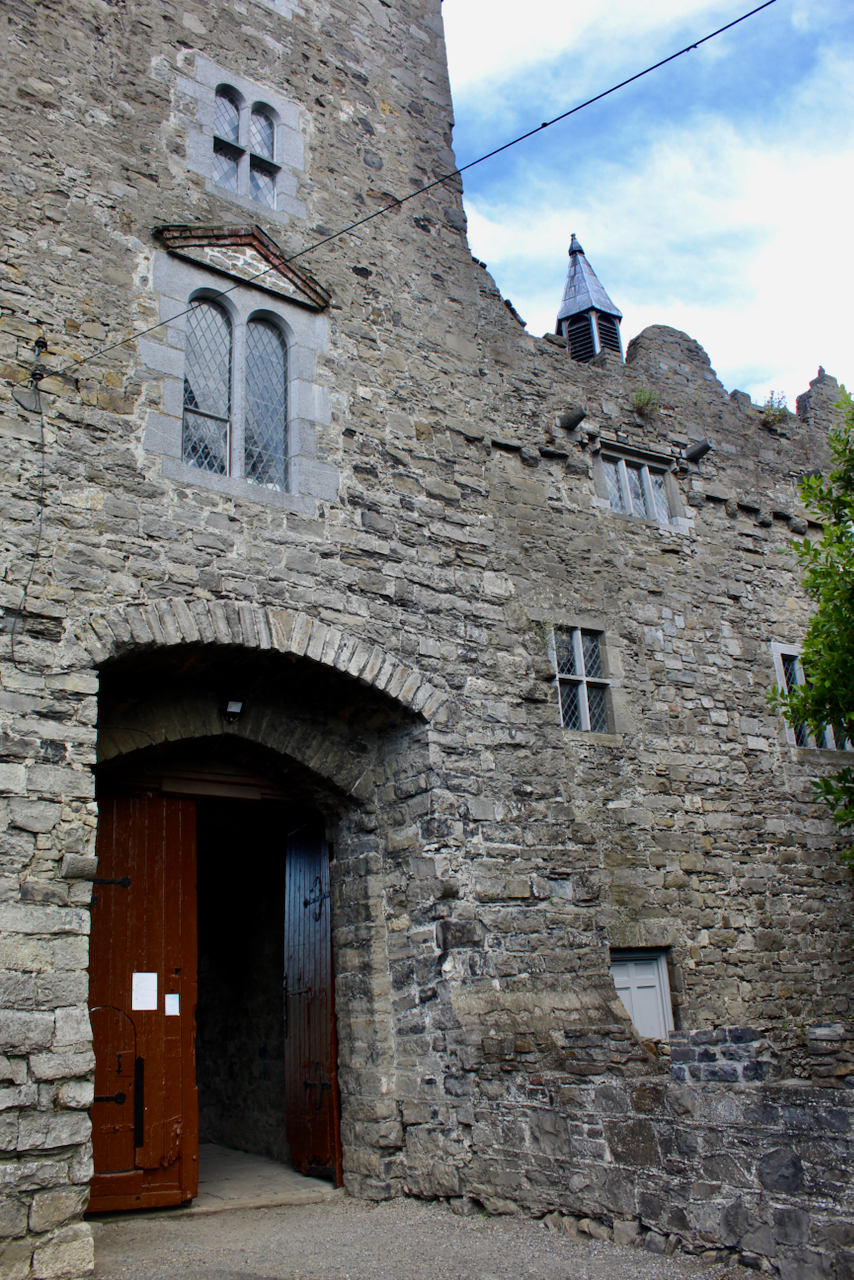
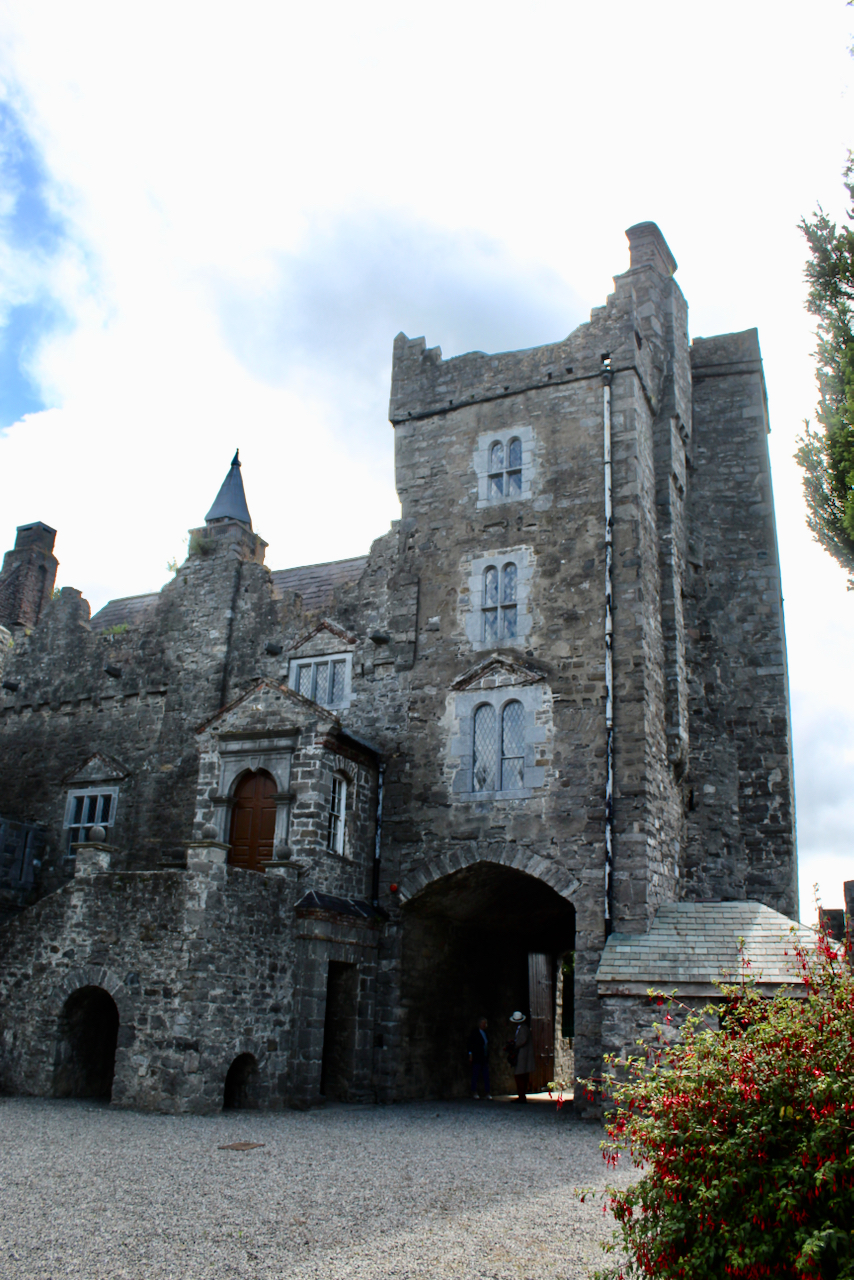
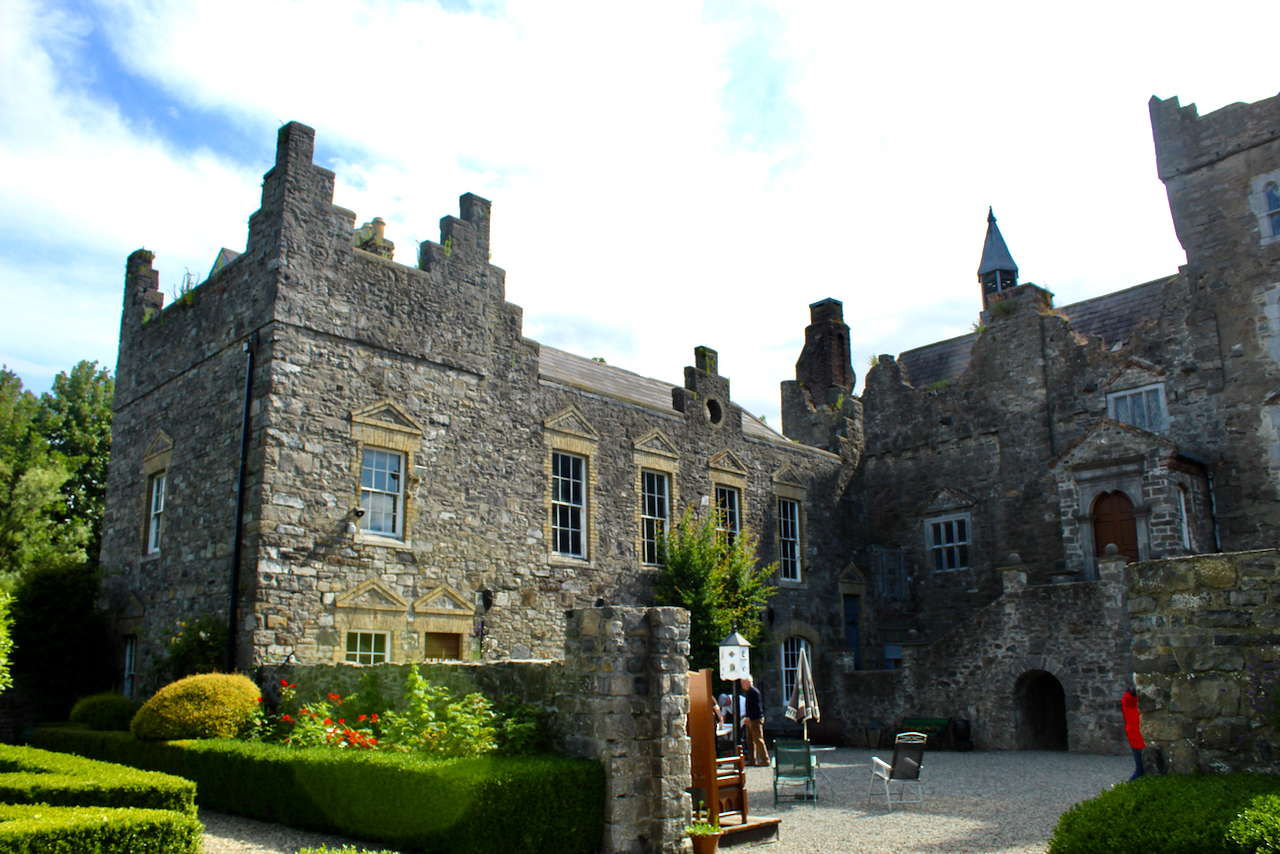
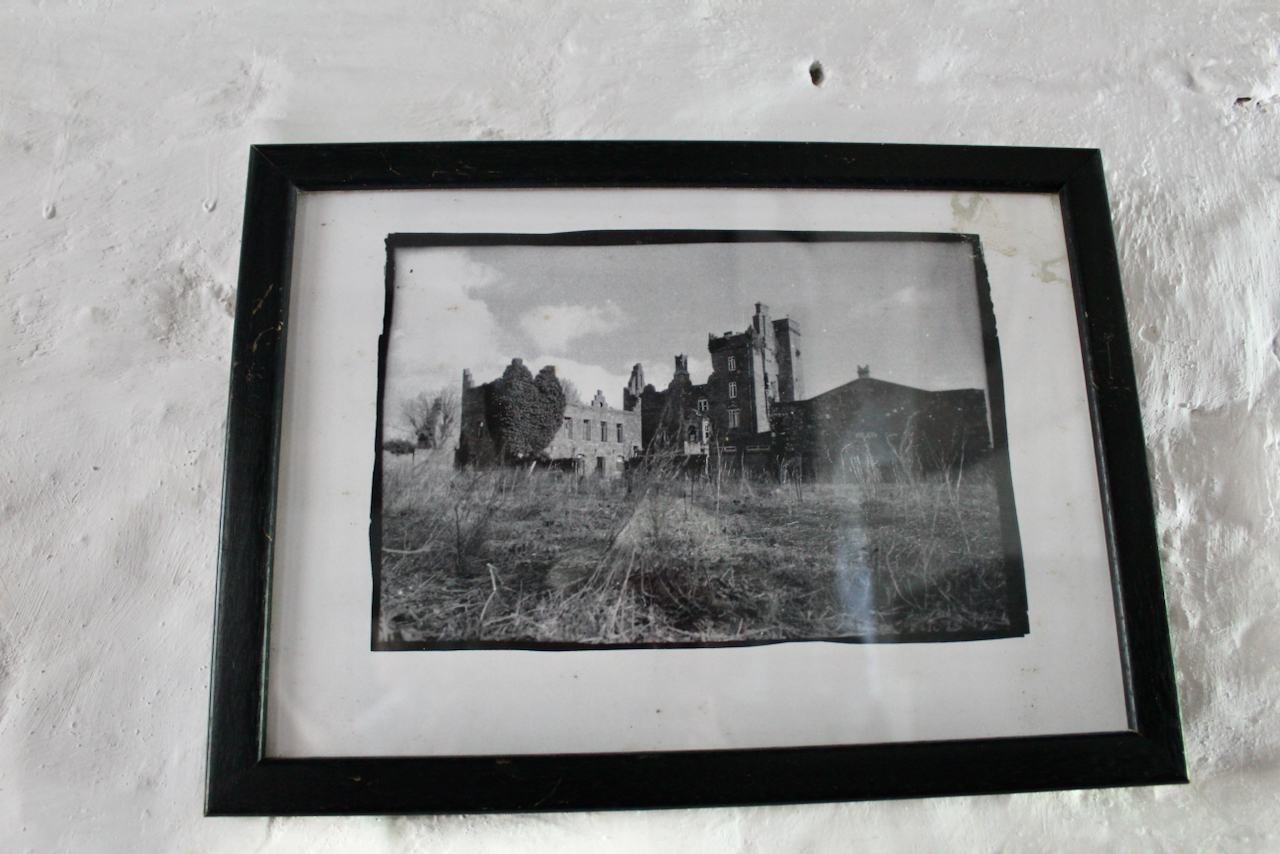
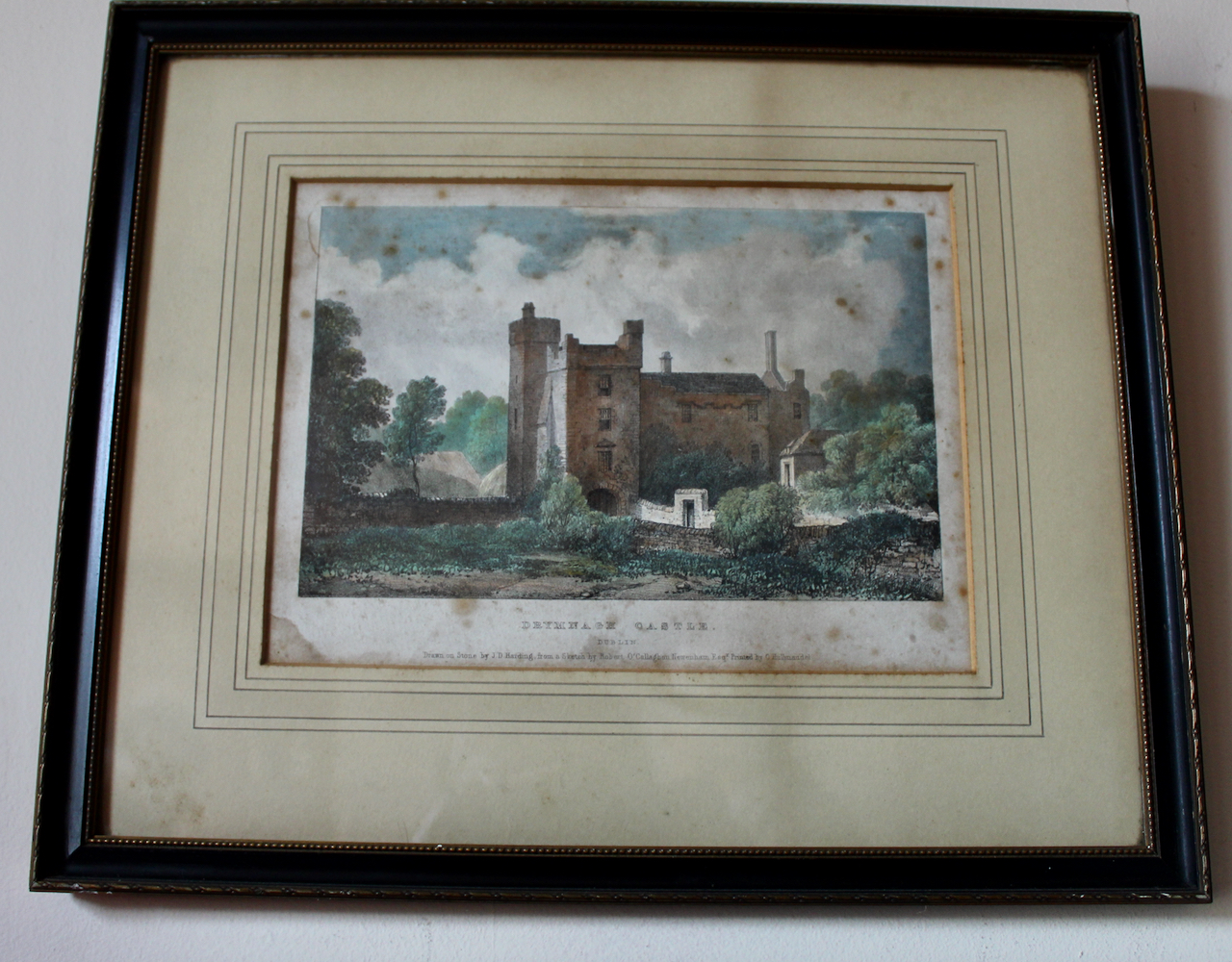
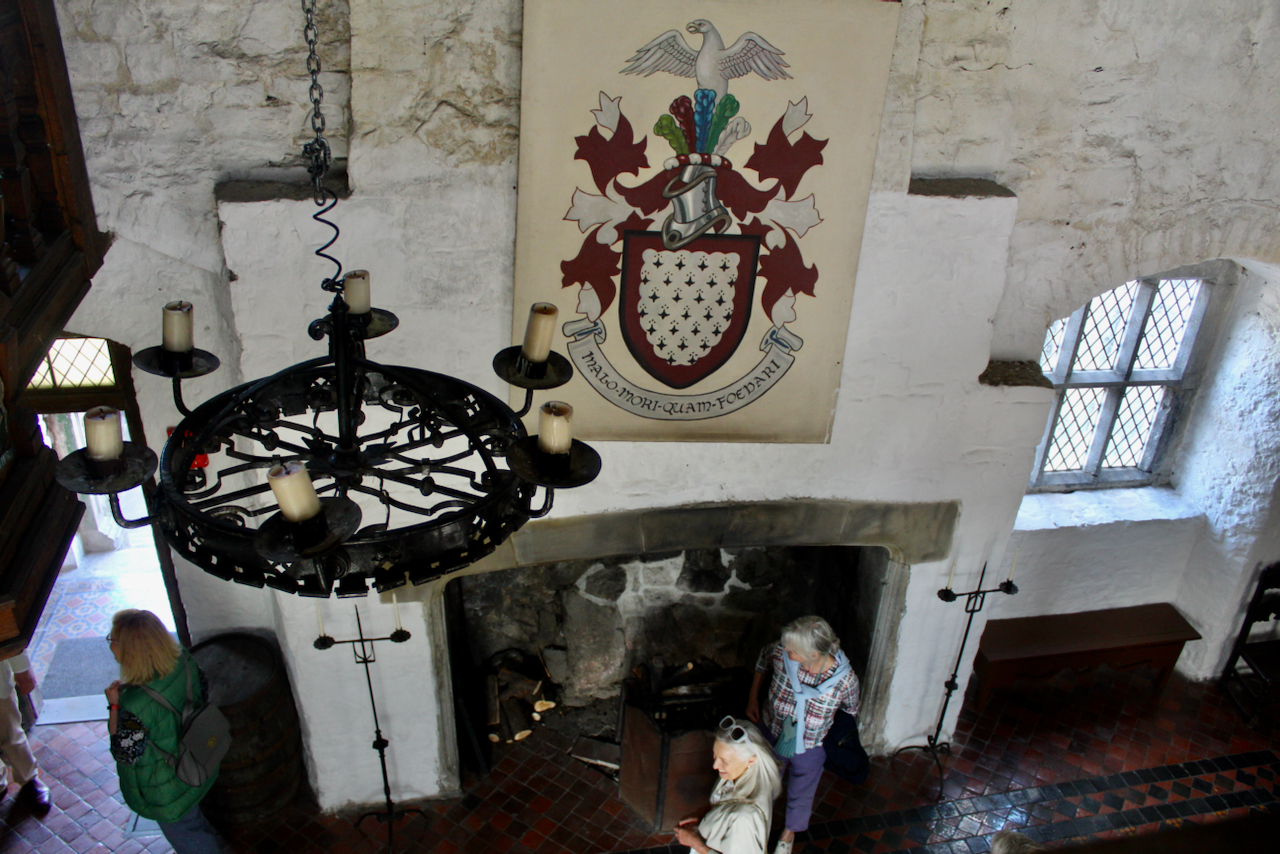
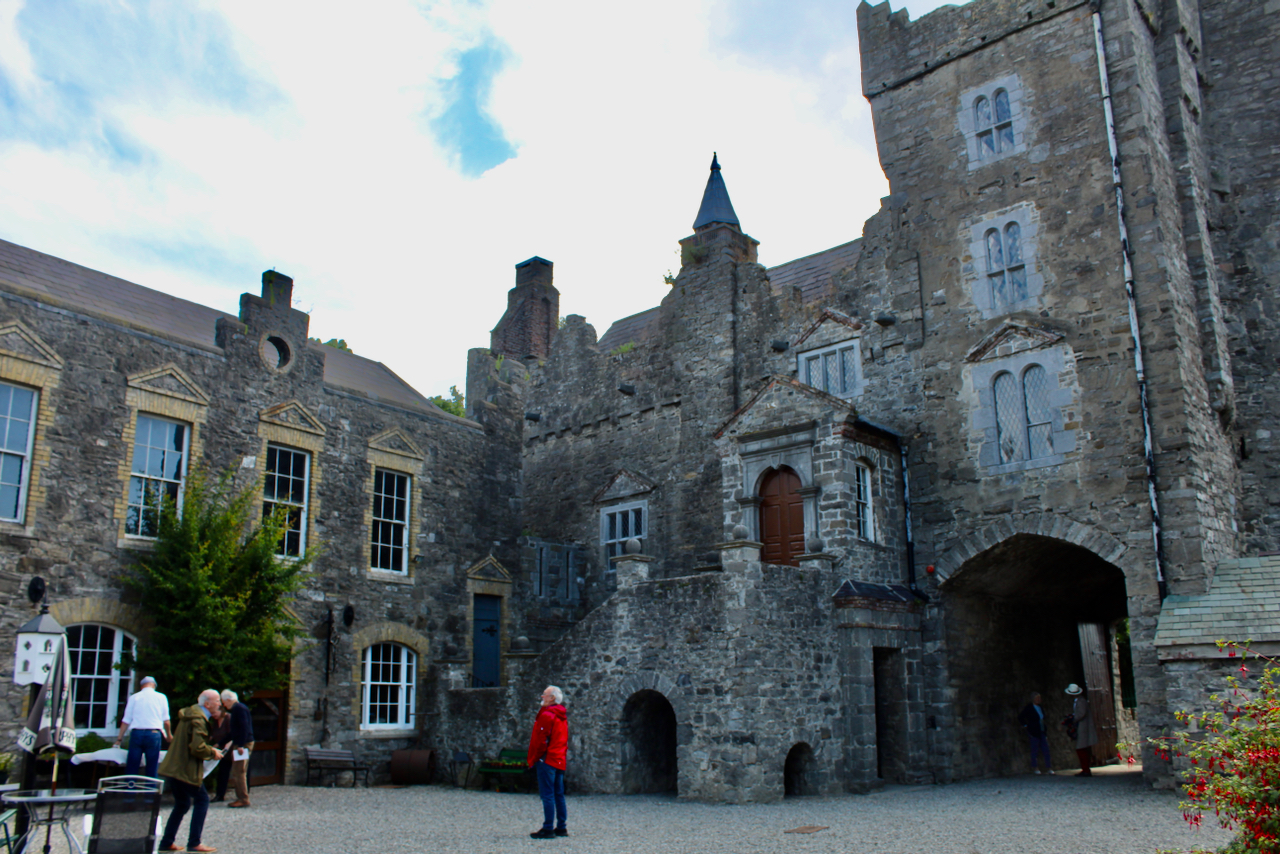
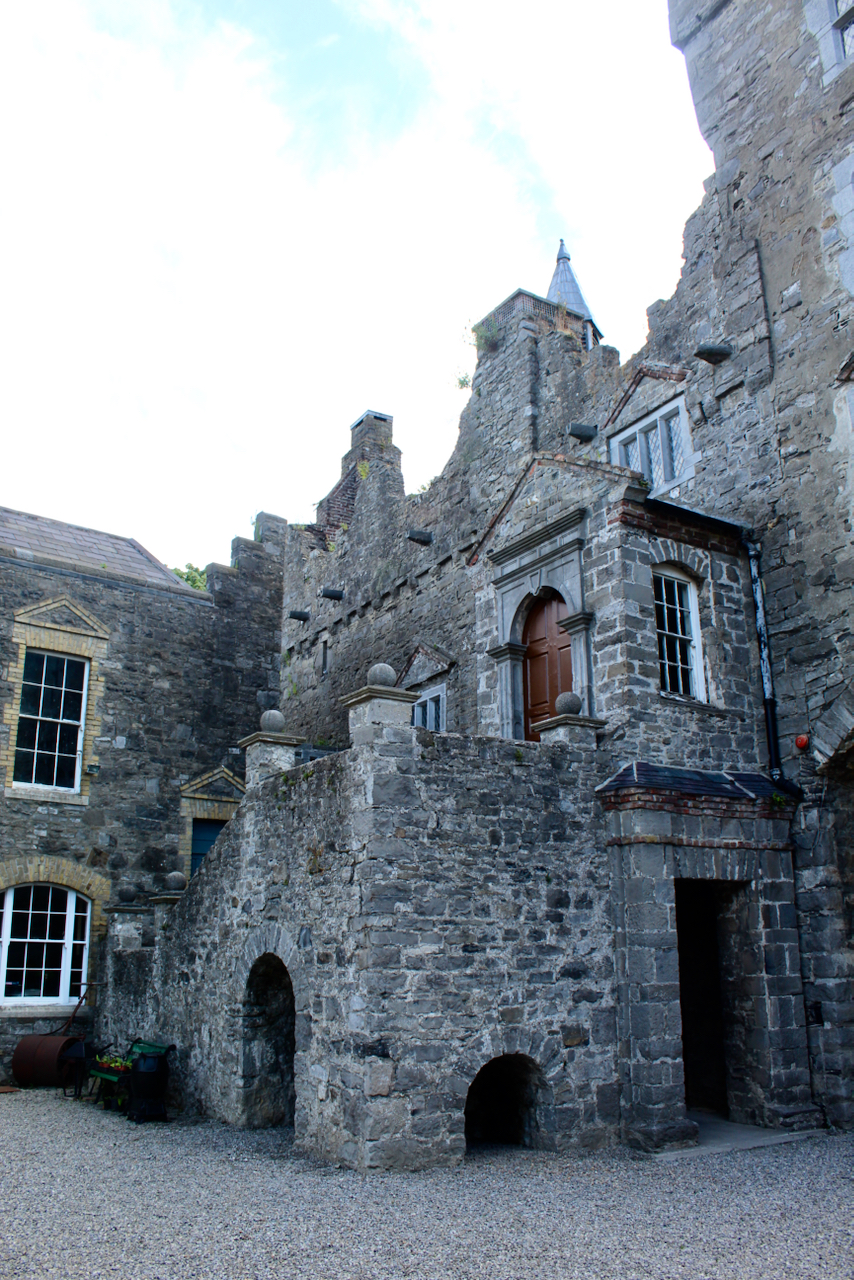
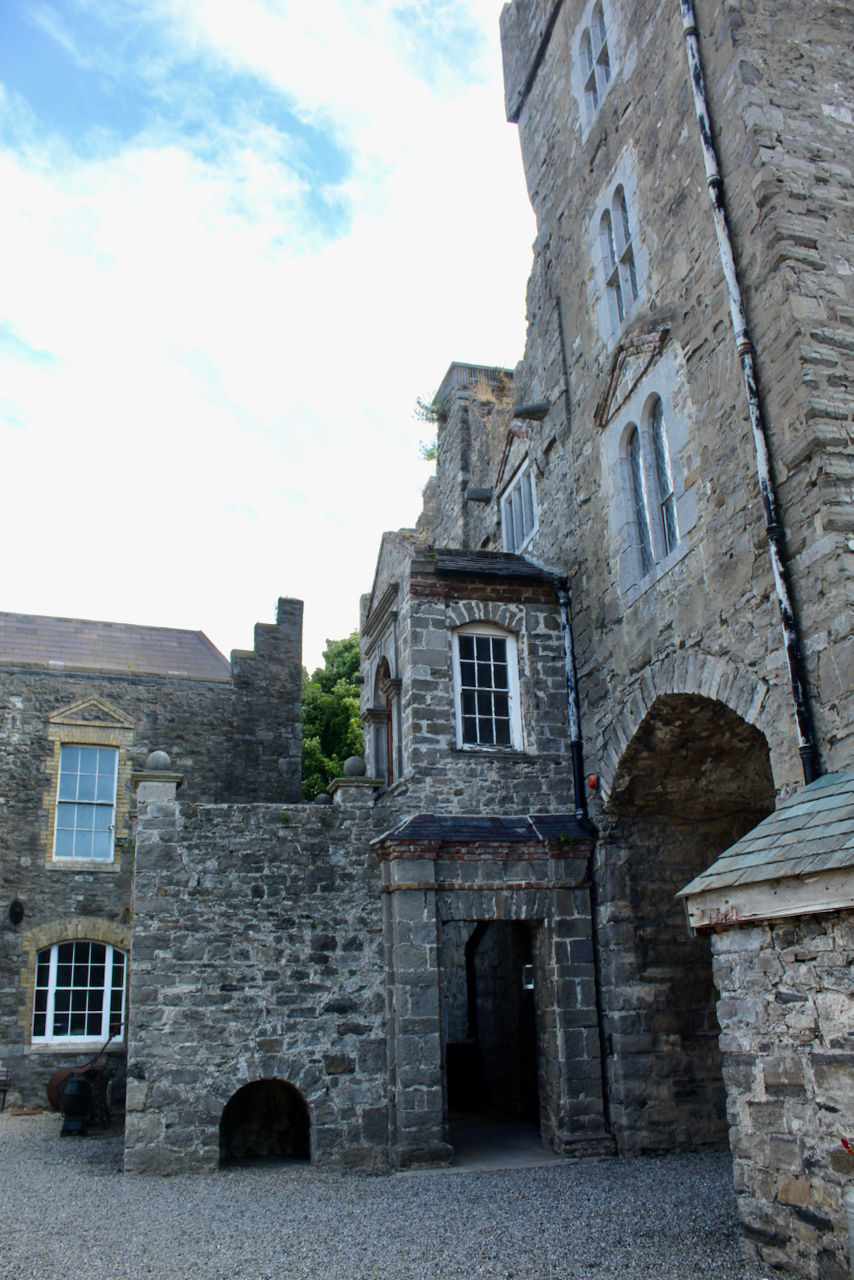
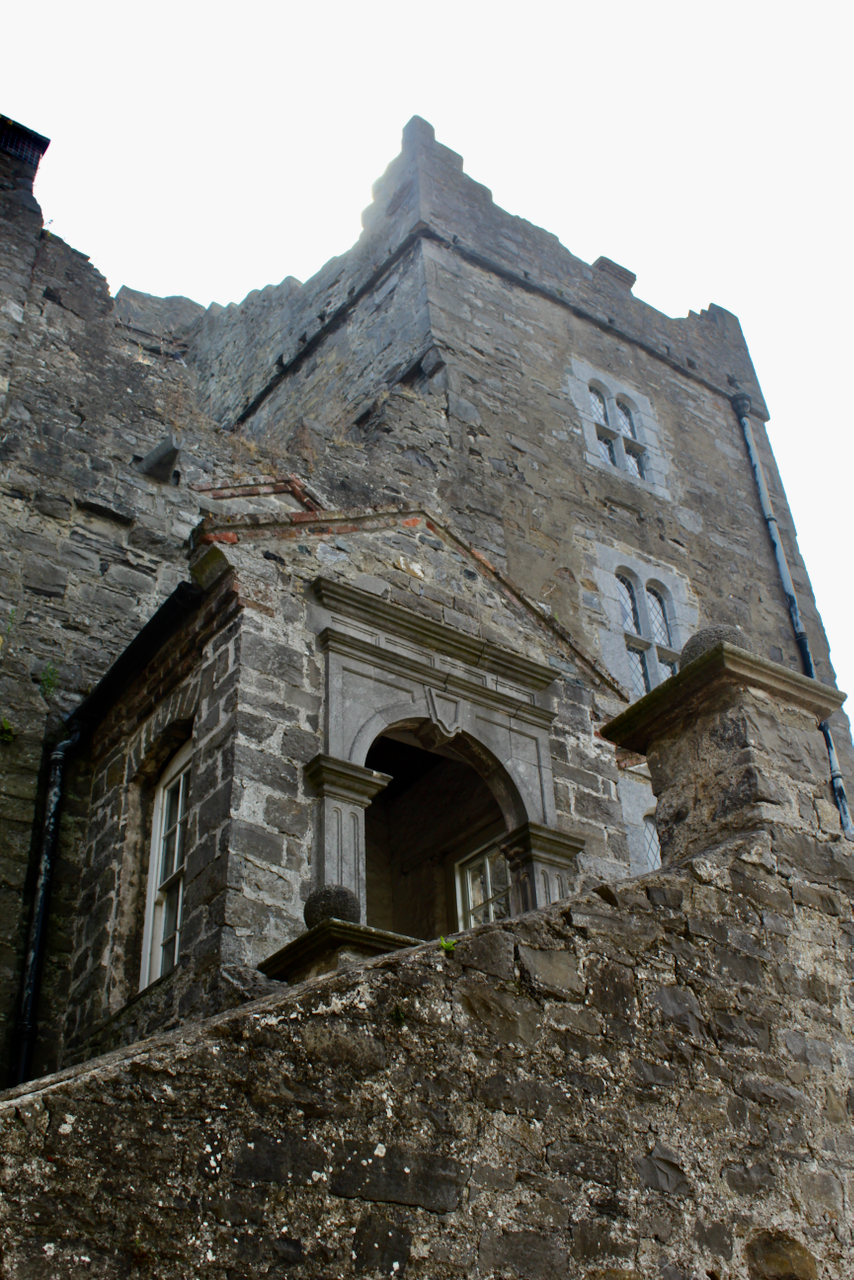
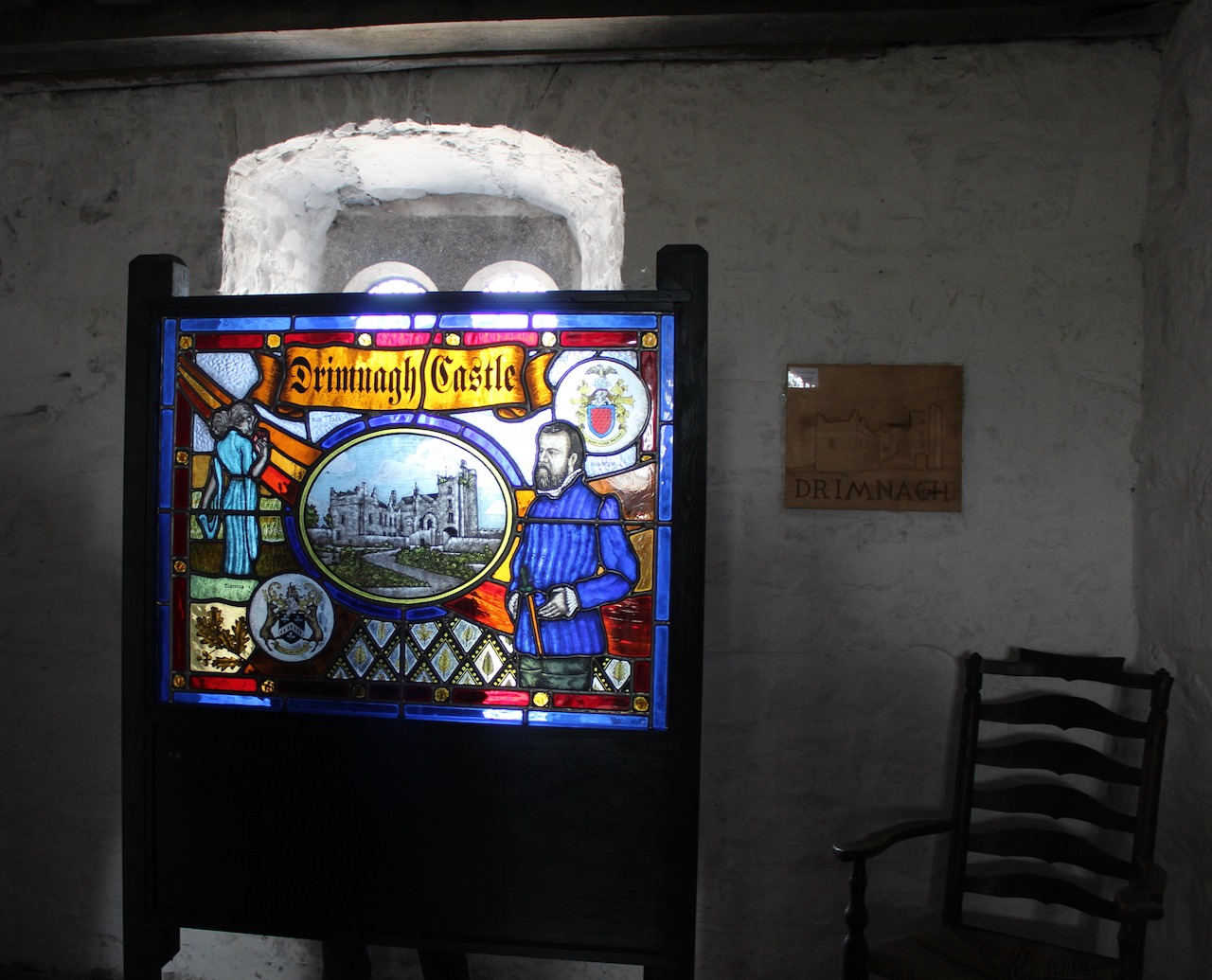
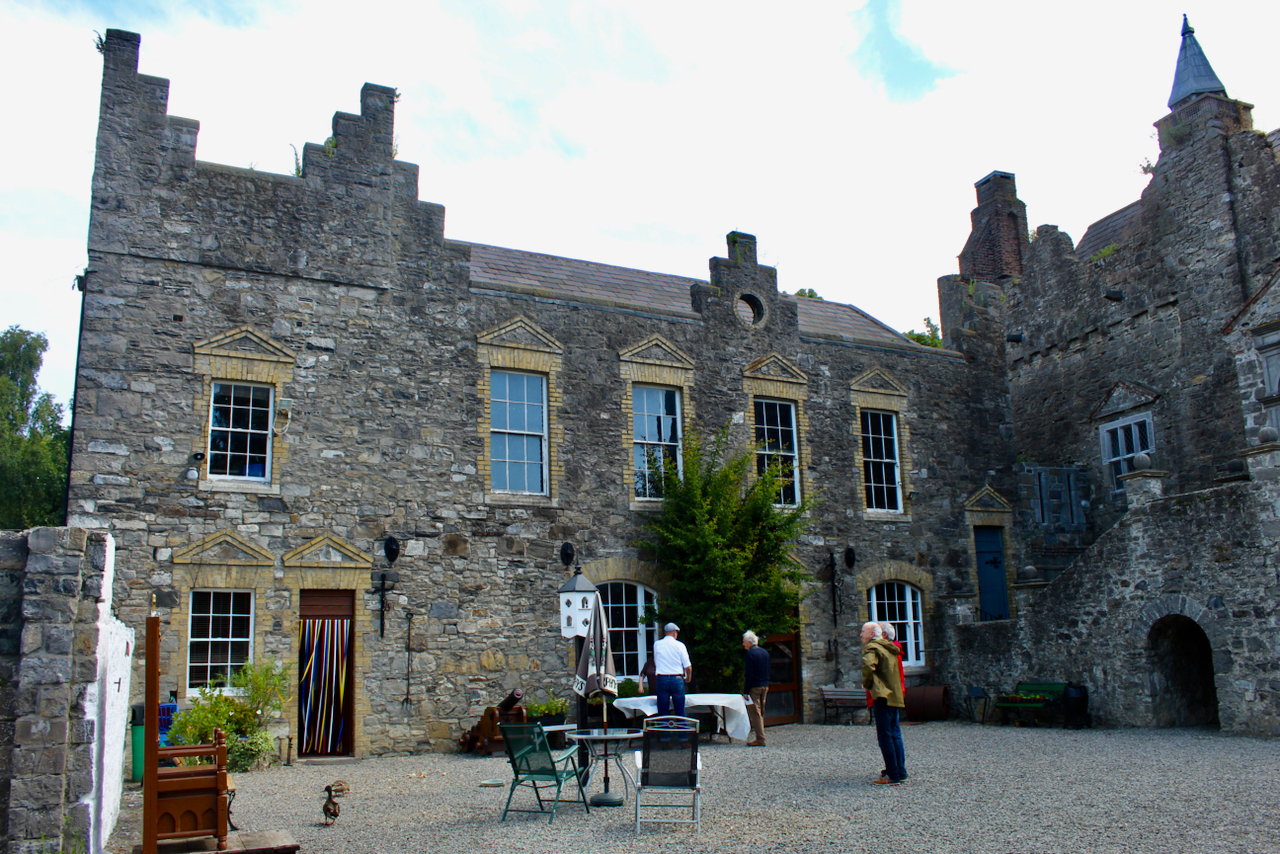
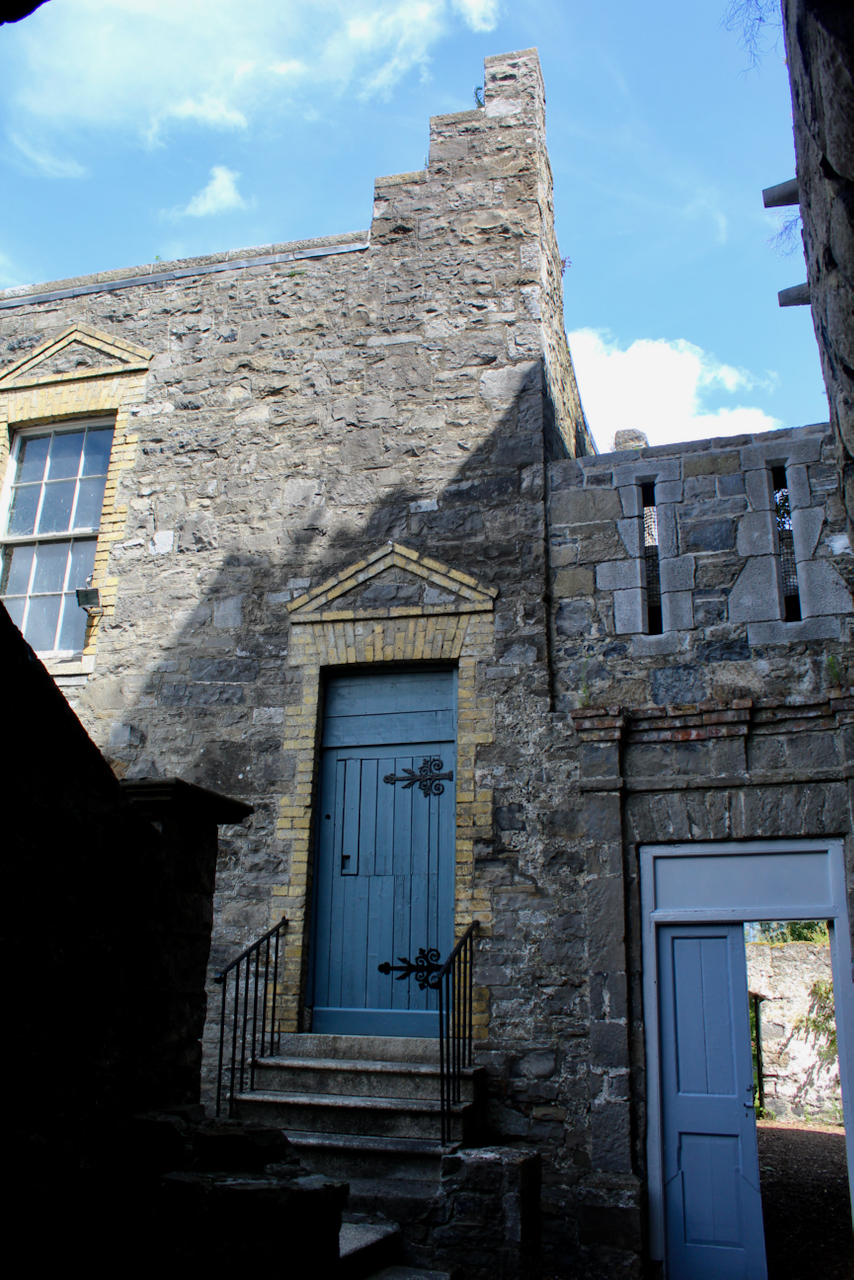
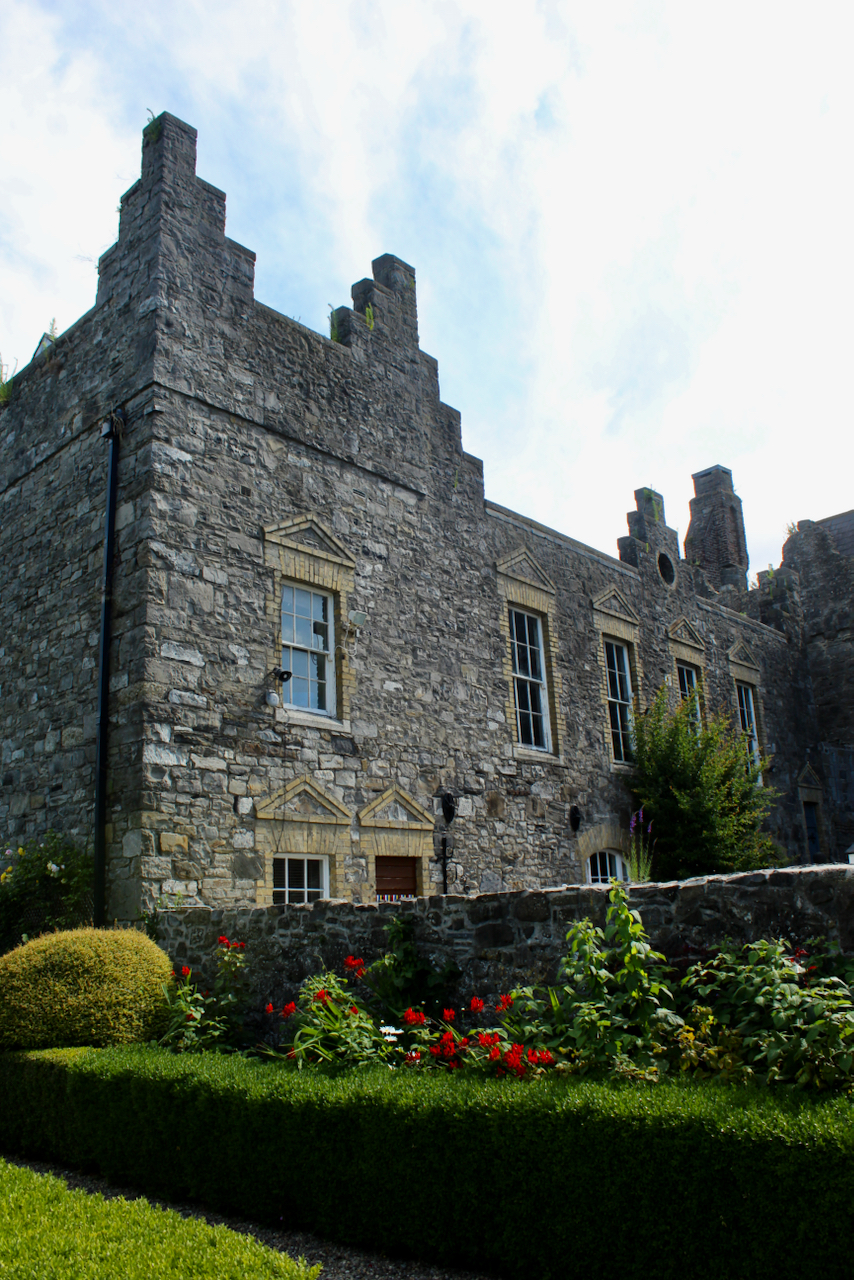
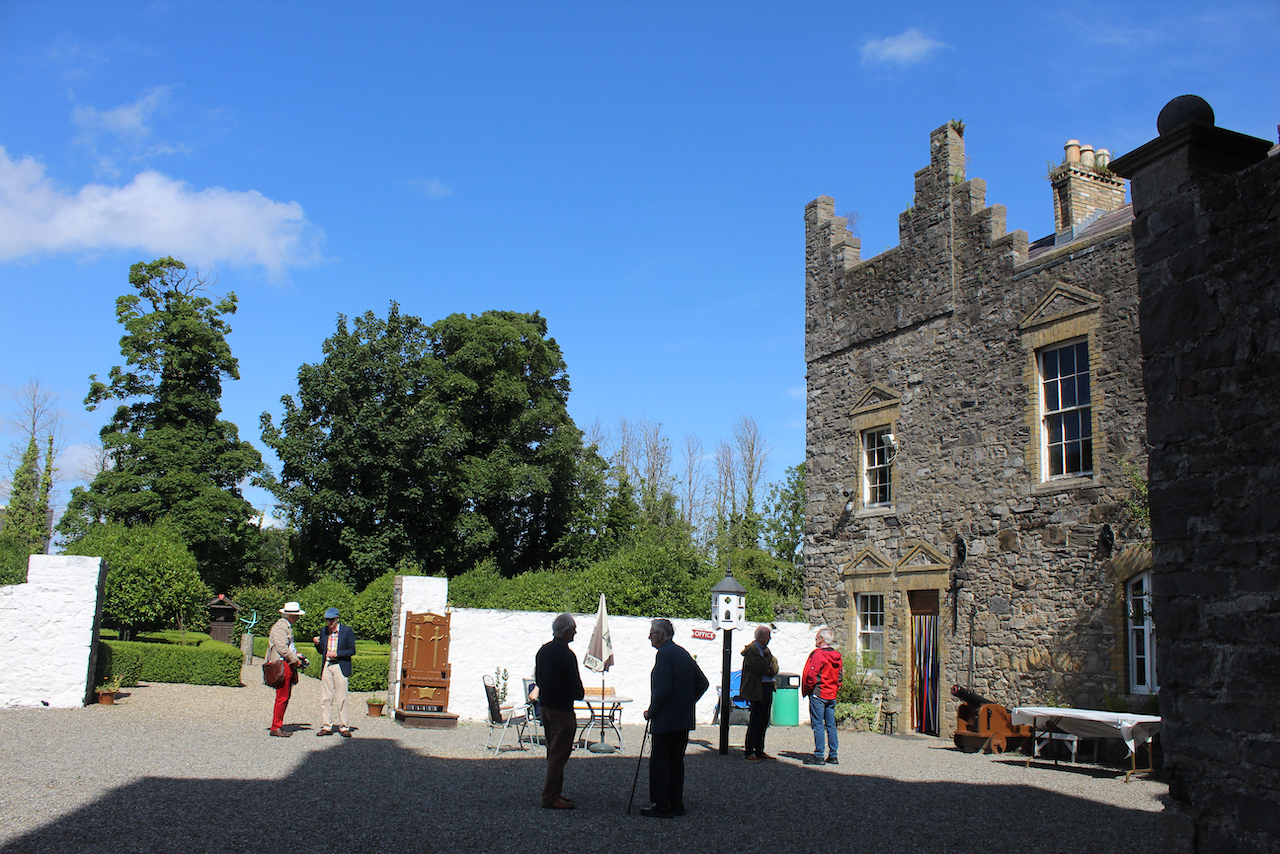
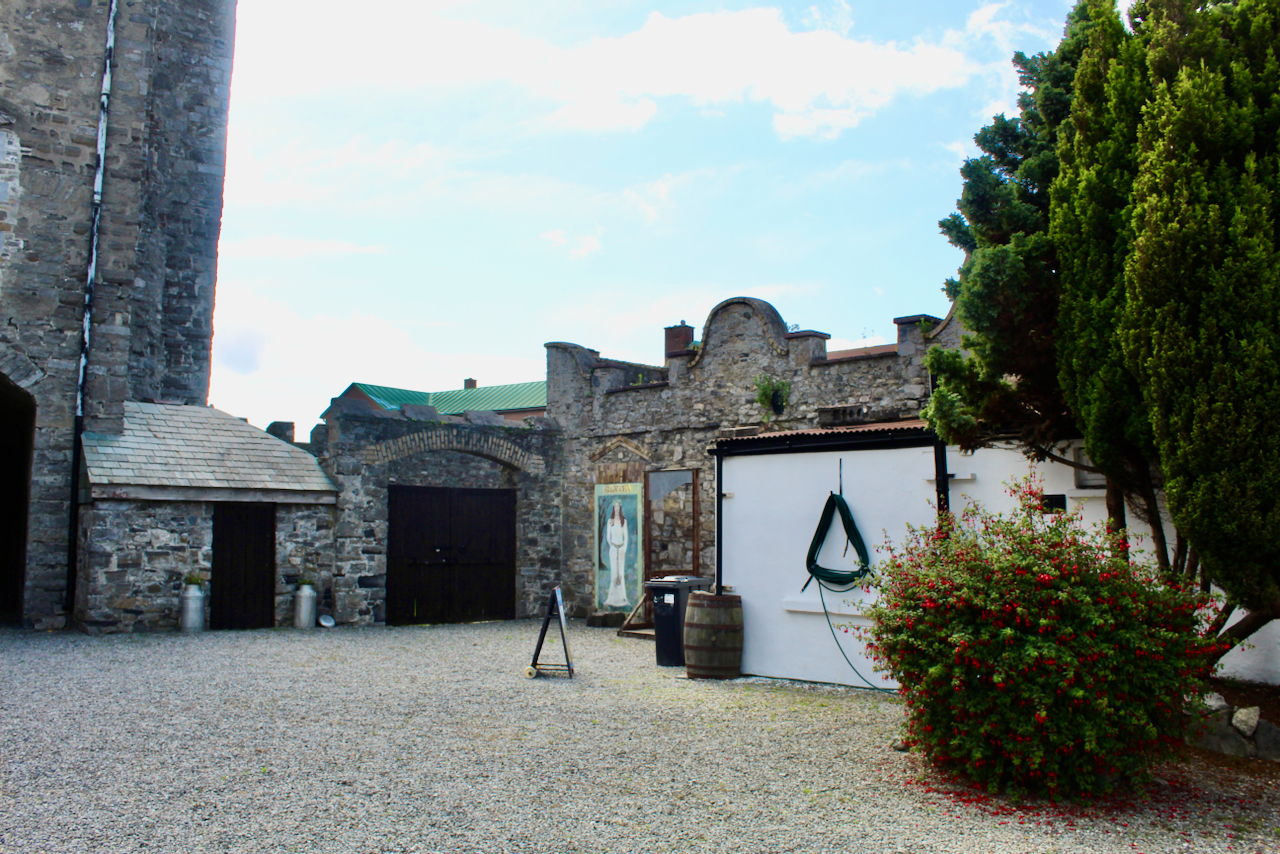
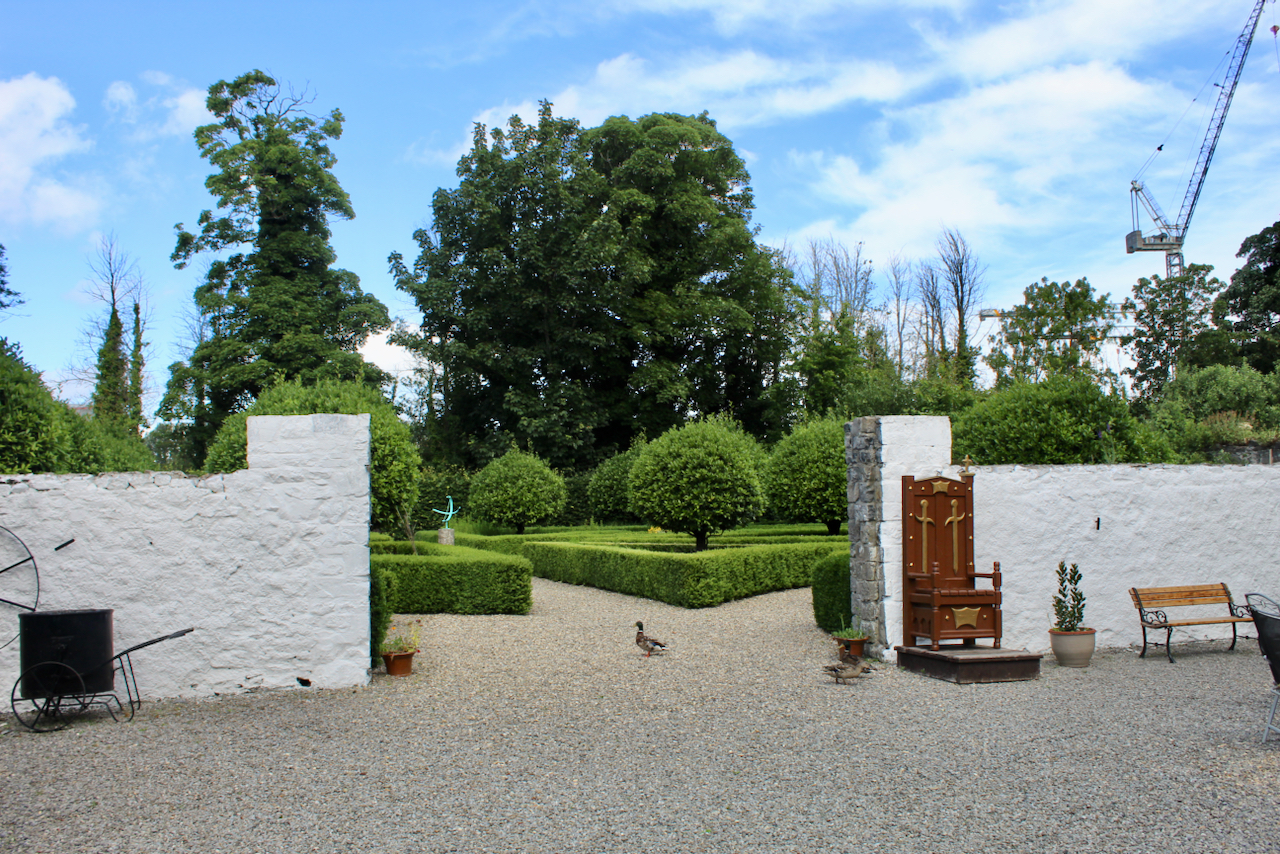
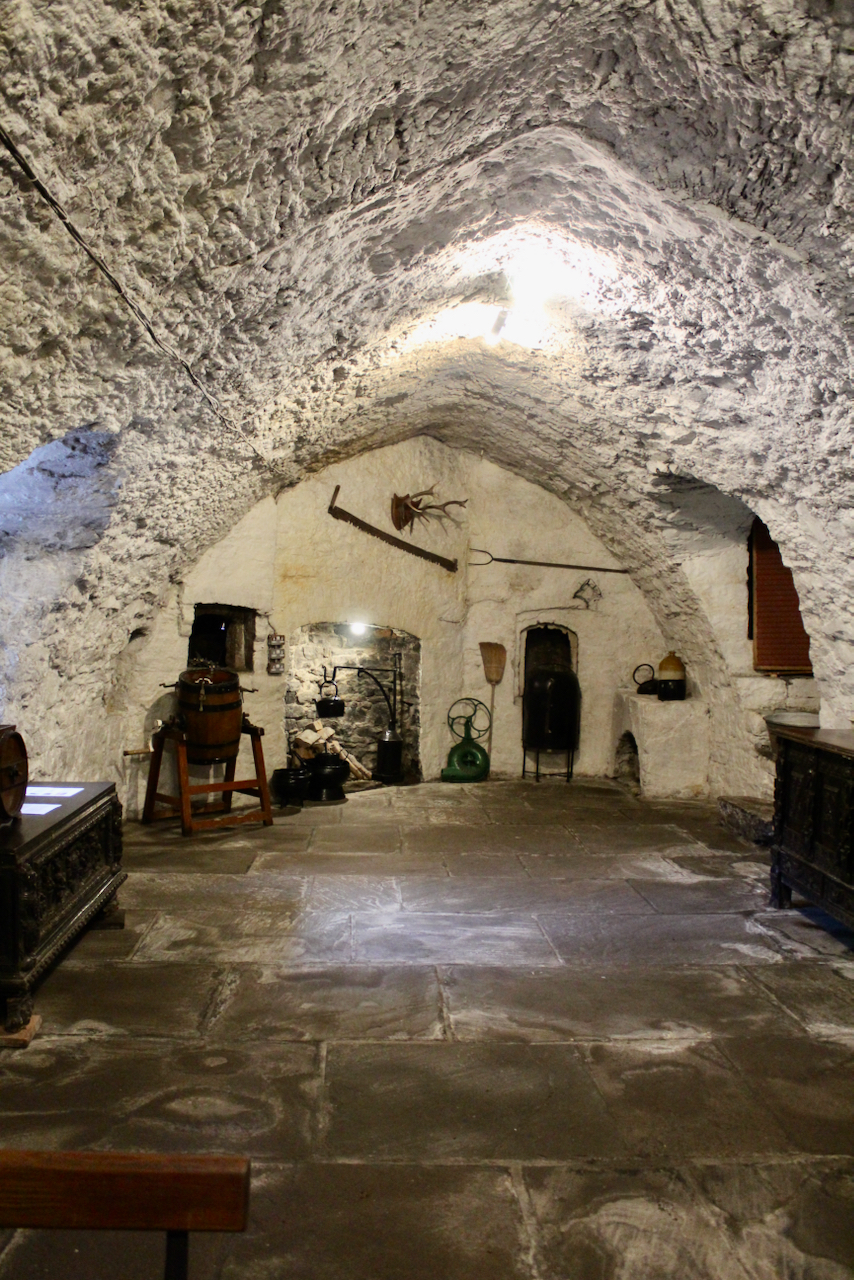
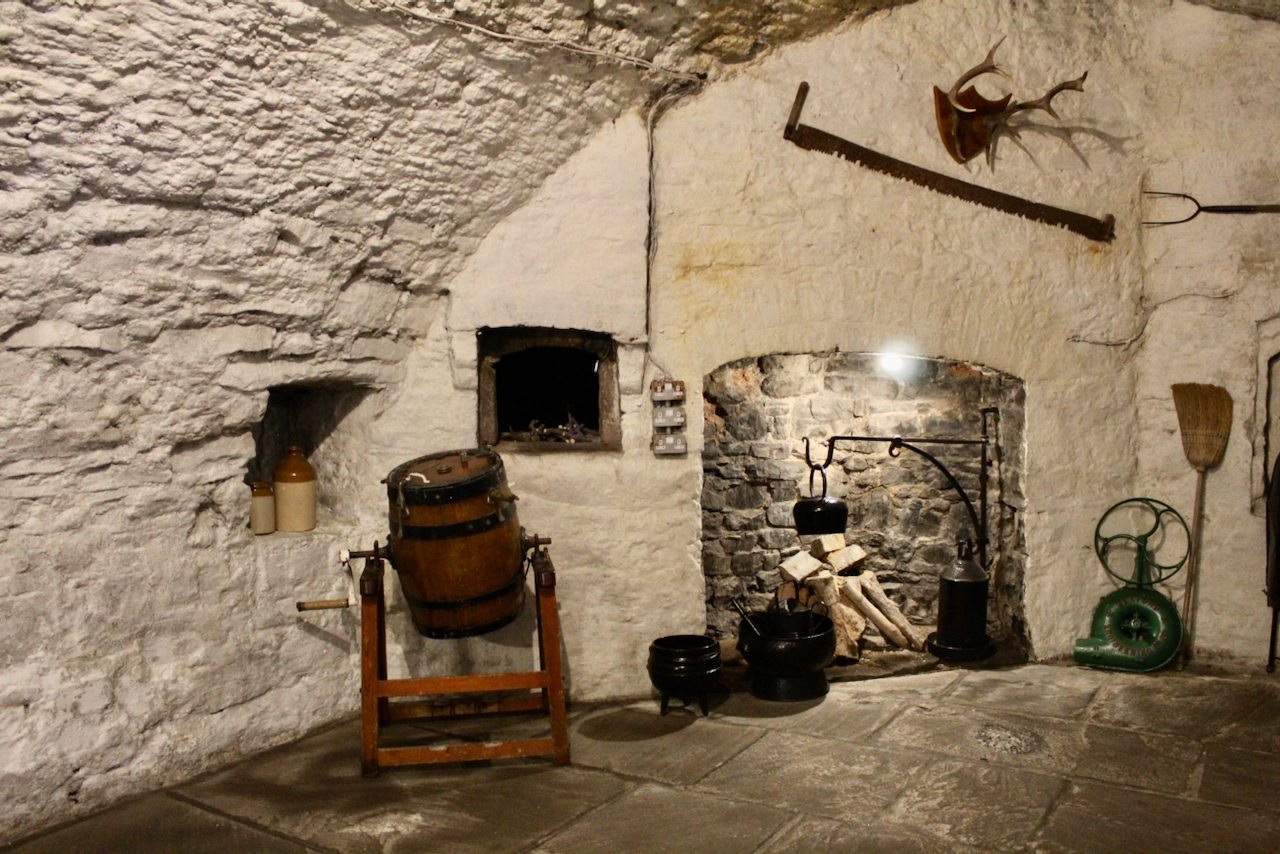
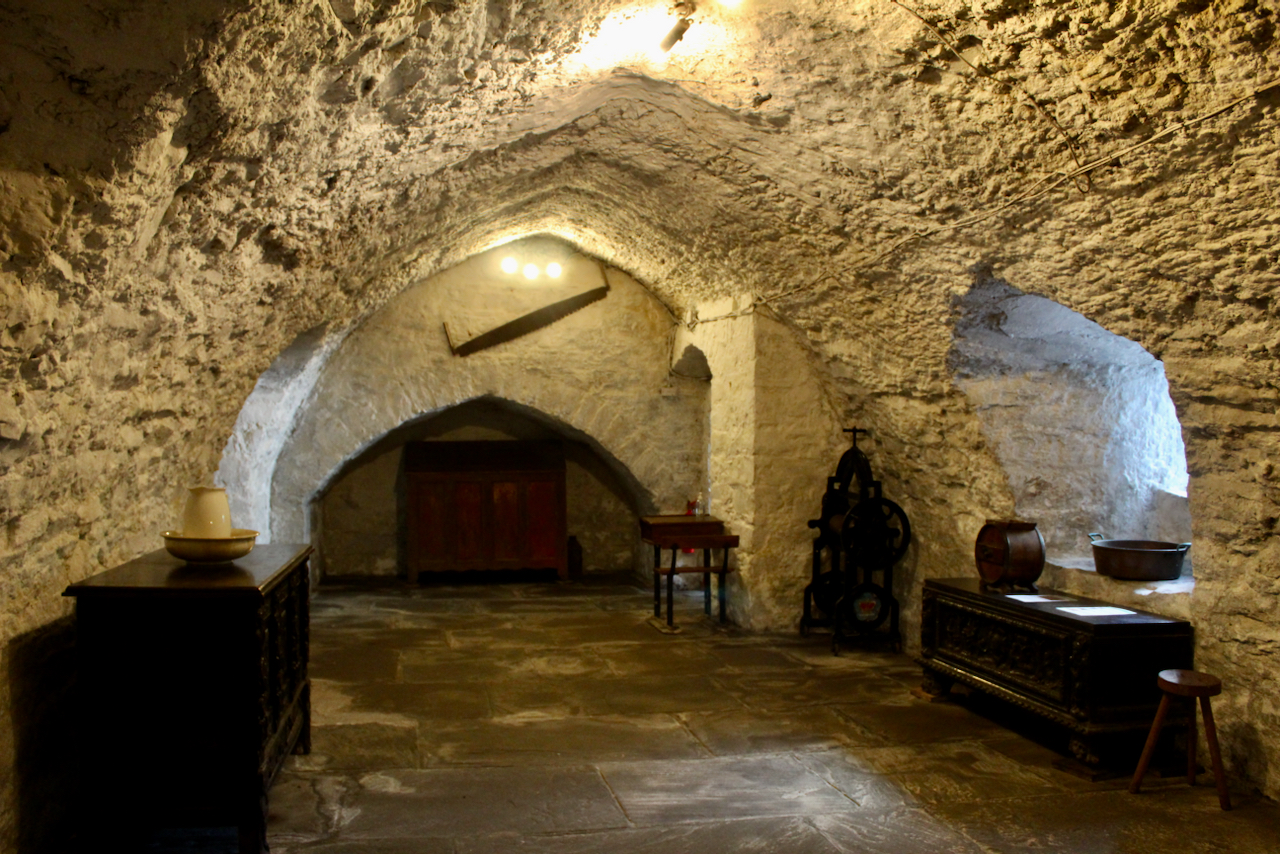
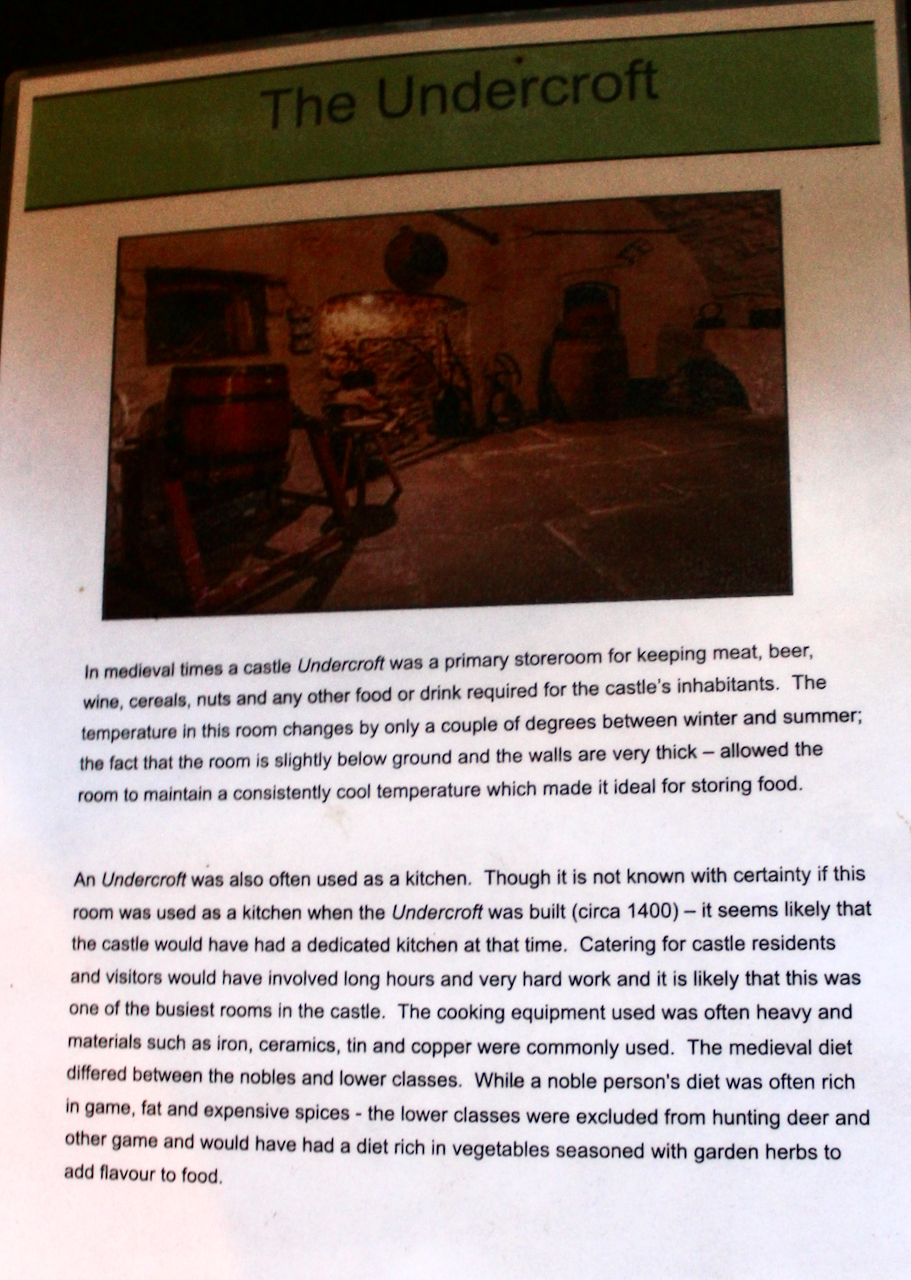
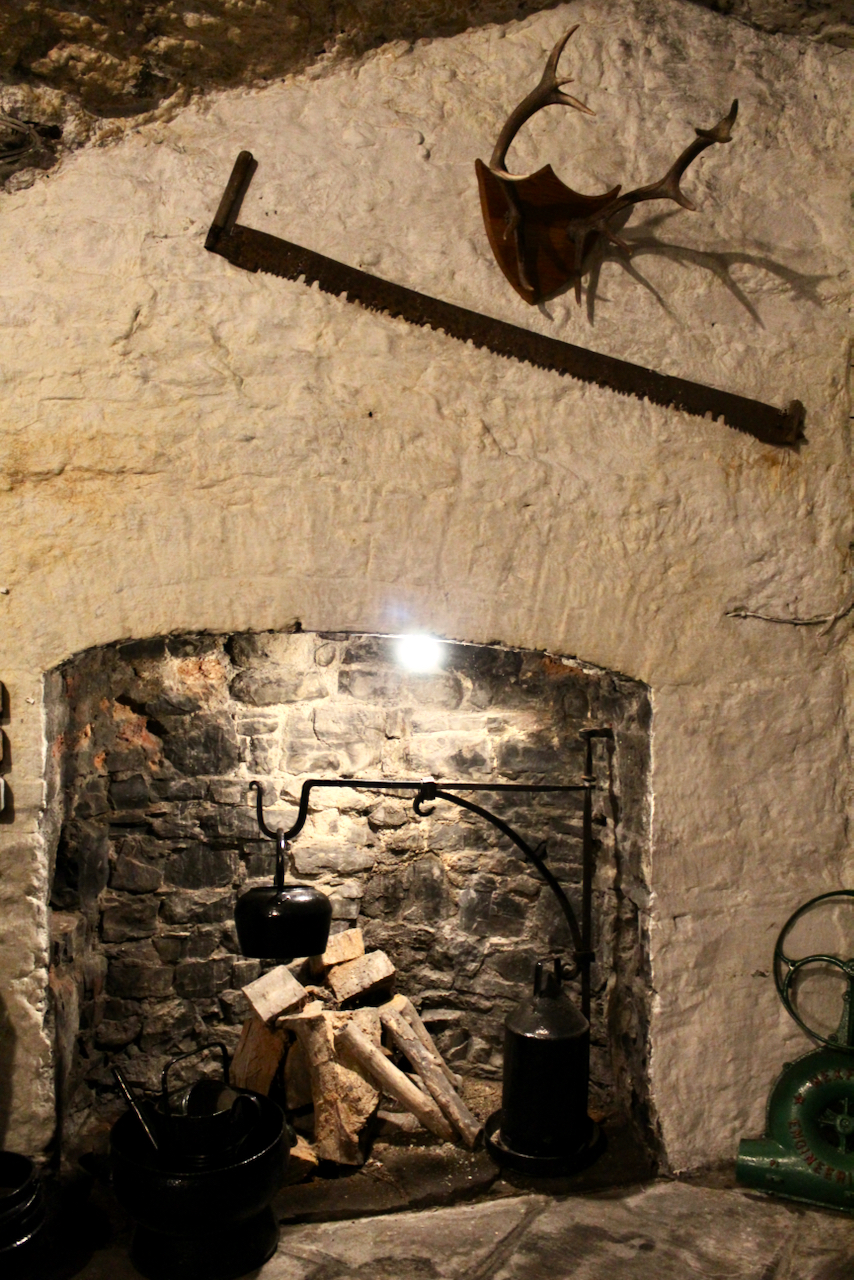
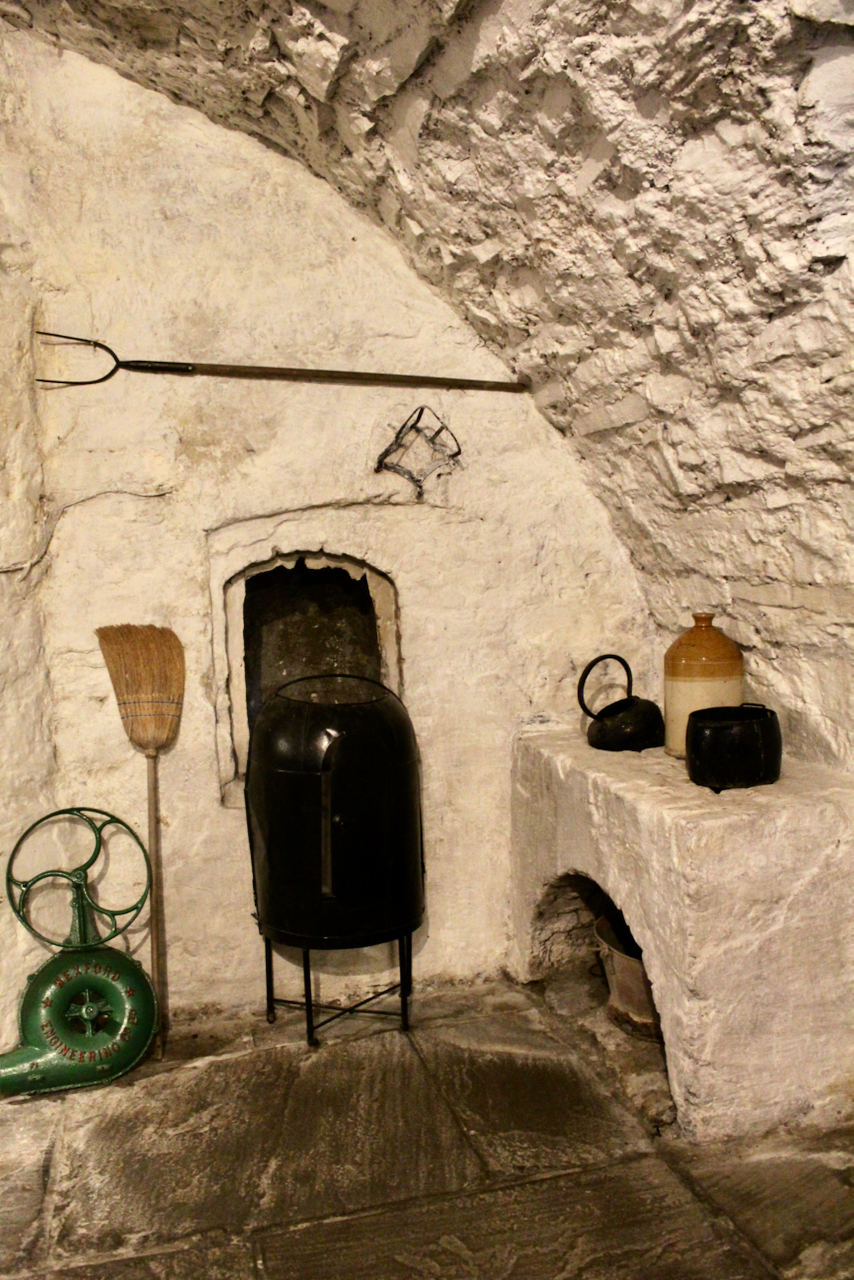
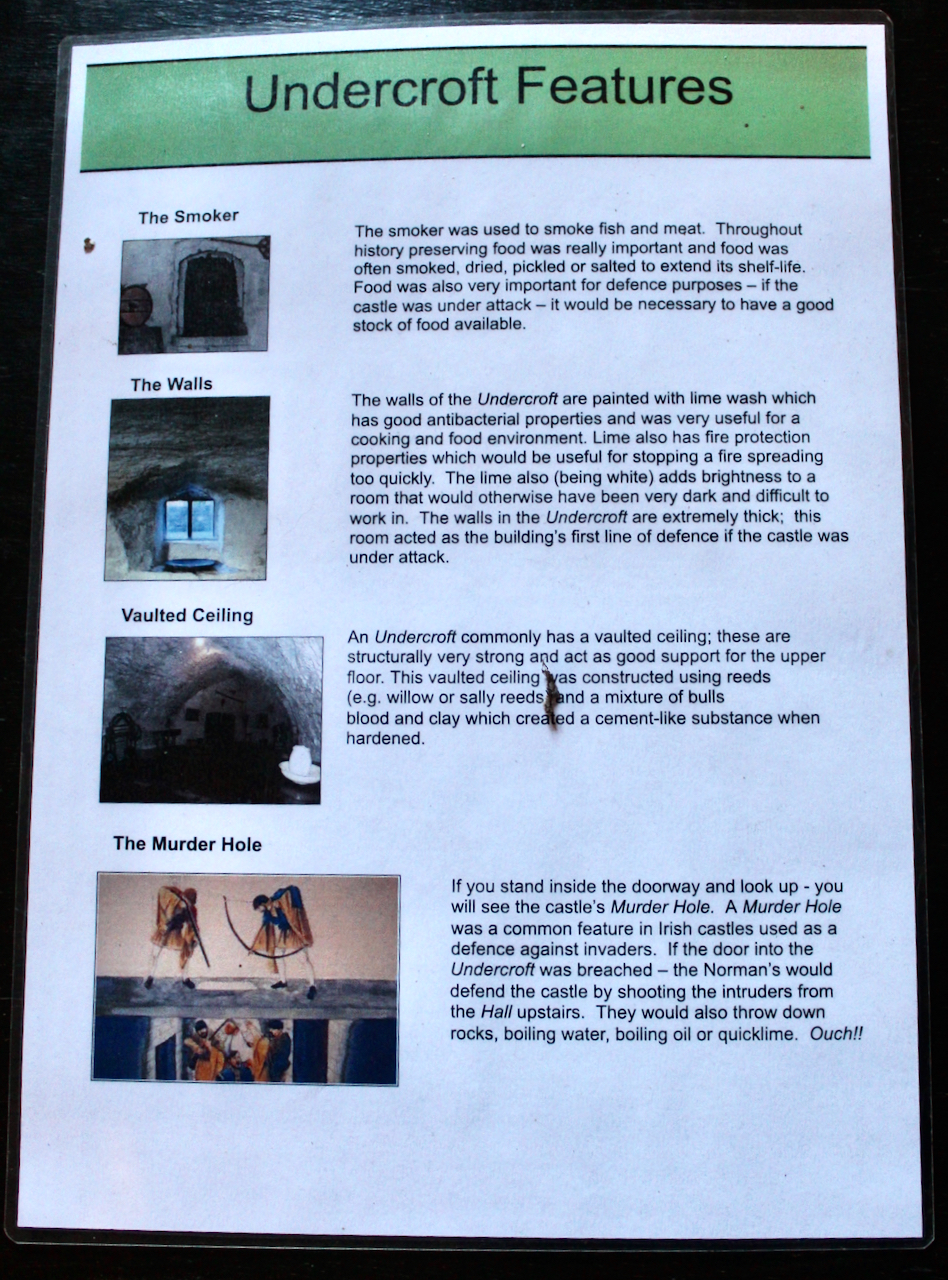
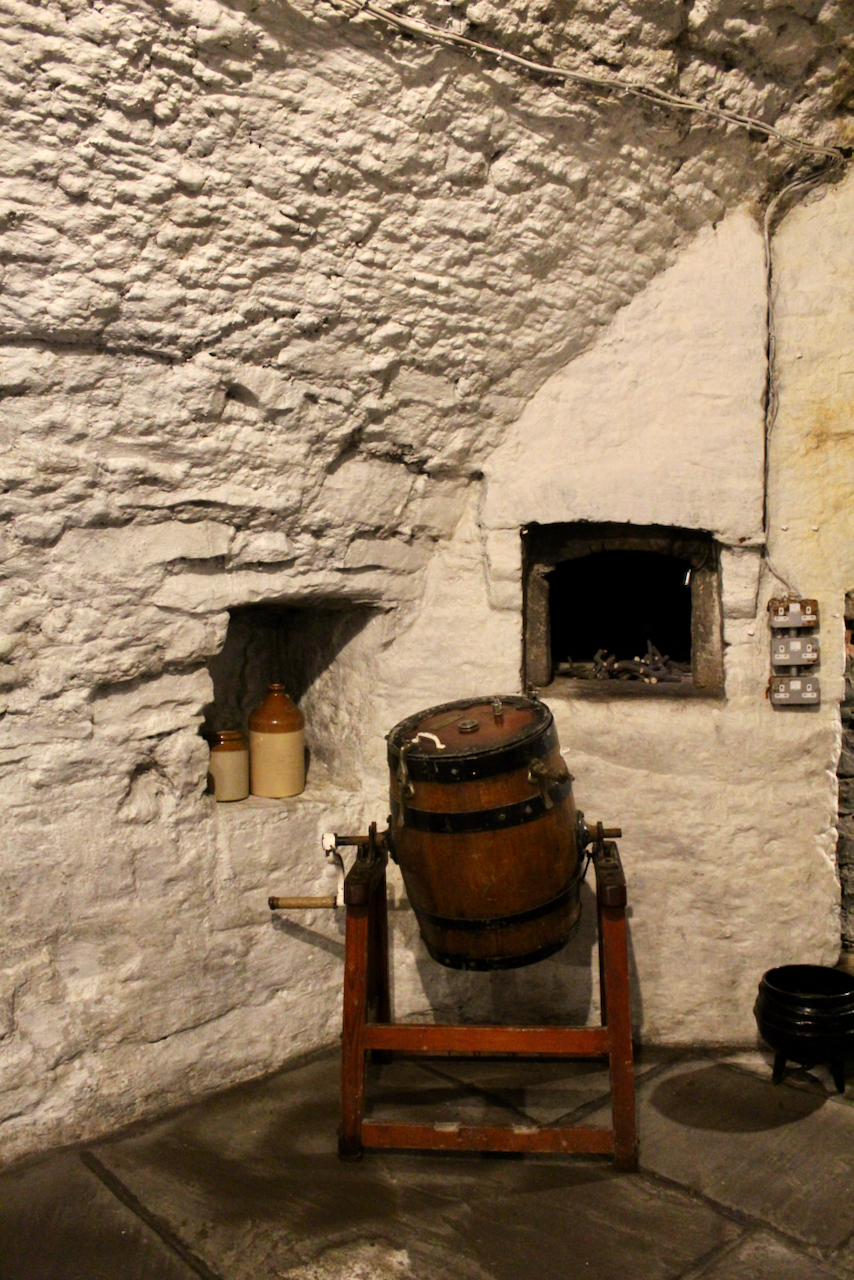
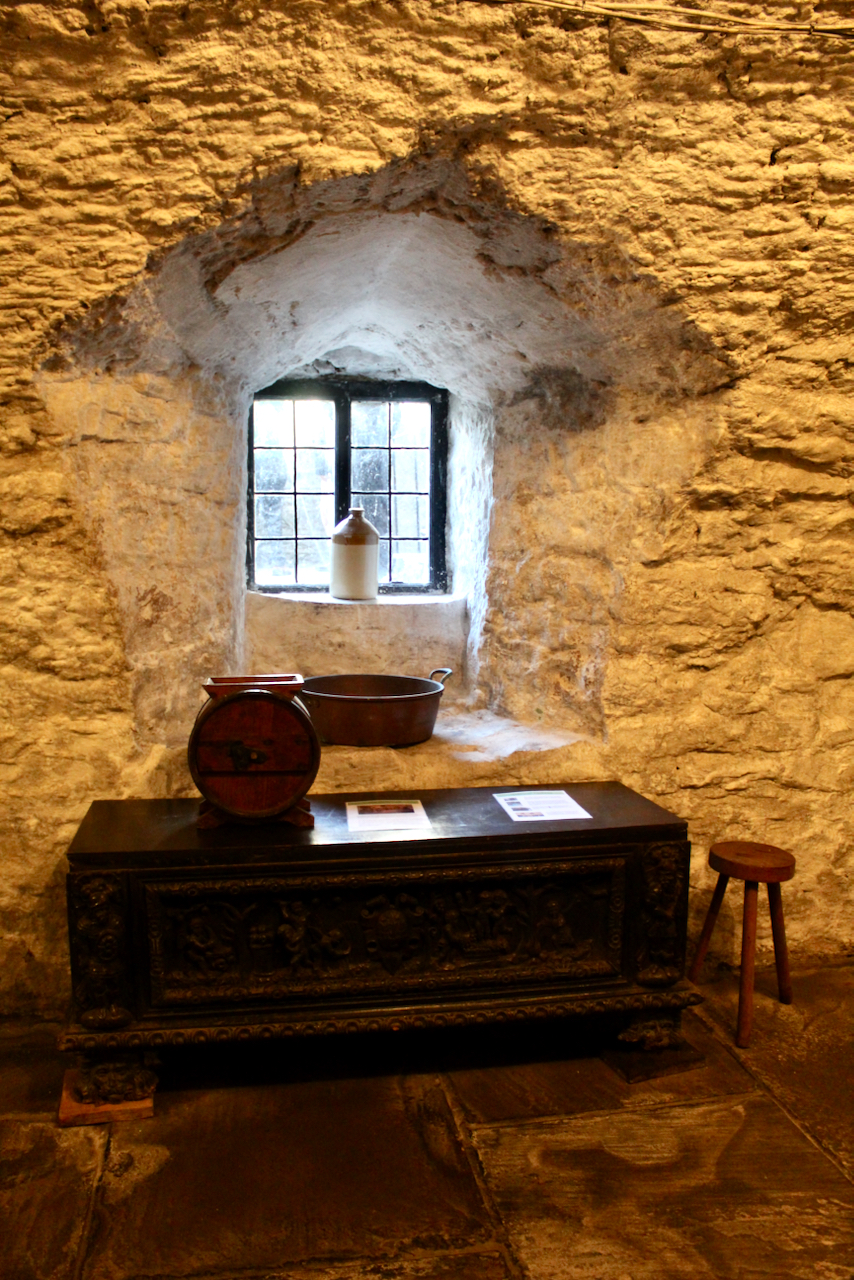

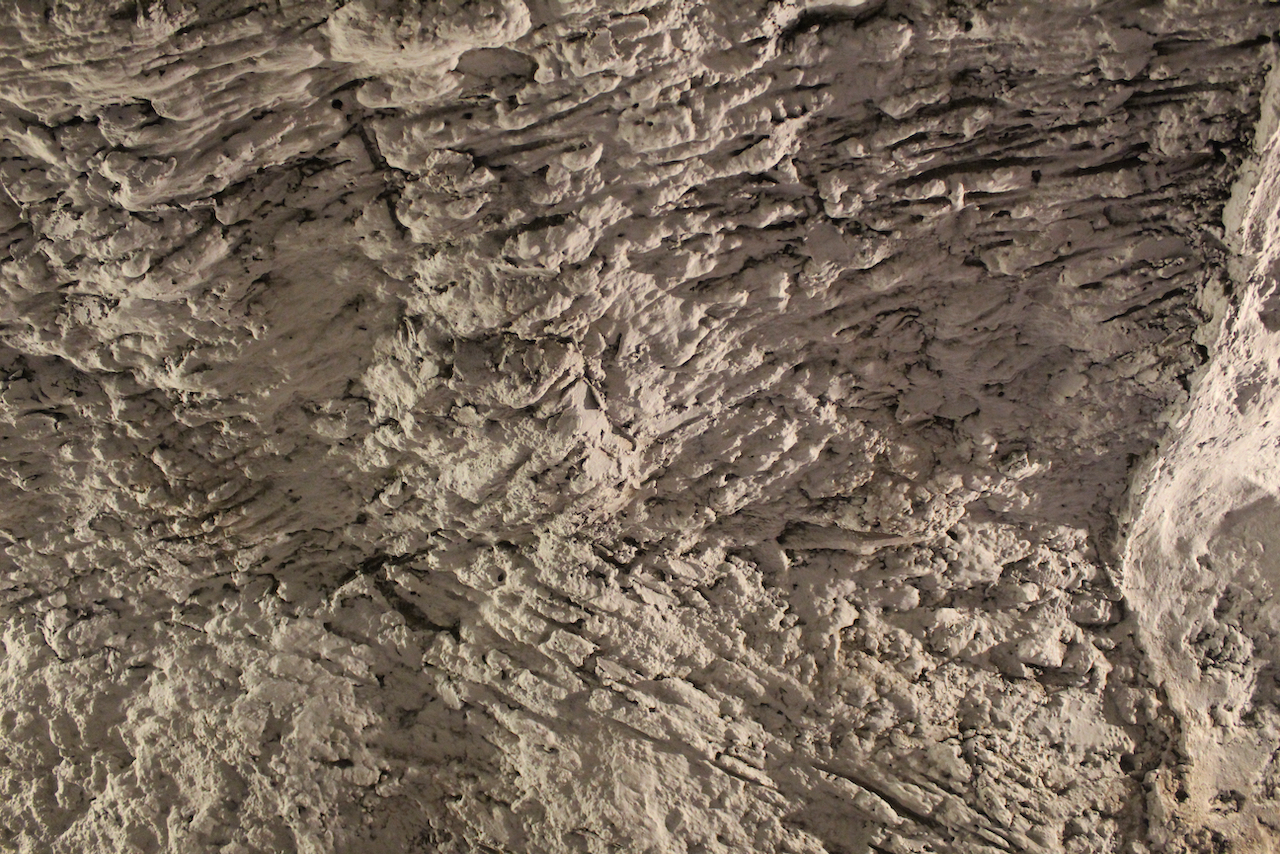
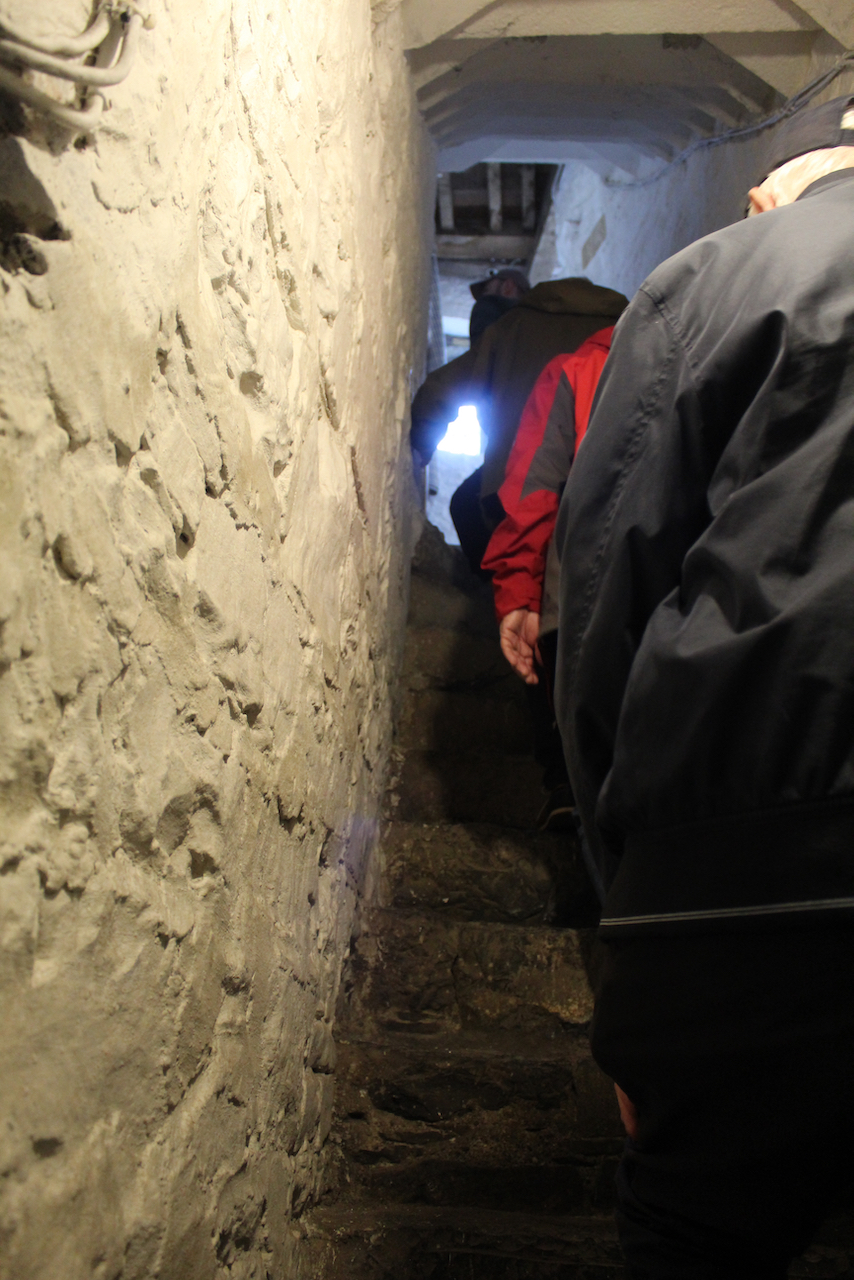
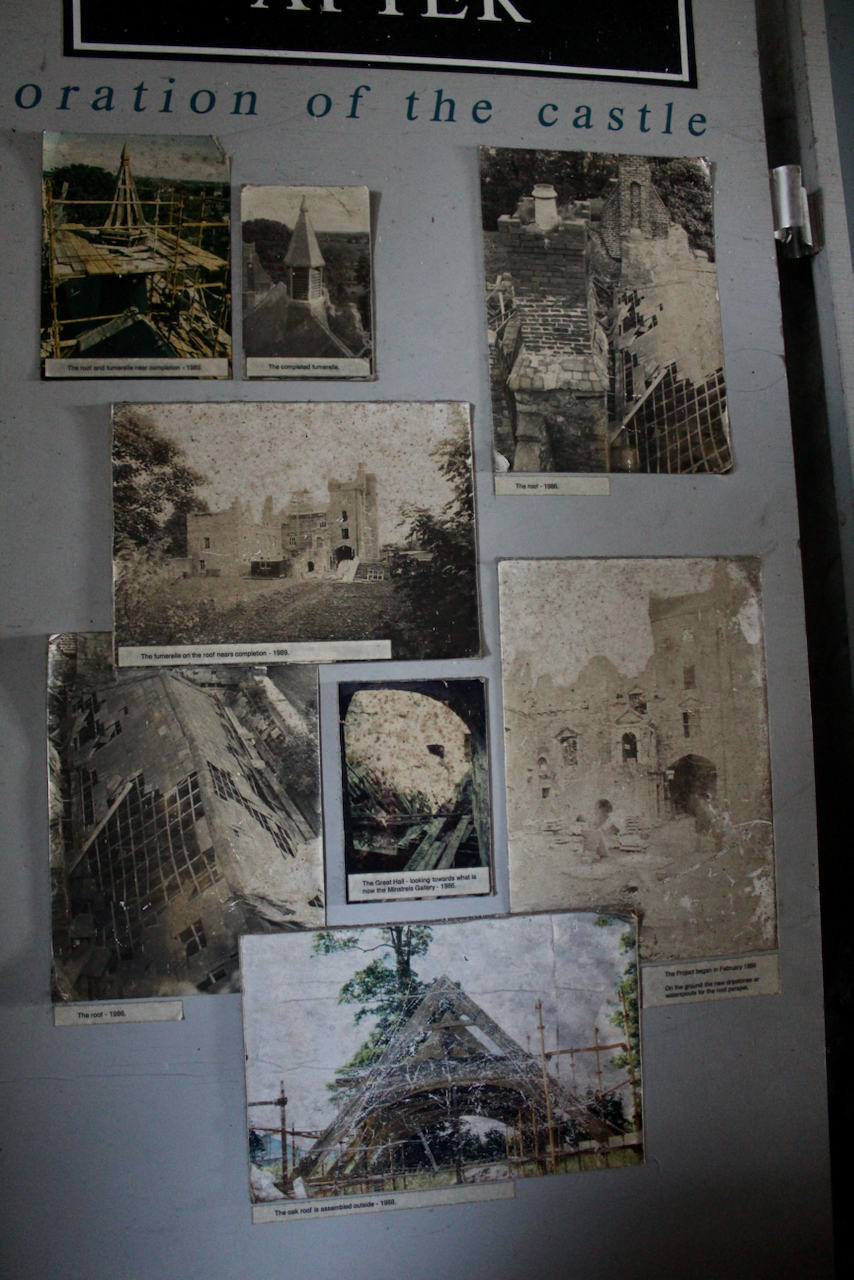
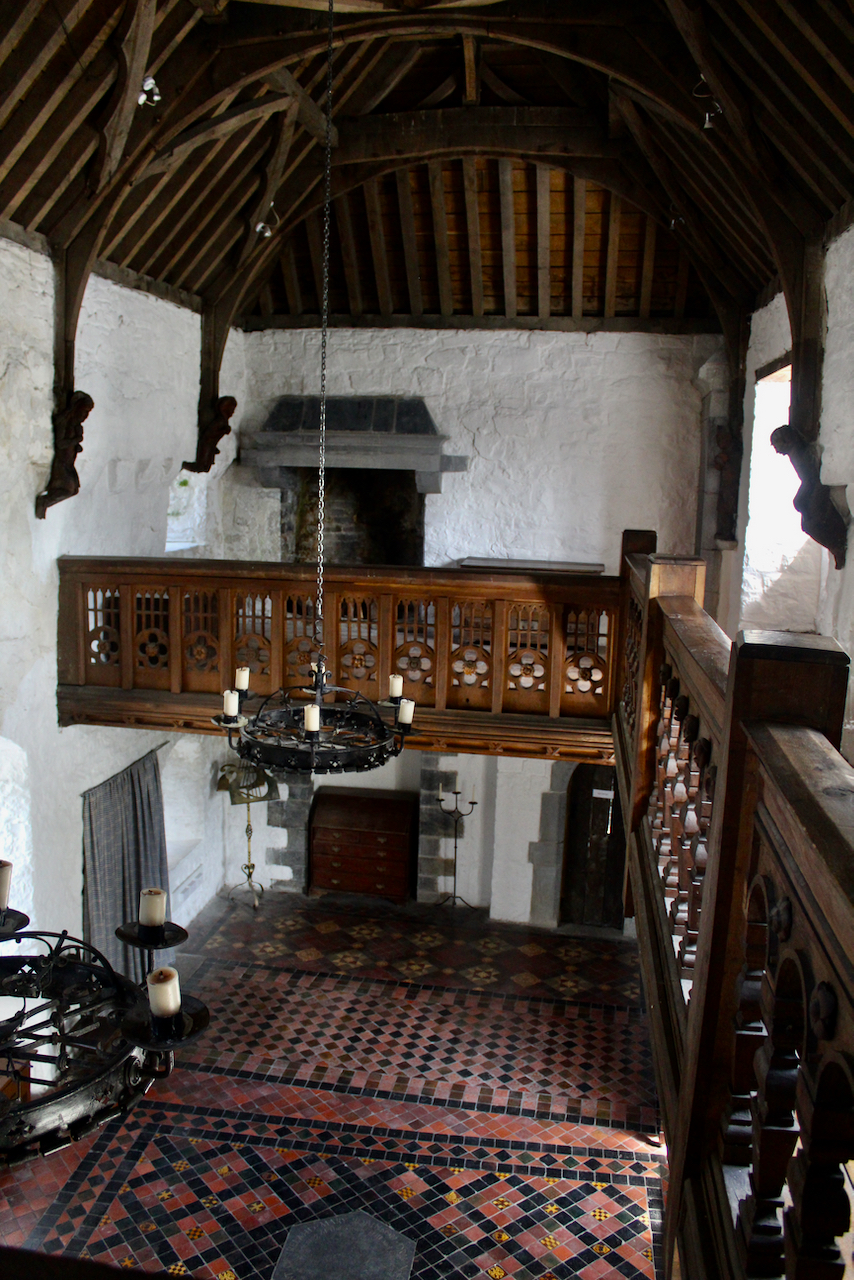
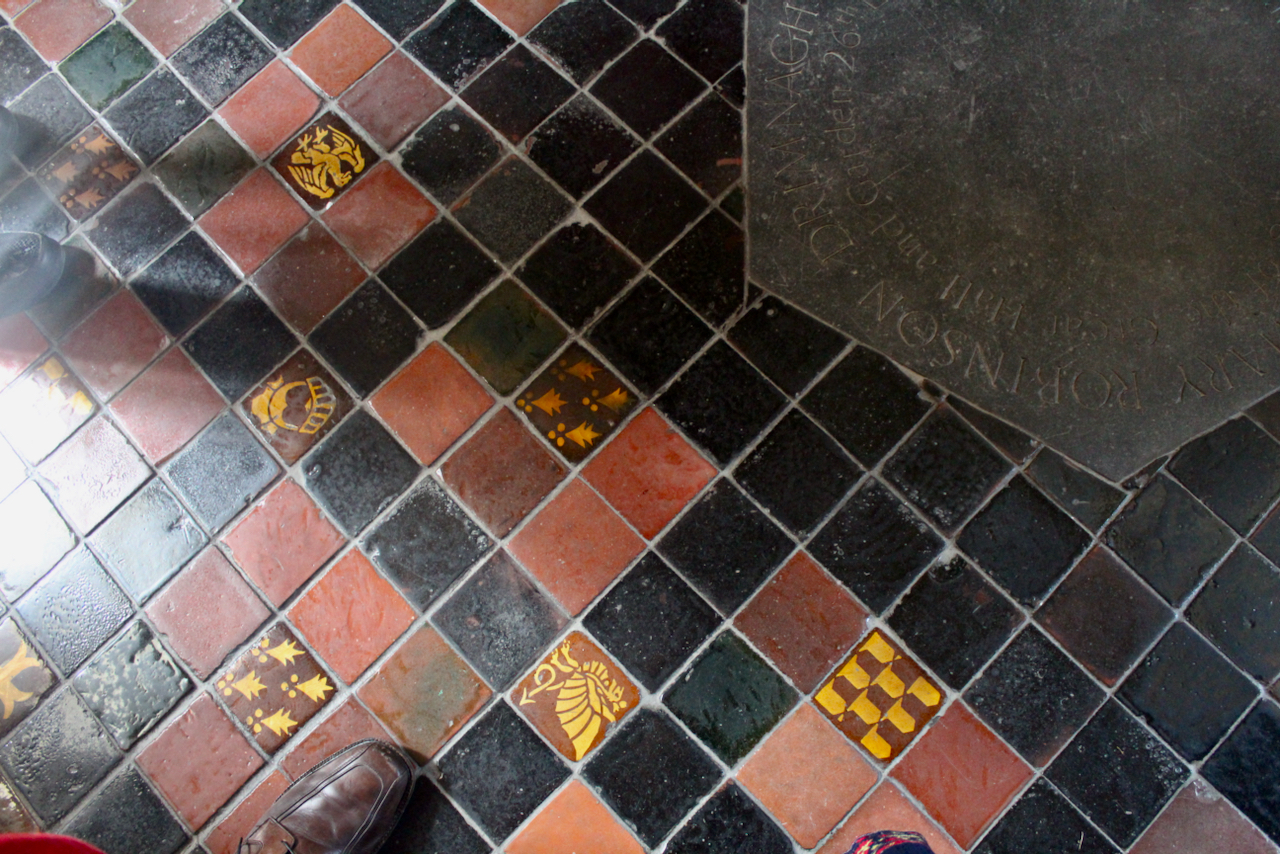
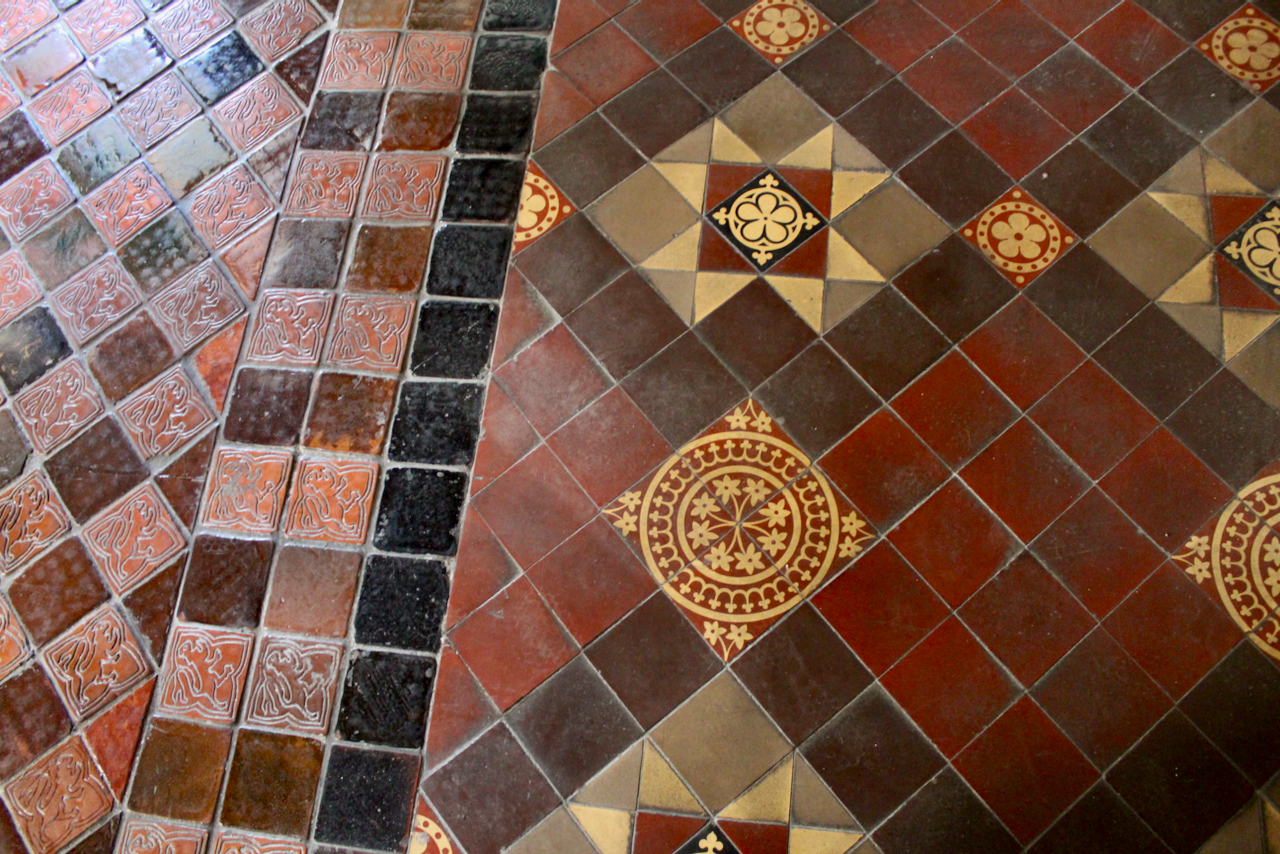
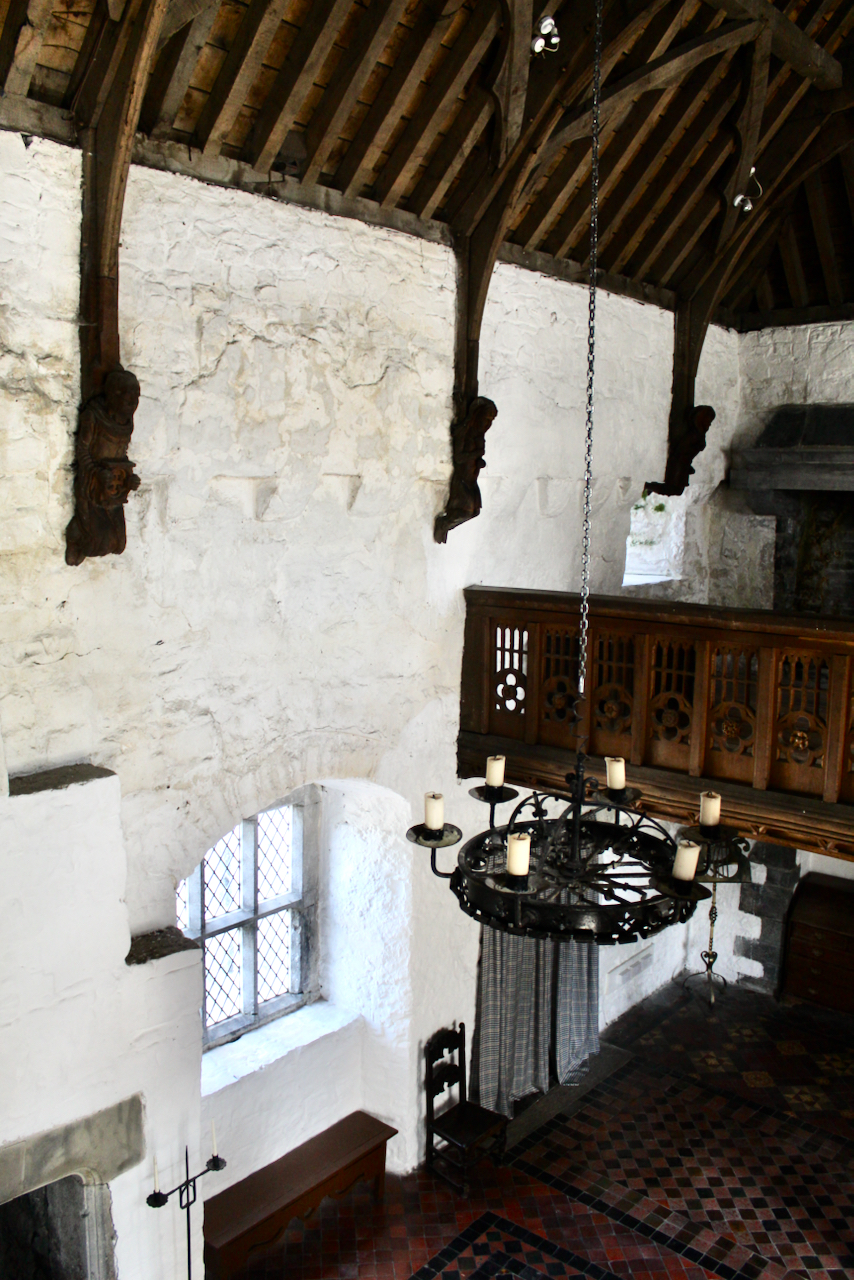
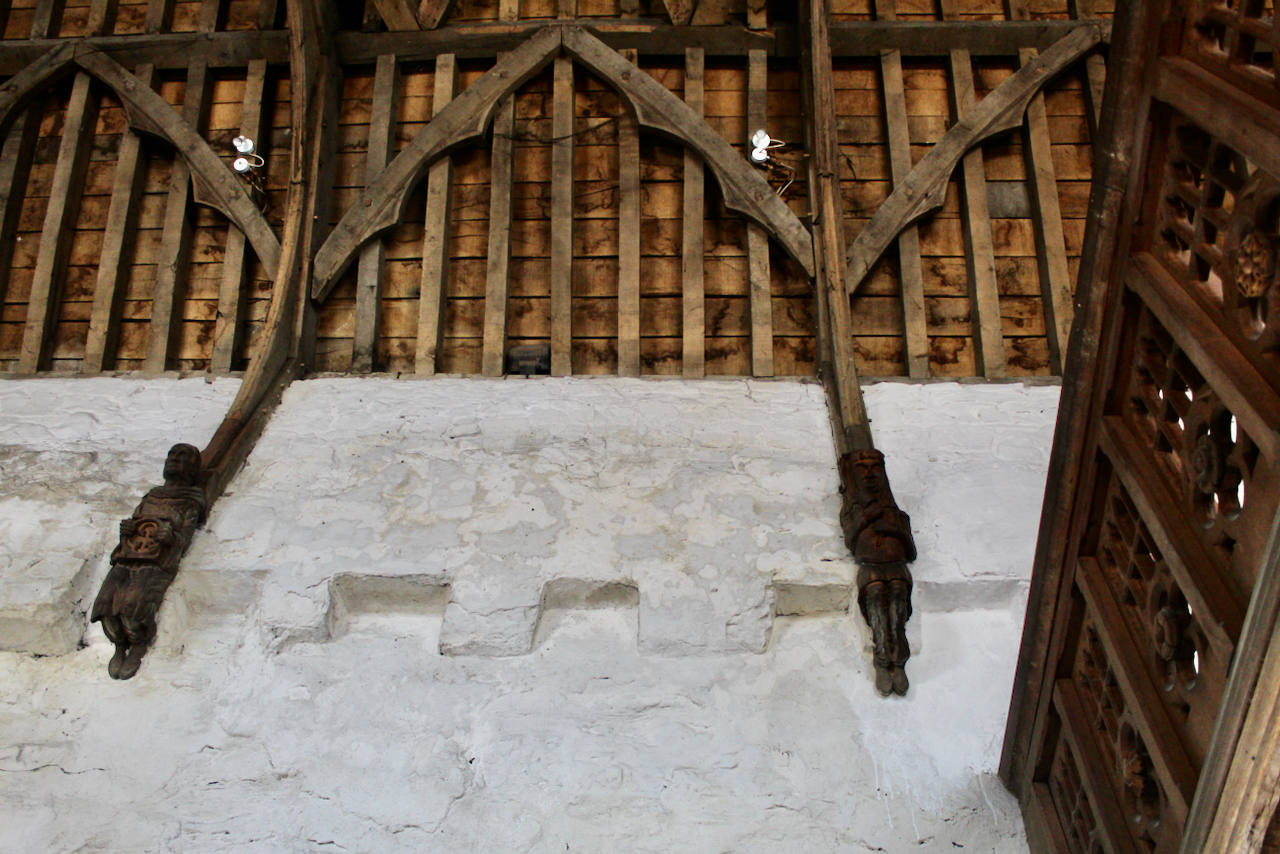
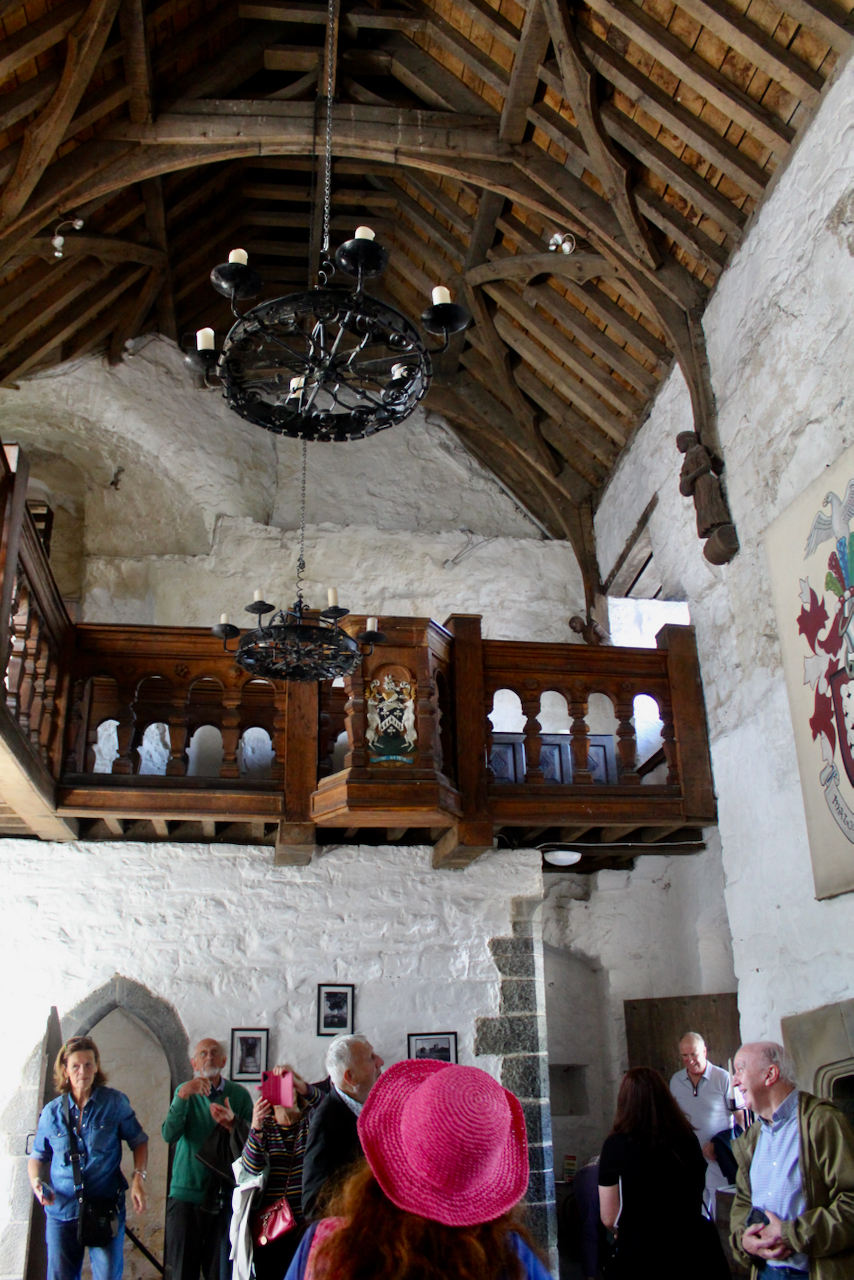
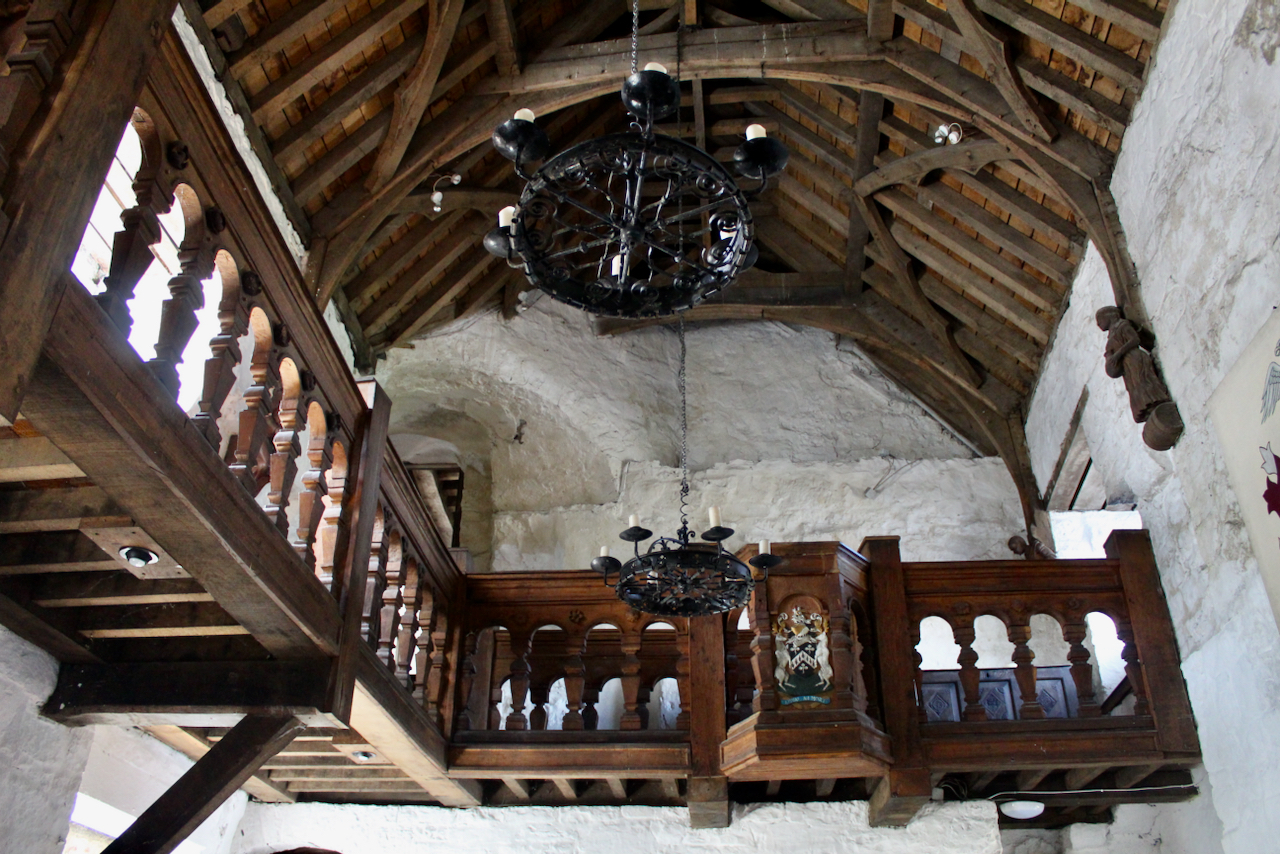
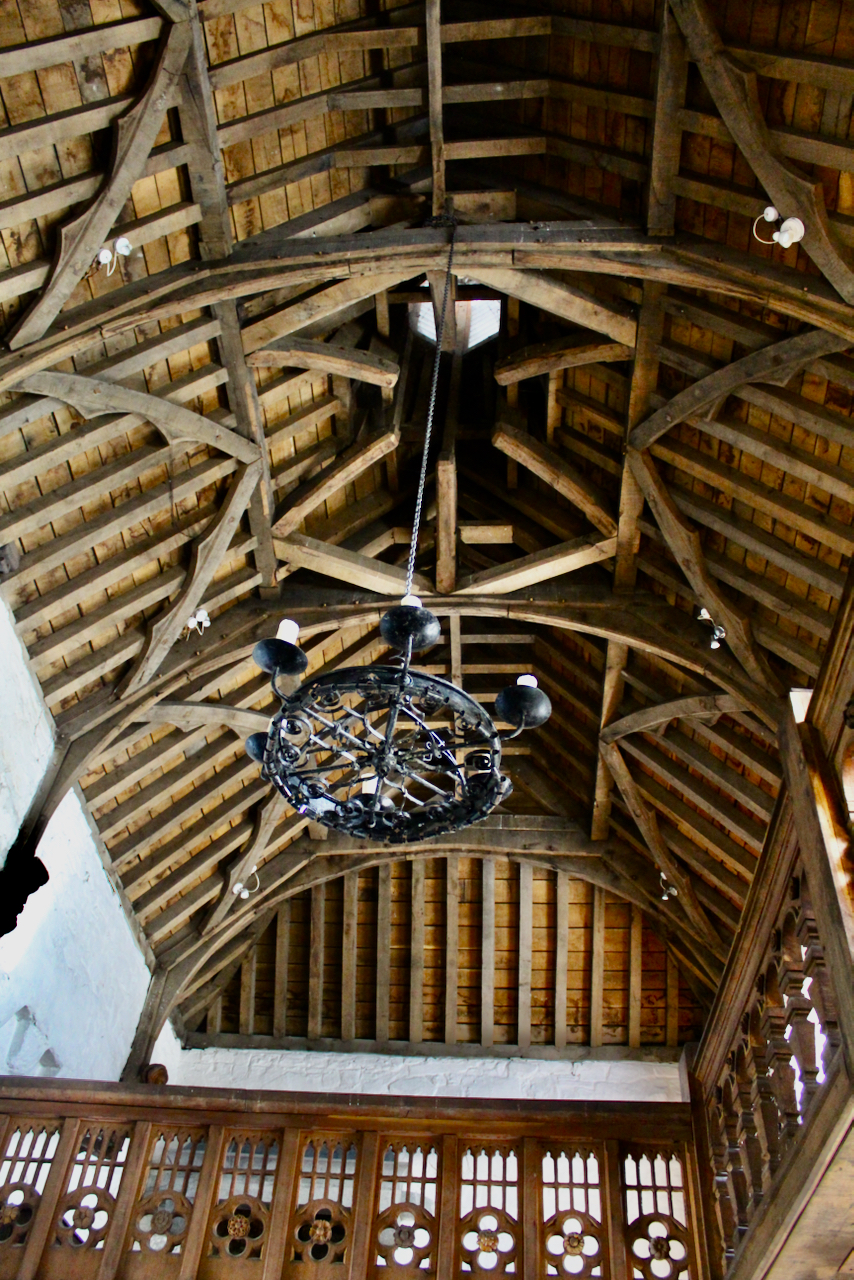
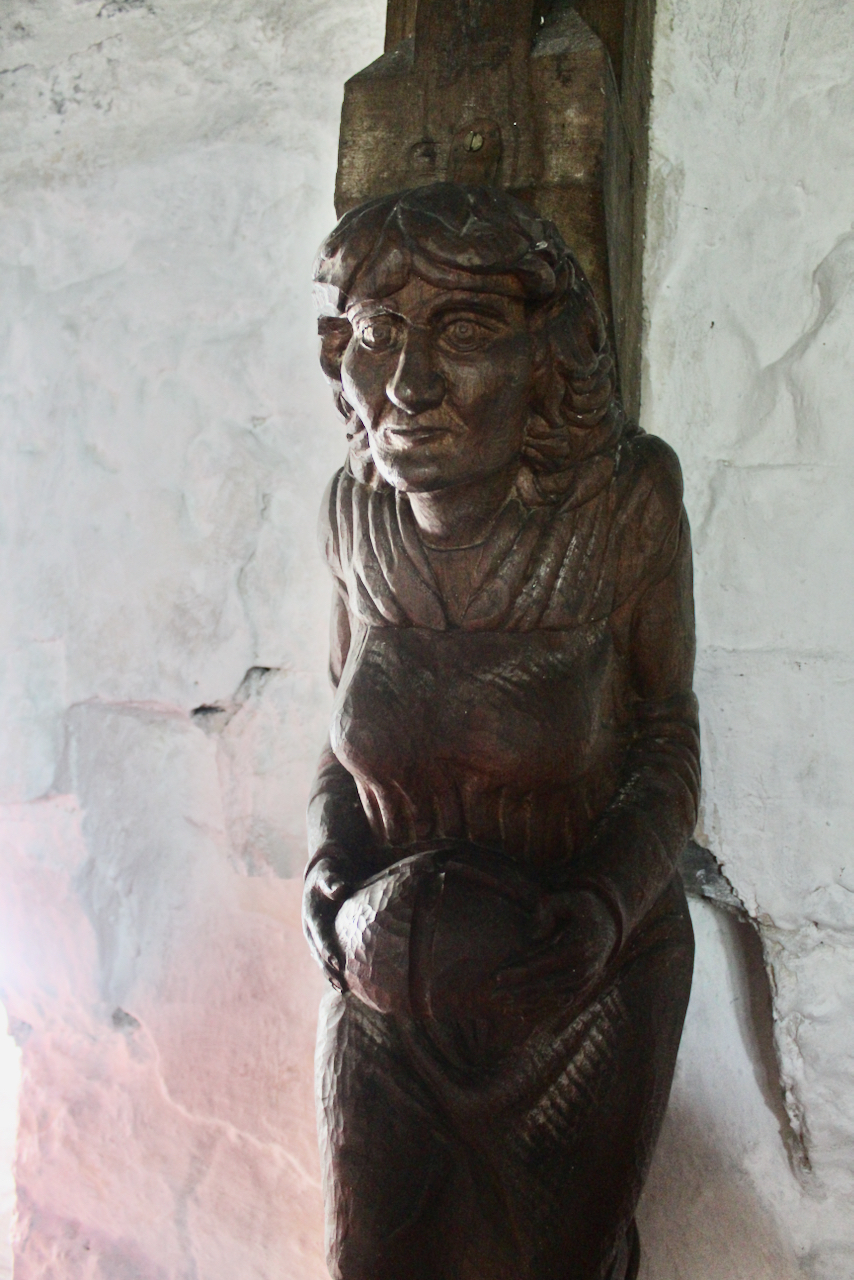
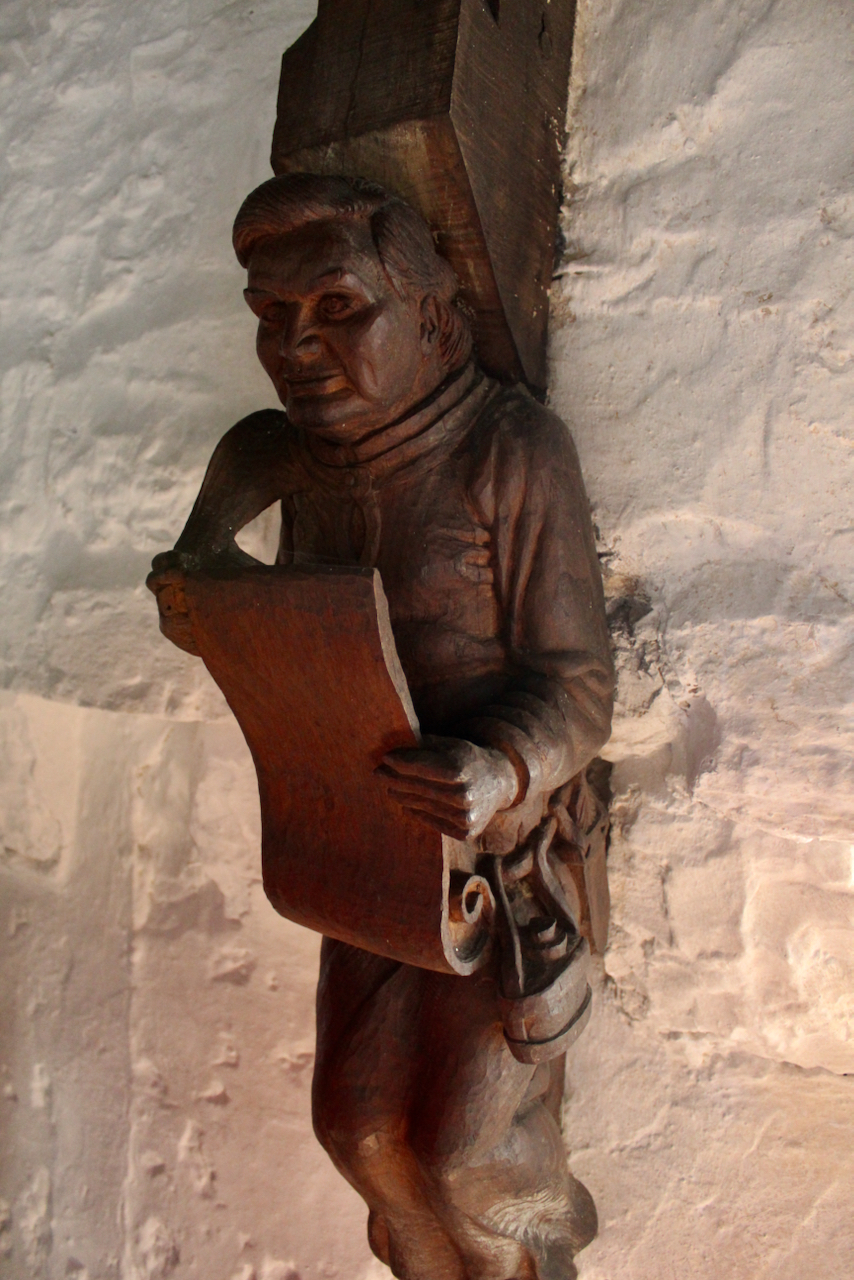
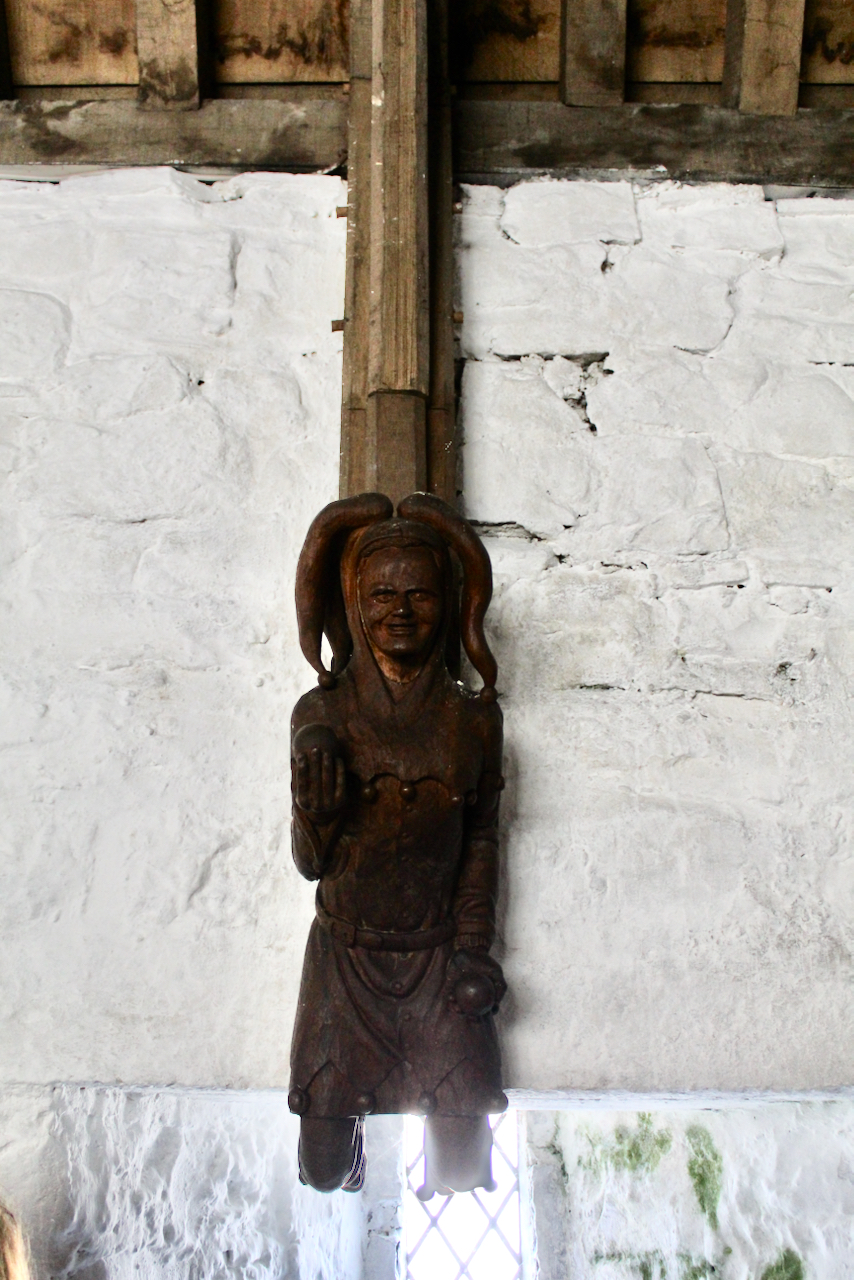

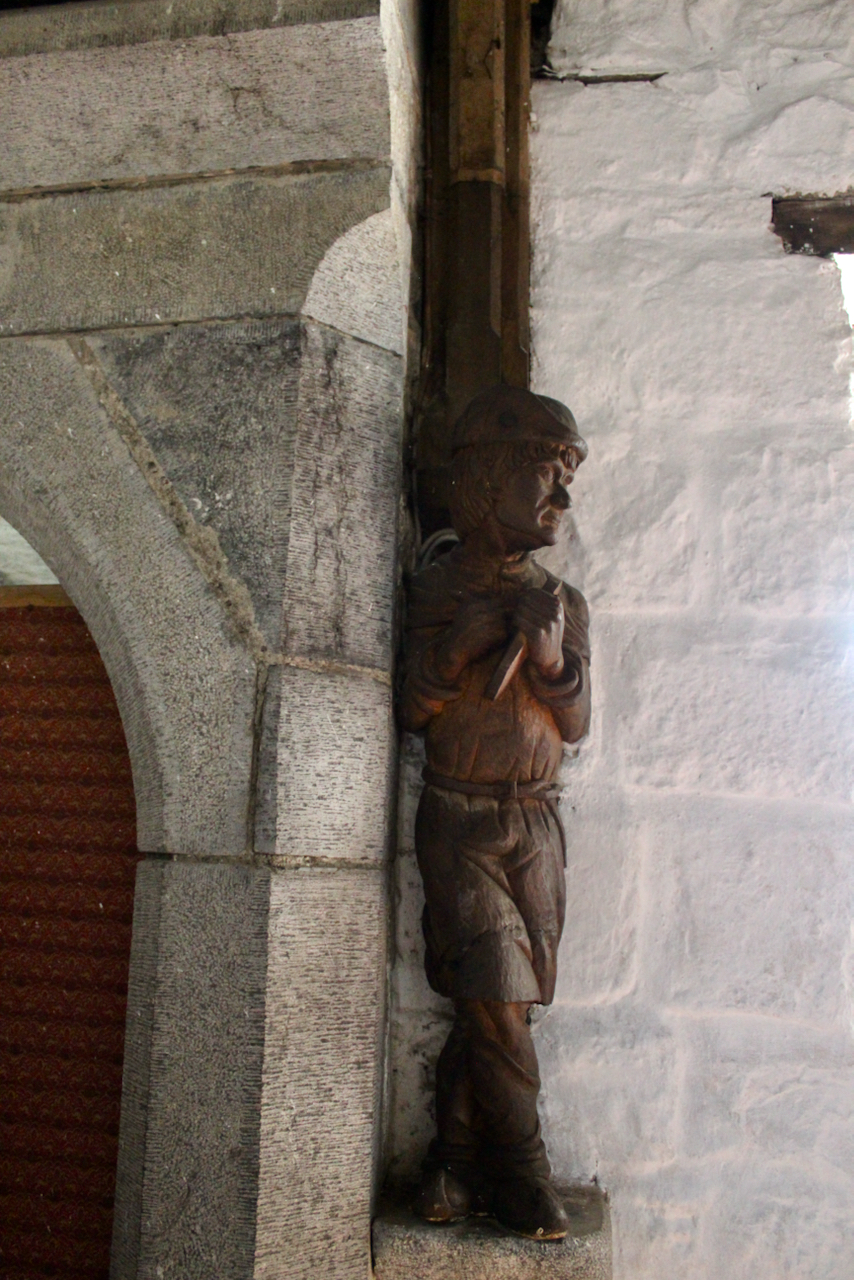

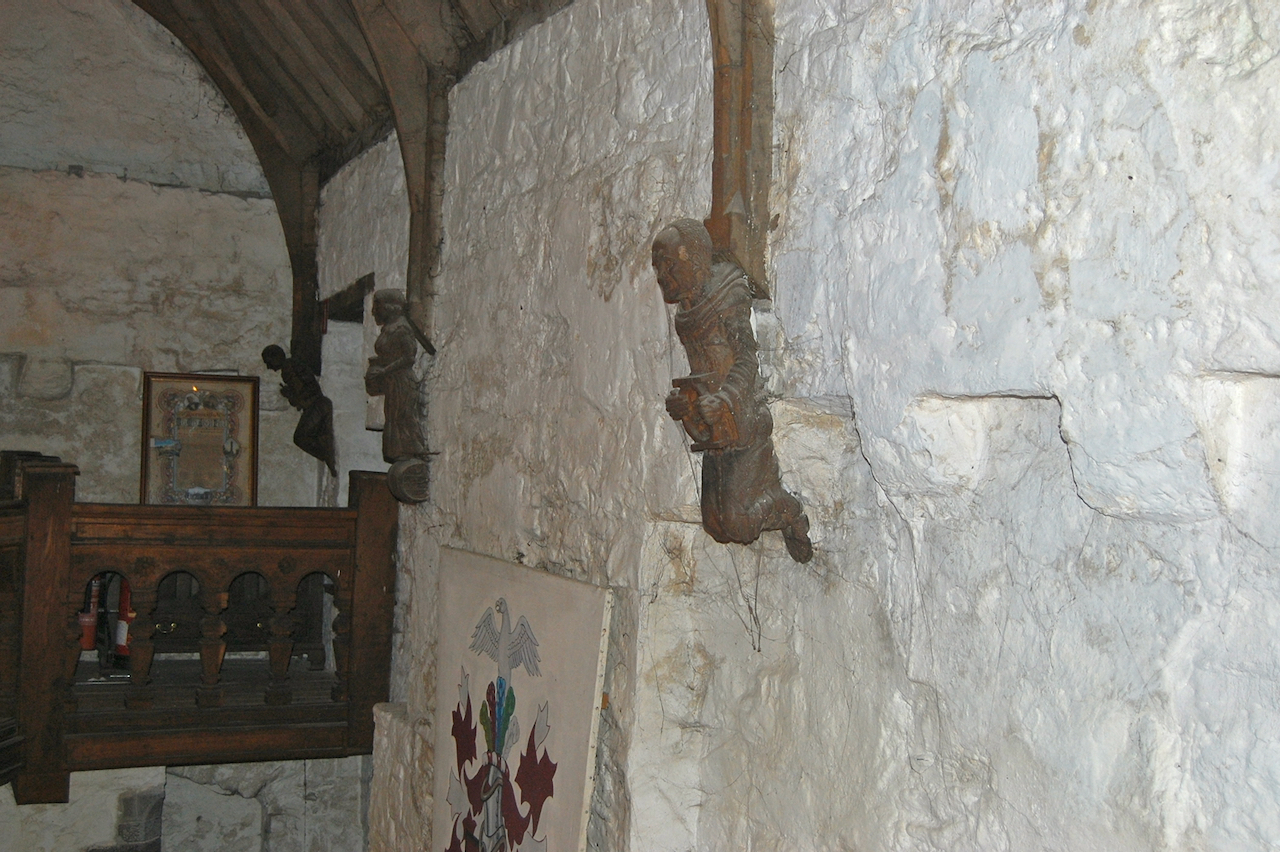

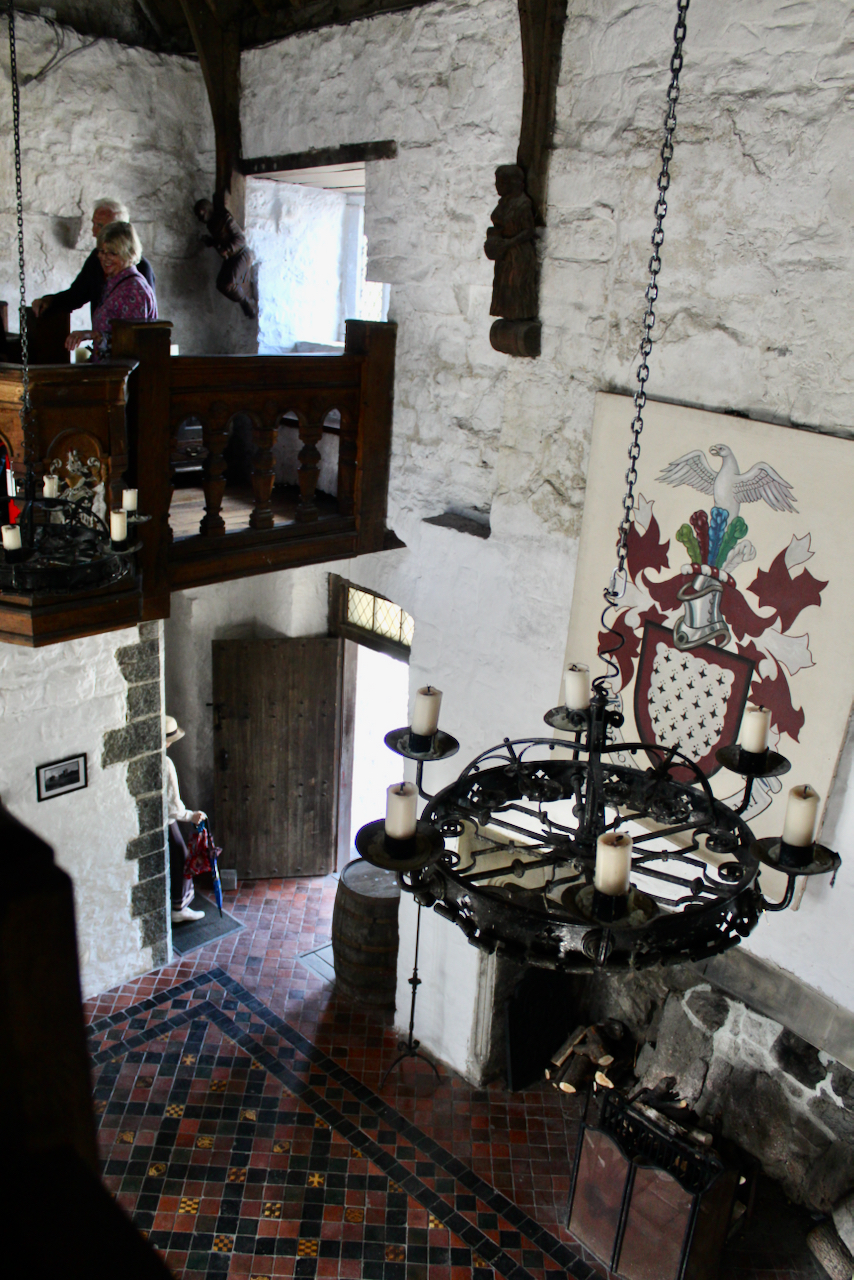
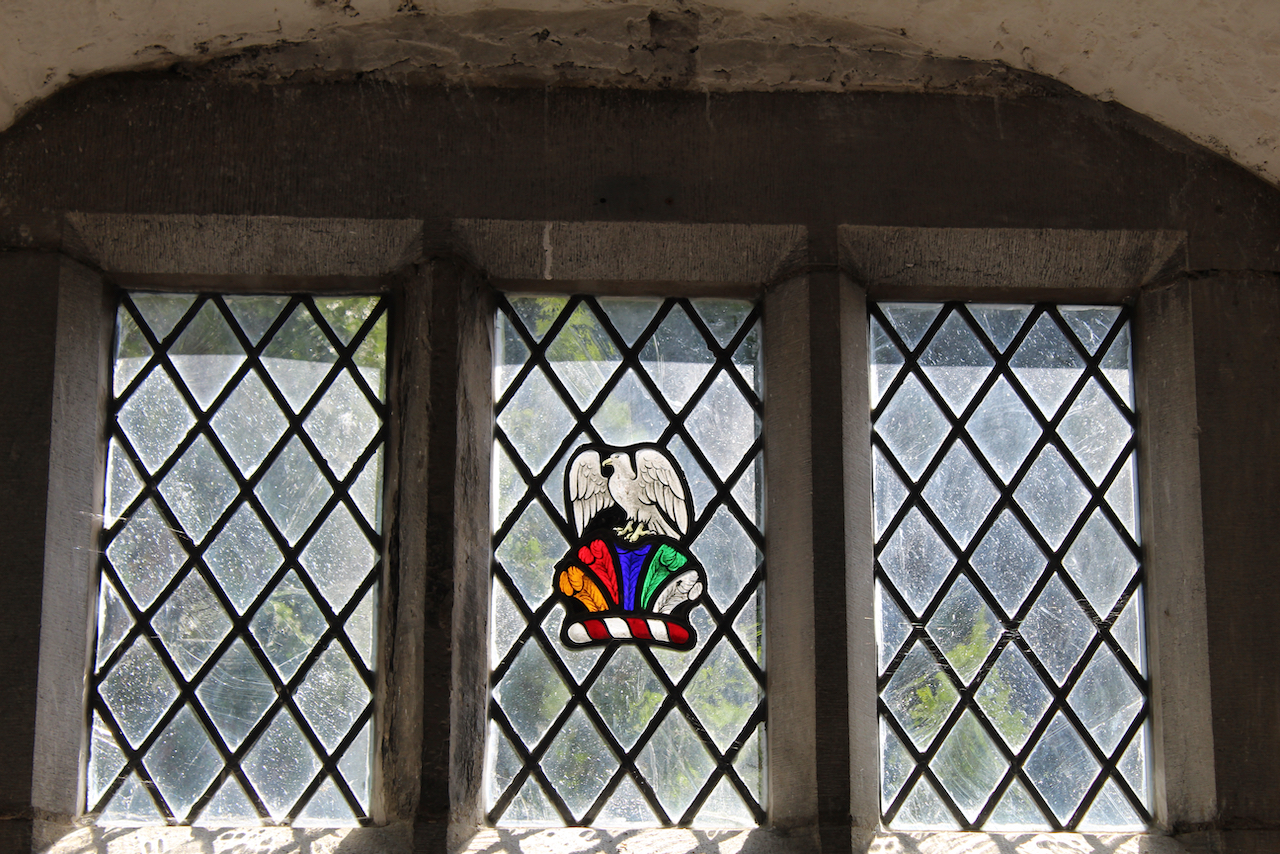
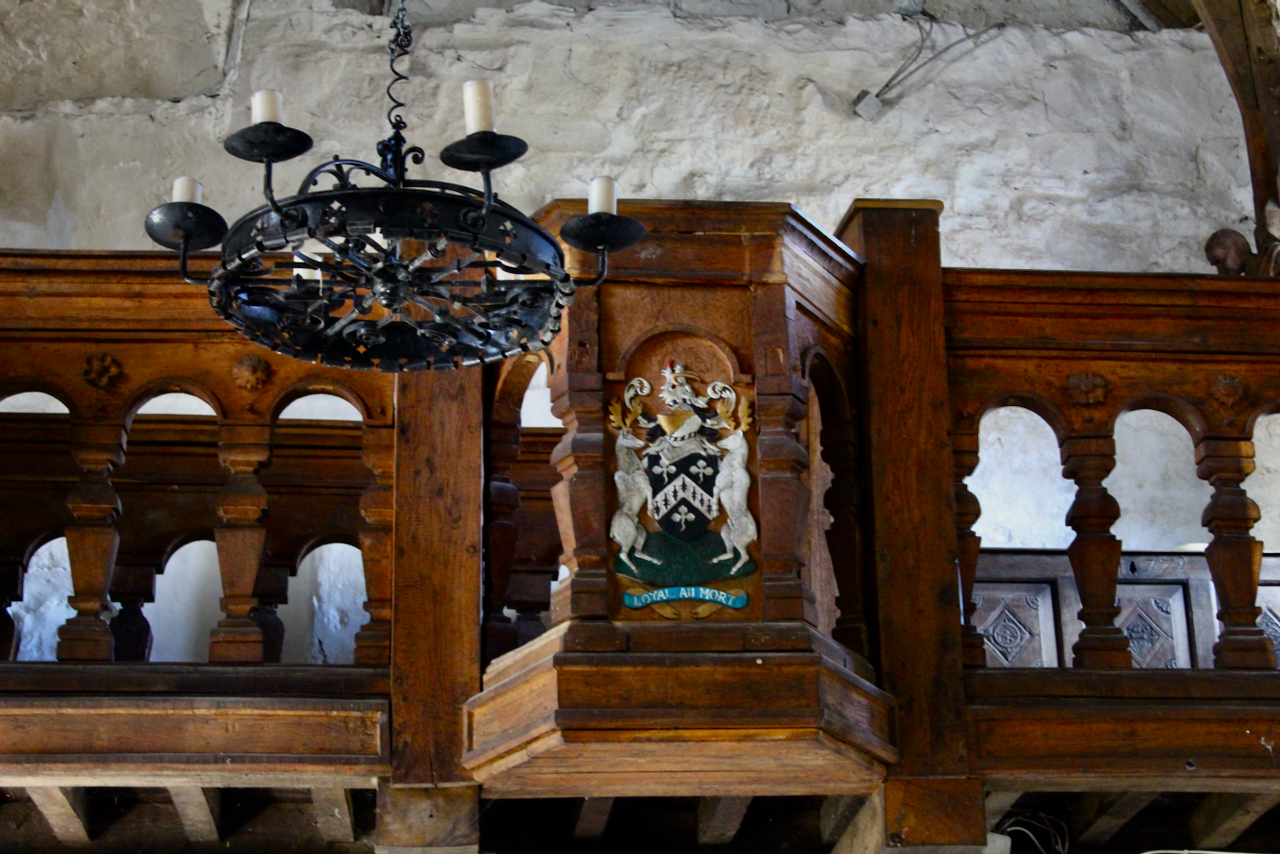
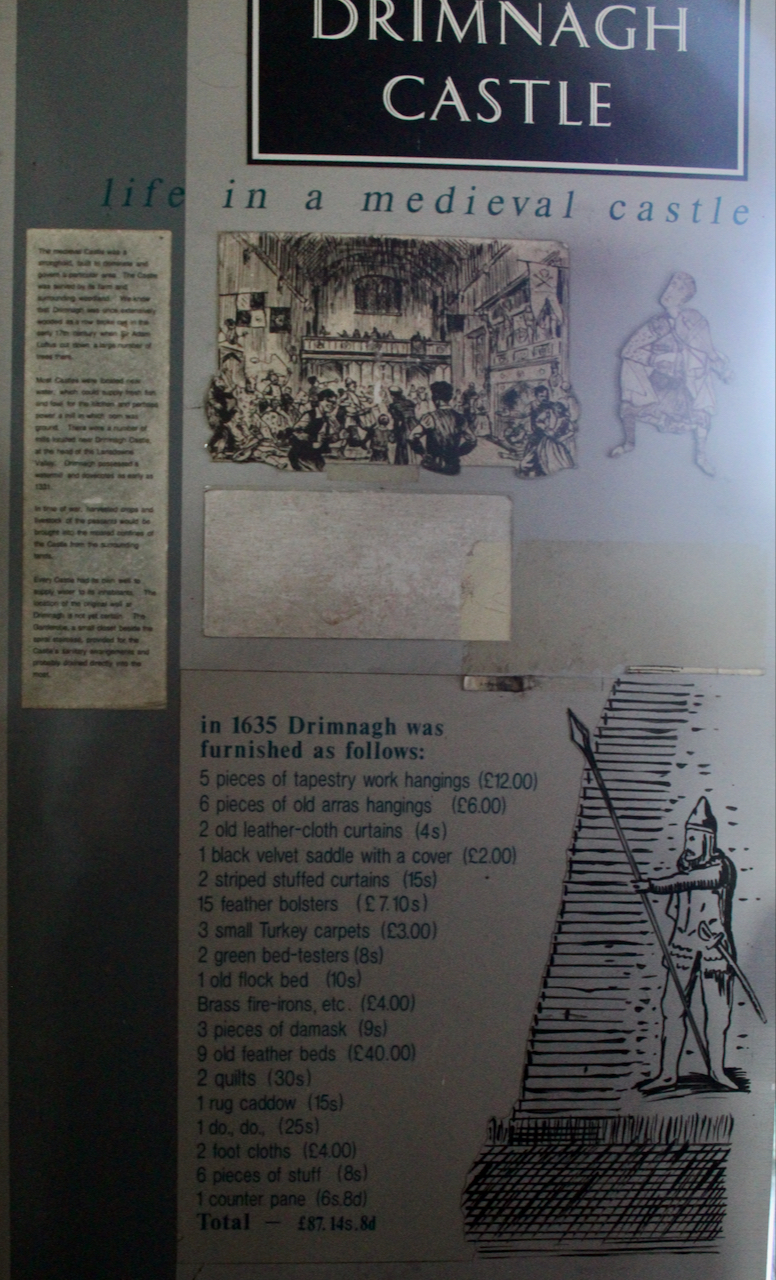
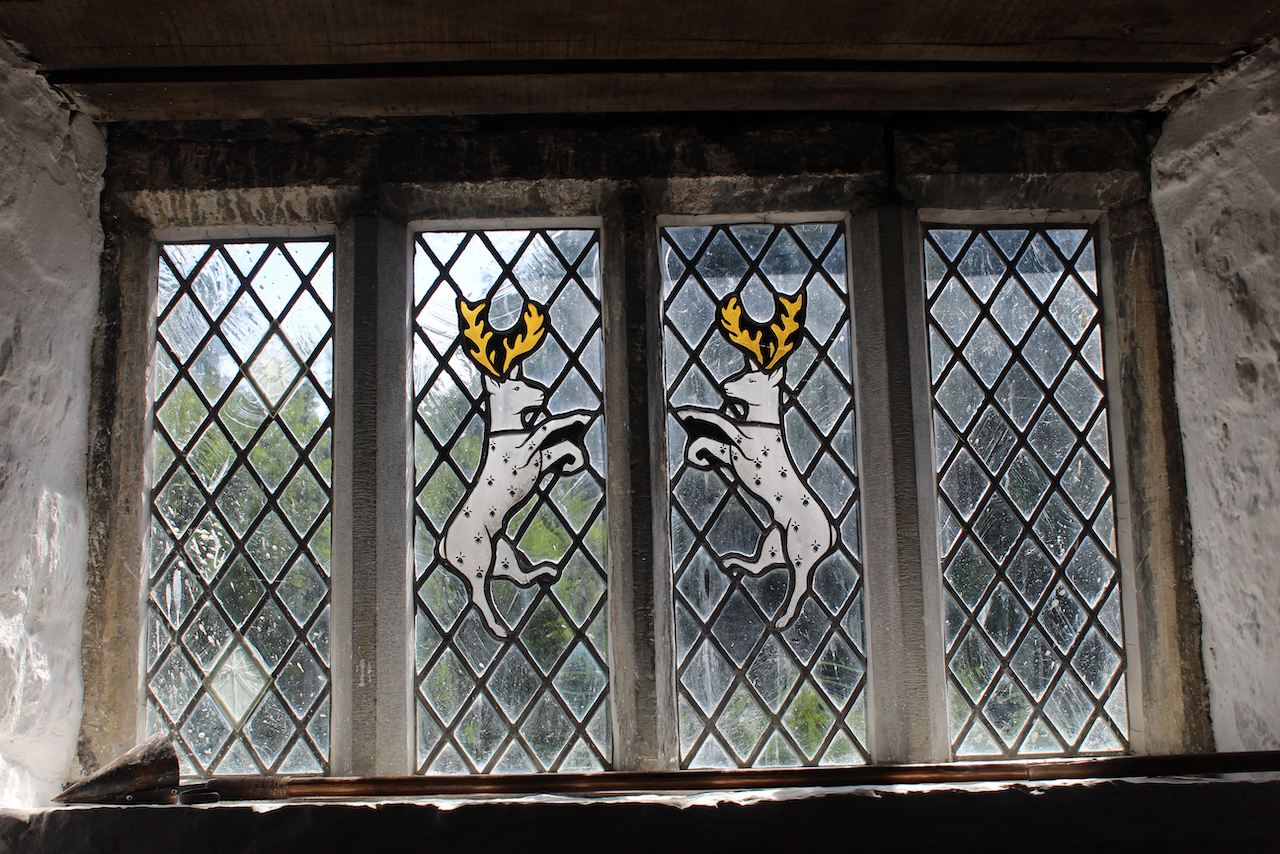
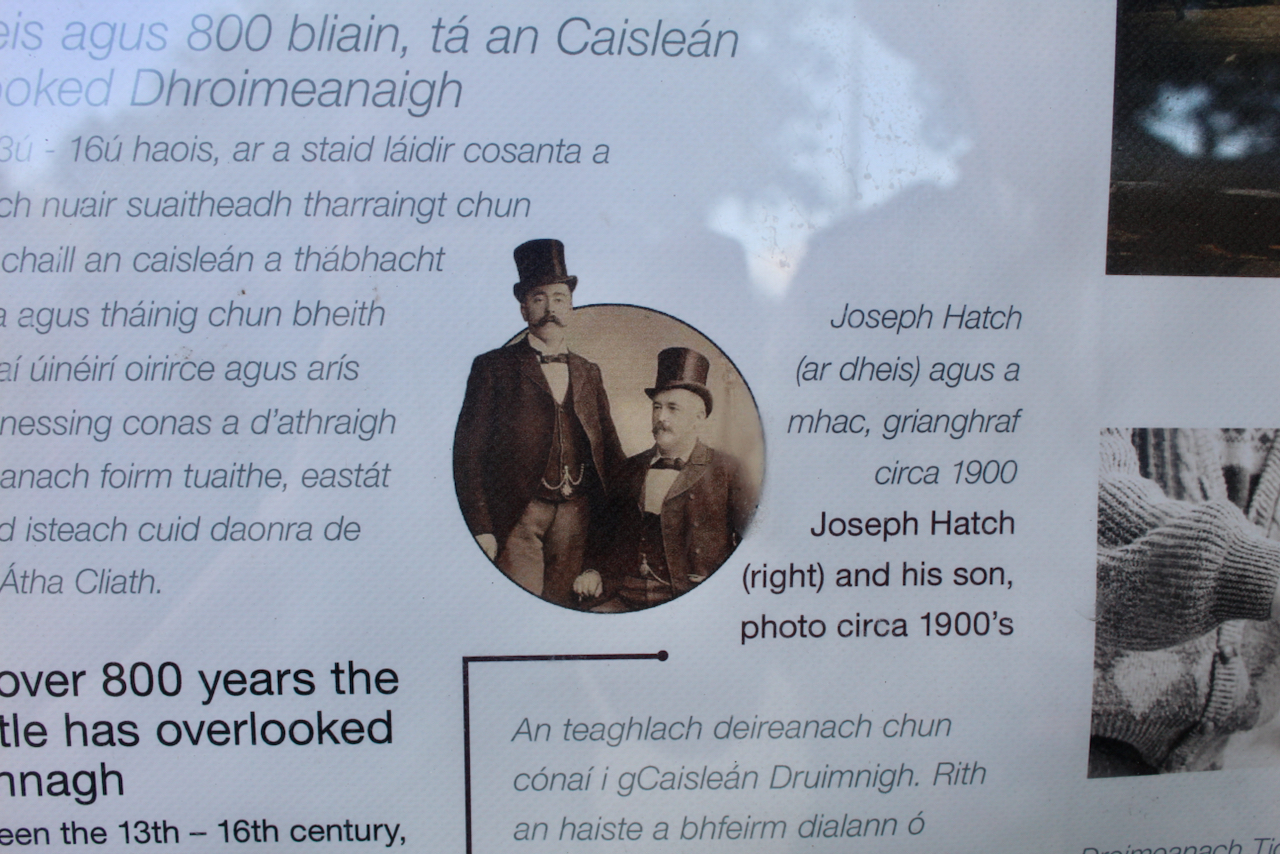
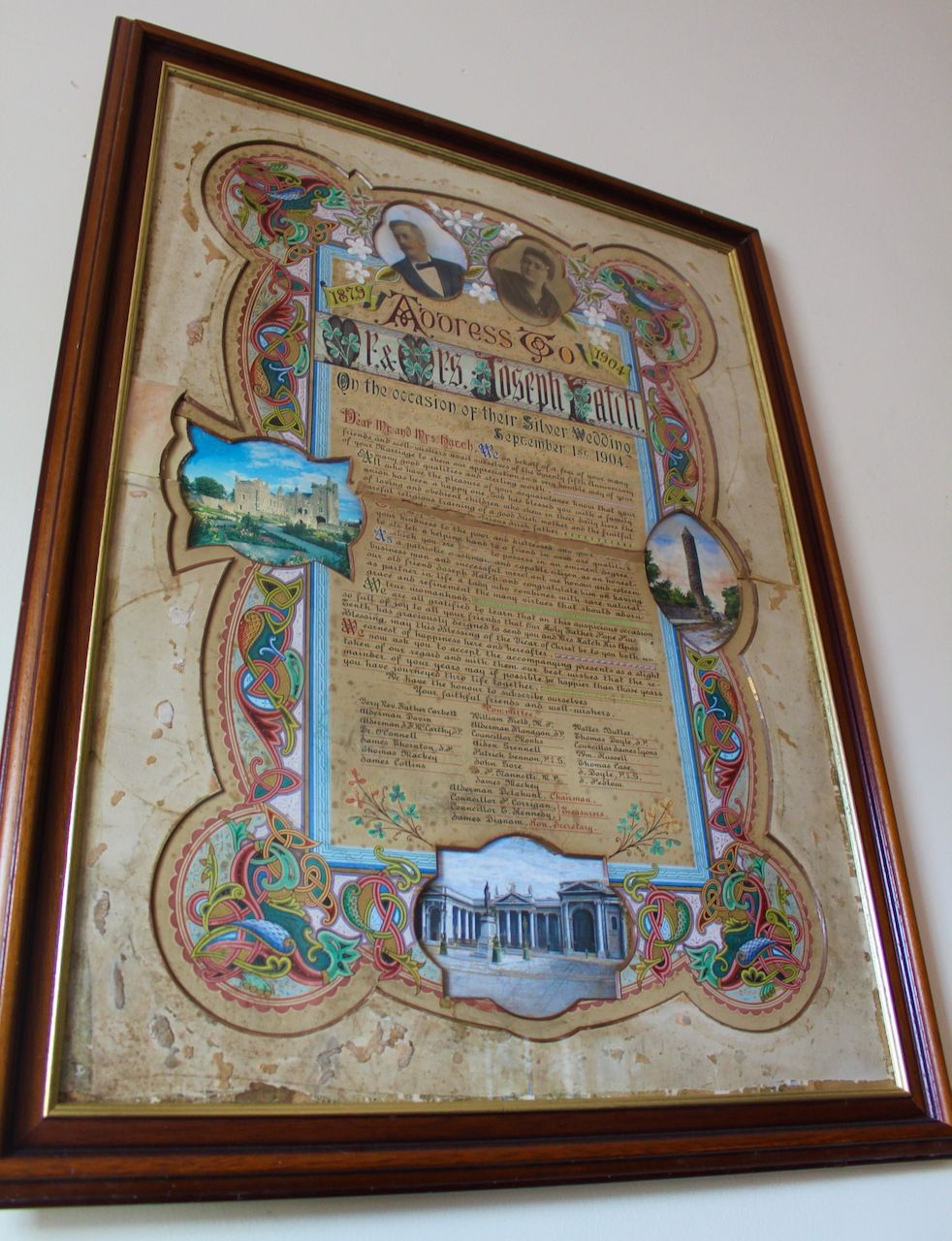
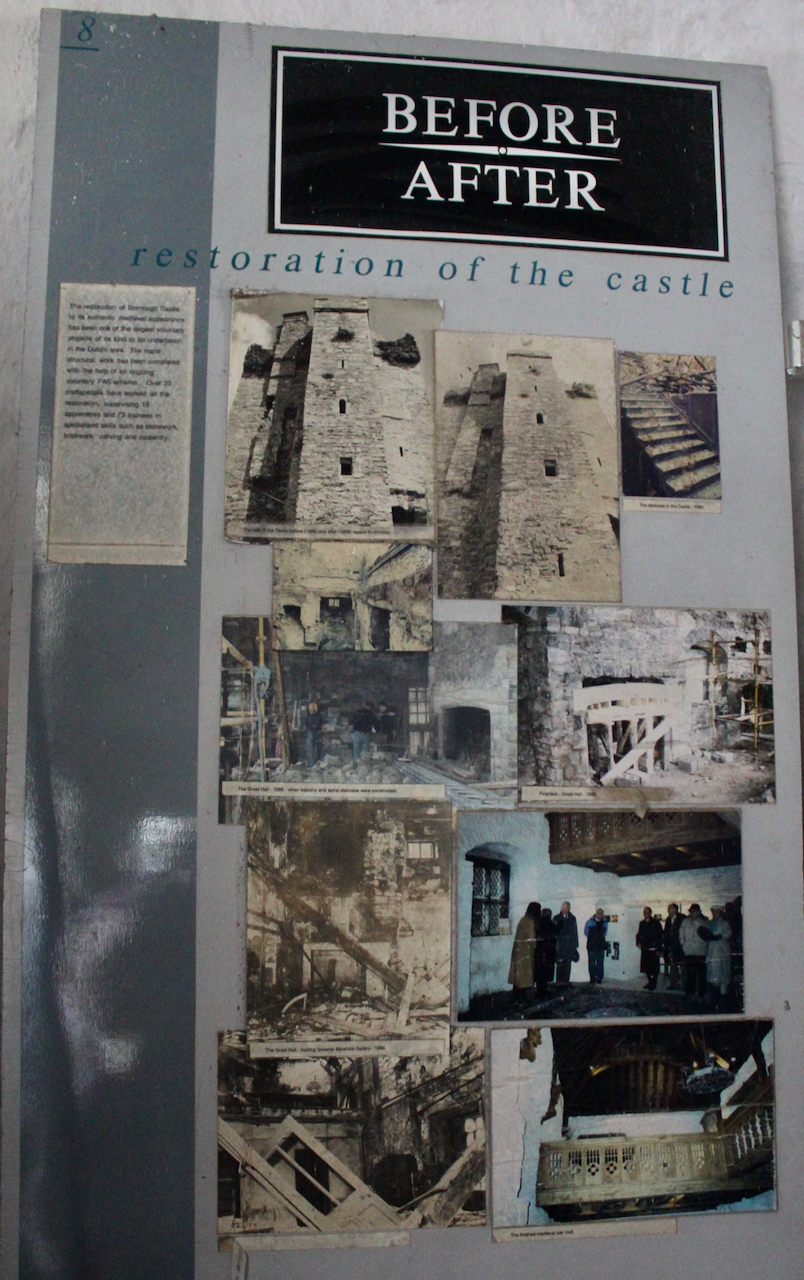
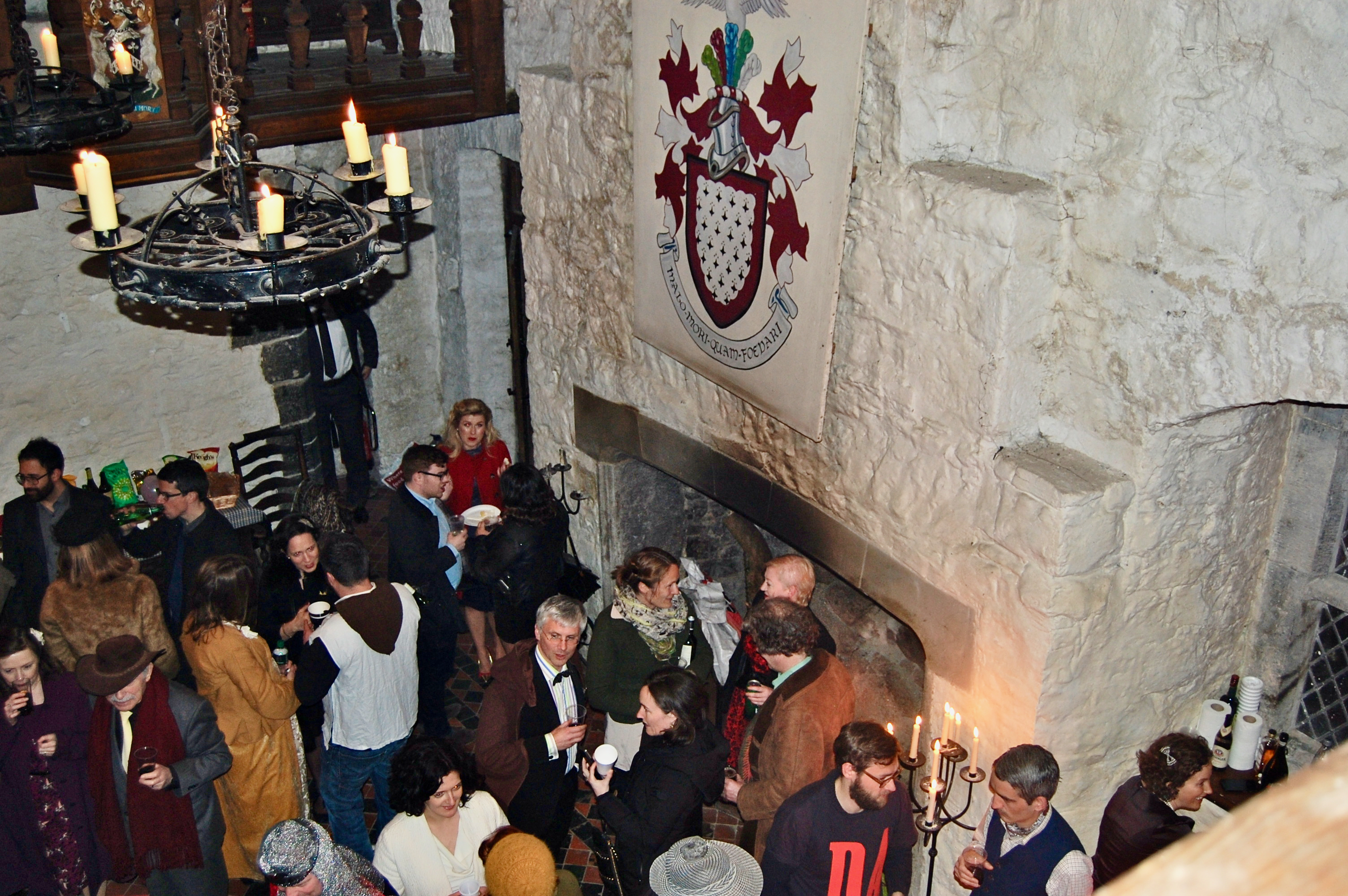

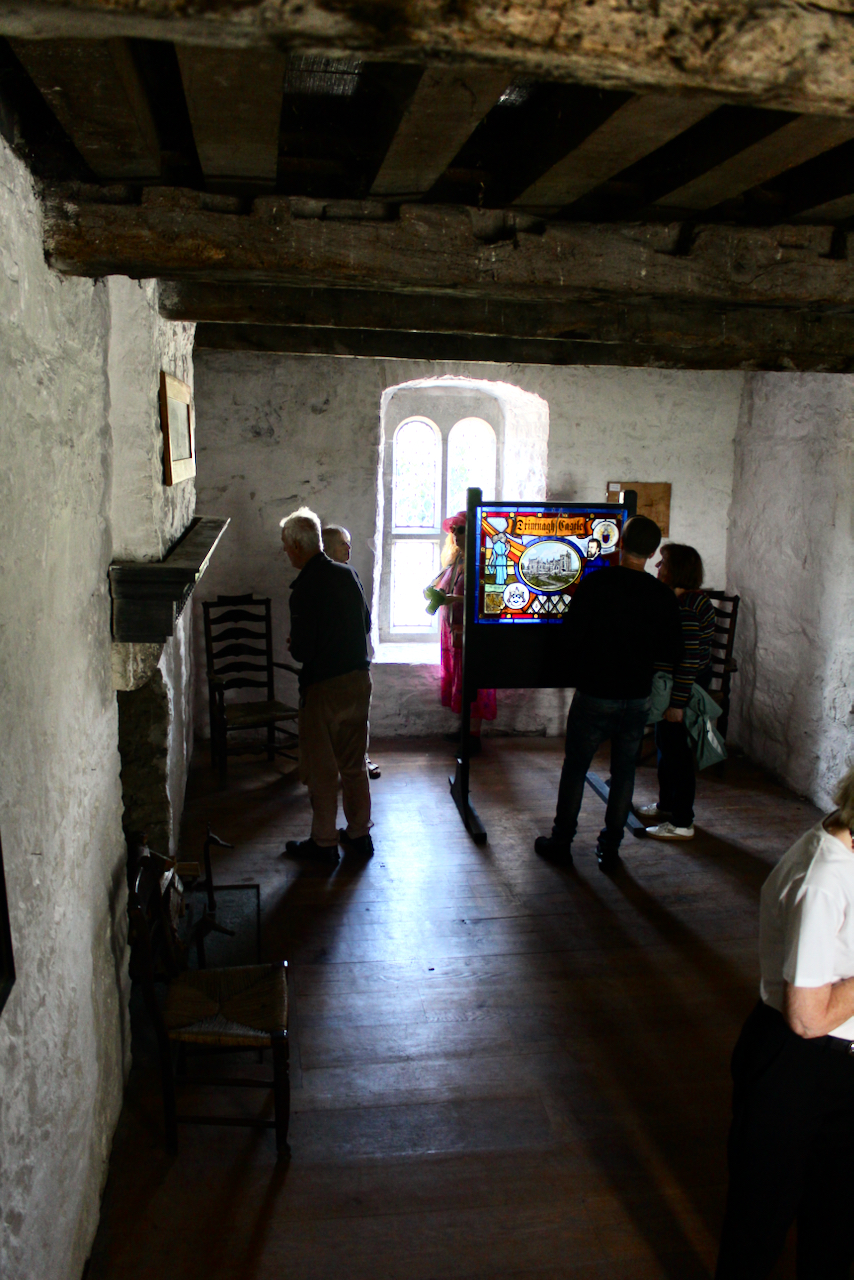
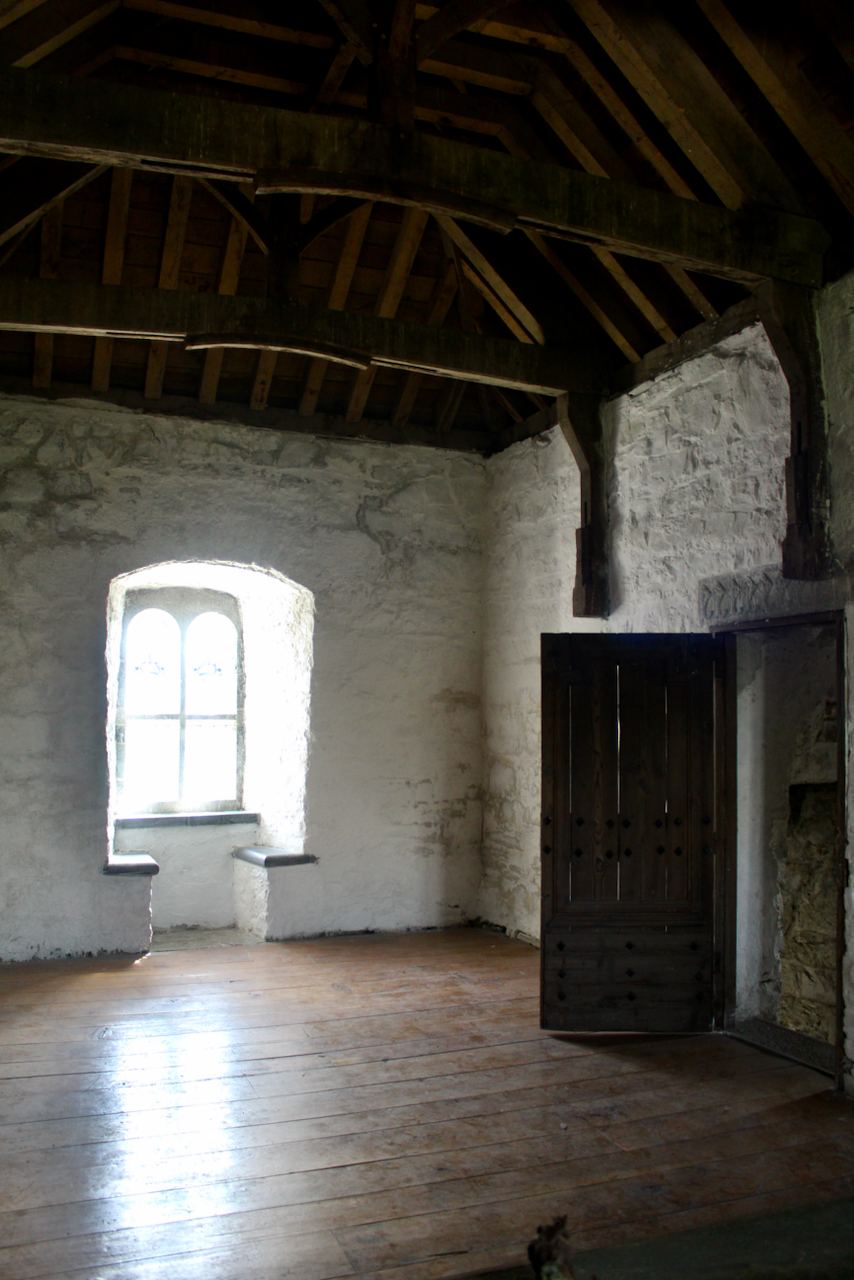
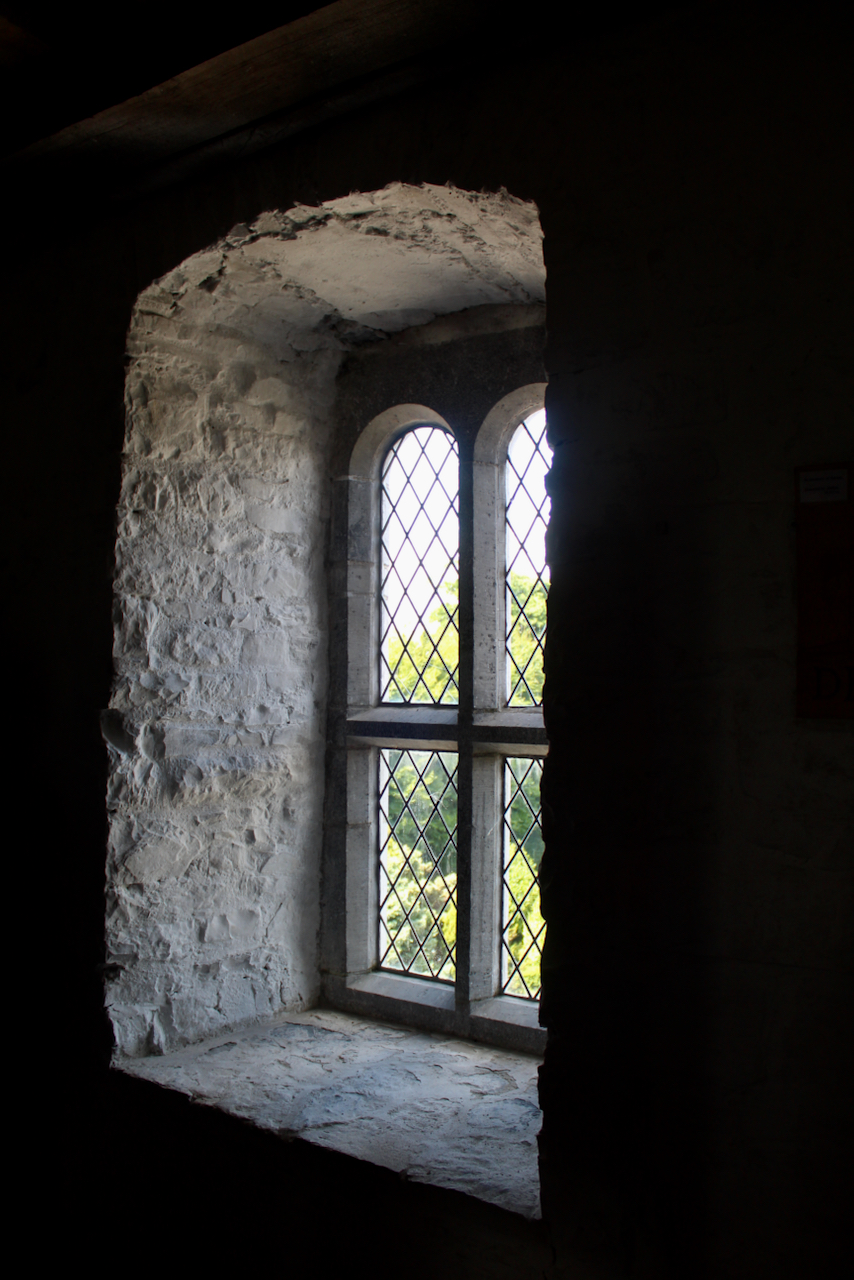
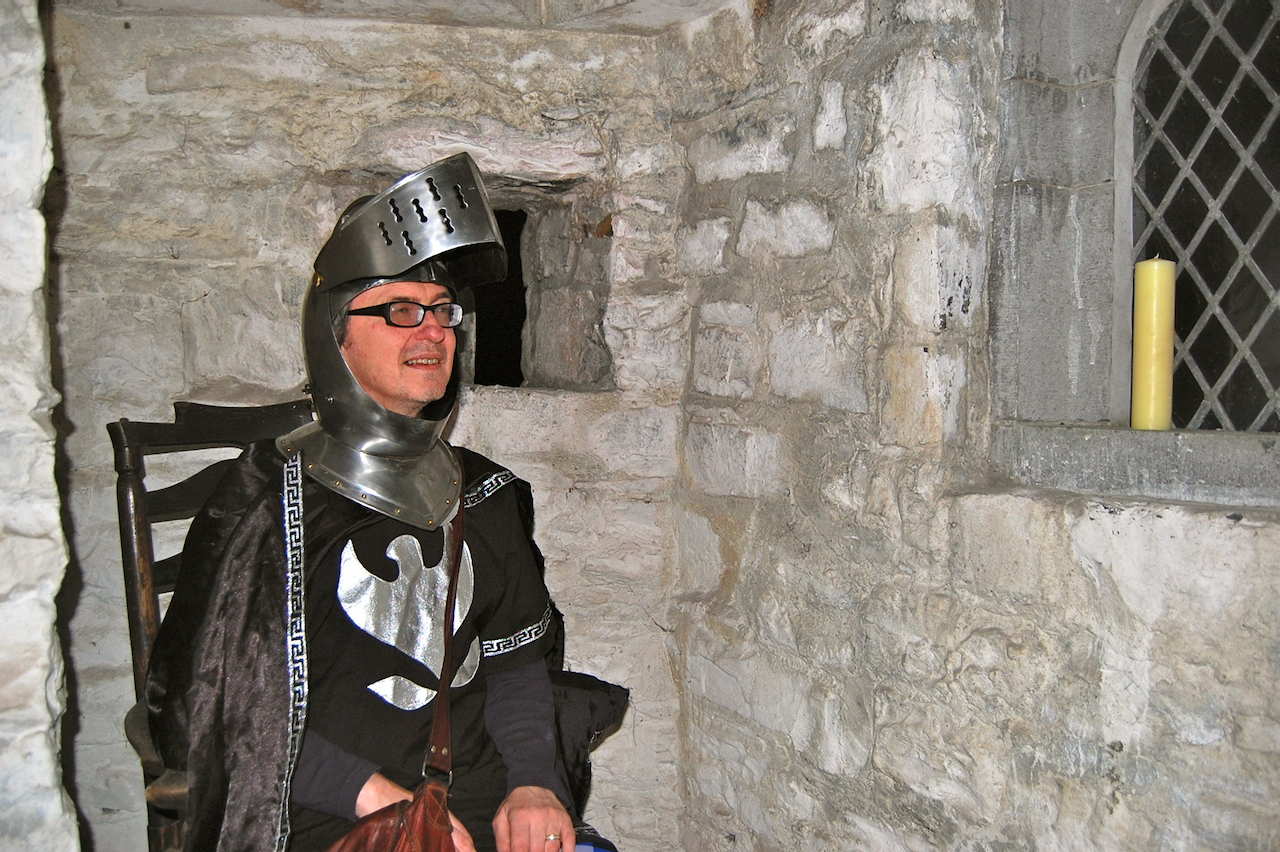
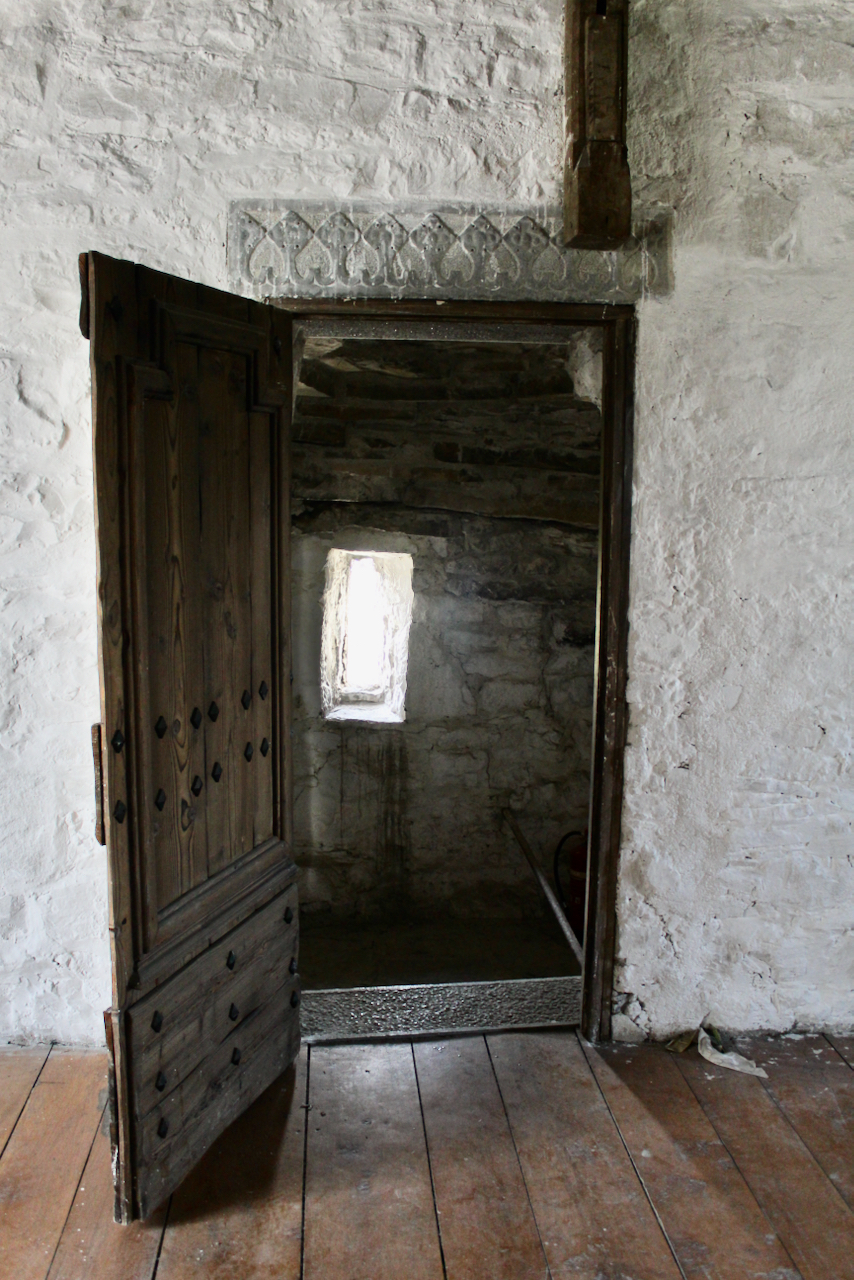

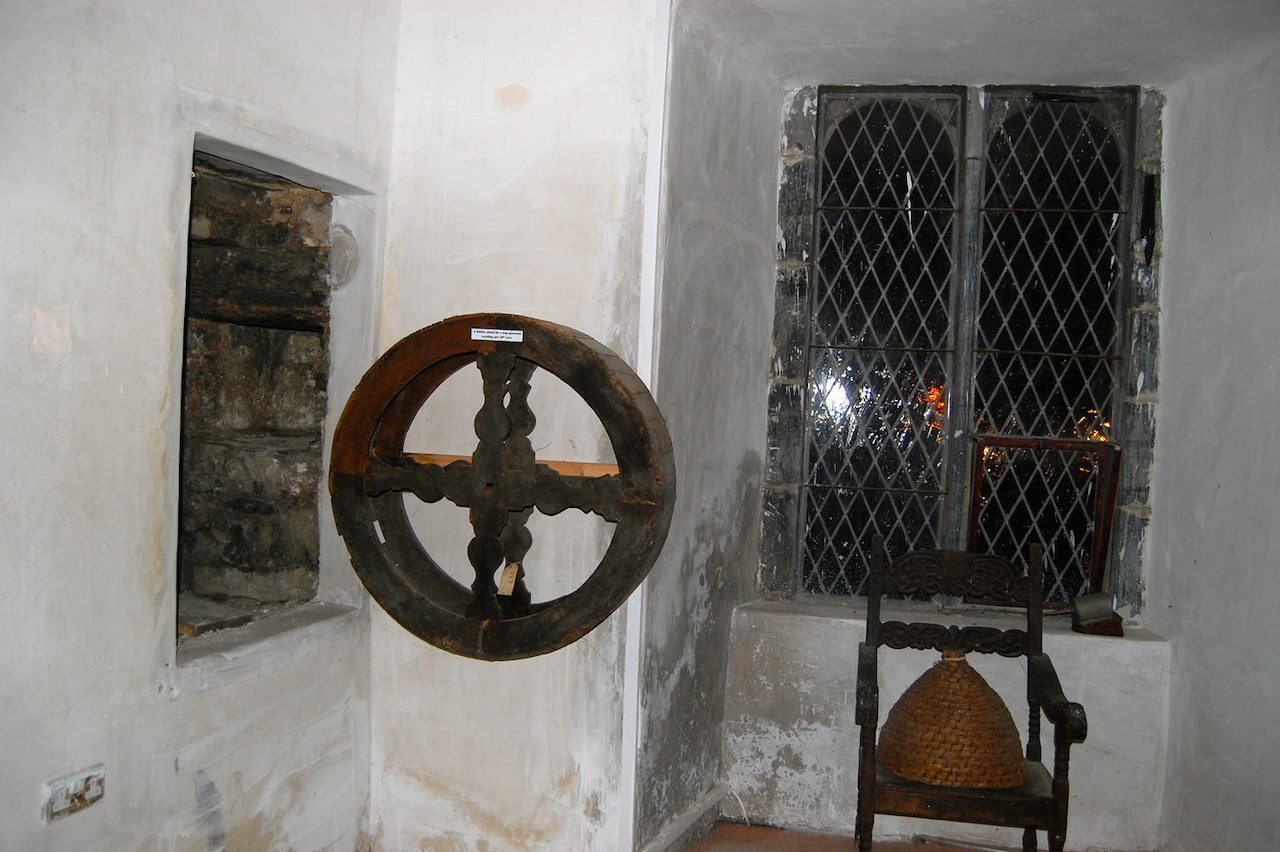

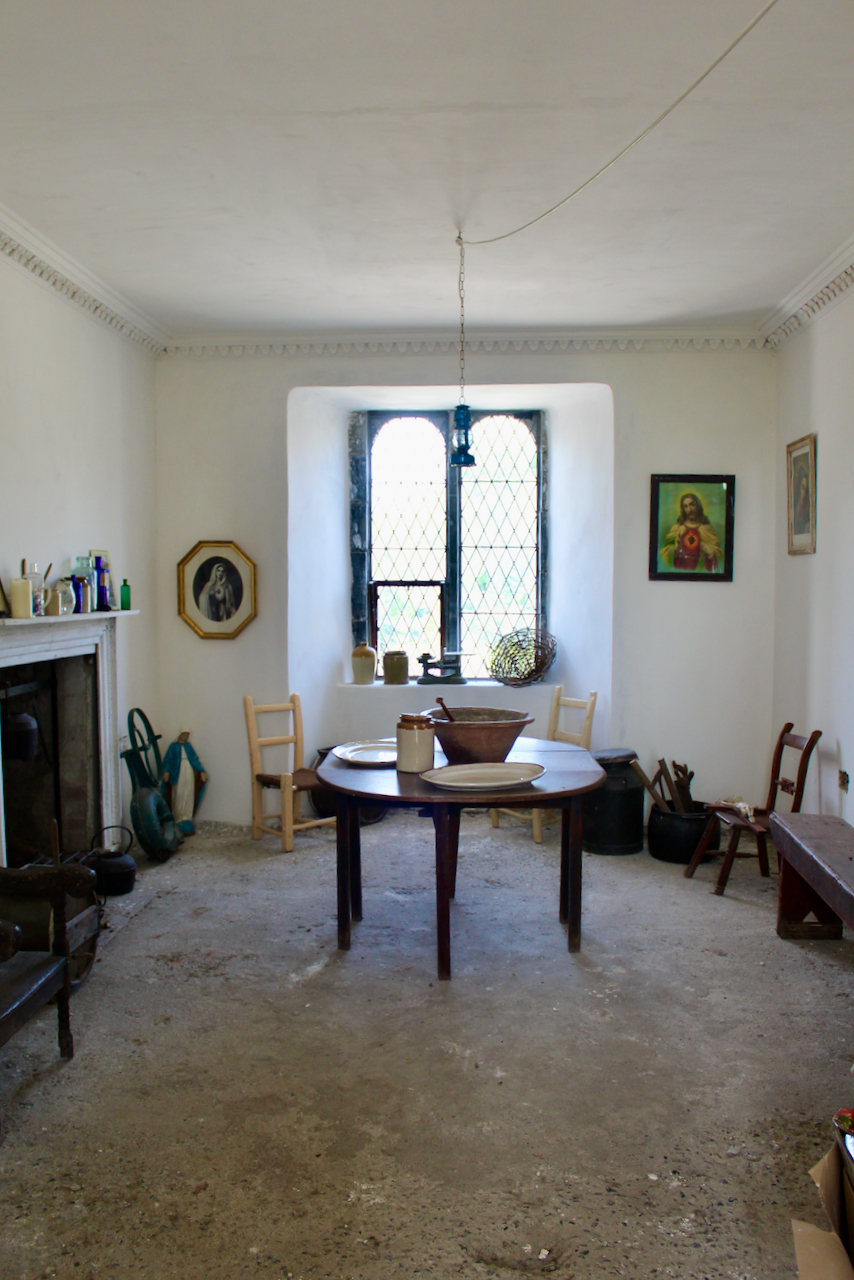
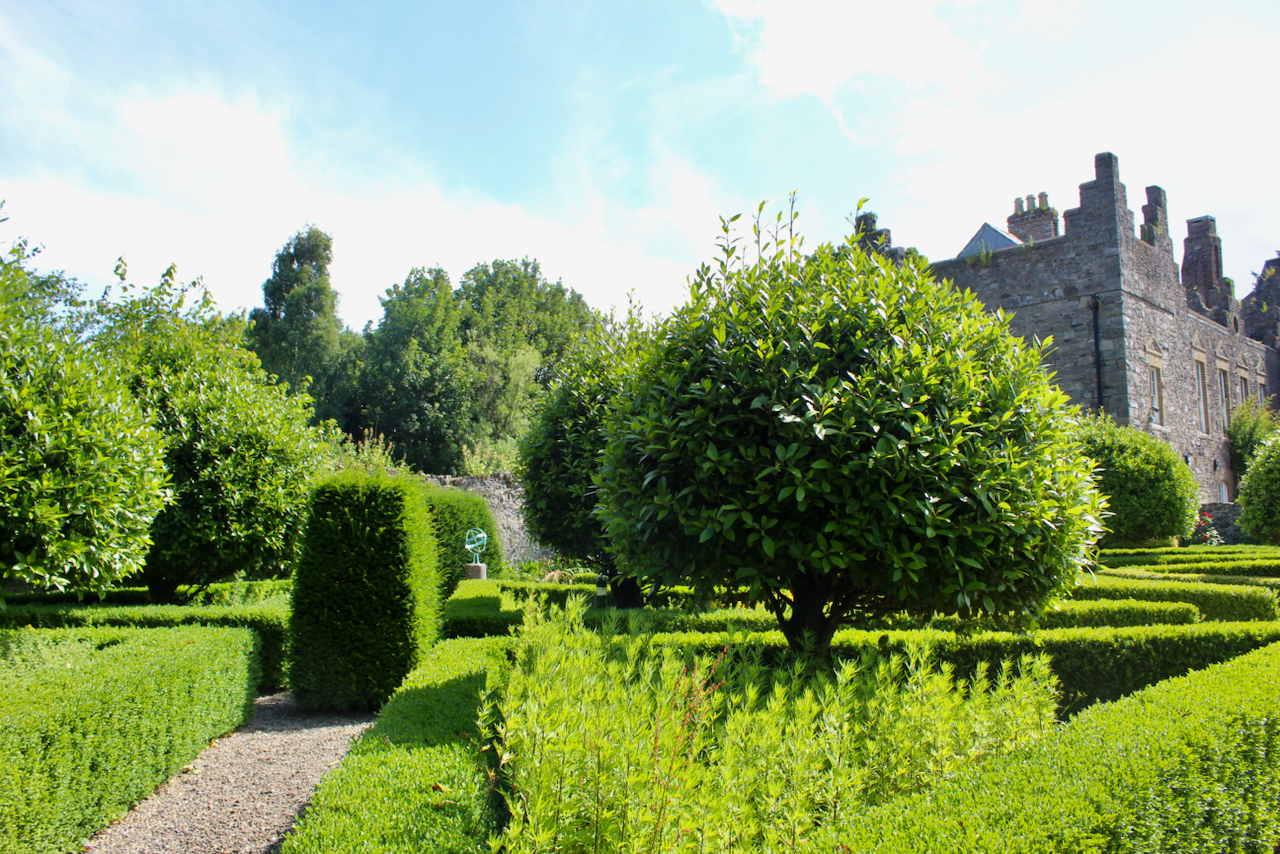
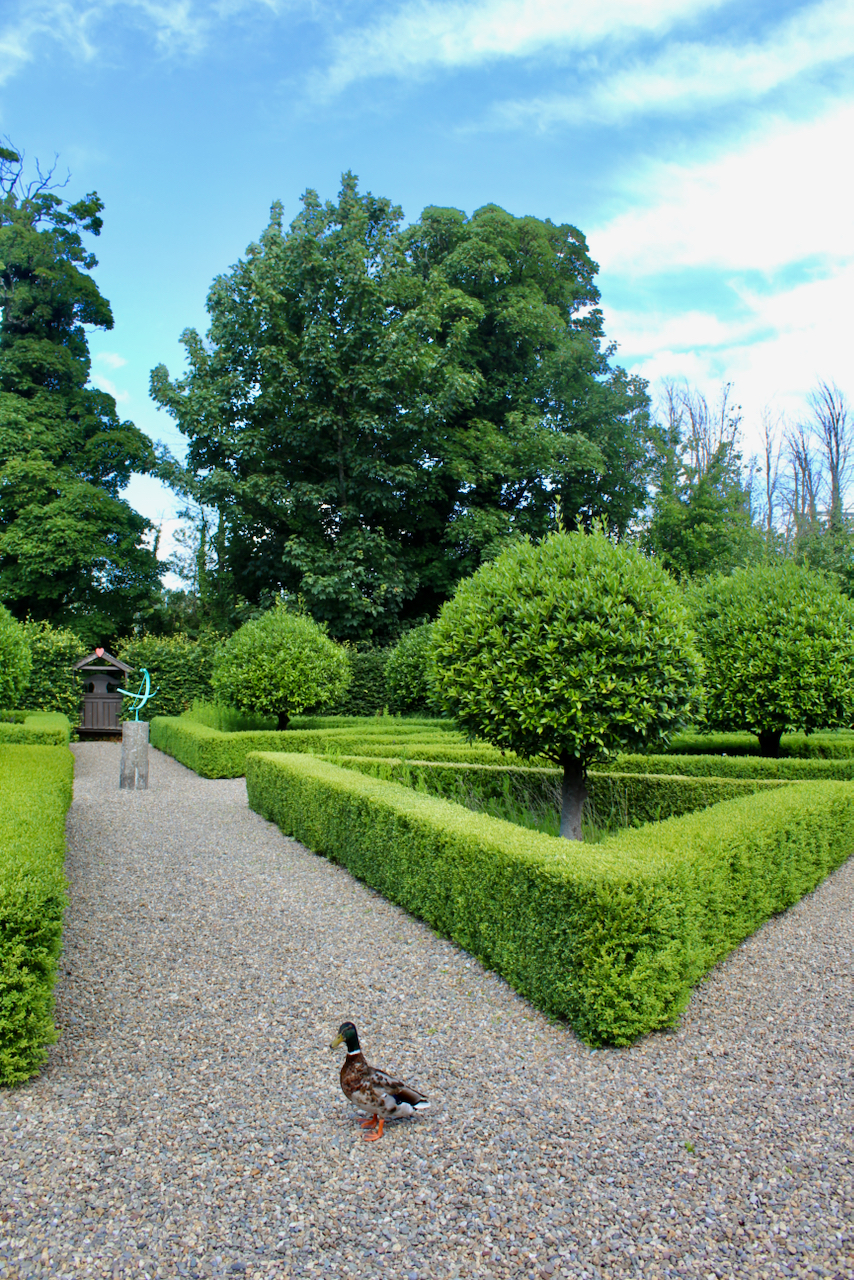
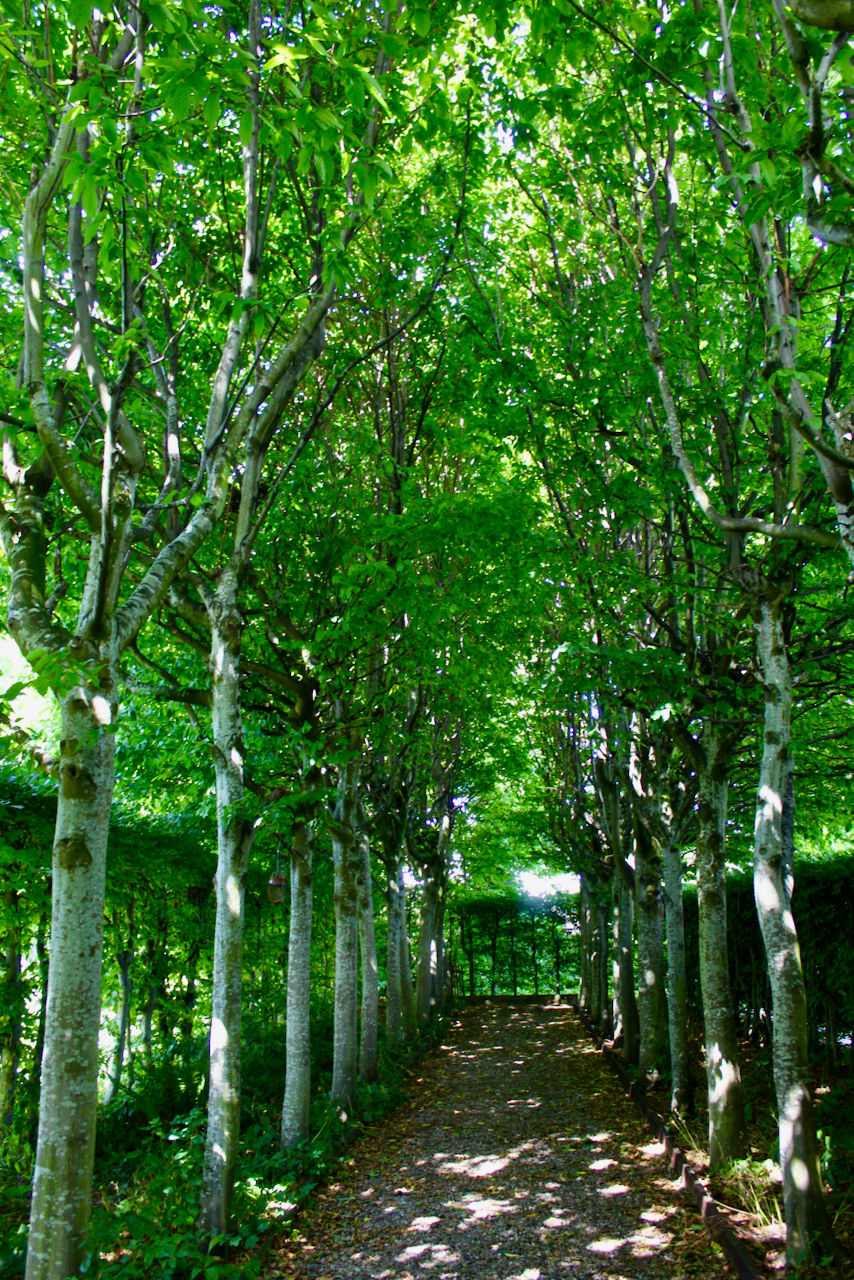
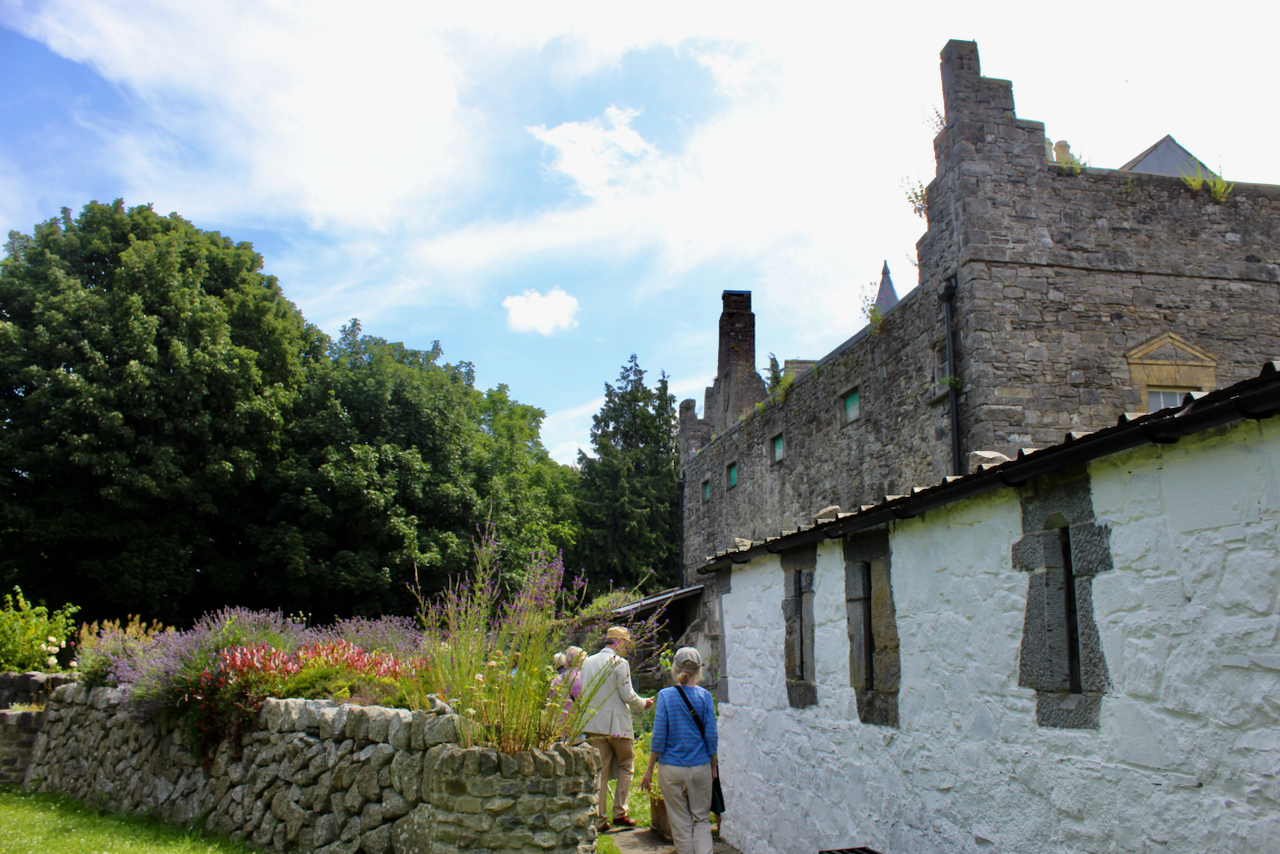
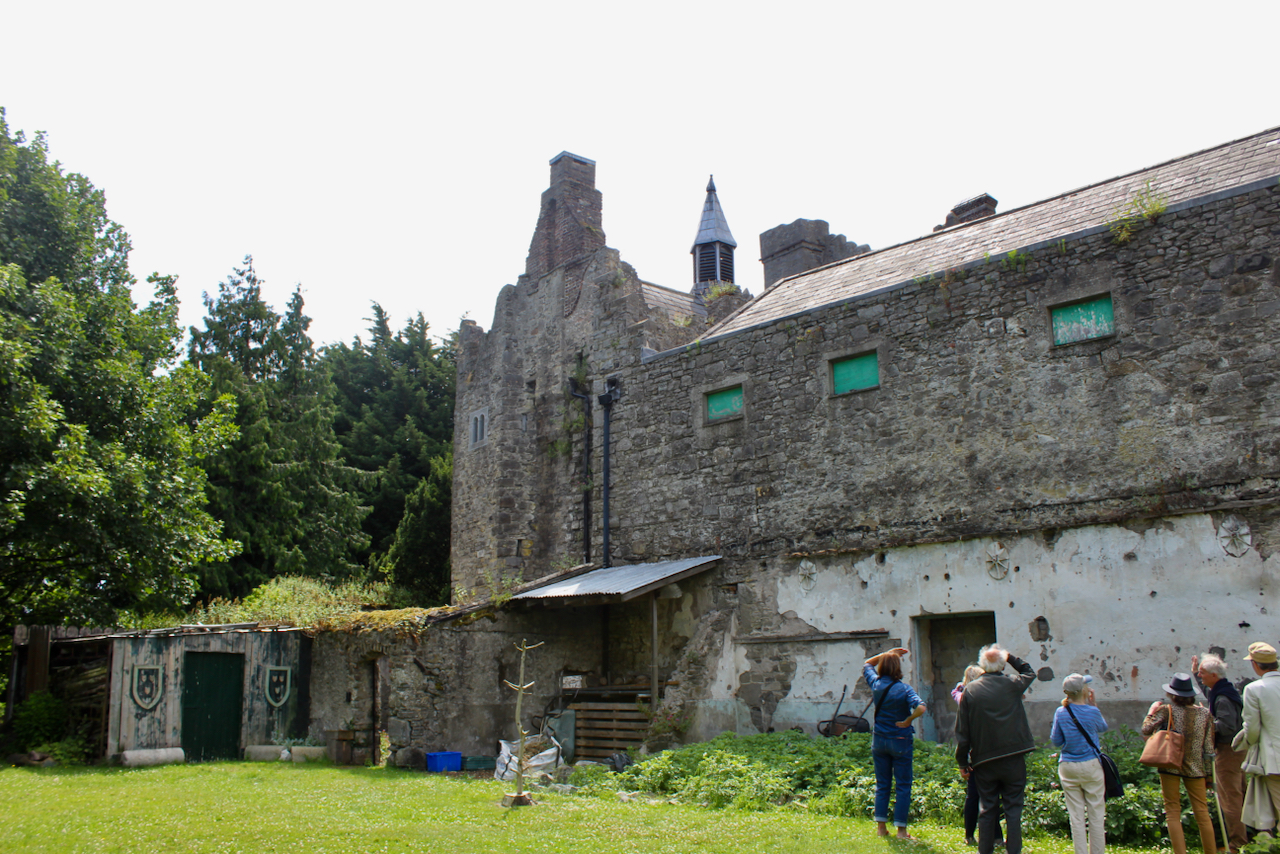
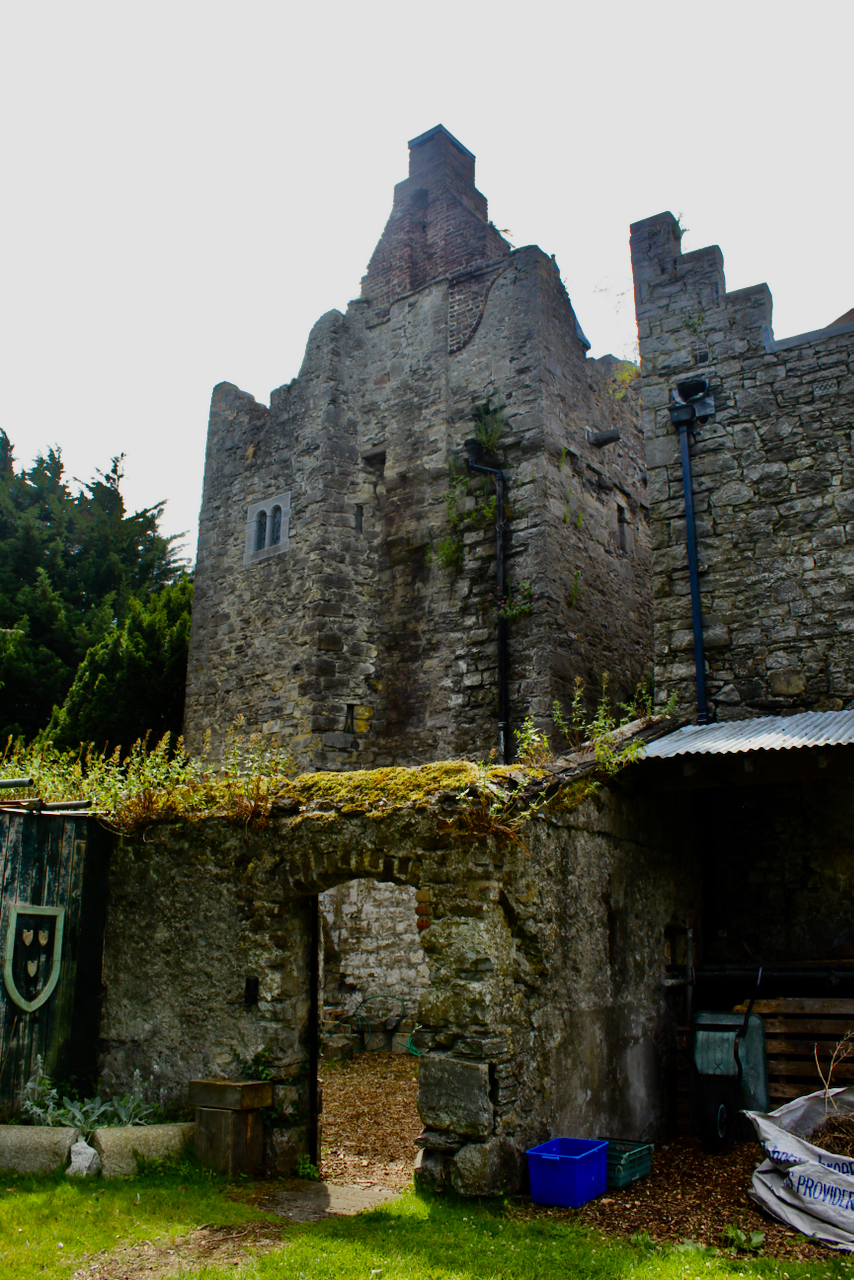
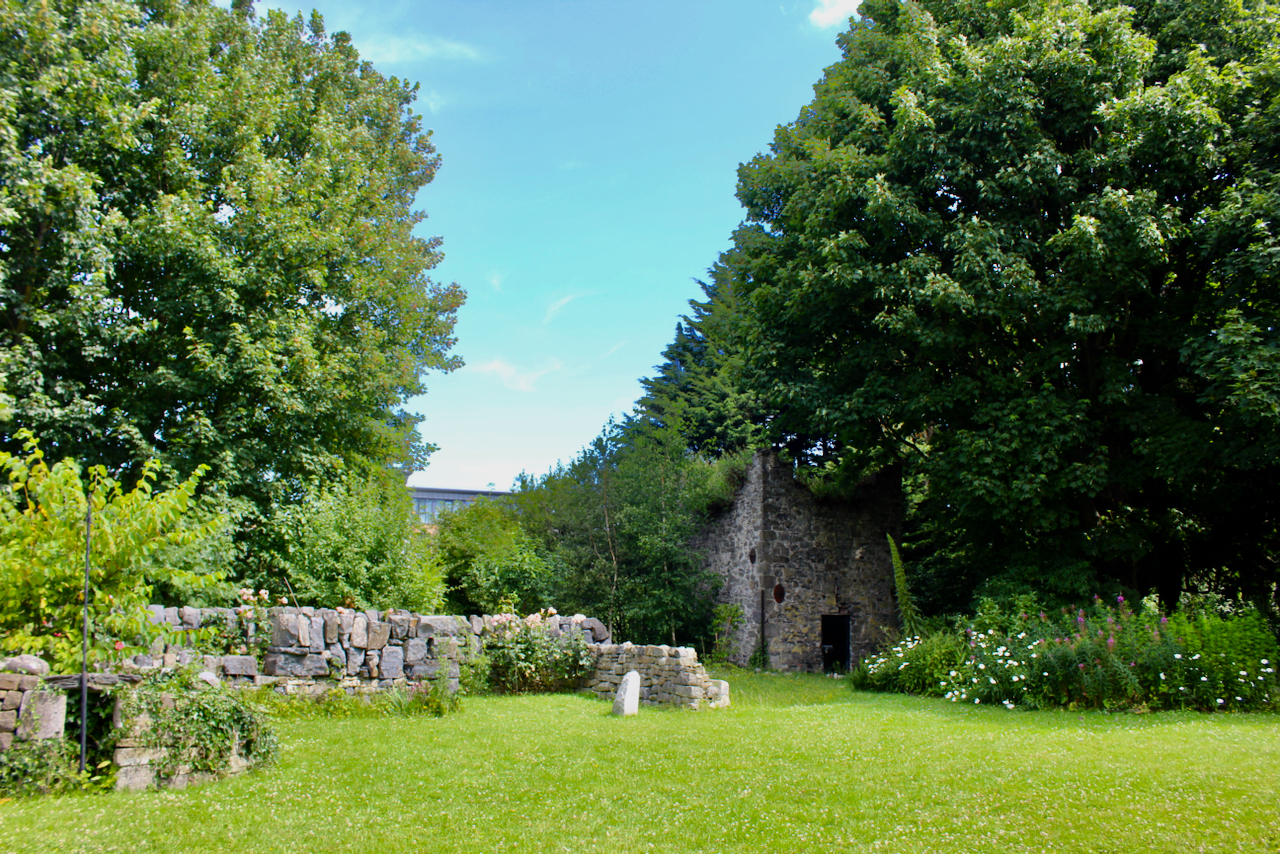
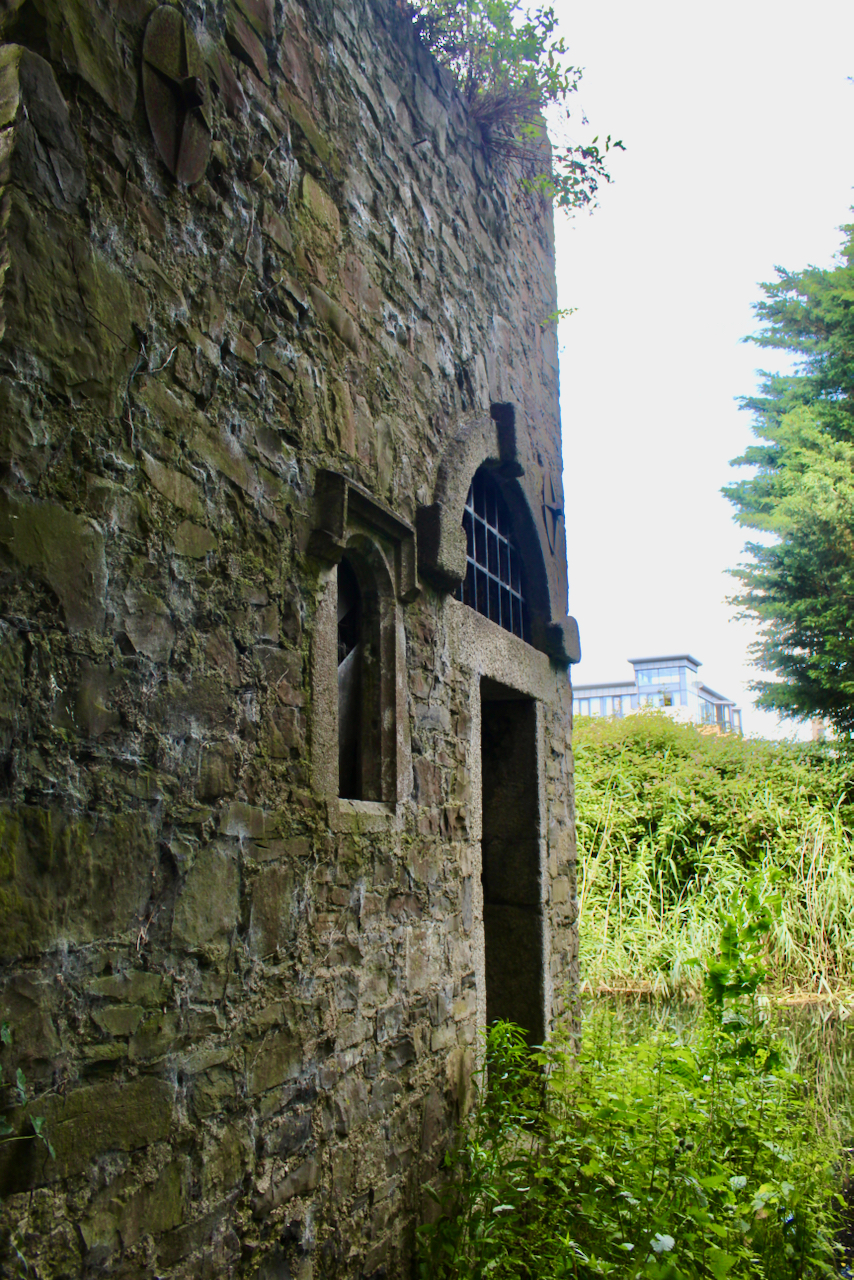
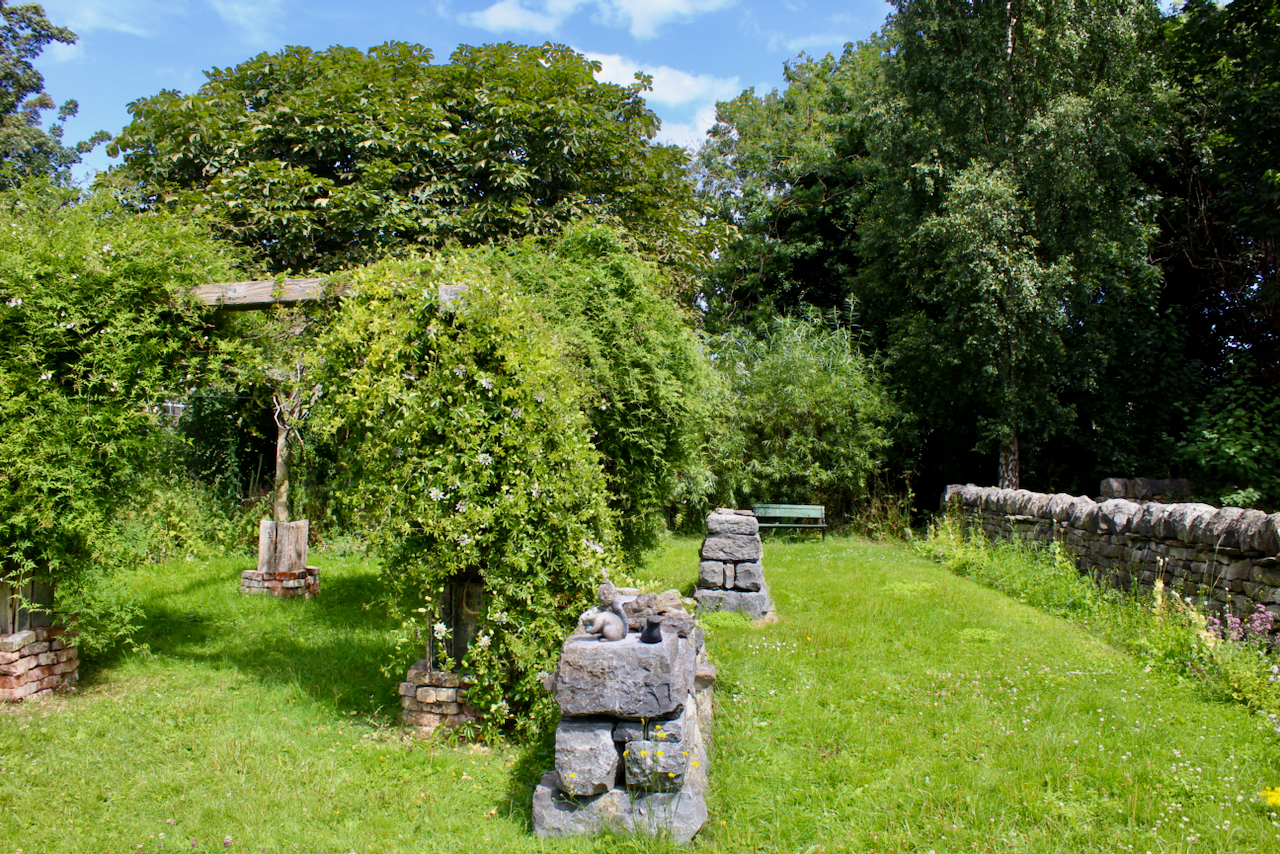
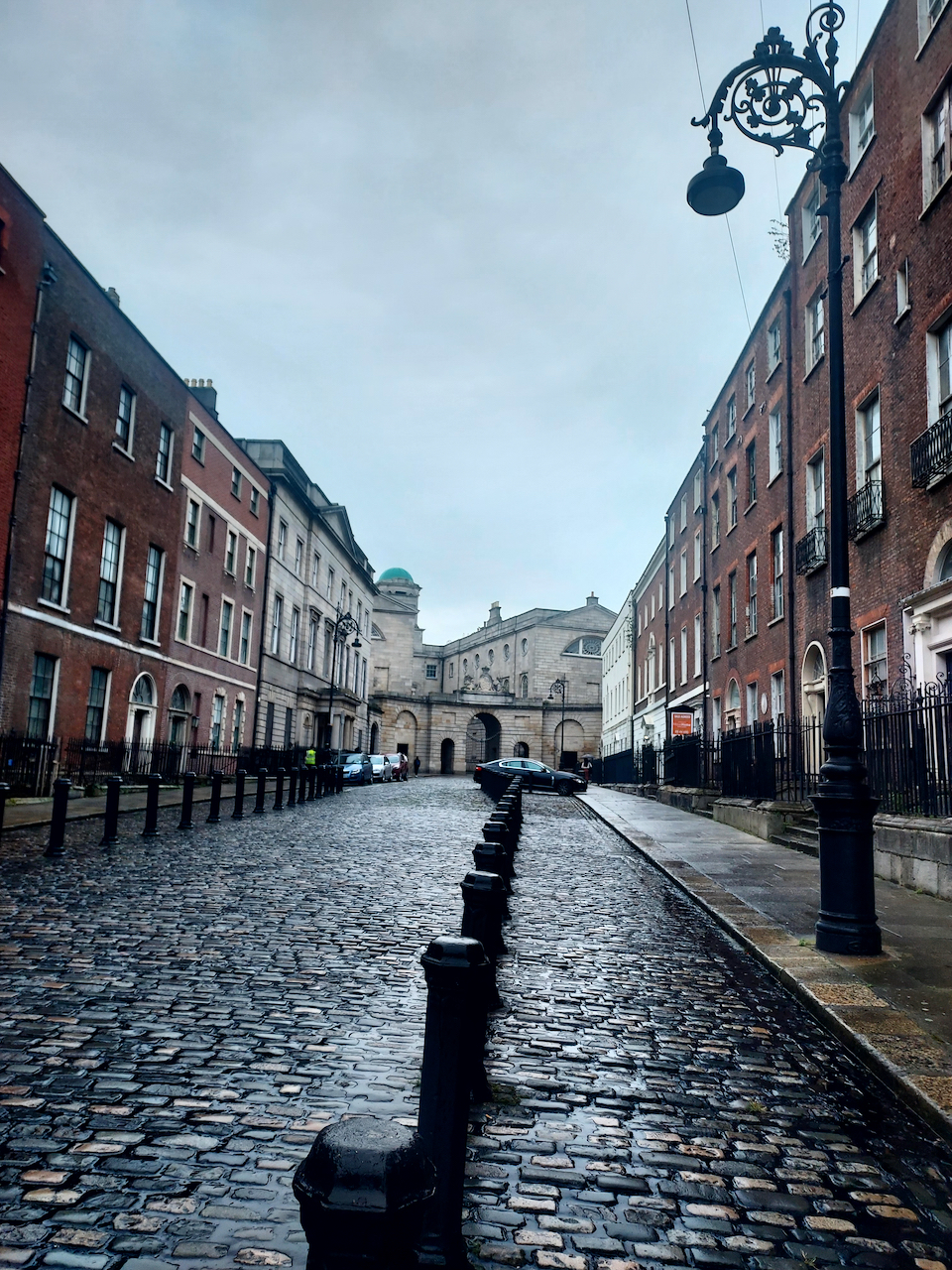
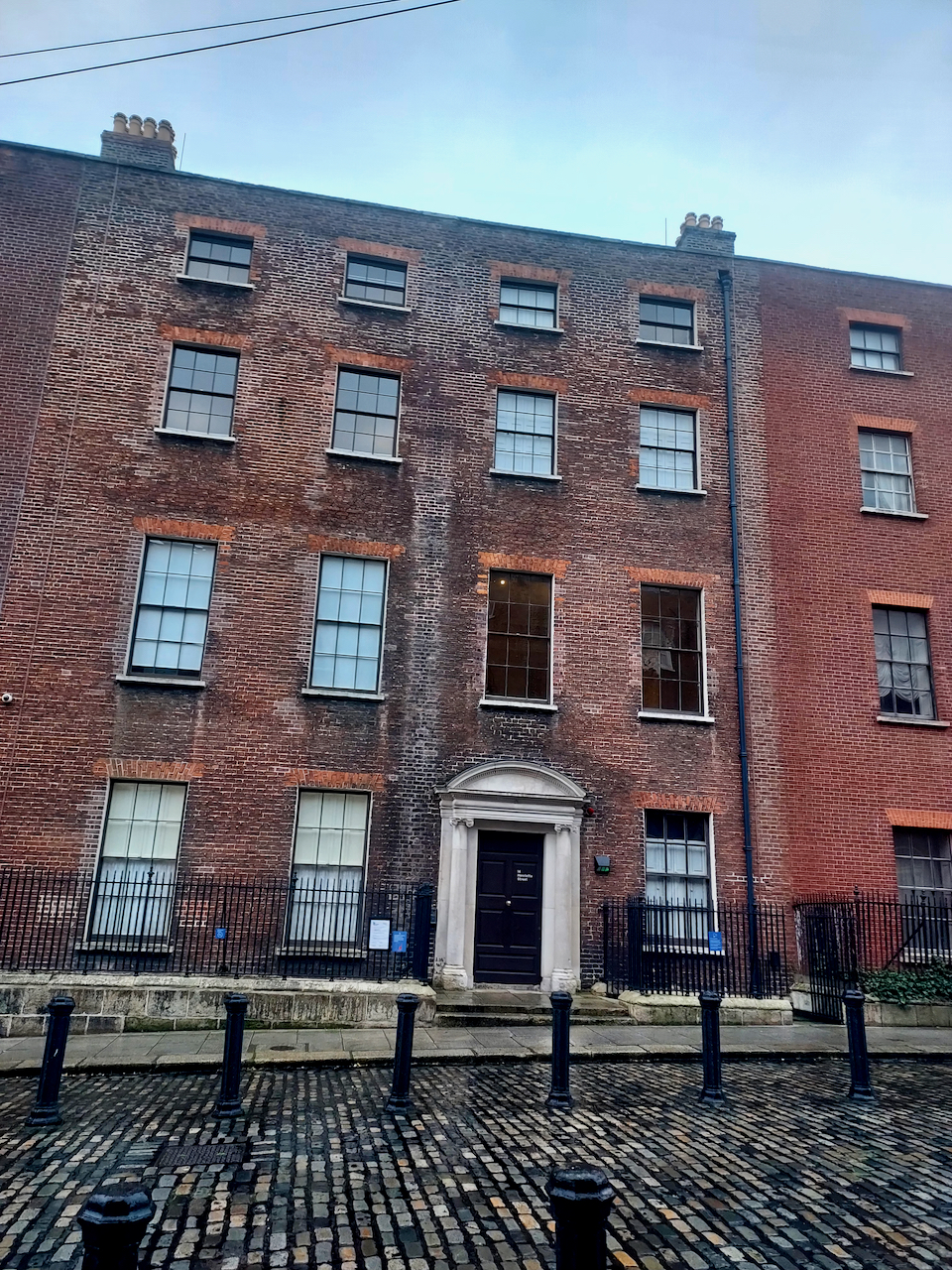
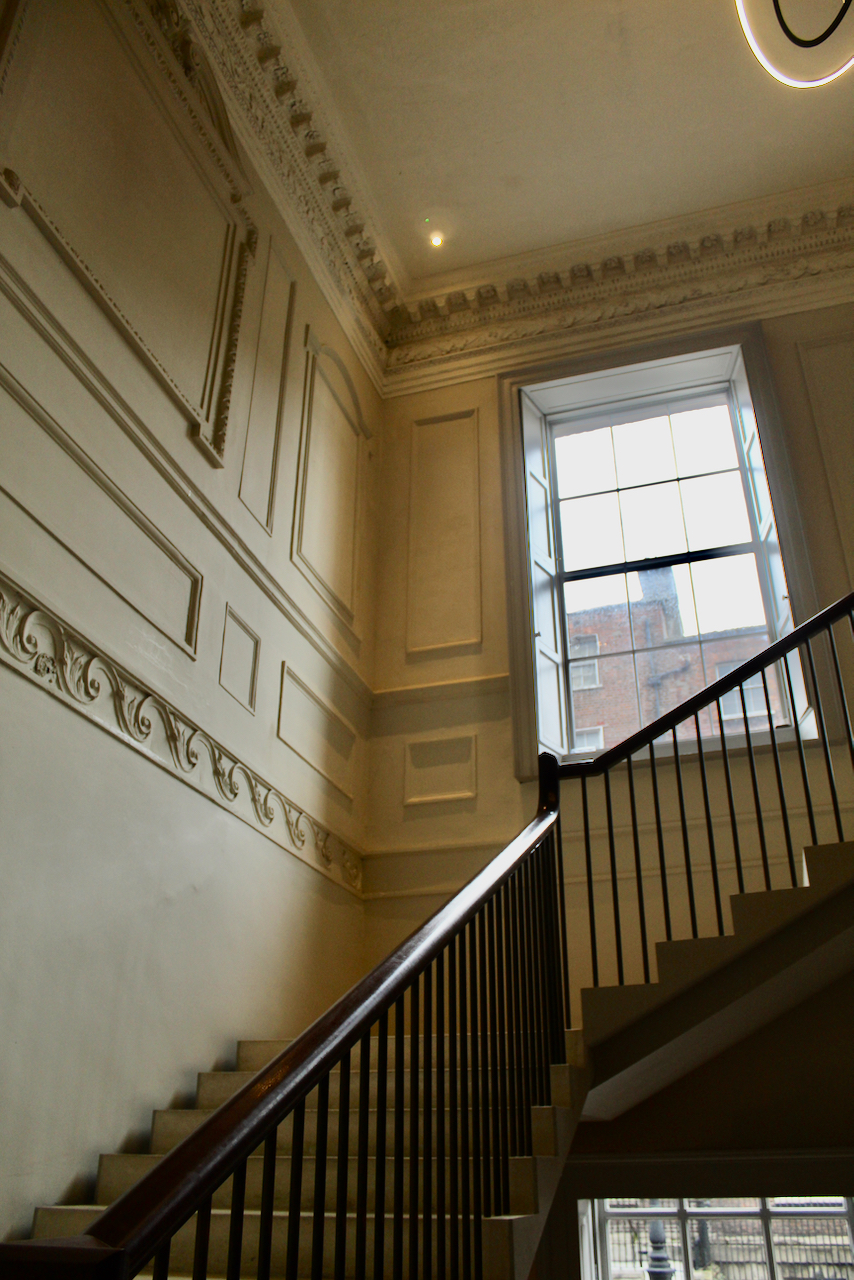
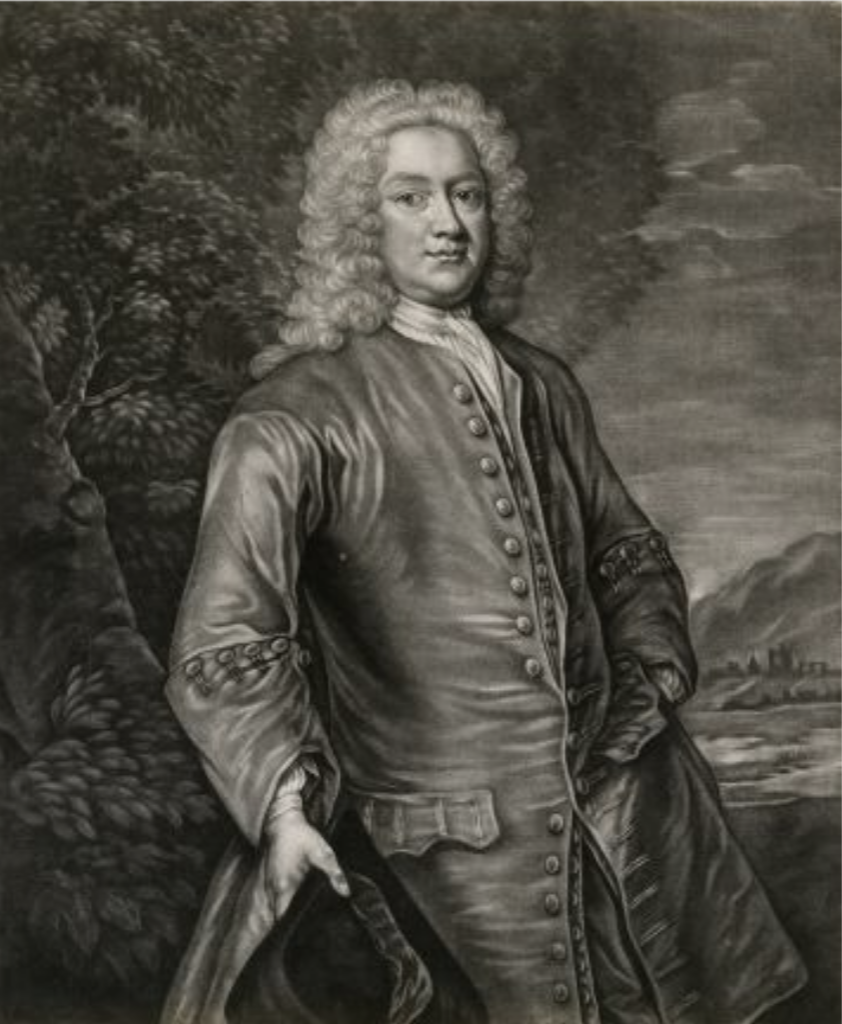
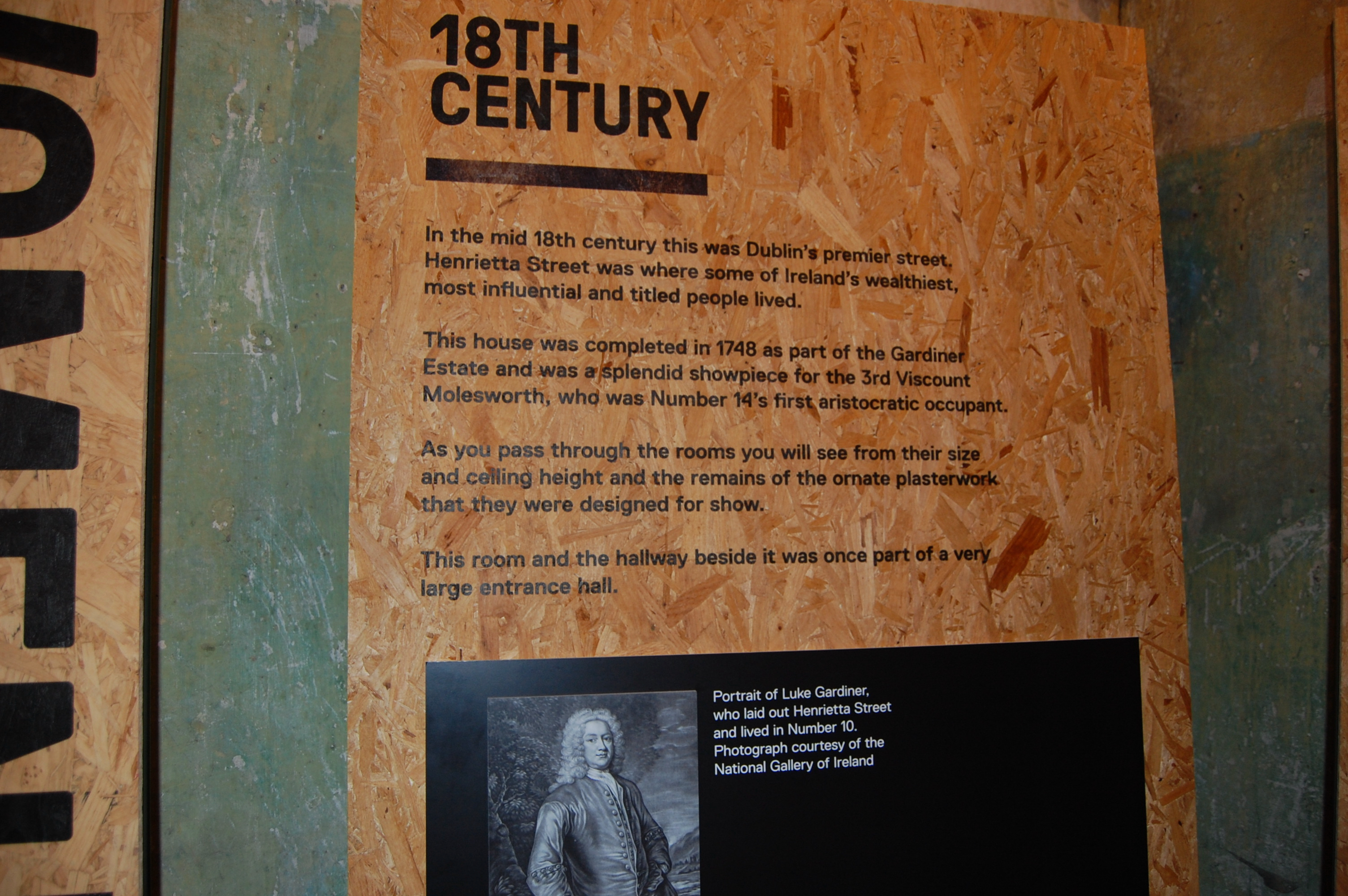

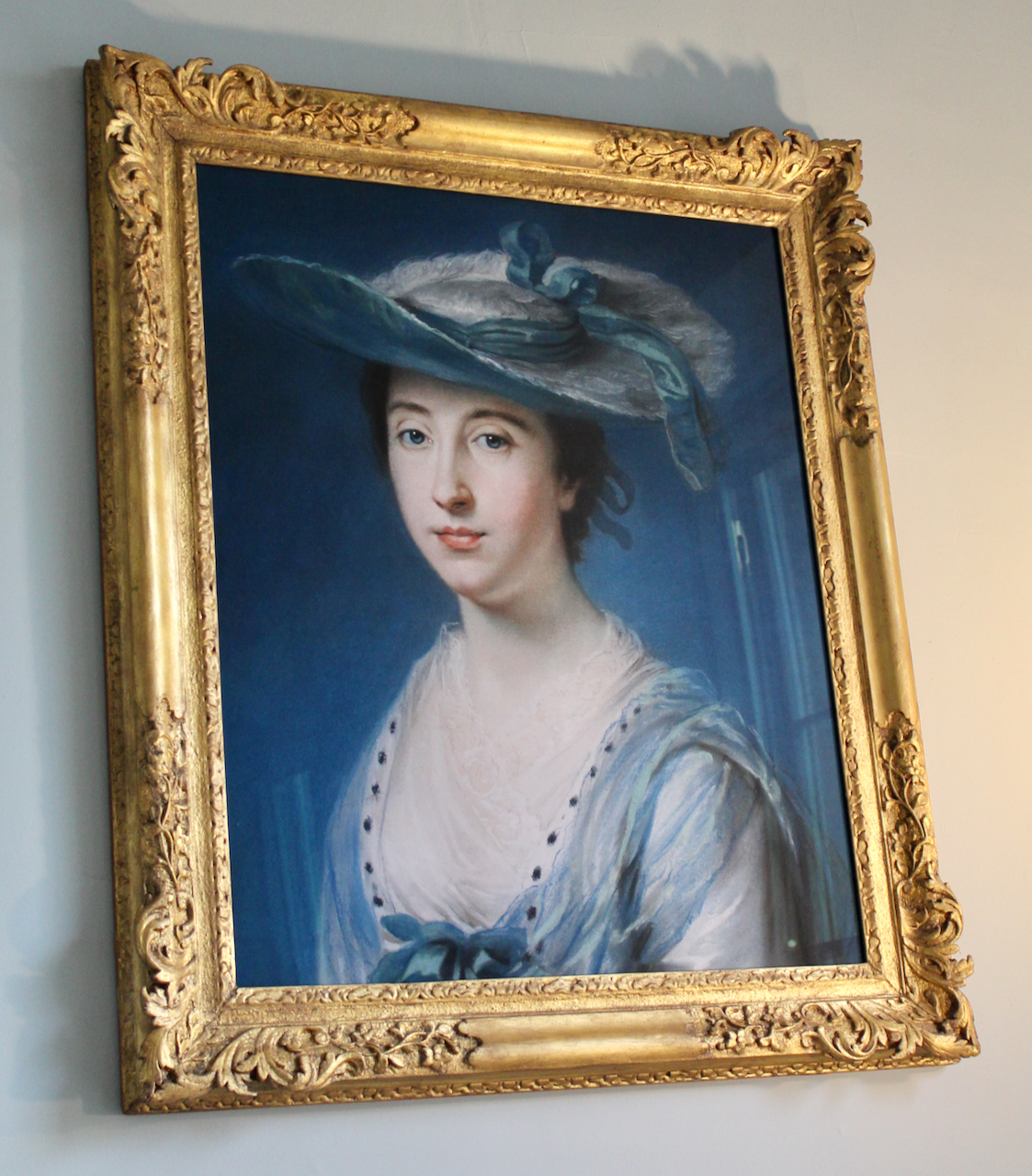
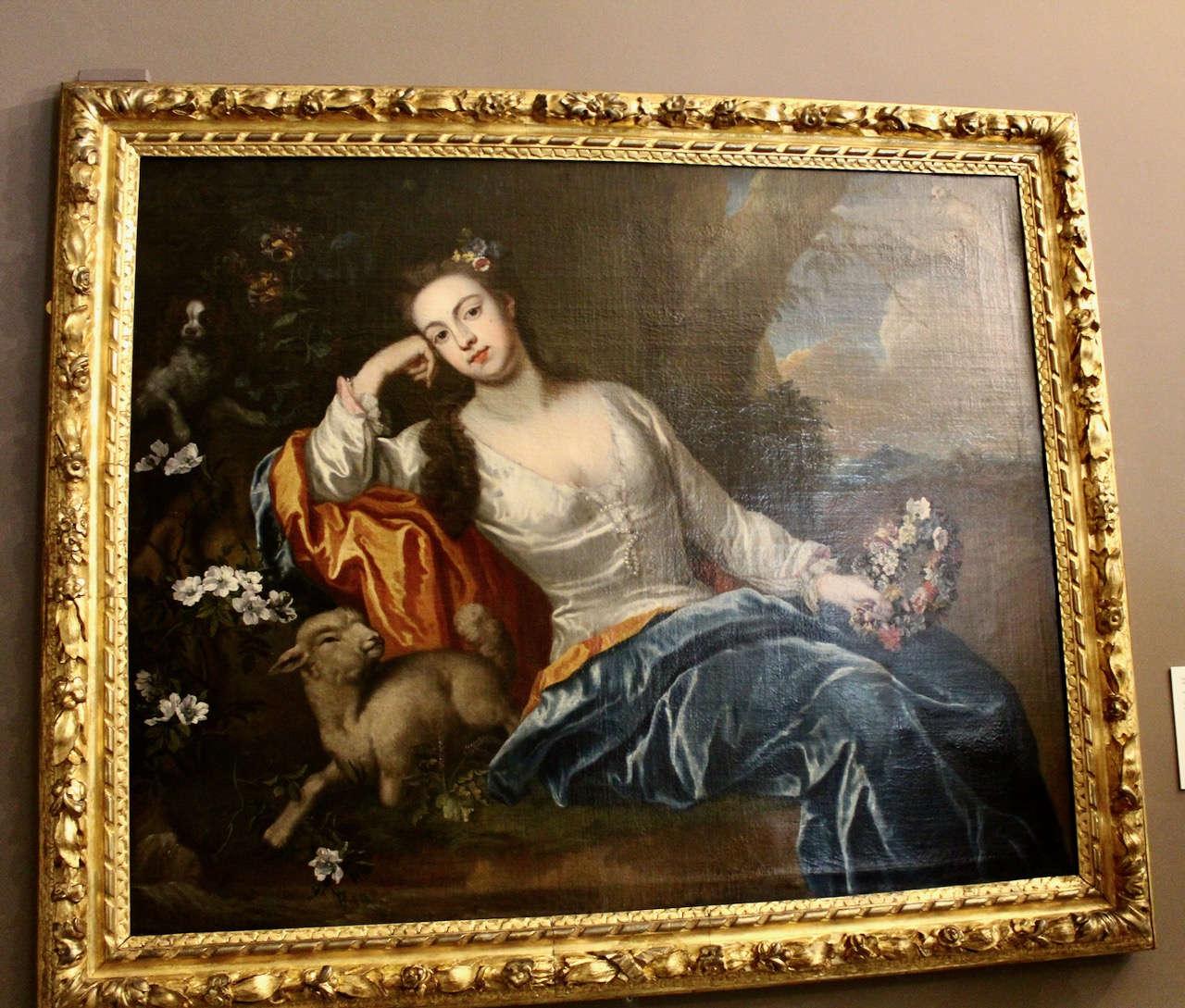
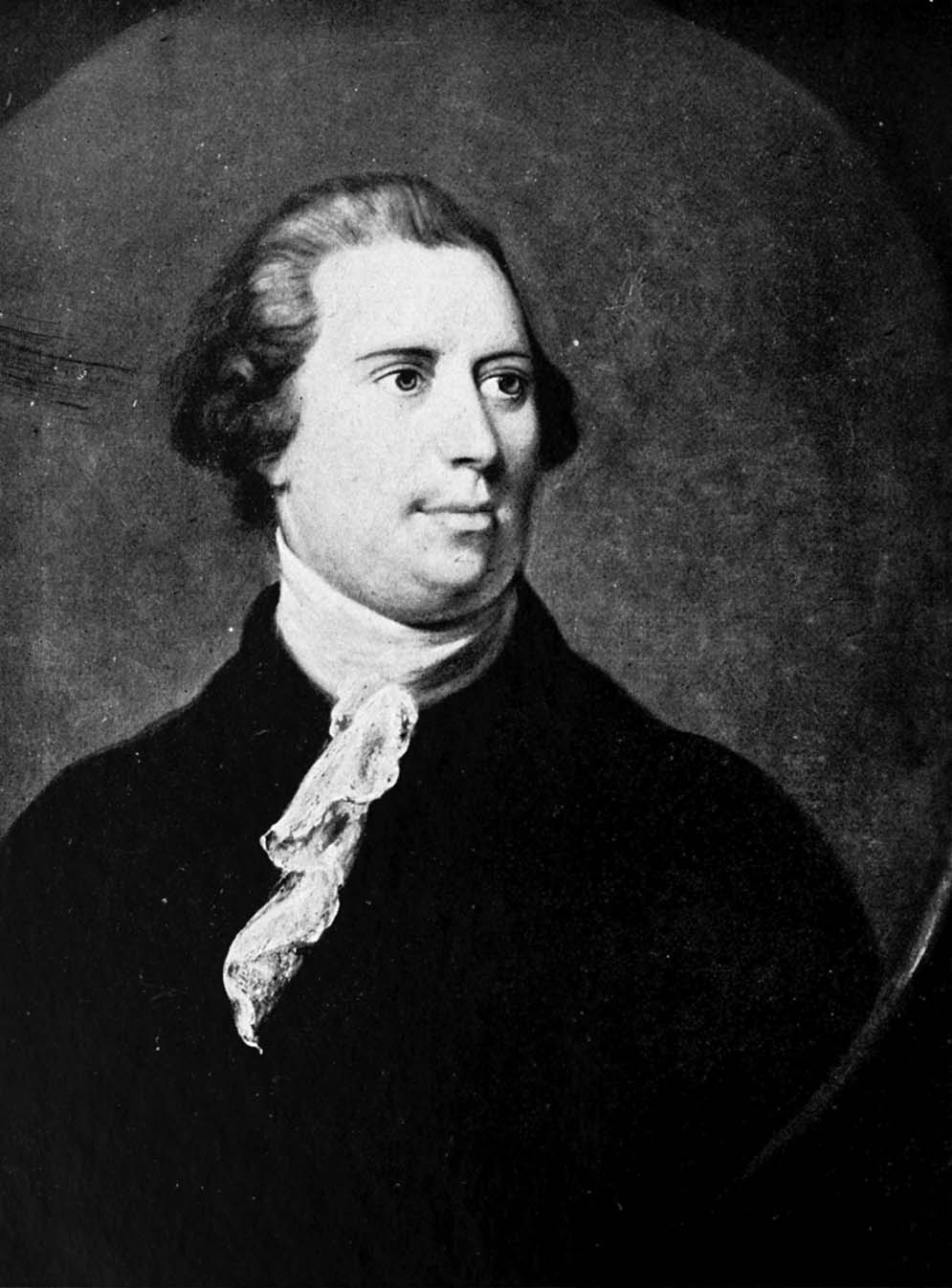


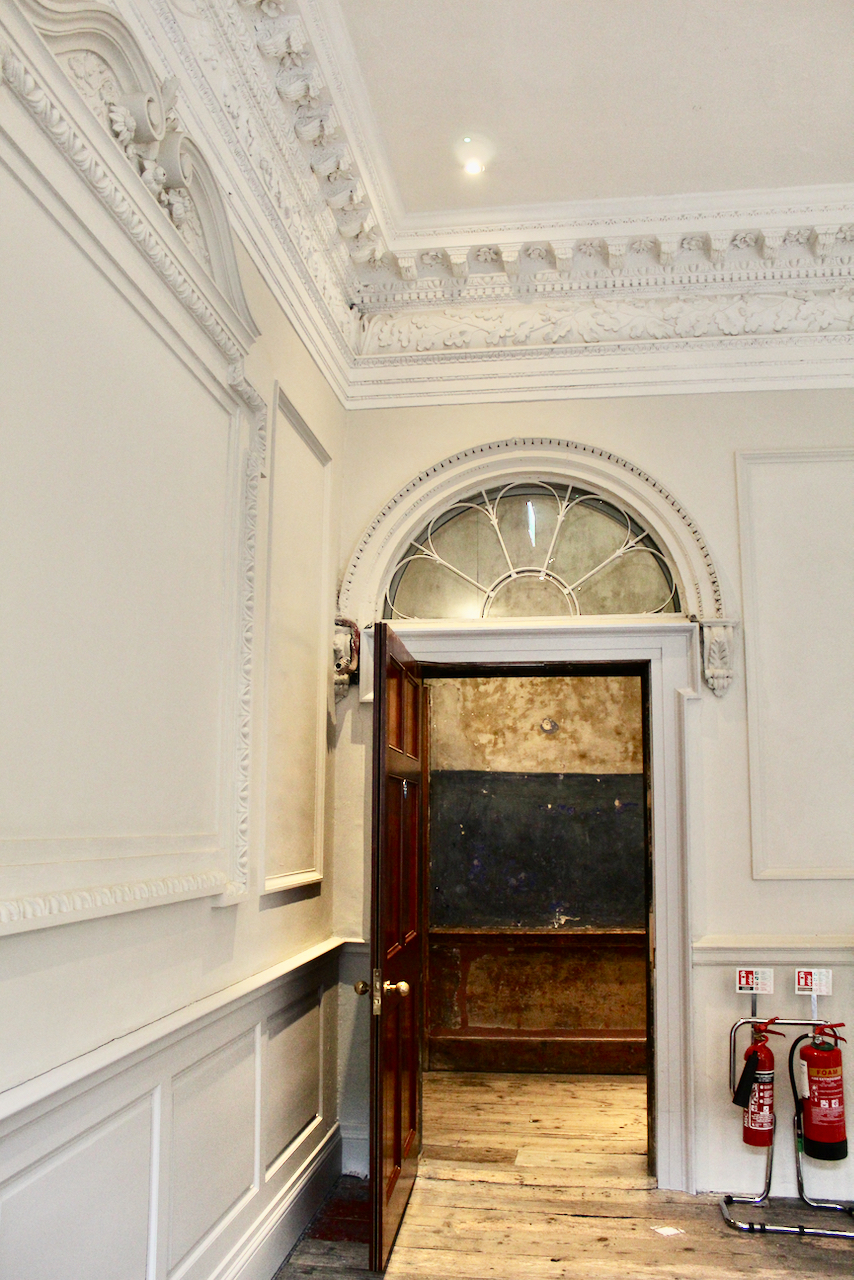
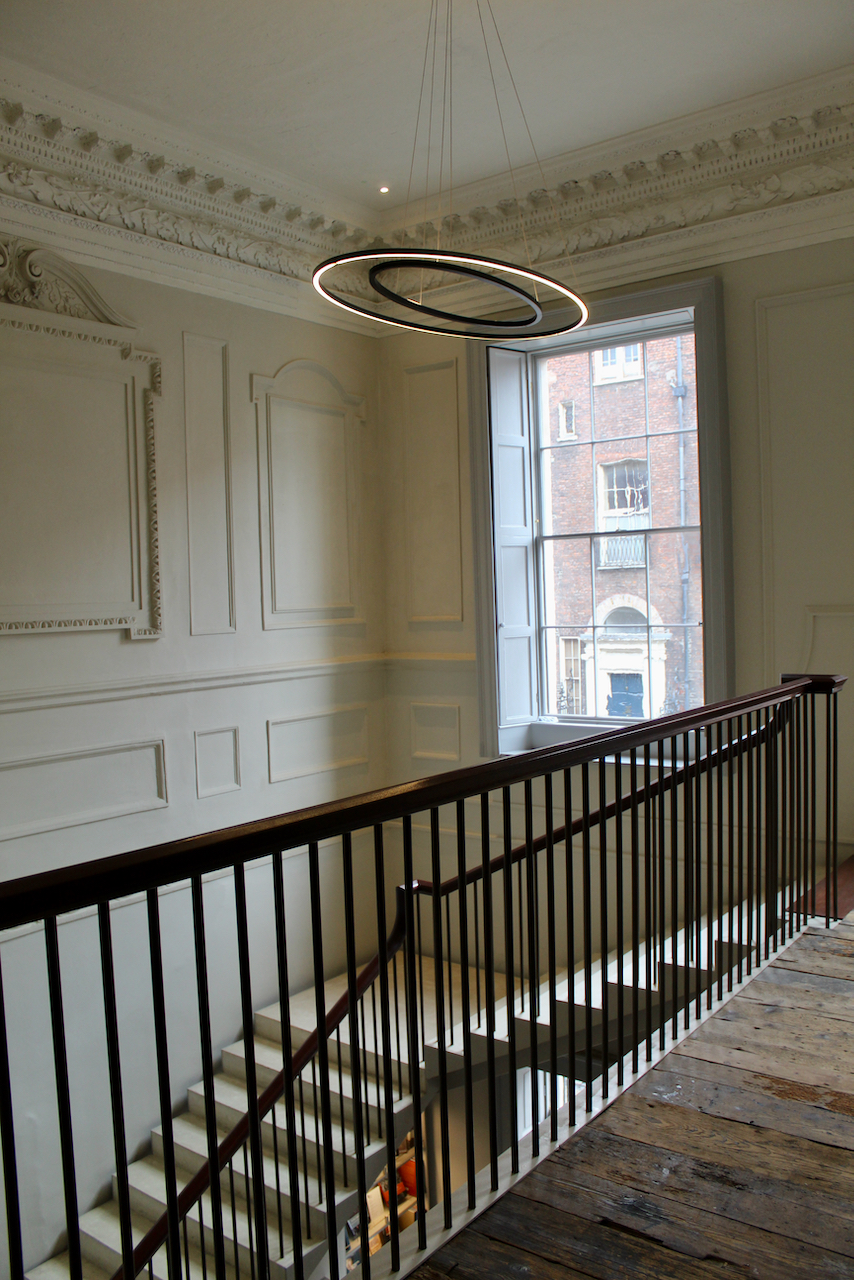
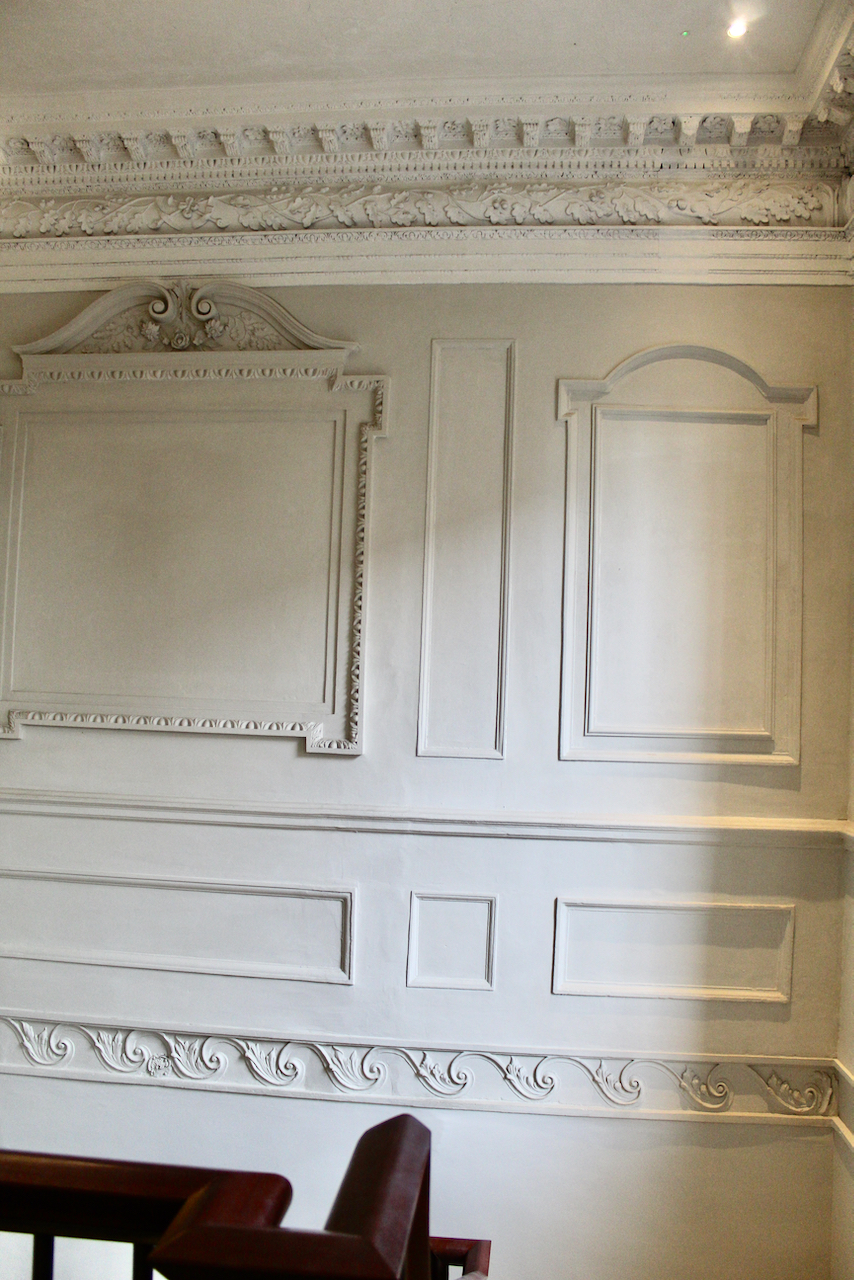

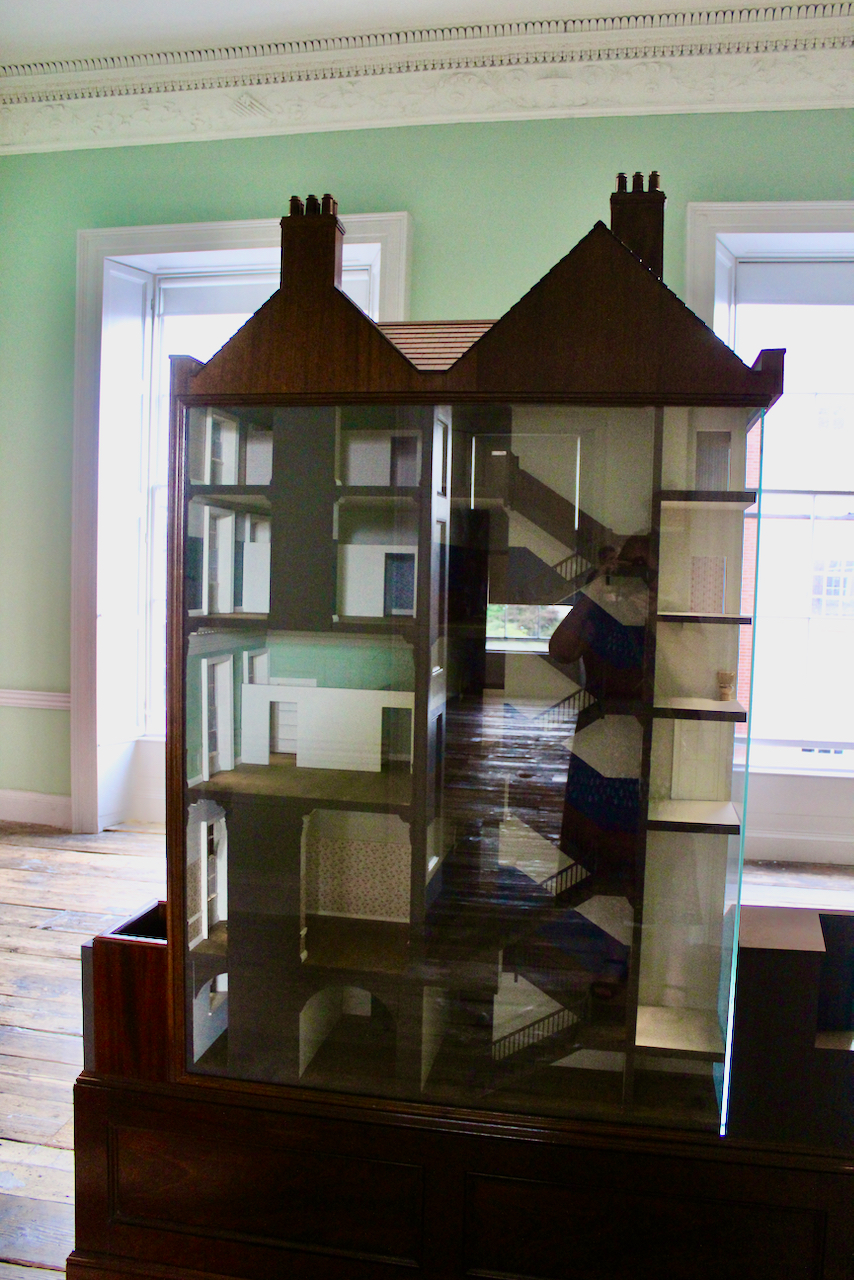
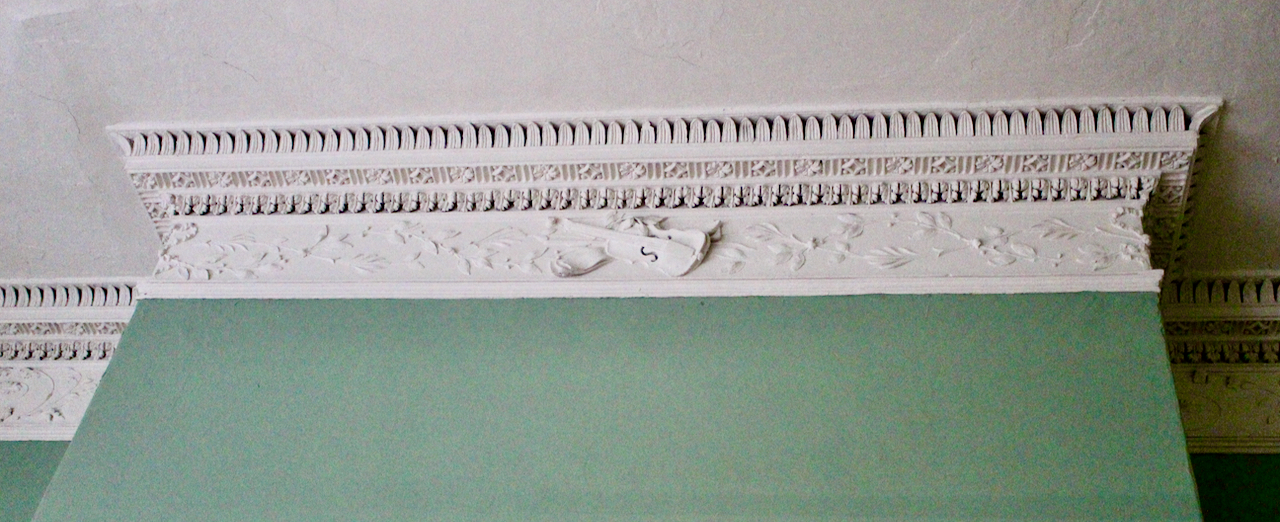
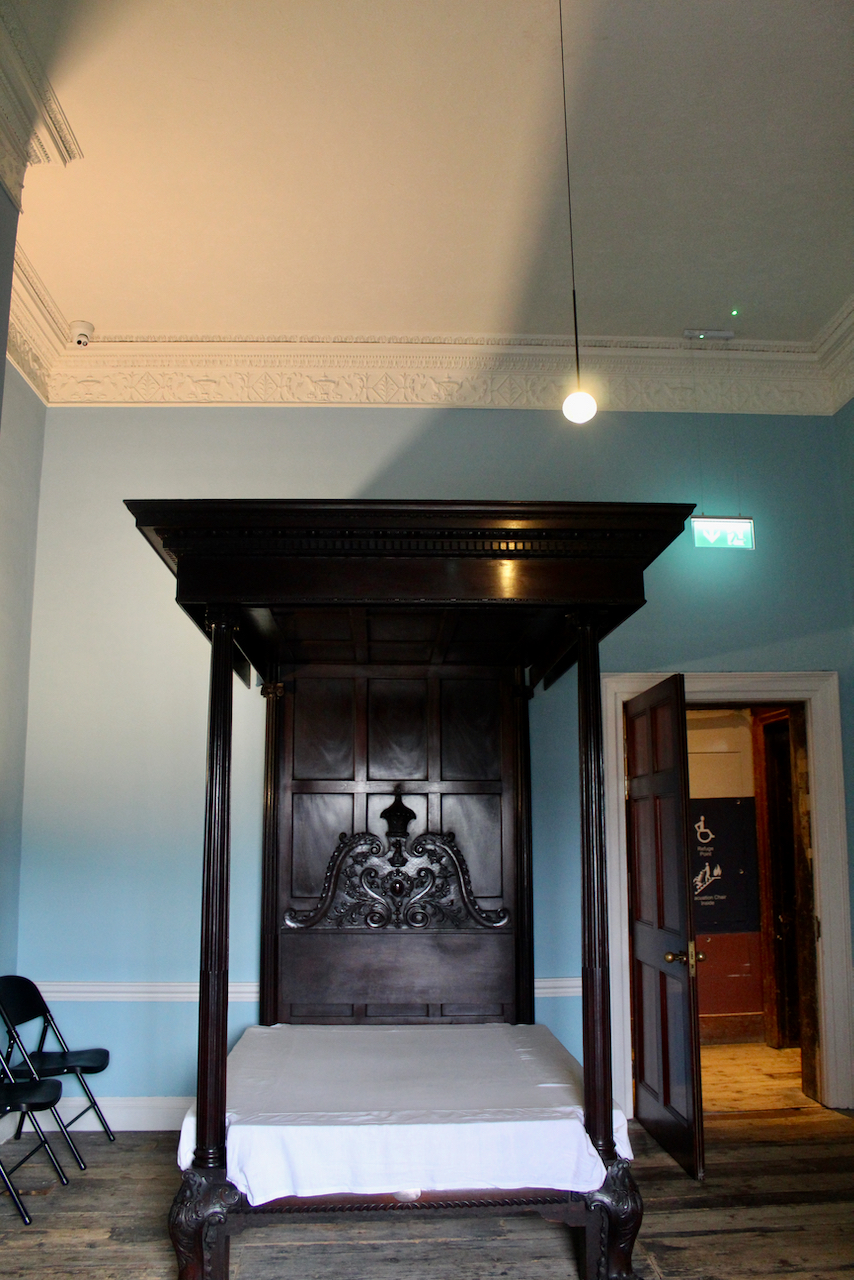


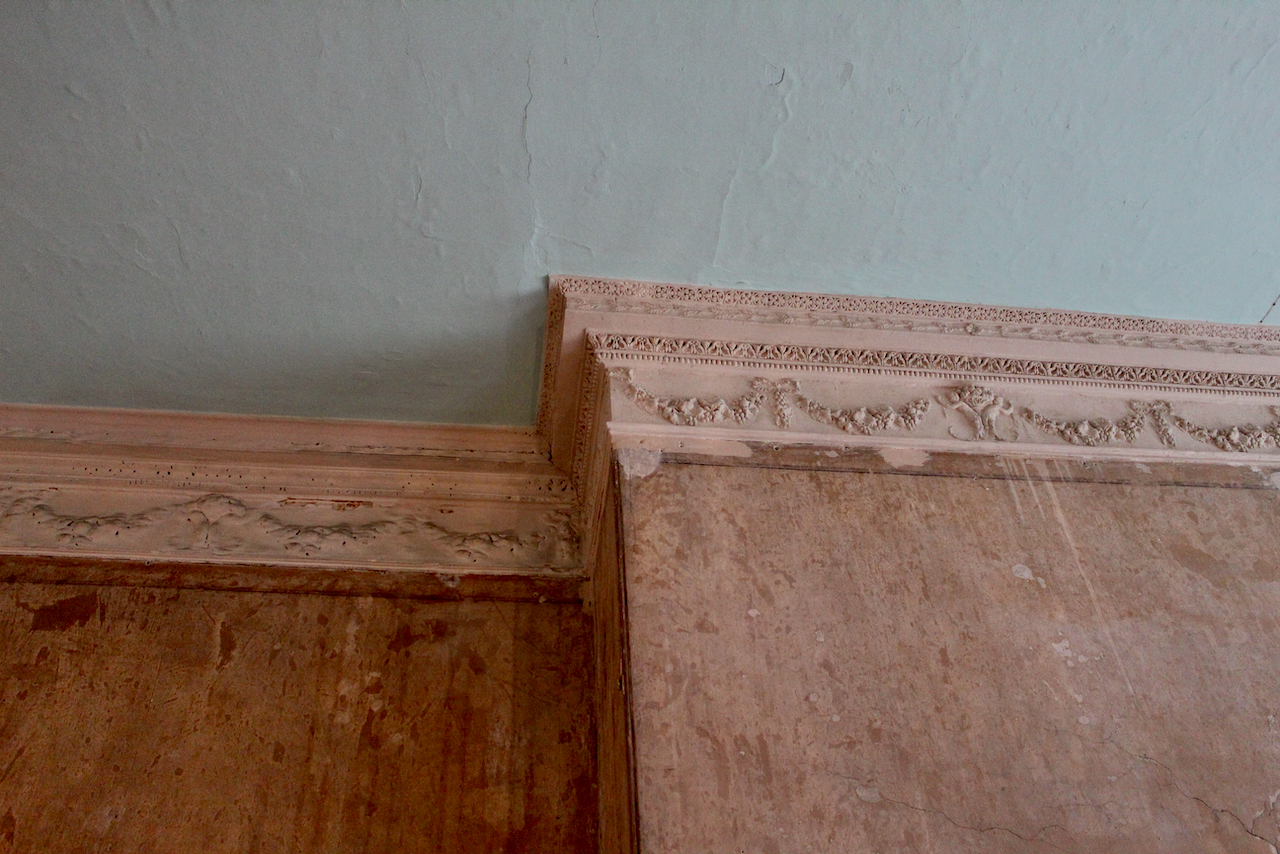


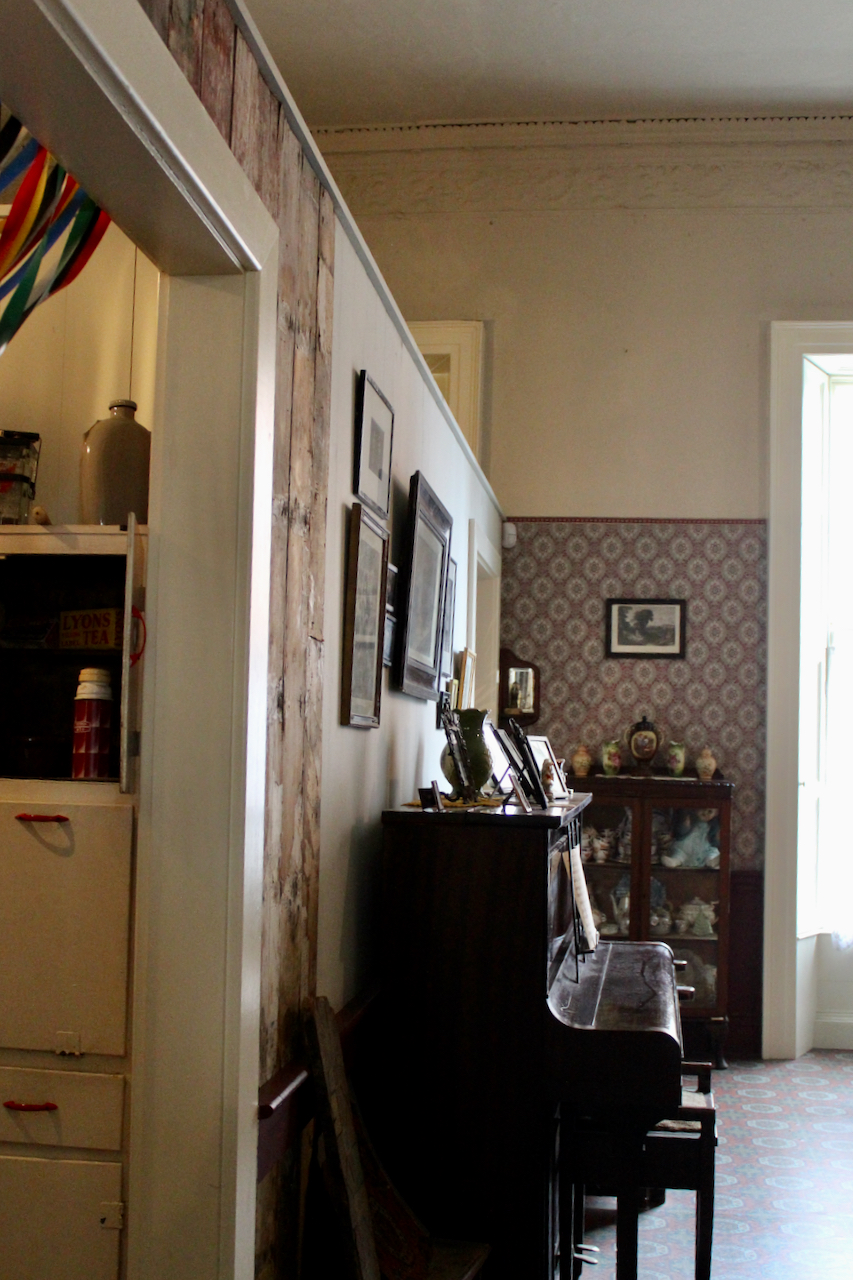
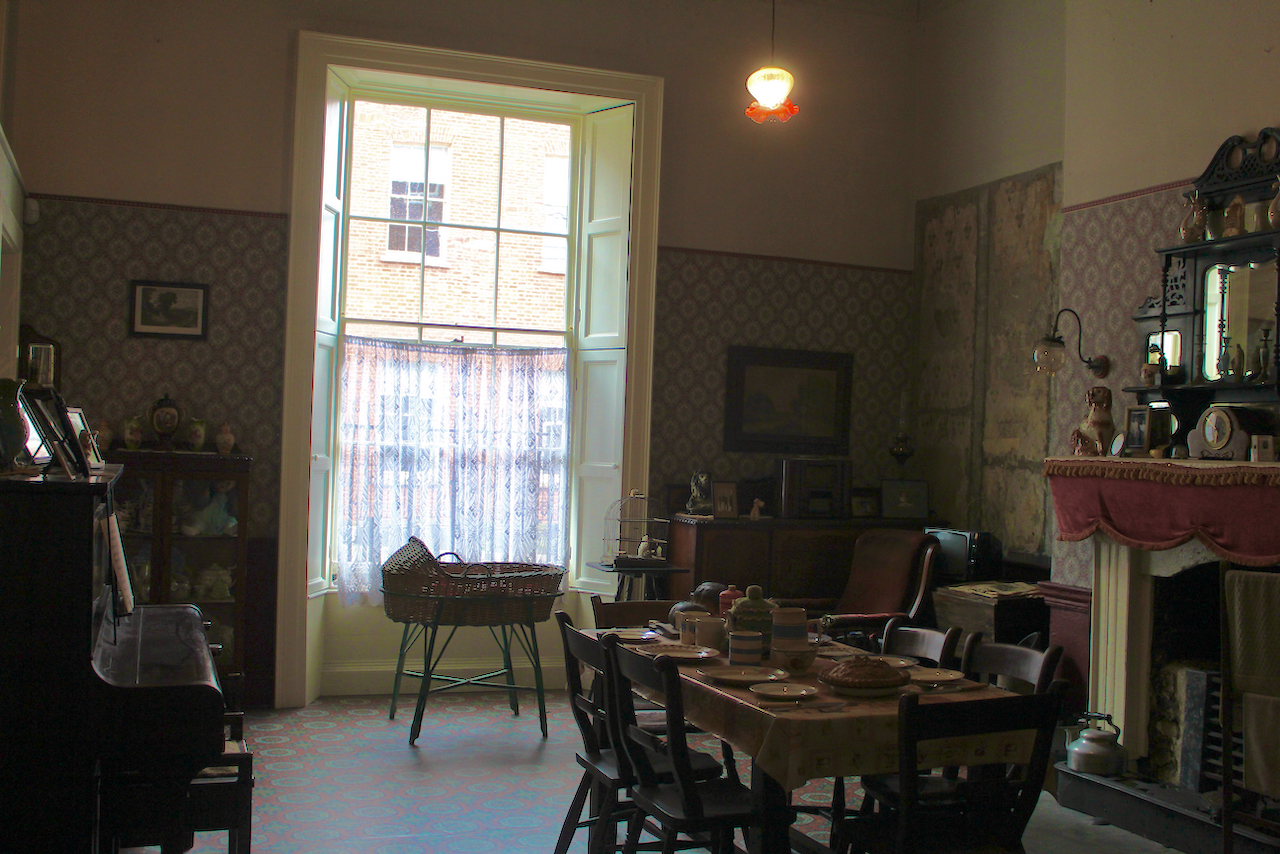
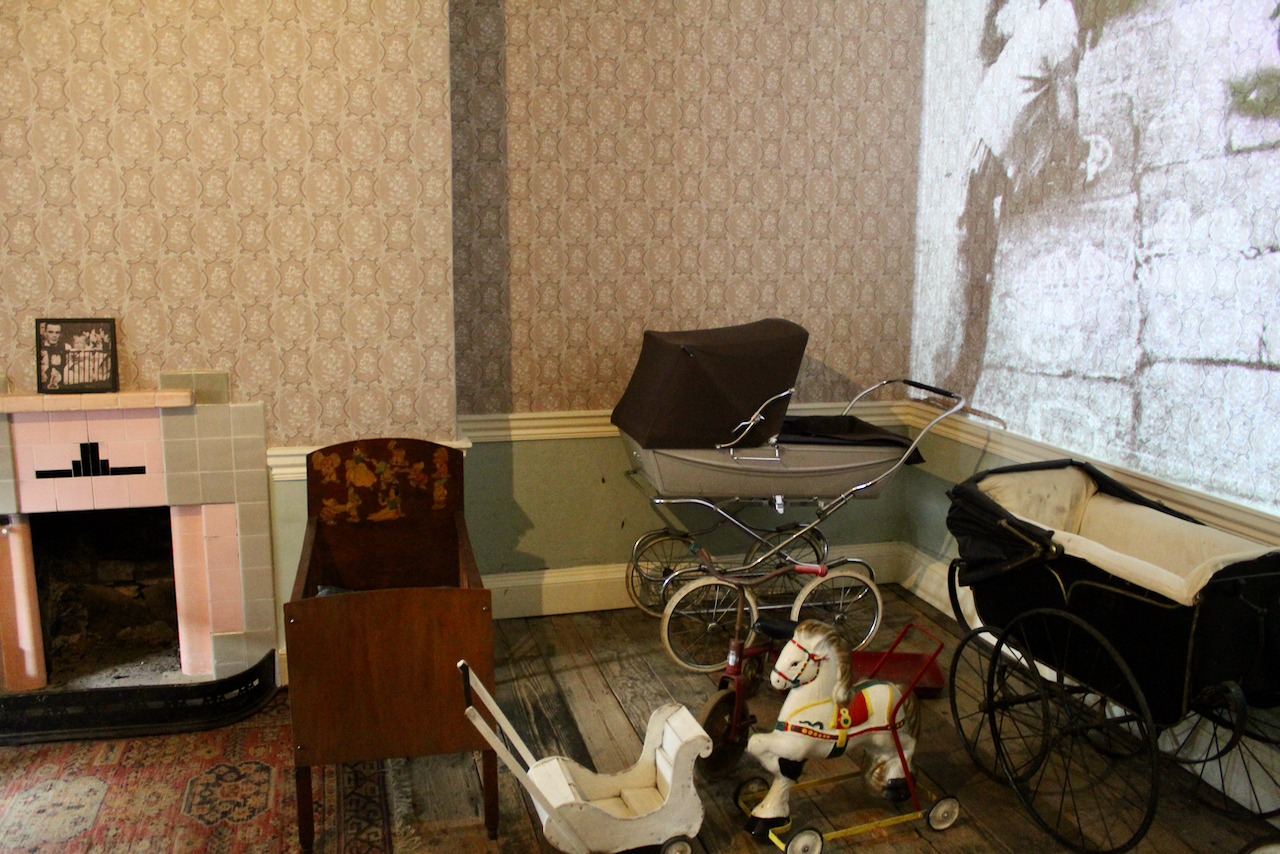
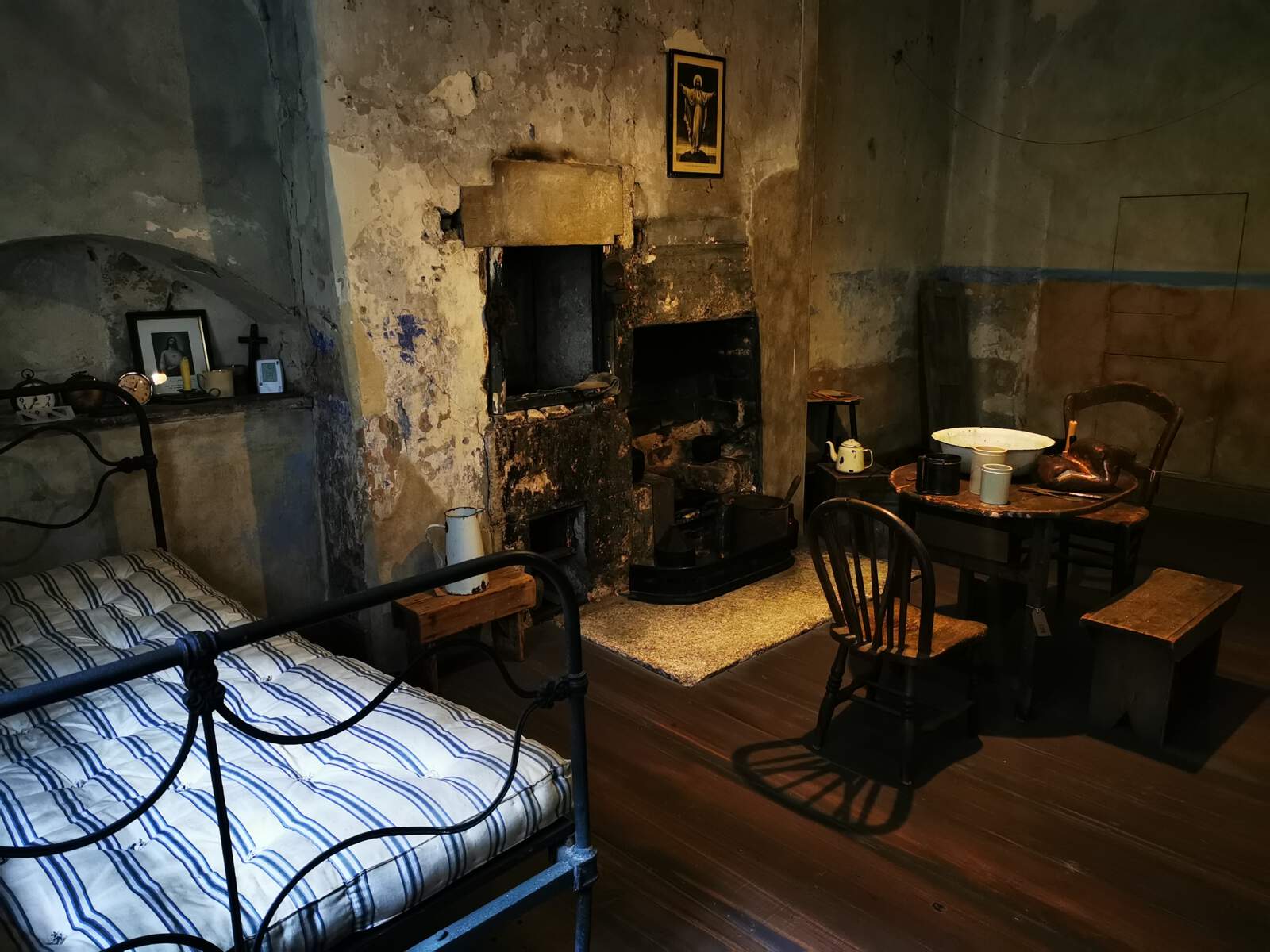

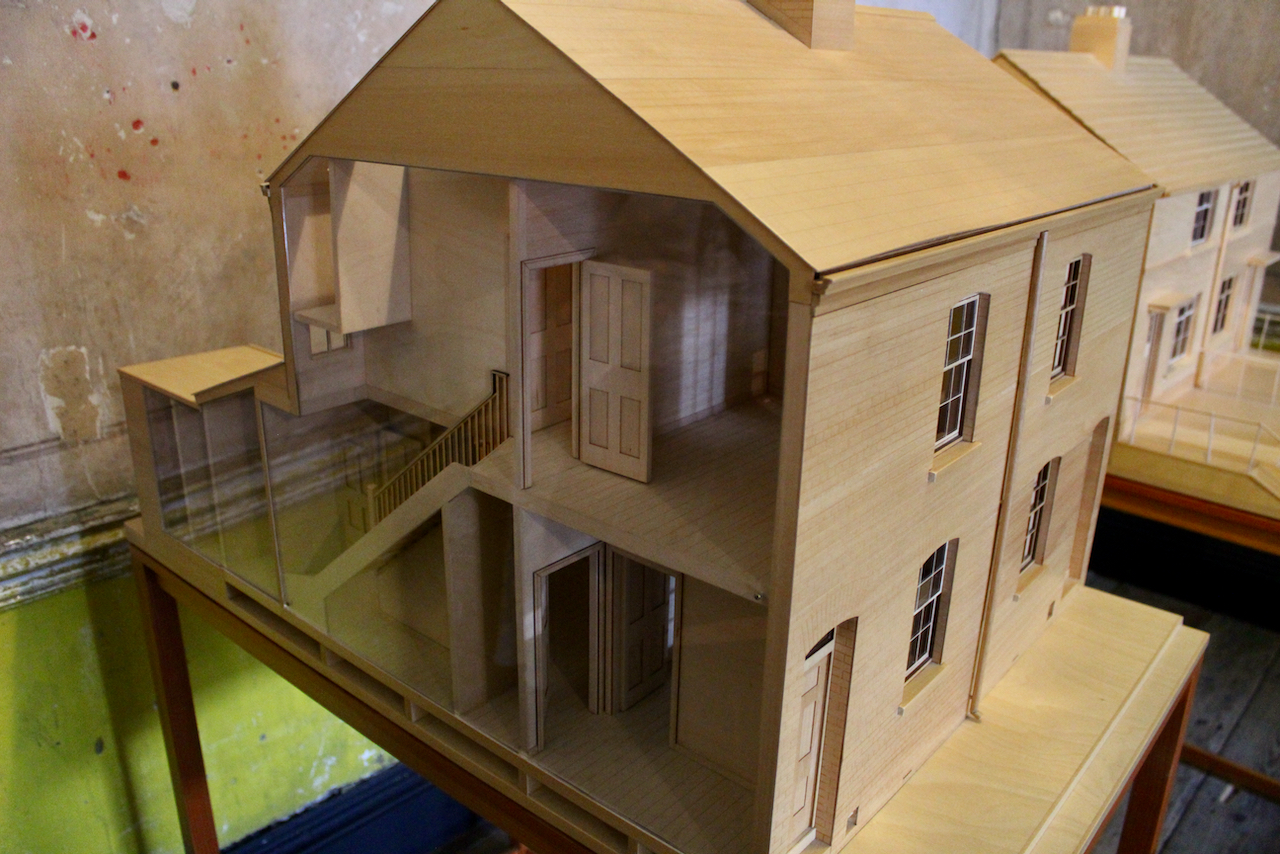
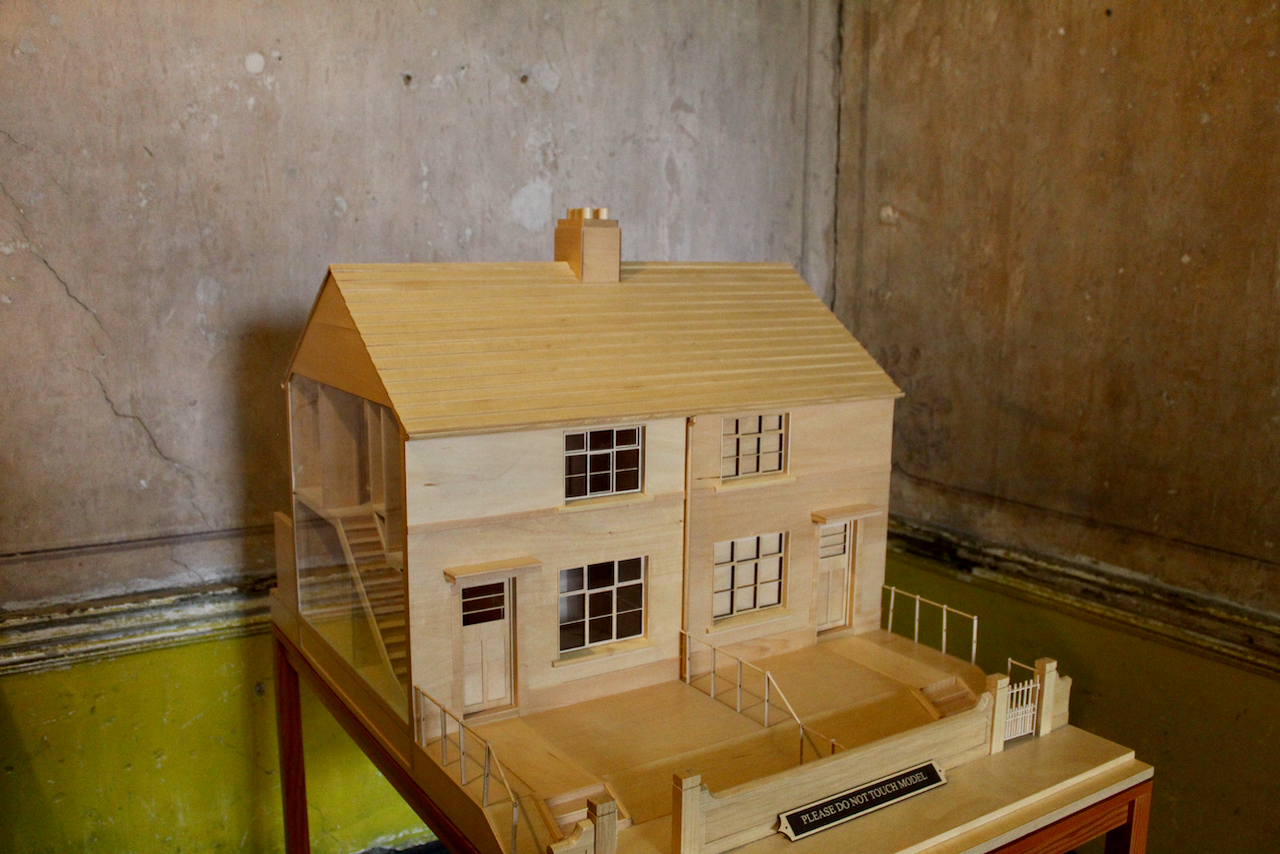
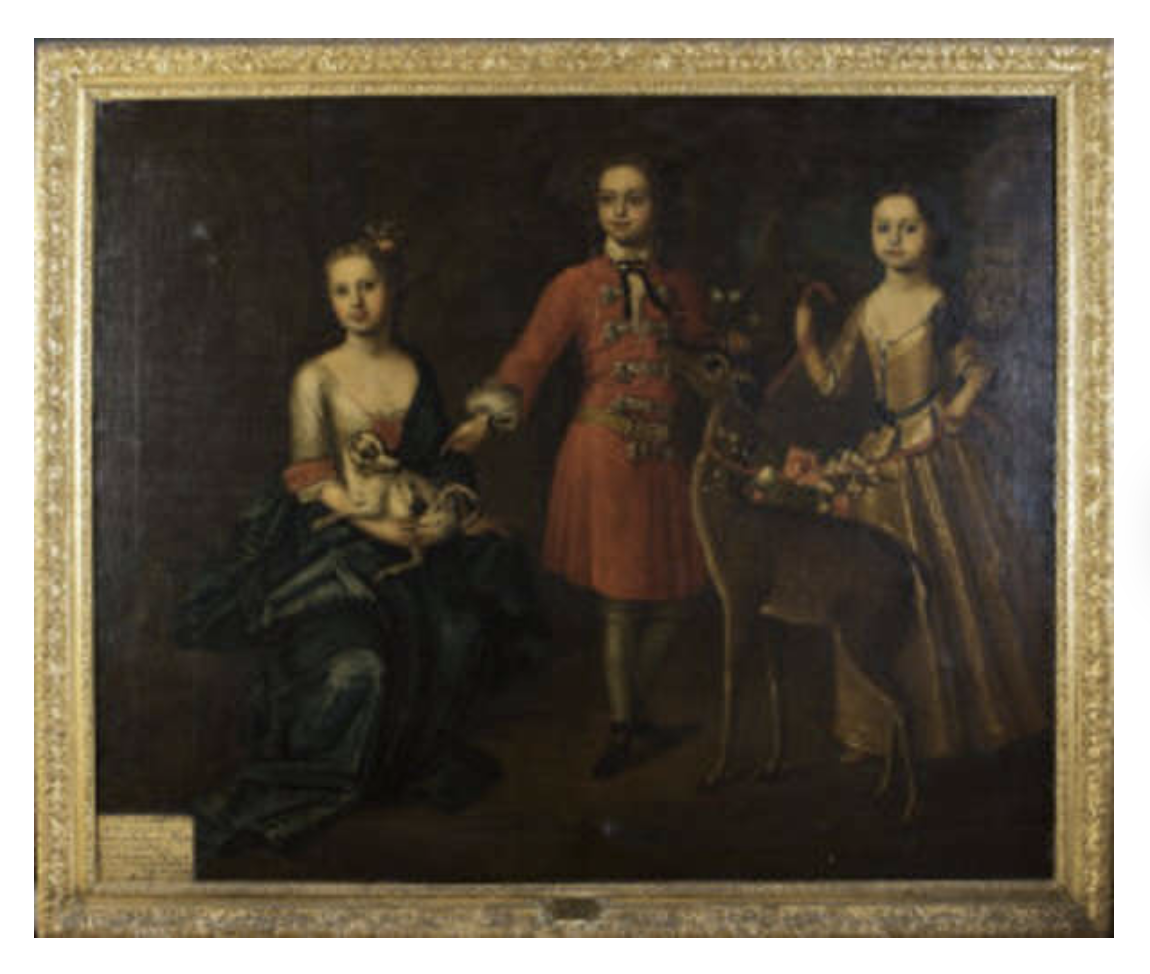


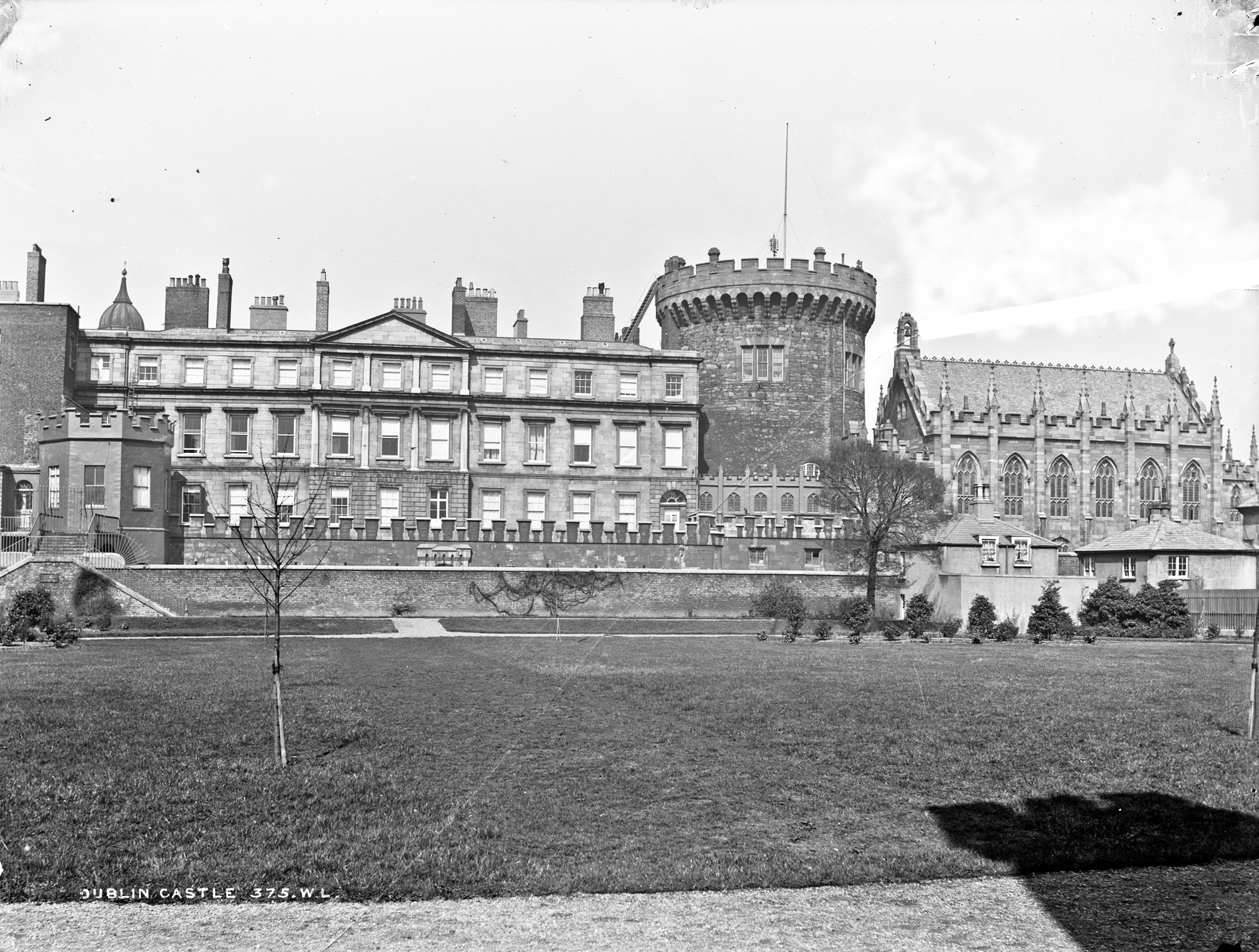
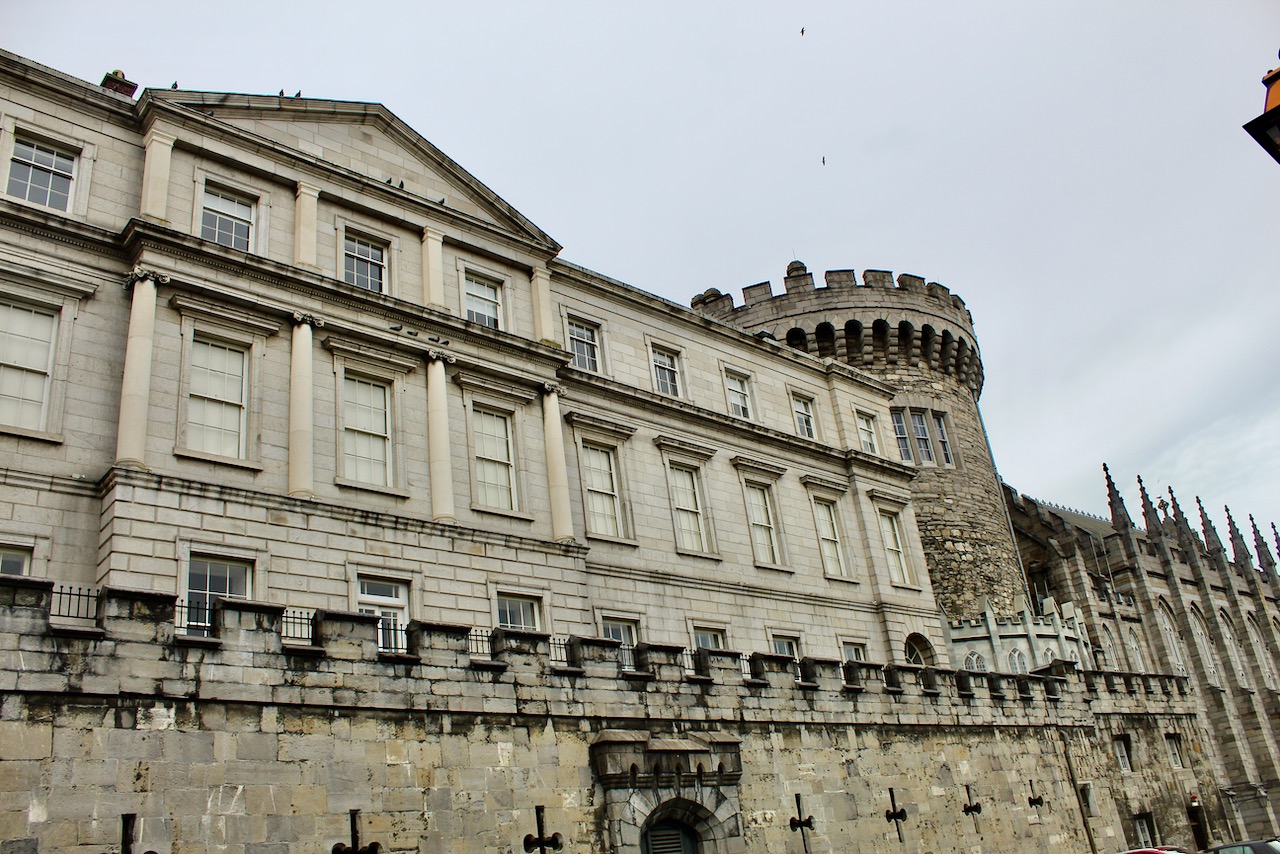
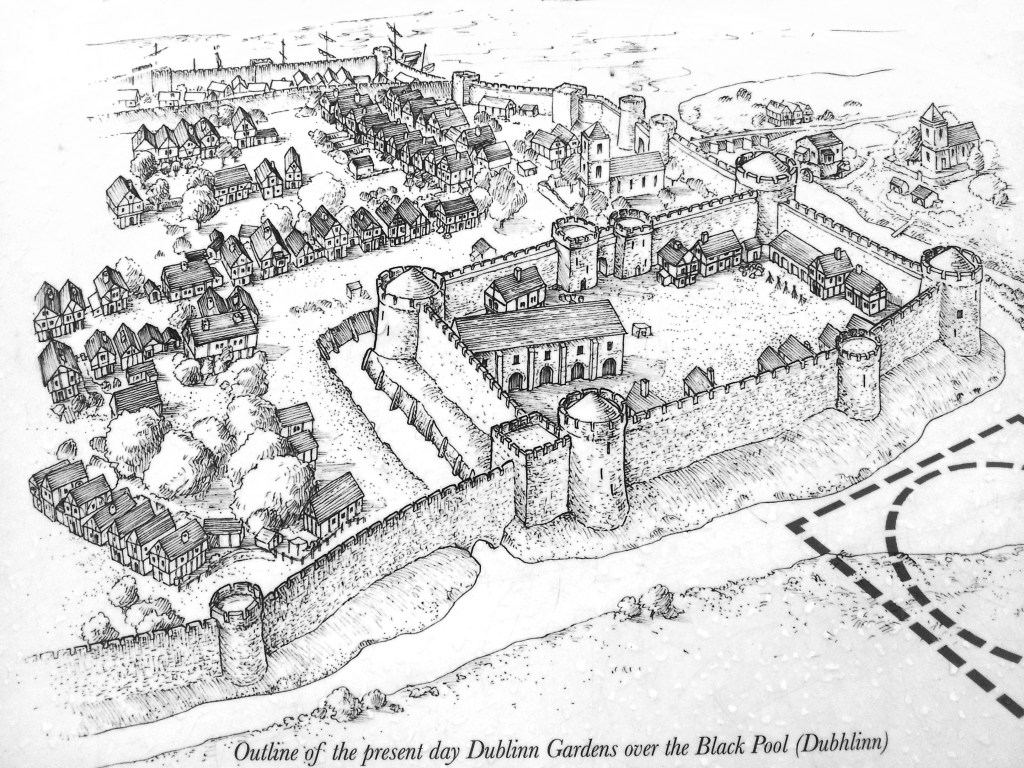
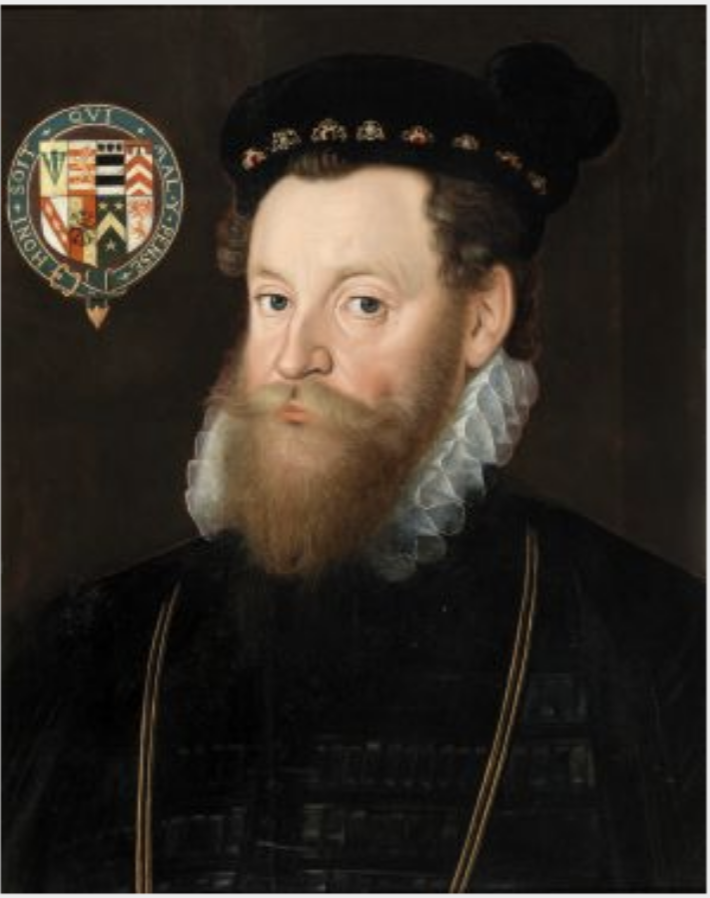


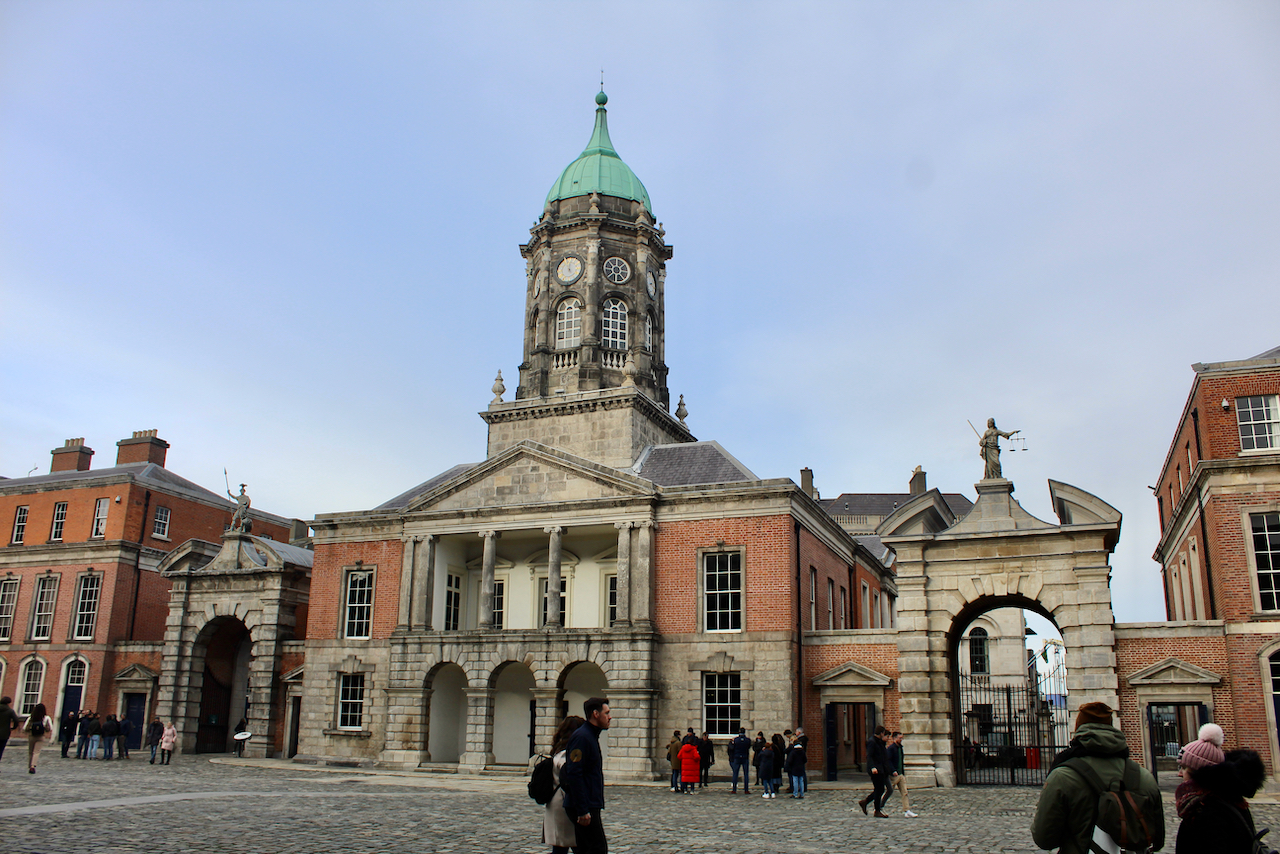
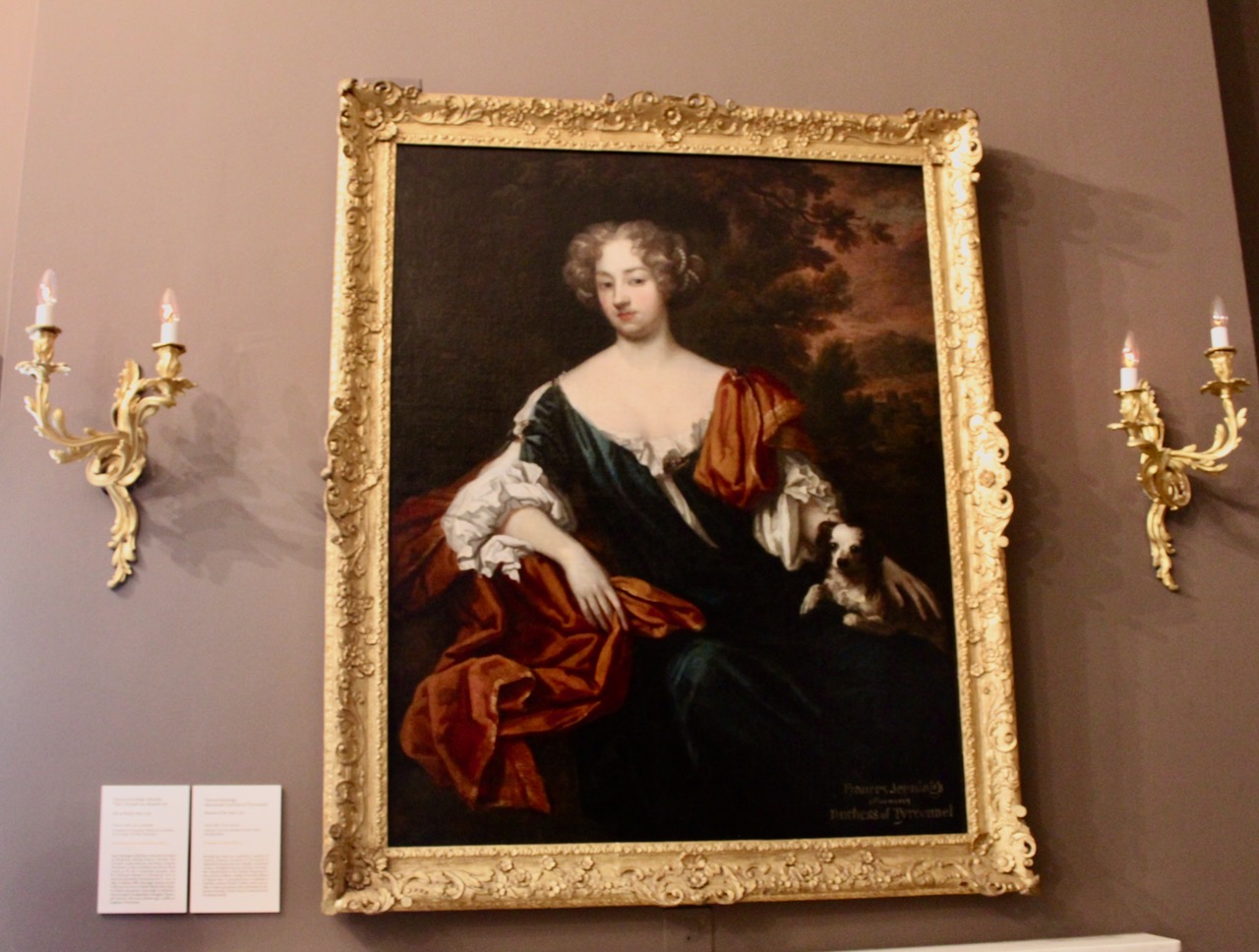

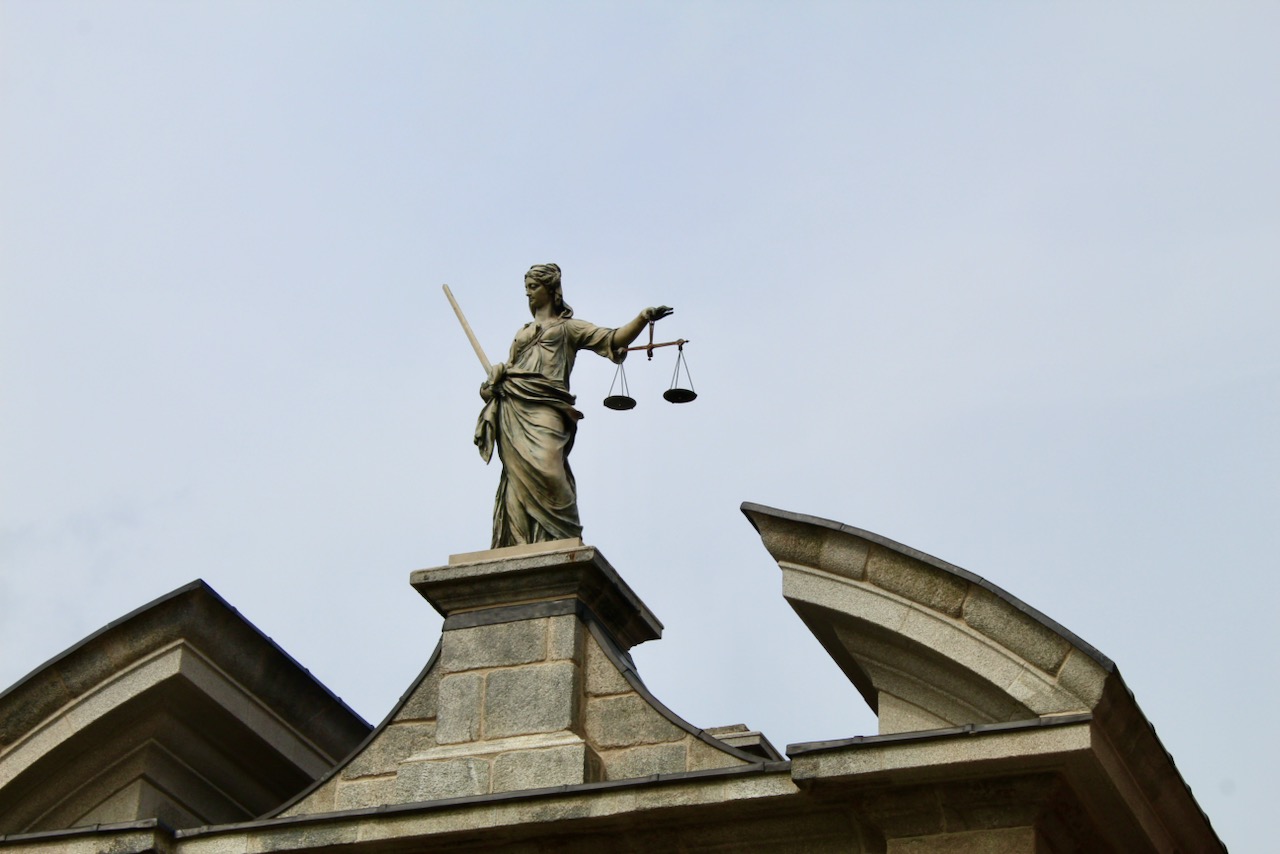

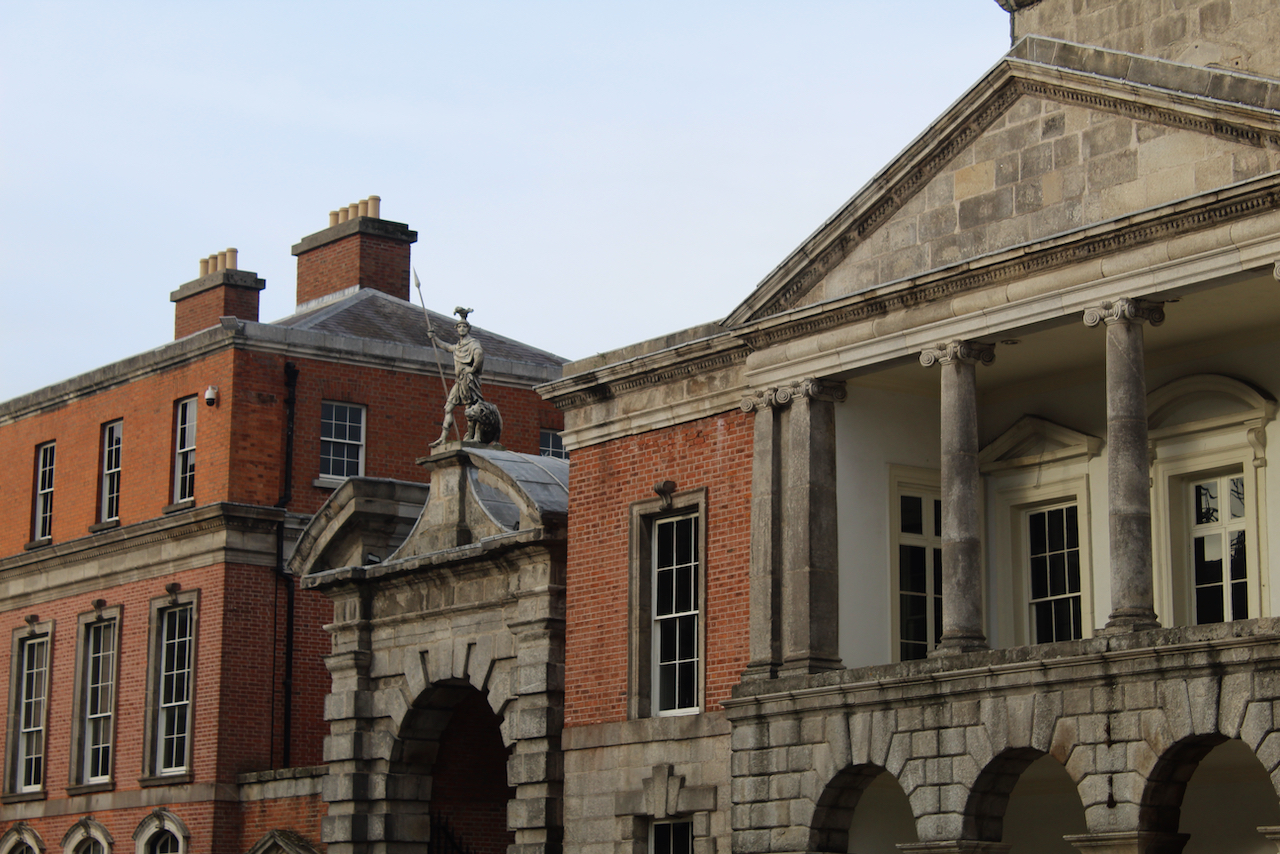
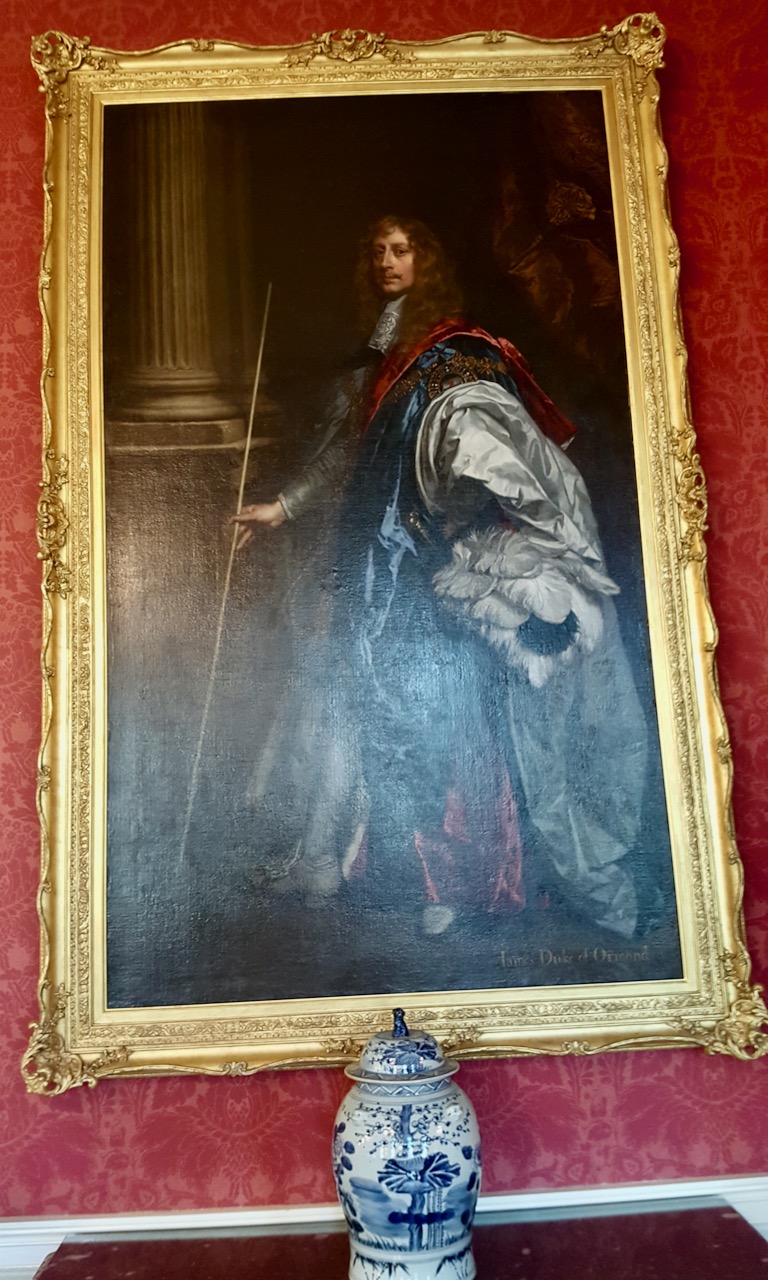
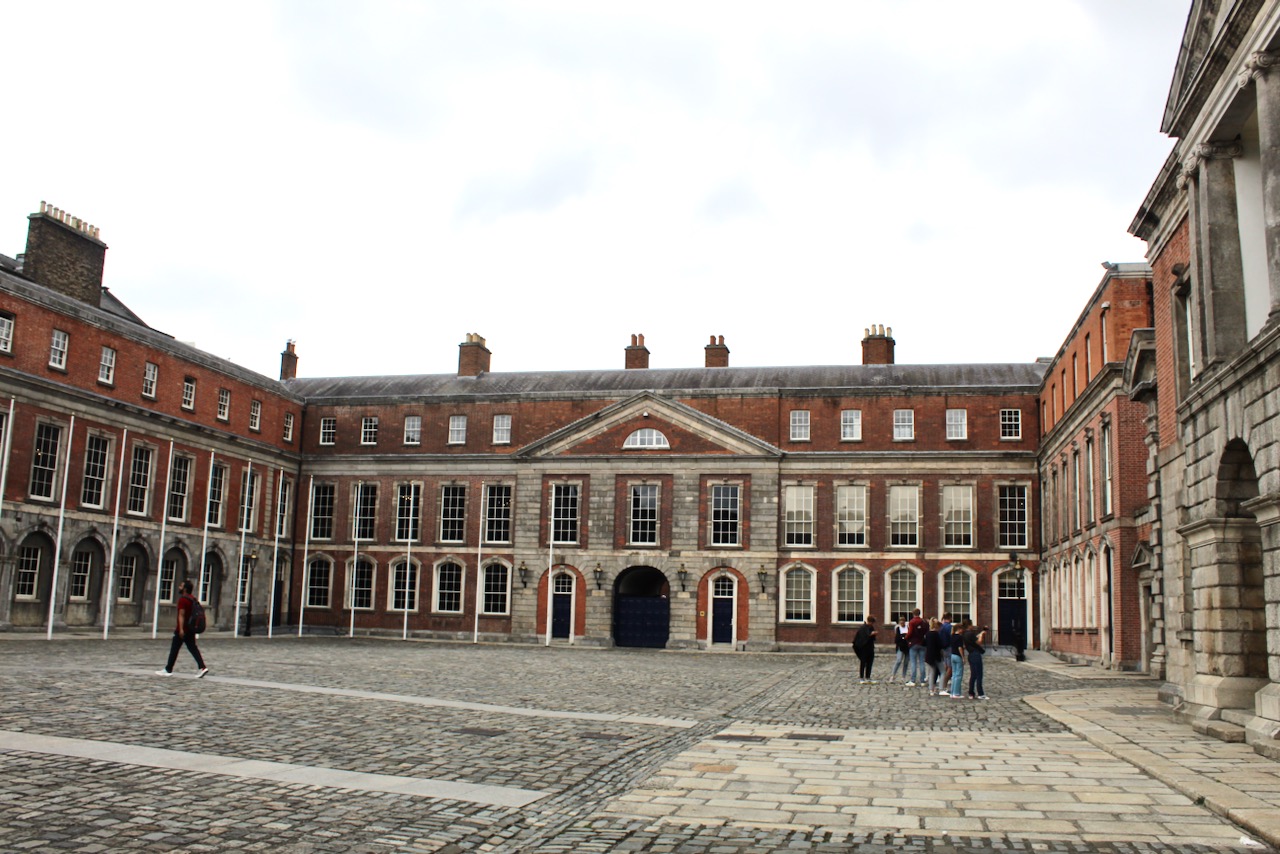
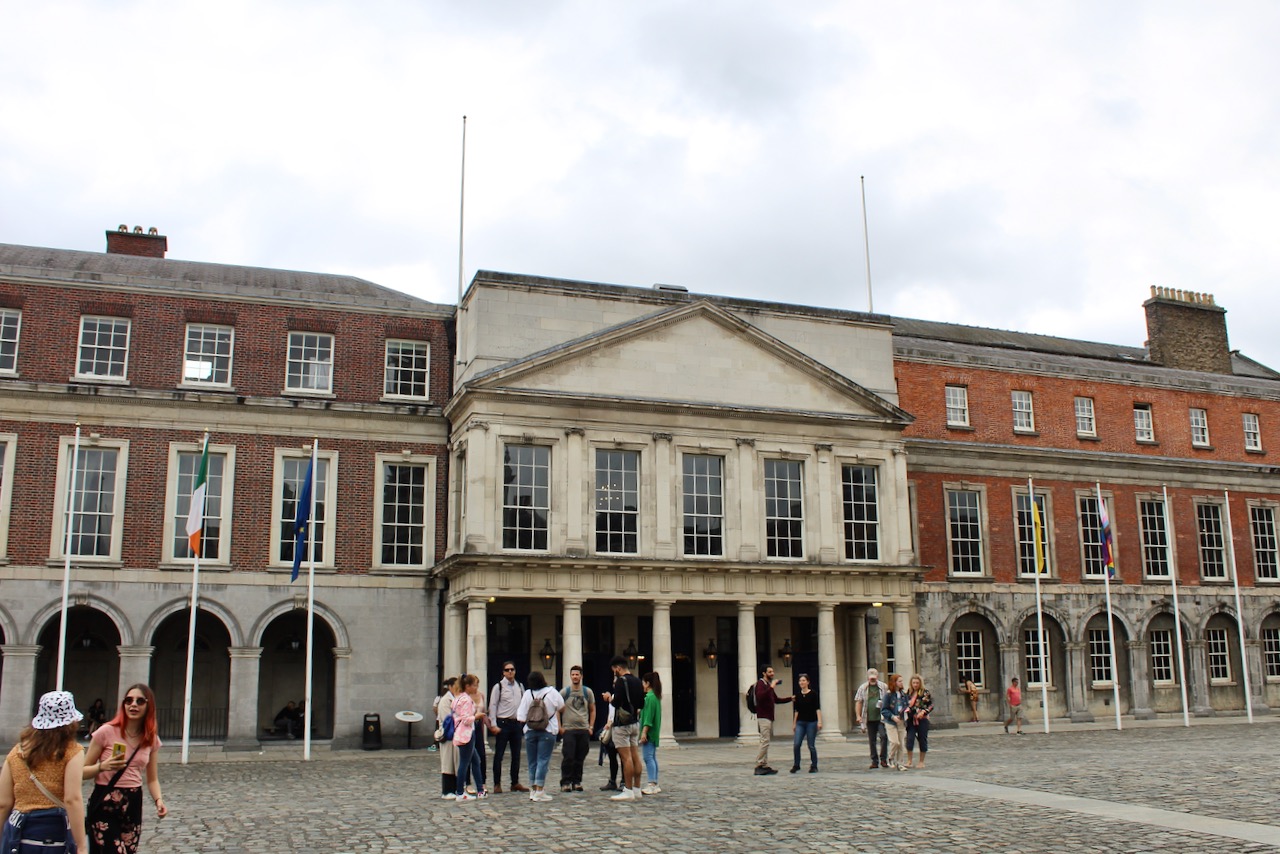


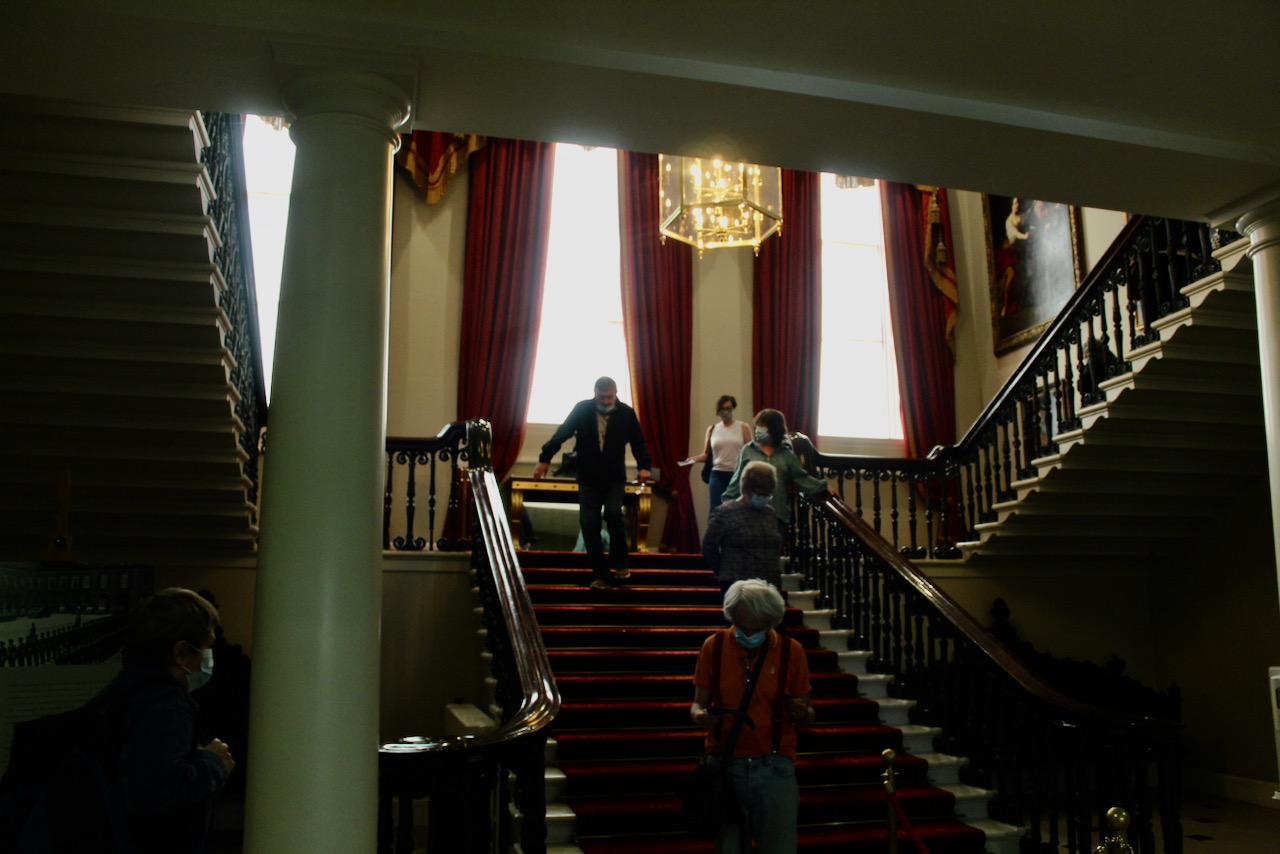
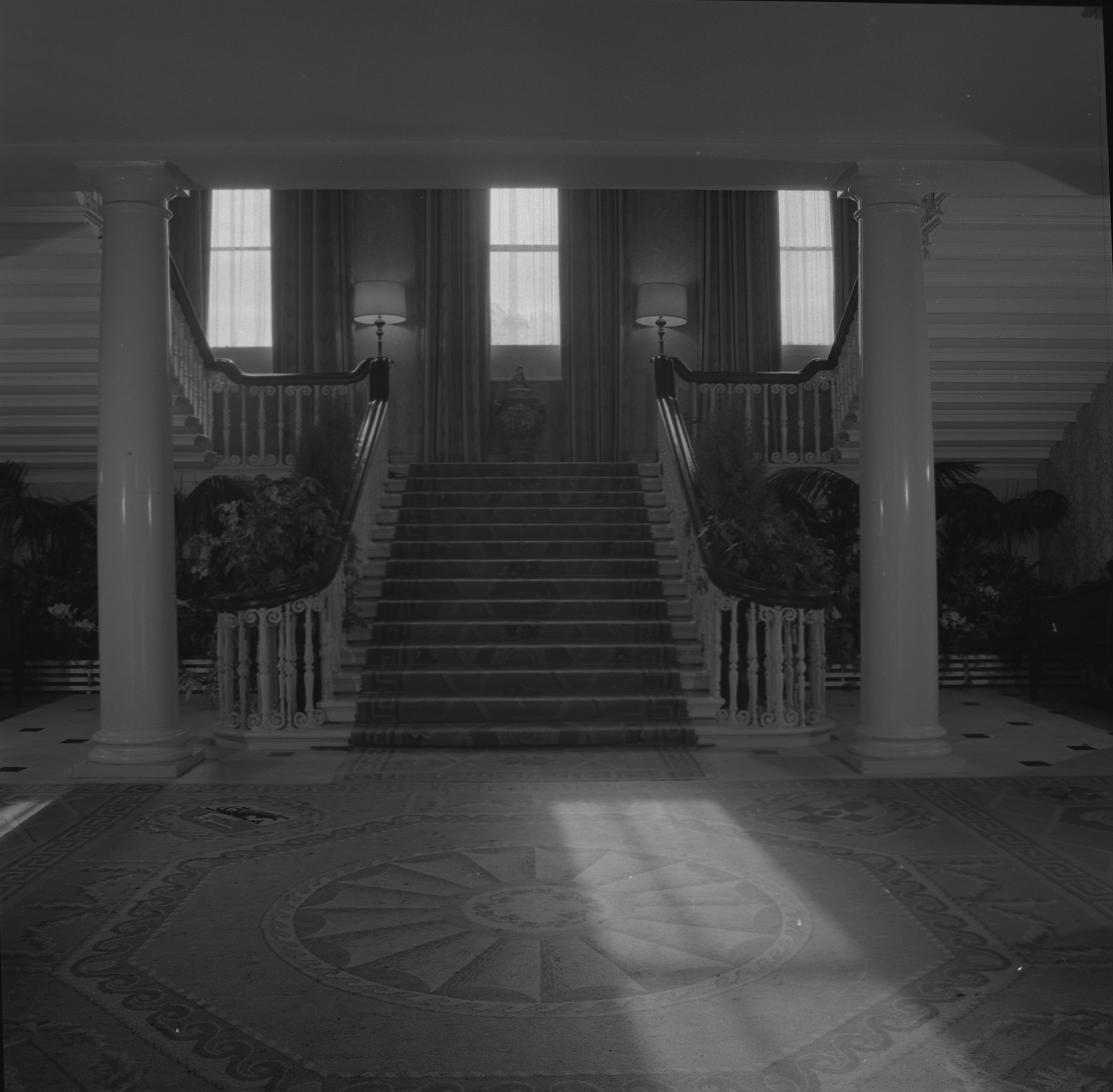
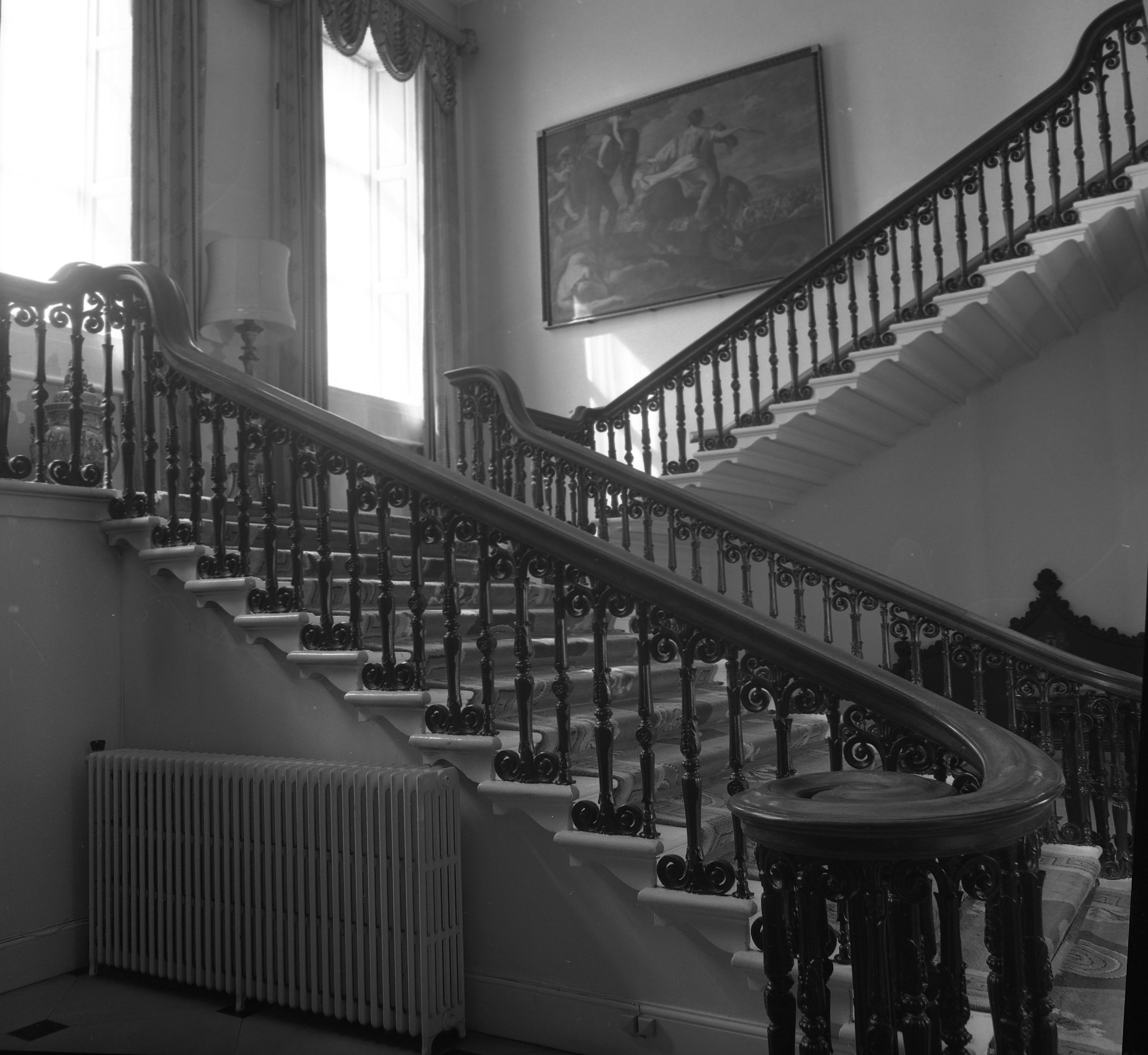

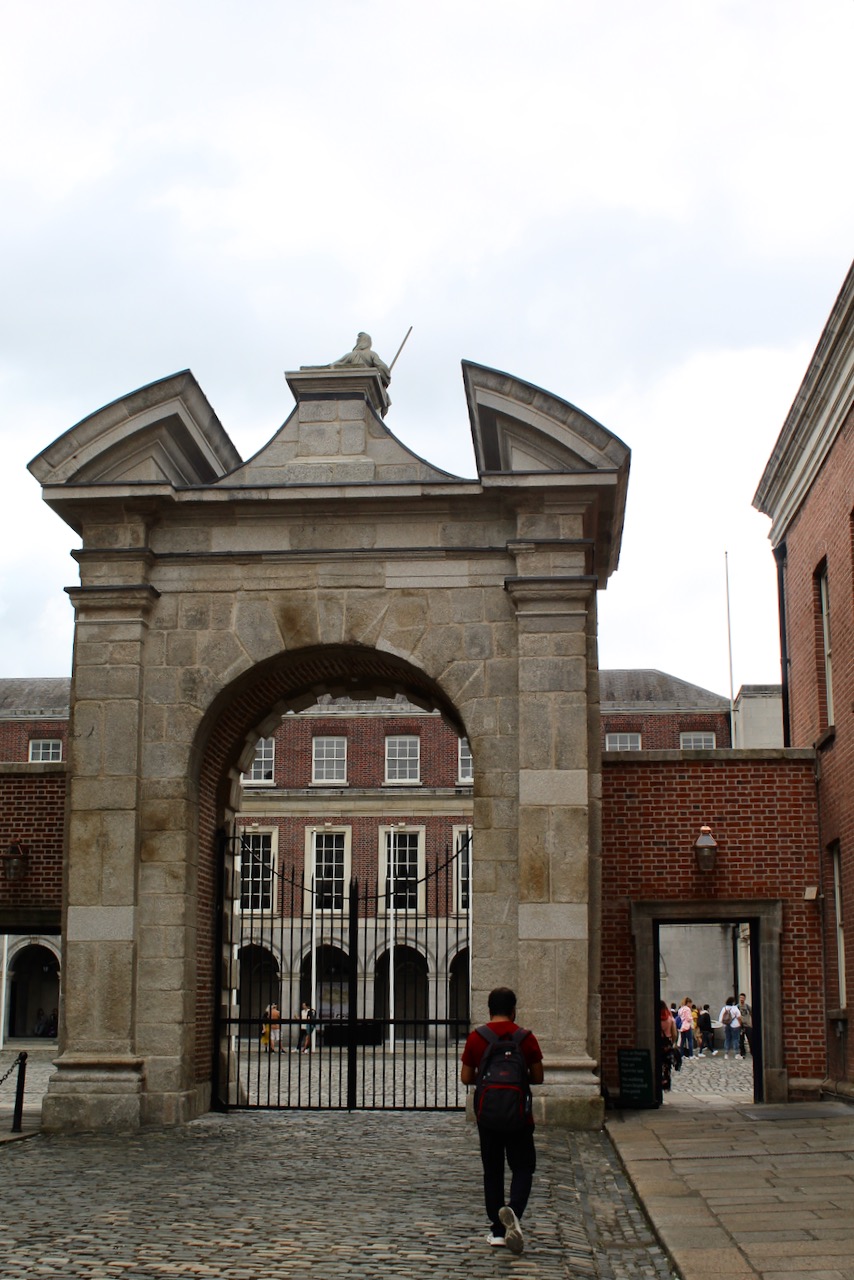

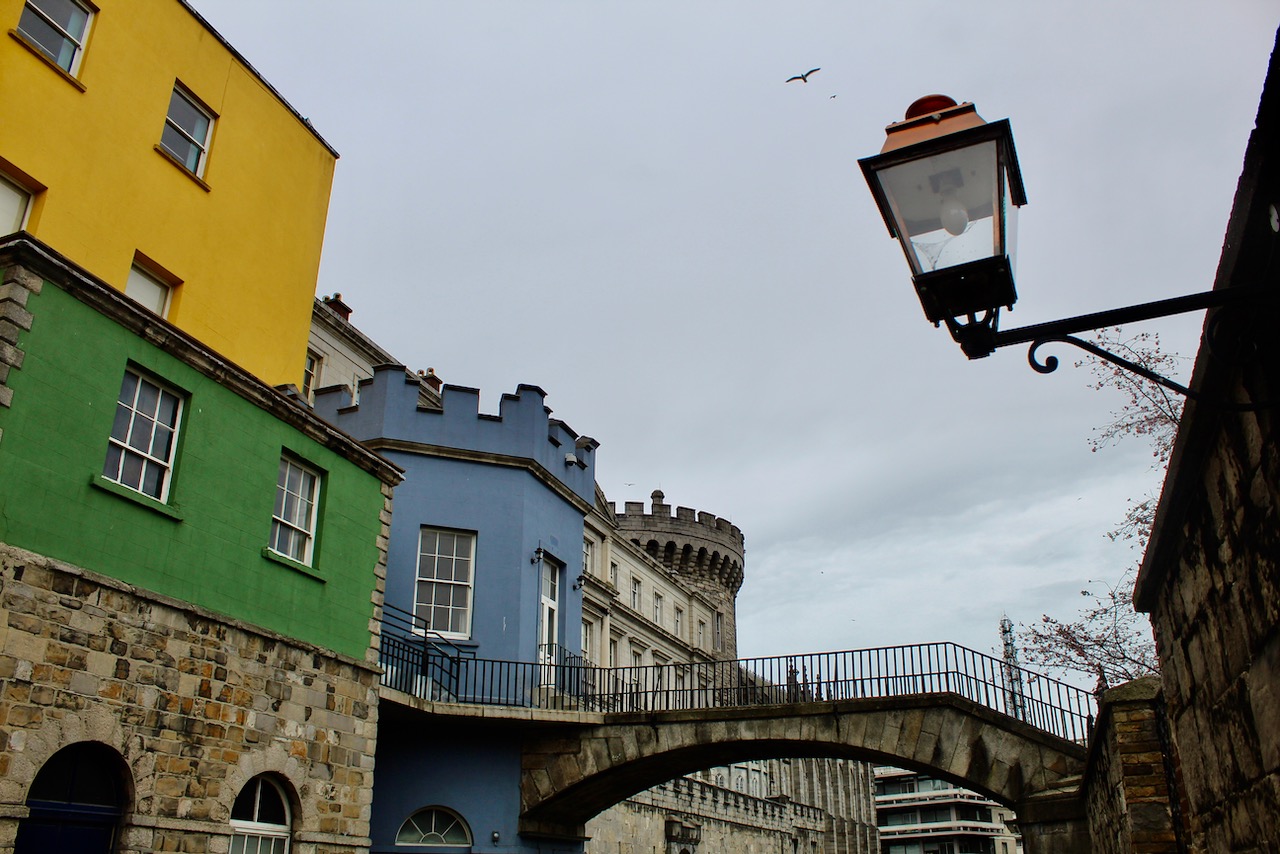
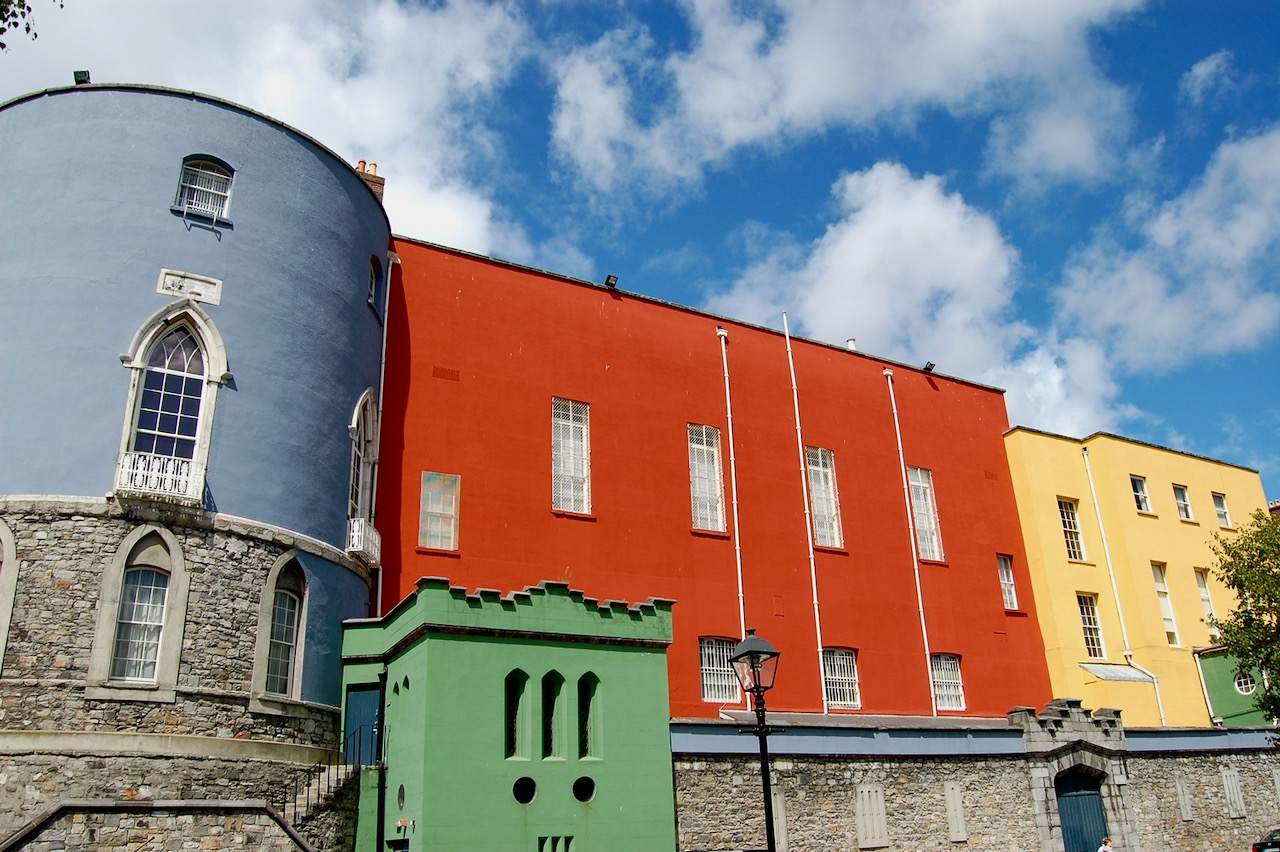
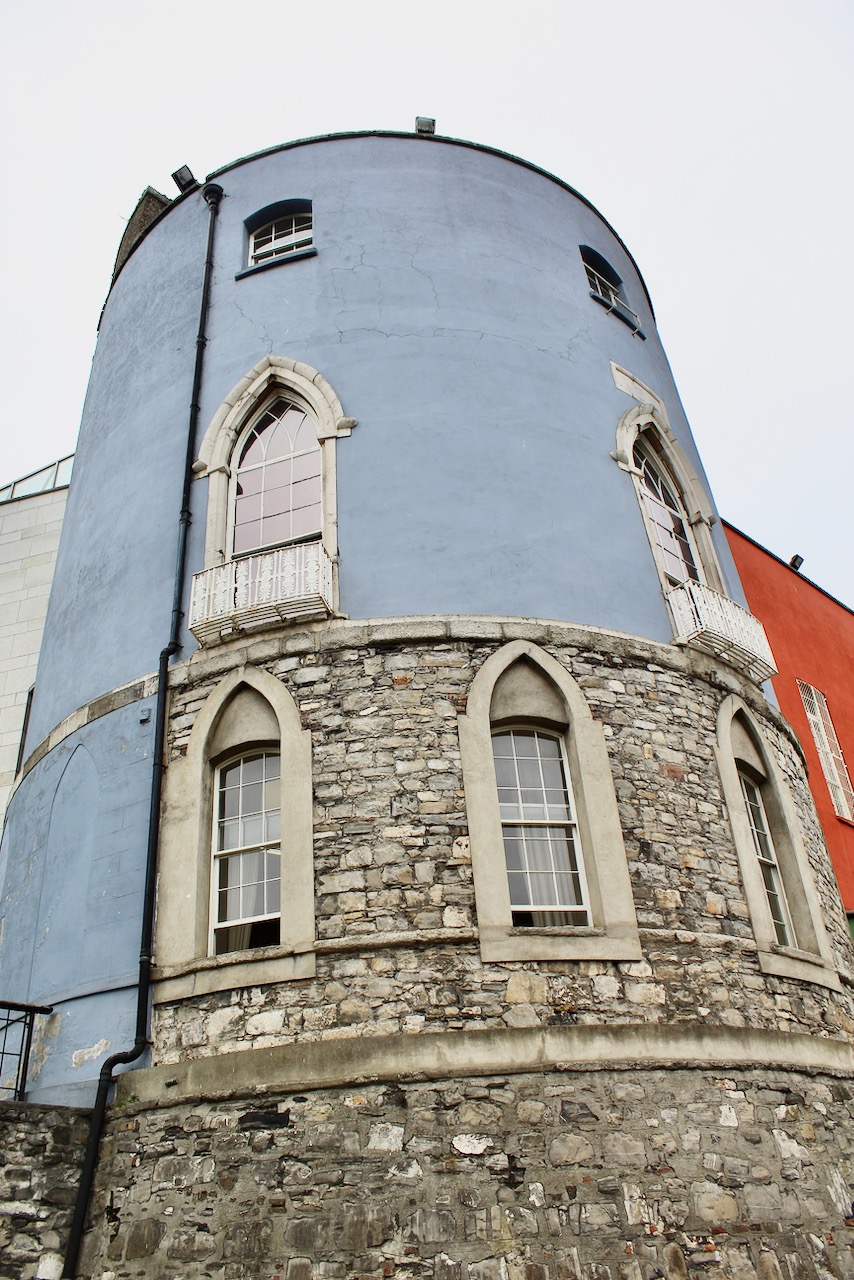
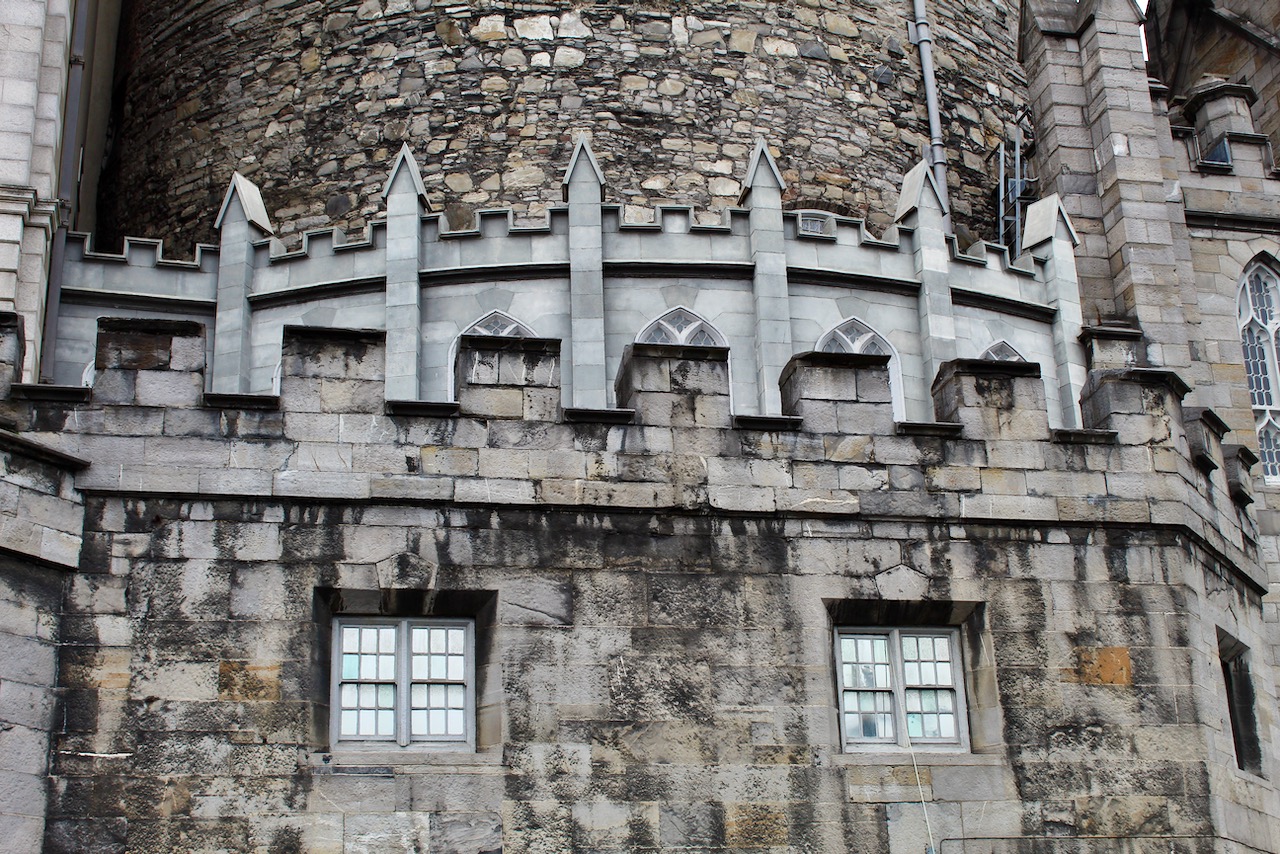
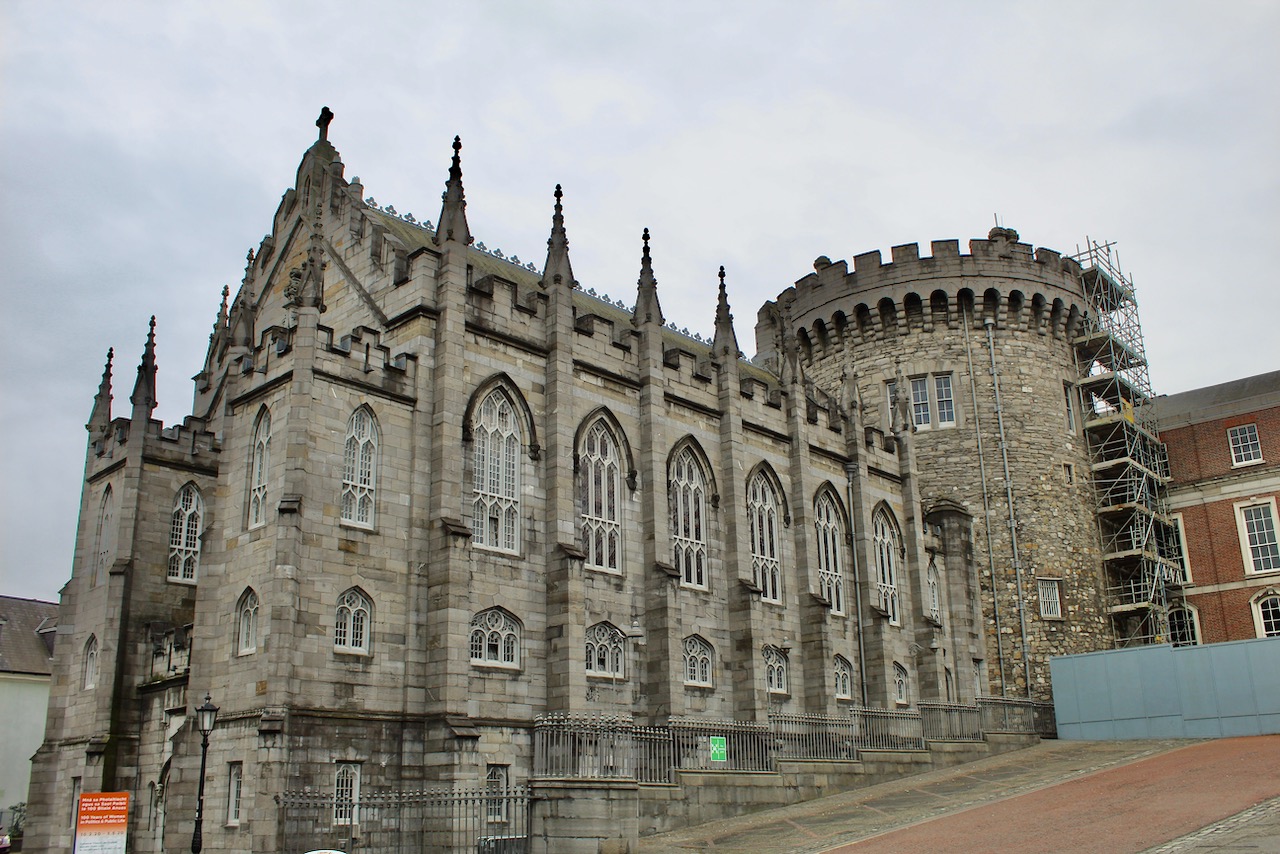
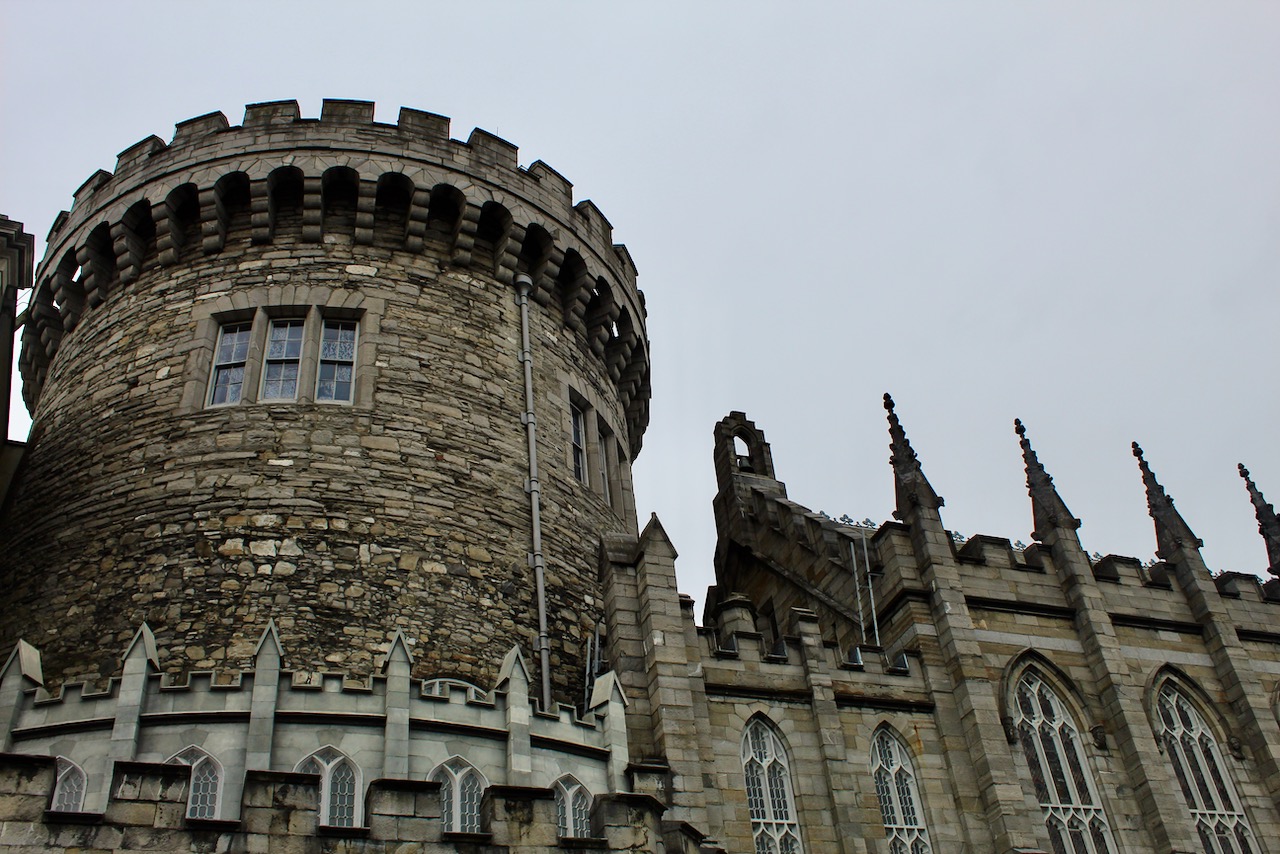
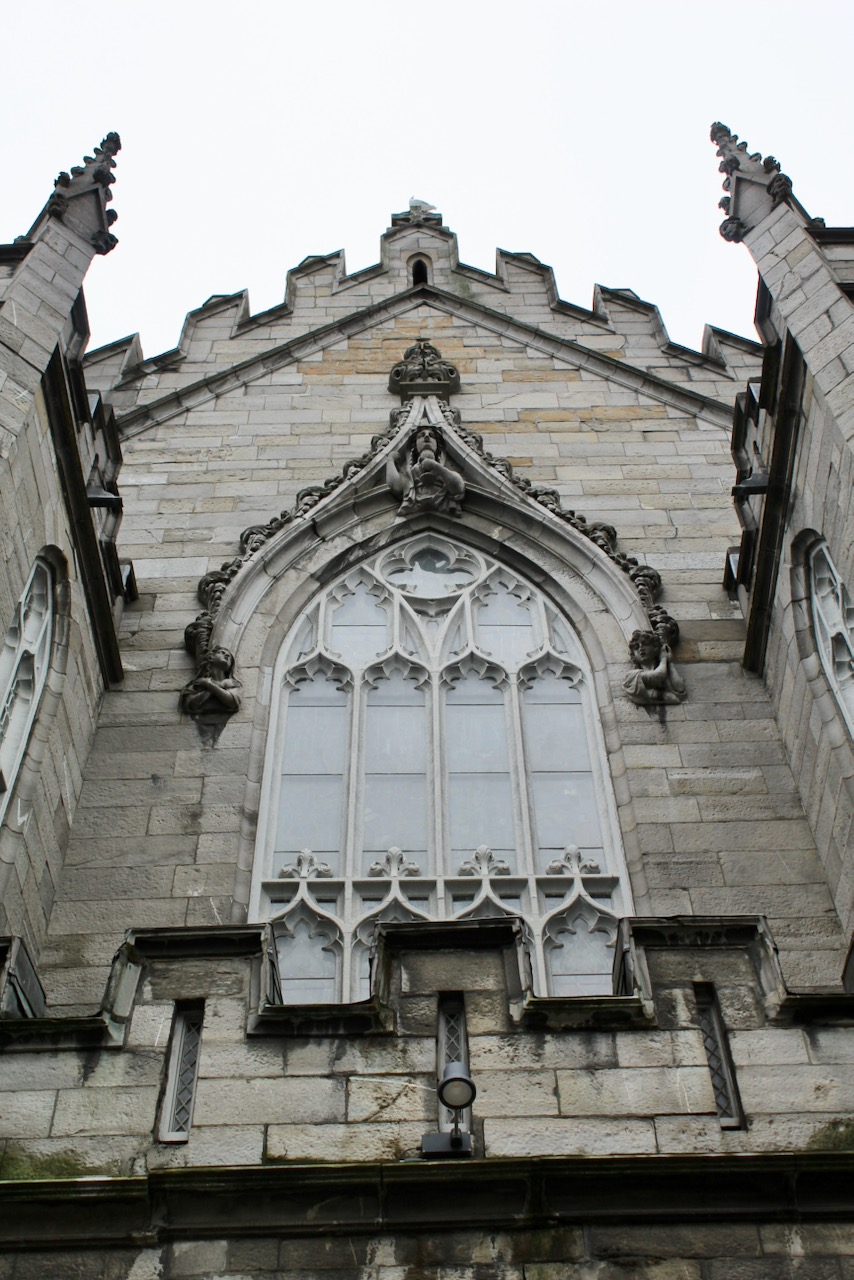
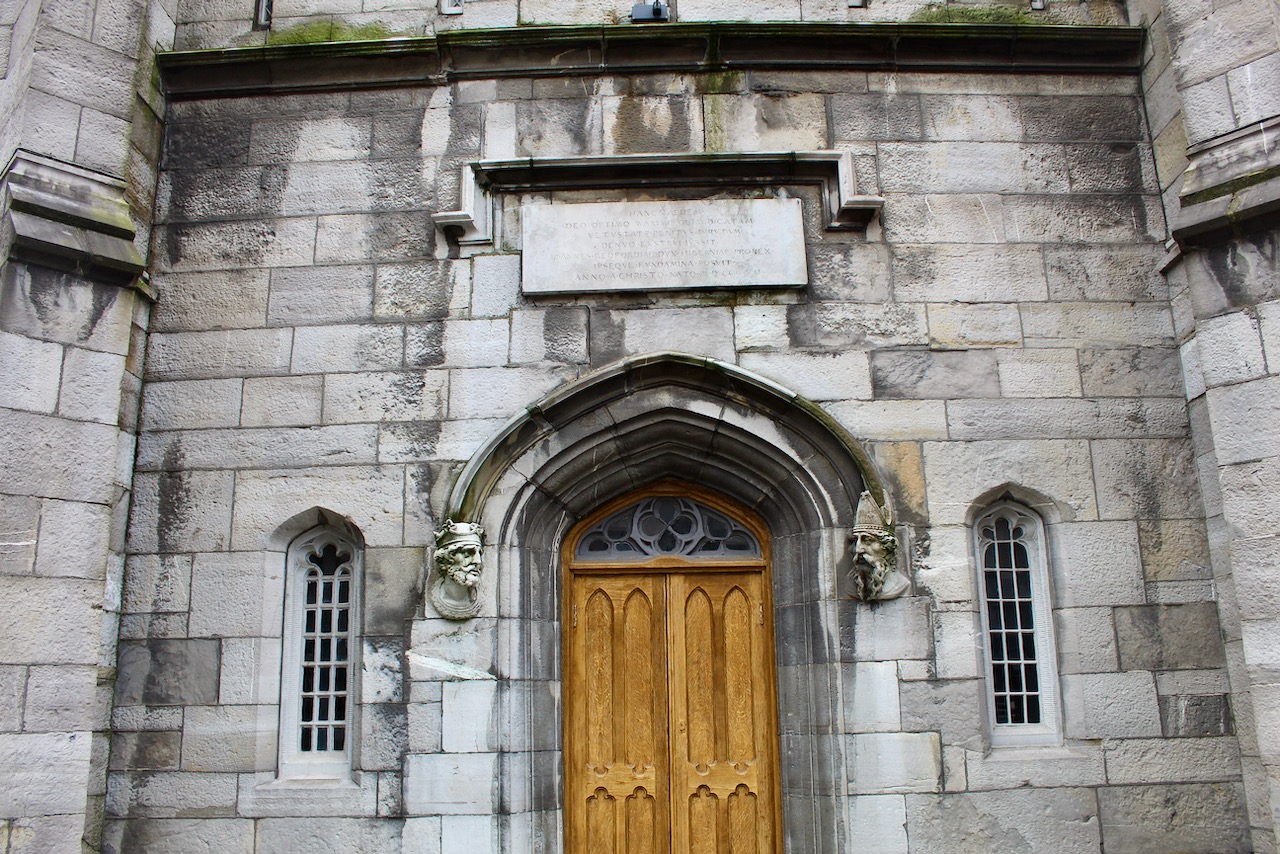


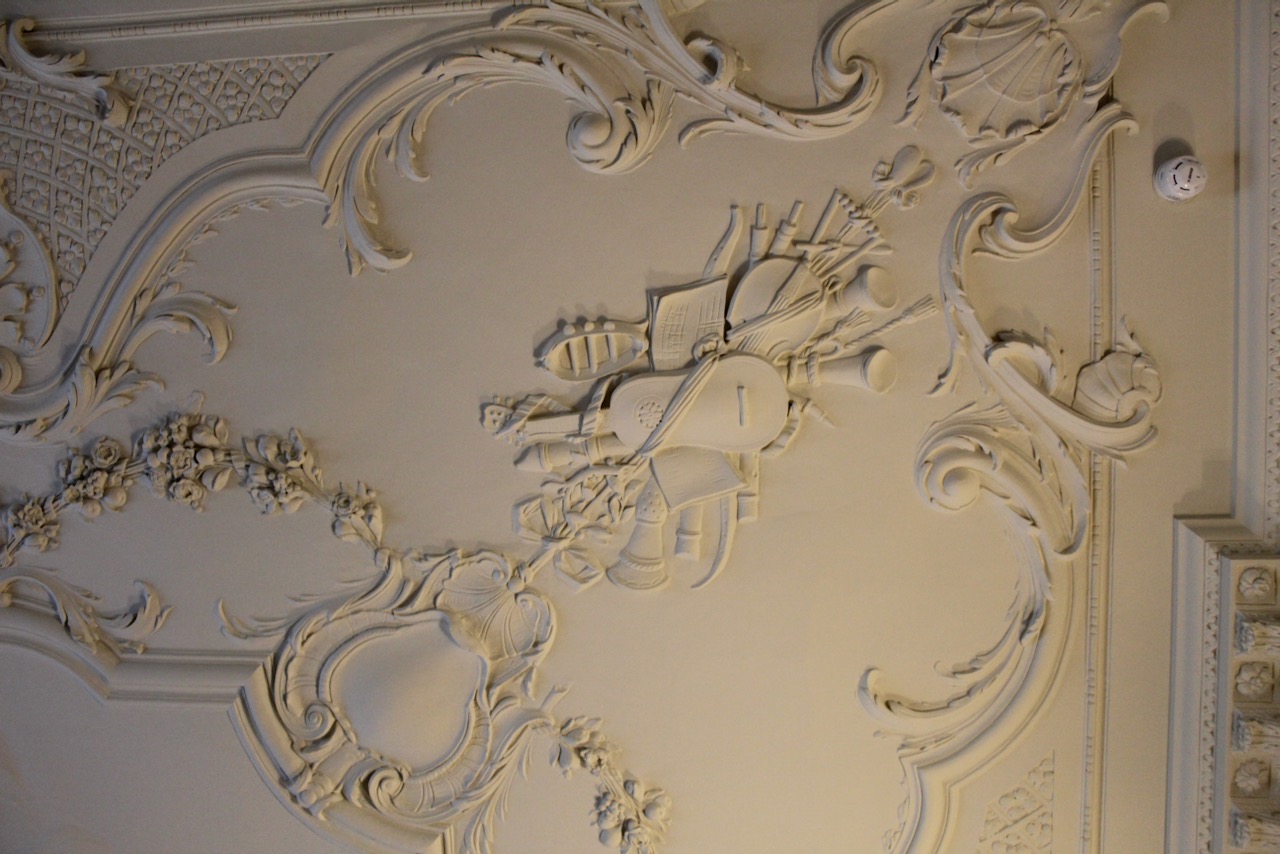

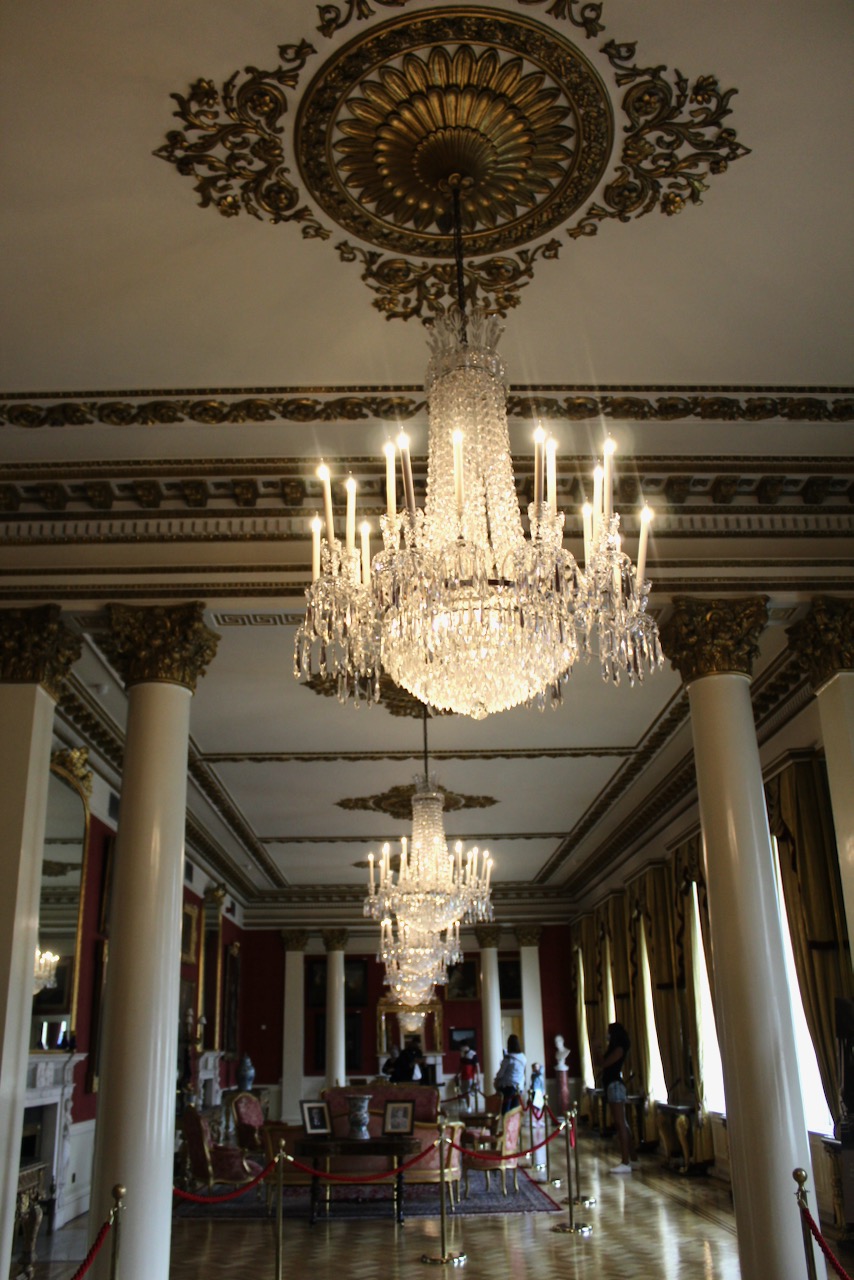

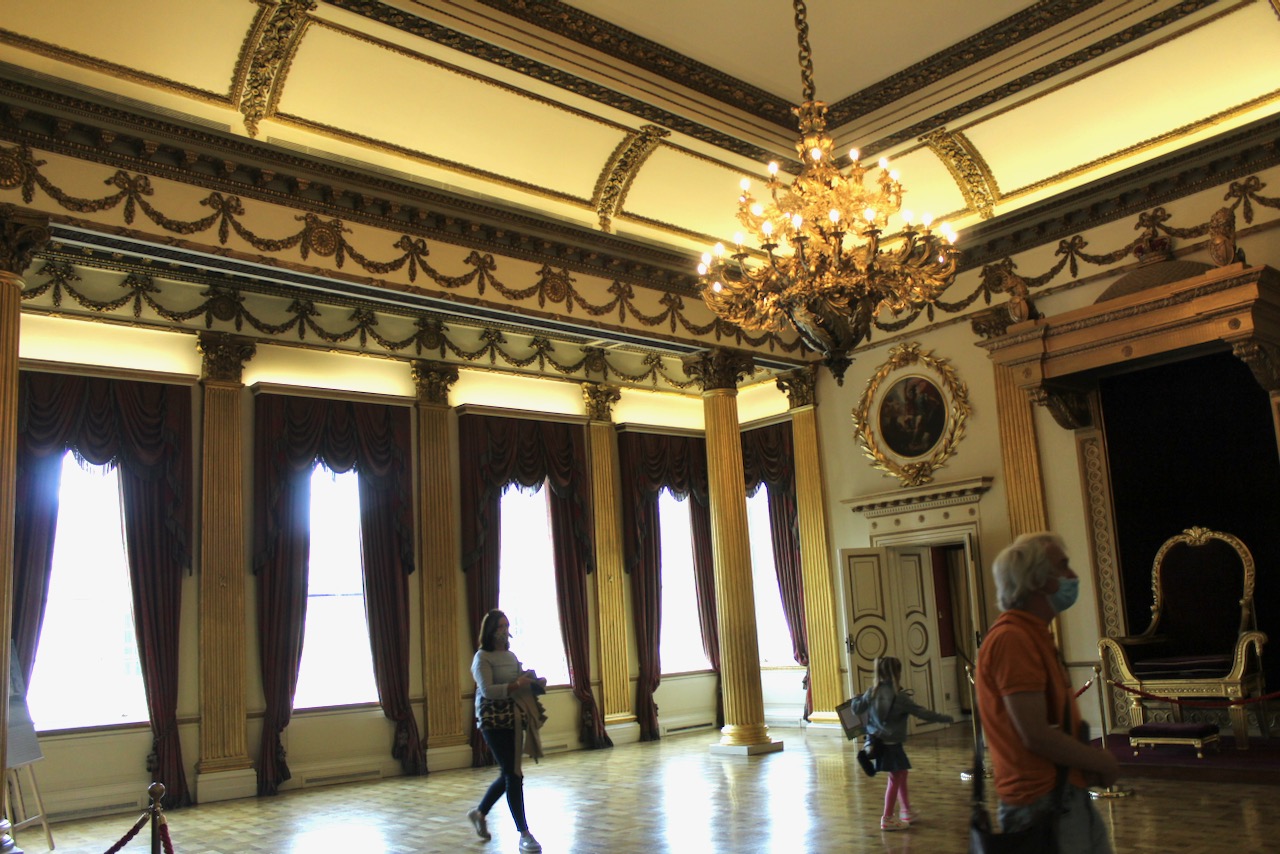


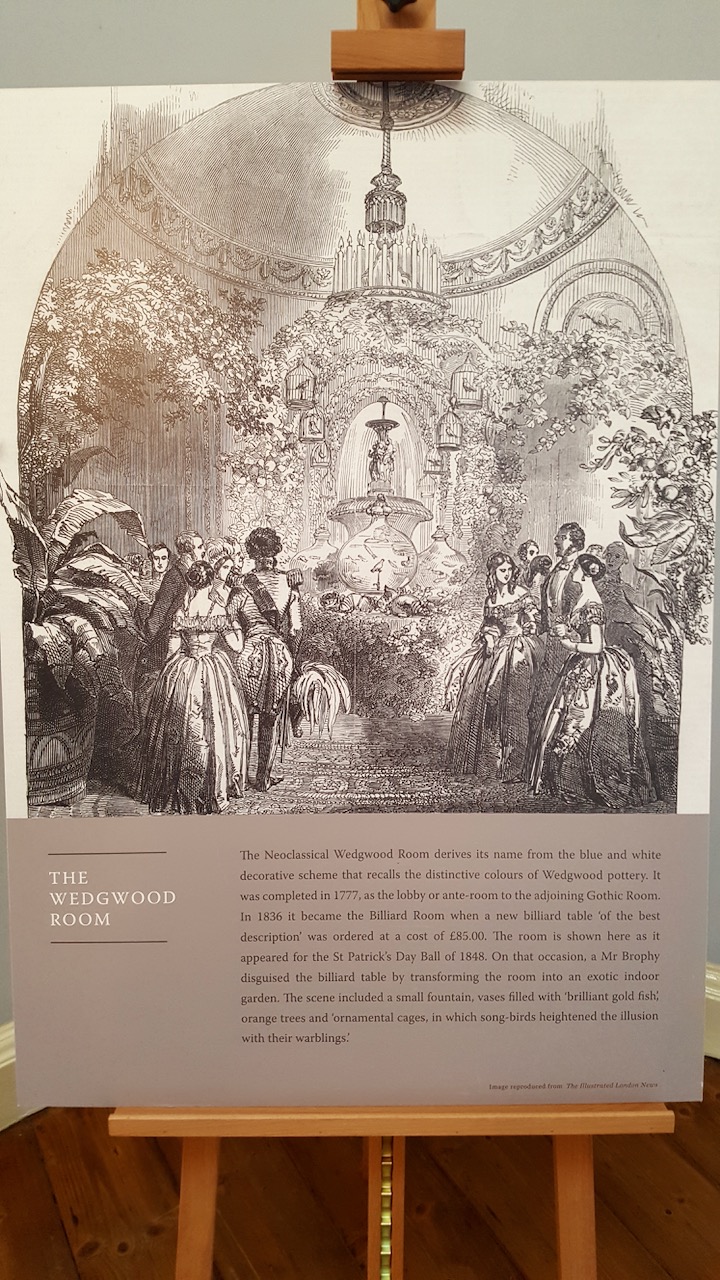
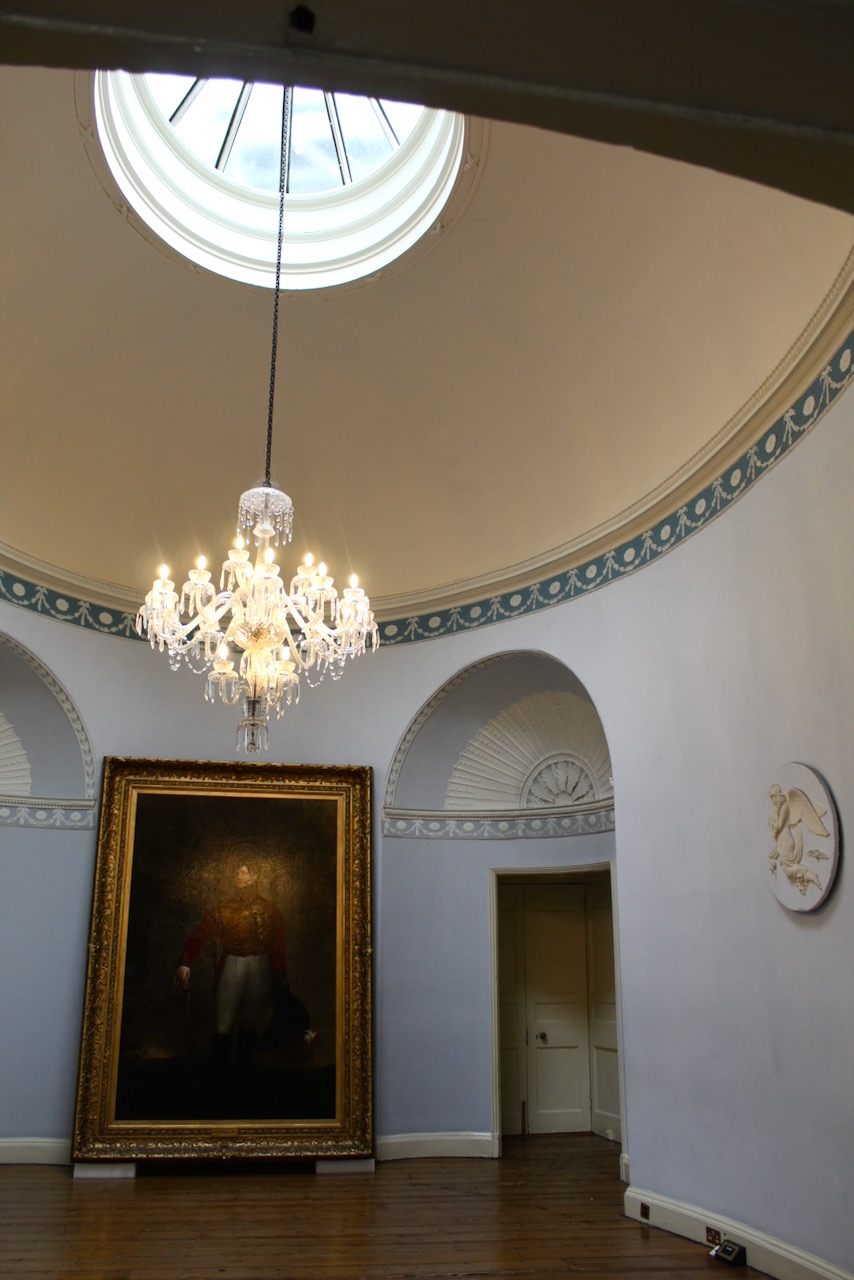
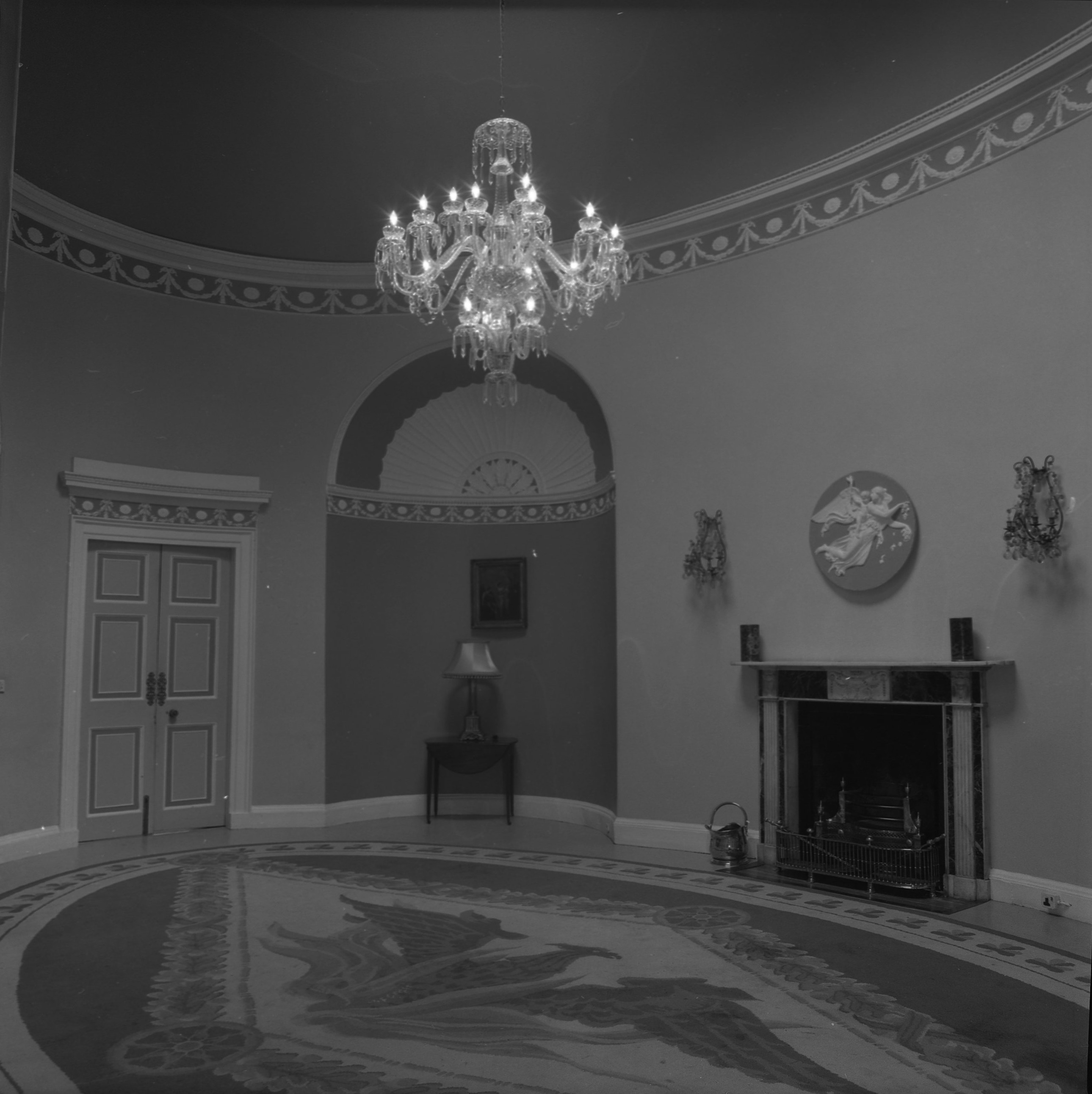
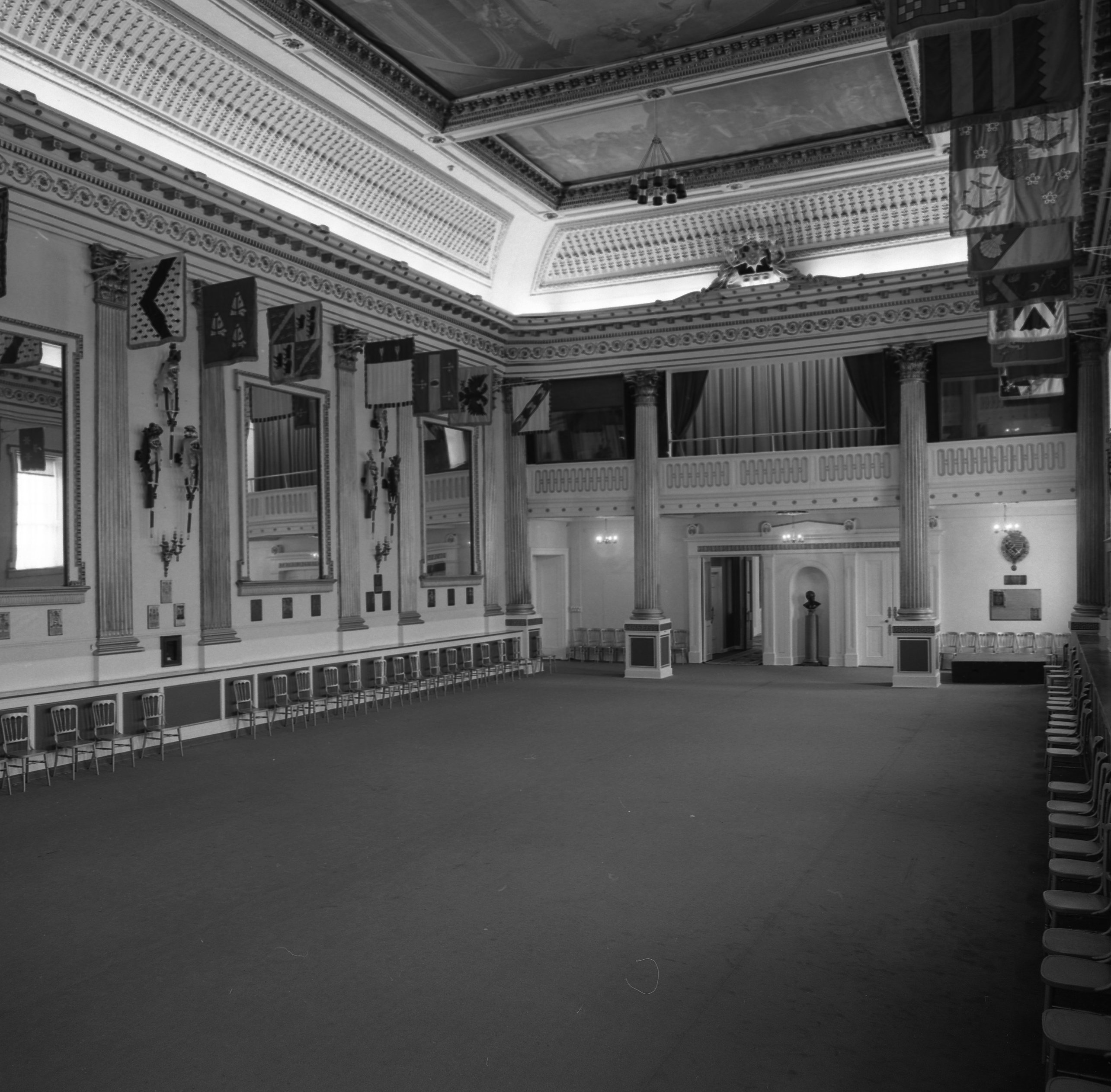
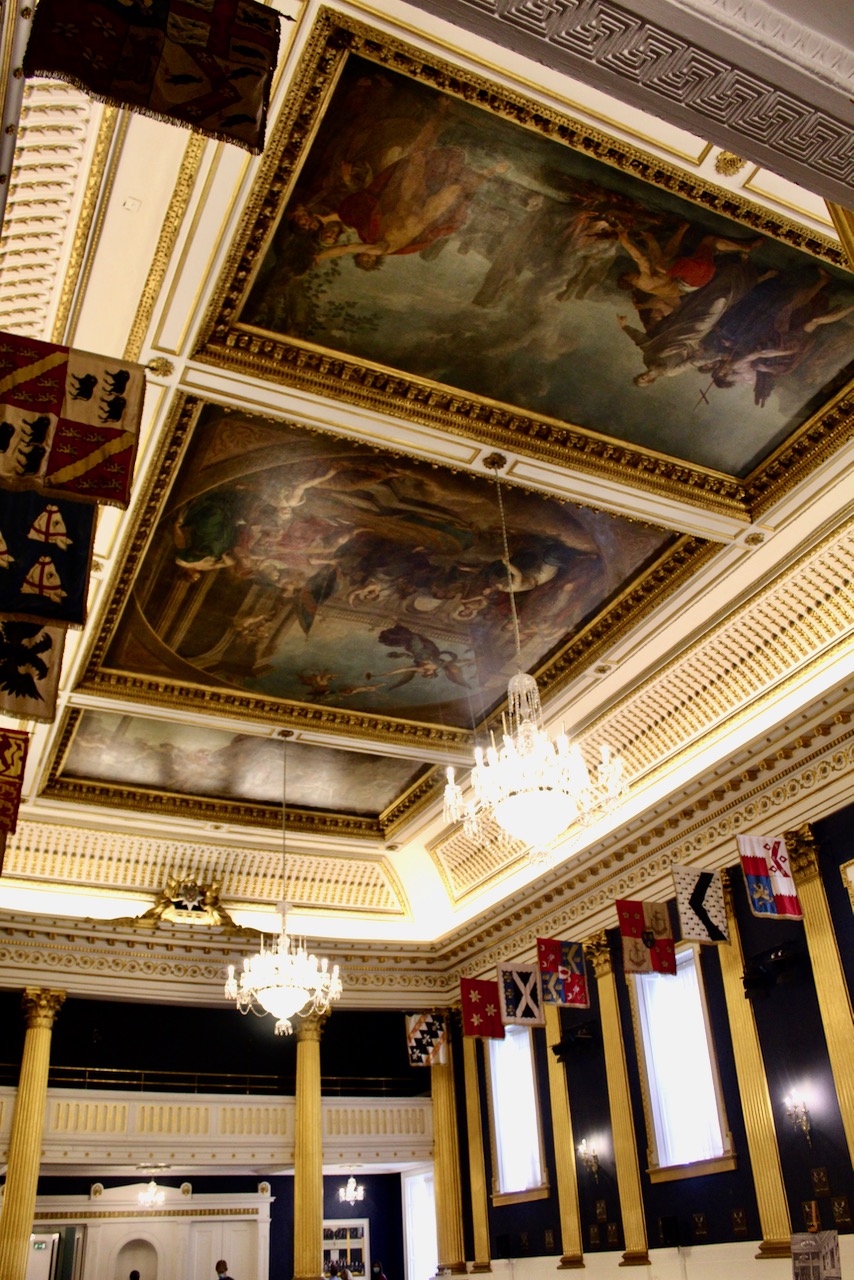
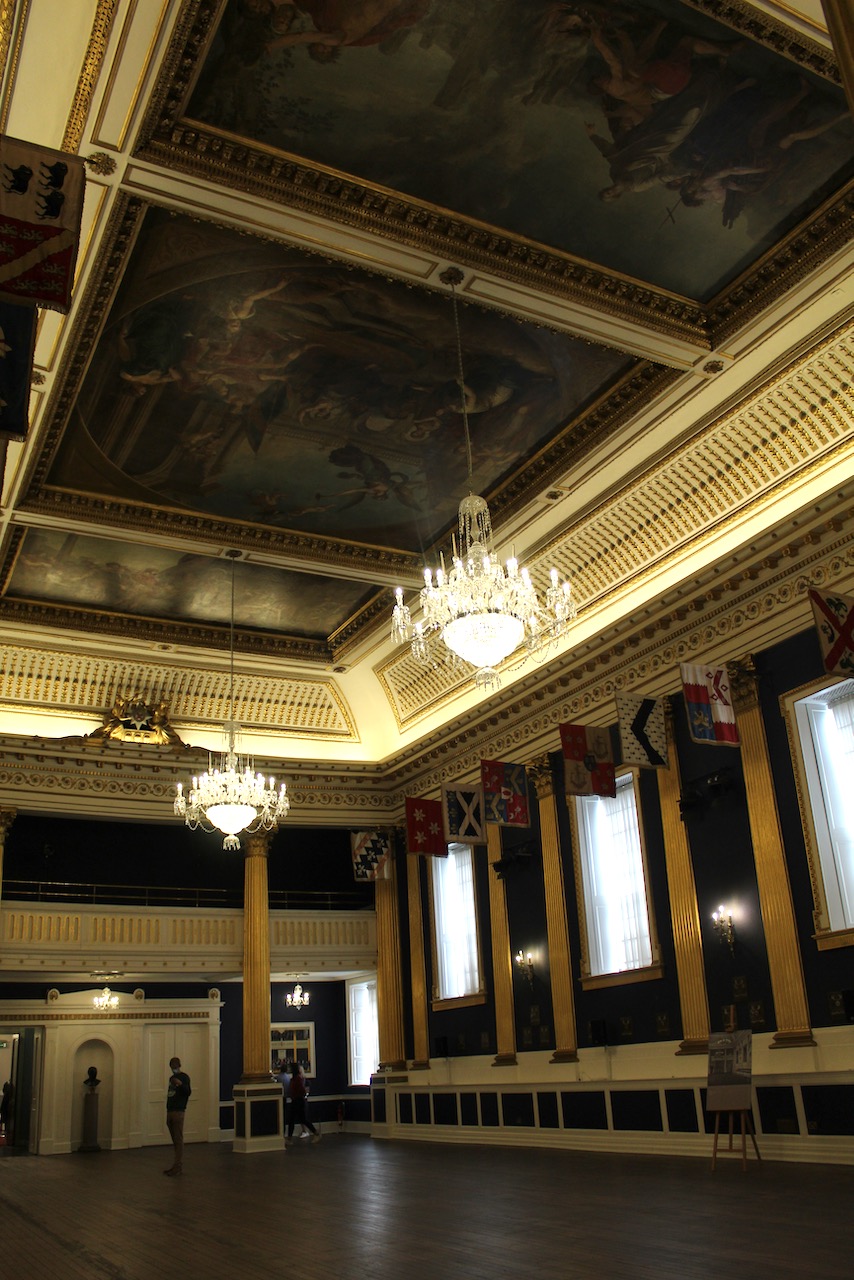
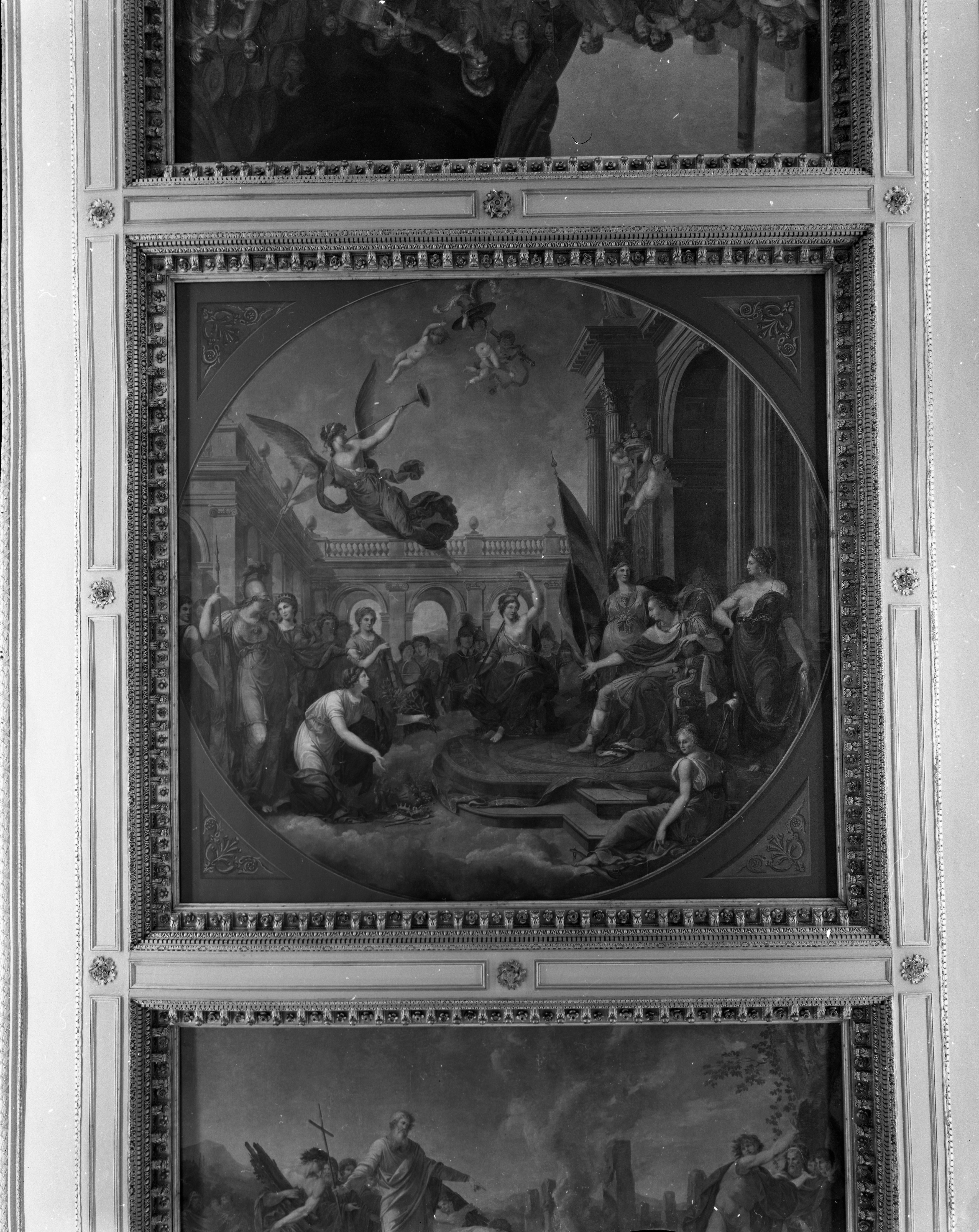
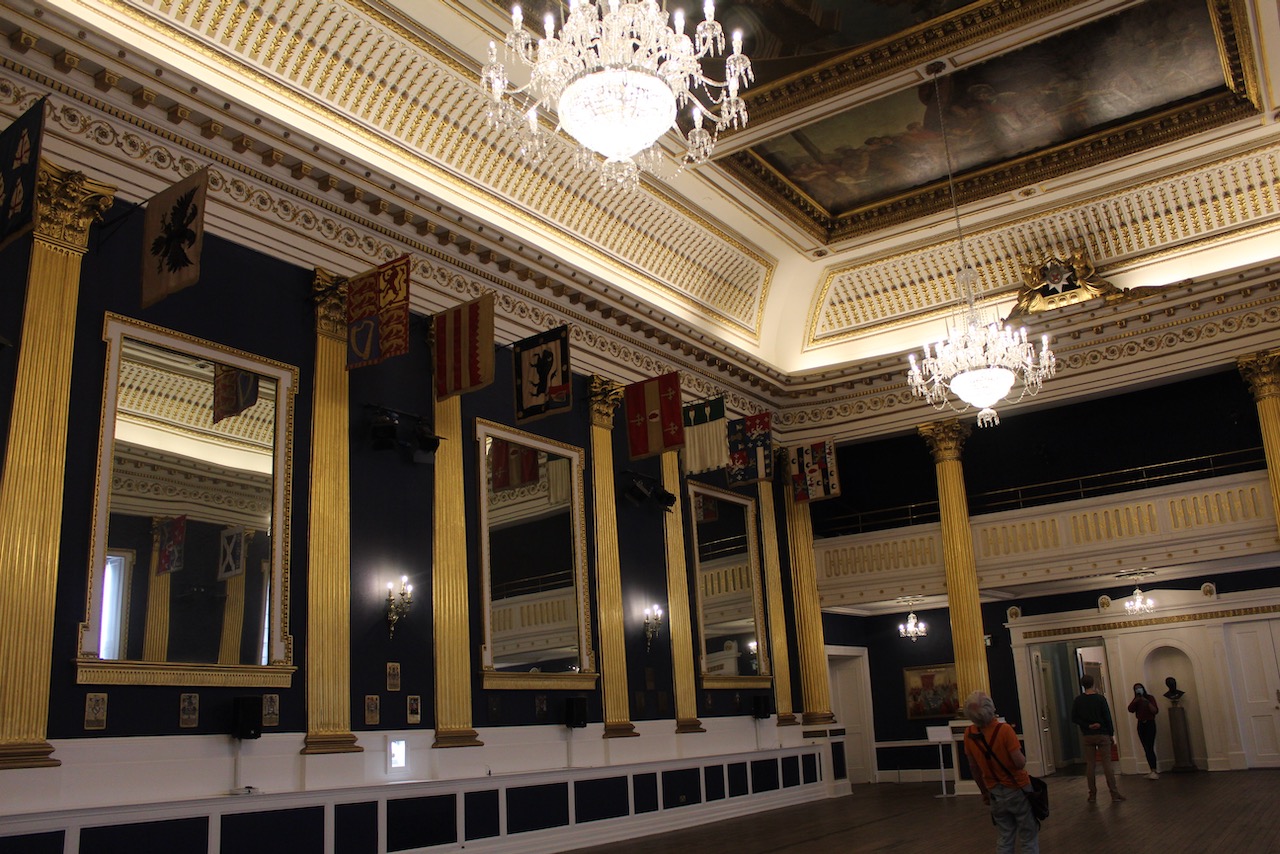


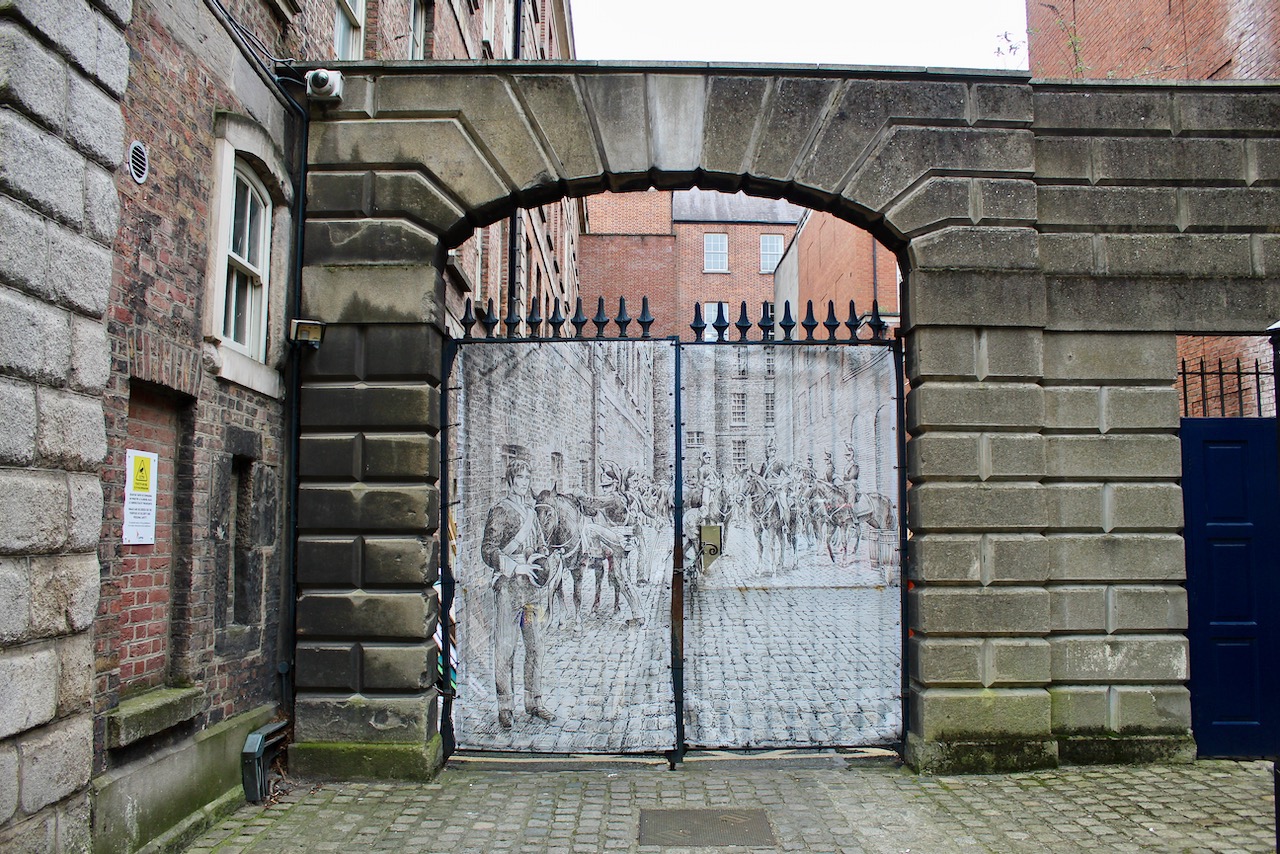
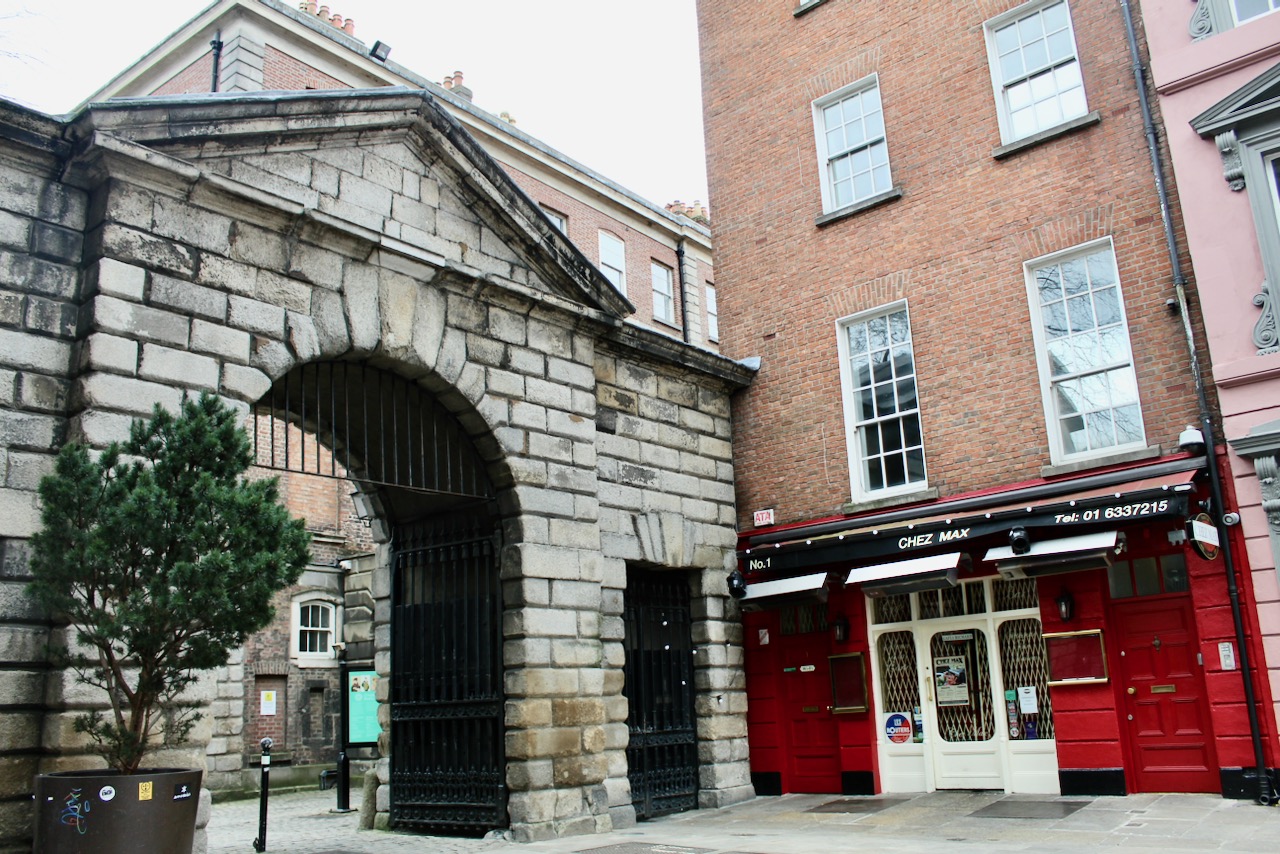
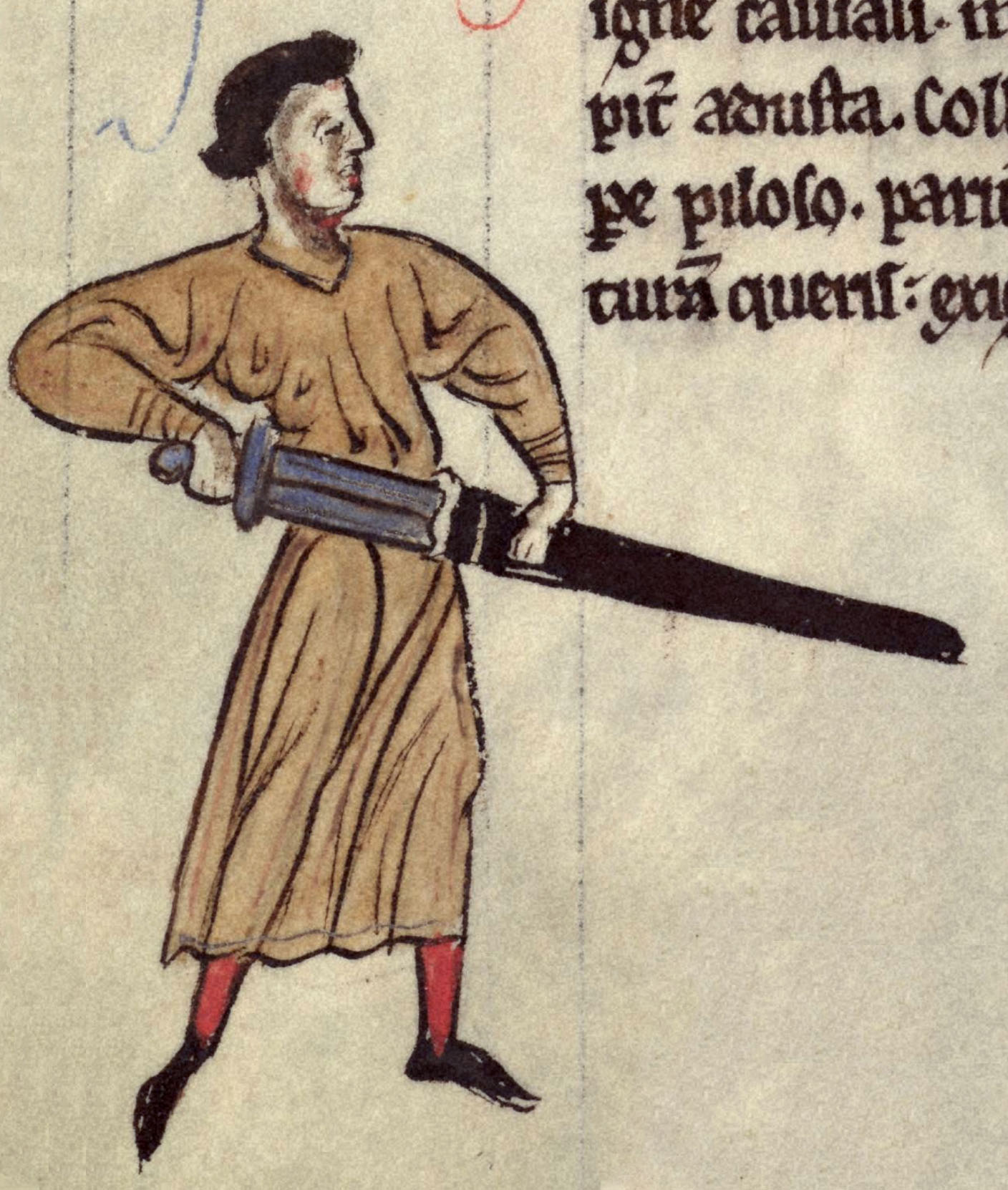

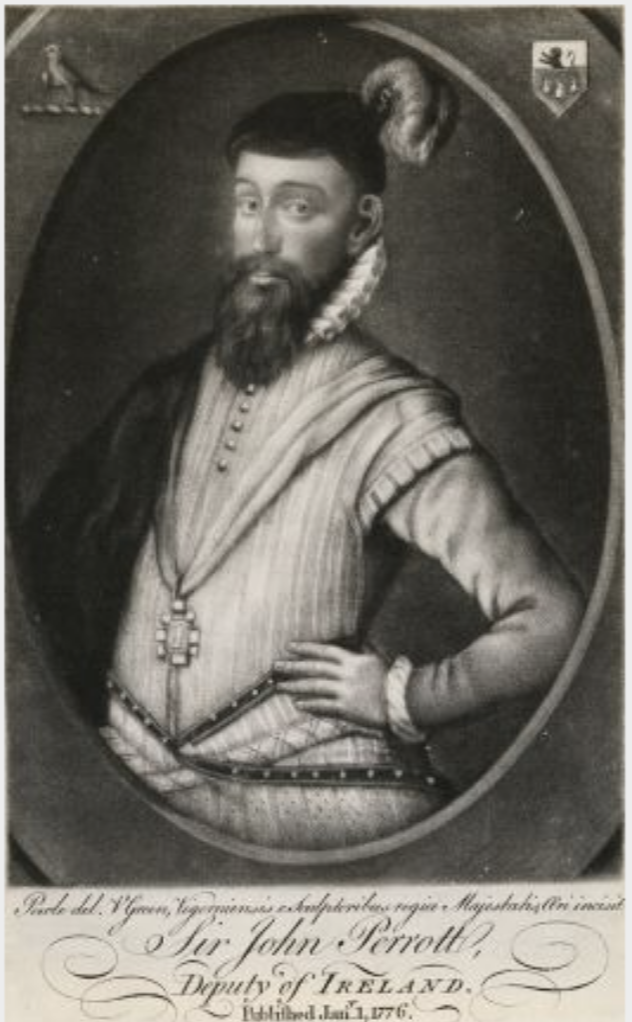
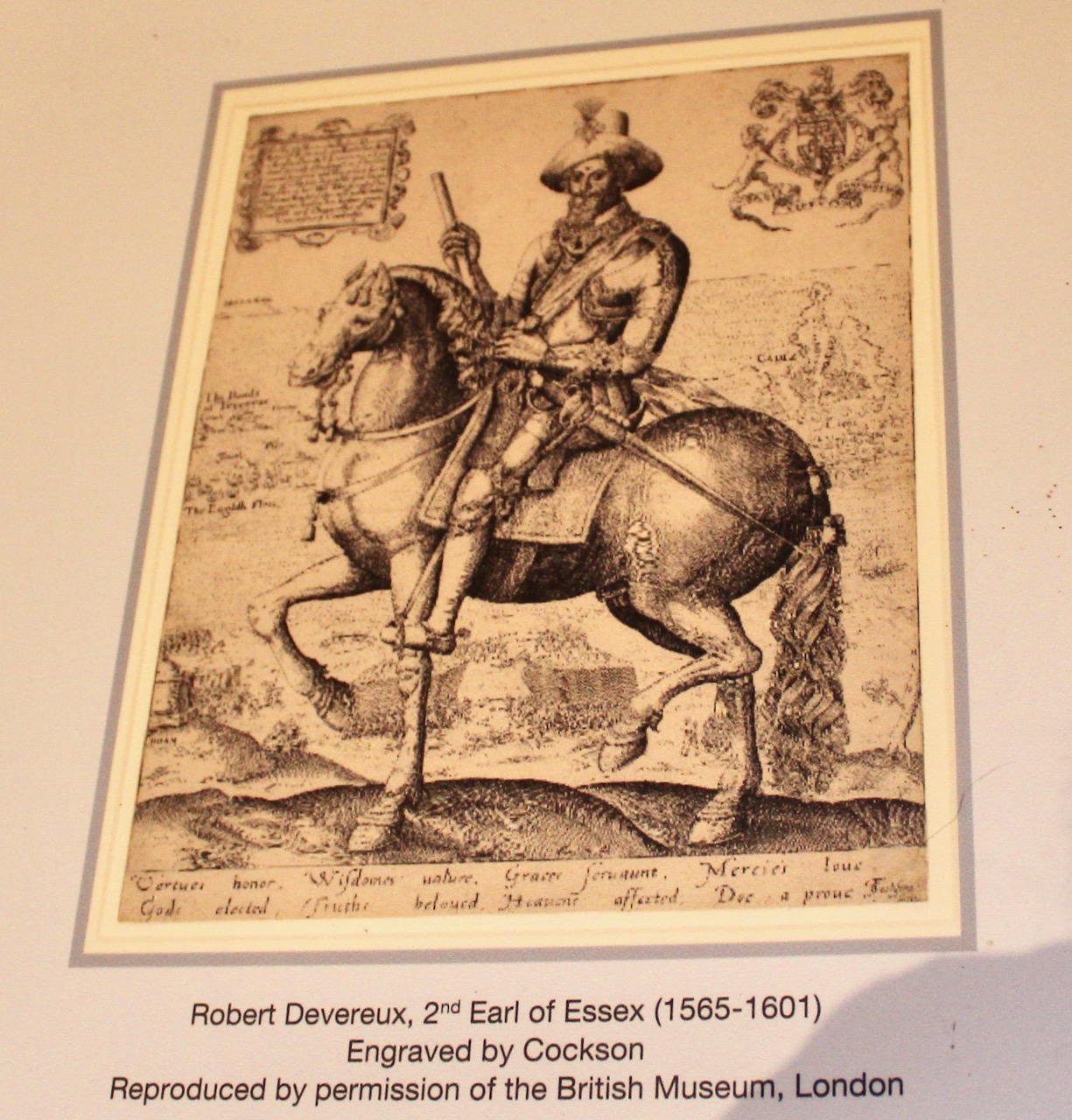
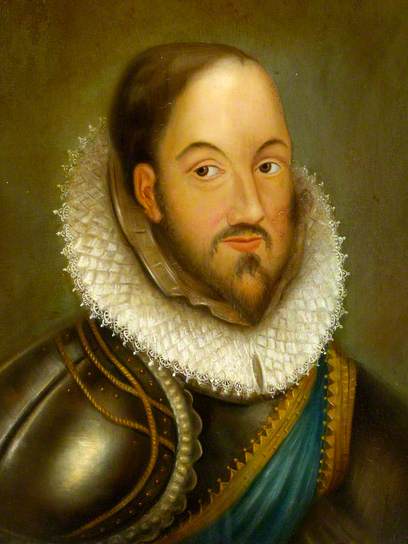
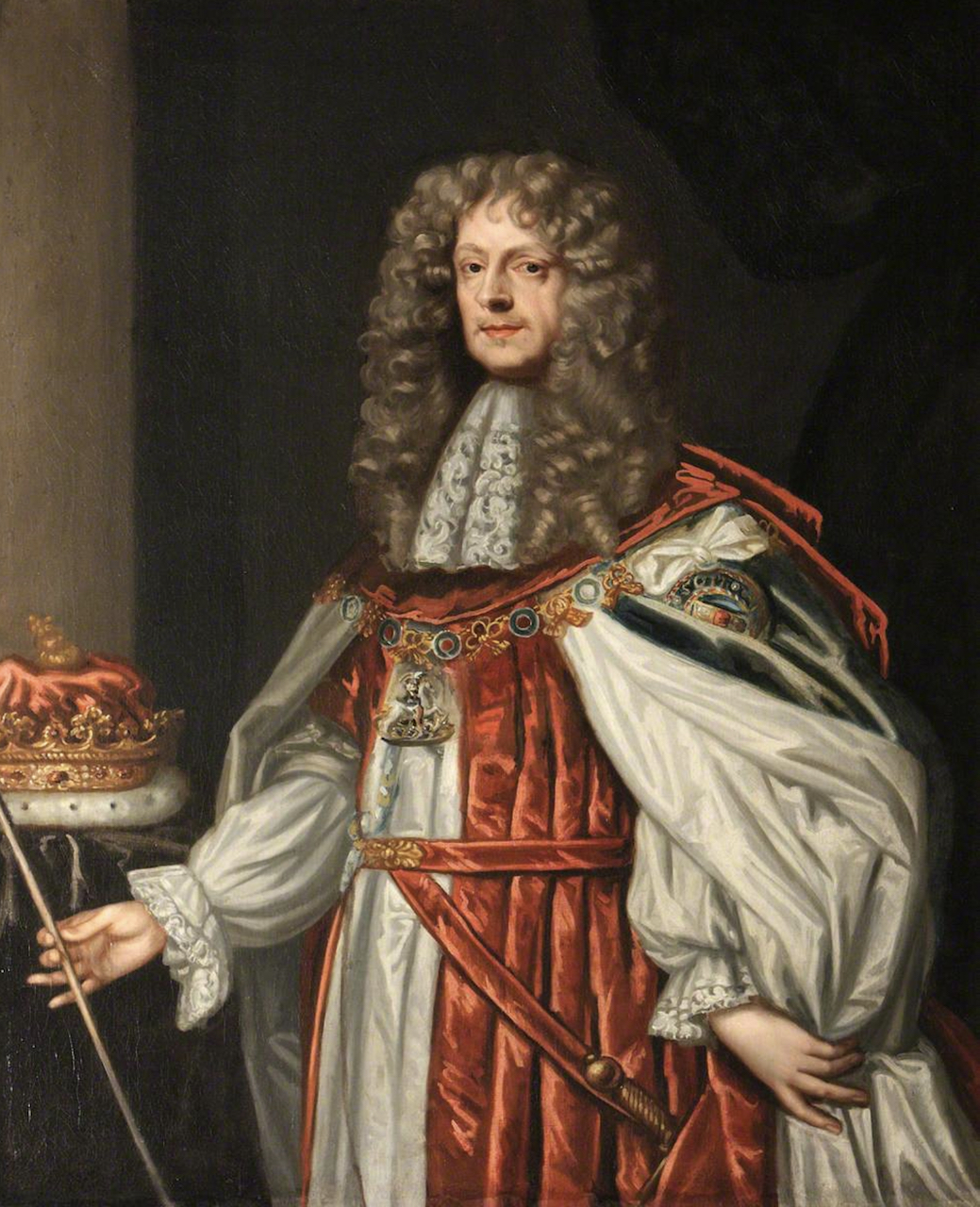
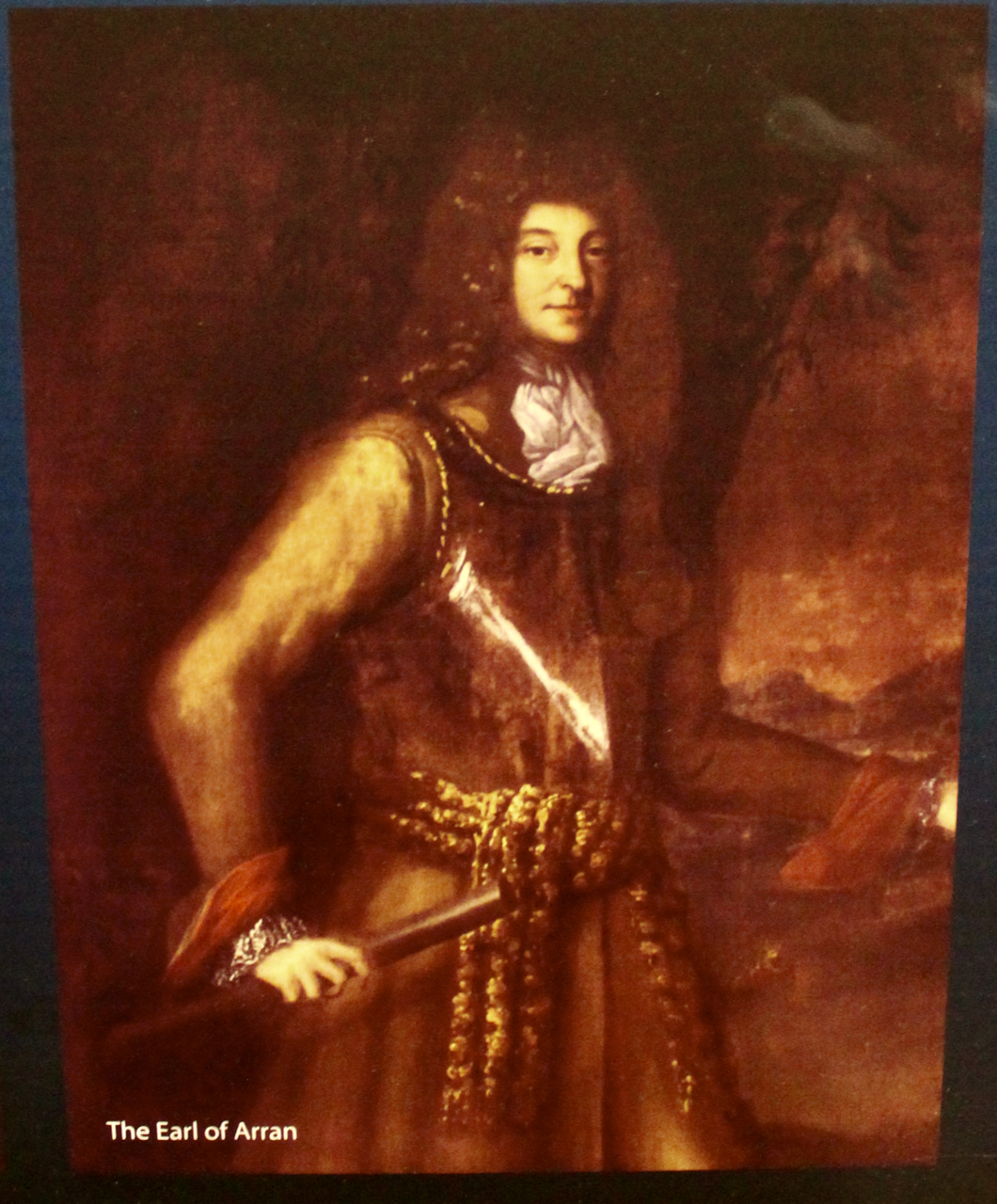

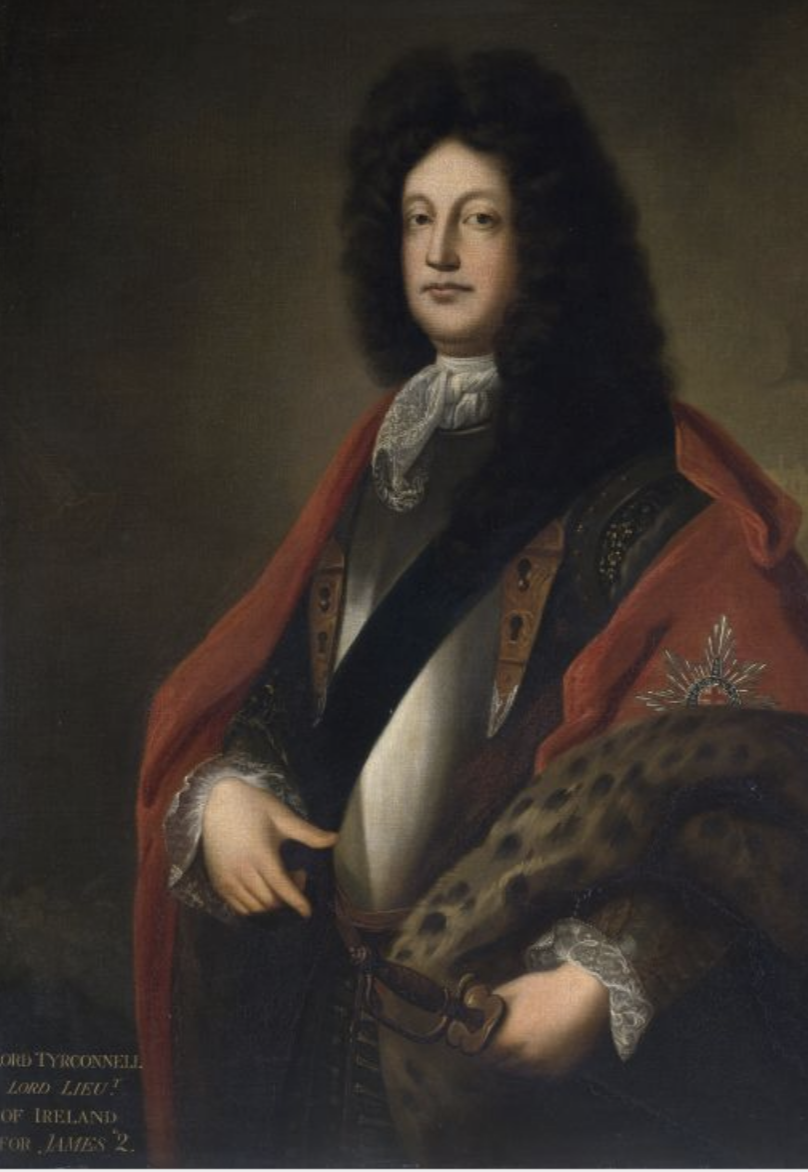

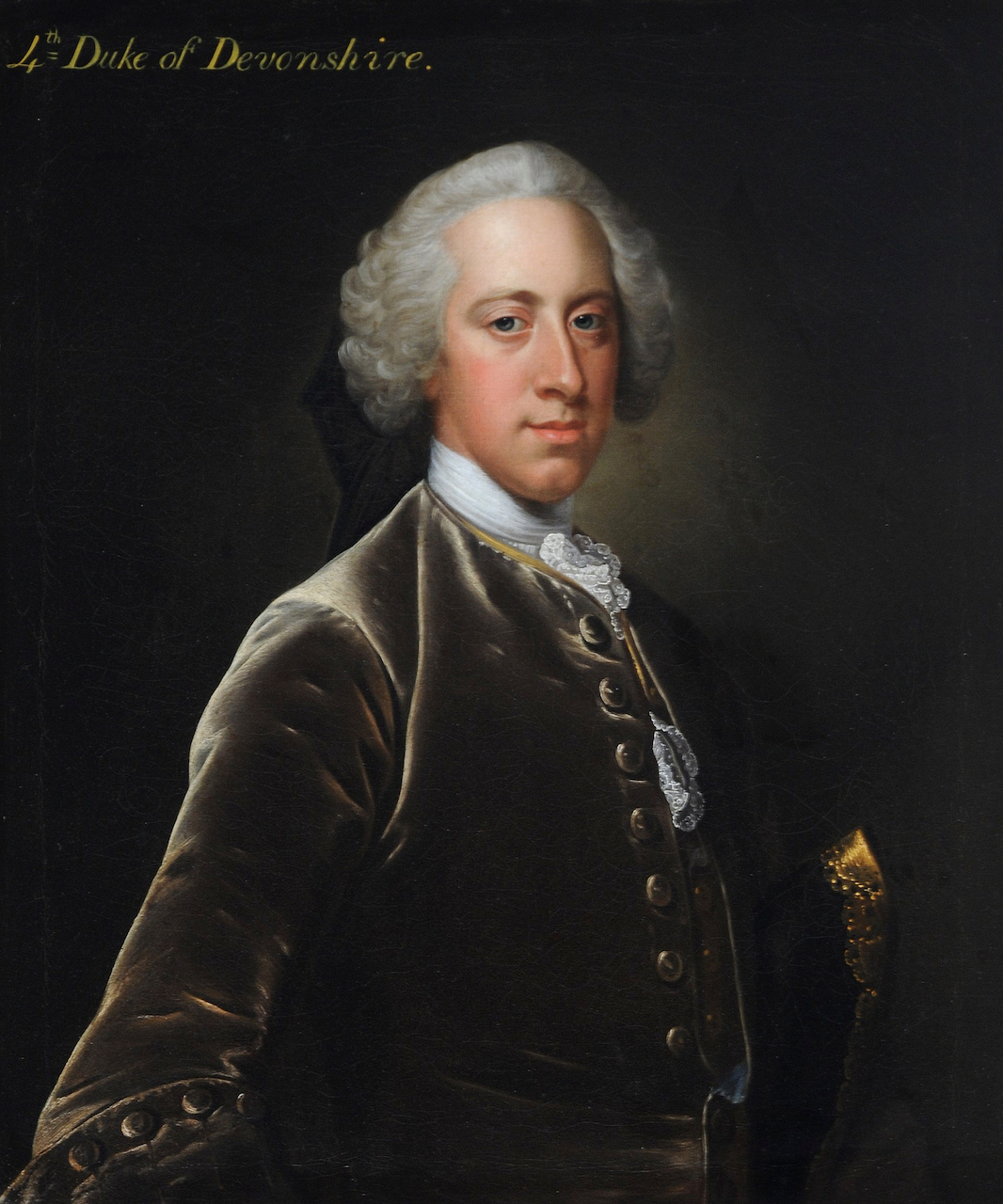
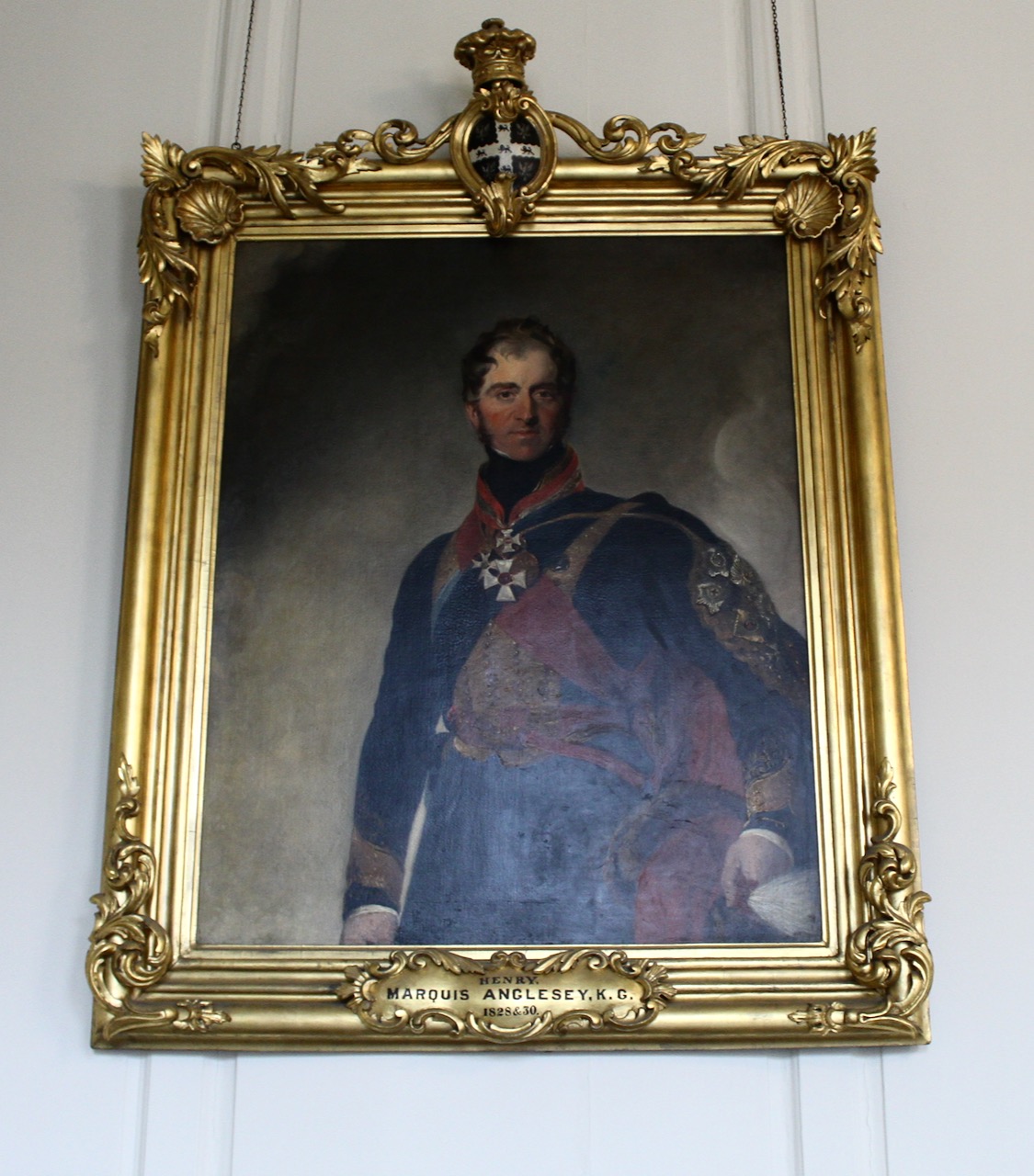
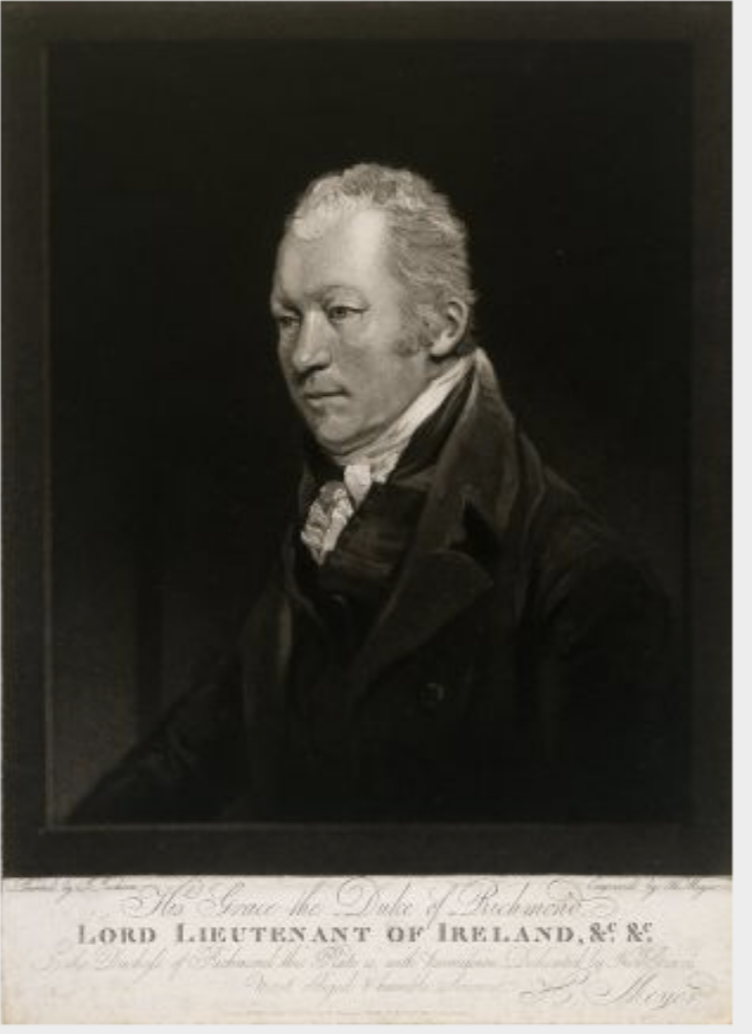
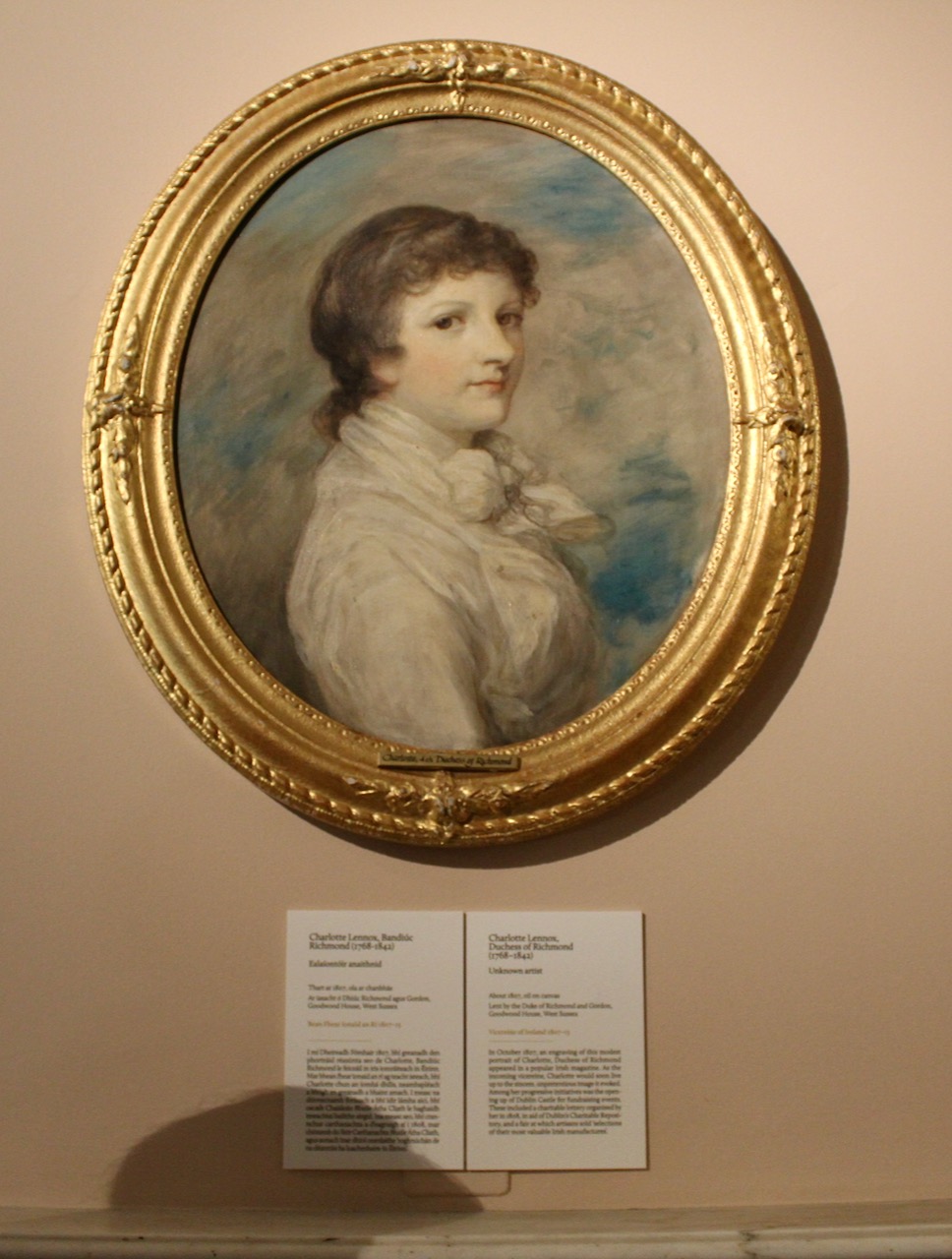
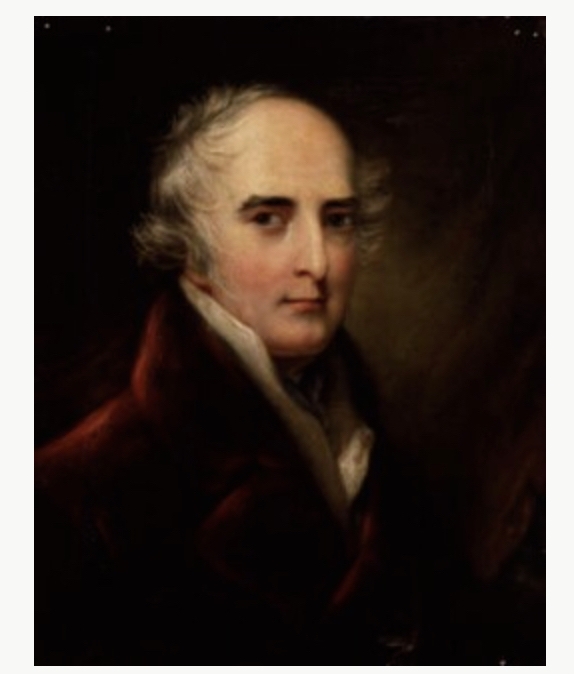
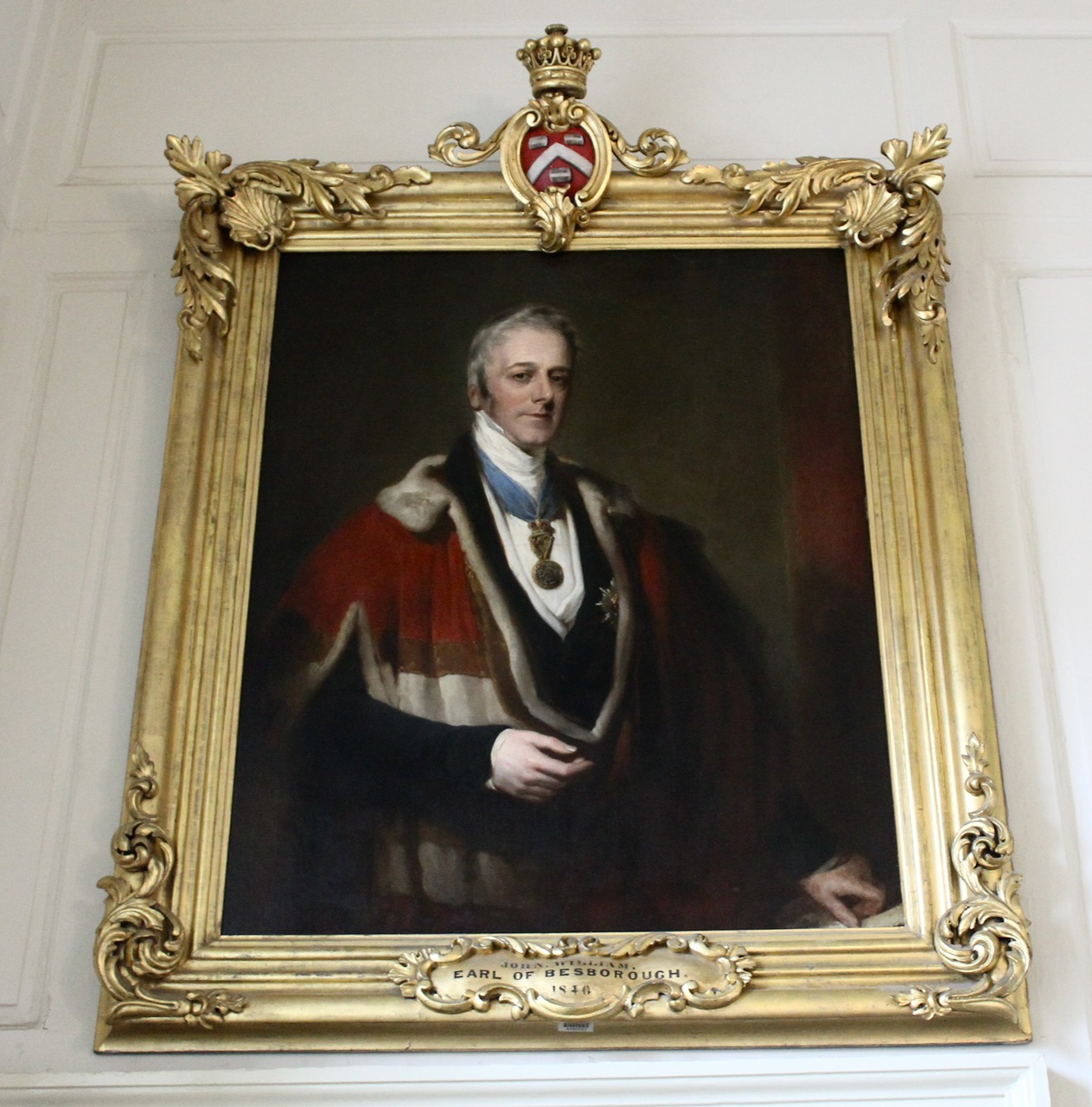

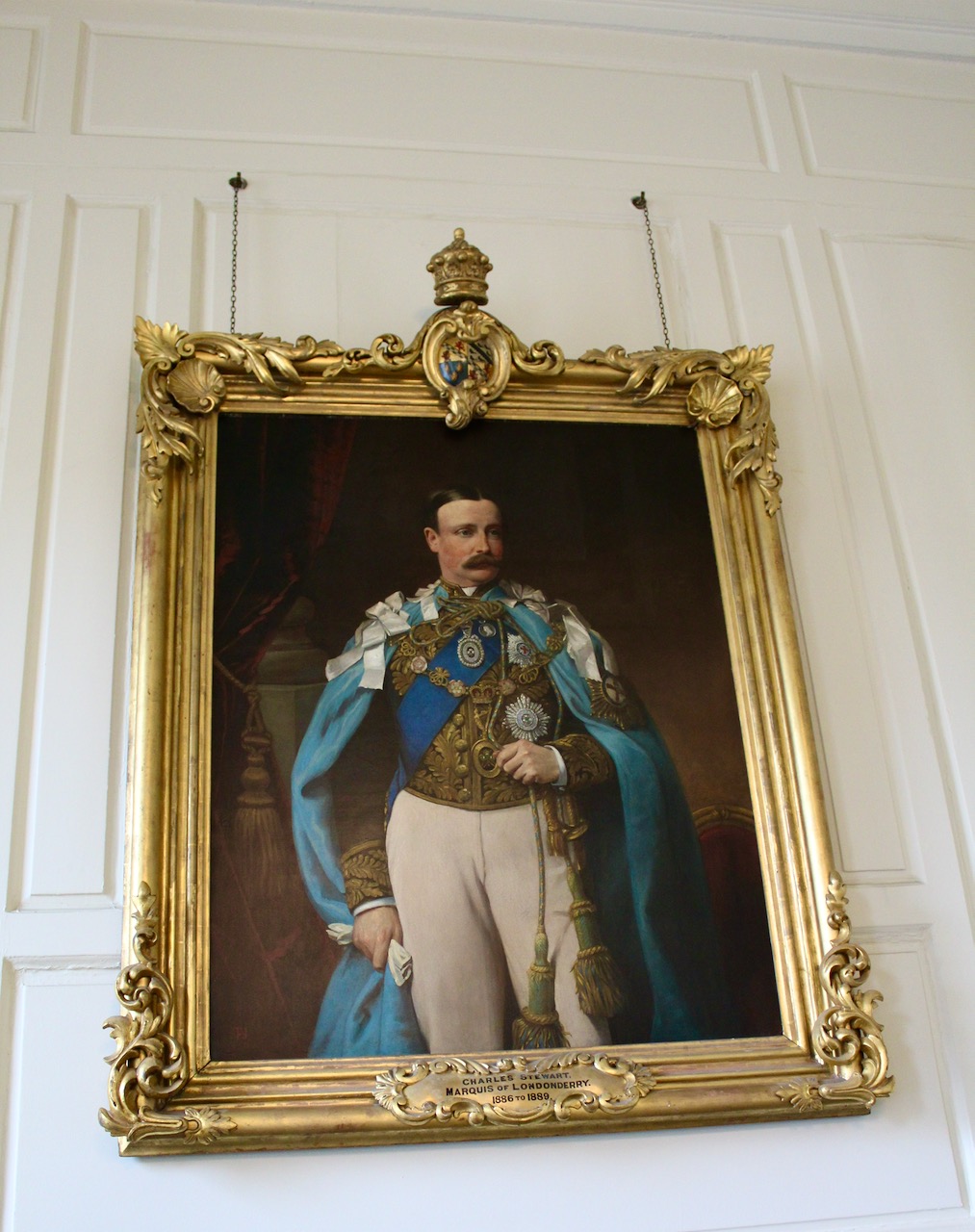
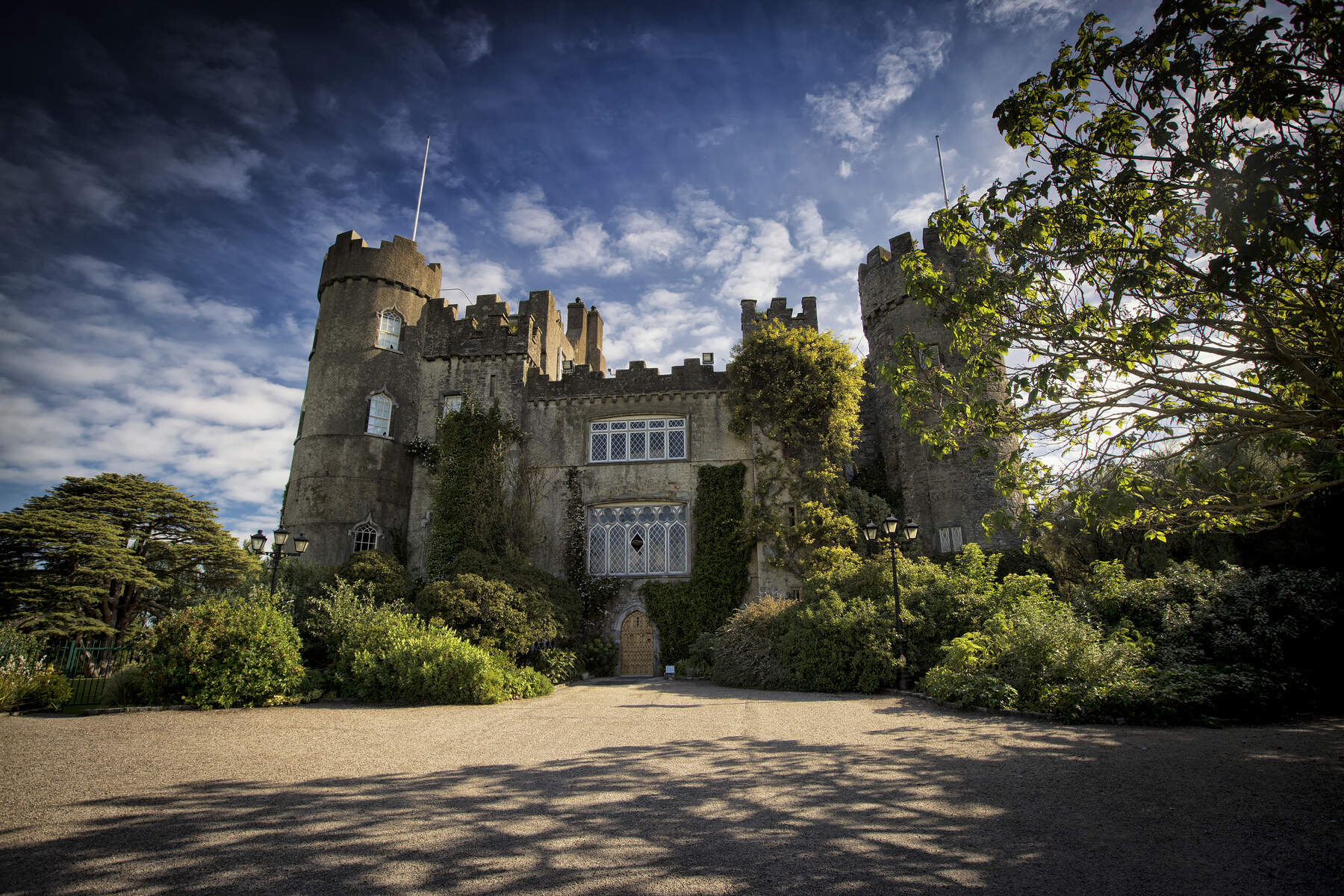
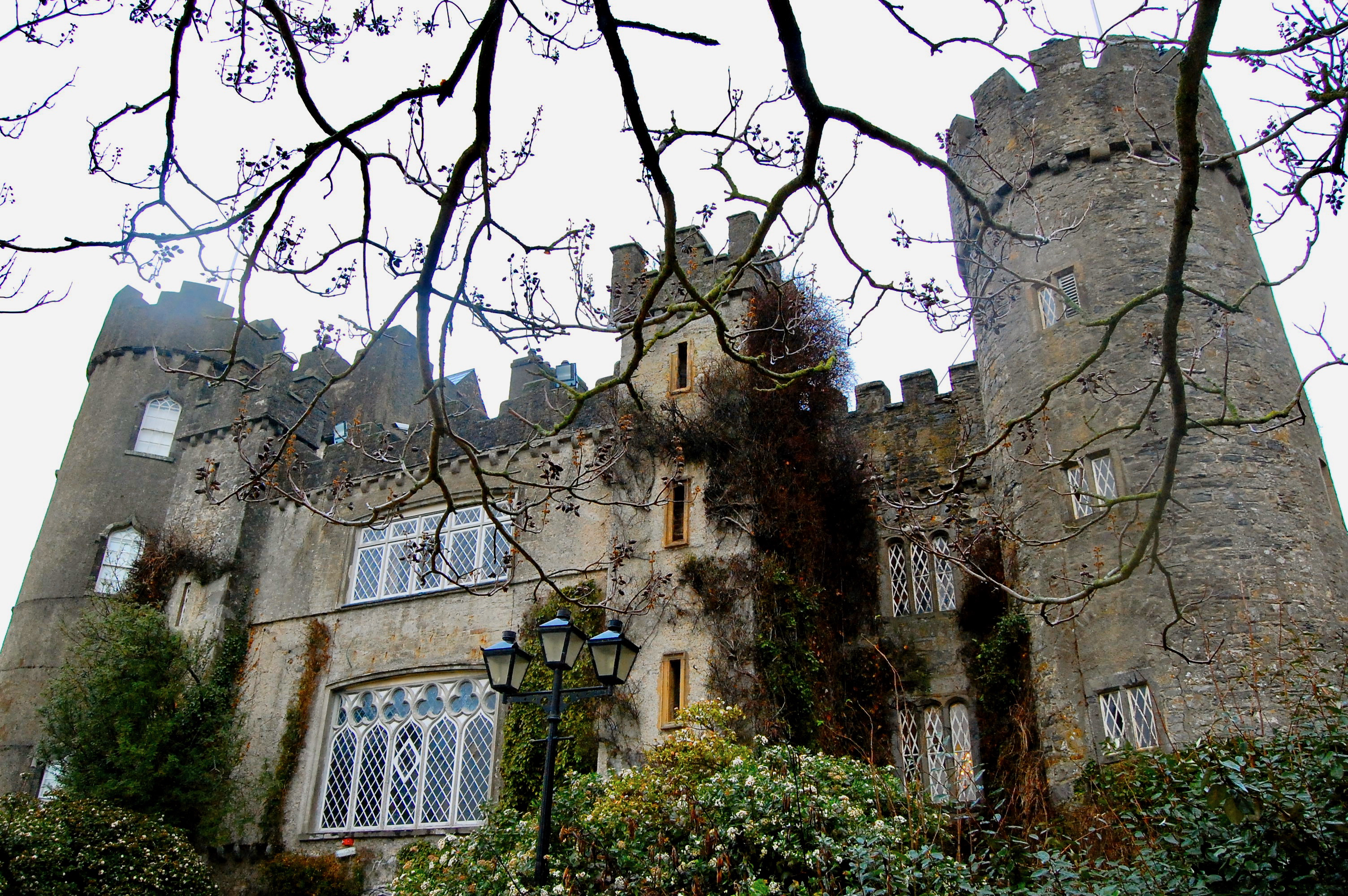
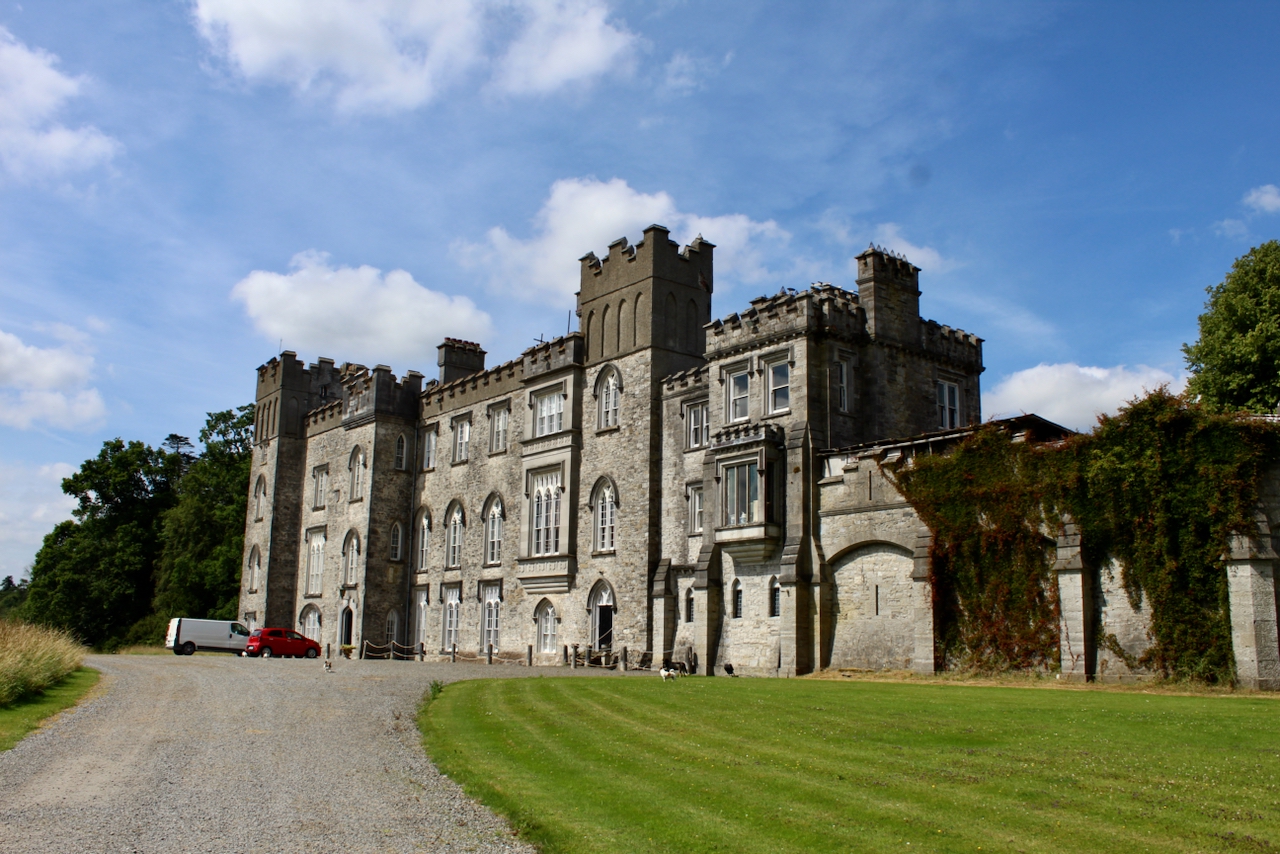
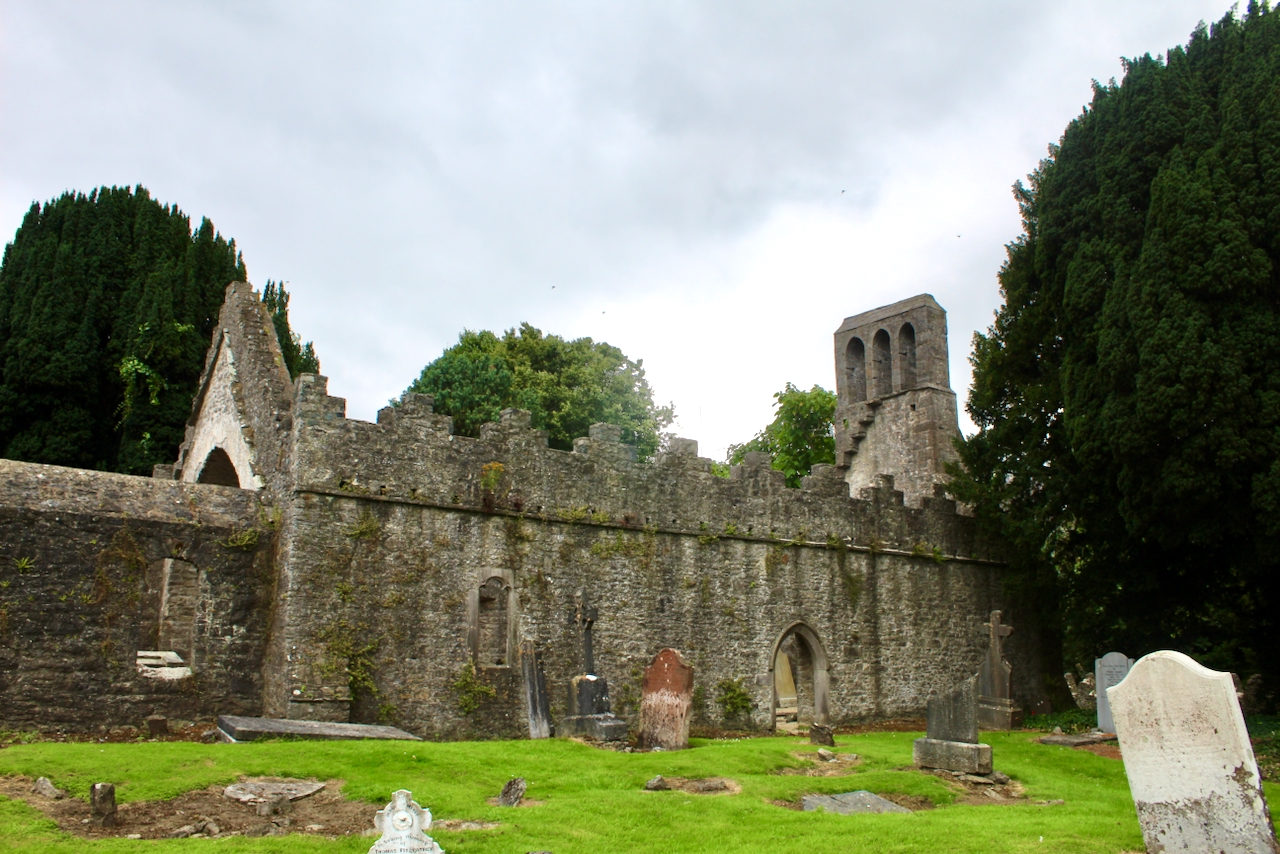
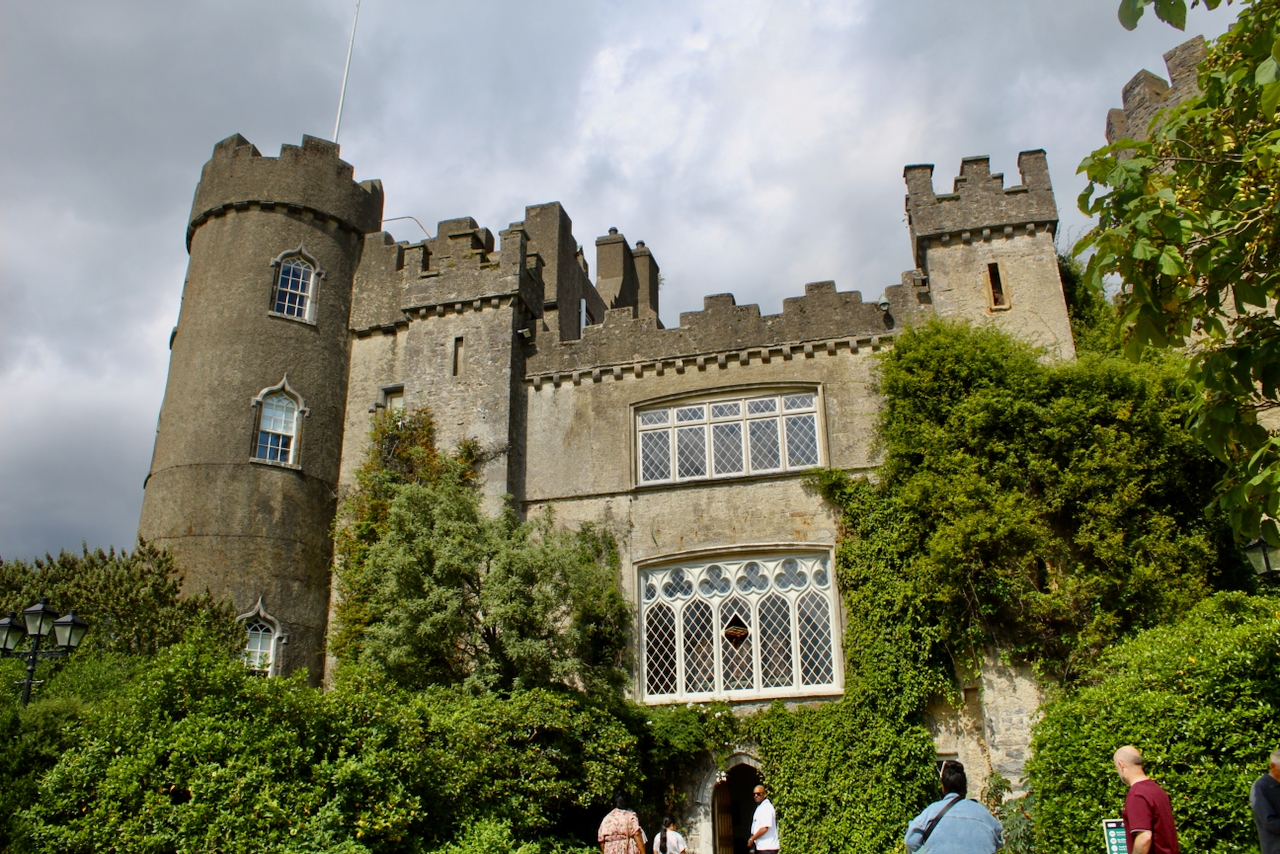
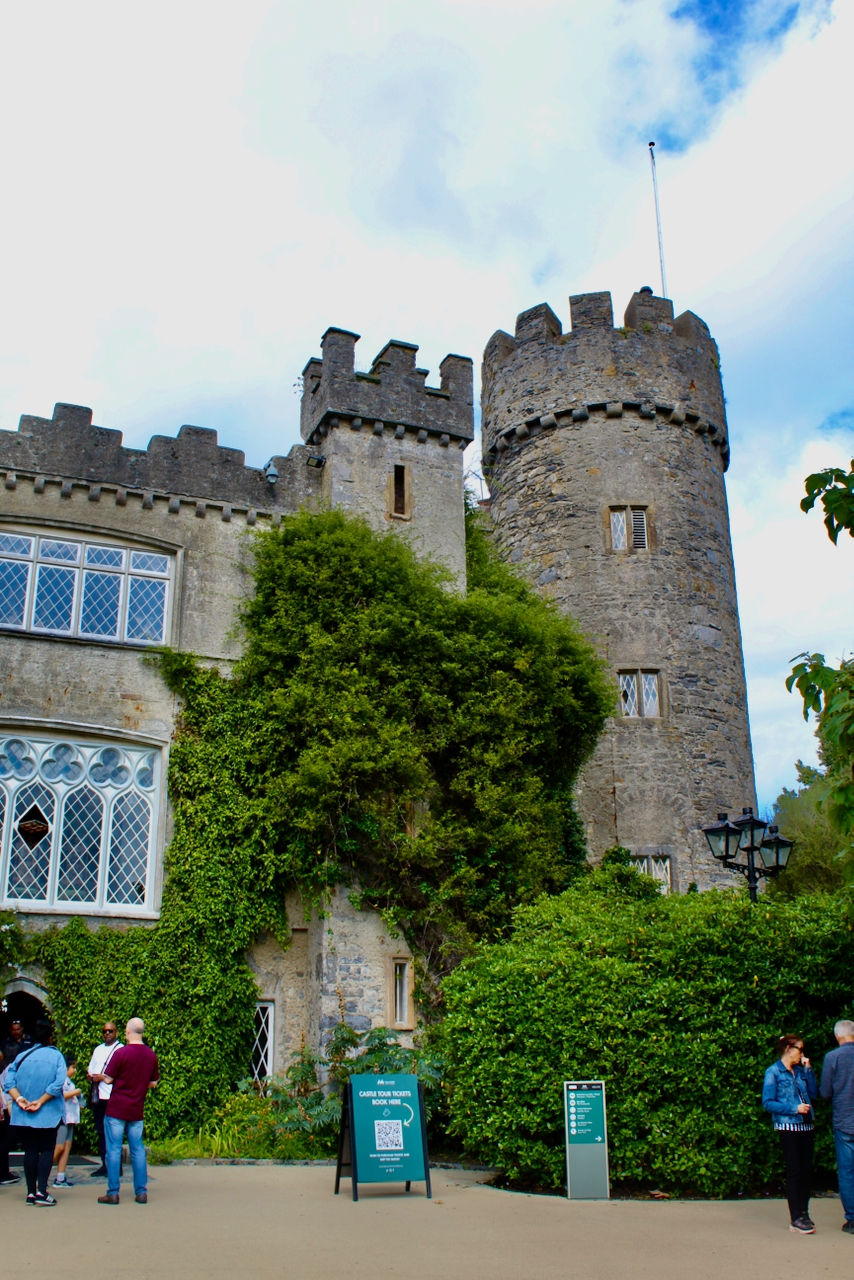

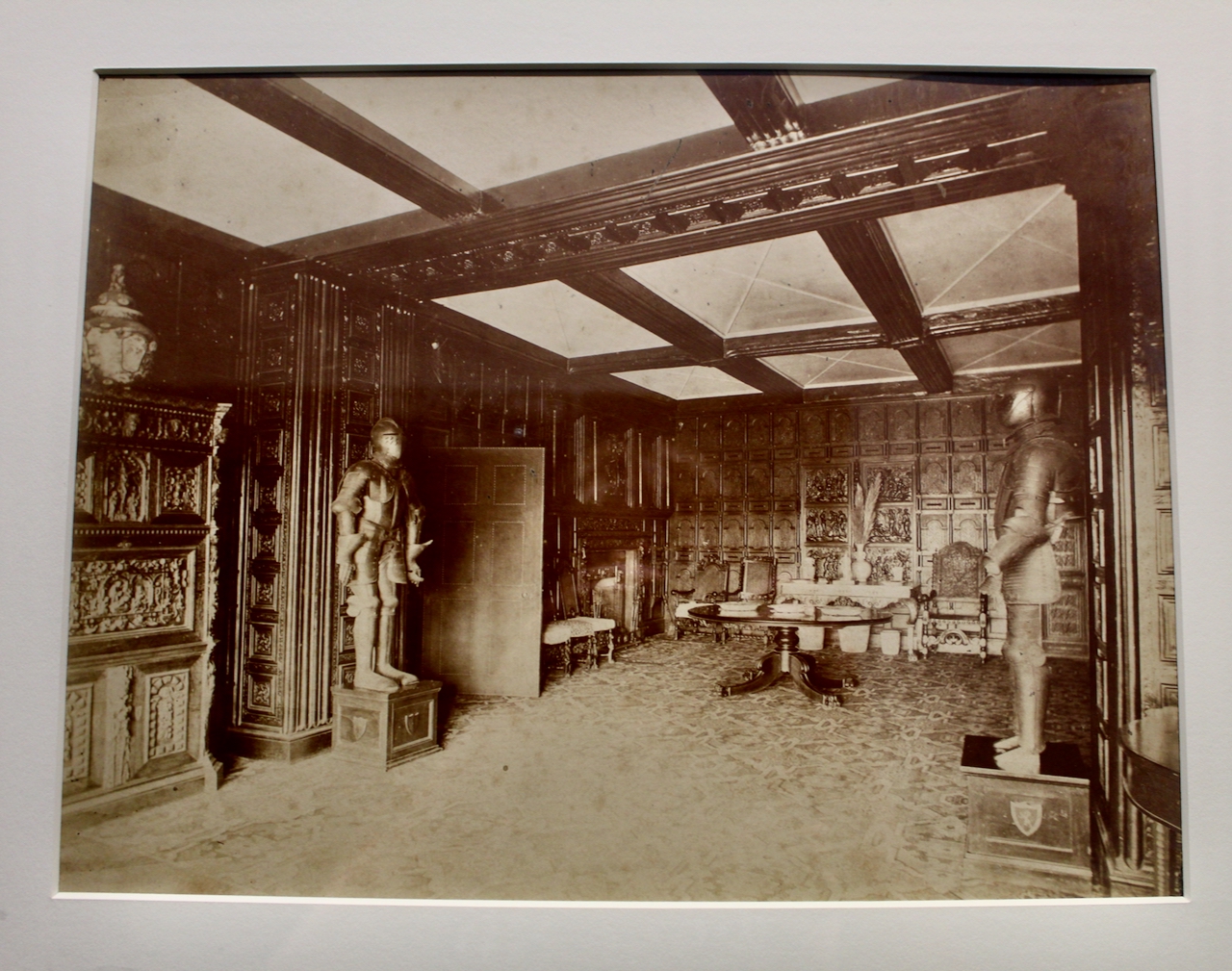
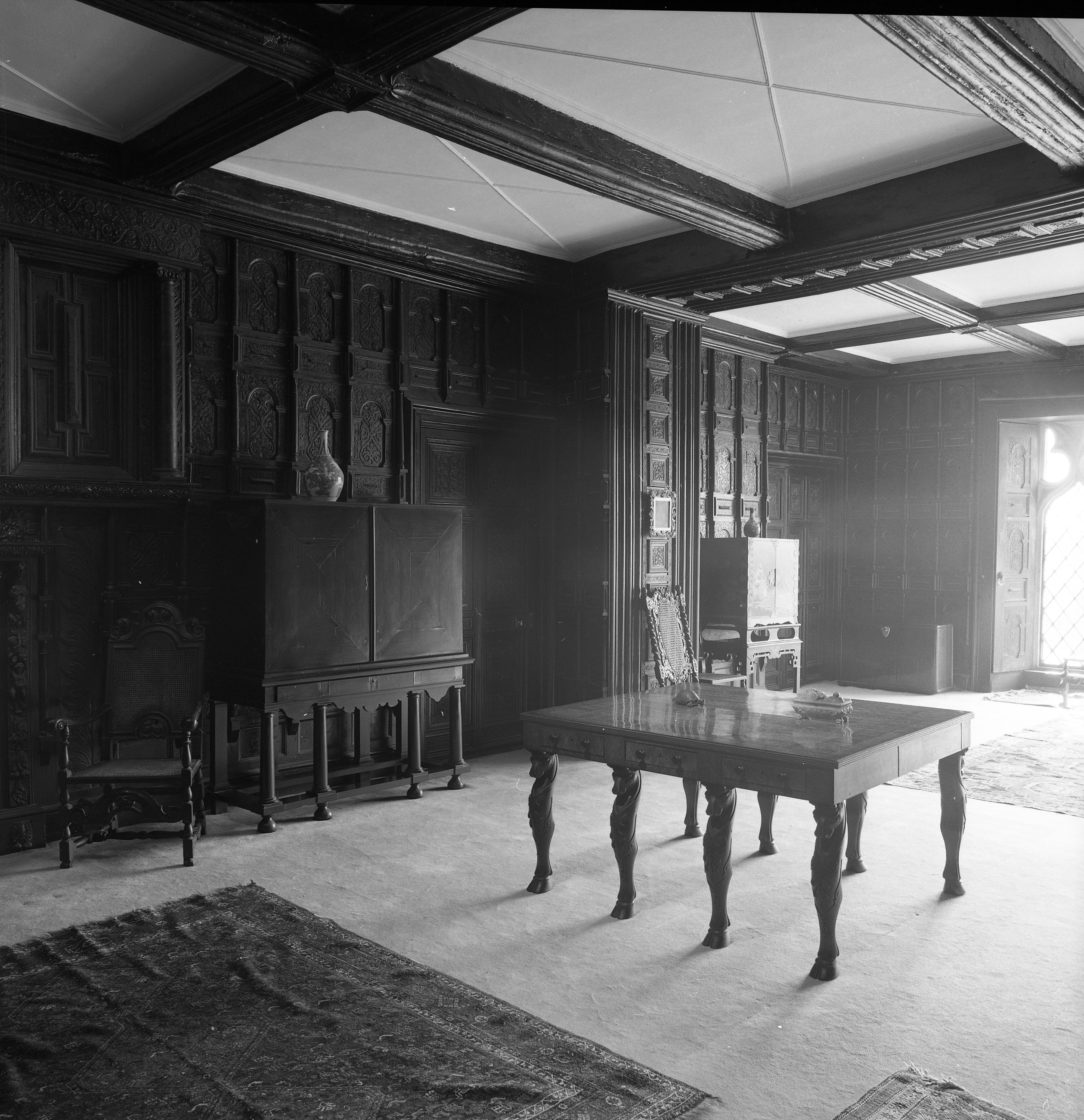
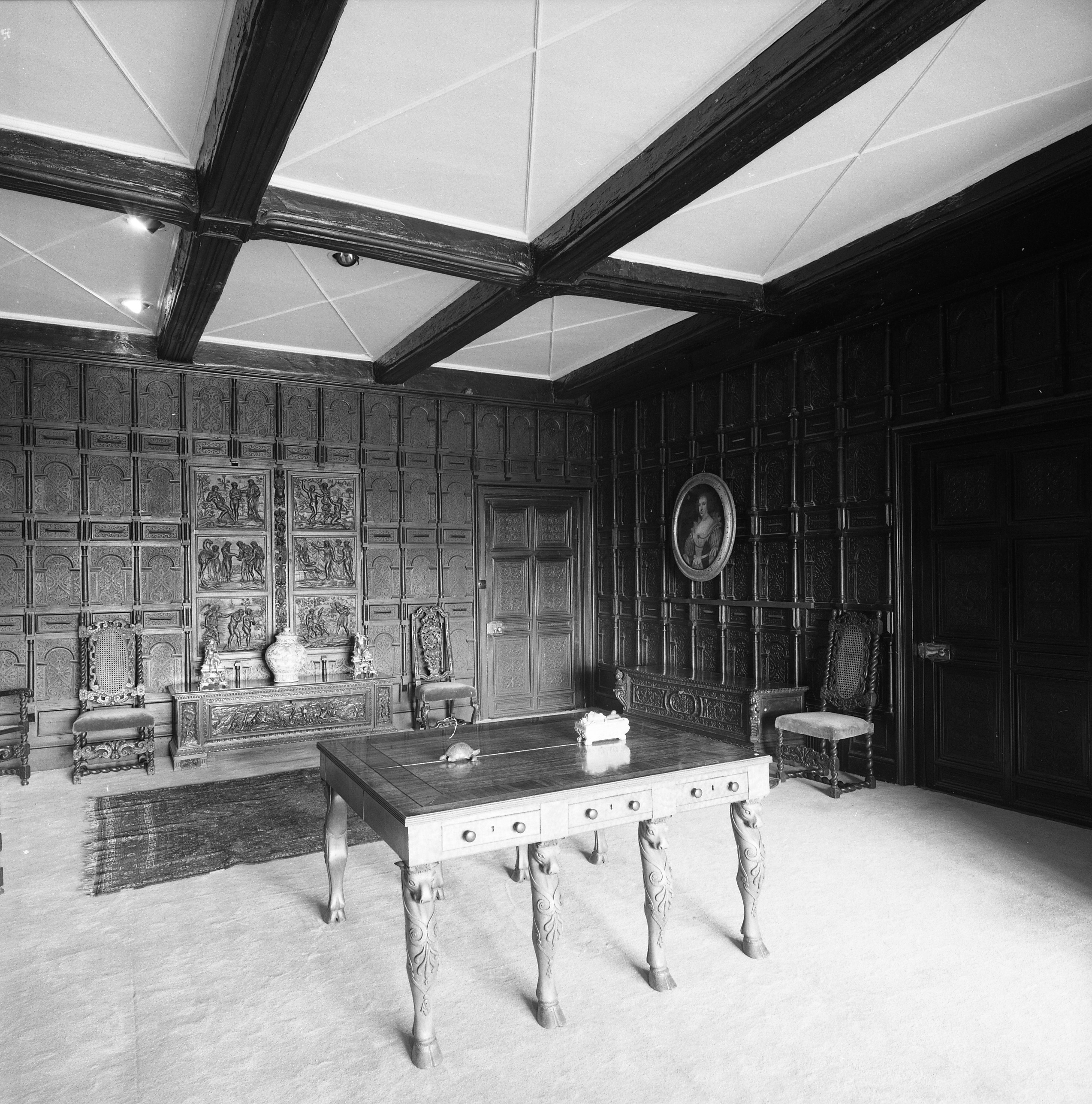

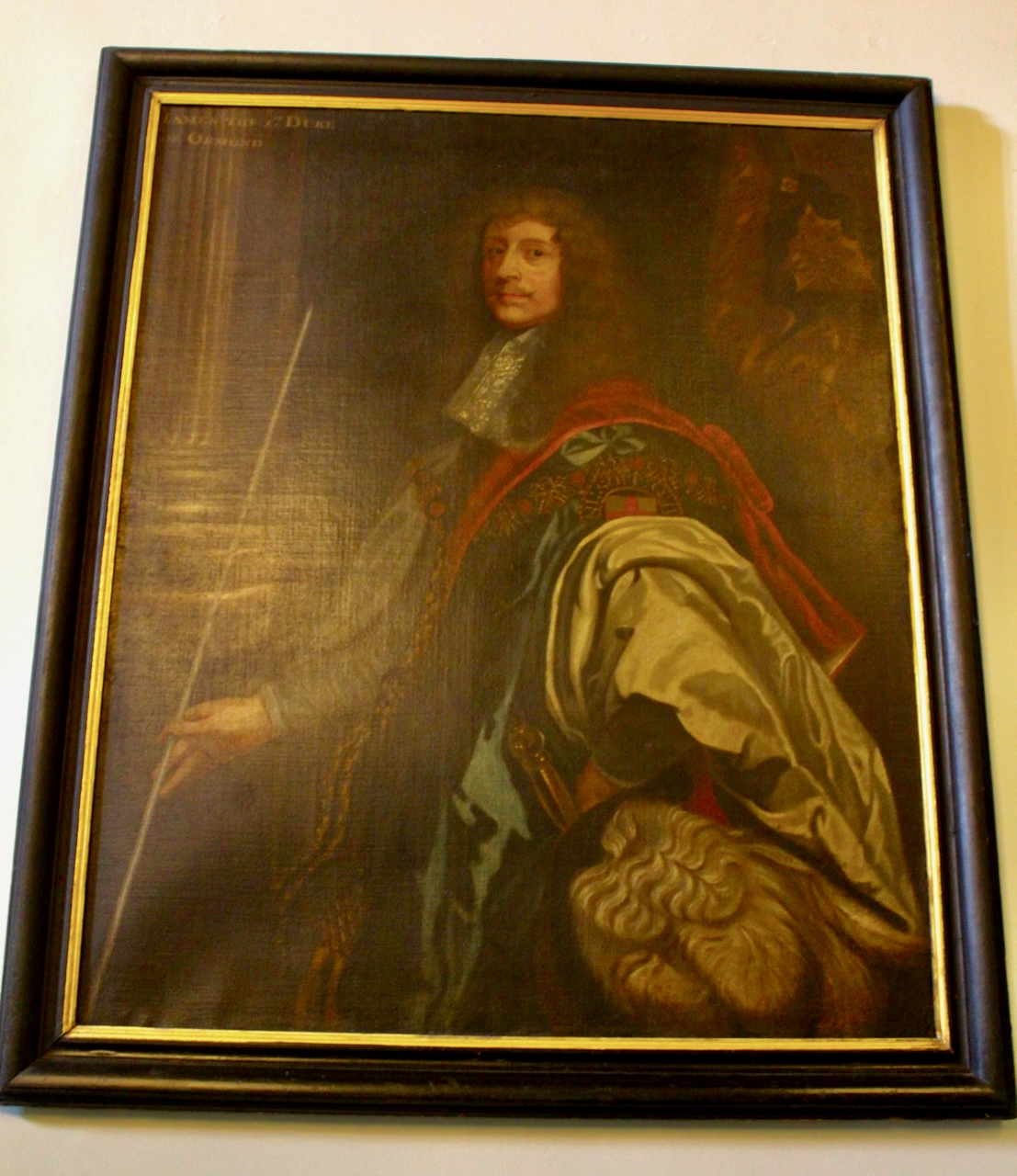
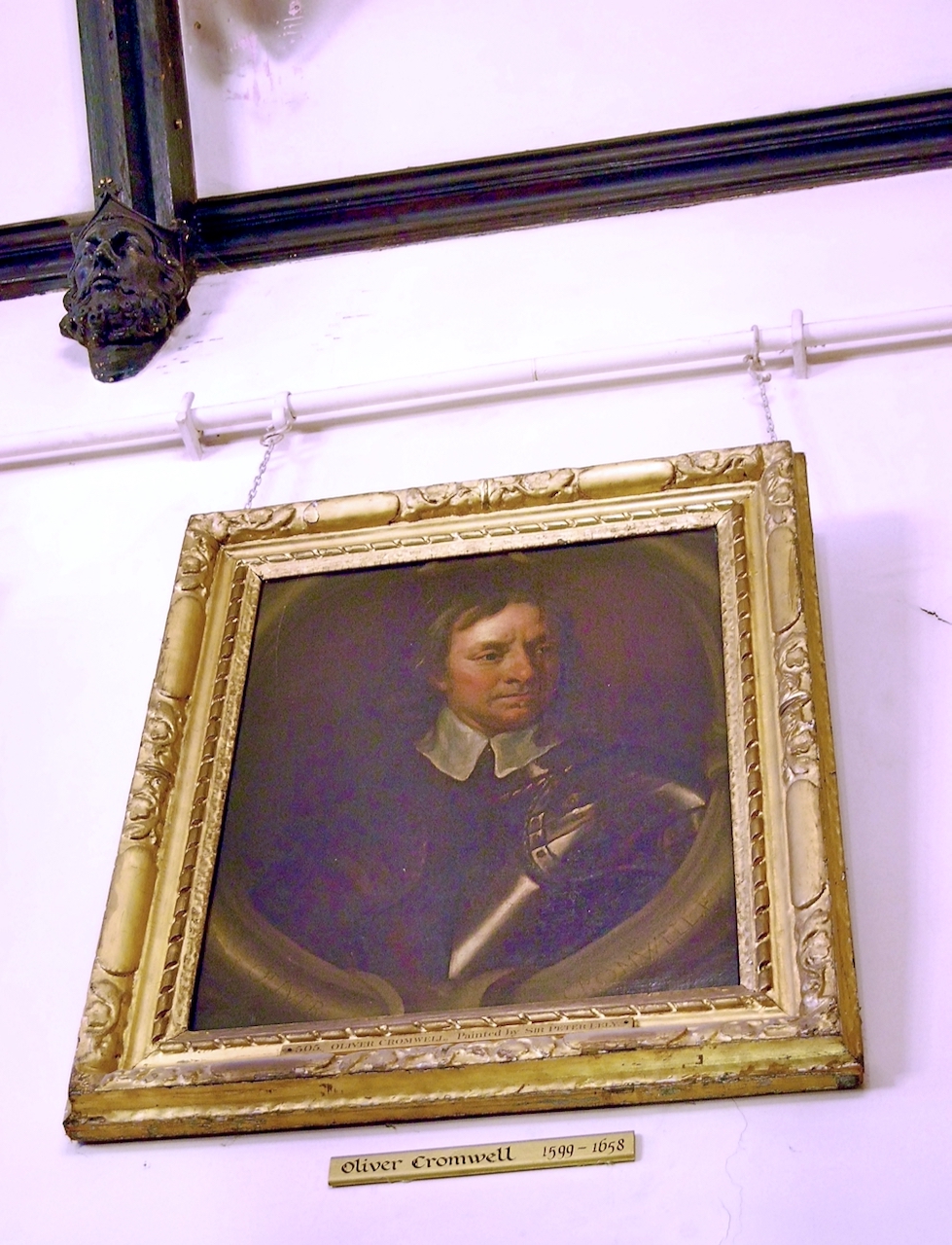
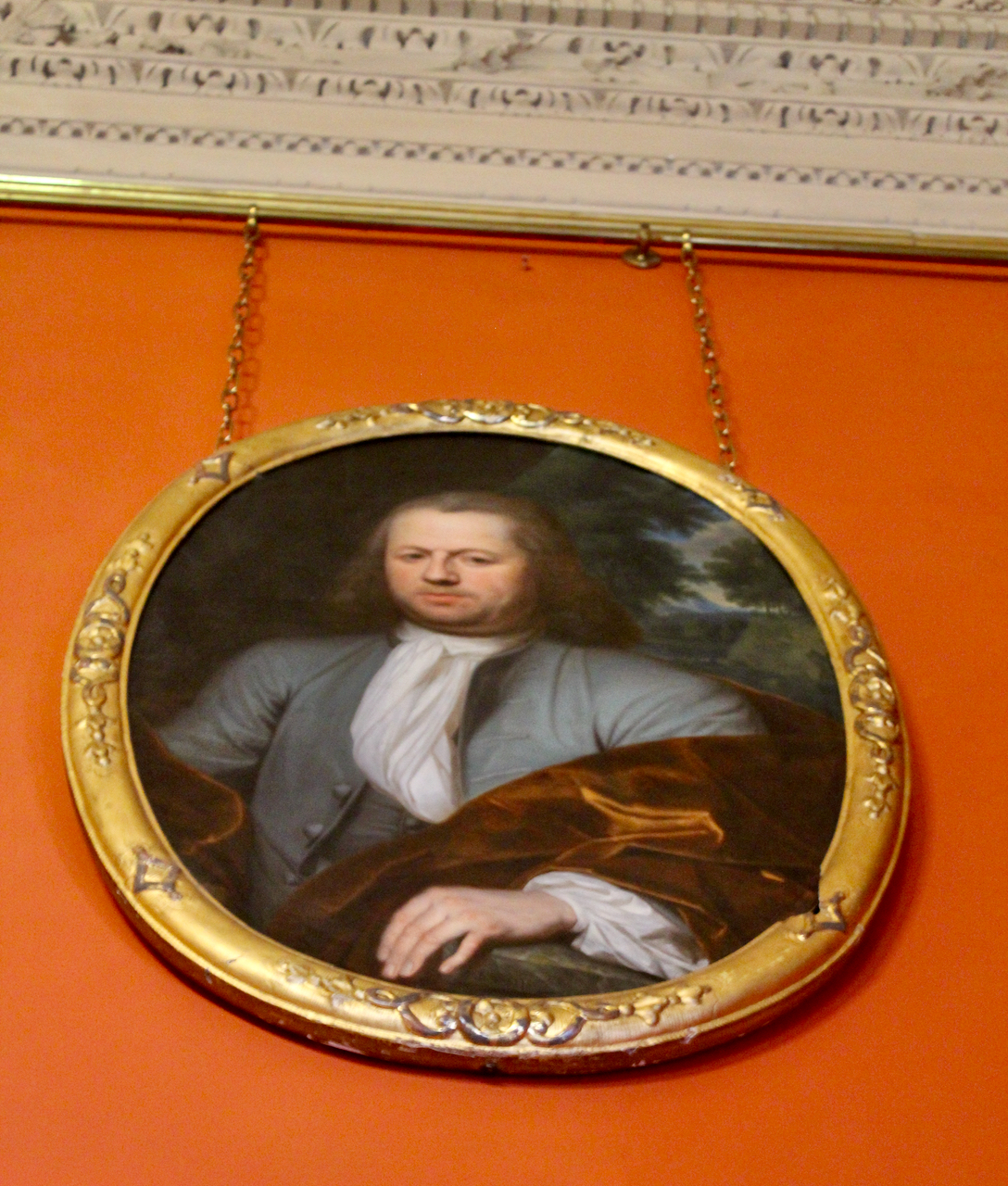
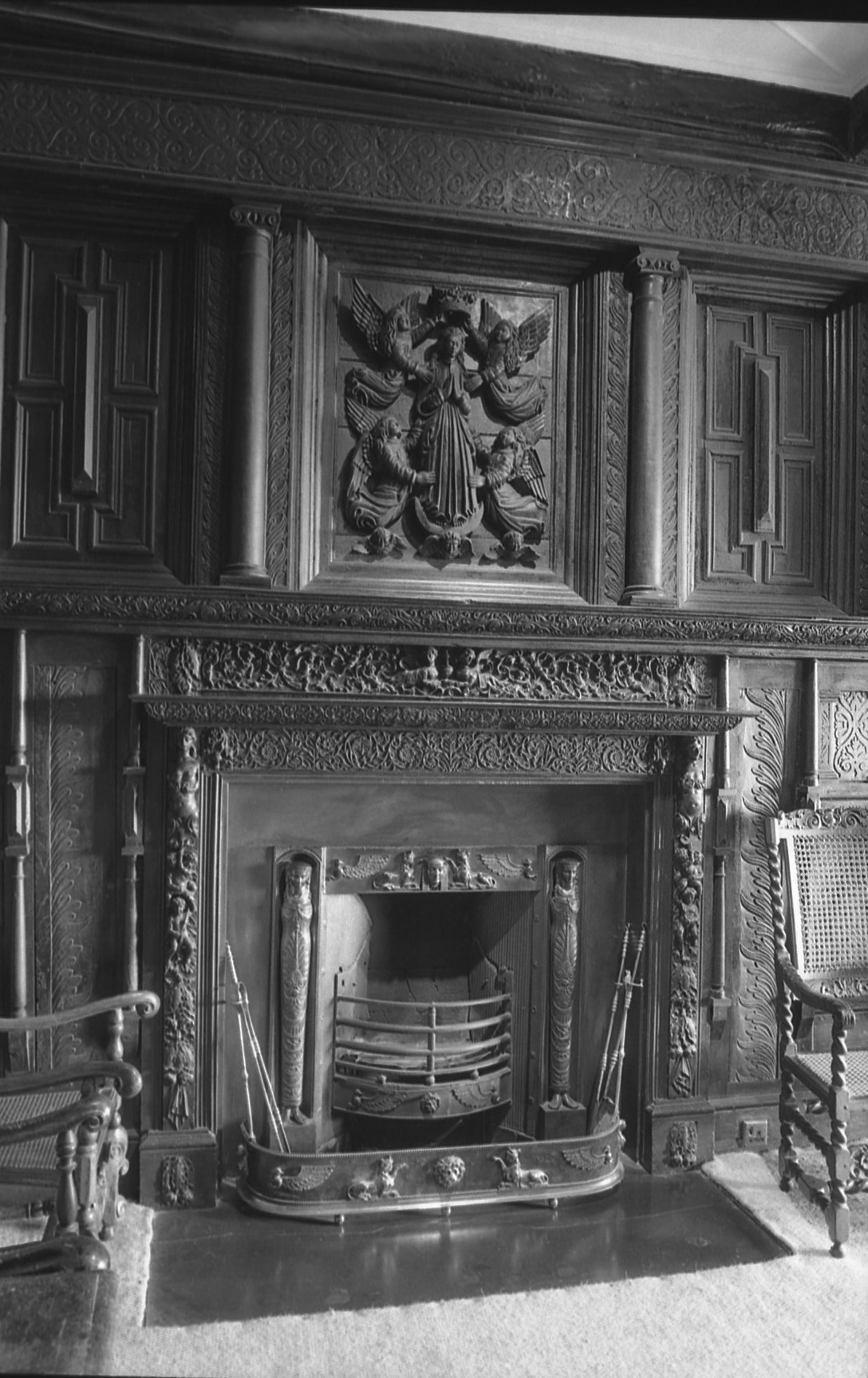

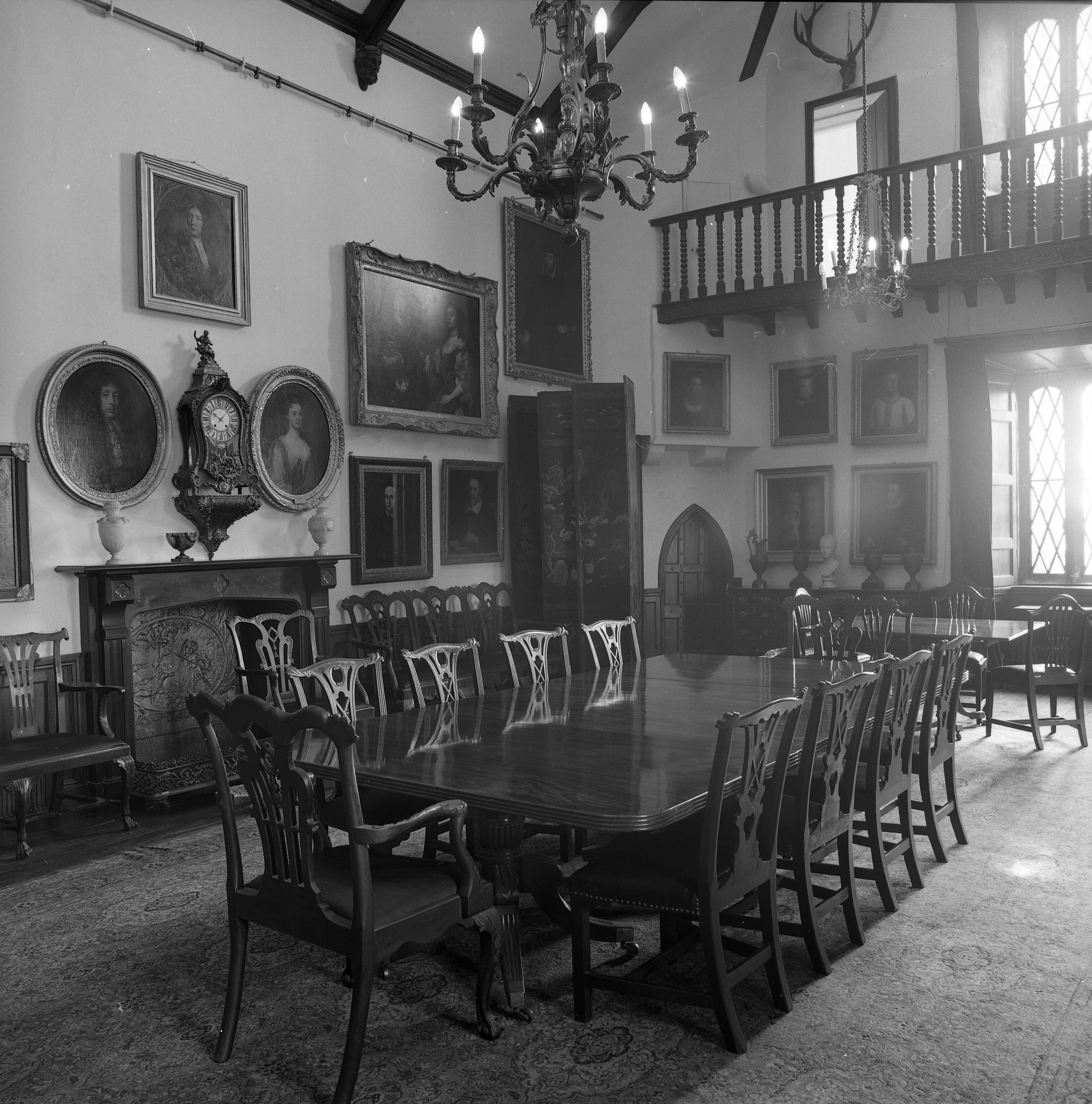
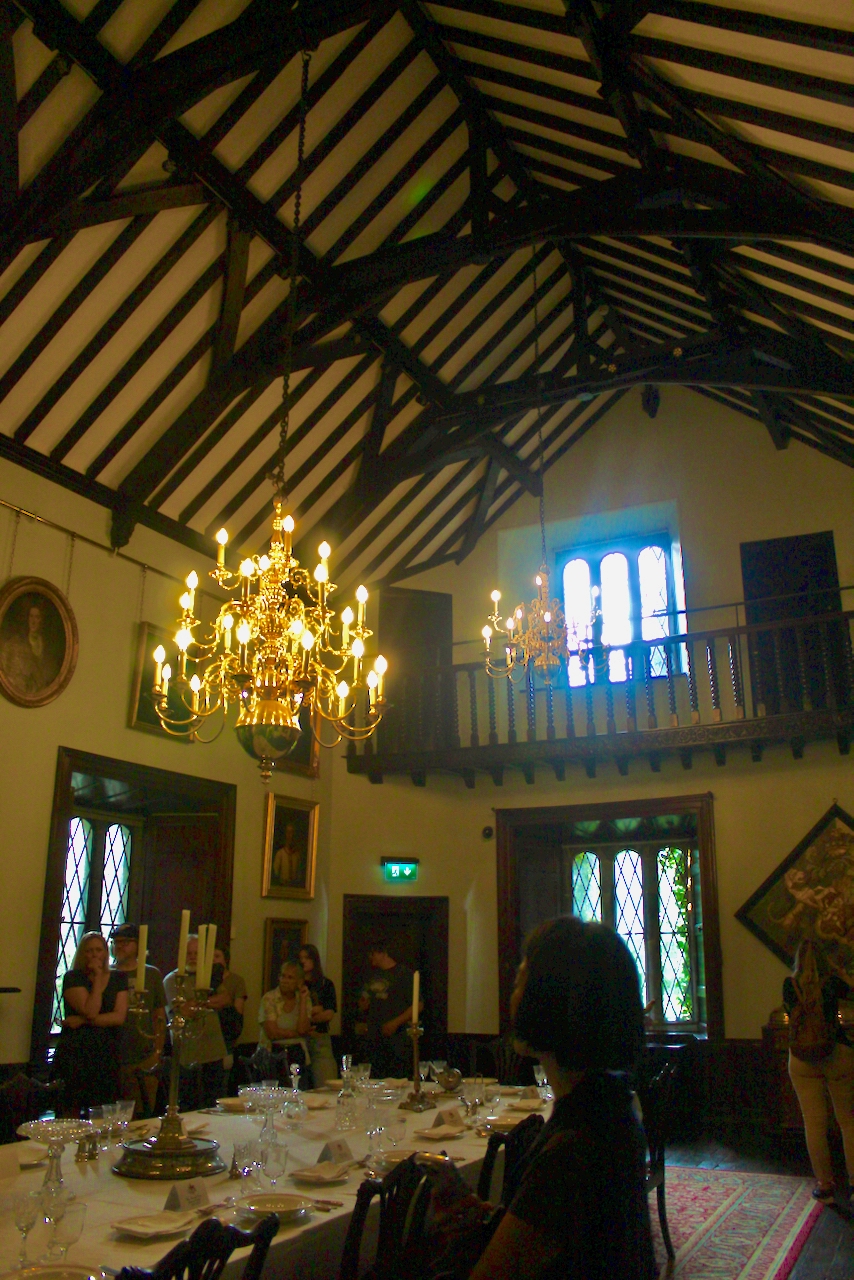
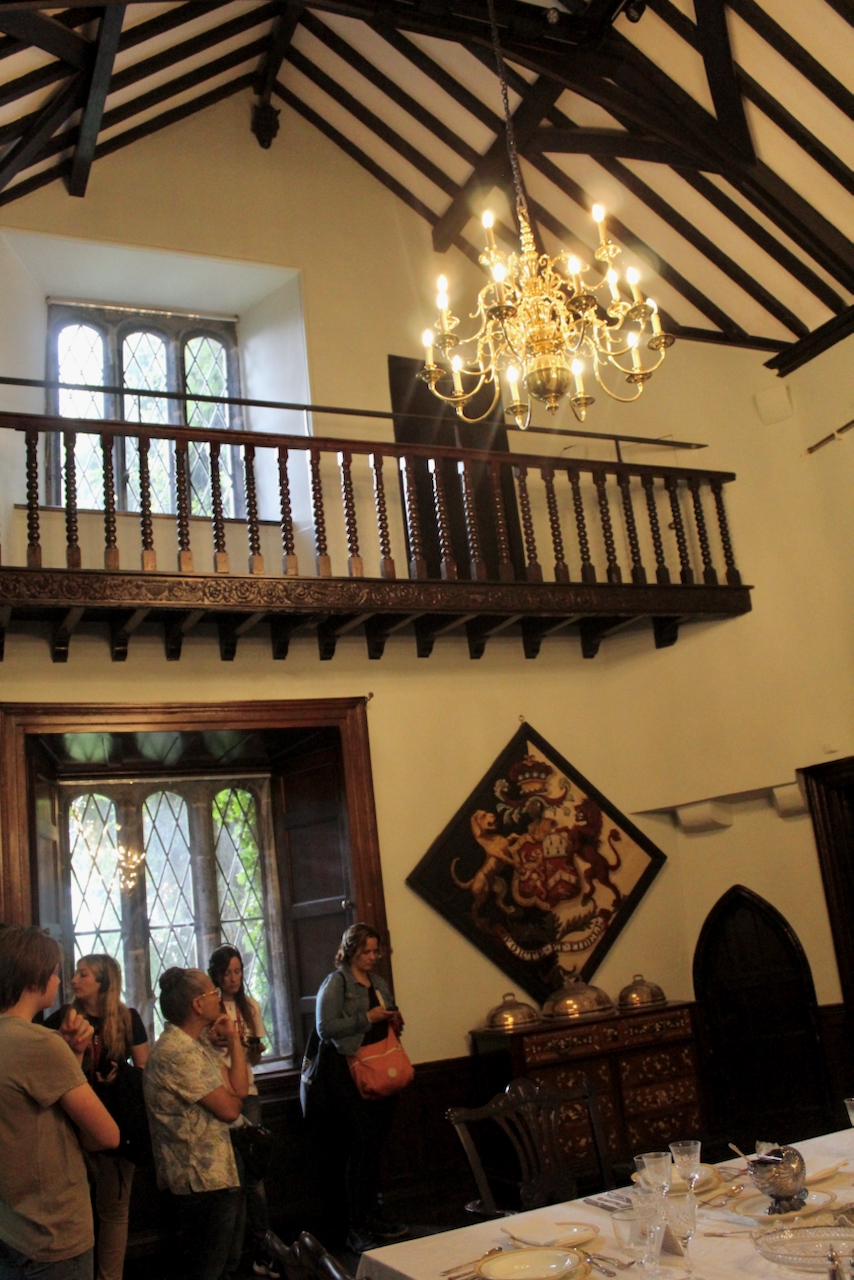
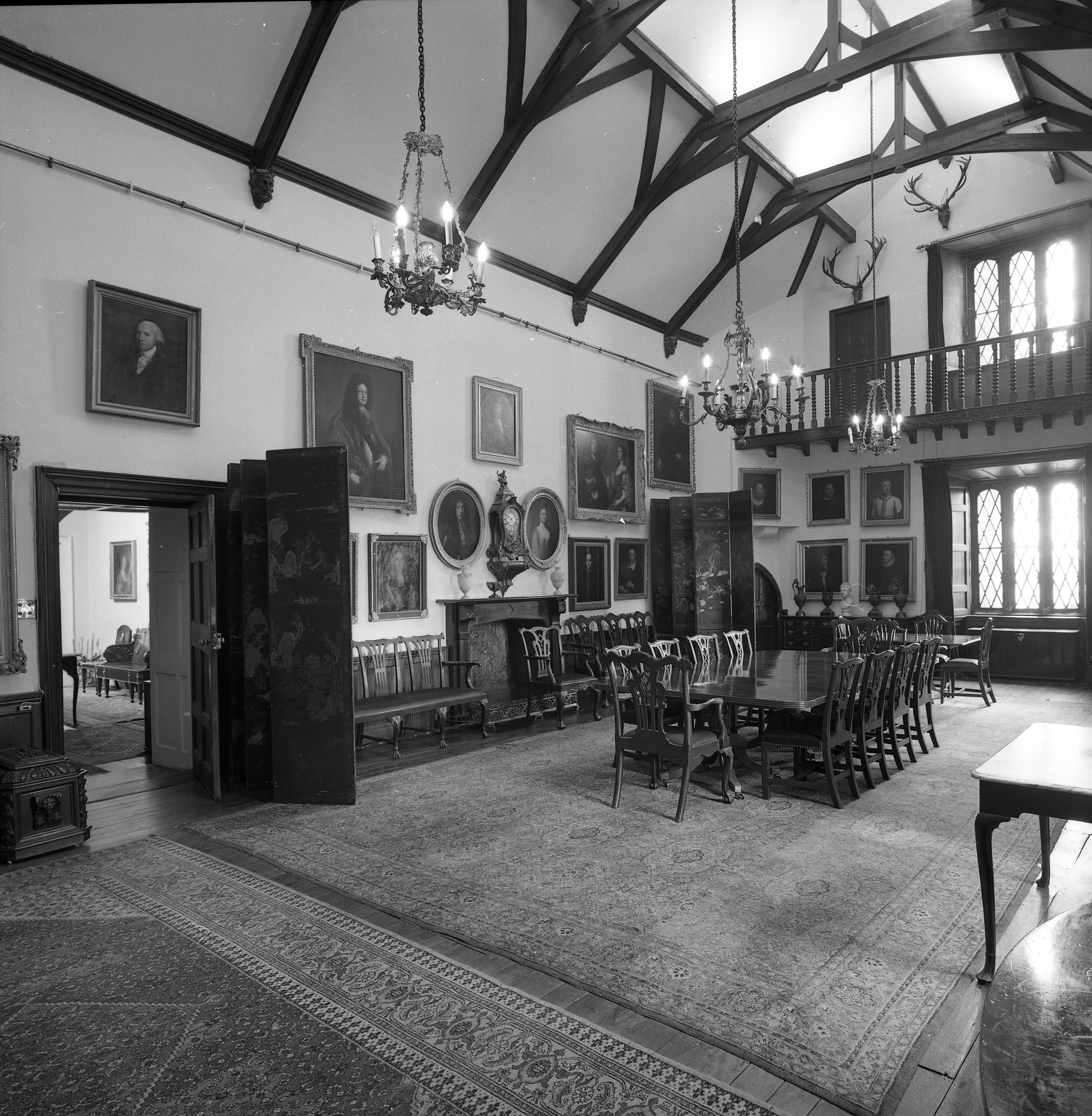
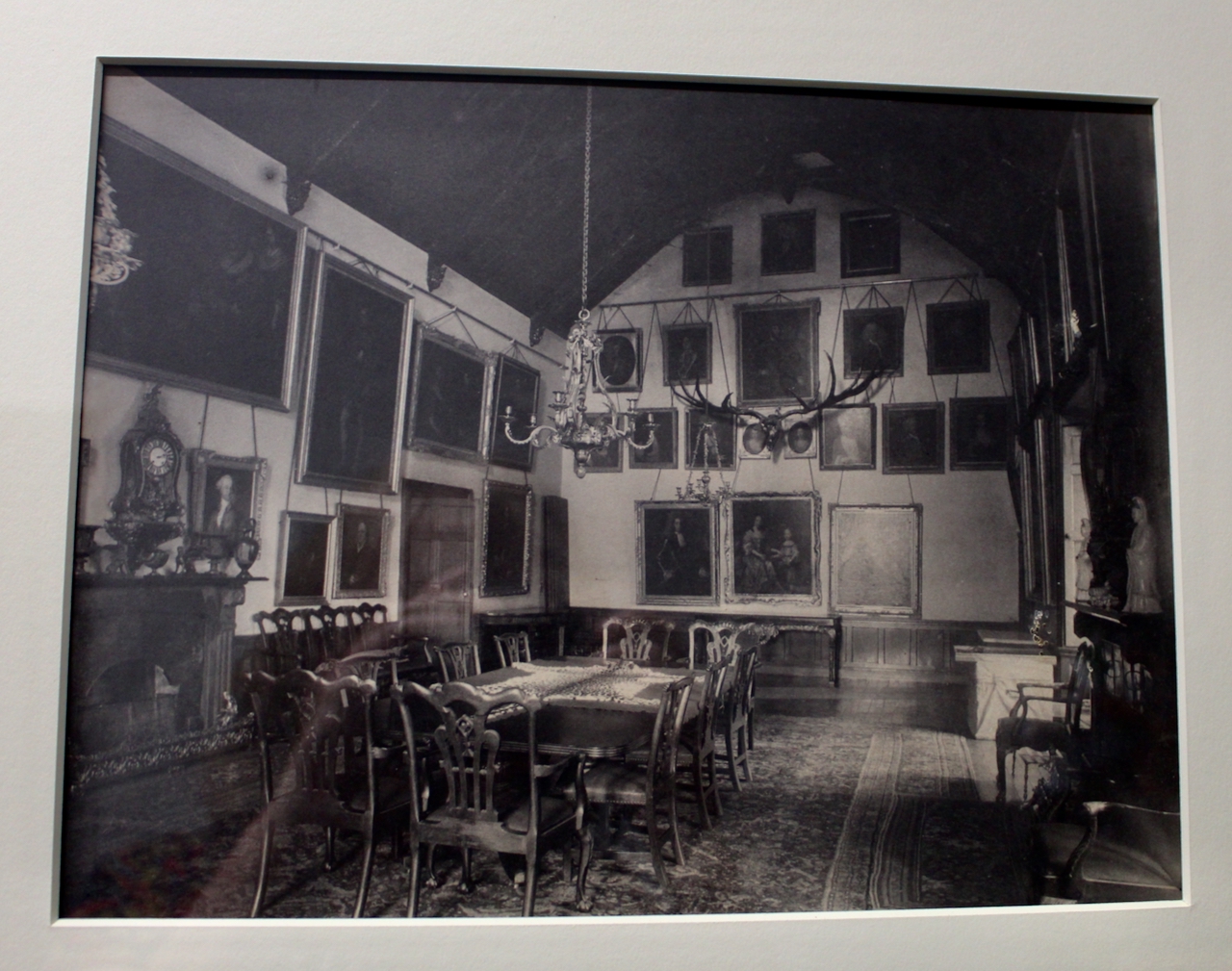
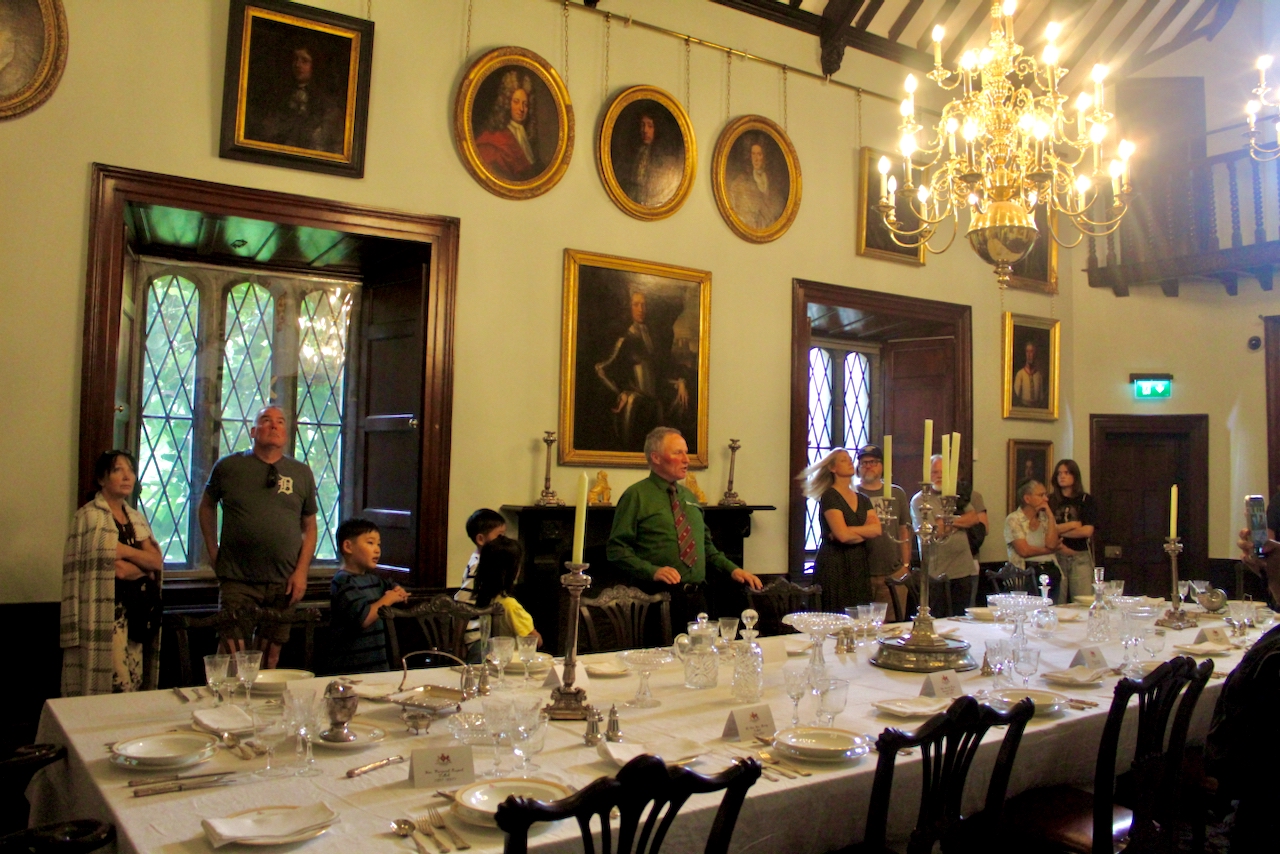
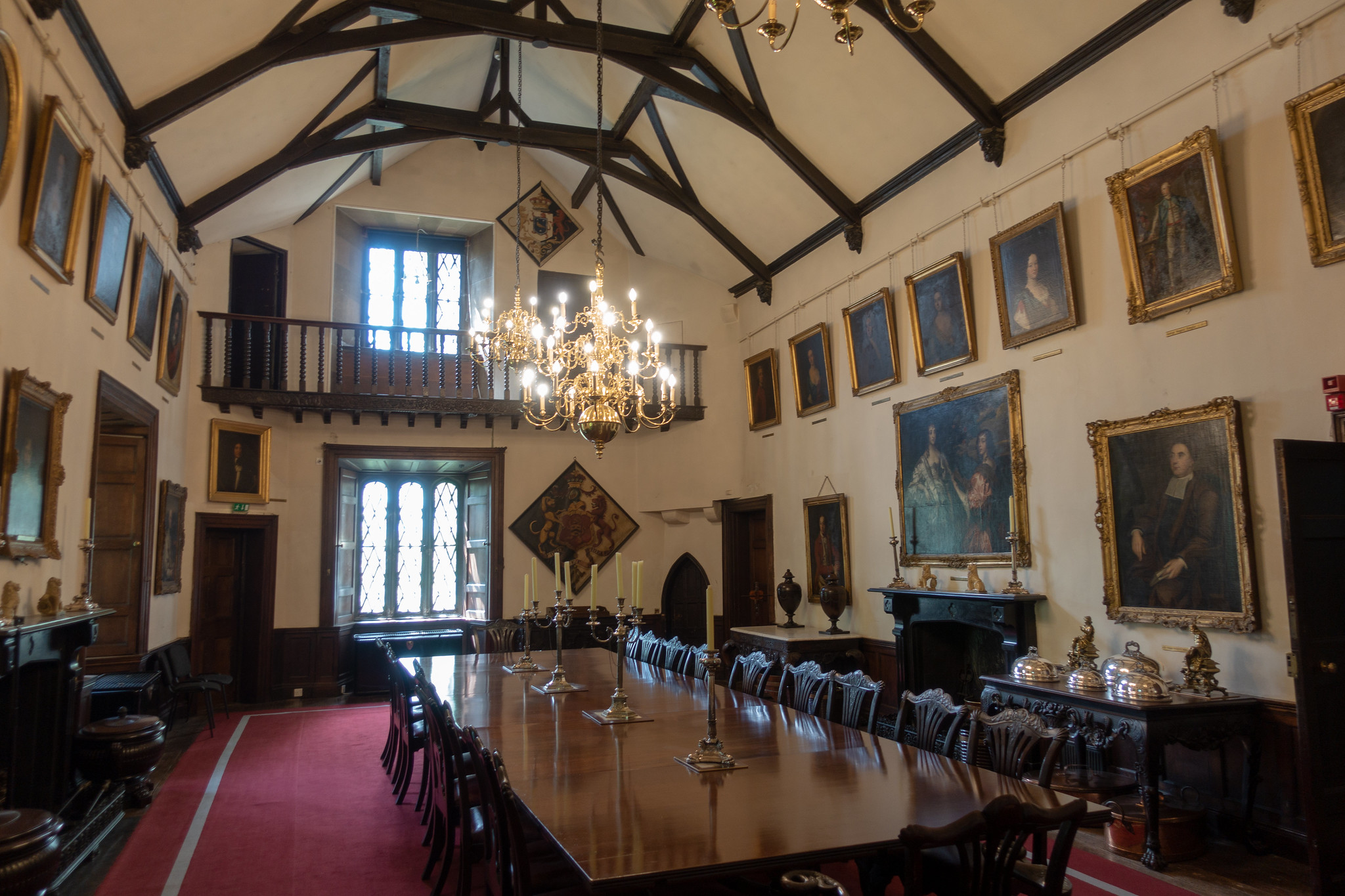

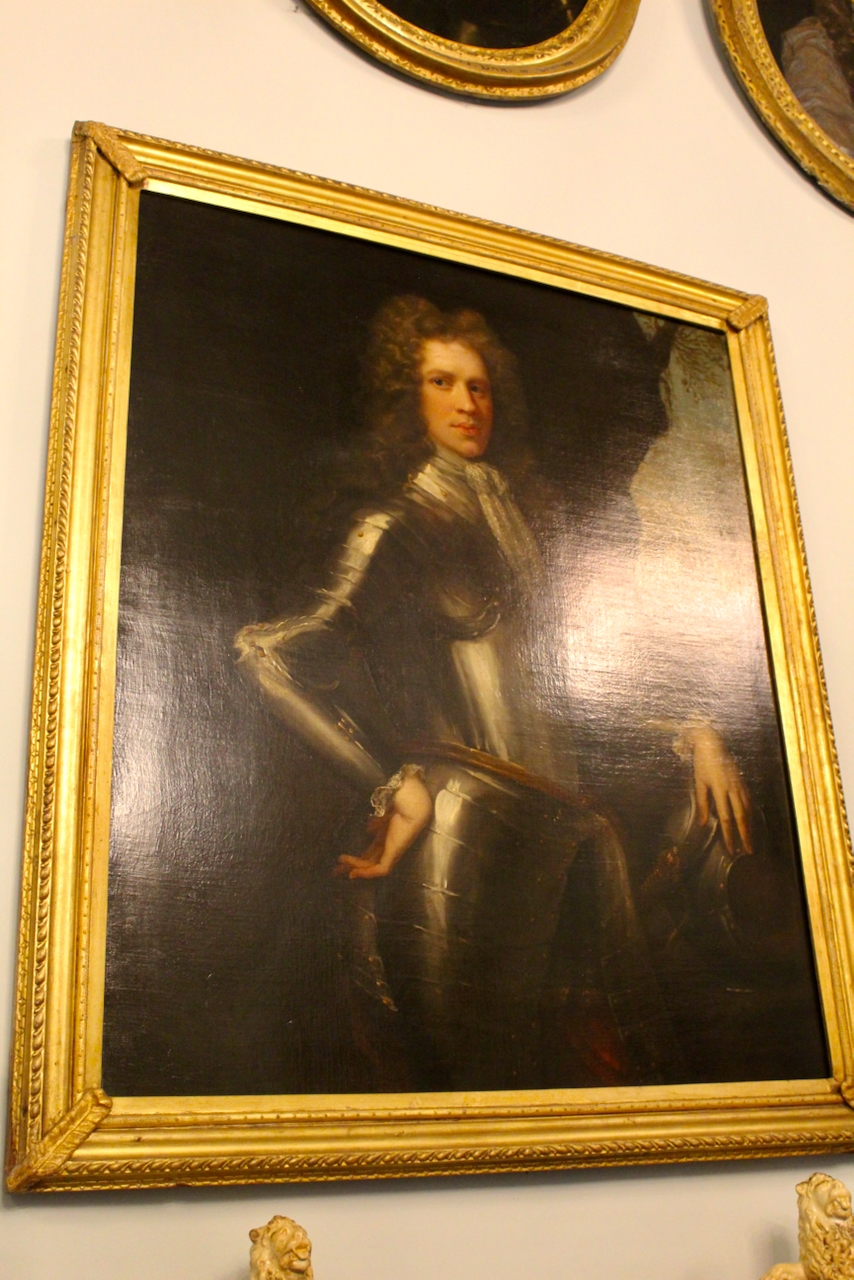
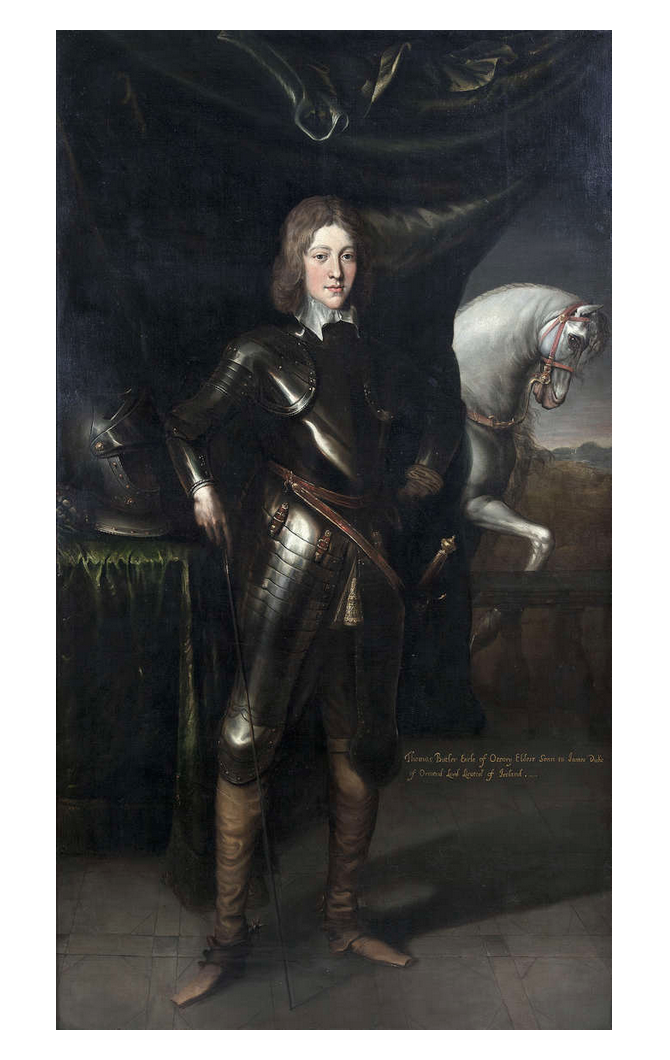
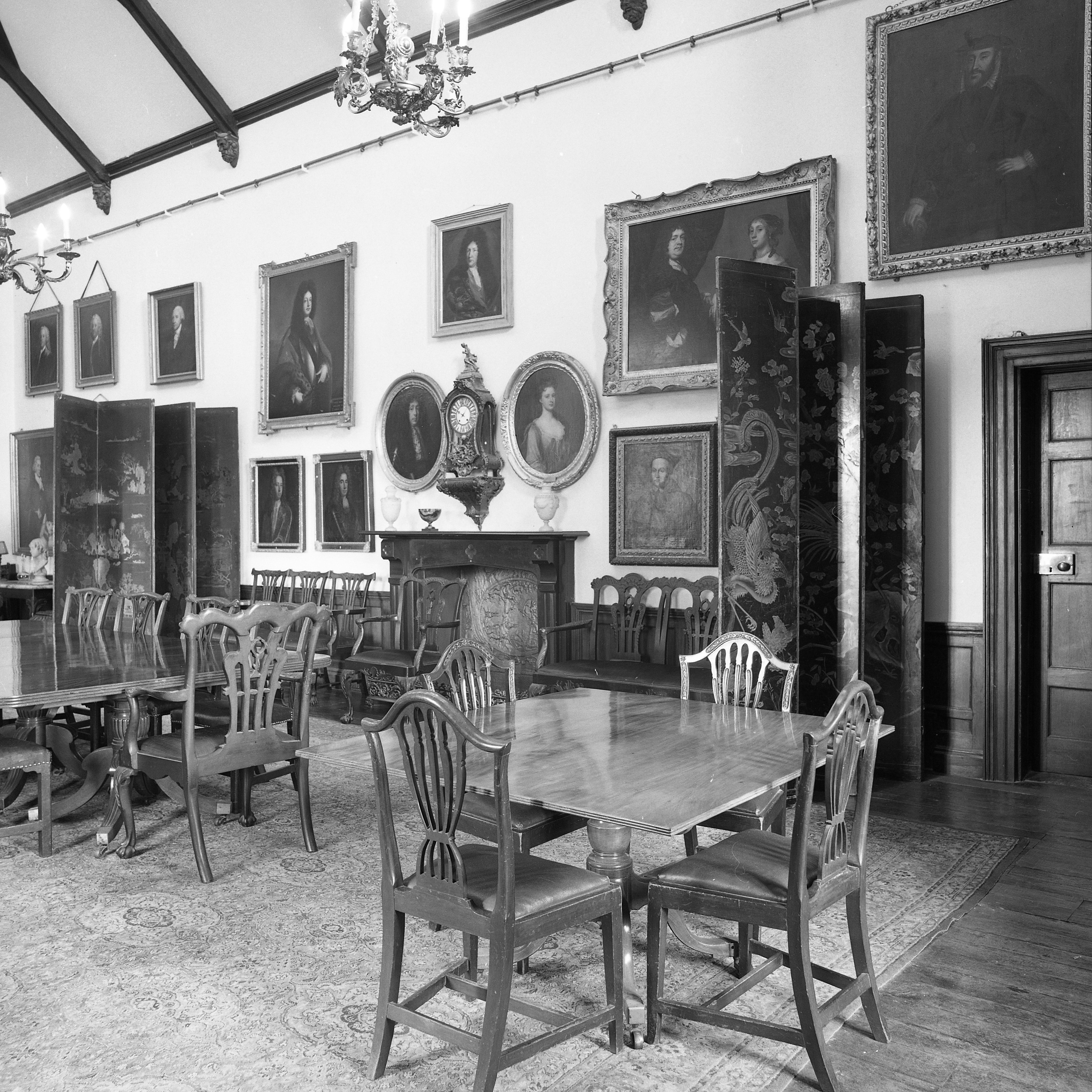

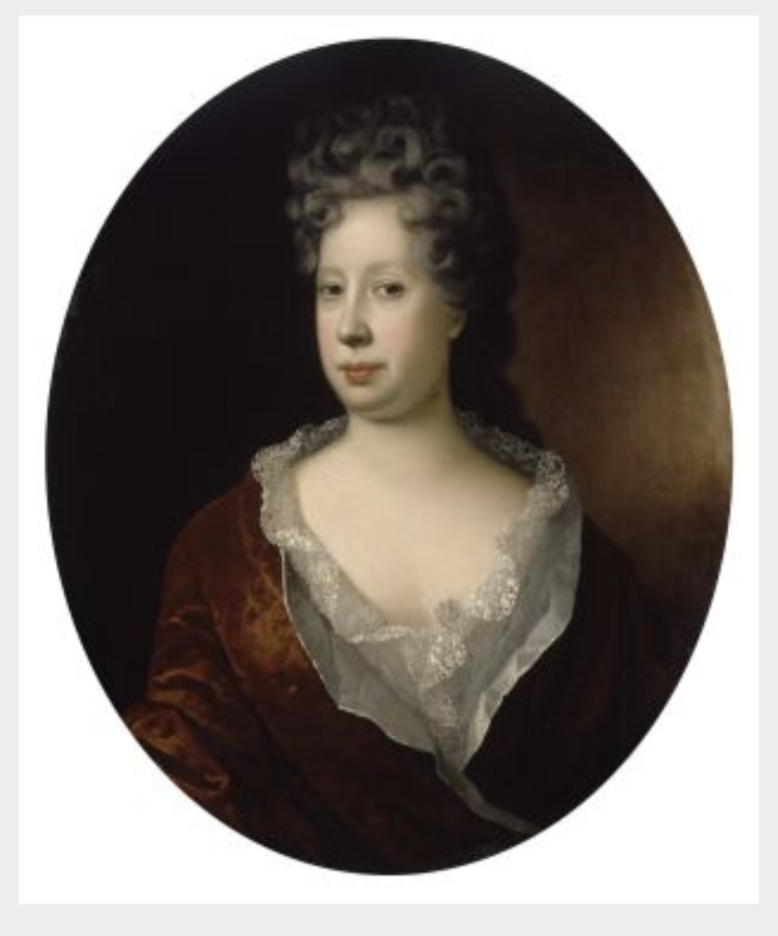
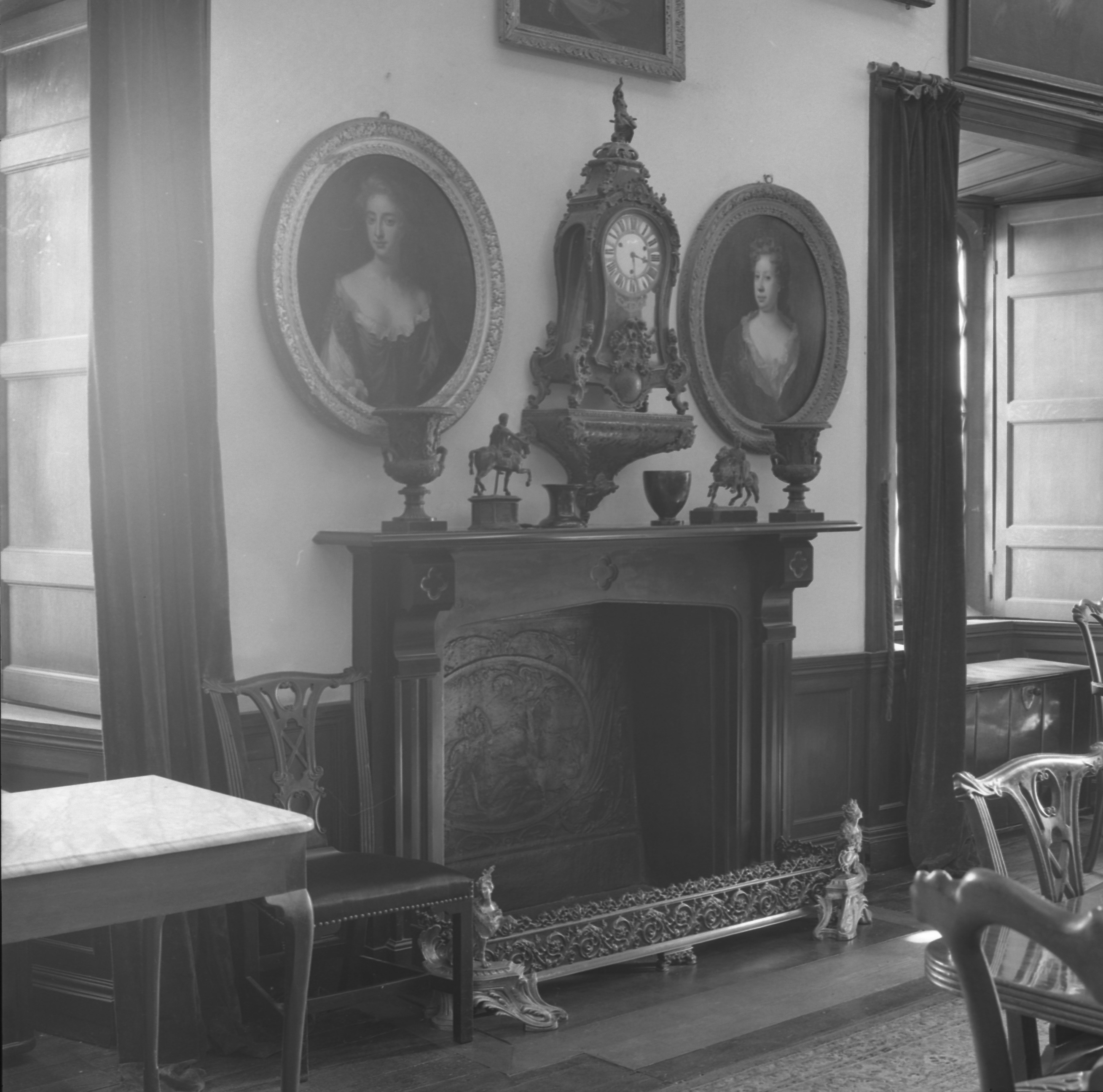
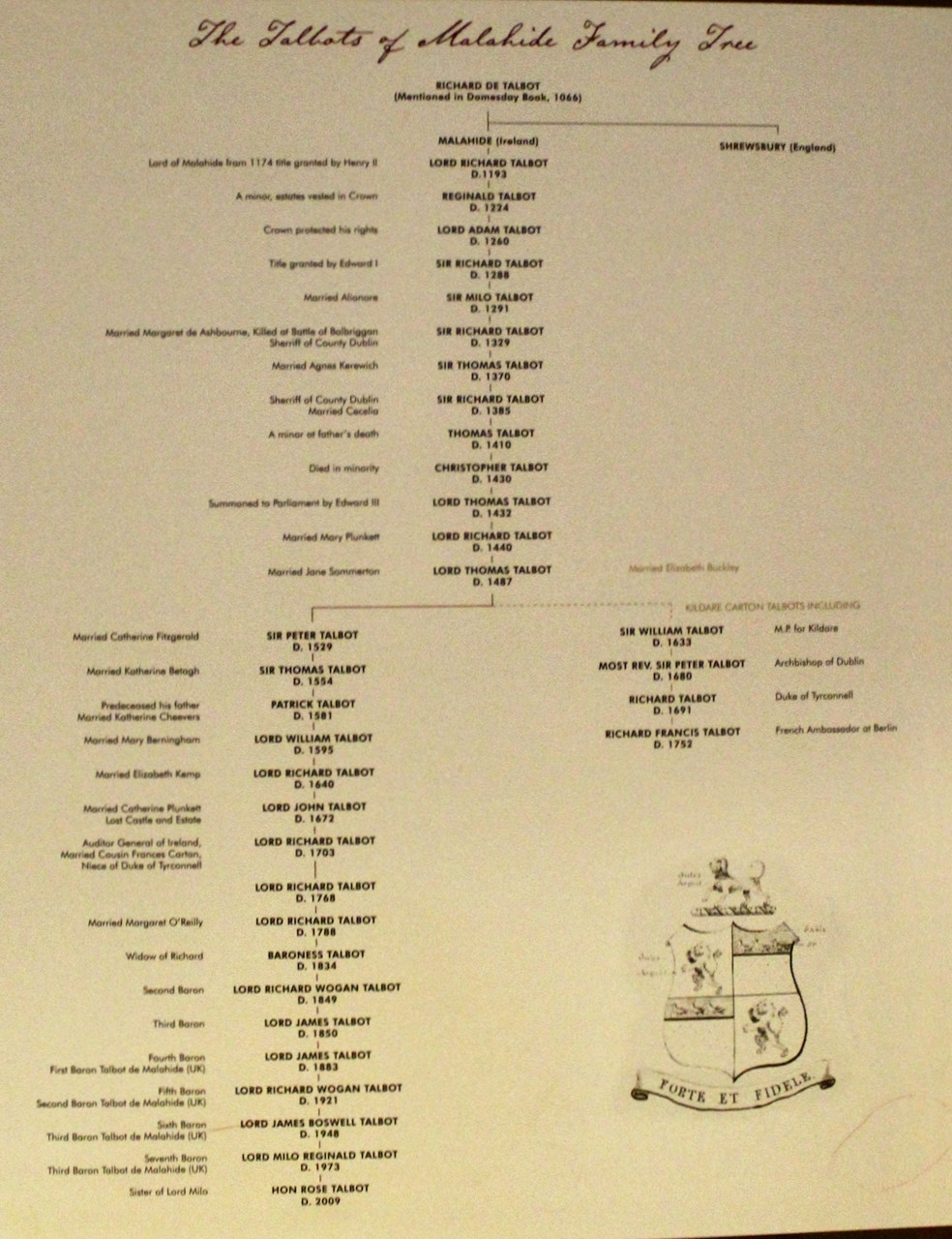
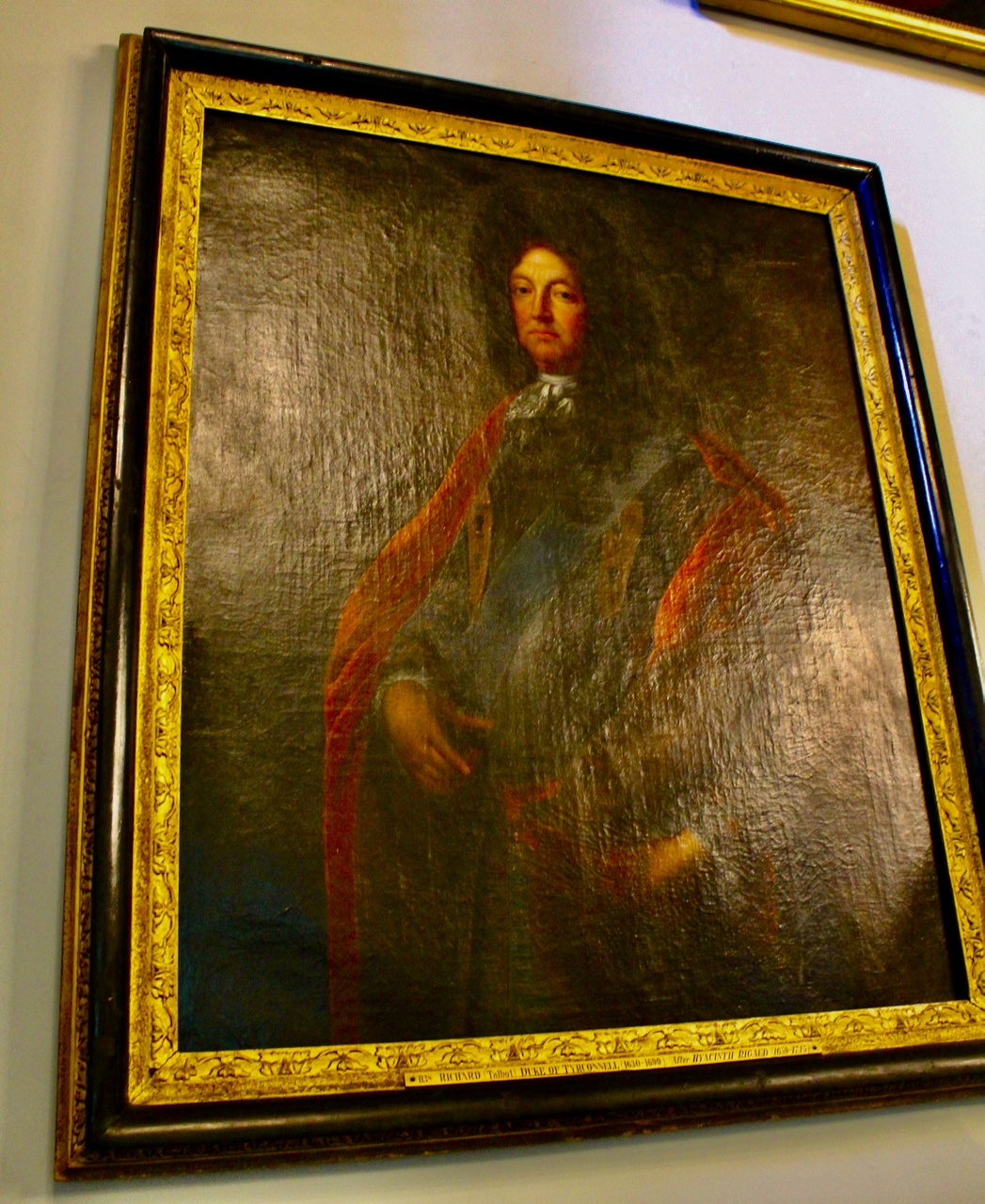
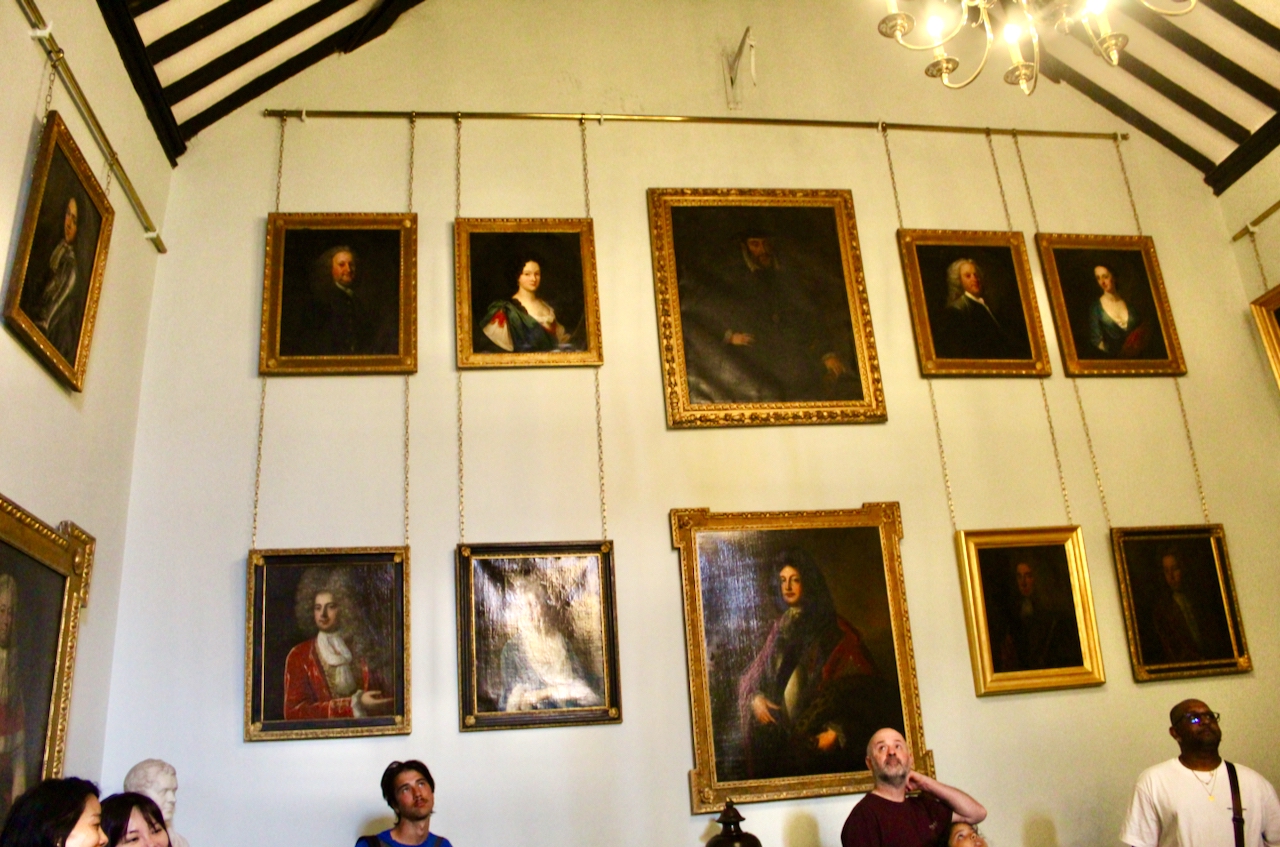
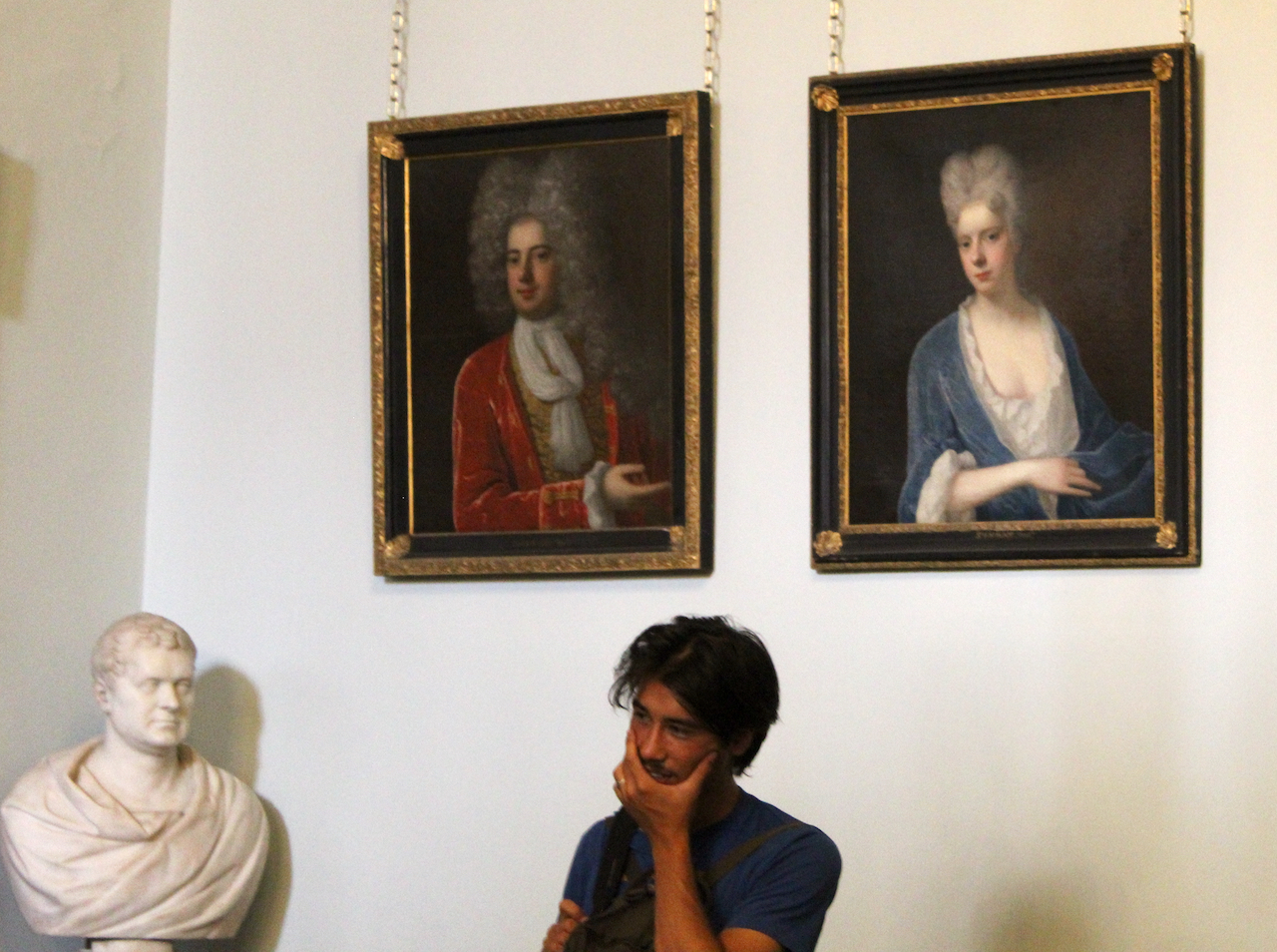
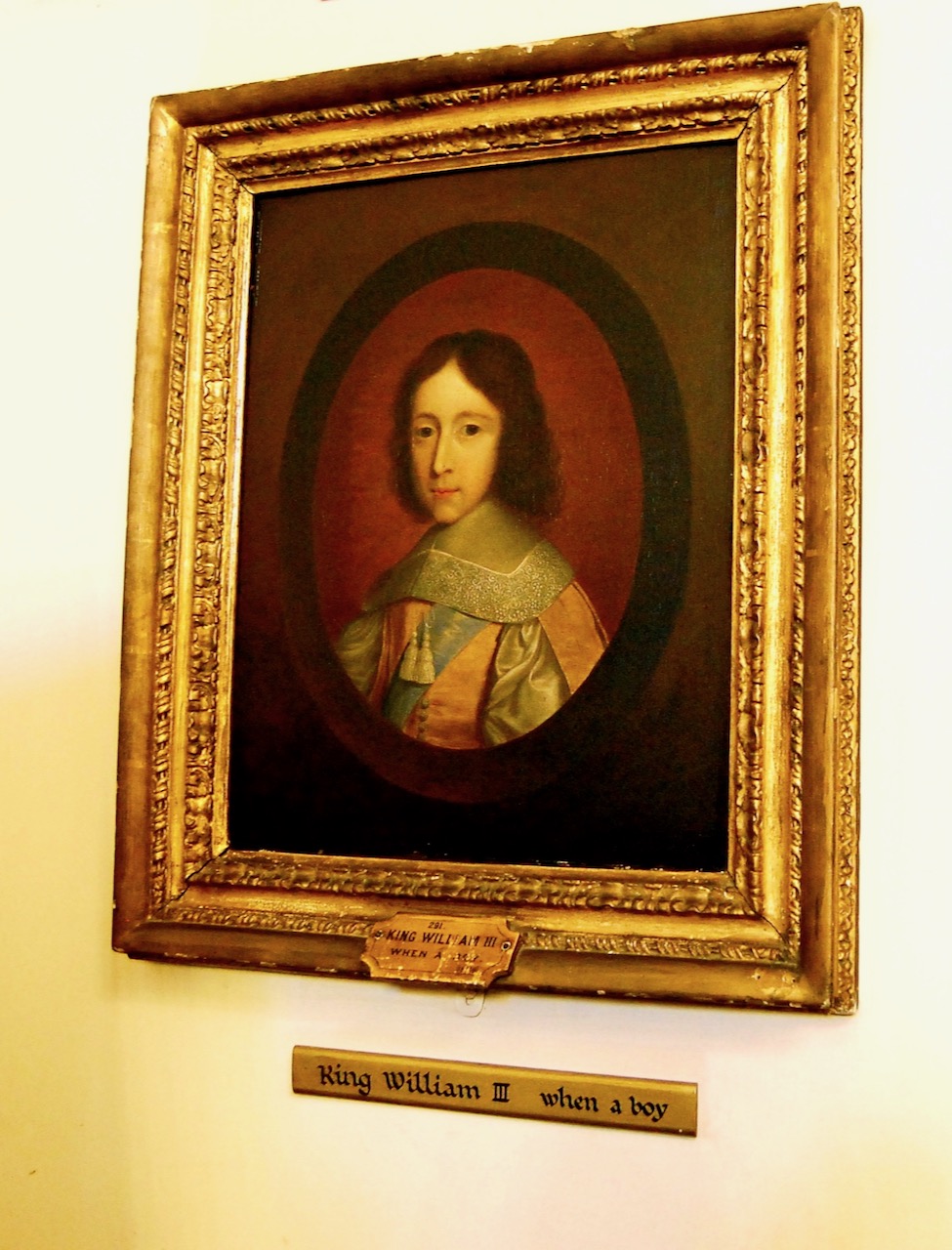
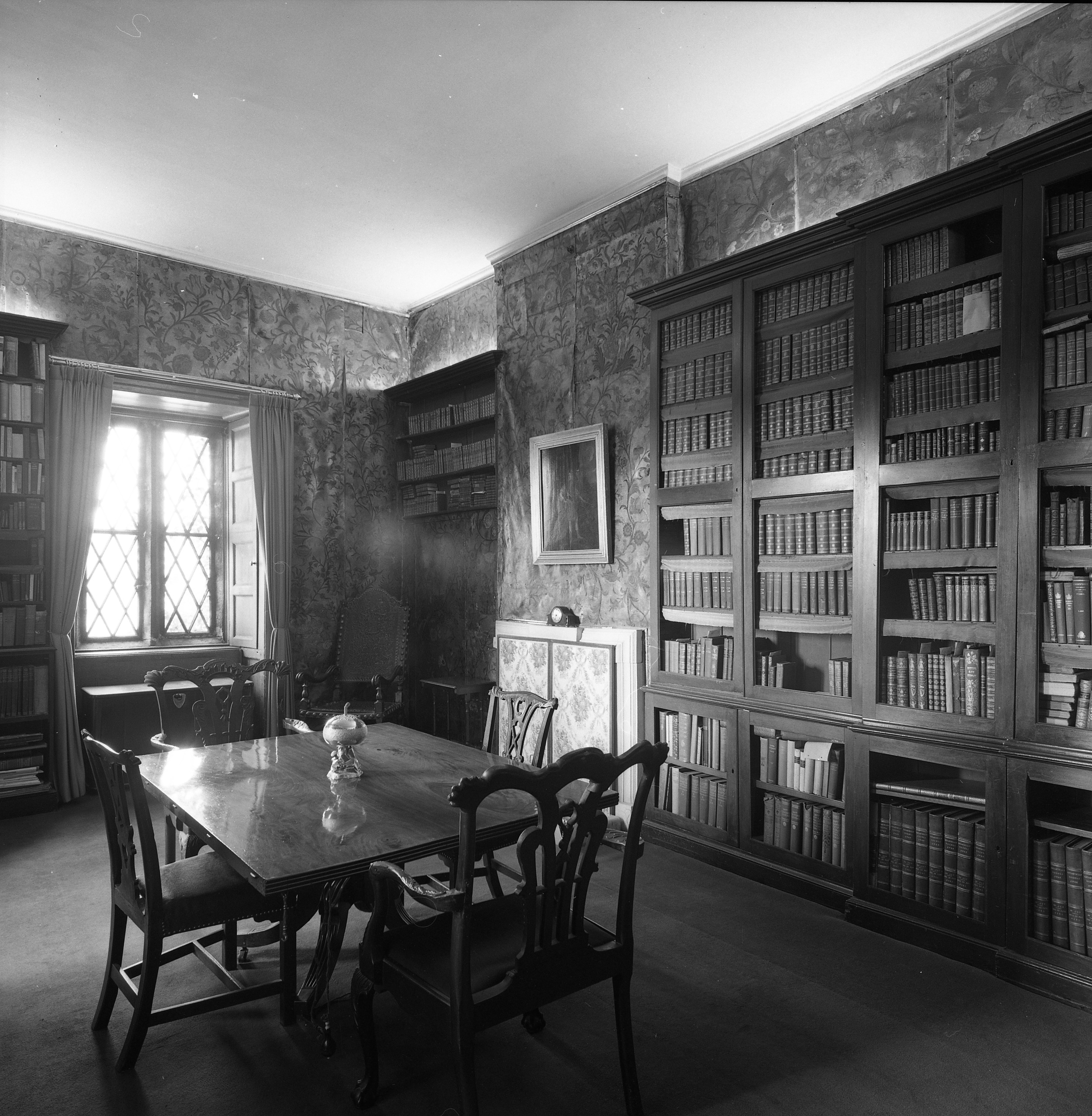
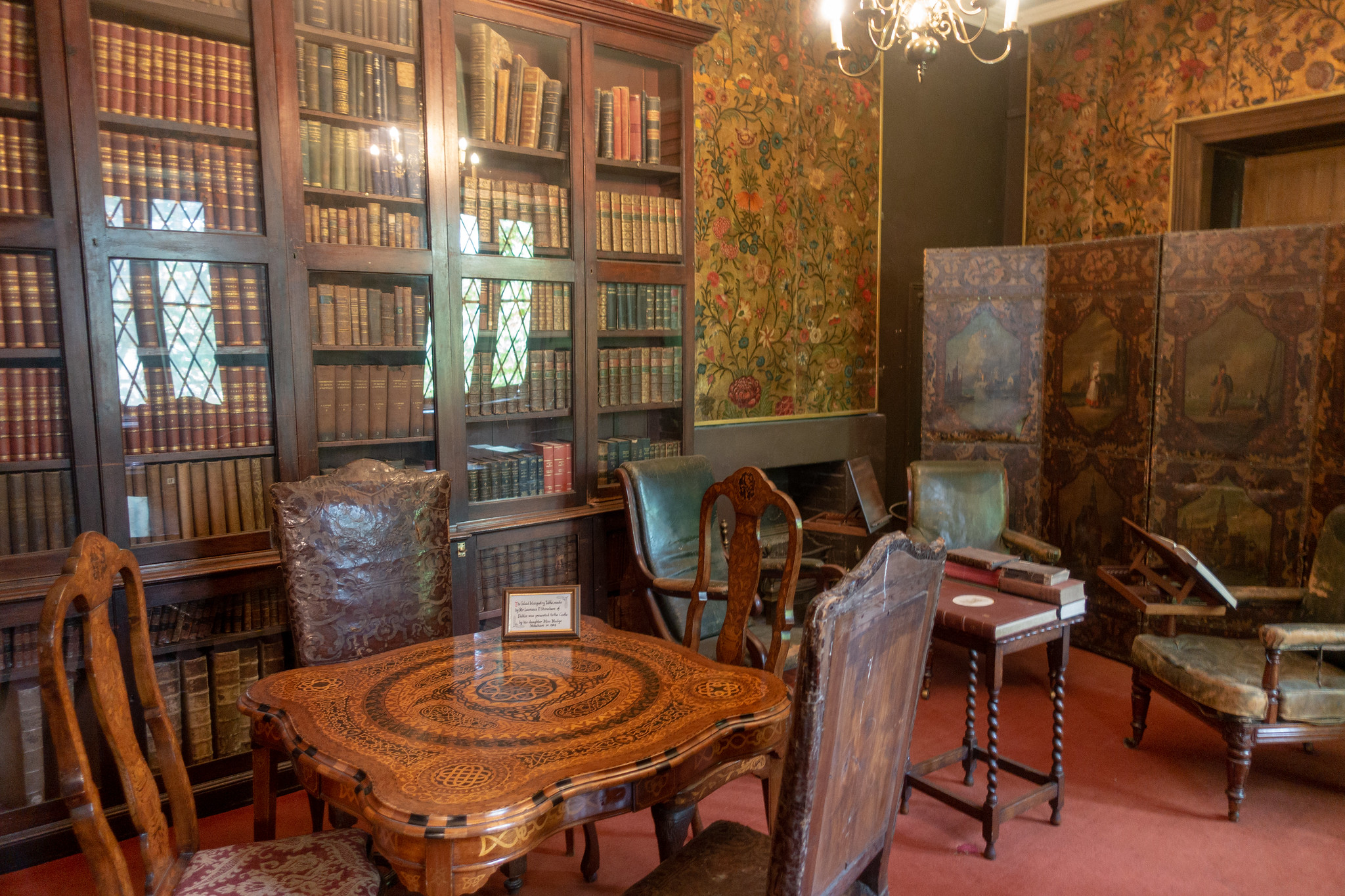
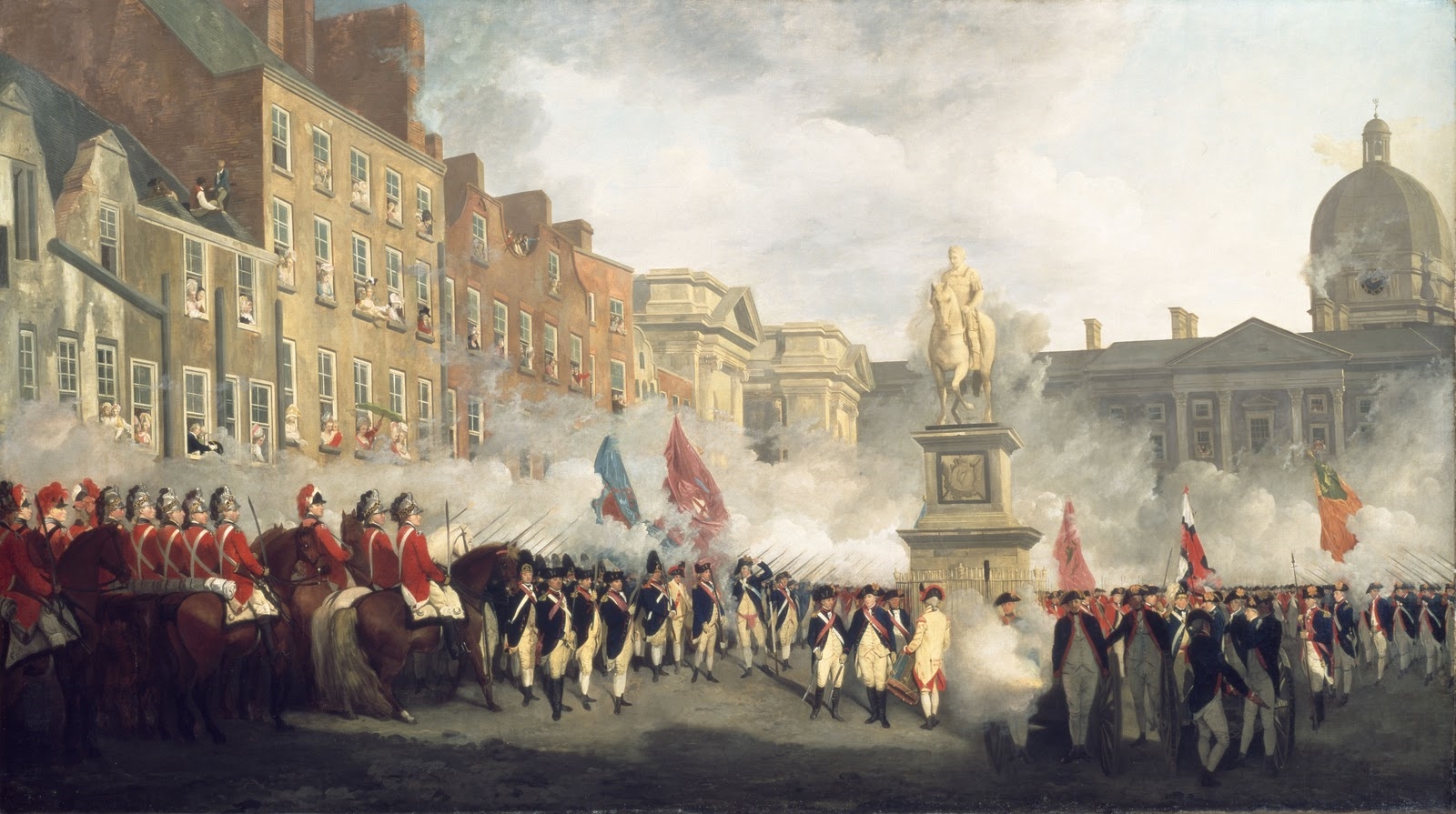
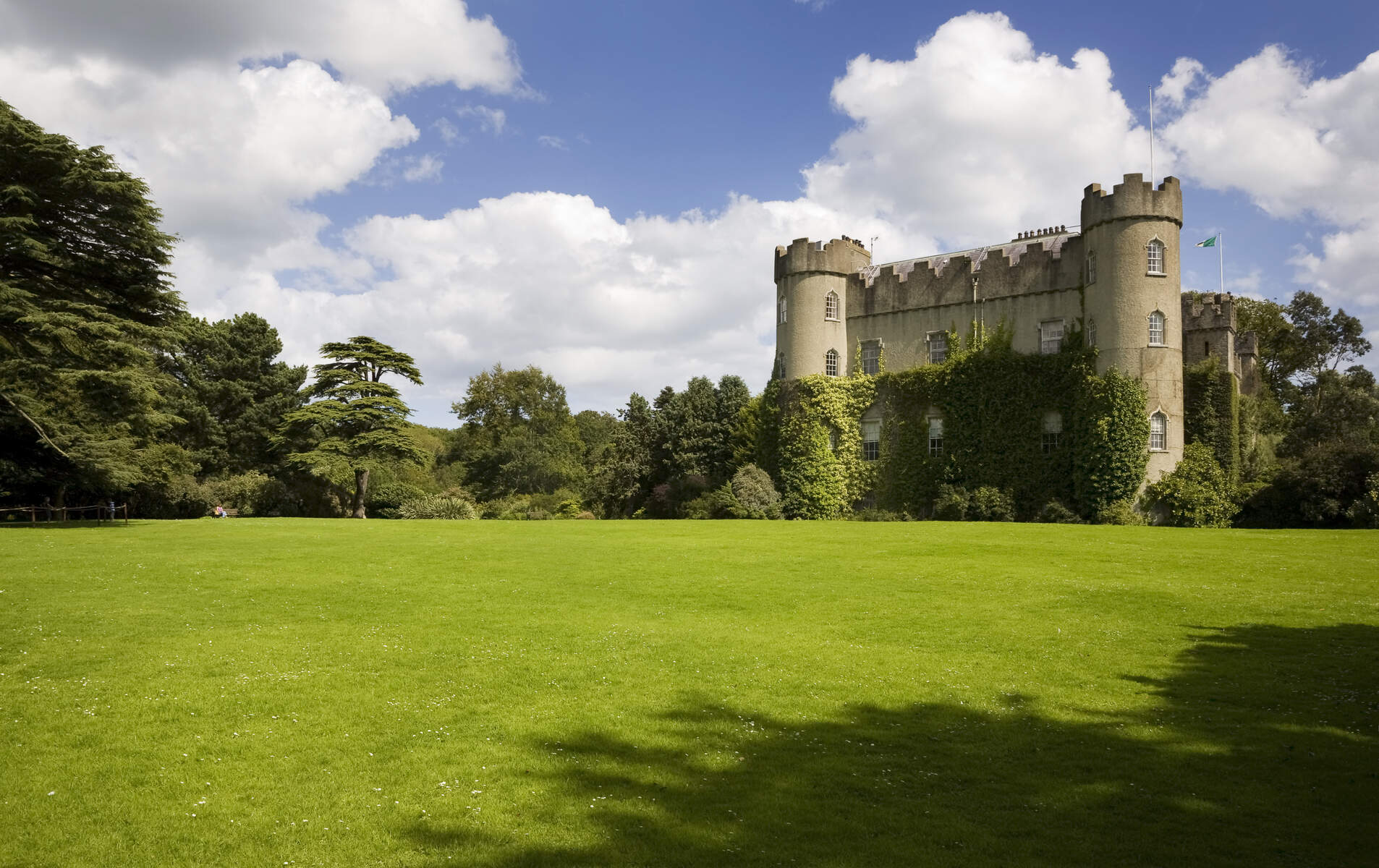
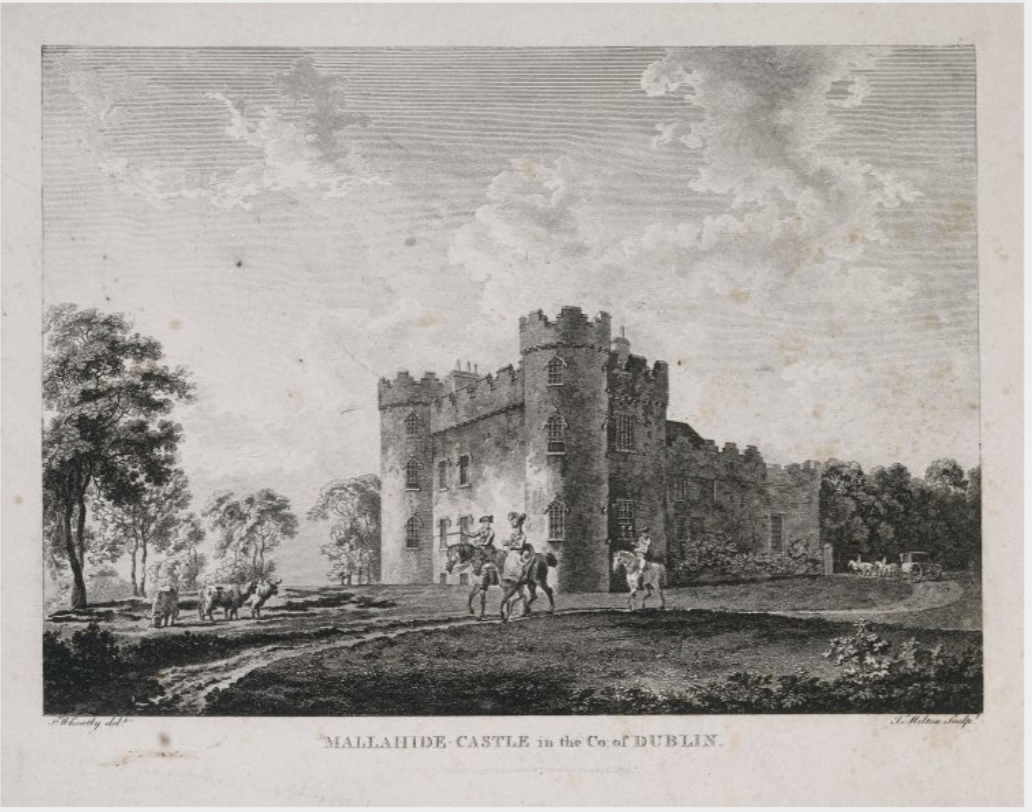
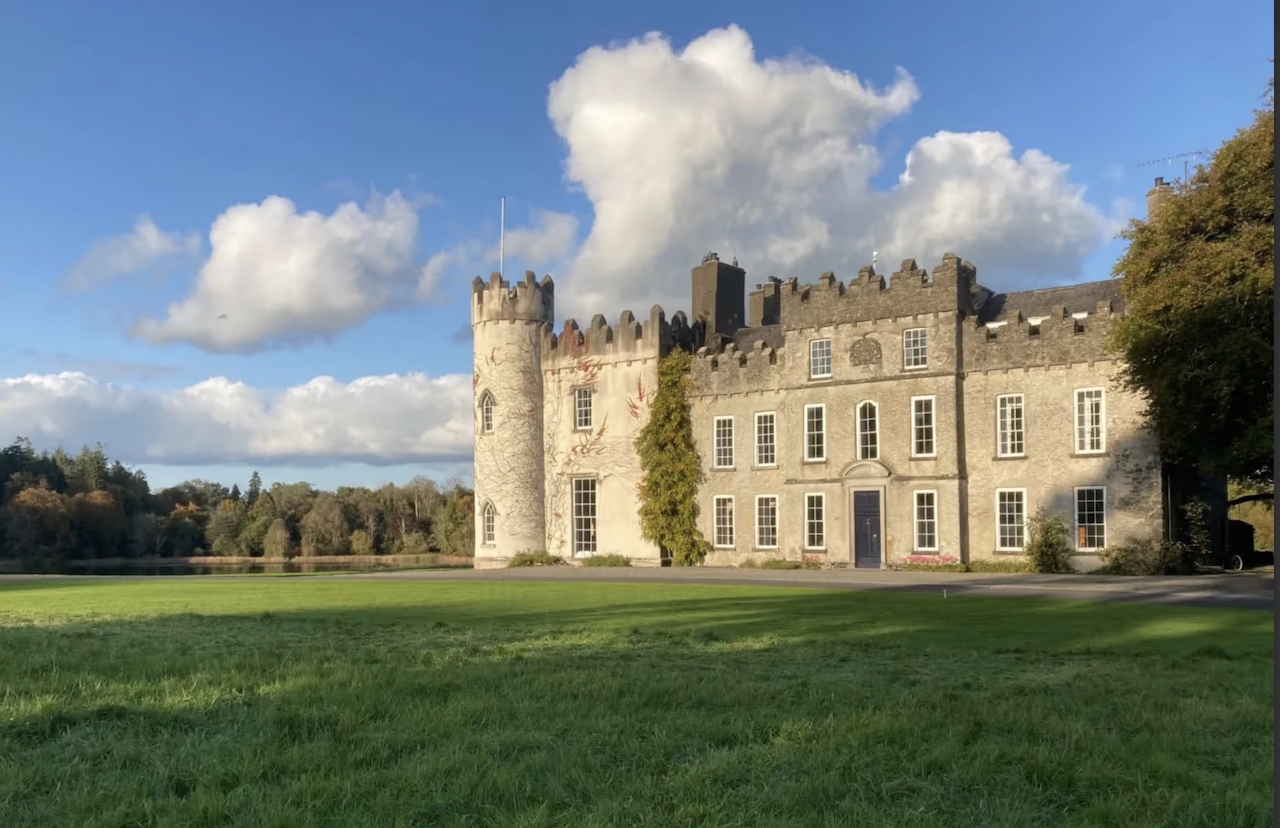
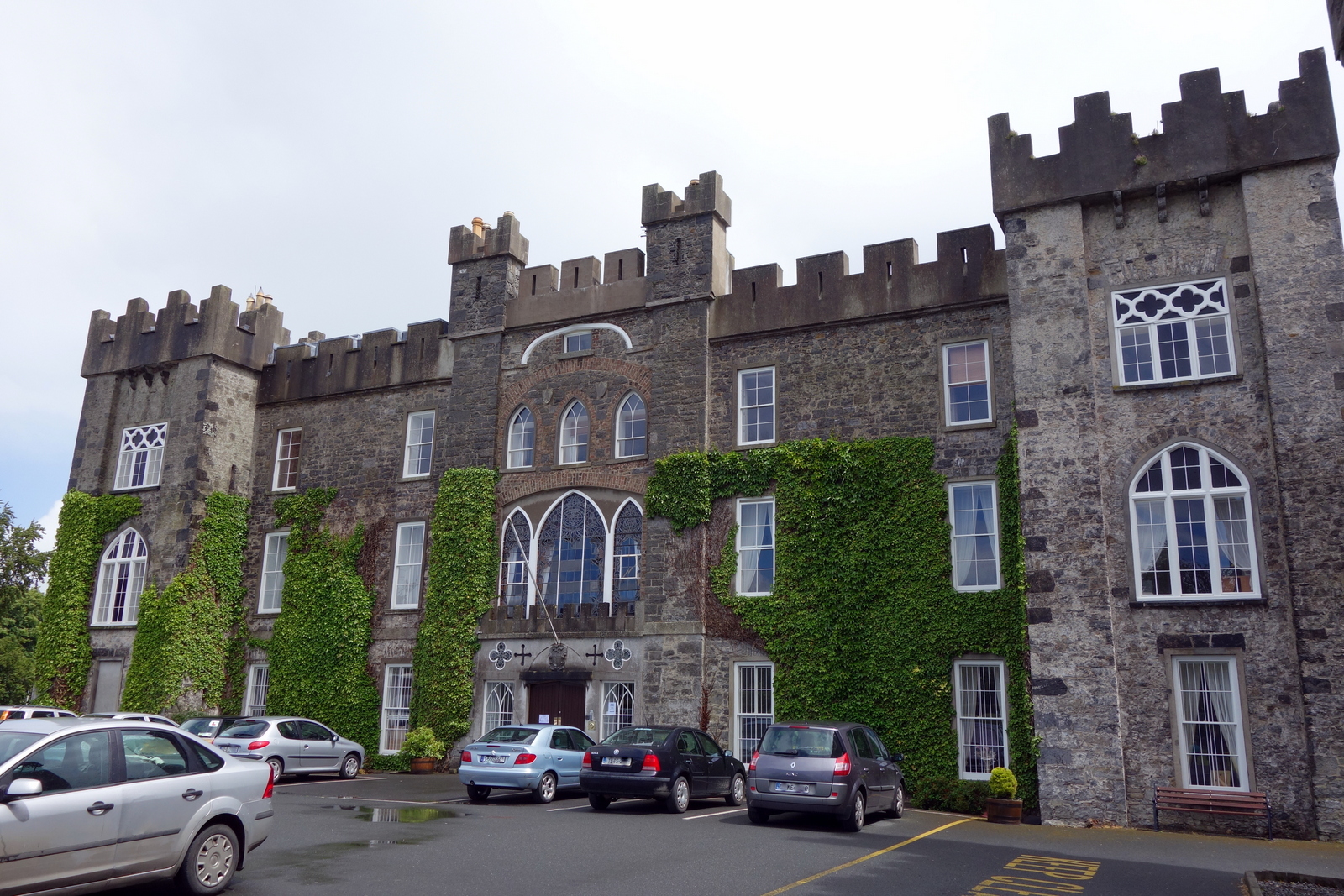
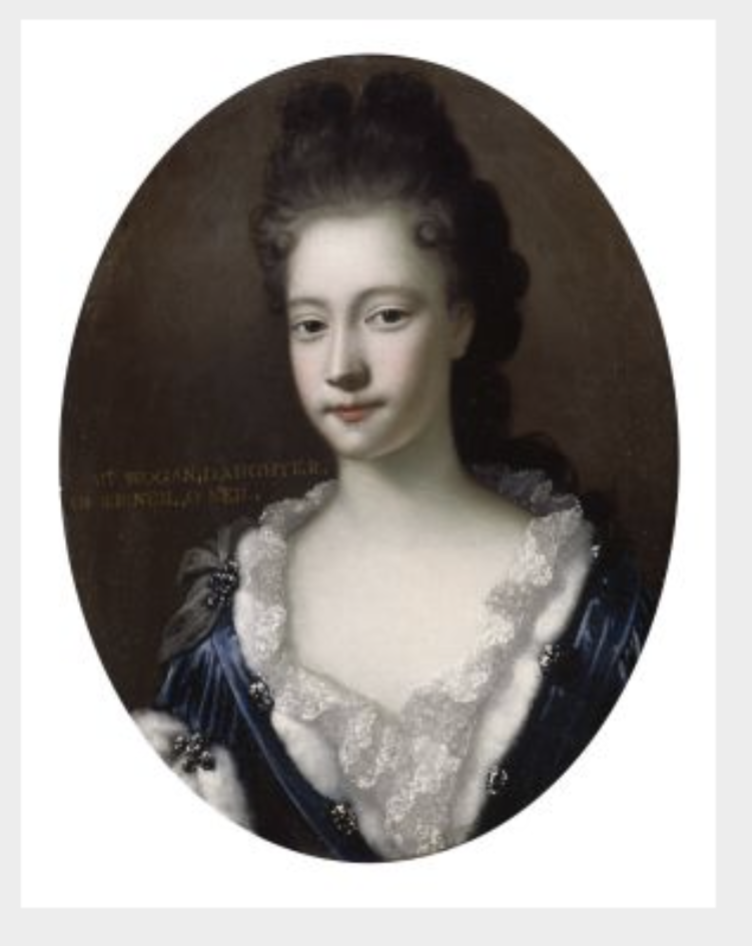
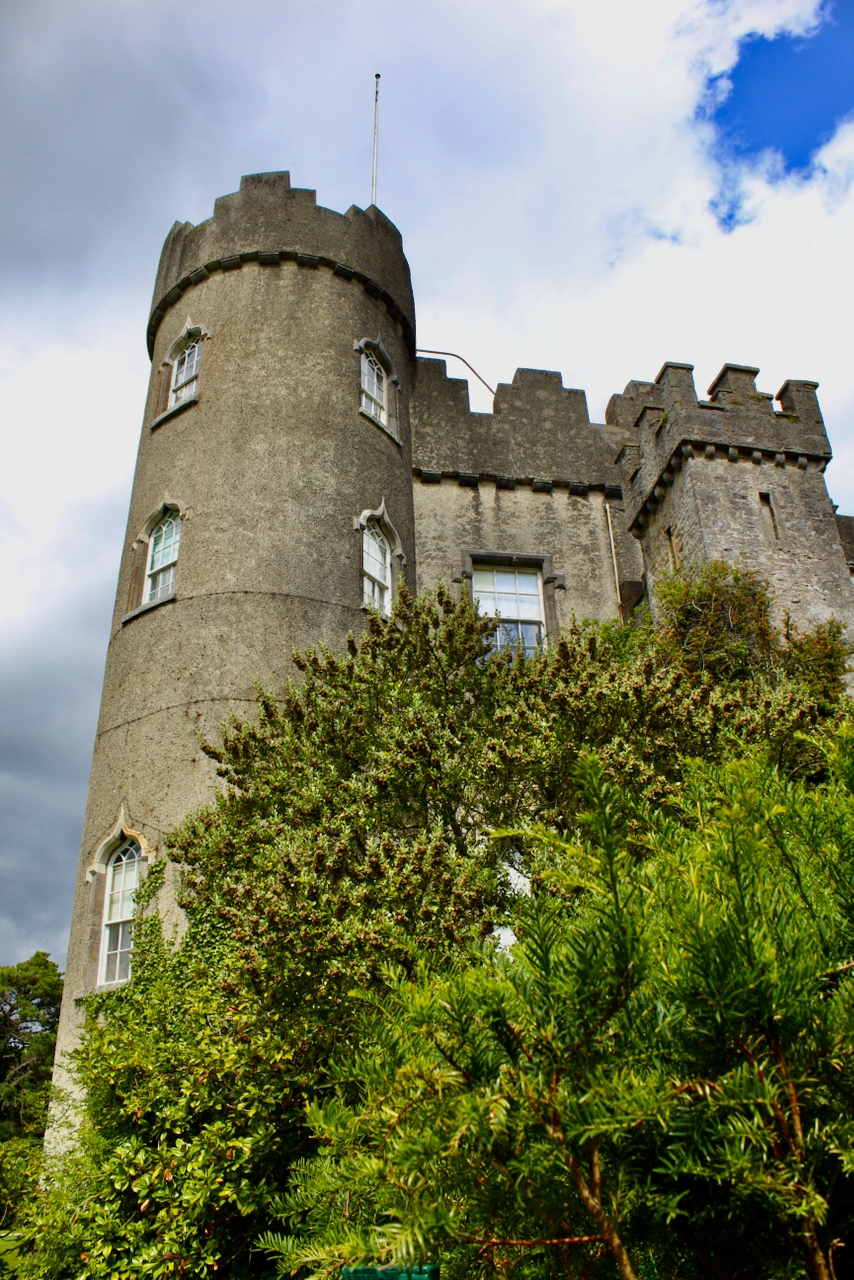
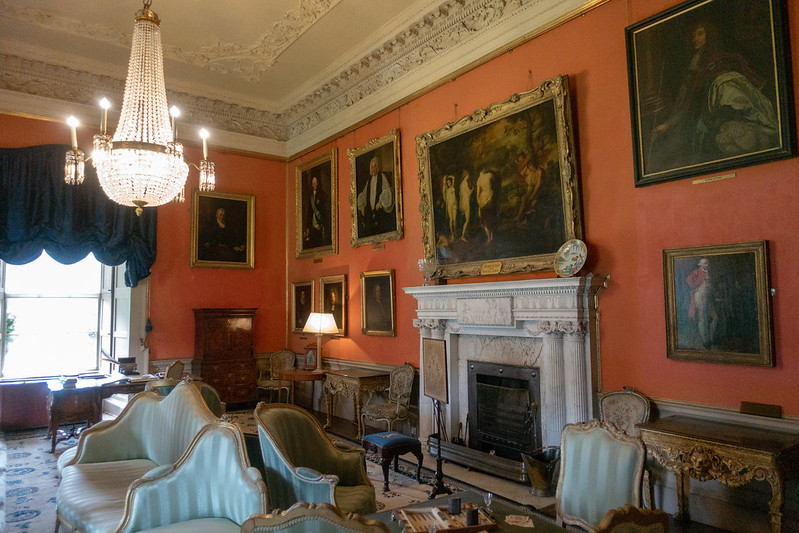
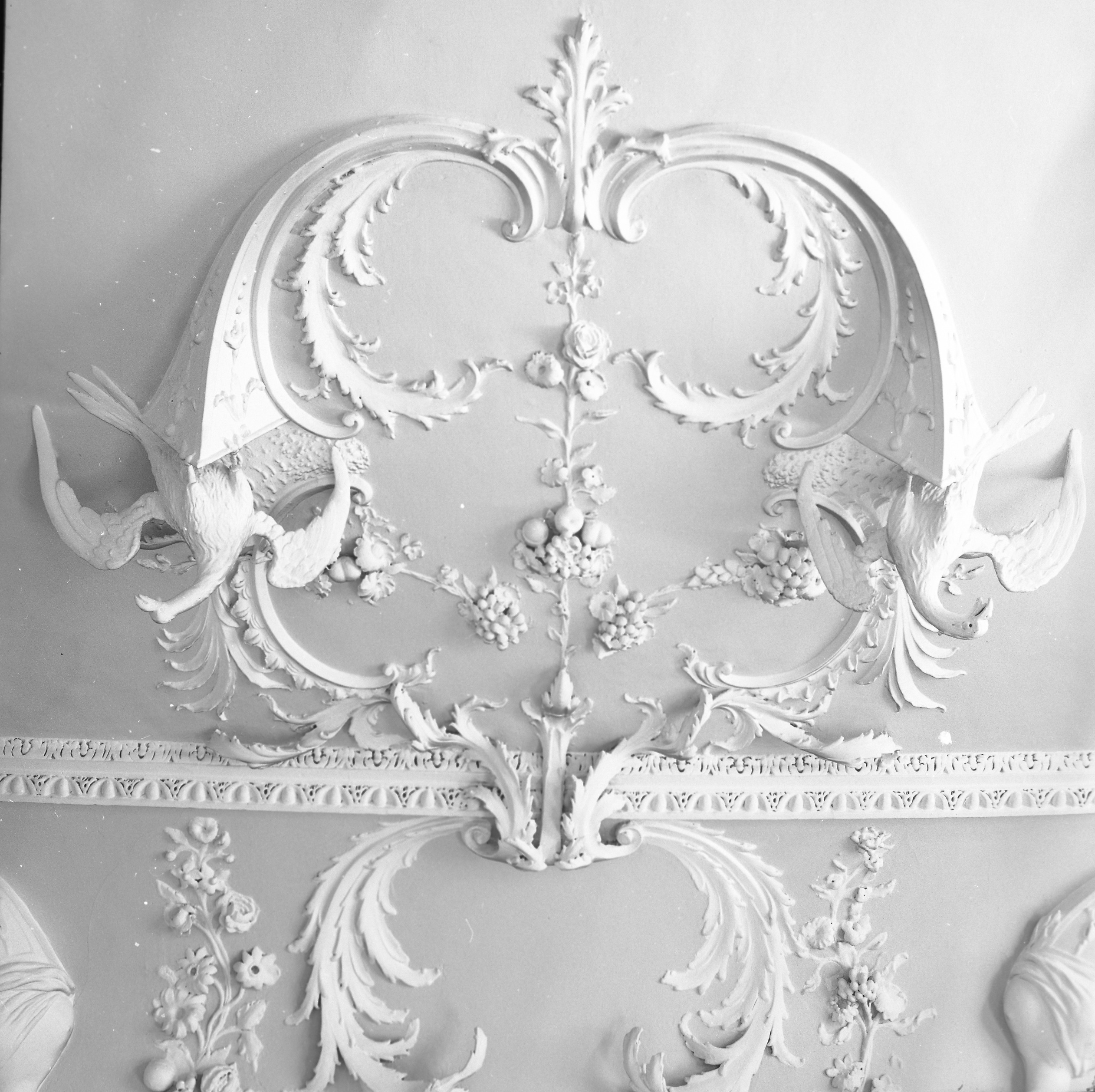
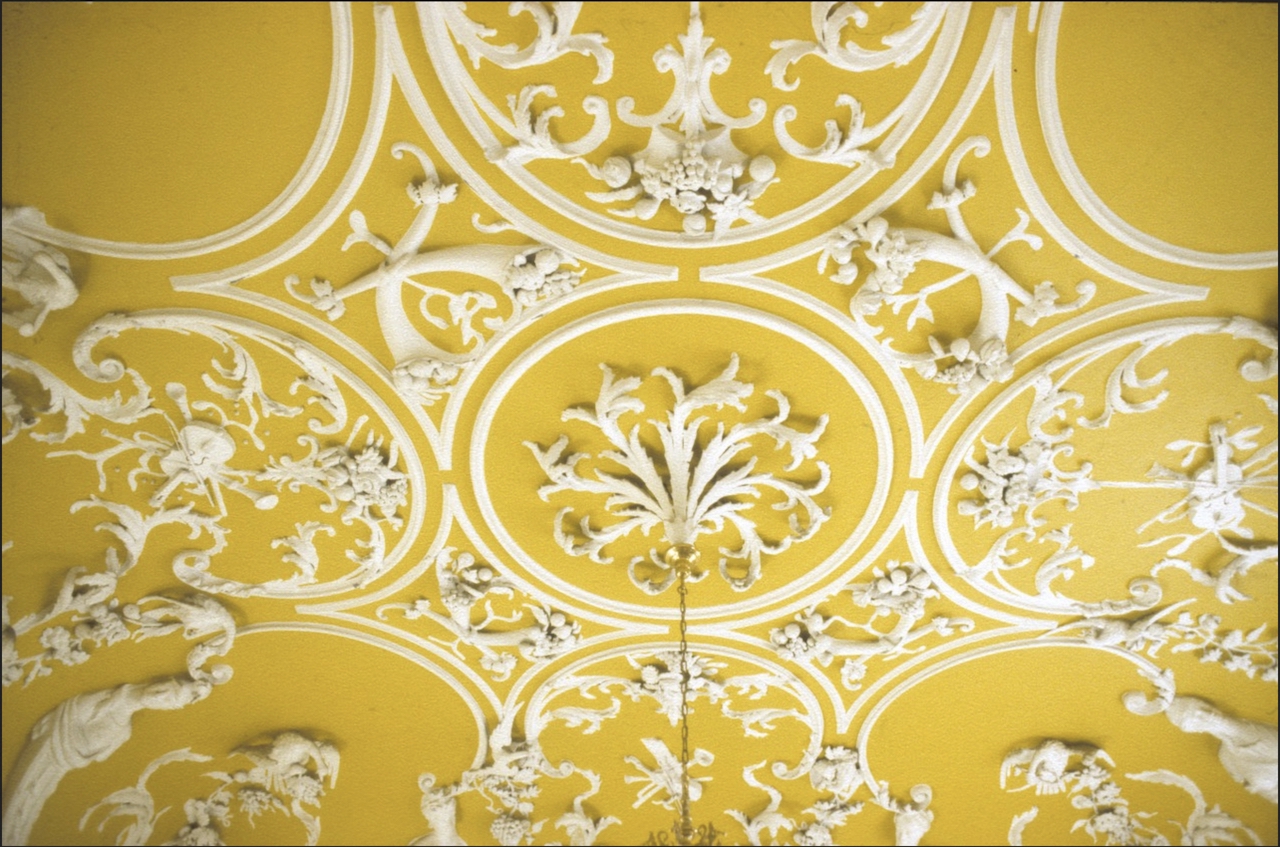
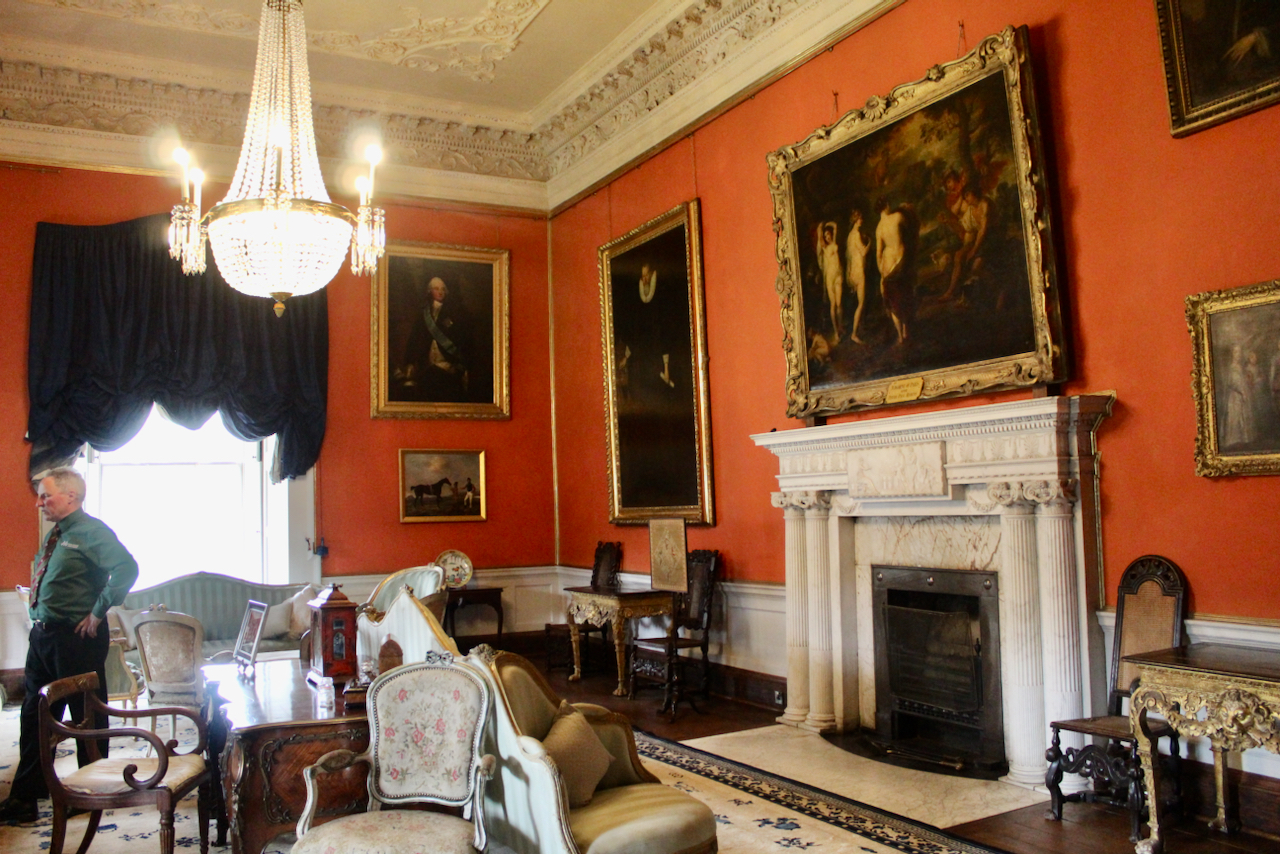
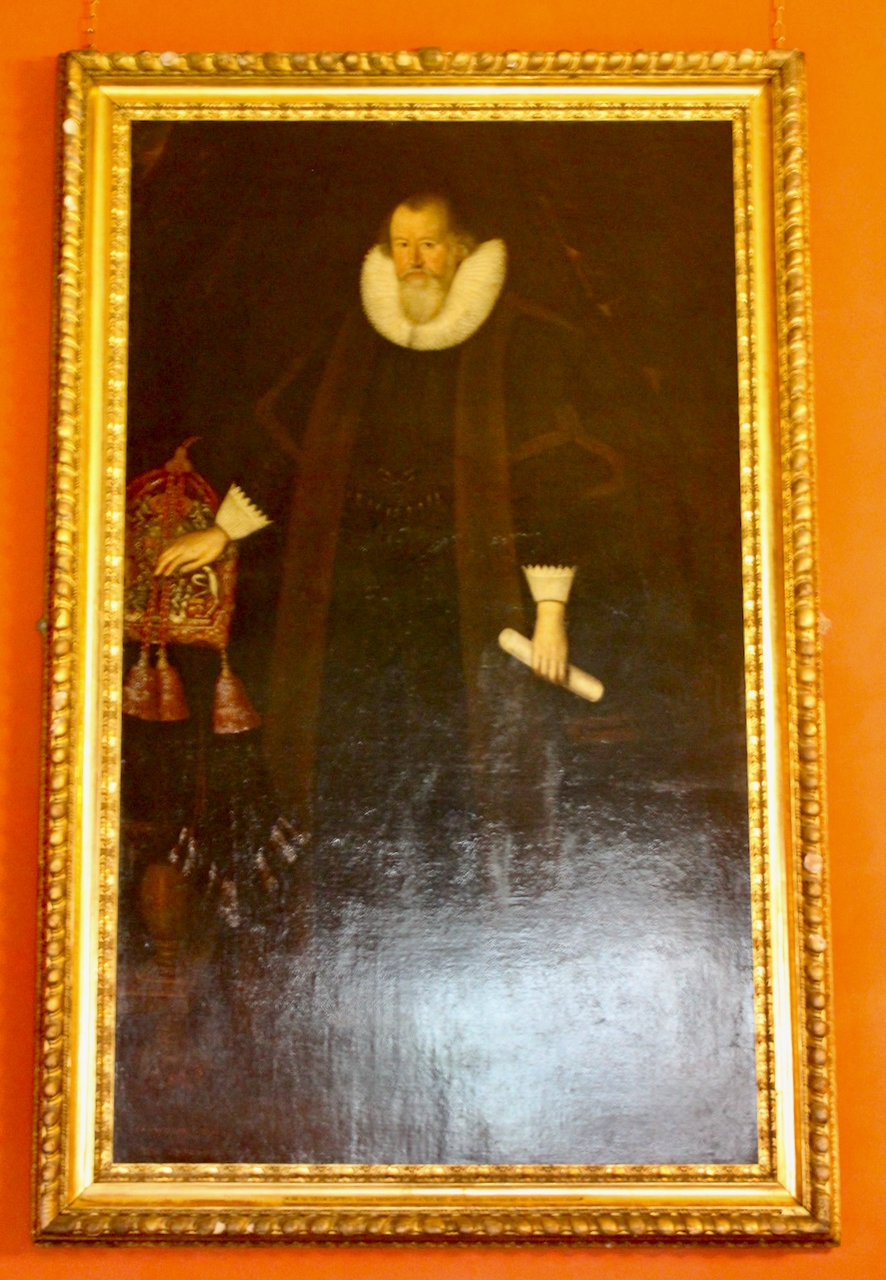
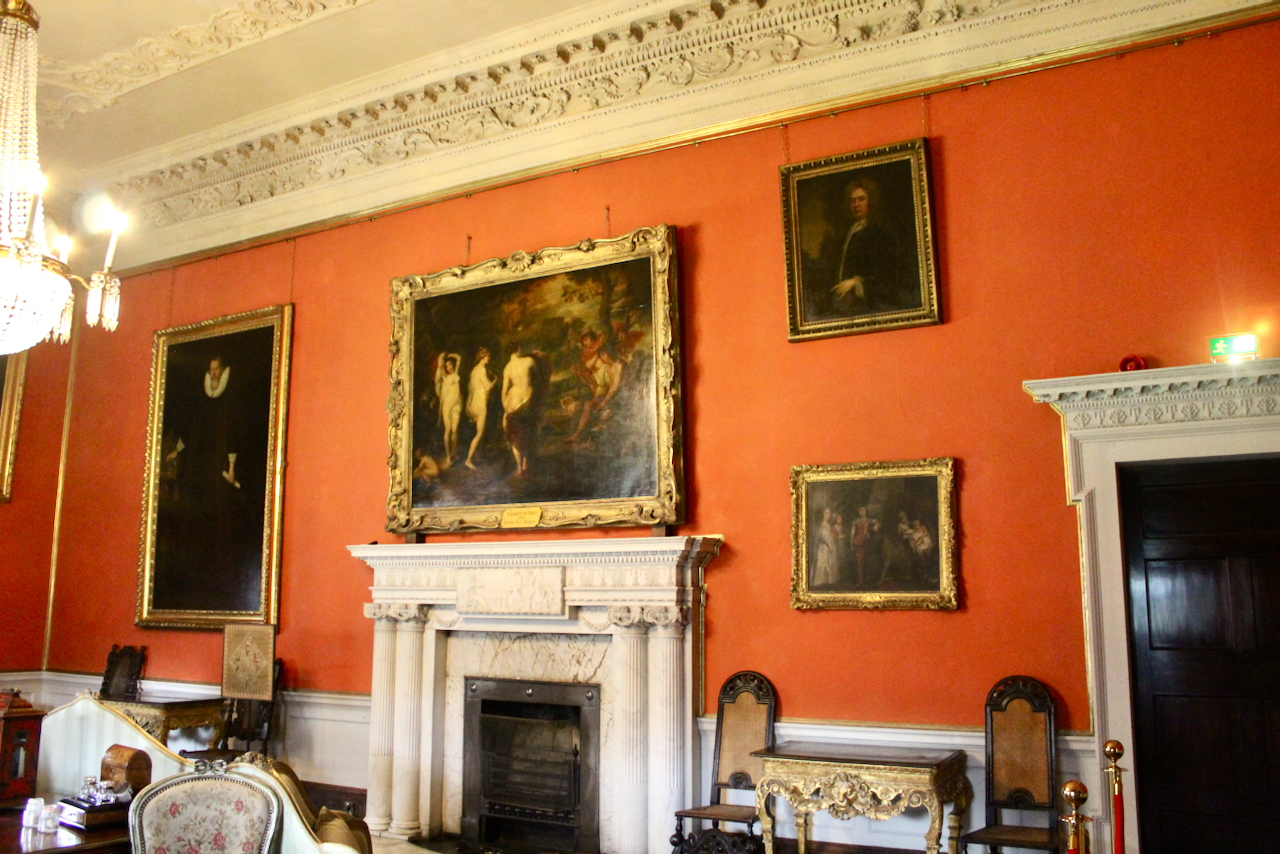
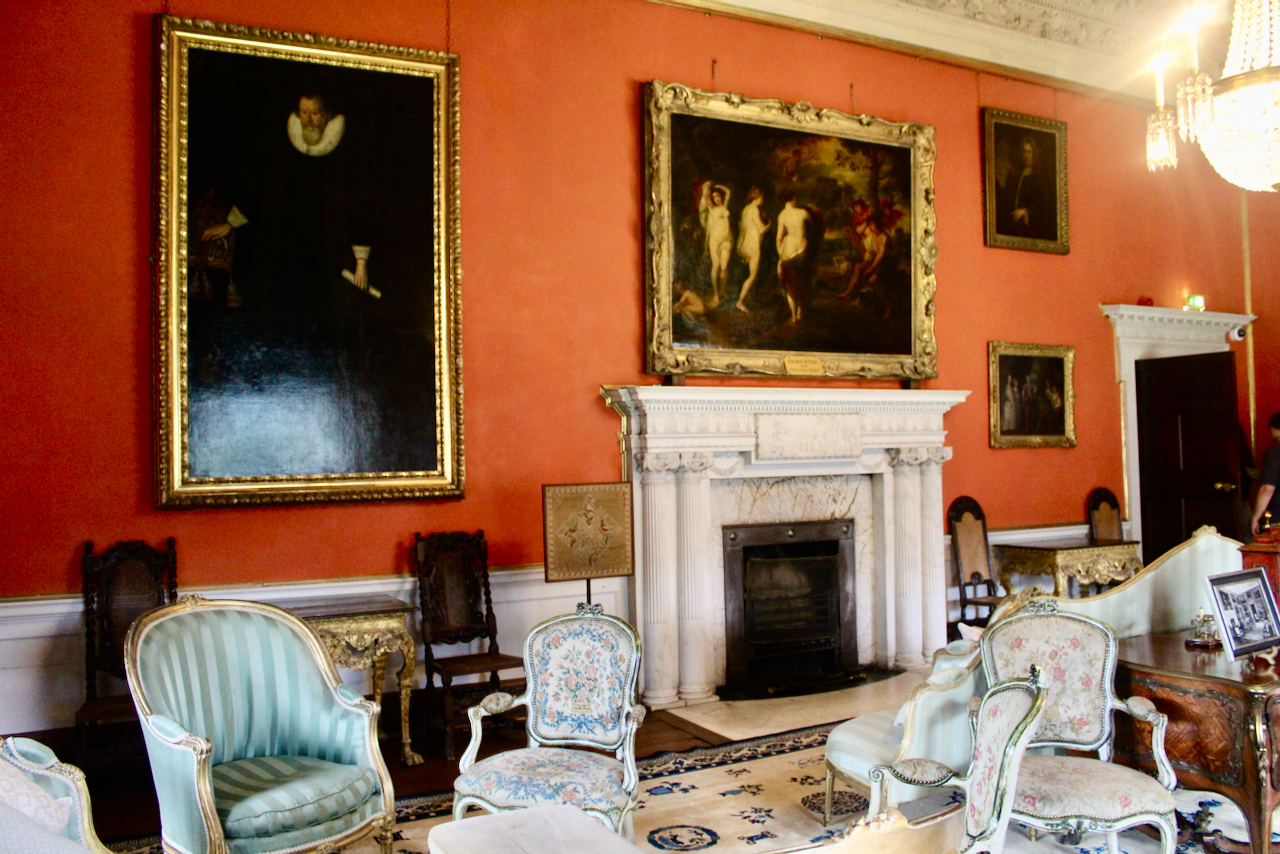
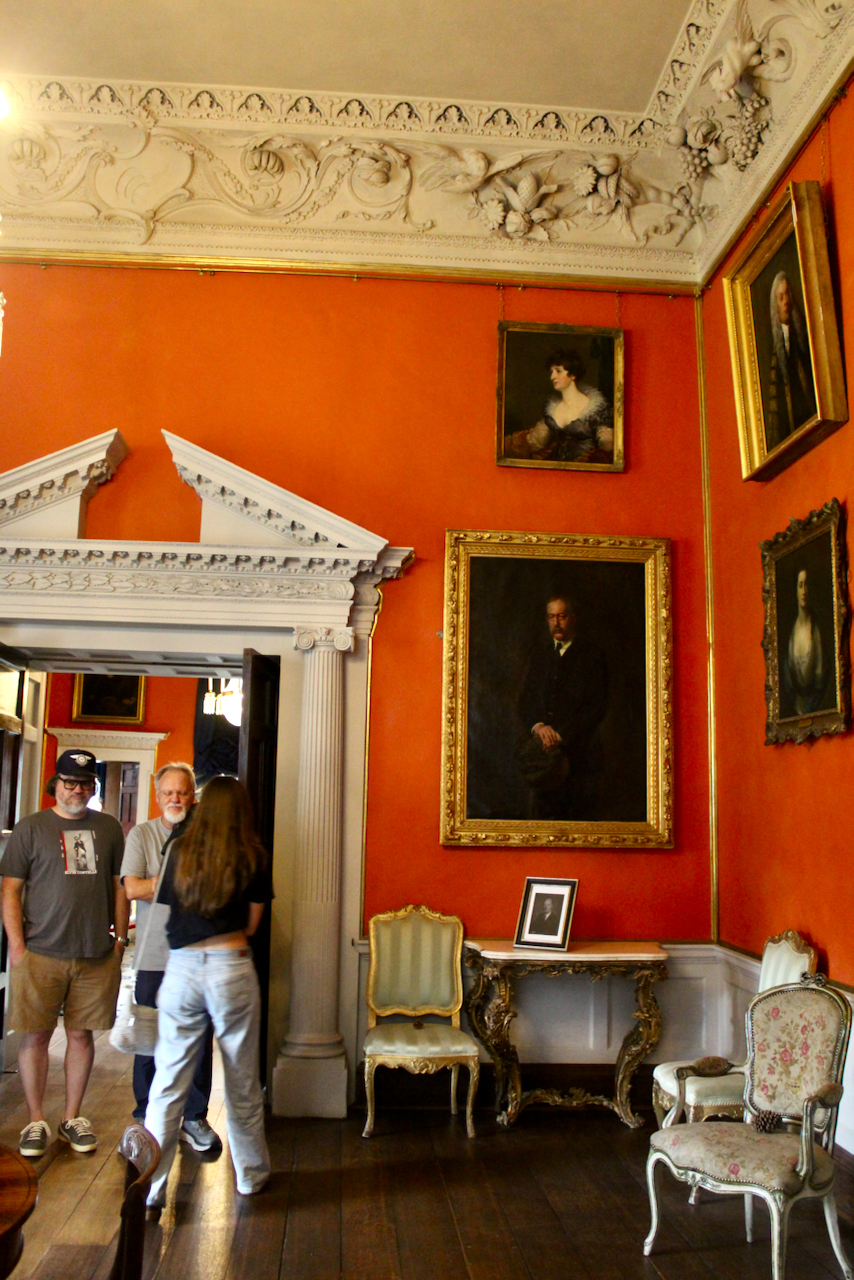

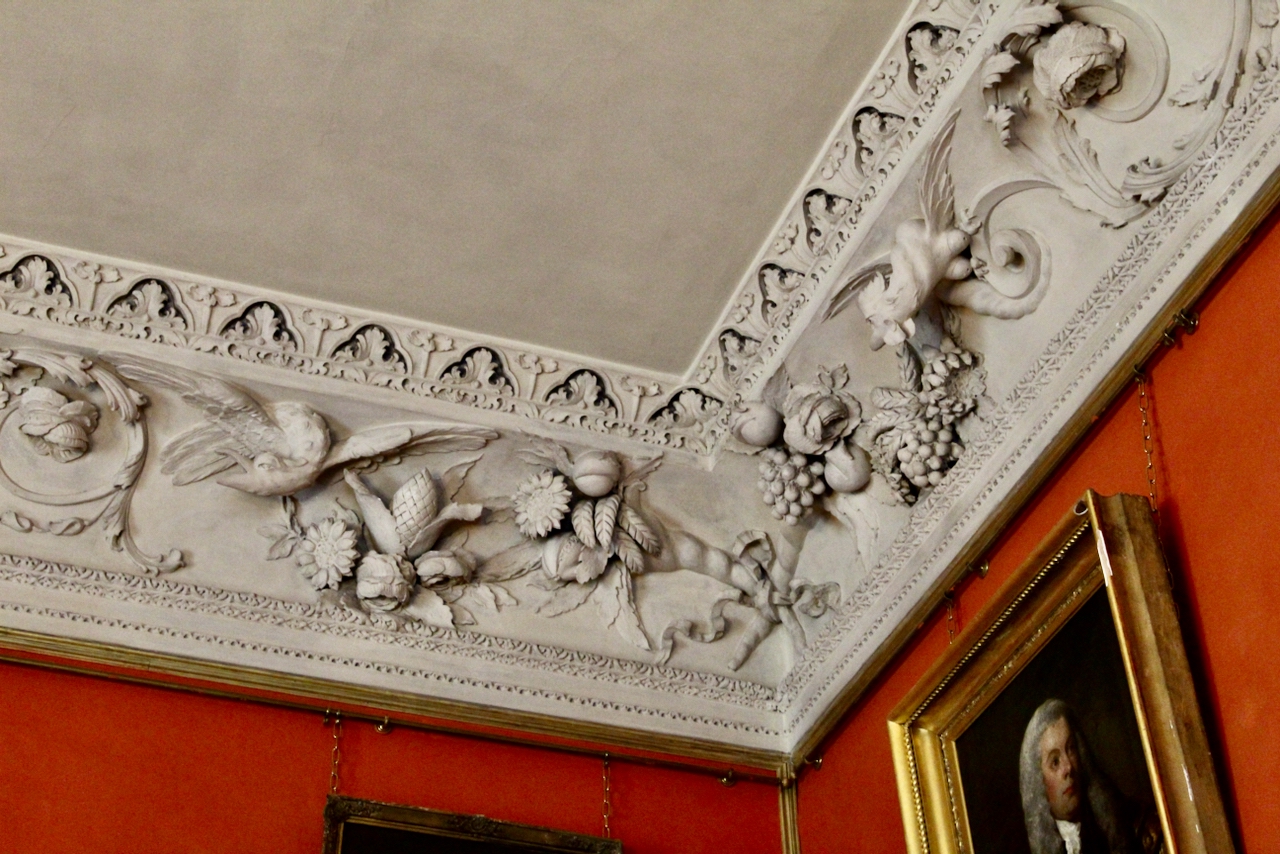
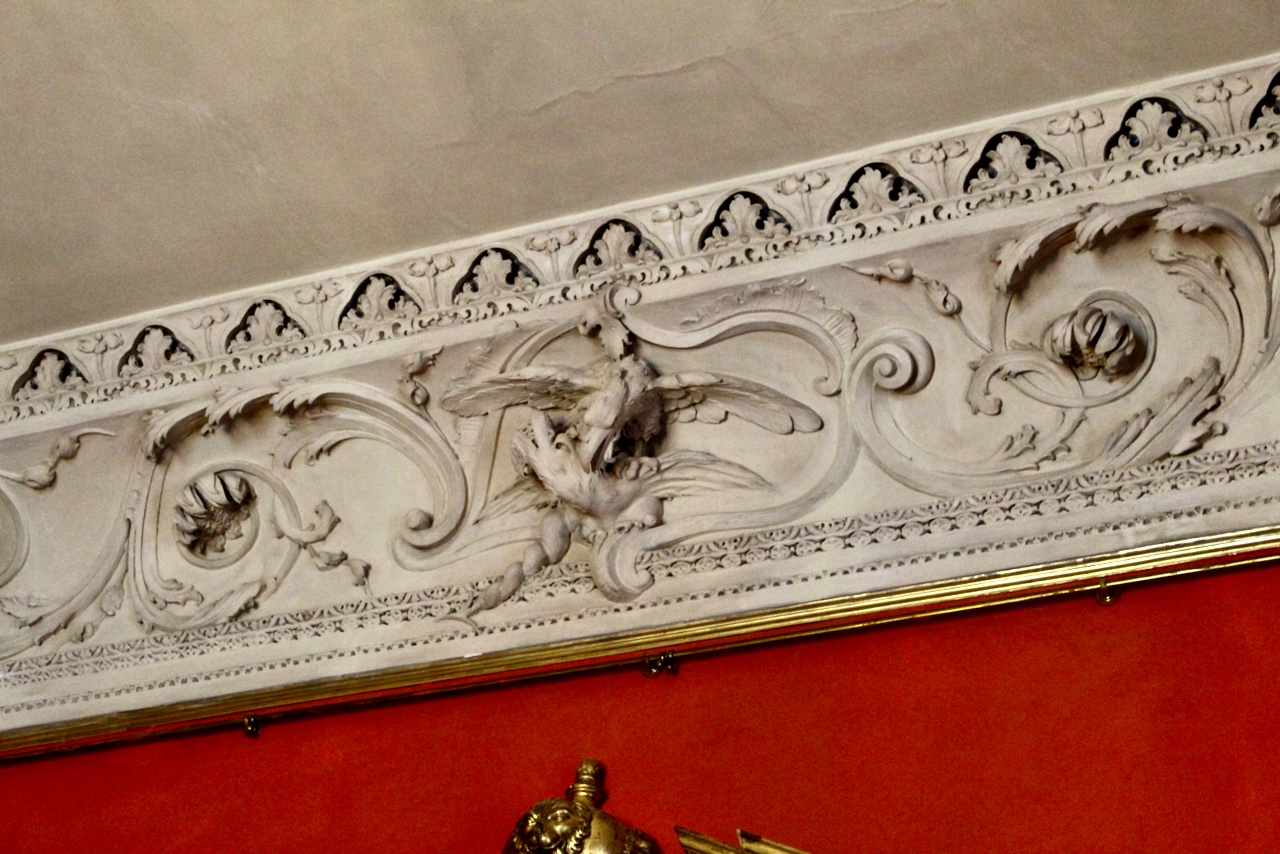
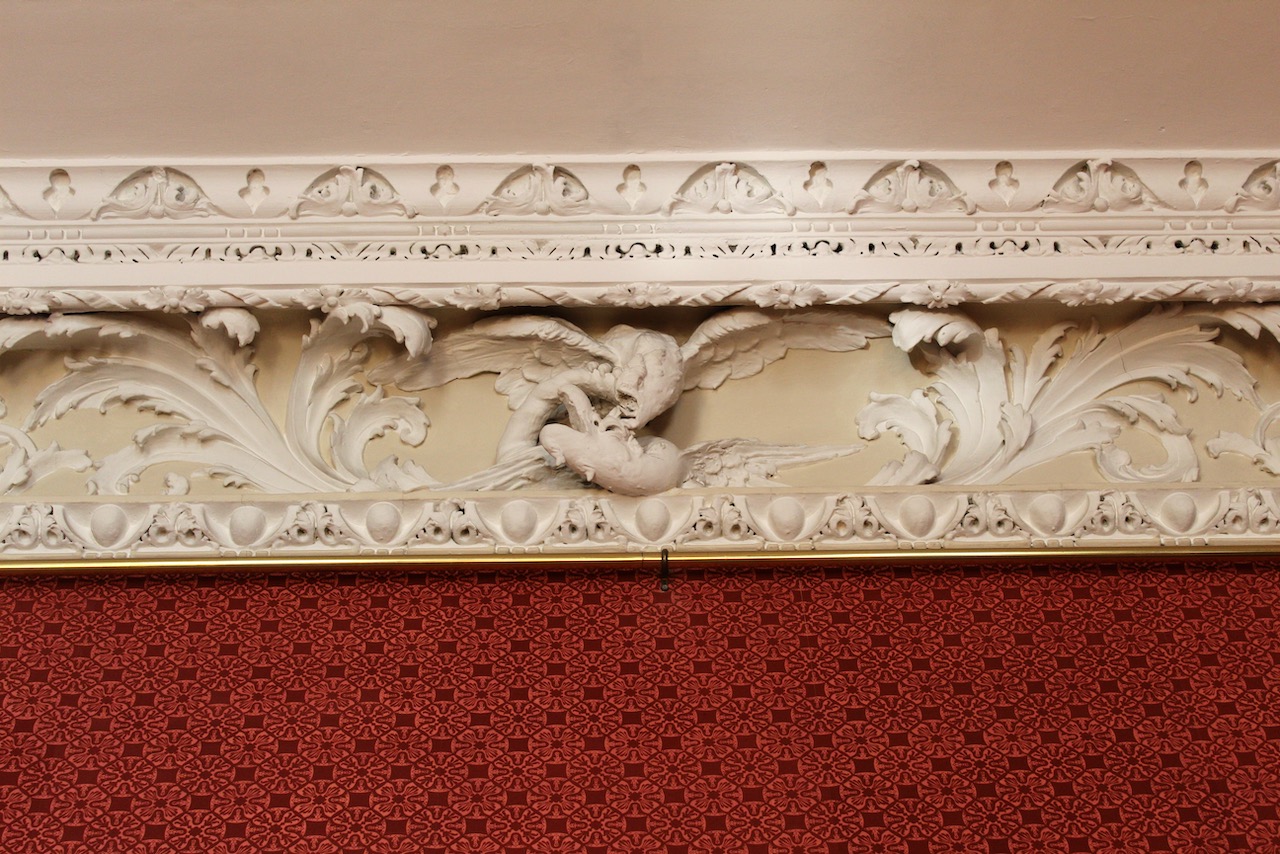
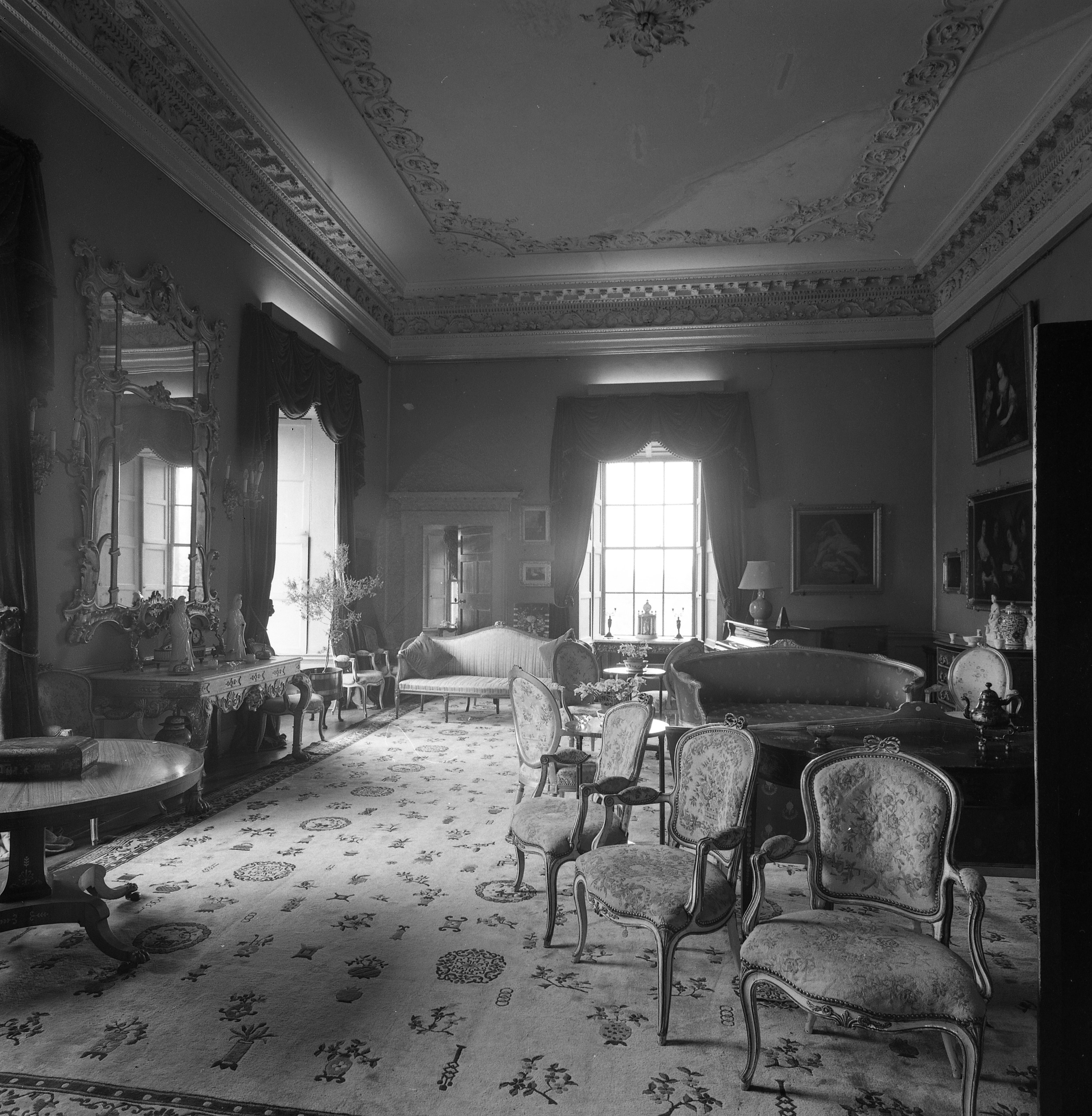
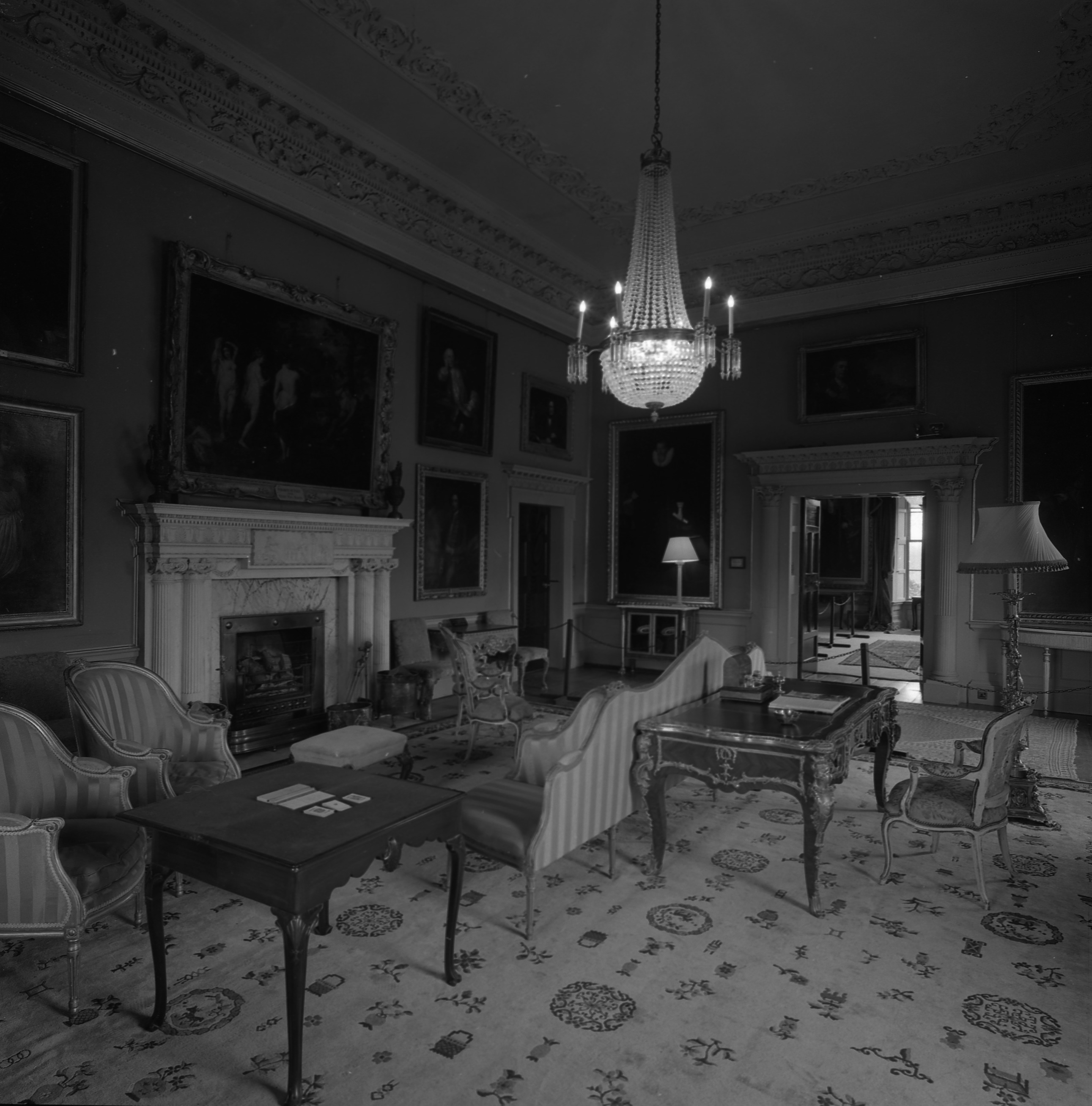

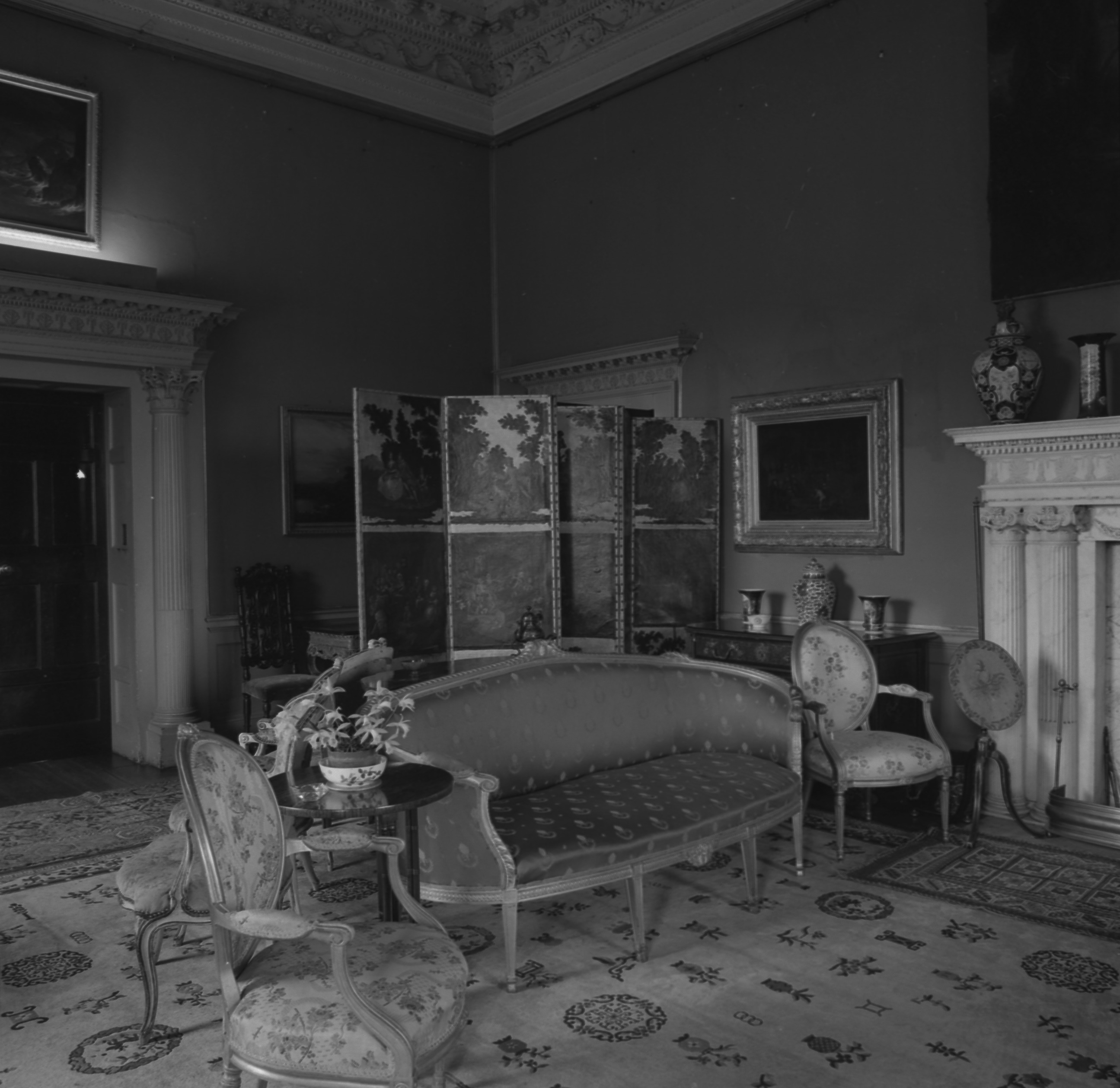

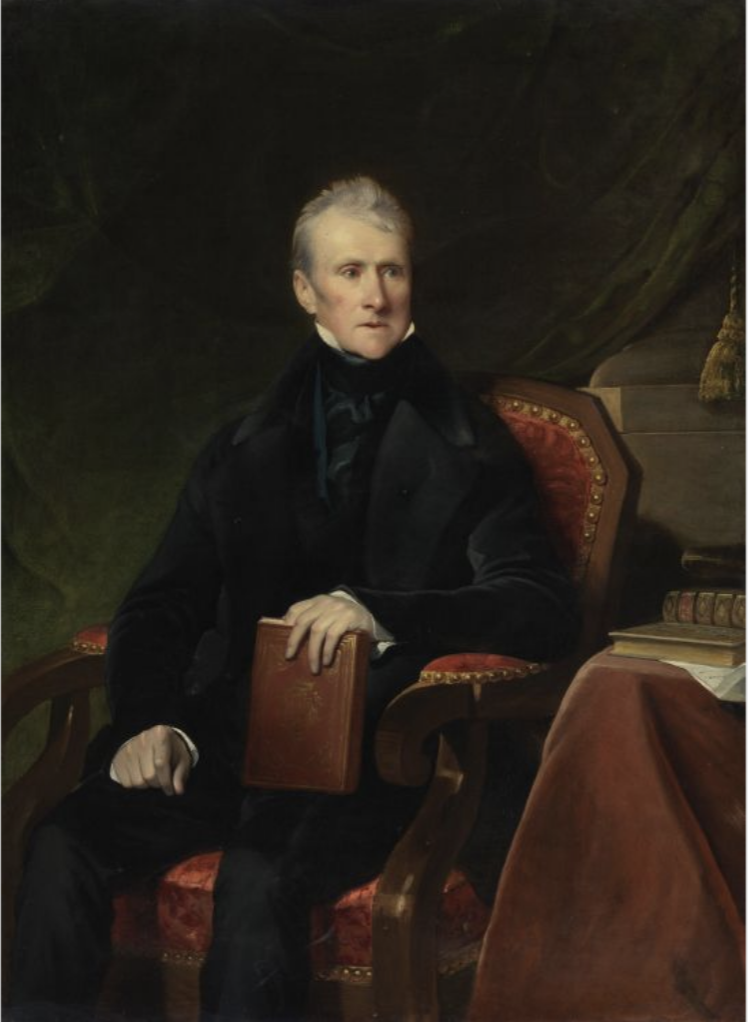
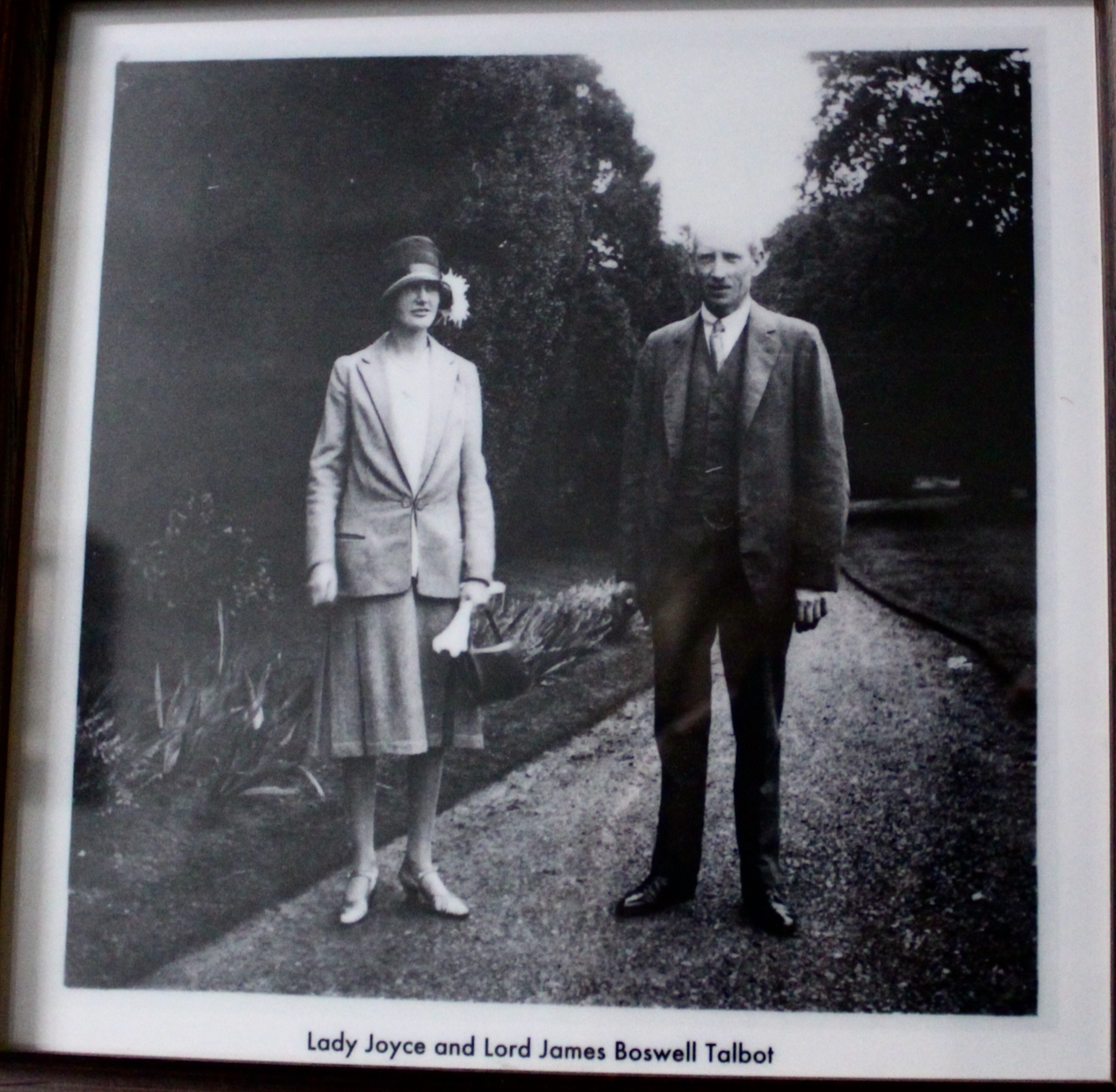
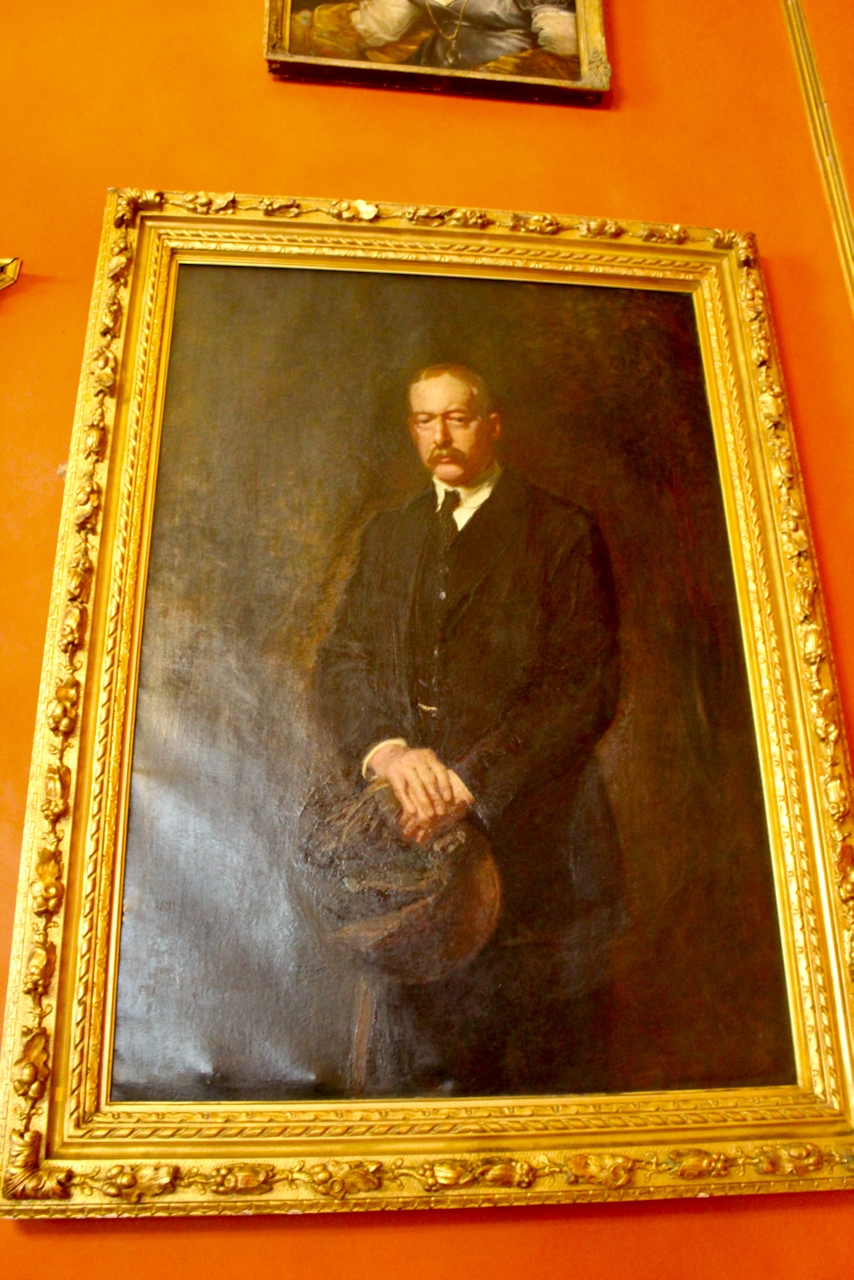
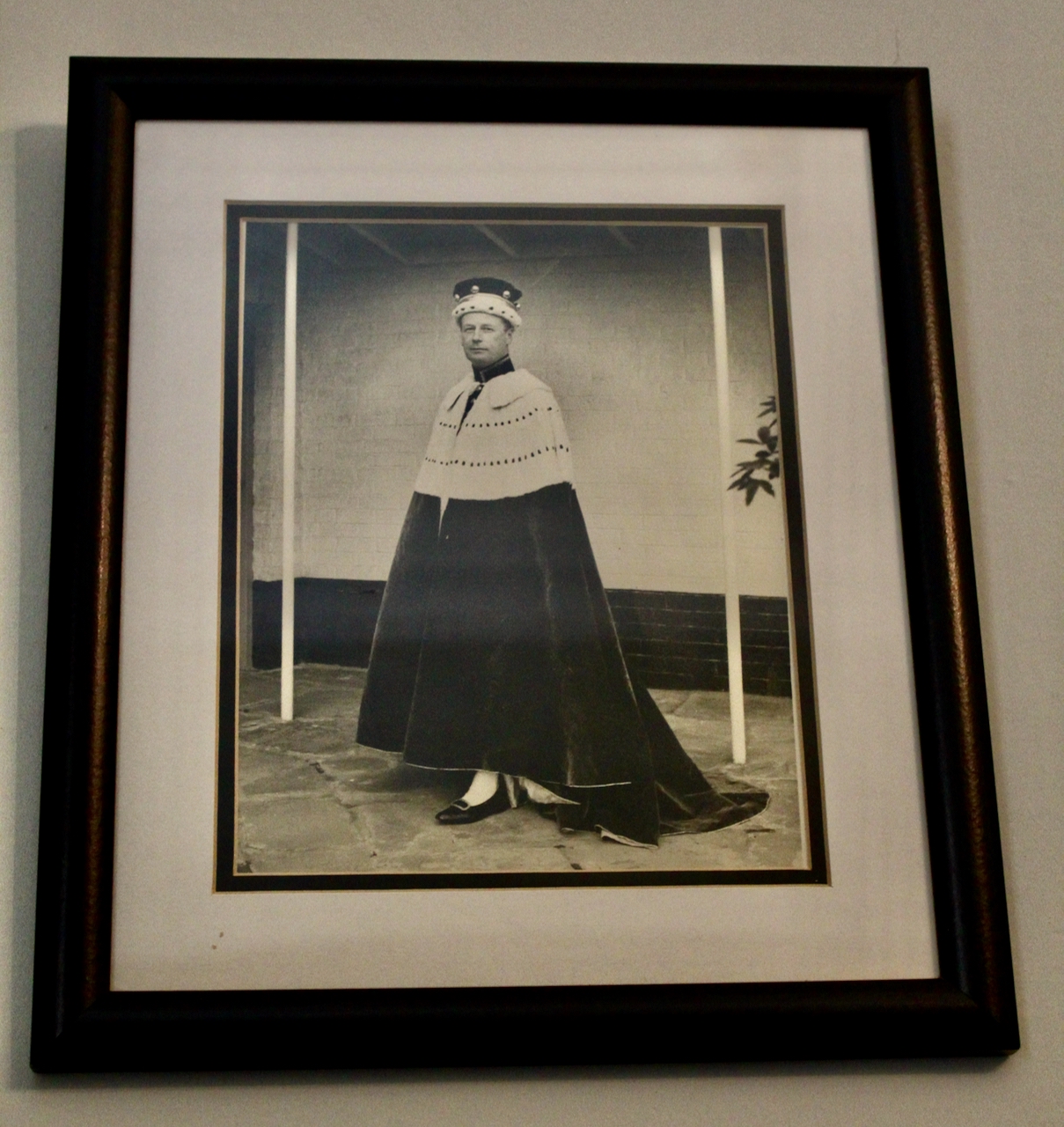
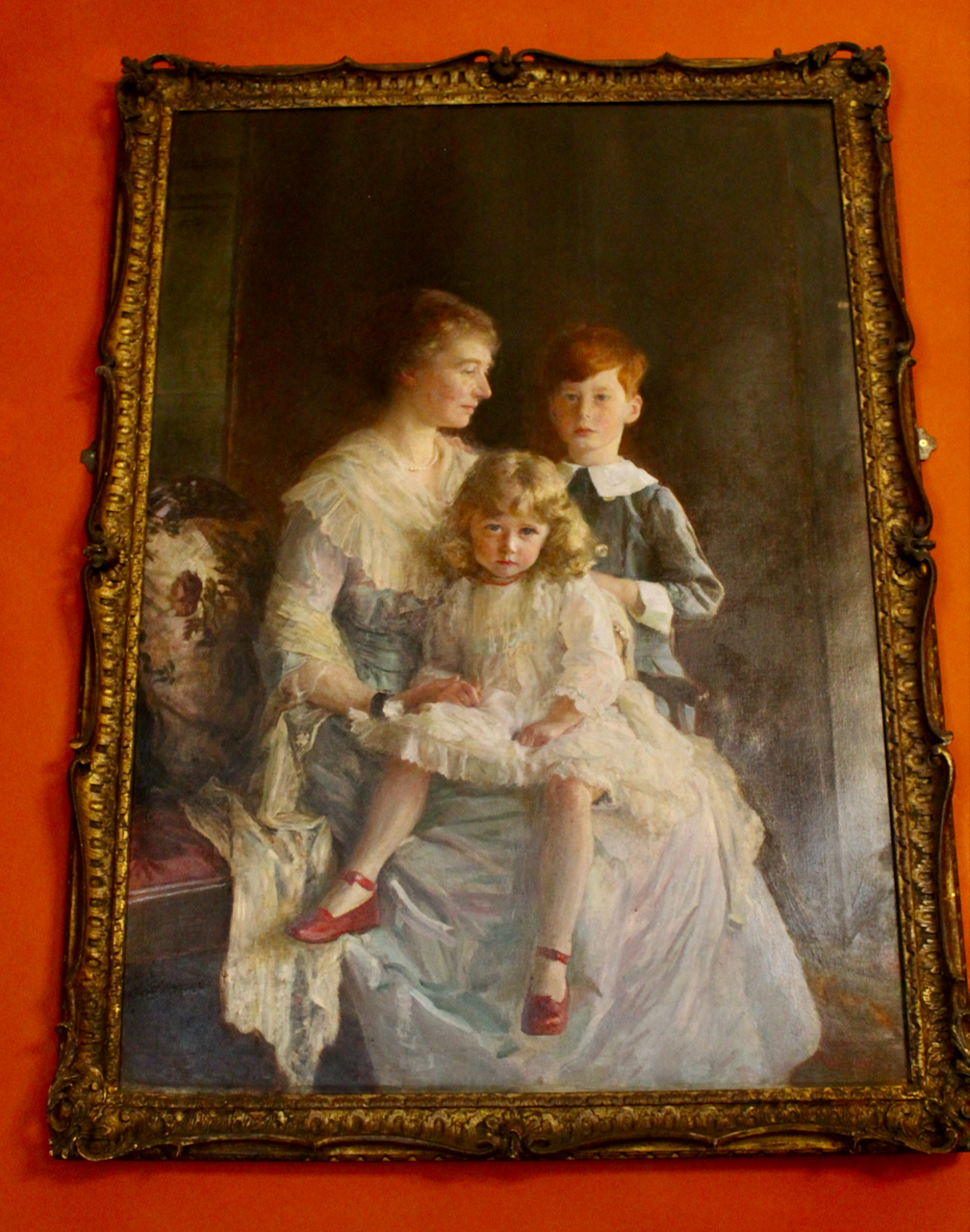
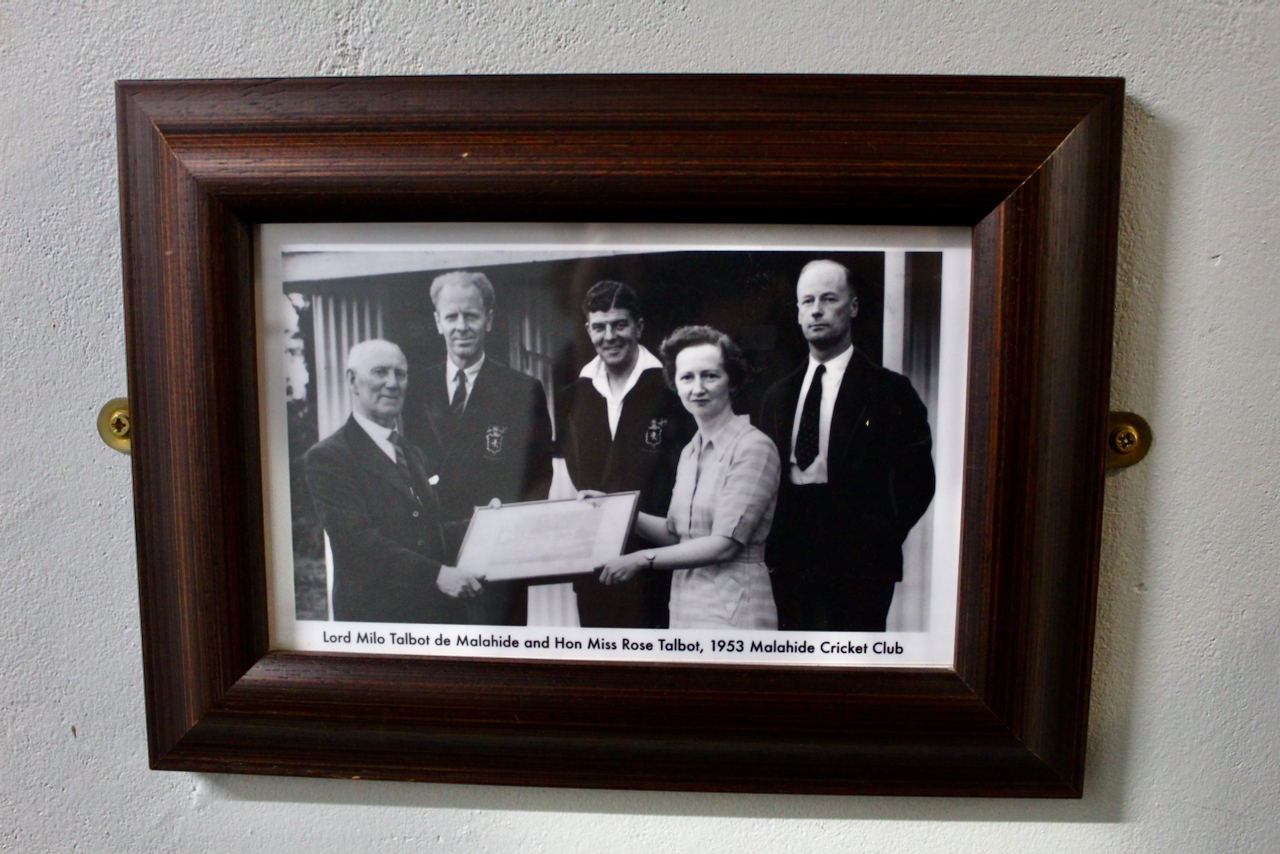

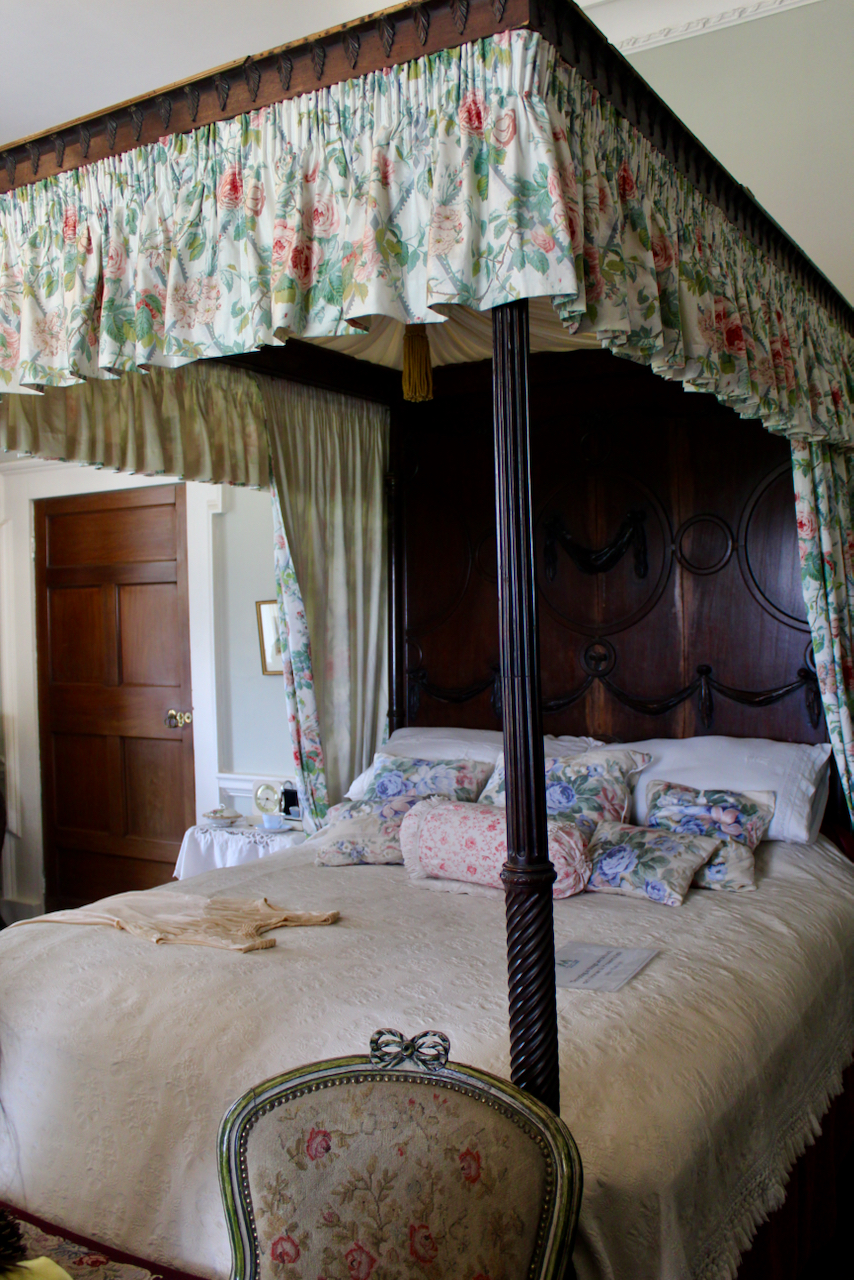
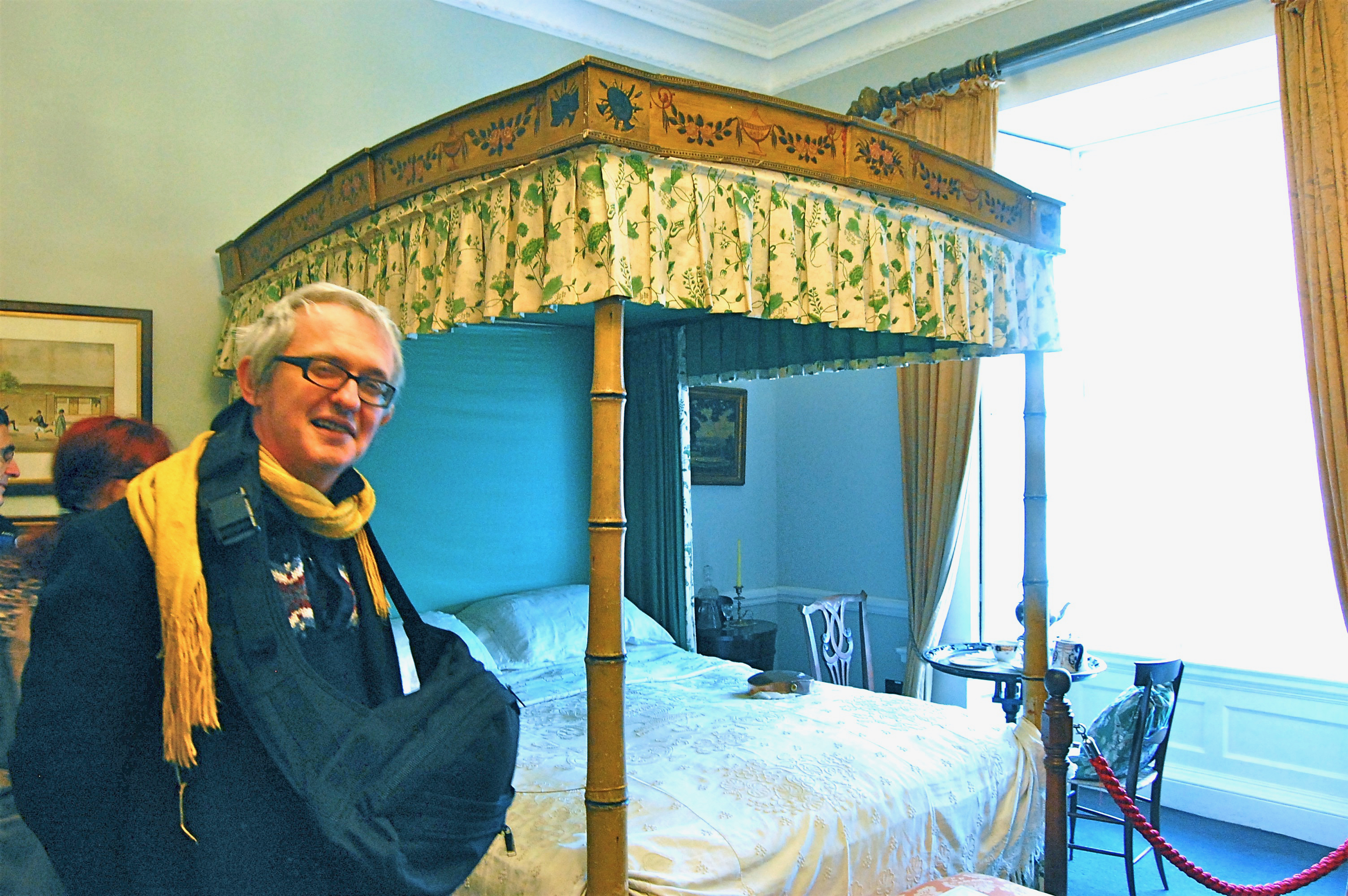
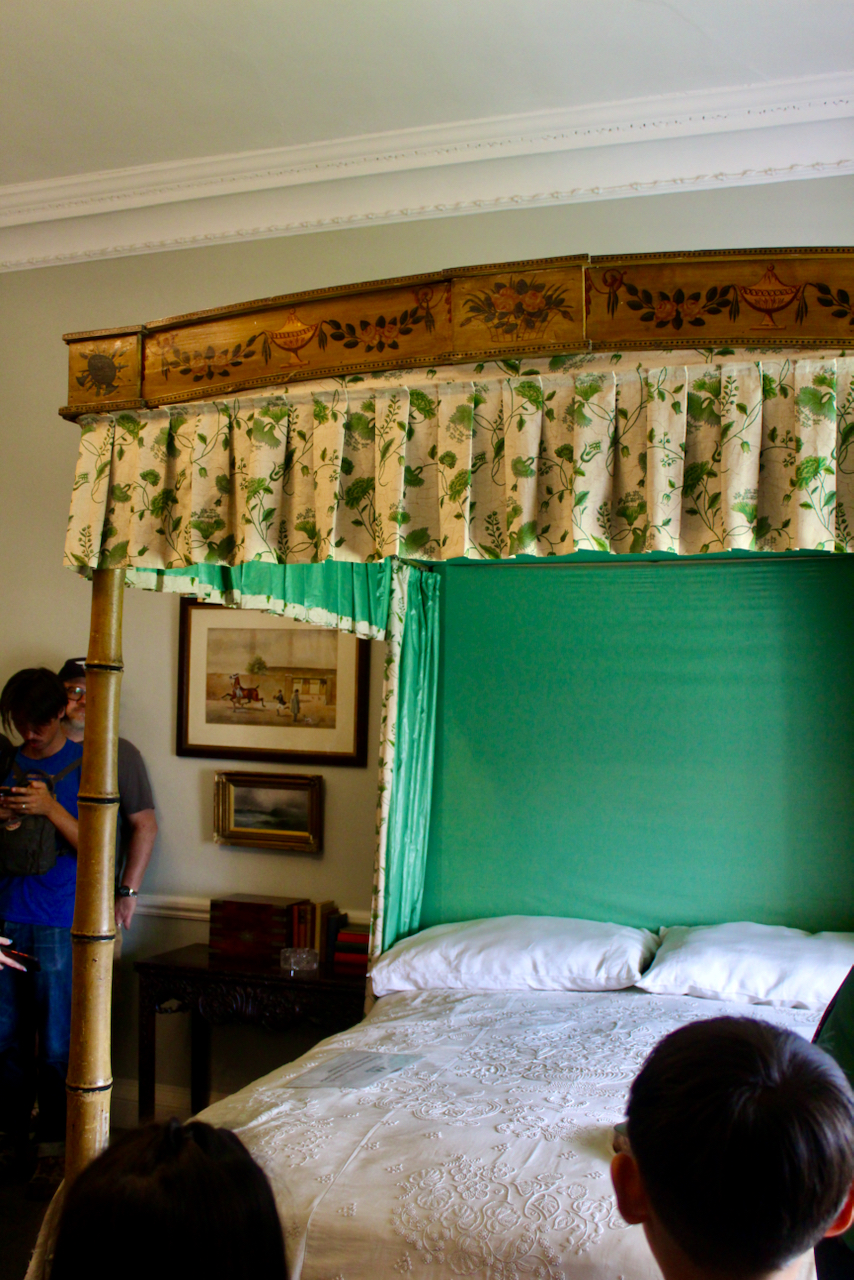
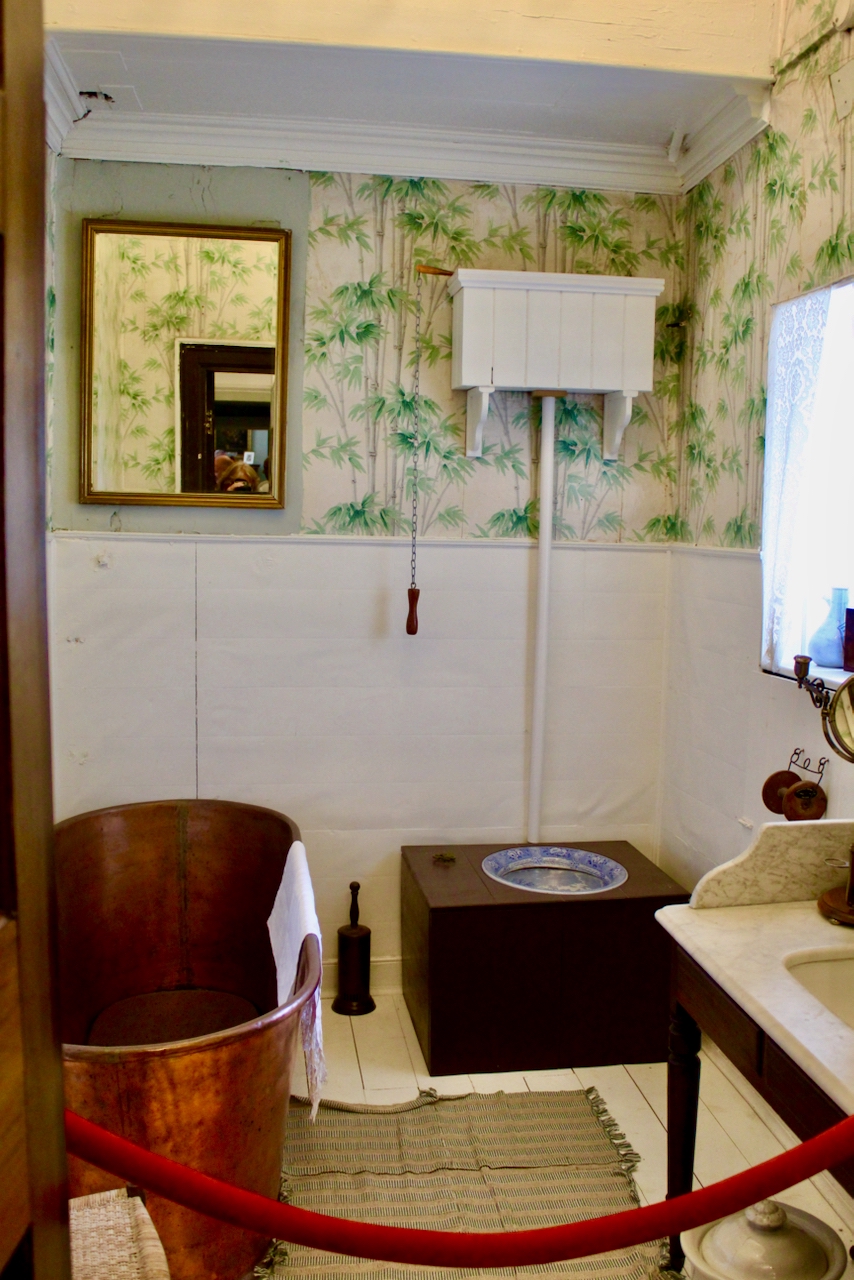
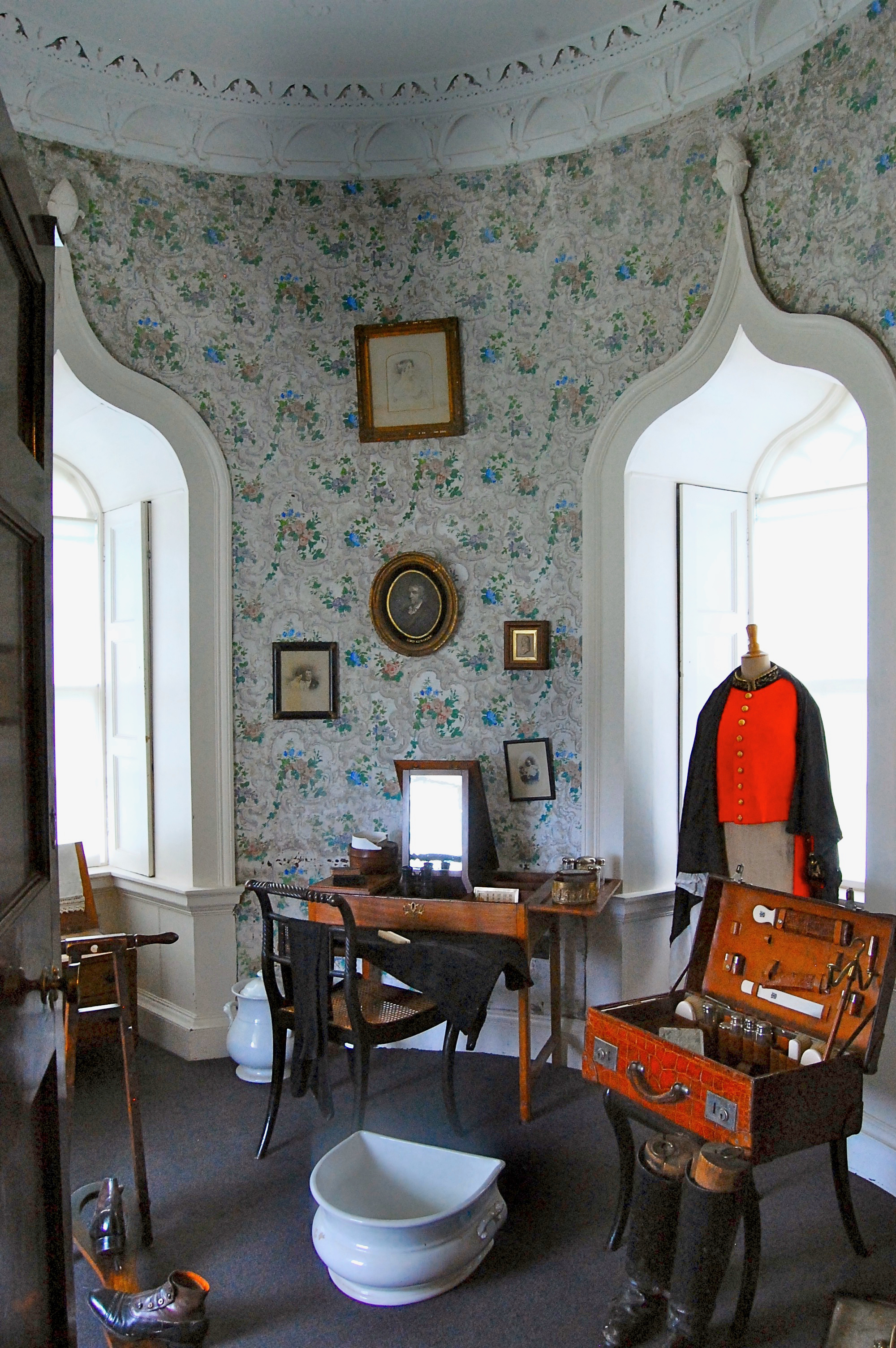
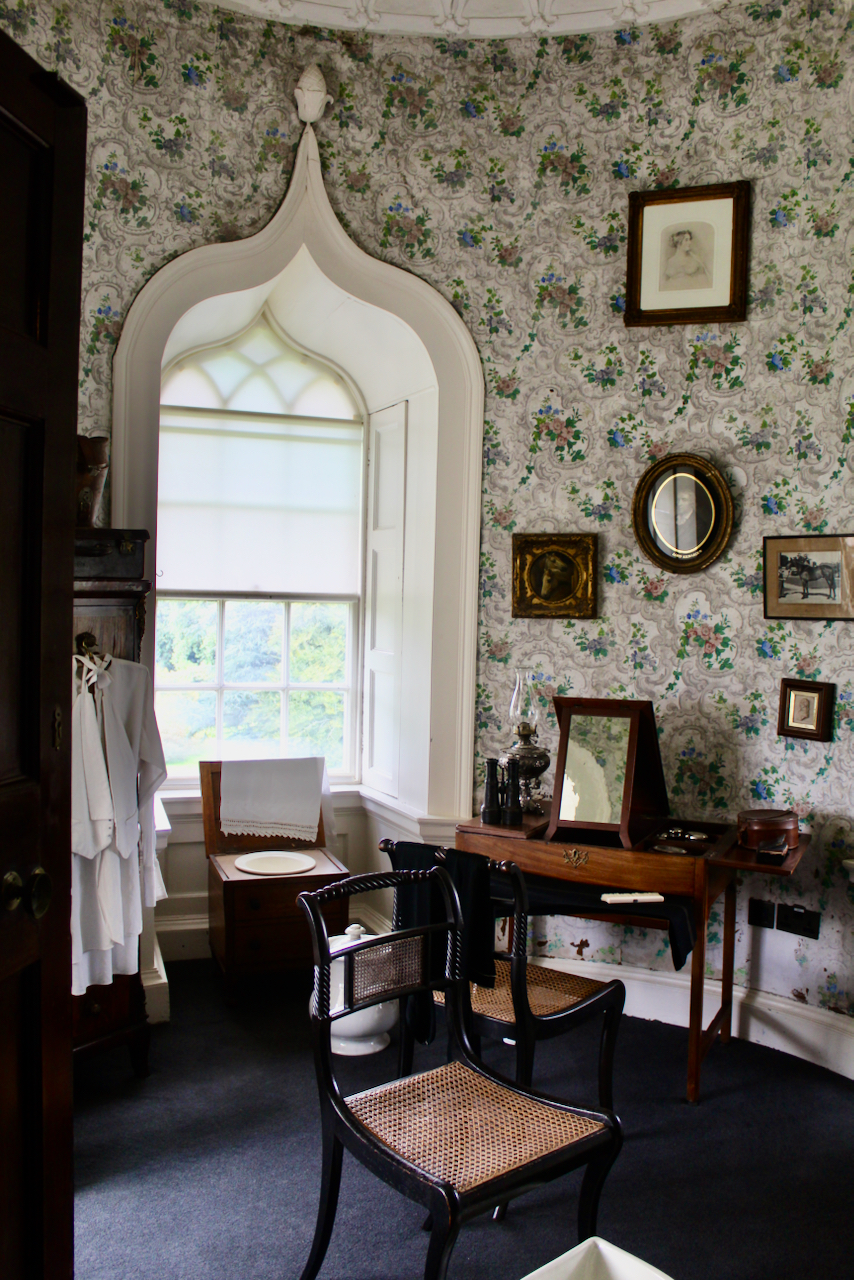
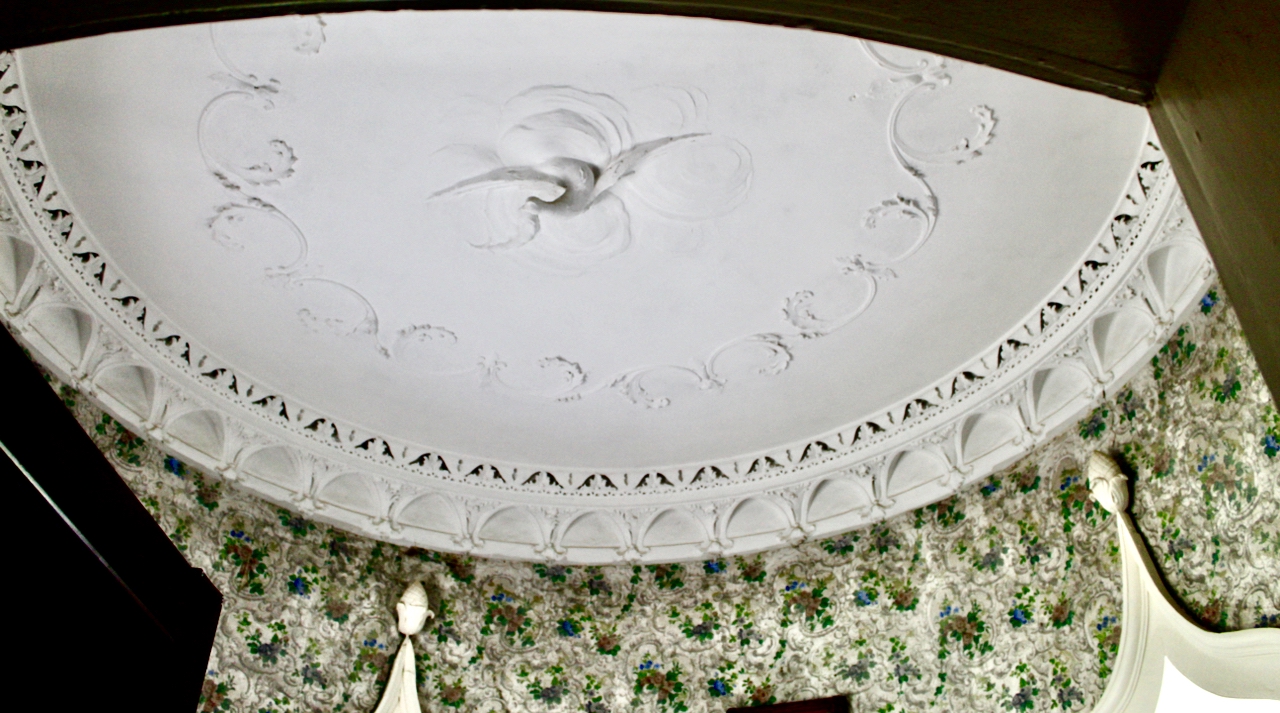
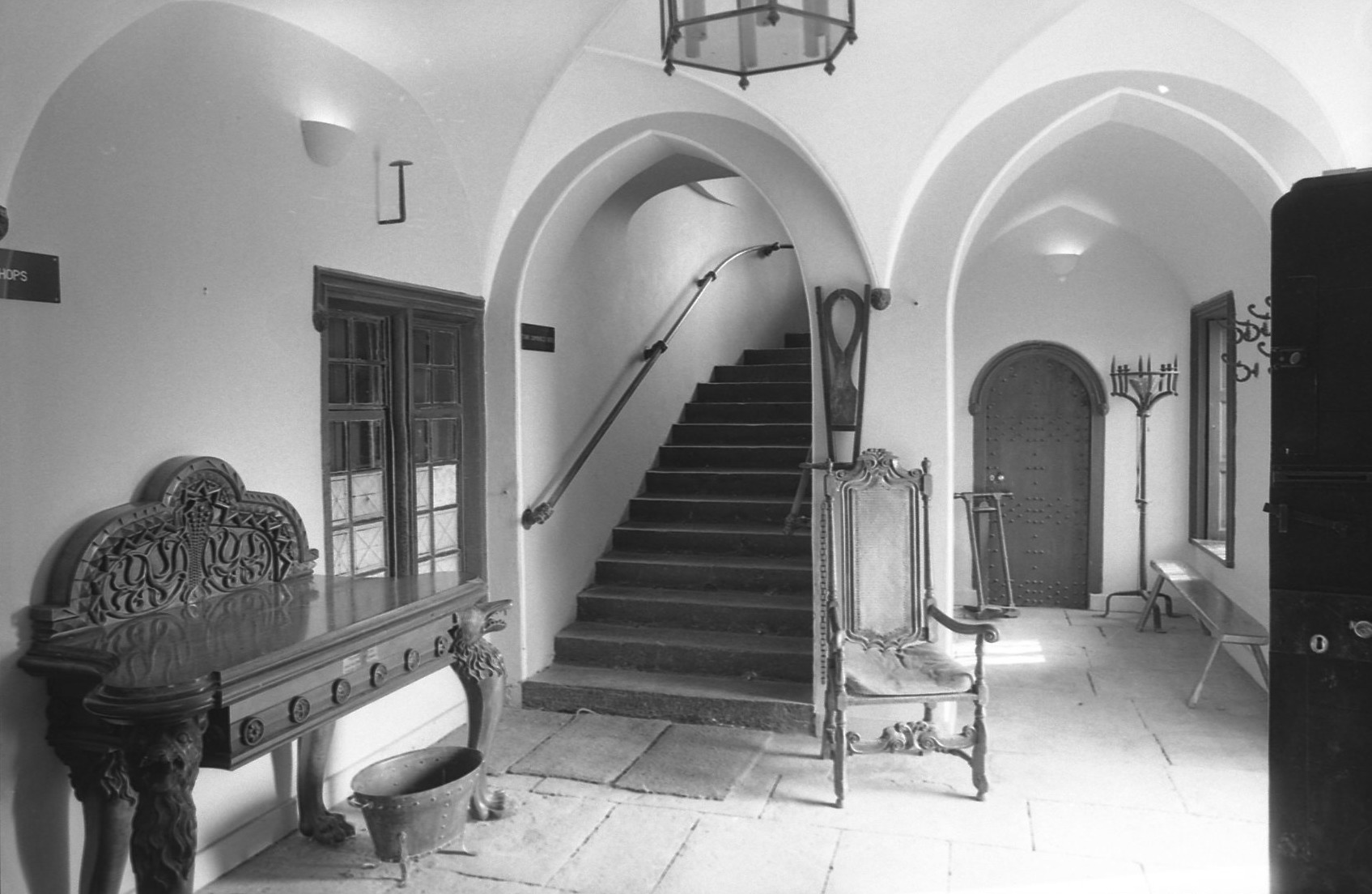

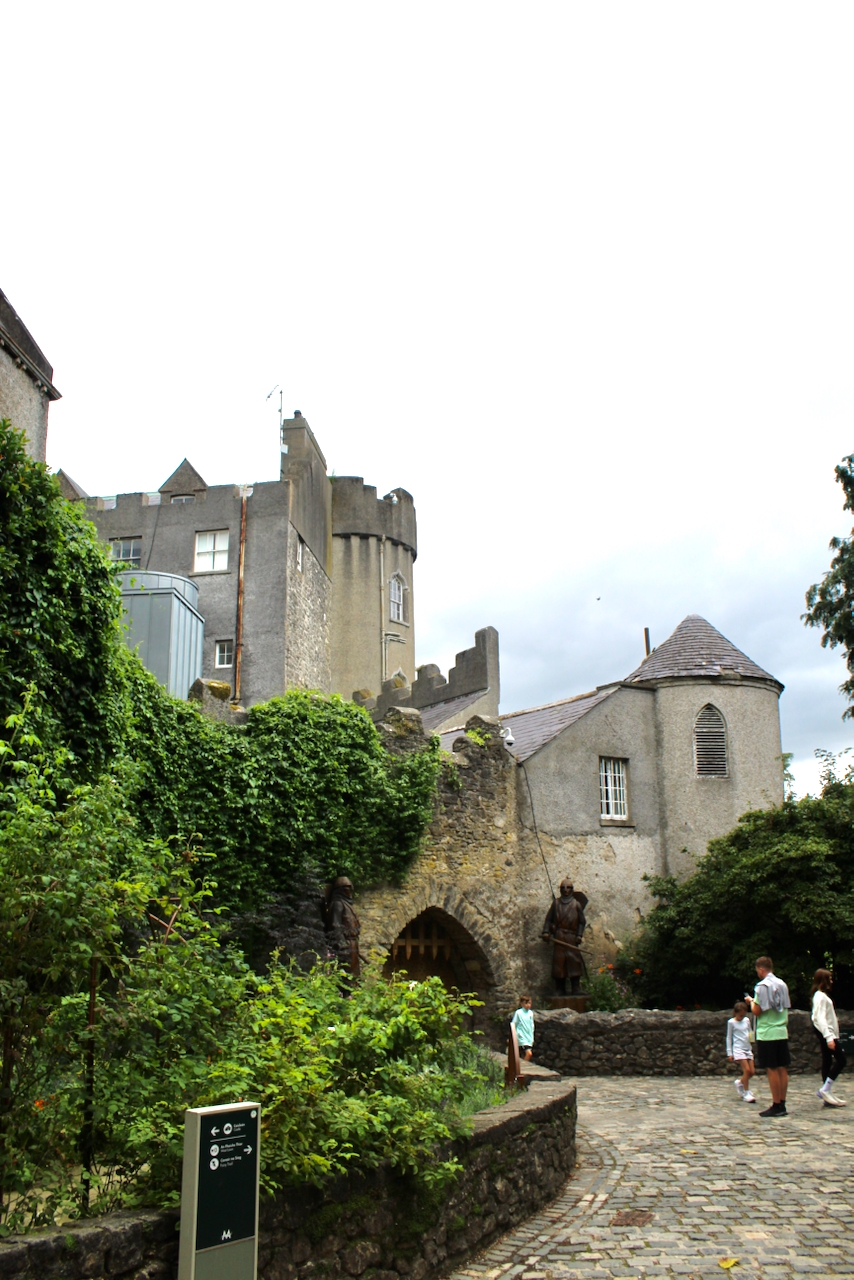
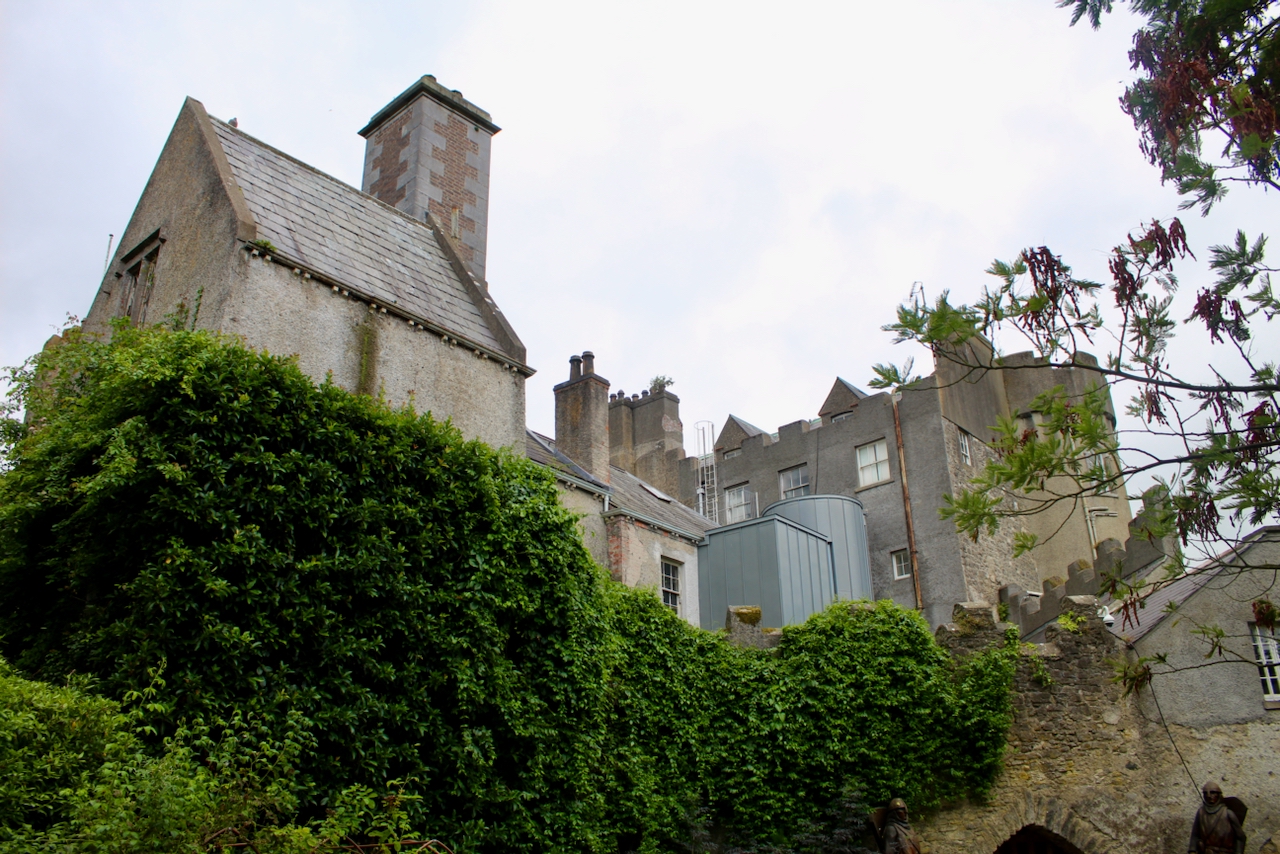
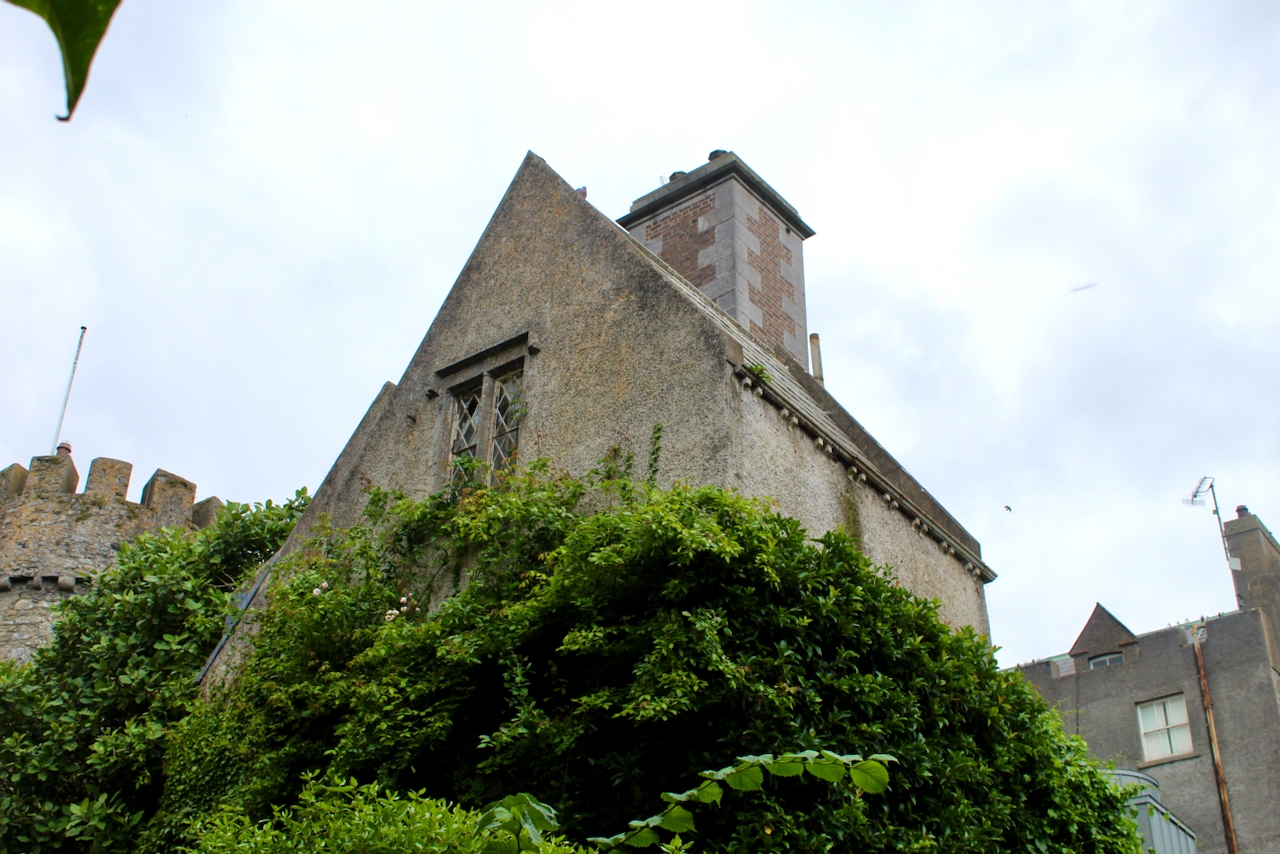
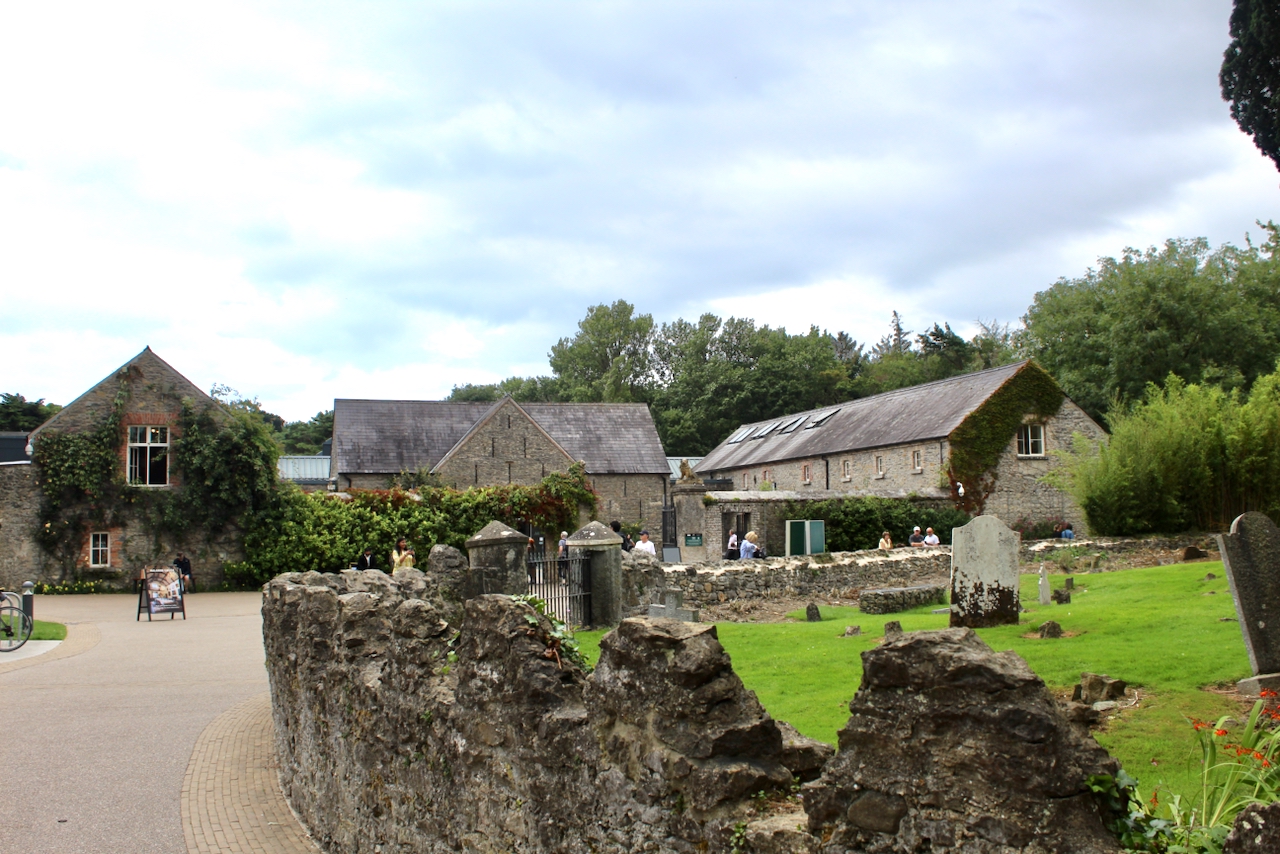
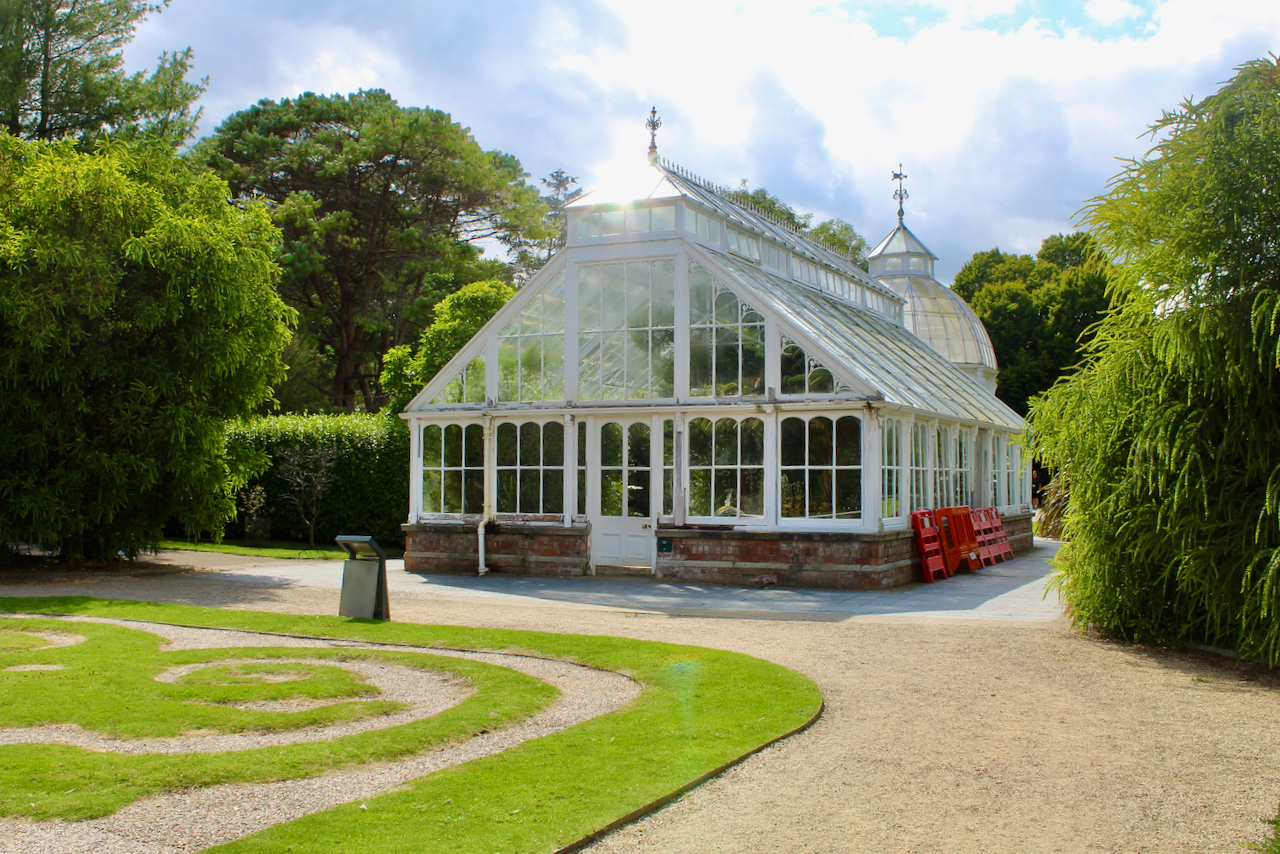
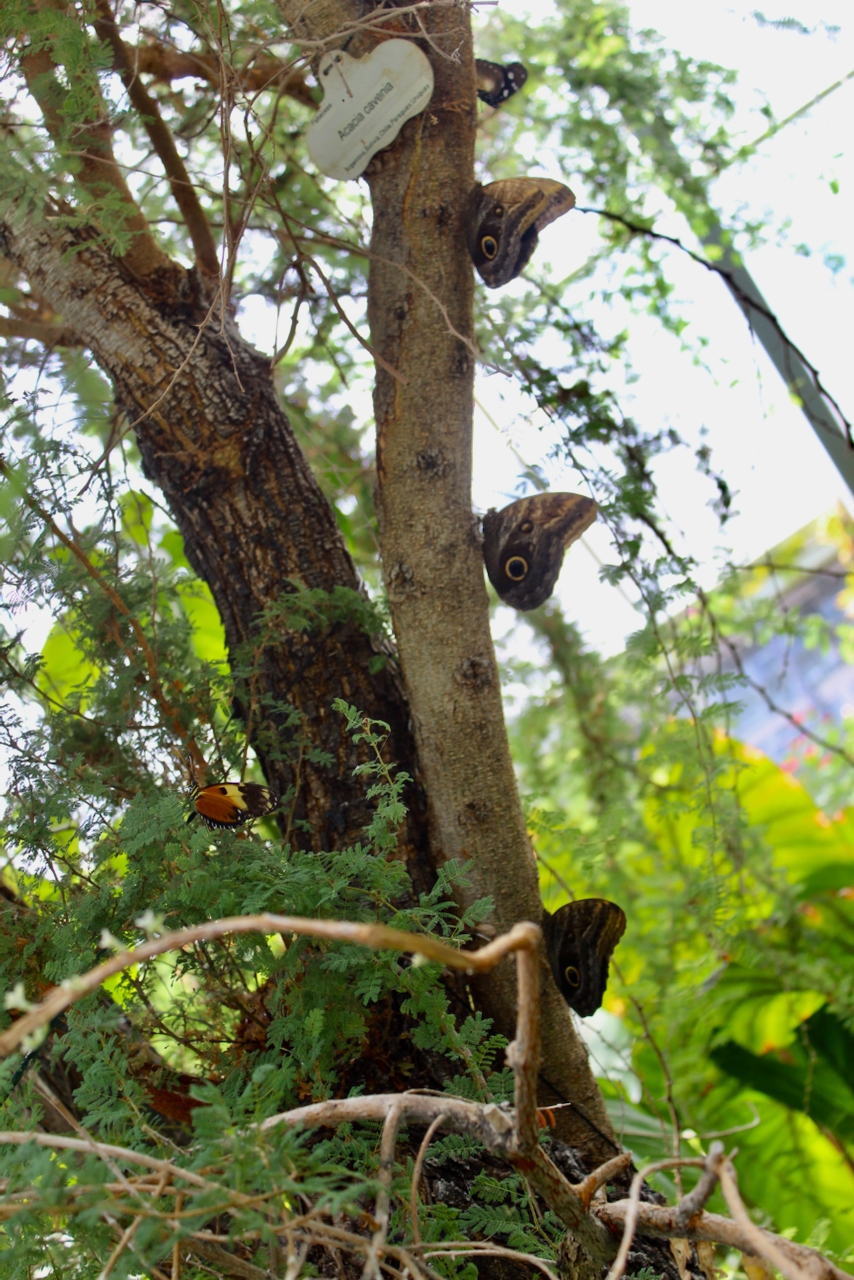
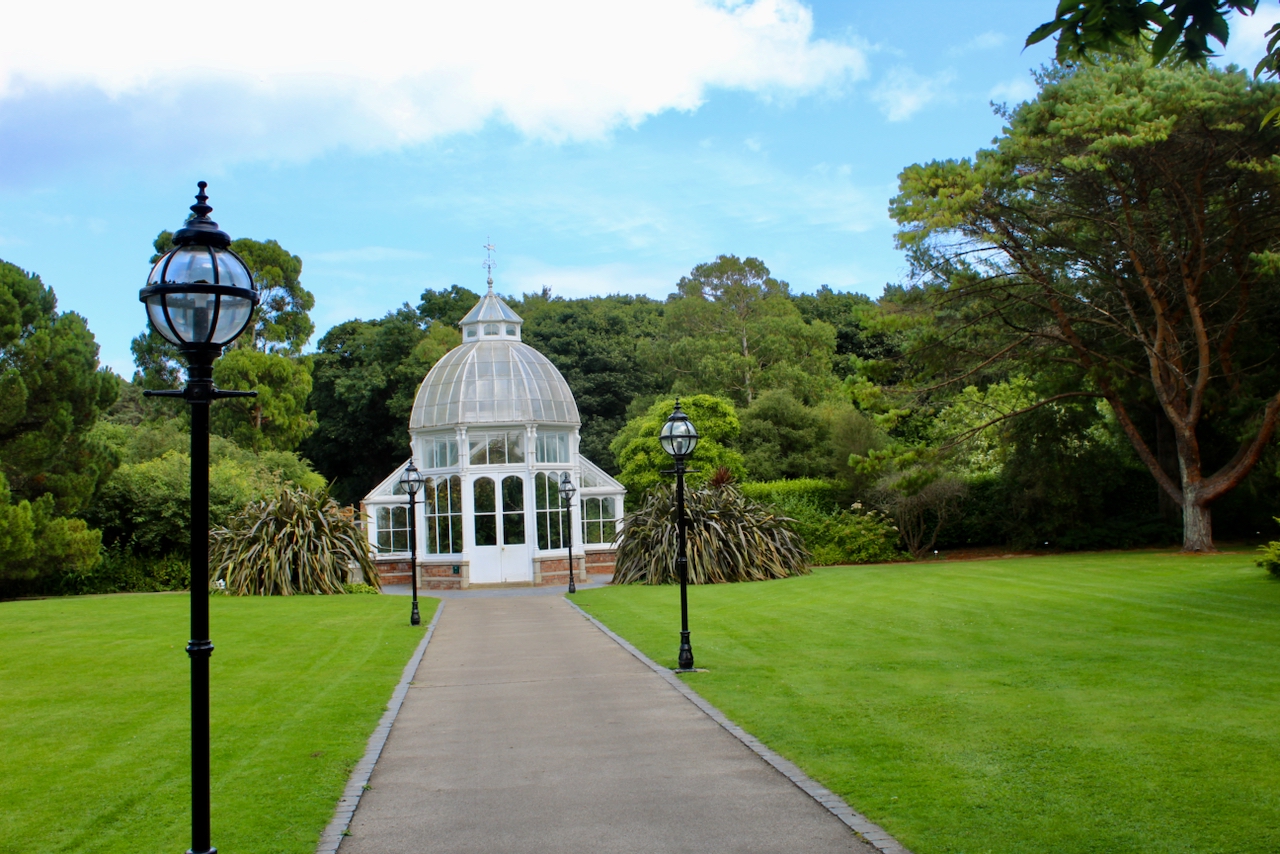
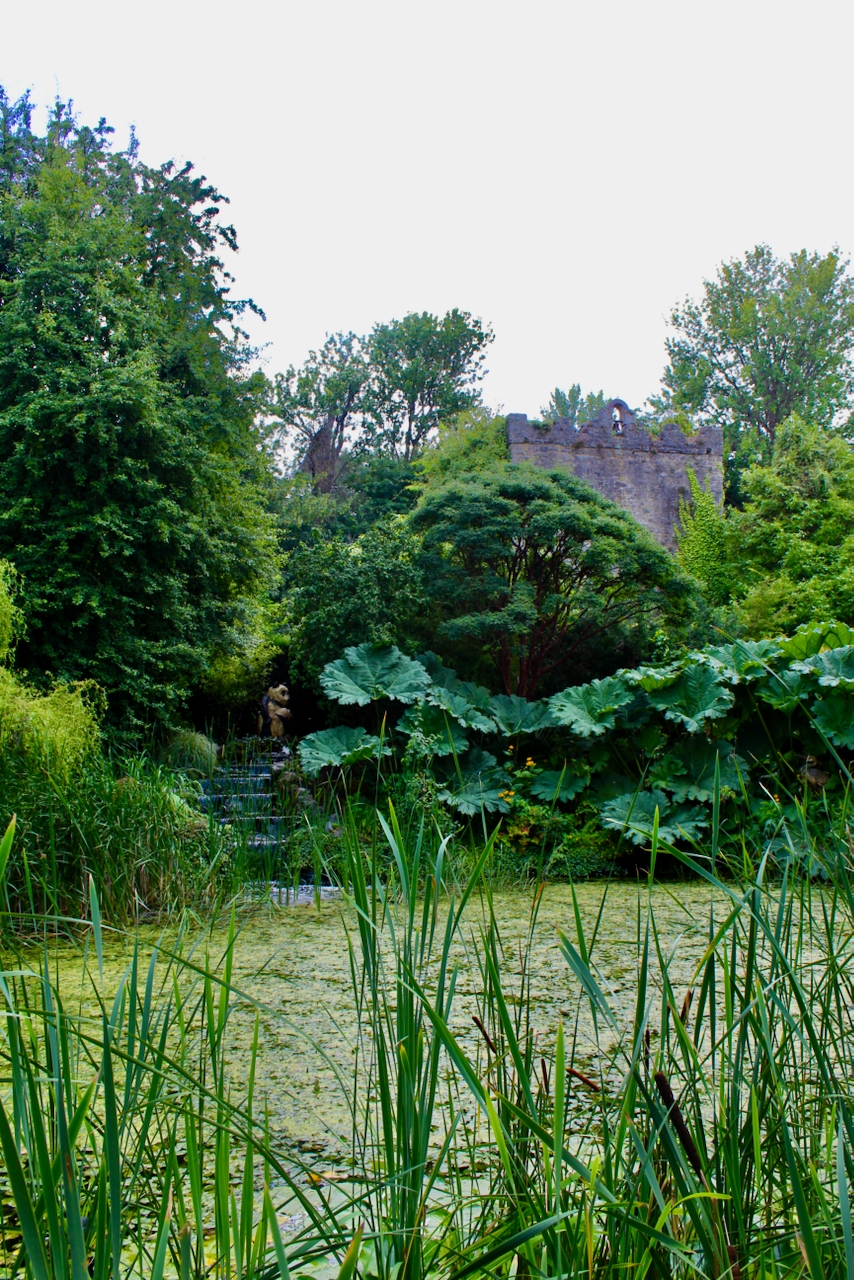
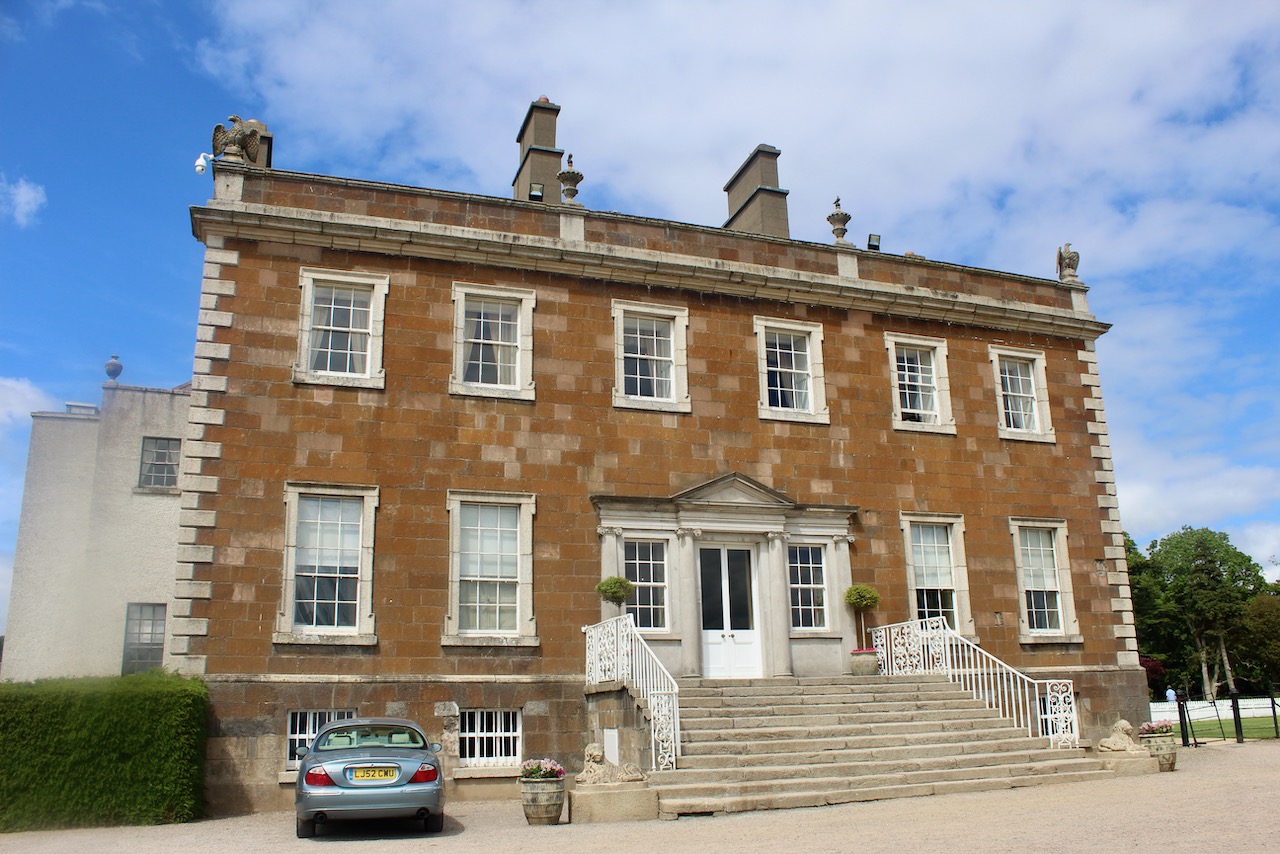
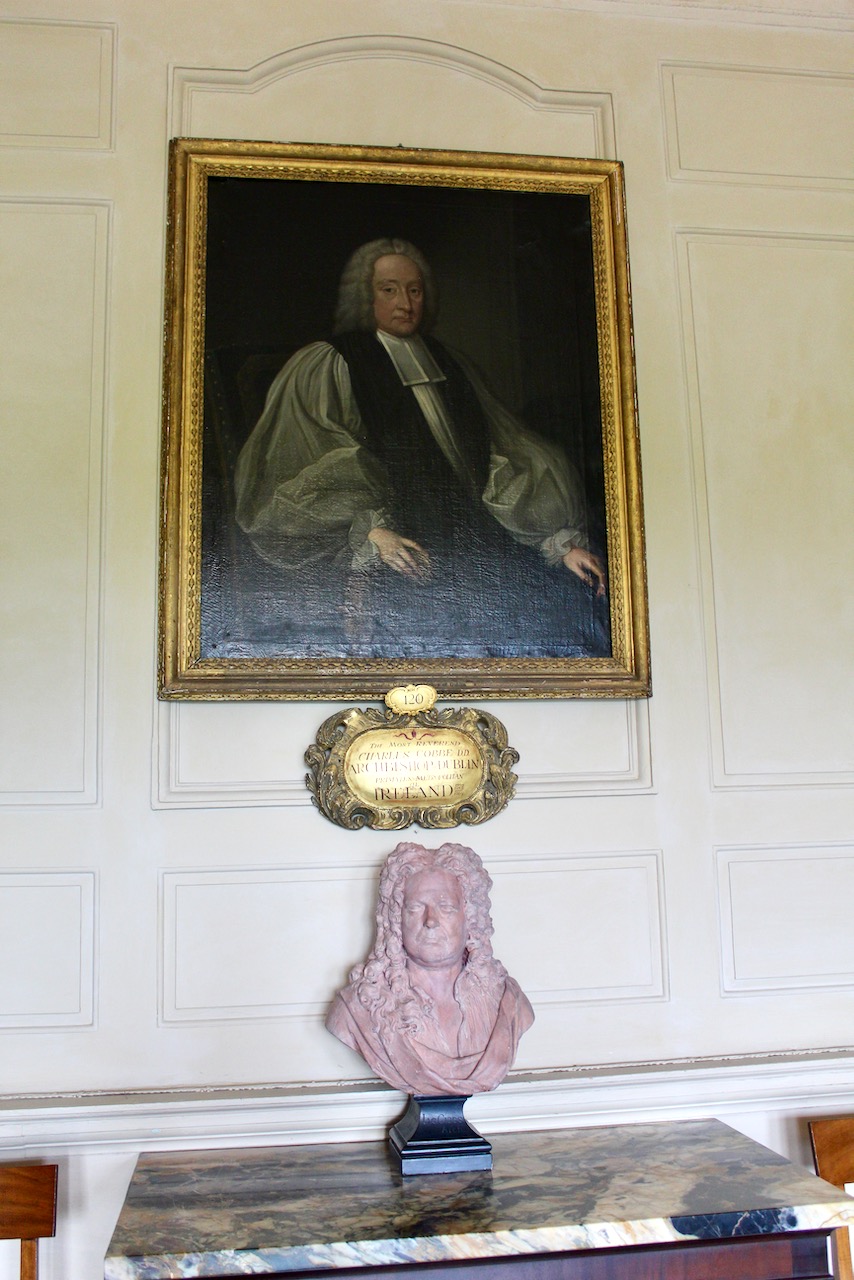


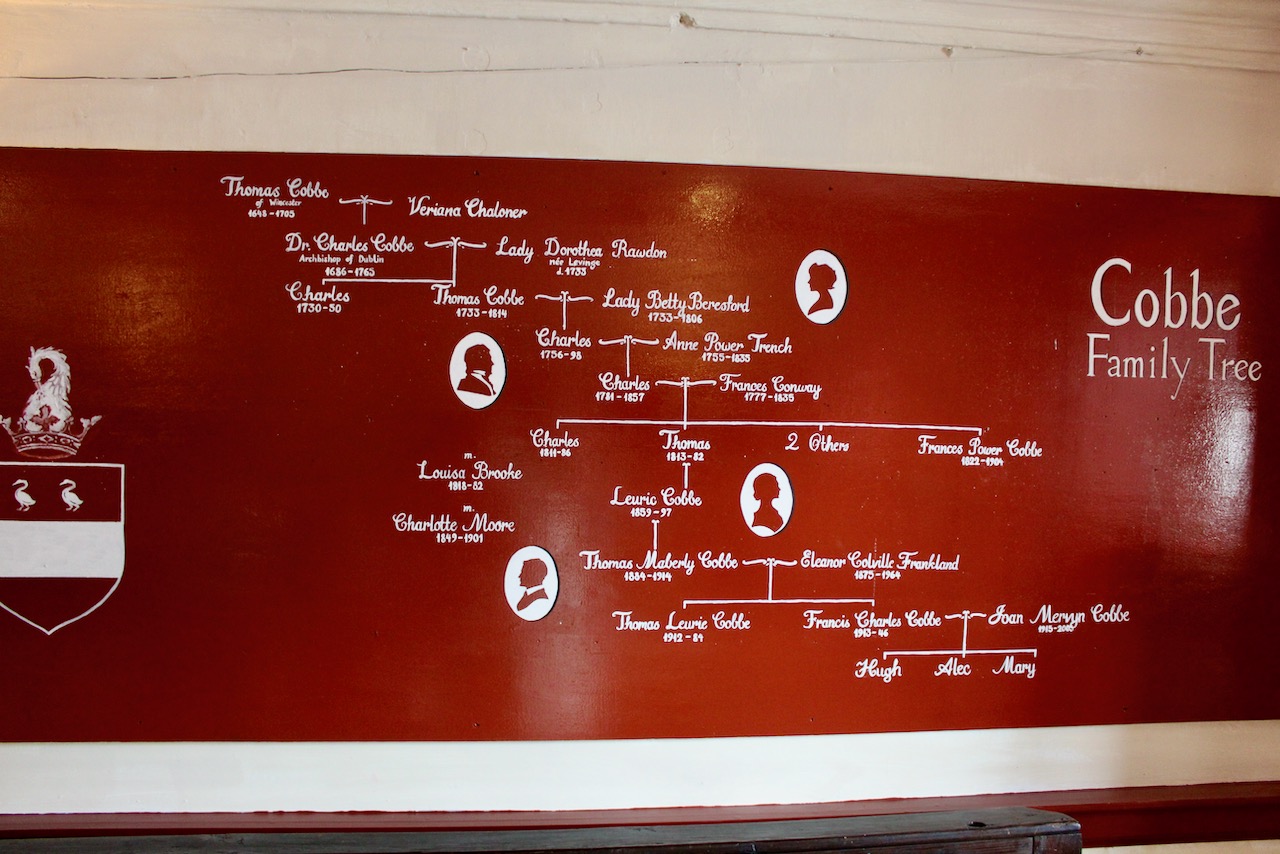
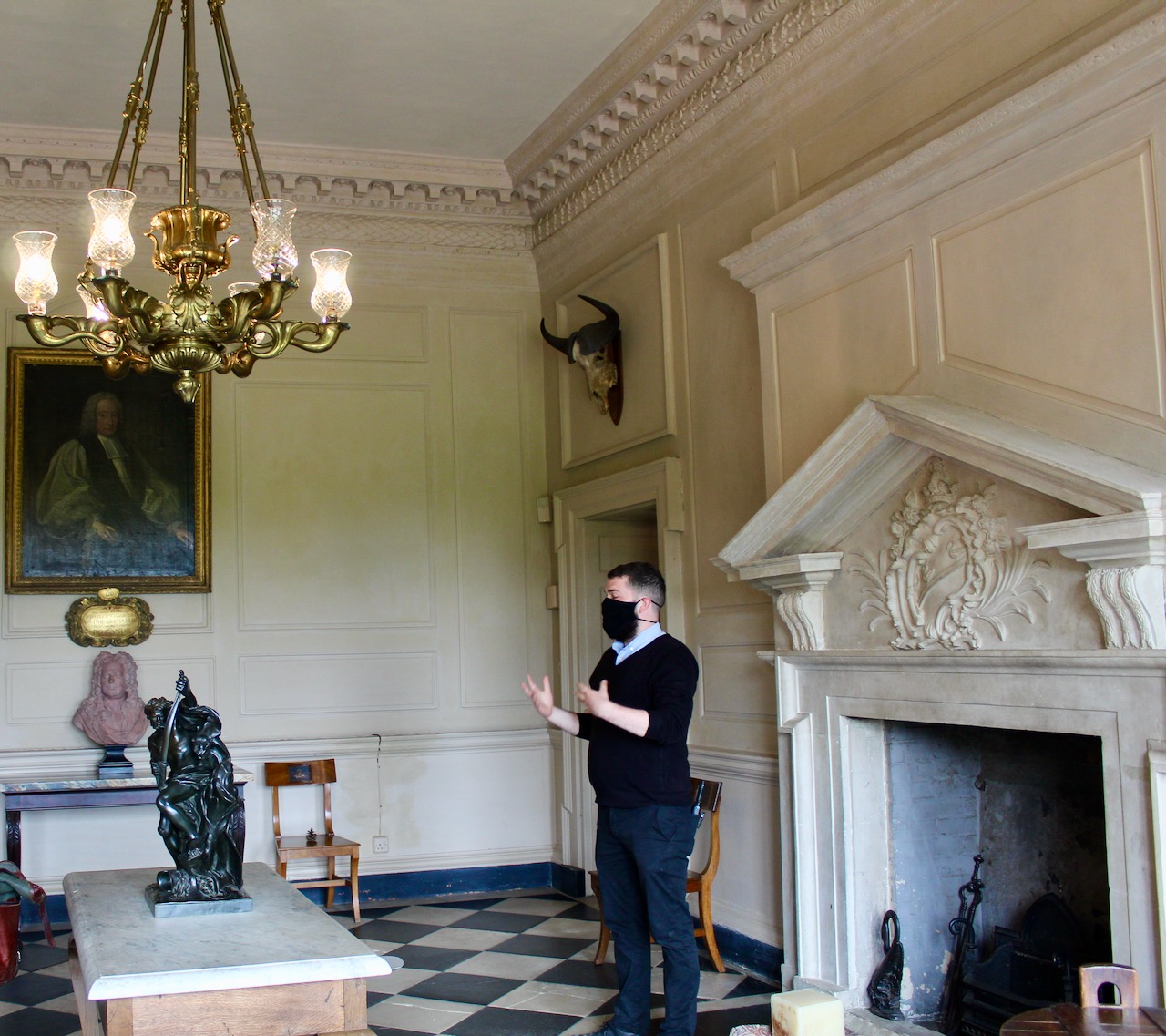
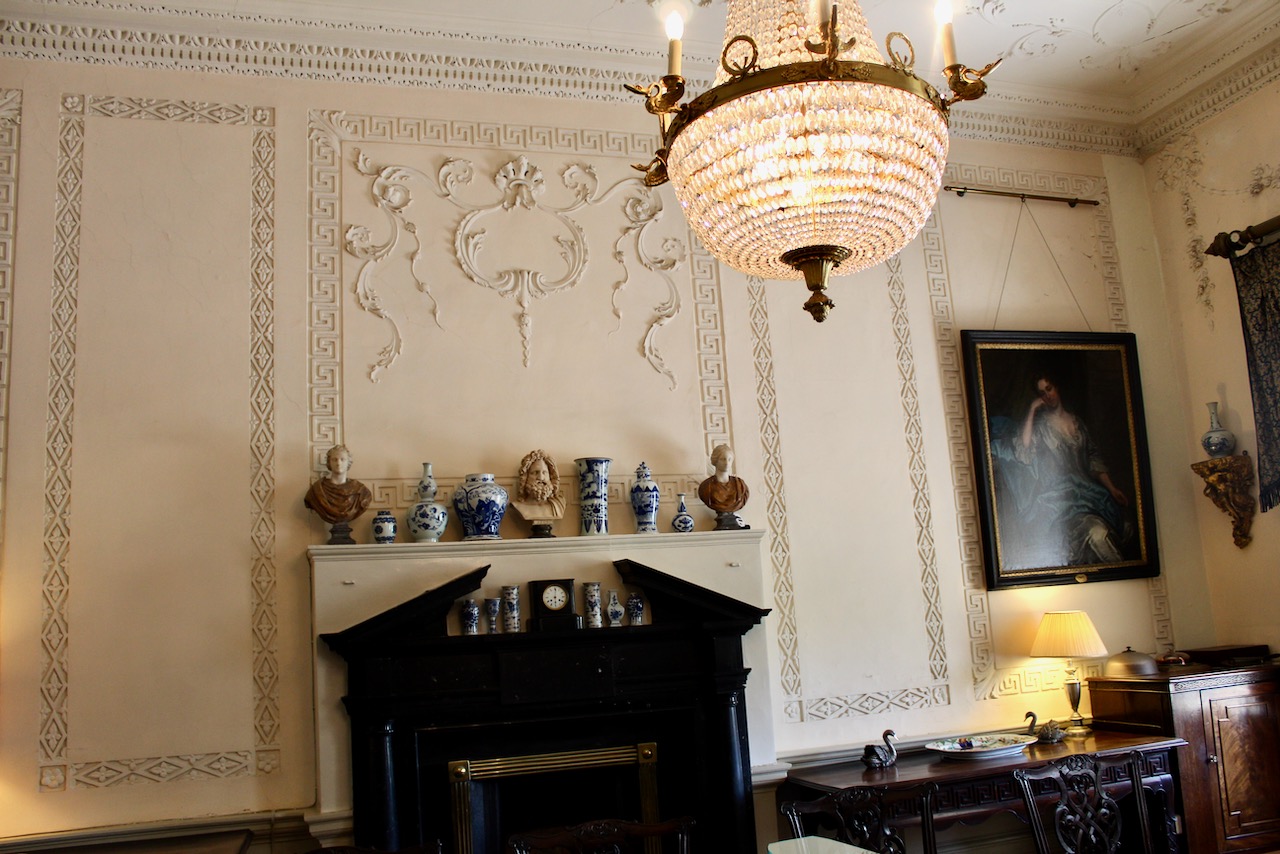
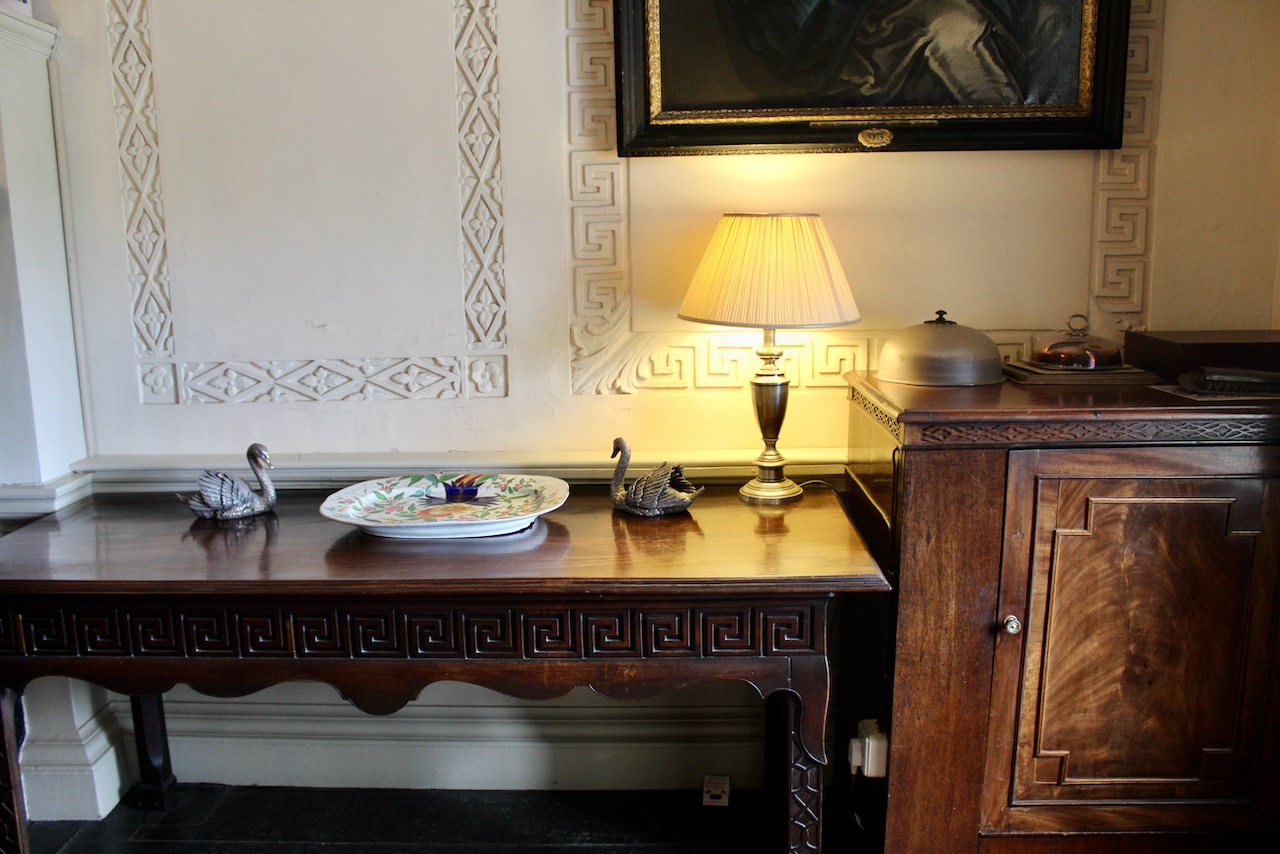
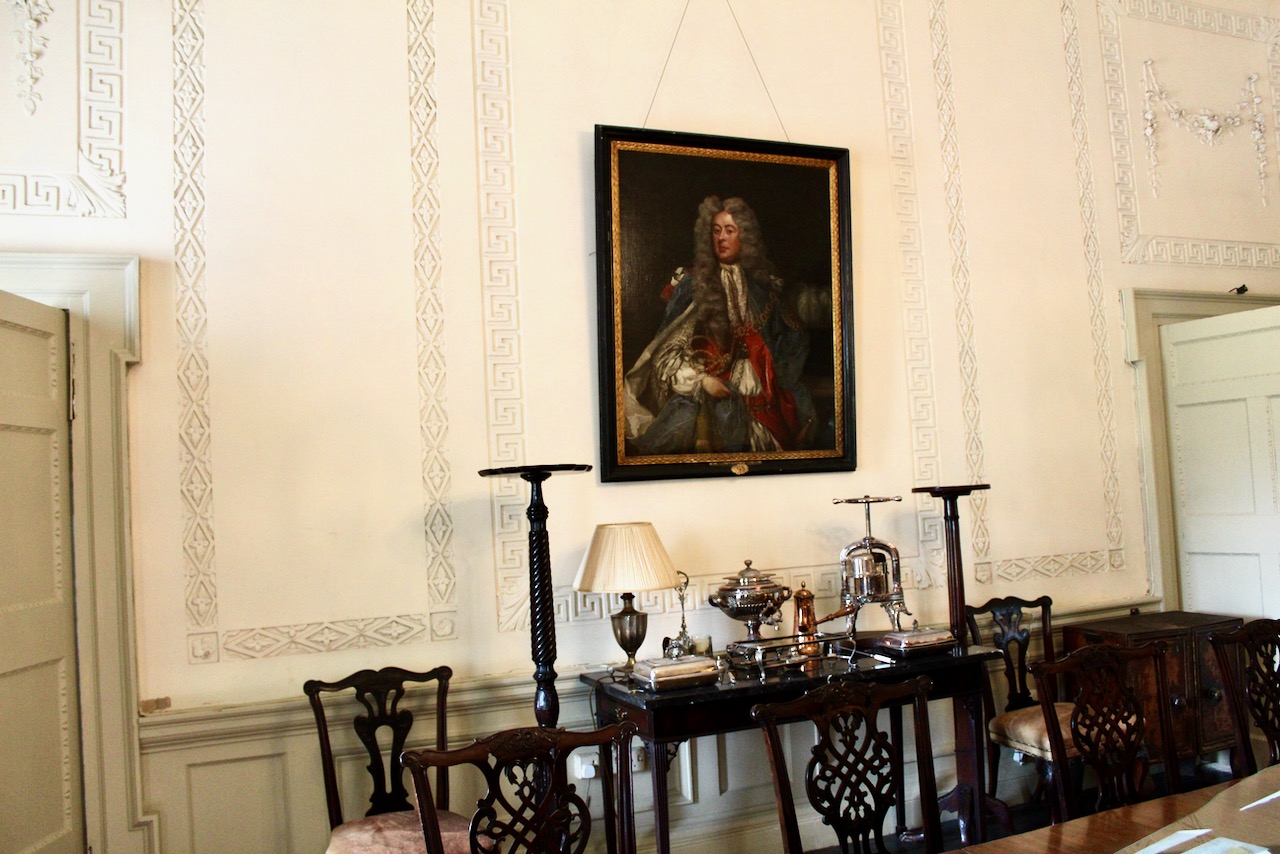
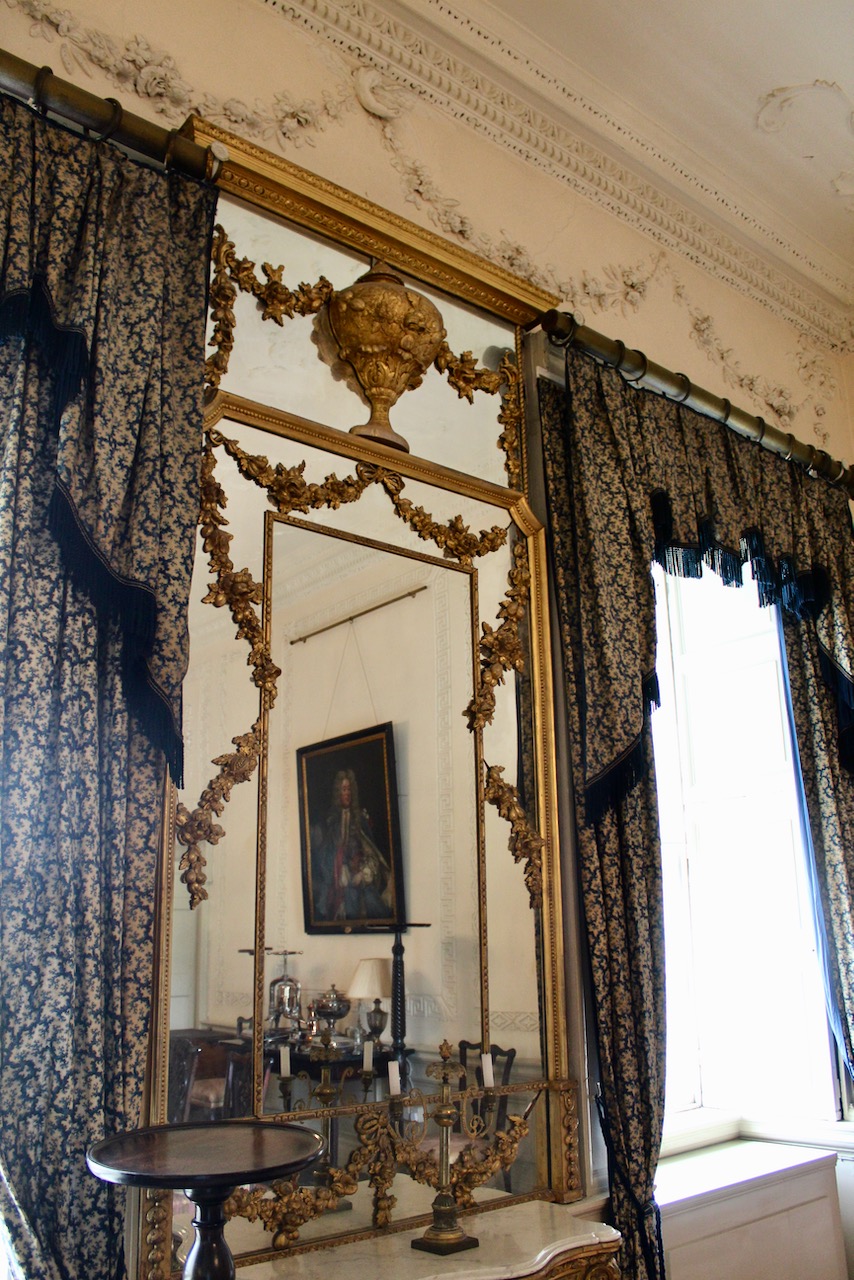
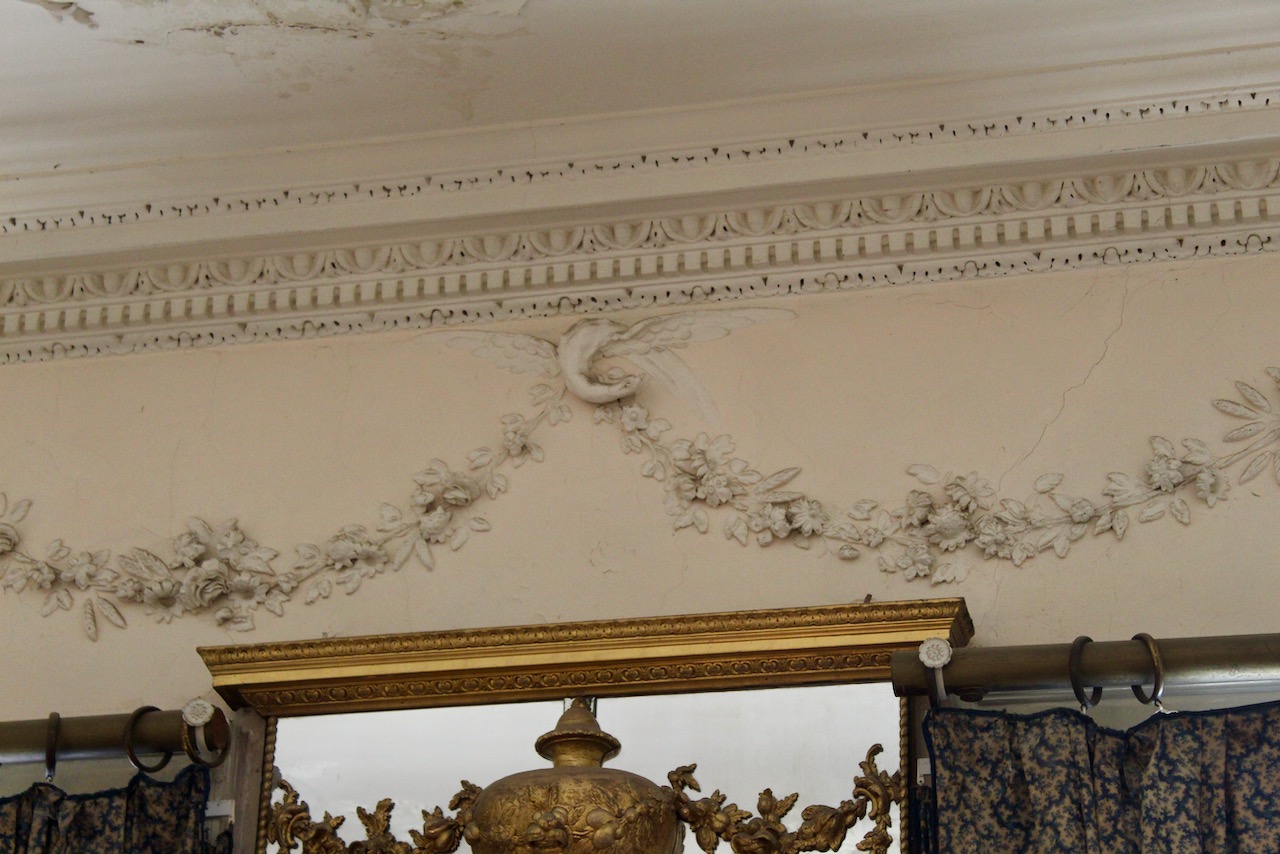
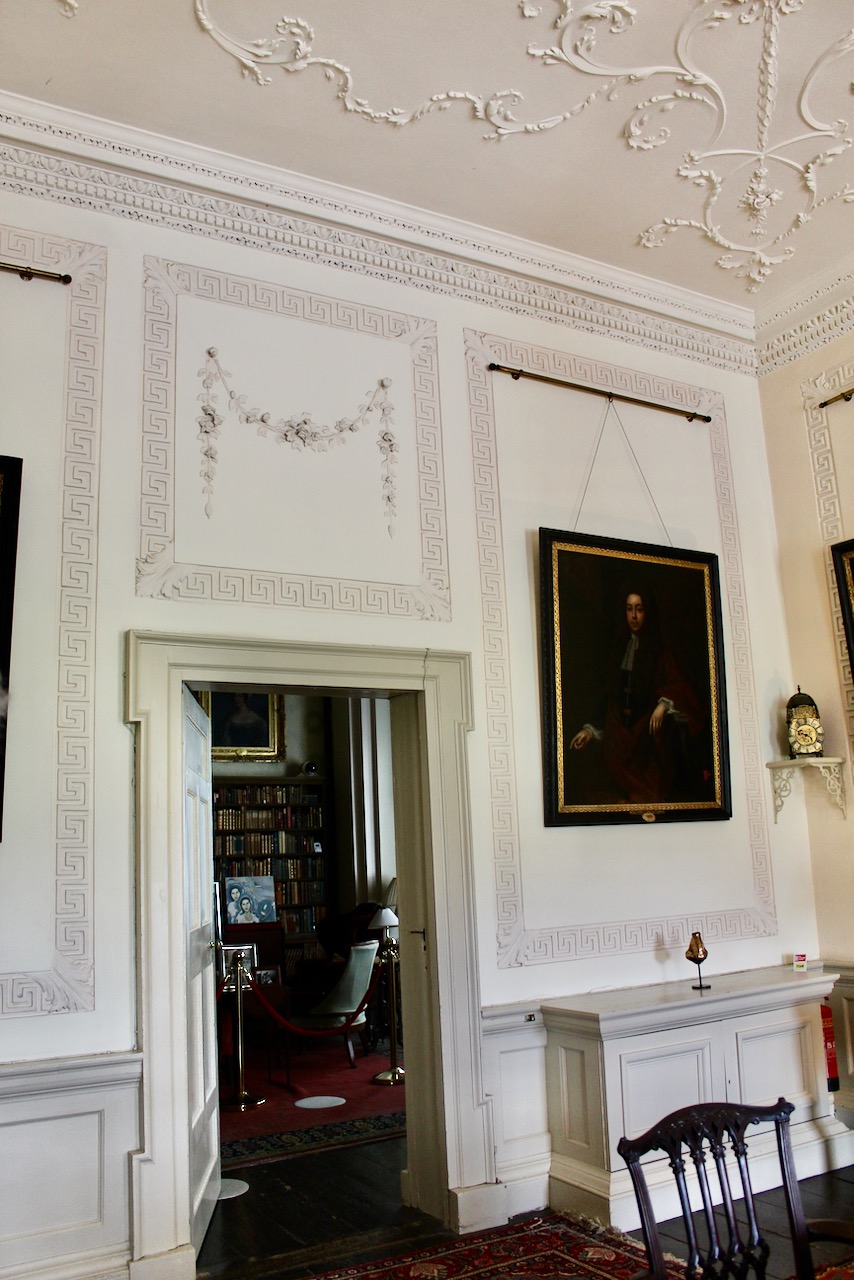
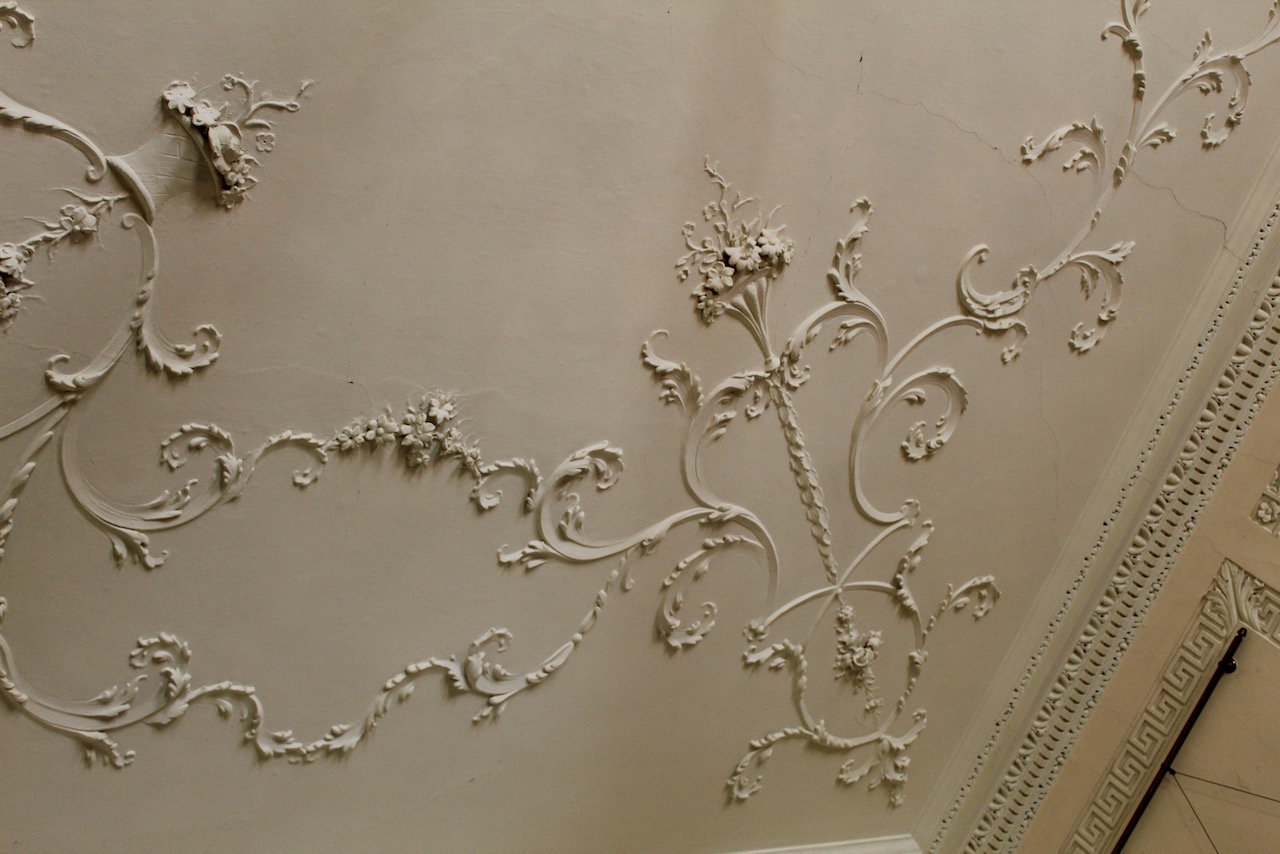
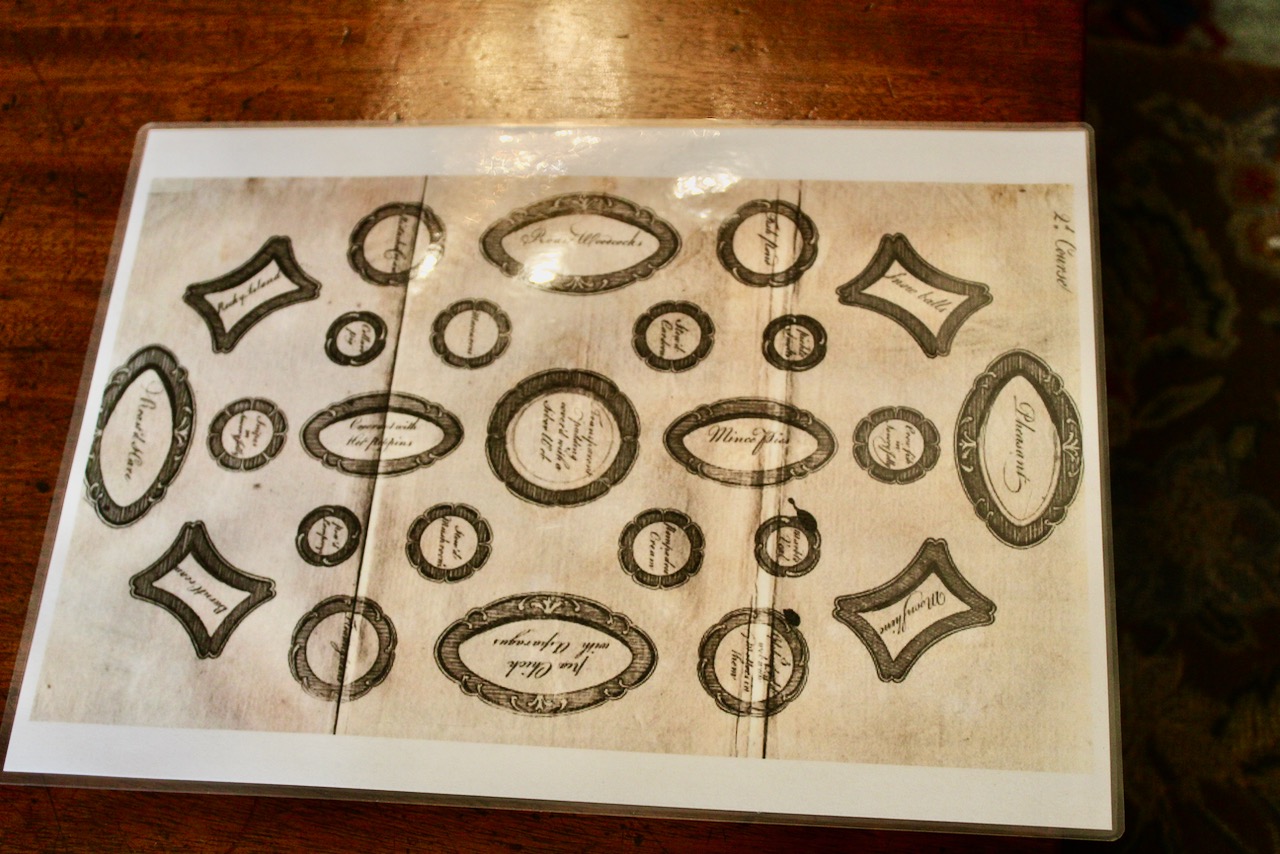

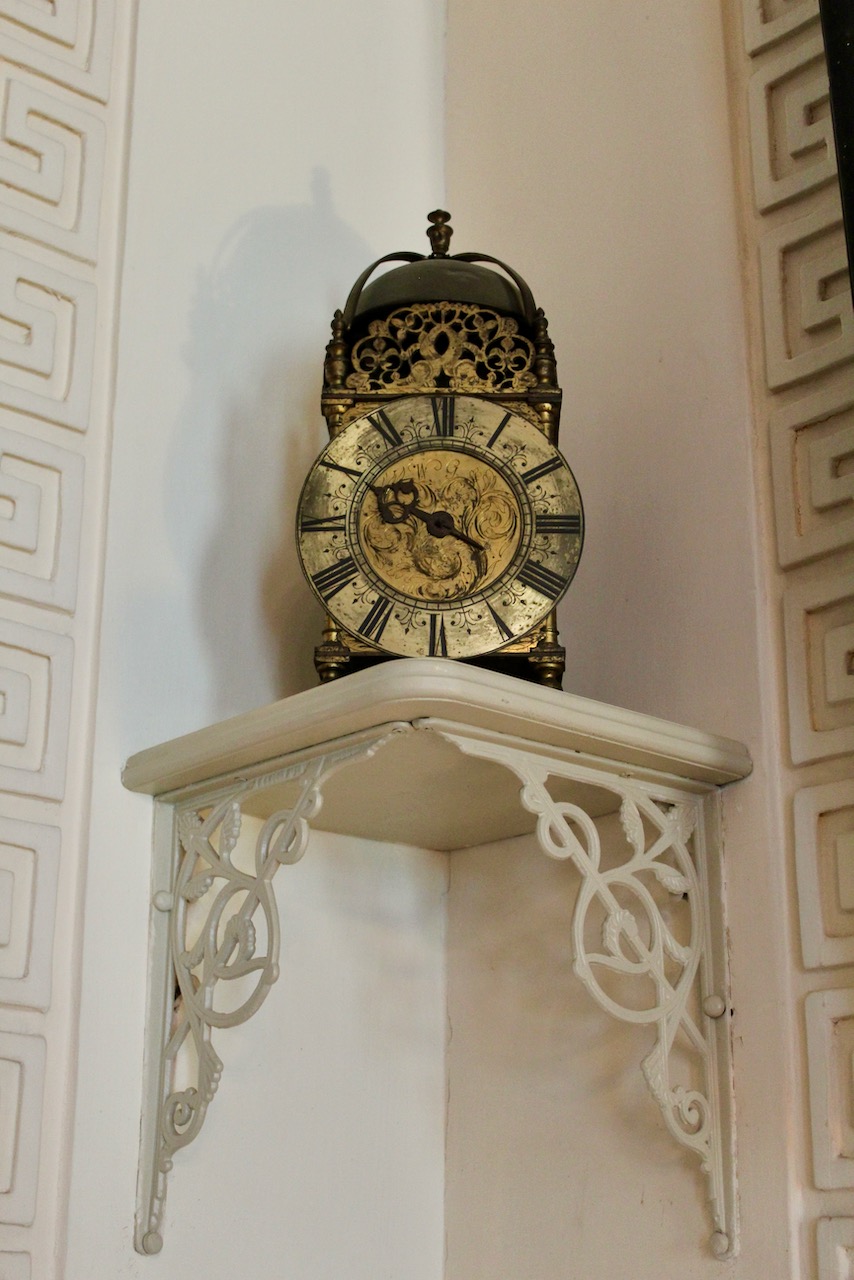
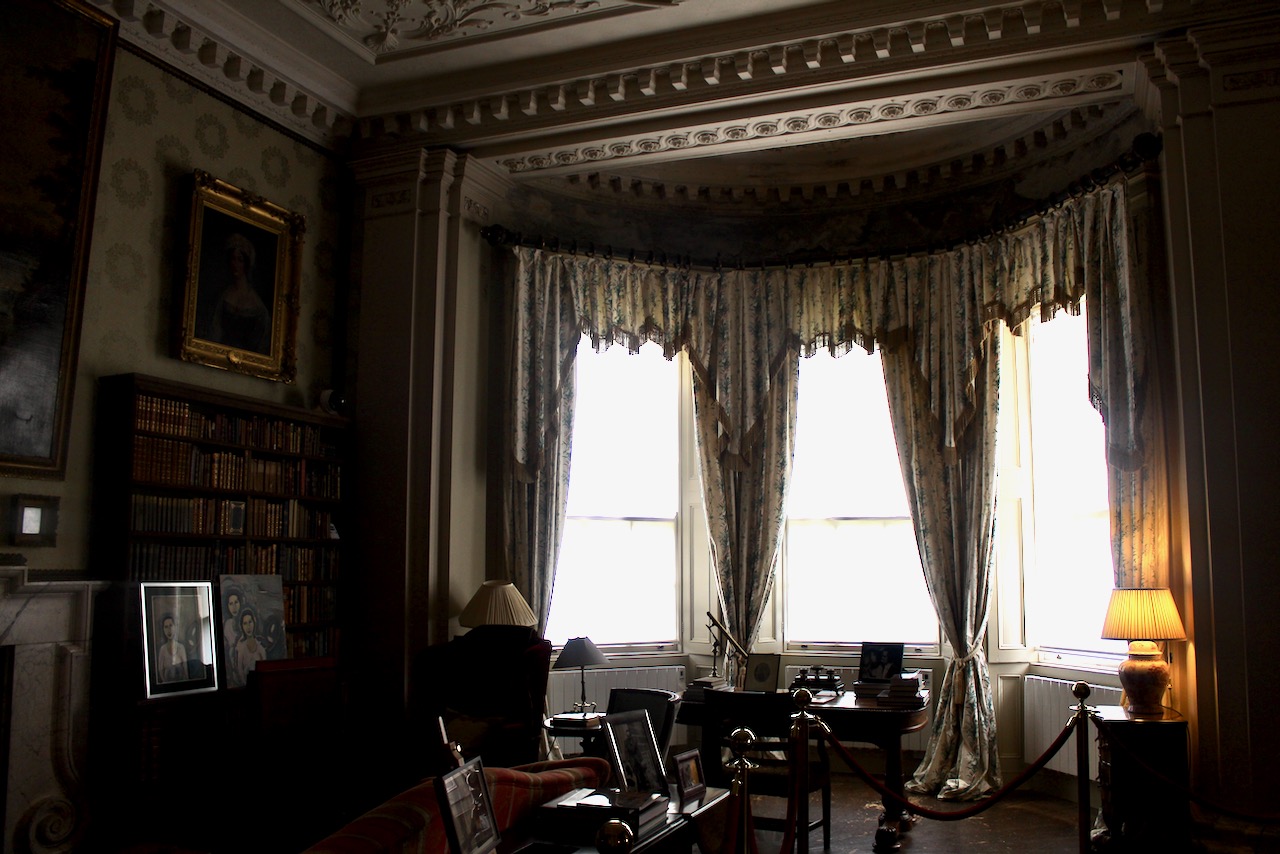
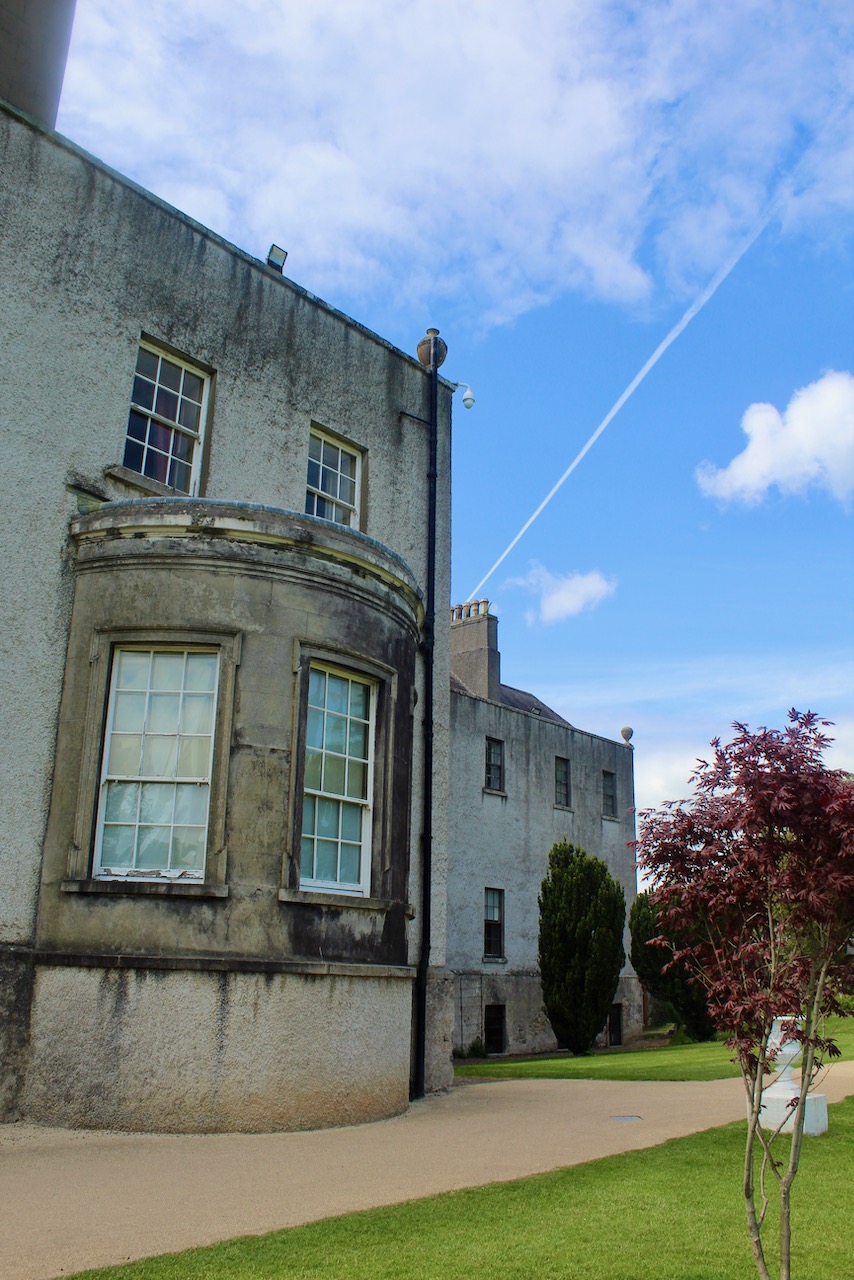
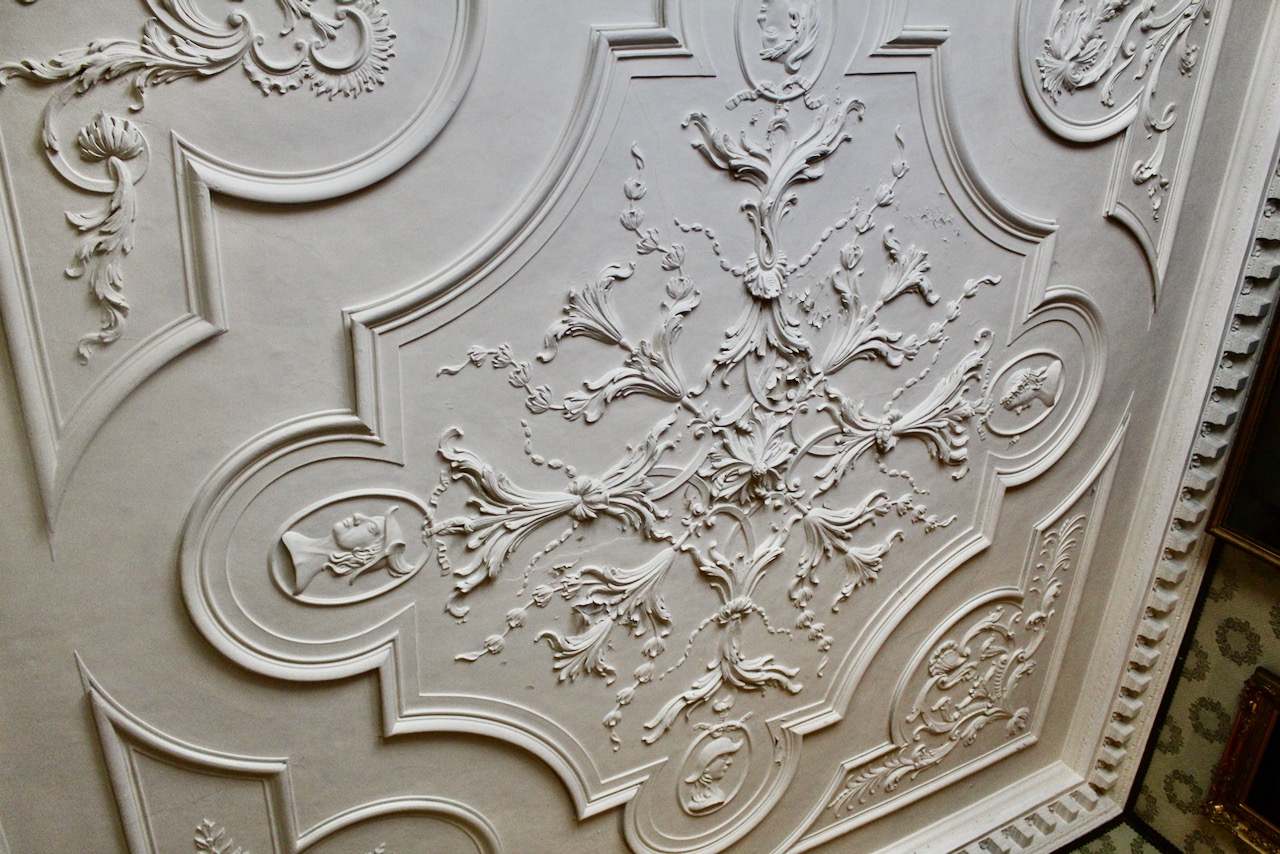
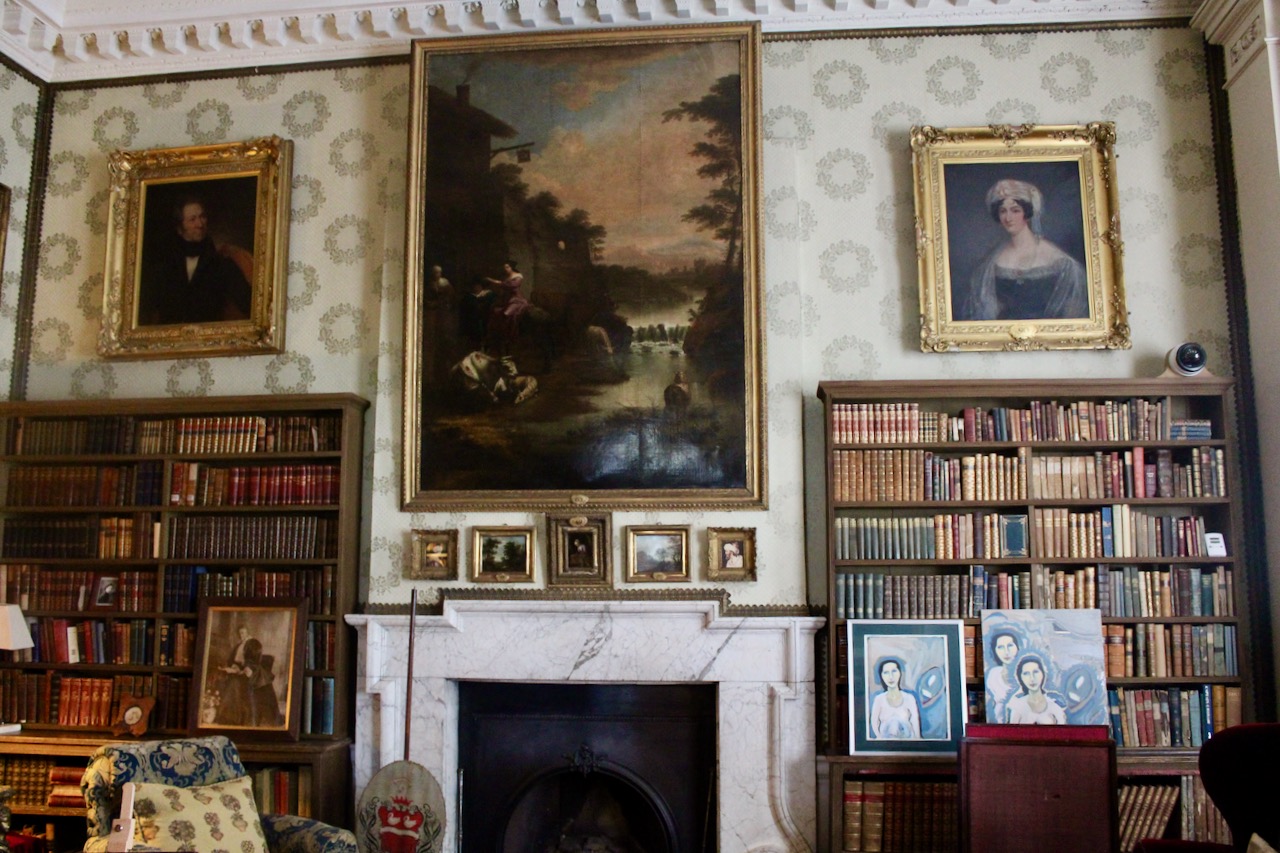
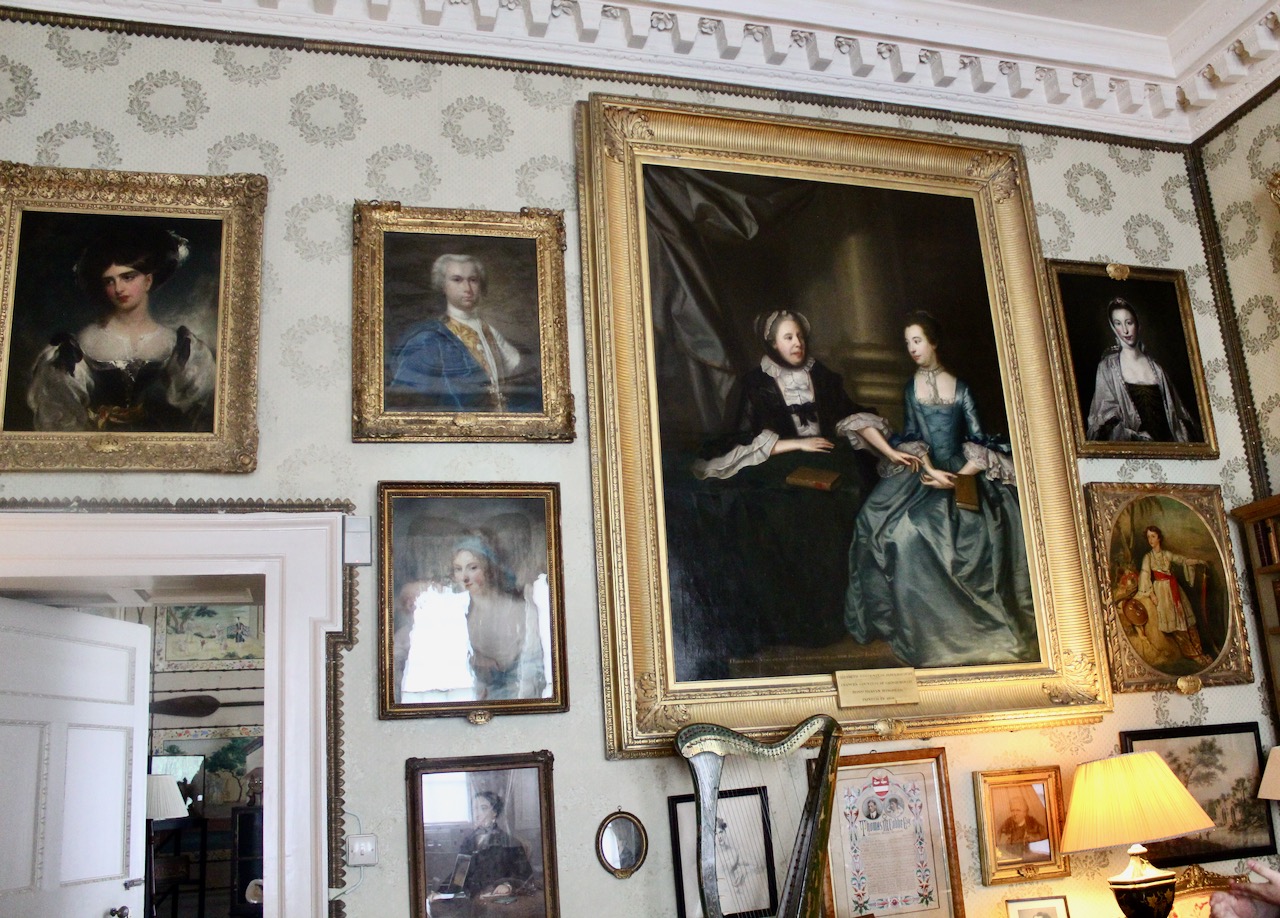
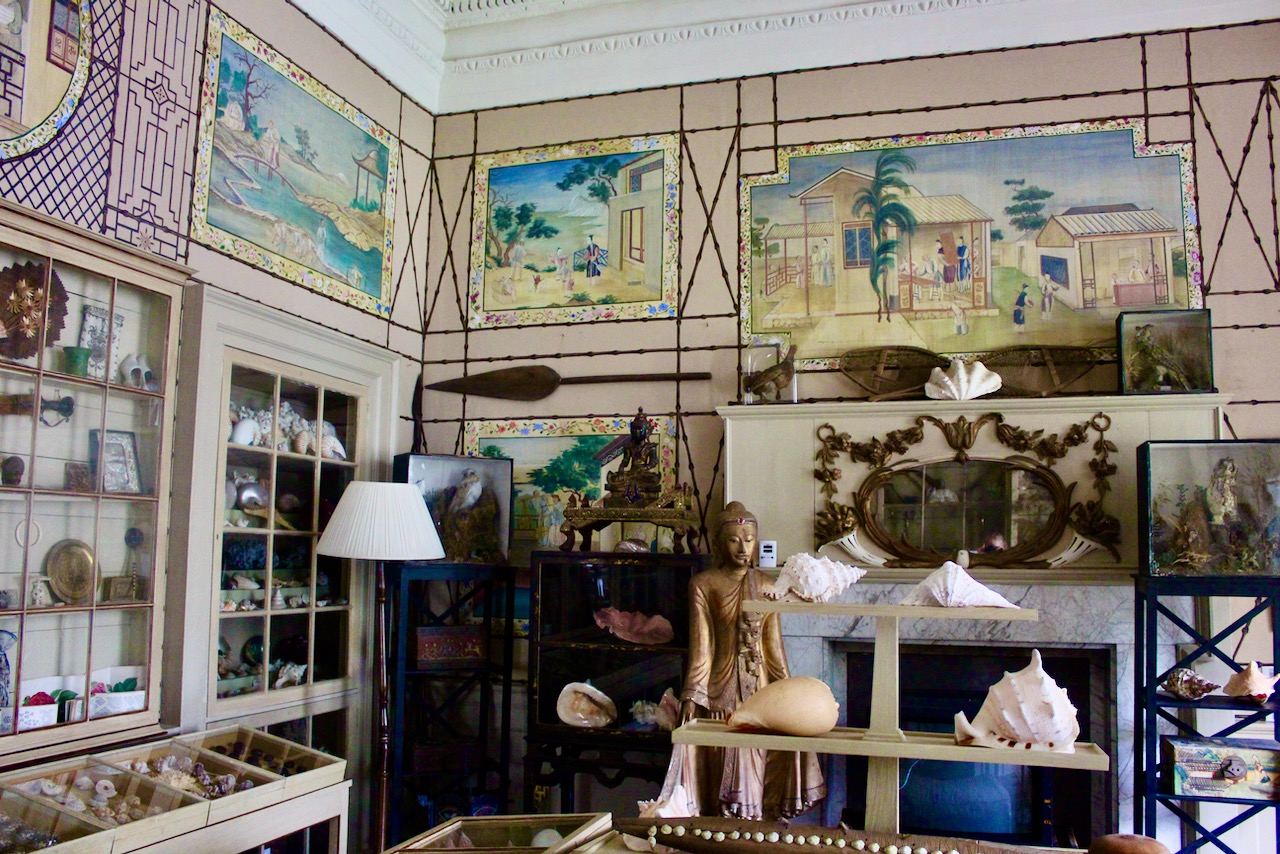
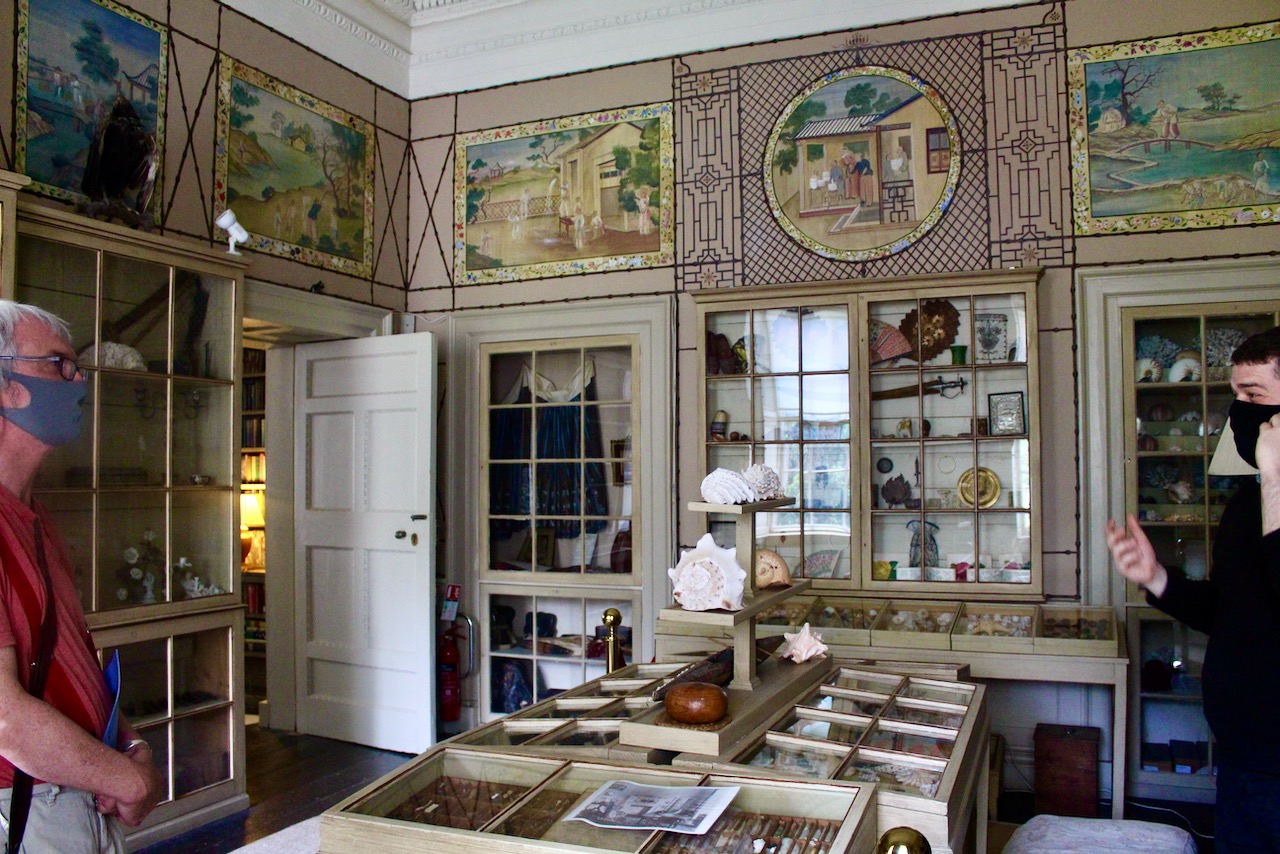
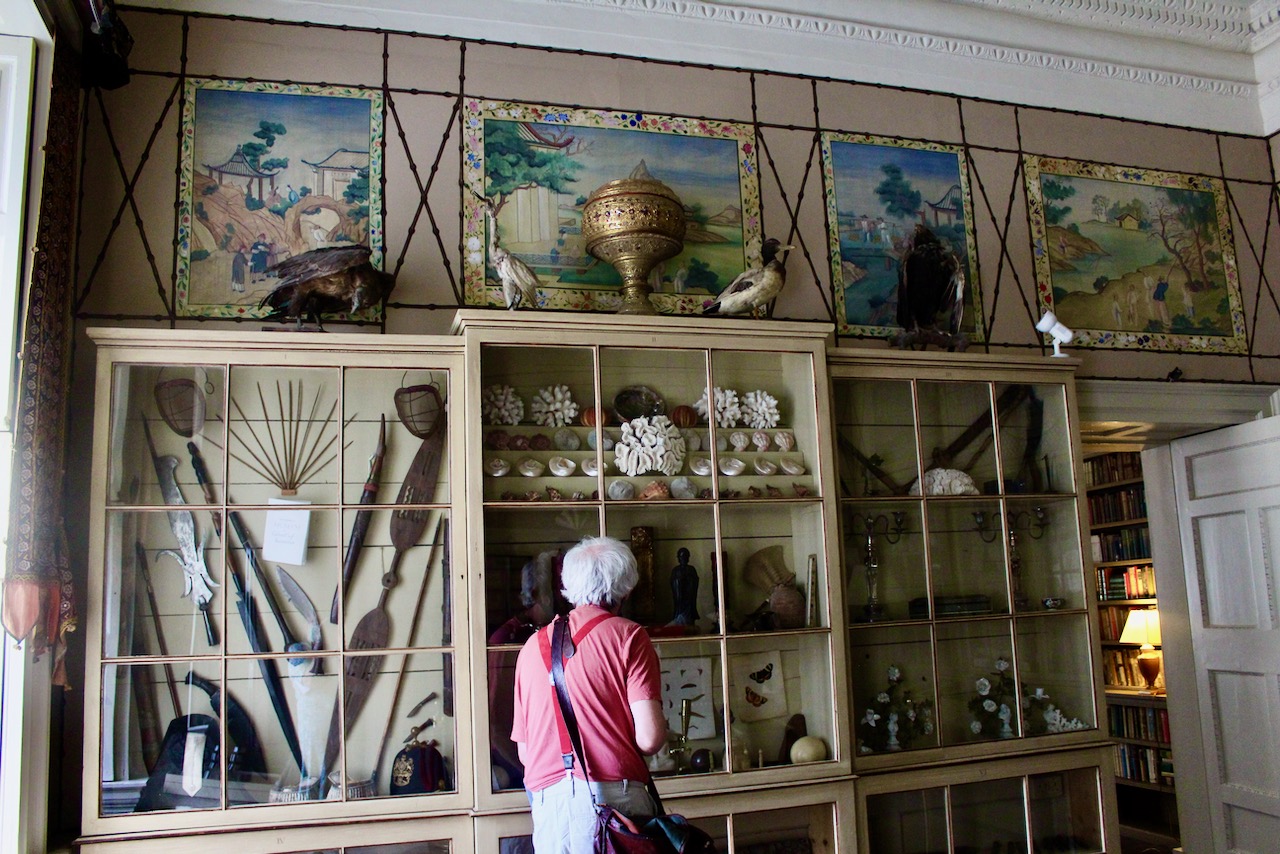

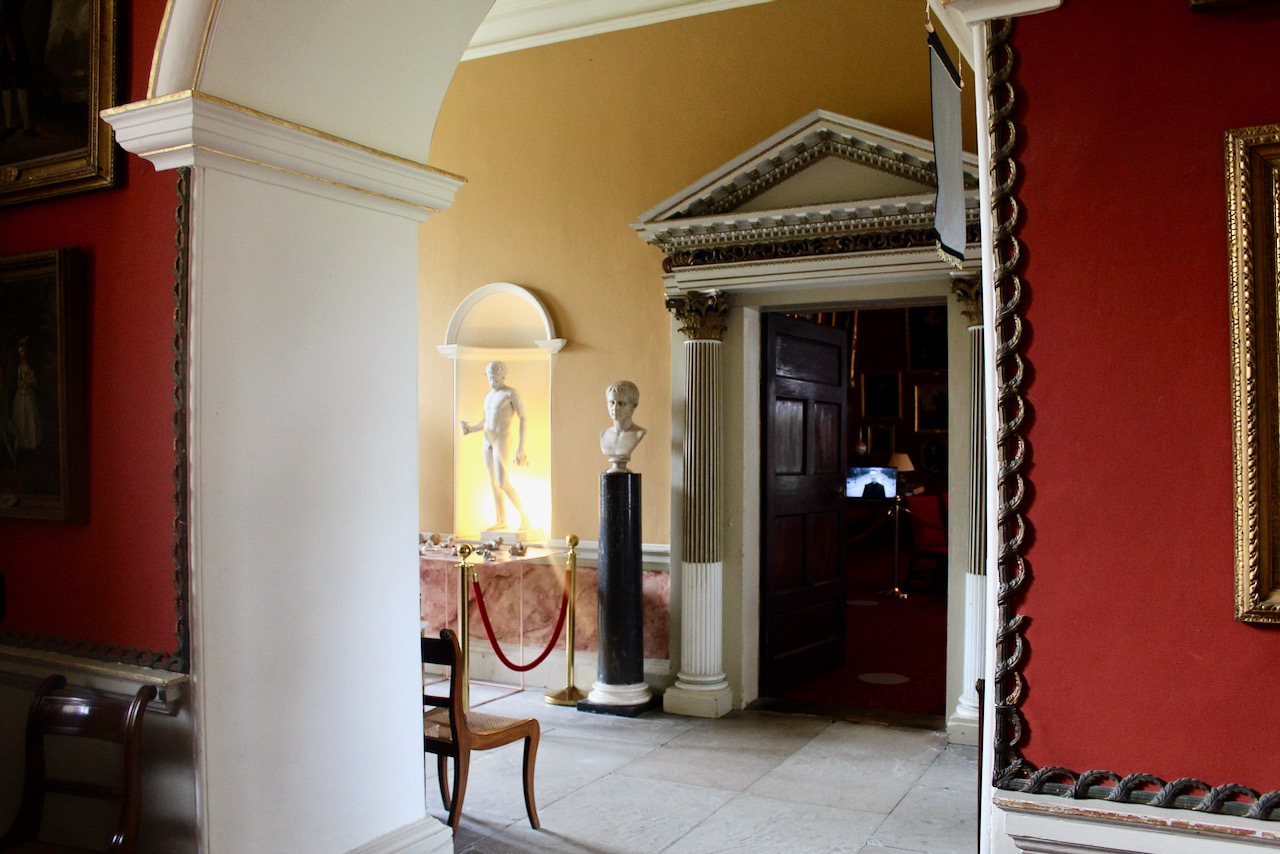
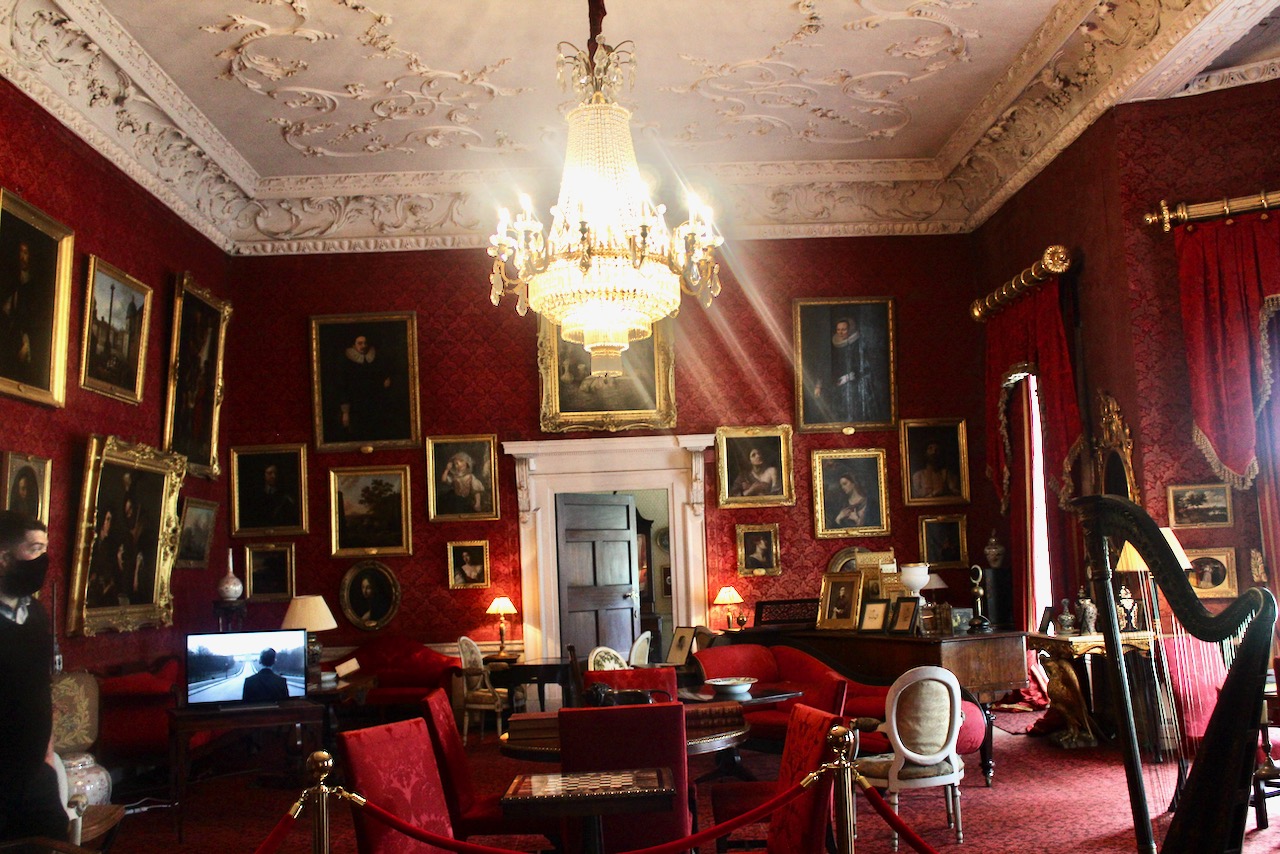
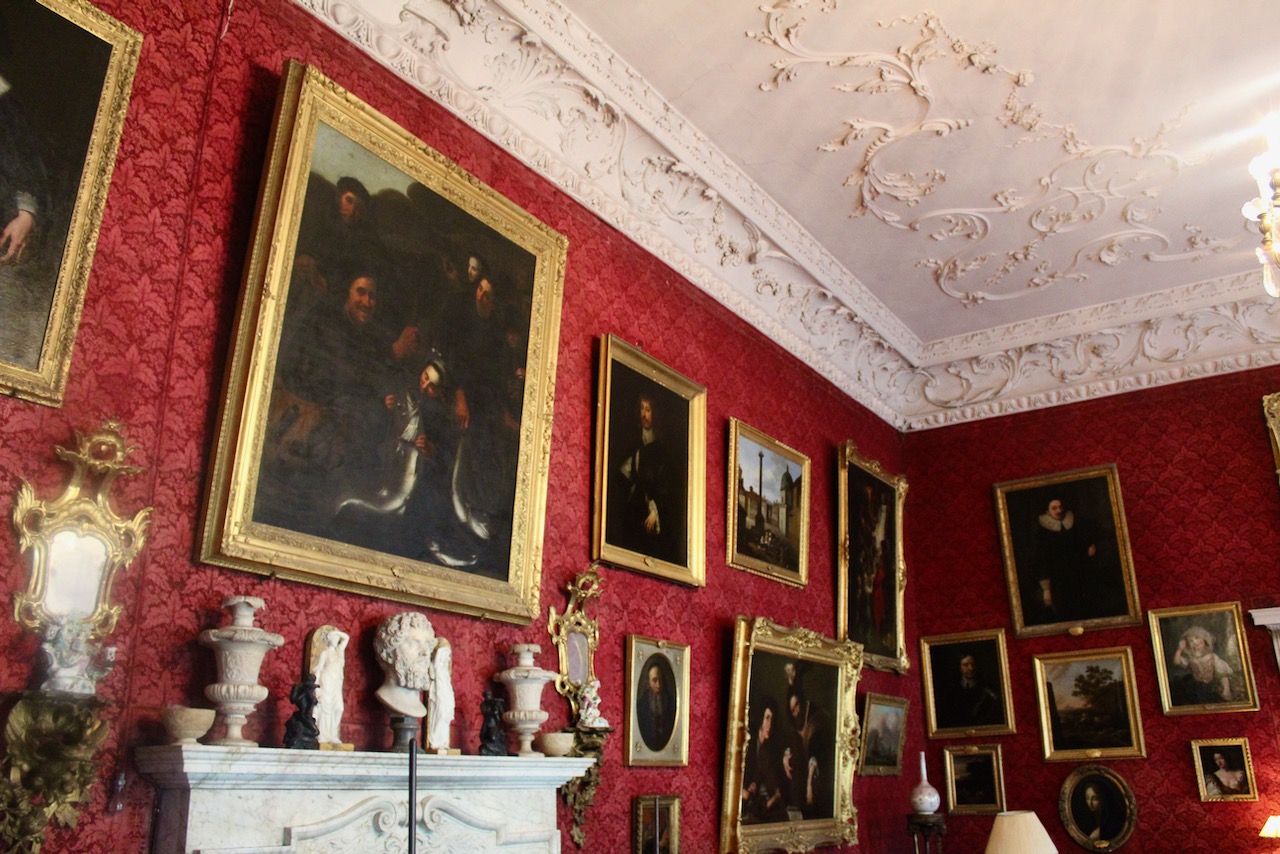
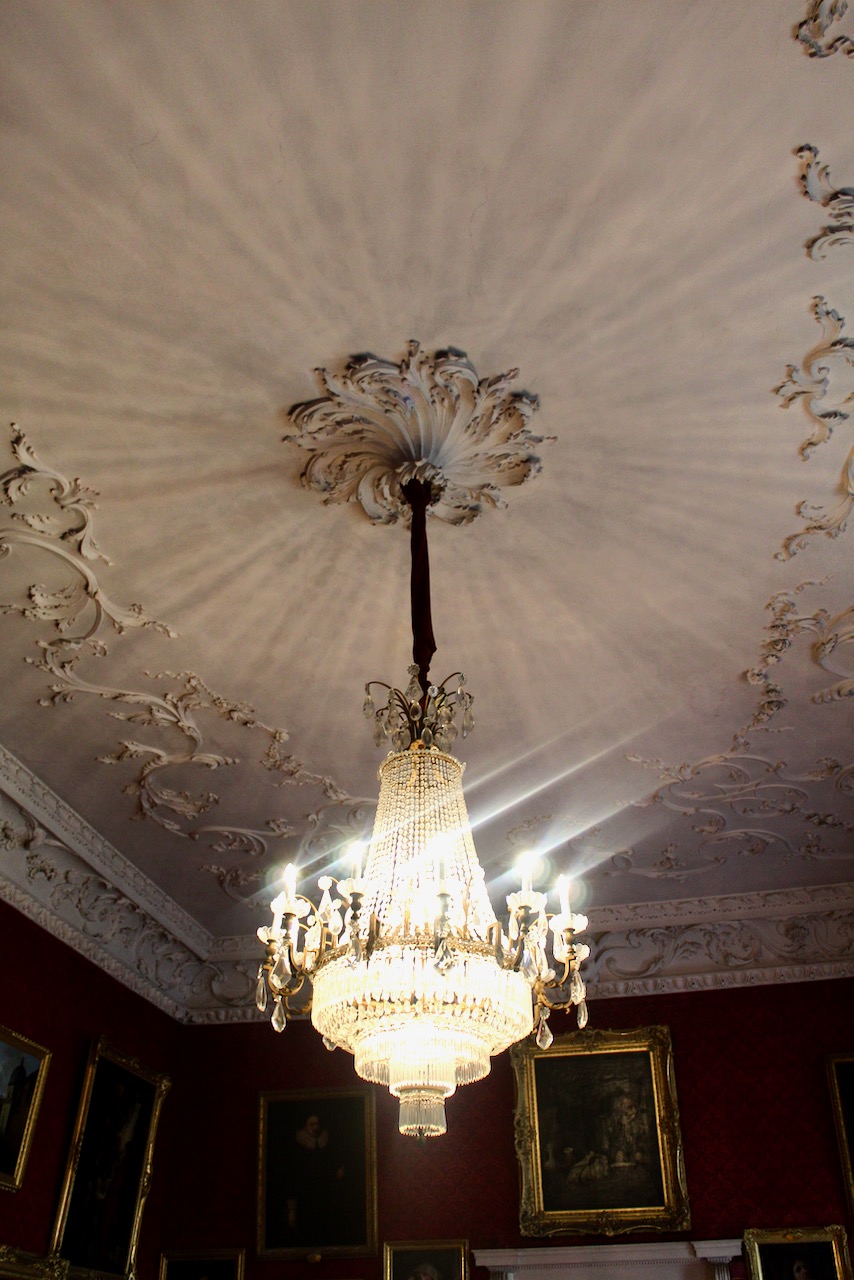
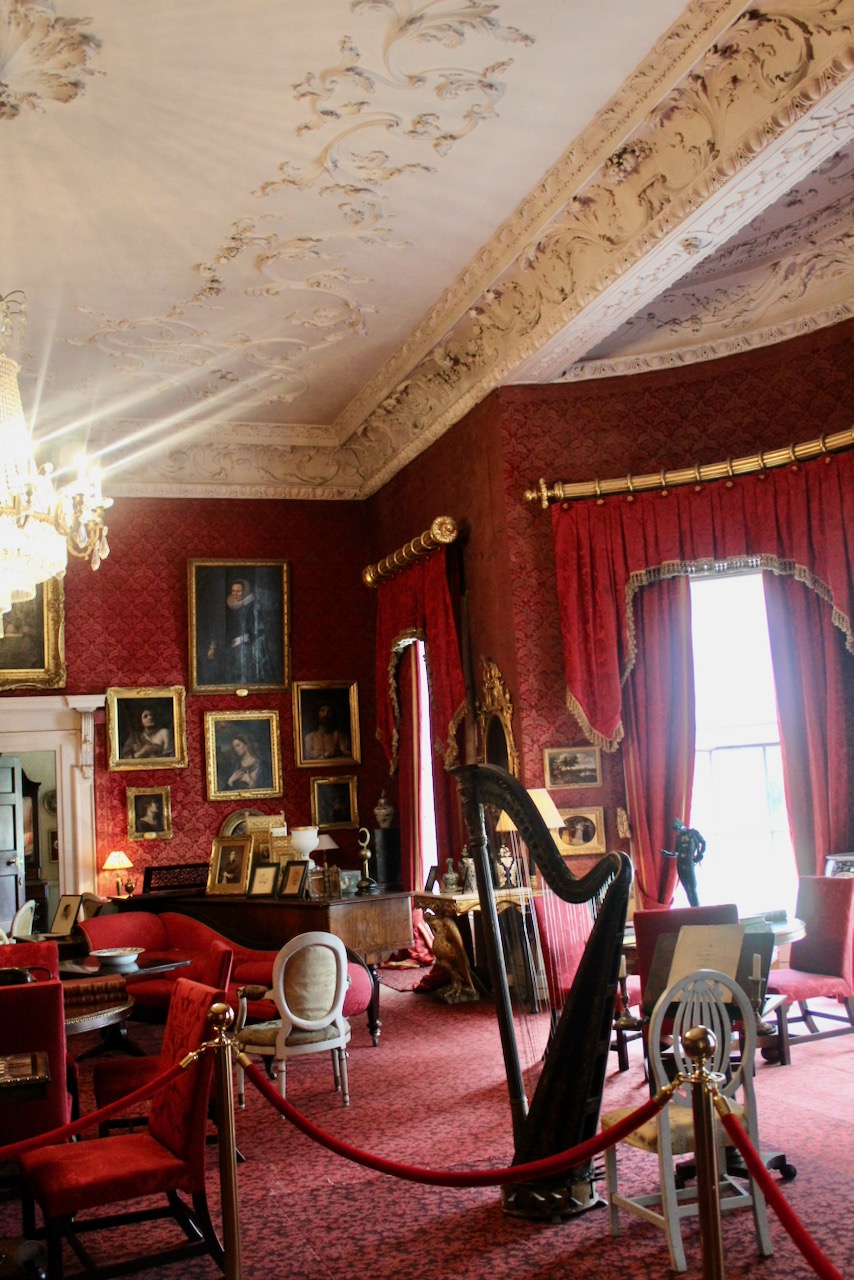
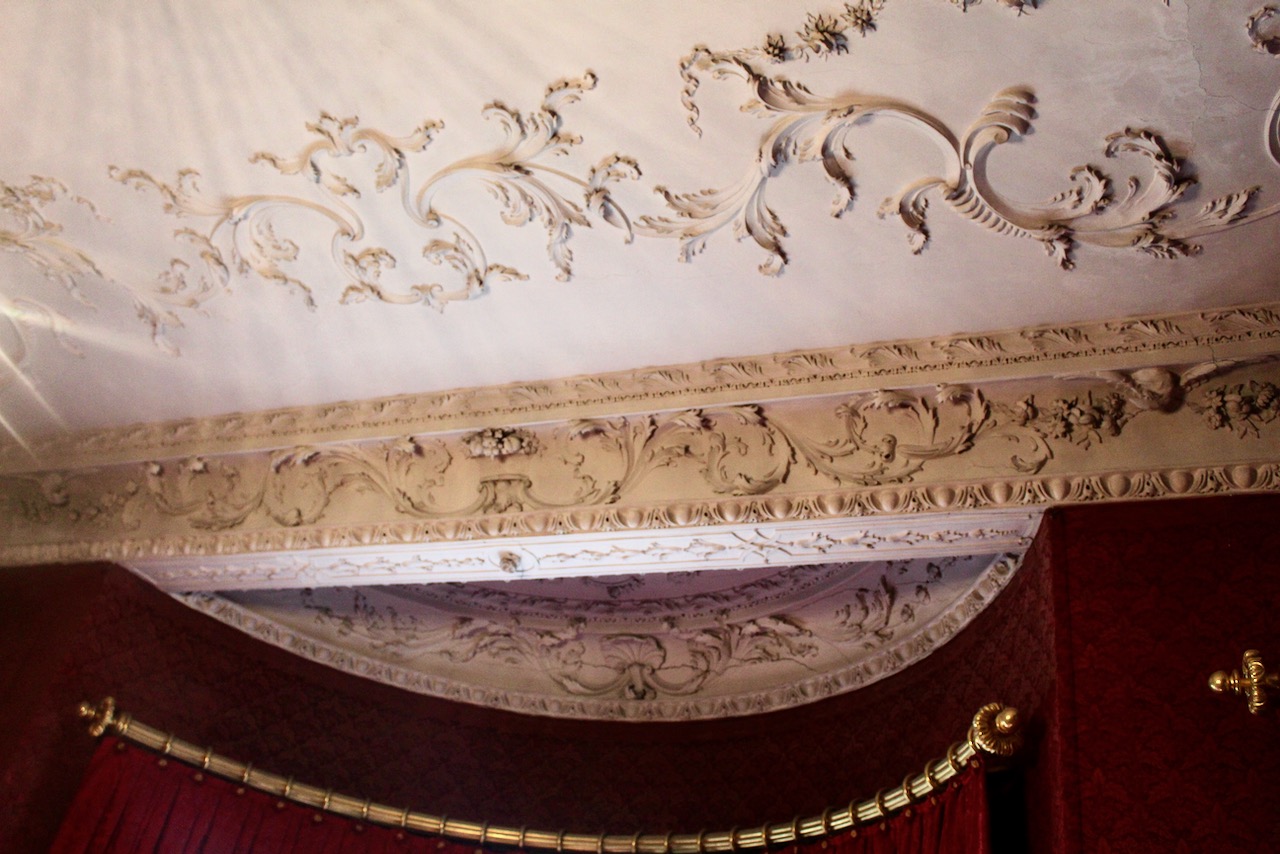

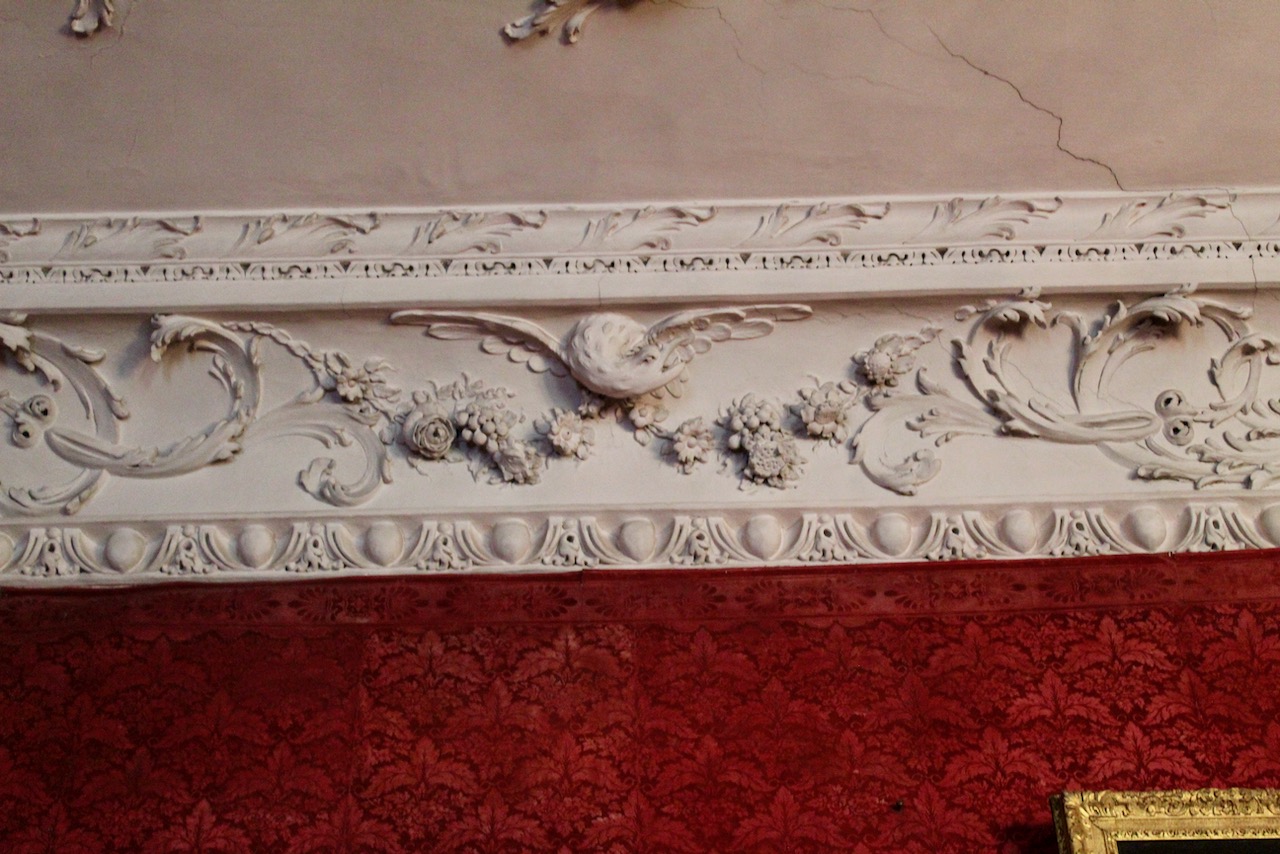

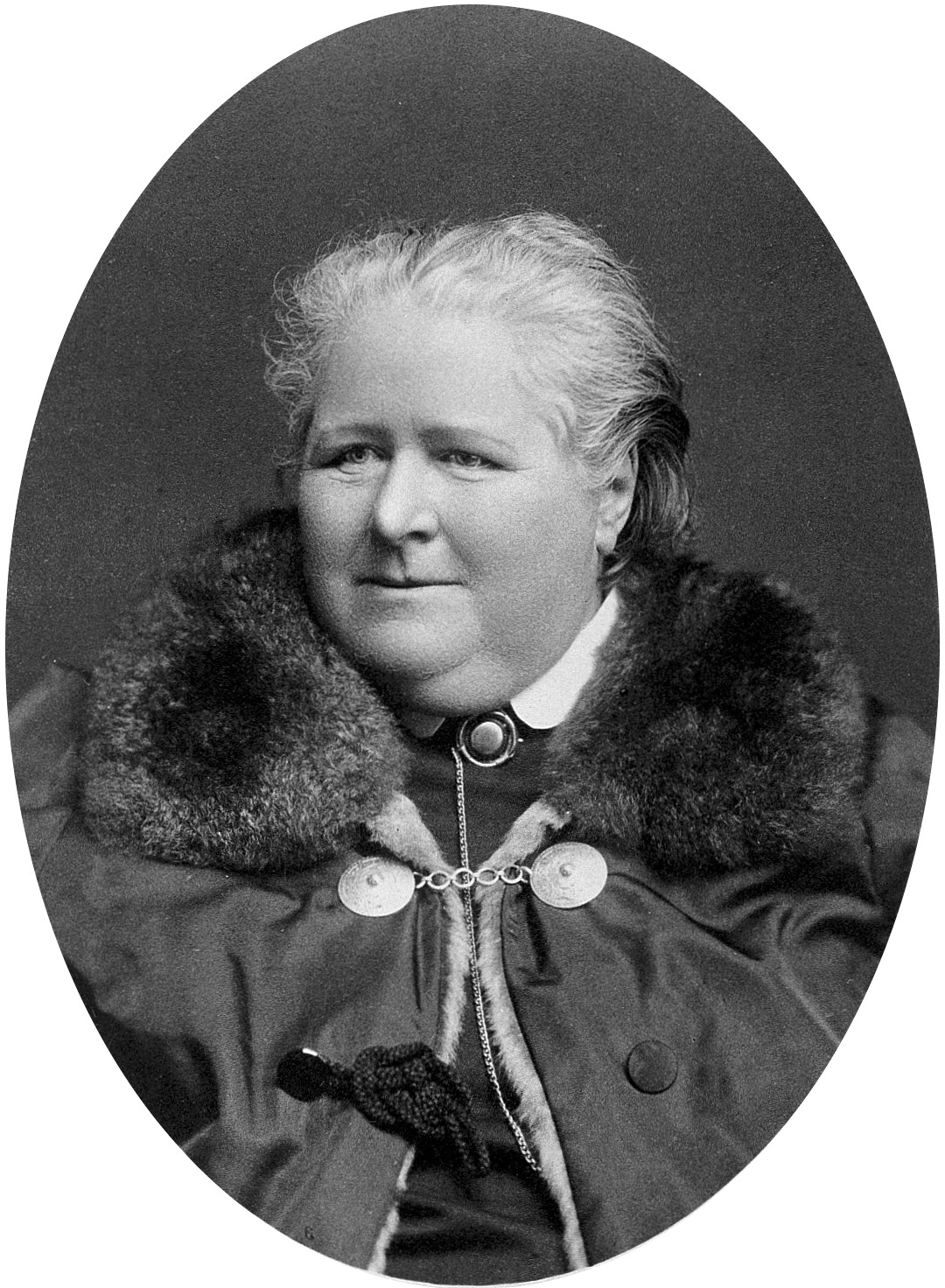
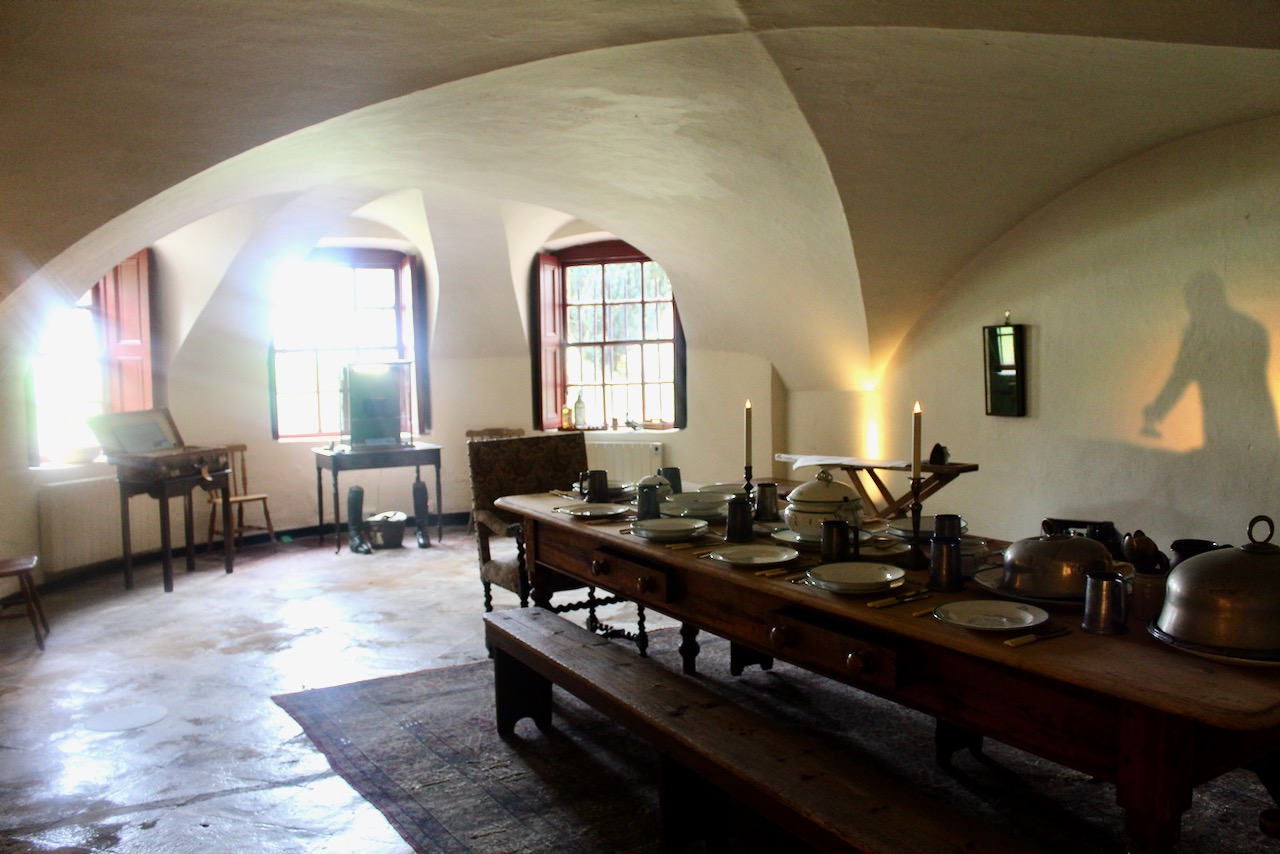
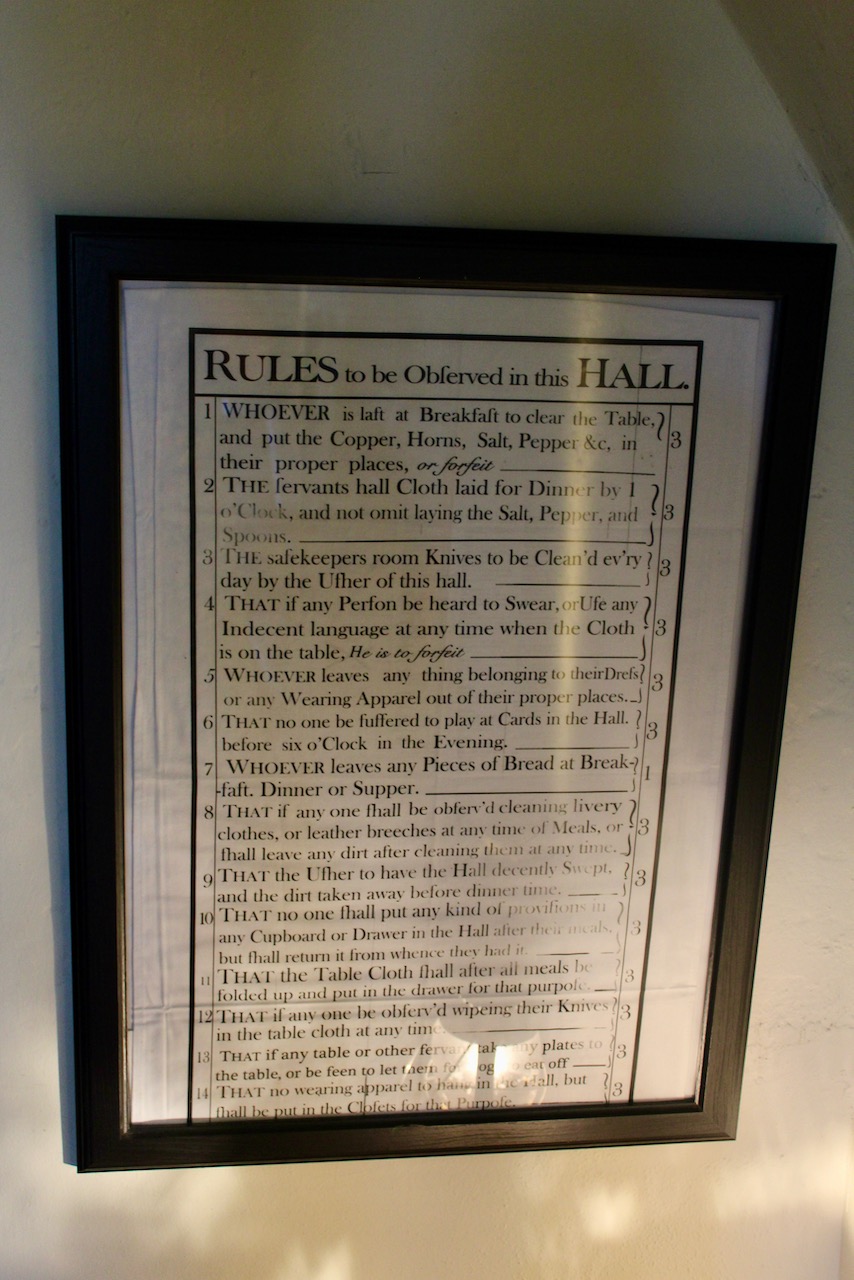
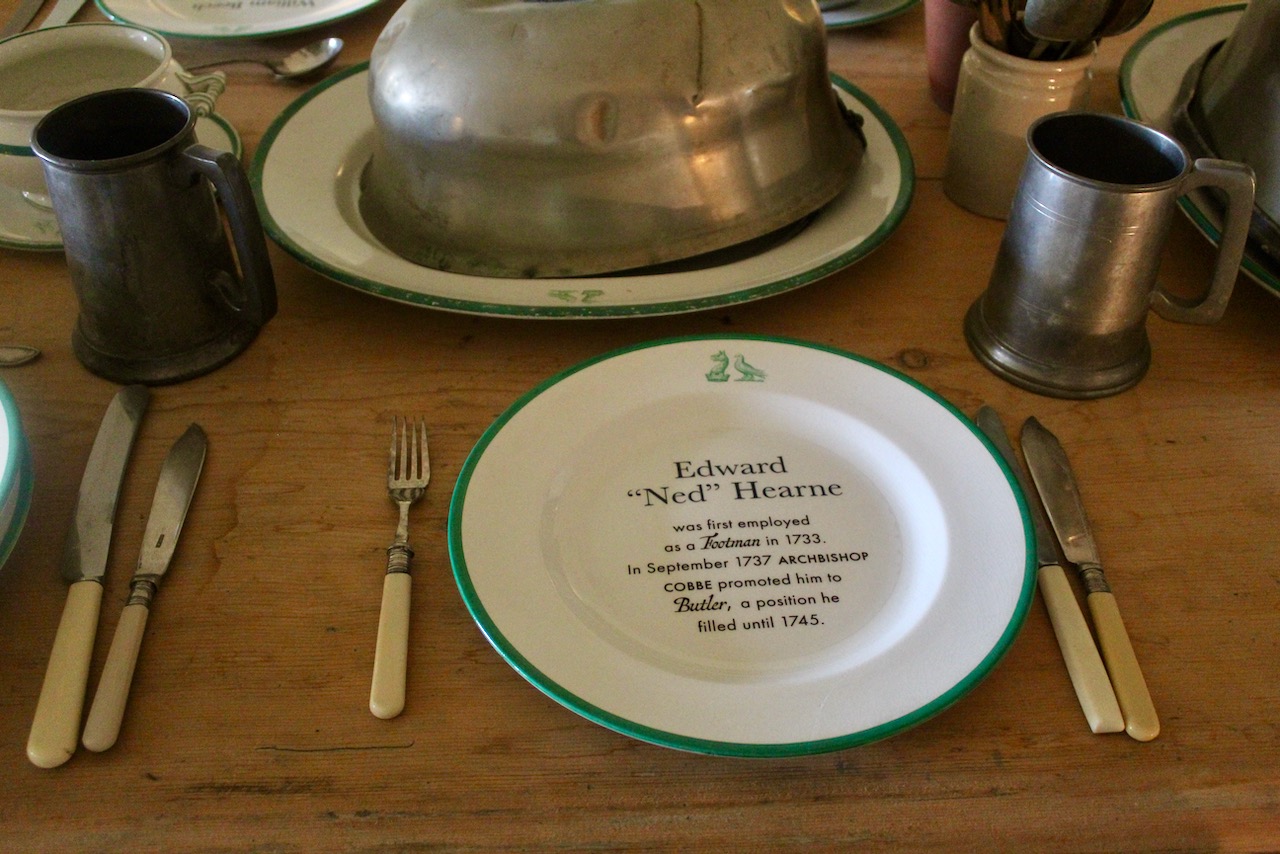
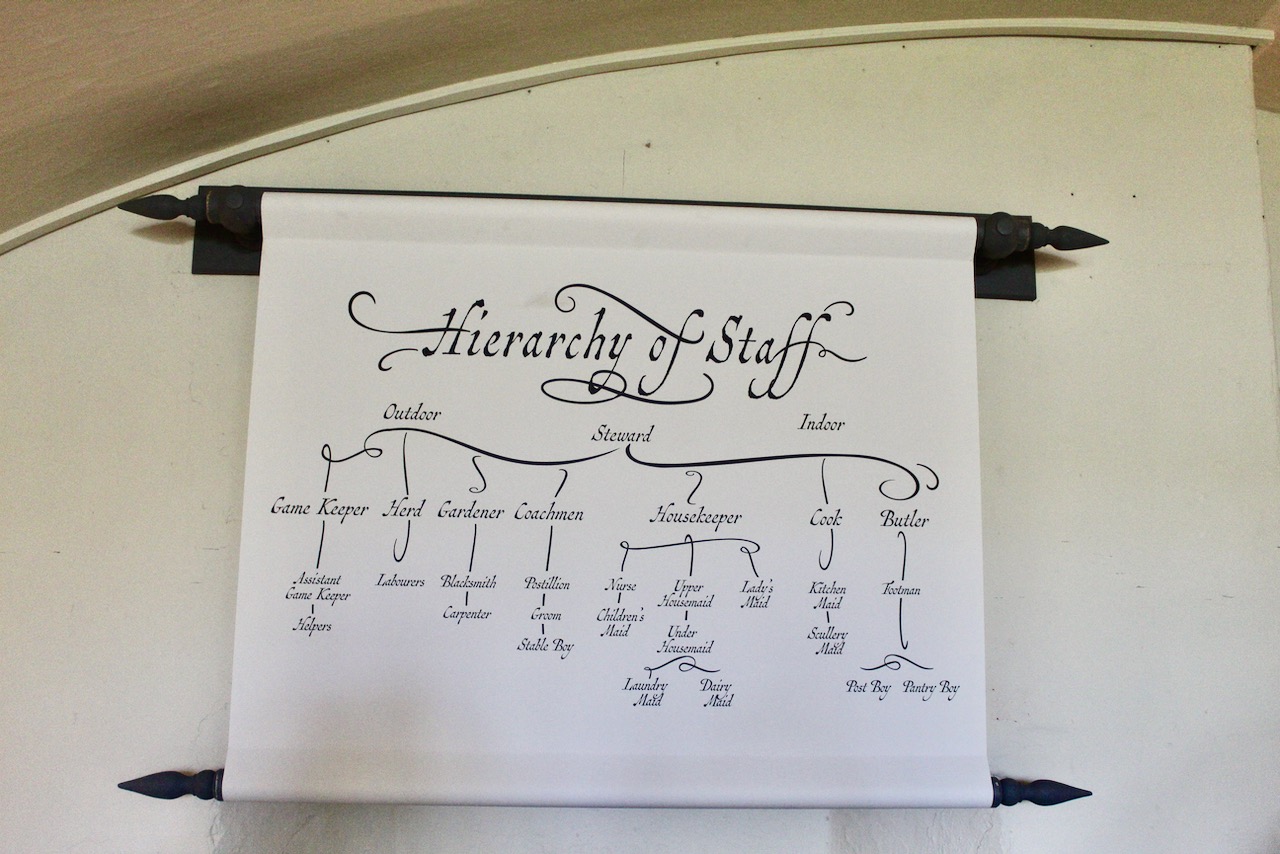
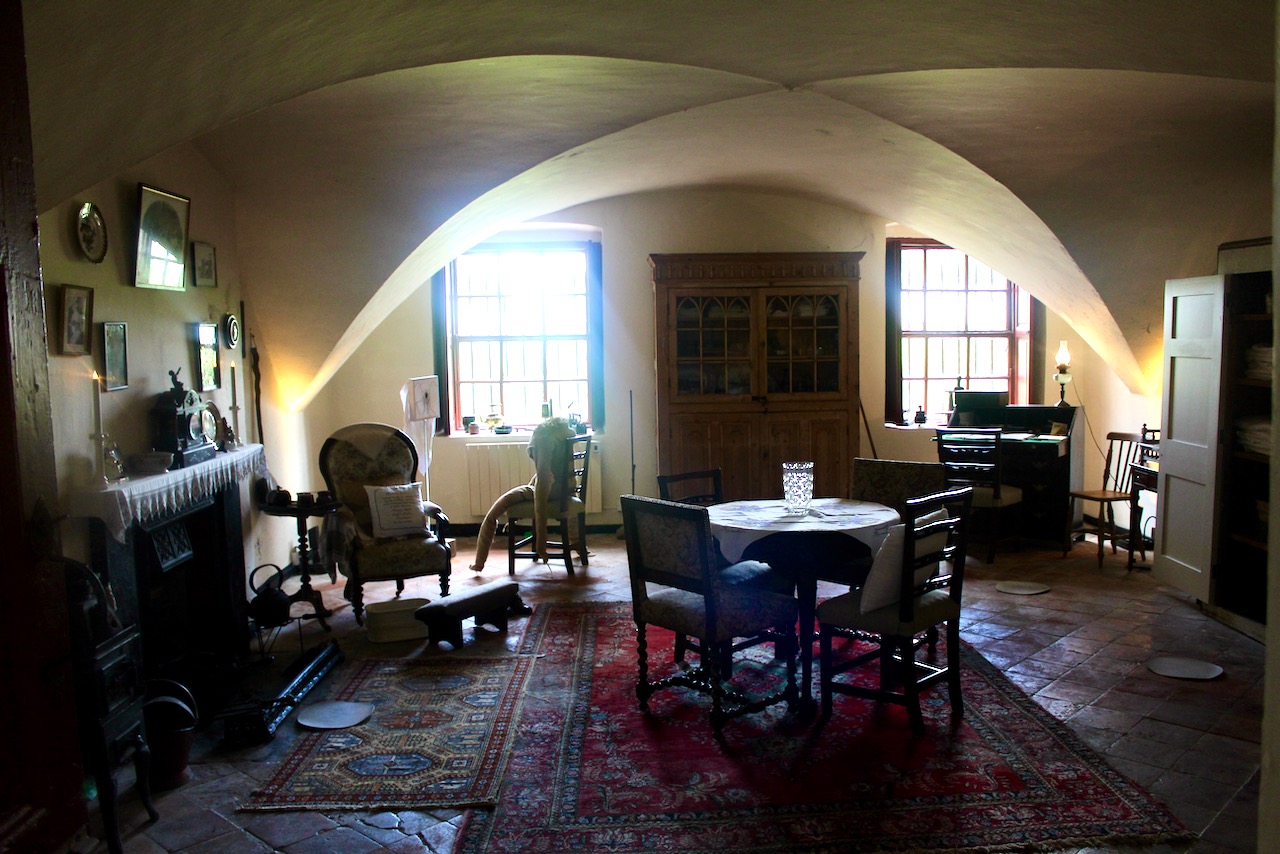
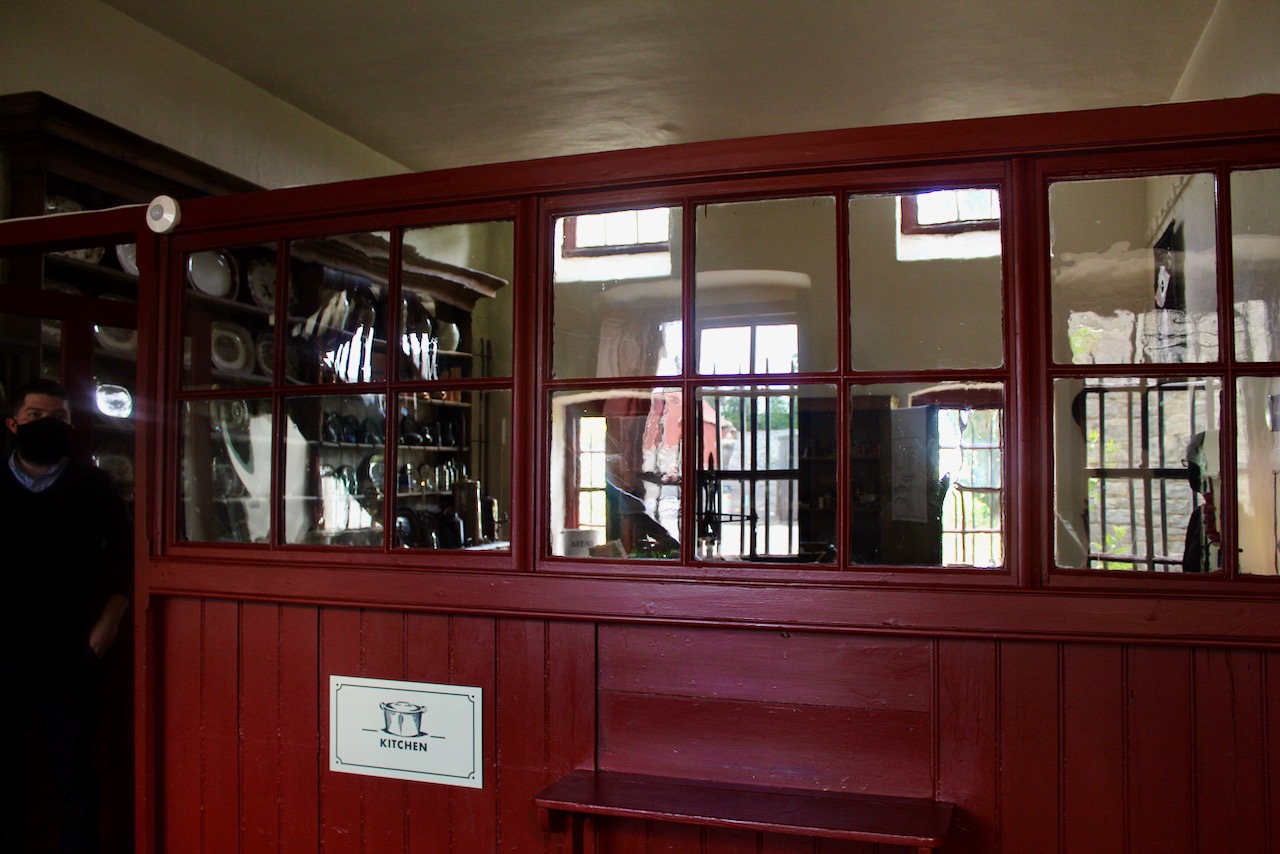
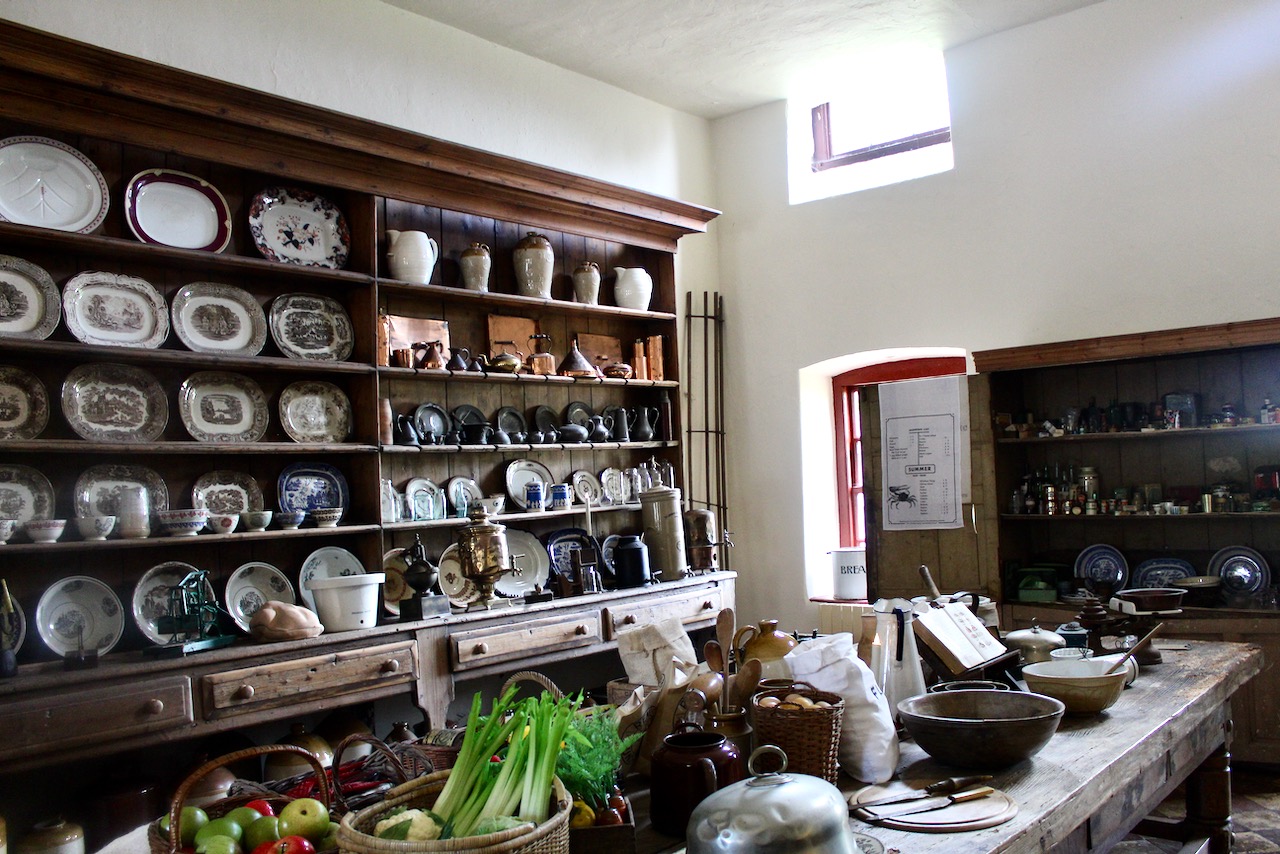
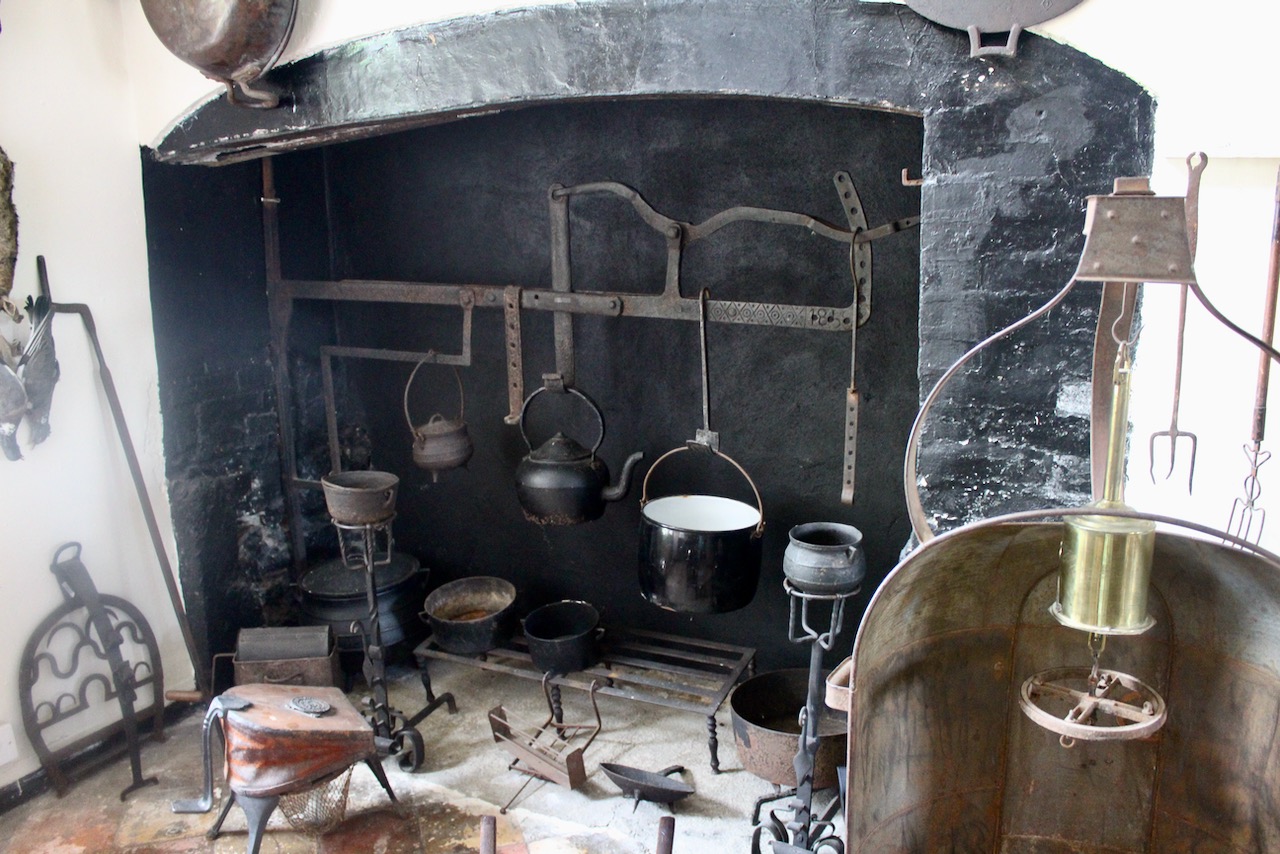


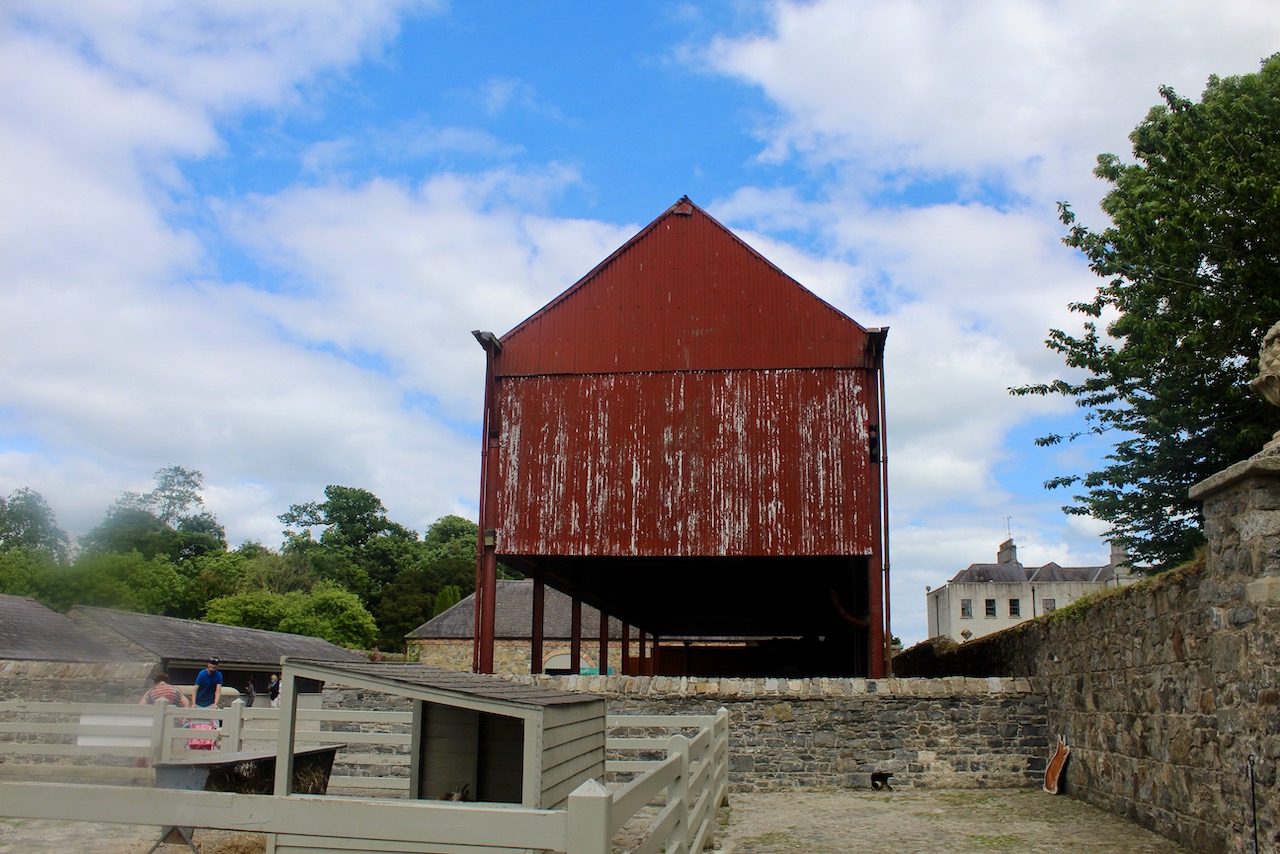
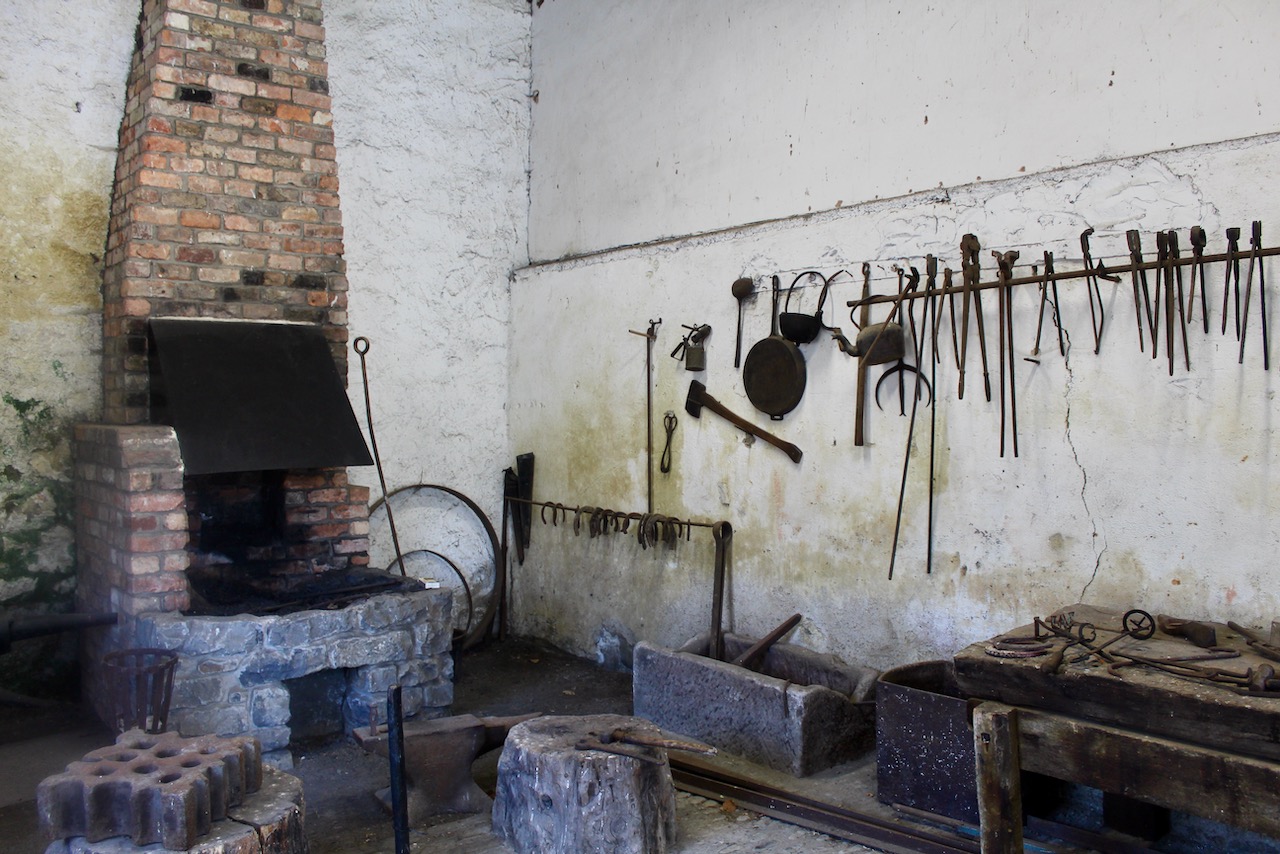
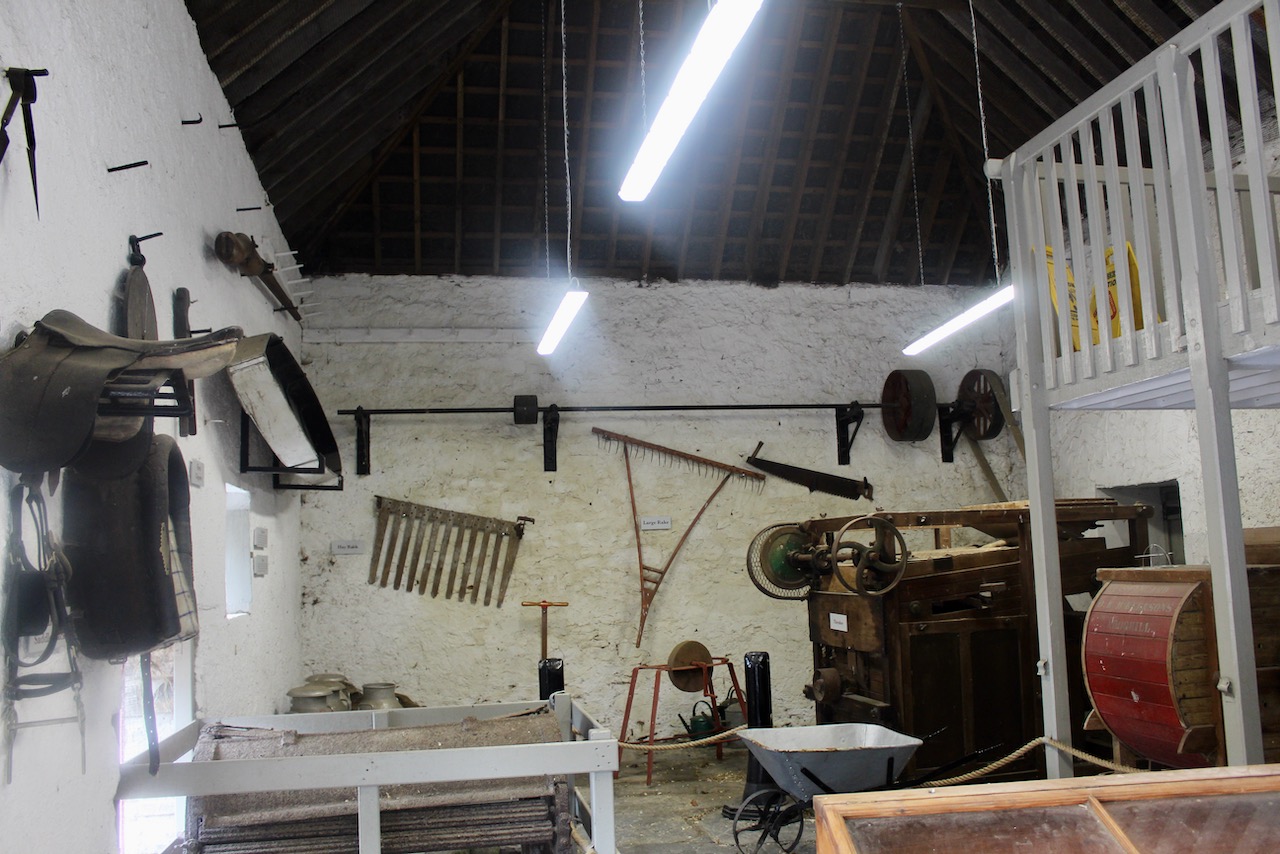
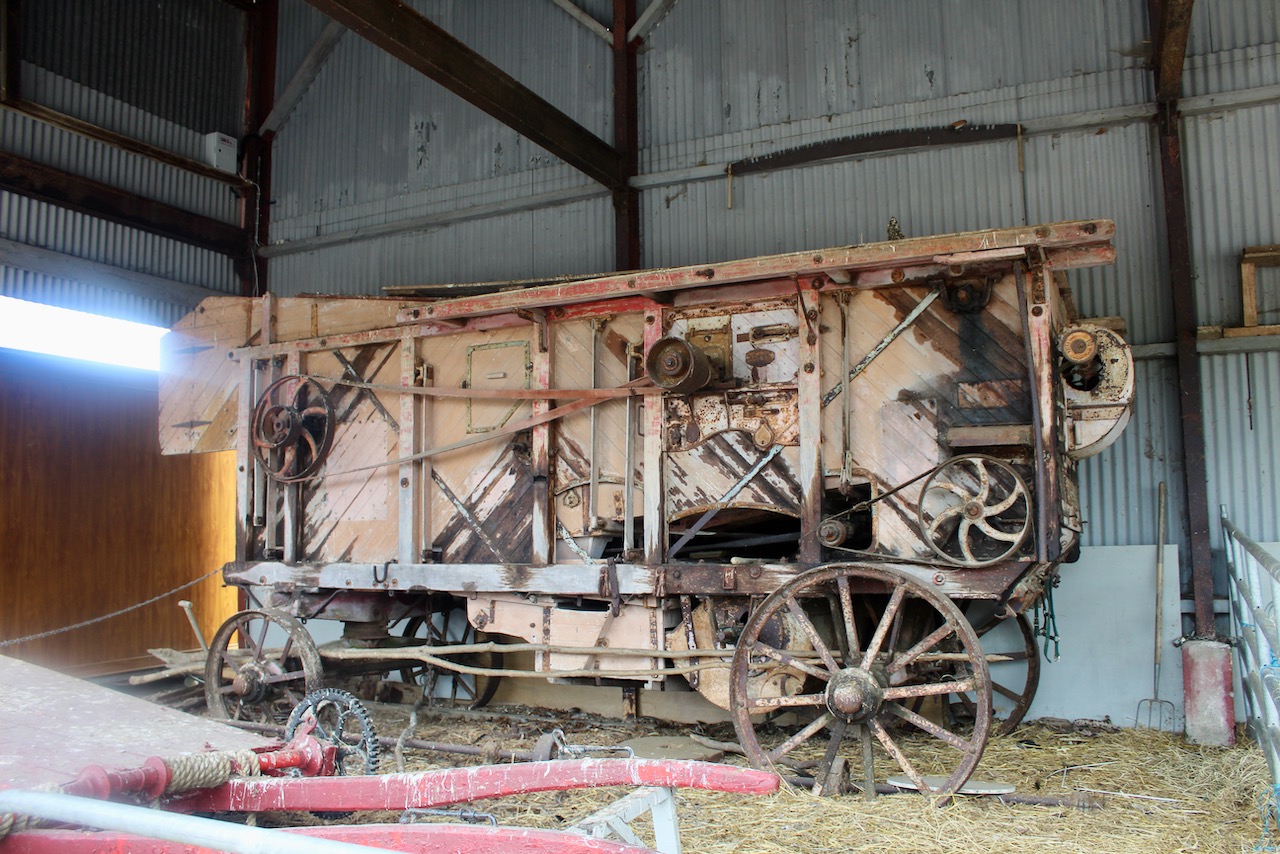


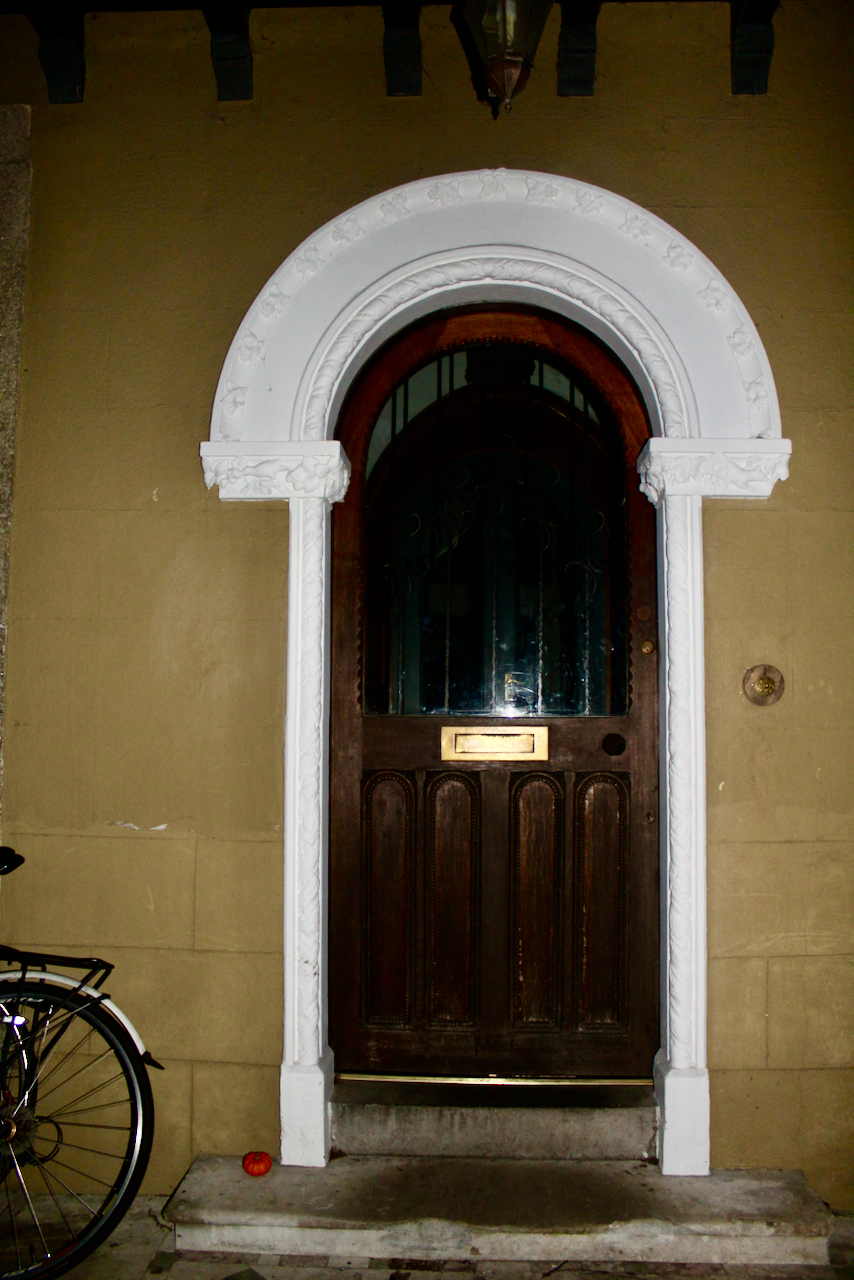
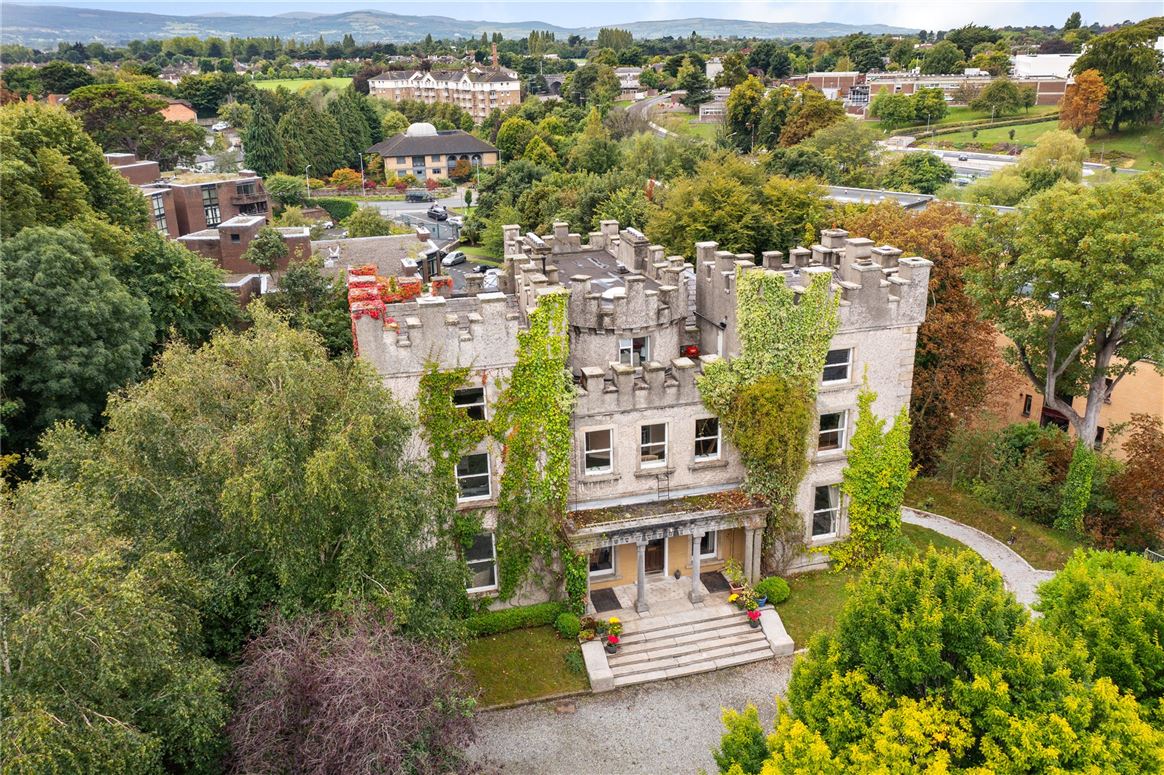
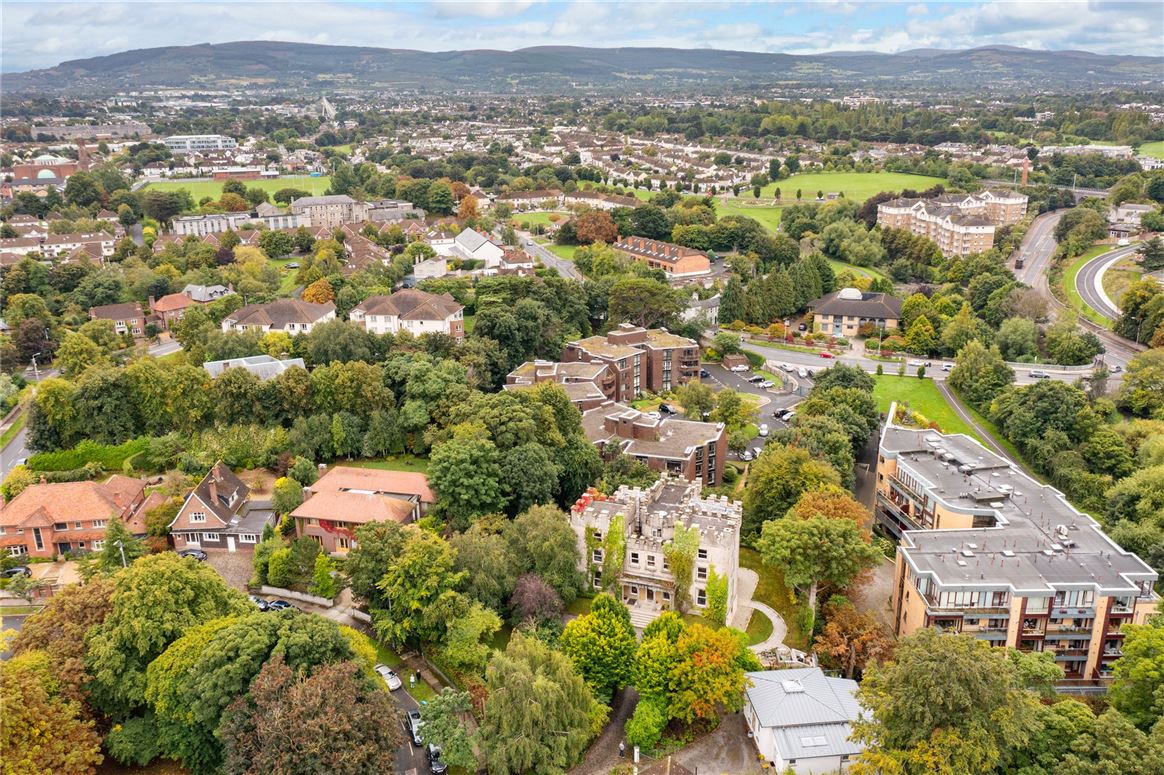
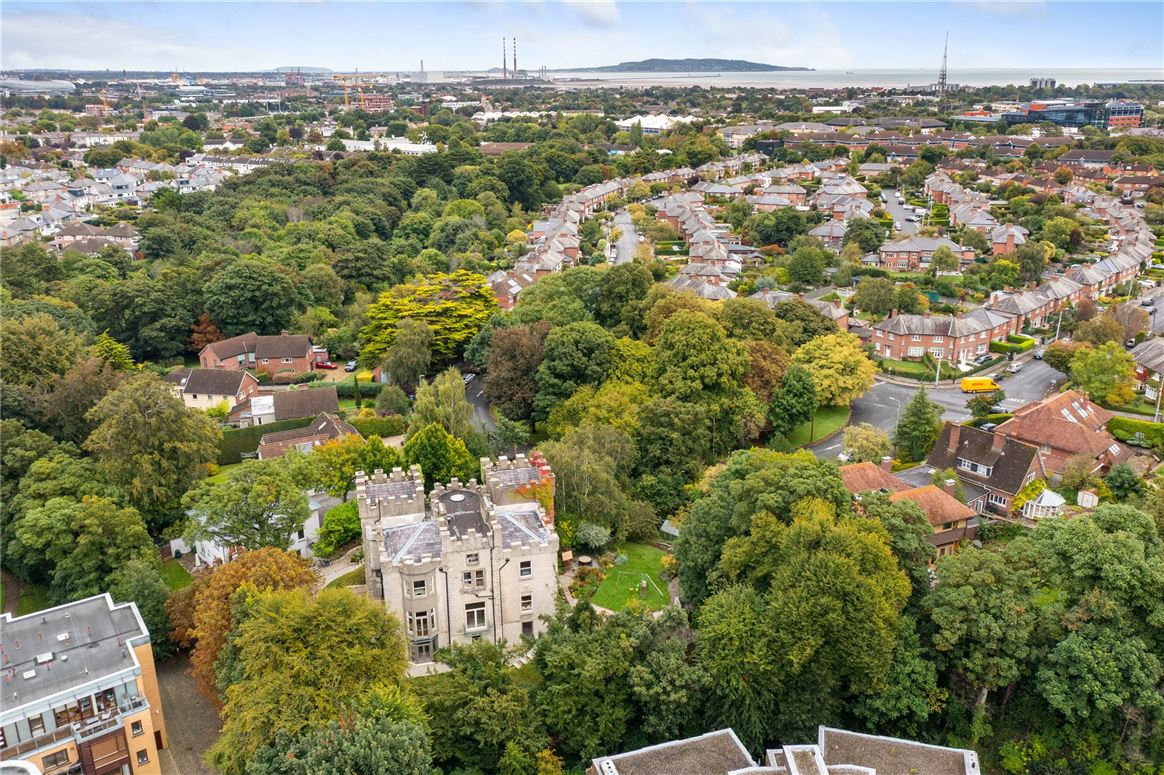

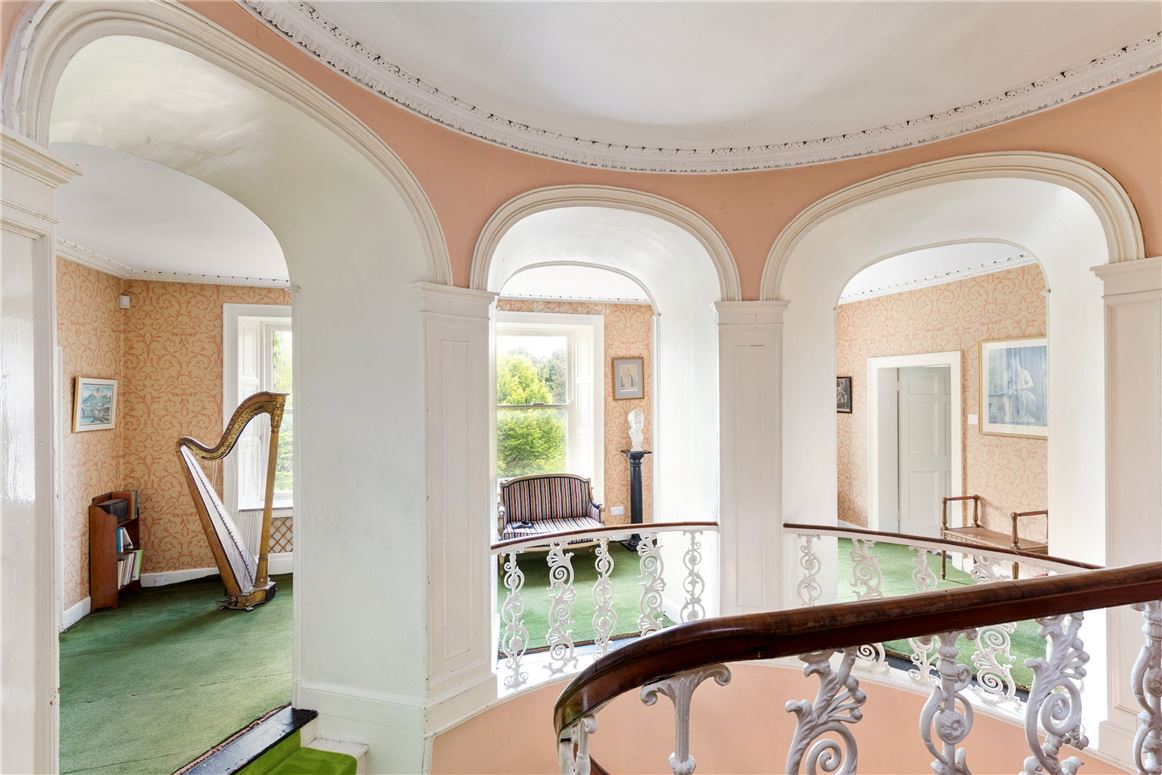

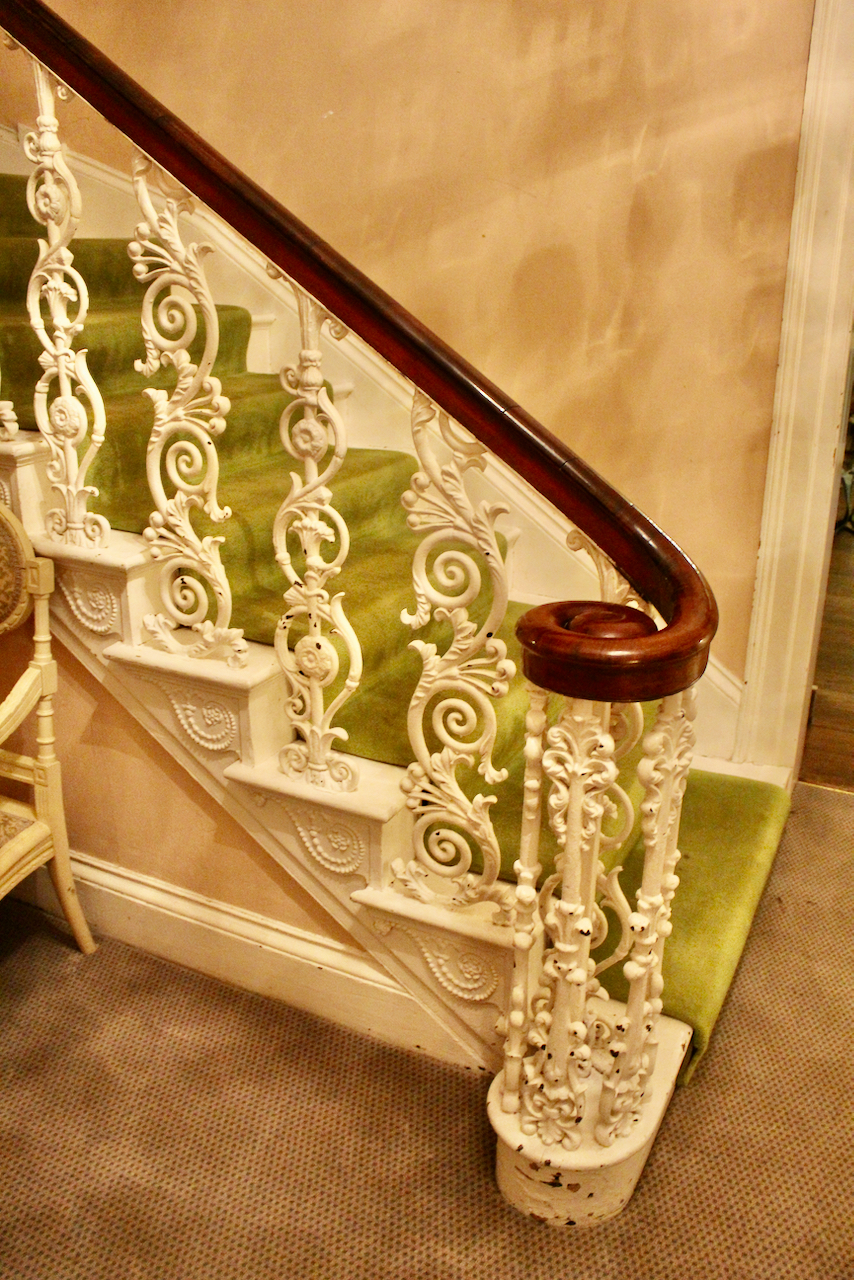
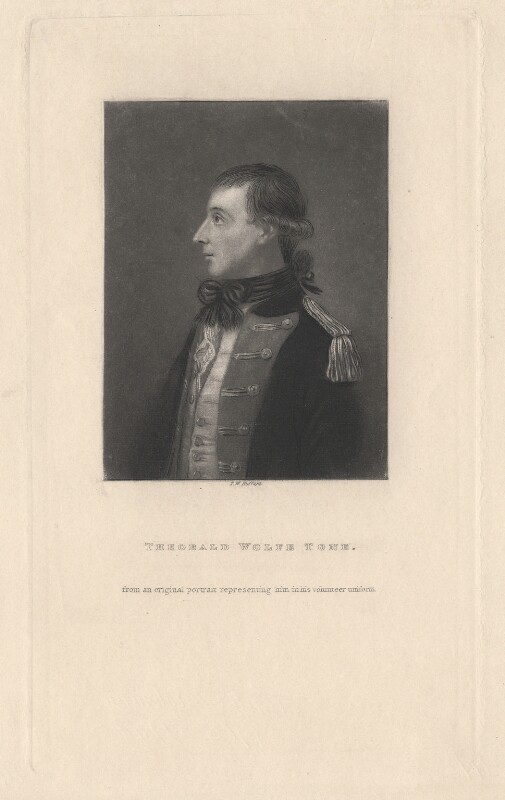
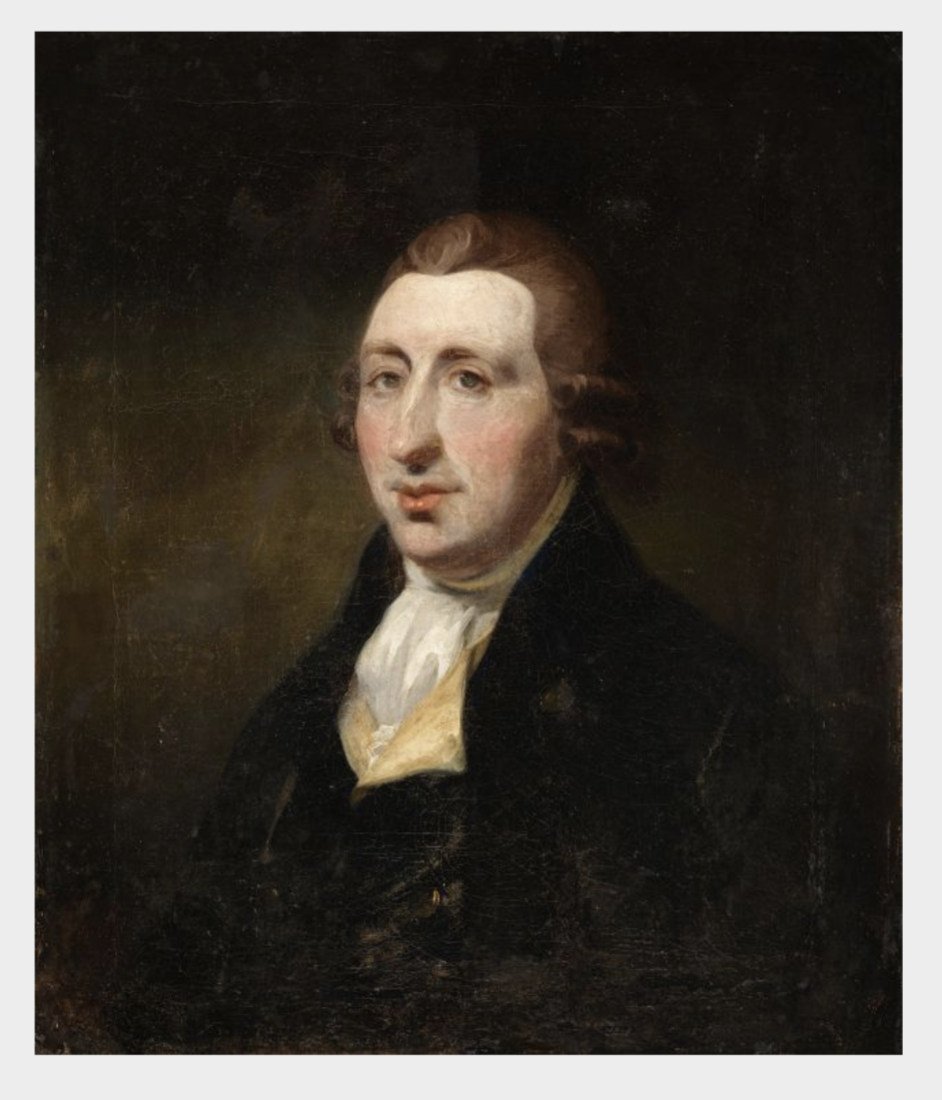


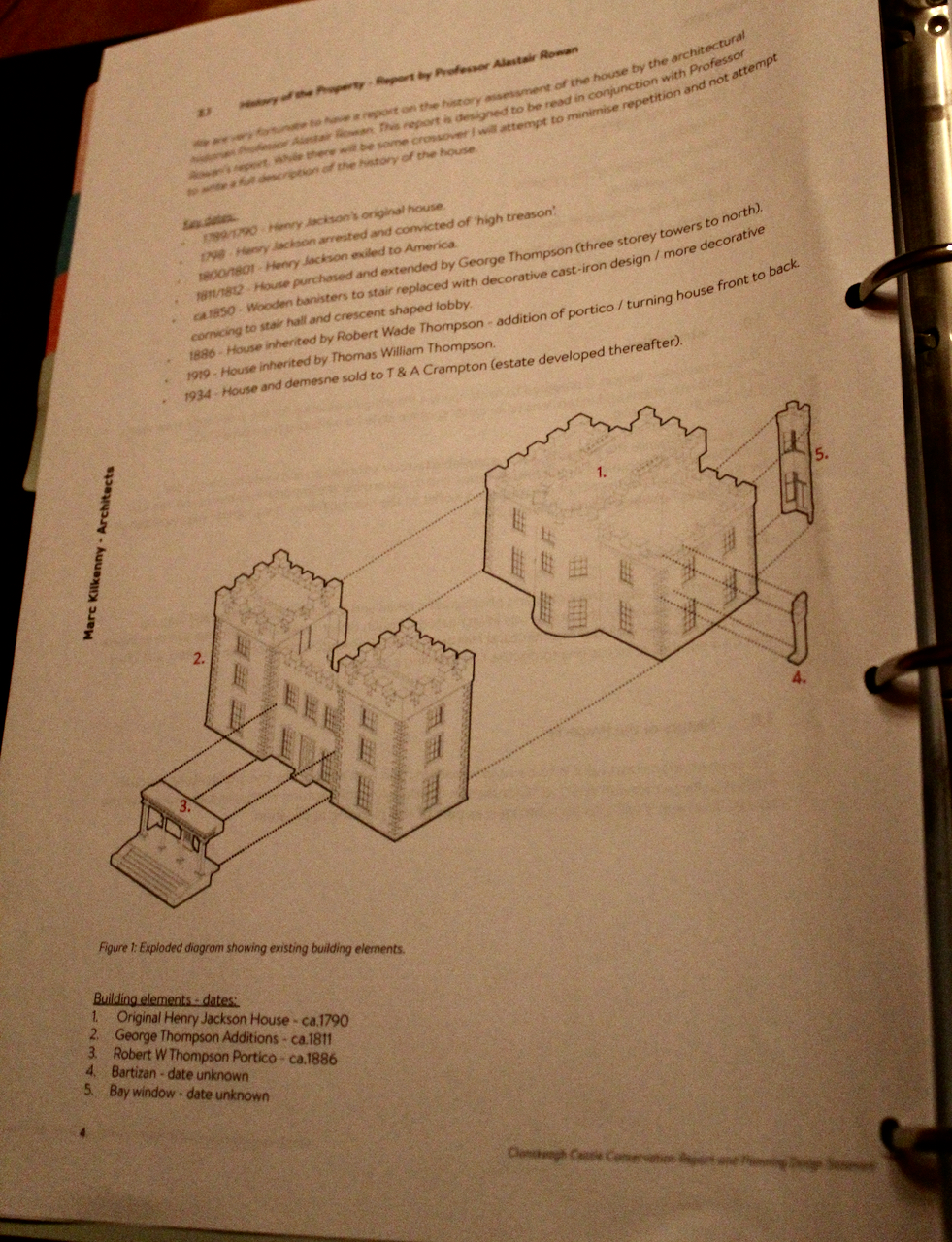
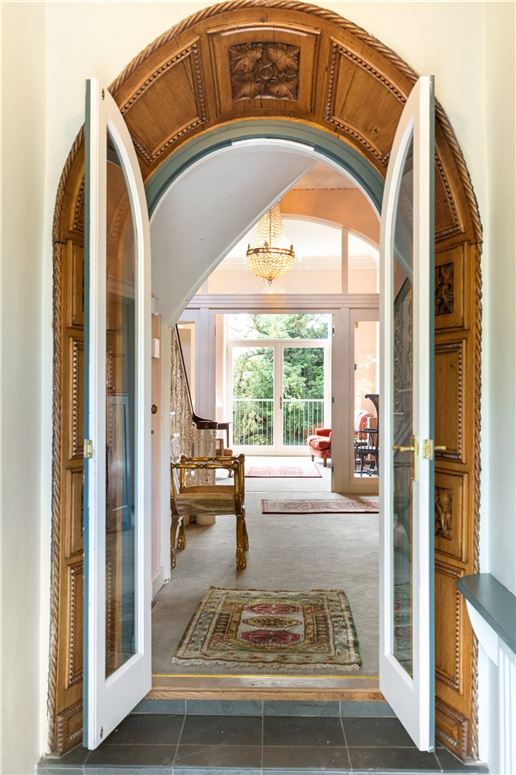




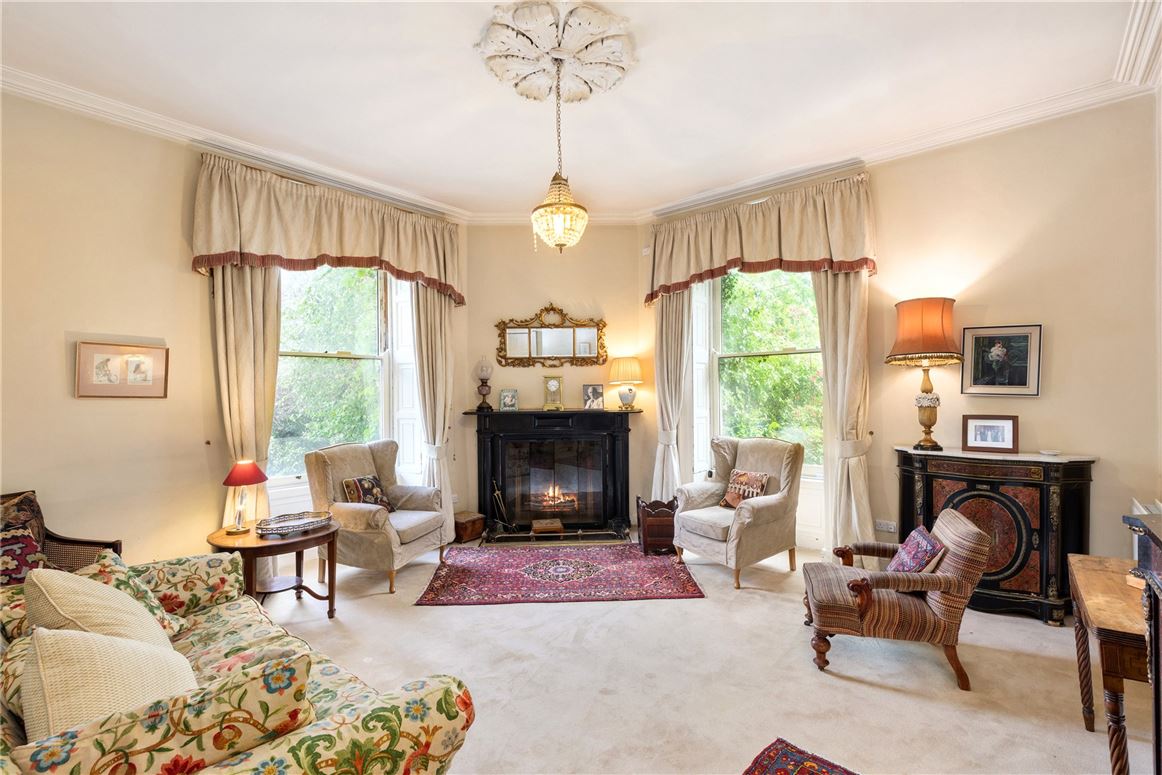

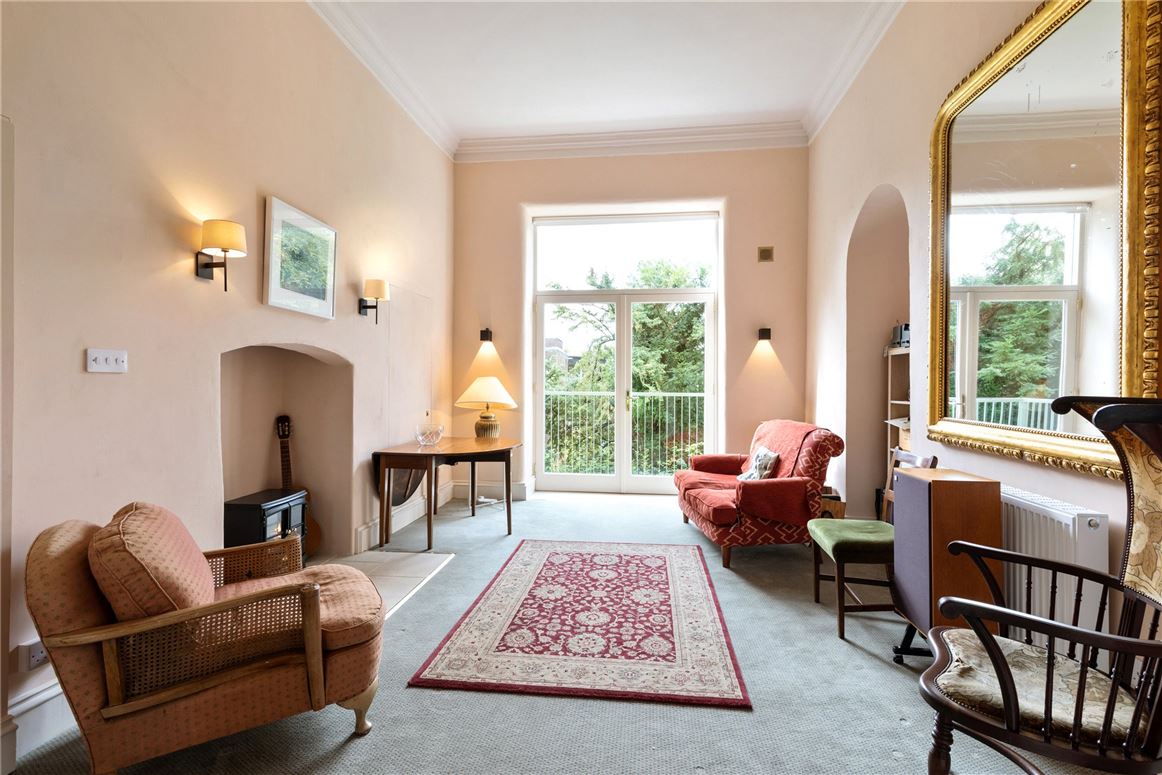

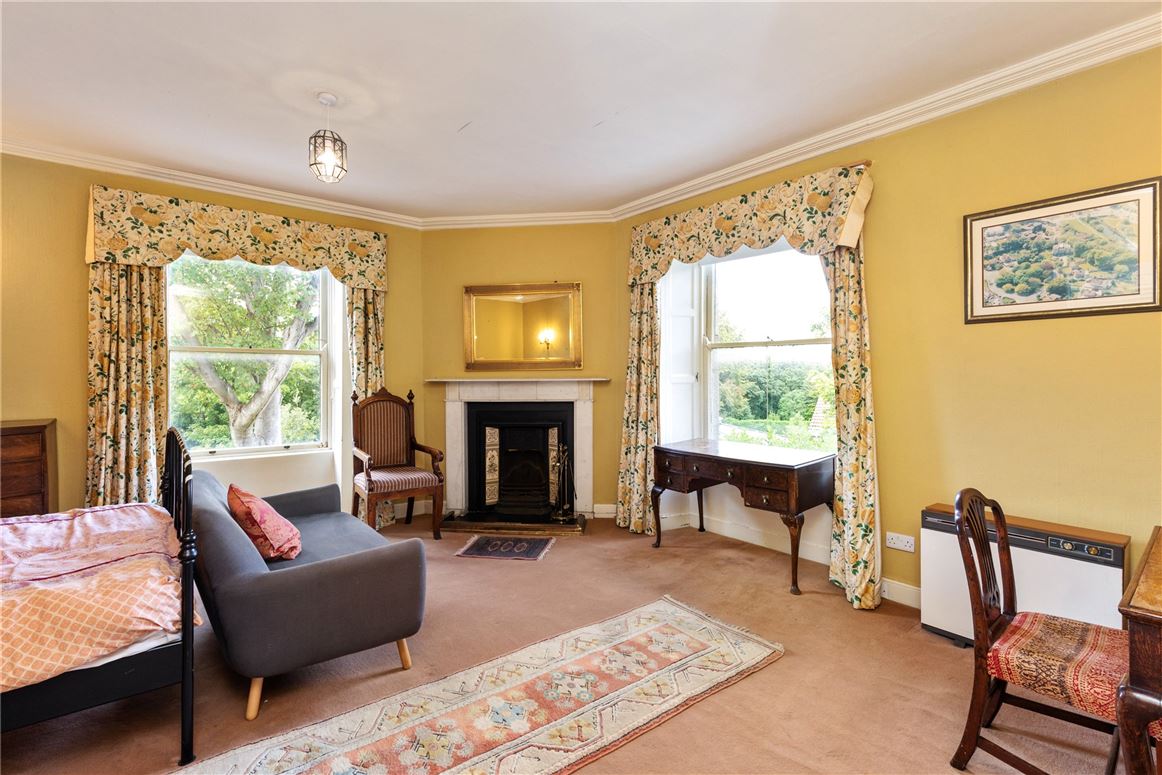
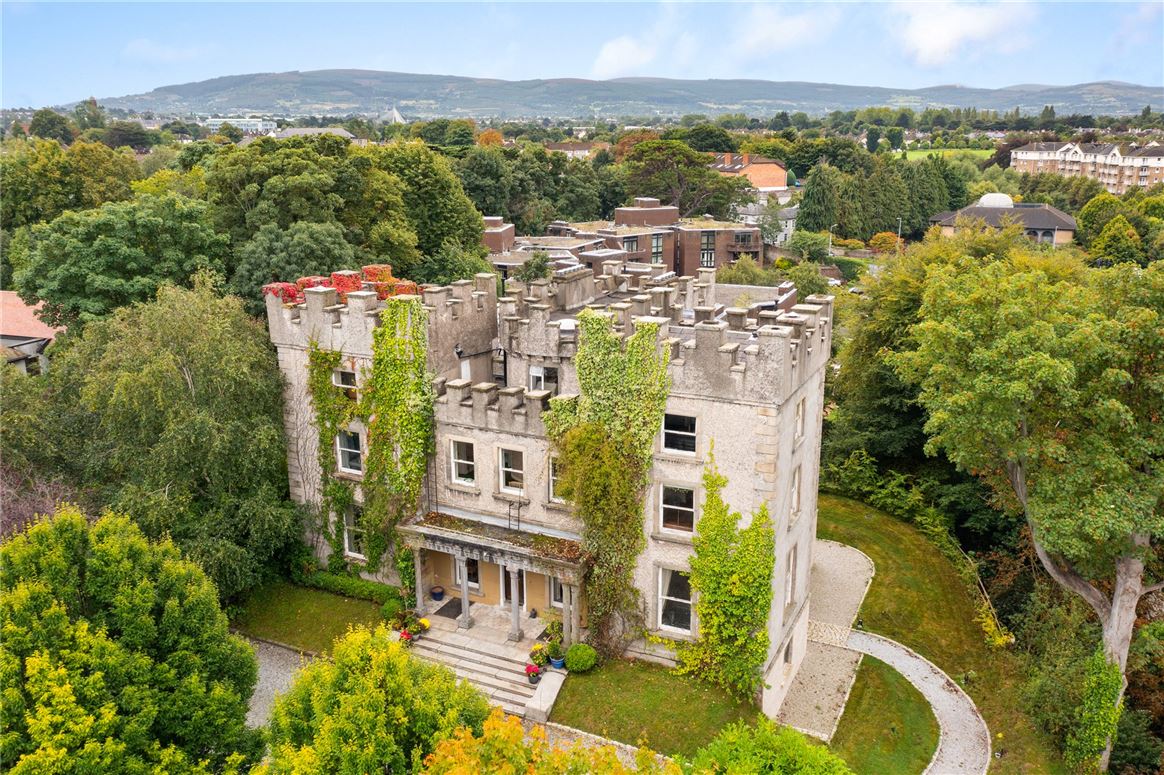

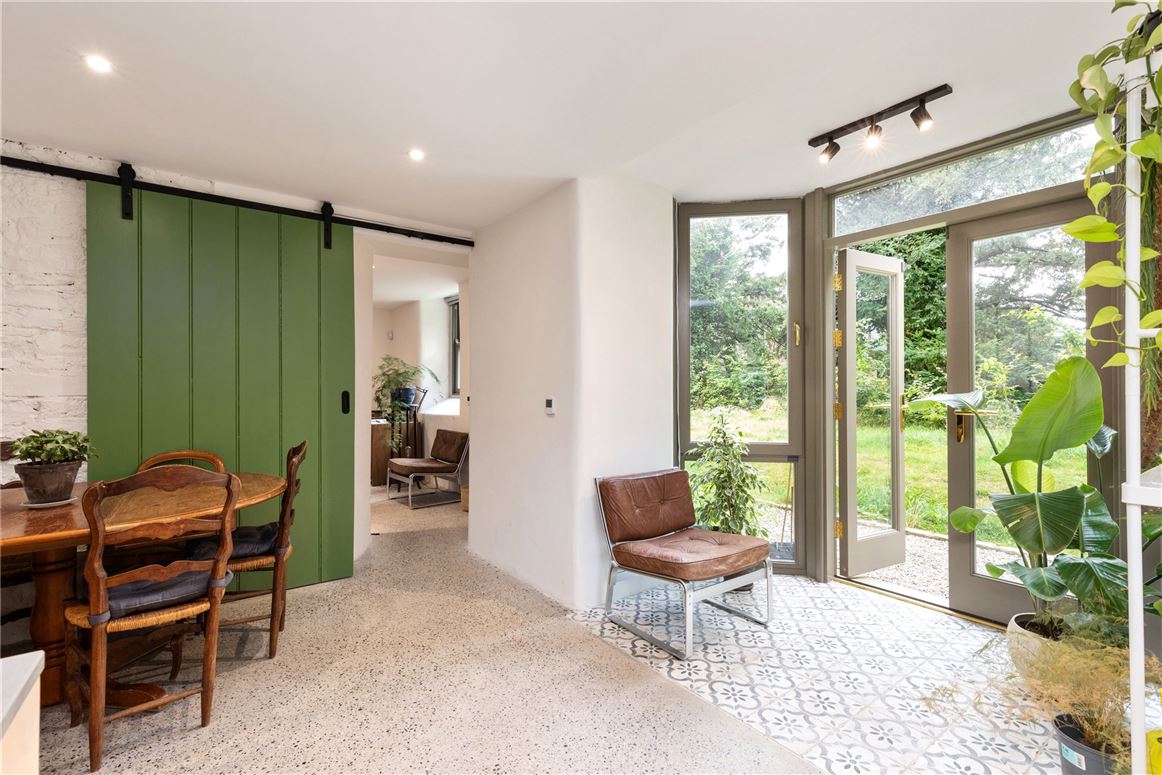
 Irish Historic Houses