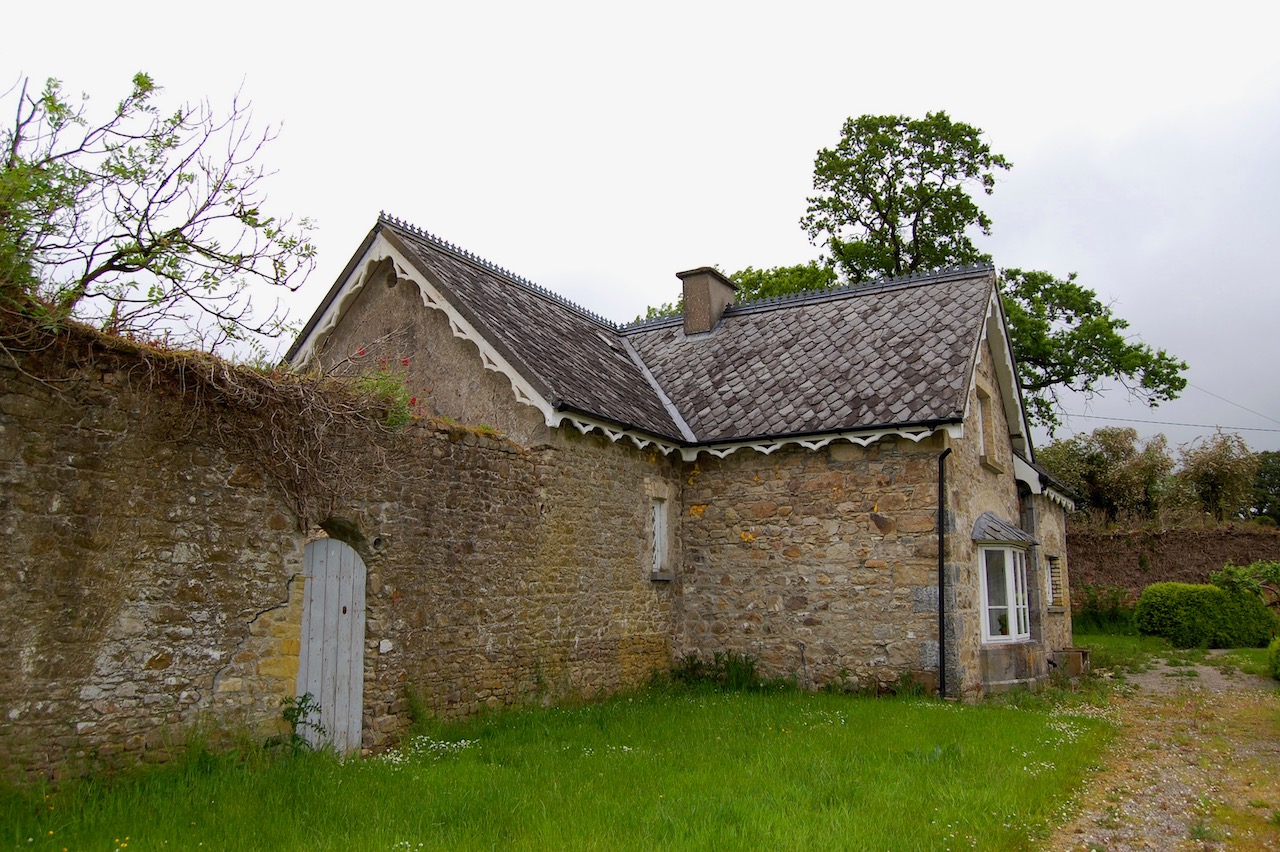
Places to visit and stay in County Limerick

On the map above:

blue: places to visit that are not section 482

purple: section 482 properties

red: accommodation

yellow: less expensive accommodation for two

orange: “whole house rental” i.e. those properties that are only for large group accommodations or weddings, e.g. 10 or more people.

green: gardens to visit

grey: ruins

I’m working on write-ups at the moment so am updating this entry for County Limerick, after we visited during Heritage Week last year. We’ll be visiting Limerick again later in the year to see the Old Rectory in Rathkeale, and hopefully Odellville and Kilpeacon. Last year we stayed in Ash Hill and I highly recommend it!

Limerick:

1. Askeaton Castle, County Limerick – OPW

2. Desmond Castle, Adare, County Limerick – OPW

3. Desmond Castle, Newcastlewest, County Limerick – OPW

4. Glebe House, Holycross, Bruff, Co. Limerick – section 482

5. Glenville House, Glenville, Ardagh, Co. Limerick – section 482

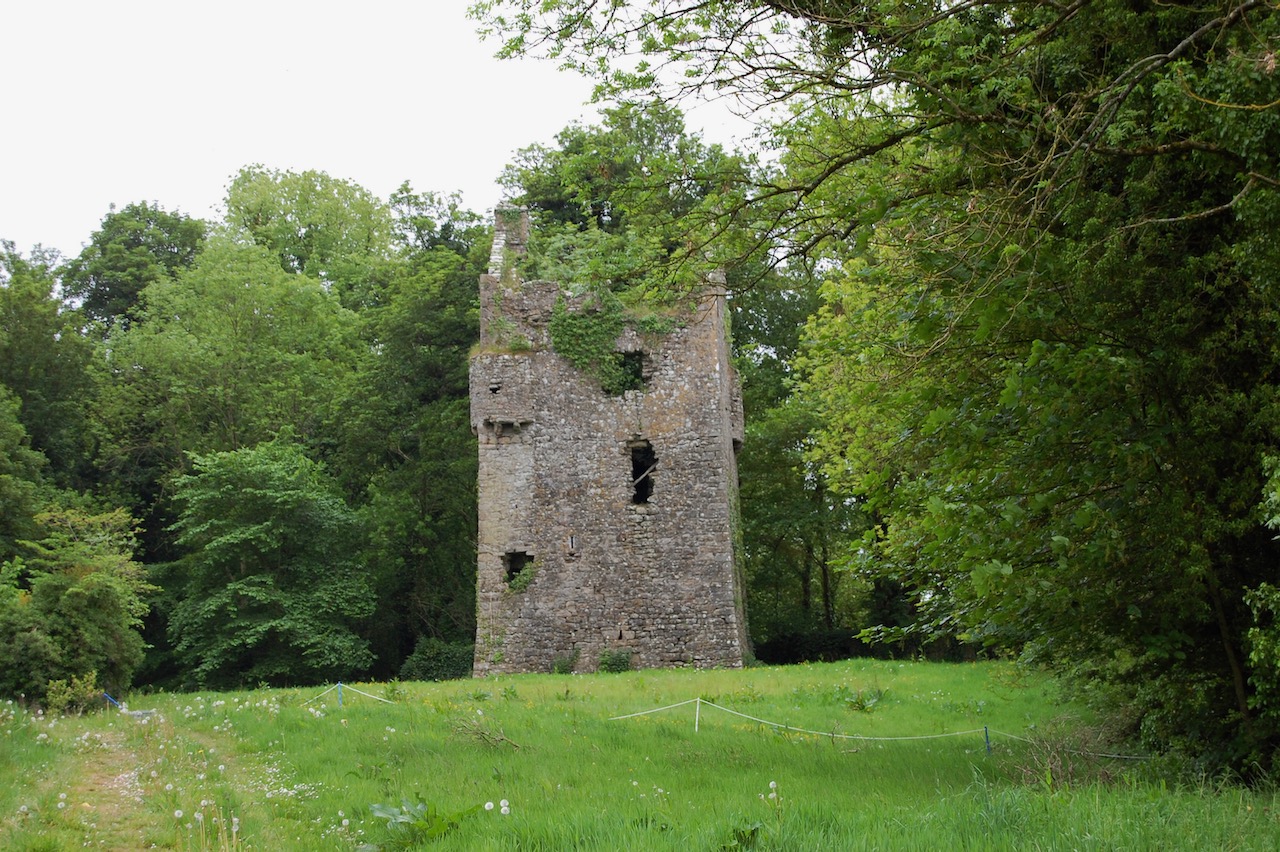
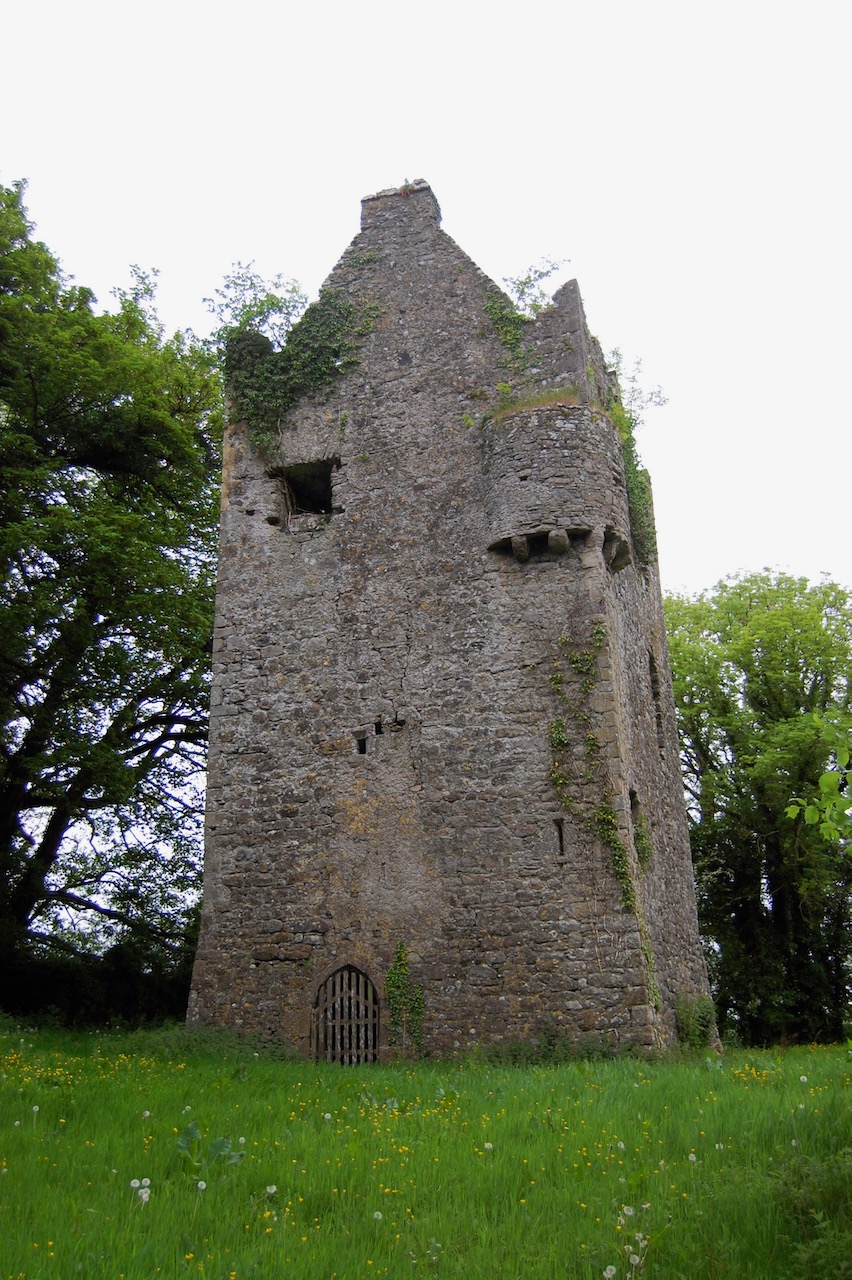
6. Glenquin Castle, Newcastle West, Co Limerick – open to visitors 

7. Glenstal Abbey, County Limerick

8. Kilpeacon House, Crecora, Co. Limerick – section 482

9. King John’s Castle, Limerick

10. Odellville House, Ballingarry, Co. Limerick – section 482

11. Mount Trenchard House and Garden, Foynes, Co. Limerick – section 482

12. The Old Rectory, Rathkeale, Co. Limerick – section 482

Places to stay, County Limerick:

1. Adare Manor, Limerick – hotel

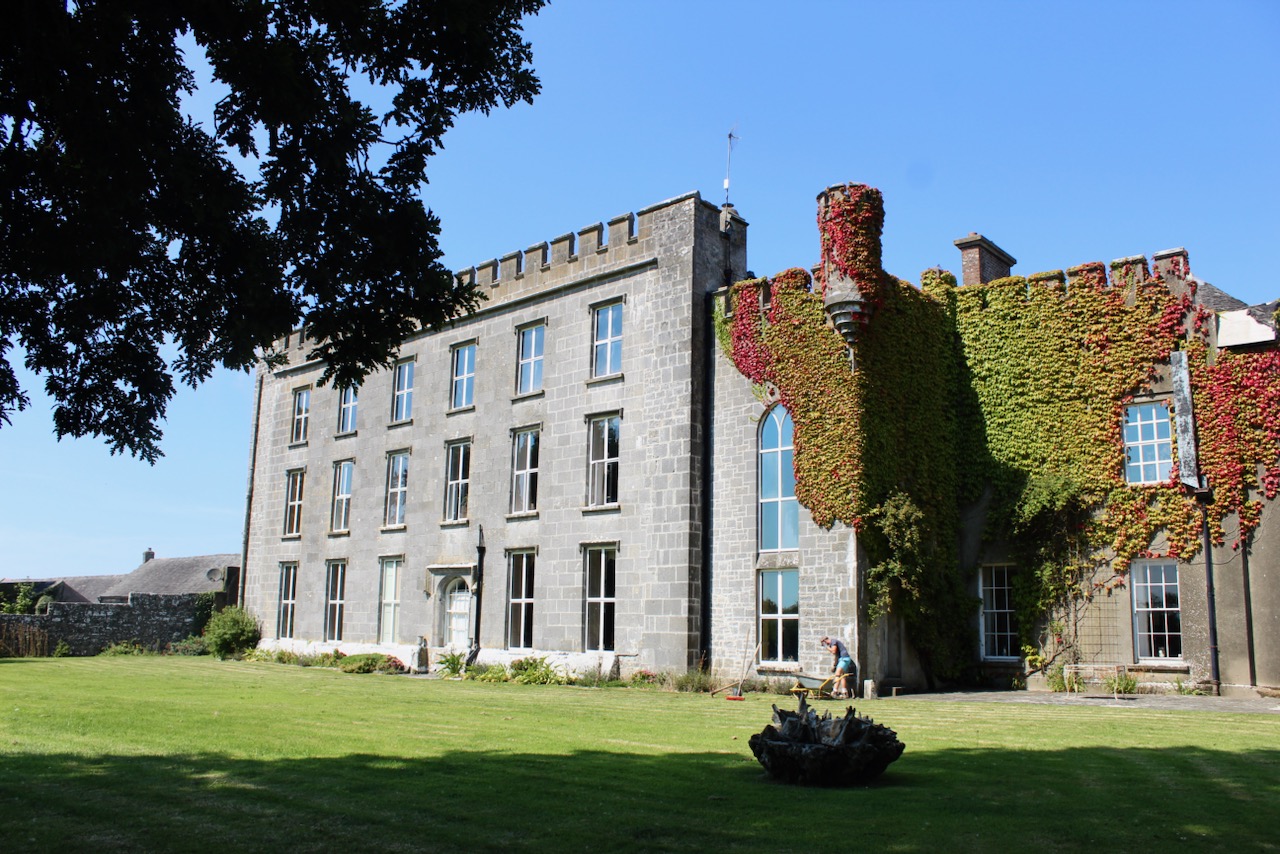
2. Ash Hill Towers, Kilmallock, Co Limerick – Hidden Ireland accommodation

3. Ballyteigue House, County Limerickself-catering whole house accommodation, rental per week

4. Deebert House, Kilmallock, County Limerick – B&B and self-catering

5. The Dunraven, Adare, Co Limerick – hotel

Whole house rental County Limerick

1. Ballyteigue House, Bruree, County Limerick – self-catering whole house accommodation, rental per week

2. Fanningstown Castle, Adare, County Limerick – sleeps 10

3. Flemingstown House, Kilmallock, Co. Limerick – whole house accommodation, up to 11 guests

4. Glin Castle, County Limerick – castle rental.

5. Springfield Castle, Drumcollogher, Co. Limerick – castle rental
2026 Diary of Irish Historic Houses (section 482 properties)

To purchase an A5 size 2026 Diary of Historic Houses (opening times and days are not listed so the calendar is for use for recording appointments and not as a reference for opening times) send your postal address to jennifer.baggot@gmail.com along with €20 via this payment button. The calendar of 84 pages includes space for writing your appointments as well as photographs of the historic houses. The price includes postage within Ireland. Postage to U.S. is a further €10 for the A5 size calendar, so I would appreciate a donation toward the postage – you can click on the donation link.

€20.00

donation

Help me to pay the entrance fee to one of the houses on this website. This site is created purely out of love for the subject and I receive no payment so any donation is appreciated!

€15.00

Limerick:

1. Askeaton Castle, County Limerick – OPW

See my OPW write-up: https://irishhistorichouses.com/2022/06/26/opw-sites-in-munster-clare-limerick-and-tipperary/

2. Desmond Castle, Adare, County Limerick – OPW

See my OPW write-up:

https://irishhistorichouses.com/2022/06/26/opw-sites-in-munster-clare-limerick-and-tipperary/

Desmond Castle, Adare, courtesy of National Library of Ireland, photograph by Robert French, Lawrence Photographic Collection.

3. Desmond Castle, Newcastlewest, County Limerick – OPW
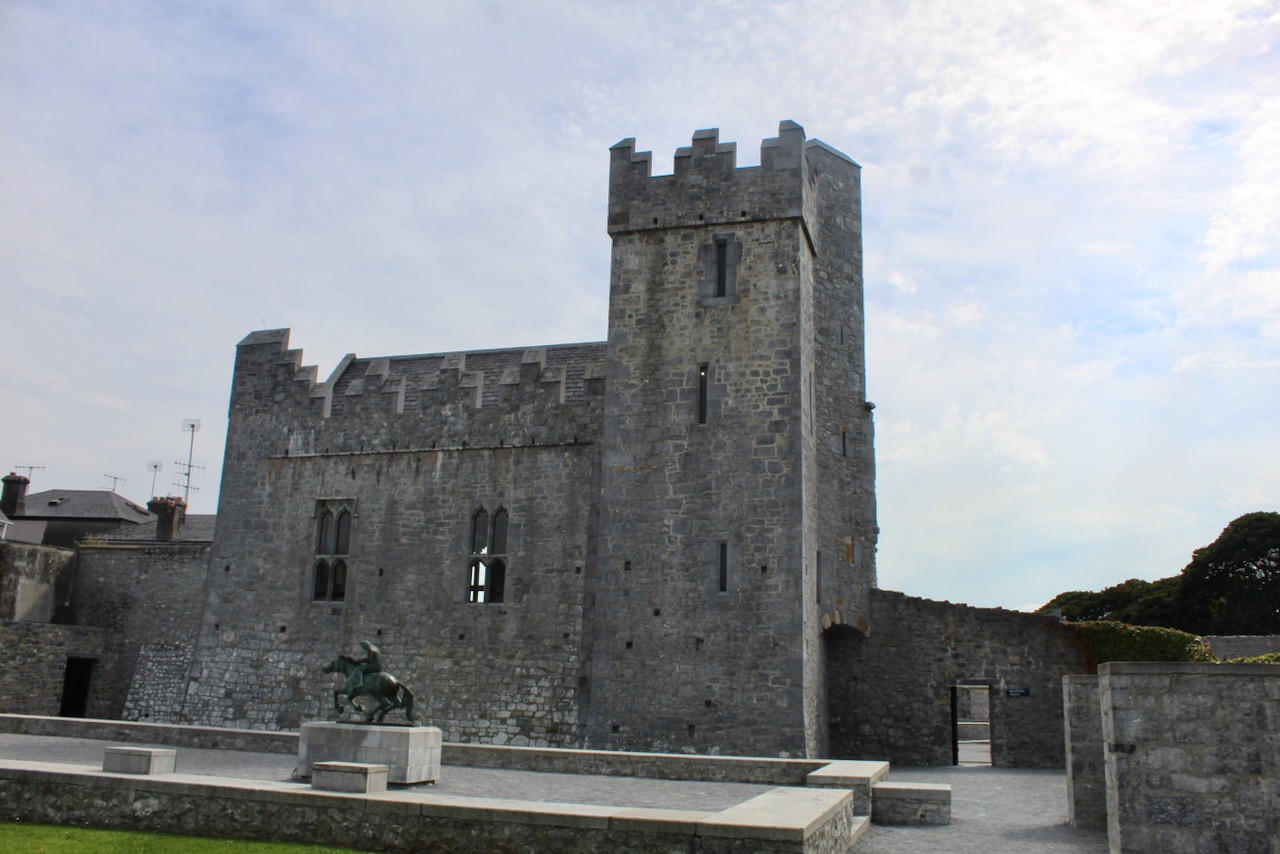
Desmond Castle, Newcastle West, County Limerick, August 2022. Photograph © Jennifer Winder-Baggot, www.irishhistorichouses.com

See my entry https://irishhistorichouses.com/2024/12/03/desmond-banqueting-hall-newcastlewest-county-limerick/

4. Glebe House, Holycross, Bruff, Co. Limerick – section 482

Open dates in 2026: Jan 5-30 Mon-Fri 2.30pm-6.30pm, June 8-22 Mon-Fri 2.30-6.30pm, Aug 15-23 Mon-Sun 9am-1pm, Sept 7-22, Mon-Fri, 2.30pm-6.30pm, Sat-Sun, 9am-1pm

Fee: Free

5. Glenville House, Glenville, Ardagh, Co. Limerick V42 X225 – section 482
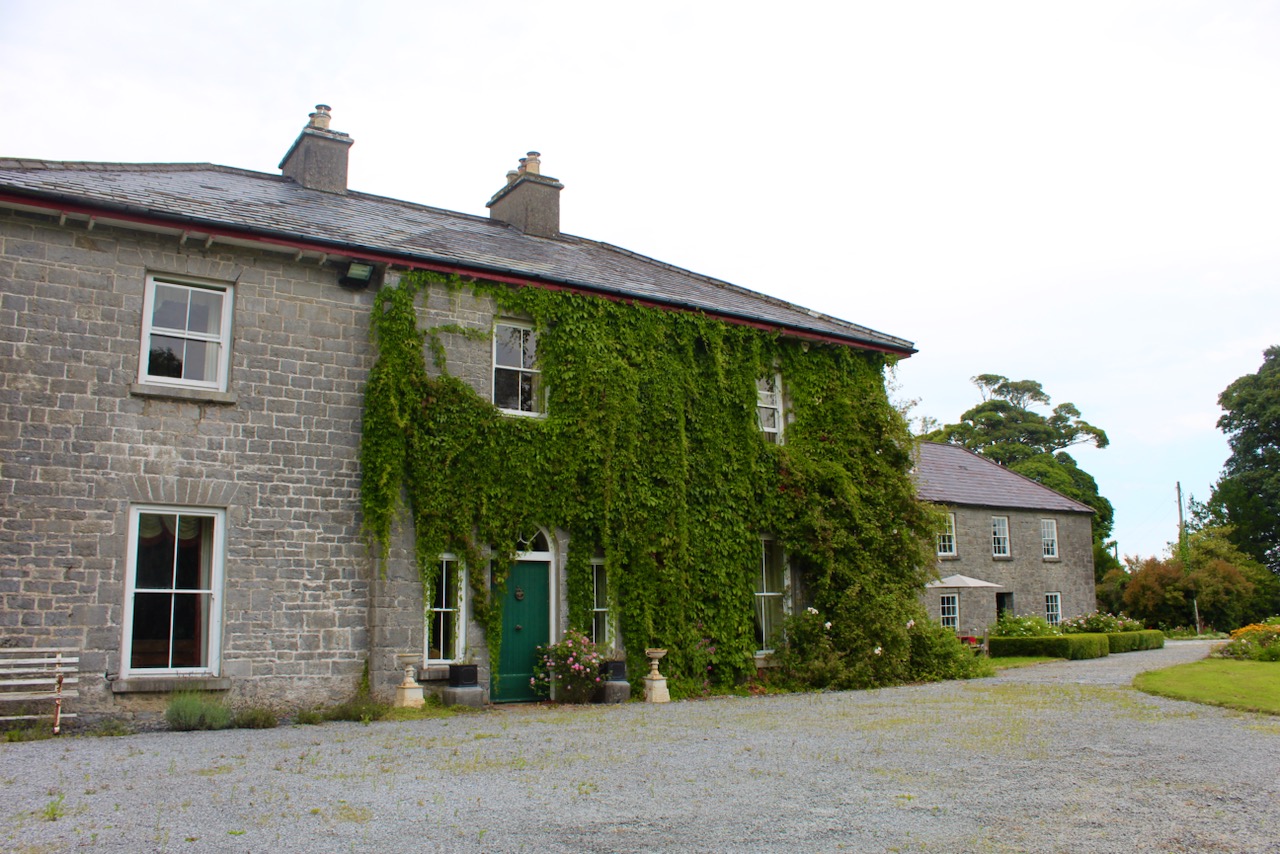
Glenville House, County Limerick, August 2022. Photograph © Jennifer Winder-Baggot, www.irishhistorichouses.com

Open dates in 2026: Apr 1-30, May 1-30, June 2-10, Tue-Sat, Aug 15-23, 9.30am-1.30pm

Fee: adult/OAP/student €5, child free

See my entry https://irishhistorichouses.com/2023/03/19/glenville-house-glenville-ardagh-co-limerick-v42-x225/
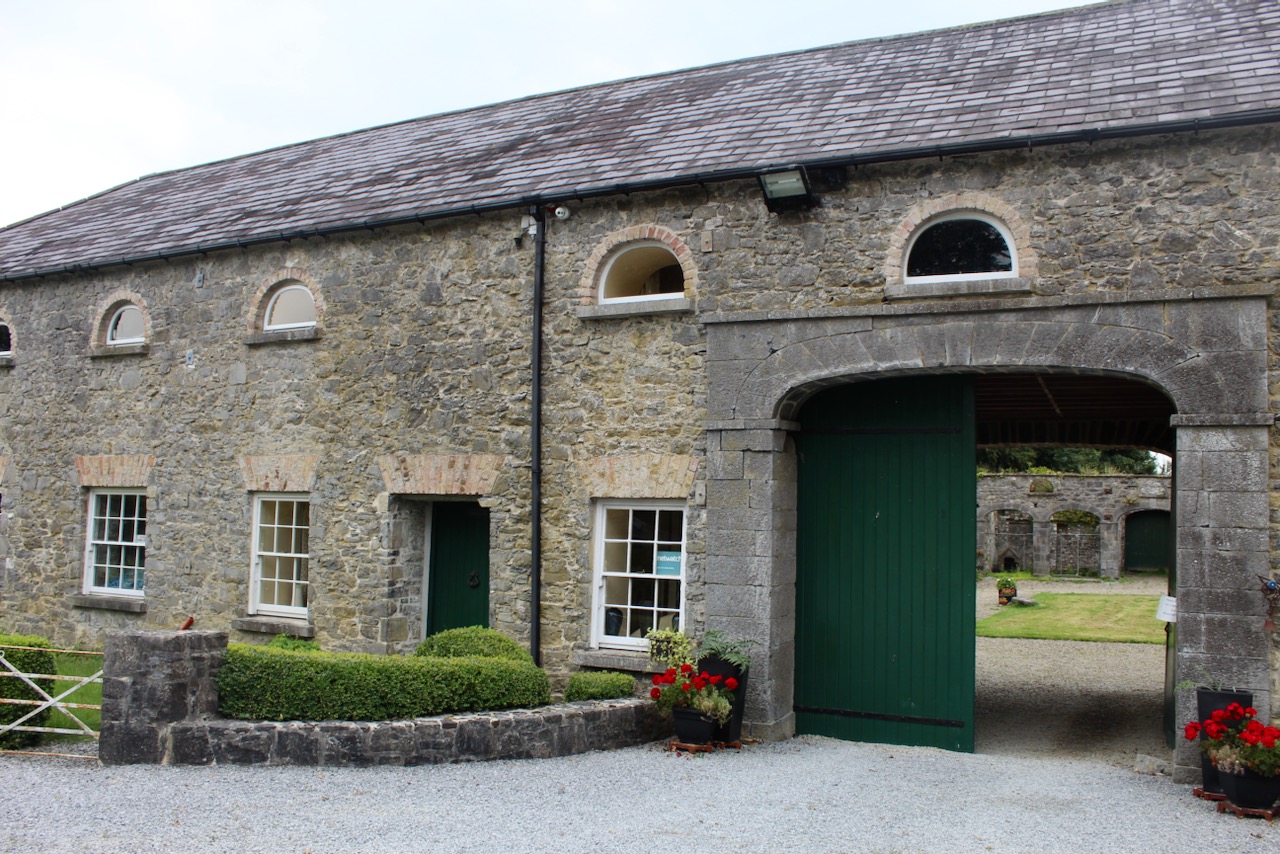
Photograph © Jennifer Winder-Baggot, www.irishhistorichouses.com

6. Glenquin Castle, Newcastle West, Co Limerick – open to visitors 

One of the finest tower houses to survive from the 16th century, Gleann an Choim (Glen of the Shelter) is situated a few miles from Ashford at the edge of the road (open to the public during summer). 

This castle was a fortified dwelling, for the protection against raids and invaders, more correctly described as a Tower House. [5]

Robert O’Byrne tells us: “Thought to stand on the site of an older building dating from the 10th century, Glenquin Castle in Killeedy was built by the O’Hallinan family (their name deriving from the Irish Ó hAilgheanáin, meaning mild or noble). When the castle was built seems unclear; both the mid-15th and mid-16th centuries are proposed. Regardless, it is typical of tower houses being constructed at the time right around the country.” [6]

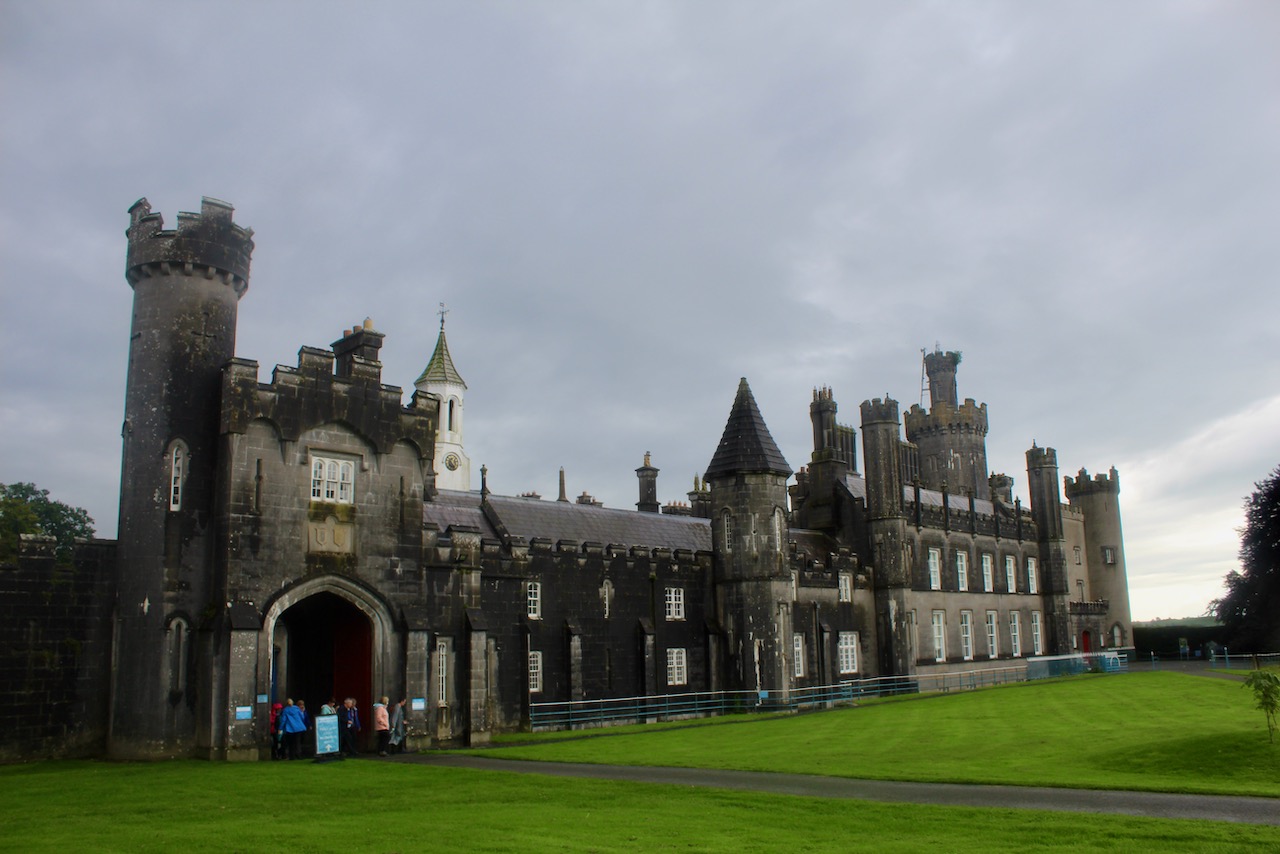
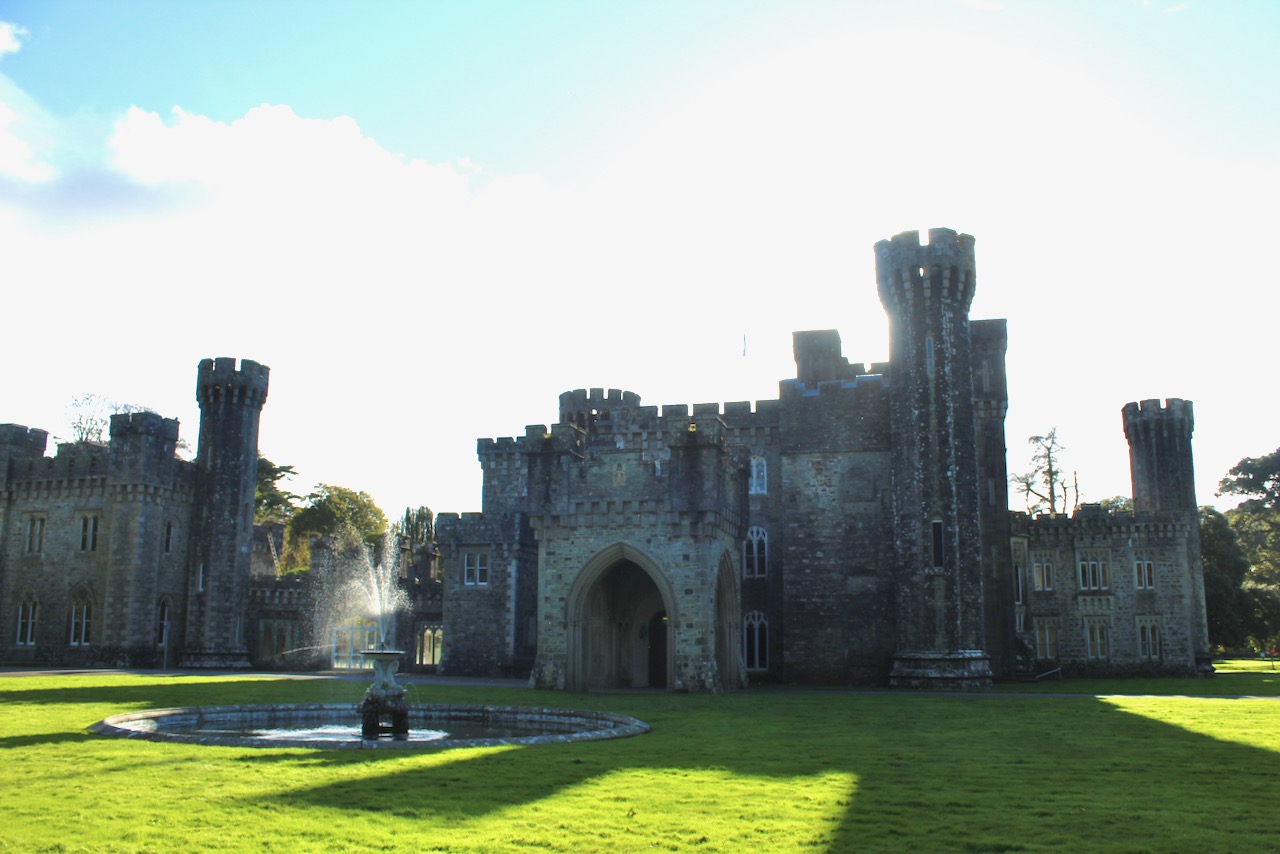
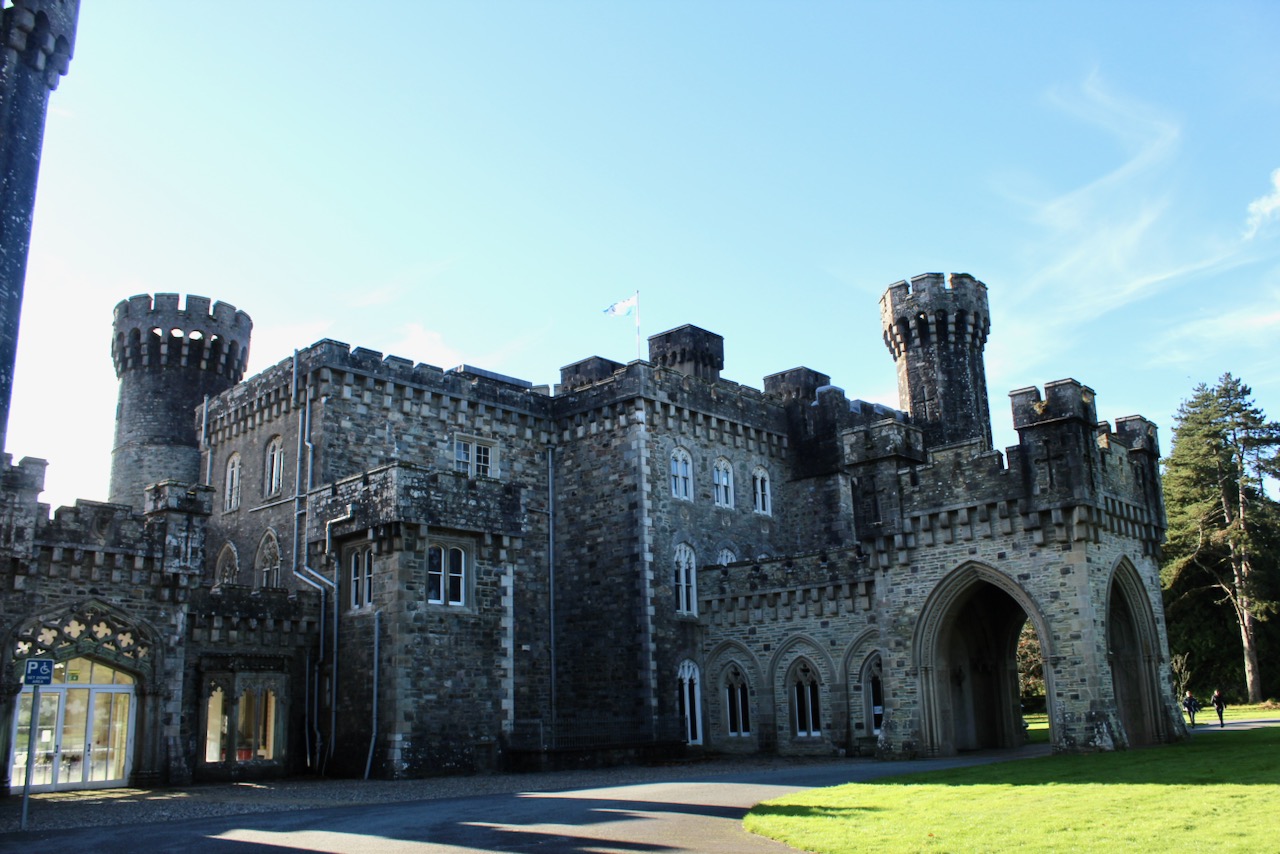
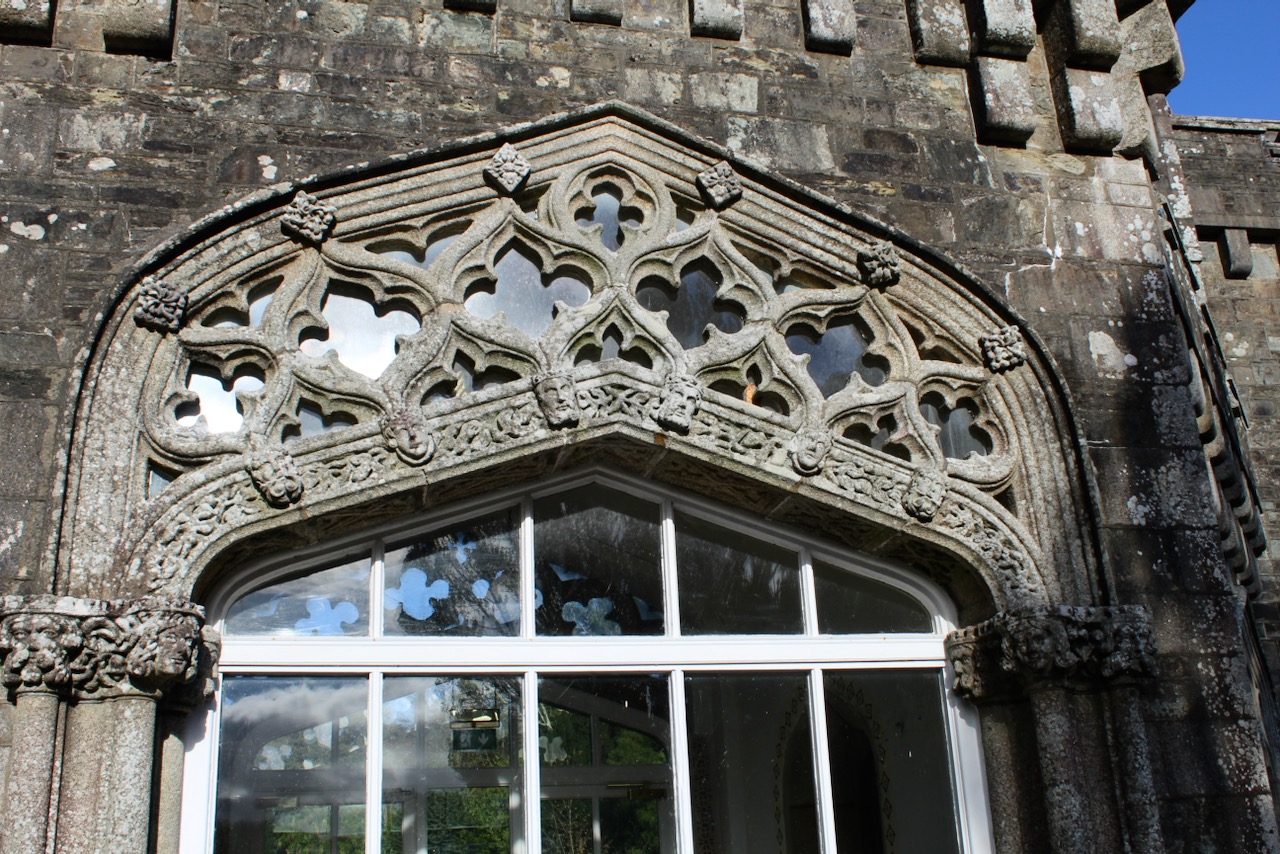
7. Glenstal Abbey, County Limerick
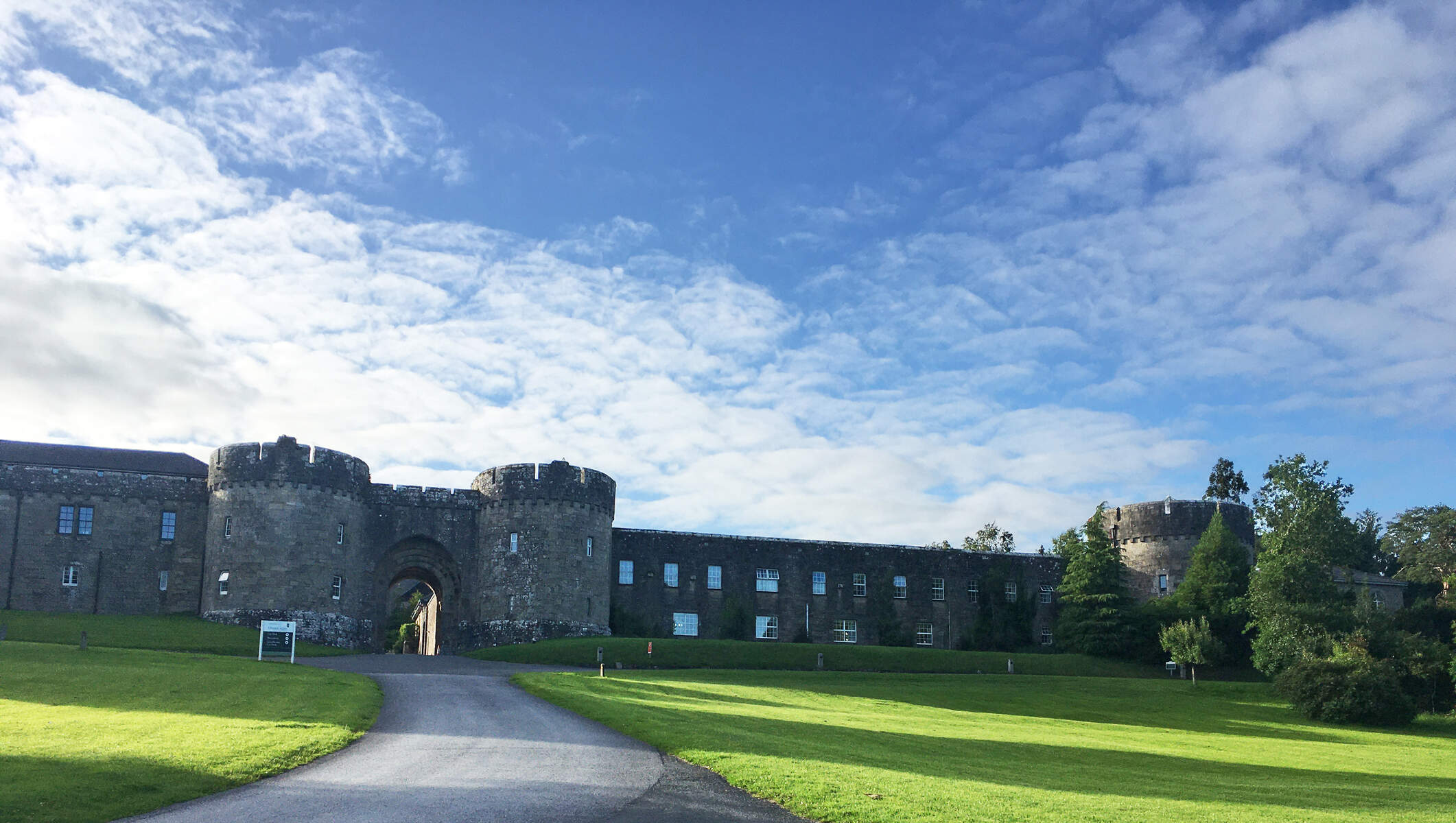
Glenstal Abbey, Courtesy Michelle Crowley 2020 for Tourism Ireland, Ireland’s Content Pool. [7]
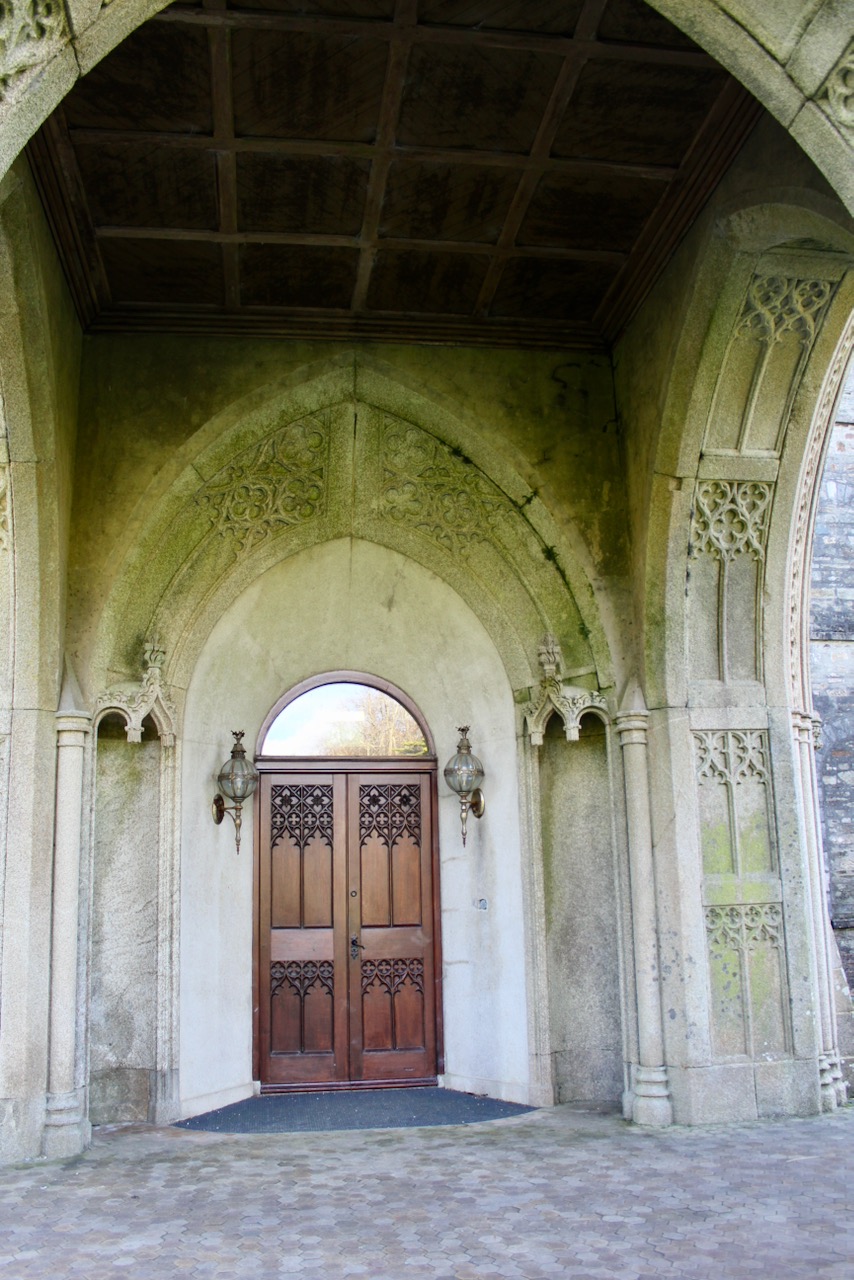
Glenstal Abbey entrance, photograph courtesy of Glenstal facebook page.

https://glenstal.com/

The website tells us: “Glenstal Abbey is home to a community of Benedictine monks in County Limerick, Ireland, and is a place of prayer, work, education and hospitality. The monastery sits alongside a popular guesthouse and a boarding school for boys, housed within a 19th century Normanesque castle amidst five hundred magnificent acres of farmland, forest, lakes and streams.

We are happy to welcome groups who wish to visit the monastery and spend some time getting to know our place, our tradition and our life.”
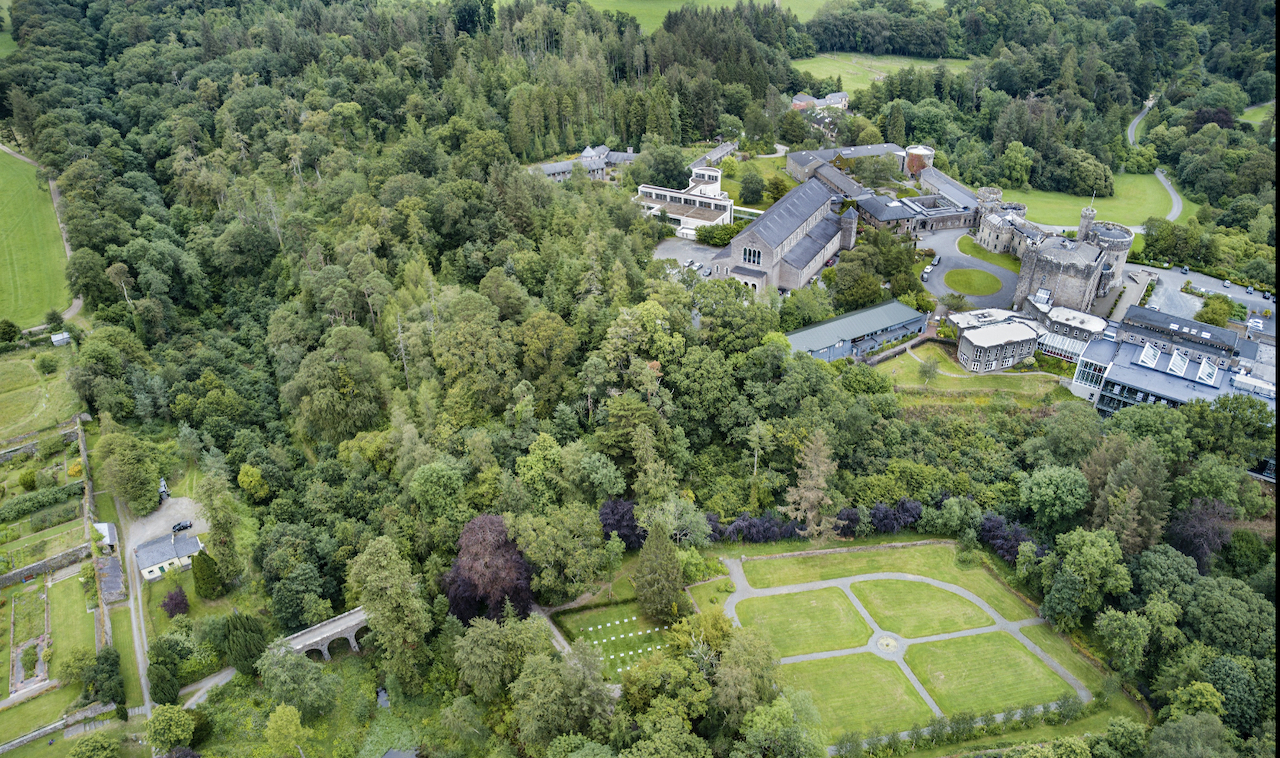
Glenstal Abbey, photograph courtesy of Glenstal website.

You can book to stay, as a retreat: https://glenstal.com/abbey/stay/

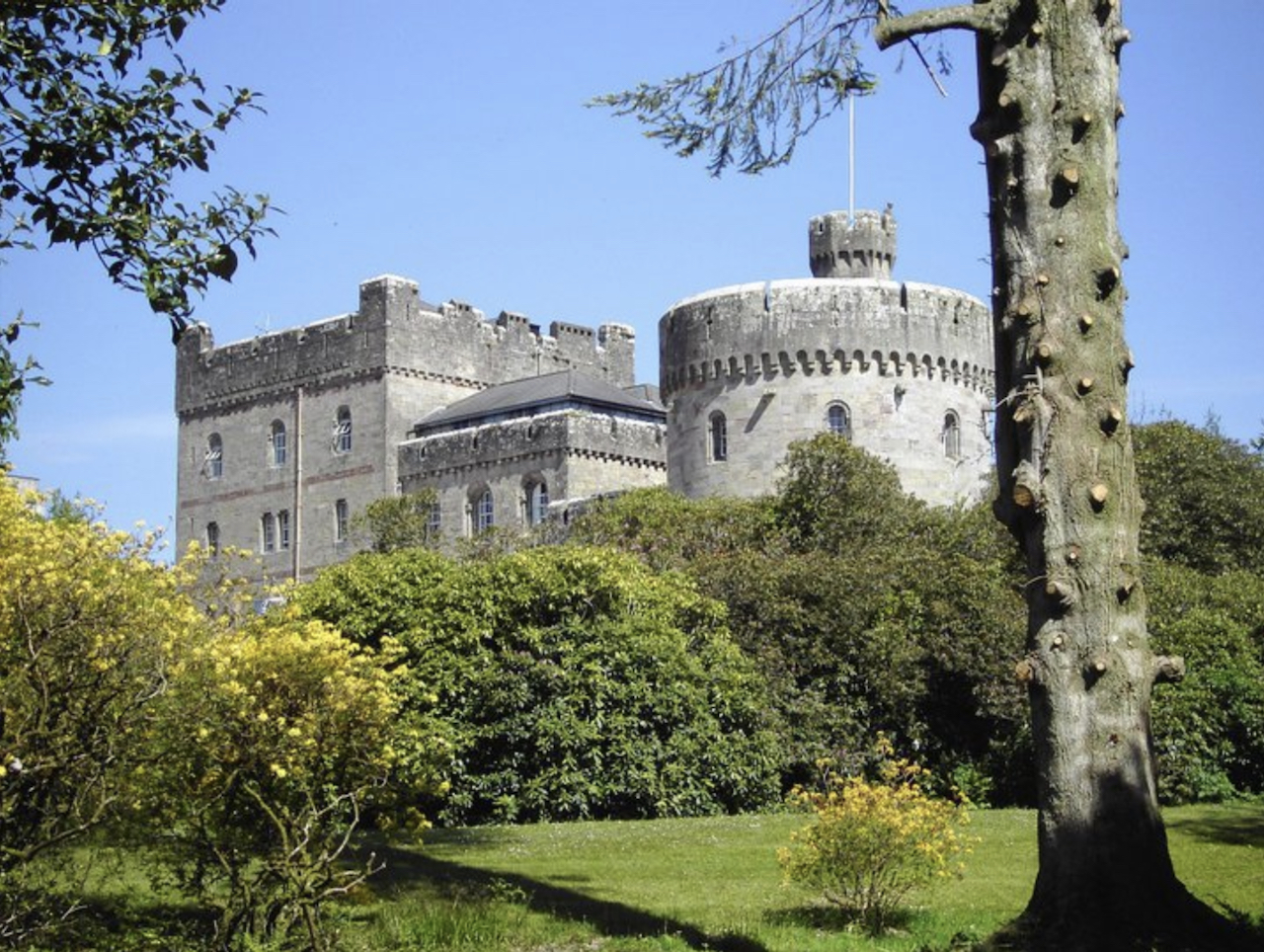
The castle was built as a home for Joseph Barrington (1764-1846), 1st Baronet of Limerick. Joseph married Mary Baggott – I wonder are we distantly related? She was the daughter of Daniel Baggot (the landed families website tells us that he was a bootseller in Limerick!). Joseph’s son Matthew (1788-1861), 2nd Baronet was also involved with having the home built.

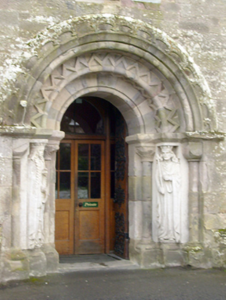
View of a copy of the romansque cathedral door in Glenstall. Country Life 03/10/1974 [8]

The front door is flanked by figures of Henry II and Queen Eleanor, who were such a warring couple that one wonders if they were chosen in ignorance: the Queen holds a scroll on which is inscribed the Irish welcome, Cead mile failte. [9]

The Dictionary of Irish Biography tells us that in 1830 Joseph Barrington 1st Baronet built Barrington’s Quay on the north bank of the Shannon, and (with others) initiated land reclamation and the construction of embankments to allow the city of Limerick to expand along the river.
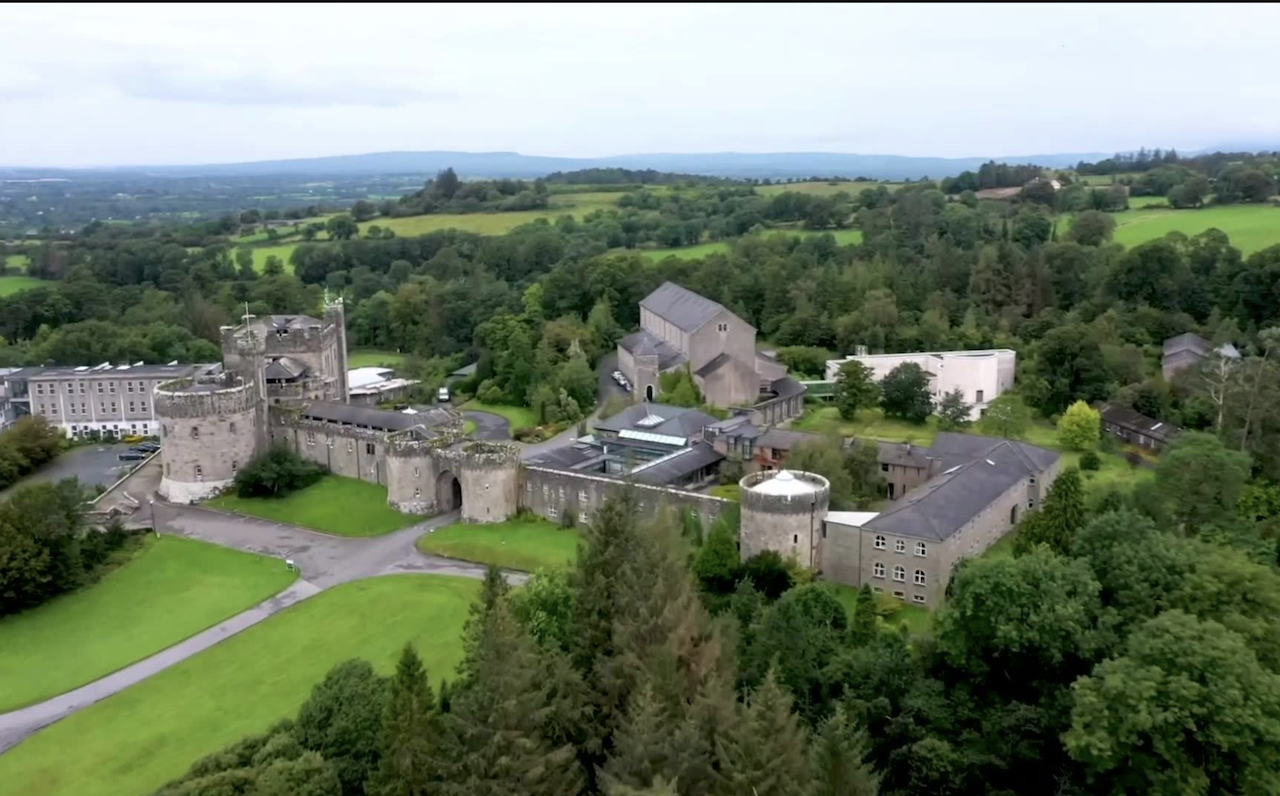
Glenstal Abbey, photograph courtesy of Glenstal facebook page.

Mark Bence-Jones writes (1988):

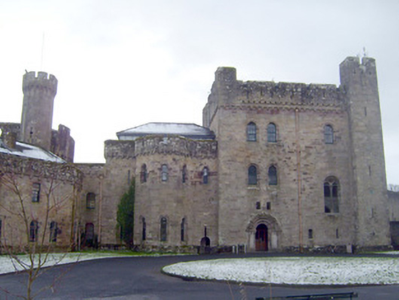
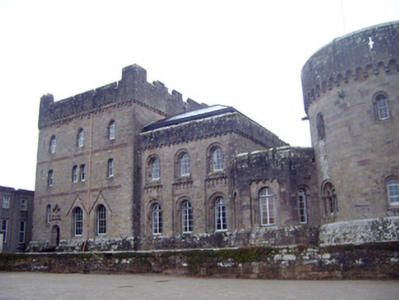
p. 139. “(Barrington, BT/Pb) A massive Norman-Revival castle by William Bardwell, of London, begun in 1837, though not finished till about 1880. 

The main building comprises a square, three-storey keep joined to a broad round tower by a lower range. 

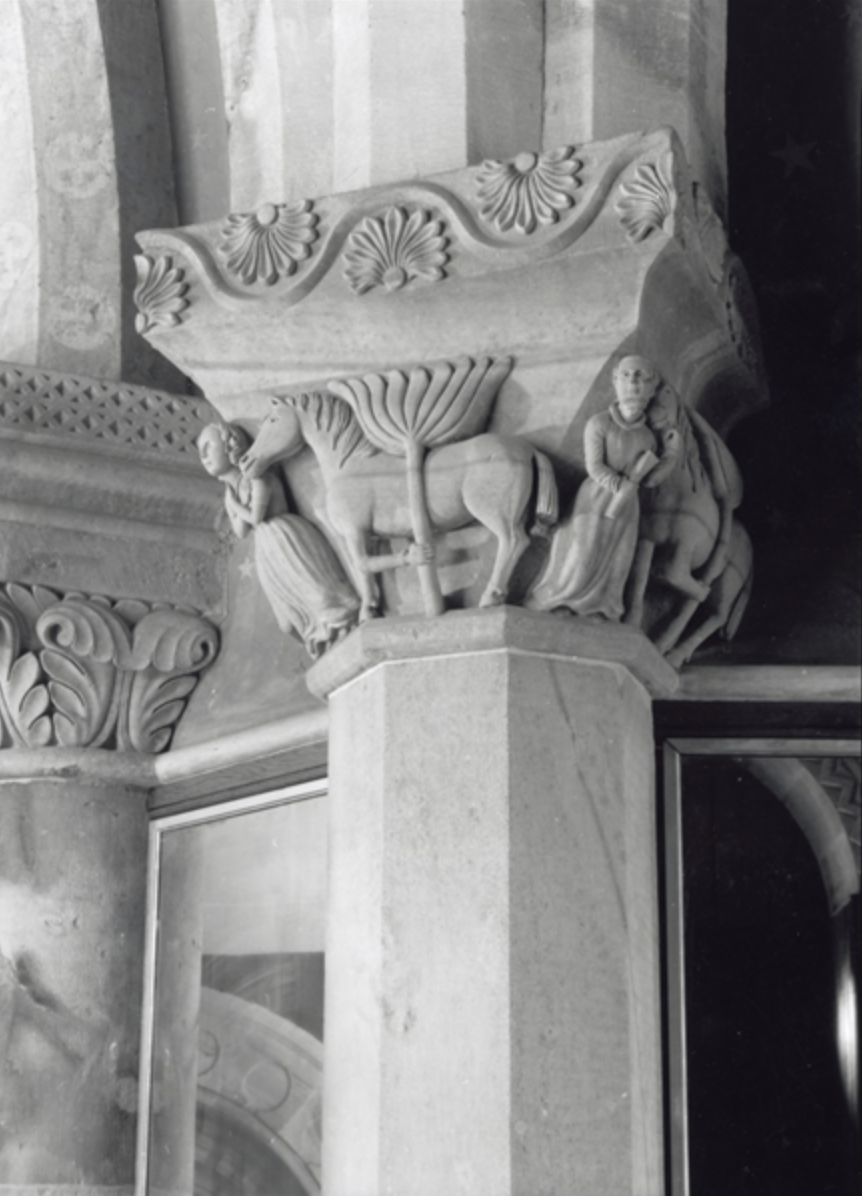
The entrance front is approached through a gatehouse copied from that of Rockingham Castle, Northamptonshire. The stonework is of excellent quality and there is wealth of carving; the entrance door is flanked by the figures of Edward I and Eleanor of Castille; while the look-out tower is manned by a stone soldier. Groined entrance hall; staircase of dark oak carved with animals, foliage and Celtic motifs, hemmed in by Romanesque columns; drawing room with mirror in Norman frame. Octagonal library at the base of the round tower, lit by small windows in very deep recesses; the vaulted ceiling painted with blue and gold stars; central pier panelled in looking-glass with fireplace. Elaborately carved stone Celtic-Romanesque doorway copied from Killaloe Cathedral between two of the reception rooms. Glen with fine trees and shrubs; river and lake, many-arched bridge. Now a Benedictine Abbey and a well-known  boys’ public school.” 

Glenstal Abbey, photograph from National Inventory of Architectural Heritage.

Sean O’Reilly writes: “the castle remains one of the most magnificent attempts at creating an Irish version of the medieval Anglo-Norman castle. Yet Glenstal’s castle-like form is not due to the need for defence. In a tradition going back to Georgian castles such as Glin, Co Limerick and Charleville forest, Co Offaly, the intention is to evoke some ancient time, but combined with the needs of a modern country house.” [10]

Glenstal Abbey, photograph from National Inventory of Architectural Heritage.

“(p. 172)The appearance of antiquity might also give to its patron at least the suggestion of an ancient lineage, and that in itself, in an increasingly disjointed Irish society, was not without significance. The Barringtons settled in Limerick relatively late, at the end of the seventeenth century, and furthered their fame less though marriage than through hard work, innovative industry and successful trading. Pofessional advancement was not accompanied by significant social advance, and though Joseph Barrington was a baronet, the family were in essence business people rather than aristocracy. Although there was no speedier way of securing the impression of title and history than by having one’s own castle, his son Matthew, Crown solicitor for Munster, must have recognized the discomfort of real castles, and so decided to build a more comfortable, modern version. 
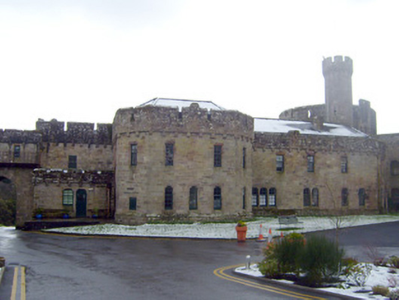
Glenstal Abbey, photograph from National Inventory of Architectural Heritage.

The design passed through numerous phases even before building began. Even after construction commenced in 1838, from designs provided by the successful English architect William Bardwell, changes, indecision and economic variables all added further complications. Initially, before the selection of the design, the problem was the choice of site. Not having inherited lands on which to build, Barrington might use any site, and he decided first on property he had leased in 1818 from the increasingly encumbered Limerick estates of the Lord Carberry. Part of these included the district of Glenstal, at one time intended as a site for the house, and although Barrington later turned to various other sites, he took with him the name. Consequently, in a very characteristic Georgian incongruity, the title of this apparently ancient castle bears no relation to the land on which it sits.

Glenstal Abbey, photograph from National Inventory of Architectural Heritage.

O’Reilly tells us “[William] Bardwell [1795-1890], little known today despite his long life – he died in 1890 aged 95 – was still less familiar when first employed by Barrington, and Glenstal remains his most important work. After training in England he advanced his studies, rather unusually for the date, in France. He gained some celebrity through competing both for the London Houses of Parliament, and for the Fitzwilliam Museum at Cambridge. It may well have been the Norman tower proposed by Bardwell as his entrance to Parliament that suggested him to his Limerick patron, though as all periods of architecture were intended to be represented in that building, any prospective client may have found something of interest.

Glenstal Abbey, photograph from National Inventory of Architectural Heritage.

The ultimate inspiration for Bardwell’s Glenstal lay less with the designs of the Paines or O’Hara than with the work of Thomas Hopper, notably his Gosford Castle in Armagh, of 1819. This was the first Normal revival castle in these islands, and the first in a style that Hopper would make his own. Neither Barrington nor Bardwell need have been with Gosford itself, for by the late 1830s the type was not uncommon. 

“…Bardwell was in Ireland in 1840, reviewing the completed work. It then extended from the largest, southern, tower to the gatehouse in the south-east wall. However, work stopped in the following year, and began again only in 1846 or 1847. Construction paused again in 1849, to recommence in about 1853, with Bardwell finally paid off, and a Cork architect, Joshua Hargrave, appointed to complete the work with restricted funds, and to create something approaching a functioning building…

Glenstal Abbey, photograph from National Inventory of Architectural Heritage.

Most carving was executed by an English firm, W.T. Kelsey of Brompton, which provided fifteen cases of columns, capitals and corbels in 1844. However, the detailing of much of the carved work suggests some familiarity with Irish early Christian sources, and echoes abound of recent work at Adare Manor, itself being slowly built over many years, although using native craftsmen.

View of the Central peri of one of the fire places in the library at Glenstall. Country Life 03/10/1974 [8] 

“If much of the carved detail is evocative rather than accurate, there are also striking and significant copies of Irish early Christian design. The style was then only beginning to receive proper attention as part of Ireland’s heritage. The idea may have been inspired again by Dunraven’s Adare – Barrington is known to have had business dealings with the family – for they used such Hiberno-Romanesque designs in the doorcase of their entrance hall. At Glenstal we find superb copies, notably the doorcase connecting the dining room and drawing room. This is a magnificently carved and surprisingly accurate reconstruction of the doorway in Killaloe Cathedral, Co Clare, today recognized as one of the masterpieces of the Irish Romanesque. A lack of understanding of the importance of such work was prevalent in mid-nineteenth-century Ireland – it might be compared to the recent lack of interest in the heritage of the country house – and its introduction here was an important moment in the history of the revival of interest in Ireland’s Christian and Celtic legacy.

“…It was part of a wider interest in Ireland’s national character that the future of this important house was put in jeopardy. The tragic accidental shooting of the daughter of the 5th Baronet, Charles Barrington, by the IRA in an ambush on the Black and Tans in May 1921, led to the family’s departure and, eventually, the sale of the estate in 1925.

Glenstal Abbey entrance, photograph courtesy of Glenstal facebook page.

Timothy William Ferres quotes “The Origins and Early Days of Glenstal” by Mark Tierney OSB, in Martin Browne OSB and Colmán O Clabaigh (eds), The Irish Benedictines: a history (Dublin, 2005):

When eventually, in 1925, the time came to leave, Sir Charles made a magnificent gesture. He wrote to the Irish Free State government, offering Glenstal as a gift to the Irish nation, specifically suggesting that it might be a suitable residence for the Governor-General. 

Mr W T. Cosgrave, the President of the Executive Council of the Irish Free State, and Mr Tim Healy, the Governor-General, visited Glenstal in July 1925, and ‘were astonished at its magnificence, which far exceeded our expectations’. However, financial restraints forced them to turn down the offer. Mr Cosgrave wrote to Sir Charles, stating that ‘our present economic position would not warrant the Ministry in applying to the Dail to vote the necessary funds for the upkeep of Glenstal’. “
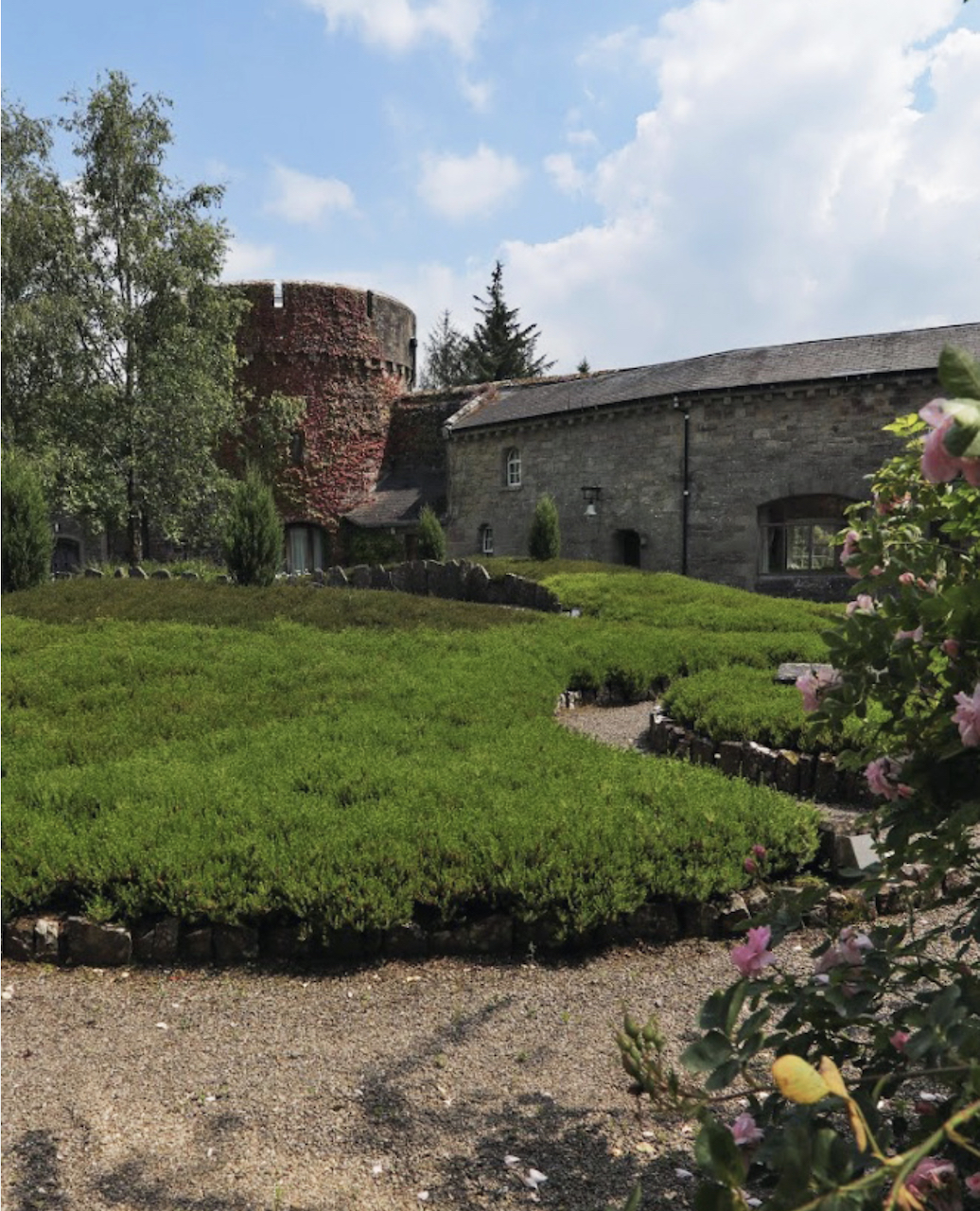
Glenstal Abbey, photograph courtesy of Glenstal website.

8. Kilpeacon House, Crecora, Co. Limerick – section 482

Open dates in 2026: May 2-30, June 1-30, Mon-Sat, Aug 15-23, 10am-2pm

Fee: adult/child/OAP/student €8
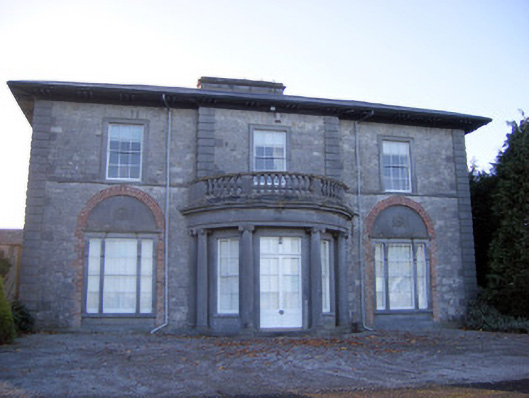
Kilpeacon, County Limerick, photograph from National Inventory of Architectural Heritage.

Mark Bence-Jones writes in his A Guide to Irish Country Houses (1988):

“[Gavin, sub Westropp/IFR] An early C19 villa undoubtedly by Sir Richard Morrison, though it is undocumented; having a strong likeness to Morrison’s “show” villa, Bearforest, Co Cork; while its plan is, in Mr. McPartland’s words, “an ingenious contraction of that of Castlegar,” one of his larger houses in the villa manner, 2 storey; 3 bay front; central breakfront; curved balustraded porch with Ionic columns; Wyatt windows under semi-circular relieving arches on either side in lower storey. Eaved roof. 5 bay side elevation. Oval entrance hall. Small but impressively high central staircase hall lit by lantern and surrounded by arches lighting a barrel-vaulted bedroom corridor. The seat of the Gavin family.

The landed estates database tells us:

Lewis writes that the manor was granted to William King in the reign of James I and that “the late proprietor” had erected a handsome mansion which was now the “property and residence of Cripps Villiers”. In his will dated 1704 William King refers to his niece Mary Villiers. The Ordnance Survey Field Name Book states that Kilpeacon House was the property of Edward Villiers, Dublin, and was occupied by Miss Deborah Cripps. Built in 1820 it was a large, commodious building of 2 stories. It was the residence of Edward C. Villiers at the time of Griffith’s Valuation, held in fee and valued at £60. Bought by Major George Gavin in the early 1850s from the Villiers and the residence of his son Montiford W. Gavin in the early 20th century. The Irish Tourist Association surveyor writes in 1942 that this house was completed in 1799. The owner was Mrs O’Kelly, her husband having purchased the house in 1927 from the Gavins. This house is still extant and occupied.” [11] 

9. King John’s Castle, Limerick
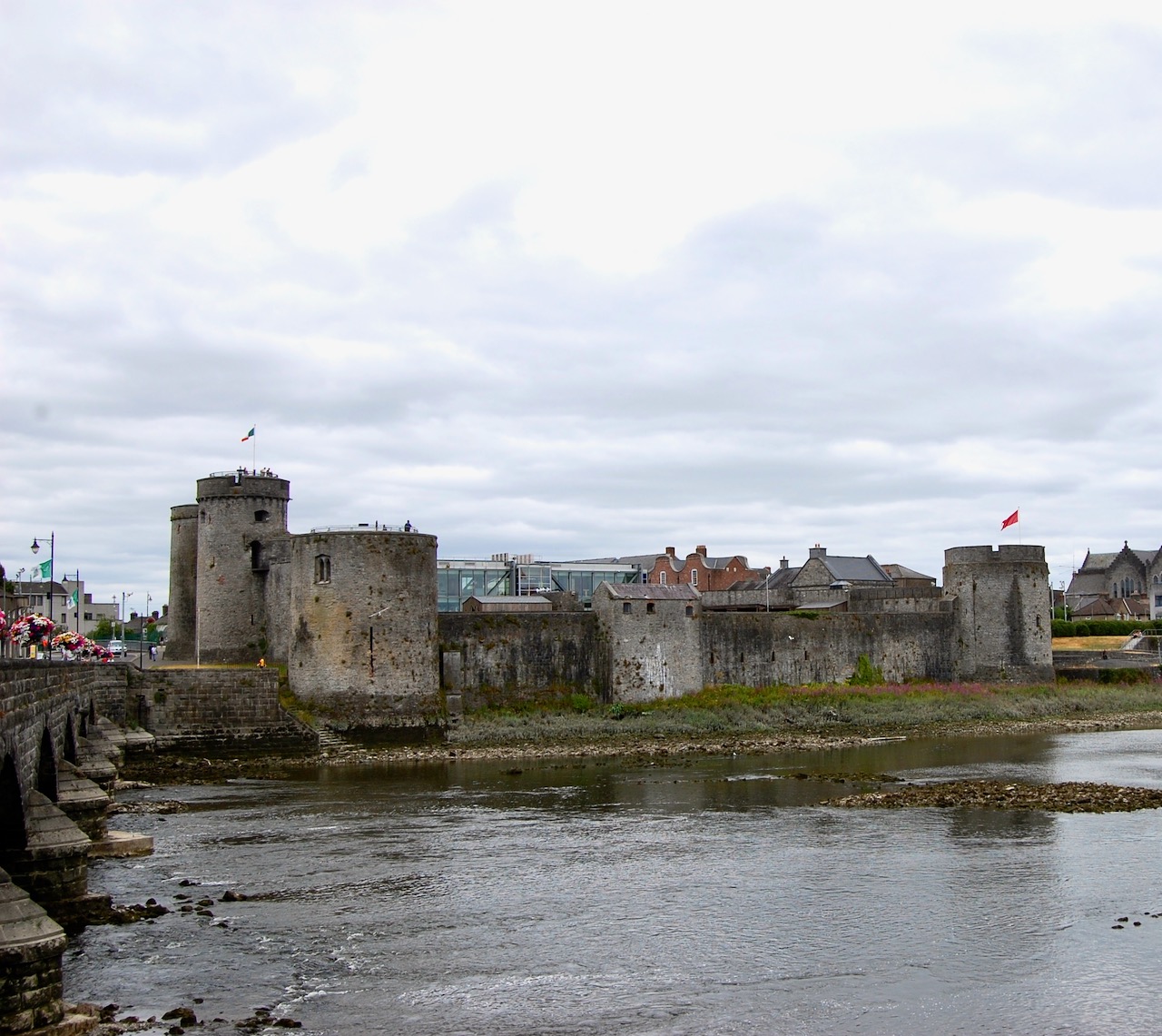
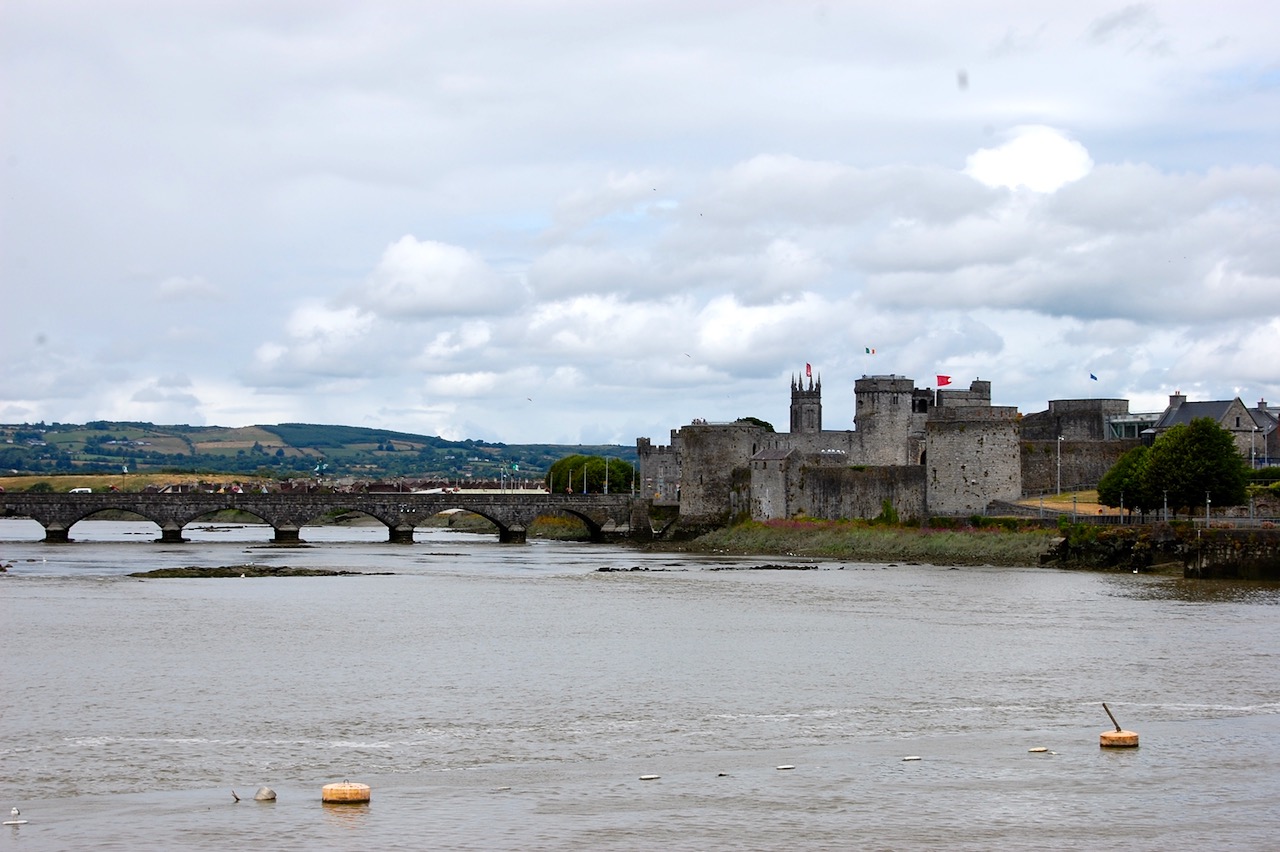
King John’s Castle Limerick, July 2018. Photograph © Jennifer Winder-Baggot, www.irishhistorichouses.com
King John’s Castle, Limerick. Photograph © Jennifer Winder-Baggot, www.irishhistorichouses.com

Maintained by Shannon Heritage. Archiseek tells us: “King John’s Castle, on the south side of Thomond Bridge head, built in 1210 “to dominate the bridge and watch towards Thomond”, is one of the finest specimens of fortified Norman architecture in Ireland.

The castle is roughly square on plan and its 60 meter frontage along the river is flanked by two massive round towers, each over 15m. in diameter with walls 3 metres thick. The castle gate entrance – a tall, narrow gateway between two tall, round towers is quite imposing. There is another massive round tower at the north east corner of the fortification, but the east wall and the square tower defending the south-east corner of the castle, and on which cannons were mounted, is long demolished. 

There was a military barracks erected within the walls in 1751, some of which still remains. Houses were also erected in the castle yard at a very much later date. These have now been removed and a modern visitor centre built on the walls. 

The walls and towers still remaining of the castle are in reasonably good state of preservation. The domestic buildings of the courtyard do not survive, except for remnants of a 13th century hall and the site of what could be the castle chapel.” [12]

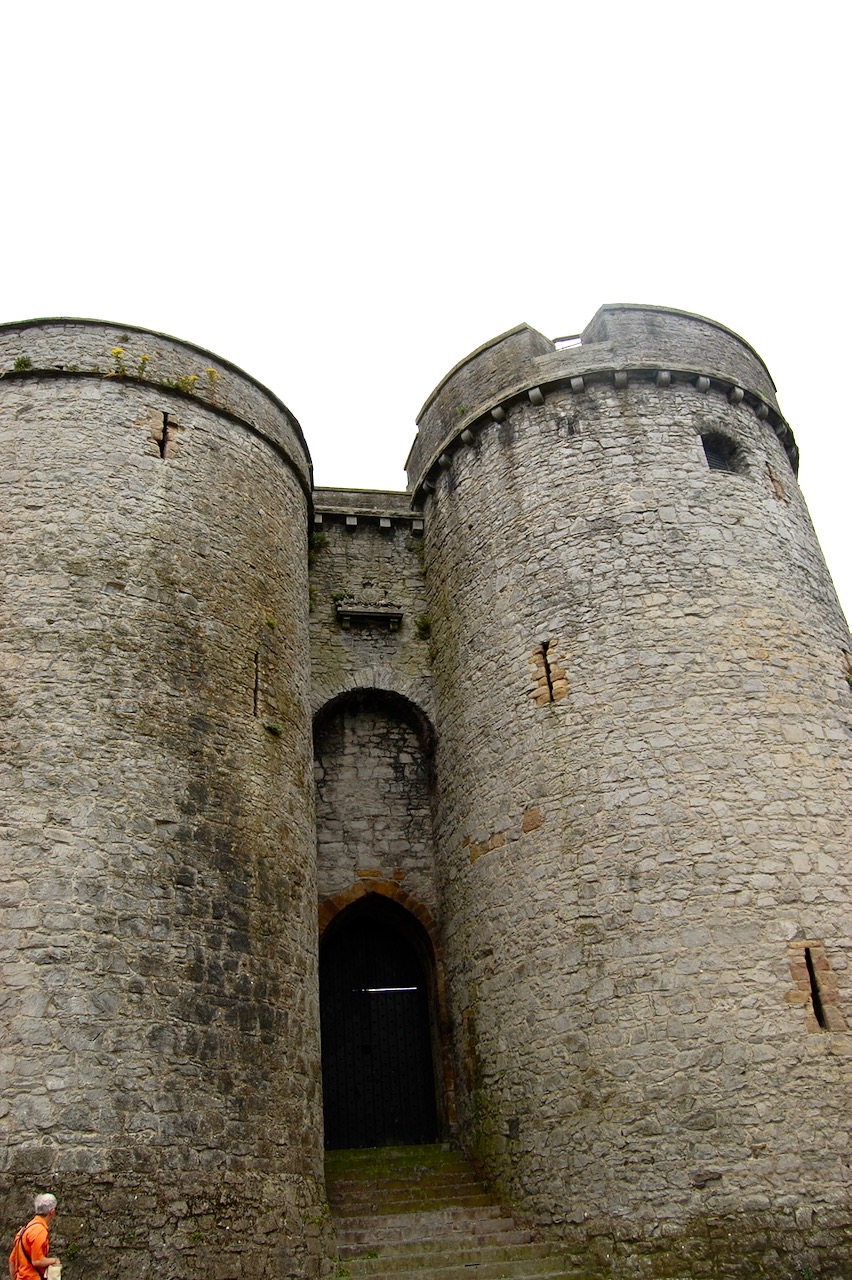
King John’s Castle Limerick, July 2018. Photograph © Jennifer Winder-Baggot, www.irishhistorichouses.com
King John’s Castle Limerick, July 2018, the Gatehouse, built around 1212. Photograph © Jennifer Winder-Baggot, www.irishhistorichouses.com
King John’s Castle, Limerick. Photograph © Jennifer Winder-Baggot, www.irishhistorichouses.com

The castle was built around 1197 under the orders of King John following the invasion of the Anglo-Normans. It was built on the site of an original Viking settlement believed to date back to 922 AD.” [13]

King John’s Castle, Limerick. The information board tells us that from here you can see the Gatehouse and the Great Hall. These are some of the earliest remaining features of the stone castle: the back of the twin-towered gatehouse and the northeast tower. The gatehouse defences were continued into the courtyard by means of an arched passageway, at the end of which were placed the inner gates of the castle. This extension was demolished in the 18th century. Photograph © Jennifer Winder-Baggot, www.irishhistorichouses.com

The information board tells us that built between 1210-1212 along part of the line of the 12th century ringwork, the gatehouse was the first of its kind to be constructed in Ireland, with boldly projecting towers placed on either side of the gate. It followed the latest trend in European castle building, moving from rectangular to round towers, as curved walls offered better protection from attack, particularly from mining. Mining is when one digs a series of holes or “mines” under the walls in order to weaken the walls – hence comes our term “to undermine.” The two towers of the gatehouse are “D” shaped in plan, with three floors of circular chambers within and a parapet on top.

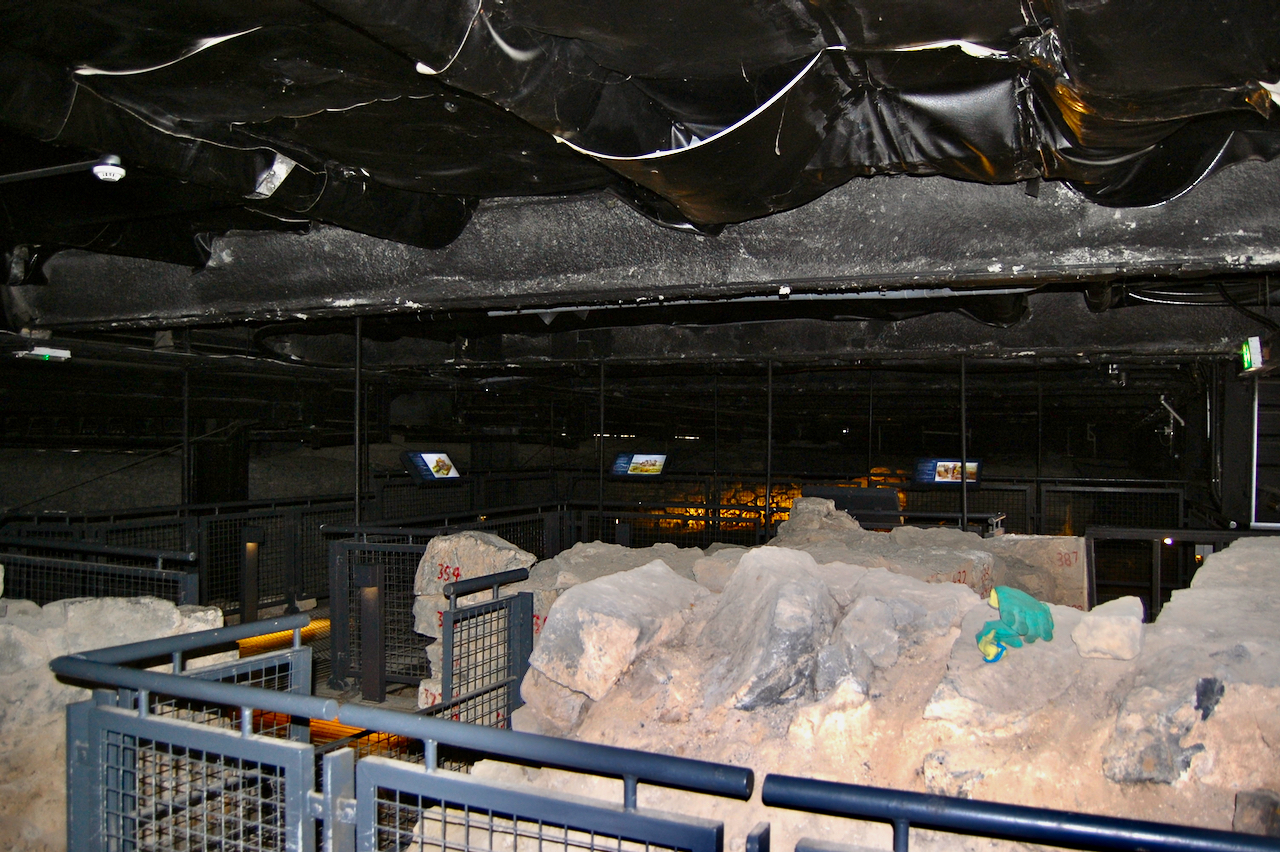
Tunnels “undermined” the walls of Limerick in the siege.
The undercroft of the castle. Photograph © Jennifer Winder-Baggot, www.irishhistorichouses.com

By flanking the gate, the two towers allowed the castle’s entrance to be defended in depth, from a number of well-positioned arrow loops in the chambers. The defenses also included a portcullis and a murder hole. The castle was also supplied via the river, where there is a more modest watergate in the west curtain wall.

“In 1642 the castle was occupied by people escaping the confederate wars and was badly damaged in the Siege of Limerick. The confederate leader Garret Barry had no artillery so dug under the foundations of the castle’s walls, causing them to collapse. There was also considerable damage caused during the Williamite sieges in the 1690s and so the castle has been repaired and restored on a number of occasions.” [13]

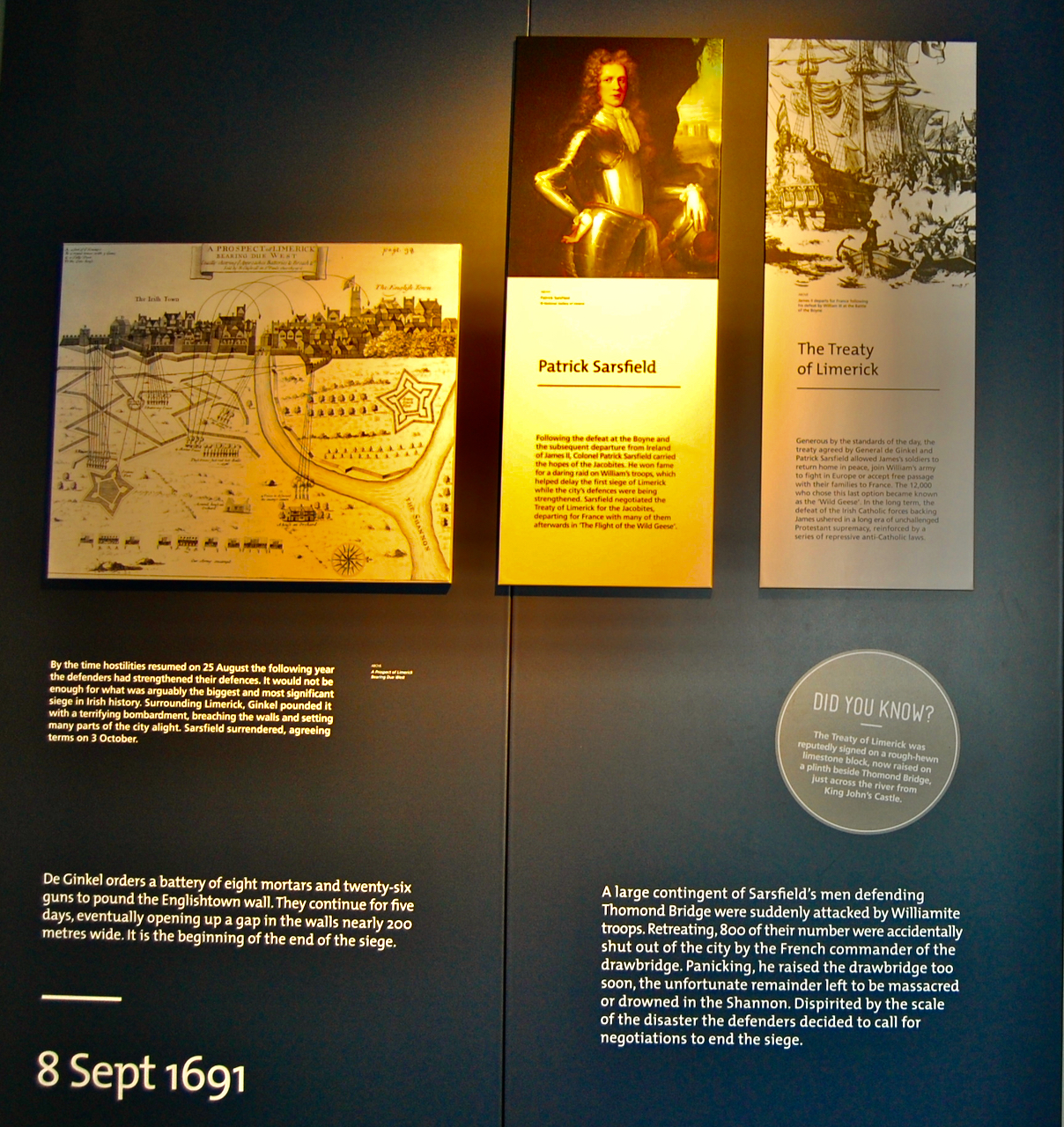
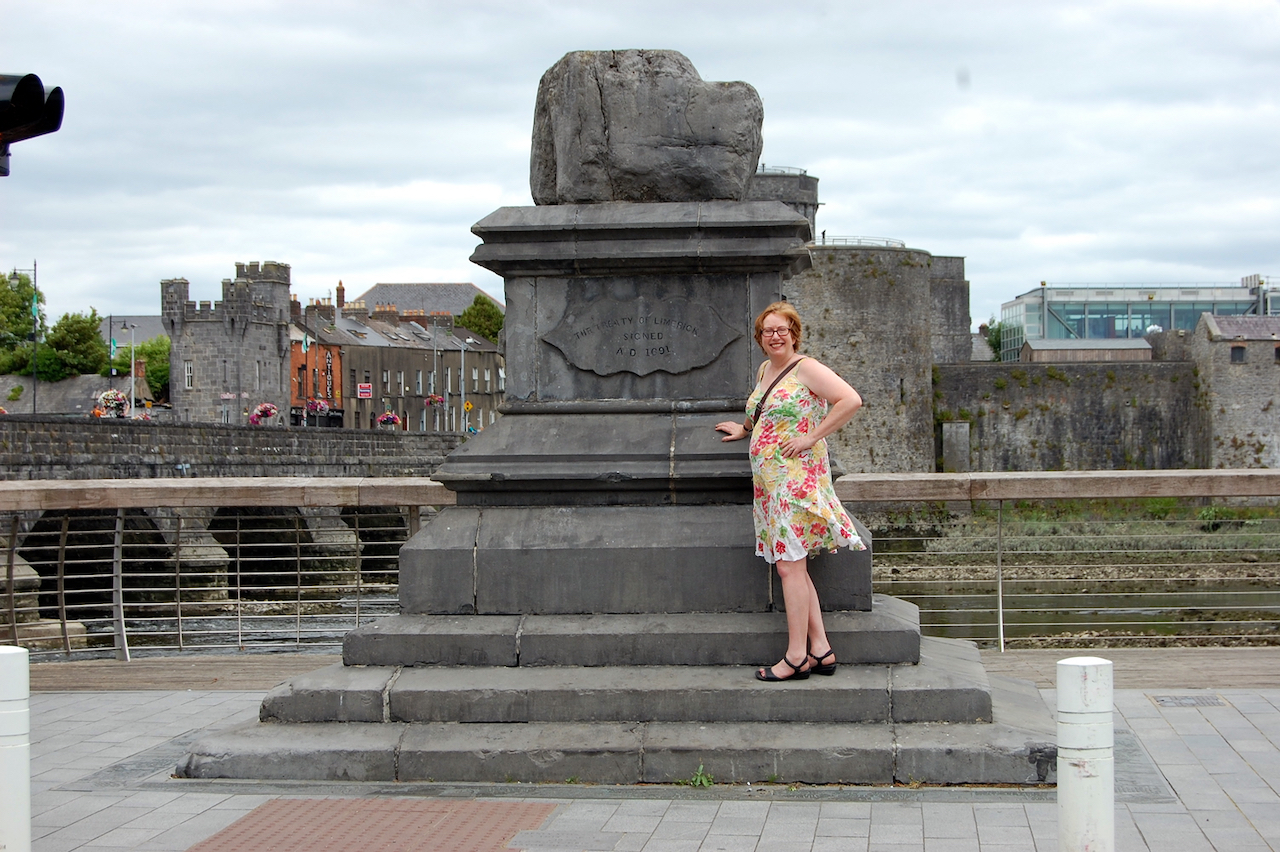
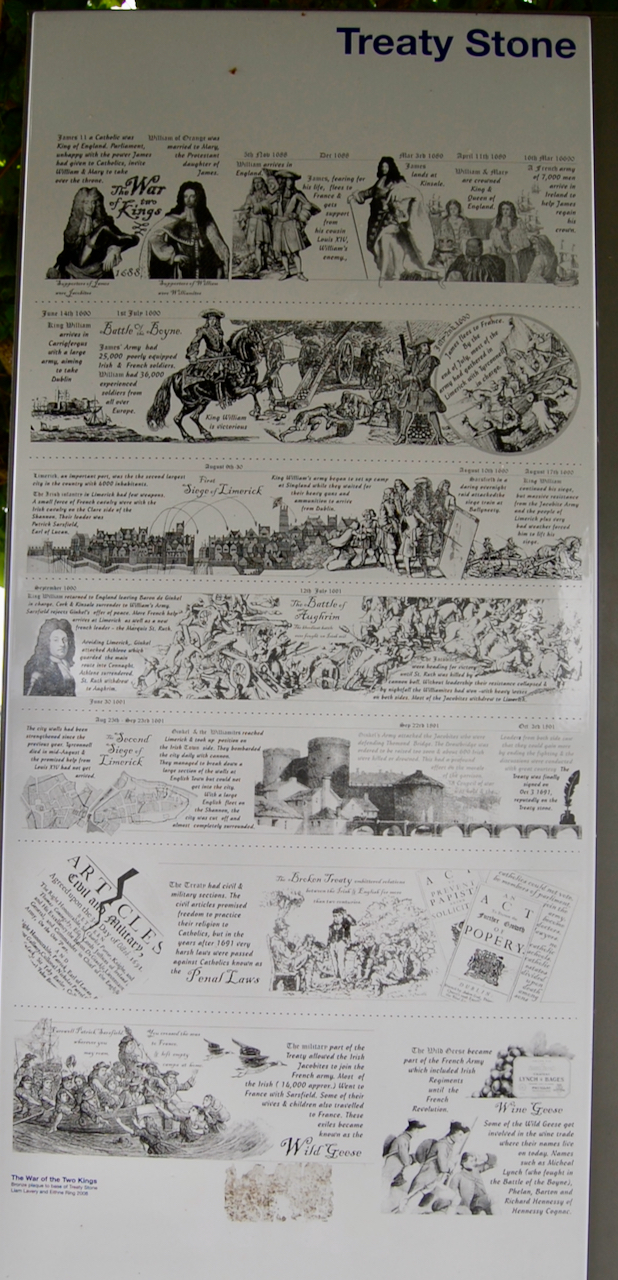
It is a good place here to review the Siege of Limerick. Near the castle is the Treaty Stone: apparently the Treaty of Limerick, which was signed by, amongst others, John Baggot, was signed on this stone, which was later memorialised on a plinth. A series of plaques on the ground around the stone tells us the story of the Siege of Limerick:

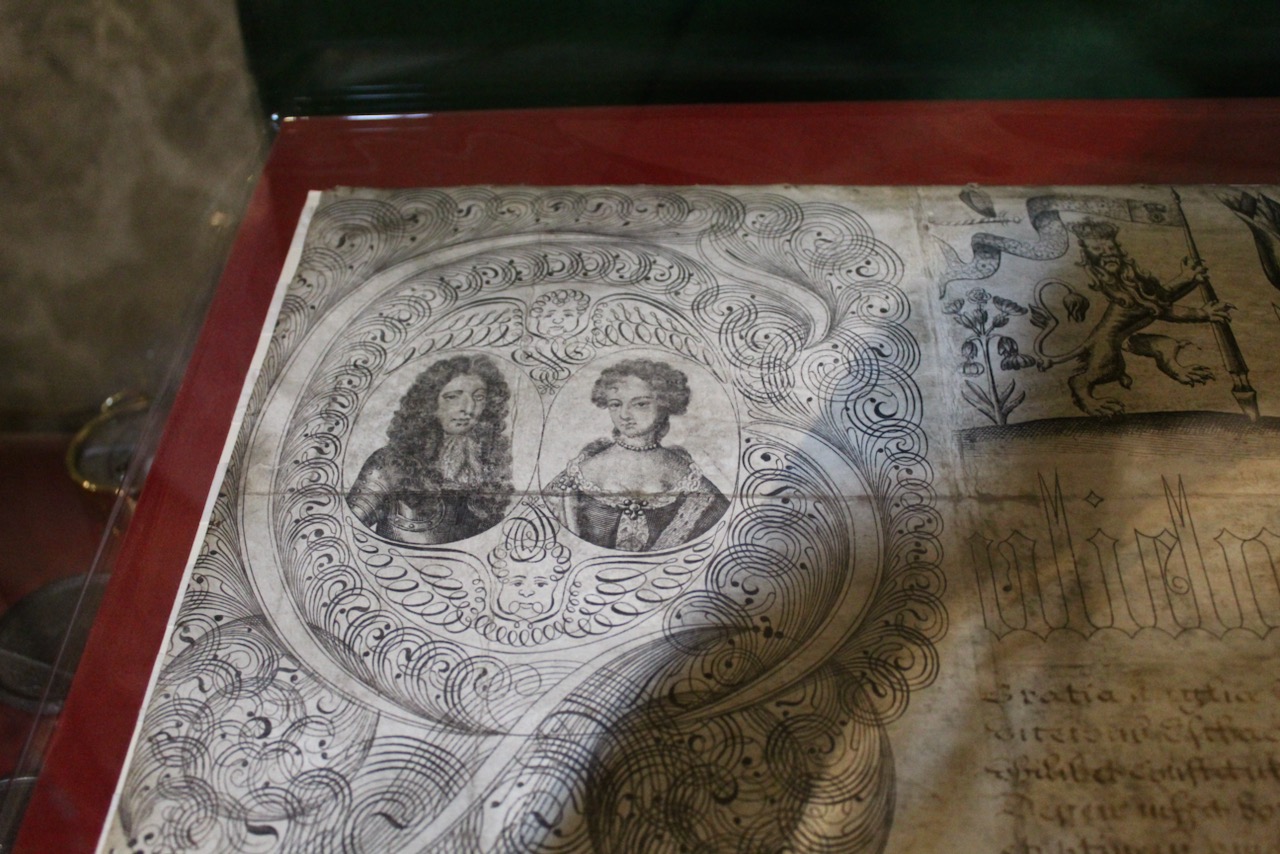
The War of Two Kings. James II, a Catholic, was king of England. Parliament, unhappy with the power that James II had given to the Catholics, invite William and Mary to take over the throne. William of Orange was married to Mary the Protestant daughter of James. William arrives in England. James, fearing for his life, flees to France and gets support from his cousin Louis XIV, William’s enemy. James lands at Kinsale.

A document in St Patrick’s Cathedral, Dublin, with pictures of King William III and Queen Mary, the daughter of King James II. Photograph © Jennifer Winder-Baggot, www.irishhistorichouses.com

William and Mary are crowned King and Queen of England. A French army of 7000 men arrive in Ireland to help James regain his crown.

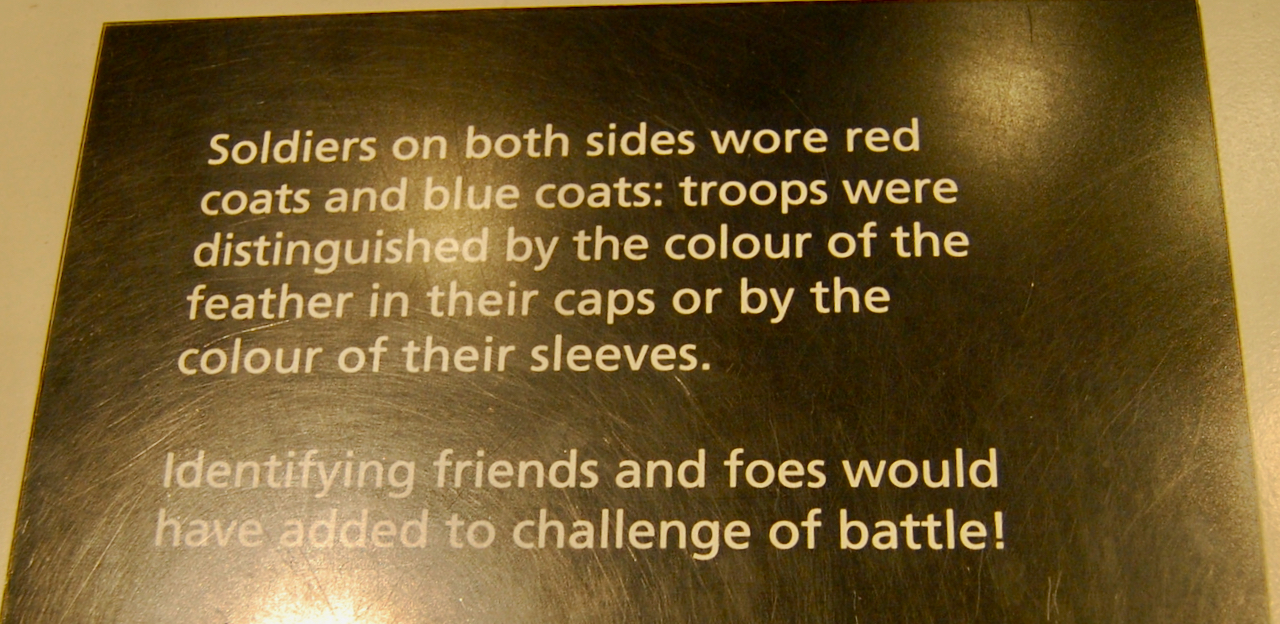
King William arrives in Carrickfergus with a large army, aiming to take Dublin. Battle of the Boyne. James’ army had 25,000 poorly equipped Irish and French soldiers. William had 36,000 experienced soldiers from all over Europe. King William is victorious.”

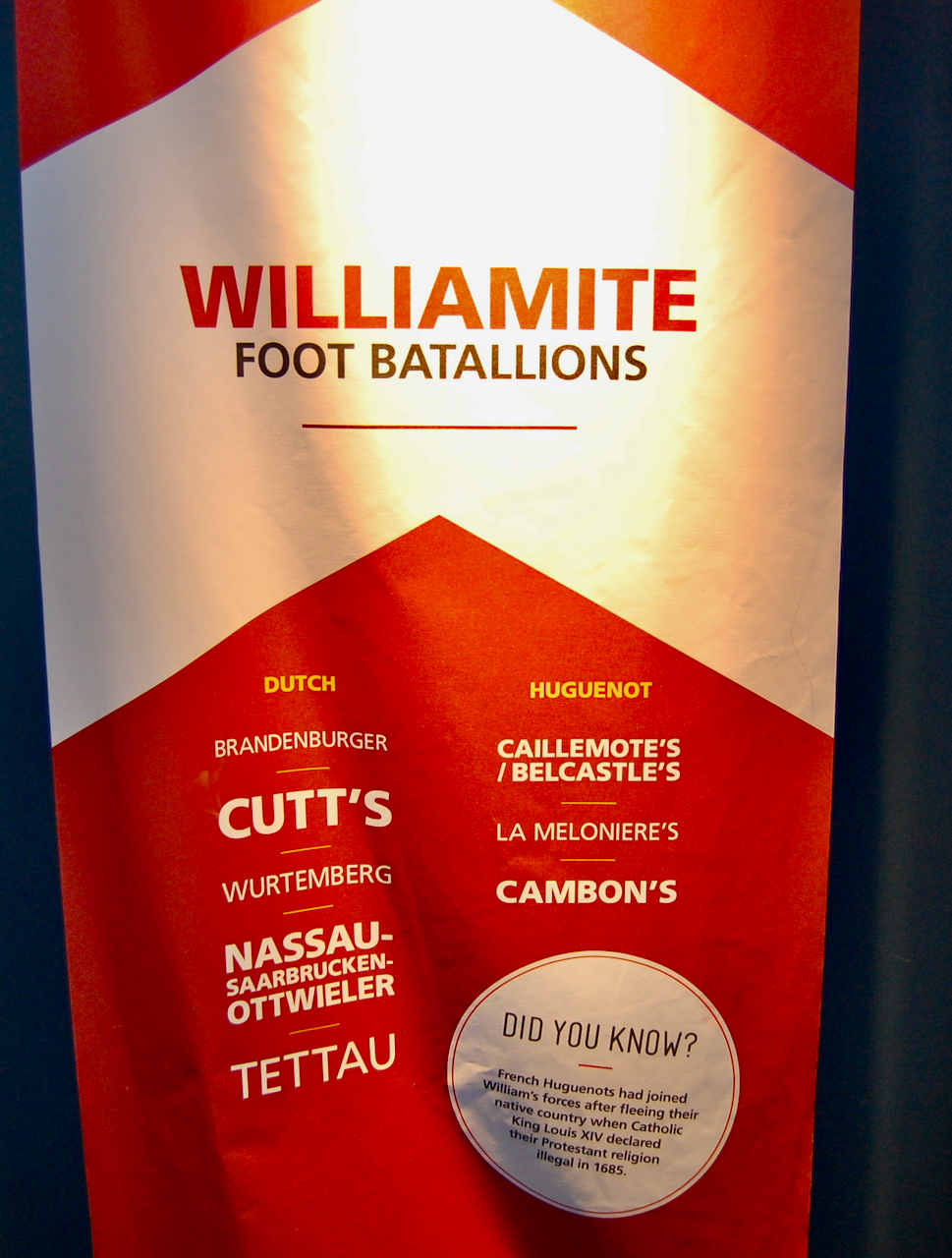
Names of Williamite regiments.
Names of Williamite foot batallions, which included French Huguenotes fleeing France.
There was even a Danish battalion on William’s side.
Information board in King John’s Castle.

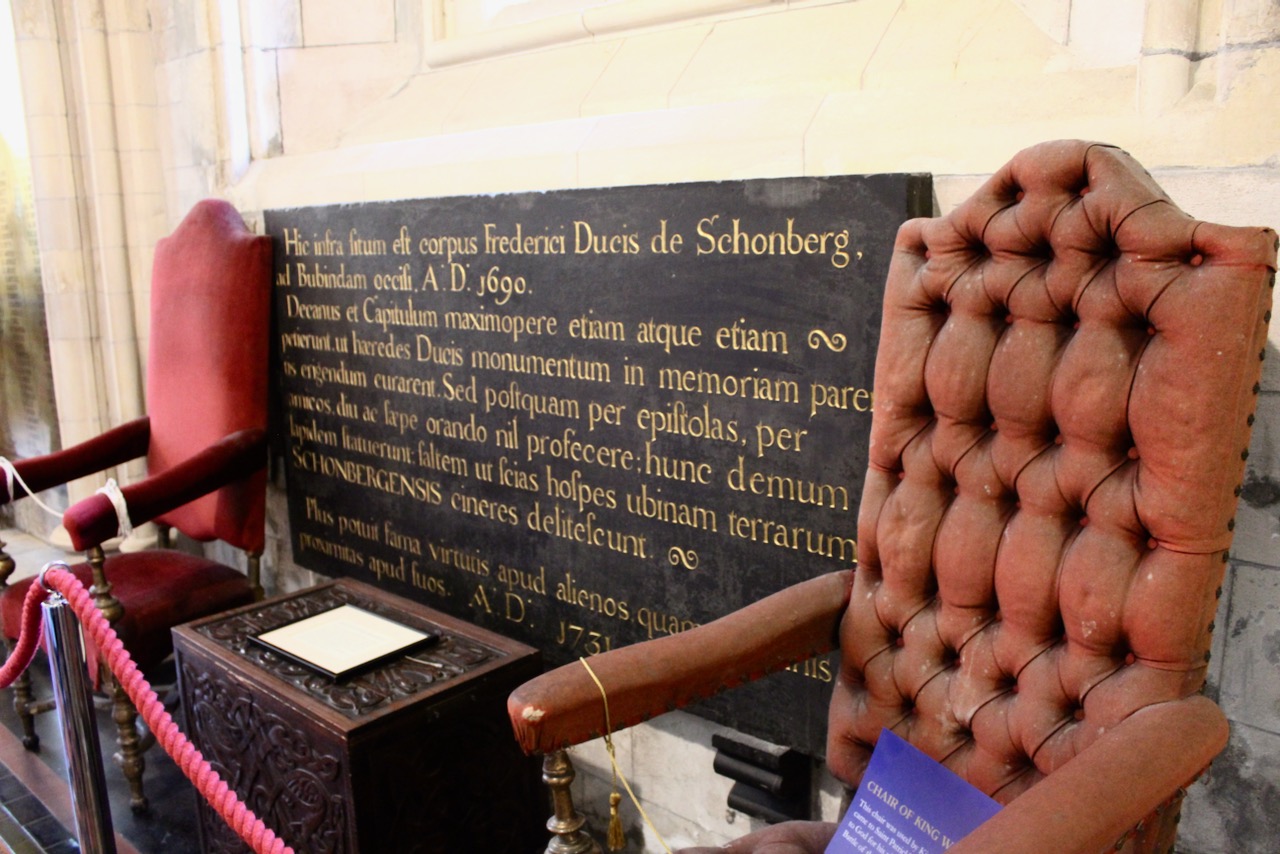
King William sent General Schomberg first, who landed in Carrickfergus on 14th June 1690 with 300 troops.

The Death of Frederick, 1st Duke of Schomberg at the Battle of the Boyne attributed to Benjamin West, courtesy of National Trust Mount Stewart.
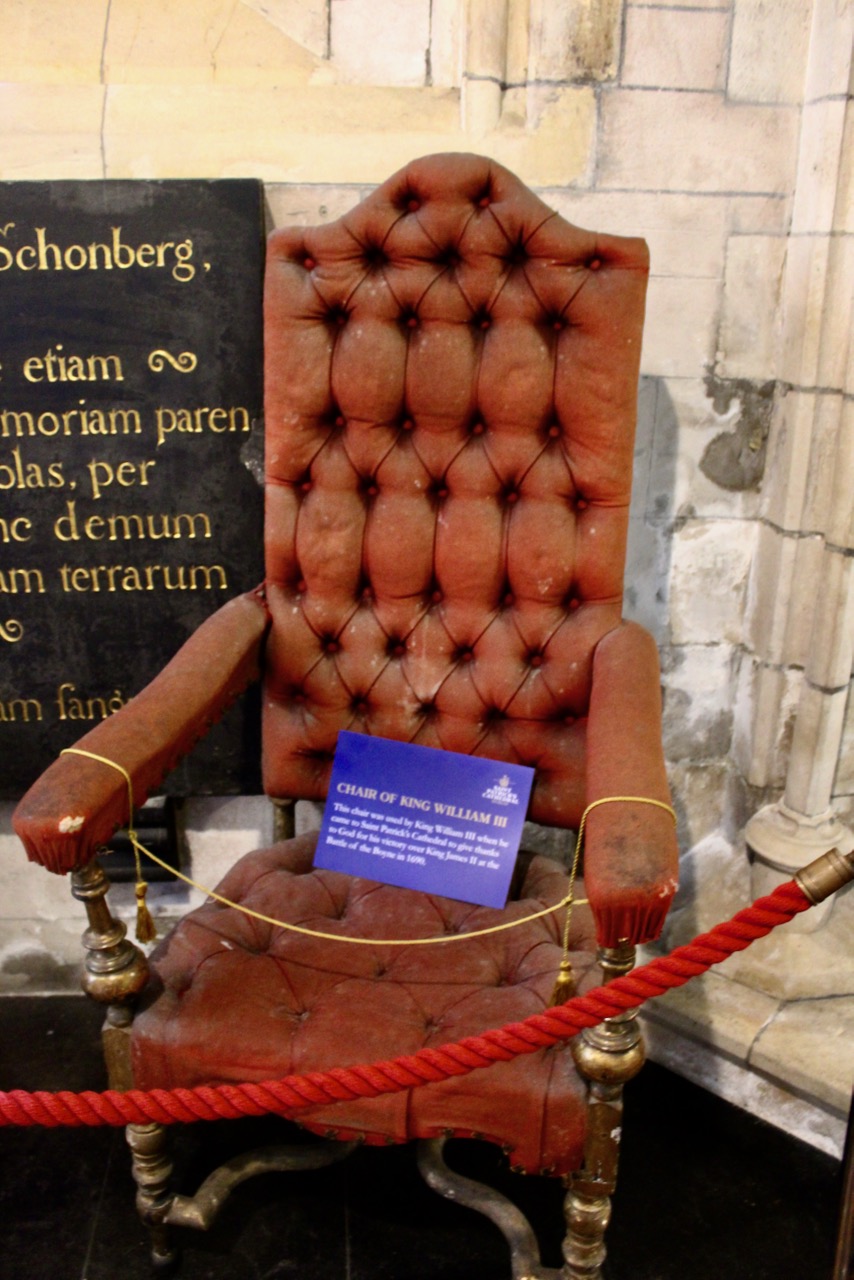
Seats of Schonberg (or Schomberg) and King William III in St Patrick’s Cathedral, Dublin. Photograph © Jennifer Winder-Baggot, www.irishhistorichouses.com
Chair where King William III sat in St Patrick’s Cathedral where he gave thank for winning the Battle of the Boyne. Photograph © Jennifer Winder-Baggot, www.irishhistorichouses.com

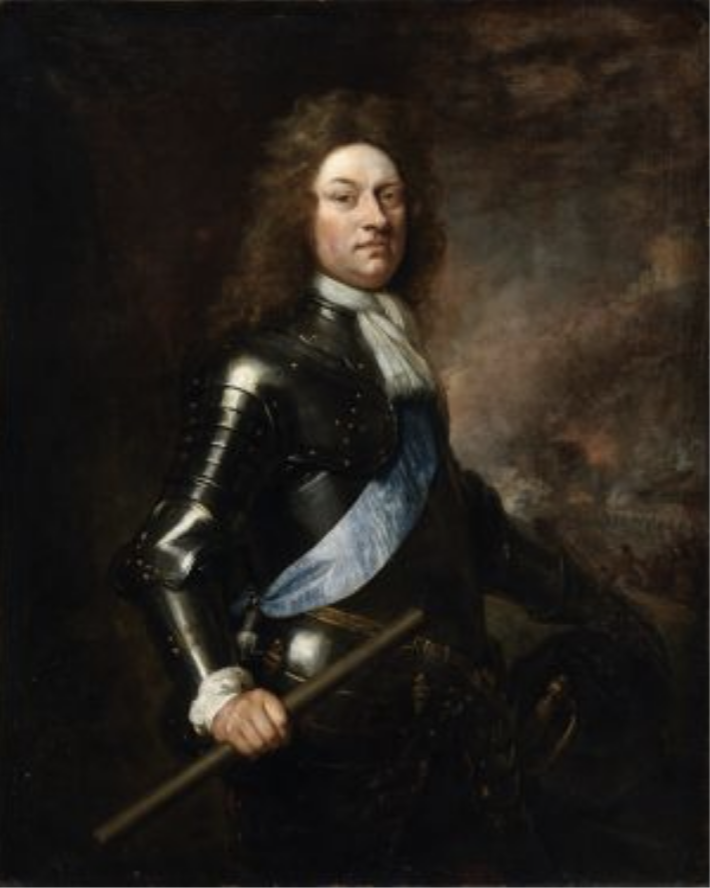
The plaques continue the story: “July 2nd 1690 James flees to France. By the 2nd July, most of the army had gathered in Limerick with Tyrconnell [Richard Talbot (1630-1691), 1st Duke of Tyrconnell] in charge. Limerick, an important port, was the second largest city in the country, with 1000 inhabitants. The Irish military in Limerick had few weapons. A small force of French cavalry were with the Irish cavalry on the Clare side of the Shannon. Their leader was Patrick Sarsfield, Earl of Lucan [1620-1693].”
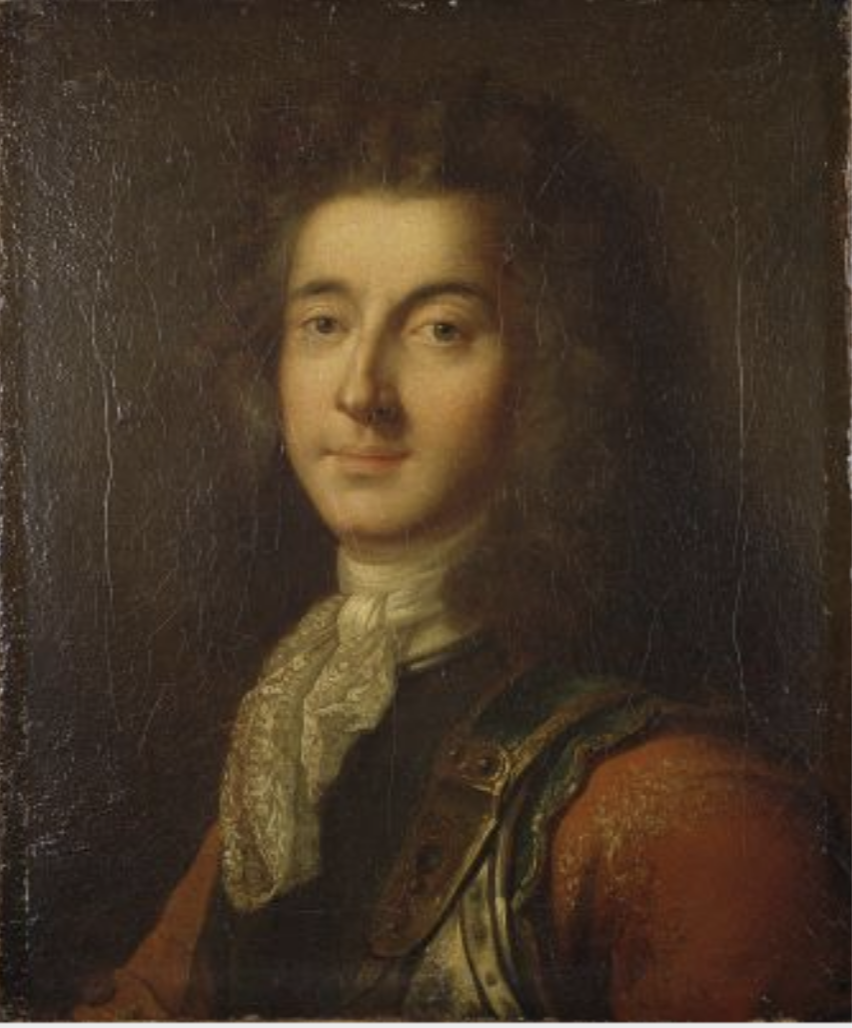
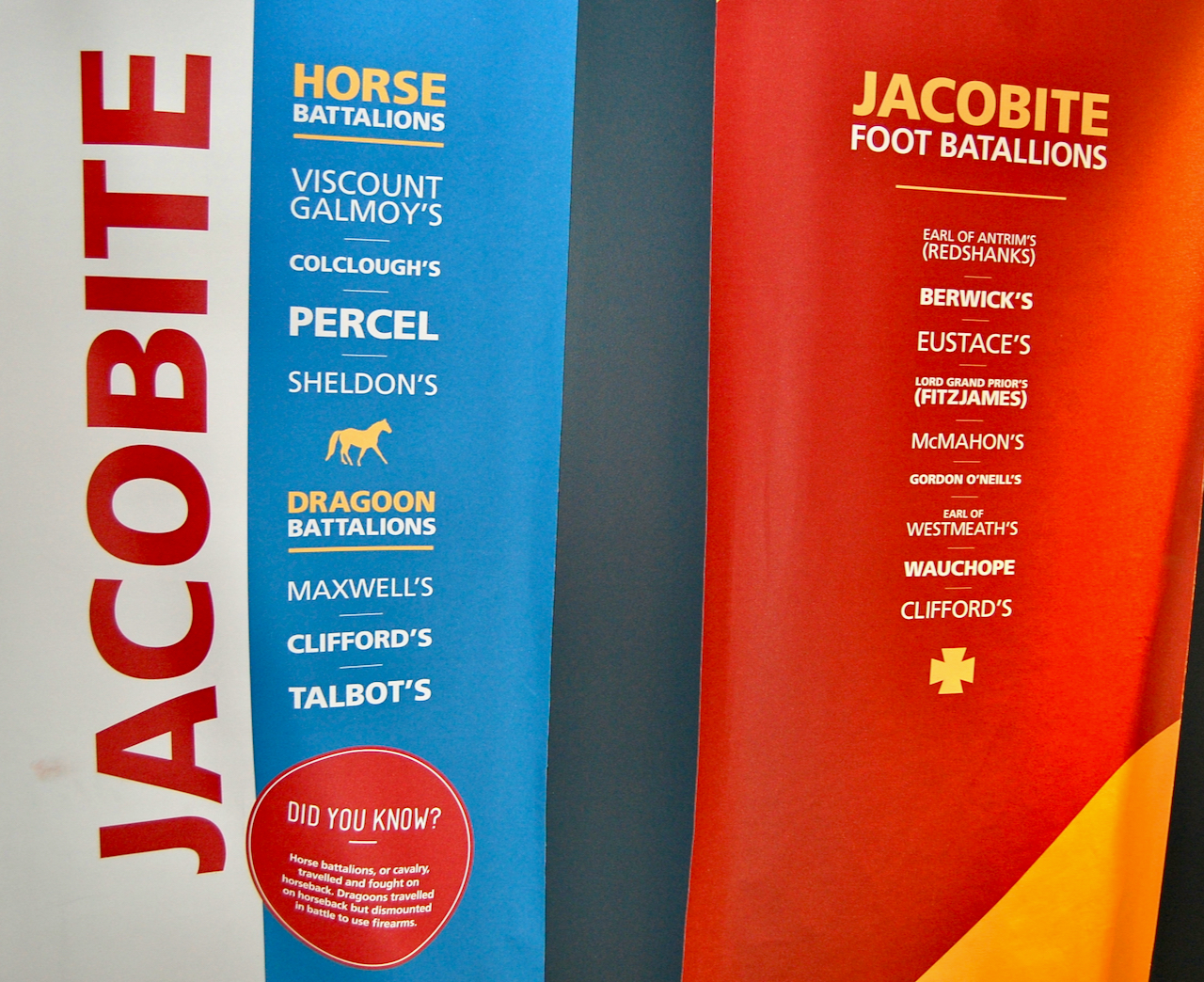
Patrick Sarsfield Earl of Lucan d.1693 attributed to Hyacinthe Rigaud, French, 1659-1743.
The Jacobite Batallions. Dragoons travelled on horseback but dismounted in battle to use firearms wheras Cavalry fought on horseback.
Information board in King John’s Castle.

First Siege of Limerick. King William’s army began to set up camp while they waited for their heavy guns and ammunition to arrive from Dublin. Aug 10th 1690, In a daring overnight raid Sarsfield attacked the siege train at Ballyneely. King William continued his siege but massive resistance from the Jacobite army and the people of Limerick, plus bad weather, forced him to call off the siege.

Godert de Ginkel (1630-1703), 1st Earl of Athlone, with the Taking of Athlone, County Westmeath by Godfrey Kneller, German, 1646-1723.

King William returned to England leaving Baron de Ginkel in charge. Cork and Kinsale surrendered to William’s army. Sarsfield rejects Ginkel’s offer of peace. More French help arrives in Limerick as well as a new French leader, the Marquis St. Ruth. Avoiding Limerick, Ginkel attacked Athlone, which guarded the main route into Connaght. 30th June 1691, Athlone surrendered. St. Ruth withdrew to Aughrim. 12th July 1691 The Battle of Aughrim. The bloodiest battle ever fought on Irish soil. The Jacobites were heading for victory when St. Ruth was killed by a cannonball. Without leadership the resistance collapsed and by nightfall, the Williamites had won, with heavy losses on both sides. Most of the Jacobites withdrew to Limerick.

The signboards give details of the Siege of Limerick.
King John’s Castle, Limerick. Photograph © Jennifer Winder-Baggot, www.irishhistorichouses.com

There is a John Baggot who fought in the Battle of Aughrim, and lost an eye. He later went to France with the Wild Geese, and served in the court of James II and “James III” (his followers called him James III although he was not the recognised king).

The city walls had been strengthened since the previous year. Tyrconnell died in mid-August and the promised help from Louis XIV had not yet arrived. The Second Siege of Limerick. Ginkel and the Williamites reached Limerick and took up positions on the Irishtown side. They bombarded the city daily with cannon. They managed to break down a large section of the walls at English town, but could not get into the city. With a large English fleet on the Shannon, the city was cut off and almost completely surrounded. Sept 22nd 1691 Ginkel’s army attacked the Jacobites who were defending Thomond Bridge. The drawbridge was ordered to be raised too soon and about 600 Irish were killed or drowned. This had a profound effect on the morale of the garrison. A council of war was held and the Jacobites decided to call a truce. Leaders from both sides saw that they could gain more by ending the fighting and the discussions were conducted with great courtesy. The Treaty was finally signed on October 3rd 1691, reputedly on the Treaty Stone.

Jen at the Treaty Stone, July 2018, apparently the Treaty of Limerick, which was signed by, amongst others, John Baggot, was signed on this stone, which was later memorialised on this plinth. Photograph © Jennifer Winder-Baggot, www.irishhistorichouses.com
Information about the Seige of Limerick.

Article Civil and Military, agreed on the 3rd day of October 1691, between the Right Honourable Sir Charles Porter, Knight, and Thomas Coningsby, Esq, Lords Justices of Ireland, and his Excellency the Baron de Ginkel, Lieutenant General, and the Commander in Chief of the English army, of the one part and Sarsfield and his followers on the other. The treaty had civil and military sections. The Civil articles promised freedom to practice their religion to Catholics, but in the years after 1691, harsh laws were passed against Catholics known as the Penal Laws.

The broken treaty embittered relations between the English and Irish for two centuries.

The military parts of the Treaty allowed the Irish Jacobites to join the French army. Most of the Irish (about 14,000 approx.) went to France with Sarsfield. Some of their wives and children also travelled to France. These exiles were known as the Wild Geese. The Wild Geese became part of the French army, which included Irish regimens until the French Revolution. Wine Geese: some of the Wild Geese got into the wine trade, where their names live on today, names such as Michael Lynch, who fought in the battle of the Boyne, Phelan, Barton, and Richard Hennessy of Hennessy cognac.

John Baggot’s sons (sons of Eleanor Gould), John and Ignatius, became soldiers and one fought for France and one fought for Spain.

In 1791 the British Army built military barracks suitable for up to 400 soldiers at the castle and remained there until 1922. In 1935 the Limerick Corporation removed some of the castle walls in order to erect 22 houses in the courtyard. These houses were subsequently demolished in 1989 when the castle was restored and opened to the public.” [13]
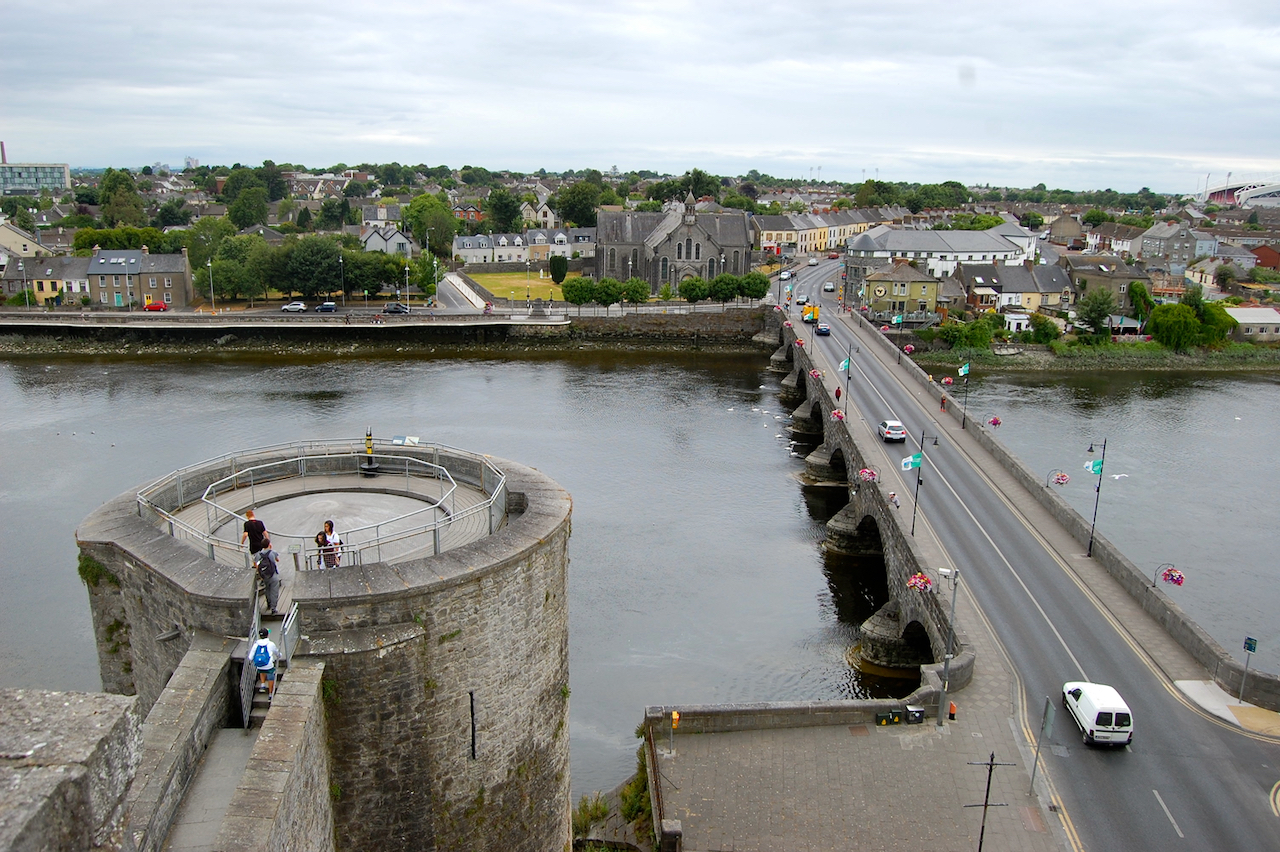
View from King John’s Castle. Photograph © Jennifer Winder-Baggot, www.irishhistorichouses.com

10. Odellville House, Ballingarry, Co. Limericksection 482

Odellville, Photograph from the National Inventory of Architectural Heritage. [14]

www.odellville.simplesite.com

Open dates in 2026: May 1-31, June 1-30, Aug 15-23, 10am-2pm

Fee: adult €8, student/OAP/child €4

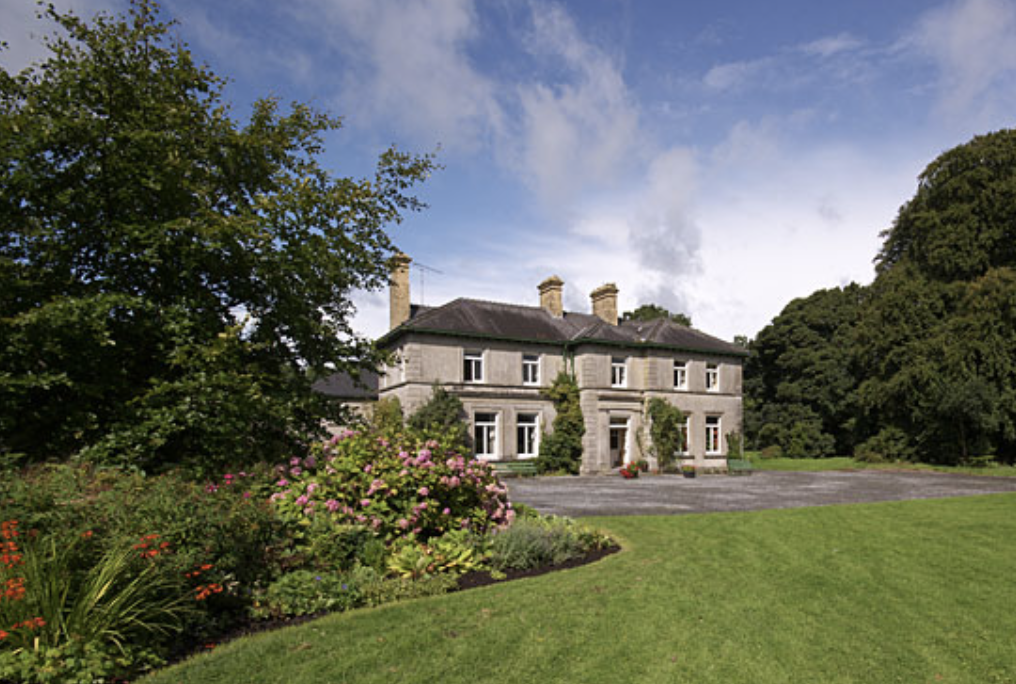
The National Inventory tells us it is a detached five-bay two-storey over basement house, built c. 1780, with later two-storey extension to rear (south). It continues: “Odell Ville is typical of the small country houses of rural Ireland, often associated with the gentleman farmers of the eighteenth century. The retention of historic fabric such as sliding sash windows, fine tooled limestone details and modest door with its stepped approach all contribute positively to the building’s character. It was once the house of T. A. O’Dell, Esq. Athough of a modest design, the overall massing of the house makes a strong and positive impact on the surrounding countryside. The associated gate lodge adds further context and character to the site.” [14]

11. Mount Trenchard House and Garden, Foynes, Co. Limericksection 482

Open in 2026: Mar 2-6, 9-13, 16-20, 23-27, 9am – 2pm, May 3, 10, 17, 24, 10am – 5pm, Aug 15-24, 1pm – 5pm, Sept 1 – 30, excluding Saturdays, 1 pm-5pm,

Fee: adult €10, OAP/student/child €5, family €30 Concession: groups of 10 €70

Mount Trenchard, County Limerick, August 2022. Photograph © Jennifer Winder-Baggot, www.irishhistorichouses.com

We visited Mount Trenchard during Heritage Week 2022 – see my entry: https://irishhistorichouses.com/2023/04/01/mount-trenchard-house-and-garden-foynes-co-limerick/

13. The Old Rectory, Rathkeale, Co. Limerick – section 482

Open dates in 2026: May 2-Nov 29, Saturday and Sundays, National Heritage Week, Aug 15-23,

10am-2pm

Fee: adult €8, child/OAP/student €3

Places to stay, County Limerick:

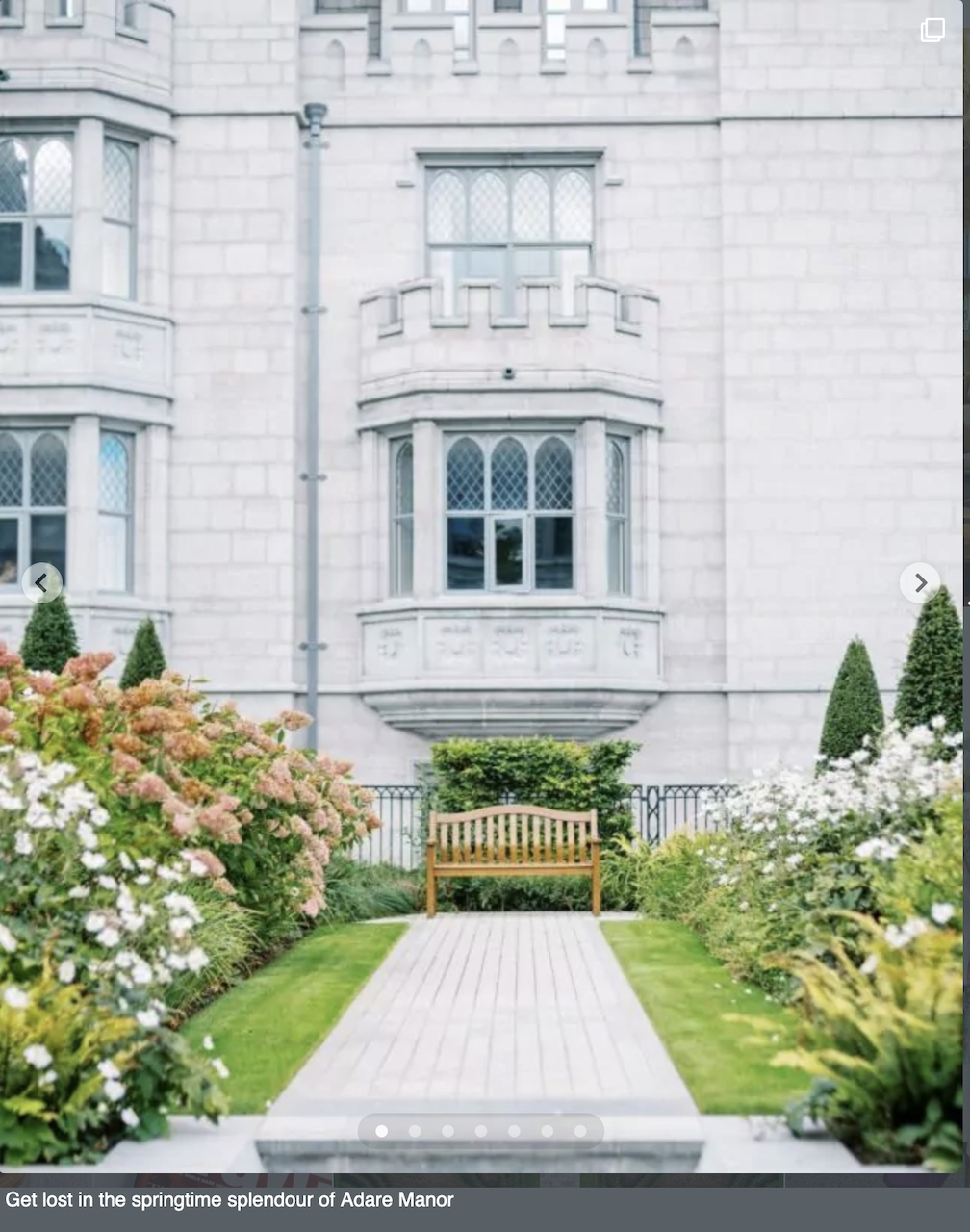
1. Adare Manor, Limerick – hotel
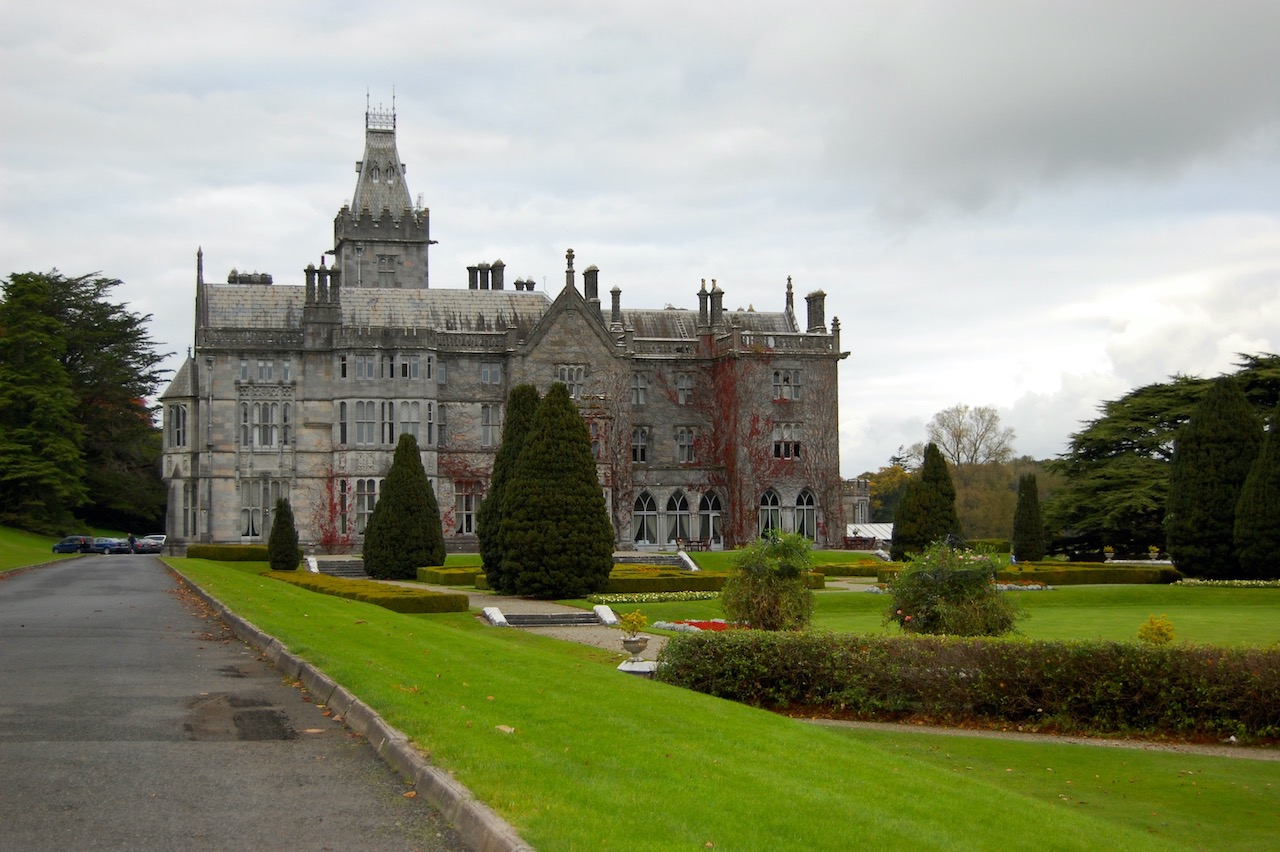
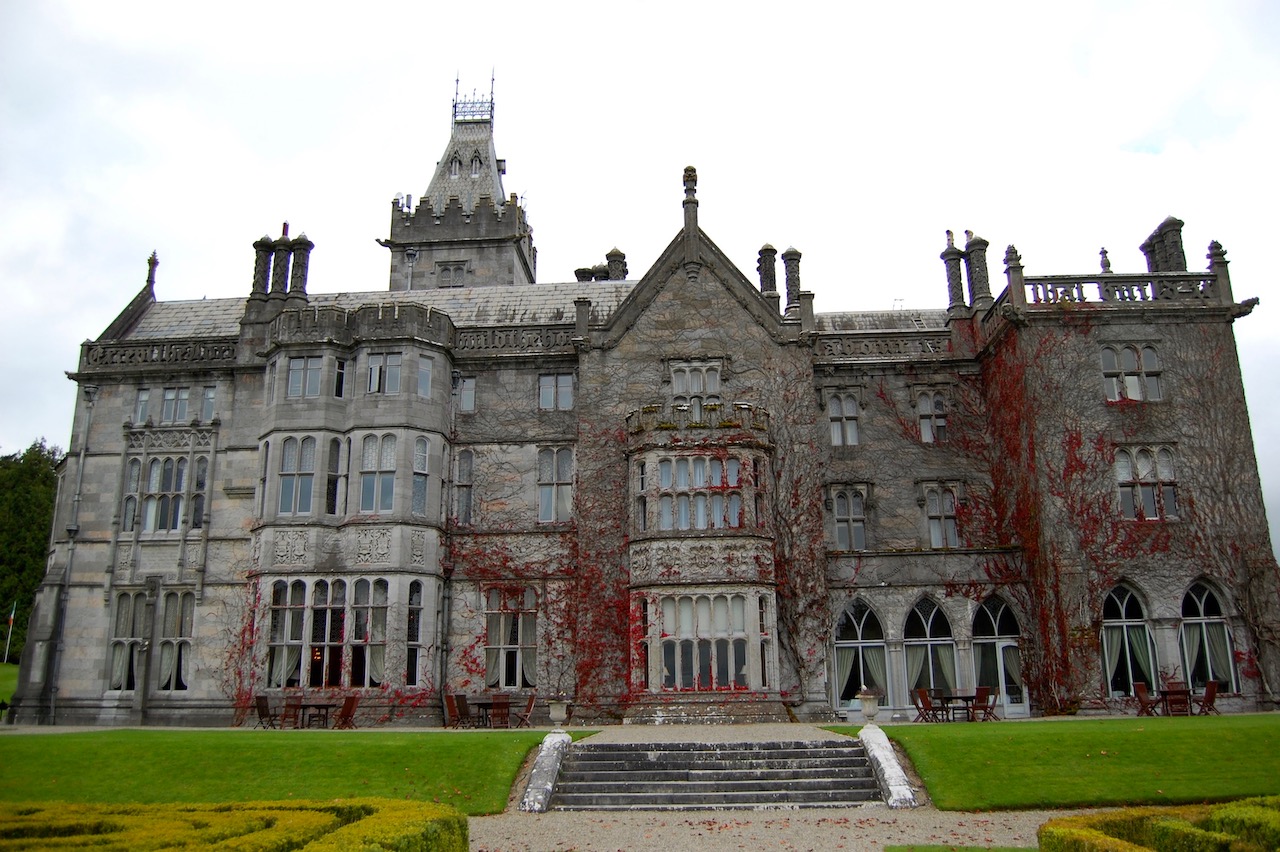
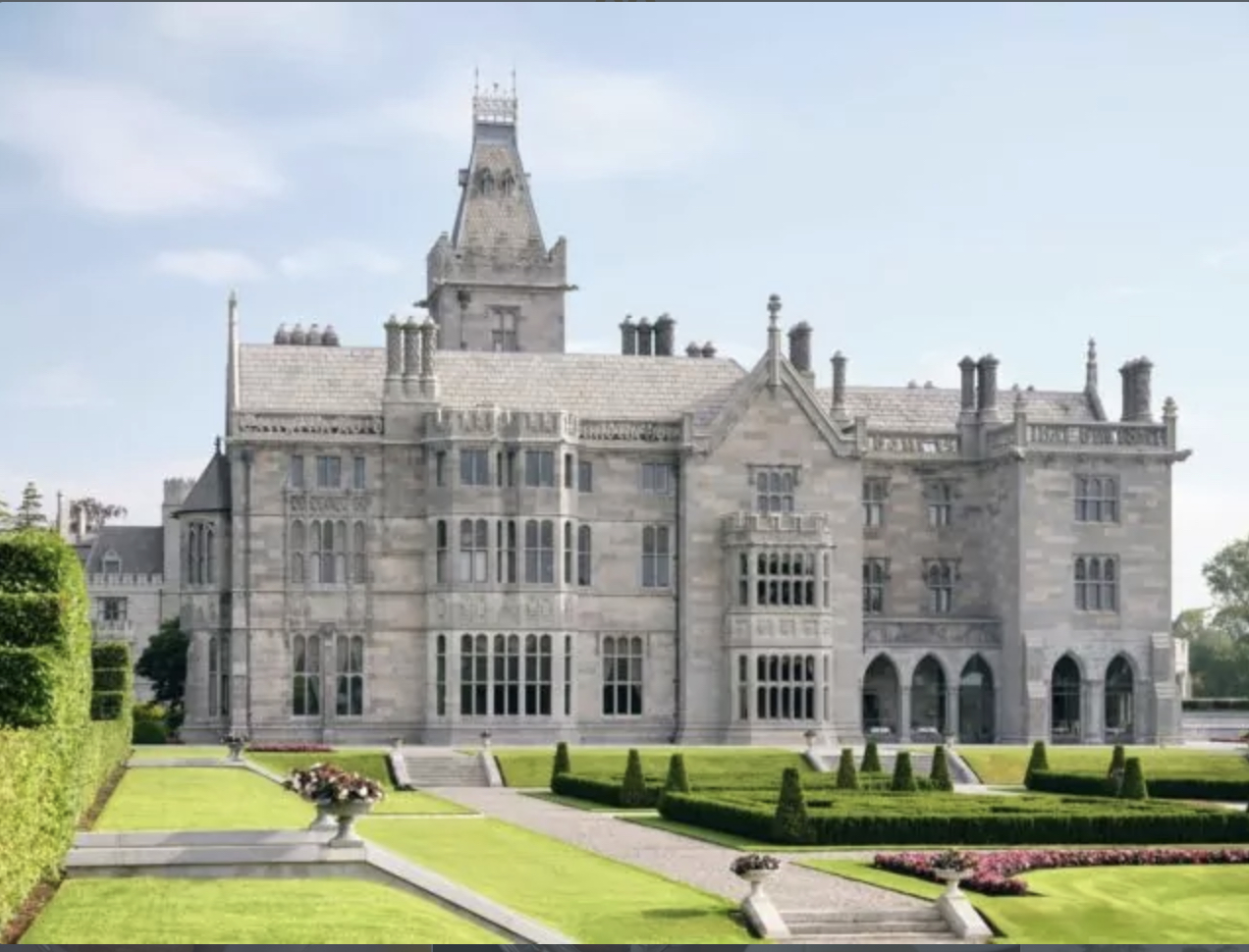
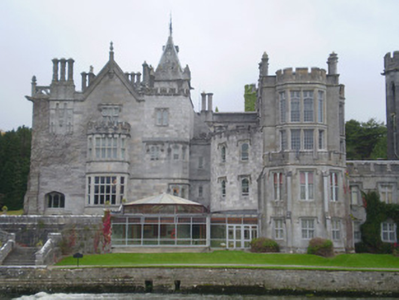
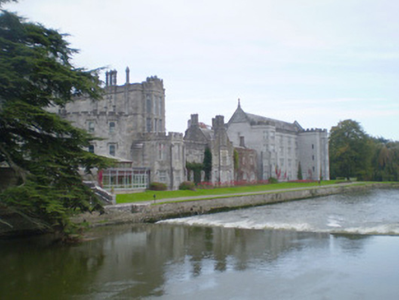
Adare Manor, Limerick, October 2012. Photograph © Jennifer Winder-Baggot, www.irishhistorichouses.com
Adare Manor, photograph from Lawrence Collection, National Library of Ireland, flickr constant commons.
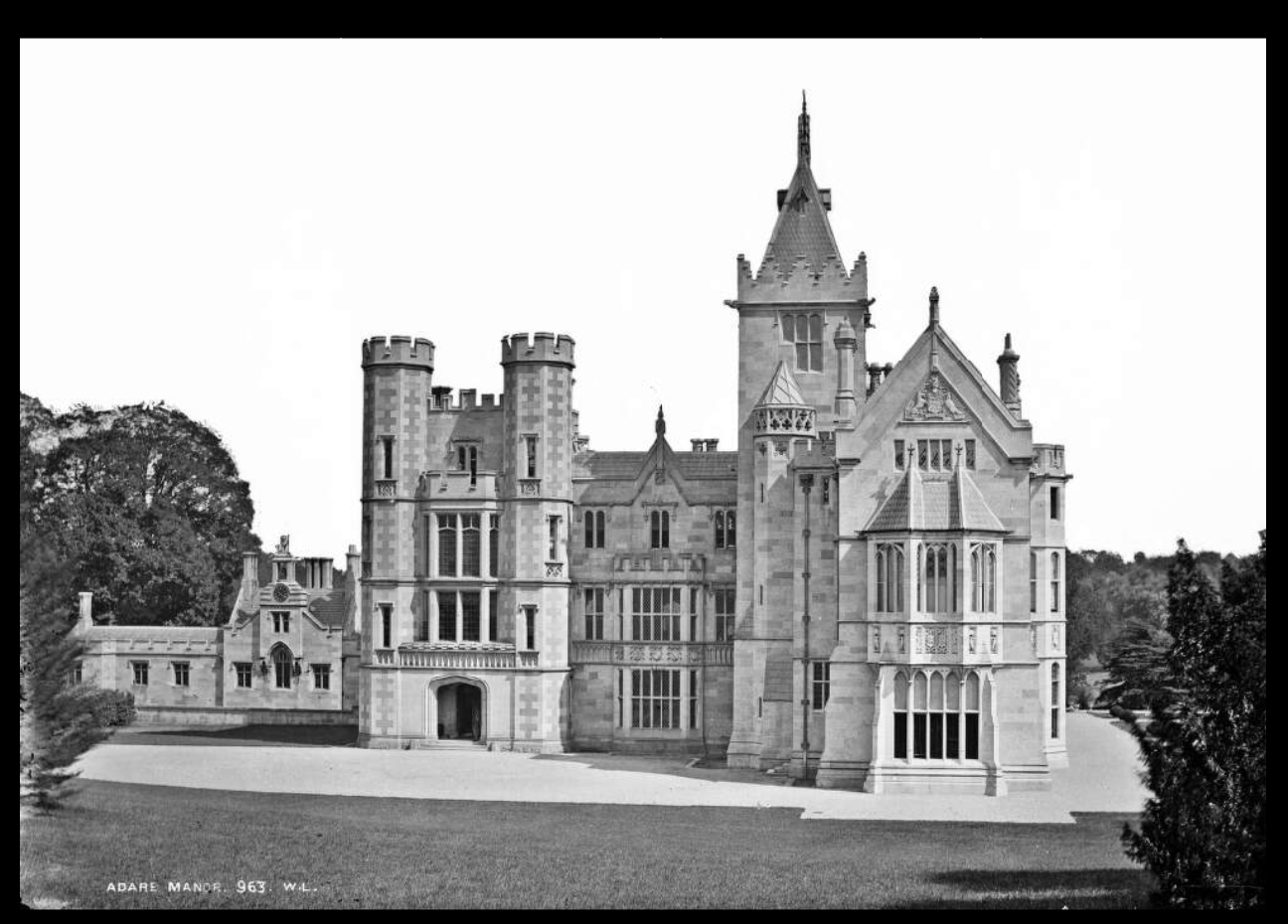
Adare Manor County Limerick Lawrence Photographic Collection, by Robert French, ca. 1865-1914 courtesy National Library of Ireland L_CAB_00963
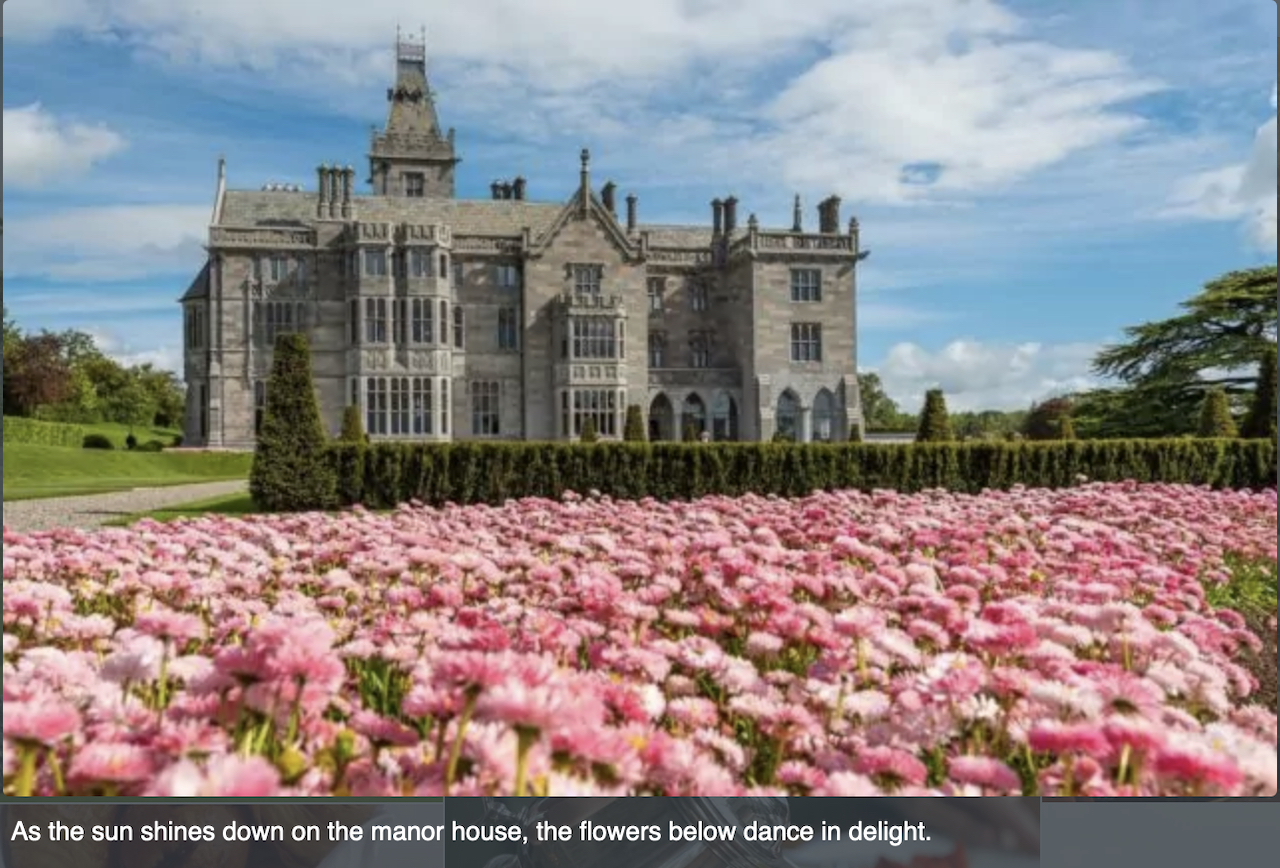
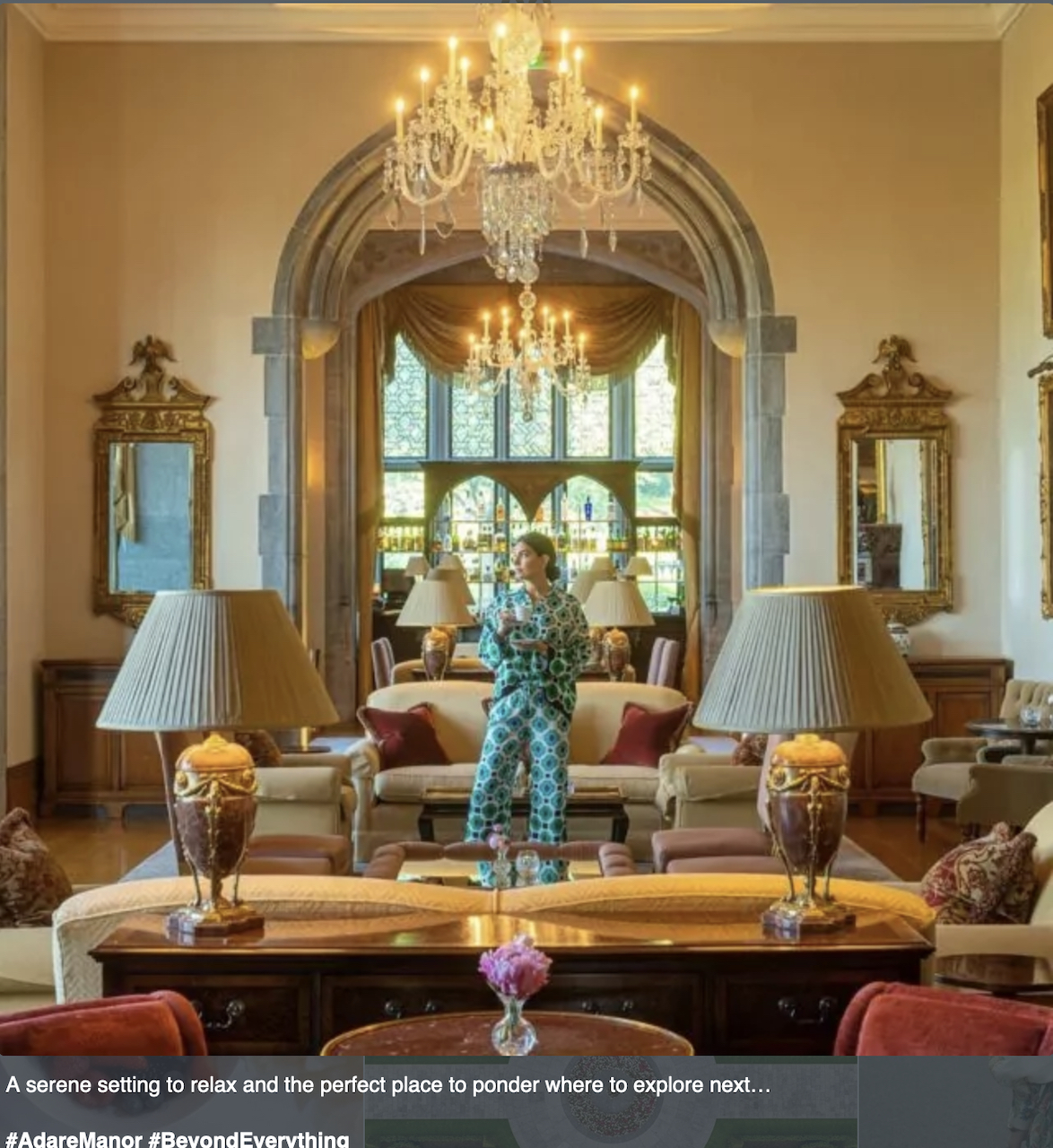
Adare Manor, photograph courtesy of hotel website.

Mark Bence-Jones writes (1988):

Originally a two storey 7 bay early C18 house with a 3 bay pedimented breakfront and a high-pitched roof on a bracket cornice; probably built ca 1720-1730 by Valentine Quin [1691-1744], grandfather of the first Earl of Dunraven [Valentine Richard Quin (1752-1824)].”

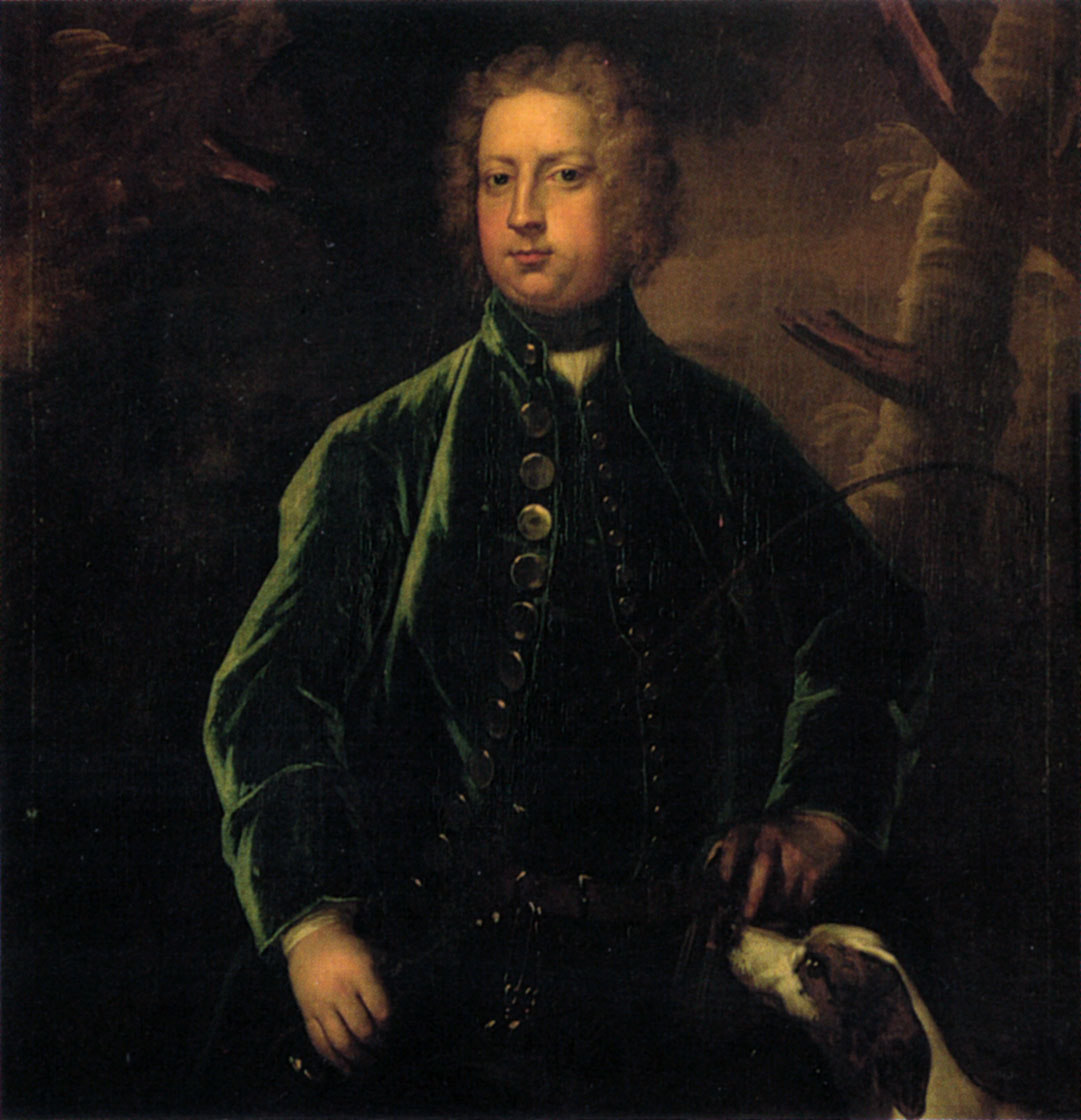
17th Century School Portrait of Lord Dunraven, Adams auction 19 Oct 2021. I’m wondering how it could be 17th century if the first Lord Dunraven was Valentine Quin (1752-1824).

David Hicks tells us in his Irish Country Houses, A Chronicle of Change that Valentine Quin converted to Protestantism to retain the Quinn lands. In the 1780s his son Windham remodelled the Georgian house in a neoclassical manner and made many improvements including the addition of another storey.
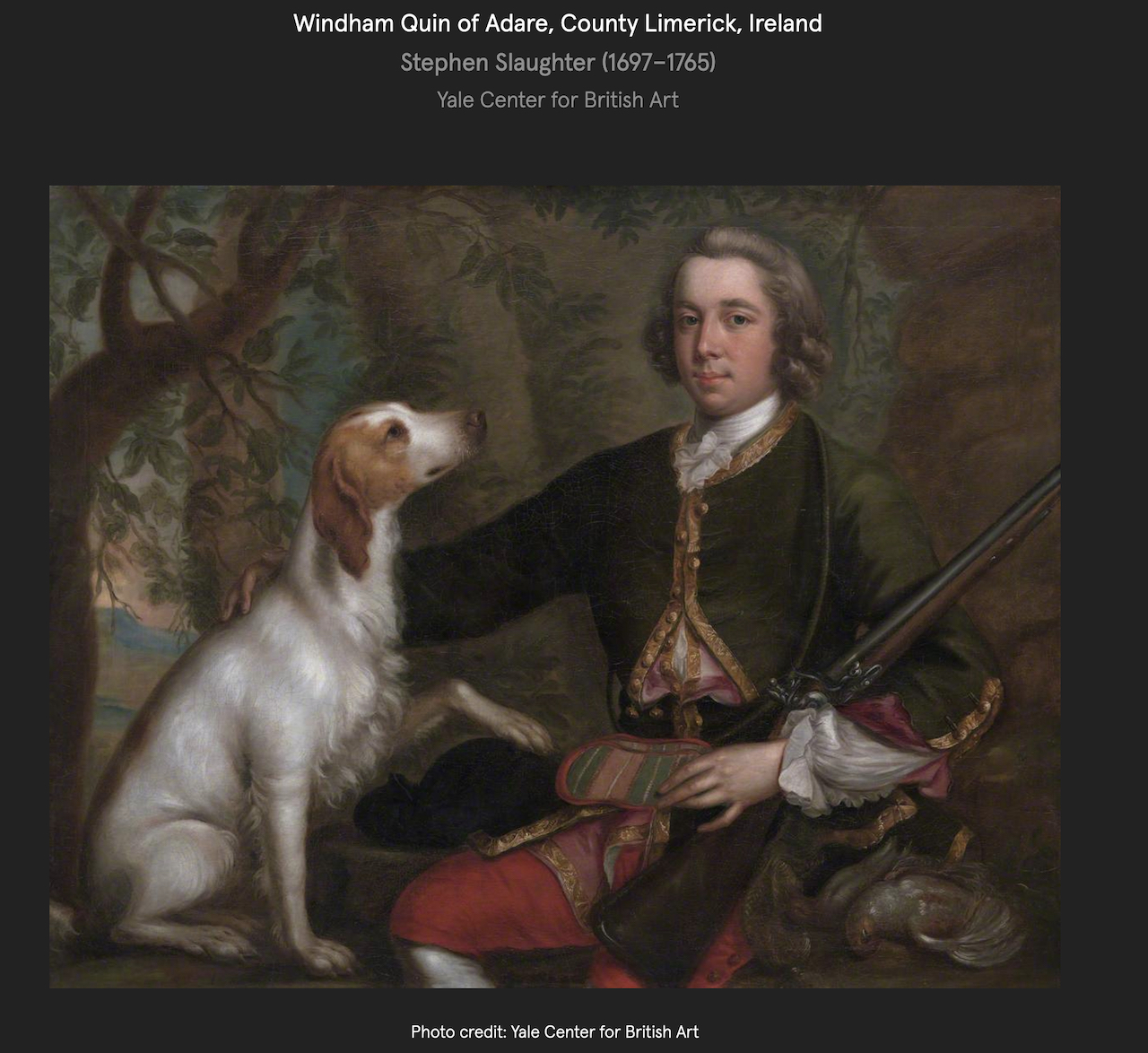
Windham Quinn of Adare, County Limerick by Stephen Slaughter, courtesy of Yale Centre for British Art.

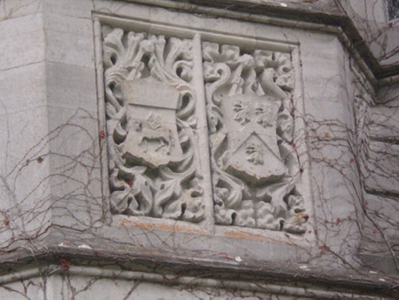
His son Valentine Richard Quin inherited but due to debt, moved to England to live a more frugal lifestyle. He was created 1st Baronet Quin, of Adare, Co. Limerick in 1781, and 1st Baron Adare, of Adare in 1800 for voting for the Act of Union, and finally 1st Earl of Dunraven and Mount-Earl in 1822, Dunravan being chosen in honour of his daughter-in-law Caroline Wyndham and her home Dunraven Castle in Wales. His son Windham Henry (1782-1850), 2nd Earl, returned to the heavily indebted Irish estate in 1801 and managed to reduce debts by leasing land. He was elected MP for Limerick in 1806. He was a supporter of the Union but also an advocate of Catholic emancipation. In 1810 he married Caroline Wyndham, heiress to large estates in Wales, and as a result of her large inheritance, the Quin family name was changed to Wyndham-Quin. The Quin and Wyndham heraldic shields decorate the entrance to the manor. An inscription in Gothic lettering on the south front of the manor reads “This goodly house was erected by Windham Henry Earl of Dunraven and Caroline his Countess without borrowing, selling or leaving a debt.”
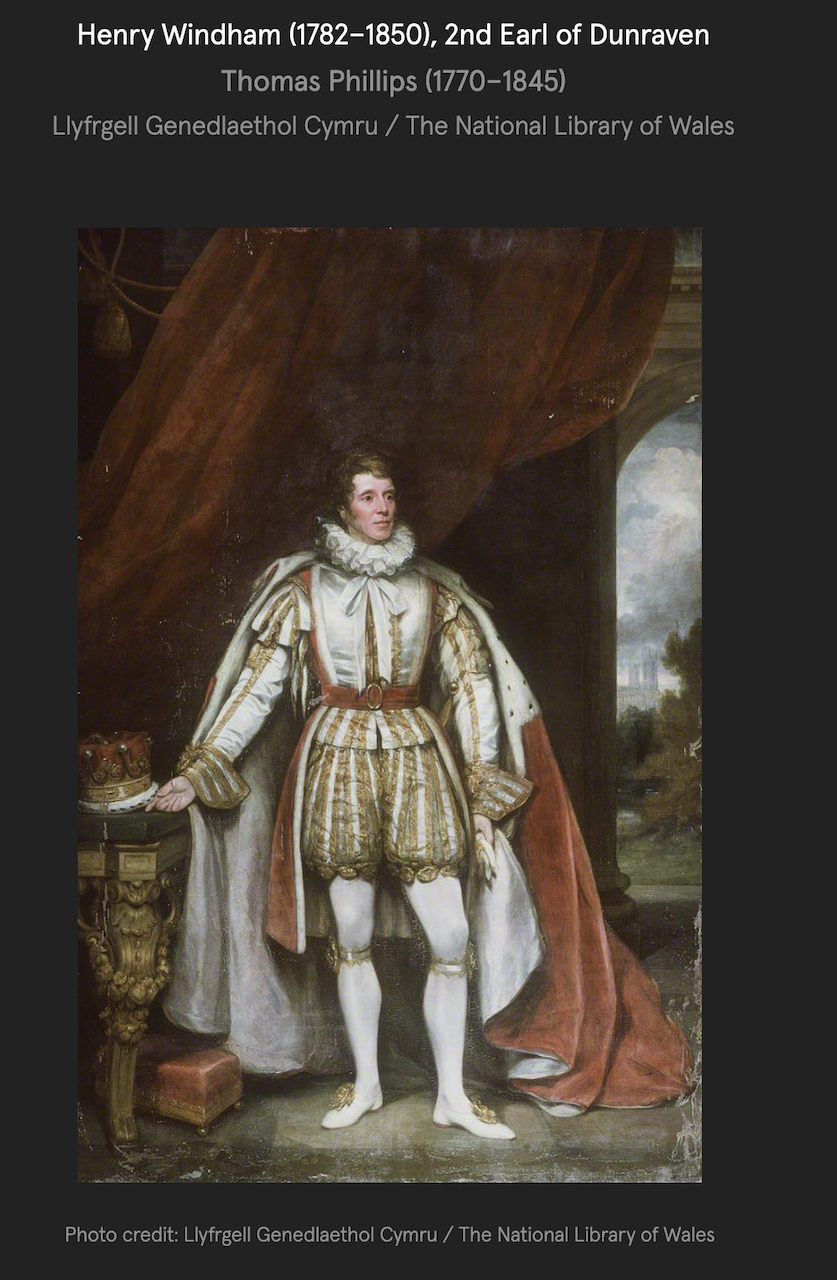
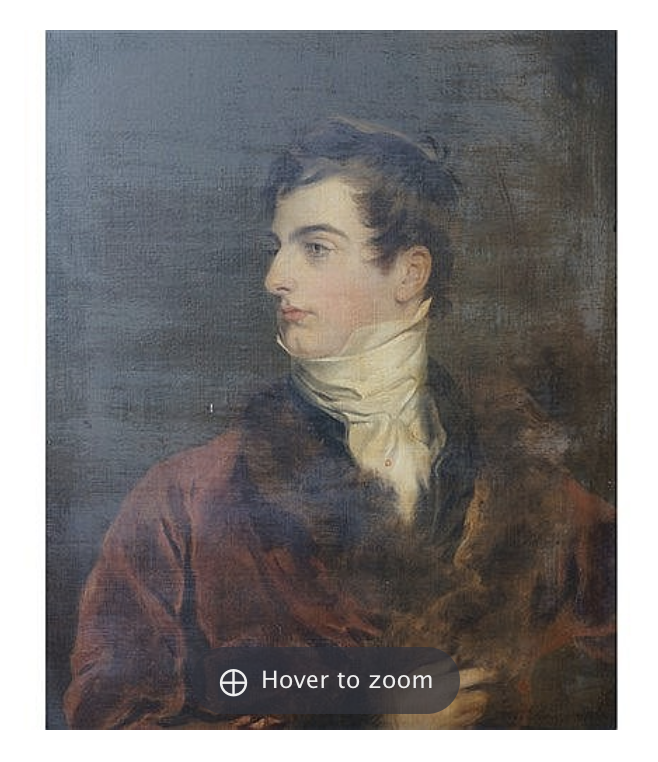
Henry Windham (1782-1850) 2nd Earl Dunraven, by Thomas Phillips courtesy of National Library of Wales.
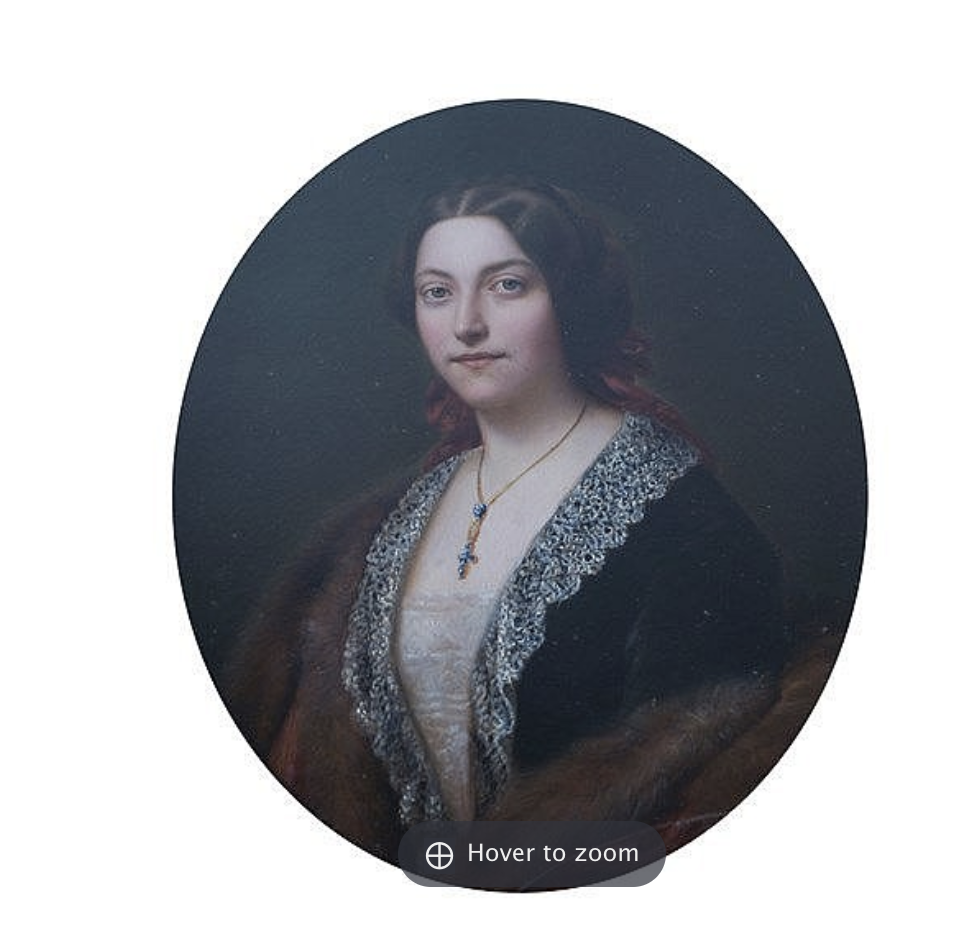
Caroline Windham by Thomas Phillips, courtesy of National Library of Wales.
Adare Manor, Limerick, 2012. Photograph © Jennifer Winder-Baggot, www.irishhistorichouses.com
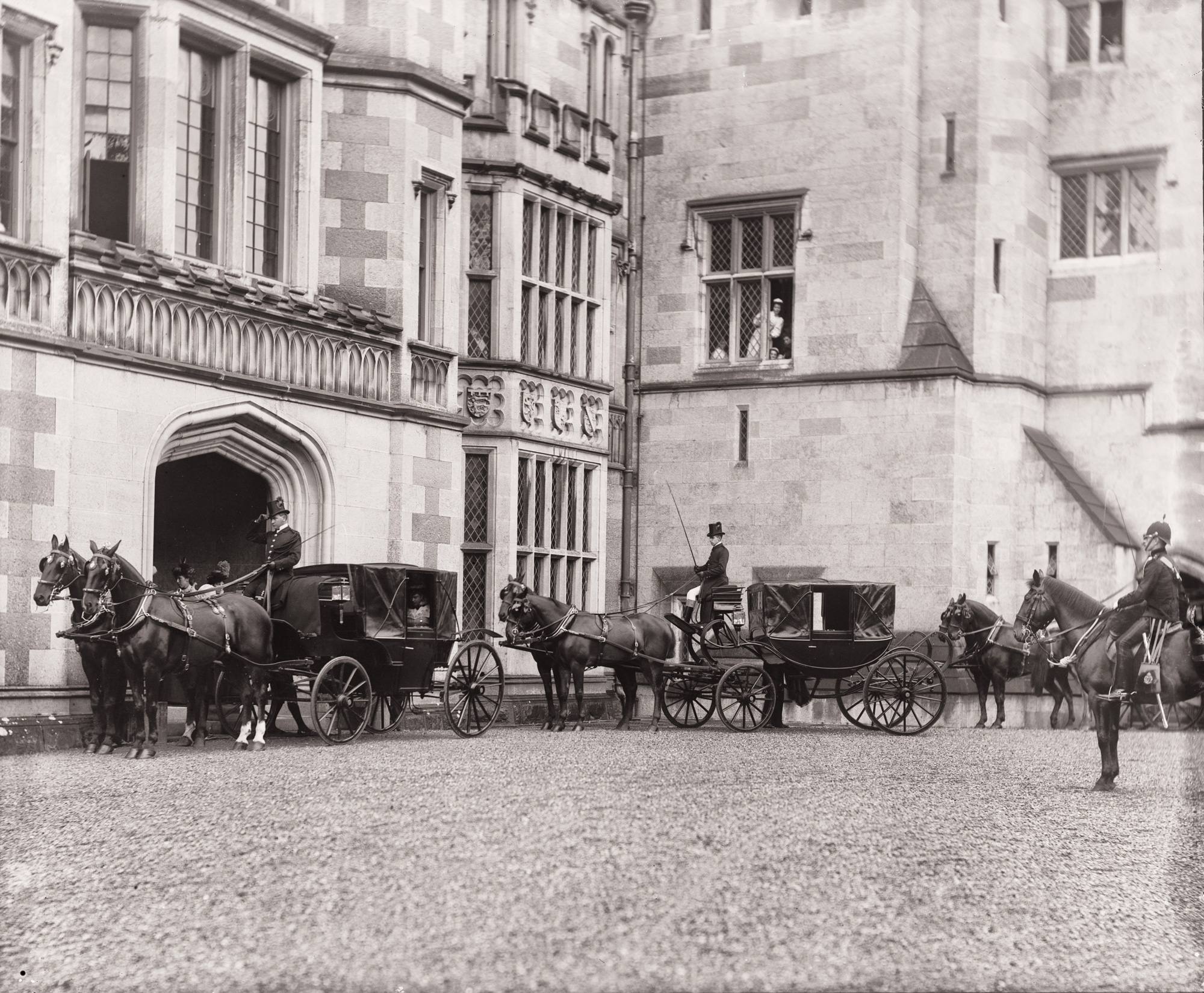
Adare Manor, County Limerick, departure of royal party 1897 National Library of Ireland Poole Collection POOLEIMP527.
Adare Manor, Limerick, 2012. Photograph © Jennifer Winder-Baggot, www.irishhistorichouses.com
Adare Manor, photograph courtesy of hotel website.

Bence-Jones continues: “From 1832 onwards the 2nd Earl, whose wife was the wealthy heiress of the Wyndhams of Dunraven, Glamorganshire, and who was prevented by gout from shooting and fishing, began rebuilding the house in the Tudor Revival style as a way of occupying himself; continued to live in the old house while the new buildings went up gradually behind it only moving out of it about ten years later when it was engulfed by the new work and demolished.

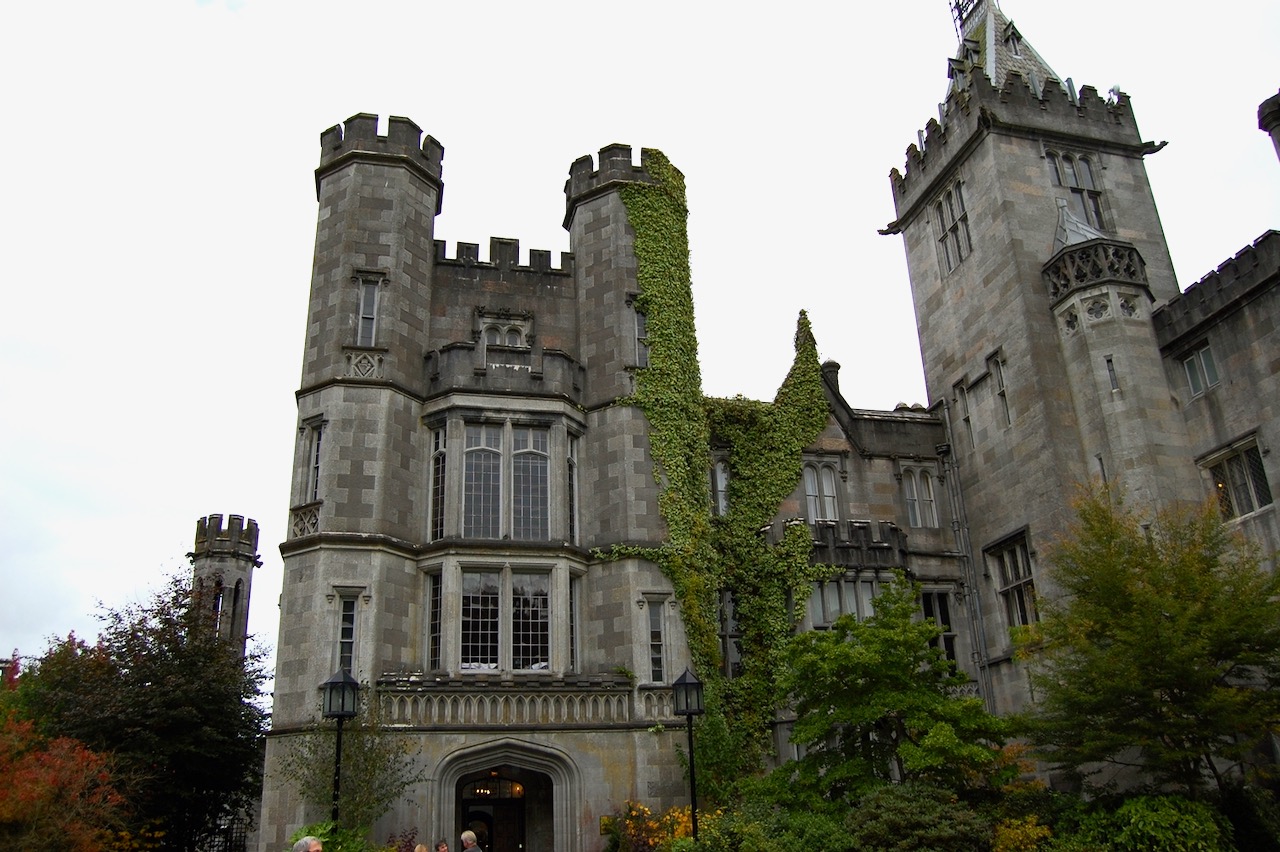
To a certain extent Lord and Lady Dunraven acted as their own architects, helped by a master mason named James Conolly; and making as much use as they could of local craftsmen, notably a talented carver. At the same time, however, they employed a professional architect, James Pain; and in 1846, when the house was 3/4 built, they commissioned A.W. Pugin to design some of the interior features of the great hall. Finally, between 1850 and 1862, after the death of the second Earl, his son, the 3rd Earl [Edwin Richard Wyndham-Quin (1812-1871)], a distinguished Irish archaeologist, completed the house by building the principal garden front, to the design of P.C. [Philip Charles] Hardwick. The house, as completed, is a picturesque and impressive grey stone pile, composed of various elements that are rather loosely tied together; some of them close copies of Tudor originals in England, thus the turreted entrance tower, which stands rather incongruously at one corner of the front instead of in the middle, is a copy of the entrance to the Cloister Court at Eton.

Adare Manor, Limerick, October 2012. Photograph © Jennifer Winder-Baggot, www.irishhistorichouses.com

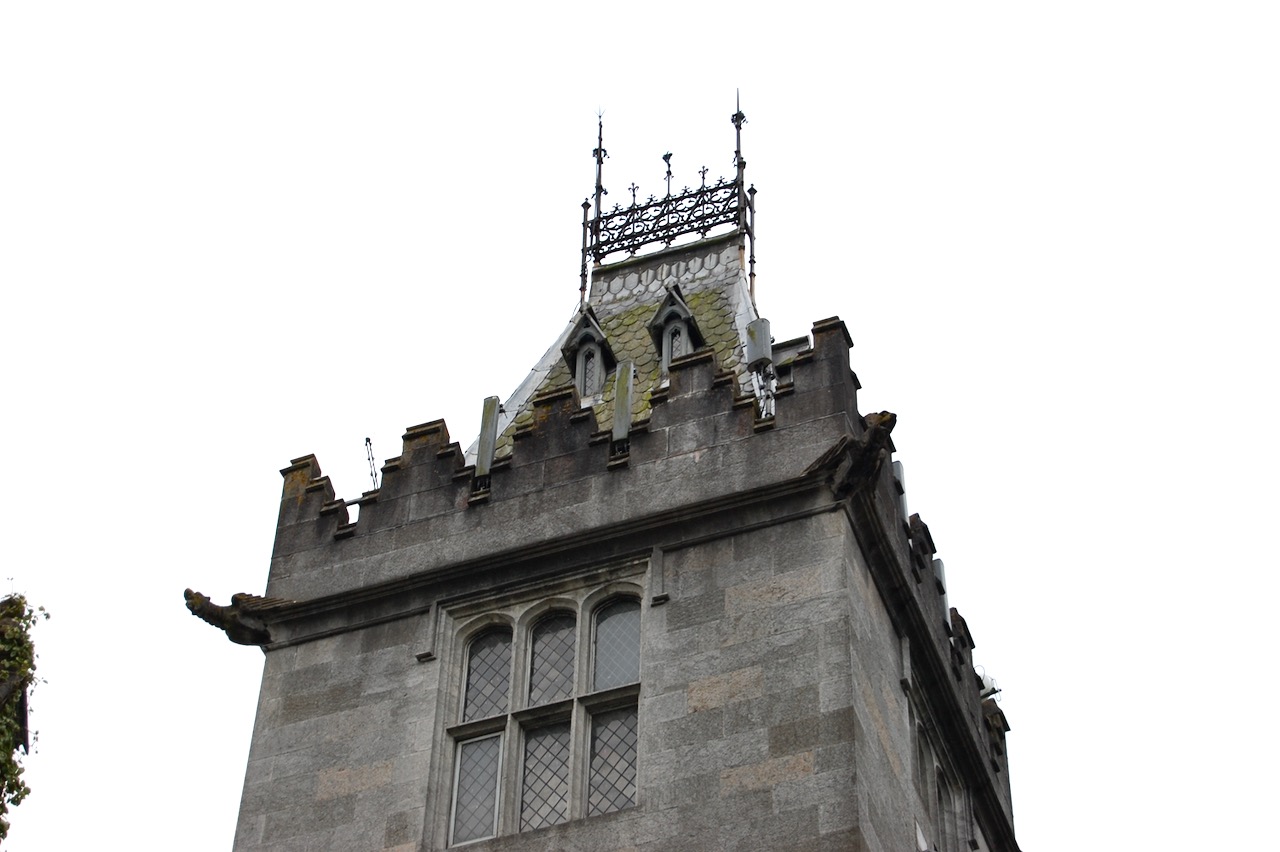
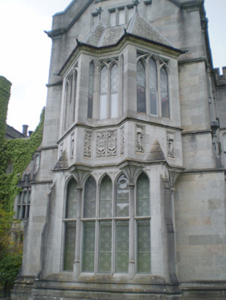
Bence-Jones continues: “The detail, however, is of excellent quality; and the whole great building is full of interest, and abounds in those historical allusions which so appealed to early-Victorians of the stamp of the second Earl, his wife and son. As might be expected, Hardwick’s front is more architecturally correct than the earlier parts of the house, but less inspired; a rather heavy three storey asymmetrical composition of oriels and mullioned windows, relieved by a Gothic cloister at one end and dominated by an Irish-battlemented tower with a truncated pyramidal roof, surmounted by High-Victorian decorative iron cresting.

Adare Manor, Limerick, October 2012. Photograph © Jennifer Winder-Baggot, www.irishhistorichouses.com
Adare Manor, Limerick:Irish-battlemented tower with a truncated pyramidal roof, surmounted by High-Victorian decorative iron cresting.” Photograph © Jennifer Winder-Baggot, www.irishhistorichouses.com
Adare Manor, photograph courtesy of hotel website.

The Archiseek website tells us:

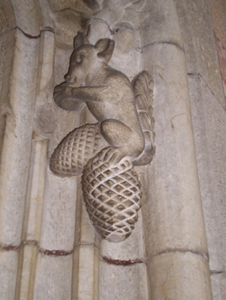
The structure is a series of visual allusions to famous Irish and English homes that the Dunravens admired. It is replete with curious eccentricities such as the turreted entrance tower at one corner rather than in the centre, 52 chimneys to commemorate each week of the year, 75 fireplaces and 365 leaded glass windows. The lettered text carved into the front of the south parapet reads: “Except the Lord build the house, the labour is but lost that built it.” The elaborate decoration is a miracle of stonework – arches, gargoyles, chimneys and bay windows. The interior spaces are designed on a grand scale. One of the most renowned interior spaces is the Minstrel’s Gallery: 132 foot long, 26-1/2 foot high expanse inspired by the Hall of Mirrors in Versailles and lined on either side with 17th Century Flemish Choir Stalls. 

Other architects to have collaborated with the Earl include Lewis [Nockalls] Cottingham, Philip Charles Hardwick, and possibly A.W.N Pugin who designed a staircase and ceiling.” [17]

Adare Manor, Limerick: The lettered text carved into the front of the south parapet reads: “Except the Lord build the house, the labour is but lost that built it.” O’Reilly tells us that “The ornamental carving at Adare is one of the earliest manifestations of a survival – or perhaps revival – in Ireland of ancient carving traditions. This same tradition would shape the future of the Gothic revival in Ireland, and make the nineteenth century one of the most creative periods in the whole history of the nation’s architecture. Two names in particular are associated with the stonework over the 1830s and early 1840s, James Conolly and Michael Donoghue, but it remains uncertain as to which of them, if either, deserves the major credit.” Photograph © Jennifer Winder-Baggot, www.irishhistorichouses.com
Adare Manor, Limerick, 2012. Photograph © Jennifer Winder-Baggot, www.irishhistorichouses.com
Adare Manor, Photograph from National Inventory of Architectural Heritage.
An inscription in Gothic lettering on the south front of the manor reads “This goodly house was erected by Windham Henry Earl of Dunraven and Caroline his Countess without borrowing, selling or leaving a debt.” Photograph from National Inventory of Architectural Heritage.
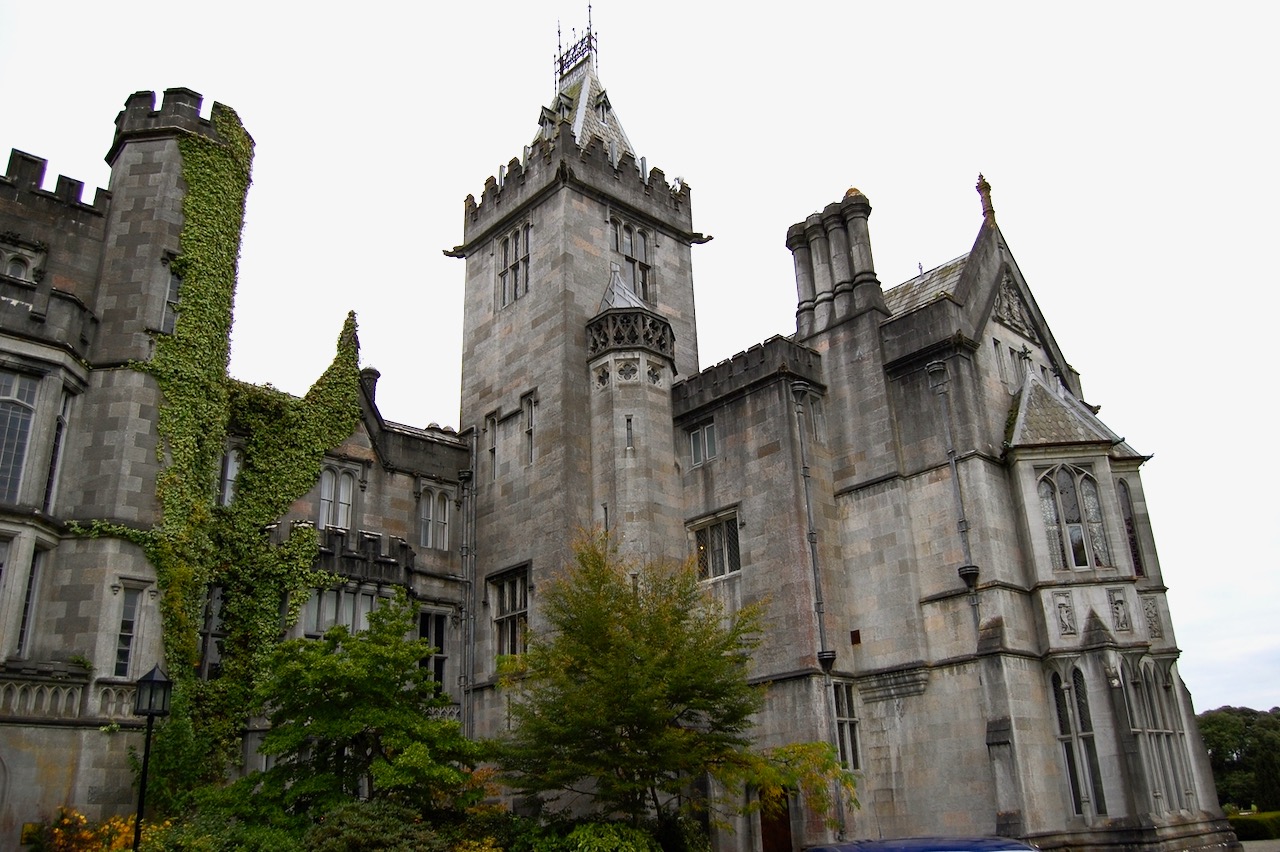
Adare Manor, Photograph from National Inventory of Architectural Heritage.
Adare Manor, photograph courtesy of hotel website.
Adare Manor, Photograph from National Inventory of Architectural Heritage.
Adare Manor, photograph courtesy of hotel website.
Adare Manor, Photograph from National Inventory of Architectural Heritage.
Adare Manor, photograph courtesy of hotel website.

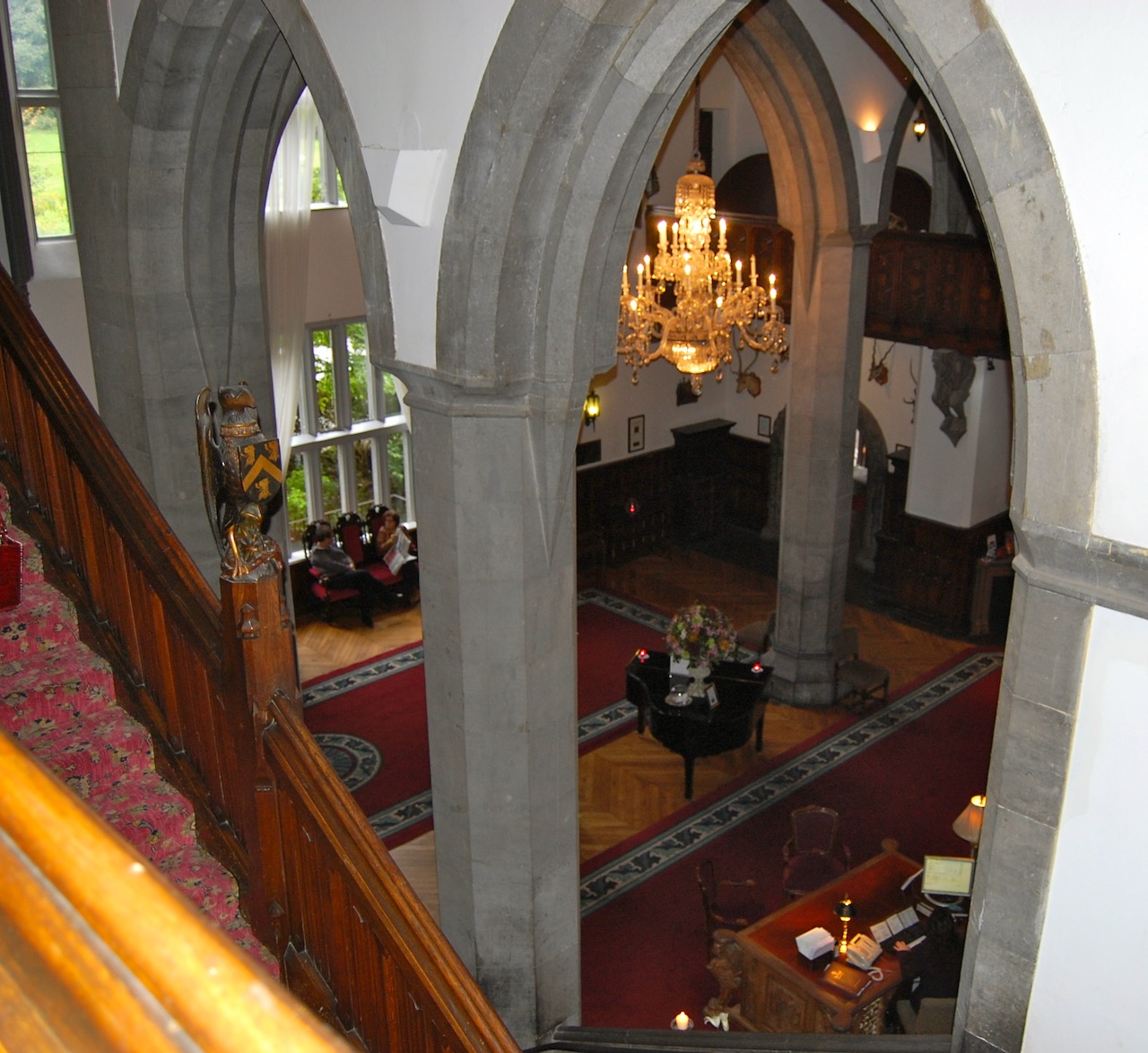
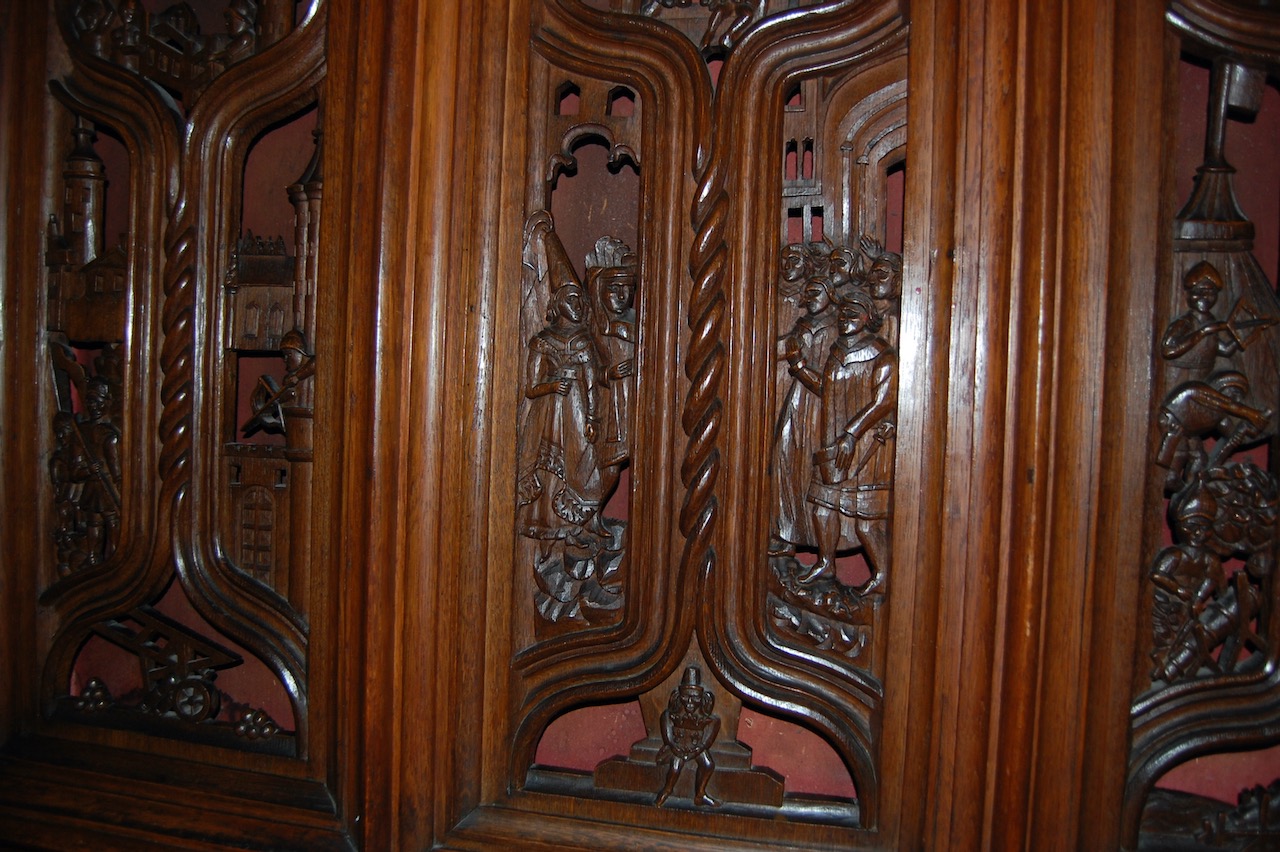
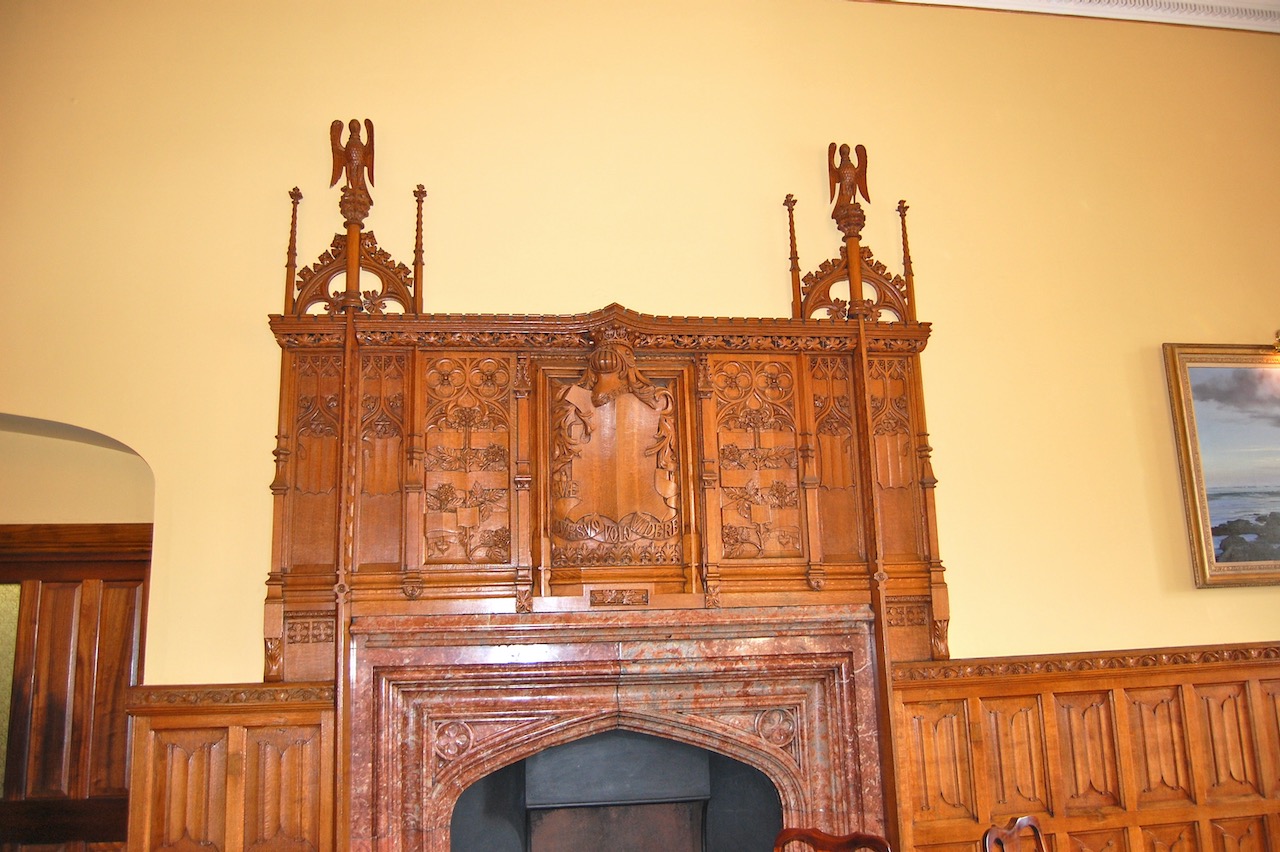
Mark Bence-Jones continues: “The entrance hall has doorways of grey marble carved in the Irish Romanesque style; the ceiling is timbered, the doors are covered in golden Spanish leather. The great hall beyond, for which Pugin provided designs, is a room of vast size and height, divided down the middle by a screen of giant Gothic arches of stone, and with similar arches in front of the staircase, so that there are Gothic vistas in all directions. A carved oak minstrels’ gallery runs along one side; originally there was also an organ-loft. From the landing of the stairs, a vaulted passage constitutes the next stage in the romantic and devious approach to the grandest room in the house, the long gallery, which was built before the great hall, in 1830s; it is 132 feet long and 26 feet high with a timbered roof; along the walls are carved C17 Flemish choir stalls and there is a great deal of other woodcarving, including C15 carved panelling in the door.

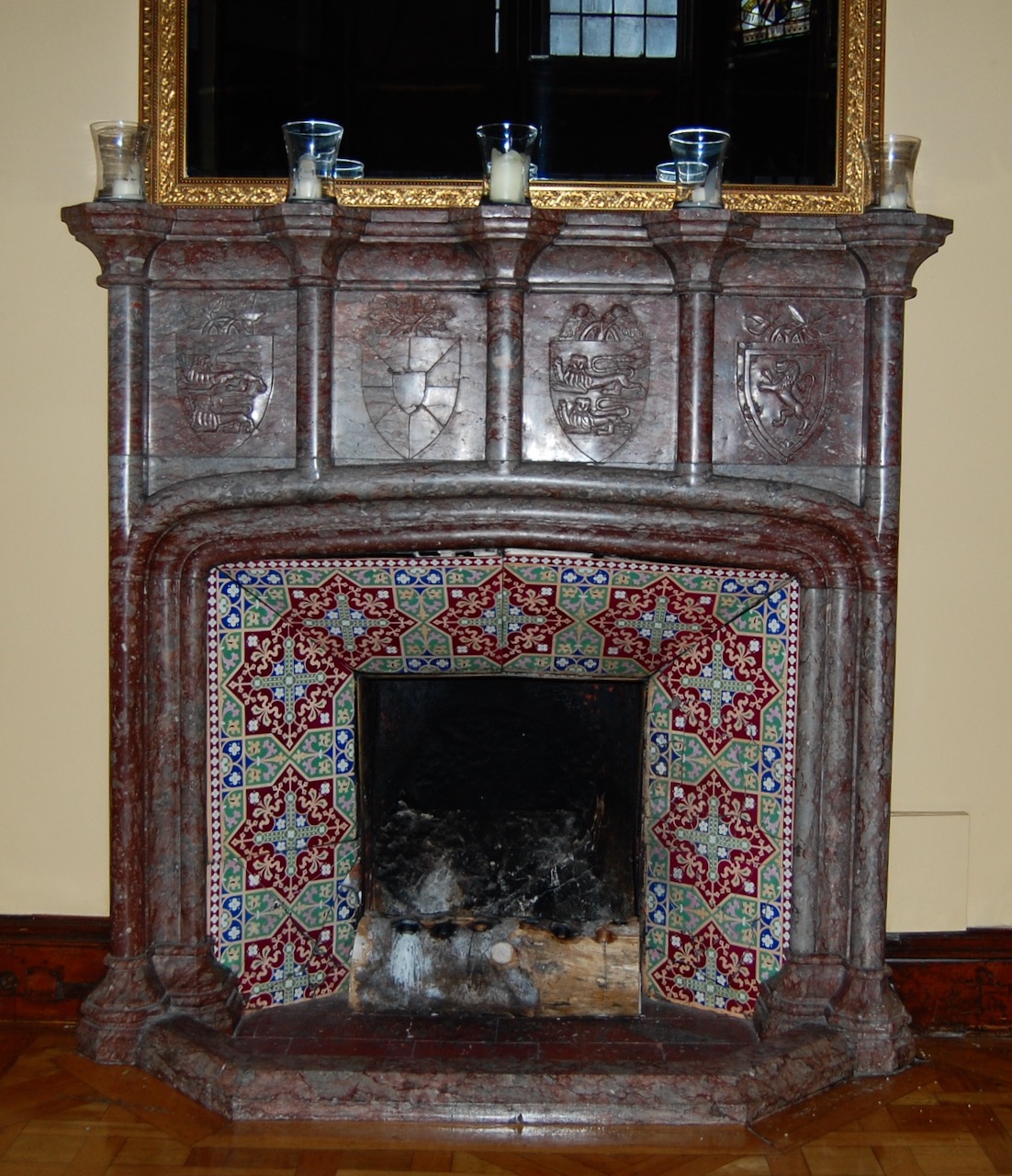
The other principal reception rooms are in Hardwick’s garden front; they have ceilings of Tudor Revival plasterwork and elaborately carved marble chimneypieces; that in the drawingroom having been designed by Pugin.

Hall of Adare Manor, Limerick, October 2012. Augustus Welby Northmore Pugin designed the shield bearing ravens that sit on top of the newel posts on the stairs in the Great Hall. Photograph © Jennifer Winder-Baggot, www.irishhistorichouses.com
Hall of Adare Manor, Limerick, October 2012. Photograph © Jennifer Winder-Baggot, www.irishhistorichouses.com
Adare Manor, photograph courtesy of hotel website.

Sean O’Reilly writes in his book Irish Houses and Gardens. From the Archives of  Country Life.

Nowhere is the creativity of Adare more apparent than in the Great Hall and its associated spaces. Enclosed by screens of giant and more modest arches, round and pointed, surrounded by corridors, staircases and steps flying in an apparently conflicting succession of directions, and with galleries breaking through walls, not to mention the ubiquitous antlers of the Irish elk, the great hall was one of the most picturesque interiors of its day. Lady Dunraven described the room as being ‘peculiarly adapted to every purpose for which it may be required,’ observing that ‘it has been frequently used with equal appropriateness as a dining room, concert-room, ballroom, for private theatricals, tableaux vivants and other amusements.’ ” [18]

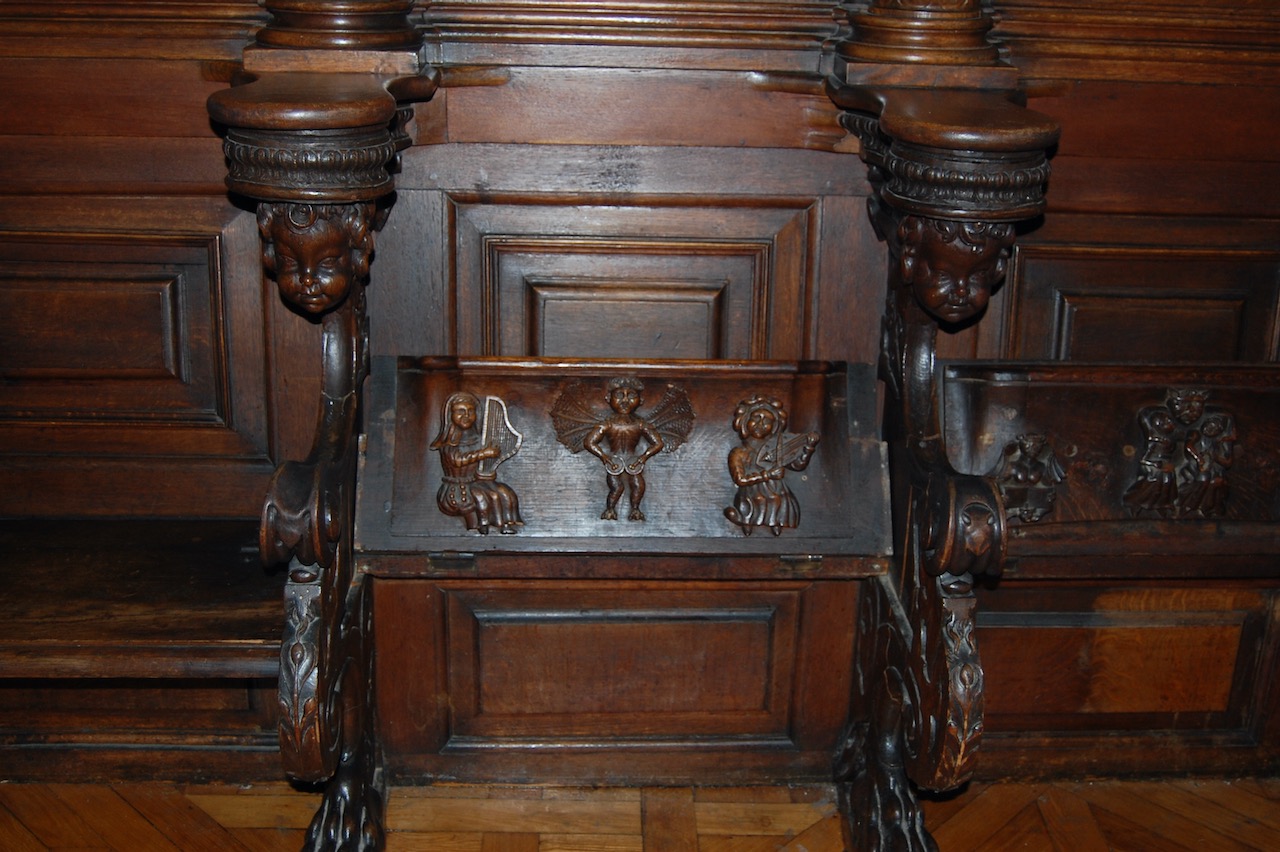
In 1834 the Dunravens visited Antwerp and purchased the woodcarvings to adorn the gallery. In 1835 they purchased a highly carved and decorative choir stall from St. Paul’s church in Antwerp. Local woodcarvers in Limerick then made an exact copy of the seventeenth century original in order to form a pair.

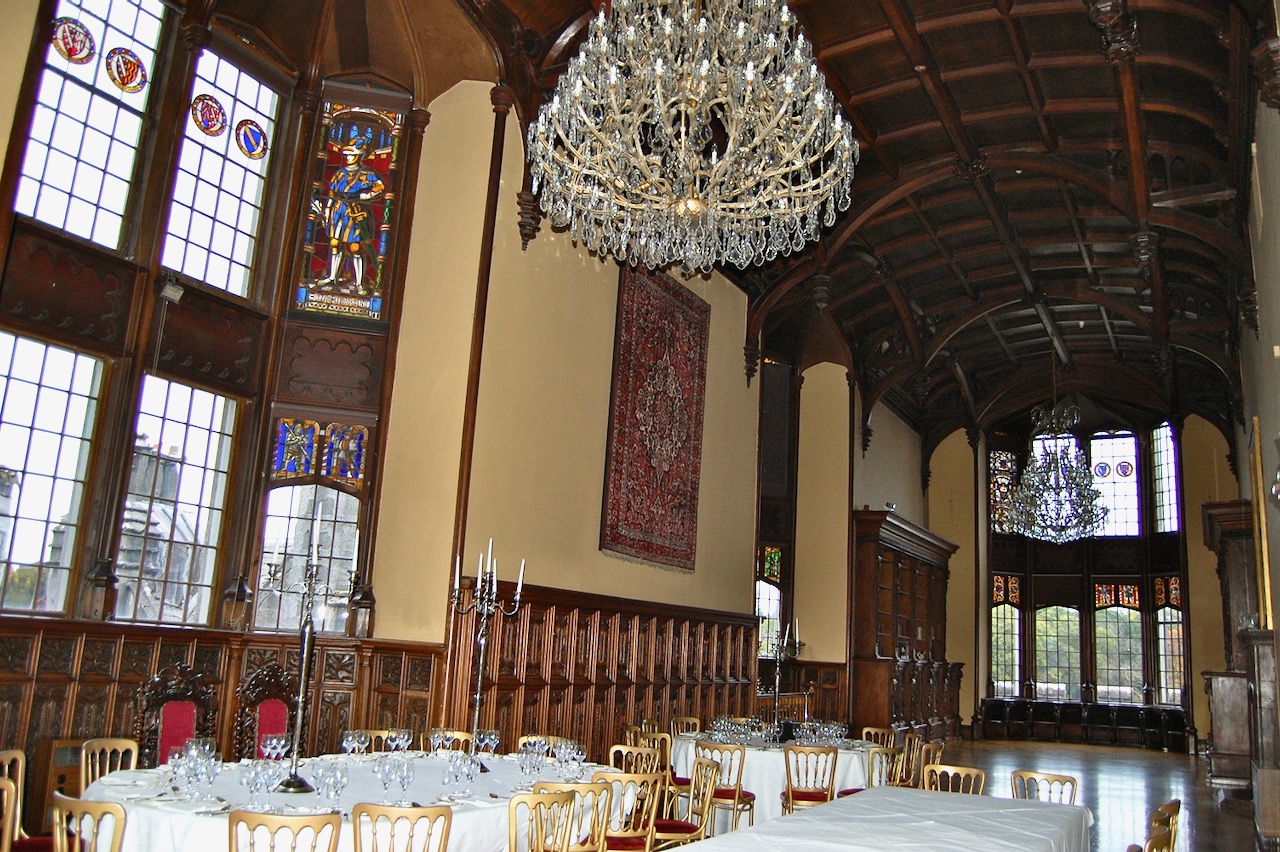
Inside Adare Manor, Limerick, October 2012: The Gallery. Photograph © Jennifer Winder-Baggot, www.irishhistorichouses.com
The Gallery, Adare Manor, Limerick. Photograph © Jennifer Winder-Baggot, www.irishhistorichouses.com
Adare Manor, photograph courtesy of hotel website.

O’Reilly writes: “If the hall is the most complex space, the most dramatic is the gallery, a huge timber-roofed space rising through two storeys and stretching nearly forty-five metres. With its architectural details, pictures and furnishings, the idea, as Cornforth so well expressed it, was to ‘create 250 years of history overnight.’ The family history from the twelfth century is traced in Willement’s stained glass and portraits – both family heirlooms and acquisitions – which carry the story through in more intimate, if also more vague terms. Seventeenth century Flemish stalls, purchased by the Dunravens during their Continental tour of 1834-36, add to the ambiguous combination of old and new.” [18]

Adare Manor, Limerick: 15th century carved panelling in the door. In 1835 the Dunravens purchased a highly carved and decorative choir stall from St. Paul’s church in Antwerp. Local woodcarvers in Limerick then made an exact copy of the seventeenth century original in order to form a pair. Photograph © Jennifer Winder-Baggot, www.irishhistorichouses.com
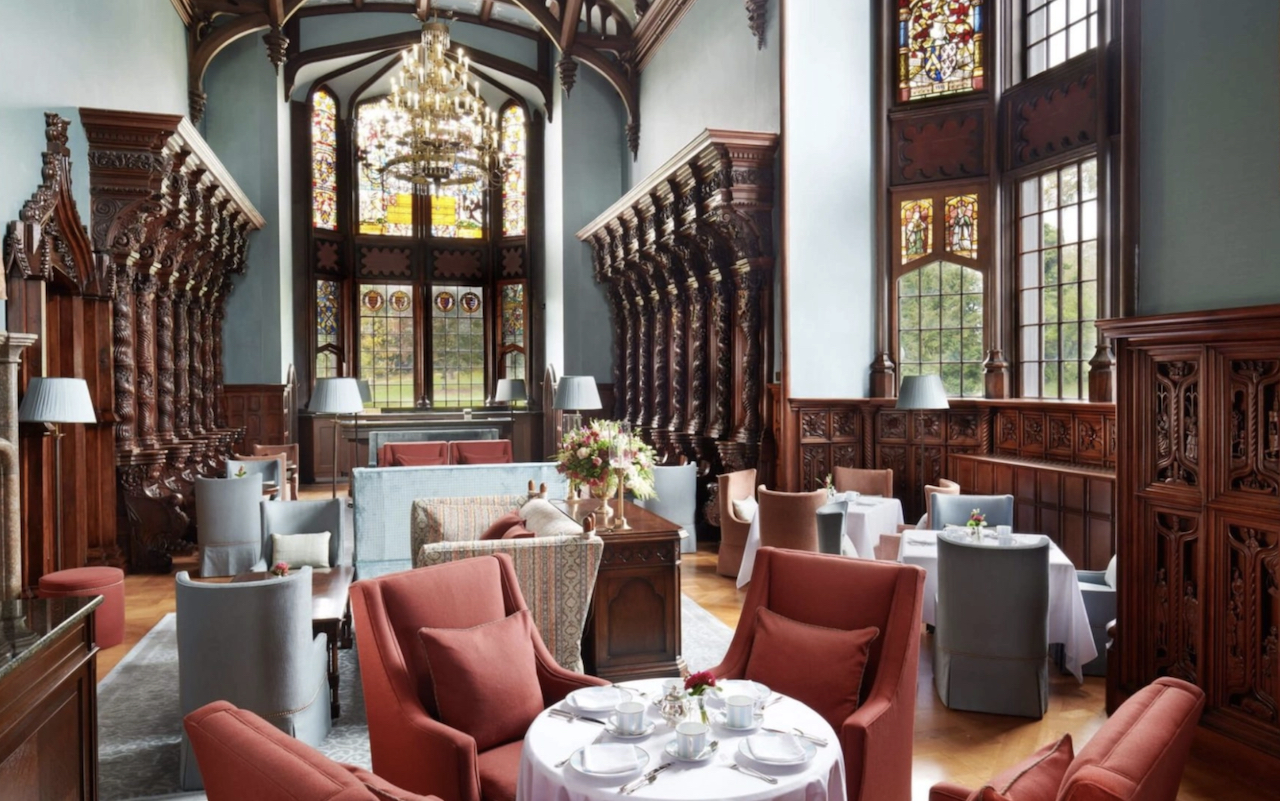
The Gallery, Adare Manor, Limerick: Seventeenth century Flemish stalls, purchased by the Dunravens during their Continental tour of 1834-36. Photograph © Jennifer Winder-Baggot, www.irishhistorichouses.com
The Gallery, Adare Manor, Limerick: 15th century carved panelling in the door.  Photograph © Jennifer Winder-Baggot, www.irishhistorichouses.com
The Gallery, Adare Manor, Limerickchimneypieces were designed by Pugin. Photograph © Jennifer Winder-Baggot, www.irishhistorichouses.com
The Gallery, Adare Manor, Limerick. Photograph © Jennifer Winder-Baggot, www.irishhistorichouses.com

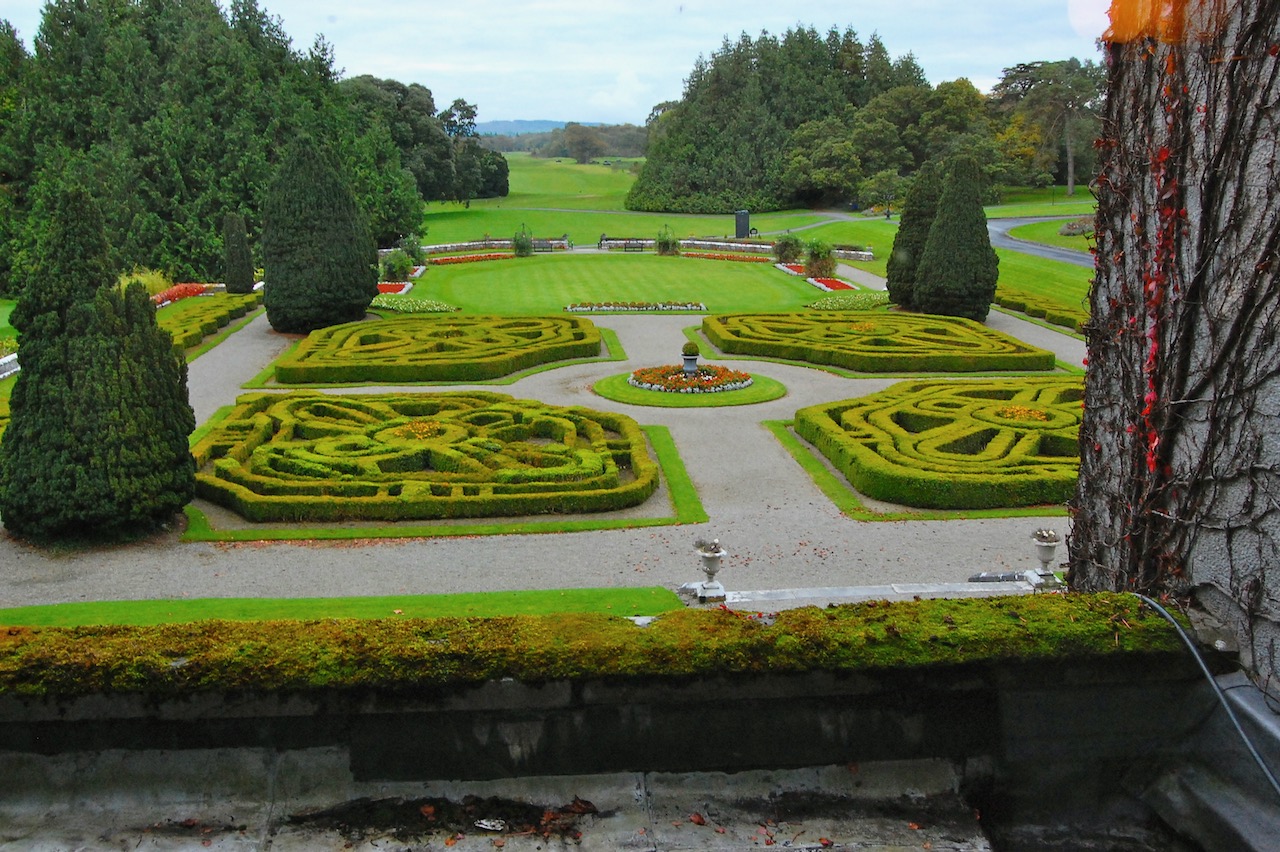
O’Reilly adds: “It was Pugin’s successor, the English architect P.C. Hardwick, who developed the next and final major phase of work at Adare. This involved the laying out of the surrounding terraces, and the completion of the southern range, that which looks across to the river and occupies the site of the original classical house. Although Hardwick’s work embodies the professional finish of the later nineteenth century, it possesses none of the amateur exuberance of the earlier work. Yet his patron, the 3rd Earl, was to establish himself as one of the foremost authorities of Irish antiquities. He was a friend of the celebrated Irish antiquary George Petrie, and collated the material for the posthumously published Notes on Irish Antiquities, one of the most significant antiquarian publications of the century.” [18]

The principal reception rooms in Hardwick’s garden front have ceilings of Tudor Revival plasterwork and elaborately carved marble chimneypieces, that in the drawing room was designed by Pugin. The drawing room, library and other reception rooms in the garden front only came into use for the coming of age of the future fourth Earl of Dunraven in 1862. The third Earl married Augusta Charlotte Gould, whose grandmother was Mary Quin, daughter of Valentine Quinn who built the first house at Adare. Augusta’s sister Caroline married Robert Gore-Booth, 4th Baronet of Lissadell, County Sligo, a section 482 property.
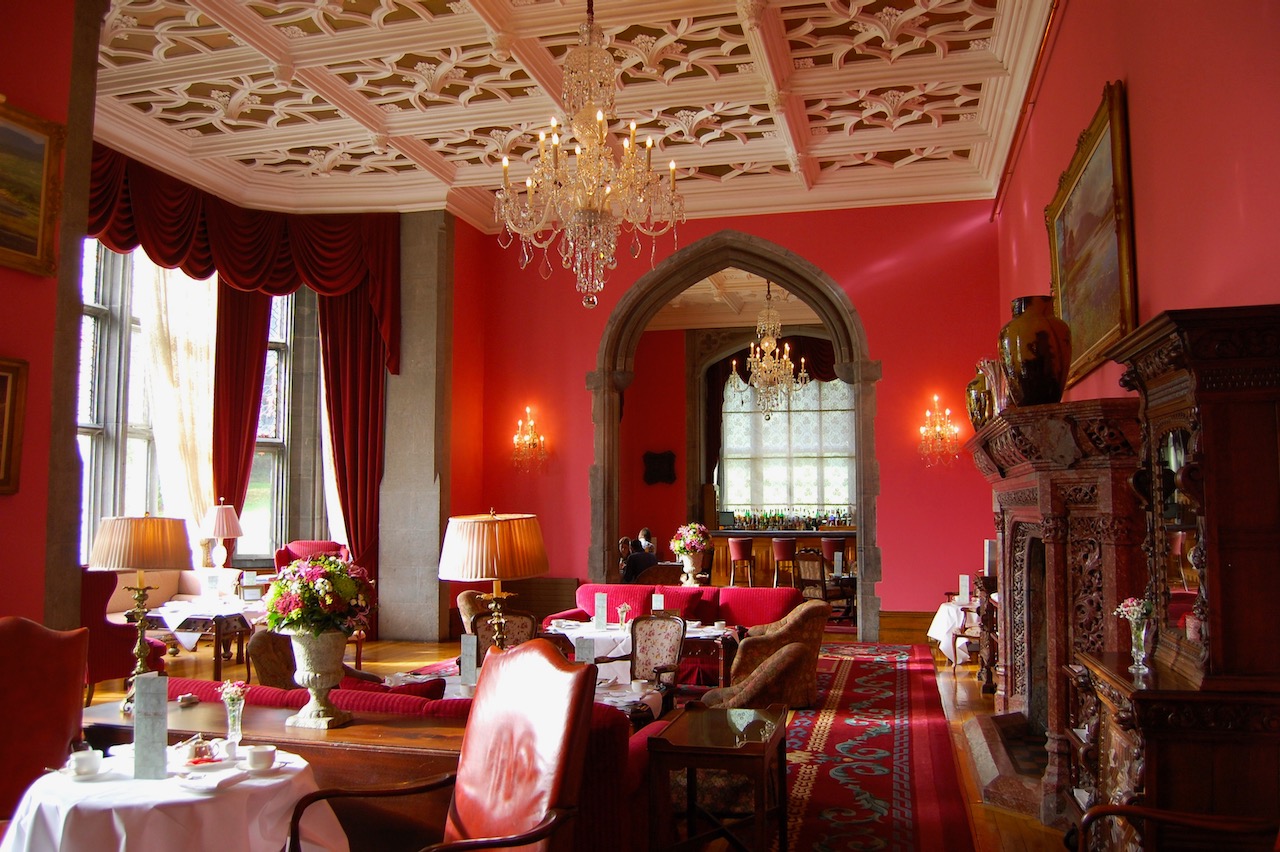
Adare Manor, Limerick, 2012. The other principal reception rooms are in Hardwick’s garden front; they have ceilings of Tudor Revival plasterwork and elaborately carved marble chimneypieces; that in the drawing room having been designed by Pugin. Photograph © Jennifer Winder-Baggot, http://www.irishhistorichouses.com

A daughter of the 3rd Earl, Mary Frances, married Arthur Hugh Smith-Barry, 1st and last Baron Barrymore of Fota House in County Cork (see my entry https://irishhistorichouses.com/2022/01/19/office-of-public-works-properties-munster/ )
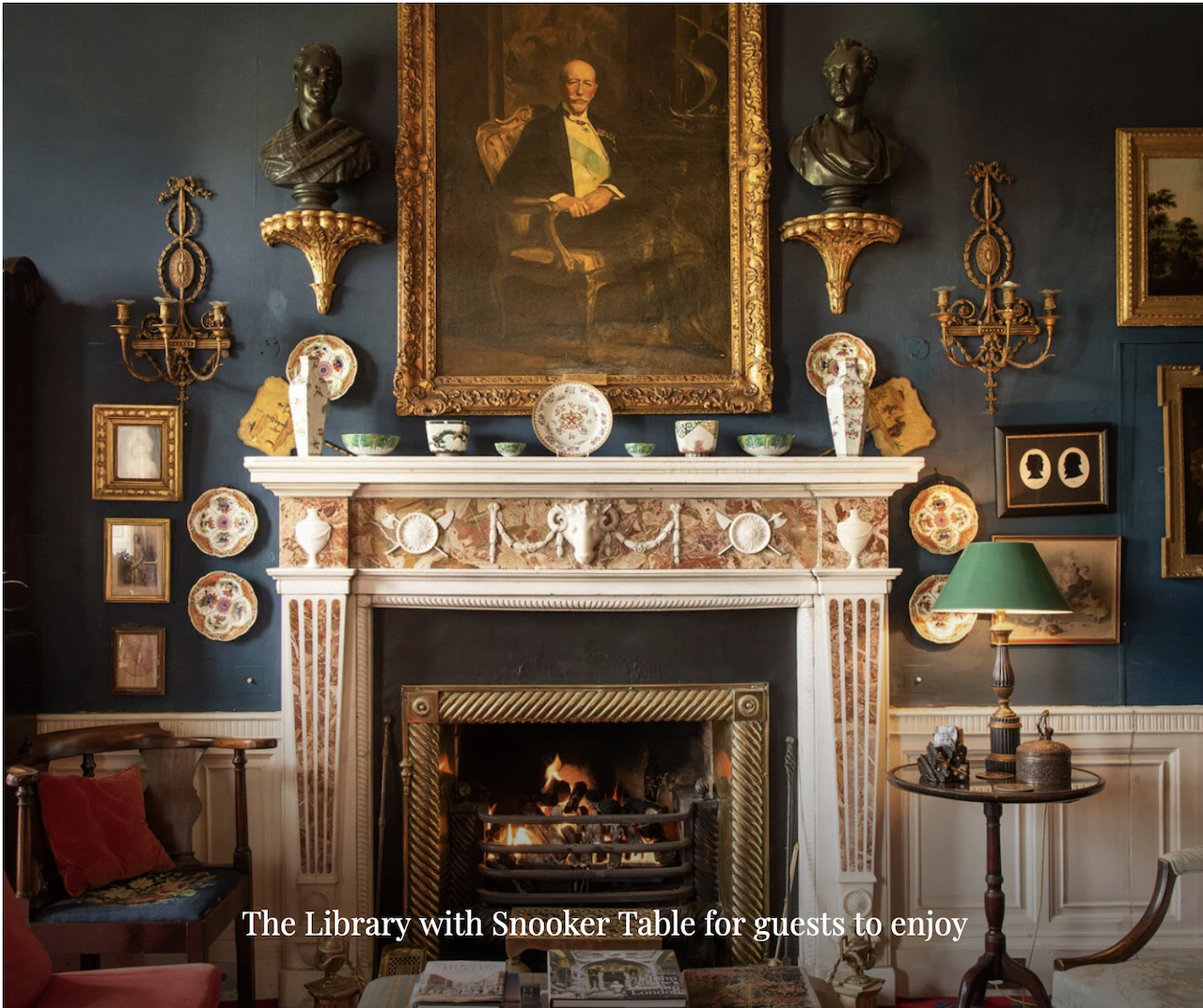
Photograph courtesy of Glin castle website: A portrait of Windham Thomas Wyndham-Quin the 4th Earl of Dunraven hangs above the marble mantelpiece in the library. His daughter Rachel Charlotte married the 27th Knight of Glin.

The 4th Earl had no sons and he was succeeded by his cousin, Windham Henry Wyndham-Quin (1857-1952), grandson of the 2nd Earl of Dunraven. He lived at Adare for twenty-six years, until his death in 1952. He was married to Eva Constance Aline Bourke, daughter of the 6th Earl of Mayo. It was their son, Richard Southwell Windham Robert Wyndham-Quin, 6th Earl of Dunraven and Mount-Earl, who made the difficult decision to sell Adare Manor due to difficult economic climate of the 1980s in Ireland. It took a while to find a suitable buyer. Unable to bear the expense of maintaining Adare Manor, the 7th Earl sold it and its contents in 1984.
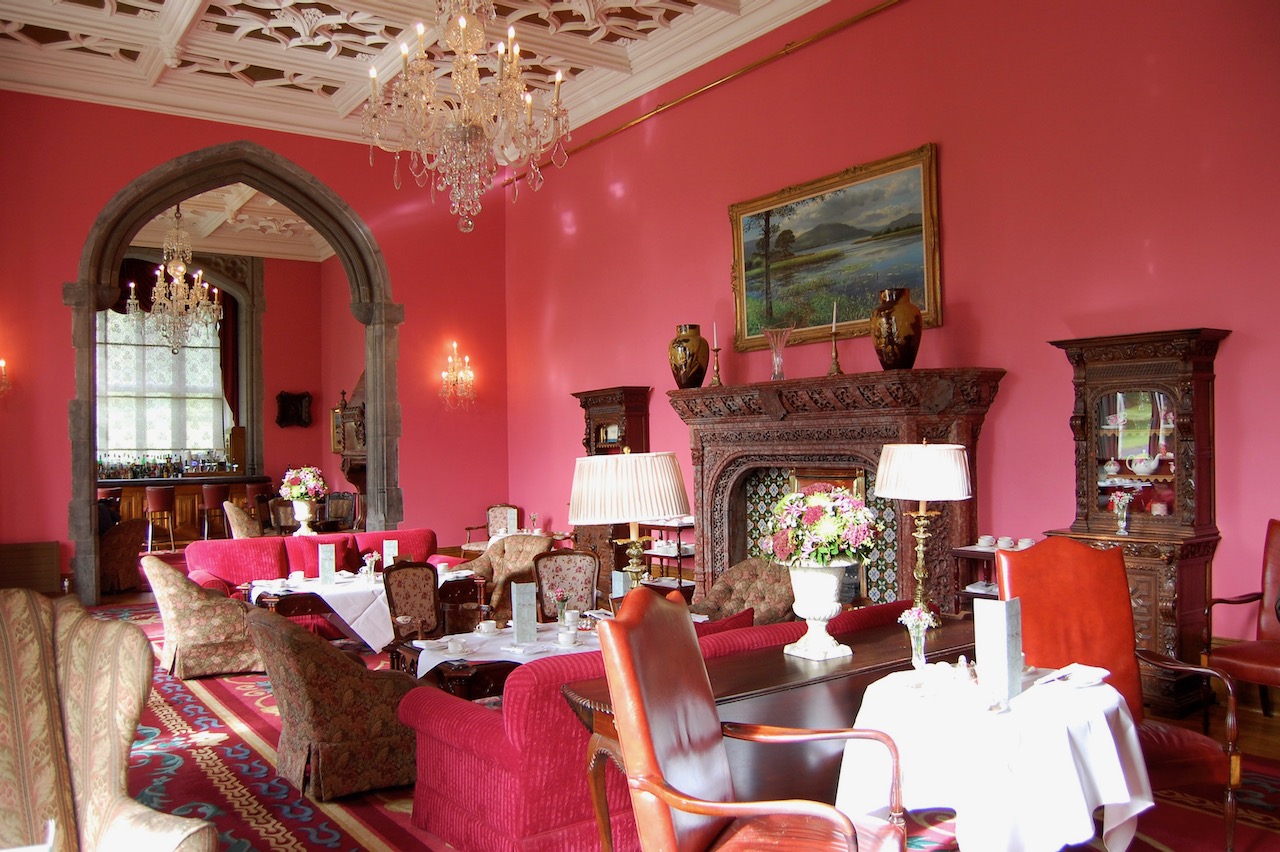
Adare Manor, Limerick, 2012.
Adare Manor, Limerick, 2012. Photograph © Jennifer Winder-Baggot, www.irishhistorichouses.com
Adare Manor, photograph courtesy of hotel website.
Adare Manor, Limerick, breakfast room, 2012. Photograph © Jennifer Winder-Baggot, www.irishhistorichouses.com
Adare Manor, photograph courtesy of hotel website.
Adare Manor, Limerick, 2012.
Adare Manor, Limerick. Photograph © Jennifer Winder-Baggot, www.irishhistorichouses.com

Mark Bence-Jones adds: “The house stands close to the River Maigue surrounded by a splendid desmesne in which there is a Desmond castle, and a ruined medieval Franciscan friary; one of three monastic buildings at Adare, the other two having been restored as the Catholic and Protestant churches.” 
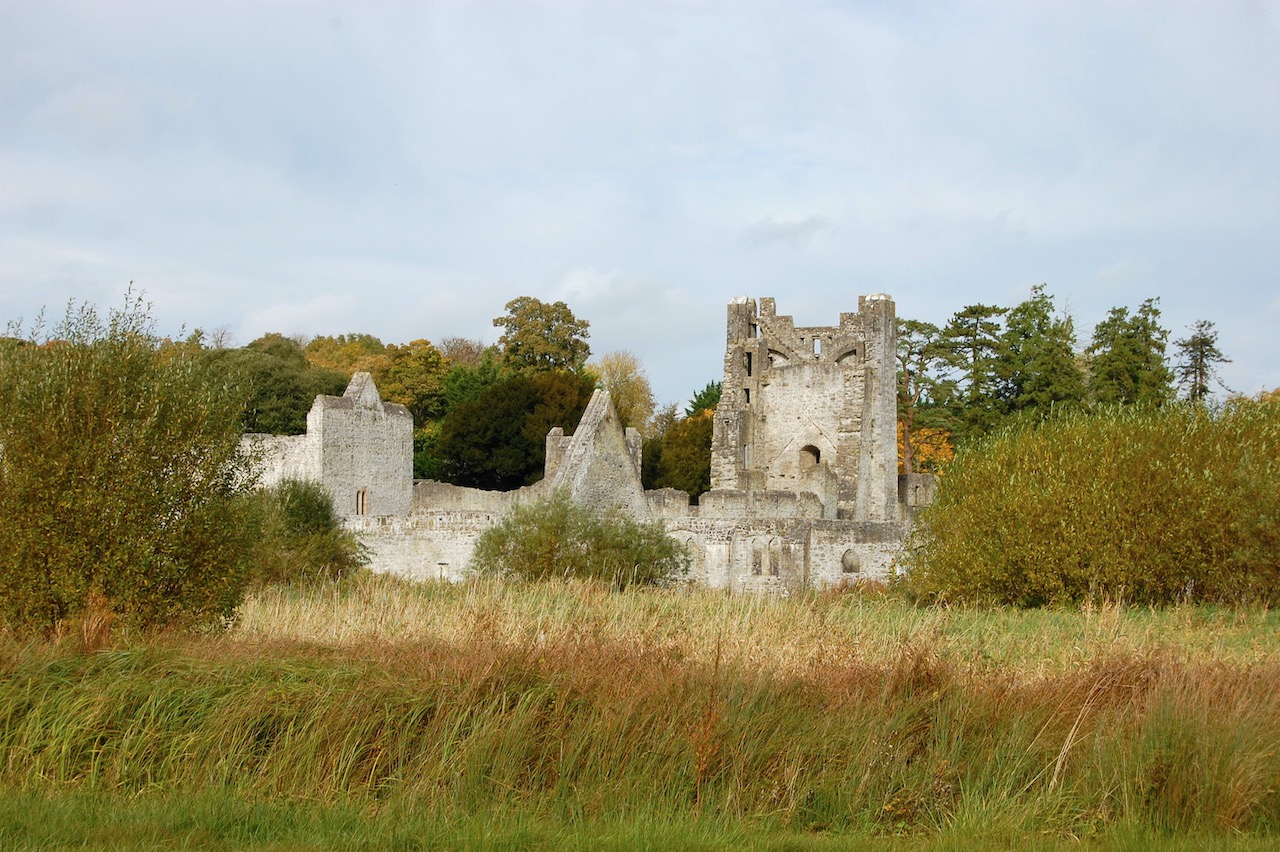
Ruined medieval Franciscan friary at Adare Manor, Limerick, 2012.
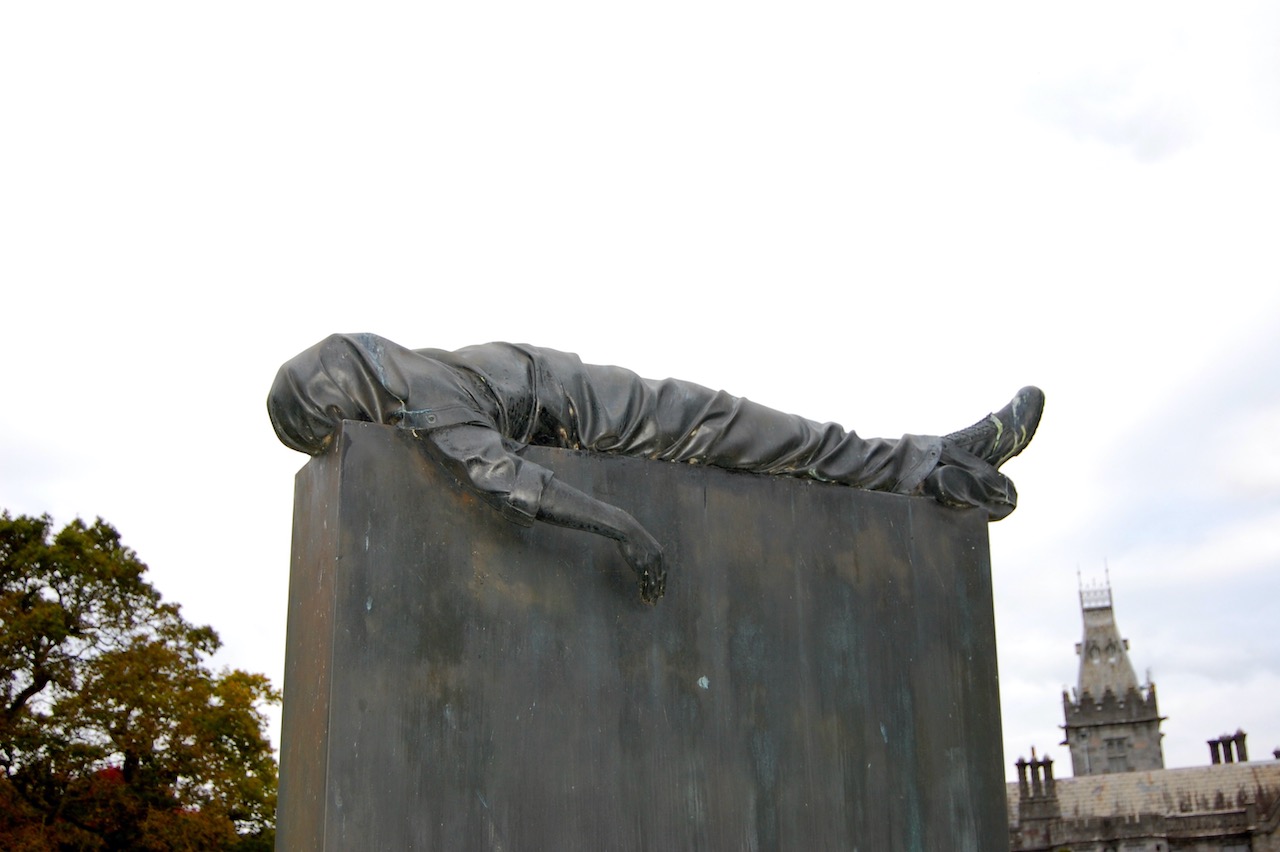
Veteran’s Memorial, Adare Manor, Limerick Photograph © Jennifer Winder-Baggot, www.irishhistorichouses.com
Adare Manor, Limerick, veterans memorial. Photograph © Jennifer Winder-Baggot, www.irishhistorichouses.com

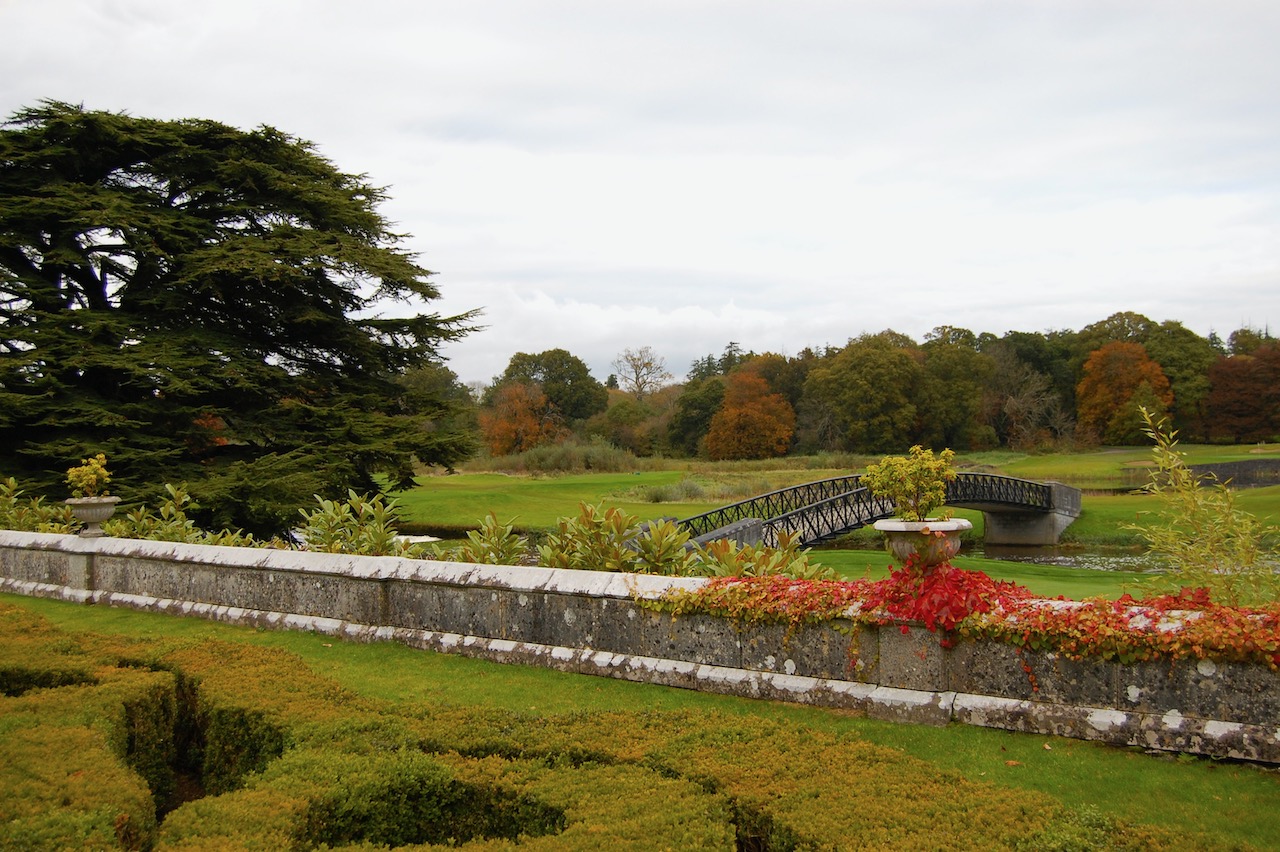
Among the trees southwest of the Manor House are Ogham Stones, which were brought to Adare Manor from Kerry by Edwin, the 3rd Earl of Dunraven. Ogham Stones date from the early 5th Century to the middle of the 7th Century. They are mainly Christian in context and are usually associated with old churches or early Christian burial sites. Ogham inscriptions are in an early form of Irish, frequently followed by Latin inscriptions and often read from the bottom upwards.
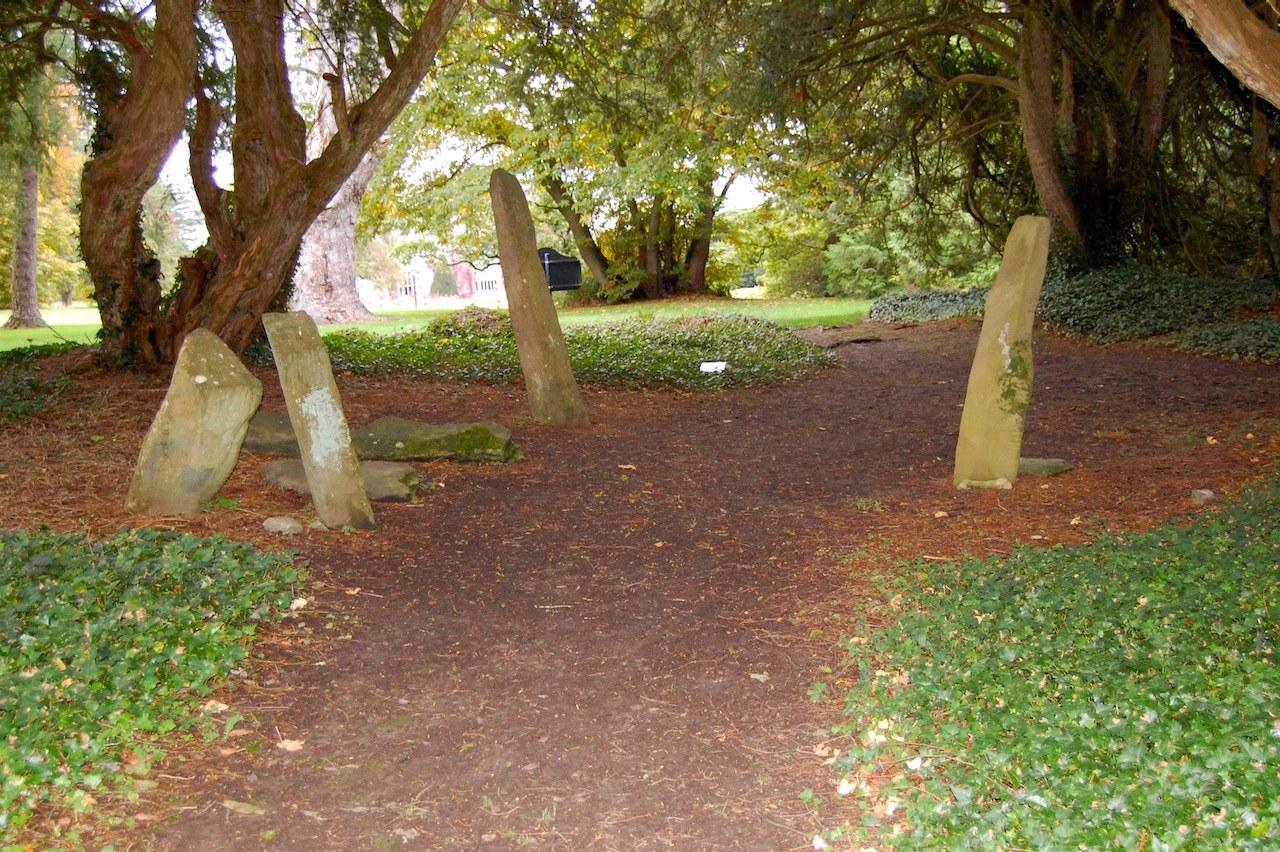
Ogham stones at Adare Manor, Limerick. Photograph © Jennifer Winder-Baggot, www.irishhistorichouses.com

2. Ash Hill, Kilmallock, Co Limerick V35 W306 – accommodation
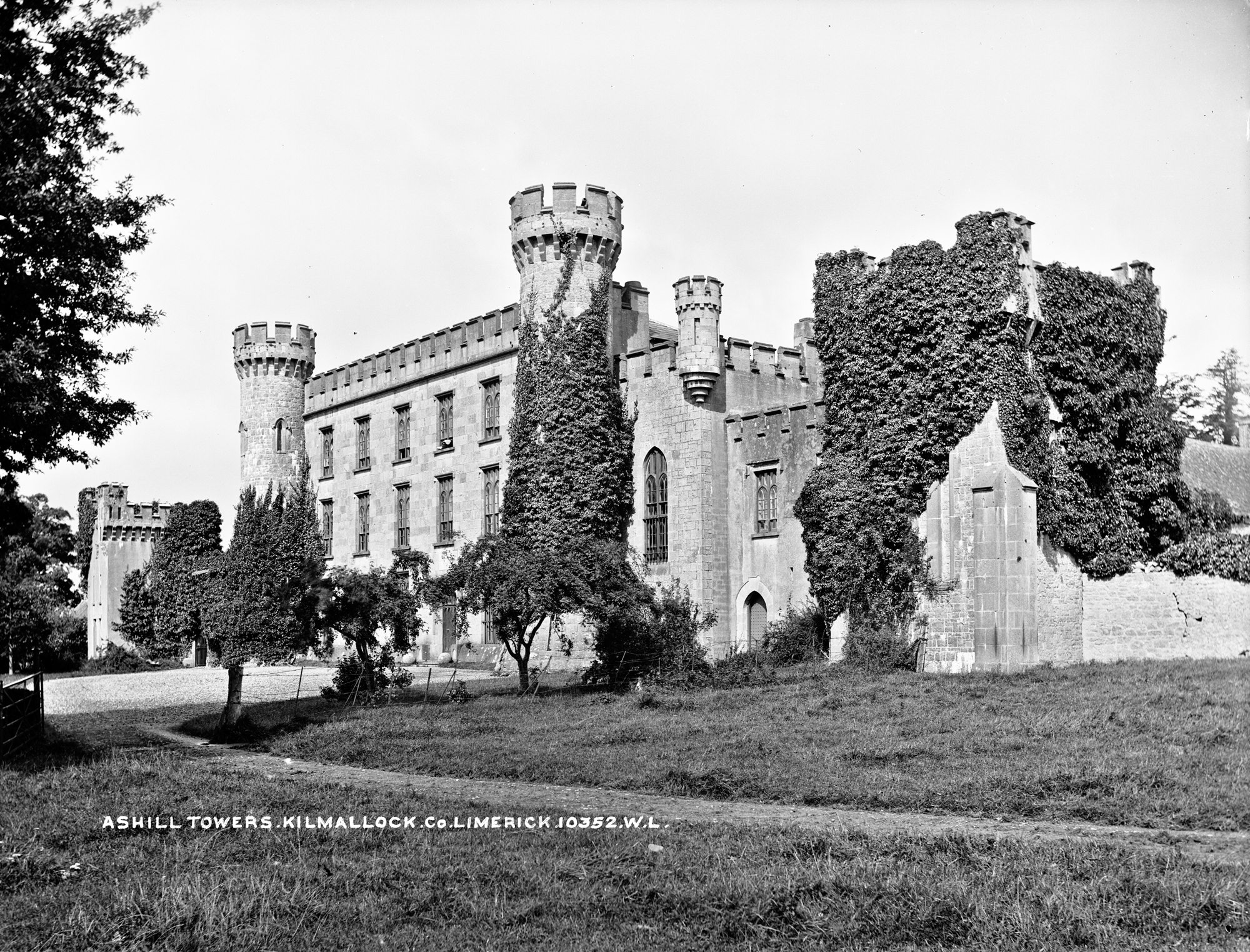
www.ashhill.com 

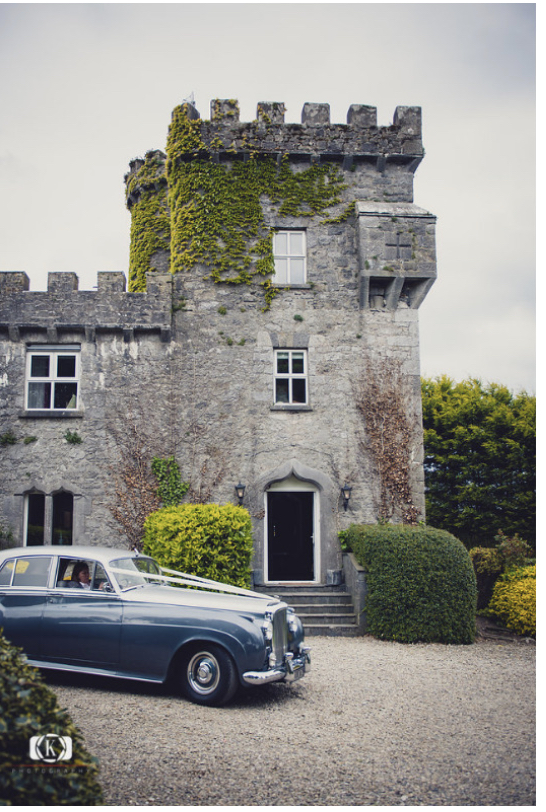
Ashill Towers, taken  c.1865-1914 by Robert French, Lawrence Photographic Collection, National Library of Ireland, flickr constant commons. The two corner towers were taken down in the 1960s.
Ash Hill, August 2022. Listed in National Inventory of Architectural Heritage. [1] Photograph © Jennifer Winder-Baggot, www.irishhistorichouses.com

We treated ourselves to a stay during Heritage Week 2022 – https://irishhistorichouses.com/2023/04/06/ash-hill-kilmallock-co-limerick/

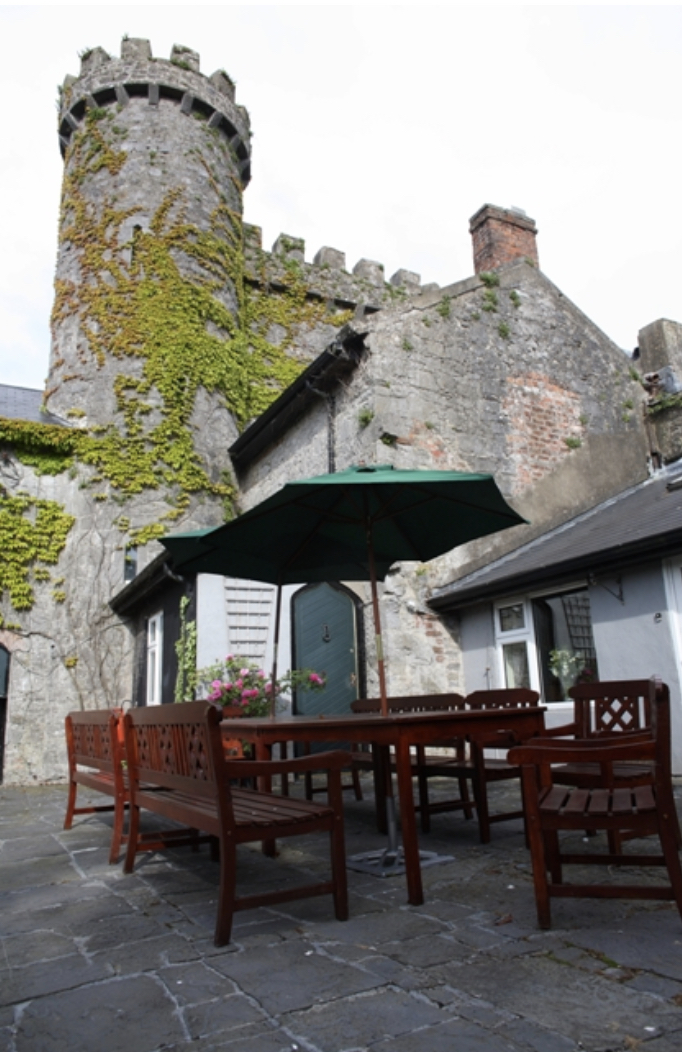
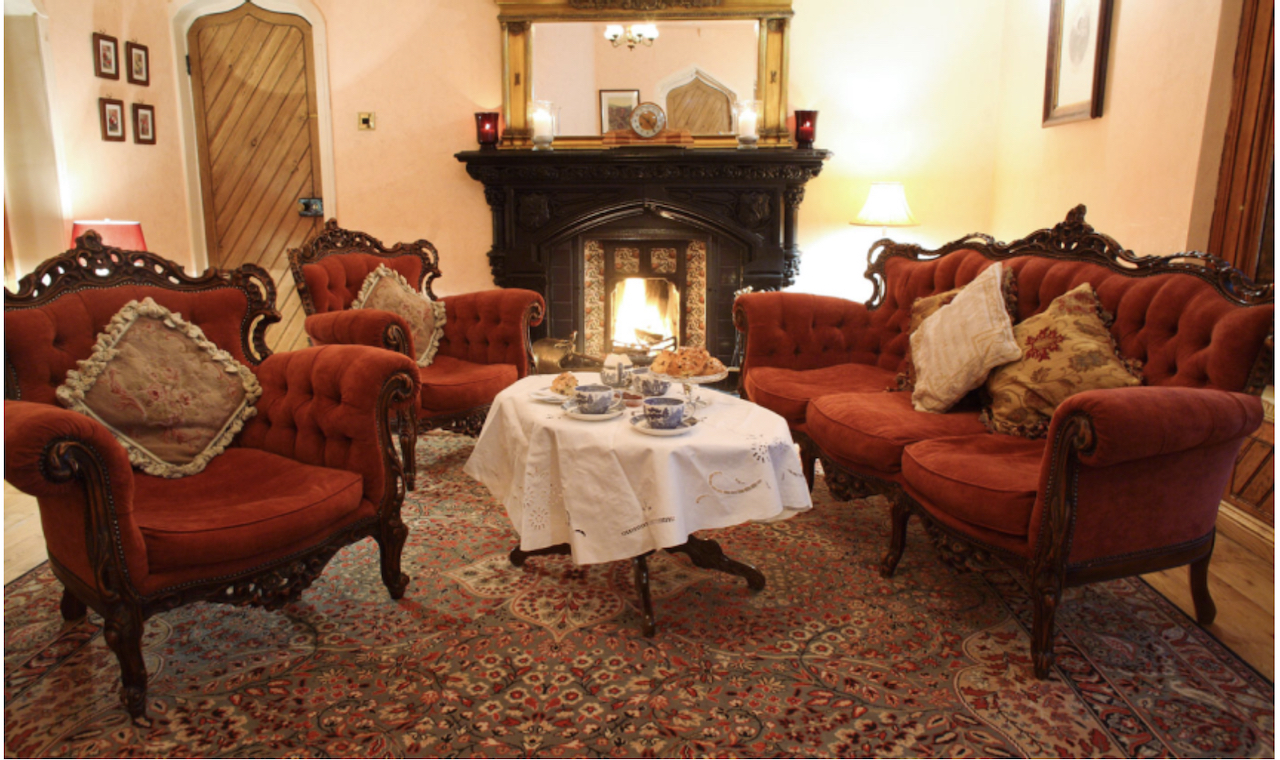
The website tells us: “Ash Hill is a large, comfortable Georgian estate, boasting many fine stucco ceilings and cornices throughout the house. For guests wishing to stay at Ash Hill, we have three beautifully appointed en-suite bedrooms, all of which can accommodate one or more cots…Open to the public from January 15th through December 15th. Historical tours with afternoon tea are easily arranged and make for an enjoyable afternoon. We also host small workshops of all kinds, upon request…For discerning guests, Ash Hill can be rented, fully staffed, in its entirety [comfortably sleeps 10 people]. Minimum rental 7 days.”
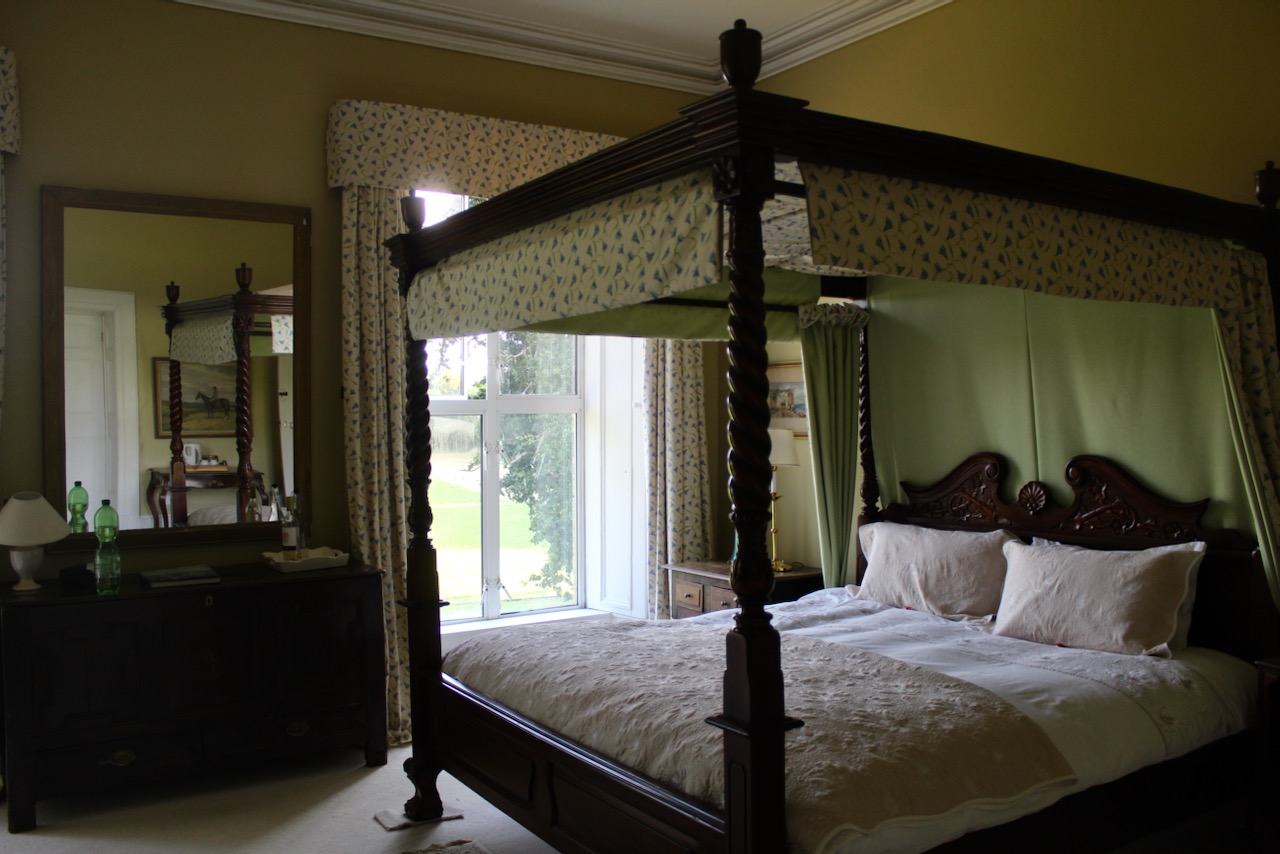
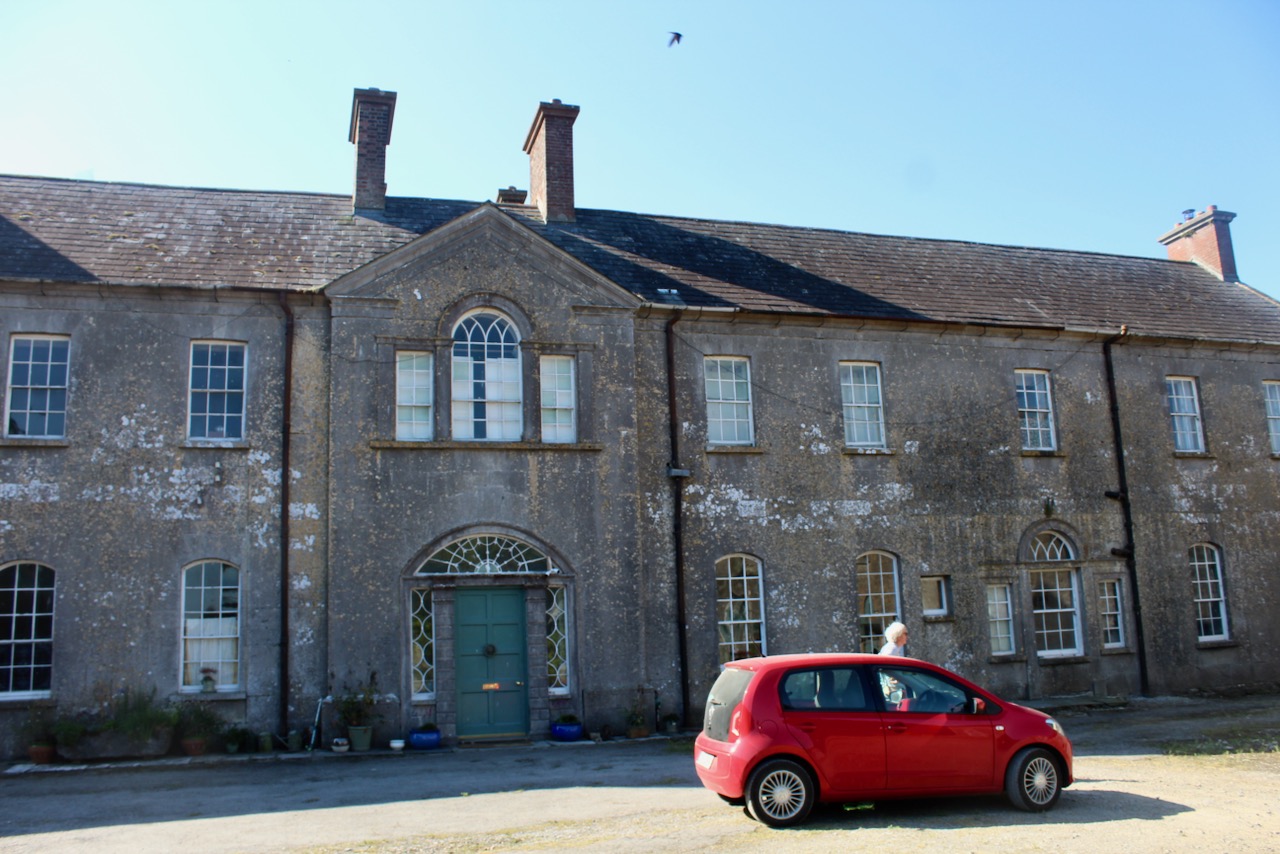
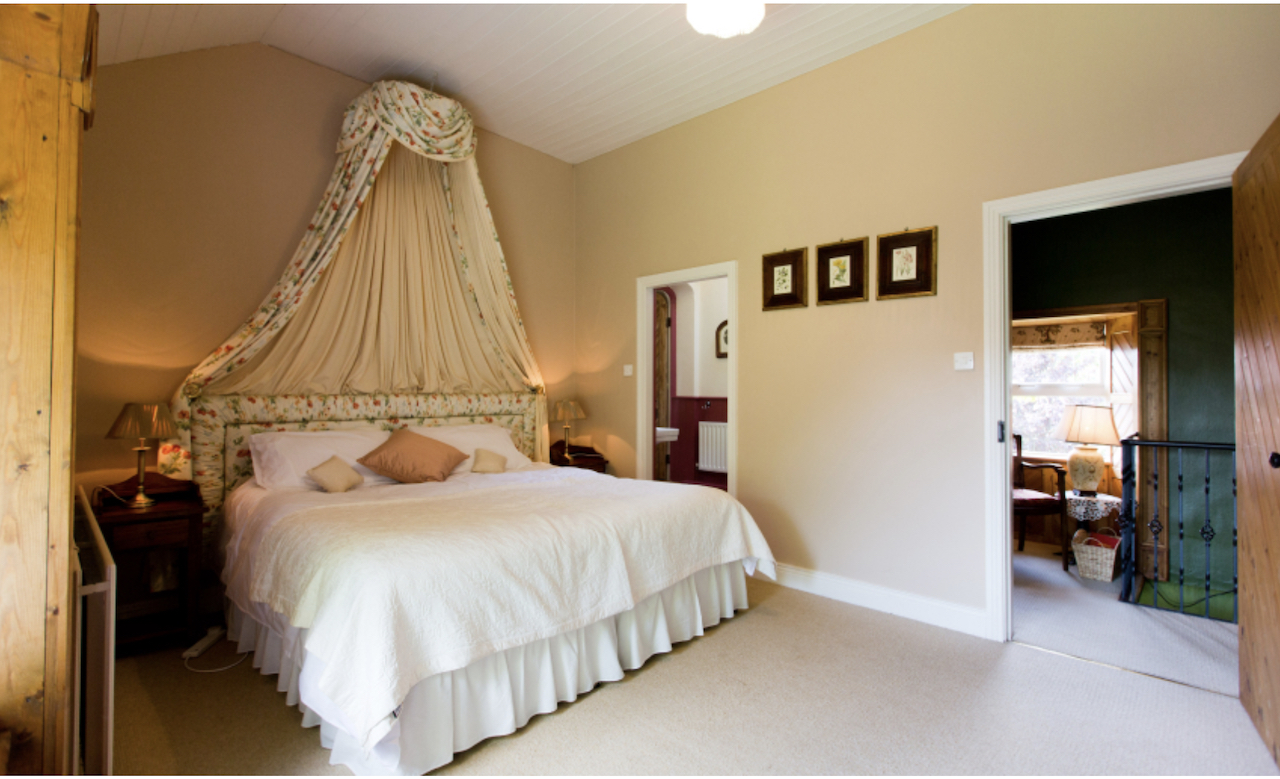
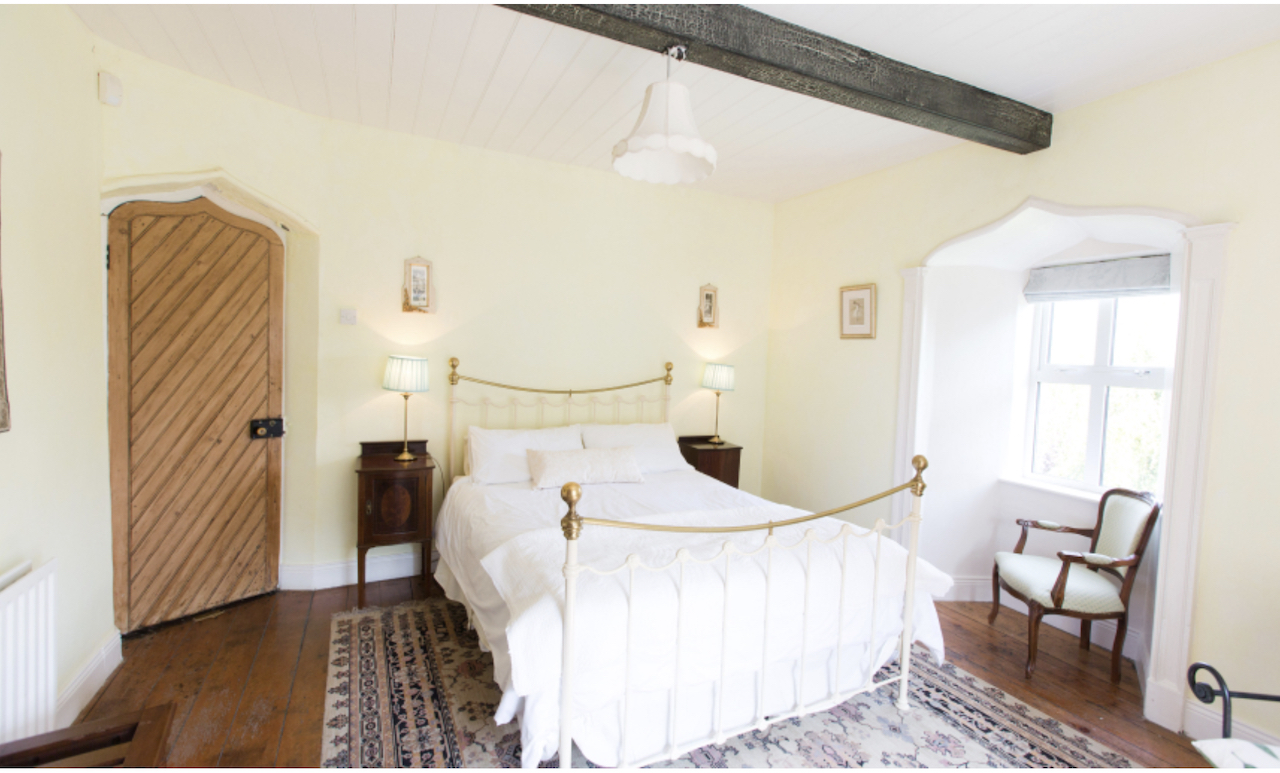
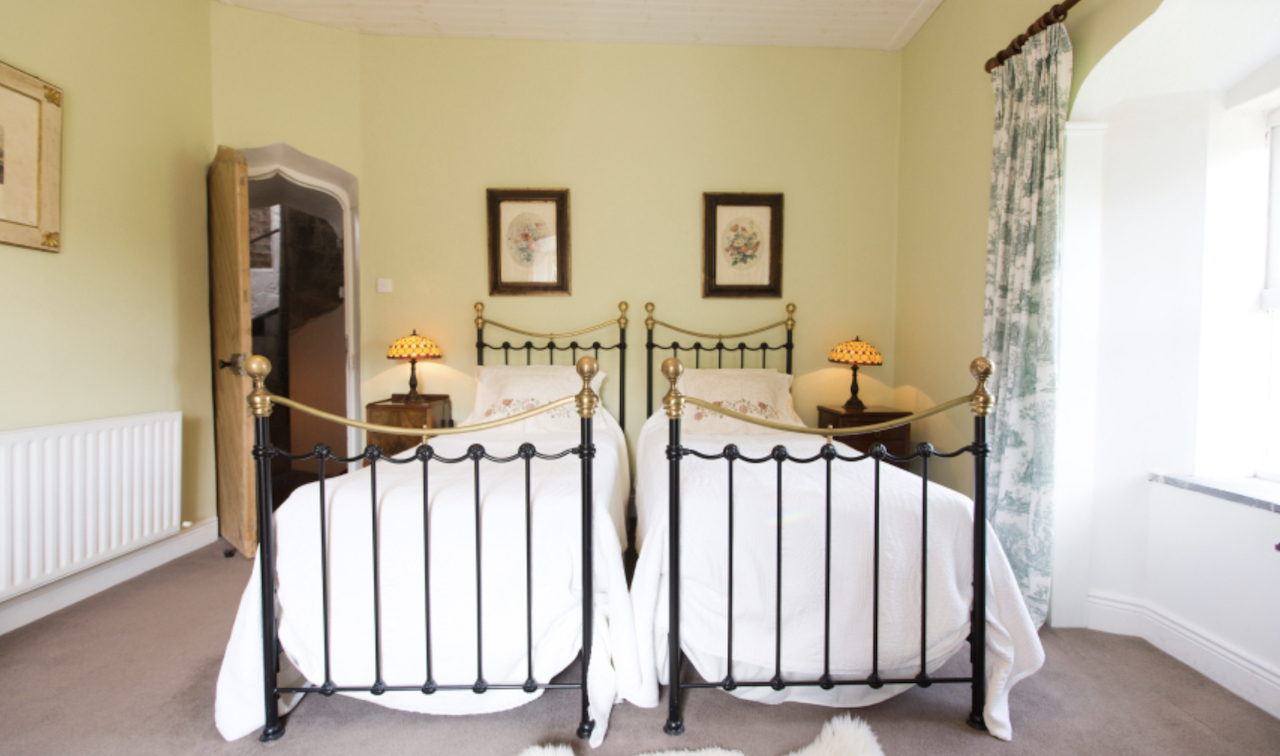
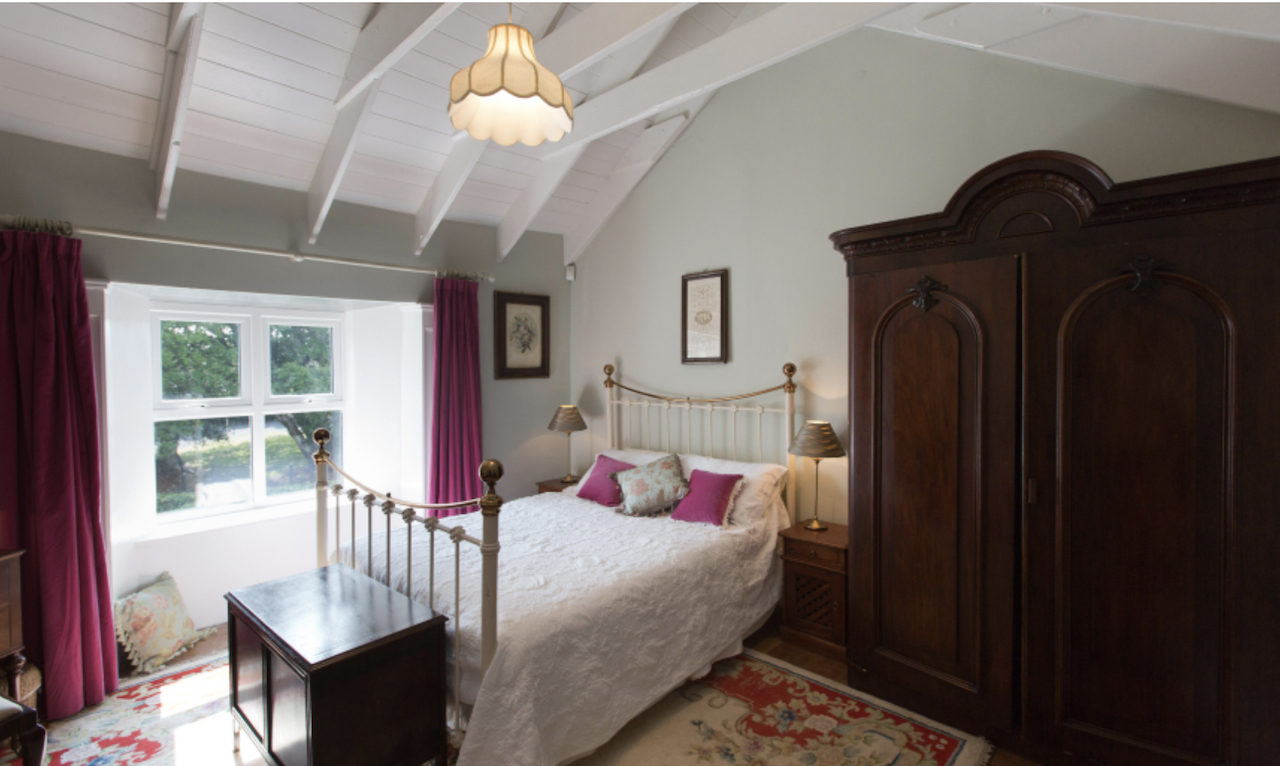
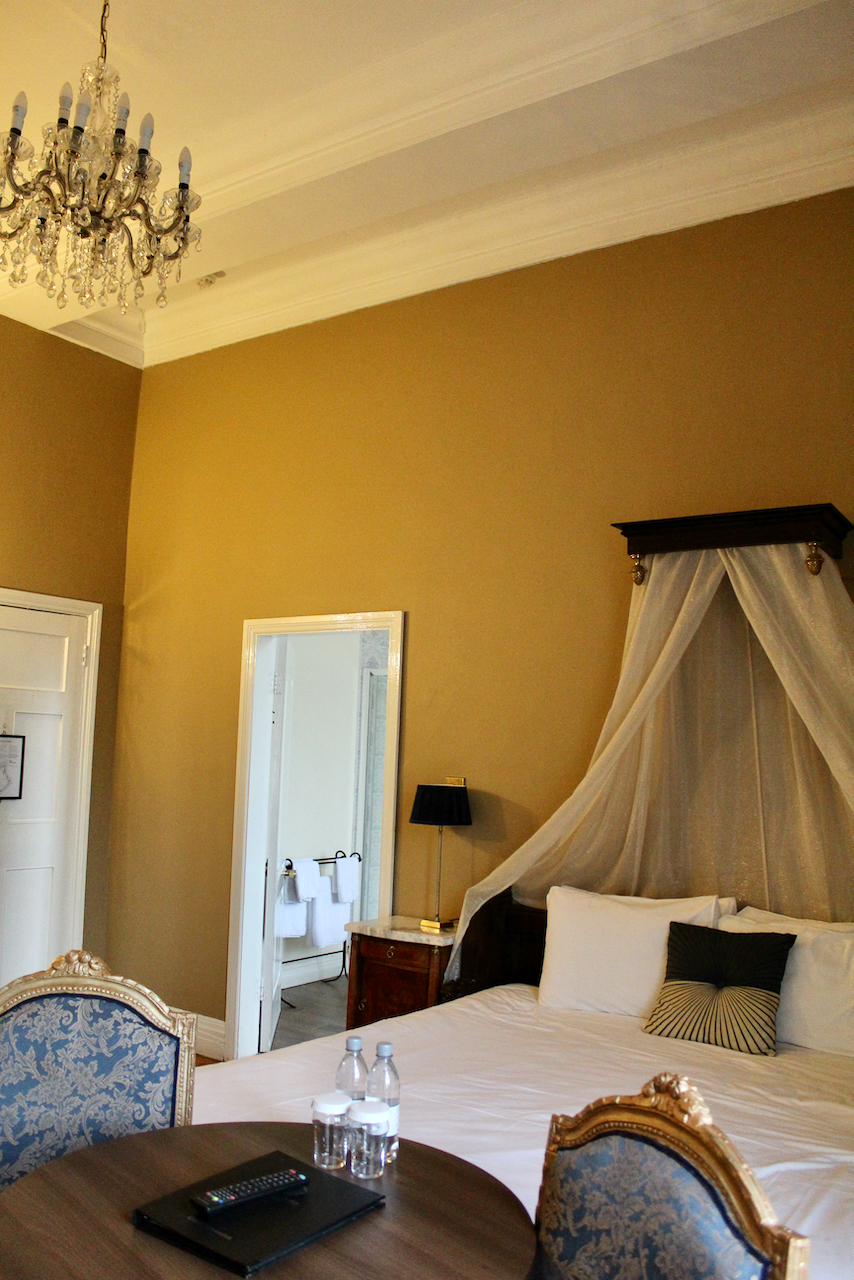
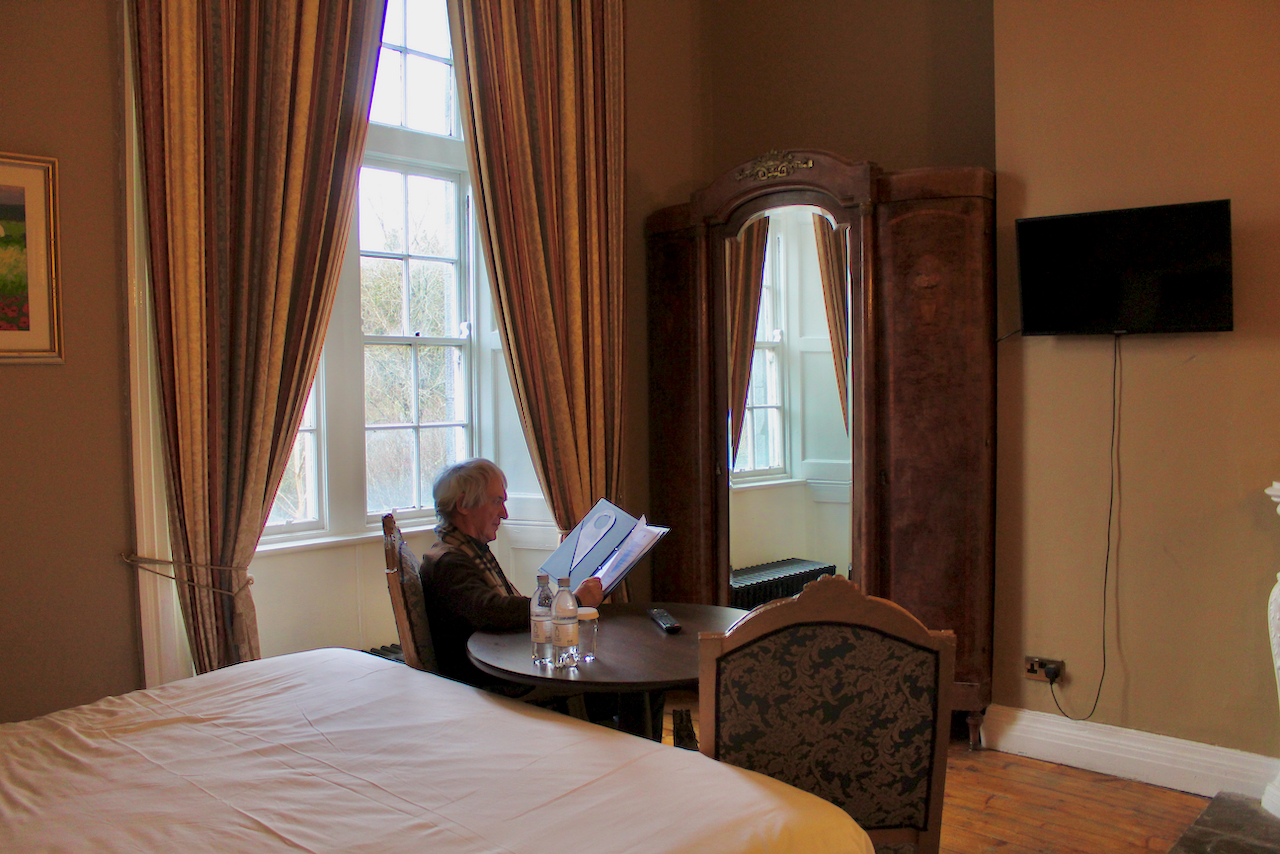
Our bedroom at Ash Hill, County Limerick. Photograph © Jennifer Winder-Baggot, www.irishhistorichouses.com
The courtyard side of the house, Ash Hill. Photograph © Jennifer Winder-Baggot, www.irishhistorichouses.com

3. Ballyteigue House, Bruree, County Limerick – self-catering whole house accommodation, rental per week
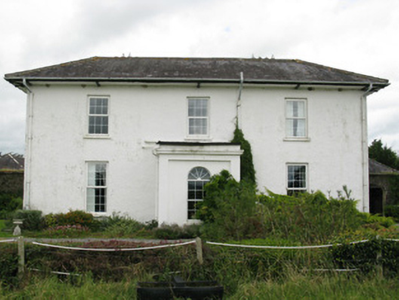
Ballyteigue House, County Limerick, photograph from National Inventory of Architectural Heritage.

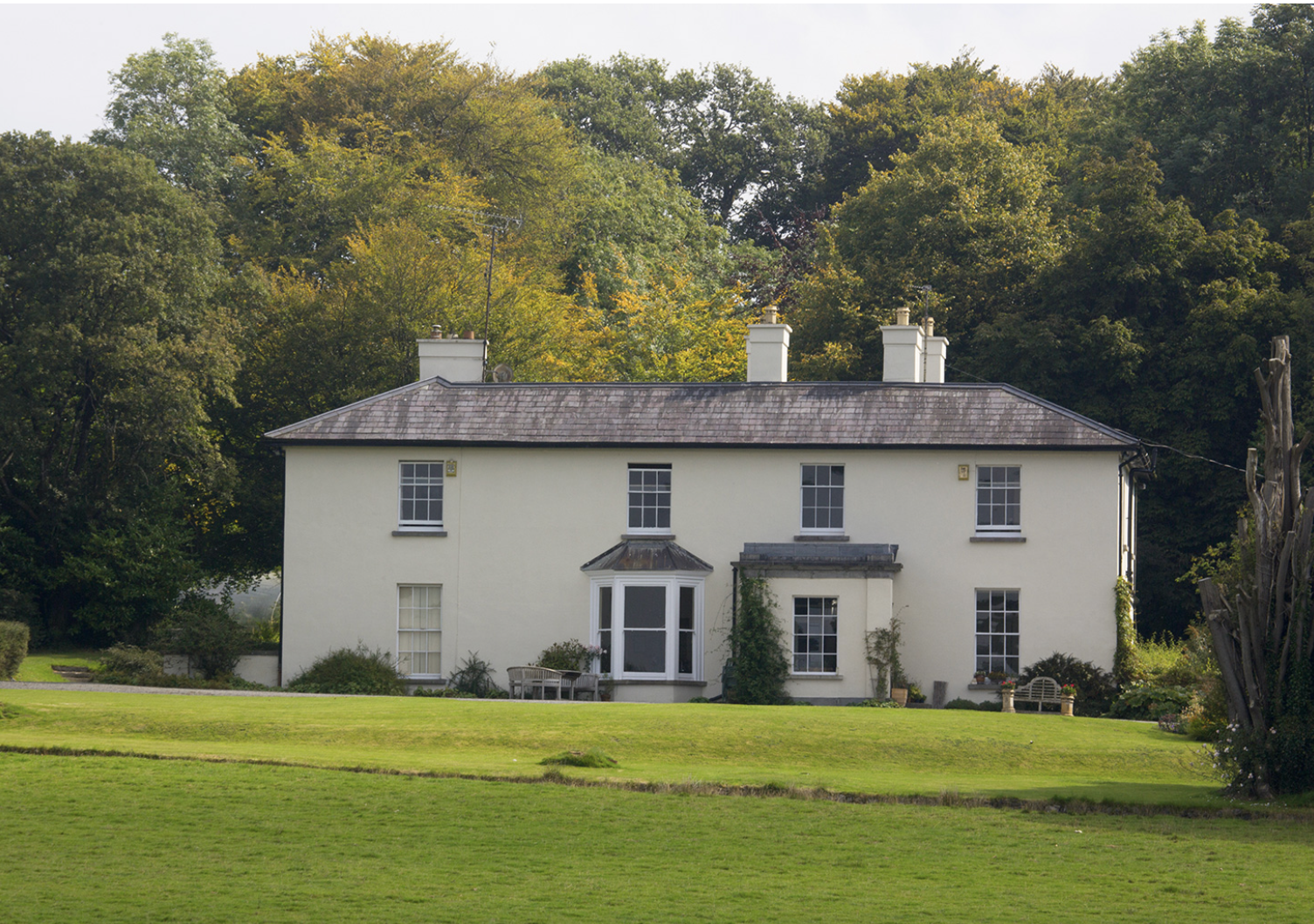
The National Inventory tells us it is a three-bay two-storey country house, built c. 1850, having later porch to front (south).

http://www.ballyteigue.com/

Ballyteigue House accommodation Limerick can accommodate nine people comfortably and there is a Courtyard Cottage which can accommodate an extra 6 people.

The House available for holiday lettings consists of 5 Bedrooms, 4 double or twin, and a single room. All rooms have their own bathroom.

Bruree is where President De Valera spent the early part of his life and went to school.

4. Deebert House, Kilmallock, County Limerick – B&B and self-catering

http://www.deeberthouse.com/

The National Inventory tells us it was built in 1804.

5. The Dunraven, Adare, Co Limerick – hotel

https://www.dunravenhotel.com/

The website tells us: “The Dunraven is a stylish, luxury, family-run hotel situated in the heart of Adare, a picturesque and world renowned village in Co. Limerick. This Four Star Luxury Hotel is one of the oldest establishments in Ireland and dates back to the Eighteenth Century.

It’s not a historic house, but it is old!

Whole house rental County Limerick

1. Fanningstown Castle, Adare, County Limerick – castle rental, sleeps 10

https://fanningstowncastle.com/
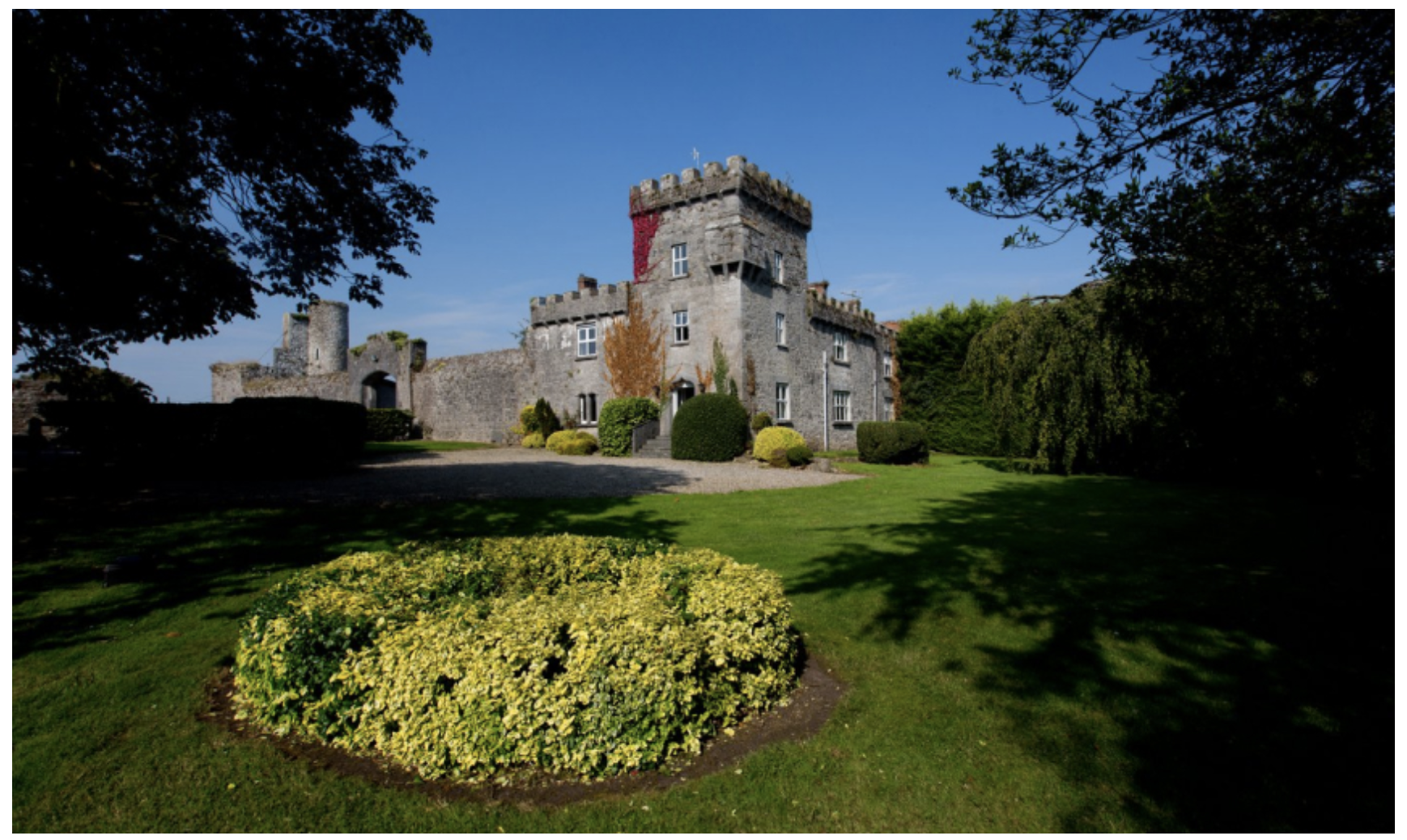
Fanningstown Castle, County Limerick, photograph courtesy of Fanningstown Castle website.

The website tells us about the history of the castle:

Fanningstown Castle is situated in the fertile valley of the river Maigue, in Co. Limerick. It lies in the barony of Coshma (Coshmagh) which, meaning ‘Foot of the Plain’ or ‘Bank of the Maigue,’ describes this location. The area of the barony coincides with the territory of the Celtic people, the Ui Cairbre Aobhdha.

In the late twelfth and early thirteenth century the invading Anglo-Normans identified the strategic importance of the Maigue, and gradually established a series of fortresses along its western shore, some a rebuilding of existing forts. An early castle was built at Newtown near the mouth of the river, another near the ford at Croom by 1215 when it was granted to Maurice Fitzgerald, an old fort at Adare was walled, and by 1280 there was a castle on raised ground near a bridging point on the river at Castleroberts.

Photograph courtesy of Fanningstown Castle website.

There was a castle at Fanningstown by 1285. Situated a few miles from the bank of the river behind Castleroberts Fanningstown seems to have been part of a second line of defence. It is difficult to date the remaining castle ruins which consist of a small, almost square chamber without upper floors or roof, and a round staircase tower which, pierced with arrow-slit windows, rises about three floors, but from which the staircase and roof have been removed.

There is the remains of a bartizan (a turret corbelled out from the wall on cut stone corbels, used for defence) on the west corner. This castle was incorporated into one corner of a battlemented bawn wall which enclosed a large courtyard.

It is possible that the other three corners were given towers or the external appearance of towers. There is one of the latter on the NE corner, surmounted by double battlements which are typical of Irish medieval castellated architecture. It could be a nineteenth-century addition, like the one on the NE corner which was incorporated into the new house, of which more later.

Photograph courtesy of Fanningstown Castle website.

The difficulty in dating Irish castles for which there is little documentary record derives from the fact that architectural features are unreliable as a source. Medieval castellated styles tended to be simple and conservative, stone work varied little over the centuries, attacks often left the structures badly damaged or ruined. However, the small size of Fanningstown Castle suggests that this is the ground plan of an unimportant, probably primarily defensive structure. In possession of the Norman Maurice family by 1285, along with the castle at Adare, Fanningstown castle and the cantred of which it was a part, and into which English and Welsh settlers may well have been introduced, were an integral part of the Norman feudal system.

A seventeenth-century description of Fanningstown draws attention to a single plowland, a thatched house, and an orchard. These could have sustained a steward charged with the upkeep of the castle. They might well have lain safely within the bawn walls, though it is not impossible that the present extensive walled orchard adjacent to the bawn could have had a seventeenth-century or earlier origin.
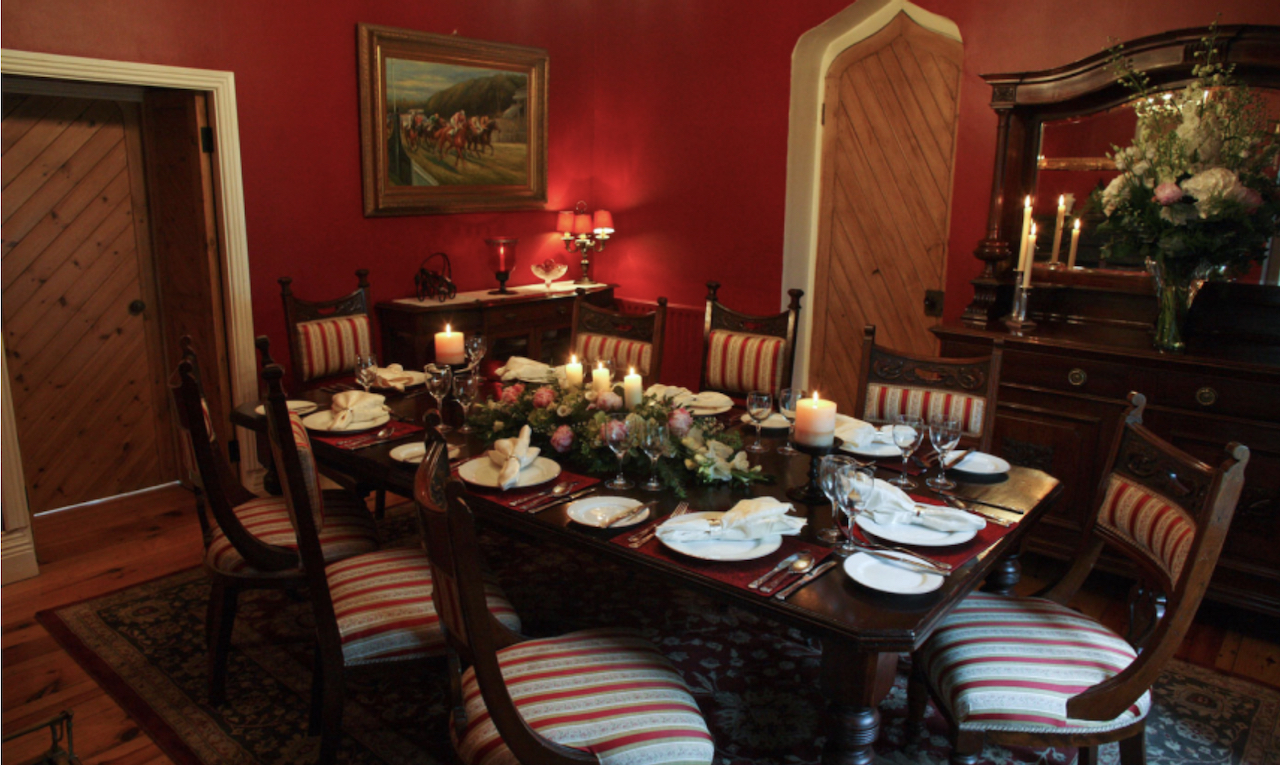
Photograph courtesy of Fanningstown Castle website.

While Fanningstown lingered as a defensive outpost Adare Castle expanded, acquiring a massive stone keep, separate hall, stables, kitchen, dungeon, portcullis, all of which are being currently restored. Croom Castle too grew, becoming the principal seat of the Earl of Kildare. The castle, renovated in the nineteenth century is still inhabited.

Unfortunately Fanningstown does not surface in the historical record until the late sixteenth century. By this time the English, conscious that their power was slipping from them in Ireland, were determined to reassert themselves. One strategy was the appointing of a new breed of ambitious administrator such as Sir Warham St. Leger, who became Lord Justice in 1569.

With the granting of the tithes of Ballyfenninge to him in 1567 Fanningstown had fallen into the English orbit. This was important for the Fitzgerald earldom of Desmond, which controlled large swathes of Munster, including many of the old Norman fortresses, were opposing English efforts at centralisation.

In 1569 this resolved itself into rebellion, which lasted until James Fitzmaurice Fitzgerald submitted in 1573 before going into exile. When he returned with fresh soldiers in 1579 a new phase in the rebellion started. It was to Fanningstown that Sir William Pelham, now Lord Justice, camped with a large force, summoned the Earl of Desmond to meet him.

Photograph courtesy of Fanningstown Castle website.

When Desmond failed to make the rendezvous Pelham charged him with treason and instituted a scorched earth policy which reduced Munster to a famine that lived long in the folk memory. Gradually Pelham captured the castles that had supported Desmond; Limerick, Croom, Kilmallock, Lough Gur, and finally Askeaton.

The Rebellion was finally crushed in 1583 with the killing of the Earl of Desmond. Fanningstown was granted to the succeeding Lord Justice, Sir H. Wallop, in 1592.

In the mid-seventeenth century English efforts to bring Ireland to heel were spear-headed by Oliver Cromwell’s ferocious and successful military campaign. Planning to reward his soldiers with Irish land Cromwell ordered that a survey of who held what was made. It was completed in 1656 and called the Civil Survey. This reveals that Fanningstown had slipped from English control and was now in the possession of Edmund Fanning, a member of an old Anglo-Norman family that had remained Catholic and was vehemently opposed to Cromwell.

Photograph courtesy of Fanningstown Castle website.

In Limerick City where Cromwell’s general, Henry Ireton, had led a six-month siege, another member of the family, Dominick Fanning, an alderman, had led the resistance. By October 1651 Ireton had prevailed and Dominick Fanning was one of the twenty who were to loose ‘lives and property.’ He had escaped but returned to the city to retrieve some money. As his wife refused to receive him he hid in his ancestor’s tomb in St Francis Abbey for three days and nights. Emerging to warm himself at a guard’s fire he was identified by a former servant who denounced him to Ireton’s soldiers.In Limerick City where Cromwell’s general, Henry Ireton, had led a six-month siege, another member of the family, Dominick Fanning, an alderman, had led the resistance. By October 1651 Ireton had prevailed and Dominick Fanning was one of the twenty who were to lose ‘lives and property.’ He had escaped but returned to the city to retrieve some money. As his wife refused to receive him he hid in his ancestor’s tomb in St. Francis Abbey for three days and nights. Emerging to warm himself at a guard’s fire he was identified by a former servant who denounced him to Ireton’s soldiers.

One of the few remaining medieval houses in Limerick is Fanning’s Castle, on Mary Street, a late medieval stone tower house, once five storeys high, with a turret staircase, ogee windows and battlements. This former residence of Dominick Fanning was one of the houses that lined the main street of English Town and so impressed foreign visitors. It is eloquent of the prominent position of a family that was supplying bailiffs and mayors for the city from the mid-fifteenth century until Cromwell’s victory, when a new group of English Protestant families became dominant.

Anna Fanning, who died in 1634, is the only Fanning remembered in St. Mary’s Cathedral in the city; a stone slab on the floor of the chapel of St. Nicholas and St. Catherine bears her name.

Photograph courtesy of Fanningstown Castle website.

The eighteenth century was a period of relative peace in Ireland. This was reflected in the architecture. Defence, finally, was no longer an issue. The old defensive structures could be demolished or skilfully amalgamated into the new classical style where light and space were a priority.

At Fanningstown part of the bawn wall was taken down and a new house erected. The castle was left to one side as a ruin. Nothing of this new house now remains. It was, however, still in existence when the Ordnance Survey cartographers visited in 1840, and from their map it is possible to see that the new house faced the old courtyard with a long impressive façade and a bow-fronted entrance. The orchard was to the rear. An eighteenth-century cut stone opening can be seen in the eastern wall. Fanningstown was now entered by a road from the east which ran off the Patrickswell-Croom Road, marked by a gate lodge which still stands.

This house seems to have been uninhabited by 1850. By then the townland of Fanningstown was largely owned by Hamilton Jackson. Most of this was rented to tenants, but he held over 280 acres in fee which included a number of ‘offices’ but no house, suggesting that the house was in ruins.

Photograph courtesy of Fanningstown Castle website.

Other landowners in the neighbourhood were investing in their properties. Two Limerick historians, Fitzgerald and McGregor, present a picture of neat, well-kept houses and demesnes in 1826. Croom Castle stands out. John Croker had ‘fitted it up and furnished [it] in the castellated style, with great taste and judgement. The gardens, shrubberies, and gravel walks are kept in the neatest order, and from the house is a very fine view up the River Maigue which winds along in a majestic stream, and of a handsome Chinese bridge …’

Adare too, where a classical mansion had been built in the eighteenth century, was acquiring a Gothic character. This project, started in 1832, was the preoccupation of successive Earls of Dunraven who employed a talented local stone mason, James Connolly, and various well-known architects who specialised in the Gothic Revival. James Pain, A.W. Pugin, P.C. Hardwick. The result was a splendid mix of historicism and fantasy in which Irish double-stepped battlements rubbed shoulders with English towers and Romanesque doorways.

Photograph courtesy of Fanningstown Castle website.

Elsewhere in Co. Limerick the Gothic style was also being vigorously pursued. At Castle Matrix near Rathkeale the Southwell family modernised a fifteenth-century keep in 1837, while at Castle Oliver the Misses Oliver-Gascoigne built a Gothic fantasy to give employment after the Famine in c 1850. At nearby Dromore in Pallaskenry, Lord Limerick commissioned E.W. Godwin in 1867 to design a castle based on a survey of old Irish castles.

So it is perhaps not surprising that (sometime between 1850 and 1865) Hamilton Jackson or his successor, David Vandeleur Roche [1833-1908, 2nd Baronet Roche, of Carass, Co. Limerick], who acquired the property in 1860, should consider unearthing the Gothic potential at Fanningstown. He employed a Cork architect, P. Nagle, and together they decided to demolish the eighteenth-century house, reconstruct the bawn walls, build a house along the entire east wall of the courtyard facing outwards and make a new entrance from Adare Road to the west.

Photograph courtesy of Fanningstown Castle website.

At the corner opposite the old castle Nagle designed a three-storey tower serviced by a staircase (which may have been taken from the old tower) in a round tower which was a direct echo of the thirteenth-century building.

Between these two towers he erected a gateway with monumental double battlements and the battered (outward sloping) walls of the towers.

He reproduced a bartizan on the square tower (it forms a delightful cupboard in one of the bedrooms), introduced battlements to all the walls giving them the appearance of machicolations by projecting them on cut stone corbels (in medieval castles this would have formed a parapet through which missiles could be dropped on the enemy), and gave the ground floor windows and door on the entrance facade ogee windows.He reproduced a bartizan on the square tower (it forms a delightful cupboard in one of the bedrooms), introduced battlements to all the walls giving them the appearance of machicolations by projecting them on cut stone corbels (in medieval castles this would have formed a parapet through which missiles could be dropped on the enemy), and gave the ground floor windows and door on the entrance facade ogee windows.

Photograph courtesy of Fanningstown Castle website.

The other windows were rectangular casements which, a nineteenth-century watercolour indicates, once had window frames of pointed arches. The old tower was made into a dove cot; the pigeon holes can still be seen. The result is a restrained nineteenth-century version of the medieval castle in which the integrity of the bawn and castle has been retained. This was an unusual solution, and gives this modest-sized castle a pleasing integrity.

“Inside Nagle designed ogee arches above the window recesses in the thick walls, vaulted ceilings on the ground floor and Gothic fireplaces were acquired for the rooms. Despite some additions Fanningstown Castle retains much of the character of this nineteenth-century building in which the medieval past so easily seems to break through.

Photograph courtesy of Fanningstown Castle website.

In 1890 the castle came into the possession of J.F. Bannatyne, whose family owned a successful milling business in Limerick. They had built a state-the-art mill at Limerick docks in 1874 which still stands and is known as Bannatyne Mills. The 1901 census indicates that Bannatyne did not live in Fanningstown. Instead, the castle and adjoining buildings were inhabited by five different families who mainly serviced the dogs and horses kept for hunting.

In 1936 the estate was acquired by the Normoyle family, who are still in residence. They are currently working on the restoration of the nineteenth-century castle.”

3. Flemingstown House, Kilmallock, Co. Limerick, Ireland – whole house accommodation, up to 11 guests

https://www.flemingstown.com/

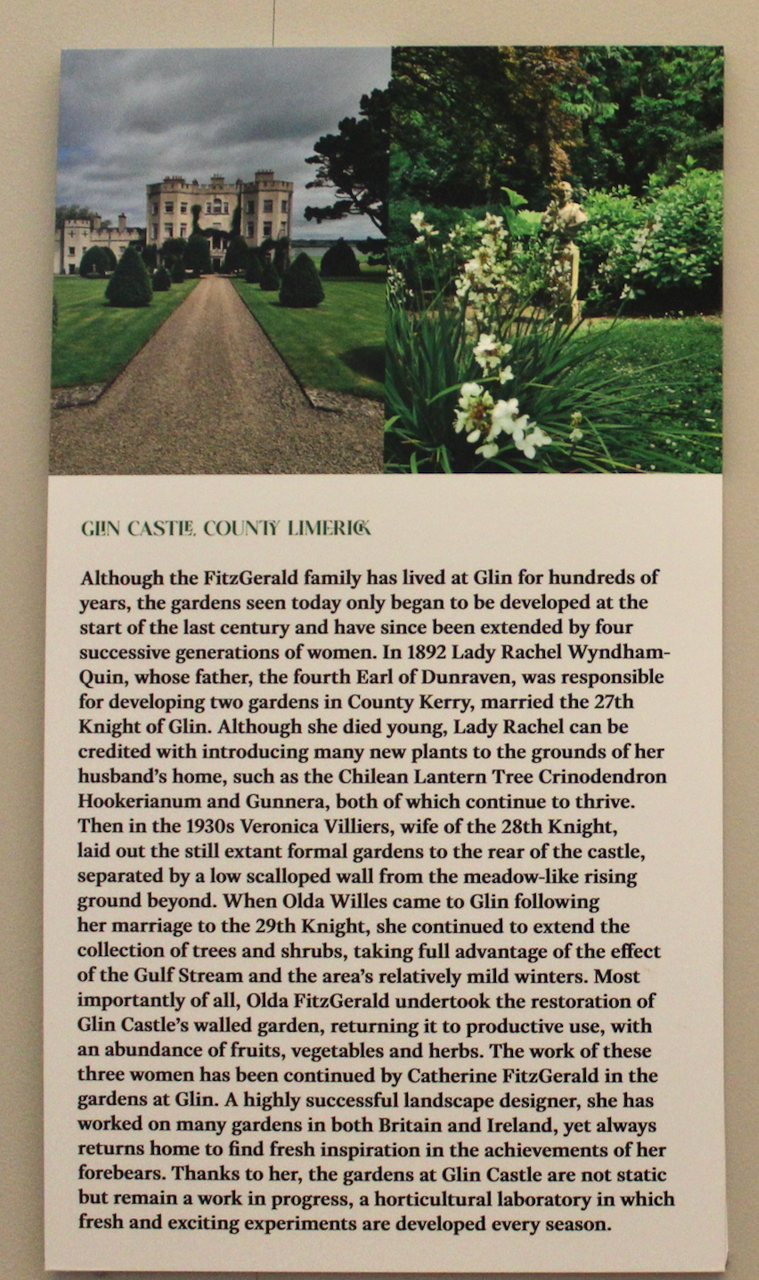
4. Glin Castle, County Limerick – whole house rental.

Glin Castle, photograph courtesy of Glin Castle website.

https://www.glin-castle.com/

You can see lovely photographs of the castle, inside and out, on the website.
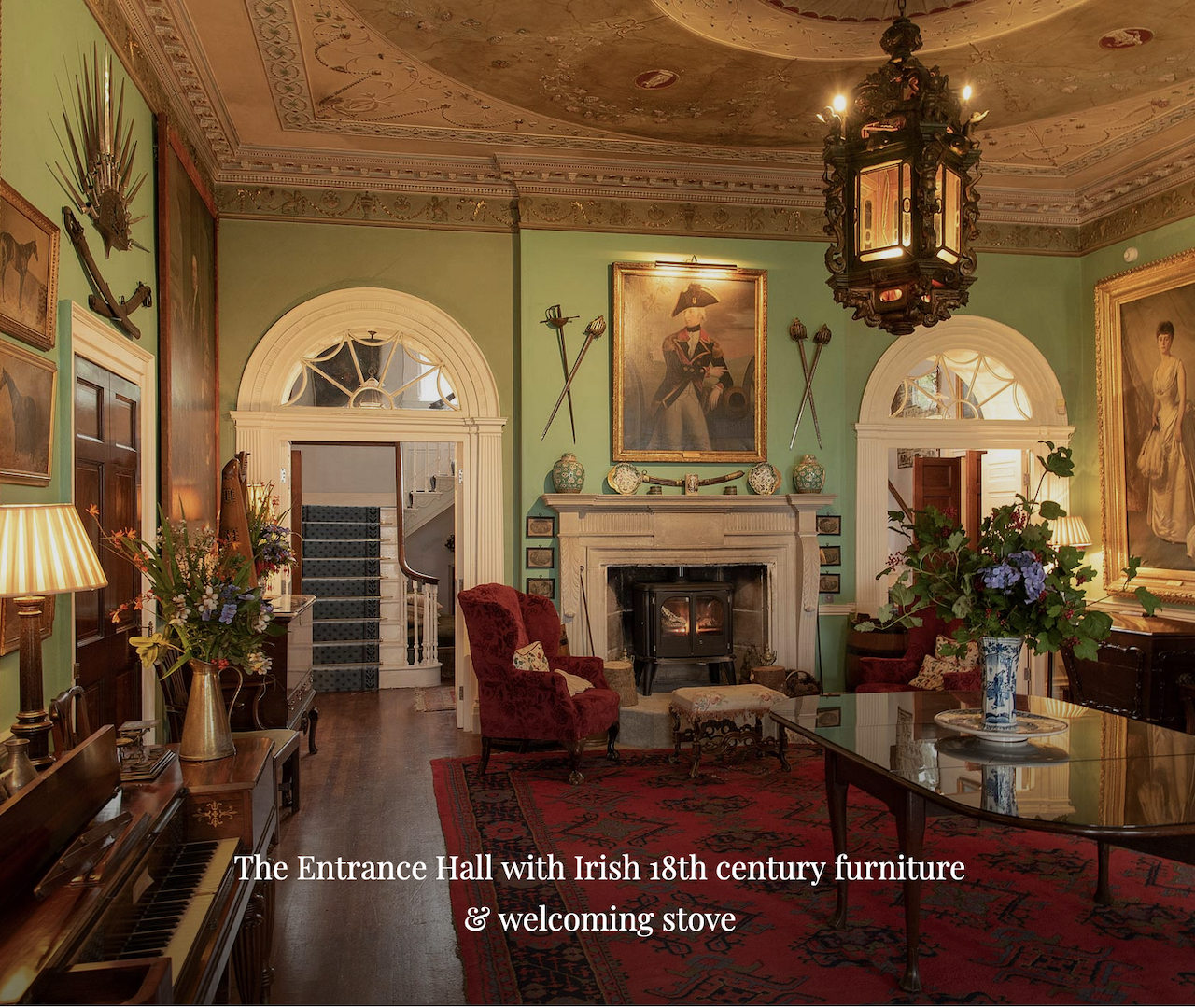
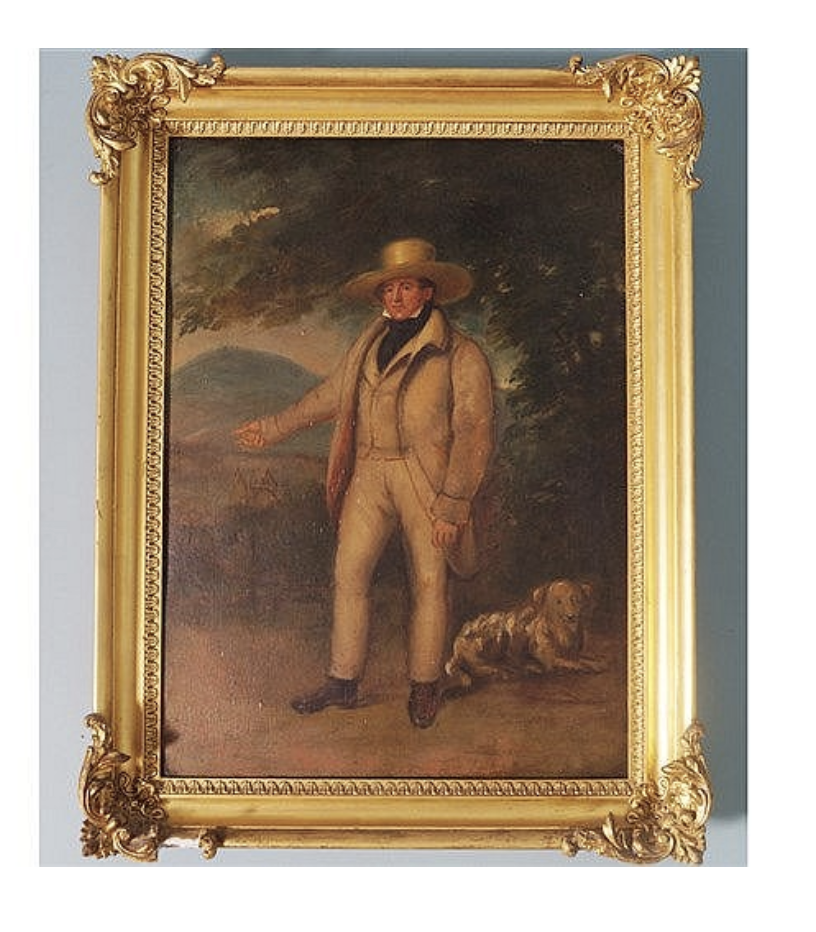
Glin Castle, photograph courtesy of Glin Castle website. The picture of Colonel John FitzGerald (1765-1803) the 23rd Knight of Glin, the builder of the house, wearing the uniform of his volunteer regiment the Royal Glin Artillery. In his portrait, which hangs over the Portland stone chimneypiece, he is proudly pointing at his cannon.

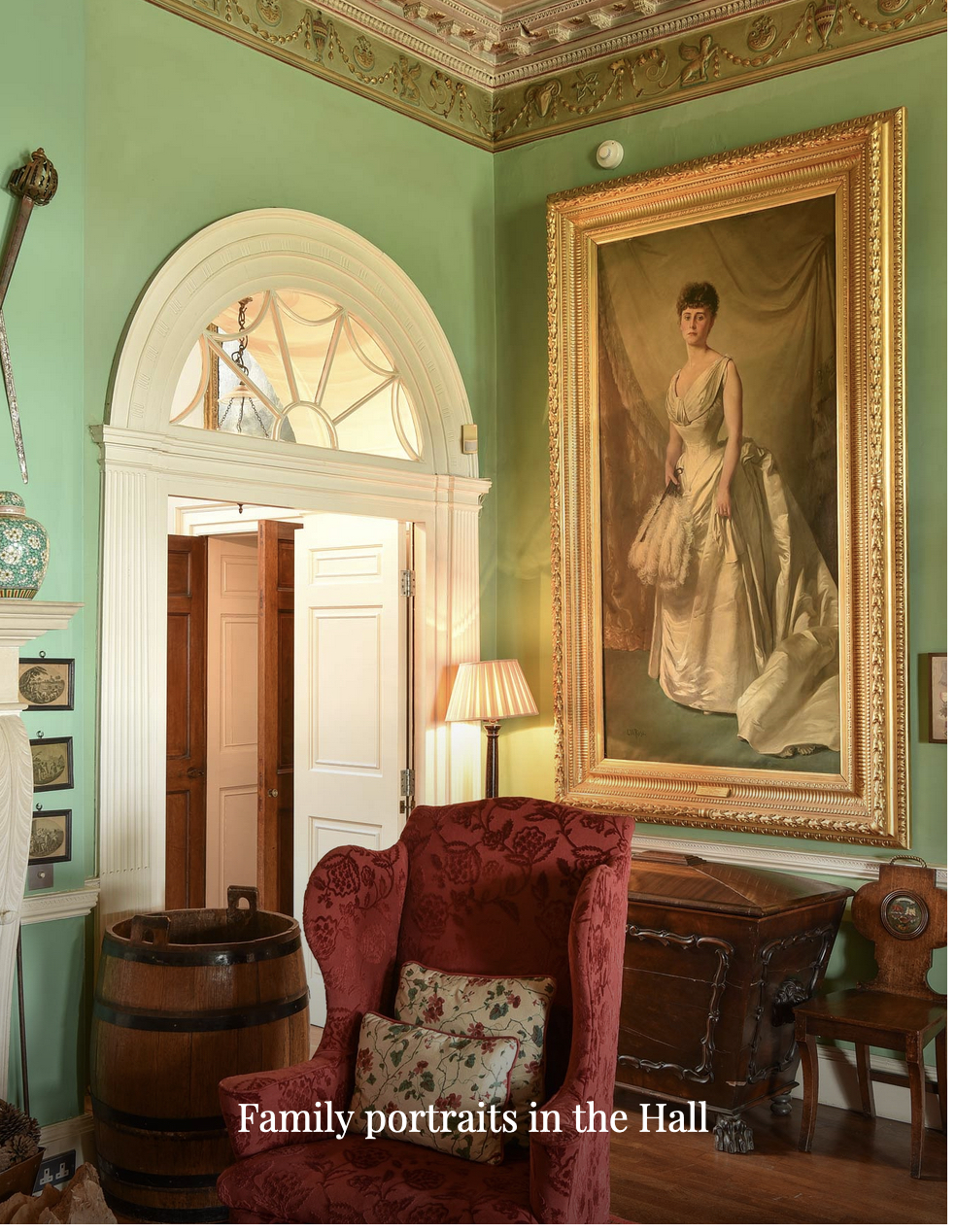
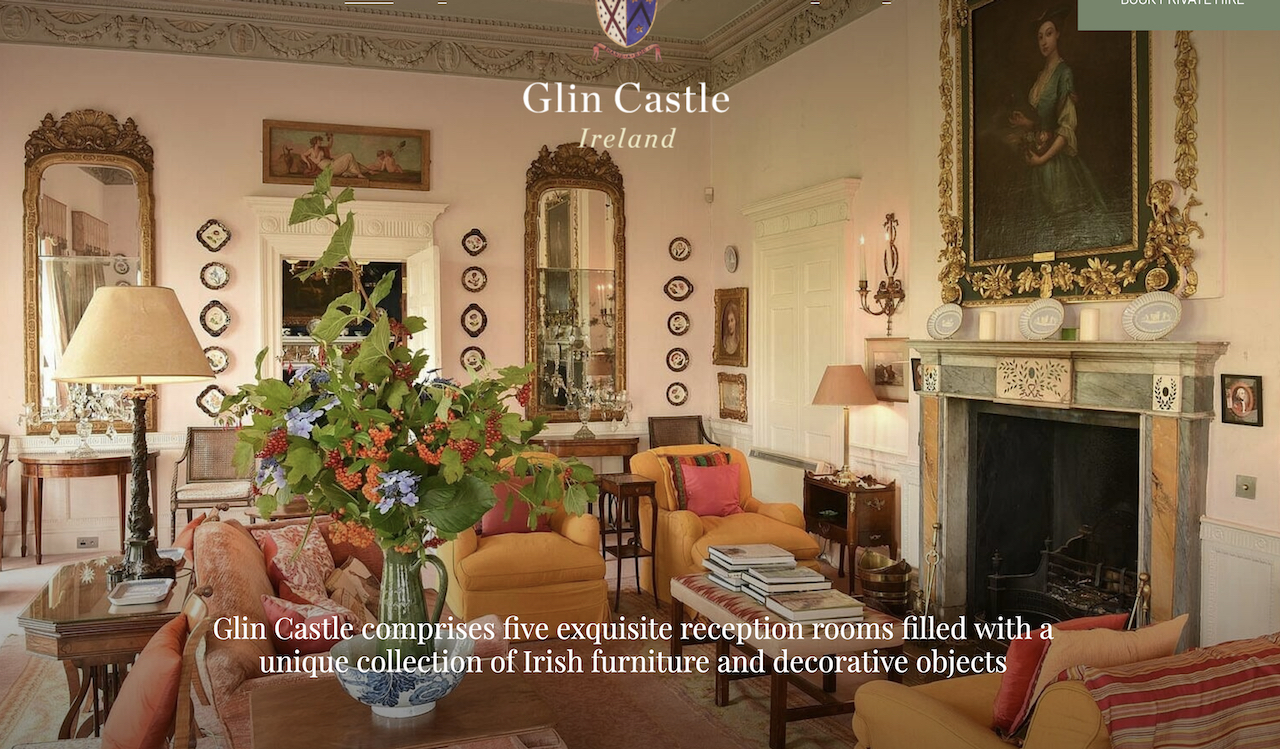
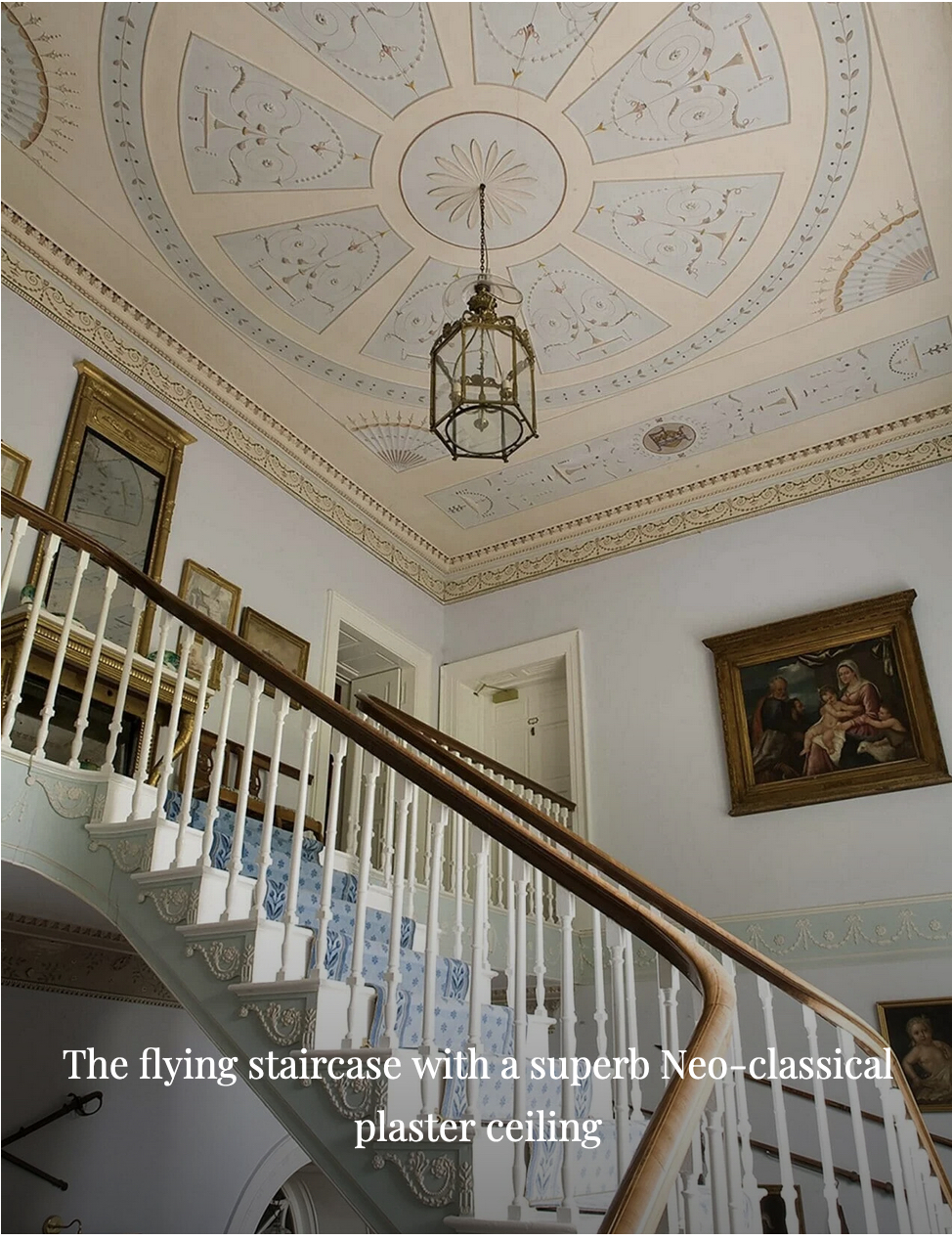
The website tells us: “The castle comprises 5 exquisite reception rooms filled with a unique collection of Irish 18th century furniture. The entrance hall with a screen of Corinthian pillars has a superb Neo-classical plaster ceiling and the enfilade of reception rooms are filled with a unique collection of Irish 18th century mahogany furniture. Family portraits and Irish pictures line the walls, and the library bookcase has a secret door leading to the hall and the very rare flying staircase.

Glin Castle, photograph courtesy of Glin Castle website. The ceiling in the entrance hall is by the same stuccadore as the ceiling in Ash Hill.
A portrait of John FitzGerald, 20th Knight of Glin, by Heroman van der Mijn, photograph courtesy of Glin castle website.
Photograph courtesy of Glin castle website. The portrait is Margaretta Maria Gwyn, wife of the 23rd Knight, I believe.

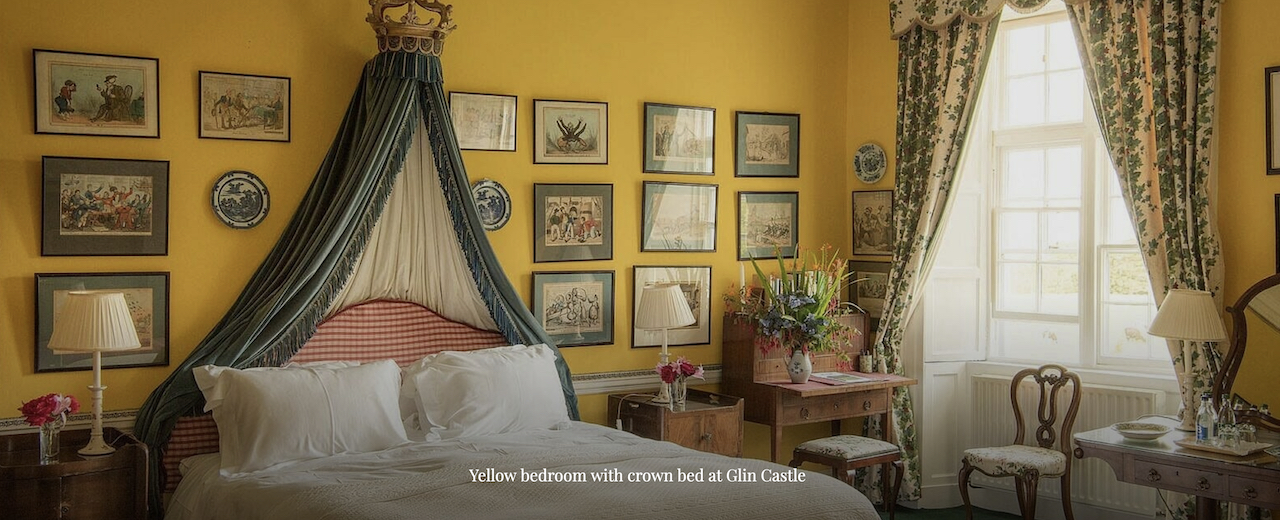
Upstairs there are 15+ individually decorated bedrooms, each with its own private bathroom. Colourful rugs and chaise longues stand at the end of comforting plump beds. Pictures and blue and white porcelain adorn the walls. The bedrooms at the back of the castle overlook the garden, while those at the front have a view of the river.

Photograph courtesy of Glin castle website.

The website tells us of the history:

The FitzGeralds first settled here in the 1200’s at nearby Shanid Castle following the Norman invasion of Ireland. Their war cry was Shanid Abu!  (Shanid forever in Gaelic). In the early 14th century the Earl of Desmond, head of the Geraldines, made hereditary Knights of 3 illegitimate sons he had sired with the wives of various Irish chieftains, creating them the White Knight, the Green Knight of Kerry and the Black Knight of Glin. For seven centuries they defended their lands against the troops of Elizabeth I, and during the Cromwellian plantation and Penal laws.

Coming into the hall with its Corinthian columns and elaborate plaster ceiling in the neo­ classical style, one can see straight ahead among a series of family portraits, some already mentioned, the picture of Colonel John FitzGerald [(1765-1803)the 23rd Knight of Glin], the builder of the house, wearing the uniform of his volunteer regiment the Royal Glin Artillery. In his portrait, which hangs over the Portland stone chimneypiece, he is proudly pointing at his cannon. In May 1779 Colonel John’s father, Thomas FitzGerald, whose portrait in a blue coat is on the left of the dining room door, wrote to Edmund Sexton Pery the Speaker of the Irish House of Commons to warn him that a French naval invasion was expected off the coast. There were rumours that the American privateer Paul Jones had sailed up the Shannon to Tarbert after he had defeated an English ship in Belfast Lough in the summer of 1779. France and Spain had declared war on England and were supporting the American colonists in the War of Independence. Panic spread among the gentry and nobility of Ireland in case the country should be left unprotected in the face of an invasion, and the Irish Volunteer Regiments were raised between 1778 and 1783-40,000 men having been enrolled by 1779 and 100,000 by 1782. Inspired by the success of the Americans and with the strength of the Volunteers behind them, Henry Grattan and his Patriot Party demanded legislative independence for Ireland from Britain following their achievement of the abolition of trade restrictions in 1778. These stirring optimistic times were the background to the building of Glin.” 
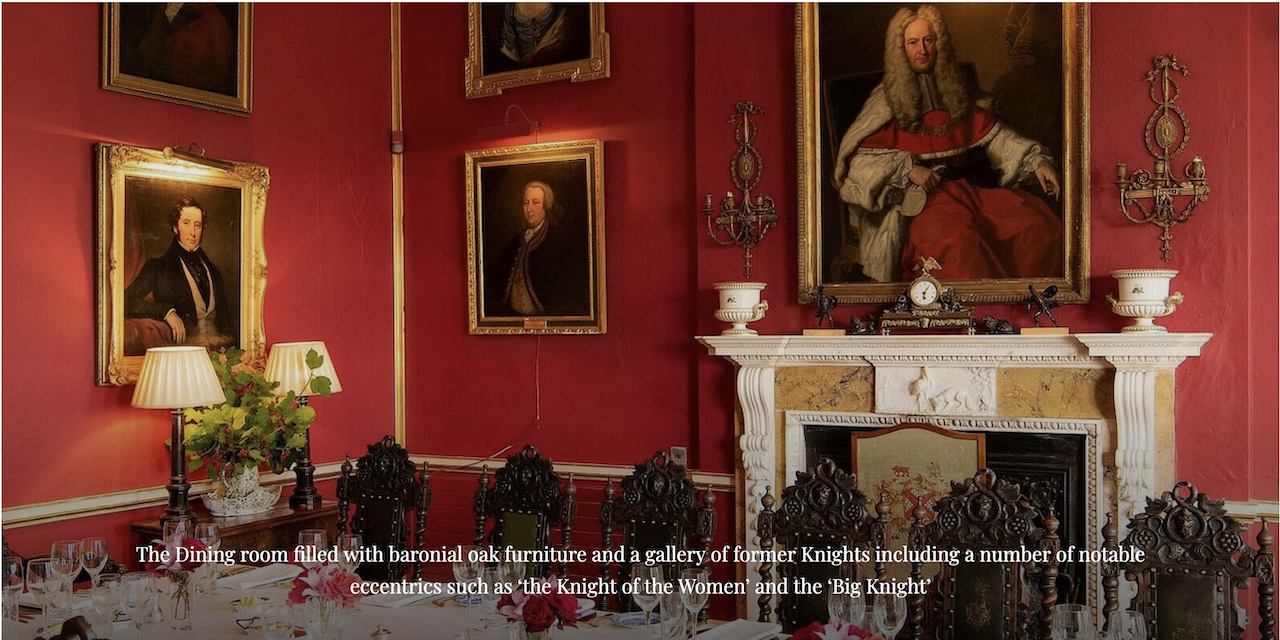
Photograph courtesy of Glin castle website.

The website continues: “The new prosperity of the country was reflected in a great deal of public and private building and the accompanying extensive landscaping and tree planting showed the pride of Ireland’s ruling classes in their newly won but brief national independence-an independence which was shaken by the French Revolution and finally shattered by the Rebellion of 1798 and the ensuing Union with England in 1800. Colonel John supported this Union, though his faith in King and Country had faltered under the influence of his United Irishman brother, Gerald during the 1798 Rebellion, when his kinsman Lord Edward FitzGerald is said to have stayed at Glin. Colonel John had no political influence as all the local boroughs were in the hands of the new English settler families. This meant that unlike so many of them he did not spend money on a large Dublin house and thereby concentrated on cutting a greater dash at home.

Photograph courtesy of Glin castle website.

Unfortunately, we have no direct information about who designed the house or the identity of the craftsmen who styled the superb woodwork such as the mahogany library bookcase with its concealed secret door, the inlaid stair-rail, the flying staircase, or the intricate plaster ceilings. This is because many of the family papers were burned by the so-called ‘Cracked Knight’ in the 1860s. Tradition tells us that the stone for the house was brought across the hills from a quarry in nearby Athea on horse-drawn sleds by a ‘strongman’ contractor called Sheehy. This is the only name connected with the building of the house that has come down to us.

Photograph courtesy of Glin castle website.

It seems likely that Colonel John started his house sometime in the 1780s as he obviously used the same masons and carpenters as were used for two houses adjoining each other in Henry Street, Limerick, one built for the Bishop of Limerick, later Lord Glentworth, and the other for his elder brother the Speaker of the Irish House of Commons, Viscount Pery. These Limerick houses were finished by 1784 and it would seem not unlikely that they are the work of a good local carpenter/builder. Colonel John may well have been his own architect working with the excellent craftsmen that Limerick could obviously produce. The neo-classical plasterwork of the hall is possibly an exception as it is close to the work of two Dublin stuccadores, Charles Thorpe or Michael Stapleton. The motifs on the frieze reminds us of the Volunteer enthusiasm of the house for the military trophies, shields sprouting shamrocks and the full bosomed Irish harp which are to be seen on the hall ceiling all underline Colonel John’s patriotism. The French horn and the music book also reminds us that this hall doubled up as a ballroom; the music undoubtedly being played by the musicians from the artillery band. Colonel John loved music and had been taught the flute by a Gaelic music and dancing master, Seań Bán Aerach Ó Flanagán. The house stands on the banks of the widest part of the river Shannon and the snub nosed dolphins and tridents in· the corners of the main hall ceiling symbolise water, while flower-laden cornucopiae and ears of wheat represent the fruitful grasslands that surround the newly built mansion. Oval plaques with their Pompeian red background portray Roman soldiers depicting war and other figures characterise peace and justice. All this symbolism reminds us of contemporary events in the sea girt island of Ireland. This magnificent ceiling retains much of its original 18th century colouring.

Photograph courtesy of Glin castle website.

In 1789 Colonel John married his beautiful English wife, the daughter of a rich west country squire, and her coat-of-arms are impaled with his on the hall ceiling. Her portrait hangs above her husbands to the right of the drawing room door in the hall. Her coat-of-arms on the ceiling suggests that the house was still being decorated in 1789 although the money must have been beginning to run out, because work was stopped short on the third floor, and walls remained scored for plaster and pine doors are unpainted to this day. Financial problems must have marred their brief decade together at Glin as in 1791 the Dublin La Touche Bank called in their debts going back as far as 1736 and took a case to Parliament. In June 1801 a private Act of Parliament in Westminster was passed to force part of the Glin estate to be sold in order to pay off the many ‘incumbrances’ which had accrued through the 18th century. This document mentions that Colonel John had expended ‘Six thousand pounds and upward in building a mansion house and offices and making plantations and other valuable and lasting improvements…’. Comparing costs with other roughly contemporary buildings shows us that the cut stone Custom House in Limerick cost £8,000 in 1779 and Mornington House, one of Dublin’s largest houses, was sold for the same sum in 1791, so £6,000 ‘and upwards’ was a substantial sum in those days. Colonel John’s wife Margaretta Maria Fraunceis died at one of her father’s properties, Combe Florey in Somerset a few months after the Act was passed. In 1802, 5,000 acres of Glin were sold, and Colonel John himself died in 1803 leaving an only son, and heir aged 12. In June 1803 the local newspaper the Limerick Chronicle advertised sales of the household furniture, the library, ‘a superb service of India china’, but no pictures or silver. The hall chairs and amorial sideboard in the hall survived because of their family associations but carriages, farm stock, and ‘the fast-sailing sloop The Farmer, her cabin neatly fitted up’ followed. The FitzGeralds of Glin were almost bankrupt.

Photograph courtesy of Glin castle website.

“It was only because of the long minority of John Fraunceis FitzGerald [(1791-1854), the 24th Knight] the son and heir, and the fact that there were no younger children to provide for, which saw the estate on to 1812 when he attained his majority. Educated at Winchester and Cambridge he regained the family fortunes by successful gambling and though he married an English clergyman’s daughter with no great dowry, he built the various Gothic lodges and added the battlements and sugar icing detail to the old Glin House making it into the ‘cardboard castle’ that it is today. This would have been typical of the romantic notions of the 1820s and he obviously thought that the holder of such an ancient title should be living in a castle like his medieval ancestors.

Photograph courtesy of Glin castle website.
Glin Castle, County Limerick, photograph from National Inventory of Architectural Heritage.

The top floor was never completed and other than further planting, little else was done to Glin for over a hundred years as money was scarce during the Victorian period. Over 5,000 acres were sold by 1837 and for the rest of the century the estate consisted of 5,836 acres and the town of Glin. The rent roll came to between £3,000 and £3,800 a year but with mortgages, windows jointures, and other family charges there was in 1858 a surplus of only £777 16s. 5d. brought in from the estate. Not included in this would have been the income from the salmon weirs on the Shannon. Lack of money may have been a blessing in disguise for there were few Victorian improvements at Glin though the Dublin firm of Sibthorpe redecorated the staircase ceiling and added Celtic revival monograms in two roundels and carried out some stencil work in the library and smoking room. This work would have been done in the 1860s probably at the same time that the Protestant church at the gate was being rebuilt.

From “In Harmony with Nature, The Irish Country House Garden 1600-1900” in the Irish Georgian Society, July 2022, curated by Robert O’Byrne.
John Fraunceis Fitzgerald (1803-1854), “Knight of the Women,” the 24th Knight, photograph courtesy of the castle website.
Photograph courtesy of the Glin castle website.

5. Springfield Castle, Drumcollogher, Co. Limerick – castle rental

https://www.springfieldcastle.com 

Springfield Castle, photograph courtesy of the castle’s website.

The website tells us: “Springfield Castle is situated in the heart of County Limerick on a magical 200 acre wooded estate and is approached along a magnificent three quarter mile long avenue, lined with ancient lime trees. Enjoy an exclusive relaxing stay in a one of a kind castle.

Springfield Castle, photograph courtesy of the castle’s website.

Accommodation for up to 25 people in a unique Irish castle we are the perfect place for your vacation, family gathering or boutique wedding in Ireland. It is the ideal place to stay in an Irish castle, Springfield is centrally located allowing you to explore many of Ireland’s fantastic gems including the Wild Atlantic Way. It is a one of a kind place where you can unwind and relax.

Springfield castle is owned By Robert Fitzmaurice Deane the 9th Baron of Muskerry. Robert and his wife Rita are regular visitors. Robert has funded the ongoing restoration in Springfield since 2006, most recently of the garden cottage where he and Rita stay when visiting Ireland.

Springfield Castle, photograph courtesy of the castle’s website.

Mark Bence-Jones writes (1988):

p. 263. “(Petty-Fitzmaurice, sub Lansdowne, M/PB; Deane, Muskerry, B/PB) A three storey C18 house adjoining a large C16 tower house of the FitzGeralds, later bought by the Fitzmaurices, whose heiress married Sir Robert Deane, 6th Bt, afterwards 1st Lord Muskerry, 1775. …A two storey C19 Gothic wing with pinnacle buttresses was added at one end of C18 block, extending along one side of the old castle bawn, a smaller tower at another and outbuildings along two of the remaining sides to form a courtyard. 20C entrance gates and lodge in the New Zealand Maori style. C18 house was burnt 1923 and new house was afterwards made out of C19 Gothic wing, which was extended in the same style.” 
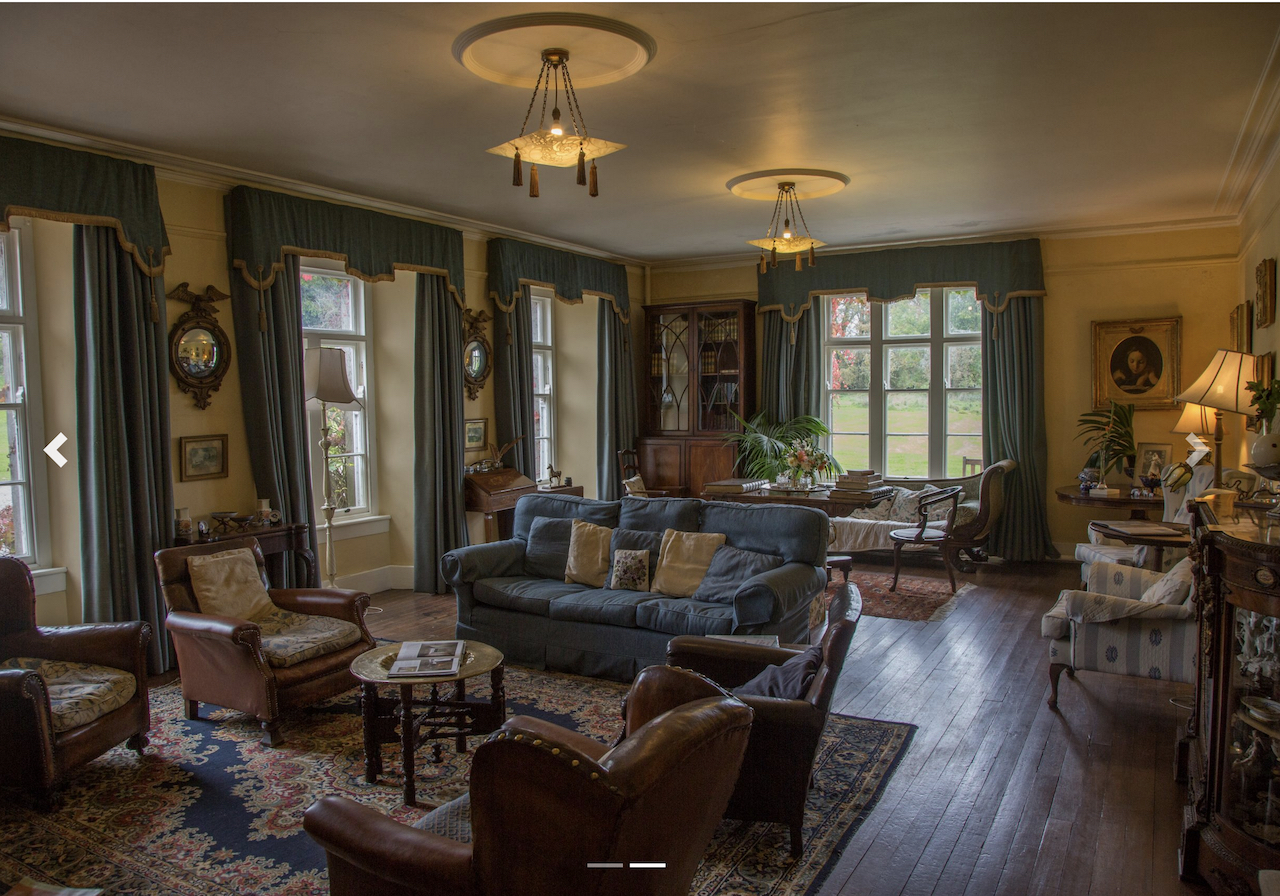
Springfield Castle, photograph courtesy of the castle’s website.

The National Inventory tells us it is a “Gothic Revival style country house with courtyard complex, commenced c. 1740, comprising attached eight-bay two-storey country house, rebuilt c. 1925, having single-bay three-stage entrance tower. Earlier two-bay three-storey wing to side (east) having single-bay three-stage gate tower with integral camber-headed carriage arch. Tooled limestone octagonal corner turrets with pinnacles to front (south) elevation of wing gate tower, rendered octagonal turrets and pinnacles to side (west) elevation of main block. Two-bay two-storey double-pile over basement block to rear (north) incorporating possibly earlier three-stage tower to north-west. Additional lean-to stairwell block to side (west) elevation of extension block.

“This impressive country house is situated in a picturesque location with extensive panoramic views of the surrounding countryside. The house and courtyard complex are the ancestral home of Lord and Lady Muskerry and occupies the site of an old bawn associated with the sixteenth-century tower house. The first record of a castle at Springfield is dated to 1280, when the Norman Fitzgeralds arrived. A visible mark to the tower house represents part of the roof line of an earlier eighteenth-century mansion that was built by John Fitzmaurice, a grandson of the 20th Lord of Kerry. Sir Robert Deane [1745-1818] married Ann Fitzmaurice in 1780, the sole heiress of Springfield and was a year later awarded the title Baron Muskerry. This mansion was burnt in 1921 by the IRA who were afraid that the occupying Black and Tans were going to convert the buildings into a garrison.

Filling in the family tree, Robert Deane, 1st Baron Muskerry was the son of Robert Deane, 5th Baronet of Muskerry. He and Ann Fitzmaurice had a son who 2nd Baron but he died childless so his brother Mathew Fitzmaurice Deane (1795-1868) became 3rd Baron. His son Robert Tilson FitzMaurice Deane predeceased his father, so the title passed to his son, Hamilton Matthew Tilson FitzMaurice Deane-Morgan (1854-1929), who became the 4th Baron Muskerry. His mother was Elizabeth Geraldine Grogan-Morgan, from Johnstown Castle in County Wexford (see my entry in Places to visit and stay in County Wexford), and his father added Morgan to the Deane surname.

The 4th Baron married Flora Georgian Skeffington, daughter of Chichester Thomas Skeffington whose father was Thomas Henry Skeffington (d. 1843), 2nd Viscount Ferrard. He was born Thomas Henry Foster, son of John Foster, 1st Baron Oriel of Ferrard. He married Harriet Skeffington (d. 1831), who succeeded as 9th Viscountess Massereene, Co. Antrim, and Thomas Henry Foster changed his surname to Skeffington.

Hamiilton and Flora’s eldest son predeceased his father, and the title passed to their second son, who rebuilt the house.

The current house was rebuilt by ‘Bob’ Muskerry, the 5th Baron [1854-1952] and follows the Gothic Revival style of the nineteenth century, with characteristic pinnacled turrets to the house and main entrance. The castellated entrance towers with tooled stone forming the main fabric of the turrets and a grand entrance door greatly enliven the façade of the building. The fine Gothic Revival style gate tower provides a glorious entrance to the substantial courtyard. A large variety of outbuildings display great skill and craftsmanship with well executed rubble stone walls and numerous carriage arches helping to maintain the historic character of the site. A curious mechanised clock controlling a mechanical calendar, lunar calendar and a bell constructed by the current owner’s great grand uncle is a mechanical masterpiece of great technical interest. Coupled with the archaeological monuments, this complex has a significant architectural value at a national level.

The website tells us about the history:

Steeped in history, it is the ancestral home of Lord and Lady Muskerry, whose motto Forti et fideli nihil dificile which means “nothing is difficult to the strong and faithful” underlies over 700 years of family history.

The earliest castle at Gort na Tiobrad, the Irish name for Springfield Castle, is reputed to date from 1280 when one of the Fitzgeralds, a junior member of the Earl of Desmond’s family, married a lady of the O Coilleains, who were the Gaelic Lords of Claonghlais. He took the title Lord of Claonghlais and subsequently built a castle at Springfield. The Tower house and build circa 1480. This was the beginning of a long association of the Fitzgeralds with the area. They were patrons to Irish poets and musicians.As you enter the impressive gateway to Springfield Castle a plaque on the wall commemorates Daithi O’Bruadair, a classical Irish poet of the seventeenth century who lived at the castle with his patrons, the Fitzgerald family, recording their lives (and general events). He described Springfield Castle as “a mansion abounding in poetry, prizes and people”

The Fitzgeralds soon became, as the saying goes “more Irish than the Irish themselves” and had an oft-times difficult relationship with the British monarchy. In 1691 they had their lands confiscated for the third and last time and Sir John Fitzgerald went to France with Sir Patrick Sarsfield to continue fighting the English there, never to return to Ireland. A younger son of the 20th Lord of Kerry, William Fitzmaurice [1670-1710], (cousins to the Fitzgeralds) then bought Springfield castle. His son, John, built a very large 3 story early Georgian mansion attached to the existing buildings. The Fitzmaurices occupied Springfield Castle until Sir Robert Deane married Ann Fitzmaurice, the sole heiress, in 1780… The 9th Baron, Robert Fitzmaurice Deane, lives and works in South Africa at present, and started restoring the castle in 2006. Robert’s sister Betty, her husband Jonathan and their children Karen and Daniel run Springfield Castle and look forward to meeting you.

[1] https://www.buildingsofireland.ie/buildings-search/building/21813051/ash-hill-stud-ash-hill-kilmallock-co-limerick

[2] Bence-Jones, Mark. A Guide to Irish Country Houses (originally published as Burke’s Guide to Country Houses volume 1 Ireland by Burke’s Peerage Ltd. 1978); Revised edition 1988 Constable and Company Ltd, London.

[3] https://www.buildingsofireland.ie/buildings-search/building/21803033/brackvoan-bruff-limerick

[4] https://www.buildingsofireland.ie/buildings-search/building/21902807/glenville-house-glenville-ardagh-co-limerick

[5] https://www.limerick.ie/discover/eat-see-do/history-heritage/historic-attractions/glenquin-castle

[6] https://theirishaesthete.com/2021/09/13/glenquin-castle/

[7] https://www.irelandscontentpool.com/en

[8] https://www.countrylifeimages.co.uk/Search.aspx?s=glenstall

[9] https://landedfamilies.blogspot.com/search/label/Ireland?updated-max=2020-04-02T14:59:00%2B01:00&max-results=20&start=5&by-date=false

[10] p. 171, O’Reilly, Sean. Irish Houses and Gardens. From the Archives of  Country Life. Aurum Press Ltd, London, 1998. 

[11] http://landedestates.nuigalway.ie/LandedEstates/jsp/property-list.jsp?letter=K

[12] https://archiseek.com/2009/king-johns-castle-limerick/

[13] http://www.britainirelandcastles.com/Ireland/County-Limerick/King-Johns-Castle.html

[14] https://www.buildingsofireland.ie/buildings-search/building/21903717/odell-ville-ballynarooga-beg-limerick

[15] http://landedestates.nuigalway.ie/LandedEstates/jsp/property-list.jsp?letter=M

[16] http://lordbelmontinnorthernireland.blogspot.com/2014/12/mount-trenchard-house.html

[17] https://archiseek.com/2009/adare-manor-co-limerick/

[18] p. 160. O’Reilly, Sean. Irish Houses and Gardens. From the Archives of  Country Life. Aurum Press Ltd, London, 1998. 

Text © Jennifer Winder-Baggot, www.irishhistorichouses.com
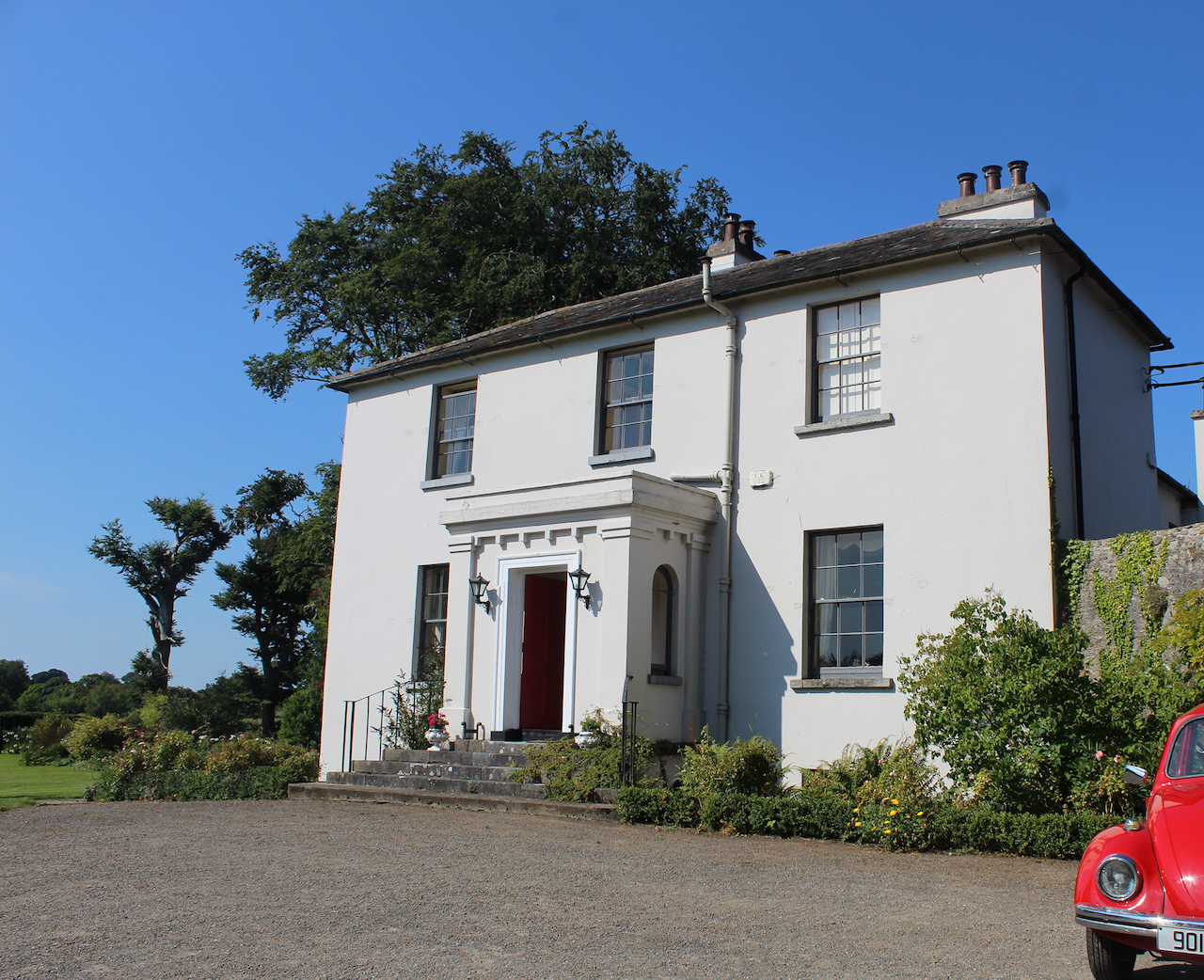
Beechwood House, Ballbrunoge, Cullen, Co. Tipperary E34 HK00 – section 482

contact: Maura & Patrick McCormack Tel: 083-1486736

Open dates in 2026: Feb 23-27, Mar 9-13, 22-27, April 13-17, May 5-8, 11-15, 18-22, 27-29, Aug 7-10, 15-23, Sept 11-20, 9am-1pm

Fee: adult €5, OAP/student €2, child free, fees donated to charity

Beechwood House, County Tipperary, August 2022. © Jennifer Winder-Baggot, www.irishhistorichouses.com

2026 Diary of Irish Historic Houses (section 482 properties)

To purchase an A5 size 2026 Diary of Historic Houses (opening times and days are not listed so the calendar is for use for recording appointments and not as a reference for opening times) send your postal address to jennifer.baggot@gmail.com along with €20 via this payment button. The calendar of 84 pages includes space for writing your appointments as well as photographs of the historic houses. The price includes postage within Ireland. Postage to U.S. is a further €10 for the A5 size calendar, so I would appreciate a donation toward the postage – you can click on the donation link.

€20.00

donation

Help me to pay the entrance fee to one of the houses on this website. This site is created purely out of love for the subject and I receive no payment so any donation is appreciated!

€15.00

We had a lovely visit to Beechwood House in County Tipperary during Heritage Week in 2022. It is an old rectory for the parish of Cullen, but that church is now gone and has moved to Monard. Beechwood is perhaps not the typical rectory built by the Board of First Fruits as it may be built on to an older residence. Architectural historian Judith Hill visited and observed a few details that may indicate that there have been changes from an earlier construction.

The Board of First Fruits was established in 1711 by Queen Anne, in order to improve churches and glebe houses (i.e. rectories, the “glebe” is the area of land in a parish used to support the parish priest) in Ireland. The Board was financed by taxes collected on clerical incomes, which in turn were financed by tithes. Everyone had to pay tithes to the Church of Ireland, even if one was Catholic, since the Church of Ireland was the state religion at the time. This led to a Tithe War in Ireland between 1830-1836. Jonathan Swift was also involved in creating the Board of First Fruits. The Church Temporalities Act 1883 put an end to the Board of First Fruits, and the Board of Ecclesiastical Commissioners took over.

The Board of First Fruits hired architects to carry out their work. From 1814 or earlier until his death in 1822 John Bowden was architect, so he may have designed Beechwood. In 1823 the post was divided into four, with one architect for each ecclesiastical province: Armagh: William Farrell (we came across his work at Corravahan in County Cavan); Dublin: John Semple 1823-24 then then John Semple & Son 1825-1832 then Frederick Darley, 1833; Cashel: James Pain; Tuam: Joseph Welland. [1]

Beechwood, named after a grove of beech trees on the property which still stand, was built in 1819 but parts of the buildings date from the mid eighteenth century.

Maura and Patrick gave us a useful information leaflet, which informs this entry. As is typical for glebes, the layout of the house, offices and outbuildings and land was designed as a miniature version of a large estate. Beechwood continues to uphold this character, with the house and outbuildings forming a group at the centre of the grounds. The demesne was composed of three fields, and the entrance of the house faces east across a paddock facing onto a view of two lime trees.

The front porch is a later addition. It is decorated with pilasters and an enlarged dentil cornice, with cast iron bootscrapers at the entrance. The front porch leads to an arch with side pilasters containing an inner door. The house contains original joinery doorcases, doors and windows.

The house has a lovely curved timber baluster staircase, and some egg and dart architraving which is original to the house. An arched window lights the staircase, which is usual in this type of house, but the surround is more decorative than is usual for such a window, with the triglyph vertical channels typical of a Doric frieze, a carved cornice and fluted pillar.

The drawing room and dining room open into each other and the drawing room has a lovely large bay window, which was probably added later (as was the one on the lower storey). The windows have shutters, and the south facing rooms on the ground and lower floor have tripartite sash Wyatt windows. The mullions of the Wyatt window in the dining room have decorative reeding.

It is thought that a previous house existed before the current incarnation. The unusually thick internal wall and the archways encasing this part of the house as well as details of the roof lead to this conclusion. This house existed on the south grounds of the current house, encompassing the current lower ground floor kitchen/living room, the drawing and dining rooms and the two south bedrooms.

The dining room has another arched doorway at one end, which used to be a window. This original house, of which there are no records, would then have been remodelled and extended to create the glebe house.

The last person who lived in the house associated with the parish of Cullen was Edmund (or Edward, or Eamonn) Mansfield (1878–1954), who taught in and was headmaster of Cullen National School. He was an activist and at times President of the teachers union Irish Teachers and National Organisation (INTO) and in 1912 was dismissed for his views when a system of pay, curriculum and inspection were set up in Ireland. His dismissal was seen by many, including the Canon, the school manager, to be unfair and harsh. Reconsideration for his reinstatement went all the way to the top, for consideration by Chief Secretary of Ireland Augustine Birrell. He was eventually reinstated. [2] His wife also taught at the school and when he was dismissed he continued to teach without pay until he was reinstated.

Later, Mansfield was involved in the Irish Land Commission and in the 1st Irish Senate in 1922, from which he resigned when anti-Treaty prisoners were executed as a reprisal for the killing of two TDs. As commissioner, he was an influential advocate of land division, and the rights of evicted tenants.

To one side of the house are a yard and former stables and coach house. The wall to the yard has two openings on the north east end, with a carriage arch containing an original cast iron gate. The coach house also has an arched opening, and is flanked by stables.

The stables have been sympathetically converted to more accommodation, retaining as many original features as possible. The original walls have been retained, and wooden beams. The coach house would have been built around 1750, which is another reason to speculate that the house is older than it first appears. Maura pointed out a very unusual feature, where the room upstairs contains three fireplaces. Perhaps the room was originally divided into three. Even if this was the case, it would be unusual to have a fireplace in each.

Outside are lovely lawn and plantings, and some large beech trees, for which the property is named.

[1] https://www.dia.ie/architects/view/4371/FIRSTFRUITS-BOARDOF

[2] Duggan, Michael, PhD Thesis, ‘Twenty hearts beating as none’: Primary education in Ireland, 1899–1922. Thesis presented for the PhD degree Dublin City University, School of History and Geography, Supervisor: Professor James Kelly, December 2021. https://doras.dcu.ie/26511/1/DUGGAN%20PhD.pdf

© Jennifer Winder-Baggot, www.irishhistorichouses.com
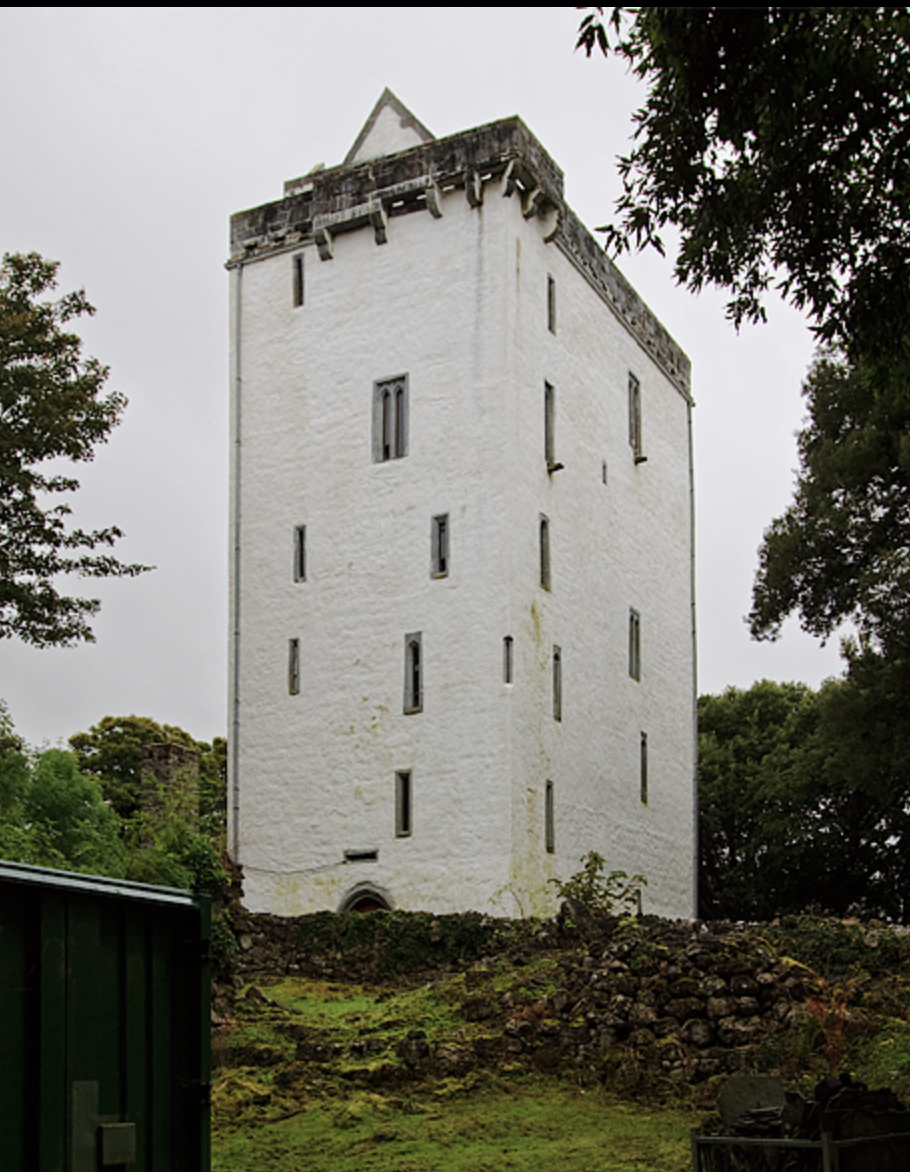
Places to visit and stay in County Galway

On the map above:

blue: places to visit that are not section 482

purple: section 482 properties

red: accommodation

yellow: less expensive accommodation for two

orange: “whole house rental” i.e. those properties that are only for large group accommodations or weddings, e.g. 10 or more people.

green: gardens to visit

grey: ruins

donation

Help me to pay the entrance fee to one of the houses on this website. This site is created purely out of love for the subject and I receive no payment so any donation is appreciated!

€15.00

Galway

1. Ardamullivan Castle, Galway national monument, to be open to public in future – check status 

2. Athenry Castle, County Galway  – open to public 

3. Aughnanure Castle, County Galway (OPW)

4. Coole Park, County Galway – house gone but stables visitor site open

5. Gleane Aoibheann, Clifden, Galway  – gardens

6. Kylemore Abbey, County Galway – open to visitors

7. The Grammer School, College Road, Galway – section 482

8. Portumna Castle, County Galway (OPW)

9. Ross, Moycullen, Co Galway – gardens open 

10. Signal Tower & Lighthouse, Eochaill, Inis Mór, Aran Islands, Co. Galway – section 482

11. Thoor Ballylee, County Galway – check website

12. Woodville House Dovecote & Walls of Walled Garden, Craughwell, Co. Galway – section 482, garden only

Places to stay, County Galway

1. Abbeyglen Castle, Galway

2. Ardilaun House Hotel (formerly Glenarde), Co Galway – hotel

3. Ashford Castle, Cong, Galway  – hotel 

4. Ballindooly Castle, Co Galway – accommodation 

5. Ballynahinch Castle, Connemara, Co. Galway – hotel 

7. Cashel House, Cashel, Connemara, Co Galway – hotel

8. Castle Hacket west wing, County Galway – accommodation

9. Claregalway Castle, Claregalway, Co. Galway – section 482 accommodation

10. Cregg Castle, Corrandulla, Co Galway – Airbnb 

11. Crocnaraw County House, Moyard, County Galway – accommodation

12. Currarevagh, Oughterard, Co Galway – country house hotel

13. Delphi Lodge, Leenane, Co Galway – accommodation

14. Emlaghmore Cottage, Connemara, County Galway – accommodation

16. Glenlo Abbey, near Galway, Co Galway – accommodation 

17. Kilcolgan Castle, Clarinbridge, Co Galway – accommodation

18. Lisdonagh House, Caherlistrane, Co. Galway – section 482 accommodation

19. Lough Cutra Castle, County Galway, holiday cottages

20. Lough Ina Lodge Hotel, County Galway

22. Oranmore Lodge Hotel (previously Thorn Park), Oranmore, Co Galway

23. The Quay House, Clifden, Co Galway – accommodation

24. Renvyle, Letterfrack, Co Galway – hotel

25. Rosleague Manor, Galway – accommodation

26. Ross, Moycullen, Co Galway – accommodation

27. Ross Lake House Hotel, Oughterard, County Galway 

28. Screebe House, Camus Bay, County Galway – accommodation

Whole House Accommodation and Weddings, County Galway:

1. Carraigin Castle, County Galway – sleeps 10

2. Cloghan Castle, near Loughrea, County Galwaywhole castle accommodation and weddings

Galway

1. Ardamullivan Castle, Galway – national monument, to be open to public in future – check status 

Ardamullivan Castle County Galway photograph courtesy of SA 2.0 Mike Searle cc, Sept 2009, file 1543253

The castle is a is a restored six storey tower house. Part of the original defensive wall remains. Ardamullivan Castle was built in the 16th century by the O’Shaughnessy family. Although there is no history of the exact date of when the castle was built, it is believed it was built in the 16th century as it was first mentioned in 1567 due to the death of Sir Roger O’Shaughnessey who held the castle at the time.  

Sir Roger was succeeded by his brother Dermot, ‘the Swarthy’, known as ‘the Queen’s O’Shaughnessy’ due to his support shown to the Crown. Dermot became very unpopular among the public and even among his own family after he betrayed Dr Creagh, the Roman Catholic Archbishop of Armagh, who had sought refuge in the woods on O’Shaughnessy territory.  

“Tensions came to a boil in 1579, when John, the nephew of Dermot, fought with Dermot outside the south gate of the castle in dispute over possession of the castle. Both men were killed in the fight. After this period the castle fell into ruin until the last century where it was restored to its former glory.” [1]

2. Athenry Castle, County Galway  – open to public 

Athenry Castle, County Galway, photograph courtesy of OPW website.

see my OPW entry: https://irishhistorichouses.com/2022/02/14/office-of-public-works-properties-connacht/

3. Aughnanure Castle, County Galway (OPW)

Aughnanure Castle County Galway, photograph courtesy of OPW website

see my OPW entry: https://irishhistorichouses.com/2022/02/14/office-of-public-works-properties-connacht/

4. Coole Park, County Galway – house gone but stables visitor site open

https://www.coolepark.ie/

The website tells us:

Coole Park, in the early 20th century, was the centre of the Irish Literary Revival. William Butler Yeats, George Bernard Shaw, John Millington Synge and Sean O’ Casey all came to experience its magic. They and many others carved their initials on the Autograph Tree, an old Copper beech still standing in the walled garden today.

At that time it was home to Lady Gregory, dramatist and folklorist. She is perhaps best known as a co-founder of the Abbey Theatre with Edward Martyn of nearby Tullira Castle and Nobel prize-winning poet William Butler Yeats. The seven woods celebrated by W.B. Yeats are part of the many kilometres of nature trails taking in woods, river, turlough, bare limestone and Coole lake.

At Coole, we invite you to investigate for yourself the magic and serenity of this unique landscape. Although the house no longer stands, you can still appreciate the environment that drew so many here. You will experience the natural world that Yeats captured in his poetry. Through this website, you can learn about this special place and its wildlife, as well as Gregory family history and literary connections.

5. Gleane Aoibheann, Clifden, Galway  – gardens

https://www.gardensofireland.org/directory/23/gleann+aoibheann/

The website tells us there are almost two hectares of seaside gardens dating back to the 1820s. One can also have tours of the house.

6. Kylemore Abbey, County Galway

https://www.kylemoreabbey.com/

Kylemore Abbey, Co Galway photograph Courtesy of Finn Richards 2019 for Tourism Ireland, Ireland’s Content Pool. [7]
Kylemore Abbey, photograph by ©Chris Hill Photographic 2011 +44(0) 2890 245038 for Tourism Ireland, 2014. (see [7])

The website tells us: “Nestled in the heart of Connemara, on the Wild Atlantic Way, Kylemore Abbey is a haven of history, beauty and serenity. Home to a Benedictine order of Nuns for the past 100 years, Kylemore Abbey welcomes visitors from all over the world each year to embrace the magic of the magnificent 1,000-acre estate.

Kylemore Castle was built in the late 1800s by Mitchell Henry MP, a wealthy businessman, and liberal politician. Inspired by his love for his wife Margaret, and his hopes for his beloved Ireland, Henry created an estate boasting ‘all the innovations of the modern age’. An enlightened landlord and vocal advocate of the Irish people, Henry poured his life’s energy into creating an estate that would showcase what could be achieved in the remote wilds of Connemara. Today Kylemore Abbey is owned and run by the Benedictine community who have been in residence here since 1920.

Come to Kylemore and enjoy the new visitor experience in the Abbey, From Generation to Generation…..the story of Kylemore Abbey. Experience woodland and lakeshore walks, magnificent buildings and Ireland’s largest Walled Garden. Enjoy wholesome food and delicious home-baking in our Café or Garden Tea House. History talks take place three times a day in the Abbey and tours of the Walled Garden take place throughout the summer. Browse our Craft and Design Shop for unique gifts including Kylemore Abbey Pottery and award-winning chocolates handmade by the Benedictine nuns. Discover the beauty, history, and romance of Ireland’s most intriguing estate in the heart of the Connemara countryside.

Kylemore Abbey, photograph by ©Chris Hill Photographic 2011 +44(0) 2890 245038 for Tourism Ireland, 2014. (see [7])

Although Mitchell Henry was born in Manchester he proudly proclaimed that every drop of blood that ran in his veins was Irish. The son of a wealthy Manchester cotton merchant of Irish origin, Mitchell was a skilled pathologist and eye surgeon. In fact, before he was thirty years of age, he had a successful Harley Street practise and is known to have been one of the youngest ever speakers at the Royal College of Surgeons in London.

On his father’s death, Mitchell inherited a hugely successful family business and became one of the wealthiest young men in Britain at the time. Mitchell lost no time in quitting his medical career and turning instead to liberal politics where he felt he could change the world for the better. His newfound wealth allowed him to buy Kylemore Lodge and construct the castle and enabled him to bring change, employment, and economic growth to the Connemara region which was at the time stricken with hunger, disease, and desperation.

On exiting the castle, turn around and look up, you will notice the beautiful carved angel which guards over it. In the hands of that angel is the coat of arms of Margaret Henry’s birth family, the Vaughan’s of County Down. Margaret’s arms over the front door proudly proclaim this as her castle. Look more closely and you will also see charming carvings of birds which were a favourite motif of the Henry’s. The birds represented the Henry’s hope that Kylemore would become the ‘nesting’ place of their family. Indeed, Kylemore did provide an idyllic retreat from the hustle and bustle of life in London where, even for the very wealthy, life was made difficult by the polluted atmosphere caused by the Industrial Age.

At Kylemore Margaret, Mitchell and their large family revelled in the outdoor life of the ‘Connemara Highlands’. Margaret took on the role of the country lady and became much loved by the local tenants. Her passion for travel and eye for beauty were reflected in the sumptuous interiors where Italian and Irish craftsmen worked side by side to create the ‘family nest’. Sadly the idyllic life did not last long for the Henrys.

In 1874 just a few years after the castle was completed, the Henry family departed Kylemore for a luxurious holiday in Egypt. Margaret was struck ill while travelling and despite all efforts, nothing could be done. After two weeks of suffering Margaret had died. She was 45 years old and her youngest daughter, Violet, was just two years of age. Mitchell was heartbroken. Margaret’s body was beautifully embalmed in Cairo before being returned to Kylemore. According to local lore Margaret lay in a glass coffin which was placed beneath the grand staircase in the front hall, where family and tenants alike could come to pay their respects. In an age when all funerals were held in the home, this is not as unusual as it may first seem. In time Margaret’s remains were placed in a modest red brick mausoleum in the woodlands of her beloved Kylemore.

Although Henry remained on at Kylemore life for him there was never the same again. His older children helped him to manage the estate and care for the younger ones, as he attempted to continue his vision for improvements and hold on to his political career. By now he had become a prominent figure in Irish politics and was a founding member of Isaac Butt’s Home Rule movement. In 1878 work began on the neo-Gothic Church which was built as a beautiful and lasting testament to Henry’s love for his wife. Margaret’s remains were, for some reason, never moved to the vaults beneath the church and to this day she lays alongside Mitchell in the little Mausoleum nestled in the Kylemore woodlands.

The Kylemore Estate, like the rest of Connemara, was made up of mountain, lakes and bog. In keeping with his policy of improvement and advancement, Henry began reclaiming bogland almost immediately and encouraged his tenants to do likewise. Forty years under the guiding hand of Mitchell Henry turned thousands of acres of waste land into the productive Kylemore Estate. He developed the Kylemore Estate as a commercial and political experiment and the result brought material and social benefits to the entire region and left a lasting impression on the landscape and in the memory of the local people. Mitchell Henry introduced many improvements for the locals who were recovering from the Great Irish Famine, providing work, shelter and later a school for his workers children. He represented Galway in the House of Commons for 14 years and put great passion and effort into rallying for a more proactive and compassionate approach to the “Irish problem”. Mitchell Henry gave the tenants at Kylemore a landlord hard to be equalled not just in Connemara but throughout Ireland.

Despite the tragedies that befell the family and Mitchell’s hard work, life at Kylemore was certainly very luxurious. The castle itself was beautifully decorated and provided all that was needed for a family used to a lavish London lifestyle. The Walled Gardens provided a wide range of fruit and vegetables that included luxuries unthinkable to ordinary Irish people such as grapes, nectarines, melons and even bananas. Fruit and vegetable grown at Kylemore were often served at the Henry’s London dinner parties. Salmon caught in Kylemore’s lakes could also be wrapped in cabbage leaves and posted to London where they made a novel addition to the table. As well as a well-equipped kitchen, Kylemore also had several pantries, an ice house, fish and meat larder and a beer and wine cellar. The still room was used for a myriad of ingenious way to preserve and store food stuffs throughout the year.

Guests at Kylemore were presented with a bouquet of violets to be worn at dinner. Violets were a craze in Victorian London as they represented loyalty and friendship. Kylemore castle was well equipped for entertaining and throughout the Salmon season from march to September the Henry’s welcomed many guests from Manchester and London. After dinner, entertainment was provided in the beautiful ballroom with its sprung oak floor for dancing with much of the music and plays being performed by the family themselves.

“The older Henry sons enjoyed such pastimes as photography and keeping exotic pets. Alexander Henry is responsible for many of the black and white photographs displayed at Kylemore today. His darkroom was located where Mitchell’s Café stands today. Lorenzo Henry kept a building called the ‘Powder House’ where he experimented with explosives. Indeed, Lorenzo had a brilliant mind like his father’s and went on to develop a number of successful inventions including the Henrite Cartridge for pigeon shooting. All of the family, including the girls enjoyed the outdoor life of fishing, shooting and horse riding. But the family were to suffer heartbreak again when Mitchell’s daughter Geraldine, was to be killed in a tragic carriage accident on the estate while out for a jaunt with her baby daughter and nurse. Both Geraldine’s daughter Elizabeth, and the baby’s nurse survived the accident but Geraldine’s death deeply affected the Henry Family and their connection to Kylemore.

The Henry family eventually left Kylemore in 1902 when the estate was sold to the ninth Duke of Manchester. Mitchell Henry lived to be 84 years old but heartbreak had taken its toll and Mitchel died an aloof individual with a meagre sum of £700 in the bank.”

Kylemore Abbey, photograph for Tourism Ireland, Ireland’s Content Pool. (see [7])

In 1903, Mitchell Henry sold Kylemore Castle to the Duke of Manchester (William Angus Drogo Montague) and his Duchess of Manchester, Helena Zimmerman. They lived a lavish lifestyle financed by the Duchess’ wealthy father, the American businessman, Eugene Zimmerman. 

On arrival at Kylemore in Connemara the couple set about a major renovation, removing much of the Henry’s Italian inspired interiors and making the castle more suitable for the lavish entertainments that they hoped to stage in their new home, including an anticipated visit from their friend King Edward VII.

The renovation included the removal of the beautiful German stained-glass window in the staircase hall and ripping out large quantities of Italian and Connemara marble. Local people were unhappy with the developments and felt the changes represented a desecration of the memory of the much-loved Margaret Henry and her beloved Kylemore Castle.

Born in March 1877, William Montagu – the Duke was educated at Eton and Trinity College, Cambridge, and succeeded his father when he was still a minor. The Duke inherited a grand estate which included lavish residences such as Tanderagee Castle in Co. Armagh and Kimbolton Castle in Huntington, England. However, his inheritance, which was administered by trustees was heavily indebted and together with his lavish lifestyle meant that by the age of 23 the Duke was bankrupt. When in 1900 the Duke married the Cincinatti born heiress, Helena Zimmerman, it seemed that his money problems could be forgotten. As Helena’s parents frowned on the relationship the couple eloped to Paris where they were married – a suitably glamorous start to the marriage of this sparkling and often talked about pair. It is thought that Helena’s father hoped the life of a country squire at Kylemore would help the Duke to leave behind his days of gambling and partying but this was not to be. The Duke and Duchess left Kylemore in 1914 following the death of Helena’s father. There were many stories in circulation which claimed that the Duke lost Kylemore in a late-night gambling session in the Castle however it seems more likely that following the death of Eugene Zimmerman there were insufficient funds available to the Duke to maintain the Kylemore estate.

Beginning in Brussels in 1598, following the suppression of religious houses in the British Isles when British Catholics left England and opened religious houses abroad, a number of monasteries originated from one Benedictine house in Brussels, founded by Lady Mary Percy. Houses founded from Lady Mary’s house in Brussels were at Cambray in France (now Stanbrook in England) and at Ghent (now Oulton Abbey) in Staffordshire. Ghent in turn founded several Benedictine Houses, one of which was at Ypres. Kylemore Abbey is the oldest of the Irish Benedictine Abbeys. The community of nuns, who have resided here since 1920, have a long history stretching back almost three hundred and forty years. Founded in Ypres, Belgium, in 1665, the house was formally made over to the Irish nation in 1682.The purpose of the abbey at Ypres was to provide an education and religious community for Irish women during times of persecution here in Ireland.

Down through the centuries, Ypres Abbey attracted the daughters of the Irish nobility, both as students and postulants, and enjoyed the patronage of many influential Irish families living in exile.

At the request of King James II the nuns moved to Dublin in 1688. However, they returned to Ypres following James’s defeat at the Battle of the Boyne in 1690. The community finally left Ypres after the Abbey was destroyed in the early days of World War One. The community first took refuge in England, and later in Co Wexford before eventually settling in Kylemore in December 1920.

At Kylemore, the nuns reopened their international boarding school and established a day school for local girls. They also ran a farm and guesthouse; the guesthouse was closed after a devastating fire in 1959. In 2010, the Girl’s Boarding School was closed and the nuns have since been developing new education and retreat activities.

Kylemore Abbey, Connemara by George Munday 2014 for Tourism Ireland, Ireland’s Content Pool. (see [7])

Display board from exhibition in the Irish Georgian Society, July 2022, The National Inventory of Architectural Heritage is compiling a Garden Survey.

From “In Harmony with Nature, The Irish Country House Garden 1600-1900” in the Irish Georgian Society, July 2022, curated by Robert O’Byrne.

Kylemore Abbey’s Victorian Walled Garden is an oasis of ordered splendour in the wild Connemara Countryside. Developed along with the Castle in the late 1800s it once boasted 21 heated glasshouses and a workforce of 40 gardeners. One of the last walled gardens built during the Victorian period in Ireland it was so advanced for the time that it was compared in magnificence with Kew Gardens in London.

Comprised of roughly 6 acres, the Garden is divided in two by a beautiful mountain stream. The eastern half includes the formal flower garden, glasshouses the head gardener’s house and the garden bothy. The western part of the garden includes the vegetable garden, herbaceous border, fruit trees, a rockery and herb garden. Leaving the Garden by the West Gate you can visit the plantation of young oak trees, waiting to be replanted around the estate. The Garden also contains a shaded fernery, an important feature of any Victorian Garden. Follow our self-guiding panels through the garden and learn more about its intriguing history and the extensive restoration work that it took to return the garden to its former glory after falling into disrepair.

“Today Kylemore is a Heritage Garden displaying only plant varieties from the Victorian era. The bedding is changed twice a year, for Spring and Summer and its colours change throughout the year.  Be sure to visit us and fall in love with a garden that is surely the jewel in Connemara’s Crown.

7. The Grammer School, College Road, Galway – section 482

www.yeatscollege.ie

Open dates in 2026: May 2-3, 9-10, 16-17, 23-24, June 6-7, July 1-31, Aug 1-12, 15-23, 9am-5pm

Fee: adult/OAP/student €5, child under 12 free

The Grammer School, Yeats College, County Galway, designed by Richard Morrison. Photograph from the National Inventory of Architectural Heritage [11]

The National Inventory tells us about it under the heading of Yeats College. I am not sure why the Revenue section 482 spells is “Grammer” rather than “Grammar” but as it is listed as that every year, I defer to their spelling!

Freestanding H-plan five-bay three-storey school with basement, built 1815, having slightly advanced gable-fronted end bays to front, and having recent addition to rear… Round-headed recesses to end bays and to ground floor of middle bays. Tripartite Diocletian windows to top floor of end bays, their recesses encompassing blind square-headed openings to first floor…Square-headed door opening to front within segmental-headed recess, having replacement timber panelled door within tooled limestone doorcase comprising moulded limestone surround surmounted by panelled blocks and moulded cornice framing paned overlight and flanked by paned timber sidelights with chamfered limestone surround.

“This large-scale former school retains its original character. Designed by Richard Morrison in 1807, the school was named after Erasmus Smith who founded the original grammar school, located at the courthouse, in 1699. The building displays a host of classical architectural features and a variety of window types. Its impressive scale on the main approach to the city from the east makes it one of the most significant buildings in the city.” [11]

8. Portumna Castle, County Galway (OPW)

See my entry https://irishhistorichouses.com/2024/05/02/portumna-castle-county-galway-an-office-of-public-works-property/

9. Ross, Moycullen, Co Galway – gardens open 

Ross House or Castle, photograph from National Inventory of Architectural Heritage.

www.rosscastle.com 

This was the home of Violet Martin, one half of the Somerville and Ross partnership of writers, with Edith Somerville.

Violet Florence Martin (1862-1915) by Edith Anna Oenone Somerville, oil on panel 1886 National Portrait Gallery of London, npg-4655

The website tells us of the house, which is open to accommodation:

Ross Castle offers refined elegance for your special occasion or memorable holiday. The distinctive ambience of the Castle’s grand rooms and self catering cottages, accented with beautiful antique furnishings, will captivate you and up to 40 guests. This 120 acre estate is nestled in a picturesque setting of mountains, lake, and parkland.

Constructed in 1539 by The “Ferocious” O’Flahertys, one of the most distinguished tribes of Galway, the property was later acquired by the Martin Family who built the present manor house upon the former castle’s foundation. After two fires and much neglect, the McLaughlin family acquired the property in the 1980s and have spent the past several decades restoring the estate to its present splendour.

Upon entering the estate you are immediately awestruck by the grand front lawn; undulating to the lake and Parkland.

From the Castle’s courtyard cottages and through the carriage entrance, a gothic archway entices you to explore the walled in Gardens.

Stroll along the herbaceous bordered pathways while taking in the beauty and tranquility of your surroundings, shadowed by 6 massive yew trees hundreds of years old. Giant box hedges create unexpected surprises around every turn: stone sculptures, a red-brick pond, greenhouse, urns and statuary.

10. Signal Tower & Lighthouse, Eochaill, Inis Mór, Aran Islands, Co. Galway – section 482

www.aranislands.ie

Open in 2026: April 1-October 31, 9am-5pm

Fee: adult €2.50, child €1.50, OAP/student free, family €5, group rates depending on numbers

Inis Oírr ( Inisheer) Lighthouse, Aran Islands, Co Galway, photograph Courtesy of Lukasz Warzecha for Tourism Ireland, 2015, Ireland’s Content Pool. (see [7])

11. Thoor Ballylee, County Galway

Thoor Ballylea 1984 Dublin City Library Archives [12]

website: https://yeatsthoorballylee.org/home/

The website tells us:

Thoor Ballylee is a fine and well-preserved fourteenth-century tower but its major significance is due to its close association with his fellow Nobel laureate for Literature, the poet W.B.Yeats. It was here the poet spent summers with his family and was inspired to write some of his finest poetry, making the tower his permanent symbol. Due to serious flood damage in the winter of 2009/10 the tower was closed for some years. A local group the Yeats Thoor Ballylee Society has come together and are actively seeking funds to ensure its permanent restoration. Because of an ongoing fundraising effort and extensive repair and restoration work, the tower and associated cottages can be viewed year round, and thanks to our volunteers are open for the summer months, complete with a new Yeats Thoor Ballylee exhibition for visitors to enjoy.

12. Woodville House Dovecote & Walls of Walled Garden, Craughwell, Co. Galway – section 482, garden only

http://www.woodvillewalledgarden.com

Open dates in 2026: Jan 30-31, Feb 1-28, June 1, 5-8, 12-15, 19-22, 26-29, July 3-6, 10-13, 17-20, 24-27, 31 Aug 1-3, 7-10, 14-23, 12 noon -4pm,
Fee: adult €10, OAP €8, student, €7, child 4-16 years €5

Woodville House, County Galway, photograph from National Inventory of Architectural Heritage.

The website tells us Woodville is home to a restored walled kitchen garden along with a museum outlining the fascinating connection to Lady Augusta Gregory at Woodville. “Come for a visit to this romantic secret garden in the West of Ireland and enjoy the sights, scents and colours contained within the original stone walls.

Outbuilding at Woodville House, County Galway, photograph from National Inventory of Architectural Heritage.

The D’Arcy family most certainly have been at Woodville in 1750 when Francis D’Arcy left his initials on the keystone in the garden arch. The most famous member of the D’Arcy family to live at Woodville was Robert, who held the position of land agent to the estate of the first Marquis of Clanricarde for over 30 years – including the famine period. He does not seem to have been a popular figure in the local area, carrying out his duties with no small amount of vigour. After Robert’s death the estate passed to Francis Nicholas D’Arcy. He lived quietly at Woodville until his death in 1879.

For the next 25 years little is known about Woodville. From the 1901 census we learn that Catherine Kelly was occupying the house and Lord Clanricarde was the landowner.

On the 1st of May 1904 Henry Persse [1855-1928, brother of Augusta, who married William Henry Gregory of Coole Park] leased Woodville house and farm, which comprised of 460 acres, for a period of 29 years from the Marquise of Clanricarde. Henry Persse was the seventh son of Dudley Persse of Roxborogh, Kilchreest He was born on 14th of October 1855 and educated at Trinity College, Dublin. He went to India and served in the Indian police for some years, stationed at Madras. Coming into a legacy he returned to Ireland and married Eleanor Ada Beadon in 1888. They had two sons, Lovaine and Dermot, both born in Kilchreest.

The grandparents of the present owners, Pat and Maria Donohue, took over the running of Woodville house and farm, and took a lease out on the farm in 1916 and purchased it outright in 1920. It is from the memories of their oldest daughter. Maureen Donohue, known as Sr. Austin of The Mercy Convent, Loughrea, that it was possible to collect information about what was grown in the walled garden at the time her parents came Maureen was just 3 years of age and her first memory as a child is of visiting the garden with her father and being given a lovely ripe peach picked from a tree by Harry Persse. There was an abundance of fruit trees of all different varieties at Wooville: peaches, pears, plums, greengage, damsons, cherries, quince, meddlers and apples, Cox’s Orange Pippins, Summers Eves, Brambly Seedlings, Beauty of Bath.

Leading from the steps to the centre of the garden was an arch covered with climbing roses and in front of this were two bamboo trees on either side of the entrance. The central paths were lined with iron railings and box hedging. The garden was planted with poppies, lily of the valley, daffodils, snowdrops, and bluebells. It took four men to maintain the garden at Woodville and the head gardeners name was Tap Mannion and the cook in the house was Mary Lamb.Soft fruits included red and green gooseberries, Tay berries, loganberries, red and white currants and raspberries. There was also a fig tree in the south – east corner of the garden – demonstrating just what a microclimate the walls create.”

Places to stay, County Galway

1. Abbeyglen Castle, County Galway €€

www.abbeyglen.ie

Abbeyglen Castle, County Galway, photograph courtesy of http://www.abbeyglen.ie

The Visit Galway website tells us “Built in 1832 by John d’Arcy, Abbeyglen Castle was shortly after leased to the then parish priest, and was named ‘Glenowen House’.  

The castle was later purchased for use as a Protestant orphanage by the Irish Church Mission Society. Here girls would have been trained for domestic service. In 1953, the orphanage became a mixed orphanage until 1955, where it closed due to financial difficulties.  

The castle fell derelict and was home to livestock for some time. It was then purchased by Padraig Joyce of Clifden and became a hotel. The castle continued to operate as a hotel after the Hughes family took over in 1969 and still remains a prestigious hotel to this day.” [13]

2. Ardilaun House Hotel (formerly Glenarde), Co Galway – hotel

https://www.theardilaunhotel.ie

Ardilaun House Hotel, 1962, photograph courtesy of http://www.theardilaunhotel.ie

The Landed Estates database tells us it was the town house of the Persse family, built in the mid 19th century, bought by the Bolands of Bolands biscuits in the 1920s and since the early 1960s has functioned as the Ardilaun House Hotel.

Ardilaun House Hotel, photograph courtesy of http://www.theardilaunhotel.ie
Ardilaun House Hotel, aerial view of garden, photograph courtesy of http://www.theardilaunhotel.ie

3. Ashford Castle, Cong, Galway/Mayo  – hotel – see County Mayo. €€€

4. Ballindooly Castle, Co Galway – accommodation 

https://www.visitgalway.ie/explore/heritage-and-history/castles/ballindooley-castle/

Ballindooley Castle, photograph courtesy of www.visitgalway.ie/explore/heritage-and-history/castles/ballindooley-castle/

5. Ballynahinch Castle, Connemara, Co. Galway – hotel €€€

https://www.ballynahinch-castle.com

Ballynahinch Castle Hotel, County Galway, 2014 Tourism Ireland, Ireland’s Content Pool (see [2])
Ballynahinch Castle, photograph courtesy of hotel website.

The website tells us:

Welcome to Ballynahinch Castle Hotel, one of Ireland’s finest luxury castle hotels. Voted #6 Resort Hotel in in the UK & Ireland by Travel & Leisure and #3 in Ireland by the readers of Condé Nast magazine. Set in a private 700 acre estate of woodland, rivers and walks in the heart of Connemara, Co. Galway. This authentic and unpretentious Castle Hotel stands proudly overlooking its famous salmon fishery, with a backdrop of the beautiful 12 Bens Mountain range. 

During your stay relax in your beautifully appointed bedroom or suite with wonderful views, wake up to the sound of the river meandering past your window before enjoying breakfast in the elegant restaurant, which was voted the best in Ireland in April 2017 by Georgina Campbell.”

Ballynahinch Castle, photograph courtesy of hotel website.

Mark Bence-Jones writes:

p. 25. “[Martin/IFR, Berridge/IFR] A long, many-windowed house built in late C18 by Richard Martin [1754-1834], who owned so much of Connemara that he could boast to George IV that he had “an approach from his gatehouse to his hall of thirty miles length” and who earned the nickname “Humanity Dick” for founding the RSPCA.

When Maria Edgeworth came here 1833 the house had a “battlemented front” and “four pepperbox-looking towers stuck on at each corner”; but it seemed to her merely a “whitewashed dilapidated mansion with nothing of a castle about it.” The “pepperbox-looking towers” no longer exist; but both the front entrance and the 8 bay garden front have battlements, stepped gables, curvilinear dormers and hood mouldings; as does the end elevation.

The principal rooms are low for their size. Entrance hall with mid-C19 plasterwork in ceiling. Staircase hall beyond; partly curving stair with balustrade of plain slender uprights. Long drawing room in garden front, oval of C18 plasterowrk foliage in ceiling, rather like the plasterwork at Castle Ffrench. Also reminiscent of Castle Ffrench are the elegant mouldings, with concave corners, in the panelling of the door and window recesses. The principal rooms still have their doors of “magnificently thick well-moulded mahogany” which Maria Edgeworth thought “gave an air at first sight of grandeur” though she complained that “not one of them would shut or keep open a single instant.” The drawing room now has a C19 chimneypiece of Connemara marble. The dining room has an unusually low fireplace, framed by a pair of Ionic half-columns. Humanity Dick was reknowned for his extravagant way of life, and in order to escape his creditors he retired to Bologne, where he died. He left the family estates heavily mortgaged, with  the result that his granddaughter and eventual heiress, Mary Letitia Martin, known as “The Princess of Connemara” was utterly ruined after the Great Famine, when Ballynahinch and the rest of her property was sold by the Emcumbered Estates Court; she and her husband being obliged to emigrate to America, where she died in childbirth soon after her arrival Ballynahinch was bought by Richard Berridge, whose son sold it in 1925; after which it was acquired by the famous cricketer Maharaja Ranhisinhji, Jam Sahib of Nawanagar. It is now a hotel.” 

Ballynahinch Castle, photograph courtesy of hotel website.

https://www.airbnb.ie/rooms/658697?adults=1&category_tag=Tag%3A8524&children=0&enable_m3_private_room=true&infants=0&pets=0&photo_id=6126385&search_mode=flex_destinations_search&check_in=2025-03-01&check_out=2025-03-06&source_impression_id=p3_1720784371_P3Jqu84FQ-XIr-id&previous_page_section_name=1000&federated_search_id=8ce4a84c-02ba-4d47-aebb-ef754c4bdf28

The airbnb entry tells us: “A beautiful, original medieval castle experience can be yours for a weekend, a week, or even longer. You’ll be staying in the master bedroom, the highest room in the castle.

This castle has been restored to its original state by using traditional materials, and also by using cutting edge technology. We used traditional local stone, limestone, as well as oak beams, to make the castle as traditional as possible, but it also has modern conveniences, such as solar water heating. The castle was built sometime in the 1400s but was refurbished in the last decade.

A visit Galway website tells us it has been recorded that in 1574, the castle was held by Myler Henry Burke. The castle was left in ruin for over two hundred years before being purchased by Peter Hayes in 1996. Under the ownership of Mr. Hayes, the castle underwent a large restoration project. The castle still retains some of the original features such as bartizans on all four corners, a spiral staircase and latrines on the second, third, and fourth storey levels. 

7. Cashel House, Cashel, Connemara, Co Galway – hotel €€

https://cashelhouse.ie/cms/

The website tells us: “A perfect start on your venture on the Wild Atlantic Way, Cashel House Hotel overlooks the majestic Cashel Bay on the west coast of Ireland. Here a traditional welcome awaits guests in this classic country house retreat. Built in the 19th century this gracious country home was converted to a family run four star hotel in 1968 by the McEvilly family. Situated in the heart of Connemara and nestling in the peaceful surroundings of 50 acres of gardens and woodland walks this little bit of paradise offers an ideal base from which to enjoy walking, beaches, sea and lake fishing, golf and horse riding.

Cashel House Hotel, County Galway, courtesy of hotel website

Mark Bence-Jones writes (1988):

p. 293. “(Browne-Clayton/IFR) A house of ca 1850, asymmetrical gabled elevations, built by Captain [Thomas] Hazel [or Hazell] for his land agent, Geoffrey Emerson, [a great great grandfather of the current owner] who is said to have designed it. From 1921-52 the home of the O’Meara family who remodelled the interior with chimneypieces salvaged from Dublin and laid out most of the garden. In 1952 it became the house of Lt-Col and Mrs William Patrick Browne-Clayton, formerly of Browne’s Hill, who gave the garden its notable collection of fuschias. Cashels is now owned by Mr and Mrs Dermot McEvilly, who run it as a hotel.” 

The website continues the history:

From 1919 to 1951 Cashel House was the home of Jim O`Mara T.D. and his family. Jim O`Mara was the first official representative of Ireland in the United States and he devoted his life and talents to make Ireland a nation. Jim O`Mara was a keen botanist and found happiness in Cashel House. 

Over the years he carried out a lot of work on the Gardens. The three streams, which flow through the Garden, were a delight to him with their banks clothed with bog plants and Spirea & Osmunda ferns. O`Mara turned the orchard field into a walled garden of rare trees, Azaleas, Heather’s and dwarf Rhododendrons, which his children named ‘the Secret Garden’. 

In 1952 Cashel House became the home of Lt Col and Mrs Brown Clayton, formerly of Brownes Hill in Carlow. During their time at Cashel House the Browne Clayton’s had Harold McMillian, the late British Prime Minister, stay as their guest. The Browne Clayton’s also gave the Garden its notable collection of Fuchisas. 

Dermot and Kay McEvilly purchased Cashel House in 1967. Total refurbishment began immediately, with a fine collection of antiques being added and offering all modern facilities. The house reopened in May 1968 and ‘Cashel House Hotel’ was born.

8. Castlehacket west wing, County Galway

https://www.airbnb.ie/rooms/21260269?adults=2&category_tag=Tag%3A8047&children=0&infants=0&search_mode=flex_destinations_search&check_in=2022-08-19&check_out=2022-08-26&federated_search_id=f22d54a7-29f3-47e0-bb8c-4f930cedd2de&source_impression_id=p3_1652359805_Hs62GlGfqNCKPaSf

Castlehacket, photograph courtesy of airbnb Castlehacket entry.

The entry tells us:

CastleHacket House, steeped in Irish History. Built in 1703 by John Kirwan Mayor of Galway, the house is surrounded by nature and is very quiet and peaceful. Join in one of our “quiet “Yoga Classes, hike Connemara, stroll Knockma Woods, explore the lakes – world Famous for brown Trout fishing, or simply relax in the beautiful Park and Gardens.

We are environmentally friendly and support green living, health and wellbeing.

Ground Floor, West wing Guest Apartment in Historic CastleHacket House. Tastefully decorated, your own private door leads to 2 bedrooms, bathroom and kitchen-dining room. Tea and coffee facilities available and breakfast is included.

“Guest access to: Library, Reception/Lounge Room, Dining Room with tea and coffee facilaties, Sun Room, Outdoor Picnic area with bbq/pizza wood fired oven. Extensive gardens and woods. Safe car parking. Undercover area for Motorbikes and bicycles. Yoga classes and therapeutic Baths (extra cost). Wifi. Use of water hose, dry place to hang wet gear.

Castlehacket takes its name from the Hackett family who owned the land prior to the Kirwans.

Mark Bence-Jones tells us (1988):

p. 70. “[Kirwan, sub Paley; Bernard, sub Bandon; Paley 1969] An early C18 centre block of 3 storeys over a basement, with 2 storey wings added later in C18, and a late C19 wing at the back. Burnt 1923; rebuilt 1928-9, without one of C18 wings and the top storey of the centre block. The seat of the Kirwans, inherited by Mrs. P.B. Bernard (nee Kirwan) 1875. Passed from Lt Gen Sir Denis Barnard 1956 to his nephew Percy Paley, who had a notable genealogical library here.” 

The National Inventory describes it: “two-storey country house over basement, built c.1760 and rebuilt 1929 after being burnt in 1923. Eight-bay entrance front faces north onto large courtyard with gateway, has one-bay projections to each side of entrance bay, flat-roofed porch between projections, and two-bay east side elevation, and with slightly lower four-bay two-storey over basement service wing at west side and stables at east. Seven-bay garden front faces south, with pair of full-height canted bows on either side of central two bays, and is continued by slightly lower three-bay two-storey over basement block terminating in further rounded corner bay, to join with four-bay two-storey over basement service wing on west side of courtyard…Garden front has render frieze to parapet, with medallions separated by fluting…Porch has open arch to exterior, supported on columns with Temple of the Winds-style capitals, and approached by flight of steps. West bow of garden front has round-headed doorway with glazed timber door and fanlight and approached by three limestone steps. Garden to south of house bounded by low hedge, with parkland and sheep grazing beyond

This large country house displays mid-eighteenth-century, nineteenth-century and early twentieth-century work. The modestly presented front elevation is enhanced by the projecting bays and arched entrance. The brick bows to the garden elevation contrast nicely with the plain rendered walls elsewhere, and the decorated frieze and other details add interest and incident. The large lower block and service wing greatly enlarged the house and the fine accompanying stable block and demesne gateways provide a setting of considerable quality and interest.

9. Claregalway Castle, Claregalway, Co. Galway H91 E9T3 – section 482 €€

www.claregalwaycastle.com

Open for accommodation in 2026: January 2-December 24

https://www.airbnb.ie/users/85042652/listings

At Claregalway Castle, County Galway. Photograph © Jennifer Winder-Baggot, www.irishhistorichouses.com

See my entry https://irishhistorichouses.com/2023/04/20/claregalway-castle-claregalway-co-galway/

“Stay in one of our five beautiful rooms (Old Mill Rooms, Salmon Pool & Abbey Rooms). The River Room is situated beside the Castle on the banks of the River Clare in the village of Claregalway. Just 10km from Galway City Centre and within walking distance of a bus stop, restaurants/bars and the stunning Abbey. This family room is very comfortable with under-floor heating and luxurious bedding. Includes complimentary wine, tea/coffee & a generous continental breakfast.

At Claregalway Castle, County Galway. Photograph © Jennifer Winder-Baggot, www.irishhistorichouses.com
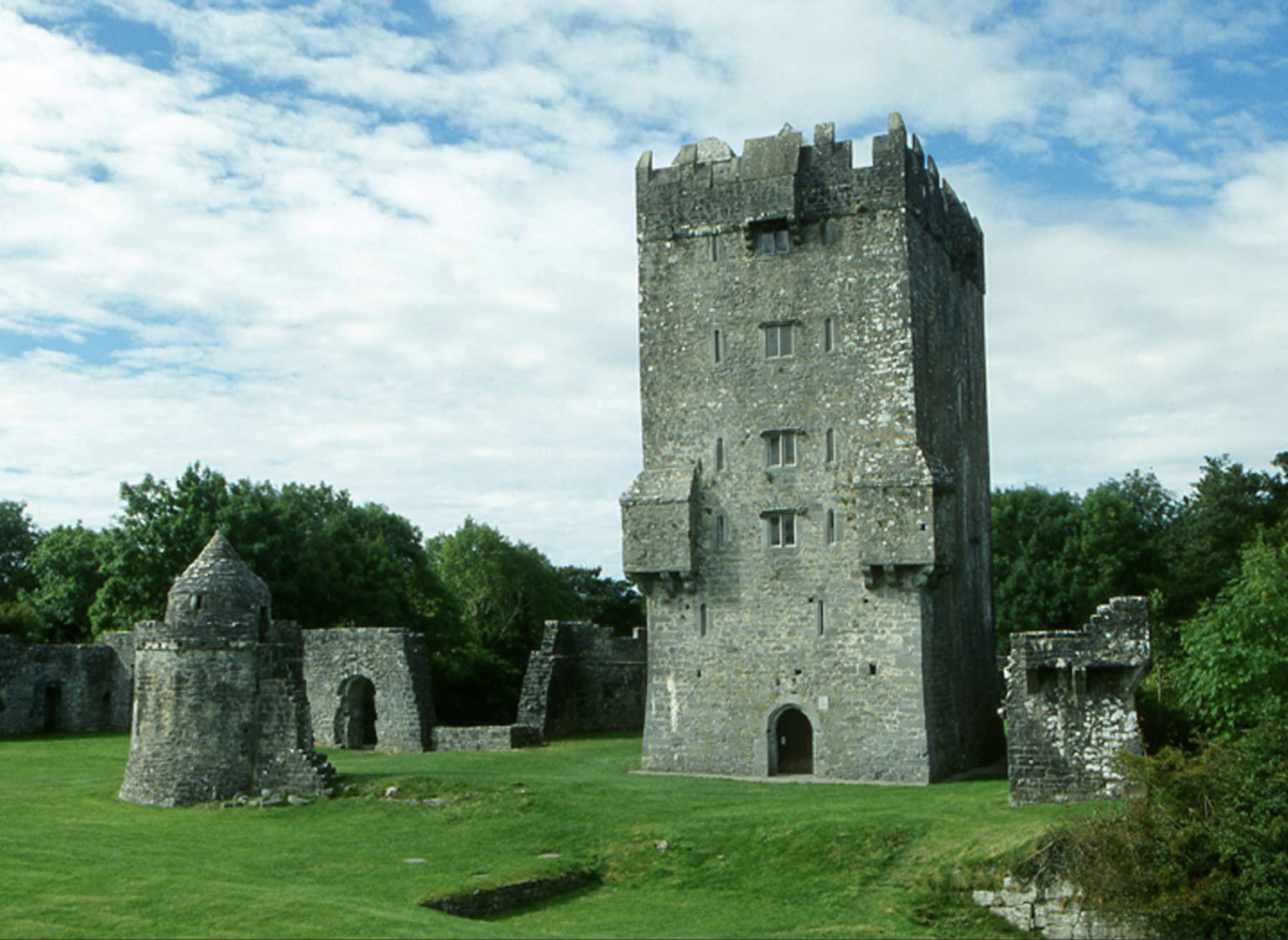
“The space

Claregalway Castle is a fully restored 15th century Anglo-Norman tower house and together with the castle grounds is a fabulous opportunity to savour the history while enjoying the comfort of your beautifully decorated and comfortable room.

At Claregalway Castle, County Galway. Photograph © Jennifer Winder-Baggot, www.irishhistorichouses.com
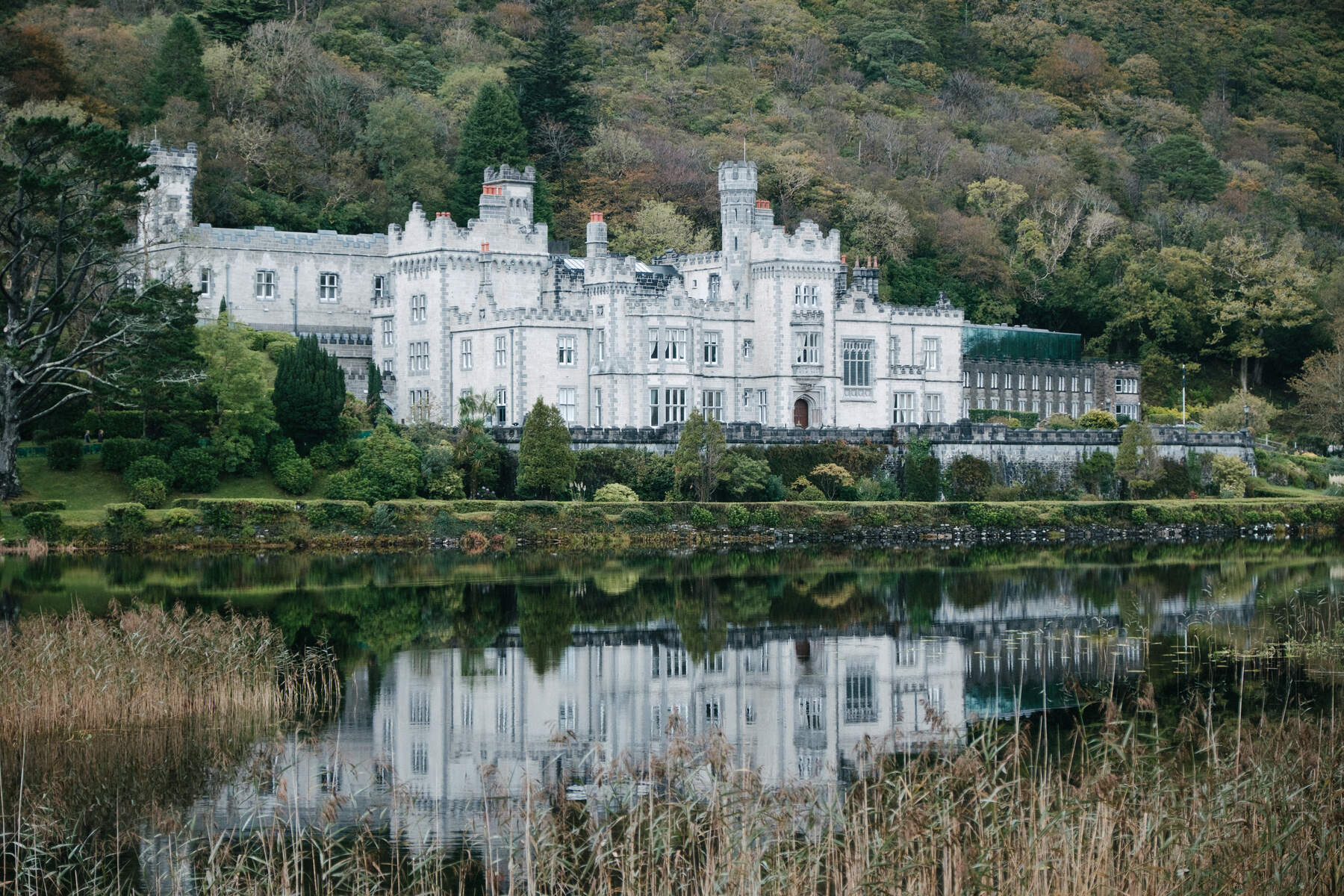
Claregalway castle was the chief fortress of the powerful Clanricard de Burgo or Burke family from the early 1400s to the mid-1600s. The Clanricard Burkes were descended from William de Burgh, an English knight of Norman ancestry who led the colonial expansion into Connacht in the early 1200s.   His brother Hubert was Justiciar of England.  William became the progenitor of one of the most illustrious families in Ireland.

The visit Galway website tells us: “Claregalway Castle was believed to have been built in the 1440’s as a stronghold to the De Burgo (Burke) family. The castle was strategically placed on a low crossing point of the Clare River, allowing the De Burgo family to control the water and land trade routes. 

In the past, the castle would have featured a high bawn/defensive wall, an imposing gate-house and a moat. The Battle of Knockdoe in 1504, was one of the largest pitched battles in Medieval Irish history, involving an estimated 10,000 combatants. On the eve of the battle, Ulick Finn Burke stayed at the Castle (which was 5km’s from the battle ground), drinking and playing cards with his troops. The Burke family lost the battle and the castle was later captured by the opponents, the Fitzgerald family. 

In the 1600’s, Ulick Burke, 5th Earl of Clanricarde [1st Marquess Clanricarde], held the castle however it was captured by Oliver Cromwell in 1651 who made the castle his headquarters. English military garrison occupied the castle in the early 1700’s and by the end of the 1700’s, the castle was described as going into decline and disrepair. During the War of Independence in 1919-21, the British once again used the castle as a garrison and a prison for I.R.A soldiers. In the later 1900’s, the famous actor Orson Welles is believed to have stayed at the castle as a 16 year old boy. 

Today, the castle has been fully restored to its former glory.” [6]

10. Cregg Castle, Corrandulla, Co Galway – Airbnb

Tower house of 1648 at centre of Cregg Castle, Corrandulla, County Galway, July 2021. Photograph © Jennifer Winder-Baggot, www.irishhistorichouses.com
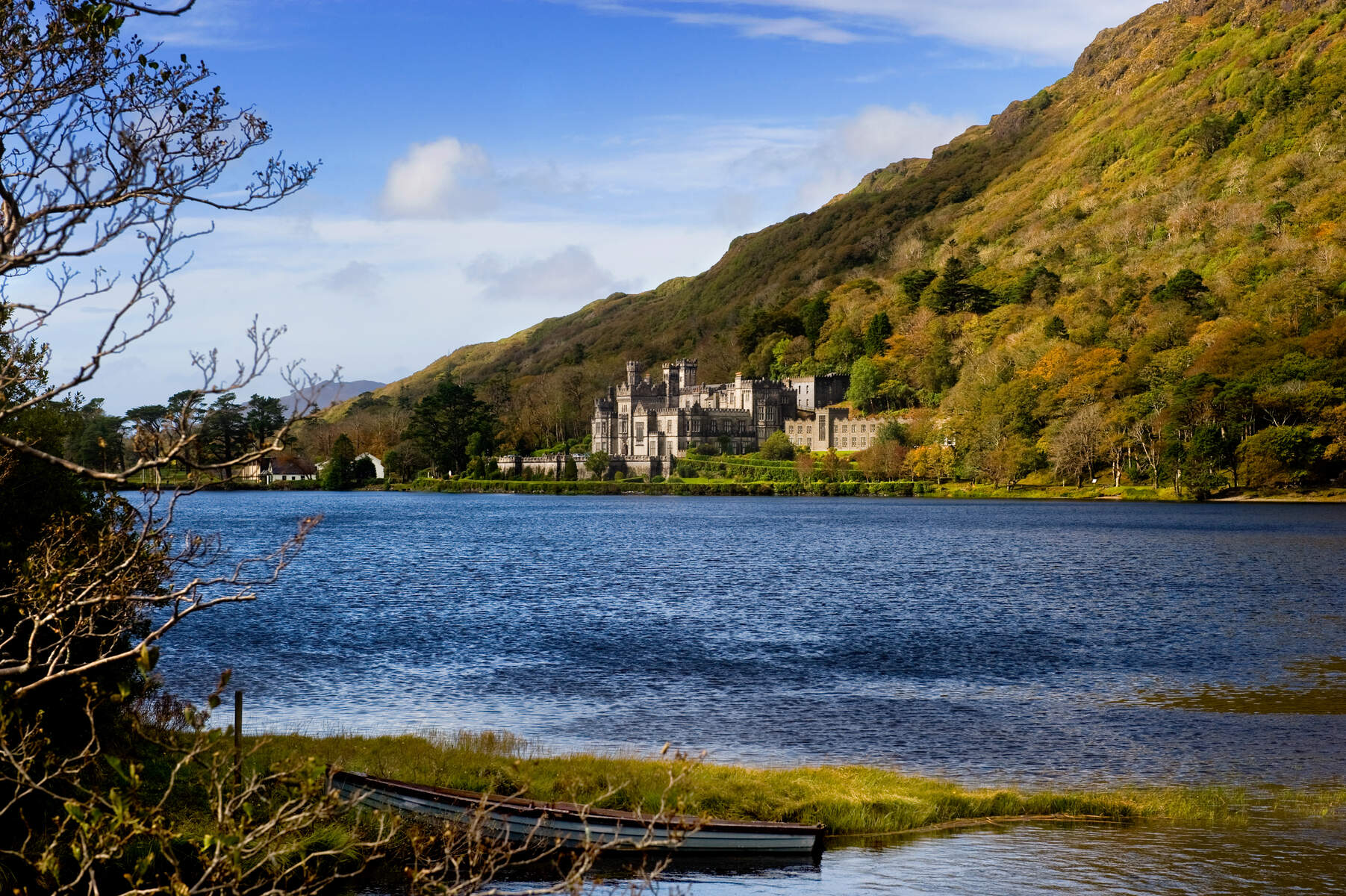
Photograph from myhome.ie of Cregg Castle and its demesne.

We were lucky to discover this wonderful castle for accommodation on airbnb. https://www.airbnb.ie/rooms/7479769?source_impression_id=p3_1652358063_y2E%2FxsRMKAae0vkr

The listing tells us that “Cregg Castle is a magical place built in 1648 by the Kirwin Family, one of the 12 tribes of Galway. It is set on 180 acres of pasture and beautiful woodlands. Your host, Artist Alan Murray who currently hosts the Gallery of Angels in the main rooms.

Photograph from myhome.ie of Cregg Castle.
Cregg Castle, Corrandulla, County Galway, July 2021. Photograph © Jennifer Winder-Baggot, www.irishhistorichouses.com
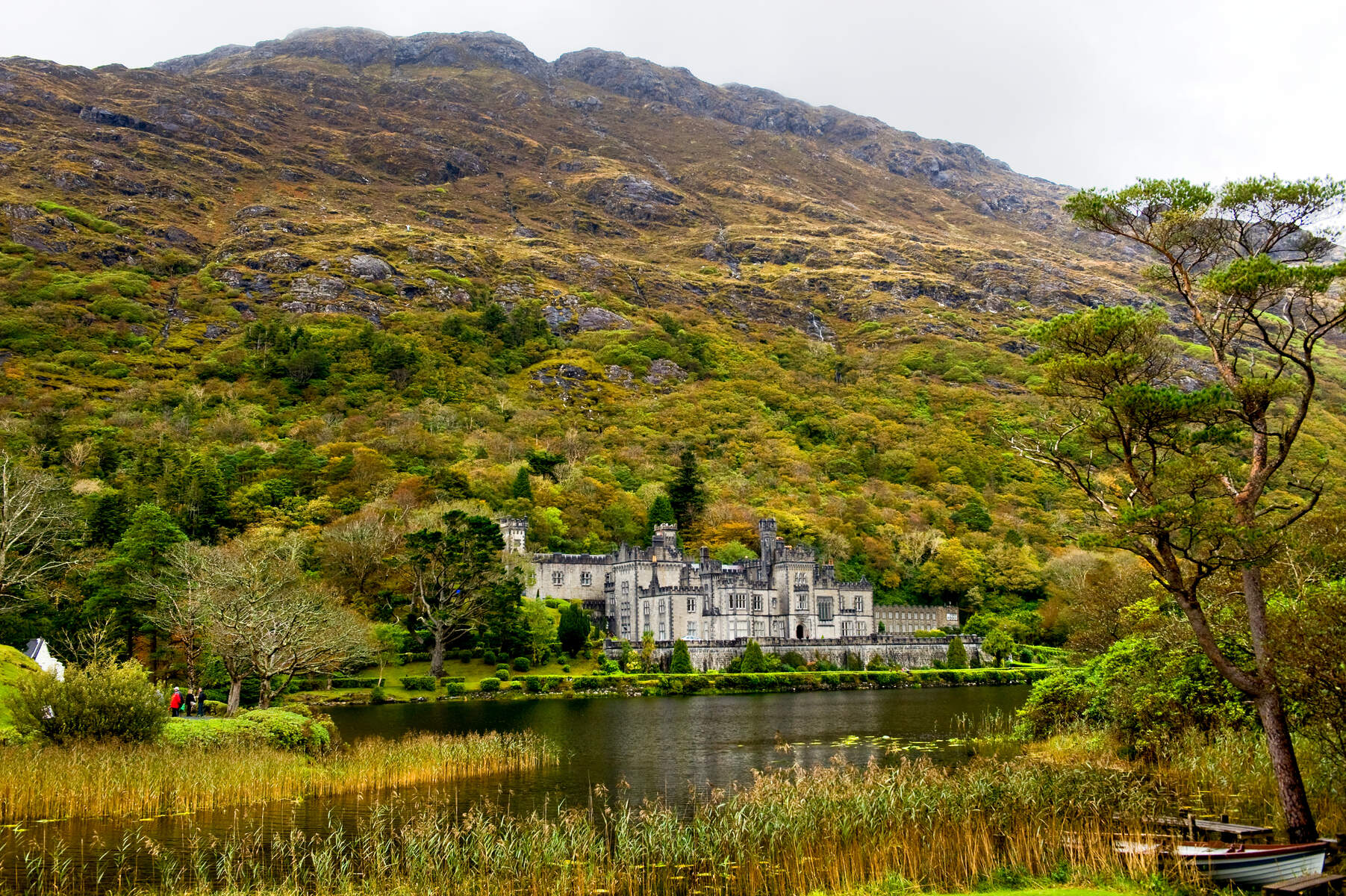
Mark Bence-Jones tells us (1988):

p. 94. “A tower house built 1648 by a member of the Kirwan family [I think it was Patrick Kirwan (c. 1625-1679)]. And said to have been the last fortified dwelling to be built west of the Shannon; given sash-windows and otherwise altered in Georgian times, and enlarged with a wing on either side: that to the right being as high as the original building, and with a gable; that to the left being lower, and battlemented.  In C18 it was the home of the great chemist and natural philosopher Richard Kirwan [1733-1812], whose laboratory, now roofless, still stands in the garden. It was acquired ca 1780 by James Blake [c. 1755-1818].

Richard Kirwan married Anne Blake, daughter of Thomas (1701-1749), 7th Baronet Blake of Galway.

Mark Bence-Jones continues: “The hall, entered through a rusticated round-headed doorway with a perron and double steps, has a black marble chimneypiece with the Blake coat of arms. The dining room has a plasterwork ceiling. Sold 1947 by Mrs Christopher Kerins (nee Blake) to Mr and Mrs Alexander Johnston. Re-sold 1972 to Mr Martin Murray, owner of the Salthill Hotel, near Galway.” 

Alan who now lives in the castle is, I believe, a nephew of Martin Murray of the Salthill Hotel.

Cregg Castle, Corrandulla, County Galway, July 2021.

The National Inventory describes it:

multi-period house, comprising tower house of 1648 at centre, later modified and refenestrated to three-bay two-storey over half-basement, flanked to west by lower two-bay two-storey with attic over half-basement block of c.1780 with two-bay gable elevation, and to east by slightly lower three-bay three-storey over half-basement L-plan block of c. 1870 with gables over eastmost bay of front and rear elevations. Lower four-storey return block at right angles to rear of middle and west blocks, having two-bay elevations. Further two-bay single-storey block to rear of four-storey return, two-bay two-storey block to west of west block and with single-storey block further west again.

Cregg Castle, Corrandulla, County Galway, July 2021. Photograph © Jennifer Winder-Baggot, www.irishhistorichouses.com
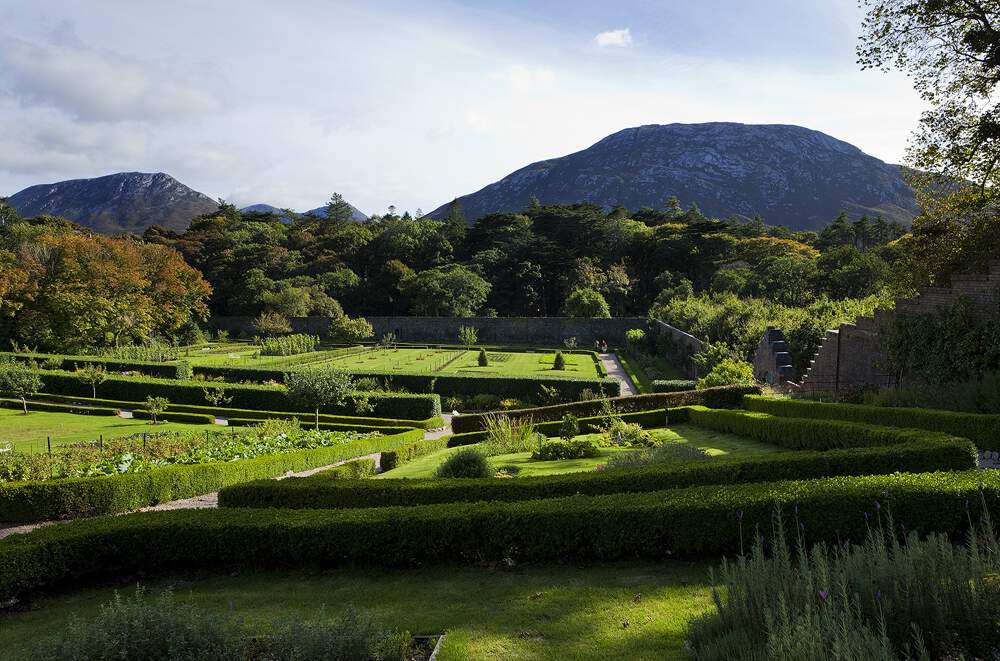
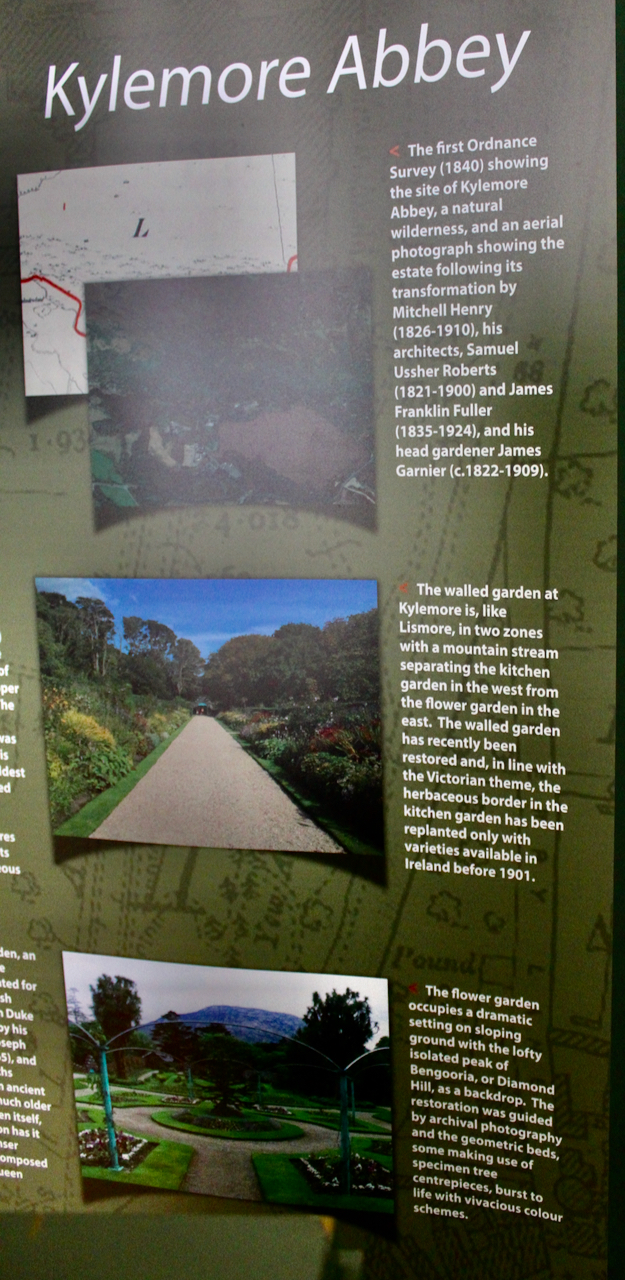
“Round-headed doorway to middle of middle block, having double-leaf mid-eighteenth-century door with raised and fielded panelling and original brass knocker, doorknob and heart-shaped cover for keyhole,” Cregg Castle, Corrandulla, County Galway, July 2021. Photograph © Jennifer Winder-Baggot, www.irishhistorichouses.com
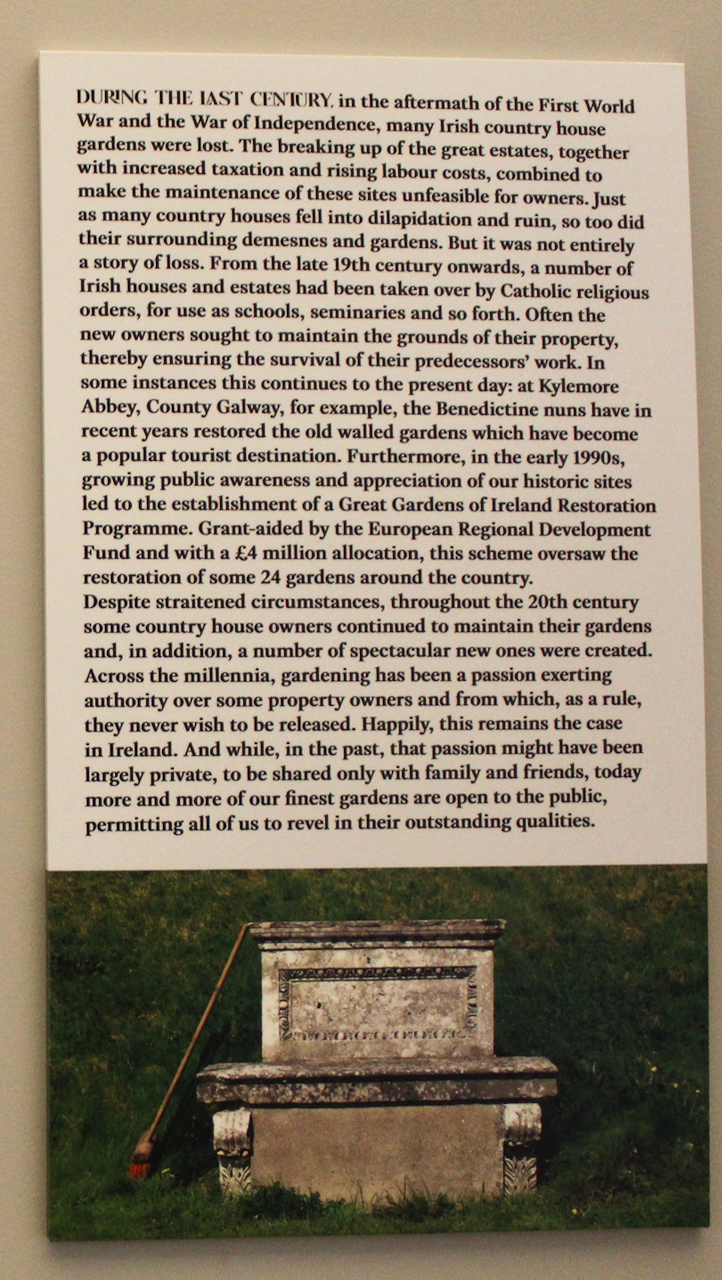
Cregg Castle, Corrandulla, County Galway, July 2021. Photograph © Jennifer Winder-Baggot, www.irishhistorichouses.com
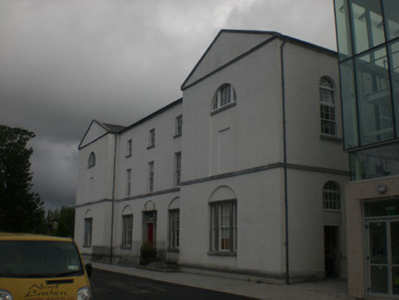
Cregg Castle, Corrandulla, County Galway, July 2021: “original brass knocker, doorknob and heart-shaped cover for keyhole.” Photograph © Jennifer Winder-Baggot, www.irishhistorichouses.com
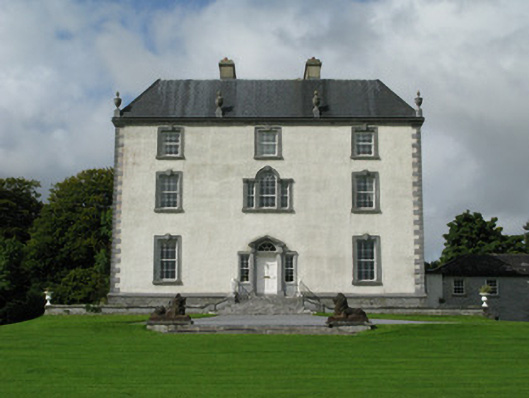
Cregg Castle, Corrandulla, County Galway, July 2021. Photograph © Jennifer Winder-Baggot, www.irishhistorichouses.com
Photograph from myhome.ie of Cregg Castle.
Cregg Castle, with paintings by Alan Murray, County Galway, July 2021. Photograph © Jennifer Winder-Baggot, www.irishhistorichouses.com
The Blake coat of arms on the fireplace, Cregg Castle, Corrandulla, County Galway, July 2021. Photograph © Jennifer Winder-Baggot, www.irishhistorichouses.com
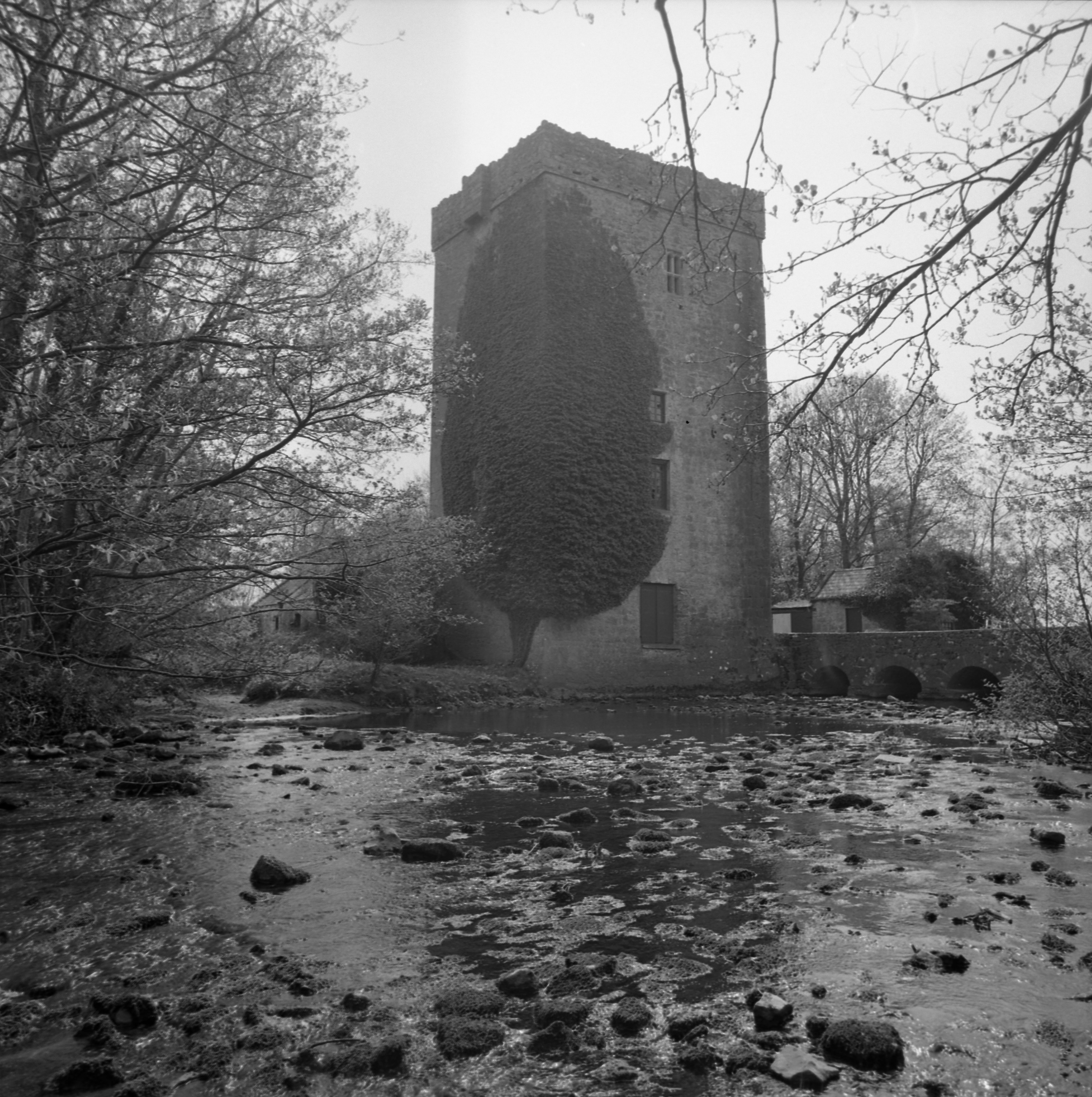
Photograph from myhome.ie of Cregg Castle.
Cregg Castle, with paintings by Alan Murray, County Galway, July 2021. Photograph © Jennifer Winder-Baggot, www.irishhistorichouses.com
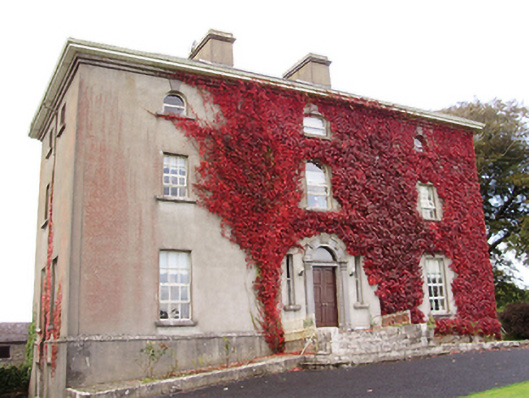
Cregg Castle, Corrandulla, County Galway, July 2021. Photograph © Jennifer Winder-Baggot, www.irishhistorichouses.com
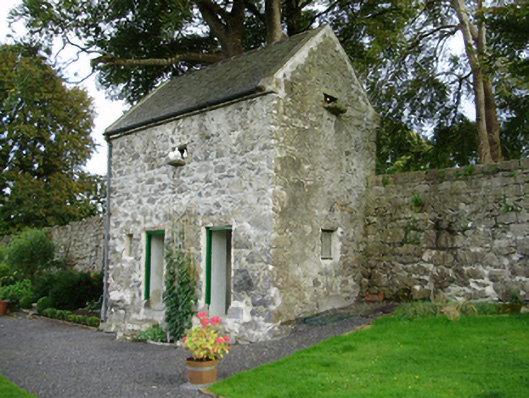
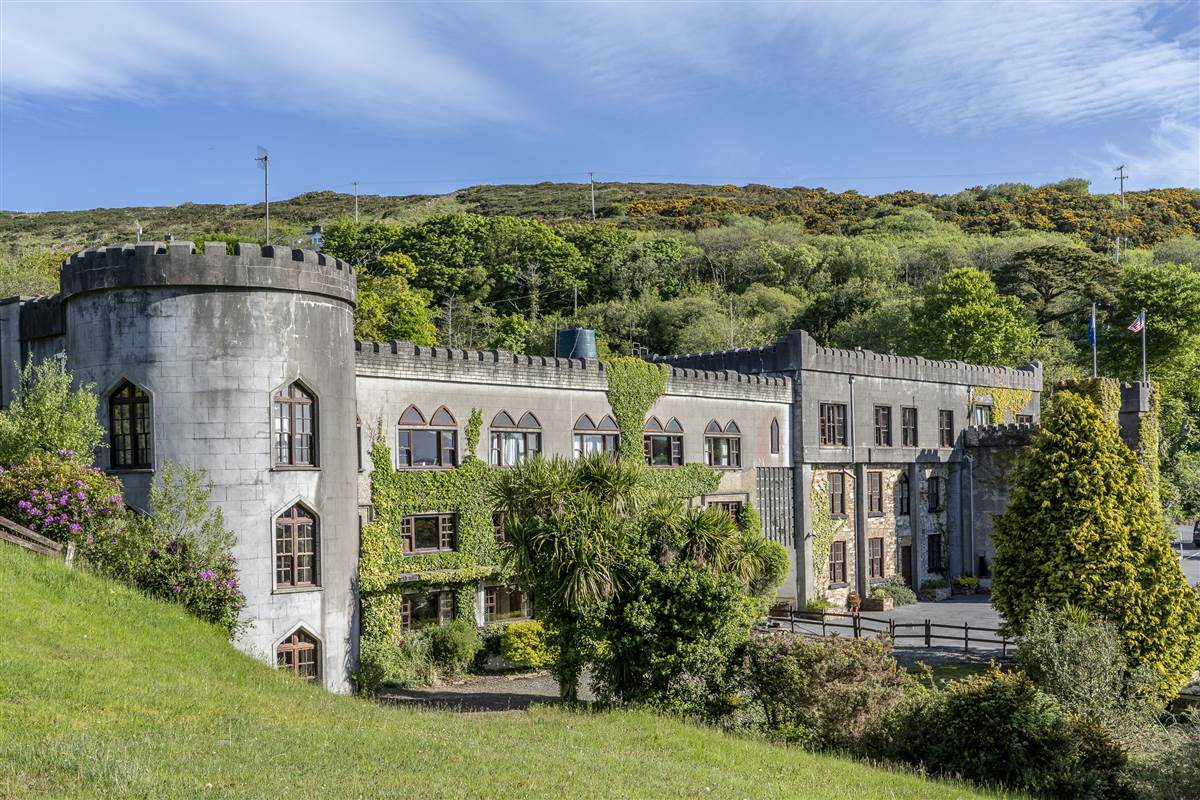
Photograph from myhome.ie of Cregg Castle.
Cregg Castle, Corrandulla, County Galway, July 2021. Photograph © Jennifer Winder-Baggot, www.irishhistorichouses.com
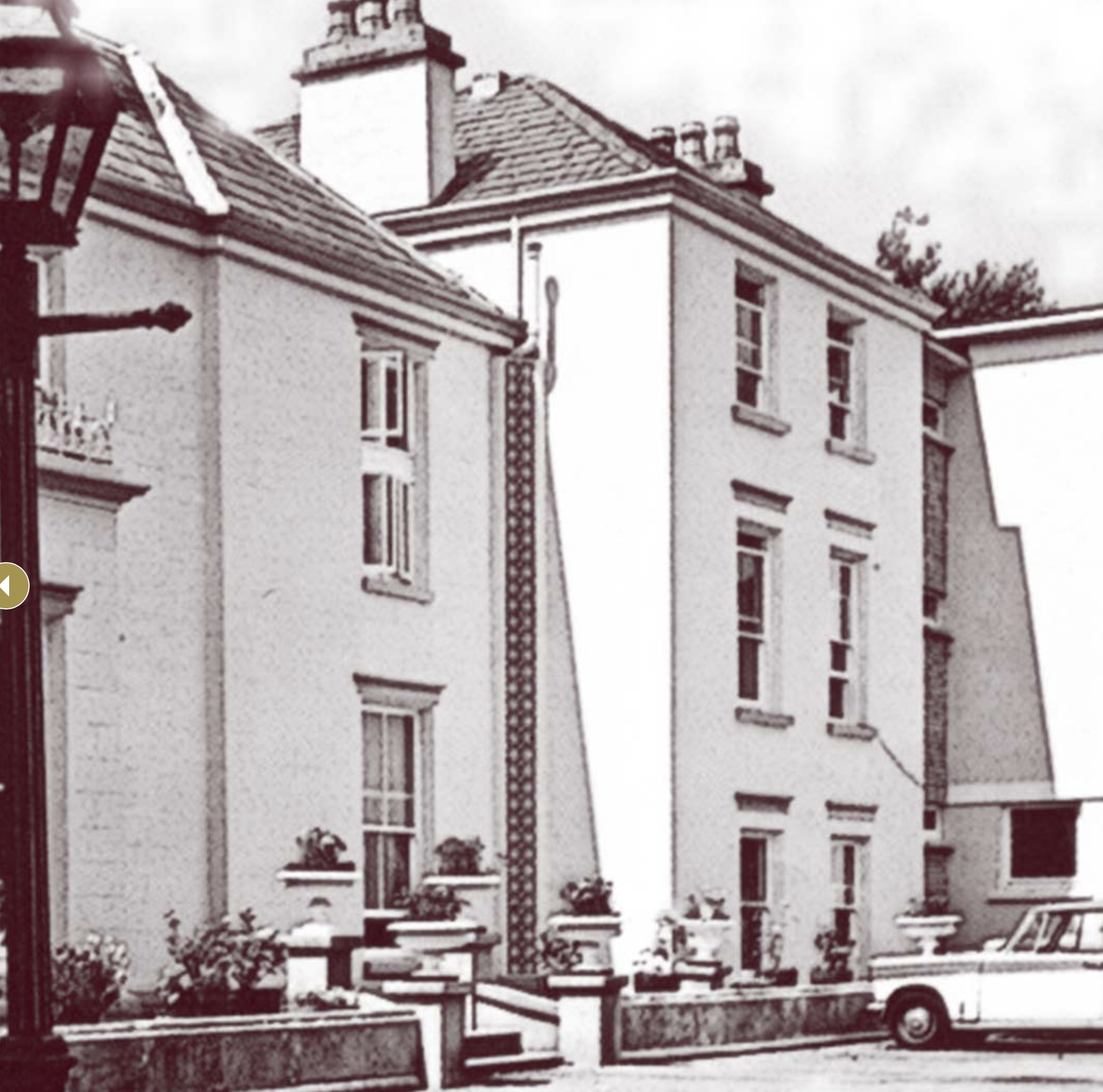
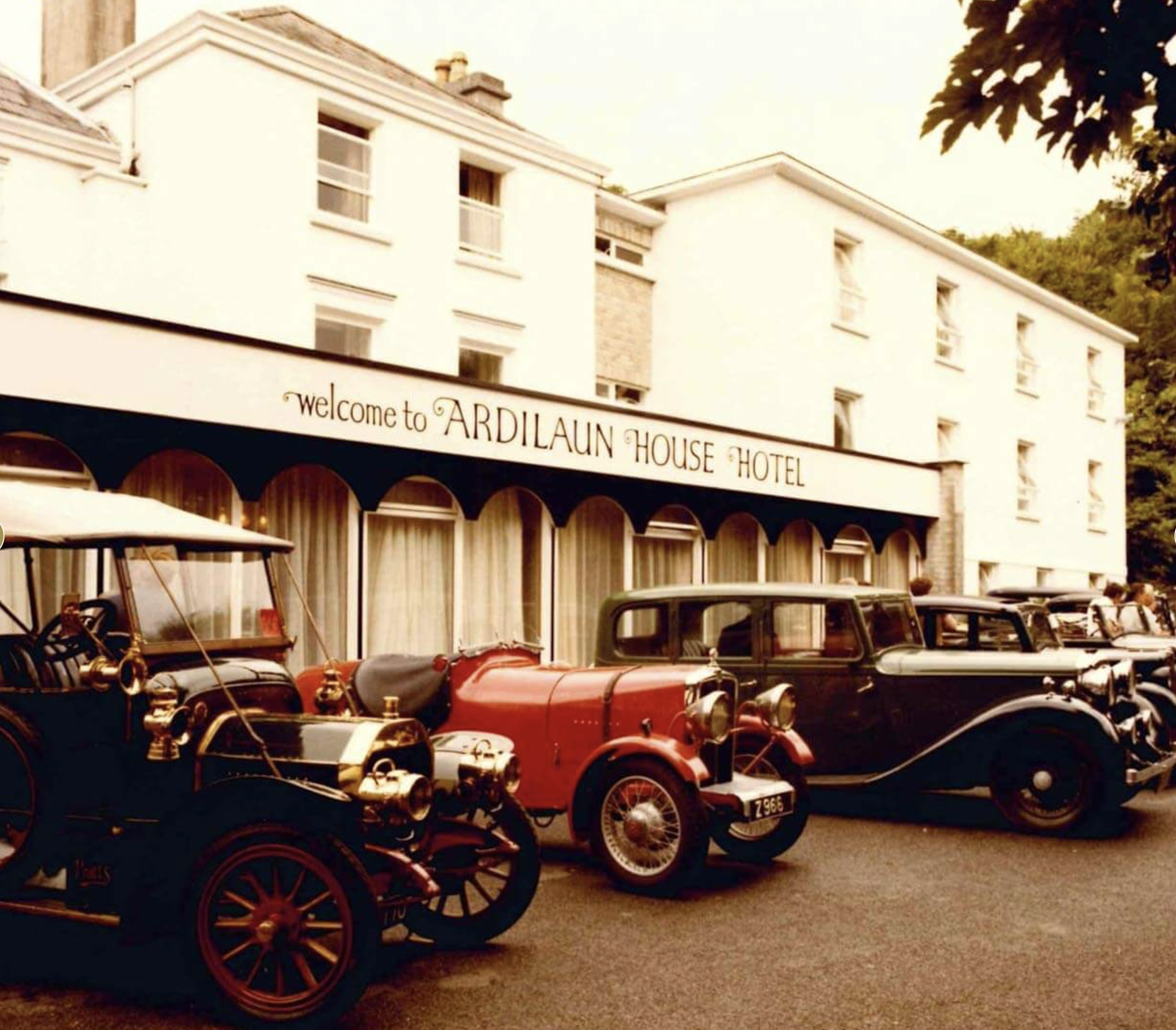
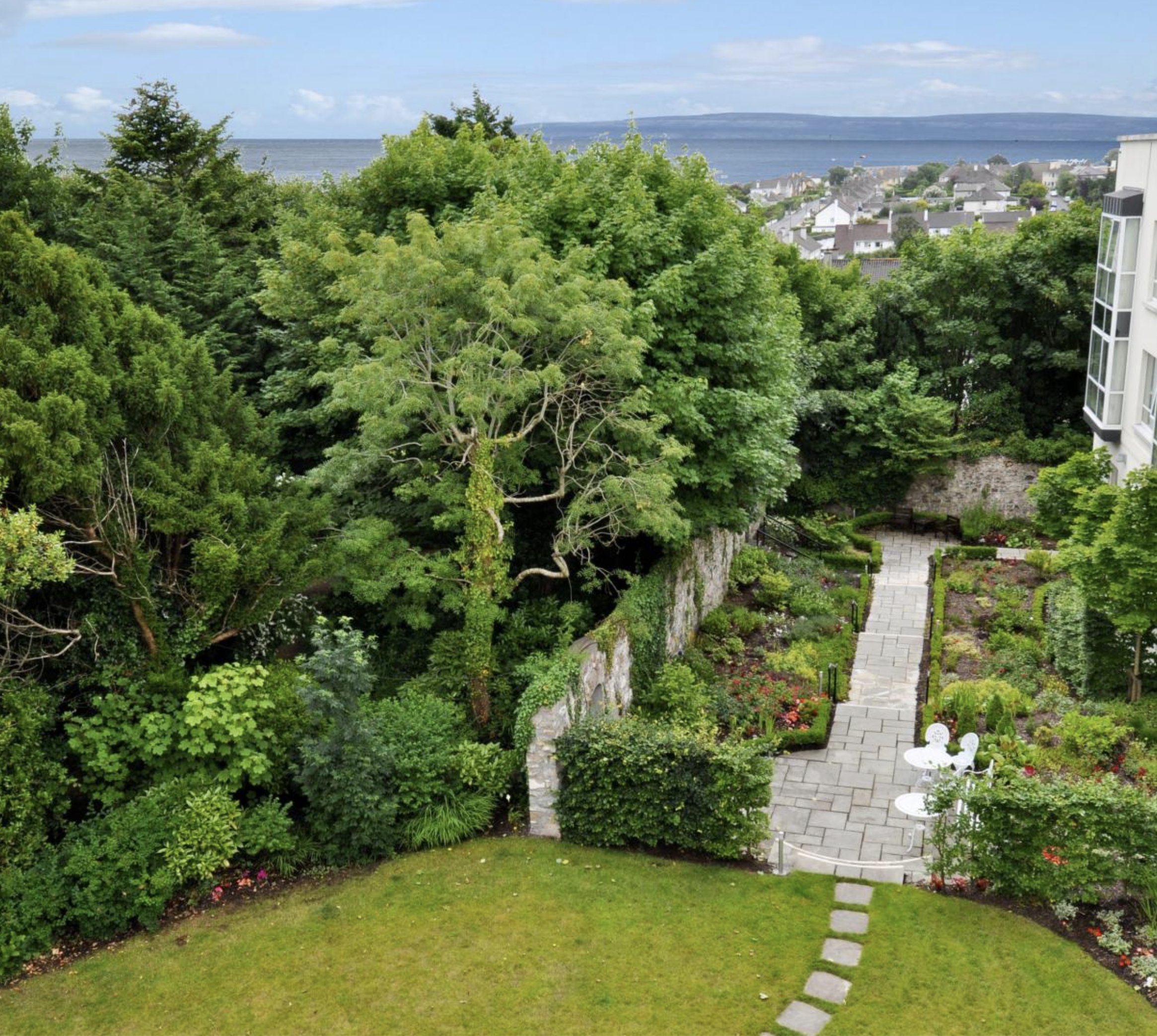
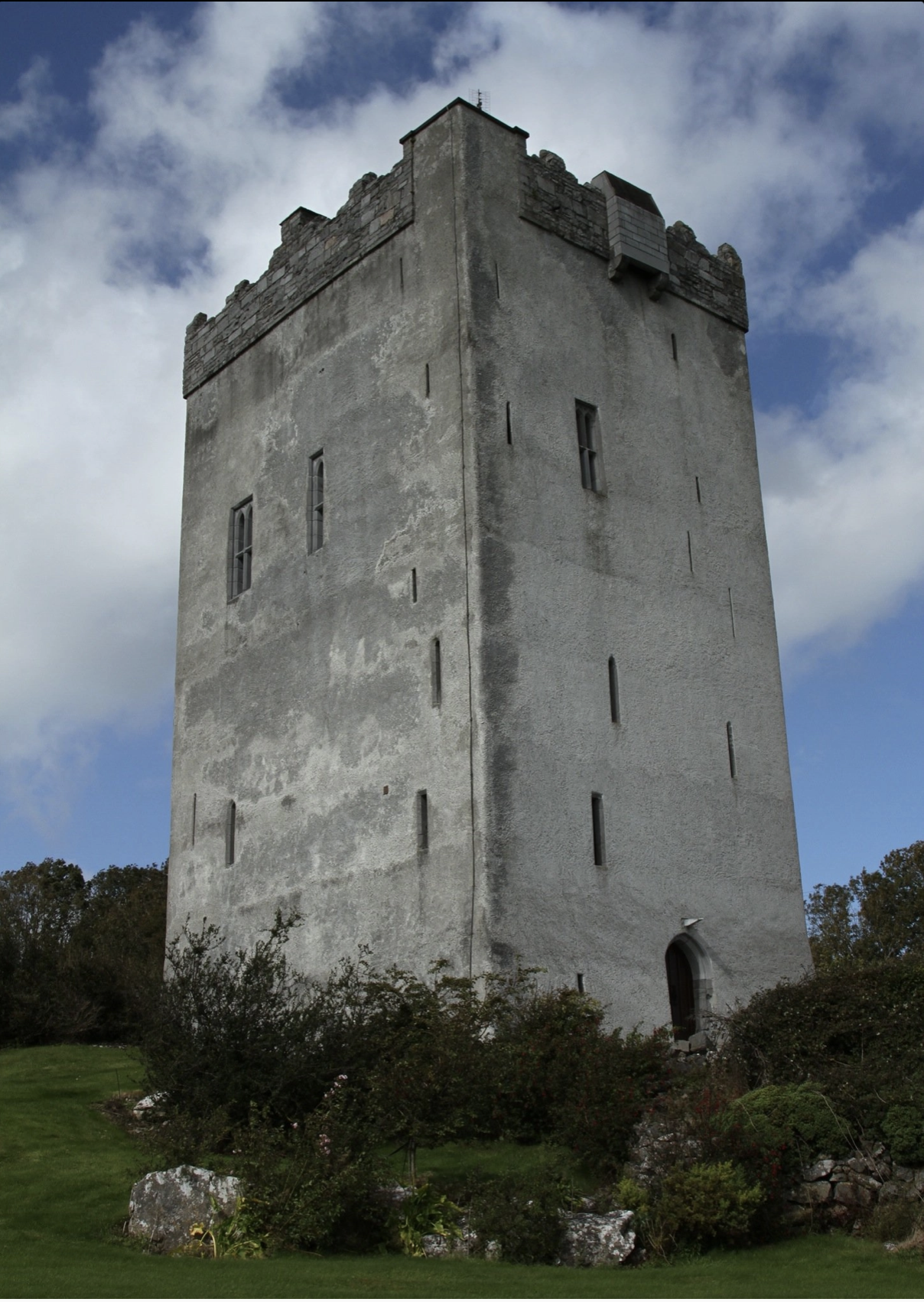
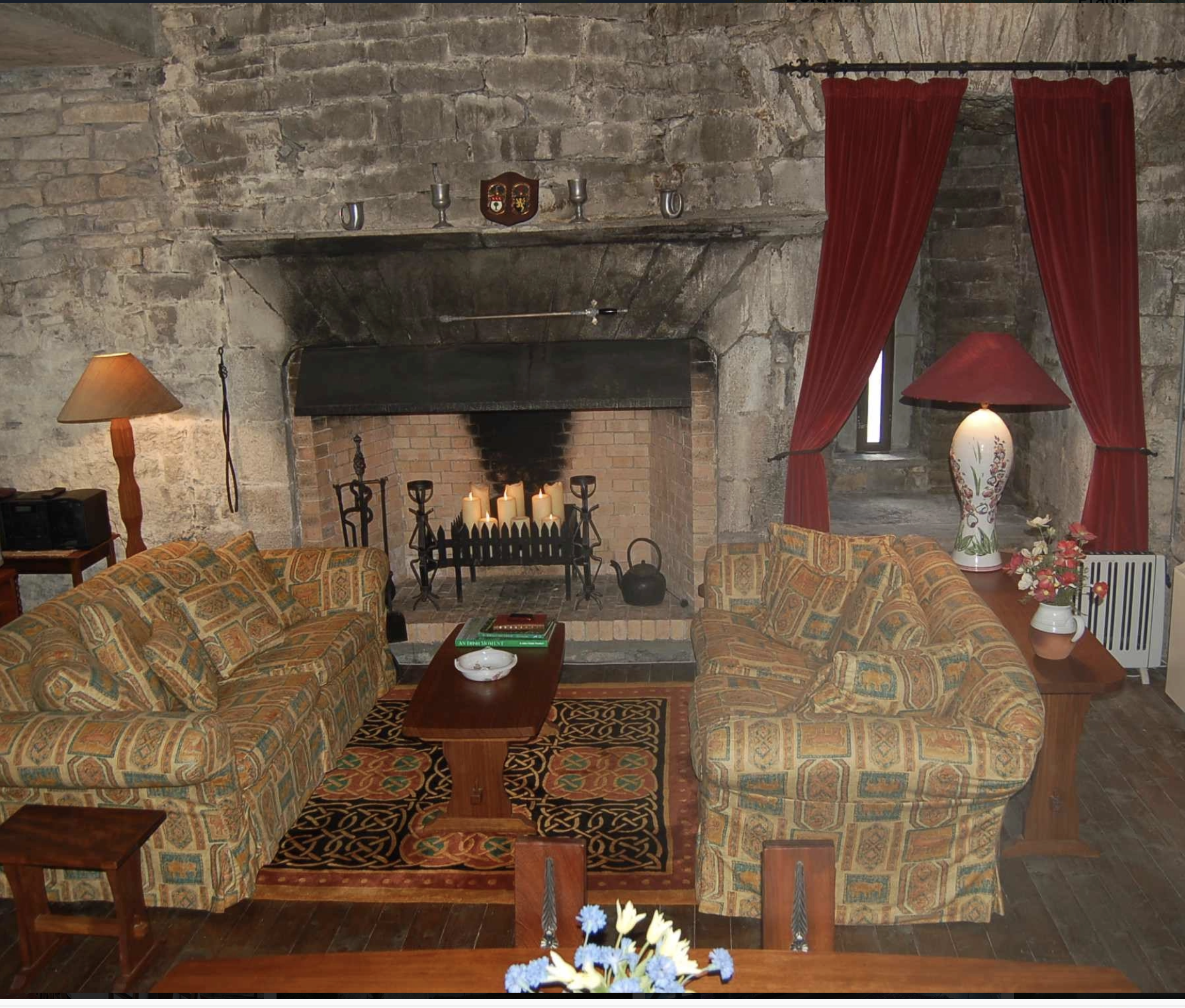
The long driveway up to Cregg Castle. Photograph from myhome.ie of Cregg Castle.

11. Crocnaraw County House, Moyard, County Galway

http://www.crocnaraw.ie/

The website tells us:

Crocnaraw Country House is an Irish Georgian Country Guest House (note we’re not a Hotel as such) by Ballinakill Bay,10 kilometres from Clifden, Connemara-on the Galway-Westport road.Set in 8 hectares of gardens and fields with fine views,Crocnaraw Country House has been winner of the National Guest House Gardens Competition for 4 years. This independently run Country Inn is noted for Irish hospitality and informality but without a sense of casualness.The House is tastefully and cheerfully decorated, each of its bedrooms being distinctively furnished to ensure the personal well-being of Guests. Fully licensed Crocnaraw Country House’s excellent cuisine is based on locally sourced fish and meat as well as eggs,fresh vegetables, salads and fruits from kitchen garden and orchard. Moyard is centrally located for Salmon and Trout fishing, deep-sea Angling, Championship Golf-Courses and many more recreational activities in the Clifden and Letterfrack Region of Connemara in County Galway.”

The National Inventory tells us that the house is a L-plan six-bay two-storey two-pile house, built c.1850, having crenellated full-height canted bay to south-east side elevation. Recent flat-roof two-storey extension to north-east…”Originally named Rockfield House, this building has undergone many alterations over time, the crenellated bay being an interesting addition. The area was leased by Thomas Butler as a Protestant orphanage and was known locally as ‘The Forty Boys’. The retention of timber sash windows enhances the building. The road entrance sets the house off plesantly.

12. Currarevagh, Oughterard, Co Galway – country house hotel €€

https://www.currarevagh.com

Currarevagh House, photograph from house website.

The website tells us:

Currarevagh House is a gracious early Victorian Country House, set in 180 acres of private parkland and woodland bordering on Lough Corrib. We offer an oasis of privacy for guests in an idyllic, undisturbed natural environment, providing exceptional personal service with a high standard of accommodation and old fashioned, traditional character. A genuine warm welcome from the owners.

Currarevagh House, photograph from house website.

Currarevagh House was built by the present owner’s great, great, great, great grandfather in 1842, however our history can be traced further back. The seat of the Hodgson Family in the 1600s was in Whitehaven, in the North of England, where they owned many mining interests. Towards the end of the 17th Century, Henry William Hodgson moved to Arklow and commenced mining for lead in Co Wicklow.  A keen angler and shot he travelled much of Ireland to fulfil his sport (not too easy in those days), and during the course of a visit to the West of Ireland decided to prospect for copper. This he found along the Hill of Doon Road. At much the same time he discovered lead on the other side of Oughterard. So encouraged was he that he moved to Galway and bought Merlin Park (then a large house on the Eastern outskirts of Galway, now a Hospital) from the Blake family and commenced mining. As Galway was some distance from the mining activities he wanted a house closer to Oughterard. Currarevagh (not the present house, but an early 18th century house about 100m from the present house) was then owned by the O’Flaherties – the largest clan in Connaught – and, though no proof can be found, we believe that he purchased it from the O’Flaherties. However a more romantic story says he won it and 28,000 acres in a game of cards. The estate spread beyond Maam Cross in the heart of Connemara, and to beyond Maam Bridge in the North of Connemara. As the mining developed so the need for transportation of the ore became increasingly difficult until eventually two steamers (“the Lioness” and “the Tigress”) were bought. These, the first on Corrib, delivered the ore to Galway and returned with goods and passengers stopping at the piers of various villages on the way.  All apparently went very well. The present house was built in 1842, suggesting a renewed wealth and success. No sooner however was present Currarevagh completed, then the 1850’s saw disaster. A combination of British export law changes, and vast seems of copper ore discovered in Spain and South America, heralded the end of mining activity in Ireland.  The family, who were fairly substantial land owners at this stage, got involved in various projects, from fish farming to turf production – inventing the briquette in the process. Certainly Currarevagh was been run as a sporting lodge for paying guests by 1890 by my great grandfather; indeed we have a brochure dated 1900 with instructions from London Euston Railway Station. This we believe makes it the oldest in Ireland; certainly the oldest in continuous ownership. After the Irish Civil War of the 1920s the Free State was formed and many of the larger Estates were broken up for distribution amongst tenants. This included Currarevagh, even though they were not absentee landlords and had bought all their land in the first place. Landlords were assured they would be paid 5 shillings (approx 25c) an acre, however this redemption was never honoured, and effectively 10’s of thousands of acres were confiscated by the new state, leaving Currarevagh with no income, apart from the rare intrepid paying guest. At one stage a non local cell of the Free Staters (an early version of the IRA) tried to blow up Currarevagh, planting explosive under what is currently the dining room. However the plan was discovered before hand, and the explosive made safe. From then on a member of the local IRA cell remained at the gates of Currarevagh to warn off any of the marauding out of towners, saying Currarevagh was not to be touched. Evidently they were well integrated into the community, and indeed during the famine years it seems they did as much as they could to help alleviate local suffering. Indeed there is a famine graveyard on our estate; this was because the local people became too week to bring the dead to Oughterard. It is also one of the few burial grounds to contain a Protestant consecrated section. Having got through the 1920s and 30s, Currarevagh again got in financial trouble during the second world war: although paying guests did come to Ireland (mainly as rationing was not so strict here), the original house was put up for sale. It did not sell, and eventually was pulled down in 1946, leaving just Currarevagh House as it stands today. In 1947 it was the first country house to open as a restaurant to no staying guests; still, of course, the situation today.”

13. Delphi Lodge, Leenane, Co Galway €€€

and Boathouse cottages: https://hiddenireland.com/house-pages/boathouse-cottages/ €€

and Wren’s Cottage: https://hiddenireland.com/house-pages/wrens-cottage/ €€

Delphi Lodge, 2015, for Tourism Ireland, Ireland’s Content Pool (see [7]).

 https://delphilodge.ie

The website tells us: “A delightful 1830s country house, fishing lodge and hotel in one of the most spectacular settings in Connemara Ireland. It offers charming accommodation, glorious scenery, great food and total tranquillity. Located in a wild and unspoilt valley of extraordinary beauty, the 1000-acre Delphi estate is one of Ireland’s hidden treasures…

The Marquis of Sligo (Westport House) builds Delphi Lodge as a hunting/fishing lodge and is reputed to have named it “Delphi” based on the valley’s alleged similarity to the home of the Oracle in Greece.

Delphi Fishing Lodge, abt. 1842, photograph courtesy of National Gallery of Ireland.
Delphi Lodge, 2014, for Tourism Ireland, Ireland’s Content Pool (see [7]).
John Denis Browne, 1st Marquess of Sligo, 1806 by engraver William Whiston Barney after John Opie, courtesy of National Gallery of Ireland.

14. Emlaghmore Cottage, Connemara, County Galway

https://hiddenireland.com/house-pages/emlaghmore-cottage/

Connemara cottage, four hundred yards off the coast road, 10 km from Roundstone and 4 km from Ballyconneely.

Emlaghmore Cottage was built in stone in about 1905, with just three rooms, and was extended in the 1960s to make a holiday home for a family. It stands on about ¾ acre running down to Maumeen lake, and is about 400 yards off the coast road (The Wild Atlantic Way) in a secluded situation with fine views. It has a shed with a supply of turf for the open fire in the living room, and garden furniture. There is a boat for anglers on the lake.

The home of Richard 7th Duke de Stacpoole, now a B&B https://errisbeghouse.ie/

16. Glenlo Abbey, near Galway, Co Galway – accommodation €€

Glenlo Abbey Hotel & Estate, Co Galway Kelvin Gillmor Photography 2020, for Tourism Ireland, Ireland’s Content Pool (see [7]).

 https://www.glenloabbeyhotel.ie

Mark Bence-Jones tells us (1988): p. 138. “(Palmer, sub De Stacpoole/IFR) A long plain two storey house built onto slender tower with pointed openings near the top. The seat of the Palmer family.” 

The estate belonged to the Ffrench family in the 1750s, an Anglo-Norman family. It was originally named Kentfield House, before becoming Glenlow or Glenlo, derived from the Irish Gleann Locha meaning “glen of the lake.” The adjacent abbey was built in the 1790s as a private church for the family but was never consecrated. In 1846 the house was put up for sale. It was purchased by the Blakes.

In 1897 it was purchased by the Palmers. In the 1980s it was sold to the Bourke family, who converted it to a hotel.

In 1990s two carriages from the Orient Express train were purchased and they form a unique restaurant.

Glenlo Abbey Hotel & Estate, Co Galway Kelvin Gillmor Photography 2020, for Tourism Ireland, Ireland’s Content Pool (see [7]).
Glenlo Abbey Hotel & Estate, ©Glenlo Abbey Hotel and Estate, Galway 2015, for Tourism Ireland, Ireland’s Content Pool (see [7]).
Glenlo Abbey Hotel & Estate, Co Galway Courtesy Glenlo Abbey Hotel and Estate, Galway 2017, for Tourism Ireland, Ireland’s Content Pool (see [7]).
Glenlo Abbey Hotel 2020 Courtesy Glenlo Abbey Hotel and Estate, Galway, for Tourism Ireland, Ireland’s Content Pool (see [7]).
Glenlo Abbey Hotel & Estate, Co Galway_©Glenlo Abbey Hotel and Estate, Galway 2014, for Tourism Ireland, Ireland’s Content Pool (see [7]).
Palmer Bar, Glenlo Abbey Hotel & Estate, Courtesy Glenlo Abbey Hotel and Estate, Galway 2020, for Tourism Ireland, Ireland’s Content Pool (see [7]).

17. Kilcolgan Castle, Clarinbridge, Co Galway €€€

https://www.airbnb.ie/rooms/3828868?adults=2&category_tag=Tag%3A8047&children=0&infants=0&search_mode=flex_destinations_search&check_in=2022-08-03&check_out=2022-08-08&federated_search_id=321dc1f8-3115-4a71-9c5b-00aa67ee2c4a&source_impression_id=p3_1652359008_yrD4CHLmFCj0nNf0

Kilcolgan Castle, photograph courtesy of airbnb castle entry.

Mark Bence-Jones tells us (1988):

p. 165. “(St. George, sub French/IFR; Blyth, B/PB; Ffrench, B/PB) A small early C19 castle, built ca 1801 by Christopher St. George, the builder of the nearby Tyrone House, who retired here with a “chere amie” having handed over Tyrone House to his son [Christopher St George was born Christopher French, adding St George to his surname to comply with his Great-Grandfather, George St George (c. 1658-1735) 1st Baron Saint George of Hatley Saint George in Counties Leitrim and Roscommon]. It consists of three storey square tower with battlements and crockets and a single-storey battlemented and buttressed range. The windows appear to have been subsequently altered. The castle served as a dower house for Tyrone, and was occupied by Miss Matilda St George after Tyrone was abandoned by the family 1905; it was sold after her death, 1925. Subsequent owners included Mr Martin Niland, TD; Mr Arthur Penberthy; Lord Blyth; and Mrs T.A.C.Agnew (sister of 7th and present Lord Ffrench); it is now owned by Mr John Maitland.” 

Kilcolgan Castle, photograph courtesy of airbnb castle entry.

18. Lisdonagh House, Caherlistrane, Co. Galway H91 PFW6 – section 482 – whole house rental and self-catering cottages.

www.lisdonagh.com
(Tourist Accommodation Facility)

Open for accommodation: May 1-Oct 31 2026

Email: cooke@lisdonagh.com

Lisdonagh House, photograph from website.

The house is available as whole house rental, and it also has cottages for accommodation. See my entry https://irishhistorichouses.com/2025/02/13/lisdonagh-house-caherlistrane-co-galway/

The website tells us:

When looking for an authentic Irish country house to hire, the beautiful 18th century early Georgian Heritage home is the perfect choice. Lisdonagh House is large enough to accommodate families, friends and groups for private gatherings. This private manor house is available for exclusive hire when planning your next vacation or special event. Enchantingly elegant, Lisdonagh Manor House in Galway has been lovingly restored and boasts original features as well as an extensive antiques collection. Peacefully set in secluded woodland surrounded by green fields and magnificent private lake, this luxury rental in Galway is full of traditional character and charm. The tasteful decor pays homage to the history of Lisdonagh Manor with rich and warm colours in each room. The private estate in Galway is perfect for family holidays, celebrations and Board of Director strategy meetings. Lisdonagh is an excellent base for touring Galway, Mayo and the Wild Atlantic Way.

Lisdonagh House, photograph from website.

It has two cottages, a coach house and gate lodge accommodation also.

Lughnasa Villa at Lisdonagh House, photograph from website.
Coach House at Lisdonagh House, photograph from website.
Gate Lodge at Lisdonagh House, photograph from website.

19. Lough Cutra Castle, County Galway, holiday cottages

https://www.loughcutra.com/cormorant.html

info@loughcutra.com

Nestled into the Northern corner of the courtyard, this beautifully appointed self catering cottage can sleep up to six guests – with private entrance and parking. Built during 1846 as part of a programme to provide famine relief during the Great Potato Famine of the time, it originally housed stabling for some of the many horses that were needed to run a large country estate such as Lough Cutra. In the 1920’s the Gough family, who were the then owners of the Estate, closed up the Castle and converted several areas of the courtyard including Cormorant into a large residence for themselves. They brought with them many original features from the Castle, such as wooden panelling and oak floorboards from the main Castle dining room and marble fireplaces from the bedrooms.

We have furnished and decorated the home to provide a luxuriously comfortable and private stay to our guests. Each unique courtyard home combines the history and heritage of the estate and buildings with modern conveniences.

https://www.loughcutra.com/

Lough Cutra castle, photograph from Lough Cutra website.

The website gives us a detailed history of the castle:

Lough Cutra Castle and Estate has a long and varied history, from famine relief to the billeting of soldiers, to a period as a convent and eventually life as a private home. It was designed by John Nash who worked on Buckingham Palace, and has been host to exclusive guests such as Irish President Michael D Higgins, His Royal Highness Prince Charles and Duchess of Cornwall Camilla, Bob Geldof, Lady Augusta Gregory and WB Yeats. The countryside surrounding Lough Cutra holds many a story, dating back centuries.

Lough Cutra castle, photograph from Lough Cutra website.

The extensive history of the Lough Cutra Castle and Estate can be traced back as far as 866 AD. It is quite likely that Ireland’s patron saint, Saint Patrick, passed Lough Cutra on his travels and also Saint Colman MacDuagh as he was a relative of nearby Gort’s King Guaire. The round tower Kilmacduagh built in his honour is an amazing site to visit near Lough Cutra. The countryside surrounding Lough Cutra holds stories for the centuries, all the way back to the Tuatha De Danann.

The immediate grounds of the 600 acre estate are rich in remnants of churches, cells and monasteries due to the introduction of Christianity. A number of the islands on the lake contain the remnants of stone altars.

The hillsides surrounding Lough Cutra contain evidence of the tribal struggle between the Firbolgs and the Tuatha De Danann (the Firbolgs and the Tuatha De Danann were tribes said to have existed in Ireland). These are from around the times of the Danish invasion. The ruined church of nearby Beagh on the North West shore was sacked by the Danes in 866 AD and war raged through the district for nearly 1000 years. In 1601 John O’Shaughnessy and Redmond Burke camped on the shores of the lake while they plundered the district.

Lough Cutra castle, photograph from Lough Cutra website.

In 1678, Sir Roger O’Shaughnessy inherited from Sir Dermot all the O’Shaughnessy’s Irish land – nearly 13,000 acres – and this included Gort and 2,000 acres around Lough Cutra and the lake itself. Following the revolution during which Sir Roger died of ill health, the Gort lands were seized and presented to Thomas Prendergast. This was one of the oldest families in Ireland. Sir Thomas came to Ireland on King William’s death in 1701 and lived in County Monaghan. The title to the lands was confused, but was in the process of being resolved when Sir Thomas was killed during the Spanish Wars in 1709. His widow, Lady Penelope decided to let the lands around the lake and the islands. On these islands, large numbers of apple, pear and cherry trees were planted, and some still survive today. The land struggle continued as the O’Shaughnessy’s tried to lay claim to the lands that had been taken from them by King William. In 1742 the government confirmed the Prendergast title, but it was not until 1753 that Roebuck O’Shaughnessy accepted a sum of money in return for giving up the claim.

Following Sir Thomas’s death, John Prendergast Smyth inherited the Gort Estate. It was John who created the roads and planted trees, particularly around the Punchbowl where the Gort River disappears on its way to Gort and Coole. John lived next to the river bridge in Gort when in the area. This area is now known as the Convent, Bank of Ireland and the old Glynn’s Hotel which is now a local restaurant. When John died in 1797 he was succeeded by his nephew, Colonel Charles Vereker who in 1816 became Viscount Gort. The estate at this time was around 12,000 acres.

Lough Cutra castle, photograph from Lough Cutra website.

When the estate was inherited by Colonel Vereker in 1797 he decided to employ the world renowned architect John Nash to design the Gothic Style building now known as Lough Cutra Castle. Colonel Vereker had visited Nash’s East Cowes Castle on the Isle of Wight and was so taken with it that he commissioned the construction of a similar building on his lands on the shore of Lough Cutra. Nash also designed Mitchelstown Castle, Regents Park Crescent, his own East Cowes Castle, as well as being involved in the construction of Buckingham Palace.

The Castle itself was built during the Gothic revival period and is idyllically situated overlooking the Estate’s 1000 acre lake. The building of the castle was overseen by the Pain brothers, who later designed and built the Gate House at Dromoland. The original building included 25 basement rooms and the cost of the building was estimated at 80,000 pounds. While the exact dates of construction are not known the building commenced around 1809 and went on for a number of years. We know that it had nearly been finished by 1817 due to a reference in a contemporary local paper.

Colonel Charles Vereker, M.P., (1768-1842), Constable of Limerick Castle, later 2nd Viscount Gort Engraver James Heath, English, 1757-1834 After John Comerford, Irish, 1770-1832, photograph courtesy of National Gallery of Ireland.

The Viscount Gort was forced to sell the Castle and Estate in the Late 1840s having bankrupted himself as a result of creating famine relief. The Estate was purchased by General Sir William Gough, an eminent British General. The Gough’s set about refurbishing the Castle to their own taste and undertook further construction work adding large extensions to the original building, including a clock tower and servant quarters. Great attention was paid to the planting of trees, location of the deer park, and creation of new avenues. An American garden was created to the south west of the Castle. The entire building operations were completed in 1858 and 1859.

A further extension, known as the Museum Wing, was built at the end of the nineteenth century to house the war spoils of General Sir William Gough by his Grandson. This was subsequently demolished in the 1950s and the cut stone taken to rebuild Bunratty Castle in County Clare.

In the 1920s the family moved out of the Castle as they could not afford the running costs. Some of the stables in the Courtyards were converted into a residence for them. The Castle was effectively closed up for the next forty years, although during WWII the Irish army was billeted within the Castle and on the Estate.

Lough Cutra castle, photograph from Lough Cutra website.

The Estate changed hands several times between the 1930s and the 1960s when it was purchased by descendants of the First Viscount Gort. They took on the task of refurbishing the Castle during the late 1960s. Having completed the project, it was then bought by the present owner’s family.

In more recent years there has begun another refurbishment programme to the Castle and the Estate generally. In 2003 a new roof was completed on the main body of the Castle, with some of the tower roofs also being refurbished. There has been much done also to the internal dressings of the Castle bringing the building up to a modern standard. Around the Estate there has been reconstruction and rebuilding works in the gate lodges and courtyards. There has also begun extensive works to some of the woodlands in order to try and retain the earlier character of the Estate.

It is envisaged that more works will be undertaken over the coming years as the history and legend of Lough Cutra continues to build.

20. Lough Inagh Lodge Hotel, County Galway €

https://www.loughinaghlodgehotel.ie/en/

Lough Inagh Lodge was built on the shores of Lough Inagh in the 1880. It was part of the Martin Estate (Richard “Humanity Dick” Martin of Ballynahinch Castle) as one of its fishing lodges. It was later purchased by Richard Berridge, a London brewer who used the building as a fishing lodge in the 1880’s. It passed through the hands of the Tennent family, and then to Carroll Industries until 1989 it was redeveloped by the O’Connor family back to its former glory into a modern bespoke boutique lodge.”

21. Oranmore Castle, County Galway, H91TFT6 – section 482 accommodation

www.oranmorecastle.com

(Tourist Accommodation Facility)

Open for accommodation: May 1-October 31 2026

See my entry https://irishhistorichouses.com/2023/04/13/oranmore-castle-oranmore-co-galway/

21. Oranmore Lodge Hotel (previously Thorn Park), Oranmore, Co Galway  https://www.oranmorelodge.ie

The Oranmore Lodge Hotel is a four-star family-run hotel that has earned the reputation of being a “home away from home”, situated in Oranmore, a popular village bursting with life and character. From the moment you arrive, take in the beautiful surroundings and unique character of the building that will encourage you to relax and leave it all behind. Guests have enjoyed our Irish hospitality for over 150 years.

The National Inventory tells us:

The Oranmore Lodge Hotel was formerly the residence of the Blake Butler family. The house was altered in the late nineteenth century and its name changed from Mount Vernon to Thornpark, and the steep gables, bay windows and crenellations are typical of that era. An interesting symmetrical elevation, enhanced by the family shield with motto. It retains much original fabric notwithstanding its extension on both sides.

22. The Quay House, Clifden, Co Galway €€

https://thequayhouse.com  

The website tells us:

Built for the Harbour Master nearly 200 years ago, The Quay House has been sensitively restored and now offers guest accommodation in fourteen bedrooms (all different) with full bathrooms – all but three overlook the Harbour. Family portraits, period furniture, cosy fires and a warm Irish welcome make for a unique atmosphere of comfort and fun.

The owners, Paddy and Julia Foyle, are always on hand for advice on fishing, golfing, riding, walking, swimming, sailing, dining, etc – all close by.

The Quay House is Clifden’s oldest building, dating from C1820. It was originally the Harbour Master’s house but later became a Franciscan monastery, then a convent and finally a hotel owned by the Pye family. Now providing Town House Accommodation in Clifen, it is run by the Foyle family, whose forebears have been entertaining guests in Connemara for nearly a century.

The Quay House stands right on the harbour, just 7 minutes walk from Clifden town centre. All rooms are individually furnished with some good antiques and original paintings; several have working fireplaces. All have large bathrooms with tubs and showers and there is also one ground floor room for wheelchair users.

The Quay House hotel, Clifden, County Galway, photograph by James Fennell 2014 for Tourism Ireland, Ireland’s Content Pool (see [7]).

23. Renvyle, Letterfrack, Co Galway – hotel

https://www.renvyle.com

The website tells us: “First opened as a hotel in 1883, it is spectacularly located on a 150 acre estate on the shores of the Wild Atlantic Way in Connemara, Co. Galway. The grounds include a private freshwater lake for fishing and boating, a beach, woodlands, gardens and numerous activities on site including tennis, croquet, outdoor heated swimming pool, canoeing and shore angling. For a unique location, an award winning Restaurant, comfortable bedrooms and a truly uplifting break, here, the only stress is on relaxation.

“Its often-turbulent history has mirrored the change of circumstances and troubled history of Ireland, but it has been resilient and survived. Renvyle House was once home of the Chieftain and one of the oldest and most powerful Gaelic clans in Connacht; that of Donal O’Flaherty, who had a house on the site since the 12th Century where the hotel stands today.

The Blakes (one of the 14 Tribes of Galway) bought 2,000 acres of confiscated O’Flaherty land in 1689. They leased it to the senior O’Flaherty family until the Blakes took up residence in 1822. Before then the ‘Big House’ was a thatched cabin 20ft by 60ft and one storey high.  Henry Blake implemented  major improvements to make it more compatible to a man of his means. The timber used in the building of the house extension was said to have been from a shipwreck in the bay.  The thatch was replaced with slate roof and he added another storey.  In 1825 the Blake family published the ‘Letters from the Irish Highlands’ describing the life and conditions in Connemara at that time.  His widow, Caroline Johanna opened it first as a hotel in 1883. ‘Through Connemara in a Governess Cart’ published in 1893, written by Edith Somerville and Violet Martin. In this beautifully illustrated book, they visit Ballynahinch Castle, Kylemore Abbey and Renvyle House.

I imagine that Edith Somerville, when she illustrated their book, Through Connemara in a Governess Cart (published 1893), had herself and her cousin in mind when she drew this picture. Photograph care of the British Library.

The house was sold before the War of Independence In 1917 to surgeon, statesman and poet Oliver St.John Gogarty played host to countless distinguished friends including Augustus John, W.B. Yeats (who came on his honeymoon to Renvyle House and Yeat’s first Noh play was first performed in the Long Lounge).  Indeed in 1928 Gogarty had a flying visit from aviator Lady Mary Heath and her husband which was well documented.  The House was burned to the ground during the Irish Civil War in 1923 by the IRA, as were many other home of government supporters; along with Gogarty’s priceless library.   The house was rebuilt by Gogarty as a hotel in the late 1920’s in the Arts & Crafts design of that era.
“My house..stands on a lake, but it stands also on the sea – waterlilies meet the golden seaweed…at this, the world’s end” Oliver St. John Gogarty.

The war years were difficult times although the hotel stayed open all year round.  Dr. Donny Coyle visited Renvyle house in July 1944 with friends and as fate would have it, he bought it with friends Mr. John Allen and Mr. Michael O’Malley in 1952 from the Gogarty estate and they reopened it on the 4th July that year.

The 1958 brochure announced new facilities in the hotel bedrooms. “Shoe cleaning. Shoe polishing and shining materials are in each room, just lift the lid of the wooden shoe rest.”  Guests were also informed that dinner was served from 7.30pm to 9pm, and that they were not to go hungry through politeness. “Don’t be shy, if you’d like a little more, please ask.” – and that ethos of hospitality remains to this day.

It remains in the Coyle family to this day, owned by Donny’s son John Coyle and his wife Sally.Their eldest daughter Zoë Fitzgerald is also involved with the hotel, is the Marketing Director and Chairman of the Board.

24. Rosleague Manor, Galway – accommodation €€

 https://www.rosleague.com

The website tells us: “Resting on the quiet shores of Ballinakill Bay, and beautifully secluded within 30 acres of its own private woodland, Rosleague Manor in Connemara is one of Ireland’s finest regency hotels.

The National Inventory tells us: “Attached L-plan three-bay two-storey house, built c.1830, facing north-east and having gabled two-storey block to rear and multiple recent additions to rear built 1950-2000, now in use as hotel…This house is notable for its margined timber sash windows and timber porch. The various additions have been built in a sympathetic fashion with many features echoing the historic models present in the original house.”

25. Ross, Moycullen, Co Galway – see above

www.rosscastle.com 

26. Ross Lake House Hotel, Oughterard, County Galway

http://rosslakehotel.com/

Ross Lake House Hotel in Galway is a splendid 19th Century Georgian House. Built in 1850, this charming Galway hotel is formerly an estate house of the landed gentry, who prized it for its serenity. Set amidst rambling woods and rolling lawns, it is truly a haven of peace and tranquillity. Echoes of gracious living are carried throughout the house from the elegant drawing room to the cosy library bar and intimate dining room.

27. Screebe House, Camus Bay, County Galway €€€

https://www.screebe.com/

Tucked away in the idyllic surrounds of Camus Bay, experience the best of Connemara at one of Ireland’s finest Victorian country homes, Screebe House. 

Built in 1872 as a fishing lodge and lovingly restored by the Burkart family in 2010, Screebe House offers guests an experience of luxury comfort, and effortless charm. With open fireplaces, high ceilings and heritage décor, Screebe’s elegant spaces evoke a sense of grandeur and provide the perfect setting to read a good book or savour a delicious glass of wine while taking in the breathtaking Connemara scenery. 

Screebe, originating from the Irish word ‘scribe’ meaning destination, is ideally located for those who want to explore the stunning scenery of Connemara or partake in a wealth of activities available, from renting bikes to fishing, deer spotting, swimming, hiking, and more. Screebe’s privately owned estate extends 45,000 acres, one of the largest estates in the country.

Whole House Accommodation and Weddings, County Galway:

1. Carraigin Castle, County Galway – sleeps 10

https://www.carraigin.net

The website tells us:

Surrounded by seven acres of lawns, park and woodland, Carraigin Castle is an idyllic holiday home in a beautiful setting on the shores of Lough Corrib, one of Ireland’s biggest lakes, famous for its brown trout and its multitude of picturesque islands. From the Castle one can enjoy boating and fishing on the lake, walking, riding and sightseeing all over Galway and Mayo, or just relax by the open hearth and contemplate the charm and simple grandeur of this ancient dwelling, a rare and beautiful example of a fortified, medieval “hall house”.

Family groups or close friends will love the relaxed atmosphere of this authentic 13th-century manor house, which has been restored by the present owner after languishing for more than two centuries as a crumbling, roofless ruin.  Carraigin’s church-like structure sits on a rise reached by an avenue across the tree-lined Pleasure Ground.

The History:

Despite its massive, castellated walls, Carraigin was never a mere fortress, but rather, an elegant home where a land-owning family could live securely in turbulent times. For some ten generations, the castle housed the descendants of its founder, Adam Gaynard III, grandson of a Norman adventurer who had taken part in the colonisation of the neighbourhood by the great de Burgo conquerors in 1238. 

Towards 1650, another military adventurer, George Staunton, acquired “the castle and lands of Cargin”, which his descendants continued to own until 1946. By, then, the castle had long been
abandoned. Stripped of its roof in the early 18th century, Carraigin’s relatively recent upper storeys and finer stonework were demolished and burned to make lime for the construction of the nearby Georgian mansion which replaced it.

However, the solid masonry core of the original 13th Century building had been constructed with such skill that it weathered centuries of neglect, surviving as a romantic, ivy-covered ruin until, in 1970, the castle was restored to its original form and purpose.

The Interior: “The ancient-looking, nail-studded front door on the ground floor, often mistaken for an authentic antiquity, was actually made by the owner during the building’s restoration in the 1970s.  Round the corner, an imposing stone staircase leads to another grand entrance, into the lofty, oak-beamed Great Hall featuring a wide, stone-arched fireplace that provides a comforting aroma of turf and wood-smoke.

The Great Hall is the central living and dining area of the castle. It features a mix of old oak and comfortable modern furniture surrounding the welcoming hearth. Its white walls are extensively decorated with art including tapestries, brass rubbing portraits of ancient kings and knights and a magnificent triptych featuring a Galway galleon (as on that city’s coat of arms). There is a tiny but well-equipped kitchen next door with a view over the tall trees of the Pleasure Ground.

On the same level as the Hall is an oak-beamed double bedroom with a king-size bed and bathroom.  A stone staircase winds upwards over this master bedroom to a family loft room overlooking the Great Hall. Another winding stairs leads up to a little single bedroom in the corner tower.  From both of these second-floor rooms you can stroll out onto the castle parapets with fabulous views of Lough Corrib and the hills of Connemara and Mayo, and even those of Clare, on the other side of Galway Bay. 

The rest of you sleep in the four cosy ‘Vaults’ on the ground floor below, their walls also lined with tapestries and other artworks. The Vaults have much picturesque charm with their oak-timbered partitions, arches and vaulted ceilings, and they work if you know each other well as the rooms lead one into the other. Vault I, the largest of the four, sleeps two in bunk-beds and features a fair-sized work table and chairs for busy teenagers and a mini-sofa for one or two in the window embrasure. Vault II (off No. 1) has a double bed and a similar window seat. Vault III (also off No.1) has one double and one single bed and a window seat. Vault III in turn gives access to Vault IV, a small single room with a three-light gothic window looking out at the standing stone sundial on the lawn.

2. Cloghan Castle, near Loughrea, County Galway – whole castle accommodation and weddings, €€€ for two.

https://www.cloughancastle.ie/

The website describes it:

An air of historic grandeur and authenticity is the initial impression upon arrival at Cloughan Castle. Follow the long sweeping driveway surrounded with breath-taking countryside views, to the beautifully restored castle with its ornamental stonework & imposing four storey tower. Sitting within several acres of matured woodlands with striking panoramic countryside views, this lovingly restored 13th-century castle holds its historic past with a character that blends effortlessly with elegance and comfort.

Find yourself immersed in unrivalled castle comfort with the ultimate mix of homeliness & grandeur, the most appealing destination for those seeking exclusivity & privacy. A combination of seven magnificently appointed bedrooms, two versatile reception rooms, complete with an idyllic backdrop, ensures a truly memorable occasion to be long remembered. Cloughan Castle offers complete exclusivity for all occasions, from an intimate family getaway to a private party celebration, to a truly magical wedding location.

The Visit Galway website tells us:

Cloghan Castle near Loughrea in Galway, was originally built as an out-post fortification in the 12th century by an Anglo-Norman family. The castle was last inhabited by Hugh de Burgo, a son of Walter de Burgo, Earl of Ulster, in the 15th century. 

In 1973, Cloghan Castle was a derelict ruin and all that remained of the fortified Norman keep, built in 1239, were the walls of the tower house. Its current owner, Michael Burke, always had an interest in history and seeing the ruined castle on a neighbour’s land he thought it would be a nice idea to restore it. 

The aim of the restoration work was to recreate what it was like to live in a medieval castle, but without having to suffer the deprivation of 13th century living. The meticulous and historically accurate restoration programme was completed in the December of 1996 and the castle now plays host and venue to numerous weddings each year.

[1] https://visitgalway.ie/ardamullivan-castle/ 

[3] Bence-Jones, Mark. A Guide to Irish Country Houses (originally published as Burke’s Guide to Country Houses volume 1 Ireland by Burke’s Peerage Ltd. 1978); Revised edition 1988 Constable and Company Ltd, London.

[6] https://visitgalway.ie/claregalway-castle/

[7] https://www.irelandscontentpool.com/en

[8] https://www.buildingsofireland.ie/buildings-search/building/30404211/lisdonagh-house-lisdonagh-co-galway

[9] https://visitgalway.ie/lisdonagh-house/

[10] http://landedestates.nuigalway.ie/LandedEstates/jsp/property-list.jsp?letter=L

[11] https://www.buildingsofireland.ie/buildings-search/building/30315003/yeats-college-college-road-townparksst-nicholas-parish-galway-co-galway

[12] Dublin City Library and Archives. https://repository.dri.ie

[13] https://visitgalway.ie/abbeyglen-castle/

Text © Jennifer Winder-Baggot, www.irishhistorichouses.com
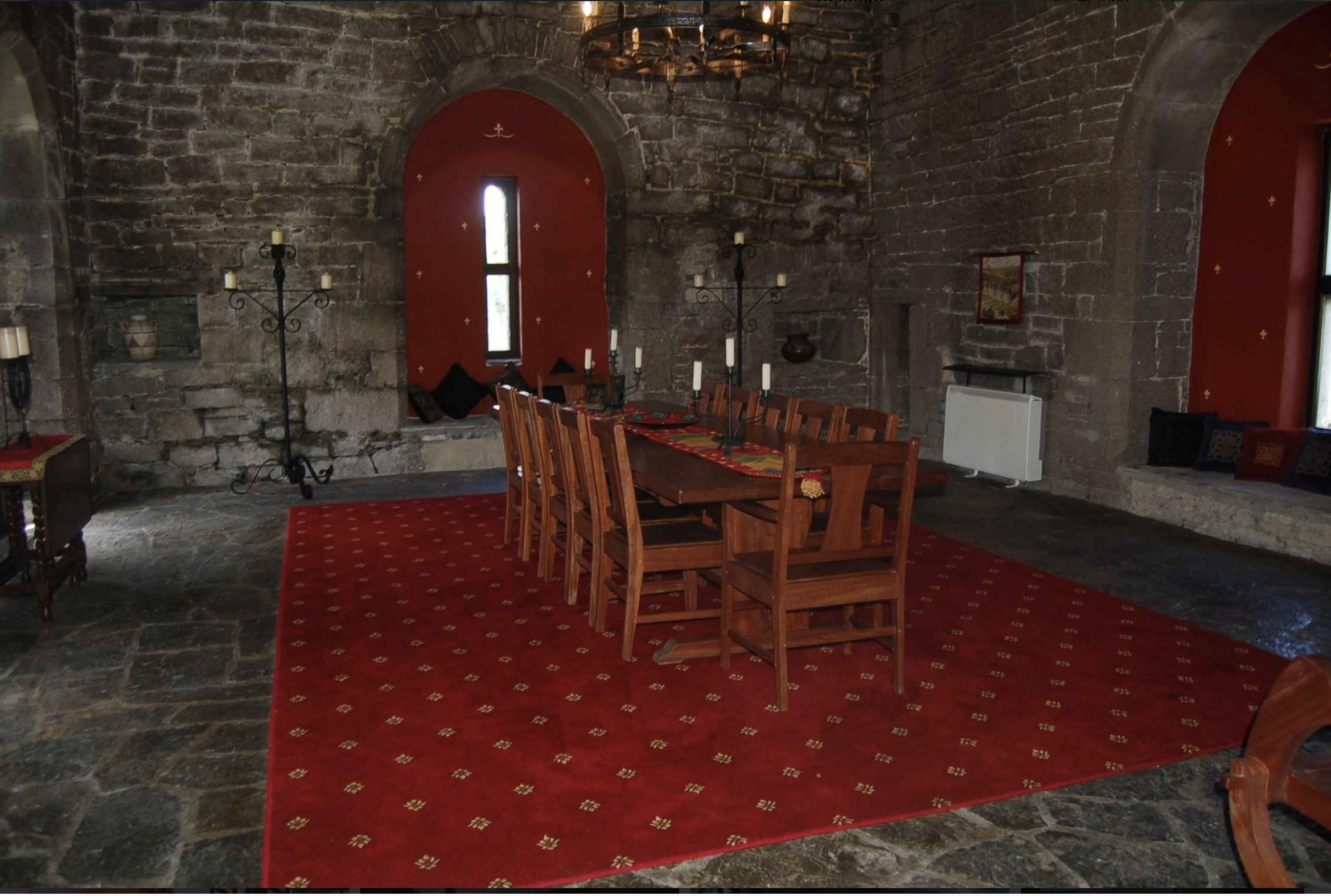
Places to visit and stay in County Clare

On the map above:

blue: places to visit that are not section 482

purple: section 482 properties

red: accommodation

yellow: less expensive accommodation for two

orange: “whole house rental” i.e. those properties that are only for large group accommodations or weddings, e.g. 10 or more people.

green: gardens to visit

grey: ruins

donation

Help me to pay the entrance fee to one of the houses on this website. This site is created purely out of love for the subject and I receive no payment so any donation is appreciated!

€15.00

Clare:

1. Barntick House, Clarecastle County Claresection 482

2. Bunratty Castle, County Clare – maintained by Shannon Heritage

3. Craggaunowen Castle, Kilmurray, Sixmilebridge, County Clare – maintained by Shannon Heritage

4. Dunguaire Castle, Kinvara, County Clare – maintained by Shannon Heritage

5. Knappogue or Knoppogue Castle, County Clare – maintained by Shannon Heritage

6. Mount Ievers Court, Sixmilebridge, County Clare – private house, check website to visit

7. Newtown Castle, Newtown, Ballyvaughan, County Clare – section 482

8. O’Dea’s, or Dysert Castle, County Clare

9. Vandeleur Gardens, formerly Kilrush House, County Clare

Places to Stay, County Clare 

1. Armada House, formerly Spanish Point House, Spanish Point, County Clare

2. Ballinalacken Castle, Lisdoonvarna, County Clare – hotel

3. The Carriage Houses, Beechpark House, Bunratty, County Clare

5.  Dromoland Castle, Newmarket-on-Fergus, Co. Clarehotel

6. Falls Hotel (was Ennistymon House), Ennistymon, Co. Clare

7. Gregan’s Castle Hotel, County Clare

8. Loop Head Lightkeeper’s Cottage, County Clare

9. Mount Callan House and Restaurant, Inagh, County Clare – B&B 

10. Mount Cashel Lodge, Kilmurry, Sixmilebridge, County Clare

11. Newpark House, Ennis, County Clare

12. Smithstown Castle (or Ballynagowan), County Clare

13. Strasburgh Manor coach houses, Inch, Ennis, County Clare

Whole House Rental, County Clare

1. Inchiquin House, Corofin, County Clare – whole house rental up to 10 guests

2. Mount Vernon lodge, County Clare – whole house accommodation up to 11 guests

Clare:

1. Barntick House, Clarecastle Co. Clare V95 FH00section 482

contact: Ciarán Murphy
Tel: 086-1701060

Open dates in 2026: May 1-31, June 1-30, 4.30pm-8.30pm, Aug 15-23, 4pm-8pm
Fee: Free

Barntick House May 2022, photograph courtesy of Ciarán Murphy.

See my entry https://irishhistorichouses.com/2022/11/06/barntick-house-clarecastle-county-clare/

This house dates back to 1665!

2. Bunratty Castle, County Clare

maintained by Shannon Heritage

Bunratty Castle, County Clare, photograph by Chris Hill 2014, for Tourism Ireland, Ireland’s Content Pool. [1]

Mark Bence-Jones writes in his  A Guide to Irish Country Houses:

p. 49. “(O’Brien, Inchiquin, B/PB; and Thomond, E/DEP; Studdert/IFR; Russell/IFR; Vereker, Gort, VPB) One of the finest 15C castles in Ireland, standing by the side of a small tidal creek of the Shanon estuary; built ca 1425, perhaps by one of the McNamaras; then held by the O’Briens, who became Earls of Thomond, until 6th Earl [Barnabas O’Brien (d. 1657)] surrendered it to the Cromwellian forces during the Civil War. A tall, oblong building, it has a square tower at each corner; these are linked, on the north and south sides, by a broad arch just below the topmost storey. The entrance door leads into a large vaulted hall, or guard chamber, above which is the Great Hall, the banqueting hall and audience chamber of the Earls of Thomond, with its lofty timber roof. Whereas the body of the castle is only three storeys – there being another vaulted chamber below the guard chamber – the towers contain many storeys of small rooms, reached up newel stairs and by passages in the thickness of the walls. One of these rooms, opening off the Great Hall, is the chapel, which still has its original plasterwork ceiling of ca 1619, richly adorned with a pattern of vines and grapes. There are also fragment of early C17 plasterwork in some of the window recesses. After the departure of the O’Briens, a C17 brick house was built between the two north towers; Thomas Studdert [1696-1786], who bought Bunratty early in C18, took up residence here in 1720. Later, the Studderts built themselves “a spacious and handsome modern residence in the demesne: and the castle became a constabulary barracks, falling into disrepair so that, towards the end of C19, the ceiling of the Great Hall collapsed. Bunratty was eventually inherited by Lt-Com R.H. Russell, whose mother was a Studdert, and sold by him to 7th Viscount Gort [Standish Robert Gage Prendergast Vereker (1888-1975)] 1956. With the help of Mr Percy Le Clerc and Mr John Hunt, Lord Gort carried out a most sympathetic restoration of the castle, which included removing C17 house, re-roofing the Great Hall in oak and adding battlements to the towers. The restored castle contains Lord Gort’s splendid collection of medieval and C16 furniture, tapestries and works of art, and is open to the public; “medieval banquets” being held here as a tourist attraction. Since the death of Lord Gort, Bunratty and its contents have been held in trust for the Nation.” [2]

Bunratty Castle, County Clare, Photograph by Chris Hill 2014 for Tourism Ireland, Ireland’s Content Pool. (see [1])
Bunratty Co Clare National Library of Ireland stereo pairs collection STP_1858. (Dublin City Library and Archives) [3]
Bunratty Castle Co Clare National Library of Ireland Lawrence Collection taken between 1880 and 1914, L_CAB_00962 (Dublin City Library and Archives) [3]

3. Craggaunowen Castle, Kilmurray, Sixmilebridge, County Clare

Craggaunowen Pre-Historic Park, County Clare, photo by Stephen Power 2014 for Tourism Ireland, Ireland’s Content Pool. (see [1])

– history park, maintained by Shannon Heritage, www.craggaunowen.ie

The Irish Homes and Garden website tells us:

“Early medieval 500AD-1500: The most common form of house style during this period was the ringfort –a circular area of earth surrounded by a bank and ditch. In some cases, stone was used in the defensive enclosure and these are known as cashels. Over 45,000 examples still remain today. Also dating from this period were crannogs (from the Irish crann – tree) – an artificial island built in the shallow areas of lakes with the houses surrounded by a timber palisade or fence. These can be spotted in the landscape as small tree covered islands close to the lake shore – both the ringforts and crannogs most commonly contained circular houses. A reconstruction of a crannog dwelling can be found at Craggaunowen, Co. Clare

This was also a time when Christianity was introduced to Ireland and whereas the early churches of the 6th and 7th centuries were of timber, evidence of stone churches appear from the late 8th century. These were simple rectangular buildings of about 5m long with a high steep pitched roof. The only doorway had a flat-topped lintelled opening. The early Irish monasteries of the 9th and 10th centuries, such as Clonmacnoise, had larger churches and monastic buildings also included the drystone beehive hut or clochan, as can be seen at Skellig Michael, and also the Round Tower, built between the 10th and 12th century, which consisted of a narrow tower up to 30m high tapering at the top with a conical roof.” [4]

The Craggaunowen website tells us: “Craggaunowen Castle - built by  John MacSioda MacNamara in 1550 a descendant of Sioda MacNamara who built Knappogue Castle in 1467. After the collapse of the Gaelic Order, in the 17th century, the castle was left roofless and uninhabitable. The Tower House remained a ruin until it and the estate of Cullane House across the road, were inherited in 1821 by ”Honest” Tom Steele, a confederate of Daniel O’Connell, Steele had the castle rebuilt as a summer house in the 1820s. He used it and the turret on the hill opposite for recreation. His initials can be seen on one of the quoin-stones to the right outside. “The Liberator”. By the time of the First Ordnance Survey, in the 1840s, the castle was “in ruins”. After Steele in 1848 the lands were divided, Cullane going to one branch of his family, Craggaunowen to another, his niece Maria Studdert. Eventually the castle and grounds were acquired by the “Irish Land Commission”. Much of the land was given over to forestry and the castle itself was allowed to fall into disrepair. In the mid-19th century, the castle, herd’s house and 96 acres were reported in the possession of a Reverend William Ashworth, who held them from a Caswell (a family from County Clare just north of Limerick). In 1906, a mansion house here was owned by Count James Considine (from a family based at Derk, County Limerick). Craggaunowen Castle was restored by John Hunt in the 1960s – he added an extension to the ground floor, which for a while housed part of his collection of antiquities. The collection now resides in the Hunt Museum in the city of Limerick.” [5]

4. Dunguaire Castle, Kinvara, County Clare

Dunguaire Castle, County Clare, July 2021. Photograph © Jennifer Winder-Baggot, www.irishhistorichouses.com
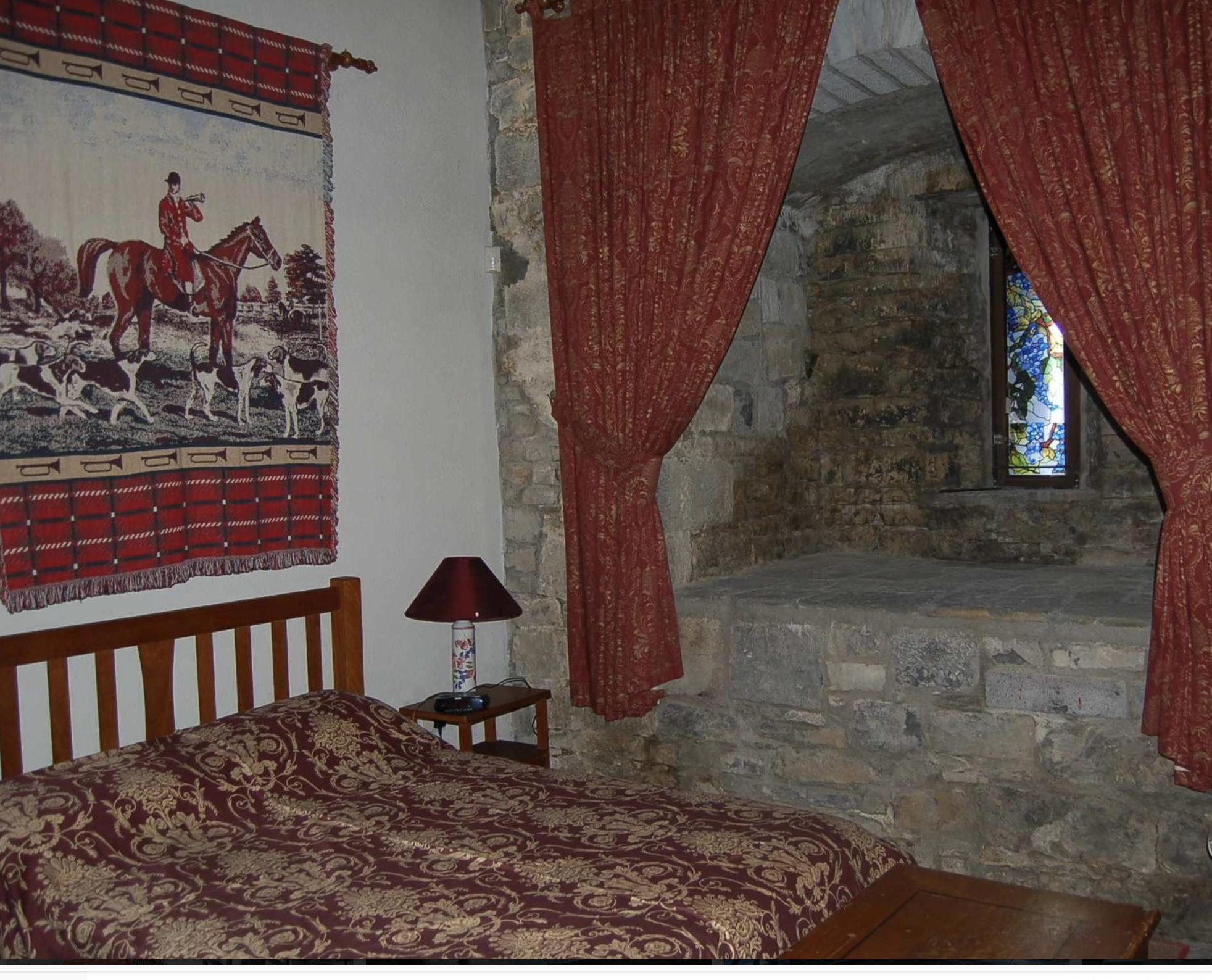
Maintained by Shannon Heritage. See my entry https://irishhistorichouses.com/2025/07/05/dunguaire-castle-kinvara-county-clare-open-to-the-public/

Mark Bence-Jones writes in A Guide to Irish Country Houses (1988):

p. 115. “(Martyn/LGI1912; Gogarty/IFR; Russell, Ampthill, B/PB) An old tower-house with a bawn and a smaller tower, on a creek of Galway Bay; which was for long roofless, though in other respects well maintained by the Martyn family, of Tulira, who owned it C18 and C19, and which was bought in the present century by Oliver St John Gogarty, the surgeon, writer and wit, to save it from threat of demolition. More recently, it was bought by the late Christabel, Lady Ampthill, and restored by her as her home; her architect, being Donal O’Neill Flanagan, who carried out a most successful and sympathetic restoration. The only addition to the castle was an unobtrusive two storey wing joining the main tower to the smaller one. The main tower has two large vaulted rooms, one above the other, in its two lower storeys, which keep their original fireplaces; these were made into the dining room and drawing room. “Medieval” banquets and entertainments are now held here.” 

Dunguaire Castle, County Clare, July 2021. Photograph © Jennifer Winder-Baggot, www.irishhistorichouses.com
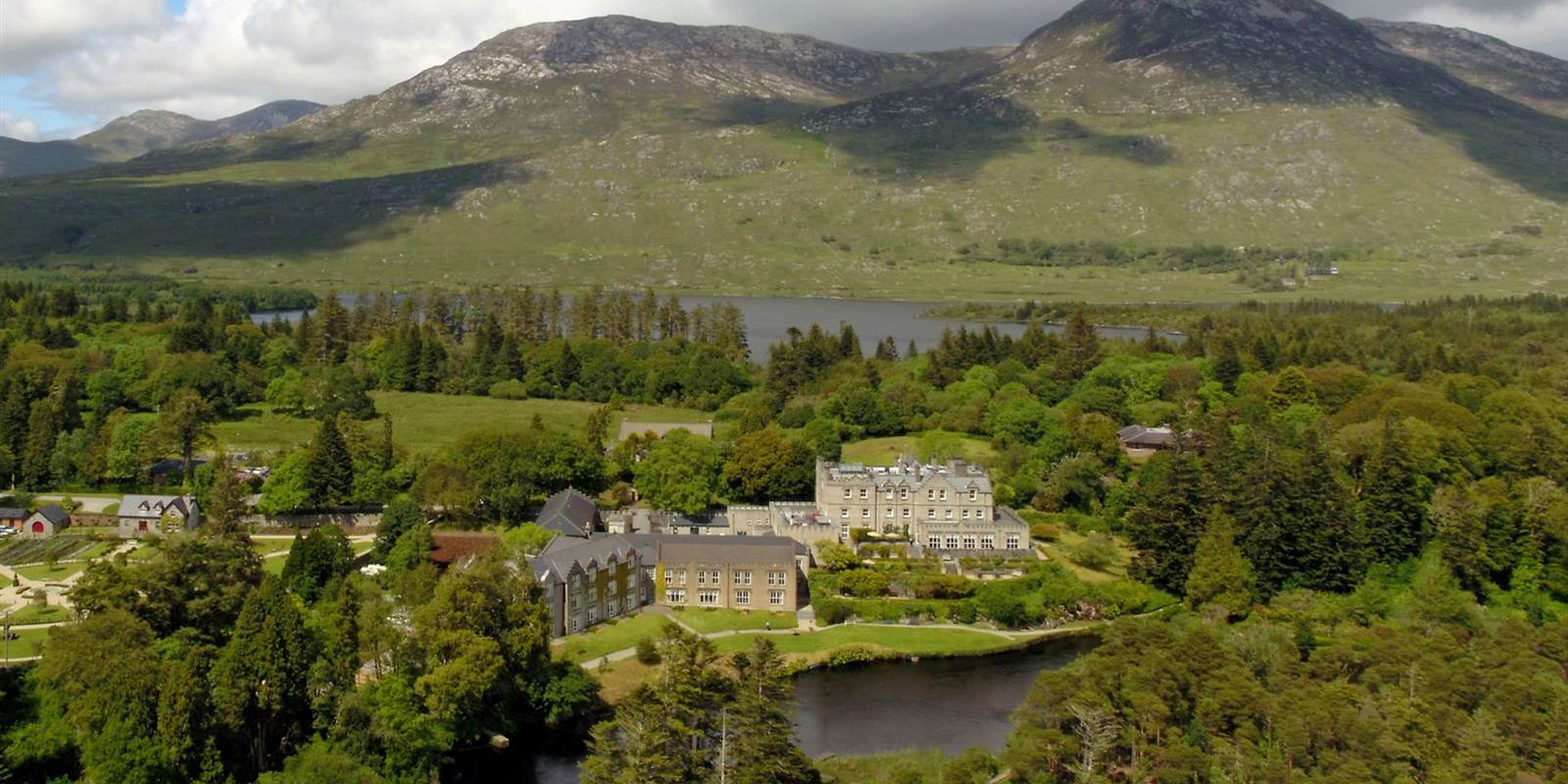
Dunguaire Castle, County Clare, July 2021.
Dunguaire Castle, County Clare, July 2021. Photograph © Jennifer Winder-Baggot, www.irishhistorichouses.com
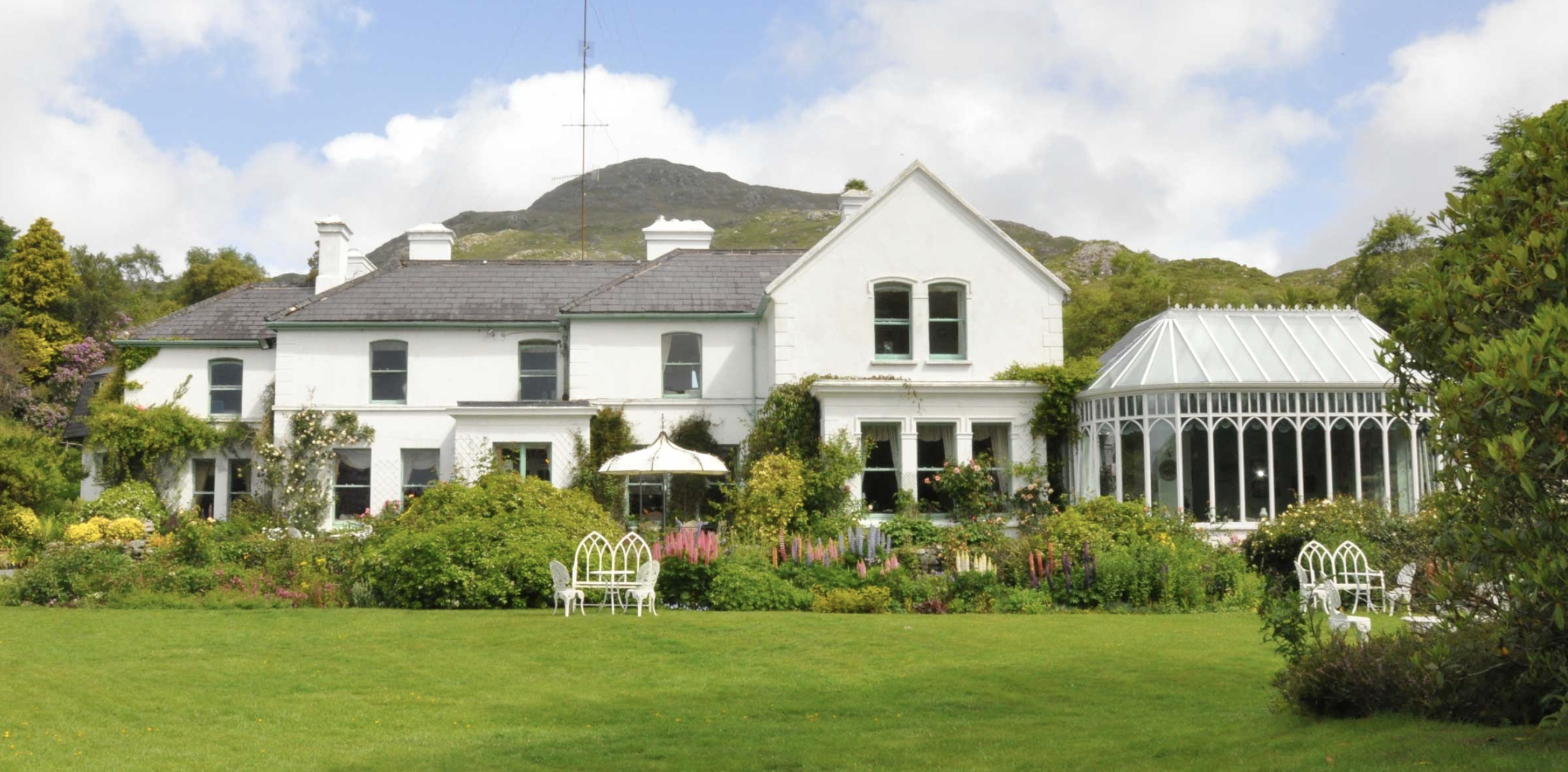
5. Knappogue or Knoppogue Castle, County Clare

Knappogue is maintained by Shannon Heritage and holds Medieval style banquets. https://www.knappoguecastle.ie

Knappogue, or Knoppogue, Castle, County Clare.

Mark Bence-Jones writes about Knoppogue, or Knappogue, Castle in A Guide to Irish Country Houses (1988):

p. 180. “(Butler, Dunboyne, B/PB) A large tower-house with a low C19 castellated range, possibly by James Pain, built onto it. Recently restored and now used for “medieval banquets” similar to those at Bunratty Castle, Co Clare.” 

6. Mount Ievers Court, Sixmilebridge, County Clare – private house, check website to visit

Mount Ievers, photograph from National Inventory.

mountieverscourt.ie

The website has a terrific history of the house. First, it tells us:

Mount Ievers Court is an 18th c. Irish Georgian country house nestled in the Co. Clare countryside just outside the town of Sixmilebridge.  The house was originally the site of a 16th c.  tower house called Ballyarilla Castle built by Lochlann McNamara.  The tower house was demolished in the early 18th c. to construct the present house, built between 1733-1737 by John & Isaac Rothery, for Col. Henry Ievers.

Mount Ievers Court  has been home to the Ievers family for 281 years and since then generations of Ievers and their families have worked hard to maintain the house in order to ensure that the estate retains a viable place in the local community and Ireland’s heritage long into the future. Mount Ievers is currently owned by Breda Ievers née O’Halloran, a native of Sixmilebridge, and her son Norman. Norman is married to Karen, an American by birth, who has a keen interest in Irish history & the family archives.

A topographical vie of Mount Ievers, County Clare dating from the second quarter of the 18th century, courtesy of exhibition “In Harmony with Nature” curated by Robert O’Byrne in the Irish Georgian Society, July 2022. Photograph © Jennifer Winder-Baggot, www.irishhistorichouses.com
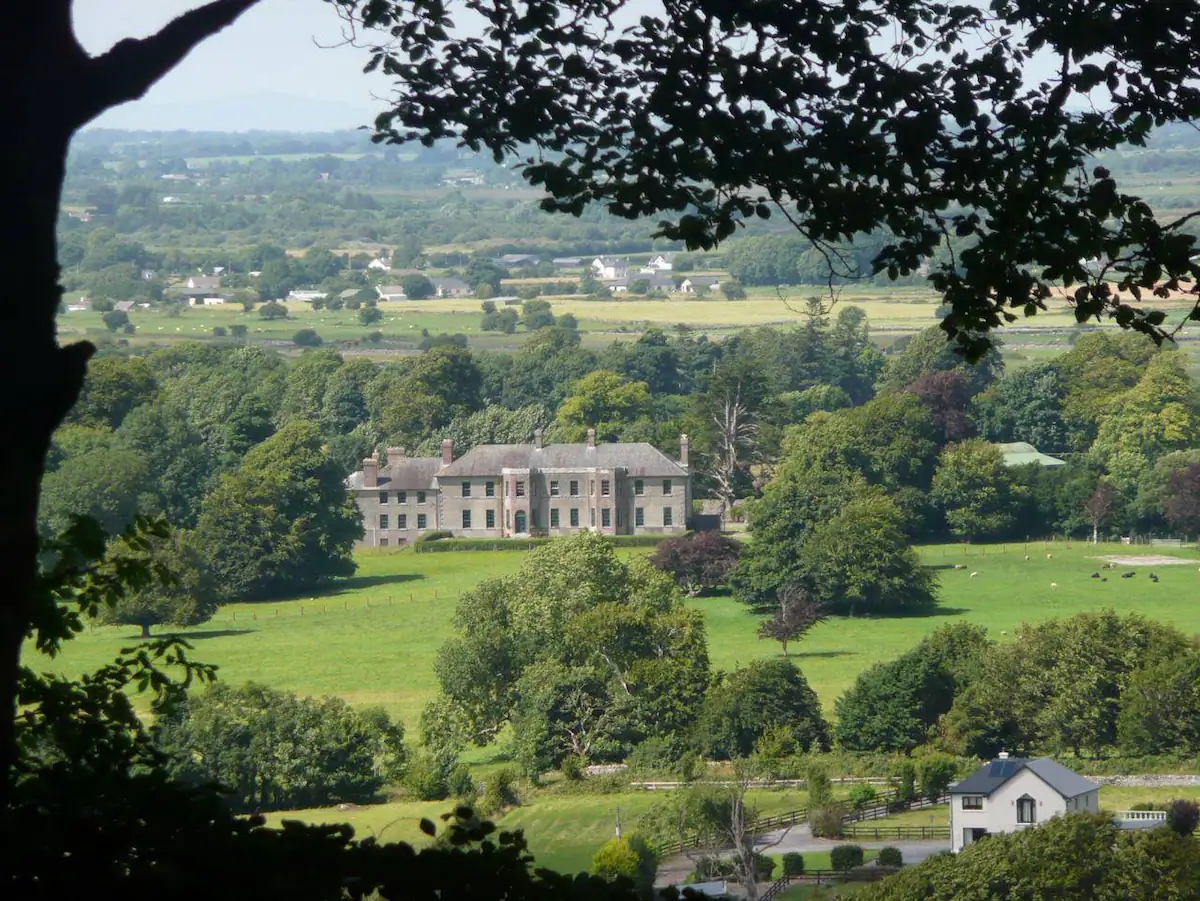
Mark Bence-Jones writes in A Guide to Irish Country Houses (1988):

p. 214. “(Ievers/IFR) The most perfect and also probably the earliest of the tall Irish houses; built ca. 1730-37 by Colonel Henry Ievers to the design of John Rothery, whose son, Isaac, completed the work after his death and who appears to have also been assisted by another member of the Rothery family, Jemmy. The house, which replaced an old castle, is thought to have been inspired by Chevening, in Kent – now the country house of the Prince of Wales – with which Ievers could have been familiar not only through the illustration in Vitruvius Britannicus, but also because he may have been connected with the family which owned Chevening in C17. Mount Ievers, however, differs from Chevening both in detail and proportions; and it is as Irish as Chevening is English. Its two three storey seven bay fronts – which are almost identical except that one is of faded pink brick with a high basement whereas the other is of silvery limestone ashlar with the basement hidden by a grass bank – have that dreamlike, melancholy air which all the best tall C18 Irish houses have. There is a nice balance between window and wall, and a subtle effect is produced by making each storey a few inches narrower than that below it. The high-pitched roof is on a bold cornice; there are quoins, string-courses and shouldered window surrounds; the doorcase on each front has an entablature on console brackets. The interior of the house is fairly simple. Some of the rooms have contemporary panelling; one of them has a delightful primitive overmantel painting showing the house as it was originally, with an elaborate formal layout which has largely disappeared. A staircase of fine joinery with alternate barley-sugar and fluted balusters leads up to a large bedroom landing, with a modillion cornice and a ceiling of geometrical panels. On the top foor is a long gallery, a feature which seems to hark back to the C17 or C16, for it is found in hardly any other C18 Irish country houses; the closest counterpart was the Long Room in Bowen’s Court, County Cork. The present owners, S.Ldr N.L. Ievers, has carried out much restoration work and various improvements, including the placement of original thick glazing bars in some of the windows which had been given thin late-Georgain astragals ca. 1850; and the making of two ponds on the site of those in C18 layout. He and Mrs Ievers have recently opened the home to paying guests in order to meet the cost of upkeep.” 

The website tells of the ancient origins of the family, and goes on to explain:

A parchment found in the sideboard at Mount Ievers in July 2012 maintains that Henry Ivers arrived in Ireland in 1640 from Yorkshire, where the family had been settled since arriving with William the Conqueror nearly six hundred years earlier. It also records that Henry settled in County Clare in 1643 when he was appointed Collector of Revenue for Clare and Galway.

7. Newtown Castle, Newtown, Ballyvaughan, Co. Clare – section 482

Newtown Castle, photograph fron National Library of Ireland, flickr constant commons.

www.newtowncastle.com

Open dates in 2026: Jan 5-30, Feb 3-27, March 2-31, April 1-30, May 1-29, June 2-30, July 1-31, August 1-31, Sept 1-30, Oct 1-30, Nov 2-30, Dec 1-19 Mon-Fri, National Heritage Week, Aug 15-23, 10am-5pm
Fee: Free

The website tells us: “The historic Newtown Castle has occupied a prominent position in Ballyvaughan since the 16th century. Having lain derelict for many years, the castle’s restoration began in 1994, completed in time for the opening of the Burren College of Art in August of that year. 

Newtown Castle is once again a vibrant building in daily use, central to the artistic, cultural and educational life of the Burren. It is open free of charge to the public on week days. Newtown Castle is also available to hire for: wedding ceremonies, small private functions or company events.” 

Maurice Craig and Desmond Fitzgerald the Knight of Glin describe it in their book Ireland Observed. A handbook to the Buildings and Antiquities: “This sixteenth-century tower, nearly round in plan, rises from a square base, on which is the entrance door. Ingeniously places shot-holes protect its four sides.” [7]

Maurice Craig also writes about Newtown in his book The Architecture of Ireland from the Earliest Times to 1880:

There is a small class of cylindrical tower-houses: so small that it is worth attempting to enumerate them all, omitting those which appear to be thirteenth-century (and hence not tower-houses). They are Cloughoughter, County Cavan (which is dubiously claimed for the fourteenth century); Carrigabrack, East of Fermoy County Cork; Knockagh near Templemore County Tipperary; Ballysheeda near Cappawhite County Tipperary; Golden in the same county; Crannagh now attached to an eighteenth century house near Templetuohy in the same county; Balief County Kilkenny; Grantstown near Rathdowney County Leix; Barrow Harbour County Kerry; Newtown near Gort in County Galway; Doonagore County Clare also by the sea; Faunarooska, Burren, County Clare; and Newtown at the North edge of the Burren, also in County Clare.

The last of these is in some ways the most interesting, being in form a cylinder impaled upon a pyramid. Over the door (which is in the pyramid) there is a notch in the elliptical curve traced by the cylinder, and in this notch is a gunhole covering a wide sector of the sloping wall below. At some other castles, for example, Ballynamona on the Awbeg river, there is a feature using the same principle, which is not easy to describe. On each face of the building there is what looks at first site like the “ghost” or creasing of a pitched roof, but is in fact a triangular plane, about a foot deep at the top, decreasing to nothing at the base. In the apex there is a gunhole. Aesthetically the effect is very subtle.” [8]

Newtown Castle, courtesy of National Inventory of Architectural Heritage. [9]

8. O’Dea’s, or Dysert Castle, County Clare

– can visit https://dysertcastle.ie

The Castle was built in 1480 by Diarmuid O’Dea, Lord of Cineal Fearmaic. The uppermost floors and staircase were badly damaged by the Cromwellians in 1651. Repaired and opened in 1986, the castle houses an extensive museum, an audio visual presentation and various exhibitions. 

Free car/coach parking and toilets 
Tea rooms and bookshop 
Chapel 
Modern History Room 1700AD – 2000AD 
Museum – Local artefacts 1000BC – 1700AD 
Audio – visual presentation – local archaeology 
Medieval masons and carpenters workshop 
Roof wall – walk to view surrounding monuments 

8. Vandeleur Gardens, formerly Kilrush House, County Clare

Vandeleur walled Garden, Kilrush, Co Clare, photo by Air Swing Media 2019 for Tourism Ireland, Ireland’s Content Pool. (see [1])

– ‘lost’, Vandeleur Gardens open 

www.vandeleurwalledgarden.ie 

Timothy William Ferrers writes about it on his website:

KILRUSH HOUSE, County Clare, was an early Georgian house of 1808. 

From 1881 until Kilrush House was burnt in 1897, Hector Stewart Vandeleur lived mainly in London and only spent short periods each year in Kilrush. Indeed during the years 1886-90, which coincided with the period of the greatest number of evictions from the Vandeleur estate, he does not appear to have visited Kilrush. 

In 1889, Hector bought Cahircon House and then it was only a matter of time before the Vandeleurs moved to Cahircon as, in 1896, they were organising shooting parties at Kilrush House and also at the Cahircon demesne.  

Hector Stewart Vandeleur was the last of the Vandeleurs to be buried at Kilrush in the family mausoleum. Cahircon House was sold in 1920, ending the Kilrush Vandeleurs’ direct association with County ClareHector Vandeleur had, by 1908, agreed to sell the Vandeleur estate to the tenants for approximately twenty years’ rent, and the majority of the estate was purchased by these tenants. 

THE VANDELEURS, as landlords, lost lands during the Land Acts and the family moved to Cahircon, near Kildysart. 
 
In 1897, Kilrush House was badly damaged by fire. 

During the Irish Land Commission of the 1920s, the Department of Forestry took over the estate, planted trees in the demesne and under their direction the remains of the house were removed in 1973, following an accident in the ruins.Today the top car park is laid over the site of the house. 

Vandeleur Walled Garden now forms a small part of the former Kilrush demesne. The Kilrush demesne was purchased by the Irish Department of Agriculture as trustee under the Irish Land Acts solely for the purpose of forestry. The Kilrush Committee for Urban Affairs purchased the Fair Green and Market House.” [6]

Places to Stay, County Clare 

1. Armada House, formerly Spanish Point House, Spanish Point, County Clare

https://www.armadahotel.com

The is a Victorian house, originally called Sea View House.

The website tells us:

In 1884 the local Roman Catholic Bishop, James Ryan, expressed a wish to start a primary and secondary school in Miltown Malbay, a short distance from Spanish Point House, but his vision was unrealised for many years to come.
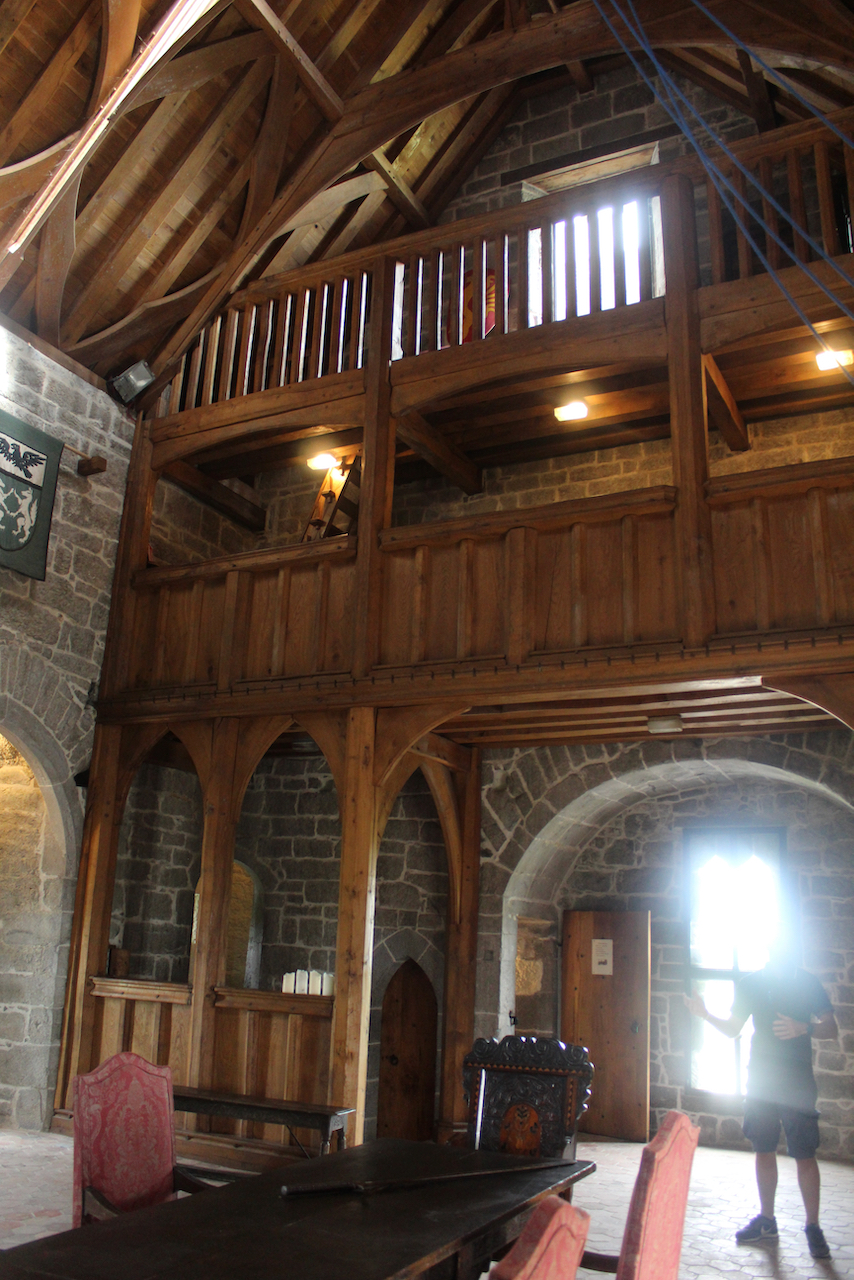
In 1903 the bishop’s estate donated £900 to the Mercy Sisters to establish a school, but things did not happen until 1928, when three houses owned by the Morony estate were offered for sale to the Mercy Sisters with the intention of establishing a school at Spanish Point. The Moronys were a family of local landlords who had owned a significant number of properties in the Spanish Point and Miltown Malbay area between 1750 and 1929, including Sea View House, Miltown House, and The Atlantic Hotel.

The Moronys were responsible for much of the development of the locality of Spanish Point, which began in 1712 when Thomas Morony took a lease of land, later purchased by his eldest son, Edmund, divided it into two farms and leased it to two local landlords for thirty-one years. Francis Gould Morony willed Sea View House, which he built in 1830, to his wife’s niece, Marianne Harriet Stoney, who married Captain Robert Ellis. The house was inherited by the Ellis family and one of their sons – Thomas Gould Ellis – became the son and heir.

Almost a century later, in January 1928, a successor, Robert Gould Ellis, sold the property to the Mercy Sisters for £2,400 and in 1929 Colonel Burdett Morony sold Woodbine Cottage to the nuns for £300. Colonel Burdett Morony was a son of widow Ellen Burdett Morony of Miltown House, a woman who was quite unpopular amongst her tenants for rack-renting to such an extent that a boycott was operated against her. Woodbine Cottage, now part of the local secondary school building, was a summer residence of the Russell family and part of the Morony estate.

On 19 March 1929 – the feast of St Joseph – a deed of purchase was signed and Sea View House became St Joseph’s Convent. The coach house, stables and harness rooms were fitted out as classrooms and a secondary school was opened on 4 September 1929.

In 1931 the west wing was used as dormitories for boarders for the first time. In 1946 Wooodbine Cottage was converted into three classrooms and Miltown House (the Morony family seat, built in the early 1780s by Thomas J. Morony, who developed the town of Miltown Malbay) was also bought by the nuns and became the convent of the Immaculate Conception and a day school, while St Joseph’s was given over to boarding pupils.

In 1959 a new secondary school was opened in part of Miltown House and in Woodbine Cottage by Dr Patrick Hillery, then Minister for Education. He originally came from Spanish Point and was later to become President of Ireland.
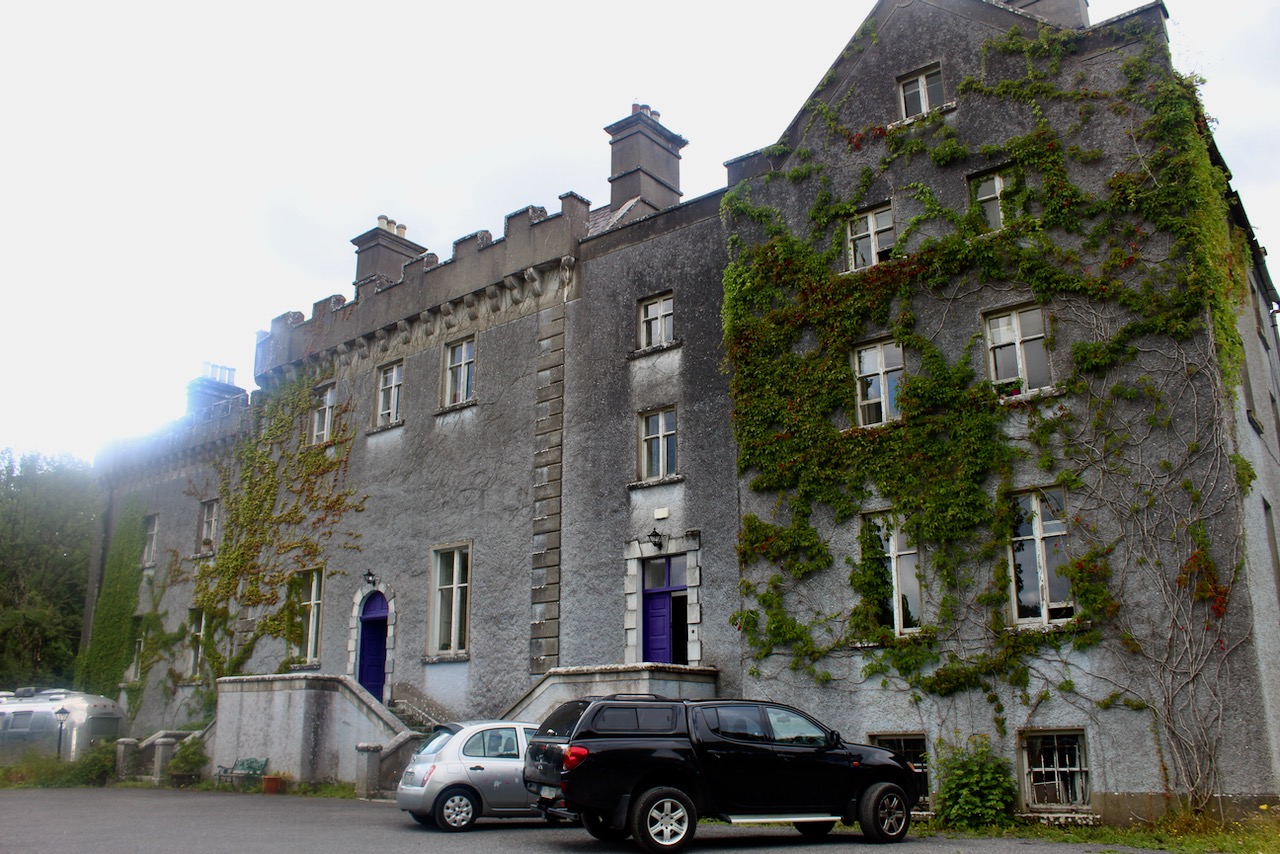
“In 1978 the boarding school at St Joseph’s closed, due to falling numbers, following the introduction of free secondary education and free school transport, which allowed pupils a greater choice of schools. The house was then given by the sisters to Clare Social Services as a holiday home for children, and was called McCauley House after the Venerable Catherine McCauley – founder of the Mercy Order.

In September 2015 Clare Social Service sold the former convent to Pat and Aoife O’Malley, who restored it as a luxury guesthouse and re-named it Spanish Point House.”

2. Ballinalacken Castle (house next to), Lisdoonvarna, Co Clare – hotel

Photograph from National Library of Ireland, constant commons, Flickr, Ballinalicken Castle, County Clare.

https://www.ballinalackencastle.com/ 

The website tells us that the property has been in the O’Callaghan family for three generations, and is now run by Declan and Cecilia O’Callaghan. The rooms look luxurious, some with four poster beds, and the hotel has a full restaurant.

The website tells us: “The original house was owned by the famous O’Brien clan – a royal and noble dynasty who were descendants of the High King of Ireland, Brian Ború. The house , castle and 100 acres of land was bought by Declan’s grandfather Daniel O’Callaghan, in 1938 and he and his wife Maisie opened it as a fine hotel. It was later passed to Daniel’s son Dennis and his wife Mary and then to his son, Declan. Declan and Cecilia have three children who also assist in the family business.

Standing tall on a limestone outcrop, our very own Castle, Ballinalacken Castle, is a two-stage tower house which was built in the 15th or early 16th century. It is thought the name comes from the Irish Baile na leachan (which means “town of the flagstones/tombstones/stones”).

10th Century: The original fortress is built by famous Irish clan, the O’Connors – rulers of West Corcomroe.

14th Century: The fortress itself is found and Lochlan MacCon O’Connor is in charge of its rebuilding.

1564: Control of West Corcomroe passes to Donal O’Brien of the O’Brien family.

1582: The lands are formally granted by deed to Turlough O’Brien of Ennistymon. After the Cromwellians triumphed in the area, five of Turlough’s castles are razed to the ground – but Ballinalacken is saved as it was not on the list of “overthrowing and demolishing castles in Connaught and Clare.”

1662: Daniel dies and grandson Donough is listed as rightful holder of the Castle.

Mark Bence-Jones writes in his A Guide to Irish Country Houses (1988):

p. 26. “(O’Brien/LGI1912) A single-storey house with a curved bow, close to an old keep on a rock. The seat of the O’Brien family, of which Lord Chief Justice Peter O’Brien, Lord O’Brien of Kilfenora (known irreverently as “Pether the Packer”) was a younger son.” 

3. The Carriage Houses, Beechpark House, Bunratty, County Clare

https://beechparkcountryhouse.ie

A warm welcome awaits you at The Carriage Houses, situated in the grounds of Beechpark House, Bunratty, in the heart of County Clare on the west coast of Ireland.

Part of the estate of a former Bishop’s Palace, the Carriage Houses have been restored to provide a retreat away from the frenetic pace of the modern world. We invite you to relax in your own luxury suite, complete with all modern amenities, and succumb to a slower pace of life while you are with us.”

4. Clare Ecolodge, formerly Loughnane’s, Main Street, Feakle, Co Clare

www.clareecolodge.ie
Open dates in 2025: June 1-August 31, Wed-Sun, Aug 16-24, 2pm-6pm Fee: Free

The website tells us:

Clare Ecolodge at Loughnane’s, Feakle, in the heart of East Clare, is a unique family-run guest accommodation experience. We also offer group and self-catering accommodation as well as residential courses.
The buildings, which have been in the family for over 100 years, were renovated 10 years ago. Since then we have been welcoming guests from all over the world.
Clare Ecolodge at Loughnane’s offers a wide variety of accommodation to suit the needs of individuals and groups visiting Feakle for a residential courses or using the village as a base to explore the wild and beautiful landscape of County Clare.
Feakle is an ideal location from which to discover the East Clare countryside. Steeped in history and heritage, the area is known for its fine walks, stunning lakes, rugged mountains and of course its vibrant Irish traditional music scene.
Loughnane’s offers a unique blend of tranquillity and fun giving guests a genuine Irish experience.

Clare Ecolodge at Loughnane’s in Feakle has been designated by the Irish State as a building of significant historical, architectural interest and members of the public are invited to view the building (free of charge) at the following times from June 1 to August 31 from Wednesday to Sunday between 2pm and 6pm.

Clare Ecolodge; The Energy Story:

Clare Ecolodge was created in 2018 to signify the changes which we have implemented over  the past two years at Loughnane’s Guesthouse/ Hostel. We have converted all our rooms in the main house to large private double and family rooms. In May 2018 we installed 30 Solar Photovoltaic (PV) panels on the roof of the main building. Look up and see for yourself! Since then we have been producing between 20 to 60kw hours per day.

In May 2018 we also installed an air to water heat pump system. This is a low usage eco-water heating system powered by electricity. This heats all our water requirements for showers, laundry and kitchen requirements. We have not turned on our oil burner since installation. The average yearly energy requirements for an Irish household is approximately 4000kwh. Our energy system has produced this in the past 3 months. In that time we have avoided 2.5 tonnes of CO2. We use between 5 and 15kwh per day. The surplus is sent back to the grid at the transformer  at the top of the village. We currently receive zero compensation for the excess electricity we generate but the ESB charges the community for the usage of this electricity.

We estimate that we are currently at least 50% off-gird. Our main hot water and energy requirements are in the summer months. In high season there are more showers used and laundry needed. Our current energy system can handle this with little effort.

For the past decade we have been growing our own vegetables and herbs for use in our kitchen.

Next phase – Winter time

Our Solar PV panels are powered by light rather than heat so will work in winter, albeit not for periods as long in the summer. We aim to install a battery storage system so we can manage the energy we generate to be used at the most opportune times. We aim to install a second heat pump for our central heating requirements. This will effectively reduce our oil consumption to zero. We aim to install a wind turbine system on our 12 acre farm behind the main house. This will be used as a back up to bridge the energy generation gap between winter and summer.

5. Dromoland Castle, Newmarket-on-Fergus, Co. Clare – hotel

www.dromoland.ie 

Dromoland Castle, County Clare, photo care of Dromoland Castle, for Tourism Ireland 2019, Ireland’s Content Pool. (see [1])

Mark Bence-Jones writes in A Guide to Irish Country Houses (1988):

p. 109. “(O’Brien, Inchiquin, B/PB) Originally a large early C18 house with a pediment and a high pitched roof; built for Sir Edward O’Brien, 2nd Bt; possibly inspired by Thomas Burgh, MP, Engineer and Surveyor-General for Ireland. Elaborate formal garden. This house was demolished ca 1826 by Sir Edward O’Brien, 4th Bt (whose son succeeded his kinsman as 13th Lord Inchiquin and senior descendant of the O’Brien High Kings) and a wide-spreading and dramatic castle by James and George Richard Pain was built in its place. The castle is dominated by a tall round corner tower and a square tower, both of then heavily battlemented and machicolated; there are lesser towers and a turreted porch. The windows in the principal fronts are rectangular, with Gothic tracery. The interior plan is rather similar to that of Mitchelstown Castle, Co Cork, also by the Pains; a square entrance hall opens into a long single-storey inner hall like a gallery, with the staircase at its far end and the principal reception rooms on one side of it. But whereas Mitchelstown rooms had elaborate plaster Gothic vaulting, those at Dromoland had plain flat ceilings with simple Gothic or Tudor-Revival cornices. The dining room has a dado of Gothic panelling. The drawing room was formerly known as the Keightley Room, since it contained many of the magnificent C17 portraits which came to the O’Brien family through the marriage of Lucius O’Brien, MP [1675-1717], to Catherine Keightley, whose maternal grandfather was Edward Hyde, the great Earl of Clarendon. The other Keightley portraits hung in the long gallery, which runs from the head of the staircase, above the inner hall. Part of the C18 garden layout survives, including a gazebo and a Doric rotunda. In the walled garden in a C17 gateway brought from Lemeneagh Castle, which was the principal seat of this branch of the O’Briens until they abandoned it in favour of Dromoland. The Young Irelander leader, William Smith O’Brien, a brother of the 13th Lord Inchiquin, was born in Dromoland in C18 house. Dromolond castle is now a hotel, having been sold 1962 by 16th Lord Inchiquin, who built himself a modern house in the grounds to the design of Mr Donal O’Neill Flanagan; it is in a pleasantly simple Georgian style.” 

Donough O’Brien (1642-1717), 1st Baronet by Mary Beale, 1690. He lived in an earlier Dromoland Castle.
Lucia Hamilton, 1674, daughter of George Hamilton. Wife of Donough O’Brien, 1st Baronet, married in 1674. She died two years later, not long after the birth of his son and heir, Lucius.
Edward O’Brien (1705-1765) 2nd Baronet of Dromoland, County Clare from Historical memoir of the O’Briens : The Origin and History of the O’Brien Clan, by John O’Donoghue A.M, Barrister-at-Law, First Published in 1860 (Martin Breen 2002) Illustrations section (Collection of O’Brien of Dromoland), Public Domain, https://commons.wikimedia.org/w/index.php?curid=109837449
Mary Hickman, wife of Edward O’Brien, 2nd Baronet, from Historical memoir of the O’Briens : The Origin and History of the O’Brien Clan, by John O’Donoghue A.M, Barrister-at-Law, First Published in 1860 (Martin Breen 2002) Illustrations section, Public Domain, https://commons.wikimedia.org/w/index.php?curid=109837783

Lucius Henry O’Brien, 3rd Baronet of Dromoland, County Clare (1731-95) also lived in 14 Henrietta St from 1767-1795 – for more about him, see Melanie Hayes, The Best Address in Town: Henrietta Street, Dublin and its First Residents 1720-80, published by Four Courts Press, Dublin 8, 2020. 

Dromoland Castle, Co Clare, NLI, Lawrence Photographic Collection photo by Robert French.
Edward Donough, 14th Baron of Inchiquin, K.P. by F. Sargeant 1897, courtesy Fonsie Mealy auction 2016.

6. Falls Hotel, formerly Ennistymon House, Ennistymon, Co. Clare

Falls Hotel, photograph for Failte Ireland, 2021. [see Ireland’s Content Pool]. (see [1])

www.fallshotel.ie 

Mark Bence-Jones writes in A Guide to Irish Country Houses (1988):

p. 121. “(Macnamara/IFR) :A two storey seven bay gable-ended C18 house with a two bay return prolonged by a single-storey C19 wing ending in a gable. One bay pedimented breakfront with fanlighted tripartite doorway; lunette window in pediment. Some interior plasterwork, including a frieze incorporating an arm embowed brandishing a sword – the O’Brien crest – in the hall. Conservatory with art-nouveau metalwork; garden with flights of steps going down to the river. The home of Francis MacNamara, a well-known bohemian character who was the father-in-law of Dylan Thomas and who married, as his second wife, the sister of Augustus John’s Dorelia; he and John are the Two Flamboyant Fathers in the book of that name by his daughter, Nicolette Shephard.” 

Ennistymon House (between ca. 1865-1914), County Clare, photograph by Robert French, Lawrence Photograph Collection, National Library of Ireland.

7. Gregan’s Castle Hotel, County Clare

WWW.GREGANS.IE

Gregan’s Castle hotel, County Clare, photograph from National Inventory of Architectural Heritage.

The National Inventory tells us Gregan’s Castle was built in 1750. It tells us Gregan’s Castle is a: “six-bay two-storey house, built c. 1750, with half-octagonal lower projection. Extended c. 1840, with single-bay two-storey gabled projecting bay and single-storey flat-roofed projecting bay to front. Seven-bay two-storey wing with single-storey canted bay windows to ground floor, added c. 1990, to accommodate use as hotel.”

The website tells us:

Welcome to Gregans Castle Hotel. Please take a look around our luxury, eco and gourmet retreat, nestled in the heart of the beautiful Burren on Ireland’s west coast. The house has been welcoming guests since the 1940s and our family have been running it since 1976. Our stunning 18th century manor house is set in its own established and lovingly-attended gardens on the Wild Atlantic Way, and has spectacular views that stretch across the Burren hills to Galway Bay.

Inside, you’ll find welcoming open fires, candlelight and striking decoration ranging from modern art, to antique furniture, to pretty garden flowers adorning the rooms. Gregans Castle has long been a source of inspiration for its visitors. 

Guests have included J.R.R Tolkien, who’s said to have been influenced by the Burren when writing The Lord of the Rings, as well as other revered artists and writers such as Seamus Heaney and Sean Scully.

And for the guests of today: with warm Irish hospitality, stylish accommodation, outstanding service and exceptional fine dining in our award-winning restaurant, we truly are a country house of the 21st century. You can do nothing or everything here. And whatever you choose, we’d like you to join us in celebrating all that is wondrous and beautiful in this truly exceptional place.

Simon Haden and Frederieke McMurray

8. Loop Head Lightkeeper’s Cottage, County Clare -up to 6 guests

https://www.irishlandmark.com/properties/

Perched proudly on an enclosure at the tip of Loop Head stands the lighthouse station. Surrounded by birds and wild flowers, cliffs and Atlantic surf, Loop Head offers holiday accommodation with all of the spectacular appeal of the rugged west coast.

https://www.mountcallanhouse.ie

Culleen, Kilmaley,
County Clare, V95 NV0T

Mark Bence-Jones writes in A Guide to Irish Country Houses (1988):

p. 212. (Synge/IFR; Tottenham/IFR) A Victorian house of two storys over basement built 1873 by Lt Col G.C. Synge and his wife, Georgiana, who was also his first cousin, being the daughter of Lt-Col Charles Synge, the previous owner of the estate. The estate was afterwards inherited by Georgiana Synge’s nephew, Lt-Col F. St. L. Tottenham, who made a garden in which rhododendrons run riot and many rare and tender species flourish.” 

The website tells us:

Mount Callan House & Restaurant is situated in the beautiful surroundings of West Clare in the heart of Kilmaley village. We are a small, family-run restaurant, led by Chef Daniel Lynch, and guest house with a deep connection to our rural community.

The local landscape is our inspiration and our food is created using the very best seasonal ingredients from award-winning, local suppliers.

We encourage creativity, a good working environment and a community approach for the benefit of all.

10. Mount Cashel Lodge, Kilmurry, Sixmilebridge, Co Clare period self-catering accommodation

https://www.mtcashel.com

and Stables https://hiddenireland.com/stay/self-catering-holiday-rentals/

The website describes it: “Enjoy luxury self-catering accommodation in these beautifully restored 18th Century lakeside lodges. Set in a 38 acre private landscaped estate with private Lake, riverside walk and Victorian cottage garden to explore. Lake boating, kayaking and fishing are available on site to complete this idyllic retreat.

11. Newpark House, Ennis, County Clare

https://www.newparkhouse.com/rates/

Newpark House, County Clare by Jen on flickr constant commons, 2016.

The website tells us: “Newpark House was built around 1750, and since then it has been the property of three families: the Hickmans, the Mahons and the Barrons.

The Hickmans came into the possession of Cappahard Estate in 1733. On part of this estate, Gortlevane townland, Richard Hickman built a house and landscaped around it. Around this time he re-named the townland Newpark. Several of those trees from the planting of the new park still survive. 
On his marriage in 1768 his father transferred the property to Richard. He died in 1810 and this property transferred to his son Edward Shadwell Hickman. Edward was a Crown Solicitor in Dublin and put the property up for rent. 

“The Mahons: Patrick Mahon, a member of the new up and coming Catholic gentry, took up this offer and moved his family into Newpark. The Mahon family were very involved in the campaign for equal rights for Catholics in Ireland. Patrick’s son, James Patrick commonly known as The O’Gorman Mahon, nominated Daniel O’Connell to contest the famous Clare Election of 1828. O’Connell’s victory in this election resulted in the granting of Catholic Emancipation in 1829. It is highly likely that Daniel O’Connell stayed at Newpark during his visits to Ennis at this time. O’Gorman Mahon (1802-1891) had a very colourful life which ranged from hunting bears in Finland with a Russian Tzar to becoming a Colonel and Aide-de-Camp to the President of Costa Rica. Back in Ireland he is said to have introduced Parnell to Kitty O’Shea. 

While the Mahon family were living here they totally remodled the house. They added on wings and castlated the house in the Gothic revival style which was fashionable in Ireland at that time. The architect responsible would seem to be either John Nash or one of his former apprentices, the Pain brothers, all three were working in the area at this time.

 “Of special historical significance is a pair of crosses on the turrets of the house. These crosses have shamrocks on the ends and were put there to commerate Catholic Emancipation. The Mahon family purchased the estate outright in 1853 and held it until 1904. 

At times when Newpark was owned by the Hickmans and Mahons several other families and individuals lived there. The Ennis poet Thomas Dermody spent time here with his father before he set off from Newpark, in 1785, for Dublin, in search of fame and fortune. Thomas remarked on the comfort he felt at Newpark during his time there. Also to have lived at Newpark were Captain William Cole Hamilton, a Magistrate (1870-1876), William Robert Prickett (1883-1886) and Philip Anthony Dwyer (1888-1904), Captains in the local Clare Division of the British Army. 

“The Barrons: In 1904 the property came into ownership of the present family, the Barrons. 
Timothy ‘Thady’ Barron was born on the side of the road, in 1847, during the famine. His father had lost his herdsman job, along with the herdsman’s cottage, due to a change of landlord. After a few tough years his father got another herdsmans job and Thady followed in his fathers footsteps. Thady moved in to Newpark in 1904 with his family and he lived he until his death in 1945. In the 1950s Thady’s son James ‘Amy’ bought the property from his sister Nance. In 1960 Amy’s son Earnan and his new wife Bernie moved into a barely habitable Newpark House. They set about slowly but surely bringing the house back to live. Luckily for them they got an opportunity to furnish the house with antiques, which were at that time considered second-hand furniture. Bernie opened up Newpark House as a B&B in 1966. Her son, Declan, is the present owner and we are looking forward to 50 years in business in 2016.”
“The Barrons: In 1904 the property came into ownership of the present family, the Barrons. 
Timothy ‘Thady’ Barron was born on the side of the road, in 1847, during the famine. His father had lost his herdsman job, along with the herdsman’s cottage, due to a change of landlord. After a few tough years his father got another herdsmans job and Thady followed in his fathers footsteps. Thady moved in to Newpark in 1904 with his family and he lived he until his death in 1945. In the 1950s Thady’s son James ‘Amy’ bought the property from his sister Nance. In 1960 Amy’s son Earnan and his new wife Bernie moved into a barely habitable Newpark House. They set about slowly but surely bringing the house back to live. Luckily for them they got an opportunity to furnish the house with antiques, which were at that time considered second-hand furniture. Bernie opened up Newpark House as a B&B in 1966. Her son, Declan, is the present owner and we are looking forward to 50 years in business in 2016.”

12. Smithstown Castle (or Ballynagowan), County Claretower house accommodation

http://smithstowncastle.com 

Ballynagowan Castle County Clare by Neale Adams, 2011 on flickr constant commons.

From the website:

Only few castles in the West of Ireland have survived into our times. Ballynagowan (Smithstown) Castle has played an exciting role in the history of North Clare, taking its name from ‘beal-atha-an-ghobhan’, meaning the ‘mouth of the smith’s ford’. 

It was first mentioned in 1551 when the last King of Munster, Murrough O’Brien, (also known as the Tanist, was created 1st Earl of Thomond and 1st Baron of Inchiquin in 1543), willed the Castle of Ballynagowan to his son Teige before his death. 

Murrough O’Brien (1614-1674) 1st Earl of Inchiquin by John Michael Wright courtesy of Manchester Art Gallery.

Over the years it accommodated many famous characters of Irish history. Records show that in 1600 the legendary Irish rebel “Red” Hugh O’Donnell rested there with his men during his attack on North Clare, spreading ruin everywhere and seeking revenge on the Earl of Thomond for his being in alliance with the English. 

In 1649 Oliver Cromwell’s army came from England with death and destruction. The Castle was attacked with cannons when Cromwell’s General, Ludlow, swept into North Clare striking terror everywhere he went. 

In 1650 Conor O’Brien of Lemeneagh became heir of the castle. His death, however, came shortly afterwards in 1551, as he was fatally wounded in a skirmish with Cromwellian troops commanded by General Ludlow at Inchicronan. With him had fought his wife Maire Rua O’Brien (“The Red Mary”, named after her long red hair), one of the best known characters in Irish tradition. She had lived in the castle as a young woman and it is the ferocity and cruelty attributed to her, which has kept her name alive. Legends tell that to save her children’s heritage after Conor’s death she married several English generals, who were killed in mysterious ways one after the other- she supposedly ended her bloody carrier entombed in a hollow tree. 

During 1652 almost all inhabitable castles in Clare including Smithstown were occupied by Cromwellian garrisons, a time of terrible uncertainty as Clare was under military rule. 

Over the next decades Ballynagowan Castle was the seat of army generals, the High Sheriff of County Clare and Viscount Powerscourt, one of the most powerful aristocrats who had their main residence – a monumental neogothic palace – in Dublin.  

The castle was last inhabited mid 19th century and until its recent restauration served as beloved meeting point for couples -, songs and poems about it finding their way into the local pubs.

13. Strasburgh Manor coach houses, Inch, Ennis, County Clare

https://www.strasburghmanor.com/about-strasburgh-manor/

The website tells us:

The buildings that comprise the holiday homes were the coach houses attached to the House.

Once occupied by James Burke, who was killed in the French Revolution in 1790, the House was named after the French town of Strasbourg.

It figured prominently in Irish history up to its demise in 1921, when it was burned down during the Irish War of Independence.

Families associated with it included: Burke, Daxon, Stacpoole, Huxley, Mahon, Talbot, Taylor, Scott & McGann (ref: ‘Houses of Clare’ by Hugh Weir, published by Ballinakella Press, Whitegate, Co. Clare).

Whole House Rental, County Clare

1. Inchiquin House, Corofin, County Clare – whole house rental, up to 10 guests

https://www.irishlandmark.com/propertytag/cottages-and-houses/?gclid=Cj0KCQiApL2QBhC8ARIsAGMm-KFInICcRSxwLSiDxfFNk5WFytNcVrLvOQYhzJbIBes4V-M65iXz0gYaAln_EALw_wcB

Inchiquin House, County Clare by Conall, 2021 on flickr constant commons.

The website tells us “Inchiquin House is an elegant period home in County Clare, romantically tucked away in the west of Ireland not far from the Wild Atlantic Way. It is the perfect base from which to explore the unique Burren landscape, historic sites, and the region’s many leisure activities.

2. Mount Vernon lodge, Co Clare – whole house accommodation up to 11 people 

https://www.mountvernon.ie

Mount Vernon is a lovely Georgian Villa built in 1788 on the Burren coastline of County Clare with fine views over Galway Bay and the surrounding area. 

Built in 1788 for Colonel William Persse on his return from the American War of Independence, Mount Vernon was named to celebrate his friendship with George Washington. The three remaining cypress trees in the walled garden are thought to have been a gift from the President. 
 
During the nineteenth century Mount Vernon was the summer home of Lady Augusta Gregory of Coole, an accomplished playwright and folklorist and a pivotal figure in the Irish Cultural Renaissance. It was her collaboration with W.B.Yeats and Edward Martyn that created the Abbey Theatre in Dublin in 1904. Lady Gregory entertained many of the luminaries of the Irish Literary Revival at Mount Vernon including W.B.Yeats, AE (George Russell), O’Casey, Synge and George Bernard Shaw. 
 
In 1907 Lady Gregory gave the house to her son Robert Gregory as a wedding present and it was from here that he produced many of his fine paintings of the Burren landscape. He later joined the Royal Flying Corps and was shot down by ‘friendly fire’ in 1918, an event commemorated by W.B.Yeats in his famous poem, An Irish Airman Foresees his Death. 

A feature from this period are the unusual fireplaces designed and built by his close friend the pre-Raphaelite painter Augustus John.

[1] https://www.irelandscontentpool.com/en

[2] p. 49. Bence-Jones, Mark. A Guide to Irish Country Houses (originally published as Burke’s Guide to Country Houses volume 1 Ireland by Burke’s Peerage Ltd. 1978); Revised edition 1988 Constable and Company Ltd, London.

[3] https://repository.dri.ie/catalog?f%5Broot_collection_id_ssi%5D%5B%5D=pk02rr951&mode=objects&search_field=all_fields&view=grid

[4] https://www.irishhomesandgardens.ie/irish-architecture-history-part-1/

[5] https://www.geni.com/projects/Historic-Buildings-of-County-Clare/29203

[6] http://lordbelmontinnorthernireland.blogspot.com

[7] Craig, Maurice and Knight of Glin [Desmond Fitzgerald] Ireland Observed. A handbook to the Buildings and Antiquities. The Mercier Press, Dublin and Cork, 1970.

[8] p. 103. Craig, Maurice. The Architecture of Ireland from the Earliest Times to 1880, Lambay Books, Portrane, County Dublin, first published 1982, this edition 1997, p. 103.

[9] https://www.buildingsofireland.ie/buildings-search/building/20400502/newtown-art-college-newtown-burren-co-clare

[10] https://www.geni.com/projects/Historic-Buildings-of-County-Clare/29203

Text © Jennifer Winder-Baggot, www.irishhistorichouses.com
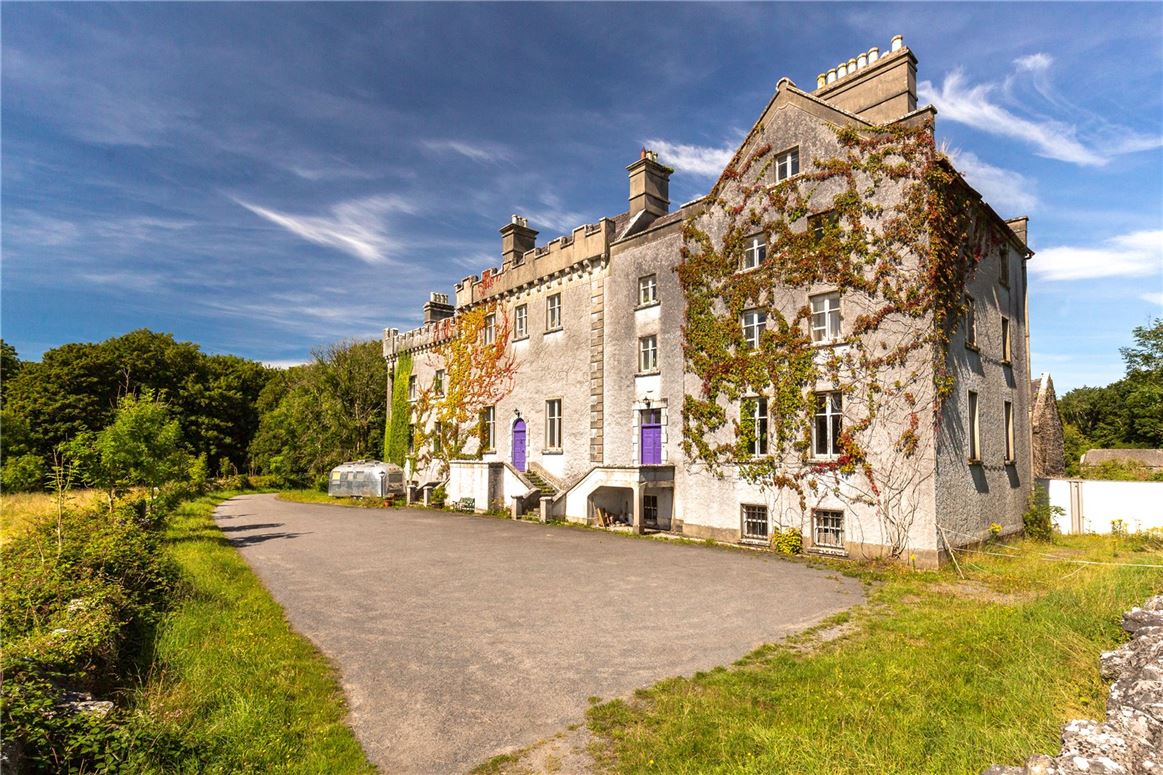
Places to visit and stay in County Offaly

On the map above:

blue: places to visit that are not section 482

purple: section 482 properties

red: accommodation

yellow: less expensive accommodation for two

orange: “whole house rental” i.e. those properties that are only for large group accommodations or weddings, e.g. 10 or more people.

green: gardens to visit

grey: ruins

donation

Help me to pay the entrance fee to one of the houses on this website. This site is created purely out of love for the subject and I receive no payment so any donation is appreciated!

€15.00

Offaly:

1. Birr Castle, Birr, Co. Offaly

2. Charleville Forest Castle, Tullamore, County Offaly – sometimes open to the public

3. Clonony Castle, County Offaly (check before visiting – I am not sure if it is still open to the public)

4. Crotty Church, Castle Street, Birr, Co. Offaly

5. Gloster House, Brosna, Birr, Co. Offaly

6. High Street House, High Street, Tullamore, Co. Offaly

7. Leap Castle, County Offaly

8. Loughton, Moneygall, Birr, Co. Offaly

9. Springfield House, Mount Lucas, Daingean, Tullamore, Co. Offaly

Places to stay, County Offaly

1. Ballynacard House, Birr, County Offaly – airbnb

2. Kinnity Castle (formerly Castle Bernard), Kinnity, County Offaly – hotel and weddings

3. The Maltings, Castle Street, Birr, Co. Offaly – section 482 tourist accommodation

Whole house rental, County Offaly:

1. Ballycumber, County Offaly – whole house rental (13 guests)

Places to visit in County Offaly:

1. Birr Castle, Birr, Co. Offaly

www.birrcastle.com

Open dates in 2026: May 15-30, June 1-6, 8-13, 15-20, 22-27, 29-30, July 1-31, Aug 1-31, Sept 1-5,

11am-3pm

Fee: €22 each castle tour and garden

See my entry https://irishhistorichouses.com/2025/07/21/birr-castle-county-offaly-section-482/

Birr Castle, photograph by Chris Hill 2018, for Tourism Ireland, Ireland’s Content Pool. [1]

2. Charleville Forest Castle, Tullamore, County Offaly – sometimes open to public

Charleville Castle, August 2018. Photograph © Jennifer Winder-Baggot, www.irishhistorichouses.com

http://www.charlevillecastle.ie/

See my entry https://irishhistorichouses.com/2024/08/29/charleville-forest-castle-tullamore-county-offaly-sometimes-open-to-public-run-by-charleville-castle-heritage-trust/

Charleville Castle was built 1800-1812 for Charles William Bury (1764-1835), later 1st Earl of Charleville, and was designed by Francis Johnston.

Mark Bence-Jones writes (1988):

p. 82. “(Bury/IFR) The finest and most spectacular early C19 castle in Ireland, Francis Johnston’s Gothic masterpiece, just as Townley Hall, County Louth, is his Classical masterpiece. Built 1800-1812 for Charles William Bury, 1st Earl of Charleville, replacing a C17 house on a different site known as Redwood. A high square battlemented block with, at one corner, a heavily machicolated octagon tower, and at the other, a slender round tower rising to a height of 125 feet, which has been compared to a castellated lighthouse. From the centre of the block rises a tower-like lantern. The entrance door, and the window over it, are beneath a massive corbelled arch. The entire building is cut-stone, of beautiful quality.” [2]

Charleville Castle, County Offaly, August 2024. Photograph © Jennifer Winder-Baggot, www.irishhistorichouses.com

Mark Bence-Jones continues:

The interior is as dramatic and well-finished as the exterior. In the hall, with its plaster groined ceiling carried on graceful shafts, a straight flight of stairs rises between galleries to piano nobile level, where a great double door, carved in florid Decorated style, leads to a vast saloon or gallery running the whole length of the garden front.”

Charleville Woods Castle, Tullamore, 17 Aug 2024. Photograph © Jennifer Winder-Baggot, www.irishhistorichouses.com
Charleville Castle Tullamore by Matt McKnight 2007, courtesy of flickr constant commons.

The house stood almost empty, with a caretaker, for years. When Charles Kenneth died in 1963, the property passed to a cousin, the grandson of the 3rd Earl’s sister with whom he had quarrelled. She had married Edmund Bacon Hutton and her grandson William Bacon Hutton legally changed his surname to Hutton-Bury when he inherited in 1964. The castle remained empty, until it was leased for 35 years to Michael McMullen in 1971. It had been badly vandalised at this stage. He immediately set to restore the castle.

More repairs were carried out by the next occupants, Bridget “Bonnie” Vance and her parents, who planned to run a B&B and wedding venue. Today the castle is run by Charleville Castle Heritage Trust.

Charleville Woods Castle, Tullamore, 17 Aug 2024. Photograph © Jennifer Winder-Baggot, www.irishhistorichouses.com

3. Clonony Castle, County Offaly – for sale May 2023, I am not sure if still open to the public

Clonony Castle County Offaly, photograph by Gareth McCormack/garethmccormack.com for Tourism Ireland, 2022
Interior, Clonony Castle County Offaly, photograph by Gareth McCormack/garethmccormack.com for Tourism Ireland, 2022

https://www.visitoffaly.ie/Things-to-do/Culture-Heritage/Clonony-Castle/

The website tells us:

Clonony Castle, built in the 1490’s by the Coghlan Clan, was seized by Henry VIII during the war of dominion by England. He ceded it to Thomas Boleyn, making him the Earl of Ormond, his daughter, the ill-fated Ann, a countess and marriageable by a king. When Henry tired of Ann and the Boleyns fell from grace, two ladies, Mary and Elizabeth, were sent back to Clonony and remained for the rest of their lives. Their tombstone lays beneath a tree in the castle bawn.

Following the ladies demise, a merchant, Sir Matthew de Renzi, wrote to Queen Elizabeth of the great significance of the castle and begged to be awarded it. These DeRenzi letters have become very important as they tell us what life was like in the 16th Century in the midlands. Possessing a great facility for language, speaking and trading with many countries, he wrote the first English/Irish dictionary.

Today the castle has been sensitively restored to reflect the way of life through this historical period and now is open to the public casually from 12 to 5 on Friday, Saturday, and Sunday through summer and anytime by appointment on 0877614034. There is no fee, but donations toward the maintenance of the castle is greatly appreciated. In June, the castle will open on weekends for glamping (glamourous camping). Early booking is essential.”

4. Crotty Church, Castle Street, Birr, Co. Offaly

Open dates in 2026: Jan 1- Dec 31, Mon-Fri, excluding Bank Holidays, 12 noon-5pm

Fee: Free [caution: when we visited during Heritage Week 2024, it was not open]

See my entry https://irishhistorichouses.com/2024/11/14/crotty-church-birr-county-offaly-section-482/

5. Gloster House, Brosna, Birr, Co. Offaly

Open dates in 2026: Jan 5-30, May 11-31, June 1-10, Aug 15-23, Mon-Fri, 9am-1pm

Fee: adult/child/OAP/student €10

Gloster, County Offaly, February 2023. Photograph © Jennifer Winder-Baggot, www.irishhistorichouses.com

The Historic Houses of Ireland website tells us:

Just east of the road between Birr and Roscrea, Gloster is County Offaly’s most important remaining eighteenth century house. The formal facade, overlooking the steeply terraced garden, is unusually long and low, and is very grand. Thirteen bays wide and two stories high, the house is constructed in blue-grey limestone with a wealth of early architectural details in warm contrasting sandstone. The interior is equally splendid, especially the two principal rooms; the richly decorated double-height entrance hall and the great barrel-vaulted hall, or landing, on the piano nobile.

Gloster, County Offaly, February 2023. Photograph © Jennifer Winder-Baggot, www.irishhistorichouses.com

The Lloyd’s ancestor came to Ireland from Denbighshire, to serve in the army of King Charles I, and he acquired the estate in 1639 through  marriage with an heiress, Margaret Medhop. Presumably they and their descendants lived in an earlier dwelling, of which no trace remains, until the present house was completed sometime after 1720. The architectural historian Maurice Craig, who edited the book of Pearce’s drawings, observed that, “Gloster has features which can hardly derive from anyone other than Sir Edward Lovett Pearce” (c.1699-1733). Craig also believed that, while Pearce may well have provided a design for his cousin, Trevor Lloyd, he almost certainly left the execution to others since “for all its charm, it is provincial in almost every respect”.

Pearce began work in Ireland in 1724 under Alessandro Galilea on Castletown House, in County Kildare. He later designed Parliament House in College Green in Dublin.

Trevor Lloyd and Rose Medhop had a son and named him Medhop Lloyd (c. 1670-1734). He married into the Lovett family, marrying Mary, daughter of Christopher Lovett, who at one time held the position of Lord Mayor of Dublin. 

The Gloster we see today was built by the son of Medhop and Mary, Trevor Lloyd (d. 1747). His mother Mary was the sister of Frances Lovett, who married Edward Pearce (1658-1715), and Frances and Edward were the parents of architect Edward Lovett Pearce. Therefore Lovett Pearce was a first cousin of Trevor Lloyd (d. 1747), who inherited the property. 

Trevor Lloyd, Tom Alexander had a photograph made of a print by Charles Jervas. Jervas was born nearby in County Offaly.

We visited Gloster House in County Offaly in February 2023. I was excited to see it after looking at pictures on Robert O’Byrne’s blog. Previously it had been a school, purchased by an order of nuns in 1958. The nuns ran the house as a convalescent home. To its rear they erected a chapel and school buildings to accommodate a female boarding school. Nearly all of the farm buildings were demolished to allow for these new buildings, but the original house survived conversion to an institution reasonably well apart from the destruction of a complete wing on the north-western elevation. The order of nuns left Gloster in 1990 and following two subsequent changes of owners, in 2001 it became the property of Tom and Mary Alexander, who moved from Dublin to Birr. They have been working on the restoration of Gloster ever since.

The house and gardens are available as an exclusive private venue for corporate functions, family celebrations and weddings. It is also a home to the Alexander family.

The Gloster website tells us that the present house is thought to date from between 1700 and 1720, and it is possible that a house existed on the same site at Gloster from 1639.

In Great Irish Houses (with forewards by Desmond FitzGerald and Desmond Guinness published by IMAGE Publications in 2008) we are told that King Charles I granted lands at Gloster to the Medhop family. “Gloster” is a derivative of Glasderrymore, meaning the big green wood. 

The Historic Houses of Ireland website continues: “The central breakfront is relatively plain, apart from the typically 1700s hooded door case with pilasters to either side, while two recessed bays at either end of the facade are treated as wings, with Pearcean blind niches in place of windows on the upper storeys. Meanwhile the three intervening bays to either side are further divided by vertically paired pilasters, Doric below the string course and Corinthian above, and their positions are reflected in the cornice, the parapet and in the intervals of the balustrade.

“Inside, the elaborate double-height entrance-hall has a series of bust-filled niches while there is very grand upper hall on the piano nobile. This is approached by twin staircases and overlooks the entrance-hall though a series of round-headed openings with a profusion of architectural detail.

Samuel Chearnley may have had a hand in designing the gardens, which contain a canal, a lime avenue and a pedimented arch, flanked by obelisks in the manner of Vanburgh, while a series of later terraces in front of the house descend to a small lake.

The Dictionary of Irish Architects tell us Chearnley became a protégé of Sir Lawrence Parsons of Birr, Co. Offaly, where he died in 1746, aged only 29. Between October 1745 and May 1746 he produced a manuscript set of designs for garden buildings, which he entitled ‘Miscelanea Structura Curiosa’. Most of the designs were his own, though five were conceived by Parsons and merely drawn up by him.

The view from Gloster house of the stew ponds, which contained fish, and the folly beyond. Photograph © Jennifer Winder-Baggot, www.irishhistorichouses.com
Gloster, County Offaly, February 2023. Photograph © Jennifer Winder-Baggot, www.irishhistorichouses.com

The Historic Houses of Ireland website continues: “Gloster was sold in 1958 and became a convent and nursing home, with a new school complex built on the site of the former stables. The school closed shortly after 1990 and the house fell into considerable disrepair. Happily Tom and Mary Alexander purchased the house and have carried out a thorough and sympathetic restoration.

Famous visitors to Gloster include John Wesley, who preached here in 1749, while the famous Australian “diva” Dame Nellie Melba sang from the gallery in the upper hall early in the 20th century.” [6]

The folly at Gloster, probably designed by Edward Lovett Pearce. Photograph © Jennifer Winder-Baggot, www.irishhistorichouses.com

The Gloster website tells us: “The interiors of Gloster House, some with elaborate plaster panelling to the walls and others with timber mouldings, appear to be early-to-mid-eighteenth century. However work could have been carried out to the house during the nineteenth and early-twentieth century, successively by Hardress Lloyd (d.1860), his son John Lloyd (d.1883) and his grandson Brigadier-General John Hardress Lloyd (d.1952).

John (c. 1753-1811) was a son of Trevor Lloyd and Henrietta Waller. He married Jane Le Hunt (d. 1822), daughter of Thomas Le Hunt, of Artramon, County Wexford. The website tells us that throughout the nineteenth century Lloyd successors perpetuated at Gloster, variously as MPs (Members of Parliament), JPs (Justices of the Peace) and in the military. 

John and Jane’s daughter Alice (d. 1867) married Laurence Parsons (1758-1841) 2nd Earl of Rosse of Birr Castle. Her sister Harriet married Reverend Henry King of Ballylin County Offaly (now gone but gates remain).

John and Jane’s son Hardress Lloyd (d.1860) was for some years Lieutenant-Colonel of South Down Militia and MP for King’s County (County Offaly) 1807-16. Colonel Lloyd died unmarried but had a son, John Lloyd (d. 1883). John married Susanna Frances Julia (1850-1886), second daughter of John Thomas Rossborough Colclough of Tintern Abbey, County Wexford (see my entry about OPW properties in County Wexford), in 1872, and they had many children. John was Deputy Lieutenant and High Sheriff of King’s County in 1866.

Their son Brigadier-General John Hardress Lloyd, a distinguished World War I general, married Adeline Wilson, an Australian heiress, in 1903. They met in India, where she was sent to meet a husband. The website tells us that this marriage injected substantial financial benefits into the estate which resulted in a certain degree of internal remodelling of the house and a major enhancement of the gardens. 

Adeline died in 1933, the General in 1952. As they had no children the estate devolved to their nephew Major Evan Talbot Trevor Lloyd (1919-1964). He was the son of John and Susanna Frances Julia’s son Evan Colclough Lloyd (1877-1945).

Evan Talbot Trevor Lloyd sold the house to the nuns in 1958. The Lloyds are buried at Ettagh cemetery and a fine monument stands there as a reminder of their legacy.

6. High Street House, High Street, Tullamore, Co. Offaly, R35 T189

www.no6highstreet.com

Open dates in 2026: Jan 6-31, Mon -Fri, May 2-19, Aug 15-23, Sept 1-24, 9.30am-1.30pm

Fee: adult/student/OAP €10, child under 12 years free

7. Leap Castle, County Offaly

https://www.visitoffaly.ie/Things-to-do/Culture-Heritage/Leap-Castle/

Sean Ryan of Leap Castle, insisted that he doesn’t fabricate when telling the story of what he and his wife see and hear at their home. Where most would refer to these apparitions as ghosts, Sean prefers to call them spirits. He describes the regular visions as people with a haze around them. Sometimes there is a lot of activity; other times less so. The sounds they hear are footsteps, doors opening and closing and crowds talking. However, on occasions that he has gone in the direction of the noise, nothing is apparent there, with the location of the spirits always out of reach. There is spirit, though, a lady, who touches off people. A lot of guests to the castle have also felt her presence. The remarkable thing Sean told us was that this experience never seems to alarm his guests, rather they always remain very calm, something that surprises them! Sean doesn’t regard his home as haunted and, as far as he is concerned, the spirits he sees and hears have as much right to live there as he does. Sean is happy to continue to live alongside them as he has done since 1994, when restoration on the castle began.

Leap Castle by Brian Morrison, 2015 for Tourism Ireland, Ireland’s Content Pool. (see [2])

The Leap Castle website gives us more information: http://leapcastle.net

Built in the early 1500’s under the supervision of the powerful and warring O’Carroll clan, Leap Castle has been the centre of much bloodshed.

Leap Castle by Brian Morrison, 2015 for Tourism Ireland, Ireland’s Content Pool. (see [2])

The O’Carrolls were a fierce and brutal clan, continually struggling for power and supremacy. They were known to be particularly violent and cunning in the attempts for domination. John O’Carroll was thought to be the first Prince of Ely who lived at Leap Castle. It is very probable that it was he who was responsible for the construction of the earliest sections of Leap Castle. John O’Carroll died at Leap Castle, suffering from the plague. John O’Carroll was succeeded by his son named Mulrony O’Carroll.
Mulrony O’Carroll was renowned for his strength, bravery and valour and was considered a great leader. The Great Mulrony as he was known died (most likely) at Leap in 1532 after a rulership of forty two years. Mulrony was succeeded by his son Fearganhainm.

The website continues with the history of one brother after another killing each other for supremacy.

The website tells us:

In 1629 John O’Carroll, nephew of Charles O’Carroll was given the official ownership of the Leap Estate. The year 1649 the property of Leap Castle was handed over to the first of the Darby line, Jonathon. He was a soldier of the Cromwellian forces and was handed the property and land in lieu of pay.

1664 saw the property handed back to John O’Carroll due to his continued loyalty to Charles the 1st. This arrangement was unfortunately reversed in 1667 due to the differing views of Charles the 2nd. The Leap Castle was once again back in the hands of the Darbys.

Leap Castle by Brian Morrison, 2015 for Tourism Ireland, Ireland’s Content Pool. (see [2])

Jonathon Darby the 2nd, a Cromwellian soldier obtained Leap Castle in 1649. This was lieu of payment for his services. Jonathon and his wife Deborah had a son also named Jonathon.

The estate was passed through a line of Jonathan Darbys.

Vice-Admiral George Darby, circa 1720-90 by George Romney, courtesy of National Maritime Museum, Greenwich, London, Caird Collection. He was the second son of Jonathan Darby of Leap Castle and Anna Marie Frend.

“Jonathon Darby the 5th maintained the Leap Estate until his death in 1802. As Jonathon fathered no male children, Leap Castle was passed on to his younger brother Henry. 

Henry d’Esterre Darby, born in 1750 climbed through the Naval ranks to become Admiral Sir Henry d’Esterre Darby in 1799. Henry died in 1823 bearing no children of his own. Upon Henry’s death, the Leap Castle estate was inherited by his brother John Darby. 

John Darby married Anne Vaughan and died in 1834. He was succeeded by their sons William Henry, Christopher, George, Susan, Jonathon, Horatio d’Esterre, John Nelson and Sarah Darby.

William Henry Darby inherited Leap Castle died in 1880.  His eldest son had died in 1872 aged 45 so the Leap Estate was passed on to his grandson Jonathon Charles Darby.

Jonathon married Mildred Dill aka Mildred Darby in 1889.

Leap Castle by Brian Morrison, 2015 for Tourism Ireland, Ireland’s Content Pool. (see [2])

In the early hours of Sunday morning, 30 July 1922 a party of eleven raiders set fire to the Leap totally destroying the North and larger wing and its valuable contents. Giving evidence in the claims court Richard Dawkins said that on 30 July 1922, he was living in the Castle as caretaker with his wife and baby. They were the only persons in the castle that night. Richard Dawkins stated that at 2.20am there was a knock on the door. He opened the window, put out his head, and saw men outside who stated that they wanted a night’s lodging. They ordered him to open the door. He went down and opened the door and was subsequently held at gunpoint. The raiders then stated that they were going to burn the castle.  Dawkins asked for time to get his wife and child out and was given twenty minutes to do so. The raiders then went into the castle and poured petrol over the rooms, and set them on fire. They kept the family outside from 2.30am to 5.00am. Each of the men had a tin of petrol, and all were armed. Some had trench coats and other had bandoleers over their civilian clothes. The men broke furniture before setting the castle on fire.

In a newspaper report Jonathan Darby said that it looked as if there were explosives used in the destruction of the castle he had found some dynamite in the cellar where the raiders got so drunk they could not explode it.  He said that it was the locals who burned the castle.” 

–          Noel Guerin

Leap Castle by Brian Morrison, 2015 for Tourism Ireland, Ireland’s Content Pool. (see [2])

8. Loughton, Moneygall, Birr, Co. Offaly E53 WK16

Loughton House, County Offaly, May 2019. Photograph © Jennifer Winder-Baggot, www.irishhistorichouses.com

See my entry:

https://irishhistorichouses.com/2020/11/01/loughton-house-moneygall-county-offaly/

www.loughtonhouse.com

Open dates in 2026: May 1–31, June 1- 30, Aug 1–23, 11am-3pm

Fee: adult €5, OAP €4, child/student free, family €10

9. Springfield House, Mount Lucas, Daingean, Tullamore, Co. Offaly R35 NF89

Springfield House County Offaly. Photograph © Jennifer Winder-Baggot, www.irishhistorichouses.com

www.springfieldhouse.ie

Open dates in 2026: Jan 23-25, Feb 13-15, Mar 7-8, 21-22, Apr 18-19, 25-26, May 16-17, June 6-7, 20-21, 27-28, July 4-5, 11-12, 18-19, Aug 1-23, Sept 28-30, Oct 1-4, 31, Nov 1, 2pm-6pm

Fee: Free

See my entry https://irishhistorichouses.com/2022/06/01/springfield-house-mount-lucas-daingean-tullamore-co-offaly/

Places to stay, County Offaly

1. Ballynacard House, Birr, County Offaly – airbnb

https://www.airbnb.ie/rooms/15047018?adults=1&children=0&infants=0&check_in=2022-11-13&check_out=2022-11-18&federated_search_id=55bd223e-425a-45e1-a04c-cb9351d956fe&source_impression_id=p3_1666786186_071XUwjc1PN7OXUB&modal=DESCRIPTION

The airbnb entry tells us:

We look forward to welcoming you to Ballincard House! Take a step back in time and enjoy the charm of your private apartment located on the second floor of our 19th Century Georgian home. If desired, we are delighted to guide you through the house and share with you almost 200 years of our home’s rich history. Roam freely through our 120 acres of gardens, farmland and woodlands, or enjoy a guided tour of our grounds and learn of present day efforts to transform our land into a nature reserve.

The space:

Access to the apartment is through the main house.

The apartment has a large bedroom with a king sized and single bed with an en suite bathroom

The living room has an open fire (firewood provided) which will be lit in advance of your arrival if requested. There is also a table which can be used as a dining table or desk. There is a sofa bed which sleeps 2 people.

The kitchen has all appliances and kitchenware needed to cook breakfast, lunch or dinner. Tea, coffee and some basic cooking ingredients (milk, bread, salt, pepper, spices, cooking oil) are provided

IMPORTANT: For groups staying, we’d like to note that the bathroom is an ensuite off of the bedroom in the apartment. All guests will need to pass through the bedroom to use the bathroom.

The bathroom has a shower (there is not a bath tub).”

2. Kinnitty Castle (formerly Castle Bernard), Kinnity, County Offaly – hotel

https://www.kinnittycastlehotel.com/index.html

Kinnitty Castle Hotel, 2014, photographer unknown, for Tourism Ireland, Ireland’s Content Pool. (see [2])

We treated ourselves to a stay in Kinnitty Castle in February 2023. It is now a hotel. See my entry https://irishhistorichouses.com/2025/04/13/kinnitty-castle-formerly-castle-bernard-kinnity-county-offaly-now-a-hotel/

Mark Bence-Jones writes in his 1988 book of Kinnitty Castle, formerly named Castle Bernard: p. 62. [Castle Bernard]: “[Bernard 1912; De la Poer Beresford, Decies] A Tudor-Revival castle of 1833 by James and George Pain. Impressive entrance front with gables, oriels and tracery windows and an octagonal corner tower with battlements and crockets; all in smooth ashlar. Subsequently the home of 6th Lord Decies [Arthur George Marcus Douglas De La Poer Beresford (1915-1992)], by whom it was sold ca. 1950. Now a forestry centre [at the time Mark Bence-Jones wrote this].” 

Kinnitty Castle, County Offaly, 9th February 2023. The National Inventory tells us that the oriel window over the castellated entrance porch was added at a later date. Photograph © Jennifer Winder-Baggot, www.irishhistorichouses.com
Kinnity Castle (Castle Bernard) County Offaly, photograph by Robert French, Lawrence c. 1865-1914 Photographic Collection National Library of Ireland ref L_Cab_09230.
The impressive staircase of Kinnitty Castle. Photograph © Jennifer Winder-Baggot, www.irishhistorichouses.com
I love the angels on this overhead light. Photograph © Jennifer Winder-Baggot, www.irishhistorichouses.com
Kinnitty Castle, February 2023. Photograph © Jennifer Winder-Baggot, www.irishhistorichouses.com
Kinnitty Castle Hotel, 2014, photographer unknown, for Tourism Ireland, Ireland’s Content Pool. (see [2])
This room is now a dining room, 2023. Photograph © Jennifer Winder-Baggot, www.irishhistorichouses.com
The Library Bar in Kinnitty Castle. Photograph © Jennifer Winder-Baggot, www.irishhistorichouses.com
Another hallway in Kinnitty Castle. Photograph © Jennifer Winder-Baggot, www.irishhistorichouses.com
Our lovely bedroom at Kinnitty Castle. Photograph © Jennifer Winder-Baggot, www.irishhistorichouses.com
Photograph © Jennifer Winder-Baggot, www.irishhistorichouses.com

The Stable yard is in use as a banqueting hall, called the Great Hall of the O’Carrolls, and kitchens.

There’s even an arrow loop in the ruins by the stable yard. Photograph © Jennifer Winder-Baggot, www.irishhistorichouses.com
The stableyard of Kinnitty Castle. Photograph © Jennifer Winder-Baggot, www.irishhistorichouses.com
The Banqueting Hall in the stable yard of Kinnitty Castle. Photograph © Jennifer Winder-Baggot, www.irishhistorichouses.com
The Banqueting Hall of Kinnitty Castle has a mezzanine, or Minstrels Gallery. Photograph © Jennifer Winder-Baggot, www.irishhistorichouses.com
The Banqueting Hall of Kinnitty Castle. Photograph © Jennifer Winder-Baggot, www.irishhistorichouses.com
Photograph © Jennifer Winder-Baggot, www.irishhistorichouses.com

There’s a bar in the cellar of the hotel, called the Dungeon Bar.

The Dungeon Bar in the basement of the hotel. Photograph © Jennifer Winder-Baggot, www.irishhistorichouses.com
A snug in the Dungeon Bar. Photograph © Jennifer Winder-Baggot, www.irishhistorichouses.com
An old horse trough in the rather ecclesiastical bar looks for a moment like a coffin! Photograph © Jennifer Winder-Baggot, www.irishhistorichouses.com
The atmospheric Dungeon Bar at Kinnitty Castle. Photograph © Jennifer Winder-Baggot, www.irishhistorichouses.com

The River Camcor winds through the property.

A map of the Demesne at Kinnitty.
The River Camcor crosses the property at Kinnity Castle, and one can go for lovely walks in the grounds, along the river. Photograph © Jennifer Winder-Baggot, www.irishhistorichouses.com
The bridge has odd sunburst decorative iron circular framing at one end. Photograph © Jennifer Winder-Baggot, www.irishhistorichouses.com
The gate lodge at Kinnity used to be the Day Spa but is was empty when we visited in February 2023, perhaps a victim of Covid. The National Inventory tells us that it was built around 1835. Photograph © Jennifer Winder-Baggot, www.irishhistorichouses.com

3. The Maltings, Castle Street, Birr, Co. Offaly

www.canbe.ie

(Tourist Accommodation FacilityOpen for accommodation in 2026: all year except from Dec 24-31

The Maltings accommodation, Birr, County Offaly. Photograph © Jennifer Winder-Baggot, www.irishhistorichouses.com

Whole house rental, County Offaly:

1. Ballycumber, County Offaly – whole house rental (13 guests)

https://www.airbnb.ie/rooms/21064152?source_impression_id=p3_1646848147_zcYarfp2zhDKFdHo

The National Inventory of Architectural Heritage tells us about Ballycumber:

Originally built as a castle in 1627 and remodelled at a later date, the regular from of this well proportioned house is enhanced by architectural detailing such as the finally executed doorcase and attractive, steeply-pitched hipped roof. The building retains many notable features and materials such as the timber sash windows with the date plaque, which adds historical interest to the site. The related outbuildings and walled garden create an interesting group of agricultural structures, while the folly and landscaped tree-lined river walk make a positive contribution to the setting of the house, reflecting the era of the large country estate.

The Offaly history blog tells us more about the occupants of Ballycumber:

Ballycumber House was bought by Francis Berry Homan Mulock in 1899 from the Armstrong family who had been in possession of the estate for successive generations. Originally built as a castle in 1627 by the Coghlan family, it was extensively remodelled by the Armstrongs in the eighteenth century into a detached five-bay two storey over basement country house, much as it is today.” [7]

I would love to stay at Ballycumber because the Bagot family of County Offaly intermarried with the Armstrong family who owned Ballycumber. I’m not sure if my own Baggot family is related to the Bagots of Offaly but there is a good possibility!

[1] https://www.irelandscontentpool.com/en

[2] Bence-Jones, Mark. A Guide to Irish Country Houses (originally published as Burke’s Guide to Country Houses volume 1 Ireland by Burke’s Peerage Ltd. 1978); Revised edition 1988 Constable and Company Ltd, London.

[4] p. 136. O’Reilly, Sean. Irish Houses and Gardens. From the Archives of Country Life. Aurum Press Ltd, London, 1998. 

[5] https://www.buildingsofireland.ie/buildings-search/building/14942001/corolanty-house-curralanty-offaly

[6] https://www.ihh.ie/index.cfm/houses/house/name/Gloster%20House

[7] https://offalyhistoryblog.wordpress.com/2018/03/31/sun-too-slow-sun-too-fast-ethel-and-enid-homan-mulock-of-ballycumber-house-by-lisa-shortall/

Text © Jennifer Winder-Baggot, www.irishhistorichouses.com
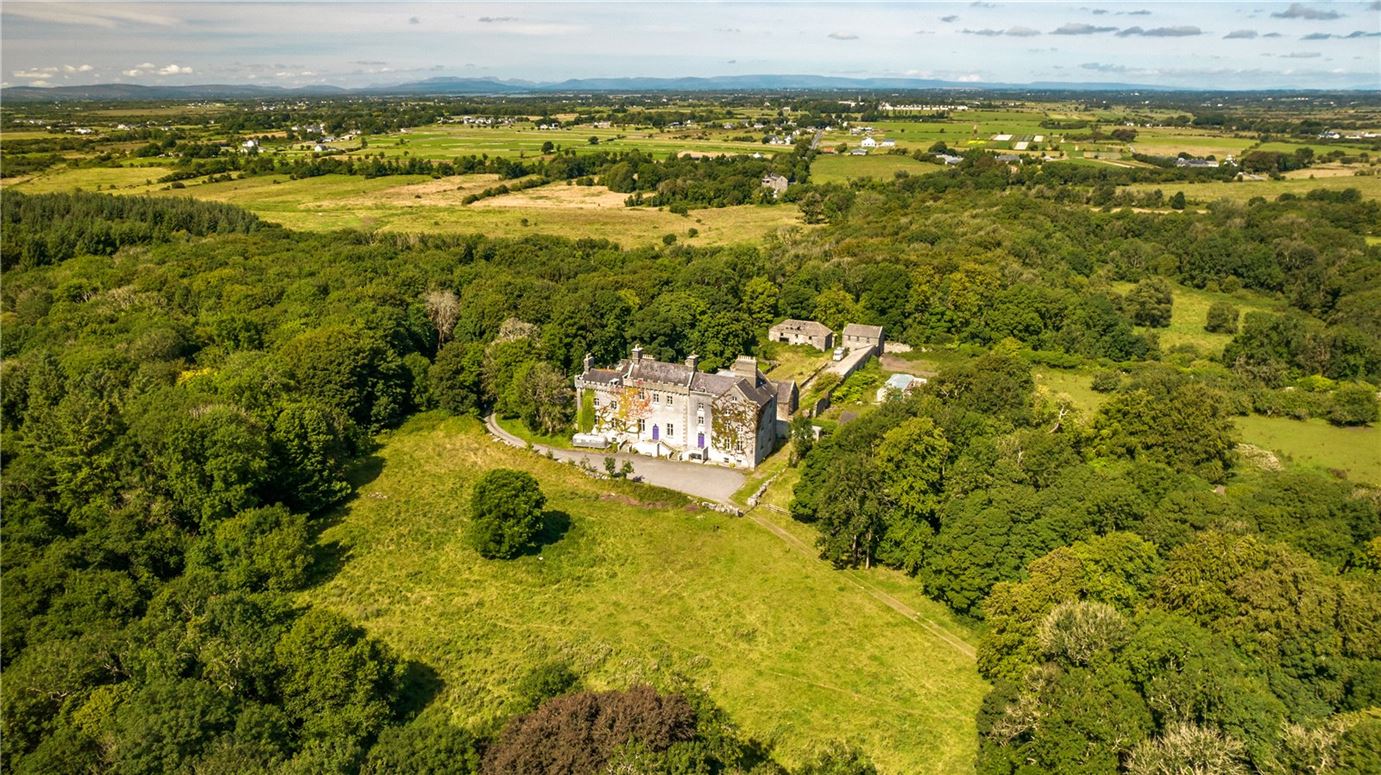
Places to visit and stay in County Waterford, Munster

On the map above:

blue: places to visit that are not section 482

purple: section 482 properties

red: accommodation

yellow: less expensive accommodation for two

orange: “whole house rental” i.e. those properties that are only for large group accommodations or weddings, e.g. 10 or more people.

green: gardens to visit

grey: ruins

donation

Help me to pay the entrance fee to one of the houses on this website. This site is created purely out of love for the subject and I receive no payment so any donation is appreciated!

€15.00

Waterford:

1. Ballysaggartmore Towers, County Waterford

2. Bishop’s Palace Museum, Waterford

3. Cappagh House (Old and New), Cappagh, Dungarvan, Co Waterford – section 482

4. Cappoquin House & Gardens, Cappoquin, Co. Waterford – section 482

5. Curraghmore House, Portlaw, Co. Waterford – section 482

6. Dromana House, Cappoquin, Co. Waterford – section 482

7. Dungarvan Castle, Waterford – OPW

8. Fairbrook House, Garden and Museum, County Waterford

9. Lismore Castle Gardens

10. Mount Congreve Gardens, County Waterford

11. The Presentation Convent, Waterford Healthpark, Slievekeel Road, Waterford section 482

12. Reginald’s Tower, County Waterford – OPW

13. Tourin House & Gardens, Tourin, Cappoquin, Co. Waterford – section 482

Places to stay, County Waterford

1. Annestown House, County Waterford – B&B 

2. Ballyrafter House, Lismore, Co Waterford – B&B 

3. Cappoquin House holiday cottages, County Waterford

4. Dromana, Co Waterford – 482, holiday cottages

5. Faithlegg House, Waterford, Co Waterford – hotel

6. Fort William, County Waterford, holiday cottages

7. Gaultier Lodge, Woodstown, Co Waterford 

8. Richmond House, Cappoquin, Co Waterford – guest house 

9. Salterbridge Gate Lodge, County Waterford – Irish Landmark accommodation

10. Waterford Castle, The Island, Co Waterford – hotel

Whole House Rental County Waterford

1. Glenbeg House, Jacobean manor home, Glencairn, County Waterford P51 H5W0whole house holiday rental

2. Lismore Castle, County Waterford – castle holiday rental

Waterford:

1. Ballysaggartmore Towers, County Waterford

Ballysaggartmore Towers, Lismore, photograph by Chris Hill, 2015, for Tourism Ireland, Ireland’s Content Pool. [1]
The Towers, Ballysaggartmore, Lismore, Co Waterford Courtesy of Luke Myers 2015, for Tourism Ireland, Ireland’s Content Pool. [1]

Mark Bence-Jones tells us (1988): p. 27. “(Keily, sub Ussher/IFR, Anson, sub Lichfield, E/PB) A late-Georgian house built round a courtyard, on the side of a steep hill overlooking the River Blackwater, to which a new front was subsequently added… A seat of the Keily family. Arthur Keily [1777-1862], who assumed the name of Ussher 1843, built two remarkable Gothic follies in the demesne, to the design of his gardener, J. Smith; one of them a turreted gateway, the other a castellated bridge over a stream. The house was bought at the beginning of the present century by Hon Claud Anson, who sold it 1930s. It was subsequently demolished. The follies remain, one of them being now occupied as a house.” [2]

The National Inventory describes this bridge and its towers:

Three-arch rock-faced sandstone ashlar Gothic-style road bridge over ravine, c.1845, on a curved plan. Rock-faced sandstone ashlar walls with buttresses to piers, trefoil-headed recessed niches to flanking abutments, cut-stone stringcourse on corbels, and battlemented parapets having cut-stone coping. Three pointed arches with rock-faced sandstone ashlar voussoirs, and squared sandstone soffits. Sited in grounds shared with Ballysaggartmore House spanning ravine with grass banks to ravine…Detached five-bay single- and two-storey lodge, c.1845, to south-west comprising single-bay single-storey central block with pointed segmental-headed carriageway, single-bay single-stage turret over on a circular plan, single-bay single-storey recessed lower flanking bays, single-bay single-storey advanced end bay to right, single-bay single-storey advanced higher end bay to left, and pair of single-bay two-storey engaged towers to rear (north-east) on square plans….Rock-faced sandstone ashlar walls with cut-sandstone dressings including stepped buttresses, battlemented parapets on corbelled stringcourses having cut-stone coping, and corner pinnacles to central block on circular plans having battlemented coping. Pointed-arch window openings with paired pointed-arch lights over, no sills, and chamfered reveals. Some square-headed window openings with no sills, chamfered reveals, and hood mouldings over. Square-headed door openings with hood mouldings over….Detached five-bay single- and two-storey lodge, c.1845, to north-east comprising single-bay two-storey central block with pointed segmental-headed carriageway, single-bay single-storey flanking recessed bays, single-bay two-storey advanced end bay tower to right on a square plan, single-bay two-stage advanced higher end tower to left on a circular plan, and pair of single-bay two-stage engaged towers to rear (south-west) elevation on circular plans…Although initial indications suggest that the lodges are identical, individualistic features distinguish each piece, and contribute significantly to the architectural design quality of the composition. Well maintained, the composition retains its original form and massing, although many of the fittings have been lost as a result of dismantling works in the mid twentieth century. The construction in rock-faced sandstone produces an attractive textured visual effect, and attests to high quality stone masonry.”

Ballysaggartmore Towers, Lismore, photograph by Chris Hill, 2015, for Tourism Ireland, Ireland’s Content Pool. [1]
Ballysaggartmore Towers, Lismore, photograph Courtesy Celtic Routes, 2020, for Tourism Ireland, Ireland’s Content Pool. [1]
Ballysaggartmore Towers, Lismore, photograph by Chris Hill, 2015, for Tourism Ireland, Ireland’s Content Pool. [1]

The National Inventory describes the gateway: “Gateway, c.1845, comprising ogee-headed opening, limestone ashlar polygonal flanking piers, and pair of attached two-bay single- and two-storey flanking gate lodges diagonally-disposed to east and to west comprising single-bay single-storey linking bays with single-bay two-storey outer bays having single-bay three-stage engaged corner turrets on circular plans…Limestone ashlar polygonal piers to gateway with moulded stringcourses having battlemented coping over, and sproketed finial to apex to opening with finial. Sandstone ashlar walls to gate lodges with cut-limestone dressings including stepped buttresses, stringcourses to first floor, moulded course to first stage to turrets, and battlemented parapets on consoled stringcourses (on profiled tables to turrets) having cut-limestone coping. Ogee-headed opening to gateway with decorative cast-iron double gates. Paired square-headed window openings to gate lodges with no sills, chamfered reveals, and hood mouldings over. Square-headed door openings with chamfered reveals, and hood mouldings over. Pointed-arch door openings to turrets with inscribed surrounds. Trefoil-headed flanking window openings with raised surrounds, and quatrefoil openings over. Cross apertures to top stages to turrets with raised surrounds. All fittings now gone. Interiors now dismantled with internal walls and floors removed.

An impressive structure in a fantastical Gothic style, successfully combining a gateway and flanking gate lodges in a wholly-integrated composition. Now disused, with most of the external and internal fittings removed, the gateway nevertheless retains most of its original form and massing. The construction of the gateway attests to high quality stone masonry and craftsmanship, particularly to the fine detailing, which enhances the architectural and design quality of the site. The gateway forms an integral component of the Ballysaggartmore House estate and, set in slightly overgrown grounds, forms an appealing feature of Romantic quality in the landscape.

The Gate Lodge, Ballysaggartmore, Lismore, Co Waterford Courtesy of Luke Myers 2015, for Tourism Ireland, Ireland’s Content Pool. [1]
Ballysaggartmore Towers, Lismore, photograph by Chris Hill, 2015, for Tourism Ireland, Ireland’s Content Pool. [1]

2. Bishop’s Palace Museum, Waterford

Bishop’s Palace, Waterford, photograph from the National Library of Ireland, flickr constant commons.

Mark Bence-Jones writes (1988):

p. 282. “The Palace of the (C of I) Bishops of Waterford; one of the largest and – externally – finest episcopal residences in Ireland. Begun 1741 by Bishop Charles Este to the design of Richard Castle. The garden front, which faces over the mall and new forms a magnificent architectural group with the tower and spire of later C18 Cathedral, by John Roberts, is of three storeys; the ground floor being treated as a basement and rusticated. The centre of the ground floor breaks forward with three arches, forming the base of the pedimented Doric centrepiece of the storey above, which incorporates three windows. In the centre of the top storey is a circular niche, flanked by two windows. On either side of the centre are three bays. Bishop Este died 1745 before the Palace was finished, which probably explains why the interior is rather disappointing. The Palace ceased to be the episcopal residence early in the present century, and from then until ca 1965 it was occupied by Bishop Foy school. It has since been sold.” 

Bishop’s Palace, Waterford by Keith Fitzgerald, 2014, for Tourism Ireland, Ireland’s Content Pool. [1]

Archiseek adds: “It has now been extensively restored to showcase artefacts and art from Waterford’s Georgian and Victorian past. The two main facades are quite different: one having seven bays – the central bay having an more elaborate window treatment and a Gibbsian doorway; the other facade has eight bay with a more elaborate entrance and shallow pediment with blank niches.” [3]

The National Inventory explains about the designs of Richard Castle and John Roberts:

An imposing Classical-style building commissioned by Bishop Miles (d. 1740) and subsequently by Bishop Charles Este (n. d.), and believed to have been initiated to plans prepared by Richard Castle (c.1690 – 1751), and completed to the designs prepared by John Roberts (1712 – 1796). The building is of great importance for its original intended use as a bishop’s palace, and for its subsequent use as a school. The construction of the building in limestone ashlar reveals high quality stone masonry, and this is particularly evident in the carved detailing, which has retained its intricacy. Well-maintained, the building presents an early aspect while replacement fittings have been installed in keeping with the original integrity of the design. The interior also incorporates important early or original schemes, including decorative plasterwork of artistic merit. Set on an elevated site, the building forms an attractive and commanding feature fronting on to The Mall (to south-east) and on to Cathedral Square (to north-west).”

Bishop’s Palace, Waterford City Courtesy Leo Byrne Photography 2015, for Tourism Ireland, Ireland’s Content Pool. [1]
Bishop’s Palace, Waterford by Keith Fitzgerald, 2014, for Tourism Ireland, Ireland’s Content Pool. [1]

3. Cappagh House (Old and New), Cappagh, Dungarvan, Co Waterford X35 RH51 – section 482

www.cappaghhouse.ie

Open dates in 2026: April 1-30 Mon-Fri, May 1-31 Mon -Sat, 25-30, June 1-6, Aug 15-23,

9.30am-1.30pm

Fee: adult €10, OAP/student €5, child free

Cappagh House, County Waterford August 14, 2023. Photograph © Jennifer Winder-Baggot, www.irishhistorichouses.com

We visited during Heritage week 2023 – see my writeup https://irishhistorichouses.com/2023/12/09/cappagh-house-old-and-new-dungarvan-co-waterford/

and [4]

4. Cappoquin House & Gardens, Cappoquin, Co. Waterford P51 D324 – section 482

see my entry:

https://irishhistorichouses.com/2021/01/24/cappoquin-house-gardens-cappoquin-co-waterford/

www.cappoquinhouseandgardens.com

Open dates in 2026: June 1-27, Aug 15-31, Sept 1-19, 9am-1pm

Fee: adult house €14, house and garden €20, garden only €7

Cappoquin House, County Waterford, built for and still owned by the Keane family. Photograph © Jennifer Winder-Baggot, www.irishhistorichouses.com

5. Curraghmore House, Portlaw, Co. Waterford – section 482

See my entry: https://irishhistorichouses.com/2020/08/01/curraghmore-portlaw-county-waterford/

www.curraghmorehouse.ie

Open dates in 2026: May 1-4, 8-10, 15-17, 22-24, 29-31, June 1, 5-7, 12-14, 19-21, 26-28, July 3-5, 10-12, 17-19, 24-26, 31, Aug 1-3, 7-9, 14-23, 28-30, 10am-4pm

Fee: adult/OAP/student, full tour €22, garden tour €8, child under12 years free

Curraghmore, the garden facing side of the house, designed by James Wyatt (1746-1813), 14th August 2023. Photograph © Jennifer Winder-Baggot, www.irishhistorichouses.com

6. Dromana House, Cappoquin, Co. Waterford – section 482

See my entry: https://irishhistorichouses.com/2021/02/06/dromana-house-cappoquin-co-waterford/

www.dromanahouse.com

Open dates in 2026: June 1-30, Aug 15-31, Sept 1-19, Mon-Sun, 2pm-6pm

Fee: adult/OAP/student, house €14, garden €7, both €20, child under 12 years free, R.H.S.I members 50% reduction

Dromana, County Waterford. Photograph © Jennifer Winder-Baggot, www.irishhistorichouses.com

7. Dungarvan Castle, Waterford – OPW

See my OPW write-up: https://irishhistorichouses.com/2022/11/07/office-of-public-works-properties-in-munster-counties-kerry-and-waterford/

King John’s Norman Castle, Dungarvan.

8. Fairbrook House, Garden and Museum, County Waterford

https://www.fairbrook-housegarden.com/

The website tells us: “Fairbrook House garden and museum, Kilmeaden, Co.Waterford, Ireland X91FN83 A romantic walled garden at the river Dawn laid out between ruins of the former Fairbrook Mill (since 1700). OPEN MAY – SEPTEMBER”

9. Lismore Castle Gardens, County Waterford

Lismore Castle from the Pleasure Grounds in the Lower garden, by George Munday/Tourism Ireland 2014 (see [1])
Lismore Castle Gardens, Co Waterford, photograph Courtesy of Celtic Routes 2019 for Tourism Ireland (see [1])
Lismore Castle, County Waterford. Photograph © Jennifer Winder-Baggot, www.irishhistorichouses.com

See my entry https://irishhistorichouses.com/2024/04/12/lismore-castle-county-waterford-whole-castle-rental-or-a-visit-to-the-gardens/

Lismore Castle, County Waterford. Photograph © Jennifer Winder-Baggot, www.irishhistorichouses.com

https://www.discoverireland.ie/waterford/lismore-castle-gardens

Lismore Castle gardens, County Waterford. Photograph © Jennifer Winder-Baggot, www.irishhistorichouses.com

10. Mount Congreve Gardens, County Waterford

https://mountcongreve.com/

Mount Congreve House and Gardens, Co Waterford Courtesy Celtic Routes 2019 for Tourism Ireland (see [1])

The website tells us: “Mount Congreve House and Gardens situated in Kilmeaden, Co. Waterford, in Ireland’s Ancient East is home to one of “the great gardens of the World”. Mount Congreve House, home to six generations of Congreves, was built in 1760 by the celebrated local architect John Roberts.

The Gardens comprise around seventy acres of intensively planted woodland, a four acre walled garden and 16 kilometres of walkways. Planted on a slight incline overlooking the River Suir, Mount Congreve’s entire collection consists of over three thousand different trees and shrubs, more than two thousand Rhododendrons, six hundred Camellias, three hundred Acer cultivars, six hundred conifers, two hundred and fifty climbers and fifteen hundred herbaceous plants plus many more tender species contained in the Georgian glasshouse.

The house was built for John Congreve (1730-1801), who held the office of High Sheriff of County Waterford in 1755. His grandfather John was Rector of Kilmacow, County Kilkenny, and his father Ambrose (1698-1741) played a leading role in the affairs of Waterford city. When Ambrose died his widow married Dr. John Whetcombe, Bishop of Clonfert and later Archbishop of Cashel.

John Congreve (1730-1801) married Mary Ussher, daughter of Beverly Ussher, MP, who lived at Kilmeadon, County Waterford.

Mount Congreve. We visited briefly in May 2023 on our way home from Annestown. Photograph © Jennifer Winder-Baggot, www.irishhistorichouses.com

Mark Bence-Jones tells us of Mount Congreve (1988):

p. 213. “(Congreve/IFR) An C18 house [the National Inventory says c. 1750] consisting of three storey seven bay centre block with two storey three bay overlapping wings; joined to pavilions by screen walls with arches on the entrance front and low ranges on the garden front, where the centre block has a three bay breakfront and an ionic doorcase. The house was remodelled and embellished ca 1965-69, when a deep bow was added in the centre of the entrance front, incorporating a rather Baroque Ionic doorcase, and the pavilions were adorned with cupolas and doorcases with broken pediments. Other new features include handsome gateways flanking the garden front at either end and a fountain with a statue in one of the courtyards between the house and pavilions. The present owner has also laid out magnificent gardens along the bank of the River Suir which now extends to upwards of 100 acres; with large scale plantings of rare trees and shrubs, notably rhododendrons and magnolias. The original walled gardens contains an eighteenth century greenhouse.” 

Mount Congreve, May 2023: The house was remodelled and embellished ca 1965-69, when a deep bow was added in the centre of the entrance front, incorporating a rather Baroque Ionic doorcase. Photograph © Jennifer Winder-Baggot, www.irishhistorichouses.com

Ambrose Ussher Congreve (1767-1809) inherited the estate and married Anne Jenkins.

Ambrose and Anne’s son John (1801-1863) was their heir.

Ambrose and Anne’s daughter Jane married John Cooke of Kiltinane Castle in County Tipperary. Daughter Mary married Reverend John Thomas Medlycott who lived in Rockett’s Castle in Portlaw, County Waterford. Their son Ambrose died unmarried.

John was Deputy Lieutenant and also High Sheriff of County Waterford. He married Louisa Harriet Dillon from Clonbrock in County Galway, daughter of Luke Dillon (1780-1826) 2nd Baron Clonbrock.

Their son Ambrose (1832-1901) inherited the estate, and he also held the positions of Deputy Lieutenant and High Sheriff for County Waterford. He married a cousin, Alice Elizabeth, daughter of Robert 3rd Baron Clonbrock.

Ambrose Congreve reading a newspaper at Clonbrock House, Ahascragh, Co. Galway, National Library of Ireland Ref. CLON422.

John (1872-1957) the son of Ambrose and Alice Elizabeth joined the military and fought in World War I. He married Helena Blanche Irene, daughter of Edward Ponsonby 8th Earl of Bessborough in County Kilkenny. Their son Ambrose Christian (1907-2011) worked for Unilever and then with the firm founded by his father-in-law, Humphreys and Glasgow. He inherited Mount Congreve and developed and improved the garden. In April 2011 Mr. Congreve was in London en route to the Chelsea Flower Show, aged 104, when he died. He married but had no children. The estate was left in Trust for the Irish people.

2012 Auction Catalogue for Mount Congreve.

Mount Congreve Gardens was closed for new development works but has reopened. An article by Ann Power in the Mount Congreve blog, 22nd Sept 2021, tells us:

The 70-acre Mount Congreve Gardens overlooking the River Suir and located around 7km from the centre of Waterford City will close on October 10th 2021. The closure is to facilitate the upcoming works on Mount Congreve House and Gardens as it will be redeveloped into a world-class tourism destination with an enhanced visitor experience which is set to open for summer 2022.

Funding of €3,726,000 has been approved under the Rural Regeneration Development Fund with additional funding from Failte Ireland and Waterford City & County Council for the visitor attraction, which is home to one of the largest private collections of plants in the world. The redevelopment and restoration of the Estate is set to provide enhanced visitor amenities including the repair of the historic greenhouse, improved access to grounds and pathways, and provision of family-friendly facilities. Car parking & visitor centre with cafe & retail.

The project is planned for completion in 2022 and will create a new visitor centre featuring retail, food and beverage facilities, kitchens, toilets, and a ticket desk while also opening up new areas of the estate to the public including parts of the main house which has never been accessible to the public before.

Entrance hall, Mount Congreve, May 2023. Photograph © Jennifer Winder-Baggot, www.irishhistorichouses.com
Fireplace in the front hall, Mount Congreve. Photograph © Jennifer Winder-Baggot, www.irishhistorichouses.com
2012 Auction Catalogue for Mount Congreve.

Unfortunately when we arrived, most of the house was closed! I have to make do with pictures of the rooms from the auction catalogue.

2012 Auction Catalogue for Mount Congreve, which was on the table in the front hall of Mount Congreve when we visited in May 2023.

The staircase is off the front hall.

Beautiful cantilevered staircase, Mount Congreve, May 2023. Photograph © Jennifer Winder-Baggot, www.irishhistorichouses.com
Mount Congreve, May 2023. Photograph © Jennifer Winder-Baggot, www.irishhistorichouses.com

We were able to peer into the sitting room, off the front hall.

The sitting room, Mount Congreve. Photograph © Jennifer Winder-Baggot, www.irishhistorichouses.com
2012 Auction Catalogue for Mount Congreve, County Waterford.
2012 Auction Catalogue for Mount Congreve.
2012 Auction Catalogue for Mount Congreve. Very impressive ceiling in the dining room.
2012 Auction Catalogue for Mount Congreve.
2012 Auction Catalogue for Mount Congreve
2012 Auction Catalogue for Mount Congreve. The bedrooms have lovely fireplaces.
2012 Auction Catalogue for Mount Congreve.

The website tells us: “The Woodland gardens at Mount Congreve were founded on the inspiration, generosity and encouragement of Mr. Lionel N. de Rothschild. He became arguably, the greatest landscaper of the 20th Century and one of the cleverest hybridists. He died in 1942. The original gardens at Mount Congreve had comprised of a simple terraced garden with woodland of ilexes and sweet chestnuts on the slopes falling down to the river. The Gardens are held in Trust for the State.

Mount Congreve Estate Gardens, Co Waterford Courtesy Sonder Visuals 2017 for Tourism Ireland (see [3]). In April 2011 Mr. Congreve was in London en route to the Chelsea Flower Show, aged 104, when he died. His ashes were returned to Mount Congreve and placed in the temple overlooking his gardens and the River Suir below.

The original gardens at Mount Congreve had comprised of a simple terraced garden with woodland of ilexes and sweet chestnuts on the slopes falling down to the river. Ambrose Congreve began planting parts of these in his late teens but it was not until 1955 that he began to make large clearings in the woodlands to create the necessary conditions where his new plants would thrive. With the arrival of Mr. Herman Dool in the early sixties, the two men began the process that would lead to Mount Congreve’s recognition as one of the ‘Great Gardens of the World’. Up to the very last years of his life, Mr Congreve could be found in the gardens dispensing orders and advice relating to his beloved plants.

Mount Congreve Estate Gardens, Co Waterford Courtesy Sonder Visuals 2017 for Tourism Ireland (see [1])
From “In Harmony with Nature, The Irish Country House Garden 1600-1900” in the Irish Georgian Society, July 2022, curated by Robert O’Byrne.

11. The Presentation Convent, Waterford Healthpark, Slievekeel Road, Waterford – section 482

The Presentation Convent, photograph from National Inventory of Architectural Heritage.

Open dates in 2026: Jan 1- Dec 23, 27, 29,30, Mon-Fri, National Heritage Week Aug 15-23, closed Bank Holidays, 8.30am-5.30pm

Fee: Free

The National Inventory tells us it is a:

Detached ten-bay two-storey over basement Gothic Revival convent, built 1848 – 1856, on a quadrangular plan about a courtyard comprising eight-bay two-storey central block with two-bay two-storey gabled advanced end bays to north and to south, ten-bay two-storey over part-raised basement wing to south having single-bay four-stage tower on a circular plan, eight-bay two-storey recessed wing to east with single-bay two-storey gabled advanced engaged flanking bays, six-bay double-height wing to north incorporating chapel with two-bay single-storey sacristy to north-east having single-bay single-storey gabled projecting porch, and three-bay single-storey wing with dormer attic to north…

An attractive, substantial convent built on a complex plan arranged about a courtyard. Designed by Augustus Welby Northmore Pugin (1812 – 1852) in the Gothic Revival style, the convent has been well maintained, retaining its original form and character, together with many important salient features and materials. However, the gradual replacement of the original fittings to the openings with inappropriate modern articles threatens the historic character of the composition. The construction of the building reveals high quality local stone masonry, particularly to the cut-stone detailing, which has retained its original form. A fine chapel interior has been well maintained, and includes features of artistic design distinction, including delicate stained glass panels, profiled timber joinery, including an increasingly-rare rood screen indicative of high quality craftsmanship, and an open timber roof construction of some technical interest. The convent remains an important anchor site in the suburbs of Waterford City and contributes to the historic character of an area that has been substantially developed in the late twentieth century.” [7]

12. Reginald’s Tower, County Waterford – OPW

See my OPW write-up:

https://irishhistorichouses.com/2022/01/19/office-of-public-works-properties-munster/

13. Tourin House & Gardens, Tourin, Cappoquin, Co. Waterford P51 YYIK – section 482

Tourin House, County Waterford, Photograph © Jennifer Winder-Baggot, www.irishhistorichouses.com

See my entry: https://irishhistorichouses.com/2020/04/30/tourin-house-gardens-cappoquin-county-waterford/

www.tourin-house.ie

Open dates in 2026:

House, April 1-30, May 1-31, June 2-30, Tue-Sat, 1pm-5pm, National Heritage Week, Aug 15-23, 1pm-5pm

Garden April-Sept, Tue-Sat, 1pm-5pm,

Fee: adult house €14, garden only €7, OAP house & garden €12, child/student free

Places to stay, County Waterford

1. Annestown House, County Waterford – B&B

Annestown House, County Waterford, photograph from National Inventory of Architectural Heritage.
Annestown House, courtesy of Savills Residential & Country Agency and myhome.ie

http://homepage.eircom.net/~annestown/welcome.htm 

We were lucky to stay at the cottages at Annestown House in May 2023! I swam in the sea every day there, in the wonderful bay. The house was advertised for sale the following month.

Annestown House, courtesy of Savills Residential & Country Agency and myhome.ie. We stayed in the blue converted stables in back.

It was a heavenly place to stay, as the setting was so lovely, and we were able to sit out and look at the view over the sea. Rabbits emerged on the lawn regularly, and I enjoyed sitting on a bench and watching them venture out across the lawn, which used to be a tennis court and croquet lawn.

Annestown House, courtesy of Savills Residential & Country Agency and myhome.ie. I sat here in the evening with a glass of wine. Apparently, according to the sales advertisement, Jaqueline Kennedy Onassis visited the house!
Annestown House, courtesy of Savills Residential & Country Agency and myhome.ie. Look at that beach! We were able to walk down for my swim.
Annestown Beach, Waterford, the view from Annestown House, May 2023. Photograph © Jennifer Winder-Baggot, www.irishhistorichouses.com

The first part of the house seems to have been built around 1770 for Henry St. George Cole. The Landed Estates database tells us that he was a Justice of the Peace and a member of the Board of Waterford Port. His death is reported in contemporary newspapers in 1819. Mark Bence-Jones tells us it was bought around 1830 by the Palliser family.

The National Inventory gives us more detail on its construction: “Detached six-bay two-storey house with dormer attic, c.1820, retaining early fenestration with single-bay two-storey gabled entrance bay, single-bay two-storey gabled end bay having single-bay two-storey canted bay window, three-bay two-storey wing to north originally separate house, c.1770, and three-bay two-storey return to west. Extended, c.1920, comprising single-bay single-storey lean-to recessed end bay to south.

Mark Bence-Jones tells us of Annestown:

p. 5. “(Palliser, sub Galloway/IFR) Rambling three storey house at right angles to the village street of Annestown, which is in fact two houses joined together. The main front of the house faces the sea; but it has a gable end actually on the street. Low-ceilinged but spacious rooms; long drawing room divided by an arch with simple Victorian plasterwork; large library approached by a passage. Owned at beginning of 19C by Henry St. George Cole, bought ca. 1830 by the Palliser family, from whom it was inherited by the Galloways.”

Annestown House, courtesy of Savills Residential & Country Agency and myhome.ie.

The advertisement by Savills Residential & Country Agency with myhome.ie describes the interior:

Entering through a porch, this opens into an impressive hall, which offers access to the main reception rooms which include the dining room and drawing room which are most impressive. Located on the right wing of the house is the games room while on the left wing is the kitchen and breakfast room. A staircase in the rear hall leads up to the first floor where there is the master bedroom suite. There are 6 further bedrooms (two ensuite) and a bathroom on this level. On the second floor, there are two additional attic rooms and a shower room.While the accommodation has been extended since its original construction, the house has been beautifully maintained with many notable period features which include hardwood floors, architraves, decorative fireplaces, sash and cash windows, cornices and ceiling roses.

Annestown House, courtesy of Savills Residential & Country Agency and myhome.ie.

Timothy William Ferres tells us that Reverend John Bury Palliser (1791-1864) lived here. He was Rector of Clonmel. His father was John Palliser of Derryluskan, County Tipperary and his mother Grace Barton from Grove House in County Tipperary.

The Reverend Palliser married Julia Phillida Howe. Their son and heir was Wray Bury Palliser (1831-1906). A younger brother died aged just 25 in the China War, in China.

Annestown House, courtesy of Savills Residential & Country Agency and myhome.ie.

Wray was High Sheriff of County Waterford in 1883, Deputy Lieutenant and Justice of the Peace. He married Maria Victoria Josephine Gubbins, daughter of Joseph Gubbins of Kilfrush House in County Limerick. They had a daughter, Alice Grace Palliser who died aged only 15. The property therefore passed via a brother of Reverend John Bury Palliser, Wray Bury Palliser of Derryluskan, to his son William (1830-1882). William was in the military and married Anne Perham.

His daughter Mary Jane Sybil (1874-1940) married Major Harold Bessemer Galloway in 1908, who was from Scotland. Their son Ian Charles joined the military and lived in Tynte Park in County Wicklow and in Scotland. Their son Wray Bury Galloway (1914-1994) lived in Annestown. He married Mary Clayton Alcock from Wilton Castle in County Wexford – we have also stayed in Wilton Castle, a Section 482 property!

It remained with the Galloway family until 2008, Timothy William Ferres tells us. John and Pippa Galloway ran a restaurant in th house, and John had been restaurant manager in Waterford Castle hotel.

The converted stables and barn where we stayed at Annestown House, photograph courtesy of Savills Residential & Country Agency and myhome.ie.
The stable yard at Annestown House, County Waterford, converted into holiday accommodation, photograph from National Inventory of Architectural Heritage.
I sat here on the lawn at Annestown to watch the rabbits, photograph courtesy of Savills Residential & Country Agency and myhome.ie.

2. Ballyrafter House, Lismore, Co Waterford – B&B 

https://ballyrafter.inn.fan/

Ballyrafter House, County Waterford, photograph from myhome.ie

I’m not sure if this is still a hotel as it was advertised for sale in 2020. The Myhome website tells us: “Ballyrafter House was built circa 1830, on the commission of the Duke of Devonshire, one of the wealthiest men in England, whose Irish Seat is the nearby Lismore Castle. Initially intended for the Duke’s Steward, it soon became a hunting and fishing lodge for his guests.

Inside Ballyrafter House, photograph from myhome.ie

3. Cappoquin House, County Waterford holiday cottages

www.cappoquinhouseandgardens.com and on airbnb, https://www.airbnb.ie/rooms/16332970?adults=2&children=0&infants=0&pets=0&wishlist_item_id=11002218087407&check_in=2023-05-23&check_out=2023-05-24&source_impression_id=p3_1681134404_prgB5ShntjT0gCzp

4. Dromana, Co Waterford – 482, holiday cottages

www.dromanahouse.com

5. Faithlegg House, Waterford, Co Waterford – hotel

https://www.faithlegg.com

Faithlegg House Hotel, Co Waterford, Courtesy Colin Shanahan_ Faithlegg House Hotel 2021, for Tourism Ireland. (see [1])

Mark Bence-Jones describes Faithlegg House (1988):

p. 123. (Power/IFR; Gallwey/IFR) A three storey seven bay block with a three bay pedimented breakfront, built 1783 by Cornelius Bolton, MP, whose arms, elaborately displayed, appear in the pediment. Bought 1819 by the Powers who ca 1870 added two storey two bay wings with a single-storey bow-fronted wings beyond them. At the same time the house was entirely refaced, with segmental hoods over the ground floor windows; a portico or porch with slightly rusticated square piers was added, as well as an orangery prolonging one of the single-storey wings. Good C19 neo-Classical ceilings in the principal rooms of the main block, and some C18 friezes upstairs. Sold 1936 by Mrs H.W.D. Gallwey (nee Power); now a college for boys run by the De La Salle Brothers.” 

The Faithlegg website tells us that the house was probably built by John Roberts (1714-1796): “a gifted Waterford architect who designed the Waterford’s two Cathedrals, City Hall, Chamber of Commerce and Infirmary.  He leased land from Cornelius Bolton at Faithlegg here he built his own house which he called Roberts Mount. He built mansions for local gentry and was probably the builder of Faithlegg House in 1783.”

The website tells us of more about the history of the house:

Faithlegg stands at the head of Waterford Harbour, where the three sister rivers of the Barrow, Nore and Suir meet.  As a consequence, it has been to the fore in the history of not just Waterford but also Ireland. For it was via the harbour and these rivers that the early settlers entered and from the hill that we stand under, the Minaun, that the harbour was monitored. Here legend tells us sleeps the giant Cainche Corcardhearg son of Fionn of the Fianna who was stationed here to keep a watch over Leinster.

A Norman named Strongbow landed in the harbour in 1170 and this was followed by the arrival of Henry II in October 1171.  Legend has it that Henry’s fleet numbered 600 ships and one of the merchants who donated to the flotilla was a Bristol merchant named Aylward.  He was handsomely rewarded with the granting of 7000 acres of land centred in Faithlegg. The family lived originally in a Motte and Baily enclosure the remains of which is still to be seen.  This was followed by Faithlegg Castle and the 13th century church in the grounds of the present Faithlegg church dates from their era too. The family ruled the area for 500 years until they were dispossessed in 1649 by the armies of Oliver Cromwell. The property was subsequently granted to a Cromwellian solider, Captain William Bolton. 

Over a century later in 1783 the present house was commenced by Cornelius Bolton who had inherited the Faithlegg Estate from his father in 1779. Cornelius was an MP, a progressive landlord and businessman. Luck was not on his side however and financial difficulties followed. In 1819 the Bolton family sold the house and lands to Nicholas and Margaret Mahon Power, who had married the year before. It was said that Margaret’s dowry enabled the purchase. The Powers adorned the estate with the stag’s head and cross, which was the Power family crest. It remains the emblem of Faithlegg to this day.”

Margaret, the website tells us, was the only daughter and heiress of Nicholas Mahon of Dublin. She married Nicholas Power in 1818 and the couple came to live in Faithlegg.  It was not a happy marriage and, following a legal separation in 1860, she returned to live in Dublin where she died in 1866.  

The House passed to Hubert Power, the only son of Pat & Lady Olivia Power, and in 1920 upon Hubert’s death, it passed to his daughter Eily Power, in 1935 Eily and her husband sold the House to the De la Salle order of teaching brothers after which it acted as a junior novitiate until 1986. 

The last remaining gap in history is from 1980’s until 1998 when it was taken over by FBD Property and Leisure Group.

6. Fort William, County Waterford, holiday cottages

Fort William, County Waterford, photograph from National Inventory of Architectural Heritage.

www.fortwilliamfishing.ie

Mark Bence-Jones tells us of Fort William (1988):

p. 126.  “Gumbleton, sub Maxwell-Gumbleton/LG1952; Grosvenor, Westminster, B/PB) A two storey house of sandstone ashlar with a few slight Tudor-Revival touches, built 1836 for J. B. [John Bowen] Gumbleton to the design of James & George Richard Pain. Three bay front with three small gables and a slender turret-pinnacle at either side; doorway recessed in segmental-pointed arch Georgian glazed rectangular sash windows with hood mouldings. Tudor chimneys. Other front of seven bays; plain three bay side elevation. Large hall, drawing room with very fine Louis XI boiseries, introduced by 2nd Duke of Westminster, Fort William was his Irish home from ca 1946 to his death in 1953. Afterwards the house of Mr and Mrs Henry Drummond-Wolff, then Mr and Mrs Murray Mitchell.” 

Fort William, County Waterford, photograph from National Inventory of Architectural Heritage.

The Historic Houses of Ireland gives us more detail about the house, including explaining its name:

In the early eighteenth century the Gumbleton family, originally from Kent, purchased an estate beside the River Blackwater in County Waterford, a few miles upstream from Lismore. The younger son, William Conner Gumbleton, inherited a portion of the estate and built a house named Fort William, following the example of his cousin, Robert Conner, who had called his house in West Cork Fort Robert. The estate passed to his nephew, John Bowen Gumbleton, who commissioned a new house by James and George Richard Pain, former apprentices of John Nash with a thriving architectural practice in Cork. 

Built in 1836, in a restrained Tudor Revival style, the new house is a regular building of two stories in local sandstone with an abundance of gables, pinnacles and tall Elizabethan chimneys. The interior is largely late-Georgian and Fortwilliam is essentially a classical Georgian house with a profusion of mildly Gothic details. 

Gumbleton’s son died at sea and his daughter Frances eventually leased the house to Colonel Richard Keane, brother of Sir John from nearby Cappoquin House. The Colonel was much annoyed when his car, reputedly fitted with a well-stocked cocktail cabinet, was commandeered by the IRA so he permitted Free State troops to occupy the servants’ wing at Fortwilliam during the Civil War, which may have influenced the Republican’s decision to burn his brother’s house in 1923. 

When Colonel Keane died in a shooting accident, the estate reverted to Frances Gumbleton’s nephew, John Currey, and was sold to a Mr Dunne, who continued the tradition of letting the house. His most notable tenant was Adele Astaire, sister of the famous dancer and film star Fred Astaire, who became the wife of Lord Charles Cavendish from nearby Lismore Castle. 

In 1944 the Gumbleton family repurchased Fortwilliam but resold for £10,000 after just two years. The new owner was Hugh Grosvenor, second Duke of Westminster and one of the world’s wealthiest men. His nickname ‘Bend or’ was a corruption of the heraldic term Azure, a bend or, arms the Court of Chivalry had forced his ancestor to surrender to Lord Scroope in 1389 and still a source of irritation after six hundred years. Already thrice divorced, the duke’s name had been linked to a number of fashionable ladies, including the celebrated Parisian couturier Coco Chanel. 

Fortwilliam is in good hunting country with some fine beats on a major salmon river, which allowed the elderly duke to claim he had purchased an Irish sporting base. Its real purpose, however, was to facilitate his pursuit of Miss Nancy Sullivan, daughter of a retired general from Glanmire, near Cork, who soon became his fourth duchess. 

They made extensive alterations at Fortwilliam, installing the fine gilded Louis XV boiseries in the drawing room, removed from the ducal seat at Eaton Hall, in Cheshire, and fitting out the dining room with panelling from one of his sumptuous yachts. He died in 1953 but his widow survived for a further fifty years, outliving three of her husband’s successors at Eaton Lodge in Cheshire. Anne, Duchess of Westminster was renowned as one of the foremost National Hunt owners of the day. Her bay gelding, Arkle, won the Cheltenham Gold Cup on three successive occasions and is among the most famous steeplechasers of all time. 

Fortwilliam was briefly owned by the Drummond-Wolfe family before passing to an American, Mr. Murray Mitchell. On his widow’s death it was purchased by Ian Agnew and his wife Sara, who undertook a sensitive restoration before he too died in 2009. In 2013 the estate was purchased by David Evans-Bevan who lives at Fortwilliam today with his family, farming and running the salmon fishery.

7. Gaultier Lodge, Woodstown, Co Waterford €€

http://www.gaultierlodge.com 

The website tells us that

Gaultier Lodge is an 18th Century Georgian Country House designed by John Roberts, which overlooks the beach at Woodstown on the south east coast of Co. Waterford in Ireland. Enjoy high quality bed and breakfast guest accommodation next to the beach and Waterford Bay. Relax and unwind in the tastefully decorated rooms and warm inviting bedrooms. Enjoy an Irish breakfast each morning.”

8. Richmond House, Cappoquin, Co Waterford – guest house 

https://www.richmondcountryhouse.ie

Richmond House, Cappoquin, County Waterford, photograph courtesy of National Inventory of Architectural Heritage.

The Earl of Cork built Richmond House in 1704. Refurbished and restored each of the 9 bedrooms feature period furniture and warm, spacious comfort. All rooms are ensuite and feature views of the extensive grounds and complimentary Wi-Fi Internet access is available throughout the house. An award winning 18th century Georgian country house, Richmond House is situated in stunning mature parkland surrounded by magnificent mountains and rivers.

Richmond House facilities include a fully licensed restaurant with local and French cuisine. French is also spoken at Richmond House. Each bedroom offers central heating, direct dial telephone, television, trouser press, complimentary Wi-Fi Internet access, tea-and coffee-making facilities and a Richmond House breakfast.”

In his book Guide to Irish Country Houses (1988) Mark Bence-Jones describes it: “a three storey late Georgian block. Five bay front with Doric porch; three bay side. Eaved roof on bracket cornice. In 1814, the residence of Michael Keane; in 1914, of Gerald Villiers-Stuart.

9. Salterbridge Gate Lodge, County Waterford – Irish Landmark accommodation

https://www.irishlandmark.com/property/salterbridge-gatelodge/

See my write-up about Salterbridge, previously on the Section 482 list but no longer:

https://irishhistorichouses.com/2020/04/16/salterbridge-house-and-garden-cappoquin-county-waterford/

and www.salterbridgehouseandgarden.com

Salterbridge gate house, photograph courtesy of myhome.ie

10. Waterford Castle, The Island, Co Waterford – hotel

https://www.waterfordcastleresort.com

Waterford Castle Hotel, photo by Shane O’Neill 2010 for Tourism Ireland. (see [1])

The Archiseek website tells us that Waterford Castle is: “A small Norman keep that was extended and “restored” in the late 19th century. An initial restoration took place in 1849, but it was English architect W.H. Romaine-Walker who extended it and was responsible for its current appearance today. The original keep is central to the composition with two wings added, and the keep redesigned to complete the composition.

The National Inventory adds: “Detached nine-bay two- and three-storey over basement Gothic-style house, built 1895, on a quasi H-shaped plan incorporating fabric of earlier house, pre-1845, comprising three-bay two-storey entrance tower incorporating fabric of medieval castle, pre-1645…A substantial house of solid, muscular massing, built for Gerald Purcell-Fitzgerald (n. d.) to designs prepared by Romayne Walker (n. d.) (supervised by Albert Murrary (1849 – 1924)), incorporating at least two earlier phases of building, including a medieval castle. The construction in unrefined rubble stone produces an attractive, textured visual effect, which is mirrored in the skyline by the Irish battlements to the roof. Fine cut-stone quoins and window frames are indicative of high quality stone masonry. Successfully converted to an alternative use without adversely affecting the original character of the composition, the house retains its original form and massing together with important salient features and materials, both to the exterior and to the interior, including fine timber joinery and plasterwork to the primary reception rooms.”

Waterford Castle Hotel and Golf Resort 2021 County Waterford, from Ireland’s Content Pool. (see [1])
Photograph Courtesy of Waterford Castle Hotel and Golf Resort, 2021, Ireland’s Content Pool. (see [1])
Waterford Castle Hotel, photo by Shane O’Neill 2016 for Tourism Ireland. (see [1])

We visited Woodhouse on a day trip with the Cork Chapter of the Irish Georgian Society on a gloriously sunny day on May 24th, 2023. The home owners Jim and Sally Thompson welcomed us into their home, and historian Marianna Lorenc delivered a wonderful talk about the history of the house and the family who lived there. See my entry https://irishhistorichouses.com/2025/03/29/woodhouse-county-waterford-private-house-tourist-accommodation-in-gate-lodge-and-cottages/

You can stay in the gate lodge or cottages.

https://woodhouseestate.com/

The Hayloft, Woodhouse, available for self-catering accommodation.
At Woodhouse, County Waterford. Photograph © Jennifer Winder-Baggot, www.irishhistorichouses.com
Inside this area is a museum about Woodhouse, a function room, and the Hayloft cottage. Photograph © Jennifer Winder-Baggot, www.irishhistorichouses.com
Ancilliary buildings. Photograph © Jennifer Winder-Baggot, www.irishhistorichouses.com
The museum, upstairs in the ancilliary buildings. Photograph © Jennifer Winder-Baggot, www.irishhistorichouses.com
This was the walk between the museum and the main house. The gardens everywhere are beautiful and we couldn’t have had a finer day for our visit. Photograph © Jennifer Winder-Baggot, www.irishhistorichouses.com

After our talk, we visited the house and then the walled garden. The website tell us:

When Woodhouse changed hands in 2012 a project was undertaken to bring the walled garden back to its former glory. Today the Walled Garden and Orchard have a wide variety of fruits, vegetables, herbs and many types of flowers and, thanks to Paddy Kiely and his excellent team of skilled workmen, has developed in a place of beauty in tune with nature as it was planned when originally built. An oasis of calm and tranquility situated right in the centre of the Estate, the beautifully restored Walled Garden is a perfect venue for small intimate weddings and gatherings. Completely enclosed and surrounded by high stone walls the walled garden has flowers beds, beautiful green lawns, a raised pergola overlooking the entire garden and a soothing water feature. As well as providing a beautiful backdrop for weddings the Walled Garden is also an ideal venue for a variety of special events. Whether you are looking to toast a birthday or anniversary or hold a charity event the Walled Garden adds a special atmosphere to any occasion.
For more information please get in touch
1woodhouseestate@gmail.com

The beautiful walled garden of Woodtown. Photograph © Jennifer Winder-Baggot, www.irishhistorichouses.com
Events can be held in the buildings in the walled garden. Photograph © Jennifer Winder-Baggot, www.irishhistorichouses.com
The beautiful walled garden of Woodhouse. Photograph © Jennifer Winder-Baggot, www.irishhistorichouses.com

Beyond the walled garden in a further section is an orchard and greenhouse, and a house for chickens.

Whole House Rental County Waterford

1. Glenbeg House, Jacobean manor home, Glencairn, County Waterford P51 H5W0whole house holiday rental

http://www.glenbeghouse.com

Glenbeg House, County Waterford, photograph courtesy of National Inventory of Architectural Heritage.

The website tells us: “Tranquil historic estate accommodating guests in luxury. Glenbeg, a historic castle which has been sensitively restored, preserving its historic past, whilst catering to the needs and comforts of modern living.

Glenbeg Estate is the maternal home of Sir Arthur Conan Doyle, who visited during his life time and wrote some of his early work while visiting with his family here. You and your party will have exclusive use of the property during your stay.

2. Lismore Castle, whole house holiday rental

Photograph courtesy of The Hall and Lismore Castle website.

https://www.thehallandlismorecastle.com/lismore-castle/stay/

Lismore Castle’s 800-year history is everywhere you look, from the stained-glass windows and thick stone walls, to the centuries-old gardens and the exceptional artworks by Old Masters and leading contemporary artists. Available for rent, this exclusive use castle in Ireland’s county Waterford is the perfect retreat for you and your guests.

www.lismorecastlegardens.com

If anyone wants to give me a present, could you book me in for a week at Lismore Castle? See my entry https://irishhistorichouses.com/2024/04/12/lismore-castle-county-waterford-whole-castle-rental-or-a-visit-to-the-gardens/

Photograph courtesy of The Hall and Lismore Castle website.

[1] https://www.irelandscontentpool.com/en

[2] Bence-Jones, Mark. A Guide to Irish Country Houses (originally published as Burke’s Guide to Country Houses volume 1 Ireland by Burke’s Peerage Ltd. 1978); Revised edition 1988 Constable and Company Ltd, London.

[3] https://archiseek.com/2009/1746-bishops-palace-waterford/

[4] https://www.buildingsofireland.ie/buildings-search/building/22903010/cappagh-house-cappagh-d-wt-by-co-waterford

[6] https://www.buildingsofireland.ie/buildings-search/building/22903010/cappagh-house-cappagh-d-wt-by-waterford

[7] https://www.buildingsofireland.ie/buildings-search/building/22829002/presentation-convent-slievekeale-road-waterford-city-waterford-co-waterford

Text © Jennifer Winder-Baggot, www.irishhistorichouses.com
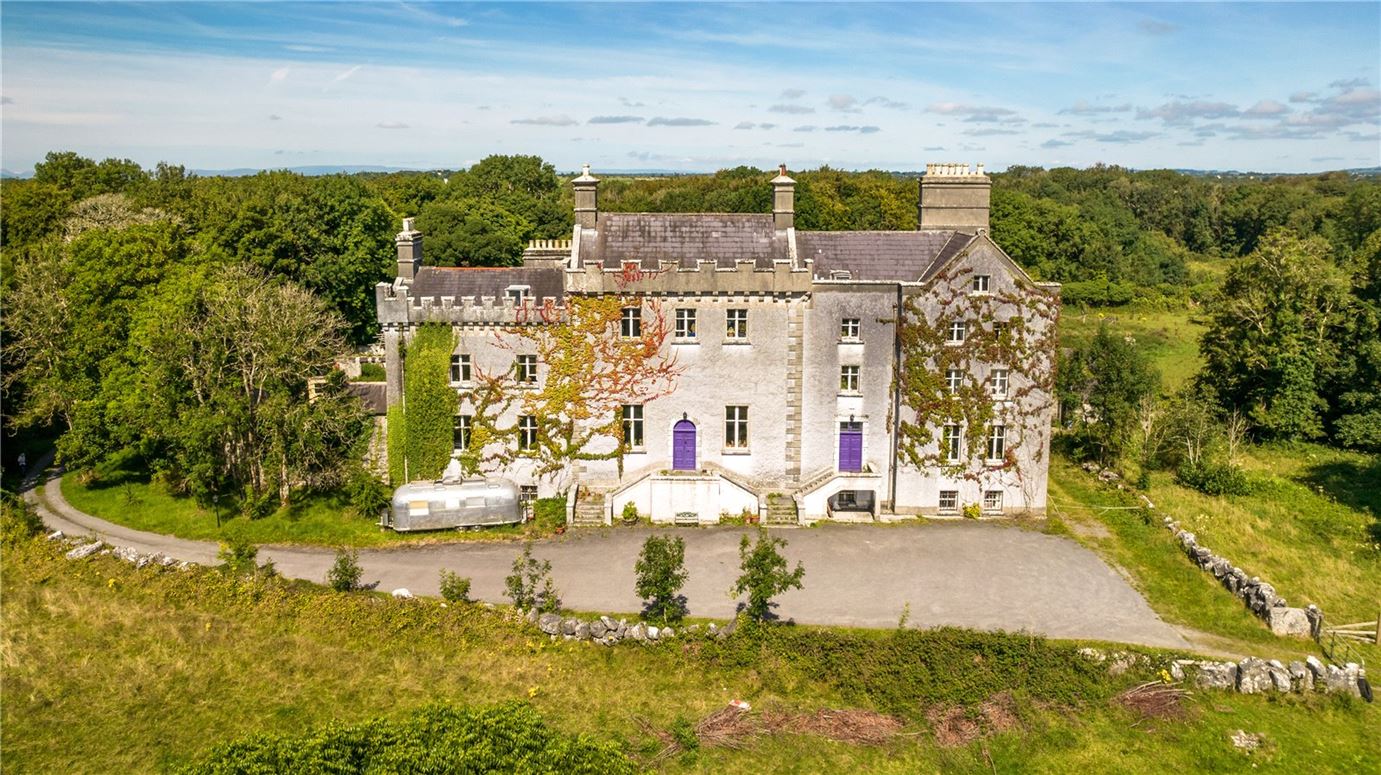
Places to visit and stay in County Westmeath

On the map above:

blue: places to visit that are not section 482

purple: section 482 properties

red: accommodation

yellow: less expensive accommodation for two

orange: “whole house rental” i.e. those properties that are only for large group accommodations or weddings, e.g. 10 or more people.

green: gardens to visit

grey: ruins

Places to visit in County Westmeath:

1. Athlone Castle, County Westmeath

2. Belvedere House, Gardens and Park, County Westmeath

3. Killua Castle, County Westmeath

4. Lough Park House, Castlepollard, Co. Westmeath – section 482

5. Rockfield Ecological Estate, Rathaspic, Rathowen, Mullingar, Co. Westmeath – section 482

6. Tullynally Castle & Gardens, Castlepollard, Co. Westmeath – section 482

7. Turbotstown, Coole, Co. Westmeath – section 482

8. Tyrrelspass Castle, County Westmeathrestaurant and gift shop 

Places to stay, County Westmeath: 

1. Annebrook House Hotel, Austin Friars Street, Mullingar, Co. Westmeath, N91YH2F

2. Lough Bawn House, Colllinstown, County Westmeath B&B

3. Lough Bishop House, Collinstown, County WestmeathB&B

4. Mornington House, County Westmeath – B&B

Whole House Rental/wedding venue, County Westmeath

1. Ballinlough Castle, County Westmeath – exclusive hire

2. Bishopstown House, Rosemount, County Westmeath – whole house rental (sleeps up to 18 people)

3.  Middleton Park, Mullingar, County Westmeath – whole house rental and weddings

donation

Help me to pay the entrance fee to one of the houses on this website. This site is created purely out of love for the subject and I receive no payment so any donation is appreciated!

€15.00

Places to visit in County Westmeath:

1. Athlone Castle, County Westmeath

http://www.athlonecastle.ie/ 

Cruising by Athlone Castle, Co Westmeath Courtesy Fennell Photography 2015, for Tourism Ireland, Ireland’s Content Pool.

The website tells us: “Trace the footprints of the generations who shaped this place. From early settlements and warring chieftains to foreign invaders and local heroes. This site on the River Shannon is the centre of Ireland’s Hidden Heartlands.

Over the centuries it has been the nucleus of the Anglo-Norman settlement; a stronghold of the rival local families the Dillons and the O’Kelly’s; the seat of the Court of Claims; the residence of the President of Connaught and the Jacobite stronghold during the sieges of Athlone.  After the Siege of Athlone it became incorporated into the new military barrack complex.  It remained a stronghold of the garrison for almost three hundred years.

In 1922 when the Free State troops took over the Barracks from their British counterparts, they proudly flew the tricolour from a temporary flagpole much to the delight of the majority of townspeople.

In 1967 the Old Athlone Society established a museum in the castle with a range of exhibits relating to Athlone and its environs and also to folk-life in the district.  Two years later when the military left the castle it was handed over to the Office of Public Works and the central keep became a National Monument.

In 1991 to mark the Tercentenary of the Siege of Athlone the castle became the foremost visitor attraction in Athlone.  Athlone Town Council (then Athlone UDC) made a major investment in the castle creating a multi-faceted Visitor Centre as it approached its 800th Anniversary in 2010. A total of €4.3million euro was invested in the new facility by Fáilte Ireland and Athlone Town Council and was officially opened by the then Minister of State for Tourism and Sport, Michael Ring T.D. on Tuesday 26th February 2012.

Athlone Castle, County Westmeath, photograph by Robert French, Lawrence Photographic Collection, National Library of Ireland.
Athlone Castle, Athlone, Co Westmeath_Courtesy Ros Kavanagh 2014, for Tourism Ireland, Ireland’s Content Pool.

Athlone Castle Visitor Centre is now a modern, engaging, fun and unique family attraction which harnesses most significant architectural features, such as the keep, to act as a dramatic backdrop to its diverse and fascinating story.

It houses eight individual exhibition spaces, each depicting a different aspect of life in Athlone, the Castle and the periods both before and after the famous Siege. Fun, hands-on interactives, touchable objects and educational narratives immerse visitors in the drama, tragedy and spectacle of Athlone’s diverse and fascinating story. 3D maps, audio-visual installations, illustrations and artefacts bring the stories and characters of Athlone to life and The Great Siege of Athlone is dramatically recreated in a 360-degree cinematic experience in the Keep of the castle.

Athlone Castle, Athlone, Co Westmeath_Courtesy Ros Kavanagh 2014, for Tourism Ireland, Ireland’s Content Pool.

As part of Westmeath County Council’s commemoration of Ireland’s world-renowned tenor, John Count McCormack, a new exhibition dedicated to the celebrated singer was opened at Athlone Castle in October 2014.

Archiseek tells us about Athlone Castle: “Towards the end of the 12th century the Anglo-Normans constructed a motte-and-bailey fortification here. This was superceeded by a stone structure built in 1210, on the orders of King John of England. The Castle was built by John de Gray, Bishop of Norwich. The 12-sided donjon dates from this time. The rest of the castle was largely destroyed during the Siege of Athlone and subsequently rebuilt and enlarged upon. In the early 1800s, during the Napoleonic Wars, the castle was rebuilt as a fortification to protect the river crossing, taking the form we largely see today. The machicolations of the central keep are all nineteenth century. In the interior is an early nineteenth century two-storey barrack building. The modern ramp up to the castle has a line of pistol loops. The castle was taken over by the Irish Army in 1922 and continued as a military installation until it was transferred to the Office of Public Works in 1970.” [8]

Athlone Castle, Athlone, Co Westmeath_Courtesy Sonder Visuals 2021 for Tourism Ireland, Ireland’s Content Pool.

2. Belvedere House, Gardens and Park, County Westmeath

Belvedere, County Westmeath, August 2021. Photograph © Jennifer Winder-Baggot, www.irishhistorichouses.com

http://www.belvedere-house.ie/

Mark Bence-Jones writes of Belvedere in his 1988 book:

p. 39. “(Rochfort, sub Belvedere, E/DEP Rochfort/LGI1912; Marlay/LGI1912; Howard-Bury, sub Suffolk and Berkshire, E/PB; and Bury/IFR) An exquisite villa of ca 1740 by Richard Castle, on the shores of Lough Ennell; built for Robert Rochfort, Lord Bellfield, afterwards 1st Earl of Belvedere, whose seat was at Gaulston, ca 5 miles away. Of two storeys over basement, with a long front and curved end bows – it may well be the earliest bow-ended house in Ireland – but little more than one room deep.”

Belvedere, County Westmeath, August 2021. Photograph © Jennifer Winder-Baggot, www.irishhistorichouses.com

See my entry https://irishhistorichouses.com/2024/05/23/belvedere-house-gardens-and-park-county-westmeath/

3. Killua Castle, County Westmeath

https://killuacastle.com/guided-tours/

4. Lough Park House, Castlepollard, Co. Westmeath

Lough Park House, photograph courtesy of National Inventory of Architectural Heritage.

Open dates in 2026: Mar 13-18, Apr 2-8, May 1-7, 28-31, June 1-3, July 18-26, Aug 1-10, 15-24, Oct 23-27, 2pm-6pm

Fee: adult €6

5. Rockfield Ecological Estate, Rathaspic, Rathowen, Mullingar, Co. Westmeath

Open dates in 2026: July 15-31, Aug 15-31, Sept 15-30, Oct 15-30, 2pm-6pm

Fee: Free

6. Tullynally Castle & Gardens, Castlepollard, Co. Westmeath N91 HV58

Tullynally, County Westmeath, August 2021. Photograph © Jennifer Winder-Baggot, www.irishhistorichouses.com

https://irishhistorichouses.com/2020/11/19/tullynally-castle-and-gardens-castlepollard-county-westmeath/

www.tullynallycastle.com

Open dates in 2026:

Castle – April 30, May 1-2, 7-9, 14-16, 21-23, 28-30, June 4-6, 11-13, 18-20, 25-27, July 2-4, 9-11, 16-18, 23-25, 30-31, Aug 1, 13-23, 27-29, Sept 3-5, 10-12, 17-19, 11am-3pm

Garden – Mar 19-22, 26-29, Apr 2-6, 9-12, 16-19, 23-26, 30, May 1-4, 7-10, 14-17, 21-24, 28-31, June 1, 4-7, 1-14, 18-21, 25-28, July 2-5, 9-12, 16-19, 23-26, 30-31, Aug 1-3, 6-9, 13-23, 27-30, Sept 3-6, 10-13, 17-20, 24-27,9am-5pm

Fee: castle fee – adult €17, child entry allowed for over 8 years €9, garden fee – adult €9, child €4, family ticket (2 adults + 2 children) €24, adult season ticket €60, family season ticket €73.50, special needs visitor with support carer €4, child 5 years or under is free

7. Turbotstown, Coole, Co. Westmeath

Turbotstown, County Westmeath. Photograph © Jennifer Winder-Baggot, www.irishhistorichouses.com

Open in 2026: Jan 9-11, 23-25, Apr 1, Aug 1-31, Sept 5,6, 22-28, Oct 1-4, Dec 19-24, 27-29

9am-1pm

Fee: adult/student/OAP €10, child €5

We visited in 2023, https://irishhistorichouses.com/2023/11/23/turbotstown-coole-co-westmeath/

and see Robert O’Byrne’s entry about Turbotstown, https://theirishaesthete.com/2015/10/19/a-fitting-tribute-to-the-past/

8. Tyrrelspass Castle, Co Westmeathrestaurant and gift shop

https://www.facebook.com/tyrrellspasscastle/ 

Places to stay, County Westmeath: 

1. Annebrook House Hotel, Austin Friars Street, Mullingar, Co.Westmeath, Ireland, N91YH2F

https://www.annebrook.ie/gallery.html

The family run Annebrook House Hotel Mullingar opened its doors February 2007.  Originally an Old Georgian residence for the local county surgeon, Dr O’Connell, the historic Annebrook House Hotel was purchased by the Dunne family in 2005. With his experience in hospitality and construction Berty Dunne set about creating a hotel as unique as the man who owns it. The Annebrook’s central location, its diverse range of accommodation from 2 bedroomed family suites to executive doubles has made it a very popular location for those coming to experience all that the midlands has to offer.

Situated in the heart of Mullingar overlooking 10 acres of parkland, the Award Winning 4 star Annebrook House Hotel presents a modern day styling coupled with 17th century heritage.  As a family run hotel the Annebrook prides itself on quality and high standards of customer service, working as part of one team to ensure all guests of their best and personal attention at all times. Annebrook House Hotel is steeped in history and enjoys the enviable advantage of being one of the most centrally located hotels in Mullingar town. This unique venue mixes old world charm with modern comfort and has established itself as one of Westmeath’s top wedding venues and was recently voted Best Wedding Venue Ireland by Irish Wedding Diary Magazine. With accommodation ranging from executive hotel rooms, family suites, luxurious champagne suites and apartments, the Annebrook has much to offer those visiting Mullingar. Offering a range of dining options from Berty’s Bar to fine dining in the award winning Old House Restaurant.  The four star Annebrook House Hotel offers an excellent service to both its corporate & leisure guests. The hotel is accessible by car just 50 mins from Dublin and is only 10 minutes from the local Train Station.

2. Lough Bawn House, Colllinstown, Co Westmeath – B&B accommodation

http://loughbawnhouse.com

Photograph courtesy of Lough Bawn House website.

A classic Georgian house in a unique setting. Lough Bawn house sits high above Lough Bane with amazing sweeping views. Nestled in a 50 acre parkland at the end of a long drive, Lough Bawn House is a haven of peace and tranquillity.

The house and estate has been in the same family since it was built in 1820 by George Battesby, the current occupier, Verity’s, Great Great Great Grandfather. The house is being lovingly restored by Verity, having returned from England to live in the family home. Verity ran her own catering and events company in Gloucestershire for over 20 years. Her passion for cooking & entertaining shines through. Guests enjoy an extensive and varied breakfast with much of the ingredients being grown or reared by Verity herself, and delicious dinners are on offer. Breakfast is eaten in the large newly restored dining room, with wonderful views over the lough and of the parading peacocks on the rolling lawns.

Photograph courtesy of Lough Bawn House website.

Both of the large, en-suite rooms have fine views down the length of Lough Bane and over the wooded hills while the single room and the twin/double room have sweeping views of the surrounding parklands. Guests are warmly welcomed and encouraged to relax in the homely drawing room in front of a roaring fire or to explore one of the many local historical sites, gardens, walks or cultural entertainments on offer.

Several areas of the estate have been classified as Special Areas of Conservation (SAC‘s) due to the incredibly varied and rare flora. Wild flowers can be found in abundance and a charming fern walk has been the created amongst the woodland near the house.

3. Lough Bishop House, Collinstown, County Westmeath – B&B

https://loughbishophouse.com/

The website tells us:

Built in the early 19th Century, Lough Bishop is a charming Country House nestling peacefully into a south-facing slope overlooking Bishop’s Lough in County Westmeath, Ireland.

Breathtaking scenery in an unspoilt and tranquil setting, amid the rolling farmlands and lakes of Westmeath make Lough Bishop an ideal refuge from the hustle and bustle of modern life. There are family dogs in the background and animals play a large part of life at Lough Bishop House.

Lough Bishop House is a family run business offering Country House Bed & Breakfast accommodation in a wonderful location in the middle of a working organic farm. We even have a purpose built trailer towed behind the quad bike to give guests a tour of the farm and the opportunity to get up close to the animals.

Following extensive renovation this attractive Georgian Country Farmhouse offers its guests luxurious bed and breakfast accommodations, peaceful surroundings and fine home cooked food much of which comes from our own farm, garden and orchard.

4. Mornington House, County Westmeath – B&B accommodation 

Mornington House, photograph courtesy of their website.

https://mornington.ie

Mornington House, a historic Irish Country Manor offering luxury country house accommodation located in the heart of the Co. Westmeath countryside, just 60 miles from Ireland’s capital city of Dublin. Tranquility and warm hospitality are the essence of Mornington, home to the O’Hara’s since 1858.

Mornington House is hidden away in the midst of a charming and dramatic landscape with rolling hills, green pasture, forests with ancient, heavy timber and sparkling lakes, deep in an unexplored corner of County Westmeath. Nearby are ancient churches, castles and abbeys, and delightful small villages to explore, away from all hustle and bustle of 21st century life, yet just 60 miles from Dublin.

There has been a house at Mornington since the early 17th century but this was considerably enlarged in 1896 by Warwick’s grandparents. It is now a gracious family home with a reputation for delicious breakfasts which are prepared in the fine tradition of the Irish Country House and really set you up for the day ahead.

A special place to stay for a romantic or relaxing break Mornington House’s location in the centre of Ireland just an hour’s drive from Dublin and Dublin Airport makes it ideal for either a midweek or weekend country break. Guests can walk to the lake or wander round the grounds. Excellent golf, fishing, walking and riding can be arranged. The Hill of Uisneach, the Neolithic passage tombs at Loughcrew and Newgrange and the early Christian sites at Fore and Clonmacnoise are all within easy reach, as are the gardens at Belvedere, Tullynally and Loughcrew.

The National Inventory tells us:

A well-detailed middle-sized country house, on complex plan, which retains its early aspect, form and much of its important early fabric. The ascending breakfronts to the entrance front of this structure adds to the overall form and its architectural impact. The facade, incorporating extensive moulded detailing and a very fine doorcase, is both visually and architecturally impressive and displays a high level of workmanship. The present entrance front (east) is built to the front of an earlier house, the form of which suggests that it might be quite early, perhaps early eighteenth-century in date. The 1896 entrance front was built to designs by W.H. Byrne (1844-1917), a noted architect of his day, best remembered for his numerous church designs. Apparently, Mornington is one of only two domestic commissions that can be attributed to this noteworthy architect, adding extra significance to this structure. The building was completed by 1898 at a cost of £2,400. Mornington House was in the ownership of the Daly Family in the early eighteenth-century and has been in the ownership of the O’Hara Family since 1858. It forms the centrepiece of an interesting, multi-period, complex with the outbuildings, the walled gardens and the fine entrance gates to the south. It represents an important element to the architectural heritage of Westmeath and occupies attractive nature grounds to the east of Multyfarnham.” [9]

Whole House accommodation, County Westmeath:

1. Ballinlough Castle, County Westmeath – exclusive hire

See https://www.ballinloughcastle.ie

Ballinlough Castle, County Westmeath, photograph courtesy of Ballinlough Castle’s website.

The website tells us Ballinlough Castle is available for exclusive hire of the castle and the grounds (minimum hire 3 nights) is available for private or corporate gatherings. Focussing on relaxed and traditional country house hospitality, assisted by a local staff.

Ballinlough Castle, County Westmeath, photograph courtesy of Ballinlough Castle’s website.
“Refurbishment of Ballinlough Castle, Clonmellon,”c. 1940, G&T Crampton, held by Assoc. Prof. Joseph Brady, Digital content by Dr. Joseph Brady, published by UCD Library, University College Dublin.

The website tells us of its history:

The Nugent family at Ballinlough were originally called O’Reilly, but assumed the surname of Nugent in 1812 to inherit a legacy. They are almost unique in being a Catholic Celtic-Irish family who still live in their family castle.

The castle was built in the early seventeenth century and the O’Reilly coat of arms over the front door carries the date 1614 along with the O’Reilly motto Fortitudine et Prudentia.

The newer wing overlooking the lake was added by Sir Hugh O’Reilly (1741-1821) in the late eighteenth century and is most likely the work of the amateur architect Thomas Wogan Browne, also responsible for work at Malahide Castle, the home of Sir Hugh O’Reilly’s sister Margaret.  

Sir Hugh was created a baronet on 1795 and changed the family name in 1812 in order to inherit from his maternal uncle, Governor Nugent of Tortola.

As well as the construction of this wing, the first floor room above the front door was removed to create the two-storey hall that takes up the centre of the original house. The plasterwork here contains many clusters of fruit and flowers, all different. A new staircase was added, with a balcony akin to a minstrel’s gallery, and far grander than the original staircase that still remains to the side.

Ballinlough Castle, County Westmeath, photograph courtesy of Ballinlough website https://www.ballinloughcastle.ie/history

Sir Hugh’s younger brothers James and Andrew entered Austrian military service, the latter becoming Governor-General of Vienna and Chamberlain to the Emperor. His portrait hangs in the castle’s dining-room.

The family traces directly back to Felim O’Reilly who died in 1447. Felim’s son, John O’Reilly was driven from his home at Ross Castle near Lough Sheelin and settled in Kilskeer. His grandson Hugh married Elizabeth Plunket with whom he got the estate of Ballinlough, then believed to have been called Bally-Lough-Bomoyle. It was his great-grandson James who married Barbara Nugent and about whom an amusing anecdote is told in Duffy’s Hibernian Magazine of 1860:

During the operation of the penal laws in Ireland, when it was illegal for a Roman Catholic to possess a horse of greater value than five pounds, he was riding a spirited steed of great value but being met by a Protestant neighbour who was on foot, he was ordered by him to relinquish the steed for the sum of five pounds sterling.  This he did without hesitation and the law favoured neighbour mounted his steed and rode off in haughty triumph.  Shortly afterwards, however, James O’Reilly sued him for the value of the saddle and stirrups of which he was illegally deprived and recovered large damages.

The investment in the castle by James’ son, Hugh was recorded in The Irish Tourist by Atkinson 1815, which contained the following account of a visit to Ballinlough:

The castle and demesne of Ballinlough had an appearance of antiquity highly gratifying to my feelings ….. I reined in my horse within a few perches of the grand gate of Ballinlough to take a view of the castle; it stands on a little eminence above a lake which beautifies the demesne; and not only the structure of the castle, but the appearance of the trees, and even the dusky colour of the gate and walls, as you enter, contribute to give the whole scenery an appearance of antiquity, while the prospect is calculated to infuse into the heart of the beholder, a mixed sentiment of veneration and delight.  

Ballinlough Castle, County Westmeath, photograph courtesy of Ballinlough website https://www.ballinloughcastle.ie/history

Having visited the castle of Ballinlough, the interior of which appears a good deal modernised, Sir Hugh had the politeness to show me two or three of the principal apartments; these, together with the gallery on the hall, had as splendid an appearance as anything which I had, until that time, witnessed in private buildings.  The rooms are furnished in a style- I cannot pretend to estimate the value, either of the furniture or ornamental works, but some idea thereof may be formed from the expenses of a fine marble chimney-piece purchased from Italy, and which, if any solid substance can in smoothness and transparency rival such work, it is this.  I took the liberty of enquiring what might have been the expense of this article and Sir Hugh informed me only five hundred pounds sterling, a sum that would establish a country tradesman in business! The collection of paintings which this gentleman shewed me must have been purchased at an immense expense also- probably at a price that would set up two: what then must be the value of the entire furniture and ornamental works?

Sir Hugh was succeeded in the baronetcy by his eldest son James, who was succeeded by his brother Sir John, who emulated his uncle in Austria in becoming Chamberlain to the Emperor.  His eldest son Sir Hugh was killed at an early age so the title then passed to his second son Charles, a racehorse trainer in England. Sir Charles was an unsuccessful gambler which resulted in most of the Ballinlough lands, several thousand acres in Westmeath and Tipperary being sold, along with most of the castle’s contents.

Sir Charles’ only son was killed in a horseracing fall in Belgium in 1903, before the birth of his own son, Hugh a few months later.  Sir Hugh inherited the title on the death of his grandfather in 1927 and, having created a number of successful businesses in England, retuned to Ballinlough and restored the castle in the late 1930s.  His son Sir John (1933- 2010) continue the restoration works and the castle is now in the hands of yet another generation of the only family to occupy it.”

Ballinlough Castle, County Westmeath, photograph courtesy of Ballinlough website https://www.ballinloughcastle.ie/history

featured in Great Irish Houses. Forewards by Desmond FitgGerald, Desmond Guinness. IMAGE Publications, 2008. 

p. 49. “We took over the running and living of the property a few years ago, and structural renovation have been our focus up till now,” says Nick Nugent, the present owner. “It has been a huge challenge, as the entire Georgian wing was leaning out to the lake and we needed to underpin it.” 

Although few of the original pieces of furniture remain, many of the portraits were saved and they provide a unique pictorial history to illustrate the house’s colourful lineage. Over the dining room door hang portraits of Count Andrew, Chamberlain to the Emperor of Austria and Governor General of Vienna when Napolean attacked in 1809, and his great nephew, Sir John Nugent, Chamberlain to the Austrian Emperor. His son, Charles, who got himself into financial trouble through gambling, is also represented, as is an interesting non-famiyportrait of the Duke of Ormond accompanied, unusually for Ireland, by a black manservant. 

Today, Nick and Alice Nugent, who live in the castle with their children, have successfully secured the physical foundations at the lakeside of the house itself and begun the process of redecorating. They were assisted in the redecoration by Kate Earle of Todhunter Earle, a prestigious company with an impressive client list including Au Bar in New York, the Berkeley Hotel in London and Sissinghurst Castle in Kent. 

Their next task, in its own good time, will be to decorate the rest of the property. Much of the plasterwork had split over the years and the Nugents have repaired the cracks and set about rendering part of the exterior with several coats of lime mortar. In the basement, exposed pipes were found to contain asbestos, which needed treatment. “At that point our impending poverty was accelerated somewhat,” observes Nick Nugent wryly. 

The Georgian windows, said to be the tallest in Ireland, have all been removed and repaired under the careful eye of Kells Windows, and, where it survives, the Georgian glass has been retained. In time, they hope to render the rest of the façade and secure the foundations for future generations.

Like many Georgian castles, the building grew in stages. 

p. 50 “The ground floor contains a larg drawing room and dining room with four first floor bedrooms approached by a vaulted corridor above.

[about the Hall] “Initially a double storey room, it is thought Sir Hugh O’Reilly added a new wing towards the end of the 18th century, taking away the first floor in the hall and creating a fine galleried space with grand staircase. …The woodwork has taken on an unusual but entirely fitting stripped pine format, giving the appearance of faded grandeur. Mouldings are individualised with every three or four feet a new set revealed. Interestingly, there is no grand fireplace as is the case in most Irish entrance halls, but this absence may be due to re-modifications over the ages

To the right of the entrance hall is a morning room, which is now used as a smaller sitting room, which has an interesting set of oval portraits by Hugh Douglas Hamilton, relating to the O’Reilly and Nugent families. The design of the fireplace is replicated throughout the house and an original door connects to a back room. 

Moving to the left is the library or study, and family legend has it that Oliver Cromwell docked here for a night, keeping a cow in one archway and a horse in another. The drawing room, with Gothic pendant motifs and circular angles, is cetnred by a marvellous white chimneypiece, which is an exact copy of the chimneypiece in the dining room at Curraghmore. Roman females support either upright and the frieze is particularly well crafted.

It was Nick Nugent’s grandfather, Sir Hugh Nugent, who brought in the majority of contents in this room and the neighbouring dining room where the severely damaged plasterwork has been repaired. In fact, the upturn in Ballinlough Castle’s fortunes began with Sir Hugh who returned to Ireland after a highly successful business career – he invented the tractor cab among other things – at a period when Irish country houses were being vacated. The house was semi-derelict and had been lived in for ten years by Owen Quinn, a family steward, who in the words of Sir John, “Lived in the house on his own with no heating, no water and rats everywhere.”  

Towards the end of the 1930s the house underwent thorough restoration, and much of the current interior decoration downstairs comes from that period, which was completed in 1939. [p. 55] The firm Cramptons, who were still building in Dublin at the time, worked on the restoration and carried out the re-wiring on the premises. 

In recent years, the magnificent gardens have been restored by Sir John and Lady Nugent, with help from the European Union and the Great Gardens of Ireland Programme. The walled garden, which is divided inot four walled sections, is home to a significant collection of shrubs, roses and climbers while the herbaceous borders are being remodeled. The grass tennis court, lily pond, rose garden, herb and soft fruit garden and orchard, all continue to thrive. From the walled gardens, a white door leads to the lakeside walks with the inviting water garden and its rustic summerhouse. 

Nick Nugent and his wife Alice are now committed to carrying on the mantle and their vision is to marry a subtle contemporary feel with country house living. The rooms on the upper floors reveal the new direction. There are twelve bedrooms, many of them with new en suite bathrooms. There are quirky touches, with some of the rooms having wallpapered ceilings, best defining their unorthodox physical shapes, and practical changes too, such as turning an old single four-poster bed into a double, which add to the pervading sense of comfort and cosiness.” 

Ballinlough Castle, County Westmeath, photograph courtesy of Ballinlough website https://www.ballinloughcastle.ie/history

1. Bishopstown House, Rosemount, Westmeath (sleeps up to 18 people)

https://www.bishopstownhouse.ie

Photograph courtesy of Bishopstown House website.

The website tells us of the history:

Bishopstown House is a three-storey Georgian house built in the early 1800s by the Casey family. After he passed away, the original owner, Mr. J Casey left Bishopstown to his two daughters, who then sold the house to Mr Richard Cleary in 1895.

Mr Richard Cleary, formally from the famed lakeside Cleaboy Stud near Mullingar, planned and erected Bishopstown House and Stud. In his younger days he rode horses at Kilbeggan, Ballinarobe, Claremorris and other Irish meetings with varying degrees of success, but as a trainer he knew no bounds. In his later years he devoted his time to breeding and training, and in time he became one of Ireland’s most famous trainers, breeding some excellent horses, including the winner of the 1916 Irish Grand National, Mr James Kiernan’s All Sorts!

Other famous horses from the Bishopstown stud include Shaun Spada and Serent Murphy who both won the Aintree Grand National in England. Another horse called Dunadry won the Lancashire Steeple Chase. Other stallion winners include Sylvio III, Lustrea and Irish Battle who frequently had their names in the limelight throughout Irish and English racecourses.

After being left fall into a dilapidated state, the stud farm and house was purchased by Paddy and Claire Dunning, the owners of the award-winning Grouse Lodge Recording Studios and Coolatore House and members of the Georgian society. It was restored to its former glory in 2009 and is now available for rent.

2.  Middleton Park, Mullingar, County Westmeath – wedding venue and accommodation 

Photograph courtesy of Middleton Park House website.

https://www.middletonparkhouse.com

http://mph.ie

Middleton Park House featured in The Great House Revival on RTE, with presenter (and architect) Hugh Wallace. The website tells us:

Carolyn and Michael McDonnell, together with Carolyn’s brother Henry, joined together to purchase this expansive property in Castletown Geoghegan. Built during the famine, the property was last in use as a hotel but it had deteriorated at a surprisingly fast rate over its three unoccupied years.

Designed by renowned architect George Papworth, featuring a Turner-designed conservatory, Middleton Park House stands at a palatial 35,000sq. ft. and is steeped in history. Its sheer scale makes it an ambitious restoration.

The trio’s aim is to create a family home, first and foremost, which can host Henry’s children at the weekends and extended family all year-round. Due to its recent commercial use, the three will need to figure out how to change industrial-style aspects to make it a welcoming home that is economical to run.

Henry will be putting his skills as a contractor and a qualified chippy to use, and Michael will be wearing his qualified engineer’s hat to figure out an effective heating system. Carolyn will be using her love of interiors to work out the aesthetic of the house, and how to furnish a property the size of 35 semi-detached houses in Dublin.

Photograph courtesy of Middleton Park House website.

The trio have now made the house available for accommodation and as a wedding venue.

Photograph courtesy of Middleton Park House website.

The National Inventory tells us:

A very fine and distinguished large-scale mid-nineteenth country house, which retains its early form, character and fabric This well-proportioned house is built in an Italianate style and is elevated by the fine ashlar limestone detailing, including a well-executed Greek Ionic porch/portico and a pronounced eaves cornice. This house was (re)built for George Augustus Boyd [1817-1887] in 1850 to designs by George Papworth (1781-1855) and replaced an earlier smaller-scale house on site, the property of a J. Middleton Berry, Esq., in 1837 (Lewis). The style of this house is quite old fashioned for its construction date and has the appearance of an early-nineteenth/late-Georgian country house. The form of this elegant house is very similar to Francis Johnston’s masterpiece Ballynagall (15401212), located to the north of Mullingar and now sadly in ruins. This house remained in the Boyd-Rochfort family until 1958 and was famously offered as a prize in a raffle in 1986 by its then owner, Barney Curly. This house forms the centerpiece of an important collection of related structures along with the elegant conservatory by Richard Turner (15318024), the service wing to the north (15318020), the stable block to the north (15318022) and the main gates (15318017) and the gate lodge (15318018) to the west. This building is an important element of the built heritage of Westmeath and adds historic and architectural incident to the landscape to the south of Castletown Geoghegan.” [10]

[1] https://www.buildingsofireland.ie/buildings-search/building/14911023/ballybrittan-house-ballybrittan-co-offaly

[2] https://www.irelandscontentpool.com/en

[3] Bence-Jones, Mark. A Guide to Irish Country Houses (originally published as Burke’s Guide to Country Houses volume 1 Ireland by Burke’s Peerage Ltd. 1978); Revised edition 1988 Constable and Company Ltd, London.

[4] p. 136. O’Reilly, Sean. Irish Houses and Gardens. From the Archives of Country Life. Aurum Press Ltd, London, 1998. 

[5] https://www.buildingsofireland.ie/buildings-search/building/14942001/corolanty-house-curralanty-offaly

[6] https://www.ihh.ie/index.cfm/houses/house/name/Gloster%20House

[7] https://offalyhistoryblog.wordpress.com/2018/03/31/sun-too-slow-sun-too-fast-ethel-and-enid-homan-mulock-of-ballycumber-house-by-lisa-shortall/

[8] https://archiseek.com/2009/athlone-castle-co-westmeath/

[9] https://www.buildingsofireland.ie/buildings-search/building/15400709/mornington-house-monintown-co-westmeath

[10] https://www.buildingsofireland.ie/buildings-search/building/15318019/middleton-park-house-castletown-geoghegan-co-westmeath

Text © Jennifer Winder-Baggot, www.irishhistorichouses.com

Wilton Castle, Bree, Enniscorthy, Co. Wexford Y21 V9P9 – section 482

Tourist Accommodation Facility – not open to visitors, overnight guests only

www.wiltoncastleireland.com
Open for accommodation: all year

Wilton Castle. Photograph © Jennifer Winder-Baggot, www.irishhistorichouses.com
Wilton Castle, November 2021. Photograph © Jennifer Winder-Baggot, www.irishhistorichouses.com

We treated ourselves to a stay in Wilton Castle in November in 2021. Having been gutted in a fire in 1923, it stood as a dramatic ruin until the Windsors purchased and began to refurbish it into luxurious accommodation. The current restoration was completed in 2014. So far just half of it has been rebuilt, the rest has been stabilised but remains empty and without a roof. The work which has been done by the Windsors is incredible – it seems to have been rebuilt to a very high standard. I’m not sure if they intend to continue to rebuild the rest of the castle.

Wilton Castle was designed for Harry Alcock (1792-1840) by Daniel Robertson (d. 1849) in 1836-38, subsuming parts of an earlier castle and house.

The area was previously known as Clogh na Kayer (The Castle of the Sheep). Herbert Hore writes in History of the Town and County of Wexford that an ancient Castle of Cloghnakayer was built in the fourteenth century. The De Dene family owned the land until 1354, when an only daughter married Philip Furlong whose descendant, Sir Fulke Furlong, knight, of Horetown, built a castle around 1410. 

The land then passed to the Butlers of Mountgarret. Edward Butler, Baron of Kayer (eldest son of Pierce, second son of Richard 1st Viscount Mountgarret) rebuilt and restored the ancient Castle, and added a mansion house to it in 1599. [1]

The view from our suite. Photograph © Jennifer Winder-Baggot, www.irishhistorichouses.com

Edward Butler’s son, Pierce, inherited. Pierce Butler was a Catholic and a supporter of the monarchy and his land was confiscated by the Cromwellian parliament in 1655 and granted to a Cromwellian soldier, Captain Robert Thornhill. Captain Robert’s son sold the estate in 1695 to William Alcock (d. 1705) of Downpatrick, County Down. [2]

Miss Jane Alcock (1674-1764), daughter of William Alcock (d. 1705) of Wilton Castle in County Wexford, she married Pat Lattin (1668-1732), she died aged 90, courtesy Fonsie Mealy July 2018.

Herbert Hore tells us that William Alcock rebuilt the castle, and called it Wilton. It was this castle that was subsumed in Daniel Robertson’s design for Harry Alcock. Herbert Hore writes that “the late Colonel Alcock [Harry, (1821-93)] told me that some of the walls of the ancient Castle of the Butlers are incorporated in the present building.”

Robert O’Byrne writes: “William Alcock built a new residence for himself on the site of an old castle, and this was occupied by his descendants for several generations. A handsome classical doorcase of granite with segmental pediment above fluted pilasters survives on the façade of the former steward’s house at Wilton to indicate the appearance of the original Alcock house, dismissed by Martin Doyle in his 1868 book on the county as being ‘in the dull style of William and Mary.’ ” [3]

A handsome classical doorcase of granite with segmental pediment above fluted pilasters survives on the façade of the former steward’s house at Wilton to indicate the appearance of the original Alcock house.” Photograph © Jennifer Winder-Baggot, www.irishhistorichouses.com
The former steward’s house, in the stable yard below Wilton Castle. Photograph © Jennifer Winder-Baggot, www.irishhistorichouses.com

A daughter of William and his wife Jane nee Bamber of Bamber Hall of Lancaster, England, married Patrick Lattin and was the mother of the famous Jack Lattin of Morristown Lattin, County Kildare, who danced himself to death!

The estate passed to William Alcock’s son, another William Alcock (1681-1739), then to his son, Col. William Alcock (d. 1779) (Colonel in the Waterford Militia). He married Mary Loftus of Loftus Hall, County Wexford, daughter of Nicholas Loftus, 1st Viscount Loftus of Ely and his wife Anne Ponsonby, daughter of William Ponsonby, 1st Viscount Duncannon.

Loftus Hall, the home of Mary Loftus, wife of William Alcock (d. 1779). Photograph from the National Inventory of Architectural Heritage.

Wilton then passed to his son, Henry Alcock (d. 1811). Henry Alcock married Elizabeth Katherine Ussher, daughter of Beverly Ussher of Kilmeadon, County Waterford, who was a long term MP for County Waterford. Henry Alcock also served as an MP for Waterford. Elizabeth Katherine’s sister Mary also married an MP, John Congreve of Mount Congreve in Waterford (which has beautiful gardens open to the public, although temporarily closed – I wonder if the house is to be opened also?).

The estate then passed to his son, William Congreve Alcock (1771-1812). William competed in the general election of 1807 against John Colclough of Tintern Abbey (son of Vesey Colclough, MP for County Wexford). Unfortunately they decided to settle a dispute by a duel, and William shot and killed John. John had been engaged to a sister of William’s. William was tried for murder but acquitted. He never got over the incident however and it affected his mental health and he died five years later. [4] Thus Wilton Castle passed to his brother, Harry Alcock (1792-1840).

In 1818 Harry Alcock married Margaret Elinor Savage, daughter of James Savage of Kilgibbon, County Wexford (this house is now a ruin). He then engaged Daniel Robertson in 1837 to renovate Wilton House, which became Wilton Castle. The newer house was built in front of the older Wilton House.

The older Wilton House, covered in weather-slating, is visible at the back of Wilton Castle. Photograph © Jennifer Winder-Baggot, www.irishhistorichouses.com

The details of Daniel Robertson’s training are not known. He struggled with bankruptcy for a large part of his life and moved from working in Oxford in England to Ireland, at the urging of his father-in-law. The Dictionary of Irish Architects tells us:

From the early 1830s he did no further work in Britain but received a series of commissions in Ireland, mainly for country house work in the south eastern counties. Most of these houses or additions were in the Tudor style, which, he asserted in a letter to a client, Henry Faulkner, of Castletown, Co. Carlow, was ‘still so new and so little understood in Ireland’. For some of them he used Martin Day as his executant architect. In spite of his success in attracting commissions, when he was working at Powerscourt in the early 1840s he was, in the words of Lord Powerscourt, ‘always in debt and…used to hide in the domes of the roof of the house’ to escape the Sheriff’s officers who pursued him. By then he was crippled with gout and in an advanced state of alcoholism; at Powerscourt he ‘used to be wheeled out on the terrace in a wheelbarrow with a bottle of sherry, and as long as that lasted he was able to design and direct the workmen, but when the sherry was finished he collapsed and was incapable of working till the drunken fit had evaporated.’ In at least two instances – at Powerscourt and at Lisnavagh – he lived on the premises while work was in progress, and it seems that from the 1830s until the year of his death his wife and family never settled for any time in Ireland… Robertson was overseeing the completion of Lisnavagh, Co. Carlow, where he had been living intermittently since the start of building in 1846, when he fell seriously ill in the spring of 1849” and died in September of that year. [5]

Ballydarton House, County Carlow, also designed by Daniel Robertson, in 1830. Photograph from the National Inventory of Architectural Heritage.
Dunleckney Manor, County Carlow, by Daniel Robertson, 1835. Photograph from the National Inventory of Architectural Heritage.

Daniel Robertson also designed the nearby Johnstown Castle in County Wexford. We visited Johnstown Castle also but unfortunately it was closed the only day we were in Wexford, as they were taking down Hallowe’en decorations from a special event! Such a pity we weren’t able to see the inside of the castle yet, but we shall certainly visit again.

Johnstown Castle is described in the National Inventory of Architectural Heritage: “the construction in a blue-green rubble stone offset by glimmering Mount Leinster granite dressings not only demonstrating good quality workmanship, but also producing a sober two-tone palette.” [6] Wilton Castle also has Mount Leinster granite dressings. It was covered however in white lime plaster – which has been reinstated on the renovated part of the castle.

The lakeside facade of Johnstown Castle, County Wexford, built 1836-72 for Hamilton Knox Grogan Morgan (1808-54), MP, also by Daniel Robertson – it has remarkable similarities to Wilton Castle. It envelops a seventeenth-century house (perhaps by Thomas Hopper) [7] remodelled (1810-4) by James Pain (1779-1877) of Limerick. Photograph © Jennifer Winder-Baggot, www.irishhistorichouses.com
Johnstown Castle overlooks a beautiful lake. Photograph © Jennifer Winder-Baggot, www.irishhistorichouses.com

Harry’s daughter Henrietta married William Russell Farmar who also had a house built by Daniel Robertson: Bloomfield in County Wexford.

Bloomfield, a country house erected for William Russell Farmar JP (1802-71) to a design by Daniel Robertson. Photograph from National Inventory of Architectural Heritage.

Another daughter, Sarah, married Thomas John Fetherston, 5th Baronet, of Ardagh, County Longford (the house is now in use as training college, St. Brigid’s Training College, by the Sisters of Mercy).

Harry’s son, another Harry Alcock (1821-93), inherited Wilton Castle and the estate. He served as High Sheriff of Wexford in 1846 and was Lt-Col. of the Wexford Militia.  He continued the building work, which finished in 1844, adding the large square four storey tower with its elaborate balconies. He also improved the surrounding estate. He increased the plantation of trees and implemented a programme of road construction, fence building and draining of land which was carried out as Famine relief work. [8]

Wilton Castle, November 2021. Photograph © Jennifer Winder-Baggot, www.irishhistorichouses.com

Wilton Castle, when designed by Daniel Robertson, consisted of a three-storey main block and two-storey wing, all dominated by a tall square tower at one end and a tall polygonal tower and turret at the other, and it is heavily machicolated and battlemented. It is the two storey wing which has been renovated for accommodation.

The tall square tower is at one end of Wilton Castle, on the three storey section. Photograph © Jennifer Winder-Baggot, www.irishhistorichouses.com

Harry Alcock died unmarried in 1893 and the estate (some 7,000 acres in the 1870s) passed to his nephew, Philip Clayton Alcock (1861-1949), son of Harry’s brother Philip Savage Alcock (1828-86) of Park House on the Wilton estate and his wife Katherine Annette Browne-Clayton of Carrickbyrne Lodge in County Wexford. Philip Clayton Alcock was a Captain in the Gloucestershire Regiment, and in 1900 High Sheriff of Wexford, but by 1922 he felt it was too dangerous to remain at Wilton and moved to England. In 1923 his fears about his Irish property were justified when Wilton Castle was burned by arsonists. [9]

A contemporary account in the Irish Times, 7 March 1923 tells us about the burning: “Wilton Castle, the residence of Captain P.C. Alcock, about three miles from Enniscorthy, was burned by armed men on Monday night. Nothing remains of the beautiful building but smoke-begrimed, roofless walls, broken windows, and a heap of smouldering debris. The Castle was occupied by a caretaker – Mr. James Stynes – the owner, with his wife and family, having gone to England about a year ago. Shortly after 9 o’clock on Monday night the caretaker was at the Steward’s residence…when he was approached by armed men, who demanded the keys to the Castle. When he asked why they wanted the keys, one of the armed men said: “We have come to burn the place. We are sorry”. The raiders told the caretaker that he could remove his personal belongings from the part of the Castle that he occupied, but they would not allow him to remove the furniture. Fearing that the Castle might be burned, however, Captain Alcock had removed the most valuable portion of his furniture some weeks ago, but a good many rooms were left furnished. When the caretaker had removed his property he was ordered back to the Steward’s house. Soon the noise of breaking glass was heard. It appears that the armed men broke all the windows on the ground floor, and having sprinkled the floors with petrol, set them alight. They did not hurry over their work of destruction, and they did not leave the Castle until near 12 o’clock, when the building was enveloped in flames. About thirty men took part in the raid. After the raiders left, the caretaker and Steward, with what help they could procure, tried to extinguish the flames, but their effort was hopeless”. [10]

Photograph from the National Inventory of Architectural Heritage of Wilton Castle before renovation.
The tall polygonal tower and telescoping turret at the other end of Wilton Castle, on the two storey section of the castle, which has been renovated and faced in a creamy white lime plaster to distinguish it from the section which remains a ruin. Photograph © Jennifer Winder-Baggot, www.irishhistorichouses.com

Wilton Castle was built on a moated platform surrounded by parapet walls and sham fortifications.

The moated area, in front of the castle. Photograph © Jennifer Winder-Baggot, www.irishhistorichouses.com
One of the little fortification towers along the moat in front of the castle. Photograph © Jennifer Winder-Baggot, www.irishhistorichouses.com
Area in front of the castle, with another of the fortification towers and the moated area (not filled with water) lies on the far side of the low wall. Photograph © Jennifer Winder-Baggot, www.irishhistorichouses.com
The windows of Wilton Castle are arched and paired and have hood mouldings; the roof has crenellations. Photograph © Jennifer Winder-Baggot, www.irishhistorichouses.com
The side of Wilton Castle. Note the fine stone chimneys. The octagonal turret on the south west corner of Wilton Castle is built entirely of Mount Leinster granite and contains 182 cubic ft of stone or approx 13.5 ton in weight. [11] Photograph © Jennifer Winder-Baggot, www.irishhistorichouses.com
Wilton Castle, November 2021. Photograph © Jennifer Winder-Baggot, www.irishhistorichouses.com

In the three storey section of the castle, there is a beautiful carved doorcase, and an oriel window over it with delicate stone tracery and crenellations on top of the windowframe. Mark Bence-Jones defines an oriel window as “a large projecting window in Gothic, Tudor, Gothic-Revival and Tudor-Revival architecture; sometimes rising through two or more storeys, sometimes in an upper storey only and carried on corbelling.” [12] There is a similar oriel window at Johnstown Castle, which is only one storey high.

The beautifully carved Tudor-style doorcase at Wilton Castle. Photograph © Jennifer Winder-Baggot, www.irishhistorichouses.com
The carved doorcase and oriel window of Wilton Castle. Photograph © Jennifer Winder-Baggot, www.irishhistorichouses.com

At Wilton Castle there are double sets of sidelight windows either side of the doorcase, with arched carved window frames.

The Oriel window at Johnstown Castle, similar to that at Wilton Castle though the one at Wilton Castle is double-height. Photograph © Jennifer Winder-Baggot, www.irishhistorichouses.com

I was most excited to discover that we could explore the ruined part of the castle as it has been stabilised securely. It was wonderful to explore the detail.

The tower of the ruined part of Wilton Castle. It has wonderful balconies on heavy stone corbels with Gothic tracery windows. Photograph © Jennifer Winder-Baggot, www.irishhistorichouses.com
The oriel window and doorcase as seen from inside Wilton Castle. Photograph © Jennifer Winder-Baggot, www.irishhistorichouses.com
Wilton Castle. Photograph © Jennifer Winder-Baggot, www.irishhistorichouses.com
Wilton castle. Photograph © Jennifer Winder-Baggot, www.irishhistorichouses.com
Wilton Castle, November 2021. Photograph © Jennifer Winder-Baggot, www.irishhistorichouses.com

We kept discovering more. Pictures from the front of the castle do not do it justice. The land drops down behind the castle to the River Boro, to reveal beautiful pastoral views from the back windows of the castle.

The view over the river from inside the ruin of Wilton Castle. Photograph © Jennifer Winder-Baggot, www.irishhistorichouses.com
Wilton Castle. Photograph © Jennifer Winder-Baggot, www.irishhistorichouses.com
The River Boro running along the back of Wilton Castle. Photograph © Jennifer Winder-Baggot, www.irishhistorichouses.com
There are lots of stone corbels. Photograph © Jennifer Winder-Baggot, www.irishhistorichouses.com
The spiral staircase inside the round tower at the back of the castle which joins the older Wilton House to the rest of the Castle. Photograph © Jennifer Winder-Baggot, www.irishhistorichouses.com
The view from the interior spiral staircase inside the ruin, of the river side of the castle and down toward the steward’s house. Photograph © Jennifer Winder-Baggot, www.irishhistorichouses.com

One can walk down to the river and more of the detail of the castle is revealed from behind. We found a warren of tunnels to one side on a level below the castle.

The tunnel from the castle level down to the farmyard. Photograph © Jennifer Winder-Baggot, www.irishhistorichouses.com
In this photograph you can see the side of the castle, and the path below. The river lies below that. Photograph © Jennifer Winder-Baggot, www.irishhistorichouses.com
The tunnels to the side of Wilton Castle, at the lower level. Photograph © Jennifer Winder-Baggot, www.irishhistorichouses.com

The tunnels provided quick access for servants to different parts of the castle, stable yard and grounds. There were cellars for wine and storage areas for food. Cast iron grilles let natural light and air into the tunnels. [13]

The entrances to the tunnels are in this stone wall. Photograph © Jennifer Winder-Baggot, www.irishhistorichouses.com
Entrances to the tunnels, in the stone wall. Photograph © Jennifer Winder-Baggot, www.irishhistorichouses.com
Wilton Castle. Photograph © Jennifer Winder-Baggot, www.irishhistorichouses.com
The riverside facade of Wilton Castle. The three storey section in the back – which is part of the older Alcock house – is covered in weather-slating tiles. The round tower contains the spiral staircase which I climbed inside the ruin. Photograph © Jennifer Winder-Baggot, www.irishhistorichouses.com
It was only when we explored around the river side of Wilton Castle that we realised the extent of its size and the beauty of its surroundings. Photograph © Jennifer Winder-Baggot, www.irishhistorichouses.com
Wilton Castle. Photograph © Jennifer Winder-Baggot, www.irishhistorichouses.com
The older section of Wilton Castle, formerly Wilton House. Photograph © Jennifer Winder-Baggot, www.irishhistorichouses.com
From the path along the river side of the castle, one can climb back up these stairs, to discover a picnic area! Photograph © Jennifer Winder-Baggot, www.irishhistorichouses.com
The picnic area. Photograph © Jennifer Winder-Baggot, www.irishhistorichouses.com
Wilton Castle. Photograph © Jennifer Winder-Baggot, www.irishhistorichouses.com
From the picnic area, you can see the full height of the square tower. Photograph © Jennifer Winder-Baggot, www.irishhistorichouses.com
More wonderful balconies and tracery windows in the square tower, seen from the river side. Photograph © Jennifer Winder-Baggot, www.irishhistorichouses.com

After the fire, the Alcocks were unable to rebuild as the house had not been insured. The lands were redistributed by the Irish Lands Commission, and the castle and land was purchased by local farmer, Sean Windsor.

When we arrived we were welcomed and brought inside the renovated section of the castle. It opens into a nicely tiled hallway.

Wilton Castle, November 2021. Photograph © Jennifer Winder-Baggot, www.irishhistorichouses.com

The accommodation consists of four suites, one of which has a large entertaining space. Two suites are upstairs and two downstairs, with the large one being downstairs. Our accommodation was upstairs.

Wilton castle. Photograph © Jennifer Winder-Baggot, www.irishhistorichouses.com
The upstairs hallway. Photograph © Jennifer Winder-Baggot, www.irishhistorichouses.com

Our accommodation was a suite, with sitting room, fully stocked kitchen, bathroom with walk-in shower, and bedroom. The sitting room and bedroom have beautiful wallpaper.

Wilton castle. Photograph © Jennifer Winder-Baggot, www.irishhistorichouses.com
Wilton Castle. Photograph © Jennifer Winder-Baggot, www.irishhistorichouses.com
Our bedroom had a lovely Chinese style wallpaper. Photograph © Jennifer Winder-Baggot, www.irishhistorichouses.com
Wilton Castle. Photograph © Jennifer Winder-Baggot, www.irishhistorichouses.com
Wilton Castle, November 2021. Photograph © Jennifer Winder-Baggot, www.irishhistorichouses.com

Our bathroom was in the round tower of the castle!

Wilton Castle. Photograph © Jennifer Winder-Baggot, www.irishhistorichouses.com
While our suite had a walk-in shower, the suite in the floor below has a bath. Photograph © Jennifer Winder-Baggot, www.irishhistorichouses.com

Our host showed us the larger suite downstairs that has room for a party. The double doors in the room open up to the view of the river below, onto a fine sweep of steps.

Wilton Castle. Photograph © Jennifer Winder-Baggot, www.irishhistorichouses.com
The double doors from the entertainment suite. Photograph © Jennifer Winder-Baggot, www.irishhistorichouses.com
The larger entertainment suite. Photograph © Jennifer Winder-Baggot, www.irishhistorichouses.com
Wilton Castle, November 2021. Photograph © Jennifer Winder-Baggot, www.irishhistorichouses.com

The accommodation is more pricey than we can usually afford but for a romantic getaway it is hard to beat! It’s very quiet. There seemed to be one other suite occupied when we were there, but we never saw or heard the inhabitants. The Windsors live in a house next door. We chose to have breakfast provided, which was brought to us on a tray in the morning. We used the kitchen facilities one evening to make our dinner, and the next night, ordered a delivery from nearby Enniscorthy, which was delivered to the castle!

donation

Help me to pay the entrance fee to one of the houses on this website. This site is created purely out of love for the subject and I receive no payment so any donation is appreciated!

€15.00

[1] p.560-561, Hore, Herbert. History of the Town and County of Wexford, Volume 6, ed. Philip Hore, pub. 1901-1911. Reference from http://butlerancestryireland.blogspot.com/2012/11/butlers-co-wexford-ch1-richard-1stviscount-mountgarrett.html

There is also an excellent history of the early days of the area on the Bree Heritage website, https://breeheritage.com/2015/02/27/the-early-history-of-wilton-castle-bree-co-wexford/

[2] https://landedfamilies.blogspot.com/search/label/Wexford

[3] https://theirishaesthete.com/2018/05/21/wilton-castle/

[4] For more on this, see the chapter in The Wexford Gentry by Art Kavanagh and Rory Murphy. Published by Irish Family Names, Bunclody, Co Wexford, Ireland, 1994.

[5] https://www.dia.ie/architects/view/4570/ROBERTSON%2C+DANIEL#tab_biography

[6] https://www.buildingsofireland.ie/buildings-search/building/15704226/johnstown-castle-johnstown-fo-by-co-wexford

[7] https://www.archiseek.com/2014/johnstown-castle-county-wexford/

[8] p. 130, Hicks, David. Irish Country Houses: A Chronicle of Change. The Collins Press, Cork, 2012.

[9] https://landedfamilies.blogspot.com/search/label/Wexford

[10] https://www.archiseek.com/2015/1838-wilton-castle-co-wexford/

[11] Note taken from the Wilton Castle facebook page, where you can see the progress of restoration that took place. https://www.facebook.com/WiltonCastleIreland

[12] Bence-Jones, Mark. A Guide to Irish Country Houses (originally published as Burke’s Guide to Country Houses volume 1 Ireland by Burke’s Peerage Ltd. 1978); Revised edition 1988, Constable and Company Ltd, London.

[13] p. 130, Hicks, David. Irish Country Houses: A Chronicle of Change. The Collins Press, Cork, 2012.

Here are more photographs from our visit to Johnstown Castle, also designed by Daniel Robertson.

The clock tower side of Johnstown Castle. Photograph © Jennifer Winder-Baggot, www.irishhistorichouses.com
The front entrance of Johnstown Castle – clock tower side on the right. Photograph © Jennifer Winder-Baggot, www.irishhistorichouses.com
Inside the front arch of Johnstown Castle. Photograph © Jennifer Winder-Baggot, www.irishhistorichouses.com
The front entrance of Johnstown Castle. Photograph © Jennifer Winder-Baggot, www.irishhistorichouses.com
Spectacular doorway arch to one side of Johnstown Castle. Photograph © Jennifer Winder-Baggot, www.irishhistorichouses.com
The doorway arch at Johnstown Castle features a border of carved stone heads. Photograph © Jennifer Winder-Baggot, www.irishhistorichouses.com
Carved stone heads at Johnstown Castle. Photograph © Jennifer Winder-Baggot, www.irishhistorichouses.com
Window surround detail and tracery at Johnstown Castle. Photograph © Jennifer Winder-Baggot, www.irishhistorichouses.com
A workman at Johnstown Castle. Photograph © Jennifer Winder-Baggot, www.irishhistorichouses.com

Text © Jennifer Winder-Baggot, www.irishhistorichouses.com

Loughton House, Moneygall, County Offaly E53 WK16 – section 482

www.loughtonhouse.com

Open dates in 2026: May 1–31, June 1- 30, Aug 1–23, 11am-3pm

Fee: adult €5, OAP €4, child/student free, family €10

donation

Help me to pay the entrance fee to one of the houses on this website. This site is created purely out of love for the subject and I receive no payment so any donation is appreciated!

€15.00

Loughton, May 2019. Photograph © Jennifer Winder-Baggot, www.irishhistorichouses.com
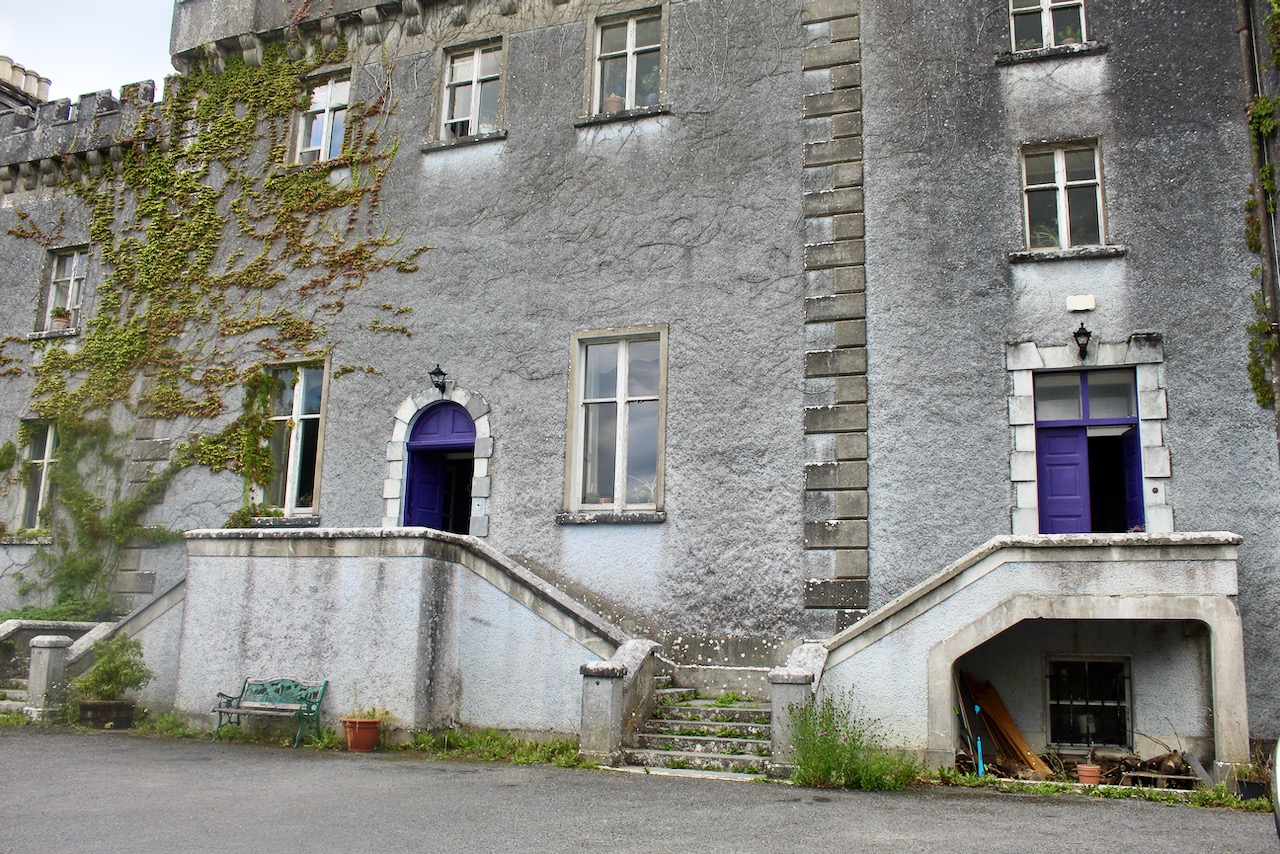
We drove up a long tree-lined avenue to Loughton House. Stephen rang from the car on our way and spoke to Michael Lyons, who was out chopping wood, so told us that Andrew would be at the house to meet us.

This would have been the front of the house in 1777, as it has the bow in the centre. This is the side which we saw first as we drove up, the North facing side. Photograph © Jennifer Winder-Baggot, www.irishhistorichouses.com

Loughton House was built on the site of a previous house, in 1777. When we arrived, we wondered why there were two front doors. I think Andrew Vance, who greeted us, explained, but we were so busy introducing ourselves and immediately got along so well, that I forget what he told me about the two doors. That’s a question for next time!

Single storey addition with crisp limestone pilasters, and pediments on console brackets over the doors. Photograph © Jennifer Winder-Baggot, www.irishhistorichouses.com
According to the website, alterations were made to the house in 1835 by James and George Pain. I don’t know who the architect of the 1777 house is, but originally the house faced north, with a shallow full-height half hexagon bow in the centre.

I would consider this to be the back of the house since we went out of the door in the single-storey addition, above, after our tour, to see the garden, but is officially the front, the South facing side. The windows have pediments with console brackets on the ground and first floors. The three storeys are over a concealed basement. Photograph © Jennifer Winder-Baggot, www.irishhistorichouses.com
Mark Bence-Jones describes the house in his A Guide to Irish Country Houses:

“Of elegant and restrained late-Georgian character, the main front consisting of two wide and shallow three sided bows of three bays each, with a two bay centre between them. Single storey wing of two bays, adorned with pilasters. Pediments and entablatures on console brackets over ground floor and first floor windows. Parapeted roof. Very handsome Georgian stables.” [1]

The 1777 house was built for Major Thomas Pepper. Thomas, born around 1735, of Ballygarth, Julianstown, Co Meath, son of Lambert Pepper and Jane Otway, was Major in the 14th Light Dragoons. The Peppers acquired Ballygarth Castle (now a ruin) and lands in County Meath after the Restoration of Charles II to the British throne in 1660, for their loyalty to the Stuart monarchy. [2] Thomas Pepper married Mary Ryder, daughter of John Ryder, the Archbishop of Tuam, County Roscommon. The 14th Light Dragoons was originally called James Dormer’s Dragoons, and were raised in the south of England in 1715 in response to the Jacobite Rebellion. They were sent to Ireland in 1717. In 1747 they were renamed the 14th Regiment of Dragoons, and became the Light Dragoons in 1776 [3]. Loughton House passed to their son Thomas Ryder Pepper (1760-1828), who in 1792 married Anne Bloomfield, daughter of John Benjamin Bloomfield and Charlotte Anne Waller, of Newport, County Tipperary. The Bloomfield family had originally settled at Eyrecourt, County Galway.

Thomas Ryder Pepper (1760-1828) with The Old Castle, Loughton in the background from Loughton house auction, 2016, Shepphards.

When Thomas Ryder Pepper died, the house passed to his brother-in-law, Benjamin Bloomfield, 1st Baron Bloomfield (1815) of Oakhampton and Redwood (1768-1846). Redwood House in County Tipperary no longer exists. Oakhampton, also in Tipperary, still stands. He was Lieutenant General in the British Army and fought the rebels in 1798 at Vinegar Hill, County Wexford. He rose in the ranks to become Keeper of the Privy Purse for King George IV. This was a particularly difficult job – we came across King George IV before at several houses listed in the Revenue Section 482 Property list. The king enjoyed a romance with Elizabeth Conyngham of Slane Castle, and relished the good life: food, drink and beauty in the form not only of women but in architecture, with the help of John Nash. He was therefore rather a Big Spender. Naturally, therefore, he came to resent Benjamin Bloomfield and his efforts to tighten the purse strings.

Benjamin Bloomfield (1768-1846) 1st Baron Bloomfield as Keeper of His Majestys Privy Purse at the Coronation of George IV, by Henry Meyer, after Philip Francis Stephanoff 1826, NPG D31893.
Benjamin Bloomfield (1768-1846) 1st Baron Bloomfield, by John Lilley, from Loughton house auction catalogue, 2016, Shepphards
Benjamin Bloomfield (1768-1846) 1st Baron Bloomfield, Irish school, 19th c, from Loughton house sale, 2016, Shepphards.
Portrait of Lady Bloomfield, from Loughton house sale, 2016, Shepphards

We have already seen that several houses underwent alterations in expectation of a visit from King George IV in 1821. In Charleville, County Wicklow, a new floor was installed at great expense. Here in Loughton, a bedroom was done up for the King. Unfortunately, the King never made it to Loughton.

It was later that Bloomfield hired James and George Richard Pain to renovate Loughton House, in 1835.

Loughton, May 2019. Photograph © Jennifer Winder-Baggot, www.irishhistorichouses.com
James and George were sons of James Pain, an English builder and surveyor. Their Grandfather William Pain was the author of a series of builder’s pattern books, so they had architecture in the blood. According to the Dictionary of Irish Architects, James and his younger brother George Richard were both pupils of John Nash, one of the foremost British architects of his day responsible for the design of many important areas of London including Marble Arch, Regent Street and Buckingham Palace. He was architect to the prolific lover of architecture the Prince Regent, later King George IV. When Nash designed Lough Cutra Castle in County Galway for Charles Vereker in 1811, he recommended that the two brothers should be placed in charge of the work, so it was at this time that they came to Ireland. Lough Cutra is an amazing looking castle privately owned which is available for self-catering rental. [4] James Pain settled in Limerick and George in Cork, but they worked together on a large number of buildings – churches (both Catholic and Protestant), country houses, court houses, gaols and bridges – almost all of them in the south and west of Ireland. [5] In 1823 James Pain was appointed architect to the Board of First Fruits for Munster, responsible for all the churches and glebe houses in the province.

The Pains Gothicized and castellated Dromoland Castle in County Clare at some time from 1819-1838, now a luxury hotel. [6] They took their Gothicizing skills then to Mitchelstown Castle in 1823-25, but that is now a ruin. In 1825 they also worked on Convamore (Ballyhooly) Castle but that too is now a ruin. They also probably worked on Quinville in County Clare and also Curragh Chase in County Limerick (now derelict after a fire in 1941), Blackrock Castle in County Cork (now a science centre, museum and observatory which you can visit [7]), they did some work for Adare Manor in County Limerick (also now a luxury hotel), Clarina Park in Limerick (also, unfortunately, demolished, but you can get a taste of what it must have been like from its gate lodge), Fort William in County Waterford, probably they designed the Gothicization and castellation of Ash Hill Towers in County Limerick (also a section 482 property!), alterations and castellation of Knoppogue Castle, County Clare (you can also visit and stay, or attend a medieval style banquet), Aughrane Castle mansion in County Galway (demolished – Bagots used to own it, I don’t know if we are related!), a castellated tower on Glenwilliam Castle, County Limerick and more.

The Pain brothers reoriented Loughton House to face south, and the main doorcase was put to the east end, the Loughton House website tells us. In his Buildings of Ireland: Central Leinster. Counties of Kildare, Laois and Offaly, Andrew Tierney tells us that this oblique approach of typical of James Pain. [8]

Loughton, County Offaly. Photograph © Jennifer Winder-Baggot, www.irishhistorichouses.com
Loughton, May 2019. Photograph © Jennifer Winder-Baggot, www.irishhistorichouses.com
The National Inventory of Architectural Heritage claims that Loughton House is probably the Pain’s finest Classical work [9]. The exterior is relatively plain, with limestone window dressings with keystones. The north facing side is the original house, whereas the south facing side, of eight bays instead of the seven in the north side, is by the Pain brothers. The windows on this side have moulded cement detailing: architrave, cornice and consoles, and pediments. We saw more of the Pains’ work inside, in the Drawing and Dining Rooms which date from their renovation, and the wonderful curved stone cantilevered staircase.

The current owners, who acquired the house in 2016, are both medical doctors, as was the previous owner, Dr. James Reilly, who was also a former Minister for Health in the Irish government. When we visited, the house exuded a comfortable quirky chic, with marble busts on pillars in the front hall and a touch of whimsy, with a stag’s head draped in a fur at the bottom of the sweeping cantilevered staircase. 

The Loughton House website tells us:

“The house has very fine detailing – traces of the late eighteenth-century decoration can be seen in the house as well as early nineteenth-century changes in internal layout.

“The ground floor is laid out with bright and generously proportioned formal reception rooms with magnificent decorative cornicing and ceilings, ornate plaster work and large original period fireplaces. The original wood floors remain throughout and the grand sash bay windows permit torrents of light into the house. Most notable are the wood-carved shutters and door panels in the original Billiard room.” [10]

Loughton passed to Bloomfield’s son, John Arthur Douglas Bloomfield (1802-1879). He succeeded as 2nd Baron Bloomfield on his father’s death. He was a diplomat and travelled widely, was envoy to St. Petersburg and Ambassador to Austria. He was appointed Privy Counsellor on 17 December 1860. He was created 1st Baron Bloomfield of Ciamhaltha, Co. Tipperary on 7 August 1871. In 1834 his father had a hunting lodge built, Ciamhaltha House, County Tipperary, so the new title referred to this house [11]. He and his wife Georgiana Liddell had no son and the titles ended with his death. Georgina served as a Maid of Honour to Queen Victoria between 1841-45. Upon Georgiana’s marriage to Baron Bloomfield in 1845, when Georgiana left her position in the house of the Queen, Victoria gave her a cutting from a vine, which still grows at Loughton House today. Georgiana wrote the book Reminiscences of Court and Diplomatic Life, published 1883. It sounds fascinating!

John Arthur Douglas Bloomfield (1802-1879) 2nd Baron Bloomfield, wearing a burgundy red jacket and fur collar, Painting After Sir Thomas Lawrence, from Loughton house auction catalogue, 2016, Shepphards
Georgiana Bloomfield née Liddell, Lady Bloomfield from Loughton house auction catalogue, 2016, Shepphards.

The house passed to the Baron’s sister, Georgiana, and her husband, Henry Trench, of Cangort Park, County Offaly (still standing, privately owned). The Landed Estates website tells us that in the 1870s, Henry Trench owned 4,707 acres in county Tipperary, 2,113 acres in county Offaly, 1,926 acres in county Limerick, 1,581 acres in county Galway, 704 acres in county Clare and 432 acres in county Roscommon. [12]

Frederick Trench (1755-1840) 1st Baron Ashtown from Loughton sale Sept 2016 by Shepphards. He was an uncle of Henry Trench who married Georgiana Bloomfield.
A portrait of Blanche Trench (1852-1937), from Loughton house sale, 2016, Shepphards. She was a daughter of Henry Trench and Georgiana née Bloomfield.

When James Reilly sold Loughton House, he unfortunately sold its contents, including an archive of family papers. Michael Parsons of The Irish Times wrote of the auction:

Lot 2066, The Loughton Papers circa 1749-1960 – an archive of documents including correspondence, diaries, journals, sketch books and recipe books created by the various families who had lived at Loughton House – sold for €12,000 (above the estimate of €5,000-€8,000).

Sheppard’s said the buyer was Galway businessman Pat McDonagh, founder and managing director of the Supermac’s fast-food chain and owner of the Barack Obama Plaza – a services area on the M8 motorway just outside the village of Moneygall built following the visit of the US president.”

Fortunately, the article continues to reassure the readers that the documents will be properly preserved and accessible:

“In a statement issued via the auction house, Mr McDonagh described the archive “part of a tapestry of history” and that his “first priority” was its “preservation for historians, the community and the country”.

“The statement said: “Mr McDonagh commended Offaly County Council for their interest in working with Supermac’s for the preservation of the papers” which will be digitised, and that “historians owe a debt of gratitude to the owners of Loughton House, Dr James Reilly and his wife Dorothy”.

“Mr McDonagh “confirmed also that the visitor centre at the Barack Obama Plaza will host a Loughton House section, where extracts from the archive will be displayed on a rolling basis.” He said the plaza would work to ensure that the heritage of the house was not lost to the community, adding that he would encourage local and expert input to ensuring that the archive would be educational, appropriate and accessible.” [13]

A portrait of Dora Agnes Caroline Trench (1858-1899) née Turnor, wife of Benjamin Bloomfield Trench, from Loughton house sale, 2016, Shepphards.
A portrait of Mr Trench, dated 1920, from Loughton house sale, 2016, Shepphards.

The wood carved panels shutters and door panels in the billiards room, now a dining room, were decorated by one of the Trenches, Dora. The form of decoration, with details rendered by a hot poker, is exquisitely done. The portrait of the artist, Dora, hangs next to the doors. Dora was Henry Trench’s son Benjamin Bloomfield Trench’s wife, Dora Agnes Caroline Turnor. Dora Trench died in 1899, after a brief illness. Benjamin and Dora had two daughters, Sheelagh Georgiana Bertha and Theodora Caroline. [14]

Loughton, May 2019. Photograph © Jennifer Winder-Baggot, www.irishhistorichouses.com
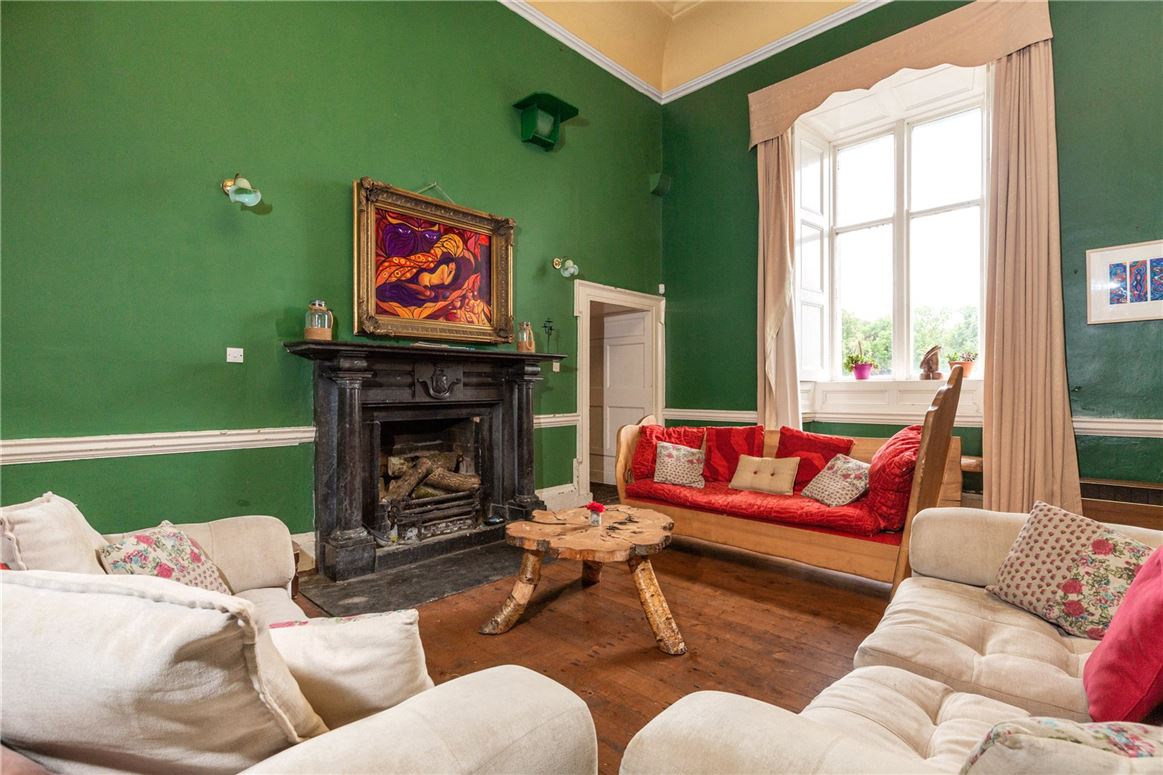
Dora illustrated the doors with crests and intricate patterns, and all of the doors from the room are decorated, along with the shutters. I was delighted when Stephen asked if I could take a photograph of the door – I didn’t like to ask, knowing that most section 482 houses forbid indoor photography. Andrew’s assent typified his warm welcome. You can see photographs of the room, called Dora’s Room, on the Loughton website, along with photographs of the other reception rooms, the Library, Dining and Drawing Rooms. “Dora’s Room” contains a long table and chairs, and an intricately carved fireplace.

The fireplace in Dora’s Room can be seen on the Loughton website. It is, Andrew Tierney tells us in his Buildings of Ireland: Central Leinster, it is Tudor Revival, of 1862. The male caryatid figure on the right is the original, Andrew thinks, whereas the figure on the left is a copy. It’s strange how such fireplaces are carved in wood and manage to survive the fire they contain. Andrew said it throws out great heat. It has a second flue behind, from which the fire can draw its oxygen, rather than drawing from the warmed air inside the room.

The Loughton website tells us that the Trenches remained in residence until 1973 when the property was passed to the Atkinson family.

Major Anthony Guy Atkinson (b. 1909) inherited Loughton in 1970 from his cousins Thora and Sheelah Trench (Dora’s daughters). Henry Trench, Georgina Bloomfield’s husband, had a sister, Anne Margaret Trench. She married Guy Caddell Atkinson. They inherited Cangort Park in County Tipperary and Major Anthony Guy Atkinson was a descendant of Anne Margaret Trench. [15] He made Loughton over to his son, Guy Nevill Atkinson (b. 1950), who sold it in 2001.

From Dora’s Room we came upon the hallway with the sweeping floating stone cantilever staircase. This was originally the entrance hall, before James Pain added the staircase and moved the entrance to the east end.

Andrew drew our attention to an old tall clock with barometer. It was from Lissadell House, and, appropriately, was made by a man named Yates – not the poet Yeats who frequented the house, note the different spelling, but in a nice touch, the picture hanging beside it was of the poet. Incidentally, one of the Trench family, a sister of Benjamin Bloomfield Trench who inherited Loughton, Louisa Charlotte, married Colonel James Gore-Booth, of the Lissadell family. The owners have taken their time to populate the house appropriately, with respect for its history and a dash of humour.

I was most enamoured with the next room, the library, with its floor to ceiling built in bookshelves. It retains original wallpaper, worn but still in situ.

“This is where we sit in the evenings, with a glass of wine,” Andrew told us. I could just see myself there too, in the well-worn couches, facing the fireplace. You can also see this room on the website, with its comfy leather armchairs. The Equine pictures are appropriate as Andrew is Master of the local Hunt!

In the Drawing Room, a formal room with sofas, carpets and lovely salmon pink walls, gorgeous cabinets, piano and ornate gilt overmantel mirror, Andrew pointed out another treasure: the fire insurance plaque from a building. The various insurance companies had their own firetrucks and teams, and they only put out fires of the buildings insured by them. Unfortunate neighbours burned down. I was excited to see the plaque as I had seen one on the Patriot Inn in Kilmainham, one of the few remaining, and learned about them in a lecture in Warrenmount in Dublin.

Loughton, May 2019.

We then entered the second dining room (if we consider Dora’s Room, the former Billiards room, to be a dining room also, as it is currently furnished), a larger room than the first. This dining room also has a clever fireplace, this one of steel, with secret cabinets at the sides to keep the plates and dishes hot. It also had vents, and further vents built into the walls of the room, to control temperature and air flow.

Loughton, May 2019. Photograph © Jennifer Winder-Baggot, www.irishhistorichouses.com
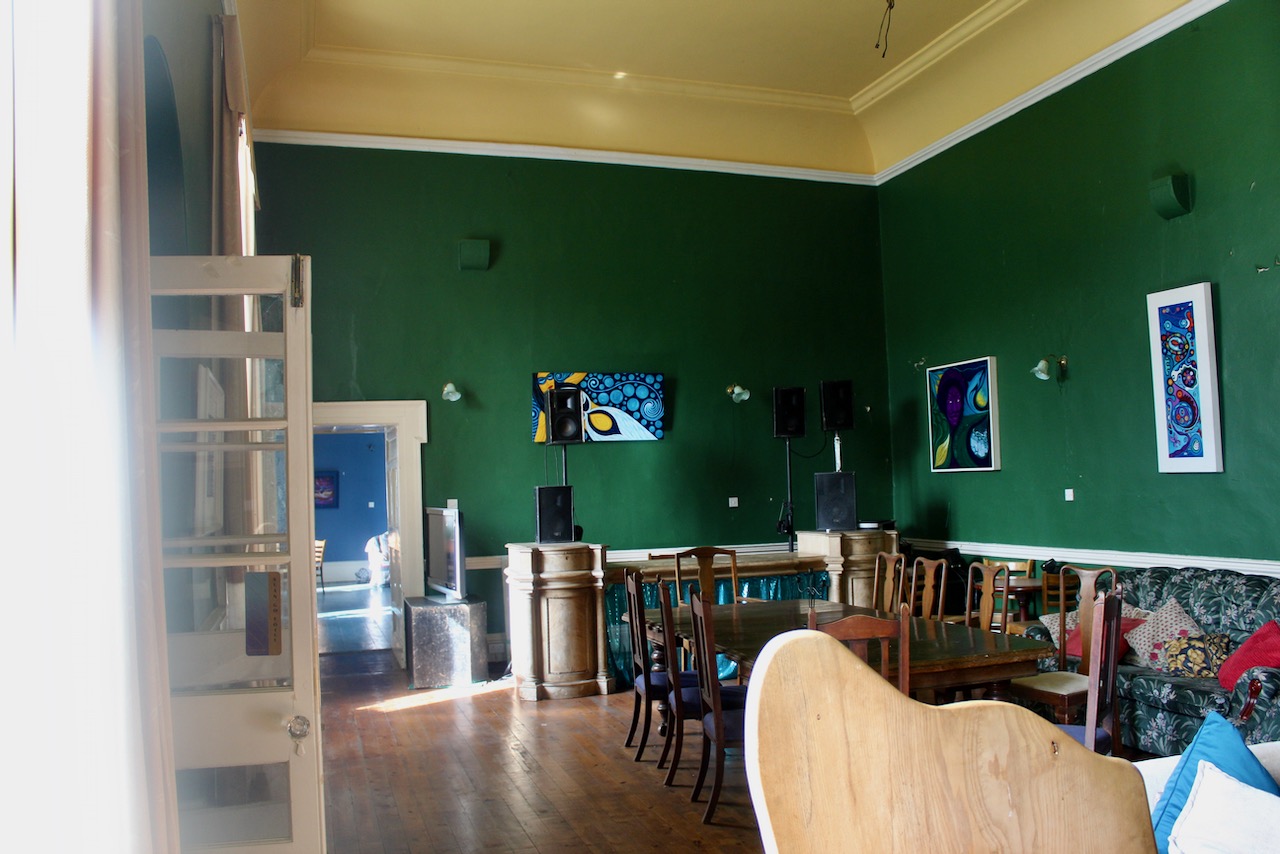
A painting above the door is by Sarah, Lady Langham, an artist, who has also applied her creative skills to the house, and who manages the day-to-day operation of the house. She has made curtains and even the wallpaper of The King’s Bedroom. On our way to the back staircase we ran into Sarah herself, as I was photographing the chain that was used to pull the coal to the upper floors.

Loughton, May 2019. Photograph © Jennifer Winder-Baggot, www.irishhistorichouses.com
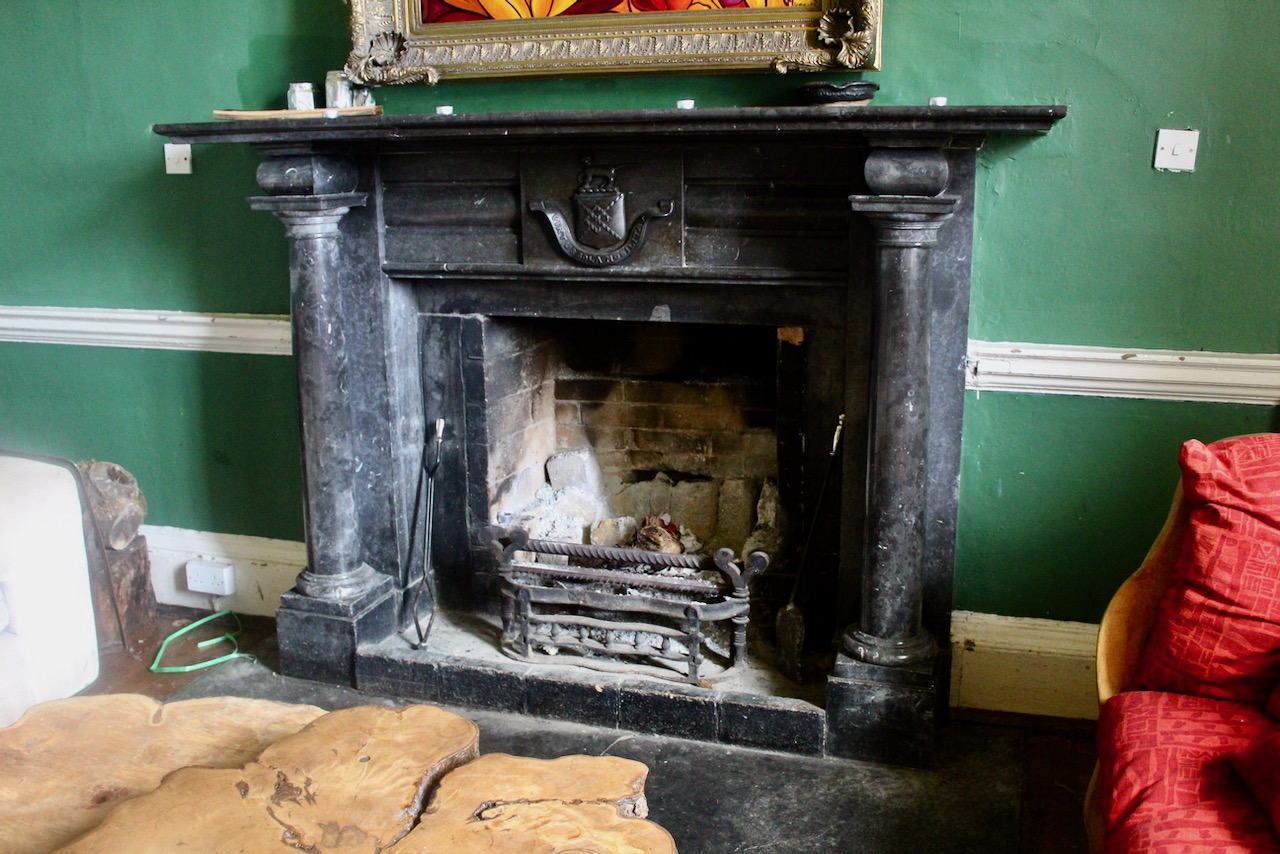
The final rooms we viewed are Sarah’s piece de resistance, “the King’s Suite,” which comprises two rooms – the room where George IV was meant to sleep, and a room next to it also furnished with a bed, which might have been his dressing room or a parlour.

Loughton, May 2019. Photograph © Jennifer Winder-Baggot, www.irishhistorichouses.com
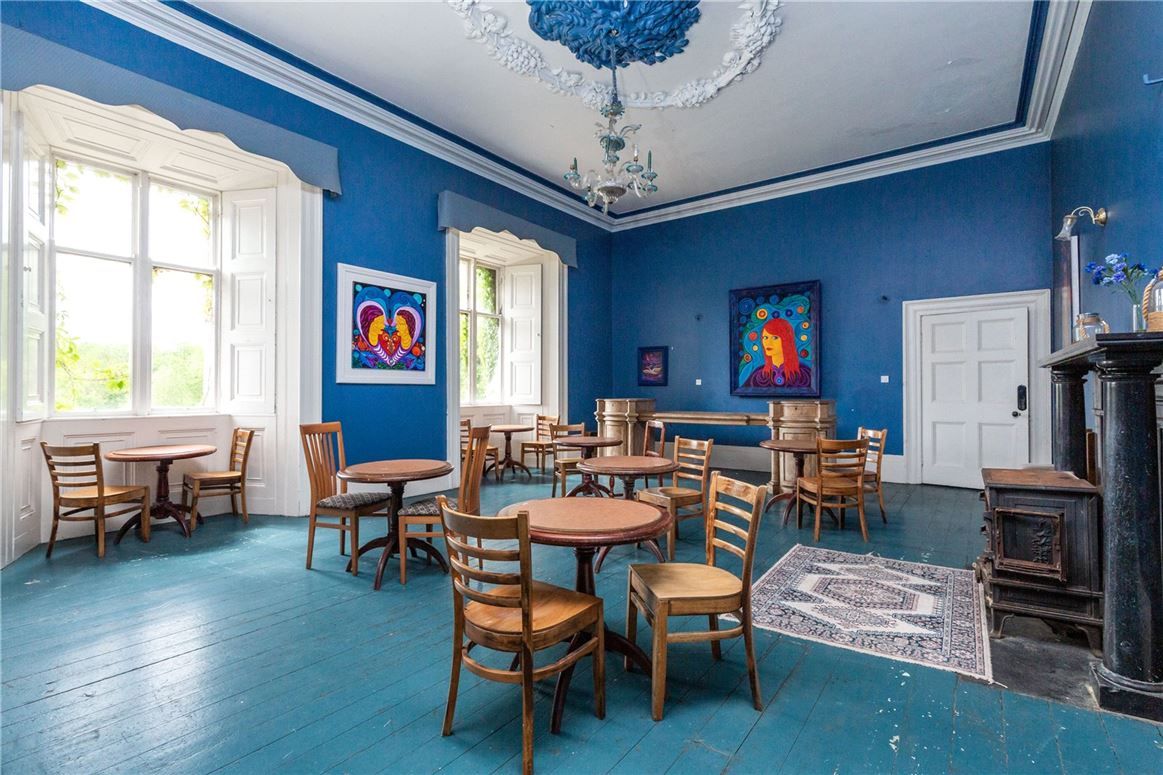
Sarah created the wallpaper. It features a crest of a unicorn and a lion around the top – and a stag that is pictured in the recurring motifs below. She also made the magnificant curtains and pelmet.

The fireplace is interesting. It is made of limestone, which contains fossils of tubular sea creatures:

Loughton, May 2019. Photograph © Jennifer Winder-Baggot, www.irishhistorichouses.com

This, along with other rooms, is available for guest accommodation.

There is a stable complex to one side of the house. Andrew brought us out to show us the function room, which was originally a coal shed. It’s huge, and would be wonderful for parties, and is available for hire. The garden outside it, which would also be available for the functions, is romantic and beautiful, with a pond and stone walls.

Loughton, County Offaly. Photograph © Jennifer Winder-Baggot, www.irishhistorichouses.com
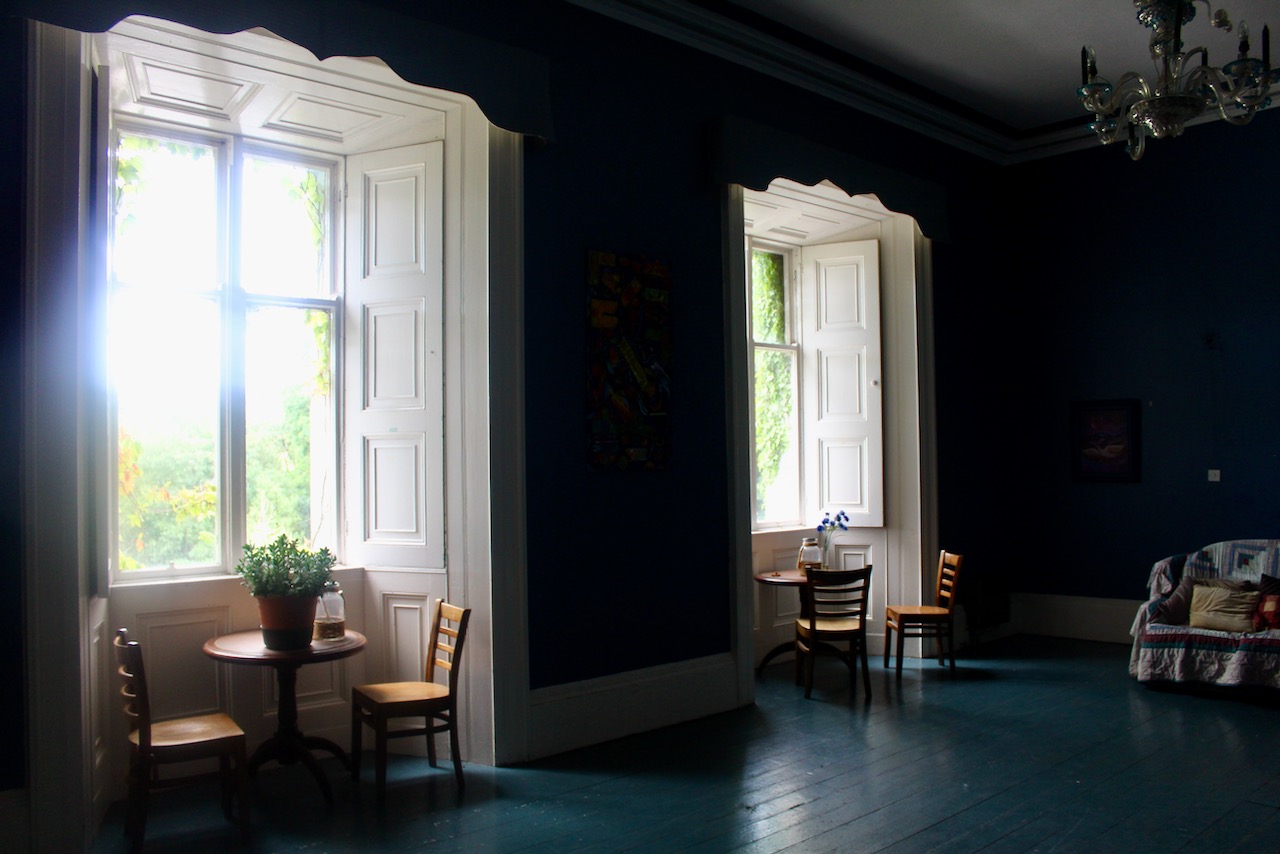
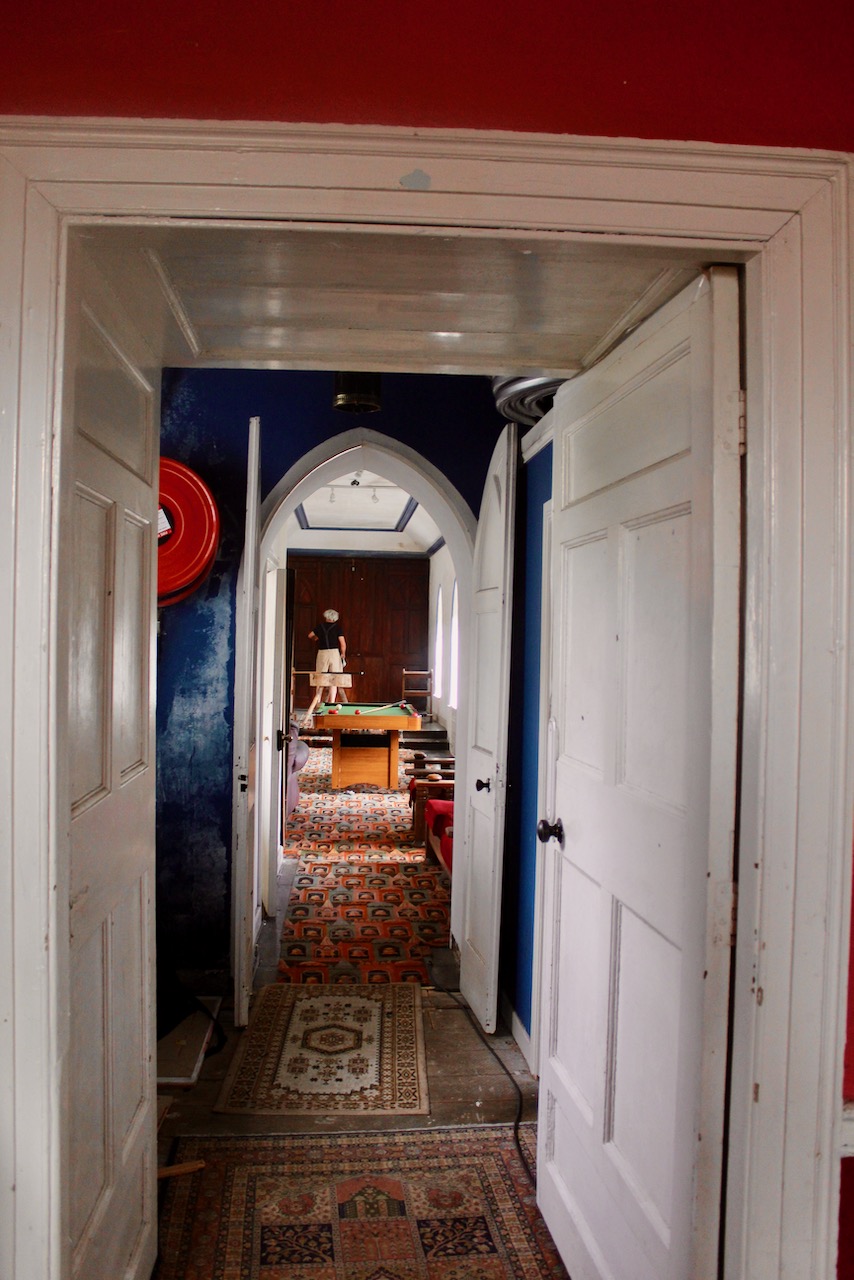
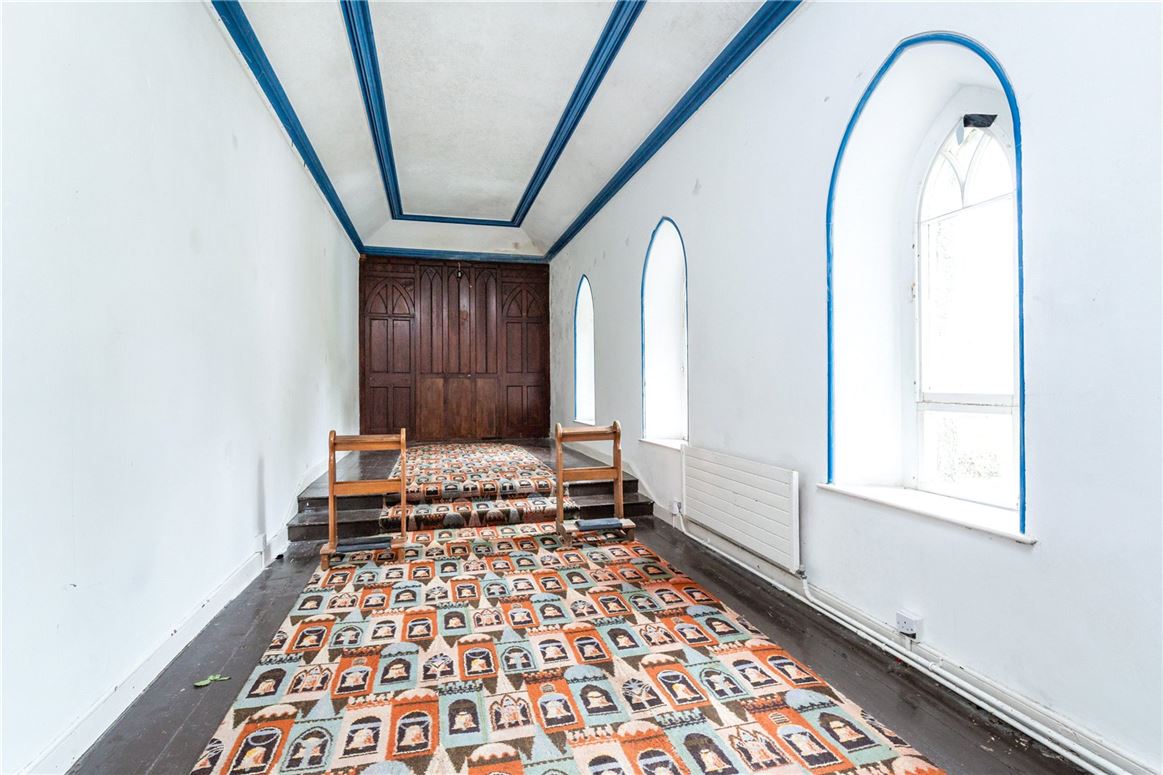
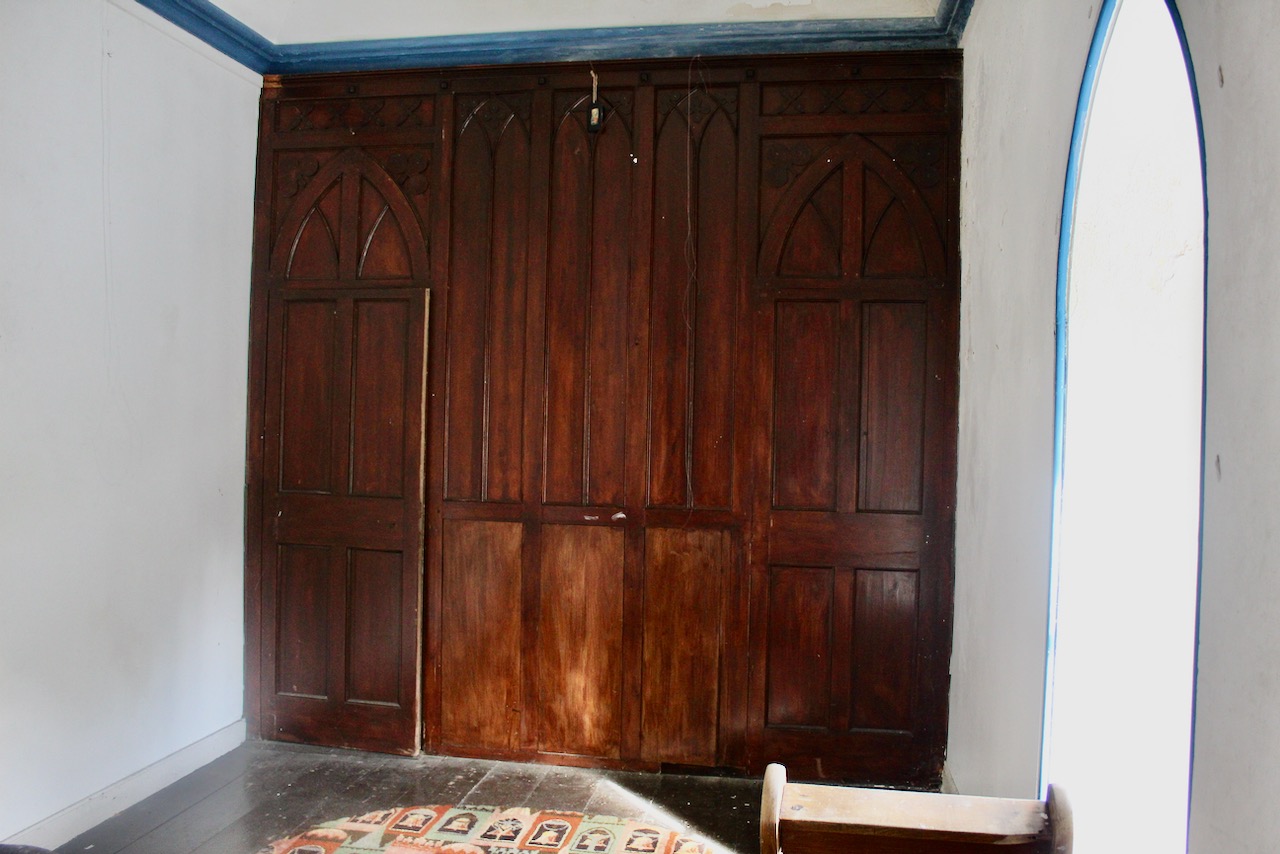
Loughton, May 2019. Photograph © Jennifer Winder-Baggot, www.irishhistorichouses.com

Then we sat at a table outside and Andrew brought us coffees – such a lovely touch!

Loughton, County Offaly. Photograph © Jennifer Winder-Baggot, www.irishhistorichouses.com
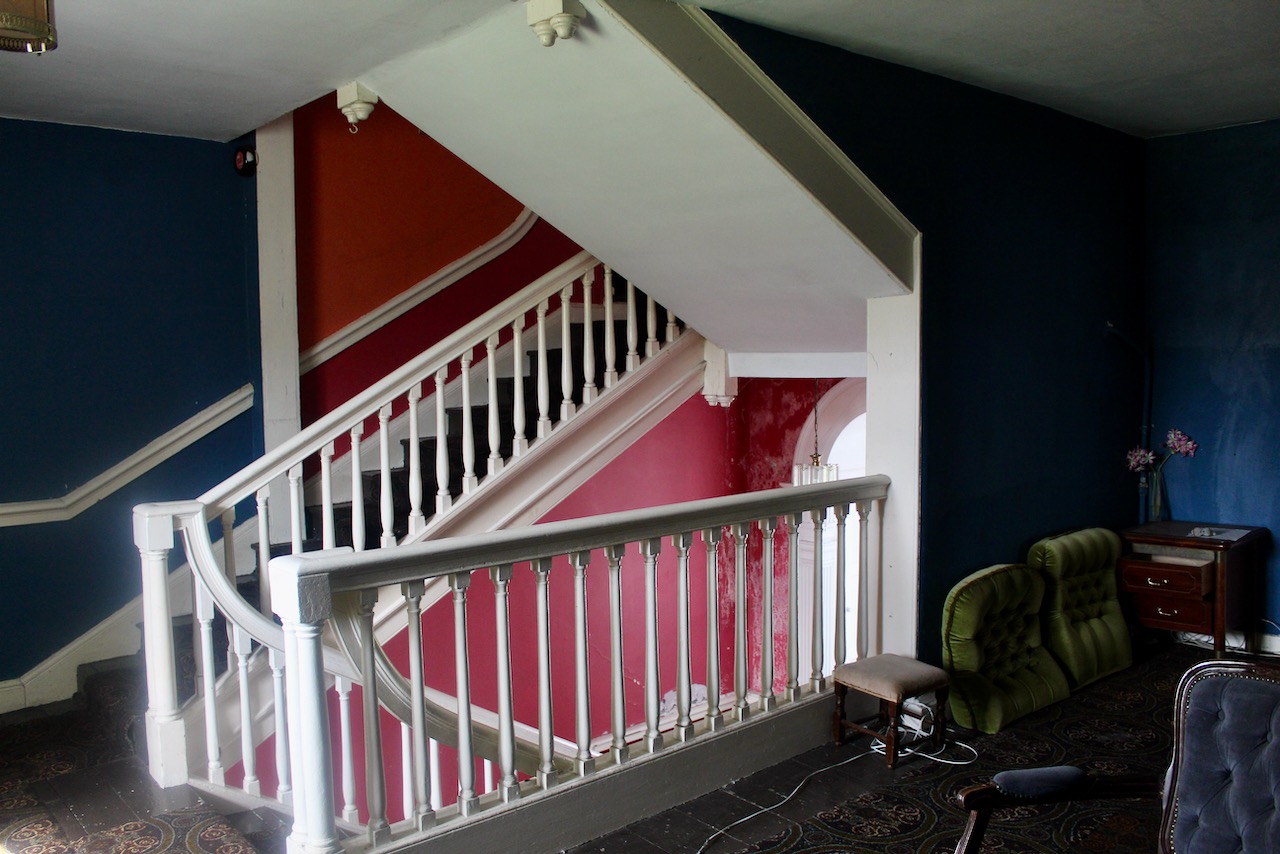
Loughton, May 2019. Photograph © Jennifer Winder-Baggot, www.irishhistorichouses.com
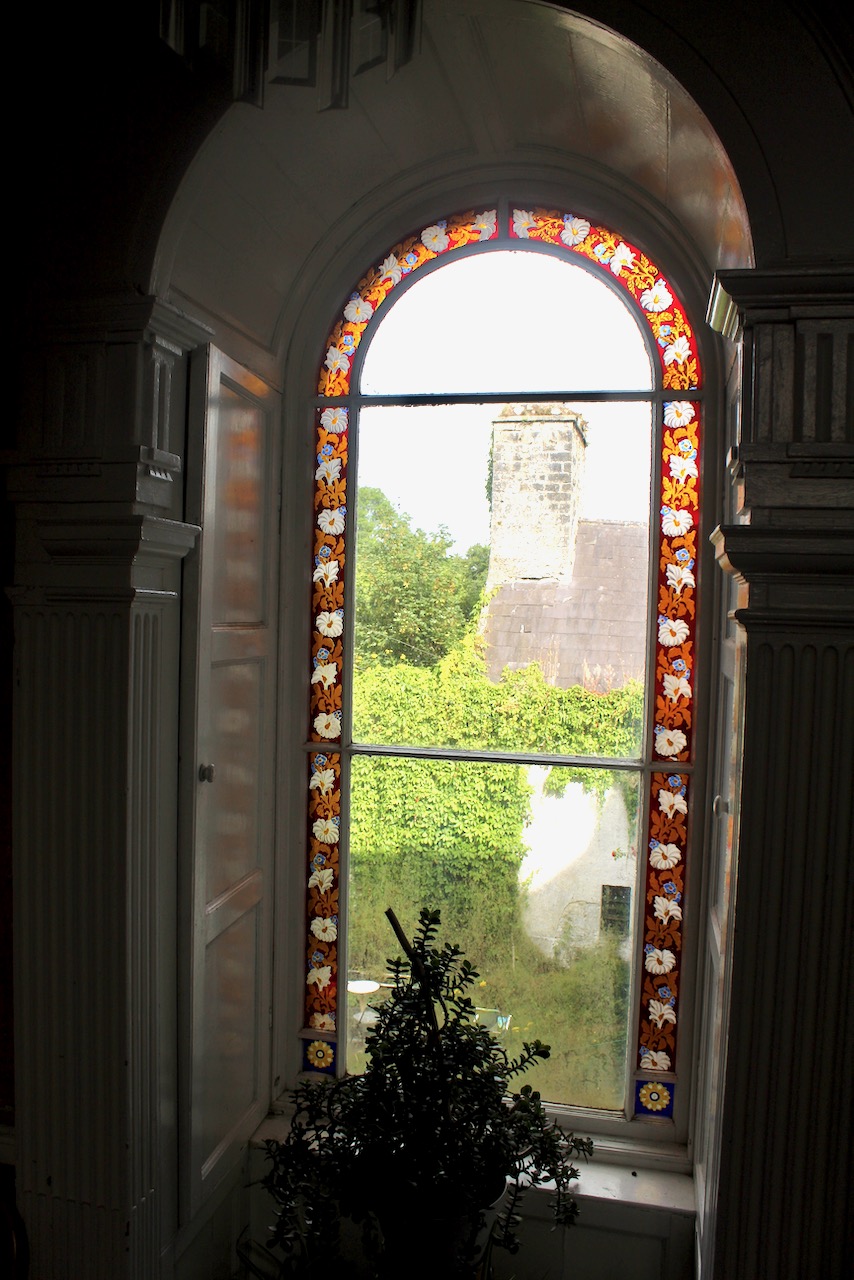
Michael joined us briefly and shared with us a photograph he had found in the national archives in England, of a group gathered at what is now the back of the house.

Andrew then urged us to wander in the gardens. We walked over to what looks like a Norman keep. It is Ballinlough Castle (not to be confused with Ballinlough Castle of County Westmeath), which dates back to the early seventeeth century, and belonged to the O’Carroll family. I climbed nearly all the way to the top (at my own peril!)!

Loughton, County Offaly. Photograph © Jennifer Winder-Baggot, www.irishhistorichouses.com
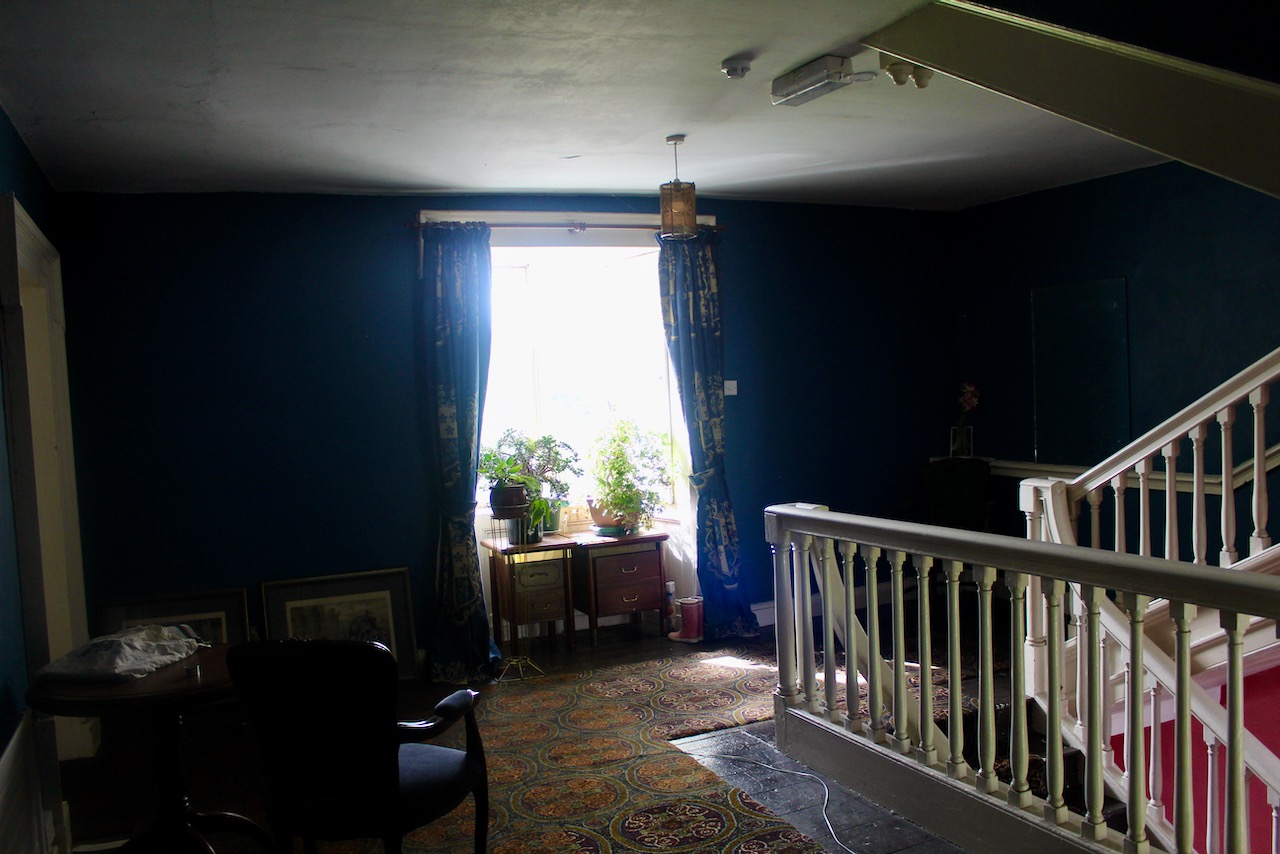
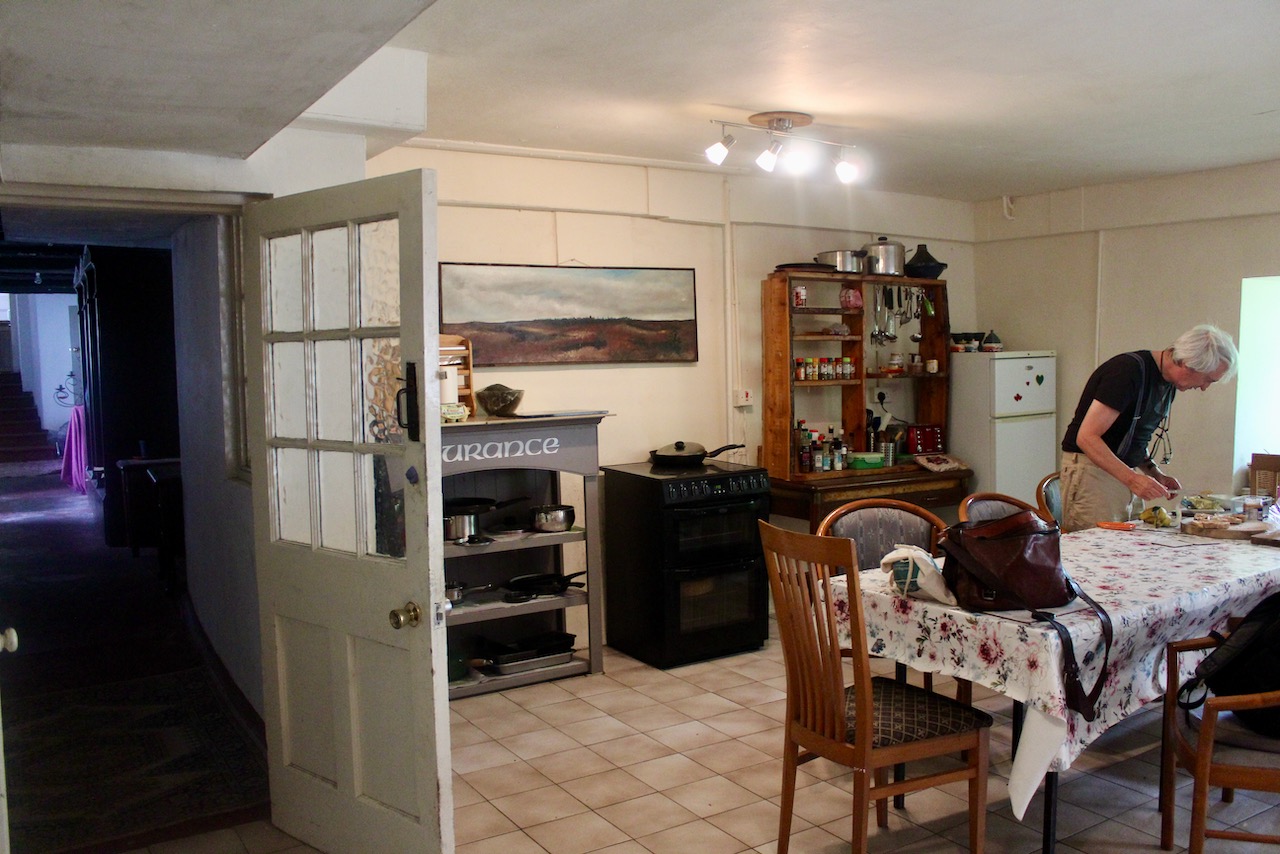
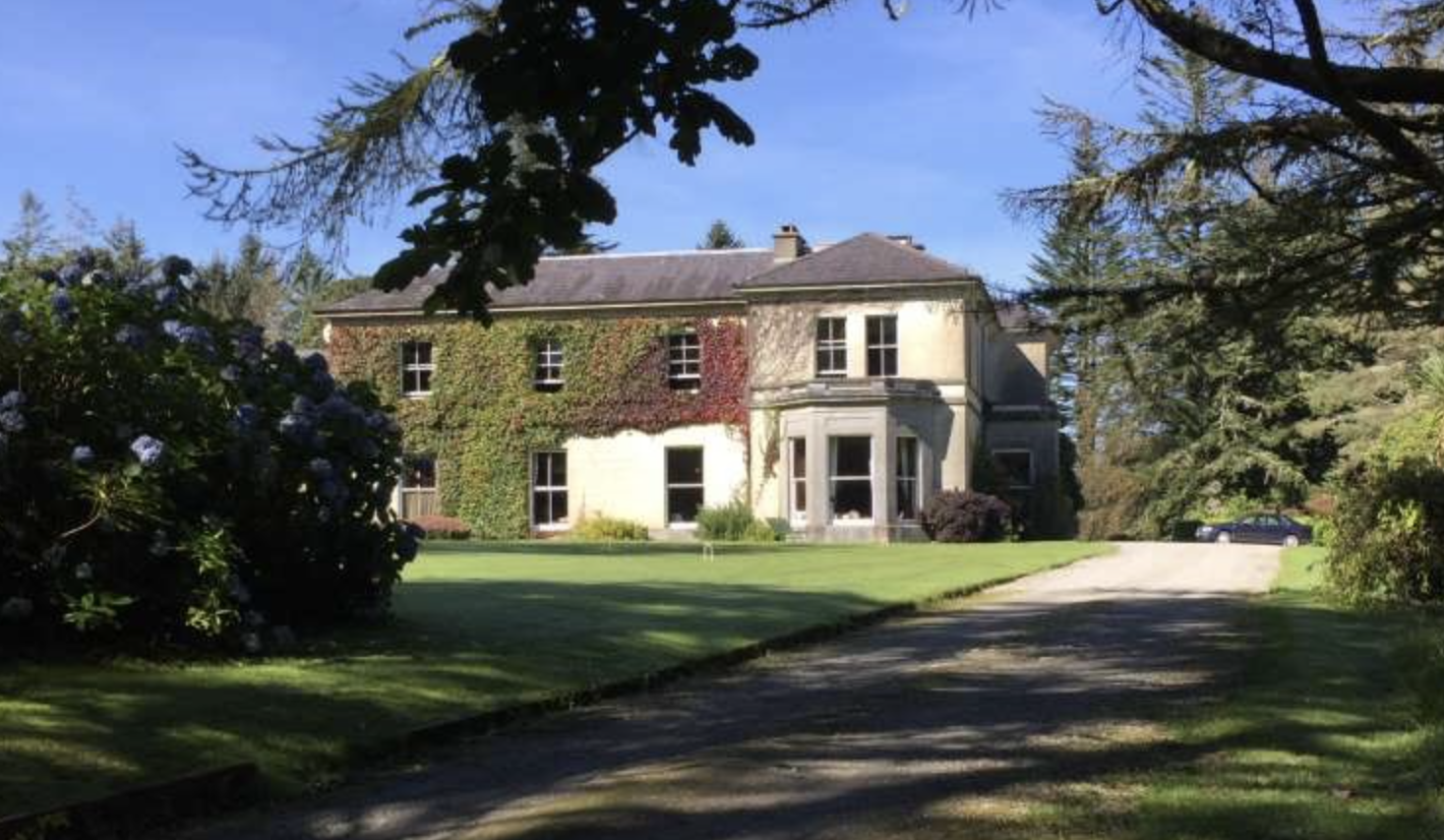
Loughton, May 2019. Photograph © Jennifer Winder-Baggot, www.irishhistorichouses.com
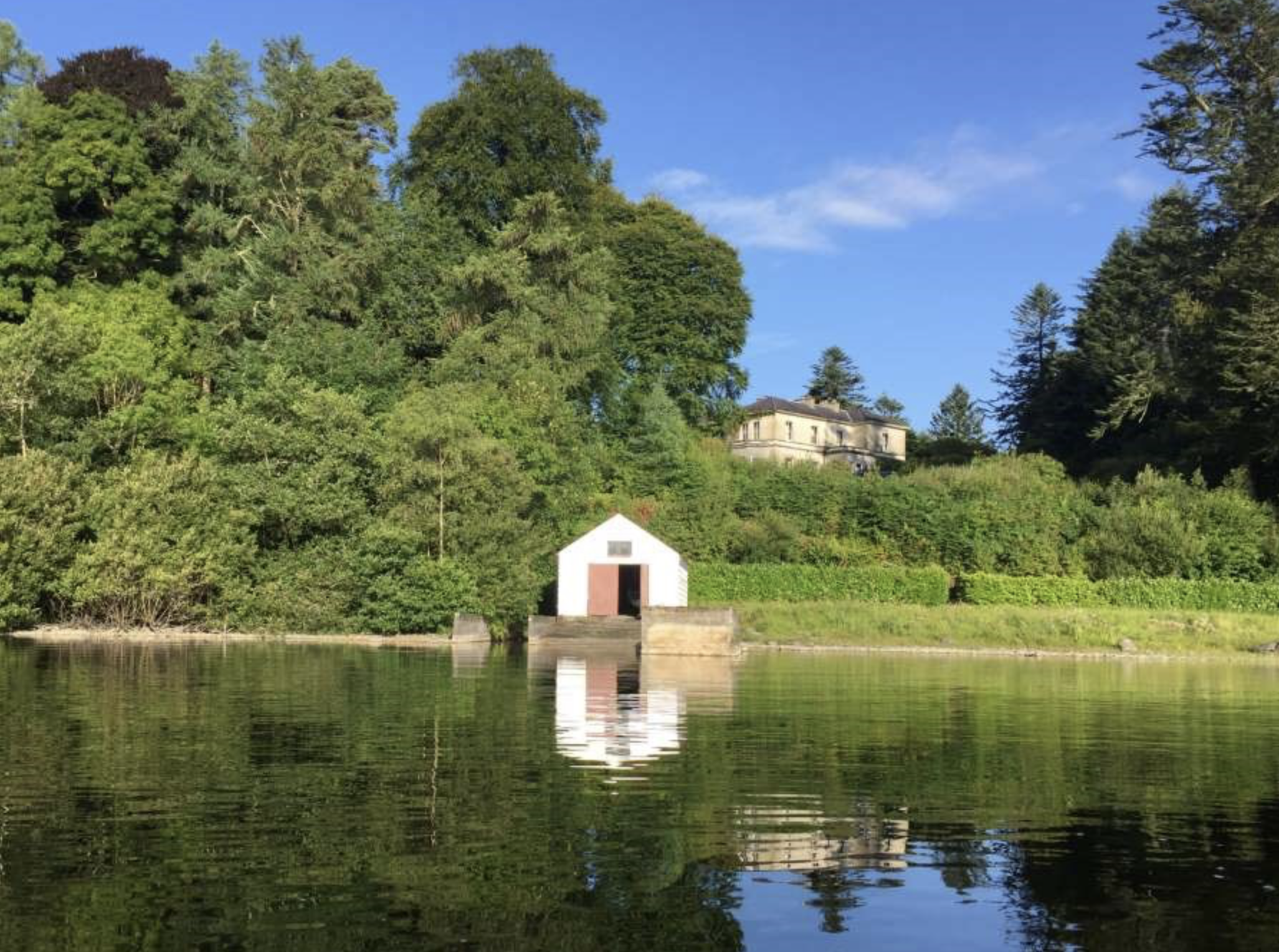
We then found our way to the walled garden. Michael told us he hopes to restore the glasshouse.

Loughton, County Offaly. Photograph © Jennifer Winder-Baggot, www.irishhistorichouses.com
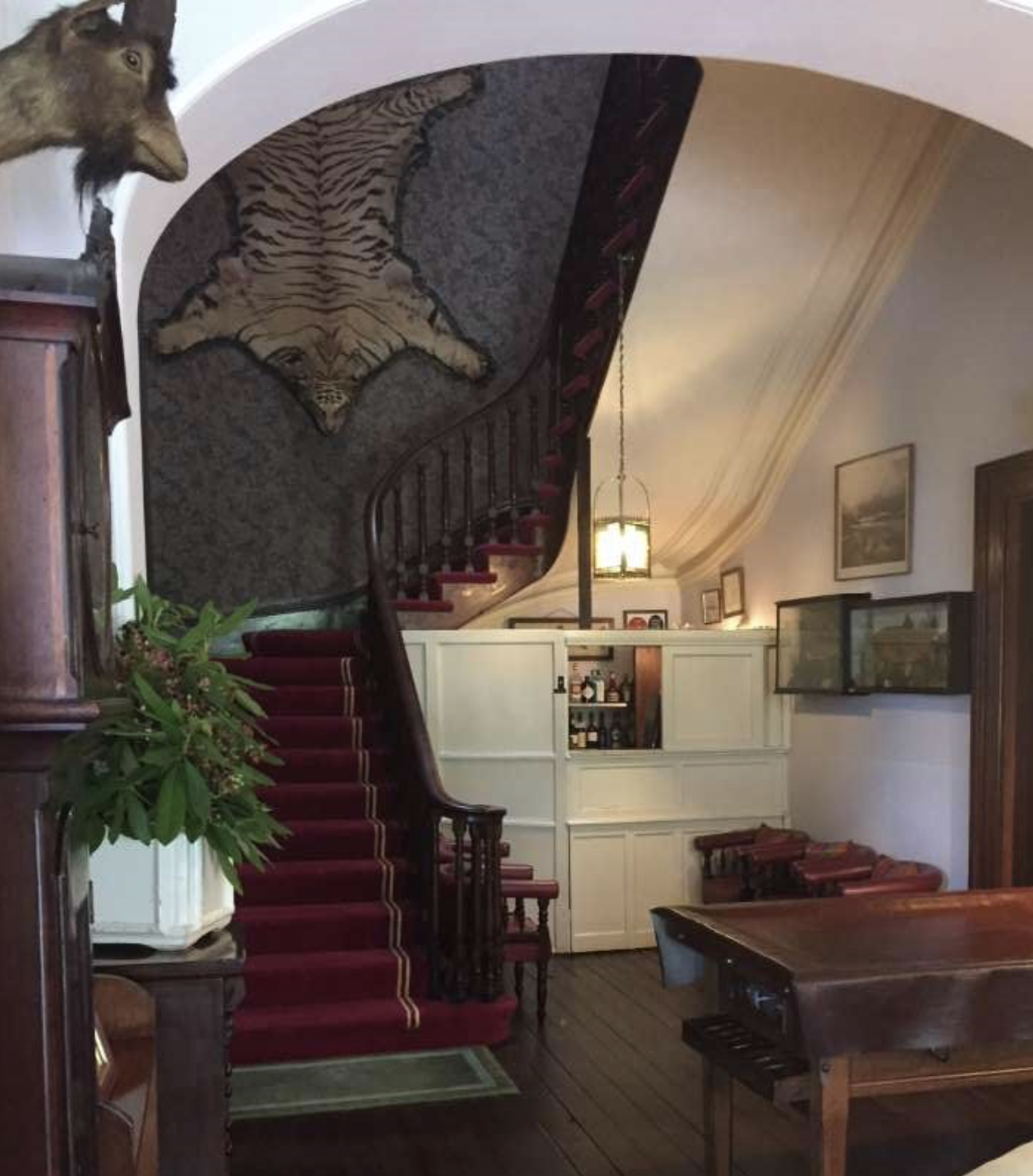
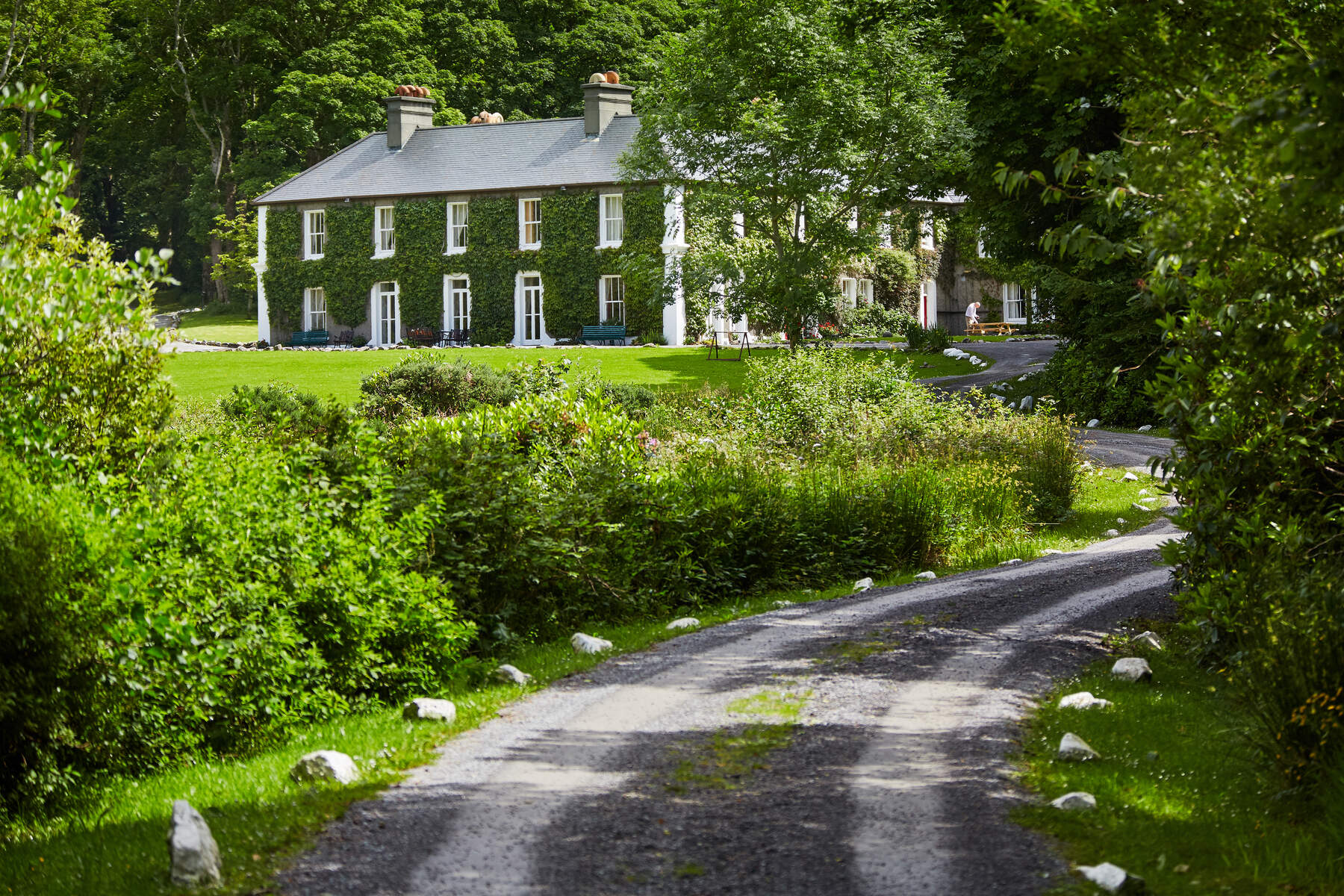
Loughton, May 2019. Photograph © Jennifer Winder-Baggot, www.irishhistorichouses.com
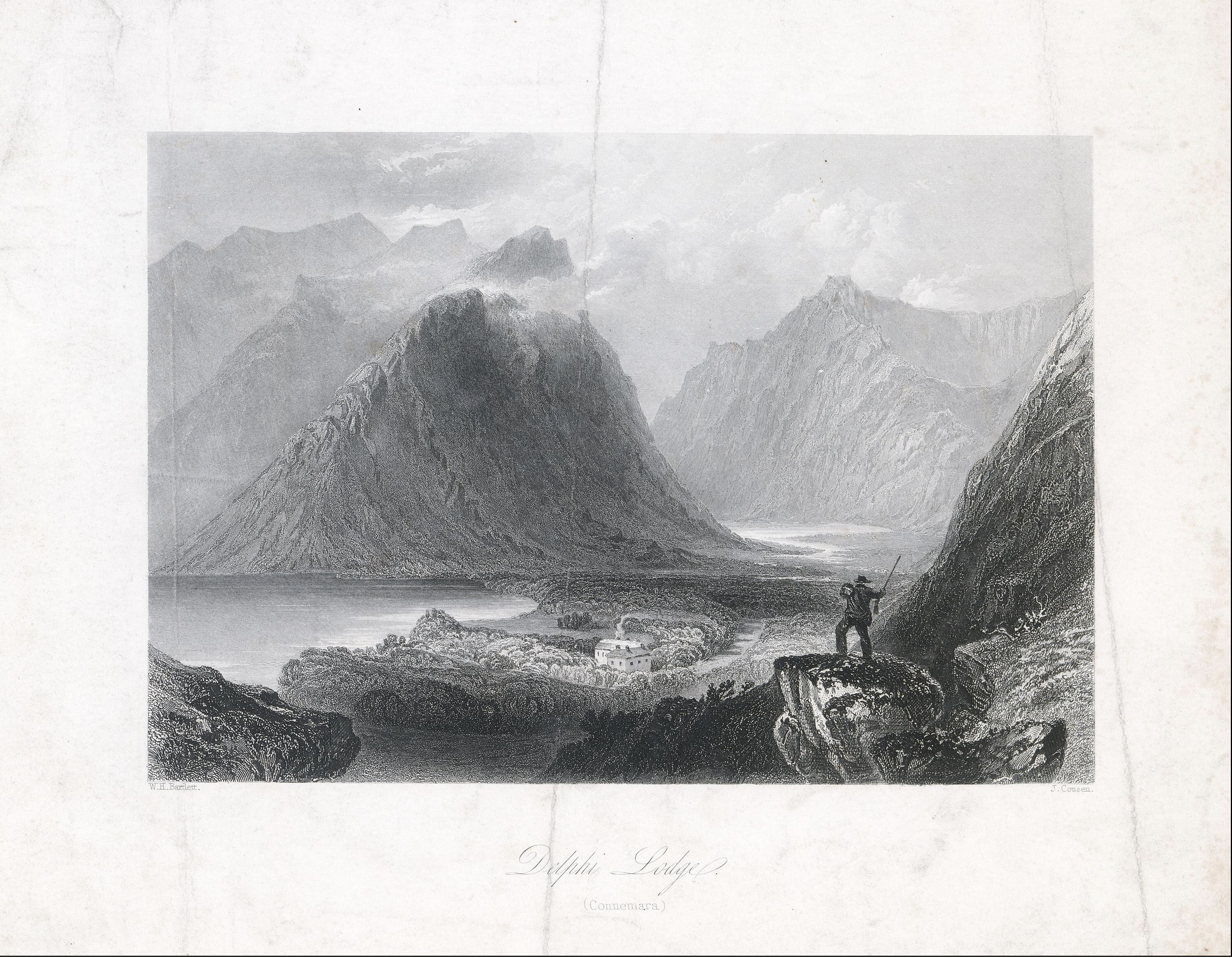
I’d love such a large growing space, with space for fruit trees and sheltering walls. I have had my own allotment for seven years!

Loughton, County Offaly. Photograph © Jennifer Winder-Baggot, www.irishhistorichouses.com
The vine, above, which was taken from a cutting from a vine belonging to Queen Victoria and given to her lady-in-waiting, Georgiana Liddell, when she married Baron Bloomfield. Photograph © Jennifer Winder-Baggot, www.irishhistorichouses.com
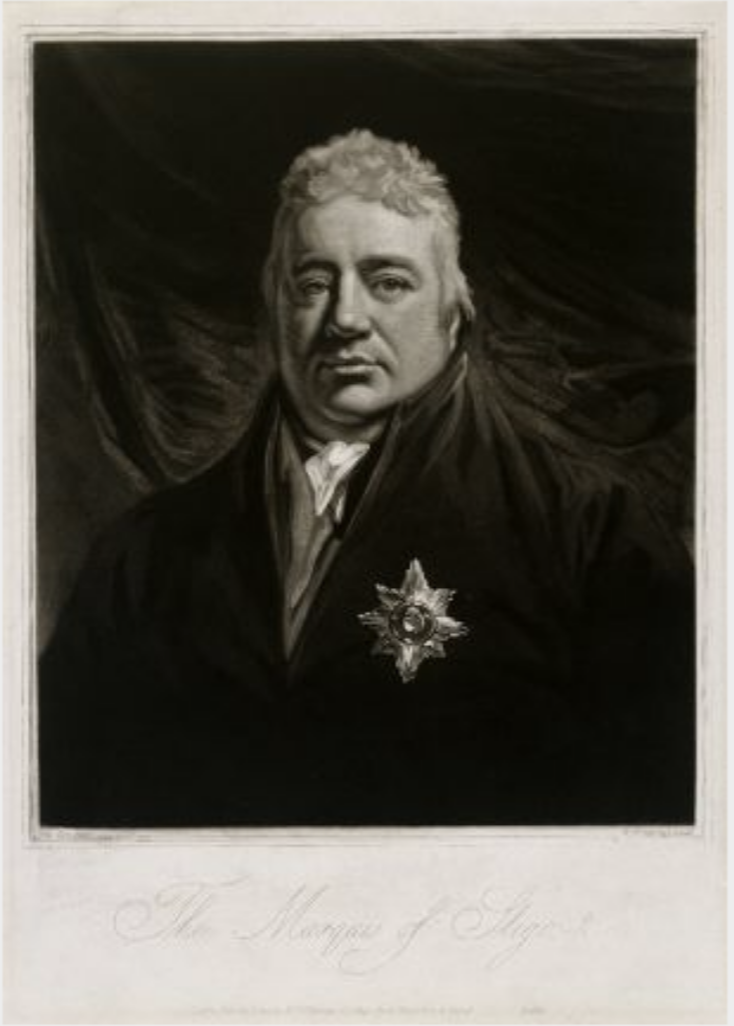
Loughton, May 2019. Photograph © Jennifer Winder-Baggot, www.irishhistorichouses.com

I’d love to stay in the cottage, which is also available to rent.

Loughton, County Offaly. Photograph © Jennifer Winder-Baggot, www.irishhistorichouses.com
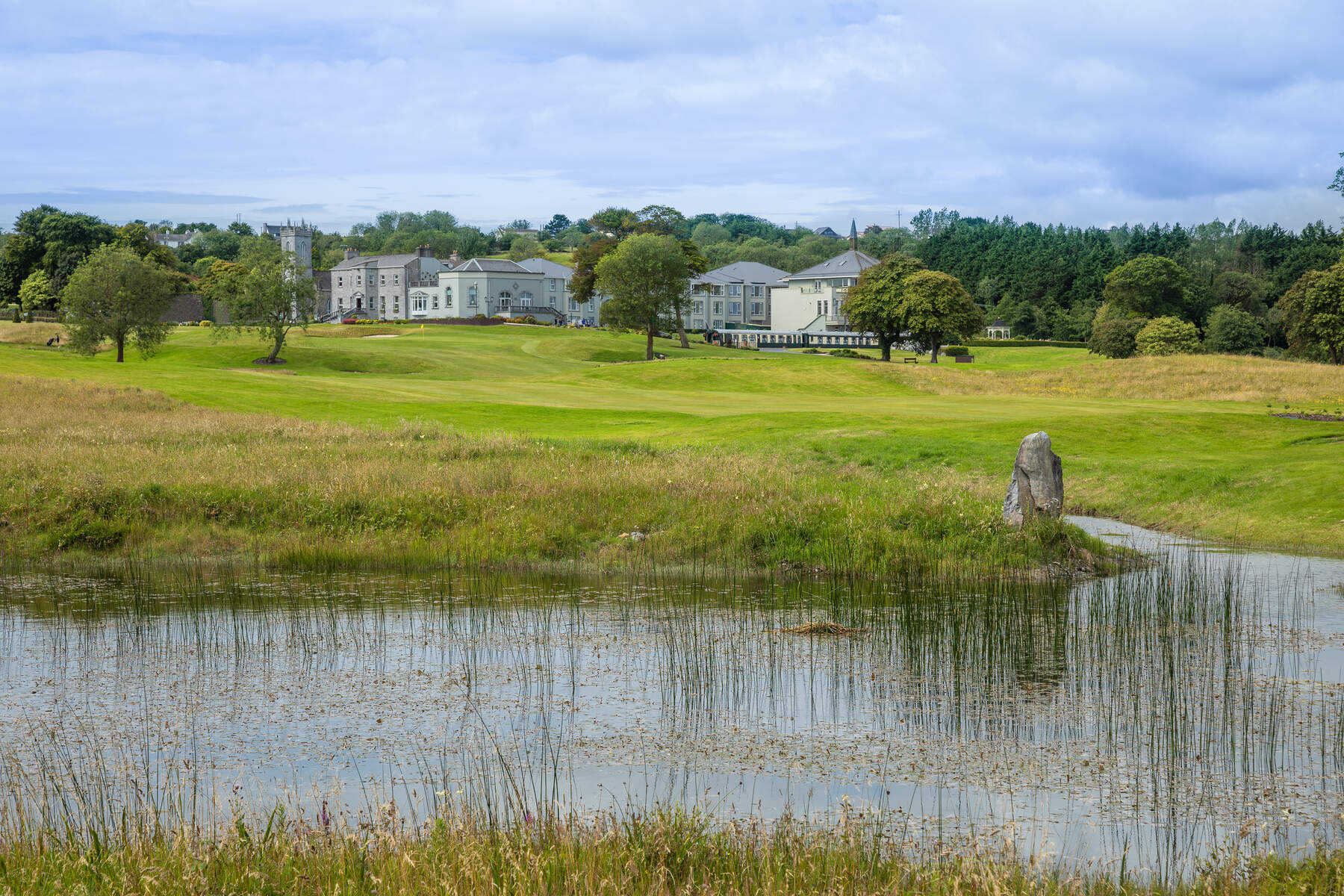
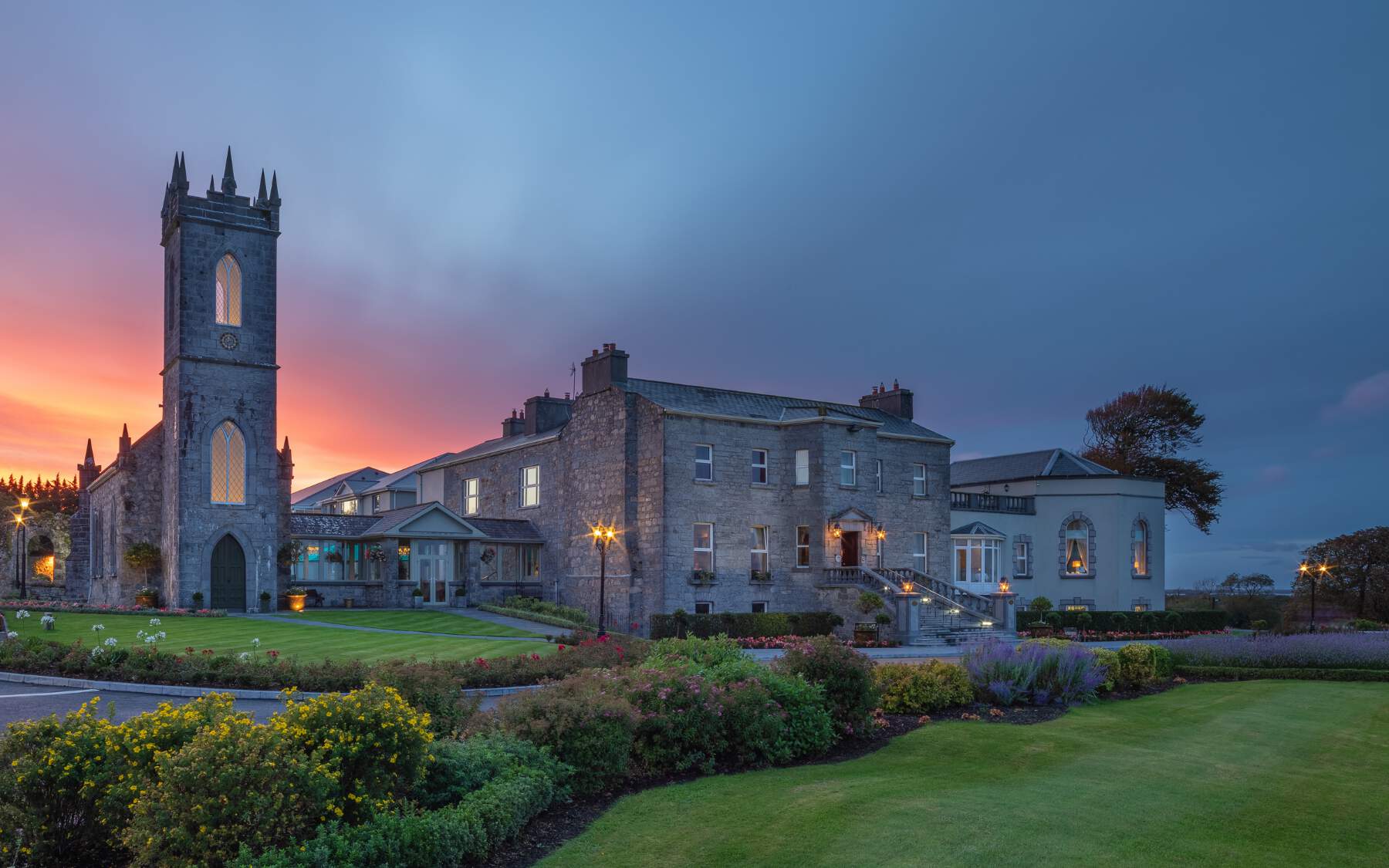
Loughton, May 2019. Photograph © Jennifer Winder-Baggot, www.irishhistorichouses.com

[1] Mark Bence-Jones. A Guide to Irish Country Houses. (originally published as Burke’s Guide to Country Houses volume 1 Ireland by Burke’s Peerage Ltd. 1978); Revised edition 1988 Constable and Company Ltd, London.

[2] http://www.patrickcomerford.com/search/label/castles?updated-max=2017-03-10T11:30:00Z&max-results=20&start=79&by-date=false

[3] https://en.wikipedia.org/wiki/14th_King%27s_Hussars

[4] http://www.loughcutra.com/

[5] https://www.dia.ie/architects/view/2640/PAIN-JAMES

[6] https://www.dromoland.ie/

[7] https://www.bco.ie

[8] p. 472. Tierney, Andrew. Buildings of Ireland: Central Leinster. The Counties of Kildare, Laois and Offaly. Yale University Press, New Haven and London, 2019.

[9] https://www.buildingsofireland.ie/buildings-search/building/14946003/laughton-house-ballinlough-cl-by-cullenwaine-ed-moneygall-co-offaly

[10] https://loughtonhouse.com/

[11] https://www.buildingsofireland.ie/buildings-search/building/22403202/ciamaltha-house-garraunbeg-tipperary-north

[12] http://landedestates.nuigalway.ie/LandedEstates/jsp/estate-show.jsp?id=2352

Redwood was inherited by Henry Trench’s son William Thomas Trench (1843-1911).

[13] https://www.irishtimes.com/life-and-style/homes-and-property/fine-art-antiques/owner-of-supermac-s-buys-loughton-house-archive-1.2818308

[14] http://www.thepeerage.com

[15] https://landedfamilies.blogspot.com/search/label/Ireland?updated-max=2017-02-19T16:18:00Z&max-results=20&start=23&by-date=false Atkinson of Cangort and Ashley Park

Text © Jennifer Winder-Baggot, www.irishhistorichouses.com