A Guide to Irish Country Houses by Mark Bence-Jones contents and pictures, houses beginning with C

As you can see as I work my way though the contents of Mark Bence-Jones’s A Guide to Irish Country Houses [1], there are thousands of “big houses” in Ireland – though many are “houses of middle size.” It’s not clear why some houses are included in Bence-Jones’s book and others are not. If it were up to me, I’d compile a more defined list – I’d like to compile a list of houses built before 1700, for example, to have a more clear cut-off, and another list of houses built before 1800. I would also like to group houses by architect, and I will do that eventually, I hope! But Bence-Jones gives us a good idea as to what exists – albeit he includes some important houses that no longer exist.

Note that the majority of these are private houses, not open to the public. I discovered “my bible” of big houses by Mark Bence-Jones only after I began this project of visiting historic houses that have days that they are open to the public (Section 482 properties).

This is a project I have been working on for a while, collecting pictures of houses. Enjoy! Feel free to contact me to send me better photographs if you have them! I’ll be adding letters as I go…

[1] Mark Bence-Jones. A Guide to Irish Country Houses (originally published as Burke’s Guide to Country Houses volume 1 Ireland by Burke’s Peerage Ltd. 1978); Revised edition 1988 Constable and Company Ltd, London.

Donation

Help me to fund my creation and update of this website. It is created purely out of love for the subject and I receive no payment so any donation is appreciated! My website costs €300 per year on WordPress.

€15.00

Cabinteely House (formerly Clare Hill), Cabinteely, Dublin – sometimes open to public

Cabinteely House, Dublin, photograph from Dun Laoghaire Rathdown County Council website.

See my entry https://irishhistorichouses.com/2020/06/06/covid-19-lockdown-20km-limits-and-places-to-visit-in-dublin/

Cabra Castle, County Cavan, on section 482 in 2019-2025 – hotel 

Cabra Castle, County Cavan. Photograph © Jennifer Winder-Baggot, www.irishhistorichouses.com.

See my entry https://irishhistorichouses.com/2021/03/28/cabra-castle-kingscourt-county-cavan/

Cabra (or Cabragh) House, Co Dublin – demolished 1948

Caherelly Grange, Herbertstown, Co Limerick 

An old castle, not lived in since mid-C19.

Cahir Castle, Cahir, Tipperary – OPW

Cahir Castle, photograph from Ireland’s Content pool, by George Munday 2014 for Failte Ireland

See my entry https://irishhistorichouses.com/2024/03/29/cahir-castle-county-tipperary-an-office-of-public-works-property/

Cahircalla, Ennis, Co Clare – nursing home

Cahircon House (or Cahercon or Cahiracon), Killadysert, Co. Clare

The National Inventory tells us that Cahercon is a “five-bay three-storey over basement late-Georgian house, built c. 1790, with limestone cut-stone projecting Ionic porch to centre. Three-bay two-storey over basement flanking wings with full-height canted bay windows, lean-to conservatory to left hand side and two-bay single-storey bay to right hand side, added 1873. Five-bay single-storey return, added c. 1990, to accommodate use as convent and school.”

Cahercon, County Clare, photograph courtesy National Inventory.

Cahirduggan, Midleton, Co Cork

A two storey house of late-Georgian appearance.  

Cahirduggan, Midleton, Co Cork courtesy National Inventory.

Cahir-Guillamore, Kilmallock, Co Limerick 

Cahir-Guillamore, County Limerick, entrance front 1965 copy photograph: David Davison, Vanishing Country Houses of Ireland by The Knight of Glin, David J. Griffin and Nicholas K. Robinson, published by The Irish Architectural Archive and The Irish Georgian Society, 1988.

Cahirmoyle, Ardagh, Co Limerick 

Cahirmoyle House, County Limerick, courtesy Archiseek.
Cahirmoyle House, County Limerick, courtesy National Inventory.
Cahirmoyle House or Cahermoyle, County Limerick, courtesy National Library of Ireland.

Cahirnane House (or Cahernane), Co Kerry – accommodation

Cahernane House, County Kerry, photograph from National Inventory of Architectural Heritage, which tells us it is a seven-bay two-storey over part-raised basement Ruskinesque Gothic Revival style country house with dormer attic, dated 1877, possibly incorporating fabric of earlier house. Designed by James Franklin Fuller.

See my entry https://irishhistorichouses.com/2022/10/19/places-to-visit-and-stay-in-county-kerry-munster/

Cahore House, Cahore, Co Wexford 

Cahore House, County Wexford, courtesy National Inventory of Architectural Heritage.

Cairndhu, Larne, County Antrim

A two storey, many-gabled Victorian house, given a Chinese flavour by the design of the ornate open-work bargeboards, and of the elaborate wooden verandah and balcony running along most of the front. 

Caledon, County Tyrone

Caledon, County Tyrone, photograph by Robert French, [between ca. 1865-1914], Lawrence Photograph Collection, National Library of Ireland.

Callinafercy House, Milltown, Co Kerry 

A Victorian Tudor house of 1861, built for Robert Leeson, grandson of 1st Earl of Milltown. 

Callinafercy House, Co Kerry courtesy National Inventory.

Camass House, Bruff, Co Limerick  

Camass House, County Limerick, courtesy National Inventory.

Camla Vale, Monaghan, Co Monaghan

Camla Vale, County Monaghan.

Camlin Estate, Co Donegal  – demolished  

Camlin, County Donegal or Fermanagh (?) entrance front c. 1890, Robert French, Lawrence Photgraph Collection NLI. It was on the border of the counties, and a gate still exists. The National Inventory tells us of the gate lodge: “This gateway and lodge was built to designs by the eminent architect John Benjamin Keane (died 1859), a noted architect of his day who is probably best remembered for his numerous church commissions for the Catholic Church. It was Keane who designed the extensive alterations and additions to Camlin Castle itself at the same time, incorporating fabric from the earlier house that, reputedly, included seventeenth century fabric, for a John A Tredennick c. 1838. The Tredennick family lived at Camlin Castle from c. 1718 when a William Tredennick obtained the lease of Camlin from William ‘Speaker’ Conolly who had purchased the estates of Lord Folliott in and around Ballyshannon area. The Tredennick family had another seat at nearby Fortwilliam or Fort William (see 40910774). The estate was sold to the Land Commission c. 1900; the last member of the family to reside at Camlin was a Charles Joseph Haydon Tredennick up until 1929. Camlin Castle itself was sadly – and erroneously – later demolished as part of Erne Hydro-Electric Scheme in the 1940s/50s, when it was thought that the house would be submerged by new lake. However, the water level of this lake did not reach the site of the building so it could have been saved, and it represents a sad loss to the architectural heritage of the local area.”

Camolin Park, Camolin, Co Wexford

A square block of superior quality, dating from first half of C18. Good doorcase with segmental pediment. The seat of the Annesleys, Earls of Mountnorris and Viscounts Valentia, sold by them 1858. A ruin for many years, demolished ca 1974.

Camphire, Cappoquin, Co Waterford 

Camphire House, County Waterford, courtesy of National Inventory.

Cangort, Shinrone, Co Offaly

Cangort Park, County Offaly, photograph courtesy of National Inventory.

Cangort Park, Shinrone, Co. Offaly 

Cangort House, Cangort demesne, County Offaly, Courtesy of National Inventory.
Cangort Park, County Offaly courtesy Sherry Fitzgerald Country Homes, Farms and Estates.

Capard, Rosenalis, Co Laois

Capard, County Laois, courtesy Savills.

Cappagh House, Cappagh, Co Waterford (Old and New, section 482) 

Cappagh House, County Waterford. Photograph © Jennifer Winder-Baggot, www.irishhistorichouses.com.

See my entry https://irishhistorichouses.com/2023/12/09/cappagh-house-old-and-new-dungarvan-co-waterford/

Cappamurra, Dundrum, Co Tipperary  

A two storey house with round-headed windows in its upper storey and windows of unusual shape below. 

Cappamura, County Tipperary, photograph courtesy of National Inventory.

Cappoquin House, Waterford – section 482 

Cappoquin House, County Waterford. Photograph © Jennifer Winder-Baggot, www.irishhistorichouses.com.

See my entry https://irishhistorichouses.com/2021/01/24/cappoquin-house-gardens-cappoquin-co-waterford/

Carbury Castle, Co Kildare (or Castle Carbury or Carbery)  – ruin 

Carbury Castle, County Kildare, courtesy of Brian T. McElherron, Irish Antiquities.
Carbury Castle, County Kildare, photograph by Robert French, (between ca. 1865-1914), Lawrence Photograph Collection, National Library of Ireland.

Careysville, (Ballymacpatrick Castle), Clondulane, Fermoy, County Cork

Careysville, Fermoy, County Cork courtesy National Inventory.

See my entry https://irishhistorichouses.com/2022/05/17/places-to-visit-and-stay-munster-county-cork/

Cargins Park, Roscommon, Co Roscommon

A two storey three bay Victorian house with a porch.

Carker House, Doneraile, Co Cork  

A two storey C18 house, 6 bay front; two bay breakfront, with small pediment-gable; tripartite round-headed doorcase.

Carker House, County Cork, courtesy National Inventory.

Carnagh House, New Ross, Co Wexford 

Carnalea House, County Down 

Carnalway Glebe, Kilcullen,  Co. Kildare 

Carnelly, Ennis, Co. Clare

A 3 storey mid-C18 house of pink brick, built for George Stamer almost certainly to the design of his brother-in-law Francis Bindon.

Carnelly House, County Clare, photograph by Eric Shaw, courtesy Clarecastle Ballyea Heritage website.

Carnew Castle, Carnew, Co Wicklow 

Carnew Castle, County Wicklow, Photograph courtesy of National Inventory of Architectural Heritage.
Carnew Castle, County Wicklow, photograph by Robert French, [between ca. 1865-1914], Lawrence Photograph Collection, National Library of Ireland.
Carnew Castle, County Wexford/ Wicklow, photograph by Robert French, (between ca. 1865-1914), Lawrence Photograph Collection, National Library of Ireland

Carramore, Ballina, County Mayo

Carrowmore House, County Mayo, courtesy National Inventory.

Carrick Barron, or Carrickbarrahane, Stradbally, Co. Waterford  

Carrickblacker, Portadown, County Armagh – demolished 

Carrick Blacker, County Armagh, photograph by Robert French, [between ca. 1865-1914], Lawrence Photograph Collection, National Library of Ireland.

Carrickmore House (formerly Carrickmore Hall), County Tyrone

Carrig Park, Mallow, Co Cork

 A two storey bow ended Georgian house. 

Carrigacunna Castle, Killavullen, Co Cork  

Carrigacunna Castle, Killavullen, Mallow, County Cork for sale May 2025 courtesy Lisney Sothebys.

A two storey early nineteenth century house alongside an old tower-house above the River Blackwater.

Carrigaholt Tower and the Cottage, Shannon, County Clare

Carrigaholt Tower, Shannon, County Clare, photograph courtesy Sherry Fitzgerald McMahon, 2024.

Bence-Jones writes of the cottage: “A C19 house of random ashlar consisting of a 2 storey centre with pointed windows, flanked by single-storey gabled wings; overlooking the mouth of the Shannon, close to the ruins of an old castle of the MacMahons which was captured by the O’Briens of Thomond and afterwards passed to the Burton family. Now rebuilt, but the old C18 pink brick garden walls still survive.

Carrigaholt Tower, Shannon, County Clare, photograph courtesy Sherry Fitzgerald McMahon, 2024.

 Carriglas Manor, Longford

Carriglas Manor, County Longford, courtesy of National Inventory.
Carriglas or Carrigglass Manor, County Longford, photograph by Robert French, [between ca. 1865-1914], Lawrence Photograph Collection, National Library of Ireland.
Cariglas or Carriglas Manor, County Longford, photograph by Robert French, [between ca. 1865-1914], Lawrence Photograph Collection, National Library of Ireland.

Carriglea, Dungarvan, Co Waterford 

Carrigmore, Ballineen, Co Cork

A two storey house in the late Georgian manner, built 1842 by James Lysaght on the site of an earlier house, known as Connerville, which had formerly belonged to the Conner family and which he purchased from them. 

Carrigmore, Montenotte, Cork, Co Cork  

A very handsome C19 Classical house…Now ruinous.

Carrignavar, Co Cork

A late C19 castellated house incorporating some fragments of an old castle.  

Carrignavar, County Cork (http://homepage.eircom.net/~carriglake/carrig_lake24.htm), photograph courtesy Landed Estates database.

Carrigoran, Newmarket-on-Fergus, Co Clare – demolished in the 1980s 

Carrigrenane, Little Island, Co Cork  

A pleasant square late-Georgian house of two storeys over a basement on a promontory jutting out into Lough Mahon.

Carrigrohane Castle, Carrigrohane, County Cork

Detached four-bay three-storey over basement and with dormer attic house, built c.1850, incorporating fabric of an earlier building.   

Carrigrohane, County Cork, photograph by Robert French, [between ca. 1865-1914], Lawrence Photograph Collection, National Library of Ireland.

Carrowdore Castle, Donaghadee, County Down 

A Georgian Gothic castle built 1818 by Nicholas de la Cherois-Crommelin. 

Carrowgarry, Beltra, Co Sligo – coffee roasters 

A Victorian house built ca 1880 by A.J. Crichton.

Carrowmore (also known as Fairfield House), Aughrim, Co Galway 

A plain three storey 5 bay Georgian house.

Carrowmore House, Carrowmorelacken, Co Mayo

Carrowmore House, County Mayo, courtesy National Inventory.
Carrowmore, or Carramore, County Mayo, photograph by Robert French, [between ca. 1865-1914], Lawrence Photograph Collection, National Library of Ireland.

Carrowroe Park, Roscommon, Co Roscommon 

An early C19 Classical house of two storeys and three bays, pedimented breakfront with Wyatt window over Doric portico. The front prolonged by single-storey wings with pairs of pedimented pavilions, those on one side being wider apart; blind wall with pilasters on one side, windows on the other. Garden front with two arched loggias joined by colonnade.

Carstown, Drogheda, Co Louth

Carstown, Drogheda, Co Louth, photograph courtesy National Inventory.

Carton House, Kildare – hotel 

At Carton House, County Kildare. Photograph © Jennifer Winder-Baggot, www.irishhistorichouses.com.

See my entry https://irishhistorichouses.com/2024/06/04/carton-house-county-kildare-a-hotel/

Cashel Palace, Cashel, Co Tipperary – hotel

Cashel Palace hotel, County Tipperary, photograph by Brian Morrison 2014 for Tourism Ireland, Ireland’s Content Pool.

See my entry https://irishhistorichouses.com/2022/10/19/places-to-visit-and-stay-in-county-tipperary-munster/

Cashel House, Cashel, Connemara, County Galway

Casino at Marino, County Dublin – Office of Public Works

The Casino, Marino, County Dublin. Photograph © Jennifer Winder-Baggot, www.irishhistorichouses.com.

See my entry https://irishhistorichouses.com/2023/11/09/office-of-public-works-dublin-the-casino-at-marino/

Castle Archdale, Irvinestown, County Fermanagh – house a ruin but War museum in stables

Castle Archdale, County Fermanagh, from Discover Northern Ireland website.

See my entry https://irishhistorichouses.com/2022/04/03/places-to-visit-and-stay-in-ulster-counties-fermanagh-monaghan-and-tyrone/

Castle Archdale, County Fermanagh, photograph by Robert French, [between ca. 1865-1914], Lawrence Photograph Collection, National Library of Ireland.

Castle Bellingham, County Louth – hotel 

Castle Bellingham, County Louth, 20th November 2022. Photograph © Jennifer Winder-Baggot, www.irishhistorichouses.com.

See my entry https://irishhistorichouses.com/2022/10/28/places-to-visit-and-stay-in-county-louth-leinster/

Castle Bernard (formerly Castle Mahon), Bandon, Co Cork – ruin  

Castle Bernard (formerly Castle Mahon), Bandon, Co Cork photograph by Robert French, [between ca. 1865-1914], Lawrence Photograph Collection, National Library of Ireland.

Castle Blunden, County Kilkenny – whole house rental

Castle Blunden, County Kilkenny, courtesy National Inventory.

See my entry https://irishhistorichouses.com/2022/10/28/places-to-visit-and-stay-in-county-kilkenny-leinster/

Castle Browne (Clongowes Wood College), Clane, Co Kildare

Clongowes Wood College, formerly Castle Browne, County Kildare. Photograph © Jennifer Winder-Baggot, www.irishhistorichouses.com.
Clongowes College, County Kildare, photograph by Robert French, (between ca. 1865-1914), Lawrence Photograph Collection, National Library of Ireland.

Castle Caldwell, Belleek, County Fermanagh

A C18 house of two storeys over a basement, on the shores of Lough Erne, with a delightful Georgian “pasteboard Gothic” façade… The house was ruinous by the end of C19.” 

Castle Caldwell, County Fermanagh/Donegal, photograph by Robert French, (between ca. 1865-1914), Lawrence Photograph Collection, National Library of Ireland.

Castle Cooke, Kilworth, Co Cork – ‘lost’  

The old castle of Dungallane was acquired by Thomas Cooke, a Cork Quaker merchant, in second half of C17, and subsequently named Castle Cooke.

Castle Cor, Kanturk, Co Cork – ‘lost’  

Castle Cor, County Cork entrance front, Vanishing Country Houses of Ireland by The Knight of Glin, David J. Griffin and Nicholas K. Robinson, published by The Irish Architectural Archive and The Irish Georgian Society, 1988.

Castle Crine, near Sixmilebridge, Co Clare –

A castellated late-Georgian house, demolished in 1955. 

Castle Daly, Loughrea, Co Galway – ‘lost’ 

Castle Daly, County Galway entrance front, photograph collection: Miss Olive Daly, Vanishing Country Houses of Ireland by The Knight of Glin, David J. Griffin and Nicholas K. Robinson, published by The Irish Architectural Archive and The Irish Georgian Society, 1988.

Castle Dillon, Armagh, County Armagh

A large and austere mansion of 1845 by William Murray; built for Sir George Molyneux, 6th Bt, to replace a rather low and plain mid-C18 winged house, which had itself replaced the second of two earlier houses again.  

Castle Dillon, County Armagh, photograph by Robert French, (between ca. 1865-1914), Lawrence Photograph Collection, National Library of Ireland.

Castle Dobbs, Carrickfergus, County Antrim

An early C18 house in the manner of Sir Edward Lovett Pearce, built 1730 by Arthur Dobbs, Surveyor-General of Ireland, Governor of North Carolina, agriculturalist and organizer of expeditions to discover the NW passage from Hudson’s Bay to the Pacific.  

Castle Dobbs, County Antrim, courtesy Archiseek.

Castle Dodard, Lismore, County Waterford 

Castle Dodard, County Waterford, courtesy National Inventory.

Castle Durrow, Co Laois – a hotel, gardens open to public 

Castle Durrow, County Laois. Photograph © Jennifer Winder-Baggot, www.irishhistorichouses.com.

See my entry https://irishhistorichouses.com/2022/10/27/places-to-visit-and-stay-in-county-laois-leinster/

Castle Ellen, Athenry, County Galway – on 482 in 2019-2025 

Castle Ellen, County Galway, courtesy of National Inventory of architectural heritage.

See my entry https://irishhistorichouses.com/2023/05/31/places-to-visit-and-stay-in-county-galway/

Castle Ffogarty, Thurles, Co Tipperary

A rather insubstantial C19 castle; burnt 1922 and now a ruin except for one tower which has been rebuilt. 

Castle Ffrench, Ahascragh, Co Galway 

An elegant ashlar-faced house of three storeys over a basement, built in 1779 for Sir Charles ffrench, Mayor of Galway; replacing a late C17 house on a different site which itself replaced a castle built by the ffrench family soon after they bought the estate in late C16. 

Castle Ffrench, County Galway, courtesy National Inventory.

Castle Forbes, County Longford 

Castle Forbes, County Longford, Photograph from Archiseek, photograph by Robert French, (between ca. 1865-1914), Lawrence Photograph Collection, National Library of Ireland.
Castle Forbes, County Longford, Photograph from National Library of Ireland. 

Castle Forward, Newtowncunningham, Co Donegal – ruin  

Castle Freke, Rosscarbery, Co Cork  

Castle Freke, County Cork, courtesy of Dublin City Library archives.
Castle Freke, Rosscarbery, Co Cork  courtesy Archiseek.

Castle Gore (or Old Castle, Deel Castle), Ballina, Co Mayo

Castle Gore (or Old Deel Castle), County Mayo, courtesy National Inventory.

Castle Grace, Clogheen, Co Tipperary  

Castle Grace, Clogheen, Co Tipperary, photograph Michael Daniels and Shelley and Purcell estate agents 2019.

Castle Grove, County Donegal – accommodation  

Castlegrove, County Donegal. Photograph from National Inventory of Architectural Heritage.

See my entry https://irishhistorichouses.com/2022/10/27/places-to-visit-and-stay-in-county-donegal-ulster/

Castle Hacket (or Castlehacket), Belclare, Co Galway 

Castlehacket, photograph courtesy of airbnb Castlehacket entry.

See my entry https://irishhistorichouses.com/2023/05/31/places-to-visit-and-stay-in-county-galway/

Castle Harrison, Charleville, Co Cork – ‘lost’  

C18 house…sold 1956 and subsequently demolished

Castle Hewson, Askeaton, Co Limerick 

Castle Hewson, County Limerick, courtesy National Inventory.

Castle Howard, Avoca, Co Wicklow – section 482 

Castle Howard, County Wicklow. Photograph © Jennifer Winder-Baggot, www.irishhistorichouses.com.

See my entry https://irishhistorichouses.com/2020/11/13/castle-howard-avoca-county-wicklow/

Castle Hyde, Fermoy, County Cork

Castle Hyde, Fermoy, County Cork courtesy National Inventory.

Castle Ievers, Croom, Co Limerick 

Castle Ievers, County Limerick, courtesy National Inventory.
Castle Irvine (or Necarne Castle), County Fermanagh courtesy Lord Belmont.

See my entry https://irishhistorichouses.com/2022/04/03/places-to-visit-and-stay-in-ulster-counties-fermanagh-monaghan-and-tyrone/

Castle Kevin, Mallow, Co Cork  

Castle Kevin, Mallow, Co Cork courtesy National Inventory.

Castle Kevin, Annamoe, County Wicklow 

Castle Kevin, County Wicklow, Photograph courtesy of National Inventory of Architectural Heritage.

Castle Lackin, near Ballycastle, Co Mayo

A plain two storey late Georgian house, with a wide curved bow at one end of its garden front; simple entablatures over ground floor windows. A vast complex of outbuildings at rear of the house, partly surrounded by a high battlemented wall with castellated gate piers. “Eyecatcher” folly on hill opposite. Now the house and outbuildings are in ruins and some of the wall has collapsed.

Castle Leslie, County Monaghan – section 482 in 2019, hotel 

Castle Leslie, County Monaghan. Photograph © Jennifer Winder-Baggot, www.irishhistorichouses.com.

See my entry https://irishhistorichouses.com/2020/08/07/castle-leslie-glaslough-county-monaghan/

Castle Lough, Co Tipperary 

A two storey five bay Georgian house with a high roof.

Castle Lyons, Fermoy, Co Cork – ‘lost’  

A C16 fortified mansion, built on the foundations of the castle of the O’Lenans, from whom the place too its name; principal seat of the Earls of Barrymore. …The house was burnt 1771, through the carelessness of a workman, and never rebuilt. 

Castle MacGarrett, Claremorris, County Mayo

Castle MacGarrett, County Mayo, courtesy Sherry FitzGerald Claremorris.
Castle MacGarrett, County Mayo, photograph by Robert French, (between ca. 1865-1914), Lawrence Photograph Collection, National Library of Ireland.

Castle Martin, Co Kildare 

Castlemartin, County Kildare, courtesy of myhome.ie
Castlemartin House, County Kildare, photograph by Robert French, (between ca. 1865-1914), Lawrence Photograph Collection, National Library of Ireland.

Castle Martyr (or Castlemartyr), Co Cork – hotel  

Castlemartyr, County Cork courtesy National Inventory.

See my entry https://irishhistorichouses.com/2022/05/17/places-to-visit-and-stay-munster-county-cork/

Castle Mary, Cloyne, Co Cork – ‘lost’  

Castle Mary, Cloyne, Co Cork courtesy National Inventory.

Castle Matrix, Rathkeale, Co. Limerick (also called Castle Mattress)

Castle Matrix, County Limerick, photograph courtesy Archiseek.

Castle Morres, Kilmaganny, Co Kilkenny

Castle Morres, County Kilkenny, entrance front c. 1900, photograph collection Mrs. de Montmorency, Vanishing Country Houses of Ireland by The Knight of Glin, David J. Griffin and Nicholas K. Robinson, published by The Irish Architectural Archive and The Irish Georgian Society, 1988.

Castle Neynoe (Ballysumaghan House), Balintogher, Co Sligo

 “A small symmetrical Gothic-Revival castle with a central bow carried upwards as a three storey tower. Seat of the Neynoes. Now a ruin.” 

Castle Oliver (also known as Clonodfoy), Kilfinane, Co Limerick

Castle Oliver, County Limerick, Vanishing Country Houses of Ireland by The Knight of Glin, David J. Griffin and Nicholas K. Robinson, published by The Irish Architectural Archive and The Irish Georgian Society, 1988.
Castle Oliver, County Limerick, courtesy National Inventory.

Castle Otway, Templederry, Co Tipperary

Castle Otway, County Tipperary view of entrance and garden fronts, Vanishing Country Houses of Ireland by The Knight of Glin, David J. Griffin and Nicholas K. Robinson, published by The Irish Architectural Archive and The Irish Georgian Society, 1988.
Castle Otway, County Tipperary, entrance front 1979, photograph: William Garner, Vanishing Country Houses of Ireland by The Knight of Glin, David J. Griffin and Nicholas K. Robinson, published by The Irish Architectural Archive and The Irish Georgian Society, 1988.

Castle Park, Limerick, Co Limerick

Castle Park, County Limerick, courtesy National Inventory.

Castle Pollard (formerly Kinturk), Co Westmeath  

Castle Ring, Dundalk, Co Louth 

A two storey five bay gable-ended C18 house with simple round-headed doorway.

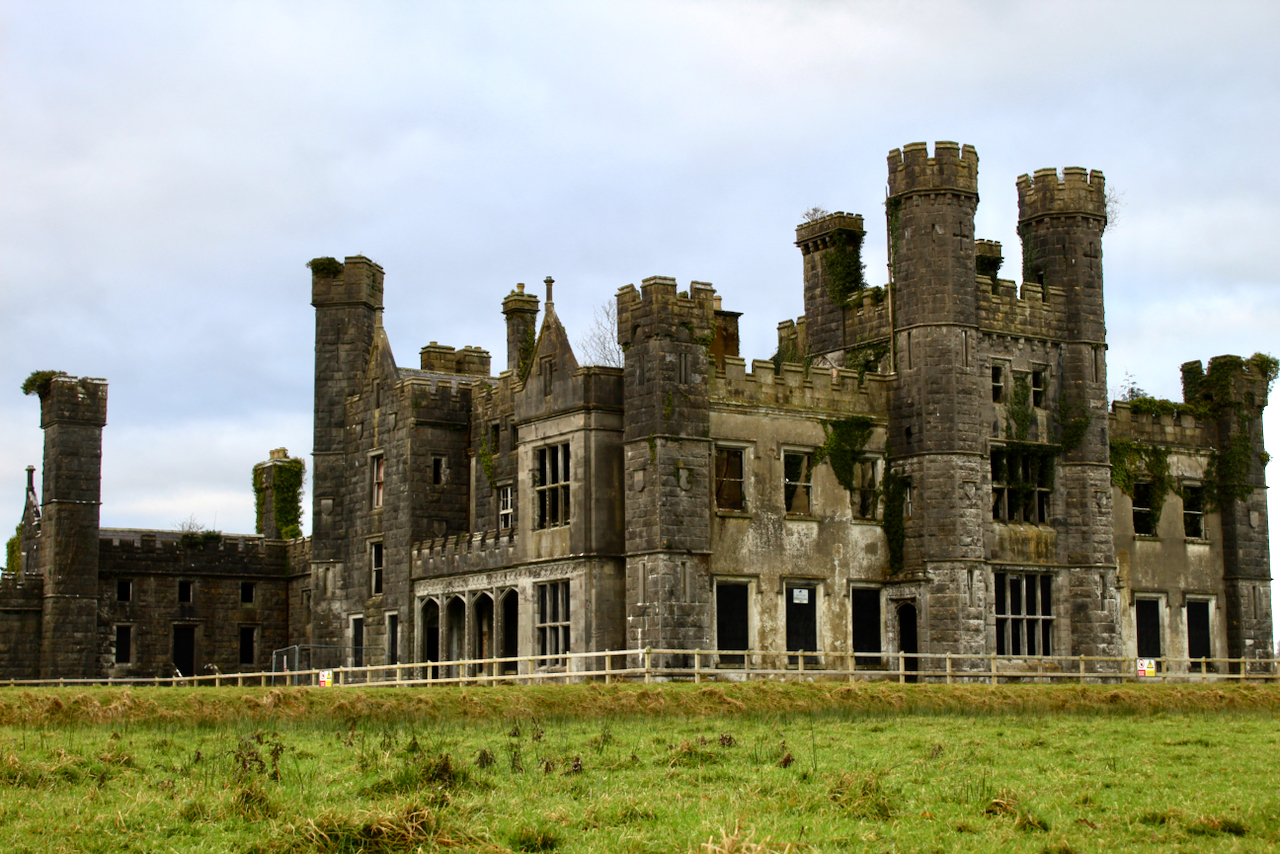
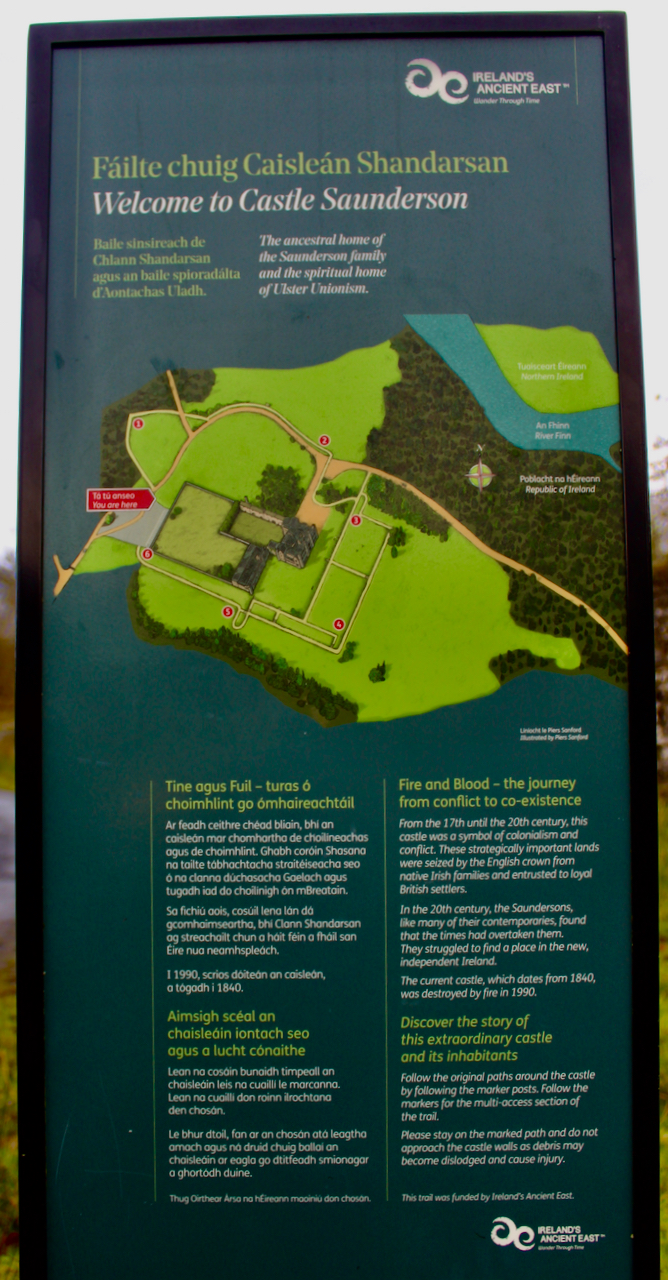
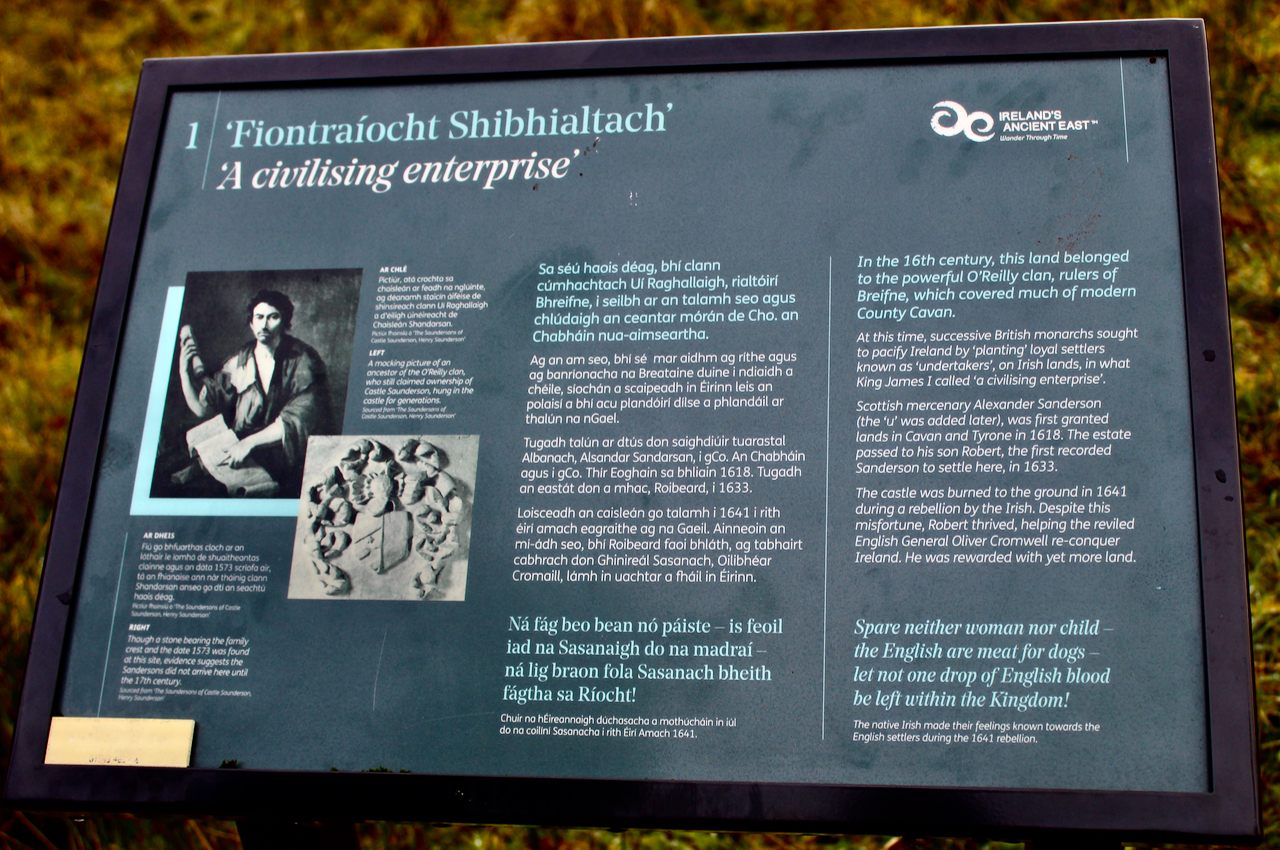
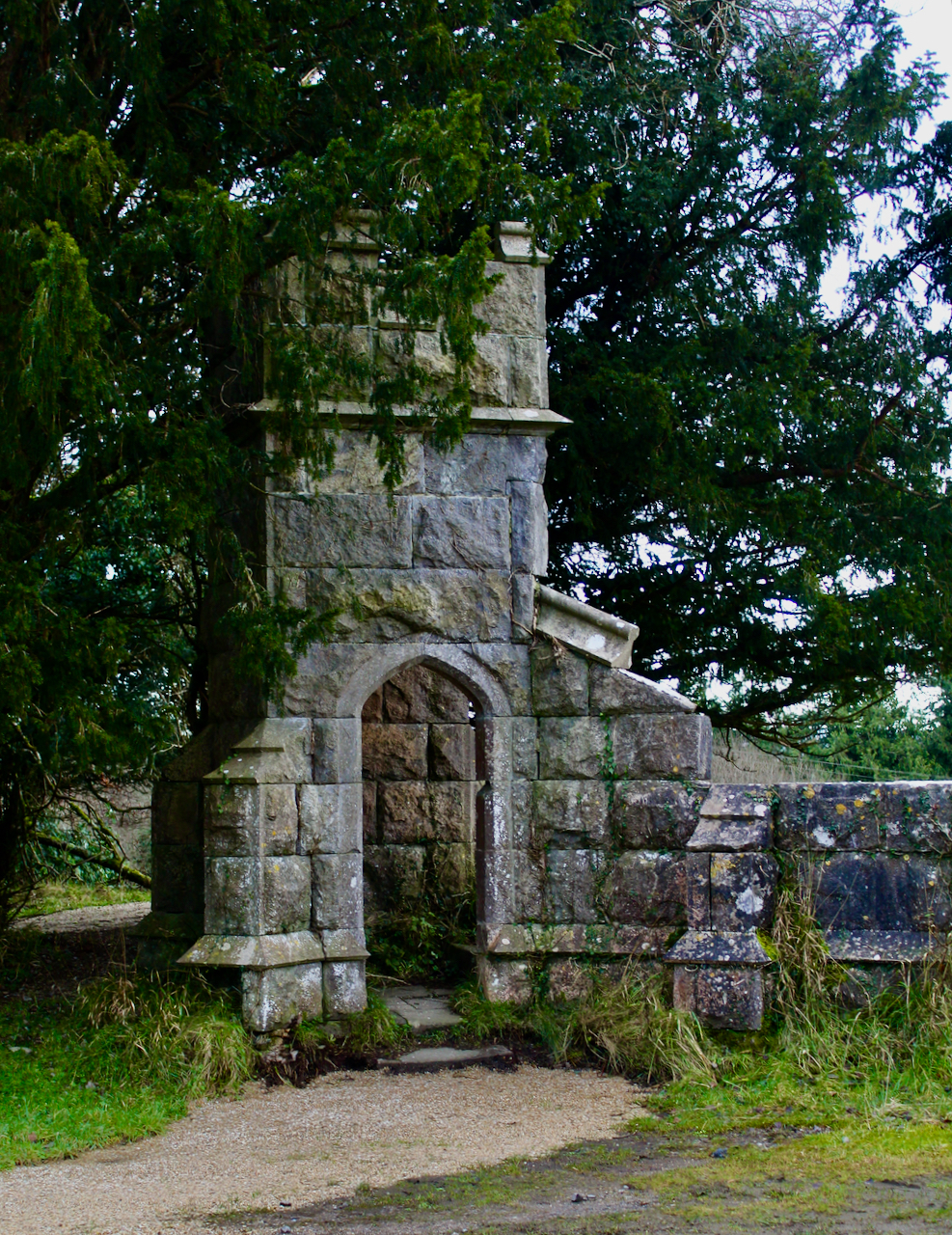
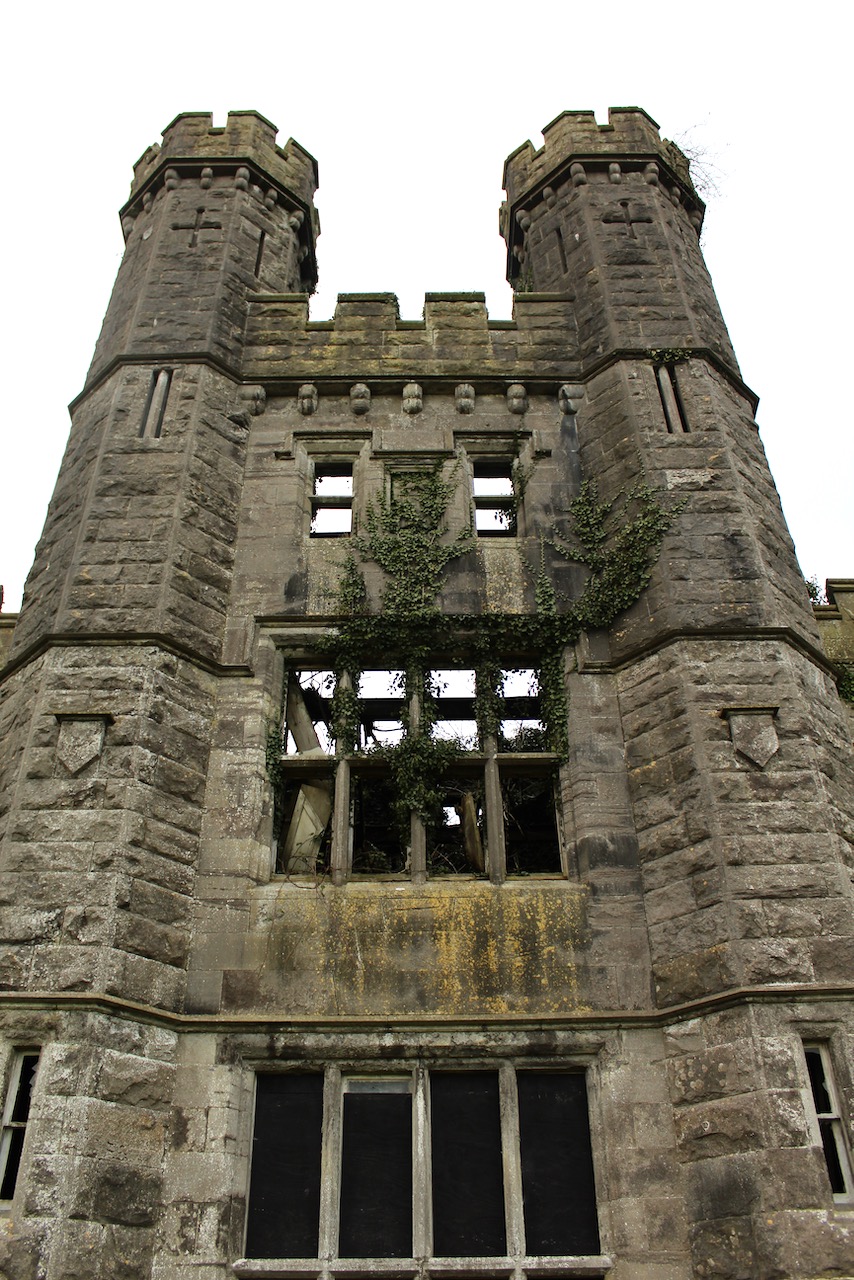
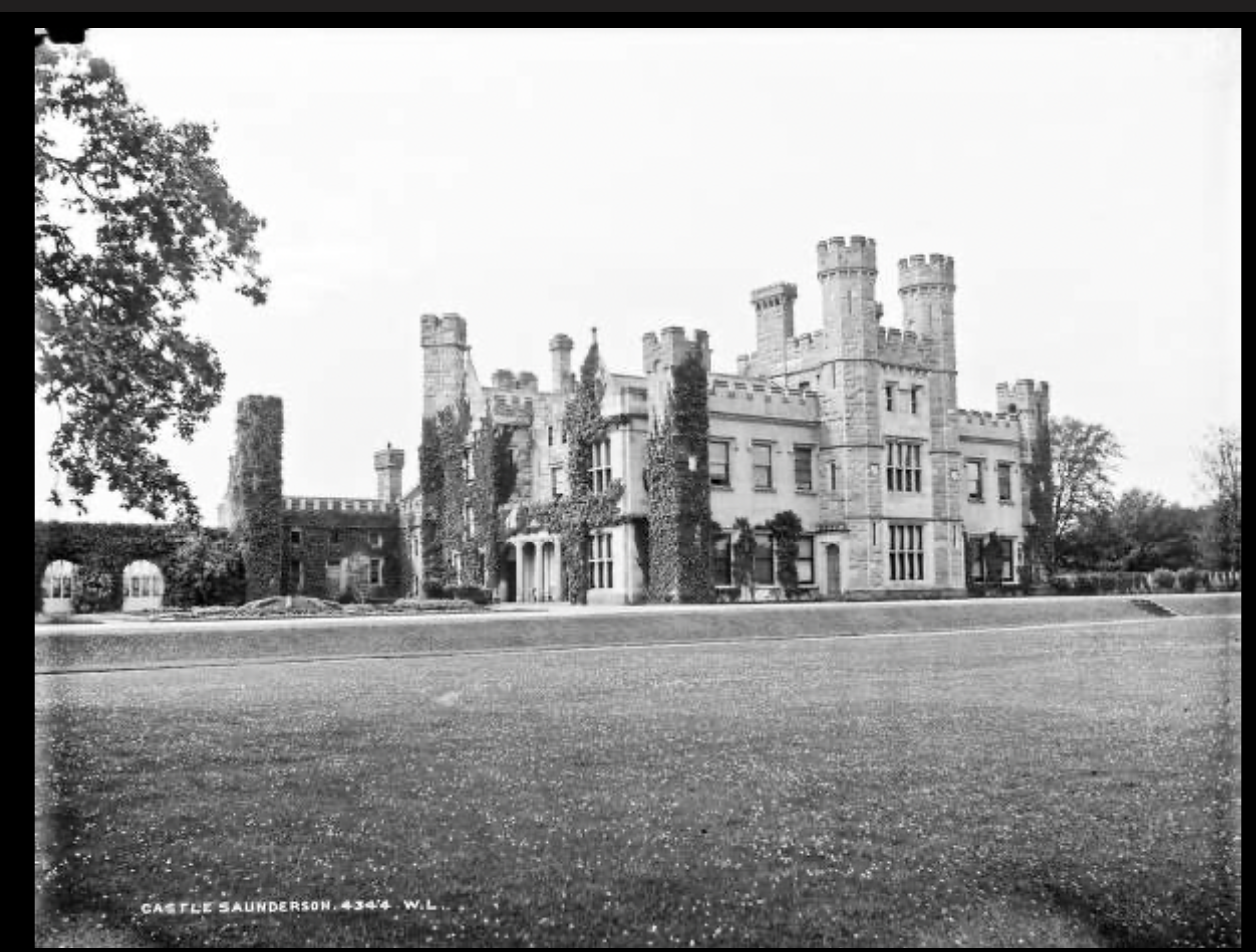
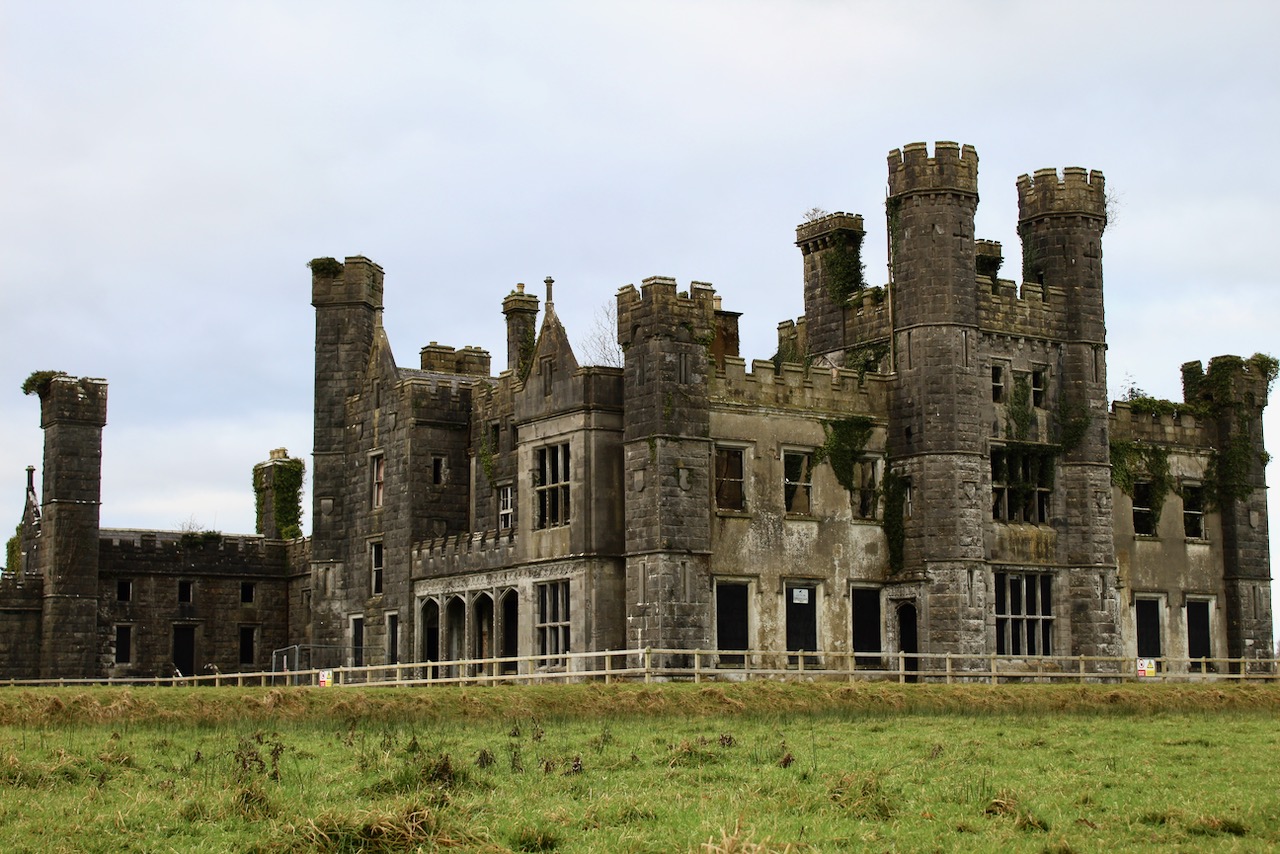
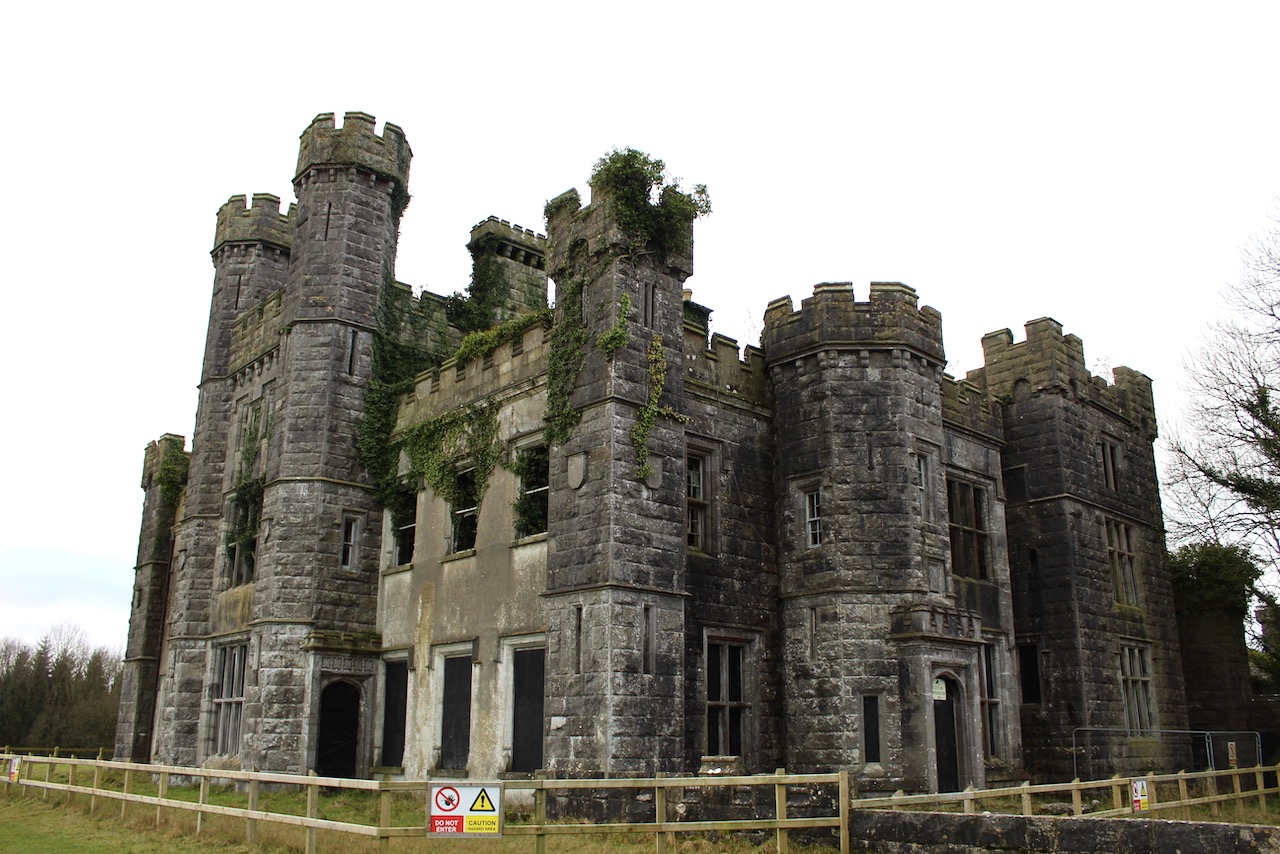
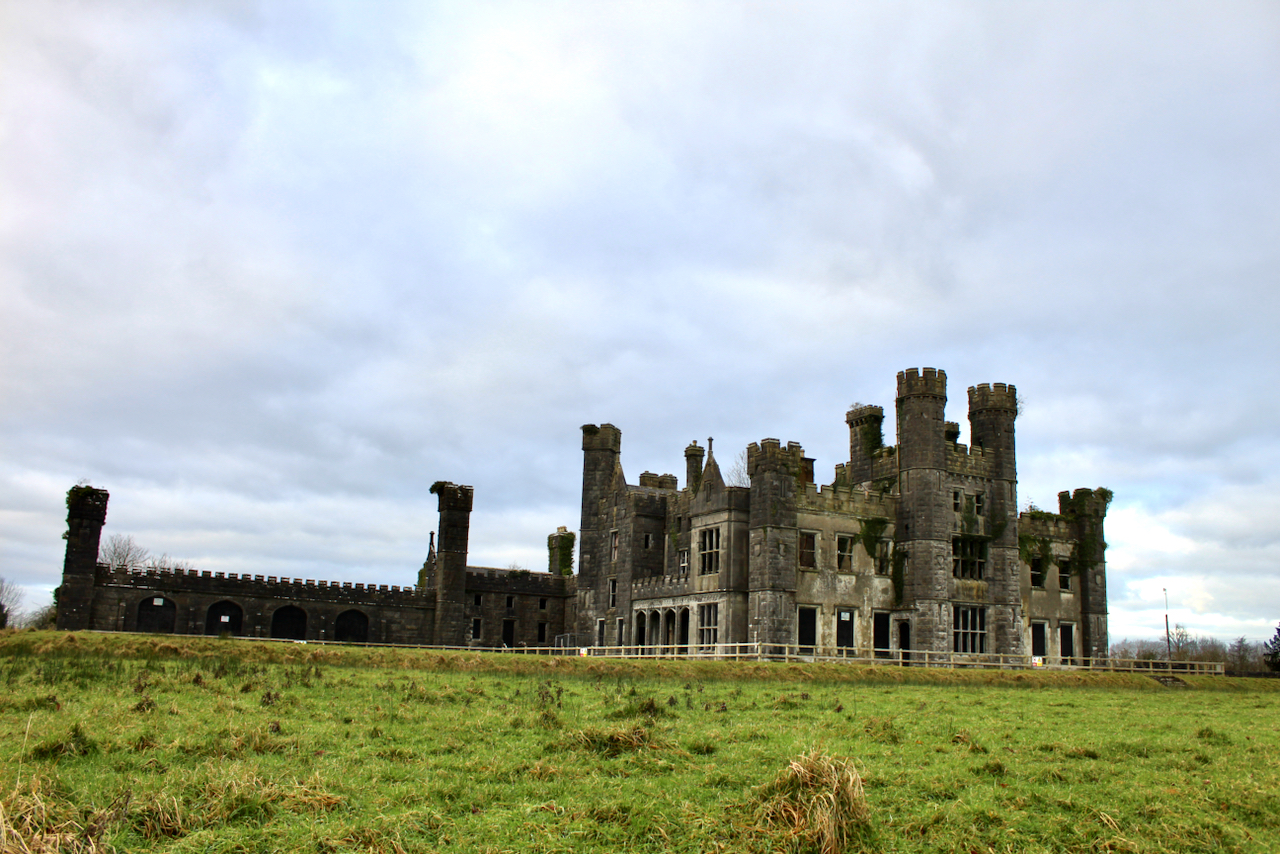
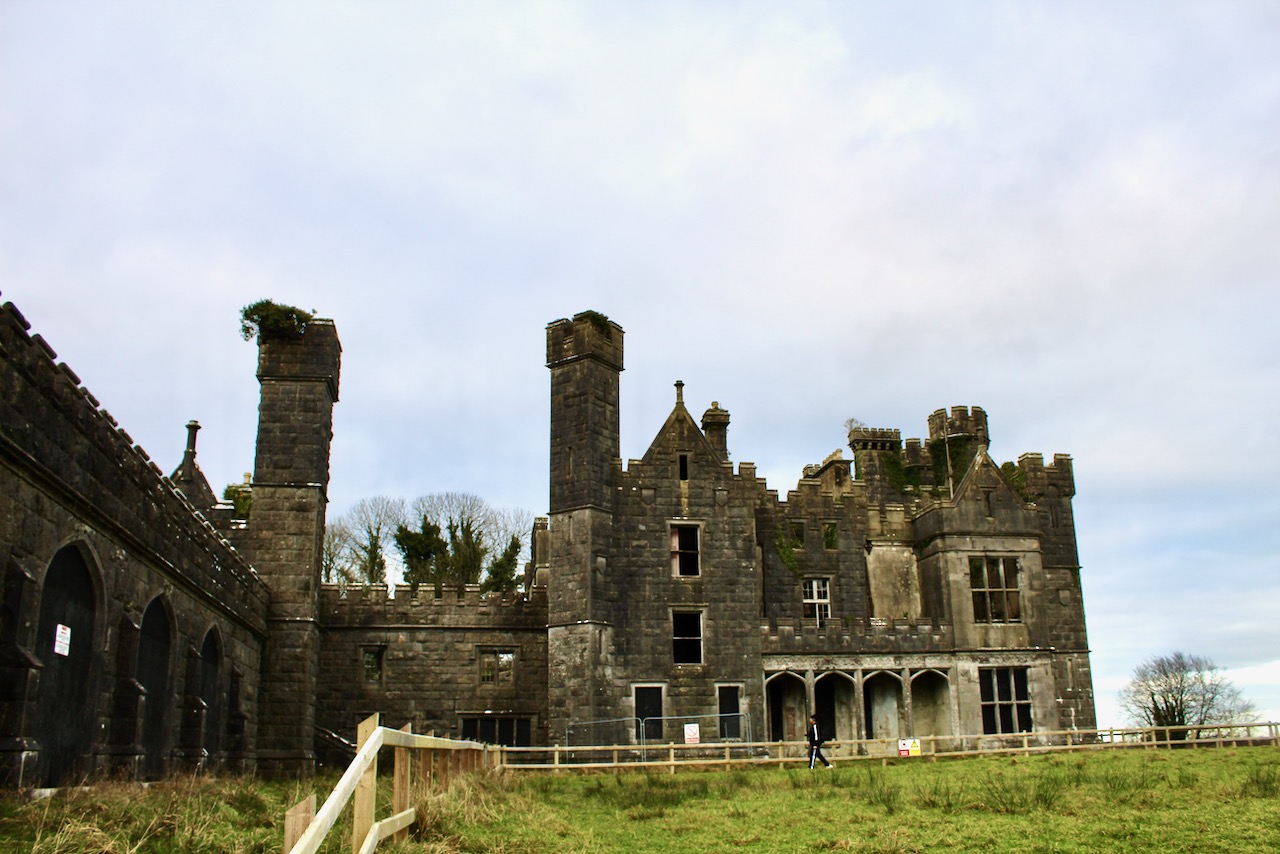
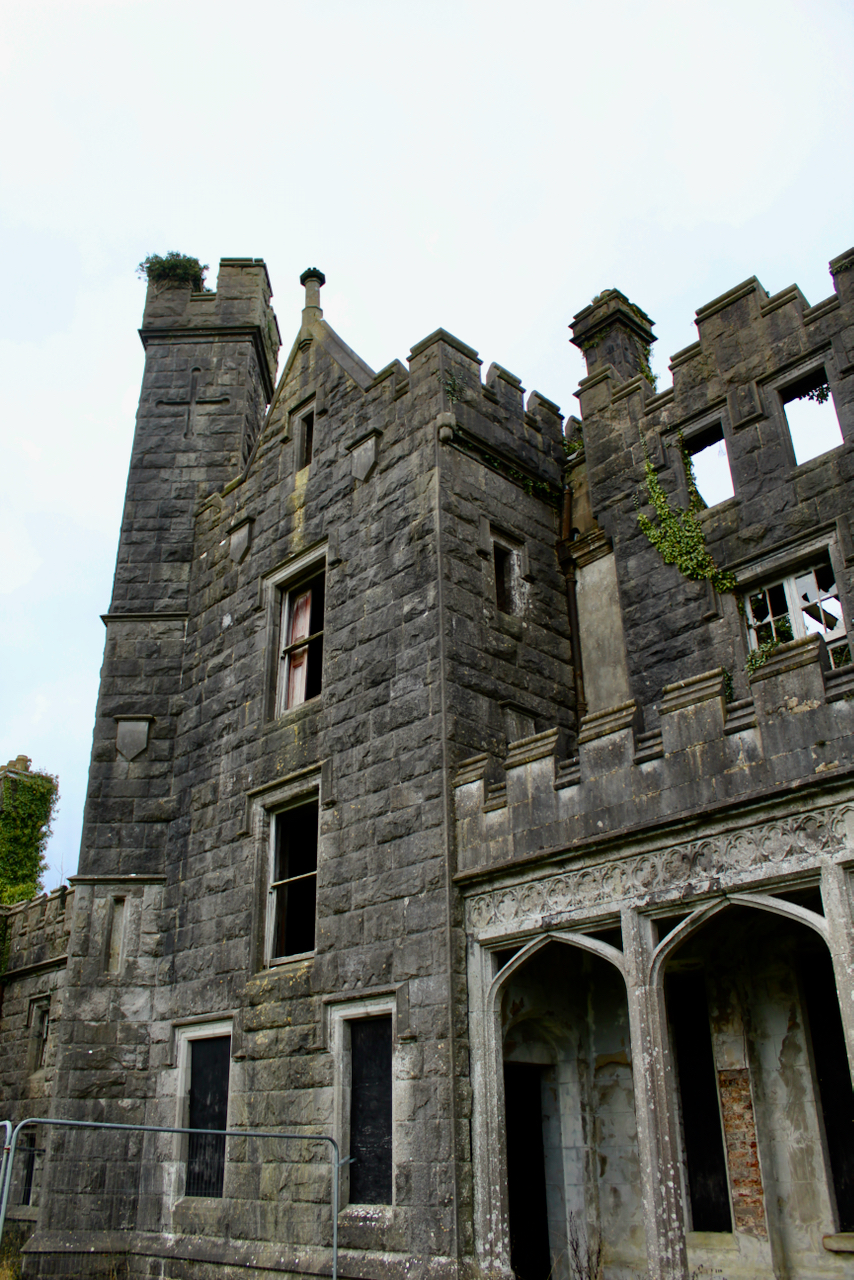
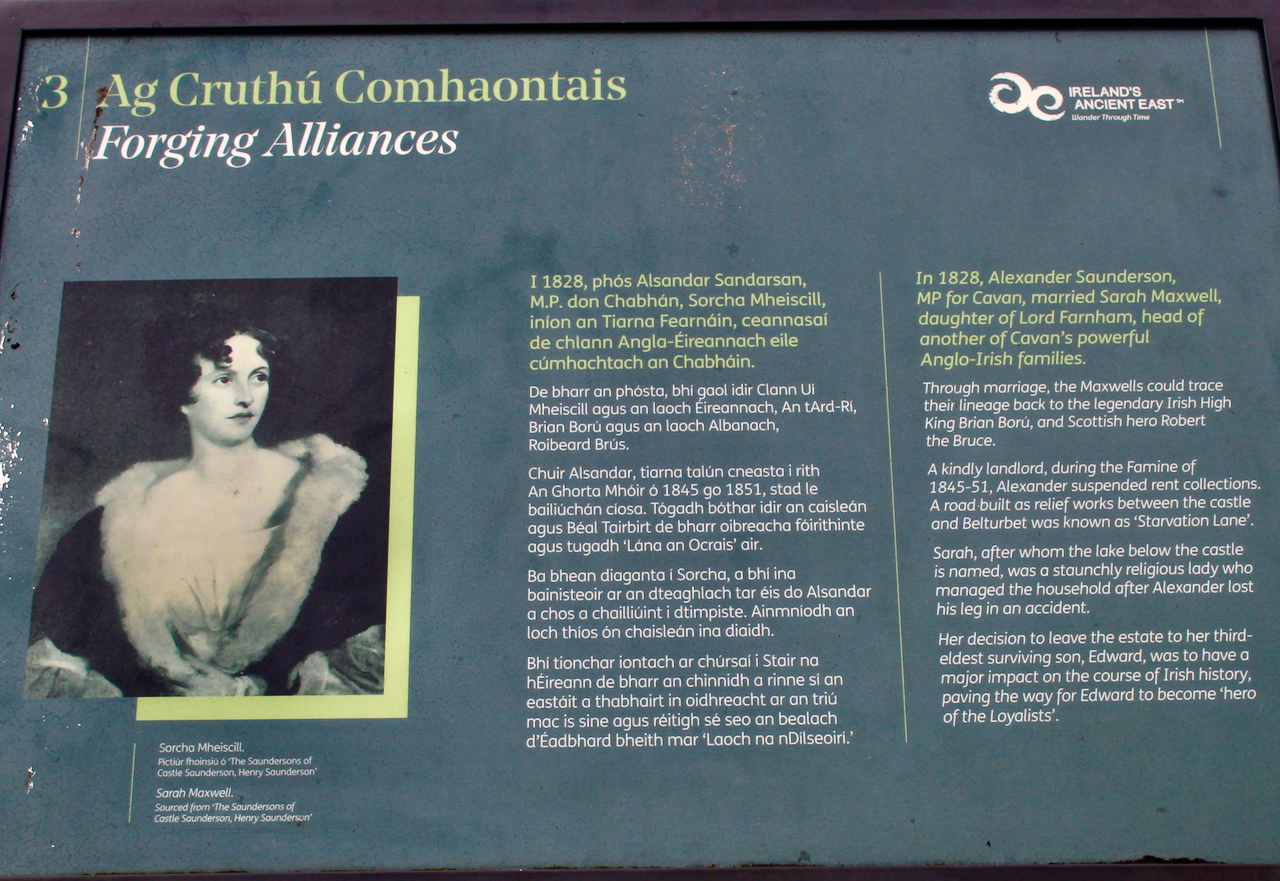
Castle Saunderson, Co. Cavan – a ruin, can visit 

Castle Saunderson, County Cavan. Photograph © Jennifer Winder-Baggot, www.irishhistorichouses.com.

See my entry https://irishhistorichouses.com/2020/07/03/county-cavan-historic-houses-to-see-and-stay/

Castle Shane, Co Monaghan

Castle Shane, County Monaghan, photograph courtesy of National Inventory.

Castle Sheppard, Borrisokane, County Tipperary – ruinous

Castle Strange, Athleague, Co Roscommon- ruin 

Castle Talbot, Blackwater, County Wexford 

Castle Talbot, County Wexford, courtesy National Inventory.

Castle Taylor, Ardrahan, Co Galway  – ruin 

Castle Townshend, Co Cork  – accommodation, hotel  

Castletownshend, County Cork. Photograph © Jennifer Winder-Baggot, www.irishhistorichouses.com.

See my entry https://irishhistorichouses.com/2025/04/25/the-castle-castletownshend-co-cork-accommodation/

Castle Upton, Templepatrick, County Antrim

Castle Upton, County Antrim, courtesy Archiseek.

Castle Ward, Strangford, County Down 

Castle Ward, County Down, photograph by Robert French, (between ca. 1865-1914), Lawrence Photograph Collection, National Library of Ireland.

See my entry https://irishhistorichouses.com/2023/10/06/places-to-visit-and-stay-in-county-down-northern-ireland/

Castle Ward, County Down courtesy National Trust Images, photograph by Matthew Antrobus.
Castle Ward, County Down, photograph by Robert French, (between ca. 1865-1914), Lawrence Photograph Collection, National Library of Ireland.
Blackwater Castle (Castle Widenham, or Blackwater Valley Castle) Castletownroache, Co Cork courtesy of Sherry Fitzgerald.
Castle Widenham, County Cork, photograph by Robert French, (between ca. 1865-1914), Lawrence Photograph Collection, National Library of Ireland.

Castle Wilder (also known as Cloughdoo), Abbeyshrule, County Longford

Castle Wilder, County Longford, courtesy National Inventory.

Castle Willington, Nenagh, Co Tipperary 

Castle Willington, County Tipperary, courtesy National Inventory.

Castle Wray, Letterkenny, Co Donegal – ruins  

Castlebar House, Castlebar, Co Mayo – burned

Castleboro House, County Wexford – ruin

William Blacker married Elizabeth Anne Carew, from Castleboro House in County Wexford, now a splendid ruin. The ruins of Castleboro House, County Wexford (geograph_3716684) By Mike Searle, https://commons.wikimedia.org
Castleboro, County Wexford, photograph by Robert French, [between ca. 1865-1914], Lawrence Photograph Collection, National Library of Ireland.

Castlecaulfeild, County Tyrone – ruin

Castlecomer House, Co Kilkenny

Castlecomer House, County Kilkenny, photograph: Gillman Collection, Vanishing Country Houses of Ireland by The Knight of Glin, David J. Griffin and Nicholas K. Robinson, published by The Irish Architectural Archive and The Irish Georgian Society, 1988.

Castlecoole, Enniskillen, County Fermanagh – open to the public 

Castle Coole, County Fermanagh. Photograph © Jennifer Winder-Baggot, www.irishhistorichouses.com.

See my entry https://irishhistorichouses.com/2024/03/21/castle-coole-county-fermanagh-a-national-trust-property/

Castlecor, Ballymahon, County Longford 

Castlecor House, County Longford, photograph from the National Inventory of Architectural Heritage

See my entry https://irishhistorichouses.com/2024/03/16/places-to-visit-and-stay-in-county-longford-leinster/

Castlefield, Co Kilkenny 

A three storey bow-fronted Georgian house, the bow having a trefoil window and battlements. Pillared porch. 

Castlegar, Ahascragh, Co Galway 

The grandest of Sir Richard Morrison’s villas, built from 1803 onwards for Ross Mahon, afterwards 1st Bt; replacing an earlier house. 

Castlegar, County Galway, courtesy Archiseek.

Castlegarde, Cappamore, Limerick   

Castlegarde, County Limerick, courtesy of National Inventory.

Castlegrove, Tuam, County Galway

Castlegrove, County Galway, courtesy Mark Bence-Jones.

Castlehaven House, Castletownsend, Co Cork

Castlehaven House, Castletownsend, Co Cork  courtesy National Inventory.

Castlemaine Lodge, Hare Island, Athlone, Co Westmeath (or Hare Island)

Hare Island Lodge, Athlone, Co. Westmeath by Robert French, Lawrence Photographic Collection NLI L-ROY-05263.

Castlemore, Tullow, Co. Carlow – ruins

Castlemore, Tullow, Co. Carlow courtesy National Inventory.

Castlerea, Killala, Co Mayo demolished 1937

Castlerea House, Co Roscommon – demolished

Castlesize, Sallins, Co Kildare 

A two storey late C18 house of seven bays, the two outer bays on either side projecting slightly. 

Castletown Castle, Dundalk, Co Louth 

Castletown Castle, County Louth, Castlemore, County Cork, photograph by Robert French, (between ca. 1865-1914), Lawrence Photograph Collection, National Library of Ireland.

Castletown Castle/ House, Co Carlow

Castletown House, County Carlow courtesy National Inventory.

Castletown House, County Kildare  – open to public

Castletown House, photograph courtesy of Ireland Content Pool, Tourism Ireland.

See my entry https://irishhistorichouses.com/2024/03/15/castletown-house-and-parklands-celbridge-county-kildare-an-office-of-public-works-property/

Castletown Castle, Dundalk, County Louth

Castletown Castle, County Louth, Castlemore, County Cork, photograph by Robert French, (between ca. 1865-1914), Lawrence Photograph Collection, National Library of Ireland.

Castletown Conyers, Ballyagran, Co Limerick 

Castletown Conyers, County Limerick, courtesy of National Inventory.

Castletown ‘Cox’ Kilkenny 

Castletown Cox, County Kilkenny, courtesy Knight Frank.

Castletown Manor, Enniskillen, County Fermanagh – demolished 

Castletown Manor, Pallaskenry, Co Limerick – demolished

Castlewellan, County Down 

Castlewellan Castle, County Down, 2014 © George Munday/Tourism Ireland.

Cavangarden, Ballyshannon, Co Donegal – B&B  

See my entry https://irishhistorichouses.com/2022/10/27/places-to-visit-and-stay-in-county-donegal-ulster/

Cecil Manor, Augher, County Tyrone

Celbridge Abbey, Celbridge, Co Kildare 

Celbridge Abbey, courtesy of National Library of Ireland published between ca. 1865-1914 Lawrence Photographic Collection, photographer: Robert French.

Celbridge Lodge, Co Kildare 

Celbridge Lodge, County Kildare, courtesy Sherry Fitzgerald.

Chaffpool, Ballymote, Co Sligo – derelict 

Chanter Hill, Enniskillen, County Fermanagh 

A two storey house built 1780 as a Glebe for Rev Thomas Smyth DD. Front of one bay between two three sided bows.

Charlesfort, Kells, Co Meath 

A two storey house of ca 1800, with a lower wing. 

Charlesfort, Co Wexford 

Charlesfort, County Wexford.

Charlestown House, Clara, Offaly 

Charlestown House, County Offaly, photograph courtesy of National Inventory.
Charlestown House, County Offaly, photograph by Robert French, (between ca. 1865-1914), Lawrence Photograph Collection, National Library of Ireland.

Charlestown, Clogher, Co Roscommon 

The house is no longer extant but extensive estate architecture survives.

Charleville, Co Cork – gone  

A fine house built 1661 to his own design by the 1st Earl of Orrery, who at the same time developed the nearby town which is named Charleville after Charles II. The house stood on one side of a fortified enclosure, it had extensive gardens and a park. It was burnt 1690 during the Williamite war by the troops of Berwick and not rebuilt

Charleville, Castlebar, Co Mayo 

A square C18 house, now in ruins.

Charleville, Enniskerry, Co Wicklow – section 482 

Charleville, County Wicklow, August 2020. Photograph © Jennifer Winder-Baggot, www.irishhistorichouses.com.

See my entry https://irishhistorichouses.com/2020/09/18/charleville-county-wicklow/

Charleville Forest Castle, Tullamore, County Offaly 

Charleville Woods Castle, Tullamore, 17 Aug 2024. Photograph © Jennifer Winder-Baggot, www.irishhistorichouses.com.

See my entry https://irishhistorichouses.com/2024/08/29/charleville-forest-castle-tullamore-county-offaly-sometimes-open-to-public-run-by-charleville-castle-heritage-trust/

Charleville Park (also known as Sanders Park), Charleville, Co Cork –

A three storey six bay late C18 house, built by Christopher Sanders, now divided into flats.  

Church Hill, Maghera, County Down

An early to mid-C18 two storey gable-ended house of five bays; extended towards the end of C18 to form a new drawing room, the addition begin of the same height as the original front; and also gable-ended; but single-storey, with a three sided bow in its front and end walls.  

Churchill House, Chapeltown, County Kerry 

Church hill House, County Kerry courtesy National Inventory.

Churchtown House, Churchtown, County Kerry – whole house accommodation

Churchtown House, Churchtown, County Kerry courtesy National Inventory.

See my entry https://irishhistorichouses.com/2022/10/19/places-to-visit-and-stay-in-county-kerry-munster/

Cill-Alaithe, Killala, Co Mayo 

Cill-Alaithe, Killala, Co Mayo, courtesy National Inventory. 

Clandeboye, County Down

Clandeboye, County Down, photograph by Jonny84, CC-BY-SA-3.0
Clandeboye, County Down, photograph by Robert French, (between ca. 1865-1914), Lawrence Photograph Collection, National Library of Ireland.

Clara House, Clara, County Offaly

Three-bay two-storey over basement house, built c.1800, with attic, conservatory to rear and projecting entrance porch added to front. 

Clare Park, Ballycastle, County Antrim 

Claremont, Claremorris, Co Mayo 

Claremount House, County Mayo, courtesy Tuohy O’Toole.

Clarisford, Killaloe (Bishops’ Palace), Co Clare

The Palace of the (C of I) Bishops of Killaloe, a late C18 block of three storeys over a basement in a demesne by the River Shannon outside the town.

Clashenure House, Ovens, Co Cork

Clashenure House, Ovens, Co Cork courtesy National Inventory.

Classiebawn Castle, County Sligo 

Classiebawn, County Sligo, photograph courtesy of National Inventory.

Cleggan Lodge, Ballymena, County Antrim

Originally a hunting lodge, owned at various times by the O’Neills and the O’Haras. 

Cleariestown Hall, Cleariestown, County Wexford 

Cleariestown House, Co Wexford for sale Aug 2023, photograph courtesy of sales advertisement.

Clearmont, Claremorris, County Mayo

Clermont, Co Wicklow– school then sold 2005 

Clermont House, County Wicklow, photograph courtesy of National Inventory.

Clifden Castle, Clifden, Co Galway – ‘lost’ 

Clifden Castle, County Galway, entrance front, photograph by Robert French, (between ca. 1865-1914), Lawrence Photograph Collection, National Library of Ireland.

Clifden House, Corofin, Co Clare

A two storey seven bay early C18 house. Central niche over Doric doorcase of stone. Seat of the Burton family, which produced the C19 portrait painter and miniaturist Sir Frederick Burton. 

Cliff, Ballyshannon, Co Donegal – demolished in late 1940s  

Cliff House, County Fermanagh/Donegal, photograph by Robert French, (between ca. 1865-1914), Lawrence Photograph Collection, National Library of Ireland.

The Cliffs, Baily, Co Dublin

A C19 house added to at various times in the present centry, and full of Edwardian charm.

Clifton, Montenotte, Cork, Co Cork – convalescent home  

Two storey five bay early C19 house, with a single storey two bay wing balanced by conservatory, behind which is a chapel, with a lantern.  

Clobemon Hall, Ferns, County Wexford

Cloghans, Co Mayo 

Cloghans House, County Mayo, courtesy National Inventory.

Clogher House, Ballyglass, Co Mayo

Clogher House, County Mayo, courtesy National Inventory.

Clogher Palace (subsequenty Clogher Park), Clogher, County Tyrone

Cloghroe House, Blarney, Co Cork

A Georgian house built on the site of an old castle.

Clogrenane (or Clogrennan), Carlow, Co Carlow – a ruin 

Clogrenane (or Clogrennan House), Carlow, County Carlow courtesy National Inventory.

Clohamon House, near Ferns, Co Wexford 

Clohamon House, County Wexford, photograph courtesy Lisney Sothebys 2024.

Clonacody, Fethard, County Tipperary – accommodation

Clonacody, County Tipperary, photograph courtesy National Inventory.

See my entry https://irishhistorichouses.com/2022/10/19/places-to-visit-and-stay-in-county-tipperary-munster/

Clonageera House, Durrow, Co Laois 

Cloonageera, County Laois, courtesy National Inventory.

Clonalis House, Castlerea, Co Roscommon – accommodation and section 482 

Clonalis, County Roscommon, which is still the home of the O Conor family, ancient High Kings of Ireland. Photograph © Jennifer Winder-Baggot, www.irishhistorichouses.com.

See my entry https://irishhistorichouses.com/2020/10/16/clonalis-castlerea-county-roscommon/

Clonard, near Wexford, Co Wexford 

Clonard House, County Wexford, photograph courtesy National Inventory.

Clonattin House, Gorey, Co Wexford

Clonboy, O’Brien’s Bridge, County Clare – demolished

Clonbrock, Ahascragh, Co Galway  – ‘lost’ 

Clonbrock, County Galway, photograph courtesy of National Library of Ireland.
Clonbrock, County Galway, courtesy of National Inventory of Architectural Heritage.

Cloncorick Castle, Carrigallen, Co Leitrim

A two storey early to mid C-19 Tudor-Gothic house with buttresses and stepped gables. 

Cloncoskraine, Dungarvan, Co Waterford 

Clonearl, Daingean (formerly Philipstown), Offaly

Clonebraney, Crossakeel, Co Meath – only a ruinous wing remains. 

Clonfert Palace, Eyrecourt, Co Galway – ‘lost’ 

Clonfert Bishop’s Palace, County Galway courtesy National Inventory.

Clonganny House, Wexford – accommodation 

Clonganny House, County Wexford, courtesy of their website.

See my entry https://irishhistorichouses.com/2023/11/15/places-to-visit-and-stay-in-county-wexford/

Clongill Castle, Co Meath – ruin 

Clonhugh, Multyfarnham, County Westmeath 

Clonhugh, County Westmeath, photograph by Robert French, (between ca. 1865-1914), Lawrence Photograph Collection, National Library of Ireland.

Clonleigh, Ballindrait, Co Donegal – demolished

Clonlost House, Killucan, Co Westmeath

A tall Georgian block with a central pedimented attic. Now a ruin.

Clonmannon, Rathnew, Co. Wicklow – plans for retirement home 

Clonmannon, Ashford, Co Wicklow courtesy sales advertisement 2022.

Clonmeen, Banteer, Co Cork – whole house airbnb  

Clonmeen House, County Cork, courtesy of airbnb.

See my entry https://irishhistorichouses.com/2022/05/17/places-to-visit-and-stay-munster-county-cork/

Clonmore House, Piltown, Co Kilkenny 

Clonmore House, County Kilkenny, courtesy National Inventory.

Clonshavoy, Co Limerick 

The Irish Tourist Association surveyor writes in 1944 that the house was interesting as it was the remains of a very old Elizabethan house. He says that more than half the house was pulled down as it was unsafe “and the present eastern wing is a reconstruction”. Photograph from the Irish Tourist Association Survey 1943-44. 

Clonshire House, Adare, Co Limerick 

Clonshire House, County Limerick, courtesy National Inventory.

Clonskeagh Castle, Co Dublin

Clonskeagh Castle, County Dublin, photograph courtesy of myhome.ie

See my entry https://irishhistorichouses.com/2024/04/25/clonskeagh-castle-dublin/

Clontarf Castle, Clontarf, Co Dublin  – hotel 

Clontarf Castle, County Dublin, 1952 (image reversed), Dublin City Library Archives.

See my entry https://irishhistorichouses.com/2023/05/26/places-to-visit-and-stay-in-dublin-city-and-county/

Clontead More, Coachford, Co Cork

Clontead More, Coachford, Co Cork courtesy National Inventory.

Clontra, Shankill, Co Dublin

A delightful Ruskinian Gothic villa, almost certainly by Sir Thomas Newenham Deane, and possibly designed by his brilliant younger partner, Benjamin Woodward.

Clonyn Castle, County Westmeath 

Clonyn Castle, County Westmeath, photograph by Robert French, (between ca. 1865-1914), Lawrence Photograph Collection, National Library of Ireland.

Clonyquin (or Clooneyquin or Cloonyquin), Elphin, Co Roscommon – demolished

Cloonacauneen Castle, Co Galway  

An old tower-house with a two storey three bay castellated wing attached

Cloonamahon, Collooney, County Sligo 

Clooncahir, Mohill, Co Leitrim 

A plain two storey four bay house of ca 1820.

Clooney House, Clooney, Co Clare – ruin

Originally a two storey five bay C17 house of the Bindon family, which produced the C18 amateur architect and portrait painter Francis Bindon. The house burnt C19 and the property was sold by the impecunious Burton Bindon, who emigrated to Australia; his daughter and her husband Joseph Hall subsequently returned to Ireland and bought back Clooney. They rebuilt the burnt-out shell of the house in a rich Victorian Italianate style, … Unfortunately the Hall’s finances did not last out; he is said to have gambled and she was extravagant; so that by early C20 the house was once again ruinous. 

Cloverhill, Belturbet, Co Cavan 

Clover Hill, County Cavan, entrance front c. 1975. Photograph: William Garner. Vanishing Country Houses of Ireland by The Knight of Glin, David J. Griffin and Nicholas K. Robinson, published by The Irish Architectural Archive and The Irish Georgian Society, 1988.

Clown (now known as Cloncarneel), Trim, Co Meath 

Cloncarneel (formerly Clown), County Meath, photograph courtesy National Inventory.

Colebrook Park, County Fermanagh

An austere Classical house of 1825 by William Farrell; built for Sir Henry Brooke, 1st Bt of 2nd creation. 

Colebrook Park, County Fermanagh, photograph courtesy the house’s website.

See my entry https://irishhistorichouses.com/2022/04/03/places-to-visit-and-stay-in-ulster-counties-fermanagh-monaghan-and-tyrone/

Coleraine Manor House (formerly Jackson Hall), Coleraine, County Derry 

Colganstown, Newcastle, Co Dublin – 482

Colganstown House, with rendered walls and stone quoins. Photograph © Jennifer Winder-Baggot, www.irishhistorichouses.com.

See my entry https://irishhistorichouses.com/2020/05/21/colganstown-house-hazelhatch-road-newcastle-county-dublin/

 Collierstown House, Collierstown, Co Meath 

A late C18 house, built ca 1775.

Collon House, Ardee Street, Collon, Louth (also Oriel Temple)  – accommodation and tours 

Collon House, County Louth, courtesy National Inventory.

See my entry https://irishhistorichouses.com/2022/10/28/places-to-visit-and-stay-in-county-louth-leinster/

Combermere, Glounthaune, Co Cork – Danish consulate

An early c19 “gentleman’s cottage” mostly of one storey, with a small castellated wing.   

Conlig (or Little Clandeboye) House, County Down 

Convamore, Ballyhooly, Co Cork – ‘lost’  

Convamore, County Cork, photograph by Robert French, (between ca. 1865-1914), Lawrence Photograph Collection, National Library of Ireland.
At Convamore House, County Cork, courtesy of National Inventory.

Conway, Dunmurry, County Antrim 

A two storey Victorian house with a symmetrical front of two shallow curved bows and a central projection; on either side of which runs a pillared and balustraded veranda, joining at one end to a single-storey wing, and at the other to a pilastered conservatory. Became hotel; suffered irreparable bomb damage 1970.

Coolamber, Street, Co Westmeath

Coolamber, County Westmeath, courtesy National Inventory.

Coolamber Manor, Lisryan, County Longford 

Coolamber Manor, County Longford, courtesy National Inventory.

Coolavin, Monasteraden, Co Sligo

Multiple-bay two- and three-storey stone house, built 1898, to designs by architect James Franklin Fuller.  

Coolbawn House, near Enniscorthy, Co Wexford – ruin 

Coolbawn, County Wexford, photograph print: Richard Dann, Vanishing Country Houses of Ireland by The Knight of Glin, David J. Griffin and Nicholas K. Robinson, published by The Irish Architectural Archive and The Irish Georgian Society, 1988.

Coolcarrigan House and Gardens, Naas, County Kildare – section 482 in 2019  

Coolcarrigan, County Kildare. Photograph © Jennifer Winder-Baggot, www.irishhistorichouses.com.

See my entry https://irishhistorichouses.com/2020/05/31/coolcarrigan-house-and-gardens-coill-dubh-naas-county-kildare/

Coolderry House, Carrickmacross, Co Monaghan – lost 

A two storey late C18 house of five bays between two semi-circular bows. …Sold 1920 by Col G.J. Brownlow, afterwards demolished.

Coole, Millstreet, Co Cork

A long and low two storey Georgian house with a plain seven bay front. 

Coole House, Millstreet, County Cork, photograph by Robert French, (between ca. 1865-1914), Lawrence Photograph Collection, National Library of Ireland.

Coole Abbey, Fermoy, Co Cork 

A house built ca 1765 by Henry Peard; attributed, on stylistic grounds, to Davis Duckart. 

Coole Abbey, County Cork, photograph courtesy National inventory.

Coole Park, County Galway  – ‘lost’ 

Coole Park, County Galway, Lady Gregory in Drawing Room c. 1920, photograph by George Bernard Shaw, courtesy Shaw Estate. Vanishing Country Houses of Ireland by The Knight of Glin, David J. Griffin and Nicholas K. Robinson, published by The Irish Architectural Archive and The Irish Georgian Society, 1988.

See my entry https://irishhistorichouses.com/2023/05/31/places-to-visit-and-stay-in-county-galway/

Cooleville, Clogheen, County Tipperary

Cooleville House, courtesy of National Inventory of Architectural Heritage, a house built for the Grubb family in Clogheen.

Coolhull Castle, County Wexford

Coolhull Castle, County Wexford, Photographic Archive, National Monuments Service, Government of Ireland.

Coolkelure, Dunmanway, Co Cork

A late-Victorian house of stone, with gables of timber open-work in the Swiss manner and a pyramidal roofed tower. 

Coolkelure House, County Cork, photograph by Robert French, (between ca. 1865-1914), Lawrence Photograph Collection, National Library of Ireland.

Coollattin (also known as Malton), Shillelagh, Co Wicklow – golf club 

Coollattin House, County Wicklow, photograph courtesy of the house’s website.

Coolmain Castle, Kilbrittain, Co Cork

Coolmain Castle, Kilbrittain, Co. Cork for sale June 2025 courtesy Lisney Sotheby’s International Realty.

Coolmore, Carrigaline, Co Cork

A large late C18 block built 1788 by W.W. Newenham to replace a house built ca 1701 built by Thomas Newenham. 

Coolmore, Thomastown, Co Kilkenny 

Coolmore, County Kilkenny, courtesy National Inventory.

Coolnamuck, Carrickbeg, Co Waterford

“A three storey C18 block…Formerly the seat of a branch of the Wall family. It is said that one of the families who owned it in the past lived very extravagantly; and when, as a result, they went bankrupt, they committed mass suicide by driving their coach over the cliff at Tramore. In the present century, the main block became derelict; a house was made in the wing, which in recent years was the home of Mr C.C. Sanders. The house has now been demolished.”

Cooper Hill, Clarina, Co Limerick

Cooper Hill, County Limerick front doorcase 1974, photograph: William Garner, Vanishing Country Houses of Ireland by The Knight of Glin, David J. Griffin and Nicholas K. Robinson, published by The Irish Architectural Archive and The Irish Georgian Society, 1988.

Coopershill, Riverstown, Co Sligo – 482, accommodation 

Coopershill, County Sligo. Photograph © Jennifer Winder-Baggot, www.irishhistorichouses.com.

See my entry https://irishhistorichouses.com/2022/01/11/coopershill-house-riverstown-co-sligo/

Coppinger’s Court, Cork, Co.Cork – ruin  

An impressive early to mid C17 semi-fortified house built by Sir Walter Coppinger; with gables, machiolations and mullioned windows. Now a ruin.

Coppinger’s Court, County Cork, courtesy National Inventory.

Cor Castle, Innishannon, Co Cork

A small, early Gothic Revival castle, its doorway being a Gothicized Venetian window in the Batty Langley manner

Cor Castle, County Cork, photograph by Robert French, (between ca. 1865-1914), Lawrence Photograph Collection, National Library of Ireland.

Corbally, Taghadoe, Co Kildare 

A small early C18 gable-ended house of two storeys over basement. 

Corballymore (formerly Summerville), Dunmore East, Co Waterford 

Corbally More, County Waterford, courtesy National Inventory.

Corbalton Hall (formerly Cookstown House), Tara, Co Meath

Corbalton Hall (formerly Cookstown House), Tara, Co Meath, photograpy by Tom Coakley, Barrow Coakley Photography Ltd., 25th May 2018.

Corduff, Ballinamore, Co Leitrim 

A two storey five bay house probably of late C18. 

Corick, Clogher, County Tyrone – hotel

https://www.corickcountryhouse.com

See my entry https://irishhistorichouses.com/2022/04/03/places-to-visit-and-stay-in-ulster-counties-fermanagh-monaghan-and-tyrone/

Corkagh House, Clondalkin, Co Dublin – demolished 

Corkagh House, Clondalkin 1930 courtesy The Hone Family, https///source.southdublinlibraries.ie/bitstream/10599/11129/1/wm_img127

Corkbeg, Whitegate, Co Cork – demolished

A square two storey early to mid-C19 house on an island just inside the entrance to Cork Harbour joined to the mainland by a causeway; built to replace an earlier house by the water’s edge.

Corke Lodge, Bray, County Wicklow  – the gardens are open to the public as Section 482. www.corkelodge.com

See my entry https://irishhistorichouses.com/2023/05/26/places-to-visit-and-stay-in-dublin-city-and-county/

Corke Lodge, Bray, County Wicklow.

Cornacassa, Monaghan, Co Monaghan

Cornacassa House, County Monaghan, courtesy Archiseek.

Cornahir (or Cornaher), Tyrrellspass, Co Westmeath 

Cornaher or Cornahir House, County Westmeath, courtesy National Inventory.

Corradoo, Ballinafad, Co Sligo 

A house built 1768 by William Phibbs, of Hollybrook, for use as a school.

Corries, Bagenalstown, Co Carlow

Corries (or Corris) House, Bagenalstown, Co Carlow courtesy National Inventory.

Corville, Roscrea, Co Tipperary

A C18 house with a breakfront centre.  

Costello Lodge, Costello, Co Galway

A fishing lodge in Connemara, owned earlier this century by J. Bruce Ismay, head of the White Star Line at the time of the sinking of the Titanic and one of the survivors from that ill-fated ship. Burnt 1922 and rebuilt 1925; a two storey house with gables, dormer gables and pantiled roof.” 

Court Hill, Dunboyne, Co Meath 

An elegant mid-C19 neo-Classical villa in the style of J.S. Mulvany, of one storey over a basement and three bays; the centre bay being raised as a pedimented attic. Flanking service tower. Remodelled in Edwardian period.

Courtown, Kilcock, County Kildare 

A plain two storey house of ca 1815, built by John Aylmer to replace the earlier house here, which was burned and looted 1798 during the ownership of his father, Michael Aylmer, who had been unable to rebuilt it, not having received sufficient compensation from the state. Five bay front, with strip pilasters. Much enlarged ca 1900 by J.A. Aylmer, who added a wing at right angles to the original block to form a new entrance front, with a three sided bow and an open porch, at one side of a pedimented projection; containing, among other rooms, a hall with a massive oak staircase. 

Courtown House, Courtown, Co Wexford

A C18 house overlooking the sea at Courtown Harbour, much altered and enlarged C19 after being sacked during 1798 Rebellion. The front of the house…Sold post WWII, subsequently demolished.

Courtown House, County Wexford, photograph by Robert French, (between ca. 1865-1914), Lawrence Photograph Collection, National Library of Ireland.

Craddenstown, County Westmeath 

Craddenstown, County Westmeath, photograph courtesy National Inventory.

Cragleigh House, Ennis, Co Clare

Cragleigh House, Cragleigh, Ennis, Co. Clare, for sale July 2025 photograph courtesy Cormac O’Sullivan.

A two storey three bay early C19 house with Wyatt windows and fanlighted doorway, standing in front of an older building to which it is linked.

Craigavad House, County Down 

A restrained Classical house on the shores of Belfast Lough, built ca 1852 for John Mulholland, afterwards 1st Lord Dunleath, to the design of the Belfast architect Thomas Turner. Top-lit central hall with a circular gallery and a glazed dome. Now a golf club.”

Craigavon, Strandtown, County Down 

A two storey Victorian house with a front of two bays on either side of a central bow. Round-headed windows in lower storey, camber-headed windows above. Pavilion with pedimented portico at back of house, joined to main block by orangery. The home of James Craig, 1st Viscount Craigavon, 1st Prime Minister of Northern Ireland. Given to the nation.” 

CRAIGAVON HOUSE is owned and run by the Somme Association, a charity which cares for elderly war veterans. The future of Craigavon House remains uncertain.

Craigdun or Craigdunn Castle, Dunminning, County Antrim

A Victorian Scottish Baronial castle of basalt, built by Edmund McNeill. 

Craigdun, County Antrim, photographs courtesy Irish Independent 20th March 2015.

Cranagh Castle, Templemore, Co Tipperary 

A three storey house of 1768 built on to a medieval round tower.

Cranaghan House, Ballyconnell, Co Cavan – Slieve Russell hotel? 

Slieve Russell hotel, Co Cavan photograph by Geoffrey Arrowsmith 2019.

Cranmore House, Ballinrobe, Co Mayo 

Cranmore, County Mayo, photograph by Robert French, (between ca. 1865-1914), Lawrence Photograph Collection, National Library of Ireland.

Cratloe Woods House, Cratloe, County Clare  – private, used to be public, in public woods 

A long, low two storey gable ended C17 house one room thick. Its principal elevation, of thirteen bays, with Georgian sash windows and central three sided bow, is now the garden front; a new entrance front, in simple style with timbered porch, having been added to other side ca 1850 to provide a corridor and larger staircase, possibly to the design of James Pain, who gave the garden front bow a Tudor-Revival gable and heightened the chimneystacks, also in Tudor-Revival style.

Crawfordsburn Park, Bangor, County Down 

Originally a two storey five bay gable-ended house overlooking Belfast Lough. Triple window above fanlighted doorway. Return. Enlarged in C19 gable style. Now a hospital and much altered.

Creagh, Skibbereen, Co Cork

A pleasant Regency house of two storeys over basement, built ca. 1820.  

Creagh House, West Cork, photograph courtesy Irish Examiner 23rd March 2014.

Creagh Castle/House, Doneraile, Co Cork

Creagh House, County Cork, courtesy of National Inventory.

Creagh House, County Mayo

Creagh, County Mayo, photograph by Robert French, (between ca. 1865-1914), Lawrence Photograph Collection, National Library of Ireland.
Creagh, Ballinrobe, Co. Mayo courtesy National Inventory.

Crebilly House, County Antrim 

A two storey C19 Italianate house which from its appearance could be an early work of Sir Charles Lanyon. 

Creevaghmore, Ballymahon, Co Longford 

Creevaghmore House, County Longford courtesy National Inventory.

Cregg Castle, Fermoy, Co Cork

A home of mid-C18 appearance, of three storeys over a basement; the top storey being treated as an attic, above the cornice. 

Cregg House or Castle, County Cork, photograph courtesy National Inventory.

Cregg Castle, Corrandulla, Co Galway

Cregg Castle, County Galway, photograph from Savills estate agent.

See my entry https://irishhistorichouses.com/2023/05/31/places-to-visit-and-stay-in-county-galway/

Crevenagh House, Omagh, County Tyrone

Crobeg, Doneraile, Co Cork – demolished in 1980s  

Crocknacrieve, Enniskillen, County Fermanagh 

Crom Castle, Newtown Butler, County Fermanagh 

Crom Castle, Fermanagh Courtesy of Tourism Northern Ireland, by Brian Morrison, 2008.

See my entry https://irishhistorichouses.com/2022/04/03/places-to-visit-and-stay-in-ulster-counties-fermanagh-monaghan-and-tyrone/

Crom Castle, County Fermanagh, photograph by Robert French, (between ca. 1865-1914), Lawrence Photograph Collection, National Library of Ireland.

Cromore House, Portstewart, County Derry 

A mid-C18 house of two storeys with a dormered attic and four bays, enlarged and remodelled 1834 by John Cromie, who added a two storey wing on either side, of the same height as the centre; with a single large many-paned window in each storey. 

Cromwellsfort, Co Wexford 

Cromwellsfort, County Wexford, photograph courtesy of National Inventory.

Croney Byrne, Rathdrum, Co Wicklow – courtyard accommodation 

https://croneybyrne.ie

See my entry https://irishhistorichouses.com/2022/10/20/places-to-visit-and-stay-in-county-wicklow-leinster/

Cronroe, Ashford, Co Wicklow – Bel Air hotel and equestrian centre 

Cronroe, now Bel Air Hotel, County Wicklow, Photograph courtesy of National Inventory of Architectural Heritage.

See my entry https://irishhistorichouses.com/2022/10/20/places-to-visit-and-stay-in-county-wicklow-leinster/

Crossdrum, Oldcastle, Co Meath

Crossdrum, County Meath, courtesy National Inventory.

Crosshaven House, Crosshaven, Co Cork – whole house rental  

A three storey house built 1769 by William Hayes, wiht two identical fronts of crisp grey ashlar which almost certainly derive from Isaac Ware’s design for Clifton Hill House, Bristol. https://www.crosshavenhouse.ie/

Crosshaven House, photograph courtesy of the houses’s website https://www.crosshavenhouse.ie

See my entry https://irishhistorichouses.com/2022/05/17/places-to-visit-and-stay-munster-county-cork/

Crosshaven House, County Cork, photograph by Robert French, (between ca. 1865-1914), Lawrence Photograph Collection, National Library of Ireland.

Crossogue House, Ballycahill, Co Tipperary

An early Victorian house with a high basement. 

Crotto, Kilflynn, Co Kerry – ‘lost’ 

Crotto, Kilflynn, Co Kerry courtesy Archiseek.

Crowhill, Annaghmore, County Armagh

A two storey late Georgian house; five bay front with one bay pedimented breakfront. 

Cuba Court, Banagher, Co Offaly – demolished 

Cuba Court, County Offaly, entrance front 1978 photograph: William Garner, Vanishing Country Houses of Ireland by The Knight of Glin, David J. Griffin and Nicholas K. Robinson, published by The Irish Architectural Archive and The Irish Georgian Society, 1988.

Cuffesborough, Durrow, Co Laois

A three storey house of 1770 which from both elevation and plan would appear to have been built about thirty years earlier. 

Culdaff House, Carndonagh, Co Donegal  

Culdaff House, County Donegal, photograph by Robert French, [between ca. 1865-1914], Lawrence Photograph Collection, National Library of Ireland.
Culdaff House, County Donegal courtesy of Mark Bence-Jones.

Cullamore, Carney, Co Sligo 

Cullagh More, County Sligo, courtesy National Inventory.

Cullane, Sixmilebridge, Co Clare – ruin

A Georgian house with a bow window, overlooking the lake. Had a good scrolled overmantel in one room. Now a ruin.  

Culmore House, Ballykelly, County Derry 

A good quality late-Georgian house of brilliant red brick, built 1805.

Cultra Manor, Craigavad, County Down 

Originally a large plain house with a central bow and a battlemented parapet. Towards the end of the C19, or in the opening years of C20, Robert Kennedy, a diplomat who eventually became Minister to Uruguay, replaced the house with a long two storey mansion built of rubble and ashlar facings, which he named Cultra Manor. 

Cultra Bishops’ Palace, Cultra, County Down 

“A gabled Victorian house with a battlemented tower at one corner.” 

Curragh, Lisnaskea, County Fermanagh

A two storey three bay house with quoins, said to have been originally built ca 1699-1700.  

Curragh Chase, Adare, Co Limerick

Curragh Chase, County Limerick garden front 1938, Vanishing Country Houses of Ireland by The Knight of Glin, David J. Griffin and Nicholas K. Robinson, published by The Irish Architectural Archive and The Irish Georgian Society, 1988.

Curraghmore, Ballinrobe, Co Mayo 

Curraghmore, County Mayo, courtesy National Inventory.

Curraghmore, Portlaw, County Waterford – section 482 in 2019 

Curraghmore, County Waterford, the garden facing side of the house, designed by James Wyatt (1746-1813), 14th August 2023. Photograph © Jennifer Winder-Baggot, www.irishhistorichouses.com.

See my entry https://irishhistorichouses.com/2020/08/01/curraghmore-portlaw-county-waterford/

Curraglass, Co Cork – ‘lost’  

Currarevagh, Oughterard, Co Galway – accommodation 

Currarevagh, County Galway, from website.

See my entry https://irishhistorichouses.com/2023/05/31/places-to-visit-and-stay-in-county-galway/

Cuskinny, Cobh, Co Cork  

Cuskinny House, County Cork, photograph courtesy of sale advertisment by Knight Frank and Michael H. Daniels, June 2023.

A Guide to Irish Country Houses by Mark Bence-Jones contents and pictures, houses beginning with B

Note that the majority of these are private houses, not open to the public. I discovered “my bible” of big houses by Mark Bence-Jones only after I began this project of visiting historic houses that have days that they are open to the public (Section 482 properties).

This is a project I have been working on for a while, collecting pictures of houses. Enjoy! Feel free to contact me to send me better photographs if you have them! I’ll be adding letters as I go…

Donation

Help me to fund my creation and update of this website. It is created purely out of love for the subject and I receive no payment so any donation is appreciated! My website costs €300 per year on WordPress.

€15.00

Bagenalstown House, Bagenalstown, Co Carlow

Bagenalstown House, County Carlow, between 1880-1900, photograph by Robert French, Lawrence Photographic Collection, National Library of Ireland.

Bailieborough Castle (also known as Lisgar House or The Castle), Co Cavan  – demolished 

Bailieborough Castle (also known as Lisgar House or The Castle), Co Cavan, courtesy Archiseek

Balheary House, Swords, Co Dublin  – demolished 2005 

Ballaghtobin, Callan, Co Kilkenny 

Ballea Castle, County Cork 

Ballea Castle, County Cork, photograph courtesy of https://balleacastle.com

This is great, I am finding new places to stay! See their website https://balleacastle.com

Ballibay House (or Ballybay), Ballibay, Co Monaghan – demolished 

Ballibay, County Monaghan, courtesy Archiseek.

Ballin Temple (or Ballintemple), Tullow, Co Carlow – demolished 

Ballintemple, County Carlow, photograph courtesy of Ballin Temple website https://www.ballintemple.com/archive/history/archive.html

Ballinaboola House, Co Wexford

Ballinaboy, Clifden, Co Galway 

Ballinacarriga (or Ballynacarriga), Kilworth, Co Cork 

Ballinacarriga (or Ballynacarriga), Kilworth, Co Cork photograph courtesy of National Inventory.

Ballinaclea (or Ballinclea), Killiney, Co Dublin – demolished 

Ballinaclough House, Nenagh, Co Tipperary 

Ballinacor House, Rathdrum, County Wicklow 

Ballinafad (or Ballinafed), Balla, Co Mayo 

Ballinafad, County Mayo, courtesy National Inventory. Photography by James Fraher.

They offer accommodation, see their website: http://www.ballinafadhouse.com

Ballinahina, White’s Cross, Co Cork 

Ballinahown Court (or Ballynahown, Bence Jones), Count Westmeath

Ballinakill House, Waterford, Co. Waterford 

Ballinaminton, Clara, Co Offaly 

Ballinamona, Cashel, Co Tipperary 

Ballinamona Park, Waterford 

Ballinamore House, Kiltimagh, Co Mayo 

Ballinamore, County Mayo, Photography by James Fraher, National Inventory.

Ballinclea, Killiney, County Dublin

Ballinderry Park, Ballinderry Park, Kilconnell, Ballinasloe, Galway

Ballinderry, County Galway, photograph courtesy of Historic Houses of Ireland.

Ballinderry, Carbury, Co Kildare 

Ballindoon House (formerly Kingsborough), Derry, Co Sligo

Ballindoon, County Sligo, photograph courtesy Wilsons Auctioneers.

Ballingarrane (formerly known as Summerville), Clonmel, Co. Tipperary 

Ballinkeele, Ballymurn, Enniscorthy, Wexford  – whole house rental 

Ballinkeele House, County Wexford, photograph courtesy of website.

See my entry https://irishhistorichouses.com/2023/11/15/places-to-visit-and-stay-in-county-wexford/

Ballinlough Castle, Clonmellon, Co. Westmeath or Meath – accommodation

Ballinlough Castle, County Westmeath, photograph courtesy of Ballinlough website https://www.ballinloughcastle.ie/history

See my entry https://irishhistorichouses.com/2022/10/28/places-to-visit-and-stay-in-county-meath-leinster/

Ballinrobe, Co. Mayo 

Ballinrobe, County Mayo, courtesy National Inventory.

Ballintaggart, Colbinstown, Co. Kildare 

Ballinterry House, Rathcormac, Co Cork – accommodation 

Ballinterry House, County Cork, photograph from National Inventory of Architectural Heritage.

See my entry https://irishhistorichouses.com/2022/05/17/places-to-visit-and-stay-munster-county-cork/

Ballintober House, Ballinahassig, Co Cork  – demolished

Ball’s Grove, Drogheda, Co Louth 

Ball’s Grove, County Louth, courtesy National Inventory.

Bally Ellis, County Wexford

Ballyanahan (or Ballyenahan), Co Cork

Ballyanahan (or Ballyenahan), Co Cork, photograph courtesy National Inventory.

Ballyanne House, New Ross, Co Wexford

Ballyarnett, Derry, County Derry 

Ballyarthur, Woodenbridge, Co Wicklow 

Ballyarthur, County Wicklow, Photograph courtesy of National Inventory of Architectural Heritage.
Ballyarthur Castle entrance, County Wicklow, photograph by Robert French, Lawrence Photograph Collection, National Library of Ireland.

Ballybricken, Ringaskiddy, Co Cork

Ballybroony, Co Mayo 

Ballybroony, County Mayo, courtesy National Inventory.

Ballyburly, Edenderry, Co Offaly

Ballyburly, County Offaly, entrance front, Vanishing Country Houses of Ireland by The Knight of Glin, David J. Griffin and Nicholas K. Robinson, published by The Irish Architectural Archive and The Irish Georgian Society, 1988.

Ballycanvan House, Waterford, Co Waterford  

Ballycarron House, Golden, Co Tipperary 

Ballycastle Manor House, County Antrim

Ballyclough, Kilworth, Co Cork – partly demolished 

Ballyclough, Kilworth, Co Cork courtesy National Inventory.
Ballyclough, County Cork, Victorian photograph, Irish Architectural Archive, Vanishing Country Houses of Ireland by The Knight of Glin, David J. Griffin and Nicholas K. Robinson, published by The Irish Architectural Archive and The Irish Georgian Society, 1988.

Ballyclough House, Ballysheedy, Co Limerick

Ballyconnell House, Ballyconnell, Co Cavan

Ballyconnell House, County Cavan, photograph courtesy of www.ballyconnell.org

Ballyconnell House, Falcarragh, Co Donegal  

Ballyconnell House, County Donegal, photograph by Robert French, Lawrence Photograph Collection, National Library of Ireland.

Ballyconra House, Ballyragget, Co. Kilkenny 

Ballyconra House, County Kilkenny, courtesy National Inventory.

Ballycross, Bridgetown, Co Wexford  – demolished 

Ballycullen, Askeaton, Co Limerick 

Ballycurrin Castle, Co Mayo 

Ballycurrin, County Mayo, courtesy Colman Sherry Solicitors.

Ballycurry, Ashford, Co Wicklow 

Ballycurry House, County Wicklow, Photograph courtesy of National Inventory of Architectural Heritage.

Ballydarton, near Leighlinbridge, Co Carlow

Ballydarton, County Carlow, designed by Daniel Robertson, in 1830. Photograph courtesy Historic Houses of Ireland.

Ballydavid, Woodstown, County Waterford

Ballydivity, Ballymoney, County Antrim

Ballydonelan Castle, Loughrea, Co Galway – ‘lost’ 

Ballydonelan Castle entrance front, County Galway, collection: Bertie Donohoe, Vanishing Country Houses of Ireland by The Knight of Glin, David J. Griffin and Nicholas K. Robinson, published by The Irish Architectural Archive and The Irish Georgian Society, 1988.

Ballydrain House, Drumbeg, County Antrim

Ballydrain House, Drumbeg, County Antrim, photograph courtesy Archiseek.

Ballyduff, Thomastown, Co Kilkenny 

Ballyduff House, County Kilkenny, courtesy of National Inventory.

Ballydugan House, Portaferry, County Down

Used to provide accommodation, I’m not sure if it still does.

Ballydugan House, County Down, photograph courtesy of Discover Northern Ireland.

Ballyedmond, Midleton, Co Cork – demolished after 1960.  

Ballyedmond Castle, Killowen, County Down – can visit gardens. 

Ballyedmond Castle, County Down, photograph courtesy of Archiseek.

Ballyeigan, Birr, Co Offaly

Ballyeigan House, County Offaly, photograph courtesy National Inventory of Architectural Heritage.

Ballyellis, Buttevant, Co Cork

Ballyfin House, Mountrath, County Laois – hotel 

Ballyfin, photograph by Tony Pleavin 2018 for Tourism Ireland. Wrought-iron curvilinear Victorian conservatory, c.1855, on a rectangular plan with apsidal ends and glazed corridor linking it to Ballyfin House. Designed by Richard Turner.

See my entry https://irishhistorichouses.com/2022/10/27/places-to-visit-and-stay-in-county-laois-leinster/

Ballygally Castle, Larne, County Antrim – hotel

At Ballygally Castle, County Antrim, 2023. Photograph © Jennifer Winder-Baggot, www.irishhistorichouses.com.

See my entry about it on my page of places to stay in County Antrim https://irishhistorichouses.com/2022/03/21/places-to-visit-and-stay-in-ulster-county-antrim/

Ballygarth Castle, Julianstown, Co Meath 

Ballygawley Park, Ballygawley, Couny Tyrone

Ballygawley, County Tyrone. Photograph © Jennifer Winder-Baggot, www.irishhistorichouses.com.

Ballygiblin, near Mallow, Co Cork – ruin  

Ballygiblin, County Cork, 1986, photograph: William Garner. Vanishing Country Houses of Ireland by The Knight of Glin, David J. Griffin and Nicholas K. Robinson, published by The Irish Architectural Archive and The Irish Georgian Society, 1988.

Ballyglan, Woodstown, Co Waterford 

Ballyglunin Park, Monivea, Co. Galway 

Ballyglunin Park, County Galway, photograph courtesy of house’s website.

Available for hire https://ballygluninpark.ie

Ballyhaise House, Ballyhaise, Co. Cavan – agricultural college 

Ballyhaise House, Ballyhaise, Co. Cavan courtesy National Inventory.

Ballyheigue Castle, near Tralee, Co Kerry – ‘lost’  

Ballyheigue Castle, Co Kerry courtesy Archiseek.

Ballyhossett, Downpatrick, County Down 

Ballyin, Lismore, Co Waterford 

Ballyin Garden House, Co Waterford, photograph courtesy of myhome.ie on 23 April 2021

Ballykealey, Tullow, Co Carlow – now a hotel 

Ballykealey House, County Carlow, courtesy of Ballykealey House website.

See my entry on places to stay in County Carlow https://irishhistorichouses.com/2022/10/14/places-to-visit-and-stay-in-leinster-carlow/

Ballykeane, Redcross, County Wicklow

Ballykilbeg, County Down 

Ballykilcavan, Stradbally, Laois – runs a brewery 

Ballykilcavan House, Stradbally, Co. Laois courtesy Archiseek.

Ballykilty, Quin, Co Clare 

Ballykilty Manor, Quin, County Clare, photograph courtesy Sherry Fitzgerald McMahon and Cushman and Wakefield.

Ballyknockane, Ballingarry, County Limerick

Ballyknockane Lodge, Ballypatrick, Co. Tipperary

Ballylickey House, Bantry, Co Cork – hotel, Seaview House Hotel

See their website https://seaviewhousehotel.com

Seaview House Hotel, formerly Ballylickey House, County Cork, photograph courtesy of their website.

Ballylin House, Ferbane, Co Offaly – demolished 

Ballyline House (formerly White House), Callan, Co Kilkenny 

Ballylough House, Bushmills, County Antrim 

See my entry about it on my page of places to stay in County Antrim https://irishhistorichouses.com/2022/03/21/places-to-visit-and-stay-in-ulster-county-antrim/

Ballymack House, Cuffesgrange, Co Kilkenny 

Ballymaclary House, Magilligan, Co Derry 

Ballymacmoy, Killavullen, Co Cork – coach house airbnb  

See my entry https://irishhistorichouses.com/2022/05/17/places-to-visit-and-stay-munster-county-cork/

Ballymacool, Letterkenny, Co Donegal – ruin  

Ballymacool House, County Donegal, photograph by Robert French, Lawrence Photograph Collection, National Library of Ireland.

Ballymagarvey, Balrath, Co Meath – wedding venue

See their website https://www.ballymagarvey.ie

Ballymagarvey House, County Meath, courtesy website.

Ballymaloe, Cloyne, Co Cork  – accommodation  

Ballymaloe House, 2017, photograph for Failte Ireland, Ireland’s Content Pool.

See my entry https://irishhistorichouses.com/2022/05/17/places-to-visit-and-stay-munster-county-cork/

Ballymanus, Stradbally, Co Laois

Ballymartle, Kinsale, County Cork

Ballymascanion (the Cottage), Co Louth  

Ballymascanlon House, Louth  – hotel 

Ballymascanlon hotel, County Louth. Photograph © Jennifer Winder-Baggot, www.irishhistorichouses.com.

See my entry https://irishhistorichouses.com/2022/10/28/places-to-visit-and-stay-in-county-louth-leinster/

Ballymena Castle, County Antrim – demolished

Ballymena Castle, County Antrim, courtesy Archiseek.

Ballymoney Park, Kilbridge, County Wicklow

Ballymore, Cobh, Co Cork

Ballymore, Cobh, Co Cork courtesy National Inventory.

Ballymore Castle, Laurencetown, Co. Galway 

Ballymore Castle, County Galway, photograph by Mike Searle, Creative Commons Attribution Share-alike license 2.0.

Ballymore, Camolin, Co Wexford – museum 

Ballymore, County Wexford, photograph courtesy of National Inventory of Architectural Heritage.

See my entry https://irishhistorichouses.com/2023/11/15/places-to-visit-and-stay-in-county-wexford/

Ballymoyer House, Belleek, County Armagh – demolished

Ballymoyer House, County Armagh, photograph courtesy Archiseek.

Ballynacourty, Co Limerick

Ballinacourty House, Ballynacourty, Castleconnell, Co. Limerick For sale April 2025 courtesy GMV Auctioneers.

Ballynacree House, Ballymoney, County Antrim – available for accommodation

Ballynacree House, County Antrim photograph courtesy airbnb

Available for accommodation, https://ballynacreehouse.com

Ballynaguarde, Ballyneety, Co Limerick

Ballynaguarde, County Limerick, c.1949. The main facade with statue of Hercules, photograph: Standish Stewart. Vanishing Country Houses of Ireland by The Knight of Glin, David J. Griffin and Nicholas K. Robinson, published by The Irish Architectural Archive and The Irish Georgian Society, 1988.

Ballynahinch Castle, Connemara, Co. Galway  – hotel

Ballynahinch Castle, photograph courtesy of hotel website.

See my entry https://irishhistorichouses.com/2023/05/31/places-to-visit-and-stay-in-county-galway/

Ballynalacken Castle, Lisdoonvarna, Co Clare – hotel 

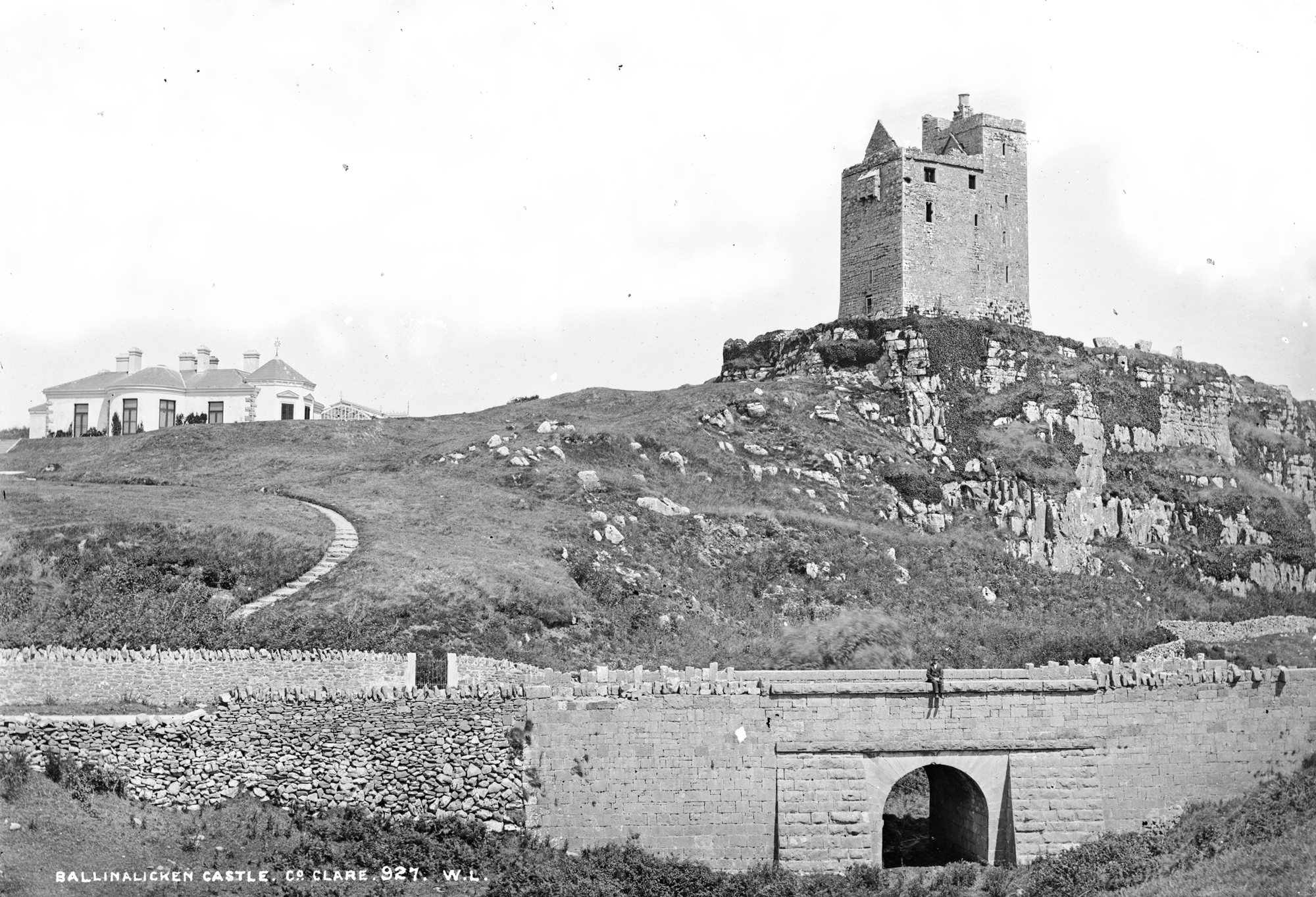
Ballinalacken Castle, Co Clare, photograph by Robert French, Lawrence Collection National Library of Ireland.

See my entry https://irishhistorichouses.com/2023/01/20/places-to-visit-and-stay-in-county-clare/

Ballynaparka, Cappoquin, Co Waterford 

Ballynastragh, Gorey, Co Wexford

Ballynastragh House, County Wexford, photograph by Robert French, Lawrence Photograph Collection, National Library of Ireland.

Ballynatray House, Glendine, Co Waterford – 482 gardens in 2023 

Ballynatray, County Waterford, 19th August 2023. Photograph © Jennifer Winder-Baggot, www.irishhistorichouses.com.

See my entry https://irishhistorichouses.com/2023/12/21/ballynatray-estate-county-waterford-p36-t678-gardens-only/

Ballyneale House, Ballingarry, Co Limerick 

Ballyneale House, County Limerick, courtesy of National Inventory.

Ballynegall, Mullingar, Co Westmeath

Ballynegall, County Westmeath entrance hall 1961 photograph: Hugh Doran, Vanishing Country Houses of Ireland by The Knight of Glin, David J. Griffin and Nicholas K. Robinson, published by The Irish Architectural Archive and The Irish Georgian Society, 1988.

Ballynoe (or Newtown), Tullow, Co Carlow

Ballynoe (or Newtown), Tullow, Co Carlow photograph courtesy Irish Times April 18, 2013.

Ballynoe House, Rushbrooke, Co Cork

Ballynoe House, Rushbrooke, Co Cork courtesy National Inventory.

Ballynoe, Ballingarry, Co Limerick

Ballynoe, County Limerick, courtesy of National Inventory.

Ballynure, Grange Con, Co Wicklow 

Ballynure House, County Wicklow, Photograph courtesy of National Inventory of Architectural Heritage.

Ballyorney House, Enniskerry, County Wicklow

Ballyowen (formerly New Park), Cashel, Co Tipperary

Ballyowen House, County Tipperary, photograph courtesy of National Inventory.

Ballyquin House, Ardmore, Co Waterford 

Ballyrankin, Ferns, County Wexford

Ballysaggartmore, Lismore, Co Waterford – lost 

The Gate Lodge, Ballysaggartmore, Lismore, Co Waterford Courtesy of Luke Myers 2015, for Tourism Ireland, Ireland’s Content Pool.

See my entry https://irishhistorichouses.com/2022/05/26/places-to-visit-and-stay-in-munster-county-waterford/

Ballysallagh House, Johnswell, Co Kilkenny 

Ballysallagh, County Kilkenny. Photograph © Jennifer Winder-Baggot, www.irishhistorichouses.com.

See my entry https://irishhistorichouses.com/2022/06/17/ballysallagh-house-johnswell-co-kilkenny/

Ballyscullion, Bellaghy, County Derry – Ballyscullion Park 

Wedding venue https://www.ballyscullionpark.com

Ballyscullion Park, County Derry, photograph courtesy of their website.

Ballyseede Castle/ Ballyseedy, Tralee, county Kerry – section 482 

Ballyseede Castle, March 2023. Photograph © Jennifer Winder-Baggot, www.irishhistorichouses.com.

See my entry https://irishhistorichouses.com/2023/09/02/ballyseede-castle-ballyseede-tralee-co-kerry/

Ballyshanduffe House (also known as The Derries), Portarlington, Co Laois 

Ballyshannon House, Ballyshannon, Co Donegal  

Ballyteigue Castle, Kilmore Quay, County Wexford

Ballytrent House, Broadway, Co Wexford – one wing rental 

Ballytrent House, County Wexford, courtesy of their website.

See my entry https://irishhistorichouses.com/2023/11/15/places-to-visit-and-stay-in-county-wexford/

Ballytrim, County Down 

Ballyvolane, Co Cork  – demolished  

Ballyvolane, Castlelyons, Co Cork – Hidden Ireland accommodation  

Ballyvolane, County Cork, photo taken 2014 for Tourism Ireland, Ireland’s Content Pool.

See my entry https://irishhistorichouses.com/2022/05/17/places-to-visit-and-stay-munster-county-cork/

Ballyvonare (also called Ballinavonear), Buttevant, Co Cork   

Ballyvonare (also called Ballinavonear), Buttevant, Co Cork courtesy of National Inventory.

Ballywalter Park, Newtownards, Co Down 

See their website https://ballywalterpark.com

Ballywalter Park, County Down, photograph courtesy of their website.

Ballyward Lodge, County Down 

Ballywhite House, Portaferry, County Down 

Ballywillwill House, near Castlewellan, County Down 

Balrath, Kells, Co Meath – section 482 and accommodation

See https://balrathcourtyard.ie 

Balrath, County Meath, photograph courtesy of their website.

Balrath Bury, County Meath 

Baltiboys, Blessington, Co Wicklow  

Baltiboys, County Wicklow, Photograph courtesy of National Inventory of Architectural Heritage.

Baltrasna, Oldcastle, Co Meath 

Baltrasna House, Ardee, Co. Louth for sale June 2025, photograph courtesy Lisney Sotheby’s International Realty.

Balyna, Moyvalley, Co Kildare – weddings (Moy Valley Hotel)

See my entry https://irishhistorichouses.com/2023/06/08/places-to-visit-and-stay-in-county-kildare/

Moy Valley hotel, formerly Balyna House, County Kildare, photograph courtesy of their website.

Bancroft House, County Down 

Bangor Castle, County Down

Bangor Castle, County Down, photograph courtesy of Glenn Norwood, North Down Brorough Council.

See my entry https://irishhistorichouses.com/2023/10/06/places-to-visit-and-stay-in-county-down-northern-ireland/

Bannow House (originally Grange House), Bannow, Co Wexford 

Bannow House, County Wexford, photograph by Robert French, Lawrence Photograph Collection, National Library of Ireland.

Bansha Castle, Bansha, Co Tipperary 

Bansha Castle, County Tipperary by Kerry Kissane 2021 for Tourism Ireland

See my entry https://irishhistorichouses.com/2022/10/19/places-to-visit-and-stay-in-county-tipperary-munster/

Bantry House & Garden, Bantry, Co. Cork – section 482, and accommodation  

Bantry House, County Cork, a treasurehouse of culture. Photograph © Jennifer Winder-Baggot, www.irishhistorichouses.com.

See my entry https://irishhistorichouses.com/2022/12/01/bantry-house-garden-bantry-co-cork/

Barbavilla, Collinstown, Co Westmeath 

Barberstown Castle, Kildare  – hotel 

Barberstown Castle, County Kildare, photograph courtesy of barberstowncastle.ie

See my entry https://irishhistorichouses.com/2023/06/08/places-to-visit-and-stay-in-county-kildare/

Bargy Castle, Tomhaggard, Co Wexford 

Bargy Castle, County Wexford, photograph courtesy of National Inventory.
Bargy Castle, County Wexford, photograph by Robert French, Lawrence Photograph Collection, National Library of Ireland.

Barmeath Castle, Dunleer, Drogheda, Co Louth – section 482 in 2019 

Barmeath, County Louth, photograph courtesy of Historic Houses of Ireland.

See my entry https://irishhistorichouses.com/2020/10/23/barmeath-castle-dunleer-drogheda-county-louth/

Barnabrow, Cloyne, Co Cork – accommodation and wedding venue

See my entry https://irishhistorichouses.com/2022/05/17/places-to-visit-and-stay-munster-county-cork/

See their website https://www.barnabrowhouse.ie

Barnabrow, Cloyne, Co Cork courtesy National Inventory.

Barnane, near Templemore, Co Tipperary

Barnane Castle, Templemore, County Tipperary, photograph by Robert French, Lawrence Photograph Collection, National Library of Ireland.

Barne, Clonmel, Tipperary 

Barne, County Tipperary, photograph courtesy of myhome.ie in July 2023.

Baronrath House, Straffan, Co Kildare

Barons Court, Newtownstewart, County Tyrone

See their website https://barons-court.com

Baronscourt, County Tyrone, courtesy of their website.

Baronston House (or Baronstown), Ballinacargy, Co Westmeath

Baronstown , County Westmeath entrance front, collection: Geoffrey Brooke, Vanishing Country Houses of Ireland by The Knight of Glin, David J. Griffin and Nicholas K. Robinson, published by The Irish Architectural Archive and The Irish Georgian Society, 1988.

Barraghcore House, Goresbridge, Co Kilkenny 

Barraghcore, County Kilkenny, courtesy National Inventory.

Barretstown Castle, Ballymore Eustace, Kildare  – children’s camp 

Barretstown Castle, County Kildare, photograph courtesy of their website.

Barretstown House, Newbridge, Co Kildare 

Barretstown House, Newbridge, Co Kildare courtesy myhome.ie

Barrowmount, Co Kilkenny 

Barrowmount, County Kilkenny, courtesy National Inventory.

Barrymore Lodge, Castlelyons, Co Cork 

Barryscourt Castle, Carrigtwohill, Co Cork  – ruin, open to public

Barryscourt Castle, County Cork

See my entry https://irishhistorichouses.com/2022/01/19/office-of-public-works-properties-munster/

Baymount, Clontarf, Co Dublin (Manresa) – owned by Jesuits 

Manresa, formerly Baymount, County Dublin, photograph courtesy National Inventory.

Beamond House, Duleek, County Meath or Beaumond House, Duleek, Co Meath 

Beardiville House, County Antrim 

Bearforest, Mallow, Co Cork 

Bearforest, Mallow, Co Cork courtesy National Inventory.

Beaulieu, Drogheda, County Louth 

Beaulieu, County Louth. Photograph © Jennifer Winder-Baggot, www.irishhistorichouses.com.

See my entry https://irishhistorichouses.com/2021/03/17/beaulieu-county-louth/

Beaumond House, Duleek, Co Meath 

Beauparc, Co Meath – section 482 

Beauparc House, County Meath. Photograph © Jennifer Winder-Baggot, www.irishhistorichouses.com.

See my entry https://irishhistorichouses.com/2022/07/22/beauparc-house-beau-parc-navan-co-meath/

Bective House, Bective, Co Meath 

Bective House, County Meath, photograph courtesy Irish Times.

Bedford House, Listowel, Co Kerry 

Bedford House, County Kerry, courtesy of National Inventory of Architectural Heritage.

Beech Park, Clonsilla, Co Dublin 

Beechmount, Rathkeale, Co Limerick 

Beechmount House, County Limerick, photograph by Robert French, Lawrence Photograph Collection, National Library of Ireland.
Beechmount House, County Limerick, courtesy of National Inventory.

Beechwood Park, Nenagh, Co Tipperary

Beechwood, County Tipperary, courtesy of National Inventory of Architectural Heritage.

Beechy Park (formerly Bettyfield), Rathvilly, Co Carlow

Beechy Park, County Carlow, photograph courtesy Irish Independent 13 January, 2009.

Belan, Co Laois

Belan House, County Laois, courtesy National Inventory

Belan, County Kildare – ‘lost’ 

Belcamp House (also known as Belcamp Hutchinson), Balgriffin, County Dublin  – a college 

Belcamp House, County Dublin, photograph by Lainey Tess Quinn, abandonedworldphotograph.com

Belcamp Hall, Balgriffin, County Dublin

Belcamp, Dublin photograph by Bob Linsdell, Creative Commons Attribution 3.0 Unported license.

Belcamp Park, Balgriffin, County Dublin

Belfast Castle, County Antrim 

Belfast Castle and Gardens, photograph by Aidan Monaghan 2015 for Tourism Ireland

See my entry on my page Places to visit and stay in County Antrim https://irishhistorichouses.com/2022/03/21/places-to-visit-and-stay-in-ulster-county-antrim/

Belfort, Charleville, Co Cork – demolished 1958  

Belgard Castle, Clondalkin, Co Dublin 

Belgard, County Dublin, photograph courtesy of Georgian Mansions in Ireland with some account of the evolution of Georgian Architecture and Decoration by Thomas U. Sadleir and Page L. Dickinson. Dublin University Press, 1915. 

Belgrove, Cobh, Co Cork – demolished 1954  

Bellaghy Castle and Bawn, Bellaghy, County Derry

Bellair, Ballycumber, County Offaly 

Bellair House, Tullamore, Ballycumber, County Offaly for sale, photograph courtesy Savills.

Bellamont Forest, Cootehill, Co Cavan

Bellamont Forest, Cootehill, Co Cavan courtesy National Inventory.

Bellarena, Magilligan, County Derry 

Belle Isle, Lisbellaw, County Fermanagh 

Belle Isle Castle, County Fermanagh by Brian Morrison, 2008 for Tourism Ireland.

Belle Isle, Lorrha, Co Tipperary 

Belle Isle, I think this is County Tipperary, photograph by Robert French, Lawrence Photographic Collection, National Library of Ireland.

Belleek Castle (or Manor, or Ballina House), Ballina, Mayo  – gives tours and hotel 

Belleek Manor, or Castle, courtesy of National Inventory of Architectural Heritage.

See my entry https://irishhistorichouses.com/2022/05/15/places-to-stay-and-visit-in-connacht-leitrim-mayo-and-sligo/

Bellegrove (also Rathdaire), Ballybrittas, Co Laois – (demolished) 

Bellegrove, County Laois, photographs by Colin Colleran on facebook.

Belleview, Co Cavan

Bellevue, Tamlaght, County Fermanagh

Bellevue, County Kilkenny, Vanishing Country Houses of Ireland by The Knight of Glin, David J. Griffin and Nicholas K. Robinson, published by The Irish Architectural Archive and The Irish Georgian Society, 1988.

Bellevue, Co Leitrim 

Bellevue, Borrisokane, County Tipperary

Bellevue, Delgany, Co Wicklow

Bellevue, County Wicklow, photograph by Robert French, Lawrence Photographic Collection, National Library of Ireland.

Belline, Piltown, Co Kilkenny 

Belline, County Kilkenny, courtesy National Inventory.

Bellinter House near Bective, County Meath – hotel and restaurant 

Bellinter House, County Meath, 2007, photograph courtesy of flickr commons.

See my entry https://irishhistorichouses.com/2022/10/28/places-to-visit-and-stay-in-county-meath-leinster/

Bellmont House, Mullingar, County Westmeath

Bellville Park (or Belleville, formerly Bettyville), Cappoquin, Co Waterford 

Bellwood, Templemore, Co Tipperary 

Bellwood Castle, Templemore, County Tipperary photograph by Robert French, Lawrence Photographic Collection, National Library of Ireland.

Belmont, Banbridge, County Down

A hotel, https://www.belmontbanbridge.co.uk

Belmont House hotel, County Down, photograph courtesy of website.

Beltrim Castle, Gortin, County Tyrone

Belvedere, Mullingar, County Westmeath– open to visitors 

At Belvedere, County Westmeath. Photograph © Jennifer Winder-Baggot, www.irishhistorichouses.com.

See my entry https://irishhistorichouses.com/2024/05/23/belvedere-house-gardens-and-park-county-westmeath/

Belvedere, County Down 

Belvoir, Sixmilebridge, Co Clare – ruin 

Belvoir Park, Newtownards, County Down – demolished 1950s 

Belvoir, County Down, designed by Christopher Myers in 1755 with later additions by William Barre, courtesy Archiseek.

Benburb, County Tyrone: Manor House

Benekerry (or Bennekerry), near Carlow, Co Carlow

Benekerry (or Bennekerry) House, Co Carlow courtesy of National Inventory.

Bennett’s Court, Cobh, Co Cork – medical clinic  

Benown (also known as Harmony Hall), Athlone, Co Westmeath 

Benown, County Westmeath.

Benvarden House, Dervock, County Antrim

Benvarden, County Antrim, photograph courtesy www.historichouses.org

The gardens are open to the public in the summer, https://www.benvarden.co.uk

Berkeley Forest, New Ross, Co Wexford

Berkeley Forest House, County Wexford, photograph courtesy of the house’s website.

See my entry https://irishhistorichouses.com/2023/11/15/places-to-visit-and-stay-in-county-wexford/

Bermingham House, Tuam, Co Galway 

Bermingham House, County Galway.

Bert (or De Burgh Manor), Athy, Co Kildare 

Bert House, or de Burgh Manor, County Kildare, courtesy Sherry FitzGerald O’Reilly.

See my entry https://irishhistorichouses.com/2023/06/08/places-to-visit-and-stay-in-county-kildare/

Bessborough, Blackrock, Co Cork 

Bessborough, County Cork, courtesy of National Inventory.

Bessborough, Piltown, Co Kilkenny (Kidalton College) 

Bessborough, County Kilkenny, in Georgian Mansions in Ireland with some account of the evolution of Georgian Architecture and Decoration by Thomas U. Sadleir and Page L. Dickinson.

Bessmount Park, Drumrutagh, Co Monaghan

Bessmount, County Monaghan, photograph courtesy of National Inventory.

Bingfield, Crossdoney, Co Cavan

Bingfield, Crossdoney, Co Cavan courtesy National Inventory.

Bingham Castle, Belmullet, Co Mayo

Birchfield, Co Clare – ‘lost’ 

Birchfield, County Clare entrance front, Collection of Mrs Grania Weir. Vanishing Country Houses of Ireland by The Knight of Glin, David J. Griffin and Nicholas K. Robinson, published by The Irish Architectural Archive and The Irish Georgian Society, 1988.

Birdstown House, Muff, Co Donegal  – burnt ca 1984  

Birr Castle, Co Offaly – open to public 

Birr Castle, Count Offaly, photograph by Chris Hill 2018, for Tourism Ireland, Ireland’s Content Pool.

See my entry https://irishhistorichouses.com/2025/07/21/birr-castle-county-offaly-section-482/

Bishops’ Palace, Cork, Co Cork

Bishop’s Palace, Derry, County Derry 

Bishops’ Palace, Raphoe, Co Donegal  – a ruin  

Bishop’s Palace, Raphoe, County Donegal. Photograph © Jennifer Winder-Baggot, www.irishhistorichouses.com.

Bishop’s Palace, Cultra, County Down

Bishop’s Palace, Dromore, County Down

Bishop’s Palace, Kilkenny, County Kilkenny  

Bishop’s Palace, Kilkenny, photograph by Robert French, Lawrence Photographic Collection, National Library of Ireland.
Bishop’s Palace, Kilkenny, County Kilkenny, courtesy National Inventory.
Bishop’s Palace, Waterford, photograph from the National Library of Ireland, flickr constant commons.

Bishopscourt, Straffan, Co Kildare 

Bishopscourt House in 1879, from The County Seats of the Noblemen and Gentlemen of Great Britain and Ireland, by Francis Orpen Morris.

Black Castle, Navan, Co Meath

Black Hall, Termonfeckin, Co Louth 

Black Hall, County Louth, courtesy National Inventory.

Blackhall, Clane, Co Kildare 

Blackwater Castle (or Castle Widenham), Castletownroche, Co Cork

Blackwater Castle (Castle Widenham, or Blackwater Valley Castle) Castletownroache, Co Cork, courtesy of Sherry Fitzgerald.

Available for hire, see my entry https://irishhistorichouses.com/2022/05/17/places-to-visit-and-stay-munster-county-cork/

Blanchville, Gowran, Co Kilkenny 

Blanchville, County Kilkenny, courtesy National Inventory.

Coachyard accommodation, see https://irishhistorichouses.com/2022/10/28/places-to-visit-and-stay-in-county-kilkenny-leinster/

Blanchville Coachyard, Dunbell, County Kilkenny, photograph from website https://blanchville.ie/

Blandsfort, Abbeyleix, Co Laois 

Blandsfort, County Laois, courtesy of National Inventory.

Blarney Castle, Co Cork – section 482 – open to the public  

Blarney Castle, County Cork. Photograph © Jennifer Winder-Baggot, www.irishhistorichouses.com.

See my entry https://irishhistorichouses.com/2022/09/23/blarney-castle-rock-close-blarney-co-cork/

Blarney House & Gardens, Blarney, Co Cork – section 482 

Blarney House, County Cork. Photograph © Jennifer Winder-Baggot, www.irishhistorichouses.com.

See my entry https://irishhistorichouses.com/2022/09/30/blarney-house-gardens-blarney-co-cork/

Blayney Castle, or Hope Castle, County Monaghan

Blayney Castle or Hope Castle, County Monaghan, courtesy Archiseek.

Blessingbourne, Fivemiletown, County Tyrone

Blessingbourne, County Tyrone, photograph courtesy of Tourism Northern Ireland, 2019.

See my entry https://irishhistorichouses.com/2022/04/03/places-to-visit-and-stay-in-ulster-counties-fermanagh-monaghan-and-tyrone/

Blessington House, Co Wicklow

Joseph Tudor’s engraving dated 1745 of Blessington House. Joseph Tudor (1695–1759). “A North Prospect of Blessingtown, A Seat belonging to the Right Honourable The Earl of Blessingtown Viscount Mountjoy, Baron of Ramelton and Baronet.”

Bloomfield, Claremorris, Co Mayo – demolished 

Bloomfield, Co Westmeath 

Bloomfield, a country house erected for William Russell Farmar JP (1802-71) to a design by Daniel Robertson. Photograph from National Inventory of Architectural Heritage.

Bloomsbury House, Kells, County Meath 

Boakefield, Ballitore, Co Kildare 

Boakefield, Ballitore, Co Kildare courtesy National Inventory.

Bogay, Newtowncunningham, Co Donegal 

Bogay House, County Donegal, courtesy of daft.ie

Bolton Castle, Moone, Co Kildare 

Bonnettstown Hall, Kilkenny, Co Kilkenny  

Bonnetstown, County Kilkenny, courtesy of National Inventory.

Boomhall, County Derry 

Boomhall, County Derry, photograph courtesy Derry Journal 26 March 2022.

Borris House, County Carlow – section 482 in 2019 

Borris House, Borris, Co Carlow, photograph by Suzanne Clarke 2016, for Tourism Ireland, Ireland’s Content Pool.

See my entry https://irishhistorichouses.com/2020/10/04/borris-house-county-carlow/

Borrismore House (formerly Marymount), Urlingford, Co Kilkenny 

Bowen’s Court, Kildorrery, County Cork – demolished 1961  

Bowen’s Court, County Cork courtesy Archiseek.

Boytonrath, Cashel, Co Tipperary 

Bracklyn Castle, Killucan, Co Westmeath 

Bracklyn House, County Westmeath, photograph courtesy of National Inventory.

Brade House, Leap, Co Cork

Braganstown, Castlebellingham, Co Louth 

Braganza, Carlow, Co Carlow – converted into apartments

Braganza, Carlow, Co Carlow courtesy Archiseek.

Breaghwy (or Breaffy), Castlebar, Co Mayo – hotel

Breaffy House Resort, Castlebar, Co Mayo (formerly Breaghwy), photograph courtesy National Inventory.

Brianstown, Cloondara, Co Longford 

Bridestown, Glenville, Co Cork

Bridestown County Cork courtesy National Inventory.

Bridestream House, Knocknatulla, Co Meath 

Brightsfieldstown, Minane Bridge, Co Cork – demolished 1984  

Brittas Castle, Clonaslee, Co Laois – ruin 

Brittas Castle, County Laois, courtesy National Inventory.

Brittas, Nobber, County Meath 

Brittas Castle, Thurles, Co Tipperary 

Brittas Castle, County Tipperary, photograph courtesy of National Inventory.

Brockley Park, Stradbally, Co Laois – a ruin 

Brockley Park, County Laois drawing room ceiling c. 1944, Vanishing Country Houses of Ireland by The Knight of Glin, David J. Griffin and Nicholas K. Robinson, published by The Irish Architectural Archive and The Irish Georgian Society, 1988.

Brook Lodge, Glanmire, Co Cork – new house  

Brook Lodge, Halfway House, Co Waterford 

Brookfield House, County Down 

See https://www.abandonedni.com/single-post/brookfield-house

Brooklands, Belfast

Browne’s Hill House, Chapelstown, Co Carlow

Browne’s Hill, County Carlow, photograph courtesy of Irish Times 30th July 2020.

Brownhall, Ballintra, Co Donegal 

Brownlow House, Lurgan, County Armagh – National Trust 

Brownlow House, Lurgan Castle, Lurgan, Photographer: Christopher Heaney, 2022 for Tourism Ireland.

See my entry on my page https://irishhistorichouses.com/2023/10/05/places-to-visit-and-stay-in-county-armagh-northern-ireland/

Brownsbarn, Thomastown, Co Kilkenny 

Brownsbarn, County Kilkenny, courtesy National Inventory.

Brownswood, Enniscorthy, Co Wexford 

Brownswood House, County Wexford, courtesy National Inventory.
Brownswood House, County Wexford, courtesy Archiseek.

Bruree House, Bruree, County Limerick

Bruree House, County Limerick, courtesy National Inventory.

Bullock Castle, Dalkey, Co Dublin

Bullock Harbour Dalkey castle, photograph courtesy of Sherry Fitzgerald Dalkey.

Buncrana Castle, Buncrana, Co Donegal

Buncrana Castle, County Donegal, dated 1718, courtesy of National Inventory.

Bunowen Castle, Co Galway  – ‘lost’ 

Bunratty Castle, Co. Clare – open to public 

Bunratty Castle, County Clare, photograph by Chris Hill 2014, for Tourism Ireland, Ireland’s Content Pool.

See my entry https://irishhistorichouses.com/2023/01/20/places-to-visit-and-stay-in-county-clare/

Burgage, Leighlinbridge, Co Carlow

Burgage, County Carlow, photograph from Carlow Tourism facebook page.

Accommodation is available in the mews, www.themews.ie/

Burnchurch House, Bennettsbridge, Co Kilkenny  

Burnchurch house, County Kilkenny, courtesy National Inventory.

Burnham House, near Dingle, Co Kerry 

Burnham Manor, Dingle, County Kerry, photograph by Robert French, Lawrence Photographic Collection, National Library of Ireland.
Burnham House, Co Kerry courtesy Archiseek.

Burntcourt Castle, or Burncourt, or Everard’s Castle, Clogheen, Co Tipperary 

Burncourt, CountyTipperary courtesy Mike Searle, Creative Commons geograph.org.uk -1393348

Burrenwood Cottage, County Down 

Burton Hall, County Carlow – demolished

Burton Hall, County Carlow, entrance front before removal of top floor. Victorian Photographs. Vanishing Country Houses of Ireland by The Knight of Glin, David J. Griffin and Nicholas K. Robinson, published by The Irish Architectural Archive and The Irish Georgian Society, 1988.

A three-bay single-storey over basement granite built residence remains, built c. 1725, originally wing of the larger house, which was demolished around 1930.

Burton Park (formerly Burton House), Churchtown, Co Cork – section 482 in 2019 

Burton Park, County Cork, August 17th 2023. Photograph © Jennifer Winder-Baggot, www.irishhistorichouses.com.

See my entry https://irishhistorichouses.com/2024/02/08/burton-park-churchtown-mallow-county-cork-p51-vn8h/

Burtown House and Garden, Athy, Co Kildare – section 482 in 2019 

Burtown, County Kildare

See my entry https://irishhistorichouses.com/2023/06/08/places-to-visit-and-stay-in-county-kildare/

Busherstown, Moneygall, County Offaly 

Busherstown, County Offaly, photograph courtesy of National Inventory.

Bushy Park, Terenure, Co Dublin – apartments 

Bushey Park, Enniskerry, Co Wicklow, courtesy sales advertisement 2022.

Butlerstown Castle, Tomhaggard, Co Wexford 

See my entry https://irishhistorichouses.com/2023/11/15/places-to-visit-and-stay-in-county-wexford/

Butlerstown Castle, County Wexford, photograph by Robert French, Lawrence Photographic Collection, National Library of Ireland.

Buttevant Castle, Buttevant, Co. Cork  – ruin  

Buttevant, or Barry, Castle, County Cork, courtesy http://www.castles.nl

Byblox, Doneraile, Co Cork – demolished  

2026 Diary of Irish Historic Houses (section 482 properties)

To purchase an A5 size 2026 Diary of Historic Houses send your postal address to jennifer.baggot@gmail.com along with €20 via this payment button. The calendar of 84 pages includes space for writing your appointments as well as photographs of the historic houses. The price includes postage within Ireland. Postage to U.S. is a further €11 for the A5 size, so I would appreciate a donation toward the postage – you can click on the donation link.

€20.00

Donation

Help me to fund my creation and update of this website. It is created purely out of love for the subject and I receive no payment so any donation is appreciated! My website costs €300 per year on WordPress.

€15.00

Donation towards website

I receive no funding nor aid to create and maintain this website, it is a labour of love. The website hosting costs €300 annually. A generous donation would help to maintain the website.

€150.00

just a note

Yesterday I posted the first of my entries based on Mark Bence-Jones’s Guide to Irish Country Houses [1] but today I have updated it with links to my relevant entries, about the places which are open to the public or which provide accommodation. I will make sure to include them in further entries. Do let me know if I need to update my site or include other accommodation etc. Here’s the updated page: https://irishhistorichouses.com/2025/09/26/a-guide-to-irish-county-houses-by-mark-bence-jones-contents-and-pictures-houses-beginning-with-a/

[1] Bence-Jones, Mark. A Guide to Irish Country Houses published by Constable and Company Limited, London, 1988, previously published by Burke’s Peerage Ltd as Burke’s Guide to Country Houses, vol. 1 Ireland, 1978.

A Guide to Irish Country Houses by Mark Bence-Jones contents and pictures, houses beginning with A

Note that the majority of these are private houses, not open to the public. I discovered “my bible” of big houses by Mark Bence-Jones only after I began this project of visiting historic houses that have days that they are open to the public (Section 482 properties).

This is a project I have been working on for a while, collecting pictures of houses. Enjoy! Feel free to contact me to send me better photographs if you have them! I’ll be adding letters as I go…

[1] Mark Bence-Jones. A Guide to Irish Country Houses (originally published as Burke’s Guide to Country Houses volume 1 Ireland by Burke’s Peerage Ltd. 1978); Revised edition 1988 Constable and Company Ltd, London.

Donation

Help me to fund my creation and update of this website. It is created purely out of love for the subject and I receive no payment so any donation is appreciated! My website costs €300 per year on WordPress.

€15.00

Abbeville, Malahide, Co Dublin

Abbeville, Malahide, County Dublin, courtesy of Sherry Fitzgerald and TheJournal.ie

A house built for Rt Hon John Beresford, Taster of the Wines in the Port of Dublin, brother of the 1st Marquess of Waterford and one of the most powerful men in Ireland at the end of C18; its name commemorating the fact that Bereford’s first wife came from Abbeville in Northern France. Of two storeys over a basement; front of 7 bays between two wide curved bows prolonged by singe-storey 1 bay wings, each with a fanlighted triple window and an urn on a die. Pilastered entrance doorway. Good drawing room with alcove, ceiling of Adamesque plasterwork and husk decoration on walls, incorporating circular painted medallions.” [1]

Abbeylands, Whiteabbey, Co Antrim – burnt 1914

Abbeylands, Whiteabbey, Co Antrim courtesy Lord Belmont.

A two storey Victorian house, vaguely Italianate, but with mullioned windows in the centre of its symmetrical front. Shallow curved bows on either side of front, single storey Ionic porch; narrow pedimented attic storey, with three narrow windows, in centre. Burnt 1914 by Suffragettes.” (!) [1]

Abbeyleix House, County Laois

Abbeyleix House, County Laois, photograph courtesy of Colliers.

Abbeyville, Ballymote, Co Sligo – lost

Abbotstown House (formerly also known as Sheephill), Castleknock, Co Dublin – sports centre 

Abbotstown House (formerly Sheepshill) County Dublin, courtesy of Lord Belmont.

Aberdelghy, Lambeg, Co Antrim

Aclare House,  Drumconrath, Co Meath

Adare Manor, County Limerick – hotel

Adare Manor, County Limerick, from the hotel website.

See my entry https://irishhistorichouses.com/2023/07/21/places-to-visit-and-stay-in-county-limerick/

Adelphi, Corofin, Co Clare

Adelphi, Corofin, Co Clare courtesy National Inventory.

Affane House, County Waterford

Affane House, County Waterford, courtesy National Inventory.

Aggard, Craughwell, County Galway

Aggard, Craughwell, County Galway courtesy National Inventory.

Aghaboe, Ballybrophy, County Laois

Aghaboe, County Laois. Photograph © Jennifer Winder-Baggot, www.irishhistorichouses.com.

Aghada House, Aghada, Co Cork – gone

Aghade Lodge, Tullow, Co Carlow

Aghade Lodge, Tullow, County Carlow courtesy of myhome.ie

Aghadoe House, Killarney, County Kerry

Aghadoe House, Killarney, County Kerry, between ca. 1865-1914, photograph courtesy of National Library of Ireland, photograph by Robert French, Lawrence Collection.

Aghamarta Castle, Carrigaline, Co Cork – house with ruined castle

Aghamarta Castle, Carrigaline, Co Cork – house with ruined castle courtesy National Inventory.

Aghern, Conna, Co Cork – stud farm

Aghern, Conna, County Cork courtesy Michael O’Brien Auctioneers.

Ahanesk or Ahanisk, Midleton, Co Cork

Ahanesk or Ahanisk, Midleton, Co Cork courtesy of National Inventory.

Aharney, County Laois

Aharney House, County Laois, courtesy Mark Bence-Jones.

Aherlow Castle, Bansha, County Tipperary  – ruin restored, runs courses 

Aherlow Castle, County Tipperary, photograph by Robert French, Lawrence Photograph Collection, National Library of Ireland

Allenton, Tallaght, Co Dublin – Demolished in 1984

Allenton, County Dublin entrance front, Vanishing Country Houses of Ireland by The Knight of Glin, David J. Griffin and Nicholas K. Robinson, published by The Irish Architectural Archive and The Irish Georgian Society, 1988.

Altamira, Liscarroll, Co Cork

Altamira, Liscarroll, Co Cork courtesy National Inventory.

Altamont, Kilbride, Co Carlow – gardens open to public /

Altamont House and Gardens, County Carlow, Courtesy Tourism Ireland.

See my entry https://irishhistorichouses.com/2022/02/21/office-of-public-works-properties-leinster-carlow-kildare-kilkenny/

Altavilla, Rathkeale, Co Limerick 

Altavilla, County Limerick, courtesy National Inventory.

Altidore Castle, Kilpeddar, Greystones, Co Wicklow – section 482

Altidore, County Wicklow. Photograph © Jennifer Winder-Baggot, www.irishhistorichouses.com.

See my entry https://irishhistorichouses.com/2020/06/25/altidore-castle-kilpeddar-greystones-county-wicklow/

Ampertain House, Upperlands, County Derry 

Ampertain House, County Derry, photograph courtesy Belfast Live UK.

Anaverna, Dundalk, Co Louth 

Anaverna, Dundalk, Co Louth courtesy National Inventory.

Anketill Grove (or Ancketill’s Grove or Anketell Grove), Emyvale,  County Monaghan – gate lodge accommodation 

Anketell Grove, County Monaghan courtesy National Inventory.

Anna Liffey House, Lucan, Co Dublin 

Anna Liffey House, County Dublin, courtesy of National Inventory.

Annagh, Riverstown, Co Tipperary – ruin 

Annagh Castle County Tipperary courtesy Brian T. McElherron, Irish Antiquities.

Annaghdown House, Carrandulla, Co Galway 

Annaghdown House, Carrandulla, Co Galway courtesy National Inventory.

Annaghlee, Cootehill, Co Cavan – gone

Annaghlee, County Cavan, entrance front c. 1955. Photograph: Maurice Craig. Vanishing Country Houses of Ireland by The Knight of Glin, David J. Griffin and Nicholas K. Robinson, published by The Irish Architectural Archive and The Irish Georgian Society, 1988.

Annaghmore, Tullamore, Offaly – recent sale 

Annaghmore, County Offaly, courtesy of National Inventory.

Annaghmore, Collooney, Sligo  – accommodation, airbnb 

Annaghmore, County Sligo. Photograph © Jennifer Winder-Baggot, www.irishhistorichouses.com.

See my entry https://irishhistorichouses.com/2022/10/19/places-to-visit-and-stay-in-county-sligo-connaught/

Annaghs Castle, Glenmore, Co Kilkenny 

Annaghs Castle, County Kilkenny, courtesy National Inventory.

Annamakerrig (or Annaghmakerrig, Tyrone Guthrie Centre), Newbliss, Co Monaghan – artist residence 

Annaghmakerrig House (Tyrone Guthrie Centre), Mullaghmore, County Monaghan.

Annemount, Glounthaune, Co Cork – Fire in 1948, destroyed 

Annmount was built by Riggs Falkiner in 1775 but was heavily modified in the 19th century. It burned down accidentally in 1948. The grounds are now filled with a housing estate

Anner Castle (formerly Ballinahy), Clonmel, Co Tipperary  

Anner Castle, County Tipperary courtesy of National Inventory.
Anner Castle, County Tipperary, photograph by Robert French, Lawrence Photographic Collection, National Library of Ireland.

An impressive C19 castle of random ashlar, built in 1860s by Rev. N.H. Mandeville to the design of a Cork architect, William Atkins; incorporating an old square castle of the Mandeville family which had up to then been known as Ballinahy, but which was renamed Anner Castle after being enlarged and transformed. Impressive entrance front with two octagonal battlemented and machicolated towers. Burnt 1926 and only front part rebuilt.” [1]

Annerville, Clonmel, Co Tipperary  

Annerville, Clonmel, Co Tipperary courtesy Landed Estates website.
Annerville, County Tipperary, photograph by Robert French, Lawrence Photographic Collection, National Library of Ireland.

Annes Grove (formerly Ballyhemock or Ballyhimmock), Castletownroche, Co Cork – gardens open to public; gate lodge accommodation

Annesgrove (formerly Ballyhimmock), County Cork courtesy National Inventory.

See my entry https://irishhistorichouses.com/2022/01/19/office-of-public-works-properties-munster/

Annesbrook, Duleek, Co Meath 

Annesbrook, County Meath photograph courtesy Irish Times Feb 20, 2016.

Annestown House, County Waterford – B&B 

Annestown House, County Waterford, courtesy of Savills Residential & Country Agency and myhome.ie.

See my entry https://irishhistorichouses.com/2022/05/26/places-to-visit-and-stay-in-munster-county-waterford/

Anngrove (formerly Ballinsperrig), Carrigtwohill, Co Cork – demolished by ca. 1965

Antrim Castle, County Antrim – open to the public 

Antrim Castle from the river, by R. Welch (Photographer) Date c.1888 PRONI Ref D1403_1_017_A

See my entry https://irishhistorichouses.com/2022/03/21/places-to-visit-and-stay-in-ulster-county-antrim/

Antrim Castle gardens and Clotworthy House, County Antrim – estate and gardens open to the public, the Castle was destroyed by fire. The stable block, built in the 1840s and now known as Clotworthy House, is used as an arts centre.

Aras an Uachturain, (formerly Vicegreal Lodge and before that, Phoenix Lodge), Phoenix Park, Dublin  

Aras an Uachtarain, Phoenix Park, Dublin. Photograph © Jennifer Winder-Baggot, www.irishhistorichouses.com.

See my entry https://irishhistorichouses.com/2023/10/17/office-of-public-works-dublin-aras-an-uachtarain-phoenix-park/

Arbutus Lodge, Montenotte, Co. Cork  – apartments  

Arch Hall, Co Meath  – lost 

Arch Hall, County Meath, courtesy Colin Colleran photographer facebook page.

Archbishop’s Palace (or Armagh Palace), County Armagh 

Archbishop’s Palace, Armagh, photograph by Eric Jones, Creative Commons Attribution Share-alike license 2.0.

Archerstown, Thurles, Co Tipperary  – ruin 

Archerstown, Thurles, Co Tipperary courtesy National Inventory.

Ardagh House, County Longford

Ardagh House, County Longford, photograph courtesy of National Inventory.

Ardamine, Gorey, Co Wexford – Destroyed by IRA in 1921  

Ardamine, Gorey, County Wexford, photograph by Robert French, Lawrence Photographic Collection, National Library of Ireland.

Ardavilling, Cloyne, Co Cork  – burned 2017, being rebuilt  

Ardavilling, County Cork, courtesy of National Inventory.

Ardbraccan House, Navan, Co Meath 

Ardbraccan House, Ardbraccan, Navan, County Meath, for sale March 2025 courtesy Sherry Fitzgerald

Ardbrack House, Kinsale, Co Cork 

Ardbrack House, Kinsale, Co Cork courtesy National Inventory.

Ardcandrisk House, County Wexford 

Ardcandrisk, photographer Robert French, Lawrence Collection NLI L-IMP_1336.

Ardee House, Co Louth – hospital 

Ardee House, County Louth, courtesy National Inventory.

Ardfert Abbey, County Kerry   – Destroyed by IRA by fire in 1922. 

Ardfert Abbey entrance front, photograph: c. 1870, collection: Col. Talbot Crosbie, Vanishing Country Houses of Ireland by The Knight of Glin, David J. Griffin and Nicholas K. Robinson, published by The Irish Architectural Archive and The Irish Georgian Society, 1988.

Ardfinnan Castle, Ardfinnan, Co. Tipperary 

Ardfinnan Castle, County Tipperary, August 2023. Photograph © Jennifer Winder-Baggot, www.irishhistorichouses.com.

Ardfry, County Galway  – ruins 

Ardfry House, County Galway.

Ardgillan Castle, Balbriggan, County Dublin  – open to public

Ardgillan, County Dublin. Photograph © Jennifer Winder-Baggot, www.irishhistorichouses.com.

See my entry https://irishhistorichouses.com/2022/10/15/places-to-visit-in-dublin-ardgillan-castle-balbriggan-county-dublin/

Ardglass Castle (also known as The Newark), County Down

Ardglass Castle, County Down.
Ardglass Castle, County Down, photograph by Robert French, [between ca. 1865-1914], Lawrence Photograph Collection, National Library of Ireland.

Ardigon, Killyleagh, County Down

Ardkeen, Waterford, Co Waterford – hospital 

Ardmore, Passage West, Co Cork

Ardmore House, Ardmore, Passage West, Co. Cork, courtesy Cohalan Downing Estate Agents Nov 2024.

Ardmore Place, Bray, Co Wicklow – film studio 

Ardmore House, County Wicklow, photograph courtesy of screenireland.ie

Ardmulchan, Beauparc, Co. Meath 

Ardmulchan, Beauparc, County Meath.

Ardnalee, Carrigrohane, Co Cork 

Ardnalee, Carrigrohane, Co Cork courtesy National Inventory.

Ardnargle, Limavady, County Derry 

Ardnargle House, County Derry, photograph courtesy Northern Ireland Community Archive.

Ardo (also known as Ardogena), Ardmore, Co Waterford

Ardowen House, Co Sligo 

Ardowen House, County Sligo, photograph by Robert French, Lawrence Photographic Collection, National Library of Ireland.

Ardoyne House, Edenderry, County Antrim 

Ardress House, Charlemont, County Armagh (National Trust), open to public 

Ardress House, County Armagh, photograph courtesy of Ardress house website.

See my entry https://irishhistorichouses.com/2023/10/05/places-to-visit-and-stay-in-county-armagh-northern-ireland/

Ardrum, Inniscarra, Co Cork – demolished  

Ardrumman House, Ramelton, County Donegal (supplement)

Ards, Sheephaven, Donegal - demolished ca 1965  

Ards, County Donegal, photograph by Robert French, Lawrence Photographic Collection, National Library of Ireland.

Ardsallagh, Navan, Co Meath 

Ardsallagh House, Navan, Co. Meath, June 1955, by Alexander Campbell Morgan, Morgan Aerial Photographic Collection, National Library of Ireland.

Ardsallagh, Fethard, Co Tipperary 

Ardsallagh House, County Tipperary, courtesy of myhome.ie

Ardtully, Co Kerry  – burnt in 1921, ruin 

Ardtully, County Kerry, courtesy Archiseek.

The Argory, Charlemont, County Armagh (National Trust) – open to the public

The Argory, County Armagh, photograph courtesy the Argory website.

See my entry https://irishhistorichouses.com/2023/10/05/places-to-visit-and-stay-in-county-armagh-northern-ireland/

The Argory, County Armagh, photograph by Robert French, Lawrence Photographic Collection, National Library of Ireland.
Archbishop’s Palace, Armagh, photograph by Eric Jones, Creative Commons Attribution Share-alike license 2.0.

Artramon House, Castlebridge, Co Wexford – B&B 

Artramon House, County Wexford, photograph from Artramon website.
Artramon House, County Wexford, photograph from National Inventory of Architectural Heritage

See my entry https://irishhistorichouses.com/2023/11/15/places-to-visit-and-stay-in-county-wexford/

Ash Hill Towers, Kilmallock, Co Limerick  – hidden Ireland accommodation, was 482 

Ash Hill house, County Limerick. Photograph © Jennifer Winder-Baggot, www.irishhistorichouses.com.

See my entry https://irishhistorichouses.com/2023/04/06/ash-hill-kilmallock-co-limerick/

Ash Park, Feeny, County Derry (glamping) 

Ashbourne House, Co Cork  – no longer a hotel 

Ashbourne House was the residence of Richard Beamish in the second half of the 19th century. Beamish created the fine gardens with plants and trees from all over the world on the triangular grounds between the Old Cork Road (up the hill) and the New Cork Road running along the waterfront.  It was later bought by the Hallinan family, who ran the Avoncore Mills in Midleton.  They maintained the gardens into the 20th century, until it was put up for sale. After a few years of lying empty the house was finally bought by the Garde family who turned it into a hotel and proceeded to restore the gardens for the enjoyment of their guests. It is thanks to the Gardes that these gardens were listed for protection.

Ashbrook, County Derry – whole house rental accommodation 

Ashbrook House, County Derry, photograph courtesy of Ashbook House facebook page.

See my entry on https://irishhistorichouses.com/2023/10/05/places-to-visit-and-stay-in-county-derry-northern-ireland/

Ashburn, Limerick, County Limerick 

Ashfield, Rathfarnham, Co Dublin 

Ashfield House, Rathfarnham, County Dublin, courtesy National Inventory.

Ashfield Lodge, Cootehill, Co Cavan – gone  

Ashford Castle, Cong, County Galway/ County Mayo  – hotel 

Ashford Castle, Cong, Co. Mayo courtesy Archiseek.

See my entry in https://irishhistorichouses.com/2022/05/15/places-to-stay-and-visit-in-connacht-leitrim-mayo-and-sligo/

Ashgrove, Co Cavan

Ashgrove, Co Cavan courtesy National Inventory.

Ashgrove, Cobh, Co Cork – demolished  

Ashley Park, Nenagh, Co Tipperary  – accommodation 

Ashley Park, County Tipperary, December 2016. Photograph © Jennifer Winder-Baggot, www.irishhistorichouses.com.

See my entry: https://irishhistorichouses.com/2022/10/19/places-to-visit-and-stay-in-county-tipperary-munster/

Ashline, Ennis, Co Clare

Ashlin House, Ennis, County Clare, photograph by Robert French, Lawrence Photographic Collection, National Library of Ireland.

Ashton House, Castleknock, Co Dublin 

Ashton House, County Dublin.

Ashurst, Killiney, Co Dublin 

Ashurst House, County Dublin photos from Irish Times Thu May 05 2022.

Askeaton Castle, Limerick  

Askeaton Castle, County Limerick, courtesy Office of Public Works website.

See my entry https://irishhistorichouses.com/2022/11/17/office-of-public-works-properties-in-county-tipperary/

Assolas, Kanturk, Co Cork 

Assolas, Kanturk, Co Cork courtesy myhome.ie

Athavallie, Castlebar, County Mayo 

Athavillie, County Mayo, courtesy National Inventory.

Athcarne Castle, Duleek, Co Meath

Athcarne Castle, County Meath entrance front c. 1975, photograph: William Garner, Vanishing Country Houses of Ireland by The Knight of Glin, David J. Griffin and Nicholas K. Robinson, published by The Irish Architectural Archive and The Irish Georgian Society, 1988.

Athclare Castle, Co Louth 

Athclare Castle, County Louth, courtesy National Inventory.

Athgoe Park, Hazelhatch, Co Dublin 

Athgoe Castle, County Dublin, photograph courtesy National Inventory.

Attyflin, Patrickswell, Co Limerick  

Attyflin, County Limerick, courtesy Archiseek.

Auburn, Athlone, Co Westmeath – Now in use as offices

Aughentaine Castle, Fivemiletown, County Tyrone

Aughentaine Castle, Fivemiletown, County Tyrone photo from Aughentaine Castle website.

This is a private home and the gardens are not open to the public: https://aughentaine.com

Aughrane Castle, also known as Castle Kelly, Ballygar, Co Galway  – demolished 1951 

Castle Kelly, or Aughrane Castle, County Galway, photograph courtesy of Melvin and de Burca.

Aughnagaddy House, Ramelton, County Donegal (supplement)

Avondale House, County Wicklow – open to public 

Avondale, County Wicklow. Photograph © Jennifer Winder-Baggot, www.irishhistorichouses.com.

See my entry https://irishhistorichouses.com/2022/10/20/places-to-visit-and-stay-in-county-wicklow-leinster/

Avonmore, Annamoe, Co Wicklow 

Avonmore House, County Wicklow, built around 1830, photograph courtesy of National Inventory of Architectural Heritage.

Ayesha Castle, Victoria Road, Killiney, Dublin 

Ayesha Castle, Dublin entrance gate, photograph by Robert French, Lawrence Photograph Collection, National Library of Ireland

2026 Diary of Irish Historic Houses (section 482 properties)

To purchase an A5 size 2026 Diary of Historic Houses send your postal address to jennifer.baggot@gmail.com along with €20 via this payment button. The calendar of 84 pages includes space for writing your appointments as well as photographs of the historic houses. The price includes postage within Ireland. Postage to U.S. is a further €11 for the A5 size, so I would appreciate a donation toward the postage – you can click on the donation link.

€20.00

Donation

Help me to fund my creation and update of this website. It is created purely out of love for the subject and I receive no payment so any donation is appreciated! My website costs €300 per year on WordPress.

€15.00

Donation towards website

I receive no funding nor aid to create and maintain this website, it is a labour of love. The website hosting costs €300 annually. A generous donation would help to maintain the website.

€150.00

Castlecoote House, Castlecoote, Co. Roscommon

www.castlecootehouse.com

Open dates in 2025: May 14-18, 21-25, 28-31, June 1, 4-8, 11-15, 18-22, 25-29, July 2-6, 9-13, 16-20, 23-27, 30-31, Aug 16-24, 2pm-6pm

Fee: adult €12, OAP/student €10, children under 5 years €5
Home of the Percy French Festival, www.percyfrench.ie 

donation

Help me to pay the entrance fee to one of the houses on this website. This site is created purely out of love for the subject and I receive no payment so any donation is appreciated!

€15.00

Castlecoote, County Roscommon, August 2025. Photograph © Jennifer Winder-Baggot, www.irishhistorichouses.com
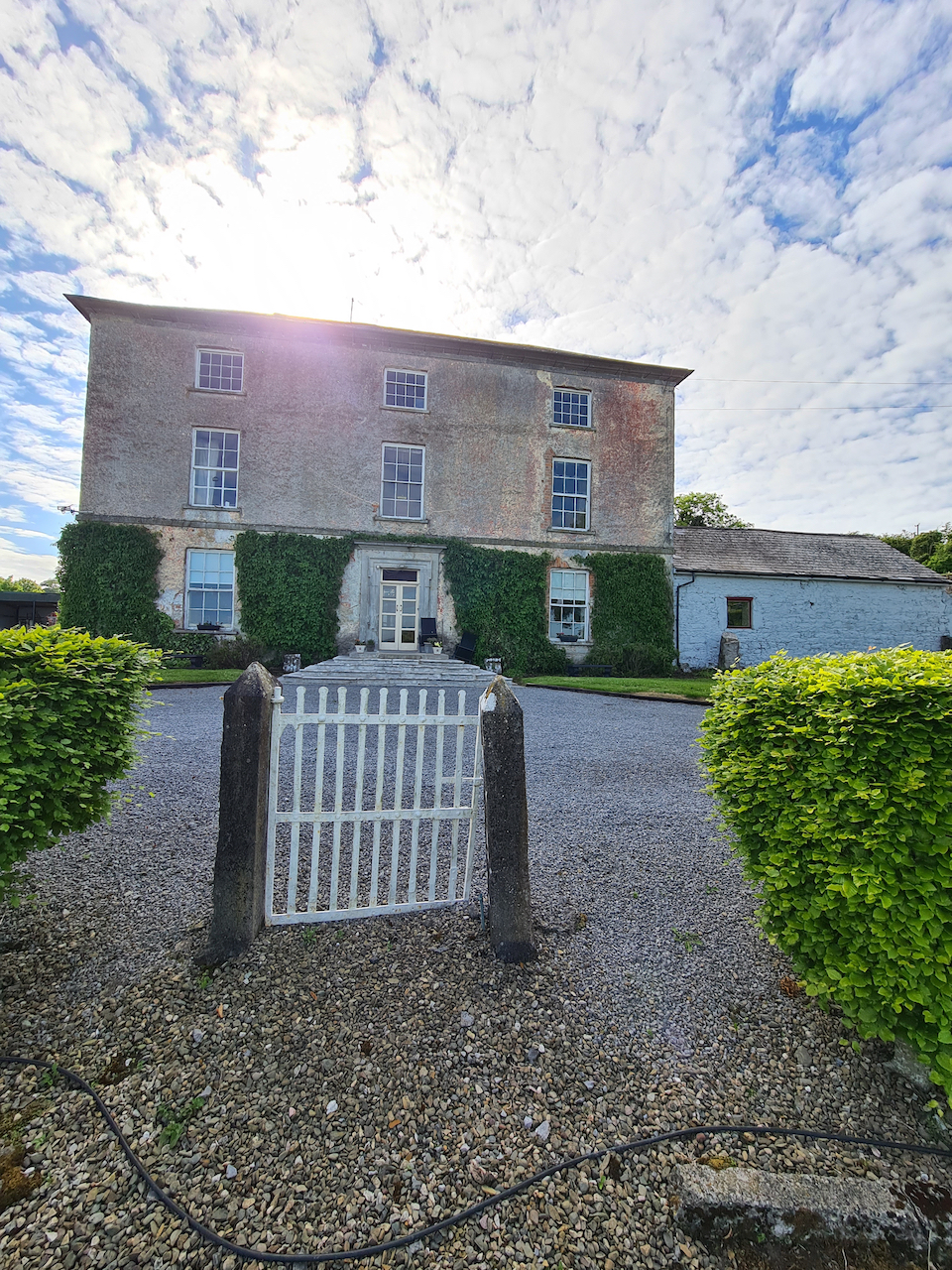
We visited Castlecoote in County Roscommon during Heritage Week 2025. The owner, Kevin, showed us around, and we were lucky enough to be accompanied on the tour by a previous owner, Tony Convoy, who lived here as a child after the 1920s and moved out in 1988 or 1989.

Castlecoote, County Roscommon, August 2025. Photograph © Jennifer Winder-Baggot, www.irishhistorichouses.com
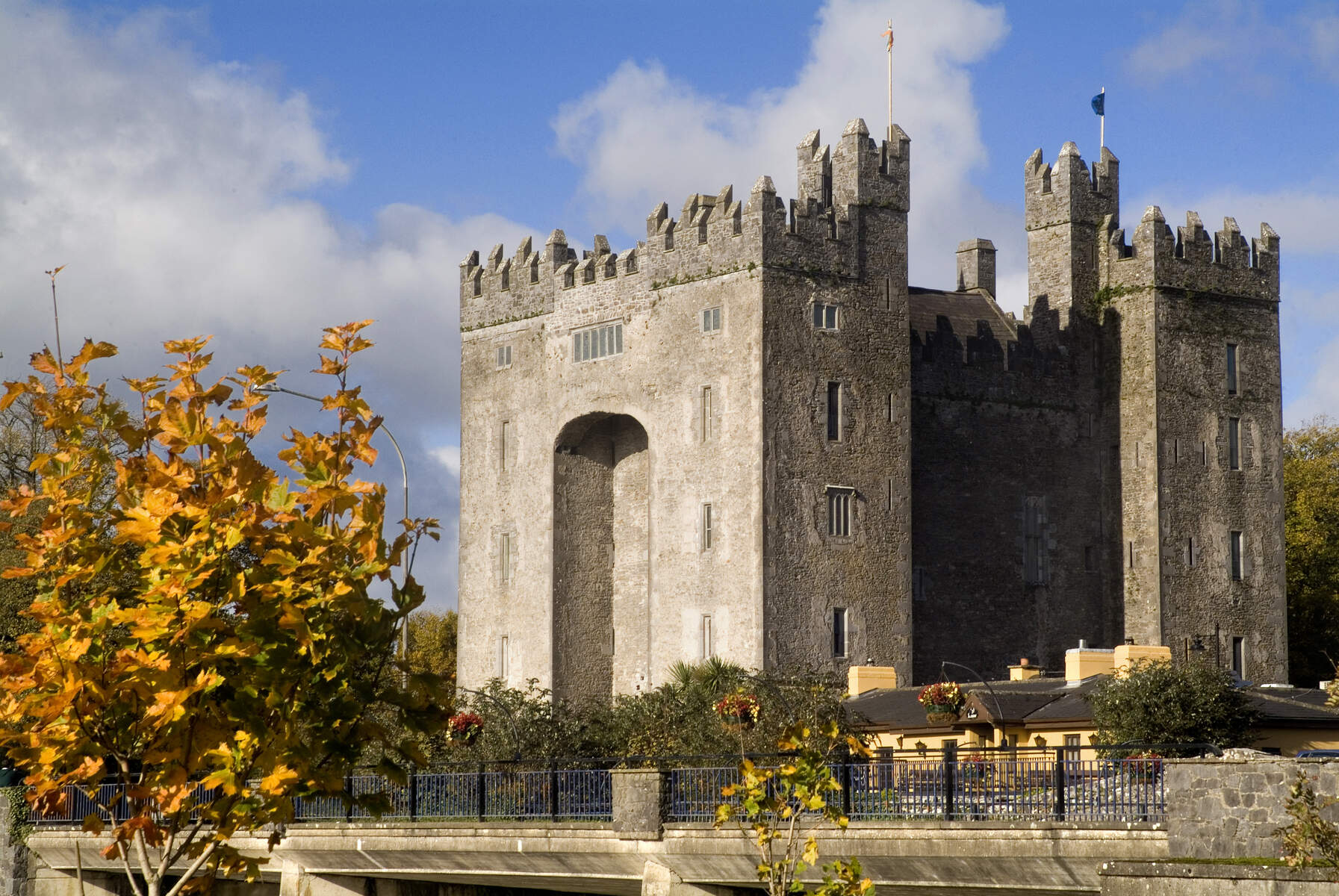
A painting in the house of Castlecoote.
Tony Convoy, with a photograph of him and his siblings sitting on the front steps of their home, Castlecoote.
Tony sits on his sister’s knee – he laughed and said the photograph makes him look like he has long legs! His family farmed the property. His family and grandchildren recreated the photograph the day we visited, sitting on the steps of the house.

Castlecoote house is situated in the grounds of a 14th or 15th century fort of the Mageraghty clan built on the river Suck. The fort may have been taken over by Nicholas Malby, President of Connaught, in the 1580s. Four towers of the original fort are still standing. The National inventory tells us that the castle was erected in the Raphoe-Rathfarnham star fort plan type with two of the original flanking towers incorporated into the main house. [1] The house was largely destroyed in the 1640s but the flanking towers that now form the wings of the house remained, with their stone flagged floors and musket chambers. Stephen was particularly excited to hear that recently when a tree was blown down in a storm, a skeleton was found underneath, at the bottom of a tower!

Castlecoote, County Roscommon, August 2025. Photograph © Jennifer Winder-Baggot, www.irishhistorichouses.com
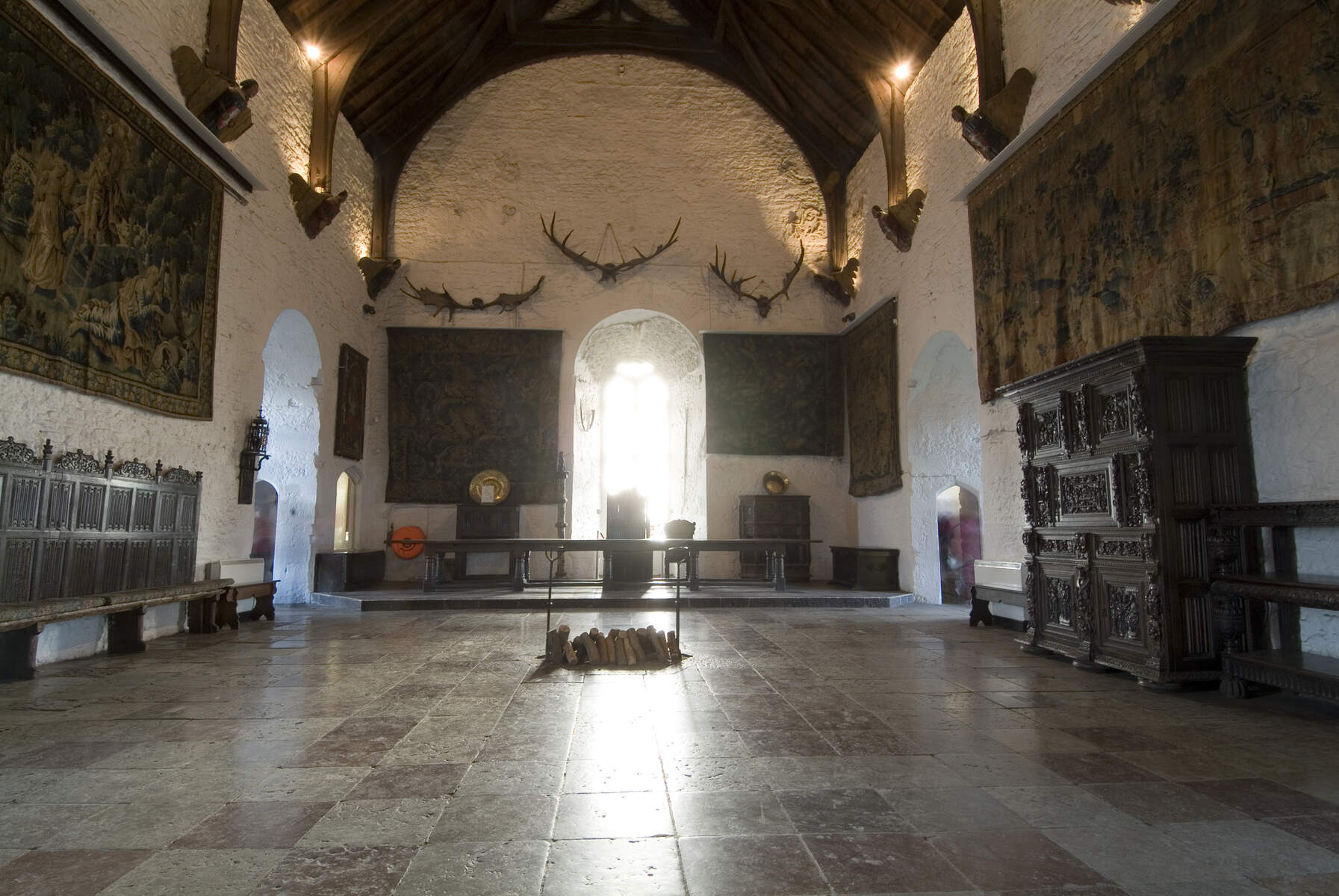
14th or 15th century fort tower, Castlecoote, County Roscommon, August 2025. Photograph © Jennifer Winder-Baggot, www.irishhistorichouses.com
Skeletal remains were found under the tree that fell in the recent storm, and have been sent off for analysis and dating.
Castlecoote, County Roscommon, August 2025. Photograph © Jennifer Winder-Baggot, www.irishhistorichouses.com
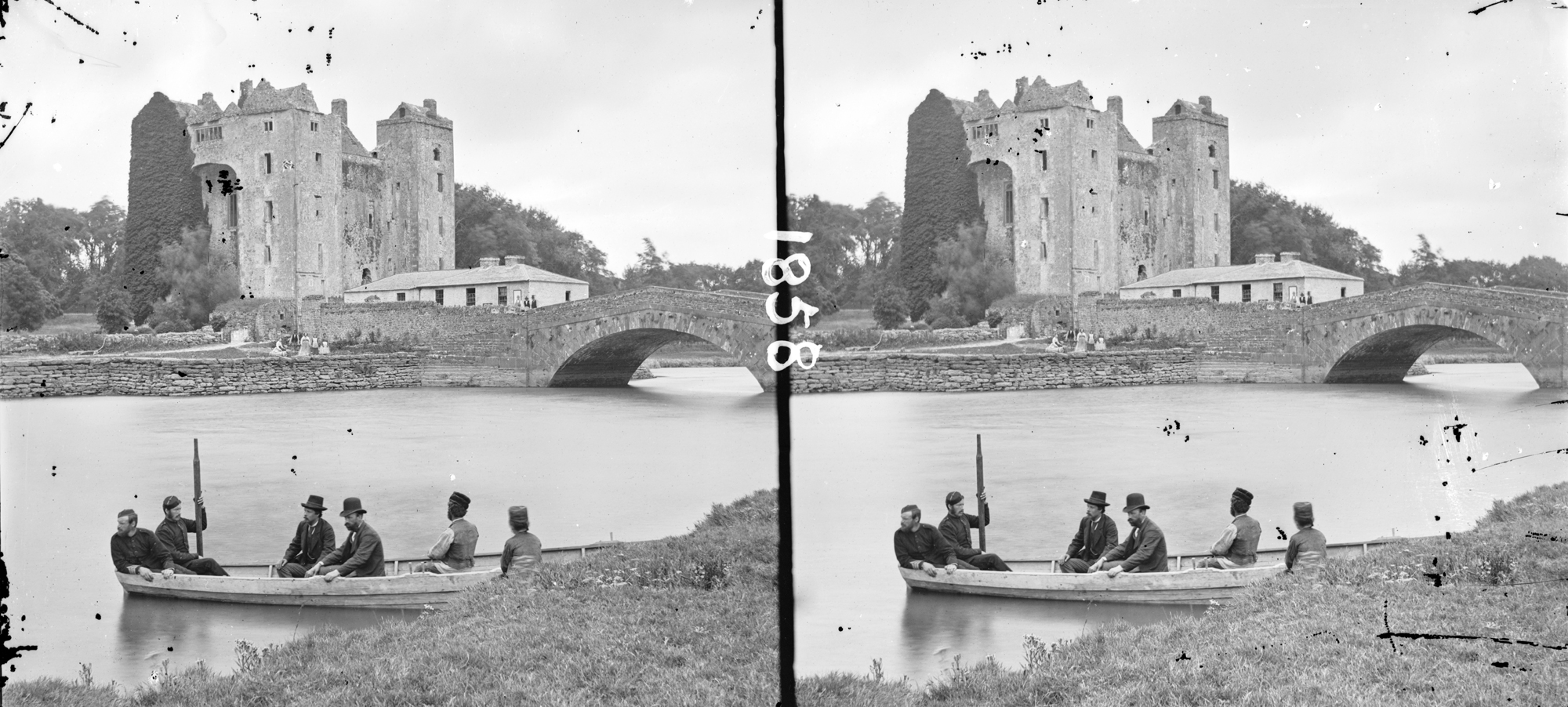
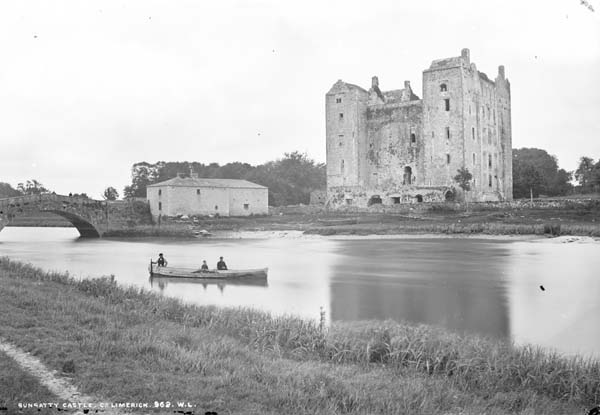
The remains of one tower of the original castle fort at Castlecoote, County Roscommon, August 2025. Photograph © Jennifer Winder-Baggot, www.irishhistorichouses.com
Castlecoote, County Roscommon, August 2025. Photograph © Jennifer Winder-Baggot, www.irishhistorichouses.com

Charles Coote (1581-1642), a British soldier who came to Ireland to fight in the Nine Years War, when the Irish tried to take Ireland back from British control, took Castlecoote as his base in 1616, and renamed the castle fort Castlecoote. He enlarged and fortified the castle. Kevin showed us a picture of the old house and the bridge. The house seems to have had more upper floors than today.

An early picture of Castlecoote.

Charles Coote fought in the Siege of Kinsale in 1601-2, a battle which ultimately led to rebel Hugh O’Neill’s defeat and the end of the Nine Years’ War. In 1605 Coote was appointed Provost-Marshal of Connaught and in 1613, General Collector and Receiver of the King’s composition money for Connaught.

Sir Charles Coote (1581-1642) 1st Baronet of Castle Cuffe, Queens County, photograph By David Keddie – Own work, Public Domain, https//:commons.wikimedia.org/w/index.php?curid=42005305.jpg
Hugh O’Neill (c. 1540-1616) 2nd Earl of Tyrone, courtesy of National Museums Northern Ireland. In Irish Portraits 1660-1860 by Anne Crookshank and the Knight of Glin, we are told that this was painted during his exile in Rome.

Charles Coote married Dorothea Cuffe in 1617, and in 1620 became Vice President of Connaught. Dorothea brought with her to the marriage land in Counties Cork and Laois. In 1621 Coote was created Baronet of Castle Cuffe in Queen’s County (Laois).

As commissioner to examine and contest Irish land titles, Coote acquired much property. He served as MP for Queens County in 1640.

In 1641, Coote was appointed governor of Dublin and told to raise a regiment to fight against the Catholic uprising. He helped to beat the Irish Confederates in the Battle of Kilrush but was killed by the opposition in 1642.

Castlecoote, County Roscommon, August 2025. Photograph © Jennifer Winder-Baggot, www.irishhistorichouses.com

The castle was attacked by 1200 men during the 1641 rebellion. Coote’s son Charles (c.1609–1661) held the castle successfully, withstanding a siege of around ten days of attack.

The bridge was destroyed by the attack and was replaced only relatively recently by the current owner, who took great care to have the most suitable bridge designed and built – one with a curved arch that shows the house at its best, much like the original. Kevin told us that the arches from the original bridge were reused to make a new bridge further down the River Suck.

Castlecoote, County Roscommon, August 2025. Photograph © Jennifer Winder-Baggot, www.irishhistorichouses.com
A photograph of the bridge further up the fiver, and one of the apple harvest at Castlecoote below.

The Dictionary of Irish Biography gives an intriguing hint when it tells us that the son Charles Coote was elected to the Irish parliament for Co. Leitrim in 1640 and “appointed in the same year to a commission to examine those accused of bewitching Katherine, sometime duchess of Buckingham, latterly wife of the earl of Antrim.”

We came across Katherine née Manners who became the Duchess of Buckingham before, when we visited Glenarm, as she married Randal MacDonnell 2nd Earl and 1st Marquess of Antrim. They moved to Ireland after their marriage to live in Dunluce Castle in County Antrim (see my entries https://irishhistorichouses.com/2024/07/04/dunluce-castle-ruin-county-antrim-northern-ireland/ and https://irishhistorichouses.com/2024/07/11/glenarm-castle-county-antrim-northern-ireland-private-can-book-a-tour/ ).

She was the widow of George Villiers, Duke of Buckingham, favourite of King James I. George Villiers and his mother were recently depicted in a tv series “Mary and George,” based on Benjamin Wooley’s book The King’s Assasin.

Katherine was heiress to her mother’s fortune and to extensive unentailed portions of the Manners estates in Northamptonshire and Yorkshire, together with estates in Buckinghamshire and Leicestershire. She renounced her Catholicism to marry George Villiers.

Dunluce, County Antrim, June 2023. Katherine née Manners was painted by Rubens.

Her so-called bewitching occurred before her marriage to George Villiers. The story of the bewitching takes place in 1613 when Katherine and several of her relatives fell ill at their home in Belvoir Castle, and her brother Henry died. It was said that the family were poisoned by some witches. The women accused of witchcraft were from a family who had fallen on hard times, who took work in the castle. They were dismissed, and it was said that in revenge, they poisoned the family. The former servants, Joan, Margaret and Philippa Flower, were known to be herbal healers. They were accused of having used witchcraft to to attack the family, and they became known as “the Belvoir Witches.”

Joan died on route to trial in Lincoln when she choked on a piece of bread: she allegedly requested the bread, saying that if she was guilty it would choke her. If bread blessed by a priest stuck in the woman’s throat, then her crime was an affront to God himself. Her death was taken as evidence of the crime and further incriminated the daughters, who confessed, probably under torture. These ‘witches’ were executed on 11 March 1618. [3]

In 2013, historian Tracy Borman suggested in Witches: A Tale of Sorcery, Scandal and Seduction (Cape, 2013) that the Flower women may have been framed by George Villiers, who may have poisoned Katherine’s brothers in order to inherit the title Duke of Rutland after he married Katherine, sole surviving heir.

George Villiers Duke of Buckingham was assassinated in 1628 and his wife Katherine and her sons inherited an enormous fortune as well as Buckingham’s London mansions – Wallingford House, Walsingham House, and York House – together with nineteen more modest properties on the Strand, a mansion in Chelsea, and another, New Hall, north of Chelmsford in Essex. She was therefore quite a catch for Randal McDonnell.

Randal MacDonnell 2nd Earl and 1st Marquess of Antrim.

After Buckingham’s death she reverted to Catholicism.

Let’s return to Castlecoote. In 1645 Charles Coote (c.1610 –1661) the son was made Lord President of Connaught.

Coote fought on the Cromwellian side in the Civil War but managed to win King Charles II’s favour after the restoration of the monarchy, and was created earl in 1661. After becoming earl, he was made one of the lord justices of Ireland.

Charles Coote 1st Earl of Mountrath (c.1610 –1661), 2nd Baronet, ca. 1642, before he was ennobled, Circle of William Dobson.

Charles chose Mountrath for his earldom because his father had led a very successful advance through the district of Mountrath during the 1641 uprising, riding over forty eight hours on horseback without losing a single man. (see the Dictionary of National Biography)

Charles’s brother Chidley Coote (d. 1668) lived at Mount Coote in County Limerick, later Ash Hill, which was a Section 482 property until 2025 and provides beautiful accommodation (see my entry https://irishhistorichouses.com/2023/04/06/ash-hill-kilmallock-co-limerick/. ) Another brother Thomas (d. 1671) lived in Cootehill, County Cavan, and Richard Coote (1620-1683) 1st Baron Coote of Coloony, County Sligo, married Mary St. George and had a son Richard (1636-1700) who became 1st Earl of Bellamont, or he of the splendid pink robe and feathers as I like to think of him.

Charles Coote, 1st Earl of Bellamont by Joshua Reynolds, courtesy of National Gallery of Ireland NGI 216.
Ballyfin, County Laois: The staircase hall of Ballyfin, where hang portraits of many Cootes. The house came into the Coote family in 1813. Country Life 31/08/2011  vol. CCV. Photograph by Paul Barker.

The Historic Houses of Ireland website tells us that the fortified house was remodelled in the Palladian style in the eighteenth century to create the house as we see it today. [2] The National Inventory tells us that this work was carried out around 1770. The house is a three-bay two-storey house over raised basement, with single-bay flanking projecting wings from the fortified house of c.1630. It has full-height bows to the south and west elevations.

Castlecoote, County Roscommon, August 2025. Photograph © Jennifer Winder-Baggot, www.irishhistorichouses.com
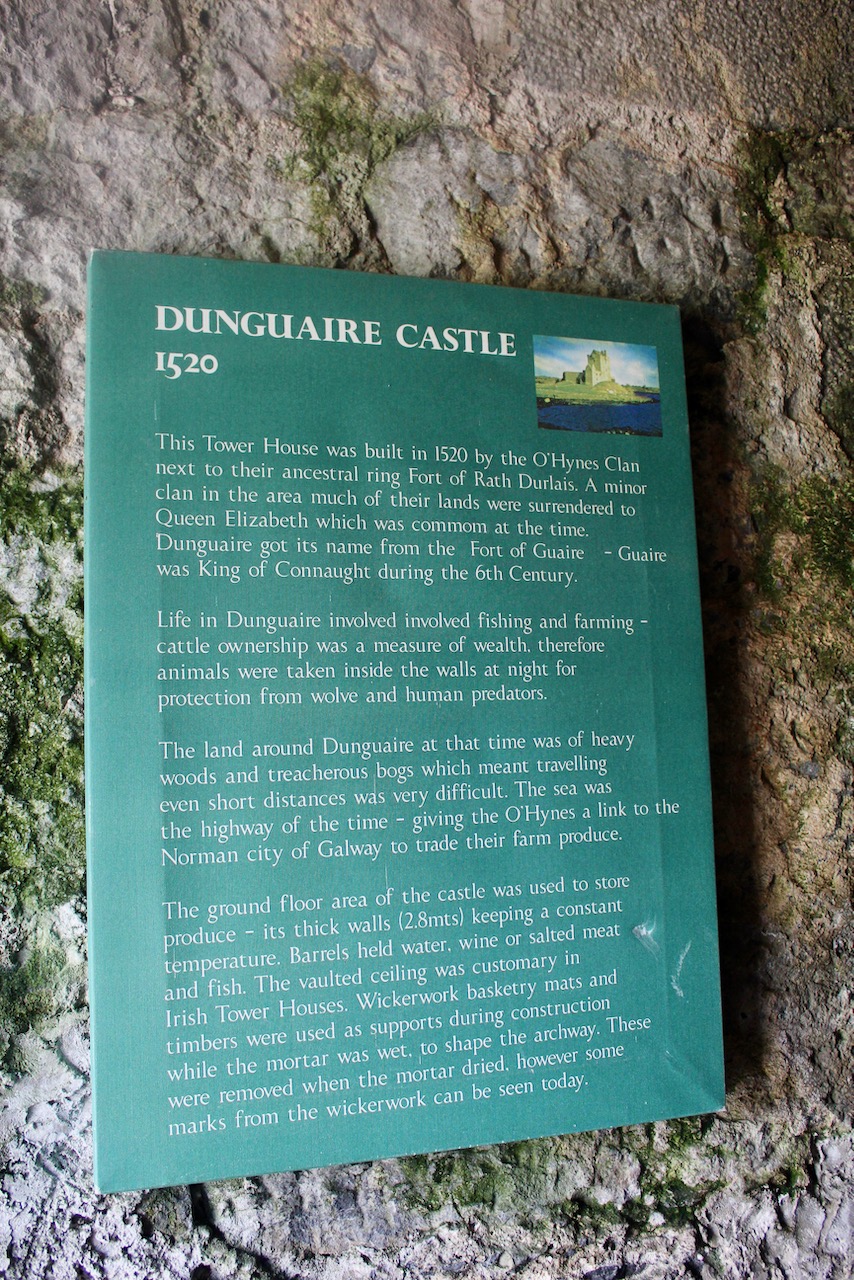
Rear facade of the house with the full height bow. Castlecoote, County Roscommon, August 2025. Photograph © Jennifer Winder-Baggot, www.irishhistorichouses.com
Castlecoote, County Roscommon, August 2025. Photograph © Jennifer Winder-Baggot, www.irishhistorichouses.com
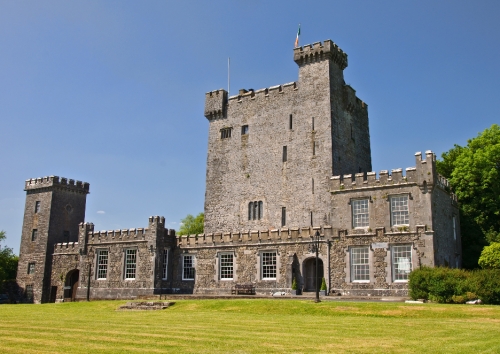
The round window from inside Castlecoote, County Roscommon, August 2025. Photograph © Jennifer Winder-Baggot, www.irishhistorichouses.com
The remains of the other two towers are in the back garden. Castlecoote, County Roscommon, August 2025. Photograph © Jennifer Winder-Baggot, www.irishhistorichouses.com

The next family to live in Castlecoote were the Gunning family. The Historic Houses of Ireland website tells us that the family are reputed to have won the estate through a game of cards. [2] Due to their beauty, John Gunning’s daughters Maria and Elizabeth were the toast of 1750s London.

Horace Walpole wrote: “There are two Irish girls, of no fortune, who make more noise than any of their predecessors since the days of Helen, and are declared the two handsomest women alive. I think there being two so handsome, and such perfect figures, is their chief excellence, for singly I have seen much handsomer women than either. However, they can’t walk in the park, or go to Vauxhall, but such mobs follow them that they themselves are driven away.”

Elizabeth Gunning was a famous Irish beauty who married the 6th Duke of Hamilton in 1752. She then married John Campbell, the future 5th Duke of Argyll. The portrait hangs in Malahide Castle and belongs to the National collection.

In an article in the Roscommon Champion newspaper on February 7th 1992, Angela Doyle writes that Bryan Gunning acquired land in Roscommon, including Castlecoote. Theobald Bourke, 6th Viscount Mayo, married Bryan Gunning’s daughter Margaret in 1731.

Bryan Gunning’s son John married Bridget Bourke, a daughter of the 6th Viscount of Mayo by his first wife, Mary Browne, a daughter of one of the drafters of the Treaty of Limerick (Colonel John Browne – d. 1712).

An extract from Notable Irishwomen tells us more about the Gunning family. It tells us that John Gunning, the second son, was a barrister of the Middle Temple in London. He settled at Hemingford Grey, in Huntingdonshire, and here his eldest daughter, Maria, afterwards Countess of Coventry, was born in 1733. Elizabeth, afterwards Duchess of Hamilton, followed the year afterwards, and there were three more daughters, two of whom died young, and then came a son, who subsequently entered the army, fought at Bunker’s Hill (during the American War of Independence), and attained the rank of General. [4]

In 1740, by the death of his elder brother, Mr. Gunning succeeded to the property of Castle Coote. The little family now migrated from Hemingford Grey to Roscommon, a formidable journey in those days of stage coaches and sailing boats. Money was not plentiful at Castle Coote, and no wonder, with such numerous charges as there must have been on it. Mrs. Gunning was a clever, ambitious woman, and as she looked at the wonderful beauty of her daughters, fast growing to maturity, she thought that the girls must be taken out into the world to make their mark there. It would never do for them to be thrown away on country squires or struggling attorneys. So she brought them to Dublin, and took a house in Great Britain Street, at that time quite a fashionable locality, within easy reach of Dominick Street, then the head-quarters of high life. But debts soon accumulated. ..

It was said that Peg Woffington lent the Gunnings dresses from her theatrical wardrobe, in which they appeared at Dublin Castle. Whether this be true or not, it is certain that they were presented to the Lord Lieutenant at a birthright ball, and they made such a sensation there that Lord Harrington, then Viceroy, advised their mother to take them to London. This she was only too eager to do. By hook or by crook she got the money together… The year they went to London, the two girls had their portraits painted by Francis Cotes, R.A. They are represented in low-cut, long-waisted, grey satin gowns, with rows of pink rosettes down each side of the bodice, black hair curled at the back and fastened with a string of pearls. A small black patch, is, according to the fashion of the day, on one cheek.” [4]

Maria Gunning, Countess of Coventry (1733-1760) by Francis Cotes, circa 1751. Picture courtesy of National Gallery of Ireland.
Elizabeth Gunning by Francis Cotes, pastel on blue paper laid down on canvas, courtesy of National Portrait Gallery London, NPG 4890.

They were presented to the King (George II.) one Sunday afternoon, and another Sunday in the Park, such crowds assembled to gaze on them that Lord Clermont with some other gentlemen, had to draw their swords to protect them from the mob…” [4]

A Royal Trust Collection picture of Elizabeth tells us:

Elizabeth Gunning was the second daughter of Col. John Gunning of Castle Coote, County Roscommon, Ireland and his wife, the Hon. Bridget Bourke, daughter of the 6th Viscount Mayo. Born in Hemingford Grey, Huntingdonshire, she was taken to Ireland at the age of three and lived there until 1750 when, with her elder sister Maria, she was brought back to England and presented in London society. Thanks to their beauty and unsophisticated charm the Gunning sisters ‘became the rage and the subject of conversation at every fashionable rout’. Elizabeth became the wife of James, 6th Duke of Hamilton in an extraordinary ceremony, performed with the ring of a bed-curtain at half past midnight on St. Valentine’s Day 1752 after a party at Bedford House at which the Duke had lost £1200 at cards. The Duke of Hamilton, by whom she had three children, died on 17 January 1758 and early in the following year she married John Campbell, Marquis of Lorne, who in 1771 succeeded as 5th Duke of Argyll. She was created Baroness Hamilton of Hambledon in her own right in 1776.   Lady of the Bedchamber to Queen Charlotte from 1761 to 1784, she was appointed Mistress of the Robes in 1778 and died on 20 December 1790. She was one of the most portrayed women in Britain during the period 1750-70.

Elizabeth, Duchess of Argyll and Hamilton by Catherine Read (1723-78). Royal Trust Collection. Even this super-frilly beribboned decking cannot hide her beauty.
A copy of the portrait of Elizabeth Gunning by Joshua Reynolds hangs in Castlecoote. Elizabeth Gunning (Duchess of Hamilton and afterwards Duchess of Argyll), 1734‑1790.
A portrait of Elizabeth, Duchess of Hamilton and Argyle, painted by Gavin Hamilton.
This is my favourite portrait of a Gunning sister: Maria, as painted by Jean-Etienne Liotard.

Elizabeth held the office of Lady of the Bedchamber to Queen Consort Charlotte, wife of King George III, between 1761 and 1784.

Queen Charlotte, wife of King George III. This photograph was taken in Castletown House, County Kildare.

Maria, who married the Earl of Coventry, died aged 27, Robert O’Byrne tells us she most likely died from lead poisoning due to efforts to maintain her pale skin.

Castlecoote changed hands several times until its current owner. When Tony’s father Pat took over the property in the 1930s and farmed the land, he made sure that the house would have a future. However, a fire occurred soon after it was sold by the Convoys in 1989.

Article in the Roscommon Champion, February 7th 1992 by Angela Doyle.

Angela Doyle writes that the brother of the Gunning sisters, Colonel John, married and had a daughter Elizabeth who inherited the Coote good looks. When she forged a letter from a potential suitor, saying that he had changed his mind, her father was outraged and cast out his wife and daughter. He took a mistress and moved to Naples, where he died. His wife Susannah Gunning née Minifie inherited the heavily mortgaged estate at Castlecoote. She was a novelist who wrote romantic and Gothic tales. Her daughter Elizabeth, also a novelist, married Major James Plunkett of Kinnaird, County Roscommon. The literary historian Isobel Grundy tells us in the Oxford Dictionary of National Biography: “Elizabeth Gunning’s early novels are, like her mother’s, sentimental, with heavy-footed humour, trite moralizing, a self-consciously elaborate style, and intense class-consciousness. Each woman wrote more interestingly, with more criticism of society, later in life.” The estate passed out of Coote ownership.

In 1997, when bought by the present owner Kevin Finnerty, the Historic Houses of Ireland website tells us, Castlecoote was a cavernous ruin, without floors, stairs or windows, while the internal walls were crumbling away. The basement was enveloped by earth, the front doorsteps had collapsed, and the surroundings were badly overgrown.

The current owner reinstated the front steps. Castlecoote, County Roscommon, August 2025. Photograph © Jennifer Winder-Baggot, www.irishhistorichouses.com
In Kevin’s office in the basement there is a display of photographs of the house as it uderwent repairs.
In Kevin’s office in the basement there is a display of photographs of the house as it uderwent repairs
Castlecoote, County Roscommon. Photograph © Jennifer Winder-Baggot, www.irishhistorichouses.com
A date stone bears the inscription CBC 1791.
An aerial view of Castlecoote, a photograph in the house.

The Historic Houses of Ireland entry tells us that Kevin began a lengthy period of restoration, which took five years to complete. Work included essential repairs to the structure, underpinning the foundations, consolidating the castle towers, re-roofing and more intricate work such as restoring the plaster ceilings, replacing the chimneypieces, the internal doors and other joinery, and completely redecorating the interior.

The result is beautiful. Kevin gave us a tour inside. Although the historic houses website mentions five years, Kevin says it took twelve years to make the house habitable.

Castlecoote, County Roscommon, August 2025. Photograph © Jennifer Winder-Baggot, www.irishhistorichouses.com

Part of the castle has been let to tenants, so Kevin took us first to the basement to show us the renovations, including lime render on the walls and underfloor heating. There had been no stairs down to the basement and the ones installed are much as the original would have been, of limestone.

The newly made limestone staircase to the basement.
Castlecoote, County Roscommon, August 2025. Photograph © Jennifer Winder-Baggot, www.irishhistorichouses.com

The fireplaces had to have sixteen new chimneypieces installed as the originals had disappeared while the castle was an empty ruin after the fire. Kevin pointed out that the older the chimneypiece, the narrower the mantle shelf. It was the Victorians, I believe, who instigated wide mantlepieces in order to display pieces. Before, the mantle was used to rest a mirror, which was often tilted upward to reflect light and often, a beautiful ceiling.

Castlecoote, County Roscommon, August 2025. Photograph © Jennifer Winder-Baggot, www.irishhistorichouses.com
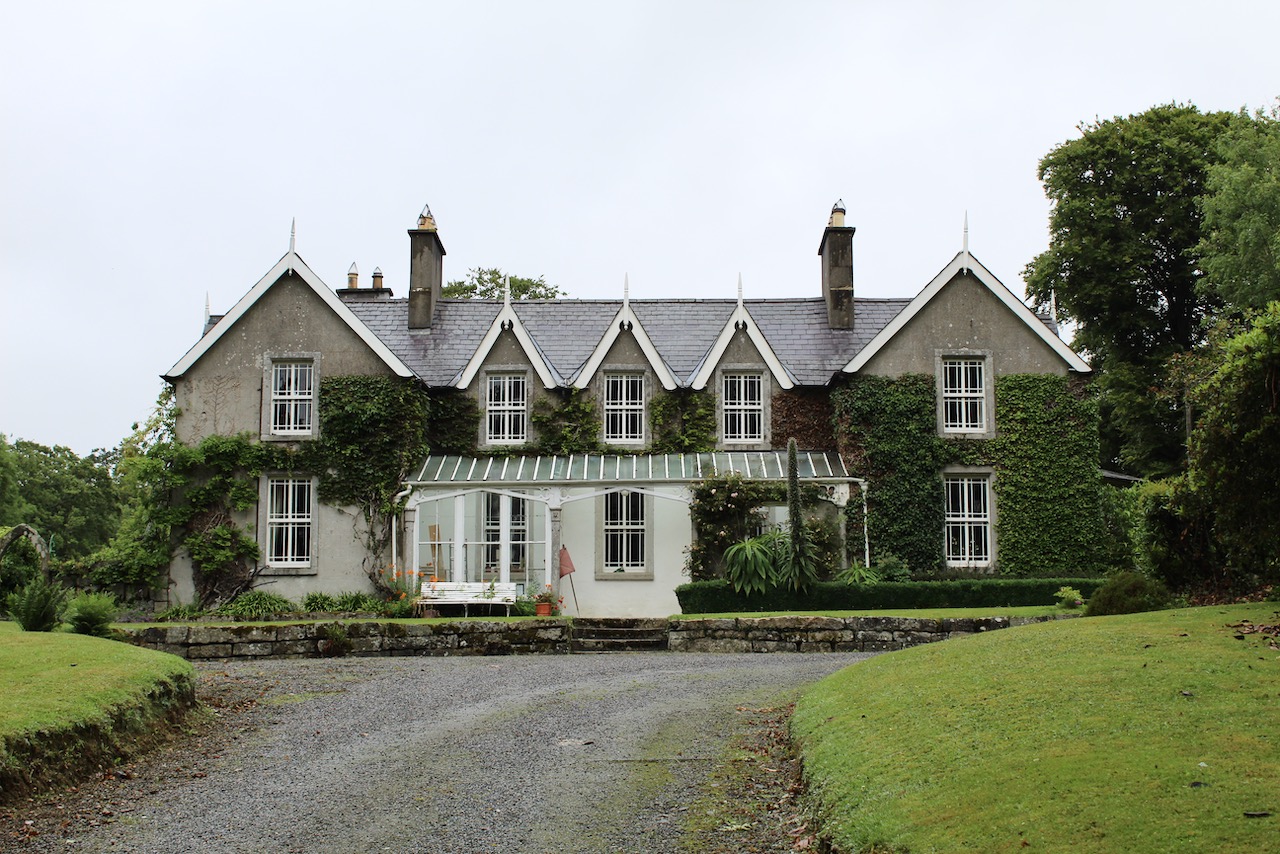
This is an old part of the castle, as you can see from the depth of the walls in the window embrasure.
The window mullions in the basement are original.

Kevin has done the Cootes and the Gunnings and all the former occupants of the house proud, by reinstating its formal splendour in the ceiling plasterwork. With careful attention to detail, he made sure that the windows have the narrow glazing bars of the Georgian period.

Castlecoote, County Roscommon, August 2025. Photograph © Jennifer Winder-Baggot, www.irishhistorichouses.com
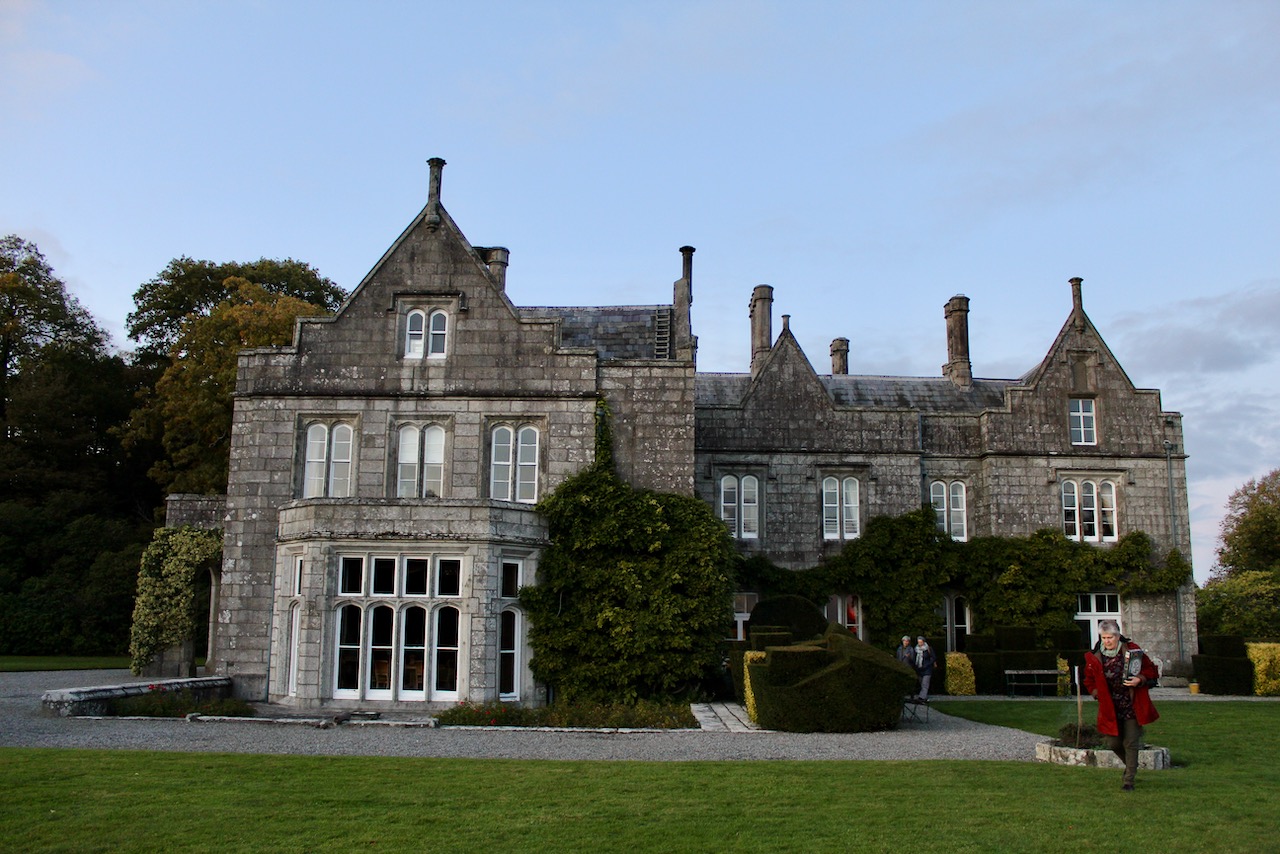
Ground floor ceiling plan of Castlecoote.
There is. a dumbwaiter near the corner, that goes down to the kitchen and up to the dining room. Castlecoote, County Roscommon, August 2025. Photograph © Jennifer Winder-Baggot, www.irishhistorichouses.com
Castlecoote, County Roscommon, August 2025. Photograph © Jennifer Winder-Baggot, www.irishhistorichouses.com
The widowframes are splayed to let in more light. Castlecoote, County Roscommon, August 2025. Photograph © Jennifer Winder-Baggot, www.irishhistorichouses.com
Castlecoote, County Roscommon, August 2025. Photograph © Jennifer Winder-Baggot, www.irishhistorichouses.com
Portrait of Maria Gunning, and the Francis Cotes portrait of Elizabeth by the window. Castlecoote, County Roscommon, August 2025. Photograph © Jennifer Winder-Baggot, www.irishhistorichouses.com

The bookcases in the library have carving to reflect the wall frieze.

Castlecoote, County Roscommon, August 2025. Photograph © Jennifer Winder-Baggot, www.irishhistorichouses.com

We ended the tour in the grand hall that houses the annual Percy French Summer School. I see that it features very interesting speakers – we must keep a watch for next year’s summer school! The Percy French Summer School began in the 1950s, I believe, and Kevin’s father was one of the founding members. It moved to Castlecoote house in 2009.

Castlecoote, County Roscommon, August 2025. Photograph © Jennifer Winder-Baggot, www.irishhistorichouses.com

The tour included the grounds. In front of the house alongside the river is a millrace, as the family owned a mill on the river.

View of the River Suck from the bridge. Castlecoote, County Roscommon, August 2025. Photograph © Jennifer Winder-Baggot, www.irishhistorichouses.com
The Millrace wall, Castlecoote, County Roscommon, August 2025. Photograph © Jennifer Winder-Baggot, www.irishhistorichouses.com
At Castlecoote, County Roscommon, August 2025. Photograph © Jennifer Winder-Baggot, www.irishhistorichouses.com
An icehouse, Castlecoote, County Roscommon, August 2025. Photograph © Jennifer Winder-Baggot, www.irishhistorichouses.com

In the back garden is a wonderful apple orchard of heritage specimen trees. Kevin gave us a glass of delicious sweet apple juice.

The house is available for short and long term rent. For booking, see the house website https://www.castlecootehouse.com

The apple orchard.
The back garden, Castlecoote, County Roscommon, August 2025. Photograph © Jennifer Winder-Baggot, www.irishhistorichouses.com
The back garden, Castlecoote, County Roscommon, August 2025. We had a beautiful sunny day for our visit, during the 2025 heatwave! Photograph © Jennifer Winder-Baggot, www.irishhistorichouses.com
A well for the house.

[1] https://www.buildingsofireland.ie/buildings-search/building/31816001/castle-coote-house-castlecoote-castlecoote-co-roscommon

[2] http://www.ihh.ie/index.cfm/houses/house/name/Castlecoote%20House

[2] https://lincolnshirefolktalesproject.com/2024/02/21/the-witches-of-belvoir/

[4] From Notable Irishwomen: https://en.wikisource.org/wiki/Page:Notable_Irishwomen.djvu/26

Heritage Week 2025, our visits

I love Heritage Week, people are so generous with their time. I will be writing about it in the next couple of weeks but here is a quick preview of our week.

We visited Counties Roscommon and Sligo and stayed in the beautiful Andresna House B&B on the shore of Lake Arrow. https://www.andresnahouse.com

Andresna House was probably built as a fishing or hunting lodge, and I will be adding it to my “Places to visit and stay in County Sligo.” Owners Andy and Myriam were unable to determine its precise age, but a nearby house with the same design was built in 1795. I like that the owners run the B&B with an emphasis on organic produce and bed linen – it is a haven of beauty, fine taste and tranquility.

Andresna House on Lough Arrow, photograph courtesy of Andy of Andresna House.

Unfortunately we were only able to stay for one night as we had to get back to Dublin, but while in the area we visited Castlecoote in County Roscommon, Temple House in County Sligo and a property that is not on the Revenue Section 482 list but has been recently renovated and opened for B&B accommodation, Frybrook House in Boyle, County Roscommon https://frybrook.ie.

Castlecoote, County Roscommon, a Revenue Section 482 property. Photograph © Jennifer Winder-Baggot, www.irishhistorichouses.com
Frybrook, Boyle, County Roscommon, available for B&B accommodation. Photograph © Jennifer Winder-Baggot, www.irishhistorichouses.com

I was disappointed to learn that Temple House is no longer taking bookings for separate bedrooms for overnight guests, and is only available for group rental. I understand that it’s difficult to run a B&B (and they also served dinner) and I think Roderick and his family feel the need to step back from that end of hospitality. What a splendid house it is! The tour confirmed the Perceval links with Burton Park in County Cork, another Section 482 property https://irishhistorichouses.com/2024/02/08/burton-park-churchtown-mallow-county-cork-p51-vn8h/

Temple House, County Sligo. Photograph © Jennifer Winder-Baggot, www.irishhistorichouses.com

At Temple House I met a historian who had worked in the Jacobean Kiplin Hall in Yorkshire, built in the 1620s for George Calvert, founder of Maryland in the United States. I was thrilled when she told me she is familiar with my website. It was great to receive a vote of confidence. She shared with me photographs of a visit she had made earlier in the week to the beautiful Raford House in Galway, a member of Historic Houses of Ireland which is not normally open to the public. This year the Historic Houses of Ireland participated in the Open Doors initiative, giving visitors an opportunity to explore homes that are not normally open to the public. https://www.ihh.ie I learned of the initiative too late to make plans, unfortunately – I do hope they do it again next year! I would have loved to avail of the opportunity to visit Ballydarton in County Carlow, Lohort Castle and Laurentinum House in Cork, Richmond House in Fermoy, Roundwood and Ballykilcalvan in Laois, Castlegarde in Limerick and Castlecor in Longford.

On Tuesday Stephen and I returned to Birr Castle for another tour – it’s so rich with living history, antiques, portraits, Gothic vaulting, brocades, enormous pelmets, crests and tapestries, I would need hours to take in its splendour and stories.

Stephen strides out at Birr Castle, County Offaly. Photograph © Jennifer Winder-Baggot, www.irishhistorichouses.com

We had a little wander on the grounds to the formal gardens but didn’t have long until our tour at Bellefield House and Gardens nearby. Architect and landscape architect Angela Jupe left her beloved house, renovated outbuildings and nearly two acre walled gardens to the Royal Horticultural Society of Ireland, and the head gardener led tours during Heritage Week. The gardens are often open to the public during the year – check their website for details https://rhsi.ie/rhsi-bellefield/. I was excited that we were allowed to see inside the house as well as the garden on this Heritage Week tour. I love Angela Jupe’s taste in decor and furnishing, and her fondness for architectural salvage. Note that the coach house, renovated by Angela, can be rented as accommodation too. The website tells us that it has an accessible downstairs double bedroom and shower room and an upstairs mezzanine room with a double bed. There’s a fully equipped kitchen and an open plan living room and stove with access directly out onto the lower walled garden. For enquiries for both events in the large open space or accommodation, check the website.

Bellefield House, County Offaly, gifted to the Royal Horticultural Society of Ireland by Angela Jupe. Photograph © Jennifer Winder-Baggot, www.irishhistorichouses.com

Angela previously owned Fancroft Mill in County Tipperary, another Section 482 property which I look forward to visiting.

We enjoyed the tour of the garden and learned that good garden hygeine should help to cure our apple trees of their black spot infection. For the third time that week we sampled apples – or in the case of Castlecoote, delicious sweet apple juice.

The wonderful garden house folly built with flair by Angela Jupe from architectural salvage. Photograph © Jennifer Winder-Baggot, www.irishhistorichouses.com
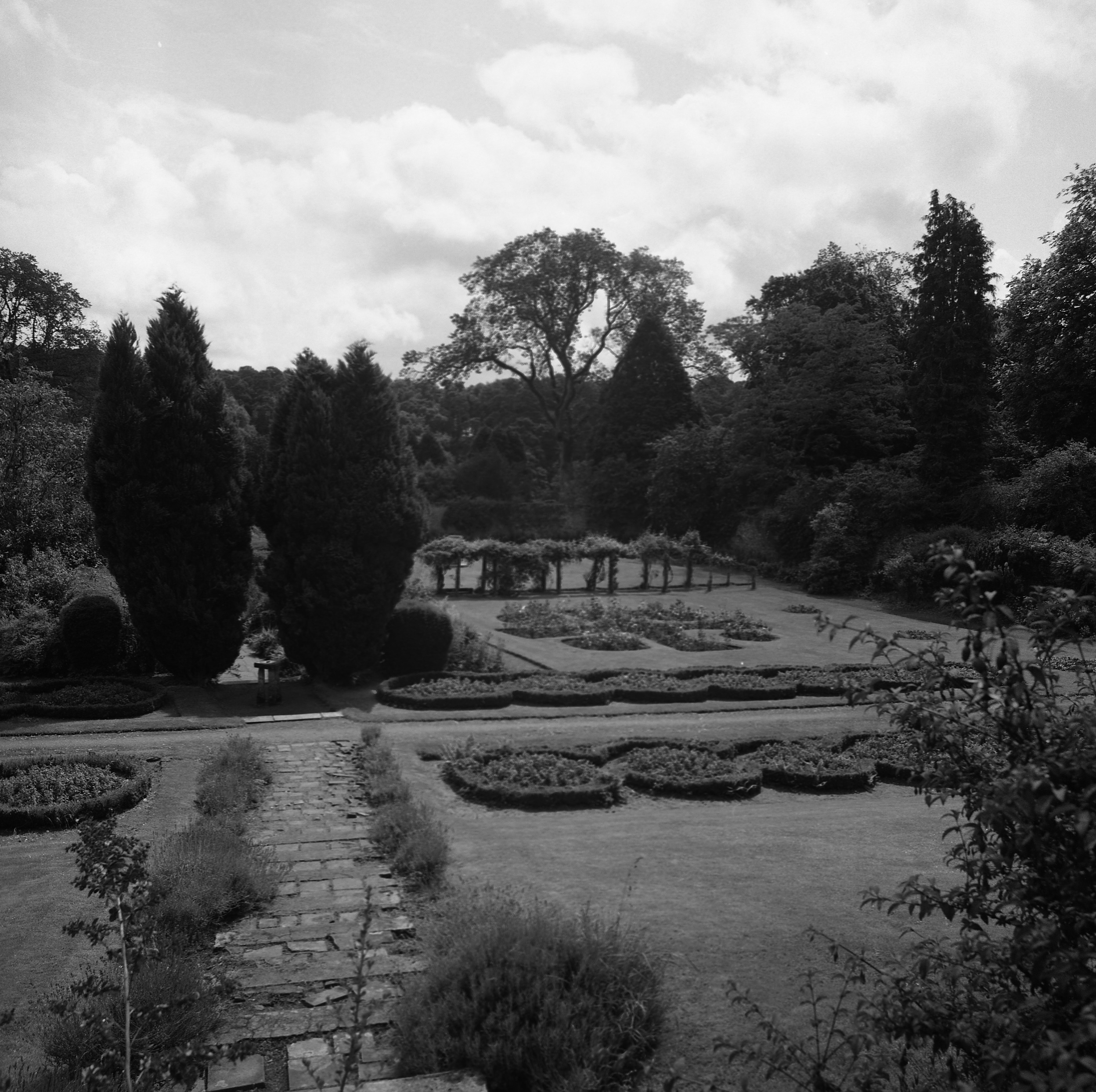
Bellefield garden by Angela Jupe. The greenhouse was made from salvage from the old Jervis Street hospital! Photograph © Jennifer Winder-Baggot, www.irishhistorichouses.com

Due to the heatwave we had to take a break from house visits in order to drive down to Wexford to water my vegetable garden. I was disappointed to realise that Ballyhack Castle, a tower house owned by the Office of Public Works but closed most of the time, was open for most of Heritage Week this year but closed on the days we were in Wexford!

My garden in Wexford. Photograph © Jennifer Winder-Baggot, www.irishhistorichouses.com

However, we returned to Dublin to visit Howth Castle on Friday. Historian Daniel Eglington-Carey, who currently lives in the castle and gives tours, explained how the forecourt displays the different dates when parts of the castle were built. The St. Lawrence family settled in the location nearly 800 years ago and only moved out recently. None of the original structure remains, but the gate tower dates from 1450. My friend Gary and I really enjoyed the tour, and look forward to returning as a longer tour brings visitors to the Lutyens garden behind the castle. https://howthcastle.ie I’ll be updating my page soon with more about our visit.

The Gate Tower at Howth Castle, built in 1450. The Gothic windows were inserted when they were removed from the front of the main house in order to install larger sash windows. Photograph © Jennifer Winder-Baggot, www.irishhistorichouses.com
Heritage Week 2025

donation

Help me to pay the entrance fee to one of the houses on this website. This site is created purely out of love for the subject and I receive no payment so any donation is appreciated!

€15.00

2025 Diary of Irish Historic Houses (section 482 properties)

To purchase an A5 size 2025 Diary of Historic Houses (opening times and days are not listed so the calendar is for use for recording appointments and not as a reference for opening times) send your postal address to jennifer.baggot@gmail.com along with €20 via this payment button. The calendar of 84 pages includes space for writing your appointments as well as photographs of the historic houses. The price includes postage within Ireland. Postage to U.S. is a further €10 for the A5 size calendar, so I would appreciate a donation toward the postage – you can click on the donation link.

€20.00

I am preparing for my busiest week of the year: Heritage Week! All of the section 482 houses are open for a visit (except those listed as Tourist Accommodation). See my home page for opening times: https://irishhistorichouses.com

This year we were lucky enough to secure a place on a tour of Temple House in County Sligo, which is normally not open as it is on the section 482 list as accommodation, but this year they are giving tours on Sunday 17th – you have to book in advance but maybe there are still places left.

Temple House, County Sligo. Photograph courtesy of Temple House and Historic Houses of Ireland.

I can’t wait to identify the people in the portraits! I do hope we have time to do so, as it’s only a 45 minute tour.

We are staying in what looks like a historic farm house, Andresna House, on the border of Roscommon and Sligo. I look forward to finding out more about its history. https://www.andresnahouse.com

We’ll also be visiting Castlecoote in County Roscommon. It was always booked for accommodation in previous years when I asked to visit so I am happy to have this opportunity.

Castlecoote, County Roscommon, photograph courtesy of National Inventory of Architectural Heritage.

We may get to Frybrook house in Boyle as well.

We’re mainly based in Dublin and Wexford this year since we can’t afford to stay away from home – and I need to water my veggies in Wexford at some point during this heatwave!

We’re off to Birr again, where we spent time last year during Heritage week to see Crotty Church. This time we have booked a tour of the Castle. While in the area, we will also visit Bellefield house and gardens.

I’m excited that we also managed to book a place on the tour of Howth Castle. I was in it once before, for the book sale when it was sold after over 800 years of ownership. We only saw the impressive front hall and library so I can’t wait to see some more, although unfortunately it will probably be empty since contents were also sold.

Howth Castle 1966, Dublin City Library and Archives.

I have also booked a tour of Rokeby in County Louth, which we visited years ago but I’d love to see again, to have our dose of Francis Johnston, also visiting Townley Hall.

Townley Hall, County Louth.

Let us know if you have Heritage Week plans – you can share in the Comments section.

In previous years, we have been very busy during Heritage Week, and we visited houses before I embarked upon this project. In 2019 I read an article in the Irish Times about the Section 482 scheme and I decided to visit them and to blog about it.

There are generally about 180 properties on the Revenue Section 482 list every year and the properties stay on the list for at least five years in order to obtain state aid by subtracting a percentage of maintenance costs from income tax.

See the entry that I wrote at the end of 2022 summarising our travels thus far, https://irishhistorichouses.com/2022/12/09/a-summary-of-2022-and-previous-years/

Heritage Week visits in previous years:

Old Glebe in Newcastle Lyons, County Dublin, during Heritage Week 2012:

“The Old Glebe,” Newcastle, County Dublin, Heritage Week, 17th August 2012. Photograph © Jennifer Winder-Baggot, www.irishhistorichouses.com
Primrose Hill, County Dublin, 17th August 2013:

Primrose Hill, Lucan, Dublin, which may have been designed by James Gandon, who designed the Custom House in Dublin. Photograph © Jennifer Winder-Baggot, www.irishhistorichouses.com
Huntington Castle, County Carlow, in August 2016:

Huntington Castle, Clonegal, County Carlow, August 2016home of the Esmondes and later, still related by marriage, the Durdin Robertsons. Photograph © Jennifer Winder-Baggot, www.irishhistorichouses.com
In 2019 we visited Swainstown House in County Meath, Marlay Park house in Rathfarnham (we’ll be visiting again next month when it is open during Dun Laoghaire/Rathdown Heritage), Beaulieu in County Louth, and Harristown House and Blackhall Castle in County Kildare. Not all are on the Section 482 property list.

Swainstown House, County Meath, 19th August 2019

Swainstown, County Meath, still home of the Preston family. Photograph © Jennifer Winder-Baggot, www.irishhistorichouses.com
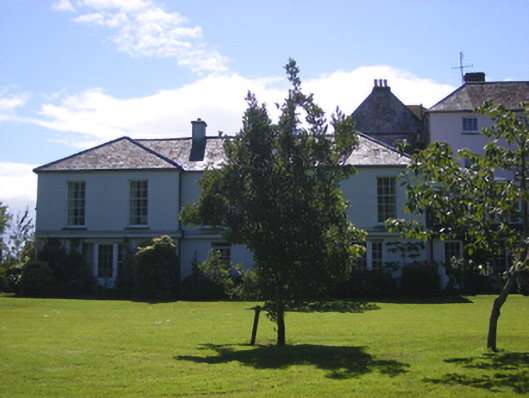
Harristown, County Kildare, 22nd August 2019

Harristown, County Kildare, 22 Aug 2019.. Photograph © Jennifer Winder-Baggot, www.irishhistorichouses.com

Blackhall Castle, County Kildare, 22nd August 2019

Blackhall Castle, County Kildare, a former Eustace (or Fitzeustace) home, 22 Aug 2019. Photograph © Jennifer Winder-Baggot, www.irishhistorichouses.com

In 2020 during Heritage Week we went to Counties Cork and Waterford:

Kilshannig House, Rathcormac, Co. Cork – 14th Aug 2020
Cappoquin House & Gardens, Co. Waterford – 15 Aug 2020
Dromana House, Cappoquin, Co. Waterford – 5th May 2019 and 15th Aug 2020
Drishane House, Castletownshend, Co. Cork – 20th Aug 2020

Kilshannig, County Cork, 14th August 2020

Kilshannig, County Corkwhich features stuccowork by Lafranchini brothers.Photograph © Jennifer Winder-Baggot, www.irishhistorichouses.com
Dromana House, Cappoquin, Co. Waterford – 15th Aug 2020

Dromana, County Waterford. Photograph © Jennifer Winder-Baggot, www.irishhistorichouses.com

Cappoquin, County Waterford, 15th August 2020

Cappoquin House, County Waterford, built for and still owned by the Keane family.Photograph © Jennifer Winder-Baggot, www.irishhistorichouses.com
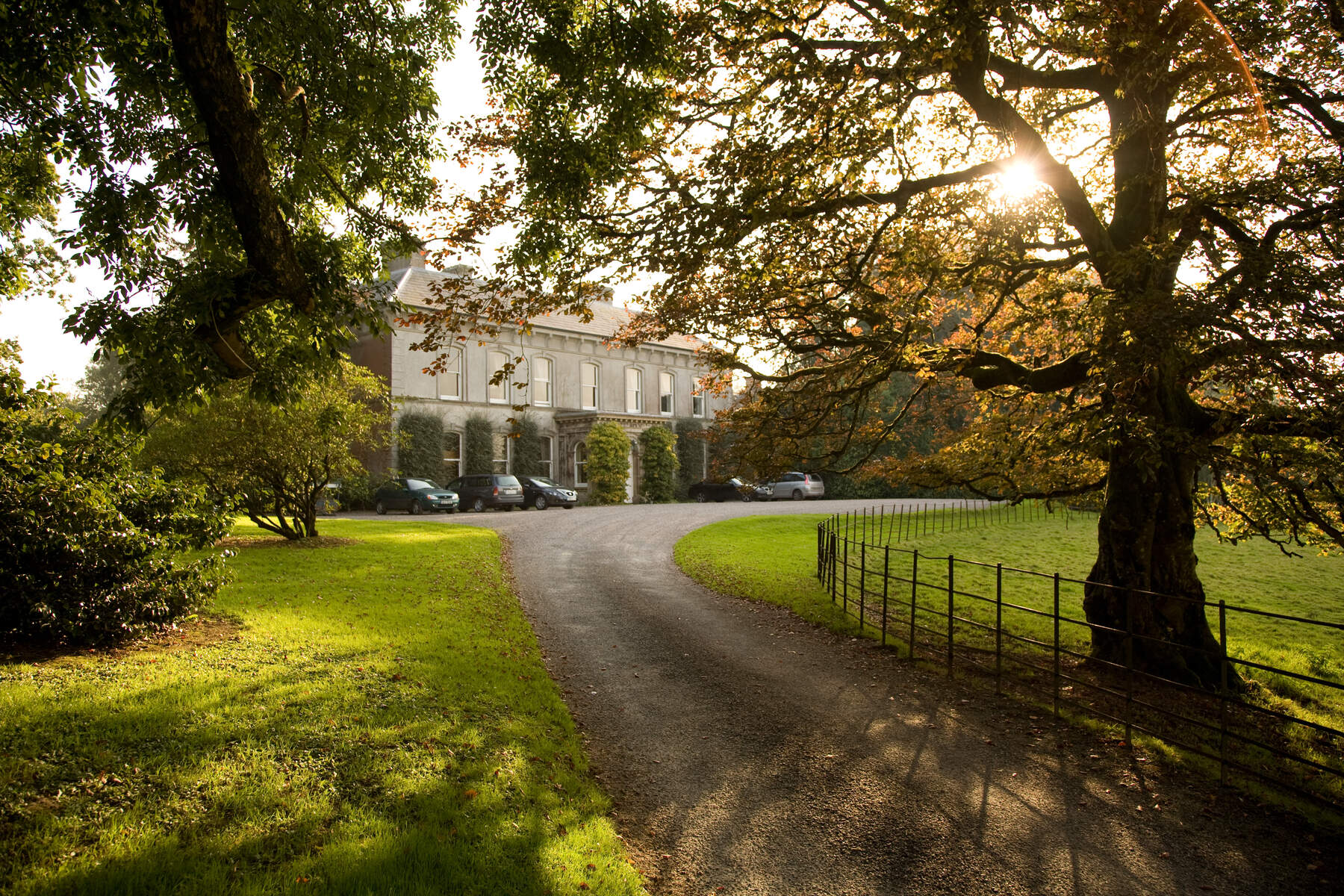
Drishane House, County Cork, 20th August 2020

Drishane House, County Cork, former home of Edith Somerville, who wrote novels with her cousin Violet Martin, as “Somerville and Ross” – the latter the name of Violet Martin’s childhood home. Photograph © Jennifer Winder-Baggot, www.irishhistorichouses.com

Baltimore Castle, County Cork, 20th August 2020

Baltimore Castle, County Cork – it wasn’t open when we visited but I took a photograph. We returned in 2023. Photograph © Jennifer Winder-Baggot, www.irishhistorichouses.com

In 2021 we headed to County Sligo and Mayo for Heritage Week then over to Counties Westmeath, Kilkenny and Carlow.

Markree Castle, Collooney, Co. Sligo – 16th Aug 2021
Newpark House and Demesne, Co. Sligo – 16th Aug 2021
Enniscoe House & Gardens, Ballina, Co. Mayo (accommodation) – 17th Aug 2021
Coopershill House, Riverstown, Co. Sligo (accommodation) – 18th Aug 2021
Tullynally Castle & Gardens, Co. Westmeath – 4th Aug 2019 and 21st Aug 2021
Kilfane Glen & Waterfall, Co. Kilkenny (garden) – 23rd Aug 2021
The Old Rectory Killedmond, Borris, Co. Carlow – 1st July 2020 and 23rd Aug 2021

Markree Castle, County Sligo, 16th August 2021

Markree Castle, County Sligo, originaly owned by the Cooper family, it is now a hotel.Photograph © Jennifer Winder-Baggot, www.irishhistorichouses.com

Newpark, County Sligo, 16th August 2021

Newpark, County Sligo, home to the Kitchen family, descended from the O’Haras who own Annaghmore house and Coopershill. Photograph © Jennifer Winder-Baggot, www.irishhistorichouses.com

Enniscoe, County Mayo, 17th August 2021

Enniscoe, County Mayo, still in the hands of the same family, descended from the Jacksons. Photograph © Jennifer Winder-Baggot, www.irishhistorichouses.com
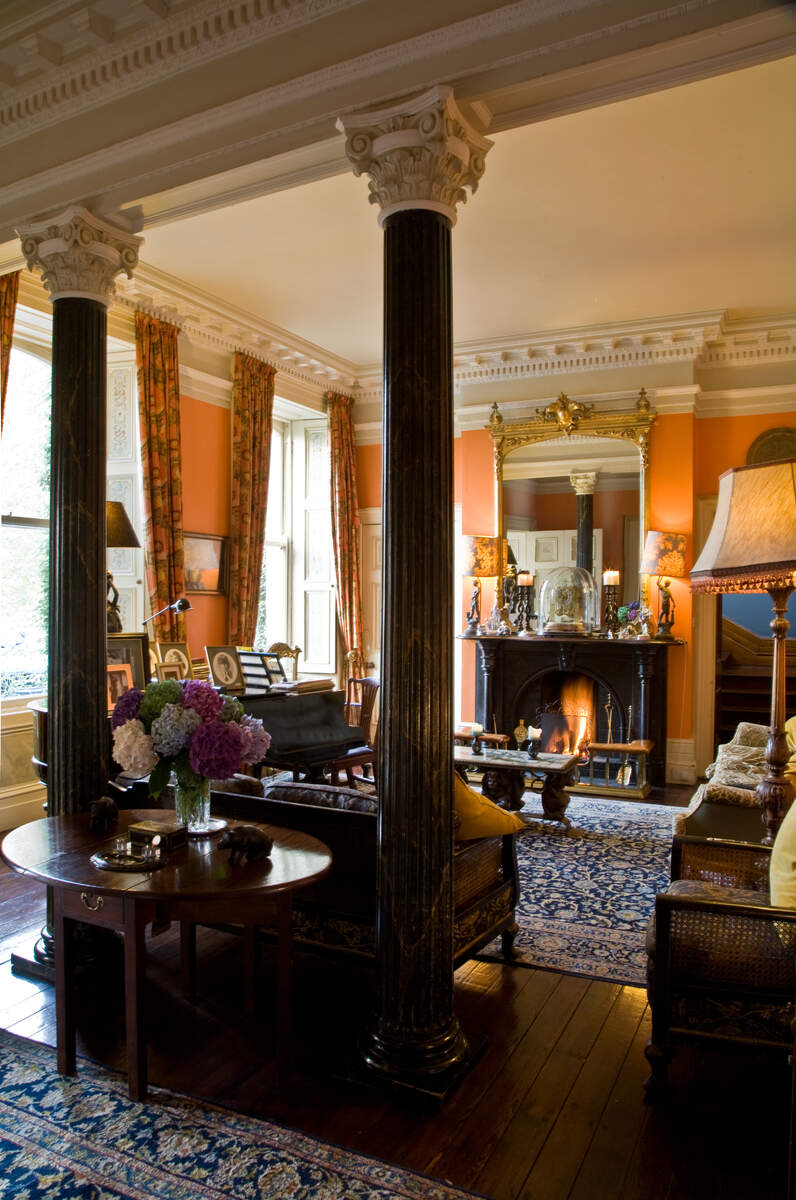
Coopershill, County Sligo, 18th August 2021

Coopershill, County Sligo, home to the O’Haras, descendants of the original Cooper family. Photograph © Jennifer Winder-Baggot, www.irishhistorichouses.com
Tullynally, County Westmeath. Photograph © Jennifer Winder-Baggot, http://www.irishhistorichouses.com.

The Old Rectory Killedmond, Borris, Co. Carlow – 1st July 2020 and 23rd Aug 2021, where we stayed in a shepherd’s hut.

Shepherd’s hut at the Old Rectory Killedmond, Borris, County Carlow.

Kilfane, County Kilkenny, 23rd August 2021

Kilfane, County Kilkenny – only the grounds are open, which are developed into a wonderful haven of the Picturesque, with thatched cottage and small waterfall. Photograph © Jennifer Winder-Baggot, www.irishhistorichouses.com
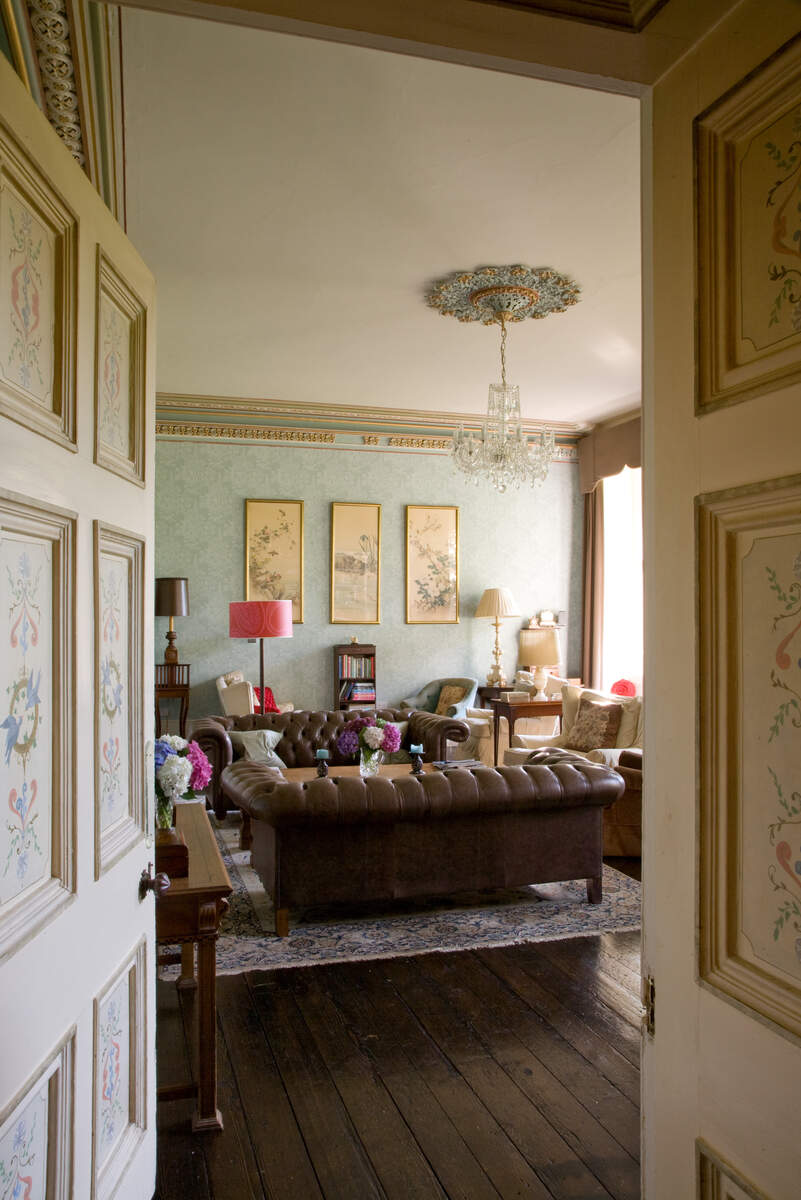
In 2022 during Heritage Week we travelled to Counties Limerick, Galway and on up to Roscommon, Sligo and Leitrim and home via County Monaghan! We treated ourselves to a stay in Ash Hill in County Limerick.

Ash Hill, Kilmallock, Co. Limerick (accommodation) – 12-15 Aug 2022
Beechwood House, Co. Tipperary – 13 Aug 2022
The Turret, Rylanes, Ballingarry, Co. Limerick – 13th Aug 2022
Glenville House, Glenville, Ardagh, Co. Limerick – 14th Aug 2022
Mount Trenchard House and Garden, Co. Limerick – 14th Aug 2022
Claregalway Castle, Claregalway, Co. Galway (accommodation) – 15th Aug 2022
Oranmore Castle, Oranmore, Co. Galway – 15th Aug 2022
Strokestown Park House, Co. Roscommon – 16 and 17th Aug 2022
King House, Boyle, Co. Roscommon – 18th Aug 2022
Lissadell House & Gardens, Co. Sligo – 19th Aug 2022
Manorhamilton Castle (Ruin), Co. Leitrim – 20th Aug 2022
Hilton Park House, Co. Monaghan (accommodation) – 21st Aug 2022

Ashill, County Limerick, where we treated ourselves to a stay. Photograph © Jennifer Winder-Baggot, www.irishhistorichouses.com
The Turret, County Limerick. Photograph © Jennifer Winder-Baggot, www.irishhistorichouses.com

Beechwood, County Tipperary, 13th August 2022

Beechwood, County Tipperary, August 2022 – I still have to write up about our visit to this lovely former Rectory. Photograph © Jennifer Winder-Baggot, www.irishhistorichouses.com
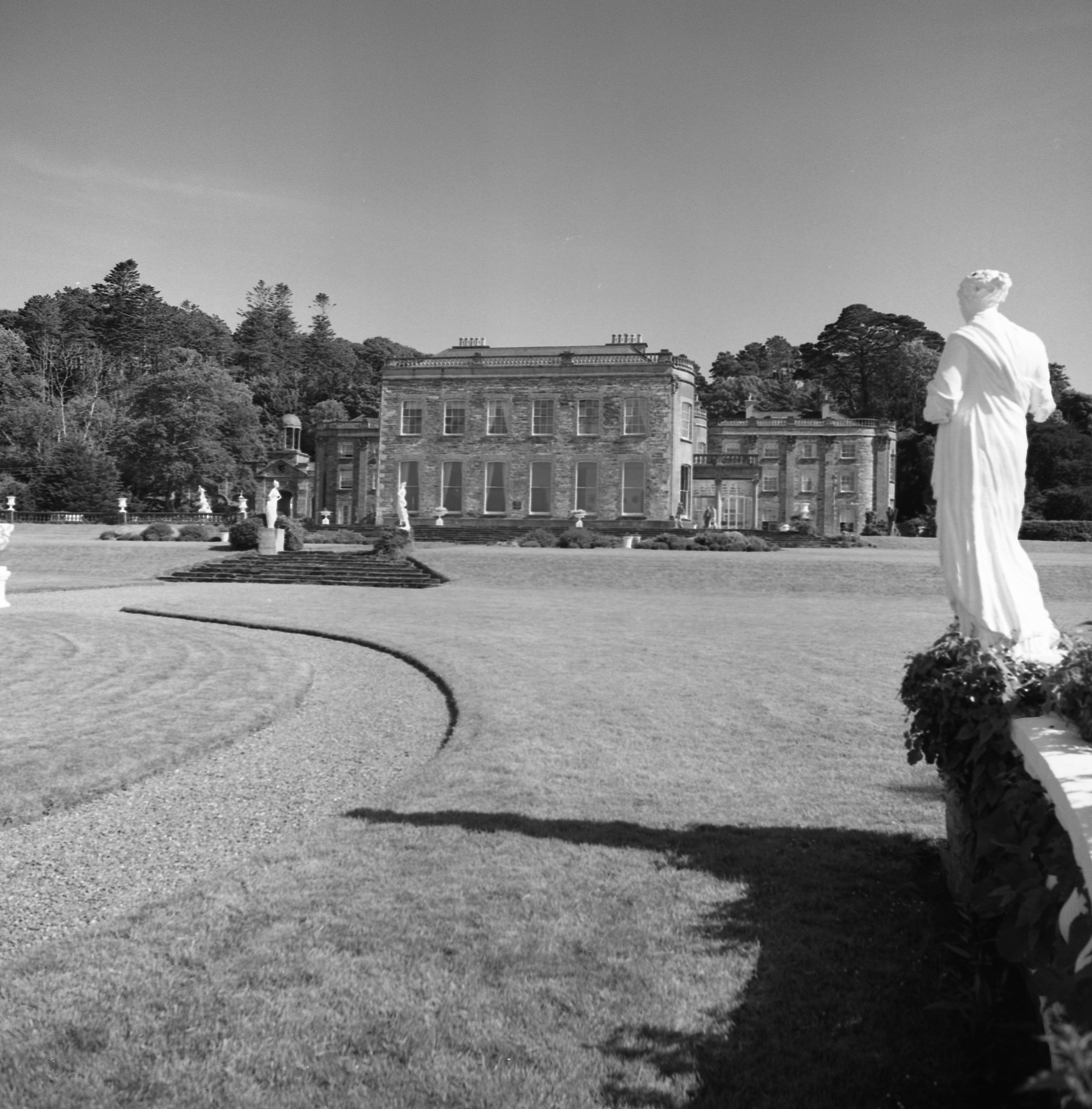
Glenview, County Limerick, 14th August 2022

Glenville, County Limerick, a former home of the Massey family, we enjoyed our visit with the current owners. Photograph © Jennifer Winder-Baggot, www.irishhistorichouses.com
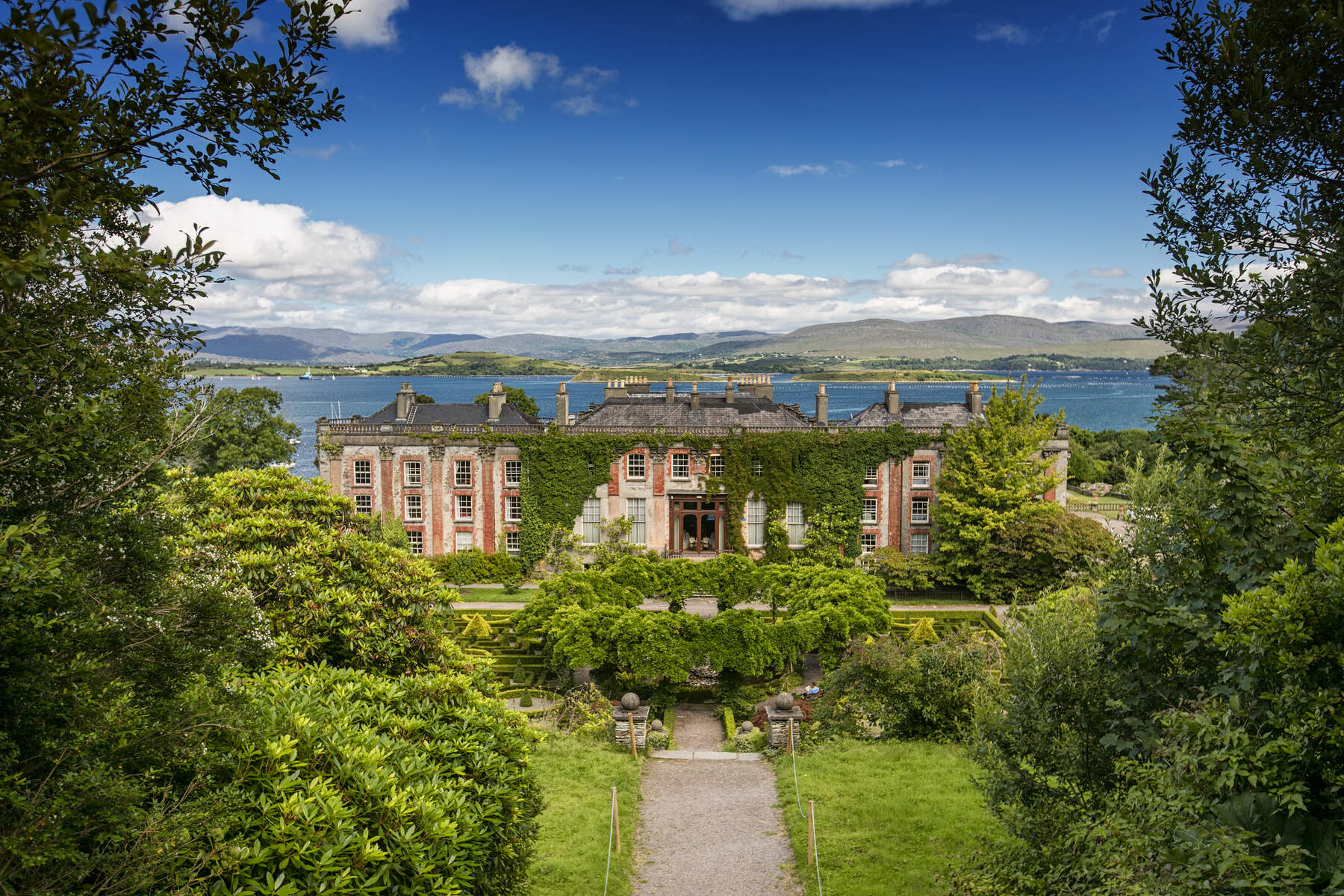
Mount Trenchard, County Limerick, 14th August 2022

Mount Trenchard, County Limerick, currently undergoing renovation. We were given a wonderful tour of the house and its grounds, including the walled garden. Photograph © Jennifer Winder-Baggot, www.irishhistorichouses.com
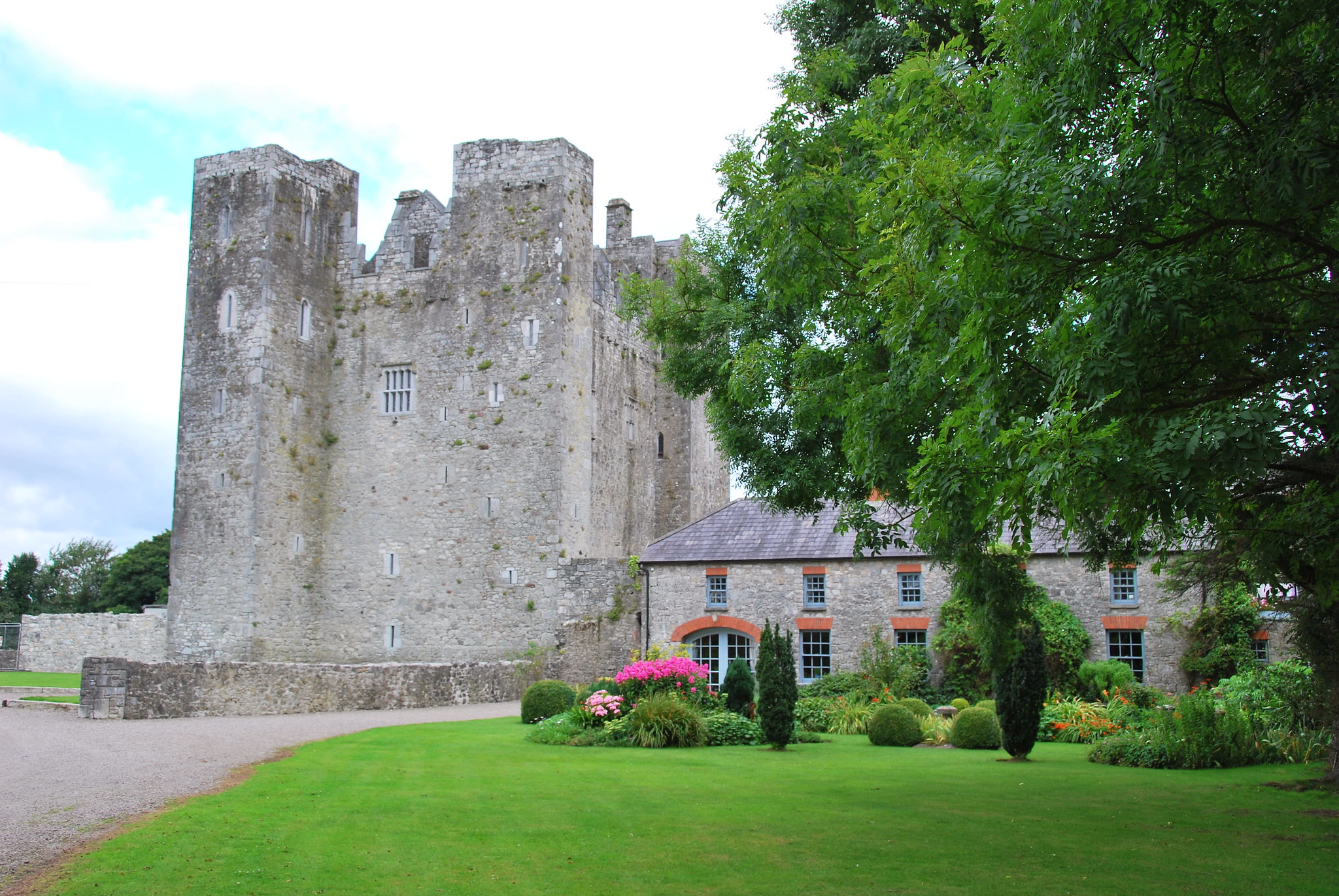
Oranmore Castle, County Galway, 15th August 2022

Oranmore Castle, County Galway, the gift from her mother to Anita Leslie from Castle Leslie, County Monaghan. Photograph © Jennifer Winder-Baggot, www.irishhistorichouses.com

Claregalway Castle, County Galway, 15th August 2022

Claregalway Castle, County Galway, parts of which can be booked for accommodation. Photograph © Jennifer Winder-Baggot, www.irishhistorichouses.com
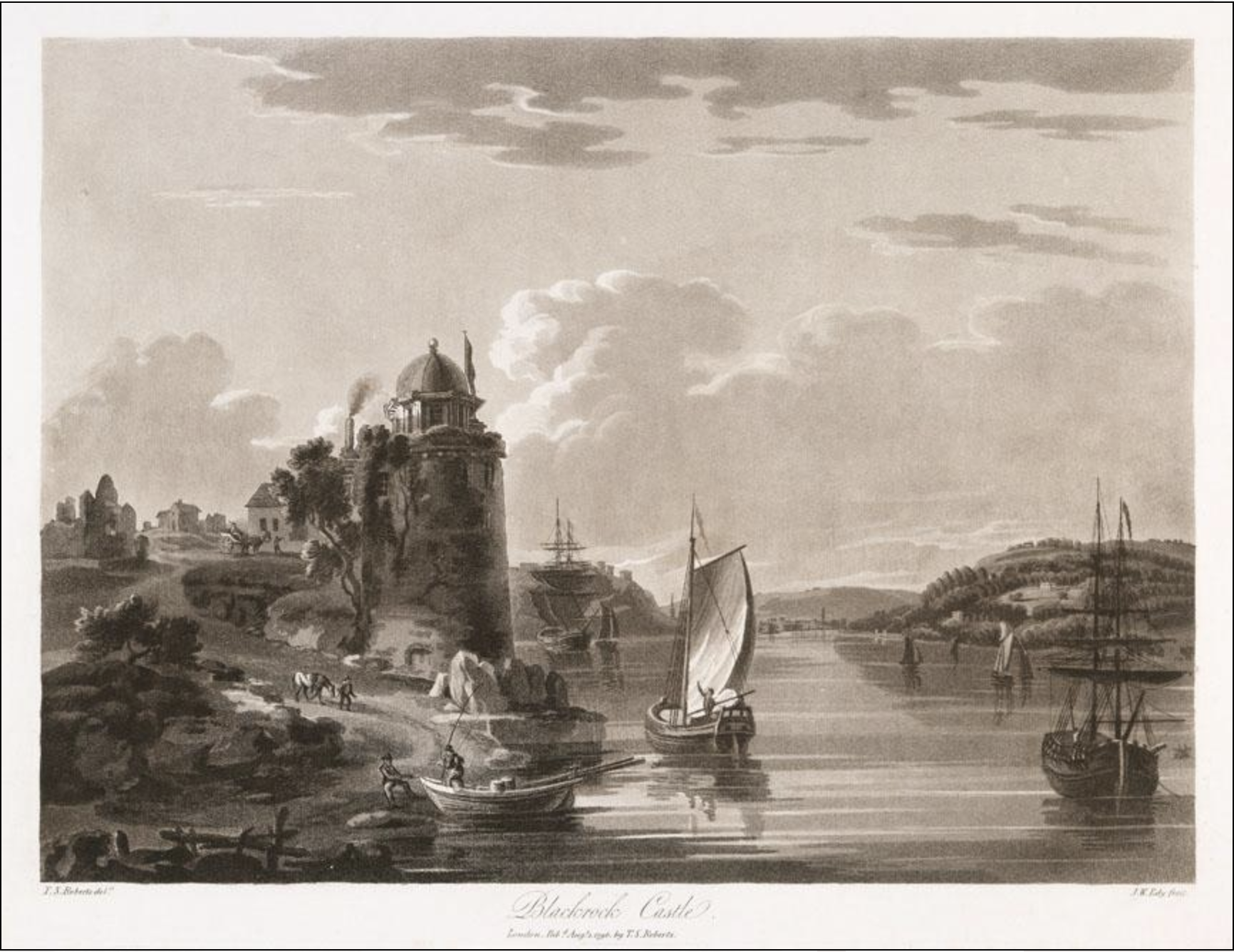
King House, County Roscommon, 18th August 2022

King House, County Roscommon, once home of the King family, now a beautiful museum. Photograph © Jennifer Winder-Baggot, www.irishhistorichouses.com
Strokestown Park, County Roscommon, August 2022

Strokestown, County Roscommon – it was listed as open in Section 482 but opening was delayed due to renovations. We were lucky to get on a Heritage Week tour. Photograph © Jennifer Winder-Baggot, www.irishhistorichouses.com
Lissadell, County Sligo, 19th August 2022

Lissadell, County Sligo, the former home of the Countess Markievicz and the Gore-Booth family. Photograph © Jennifer Winder-Baggot, www.irishhistorichouses.com
Manorhamilton, County Leitrim, 20th August 2022

Manorhamilton Castle, Leitrim. It was not open on the day we visited despite being listed as an open day during Heritage Week. Photograph © Jennifer Winder-Baggot, www.irishhistorichouses.com
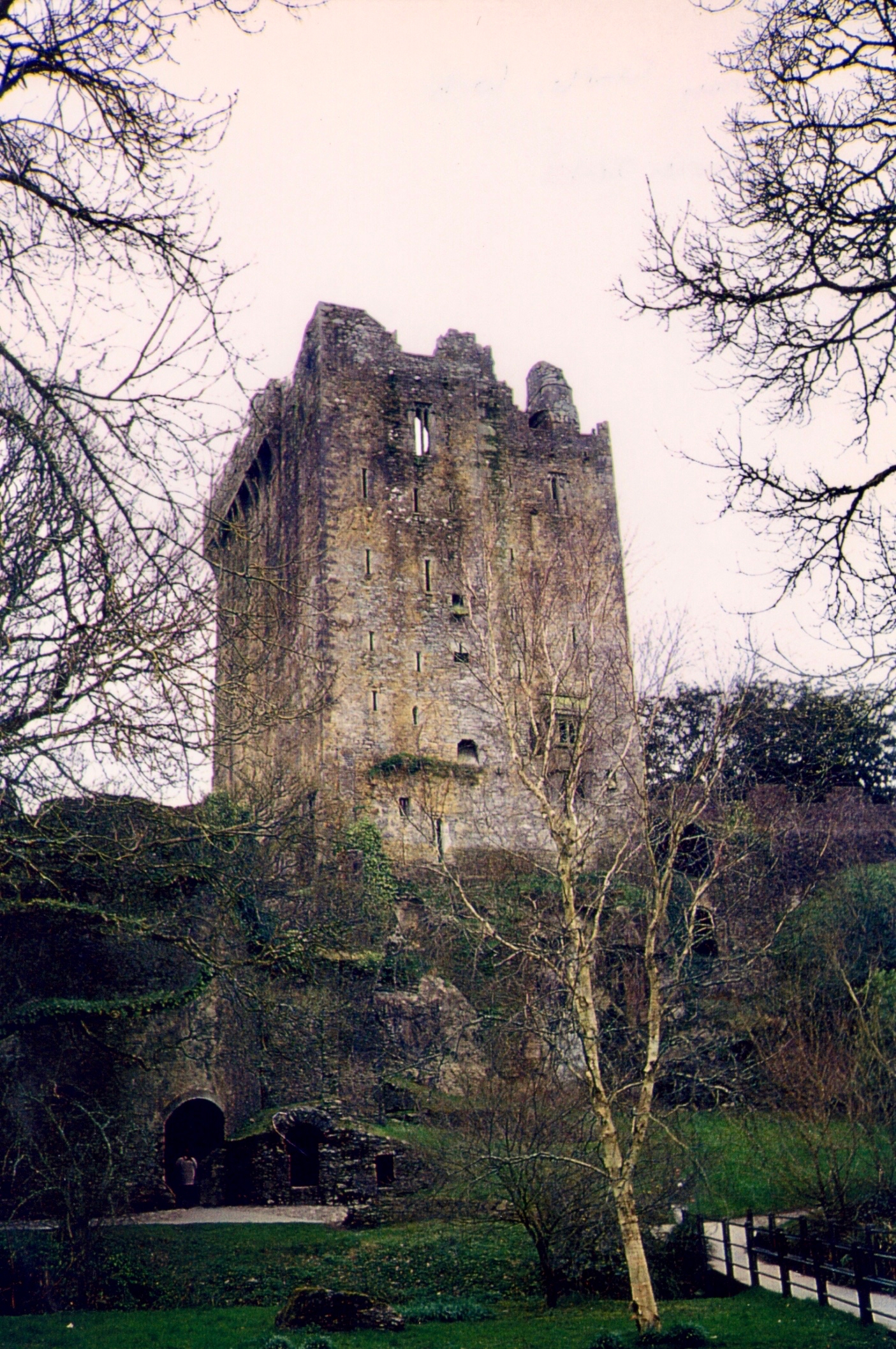
Hilton Park, County Monaghan, 21st August 2022

Hilton Park, still in the ownership of the Madden family for whom it was built. Photograph © Jennifer Winder-Baggot, www.irishhistorichouses.com
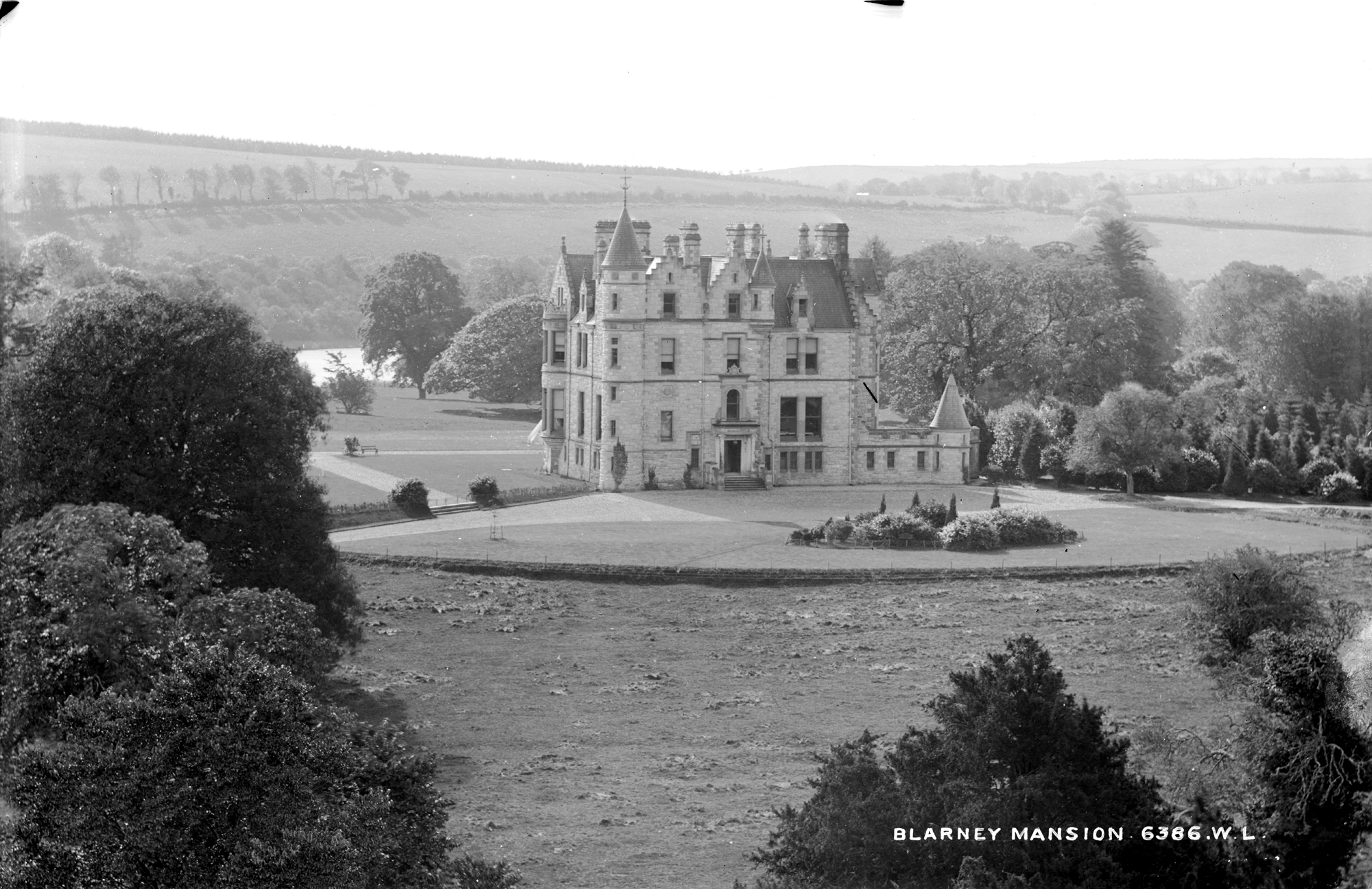
In 2023 during Heritage Week we visited Counties Waterford, Tipperary, and Cork:

Cappagh House (Old and New), Dungarvan, Co. Waterford – 14th Aug 2023

Ballynatray Estate, Co. Waterford (garden) – 19th Aug 2023

Kilcascan Castle, County Cork – 15th Aug 2023

Bantry House, County Cork – 15 and 16th Aug 2023

Dún Na Séad Castle, Baltimore, Co. Cork – 16th Aug 2023

Drishane Castle & Gardens, Co. Cork – 17th Aug 2023

Burton Park, Churchtown, Mallow, Co. Cork – 17th Aug 2023

Clashleigh House, Clogheen, Co. Tipperary – 19th Aug 2023

Grenane House, Tipperary, Co. Tipperary – 19th Aug 2023

Cappagh House, County Waterford. Photograph © Jennifer Winder-Baggot, www.irishhistorichouses.com
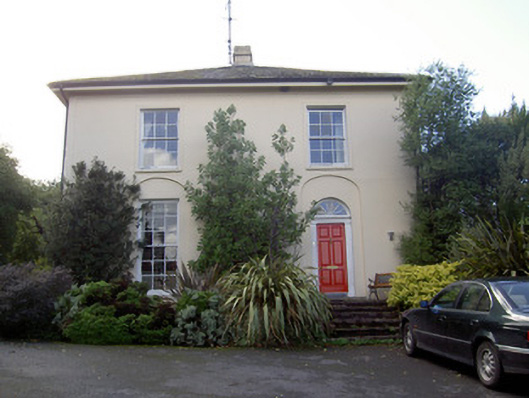
That year we made a circle from around Clogheen County Tipperary, driving through it to our first airbnb in County Waterford and ending up nearby at our last airbnb in Ardfinnan in County Tipperary. We visited ten Section 482 properties!

Curraghmore, County Waterford. Photograph © Jennifer Winder-Baggot, www.irishhistorichouses.com
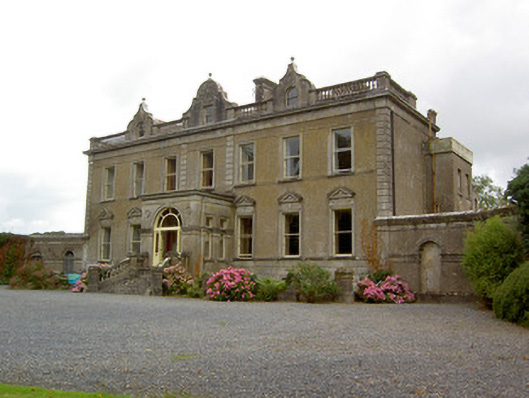
Bantry House, County Cork. Photograph © Jennifer Winder-Baggot, www.irishhistorichouses.com
Kilcascan Castle, County Cork. Photograph © Jennifer Winder-Baggot, www.irishhistorichouses.com
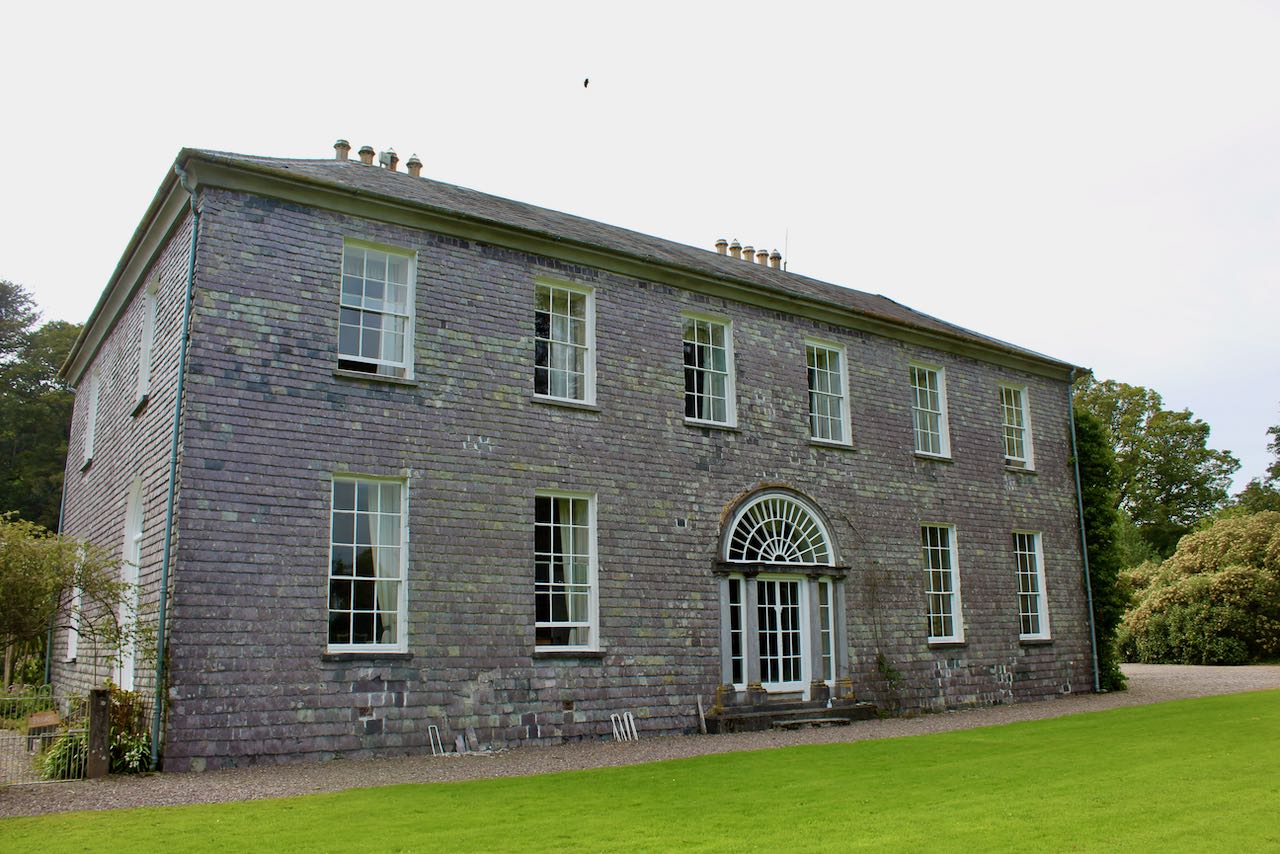
Baltimore Castle, Cork. Photograph © Jennifer Winder-Baggot, www.irishhistorichouses.com
Drishane Castle, County Cork. Photograph © Jennifer Winder-Baggot, www.irishhistorichouses.com
Burton Park, County Cork. Photograph © Jennifer Winder-Baggot, www.irishhistorichouses.com
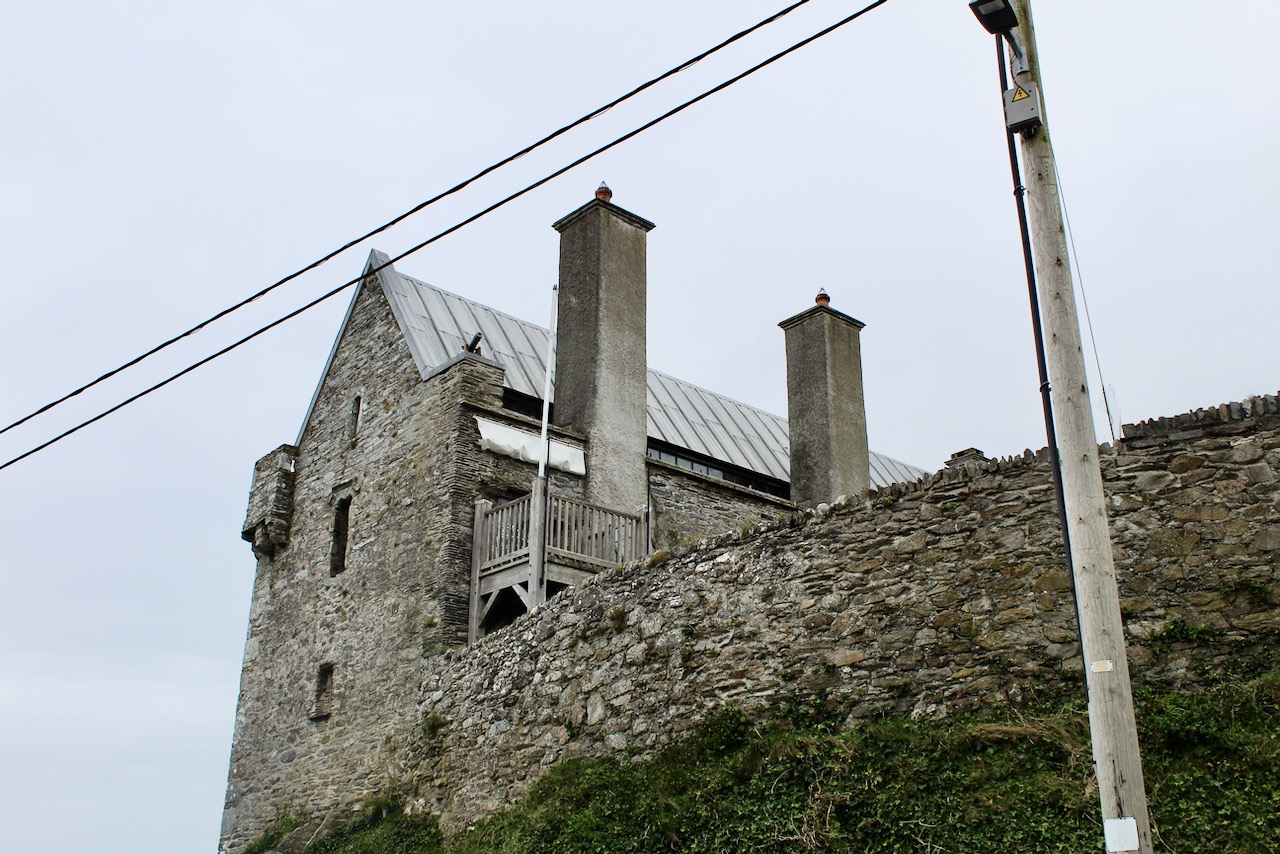
Fota House, County Cork. Photograph © Jennifer Winder-Baggot, www.irishhistorichouses.com
Ballynatray house – the house is not Section 482 but the gardens are. Photograph © Jennifer Winder-Baggot, www.irishhistorichouses.com
Ballynatray. Photograph © Jennifer Winder-Baggot, www.irishhistorichouses.com
Grenane House, County Tipperary. Photograph © Jennifer Winder-Baggot, www.irishhistorichouses.com
Clashleigh, County Tipperary. Photograph © Jennifer Winder-Baggot, www.irishhistorichouses.com

Our last day in Heritage Week 2023, we visited Clashleigh House in Clogheen, County Tipperary. A beautiful house, it was used for some years as a rectory. We visited in the morning, so had time to drive down to Lismore in the afternoon to see the idyllic Lismore Castle gardens.

Lismore Castle, County Waterford. Photograph © Jennifer Winder-Baggot, www.irishhistorichouses.com

In 2024 during Heritage Week we went to the wonderful Charleville Woods Castle in County Offaly (which is not Section 482). 

Charleville Castle Tullamore by Matt McKnight 2007, courtesy of flickr constant commons. Unfortunately this room was closed to the public yesterday as it is being used in filming Wednesday, the Addams family movie.

On the Monday we went to see Tullynisk house. We were given a wonderful tour by its resident Alicia Clements, daughter of the Earl of Rosse, who married a descendant of Nathaniel Clements who built the Áras an Uachtaráin in the Phoenix Park.

Tullynisk House, County Offaly. Photograph © Jennifer Winder-Baggot, www.irishhistorichouses.com

Emo Park finally opened its doors albeit for just a few days during the week last year. 

Emo Park, County Laois. Photograph © Jennifer Winder-Baggot, www.irishhistorichouses.com

We found ourselves with spare time after Emo Park as it was too rainy to wander the lush grounds, so we headed to Roscrea for more OPW properties: Damer House and Roscrea Castle. Unfortunately we weren’t allowed to take photographs inside Damer House except in the exhibition rooms. After a tour of Damer House we went across the bawn to tour Roscrea Castle. It is a treasure for the beautiful ancient town of Roscrea.

Damer House, Roscrea, 21st August 2024. Photograph © Jennifer Winder-Baggot, www.irishhistorichouses.com

Roscrea Castle, August 2024. Photograph © Jennifer Winder-Baggot, www.irishhistorichouses.com

We went to Birr last year to attend a talk about the Crotty Schism which took place in the Catholic church in the mid 1800s.

Crotty’s Church, Birr, which despite being a Section 482 property is not open to the public. Photograph © Jennifer Winder-Baggot, www.irishhistorichouses.com

On the Saturday we visited Ballybrittan Castle, which we were lucky to see before it changes hands to a new owner. Rosemarie warmly welcomed her visitors, sharing the home she lived in and loved for 27 years along with her late husband Jerry Healy, who served on the boards of the Irish Georgian Society and the Alfred Beit Foundation, which manages Russborough House, Co Wicklow.

Ballybrittan, courtesy of Sherry Fitzgerald Rose de Vere Hunt and myhome.ie

Donation towards maintaining website

I receive no funding nor aid to create and maintain this website, it is a labour of love. I travel all over Ireland to visit Section 482 properties and sometimes this entails an overnight stay. A donation would help to fund my accommodation or my website which costs €300 annually.

€150.00

Click here to purchase.

Farmleigh House (and Iveagh House), Phoenix Park, Dublin

Farmleigh House, Phoenix Park, Dublin

Farmleigh, photograph courtesy of Farmleigh facebook page.

Farmleigh House is part of a 78-acre estate inside Dublin’s Phoenix Park. The government bought it in June 1999 to provide accommodation for high-level meetings and visiting guests of the nation. The rest of the time it is maintained by the Office of Public Works and is open to the public for tours.

Farmleigh was originally a two storey Georgian house, belonging to the Coote family and the Trenches, then bought by Edward Cecil Guinness (1847-1927) in 1873, a great grandson of brewery owner Arthur Guinness, at the time of his marriage to his cousin Adelaide Guinness.

Farmleigh was built for the Trench family in 1752, according to a Dublin City Council website, Bridges of Dublin. Charles Trench built the walled garden. I am afraid I am unable to find more information about the Trenches of Farmleigh so I would appreciate any feedback about them.

The Landed Estates database identifies John Chidley Coote (1816-1879) as a previous owner, the son of Charles Henry Carr Coote (1794-1864) 9th Baronet. John Chidley was from Ballyfin in County Laois, later and school and now a beautiful hotel. He married his neighbour Margaret Mary Pole Cosby from Stradbally Hall in County Laois (see my entry https://irishhistorichouses.com/2021/10/14/stradbally-hall-stradbally-co-laois/ ), daughter of Sydney Cosby (1807-1840). They had no children, and she went on to marry Charles Robert Piggott 3rd Baronet of Knapton, County Laois, after John Chidley’s death.

Edward Cecil Guinness enlarged the house, using designs first by James Franklin Fuller (1832-1925), who extended the house to the west, refurbished the existing house and added a third storey. Edward Cecil later engaged William Young (1843-1900), a young Scottish architect, who added the ballroom wing in 1896. Young also worked on the Guinness’s English country seat Elveden in Surrey and Edward Cecil’s house on St. Stephen’s Green. A conservatory was added adjoining the ballroom in 1901. Edward Cecil Guinness was created the 1st Earl of Iveagh in 1919.

Edward Cecil Guinness (1847-1927) 1st Earl of Iveagh, by William Orpen, photograph courtesy of Farmleigh website.
Adelaide Maria Guinness by George Elgar Hicks, photograph courtesy of Farmleigh website.

From the website:

Farmleigh is a unique representation of its heyday, the Edwardian period. Edward Cecil Guinness [(1847-1927) 1st Earl of Iveagh], great-grandson of Arthur Guinness (founder of the brewery), constructed Farmleigh around a smaller Georgian house in the 1880s. According to his tastes, the new building merged a variety of architectural styles.

Many of the artworks and furnishings that Guinness collected remain in the house. There is a stunning collection of rare books and manuscripts in the library. The extensive pleasure-grounds contain wonderful Victorian and Edwardian ornamental features, with walled and sunken gardens and scenic lakeside walks. The estate also boasts a working farm with a herd of Kerry cows.” [1]

Farmleigh House, Phoenix Park, Dublin, July 2015. It was renovated by architect James Franklin Fuller. Photograph © Jennifer Winder-Baggot, www.irishhistorichouses.com

In the Dublin between the canals book by Christine Casey, part of the Buildings of Ireland series, she describes Farmleigh as a mediocre building. It is of three storeys with an extensive south facing front, rendered with a pediment and Corinthian Portland stone portico to the two advanced central bays and central canted bows to the flanking five-bay ranges. The five bays on the right of the porch correspond to the eighteenth century house, of which one interior survives, she tells us.

Farmleigh, Dublin, photograph courtesy of Farmleigh facebook page.
Farmleigh House, Phoenix Park, Dublin, July 2015. Photograph © Jennifer Winder-Baggot, www.irishhistorichouses.com
Farmleigh, Dublin, photograph courtesy of https://heritageireland.ie/places-to-visit/farmleigh-house-and-gardens/
Farmleigh, Dublin, photograph courtesy of Farmleigh facebook page.
Arthur Guinness Junior: After his father’s passing in 1803, Arthur II took over the business and oversaw a period of significant growth, during which Guinness became the largest brewery in Ireland and began to concentrate on its now-famous stout. Photograph courtesy of Farmleigh facebook page.

One is not allowed to take photographs inside the house but you can see pictures of the house and take an online tour on the website. It operates as the official residence for guests of the Irish state, which is why photography is not allowed inside.

The website tells us:

With the addition of a new Conservatory adjoining the Ballroom in 1901, and increased planting of broadleaves and exotics in the gardens, Farmleigh had, by the early years of the twentieth century, all the requisites for gracious living and stylish entertainment. Its great charm lies in the eclecticism of its interior decoration ranging from the classical style to Jacobean, Louis XV, Louis XVI and Georgian.

Farmleigh  was purchased from the Guinness family by the Irish Government in 1999 for €29.2m. The house has been carefully refurbished by the Office of Public Works as the premier accommodation for visiting dignitaries and guests of the nation, for high level Government meetings, and for public enjoyment.” [2]

Edward Cecil Guinness was the son of Benjamin Lee Guinness (1798-1868), who purchased Ashford Castle, County Galway, in 1855. The castle had been a shooting lodge belonging to Lord Oranmore and Browne. In 1867 Benjamin Lee Guinness was created 1st Baronet of Ashford Castle in thanks for his restoration of St. Patrick’s Cathedral in Dublin at his own expense. His father had lived in St. Anne’s Park in Clontarf, a house unfortunately no longer in existence.

St. Anne’s, Dublin entrance front with garden party 1912, Gillman Collection Vanishing Country Houses of Ireland by The Knight of Glin, David J. Griffin and Nicholas K. Robinson, published by The Irish Architectural Archive and The Irish Georgian Society, 1988.
Ashford Castle, photograph courtesy of Ashford Castle facebook page.

Edward Cecil’s older brother Arthur Edward (1840-1915), like his father, held the office of Member of Parliament (M.P.) (Conservative) for the City of Dublin. He succeeded as 2nd Baronet of Ashford Castle. He added to the residence at Ashford Castle and developed its grounds. He was created Baron Ardilaun of Ashford Castle in 1880. In 1871 he married Lady Olivia Charlotte White, daughter of the 3rd earl of Bantry. They had no children, and the Ardilaun barony became extinct after his death in Dublin on 20 January 1915. 

The Dictionary of Irish Biography tells us about Arthur Edward:

As well as providing funding for the completion of the restoration of Marsh’s library, begun by his father, he also contributed to the rebuilding of the Coombe Hospital. As president of the Artisans’ Dwellings Company (in which he was a large shareholder), he took particular interest in improving working-class housing conditions, most notably in the areas around St Patrick’s cathedral. Perhaps his most notable legacy was financing the transformation of the twenty-two-acre St Stephen’s Green into a landscaped garden, which, through an act of parliament sponsored by Guinness, was presented to the Board of Works for the use of Dublin citizens. This generosity was marked by the erection of a bronze statue of him in the park, financed by public subscription in 1891. Another significant purchase of his was the 17,000-acre Muckross estate in Co. Kerry, adjoining the lakes of Killarney, which he bought for £60,000 to prevent the land being exploited by a commercial syndicate, thus enabling it to continue as an important tourist attraction.

Muckross House Killarney Co. Kerry, photograph by Chris Hill 2014 for Tourism Ireland, Ireland’s Content Pool.

Another brother, Benjamin Lee (1842-1900) who went by his middle name Lee, married Henrietta Eliza St. Lawrence of Howth Castle. It was their son who became the 3rd Baronet of Ashford Castle.

Edward Cecil Guinness, the Dictionary of Biography tells us, was: “Socially innovative, with a concern for the welfare of employees, from as early as 1870 he had established a free dispensary for his workforce and made provisions for pension and other allowances – acts of social reform that were remarkable for the time. To mark his retirement in 1890 he placed in trust £250,000 to be expended in the erection of working-class housing in London and Dublin.

Before the Iveagh Market was built in 1906, hundreds of traders sold their goods outdoors, especially around St. Patrick’s Cathedral, and the area was a maze of poor and dirty streets and alleys with homes, as the city council said, “unfit for human habitation.” Children were sent out by their parents to work selling goods in the streets, and women tried to make money as dealers selling fish, flowers, old clothes and fruit. 

Edward Cecil Guinness cleared the markets in the area to build a park and housing for the labouring poor – you can see the beautiful Victorian style brick buildings still run by the “Iveagh Trust” around St. Patrick’s Cathedral. He donated what in today’s money would be almost 20 million euro for the new housing. As the traders had long established market rights, he built a new market building, moving trading indoors, in the tradition of Victorian covered markets. 

Edward’s main residence at the time he purchased Farmleigh was 80 St. Stephen’s Green, now Iveagh House, the headquarters of the Department of Foreign Affairs. He viewed Farmleigh as ‘a rustic retreat’.

Let’s take a quick diversion to Iveagh House (80 and 81 St. Stephen’s Green), which I was lucky enough to visit during Open House Dublin in 2014. 80 St. Stephen’s Green was built for Bishop Robert Clayton (1695-1758), Bishop of Cork and Ross, by Richard Castle in 1736. After both number 80 and 81 were bought by Benjamin Guinness in 1862, he acted as his own architect and produced the current house, combining the two houses. [see Archiseek] In 1866 a Portland stone facade by James Franklin Fuller was added.

Iveagh House, 80-81 St. Stephen’s Green, Dublin, photograph courtesy of Farmleigh website.
Iveagh House, St Stephen’s Green, October 2014. Portland stone facade (1866) by James Franklin Fuller (1835-1924) disguises an early eighteenth century townhouse by Richard Castle (d. 1751) for Robert Clayton (1695-1758), Bishop of Cork and Ross. The original house, three windows wide, is on the left of the portico. Photograph © Jennifer Winder-Baggot, www.irishhistorichouses.com
Iveagh House, St Stephen’s Green, the original owner, Robert Clayton (1695-1758), Bishop of Cork and Ross. Photograph © Jennifer Winder-Baggot, www.irishhistorichouses.com

The Archiseek website tells us:

“The Dublin Builder, February 1 1866: ‘In this number we give a sketch of the town mansion of Mr. Benjamin Lee Guinness, M.P, now in course of erection in Stephen’s Green, South, the grounds of which run down to those of the Winter Garden. As an illustration so very quiet and unpretending a front is less remarkable as a work of architectural importance than from the interest which the name of that well-known and respected owner gives it, and from whose own designs it is said to have been built. The interior of the mansion promises to be of a very important and costly character, and to this we hope to have the pleasure of returning on a future occasion when it is more fully advanced. The works, we believe, have been carried out by the Messrs. Murphy of St. Patrick’s Cathedral notoriety, under Mr. Guinness’s own immediate directions, without the intervention of any professional architect.’ “

The Farmleigh website tells us of the Guinness family’s source of wealth: “In 1886 Edward Cecil Guinness floated the brewery on the Stock Exchange increasing his wealth and social standing and this reflected in an extensive rebuild of Farmleigh. Despite this work, Edward and his wife Adelaide spent relatively little time there. Their primary residence was in London, but when in Dublin, they stayed mostly at 80 St. Stephen’s Green. The family only stayed in Farmleigh for short periods of a couple of weeks, mainly in the spring and summer months.

80/81 St. Stephen’s Green was donated to the Irish government by Benjamin Guinness’s grandson Rupert, the 2nd Earl of Iveagh, in 1939 and was renamed Iveagh House.

One enters Iveagh House through a large nineteenth century entrance hall with two screens of Ionic columns, which incorporates the front parlour of the Clayton house. The hall is adorned with sculptures bought by the Guinnesses at the Dublin Exhibition of 1865. Through a door at the west end is a Victorian domed vestibule and beyond it a service stair. East of the hall is an Inner Hall that was the entrance hall of Bishop Clayton’s house. This has niches flanking the chimney breast, fielded panelling and a modillion cornice.

The Entrance Hall, Iveagh House, 80 St. Stephen’s Green, photograph by Michael Foley, 2013.
Iveagh House, St Stephen’s Green. Photograph © Jennifer Winder-Baggot, www.irishhistorichouses.com
The Sleeping Faun by Harriet Hosner bought by the Guinnesses at the Dublin Exhibition of 1865, for almost the same price, our guide told us, as the house on St. Stephen’s Green! Donated by the Guinnesses along with the house to the state. Photograph © Jennifer Winder-Baggot, www.irishhistorichouses.com
Iveagh House, St Stephen’s Green, “Modestyby G. M. Lombardi. Photograph © Jennifer Winder-Baggot, www.irishhistorichouses.com
Iveagh House, St Stephen’s Green, medieval wooden carving, according to our tour guide, picturing Homer’s Illiad scenes. I think, however, it is a mid nineteenth century bas relief carving mentioned by Christine Casey, by Richard Barrington Boyle, of King Priam entreating Achilles to release the body of Hector. Photograph © Jennifer Winder-Baggot, www.irishhistorichouses.com

The two stair compartments of the eighteenth century house on St. Stephen’s Green were combined to create the space for the grand imperial staircase inserted by James Franklin Fuller in 1881.

Stair Hall, Iveagh House, 80 St. Stephen’s Green, photograph by Michael Foley, 2013.
Iveagh House, 80 St. Stephen’s Green, photograph by Michael Foley, 2013.
Iveagh House, St Stephen’s Green, October 2014. The grand imperial stair was inserted by James Franklin Fuller in 1881, with onyx and alabaster wall panelling from 1896 by William Young. Photograph © Jennifer Winder-Baggot, www.irishhistorichouses.com
Iveagh House, St Stephen’s Green, October 2014. Photograph © Jennifer Winder-Baggot, www.irishhistorichouses.com
Iveagh House, St Stephen’s Green. Photograph © Jennifer Winder-Baggot, www.irishhistorichouses.com
Iveagh House, St Stephen’s Green, October 2014. Painting by De Chirico. Photograph © Jennifer Winder-Baggot, www.irishhistorichouses.com
Iveagh House, St Stephen’s Green, October 2014. Photograph © Jennifer Winder-Baggot, www.irishhistorichouses.com

The drawing room’s ceiling is modelled on the Provost of Trinity House dining room ceiling. There is also a room downstairs in Iveagh House with a room which was added in 1866 with Georgian Revival ornament derived from the Provost’s House.

The ceiling rose and ceiling of the dining room in the Provost’s House. Provost’s House, Trinity College Dublin. Photograph © Jennifer Winder-Baggot, www.irishhistorichouses.com.
Iveagh House, St Stephen’s Green, October 2014. Photograph © Jennifer Winder-Baggot, www.irishhistorichouses.com
Iveagh Gardens, the part kept by the Guinness’s as part of Iveagh House. Photograph © Jennifer Winder-Baggot, www.irishhistorichouses.com
Mahogany doorframe and door, Iveagh House, Stephen’s Green. The architect took advantage of the tax on mahogany not imposed in Ireland. Photograph © Jennifer Winder-Baggot, www.irishhistorichouses.com
Iveagh House, St Stephen’s Green, original fireplace. Photograph © Jennifer Winder-Baggot, www.irishhistorichouses.com
Iveagh House, St Stephen’s Green, originally the study. Photograph © Jennifer Winder-Baggot, www.irishhistorichouses.com
Iveagh House, St Stephen’s Green, originally the study. Our guide told us that they were Medieval wood carvings of scenes from Homer’s Illiad, and crest of Lord Iveagh who donated the house to the state. Original fireplace. Photograph © Jennifer Winder-Baggot, www.irishhistorichouses.com
Iveagh House, St Stephen’s Green, The Music Room. Photograph © Jennifer Winder-Baggot, www.irishhistorichouses.com

The Music Room at the head of the stairs has a Rococo-cum Neoclassical ceiling of the late 1760s.

The Music room ceiling, in Iveagh House. Photograph © Jennifer Winder-Baggot, www.irishhistorichouses.com
The Saloon or Great Room, the breadth of the 18th century house in the front, with its coved and coffered ceiling, Iveagh House, St Stephen’s Green. Photograph © Jennifer Winder-Baggot, www.irishhistorichouses.com
Iveagh House, St Stephen’s Green, probably originally the withdrawing room of the Lady of the house. Photograph © Jennifer Winder-Baggot, www.irishhistorichouses.com

Christine Casey describes the ballroom of Iveagh House, which was designed, as was that in Farmleigh, by William Young. Casey writes in her Buildings of Ireland: Dublin book (p. 498): “This is an impressive if vulgar room. Tripartite, with a big shallow central dome and lower vaulted end bays with canted bay windows overlooking the garden. Elaborate, almost Mannerist stucco decoration by D’Arcy’s of Dublin.”

The ballroom, our guide to Iveagh House told us, was created to host a Royal visit. The room was built specially to have room for the guests, for £30,000.

Iveagh House ballroom. Photograph © Jennifer Winder-Baggot, www.irishhistorichouses.com
Original curtains and seats in ballroom in Iveagh House. They remind me of the portiéres in Farmleigh’s ballroom. Photograph © Jennifer Winder-Baggot, www.irishhistorichouses.com
Iveagh House ballroom. Photograph © Jennifer Winder-Baggot, www.irishhistorichouses.com
Fireplace built for ballroom in Iveagh House. JFK was hosted at a reception here and had his picture taken in front of the fireplace, and his daughter Caroline Kennedy had her picture taken there years later. Photograph © Jennifer Winder-Baggot, www.irishhistorichouses.com
Ballroom stucco in Iveagh House, made from moulds but then finished by hand to make look like fully hand-done. Photograph © Jennifer Winder-Baggot, www.irishhistorichouses.com
Minstrals’ gallery in Iveagh House ballroom, made of the new at the time material, aluminium. Photograph © Jennifer Winder-Baggot, www.irishhistorichouses.com
Ceiling of Iveagh house ballroom, in Wedgewood blue. Photograph © Jennifer Winder-Baggot, www.irishhistorichouses.com

Now that we have placed Edward Cecil Guinness in the context of the house he lived in at the time of purchasing Farmleigh, let’s return to Farmleigh.

Casey writes that inside Farmleigh, two ranges of rooms open off an east-west spinal corridor, with a “showy” central entrance hall opening through a columnar screen to a large top-lip double-height stair hall.

The entrance hall at Farmleigh, photograph courtesy of Office of Public Works Farmleigh website.

The immediate front hallway is also toplit by roundels set in the ceiling of the hallway/porte cochere. The porte cochere is upheld by Portland stone pilasters and there is a screen of six columns of Connemara marble on pedestals with Ionic capitals on pedestals. The columns support the coffered ceiling of the Entrance Hall. 

Farmleigh, Dublin, photograph courtesy of https://heritageireland.ie/places-to-visit/farmleigh-house-and-gardens/

The chimneypiece is of carved and inlaid marble, and the website tells us it is probably a nineteenth-century copy of an original, though the plaque may date from the eighteenth century.

The entrance hall at Farmleigh, photograph courtesy of Office of Public Works Farmleigh website.
Fireplace plaque in the entrance hall at Farmleigh, photograph courtesy of Office of Public Works Farmleigh website.

The doors leading off the hall have carved mouldings and pediments, and the doors are of veneered mahogany on the hall side and of oak on the other.

The website continues: “The classical motif continues at the Staircase to the rear of the hall. Corinthian pilasters rise from first-floor level to a strongly projecting cornice. San Domingo mahogany is used for the Staircase on which the wrought iron balusters were made to correspond exactly with those on the staircase of Iveagh House, formerly the Earls of Iveaghs’ city mansion.

The stairwell is toplit also.

Stair Hall, Farmleigh, photograph courtesy of Farmleigh facebook page.
The wrought iron balusters were made to correspond exactly with those on the staircase of Iveagh House: Iveagh House, St Stephen’s Green. Photograph © Jennifer Winder-Baggot, www.irishhistorichouses.com

After Edward Cecil’s death in 1927 his eldest son Rupert became the second Earl of Iveagh and inherited Farmleigh and 80 St Stephen’s Green. He was a British MP for Southend at the time, and ceased to be an MP when he succeeded to his father’s earldom. His wife Gwendolen the Countess of Iveagh won the Southend by-election in November 1927 to replace her husband as MP. She served until her retirement in 1935.

He presented the house on St. Stephen’s Green to the Irish State in 1939.

The website tells us about the family in Farmleigh: “Rupert gave Farmleigh to his grandson and heir, Benjamin (Rupert’s eldest son and Benjamin’s father, Arthur, was killed in WWII). Farmleigh became a family home for Benjamin (3rd Earl of Iveagh) and Miranda Guinness, and their children. Benjamin became a keen bibliophile and collector of rare books, parliamentary and early bindings, as well as first editions of the modern poets and playwrights. The library in Farmleigh in now dedicated to Benjamin Iveagh and his wonderful collection of books.

Benjamin died in 1993 in London and in 1999, his son Arthur Guinness (4th Earl of Iveagh), sold Farmleigh to the Irish State.” [2]

The website continues:

The door to the left of the hall leads to the Dining Room, which is lined with boiseries in the style of Louis XV. There is some spectacular woodcarving in this room, of particular note is the chimney piece, supported by a pair of female herms, with a clock at its centre surmounted by a grotesque face. Bronze figures of Bacchantes are placed in the shell-topped niches on either side of the fireplace, while beneath them are late Victorian oak buffets. The London firm of Charles Mellier & Co., supplied the interior here (apart from the ceiling which was designed by the architect J.F. Fuller).”

The Dining Room panelling was designed by decorators Charles Mellier & Co to incorporate four late seventeenth century Italian tapestries which once belonged to Queen Maria Christina of Spain. Three of the embroidered panels have been identified as the planetary gods, Jupiter, Venus, and Saturn. These panels are likely to be part of a larger set of seven panels relating to the Roman deities. One such panel, apparently from the same set and depicting Mercury, is in the Hermitage Museum in St Petersburg. The fourth panel above the fireplace is thought to depict a personification of Africa and to be part of a further set, depicting the continents.

The Dining Room in Farmleigh, photograph courtesy of Office of Public Works Farmleigh website.

Beyond the dining room is Guinness’s Study, a wainscoted room with a sky painted ceiling. A concealed door next to the window at the southwest corner led to a basement stronghold, a secret chamber for Guinness to escape in case of attack.

The Study in Farmleigh, photograph courtesy of Farmleigh facebook page.

The website tells us:

The main entrance to Farmleigh was originally on the north side of the house (in part of what is now the Library) and this was probably a reception room where guests either dined or withdrew after dinner. By 1873, when Edward Cecil Guinness bought the house, the entrance had been changed to the south of the building and this room was the entrance hall. It subsequently became a boudoir and reverted in later years with the Guinness family to a reception room while keeping its appellation as ‘boudoir’. (Generally the boudoir was a ‘private’ room for the lady of the house, decorated in a light and elegant style. Her ‘public’ room was the drawing room, just as the gentleman’s study was his ‘private’ room and the library his ‘public’ room.).

The Boudoir is oval in shape with two niches, one each side of the door into the Corridor. The niche to the right of the door as one enters contained a jib door into the Oak Room but the space between the rooms now holds a safe accessed from the Oak Room.

Christine Casey describes the Oak Room in her Buildings of Ireland: Dublin (p. 298). She writes: “On the right of the hall is the studiolo-like Oak Room, which has a coffered oak ceiling and tall panelling with pilasters, scalloped tympana and grotesque terms. …Beefier and more textured than most of the carving at Farmleigh. It has been suggested that Fuller used salvaged panelling, although the regularity of execution seems at odds with the seventeenth century style.”

The Boudoir, Farmleigh, photograph courtesy of Office of Public Works Farmleigh website.

The website describes the Boudoir: “The ceiling plasterwork dates from about 1790 and is in the Adam style, with husk chains and classical motifs in medallions surrounding the central decoration of a fan-like or bat’s-wing motif, which is itself echoed in the heads of the niches. The unusual medallion motifs here are similar to those in a ceiling in 35 North Great George’s Street, Dublin which has been attributed to Francis Ryan or Michael Stapleton and dated to 1783. It is in particularly fine condition and clearly articulated without excessive applications of paint.

During the OPW restoration work, it was possible to examine the original decorations and colour scheme of the Georgian house here because the ceiling heights had been changed in the Guinness alterations. Particular attention has been paid in the selection of fabrics for this room to reflect its character.

An item of particular interest is the pair of engraved brass lock-plates on the door into the corridor which are similar to some in Iveagh House where they are original to that 1736 house! They are the only examples of these at Farmleigh and it is presumed that they got here through Fuller who also worked at Iveagh House.

One of the former drawing rooms is now called the “Nobel Room” and honours the memory of Ireland’s four Nobel Laureates for literature: George Bernard Shaw, William Butler Yeats, Samuel Beckett and Seamus Heaney. It interconnects with the “Blue Drawing Room.” These rooms were significantly re-modelled by Fuller in the 1880s, and again in the 1890s by William Young. The saucer-domed ceiling in the Nobel Room is in the style of the 1820s and its plasterwork of vine-leaves, grapes and vases filled with fruit and flowers indicates that it may have been a dining room. A clever touch is the window over the fireplace, an unusual feature. Christine Casey writes: “Taking a leaf from Charles Barry’s book, Fuller went to pains to move the fireplace to the centre of the rear wall to create an arresting overmantel window.”

The Nobel Room and Blue Room, with the window over the fireplace, Farmleigh, photograph courtesy of Office of Public Works Farmleigh website.

The Blue Room is an ante room to the Ballroom. The ceiling was copied from that in the Oval Room, though it is not at all as finely executed as the original. The three arched doorways in these rooms were created out of windows in the old house when Young added the Ballroom in 1896.

The Blue Drawing Room, photograph courtesy of Farmleigh facebook page.
Blue Room, Farmleigh, with a “portiere” over the arched door on the right, photograph courtesy of Office of Public Works Farmleigh website.
The spandrels in the Nobel Room support a circular ceiling. The spandrels have overscaled Rococo-revival flower baskets, Farmleigh, photograph courtesy of Office of Public Works Farmleigh website.

The suite for state guests, which is not included in the house tour, is inspired by designs of Irish modernist Eileen Gray (you can see examples of her work in the Museum at Collins Barracks in Dublin). 

The house also contains the Benjamin Iveagh Library, donated by the Guinness family to Dublin’s Marsh’s Library and on permanent display in Farmleigh. The Library, which is panelled in Austrian Oak with exquisitely rendered carvings in the neo – Jacobean style, was part of the renovation undertaken by Edward Cecil in the 1880s. Scholars can access material from the collection by arrangement. The Benjamin Iveagh Library is open for use by suitably qualified scholars, third-level students, and independent researchers. A full electronic catalogue of the collection may be viewed online via Marsh’s Library.

The Library, Farmleigh, photograph courtesy of Office of Public Works Farmleigh website.

Applications to carry out research in the Benjamin Iveagh Library may be made to the Keeper of Marsh’s Library.
Email: reading.room@marshlibrary.ie

The librarian Nuala Canny writes:

“While the printed works which include many rare imprints and early periodicals represent the majority of the holdings, there is some exceptional manuscript material, including a copy of the Topography of Ireland by Gerald of Wales c.1280, and the trilingual language primer used by Queen Elizabeth I c. 1564  to learn Irish, together with letters from Sean O’Casey, W.B. Yeats, Lennox Robinson, Daniel O’Connell and Roger Casement.

“The items that adorn these shelves represent important moments in the areas of Irish Politics, Literature, and Science: we have a triumphant letter from Daniel O’Connell to his wife in 1829 telling her of the passing of the Roman Catholic Relief Act, which led to Catholic Emancipation,  a first edition of James Joyce’s seminal work Ulysses published in 1922 and the first appearance in print in 1662 of Boyle’s Law.”

The Ballroom with adjoining conservatory is the piéce de resistance of the house. The ballroom was designed by William Young in 1892. It is a large rectangular room with bows in the centre of the north, east and south walls. Casey writes that “it is a much more reticent affair than the showy marble ballroom that Young designed the Guinness townhouse at St. Stephen’s Green [as pictured above].”

The Ballroom, Farmleigh, photograph courtesy of Office of Public Works Farmleigh website.
Ballroom at Farmleigh, photograph courtesy of Farmleigh facebook page.

The website tells us:

The Guinness’ guests could not fail to be impressed with the superb decoration in the style of Louis XVI with swags, wreaths, musical trophies, urns, sphinxes, and Corinthian pilasters. The rich decoration is executed in plaster that is applied to wood panelling, and the whole room, including the ceiling, is painted off-white to resemble plaster. The chimney piece is also made of wood and this, together with the overmantel, the ceiling, and the elegant portieres, were all part of an integrated scheme designed by Young. The Edinburgh-based interior design company Morrisons probably supplied the portieres as they had done so for the Young-designed ballroom at Iveagh House.

The plaster decoration is also by Mellier.

Farmleigh, Dublin, photograph courtesy of https://heritageireland.ie/places-to-visit/farmleigh-house-and-gardens/

Hanging from the centre of the ceiling is a magnificent late nineteenth-century cut-glass and gilt metal chandelier complete with coronet. Purchased specifically for the Ballroom, it is on loan from the Guinness family. There is a story that the oak floor was made from disused barrels at the brewery but that has never been confirmed!

The Ballroom, Farmleigh, photograph courtesy of Office of Public Works Farmleigh website.

The Conservatory: “Erected in 1901-2, it was supplied by Mackenzie and Moncur of Edinburgh, on the recommendation of Young. Exotic plants and flowers were grown here, and have been re-introduced by the Office of Public Works. Hot water pipes that ran around the perimeter were covered up by cast iron grilles, which have been restored. The marble floor, which is original, is tiled in the traditional eighteenth-century pattern of carreaux octagons.

This room posed one of the most difficult conservation problems for the OPW at Farmleigh, as it was in a dangerous condition when the State took over the house. It was completely re-glazed and new structural supports for high-level metal work were introduced. As a result the character of the Conservatory has been retained and its life span increased for at least another 100 years.

Farmleigh, Dublin, photograph courtesy of https://heritageireland.ie/places-to-visit/farmleigh-house-and-gardens/
The Conservatory at Farmleigh, photograph courtesy of Office of Public Works Farmleigh website.
Farmleigh, photograph courtesy of Farmleigh facebook page.

A room we don’t see on the tour is discussed on the blog on the Farmleigh website: the Billiard Room:

Located at mezzanine level between the ground and first floors, typical of nineteenth century billiard rooms to keep offending cigar odours away from the rest of the house and male visitors appropriately distanced from visiting ladies, it is very much a masculine enclave. Beneath a top-lit roof – reconstructed and reglazed with ultraviolet screens by the OPW – the plaster cornice, deep ceiling cove and decorative ribs are painted in imitation of timber. The oak chimneypiece with Corinthian columns and carved frieze to the south of the room is dark in colour, lending to the heaviness about the overall decor when combined with the distinctive red cotton wall fabric which is printed with an arabesque motif.

The Billiard Room at Farmleigh, photograph courtesy of Office of Public Works Farmleigh website.

The grounds contain a clock tower, a large classical fountain in the Pleasure Grounds, an ornamental dairy, garden temple and four acre walled garden and sunken garden. The outbuildings have been adapted to house an art gallery and a theatre and a courtyard for additional state accommodation. The Boathouse now houses a cafe overlooking the lake.

Gardens at Farmleigh, Phoenix Park, February 2014. Photograph © Jennifer Winder-Baggot, www.irishhistorichouses.com
Gardens at Farmleigh, Phoenix Park, Dublin, August 2015. Photograph © Jennifer Winder-Baggot, www.irishhistorichouses.com

Sunken gardens in various formal styles were popular in the early twentieth century… This one is in the Dutch of Early English style and was created some time after 1907, probably by Edward Cecil Guinness. The design has some similarities with the sunken pond garden at Hampton Court, which dates from the original Early English period, and may relate to his connections with the British Royal family.

An ornamental gate leads into the rectangular garden, which was designed with three descending brick terraces leading to an oval pool in the centre, with a marble fountain of carved putti figures. The fountain has been restored under the direction of OPW and the Carrara marble exposed. Fine topiary peacocks and spirals surround this fountain on two levels. A brick wall enclosing the garden is paralleled by a high yew hedge, which leads the eye to the two conifers framing the view to the small apple orchard beyond.” [3]

Gardens at Farmleigh, Phoenix Park, Dublin, August 2015. Photograph © Jennifer Winder-Baggot, www.irishhistorichouses.com

“The Walled Garden covers about four acres and is sloped ideally towards the south. A fine pair of highly decorative wrought iron gates lead into a diagonal walk with double herbaceous borders backed by high yew hedges. South of the main crosswalk is a small orchard and potager, while north of it there is a small rose and lavender garden. The Walled Garden dates from the early nineteenth century, when Charles Trench owned Farmleigh; it is shown on the 1837 Ordnance Survey map as having a diagonal layout with seven squares and glasshouse. Later that century it had an extensive range of glasshouses on the south wall for many plants grown in typical Victorian fashion to support large-scale bedding schemes as well as producing exotic fruit and flowers and foliage, particularly orchids and ferns, for year round display in the house.

Among the additions made by Edward Cecil Guinness were the small Victorian fernery under glass and grotto nearby with two old ogee windows from St Patrick’s Cathedral in the end wall of the garden. He also erected a number of glasshouses, including a fine three quarter span cast-iron vinery behind the high yew hedge, the potting shed, and the gardener’s house and pump house which were built in the Arts and Crafts style. His daughter in-law, Gwendolen, Lady Iveagh, subsequently created a compartmentalised layout, which was fashionable in the early twentieth century along with renewed interest in old style garden plants and herbaceous borders. A new traditional path led from the wrought iron gateway connecting the Walled Garden to the broad walk at the back of the house. This new axis of the garden was reinforced by tall yew hedges backing the long double herbaceous borders which she also planted.

A stone temple was created as a focal point of the garden by Benjamin and Miranda Guinness in 1971: it has six antique columns of Portland with a copper roof and ornamental weather vane. The main cross path either side of the temple has metal structures designed by Lanning Roper for climbing roses and wisteria similar to those in the famous Bagatelle Garden in Paris. A paved rose garden was laid out to the north east of the temple backed by a yew hedge and looking across a lawn to the small orchard and potage. Lanning Roper suggested planting a quince, a mulberry, a catalpa, and a magnolia, to complete what he described as a Carolingian Quartet on this lawn. Lady Iveagh subsequently planted the double herbaceous borders, which include yuccas, phormiums, paeonies, astilbe and euphorbias.” [4]

Gardens at Farmleigh, Phoenix Park, Dublin, August 2015. Photograph © Jennifer Winder-Baggot, www.irishhistorichouses.com

[1] See also https://farmleigh.ie/

[2] https://farmleigh.ie/the-guinness-family/

[3] https://farmleigh.ie/the-parkland/

[4] https://farmleigh.ie/the-parkland/

Birr Castle, County Offaly – section 482

Donation

Help me to fund my creation and update of this website. It is created purely out of love for the subject and I receive no payment so any donation is appreciated! My website costs €300 per year on WordPress.

€15.00

Open dates in 2025: May 16-17, 19-24, 26-31, June 2-7, 9-14, 16-21, 23-28, 30, July 1-5, 7-12, 14-19, 21-26, 28-31, Aug 1-2, 4-9, 11-30, Sept 1-6, 11am-3pm

Fee: adult €12.50, OAP/student €11, child 7, family 2 adults and 2 children €34, guided castle tour €22

www.birrcastle.com

Birr Castle, photograph by Chris Hill 2018, for Tourism Ireland, Ireland’s Content Pool. [1]

We visited Birr Castle in June 2019. I am dying to visit again!

The castle has been in the one family since 1620. A castle existed on the site before then, but little remains of the original, as the old O’Carroll keep and the early C17 office ranges were swept away around 1778. However, parts of the auxiliary buildings of the original are incorporated into today’s castle, which was made from the gate tower which led into the castle bawn. The front hall of the original gatehouse is now at basement level. The rest of the castle has been built around this, at various times.

The castle formed part of a chain of fortresses built by the powerful O’Carroll family of Ely, on the borders of Leinster and Munster. In the 1580s the castle was sold to the Ormond Butlers. By 1620 the castle was a ruin, and King James I granted it to Laurence Parsons (d. 1628). [2] It was Laurence who made the current castle originating from the gate tower.

Although still a private residence, it is well set up for tours of the castle, and the demesne is wonderful for walks. The current owner is William Parsons, 7th Earl of Rosse.

The Parsons still live in the castle today and maintain the archives. According to the website: 

The Rosse papers are one of the most important collections of manuscripts in private ownership in Ireland. Extending from the early seventeenth century, when members of the family first established roots in the country, to the present, the core of the family archive is provided by the papers of successive members of the Parsons family. This calendar is essential reading for anyone interested in the history of: seventeenth and eighteenth-century Ireland; science in the nineteenth century; the British navy in the eighteenth century; the evolving story of the surviving families of the Irish landed elite in the nineteenth and twentieth centuries, and in the influence of a particular family that contrived over a number of centuries not only to transform Birr into one of the country’s most elegant small towns, but also to construct and sustain one of the finest country houses and its gardens.Access to the archives is by appointment.” [3]

In Crowned Harp, Memories of the Last Years of the Crown in Ireland, Nora Robertson writes about her ancestor Laurence Parsons:

With the further connivance of his even less admirable brother [less admirable, that is, than Laurence Parson’s kinsman Richard Boyle], Lord Justice William Parsons, Laurence acquired the forfeited estates of the Ely O’Carrolls in Offaly, whither he moved and erected Birr Castle...” [4]

The family history section of the Birr Castle website explains that there were four Parson brothers living in Ireland in the 1620s. They came to Ireland around 1590, and were nephews of Sir Geoffrey Fenton, Secretary of State in Ireland to Queen Elizabeth I. [5] Laurence’s brother William (1570-1649/1650) became Surveyor General of Ireland, 1st Baronet, and founded the elder branch of the Parson family in Bellamont, Dublin. This branch died out at the end of the eighteenth century.

Sir William Parsons (d. 1650), Surveyor-General and Lord Justice of Ireland Date: 1777, Engraver Samuel De Wilde, after unknown artist.

William was known as a “land-hunter”, expropriating land from owners whose titles were deemed defective. William was the progenitor of the first generation of the title of Earl of Rosse. When the last male to hold that title died without heirs, after a time the title passed to the descendants of the first baronet Bellamont’s younger brother, Laurence Parsons of Birr Castle.

Before obtaining land in Offaly, through his connection with Richard Boyle later 1st Earl of Cork (Richard married Catherine Fenton, daughter of Geoffrey Fenton, Secretary of State in Ireland to Queen Elizabeth I), Laurence Parsons acquired Myrtle Grove in Youghal, Co. Cork, previously owned by Walter Raleigh, and succeeded Raleigh as Mayor of Youghal. 

Raleigh, who introduced tobacco to Europe after discovering it on his travels, had a bucket of water thrown over him by a housemaid when he was smoking, as she thought he was on fire! Raleigh is also said to have planted the first potato in Ireland.

Myrtle Grove, Youghal, County Cork, photograph courtesy of Lawrennce Photographic Collecition National Library of Ireland, photographer: Robert French, 1841-1917.
Myrtle Grove, Youghal, County Cork, August 2020. Photograph © Jennifer Winder-Baggot, www.irishhistorichouses.com

Laurence Parsons served as Attorney General of Munster and later, Baron of the Exchequer, and was knighted in 1620. That same year, he ‘swapped’ his interest in a property near Cadamstown in County Wexford with Sir Robert Meredith, who served as Chancellor of the Exchequer in Ireland, for the latter’s 1,000 acres at Birr, Kings County. Parsons was granted letters patent to ‘the Castle, fort and Lands of Birr.’ [see 5]

The castle website states that:

“rather than occupy the tower house of the O’Carrolls, the Parsons decided to turn the Norman gate tower into their ‘English House,’ building on either side and incorporating two flanking towers. Sir Laurence Parsons did a large amount of building and remodelling including the building of the two flanking towers, before his death in 1628. This is all accounted for in our archives.” [6]

Suitably, a room which is now the castle’s Muniments room, which holds the archives, is located inside one of the flanking towers and retains a frieze of early 17thcentury plasterwork.

The group being led by our tour guide, Birr Castle, County Offaly. The entrance is approached by a tall flight of wide steps overshadowed by a massive arch, which gives the impression of passing beneath a medieval portcullis. Photograph © Jennifer Winder-Baggot, www.irishhistorichouses.com

Our guide walked a group of us over to the castle, across the moat, which he told us had been created in 1847 when the owners of Birr Castle provided employment to help to stave off the hunger of the famine, along with the enormous walls surrounding the castle demesne as well as the stone stable buildings, which are now the reception courtyard, museum and cafe. 

Birr Castle, County Offaly, photograph by Stuart Smith 2016 on flickr commons.
A photograph of the moat which our guide told us had been created as a famine project in order to pay the workers. Photograph © Jennifer Winder-Baggot, www.irishhistorichouses.com
The walls around the demesne were created in 1847 when the owners of Birr Castle provided employment to help to stave off the hunger of the famine. Photograph © Jennifer Winder-Baggot, www.irishhistorichouses.com
Birr Castle walls. Photograph © Jennifer Winder-Baggot, www.irishhistorichouses.com
The walls around the demesne were created in 1847 when the owners of Birr Castle provided employment to help to stave off the hunger of the famine. Photograph © Jennifer Winder-Baggot, www.irishhistorichouses.com
Birr Castle entrance, Photograph © Jennifer Winder-Baggot, www.irishhistorichouses.com

I was intrigued to hear that the gates had been made by one of the residents of the castle, Lady Mary Field, wife of William Parsons, the third Earl of Rosse. She was an accomplished ironworker! She was also a photographer. She brought a fortune with her to the castle when she married the Earl of Rosse, which enabled him to build his telescope, for which the estate is famous. But more on that later. 

Gates on courtyard entrance made by Lady Rosse, Mary Field (1813-1885), wife of the third Earl of Rosse, with the family motto, “For God and the Land to the Stars.” The motto was originally “For God and King” but, unhappy with the monarch’s response to the famine, the family changed their motto. Photograph © Jennifer Winder-Baggot, www.irishhistorichouses.com
Detail of a gate by Mary Field. This is the Parsons crest, the three leopard heads. Photograph © Jennifer Winder-Baggot, www.irishhistorichouses.com
Mary Rosse, Countess of Rosse (née Mary Field) (1813-1885), painter unknown, photograph from Birr Archives, courtesy wikimedia commons.

Family crests from families who intermarried with the Parsons of Birr are also worked into the gate. There are similar crests on the ceiling of the front hallway of the castle. 

Birr Castle, County Offaly. Photograph © Jennifer Winder-Baggot, www.irishhistorichouses.com

We were not allowed to take photos inside the castle, unfortunately. On the other hand it’s always a relief when I am told I cannot take photos, for it means I can relax and really look, and listen to the tour guide.

With the help of portraits, our guide described the Parson family’s ancestors. The entrance hall, the room over the arch in the original gatehouse, has some portraits and a collection of arms.

Birr Castle, photograph courtesy of Birr Castle website.

The principal staircase is from the 17th century house, and is built of native yew. It was described in 1681 by Thomas Dinely as “the fairest in all Ireland.” It rises through three storeys, and is heavy, with thick turned balusters and a curving carved handrail. The ceiling above the stairs has plaster Gothic vaulting and dates from the reconstruction after a fire in 1832.

The massive seventeenth century yew staircase, photograph from an article in the Irish Times, photographer Laura Slattery.

Sir Laurence’s son Richard succeeded his father in 1628. Richard died in 1634 without an heir so Birr Castle passed to Richard’s brother William (d. 1653). During his time in Birr Castle, William protected the castle from a siege in 1641 during the Catholic uprising. He fought off the forces for fourteen or fifteen months but eventually surrendered in January 1642/43. [Burke’s Peerage and Baronetage p. 1721] The family moved to London, returning at the end of the Cromwellian period.

In his will, William specified that when the Birr estate is worth £1000 per year, his heir should build an alsmhouse in Birr for four aged Protestants, each with a garden and orchard and enough grass for the grazing of two cows. The beneficiaries would be given 12 pence every Sunday, freedom to cut turf for fire, and a red gown with a badge once every two years, which was to be presented by the heir.

William’s heir was his son, Laurence Parsons (d. 1698), who married Lady Frances, youngest daughter and co-heir of William Savage Esquire of Rheban, County Kildare.

This Laurence Parsons has a substantial entry in The Dictionary of Irish Biography. He was created Baronet of Birr Castle in 1677. Under the lord deputyship of Tyrconnell, Irish protestant grew nervous about another Catholic uprising, and Parsons moved his family to England in 1687. He left a tenant and servant of long standing, Heward Oxburgh, in charge of his estate, with instructions to use his rentals to pay certain debts, and to remit payments to him in England.

Oxburgh was a Catholic who had lost land and been transplanted to Connaught, but was a tenant and servant of the Parsons for thirty years by 1692.

When the rental money did not materialise, Parsons returned to Ireland. He found his agent “highly advanced to the dignity of sheriff of the county, who lorded it over his neighbours at a great rate, and was grown and swollen to such a height of pride he scarce owned his master.” (Birr Castle MSS, A/24, ff 1–2). Furthermore, Oxburgh had used the estate’s rental income to raise a regiment of foot soldiers for King James II.

Parsons reoccupied his castle, which was then besieged by Oxburgh’s forces. Under duress he signed articles, only to find himself tried for treason against William III, and sentenced to death. Imprisoned in his castle, he was reprieved from execution several times, and eventually in April 1690 he was moved to Dublin, and was released shortly after the battle of the Boyne.

Oxburgh sat for King’s County in the Irish parliament summoned by James II in 1689, while his son Heward was returned for Philipstown. He died in the Battle of Aughrim in 1691.

Parsons was again appointed high sheriff of King’s County, and returned to Birr to secure the area against Jacobites and tories. He was involved in one notable skirmish on 11 August, before returning to Dublin to meet his wife and children who had travelled from England. Birr was subsequently occupied by Williamite forces.

Laurence Parsons died in 1698 and was succeeded in the baronetcy by his son, William Parsons (d. 1740) 2nd Baronet. William served in the Williamite forces, and was MP for King’s Co. (1692–1741). He married firstly Elizabeth, daughter of a Scottish Baronet, and they had one son. This son William Parsons married Martha Pigott and they had a son, Laurence (1707-1756). William Parsons 2nd Baronet died in 1740 and his grandson Laurence Parsons (1707-1756) succeeded as 3rd Baronet of Birr Castle.

his conduct as supervisor of various plantations outraged the numerous native landowners who were dispossessed by his highly questionable legal machinations: local juries were intimidated into invalidating titles to property, while those dispossessed who sought legal recourse were ruined by expensive and time-consuming counter-suits. From 1611 to 1628 he was heavily involved in the increasingly crude efforts by the government to wrest land in Cosha and Ranelagh, Co. Wicklow, from Phelim McFeagh O’Byrne, which culminated in a failed attempt to frame O’Byrne for murder by torturing witnesses. He also encountered criticism for the manner in which he exercised his office as surveyor of plantation land by deliberately underestimating the extent of plantation land in order to defraud the crown and the church of their revenues. At least twice he had to procure royal pardons for corrupt activities.

By these means, he furthered the crown’s policy of supplanting catholic landowners with more politically reliable protestant ones while personally acquiring prime plantation land in Co. Wexford, Co. Tyrone, and Co. Longford, and in King’s Co. (Offaly) and Queen’s Co. (Laois). Although his grasping nature was widely advertised in Ireland, he escaped royal censure due to his political clout, being a key member of a powerful and tightly knit group of Dublin-based government officials who enriched themselves by obstructing and redirecting royal grants of Irish lands intended for courtiers in London. Reflecting his political influence and widening property interests, he sat as MP for Newcastle Lyons (1613–15), Armagh Co. (1634–5) and Wicklow Co. (1640–41).

Parsons’s fortunes changed when Thomas Wentworth came as Lord Deputy to Ireland. Wentworth believed that the protestant establishment was hopelessly corrupt and had failed in its civilising mission in Ireland. He instigated legal proceedings – designed to recover property for the crown – against a number of prominent protestant landowners.

Thomas Wentworth 1st Earl of Strafford (1593-1641), Lord Deputy of Ireland 1632-1640 for King Charles I.

Parsons managed to keep in favour to an extent with Wentworth, although they did not trust each other, and when Wentworth was subsequently accused in 1640 of corruption and treason, Parsons was appointed Lord Justice of Ireland. Parsons knew he stood on shakey ground, however, due to his complicity with Wentworth.

Parsons’s position deteriorated when the king agreed to make a number of wide-ranging concessions, including a promise to halt the plantation of Connacht. Parsons succeeded in delaying the passage of the king’s concessions into law by pleading with the king not to give so much away without extracting money from parliament. Many then and since believed that, but for Parsons’s delaying tactics, the king’s concessions would have been passed by the Irish parliament, the catholics would have felt more secure, and the subsequent disaster of 1641 would have been averted. 

In February 1642 a royal proclamation arrived in Dublin calling on the rebels to surrender and promising them lenient treatment, after which a number of catholic landowners surrendered voluntarily to the government. Parsons disliked this, and to discourage further submissions, he imprisoned and tortured those who had surrendered and even executed a catholic priest who had saved thirty protestants from being murdered in Athy, Co. Kildare. Similarly, in May he condemned the terms by which the city of Galway had submitted to the government as being too lenient. His actions quickly stemmed the flow of submissions that could have brought a peaceful end to the rising. In the meantime the English Parliament was gaining in power over King Charles I.

The Dictionary of Irish Biography continues:

Parsons declared an official policy of neutrality while privately favouring parliament in every matter. From October 1642 he allowed two parliamentarian representatives to sit at the meetings of the Irish privy council. However, the royalist Ormond had his supporters in the Irish council. The growing factionalism that pervaded the Dublin administration reflected the mistrust between the royalists and parliamentarians in Ireland.

Meanwhile in Ireland the catholics organised their own system of government, the ‘catholic confederation’, and were bolstered militarily by the arrival of experienced officers from the Irish regiments serving in the Spanish Netherlands. The protestant forces, starved of pay and munitions, were pushed back once more. The royalists led by Ormond began courting the disgruntled protestant troops in Ireland. In December army officers presented Parsons and his council with a petition outlining their unhappiness at their lack of pay. Although Parsons maintained his grip on the civil administration, the army increasingly looked to Ormond.” This led to his dismissal from the Irish privy council in July and his arrest in August 1643.

Parsons remained a prisoner in Dublin until autumn 1646. By then parliament had won the English civil war and Parsons was released. He died in 1650.

Richard Parsons, 1st Viscount Rosse married three times. He married, firstly, Anne Walsingham, daughter of Thomas Walsingham, on 27 February 1676/77. He was created 1st Viscount Rosse, Co. Wexford [Ireland] on 2 July 1681. He married, secondly, Catherine Brydges, daughter of George Brydges, 6th Baron Chandos of Sudeley on 14 October 1681.

He married his third wife, Elizabeth Hamilton, daughter of Sir George Hamilton, Comte Hamilton in December 1695, after he’d been imprisoned in the Tower of London in February for high treason, according to Burke’s Peerage, Baronetage & Knightage. I can’t find much information about this.

Viscount Rosse’s father-in-law George Hamilton, Comte Hamilton, was the grandson of the 1st Earl of Abercorn, son of 1st Baronet Hamilton, of Donalong, Co. Tyrone and of Nenagh, Co. Tipperary. George Hamilton travelled to France to fight in the Catholic French army, where he was given the title of Comte, fighting against the British. He married Frances Jenyns, who gave birth to his daughter Elizabeth who married Richard Parsons 1st Viscount Rosse. Frances Jenyns, or Jennings, married a second time, to Richard Talbot, the Duke of Tyrconnell. So we can see the circles in which Richard Parsons mixed, and why it was that he could have been imprisoned for treason.

Frances Jennings, Vicereine of Ireland 1687-89, Duchess of Tyrconnell. She was married to Richard Talbot, 1st Duke of Tyrconnell (1630-1691).

The Viscount must have changed his loyalties, to support William III. The Viscount Rosse’s son by Elizabeth Hamilton, Richard (d. 1741), succeeded as 2nd Viscount Rosse upon his father’s death in 1703. He was raised to the peerage as 1st Earl of Rosse in 1718. He became the Grand Master of the Freemasons and was a founder member of the Hellfire Club which met at Montpelier Hill in a former shooting lodge of William Conolly. The Earl of Rosse’s townhouse on Molesworth Street later became the site of the Masonic Grand Hall. One sees no trace of his supposed Satanic leanings in his portrait in Birr Castle, in which he looks the picture of innocence!

The innocent looking Richard Parsons (d. 1741) 1st Earl of Rosse, one of the founders of the Hellfire Club. Photograph of the portrait courtesy of Birr Castle’s website. Painting by William Gandy.
Henry Clements (1698-1745), Col Henry Ponsonby (1685-1745), Richard St George (d. 1775), Simon Luttrell, Henry Barry 3rd Baron Santry (1680-1735), members of the Hellfire Club, painted by another member, and co-founder, James Worsdale, photograph of portrait in the National Gallery of Ireland.

Richard’s son, also named Richard, succeeded as the 2nd Earl but died childless and the title became extinct. It was then created for a second time for the descendants of Lawrence Parsons of Birr Castle.

Let us go back now to the Parson Baronets of Birr Castle. As I mentioned, Laurence Parsons 3rd Baronet of Birr Castle had a son by his first marriage, William (1731–1791). When Laurence died in 1749, William succeeded as 4th Baronet of Birr Castle.

Laurence’s son by his second marriage, Laurence (1749-1807), who inherited his uncle Cutts Harman’s estate County Longford with the proviso that he take the name Harman, became Laurence Harman Parsons. In 1792 he was raised to the Peerage of Ireland as Baron of Oxmantown, in the County of Dublin and in 1795, Viscount Oxmantown. In 1806 when he was created Earl of Rosse in the Irish peerage, of the second creation.

William Parsons (1731-1791) the 4th Baronet served as M.P. and High Sheriff for County Offaly. William in turn was succeeded in the baronetcy by his son Laurence Parsons (1758-1841). When Laurence the 5th Baronet of Birr Castle’s uncle the 1st Earl of Rosse of the second creation died without a male heir, Laurence became the 2nd Earl of Rosse. He married Alice, daughter of John Lloyd Esquire of Gloster, King’s County.

Gloster, County Offaly, February 2023. Photograph © Jennifer Winder-Baggot, www.irishhistorichouses.com.

During Heritage Week in 2024, Stephen and I visited Tullynisk house in County Offaly, where Alicia Clement, daughter of the Earl of Rosse, who grew up in Birr Castle, gave a tour of her home. She told us that the Parsons were not as illustrious as the Lloyds, and that Alice Lloyd was considered to be a good catch!

Tullynisk, County Offaly, built for two brothers of the Earl of Rosse. Photograph © Jennifer Winder-Baggot, www.irishhistorichouses.com.

Laurence Parsons (1758-1841) 2nd Earl of Rosse served as M.P. and opposed the Union and the abolishment of the Irish Parliament. He was a friend of Henry Grattan. He was described by Wolfe Tone in his days as an MP as “one of the very few honest men in the Irish House of Commons.” [7]

The 2nd Earl of Rosse made further alterations to the castle, shortly after 1800. He worked with a little known architect, John Johnson, and they gave the castle its Georgian Gothic style.

The website explains the additions to the castle:

“The castle survived two sieges in the 17th century, leaving the family impoverished at the beginning of the 18th century and little was done to the 17th century house. However, at some time towards the end of that century or at the beginning of the 19th century, the house which had always faced the town, was given a new gothic facade, which now faces the park. The ancient towers and walls on this, now the park side of the castle, were swept away, including the Black Tower (the tower house) of the O’Carrolls, which had stood on the motte. Around 1820 the octagonal Gothic Saloon overlooking the river was cleverly added into the space between the central block and the west flanking tower.”

Birr Castle, photograph by Liam Murphy, 2015, for Tourism Ireland, Ireland’s Content Pool. (see [1])

The entrance we see was previously the back of the house, and most of this facade was added in the additions by the 2nd Earl from 1801 onward. First the two storey porch in the centre of the front, with the giant pointed arch over the entrance door was added and the entire facade faced with ashlar. The third storey which we see was added later, after 1832. The battlements were added as the castle was given a Gothic appearance.

Mark Bence-Jones describes the Castle in his Guide to Irish Country Houses:

“…during the course of C17, the gatehouse was transformed into a dwelling-house, being joined to the two flanking towers, which were originally free-standing, by canted wings; so that it assumed its present shape of a long, narrow building with embracing arms on its principal front, which faces the demesne; its back being turned to the town of Birr and its end rising above the River Camcor. Not much seems to have been done to it during C18, apart from the decoration of some of the rooms and the laying out of the great lawn in front of it, after the old O’Carroll keep and the early C17 office ranges, which formerly stood here, had been swept away ca. 1778. From ca 1801 onwards, Sir Laurence Parsons [1758-1841] (afterwards the 2nd Earl of Rosse), enlarged and remodelled the castle in Gothic, as well as building an impressive Gothic entrance to the demesne. His work on the castle was conservative; being largely limited to facing it in ashlar and giving a unity to its facade which before was doubtless lacking; it kept its original high-pitched roof containing an attic and two C17 towers at either end of the front were not dwarfed by any new towers or turrets; the only new dominant feature being a two storey porch in the centre of the front, with a giant pointed arch over the entrance door. At the end of the castle above the river, 2nd Earl built a single-storey addition on an undercroft, containing a large saloon. He appears to have been largely his own architect in these additions and alterations, helped by a professional named John Johnston (no relation of Francis Johnston). In 1832, after a fire had destroyed the original roof, 2nd Earl added a third storey, with battlements.” [8]

…the only new dominant feature being a two storey porch in the centre of the front, with a giant pointed arch over the entrance door.Birr Castle, photograph by Chris Hill 2018, for Tourism Ireland, Ireland’s Content Pool. (see [1])
St. Brendan’s Church of Ireland, Oxmantown Mall, Birr. Built by the architect John Johnson in 1815, who worked with the 2nd Earl on Birr Castle. The church was extended in 1876 by the architect Thomas Drew, who added a new chancel. Further enhancements included the insertion of the east window, which was commissioned from Charles Kempe by the fourth Earl of Rosse in 1891. Photograph © Jennifer Winder-Baggot, http://www.irishhistorichouses.com

Besides enlarging and remodelling the castle in the Gothic style, the 2nd Earl also built the impressive Gothic entrance to the demesne. [8]

Gothic Entrance gates to Birr Castle. From ca 1801 onwards, Sir Laurence Parsons [1758-1841] (afterwards the 2nd Earl of Rosse), enlarged and remodelled the castle in Gothic, as well as building an impressive Gothic entrance to the demesne. Photograph © Jennifer Winder-Baggot, www.irishhistorichouses.com
Gothic Entrance gates to Birr Castle. Photograph © Jennifer Winder-Baggot, www.irishhistorichouses.com

In the book Irish Houses and Gardens, from the archives of Country Life by Sean O’Reilly, the plaster-vaulted saloon which the 2nd Earl added is described: “With the slim lines of its wall shafts and ribs, the free flow of the window tracery and the curious irregular octagon of its plan, the room possesses all the light, airy mood of the best of later Georgian Gothic, and remains one of Birr’s finest interiors.” [9]

The Saloon, or Music Room, Birr Castle, photograph courtesy of Birr Castle website.

Vaulting fills the castle, even in small hallways.

Laurence Parsons (1758-1841) 2nd Earl of Rosse was succeeded by his son William Parsons (1800-1867), the 6th Baronet and 3rd Earl of Rosse. In 1836 he married Lady Mary, eldest daughter and co-heir of John Wilmer Field Esquire of Heaton Hall, County York. It was this Mary who created the gates which we admired on the way to the Castle.

Portrait of William Parsons, 3rd Earl of Rosse, (1800-1867), photograph courtesy of National Gallery of Ireland.

It was the third Earl, William Parsons (1800-1867), who built the world’s largest telescope for over 70 years, in 1845. He was one of the leading scientists and engineers of his day, and he designed the telescope as well as having it built.

The world’s largest telescope for over 70 years, built in 1845. Photograph © Jennifer Winder-Baggot, www.irishhistorichouses.com

All this work took place in rural Parsonstown at the Birr demesne. Furnaces had to be built and local men trained in manufacture and metal casting, overseen by the 3rd Earl. As we saw earlier, his wife Mary also learned metalwork.

Mary was also an accomplished photographer – the photography dark room of his wife Mary née Field has only been rediscovered in the castle recently, but unfortunately we did not get to see it. Their younger son, Charles Parsons, was a groundbreaking engineering pioneer and the inventor of the steam turbine.

The Birr Castle website continues:“After a fire in the central block in 1836 the centre of the castle was rebuilt, ceilings heightened, a third story added and also the great dining room. In the middle of the 1840s to employ a larger work force during the famine, the old moat and the original Norman motte were also flattened and a new star-shaped moat was designed, with a keep gate. This was financed by Mary, Countess of Rosse. This period of remodelling also overlapped with the building of the Great Telescope, The Leviathan.”

Only one person perished in the 1836 fire, a nanny to the children, who is said to haunt the top floor of the house. There’s a crack in the fireplace of the library from this fire, which was started by a cigarette tossed into a bucket of turf.

Birr Castle dining room, photograph by Chris Hill 2018, for Tourism Ireland, Ireland’s Content Pool. (see [1])
The Dining Room, which contains many family portraits. The sideboard is supported by the Parson family crest. The leopards are the heraldic symbol of the Parsons family. The massive Gothic sideboard of the dining room probably dates from shortly after the marriage in 1836 of the 3rd Earl of Rosse to Mary Wilmer Field. Birr Castle, photograph courtesy of Birr Castle website.

The website tells us that the final work on the castle was done in the 1860s when a square tower at the back of the castle on the East side was added. This now contains nurseries on the top floor which have a view over the town.

I was overwhelmed by the plush interior of the castle. It was the fanciest I had seen to date. The pelmets are huge, curtains heavy, and paintings old and abundant – although several are copies and not originals, placed due to their relevance to the inhabitants of the castle.

In the front hall there are huge tapestries, brought by the wife of the 6th Earl, Anne Messel, which fit the hall perfectly. The ceiling is sculpted in plaster, as are all of the reception rooms which we visited. There is an enormous wardrobe in the hall which can be taken apart so is called a “travel” wardrobe despite its heft, and a lovely walnut clock stood alongside the walnut exterior wardrobe. It is a Dutch clock, and as well as the time, it tells the date, and the phase of the moon, and has a little clockwork scene that is meant to move on the hour, but is no longer functioning. The clock is “haunted,” the guide told us, and is his favourite piece in the castle. It is said to be haunted because of a few odd incidents that occurred before it was brought to the castle. When someone in the family died, the clock stopped. Another time, at the moment someone in the house died, the pendulum of the clock dropped from its mechanics. Finally, when another person died in the house, the entire clock fell forwards onto its front.

Consequently nobody wanted the clock except the daughter of the family, who brought the clock with her when she moved into Birr Castle. For safety, however, she had the freestanding clock firmly affixed to the wall behind.

The website history of the family tells us:

The 19th century saw the castle become a great centre of scientific research when William Parsons, 3rd Earl built the great telescope. (See astronomy).His wife, Mary, whose fortune helped him to build the telescope and make many improvements to the castle, was a pioneer photographer and took many photographs in the 1850s.  Her dark room – a total time capsule which was preserved in the Castle – has now been exactly relocated in the Science Centre.

The website family history continues:

Their son the 4th Earl also continued astronomy at the castle and the great telescope was used up to the beginning of the 2nd world war. His son the 5th Earl was interested in agriculture and visited Denmark in search of more modern and successful methods. Sadly he died of wounds in the 1st world war.

The website continues: “His son, Michael the 6th Earl and his wife Anne created the garden for which Birr is now famous. (see the gardens and trees and plants) Anne, who was the sister of Oliver Messel the stage designer, brought many treasures to Birr from the Messel collection and with her skill in interior decoration and artist’s eye, transformed the castle, giving it the magical beauty that is now apparent to all.  Michael was also much involved in the creation of the National Trust in England after the war.

The Irish Historic Houses website tells us:

The interior is another skilful combination of dates and styles, forming a remarkably harmonious whole for which Anne Rosse, chatelaine of Birr from the 1930s to the 70s, is chiefly responsible [Anne Messel wife of 6th Earl]. She was the sister of Oliver Messel, the artist and stage-designer, and the mother of Lord Snowdon. A talented designer, decorator and gardener in her own right, her arrangement of the family collections is masterly.” [see 2]

The Yellow Drawing Room, created by Anne née Messel, Countess of Rosse. She created the yellow drawing room from two rooms, a renovation that nearly brought the entire ceiling crashing down! Birr Castle, photograph courtesy of Birr Castle website.
Birr Castle, photograph courtesy of Birr Castle website. The portrait is labelled Countess of Rosse b. 1698, but I can’t find which Countess this could be.
Birr Castle, photograph courtesy of Birr Castle website.

Anthony Armstrong-Jones, who married Princess Margaret, is a son from Anne Messel’s first marriage, her second marriage being to the sixth Earl of Rosse, Laurence Michael Parsons. The museum, off the Ticket Office, has a family tree:

The museum, off the Ticket Office, has a family tree of the Parson family.

A sister of Anthony Armstrong-Jones married into the Vesey family of Abbeyleix, who owned the De Vesci estate. My father grew up in Abbeyleix. We used to be able to walk in the grounds of the De Vesci estate but it has since been closed to the public.

The website continues to tell us of the next generation: “Their son Brendan, the present Earl [b. 1936, he succeeded his father as the 7th Earl of Rosse in 1979], spent his career in the United Nations Development Programme, living with his wife Alison and their family in many third world countries.  He returned to Ireland on his father’s death in 1979. Brendan and Alison have also spent much time on the garden, especially collecting and planting rare trees. Their three children are all passionate about Birr and continue to add layers to the story for the future.

Patrick, Lord Oxmantown currently lives in London and is working on plans to bring large scale investment into Birr which will enable him and his family to move back to Ireland.

Alicia Clements managers the Birr Castle Estate and lives in the sibling house of Tullanisk.

Michael Parsons, works in London managing a portfolio of properties for the National Trust and is a board member to The Birr Scientific and Heritage Foundation.”

After our castle tour, we ate our lunch under a tree on a lovely circular bench made of a huge tree trunk, then went to see the telescope.

The “Leviathon” telescope. Photograph © Jennifer Winder-Baggot, www.irishhistorichouses.com
6 foot telescope of William Parsons, 3rd Earl of Rosse featuring Lawrence Parsons, 4th Earl of Rosse, by Robert French, Lawrence Collection c. 1880 L_ROY_03237.

The telescope contains a speculum mirror at the bottom of the tube, which is 1.8 metres in diameter. The mirrors were made in a workshop set up by William Parsons, and the speculum had to be taken away and polished up every once in a while, so a second speculum mirror was made. The tube which houses the speculum is 17 metres long and was made near me in the Liberties, in a Foundry on Cork Street. The Earl would look into the telescope via a brass eyepiece in the enormous wooden tube, by climbing up the stairs on the side of the stone walls, to the viewing platform. With the telescope, the Earl could see further into space than anyone had ever seen. He sketched what he saw. According to the information at the site, his sketches were amazingly accurate when compared to modern photographs taken by the Hubble Telescope. The Earl studied “nebulae,” which are clouds of dust and gas in space, and discovered the “Whirlpool Nebulae.” There is now a planting of trees in the grounds of the castle to honour the founding of this M51 nebula. The “whirlpool spiral” of trees is a plantation of lime trees, planted in 1995, marking 150 years since the Earl discovered the nebula.

The “Leviathon” telescope. Photograph © Jennifer Winder-Baggot, www.irishhistorichouses.com

The sixth Earl of Rosse, Lawrence Michael Harvey Parsons,  pursued an interest in trees and botany rather than the stars and moon, and created the gardens. We enjoyed the beautifully sunny day, walking around the generous landscape.

Birr Castle Demesne. Photograph © Jennifer Winder-Baggot, www.irishhistorichouses.com

The spring wildflower meadow has not been ploughed since at least 1620. Grass is let grow long to allow wildflowers, bees and wildlife to flourish.

From “In Harmony with Nature, The Irish Country House Garden 1600-1900” in the Irish Georgian Society, July 2022, curated by Robert O’Byrne.
Birr Castle Demesne. Photograph © Jennifer Winder-Baggot, www.irishhistorichouses.com

We entered The Fernery, which according to the sign beside it, tells that Ferneries were fashionable in Victorian times. 

Birr Castle Demesne. Photograph © Jennifer Winder-Baggot, www.irishhistorichouses.com

This little fountain works by gravity, as the water falls from the lake to the stream. It’s an aspect I love about exploring heritage properties: the clever and sustainable engineering of the times. We have much to learn from our ancestors. I love that they have kitchen gardens and walled gardens and were self-sustaining. 

Birr Castle Demesne. Photograph © Jennifer Winder-Baggot, www.irishhistorichouses.com
Birr Castle Demesne. Birr Castle, County Offaly, Photograph © Jennifer Winder-Baggot, www.irishhistorichouses.com

The Brick Bridge, formerly called the Ivy Bridge, is in County Tipperary, according to our leaflet about the grounds of Birr Castle.

Birr Castle, County Offaly, Photograph © Jennifer Winder-Baggot, www.irishhistorichouses.com
Birr Castle Demesne. Birr Castle, County Offaly, Photograph © Jennifer Winder-Baggot, www.irishhistorichouses.com
Birr Castle, County Offaly, Photograph © Jennifer Winder-Baggot, www.irishhistorichouses.com

Above, the Teatro Verde, “Green Theatre,” from which you can see the vista of the castle and demesne. It was inspired by the design of 18th century architect and family member Samuel Chearnley. Dedication to Edward and Caroline on a plaque on the bench, “In Truth we Love, in Love we Grow.”

We didn’t have the energy to explore the entire garden, but followed the map to see a few places such as the Fernery, the Teatro Verde, and the Formal Gardens. Along the way, we passed the box hedges, the tallest in the world! The box hedges are around ten metres tall, and are over 300 years old.

The box hedges are around ten metres tall, and are over 300 years old. Birr Castle, County Offaly, Photograph © Jennifer Winder-Baggot, www.irishhistorichouses.com
Birr Castle, County Offaly, Photograph © Jennifer Winder-Baggot, www.irishhistorichouses.com

The Formal Gardens were designed by Anne Messel, the 6th Countess of Rosse, to celebrate her marriage to the 6th Earl, Michael, in 1935. There are white seats either end which bear their initials, which she designed. The hornbeam arches are in the form of a cloister complete with “windows”!

Birr Castle, County Offaly, Photograph © Jennifer Winder-Baggot, www.irishhistorichouses.com
Birr Castle gardens, photograph for Tourism Ireland, 2015, Ireland’s Content Pool. (see [1])
The Formal Gardens, Birr Castle, by Alison Rosse.

We headed back to the visitor centre and museum, passing the children’s area, the wonderful Tree House! The current owners, Brendan Parsons, who was director of the Irish House and Gardens Association for eleven years, and his wife Alison, have been leading advocates for finding a new role for country houses in a heritage and educational context.

Birr Castle, County Offaly, Photograph © Jennifer Winder-Baggot, www.irishhistorichouses.com

In the museum, we studied the pictures and explanations, but had to ask where it was that the viewer would sit or stand to look through the telescope. There’s a great timeline in the museum – I always find these very useful and informative!

It was interesting also to see some documents from the family archives, including a booklet written by the Earl about management of property, and purchase of the elements that make up the speculum mirror, which is made of metal and not glass – only later did they make mirrors of glass for telescopes.

Birr Castle, County Offaly, Photograph © Jennifer Winder-Baggot, www.irishhistorichouses.com

[1] https://www.irelandscontentpool.com/en

[2] http://www.ihh.ie/index.cfm/houses/house/name/Birr%20Castle

[3] During the period 1979-2007, Lord and Lady Rosse facilitated research by Dr. Anthony Malcomson, former director of the Public Record Office of Northern Ireland (PRONI), and latterly sponsored by the Irish Manuscripts Commission, to enable the production of a comprehensive calendar of the Rosse Papers in 2008. The archive is held in the Muniment Room of Birr Castle.

[4] p. 12, Robertson, Nora. Crowned Harp, Memories of the Last Years of the Crown in Ireland, published 1960 by Allen Figgis & Co. Ltd., Dublin.

[5] https://www.tcd.ie/media/tcd/mecheng/pdfs/The_Family_Parsons_of_Parsonstown.pdf

[6] https://birrcastle.com/sharing-our-heritage/

[7] Hugh Montgomery Massingberd and Christopher Simon Sykes. Great Houses of Ireland. Laurence King Publishing, London, 1999.

[8] Bence-Jones, Mark. A Guide to Irish Country Houses (originally published as Burke’s Guide to Country Houses volume 1 Ireland by Burke’s Peerage Ltd. 1978); Revised edition 1988 Constable and Company Ltd, London.

[9] O’Reilly, Sean. Irish Houses and Gardens, from the archives of Country Life, Aurum Press, London: 1998, paperback edition 2008.

2026 Diary of Irish Historic Houses (section 482 properties)

To purchase an A5 size 2026 Diary of Historic Houses send your postal address to jennifer.baggot@gmail.com along with €20 via this payment button. The calendar of 84 pages includes space for writing your appointments as well as photographs of the historic houses. The price includes postage within Ireland. Postage to U.S. is a further €11 for the A5 size, so I would appreciate a donation toward the postage – you can click on the donation link.

€20.00

Donation

Help me to fund my creation and update of this website. It is created purely out of love for the subject and I receive no payment so any donation is appreciated! My website costs €300 per year on WordPress.

€15.00

Donation towards website

I receive no funding nor aid to create and maintain this website, it is a labour of love. The website hosting costs €300 annually. A generous donation would help to maintain the website.

€150.00